



by Matthew S. Bajko
The news last year during Pride Month that a local contractor wanted to open San Francisco’s first gay bathhouse in decades sparked wide interest in the project. With an estimated price tag of $5 million and a yearlong buildout timeline, an opening during June 2027 was projected.
More than a year later the city has yet to sign off on the bathhouse plan from Kevin Born, CEO of Ashbury General Contracting & Engineering. A required hearing before the San Francisco Planning Commission also has yet to be scheduled.
Nonetheless, Born and a top planning official told the Bay Area Reporter this month that they are both eager to move the project along. And Born remains hopeful he can welcome his first patrons during Pride Month next year.
“It is painfully slow,” said Born of the city’s approval process.
Part of the delay came from Born having to address removing the ground floor windows of his building at 40 12th Street without a permit that triggered a complaint being filed years ago. He had done so when he thought he would turn the two-story building he owns into a cannabis business and wanted privacy for the operation and its customers.
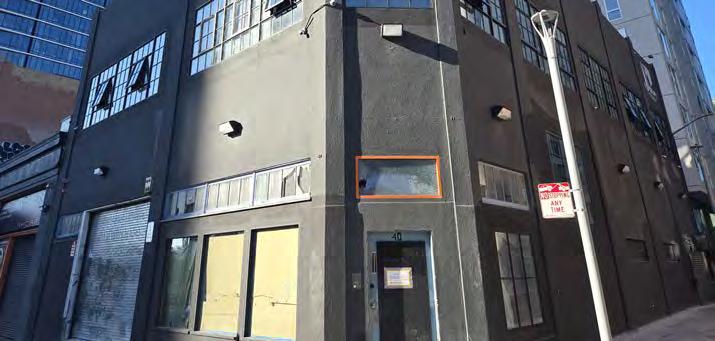

“The planner I had then told me it looks great,” said Born, who is straight and a part owner of nightlife venue The Midway in the city’s Dogpatch neighborhood. (It is where drag superstar RuPaul is to have a DJ set the Saturday of Labor Day weekend.)



Born’s doing so resulted in “inadequate storefront transparency” and that he had done the “infill of publicly-facing windows without Planning Department review and authorization.” Earlier this year, Born agreed to replace the windows, and the violation was marked as abated last month on June 15.




Yet, as the planning department determined in a notice of enforcement first posted in 2019,




by Brian Guan
Ahaven for unhoused youth in Oakland just expanded its offerings. Covenant House California’s Oakland program opened 20 new beds for youth experiencing homelessness last month, bringing the space’s number of beds up from 40 to 60.
The Los Angeles Blade covers Los Angeles and California news, politics, opinion, arts and entertainment and features national and international coverage from the Blade’s award-winning reporting team. Be part of this exciting publication serving LGBT Los Angeles from the team behind the Washington Blade, the nation’s first LGBT newspaper. From the freeway to the Beltway we’ve got you covered.
Under the nonprofit organization Covenant House, the Oakland campus offers shelter and resources for Alameda County youth, ages 18 to 24, undergoing or under threat of homelessness or human trafficking, according to the shelter’s website. It offers emergency shelter, longer-term transitional housing, and programs such as mental health services.
Converting office space into bedrooms and bathrooms, the renovation will “ultimately provide a significantly expanded and improved shelter environment for CHC residents,” a news release stated.
The expansion cost $3.1 million, according to Ami Rowland, Covenant House California’s chief program officer. It’s part of a larger initiative to improve the Oakland campus that began with a capital campaign in 2017. Since the campaign’s inception, the campus has seen a redone cafeteria and commercial kitchen, a new medical clinic, and new administrative offices.


Covenant House California’s annual budget is around $26.5 million across the state, Rowland noted.
Homeless youth – including those that Covenant House California serve – disproportionately identify as LGBTQ. Between 27% and 30% of the youth the organization serves identifies as

LGBTQ, Rowland said. Rowland, a straight ally, described to the Bay Area Reporter in an interview how LGBTQ young people are more vulnerable to exploitation and “survival sex” in exchange for shelter.
I’m

Workshop!
natural.
by John Ferrannini
date has been set in the case of a defendant previously convicted of killing a gay San Francisco stylist.
As the Bay Area Reporter recently reported, James Rickleffs was seeking to represent himself in a retrial after his homicide conviction was thrown out three years ago. Rickleffs’ motion to do so was denied July 6, and on July 10, Judge Kay Tsenin, sitting on assignment, set a November 13 date for trial.
The matter had initially been set for trial on July 10, but Rickleffs’ attorney Marsanne Weese told Tsenin that she couldn’t accommodate that time because she’s on another homicide trial that she estimates will last until the middle to end of September.
After that trial, Weese said she will have 18 banker boxes of information to review in the Rickleffs case, in addition to video evidence.
“I need to organize everything,” she said.
Assistant District Attorney Edward Mario didn’t object. Rickleffs, 59, remains in custody at the Correctional Training Facility in Soledad (Monterey County).
Esmeralda Escalon, the mother of victim Steven “Eriq” Escalon, observed the hearing via Zoom. She described herself to the Bay Area Reporter afterward as “pleased” that Rickleffs’ bid to represent himself was quashed. Rickleffs has frequently changed attorneys; most recently, he fired his attorney as his retrial was getting underway last year because the lawyer is gay.
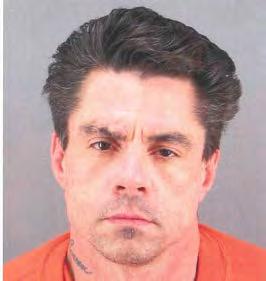
“I agree with the judge denying his request,” Escalon told the B.A.R. “I’m aware of his attorney postponing the trial due to her upcoming trial.”
The 2019 conviction of Rickleffs was reversed in October 2023 by a threejudge panel of the California Court of Appeal. He’d been found guilty in the 2012 killing and robbery of Escalon, 28, in the Diamond Heights neighborhood after the pair had reportedly met at an underwear night at the bar 440 Castro.
“Rickleffs, as a straight-identifying man, went to the Castro with tape and a knife, sat there drinking, and, I believe, snorted narcotics in the bathroom, waiting for someone,” Escalon’s friend Roberto Tiscareno said during an August 2021 sentencing hearing.
UNDERSTAND YOUR TENANT HOUSING RIGHTS
Open to all attendees – focused on housing discrimination for San Francisco tenants

4pm - 6pm Thursday, September 17,
Join our inclusive, bilingual workshop and understand your rights as a tenant!
Whether you’re new to the area or have been here for years, this workshop is designed to help you navigate the complexities of tenant law.
Bilingual Presentation: The presentation and materials will be provided in both English and Spanish.
Escalon died of an overdose of amyl nitrates and gamma-hydroxybutyric acid (GHB), according to the medical examiner’s report. He was found dead by his roommates, and Rickleffs was arrested September 12, 2012, in possession of the suitcase.
In explaining their reasoning behind their 2019 decision to convict, most jurors said they felt Escalon’s death was caused by many factors, including the obstruction of his breathing from the gag, his inability to move from being bound, and the drugs found in his system. While they unanimously agreed that Rickleffs did not intend to kill Escalon, the jurors said it was the robbery and disregard for human life that swayed them to find him guilty of felony murder.
Rickleffs was sentenced in 2021 to 50 years to life in state prison. That conviction, however, was overturned three years ago by the Fifth Division of the state’s 1st District Court of Appeal. The opinion written by Justice Mark B. Simons gave several reasons for its decision. For one, a California Supreme Court ruling in People v. Brown (2023) threw out the very jury instructions for a murder by poison charge that were used in Rickleffs’ case.
Simons also questioned the forensic evidence presented at trial – including a key NMS Labs report that found nitrates and GHB in Escalon’s system.
Simons also stated that the instructions on the robbery charge were also wrong because Escalon rendered himself unable to resist. t
After going home with Escalon near Twin Peaks early on the morning of June 12, 2012, prosecutors said Rickleffs tied Escalon up, gagged him, and poured poppers on his face to immobilize him. Then he left Escalon’s apartment with a suitcase of items including a laptop, Escalon’s checkbook, and a bankcard of one of Escalon’s roommates.
compiled by Cynthia Laird
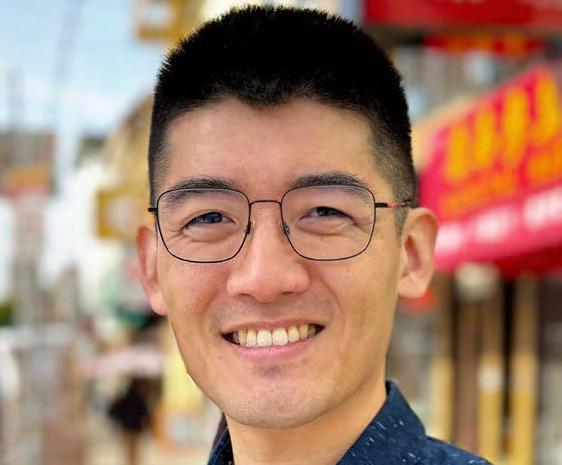
San Francisco Mayor Daniel Lurie has nominated Mike Chen, a gay man, for a seat on the high-profile planning commission. The Board of Supervisors is expected to take up Chen’s nomination soon and must vote to confirm it within 60 days or it is approved.

Chen, an elected member of the San Francisco Democratic Party, serves on the San Francisco Municipal Transportation Board of Directors, to which he was nominated by former mayor London Breed in 2024. The supervisors approved his nomination in September of that year. Still listed on the SFMTA’s website, Chen is expected to step down from that board for the planning commission seat.
Lurie made the announcement July 10, and Chen was among a number of other nominees and appointments to commissions and advisory bodies.
On-site Support: Limited, one-on-one tenant counseling will be available after the presentation.
Legal Resources: Schedule appointments for legal service intakes.
Location:
In the Latino/Hispanic community room
Attend online at: bit.ly/KYRtenantsSF_Zoom


Register in advance:



“Our administration is working every day to make our city work for all of our families, and this group of capable leaders will build on that work,” Lurie stated. “From working conditions to city services, we are focused on the everyday things that affect whether a family can stay in San Francisco. We’re putting our foot on the accelerator with that work, and I look forward to partnering with these leaders to move it forward.”
Chen is a data engineer in the technology sector. Prior to serving on the SFMTA board, Chen sat on the San Fran cisco Municipal Transpor tation Agency Citizens’ Ad visory Council from 2020 to 2024. He is a renter, with bachelor’s and master’s de grees from the University of Pennsylvania, according to information provided by the mayor’s office.
“I am honored to be nominated and I hope to continue to serve San Francisco,” Chen stated.
Oakland Pride seeks volunteers

In a text message, Chen expressed his gratitude to Lurie.
Oakland Pride is about a month away, and organizers are seeking volunteers for the parade and festival set for Sunday, August 16.
The Bay Area Reporter noted in February that the event, now under the auspices of the Oakland LGBTQ Community Center, moved to the new date after being held in early September for many years. A news release at the time stated that the date change was to prevent conflicts with events associated with Labor Day and Mexican Independence Day, which are both in September. Now, the Oakland Pride parade and festival
will occur shortly before Silicon Valley Pride August 29-30 in San Jose. A June 29 email stated that Oakland Pride is seeking volunteers to sign up for shifts. This year’s theme is “Celebrating Pride, Power, and People.” It also announced headliner acts Amerie, FEY, and Lady Alma. Other announced entertainers include Chrissy Chlapecka, Terrell Carter, Star Amerasu, La Cruz, and Gala Varo.
Like last year, the parade, which starts at 10 a.m., will begin near Broadway and 20th Street, and end in front of City Hall at Broadway and 14th streets. There is no cost to view the parade. The festival, which is a ticketed event, starts at noon in Frank Ogawa Plaza outside City Hall. General admission is $22.56 online, with lower prices for seniors. Kids 12 and under are free.
For festival tickets, visit oaklandprideofficial.org.
To sign up to volunteer, visit https:// tinyurl.com/2tb8tvzk. t
by John Ferrannini
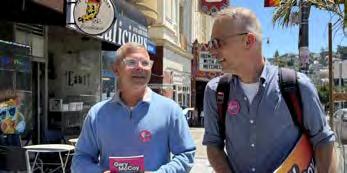
Gay candidate Gary McCoy is le-
veraging his long records in public service and as a Castro denizen in his bid to represent District 8, including his LGBTQ neighborhood, on the San Francisco Board of Supervisors. If elected to the board, he would become the second person in recovery and the third known to be living with HIV to serve on it.
“I have a deep love for public service,” McCoy told the Bay Area Reporter during a July 14 merchant walk through the Castro. “I want to make sure that we have opportunities for our most vulnerable in San Francisco, and I want to make sure that people don’t forget that San Francisco is and has always been a service industry town.
“There are so many people that can’t afford to live in San Francisco that have been the backbone of San Francisco, from the early days of the gold rush to medical research and advancement to the tech bubbles, the tech booms, and I just want to make sure that everybody has an opportunity like I had when I got sober,” McCoy added.
McCoy, 48, moved to San Francisco in 2002, and shortly thereafter fell back into a life of addiction and found himself homeless.
“My thinking was I thought I would start fresh in a new place, change my lifestyle, and work on getting sober and work on getting my act together,” McCoy previously told the B.A.R.
Yet, within three weeks of arriving in California, McCoy began using again, was arrested at 16th and Mission streets, then learned he was living with HIV. He quit his job rather than face being fired from it.
Eventually, he moved into Ferguson Place, a small residential treatment program for people who are HIV-positive and dealing with mental health and substance abuse issues. Operated by the nonprofit PRC, it is housed in an old Victo-
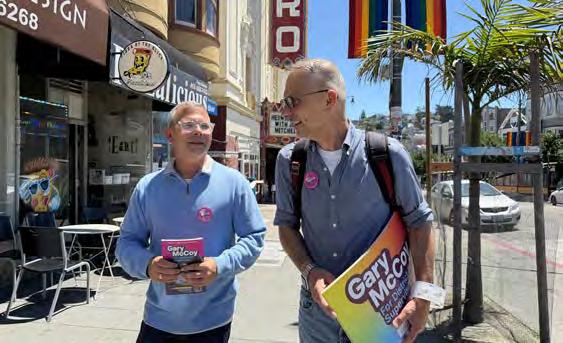
rian in the city’s Fillmore neighborhood.
McCoy entered San Francisco politics first as a legislative aide to then-supervisor Scott Wiener before he was hired by Congressmember Nancy Pelosi (D-San Francisco), for whom he has worked in various capacities since, including in her district office. Several weeks ago, he left Pelosi’s Save Our Health Care campaign to become a full-time candidate for the supervisor seat.
Pelosi, the outgoing congressional representative for most of the city, has endorsed McCoy in one of this fall’s most closely watched, and contested, supervisorial races. All of the board’s even-numbered seats are on the November 3 ballot.
“Gary McCoy is a trusted, tested advocate who will bring thoughtful leadership and deep experience to the Board of Supervisors,” stated Pelosi. “Gary is well prepared to help San Francisco address key challenges – jobs, affordability, housing and health care. The people in District 8 will be well served by Gary’s steady hand and fierce advocacy at City Hall.”
In addition to the Castro, the seat includes Noe Valley, Diamond Heights, Glen Park, Twin Peaks, Duboce Tri-
angle, Corona Heights, and a part of Cole Valley. Also running are Emanuel “Manny” Yekutiel, a gay man and former city commissioner who owns the eponymous Mission district cafe; Michael Trung Nguyen, a gay patent attorney whose drag persona is Juicy Liu; and Darshini Patel, a bi queer woman who is an alum of Kamala Harris’ presidential campaign. The B.A.R. has been on merchant walks with each in recent months.
In recent weeks the supervisor contest has been rocked by a sexual assault allegation made against Yekutiel by former political activist Brad Joseph Chapin. Yekutiel denies the allegation, and no charges have been filed, but several local elected leaders have rescinded their support for Yekutiel.
The Noe Valley Democratic Club is set to vote in early August on rescinding its endorsement of him, whereas gay outgoing supervisor and current board President Rafael Mandelman recently told the B.A.R. he continues to support Yekutiel in the race. The San Francisco Democratic Party, while beginning its endorsement process for the other supervisor races, has pushed back its do-
ing so in the D8 race by at least a month while its ombudsman reportedly looks into Chapin’s allegation.
When asked Tuesday about the issue, McCoy gave only a brief answer.
“We should absolutely believe survivors, and victims, and I put out a statement the morning the news broke, and so, I’d probably just reference you to that statement,” he said.
As it has done after going on merchant walks with the other candidates, the B.A.R. reached out to them to give them the opportunity to comment for this report. Nguyen and Patel declined to do so.
Yekutiel focused on his pledge to fill every vacant storefront in the district if elected to the supervisor seat.
“As the owner of a small business and a former merchant association president, I’ve lived the impact of vacant storefronts firsthand, from the lost foot traffic to the overall feeling of neglect on a block,” he stated in response to this story. “That’s why I am proud of my plan to fill all 63 vacant businesses in the district, and my plan doesn’t stop there. It’s about making District 8 the most attractive place in the city to start a business and creating the conditions for every business in this district, new and existing, to succeed.”
Early constituent work
McCoy, who has also worked at the San Francisco Recreation and Parks Department and HealthRIGHT 360, said he’ll bring his experiences to bear if he’s elected, and said he’s good at getting into the details of both policymaking and fixing everyday problems because it genuinely interests him.
“I got started as a volunteer handling constituent casework, when there were two legislative aides in City Hall,” he said of his time with Wiener. “All the volunteers at the front desk did the puddles, and the street lights, and clogged storm drains. You know, rightfully frustrated phone calls about issues as 311 was rolling out.”
McCoy remembered he “would go into the Board [of Supervisors] meetings every Tuesday and take a break from my volunteering, and just watch the meetings,” he said.
“There’s a lot that happens in City Hall, often by a lot of our elected officials, that are maybe a little bit of a distraction from the day-to-day representing of your constituents in the district, and it’s sort of like, shooting for that next goal or the next job,” he said. “And I’m not going into this role or that with the next thing in mind.”
When he went to work for Pelosi, McCoy recalled learning “about constituent casework with federal agencies,” such as helping people navigate disability benefits and tax problems.
McCoy, who lives in the Twin Peaks neighborhood with his husband Kory Powell-McCoy, has the endorsement of both the major LGBTQ Democratic clubs, the more progressive Harvey Milk club and the more moderate Alice B. Toklas club, both of which he has led in the past.
“He follows through on what he says he’s going to do. He doesn’t make empty promises. If he can’t do something, he’ll tell you he can’t do it,” queer supporter and District 8 resident Keith Folger said in a follow-up phone call. “He’s committed to the betterment of humankind and isn’t in this race to make himself look good. Being in a campaign isn’t what you do to make yourself look good anyway, but he’s in it because he believes in what he’s talking about.”
Housing, transportation
What McCoy told the B.A.R. is that if elected, his priorities will be housing production and affordability. McCoy also supports expanding services related to getting people off the streets and into recovery, and continuing the First Year Free program to help newly-opened small businesses by waiving various city fees they would have to pay.










July 16-22, 2026
Volume 56, Number XX Month XX-XX, 2026 www.ebar.com
PUBLISHER
Michael M. Yamashita
Volume 56, Number 29
Thomas E. Horn, Publisher Emeritus (2013)
Publisher (2003 – 2013)
Bob Ross, Founder (1971 – 2003)
NEWS EDITOR
Cynthia Laird
ARTS & NIGHTLIFE EDITOR
Jim Provenzano
ASSISTANT EDITORS
Matthew S. Bajko • John Ferrannini
CONTRIBUTING WRITERS
Christopher J. Beale • Robert Brokl
Kyle Amato • Race Bannon • Robert Brokl
Christopher J. Beale • Brian Bromberger
Brian Bromberger • Philip Campbell
Heather Cassell • Eliot Faine
Philip Campbell • Myron Caringal
Meg Collins • Chelsea Davis
Michael Flanagan • Jim Gladstone
Natasha Dennerstein • Eliot Faine
Liz Highleyman • Brandon Judell • Lisa Keen
Philip Mayard • Laura Moreno
George Faville • Michael Flanagan
Jim Gladstone • Brian Guan • Liz Highleyman
David-Elijah Nahmod • Mark William Norby
JL Odom • Paul Parish • Tim Pfaff
Brandon Judell • Michele Karlsberg • Lisa Keen
Jim Piechota • Adam Sandel
Matthew Kennedy • Philip Mayard
Jim McDermott • Laura Moreno
Jason Serinus • Gregg Shapiro
Gwendolyn Smith • Charlie Wagner
David-Elijah Nahmod • Mark William Norby
JL Odom • Lois Pearlman • Tim Pfaff
Ed Walsh • Cornelius Washington • Sura Wood
Jim Piechota • Joshua Polanski • Adam Sandel
Gregg Shapiro • Gwendolyn Smith
ART DIRECTION
Charlie Wagner • Ed Walsh
Max Leger
Cornelius Washington • Evelyn C. White
PRODUCTION/DESIGN
Ernesto Sopprani
ART DIRECTION
Max Leger
PHOTOGRAPHERS
Jane Philomen Cleland
PRODUCTION/DESIGN
Rick Gerharter • Gooch
Ernesto Sopprani
Jose A. Guzman-Colon
PHOTOGRAPHERS
Rudy K. Lawidjaja • Georg Lester
Jane Philomen Cleland
Rich Stadtmiller • Christopher Robledo
Rick Gerharter • Gooch
Fred Rowe • Shot in the City
Jose A. Guzman-Colon
Steven Underhill • Bill Wilson
Rudy K. Lawidjaja • Georg Lester
ILLUSTRATORS & CARTOONISTS
Rich Stadtmiller • Christopher Robledo
Christine Smith
Fred Rowe • Shot in the City
Steven Underhill • Bill Wilson
ILLUSTRATORS & CARTOONISTS
Christine Smith
VICE PRESIDENT OF ADVERTISING
Scott Wazlowski – 415.829.8937
VICE PRESIDENT OF ADVERTISING
NATIONAL ADVERTISING REPRESENTATIVE
Scott Wazlowski – 415.829.8937
Rivendell Media – 212.242.6863
LEGAL COUNSEL
Paul H. Melbostad, Esq.
NATIONAL ADVERTISING REPRESENTATIVE
Rivendell Media – 212.242.6863
LEGAL COUNSEL
Paul H. Melbostad, Esq.


Bay area reporter
Bay area reporter
44 Gough Street, Suite 302 San Francisco, CA 94103
415.861.5019 • www.ebar.com
44 Gough Street, Suite 302 San Francisco, CA 94103
A division of BAR Media, Inc. © 2026
415.861.5019 • www.ebar.com
President: Michael M. Yamashita
Director: Scott Wazlowski
A division of BAR Media, Inc. © 2026
President: Michael M. Yamashita
News Editor • news@ebar.com
Director: Scott Wazlowski
Arts Editor • arts@ebar.com
News Editor • news@ebar.com
Out & About listings • jim@ebar.com
Arts Editor • arts@ebar.com
Advertising • scott@ebar.com
Out & About listings • jim@ebar.com
Letters • letters@ebar.com
Advertising • scott@ebar.com
Letters • letters@ebar.com
Published weekly. Bay Area Reporter reserves the right to edit or reject any advertisement which the publisher believes is in poor taste or which advertises illegal items which might result in legal action against Bay Area Reporter. Ads will not be rejected solely on the basis of politics, philosophy, religion, race, age, or sexual orientation.
Advertising rates available upon request.
Advertising rates available upon request.
U.S. Senator Lindsey Graham’s (R-South Carolina) sudden death last Saturday brought predictable praise from Republicans, including President Donald Trump. After all, Graham became a Trump sycophant after his own poor presidential showing in 2016. Back then, Graham was critical of Trump, warning that he was nothing more than a con man. But once Trump walked away with the GOP presidential nomination and won the election that year, Graham quickly pivoted and became a key ally of the president.
Graham, who may or may not have been gay –the unmarried senator denied the widespread rumors even as former sex workers claimed to have had him as a client – was nonetheless no friend to the LGBTQ community. He was a constant no vote on pro-LGBTQ bills during his 30-year tenure in Congress as a member of the House and Senate. He voted against the Employment NonDiscrimination Act in 2013, and in the House, he co-sponsored the Defense of Marriage Act in 1996, which defined marriage as between one man and one woman. That law did more damage than most; it allowed states to refuse to recognize same-sex marriages performed in other jurisdictions and barred same-sex couples from receiving federal marriage benefits. Key provi sions of DOMA were repealed by the U.S. Supreme Court in 2013 and 2015. Graham even voted against the Respect for Marriage Act in 2022, which fully repealed DOMA and codified federal protections for married same-sex couples. That law had bipartisan support in both houses of Congress, including 12 GOP senators.

bians serve honorably in the armed forces. Graham’s apparent hypocrisy is reminiscent of many other Republican politicians and religious leaders who have railed against the LGBTQ community only to be caught in a same-sex scandal. Some of them, like former U.S. Senator Larry Craig (R-Idaho), who was caught with his pants down in a men’s restroom at a Minnesota airport, insisted he was not gay. Graham did too.

In 2010, Graham voted against the repeal of “Don’t Ask, Don’t Tell,” which finally ended the military’s ban on out gays and lesbians serving in the military. A former judge advocate in the U.S. Air Force, Graham had to know that gays and les-
It’s quite shameful to deny and overcompensate for rumors by working to harm the LGBTQ community. Trump has systematically worked to repeal rights for transgender people, through executive orders and other policy changes. Graham went along with all of it. Just last month, he praised the U.S. Supreme Court decision that upheld state bans on trans women and girls playing on female sports teams, claiming that “countless women and girls have lost out on trophies and been forced to play under unsafe conditions,” according to GLAAD’s accountability profile on Graham.
This is in addition to Graham’s votes to confirm Trump’s unqualified cabinet picks. To name just one, Defense Secretary Pete Hegseth, who has worked overtime to drum out trans service members (another Trump executive order), strip Harvey Milk’s name from a Navy vessel, and erase Black contributions to the military. Hegseth has done a terrible job prosecuting the war in Iran, which nobody except Trump, apparently, wanted, and has directly led to high gas prices and increased costs for other goods due to higher transportation expenses. Graham was critical of the January 6, 2021, insurrection on the U.S. Capitol, but Trump said that he took it back about 40 minutes later, as the Hill recently noted.
Having accomplished his full transformation to MAGA toady, it’s been disappointing to see some congressional Democrats issue statements of condolence. Graham was not bipartisan. He did nothing to help working people while in Congress; in fact, the opposite is true. Yet here we are, with Senate Minority Leader Chuck Schumer (D-New York) offering praise, among others.
The Democrats are trying to take back control of Congress in the midterm elections in November. They need to keep the focus on affordability issues and Trump’s lawless Department of Homeland Security, which has killed two immigrants in the last week, including one in Maine, which should become a major issue for vulnerable U.S. Senator Susan Collins’ (R) reelection bid. We don’t need Democrats in Congress eulogizing Graham. There are more than enough Republicans who are doing that already. We know that Congress has a reputation where politicians of opposing parties call each other “my friend.” Skip it. Graham was no friend to Democrats, LGBTQ people, or immigrants. He was a shrewd politician who couldn’t even stand up for his own belief that Trump is bad for the country. t
On being Black, gay and HBCU and Jesuit-educated in a California fractured by inequality
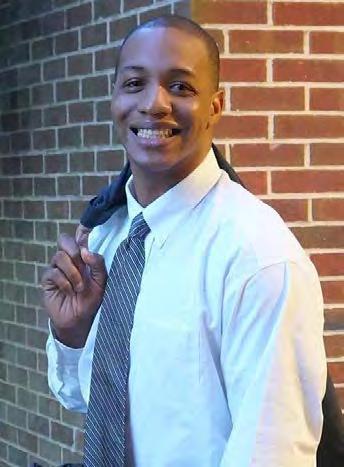
by Darris Thomas
T
here is a particular kind of reckoning that happens when you live at several intersections at once: when your body, your history, your education, your desire, and your geography converge into something the world was not designed to hold. I am that convergence. I am Black. I am gay. I was educated at a historically Black college and university, or HBCU, and shaped further by the Jesuit intellectual tradition. I live in a region of California where the Pacific sun falls on tent encampments and tech campuses with equal indifference. And I am navigating all of this under a Trump administration that has made the erasure of people like me into a governing philosophy.
This is not a grievance. It is a reckoning.
The HBCU gave me the presumption of my own excellence.
Before I learned the word “counternarrative,” I lived inside one. At an HBCU, Blackness is not an asterisk or a diversity metric. It is the architecture of the place – the default assumption about who belongs, who leads, who thinks, who has something essential to say. To attend an HBCU is to understand what it means to exist in an institution built by and for your people, not despite historical violence, but in defiant answer to it.
I carry that formation everywhere. When I walk into rooms where I am the only Black person (which is often, in California’s professional spaces), I carry the memory of rooms where I was not. That memory is armor.
The Jesuit heritage gave me conscience as a practice.
To be Black and gay in this moment is to be doubly targeted and committed to survival.
The Trump administration has made it unambiguous: trans people, queer people, Black people, and immigrants are the populations whose rights and visibility are being offered up as political currency. The cruelties are less euphemistic now. They are prouder of themselves.
I am reminded of the elders: James Baldwin, Bayard Rustin, and Marsha P. Johnson. Baldwin, who was both of the things I am, wrote about America’s contradictions with a clarity that still reads as diagnosis. Rustin, the gay Black man who organized the March on Washington, was systematically erased from the movement he built. Johnson and the Black and Brown trans women were at Stonewall before it became a monument.
I am not the first to be this. That lineage is not only a burden, it’s also an instruction. It is the record of people who held on, who created beauty and political change under conditions designed to prevent them from doing so.
What my education made of me is someone who refuses to perform despair.
Published weekly. Bay Area Reporter reserves the right to edit or reject any advertisement which the publisher believes is in poor taste or which advertises illegal items which might result in legal action against Bay Area Reporter. Ads will not be rejected solely on the basis of politics, philosophy, religion, race, age, or sexual orientation.
Our list of subscribers and advertisers is confidential and is not sold. The sexual orientation of advertisers, photographers, and writers published herein is neither inferred nor implied. We are not responsible for unsolicited manuscripts or artwork. 4
Our list of subscribers and advertisers is confidential and is not sold. The sexual orientation of advertisers, photographers, and writers published herein is neither inferred nor implied. We are not responsible for unsolicited manuscripts or artwork.
Jesuit education insists, with intellectual rigor, that what you do with your learning matters morally. The Ignatian call to be “men and women for others” is not a decorative phrase – it is the organizing principle of the curriculum and the advising relationship. For a Black gay man, this tradition lands with complexity. The Catholic Church has not always been a site of welcome for queer people. And yet the Jesuit intellectual tradition has also produced liberation theologians and thinkers who understand solidarity as a spiritual obligation. What I took from my Jesuit education was not a catechism. It was a habit of conscience – the conviction that justice is not a destination but a daily practice, and that
thinking carefully about the world is itself a moral act. When I look at the rollback of civil rights protections and the targeting of queer people through legislation, it is precisely this formation that keeps me from numbness. California offers beauty and contradiction in equal measure. California sells itself as a dream, and the light here is real. But the California I live in is also a place of staggering, almost insolent, inequality. Across the Bay Area, unhoused encampments stretch along freeway underpasses while venture capital firms raise billion-dollar funds two miles away. The farm workers who feed the country live in conditions that would shock the people buying the organic produce they harvest.

Being Black in Northern California means navigating a specific cognitive dissonance: a state that prides itself on liberalism while enacting some of the country’s most severe economic exclusions. Gentrification is not an abstraction here. It is the empty lot where a church used to be. It is the cousin who moved to Stockton because Oakland priced them out. California’s progressivism has often been more comfortable with the idea of justice than with its material requirements.
My HBCU experience gave me community and the presumption of excellence. The Jesuit tradition gave me conscience. California gave me beauty and contradiction. Blackness gave me a history long enough for both humility and resilience. Queerness gave me fluency with the margins and the people living there.
Put all of that together, and you have someone deeply alarmed by this political moment and absolutely unwilling to surrender to it. Despair is a luxury I was not educated for. The queer tradition I was born into (and belong to) was built by people who organized in the middle of a plague while their government ignored them.
I don’t have a tidy resolution to offer. But I believe (and my education has given me the rigor to mean this rather than merely say it) that naming things clearly is not nothing. That knowing who you are and saying so, precisely and without apology, is itself a form of resistance.
I am Black. I am gay. I am at the intersection. And I am not leaving. t
Darris Thomas, a gay man, is a graduate of Benedict College and the University of San Francisco, where he earned his Master of Arts in urban and public affairs. During graduate school, he interned for San Mateo County Supervisor David Canepa and Contra Costa County Supervisor John Gioia, and volunteered on the successful 2024 Concord City Council campaign of Pablo Benavente, a gay man.
by Matthew S. Bajko
L
ate last year gay married father Ryan LaLonde became the first LGBTQ person to serve as president of the Alameda Unified School District Board of Education. At the time, he had announced that he would not seek a second four-year term in 2026.
While maintaining that pledge, LaLonde is nonetheless unlikely to be stepping down from his education post when his current term ends in December. Rather, the East Bay politico could very well remain on his elected oversight body through the end of 2028.
The reason being LaLonde this week filed to seek a two-year term on the East Bay school board. Should no one else decide to run for the truncated term by the August 7 filing deadline to do so, then LaLonde will automatically be appointed to serve out the remainder of the term vacated last September by former school board member Meleah Hall
The school board subsequently appointed Carrie Hahnel to fill the vacancy created by Hall’s resignation through the end of this year. Instead of running in the fall for the remaining two years left on Hall’s school board term, Hahnel is expected to run for one of the school board’s two full four-year terms up for grabs on the November 3 ballot.
Her doing so provides LaLonde the opportunity to extend his tenure on the school board without having to commit to serving through 2030. And with no other LGBTQ residents of the island city expected to run for a school board seat this fall, LaLonde also has a chance to ensure out representation remains on the educational oversight body.
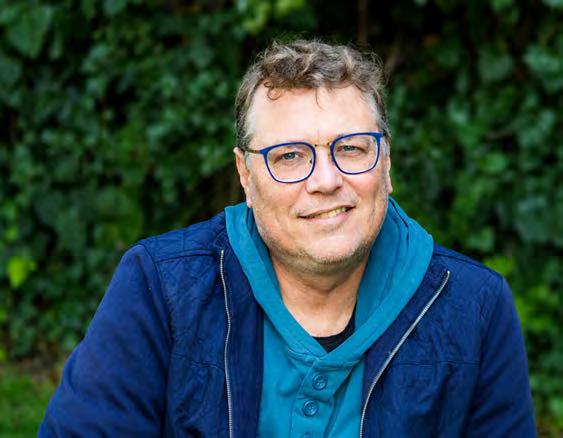
councilmember Jim Oddie came out as gay to the B.A.R. in 2018 when he sought reelection, but he lost that November. In 2024, Oddie won election to the Ward 5 seat on the board that oversees the East Bay Municipal Utility District known as EBMUD.
“If I get this seat, I will be maintaining it for two years then will reevaluate,” said LaLonde, noting that he could opt to “move on to something else, maybe a different office.”
The elected positions of Alameda mayor and two city council seats will be on this year’s fall ballot, but LaLonde told the B.A.R. he wasn’t interested in seeking one of those at this time. He did have a hand in ending before it could really be


During his time on the school board LaLonde has been a vocal advocate for resources for both LGBTQ students and LGBTQ families with children enrolled in the K-12 district. He recently secured $50,000 from Alameda County to pay for an LGBTQ liaison position in the next two academic years beginning with this fall’s 2026-2027 school year.
“I don’t know if I will be challenged,” LaLonde told the Bay Area Reporter this week, though he added he has not heard of any other candidate planning to enter the special election.
It is likely anyone interested in being elected to the school board will want to focus their time and resources on running this fall for one of the full terms, noted LaLonde.
As an incumbent, he said he has no qualms about putting his energy toward seeking the shorter term.
“I still plan to run a full campaign as if I am going for four years,” said LaLonde, who will pass on the school board presidency in December no matter the outcome of his candidacy this year.
When he initially announced he wouldn’t seek reelection, LaLonde had expected a fellow gay dad would run for a school board seat in 2026. But that individual now wants to wait until 2028 to potentially do so, leading LaLonde to reconsider his own plans.
Plus, with LaLonde and his husband, Christopher Moody, set to help move their son, Farber, onto the campus of the University of Colorado at Denver next month for his freshman year, LaLonde noted to the B.A.R. that his continuing to serve as a school board member will distract him from being an empty nester, stay-at-home parent.
“To also remove the other part of my family, which would be the school district, felt too much at this point. Serving in this two-year term would be a nice transition period,” said LaLonde.
When he won his 2022 citywide race, overcoming homophobic attacks, LaLonde became the first out LGBTQ person to be elected to public office in Alameda. Former city
Alameda Unified also received a score of 56 on the 2024 Safe and Supportive Schools Report Card released by statewide LGBTQ advocacy organization Equality California. It put it in the 95th percentile, having scored among the highest 25% of respondents to the biennial survey.
“We’ve gone from being ranked in the range of the 40s to now being number seven in the state of California when it comes to the school climate survey,” noted LaLonde, who said his district had filled out the 2026 survey set to be released by EQCA this fall.
Yet, in the 2026 Family Relationships and Trust Survey that Alameda Unified conducted with families of its students, it found that the average survey response of those with nonbinary or genderfluid students came in at around 3.75 out of a score of 5.0. It was slightly lower than that of families with binary students, whose average score on the survey was just above a 4.0.
As for those families of students who are LGBTQ+, their average score was similar to those families without LGBTQ+ students at a bit more than 4.0. When asked if they had full confidence in the teachers and administrators at their children’s school, 68.8% of those with LGBTQ+ students responded affirmatively, which was below the overall response rate of 79.1%.
“It has gotten better over the years I have been on the board, but it’s still low and still lower than I want it to be,” LaLonde said of the survey results, which also factored into his decision to seek the truncated school board term, which he plans to officially launch in August if he is contested for it.
When asked about his political intentions in 2028, LaLonde wouldn’t rule out seeking another full school board term. He also left open the possibility of being a candidate for a higher office such as a city council seat.
gin the council candidacy of Scott Means, whom LaLonde revealed was the person behind the X account @Tokhuah that over the past year, in particular, had posted various anti-trans, homophobic, and racist tweets.
After realizing the council candidate was the person behind the account, LaLonde in June had publicized the fact that it was Means via his own social media pages and groups focused on Alameda city news. It led the editor and publisher of the local news site the Alameda Post to confront Means about it, who confirmed it was his account and that he had deleted it. Means also confirmed that he had resigned from two public advisory bodies he had been serving on and was ending his council bid.
“The best thing to do was to drop out of the campaign, all boards, and commissions in Alameda,” Means told the news site.
After Means, a former City of Oakland employee, announced that he had hired as his campaign manager Seneca Scott, a failed candidate for mayor and city council in Oakland with his own history of anti-LGBTQ actions and social media posts, it was brought to LaLonde’s attention that Means was @Tokhuah. Means had posted a photo of himself to it from an overseas trip he took last December, ending whatever anonymity he thought he had on the app.
“It got to the point that I didn’t want him to have a bully pulpit anymore,” LaLonde said for why he made sure Alameda leaders knew Means was responsible for the X account.
As for himself, due to his decision to run for the school board term, LaLonde plans to step down as chair of the political action committee for the East Bay Stonewall Democratic Club. He intends to remain active, though, with the main LGBTQ political club for Alameda County.
“I am going to still continue to fight to see that candidates are held accountable on their views when it comes to LGBTQ issues. One of those examples is you can’t say these things in private and then publicly be in positions that oversee services for the same people you are deni
grating,” said LaLonde. t





by Cynthia Laird
Friends and colleagues are remem-
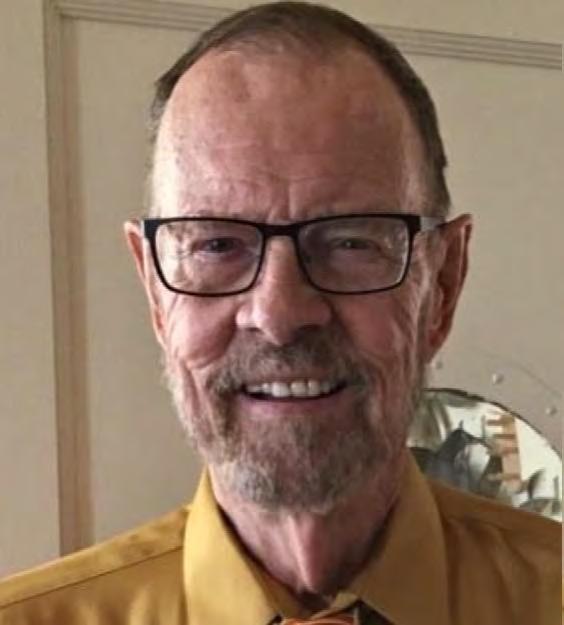
bering Max Kirkeberg, a gay man and former geography professor at San Francisco State University who died April 6. He was 93.
Mr. Kirkeberg died in Lake Oswego, Oregon, after suffering a fall and then getting pneumonia in the hospital, his husband, Gabriel Proo, told the Bay Area Reporter in a phone interview.
The couple had relocated to Oregon from San Francisco about seven years ago. Mr. Kirkeberg retired from SF State in 2012, but maintained an office at the university until 2019, Proo said.
“He was bigger than life,” Proo said, adding that Mr. Kirkeberg was 6 feet 2 inches tall.
While he taught at SF State, Mr. Kirkeberg was known for his walking class of San Francisco architecture. He was also not shy about imparting his views of homes during his tours, Proo said, coming up with the code “JA” when speaking in front of a house he didn’t care for.
“It stood for ‘just awful,’” Proo said, adding that Mr. Kirkeberg came up with the initials after an owner overheard him describe his home and came out to say his house was not awful.
Mr. Kirkeberg prepared for his walking class, formally called “San Francisco on Foot,” by taking photos, and he amassed nearly 60,000 taken over 50 years. The collection is available through DIVA, an open digital collections archive built and managed by Academic Technology at SF State, according to a biography on the school’s website.
Proo said the images are housed at SF State’s J. Paul Leonard Library under the Max Kirkeberg Collection.
The archive includes collections dedicated to different parts of the Mission District and Bernal Heights, various city neighborhoods, as well as the Castro Theatre and Alcatraz Island, a KQED obituary noted.
Gerard Koskovich, a queer historian and book dealer in San Francisco, said
that Mr. Kirkeberg allowed him and his co-author, SF State associate professor of sociology Jen Reck, to use some of his photos in their booklet about the LGBTQ Castro neighborhood.
Koskovich recalled Mr. Kirkeberg in a Facebook post shortly after his passing.
“I’m personally heartbroken about this news, as we reproduce seven of his exceptional photographs of the Castro District in ‘The Castro: The Story of San Francisco’s Best-Known LGBTQ Neighborhood,’ the brief history which I co-authored with Jen Reck. One of Max’s photos even serves as the cover illustration,” Koskovich wrote.
Mr. Kirkeberg earned his undergraduate degree at Augustana College in Rock Island, Illinois, a Lutheran college. He had planned to get a doctorate degree, but didn’t complete the program.
“Max called himself an ABD, All But Dissertation,” Proo wrote in a follow-up email. “He didn’t finish his dissertation, because when he got to San Francisco he came out of the closet. Poor Max didn’t have the opportunity to come out until he was in his mid- to late-20s.
“Being gay in America in the 1950s and 1960s was often impossible,” Proo added. “He was so admired at SFSU, he was offered tenure. In those days the UC and Cal State were expanding to meet the needs of the baby boomers, and jobs in academia were easier to find than (in) recent times.”
Mr. Kirkeberg had a triple major as an undergraduate in political science, history, and geography. He received his master’s degree from the University of Wisconsin-Madison.
Proo, 72, who moved to the San Diego area after Mr. Kirkeberg’s passing, is a retired elementary school teacher.
Mr. Kirkeberg’s previous partner of 26 years, James Sherman, died of complications of AIDS and lung cancer. Proo had also lost his partner to AIDS before he met Mr. Kirkeberg, he said.
The two men met in 1997 when one of Proo’s friends, a former student of Mr. Kirkeberg’s, was graduating from
SF State and invited Proo to a party.
“Max was wearing Pride rings in his ear,” recalled Proo, who told his friend that she never mentioned Mr. Kirkeberg was gay. “She said we’d have a lot in common.”
“He took my number but felt it was too soon” after Sherman’s death, said Proo. But then Mr. Kirkeberg attended a funeral in Colma, said Proo, and heard the rabbi say to never pass up an opportunity for joy.
“So Max called me,” said Proo.
In 2025, Mr. Kirkeberg and Proo established the Max Kirkeberg Scholarship at SF State, which is awarded to a student in the School of the Environment, where the geography department is now housed.
Mr. Kirkeberg was a longtime member of the Lutheran Church. When he lived in San Francisco, he was active at St. Francis Lutheran Church at 152 Church Street. That church was part of LGBTQ history. In 1990, St. Francis ordained one gay man and two lesbian seminarians after the local bishop had refused to ordain them. This led to St. Francis being expelled from the Evangelical Lutheran Church in America. St. Francis continued worshiping as an independent Lutheran congregation until 2011, two years after ELCA reversed its position on out LGBTQ pastors.
One of those ordained ministers was Jeff Johnson, who in 2023 was elected to serve as bishop of ELCA’s Sierra Pacific synod, which includes Northern and Central California and Northern Nevada. Johnson is the first gay man to be elected to the post.
In an email, Johnson recalled Mr. Kirkeberg.
“When I was a young seminary student, Max gave me an old antique chair from St. Francis,” Johnson wrote. “I reupholstered it, and it has traveled with me to every home I’ve lived in since. Decades later, it remains the most comfortable chair in our house.
“Looking back, I realize the chair says something about Max,” he added. “He had a remarkable gift for helping people find a place where they could finally be at home in their own lives. For me, that gift was deeply personal. At a time when it seemed almost impossible to imagine being both an openly gay man and a Lutheran pastor, Max helped me believe that such a life was not only possible but faithful.”
Johnson stated that Mr. Kirkeberg had a great sense of humor.

said, adding Mr. Kirkeberg solicited $35,000-$45,000 himself over the years. KQED noted the team raised more than $1 million over the decades. (The 40th anniversary of AIDS Walk SF, taking place Sunday, July 19, will be dedicated to Mr. Kirkeberg, Proo said.)
After moving to Oregon, Mr. Kirkeberg and Proo were active at St. James Lutheran Church in Portland. Pastor David Knapp, a straight ally, said in a phone interview that the couple made friends easily.
“We do miss Max and Gabe,” said Knapp, referencing Proo’s move to Southern California. “Both of them were at the center of activities at St. James Lutheran Church.”
Knapp said that during the fellowship hour following worship services, congregants would gravitate to the table where Mr. Kirkeberg and Proo were sitting.
“They were warm and opening,” Knapp said.
Knapp recalled that the couple were recommended two Lutheran churches to check out once they moved to the Portland area. After attending one, they went to St. James.
“They were part of our community ever since,” said Knapp.
“I remember his tenacity, his stamina, his sharp wit, that unmistakable side smile, and his delightfully irreverent sense of humor,” Johnson stated. “He encouraged many of us simply by believing we belonged. That is definitely part of his legacy: helping others find the courage to live truthfully, faithfully, and fully as themselves.”
Proo said that during his time in San Francisco, Mr. Kirkeberg was active in raising funds for AIDS Walk San Francisco. Joining his geography students, who were often younger, and his friends from St. Francis, who were often older, into a team, Mr. Kirkeberg raised tens of thousands of dollars, explained Proo.
“Max was shameless in sending out requests” for fundraising, Proo
Vincent Michael Williams passed away on April 29, 2026. Born on March 24, 1949, in Pittsburgh, Pennsylvania, Vincent grew up in Cleveland, Ohio, and was predeceased by his parents and both siblings.
Mr. Kirkeberg was known for his humor, as well as colorful ties and unique socks.
“People would joke with him. He just created a wonderful atmosphere,” Knapp said. “I was very impressed with his faith. He was so welcoming to others.”
Mr. Kirkeberg was born March 14, 1933, in Stanton, Iowa. His parents were teachers, and he was an only child. Mr. Kirkeberg was of Norwegian and Swedish ancestry; his great grandfather was one of the first Swedes to settle in Stanton and built the house the family lived in for several generations, according to the biography.
He was drafted into the U.S. Army in the middle of college, and served
Vincent had served honorably in the U.S. Navy, where he found his love for cooking. He later moved to San Francisco where he attended City College of San Francisco, majoring in photography. He worked at Electronic Data Systems as a microfiche technician. He later found his niche at San Francisco City Hall, where he became a supervisor in the Assessor-Recorder’s Office until he retired.
Vincent had many endearing qualities: he had a great sense of
for two years in Alabama, the biography stated.
Mr. Kirkeberg’s cousin, Nancy Bauer, recalled their early years. A straight ally, Bauer, 88, now lives in Fullerton, California.
“We were together all the time,” Bauer said in a phone interview. As a younger cousin, Bauer said it was kind of Mr. Kirkeberg to include her in small town Iowa life.
He returned from the Army, and they both attended Augustana College when Mr. Kirkeberg was a junior and Bauer was a freshman.
“He was my mentor. He was so popular with people,” she recalled. “He had the best sense of humor.”
Bauer said that when Mr. Kirkeberg and Proo moved to Oregon, the senior community where they lived was a former convent and had many retired nuns living there.
“I visited three different times,” said Bauer, adding that at coffee, it would be “eight retired nuns and Max.”
“They loved him, and he loved them,” she said.
Bauer and her family took many trips with Mr. Kirkeberg and Proo, including Viking Cruises to Europe and Australia.
Bauer said she was fortunate to take one of Mr. Kirkeberg’s walking tours, and afterward, Mr. Kirkeberg said the group would stop at the “Swedish embassy.”
“It was his house,” she laughed. “Painted yellow and blue with a little Swedish flag.”
“He was just so much fun,” Bauer said, “and absolutely brilliant.”
In addition to Proo and Bauer, Mr. Kirkeberg is survived by another cousin, Susan Shuckhart, who deferred to Bauer for comment.
Proo said that a memorial is planned for Saturday, October 3, at 11 a.m. at St. Francis Lutheran Church, 152 Church Street San Francisco. There will be a Mass, followed by interring his ashes in the Memorial Terrace. t
humor and was an excellent conversationalist. As a good listener, he would bring gravity to the table, and if there was a problem, he had a solution. He was an avid reader, so much so, he could have opened his own bookstore. Like most people of his generation, he relished his privacy and that of others.
Vincent is survived by his extended family, Ric, Micheal, Lee Ann, Carmelita, Julie, David and David, Patrick, Hakeem, and all of his devoted co-workers at City Hall.
by Cynthia Laird
W
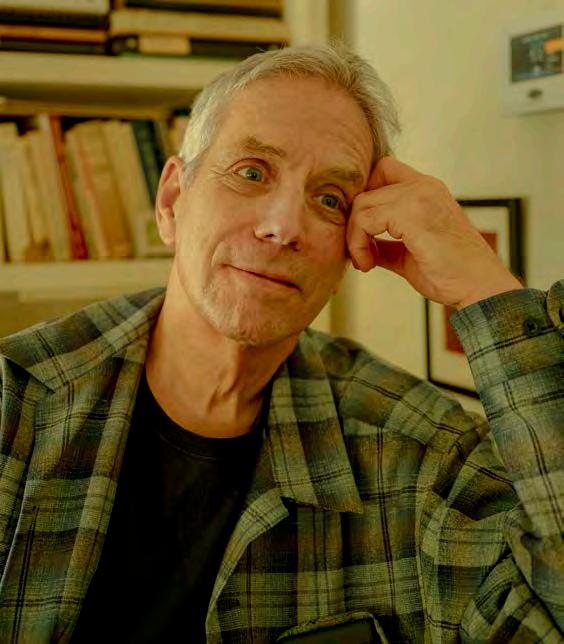
alt Whitman Odets, Ph.D., a gay man who was an influential author on HIV and its effects on gay men’s mental health, died July 5 at his home in Berkeley. He was 79.
The cause was Alzheimer’s disease, which he had been diagnosed with in January, Ed Wolf, a longtime friend, said in a phone interview with the Bay Area Reporter. Dr. Odets had been diagnosed with dementia last September, he added.
Dr. Odets, a clinical psychologist who maintained a private practice in Berkeley for 40 years, wrote two books. The first, “In the Shadow of the Epidemic: Being HIV-Negative in the Age of AIDS,” was published in 1995. In it, Dr. Odets took on the HIV establishment that prioritized HIV-positive gay men at the expense of those who were HIV-negative. It generated controversy at the time, but many HIV-negative men hailed the book.
“A lot of people were impacted by his work, especially that first book,” Wolf, a gay man, said. “When no one else would take the time to acknowledge the burden of not having it, when so many do. It really, really helped redefine prevention.”
Wolf, 77, explained that at the time, HIV-negative men had few resources to deal with what has become known as survivor’s guilt. Many HIV-positive men were dying, but their caregivers didn’t have the disease.
“The idea was, you don’t want to create a schism,” said Wolf. “The book was hailed, especially in retrospect, that prevention needed to adapt and change.”
Dr. Odets’ second book, “Out of the Shadows: Reimagining Gay Men’s Lives,” was published in 2019 about the aftermath of the epidemic. By that time, PrEP had become widely available for HIV-negative people, and those who were HIVpositive benefitted from effective newer treatments.
Chris Bartlett, another longtime friend, said he first met Dr. Odets through Eric Rofes, Ph.D., the late former AIDS activist and scholar. Rofes, who died in 2006, was also a former executive director of the Shanti Project in San Francisco, from 1989-1993. Bartlett, a gay man who lives in Philadelphia, said in a Zoom interview that he would visit Dr. Odets on trips to the West Coast.
Bartlett said that Dr. Odets “really brought a paradigm shift to
how LGBT leadership” looked at gay health.
“His first book was about the mental health aspects on HIV-negative men. It was understandable because it was such a crisis,” he said, referring to the AIDS epidemic.
“Walt had the courage to say that we should support our positive brothers and sisters and think of negative people; these men had other health needs.”
Bartlett, 60, pointed out that in many cities during the height of the AIDS epidemic, what were once general LGBTQ health clinics became HIV clinics.
“It was understandable,” he said, adding that the epidemic was overwhelming.
“It wasn’t lost that he put ‘In the Shadow’ in the title,” Bartlett added.
But Dr. Odets sort of became persona non grata in San Francisco, he added, though over time, his ideas gained traction.
“He had ideas that turned out to be true – both negative and positive people have health issues more broadly” than HIV, said Bartlett. These include substance use, tobacco use, and exercise. But in the late 1980s and early 1990s, many clinics didn’t have capacity, as they
were overwhelmed with the AIDS epidemic.
“Eric and Walt talked about crisis mentality and how there has to be a more sustainable approach,” said Bartlett.
Both Rofes and Dr. Odets were not institutionalized leaders, which gave them freedom to say things, contended Bartlett.
Wolf, a former longtime San Francisco resident, now lives with his husband, Kirk Read, in Portland. He met Dr. Odets through Rofes and the Shanti Project. He recalled an early HIV-negative support group he held at his home. “Maybe 10 people showed up,” Wolf said.
“He was a great individual, a great person, so generous,” said Wolf. “He took an interest in the gay male community.”
Breadth of interests
An accomplished pilot, Dr. Odets would fly what was known as the Bay Tour: taking off from Oakland San Francisco Bay International Airport and flying over the San FranciscoOakland Bay Bridge, the city’s Castro LGBTQ neighborhood, and the Golden Gate Bridge before heading back to Oakland, Bartlett said.
Wolf also spoke of Dr. Odets be-
ing a pilot. And Bartlett and Wolf pointed out Dr. Odets was an expert on watches and had an interest in photography.
Jonathan Cottrell, a gay man, was in his late 20s when he met Dr. Odets, having sent him a fan letter after reading his second book, which had just come out.
“We became very, very close for a number of years,” Cottrell, 36, said in a phone interview. “Walt was such an amazing character.”
Cottrell, who lives in West Hollywood, is running for a seat on the City Council in November. He also runs a local gay sports bar, Gym Bar WeHo, which welcomes everyone and shows a lot of televised women’s sports games, he said.
Dr. Odets “loved animals, especially his last dog, Galileo,” Cottrell said. The dog was a gray standard poodle – Dr. Odets loved the breed – and was always well groomed, he added.
“Sometimes I’d say he tolerated people and loved animals,” Cottrell quipped, then added, “he treated every being with dignity and respect,” Cottrell said, including animals.
Early life
Dr. Odets was born on February 4, 1947, in Los Angeles. His father was the acclaimed playwright, screenwriter, and director Clifford Odets. His mother was the actress Bettee Grayson. The couple moved to New York City but later separated, and Grayson died in 1954. The elder Odets moved his family back to Southern California so that he could return to screenwriting. Famous people such as the late actress Marilyn Monroe were visitors to the Odets’ home. The late actor Cary Grant was a good friend of Dr. Odets’ father, who died in 1963.
Wolf said that Dr. Odets was named after the late gay poet Walt Whitman, whom his father admired.
Wolf and Bartlett said that Dr. Odets did not like discussing his father’s famous past.
“He really didn’t like being the son of a famous person,” said Wolf. “His dad’s best friend was Cary Grant. It caused him a lot of suffering.”
“Walt had the son-of-a-famousperson dynamic,” added Bartlett.
“He spent his life creating his own life.”
Dr. Odets earned his B.A. degree in philosophy from Wesleyan University in 1969. He was trained as
a clinical psychologist at the San Francisco Professional School of Psychology, from which he received his Ph.D. in 1989.
Paula Harrington, 75, is the former wife of Dr. Odets. A former journalist in the Bay Area who later received her Ph.D. in American literature, Harrington, a straight ally, is the director emerita of the Farnham Writers’ Center at Colby College in Maine, where she also taught writing and literature. She and Dr. Odets were together for about 10 years starting in college. They were married from 1983-86, she said in a phone interview.
“We split up for other reasons, but then he came out,” Harrington said.
The two were not in touch for many years but, in the last decade, they became very close friends, she said.
“He was an extremely creative thinker and iconoclastic,” she said. “We looked at the world a little differently. He was always a very intellectual, funny person. Always true, but not the typical take.”
Dr. Odets was predeceased by his partner, Robb Caramico, who died of AIDS-related complications in 1992 when he was 28.
“He was the great love of Walt’s life,” said Harrington.
Harrington praised Armen Davoudian, a gay man who was a companion and caretaker to Dr. Odets in his final months. The two talked regularly about Dr. Odets and his care.
“Armen and I really tried to move him through this last period,” she said. “Armen is a very good person and really stepped in to be a physical presence as a companion. He deeply cared for Walt.”
She said that Davoudian allowed Dr. Odets to die at home, as he wanted.
In a phone interview, Davoudian said, “Walt was assertive of his independence but also really kind.”
“Every time there was a slight problem, like a TV remote not working, he’d say, ‘Let’s talk about it,’” he said.
Davoudian said he was a former patient of Dr. Odets and that they then became friends. He started helping Dr. Odets in January, after his Alzheimer’s diagnosis.
“He was really funny and unpretentious,” said Davoudian.
Harrington said that Dr. Odets “was a complex, fascinating man.” t


Nonetheless, additional paperwork related to the bathhouse project needs to be filed with city planners before a hearing to publicly review the plans can be held.
“With regard to 40 12th Street – the project needed to address a code violation on the property, which they took care of a few weeks ago. They also need to either adjust their storefront plans or apply for a variance to comply with the planning code. The ball is in their court; we’re standing by to move this forward and schedule a hearing as soon as they’re ready,” Dan Snider, the department’s chief of staff, told the B.A.R.
Born said this week that he and his project architect are working to file the required plans and applications so that the city’s oversight body for such projects can take up the bathhouse proposal. He expects to receive approval for it.
“These should be very much overthe-counter permits. There is not that much to it,” said Born. “I am surprised I am at the place I am at today.”
While his building is 7,700 square feet, Born had inquired about taking over the property adjacent to his in order to have a larger format for the upscale bathhouse project he has in mind. But the sibling brothers who own it told
In California, Rowland described it as surprising to other people “in 2026 that [LGBTQ identity] would still be a reason to drive young people to the streets and to leave their homes, but it is.”
“We strive to have housing that really meets them where they’re at and is safe here,” Rowland explained.
The opening of the new expansion was concurrent to the dedication of the Oakland campus to Brian Bob, a gay staff member who died in March 2023. Bob, who began working for Covenant House California as a street outreach worker in Southern California, was a founding member of the organization’s Oakland efforts in the early 2000s.
Rowland described Bob as a role model for both LGBTQ and nonLGBTQ youth. She recounted how Bob led workshops, brought in healthcare agencies with rapid sexually transmitted infection and HIV testing services to the organization, and advocated for harm reduction.
Bob could “really make our LGBTQ+ youth feel safe,” Rowland said. Describing how the organization’s LGBTQ staff members continue leading to support youth, she re-
According to Jenkins, the photos of police making arrests during the event and, no less, near the very site of the 1966 Compton’s Cafeteria Riot – an early watershed in the fight for transgender rights, at the intersection of Turk and Taylor streets – was precipitated by “troubling behavior.”
Two vandalism suspects defaced several security cameras, as well as Mission Dolores Basilica, a Roman Catholic Church on the march route, she said. The defacement was done through paint shot through water guns, according to the DA. Jenkins added that among the graffiti left behind was “Queer as in kill the cops.”
As for a letter by queer District 9 Supervisor Jackie Fielder seeking more information about both the Trans March arrests and some made the following day at an unrelated, unauthorized outdoor Pride party in the South of Market neighborhood, Jenkins said at a news conference earlier this month that only tells “half of a story.”
“When you tell half of a story, it leads people to take a position,” she stated. “A part of that story is what I just outlined.”
him they weren’t interested in selling or leasing it out to him at this time, said Born.
“It took some wind out of my sails,” he said in terms of those talks also prolonging his timeline for seeking city approval for the bathhouse that has been tentatively called Maze SF but is likely to open under a different name.
As the B.A.R.’s Business Briefing column noted last June, Born is the first person to seek a conditional use permit to operate a traditional gay bathhouse since the city dropped its prohibitions on such establishments. Unlike sex clubs, which have been allowed to operate in San Francisco, bathhouses have private rooms, shower facilities, and usually provide communal hot tubs and/or pools for patrons.
Due to the AIDS epidemic leading to the deaths of gay and bisexual men in the 1980s, the San Francisco Department of Public Health enacted rules in 1984 that not only banned private rooms with locked doors at bathhouses but also required staff to monitor the sexual activity of their patrons. The regulations resulted in gay bathhouse owners closing their doors, leaving just gay sex clubs without locked rooms for rent, with Eros in the Tenderloin currently the only one operating on a daily basis and solely focused on a clientele of
marked, “I do feel like that part of his legacy lives on.”
Bob is commemorated with a new placard on the side of the building, declaring the site as the “Brian K. Bob Oakland Campus.”
The organization celebrated the expansion and the site’s dedication with an opening ceremony on June 25, featuring remarks from county, city, and organization leaders, as well as Bob’s loved ones.
Bob’s sisters presented a contribution of $5,000 to Covenant House in honor of their brother, one that will be presented annually in coming years. The donation was made on behalf of the nonprofit Legacy Foundation Corporation, which his sister Marie Vernon founded, with the hope that “Brian’s legacy will encourage youth to move forward with courage, compassion, and purpose,” the sisters stated.
The event also featured a speech from Oakland Mayor Barbara Lee.
In her remarks, Lee referenced the location’s status as former governor Jerry Brown’s old home when he served as Oakland’s mayor, saying, “This was a place where community efforts were planned, community discussions were held about the future of Oakland.”
The Oakland campus, at 200 Har-
Trans March demands
The Trans March’s letter stated, “The police violence and biased media handling of this incident highlights the need for meaningful change in how transgender communities are treated by public institutions.”
The letter stated that the incident exposed contradictions in the city’s sense of itself as a safe haven for trans and gendernonconforming people.
“San Francisco cannot claim to be a sanctuary city while simultaneously deploying heavy-handed policing tactics against San Francisco’s largest traditional Trans community event, and failing to address the actual systemic issues affecting transgender San Franciscans,” it stated. “All public facing agencies should be aware of the history of anti-transgender violence in the city of San Francisco, and how that manifests in continual cultural tides affecting transgender residents of the city.”
The letter contained three demands –that all the charges be dropped, that the city “work with Trans March organizers and other community-based organizations to invest in solutions that meet the real needs of the trans community,” and that police presence at the march be replaced with civilian traffic management personnel.
“A situation where drivers can drive ve-
queer and transgender men who have sex with other men.
(There are several adult sex venues in the city that cater to straight couples or those in the leather and kink communities located in the Tenderloin or South of Market neighborhoods. Some spaces host weekly, monthly, or special events timed to the several fetish fairs held during the summer.)
In 2020, gay District 8 Supervisor Rafael Mandelman pushed through an ordinance that rescinded the health code bathhouse rules. He then introduced in 2022 another ordinance to update the city’s zoning codes to allow for gay bathhouses to be situated in the city’s LGBTQ neighborhoods of the Tenderloin, SOMA, and in the Castro district that Mandelman represents at City Hall.
But as those interested in getting permits to open a bathhouse began inquiring with city officials about the process, it became apparent that the Board of Supervisors also needed to rescind the police code’s Article 26 that prohibited having locked rooms in bathhouses. First added to the code in 1973, but apparently unenforced for the most part, that section of the police code also required owners of public bathhouses to keep a daily register of their patrons that at any time can be demanded to be seen by either police or a health department employee.
At the urging of Mandelman, city
rison Street, is near Jack London Square.
Lee, who has made homelessness reduction a key focus of her tenure, described Covenant House’s Oakland campus as “a lifeline for our young people.”
“This is something that shows that not only we love them, we want to support them, but we know that they’re our future,” Lee said.
Covenant House did not have youth currently experiencing homelessness speak at the event. No youth staying at the shelter were available to speak with the B.A.R. at the ceremony for this story.
Oakland’s approach to homelessness has experienced recent changes. The Oakland City Council passed a new policy in April allowing for the swifter closure of encampments and the removal of vehicles from the definition of encampments, making it easier for vehicles used as shelter to be towed, as KQED reported.
The decision faced both support, with proponents advocating for community safety, and pushback on behalf of homeless individuals at risk of being targeted by sweeps.
While Rowland stated that Covenant House has seen less of the impacts of the decision, as homeless youth typically do not live in en-
hicles into the crowd is unacceptable,” the letter stated. “The city must mobilize the San Francisco Municipal Transportation Agency (SFMTA) to fully close Market Street and surrounding intersections during the Trans March. Traffic control should be managed by civilian agencies working in coordination with Trans March organizers and our community safety team, rather than through police enforcement.”
Charles Lutvak, a spokesperson for Lurie, stated to the B.A.R. that the mayor “and our city departments are deeply invested in the safety of trans San Franciscans, and we are committed to cooperative efforts to ensure our LGBTQ+ community members can safely participate in Trans March and other Pride celebrations. That’s why we invited trans community leaders and city leaders to City Hall today to initiate a series of conversations that will take us towards safety and visibility for our transgender community in San Francisco.”
The B.A.R. asked Storment if any meetings are proposed with Jenkins, who would have the power to drop criminal charges.
“We haven’t requested that,” Storment said. “I think we’ve made our demands pretty clear in our letter and would love it if the DA would consider that.”
leaders repealed that section of the police code in late 2024. Yet, other than several adult sex venues having their change of use be approved by the planning department since late 2022, it does not appear that any additional applicants wishing to open a gay bathhouse have done so since Born announced his project.
While Mandelman has heard of a second group interested in opening a bathhouse, he told the B.A.R. this week that no such project is near to opening, which he acknowledged is disappointing. With no more code revisions needed, Mandelman said it is simply a business matter at this point.
“The bottom line is I haven’t heard of anyone getting close, so we are still waiting,” he said. “I think if these were an easy business to do, we would see more of them opening across the country. Instead, we see them closing.”
Added Mandelman, “This is a decision for market actors to make and figure out if this is a business they can make money on and is worth the risk. And I hope the answer to that is yes.”
TG, a gay 68-year-old resident of San Francisco who asked the B.A.R. to use just his first and last initials, has been following the news of Born’s proposal with interest. He first moved to the city in 1975 for college at the height of gay bathhouses’ popularity and frequented his first one a few years later.
Today, he patronizes Steamworks in
campments, she described the governmental funding for the organization as endangered.
She described Governor Gavin Newson’s “life-changing” Homeless Housing, Assistance and Prevention funding as “constantly under threat.”
“The carve out for youth is small, and we want 25% of any resource being allocated towards homelessness response to have a carve out for youth,” Rowland said. “Twenty-five percent is the number we ask for, but we hover around 10%, 11%.”
Rowland also described nervousness around the U.S. Department of Housing and Urban Development’s funding priorities, with concerns specifically about the funding of the organization’s transitional housing programs.
In its requested fiscal year 2027 discretionary budget, the Trump administration requested over a $10 billion decrease in funding for HUD relative to fiscal year 2026.
HUD stopped funds to the Los Angeles Homeless Services Authority in June, citing “repeated false statements and its irresponsible actions and failures.”
Youth homelessness poses an especially large issue in California. In 2025, the state had the highest estimated number of unaccompanied
Quezada didn’t return a request for comment as to if the DA’s office has comment on the demand the charges be dropped.
Asked who joined in on the meeting, Storment said individuals from the Transgender District and the city’s Office of Transgender Initiatives were there as well.
Breonna McCree, a trans woman who is co-executive director of the Transgender District, underscored the lack of trust, stating to the B.A.R., “We question the motives of SFPD and fiercely believe that police brutality has no place in our neighborhood or in our cherished San Francisco community.”
“What will it take for our lives to be upheld and respected in the neighborhoods we’ve built?” she stated. “As a district known for trans liberation and refuge, we reject any form of violence and hate towards trans and nonbinary people, especially from local police who have continued to target our community.”
Police Commission meeting
San Francisco Police Chief Derrick Lew addressed what occurred during this year’s Trans March at last week’s police commission meeting. He said that it was purely coincidental the arrests were made at Turk and Taylor streets, as that’s where a
Berkeley, the last remaining gay bathhouse in the Bay Area. He looks forward to the day when he doesn’t have to cross the bay to enjoy such an establishment.
“Maybe due to my age, but I always like going to a place, being upfront and face-to-face with partners rather than doing it over the apps,” said TG. “I tried the apps way back when. I just didn’t find them very effective.”
He also likes being able to take a shower after having a sexual hookup, something he can’t do at a sex club, noted TG.
“I think that is really huge,” he told the B.A.R.
Reading about Born’s bathhouse plans, TG noted he liked that they skewed toward providing a “very high end” venue. Seeing that the Minneapolis City Council in late June voted to lift the Midwest municipality’s own gay bathhouse restrictions imposed during the AIDS epidemic, TG said it prompted him to wonder about the status of Born’s project.
“I do not know him,” said TG. “I have been very curious, as it seemed like bathhouses reopening in San Francisco was just a dead issue and never going to happen.”
He predicted, “Whoever opens one in San Francisco, and if it is a nice bathhouse, it will be a hook and a moneymaker, that is for sure.” t
homeless young people in the country, according to a report from HUD.
Yet Rowland characterized funding allocations for youth homeless programming as generally lacking.
“When there’s cuts overall, then we experience those firsthand,” she said.
Carmel Ewing, a 24-year-old recruitment, retention, and outreach lead at Alameda County’s Youth Advisory Board under Alameda County Health’s Housing and Homelessness Services, described the importance of resources for homeless youth in an interview with the B.A.R. Ewing, a straight ally, had herself previously experienced homelessness and housing insecurity as a teenager after facing a family history of mental illness and addiction.
“A lot of our youth that are homeless turn into adults that are homeless,” she said, explaining that youth homelessness support can lessen the adult homeless population as a preventative measure.
She described the protection of young people as a “domino effect” in mitigating homelessness.
“We have to start with our youth first, and youth should come first in all aspects of this work,” Ewing said.
To find a Covenant House shelter and for more information, visit covenanthouse.org. t
police drone tracked two suspects caught spray painting buildings, vehicles, and cameras earlier.
During his appearance, Lew showed a map detailing 36 alleged acts of vandalism associated with the event. Twenty of those were to security cameras, he said.
“In terms of evidence recovered there were paint-filled water pistols, plastic paint bottles, gloves. In total, the incident lasted approximately an hour and eight minutes from the time of the march till when the arrests were effected,” he said.
Three hundred people linked arms in an attempt to prevent the arrests when officers moved in, he said, and one person pried open the door of a patrol car in an attempt to free those detained. Lew said a public response to Fielder’s letter would be due July 16.
Commissioner Kevin Benedicto asked, “As we’ve seen tonight, it’s provoked a strong reaction from the community at a time when many of our communities feel very unsafe. I know the department has become very effective at, for example, when there are officer-involved shootings, providing town halls. … Has there been any consideration in the department about conducting a town hall as for this set of incidents?”

by Gregg Shapiro
Returning to the Warner fold, the label family that operated Sire during her early years, and then released her output through 2008, Madonna has released her most accomplished album in years with “Confessions II.” Sonically pleasing, lyrically revealing, and self-referential, it’s a necessary return to form.
Her years on Interscope produced three albums in seven years, beginning with the odd “MDNA” and concluding with the daring “Madame X.”
Having concluded her record-breaking global “Celebration” concert tour only two years ago, she broke the news of the new album with a splashy
appearance in Times Square, followed by recent nightclub gigs in London and New York City.
In the seven years between studio albums (Madonna’s longest gap), other artists, both long established (Kylie Minogue) and next generation (Lady Gaga, Beyoncé, Robyn, and Jessie Ware), overtook Madonna’s reign. With “Confessions II,” the pride of Bay City, Michigan, reclaims the mantle. Not an act of desperation to remain relevant, as much as it is a reminder of her ability to establish trends.
Available in multiple formats, including double LP translucent pink vinyl, as well as CD, Madonna and co-producer Stuart Price (who also produced most of 2005’s less exhilarating “Confessions on a Dancefloor”), get things started by inviting us into the musical confessional of “I Feel So Free,” which
subtly nods to Giorgio Moroder. “Good For the Soul” gallops along with a “Ray of Light” shimmer and “One Step Away” intends to make dancing a religious experience. Wisely teaming up with Sabrina Carpenter on “Bring Your Love,” Madonna has finally found a duet partner worthy of her vintage vibe. Speaking of vintage, the namedropping “Danceteria” (not to be confused with the new Soft Cell song of the same name) not only recalls “Vogue,” but also Blondie’s “Rapture” and Lady Gaga’s “Born This Way.” It’s as much a tribute to the legendary venue, where she booked her first performances, as it is to Madonna herself.

“Everything” borders on mind-blowing, and Madonna brings house music home on “Love Sensation,” and then literally pays tribute to the genre (and others) on “Love Without Words.”
Madonna gets serious as the album reaches its conclusion. “Fragile,” “My Sins Are My Savior,” and “Betrayal” fit the confession theme like kid gloves. On “The Test,” a duet with her daughter Lourdes (aka Lola Leon), Madonna displays unexpected vulnerability. Gorgeous album closer “L.E.S. Girl” brings “Confessions II” to a close on an emotional high note.t www.madonna.com
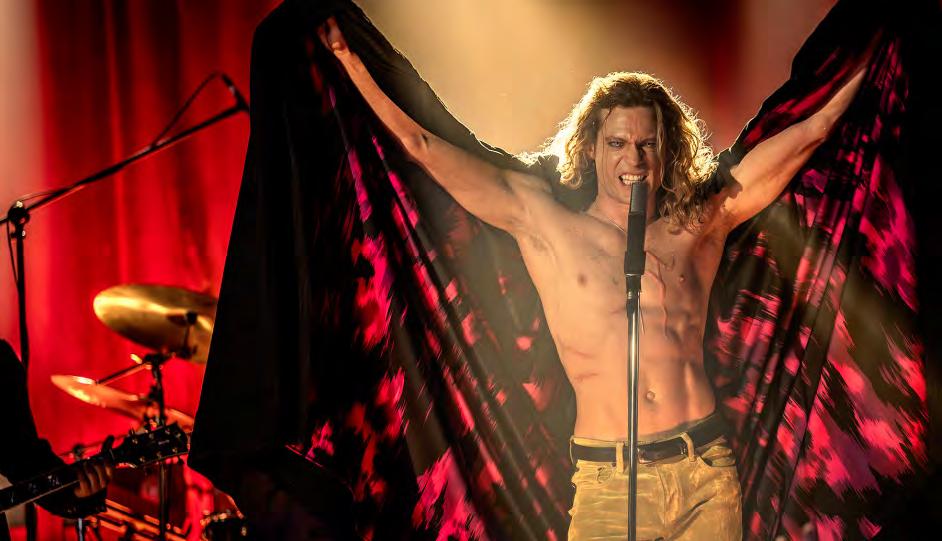
by Jim Provenzano
In one of the most authentic and entertaining promotions for the new series of “The Vampire Lestat” on AMC, Sam Reid, who plays the title role, rocked out at the Beacon Theater in New York City just before the first episode aired
in early June. An authentic and talented singer, Reid proved his mettle in this new seven-episode season of the adapted series based on Anne Rice’s “The Vampire Chronicles.”
From the opening episode, we are privy to a private auction of the estate of Lestat de Lioncourt, his recordings demo tapes and reels interviews. However, reference is made to some massive destruction
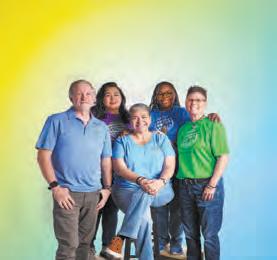


that was wreaked by Akasha. Similarly, the materials of one lot are incinerated at the beginning of the auction, leaving only a second lot, a massive chest of drawers and multiple single-pressed albums dubbed “The Failures” that Lestat left behind as a kind of epilogue and response to all the allegedly libelous statements about him made by Louis (Jacob Anderson) in the book, “Interview with the Vampire.”

With said book having outed vampires to the general public, Lestat thinks to himself, ‘Why not become a vampire pretending to be a human pretending to be a vampire rock singer?’
Lestat recruits his noisy neighbors in New Orleans, a feisty band with limited talent, led by Larry (Noah Reid of “Schitt’s Creek”). Lestat convinces them to go on tour to perform at mediumsize venues on his way to become a rock star, his music taking on a vengeful reply to Daniel Molloy (Eric Bogosian), the author of the best-selling book, and Louis’ many alleged lies in it.
This is where things get meta. Now a successful author-turned vampire, thanks to conniving Armand (Assad Zaman), Daniel is bitter and determined to get the truth out of Lestat as he tags along on the band’s bus tour to film a documentary. Bogosian is cutting and precise in his portrayal of what Lestat jokingly calls “the vampire Bourdain.”
The dramatic gay love affair from the two previous seasons, set in New Orleans, Paris, Dubai and other cities, is pulled apart. Louis and Lestat have separated for decades, essentially ‘divorced’ after Lestat dropped Louis from the clouds, with Louis later attempted arson/murder on Lestat.
Being focused on Lestat’s narration and point of view instead of Louis’, the entire series takes on a buzzing faster pace with a contemporary rock edge that suits the material. Dialogue often overlaps, scenes jump through time, with characters sometimes showing up out of place in Lestat’s addled mind, particularly in the first episode where he mistakenly drains a female fan who’s high on multiple drugs.





by Jim Gladstone
Bienvenidos a Santa Rosalia, the gay-friendliest Mexican town you’ve probably never heard of. It’s one of 177 Pueblos Magicos, the Mexican national government’s official designation for cities deemed to offer visitors the chance to experience authentic, uniquely local culture and traditions.
Murmurs that real estate developers are beginning to promote the area around Santa Rosalia as an appealing retirement location for queer couples, and a penchant for off-the-beaten path destinations recently drew me to this city of about 15,000 on the coast of the Sea of Cortez in Baja California Sur.
An easy but eye-popping two-hour drive north from Loreto International Airport, Santa Rosalia is flanked by some of the most beautiful, undeveloped beach coves on the Baja peninsula. It’s not unusual to spot sea lions lolling along the shore here, and several whale species (gray, fin, and blue) ply the surrounding waters.
Unlike vaunted Mexican gay getaway Puerto Vallarta, where cruisy, boozy American-centric nightlife has raged since the 1980s, Santa Rosalia offers the mellower charms of a closeknit local Mexican community. Diversity has been an essential thread of Santa Rosalia’s social fabric since the town’s founding in 1884.
A French-accented past
After the discovery of valuable mineral veins in the late 19th century, Mexico granted a large parcel of land
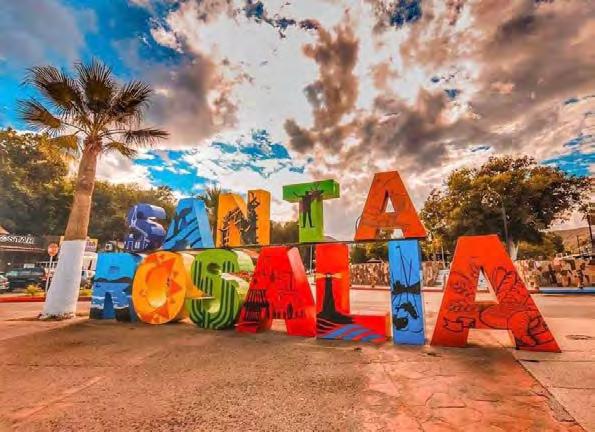
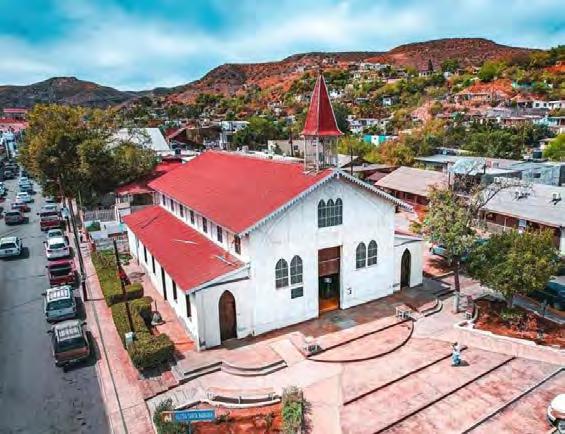
to the French mining firm Compagnie Boleo, which was underwritten by the Rothschild family. More than 200 French citizens, primarily engineers and managers, arrived in what was then a remote, sparsely populated peninsula.
Along with indigenous Yaqui people who traveled from the Sonora region of mainland Mexico to work as laborers, they built Santa Rosalia from scratch. By 1920, the town’s population had grown to over 8,000. Today, Yaqui traditions, notably the dramatic Matachine dance, featuring feathered and masked performers, are included in Santa Rosalia’s major
annual festivals, notably Holy Week ceremonies when locals freely blend Catholic and native rituals.
To hear today’s locals tell it, a substantial number of men among the early French settlers, including highly visible middle and upper managers at Boleo, were homosexual.
Given their much-needed business and engineering skills, along with a willingness to uproot their lives in Europe, their sexuality was quietly accepted, and their leadership roles honored, within what was essentially a company town.
“The local people saw homosexuals in positions of power and they viewed them with respect,” explained Missael Frye Martinez, 35, a gay Santa Rosalia native who oversees arts and cultural events for Fundacion Hagamos Mås (The “Let’s Do More Foundation”), a major benefactor of local civic programs, ranging from ecological outreach to child welfare.
“The French eventually left, but the attitude they brought stayed here,” he explained in an interview with the Bay Area Reporter conducted in wicker chairs on the wide porch of Hotél Frances, a stunningly preserved time capsule of late 19th-Century hospitality.
Built in 1896 and open ever since, its parlors are chock-a-block with luxe-but-rustic vintage furnishings. Guest rooms, $75-$150 a night, surround a small courtyard swimming pool.)
with a taste of home in the form of baguettes and familiar pastries.
Today, it’s conchas rather than croissants that are the business’ stock in trade. Now operated by the fourth generation of the Mexican family that took it over in the 1950s, the bakery remains a hub of everyday life for locals and a “can’t miss” for visitors.
From before dawn to mid-morning, the bakery’s original mesquite-fired ovens wrap a whole block in sweet, yeasty aromas. And all day long, locals and visitors queue up for specialties including guava empanadas, cheese buns, and the creamy crumbed sweet rolls called pittayhas.
History on display
While Santa Rosalia’s mines are still in operation, the industry’s origins remain on vivid display at the El Boleo Mining Museum. High-ceilinged rooms where rows of accountants once sat display period furniture, adding machines, mining tools, and archival photographs.
Locals, including Missael Martinez, lead occasional guided tours, outfitted in early 20th-century garb. Among the guides on my visit, statuesque in an evening gown that might have been worn by the wife
of a mining executive, was Gabrielle Murillo, a trans woman who works with special needs children in the local public school system and also dances professionally.
“I traveled to La Paz [A major university town, about 325 miles south of Santa Rosalia] for my medical care,” she explained. “But I don’t want to live in a big city. This is my hometown, and I feel comfortable living here.”
While there are no queer-specific establishments in Santa Rosalia, samesex couples and groups of queer friends feel free to gather most anywhere.
The popular sports bar and disco El Quinto Patio is a favorite. And the open-air seaside La Bahia Cocteles & Mariscos is a must for day drinking, tostadas piled high with fresh ceviche, refreshingly citric aguachiles, and the local specialty, “chocolate” clams (for the color of their shells).
Generations of progress
One of the city’s best-known personalities, and its de facto mascot, is androgynous Elvis Zamora. He’s the gruffly maternal proprietor of Hot Dogs Elvis, a center of wee hours merriment and ad hoc counseling, emblazoned with giant photos of its namesake’s face.
Following in the footsteps of Abuela Juanita and Panchit, local eccentrics of earlier generations, Zamora is the latest in a series of queer folk who have become de facto mascots of Santa Rosalia.



Martinez, who also runs a local theater troupe and spearheads Santa Rosalia’s annual Pride parade (a rarity in Mexican communities of this size), explained that after the mine was transferred back to Mexican ownership in 1954, Santa Rosalians maintained the town’s unusual embrace of sexual and racial diversity.
“Gracias to los franceses for giving gay men those first important jobs here,” said Martinez, “But it is the local people, three generations of Mexicans, who have held on to this attitude and deserve the credit for Santa Rosalia’s ongoing openness.”
Today, senior officials of Santa Rosalia’s education and health departments are among the city’s openly LGBTQ leaders.
Sightseeing and savoring
For tourists, remnants of the city’s French founding are still among Santa Rosalia’s most intriguing attractions.
The Iglesia de Santa Barbara (patron saint of miners), the city’s most prominent church, is constructed from large sheets of decoratively stamped steel and designed by none other than Gustave Eiffel. Originally created for the 1889 Paris world’s fair, it was purchased by the Boleo company and shipped, disassembled, to Santa Rosalia in 1897, where it was proudly resurrected.
In a town of dusty streets lined with taquerias and elote vendors, the most distinctive gastronomic site is Panaderia El Boleo, a bakery first established in 1901 to provide the French settlers

“Just because we’re a small town doesn’t mean we have to have small minds,” said Ivanna Munoz, a local native, who, for the past year, along with her spouse, Humberto Vasquez, has run a charming indoor-outdoor café with the flashback French name, “Déja Vu.” Munoz, who like Vasquez is in her early thirties and bisexual, says one shouldn’t imagine that growing up gay in Santa Rosalia is an idyll.
“But I always knew that queer people were around and were a part of the community here.”
Munoz discovered third-wave coffee culture while working in a series of cafés to support her studies. Rather than taking a junior position at a male-dominated engineering firm after graduation, she opted to be her own boss and help shape the quality of life for queer people in her home town by opening Déja Vu.
“Everyone is welcome,” said Munoz. “But the first thing I put up on our social media were the queer flags.”
One of Munoz’s proudest moments at Déja Vu was when two young teenage girls who’d previously come in accompanied by one’s parents returned to the shop on their own.
“I’d thought they were sisters, but it was clearly a date,” Munoz recalled with a grin. “Maybe the parents didn’t know they weren’t just friends. It felt really good that they recognized this as a place for them.”t

by David-Elijah Nahmod
Bay Area journalist Alix Wall, who contributes to the New York Times and is a contributing editor at The Jewish News of Northern California, has deep connections to the Holocaust. Both her late mother and her late grandmother were survivors, while her grandfather was killed by the Nazis.
During the war, Wall’s grandmother, Rachela Pupko-Krinsky, was part of a group of Jews who were hand-picked by the Nazis to sort through Jewish artifacts for a planned “Museum of an Extinct Race.” Krinsky, and songwriter Shmerke Kaczerginski were among a group of forgotten Holocaust heroes who saved Jewish manuscripts by hiding them under floorboards and smuggling them into the Vilna, Lithu-
‘Long
ania Jewish ghetto. But that’s only the beginning of the story, as revealed in the poignant new documentary “The Lonely Child,” which will premiere July 18 at the Castro Theater as part of the 2026 San Francisco Jewish Film Festival. The film will also screen at the Piedmont Theater in Oakland on July 29. “The Lonely Child” is a collaborative effort between Bay Area gay filmmaker Marc Smolowitz and Wall.
While they were working on saving the manuscripts, Kaczerginski wrote “Dos Elnte Kind,” translated as “The Lonely Child.” It was a lullaby dedicated to Rachela’s daughter Sarah, a “hidden child” who was being raised as a Christian by her nanny. This was the only way to save the child’s life during the Nazi reign of terror. Sarah survived and was reunited with her
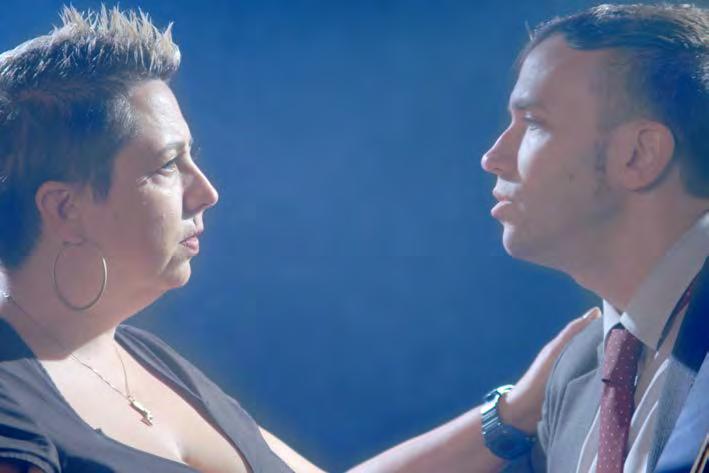
mother and with her Jewish heritage. Decades later, Sarah’s daughter Wall goes on a journey around the world to connect with those who today are keeping the song alive.
Singing history
It’s a moving journey. The film opens with Anthony Mordechai Tzvi Russell, a Black gay man, a Jew by choice who is married to a rabbi, singing “Dos Elnte Kind” in a stunning operatic baritone. This is followed by a collage of scenes of various people singing excerpts from the song, including the late Jewlia Eisenberg, a Bay Area singer, composer and cantor who died in 2021 at the age of 50.
Eisenberg is one of three people who appeared in the film who passed away during production, including Claire Klein Osipov (1931-2020), a
‘90s-style

by Laura Moreno
The gripping independent film
“Long Time Listener” is a mystery/ thriller worth watching. Written by John Doolan and Joe Narode, it is the first film directed by Danielle Nicolet. The tables turn when Genesis, the host of a popular true crime podcast called “Something to Stalk About,” becomes the target of stalking by a longtime devoted listener. What begins as a series of disconcerting coincidences and unsettling messages soon escalates into a full-blown reign of psychological terror.
Lead character podcaster Genesis Taylor played by Meagan Holder (“Monarch,” “Pitch”) is an out bisexual who is described as being “allergic to commitment,” even though she is in a relationship with Elle, played by director Danielle Nicolet (“The Flash”), fans are thrilled to discover.
To its credit, “Long Time Listener” seamlessly integrates its LGBTQ representation while remaining squarely focused on the suspenseful action. No doubt, focusing less on specific issues
reflects a broader trend toward more organic, less tokenized representations of LGBT characters in film.
The extremely talented, nearly allPOC cast features Lyriq Bent (“She’s Gotta Have It,” Tyler Perry’s “Acrimony”) as Carter, and Cleo Berry as Max. All in all, the crackling chemistry among the actors is one of the great strengths of this character-driven noir-esque film.
The staff all get along and things are going great. Then corporate pushes for the podcast to keep pushing the boundaries, the danger limits, for more and more clicks until things go off the rails.
The main character Genesis begins to question the wisdom and ethics of packaging the misery of others as content for profit. But there’s no urgency.
The problem in a nutshell is that Genesis is blissfully unaware of the depth of the insanity that lurks in the audience…until it’s too late.
A fascination with true crime
This is an excellent production. With great expertise, the director and
Canadian soprano and folk singer who recorded the song in the 1950s and performed it again for Wall. The third person who passed is Wall’s own father, who died the day after a Carnegie Hall concert in which the song was performed.
The journey takes Wall to a wide variety of locales. She connects with a Klezmer band in New Orleans who play the song instrumentally and visits a Jewish day school in Massachusetts where 6th graders are taught the song’s English translation. A few of these kids speak of what the song means to them.
Wall also connects with a playwright who wrote a play in which both her mother and grandmother were characters.
Throughout the film Smolowitz’s camera shows how deeply Wall is touched by all of these connections.
When she smiles it’s with a look of peace and satisfaction at the realization that her family’s story will not be forgotten, and that the song will find new life with the release of the film.
As the film points out, there are very few Holocaust survivors still living. It’s therefore important to tell stories like these so that people can learn from the history of what the Nazis did. Films like “The Lonely Child” stand as important historical documents that need to be seen.t
‘The Lonely Child’ screens at the San Francisco Jewish Film Festival, July 18, 11am, Castro Theater, 429 Castro St. $19-$20. Also, July 29, 12pm, at the Piedmont Theater, 4186 Piedmont Ave., Oakland. www.jfi.org/sfjff-2026 www.13thgenfilm.com
thriller questions the ethics of the true crime genre
cinematographers have created a truly creepy atmosphere that perfectly captures the growing paranoia of being stalked.
There are a few holes in plot twists, but they are negligible. More importantly, a few of the technological “errors” that have been flagged by others could possibly be intentional throwbacks to the more cinematic technological limitations of older technologies, like certain features of land line telephones that are ubiquitous in the popular horror films we grew up with.
A perfect illustration is the chill of hearing a dial tone at just the right time in the action, or not being able to access a phone just out of reach. It’s just not the same on the big screen when today’s mobile phones have no dial tone, and you can ask Siri for help in contacting the police, over-riding long-standing cinematic horror motifs.
In other ways, too, “Long Time Listener” makes great use of a style commonly used in 1990s horror films and thrillers, now perceived with nostalgia.
Emotions like intimidation are conveyed through visual cues such as slanted cameras angles, partial visibility, shadows and silhouettes. Suspense is created and builds without the assistance of special effects. Viewers will appreciate the throwback vibe, so different from today’s scaled back minimalist approach to horror storytelling.
The plot of “Long Time Listener” is not exactly new and might have seemed like a bit of a tired story if not for the film’s rare meta-commentary on the true crime genre and the manufactured intimacy with audiences that produces one-sided attachments toward media figures.
The film questions whether consuming content like this film itself is healthy for audiences. What does the growing popularity of the true crime
genre say about our society and our collective future?
In the course of this 85-minute film, Genesis goes from a confident person who drives most of the action to a passive vulnerable person who constantly reacts to the actions of others around her. Notably, echoes of Jeffrey Dahmer
are hinted at in the film, which really delivers while demonstrating a depth and self-awareness rarely seen in the thriller genre.t
‘Long Time Listener,’ now streaming on Prime Video & ALLBLK on Roku.

by Michael Flanagan
“Either you OD and die or you become an elder and tell stories.”– Bambi Lake
August Bernadicou has been a fan of Bambi Lake since he was a teen, as he relates in “Queen of Polk Street,” his introduction to the new book “Devour Me, Again.” The book is a compilation of works from “Smash and Grab” (first published in 2004), “The Unsinkable Bambi Lake” (first published in 1996) together with previously unpublished song lyrics, introductions to the book by both Bernadicou and Brontez Purnell, and interviews Bernadicou conducted with Lake in 2015 and 2019.
As Lake died in 2020, this is the first retrospective work to be published after her death, and it is a well-deserved tribute. Together with Bernadicou’s QueerCore Podcast it functions as a great introduction to Lake’s work for those who are unfamiliar with it.
Lake’s story is at once both tragic and inspiring. Born in Palo Alto in 1950, she first became involved in performing in 1965 in “Oliver” at the Circle Star Theater in San Carlos. By 1970, she was traveling in the same circles as the Cockettes, Hibiscus and the Angels of Light.
Her life was a wild ride, going from London to the Catskills, to Provincetown and Berlin, where she worked for famed hostess and performer Romy Haag.
In the podcast, Bernadicou describes Lake as “a chanteuse, a punk rocker, a poet, a performer, an actress, a sex worker, a drug addict.” The last part of this equation is well-mapped out in the podcast: “crystal meth, the near demise of our friend the legendary Bambi Lake; she started sleeping under bridges, she was homeless, she screamed at people on the street.”
Fortunately for us all, she became clean and sober later in life, which is in large part why her story has been documented.
Poetic license
Lake’s poetry and lyrics are well represented in “Devour Me, Again.”
Bambi Lake remembered in posthumous poetry book


Of course it features the lyrics of Lake’s best-known song, “The Golden Age of Hustlers,” made famous by Justin Vivian Bond. It also has the lyrics to “Freddie,” which is featured in the podcast as well and depicts the intersection between British punk and San Francisco in the 1970s:
“In our day-glo mohair sweater phase, we were so damn chic. In those seventies Vivienne Westwood days, walking down the street, we were all turned out.”
Many of the poems are autobiographical, such as “Viking Dan,” which recounts Lake’s time living at a commune on Church Street:
“Viking Dan was occasionally, arrested for soliciting on Market Street, and, sometimes, he slept in my room, on Church Street.
When I lived with Hibiscus and the Angels of Light.”
What is particularly striking about this poem is the sense of longing and misconnection that many of us who lived through the seventies felt:
by Brian Bromberger
Actor Roddy McDowall, who died of lung cancer in 1998, is finally the subject of a first-ever, comprehensive biography by gay author Samuel Garza Bernstein. While the book is only fair, Bernstein has rescued McDowall from oblivion.
Bernstein had access to the Roddy McDowall Collection archives at Boston University, comprised of 520 boxes, packages, and film reels, including a lifetime of correspondence, scripts, notes, memorabilia, costumes, videos, and photos. They were sealed until 2020, but contain no journals, diaries, or torrid love letters.
Youthful career
McDowall led a very public life from the time he was 10 years old. Born in London in 1928, his overbearing, tyrannical mother was a thwarted actor who pushed him to perform and become a star. He fell in love with movies, especially musicals. Starting as a print model, he worked his way into films as a child actor, making 17 of them in two years.
With the bombing of England by Germany, his family (including his emotionally troubled sister Virginia) emigrated to the U.S. In New York within six months, McDowall had read for the role of Huw Morgan in “How Green Was My Valley,” director John Ford’s story of the epic struggles of a Welsh mining family.
He got the part, moved to Holly-
wood, and was signed by Fox Studios. It made him famous, getting him incredible critical notices. He starred in a string of hits, such as “Lassie Come Home,’ “My Friend Flicka,” and “The White Cliffs of Dover.” He met another child star Elizabeth Taylor, with whom he became best friends for the rest of their lives.
By the time he was a young adult, movie roles had dried up. To escape his mother but to rebuild his career, he moved to New York and worked on stage as well as TV, culminating in a Tony Award in 1960 for “The Fighting Cock,” and an Emmy for the “Sunday Showcase” production of “The Power and the Glory.”
Cleo and Cornelius
With the help of Elizabeth Taylor, he revived his Hollywood movie career with the role of the effete Octavian, Mark Antony’s enemy, in the scandal ridden epic “Cleopatra,” where the Richard Burton/Taylor affair began. He remained a loyal friend to Taylor even as she was excoriated on the floor of Congress.
He secured his most famous and iconic role as the chimpanzee archeologist Cornelius in “Planet of the Apes,” eventually appearing in four of the five original series franchise films, playing the part with empathy, humor, and expressiveness despite the prosthetics. He also played the chimp role of Galen in the 1974 CBS series adaptation. Apes would be the height of McDowall’s career. Prolific, he performed in
“Viking was a terrible, terrible flirt, wearing that Tazio sailor shirt. Viking was the first in a rather long line of unattainable men who would enter my life. You see, Viking never slept with anyone.”
Along with the poems, “Devour Me, Again” includes a few short narrative prose pieces from Lake, including “The Pussy Galore Story” and “Smash and Grab.” “Smash and Grab” is particularly resonant from a historical perspective as it tells the story of open mic nights in San Francisco during the ’90s.
Though the poems and lyrics are valuable both as an exploration of Lake’s artistry and for the history they contain, what really makes this collection sing is the text of the interviews with Lake, both because they allow her to define her own world, and they give us context for the content of the poems and lyrics.
The Hustle Lake gives us insight into the authors who influenced her, including
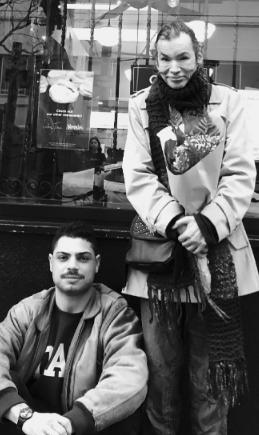
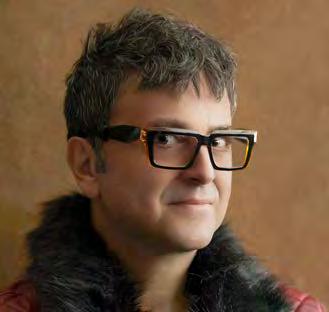
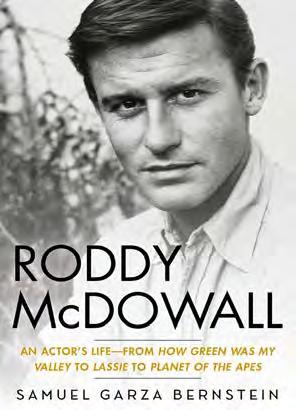
121 films, 35 stage plays, and 877 appearances on television.
Bernstein does discuss McDowall’s alternate career as a photographer, and his five books on candid portraits of his celebrity friends. McDowall was also an archivist, developing an extensive collection of Hollywood films and memorabilia, almost becoming Tinseltown’s personal historian, such that the Academy of Motion Picture Arts and Sciences posthumously named its photo archive after him.
In 1974, the FBI raided his home seizing prints and videocassettes, valued at $5 million, claiming copyright infringement and movie piracy, even though it was his private collection, not designed to make a profit. He was eventually cleared by the FBI, with no charges and his property returned.
Shelley, Keats, Gregory Curso and Richard Brautigan. Amazingly, Lake reveals that one of the very first pieces she ever wrote was “The Golden Age of Hustlers.”
Bernadicou asked Lake what the theme of her poetry was and if it is represented by works like “Viking Dan” and “The Golden Age of Hustlers.” She replied:
“Yes. I romanticized all that, my history, because it seems – all of a sudden, it seemed like I was older then, and I had this story to tell. That’s when I wrote my book.”
Bernadicou’s podcast “The QueerCore Podcast: Devour Me, Again” is a wonderful compliment to the release of the book, as you will hear “The Golden Age of Hustlers,” “Freddie” and “Cigarettes, Cigars” from Lake’s 2005 album “My Glamourous Life as a Broadway Hostess” as well as Lake in conversation with Bernadicou in an early interview (sadly the audio on the interview is not the best, as Bernadicou acknowledges, but it is worth listening to just to hear Lake answer the questions).
There are several events scheduled to coincide with the release of “Devour Me, Again.” On July 28, an Angels of Light panel at the San Francisco Public Library features Angels Tahara, Beaver Bauer and Greg Cruikshank in conversation with Bernadicou in Koret Auditorium from 6pm to 7:30pm.
On July 29, a reading of “Devour Me, Again” will be at Tally Ho Books in Oakland.
On July 30, 6pm: a group reading with Brontez Purnell, Donna Personna, Britney Smears, Stanley Frank, Fauxnique, Tahara, Birdie Bob Watt, Nicole Henares, August Bernadicou and others takes place at the ‘Comptons Cafeteria Riot’ performance site, 835 Larkin St.t
“Devour Me, Again” is available in bookstores on July 21. The QueerCore Podcast is available online on multiple platforms. www.sfpl.org www.tallyhobookstore.com www.nightboat.org www.queercorepod.captivate.fm
Encyclopedic, not insightful
Bernstein’s book for the most part reads like an elongated Wikipedia article. He comments on every film McDowell made and many obscure television appearances in programs long forgotten, in mind-numbing detail, which is the bulk of the book. Yet there’s little insight about McDowall the man, aside from the realization he was a workaholic, though we learn he had exceptional grace, elegance, and was very kind. Bernstein does talk a bit about McDowall’s homosexuality and three major relationships. In the early 1950s he had a short, troubled romance with actor Montgomery Clift. Bernstein declares he wasn’t closeted in the slightest, though he never came out
publicly. McDowall’s private life was never mentioned in gossip columns. Yet he was fearlessly willing to be himself without any apology.
He had three longtime partners, the most intriguing being John Valva in the 1960s. While shooting “Cleopatra,” Valva fell in love with Sybil Burton, Richard’s soon-to-be ex-wife. He left McDowall and moved in with her, yet the relationship didn’t last long. Still, Sybil remained one of McDowall’s closest friends.
Also, while one appreciates Bernstein’s honesty about Roddy’s sexuality, one wishes he had gone deeper into how it impacted his career. Everyone in Hollywood knew McDowall was gay, as his partners were always included in his social life with friends totally accepting of his relationships.
An in-depth biography of McDowall was long overdue and one can be grateful for Bernstein reintroducing him to younger generations. As a light read covering the broad scope of his career, it works fine. But McDowall clearly deserves a more penetrating treatment as a gay hero ahead of his time.t
Read the full review on www.ebar.com.
“Roddy McDowall: An Actor’s Life – From ‘How Green Was My Valley’ to ‘Lassie’ to ‘Planet of the Apes’” by Samuel Garza Bernstein. Citadel Press/Kensington Publishing Corp., $29. www.penguinrandomhouse.com
by Tim Pfaff
“The Two Roberts,” Damian Barr’s second novel (House of Anansi), opens with prose of such saturated beauty you worry it will stay like that and you will never finish the book, but you do, with a dollop of regret that it’s over. Barr writes that the two Roberts of the story –Robert MacBryde (helpfully, “Bobby” through the book) and Robert Colquhoun (“Robert”)– are “having their last day.” You know you’ll stick around to find out what that means. It doesn’t mean what you think it does but rightly portends sadness.
If you follow these things, you know that Barr’s subjects, real-life painters from the first half of the last century, have in their own way been on the loose again, for more than a year now. You just haven’t been able to glimpse them this side of the pond. Thanks to the House of Ananisi, now you can, and in paperback. If, on the other hand, you’re in the UK, the novel’s birthplace, you won’t get a paperback version until later this year. Go figure.
Then there are the built-in hazards of historical fiction. These two Roberts did exist in real time, charting the alltoo-familiar arc from nowheresville (the Scottish backcountry in this case) to peak fame and, finally, the kind of infamy that erases the record of stardom. They were gay in stodgy, punishing ol’ Britain.
Barr uses the tools of fiction to bring them back to life vividly. That itself is a high-wire act that causes even some serious biographers, who should know better, to “document,” say, that
While Lestat’s past romantic relationship with violinist Nicolas (John Potter) has a longer storyline in the book, he’s pretty much dispatched in one episode, aside from a few ghostly reappearances. His death, like Lestat’s transformational assault by Magnus, is one of many traumatic experiences that Lestat struggles to deal with and usually denies, except in his songwriting.
Music to die for
The music is superb, composed by Daniel Hart, and available online. While the 2002 “Queen of the Damned” film employed a variety of metal and goth rock music and singers, Hart’s score includes jaunty rock anthems, (“Long Face,” “Nothin’ to Lose”), frenetic punk-infused songs (“Big Bad Wolf”), and in a later episode, a haunting ballad (“Stained Glass Eyes”), all sung by Reid. One of the songs, the rousing “Black Licorice,” is actually 14 years old (A riveting version of Hart performing it is also available on YouTube).
In between the camp of Lestat’s diva behavior, he’s dealing with the long absences and abrupt meetings with his
Damian Barr’s fictional version of a gay artist couple’s lives
as Rome burned, Nero was thinking about dinner. But, as Barr writes in an Afterword, “I’ve tried not to let the truth get in the way of a good story.”
Mission accomplished.
The young men meet as strangers on a train. Both are headed, improbably, to the capital to study at Glasgow School of Art. Bobby spots Robert across a crowded train car surrounded by soldiers with harassment on their minds. The two Roberts make their separate getaways, but not before Bobby has sketched the fetching Robert –getting only the hair wrong, but time would set those curls straight.
Their inching toward one another at school does not require historical circumstances. At least pre-Grindr, gay men have made their approaches by circuitous routes. But by the end of their first term, the Roberts are in the situation Barr writes so evocatively

in those first pages. They’re having sex outdoors, “curled like commas, naked in the nest they’ve rolled in the high grass.”
Their excellence in art school lands both of them, in an uncommon occurrence, in a now-split scholarship that promotes passage to Europe.
There, away from Britain’s spying eyes, they see first-hand the masterworks about which they have only dreamed –and each other in the flesh, as it were.
They become a couple and remain so throughout their lives, although the relationship is as open as anything our age has concocted.
It’s fame –exhibitions at the Tate and New York’s Museum of Modern Art, sets and designs for a ballet at Covent Garden– that initiates their downturn.
But it’s their own raw characters that lead them back to penury and messy, late-stage alcoholism. It’s not an unusual arc, but Barr keeps them from cliché with writing you could almost call magical fiction.
The writing is arresting. Barely a sen-
first progeny, Gabriella (Jennifer Ehle), his Italian mother from centuries back in France. Several flashback scenes recount the Lestat’s childhood and his intriguing yet disturbing relationship with his new vampire progeny, his terminally ill mother, who upon transforming relishes her new undead life.
Having endured an arduous relationship with her horrible husband and two other sons, whom she and Lestat
nickname “cabbages,” the duo relishes in bloodily dispatching their family.
Ex marks
Back to the 2020s, Louis, now far from the insanity of Lestat, has been accruing real estate and financially successful investments with panache and tenacity. He refrains from too much vampiric carnage, other than arranged feedings, until he is politely
From outdoor parties to intimate galleries, sensational music concerts (like Velvetta at The Riptide; see photo), and amusing theatricals, you’ve got plenty of summer fun yet ahead to choose from, selectively chosen in this week’s Going Out, only on www.ebar.com.
tence passes without a surprise tucked in, and there’s seemingly tireless wordplay without a groaner. Open to any page to find a compelling example. In Europe a nun shows them a hidden artistic masterpiece. “She walks assuredly through bare white room after bare white room, each clean as a baby’s first tooth.”
The room containing the art “is lit only by the lozenge of light from the doorway they stand in.”
In London during the Blitz: “The church is upside down and inside out: charred pews crash at crazy angles, broken gravestones make new names, a breeze whistles through organ pipes.
The sky is framed perfectly by the missing roof.”
Writing that dense –yet that clear–could become wearisome, but in Barr’s hand it becomes propulsive. The author paints them with unflagging sympathy. Historical characters in other fiction writers’ books should have such luck. It’s not the surfaces of Barr’s prose, affecting as they are, that load the memory. It’s the depths, psychologically, materially, and literally into which the two Roberts fall in the tragic denouement, that define them as, their perpetual penury notwithstanding, the richest of characters.t
Read the full review on www.ebar.com.
Damian Barr, “The Two Roberts,” House of Anansi Press, $20, 310 pages, paperback, www.houseofanansi.com www.damianbarr.com

coerced by a Talamasca agent (the always charming Justin Kirk) into killing vampire Bruce (Damon Daunno), who tortured Louis and Lestat’s adopted daughter Claudia (Delainey Hayles) long before.
Louis then happens upon a young woman who works in a diner and has a striking resemblance to Claudia (also played by Hayles), who was incinerated decades before by the coven at Paris’s Theatre de Vampires.
Combining storylines from Rice’s books “The Vampire Lestat” and “The Queen of the Damned,” we are introduced to Akasha in a new way. Don’t expect the glamorous bejeweled icon from the film “Queen of the Damned.”
Although critically panned, the film remains a guilty pleasure for many, particularly with the late Aaliyah’s entrancing vampire nightclub entrance. Her subsequent exit is literal fire.
How do we meet Akasha this time?
In another flashback (we’re up to episode 5), Lestat is yanked from his lengthy dirt nap by Marius (Christopher Heyerdahl) to become the new “keeper” to mind the semi-comatose Akasha (Sheila Atim) in an underground shelter. His curiosity gets the best of him, and although warned against it, Lestat feeds Akasha’s still form a drop of his blood.
Less graceful at first, more of a feral golem, her awakening is shocking. After feeding on Lestat, leaving him spasming in midair, her mind races to catch up on contemporary words and ideas in a frightening babble of phrases and questions. What will happen throughout the next episodes –and seasons– where not-subtle hints of Akasha’s carnage of some kind will occur? We’ll have to keep watching.t
‘The Vampire Lestat,’ on AMC www.amc.com




CD rates. avings move.

3.50 13 - MONTH CD % A PY ²
B EST FOR
members who want stronger
returns, stable earnings, and predictable savings growth


Minimum deposit of only $1,000