HIV advocates are sounding the alarm about a proposal to cut $17 million from funds allocated to community-based organizations that contract with the San Francisco Department of Public Health. Department officials told attendees at a February 2 Health Commission meeting that the money isn’t there.
“We don’t have the money,” Health Director David Tsai said before public comment began. “The $17 million has already been taken out of the budget.”
The cuts proposed by the health department will be voted on by the commission March 2. The money comes out of the Fiscal Year 2026-27 budget, approved by the San Francisco Board of Supervisors and signed by Mayor Daniel Lurie last July.
That budget called for $17 million in cuts from community-based organizations, and in the time between then and now, the department held stakeholder meetings with the communitybased organizations to discuss how to achieve that amount, according to a DPH memo.
The memo states, “Although SFDPH’s overall budget has grown by an average of 5.4% annually and has outpaced the city’s General Fund growth, much of that increase has come from Medi-Cal and other restricted funding sources. At the same time, [community-based organizations] funding in aggregate has grown faster than inflation as the city expanded investments in community-based care.”
At the commission meeting, Drew Murrell, the chief financial officer for DPH, outlined how the department arrived at its list of proposed cuts. Rather than affect direct health and clinical services, the department prioritized capacity building and workforce development programs that are contracted to nonprofits.
Even UCSF, which has $300 million in contracts with DPH, mostly for staff at Zuckerberg San Francisco General Hospital and Trauma Center, wouldn’t be spared. Murrell said that DPH is proposing a $5.8 million cut to UCSF.
Dr. Laurie Green, health commission president, bemoaned the choices the body is poised to make.
“We are in an extraordinarily difficult moment,” she said. “The mayor has mandated reductions in departments across the city. These are horrible tradeoffs we need to make.”
LGBTQ and HIV/AIDS nonprofit organizations affected include the San Francisco AIDS Foundation, the San Francisco Community Health Center, and Lyon-Martin Community Health Services.
Prior to the hearing, HIV/AIDS officials expressed concern.
“We have serious concerns about any funding cuts that would harm HIV and AIDS prevention and care, but in particular ones that would cause disproportionate harm to communities that are already disenfranchised by existing health care systems,” stated Tyler TerMeer, Ph.D., a gay Black man who is CEO of the San Francisco AIDS Foundation and living with HIV. “We know that Black and African American people in San Francisco experience higher rates of HIV diagnoses than other communities–now is not the time to pull back on valuable investments made to improve health outcomes in these communities.”
The proposed cuts to the foundation would be just over $700,000, supporting two programs. The first program is capacity building at the Rafiki Coalition for Health & Wellness’ Health Access Point, which is part of the city’s HIV, STI and hepatitis C response. Since 2023, the foundation has partnered with the coalition to build out the health access point so that Black and African American communities are better served. The funding reduction would be $419,000.
Castro Theatre readies for reopening
by John Ferrannini
David Hegarty started playing the organ before film screenings at the Castro Theatre in 1976. When the newly-renovated landmark in San Francisco’s LGBTQ neighborhood reopens February 6, Hegarty, a gay man, will be giving a brief presentation about the new organ at the site, and, on March 17, he will play it publicly for the first time.
It is just one of the changes set to be unveiled to the public now that Another Planet Entertainment, which manages the theater, has completed a $41 million restoration of the historic movie house.
“I haven’t had the chance to work with it, because there’s so much going on inside,” Hegarty said, referring to the fact that work on the theater has been going down to the wire in preparation for the community reopening Friday preceding the launch of genderqueer nonbinary pop star Sam Smith’s residency February 10.
Work was still ongoing during a February 4 press tour of the theater led by Mary Conde, a straight ally and senior vice president of APE.
“We have 48 hours, but are 1000% gonna be ready,” she said, as workers in hardhats finished painting and making last minute installations.
Speaking to the Bay Area Reporter by phone Tuesday, Hegarty said he’s “thrilled” to return to his old stomping grounds.
“It’s finally reopening, and we’re able to present this instrument that’s been in the planning for 13
Workers put the finishing touches on the Castro Theatre during a media tour
years,” he said. “It’s very exciting for me.”
The new organ – the world’s largest digital symphonic organ, according to Conde – was built with Hegarty’s specifications in mind. Conde said that Hegarty’s debut performance will have to wait be-
cause the “organ is so complex, he needs time to practice on it. It’s not something you just plug in and play. I cannot imagine the brain power it takes to run this thing.”
After Minneapolis, SF’s Castro asks how can it prepare for ICE
by John Ferrannini
Castro-area stakeholders and community groups are weighing options as to how they can prepare should a surge of federal agents not acting like traditional law enforcement come to the Bay Area. Concerns in San Francisco’s LGBTQ neighborhood only grew after incidents last month in Minneapolis, where two American citizens were killed by federal agents.
Greg Carey, a gay man who is co-chair of Castro Community on Patrol, told the Bay Area Reporter that the volunteer safety group will once again begin to promote its “Private Space” initiative to safeguard constitutional rights in San Francisco.
Nate Bourg, a gay man who is president of the Castro Merchants Association, said that the neighborhood group will discuss options about what businesses can do at its next meeting February 5.
These moves come as groups such as the Harvey Milk LGBTQ+ Democratic Club participated in a general strike Friday, January 30, in solidarity with Minneapolis and to protest U.S. Immigration and Customs Enforcement.
Last October, San Francisco almost saw a surge of federal immigration enforcement, but it was called off by President Donald Trump following a phone call with Mayor Daniel Lurie. However, at that time, Trump said he thought Lurie was “making a mistake” by opposing such an intervention, and there’s no telling how long the status quo will hold.
Alex Pretti, a Veterans Affairs ICU nurse, is the most recent U.S. citizen killed by federal border patrol officers in Minneapolis when he was shot multiple times January 24. The first was lesbian Renee Nicole Good, on January 7.
The U.S. Department of Justice declined to open an investigation into Good’s death, which led several federal prosecutors to resign, though it has reportedly pushed to investigate Good’s widow. According to Minneapolis police, federal officials blocked local authorities from investigating Pretti’s death, despite local law enforcement having a valid judicial warrant to have access to the crime scene. The Trump administration announced that the Department of
Homeland Security would investigate the killing of Pretti. On Friday, January 30, after significant public pressure, the Department of Justice finally did open a civil rights investigation into Pretti’s death.
San Francisco District Attorney Brooke Jenkins has continually said, including to the B.A.R., that she would prosecute federal agents who violate local laws; most recently, earlier this week, she joined other prosecutors in a new organization called Fight Against Federal Overreach, or FAFO.
The Trump administration sent a letter to Jenkins threatening prosecution if she follows through on her pledge, as the B.A.R. reported.
Castro
Last fall, CCOP handed out whistles to people in the Castro community. It had initially ordered 6,700 whistles. In Minneapolis and other places that have seen these surges of federal immigration enforcement – with ICE agents often hastily hired and
poorly trained compared to their counterparts in other law enforcement agencies, according to media reports whistles have been used to alert civilians to these agents carrying out their operations.
Carey said, “We do have a few we have left,” and there are plans to order more.
Because there weren’t as many people taking the whistles when there was a distribution day last October (it was raining), Carey said that the plan is to do targeted distributions to places where hopefully there will be more interest expressed.
Asked what he meant by that, he said that he’d distributed some whistles at several events in the South of Market leather neighborhood.
CCOP had initially passed out whistles for years so people could blow them in case there was a safety threat, such as a gay bashing. Now, he said, “I think it’s likely in the next three years we’ll see them [border patrol and ICE] come back, and we need to be ready so we aren’t flat-footed.”
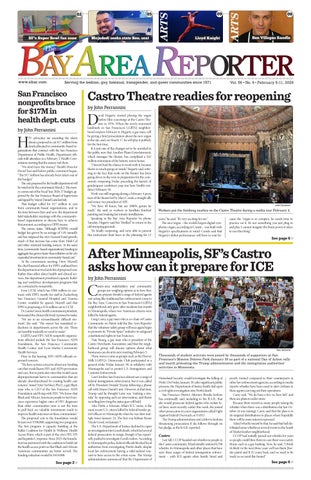
Ben Villegas Randle
Mojadedi
Lloyd Knight
Thousands of student activists were joined by thousands of supporters at San Francisco’s Mission Dolores Park January 30 as part of a national Day of Action rally and march protesting the Trump administration and the immigration authorities’ activities in Minnesota.
Rick Gerharter
SF's Super Bowl fan zone
February 4.
John Ferrannini
NFL program sources from LGBTQ firms
by Matthew S. Bajko
Fans of Bay FC, the professional women’s soccer team that plays at PayPal Park in San Jose, will be familiar with Amanda Ehrhardt. She emcees the team’s FanFest activities before each of its home games.
This week, Ehrhardt will be in a similar role at San Francisco’s Yerba Buena Gardens downtown cultural complex. She is serving as the host of the main stage at BAHC Live! San Francisco Fan Zone through Thursday.
“It is something I love to do,” said Ehrhardt, who lives with her wife and their three children in Soquel, California in Santa Cruz County.
The fan zone is being put on by the Bay Area Host Committee in conjunction with the NFL Super Bowl Experience presented by Jersey Mike’s being held at the adjacent Moscone Center, the city’s sprawling convention complex, through Saturday. It is one of the myriad offerings taking place ahead of Super Bowl LX being played Sunday, February 8, at Levi’s Stadium in Santa Clara.
The host committee, which works to bring major sporting events like the National Football League’s championship game to the Bay Area, engaged Ehrhardt’s employer Soul Focus Sports to help produce its event for NFL fans. (Tickets cost $45 but are free for children 12 and under. They can be purchased online at https://tinyurl.com/36jzfxx9.
Since 2019, Ehrhardt has been vice president of strategic partnerships at
the firm and has worked on a host of sporting events over the years, from marathons to rugby tournaments. Last spring, Soul Focus worked with FIFA on an event to mark one year until it brings its World Cup soccer matches to the Bay Area this June.
She also launched in November 2024 the firm Meliora to work with female sports teams and leagues. The Latin word for the pursuit of excellence, Meliora is 51% owned by Ehrhardt, its CEO and founder, with Soul Focus owning the other 49%.
As it is a lesbian- and women-owned firm, certified as an LGBT Business Enterprise by the National LGBTQ+ & Allied Chamber of Commerce, Meliora qualified for NFL Source, the league’s program to help underrepresented businesses compete for contracts with it. It also is aimed at ensuring local companies benefit when the NFL’s premiere events are held in their cities or region.
“It is really refreshing to see a big entity like the NFL really put some time and money behind the NFL Source project,” said Ehrhardt.
Two years ago, the NFL expanded the program with an eye toward seeing more of its day-to-day procurement needs be handled by local firms across the country that are 51% owned and operated or led by a veteran, woman, minority, person with disabilities, or LGBTQ+.
“NFL Source provides the league with an opportunity to reinvest funds back into the communities that our clubs and offices reside in and gain exposure to an
increased number of businesses,” Jonathan Beane, the NFL’s senior vice president and chief diversity & inclusion officer, noted at the time. “Doing business with the NFL can provide unparalleled exposure for businesses and boost local economic mobility.”
In addition to its regular season games, there is big money tied to the NFL’s special events it puts on, such as its draft event fans can attend in addition to the yearly Super Bowl. Approximately 90,000 fans are expected to be drawn to the Bay Area for Sunday’s matchup between the Seattle Seahawks and New England Patriots.
Economic benefits
The Super Bowl is estimated to bring $500 million in total economic impact for the Bay Area region. The Bay Area Host Committee also projects that the 2026 FIFA World Cup will draw 260,000 out-of-town visitors and pump another $555 million in economic impact into the region this spring and summer.
“From creating jobs and driving tourism to strengthening local economies, these events showcase the very best of California while delivering lasting benefits for communities across the Golden State,” stated Newsom, a former mayor of San Francisco.
To help oversee its procurement program for underrepresented businesses, the NFL hired Sacramento native Myisha Boyce as lead of NFL Source. The straight ally is now based out of Las Vegas and works closely with the host committees and local teams in the cities selected to host the Super Bowl in addition to the regional chambers of commerce.
“I think we are always very intentional in making sure our programs are representative of the communities they serve,” said Boyce during a video interview with the Bay Area Reporter last month.
On Monday, California Governor Gavin Newsom touted the economic benefits the Golden State expects to reap from those major sporting events this year along with the NBA All-Star Weekend taking place February 13-15 in Los Angeles and the X Games League being held in Sacramento at Cal Expo June 26-28. And with the Summer Olympics coming back to Los Angeles in 2028, state leaders expect the large-scale sporting events will result in at least $18 billion in economic activity across California on top of creating tens of thousands of jobs. Coverage of the various competitions will also result in a boost for the state’s tourism market, which accounted for $157.3 billion in spending last year, noted the governor’s office.
Nonprofits From page 1
The second reduction would be to the
assistant
which trains and employs clinical assistants
Boyce stressed that the contracting opportunities with the NFL are year-round and not just tied to the day of the league’s big game. Preparations for 2026 began last year, and she noted there were still bidding processes underway in late January for service contracts needed the weeks before and after the Super Bowl.
“We have nothing but opportunity ahead of us,” said Boyce, who is already gearing up for the procurement program related to Super Bowl LXI being held in Los Angeles next February. “The breadth of the Super Bowl is hard for people to grasp.”
Any business that fits the NFL Source program requirements should apply for it, stressed Boyce, and the application process is open year-round. She did not have any data about how many LGBTQowned firms had been selected for contracts related to this year’s Super Bowl, as the NFL doesn’t publicly release such data. (Host committees will release an economic impact report several months
from communities most affected by HIV, STIs, and hepatitis C through paid internships, clinical experience, and pathways to careers in public health. The program has graduated 39 people since it began in 2023, at a cost of $13,200 per
post the game.)
“Absolutely, I would love to see a wider array of businesses providing services,” she said when asked about efforts to see LGBTQ-owned Bay Area firms take part in the NFL Source program. Her main focus is to see that local businesses are benefiting from the NFL procurement program, said Boyce.
“If local businesses are not successful, I am not successful. My personal drive is to see we are getting as much local impact as possible,” said Boyce. “Knowing economic stability is what drives small businesses and how much the economy leans on small businesses, we have such an important role to play to make sure small businesses are a part of this world-class event.”
Ehrhardt learned about NFL Source from her contacts at the Bay Area Host Committee, who suggested she enroll Meliora in it. Because the firm works closely with Soul Focus, such as providing the staffing for this week’s football fan event, Meliora was able to meet the requirements to be accepted into NFL Source as listed on its website at nflsource.com.
“It is incredibly helpful for us as a small business trying to learn how to play with the big kids,” said Ehrhardt of the program.
During a recent phone interview with the B.A.R., she said Meliora had been selected to enter several bidding processes for different events tied to this year’s Super Bowl.
“Ultimately, we turned down a few opportunities simply because of our work with the Bay Area Host Committee. We were not wanting to spread ourselves too thin,” explained Ehrhardt. Her acceptance into NFL Source is good for two years, she noted, so Meliora will be able to take advantage of it for some time. And Ehrhardt said she intends to vie for contracts outside of the Bay Area if her firm can provide the services being sought.
“We never turn down business so we will travel around,” said Ehrhardt, adding that, “we aspire to inspire. We do that by putting on elevated experiences.”
Case in point the BAHC Live! San Francisco Fan Zone, which will feature everything from local food trucks and entertainers to artists and photographers. Even non-football fans will be entertained, noted Ehrhardt.
“Come for the energy, stay for the community, and leave with memories and a full belly of great food and drink,” she said. t
Got a tip on LGBTQ business news? Call Matthew S. Bajko at (415) 829-8836 or email m.bajko@ ebar.com.
intern, according to the foundation. The funding reduction would be $300,000.
The foundation estimates that the total in proposed cuts to HIV-related programs, services, and capacity building amounts to $1.32 million.
Public comment
At the hearing, Robert Mitchell, representing the HIV Advocacy Network and the foundation, is part of Black Brothers Esteem, a support group for Black and African American men who have sex with men. He hopes the funding reductions don’t go through.
“Our mission is to bring awareness to HIV as it affects the Black community, and of course, that also includes others. I was around at the beginning of the HIV epidemic, and I’m hoping to see the end of it,” he said. “I’ve been a part of the community-based organizations and … therefore I’ve become better able to take my passion and make it work. Together, we are all making a difference and are saving lives and collectively we need to continue that. Don’t clip our wings.”
AjaiNicole Duncan, co-president of the Harvey Milk LGBTQ Democratic Club, also spoke, saying she hopes for a “transparent racial equity impact analysis and meaningful engagement with
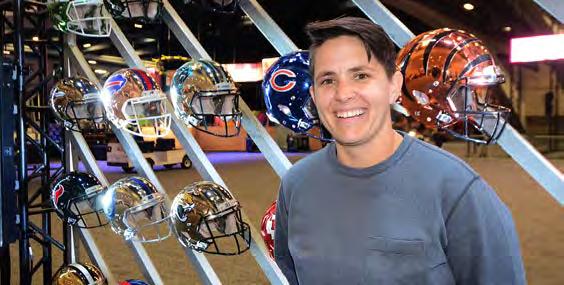
Amanda Ehrhardt stood in front of NFL team helmets at the Super Bowl Experience at Moscone Center.
Rick Gerharter
Super Bowl LX will be played Sunday, February 8, at Levi’s Stadium in Santa Clara.
Cynthia Laird
Walk showcases Castro art
compiled by Cynthia Laird
The Castro Art Walk will take place Friday, February 6, from 5 to 8 p.m. throughout San Francisco’s LGBTQ neighborhood. According to a news release, people are invited to explore a vibrant celebration of art and culture hosted by small businesses throughout the district.
The art walk is a free, guided or selfguided experience where local businesses hold special art exhibitions, creating an open, welcoming evening that highlights the creative heart of the neighborhood, the release noted. It is held the first Friday of the month and sponsored by the Castro Merchants Association and the San Francisco Office of Economic and Workforce Development.
This month’s event features 18 participating locations along Mar ket, Castro, 18th, and Noe streets. They range from Blackbird at 2124 Market Street to Blush Wine Bar, 476 Castro Street to Moby Dick Bar, 4049 18th Street. Another venue is Strut, the San Francisco AIDS Foundation’s health center at 470 Castro Street.
For a complete list of participating merchants, go to castroartwalk.com.
News is Out launches podcast series
News is Out, the collaborative of LGBTQ publications that includes the Bay Area Reporter, has launched a podcast that brings its recent LGBTQ+ Media Mapping Project to life.
“The Map of Us” is a seven-episode podcast. Each episode features publishers and journalists talking plainly about news deserts, revenue pressure, and why local queer media still matters, News is Out officials stated.
A report issued last year showed the precarious state of the LGBTQ media industry, but also highlighted new opportunities, as the B.A.R. reported. “LGBTQ+ Media: A Critical Inflection Point” was released by the LGBTQ+ Media Mapping Project, an initiative of the Local Media Foundation and News Is Out.
During a webinar last fall with News Is Out, report co-author Tracy Baim went over key findings of the report and what the publications can learn from them. Hanna Siemaszko led research and the Craig Newmark Graduate School of Journalism at City University of New York partnered on the project.
The report was created with the financial support of the MacArthur Foundation.
Baim, a lesbian and co-founder of the Windy City Times LGBTQ newspaper in Chicago, which is also part of News Is Out, painted a picture of an industry besieged by a changing media landscape and that’s seeing funding streams dry up amid economic uncertainty and the anti-diversity, equity and inclusion backlash that hit corporate advertisers hard in the past few years.
“This is what was shocking to me – how many operations are on a shoestring, and not just the locals,” Baim said during the webinar. “The nationals too – a significant portion of them were basically volunteer run.”
“The Map of Us” is now streaming on The Buckeye Flame (thebuckeyeflame.com) and wherever you get your podcasts.
Westside Lunar New Year celebration
San Francisco’s Richmond District on the city’s westside will hold its third annual Lunar New Year celebration and parade Saturday, February 7, from 3 to 8:30 p.m. along the Balboa Corridor, between 35th and 40th avenues. This year marks the Year of the Horse.
The grand marshal will be Zhou Bao Bao, who has 4.9 million followers and is known as the “Hanfu Lady,” a news release stated.
The free, community-centered celebration will feature over 70 vendor booths and 30 parade groups, the release noted. The event is produced by the Richmond Neighborhood Center.
“Lunar New Year in the Richmond District is about more than a celebration,” stated Clifford Yee, acting executive director of the Richmond Neighborhood Center. “It’s about honoring our elders, uplifting our youth, and reaffirming the strength of community that carries us forward. At the Richmond Neighborhood Center, we’re proud to help create spaces where culture, belonging, and joy are shared across generations.”
Center officials noted that more than 5,000 people attended last year’s event. The celebration is meant to fill a decades-long gap in cultural representation for one of San Francisco’s largest Asian American neighborhoods, officials noted.
The city’s annual Chinese New Year Parade will take place Saturday, March 7, at 5:15 p.m. starting at Second and Market streets in the downtown area.
Glide opens new youth wellness center
Glide Memorial Church has opened a new transitional age youth health and wellness center. The facility, which serves young adults ages 18-27, held a ribbon cutting last week at 888 Post Street in San Francisco’s Lower Polk neighborhood.
A news release noted that the center, open 24 hours a day, seven days a week, is designed to meet youth where they are and support their long-term wellbeing and path to independence. Services provided for free to TAY include on-site mental health, case management, and therapy; medical care; showers, laundry services, personal lockers, and hygiene; supplies and clothing; beauty salon services; and pet care and wellness support.
There’s also computer and tech access, support with completing high school, continuing education, and opportunities for community connection.
The health and wellness center was developed in partnership with the San Francisco Department of Homeless and Supportive Housing and BMO Bank, the release noted. Officials stated that the goal is to create a seamless link to supportive housing and other Glide services.
For more information, go to glide. org/tay-center. t
Attendees mingled during last month’s Castro Art Walk.
Sophie Green
Volume 56, Number XX
Volume 56, Number 6
February 5-11, 2026
Month XX-XX, 2026 www.ebar.com
PUBLISHER
Michael M. Yamashita
Thomas E. Horn, Publisher Emeritus (2013)
Publisher (2003 – 2013)
Bob Ross, Founder (1971 – 2003)
NEWS EDITOR
Cynthia Laird
ARTS & NIGHTLIFE EDITOR
Jim Provenzano
ASSISTANT EDITORS
Matthew S. Bajko • John Ferrannini
CONTRIBUTING WRITERS
Kyle Amato • Race Bannon • Robert Brokl
Christopher J. Beale • Robert Brokl
Christopher J. Beale • Brian Bromberger
Brian Bromberger • Philip Campbell
Heather Cassell • Eliot Faine
Philip Campbell • Myron Caringal
Heather Cassell • Meg Collins • Chelsea Davis
Michael Flanagan • Jim Gladstone
Natasha Dennerstein • Eliot Faine
Liz Highleyman • Brandon Judell • Lisa Keen
Michael Flanagan • Jim Gladstone
Philip Mayard • Laura Moreno
David-Elijah Nahmod • Mark William Norby
Liz Highleyman • Brandon Judell
JL Odom • Paul Parish • Tim Pfaff
Michele Karlsberg • Lisa Keen
Jim Piechota • Adam Sandel
Matthew Kennedy • Philip Mayard
Jim McDermott • Laura Moreno
Jason Serinus • Gregg Shapiro
Gwendolyn Smith • Charlie Wagner
David-Elijah Nahmod • Mark William
Norby JL Odom • Tim Pfaff • Jim Piechota
Ed Walsh • Cornelius Washington • Sura Wood
Joshua Polanski • Adam Sandel
Gregg Shapiro • Gwendolyn Smith
ART DIRECTION
Charlie Wagner • Ed Walsh
Max Leger
Cornelius Washington • Evelyn C. White
PRODUCTION/DESIGN
Ernesto Sopprani
ART DIRECTION
Max Leger
PHOTOGRAPHERS
Jane Philomen Cleland
PRODUCTION/DESIGN
Rick Gerharter • Gooch
Ernesto Sopprani
Jose A. Guzman-Colon
PHOTOGRAPHERS
Rudy K. Lawidjaja • Georg Lester
Jane Philomen Cleland
Rich Stadtmiller • Christopher Robledo
Rick Gerharter • Gooch
Fred Rowe • Shot in the City
Jose A. Guzman-Colon
Steven Underhill • Bill Wilson
Rudy K. Lawidjaja • Georg Lester
ILLUSTRATORS & CARTOONISTS
Rich Stadtmiller • Christopher Robledo
Christine Smith
Fred Rowe • Shot in the City
Steven Underhill • Bill Wilson
ILLUSTRATORS & CARTOONISTS
VICE PRESIDENT OF ADVERTISING
Christine Smith
Scott Wazlowski – 415.829.8937
VICE PRESIDENT OF ADVERTISING
Scott Wazlowski – 415.829.8937
NATIONAL ADVERTISING REPRESENTATIVE
Rivendell Media – 212.242.6863
LEGAL COUNSEL
Paul H. Melbostad, Esq.
NATIONAL ADVERTISING REPRESENTATIVE
Rivendell Media – 212.242.6863
LEGAL COUNSEL
Paul H. Melbostad, Esq.
Bay area reporter
44 Gough Street, Suite 302 San Francisco, CA 94103
Director: Scott Wazlowski News Editor • news@ebar.com
Editor • arts@ebar.com Out & About listings • jim@ebar.com
scott@ebar.com
Published weekly. Bay Area Reporter reserves the right to edit or reject any advertisement which the publisher believes is in poor taste or which advertises illegal items which might result in legal action against Bay Area Reporter. Ads will not be rejected solely on the basis of politics, philosophy, religion, race, age, or sexual orientation.
Advertising rates available upon request.
Our list of subscribers and advertisers is confidential and is not sold. The sexual orientation of advertisers, photographers, and writers published herein is neither inferred nor implied. We are not responsible for unsolicited manuscripts or artwork.
Headline
No tears over Duesberg’s death
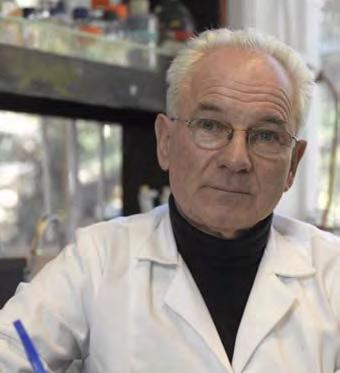
Don’t count us among those mourning the recent death of AIDS denialist Peter Duesberg, Ph.D. For years back in the 1990s and 2000s, Duesberg, who was a professor at UC Berkeley, and his ilk tried to convince the world that HIV does not cause AIDS. In some cases, Duesberg succeeded, and the confusion caused by his AIDS denialism led to devastating results that ended the lives of thousands of people too soon. Duesberg died January 13 in Lafayette, California. Ironically, he was 89, far older than the people he persuaded to follow his quack theories who have since passed away.
Medical denialism = death.
As gay writer Bruce Mirken put it in a piece he wrote for 48 Hills, “Beyond question, Peter Duesberg left a trail of death – not with bullets or knives, but with lies about AIDS, HIV, and the treatments that still keep many of my friends alive. As outlined in his 1995 book, ‘Inventing the AIDS Virus,’ he insisted that HIV was harmless and AIDS was caused by use of drugs – both recreational drugs and the pharmaceuticals used to treat HIV, like the early anti-HIV drug AZT.”
“A recurring theme in Duesberg’s book boils down to, ‘We’ve never seen a virus that does what they say HIV does, therefore HIV can’t possibly be doing it,’” Mirken wrote. “That’s about as baldly unscientific as you can get. Science discovers new, previously unknown stuff every day.”
Despite Duesberg’s reliance on debunked theories, some gay men in San Francisco, especially those in the old ACT UP/San Francisco chapter, became adherents and spread Duesberg’s dubious message. Over the years, the leaders of ACT UP/SF have died – of complications from HIV.
Gay former state assemblymember and San Francisco supervisor Tom Ammiano recalled those days in a post on Facebook. “I remember [Duesberg’s] acolytes – gay men with HIV most dead now – haranguing the Board of Supes, especially the gay members, about AIDS not being caused by HIV. It got ugly; they would harass folks on the street. When one died I offered my sympathy to his partner who then spit at me.”
Headline
In a phone interview, Ammiano said Duesberg’s followers “had all the trappings of a cult.”
“As elected officials, and the community, were reeling in grief, frustration, and personal loss, these idiots came along,” he said. “Part of you felt sorry for them, and part of you was just being infuriated.
“They were zealots,” Ammiano said of Duesberg’s followers. “Any death from AIDS has a tragic aspect. We were trying to help.”
Most of all, Duesberg and his followers muddied the waters at a time when there was acute AIDSphobia, as well as homophobia, that saw some policymakers fall under their sway. That continues to the present day, as Health and Human Service Secretary Robert F. Kennedy Jr. has promoted AIDS denialism.
But it was in South Africa where Duesberg, who was not a medical doctor, had his greatest impact, and it was not a good one. In the early 2000s, as the AIDS epidemic was raging there, he gave misleading advice to then-president Thabo Mbeki, who in turn adopted
My kitchen table
by Gwendolyn Ann Smith
In the wake of their 2024 loss, Democrats were busy trying to point fingers – and many looked to blame transgender people and many other minority groups. The argument was that spending so much time worrying about the rights of such groups meant a lack of focus on “kitchen table issues,” particularly the economy.
This view was a curious one, given that Democrats focused mostly on economic issues – such as the price of eggs, for instance – and largely stayed silent on trans issues. It was Republicans that spent time on trans issues, most notably with then-candidate Donald Trump’s campaign and its “Kamala is for they/them, President Trump is for you” ads. The ads featured a 2019 interview with Mara Keisling, then the executive director of the National Center for Transgender Equality Action Fund, where thenU.S. senator Kamala Harris (D-California), then a candidate for president, spoke on taxpayer-funded surgery for trans prison inmates and said trans prisoners should have access to the medical care they need. (NCTE is now Advocates for Trans Equality.)
Ironically, the interview had originally been done presumably due to concerns about Harris’ record as San Francisco dis trict attorney, which many felt was largely negative for transgender people.
I don’t want to spend much more time relitigating the 2024 election, much less the 2020 one, but as a transgender woman, it has been frustrating to see the Democratic Party double down on this “kitchen table” argument, even after its retreat on trans and other issues during the 2024 campaign showed nothing but weakness on the party’s part – and may have contributed more to Democrats’ loss than any anti-trans advertisement did on its own.
trans issues, largely in statehouses across the country. Florida, already one of the worst states for transgender people, has even more anti-trans bills on the way. Senate Bill 1010 and House Bill 743 could push both a third-degree felony and fines up to $100,000 onto health practitioners, as well as anyone who
“aids and abets” youth trans care. It’s not clear just what might be considered aiding such care.
Meanwhile, Missouri is working to make its own anti-trans bills permanent, covering trans youth care and laws against trans athletes.
These bills in Florida and Missouri are just a small part of the 627 bills introduced in 38 states this year, according to the Trans Legislation Tracker
None of these hold a candle to what passed in Kansas, however, and this is something we need to talk about.
a policy against importing antiretroviral drugs, leading to the deaths of hundreds of thousands of people, as the New York Times obituary noted.
In March 2000, the Bay Area Reporter noted this dangerous trend. Duesberg was claiming people were dying in South Africa due to malnutrition, not AIDS.
In an April 2025 opinion piece in the Washington Post, Donald G. McNeil Jr., a former global health reporter for the Times, noted the similarities between Mbeki and Kennedy. When doctors accused Mbeki of spreading falsehoods and promoting quack cures, he formed a panel to “look at the cause of AIDS,” as McNeil wrote. He staffed it with AIDS denialists, much like Kennedy, decades later, has stacked vaccine committees with anti-vaxers
Mbeki’s health minister said that AIDS could be cured with garlic, lemons, beets, and beer, McNeil wrote. He forbade public hospitals from dispensing antiretrovirals, which, by the mid-1990s, became a lifesaver for so many, especially in the developed world and in other African countries.
Members of ACT UP/SF in 2000 mailed letters to every member of Congress, urging the elimination of all federal funding for AIDS-related programs, as we reported at the time. “Stating that ‘current services based on the erroneous hypothesis that HIV causes AIDS are fundamentally flawed,’ the letter encouraged congressmembers to vote against the upcoming reauthorization of funding for the Ryan White CARE Act and the AIDS Drug Assistance Program,” the B.A.R. reported.
Thankfully, that did not happen. Both Ryan White and ADAP funding remain crucial to HIV/ AIDS programs in the U.S., even as they face potential funding cuts today, along with other cuts at the local level, as we report this week.
As more is understood about HIV/AIDS, and new effective prevention medications like PrEP are approved, it’s worth noting that the denialists like Duesberg are sitting in the dustbin of history. It’s tragic, however, that his voice was elevated to the point that nations were adversely affected and that so many people died because they were made suspicious of science, new medications, and the latest medical advice at the time. t
have previously been updated. What’s more, the legislation bars transgender people from restrooms in publicly-owned buildings, and adds a $1,000 bounty for finding a transgender person in any sex-designated space that doesn’t match their assigned sex at birth.
This will likely be vetoed by Democratic Governor Laura Kelly, but the bills will then face a supermajority in the Legislature that can just as easily override that veto.
I explained the Kansas bill over dinner the other night to my partner, as we sat at our kitchen table, and I could not help but realize once more that this is exactly a kitchen table issue.
If a transgender person is facing a $1,000 fine every time they use a restroom, then they cannot use a public restroom. If they can’t do that, they are limited to what they can do outside of their home. Likewise, if they can’t get a driver’s license or, worse, have their license taken away, this will affect everything from mobility to employment, as they would be outed any time they need to present identification.
If the notion of a “kitchen table issue” is reduced to the cost of groceries, I can guarantee that one can’t buy much food if one cannot hold a job. Indeed, I would argue that trans rights – like everyone’s rights – are most certainly a kitchen table issue: without our rights, being able to afford a dozen eggs is largely moot.
So rather than focusing on late 2024, let’s talk about the start of 2026.
Even though it has had some significant victories when it has mattered – for example, getting anti-trans provisions stripped out of the current budget battles – the left has remained cautious about showing direct support for transgender issues. Indeed, overall the focus has been on the affordability of groceries, even as much larger issues surrounding U.S. Immigration and Customs Enforcement and related departments have reared their very ugly heads. Meanwhile, the right has continued to focus on
It took the Kansas House of Representatives and state Senate mere hours to introduce and pass one of the more restrictive anti-trans bills seen so far. Legislators moved at such a speed to avoid any public comment.
According to trans journalist Erin Reed on her Erin in the Morning Substack, SB 244 and HB 2426 had been simpler bills with a focus on driver’s licenses, but were amended without public hearings to become much more. The bills now prevent transgender people from updating their driver’s licenses and revoke existing licenses that
A Fox News poll – yes that Fox News – released in late January underlines this. Among the many issues it covered, the poll found that it is the Democratic Party that is viewed as better on transgender issues than the Republicans. The former beat the latter by 22 points, 60% to 38%. Given a clear majority, I would contend that it is time to consider my kitchen table. If politicians are going to press forward on the moribund economy we are now being subjected to, then we need to consider who is being locked out of that economy: for example, the Black women who are being shut out of the workplace, the immigrants who are being forced out of our country and, yes, transgender people just like me who are finding it increasingly hard to survive in Trump’s America. t
Gwen Smith hopes to still have a kitchen table as this year goes on. You can find her at www.gwensmith.com.
Christine Smith
AIDS denialist Peter Duesberg, Ph.D.
Courtesy Alchetron.com
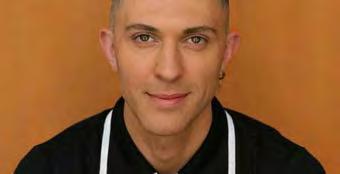
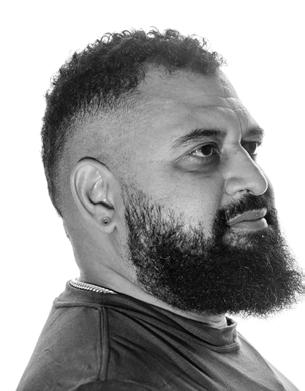
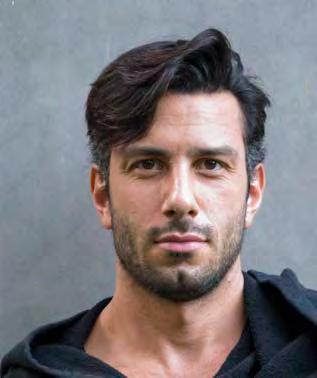
Gay Afghan leader Mojadedi seeks CA state Senate seat
by Matthew S. Bajko
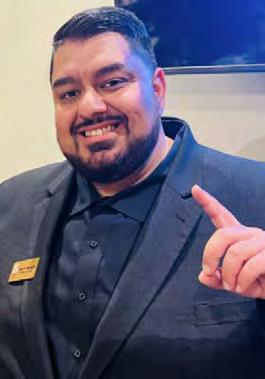
The decision by Congressmember Eric Swalwell (D-Dublin) to jump into California’s 2026 gubernatorial race rather than seek reelection to his East Bay House seat has set off a series of electoral dominoes in Alameda County. Gay Muslim Afghan American Harris Mojadedi is hoping it will catapult him to the state Legislature.
A member of the Chabot-Las Positas Community College District Board of Trustees, Mojadedi has jumped into the race to succeed state Senator Aisha Wahab (D-Hayward) now that she is running for Swalwell’s Congressional District 14 seat. They are the first Afghan American man and woman to hold elected office in the United States.
“To my understanding, we are the only two Afghan Americans to hold public office in the nation,” said Mojadedi, 35, a Union City resident raised by refugee parents.
He was first appointed to fill a vacancy on his governing body in 2022 and was unopposed that November so automatically given a full four-year term. In early 2023, he was not selected to fill a vacant seat on the Alameda County Board of Supervisors that he had sought.
Now Mojadedi is vying to maintain Democratic Afghan representation in Sacramento with his bid for Wahab’s 10th Senate District seat. At a moment when immigration matters are at the center of the country’s political discourse again, Mojadedi points to his own experiences with the relocation movement for Afghans who fled their country during America’s invasion of it during the 2000s and since the Taliban’s takeover of it when the U.S. hastily left in 2021. The East Bay is now home to one of the largest Afghan communities in the country.
tion to his current seat while thanking those who had suggested that he run to succeed Wahab.
“However, our collective energy ought to be dedicated to resisting authoritarianism and building a California that is a model for the rest of the nation. We need hope and we need results that progressive values turn into a society where everyone can thrive, not just struggle to get by,” wrote Lee. “As chair of the Legislative Progressive Caucus, we have a lot of work to do. I will be running for reelection to my fourth term in the California State Assembly.”
Driving him to run is how his family is personally being impacted by cuts to health care funding and other federal rollbacks being instituted by the Trump administration, said Mojadedi. His elderly parents rely on Medicare, for instance, while both of his sisters are long-term care health workers.
“My family is no different than the millions of families across the state who will be experiencing cuts to their health care,” he said. “Everyone deserves basic dignity and respect.”
With little expectation of seeing a change in course from the federal government anytime soon, Mojadedi said it will be up to state lawmakers to find solutions to address Californians’ needs around such vital issues as health care, housing, and education. He hopes to be among those decision-makers.
“I am running for state Senate because we need a senator who knows what it means to struggle; who knows what it means to come from a family that can barely make ends meet; and who believes government should work for everyone and will never be silent when our communities are under attack, whether it is our LGBTQplus communities, our immigrant communities, or our communities of color,” Mojadedi said.
Lee added, “Every day is an incredibly surreal honor to fight for you and I won’t let up the fight. Especially now that we must defend our freedoms against fascism on all fronts.”
“Immigrant communities are very susceptible and vulnerable to ICE or the U.S. border patrol. We need a voice in Sacramento who understands those experiences,” Mojadedi told the Bay Area Reporter in a recent phone interview to discuss his candidacy, referring to Immigration and Customs Enforcement. “This campaign is not about me. It is about the people and those who have been voiceless and those who have been vulnerable.”
He is also touting his education bona fides at a time when school districts at every level in the state are struggling with their finances and facing fiscal threats from the Trump administration for having policies supportive of their LGBTQ students. Mojadedi is an assistant dean for strategic initiatives at UC Berkeley and pledged to be a fierce advocate on education issues and for the rights of queer and trans students if elected to the Legislature.
“This is a district where I know support for education is so important. I say that because federal funding for education is on the chopping block,” he said. “A lot of these important services provided in the communities in this district are on the chopping block.”
The Senate district includes the cities of Hayward, Union City, Newark, and Fremont in southern Alameda County, plus portions of northern Santa Clara County in the cities of Cupertino, Milpitas, Sunnyvale, San Jose and Santa Clara. While it covers all of the 24th Assembly District that bisexual Assemblymember Alex Lee (DSan Jose) represents, he opted not to seek the higher office. He announced last month he will be seeking reelec-
As for who else is seeking the state Senate seat, the list includes Milpitas Mayor Carmen Montano, Union City Councilmember Scott Sakakihara, former assemblymember Paul Fong of Cupertino, San Jose City Councilmember and tech engineer David Cohen, and Shay FrancoClausen, a queer former Santa Clara Valley Open Space Authority trustee who opted not to run for an open Assembly seat in 2022. Mojadedi, Sakakihara, and Franco-Clausen are now seeking the endorsement of the East Bay Stonewall Democratic Club, the main LGBTQ political group in Alameda County, which will be holding a candidate forum February 11 and having its members vote that evening.
It will also consider an endorsement in the race for Swalwell’s House seat, with Wahab eligible for it along with gay San Leandro City Councilmember Victor Aguilar Jr. and digital campaign consultant Matt Ortega. Not making the list was former Dublin mayor Melissa Hernandez, now president of the board that oversees regional transit agency BART whom Mojadedi has endorsed.
“She has been a close friend and someone I’ve worked with on community issues for a long time,” explained Mojadedi, an executive board member for the California Democratic Party who is the state chair of its Asian American Pacific Islander Caucus.
The state Senate seat being open this year won’t be finalized until the filing deadline for candidates to enter the June 2 primary races closes in early March. Should Wahab end up running for reelection to it, it likely would mean Mojadedi would suspend his campaign.
Asked about such a possibility, he told the B.A.R. in late January, “Right now I am in this to win it.” But he did allow that he would “have to maybe reassess or reevaluate” should it not be an open seat.
Gay leaders back straight CA lt. gov candidates
Two prominent gay Democratic leaders have endorsed straight candidates seeking to be California’s next lieutenant governor. Congressmember Robert Garcia (D-Long Beach) is supporting Michael Tubbs, a former Newsom poverty adviser and Stockton mayor, while former U.S. transportation secretary Pete Buttigieg is backing Josh Fryday, California’s chief service officer in Governor Gavin Newsom’s office.
Tubbs’ campaign pointed to Garcia having served as the mayor of Long Beach in announcing his endorsement last month. It noted that the Southern California leader “knows that Michael’s long track record of delivering essential city services while also envisioning endless possibilities for the people we serve makes him the perfect person to serve as California’s next lieutenant governor.”
Buttigieg made his support for Fryday public last month, noting the two are friends with shared backgrounds.
“Josh and I share a deep belief that service is not a talking point – it’s a responsibility, a privilege, and a huge opportunity. As naval officers and as public servants, Josh and I have learned from each other, challenged each other, and supported each other – and I’m proud to back him in this campaign,” stated Buttigieg, widely expected to mount his second presidential bid in 2028.
Current Lieutenant Governor Eleni Kounalakis is term-limited from running again for her position and is seeking the open state treasurer position this year. Because former San Francisco supervisor and state lawmaker Fiona Ma will be termed out this year as the state’s treasurer, she is running to succeed Kounalakis.
Mounting an underdog bid to be the Golden State’s second-in-command is gay former Sausalito city councilmember Janelle Kellman. The race is expected to be the lone statewide contest with an out candidate, as gay California Insurance Commissioner Ricardo Lara is termed out this year.
In December, Kellman picked up the support of the California Jewish Legislative Caucus. Its co-chair, Assemblymember Jesse Gabriel (DEncino), touted her as someone who “will always fight for what is right and for the safety and dignity of Jews in California and around the world.” t
DEADLINES: Friday 12noon for space reservations Monday 12noon for copy & images TO PLACE: Call 415-829-8937 or email advertising@ebar.com
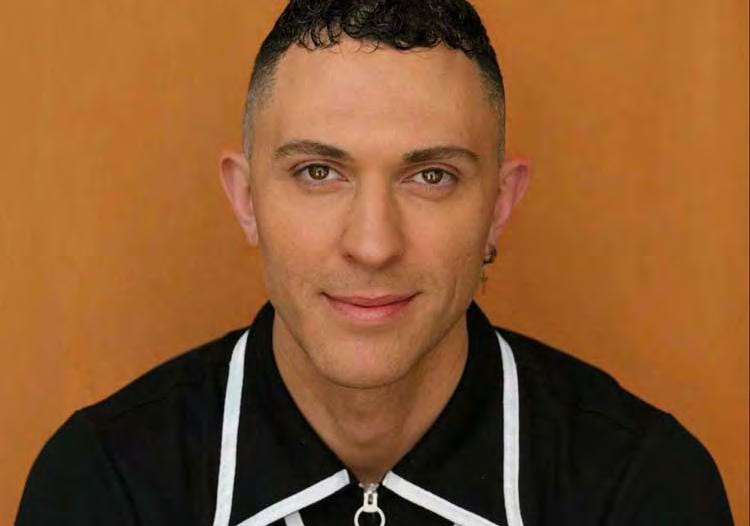
East Bay community college trustee Harris Mojadedi is seeking a state Senate seat in the June primary.
Courtesy the candidate
CCOP also traditionally distributed posters where businesses could advertise they are a safe space for crime victims, again, for hate crime victims in particular, to call the police and receive emergency support. Last fall, CCOP created new signage that warns federal officials are only allowed in a store with judicially-signed warrants or if they are invited by the business owner. An internal ICE memo authorizes ICE officers to use force to enter a residence with so-called administrative warrants; that is, warrants signed by administration officials rather than judges. The Fourth Amendment to the U.S. Constitution requires a judge’s permission upon probable cause for a legally-binding warrant for a search of someone’s property to be issued.
“The interpretation of the Fourth Amendment for the past 250 years is that a judge must approve a warrant to search a location or arrest a person. The current administration has come up with the idea that ICE can write its own warrants using Form I-205, which does not require a judge’s approval,” said Carey. “The poster is to remind officers of the accepted rules for search and seizure. Will it stop them? Maybe not, they are coming in with guns. But it does provide protection as the courts decide the legality of a non-judicial warrant.”
While distribution of the posters came to a halt when Trump called off the planned Bay Area surge, Carey said that businesses can print their own or request one at info@castropatrol.org
Asked if business owners were preparing anything, Bourg stated that the merchants will be discussing it at the group’s next meeting.
“One detail I can share is that we will be forming a merchants’ channel online that we can use to share information,” he stated. “That’s all I have for now.”
‘Time to act is now’
Meanwhile, a call for a general strike –a day of no work and no shopping, similar to that which occurred in Minneapolis January 23, the day before Pretti was killed gained traction with groups such as the Milk club. Americans troubled by ICE and the turn of events in Minneapolis participated Friday, January 30. Thousands turned out to protest in San Francisco, convening in the afternoon at Mission Dolores Park.
“Unmasking ICE and the customs and border patrol is not enough,” the Milk club stated. “Giving them money for body-worn cameras is not enough.
affected communities and providers before any final decisions are made.”
“San Francisco should not balance its budget on the back of Black communities, transgender people, and lowincome San Franciscans,” Duncan said.
“Please protect HIV prevention funding and ensure equity is practiced.”
Jonathan Salinas of the HIV Advocacy Network said he hopes the HIV services are protected.
“We will never get to zero new infections as long as these services are cut from communities that need the most investment,” he said.
The city has its Getting to Zero program that aims to reduce HIV transmissions, AIDS deaths, and stigma. The hope had been to reach that goal by 2025, but the program is ongoing.
Under DPH’s proposal, Lyon-Martin Community Health Services would lose its QTAPI Queer Fellowship workforce
Call for town hall
The B.A.R. reached out to the three candidates running this year to represent the Castro on the Board of Supervisors as well as the incumbent supervisor for their thoughts. Gay candidate Michael Nguyen, who is on the San Francisco County Democratic Party Central Committee, said he was at the CCOP whistle distribution last fall.
Nguyen said he was not heartened by a convening last year involving Lurie’s office, Democratic Party and queer leaders, because the message was “don’t go all crazy” if federal agents show up.
Nguyen was supportive of the idea that gay Board of Supervisors President Rafael Mandelman, the current District 8 supervisor, hold a town hall, similar in format to one he convened on public safety after several instances of violence in the Castro.
“I think the supervisor has convening power,” Nguyen said. “The supervisor can definitely hold town halls and special meetings.”
“We should also leverage the infrastructure of our labor unions and their trusted networks, legal expertise, and worker protection systems to strengthen education, rapid response, visibility, and legal support,” McCoy added.
“We also must implement a notification system when immigration enforcement affects educational settings – across SFUSD and City College – to ensure families, students, and educators are informed and protected,” he stated, referring to the San Francisco Unified School District and San Francisco’s community college system. “Finally, transparency and accountability matter. When armed officers operate on city property, residents deserve to know who they are and under what authority they are acting. Visible identification, agency disclosure, and basic accountability standards are about safety and trust.”
“I would say the biggest thing is to really get educated on your rights now,” Damian said. “I would recommend attending an ICE watch training, attending a know your rights training, even if you’re not going to engage in an ICE watch action, because it’s good to be aware.”
Because of its aggressive tactics, “You don’t have to be in an ICE watch to have an unintended confrontation with ICE,” Damian said. “Another thing I would recommend is to start finding people in your community who also care about these things, so you can set up a network in case you need to start moving.”
Minnesotans started moving quickly, Damian recalled, shortly after the Trump administration’s Operation Metro Surge began.
Said Hegarty, “It’s wonderful APE has provided a new lift for the organ and they also created a sliding stage floor. The stage will open and the organ will come through that. Before, the organ pit was open all the time.”
Hegarty also said that the acoustics of
And it goes without saying that we don’t need to be training them to be more efficient at snatching our neighbors from our communities. The latest expansion and militarization of ICE and CBP [Customs and Border Protection] have only solidified that these agencies must go, and we must do everything in our power to make this happen.”
The club asked for donations to immigrant rights and Minnesota groups, that people call their representatives to ask them to vote against ICE funding, and that people demand the impeachment of Department of Homeland Security Secretary Kristi Noem and FBI Director Kash Patel.
House Minority Leader Hakeem Jeffries (D-New York) selected gay Congressmember Robert Garcia (DCalifornia) to co-lead an impeachment inquiry into Noem if Trump doesn’t fire her, alongside Democratic Congressmembers Jamie Raskin (Maryland) and Bennie Thompson (Mississippi).
Last year, Garcia traveled to El Salvador to seek the release of migrants unlawfully sent to a detention facility there by the Trump administration. He was also selected as the top Democrat on the House Oversight Committee.
Meanwhile, the Milk club encouraged people to participate in the general strike.
“Keep showing up to protest this cruelty. We cannot continue as if this is business as usual. The time to act is now,” the Milk club stated. “Together, we will overcome this horrific chapter of our history. We gotta have hope. We know that as long as we put in the work, solidarity always wins!”
development program, according to the San Francisco People’s Budget Coalition, a program that has operated for more than two decades. The funding reduction would be 100% of that program’s $128,000 budget.
Speaking at the hearing, Lyon-Martin CEO JM Jaffe, a nonbinary transmasculine trans health content expert, said the program is “a lifeline for our community, and it’s essential for Lyon-Martin to be able to execute its ‘By Us, For Us’ approach. Many queer and trans people in San Francisco arrive estranged from families and with nowhere to go, and we have built the infrastructure that they need to survive. When you erode the infrastructure, the harm is not abstract. … These are not neutral budget decisions, this is a political act with consequences. This is a rounding error – $128K – for you all but this is essential programming funds for us. This is destabilizing and dangerous.”
Castro LGBTQ Cultural District Director Tina Aguirre, a genderqueer Latine person, said, “I especially support Lyon-Martin in the cuts it’s experienc-
the organ should be good when the theater will be functioning as a concert venue without orchestra-level seats, instead of as a movie palace with them. The removal of the permanent orchestra-level seating was one of several controversies associated with APE’s takeover of theater management in 2022, preceding the renovation project.
The theater features about 150 fewer
Mandelman has no plans to do so right now, “but I’m not closed to the idea” if pushed by more people, he said.
“I think if there’s a definitive sense that would be something beneficial for the community, I would consider it,” Mandelman said.
He agreed that while “the mayor did a very good job convincing the Trump administration not to bring their war on immigration to the Bay Area … nonviolent, civil disobedience will continue to be the order of the day” if that changes. Mandelman added that the city’s Department of Emergency Management “had a stress test” preparing for when it was thought an intervention was imminent last fall, and is prepared should tensions flare up again.
Reached for comment January 29, a spokesperson for the department stated to the B.A.R., “The mayor’s executive directive remains in effect, and the Department of Emergency Management continues to coordinate interdepartmental preparedness efforts for a variety of scenarios.”
Gay D8 candidate Gary McCoy stated January 29 that there is a lot that elected officials can do to support the city’s status as a sanctuary city.
“San Francisco is a sanctuary city, and we will defend our immigrants and LGBTQ+ asylum seekers,” he stated. “We should be fully funding legal defense funds and services, and using the full authority of the district attorney and city attorney to pursue civil rights and false imprisonment claims when people are unlawfully detained.
ing. So many queer and trans people but especially trans and nonbinary people are fleeing from places all over the country and all over the world right now because it’s so dangerous. … The services are vitally needed. Lyon-Martin’s capac-
seats, Conde told reporters Wednesday, so that it will be Americans with Disabilities Act compliant. The orchestralevel seats are installed on a raked floor.
“We wanted to do our best to mimic a traditional theater seat,” Conde said, adding that a specialist designed the seats so they are optimal for lumbar support. “Every row has six inches between them and the row in front of it, so the sightlines are
District 5 Supervisor Bilal Mahmood, who represents the Tenderloin, has introduced legislation that would follow in the footsteps of Alameda County in banning “civil immigration enforcement” from city and county property. It will be heard by the supervisors’ rules committee February 9.
In a statement to the B.A.R., gay D8 candidate and Castro resident Emanuel “Manny” Yekutiel, who owns his eponymous cafe in the Mission district, agreed with the need for preparation.
“What we’re seeing across the country is some of the lowest un-American behavior in recent memory,” he stated. “It feels surreal to see the scenes of statesponsored terror on full display across the country and, while I am glad that, so far, our city has remained relatively free of being targeted, we need to be prepared.”
Manny’s held a free event January 30 that featured the Reverend Emily McGinley, a minister at City Church San Francisco who also spoke at a memorial for Pretti in front of the San Francisco Veterans Affairs’ Hospital in the Richmond district January 27.
At that event, McGinley said that in Minneapolis, “people are not turning on each other but they’re turning toward each other, organizing pantries to feed their neighbors, protect elders, and create safety.”
Tips from Minnesota
The B.A.R. asked Christopher Damian, a gay Catholic writer who lives in Saint Paul, Minnesota, what people in other cities should do to be prepared in case something similar happens in their cities to what has happened in Minneapolis.
ity building supports the health of all queer and trans people, and I also support the community health center and the foundation.”
The San Francisco Transgender Alliance for Health Resources’ capacity building assistance, at the San Francisco Community Health Center, would lose 50% of its budget, an amount of $139,000.
The health center’s communications manager, Khilynn Fowler, said during the hearing that the center has been there for the health department’s needs.
“We have partnered with DPH with several of our significant projects addressing the HIV epidemic and behavioral health crisis,” Fowler said. “This was a need, significant from DPH, and so we answered the call. … This cut is significant not only to the risk of our community but this will be a significant cut for San Francisco Community Health Center, so thank you for your consideration and thank you for your time and partnership.”
Mx. Kiki Krunch, a trans woman and “a proud success story of the AIDS Foundation and the community health center,”
better than they’ve ever been.”
The theater also features movable concession stands, new restrooms, and refurbished lighting fixtures and art. While removing a movie screen added when widescreen aspect ratios became common in the 1950s, workers discovered the ornate structure around the original 1922 screen, which now has been restored.
“Schools would have 100 kids, busy, and the next day families would all be in hiding,” he said. “Parents, obviously, that they saw that, [and] started to connect with those families and identify how to get groceries, how to get kids to school. … In any city, I always recommend getting whistles, having them on hand so the first day ICE shows up in your town, people can use them. I recommend wearing a whistle, which indicates you’re someone safe, and someone who cares. A whistle is a signal, and a sign of care for your neighbors.”
Damian suggested any protest or organizing-related electronic communications be conducted over Signal, because it is encrypted, and to limit which apps can track one’s location. NPR reported last year that ICE had acquired surveillance tools giving the agency vast access to location-based data.
Some people are taking proof of U.S. citizenship with them at all times, such as passports and passport cards, but others are insisting on being arrested and detained instead of showing such proof upon request by agents.
“In general, it is not the responsibility of U.S. citizens to have proof of citizenship, and my understanding is ICE cannot require you to prove citizenship simply because of how you look,” Damian said. “However, we know that is happening.”
Asked how people can psychologically prepare, Damian said he’d had some past experience with civil strife, since he lived in the Twin Cities in 2020, when there were riots following the murder of George Floyd, a Black man, by a white police officer.
Still, “I don’t think there’s anything to prepare you for something like this, unless you lived in a country where there was a war,” Damian said, “or you were living in a country under military occupation.” t
said to the commissioners, “I hope you spend more time immersing yourself in the community, sitting with us, sitting with transgender people living with HIV, sitting with unhoused transgender before making any final decisions.”
Following public comment, Commissioner Susan Belinda Christian, a lesbian who is the body’s only out member, said that she largely agreed with comments made by Commissioner Dr. Edward Chow, who had said that perhaps the programs that are cut could “go into hiatus” until a time when resources are found.
Christian also said that for some of the cut programs, there may be direct client services that are sacrificed. “We may not be able to cleanly cleave those spaces,” she said.
“It’s really important for us … as a commission to engage in what can we do to supplement any cuts we make,” Christian said.
Lurie’s office deferred comment to DPH. The health department referred back to what Tsai had said during the meeting.
Conde said inches of soot and nicotine residue were removed from the art around the theater, the ceiling of which now is reminiscent of “an Arabic tent with a beautiful silk scarf.”
APE founder and CEO Gregg Perloff, a straight ally, stated to the B.A.R., “Restoring The Castro has been a labor of
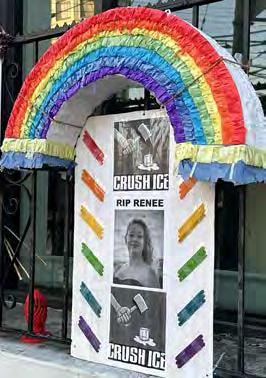
A tribute to Renee Nicole Good, who was killed by federal agents in Minneapolis, graced the community memorial space at 18th and Castro streets in San Francisco.
John Ferrannini
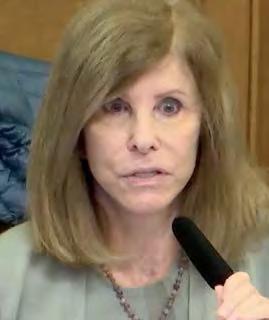
Dr. Laurie Green, president of the San Francisco Health Commission, discussed the proposed budget cuts.
Screengrab from SFGovTV
by Philip Mayard
As a dancer with the Martha Graham Dance Company for more than 20 years, Lloyd Knight is not only pushing a 100-year-old institution forward, but breaking boundaries in the wider field of professional ballet. An out gay Black man in a company built on strict discipline and historical legacy, in an interview with the Bay Area Reporter, Knight reflected on how he discovered dance, how he stays grounded, and why being visible, onstage and off, still matters.
Philip Mayard: Can you talk about your childhood and how you first found dance?
Lloyd Knight: I was born in England, but I was raised in Miami and went to a magnet middle school for the arts. I wasn’t initially in the dance program, but our homeroom was in a dance studio. We’d play around in the space, and one day, the teacher invited me to try an after-school dance class. I was about ten years old and had never taken a dance class. I went once, and she brought me into the program immediately. That was the beginning of my dance journey.
What was it about dance that hooked you so quickly?
I grew up watching old Shirley Temple and Sammy Davis Jr. films with my mom, and I would get so excited about the movement and the expressiveness. When I got to a certain age, I realized it was something I’d been missing. Dance opened a creative door, and I’ve loved it ever since.
When did you first encounter Martha Graham’s work?
During my college freshman year, my teacher, Peter London, a former principal dancer at Graham, introduced me to the Graham technique. At first, I was like “What the hell is this?” You know, working on the floor, my hips very tight. But then he showed us videos of Graham’s works like “Errand into the Maze,” “Diversion of Angels,” and “The Rite of Spring” and that changed everything. It was so striking. Obviously, the dancing, but also the emotion that came from the dancing. I was just hooked on it from the beginning.
The Martha Graham Company is celebrating its 100th anniversary. As an out gay Black man in a company so steeped in legacy and tradition, how has
by Jim Gladstone
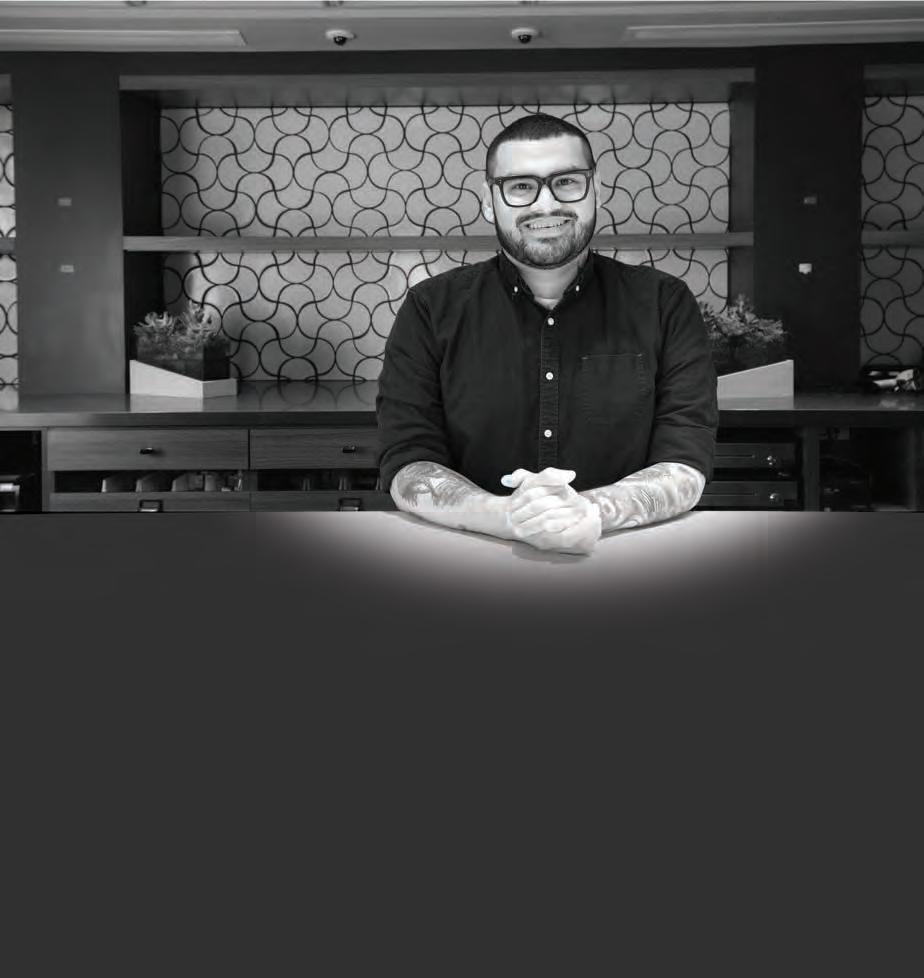
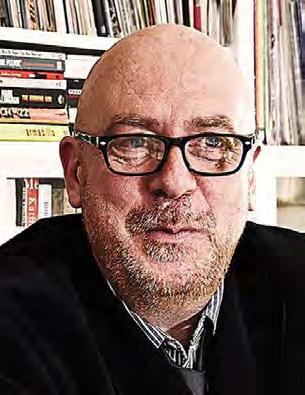
San Francisco had a formative impact on Ben Villegas Randle’s approach to theater. The new Artistic Director at the New Conservatory Theatre Center, succeeding retiring founder Ed Decker, who ran the company for 45 years, Randle first arrived in the city in 2001 to study at San Francisco State.
“In class, I was learning about Shakespeare, Artaud, and all these historical and conceptual ideas of theater,” Randle recalled in a recent interview with the Bay Area Reporter. “The professors would tell us stories about audiences throwing tomatoes at the performers, crowds revolting and rioting. I didn’t get it. Why would they do that? How could it be so visceral?”
Answers to those questions emerged as much from Randle’s extracurricular activities as from academia.
“I was still underage when I first went to The Stud and saw someone pulling objects out of themselves onstage. Then they started pulling out crucifixes and the crowd screamed in horror. And I was like, ‘That’s how it happens!’
“I started choreographing numbers and doing back up for drag queens at T-Shack. That era in drag was not clackety-clack fans and duck walks. It was poor people’s theater. You threw up a cardboard set and did a four-minute play with a sketch of a plot and a real vaudeville energy. You had to entertain the audience or they’d start ignoring you and talking after 30 seconds. What’s always stuck with me from those times is the idea that you can be artistically ambitious and a populist at the same time.”
Lloyd Knight in Martha Graham’s ‘Diversion of Angels’
Martha Graham Dance Company’s Lloyd Knight
your identity shaped your experience?
I try to stay very rooted and grounded in who I am. In ballet, you often have to put on these very masculine archetypes, and sometimes that feels foreign to me. But I see it as theater and imagination. I don’t feel like I’ve had to suppress any part of myself. Contemporary work has also allowed me to bring more of my own person onto the stage.
Do you feel the dance field has opened up and changed over the course of your career?
What advice would you give to young LGBTQ dancers and dancers of color?
Stay true to who you are and to your values. Keep tunnel vision on your goals. Listen, observe, but don’t let others define your path. If I’d followed all the advice I was given over the years, I wouldn’t be where I am today. Be stubborn in the best way.t
Read the full interview on www.ebar.com.
I hope it has. Early on, I’d hear things like, “You could go to Philadanco or do ‘The Lion King.’ Those are great, great places, but because I’m a Black male you can get put in a box. Now, it feels like more doors are open. At Graham, I’ve been given opportunities to perform major roles and to be visibly represented onstage, as well as in posters, in people’s mailboxes. That visibility is important.
Randle, who grew up in San Diego, was drawn to the stage from an early age.
“My mom enrolled me in a children’s theater program when I was seven,” he said. “I grew up performing with Adam Lambert. He was Peter Pan to my John and Scarecrow to my Tin Man. But from pretty early on, I felt like I wanted to direct, which I got to do in high school.”
Administrators rebuffed Randle’s proposal to mount “Titus Andronicus”
“There’s rape and mutilation,” he remembered them objecting, “So inappropriate!”
But he went on to direct a school production of “Suddenly Last Summer.”
“It doesn’t get any queerer than that!”
Randle continued to focus on directing at San Francisco State, where his projects included a version of “Kiss of the Spider Woman.”
“That’s a musical I’d love to do at NCTC sometime,” he mused during our interview.
Next up
In taking the reins at NCTC, Randle is enthusiastic about growing the company’s reach.
“Our current audiences are thrilled with the mix of productions we’ve been doing,” he said, citing NCTC’s eclectic but accessible blend of queer-themed productions and their reflection of the LGBTQ+ community’s diversity.
“The challenge is to bring in people who are not already coming,” he said. “Like pretty much every theater in the country, we want to attract younger audiences.”
“Doing that is not just about how we select and develop pieces,” he emphasized. “It’s also about how we communicate with all of the audience members we want to attract. We need to speak to different people in different ways.”
Case in point: NCTC’s upcoming West Coast premiere of “Gods and Monsters.”
For gays of a certain age, the show has alluring name recognition: It shares a title and source material with the queer-themed Oscar-winning
Martha Graham Dance Company’s ‘Graham 100,’ $42-$150, February 14-15, Zellerbach Hall, UC Berkeley campus. www.calperformances.org www.instagram.com/lloydknight/
1998 film (based on Christopher Bram’s novel “Father of Frankenstein”) that made gay British actor Ian McKellen a movie star.
But Randle, 43, realizes that the title alone will draw a blank with many Millennials and Zoomers. “We need to promote the show in ways that let younger people know about the ‘Frankenstein’ connection.”
The show is a fictionalized look at the dying days of James Whale, director of the original Hollywood ‘Frankenstein’ films, whose stroke-addled romantic fantasies feature a monster mash-up of his hunky gardener and his movies’ lonely creature.
Given the current Oscar buzz around Guillermo del Toro’s reimagined “Frankenstein” and its rising Gen Z star, Jacob Elordi, Randle hopes that effective advertising, PR, and social media outreach will draw curious new audience members to “Gods and Monsters.”
Randle also anticipates presenting more gender-expansive work, pointing to creative twists planned for two upcoming shows. In late spring’s production of “Hedwig and the Angry Inch,” two lead performers will swap the roles of Hedwig and Yitzhak from night to night.
And bringing a fresh take to a contemporary classic, Randle will direct a fall production of “Little Shop of Horrors,” featuring a trans-femme Audrey and a new take on the show’s villain.
“The plant is about more than just greed. It’s the patriarchal, capitalistic fascism that we’re living with right now. The first people it attacks are on Skid Row, the weakest, most downtrodden people in society. The show is going to deliver all of the fun and joy that people expect, but it’s underpinned with this perspective. We can be artistically ambitious and political and populist all at once.”t
Read the full interview on www.ebar.com.
www.nctcsf.org www.benvillegasrandle.com
Melissa Sherwood
New artistic director at New Conservatory Theatre Center shares his goals
Ben Villegas Randle
“Insecurity is such a waste of time.” —Catherine O’Hara 1954-2026
<< Film & Events
Olivia Colman
by Gregg Shapiro
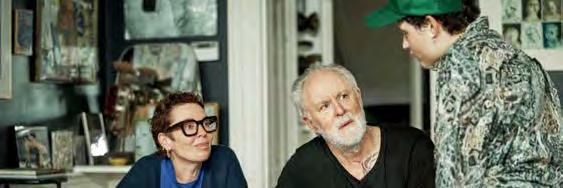
Olivia Colman already has one Oscar (and two nominations) to her name. There’s a good reason for that. Colman is one of our greatest actors. Even in an imperfect movie such as “Jimpa” (Kino Lorber), her radiance illuminates the screen.
When we first encounter filmmaker Hannah (Colman), she is teaching an acting class and then dealing with her dying dog. Soon after, Hannah, her 16-year-old trans non-binary offspring Frances (Aud Mason-Hyde), and husband Harry (Daniel Henshall), will be heading to Amsterdam to see her gay father Jim (Oscar-nominee John Lithgow), called Jimpa by Frances.
Jimpa also has a name for Frances. He refers to them as his Grandthing. This will likely be jarring to some viewers, but it sets the tone for Jimpa’s character, which is someone who, as a longtime gay activist and HIV+ community elder, has difficulty understanding how Frances identifies, along with a host of other changes to his gay world.
Still experiencing the aftereffects of a stroke three years prior, Jimpa is part of a conversation involving Frances and a plan for them to stay with him in Amsterdam for a while. It would be a chance for Frances to experience life outside of the “shitty little city” of Ad-
‘Arco’
by Gregg Shapiro
elaide, Australia, as they call it. But nothing about this will be simple. Hannah and Harry are reluctant to approve of the idea. Jimpa, while encouraging, has also begun making plans for his next relocation, this time to Finland. Frances, excited to get new experiences under their belt, is caught in the middle of the adults and their conflicting anxieties.
Nevertheless, the trip to Amsterdam is eye-opening on many levels for Frances, especially after meeting polyamorous 19-year-old Isa (Zoë Love Smith), and experiencing compersion (look it up!) for themselves.
Meanwhile, Hannah is attempting to do some work on her new film, which, unbeknownst to Jim, is a personal project about him and what happened when he came out and left his family, including Hannah’s mother and older sister. However, greater dra-
ma and trauma lie ahead as Jim suffers another, more debilitating stroke.
Like Hannah’s movie, “Jimpa,” is a personal endeavor for director and coscreenwriter Sophie Hyde (who also directed the Emma Thompson movie, “Good Luck to You, Leo Grande”) as the daughter of a gay father. Lithgow, who previously portrayed trans woman Roberta Muldoon in “The World According to Garp” and a gay man in “Love Is Strange”) thoroughly embraces the role of Jim, dishing with his gang of elder gays or appearing naked in a scene at a sex club.
The main problem here is that Hyde has patched in a series of flashbacks for main and secondary characters that are more distracting than enlightening. It’s as if Hyde couldn’t get out of her own way. Rating: B-t
www.kinolorber.com
is rainbow bright
On the day that this review is being written, Paris-based filmmaker Ugo Bienvenu received thrilling news. His movie, “Arco” (Neon), was nominated in the best Animated Feature Film category for the 98th Academy Awards, to be broadcast on March 15. Not a bad achievement for Bienvenu’s debut feature-length film (Full disclosure: this review is about the version dubbed into English).
Set at two different points in the future (2932 and 2075, respectively), titular character Arco (voiced by Juliano Valdi) is a 10-year-old boy who lives with his sister Ada (voiced by Zoya Bogomolova) and parents (voiced by America Ferrera and Roeg Sutherland) in a house on a platform high above the clouds. This is due to The Great Fallow, when the seas rose, and people moved to higher ground to “let the earth rest.” However, it’s not uncommon for those of age (12 and up) to travel to the past using rainbow cloaks and jeweled headpieces.
Portman and Ruffalo).
The pair of pre-teens strike up a friendship. They also attract the attention of a trio of bumbling brothers: Dougie (voiced by Will Farrell), Stewie (voiced by Andy Samberg), and Frankie (voiced by Flea), who have been fascinated by the rainbowtrailing travelers since one landed on Earth several years before.
wildfires), it’s impossible to miss the queerness of “Arco.” In addition to all the rainbows (so many rainbows!), and the goodness they represent, the scenes in which Iris dresses Arco in her clothes while his are being laundered benefit from the subtle coding that might be lost on non-queer viewers.
Frustrated by being stuck at home, Arco “borrows” Ada’s flying gear and takes off. Not knowing what he’s doing, Arco crashes to earth in 2075. There he meets 10-year-old Iris (Romy Fay). She lives with her workaholic parental holograms (voiced by Natalie Portman and Mark Ruffalo), her baby brother Peter, and her nanny-bot Mikki (voiced by a combination of
As it turns out, both Arco and Iris have an interest in leaving the year 2075. Iris is troubled by the deadly storms from which people are shielded by protective bubbles that cover their homes. Additionally, raging wildfires threaten the very future of life on the planet.
Arco simply wants to return to his family but is unable to do so until he finds the gem that fell off his headpiece when he crash-landed. However, during the time they do spend together, they form an unbreakable bond.
Aside from the powerful climate change commentary (storms and
Visually, “Arco” owes more to Miyazaki and Studio Ghibli than it does to Disney or DreamWorks Animation. That’s significant in a year in which Disney regained its tarnished crown after a string of poorly received and forgettable movies including “Lightyear,” “Wish,” and “Strange World.” It indicates that there is always room for new creators of animation. Rating: B+t
‘Arco’ screens at AMC Metreon 16, Alamo Drafthouse Cinema – New Mission, and Century 20 Daly City through February 14. www.neonrated.com/film/arco
by Jim Provenzano
I f you haven’t had enough of “Heated Rivalry,” the hit Crave/HBO gay hockey series, you can head out to some of the nightlife events taking place over the next month and beyond. Themed dance parties are taking over nightclubs across the country, especially Canada, and even in Europe. Dance nights will play special cuts of the soundtrack, favorite clips will be shown on screens, and fans can share their favorite quotes and moments from the show. While some events are touring DJ nights, others like trivia nights are homegrown.
Feb. 6:
Feb. 7 & 15: Heated RivalRave @ Ace of Spades, Sacramento Club ’90s dance party. $63 and up, 8pm, 1417 R St. aceofspadessac.com
Heated Rivalry
Olivia Colman, John Lithgow and Aud Mason-Hyde in ‘Jimpa’ Kino Lorber
A scene from ‘Arco’ Neon
Francis Poulenc chamber music
by Tim Pfaff
Iused to hide my perplexity at the music of Francis Poulenc for fear of being thought a bad homosexual. Perhaps if I had known back then the music on a new disc of Poulenc’s chamber music (Onyx), helmed by pianist and Poulenc advocate Pascal Rogé, it would all have gone down more easily.
Arguably one of the last century’s great gay composers, he could hardly have been more unlike his British contemporary Benjamin Britten. Poulenc might have found Britten’s music too austere, where Britten might have considered Poulenc’s too juicy. Britten was not out in the sense we mean it today, though his homosexuality was well known, but Poulenc, by contrast, was “openly homosexual.” Do with that as you may.
My investigation of Poulenc’s music began pretty much where Poulenc’s music ended, in the ultra-serious, psychologically harrowing operas, “Dialogues of the Carmélites” and the solosoprano one-acter, “La voix humaine,” both well served at San Francisco Opera. The music on this new disc showcases the composer’s other, lighter side while making room for “big” feelings as they insinuate the motive charm.
Only his detractors judged his music frivolous, or at least not serious as generally understood. But Poulenc was completely serious about making music within the classical music tradition, just with a healthy dose of artistic transgression. His music overall bristles with wit, color, and a deep, funda-
<< Heated Rivalry
From page 10
Feb. 17: Heated Rivalry Trivia Night @ The Brit Almaden, San Jose Show off your knowledge of the TV series and books to win fun prizes at the Risky Quizness-hosted night with giveaways and a character costume contest. 7:30pm-9pm, 5027 Almaden Expressway. britanniaarms.com
Feb. 20: Heated Rivalry Night @ August Hall
Come to the cottage at the downtown nightclub. $25-$35, 8pm-1am, 420 Mason St. augusthallsf.com
Feb. 20: Heated Rivalry Night @ The Regency Ballroom Dance grooves and hockey-themed fun. $36-$42, 9pm-2am, 1300 Van Ness Ave. theregencyballroom.com
Feb. 27: Heated Rivalry Night @ Great Northern
Dance all night to shows edits, soundtrack favorites, anthems, and throwback hits; photobooth, giveaways, and more. $31-$37, 9pm-12am, 119 Utah St. thegreatnorthernsf.com
Feb. 28: Heated @ SF Eagle
Dance your puck off as DJ Daniel Sant plays favorite music from the TV series and popular oldies. $12-$15, 9pm-2am, 398 12th St. sf-eagle.com
March 6: Heated Rivalry Rave @ DNA Lounge
The SoMa nightclub hosts a homo hockey hottie-themed night, with DJs Cip & 2Nite. Come dressed in your Montreal Metros, Boston Raiders, or general hockey gear. $25-$36, 9:30pm2am, 375 11th St. dnalounge.com
March 13: Heated Rivalry, A Jockstar Rave @ Rickshaw Stop Hockey and party anthems with DJs Michael Medrano & Gregory Dillon; hockey gear welcome. $15-$30, 9pm1am, 155 Fell St. rickshawstop.com
March 13: Heated Rivalr
Night @ The Ritz, San Jose
Another Club ’90s night with series clips, songs and more. $15-$20, 400 South 1st St. theritzsanjose.comt
mental rejoicing. A devout Catholic, he was, as the French critic claimed, “half-monk, half-naughty boy.”
Inspired teamwork
From his first public appearance in 1960, Pascal Rogé has been a fervent advocate of the French music of the last century and this one. He has given his due to the great German composers, Haydn, Mozart, Brahms and so forth, and performed much of their music in recital. But his primary allegiance has long been the work –and play– of the French composers of Poulenc’s day.
In keeping with his concentration on chamber music, Rogé is featured in three of the major works on this disc but never as a piano soloist. But his energy infects everything. You can hear it in his partnership with Elena Font, who performs some solo miniatures. She’s the “right hand” in the Sonata for Piano Four Hands and first piano in the Sonata for Two Pianos, “accompanying” Rogé.
Their interplay is hyper-alert in the Piano Four Hands, a spritely, colorful work it would be hard to imagine without the influence of the piano music of Maurice Ravel, a composer with whom Poulenc had a somewhat sour personal relationship.
Program annotator Andrew Stew-
art’s observation is salient here and worth quoting. “Poulenc evokes nostalgia for lost innocence in [its central movement] ‘Rustique,’ enshrined in the white-note simplicity of both piano parts and the prima’s singing line, before catapulting listeners to the fairground for a helter-skelter ‘Final’ spiced with passages of bitonality and modal shifts.”
The Sonata for Two Pianos, the latest work on the program and the last on the disc, finds a far more inward Poulenc, coursing through psychologically difficult music that plays a distinctly modern kind of anxiety off against peaceful pastures of highly cultivated sound. It’s an unsettled piece that argues for a peace achieved
at a price, and then celebrated with a clamorous joy.
Pianist Elena Font takes on the set’s miniatures, a nocturne in C, three Improvisations, and the early “Mouvements perpétuels,” which in turn salutes one of the deepest influences on Poulenc, the austerely beautiful, ever surprising piano pieces by Erik Satie. Font’s playing pairs Rogé’s to an almost eerie degree.
Responses to the horrors of the Nazi occupation of France insert themselves into this otherwise nonprogrammatic music and can be heard in fragments throughout the later work. Nowhere on this disc is it more central, and driving, than in the Cello
Sonata that begins the disc.
Cellist Lidy Blijdorp makes short work of the piece’s manifest difficulties –revels in them, really– and once again the two soloists are in lockstep while encouraging each other to shine. It’s a grave opening, but one that sets its musical sights on the abundant musical variety to be found everywhere on this enthralling program.t
Francis Poulenc, Cello Sonata and other chamber works, pianists Pascal Rogé and Elena Font and cellist Lidy Blijdorp, Onyx Classics, $22. www.onyxrecords.com www.pascalroge.net www.elenafont.net
Left: Pianists Pascal Rogé and Elena Font Right: Composer Francis Poulenc
Trio of books
by B.A.R staff writers
Having built a career at the vibrant intersection of storytelling, activism, and imagination, Reuben “Tihi” Hayslett’s debut collection, “Dark Corners,” was named Best Fiction of 2019 by Kirkus, signaling an artist unafraid to probe the strange, the tender, and the politically charged.
Hayslett serves as Executive Director of the Center for Story-based Strategy, where he helps organizers harness narrative power in the service of social change. That dual commitment to imagination and justice reaches new heights in his forthcoming book, “Orbital Bebop,” a kaleidoscopic collection of speculative tales that leap from Earth to the edges of the solar system. Through Black queer protagonists, alien intelligences, lunar reunions, Martian crises, and interdimensional yearning, Hayslett explores how humanity’s wounds and its possibilities follow us wherever we go.
“I’m a huge sci-fi nerd,” said Hayslett in his Q&A with Words columnist Michele Karlsberg. “I’ve seen and read countless depictions of space, so with “Orbital Bebop,” I wanted to share my own vision; what space, space travel, and human migration might look like through my lens. While writing, I kept thinking of that quote, A poem is a nation of images.” Space travel and human migration from Earth aren’t a single story; they’re thousands, millions of stories. Thousands of people just people-ing, trying to make their way through life.”
Cocteau’s tale
“I’ve never been under any illusion about my place in the Cocteau Twins story,” writes Simon Raymonde in his memoir, “In One Ear: Cocteau Twins, Ivor and Me” (Nine Eight Books). “I was not there at the beginning, did not
Reuben “Tihi” Hayslett’s Black queer scifi, Simon Raymonde’s music memoir & Jwan Yosef’s alluring monograph
form the band, was therefore not an original member and despite being in the band for fourteen years it will always be rightly known by most people because of the extraordinary voice of Elizabeth Fraser and the shimmering guitars and masterful production skills of Robin Guthrie.”
Simon Raymonde’s story is an amazing triumph of talent, persistence and a Zelig-like quality of having been at some of the more amazing places in the last forty years of alternative music history, as reviewer Michael Flanagan observes. As the third wheel in a stunning band, where he was the one member not in a romantic relationship with the other two, he is in a unique position to tell their story.
It’s worth noting early on that the book is not just about the Cocteau Twins years (and the title indicates this). The book is equally divided between his time with the band and his work as head of the Bella Union label, with a significant chapter dedicated to the work of his father Ivor Raymonde.
Distilled art
For nearly two decades, Jwan Yosef has honed a distinctive style characterized by “vibrant and introspective works that bridge the realms of identity, culture, and emotion,” as described in the publisher’s description. The
quiet power of art is a theme explored in Yosef’s first major monograph “Intimacies,” edited by Matthew Holroyd and Brianna Bakke and published by Baron Books.
What is omitted in his paintings is as important as what is depicted,
reviewer Laura Moreno observes. As the title suggests, it is a very personal book. The 150-page hardback coffeetable book with silver-edged pages can be described as suggestive, homoerotic but not explicit. Rather, it approaches themes of sexuality with a measured tone and understated emotional force.
Jwan Yosef sees painting as a way to “seduce” the viewer by offering a subtle, compelling narrative. Artistically, his approach seeks to tell “as much as possible by presenting as little as possible,” creating works that challenges viewers to engage on a deeper level. It’s a philosophy that permeates the book.
“I want to leave space for the audience to develop their own thoughts and their own fantasies,” he says, demonstrating that the most compelling statements are often the ones left unspoken.t
Read the three full reviews on www.ebar.com.
On April 2, 2026, the Bay Area Reporter, America’s longest continuously-published and highest circulation LGBTQ newspaper will celebrate our 55th Anniversary. Our anniversary issue will include highlights of our fifty-five year history of coverage of LGBTQ rights from the early-1970’s to the present time.
It will also announce the results of our 15th read ers’ poll, BESTIES: The LGBTQ Best of the Bay These are the best people, places, businesses, nonprofits, events, and things to do in the Bay Area, as voted by our readers.
Advertising space reservations for this special edition are now being accepted. Call 415-829-8937 t