
by John Ferrannini






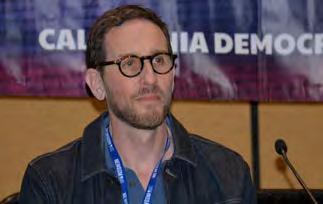








California Democratic Party endorsed state Senator Scott Wiener in his campaign
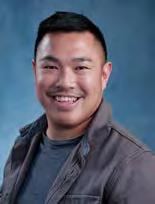
Jerry Mai is the interim CEO of Silicon Valley Pride. Courtesy the subject
by John Ferrannini
by John Ferrannini
T
hough he may not have been among the gubernatorial candidates that delegates to the California Democratic Party convention in San Francisco could vote to endorse last weekend, due to his recent entry into the race, San Jose Mayor Matt Mahan nonetheless showed up to a fireside chat with all the Democratic candidates in the race at the Commonwealth Club on February 20.
The event – also billed as lightning round speed dating (each candidate had 15 minutes to make their case) – was hosted by the San Francisco Democratic Party, and moderated by party chair Nancy Tung, a straight ally. It was co-hosted by Commonwealth Club World Affairs.
“One thing I want for all of you to lean into is how really the candidates differ,” Tung said at the outset. “They’re all Democrats … but how we distinguish them is just as important as how they are alike and how they align with your values, California values and Democratic values.”
Like during a forum last month hosted by the Urban League of Greater San Francisco Bay Area, this event did not see LGBTQ-specific community issues discussed.
Unlike that forum, however, Mahan (who had not formally launched his candidacy) and Congressmember Eric Swalwell (D-Dublin) showed up to this one.
Mahan, a late entry to the race last month, took a dig at fellow Democrats who he said were giving voters unrealistic expectations of statewide rent control or single-payer health care.
“I haven’t seen how we’re gonna pay for it,” Mahan said. “I think this is a moment where we need a problem solver who, yes, will fight for our values … but also knows before we ask people to pay more, whether it’s
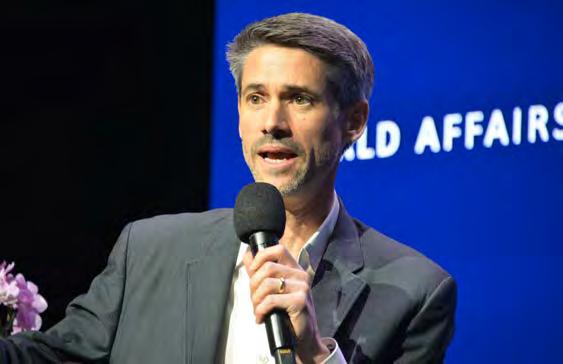
public education, housing, homelessness, on and on, we have been failing to deliver and, as Democrats, we have to own that.”
Mahan, mayor of the Bay Area’s largest city, argued he would bring data to bear in crafting solutions on homelessness and the perennial issue of open-air drug scenes, touting his record in San Jose as evidence he could be successful.
The number of Democratic candidates and the inability of any of them to break through, so far, has resulted in the possibility of two Republicans on the fall ballot in deep blue California. Though statewide Democratic officials insist at least one of the two top candidates, if not both, who advance from the June 2 primary to the November 3 general election will be Democrats, the top two candidates in almost all recent polling are Republicans – Riverside County Sheriff Chad Bianco and Steve Hilton, a former Fox News host who was the former director of strategy for then-British prime minister David Cameron. Under
California’s open primary, the top two vote-getters, regardless of party, advance to the general election.
At the state Democratic Party’s convention last weekend, delegates did not come to a consensus as to who the state party should endorse to replace outgoing Democratic Governor Gavin Newsom, who is term-limited and eyeing a run for the White House in 2028. The top vote-getter, however, was Swalwell. Swalwell’s pitch was centered around taking the fight to President Donald Trump. The 45-year-old East Bay congressmember was on the January 6 commission that examined the 2021 attack on the U.S. Capitol and is a perennial thorn in Trump’s side.
He said that the state is being disproportionately hurt by Trump’s negative worldwide reputation, and promised to create a California Research Fund to address that. Chinese and European medical companies are poaching California’s best and brightest graduates, he said, which is hurting the state’s ability to remain
ahead of the curve and innovate.
“What I’m going to do is bet on Californians and dispatch ambassadors to capital markets all over the world who will invest in California,” he said, adding that the revenue that comes back from taxes can be used for childcare, health care and to “bring down utility costs.”
Swalwell said that in his time in the House of Representatives he visited 40 global capitals.
“I’ll leverage those relationships on behalf of California,” he said. “California embassies all over the world – we are a nation-state, and we can’t rely on the federal government. … If we were a country, the governor of California would be equal to one of the largest of the five big countries in the world, so we have to start acting like it.”
Former congressmember Katie Porter (D-Irvine) was among the candidates who discussed the cost of housing. Specifically, she cited a RAND study that showed that if California “could build at the same speed they do” in Colorado, housing costs would be shaved 10%-20%.
“Housing is one of the few things today that until very, very recently we were still building the same way … that we were 100-200 years ago,” Porter said. “There’s a lot of opportunity to innovate, materials, architecture, but also finance needs motivation.”
Porter said 20% down payments are larger than they need to be “to create really solid, sustainable homeownership.” She also suggested that “Our housing goals have been totally aspirational – nobody meets their goal, so nobody bothers to try.”
Tony Thurmond, who is the elected state superintendent of public instruction, and who got
an endorsement from the Harvey Milk LGBTQ Democratic Club last week, said that he has “an immediate solution” to the housing crisis –75,000 acres of land that is surplus school district property in the state could potentially be used to build new housing, he said.
“Working with the school districts to build housing, there will not require additional permitting from the city,” he said. “Just 12 units on each of those parcels would get 2.3 million units of housing by 2030.”
Former Assembly speaker Ian Calderon (D-Whittier), who had similar themes to Mahan in discussing ensuring state money is spent effectively, suggested a refundable $1,200 tax credit every year for firsttime homebuyers looking to save for a down payment.
Tung asked him why he should stay in the race, considering that he is polling in the single digits. He said he hasn’t had the chance to get his message out as much as he should be.
“My challenge is access to resources and visibility,” the millennial former lawmaker said. “If the electorate are seeing [higher-polling] candidates right now and saying these aren’t the right candidates I want, I think the onerous is more on them. … If there’s a ceiling the candidate can’t break through, what’s going to happen? They’re going to start looking for somebody else.” Betty Yee, the No. 2 vote-getter among delegates at the convention and former state controller, said, “The biggest drag about being able to hang on to a workforce right now is housing affordability. Used to be taxes. … If California doesn’t get a grip on housing affordability for the long-term it’s going to be a drag on any long-term economic health.”
Saturday, March 7
Sábado 7 de marzo / 3月7日,星期六 / Sabado, Marso 7
11 AM – 1 PM
Rainbow Room, SF LGBT Center
Más información en SFMTA.com/Budget

Wednesday, March 11
Miércoles 11 de marzo / 3月11日,星期三 / Miyerkules, Marso 11
5:30 – 7:30 PM
Richmond/Senator Milton Marks Branch Library
Thursday, March 12
Jueves 12 de marzo / 3月12日,星期四 / Huwebes, Marso 12
5:30 – 7:30 PM
Online
Virtual / 在線的 / Online
Samahan ninyo kami sa paparating na open house tungkol sa badyet ng SFMTA at mga iminungkahing pagbabago sa mga pamasahe at multa. Matuto nang higit pa sa SFMTA.com/Budget
The English Concert
Handel’s Hercules
Harry Bicket, conductor
A true
Mar 8
ZELLERBACH HALL, BERKELEY
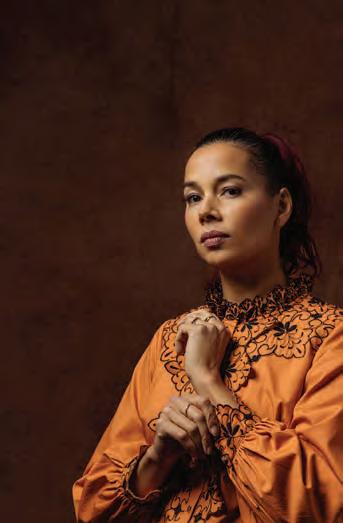
Silkroad Ensemble with Rhiannon Giddens
Sanctuary: The Power of Resonance and Ritual
Mar 19–20
ZELLERBACH HALL, BERKELEY
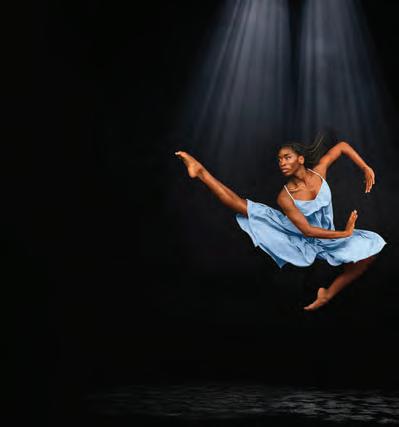
Alvin Ailey American Dance Theater
Alicia Graf Mack, artistic director Matthew Rushing, associate artistic director
Under the exciting new leadership of Artistic Director Alicia
the
to Berkeley with four dynamic programs uniting iconic masterpieces
Apr 7–12
ZELLERBACH HALL, BERKELEY
Alexandre Kantorow, piano
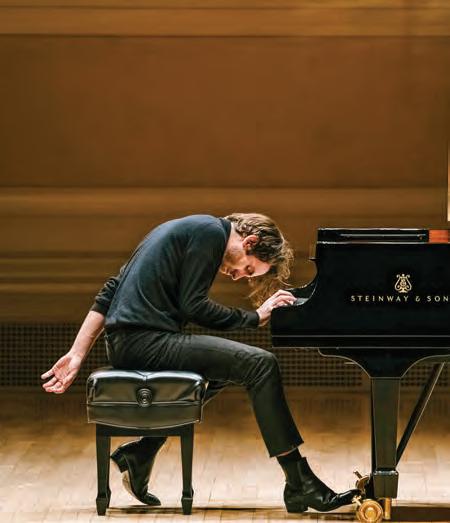
Apr 23
ZELLERBACH HALL, BERKELEY
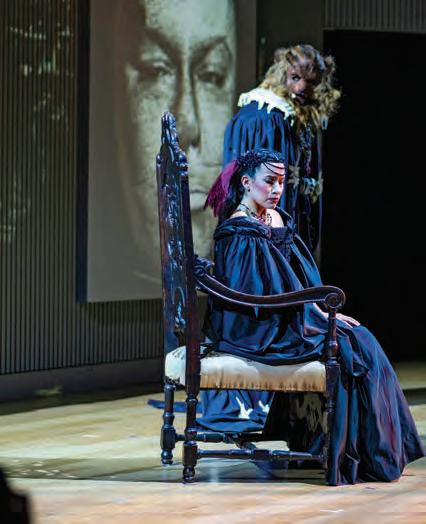
Opera Parallèle
La Belle et la Bête
Opera Parallèle presents an astonishingly original production of the classic Beauty and the Beast tale that blurs the distinctions between cinema and live opera, merging Jean Cocteau’s surrealist 1946 film with Philip Glass’ mesmerizing 1994 score.
Mar 13–14
ZELLERBACH HALL, BERKELEY
Drum Tao
The Best
Masters of thunderous spectacle and jaw-dropping athleticism, the virtuoso drummers of Drum Tao blend cutting-edge stagecraft with centuries-old drumming traditions and breathtaking choreography in their newest show, The Best
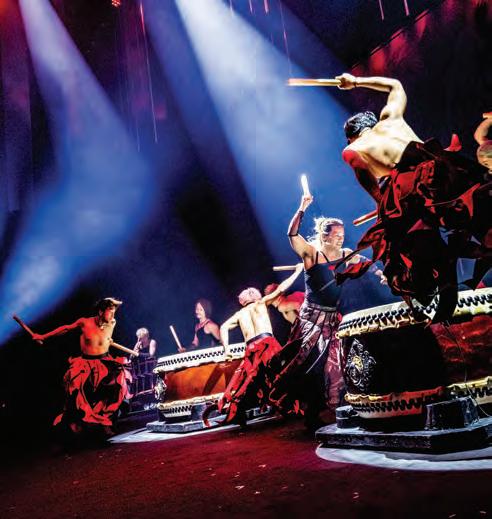
Mar 21–22
ZELLERBACH HALL, BERKELEY
WEST COAST PREMIERE
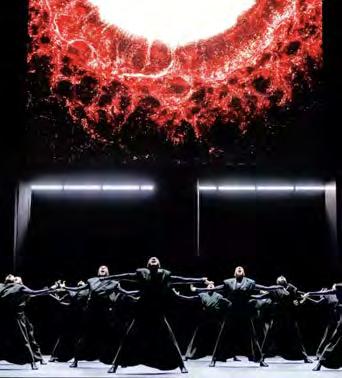
The Joffrey Ballet Midsummer Night’s Dream
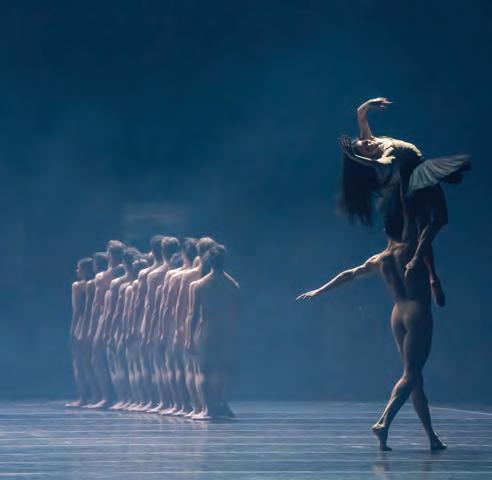
Straying far from Shakespeare’s play of the same name, the peerless Joffrey dancers return in Alexander Ekman’s daring, exuberant trip to a surreal realm of unearthly delights that begins during the traditional Scandinavian summer solstice festival but blossoms into a sensual, otherworldly fantasy. Midsummer blurs the line between the real and the imagined, and makes us wonder, is it all a dream?
Apr 17–19
ZELLERBACH HALL, BERKELEY
Víkingur Ólafsson, piano Opus 109
Hot on the heels of Opus 109, his latest release on Deutsche Grammophon, Ólafsson returns to Berkeley with a program exploring Beethoven’s Op. 109, taking us on a journey of musical inspiration and influence that includes side trips through the keyboard music of Bach and Schubert.

Apr 29
ZELLERBACH HALL, BERKELEY
JACK Quartet
West Coast premieres by Austin Wulliman and Keir GoGwilt; and music by European luminaries Hans Abrahamsen and the late Wolfgang Rihm.

Mar 15
HERTZ HALL, BERKELEY
Langlois de Swarte,
Two charismatic and masterful early-music performers return to Berkeley with a dynamic program of Baroque showpieces, including works by Bach, Vivaldi, and Vitali.
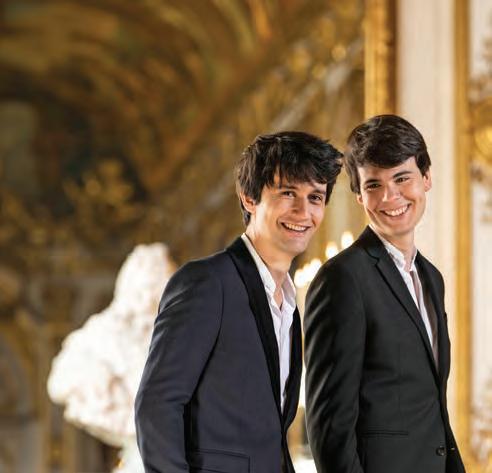
Mar 22
HERTZ HALL, BERKELEY
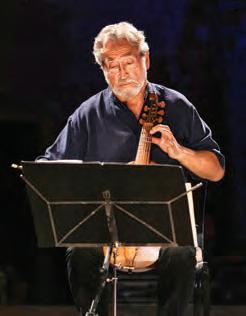
Jordi Savall, Hespèrion XXI, La Capella Reial de Catalunya, Tembembe
Ensamble Continuo Un Mar de Músicas (A Sea of Music)
Routes of Slavery program, joined by nearly three dozen international musicians who place their rich musical traditions in dialogue with European forms and repertoire.
Apr 21
ZELLERBACH HALL, BERKELEY
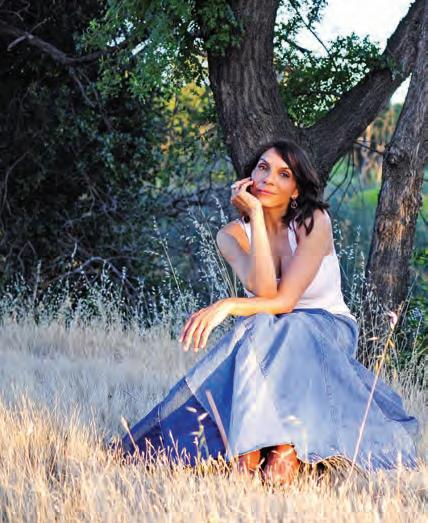
Lara Downes and Friends
This Land: Reflections on America Featuring Judy Collins,
The celebrated pianist, NPR host, and California native welcomes an all-star cast of collaborators for a program of classical and popular music that explores the richness and complexity of the American experience.
May 9
ZELLERBACH HALL, BERKELEY
Volume 56, Number XX Month XX-XX, 2026 www.ebar.com
Volume 56, Number 9 February 26March 4, 2026 www.ebar.com
PUBLISHER
Michael M. Yamashita
PUBLISHER
Thomas E. Horn, Publisher Emeritus (2013)
Michael M. Yamashita
Publisher (2003 – 2013)
Thomas E. Horn, Publisher Emeritus (2013)
Bob Ross, Founder (1971 – 2003)
Publisher (2003 – 2013)
Bob Ross, Founder (1971 – 2003)
NEWS EDITOR
Cynthia Laird
NEWS EDITOR
Cynthia Laird
ARTS & NIGHTLIFE EDITOR
Jim Provenzano
ARTS & NIGHTLIFE EDITOR
Jim Provenzano
ASSISTANT EDITORS
Matthew S. Bajko • John Ferrannini
ASSISTANT EDITORS
Matthew S. Bajko • John Ferrannini
CONTRIBUTING WRITERS
Christopher J. Beale • Robert Brokl
CONTRIBUTING WRITERS
Brian Bromberger • Philip Campbell
Kyle Amato • Race Bannon • Robert Brokl
Heather Cassell • Eliot Faine
Christopher J. Beale • Brian Bromberger
Michael Flanagan • Jim Gladstone
Philip Campbell • Myron Caringal
Liz Highleyman • Brandon Judell • Lisa Keen
Heather Cassell • Meg Collins • Chelsea Davis
Philip Mayard • Laura Moreno
Natasha Dennerstein • Eliot Faine
David-Elijah Nahmod • Mark William Norby
Michael Flanagan • Jim Gladstone
JL Odom • Paul Parish • Tim Pfaff
Liz Highleyman • Brandon Judell
Jim Piechota • Adam Sandel
Michele Karlsberg • Lisa Keen
Jason Serinus • Gregg Shapiro
Matthew Kennedy • Philip Mayard
Gwendolyn Smith • Charlie Wagner
Jim McDermott • Laura Moreno
Ed Walsh • Cornelius Washington • Sura Wood
David-Elijah Nahmod • Mark William
Norby JL Odom • Tim Pfaff • Jim Piechota
Joshua Polanski • Adam Sandel
ART DIRECTION
Gregg Shapiro • Gwendolyn Smith
Max Leger
Charlie Wagner • Ed Walsh
Cornelius Washington • Evelyn C. White
PRODUCTION/DESIGN
Ernesto Sopprani
ART DIRECTION
PHOTOGRAPHERS
Max Leger
Jane Philomen Cleland
Rick Gerharter • Gooch
PRODUCTION/DESIGN
Jose A. Guzman-Colon
Ernesto Sopprani
Rudy K. Lawidjaja • Georg Lester
Rich Stadtmiller • Christopher Robledo
PHOTOGRAPHERS
Fred Rowe • Shot in the City
Jane Philomen Cleland
Steven Underhill • Bill Wilson
Rick Gerharter • Gooch
Jose A. Guzman-Colon
ILLUSTRATORS & CARTOONISTS
Rudy K. Lawidjaja • Georg Lester
Christine Smith
Rich Stadtmiller • Christopher Robledo
Fred Rowe • Shot in the City
Steven Underhill • Bill Wilson
VICE PRESIDENT
ILLUSTRATORS & CARTOONISTS Christine Smith
VICE

H. Melbostad,
Attendance has tanked. Performers have canceled in droves. The John F. Kennedy Center for the Performing Arts in Washington, D.C. is a shell of its former self. Last year, President Donald Trump purged the center’s board, got himself elected chair by a friendly new board, and installed MAGA faithful Ric Grenell, a gay man who lacks gay sensibilities, as interim president. More recently, Trump ordered his name installed on the storied arts venue in an allegedly illegal move to rename it. Yet, the San Francisco Ballet is moving forward with its scheduled performances of “Mere Mortals” at the Kennedy Center in late May. The ballet should do the right thing and cancel those shows. A change.org petition with over 7,400 signatories urges the ballet to withdraw.
“As a devoted San Francisco resident and an ardent supporter of the San Francisco Ballet, it pains me to address something that could tarnish the name and spirit of an institution I hold dear,”
Daniel Detorie wrote in the petition he started.
“The decision to host a San Francisco Ballet performance at the Kennedy Center in May 2026, following a significant transformation of the venue due to a takeover influenced by policies reminiscent of the Trump administration, has stirred substantial concern among patrons, artists, and citizens alike.
“The Kennedy Center has always stood as a bastion for artistic freedom and diverse cultural expression,” Detorie continues. “However, recent developments suggest a shift towards ideologies and an atmosphere that may compromise this reputation.
a few of the major names who would rather roll naked over broken glass than kiss the ring.”

Donald Trump’s policies during his presidency often clashed with the values of inclusivity and equal representation. Undoubtedly, his influence on cultural institutions may carry forward principles that contradict the very essence of what the San Francisco Ballet represents – unity, diversity, and creativity without borders.”
Over at 48 Hills, critic Charles Lewis III offers some backstory, “Trump’s hostile takeover of the Kennedy Center has led some of the country’s biggest artists – many of whom normally mute their politics – to publicly take a stand. Philip Glass, Patti LuPone, Stephen Schwartz, Lin-Manuel Miranda, and the current Broadway cast of ‘Les Miz’ are just
Much like San Francisco Travel omitted LGBTQ content from its Tournament of Roses Parade float back in January – the purpose of which was to promote the city, which has a vibrant queer community – the San Francisco Ballet risks damaging its global reputation by performing at a venue that, in the last year, has rid itself of any semblance of promoting artistic excellence. What was constructed as a living memorial to President John F. Kennedy following his assassination is now hollowed out. That will quite literally happen in July, when Trump said the venue will close for two years for renovations.
https://www.ebar.com/story/161371
Meanwhile, Kennedy Center leadership is adrift. The New York Times reported in late January that Kevin Couch, who was brought on as senior vice president of artistic programming, left the post less than two weeks after his hiring was announced. https://www.nytimes.com/2026/01/28/us/politics/trump-kennedy-center-resignation.html
Curiously, the San Francisco Ballet itself has remained mum. It did not respond to a request for comment when the San Francisco Chronicle
wrote a story in early January about Detorie’s petition. Lewis reported that the ballet board has held at least one meeting about the issue, but hasn’t announced anything. Our own emails to the ballet seeking comment have gone unanswered. https://www.sfchronicle.com/entertainment/ article/san-francisco-ballet-cancel-kennedy-center-21284309.php
Part of being a San Francisco cultural institution means standing up for the city’s values. Lewis recalled that the Ukrainian flag was projected onto the War Memorial Building at the ballet’s 2022 opening gala. (This week marked the fourth anniversary of Russia’s deadly war with Ukraine, which shows no signs of abating despite Trump’s promise during the 2024 campaign that he would end it within 24 hours of taking office.) The San Francisco Ballet has long been LGBTQ-friendly, including its stunning galas. Yet, the Trump administration is working overtime to erase transgender people, deny gender-affirming health care to trans youth, and recently removed the rainbow flag from the Stonewall National Monument in New York City. Trump and his administration have violently gone after immigrants, killing two U.S. citizens in Minnesota, including a lesbian mom, in the process, and Trump has revoked policies to fight climate change, among many other terrible policies. He wants to federalize elections. His zeal to implement tariffs flies in the face of a U.S. Supreme Court ruling against him last week. These actions and plans of his go against everything San Francisco, and its cultural institutions, stand for.
If the San Francisco Ballet goes ahead with the performances, it will leave an impression of supporting the president, since he is in complete control of the Kennedy Center. That, in turn, means backing his policies, as Detorie pointed out.
“This isn’t just about art,” he writes. “It’s about preserving principles that ensure our performing arts remain an unbiased reflection of our diverse society. Allowing the San Francisco Ballet to perform there under such a shadow may inadvertently suggest an endorsement of these divisive policies. This risks alienating the devoted followers of the ballet and undermines the core missions these cultural exhibits strive to achieve.”
The San Francisco Ballet must do the right thing and cancel its Kennedy Center performances. t
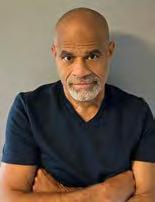
by Dwayne A. Ratleff
As Plato said, “The worst of all deception is self-deception.” A person who is in denial is not reliable. I don’t have a problem with people having weaknesses, but I have a problem with them being presented as strengths. They trust instincts that they don’t have. They make claims that they believe to be true but aren’t.
relative complained to my grandmother, who replied, “You don’t want to play the selfish game when you have nothing, and the kindness is flowing mostly your way. Do you realize you cussed out your benefactor? If he decides to play the selfish card, you lose.”
thing right by comparing it to greater wrong to justify it.”
For those who could dish it out, but couldn’t take it, she warned, “If you can’t laugh at yourself, you are not allowed to laugh at me.”
Having said that, she confessed to one of her own hypocrisies, “As much as I have preached tolerance, my greatest challenge is being tolerant of those who are intolerant.”
I responded to my grandmother’s confession and said, “Grandma, we are in the same boat on that topic, except I’m worse because I’m rowing.”

Suite 302 San Francisco, CA 94103
415.861.5019 • www.ebar.com
A division of BAR Media, Inc. © 2026
President: Michael M. Yamashita
Director: Scott Wazlowski
News Editor • news@ebar.com Arts Editor • arts@ebar.com Out & About listings • jim@ebar.com Advertising • scott@ebar.com
in
which
action against Bay Area Reporter. Ads will not be
of
on the
or
orientation. Advertising rates available upon request. Our list of subscribers and advertisers is confidential and is not sold. The sexual orientation of advertisers, photographers, and writers published herein is neither inferred nor implied. We are not responsible for unsolicited manuscripts or artwork.
My grandmother, Sylvia Bethel Ratleff, had a particularly strong distaste for hypocrites, “You have unreasonable expectations of others yet low or no expectations for yourself.”
She had no patience with hot air philanthropists and quickly put a stop to their behavior saying, “You pretend to care, while giving yourself permission to do nothing yet criticize the efforts of others. Your caring looks an awful lot like my not caring. You’re doing something that greatly resembles me doing nothing.”
She had a low tolerance for those who cursed the kindness of others because they had none themselves, “Don’t pretend to be better, try to be better.”
One of her biggest pet peeves was the hypocritical myth of the selfmade person. She had no respect for individuals who had legions of help to achieve their goals but claimed to be the sole proprietor of those achievements.
Another peeve of hers was, “Might makes right,” in the modern sense, siding with the majority to justify doing wrong. Few statements irritated her more than when someone said, “Everybody’s doing it.” Of course, she responded with the cliché, “If everybody else jumped off a bridge, would you?”

Then there are those who don’t approve of our lifestyles yet constantly have their hand out. Her saying “They curse the butcher yet eat the meat” is one of my favorites. There are those who have received much but balk when they have an opportunity to give.
A relative of ours was perfectly happy living on Recipient Street, which was a one-way street heading his way. When the moving vans showed up to move him to 2-way Reciprocation Avenue he cried foul.
A friend who had paid this relative’s rent for the last several months asked him for a minor favor. The Good Samaritan rarely asked anyone for a favor, and he was working more than one job at the time. My relative, who was not working at all sighed, huffed and hostilely refused to help, then cussed his friend out for asking.
Instead of keeping his selfishness quiet, the
One day, feeling contrary I retorted, “Yes, I might but I would make sure I wasn’t the first to jump.”
She replied, “Why wait when I can push you? Don’t think the number of participants add credibility to an action, often it is only a census of the foolish.”
We seek credibility by being counted among the majority, but sometimes that is the last place we want to be.
This expression is older than my grandmother, “A heap sees but only a few know.” This is not an attempt to justify elitism but a call to pay attention.
For her, the greatest hypocrisy of all was victimizers pretending to be the victims. They view our appropriate response to their inappropriate behavior as persecution and hide behind crocodile tears. She confronted one such person, “You are a sad bully that laughs when you commit felonies yet are outraged when misdemeanors are committed against you.”
We also don’t want to become a victimizer because someone has done us wrong, “Being wronged by someone else does not automatically make us right.”
She also cautioned, “You don’t make some-
Sylvia’s Pearls on denial and hypocrisy
“If you go into the battle of life in denial, you already have lost before it has commenced. Just because you are fooling yourself doesn’t mean you are fooling anyone else.”
“A lie you tell yourself is a lie to everyone else.”
“People who are in denial pretend self-inflicted wounds were cause by someone else.”
“Often the victim and the victimizer are one in the same. There is no need to bother with the FBI Most Wanted List, just look in the mirror to find the culprit.”
“The hypocrisy of democracy: the majority rules but the majority is not always wise.”
“Be leery of people who hide behind a just cause to do deplorable things,” was her version of a wolf in sheep’s clothing.”
“Don’t be the type of person who fears being wrong more than loving the truth, staying stuck on a lie to save face.” t
Dwayne A. Ratleff, who lived in San Francisco for 40 years, is the author of the recently published “Sylvia’s Pearls,” from which this is an excerpt. “Sylvia’s Pearls” is full of wisdom that Ratleff’s grandmother gave him that enabled him to confidently come out as a gay man. He now lives in Palm Desert, California with his husband, Michael. For more information on “Sylvia’s Pearls,” go to amazon. com. Excerpt used with permission.
by Matthew S. Bajko
Over a decade ago hundreds of residents of Mount Horeb, Wisconsin attended a community public reading of the book “I Am Jazz” to support local queer and transgender students after their school district was forced by anti-LGBTQ groups to cancel its own planned event. Co-authored by trans young adult Jazz Jennings, who was a teenager at the time, the book was to be read at an elementary school in a show of support for a trans student but was instead read at a local library after a parent stepped in to organize it.
The book reading controversy and public response to it sparked the launch of the National Day of Reading that takes place on the last Friday of February. Organized by the Human Rights Campaign Foundation’s Welcoming Schools program, it encourages people to read LGBTQ-themed books to elementary school age children on up to middle and high school students.
On the 10th anniversary of the event last year, Jennings, now 25, took part in a reading. This year, organizers already have 3,000 pledges of readings taking place Friday, February 27, in 20 states including in Republican-led Tennessee, Georgia, and Kansas.
“We have not reached all 50 states on the day. That is an amazing goal,” said Cheryl Greene, named HRC’s vice president of school and youth programming late last year. “We are asking people to do readings anywhere. It could be in your community or just in your backyard reading to your kids and grandkids.”
More than two dozen readings will be taking place across California this year, attracting at least 800 participants. Speaking to the Bay Area Reporter by video earlier this month, Greene hoped to see those numbers increase since anyone can register to hold a reading via the event’s webpage at https://tinyurl.com/2ey9tmkv.
“We have had readings in other countries, so that has been amazing to see this event take place all over the world,” said Greene, a lesbian mom with three young grandchildren of her own who will be taking part in readings in Washington, D.C. where she is based.


reading event it held last February, the county education office noted it “was a hit thanks to the students, families, community members, and school employees who joined us! We celebrated trans authors and stories with reading groups, discussions, book giveaways, and tons of arts and crafts!”
Sonoma County Superintendent of Schools Amie Carter, Ph.D., a gay mom, had spoken about utilizing the Welcoming Schools program to the B.A.R. last spring. One of two out women in the elected education post in the Bay Area, Carter is seeking a second term on the June primary ballot, as the Political Notebook column reported last May.

“It is supposed to be a day of joy. With so much negativity and so much happening that is not good, this is literally a day to be joyous and read books reflective of LGBTQ lives so people can see themselves, and kids specifically, reflected in these stories.”
For the second year in a row the Sonoma County Office of Education is hosting a reading in “celebration of voices and stories of trans and nonbinary people.” It is teaming up with the Sonoma County Library and nonprofits Positive Images, Amor Para Todos, LGBTQ Connection, and PFLAG, to co-host it from 4 to 6 p.m. Friday at the county office’s Teacher Learning Center at 5340 Skylane Boulevard in Santa Rosa.
It is free to attend and open to anyone, from students, parents/caregivers, and families to teachers, school staff, and community members. Those interested in attending can register online at https://tinyurl.com/p5z83psa
“We are very excited to partner with the Human Rights Campaign and have National Day of Reading,” said office spokesperson Eric Wittmershaus, a straight ally with a lesbian mom who grew up in a household with two women parenting him. “It is part of our efforts here on multiple fronts to really make sure we are promoting school cultures and school environments where everyone feels welcome, celebrated and included.”
In a Facebook post about its first
“A part of the strategy we have been focused on at the Sonoma County Office of Education is how do we make a stand for these students and make sure inclusionary practices are just backed into the cake, so it is not vulnerably tied up into one position or one individual but taking a broader approach,” Carter had said about being proactive in supporting queer and trans students.
Greene joined HRC seven years ago and has been overseeing its Welcoming Schools program ever since. She and her team select four books each year for National Day of Reading and create discussion prompts people can use to engage the youth they read to about the books, though she stressed people can choose any LGBTQthemed book they wish to read.
“The discussions people end up having around the book are probably even more important,” said Greene. “Especially with adults, it is not just enough to read it but let’s talk about what this means when these books are not available for kids in their classroom.”
This year’s official selections include “Marley’s Pride” by Black, nonbinary author Joëlle Retener about a grandchild attending their first Pride parade with their grandparent, Zaza, who is being honored for their work supporting the transgender community. It is recommended for elementary school children ages 3 to 11.
Also recommended for elementary school children ages 5 to 9 is “Chloe and the Fireflies” by Chris Clarkson
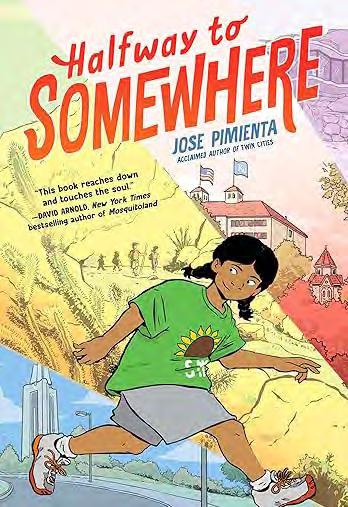
about a girl placed with two gay foster dads. For middle school students ages 10 to 14 is recommended “Halfway to Somewhere” a graphic novel by Burbank, California author Jose Pimienta focused on the life of nonbinary teen Ave, a Mexican immigrant who moves to Kansas amid their parents’ divorce.
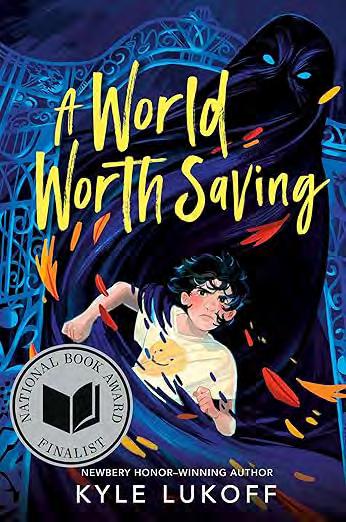
For students ages 13 to 18 is “A World Worth Saving” by former school librarian Kyle Lukoff that features a trans Jewish teen caught between the human world and a mystical realm shaped by Jewish folklore. The books can all be bought online at https://tinyurl.com/bdz52bdw where the proceeds will benefit local bookstores. (It notes more than $43.3 million has been raised to date for independent booksellers via HRC’s Welcoming Schools program.)
Now in its 11th year, the National Day of Reading is no longer a schoolbased event, noted Greene. It has morphed into something any community group or individual can also do “to show support and affirm transgender and nonbinary youth,” as its tagline states.
And with conservative-led school districts and local library boards banning LGBTQ books from their classrooms or shelves, HRC has teamed up this year with a number of groups pushing back against such censorship for the 2026 event. The partnering organizations include EveryLibrary, the School Board Integrity Project, Lambda Literary, the National Education Association, and the American Association of School Librarians.
“We have expanded this year, in particular, with a ton of partners outside of schools engaging in this from the National PTA to Authors Against Book Bans to PEN America. I think it’s been interesting, certainly with book bans becoming prevalent around the country, to see this event has taken on more relevance,” said Greene. “Initially, many people were engaged in this day of reading literally just as a day of joyous celebration to read this book and talk about this book. After things started to change politically, it started to take on new meaning and new urgency … certainly over the last two to three years with curriculum censorship and book bans taking hold – even California is not immune to this – it has become more urgent.” t



compiled by Cynthia Laird
Atrio of LGBTQ scholars and archivists will be featured in a panel about queer rare books as part of the California International Antiquarian Book Fair that will be in San Francisco February 27-March 1.
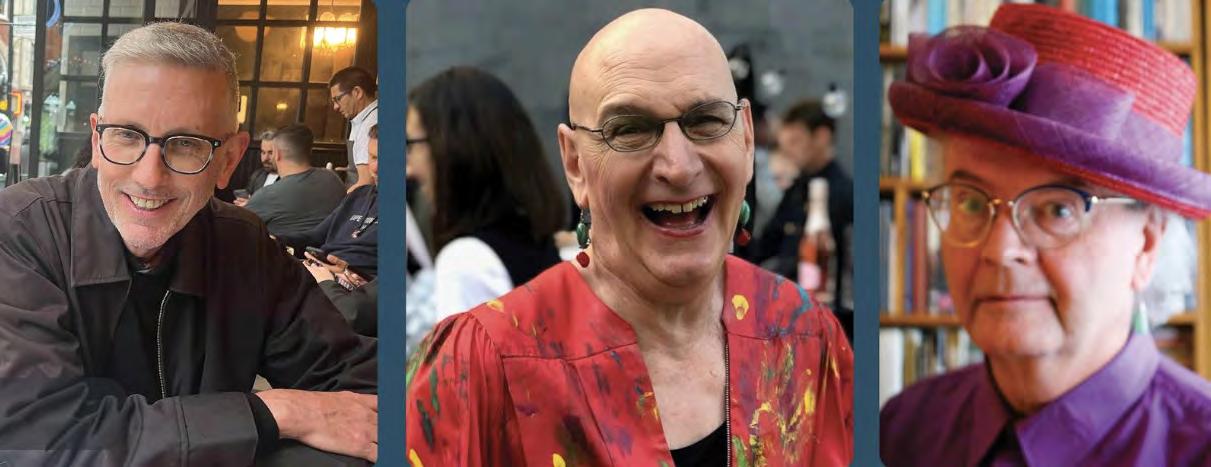
“Collecting Queer and Trans: An Inside Look at the World of LGBTQ+ Rare Books, Archives, and Ephemera” will be held Saturday, February 28, at noon at the book fair, which takes place at Pier 27 on The Embarcadero. Panelists will be queer historian and book dealer Gerard Koskovich; Ms. Bob Davis, a trans woman who is founder and director of the Louise Lawrence Transgender Archives in Vallejo; and Joey Cain, a gay liberationist who is a historian and collector. Tony Bravo, a gay man and San Francisco Chronicle columnist, will moderate.
An email announcement noted the panel will discuss LGBTQ+ archives, books, periodicals, posters, and ephemera. Attendees will also hear about each speaker’s remarkable finds and be able to view some of their personal holdings. They will provide tips for people interested in starting or enriching their own personal or institutional collections.
According to book fair officials, the panel is believed to be a first for the book fair, and marks a meaningful moment for the trade and collecting community.
The panel is co-sponsored by the GLBT Historical Society. A news release noted that the fair brings together more than 100 booksellers across the globe showcasing and selling fine and rare printed materials. Attendees can explore a vast array of books, maps, ephemera, drawings, manuscripts, autographs and more, with curated collections available for purchase throughout two floors of exhibition space. In addition to many subspecialties, exhibitors will present materials that reflect pivotal turning points in U.S. history, tracing the ideas and innovations that have helped define the nation over time.
Some of the LGBTQ-related items that will be for sale include “Pledge Your Allegiance,” a poster, likely from 1972, depicting Patrick Turnball and Collie Valadez holding hands sitting on a bench by photographer Robert Opel ($50); and a program from what is claimed to be the first gay film festival. “A Most Unusual Film Festival” took place in 1968 at the Park Cinema in Los Angeles. The program is for sale for $350. Both are offered by Bolerium Books. Tickets to the book fair range from $10-$25, depending on the day. For Saturday, which includes the panel, tickets are $15 and valid for reentry on Sunday. There’s a $25 VIP ticket for Fri-
day that is good all weekend. Students with a valid student ID and kids under 12 are free. There is free admission for librarians, cura tors, and staff of nonprofit cultural institutions (advance Eventbrite registration re quired with a valid organizational email address).
marshals beginning Wednesday, March 4.
This year’s candidates are Marcel Pardo Ariza, a Colombian trans visual artist based in the Bay Area who is currently an assistant professor of photography at California College of the Arts and the co-founder of Art Handlxrs; John Cunningham, a gay man living with HIV/AIDS who is the longtime CEO of the National AIDS Memorial Grove; and the aforementioned Ms. Bob Davis, a trans woman who founded the Louise Lawrence Archives in Vallejo. Other nominees are Sthefany Galante, a Mexican trans woman who migrated to the United States after experiencing gender discrimination in her hometown Mixquiahuala, Hidalgo, Mexico. She is Outreach Coordinator at El/ La Para Translatinas.

For ticket information, go to https:// tinyurl.com/2s3hzsu2
Public voting for SF Pride grand marshals starts soon
The public can cast votes for San Francisco Pride community grand
Candidate DJ Lamont has played a variety of community events like San Francisco Pride, Sunday Streets, Mission Community Market, and SF Juneteenth. Nominee Gwen Park is known for Transgender Day of Remembrance San Francisco’s One Foot in Remembrance, One Foot in Resilience (2015), Trans Liberation Tuesday (2015), and By the Roots.
by Matthew S. Bajko
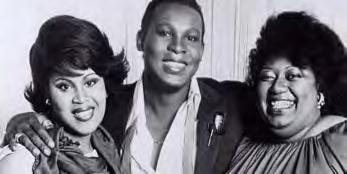
At its 50th anniversary celebration this spring, the Harvey Milk LGBTQ Democratic Club will honor San Francisco-born singer Martha Wash with its Sylvester Pride in the Arts Award. It is the first time someone who knew and performed with the gay Black artist will receive the honor, according to club members.
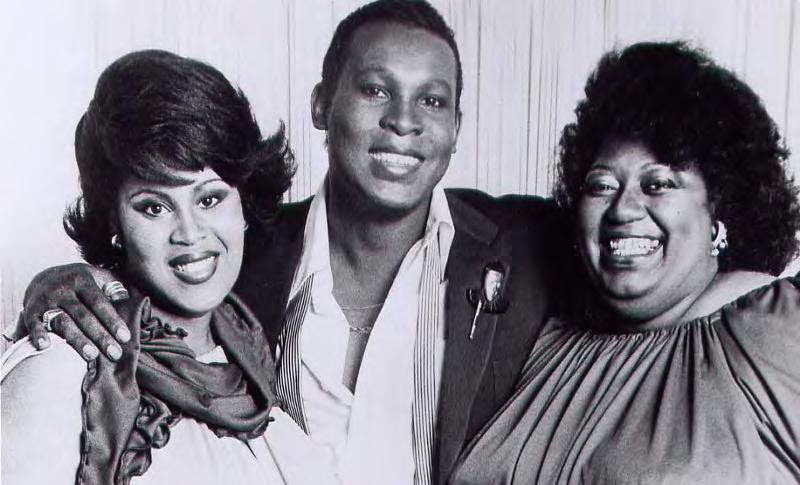
Sylvester James, who died of AIDS complications in 1988, lived in San Francisco and was known for his hits in the 1970s and 1980s. Wash, 72, attended public schools in the city and went on to release the mega hit “It’s Raining Men” in 1982 as part of the Weather Girls singing duo.
When she and Izora Armstead were initially known as Two Tons O’Fun, they provided backing vocals to Sylvester’s disco smash “You Make Me Feel (Mighty Real).” It was just one of several songs on which they collaborated.
“We’ve never given it to someone di-
rectly associated with Sylvester, so this year we are presenting it to Martha Wash,” said Sean Dugar, vice president of events and fundraising for the Milk club. “She lives on the East Coast now but is coming in to accept the award in person.”
It is the first honoree to be announced for the progressive LGBTQ political group’s 50th Anniversary Gayla titled “Unstoppable” taking place May 22 at the San Francisco Design Center Galleria at 101 Henry Adams Street. (Doors
open at 6 p.m. for the dinner and awards reception, tickets for which start at $150 and can be bought online at https://www. milkclubgayla.org/; tickets for just the after party are not yet on sale.)
Being held in conjunction with Harvey Milk Day, as the club’s namesake would have turned 96 this year that Friday, a new Harvey Milk Give’em Hope Award will be given out. The club is still determining whom the recipient of it will be, said Dugar, a gay political consultant based in Oakland.
“We gave one-off awards named after Harvey,” Dugar noted about previous galas, saying of the now permanent award that it will “be presented to an individual, organization, or ally who is leading the charge of organizing and supporting BIPOC, LGBT, labor, and poor folks.”
Milk was a civic leader and political organizer in San Francisco in the 1970s and became the first gay person elected to public office in California with his 1977 election to the San Francisco Board of Supervisors. The Milk club named itself
in his honor after he was assassinated along with then-mayor George Moscone in 1978.
Dugar is helping lead the organizing committee for this year’s gayla. Due to the milestone year, the club has supersized its annual fundraiser and moved it to its largest venue to date. It also hopes to raise $300,000 from it, which would dwarf the usual $60,000 to $75,000 the event nets for the club’s coffers.
Those assisting with host duties for it include former mayor Art Agnos and former California Democratic Party chair Art Torres, who came out as gay after stepping down from the position in 2009. Gay former elected leader Tom Ammiano and Gwenn Craig, a Black lesbian who was the first female president of the Milk club, are also on the host committee.
“We brought on a consultant to help us raise money this year because we are trying to do big things,” said Dugar. “We have a whole concert component with a major headliner soon to be announced. We are going big for our 50th!” t


by Liz Highleyman
C
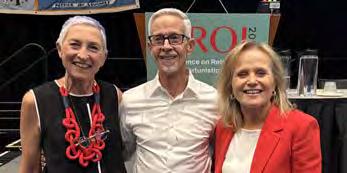
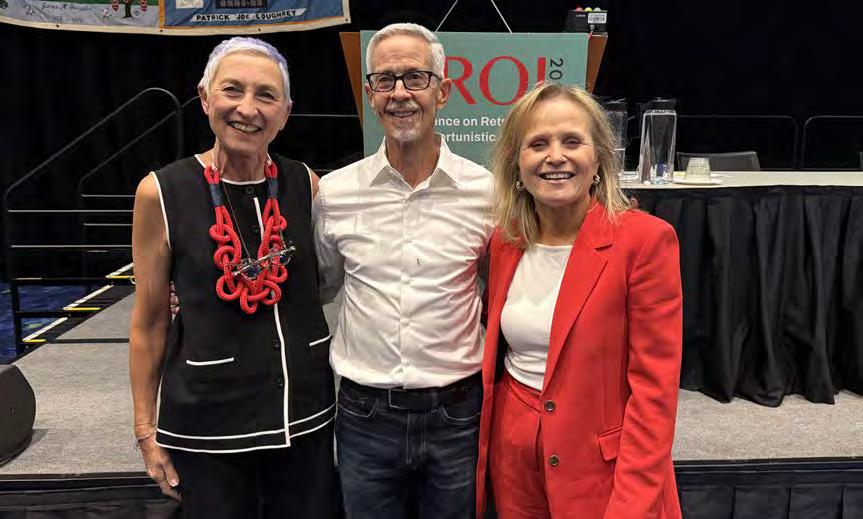
alls to action critical of federal funding cuts to HIV/AIDS programs opened the annual Conference on Retroviruses and Opportunistic Infections in Denver. The gathering, which started February 22, drew researchers, clinicians, advocates, and people living with HIV.
Last year’s conference in San Francisco took place under a cloud of uncertainty as the Trump administration cut funding for domestic and global HIV services and took aim at federal health agencies including the Centers for Disease Control and Prevention and the National Institutes of Health. At this year’s meeting, presenters assessed the damage.
“Recent funding restrictions could potentially put us back to levels not seen since the early 2000s in terms of new infections and AIDSrelated deaths,” said conference chair Nicolas Chomont, Ph.D., of the University of Montreal. “Cutting funding is not a pause, it threatens infrastructures that have taken decades to build.”
Other speakers, however, noted that some of the administration’s proposed cuts have been rolled back, court decisions have blocked harmful policies, scientists and advocates are not retreating, and the tide may be turning.
A legacy of activism
Longtime AIDS activist Peter Staley, a gay man and a member of
ACT UP/New York, co-founder of the Treatment Action Group, and board member of PrEP4All, gave the annual Martin Delaney Presentation, named in honor of the late founder of the old Project Inform. Delaney, a gay man, died of liver cancer in 2009 and the San Francisco-based nonprofit closed in 2019.
Staley recounted how Project Inform and TAG “ran a bicoastal pincer move” against former National Institute of Allergy and Infectious Diseases director Dr. Anthony Fauci, urging him to endorse a parallel track proposal to speed up early access to experimental drugs.
“The victory put AIDS activism on the map as America’s movement de jour,” he said.
Staley recalled that the last time he spoke to such a large group of HIV medical experts was at the opening ceremony of the 1990 International AIDS conference in San Francisco. At the time, there was a divide as AIDS activists demanded a seat at the table and some scientists were “freaked out” by their anger and radical protest. But since then, he said, “We learned from you and adjusted our demands accordingly. You learned from us and adjusted clinical trials and access programs. Science became our shared religion.”
“Years later, we are now so commingled that when new epidemics hit – like Ebola, monkeypox, and COVID – we all jumped back into action as one unified voice, unwilling to let our collective power go unused against the new threat,”
Staley continued. “Here we are now fighting another battle, the Trump administration’s war on science.”
“We couldn’t yet see a light at the end of the tunnel, but giving up felt far more frightening than plowing on,” he said. “Besides, you still wanted to be in the room if the great pivot finally arrived.” And it did, three years later at the 1996 conference in Vancouver, where researchers reported that a combination of antiretrovirals, including a protease inhibitor, could keep HIV under control.
Leading HIV cure researcher Dr. Sharon Lewin of the University of Melbourne in Australia and LindaGail Bekker, Ph.D., of the Desmond Tutu HIV Foundation in South Africa, who led a pivotal trial of longacting PrEP, also spoke at the opening session.
“From the beginning, activism has become advocacy and people have stepped up, shown up, stayed up, and never given up, regardless of whether the battle has been with the virus directly or governments, drug developers, funders, officials, heads of state, or people who inadvertently aid and abet the virus,” Bekker said. “We know that this virus does not stop or rest, and neither can we. We will not finally end this epidemic without a vaccine and without a cure.”
The great rebuilding CROI drew more than 3,000 participants from 65 countries, even as many would-be attendees watched remotely due to limited funding or concerns about traveling to the United States.
This year’s meeting will not feature major scientific breakthroughs, but rather focuses on implementation of recent advances such as twice-yearly PrEP. Researchers will present data on HIV medications in the pipeline, including new daily combination pills and long-acting injectables. Many sessions will look at other health conditions people with HIV struggle with as they age, as well as basic science that advances the search for a functional cure.
CROI also includes medical news beyond HIV. In March 2020, it was among the first scientific meetings to address the burgeoning COVID-19 pandemic. In 2023, the new topic was mpox. This year, Dr. Todd Brown of Johns Hopkins University will discuss whether GLP-1 agonists – weight-loss drugs like Ozempic, Wegovy and Zepbound – are “the cure for everything.”
According to Staley, HIV/AIDS advocates are doing better now than they were at the start of last year.
Congress rejected President Donald Trump’s proposed reorganization and drastic funding cuts for NIH, NIAID actually received an increase, and the President’s Emergency Plan for AIDS Relief – though “battered and bruised” – is still standing.
But only continued pressure will prevent further backsliding, he noted.
“Resistance comes in many forms,” Staley said. “Obviously, I love the flashy stuff, but equally important is the often hidden ‘keep the lights on’ approach of the thousands of public servants who were not let go. It should be a major goal of our resistance to save as much of our core institutions as we can so that they can be more quickly rebuilt once the opportunity arises. We need to start planning now for the




John
Twomey SFAF optimistic DAS will allocate $300K for seniors living with
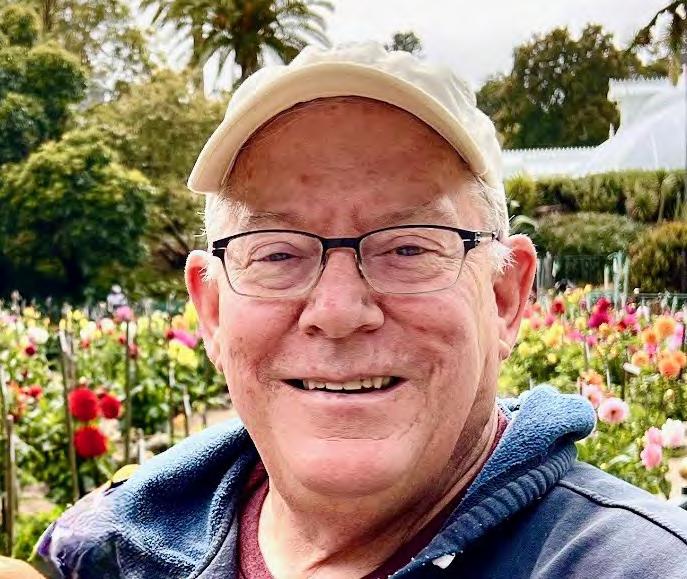
John Paul Twomey, 74, passed away on January 22nd in San Francisco, California, after a short illness.
John was born on May 5th, 1951 in Grand Forks, North Dakota to Alan and Christine Twomey. He graduated from St. James High School where he was well liked and where he expanded his social circle to include the entire city of Grand Forks. He then continued his education at the University of North Dakota. John was the epitome of a middle child; quiet, unassuming and void of conflict. He loved to roam his surroundings and connected with people, of all ages, with ease. As John grew older, he was encouraged by friends to visit California. After several trial runs, John realized moving to San Francisco would allow him to be who he was truly meant to be.
In 1972, John left North Dakota and ventured west to the City by the Bay, beginning what would become a 50+ year courtship with San Francisco. During his early years, he explored several employment paths before landing at Pioneer International Customhouse Brokerage, Inc. The Pioneer offices quickly became a gathering spot, where friends would meet John before heading out to the newest café, bar, or hotel he had discovered during his daily neighborhood explorations.
John took great pride in knowing the nooks and crannies of San Francisco — the hidden alleys and overlooked gems not found in guidebooks but essential to the city he loved. You were lucky indeed if you experienced John’s infamous “Scooter Tour,” holding on for dear life on the back of his Vespa as he buzzed from one spot to the next, narrating the entire way. His sense of adventure wasn’t drawn to grand palaces, but to the ordinary, creaky, slightly dilapidated places that seemed unremarkable at first glance — until John unlocked his treasure chest of history, folklore, and insider lore. Then they came alive. It was only natural that this love for the city evolved into his lifelong career as a respected and successful real estate agent. Guided by his mentor and close friend, Johnny “Dollar” Roach, John quickly developed his own unmistakable style. He was honest to a fault, direct, passionate about getting things right — which he most often did — and fiercely committed to caring for his clients. Over 30 years in San Francisco real estate, he built enduring relationships with clients and beloved colleagues alike. His absence in that world, both as a realtor and as a friend, will be deeply felt.
John arrived in San Francisco at the zenith of its glow in the 1970s – the city was layered, rebellious, artistic, politically alive. It offered endless possibilities for self-expression and reinvention, and John embraced it fully, in his own way. He knew people. He remembered their names. He remembered their stories. From Dianne Feinstein, Nancy Pelosi, and Charlotte Maillard Swig to busboys, bartenders, drag queens, local cops, and the man selling flowers from his garage — John knew them. He remembered their stories and their encounters. And they, in return, knew and remembered John.
As HIV and AIDS enveloped the city in the 1980s, John stepped forward as a founding board member of Friends of Oscar, later known as the Academy of Friends. With a small clutch of friends, he helped build a grassroots organization determined to bring dignity, relief, and even moments of joy to those suffering and their families during a devastating time. It was not easy work. But it was meaningful work. John brought his salty honesty, dry wit, mischievous smile, and tireless effort to the cause. He remained on the board for more than 15 years, alongside many of the original founding members.
Across all chapters of his life, John was unmistakably himself — playful and stubborn, fragile and strong, passionate and mysterious. He had a way of being soft and fuzzy and crusty and jagged all at the same time. He loved his friends deeply — each uniquely — and he loved exploring life with them, usually on his terms. That was just the way he was. He surrounded himself with a wildly diverse circle of friends who loved him patiently and joyfully. He leaves a tangible void in the interwoven tapestry of life for his friends and colleagues in San Francisco and across the country.
John’s greatest joy was his family. He cherished time with his siblings, nieces, and nephews. The weekly Zoom calls that began during COVID became sacred — never to be interrupted. His summer visits to the Lake were anticipated months in advance and reminisced about long after he returned home, always wishing he had stayed just a little longer. Big family adventures — from island-hopping in Greece to sailing through the British Virgin Islands — brought out his inner kid. His infectious love of fun made him a favorite of his great-nieces and nephews, whom he adored.
John is survived by his brothers and sister, Chris (Darla), Jamie, and Kathy (Mike), as well as his many adoring nieces and nephews. He was preceded in death by his parents, Alan and Christine, and his sister Joanne.
May we all live our remaining years as John did — on a continual quest to explore, to connect, and to live fully.
In lieu of flowers, friends wishing to honor John may consider a contribution to the AIDS MEMORIAL GROVE or the organization of your choice in John’s name.
Services remembering John will be held in San Francisco in March:
Funeral Mass
10:00 a.m., Friday, March 13
St. Ignatius Catholic Church, USF Campus
Mass Livestream:
https://www.youtube.com/StIgnatiusParishSF/live
“Have I Got a Story About John!”
1:00–4:00 p.m., Saturday, March 14, BAR49 — 2295 Market Street
Program and storytelling at 2:00 p.m.
All are invited to join in remembering our brother, uncle, and friend, John Twomey.
by John Ferrannini
The San Francisco AIDS Foundation is optimistic that the Disability and Aging Services Commission will include $300,000 for seniors living with HIV in its upcoming budget proposal being sent to the mayor’s office. That is despite a budget gap of nearly $1 billion that the city is facing.
The commission finalized its budget ask on February 23. With a twoyear city deficit of $936 million to fill, and not much help, if any, expected from the federal government, Mayor Daniel Lurie is asking for $400 million in spending cuts from city departments. He told the Bay Area Reporter he will deliver a “responsible budget that prioritizes core services.”
If the DAS request survives the Board of Supervisors budget process and is approved later this year, SFAF will be able to bid for the funds via a competitive process.
Tyler TerMeer, Ph.D., a gay, Black, HIV-positive man who is CEO of SFAF, stated to the B.A.R. that longterm survivors “paved the way for all of us living with HIV today, and they are deserving of the services, support, and health care that will keep them healthy and connected as they continue to age with dignity.”
Jonathan Frochtzwajg, a gay man who is director of health justice policy at SFAF, told the B.A.R. in a February 19 phone call that a DAS Commission hearing the previous day “went really well.”
“I’m not sure if the DAS Commission has ever heard so clearly or loudly from long-term survivors about their needs and how aging services systems are not meeting those needs,” he said.
The commissioners unanimously agreed not to include the ask in its budget. Frochtzwajg is confident either Lurie’s office or the supervisors will add it back, because DAS should have more discretionary funding than initially anticipated, he stated February 20.
“If forthcoming fiscal projections show that the city’s deficit is even moderately lower than currently forecasted, that would require the city to set aside $3 million for the Dignity Fund, which would increase DAS’ budget flexibility,” he continued.
The San Francisco Human Services Agency stated to the B.A.R., “As part of the city’s budget process, DAS staff were presenting the draft budget to the commission before submitting it to the mayor’s office. DAS, the Department of Benefits and Family Support, and the Human Services Agency will continue to work with the mayor’s office in the coming months to achieve a current figure of $10.5 million in budget reductions across the agency. Note that it is early in the budget process and there may be further reductions as well.”
The discussion at the February 18 commission meeting was part of a larger one about the DAS budget for the coming year generally. Lesbian Commissioner Martha Knutzen asked about how the methodology of the DAS-managed Dignity Fund supporting services for older adults, people with disabilities, veterans, and caregivers will be calculated.
That charter-mandated fund was approved by voters in 2016.
“In a better budget year … would we get something more, possibly?” Knutzen asked.
Dan Kaplan of the San Francisco Human Services Agency answered yes, if there were a significant growth in the DAS discretionary budget, the Dignity Fund would see its budget rise.
Asked what the $300,000 for seniors with HIV will go toward if approved – if it’s included in Lurie’s budget proposal, it has to pass the Board of Supervisors before returning for
Screengrab via SFGovTV
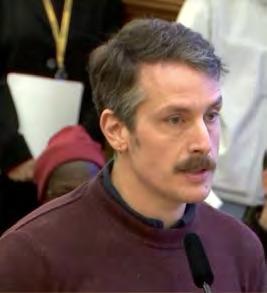
Jonathan Frochtzwajg from the San Francisco AIDS Foundation addressed a meeting of the city’s Disability and Aging Services Commission about including funds for seniors living with HIV.
his signature – Frochtzwajg told the B.A.R. it hasn’t been earmarked for anything in particular, but added, “it could go toward social support, mental health services, food assistance, and other documented needs.”
Needs exist
Betsy Ponce, a straight grandmother who has been living with HIV since 1988, had told the B.A.R. late last year that she would like to see the funds be used for programs to assist other women like herself who lack services aimed at them. Gay granddad Homer Hobi, who’s lived with HIV since 1994, wants to see it assist HIV-positive people maintain their housing in the city.
The city’s population of people living with HIV continues to age. According to the most recent HIV epidemiology report, for 2024, 75% of the 15,400 people living with HIV in San Francisco were aged 50 and up, while 48% were aged 60 and up that year.
As far back as 2010 a report on HIV and aging in San Francisco had flagged the lack of local resources for older adults living with HIV. It was a joint project between the city’s HIV Health Services Planning Council, which advises the health department, and the San Francisco Mayor’s Long Term Care Coordinating Council, which makes recommendations to the aging department.
“Although the population of older people living with HIV/AIDS in San Francisco is approaching a majority, an inventory conducted of publicly funded programs serving this group found no programs and no dollars allocated for targeted programs,” noted the report. “Although there are a few support groups through communitybased organizations that exist for older people living with HIV/AIDS, the number is inadequate and limited in that these groups primarily targeted older gay men. No services from any funding stream targeting other demographics were identified.”
Looking to see that omission finally be rectified, about a dozen advocates spoke at the DAS Commission hearing, including Jesus Guillen, a gay long-term HIV survivor.
“We are part of the first generation growing older with HIV,” he said. “I ask myself sometimes how to keep helping our communities. We are just about 74% of the people living with HIV over 50 years old, but we have 6,000 HIV long-term survivors who have lost their families and friends and who live isolated and lonely at their homes.
“… We need to find out all these people who live by themselves at home who sometimes nobody even knows, and who die alone at their homes,” he added “… We have to remind everyone we are very much lacking people interested in geriatrics and think about ways to study, or do short-term studies, to help our communities.”
Paul Aguilar, another long-term survivor since he was 25, said, “We are still here.”
“God willing, this year I will be 63 years old and I’ve got to be honest, I never expected to be a senior citizen living with AIDS,” he said. “I’m not alone in this. … We face unique and compounding challenges. We battle chronic inflammation that commonly leads to health conditions like cardiovascular disease, diabetes, and cancer.”
Several years ago, the B.A.R. spoke with Aguilar and other long-term survivors about gaps in their continuums of care.
Frochtzwajg also made the case at the hearing while acknowledging the city’s fiscal situation.
“I understand that the department is budgeting within challenging constraints imposed by the mayor,” he said. “However, over the past decade plus, in both abundant fiscal years or meager ones, DAS has not spent one dollar on services for folks aging with HIV. Today, about half of all people living with HIV in San Francisco are over 60 and research funded by the department shows that this population faces distinctive, serious difficulties. Time is up. … Even within this year’s limitations we think the department can make this modest investment.”
Frochtzwajg told the B.A.R. that if the funds were to be available and the foundation successfully bid on a contract, the money wouldn’t go toward addressing the big cuts SFAF is facing, both from the city’s Department of Public Health or the federal government. Those city cuts, totaling a little over $700,000, were already approved in last year’s budget and are set to be approved by the Health Commission March 2.
Recently, SFAF received word of abrupt federal cuts to its HIV/AIDS prevention funds, targeting AIDS prevention in blue states.
SFAF, along with eight other HIV/ AIDS and LGBTQ nonprofits, is already engaged in a federal lawsuit against President Donald Trump’s executive orders targeting diversity, equity, and inclusion policies; equityrelated grants; and gender identity. The Trump administration cut grants to the organization on the basis of those orders. A hearing had been scheduled for February 10 at the federal appellate court in San Francisco but was continued until the U.S. Supreme Court makes its decision in another case, officials said. The district court judge in the case last year issued a preliminary injunction stopping the Trump administration from blocking the funding until such time as the case is adjudicated.
Asked if SFAF has reached out to Lurie or the supervisors, Frochtzwajg said they are not yet at that stage of the process. First, the money has to be included in the DAS budget ask, then in the mayor’s budget, before votes are taken by the supervisors. If the commission doesn’t include the request, Lurie could add it to his budget proposal anyway, and if he doesn’t, the supervisors could add it back as well.
Gay Board of Supervisors President Rafael Mandelman, who represents the Castro LGBTQ neighborhood as District 8 supervisor, didn’t immediately return a request for comment.
District 1 Supervisor Connie Chan, a straight ally who is budget chair and is running for the U.S. House seat being vacated by Congressmember Nancy Pelosi (D-San Francisco), stated, “We are evaluating the city’s sixmonth financial report, and we will have the joint report soon so we can have clear picture of the city’s finances. But no matter what, I am committed as always to fight for funding for our most vulnerable and that includes our seniors living with HIV and AIDS.” t
Denson confirmed to the B.A.R. that she retired from the board after nine years. Denson feels she accomplished what she set out to do when she started in 2016, by expanding the ethnic and geographic diversity of the event that used to be known as San Jose Pride.
The committee then voted unanimously to forward the other proposed landmark designations on to the full board.
“I think these are important,” Mandelman told the committee, adding it was part of his effort to designate and protect historic properties in District 8, which includes the Castro, Noe Valley, Glen Park, and other neighborhoods.
Mandelman explained that the proposals, now in the form of resolutions, will be go before the full board March 3 before heading to the Historic Preservation Commission and then returning to the Board of Supervisors in the form of ordinances.
As for the Hormel mansion, located at 181 Buena Vista Avenue East, the stately Queen Anne Victorian situated across the street from Buena Vista Park was built in the late 1890s and survived
The state party’s endorsements are being made in advance of the June 2 primary election, where the top two votegetters, regardless of party, will advance to the November 3 general election.
Wiener is among those vying to replace Congressmember Nancy Pelosi (D-San Francisco) as the representative for Congressional District 11, which includes most of the city. Among other leading candidates are District 1 Supervisor Connie Chan and tech millionaire Saikat Chakrabarti, a former aide to Congressmember Alexandria OcasioCortez (D-New York). Fintech executive Dan Wheeler has also mounted an underdog campaign for the seat.
“The CA Democratic Party – its 3,500 grassroots delegates – just voted to endorse me for Congress,” Wiener stated in a post on X. “Our local SF grassroots delegates previously voted 77.5% to endorse me. Onward to the fight for our democracy & for bold policies to make people’s lives more affordable.”
Chan spokesperson Julie Edwards stated that her campaign doesn’t need the support of the majority of state Democratic convention delegates to succeed.
“When Connie decided to run for Congress, she knew she’d be running against a corporate Democrat who’d been in this race for years. But she also knew she’d have the support of working people. Just last week, we were proud to announce sole endorsements from the Working Families Party, National Nurses United, Harvey Milk LGBTQ Democratic Club, and San Francisco Fire Fighters Local 798, among others. This race won’t be decided by party insiders but by the working people and working families who have always known they could count on Connie Chan.”
Reached for comment February 23, Tiffany Bradley, the communications director for Chakrabarti, said, “We’re not surprised by this endorsement. Scott has been part of the Democratic establishment forever so of course they’re backing him, but really this race isn’t about political insiders, it’s about the people of San Francisco who are struggling with rent, groceries and just trying to get by. Saikat is running a campaign powered
<< News Briefs From page 6
Rabbi Martin Rawlings-Fein, a trans bi man, is a Bay Area rabbi, educator, and community leader. He has served as a rabbinic intern with the San Francisco Night Ministry, and also co-created the
“When I took over as CEO when Thaddeus Campbell passed away unexpectedly [in 2019] I had made a commitment to year 50, I wanted to continue the work and the mission Thaddeus started to be more geographically diverse … and more entrenched in our diversity in our own community,” Denson said in a phone interview. “I believe we did that.
the 1906 earthquake.
“It is a combination of the house itself is beautiful and a historic resource certainly; on top of that, it is associated with a very important figure in queer history,”
Mandelman previously told the B.A.R. for why he included the Hormel mansion among his landmark requests.
According to the Citywide Historic Context Statement for LGBTQ History in San Francisco, Hormel purchased the home in 1986 and lived there for 26 years.
The heir to the Hormel meatpacking fortune, Hormel became a prominent philanthropist who helped launch such LGBTQ organizations as the Human Rights Campaign and the James C. Hormel LGBTQIA Center housed at the San Francisco Public Library’s main branch.
He made international headlines in 1997 when then-President Bill Clinton nominated Hormel to be the country’s ambassador to Luxembourg, and thus, the first out LGBTQ person to serve in
by real people who want real change, not the same old politics.”
Joe Sangirardi, a gay man who is on the San Francisco Democratic Party County Central Committee and is development director for statewide LGBTQ rights group Equality California, was happy to see Wiener endorsed. EQCA has already endorsed Wiener.
“I was very proud to see the California Democratic Party endorse Senator Scott Wiener to succeed Speaker Emerita Pelosi in Congressional District 11.” he stated.
“Our hometown statewide leaders also earned the most votes from delegates –Treasurer [Fiona] Ma for lieutenant governor and Lieutenant Governor [Eleni] Kounalakis for treasurer.”
Other races
In the state’s 48th Congressional District in Southern California, bi San Diego City Councilmember Marni von Wilpert was not as lucky as Wiener. The delegates did not come to a consensus in that race. Von Wilpert is trying to oust Republican Congressmember Darrell Issa (Vista) from his seat.
Gay Palm Springs resident Brandon Riker, an entrepreneur and trained economist, and Ammar Campa-Najjar, a straight ally who lost to Issa in 2020, were able to block von Wilpert, who had received EQCA’s endorsement days before the convention. Riker and CampaNajjar are also running in the race to represent eastern San Diego County and portions of Riverside County, including the LGBTQ-popular Palm Springs. Campa-Najjar had issued a memo ahead of the convention questioning whether an LGBTQ candidate could win the race. https://www.advocate. com/politics/ammar-campa-najjarlgbtq-electablity
Of those races where the party made an endorsement, such as in Wiener’s, current lawmakers and party mainstays had the advantage over newcomers. For example, Congressmember Doris Matsui (D-Sacramento) handily won the endorsement for reelection to the seat once held by her late husband. She’s being challenged by Sacramento City Councilmember Mai Vang.
Gay Democratic Congressmembers Mark Takano (Riverside) and Robert Garcia (Long Beach) also got nods for their House reelection races.
first San Francisco Trans Marches, cofounded SF*EB BiCon, and founded the BiCONIC Film Festival.
Rounding out the candidates are Imani Rupert-Gordon, a queer Black woman who is president of the National Center for LGBTQ Rights; Chris Verdugo, a gay man who is the former executive director
“We went from a negative, we were in debt, to having increased our revenue five times,” she added. “We brought on new board members, including a chief diversity officer. … And so that was really my mission, and to bring a sense of the LGBTQ+ community here in San Jose to a base we had never had before.”
Mai said that Denson was one of several people who retired after 10-12 years
such a role. It sparked immediate opposition from Senate Republicans and conservative Christians, prompting Clinton to use his recess appointment powers to install Hormel into the diplomatic position in 1999.
Hormel would serve as ambassador to the small European country until 2001. He died of natural causes at the age of 88 in the summer of 2021, as the B.A.R. reported at the time.
When Hormel lived in the sixbedroom, five-bathroom mansion, it sported a pink paint job. He sold it in 2012 for $7.2 million to tech executive Robert Mee and his wife, who repainted the four-story, nearly 9,300 square foot single-family residence in a white coat.
There was no public comment at the land use committee meeting.
Other sites
Nearby the Hormel property, at 737 Buena Vista Avenue West, Mandelman is
Clarissa Cervantes, a queer and bisexual Riverside city councilmember, secured the party’s endorsement for state Assembly District 58 after falling short in a pre-endorsement vote last month. She is the younger sister of lesbian state Senator Sabrina Cervantes (D-Riverside).
Santa Monica College Board Member Dr. Sion Roy, a cardiologist, won the endorsement for the 24th state Senate District seat in Los Angeles County. Roy is running against gay West Hollywood City Councilmember John Erickson, lesbian neighborhood activist Ellen Evans, and former Palos Verdes councilmember Eric Alegria.
No consensus in several big races
With incumbent Newsom term-limited, the stakes for California Democrats anxious to hold the state’s highest elected office couldn’t be higher. Several recent polls show two Republicans – Riverside County Sheriff Chad Bianco and Steve Hilton, a former Fox News host who was the former director of strategy for thenBritish prime minister David Cameron – advancing to the next round. The number of Democratic candidates and the inability of any of them to break through, so far, has resulted in the possibility of two GOPers on the fall ballot in deep blue California.
Nevertheless, the delegates could not reach a consensus and did not make an endorsement in the race, though straight ally Congressmember Eric Swalwell (D-Dublin), a perpetual nuisance to President Donald Trump, did garner the most support, at 24% of the delegates. After Swalwell, former California state controller and San Francisco native Betty Yee was No. 2 with 17% of the delegates.
Nancy Tung, a straight ally who is the chair of the San Francisco Democratic Party, told the B.A.R. that Swalwell has genuine grassroots support within the party.
“I think when you look at Betty Yee’s strong second place finish, that is largely reflective of her long-term engagement with people in the party, and she has a lot of support among insiders and relationships with insiders, but that may not translate to broad support in the public,” Tung said.
of the San Francisco Gay Men’s Chorus; and Chaney Turner, an entrepreneur, organizer, and equity leader with more than two decades of experience advancing racial, economic, and cannabis equity.
For more information on the candidates and voting, visit sfpride.org/grandmarshals.
of service on the board. He has been on the Silicon Valley Pride board for about four years, having most recently served as chief operations officer.
“Community service has always been my backbone, and something I really enjoy doing,” Mai said. “Prior to Silicon Valley Pride, I was a volunteer with HRC. [the Human Rights Campaign] I was steering committee co-chair for the San Francisco chapter. After doing that for about eight years, I decided to do something local. I’m from San Jose, born and raised. That’s how I got involved with Silicon Valley Pride.”
also seeking local landmark status for another mansion once owned by a prominent San Franciscan. The Floyd Spreckels mansion, built in 1897 for sugar magnate Richard Spreckels, is an example of Classical Revival architecture.
Mandelman is seeking to landmark a number of private residences. They include the Fernando Nelson House at 701 Castro Street; the Power House at 1526 Masonic Avenue; the Duboce Triangle Greek Revival Home at 2173 15th Street; the Tietz-Beneke House at 657 Chenery Street; the Poole-Bell House at 192 Laidley Street; the Hinkel House at 740 Castro Street; the John J. Clark House at 210 Douglass Street; and the Kirby House at 560 Noe Street.
Also on the list are the Alexander Adams Home at 1450 Masonic Avenue; the Elliott M. Wilson Home at 1335 Guerrero Street; the Lange House at 199 Carl Street; the Charles Katz Home at 1200 Dolores Street; the Shaughnessy House
Indeed, an Inside California Politics poll taken February 13-14 shows Yee with 2% support, compared with Swalwell’s 14%. He was the most-supported Democrat in the race, behind the two Republicans leading it.
“The big question mark is Matt Mahan,” Tung continued. The San Jose mayor, emphasizing the need for fiscal responsibility, entered the race too late to be among those in contention for the party’s endorsement, but his presence was nonetheless felt, Tung said, so he could garner support from politicos prior to June.
“He was there and very actively reaching out to party delegates, insiders, and making his case,” she said. “He was all over the place, even though people couldn’t vote for him, I think that’s kind of the X factor that will be interesting moving forward.”
David Campos, a gay former San Francisco supervisor who is vice chair of the state party, assured that though the party did not make an endorsement in the crowded field for governor, and though there are two Republicans leading the race, a Democrat will advance in June.
“You will see the field narrow, and many folks will not be able to stay in the race because they won’t have the funds to do that, but I know that’s always a concern, but in the end, I think the top two candidates will be Democrats in California and if there’s a danger as things get closer … the party will do whatever needs to be done to make sure that doesn’t happen,” Campos said.
Asked to elaborate on those options, Campos said, “I’m not gonna get into that, not gonna speculate, but I think every California Democrat should know we will work hard to make sure whoever those two are, are Democratic.”
Tung, who has been the San Francisco Democratic Party chair since 2024 when she helped lead a slate of moderate Democrats to victory on the party’s central committee, said the city put its best foot forward in hosting the convention. It comes on the heels of San Francisco being the one of the official host cities of Super Bowl 60 earlier this month, as officials publicize a reinvigorated tourism industry, new corporate investment, and a reduction in crime across the board.
“It was really a really successful convention for San Francisco Democrats,”
SF Dyke March town hall
The San Francisco Dyke March will have its first town hall of the year Thursday, February 26, from 7 to 8:30 p.m. on Zoom.
An email to supporters stated that the elected advisory committee wants to hear from people and noted that
Nobody is paid at the all-volunteer organization, Mai said. For more information on Silicon Valley Pride, visit svpride.com. t
at 394 Fair Oaks Street; the Guerrero Street Double Stick Eastlake House at 1415-1417 Guerrero Street; the Buena Vista Farmhouse at 11 Piedmont Street; the Henry Street Rowhouses at 191-197 Henry Street; and the Born Home at 99 Divisadero Street.
Several properties turned into private homes are on the list. They include the Phoenix Brewery Building at 552 Noe Street; Firehouse No. 44 at 3816 22nd Street; and the Second Christian Science Church at 651-655 Dolores Street now known as the Light House luxury townhome across from Mission Dolores Park. Mandelman also wants to landmark the Mission Dolores Academy school building at 3371 16th Street.
Also on the list are religious institutions Noe Valley Ministry at 1021 Sanchez Street; Holy Innocents Church at 455 Fair Oaks Street; and Golden Gate Lutheran Church at 3689 19th Street. t
Tung said, touting a “speed dating” forum featuring all the major Democratic gubernatorial candidates as well as delegate mixers and hospitality. “We put together a bunch of events leading up to the convention … and we had a lot of people drop by interested in the things we’re doing here and asking how to replicate them back home.”
Sangirardi concurred.
“The convention definitely showed off San Francisco’s progress to some of the most politically engaged people in California,” he stated. “All I heard was how impressed attendees were.”
Michael Nguyen, a gay man running for District 8 supervisor who is also on the DCCC, was at the convention. He’s a member of the California Democratic Party organizing committee, and agreed with Tung and Sangirardi that “San Francisco showed up for this convention.” However, he disagreed with Tung’s take on Yee’s candidacy. Nguyen cast his vote for Yee.
“Betty Yee’s strong showing, despite limited volunteers and resources, is a testament to the power of her message and her experience,” Nguyen stated, adding he voted for Fiona Ma for lieutenant governor (the party did not reach a consensus required for an endorsement there, either) and former San Francisco supervisor Jane Kim for insurance commissioner (where, once again, the convention did not reach a consensus).
“Even though all three didn’t meet the threshold, three extraordinary Asian women from San Francisco building momentum at the state level tells California something important: our city still produces remarkable leaders,” Nguyen stated.
Asked about what tests the party is facing, Nguyen stated, “Our challenge going forward is real. Organizing has changed. People aren’t answering doors or phone calls the way they used to. We have to meet voters where they are –online, at community events, cultural gatherings – and invest in trusted-messenger strategies like house parties and relational organizing. … People need to feel excited to give their time, talent and treasure to winning the midterms and saving our country.”
For the complete list of the California Democratic Party’s endorsements go to https://tinyurl.com/47janpf5. t
interested people can join a planning committee for this year’s event, set for Saturday, June 27, the day before the Pride Parade.
For more information and to sign up for the town hall, go to https://tinyurl. com/mv8987yy
See page 10 >>

by Lou Fancher
Yaa Samar! Dance Theatre founder, artistic director, and choreographer Samar Haddad King and an international cast, present performances of “Gathering” Feb. 27-March 1. Unfolding at Zellberbach Playhouse in Berkeley, the venue’s wide stage provides generous sight lines and an expansive platform that renders free range to the work’s inventive mix of genres.
“Gathering” had its premiere at The Shed in New York City in 2024 and transfixed audiences with the intermingling of contemporary and traditional dance, classical music, original songs, puppetry/props, and acrobatics. Always enticing, the company invites each person in the audience to choose their own level of participation; from witnessing to dancing to directly interacting with the performers and props onstage.
Reassembling community
At the center of the diasporic work is the concept of unity. Israa, a young woman and the primary narrator, tells the story of her wedding
day. An attack on the village has shattered Israa’s memories into fragments. War has wielded its pattern of violence literally, cyclically, and eternally. She, the company, and audience members strive to reassemble a sense of community.
by David-Elijah Nahmod
Eric Williams is a busy guy. An actor, writer, comedian and podcaster, he has made being a gay man a major part of his public persona. So much so that it’s almost hard to believe that he was once deep in the closet. In a recent interview with the Bay Area Reporter, he revealed that he was bullied in high school, and that his twin brother had taken part in the bullying.
Even before coming out, performing played a major role in defining who Williams was. He did every play or musical he could. He made short films with his friends. And no matter how much he was teased for being “different,” he never let that stop him from being creative.
Now an out and proud gay man, Williams is enjoying a successful career in the performing arts. He has performed in musical theater, is the host of “That’s a Gay Ass Podcast,” and is a best-selling humor writer on Substack. He is also the creator of the digital talk show “Confession Hole.”
On March 4 he’ll bring “Why All the Drama” to Cafe du Nord’s Swedish American Hall, where, according to his press release, he’ll be “blending standup, personal story telling, and the kind of oversharing usually reserved for drinks with friends.”
David-Elijah Nahmod: Your show is called “Why All the Drama?” Do you have a lot of drama in your life?
Eric Williams: Not this shady question! I’m laughing! The title comes from something a therapist said to me once. After my first steam room encounter at 21, I went into our session fully freaking out. I am a neurotic Jew who is known to spiral, and after she watched me weep and shake, she took a second and asked, “Why all the drama?”
She gagged me. My 78-year-old Upper West Side Jewish woman therapist gagged me. But it was a pivotal moment. Why do I spiral about things that are not life and death? Why does my fear of failure or sticking out stop me from living the life of my dreams? This show examines those very questions, and I still very much try to stay
present so that I can honor who I am becoming, and not who I am supposed to be.
What moved you to become a performer?
I saw a high school production of “Once Upon a Mattress” when I was eleven years old and decided then and there I would be a performer. In high school I became obsessed with Sutton Foster, and the “Thoroughly Modern Millie” cast recording, and my dad took me to New York at 17 to see my very first Broadway show, “The Drowsy Chaperone,” starring Sutton Foster. Years later, I ended up interviewing Beth Leavel, the original “Drowsy Chaperone,” on my podcast. It was one of those full circle moments that makes you feel like you’re on the right path.
When did you come out?
I came out right before leaving St. Louis for college, and my brain basically exploded being a newly out gay kid in New York City. Over those four years I experienced so many firsts. First kiss with a boy, first relationship, first professional acting credit. And then, just one year after graduating, I met the man who would become my husband. This year marks 13 years together.
When did you start performing professionally?
After college I built a career in musical theater and ended up touring the country as Buddy in the Broadway tour of “Elf: the Musical,” which was a dream. But after achieving that goal, I felt this pull toward comedy and producing my own work. I launched my podcast in 2021, performed in the “Netflix Is a Joke Festival,” in 2023, and now I’m touring this solo show before playing my dream venue, Joe’s Pub in New York. “Why All the Drama” is a show I’ve been trying to muster the courage to create for over a decade. And it’s finally here.t
Eric Williams’ ‘Why All the Drama,’ $30.36 (21+), March 4, 8pm. Cafe Du Nord’s Swedish American Hall, 2174 Market St. www.cafedunord.com www.ericwilliamscomedy.com
Yaa Samar! Dance Theatre’s ‘Gathering’
The work’s most intriguing expressions result in moments that line something familiar with unexpected angles, such as hearing composer Max Richter’s contemporary “Recomposed” version of Vivaldi’s well-known “Four Seasons.” Another example
‘Sad
by Jim Gladstone
Composer Matt Gould’s two most recent projects have plumbed the creative and domestic lives of queer artists. In 2024, his long-aborning musical about 20th-Century painter Tamara Lempicka (co-written with Carson Kreitzer) had a short-lived run on Broadway.
Without the name recognition of intellectual property juggernauts like “The Outsiders,” and “The Great Gatsby,” “Lempicka” never caught on with mainstream audiences. The production shuttered just a month after opening.
Still, Gould, a past winner of both the Richard Rodgers and Jonathan Larsen awards, forged ahead with his latest work, the concept album, “Sad Zaddy,” which shares biographical stories of a creative figure far lesser known than Tamara Lempicka; himself.
Best laid plans
The album was originally planned to be something else entirely. Buzz around “Lempicka” was strong in the run-up to its pre-Broadway engagement at the La Jolla Playhouse, initially scheduled for 2020.
Sony Music, which would release the “Lempicka” cast recording, anticipating a hit, doubled down by signing Gould to a solo album of trunk songs and new stand-alone compositions. Then the La Jolla production was bumped to 2022 by the pandemic. And there was a major plot twist in Gould’s life.
For sixteen years, he’d been in a creative and romantic partnership with fellow theater artist Griffin Matthews, the most recent five as married fathers to two adopted sons.
The pair had been introduced to each other in the early 2000s by friends who knew they’d each spent time doing volunteer aid work in Africa.
Together, they developed the critically acclaimed docu-musical “Invisible Thread” (later known as “Witness Uganda”) which had critically acclaimed runs in Boston, New York, and Los Angeles.
“Over the pandemic,” Gould recalled in a recent phone interview with the Bay Area Reporter, “our lives evolved and changed. And before I knew it, I was writing songs about divorce, and thinking about this moment for gay men in America. I was working through a lot of pain and sadness and disappointment, wondering who we’re supposed to be now.”
Punchy, poppy, tinged with regret, but ultimately optimistic, “Sad Zaddy” is the rare piece of contemporary queer culture that explores the difficulties of being in a same-sex marriage rather than celebrating the right to it.
“We’re the first generation of gay men who grew up thinking we couldn’t get married or have kids and then found ourselves in a moment when we could. We got the right,” said Gould, a touch of bafflement in his voice, “And then we did it. We got married and had kids and then found ourselves asking ‘Why the hell did we do that?’
“I don’t want to take away from being a father,” Gould continued. “I love it. It’s the greatest joy in my life. Being a husband was amazing too, but we didn’t have a compass for how to navigate that. Before gay marriage was legalized, it was very painful to think that I couldn’t have my parents’ life. And then I had it. And then it imploded, and I didn’t know what I was supposed to do.”
Solo show
The songs of “Sad Zaddy”–synth-driven and sometimes surprisingly peppy– find Gould looking back at the original exaltation and later equivocation of married life with a blend of dark humor, rage, nostalgic sentiment, and necessary acceptance.
The collection’s most lasting song may prove to be “Rock in Rushing Water,” in which Gould considers the bittersweet limits of maintaining a Zen perspective on married life.
Gould publicly confirmed for the first time that he’ll be bringing a staged version of “Sad Zaddy” to New York’s Public Theater sometime this fall.
by Jim Gladstone
E arly on, Delson Stammer is Larry Kramer. And writer/director/ lead actor John Fisher, who plays Stammer in “Left Field” at Theatre Rhinoceros, brings delicious acidity to his affectionate lampoon of the late, great gay activist (Kramer’s own fictional iteration of himself is kvetchy Ned Weeks in “The Normal Heart” and “The Destiny of Me”).
In one near-perfect comic scene, Stammer, gigging as a guest writing professor at Yale (“No one would hire a radical bitch queen asshole like me” as a tenure-track faculty member, he rants), ruthlessly yanks a lesbian student out of the closet. He’s rude and righteous, thorny and affectionate.
As Emerald the undergrad, Elana Swartz amusingly speeds through a gamut of emotion, first bursting into tears, then folding into Stammer’s supportive embrace, and finally giving a stiff middle finger to her slightly demented mentor, letting him know he’s not as intimidating as he fancies him-

self. The scene also includes a sharp bit about Ivy League grade inflation.
But beyond this sharp initial characterization, which is quickly diluted, and some interludes of crackerjack physical comedy, the show itself stammers. Haltingly shifting tone between
by Gregg Shapiro
Tell the truth! You don’t watch porn for the music, do you? And yet, it’s possible that you might find yourself humming an earworm from a particularly erotic or graphic sex scene, and blushing or being aroused at the same time.
In the pre-2020s, a pair of albums were released featuring music from so-called “adult entertainment.” The late Patrick Cowley, best known for his musical collaborations with Sylvester (“Do Ya Wanna Funk” and “Menergy”) and Paul Parker (“Right on Target”), was the subject of Dark Entries’ archival reissue, “School Daze,” featuring the electronic music he scored for some of Fox Studios’ all-male feature films. The late, straight, German composer Gert Wilden was the subject of “Schoolgirl Report,” which compiled “music from sexy German films (1968-1972)” of the straight variety. Fast-forward to today, and the music from porn of the past is experiencing a resurgence. “Fallen Angel” (Dark Entries) features an original in-
strumental score written, performed, and produced by the late Brandy Dalton (1966-2006) of Drance. Available on vinyl, as well as CD (including six bonus tracks), the reissue is comprised of more than a dozen selections from Titan Studios’ trio of late 1990s porn flicks: “Fallen Angel,” “Fallen Angel II–Descending,” and “Fallen Angel III–Initiation.”
Dalton’s score is pumped up with muscular beats befitting a series filmed during Chicago’s notorious International Mr. Leather weekend. You can even hear the influence of Chicago industrial band Ministry in songs such as “Dante’s Swell,” “Spooks in the Well,” “U Like Me 2 Ulysses,”
“Feel Fall,” and “Swelled,” all of which qualify as dance-floor bangers. There are also moodier moments, including the ominous “Speaking in Tongues” and “Dungeon Master.” (All proceeds from “Fallen Angel” will go to AIDS Project Los Angeles.) www.darkentriesrecords.com
“Surge Studio Music” (Dark Entries), composed and performed
slapstick and polemic, “Left Field” feels uncertain about what it wants to say and how it wants to say it.
Clever and chaotic
Over the course of a thinly sketched decades-long narrative, Stammer be-

by Spider Taylor (born James Allan Taylor), is an entirely different animal, indicative of the way that electronic music evolved over a decade.
Featuring music Taylor created for gay porn superstar Al Parker’s legendary Surge Studios, the music pulses with erotic heat, but might not necessarily find its way into your favorite club DJ’s nightly mix. In fact, if you didn’t know the source of the music, you might just think it was an album of captivating electronic compositions. www.darkentriesrecords.com
comes the mayor of Provincetown, a San Francisco politico, and eventually a candidate for president. Emerald resurfaces as a reporter covering Stammer in California, and then a national campaign manager.
Also along for the ride is Keble (Gene Mocsy) a laconic, WASPish admirer of Stammer who helps engineer his political rise. Keble’s motivations and interest in Stammer are never clear. There’s a blankness to many of his scenes that slows the production’s already uneven momentum.
But Keble is also part of the show’s most delightful scene, in which Colin Johnson’s lighting, Raphael Buenaventura’s sound design, and Fisher’s spectacle-on-a-shoestring imagination transform the Rhino’s tiny black box theater into a submarine adventure.
It’s the tighter and more magical of two bravura extreme sports sequences meant to demonstrate Stammer’s balls-out, against-all-odds bravery.
The second, featuring a mid-blizzard mountain climb cleverly evoked with little more than a bolt of white fabric,

Eli Roth may be best known as a director (“Cabin Fever,” “Hostel,” “Thanksgiving”) and actor (“Inglourious Basterds”). Did you also know Roth is a connoisseur of “Italian genre B-movies” and their accompanying soundtracks?
To illustrate that, Roth curated “Eli Roth’s Red Light Disco: Dancefloor Seductions From Italian Sexploitation Cinema” (CAM Sugar/ UMe), a double-LP set featuring some of his fave raves. Keep in mind, we’re not talking about Fellini, Antonioni, Wertmüller, or Bertolucci. We’re not
drags on far too long. It leaves the audience feeling as exhausted as the brave mountaineer.
Fisher’s script also takes sidelong glances at homelessness, MAGA mentality, oversensitive liberalism, addiction, religion, and media manipulation. But they’re frustratingly fleeting, never fleshed out amidst the show’s chaotic fantasia.
All along there are nuggets of fun: Buenaventura’s on-stage turns as an Irish bartender in an Alaskan gay bar and a silky politician are chuckleworthy, and outbreaks of literal wallclimbing and unexpected audience participation offer moments of delight.
After an hour and forty minutes, I felt confetti-cannoned into submission rather than enlightened. And Delson Stammer seems to have transitioned from Larry Kramer to Richard Simmons. “Left Field” is a headscratcher, but it also tickles quite a bit.t
‘Left Field,’ through March 15. Theatre Rhinoceros, 4229 18th St. www.therhino.org
even talking about the brilliant Italo disco of Giorgio Moroder, Tantra, or Gino Soccio (by way of Montreal). This is schlocky, but still entertaining, music (exemplified by “Sexy Night”) from schlocky (and maybe less entertaining to LGBTQ viewers) movies featuring scantily clad women pursued by horny Italian men, including “Bruna, Formosa, Cerca Superdotato,” “La profanzione,” “La sposina,” “Taxi Girl,” and “Nude Odeon.” The 28-page booklet helps to explain Roth’s fascination with these movies and their music. www.usa.camsugarmusic.comt
by Tim Pfaff
K
arol Szymanowski (pronounced “Shi-man-OFF-ski”) is as good an example as any of a “sleeper” composer, one whose music is, as Shakespeare’s Hamlet put it, honored “more in the breach than the observance.” A new recording of his Fourth Symphony and a selection of mazurkas for solo piano (Rubicon) demonstrates the centrality of piano music throughout the composer’s output. The recording helps burnish his reputation today by focusing on his compositions for piano.
Born into a wealthy Polish family in 1882, Szymanowski had the freedom to compose at his own will and pace. In his own estimation a fair pianist, he nevertheless played the animated solo part in the Fourth Symphony premiere and on tour, more than hinting that his talents were considerably greater than he alleged.
Szymanowski’s compositions are of the highest sophistication and generally divided into three “periods.” The third finds Szymanowski inspired by the folk music of his native Poland, much as Frédéric Chopin, a deep influence on Szymanowski, had been in the previous century.
In his mazurkas, Szymanowski
drew on the folk melodies of the Polish Góral, a hillside people, for his basic material, after earlier investigations of music as exotic and disparate as that of Islam. The music recorded here dates from the time immediately before and after his most famous work, the opera “Krol Roger” (pronounced ROW-gur), which is suffused with homoerotic themes alongside its mythical and nationalist strains.
The great Polish pianist Arthur Rubinstein, who knew Syzmanowski, noted the change in the composer after his first excursion into Sicily. “Karol had changed; I had already become aware of it when a wealthy friend and admirer invited him to visit Sicily. After his return, he raved about Sicily, especially Taormina.
“‘There,’ Rubinstein continued, Szymanowski confided that ‘I saw a few young men bathing who could be models for Antinous. I couldn’t take my eyes off them.’ Now he was a confirmed homosexual. He told me all this with burning eyes.”
Szymanowski’s exploration of homosexual scenes and themes came to full fruition in an unpublished, two-volume novel, “Efibos,” acknowledging his fascination with what the

Greeks meant by the word ‘ephebos,’ referring to young, adolescent males. The composer’s own experiences, in Taormina and later throughout the North African and the Middle East, matched those of many gay artists and musicians of the day who sought and found sexual liberation in those warmer climes.
Today, Szymanowski’s homosexuality, “out” for his day, has tended to overshadow serious consideration of his music. Still, the esteemed conductor Simon Rattle has deemed him “one of the greatest composers of this century.”
Poles apart
Szymanowski called his Fourth Symphony of 1932 a “Synfonie Concertante” because of the defining presence of the piano solo throughout. So, the piece is now recognized as his piano concerto. If Stravinsky had written a piano concerto, it might have sounded something like this. It opens with a brooding, subterranean invocation of a person battling unseen demons. The piano’s entrance breaks the spell while remaining the organizing force in the work thereafter. The second movement sustains
the atmosphere of the first, but with far more percussive music for the piano.
Szymanowski himself commented that the third movement was “almost orgiastic in places,” and there’s no mistaking the personal influence of “Krol Roger,” composed at the same time. The piano part drives the work, which emerges from the sonic murk with arresting figures of increasing complexity and proceeds to dance its way through the remainder of the piece.
On the new recording, the esteemed lesbian conductor Marin Alsop, leading the Polish National Radio Symphony Orchestra, oversees a deep dive into the concerto, uncovering its sparkle and sure-footed development. Pianist Szymon Nehring tickles the ivories with a keen sense of the instrument’s capacities as both accompanist and soloist.t
Read the full review on www.ebar.com
Karol Szymanowski, Symphony No. 4 and ten mazurkas, Polish National Radio Symphony Orchestra, Marin Alsop, conductor, Szymon Nehring, piano, Rubicon Classical. www.rubiconclassics.com
by Brian Bromberger
What does it mean to create art and how does that question form the artist? And being both queer and a person of color, how do those elements impact one’s art?
These questions are at the heart of gay author Brandon Taylor’s latest and most accomplished novel, “Minor Black Figures.” The protagonist, Wyeth, is a Black gay painter, and is struggling with how much of the challenging events happening in the world should inform his art. More significantly, what role should being Black play in one’s art? Even more basic, what defines a Black artist today?
Wyeth spends most of the novel debating these questions, grappling with wanting to produce Black art but feels it limits him.
“When you’re Black and you paint, you’re already going to be compared to whatever three Black painters that critic has seen,” he observes. It bothers him that people can’t get past the Blackness, that they want it to have meaning for them, and when it doesn’t they get confounded.
He rebels against the art industry’s tendency to commodify artist’s identities. Taylor asks what it means to be a successful artist in the 21st century. He doesn’t provide any answers, but what he does brilliantly is filter these
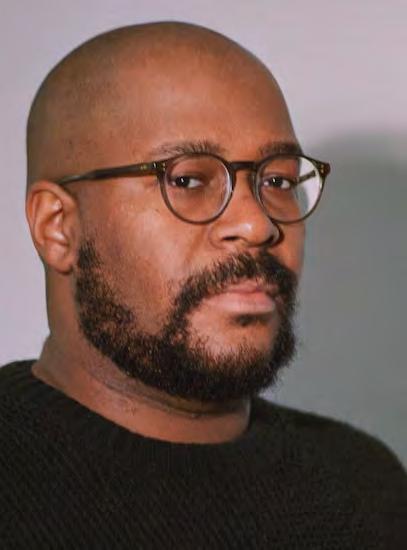

questions through Wyeth’s work and romantic experiences.
Interesting insertions
Wyeth grew up in a white-collar family in Virginia, then decided to study art, moving to New York City. At age 31, he lives in a fifth-floor walkup. He shares a studio space with four other artists. He has part-time jobs in a friend’s gallery and works for an art restorer. He’s experiencing a creative block, trying to paint photos he took at recent protests (especially
the ones reacting to the Supreme Court decision overturning Roe v. Wade), but doesn’t feel inspired. He desperately wants to capture a sense of “real life” in his art, but doesn’t know how to produce it.
His favorite painting technique is to take scenes from often white European art films (i.e. Godard, Pialat) and then insert Black characters into those scenes. In fact, his one small success occurs when one of his paintings recreates a spiritual incident from Ingmar Bergman’s film “Win-
ter Light” with two Black fishermen wearing contemporary streetwear. It goes viral on Instagram because viewers interpret the painting as commentary on the George Floyd murder and race, which was the last thing on Wyeth’s mind, as he is repelled by identity politics. But his European-inspired paintings are critiqued for not being Black enough or have any cultural relevance.
Career crossroads
Meanwhile in his restoration work he’s researching lithographs by an obscure forgotten Black artist of the 1980s and investigates his life and career. Wyeth wonders if he can succeed as a painter or if his “work work” to support himself, in a gallery or as a restorer, will become his career.
Wyeth is at a crossroad professionally and romantically, after a long period of one-night stands. He and Keating both have crises of faith. Wyeth, an atheist, is figuring out how to create good art, while Keating wrestles with his belief in God. Wyeth tries to paint real people in real life rather than imaginary Black people, but still is stuck on issues.
His principal problem is he’s not being true to his “artistic instincts,” as he’s always listening to other people’s interpretations of what he should or should not be doing as an artist.
He’s lost his own voice, worrying what other people think of his work. It raises the quandary of whether art is self-expression or an expression of politics through the vortex of culture.
As in his previous three novels, Taylor is incisive, introspective, and provocative. He’s enamored of the world of ideas, as are his characters. Although he seems trapped in this world, we care about Wyeth and whether he can find and remain true to his artistic muse.
Taylor in this novel isn’t as concerned about being queer and simply takes it for granted, which is refreshing. This is a novel I admire more than love, though I suspect it will be more meaningful for people of color. It’s a thoughtful examination of what it means to be an artist today and to realize how subjective that identity can be. Taylor is a writer whose talents continue to grow and mature. If only Wyeth had the same clarion voice as Taylor.t
Read the full review on www.ebar.com.
‘Minor Black Figures: A Novel’ by Brandon Taylor, Riverhead Books (Penguin/Random House), $29. www.penguinrandomhouse.com www.brandonlgtaylor.com
by Laura Moreno
Blending dark humor with candor and real insight, “Growing Up Golem: How I Survived My Mother, Brooklyn, and Some Really Bad Dates” is a captivating and important memoir by Donna Minkowitz that boldly ex-
plores the complexities of growing up Jewish. The book examines her trauma, sexuality, and self-invention. Originally published in 2013 by Riverdale Avenue Books/Magnus Books, it’s been re-released by Indolent Books more than a decade after its publication. The book was origi-

nally shortlisted for a Lambda Literary Award and The Publishing Triangle’s Judy Grahn Nonfiction Prize.
“Growing Up Golem” opens with Minkowitz recounting her early years living in Brooklyn. The memoir’s honesty is brutal. Much of it leans into near-caricature stereotypes. Yet Minkowitz, a secular Jew who admits to feeling more lesbian than Jewish, has no interest in protecting cultural sensitivities. Her focus is on truthtelling, and let the chips fall where they may.
The result is a very fascinating revelation, a rare attempt to delve into the psychological forces that have shaped this troubled community in an attempt to finally bring healing.
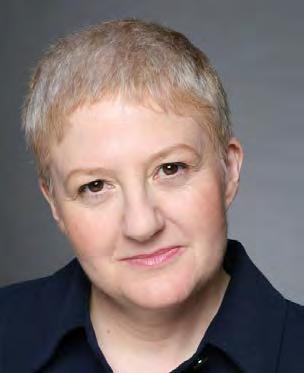
The act of writing the memoir itself can be seen as an exercise in recreating the debasement of her childhood by publicly airing “dirty laundry,” but it is also self-creation. Exposure of private trauma is done in service of a larger purpose. A problem cannot be addressed until it is acknowledged and understood.
ing, while also charting a painful, at times satirical path to autonomy. It’s a survival mechanism.

debasement is the ritual Minkowitz describes where her mother would force her to watch her dance naked and then demand to be told she was sexy. Minkowitz recounts being hit by her father for refusing to comply, an act that fused abuse, sexuality, and a profound violation of her boundaries.
As a child, the author became extremely disconnected from her own body to the point of being utterly unable to perform simple physical tasks like skipping rope.

Minkowitz is a talented journalist who has written for The New York Times and was a columnist for The Village Voice. Her book “Ferocious Romance: What My Encounters with the Right Taught Me About Sex, God, and the Culture Wars” (2007) showcases her ability to tackle complex social and personal issues with depth and humor. Minkowitz’s unflinching honesty and powerful writing makes her a distinctive voice.

With a working-class father who was a part-time pimp’s assist, her parents cast long shadows over her life. With a penchant for cruelty, her father’s outbursts created confusion, “I didn’t remember which words of mine made him do it,” she writes. In particular, she remembers fear at the sound of jangling keys when he returned home and feeling unsafe in his presence. His struggle to reconcile his own past with the expectations placed upon him by family and culture replays itself in Minkowitz’s own life.
But her controlling mother’s psychological conditioning had a far deeper impact on her and is the root of her self-destructive patterns. Perhaps the most stark example of imposed
Minkowitz portrays herself as a golem “created” by her mother, who claimed occult Kabbalistic magic powers. The myth aptly reflects Minkowitz’s own feelings of being molded into a subhuman version of herself by the forces of family and tradition. This is an element of magical realism, you might say, inspired by the Jewish legend of the golem, a soulless being made from clay by a rabbi and brought to life to protect the Jews. Because it has no soul, it can freely kill those who would harm the Jews, but the golem often becomes uncontrollable, like Frankenstein’s creature.
Scary monsters
Minkowitz actively leans into the debasement of being a golem, essentially a slavish creature. She describes her father and herself as “monsters” created for her mother’s purposes. She accepts her assigned role as an unfeeling, subordinate being. The golem metaphor lets her justify selfish or cruel actions as part of her condition-
A significant part of Minkowitz’s exploration centers on the notion of self-creation, of choosing one’s path rather than simply following the mold set by others. This is especially apparent in the way the author reflects on her sexuality and gender identity.
Another surprising revelation she makes is that pleasuring oneself was never pleasurable, a complaint that occasionally appears for the descendants of holocaust survivors.
As an adult, Minkowitz recounts a series of degrading one-night stands and “really bad dates” that echo the powerlessness of her childhood. She describes seeking out encounters that are emotionally or physically bruising, reenacting the dynamics from her upbringing.
When a date snootily informs her that she was not her first choice, she writes, “Because I knew that a large part of me was composed of fecal matter that had been sung to with the dulcet melodies of Romania, I didn’t mind. I felt lucky to be dating Jen at all. I had spent my entire time at Yale and the two years afterwards not having any sex at all.”t
‘Growing Up Golem: How I Survived My Mother, Brooklyn, and Some Really Bad Dates’ by Donna Minkowitz, $16 www.indolentbooks.com www.donnaminkowitz.com
Top 10, Feb. 26-Mar. 6
We’re back. Did you miss us? Our sprawling arts and nightlife listings were a bit much, so they had to be put on hiatus. Out: sprawling. In: succinct.
Check out our top ten (or more) very specific and mostly LGBTQ best of the best in several categories, only on www.ebar.com.
sustenance. When separated into sections, scattered across the stage or collected in massive piles, oranges come to represent dispersed people and the universal human urge to form community despite displacement.
In an interview with the Bay Area Reporter, performer and dramaturg Enrico Dau Yang Wey, who uses he/ they pronouns, said their responsibility in the latter role has been to build context. Many people understand the work of a dramaturg in a strictly theatrical piece to be providing important information about a play’s time period, such as the historic events, fashion styles, politics, language, social culture, and other aspects important to authentic character and plot.
“There is that world building in theater that in this genre of dance theater shifts more toward being an outside presence, an extra pair of eyes, someone to relay information or bounce off of,” said Wey. “It’s facilitating the imagery, symbols, and context that adhere to her vision. Even if it’s specific choices, styles of movement, or ways of expression, that’s not something a hold. My role is to filter that so the project gets as close to her vision as she sees it. I use her vocabulary and esthetic as my guidelines.”
Wey at times challenged King; asking questions that would ensure the themes and ideas she established would flow along a traceable line and stand up to scrutiny. If there is imagery such as water introduced, for example, they might ask how it amplifies or supports an idea being constructed. When something King favors could be holding back or reducing the artistic thrust of a section, their job is to push into that area and encourage her to consider it anew.
The Arabic storytelling of “Gathering” comes from a deep tradition of Arabic people telling and hearing stories orally.
“They gather around to hear the stories,” said Wey. “The storyteller, the hakawati, is the person at the heart
Matt Gould
From page 12
Gould likens the show to the monologues of the late performance artist Spalding Gray, whose mesmerizing presentations featured him sitting at a simple table with only a glass of water while processing the most mundane and most harrowing experiences of his life aloud.
“It’s a bit like that,” said Gould. “A sort of cross between Spalding Gray and ‘Prairie Home Companion,’ with disco.”
He confessed, “I’m terrified to per-
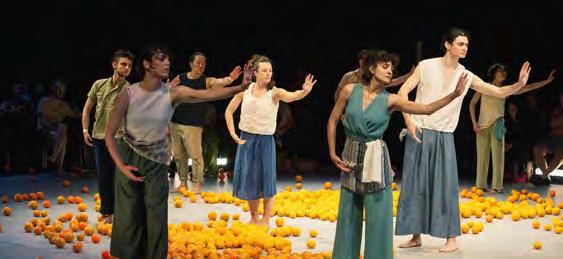
of the performative structure of oral traditions. We wanted in this piece to open that (storytelling circle). We are not solely a village of people in the confines of the stage, but the village is everyone who has come to take part in the moment, including the audience.”
The character Israa is full of spirit, conveying special vibrancy in the way she speaks and moves through the world, according to Wey.
“She makes particular connections with people in the village that have impact. She’s clever, a teacher, a person who holds steadfastly to her beliefs, desires, and dreams.”
As a queer performer, Wey said their entry point to this work –and to any space or encounter, for that matter– is always with a sense of otherness.
“That’s always the case. With this piece, we come to the room with our own stories. That goes for the audience as well. Specifically for my character, there are certain things I filter through my own experience as a queer person. In my real-life character as a human being is a tendency to scan what’s happens around me. What is the climate? Is there protection? Am I searching for commonalities? Do I choose to accept or to disrupt it?”
Buoyant resilience
In a larger context, they suggested queer identity is often about buoyancy and resiliency. A queer person having mutability in any context is intensified. Behavioral choices can reflect deliberate decisions made over time, or spontane-
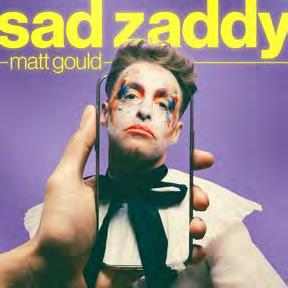
form it. But that’s why I have to do it. It’s part of how I’m dealing with the pain of divorce and, in a sense, losing
ous responses that causes Wey to reflect and occasionally revisit or reevaluate an incident, relationship, or situation.
Although audience involvement and coming together is at the core of “Gathering,” entering and exiting the piece is not a free-for-all. Wey said when people are invited into the work, the parameters and directions are clear and are based on safety.
“What we do is dynamic. We’re not asking them to join the cast. But as with all gatherings, we come together at certain moments, participate, exit. That strengthens the experience. But you can watch the piece as a classical theater and dance and be a spectator. It’s not forced participation.”
A line spoken by Israa is an element Wey believes is essential.
“Isras says, ‘What is the worst part about war: it steals your dreams.’ The cycle of war, just like the cycle of seasons, doesn’t stop. The cycle of being cast out, picked up, put down. In all of that is moment to connect. There’s resilience that continues. Life continues. Within that, there are true moments of beauty that exist. It’s not didactic, but we want people to walk away with a sense they’ve gone through human emotions and still have a need and ability to survive and build community.”t
Yaa Samar! Dance Theatre’s ‘Gathering,’ $64-$79, February 27, 8pm; Feb. 28, 2pm & 8pm; Mar. 1, 3pm, Zellerbach Playhouse, UC Berkeley campus. www.calperformances.org
my best friend—although the friendship is still being worked on.
“It’s not anathema to healing for me to keep examining, ‘What is this about? How did this happen? Why?’ To me it’s like constantly applying another coat of Neosporin to the wound. It does hurt when you put it on, but the hurt gets less. And there will always be a scar. For me, making this show is part of the process of healing.”t
‘Sad Zaddy’ is available on major music streaming services. www.instagram.com/ fakemattgould