February 19, 2026 edition of the Bay Area Reporter
by Ed Walsh
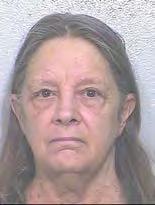
Astate parole panel has denied parole for Marjorie Knoller, who was convicted of second-degree murder for the 2001 dogmauling of lesbian Diane Whipple, in the hallway of the Pacific Heights apartment where she lived with her partner Sharon Smith. It was Knoller’s third parole hearing and third denial.
Her next parole hearing is scheduled for 2029. The February 12 hearing was held remotely, which the Bay Area Reporter viewed. Knoller spoke alongside her lawyer from the Central California Women’s Facility in Chowchilla, where she is serving her sentence.
Smith spoke against Knoller’s parole during the hearing, which began at 8:30 a.m. and concluded just before noon. None of Whipple’s relatives were present as they had been during Knoller’s previous two parole hearings. Smith spoke for six minutes, reading from a prepared statement. Her voice choked with emotion, and she appeared to be fighting back tears when she began her statement.
“What makes this incredibly difficult is that even after 25 years,” Smith told the parole panel, “Marjorie Knoller has never fully accepted responsibility for her role and (Whipple’s) preventable death. She has never offered a sincere apology. She has never demonstrated genuine insight into the decisions that led to this tragedy.”
The San Francisco District Attorney’s office formally opposed Knoller’s parole. Assistant Chief District Attorney Allison Macbeth was seated alongside Smith.
“To this day, she still fails to acknowledge that it was her poor judgment well before January 26, 2001 which contributed to the life offense,” Macbeth told the parole commissioners. “She still has not developed any pro-social thinking that two massive dogs should never have been brought into a densely populated city and to live in a small apartment where other families lived.”
During the hearing, Deputy Commissioner James Andres asked Knoller, “As you sit here today, do you remember the moment you first learned that Diane Whipple had died? What was your immediate emotion?”
Knoller responded, “Sadness.”
“You didn’t use the word remorseful,” Andres said, addressing Knoller. “Do you think that your sadness included remorse?”
Knoller answered, “Absolutely.”
The parole commissioner continued, “And remorse is normally associated with something that someone takes blame for to some extent, do you agree with that?”
“Yes,” Knoller replied.
Oakland Pride has new date, new leaders after old board dissolves
by John Ferrannini
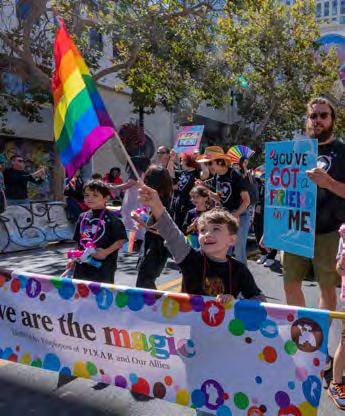
Oakland Pride will be taking place in a new month and under new management. The Oakland LGBTQ Community Center will produce the event, after the Oakland Pride board voted to dissolve.
The annual celebration heretofore had occurred in September, but its website now states the 2026 iteration will be Sunday, August 16. People interested in learning more can subscribe for event news and updates, though the Bay Area Reporter had problems doing so Thursday.
Further, in January before the new site was launched, Oakland Pride’s previous website stated, “After more than 15 incredible years of celebrating the LGBTQ+ community, the nonprofit organization behind Oakland Pride is passing the leadership torch. We are thrilled to announce that Oakland Pride 2026 will continue under the new leadership of the Oakland LGBTQ Community Center. As the previous organization winds down operations, responses to info@oaklandpride.org may be limited or delayed. A new website for the 2026 event will launch when details are available.”
Joe Hawkins, a gay man who is the center’s CEO and executive director, co-founded and led Oakland Pride in the mid-2000s after East Bay Pride held its final celebration in 2003.
Hawkins stated on January 28 that former Oakland Pride board president George Smith III and two center officials – Manifair Hwang, a staple of Oakland’s bar scene who is now
director of sponsorships and strategic initiatives; and Brandon Harami, a gay man and former staffer for the Oakland mayor’s office – involved in planning the forthcoming celebrations would be available to speak with the B.A.R., but as of press time February 18 that had not happened.
The Oakland center had proposed a virtual interview for the afternoon of February 17, which the B.A.R. agreed to. Early that morning, the center asked if the interview was still on, ostensibly because a calendar invite had not been sent. The B.A.R. promptly assured it was, but the center abruptly canceled the interview without an explanation. The B.A.R. had been planning on asking how the center arrived at the August 16 date, if it had studied attendance figures to see if August would be better than September, how the center would be able to take on the added responsibility of new staff considering its financial situation, and if it gave a heads up to Silicon Valley Pride, also held in August, among other questions.
The B.A.R. asked Jerry Mai, the interim CEO of Silicon Valley Pride, if the center had reached out to the South Bay organization before making the date change.
See page 2 >>
HHS blocks $600M in CDC HIV/AIDS prevention funding
by John Ferrannini
At least two San Francisco HIV/AIDS organizations are reeling after new cuts to federal prevention grants by the Trump administration. The federal Department of Health and Human Services announced this week $600 million in cuts to programs focused on HIV, sexually transmitted infection prevention, and HIV surveillance.
The San Francisco AIDS Foundation and the San Francisco Community Health Center stated to the Bay Area Reporter that they were informed of funding termination via letters on February 12.
The same day, the San Francisco Department of Public Health got a notice “that four Centers for Disease Control and Prevention grants, previously awarded to the department through a fair and transparent grant process, have been terminated,” according to a news release.
Over $8 million in planned funding was axed from the DPH budget, affecting HIV and STI prevention and treatment. The department stated it is working to restore the funding and exploring its possible options.
An HHS spokesperson told ABC News that the grants – concentrated in California, Colorado, Illinois, and Minnesota (all states that did
not vote for President Donald Trump in 2016, 2020, or 2024) – are being terminated because they “do not reflect agency priorities.”
The High Impact Preservation grant to SFAF
accounted for some $500,000, according to Tyler TerMeer, Ph.D., a gay Black man who is living with HIV and is the organization’s CEO.
...featuring a curated selection of smut in our February 19th
ephemera, and material histories of Bay Area queer
San Francisco Community Health Center CEO Lance Toma, left, and San Francisco AIDS Foundation CEO Tyler TerMeer, Ph.D., both said their agencies have received word of federal grants being terminated.
Rick Gerharter
Oakland Pride, which has included contingents such as Pixar in its parade, is moving its annual celebration to August this year.
Jane Philomen Cleland
Marjorie Knoller was denied parole for the third time.
Courtesy CDCR.
MCC-SF to formally install senior pastor << Community News
compiled by Cynthia Laird
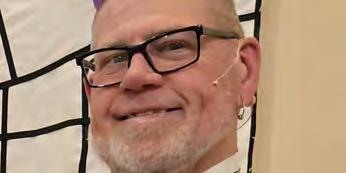
Metropolitan Community Church-San Francisco will formally install its new senior pastor, the Reverend Daniel Borysewicz, during a ceremony Sunday, February 22, at 4 p.m. at 1620 Gough Street.
Borysewicz, a queer man, was unanimously elected, with one abstention, by the church membership at the congregational meeting in December, as the Bay Area Reporter previously noted.
“As a queer cisgender pastor of European descent, I believe our calling is to meet people exactly where they are – especially those living at the margins – to truly see them, love them in this moment, and stand boldly against the injustices that harm the marginalized and oppressed,” he added.
Borysewicz had been serving as interim provisional pastor of the church since March 17, 2024.
A news release stated that Borysewicz’s installation “marks a significant and celebratory moment in the ongoing ministry of MCC San Francisco, a historic congregation rooted in LGBTQ+ liberation, radical hospitality, and prophetic justice.”
MCC-SF, a predominantly LGBTQ denomination, used to be located in the city’s LGBTQ Castro neighborhood. That property was later sold and the church now meets in the St. Mary’s Chapel of Trinity-St. Peter’s Episcopal Church.
A reception will follow the service. The release noted that clergy attending are requested to wear a red stole; people in the leather community are warmly encouraged to wear leather attire, according to the release.
In an email, Borysewicz wrote that he was “deeply honored to be called to serve this historic LGBTQ+ church in San Francisco – a congregation that has long stood at the intersection of faith, justice, and queer resilience.”
Oakland Pride From page 1
“Fortunately, their new date does not
“My hope is to deepen our partnership with LYRIC so our church becomes an intergenerational home of support for LGBTQ+ youth, to build a meaningful relationship with Openhouse SF so we can stand alongside LGBTQ+ elders with dignity and care, and to align our congregation with the Interfaith Movement for Human Integrity so we may live our faith publicly through immigrant justice and compassionate witness. I believe the future of this church is rooted in radical love, courageous presence, and an unwavering commitment to community.”
Borysewicz was ordained in the MCC denomination in 2015. He served for six years with the San Francisco Night Ministry, and later as a hospice chaplain in the East Bay, the release noted.
Born into a military family, Borysewicz spent his high school years outside Utica, New York, and later served in the U.S. Navy from 1979-1983 as an aviation electrician’s mate, the release stated. After his military service, his professional path included work in sales, the tech industry, mental health, and HIV prevention before he felt a call to the ministry.
In 2013, he received a master’s of divinity degree and a certificate in sexuality and religion from Pacific School of Reli-
interfere with our event,” Mai stated. “We understand that they are going through a transition period and we welcome any partnership moving forward with their
gion in Berkeley. He is currently pursuing doctoral studies at Iliff School of Theology in Denver, the release noted.
MCC-SF holds its regular Sunday services at 9 a.m. and also gathers for worship on Wednesdays at 7 p.m. Sunday services are offered in-person and online via Zoom, with recordings available on YouTube.
For more information, go to mccsf.org.
HRC to hold bowling event in SF
The national Human Rights Campaign’s San Francisco/Bay Area team will host a Bowling for Equality fundraiser Saturday, March 7, from 1 to 3 p.m. at Yerba Buena Ice Skating and Bowling Center, 750 Folsom Street in San Francisco.
An email announcement stated that due to ongoing anti-LGBTQ attacks in state legislatures across the country there is “no time to spare” in the fight for equality.
Tickets are $35 per person. Included in the ticket price are two hours of bowling, shoe rental, food and drink, a raffle ticket, and an annual HRC membership or membership renewal. Spectator tickets are available for $20 and include the above except bowling-related items.
U.S. and the research community. Survey responses are anonymous.
The institute is named after the late Johnson, a trans pioneer who participated in the Stonewall riots in New York City in 1969. Established in response to the killings of Black trans women, the institute protects and defends the rights of Black trans people, according to its website.
The survey provides space at the end for participants to provide their contact information to receive results and to be entered into a drawing for one of six prizes. People must be 18 years or older to participate.
The survey is designed to be completed in 20 minutes or less, noted Chastity Bowick, executive director of the institute.
“My vision, ‘Unity in Community,’ guides our commitment to ensuring that MPJI truly reflects and responds to the voices of those we serve,” Bowick wrote on the survey site. “Your insights are not just data; they are the foundation upon which we will build our next strategic moves.”
The deadline to take part in the survey is Tuesday, March 31, which is Transgender Day of Visibility.
To take the survey, go to https://tinyurl.com/bdz97ymc
For tickets and more information, go to https://tinyurl.com/53nptj79
Survey underway for trans folks of color
The New York City-based Marsha P. Johnson Institute is conducting an online nationwide community needs assessment for transgender people of color. According to the survey site, the results will be used for the benefit of the trans community in the
new leadership. As a volunteer-led organization, we work closely with many LGBTQ+ organizations based in the Bay Area. For our sister Pride organiza-
looking for citizens from all backgrounds to reflect the diversity of the community.
“The court wants a grand jury to have a collective voice that reflects a cross-section of the community,” Fleming stated. “Accomplishing this goal will help ensure that the grand jury fairly fulfills its watchdog function to identify inefficiencies and issues in our city that – if reformed –could better serve the public.”
A panel of judges selects the 19 grand jurors. The term is for one year, beginning July 1, and continuing to June 30, 2027. Grand jurors are not paid but receive reimbursement for meetings.
Interested applicants must be U.S. citizens at least 18 years of age, San Francisco residents for at least the past 12 months, have no felony convictions, and be able to communicate in English, the release stated.
For more information and to apply, visit sf.gov/apply-join-civil-grand-jury. The deadline to apply is Friday, May 1.
In Contra Costa County, Supervisor John Gioia announced in an email to constituents that the East Bay county is also seeking people to serve on its civil grand jury.
SF, Contra Costa counties seek civil grand jurors Superior courts in San Francisco and Contra Costa counties are now seeking applicants to serve on civil grand juries. These bodies, made up of volunteers, identify and study issues in local government and suggest reforms.
In San Francisco, Superior Court Judge Eric R. Fleming, chair of the civil grand jury committee, stated in a news release that he is
tions, we also encourage and invite them to join our festival and parade complimentary as a way to share outreach and collaborate on ways we bring our community together.”
The center confirmed Oakland Pride’s dissolution February 12. “The Oakland Pride Board of Directors have voted to formally dissolve as a stand-alone nonprofit and continue forward as a program of the Oakland LGBTQ Community Center,” a news release stated.
“This transition reflects years of collaboration between the two organizations and responds to the growing need for a more stable infrastructure to support one of Oakland’s most visible and meaningful celebrations during these challenging social and political times,” the release continued.
The release stated that the date change is to prevent conflicts with events associated with Labor Day and Mexican Independence Day, which are both in September. Now, the Oakland Pride parade and festival will occur shortly before Silicon Valley Pride in San Jose. Its website states that this year’s events will take place August 29-30.
The East Bay Stonewall Democratic Club, which holds its Pride Breakfast the morning of the parade, will move this year’s edition to August 16, stated Ryan
Obituaries >>
William Gross
November 12, 1939 – January 28, 2026
William “Bill” A. Gross, a gay man and decades long survivor of HIV, passed away unexpectedly on January 28, 2026, in Sacramento, California at the age of 86.
After attending two years of college, Bill entered the U.S. Air Force for four years and was stationed in Greenland as a radio radar equipment repairman. Bill lived in San Francisco for decades and worked for Pacific Bell as a system services technician for over 40 years. After retirement, Bill moved to Sacramento.
“Civil grand juries are often referred to as the ‘citizen watchdogs’ of local government, with the crucial role of monitoring and reviewing city and county governments, special districts, and school districts,” Gioia wrote.
The county’s grand jury also consists of 19 members, according to the court’s website. Requirements, including citizenship, age, no felony convictions, and English proficiency are the same; people need to have resided in Contra Costa County for at least a year.
For more information and to apply, visit https://tinyurl.com/54varxnp. The application deadline is Friday, March 13. t
LaLonde, a gay man and chair of the club’s political action committee. He indicated in an email that the center had given the club a heads-up about the date change. Those looking for a Pride event in September this year can head to Guerneville. The Sonoma County resort town will host Russian River Pride’s parade and festival Saturday, September 19. Several of the Bay Area’s annual Pride celebrations are overseen by local LGBTQ centers. The Pacific Center for Human Growth in Alameda County last year launched a Berkeley Pride event, set to return this summer on Saturday, August 29. It notes that this year’s event “will be the culminative event of East Bay Pride Month.” In Contra Costa County, the Rainbow Community Center puts on Pride in the Plaza in downtown Concord, California the first Saturday of June. The Solano Pride Center teams up with Suisun City to host a Pride event for Solano County residents, set to be held May 31 this spring.
Oakland Pride’s past troubles
B.A.R. readers may remember that in 2021 the Oakland LGBTQ center had been the fiscal sponsor of Pridefest, an alternative Pride event, after Oakland Pride
See page 6 >>
During that period, Bill participated in a gay square dancing group, tai chi, learned to play the ukulele and keyboard, and enjoyed cycling and gardening. Bill was an ambassador of the neighborhood corner garden where he had a plot and enjoyed growing tomatoes, leafy greens, peas, etc. Bill was also an animal lover and adopted two stray cats he named Jake and Babe. Bill would also cat sit for neighbors who were out of town. Bill was kind and gentle.
Bill is survived by his brother, Tom; sister, Carol; nephew, Richard; his best friend, Caesar; and a number of friends who will miss him dearly. Bill was preceded in death by his parents Adolph and Gertrude, sister Rhoda, brother Rodney, and his loving cats Jake and Babe.
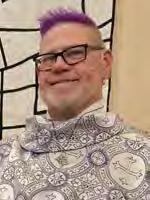
The Reverend Daniel Borysewicz will be installed as MCC-SF’s senior pastor. Courtesy the subject
Volume 56, Number 8
Volume 56, Number XX
February 19-25, 2026
Month XX-XX, 2026 www.ebar.com
PUBLISHER
Michael M. Yamashita
Thomas E. Horn, Publisher Emeritus (2013)
Publisher (2003 – 2013)
Bob Ross, Founder (1971 – 2003)
NEWS EDITOR
Cynthia Laird
ARTS & NIGHTLIFE EDITOR
Jim Provenzano
ASSISTANT EDITORS
Matthew S. Bajko • John Ferrannini
CONTRIBUTING WRITERS
Kyle Amato • Race Bannon • Robert Brokl
Christopher J. Beale • Robert Brokl
Christopher J. Beale • Brian Bromberger
Brian Bromberger • Philip Campbell
Heather Cassell • Eliot Faine
Philip Campbell • Myron Caringal
Heather Cassell • Meg Collins • Chelsea Davis
Michael Flanagan • Jim Gladstone
Natasha Dennerstein • Eliot Faine
Liz Highleyman • Brandon Judell • Lisa Keen
Michael Flanagan • Jim Gladstone
Philip Mayard • Laura Moreno
Liz Highleyman • Brandon Judell
David-Elijah Nahmod • Mark William Norby
JL Odom • Paul Parish • Tim Pfaff
Michele Karlsberg • Lisa Keen
Jim Piechota • Adam Sandel
Matthew Kennedy • Philip Mayard
Jim McDermott • Laura Moreno
Jason Serinus • Gregg Shapiro
Gwendolyn Smith • Charlie Wagner
David-Elijah Nahmod • Mark William
Norby JL Odom • Tim Pfaff • Jim Piechota
Ed Walsh • Cornelius Washington • Sura Wood
Joshua Polanski • Adam Sandel
Gregg Shapiro • Gwendolyn Smith
ART DIRECTION
Charlie Wagner • Ed Walsh
Cornelius Washington • Evelyn C. White
Max Leger
PRODUCTION/DESIGN
Ernesto Sopprani
ART DIRECTION
Max Leger
PHOTOGRAPHERS
Jane Philomen Cleland
PRODUCTION/DESIGN
Rick Gerharter • Gooch
Ernesto Sopprani
Jose A. Guzman-Colon
PHOTOGRAPHERS
Rudy K. Lawidjaja • Georg Lester
Jane Philomen Cleland
Rich Stadtmiller • Christopher Robledo
Rick Gerharter • Gooch
Fred Rowe • Shot in the City
Jose A. Guzman-Colon
Steven Underhill • Bill Wilson
Rudy K. Lawidjaja • Georg Lester
ILLUSTRATORS & CARTOONISTS
Rich Stadtmiller • Christopher Robledo
Christine Smith
Fred Rowe • Shot in the City
Steven Underhill • Bill Wilson
ILLUSTRATORS & CARTOONISTS
VICE PRESIDENT OF ADVERTISING
Christine Smith
Scott Wazlowski – 415.829.8937
VICE PRESIDENT OF ADVERTISING
NATIONAL ADVERTISING REPRESENTATIVE
Scott Wazlowski – 415.829.8937
Rivendell Media – 212.242.6863
LEGAL COUNSEL
Paul H. Melbostad, Esq.
NATIONAL ADVERTISING REPRESENTATIVE
Rivendell Media – 212.242.6863
LEGAL COUNSEL
Paul H. Melbostad, Esq.
Bay area reporter
44 Gough Street, Suite 302 San Francisco, CA 94103
Published weekly. Bay Area Reporter reserves the right to edit or reject any advertisement which the publisher believes is in poor taste or which advertises illegal items which might result in legal action against Bay Area Reporter. Ads will not be rejected solely on the basis of politics, philosophy, religion, race, age, or sexual orientation.
Advertising rates available upon request.
Our list of subscribers and advertisers is confidential and is not sold. The sexual orientation of advertisers, photographers, and writers published herein is neither inferred nor implied. We are not responsible for unsolicited manuscripts or artwork.
Headline
Money for HIV/AIDS is drying up
We’re sounding the alarm. Money for HIV/ AIDS is drying up.
For decades, nonprofits that provide HIV/ AIDS services and prevention programs have relied on federal funding. Thanks to President Donald Trump and Robert F. Kennedy Jr., his incompetent health and human services secretary, today’s federal funding landscape is in peril. As we first reported online, many HIV/AIDS nonprofits were informed this month that Centers for Disease Control and Prevention grants have been terminated. According to ABC News, the grants totaled $600 million nationally.
Locally, the San Francisco AIDS Foundation is expected to lose $500,000. The grant focused on the foundation’s PrEP work at Strut, its health center in the LGBTQ Castro neighborhood. PrEP, of course, is the highly effective HIV prevention medication, according to Tyler TerMeer, Ph.D., a gay Black man living with HIV who is the CEO.
According to an HHS spokesperson, the grants are being terminated because they “do not reflect agency priorities,” as ABC noted. It also turns out that the grant terminations are concentrated in blue states that did not vote for Trump in any of his presidential elections – like California. At least this administration doesn’t even bother to hide behind excuses – it is saying the quiet part out loud, as in, “you didn’t vote for Trump, so you’ll lose federal funding.” Of course, Kennedy, who’s denied that HIV causes AIDS, doesn’t care about the disease that has affected millions of Americans over the last 40-plus years. (But he’ll go on a podcast and say he used to snort cocaine off of toilet seats.)
announced February 13 that it, too, has lost CDC funding. According to a news release, the department was notified that the federal government has terminated more than $8 million of planned funding. That will not only impact direct core services and patient care, DPH stated, but also will significantly harm San Francisco’s efforts to reduce health disparities. It will make it more difficult to accurately monitor and advance San Francisco’s HIV prevention efforts, provide HIV and STI prevention and treatment, and build a robust community-based public health workforce, the release noted.
In Southern California, the Los Angeles LGBT Center lost a CDC grant for $387,000 for HIV prevention programs, officials told us.
The CDC, as we’ve written before, has become unrecognizable under Kennedy, who has eviscerated the agency and replaced medical experts with quack anti-vaxers. We’re not surprised at the grant terminations, but they are short-sighted and will likely result in an increase in HIV transmissions. These valuable community-based programs reach residents who otherwise might not be seen. Many don’t have health insurance. If anything, the CDC should be funneling more money to agencies for HIV prevention, including PrEP. There are newly approved injectable forms of the drug that would benefit harder to reach people and those for whom it is difficult to take a daily pill.
research and real-world experience have shown that a combination of HIV testing, rapid linkage to treatment, PrEP, and community-based outreach are the most effective ways to reduce HIV transmission.”
“The economic case for prevention is also undeniable,” they continued. “The lifetime cost of treating one person with HIV in the U.S. is estimated at $400,000. Preventing 10,000 new infections could save the U.S. health system $4 billion in future care. Every dollar cut from prevention today risks far higher downstream costs – financially and in human lives.”
These grant cuts are affecting many aspects of programs that San Franciscans have relied on for years, and it’s not just the loss of CDC grants. Earlier this month, the San Francisco Health Commission held a meeting where it discussed a $17 million reduction in city funds that will affect myriad organizations. The AIDS foundation will lose just over $800,000 for capacity building and workforce development programs. The commission is expected to vote on the proposed cuts March 2, but as Health Director Daniel Tsai told attendees, “We don’t have the money. The $17 million has already been taken out of the budget.”
The San Francisco Community Health Center is another agency that has so far lost one CDC grant. Over $300,000 was terminated, gay CEO Lance Toma stated. The grant was for the agency’s TransHOPE program that worked in HIV and sexually transmitted infection prevention by having peer educators reach out to people in their communities to provide direct linkages to care.
The San Francisco Department of Public Health
HIV prevention saves money in the longer term, as experts have stated for decades. UNAIDS noted that every $1 invested in prevention saves $7 in future treatment and care. While PrEP is expensive, it remains cost-effective compared to antiretroviral treatment. As Jirair Ratevosian, MPH, and Adrian Shanker, a gay man who formally worked in the Biden administration, wrote in an article last year, undermining HIV prevention now will cost billions later. They noted the drastic restructuring of health agencies under Trump, and the grave problems that has caused. “We know what works,” Ratevosian and Shanker wrote in ContagionLive. “For over a decade,
These financial developments are likely to get worse as San Francisco supervisors and Mayor Daniel Lurie work to balance an estimated $936 million deficit over the next two fiscal years, beginning this summer. We’re not sure what the solution is, but all avenues must be analyzed. For nonprofits, these could include overhead reductions or possibly exploring mergers with similar organizations, which, in theory, would reduce overhead. Private donors also need to step up, including companies and foundations. San Francisco is a wealthy city; its tech leaders and others should lean in on giving back instead of silently standing by as programs and services wither.
Maintaining direct client services should be the priority. In these lean budget years, and with a hostile federal administration, creative remedies need to be examined, and that includes tough conversations among people at risk for HIV/ AIDS, those living with HIV/AIDS, and the nonprofits they rely on. t
Reproductive justice for queer communities
Headline
by Emma Hare and Gary McCoy
San Francisco has always been a city defined by freedom – freedom to be yourself, freedom to love openly, and freedom to build a life and start a family on your own terms. Our city’s identity is shaped by families that don’t fit a single mold. Chosen family, blended family, and nontraditional family structures are not new here – in fact, the opportunity to find and create this kind of family is often what draws people to our city.
Today, we’re seeing that fewer and fewer people are able to start families in San Francisco. We now have the lowest share of children of any major city in the United States, and the oldest average age of parents in the country. This is not because San Franciscans don’t want families. It is because the cost of raising a family, including housing, child care, health care, and family formation has become increasingly expensive and complex – especially for those in the queer community who cannot rely on traditional paths to parenthood. While many city leaders have come out with ideas on how to reduce the cost of housing, child care, and health care, we have heard little about what it takes to form a family.
For many San Franciscans, especially those in the queer community, those experiencing infertility, or those who form families later in life or as a single parent, starting a family requires navigating medical systems, legal contracts, and insurance policies that were not designed to support diverse family structures. For many, in vitro fertilization, intrauterine insemination (IUI), surrogacy, adoption, and fostering are not a backup plan – they are Plan A for many people who want to become parents. Yet these pathways are frequently excluded from insurance coverage, placing parenthood behind a financial barrier that can cost tens or even hundreds of thousands of dollars.
This is not just a personal issue. It is a civic one.
Cities thrive when generations overlap – when children, parents, and elders share schools, neighborhoods, culture, and civic life. A city without children struggles to sustain its workforce, its public institutions, and its cultural vibrancy. Without the next generation of San Franciscans, who will teach in our classrooms, care for our elderly, and open up the next great restaurant in town? Population trends also shape political power: California’s representation in Washington, D.C. depends on
whether people can afford to live, stay, and start families here. If family formation becomes impossible and our population continues to shrink, San Francisco risks losing not only residents, but its voice. If Democrats want a fighting chance in standing up to authoritarianism and anti-democratic movements in Washington, we need to ensure that deep blue cities like San Francisco grow our population and representation in Congress.
Democrats have historically – and rightly – defended reproductive justice as abortion access, bodily autonomy, and the right to decide whether and when to become pregnant. That work remains essential. But reproductive freedom must also include the freedom to have children in addition to the freedom to avoid pregnancy. Choice is not meaningful if only some options are accessible.
That is why the San Francisco Democratic Party recently passed a package of resolutions expanding the definition of reproductive justice to explicitly include IVF, IUI, surrogacy, adoption, and fostering. The party vote was an important step, but it cannot be the last one. We should expand upon California Senate Bill 729 to ensure all insurers, including small employers and public plans, cover IVF for queer families and fertility preservation. We should ensure that the city has stronger paid leave policies for parents fostering, using surrogates, for pregnancy loss, and for fertility procedures.
This is about ensuring that reproductive choice applies to everyone – regardless of income, gender, or whom they love. It is about sustaining San Francisco’s culture, balancing an aging population, and ensuring that future generations continue to live in a functioning democracy.
These values must be embraced by San Francisco City Hall and carried forward by the Democratic Party nationally. If San Francisco is serious about being a city of freedom and opportunity, then reproductive justice must include the right to form a family – and the commitment to make that right real. t
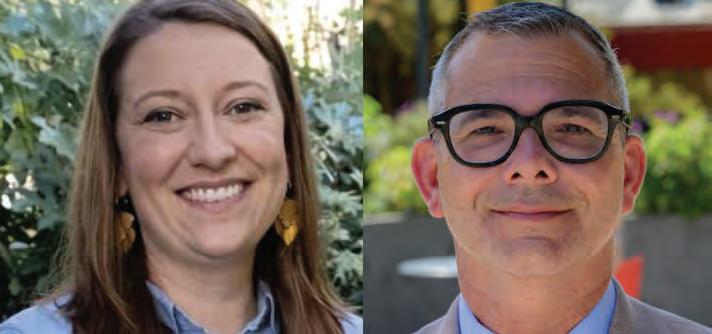
Emma Hare, who is bisexual, is the fourth vice chair of the San Francisco Democratic Party and recently authored resolutions on family affordability that were passed unanimously by the party. She currently serves as a legislative aide for San Francisco District 7 Supervisor Myrna Melgar and previously served in the San Francisco Mayor’s office. She is currently seven months pregnant with her first child.
Gary McCoy, a gay man, is a longtime health care policy advocate and LGBTQ+ community leader managing Speaker Emerita Nancy Pelosi’s (D-San Francisco) Save Our Health Care campaign to defend and strengthen healthcare nationwide. A candidate for District 8 supervisor this year, he has led both the Alice B. Toklas and the Harvey Milk LGBTQ Democratic clubs, and serves as Pelosi’s proxy to the San Francisco Democratic Party.
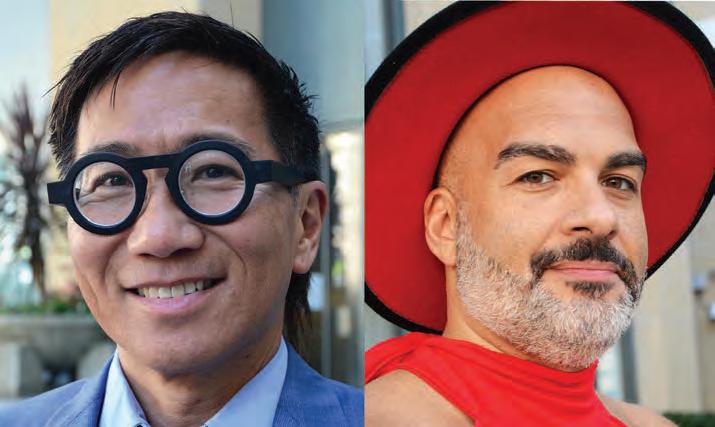
San Francisco Democratic Party fourth Vice Chair Emma Hare, left, and District 8 supervisor candidate Gary McCoy
Courtesy the subjects
t Politics >> SF LGBTQ Dems welcome state party to town
by Matthew S. Bajko
San Francisco LGBTQ Democrats are ready to host their counterparts from across the state this weekend during the California Democratic Party’s 2026 convention. From helping to chair the proceedings and arguing for endorsements of their preferred candidates to hosting social gatherings, local queer and transgender party leaders will be front and center during the proceedings.
B.A.R. if any of the candidates can meet that threshold to be endorsed it is termed out state Treasurer Fiona Ma
The former San Francisco supervisor and assemblymember went on to serve on the California Board of Equalization before becoming the state’s top fiscal executive officer. As such, she has built up support over the years with many party members, said Campos, who has personally endorsed Ma.
Palm Springs resident Brandon Riker an entrepreneur and trained economist, and Ammar Campa-Najjar ally who lost to Issa in 2020. Campa-Najj ar’s campaign released polling this month showing he netted 19.3% support – with Riker at 7% and von Wilpert at 6.1%, while Issa had 43.6% – among the 560 people polled (the margin of error was +/- 4.1).
A number of Bay Area LGBTQ Democratic clubs are co-hosting a happy hour gathering Saturday evening expected to draw a who’s who of out elected leaders and candidates as well as straight allied politicos. On the convention floor, attention will be on if a bevy of LGBTQ candidates can either secure their party’s endorsement of their campaigns or block their opponents in their respective races from doing so.
Several are seeking U.S. House seats during a midterm election cycle in which polling and political headwinds are pointing to a potential blue wave in November that could return Democrats to power in the congressional chamber. Then there are the fights among the statewide candidates to nab their party’s support of their candidacies, giving them a boost over their opponents in contests still muddled in terms of who has frontrunner status.
The state party is coming together at the city’s George R. Moscone Convention Center weeks ahead of the filing deadline in early March for the various federal, statewide and legislative races with primaries to be held June 2. Only the top two vote-getters regardless of party affiliation will advance to the November 3 ballot.
“I think she has a lot of connections and relationships throughout this state. She has been in statewide office a long time so has a lot of support from party members behind her,” noted Campos.
Also contending for the party endorsement will be Michael Tubbs, a former Newsom poverty adviser and Stockton mayor; and Josh Fryday, California’s chief service officer in Governor Gavin Newsom’s office. Gay former Sausalito city councilmember Janelle Kellman didn’t qualify to seek the endorsement, according to the list compiled by state party officials.
Kellman told the B.A.R. the requirements are skewed against candidates from smaller cities and not already in higher office.
Depending on the outcomes of the endorsement fights at the convention, it could prompt some candidates snubbed by the party to reconsider their electoral plans this year. No matter what the final results are, local Democratic leaders hope the party comes out of its convention united in electing its candidates this fall.
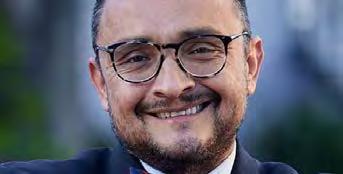
“A lot of things that happen in this country happen in the Bay Area first. So maybe this will be the beginning of the end for the Trump presidency,” gay California Democratic Party Vice Chair David Campos told the Bay Area Reporter.
Currently a deputy county executive in Santa Clara County, Campos formerly served on the San Francisco Board of Supervisors. He has a packed schedule this week meeting with county party chairs, regional directors, and various caucuses such as the one for LGBTQ Democrats.
Set to address the convention and drop in on as many of the breakout caucus meetings as he can, Campos said the weekend offers an opportunity for the party’s different factions to come together and find a common purpose headed into the primary then the general election.
“My hope for the Democratic Party convention is that as the whole California Democratic Party, we come together for 2026. We have an election of a governor and also have these congressional races that we have to win to take back the House of Representatives, for one thing,” noted Campos.
With none of the Democratic gubernatorial contenders breaking away from the pack in a number of polls released ahead of the convention, Campos predicted it will be unlikely for one of them to secure the 60% vote threshold required to clinch the statewide party’s endorsement this weekend. He has yet to personally endorse in the race.
“I would be surprised if anyone gets that in the governor’s race. I don’t expect that to happen,” said Campos.
As for the lieutenant governor’s race, the only statewide contest that has drawn an LGBTQ candidate, Campos told the
“We wish the California Democratic Party would let all the Democratic candidates run for the party’s endorsement, but they do not. They set up hurdles for the candidates, and you have to clear one of them to get on the delegates’ ballot,” noted Kellman. “This includes representing at least 450,000 people (so state legislators and big city electeds), polling at 2% in a public poll (which doesn’t happen in the LG’s race), raising $1,500,000 by January 20 (helping wealthy insiders), or collecting 1,000 signatures from delegates on separate petition pages (about 1 out of every 3 delegates).”
A poll released by Ma’s campaign had Kellman at 3%. In 2025, Kellman raised $347,911.02 and had $57,886.63 left in her account, according to her latest campaign finance report.
Ma was at 18% among all voters in the poll (and 28% among just Democrats). Tubbs had 5% and Fryday 2%. One indication of how hard it will be for any candidate to secure the state party’s endorsement came last week with the endorsement results at the East Bay Stonewall Democratic Club where no lieutenant governor candidate (or gubernatorial contender) reached the 50% threshold needed to be endorsed by Alameda County’s main LGBTQ political group.
Kellman will now be working to block seeing the state party endorse in her race.
“They’ve designed a system that benefits Sacramento insiders, not community leaders like me,” Kellman told the B.A.R. “Regardless, we will be at the convention, speaking with as many delegates as possible and urging them to vote ‘no endorsement’ in this flawed, outdated process. Wish us luck!”
In the Southern California race for the 48th Congressional District, bisexual San Diego City Councilmember Marni von Wilpert is aiming to secure the statewide party’s support at an endorsing caucus vote to be held Saturday evening during the convention. She will need at least 60% of the votes cast to be included among those candidates up for endorsements on the convention’s consent calendar.
Von Wilpert is among the Democrats running to oust from office conservative Congressmember Darrell Issa (R-Vista) this year. He saw his district redrawn to include the LGBTQ-friendly Palm Springs area due to the passage of Proposition 50 last November, and his seat is seen as a likely pickup for the Democratic Party as it fights to regain its majority in the House.
Looking to block von Wilpert from having the party’s nod will be backers of gay
Among the legislative races with LG BTQ candidates, focus will be on if As sembly District 58 candidate Cervantes, a queer and bisexual River side city councilmember, can secure the party’s endorsement after falling short of clinching it in the pre-vote held last month. She and fellow Democrat Paco Licea, a real estate agent, are looking to oust Assemblymember Leticia Castillo (R-Corona) from office. Cervantes, the younger sister of lesbian state Senator Sabrina Cervantes (D-Riverside), narrowly lost to Castillo in 2024 in their contest for her sibling’s former seat.
LGBTQ politicos will also be watching the endorsing caucus results for the race to succeed termed out Senator Ben Allen (D-Santa Monica), where Santa Monica College Board Member Dr. Sion Roy, a cardiologist, nabbed the most support in the pre-endorsement vote. Also running for Allen’s 24th District seat in Los Angeles County are gay West Hollywood City Councilman John Erickson, lesbian neighborhood activist Ellen Evans, and former Palos Verdes councilmember Eric Alegria
Gay state Senator Scott Wiener (DSan Francisco) is expected to scoop up the party’s support of his bid to succeed retiring Congressmember Nancy Pelosi (D-San Francisco) in the state’s 11th Congressional District. As the B.A.R.’s online Political Notes column reported earlier this month, Wiener surpassed the 70% threshold in the pre-endorsement vote held in January against District 1 Supervisor Connie Chan and former tech executive Saikat Chakrabarti to secure his having the statewide party endorsement be placed on the consent calendar at the convention to be taken up at 10 a.m. Sunday.
Friday night the GLBTQ+ Asian Pacific Alliance (GAPA) will be honoring Chan with its George Choy Community Ally Award at its Queer Lunar New Year event. It is taking place from 7 to 10 p.m. at the Chan National Queer Arts Center located at 170 Valencia Street.
The party is for people 21 years of age and older due to having a cash bar. Tickets cost $52 and can be bought online at https://tinyurl.com/fma6fn36.
A spokesperson for Kellman’s cam paign told the B.A.R. she doesn’t have any events open to the public that she is hosting this weekend. Ahead of the convention on Thursday night, from 6 to 7 p.m., Kellman will be holding a live online conversation, “Wildfires: Moving from Panic to Protection,” in light of the increased costs for insurance and rent to utilities that Californians are paying due to the conflagrations that have become routine occurrences across the state. (To register for it online, visit https://tinyurl. com/4t94t628
“If year-round wildfire has become the new normal, it’s time to talk about what it takes to change that,” stated Kell man, set to be joined by Watch Duty app co-founder & CEO and former Moraga-Orinda Fire District chief Kellman does plan to attend the LG BTQ CADEM Happy Hour event taking place from 5 to 8 p.m. Saturday, February 21. It will be at the Alchemist Bar & Lounge located at 679 Third Street in San Francis co’s South of Market neighborhood.
The city’s two main LGBTQ Demo cratic Clubs, Alice B. Toklas and the more progressive Harvey Milk, are cohosting it along with the Bayard Rustin Coalition, East Bay Stonewall, and the Stonewall Democratic Club of Los An geles. To RSVP for it, visit https://tinyurl. com/9ucepafy.
David Campos, vice chair of the California Democratic Party, will be at numerous events during the state convention in San Francisco. Courtesy CA Dem Party
Andres asked, “So when you first learned that Diane had died, you felt some responsibility?”
“Oh, yes,” Knoller responded.
Andres continued, “Why did you feel responsible, or any responsibility at all?”
Knoller responded, “Because I couldn’t stop Bane (the male dog that attacked Whipple) from what he was doing. You know, it was my job to control him, and I couldn’t.”
Knoller, 70, was with her two Presa Canario dogs during the attack on Whipple, 33, her neighbor. Knoller’s husband, Robert Noel, was out of town
“This is funding that supports our clinical services at Strut, with a focus on our PrEP work,” TerMeer stated, referring to the agency’s health center in the Castro LGBTQ neighborhood. “The purpose of the funding is to reach the goals of the Ending the Epidemics Initiative, by increasing access to HIV testing and linkage to care and prevention services–particularly PrEP.
“At our sexual health center, this funding supports HIV testing, linkage to PrEP, the work of benefits navigators, and linkage to HIV treatment,” TerMeer added, referring to the Magnet clinic at Strut. PrEP, or pre-exposure prophylaxis, refers to the use of antiviral drugs to prevent people exposed to HIV from becoming infected. The pill Truvada was first approved for PrEP use in 2012 by the Food and Drug Administration; since then, the agency has also approved the pill Descovy for some groups, and long-acting injectables Apretude and Yeztugo.
TerMeer continued, “SFAF is committed to continuing and maintaining our services to the community. SFAF’s clinical services including HIV, PrEP, and other health services are open and available.”
Asked if the foundation will be able to make up the funds, TerMeer stated the new pharmacy it is running at Strut, 470 Castro Street, will help, along with fundraising dollars.
As the B.A.R. previously reported, SFAF’s full-service pharmacy opened February 10, and the foundation does anticipate 340B savings from the pharmacy to help support its programs. Section 340B of the federal Public Health Service Act requires Medicaid-participating pharmaceutical manufacturers
“This year, the California Democratic Party Convention is coming to San Francisco – a moment for our city to show its resilience, recovery, and continued leadership in shaping California’s future. For Alice, the convention is a key opportunity to weigh in on every major statewide
at the time of the attack. He was convicted of involuntary manslaughter. Noel died of heart failure on his 77th birthday in 2018.
Noel was paroled in 2003. He served more than two years in prison following his conviction of involuntary manslaughter. Prosecutors successfully convinced jurors that the couple knew and encouraged their dogs to be aggressive but did little to mitigate that danger. The original trial judge on the case dismissed Knoller’s 2002 second-degree murder conviction, stating that the evidence did not support a murder conviction. In 2008, another judge reinstated the conviction and that reinstatement was subsequently upheld by the California Supreme Court.
to sell outpatient drugs at discounted prices to health care organizations that serve low-income or uninsured patients.
TerMeer stated at the time that the uncertainty of government funding is one reason for the 340B program.
“We see the pharmacy as both a way to improve care for our clients and a way to diversify revenue that goes directly back into programs and services,” he stated.
“We don’t share financial projections for individual service lines, but we’re optimistic the pharmacy will help us fill gaps and strengthen our sustainability.”
TerMeer stated that the foundation is “fortunate to have a strong base of private and institutional supporters who understand what’s at stake.”
“We are actively assessing the impact and taking steps to mitigate the shortfall through a combination of revenue diversification, strategic cost containment, and the recent launch of the SFAF Pharmacy, which allows us to reinvest 340B savings directly back into patient care,” he stated. “We are also mobilizing around key community-driven fundraising efforts, including Dining Out For Life, Cycle to Zero, Santa Skivvies, and Tribute Gala, because this work has always been sustained by partnership between public investment and community commitment.”
As the B.A.R. previously reported, the foundation had to end its long-standing AIDS/LifeCycle endurance bike ride fundraiser last year. The event, which was co-produced with the Los Angeles LGBT Center, brought in $300 million for the two organizations since it started in 1994, according to the agencies. SFAF has launched a smaller ride, Cycle to Zero, which will take place May 29-31. Registration is now open, though foundation officials have much smaller financial goals in mind, hoping to raise $1.5 million this year.
race and showcase the power of the LGBTQ community,” noted transgender Alice co-chair Jane Natoli in an emailed invite for the happy hour gathering. For more information about the convention, visit cdpconvention. org. t
The February 12 decision to deny Knoller parole was made by a panel of two commissioners. Commissioner Troy Taira announced the decision to deny parole after deliberating with Andres for 25 minutes.
“We find that Ms. Knoller does pose an unreasonable risk to public safety and is not eligible for parole at this time,” Taira said.
Taira said, “The panel is not here to retry the case, and we did find that there was an exceptionally callous disregard for the victim’s suffering. It was a horrific crime, and very little empathy showed, as exhibited by the reaction of Knoller at the time of the crime, when she was interviewed by the police and animal
As of February 6, SFAF has had more than 600 participants register for the new ride and already raised more than $300,000 due to it.
Last year, the foundation also reduced its workforce, eliminating 34 staff positions and laying off 19 people, including three on its executive team, as it faced a $5.71 million projected budget deficit. At the time, TerMeer stated the move was necessary for the long-term survival of the agency as it strategically restructured.
Community health center
The San Francisco Community Health Center confirmed it, too, received a letter February 12, according to CEO Lance Toma, a gay man.
“We have two active CDC grants, and we received a termination notice earlier today for one of them,” Toma stated February 12, referring to the Centers for Disease Control and Prevention. “Over $300,000 of SFCHC’s funding was terminated this morning, effective February 11, 2026, and we expect to receive notice of additional terminations. These funds supported our TransHOPE program that has trained and empowered young community leaders to conduct peer-based education, outreach, and direct linkage to HIV, STI, and other essential health services, particularly for young transgender women in San Francisco. These are critical health care services that keep our most marginalized communities healthy and safe.”
Unfortunately, there may be more on the horizon.
“We do have another CDC grant for ~$400,000/yr and have heard that this too may be terminated but we haven’t received official notice yet,” Toma stated. “Both of our CDC grants provide critical services for the transgender community.”
Toma warned of a grim future without these programs.
<< Oakland Pride
From page 2
imploded that year, canceling its annual celebration with just weeks left to go.
Sean Sullivan, a gay man who is coowner of Fluid510, was one of those behind the Pridefest effort. In a statement to the B.A.R. on February 12, he expressed disappointment about the date change.
Lark Landing Apartments
control people. The crime itself was vicious and prolonged.”
Both commissioners discussed an incident last year in which Knoller was written up for getting into a fight with a cellmate. Knoller said her cellmate punched her in the face while she was in a walker and that she never hit her cellmate. Knoller’s attorney, Katey Gilbert, sat next to Knoller during her testimony. Gilbert later said that the cellmate had no documented injuries but Knoller did have an injury to her mouth. Gilbert noted that the cellmate had an extensive history of other infractions. The attorney added she was given the runaround by prison authorities when she tried in vain to get video of the incident.
“HIV prevention has been associated with a nearly 20% reduction in new HIV infections across the U.S. between 2010 and 2022,” he stated. “The decisions being made will result in an irreparable loss to the backbone of our HIV and public health infrastructure here in San Francisco and across the country, and could drastically impact gains made against the spread of HIV in the U.S. that has taken years to achieve.”
HealthRIGHT 360 in San Francisco confirmed it was not affected by the cancellation, according to Wesley Saver, managing director of policy and public affairs.
But HealthRIGHT, along with the community health center and the AIDS foundation, will likely be experiencing local cuts that will be voted on by the health commission March 2 – $17 million total for a number of nonprofits that contract with SF DPH.
Also affected by the federal cuts is the Los Angeles LGBT Center, which is a plaintiff in the federal lawsuit that SFAF and the community health center are part of.
LA Center CEO Joe Hollendoner, a gay man who used to lead SFAF, stated to the B.A.R., “At this time, the Los Angeles LGBT Center has not received official notice regarding the reported elimination of a $387,000 grant as part of the Trump administration’s broader and politically motivated effort to reduce Centers for Disease Control and Prevention funding in blue states. These reported cuts would disproportionately impact LGBTQ+ communities and other underserved populations, including support for critical HIV prevention and outreach efforts.”
“After 15 years LGBT Oaklanders have come to expect Pride celebrated in September,” he stated. “I think it’s unfortunate they are changing the date to a time many people take vacation. I think it can negatively affect attendance and sponsorship.” He nevertheless expressed he was happy with Oakland Pride’s move to the center.
Hawkins “is an excellent manager,”
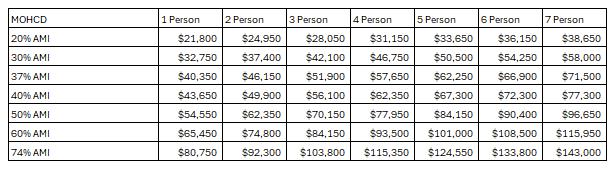
142 Affordable Rental Units Available at 230 Folsom Street, San Francisco CA 94105
Rents range from $860-$2,390. Maximum Allowable Income Limits:
Applications and information can be found on DAHLIA – San Francisco Housing Portal at housing.sf.gov. Applications are due by 5pm on February 24, 2026. Please call our information line at 415-684-1720 or 230Folsom@mercyhousing.org for more information. Units Available through the San Francisco Mayor’s Office of Housing and Community Development and are subject to monitoring and other restrictions. Visit sf.gov/mohcd for program information.
Taira noted that the decision to deny parole is not final and that it is subject to a 120-day review. Both commissioners thanked Smith for speaking. At the conclusion of the hearing commissioner Andres said he concurred with the decision to deny Knoller parole.
“I first want to thank Sharon Smith for being with us today, and her statement was extremely meaningful and very important and very moving,” Andres said. “Once again, we are reminded by everything we heard today that the death of a human being changes the world forever, if not the universe forever. And that’s painfully obvious today.” t
He continued, “The center courageously has already sued the Trump administration to protect our organization from funding cuts based on the president’s illegal executive orders, and the preliminary injunction granted in that litigation should protect us from these harmful cuts. However, we stand ready to bring more litigation against this administration if it is required in order to protect our community.”
That lawsuit, of which SFAF is the lead plaintiff, along with eight other HIV/AIDS and LGBTQ nonprofits, was filed in federal court against the president’s executive orders targeting diversity, equity, and inclusion policies; equity-related grants; and gender identity. A hearing had been scheduled for February 10 at the federal appellate court in San Francisco but was continued until the U.S. Supreme Court makes its decision in another case, officials said.
The district court judge in the case last year issued a preliminary injunction stopping the Trump administration from blocking the funding until such time as the case is adjudicated.
Vaccine development halted In a related matter, the HHS grant cuts come just as Moderna, which had been working on an mRNA vaccine for herpes, decided to shelve the project and decided to stop putting funds into late-stage vaccine studies for infectious diseases.
The company was responding to Health Secretary Robert F. Kennedy Jr.’s changes at HHS, which have created new regulatory roadblocks. Against the mainstream opinion of the scientific community, Kennedy was opposed to the mRNA COVID vaccination, and last year canceled $500 million in funding for 22 mRNA vaccine projects t
Sullivan stated, adding, “I think the center is the best place for Pride to be housed.”
Subsequent to the 2021 cancellation, emails shared with the B.A.R. revealed an organization in disarray with severe financial and leadership challenges.
In the months before they canceled, Oakland Pride officials tried to get the center to take over the organization “asap,” the 2021 emails showed. ThenPride treasurer Frank Ciglar also stated in the emails he’d been loaning Oakland Pride $5,000 of his own money each month, and he was the only one working on the aborted 2021 celebration. Ciglar also stated in the emails companies wanted to give Oakland Pride money but that, “I don’t have the time to get back to them.”
In 2022, both Pridefest and Oakland Pride occurred on adjacent weekends. By 2023, the two organizations had unified under the auspices of Oakland Pride.
In the February 12 news release, Smith stated the decision for Oakland Pride to become subsumed into the center was “inevitable.”
“When I took over as president of the board for Oakland Pride, there were major problems with the Department of Justice (DOJ), vendors who had not been paid for years, and poor financial record keeping,” Smith stated. “It was a mess. I was able to resolve those issues, but improper use of credit cards from
See page 7 >>
by Lou Fancher
Like sedimentary rocks found on or near Earth’s surface or a tiramisu served in an authentic Italian restaurant, the dances crafted by contemporary choreographer Kyle Abraham are multilayered. In each work, there can be found solidity, astute architecture, harmonious expression, delectable dynamics, surprising contrasts, visual appeal, and a sense that ancient voices speak profound, timeless stories through human bodies.
Arriving February 21 and 22 in Berkeley with three works and his critically acclaimed A.I.M dancers, the performances celebrate the company’s 20th anniversary and feature live music.
Cal Performances’ presentation of a full-length program devoted to Abraham’s choreography marks a step up in visibility. The presenting organization’s support for the annual residency and performances by Alvin Ailey American Dance Theatre have included three Bay Area premieres of his work: “Are You in Your Feelings?” (2023), “Untitled America” (2017), and “Another Night” (2013).
The A.I.M. program includes the Bay Area premiere of “2 X 4,” a collaboration with composer and saxophonist Shelley Washington; and two works inspired by classical jazz recordings. With an original composition by Washington, “2 X 4” places two baritone saxophonists onstage with four company dancers. “The Gettin’” introduces Grammy-winning pianist Robert Glasper’s take
by Brian Bromberger
The transgressive kinky gay biker domromcom, “Pillion” was the first new movie to screen at the restored Castro Theatre on February 12, where literally every seat was occupied. It was also the final publicity stop on the American tour of this film.
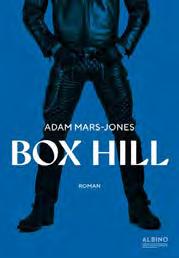
It’s been nominated for several BAFTA awards, including Best British Film and Best Adapted Screenplay, from the novel “Box Hill” by the gay novelist Adam Mars-Jones. Gay writer/director Harry Lighton in his debut feature, was present at the premiere, as was star Harry Melling (Colin). They were interviewed after the screening by former Bay Area Reporter Leather columnist Race Bannon. Alexander Skarsgård (Ray) couldn’t attend, but sent a video hello message, summing up the film in three words: lube, sweat, and leather.
In that interview, Lighton commented that after he had read the book, which is set in the 1970s and takes place in a town called Box Hill in Surrey, England, he immediately changed the title because while Box Hill may be a lovely place to live, it would be a boring location to film. He renamed the film “Pillion.”
Being a biker enthusiast himself, it refers to the small seat behind the driver of a motorcycle or the passive passenger occupying it, referring here to the character Colin. BDSM and all its variants have been poorly served by Hollywood previously (Exhibit A: “Fifty Shades of Grey” and the Al Pacino gay-themed mess “Cruising”). Similar to “Heated Rivalry,” which has opened a new appetite for steamy LGBTQ sports dramatic television, “Pillion” might do the same for raunchy kink-related films.
Nerdy, pathetic, introverted thirtyish Colin lives with his parents in Bromley, 10 miles south of London, One night at a pub, he notices Ray, a drop-dead-gorgeous member of a local biker gang, exuding sexual magnetism, who slips him a
note. Colin leaves the Christmas Day celebration with his family to meet Ray in an alleyway. Ray asks, “What am I going to do with you?,” to which Colin responds, “Whatever you want.” Ray commands him to lick his boots and engage in oral sex. Ray leaves with no contact information and it will be months before he invites Colin home, where he expects him to cook, clean, and shop for him, sleep on the floor, wear a padlock chain choker around his neck (Ray has the key), wrestle (to the sounds of Tiffany’s “I Think We’re Alone Now”), and is instructed to buy a butt plug. In short, Colin is to obey Ray’s every command. Colin shaves his head and joins the biker gang.
The film is primarily Colin’s story, a journey of self-discovery. Ray remains a puzzle. We learn nothing about him, his family, job, or past affairs, but we’re seeing him through Colin’s eyes. He’s finding out what he likes in terms of his submissive desires and his emotional and physical needs.
Although Skarsgård is listed and promoted as the star, “Pillion” is primarily Melling’s film. It’s a career-turning lead performance that allows us to see this actor in a new light. His Colin is vulnerable and relatable with an expressive face, particularly projecting a sense of longing and a post-coital satisfied smile.
With minimal dialogue, Skarsgård does wonders with a withering glance, in a largely internal performance of a sexual demi-god who is elusive, cold, enigmatic, and impenetrable. He makes clear we’re not going to learn anything about Ray unless Ray wants you to know something, which begs the question what he is afraid of or hiding. The two daring performances hold a searing chemistry that can be simultaneously tender and forbidding. Although only February, “Pillion” may be near the top of my Best LGBTQ Film list for 2026.t
Read the full review on ebar.com.
‘Pillion’ screens at now AMC Kabuki
www.a24films.com/films/pillion
on a similarly named track of drummer/composer Max Roach’s 1960 “We Insist! Freedom Now Suite” and showcases live vocals by Charenée Wade. “If We Were a Love Song” centers on music by Nina Simone and is sung by Crystal Monee Hall.
In an interview with the Bay Area Reporter, Abraham in speaking resembles his work; his
thoughts and responses are multifaceted. Abraham shows he is acutely attuned to aspects that command attention, which in the lexicon of contemporary dance requires this dance maker be alert to current culture and to his and the dancers’ inner and outer worlds.
by Brandon Judell
In the future, you just might witness, from your box seats at the San Francisco Opera, four nude submissives pitched over picnic tables awaiting penetration from both ends by four nude tops as a pear-shaped young man lets loose with an aria about never being kissed by the biker he so loves.
Yes, indeed. While Zooming with the Londonbased Adam Mars-Jones, author of the novel “Box Hill: A Story of Low Self-Esteem,” the basis for the on-screen, must-see queer BDSM romance of the moment, “Pillion,” he revealed, “Oh, incidentally, there’s a composer who has taken an interest in “Box Hill” or “Pillion,” or as I now call it “Boxhillian,” because it’s sort of a compound entity. He’s interested in exploring it as an opera.”
Mars-Jones, the acclaimed author and critic of both the literary and the filmic, had been selected as one of Granta’s Best of British Young Novelists twice decades ago. His anthology of AIDS short stories, “Monopolies of Loss,” certainly warranted that.
Now, however, that he’s 71 and pretty much a pillar of LGBTQ society in Britain, does he consider himself a celebrity?
“I have a sort of nebulous eminence,” he mused. “You know, I’ve been around forever. I’m no spring dinosaur.”
At 71, though, he looks resoundingly in shape. His moisturizer of choice he notes is “bourbon.”
“Pillion” is causing the most online chatter for a queer entertainment without hockey pucks, and no one is as shocked as the author who thought his work narrated by a naive 18-year-old virgin living at home with his parents was unfilmable.
“’Box Hill’ is as close to a sort of breakout hit as I’ve had, even before the film, because a gay audience is focused on it,” said Mars-Jones. But now with the film’s stellar reception, the book is constantly selling out on Amazon and finally being translated into French and Korean.
However, Mars-Jones had little to do with the shaping of “Pillion,” other than consenting to sell the rights. He only met the director Harry Lighton once for lunch, and his first viewing was at Cannes. He had planned to ride into the festival on a motorcycle to add to the sweaty mood of the screening, but his bike broke down midway, so he arrived by train.
No regrets. The film received an eight-minute standing ovation and lots of laughter, much of it from straight audience members. And why not? Who wouldn’t enjoy watching five-foot-six Colin, a 35-year-old innocent putz (Harry Melling of “Harry Potter” fame) choking on his initiation into the art of oral sex by six-foot-five Ray, a blond leather god (Alexander Skarsgård)?
There are many changes from book to film. Their eras differ. “Box Hill” takes place pre-AIDS in the 1970s shortly after homosexuality was legalized in 1967. “Pillion” is in the now.
In the book, Colin is nude whenever at home with Ray. That would be too much exposed penis for the cinema. Note: in the original cut, an erection was displayed. May it’ll pop up on the DVD. One might ask why he quite often creates leading men who are wounded psychologically or physically.
“I tend to use first-person narrators whose position in the world is very weak,” he explained. “But a personal narrator is always powerful in the book. There’s a play between verbal power and authority and physical strength or ability to act in the world which I find very rich. I find Colin’s abjection, the fact that he is so empty of any sort of initiative, almost disgusting. I don’t find it admirable, but he’s a very useful vehicle for examining power layerings: why one person needs power over another person.”
But in “Pillion,” Colin does become part of “the flesh buffet laid out on picnic tables next to the potato salad.”t Read the full article on ebar.com. amheath.com/authors/adam-mars-jones
Harry Melling and Alexander Skarsgård in ’Pillion’
Kinky dom-romcom is a charming, salacious tour de force
Author’s bike ride from ‘Box Hill’ to ‘Pillion’
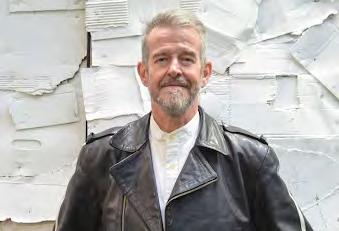
Adam Mars-Jones
A.I.M. dancers in Kyle Abraham’s ‘2x4’
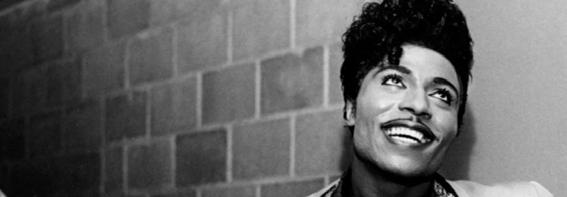
“Elvis may be the King of Rock and Roll, but I am the Queen.”
—Little
‘M. Butterfly’s flashy flutter
by Jim Gladstone
There’s a moment during the San Francisco Playhouse production of David Henry Hwang’s “M. Butterfly” when the fetching Peking Opera performer Song Liling (a man dressed as a woman) half turns to the audience, gives a sardonic wink, and quips, “I’m an actor.”
Edric Young brings an admirable coherence to this vaporous shapeshifting role. But yes. We get it; an actor playing an actor playing an actor.
Likewise, we duly note the prominent mirrors (Hwang’s version of Chekhov’s gun), and the frames within frames of Randy Wong Westbrooke’s elegant set.
Over more than two and a half hours’ running time, both Hwang’s script and this glossy production, directed by Bridgette Loriaux, redundantly thump out the play’s layered themes of identity, superficiality, artifice, and delusion.
A dated dating game
Imaginatively extrapolated from the real-life case of a Vietnam-era French diplomat who conducted a years-long romantic affair with a male Chinese spy in disguise, “M. Butterfly” was a big Broadway hit when it debuted late last century.
In 1988, four years before “The Crying Game” tickled the balls of art house cinephiles, the notion of gender fluidity still felt as exotic to many theatregoers as Asian culture must have to Western opera audiences who attended early performances of Puccini’s 1904 “Madama Butterfly.
And the brief nightly flash of B.D. Wong’s bare bottom drew press attention rivaling that paid to the fact that David Henry Hwang was the first Asian-American playwright to be produced on Broadway.
Happily, the intervening four decades have pretty much obliterated the play’s titillation factor. Yes, queer people remain the victims of discrimination, but we’re also part of mainstream cultural conversation, not
some sneaky secret.
(Note to cheap thrillseekers: Young’s glutes linger on stage far longer than Wong’s did, choreographed with impressive “Heated Rivalry”-level groin avoidance by Loriaux).
Even back in the ’80s, René Gallimard, Hwang’s self-pitying, socially awkward diplomat, felt like a jerry-built straw man: He’s a married 39-year-old, who nonetheless whines like an incel about his lack of game with the ladies and, by the way, might be gay.
And Gallimard is infatuated not only with Song, but with a broad-brush conceptualization of The Orient as a monolithic culture, passive and “feminine” by nature, ready to submit to the manly West; the glib personification of an all-too-tidy psycho-historical theory, propped up for the audience’s self-congratulatory damnation.
It’s a dated trap of a role. Even the charismatic Dean Linnard, so strong as proud gay Arnold Beckoff in “Torch Song” at Marin Theater last year, struggles with it, strenuously investing didactic monologues with operatic emotion.
Clever to a fault
Without genuine gender- and geopolitical topicality, “M. Butterfly” is
empty flutter; a flashy showcase for Hwang’s signature meta tricksiness: René hooks up with a woman named Renée; the misogynist brown-noses his female boss; double-crosses become triple-crosses become self-imposed crosses to bear.
As Hwang draws parallels to an opera set in Japan in this play set in China on the brink of the Vietnam war, it’s hard to tell whether he’s making an elaborate, “We all look alike to you” joke or just noodling. Trying to parse the play’s deluge of nudgy allusions is more exhausting than rewarding.
Here, as noted in Shotgun Players’ recent revival of “Yellow Face,” the playwright never settles for one mirror when he can build a hall of them, radiating brainy glare while skirting a clear point of view.
“We are all prisoners of our time and our place,” points out Gallimard at one point. And indeed, despite its ostentation and promiscuous wit, “M. Butterfly” feels oddly lifeless, pinned to the past. Hwang’s lepidoptery doesn’t change its spots.t
‘M. Butterfly’ through March 14. $52-$145. SF Playhouse, 450 Post St. www.sfplayhouse.org
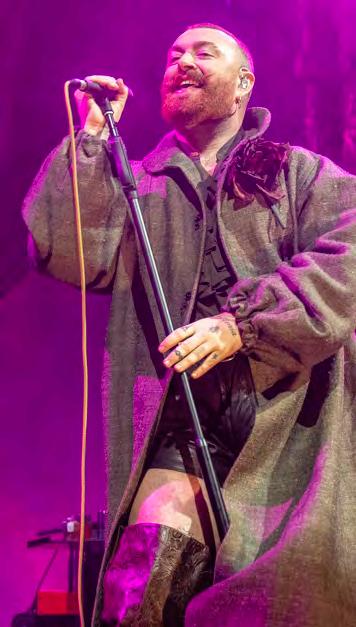
Sam Smith kicks off 20-night residency at the Castro Theatre
by Jim Provenzano
In the first live concert series to kick off the renovated and remodeled Castro Theatre, Sam Smith performed fifteen songs, including some from his new album “Free to Be,” which is also the title of his tour. A few clever rousing music covers and even a few new songs were part of the 90-minute concert that started precisely at 9:01pm on February 10.
Local singer-songwriter Isabel Dumaa opened, with a set of her folk/ ethereal songs, and a haunting take on the “Wizard of Oz” classic gay anthem, “Somewhere Over the Rainbow.”
After a brief pause, opening with “Lay Me Down,” Smith slowly built his back-up singer trio’s harmonies in near darkness as Smith stood draped in a brown coat and enormous hat.
As the pace picked up, in the next few songs, Smith removed the coat to reveal a black blouse, leather shorts and thigh-high boots. At all times, Smith appeared comfortable and relaxed in front of the intimate crowd of fans.
Other songs included “Dancing With a Stranger” from their new album, well-known favorites “Stay With Me,” “I’m Not the Only One,” “Like I Can,” and the rousingly dark “Unholy.”
The patrons were a mix of young and old, gay and straight, but we somehow managed to end up in the mid-floor, left-side section with many male couples hugging during the songs. And while the removal of seats to accommodate standing room was not a problem for most patrons, we enjoyed requested seats on the side.
One friend said his upper balcony seats had acoustic advantages as well as comfortable seating.
The lighting and smoke effects were minimal but effective, often showcasing the newly remodeled ornate proscenium arch that had been hidden by a film screen for many decades.
Appropriately, Smith declared the refurbished venue a sacred queer space, saying, “In the U.K. where I’m from, we have some beautiful rooms, but when it comes to rooms that honor queer people and gay people, nothing ever matches this room.”
Smith also honored a few icons. Among the four song covers were Sylvester’s disco hit, “Mighty Real” (sung by the backup singers during Smith’s only offstage moment for a costume change). Smith also sang the Erasure classic, “A Little Respect,” Bonnie Raitt’s “Angel From Montgomery,” and the Chaka Khan favorite, “Ain’t Nobody.”
During a pause halfway through, in darkness we heard a portion of Harvey Milk’s famous “Hope” speech about coming out. Then, in a resplendent blacklist glittery gown, Smith sang more of their best songs, including “Him,” a coming out theme, and closed with “Hold On,” a new unreleased song written for the residency; no encore needed.
As the crowd poured outside to the sidewalk, many took pictures of the theater marquee before another slew of misty rain set in.
Although some have made comments online, worrying about the Castro neighborhood being overrun by concertgoers, what we noticed were many stepping into bars for a drink, and across the street, Marcello’s Pizza was doing a brisk business. Local bars and restaurants getting new business is no controversy, except to those who fear change and growth.
Although Sam Smith concerts are sold out through March 14, as are several other upcoming concerts and film screenings through April, March has many events that are not sold out.t
The Castro, 429 Castro St. www.thecastro.com www.samsmithworld.com
Sam Smith at Feb. 10 opening of his 20-night residency at the Castro Theatre.
Steve Jennings/Getty Images for Capitol Records
Edric Young and Dean Linnard in SF Playhouse’s production of ‘M. Butterfly’
Jessica Palopoli
Richard
t Comedy & Film >>
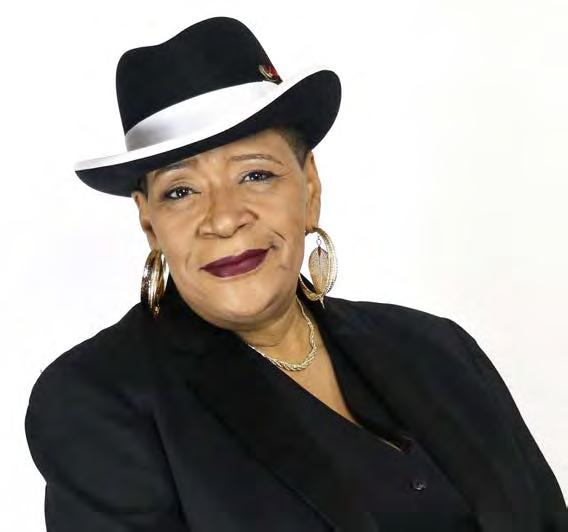
Marsha Warfield
by David-Elijah Nahmod
Comic actress Marsha Warfield, best known as Roz the bailiff on the classic TV series “Night Court,” is bringing her stand-up act to the Bay Area for two nights. On Friday, February 27, she’ll perform two shows at Stanford Live, The Studio. The following night, the 28th, she’ll travel up to Sonoma to do a show at the Sebastiani Theater.
Warfield has a lot to say. Though she’s been living as a gay woman for decades, she didn’t come out publicly until 2017, and this is one of the topics she’ll be delving into at her shows.
Warfield has enjoyed a long and successful career. In addition to “Night Court,” she played a major role in the sitcom “Empty Nest.” Before “Night Court” she was on the short-lived “The Richard Pryor Show.”
While preparing for her Bay Area shows, Warfield took the time to talk to the Bay Area Reporter about her life, her career, and what audiences can expect when they come to see her.
David-Elijah Nahmod: You have a bit of immortality with “Night Court,” wouldn’t you say?
Marsha Warfield: Well, I hope that people remember it, and remember it fondly. I’m very fortunate to have walked into a bank vault of television as far as its success at the time, and their acceptance of me as a rookie ensemble sitcom player. It wasn’t my first time on TV but it was my first time as a series regular on a sitcom.
You did the “Night Court” revival in 2023, and your character came out in the revival.
Yes, that’s one of the highlights of my life to have been able to have that episode. I had nothing to do with the writing, I had no idea what they were working on. But the way they handled it, I felt honored. They didn’t go for the cheap laugh, it wasn’t about coming out, it was about being in love and supported by the people who care about her.
And there was a wedding, your character got married, correct?
Yes, we got married in court. Her wedding venue got screwed up, and she had to come up with an alternative, and Harry’s daughter came up with letting her use the courtroom. And, you know, hilarity ensues. But it was a lovely ceremony. It was fun. It was funny.
And you yourself are out of the closet in your real life?
Yes, I came out publicly on Facebook in my sixties.
And how did it go?
Well, I grew up at a time when there was no word gay. There was no visibility. I had no concept of lesbian, gay, LGBT, it just wasn’t part of my life. And so when I finally fell in love in my early twenties, the light bulb went off. And of course you tell your close friends, but you just don’t mention it to anyone else. I lived that glass closet life until I was in my thirties. I finally came out to my mother who said she knew, which
‘Night
pissed me off. Then she asked me not to come out publicly while she was alive. I didn’t come out publicly until years after she passed away, in fact.
Tell me a bit about your standup. What do you generally talk about?
At this point I’ve reached Grandma stage, so I pretty much have carte blanche to say whatever I want. But I have created the world’s only digital matriarchy so I welcome people into
Emeryville film fest
by Jim Provenzano
From drag queen story hours interrupted by alien invasions, to the mother of the AIDS Quilt and touching immigrant tales, in short and feature films, the one-day Emeryville International LGBTQ+ Film Festival promises a variety pack of cinematic treats.
Formerly named Drag Me to the Cinema, the mini-fest returns to the Bay Street Emeryville cinema on February 28 to share queer art and stories that celebrate LGBTQ+ community.
The festival is divided into individual, themed two-hour film blocks from 12:00pm to 10:00pm. The earlier films are more family-friendly while later on into the evening they become a bit more adult-themed. Outside the theater, guests can mingle with participating filmmakers and artists, sponsors, and non-profit partners.
Individual tickets per block are available. Festival and day passes are available with perks. However, the feature film block from 8pm to 10pm is sold out, proving the popularity of this relatively small festival.
Films include “The Last Story on Earth,” Aaron Immediato’s short film about a drag queen whose story time helps save earth from an alien invasion.
Another intriguing short film is “What We Said in the Blackout,” about two gay men, ex-lovers who find themselves in bed during a power outage, and what they regret later on.
Sara Schwartz, director and producer of “Gert’s Boys,” takes viewers from the Castro to the National Mall, where one woman’s love fuels a radical act of remembrance with the AIDS Memorial Quilt, challenging public silence as a generation of gay men is lost to AIDS.
In the animated short, “Stardust
my Marsha-verse so we can look at these things that face us, from a distance. Not only from a distance, from a different perspective. The perspective of women.
Did you know that 95-99% of all recorded history was written by men? We don’t know anything about the world, we only know how men see it. I’ve created a space where we can look at it from a different lens. I talk about the patriarchy, racism, sexism, and smoking pot. All kinds of stuff.
hosts a queer array of shorts & features
and Camp” a wandering cosmonaut interviews artworks in an abstract art gallery, talking about queerness, identity and the artistic process.t
Emeryville International LGBTQ+ Film Festival, February 28, 10am-10pm, AMC Bay Street 16, 5614 Bay St Suite 220,
Without giving too much away, what will you be talking about at your upcoming Bay Area shows? I’m doing a whole new stand-up. I’ll be tackling the things we are living with right now and trying to make sense of the insanity that we find ourselves trying to navigate. It’s a whole new show, there will be a lot of reminiscing, a lot of autobiographical stuff.
The original show used to be called “The Book of Marsha,” which is part bible, part autobiography because I have also created my own religion called The Church of She’s Us. Women create life, which means they’re all goddesses. The original goddess is she, and she is all of us. So we’re the Church of She’s Us, and we’ll be exploring some of the more frightening topics that people tiptoe around. I’m gonna grab them by the throat and shove it in their face. t
Read the full interview on www.ebar.com.
Hysterical: Marsha Warfield: Book of Marsha, February 27, 7pm & 9pm, Stanford Live, Bing Concert Hall, The Studio, 327 Lasuen St., Stanford. $34.56-$54.00. www.live.stanford.edu
The Comedy of Marsha Warfield, February 28, 7:30pm, Sebastiana Theater, 476 1st St. E, Sonoma. $30.00 www.sebastianitheatre.org
Emeryville. For the schedule and tickets ($12-$40), visit www.fishnetsfilm.org/ dragmetothecinema/
Marsha Warfield
Above: Sara Schwartz’s ‘Gert’s Boys’ and Below: Aaron Immediato’s ‘The Last Story on Earth’
‘Stumbling Blocks’
by David-Elijah Nahmod
Jennifer Krebs grew up in the shadow of the Holocaust. The Spencerport, New York native, who now lives in the Bay Area with her wife, is a second-generation Holocaust survivor. Her father, her grandparents, and numerous aunts, uncles and cousins all survived the Nazi atrocities of World War II.
In “Stumbling Blocks: A Second Generation Holocaust Memoir,” Krebs writes about her family’s experiences during the war. She writes not only about those who survived, but also about those who didn’t.
Krebs spent decades interviewing her family’s survivors, and writes eloquently about what they went through. She vividly describes the terrors her father Paul and his sisters experienced during Kristallnacht (The Night of Breaking Glass), that horrifying night in 1938 when the Nazis stormed through German cities, breaking the windows of Jewish owned businesses and homes, and in
some cases setting them on fire.
Expelled from school for being Jewish, the siblings were sent to live with relatives in Belgium. When the Nazis began invading that country, they were forced to flee again. In what is perhaps the book’s most harrowing anecdote, Paul, his sisters, their aunt and cousins spent days walking towards France, sleeping wherever they could, sometimes in barns, often going without food. Paul and his sisters made it back to Germany. Their Belgium relatives were murdered in concentration camps.
One of the most tragic stories in “Stumbling Blocks” is the sad tale of Paul’s Aunt Adele. Adele was disabled, confined to a wheelchair. She couldn’t get a visa to travel, and so, when the family escaped to America, Adele was left behind. Krebs includes a photo of Adele, sitting in her wheelchair. It’s heartbreaking.
Throughout the book Krebs alternates between stories from the old country and memories of her own life across the years. She visited Yad
Dismissing assumptions
Asked if he feels burdened, obligated, liberated, or in any other way subject to being saddled with the “prefix” of “Black queer” in reviews and articles, Abraham says, “The ironic thing is regardless of what I make, if I make a dance about grapefruits, people are going to say it’s about the Black queer experience or injustice in the world. It’s something I can fight but even in fighting that, it’s responding to those assumptions and provocations on the work.”
He notes, but doesn’t sound tangled up in the fact that “white choreographer” is seldom if ever used when at-
Jennifer Krebs’ second-generation Holocaust memoir packs an emotional wallop
Vashem, the Holocaust museum in Israel, paid her respects at a concentration camp, and went to her father’s German hometown, Berleburg, now known as Bad Berleburg. There she saw the town’s “Stolpersteine,” translated as “Stumbling Blocks.” These blocks
tention is given to well-known (white) choreographers in the industry. Instead of allowing reality to eat away at his psyche, he focuses on making the best works possible.
Each dance is a conversation around which decisions begin with which bodies are next to which, who touches whom, who’s standing without interacting with others. Casting is more qualitative than determined by gender or race.
“Sometimes, like in the Nina Simone work, there’s cast shifting,” said Abraham. “Sometimes it’s two women, one man and one woman, two nonbinary dancers. Ideally, if we’re working hard on the intentionality and direction of a work, the dancers can make the work resonate regardless of gender.”
are the only trace that’s left of Bad Berleburg’s Jewish community. They are memorial brass plaques in the pavement in front of a Jewish resident’s last known address in the town. Krebs includes a photo of her father’s stumbling block. Also included are family
Power and love Abraham hears in Simone’s “If We Were a Love Song” the songwriting of “an otherworldly genius.” Every word sung and note played on the piano has clear intentionality he does not attempt to replicate. He seeks primarily to harmonize with her world.
“We’re doing this show with all-live music, and I will say vocalist Charenée Wade is exciting to have,” said Abraham. “I’m interested in the song’s softness but also the power and love and identity. We’re living in the skin of love, in a way. The work is intimate and has vulnerability throughout.”
At age 48, Abraham liked has many more years of dance-making ahead.
Up first in the lineup is a new work premiering in Switzerland this sum-
photos from across the decades, passport pictures and documents pertaining to immigration.
Krebs also recalls her childhood as the only Jewish kid in her class. Later, she writes about moving to the Bay Area, where she worked at Old Wive’s Tales, a now defunct lesbian feminist bookstore. In the Bay Area she met Amy, the woman who would become the love of her life.
“Stumbling Blocks: A Second Generation Holocaust Memoir” is an important book, especially now that there’s so much Holocaust denial. It’s a testament not only to what happened to the Krebs family, and to so many other families, but how such tragedies impact the generations that follow; highly recommended.t
‘Stumbling Blocks: A Second Generation Holocaust Memoir’ by Jennifer Krebs. 264 pages. $15.99 paperback, $5.99 Kindle. Legacy Book Press www.legacybookpress.com www.jenniferkrebs.net
mer. His process in the best way is a return to his college self, a time during which he recalls “not really caring what other people thought of me and my work.”
The mindset frees him to challenge, test, and tease himself, to discover hybridity in form and technique. Abraham, unsurprisingly, is adding yet one more layer.t
Read the full article on www.ebar.com.
Cal Performances presents A.I.M. by Kyle Abraham, $33-89, February 21, 8pm & 22, 3pm, Zellerbach Hall, UC Berkeley campus. www.calperformances.org www.aimbykyleabraham.com
On April 2, 2026, the Bay Area Reporter, America’s longest continuously-published and highest circulation LGBTQ newspaper will celebrate our 55th Anniversary. Our anniversary issue will include highlights of our fifty-five year history of coverage of LGBTQ rights from the early-1970’s to the present time.
It will also announce the results of our 15th read ers’ poll, BESTIES: The LGBTQ Best of the Bay These are the best people, places, businesses, nonprofits, events, and things to do in the Bay Area, as voted by our readers.
Advertising space reservations for this special edition are now being accepted. Call 415-829-8937 t