February 12, 2026 edition of the Bay Area Reporter
Pharmacist-in-charge
by John Ferrannini
The San Francisco AIDS Foundation has opened a full-service pharmacy in the Castro, in Suite B on the first floor of the Strut building in the LGBTQ neighborhood. The project took longer than expected, but the addition should make it easier for clients to get their medication and help the agency as it faces financial challenges.
SFAF had already had a limited ability to dispense medications such as those for rapid-start HIV treatment and PEP, for post-exposure to HIV. The new full-service pharmacy will allow the agency to dispense PrEP for HIV prevention as well as other medications, officials said.
It was just about a year ago that the foundation announced its full-service pharmacy plans and targeted a 2025 opening date. Instead, it opened February 10.
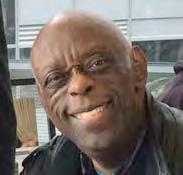
“After months of planning, construction, and regulatory reviews, we are happy to announce that the pharmacy is open and ready to serve our clients and community,” San Francisco AIDS Foundation CEO Tyler TerMeer, Ph.D., a gay, Black man, stated in a news release. “Being able to meet the medication needs of our clients will improve the continuum of care that we provide to clients, and we look forward to serving our community with a newly expanded set of services.”
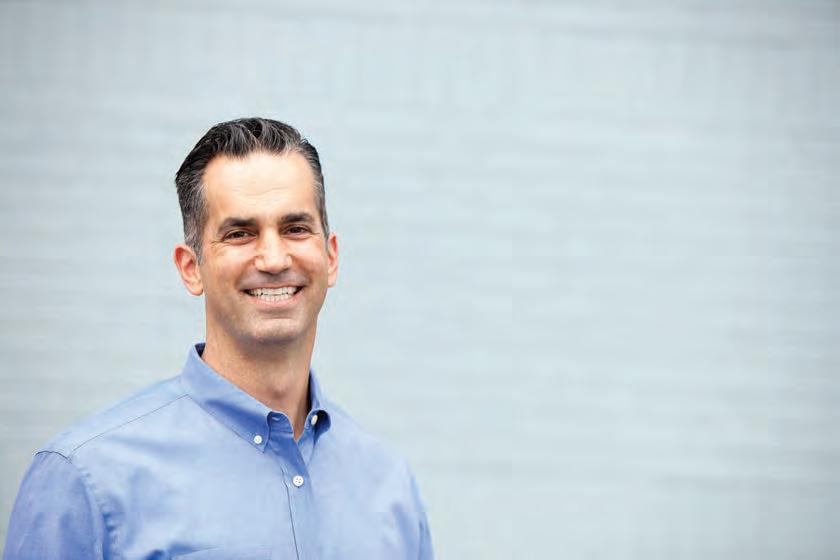
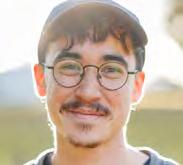
The pharmacy will be overseen by pharmacist-in-charge Brandon Ross, PharmD, a gay man who, in addition to a pharmacist license, has professional certification from the American Academy of HIV Medicine.
Pharmacy staff are slated to work in close conjunction with clinicians staffing the Magnet clinic, also at the Strut building, located at 470 Castro Street. All forms of PrEP will be able to be prescribed by on-site pharmacists. People who have sexual health visits at Magnet will be able to leave with same-day prescriptions filled or refilled at the pharmacy. There are also home delivery options available.
Castro Theatre reopens!
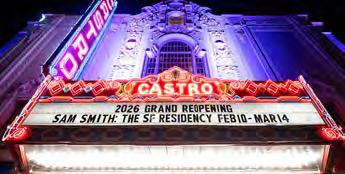
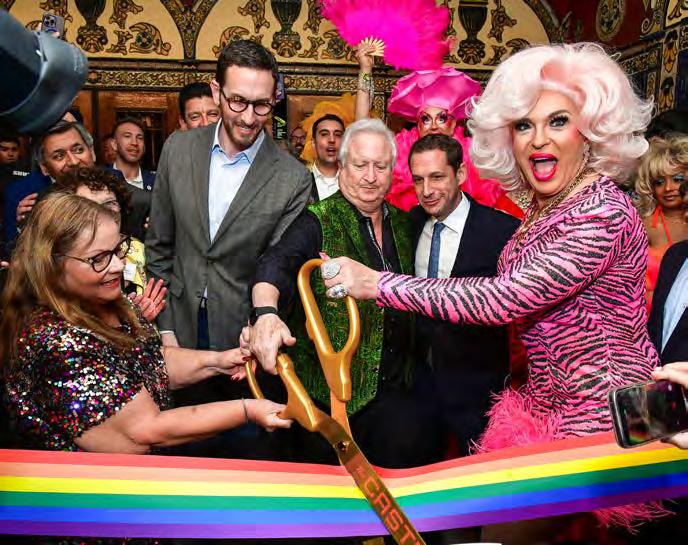
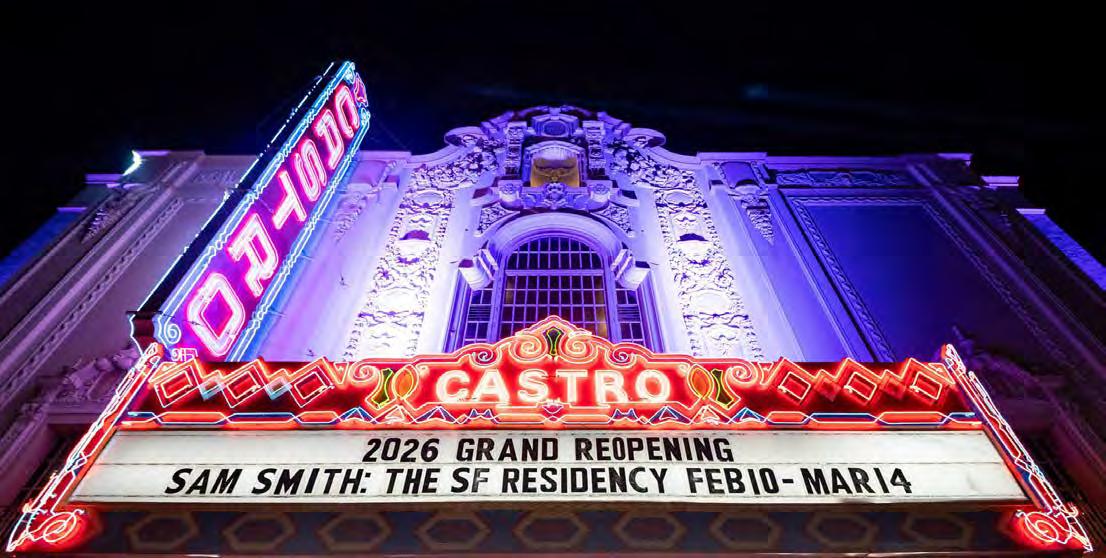
After a two-year, $41 million renovation and restoration, the historic Castro Theatre in San Francisco’s LGBTQ neighborhood reopened with flair Friday, February 6. Mary Conde,
San Francisco Board of Supervisors
President Rafael Mandelman has dropped Catholic Church parishes from his list of proposed city landmarks, citing a state law.
Mandelman drops Catholic Church landmarks
by Matthew S. Bajko
In light of state law and opposition from Catholic Church officials, gay District 8 Supervisor Rafael Mandelman is dropping his requests to landmark church parishes in a trio of neighborhoods he represents. Meanwhile, he is eying creating an historic district covering the commercial heart of the city’s LGBTQ Castro district.
See page 6 >>
Castro welcomes new businesses in 2026
by John Ferrannini
While a number of longtime Castro-area favorites have closed, denizens of San Francisco’s LGBTQ neighborhood now or soon will have new restaurants and other businesses to enjoy. The changes are in addition to the reopening of the historic Castro Theatre, and business owners hope that will lead to a renaissance of sorts for eateries, bars, and other establishments.
As the Bay Area Reporter previously reported, the Castro Community Benefit District had been keeping track of vacant storefronts in the neighborhood through its I’m Available campaign.
Andrea Aiello, a lesbian who is executive director of the CBD, told the B.A.R. that the Castro Merchants Association took over tracking the vacancies.
“We’ve taken a break from ‘I’m Available,’” she stated.
Nate Bourg, president of the Castro Merchants Association, stated that it is “currently conducting a block-by-block survey of ground-floor commercial spaces to better understand vacancy patterns.”
“Early observations suggest significant variation by block, and we look forward to sharing more details soon,” said Bourg, a gay man.
In 2024, the B.A.R. reported that vacancies in the CBD’s footprint declined from 25% to 15%.
Two vacancies set to be filled soon – the former
Double Rainbow Ice Cream at 415 Castro Street will be home to Lisa’s Hair Design after the Castro Coffee Co. moves to the current Lisa’s space at 421 Castro Street. The Castro Nail Salon at 431 Castro Street
will move to a location on the 500 block. It’s all part of a deal brokered by Mayor Daniel Lurie and gay Board of Supervisors President Rafael Mandelman, as the newly-reopened Castro Theatre has indicated it will be expanding into the current coffee shop and nail salon storefronts.
There has been visible work inside the former Harvey’s space at 500 Castro Street. Gi Paoletti Design Lab, which had been working on the space when it was to be the ill-fated Pink Swallow restaurant and bar, posted to Instagram on January 12 that,
“We are getting the base building work done so the space will be ready for the next restaurant/nighttime entertainment venue in the Castro.”
Asked for comment, principal Gi Paoletti stated via email, “We don’t have a new tenant yet, but we’re going to be ready to start showing the space soon.” Asked when that will be, Paoletti replied it would be after the firm’s next meeting.
Asked for comment, Realtor Steven Gerry stated via email, “It’s still currently under construction. We will have more information soon. It’s bigger and taller now and WAY more compliant!!!!!!!!!”
New restaurants
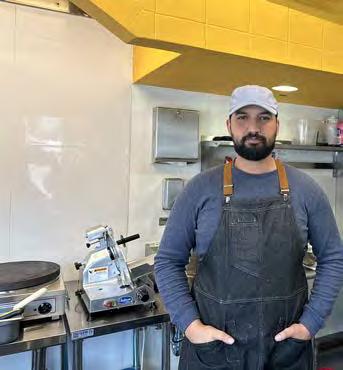
The eatery Gada just opened in the former space of Chadwick’s, which closed some months ago, at 2375 Market Street. Proprietor Moe Abibi, a straight ally, has a lot of experience working in delis, such as Golden Gate Deli at 2767 Lombard Street, he told the B.A.R. recently, adding the restaurant opened in January.
“I talked a lot with my friend in Europe, and he said, why don’t you do raclette cheese sandwiches,” Abibi said.
Raclette is a cheese from the Swiss Alps. Abibi, who is Tunisian American, added a spin by deciding not only to make Raclette cheese sandwiches on traditional rolls but also on mlewi, a Tunisian flatbread.
Castro Theatre reopens
Black Choreos Festival
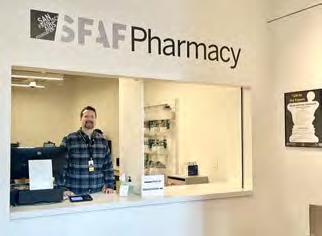
Brandon Ross, PharmD, AAHIVP, stands behind the counter at the San Francisco AIDS Foundation’s full-service pharmacy.
Courtesy SFAF
Matthew S. Bajko
Proprietor Moe Abibi stands in the kitchen of his sandwich shop Gada in the Castro.
John Ferrannini
CEO Gregg Perloff, Mayor Daniel Lurie, former drag laureate D’Arcy Drollinger, and gay Board of Supervisors
Rafael Mandelman.
City honor eyed for Decker
Night market series returning to Castro in 2026
by John Ferrannini
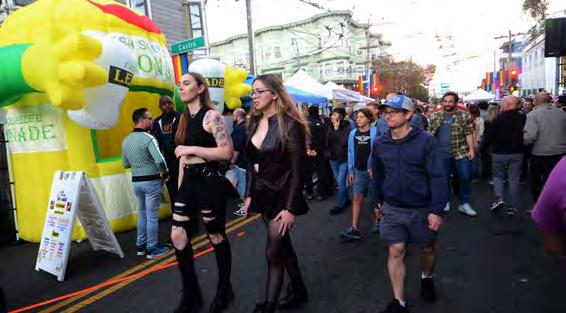
After a successful 2025, the Castro Night Market will be returning this year on March 20, according to Castro Merchants Association President Nate Bourg at this month’s meeting of the neighborhood business group.
Also discussed at the meeting were Halloween, a possible Pink Saturday revival, a party for Cliff Variety’s 90th birthday, and a potential new mural.
Bourg said that the Civic Joy Fund is continuing producing the night market events, which started in October 2024 and resumed in the spring, summer, and fall of 2025, mostly on the third Fridays of each month.
Chris Carrington of CG Events, a gay man, produces the event. He was not at the merchants’ meeting February 5 but stated that the first iteration in 2025 will be March 20, and it will continue on the third Friday of each month through September.
“We are so excited and honored to be working again with the Castro Merchants Association and the Civic Joy Fund to bring the Castro Night Market back to the Castro, showcasing the incredible local makers and performers who define this community,” he stated. “Our team is dedicated to creating an immersive experience that celebrates the Castro’s unique history while fueling its bright, communal future.”
Civic Joy Fund Executive Director Luke Spray stated to the Bay Area Reporter, “This is one of the first night markets we’re renewing for another season in 2026, and we couldn’t be more excited.”
“When we open the street to the community, neighbors meet neighbors, artists find new audiences, and small businesses get extra love,” he continued. “This is a cel-
neighborhood’s first night market on October 24, 2024.
ebration of the Castro, and an invitation to experience the neighborhood.”
Bourg stated that the night market will continue through October – as it did last year – but the date for that month has yet to be determined. In 2025, the night market was moved from the third Friday of October to the fourth, to coincide with Halloween on October 31. This year, Halloween falls on Saturday.
Gay Board of Supervisors President Rafael Mandelman was pleased with how the Halloween event went, and said he will be honoring organizers of the Halloween special edition of the Castro Night Market at the Board of Supervisors.
Mandelman, who represents the Castro as part of District 8 on the board, said he was “somewhat of a skeptic” and was “certainly concerned” when he first heard plans to have the night market on Halloween night in 2025, given the sensitive history of that night in the Castro.
Halloween – long a high queer holiday – has had a torrid history in the Cas-
tro, with the technically-unsanctioned street party held each year eventually shut down over a decade ago following violent incidents. In recent years, community leaders have attempted Halloween comebacks, beginning in 2023, but at a fraction of the size and shorter duration than the original unofficial gatherings. The 2025 version was the first to feature street closures and allow outside consumption of alcohol.
Last year, neighborhood leaders and local officials had painstakingly stressed that the night market would be different from the old Halloween festivities that eventually were suppressed by the city. At the meeting, Bourg said that the merchants are finalizing how they will spend money from the city’s Office of Economic & Workforce Development on both Pride and Halloween.
Bourg stated the last time the merchants group got an OEWD grant it was $250,000. Of that, $25,000 went to the sponsorship of the Castro Street Fair.
Pink Saturday redux?
And Mandelman and Bourg hinted at more fun to come.
“I would love to bring back real Halloween, and I would love to bring back Pink Saturday,” Mandelman said, the latter referring to an old block party that used to happen the Saturday night before Pride Sunday in June. “Both require significant money – hundreds of thousands of dollars – and sponsors who are willing to figure it out. So there’s an interest, but time is short, so I would be a little skeptical.”
Nevertheless, he said, if people want to move forward with plans for Halloween or Pink Saturday, “We should start those conversations now.”
“More fun, nighttime entertainment activities on special days that do not negatively impact the neighborhood seems like a win, win, win,” Mandelman said.
Added Bourg, “Conversations are being had.”
Pink Saturday had last been put on by the drag philanthropic group Sisters of Perpetual Indulgence, which ended its involvement in 2024. The Sisters didn’t immediately return a request for comment.
Cliff’s celebration and mural
Terry Asten Bennett, a straight ally who is the immediate past president of the merchants, is the co-owner of Cliff’s Variety, at 479 Castro Street. The hardware and party store has been in her family for generations, and on June 6 it will be celebrating its 90th birthday. The merchants voted to support a permit for using parking lanes on the 400 block of Castro Street for the occasion.
“I’m still waiting on the details. We’ll
probably do a drag story hour. We’ll have seating. We won’t be selling things on the street – unless the school has a bake sale,” she said, referring to Harvey Milk Civil Rights Academy, the public elementary school a few blocks away.
In recent years, new murals have graced the LGBTQ neighborhood. Tina Valentin Aguirre, a genderqueer Latine person who is director of the Castro LGBTQ Cultural District, stated that the murals the district has sponsored by the Walgreens parking lot on 18th Street have been “something of a destination.”
“People go take photos and now there are walking tours,” Aguirre stated. “They’re a source of joy when we need all the joy we can get – queer and trans joy.”
Aguirre stated plans are in the works for a third mural, this time focusing on transgender masculine folks.
Local Take’s Jenn Meyer told Aguirre that she needs to get her landlord’s permission before the third mural can proceed at the site, but the painting is tentatively set for April 1-15.
Danae Lintz, a lesbian who owns the queer mall FAVE at 329 Noe Street, told the merchants’ meeting she has a year left on her lease and is considering whether to renew because her business is struggling.
Lintz wanted folks to know that she is there for all the merchants’ printing needs – from screen printing to T-shirts to business logos on T-shirts to bags to sporting goods.
“Come by and print something with us,” she said. t
Full disclosure: The Bay Area Reporter is a member of the merchants’ group but does not vote on any items, including the leadership votes.
Public welcome set for SF LGBTQ center’s new leader
compiled by Cynthia Laird
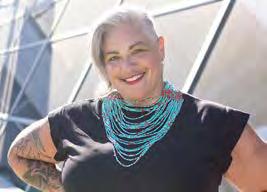
Apublic welcome will be held for Jennifer Valles, a queer femme who is the new executive director of the San Francisco LGBT Community Center.
“Centering Change: A Community Welcome for Jen Valles” will take place Thursday, February 19, from 5:30 to 7:30 p.m. in the Rainbow Room at the center, 1800 Market Street.
As the Bay Area Reporter previously noted, Valles took over January 1 following the retirement of lesbian longtime executive director Rebecca Rolfe.
Prior to her appointment Valles had served as deputy director at the center, and as she told the B.A.R., she had also worked there back from 2007-2009 as the community programs coordinator.
Valles had told the paper that one of her goals in leading the center is to reestablish the organization’s culture both internally and externally. This upcoming community welcome is part of that.
“I think we’ve not been engaging
with large chunks of the community,” she said during a September phone interview, adding she wants to “amplify the entire community.”
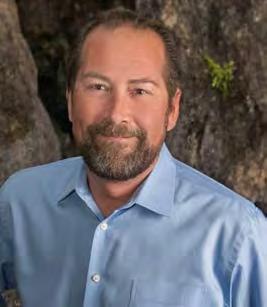
In a Guest Opinion piece for the B.A.R. last month, timed to her official start date, Valles wrote, “A community that works every day at prac ticing kindness, empathy, and
connection with each other. Radical welcome in these times is an act of resistance, and it is the only thing that will lead us to collective liberation.”
At the welcome event, attendees will hear more from Valles, including her vision for the center’s future.
Tickets are sliding scale and start at $10. RSVPs are requested by Monday, February 16.
For more information and tickets, go to https://tinyurl.com/3z8ujf2x
Castro BofA’s meeting room under new management
The Castro Community Meeting Room on the second floor of the Bank of America at 501 Castro Street is under new management. Gay longtime business owner Patrick Batt, who had managed the community space since its inception 25 years ago, has turned the reins over to the Castro Country Club, a sober gath-
Lark Landing Apartments
ering space in the heart of the LGBTQ neighborhood at 4058 18th Street.
The change went into effect in January, Batt stated in an email.
“This will ensure the ongoing benefit of this community asset will endure into the future,” he added.
In a phone interview, Batt, the owner of Auto Erotica at 4077A 18th Street, said that the meeting space, available to groups who pay a modest $25 fee, was started by him and the late Lion Barnett back when Pottery Barn wanted to come into the neighborhood. Barnett, then president of the Eureka Valley Neighborhood Association, and Batt, then the president of the Merchants of Upper Market and Castro (now the Castro Merchants Association), approached Pottery Barn officials about the need for community benefits if they were going to open a store.
“We convinced them to get that first five-year lease from BofA for $100,000,” Batt recalled. (Pottery Barn, at Market and Castro streets, opened in the early 2000s and closed in 2017. The storefront
142 Affordable Rental Units Available at 230 Folsom Street, San Francisco CA 94105
Rents range from $860-$2,390. Maximum Allowable Income Limits:
Applications and information can be found on DAHLIA – San Francisco Housing Portal at housing.sf.gov. Applications are due by 5pm on February 24, 2026. Please call our information line at 415-684-1720 or 230Folsom@mercyhousing.org for more information. Units Available through the San Francisco Mayor’s Office of Housing and Community Development and are subject to monitoring and other restrictions. Visit sf.gov/mohcd for program information.
at 2390 Market Street has largely sat vacant ever since.)
After that lease expired, Batt convinced B of A officials into continuing the arrangement without the expensive lease, he said.
“We only have to pay an annual fee of $1,200 and have insurance,” Batt said, explaining the insurance was overseen by the SF Study Center, which served as the meeting space’s fiscal sponsor.
Ralph RC Irming-Geissler died December 27, 2025. He was born in Germany on March 14, 1938, but the war forced the family to England. At the age of 9, growing up in London, he produced a bronze casting of a full naked woman and received a scholarship for art school. In his late teens he moved to the Carolinas in the U.S. He worked with artist Carew Rice, bought an old boat and offered sea cruises, got stuck in Panama then hitch-hiked to San Francisco, worked for The Walt Disney Co., and became an independent muralist/sign painter. He stirred controversy painting a reclining naked man on Broadway. By chance a Realtor suggested he go into real estate and he eventually owned over 100 apartment rental units. He lived on Danvers at Merritt Street and had a pool for gay men’s parties. He also built a custom home on Hidden Valley Lake in Lake County, California. He restored antique Packard autos, and then opened the Packard Geissler Automobile Museum in Rohnert Park. The museum is closed to the public for now, due to Ralph’s passing, but is expected to reopen. A funeral was held with burial at Middletown Cemetery on January 31.
People filled the streets in the Castro for the LGBTQ
Rick Gerharter
Jennifer Valles is the new executive director of the San Francisco LGBT Community Center.
Sarah Deragon of Portraits to the People
Honorary street name eyed for NCTC’s Decker Community News>>
by Matthew S. Bajko
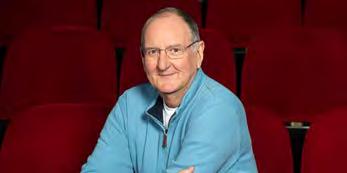
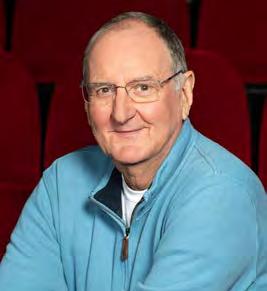
Aceremonial street naming is being eyed by San Francisco officials to celebrate influential LGBTQ theater executive Ed Decker. He founded the New Conservatory Theatre Center and served as its artistic director for 45 years.
As of January 1, Decker officially retired from running the organization, taking on the title of founder and artistic director emeritus. Now, a street running next to the theater’s home at 25 Van Ness Avenue is expected to bear his name.
The block of Oak Street between Van Ness Avenue and Franklin Street would be christened “Ed Decker Way” if approved by the San Francisco Board of Supervisors this spring. As it would be a commemorative street name, it would not impact the mailing address for any property on that portion of the roadway.
Gay District 8 Supervisor Rafael Mandelman, president of the board, submitted the street naming resolution at the supervisors’ February 3 meeting. It should be taken up at the land use committee sometime in March before heading to the full board for approval.
“I have worked with him, certainly, around budget stuff for as long as I have been on the board. He has been a champion for the arts and especially queer theater,” said Mandelman of Decker. “He has been a key person at the New Conservatory Theatre for nearly 50 years.”
Decker is currently traveling and could not be reached for comment.
Gay former NCTC board member
Ed Decker Lois Tema
Andrew Jordan Nance, who performed in his first play put on by the theater in 1995, called the street naming idea “perfect” when asked about it by the Bay Area Reporter.
“I think he really changed the landscape of LGBT theater and I guess he elevated LGBT theater in San Francisco and which also helped elevate it across the country,” said Nance, who has either performed in or directed at least 20 plays at New Conservatory. “I am so glad the city thought of something to do to honor such an incredible human being. Everyone who worked with Ed just thought he was kind and brilliant and curious – just all the things you want in a leader.”
It was walking by the commemorative street signage for MTT Way at the corner of Grove Street and Van Ness Avenue, next to Davies Symphony Hall, that sparked New Conservatory’s executive director Barbara Hodgen having the
idea to see something similar for Decker. Unveiled in December 2023, that street name honors gay former San Francisco Symphony music director Michael Tilson Thomas.
“It wasn’t a green with envy moment. I was just walking up the street to get coffee or something and went by the street sign for MTT Way and went, ‘Huh,’” recalled Hodgen of that day two years ago. “I thought, isn’t that a great idea, wouldn’t it be lovely if we could do that for Ed.”
She called gay former supervisor Mark Leno, a close friend of Tilson Thomas and his husband for decades, for advice on how to go about naming a street on behalf of Decker. Leno, a longtime supporter of New Conservatory, explained the process and suggested she call Mandelman, whom she spoke to around Christmas in 2024. They agreed to move forward with the idea and timed it to Decker’s retirement.
“If you think about it, Ed has changed the landscape of San Francisco by the work he has done. He has been a pioneer in progressive arts education and programming LGBTQ theater for 45 years. This is just a symbolic sort of tip of the hat,” Hodgen told the B.A.R. when asked why a commemorative street name was a fitting way to honor Decker. “This is actually a changing of the landscape and a concrete reminder of the work he has done.”
She was hopeful city leaders would be amenable to selecting Oak Street for the street naming and not Hickory Street on the other side of the building that houses in its basement the LGBTQ arts organi-
zation. One reason being that alleyway, even with the stringed lights hung above it, is a bit seedier and less traversed.
Whereas that block of Oak Street runs in front of the San Francisco Conservatory of Music, and apropos of someone with a theatrical background, “is wider and has much brighter lights,” noted Hodgen.
As the resolution in support of seeing it be dubbed Ed Decker Way notes, “the New Conservatory Theatre Center, located at the intersection between Van Ness and Oak Street, has produced more than 50 world premieres by established and emerging queer playwrights, employed thousands of Bay Area theatre professionals and teaching artists, and launched the careers of nationally recognized theatre artists.” It requests that the San Francisco Municipal Transportation Agency fabricate the commemorative street sign and hang it under the existing Oak Street sign where the roadway intersects with Van Ness Avenue.
“I am a big fan of Ed, so you are not getting an unbiased reaction here,” acknowledged Hodgen. “I am a firm believer that a lot of the work he has done in terms of bringing voices, amplifying voices, and bringing stories to the stage has affected the political landscape for the queer community in a significant way. People are less inclined to be against something they see, know, and understand.”
Other LGBTQ luminaries honored Should Ed Decker Way be approved,
it would be the fourth street named in honor of an LGBTQ leader that connects with Van Ness in that part of the city. Near City Hall is Dr. Tom Waddell Place named for the late gay Olympic athlete and founder of the Gay Games. Further up the street just before Geary Avenue is Alice B. Toklas Place honoring the late lesbian author born nearby. Late bisexual luminaries the artist Frida Kahlo and Beat writer Jack Kerouac have streets named for them near the main campus of City College of San Francisco and in the North Beach neighborhood, respectively, while the 100 block of Turk Street is named after the late transgender drag performer Vicki Marlane.
That portion of Taylor Street in the Tenderloin neighborhood is also named Gene Compton’s Cafeteria Way for the business where a transgender-led uprising against police brutality occurred in 1966 at the intersection with Turk Street. It is a focal point for the historic Transgender District.
In the city’s LGBTQ Castro district the block of 16th Street in front of the Eureka Valley/Harvey Milk Memorial Branch Library is called Jose Sarria Court, named after the first gay man and drag queen to seek public office in the city, who died in 2013. The nearby alley between Dolores and Landers streets is ceremonially called Sister Vish-Knew Way in honor of Sisters of Perpetual Indulgence cofounder Kenneth Bunch, ordained by the philanthropic drag group as the Sister’s Grand Mother Vicious Power Hungry Bitch. t
Supes OK expansion of Castro cultural district
by John Ferrannini
The San Francisco Board of Supervisors approved expanding the size of the Castro LGBTQ Cultural District to include the Duboce Triangle neighborhood at its February 10 meeting. The change was supported by both the cultural district and the Duboce Triangle Neighborhood Association.
The vote was unanimous.
Because it is an ordinance, a second and final vote will take place February 24. (The supervisors are off February 17 for the Presidents Day holiday.)
Gay Board of Supervisors President Rafael Mandelman, who as District 8 supervisor represents the Castro and Duboce Triangle on the board, stated to the Bay Area Reporter on February 10 that, “Expanding the Castro LGBTQ Cultural District to include Duboce Triangle recognizes a shared history
that has helped define San Francisco’s LGBTQ community. … This legislation formally acknowledges that legacy and ensures it will be remembered and celebrated for years to come.”
Castro LGBTQ Cultural District Director Tina Aguirre, a genderqueer Latine person, stated to the B.A.R. February 10 that the idea for the move came from the Duboce Triangle Neighborhood Association.
“The staff and advisory board members of the Castro LGBTQ Cultural District appreciate that the leadership of the Duboce Triangle Neighborhood Association (DTNA) initiated this request a couple of years ago as a means to ensure that LGBTQ people, places, and culture are preserved and centered,” Aguirre stated. “I look forward to continued partnership with DTNA, especially as that part of the neighborhood experiences posi-
tive changes with the addition of the GLBT Historical Society modifying and moving into the museum space at Market and Noe, next to what used to be Cafe Flore. We also look forward to continued queer and trans centering events in the neighborhood produced by ArtyHood, the Castro Merchants, and the Castro Street Fair.”
The merchants group is among those that historically host outdoor events on Noe Street between Market and Beaver streets, such as during Pride weekend. The city is expected to finalize a lease to house an LGBTQ history museum at 2280 Market Street, expected to become a permanent home for the GLBT Historical Society’s museum and archival center.
This is next to the former location of Cafe Flore, which will soon reopen as Parasol at Flore, which will serve American food with
Armenian ingredients.
Jonathan Moscone, a gay man who is president of the DTNA board of directors, stated he is excited to be working more closely with Aguirre.
“We at DTNA are grateful to Supervisor Mandelman for recognizing that Duboce Triangle has a rich and deep cultural LGBTQ history,” he stated.
“We are very excited to work with Tina Aguirre and the Castro LGBTQ Cultural District on all of the initiatives they have slated for the future.”
A motion to make a positive recommendation to increase the boundaries of the district passed the supervisors’ rules committee February 2, supported by Mandelman and straight allies District 10 Supervisor and rules committee Chairman Shamann Walton and District 2 Supervisor Stephen Sherrill.
At that hearing, Mandelman said
that the ordinance, which amends the city’s administrative code, was appropriate because of Duboce Triangle’s LGBTQ history.
“This ordinance is pretty simple – it would expand the boundaries of the Castro LGBTQ Cultural District to include Duboce Triangle, which is adjacent to the Castro in both proximity and history,” Mandelman said, adding that after the Summer of Love in 1967, “LGBT folks began to migrate to the Haight, to the Castro, and to Eureka Valley.” The late gay supervisor and LGBTQ civil rights icon Harvey Milk himself lived on Henry Street in the Duboce Triangle, Mandelman said.
Alex Westhoff of the city’s planning department gave further reasons for the expansion. t
Read the longer version online at www.ebar.com.
Volume 56, Number 7
Volume 56, Number XX
February 12-18, 2026
Month XX-XX, 2026 www.ebar.com
PUBLISHER
Michael M. Yamashita
Thomas E. Horn, Publisher Emeritus (2013)
Publisher (2003 – 2013)
Bob Ross, Founder (1971 – 2003)
NEWS EDITOR
Cynthia Laird
ARTS & NIGHTLIFE EDITOR
Jim Provenzano
ASSISTANT EDITORS
Matthew S. Bajko • John Ferrannini
CONTRIBUTING WRITERS
Kyle Amato • Race Bannon • Robert Brokl
Christopher J. Beale • Robert Brokl
Christopher J. Beale • Brian Bromberger
Brian Bromberger • Philip Campbell
Heather Cassell • Eliot Faine
Philip Campbell • Myron Caringal
Heather Cassell • Meg Collins • Chelsea Davis
Michael Flanagan • Jim Gladstone
Natasha Dennerstein • Eliot Faine
Liz Highleyman • Brandon Judell • Lisa Keen
Michael Flanagan • Jim Gladstone
Philip Mayard • Laura Moreno
David-Elijah Nahmod • Mark William Norby
Liz Highleyman • Brandon Judell
JL Odom • Paul Parish • Tim Pfaff
Michele Karlsberg • Lisa Keen
Jim Piechota • Adam Sandel
Matthew Kennedy • Philip Mayard
Jim McDermott • Laura Moreno
Jason Serinus • Gregg Shapiro
David-Elijah Nahmod • Mark William
Gwendolyn Smith • Charlie Wagner
Ed Walsh • Cornelius Washington • Sura Wood
Norby JL Odom • Tim Pfaff • Jim Piechota
Joshua Polanski • Adam Sandel
Gregg Shapiro • Gwendolyn Smith
ART DIRECTION
Charlie Wagner • Ed Walsh
Max Leger
Cornelius Washington • Evelyn C. White
PRODUCTION/DESIGN
Ernesto Sopprani
ART DIRECTION
Max Leger
PHOTOGRAPHERS
Jane Philomen Cleland
PRODUCTION/DESIGN
Rick Gerharter • Gooch
Ernesto Sopprani
Jose A. Guzman-Colon
PHOTOGRAPHERS
Rudy K. Lawidjaja • Georg Lester
Jane Philomen Cleland
Rich Stadtmiller • Christopher Robledo
Rick Gerharter • Gooch
Fred Rowe • Shot in the City
Jose A. Guzman-Colon
Steven Underhill • Bill Wilson
Rudy K. Lawidjaja • Georg Lester
ILLUSTRATORS & CARTOONISTS
Rich Stadtmiller • Christopher Robledo
Christine Smith
Fred Rowe • Shot in the City
Steven Underhill • Bill Wilson
ILLUSTRATORS & CARTOONISTS
VICE PRESIDENT OF ADVERTISING
Christine Smith
Scott Wazlowski – 415.829.8937
VICE PRESIDENT OF ADVERTISING
NATIONAL ADVERTISING REPRESENTATIVE
Scott Wazlowski – 415.829.8937
Rivendell Media – 212.242.6863
LEGAL COUNSEL
Paul H. Melbostad, Esq.
NATIONAL ADVERTISING REPRESENTATIVE
Rivendell Media – 212.242.6863
LEGAL COUNSEL
Paul H. Melbostad, Esq.
Bay area reporter
44 Gough Street, Suite 302 San Francisco, CA 94103
President: Michael M. Yamashita Director: Scott Wazlowski
Advertising • scott@ebar.com
Letters • letters@ebar.com
Editor • news@ebar.com
Published weekly. Bay Area Reporter reserves the right to edit or reject any advertisement which the publisher believes is in poor taste or which advertises illegal items which might result in legal action against Bay Area Reporter. Ads will not be rejected solely on the basis of politics, philosophy, religion, race, age, or sexual orientation.
Advertising rates available upon request.
Our list of subscribers and advertisers is confidential and is not sold. The sexual orientation of advertisers, photographers, and writers published herein is neither inferred nor implied. We are not responsible for unsolicited manuscripts or artwork.
Headline
Trump’s pettiness strikes again
Ahallmark of President Donald Trump is his pettiness. No real or perceived grievance is too small for this president to lash out against. Human and civil rights issues are reduced to diversity, equity, and inclusion, which he has excised through executive orders and directives to his cabinet secretaries. Trump insults critics, and reporters covering the White House when they ask him a question he doesn’t like. After he started his second term last year, Trump issued numerous executive orders in which he vilified the transgender community. His defense secretary, Pete Hegseth, stripped the name of assassinated gay San Francisco supervisor Harvey Milk from a naval ship.
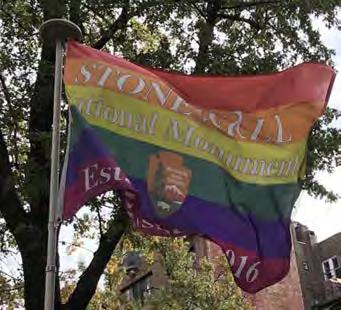
All of this is to say that we aren’t surprised by the administration’s latest action – ordering the rainbow flag removed from the Stonewall National Monument in New York City, which was designated by former President Barack Obama in 2016 as the birthplace of the modern LGBTQ rights movement.
Gay City News reported that the flag’s removal comes more than eight years after the first Trump administration canceled a plan to dedicate a rainbow flag at the monument by arguing that the flagpole was on city land, not federal land – a widely-criticized move that marked the beginning of a yearslong effort by activists to preserve the flag’s presence in the park, the paper noted.
Secretary of State Marco Rubio had already banned Pride flags from flying at U.S. embassies. Trump did not acknowledge Pride Month last June. But removing the rainbow flag from the federally-recognized U.S. monument to LGBTQ rights is petty. It was done by the Interior Department, which oversees the National Park Service, because it had issued federal guidance on displaying “non-agency” flags. Interior Secretary Doug Burgum is a Trump sycophant, and he is following through on the president’s orders to rid national parks of information about their histories that make them unique. The Interior Department’s January 30, 2025 order was titled “Ending DEI Programs and Gender Ideology Extremism.”
memo last month “that all national parks must review their retail items and remove by December 19 any that promote D.E.I. or gender expression. The memo did not provide any examples, leaving the order open to interpretation.”
This week, the Times reported that in response to questions about the Stonewall monument flag’s removal, the National Park Service on Tuesday pointed to the government’s January memo, saying in a statement that “only the U.S. flag and other congressionally or departmentally authorized flags are flown on NPS-managed flagpoles, with limited exceptions.”
As News Is Out and the Bay Area Reporter noted just a year ago, the words “transgender” and “queer” were scrubbed from the Stonewall monument’s webpage, in one of the administration’s first efforts to whitewash history. And the B.A.R.’s Political Notebook column last May reported on national parks officials cancelling the Pride event they had annually held in the Presidio of San Francisco.
birthplace of the modern LGBTQ+ rights movement, and the removal of the Pride flag from the Stonewall National Monument is a deliberate and cowardly attempt to erase that history. This is an attack on LGBTQ+ New Yorkers, and we will not stand for it. Our history will not be rewritten, and our rights will not be rolled back.”
Human Rights Campaign spokesperson Brandon Wolf pointed out that the Stonewall Inn and Visitors Center, across the street from the monument, are privately owned and rainbow flags will continue to fly outside. “While their policy agenda throws the country into chaos, the Trump administration is obsessed with trying to suffocate the joy and pride that Americans have for their communities,” Wolf stated. “For over a year, they’ve been on a witch hunt, targeting rainbow crosswalks, Pride flags, Black Lives Matter murals, and throwing a tantrum about a Super Bowl performance they couldn’t control. But they will fail. We will keep showing up at Stonewall, for each other, and being out and proud. There’s nothing the White House can do about that.”
Trump has a dystopian worldview that seeks to make everyone as mad as he is. One can see that in his MAGA supporters, who emulate him with their fake outrage over perceived slights and made up grievances and are flat-out wrong about so many things, such as that Puerto Rican Super Bowl half time performer Bad Bunny is not a U.S. citizen. Trump and many of his supporters don’t know history, or don’t care. They falsely believe repeating the lies often enough – such as about the 2020 presidential election being stolen –somehow will make them true.
In December, the administration ordered all national parks to get rid of gift store merchandise possibly related to DEI. The New York Times reported at the time that the Interior Department stated in a
Headline
All of this is a systematic effort to erase the LGBTQ community, but that won’t happen no matter how many rainbow flags the administration removes. New York City Council Speaker Julie Menin, a straight ally, noted “Stonewall is sacred ground” in a statement to Gay City News. “It is the
Trump’s pettiness will continue during his presidency. But that doesn’t mean we have to acquiesce. In fact, we must not, especially as authoritarianism increases in the U.S. The rainbow flag may be gone from the Stonewall National Monument, and LGBTQ terms may be scrubbed from its website, but we know our history. It’s incumbent upon us to teach that history to present and future generations. And if the U.S. government is intent on removing facts, then we’ll need to rely on other sources, which is why institutions like this newspaper, the Stonewall Inn, and our own GLBT Historical Society and the James C. Hormel LGBTQIA+ Center in San Francisco, are so important. t
SF is the center of LGBTQ+ sports for the next generation
by Alex Soejarto
OutAthlete Fund cements San Francisco as an innovative launch pad for LGBTQ+ sports.
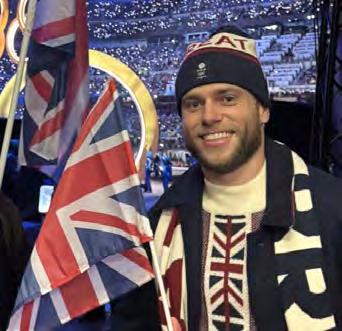
Conceived in 2019 here in San Francisco, OutAF elevates LGBTQ+ athletes into a team with a mission at the 2026 Winter Olympics. Team OutAF sponsored six out athletes who are competing at the games in Milan and Cortina. In addition to their elite accomplishments, two of these athletes have supported the San Francisco AIDS Foundation as riders for its former AIDS/LifeCycle endurance fundraiser – speed skater Conor McDermottMostowy and freestyle skier Gus Kenworthy, who switched to competing for Great Britain in 2019. Team OutAF is funded by the community to uplift and increase opportunity for promising and accomplished sports people. It serves as a voice in the community promoting visibility, opportunity, invigoration, celebration, and empowerment of elite and amateur athletes alike.
As OutAF grows, its impact on equity in sports will be felt worldwide. If major brands can leverage the success of LGBTQ+ people to advertise their products, why can’t the LGBTQ+ community leverage the success of our athletes to promote our values? Our cause is to ensure out athletes are platformed, not silenced. Successful people support successful causes. LGBTQ+ athletes promoting LGBTQ+ values create a virtuous circle we should want to grow.
Over and over, we see that “having a seat at the table” significantly impacts how society perceives and accepts LGBTQ+ people. My experience learning to be present inspired me to start OutAF. So I approached Gay Games, another San Francisco sports organization, to incubate Team OutAF.
Gay Games itself was founded 44 years ago in response to pervasive hostility and homophobia toward out athletes. (It was originally called the Gay Olympics until a court decision forced organizers to change the name.) Today, Team OutAF brings us full circle with athletes sponsored by the LGBTQ+
community promoting inclusivity and acceptance at the Olympics. The games in Milan and Cortina become the first Olympics with full participation of the LGBTQ+ community – in essence, fulfilling one of the fundamental goals of the Gay Games founders. (While OutAF is not sponsoring a transgender athlete at the Winter Olympics, there is a trans male competitor, Elis Lundholm, from Sweden. He is competing in the women’s mogul ski events, due to the International Olympic Committee’s antitrans restrictions, Them reported.)
Out Athlete Fund is just getting started. In 2028, it will host a Pride House hospitality house for LGBTQ+ athletes and fans at the Los Angeles Olympics. For this Pride House LA-WeHo, I partnered with Pride House International to launch one of the largest celebrations and gatherings of out Olympians anywhere. We kicked-off the project with a Pride House hand-off at the Paris Olympic Games in 2024.
If trends hold, there will be hundreds of out athletes at the next Summer Olympics. As the late gay San Francisco supervisor Harvey Milk said, “All
young people, regardless of sexual orientation or identity, deserve a safe and supportive environment in which to achieve their full potential.” Achieving that is the vision of Pride House LA-WeHo. Building community means bringing together organizations with a common cause.
The opportunity ahead is clear. With the acclaim of HBO’s “Heated Rivalry” as a backdrop, and more professional athletes coming out every year, the LGBTQ+ community can grow its presence with a coalition of related organizations. Partnerships magnify every success.
Now that I have left the board of Out Athlete Fund, I am inspired by what volunteers can accomplish with sheer will and belief in a positive future. And I’m inspired by San Francisco’s cultural impact globally, bringing generations together to build the future we want. San Francisco is a model for the world and that’s equally true in the realm LGBTQ+ sports. In this tradition, we now proudly include Team OutAF. t
Alex Soejarto, a gay man, founded Out Athlete Fund and co-founded Pride House LA-WeHo. He has lived half his life in San Francisco and firmly believes in the power of sport to bring people together. His inspirations are grounded as a strategist, being a former analyst with Gartner and now an analyst-in-residence at Bospar. He is a longtime member of FrontRunners (San Francisco FrontRunners began 50 years ago and is the original chapter of a worldwide network of LGBTQ+ running clubs known as International Front Runners). Soejarto also founded the International FrontRunners Strava group with over 4,500 members. And yes, you also can read it as: Team Out As F#*k! For more information on Out Athlete Fund, go to pridehouselaweho.org/ outathletefund.
[Editor’s note: The SF Pride House for the 2026 FIFA World Cup that was featured in the Bay Area Reporter
Olympian Gus Kenworthy shared photos of himself at the Winter Olympics opening ceremonies on Instagram.
Kenworthy’s Instagram page
The rainbow flag at the Stonewall National Monument in New York City was removed by the National Park Service.
Courtesy NPS
Gay Contra Costa supe Carlson seeks 2nd term
by Matthew S. Bajko
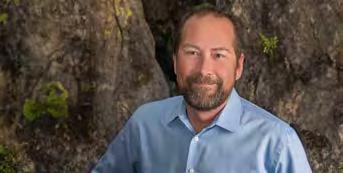
Gay Contra Costa County Supervisor Ken Carlson is now in an electoral holding pattern to see if anyone challenges him for the District 4 seat on his East Bay board of supervisors. If no one does by the deadline to file in early March then he is facing a relatively easy path to a second term.
He would still appear on the June 2 primary ballot, along with a line for a writein candidate, needing more than 50% of the vote to cement a victory and avoid a runoff in November. Carlson told the Bay Area Reporter he will officially file his paperwork with the county registrar to seek a second four-year term Tuesday, February 17, since he has “a couple hours free” in his schedule that day.
“I am very hopeful I will be unopposed and can just carry on with the work,” said Carlson, 63, who is serving as vice chair of his board this year.
It sets him up to become chair next January should he be reelected. As of Wednesday morning, Carlson was the only person to have pulled papers to begin raising money for a bid for the seat.
It includes the cities of Clayton, Pleasant Hill, Walnut Creek, and Concord and the unincorporated Contra Costa Centre and Morgan Territory. Carlson will know for certain if he will be running unopposed on March 6, the last day for candidates to file.
in late January were state Senator Tim Grayson (D-Concord) and Assemblymember Anamarie Ávila Farías (DMartinez).
“Ken Carlson is a proven leader who delivers results while never losing sight of the people he serves,” stated Grayson. “His work to expand healthcare access and protect immigrant communities has made a real difference, and Contra Costa County is better because of his leadership.”
“You can’t walk out when it is half done,” Carlson told the Bay Area Reporter about wanting to remain in his supervisorial office. “I feel very good and confident about the work I already have done, but we are not quite there. There is more we can do.”
Carlson became the first out person to serve on his county board with his election in 2022. The former city councilmember in Pleasant Hill is expected to remain the sole LGBTQ leader on the board, as the only other seat up this year is in District 1, where longtime incumbent Supervisor John Gioia, a straight ally first elected in 1998, is also seeking reelection.
Carlson grew up in Concord until his family moved to Pleasant Hill in the early 1970s. His grandfather, James Moriarty, was a county supervisor in the 1970s.
As the B.A.R. noted when Carlson announced his supervisor bid in 2021, he is believed to have been the first out LGBTQ candidate to seek a seat on the five-person board overseeing the sprawling Contra Costa County. Today, he is the only known out supervisor serving in the nine-county Bay Area region outside of San Francisco County, which has three out supervisors on its board.
He lives with his husband, Jeremy and is a retired Concord police sergeant. Carlson also served as president of the board of the Rainbow Community Center, the major LGBTQ service provider in the county that is located in Concord.
Over the last three years, Carlson has worked to ensure that the LGBTQ center has remained funded by the county to provide culturally competent services to its queer and transgender residents as the nonprofit went through several leadership changes. He told the B.A.R. he feels it is currently “on a better path” these days.
“Rainbow needs to be a stable presence in the county. It is all we have right now,” noted Carlson.
He is awaiting the results of a survey the board requested looking at what services are being offered in the county and by what agencies, particularly those for the LGBTQ community, and expects to hold a hearing on the findings in March or April. It will help guide the supervisors’ future fiscal decisions, said Carlson.
“Next year it will enable us to work toward specific programming investments we can do,” he said.
Among those early endorsing Carlson when he announced his candidacy
“I think how we are handling immi gration on a national level is wrong. It re ally comes down to morals, ethics, and a sense of right and wrong,” he said, adding that, “Even the undocumented popula tion plays a vital role in our communities and economy and are contributing to our society. They are not the lawless criminals they are painted out to be.”
The issue has taken on greater import for him and his board colleagues with the recent news that ICE will be moving all immigration cases out of San Francisco to its Concord Immigration Court by 2027. The 2024 opening of the court in the East Bay city “was an utter surprise to everyone in our community,” said Carlson.
Over the past year, ICE has detained people arriving at the Concord court for their immigration hearings, prompting confrontations with protesters. Carlson praised the city’s police department for doing an “absolutely fantastic” job of responding to the situation.
“We were all caught off guard by this,” said Carlson, pointing out one step the supervisors took was to ensure people could still access basic health care via the county even if they “have unsatisfactory documentation status.”
Ávila Farías added that he “brings a lifetime of public safety experience to his role as Supervisor, leading with integrity, empathy, and a clear understanding of what our communities need to be safe and strong. I’m proud to support his reelection and confident he will continue fighting for opportunity, fairness, and accountability for all.”
Immigration issues take center stage
Among his proudest achievements during his first term, said Carlson, was being able to secure $5 million last spring from a county sales tax measure to help fund a Services and Access for Everyone (SAFE) Center for immigrants and their families in Contra Costa County. It is a project of the Immigrant Action Network.
With the Trump administration’s crackdown on immigration and immigrants since last year, Carlson has found himself in the odd position of being a former law enforcement official speaking out against the actions of a federal public safety agency. He early on spoke out in support of his immigrant constituents shortly after President Donald Trump returned to the White House last January and helped promote a forum for immigrants to know their rights.
Ahead of last Sunday’s Super Bowl LX played at the San Francisco 49ers’ stadium in Santa Clara, Carlson was among the county supervisors who signed onto a letter reaffirming their support for the Bay Area’s immigrant population and ensuring that local law enforcement agencies remain “focused on keeping everyone safe and building trust in our communities” amid heightened concerns about Immigrant and Customs Enforcement agents rounding up people during the football championship game.
With several major sporting events to be held in the region – FIFA is bringing its World Cup soccer matches to the Bay Area in June – the supervisors said their “message is simple: Unity over division, power over panic, and care for one another. To our immigrant community members: You belong here. This region is our collective home, and you are at the heart of what makes the Bay Area one of the most diverse, innovative, and vibrant places in the world.”
Coming from law enforcement, Carlson told the B.A.R. he felt an obligation to speak up in support of the country’s laws around immigration and treating immigrants with “common courtesy and respect.” His doing so has brought him both criticism and praise, noted Carlson.
In addition to the SAFE Center, the supervisors also funded a mobile clinic to provide legal assistance to immigrants in a motorhome. It is a more private setting than that of a courthouse hallway, noted Carlson.
“We can go to you to provide legal support,” he explained.
With 27% of the county’s population being immigrants, there are now safe spaces for them to seek out support, said Carlson.
“This gives them a safer place to go to access government services and, hopefully, without the watchful eye of Homeland Security and ICE on them,” he said.
As chair of the board’s Equity Committee, Carlson told the B.A.R. he is looking at what other measures the supervisors can take this year to support their immigrant communities. One idea is to restrict ICE from being able to stage or use county property for preparing for raids or actions, he said, similar to what Richmond city leaders recently did.
“It definitely is surprising,” said Carlson of standing up against ICE. “It also gives me a different perspective in that I am very conscientious in not putting law enforcement in confrontation with another law enforcement agency. I use that term loosely because I don’t think of them as law enforcement as much as an administrative arm of the government. The last thing I want is to have two armed groups squaring off against each other.”
On another front impacted by the actions of the Trump administration, Carlson said he is bracing for the impacts to the county’s health care system from the decrease in funding under the president’s “One Big Beautiful Bill” that Republican congressional leaders pushed through last summer. A help will be having Dr. Grant Colfax, a gay prominent HIV prevention expert who led health departments in San Francisco and Marin, as director of Contra Costa Health, though Carlson acknowledged “it is not the best of times.”
The county is looking to address an estimated $100 million deficit in Medicare funding come its 2028-209 fiscal year due to the federal bill, said Carlson. It remains to be seen what state leaders or Democrats on Capitol Hill may be able to do to help remedy the situation.
“We have to really go through our health care and health care systems to figure out how to continue to provide health care to people and the services they need as we face the consequences from federal actions,” said Carlson.
It is why he hopes to remain in office to help address those pending issues.
“I love the work I do and I think there is more we can do,” said Carlson.
For updates on Carlson’s 2026 reelection bid, visit his campaign website at kencarlson.vote. t
Contra Costa County Supervisor Ken Carlson is so far unopposed for his reelection bid.
Courtesy the subject
PrEP, or pre-exposure prophylaxis, refers to the use of antiviral drugs to prevent people exposed to HIV from becoming infected. The pill Truvada was first approved for PrEP use in 2012 by the Food and Drug Administration; since then, the agency has also approved the pill Descovy for some groups, and long-acting injectables Apretude and Yeztugo.
“Previously, we dispensed a limited set of medications directly through our clinical programs – things like PEP and rapid-start HIV treatment where timing is critical,” TerMeer stated to the Bay Area Reporter February 10. “But for most prescriptions, including PrEP, clients needed to use an outside pharmacy. The new pharmacy changes that entirely. We can now meet all of our clients’ prescription needs in one location, with pharmacists who are part of their care team. That means better coordination, medication management support, and help with adherence – which is especially important for the populations we
serve. It’s about removing barriers and keeping people connected to care.”
New revenue stream
The pharmacy is also expected to produce revenue for the foundation. As the B.A.R. previously reported, the foundation had to end its long-standing AIDS/LifeCycle endurance bike ride fundraiser last year. The event, which was co-produced with the Los Angeles LGBT Center, brought in $300 million for the two organizations since it started in 1994, according to the agencies. SFAF has launched a smaller ride, Cycle to Zero, which will take place May 29-31. Registration is now open, though foundation officials have much smaller financial goals in mind, hoping to raise $1.5 million this year.
As of February 6, SFAF has had more than 600 participants register for the new ride and already raised more than $300,000 due to it.
Last year, the foundation also reduced its workforce, eliminating 34 staff positions and laying off 19 people, including three on its executive team, as it faced a
marking their church properties,” said Mandelman, president of the Board of Supervisors.
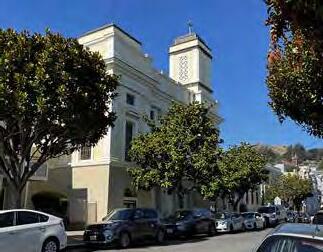
In the fall, Mandelman had initiated the process to landmark the LGBTQ-friendly Most Holy Redeemer Roman Catholic Church’s buildings at 100-117 Diamond Street in the Castro and St. Paul’s Church at 1660 Church Street in Noe Valley, whose exterior was used for the 1992 musical comedy “Sister Act” starring Whoopi Goldberg. Last month, he also proposed granting such status to St. Agnes Church at 601 Belvedere Street in the city’s Haight-Ashbury neighborhood and referred to by its original name of St. Aidan’s Church.
The Archdiocese of San Francisco Real Property Support Corporation contends city leaders have no authority to landmark noncommercial church properties because of a state law adopted in the 1990s. The California Supreme Court upheld the law in a 2000 decision affirming that religious groups can demolish their houses of worship that no longer suit their needs or are too costly to maintain.
It led to the San Francisco Historic Preservation Commission voting Wednesday to deny landmarking Most Holy Redeemer and St. Paul’s. On Thursday, Mandelman told the Bay Area Reporter he would accept its decision and would no longer move forward with landmarking St. Agnes or propose any additional churches owned by the archdiocese be landmarked.
“We are not going to have a fight with the archdiocese over land-
Now, Castro Country Club is expected to have similar terms through its fiscal sponsor, Community Initiatives, Batt said.
Batt expressed his support to B of A for its generosity.
“They’ve been really good,” he said of the financial institution.
These days, the arrangements are handled out of the bank’s headquarters in North Carolina. A spokesperson couldn’t be reached for comment.
Batt said that prior to the COVID pandemic, the meeting room was utilized seven days a week by hundreds of groups that lacked their own space. That dipped dramatically during the pandemic years, but is ticking up.
Billy Lemon, a gay man who is executive director of the Castro Country Club, stated that the organization is committed to the community.
“The Castro Country Club is committed to the community,” Lemon wrote in an email. “We are grateful that Patrick has left us the responsibility of carrying this vital resource forward for everyone. Pricing will remain at
$5.71 million projected budget deficit. At the time, TerMeer stated the move was necessary for the long-term survival of the agency as it strategically restructured. On another front, SFAF is battling budget cuts from the Trump administration in federal court – it is the lead plaintiff in a lawsuit against the president for defunding nine LGBTQ and HIV/AIDS organizations. A hearing had been scheduled for February 10 in federal court in San Francisco but was continued until the U.S. Supreme Court makes its decision in another case, officials said.
SFAF is also facing potential budget cuts from the city’s Department of Public Health that will be voted on by the health commission March 2. The proposed cuts to the foundation would be just over $700,000, supporting two programs. The first program is capacity building at the Rafiki Coalition for Health & Wellness’ Health Access Point, which is part of the city’s HIV, STI and hepatitis C response. Since 2023, the foundation has partnered with the coalition to build out the health access point so that Black and African Ameri-
structures to reiterate Catholic officials’ stance on the matter.
Archdiocese spokesperson Peter Marlow welcomed the supervisor’s reversing course when told of it by the B.A.R.
“We are pleased with Supervisor Mandelman’s decision and agree with him. I think that is all that could be said,” Marlow.
Should a property be designated a city landmark, it would mean the facades of the properties would be protected from being demolished. Any redevelopment plans for the sites would receive greater scrutiny from city planning staff and oversight bodies.
According to Marlow, the archdiocese currently has no plans to alter either St. Paul’s Church or any of the Most Holy Redeemer buildings, which include the church and a hospice building. In the late 1980s the parish turned its old convent into a place to care for parishioners dying from AIDS and continues to offer palliative care for those at the end of their life via the archdiocese’s Whole Person Care Initiative.
With city planning officials floating possible landmarks for upward of 20 properties owned by the archdiocese, such as its “mother church” the Cathedral of St. Mary of the Assumption at 1111 Gough Street, Marlow told the B.A.R. any plans to do so should also be shelved. He noted that John Christian, the executive director of the organization that oversees the archdiocese’s land holdings, has attended several meetings focused on landmarking city
$25 per meeting as will the requirements. This space is for the community and we intend to make sure it moves forward for everyone that needs it.”
Over the last 25 years, excess funds accumulated from the rental fees. Batt said he has donated the money to four nonprofits: The National AIDS Memorial Grove, the GLBT Historical Society, the Roxie Theater, and Frameline Inc., which produces the annual LGBTQ film festival. He declined to say the amount of donated funds.
For more information on the Castro Community Meeting Room, and to make a reservation, go to castrocountryclub.org/ccmr
Super Bowl week helps senior dogs through Feb. 14
Muttville Senior Dog Rescue got a donation boost during Super Bowl week and will waive adoption fees through Valentine’s Day, February 14. Creator Dhar Mann, and his wife, Laura, made a $10,000 donation to Muttville after Mann visited the agency last week, a news release stated.
The donation will enable Muttville to support its needs as well as cover adoption fees, the agency noted.
can communities are better served. The funding reduction would be $419,000.
The second reduction would be to the clinical assistant program, which trains and employs clinical assistants from communities most affected by HIV, STIs, and hepatitis C through paid internships, clinical experience, and pathways to careers in public health. The program has graduated 39 people since it began in 2023, at a cost of $13,200 per intern, according to the foundation. The funding reduction would be $300,000.
The foundation does anticipate 340B savings from the pharmacy to help support its programs. Section 340B of the federal Public Health Service Act requires Medicaid-participating pharmaceutical manufacturers to sell outpatient drugs at discounted prices to health care organizations that serve low-income or uninsured patients.
TerMeer stated that the full-service pharmacy is a good way for the foundation to diversify its revenue stream.
“At a moment when federal funding for HIV prevention and care, LGBTQ+ services, and work rooted in diversity,
“He has been diligent in making sure the state law and decision by the court were recognized and that we apply the same approach, hopefully, going forward and that the same decision on landmarking other church sites is made that Supervisor Mandelman has now made,” said Marlow.
41 properties under review for landmarking Mandelman expressed disappointment with the outcome for the Catholic parishes but pledged to carry on with his push to landmark historic structures across his district. At the moment, 41 properties he has identified as worthy of landmarking are under review by the supervisors.
“It is disappointing, but I don’t imagine we are going to end up landmarking every building we identify for consideration. It is a process,” said Mandelman. “Through that process some property owners will object, and in some cases, we will accept their objections.”
Among the LGBTQ historic sites expected to become city landmarks are 4200 20th Street at Castro Street where the late Bay Area Reporter founding publisher Bob Ross had resided and the San Francisco AIDS Foundation’s inaugural site at 51420 Castro Street. The list also includes the locations of former lesbian-owned businesses Maud’s bar at 929-41 Cole Street and Full Moon Coffeehouse at 4416 18th Street.
In the meantime, Mandelman continues to confer with planning staff on what sites within his Dis-
Muttville Senior Dog Rescue is a San Francisco-based nonprofit dedicated to helping older dogs find a second chance at life. It also cares for dogs who often arrive with medical needs and are frequently overlooked for adoption simply because of their age.
Dhar served as the National Football League’s chief kindness officer for Super Bowl 60, as part of a leaguesupported initiative to deliver surprise moments of generosity throughout the week.
For more information, visit muttville.org.
Sonoma County HIV agency helps with OD reversals
Face to Face, an HIV/AIDS and sexually transmitted infection nonprofit serving the North Bay, accounts for 66% of Sonoma County’s drug overdose reversals, according to a news release. The results show that community-based prevention can significantly help stem overdose deaths, the agency noted.
According to data from the California Department of Health Care Services that was analyzed by the state Department of Public Health’s Office
equity, and inclusion is increasingly under threat, it is critical that SFAF confront budget shortfalls head-on and build new, sustainable sources of revenue to protect our lifesaving work,” TerMeer stated. “We are deeply grateful to our community for standing with us during this challenging time, and we remain unwavering in our commitment to serve our clients with the innovation, compassion, and partnership that have defined SFAF for more than four decades.”
He stated to the B.A.R. that the uncertainty of government funding is one reason for the 340B program.
“We see the pharmacy as both a way to improve care for our clients and a way to diversify revenue that goes directly back into programs and services,” he stated. “We don’t share financial projections for individual service lines, but we’re optimistic the pharmacy will help us fill gaps and strengthen our sustainability. t
The pharmacy is open from 10:30 a.m. to 7 p.m. Tuesday-Saturday. For more information, go to sfaf. org/services/sfaf-pharmacy.
trict 8 could be recognized for their historical significance in light of the recently adopted Family Zoning Plan backed by Mayor Daniel Lurie and a majority of the board, including Mandelman. His aim is to protect the various religious buildings, former firehouses and residential structures across his district, from Cole Valley to the Mission, from one day being demolished and replaced with in-fill housing developments.
As he will be termed off the board early next January, Mandelman is racing against the clock to bring forward as many landmark requests as he can over the coming months.
Fourteen that did receive the support of the historic preservation commissioners will be taken up by the supervisors for final approval in the coming weeks.
The board’s land use committee will hold a hearing on initiating the landmark process for the 27 other sites that Mandelman has put forward, likely in early March. Among those is the mansion at 181 Buena Vista Avenue East on the corner of Duboce Avenue once owned by the late gay Ambassador James. C. Hormel.
“We will keep moving forward,” said Mandelman. “The priority for me is to do more of this work by the end of the year. We have some historic districts we are looking at and more landmarks, so we will keep pushing on.”
One historic district he is looking to establish would cover the commercial heart of the Castro along the 400 and 500 blocks of Castro Street and several blocks on adjoin -
of AIDS, in 2024 Face to Face distributed 44% of the naloxone obtained from DHCS’ Naloxone Distribution Program in Sonoma County, yet accounted for 66% of the overdose reversals reported. Naloxone can help reverse the effects of a life-threatening opioid emergency.
Agency officials noted that it reflects the power of strategic access.
Face to Face doesn’t just distribute naloxone; it ensures the medication reaches people and places where overdoses are most likely to occur.
“Our goal is zero overdose deaths, and we know how to get there,” stated Kevin McAllister, a gay man who became executive director of Face to Face last fall. He previously worked at the California Council on Science and Technology, Meals on Wheels Sacramento County, and the Rainbow Community Center in Concord.
McAllister stated that he hopes to scale up the program. “Naloxone saves lives when people have it and know how to use it,” he noted. “These numbers prove our approach works.”
That approach centers on meeting people where they are, the release stated. Face to Face provides naloxone,
ing streets. Doing so would provide some protection from seeing the properties in the designated district be demolished, noted Mandelman.
“It would be looking to protect, particularly, the commercial buildings that might be at risk of demolition,” said Mandelman, adding that many of the current structures in the Castro have played “an important part in the history of that neighborhood,” with many being of significance to LGBTQ history.
He also told the B.A.R. he is also looking at extending the boundaries of the Duboce Park Landmark District established in 2013 to include the Duboce Triangle neighborhood to the south of the park and closer to the Castro. The current district was drawn to include the blocks to the north of the city greenspace in the Lower Haight neighborhood.
As it is, the supervisors are expected to add the Duboce Triangle into the boundaries of the Castro LGBTQ Cultural District. The board’s rules committee voted in support of the proposal sponsored by Mandelman at its February 2 meeting, with the full board set to vote on it at its February 10 meeting.
“None of the historic properties on the south side of the park close to the Castro are in the district. I don’t know if we can get planning to do that but I would like to,” said Mandelman.
Any additional landmark requests would not be initiated until May at the earliest, he told the B.A.R.
“Ideally, it would be before the summer,” said Mandelman. t
fentanyl testing strips, and firsthand overdose prevention training through neighborhood outreach, partner sites, and direct community distribution. In 2023 the agency purchased an EV van that now operates 12 mobile routes to extend its reach into rural areas and communities that are harder to access. Face to Face also installed wellness vending machines across the county to provide 24/7 access to overdose prevention tools, according to the release.
Lieutenant Christopher Mahurin of the Santa Rosa Police Department stated, “Overdose prevention is a shared responsibility, and Face to Face plays a vital role in that work. Their naloxone distribution program saves lives every day in Sonoma County and provides a bridge to care for some of our most vulnerable community members.”
According to Face to Face, every month Sonoma County loses an average of 12 people to accidental overdoses. It is the third-highest overdose death rate among Bay Area counties, driven by the spread of fentanyl in opioids and other drugs, the release stated. t
by Lou Fancher
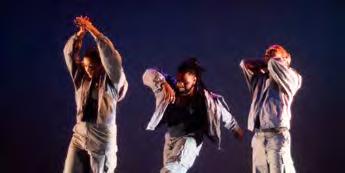
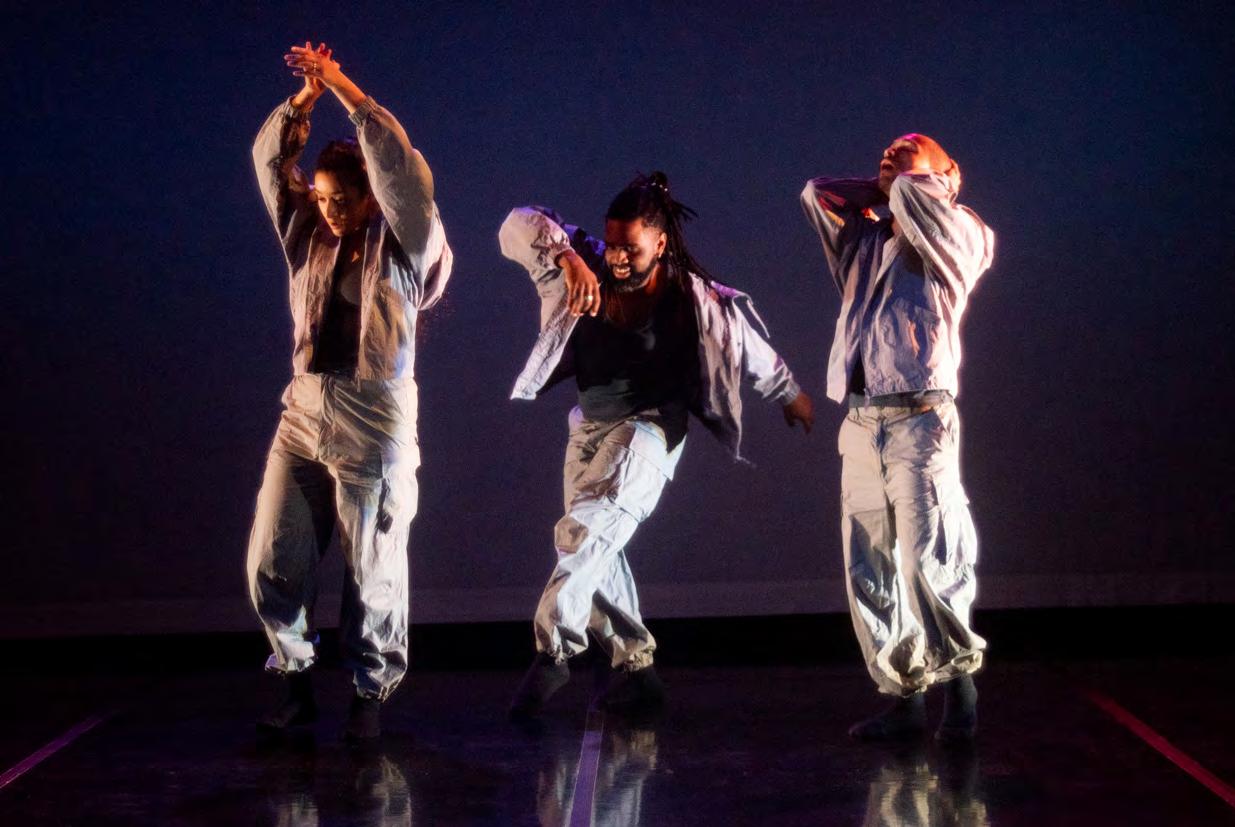
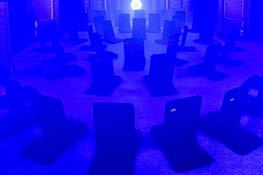
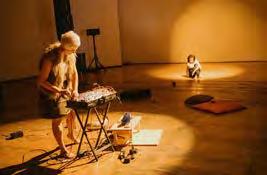
The Black Choreographers Festival: New Voices/New Works brings 18 established and emerging choreographers to Dance Mission Theater in San Francisco February 21 to March 1. Two weekends of back-to-back action present artists whose vision and body of work hold the promise of defining dance in 2026 and beyond. The program is curated and produced by The African & African American Performing Arts Coalition and K*Star*Productions.
A highlight of the festival each year is the opportunity to simultaneously revisit well-known choreographers and discover fresh voices in the field. Within the glow of that wide spectrum this year are seasoned, acclaimed artists. In addition, six dance artists who have participated in BCG residences introduce new works or excerpts of works-in-progress.
The styles represented onstage draw from the artists’ deep reserves of technical and artistic expertise, personal ancestry, knowledge of dance culture and history, and professional experiences.
New works
The ambitious program includes several projects involving newly commissioned music or choreography created in collaboration with visual and interdisciplinary artists. The majority of the choreographers are based in the Bay Area, with the exception of Los Angeles-based William L. Miller, and Oakland native Isha Tobis Clarke, currently residing in Brooklyn. Clarke, 23, is a native of Oakland and studied primarily at Destiny Arts Center. Focused on club and street dance, she has performed as a freelance artist with hip-hop masters such as Kurtis Blow, DJ Kool Herc, MC Sha Rock, and more. Tours with Bay Area-based aerial dance company Bandaloop and the Ladies of Hip Hop Collective and participation in crafting two dance films fill out the rest of her resumé, along with a prestigious stint as a 2024/25 artist-in-residence at the Kennedy Center’s Office Hours program—an
Black Choreographers Festival
initiative recently eliminated after the Trump administration’s dissolution of the center’s Social Impact programming.
In an interview, Clarke, who uses they/them pronouns, claims a gender identity that is “expansive and ancient.” The limitations of today’s “non-binary,” the reductionism of “dancer” or “choreographer” leave them gently protesting, but sometimes yielding to use the terms for simplicity’s sake. Clarke employs multiple expressive forms to express their artistry and considers the Kennedy Center residency a formative experience.
“It gave me my start as a professional artist/ choreographer,” said Clarke. “It gave me motivation and was an artist’s dream. They gave you incredible resources for finances, space, and time to create whatever you want. You can be yourself. It allowed me to stand on my own two feet and to develop this work I’m bringing to the festival. It gave me trust in my process. My process is a little crazy, but inviting other people into that with compassion and grace is the magic.”
Interactivity
The “crazy” Clarke refers to when describing their choreographic process in the studio
is not so crazy after all. Centered at the heart of their dances are exploration of community and elements of their work as a Restorative Justice Practitioner and dance educator. Infused within the newest work is interactivity and accessibility, not just in the dance’s content and visual elements, but in the actual performance.
To achieve that end, it was necessary to deconstruct the traditional Western or East European relationship between audience and performers.
The Castro Theatre reopens
by Brian Bromberger
The restoration of the Castro Theatre has not only preserved but magnified its splendor. You notice the change when you spot from the outside the iconic vertical neon CASTRO sign, called the blade or flame, which has been refurbished and upgraded, then relit at last year’s Frameline Juneteenth Block Party. That marquee acts as a kind of welcome symbol in the city similar to the Hollywood sign.
When you enter the interior, there’s a vague sense of the familiar as you recognize some of its features, like the swanky new mobile concession stand. But one also feels transported back to 1922 when it was first built, as if seeing this “epicenter of LGBTQ culture in San Francisco and probably the world,” for the first time.
That quote comes from Mary Conde, Senior
Vice President of Another Planet Entertainment (APE) and Project Manager for the Castro Theatre renovation project. She enthusiastically led the press tour and is familiar with every bolt, plaster piece, fresco, and system in the building. She’s also very aware of the enormous responsibility the renovation has placed on APE, one the company has met magnificently to the tune of $41 million, working feverishly for two years after the theater closed in early 2024.
Historic restoration
We can’t discuss the changes wrought by APE without mentioning the original designer of the theater, Timothy Pflueger (1892-1946), the top architect in the Bay Area in the first half of the 20th century. He was one of the creators of the Bay Bridge and Transbay Terminal as well as the Alhambra Theatre (SF) and Oakland’s Paramount Theatre. He never married or had children.
He was a connoisseur and patron of the arts. Intriguingly people have suspected he might have been gay, but no evidence has been found. He was a master of Art Deco, but was fluent in many other styles (i.e. Aztec, Beaux-Arts, Renaissance) evident throughout the theater.
One of the breathtaking discoveries was the reemergence of the theatre’s gorgeous arch or proscenium with its ornate gold border. It had been hidden by the bigger wider movie screen and wooden scaffolding put in place decades ago. It suffered minor damage in the 1989 earthquake, but has been fully regilded and restored. One’s eyesight is immediately drawn to the canopied ceiling which now appears to be glowing. Its huge chandelier suggests an ancient Roman silk brocade which was a replacement (designed again by Pflueger) for the original 1922 one lost in a fire in 1937, then built in 1939.
While predominantly Art Deco, Conde re-
“The proscenium structure is immediately hierarchal; rows of (passive) people facing an elevated stage. There’s a time for that, but the traditions I was raised in, like street, house, hip-hop and, even the lineage of West African dance and things like the Lindy Hop, they’re all circular, social forms. It’s about lived communal practices and experiences of engaging.”
Clarke has shifted their work away from fear and hesitation, especially during the current political climate. In the new space, they say there is freedom, love, care, tenderness, and the essentials of life all people and communities need and deserve to thrive.
“It’s no mistake that magic (discovery) happened when this Fascist takeover was happening. The juxtaposition of those things revealed the importance of expansiveness in a world that wants you to contract. That’s the luxurious gift this piece tries to bring.”t
Read the full article on ebar.com.
Black Choreographers Festival, $20-35, February 21 to March 1, Dance Mission Theater, 3316 24th St. bcfhereandnow.com
marked that Pflueger was also influenced by the California Churrigueresque or Spanish Baroque style inspired by cathedrals in Spain and Mexico, and perhaps the nearby Mission Dolores. The chandelier is full of symbols from other cultures, especially Roman, Asian, and Buddhist figures, almost as if you were escaping to different parts of the world.
Upcoming shows
What remains is a live entertainment hybrid mixed-use venue that will feature movies (“Pillion” will debut on February 12), concerts (Sam Smith’s 20 dates here have all sold out; Indigo Girls; the dressing and green rooms are elegant and ADA-compliant); drag shows (D’Arcy’s Drag & Disco; Alyssa Edwards; “Showgirls” hosted by Peaches Christ); comedy (Robby Hoffman; Jonathan Van Ness), Frameline’s Trash Talk with John Waters commenting on his “Serial Mom” movie which will be screened, and Sing-Along “Sound of Music” film.
There’s a preponderance of LGBTQ-oriented shows as both APE’s community outreach and thanks for the patience and support of the queer district during the past few years. You can go to www.thecastro.com for dates and details of upcoming shows.
Conde confessed that at $41 million, the theater will not see a profit in her lifetime, but it will last another 100 years and it was an honor to restore, rebuild, and renovate this proud beautiful symbol of both the Castro neighborhood and San Francisco.
“There was so much love for this venerable venue that is culturally significant around the world, we could do no less than show our love and respect in renovating this monument,” said Conde.
And in this awe-inspiring, diligent and meticulous reimaging of a beloved icon, they have indeed succeeded beyond all our hopes.t
Read the full article on ebar.com.
www.thecastro.com
Dazaun Doleyn (center), one of 18 dance makers at the Black Choreographers Festival
New dances from 18 artists
Alan Kimara Dixon
The renovated Castro Theatre marquee
A stunning, spectacular, stupendous renewal
Jason Chew
Choreographer Isha Tobis Clarke
Courtesy the subject
Comics & Venues
Pride in Panels
by David-Elijah Nahmod
Hundreds of queer comic book creators and fans will gather at the main branch of the San Francisco Public Library on February 15 to celebrate the art of queer comic books.
Titled “Pride in Panels: SF Queer Comics Fest 2026,” the event will give
queer comic book creators a chance to display and sell their work.
This is the second such event that the library is hosting. The first took place in 2024 and was a rousing success, drawing around 2,000 comic book fans. This year’s festival promises to be even bigger than the first, expanding to the library’s third floor
and will include special guests, wideranging panels, maker workshops and exhibitor tables with comic creators personally selling and signing their work. There will also be several satellite events featuring queer comic readings and a film screening. Admission to everything is free for all.
Justin Hall is a Professor of Comics at California College of the Arts, and is also the author of “No Straight Lines: Four Decades of Queer Comics.” Hall is one of the organizers of “Pride in Panels” and he spoke with the Bay Area Reporter about the 2024 event, and what people can expect from this year’s event.
David-Elijah Nahmod: So how did the inaugural event go?
Justin Hall: People are clearly hungry for this kind of material and for the opportunity to meet artists, build community, and share their passions with folks in person. And the crowds were wildly diverse, from families bringing in their queer kids looking for good stuff to read, to SF old-timers who remember the heady days of the queer and feminist underground comics. The San Francisco Bay Area is one of the global centers of both comics art and queer culture. So it’s exactly where this sort of event should be taking place.
team that we collaborate with, mostly from the Hormel LGBTQIA+ center, is absolutely wonderful. And the library had record numbers of folks signing up for new library cards during the last festival, too.
What do you like about holding “Pride in Panels” at the library?
Working with the SF Public Library has been a dream. Their values of providing support for both readers and creators, all in an accessible, comfortable space that is open and entirely free for the public, match ours perfectly. They’ve once again fully funded our event, even tripling the resources that we had the last time around. The library
Please tell me a bit about your special guest Rupert Kinnard. Rupert created the first continuing queer Black characters in comics with his pioneering “Cathartic Comics” strip, which he began in 1977. He’s the recipient of the World Art Foundation’s Lifetime Achievement Award and the Cartoon Crossroad’s Transformative Work Award. He also just came out with an overview and collection of his work, and we wanted to celebrate his impact on generations of cartoonists by spotlighting him at our festival.
Please tell me about your special guest Lee Lai. Lee Lai is one of the rising stars of queer and trans comics. She’s Australian but now lives in Montreal. Her 2021 debut graphic novel, “Stone Fruit” was one of the strongest debuts I’ve ever read. It won several awards, including the Lambda Literary Award for Graphic Novel, the Cartoonist’s Studio Prize, and two Ignatz awards. In picking her and Rupert, we wanted to showcase the diversity of creators within our broader LGBTQ+ community, from different generations, different identities and different creative visions.t Read the full interview at ebar.com. prideinpanels.org
Haven’t been there or done that
by Jim Gladstone
Iam a venue vulture. Culture is my primary carrion, but the places that present it offer their own delicious pleasures; estimable architecture and design, refreshing al fresco energy, audiences as intriguing as the performers.
I keep my eyes open for shows of interest at Bimbo’s and the Great American Music Hall, Oakland’s fabulous Fox and Paramount Theaters, Stanford’s Frost Amphitheater and Berkeley’s Greek Theatre, because the unique environments enhance the entertainment.
As the grand re-opening of the Castro Theatre brings a much-needed jolt of energy to the city’s most famous gay neighborhood –and generates an enormous amount of press attention– I thought it was high time to take note of a few excellent lesser-known non-profit spots to spend a cultural night on the town.
The Lost Church
There’s an old-time speakeasy vibe at this eclectically programmed gem buried deep below street level in North Beach. Open since late 2022, it’s the post-pandemic evolution of a performance series formerly held at the home of musicians Brett Cline and Elizabeth Cline, who continue to oversee the scrappy but aesthetically impressive venue.
Through a street-level door and down a surprisingly steep staircase near the intersection of Chestnut and Columbus, visitors will find a raised stage framed by gold-ornamented crimson fabric and handsome redcushioned seating for 99.
There’s a show virtually every night spotlighting a wide range of local and out of town talent: musicians, magicians, stand-up, improv, filmmakers, poets. There’s even a well-attended monthly “death and dying”-themed open mic night.
Upcoming gigs of note include an
unlikely double-bill of music from ’80s folk darling Michelle Shocked and a spoken word performance by author and cultural critic Cintra Wilson ( “ Caligula for President: Better American Living Through Tyranny”) on March 17; and queer Sri Lankan comic Shenuque Tissera on March 26. 688 Columbus Ave. thelostchurch.org
Envelop
Perhaps you’ve been to the Midway for a rave, burlesque show, or concert, but tucked away within Dogpatch’s multi-purpose cultural space is a living shrine to serious listening. Envelop, the brainchild of local composer/guitarist Christopher Willits, who has collaborated with artists including Tycho and Ryuichi Sakomoto, and is a true believ-
er in the community building power of deep listening experiences.
On the floor of a dark, dreamy chamber, small audiences (30 max.) sit and sprawl silently, encircled by illuminated speaker towers. Selections from a meticulously-curated music library, reformatted for immersive 32-channel sound, bathe listeners in waves of richly textured almost palpable sound. It’s a concentrated audio experience that can be an ideal introduction to unfamiliar music, or allow the discovery of new dimensions in old favorites.
The vibe here is simultaneously throwback and futuristic, with a powerful sense of shared space and shared interests emerging among participants and often leading to intense post-session conversation; an ideal gummy situation.
Soundtracks for upcoming listening sessions include works by Pink Floyd (“Dark Side of the Moon” Feb. 17), Bjork (Feb. 18), Nina Simone (Feb. 23), Lana Del Rey (Feb. 25), Cocteau Twins (Feb. 26), Miles Davis (Mar. 7) and Radiohead (Mar. 7).900 Marin St. www.envelop.us
The Lab
Having recently completed a major expansion to over 7000 square feet, this progressive “catalyst for artistic expression” occupies the former auditorium of the San Francisco Labor Temple in the heart of the Mission. The Lab commissions and presents experimental works in a wide range of media as well as presenting exhibitions and performances by visiting artists.
Noteworthy events on the docket include a Feb. 13 concert by Splinter Reeds, an electro-acoustic woodwind ensemble whose show will include a composition that weaves in audience members’ sonic contributions.
March brings a slate of provocative musical artists from Wales, Bhutan, Colombia, Berlin, and London. 2948 16th St. www.thelab.orgt
Comic artists at last year’s readings at Silver Sprocket shop
Above: Comic artist Rupert Kinnard Below: Comic artist Lee Lai
Above: A recent music performance at The Lost Church Middle: Envelop’s listening rooms Below: A recent performance at The Lab
Books >>
The elders of ‘So Many Stars’
by Laura Moreno
Drawing from hundreds of hours of interviews with 20 LGBT elders of color, Caro De Robertis has created a groundbreaking and deeply moving oral history in “So Many Stars: An Oral History of Trans, Nonbinary, Genderqueer, and Two-Spirit People of Color” (Algonquin Books, May 2025).
The book is a deeply moving oral history that offers a candid look at how these individuals navigated acceptance of their identities, often in very difficult circumstances. Each interviewee’s own words are raw and unfiltered, revealing many disparate experiences from childhood into old age.
Some of the most compelling stories focus on growing up without the language to describe their gender identities, enduring rejection or misunderstanding from family and community, and eventually finding solidarity within queer and trans movements.
The book is organized into thematic sections. “What It Was Like” explores early experiences of difference, coming out, and prejudice. “Finding Each Other” centers on chosen family and com-
‘Place
by Jim Provenzano
munity, “Being the Change” focuses on activism and resistance and “Growing Older” and “Our Ancestors” emphasize continuity across generations.
Many of the elders in the book had an active hand in shaping LGBT history, including the AIDS crisis, the fight for marriage equality, and ongoing struggles for trans rights. Their stories demonstrate that today’s movements are built on decades of work that often goes unrecognized.
Author Caro De Robertis has written numerous books, including the international bestseller “The Invisible Mountain.” Uruguayan in origin, they have been awarded the Stonewall Book Award, John Dos Passos Prize for Literature and a fellowship from the National Endowment for the Arts among others. De Robertis is co-curating the upcoming exhibition “Conjuring Power” at Yerba Buena Center for the Arts this spring, and teaches at San Francisco State University.
Resonant voices
As a prominent Two-Spirit artist from the Opaskwayak Cree Nation in Manitoba, Joan Benoit is a butch lesbian artist, songwriter, and performer who hopes to pass wisdom
Envy’
In his collection of stories, “Place
Envy: Essays in Search of Orientation,” writer Michael Lowenthal, known for his fictional books, explores times in his younger days where he sought out areas to be gay and to not be gay, at least not overly. What we get from the acclaimed four-time novelist and short story writer is an exploration of how LGBTQ people are often forced to navigate spaces that are either unfriendly or unfamiliar, or at least unwelcome.
In “Out of Nowhere,” he tries to unravel the hidden history of a potentially gay ancestor, who is almost completely forgotten amid the chaos of Jewish refugee life during World War II. Being Jewish is a consistent source of cultural distance in most spaces, while his being gay proves to be a bit of a barrier amid his family gatherings.
A highlight of the collection is “Ligature,” about his time spent on a Pennsylvania Amish farm as a project during his college days at Dartmouth. Lowenthal dons the traditional garb, participates in many of the farming activities and duties, but is held back from attending church services until he has proven his mettle.
His homosexuality is never brought up, except with another student who leaves abruptly after coming out to Lowenthal. Afterward, he ponders whether he should’ve come out as well, if an erotic attraction was expected, and how he would handle that.
In “Unmolested,” he returns to a favorite summer camp known for its carefree, clothing-optional attitude in its earlier days for both teenagers and adults. But after a sexual abuse scan-
Editor Caro De Robertis
on to younger generations. Benoit is best known for the beautiful song they wrote “So Many Stars.”
In addition to becoming the title of this book, it became an anthem of remembrance for Missing and Murdered Indigenous Women, Girls, and Two-Spirit people in Canada in 2019. The stars represent the spirits of those lost to violence, watching over loved ones from the night sky as grief is transformed. As a Two-Spirit person (often abbreviated as 2S), Benoit feels a spiri-
tual connection to their ancestors.
The term, a direct translation, was coined in 1990 at an inter-tribal conference in Winnipeg by a Cree elder to indicates a sacred dimension involving both masculine and feminine “sights,” countering the misconception that gender diversity is a recent phenomenon. Two-Spirits hold a special place in the tribe as either healer, shaman, visionary, peacemaker, advisor, storyteller, or community caregiver.
But with colonization and forced as-
Michael Lowenthal’s nonfiction stories explore un-queer spaces
dal (after his departure), Lowenthal is called back as a guest-counselor (and former high-achieving teen) to revive the prestige of the camp.
He realizes that one of the younger teenagers is gay, and the teen soon comes out in a burst of confusion. After Lowenthal admits that he is also gay, he longs to become a kind of mentor, but the young boy sends him sexually provocative letters. Lowenthal pulls away. He feels bad about it, but also has to save his own reputation with the new rules of no counselor ever being alone with a teenager. It’s an arduous situation that he handles well, while also confessing an attraction to teenage boys.
Traveling
Most of the essays reference the fact that he is writing about the experiences (for example, he references his novel, “Charity Girl,” in the essay “Out of Nowhere”) and in some essays, shares his doubts and regret about doing so. Such as the case with “What I Left Out,” a rumination on his 2010 trip to Nanjing, China for a tourism story for The Advocate. The problem is that later, C. Winter Han, a sociologist and author of a book of essays on Asian identity, includes Lowenthal’s article as an example of white colonialist fetishization. In revisiting his trip, Lowenthal describes the more personal moments that he had, including a brief relationship with an Asian man, but admits to having a limited perspective.
His longtime boyfriend, novelist Scott Heim, is often in the periphery, and Lowenthal’s process of figuring out what to write about serves as a kind of defensive source while being a subjective narrator.
“Writing fiction based on real people warped my recollections,” he writes. “The made-up versions started to dislodge the ones I’ve known.”
In “Estrangeiro,” the couple’s nonmonogamy agreement is brought up in context of Lowenthal’s trip to Brazil. Initially the recipient of a fellowship for a writing workshop, he ends up visiting a few more times to reconnect with Uilliam, a younger gay man who hit him up with the offer of a beer in a nightclub.
The two share a passionate relationship, but have problems finding a place to be alone together. Also, the financial difference between Lowenthal and his young amore poses questions of sincerity. Is the young Brazilian man taking advantage of him, or the other way around?
The entire experience puts Lowenthal’s relationship with Heim in question, since they both have different desires after many years together.
These and other stories, including a
similation in residential schools, these traditions were lost. Today, the TwoSpirit resurgence is part of decolonization and cultural revitalization efforts in many indigenous communities.
Another compelling interviewee is Nelson D’Alerta Pérez, an artist, cosmetologist, and transgender woman who left high school in Cuba at 17 and began hosting drag shows. Pérez recounts her arrival in the United States, where she faced interrogation and discrimination at the border. At the time, U.S. law barred entry to those labeled homosexual; she recalls an immigration officer shouting, “There’s a homosexual here!” and marking her file. As a result, the immigration process took far longer than usual.
Ultimately, this important book demonstrates that contemporary conversations about gender have roots that extend deep into the past. It is a powerful volume that honors LGBT lives and captures the hidden history of LGBT people of color that have long been sidelined or ignored. “So Many Stars” ensures these stories are preserved to guide future generations.t
cruise ship vacation with a group of gay blind men, and a family trip to Buchau, Germany to retrace his ancestors’ lives, including a possibly gay one, offer insight into his own life, his heritage, and his quiet curiosity about other lives.t
‘Place Envy: Essays in Search of Orientation,” by Michael Lowenthal, $24.95, 296 pages, Mad Creek/ Ohio State University Press. www.ohiostatepress.org www.michaellowenthal.com
A NEW STORY LIVE ON STAGE BY LEVI
Author Michael Lowenthal Scott Heim
Lunar New Year’s festive celebrations
by Jim Provenzano
Celebrate the Lunar New Year and the Year of the Horse at multiple celebrations this month, including the most LGBTQ party of them all at the Chan Center.
Terrence D. Chan and Edward Sell have partnered with GAPA (GLBTQ+ Asian Pacific Alliance) to celebrate their 38th anniversary. The night will bring vibrant entertainment, delicious flavors, and unforgettable performances showcasing the strength and beauty of our LGBTQ+ Asian Pacific community.
Ring in the Year of the Horse with the Bay’s best and brightest QTAPI (Queer and Transgender Asian and Pacific Islander) voices. Tickets include one drink ticket and performances by GAPA’s chorus and dance groups, Mabuhay Bitches, a wild drag and variety collective, the Bay Area’s premiere API drag troupe Rice Rockettes, the sassy Masala Mahal and FilipinX. The acclaimed Nā Lei Hulu i ka Wēkiu will perform Hawaiian dances, and the drag king group
The Royales will also perform.
The three-hour celebration included DJed dancing. All guests must be 21+ with valid photo ID. Light bites and one free drink ticket is included with each admission. $52, 7pm to 10pm with a cash bar. 170 Valencia St. sfgmc.org/ queer-lunar-new-year-2026
Other Lunar New Year celebrations, while not specifically LGBTQ, welcome all celebrants.
February 17
On the first day of the Year of the Horse, The Chinese Chamber of Commerce of San Francisco proudly presents this year’s Zodiac on Parade featuring the Horse. The public art project, which was introduced in 2021, will display two Horse Statues in San Francisco from January 31,
2026 through March 15. The Horse Statues spotlight artwork that reflects upon the culture, people, and traditions surrounding the Chinese New Year. Sponsors are Golden State Warriors and Lucky Supermarkets. The official Chinese New Year Parade is March 7, 5pm at Second Street at Market, goes around Union Square and ends at Kearny Street & Columbus Ave. chineseparade.com
February 15
Celebrate the Year of the Horse with the Oakland Little Saigon community as they kick off 2026. The Tết Lunar New Year Festival will take place from 12pm to 5pm at Clinton Park, 655 In-
ternational Blvd. in Oakland. Experience the vibrant heart of Little Saigon as they celebrate this meaningful holiday. visitoakland.com
February 19
Welcome the Year of the Horse with LED lion dances, fortune tellers, and a bustling night market at the Asian Art Museum, with a special performance by Frankie Fictitious. The Cal VSA Dragon Dancers bring dazzling energy and good fortune at 2:30pm. The event includes Tetthemed art activities and treats 10am to 4pm, and a Seven Lotus Bloom Melon Carving workshop at 11am. $14-$20, 200 Larkin St. asianart.org
February 19
Let Golden Dragon Fortunes read the Qi energy in your path with a fast, fascinating fortune told through mahjong tiles at the California Academy of Sciences’ Nightlife Lunar Underground party.
In the African Hall, grab a drink, pull up a chair, and test your luck because our friends at Baba’s House are back for some mahjong fun. Pick your lucky tiles for free play and catch mahjong tutorials all night long. Crossing our fingers that you have no chicken hands!
Plus, pause your exploring and reset with a calming cup of tea from Fabula Tea.
In the Swamp/Great Hall, grab bubble tea or a Spam musubi from Honeybear Boba. Shop an exclusive Lunar New Year NightLife design by Evil Mizu, printed live on-site by San Franpsycho. Meander through a popup night market to find one-of-a-kind treasures and treats from local Asianowned businesses, from illustrated artwork you’ll be hard-pressed to resist to handmade trinkets.
$25, 6pm to 10pm, 55 Music Concourse Drive, Golden Gate Park. calacademy.org
February 21
API queer and transgender women, community, and friends are invited to a potluck dinner 12pm to 3pm at J-Sei in Emeryville. Celebrate the Lunar New Year with the community and enjoy a delicious potluck together. Holistic life coach Karolyn Wong will join us to help set our intentions for the new year.
There is a suggested $15+ donation per person to support APIQWTC community-building programs to be collected at the event via cash donations (Cash, PayPal, Venmo). Donors will be automatically entered into a raffle to win awesome prizes. The event will help us raise funds for the APIQWTC Scholarship Fund.
The Oakland Chinatown Lunar New Year Parade is a beloved community tradition that brings families, cultural groups, and local businesses together to welcome the new year with vibrant performances and celebration. Hosted by the Oakland Chinatown Improvement Council, it honors heritage while highlighting and supporting the heart of Oakland Chinatown. ocic-ca.org/lunar-newyear-parade-2026t
On April 2, 2026, the Bay Area Reporter, America’s longest continuously-published and highest circulation LGBTQ newspaper will celebrate our 55th Anniversary. Our anniversary issue will include highlights of our fifty-five year history of coverage of LGBTQ rights from the early-1970’s to the present time. It will also announce the results of our 15th read ers’ poll, BESTIES: The LGBTQ Best of the Bay These are the best people, places, businesses, nonprofits, events, and things to do in the Bay Area, as voted by our readers.
Advertising space reservations for this special edition are now being
Call 415-829-8937 t
Left: California Academy of Sciences’ Nightlife Lunar Underground Right: Performers at the Queer Lunar New Year include Na Lei Hulu i ka Wēkiu
Marco Solorio
Left: Cal VSA Dragon Dancers at the Asian Art Museum Right: Chinese New Year Parade (photo: Knight Light)