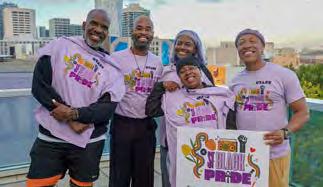
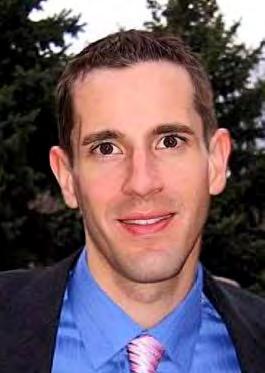
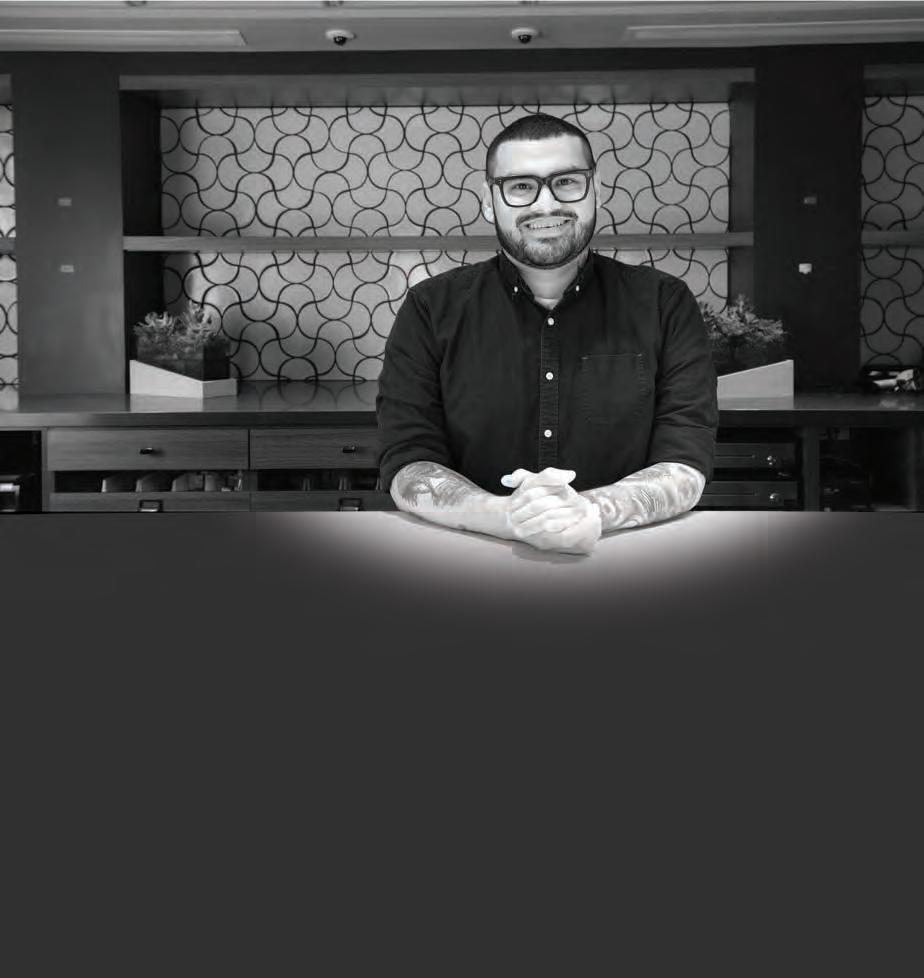
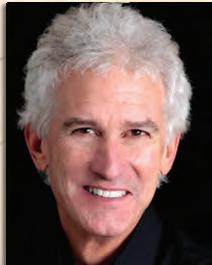
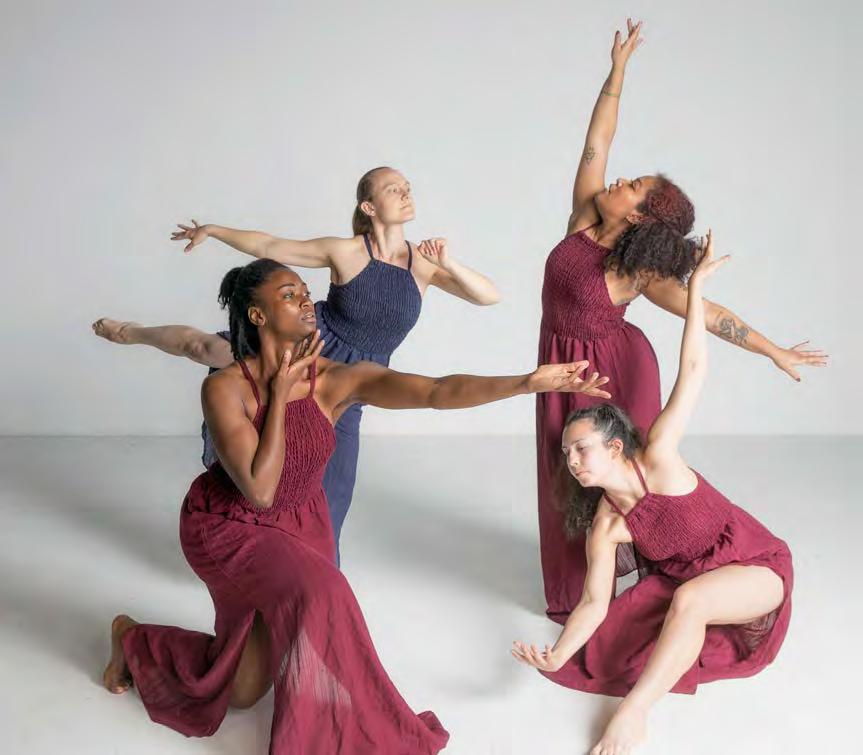
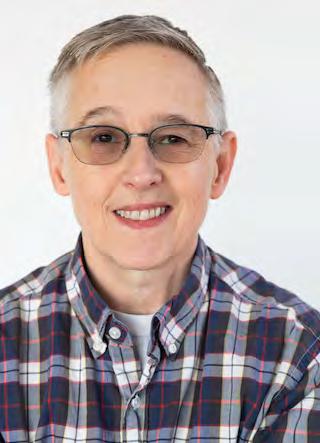
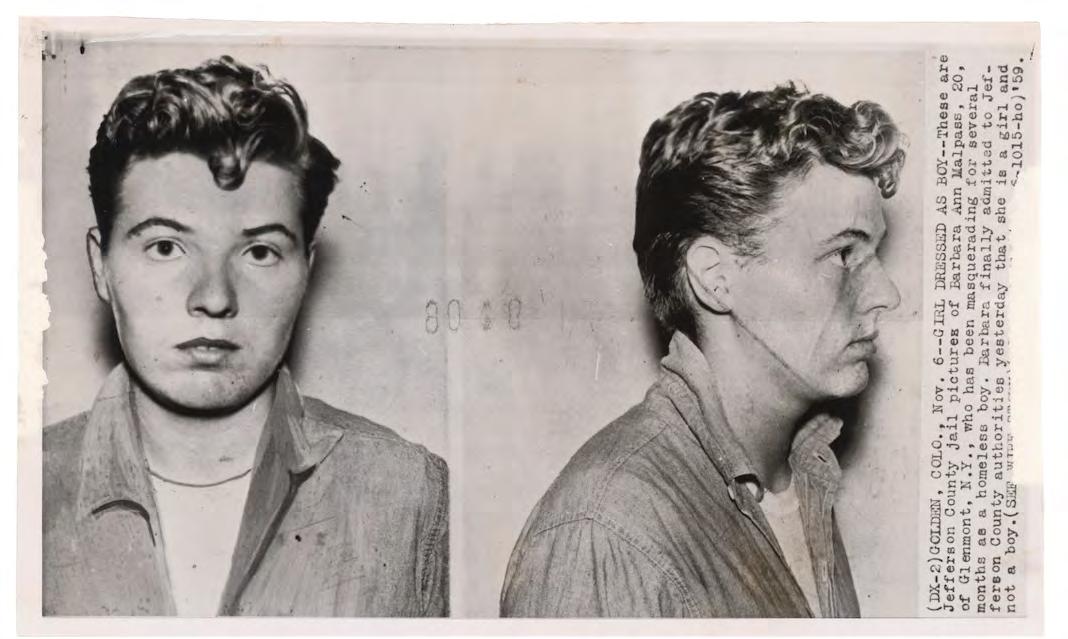
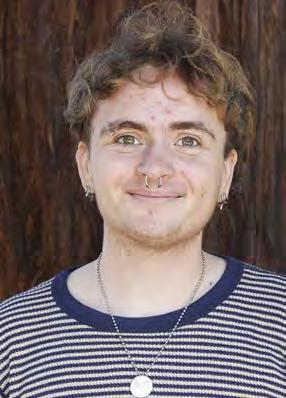
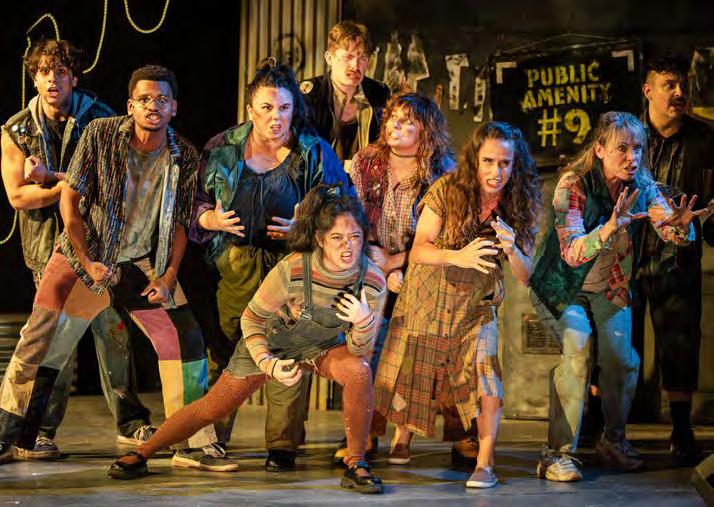
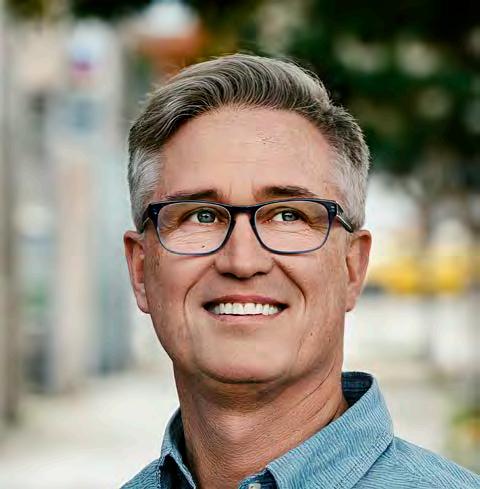
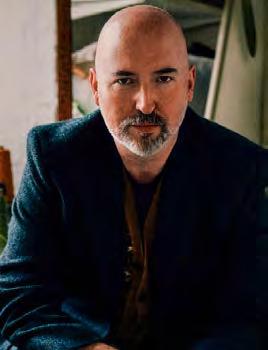
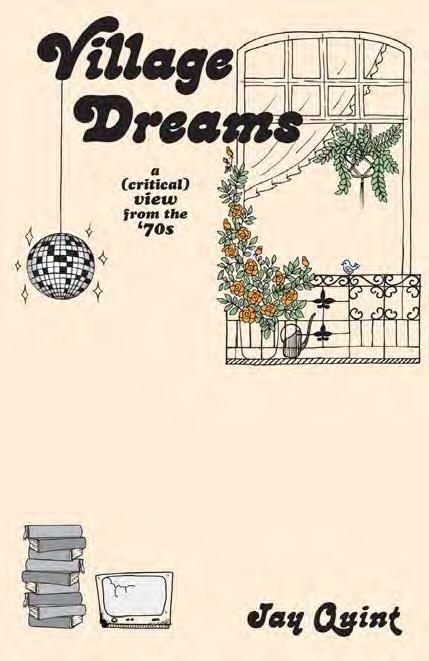
Timothy Hampton, left, founder and Executive Director Gyasi “LBXX” Curry, Anthonie Woods, Junior Woodson, and Andrew Reyner stood on the rooftop of the San Francisco LGBT Community Center when they promoted the inaugural event last year.
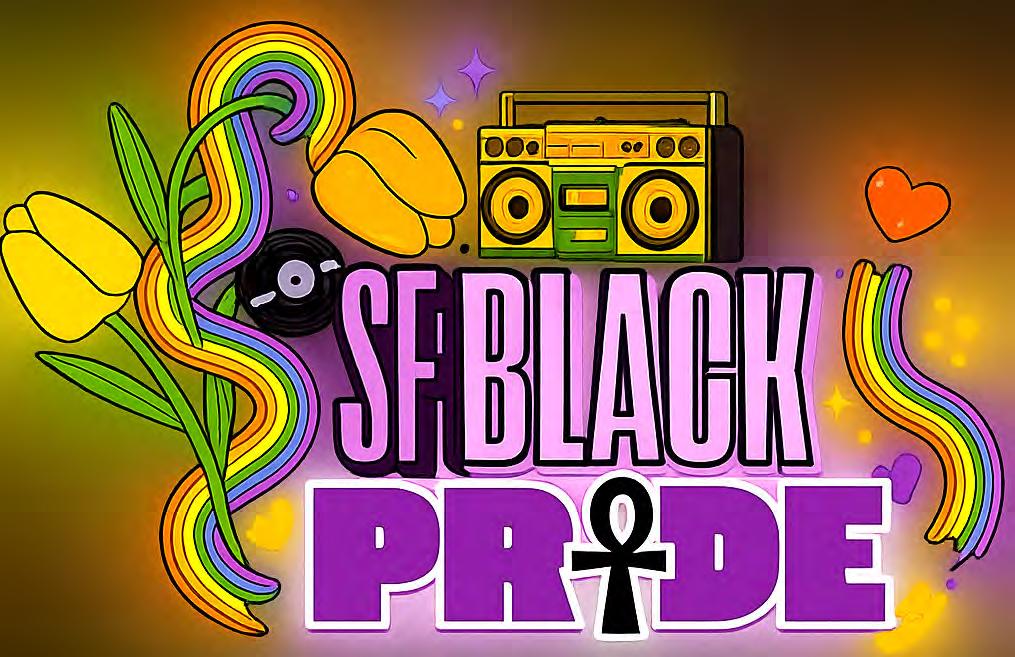
SF Black Pride aims
Lawmakers to decide fate of California LGBTQ bills
by Matthew S. Bajko
Now that California legislators are back from their summer recess, a host of LGBTQ bills await their fates in the Legislature. A deadline looms next week for bills with fiscal costs to survive votes in the appropriations committees, while the two legislative chambers have until August 31 to send legislation to Governor Gavin Newsom to sign into law.
One bill establishing a permanent online youth suicide prevention training program was enacted last month by Newsom, a Democrat in his final year as governor, with a second bill addressing suicide ideation among LGBTQ young people still pending before lawmakers. (See story, page 6.) They are among 21 bills dealing with LGBTQ concerns that the Bay Area Reporter has been tracking this year.
Similar to past legislative sessions, this year’s LGBTQ bills package in Sacramento is again skewing toward addressing the needs of queer and transgender young people. Senate Bill 934 authored by gay Senator Scott Wiener (D-San Francisco) would allow people who were subjected to the debunked practice of conversion therapy in which they try to change their sexual orientation or gender identity to have more time to bring a civil suit against the practitioner.
It has taken on more relevance following the U.S. Supreme Court this year ruling 8-1 to strike Colorado’s ban of the practice based on free speech grounds. It also ordered lower federal courts to review if similar bans like the one adopted by California are also unconstitutional. The Golden State in 2012 was the first to ban the use of conversion therapy in minors for the purpose of changing their sexual orientation,
with two dozen states following suit. No matter what the court decides, Wiener’s bill would clarify that plaintiffs could cite scientific principles and consensus around proper medical care to demonstrate conversion therapy’s harm in bringing forward a malpractice claim. It would also extend
Nudity no longer OK at San Mateo beach long frequented by queer men
by John Ferrannini
The acquisition of San Gregorio Ranch by the state means no more nudity at a site on the San Mateo County coast that has been a popular gathering space for queer people for generations.
The ranch is currently under the auspices of the Peninsula Open Space Trust, which will donate the $10 million site to the California State Parks by the end of the year, according to Chris Spohrer, Santa Cruz District Superintendent of California State Parks. As of July 29, the 238-acre ranch site is accessible to the public as an extension of the San Gregorio State Beach, and it is now being managed by the state.
2017 Media Kit 0 a
The Los Angeles Blade covers Los Angeles and California news, politics, opinion, arts and entertainment and features national and international coverage from the Blade’s award-winning reporting team. Be part of this exciting publication serving LGBT Los Angeles from the team behind the Washington Blade, the nation’s first LGBT newspaper. From the freeway to the Beltway we’ve got you covered.
The Peninsula trust had acquired the site from the Walter Bridge Trust earlier this year, according to Spohrer.
Asked if it will remain clothing optional, Spohrer said in a phone interview with the Bay Area Reporter, “Now that it’s being operated as a state beach, the same regulations apply on all state beaches. When there’s a change in operations like this … we try to inform people up front.”
That means sun-loving beachgoers will be told to put clothes on in advance – before a citation is issued. The state doesn’t operate clothing optional beaches, he said, and this will be a way for people
who prefer to keep their trunks on to be included.
“We recognize the transition can be harder for some folks,” Spohrer said. “The regulations there now are what you would expect on any state beach, so everyone can feel included.”
Spohrer wanted to emphasize that enforcement won’t start with a ticket.
“We don’t start with citations,” he said. “We just try to talk and get compliance that way. It’s pretty unlikely we’re going to reach that level.” Citations issued by the California Department of Parks and Recreation can be managed at citationprocessingcenter.com, and can be paid by
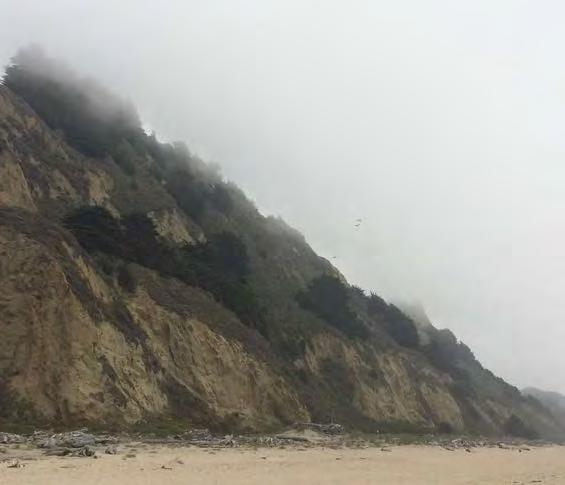
San Gregorio Ranch Beach has now joined the state parks system as part of San Gregorio State Beach, meaning it is no longer clothing optional. Courtesy California State Parks
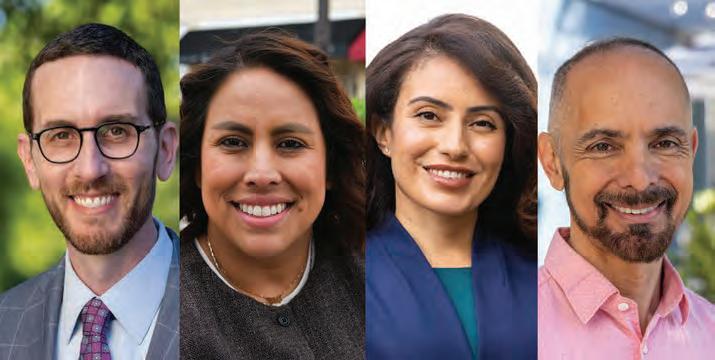
State Senators Scott Wiener, left, Caroline Menjivar, Sasha Renée Pérez, and Christopher Cabaldon all have LGBTQ-related bills pending in the Legislature.
Courtesy the subjects
APE sues Castro Theatre contractor over damage to site
by John Ferrannini
T
he management of the Castro Theatre filed suit against a contractor involved in the $41 million renovation and restoration of the historic movie palace in the heart of San Francisco’s LGBTQ neighborhood. The venue remains open as the litigation proceeds and is safe, officials stated.
Specifically, Another Planet Entertainment is alleging that construction company Alarcon Bohm and its principal Kevin Bohm performed defective work, failed to pay subcontractors, and submitted bills for millions of dollars in excess of its previous guaranteed maximum price. The civil complaint, filed in San Francisco Superior Court on August 3, claims the repair costs and delays associated with Alarcon Bohm are over $5 million.
APE CEO Gregg W. Perloff stated that the lawsuit is also a way to protect his company’s reputation from being associated with the contractor.
“Another Planet Entertainment has spent decades building a reputation for presenting exceptional live entertainment and preserving some of the Bay Area’s most treasured cultural landmarks,” Perloff stated. “We cannot allow a contractor accused of defective work, excessive billing and failing to pay subcontractors to use our venues and reputation to promote its business or create the false impression that we (Another Planet) endorse its work.”
APE manages the Fox Theater in Oakland and the Bill Graham Civic Auditorium in San Francisco.
The B.A.R. reached out to Alarcon Bohm but has not heard back yet.
Meanwhile, the theater remains
The complaint lists four causes of action: trademark infringement, false association and claims of endorsement, unfair competition, and common law trademark infringement.
The complaint stated that the “greedy, shoddy contractor … badly botched the renovations, as well as management of the project.”
“Before defendants even finished their work, defective work was manifest,” the complaint continued.
The complaint goes on to state that the defendants filed a lien on APE in the amount of $4.6 million, which APE disavows owing, “further complicating the unraveling [of] the financial mess created by defendants.”
It states, “Instead of fixing its deficient work and fulfilling its written obligations, Defendants doubled down on their wrongdoing by abandoning the project, encouraging subcontractors to do the same, and egregiously demanding payment for plainly excessive bills that greatly exceeded the guaranteed cap stated in the parties’ construction contract by millions of dollars.”
Some of the theater’s historic assets were damaged by the contractor, the complaint states.
“The defective work includes, but is not limited to, faulty drainage leading to significant flooding, defective roofing and installation of HVAC equipment that led to water intrusions from the roof,” it states. “These water leaks damaged the historic, recently renovated decorative ceiling in the theatre.”
Portions of the roof collapsed onto the theater’s balcony, the complaint goes on to state, shortly after the theater reopened.
“Extensive roof leaks damaged the historic ceiling, recently renovated, causing portions of it to collapse
Join our inclusive, bilingual workshop and understand your rights as a tenant!
Whether you’re new to the area or have been here for years, this workshop is designed to help you navigate the complexities of tenant law.
to Expect:
Bilingual Presentation: The presentation and materials will be provided in both English and Spanish.
on the balcony. Other drainage and HVAC issues were legion, including a long list of other uncompleted work, that was paid for by APESF [the LLC that is also a long-term tenant engaged in the business of organizing, promoting and presenting live entertainment performances and presenting same at the Castro Theatre] but was woefully incomplete, substandard, or simply abandoned by defendants.”
APE acquired management of the theater in 2022 from its longtime owners, the Nasser family. There were several years of community debate about the appropriateness of changes APE wanted to renovate the space to allow for live music in addition to cinema. After much debate, the San Francisco Board of Supervisors signed off on allowing APE to remove the fixed orchestra seating and replace it with removable seats for concerts. (The
balcony seating remains in place.)
Renovations began in 2024 and concluded this February, when the theater reopened.
The B.A.R. reached out to the Nassers but has not heard back yet.
The complaint states that the unpaid subcontractors “have since filed mechanics liens, causing further damage to plaintiffs and potential exposure to multiple lawsuits to enforce those liens. Defendants also utterly failed to manage critical procurement issues, leading to significant delays in the completion of the contracted scope of work, punch list, and procurement of final certificate of occupancy. All of this caused plaintiffs substantial harm as they were forced to expend inordinate time identifying construction defects, rectifying defendants’ substandard work, and generally dealing with defendants’ failures.”
The allegedly shoddy work infringes on APE’s rights of association because Alarcon Bohm touted it as an example of a job well done, APE claims. The offending posts regarding the Castro Theatre were removed after cease-and-desist letters earlier this summer, the complaint stated.
“Making matters worse, defendants continue to falsely promote their purported ‘skillful work’ on plaintiffs’ projects,” the complaint stated. “In multiple internet and social media posts, defendants cite their work as being examples of its superior ‘craftsmanship’ and ‘collaboration’ with plaintiffs’ historical renovations to their entertainment venues. Despite Defendants’ epic continuing failures on the Castro Theatre project, it wrongfully sought to promote a positive association with plaintiffs’ substantial goodwill that arises from the historic and well-loved venues.” t
Defendant in councilmember attack pleads not guilty
by John Ferrannini
Aperson who has been charged with three felonies stemming from an attack on a queer Oakland councilmember pleaded not guilty to the charges in an Oakland courtroom July 31.
On-site Support: Limited, one-on-one tenant counseling will be available after the presentation.
Legal Resources: Schedule appointments for legal service intakes.
Location: San Francisco Public Library
100 Larkin Street San Francisco, CA 94102 btw Grove and Fulton Streets
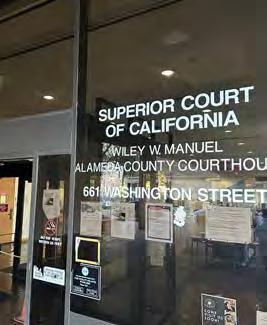
Ahshatae Millhouse, 38, was represented by Jesse M. Adams in Department 112 of the Wiley W. Manuel Courthouse. Adams was appointed by Alameda County Superior Court Judge Pelayo Llamas Jr. after Millhouse’s first attorney, Neil Hallinan, announced in court July 30 that he could not proceed. The Alameda County Public Defender’s office subsequently declared a conflict of interest, leading to Adams’ acquiring the case.
Prosecutors say Millhouse attacked queer at-large Oakland City Councilmember Rowena Brown on July 18. Brown received medical care for her injuries and is focusing on her recovery, according to her office.
According to KTVU-TV, the Oakland Police Department stated that it responded to a West Oakland location just before 12:45 a.m. July 19 to investigate the assault. On July 21, the suspect was found by OPD Ceasefire officers outside the city and taken into custody, the station reported.
Millhouse was charged with firstdegree residential robbery, assault with force likely to produce great bodily inju-
ry, and false imprisonment by violence. Alameda County Assistant District Attorney Nathan Edward Weinstein informed Adams in court Friday that at a previous hearing, Hallinan had argued for Millhouse’s release and this was not granted. At that hearing, Llamas had given a choice of either a psychiatric evaluation or release on a $120,000 bond with a number of stipulations, including GPS monitoring, no use of alcohol or possession of firearms, staying away from Brown’s offices and home, and “intensive
outpatient treatment” within 10 days.
Adams said it’s the lack of funds for the bond that is the only reason Millhouse remains in custody.
Pursuant to that, Llamas set a bail motion hearing for 9 a.m. August 11 in Department 112, and a preliminary hearing was set for September 15.
Relatives of Millhouse were present in court both July 30 and July 31, and said they’d be interested in reaching out to the Bay Area Reporter, but have not done so as of press time.
The B.A.R. reached out to Brown’s office but has not heard back. The City Council is on recess for a month beginning August 3.
Brown had appointed Millhouse as a member of Oakland’s Cannabis Advisory Commission, earlier this year. Oaklandside reported that Millhouse runs a music therapy and mental health nonprofit and at least two local businesses. Social media posts indicate Millhouse and Brown have known each other for several years, and Millhouse campaigned for the councilmember in 2024, the outlet reported.
Brown was elected to the City Council in November 2024 and assumed office in January 2025. She succeeded lesbian former longtime at-large councilmember Rebecca Kaplan, who is now doing policy research for the city on illegal dumping. t
An acquaintance of Oakland at-large City Councilmember Rowena Brown pleaded not guilty in court July 31 to charges stemming from an alleged attack.
John Ferrannini
The restored ceiling of the Castro Theatre allegedly suffered some water damage during the two-year renovation, according to a lawsuit.
Rick Gerharter
Lurie signs two-year $16.9 billion budget Community News>>
by John Ferrannini
San Francisco Mayor Daniel Lurie
signed the city’s $16.9 billion twoyear budget July 30, bringing to an end a tumultuous process that began with his initial budget proposal two months ago. Lurie signed the spending plan two days ahead of the August 1 deadline.
“When families have the stability and support they need, they can stay and build a life in San Francisco. That commitment guided every part of the budget process,” Lurie stated in a news release. “I am grateful to [board] President [Rafael] Mandelman, Supervisor [Connie] Chan, and the entire Board of Supervisors who worked with my office to get this budget done in record time and passed it unanimously – the first time we’ve had a unanimous vote on the budget in six years. This budget is proof that City Hall is ready to work together to get things done for San Francisco families.”
The board gave final approval to the budget at its July 28 meeting, voting unanimously 11-0. It closes a $642 million two-year deficit and reduces the city’s structural deficit by approximately $300 million, something that Chan, this
San Francisco Mayor
Lurie announced July 30 that he has signed the city’s $16.9 billion two-year budget.
year’s budget chair who is also District 1 supervisor and is running to replace Congressmember Nancy Pelosi (D-San Francisco) in the U.S. House of Representatives, said is “a very proud moment” at the July 28 meeting.
“Today we’re very proud to have the unanimous support of this board –something that has not happened in six
years,” she said. “Though it can be improved upon, this is something we can be very proud of.”
Chan, who has now cycled off leading the budget committee, noted in particular that all immigrant legal services are fully funded, that $8 million in each year was invested in new firetrucks for the San Francisco Fire Department (which will also be getting new uniforms), and that $1.3 billion is being held in reserves “anticipating cuts from the Trump administration.”
She thanked Lurie and his team for their support through the process. Lurie announced before his budget proposal was unveiled June 1 that his office had been able to stave off many cuts that would have had a disproportionate impact on the LGBTQ community.
After the mayor’s initial announcement, some LGBTQ and HIV activists dogged him at his public appearances about remaining proposed cuts of about $750,000 to Health Access Points slated to begin in 2027.
With just two days before San Francisco’s Pride weekend last month, Chan played a role in averting defunding the community health centers designed to service specific communities, such as
ones for gay and bisexual men, transgender individuals, and people of color.
“This budget prioritizes San Francisco values, preserving funding for vital services, while safeguarding for our future,” Chan stated in a news release.
“San Francisco will not stand by while the Trump administration guts our healthcare, our food security, or our education. I thank the mayor for his partnership in fighting back to create a budget that protects our most vulnerable while saving for the future.”
Mandelman, a gay man who represents the LGBTQ Castro neighborhood as District 8 supervisor, is wrapping up his tenure as the board president, as he is termed out of office in a few months.
“This budget prioritizes public safety and frontline services, while protecting vulnerable communities, maintaining important behavioral health programs, and investing in technology modernization,” he stated. “I am glad that the board and mayor together were able to restore funding for small business support, HIV prevention, and Free City College, among other vital programs.”
The budget actually increases the amount the city is spending on HIV,
as it will be backfilling from its general fund to offset the impact of federal cuts. The amount of the backfill is rising from $28.7 million to $29 million next fiscal year, with $30 million in the 2027-2028 fiscal year.
District 6 Supervisor Matt Dorsey, a gay man, served as vice chair of the budget committee this year. He is expected to be named its new chair going forward.
“This budget reflects what is possible when we approach difficult decisions with collaboration, discipline, and a shared commitment to the people of San Francisco,” stated Dorsey. “I’m grateful to Mayor Lurie, Chair Connie Chan, my colleagues, and everyone who helped deliver a fiscally responsible budget that protects essential services and puts our city on a more sustainable path for the future.”
District 9 Supervisor Jackie Fielder, a queer woman who in the middle of the budget process returned from a monthslong leave of absence, voted for the budget this year after being the sole vote against it last year. Fielder didn’t return a request to comment for this report. t
SFPD seeking info on cold case killing of gay man
by John Ferrannini
I
t’s been 16 years since a gay man was killed in San Francisco and police have put out a renewed call for help in solving the cold case. The release is timed with the anniversary of Philip DiMartino’s killing.
As the Bay Area Reporter previously reported, DiMartino, 36, was stabbed 48 times in the back inside his Hayes Valley apartment, at 138 Hermann Street, on August 2, 2010.
A news release was issued July 31 – just days before the grim anniversary – to remind members of the public that at the chief’s discretion, the San Francisco Police Department can distribute reward payments to individuals in an amount up to $250,000 who provide new information in homicide cases that lead to the filing of criminal charges. A $25,000 reward has been available since 2011, the B.A.R. previously reported, though the case has remained open since then.
Now, the cold case unit is actively seeking information that could result in the arrest of a suspect.
San Francisco police have issued a news release seeking the public’s help that is timed to the 16th anniversary of Philip DiMartino’s killing.
DiMartino was a regular at Castro neighborhood nightclubs, and his sister Lisa DiMartino told the B.A.R. in 2011 that she and others were “fairly confident” that her brother, who’d been a senior marketing manager for the Archstone apartment company, had gone to Badlands, a club in the Castro district, the night he’s believed to have been killed. He was also a regular at Toad Hall, the Cafe, and at Trigger (where Beaux is now).
There were no signs of forced entry into his apartment, police said, and the suspect may have cut himself during the attack. The medical examiner’s office listed the cause of death as “sharp force injuries with blunt force injuries.”
Police told the B.A.R. back in 2015 that they believe they have the suspect’s DNA.
According to the medical examiner’s report, two notes were found in DiMartino’s “living room that bore Spanish language,” the contents of which have not been revealed.
The 2026 news release and posters
advertising the $25,000 reward were sent in both English and Spanish, which is notably not SFPD’s usual protocol.
In that release, police stated DiMartino was “known to utilize dating applications to meet individuals,” and his body was discovered after he didn’t show up to work as expected.
DiMartino’s family released a lengthy statement, beginning, “Philip was deeply loved and respected by his family, friends, and colleagues. He grew up in Chicago and attended the University of Virginia before later making his home in San Francisco. Phil was exceptionally intelligent, independent, witty, adventurous, and caring. He had strong convictions and a remarkable ability to spark thoughtful, engaging conversations – yet he was always fun to be around and had a wonderful way of making people laugh.”
The statement went on to note some of the things DiMartino enjoyed in life.
“He loved animals (including his dog Zoe, whom he adopted in college), travel, cooking – he was even planning to start a vlog [video blog] – and the holidays, especially Halloween and his birthday,” it continued. “These interests brought him joy and often brought people together. Phil lived life to the fullest and encouraged others to do the same.”
The family concluded asking for the public’s help as well.
“Philip was only 36, with so much
Two longtime Castro-area businesses close
by John Ferrannini
T
wo Castro-area businesses have closed in recent days. The closures were met with sadness from longtime customers of a cafe and a neighborhood grocer.
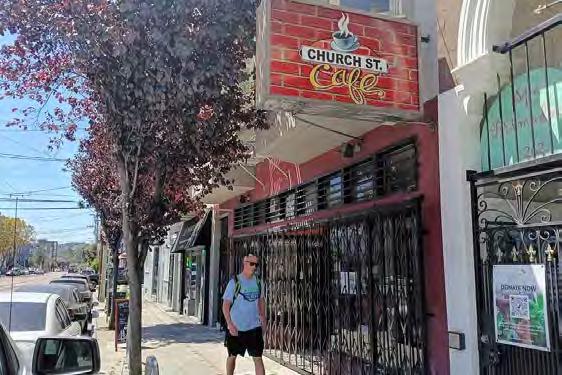
The Church Street Cafe at 260 Church Street closed after 20 years of service to the community, according to a written statement posted at the site. Buffalo Whole Food and Grain Co. at 598 Castro Street announced via signage posted to its location last week that it’d be closed this week.
Hank Lim and his family, the
cafe’s owners, stated that they are “working on a new bagel shop in Montclair, Oakland, planned for Fall 2026” in a written statement.
The statement doesn’t give a reason for the cafe’s closure, but states, “Like many small businesses, we had to work hard to survive and keep going,” and made reference to “many difficult times,” such as during and after the COVID pandemic lockdown.
“We hope to see many familiar faces again when we are ready to welcome customers,” the statement read. “We are truly grateful for every smile, conversation, cup of coffee,
meal and memory. Your kindness and loyalty have meant more to us than words can fully express.”
The statement also discusses how, “our girls grew up here, and many of you watched them grow over the years.”
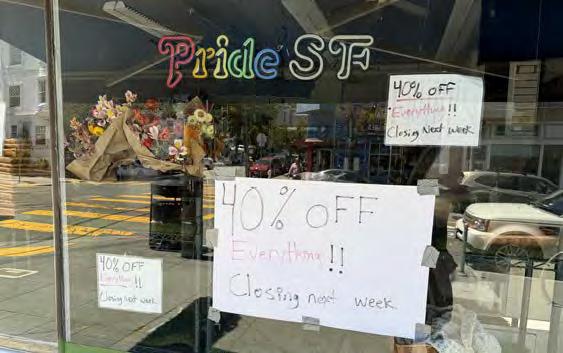
Meanwhile, Buffalo Whole Food and Grain Co. had been publicly struggling for some time. A poster with a QR code linking to a nowdefunct fundraising page but still in the window August 4 stated, “After being forced to close for several months, the store suffered major fi-
See page 8 >>
more life ahead of him, when he was taken from us,” the statement read.
“We are asking for the public’s help in honoring him by providing any information that may help us understand what happened. If you saw or know anything, no matter how small it may seem, please share it with the authorities. Your information could make a meaningful difference.”
Anyone with information about this case is requested to call the Homicide Cold Case Unit at (415) 5531145 or Department Operations Center at (415) 553-1071. Anyone wishing to remain anonymous may call the SFPD Tip Line at (415) 575-4444 or Text-A-Tip to 47411 (TIP411) and type “SFPD” and then your tip. t
Daniel
Cynthia Laird
Courtesy SFPD
Volume 56, Number 32
August 6-12, 2026
Volume 56, Number XX Month XX-XX, 2026 www.ebar.com
Thomas E. Horn, Publisher Emeritus (2013)
Publisher (2003 – 2013)
PUBLISHER
Bob Ross, Founder (1971 – 2003)
Michael M. Yamashita
Thomas E. Horn, Publisher Emeritus (2013)
NEWS EDITOR
Publisher (2003 – 2013)
Cynthia Laird
Bob Ross, Founder (1971 – 2003)
ARTS & NIGHTLIFE EDITOR
NEWS EDITOR
Jim Provenzano
Cynthia Laird
ASSISTANT EDITORS
ARTS & NIGHTLIFE EDITOR
Matthew S. Bajko • John Ferrannini
Jim Provenzano
Transphobes threaten WNBA
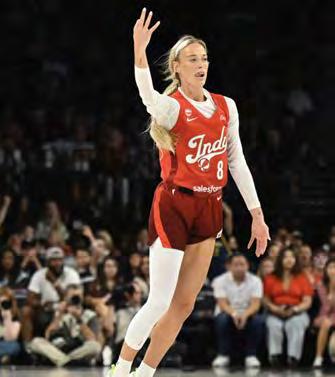
Transphobes are threatening the WNBA, and the league so far hasn’t done much about it. It started in earnest last month when Indiana Fever player Sophie Cunningham gave comments to ESPN in which she, contrary to her denials, did say that trans women and girls shouldn’t play on female sports teams.
“I got a lot of negative feedback about me hating trans. And I’m like, ‘I never once said that,’” she said in a lengthy ESPN piece. “I think that I am here to extend love. But I also think with that love is truth, being honest. And I want to protect young girls in a locker room, or young girls in sport who shouldn’t have to go against biological men.”
contributing writers Christopher J. Beale • Robert Brokl
ASSISTANT EDITORS
Matthew S. Bajko • John Ferrannini
Brian Bromberger • Philip Campbell
Heather Cassell • Eliot Faine
CONTRIBUTING WRITERS
Michael Flanagan • Jim Gladstone
Kyle Amato • Race Bannon • Robert Brokl
Liz Highleyman • Brandon Judell • Lisa Keen
Christopher J. Beale • Brian Bromberger
Philip Mayard • Laura Moreno
Philip Campbell • Myron Caringal
David-Elijah Nahmod • Mark William Norby
Meg Collins • Chelsea Davis
JL Odom • Paul Parish • Tim Pfaff
Natasha Dennerstein • Eliot Faine
Jim Piechota • Adam Sandel
George Faville • Michael Flanagan
Jason Serinus • Gregg Shapiro
Jim Gladstone • Brian Guan • Liz Highleyman
Gwendolyn Smith • Charlie Wagner
Brandon Judell • Michele Karlsberg • Lisa Keen
Ed Walsh • Cornelius Washington • Sura Wood
Matthew Kennedy • Philip Mayard
Jim McDermott • Laura Moreno
David-Elijah Nahmod • Mark William Norby
ART DIRECTION
JL Odom • Lois Pearlman • Tim Pfaff
Max Leger
Jim Piechota • Joshua Polanski • Adam Sandel
Gregg Shapiro • Gwendolyn Smith
PRODUCTION/DESIGN
Charlie Wagner • Ed Walsh
Ernesto Sopprani
Cornelius Washington • Evelyn C. White
PHOTOGRAPHERS
Jane Philomen Cleland
ART DIRECTION
Rick Gerharter • Gooch
Max Leger
Jose A. Guzman-Colon
Rudy K. Lawidjaja • Georg Lester
PRODUCTION/DESIGN
Rich Stadtmiller • Christopher Robledo
Ernesto Sopprani
Fred Rowe • Shot in the City
Steven Underhill • Bill Wilson
PHOTOGRAPHERS
Jane Philomen Cleland
ILLUSTRATORS & CARTOONISTS
Rick Gerharter • Gooch
Christine Smith
Jose A. Guzman-Colon
Rudy K. Lawidjaja • Georg Lester
Rich Stadtmiller • Christopher Robledo
Fred Rowe • Shot in the City
The result was predictable. Two teens, sitting courtside as the Seattle Storm took on the Fever, wore “XX-XY” T-shirts and held signs in support of Cunningham. A Storm co-owner, Celeste Keaton, confronted the girls, and the league suspended her from attending the next five Storm home games and fined her an undisclosed amount. The Fever next traveled to Portland, where last Friday, a small group of Cunningham supporters held a protest outside the arena. Inside, however, small rainbow and trans flags were waved by some in attendance, as viewed on social media posts, and Cunningham was roundly booed. Incidentally, XX-XY Athletics was founded in 2024 to “stand up for female athletes and women’s sports,” owner Jennifer Sey, a retired artistic gymnast, posted at the time.
More recently, the Fever traveled to Minneapolis last Sunday to play the Minnesota Lynx. There, transphobe Riley Gaines, who tied for fifth place in a 2022 college swim meet with trans swimmer Lia Thomas, was holding a sign in support of Cunningham. But something else also happened. Lynx head coach Cheryl Reeve wore a “Trans Kids Belong” shirt and had a sideline chat with Cunningham. We don’t know what was said, but the day before the game, Reeve made comments without mentioning Cunningham by name.
sports access open to everyone regardless of gender identity.
“Number one, we need to protect trans kids, every kid,” said Reeve. “To me, it’s a human rights issue. Every kid has a right to sports. Regardless of gender-diverse, transgender. Every kid has the right to access.”
Golden State Valkyries head coach Natalie Nakase defended trans athletes ahead of the team’s game against the Toronto Tempo when she was asked about the rallies in support of Cunningham at a pregame news conference. “I think just in terms of how I’m seeing it is, if I can answer, for me sports is about belonging. It’s about inclusivity. It’s about allowing everyone to be their authentic self,” Nakase said.
Nakase, who became the first Asian American to play in the old National Women’s Basketball League, was the fourth WNBA coach to be asked about the issue.
lesbian, according to Autostraddle, which uses the LGBTQ umbrella term even though there are no trans athletes playing in the WNBA.
ESPN reported that no publicly-known transgender woman has ever played in the WNBA. Two nonbinary athletes, AD Durr and Layshia Clarendon, played in the league, but both athletes’ birth sex is female, according to the outlet.
ESPN also noted, “The 2026 collective bargaining agreement signed in March states that ‘only players who are women are eligible to play in the WNBA.’ There is no further definition of a woman or any publicly available policy governing transgender or intersex athlete eligibility. The WNBA did not respond to multiple requests this week for clarification of the league’s policy.”
When it comes to its games, however, the WNBA needs to take a firm stand against bigotry. And while everyone should be treated with respect, that doesn’t seem to include trans people and their allies who are being subjected to looking at transphobic apparel and hearing anti-trans comments, as well as those false “biological men” references that now dominate anti-trans discussions.
The league also needs to realize that this is not an isolated thing happening. It’s a carefully scripted playbook from groups like the Heritage Foundation that instigated Project 2025. This movement seeks to increase anti-trans pressure among pro sports teams, notably women’s teams. Athletes like Cunningham are merely setting themselves up for a potentially lucrative post-basketball career, much like Gaines has done.
It’s not enough that the Trump administration has curtailed gender-affirming care access at hospitals and worked to ban trans girls and women from playing on female sports teams, which was upheld by a June U.S. Supreme Court decision. Now, these MAGA supporters have set their sights on WNBA games and are amplifying the voice of a player who is now speaking out about her anti-trans beliefs.
VICE PRESIDENT OF ADVERTISING Scott Wazlowski – 415.829.8937
Published weekly. Bay Area Reporter reserves the right to edit or reject any advertisement which the publisher believes is in poor taste or which advertises illegal items which might result in legal action against Bay Area Reporter. Ads will not be rejected solely on the basis of politics, philosophy, religion, race, age, or sexual orientation. Advertising rates available upon request.
Published weekly. Bay Area Reporter reserves the right to edit or reject any advertisement which the publisher believes is in poor taste or which advertises illegal items which might result in legal action against Bay Area Reporter. Ads will not be rejected solely on the basis of politics, philosophy, religion, race, age, or sexual orientation.
“It is not the case that we have, quote, biological men in girls’ locker rooms, the way it’s being phrased, the innuendo there that somehow transgender women are predators of some kind in the locker room,” said Reeve. “There’s a lot of narrative that is problematic that we need to address. That is simply not what’s happening.”
Reeve is correct.
Reeve also said she feels it’s important to keep
Through it all, however, the WNBA has been silent. Silent about the transphobia permeating some of its games, and silent on the need to address it. After all, the WNBA has become more popular in recent years with the rise of star female players, and the support teams receive from a large LGBTQ fanbase go back more than a decade. In San Francisco, support for professional women’s basketball stretches back even further.
This year, 53 WNBA players identify as gay or
These developments threaten the WNBA and its inclusive philosophy that has been embraced by most players, coaches, and fans. Last year, WNBA teams endured dildos thrown on the court during games as part of a crypto marketing stunt, and league officials did little except to announce stricter security measures. Now, the league similarly finds itself silent as anti-trans voices are given a platform. The league must take an unambiguous stand for inclusivity before it finds itself engulfed in a right-wing hate campaign. t
Your nostalgia funds transphobia
Headline
by Gwendolyn Ann Smith
There are some people I try to avoid writing about. It’s not that I may not wish to, it’s just that I often feel that doing so gives them more attention than I should and attention is what they crave.
There are times, however, when I simply cannot avoid discussing these folks, due to their prominence in culture.
This column is about JK Rowling.
Author JK Rowling
I am pretty sure that you have heard of her. She wrote a series of books in the late 1990s, and continuing into the 2000s, about a boy wizard and his friends and their antics at a school where they learned magic. The books became wildly popular, becoming a franchise of sorts, with theme parks, movies, spin-offs, and oh-so-much merchandise.
Indeed, Rowling’s books – and the movie series that they spawned – are so much a part of popular culture that her imprint is inexorably linked to the modernday notions of wizards and witches. It is inescapable.
This is a problem, because Rowling has essentially made hating transgender people a bigger part of her personality than her Harry Potter stories ever were.
tally clicked “like” on that post. Back then, we were more than willing to give her the benefit of the doubt, as she had seemed to be much more LGBTQ supportive back in those days. That was then. This is now.
Today, Rowling has spent nearly a decade fighting for women’s rights – insofar as they can be used as a bludgeon against transgender women. Last year, she funded the JK Rowling Women’s Fund out of her own pocket, to, as she put it, offer “legal funding support to individuals and organizations fighting to retain women’s sex-based rights in the workplace, in public life, and in protected female spaces.”
“Women’s sex-based rights” can be decoded here to specifically mean “keeping trans women out of women’s spaces.”
She also donated £70,000 to For Women Scotland in 2024. The donation was made shortly after the organization lost a challenge to Scotland’s legal recognition of trans women as women. This decision was appealed to the Supreme Court of the United Kingdom, where it was struck down in 2025.
apologizing for it on Rowling’s birthday.
It is worth noting that Amnesty International UK made a special apology to Beira’s Place, saying that it should not have represented the women’s shelter as “anti-rights.” Rowling established Beira’s Place in 2022 to provide a shelter that could openly discriminate against trans women who were victims of sexual violence.
I write about all this for a reason. When people talk about Rowling’s bigotry, you might be tempted to think this is all just one woman’s opinions on transgender people, and that she should be free to have her opinions, no matter how abhorrent one might find them to be.
This isn’t just about her opinions, however. This is about her wielding her very deep pocketbook to deliberately harm a relatively small minority group, and helping to lead the marginalization of transgender people in the U.K. and beyond.
Advertising rates available upon request.
Our list of subscribers and advertisers is confidential and is not sold. The sexual orientation of advertisers, photographers, and writers published herein is neither inferred nor implied. We are not responsible for unsolicited manuscripts or artwork.
Our list of subscribers and advertisers is confidential and is not sold. The sexual orientation of advertisers, photographers, and writers published herein is neither inferred nor implied. We are not responsible for unsolicited manuscripts or artwork.
Now, I don’t say that lightly, and I’ve dis covered that a lot of people really do not understand just how far down the trans phobic rabbit hole Rowling has fallen. Indeed, I suspect that the majority of people don’t even understand what the issue is. But the issue is simple: Rowling does not believe trans women are women.
Way back in 2017, Rowling liked a tweet that linked to a Medium article about “the left” refusing to accept concerns that allowing transgender people in women’s spaces would be harmful. A year later, she liked another tweet - this one was a bit more obviously overt - referring to trans women as “men in dresses” and claiming that supporting the same was “misogyny.”
Back then, Rowling was willing to step back from it, with her spokesperson claiming that she acciden-
In response, I should note, Rowling posted a picture of her on a yacht, smoking a cigar and drinking a glass of whiskey. Below it, she wrote, “I love it when a plan comes together.”
This is a prelude to her actions in the last couple of weeks, however, as no less than Amnesty International’s U.K. division released a report on the increase of the anti-trans movement in the United Kingdom, calling out the organizations involved, and pointing out – rightfully – that these hateful organizations are party to larger anti-human rights actions in the U.K. and elsewhere.
Several of the groups named in the report threatened to sue the organization, buoyed by financial support directly from Rowling. This led to Amnesty International UK retracting the report and publicly
A brand-new Harry Potter show will drop on Christmas Day on HBO, recasting all the stars from the original films with actors who have done all they can to distance themselves from Rowling’s bigotry. As this ramps up, companies from around the world have sought their part of the gravy train, with companies as diverse as Canadian donut darling Tim Horton’s to “Elf on the Shelf” figures with Hogwartsthemed scarves joining in.
I have little doubt there will be plenty more of these over the next few months, as companies hope to cash in on nostalgia for a book series – and in spite of its author.
Every adaptation, and every licensed product, requires that Rowling herself gets a cut of the proceeds, so every Harry Potter-themed Lego set, Torrid shirt, or butterbeer-flavored Goldfish crackers you might buy will directly fund the fight against transgender rights. You can’t honestly justify these purchases based on your childhood admiration of a boy wizard, knowing what your money will do. Or, at the least, you shouldn’t. t
Gwen Smith is married to a former bookseller who weathered many Rowling book launches. You’ll find her a gwensmith.com.
Christine Smith
Indiana Fever player Sophie Cunningham has ignited a firestorm with her anti-trans comments.
From Instagram
LGBTQ Dem club to honor Wahab ahead of special election
by Mathew S. Bajko
Just days ahead of her special election in mid-August to fill a vacant congressional seat, state Senator Aisha Wahab (D-Hayward) is to be honored by an Alameda County LGBTQ political group. She is among this year’s honorees at the group’s annual fundraiser held the morning of Oakland Pride.
Wahab is to receive the East Bay Stonewall Democratic Club’s Ally Award “for her steadfast commitment to advancing equality, protecting civil rights, and championing policies that strengthen California’s diverse communities,” the club stated in announcing her selection for it. “Through her leadership in the Legislature, Senator Wahab has consistently demonstrated that standing alongside LGBTQ+ communities is essential to building a more just and inclusive California.”
She heads into the August 18 runoff race to fill the 14th U.S. House District seat as the frontrunner, having taken a commanding first place in the June 16 special election for it. Because she fell short of receiving more than 50% of the vote, it triggered the runoff between Wahab and former Dublin mayor Melissa Hernandez, currently board president for regional transit agency BART.
The two had also landed in first and second place, respectively, in the June 2 primary for the seat vacated earlier this year by disgraced Democratic former congressmember Eric Swalwell of Dublin. He abruptly resigned from Congress in April following two explosive news reports in which a former staffer accused him of sexual assault that he denied.
Courtesy the candidate
State Senator Aisha Wahab, who is running for Congress, will be honored by the East Bay Stonewall Democratic Club at its upcoming Pride Breakfast.
to expanding educational opportunity, championing equity, and opening doors for future generations of LGBTQ+ leaders. His career exemplifies a lifetime of service, integrity, and community leadership.”
cafe and events space owner Emanuel Manny” Yekutiel
The special meeting of the Noe Valley Democratic Club being held after the Bay Area Reporter’s print deadline is due to the sexual assault allegations brought earlier this summer by Brad Chapin against Yekutiel, which he has vigorously denied. The club had endorsed Yekutiel shortly after hosting a candidate forum in the spring.
Gary McCoy, a gay former longtime political aide to Congressmember Nancy Pelosi (D-San Francisco), and gay patent attorney Michael Trung Nguyen are also vying to represent the LGBTQ Castro district and surrounding neighborhoods. As is Noe Valley resident Darshini Patel, a bisexual and queer woman who used to work at DoorDash.
His seat was up this November since Swalwell had decided to run for governor rather than another House term. He also ended his gubernatorial bid when he left Congress.
Should Wahab win the House seat this month, then she will serve out Swalwell’s vacated term through the end of the year. She will also gain incumbent status in the November 3 election for a full two-year congressional term.
Sunday, August 16, Stonewall’s 12th annual Pride Breakfast will take place from 8 to 10 a.m. at the gay-owned Fluid510 LGBTQ nightlife venue in downtown Oakland at 1544 Broadway. An hour later the annual Oakland Pride Parade will kick off from Grand Avenue that morning.
At its event, Stonewall will also present gay former Alameda County Board of Education director Joaquín Rivera with its Trailblazer Award. Rivera, rather than seek reelection to his seat in the June 2 primary ballot contest, stepped down this summer from his countywide elected position that he had first won in 2010.
He went unopposed in all but one of his reelection races, easily defeating his 2018 opponent. The retired college chemistry professor, first hired by Skyline College in 1990, has the distinction of being the longest serving out elected education official in his county. (Gay former Berkeley City Councilmember Kriss Worthington served for 22 years in that city before opting not to seek reelection in 2018, while lesbian former Oakland at-large city councilmember Rebecca Kaplan served in several elected positions for nearly 23 years.)
“The Trailblazer Award honors Joaquín Rivera for 26 years of extraordinary public service and his lasting impact on Alameda County,” noted the Stonewall Club, adding that “Rivera has dedicated more than two decades
The Cal Women’s Rugby Club is receiving the Community Voice Award due to its promotion of LGBTQ+ inclusion in athletics, having partnered earlier this year with UC Berkeley’s Lionel Cantú Queer Center to host a Pride Game against the UC Santa Cruz women’s rugby team. The Frontline Changemaker Award is going to the newly opened Black Panther Party Museum in downtown Oakland.
“As we celebrate Pride, we’re also celebrating progress that has only been possible because courageous people chose to lead,” stated Jordan Long, Stonewall’s incoming chair of its political action committee. “This year’s honorees remind us that representation matters - in government, in education, in sports, and in our cultural institutions. Their work challenges all of us to stay engaged, organize, and continue building political power for LGBTQ+ communities.”
The theme of this year’s breakfast is “Power Up: Our Rights. Our Voices. Our Votes.” It was inspired by the ability of video game players to gain extra power for their character. PG&E came on board as the presenting sponsor at the $5,000 level, the largest corporate sponsorship in the event’s history, according to the club.
“The East Bay Stonewall Democratic Club was founded on a simple belief –that LGBTQ+ people deserve a seat at every table where decisions are made,” stated club President Matt Lardner
“The Pride Breakfast is our opportunity to celebrate the leaders, organizations, and allies who are building a more inclusive future while reminding our community that our greatest power comes from using our voices and our votes.”
Individual tickets cost $50, half that for students and seniors, and can be bought in advance at https://secure. actblue.com/donate/ebswdpride2026.
SF D8 supe race forums, party endorsement set
With less than 100 days to go before the November election, several forums have been scheduled with the candidates running for the open District 8 seat on the San Francisco Board of Supervisors. The local Democratic Party is also set to vote on endorsing in the race later this month, while a neighborhood political group was to decide Wednesday evening (August 5) on rescinding its early endorsement of gay
Termed-out gay District 8 Supervisor Rafael Mandelman has stood by his sole endorsement of Yekutiel in the race. Having delayed its endorsement vote by a month amid its ombudsman reportedly investigating a complaint Chapin had filed with it earlier in the year, the Democratic County Central Committee is to vote on endorsing in the race the evening of August 26, with the candidates given an August 14 deadline to apply for it.
The DCCC, which governs the San Francisco Democratic Party, last month sole endorsed gay District 6 Supervisor Matt Dorsey, who is running for reelection this fall. It also backed District 2 Supervisor Stephen Sherrill and District 4 Supervisor Alan Wong in their bids for full four-year terms, having been initially appointed to their seats, and also threw its support behind Theo Ellington’s bid for the open District 10 seat.
Meanwhile, the four District 8 candidates are scheduled to take part in two forums next week. Monday, August 10, they will be at one presented by pro-housing groups from 6 to 7:30 p.m. at the Noe Valley Ministries located at 1021 Sanchez Street. RSVP online for it at
The United Democratic Club will host a forum with the candidates from 6 to 8 p.m. Wednesday, August 12, at the Noe Valley Town Square public parklet at 3861 24th Street. Anyone interested in attending can RSVP online at https://tinyurl.com/2dbjk72t.
The quartet is also expected to participate in a September 2 candidate forum being co-hosted by the League of Women Voters of San Francisco, the American Civil Liberties Union Northern California, and various neighborhood associations across District 8. It is to take place from 6 to 8 p.m. at the Randall Museum, located in Corona Heights at 199 Museum Way. RSVPs can be made online at https://tinyurl. com/t473bhka, with those registering able to submit a question to be asked of the candidates.
The outcome of the fall supervisorial races will not only determine if moderates maintain their majority on the board but also the board presidency. With Mandelman currently serving in the leadership post, the newly constituted board will elect his successor at its first meeting in January.
Likely contenders for the two-year board presidency term are Dorsey and District 7 Supervisor Myrna Melgar, as they are expected to be two of the longest serving supervisors come next year. Dorsey was first appointed to his seat in 2022 and won election that November, while Melgar won election to hers in 2020, and was reelected in 2024. (Also reelected that year was District 1 Supervisor Connie Chan, who could depart this fall should she win her contest for Pelosi’s House seat against fellow Democrat gay state Senator Scott Wiener of San Francisco.) t
DEADLINES: Friday 12 noon for space reservations Monday 12 noon for copy & images TO PLACE: Call 415 829 8937 or email us at advertising@ebar.com *Non-display Obituaries of 200-words or less are FREE to place. Please email obituary@ebar.com for more information.
Law makes suicide prevention training permanent
by Matthew S. Bajko
California is making permanent an online suicide prevention training program it had piloted for middle through high school students. Expected to launch by next spring, the course will also be made available to any teacher, administrator, or family with a student enrolled in kindergarten through high school in the state.
Such a training program had been offered to middle and high school students and staff from June 2020 to December 2024.
Assemblymember Marc Berman (DMenlo Park) had secured funding for it in the 2018 state budget.
This year, he authored Assembly Bill 2003 in order to bring the training program back and ensure it becomes a yearly offering by state education leaders. Governor Gavin Newsom signed Berman’s bill into law July 16 without comment along with more than a dozen other pieces of legislation sent to his desk earlier this year.
“Too many communities all across California, including ones I represent, have felt the devastation and grief of youth suicide,” stated Berman. “I thank Governor Newsom for signing this legislation to support proven solutions and prioritize the needs of young people in California.”
In pushing for its passage, Berman had noted that suicide is the secondleading cause of death for California youth ages 10 to 25. Rates of youth suicide have increased over the last two decades, he noted, with more young people year after year dying by suicide than motor vehicle accidents.
Queer and transgender youth are particularly at risk for suicide and suicidal ideation. One in 10 LGBTQ+
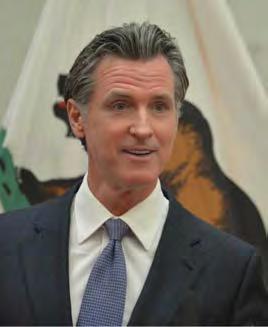
Governor Gavin Newsom in July signed a bill to make permanent an online suicide prevention training program for educators, school administrators, and family members of K-12 students.
young people attempted suicide in the past year, as the Bay Area Reporter reported in May based on data collected nationwide in 2025.
“We must do everything we possibly can to prevent youth suicide in California. That includes ensuring that every level of a student’s support network – their friends, their teachers, and their parents –have the knowledge, tools, and resources to recognize the warning signs and feel confident in supporting youth in their life who need help,” stated Berman.
AB 2003 took effect immediately.
It tasks the state’s Behavioral Health Services Oversight and Accountability Commission, in consultation with state education and public health officials, to develop the evidence-based online training program. It is to be accessible for free for all students 13 and older as well as all K-12 teachers, administrators and families.
the deadline for doing so, with someone under 18 years old at the time of being subjected to the therapy allowed to file a claim before age 40.
For people older than 18 when they underwent conversion therapy, they’d be able to file a claim within 10 years of their last session. A person would also be able to bring a claim within five years of their discovering an injury or illness due to the efforts to change their being LGBTQ.
“We can’t allow this awful Supreme Court decision to jeopardize the life of even a single child,” stated Wiener as his bill moved through the review process this spring. “Conversion therapy is psychological torture, and every major medical association has declared it to be quackery. At a time when many powerful people are trying to erase the LGBTQ community, I’m grateful to my colleagues in the Legislature for having our backs.”
SB 1328 introduced by lesbian Senator Sabrina Cervantes (D-Riverside) would require California’s colleges and universities to designate a confidential employee at satellite campuses, branch campuses, and outreach centers to support the needs of LGBTQ+ students, faculty, and staff. It follows on a bill passed in 2024 that required such a person on the main campuses of higher education institutions.
SB 998 by Senators Lena Gonzalez (D-Long Beach) and Akilah Weber
Pierson (D-San Diego) would among its provisions require the state’s Office of Civil Rights to appoint an LGBTQ+ discrimination prevention coordinator to develop educational materials for school teachers, staff, governing board and body members, administrators, and other local educational agency personnel so they can identify and proactively prevent LGBTQ+ discrimination at their school sites.
Intersex youth and adults would be provided protection under Assembly Bill 1876 authored by Assemblymember Dawn Addis (D-Morro Bay). It would clarify that intersex traits, as well as gender identity and other characteristics, are included under state law prohibiting sex discrimination by health plans and insurers.
All of the bills are before the appropriations committee in either the state Assembly or Senate. Several bills have been sent to the committees’ suspense files over the last month, raising doubts about their being voted out on August 13, as often such bills are blocked from moving forward even if they previously had gained support.
One is AB 1578 authored by gay Assemblymember Corey A. Jackson, Ph.D., (D-Moreno Valley) that would require elected school board members and other public office holders across California to complete at least one hour of anti-hate speech training and education within six months of taking office and subsequently every four years thereafter. The requirement would begin on January 1, 2028, if his bill becomes law.
Law Office of Shelley S. Feinberg
In January, the commission approved $1.5 million of Behavioral Health Student Services Act administrative funds to develop the suicide prevention training. Reacting to the enactment of AB 2003 last month, commission chair Al Rowlett, a licensed clinical social worker who in 2024 stepped down as Turning Point Community Programs’ CEO, stated it “is committed to helping turn this vision into action through the development of accessible, evidence-informed training that supports students, families, and educators across the state.”
The commission is expected to develop upward of six “trauma informed, culturally relevant, and developmentally appropriate training modules designed for teachers/staff, parents, and students, then work with state and local agencies to support the dissemination of those training modules,” according to Berman’s office.
Another new law in effect
His bill is the latest legislative effort state lawmakers have taken in recent years to address suicide prevention in students and young adults. A bill carried by gay Assemblymember Mark González (D-Los Angeles) last year requires that The Trevor Project’s 24 hours per day, 7 days per week suicide hotline 1-866-488-7386 be included on student identification cards given to those in grades 7 to 12 and enrolled in the state’s public colleges and universities. (The line also can be accessed by texting START to 678-678.)
In marking his AB 727 taking effect July 1, González noted in an Instagram post that, “LGBTQ+ youth face a 3x rate of attempting suicide than their peers. This law places a lifeline in their hands.”
After the Trump administration last summer ended the specialized services
SB 1149 authored by Senator María Elena Durazo (D-Los Angeles) aims to allow workers to take bereavement leave for chosen and extended family members, similar to previous legislation Durazo saw become law that extended paid family leave provisions to workers in need of caring for chosen or extended family members, not merely their immediate family. It was sent to the Assembly’s suspense file in July.
Also sent the chamber’s suspense file was SB 1023 by gay state Senator John Laird (D-Santa Cruz) aimed at addressing hiccups with insurance policies covering the cost of an injectable form of the HIV prevention medication PrEP. Some health plans restrict injectable PrEP coverage to their medical benefit for policyholders, which causes problems for nonprofit service providers that provide it via their own pharmacies in recouping their costs for doing so.
Joining the suspense file Monday were two bills authored by gay Assemblymember Rick Chavez Zbur (D–Hollywood). Under AB 1967 county social workers would need to immediately review petitions filed by LGBTQ or straight youth seeking to enter the state’s foster care system due to being abused or neglected at home and determine whether to open a juvenile dependency case within 21 days. It also would ensure young adults ages 18 to 21 are not blocked from extended foster care when they are no longer receiving support and are at risk of homelessness.
“For many youth in foster care, extended foster care can be the difference between stability and homelessness,” stated Zbur upon the bill being sent to the Senate. “These young people are often navigating homelessness, unsafe living situations, unemployment, mental health challenges, and disruptions to education or healthcare all at once. California has a responsibility to make sure that youth in foster care can access the support systems designed to help them transition safely into adulthood.”
Zbur’s AB 1930 aims to strengthen state privacy protections for confidential medical information. It comes amid po-
LGBTQ youth could access when calling the federal suicide prevention hotline 988 by using the “Press 3” option, Newsom and state leaders allocated funds to train counselors handling California-based calls to 988 on queer and transgender issues, which began late last year and was overseen by The Trevor Project.
LGBTQ members of Congress and their allies responded to the Trump administration’s deactivation of the “Press 3” option nationally by appropriating money to restore the LGBTQ-dedicated counselors, which was to have happened earlier this summer. But it is now on schedule to come back by the end of the year, a timeline out lawmakers blasted a day prior to Newsom’s enacting Berman’s AB 2003 into law.
“A year ago today, we stood here because the administration made the decision to shut down the 988 LGBTQ+ youth crisis line,” said lesbian Democratic Congressmember Sharice Davids of Kansas at the July 15 press conference. “I said then that it was the wrong decision. It was and still is. Because this has never been about politics. It’s about people. It’s about a young person who feels completely alone and is trying to decide if tomorrow is worth it, and making sure someone is there to answer the phone in that moment.”
Pressing the issue on a state level has been González, who this legislative session authored AB 1540 to restore the dedicated counselors under California’s 988 hotline. His bill would instruct state officials to request that the federal Substance Abuse and Mental Health Services Administration allow the Golden State to offer a dedicated “Press 3” option via the 988 hotline it operates.
Between July 2024 and June 2025,
litically motivated investigations being initiated by the Trump administration and Republican officials in other states who are targeting providers of abortion and gender-affirming care in California and other states.
AB 1930 would require business entities in California to notify the California attorney general before responding to a subpoena or inquiry regarding health care they provide that is legally protected in the Golden State. The attorney general would also be allowed to intervene in any civil action brought by a state business entity that faces a legal inquiry or summons related to the care they provide.
“Patients seeking reproductive or gender-affirming health care deserve privacy, dignity, and the freedom to make personal medical decisions without fear of political intimidation,” stated Zbur upon the bill’s passage out of the Assembly earlier this year. “As extremist politicians across the country attempt to criminalize legally protected health care, California must continue standing firmly on the side of patients, families, providers, and the rule of law. AB 1930 strengthens our ability to protect people seeking lawful medical care in our state from politically motivated attacks and invasions of privacy.”
Placed on suspense this week was AB 1775 by gay Assemblymember Chris Ward (D-San Diego) that would allow access to state programs by transgender veterans being forced out of the military under an executive order issued by President Donald Trump last year. It would make sure such service members discharged under the policy would still qualify for housing assistance and professional licensing support afforded to them by the state, as well as be able to utilize discharge upgrade services as they transition back to civilian life.
Also sent to the suspense file this week was AB 1836 co-authored by Ward and Assemblymember Jesse Gabriel (D-Encino). It would allow nonprofits that host community events such as Pride celebrations and other LGBTQ community events to seek funding up-
73,000 California callers had used it to request one of the LGBTQ-dedicated counselors when calling 998. According to an analysis of AB 1540, the state’s Office of Emergency Services estimates it would initially cost upwards of $1 million for the needed telecommunications infrastructure and $791,000 ongoing to support three permanent positions under the 988 State Suicide and Behavioral Health Crises Services Fund to implement the bill if it is signed into law by Newsom.
Meanwhile, the Department of Health Care Services estimates the total costs will be $6.11 million in Fiscal Year 2027-28 and $4 million annually ongoing from the 988 Fund to enact the bill. It informed lawmakers of needing an initial $4 million contract and $2 million ongoing to hire 12 fulltime staffers “to integrate the bill’s requirements into current 988 processes, and to support specialized routing, training, reporting, and performance standards for statewide consistency across 988 crisis centers.”
Having passed out of the Senate Health Committee on a 10-0 vote in early July, AB 1540 is now waiting to be taken up by the Senate Committee on Appropriations. With the state Legislature back from its summer recess Monday, the powerful committee chaired by lesbian state Senator Sabrina Cervantes (D-Riverside) began deciding August 3 the fate of scores of bills with fiscal costs attached to them. It has a deadline of August 14 to do so. t
Young people experiencing a crisis can contact The Trevor Project’s trained crisis counselors 24/7 at 1-866-488-7386, via chat at TheTrevorProject.org/Get-Help, or by texting START to 678678.
ward of $500,000 for security measures via the state’s Nonprofit Security Grant Program. It currently covers nonprofit facilities but not off-site events put on by such entities.
Other health bills under consideration
Several other pieces of legislation related to health issues await votes by the appropriations committees. Lesbian state Senator Caroline Menjivar (DSan Fernando Valley) is trying to pass a condom access in schools bill after seeing former versions of her legislation be vetoed by Newsom. Her SB 608 would ensure students in grades 7-12 can get the prophylactics from school-based health centers. It also would prohibit a retail establishment from furnishing nonprescription contraception to a person solely on the basis of age.
SB 1114 from gay Senator Christopher Cabaldon (D-Yolo) would strengthen privacy protections for sexual orientation, gender identity, and intersex data by limiting when state agencies can share the SOGI information. It would ensure the LGBTQ data cannot be disclosed outside of California state government, except under limited circumstances.
AB 2164 authored by Assemblymember Rebecca Bauer-Kahan (DOrinda) would prohibit California’s governor from recognizing a request for extradition of a person related to their providing a legally protected health care activity in the Golden State such as gender-affirming care except under certain circumstances.
Bills change focus, stall
Two bisexual legislators gut and amended their bills from their initial focus. Senator Sasha Renée Pérez (DPasadena) changed her SB 957 from mandating safety policies be in place for California users of online dating apps to now require social media companies to notify users when they have received an administrative subpoena.
Bill Wilson
t Community News>>
state’s attorney general to intervene in such matters.
Set to be heard Wednesday by the Assembly’s appropriations committee, SB 957 has been dubbed the Stopping Harmful Information Exploitation and Lawless Data Sharing (SHIELD) Act. It would place restrictions on how such companies respond to subpoenas and allow the
Hampton said he reached out to Curry after seeing his initial social media post last year.
“We have the SF LGBT center and it’s important people see themselves at the center,” he said of the organization’s embrace of SF Black Pride.
Marie Brand is program director for SF Black Pride. A queer Black woman, she told the B.A.R. that she’s making sure artists are lined up and overseeing general logistics. The need for visibility was what inspired her to get involved, she said in a phone interview.
“I’ve been in San Francisco 20 years on and off and I’ve seen the Black LGBTQ community diminish,” said Brand. “It’s important we bring back safe spaces for Black LGBTQIA people. San Francisco is the queer mecca and where everyone wants to be and be celebrated.”
mail or phone as well as online. The B.A.R. asked Spohrer how much a first citation would be on this, but has yet to hear back.
For 86-year-old gay Oaklander Howard Grant, “It’s another sad story, isn’t it, the way one-by-one we keep losing these crucial, seminal, gay gathering spots.”
Grant, a retired architect who designed the Castro Muni Station and Harvey Milk Plaza in San Francisco’s LGBTQ Castro neighborhood, recalls first visiting the site in 1958 when he was in the closet at Stanford University.
“It was just camaraderie, gathering at a beach,” he said. “If you wanted to, you could take your clothes off, but very few guys were bold enough in that period.”
Later, in 1978, Grant returned, and kept coming back for more.
“It was just an explosion,” he said. “During that period there were all these sexualized meeting places. Some surreptitious, but all well known. … It was exhilarating.”
Grant said that two gay men “opened up the ranch land to parking and controlled it,” collecting a small fee.
Indeed, an article in a B.A.R. issue dated September 4, 1986 states that a lawsuit against Ben Hernandez and Richard Sturgeon, the operators of the parking lot, was dismissed by a San Mateo County Superior Court judge. The suit was brought by people concerned about sexual activity on the beach; the judge ruled that Hernandez and Sturgeon couldn’t be expected to enforce laws against public sex, as that was law enforcement’s responsibility.
“They didn’t like all these nude men below them and tried to stop it,” Grant said, recalling the suit was filed by neighbors of the beach. “It failed.”
Grant said he visited the beach, “in-between lovers, of course.”
“It was one of my favorite things to do,” he said. “It’s just gorgeous. It’s thrilling to be at the beach, be free of your clothes, it’s very libertine. … Guys would take all the driftwood and build forts, like condos, all strung along the beach, with guys standing up naked and looking for somebody to connect. If you wanted to enjoy nature, you could also do that too.”
Marty Courson, a gay San Francisco man, has been a fan since 1991.
“Not everyone was there looking to lay alone on the beach. There were always people who wanted to
“People should be able to use social media to stay informed and keep one another safe without worrying that their activity could result in retaliation from the federal government,” noted Pérez.
“No one in this state should be intimidated into silence out of fear that their personal information will be secretly shared with federal authorities.”
In fact, the city’s Black population as a whole has declined. As the San Francisco Chronicle noted in a March report, in 2020 just 5.4% of city residents were Black, down from 13.4% in 1970.
Hampton said he will be teaching his popular Xtreme Step Hip-Hop during “Movement Monday,” August 24, from 5:30 to 7:30 p.m. at the center. Hampton teaches the class every Wednesday at the LGBT center. “It’s Black, it’s straight, it’s hip-hop,” he said of mainstream editions of the highenergy class. He said that he got certified so that he could focus on queerness in his classes.
“People are really into it,” Hampton said.
The release noted that other offerings include community-led conversations on intergenerational history, art, housing, and social advocacy. Music and nightlife activities will showcase premier Black LGBTQ+ DJs, live musical performances, and nightlife producers across
In noting its support for the bill, the California Legislative LGBTQ Caucus pointed out that “recent reporting and research have highlighted how social media platforms collect and infer deeply sensitive information about users, including data related to gender identity, sexual orientation, and personal beliefs. In the wrong hands, this information can be used to target, harass, or even endanger LGBTQ+ individuals.”
iconic San Francisco venues.
Also on August 24 will be Vogue and Tone with Sir JoQ, at 8 p.m. at Dance Mission Studio, 3316 24th Street. Attendees will learn the history of voguing, along with an intense workout. Sir JoQ will have another Vogue and Tone workshop Thursday, August 27, at 8 p.m. at ODC, 351 Shotwell Street.
People can head over to the Powerhouse, 1347 Folsom Street, where drag artist Pillows will have a special show August 24 at 8 p.m.
Brand said that she’s most excited about a queer film program taking place Tuesday, August 25, from 6 to 9 p.m. at the Stud, 1123 Folsom Street. Presented in partnership with QWOCMAP, the Queer Women of Color Media Arts Project, the event, “Queer Black August,” will feature short film excerpts provided by QWOCMAP followed by a panel discussion and community conversation.
play with other people in the sun,” he said, adding that he’s “heard that too” about nudity now being banned.
“That’s kind of the public face you’d expect the state parks to do,” Courson said. “So I don’t know what to make of that, really. I’d take it with a grain of salt because it’s a very remote beach. When the tide is up, the rangers can’t bring their truck there.”
During high tide, the mile-anda-half site in question is blocked by water on both sides. Even when the water recedes, rocks on either side make the journey treacherous.
“It’s private,” he said. “Only in a few places in the entire world you could have basically a private cove that’s absolutely beautiful. Fifty to a hundred people spaced around two miles, a mile-and-a-half, whatever it is.”
Gerard Koskovich, a queer public historian based in San Francisco, noted to the B.A.R. that often LGBTQ people had to gather in public yet secluded places due to discrimination.
“For many people, privacy could only be had in public,” he said. “The traditional private spaces people had access to were their family home, their school dorm room, and so on. These were not private spaces that could include any kind of gay life or gay pleasure, so you had to find privacy in public spaces.”
Before hookup apps, “there were analog equivalents,” Koskovich explained. “You had to drive to the beach, and hope the weather was good.”
Assemblymember Sade Elhawary (D-South Los Angeles) altered the focus of her AB 2551 from being about LGBTQ health data to instead be about protests on college campuses and was placed on the suspense file Monday. Meanwhile, her AB 2014 dealing with gender-based bias in court proceedings was held in committee in May, as was Jackson’s AB 2119 aimed at addressing gender bias in sexual assault and domes-
“All of the programs for the week are very exciting,” Brand added.
Those include a “Throw It Back” 1990s-2000s-themed R&B and hiphop party that takes place at QBar, 456 Castro Street, Thursday, August 27, from 9 p.m. to 2 a.m.
After the block party on August 29, the Oakland to All Ball will be held at SOMArts, 934 Brannan Street, for a night of ballroom culture from 6 p.m. to midnight.
Meanwhile, Sapphic Night takes place that evening from 9 p.m. to 2 a.m. at Mother Bar, 3079 16th Street.
Queer women, lesbians, and sapphic folks will gather for what is described as a homecoming with performances and dancing, the website noted.
Curry said that SF Black Pride’s budget goal is $150,000, which he explained is about the future so that it can become a 501(c)(3) nonprofit and scale its year-round community support.
tic violence investigations.
Gay Assemblymember José Luis Solache Jr. (D-Lynwood) had hoped to move forward his AB 908 aimed at monitoring compliance among school districts with a state law requiring the adoption of instructional materials inclusive of LGBTQ history. It stalled last summer and didn’t move forward this year. t
“We’re proud that in just our second year, $11,000 in early community funding guarantees a full week of events this year,” Curry stated in a follow-up email. But he added that donations are needed.
“Our block party staging and AV system is seeming to become a huge financial hurdle, so there’s a wonderful opportunity open for a sponsorship for our stage and AV system,” he stated.
SF Black Pride has secured media sponsorships, including the B.A.R. as exclusive LGBTQ media partner, the release stated, along with 48 Hills, Broke-Ass Stuart, and the San Francisco Examiner. The Bob Ross Foundation, named after the B.A.R.’s late founding publisher, is also a sponsor.
Most of the events are free, organizers said. For more information about SF Black Pride, including scheduled events, visit sanfranciscoblackpride. org. t
Ashes at sea
And the beach wasn’t just for sex, either.
“We see in the B.A.R. obituaries, in the 1980s, a number of times it reported on someone who had gone to San Gregorio for ashes to be scattered,” said Koskovich, who also posted about the beach on the Preserving LGBTQ Historic Sites in California Facebook page that he administers.
These included gay erotic star Al Parker, who died of AIDS complications at the age of 40 in 1992, as well as 32-year-old Mark Ryan, who also died of AIDS complications and whose ashes were spread on June 25, 1986, following a memorial service.
Grant and Courson did not recall witnessing, hearing about, or participating in these ceremonies personally, but Grant reflected there’s “something spiritual just about being next to the ocean. Spreading your lover’s ashes in the ocean is very poetic. We were all aware of that possibility.”
Regarding the state takeover, Grant said, “I don’t know what this conservative impulse is, but it’s a phenomenon.”
For its part, there is a state parks sign on the site stating, “Since the 1960s, this beach has been a popular safe space for the queer community, and its allies, where people have felt welcome to recreate without fear of discrimination. Now, it will continue to provide important access for all.”
Spohrer said that signage will be turned into a more permanent plaque. t
2026 Annual San Francisco
Driftwood “nests” that men would build for more privacy were strung out like condos at San Gregorio Ranch Beach in 2007.
Howard Grant A new state parks sign mentions the importance of the old San Gregorio Ranch Beach to the queer community.
Courtesy California State Parks
Fewer school districts take part in EQCA LGBTQ report
by Matthew S. Bajko
After hitting a high mark two years ago, participation in a biennial survey on the LGBTQ policies enacted by California public schools has fallen to its lowest level. Less than a third of the state’s unified districts filled out the survey sent to them last year.
Thus, the 2026 Safe and Supportive Schools Report Card is based on the responses of just 109 out of the 345 K-12 school districts across the Golden State. In 2024, the report was based on the survey results of 146 districts.
The report card is compiled by the Equality California Institute, the educational arm of the statewide LGBTQ civil rights organization Equality California. This year’s is the fourth it has released since 2019, when 130 school districts participated in the inaugural survey.
Tony Hoang, a gay man who is EQCA’s executive director, addressed the limitations the institute staff face in trying to get school administrators to fill out the 38-question survey in his introductory letter for it. Because the California Department of Education doesn’t conduct it, participation in it “is entirely voluntary” for the school districts, whose participation “varies from cycle to cycle,” Hoang noted, which presents limitations in making “any longitudinal conclusions” about the survey results.
“The data presented here does have
<< Businesses close From page 3
nancial losses. Community support will help restock shelves, recover losses, and keep this family-owned store open for generations to come.”
The store was owned by Said and Hisham Bsisso, who inherited it from their father Sami, the longtime owner of Noe Hill Market at 4001 19th Street, who died of COVID in 2021 the day after he acquired Buffalo, according to the San Francisco Chronicle.
The B.A.R. reached out to Noe Hill Market via phone. Manager Yam Kunwar said that the market is in the midst of an ownership transition to himself, which should be completed in the coming weeks.
But Buffalo’s half-century in business came to an end last week. Signs were still posted August 4 announc-
Legals>>
The Equality California Institute saw lower participation from public unified school districts in its policy report issued August 4.
limitations,” Hoang acknowledged. “For example, responses are self-reported by district administrators and reflect only the presence of a policy, not successful implementation. Many districts face real barrier to fulsome implementation due to budget constraints and intentional obfuscation of human rights by the federal administration.”
Nonetheless, Hoang pointed out the report card can be used by LGBTQ advocates, community stakeholders, and school district staff as an “advocacy tool for change and a conversation starter about progress and gaps in school climate for LGBTQ+ students across California.” Despite the myriad protections
California legislators and school districts have put in place to address the needs of LGBTQ students, they nonetheless face homophobia and transphobia from the classroom to the locker room, as various surveys routinely document.
“LGBTQ+ youth continue to face bullying, harassment, and discrimination because of who they are, often at the cost of their mental health, academic success, and sense of belonging,” noted Hoang. “Addressing these disparities is a collective responsibility. Together, We Rise Up.”
Alameda Unified School District Board of Education President Ryan LaLonde, a gay married father of an incoming college freshman, told the Bay Area Reporter that the drop off in participation with this year’s report card is hardly surprising considering the assault on pro-LGBTQ policies being waged by the Trump administration and officials at the federal Department of Education.
As the B.A.R. has reported, they have launched investigations into schools across the country for having supportive policies for LGBTQ students, in particular those who are transgender or gendernonconforming.
San Francisco Unified School District
Superintendent Maria Su, Ph.D., was one of several public school leaders called to testify before the Republican-led House Committee on Education and the Workforce during Pride Month. The hearing was titled “Breaking Trust: Attacks on
ing, “40% off everything!! Closing next week.” There was a “Sorry we’re closed” sign at the main door. Peer-
COUNTY OF SAN FRANCISCO CASE NUMBER CNC-26-560805 Petitioner MASSINISSA DERRARDJA filed a petition with this court for a decree changing names as follows: present name MASSINISSA DERRARDJA AKA AMEL DERRARDJA to proposed name MASSINISSA DERRARDJA. Any person objecting to the name changes described above must file a written objection that includes the reasons for the objection at least two court days before the matter is scheduled to be heard and must appear at the hearing to show cause why the petition should not be granted. If no written objection is timely filed, the court may grant the petition without a hearing. Notice of Hearing: AUGUST 25, 2026, 9:00am, Dept. 103N, Rm. 103N, Superior Court of California, 400 McAllister St., San Francisco, CA 94102. JULY 16, 23, 30, AUG 06, 2026
ORDER TO SHOW CAUSE FOR CHANGE OF NAME IN SUPERIOR COURT OF CALIFORNIA, COUNTY OF SAN FRANCISCO CASE NUMBER CNC-26-560811
Petitioner HO JUNG KIM filed a petition with this court for a decree changing names as follows: present name HO JUNG KIM to proposed name GRACE KIM TURLINGTON. Any person objecting to the name changes described above must file a written objection that includes the reasons for the objection at least two court days before the matter is scheduled to be heard and must appear at the hearing to show cause why the petition should not be granted. If no written objection is timely filed, the court may grant the petition without a hearing. Notice of Hearing: SEPTEMBER 01, 2026, 9:00am, Dept. 103N, Rm. 103N, Superior Court of California, 400 McAllister St., San Francisco, CA 94102. JULY 16, 23, 30, AUG 06, 2026
FICTITIOUS BUSINESS NAME STATEMENT FILE 20260409721
Fictitious Business Name(s)/Trade Name (DBA): NOBI CREATIVE STUDIOS, 941 HAYES ST, SAN FRANCISCO, CA 94117. This business is conducted by an individual. Registrant/Owner(s): NEAL ALAN BRETSCHNEIDER. The registrant(s) commenced to transact business under the above listed fictitious business name or names on N/A. The statement was filed with the City and County of San Francisco, CA on 06/23/2026. JULY 16, 23, 30, AUG 06, 2026
FICTITIOUS BUSINESS NAME STATEMENT FILE 20260409783 Fictitious Business Name(s)/Trade Name (DBA): THE TIDES THERAPY, 1728 UNION ST #106, SAN FRANCISCO, CA 94123. This business is conducted by an individual. Registrant/Owner(s): LINDSEY MANDELL. The registrant(s) commenced to transact business under the above listed fictitious business name or names on 01/14/2026. The statement was filed with the City and County of San Francisco,
Parental Rights, Inappropriate Content, and Legal Abuses in America’s Schools” with questions from its GOP members on everything from drag story hours to bathroom access for trans students.
Hostility around such inclusive policies for LGBTQ students has been building up for years, even in California. Outgoing State Superintendent of Public Instruction Tony Thurmond has fought with conservative school board members across the state who have enacted anti-trans and other homophobic policies during his tenure.
That negative climate can have an impact on local school leaders, noted LaLonde, who may be less inclined to take part in EQCA’s schools survey.
“I think people might be afraid to fill it out. It puts our work out there very publicly, and we can be a target so easily,” said LaLonde, who is seeking this fall to serve out the remainder of a two-year term on his school board in a special election prompted by the resignation of one of his former colleagues. “One of the reasons why I want to continue in this position is to keep moving that work forward. Our district is on many different watch lists for our inclusive stances on different policies.”
Alameda Unified was one of the 22 out of 42 such districts in seven Bay Area counties that filled out the newest report card. EQCA included Alameda County in its Region 4 for it, which also looped
together Contra Costa, Marin, Napa, San Francisco, San Mateo, and Solano counties. It had one of the best response rates of any of the 11 regions EQCA created for the 2026 report card.
As for the Bay Area region’s two other counties, Santa Clara County was placed in Region 5 with Monterey, San Benito, Santa Clara, and Santa Cruz counties where eight of the 11 invited districts filled out the survey. Sonoma County was grouped into Region 1 with Lake, Humboldt, Del Norte, and Mendocino counties where just three of the 24 invited districts responded.
SFUSD received a score of 48 out of a total of 65 on this year’s report card, putting it among those with or near its region’s average score of 47.4. Alameda Unified’s score was 57, putting it well ahead of the average for the region and making it one of the highest-scoring districts throughout the state that took part in EQCA’s latest survey.
LaLonde noted to the B.A.R. that his district moved up in the statewide rankings from seventh two years ago to being tied for sixth this year. Its total 2026 score increased by one point compared to 2024.
“I think we have the highest ranking in the East Bay,” he said. “I am proud of the work the district does.”
The 58-page 2026 Safe and Supportive Schools Report Card is available online at https://tinyurl.com/krd95zxn.t
ing inside, the shelves still contain merchandise.
The site of the former Buffalo
Business Name(s)/Trade Name (DBA): RAGGED ROMANCES, 1131 SCOTT ST, SAN FRANCISCO, CA 94115. This business is conducted by an individual. Registrant/Owner(s): NIXON TRAN. The registrant(s) commenced to transact business under the above listed fictitious business name or names on 07/05/2026. The statement was filed with the City and County of San Francisco, CA on 07/06/2026. JULY 16, 23, 30, AUG 06, 2026
FICTITIOUS BUSINESS NAME STATEMENT FILE 20260409852
Fictitious Business Name(s)/Trade Name (DBA): NEW LINEAGE, 58 WEST PORTAL AVE, SAN FRANCISCO, CA 94127. This business is conducted by an individual. Registrant/ Owner(s): RITCHIE LI. The registrant(s) commenced to transact business under the above listed fictitious business name or names on 07/07/2026. The statement was filed with the City and County of San Francisco, CA on 07/09/2026.
JULY 16, 23, 30, AUG 06, 2026
FICTITIOUS BUSINESS NAME STATEMENT FILE 20260409779
Fictitious Business Name(s)/Trade Name (DBA): HYDE & TURK MARKET, 161 HYDE ST, SAN FRANCISCO, CA 94102. This business is conducted by an individual. Registrant/Owner(s): ALA ALGHAITHI. The registrant(s) commenced to transact business under the above listed fictitious business name or names on 06/30/2026. The statement was filed with the City and County of San Francisco, CA on 06/30/2026. JULY 16, 23, 30, AUG 06, 2026
FICTITIOUS BUSINESS NAME STATEMENT FILE 20260409873 Fictitious Business Name(s)/Trade Name (DBA): GRIVETTI’S 24 HOUR PLUMBING, 2327 TURK BLVD, SAN FRANCISCO, CA 94118. This business is conducted by an individual. Registrant/Owner(s): RYAN ROBERT GRIVETTI. The registrant(s) commenced
JULY 16, 23, 30, AUG 06, 2026
FICTITIOUS BUSINESS NAME STATEMENT FILE 20260409841 Fictitious Business Name(s)/Trade Name (DBA): GO FO’ BROKE POKE; HAWAIIAN ICED TEA, 3550 CALIFORNIA ST #4, SAN FRANCISCO, CA 94118. This business is conducted by a corporation. Registrant/Owner(s): GO FO’ BROKE, INC. (CA). The registrant(s) commenced to transact business under the above listed fictitious business name or names on 07/07/2026. The statement was filed with the City and County of San Francisco, CA on 07/08/2026. JULY 16, 23, 30, AUG 06, 2026
FICTITIOUS BUSINESS NAME STATEMENT FILE 20260409828 Fictitious Business Name(s)/Trade Name (DBA): THIRD HOUSE, 6271 3RD ST, SAN FRANCISCO, CA 94124. This business is conducted by a corporation. Registrant/ Owner(s): A LITTLE X (CA). The registrant(s) commenced to transact business under the above listed fictitious business name or names on N/A. The statement was filed with the City and County of San Francisco, CA on 07/06/2026. JULY 16, 23, 30, AUG
The Church Street Cafe closed after 20 years.
Scott Wazlowski Buffalo Whole Food and Grain Co. in the Castro closed last week, but still had signs in the window August 4.
John Ferrannini
International Deaf Dance Festival returns to Dance Mission Theater
by Brian Guan
s the Bay Area summer dance season reaches its close, Deaf performers will take center stage in a celebration of their identities and art. The 2026 Bay Area International Deaf Dance Festival runs from August 14 through Au-
Spotlighting Deaf and hard of hearing dancers from California and beyond, the festival seeks to celebrate the work of an artistic community that has been historically underrepresented. The festival will consist of a line-up of performances, workshops, and educational opportunities that underscore the importance of
An annual event, the festival is entering its 14th year. It is presented by the Urban Jazz Dance Company, a Deaf-led company committed to increasing access for Deaf and disabled creatives.
In an interview with the Bay Area Reporter, Zahna Simon, the festival’s queer assistant director, described Deaf artists as “siloed” in different locations, interpreted from American Sign Language
“This festival is an opportunity for them to come together, connect with one another, and have opportunities on a real stage,” Simon signed in an online interview with the Bay Area Reporter.
For Antoine Hunter, the Two-Spirit director of the Urban Jazz Dance Company and the festival’s founder, the event’s evolution has been characterized by a continuous sense of growth.
Ray of Light’s ‘Urinetown’
Now streaming, the musical takes the piss out of government overreach
by Jim Gladstone
Back in 2003, when the Bush administration’s corruption seemed far less quaint than it does in retrospect, Tony nominations were piled high for “Urinetown,” now playing in a razor-sharp, gloriously-sung new production by Ray of Light Theatre through August 29.
While “Urinetown” took home Tonys for Best Book, Best Original Score, and Best Direction, it was snubbed for Best Musical (The win-
ner? “Thoroughly Modern Millie”!). Due in part to that error in judgement, and the fact that composer and co-writer Greg Kotis has always maintained a low profile relative to other major Broadway creatives, “Urinetown” has not been sufficiently recognized as the satiric gem it is.
In both wordplay and color scheme, “Urinetown” matches Broadway’s more recent yellow peril, “Shucked,” the cobzapoppin’ dad joke hoedown which went on to crop-dust the country in cornpone puns. (A smart lyricist could effectively make “corn” and “urine” rhyme).
Both shows’ songs offer a pastiche of Broadway tropes (or in the case of “Urinetown,” a pisstiche). But “Urinetown” is deeper, darker, and more daring, flanking its pure entertainment value with a critique of government-corporate entanglement and willful public blindness to the damage it wreaks.
Today, the show feels terribly urgent, as if it’s releasing a golden shower of shame on the gilded grift of Trump and company.
Hunter described how, since its inception, the event has progressed from a one-day workshop to a multi-day affair. “We always learn new things to contribute to the community,” Hunter said in the online interview.
Expanded access
It’s an expansion in scale that has also come with a commitment to an increase in accessibility. The festival has seen an expansion in the number of languages it accommodates for, including American Sign Language, International Sign Language, spoken Spanish, and English.
It’s a multiplicity of accommodations that, for Hunter, reflects the “ways that Deaf people come to our festival with different access needs. We want to support them,” the founder affirmed.
The festival will include two flagship nights of performances held at San Francisco’s Dance Mission Theater.
On August 14 and 15, dancers will showcase a diverse range of dance styles and performance techniques, including tap, jazz, ballet, modern dance, contemporary dance, and aerial choreography. Sign language will be incorporated as well.
The performances will include thematic commentary. In particular, Hunter described a concerted effort to respond to the advancement of technology and “the speed of AI” within the performances’ staging.
See page 12 >>
Cast makes a splash
“Urinetown” takes place in a nameless metropolis where a fascist government is deep in cahoots with corporate overlords led by Caldwell Cladwell (William Giammona). Due to water shortages, all toilet facilities have been privatized and monetized. An early song makes the regime’s con clear: “It’s a Privilege to Pee.”
An impoverished populace scrapes pennies together to avoid wetting their pants. But as they form long waiting lines outside of municipal pay toilets and share their tales of not having a pot to piss in, the citizens begin to organize a rebellion.
It’s as if, instead of ousting Louis XIV, “Les Miz” were demanding to take a whiz.
The lyrics and production underline this likeness: Huddled masses of actors hoist protest banners, move about the stage in intentionally clumped solidarity, and sing with gale force.
Narrative exposition is delivered with gregarious, serrated-edge charisma by Sidney Matthew Roman as on-the-take policeman Officer Lockstock. From the opening number, he’s rocket fuel for the entire production. Imagine the Emcee from “Cabaret” after a three-day testosterone enema.
The rebels are led by dimwitted dreamboy Bobby Strong, played with modest Clark Kent aplomb by Sadat Hossain, a relative newcomer to local stages. In short order, they take Cladwell’s doting daughter hostage. Is her name Hope? Does she fall hard for Bobby? Does she soonenough see the sparkling light of free-flowing urine? Oui, oui!
Gabrielle Goodman takes this role, intentionally written to predictable beats, and infuses it with screwball comic personality. Her quirks and specificity are typical of the show’s entire extraordinary company.
No cast member ever falls into generic chorus line mode. Everyone’s a character, all the time. Their slyly-timed facial expressions, verbal affects, posture shifts, and peculiar gaits bring an electric vividness to this production.
Bay Area International Deaf Dance Festival founder Antoine Hunter, above, and Assistant Director Zahna Simon.
Sadat Hossain as Bobby Strong (center) and the cast of Ray of Light Theatre’s ‘Urinetown the Musical’
Jon Bauer
In Front of Your Eyes Performance Festival
The Marsh presents solo shows by women and nonbinary
by Lou Fancher
One way to crack a cycle of silence, isolation, shame, and insecurity is to speak up. Another way is to listen. Speaking and listening play major roles in The Marsh’s upcoming In Front of Your Eyes Performance Festival. Presented August 12–16 at the theater’s San Francisco location, and August 19–30 at The Marsh Berkeley, the festival brings ensemble and solo shows by women and nonbinary performers.
For each production, the full-length developing and new plays by local and national performers and playwrights are preceded by a short performance work by a variety of theater artists. Moderated post-show audience feedback sessions open the dialogue to the community. In Front leaps to higher ground than most festivals, because all of the 18 headline artists present a second performance of the same work within 1-3 days of the opening; allowing them to integrate, or not, the comments received from audiences and other artists.
Interviews with three participating performer/playwrights provide a sample of the diverse voices and stories audiences will hear and respond to at the festival.
Finding space
Elizabeth Du Val is a former professional ballet dancer whose career included touring with “The Phantom of the Opera,” performing in Le Cirque, and journeying around the world as a cruise ship performer. “For When Things Fall Apart” is a solo show about a time when Du Val’s life was falling apart, or so it seemed. Leaving her identity as a dancer and moving impulsively to Berkeley, she found herself cast adrift.
“I had no friends, no place to live, no money,” she told the Bay Area Reporter. Hoping to sleep for few nights on a dance studio floor, she carried her belongings in an enormous duffel bag.
storytellers
When a bus driver refused her boarding, she collapsed on the sidewalk. “It was the only time in my life I ever just gave up,” she said.
Du Val is uncertain what caused her to get back on her feet, but she did. The next bus driver allowed her to get on. Grateful for that bus driver then and now, she eventually reached her destination: an empty warehouse with no running water, heat, or windows and recalled feeling “thrilled to be there.”
The new show is her most personal one to date, largely because she is herself throughout, not an invented character. While working during development with solo performance advisor David Ford and receiving input from her show’s opening artist, Molly Rose-Williams, Du Val has cut scenes and written countless drafts.
About audience feedback, she said, “I listen to all feedback, but you can have just two people looking at a work and there’s conflicting feedback. Ultimately, it comes back to what feels true to me and the story.”
Queerness and belonging Dev Cuny is a theater artist, story-
teller, former minister, and works as a facilitator and trainer in restorative justice and trauma-informed systems. Cuny identifies as trans and uses they/ them pronouns. Their work most often addresses queerness, masculinity, belonging, and self-construction. Driven by remarkable combinations of humor, darkness, truth, and spiritual elevation, “Assigned at Birth: My Funeral Part 1” slams into the topic of death with a resounding call to live truthfully.
Life experiences involving death, and a class Cuny took in which participants planned their own funeral, taught them that every person’s last gasps are taken in the ultimate human place.
“Even in the tension between life and death, we discover joy and appreciation in random grief-stricken ways. There’s a thin veil and people’s guards are down,” they said.
The play spans three decades in Cuny’s life. In one section, dance is the language in a silent monologue. Creating the work has been magical and healing for Cuny. If there is profundity to be found beyond making meaning of one’s life and finding universal principles embedded in every person’s identity, it
Meet comic Loren Kraut
Instagram’s little old lesbian to headline Oakland show
by David-Elijah Nahmod
On August 22 Loren Kraut, aka Instagram’s Little Old Lesbian (LOL) will headline a stand-up show featuring the Comedians With Disabilities Act. The troupe, which offers outrageous humor from a variety of comics who live with seen and unseen disabilities, promises, as their website says, “to change attitudes about disability, one laugh at a time.”
Kraut lives with two invisible disabilities, Obsessive Compulsive Disorder (OCD) and depression, but she hasn’t let either stop her from making her voice heard. She is 70 years old, and has been performing with the Comedians With Disabilities Act for 15 years. She represents her lived mental health experiences in her stand-up, and will be joined by Nina G., Mean Dave and Jade Theriault.
Nina G is a stutterer, and the author of “Stutterer Interrupted: The Comedian Who Almost Didn’t Happen.” Mean Dave has been in recovery for over a decade, and wants his audiences to know that being an addict in recovery is covered by the Americans With Disabilities Act, a message he weaves into his humor. Theriault, who uses a wheelchair, calls herself a “borg who was manufactured in the Bay Area.”
For Kraut, working as Instagram’s Little Old Lesbian is a more recent venture. As the LOL, she offers advice, and laughs, for living your best neurotic life, with a few F bombs thrown in for good measure. She has amassed nearly 76,000 followers and is growing.
In an interview with the Bay Area Reporter, Kraut talked about her comedy career, and about how she finds humor in her disabilities.
David-Elijah Nahmod: Please tell me what inspired you to become a comedian.
Loren Kraut: Well, I kind of always wanted to do it, but I was afraid, and I skirted around it for a while. But then I got breast cancer. I was teaching, and I hated it, and I said, okay, this is my wake-up call. I’m not going to do this anymore, I’m gonna do what I wanna do. I took a free class at the comedy college and I fell in love with it and said, This is what I want to do. That was in 2006, and I’ve been doing it since then.
Are you able to make a living at it?
No, I retired in 2022 but I’ve been working different jobs and stuff, and doing comedy along with it. Now I just do comedy, but I’m not making a living, not yet.
Can you explain more about the Comedians With Disabilities Act?
They’re great. It’s wonderful to work with them because it’s showing people with a seen or an unseen disability, and doing comedy about it brings awareness and connection to audiences. They may not have the same thing going on in their life, but if they can identify with what you’re talking about and find the humor in it, then you’re doing something right. It’s a good chance to be seen and heard.
For those who don’t know, what’s the difference between a seen and an unseen disability?
Some people have disabilities that are apparent, like they’re missing a leg, and other people have, like I do, OCD and depression, that you wouldn’t notice right away until they talk about it.
comes from the festival’s focus.
“I love this festival because it’s storytelling amplifying everybody’s voice,” said Cuny. “These women and trans voices are not prioritized and not always centered. I believe in the power of story for transformation, as a therapeutic modality. I can touch down on what’s in common in our humanity. Solo performance is the opposite of alone.”
Broadway and beyond
Playwright and performer Robyn DeGuzman has gone big during Broadway tour seasons in Disney’s “Beauty and the Beast,” “Elf the Musical,” and “Miss Saigon.” Recently, she veered in the opposite direction, presenting solo shows such as “Enough Free,” the 60-minute work in the festival. The one-woman show moves from the Spanish colonization of the Philippines to modern displacement, telling her story as a woman, immigrant, minority, parent, and artist.
At one time, DeGuzman thought her “real life” was making money, settling down to raise a family, and “not having fun.” A “Finding Your Voice” class at Berkeley Rep led by Joyful Raven (who directs DeGuzman), broke open De-
How do you find humor in OCD and depression, or do you ever talk about your breast cancer in your stand-up?
I do. That’s a little bit harder because it’s cancer and people kind of tighten up, but I try to find the funny in it and bring it around. I have one joke called “wake up call” where I talk about getting the wake-up call about having breast cancer and then going into comedy. I find the humor in the OCD and depression by just bringing it out and looking at it and saying, This is what I do. I have a system for making my toast in the morning, it’s like I’m compelled to do it a certain way every day. I just make fun of it, and I try to bring the audience in and find the humor in it. I think it’s funny, but they’re laughing, so it encourages me to go on.
Guzman’s self-inflicted, moldy prison.
“What I do in day-to-day activities, I love hanging out, is important. That’s a revelation,” she said.
After telling iconic stories of other people on Broadway, a pivot to sharing her personal stories of trauma is healing. Speaking about her parent’s immigration from the Philippines to the United States and voicing out loud her search identity creates a channel of communication with other immigrants.
DeGuzman says stereotypical presentations of Filipino people and culture as happy caretakers keeps the dialogue locked up, undermining honesty.
“I talk about how the Philippine’s numbers one export is people,” said DeGuzman. “There’s a juxtaposing of us as hospitable, loving caretakers for the elderly and us as people traumatized by post-colonization, people who leave their country because of an economy being shattered by climate change and colonization. I say, let me shed light on a country with over 300 years of colonization.”
DeGuzman stacks scenes like lopsided towers that threaten to topple and create drama. Orbiting on a theme, performer and audiences laugh, cry, witness, and find joy and community in stories. Answering and asking a final question, she said, “Fun, trauma, life stories. Isn’t that what theater is?”
“I’d love to hear understanding of why colonization is so destructive,” she said. “The balm will not come overnight, but healing begins with conversations sharing the individual micro-ways it affects our hopes, dreams, and lives.” t
In Front of Your Eyes Performance Festival, $15-$100, festival passes $35-250. August 12-30, The Marsh San Francisco, 1062 Valencia St., San Francisco, and The Marsh Berkeley, 2120 Allston Way, Berkeley. www.themarsh.org
Please share more about the Little Old Lesbian on Instagram.
It’s kind of taken off. I wanted to do something a little different with my comedy. I didn’t really know how to do Instagram, so I was just kind of trying it out, and it just took off. The fourth one I did went viral, and that was almost a year and a half ago, so it’s been going ever since. It’s kinda cool. For someone my age to be an Instagram hit is just really funny to me. But I love it, everyone is so nice, and the comments are wonderful.
What did you say in that fourth posting that caused it to take off?
That was the one where I talked about embracing your hiccups. I call hiccups things that you don’t like about yourself or things that are
problematic, like suicide or depression. I said, ‘Tell your nose its marvelous, you like it like that. Hug your OCD like it’s your long lost brother,’ and ‘Come here, suicide and depression, I want to kiss your face.’ And I did it with stuffed animals, acted out the hugging and the kissing, and that one took off.
What is your advice to anyone dealing with a mental health condition and doesn’t know what to do about it?
Talk to someone about it, a therapist or your doctor, and see what they find is the best way to go about treating it, tackling it. Everyone’s different. And try to find the humor in it. Not everyone can. It depends on what it is, I guess.
And what is your advice to anyone thinking about going into comedy?
That’s a tough one! Study the masters. Get to know what’s good comedy. George Carlin, Richard Pryor, Maria Bamford. She also has OCD and talks about it. And get up there and do it. I mean, stage time, stage time, stage time. And it’s true. Keep at it. t
Comedians With Disabilities Act, August 22, 8pm, $25. Woodminster Amphitheater in Joaquin Miller Park, 3540 Sanborn Drive, Oakland.
comedianswithdisabilitiesact. com instagram.com/loren. kraut
Dev Cuny, Elizabeth Du Val and Robyn DeGuzman in The Marsh’s In Front of Your Eyes Performance Festival
Cynthia Smalley
Comic Loren Kraut
‘Because of You
‘Because of You’
by David-Elijah Nahmod
The documentary “Because of You:
A History of Kilawin Kolektibo” clocks in at a mere 39 minutes, but in that short period of time it covers quite a lot of ground. It’s a film about belonging, and about creating community among a group of Filipina lesbians. Directed by Barbara Malaran and Desireena Almoradie, the two former collective members made the film in order to preserve the group’s history.
The filmmakers don’t spend any time giving the audience background information on the women in the film. They just let the camera roll as the women speak. One woman talks about having a brick thrown through her window, while another discusses being subjected to an anti-Asian slur. It’s clear that they were deeply affected by incidents like these, but with Kilawin Kolektibo, they found the community and support they craved. As one woman said, “Kilawin Kolektibo offered an alternative to the sameness of white lesbian communities where being gay is the only thing that’s different about them or challenges them.”
We see women marching not only in Pride parades, but in Filipino independence parades, where they find a surprising amount of acceptance. They bond over sociopolitical issues, such as the trafficking of Filipina women,
page 10
“We forget to connect with the water, the fire, the earth, and the air,” Hunter said. The relationship between the elements and disruptive technology, then, will be a point of choreographed interrogation.
The shows will also introduce a new way for the audience to connect to the music. Hunter explained that an amp will be placed under the audience’s seats, causing vibrations in relation to the volume of the sound.
“I want the audience to question, what are they feeling?” Hunter said, characterizing the decision as an opportunity to “start a conversation and connection with each other.”
Learning opportunities
The festival extends beyond the performances. Featured across the festival are a series of workshops on subjects ranging from contemporary floorwork to yoga with Turkish Sign Language.
For Simon, these workshops reflect the festival’s commitment to representation.
“All of it parallels to our mission of both the festival and the dance company,” Simon signed, “about spotlighting and really showcasing the visibility of the Deaf and hard of hearing artists.”
Simon noted how many Deaf artists “don’t have opportunities to teach, or they don’t have opportunities to take classes from Deaf teachers.” She described the opportunity for Deaf students to learn from Deaf teachers as essential.
Still, Simon emphasized that hearing people are welcome to the workshops as well. It’s an inclusion that “opens up the perspectives on many different levels,” remarked Simon.
This multifaceted approach to representation is perhaps best represented by the festival’s youth workshop on August 16.
Simon explained how “in our world, people want to take away sign language from young Deaf children,” characterizing a childhood emphasis on auditory stimuli and hearing.
“For Deaf and hard of hearing youth, it is really, really important that they have access to the possibility of taking dance classes from Deaf instructors, being allowed to be in spaces where they’re celebrated for just being Deaf,” Simon signed.
and the negative portrayal of a
woman in the film
the Desert.” They get a letter published in
Intersectionality
Both Simon and Hunter described the festival as deeply intersectional, with a focus on leadership from people of color and the majority of featured dancers being in the LGBTQ community. The festival has seen participants from several countries, including Colombia, Jamaica, Africa, and China.
“We have different cultures within our creative community,” Hunter said.
Reflecting on the intersection between the experiences of queerness and Deafness, Hunter characterized the festival as an opportunity for self-love, one related to the continued efforts artists make to be a part of the festival.
While describing continued accessibility as “not easy” to maintain, Hunter described the festival as the one week artists have to “really, really feel seen.”
It’s a visibility that, for Hunter, gives the effort behind the event meaning. At the festival, “you’re allowed to feel fabulous,” Hunter said.
The 2026 Bay Area International Deaf Dance Festival runs August 14 through 16 in various locations in San Francisco. Performances at Dance Mission Theater, 3316 24th St, are $28.52. www.realurbanjazzdance.com t
The Advocate about the latter, in which they condemn the insensitivity of the white gay community.
The film follows the formation and rise of Kilawin Kolektibo in New York in the 1990s and shows them networking with a similar group in Canada. It’s an intimate and simply told documentary in which the filmmakers never preach, they simply present what is.
Mixed in with the interviews and archival footage are some lovely songs and poems which underscore the emotions of the people who appear on camera. The film concludes with a brief visit to the Leslie-Lohman Museum of Art in New York, which hosted an exhibition on the history of Kilawin Kolektibo. Unfortunately, this segment is barely a minute long and doesn’t show much of what’s on display. It would have been nice to have seen more.
Still, at a time when the LGBT community is facing escalating attacks from the GOP, a film like “Because of You” is a breath of fresh air, a lovely portrait of a group of women who found each other and came together. t
“Because of You: A History of Kilawin Kolektibo” is now streaming worldwide on Open Television. www.watch.weareo.tv/kilawin www.kilawinfilm.com
Filipina
“Priscilla, Queen of
Members of Kilawin Kolektibo at New York City’s Pride march in the 1990s
Randall Whitehead
<< Deaf Dance Festival From
AXIS Dance company member Anna Gichan will perform in the Bay Area International Deaf Dance Festival
Zui Gomez, Confidanz/Instagram
Dancers from Urban Jazz Dance Company pose.
Mark Kitaoka
Headline goes right here
‘Rebels, Criminals, Pioneers’
by Jim Provenzano
O riginally photographed mostly in mugshots as petty criminals, butch lesbians and trans men have now in later years achieved a heroic aspect in a new exhibit, “Rebels, Criminals, Pioneers: Masc Heroes of the QPA Queer Photo Archive (1906-1976),” opening August 7 at Queer Arts Featured in The Castro, and curated by Jenny Olson and Leo Vargha.
The exhibit showcases dozens of enlarged vintage photos of women of past areas who were often arrested for simply being butch, or for being women living as men. Other images of intimate couples offer significant documentation of our queer history.
Olsen and Vargha explained their fascinated interest in collecting these images for posterity, but also to showcase the history of oppression endured by our ancestor and elders.
“I started collecting these 8” x 10” original vintage newswire photos back in 2017,” said Olson. “I quickly became a bit of an addict and when I hit about 100 images, I just started calling it the QPA Queer Photo Archive.”
It’s like watching a Daumier etching, or a Krazy Kat cartoon, come to life.
Keep an eye on Amie Shapiro, whose Little Becky Two Shoes feels dangerously edgy and loose on her hinges. Jay Thulien’s Senator Fipp is an unlikely but ingratiating hybrid of Gavin Newsom and Lindsey Graham. Angelo Bugsano is plucky Little Sally. And Milo Mee turns the tertiary role of a police officer into a comic tour de force with his putty face and reflexive limbs.
In the show’s first half, Ralph Shehayed’s Hot Blades Harry keeps things muted, but when he rips into his jazzy act two song-and-dance showcase, the unabashedly titled and unfathomably entertaining “Snuff that Girl,” his blazing star-quality reenergizes the show after a slight slowdown heading into intermission.
Fascinating historic photos on display at Queer Arts Featured
Asked how she found the photos, Olson said, “Over the years I’ve been scouring various sources, some on eBay but also digging around from other specialized vendors and col -
Flush with success
“Urinetown” is just Ray of Light’s second show in its new home, The Barbary Stage on Jackson Square; and it’s directed and choreographed with a stakeplanting, we-are-here bravado by Isaiah Tyrelle Boyd.
In his programming, artistic director Shane Ray has always brought a pop-savvy sense of what will appeal to younger theatergoers to bear, then dressed things up with high-octane stagecraft.
In this production, the latter reaches an apex. The costumes by Ashley Renee, lighting by John Bernard, set by Matt Owens, music direction by Ben Prince; and phenomenal sound design by Gaby Gerson (You can hear every lyric) coalesce in a completely effective work of multidisciplinary world-building. Everything is consistent, coherent, and “on-brand” in the best sense of that expression.
lector sites. I’m always most interested in finding images of butch dykes and trans men and gender non-conforming AFAB [Assigned Female At Birth] people. That is the focus of this show. We’ll have nearly 50 photos on view. But I have dozens and dozens of other LGBTQ images in the collection as a whole.”
Olson had some help in organizing the exhibit. “I was really lucky to have Leo Vargha work for me last summer as an intern doing scanning of many of the images and research into who some of these people were,” said Olson. “And then we decided to approach Queer Arts Featured to see if they would be up for presenting some of the highlights.”
Vargha added their experiences in working on the project. “As an intern for Jenni last summer, I started research into some of the individuals featured in the QPA,” they said. “I used Newspapers.com to find articles about their lives and strung
Ray also seems to have intuited that, at the moment, theatergoers in their twenties and thirties are primed to take in a little darkness along with the IP escapism of “Mean Girls” and “Once Upon a One More Time: The Britney Spears Musical,” his company’s other two productions this season.
“Urinetown,” with its meta-theatrical schtick and sly references to not only “Les Miserables,” but “Fiddler on the Roof,” “Shenandoah,” “West Side Story,” “Guys and Dolls,” is catnip for brainy theater fans of all ages.
But younger audiences should particularly appreciate the attention “Urinetown” pays to government overreach, climate change, and selfdamning cynicism.
Over two decades after opening on Broadway, it feels far more modern than Millie.
Unfortunately, “Urinetown”’s yellow stream feels evergreen. t
‘Urinetown,’ through August 29, $41-$61. Barbary Stage, 215 Jackson St. www. rayoflighttheatre. com
in
together the bits and pieces I could find. In my research, I found so many compelling stories. One of the most interesting stories is from the life of Richard Orlando.”
Vargha shared some of that person’s life details.
“While working as a carpenter on film sets, Orlando met a woman named Elizabeth Nunz,” said Vargha. “Before the end of the year, Orlando had created false identification, and got married to her. He was eventually discovered and arrested. Unhappy to be held with women, Orlando put up a fight, destroying items in his jail cell and pouring water on himself. This led the judge to deem him mentally unbalanced and acquit him.”
In two other stories behind the photos, Sir Ewan Forbes, a Scottish baron, braved public visibility as a trans man in the early 1950s. The late Steve Dain, a Bay Area high school teacher, fought for trans
rights 50 years ago in Emeryville. Those are just a few of the compelling subjects in this new exhibit in the Castro, which gets its opening reception on August 7.
“We’re really excited for folks to come out to the opening of the show,” said Olson. “These photos go all the way back to 1906 and it really brings to life that expression we so often use: We have always been here.” t
“Rebels, Criminals, Pioneers: Masc Heroes of the QPA Queer Photo Archive (1906-1976)” at Queer Arts Featured, August 7 (opening 5pm-8pm) through Sept. 27, 575 Castro St.
The cast of Ray of Light Theatre’s ‘Urinetown the Musical’ (photo: Tiffany Davis)
Charles Williams’ mugshot, December 31, 1959 in ‘Rebels, Criminals, Pioneers’
QPA Queer Photo Archive
A couple
one of the photos in ‘Rebels, Criminals, Pioneers’
QPA Queer Photo Archive
Co-curators Jenni Olson and Leo Vargha
Mettie Ostrowski/courtesy
Douglas Stuart’s ‘John of John’
by Brian Bromberger
T he new novel by ScottishAmerican author Douglas Stuart, “John of John” already has the distinction of being only the second gay fiction work to be picked by Oprah’s Book Club. It’s not hype, but well-deserved praise for a writer who in three books has vaulted to the very top of distinguished gay novelists.
Set in the late 1990s, the remote windswept Isle of Harris in Scotland’s Outer Hebrides is a world defined by the austere Calvinism of the fundamentalist Free Presbyterian Church with its shaming practices and the precarious industries of small farming, sheep raising, and Harris Tweed weaving.
The story follows John-Callum “Cal” Macleod, a 22-year-old recent art school graduate living in Edinburgh, who receives a call from his devout precentor (psalm singer)/ deacon father John that his maternal grandmother Ella is ailing. He declares that Cal has had his fun and must return to their hometown of Falabay to care for her. Dreading his return, Cal swallows an ecstasy pill on the ferry to numb himself. “What skinned him was that the closer he got to home, the more lost he felt.” He’s insecure, immature, and selfish.
His reunion with his father is rocky; he immediately criticizes Cal’s bleached orange ginger hair, second-hand torn jeans, lack of interest in embracing his father’s faith, his flamboyance, and inertia. John’s existence is dictated by work and prayer.
Cal soon discovers his father lied about Ella’s health to lure him home. However, Cal, who was bare -
ly surviving after his graduation and faced with a big debt from his student loans, must stay and work at the family loom as a weaver. John will remain physically abusive toward Cal with several horrifyingly violent scenes.
Concealed secrets
The crux of the book is that both Cal and John are concealing their gay sexuality from each other. This is a novel about secrets with almost every character possessing them.
Cal has already had some sexual experiences in Edinburgh, but he played around with a childhood friend Doll, who, despite his sexuality, married a woman and is an unhappy alcoholic.
Doll resented that Cal left to attend college, and ignores him when he returns. Doll serves as a lesson of what might have happened to Cal had he stayed on the island. Seeking intimacy, Cal finds a relationship ad from a man named William in Inverness, writing a hopeful, revealing letter including knitting him a penis cozy to show how big his erect organ is. There’s no further correspondence.
Meanwhile, John has been engaged in a secret relationship with his childhood friend Innes, even though it violates the tenets of his church. Innes wants to be more public about their relationship, which John finds too threatening.
“John loved God. He loved Innes. He loved God and God hated how he loved Innes.”
His wife Grace had found the two together, then deserted John to live with his older brother Uilleam on the other side of the island. She doesn’t reveal to her neighbors why she really left John and accepts the
blame for being a ‘hussy.’
What Stuart does so skillfully is describe Cal and John’s similar parallel isolated journeys, but they won’t crisscross until the very end. Cal’s prodigal son saga as he battles to live in a claustrophobic world is less intriguing than John’s inner battle as he punishes himself. Cal struggles between duty to his family and his desire for an authentic life somewhere else where he can be his true self.
This gorgeous, gratifying novel is nearly flawless, provided you can buy that Cal and John seem so oblivious to each other’s sexuality despite each being gay. There are over-thetop revelations that pile up in the final 40 pages, where there is much happening at the end of the novel.
Yet Stuart mostly avoids melodrama, though there’s a gossipy tone throughout that’s rather inviting since we learn about these characters in spite of their own self-deception. Some of Cal is based on Stuart’s own life, who worked as a fashion designer at Banana Republic for decades before his writing career.
Stuart knows these memorable characters so well you can almost touch and hear them. He’s able to balance the big moments of their lives with the small details of a largely dreary existence. He creates a brilliant sense of place, the perfect background for displaying how isolating and shaming secrets can be.
Somehow, he manages to interweave the tragic with the uplifting, articulating something soulful and profound about the human condition. While it’s only August, it’s almost certain that “John of John” is the best gay novel of 2026, and Stuart will probably win his second Booker Prize. t
‘John of John: A Novel’ by Douglas Stuart. Grove Press, $28 www.groveatlantic.com www.douglasdstuart.com
Author Douglas Stuart
Deserée Adams
Headline goes right here
Jay Quint’s ‘Village Dreams’
by Paul Wilner
“Village Dreams – a (critical) view from the ’70s,” by Jay Quint, provides a historical and poetic overview of the rise of gay villages in West Hollywood, San Francisco and Montreal, the author’s home town, after the demise of the largely straight communal gatherings of the 1960s.
“San Francisco’s Castro District began its flamingly colorful, unprecedented brand of gentrification when Haight-Ashbury – the hippie epicenter and place of pilgrimage for the ’67 Summer of Love…had grown dystopian, like a trashy sideshow swarming with lost souls and drug addicts,’’ the author writes.
“What followed in the late ’60s was the beginning of a migration out of the helter skelter of the Haight-Ashbury by those who still had their sanity. Rafts of homosexuals who’d been involved in the scene went over the hill to Eureka Valley where rent was cheap and the Castro Theater stood. The Revolution was over but the Gay Villages were in bud.
Quint’s remarkably ambitious work ranges far beyond mere sociology, though. He compares the political and cultural romanticism of the ’60s and ’70s with its antecedents, as chronicled by figures like Walter Benjamin and Baudelaire, who celebrated the figure of the flaneur, walking the streets of Paris with no particular place to go and no hurry to get there, or anywhere.
He summons largely forgotten figures like the gay literary and political polymath Paul Goodman, author of “Growing Up Absurd,” a 1960 best-seller which argued
against middle-brow condemnations of “juvenile delinquency” by pointing out the obvious societal shortcomings that created such rebellions.
Goodman’s sometime antagonist, the aggressively macho Norman Mailer, is also name-checked here, along with Susan Sontag, Hannah Arendt, Proust, Edmund White, Henry Miller, Marshall McLuhan and the French post-structuralist Guy Debord.
Among others, Quint wears his knowledgeability lightly, skipping from thematic rock to rock as he critiques current media culture and the absurd, tech-centered obsessions of latter-day would be “revolutionaries” self-deluded into thinking they are changing the world as they hide behind their screens.
Humor and grace
“Village Dreams” lands somewhere between a monograph, a prose poem and a memoir that recounts the author’s depression after the “Grand Failure” of an earlier writing project that left him “lying at rock bottom sapped of everything I ever had and was.”
But Quint’s sense of humor is a saving grace, recalling cultural critiques by Geoff Dyer, among others. He casts a sardonic eye on Marxist misinterpretations of gay culture as an inherently anti-bourgeois movement rejecting family, property and the like and standing staunchly in solidarity with the working class.
With tongue firmly in cheek, he points out that “the new gay subculture that was surfacing was the chief propagator of ‘camp,’” first introduced by Christopher Isher-
wood and later popularized by Susan Sontag, who famously wrote, “It goes without saying that the camp sensibility is disengaged, depoliticized – or at least apolitical.”
But he celebrates the erotic liberations of the gay villages at bath houses and YMCAs, the piers and docks of Greenwich Village, the Ramble in Central Park and Land’s End in San Francisco. Cruising is grooving.
Happening upon a group of young gay protestors in Pourquoi Pas Café in Montreal, he wanders into a riff on the history of hipsterism, from Alan Ginsberg, Allen Watts and Timothy Leary into the inevitable commodification that turned a once-real rebellion into a marketing tool. Steve Jobs may have asked the choir to “Think different,” but the atavistic tech bros turning San Francisco into an amusement park of income inequality are singing a very different song.
By the end of this sojourn, the author, and the reader, have made peace with their caveats. After taking a catnap in a Whitmanic field of grass in a Montreal park, Quint returns to the main drag.
It’s somewhere between a monograph, a history and a prose poem, recalling cultural critiques by Geoff Dyer, among others. Quint has read deeply, citing Hannah Arendt, Camus, and Susan Sontag, among others who warned against oversimplified narratives and false equivalences between very different cultures. Published by the Canadian press, Guernica Editions, this is a work that demands, and deserves, wider attention. t www.guernicaeditions.com