San Francisco Mayor Daniel Lurie appointed Matthew Goudeau to become the city’s first-ever executive director of arts and culture Monday. As the director, Goudeau will lead a consolidated department overseeing the San Francisco Arts Commission, Grants for the Arts, and the San Francisco Film Commission.
A start date has yet to be determined, the mayor’s office stated.
Goudeau, a gay man, served as the director of Grants for the Arts from 2019 to 2020, overseeing the distribution of millions of dollars to the city’s arts organizations. Prior to the Grants for the Arts position, Goudeau worked for many years in the San Francisco protocol department. He’s currently the chief development officer at Yerba Buena Center for the Arts.
Goudeau, an early supporter of Lurie’s, served as director of the mayor’s transition office and as his deputy chief of staff.
“San Francisco’s artists and cultural organizations bring so much energy and excitement to our city, and they deserve a government that gives them the tools to succeed,” Goudeau stated in a news release. “I am lucky to have been part of this community for years, in both major cultural institutions and small. In every role I’ve had, I have gone to bat for these organizations as well as the artists, workers, and visitors that keep them going – and it will be a privilege to be their champion in city government.”
The restructuring of the city’s arts agencies was announced by Lurie in January.
A news release from Lurie’s office at the time stated that the reimagined arts strategy will power more transparent grantmaking (including general operational grants), stronger coordination, and a system that supports the full arts and culture landscape so organizations can succeed and be resilient – such as simpler grant applications, better-aligned timelines, and ensuring resources continue to reach working artists.
The creation of the executive director of arts and culture position was Lurie’s next step to strengthening support for artists and cultural institutions and ensuring the arts can continue to drive San Francisco’s comeback, the release stated.
Established in 1932 in the City Charter, the San Francisco Arts Commission oversees municipal art, including the preservation of the Civic Art Collection, architectural designs for local building projects, and grant distribution to individual artists and arts nonprofits, the San Francisco Examiner noted in a recent article.
SFAC also maintains two public art galleries and supports the city’s seven neighborhood cultural centers – four brick-and-mortar, three virtual – through annual grants, the Examiner noted.
Since its creation in 1961, Grants for the Arts has distributed $400 million to hundreds of nonprofit arts and culture organizations, its website stated.
CA Gov candidates pledge to back gender-affirming care
by Matthew S. Bajko
Ending transgender, nonbinary, and intersex youth’s access to the healthcare they require to live as their authentic selves has been a main goal of the Trump administration. It issued an executive order last year interpreting federal law to mean health providers that are recipients of Medicare or Medicaid coverage are prevented from providing gender-affirming procedures to minors.
The directive led to multiple lawsuits being filed in federal courts by LGBTQ advocacy groups. But it also prompted a number of hospitals to preemptively end their providing such healthcare to young people under the age of 19, such as Kaiser Permanente, Sutter Health, and Stanford Medicine in the Bay Area.
A recent ruling from the U.S. District Court for the District of Oregon blocked U.S. Department of Health and Human Services Secretary Robert F. Kennedy, Jr.’s declaration issued last December claiming gender-affirming care fails to meet professionally recognized standards of care, therefore doctors or hospitals providing such care from federal healthcare programs like Medicare and Medicaid could be disqualified from them.
Earlier this month, in light of the ruling, California Attorney General Rob Bonta reaffirmed that gender-affirming care remains legal in California. And he reiterated that providers in the Golden State
“can and should continue to provide the care their patients count on without fear of unjust retaliation” as the matter works its way through the courts.
“The district court has rightfully ruled to block the Trump administration’s unlawful attempt to delegitimize and restrict access to gender-affirming care,” stated Bonta, part of the coalition of 18 state attorneys general along with Pennsylvania Governor Josh Shapiro and the District of Columbia that filed a lawsuit challenging the Kennedy Declaration. “This ruling protects transgender Americans’ rights to receive crucial care from providers they trust without unfair roadblocks. Gender-affirming care remains legal, and Trump’s proposed rules targeting providers of gender-affirming care are just that: proposals.”
Hurabiell clashes with House opponents on trans policies
by John Ferrannini
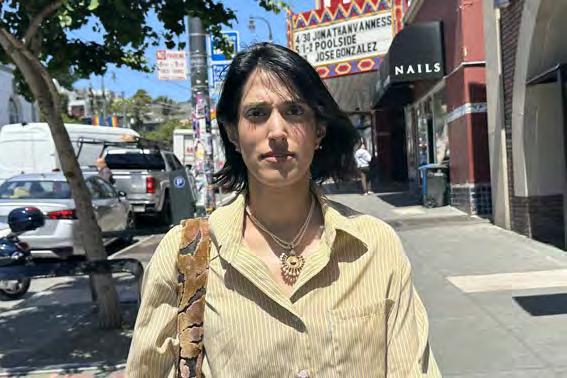
Awoman who helped spearhead the recall of ousted District Attorney Chesa Boudin four years ago has thrown her hat into the ring vying to replace Congressmember Nancy Pelosi (DSan Francisco) in the U.S. House of Representatives, arguing she represents the city’s silent majority.
Marie Hurabiell, a former Republican appointee of President Donald Trump’s to the Presidio Trust during his first term, later became a Democrat. But she holds views – including on transgender rights –that are to the far right of the three main candidates for the 11th Congressional District seat – gay state Senator Scott Wiener (D-San Francisco) and straight allies District 1 Supervisor Connie Chan and Saikat Chakrabarti, a wealthy tech investor who for eight months in 2019 was chief of staff to Congressmember Alexandria Ocasio-Cortez (D-New York).
The Bay Area Reporter covered Chan, Chakrabarti, and Wiener appearances in recent weeks.
In an interview Tuesday, April 28, Hurabiell said she got in the race after two individuals whom she didn’t name decided not to enter after previously committing, or considering, to do so.
“You’ve got three people who are kind of on one end of the spectrum, and there’s this whole other, center left, center, center right, no party preference, independents, Republicans to the extent there are any in San Francisco, who are kind of left out, and there’s no one for them,” she said of her opponents during an in-person interview at a westside San Francisco cafe. “I think there was a massive, massive hunger from San Franciscans for a common sense, pragmatic bridge builder to enter this race.”
In the past, Hurabiell has stated on social media that trans women aren’t women. The B.A.R. asked if that is still her position and how it would translate into policy.
“I respect all people,” she said. “I want all people to have the opportunity for fulfilling their maximum potential, for having fulfilling lives, for, for being happy.”
However, Hurabiell takes issue with Senate Bill 132, Wiener’s successful 2020 legislation mandat-
ing that the state Department of Corrections and Rehabilitation house transgender, nonbinary, and intersex prisoners in accordance with their gender identity.
In 2024, a federal judge tossed a lawsuit against SB 132. More recently, at the national level, trans female prisoners affected by President Donald Trump’s executive order on gender were told they could make their case as to why they shouldn’t be transferred to federal men’s prisons.
“If you want to be a woman, do whatever you want,” she said. “But that doesn’t give you the ability to enter female spaces and female sports. It’s too dangerous for women. And girls. And so, we need to, we need to have a dialogue about this.”
Hurabiell claimed that trans people convicted of violent crimes could present a risk to incarcerated cisgender women, calling it “truly heartbreaking” and adding, “These women are already vulnerable, and they are in, you know, they’re in prison, they’re in locked spaces with perpetrators.” She also takes issue with trans participation in athletic activities in accordance with players’ gender identity.
Asked about the sports issue, she said, “I want all kids to be able to participate in anything they want to participate in. But that doesn’t mean putting other people in danger or at risk.”
Asked about the Equality Act – long-stalled federal legislation that would extend the 1964 Civil Rights Act to LGBTQ people – Hurabiell said she would need to do more research.
“Everyone should be accorded dignity and all basic rights,” she said. “But if this, if the idea behind this is that you can sit here and tell me that you’re a woman and follow me into the bathroom, and that would be protected, that’s not OK.”
Asked about funding for the Ending the HIV Epidemic Initiative, Hurabiell said, “I think we should continue that funding. I think that’s important funding.”
The program, which seeks to end HIV/AIDS in the U.S. by 2030, started during Trump’s first term. It has been threatened by potential GOP House budget cuts in the years since, but has remained funded.
The B.A.R. reached out to the Wiener, Chakrabarti, and Chan campaigns to ask if they had a response to Hurabiell to include with this report.
Chan stated, “Trans women are women. Every person deserves the right to be who they are and want to be and be treated fairly and with respect. I am proud to be running for Congress as a strong ally and advocate for our LGBTQ community.”
Chan led the Board of Supervisors to adopt a resolution reaffirming the city’s commitment to healthcare for trans people earlier this year, as the B.A.R. reported.
Tiffaney Bradley, campaign spokesperson for Chakrabarti stated, “San Francisco must have a representative who’s fully willing to stand up for the trans and LGBTQ community. Saikat has been clear that he’ll do that. He’s fighting for a Democratic Party that will stop throwing trans people under the bus for political convenience. Trans rights are human rights, and we should not be horse-trading on them.” Wiener spokesperson Joe Arellano defended the candidate’s record.
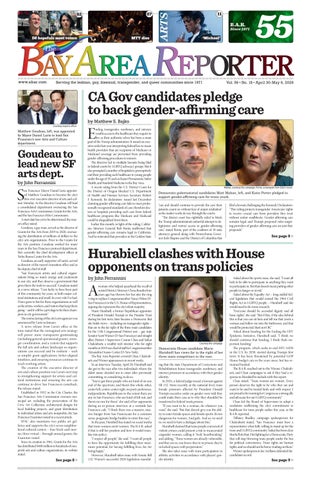
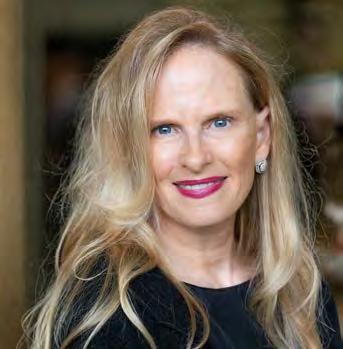
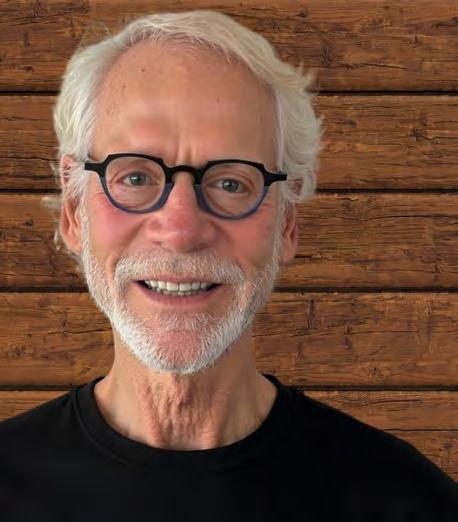
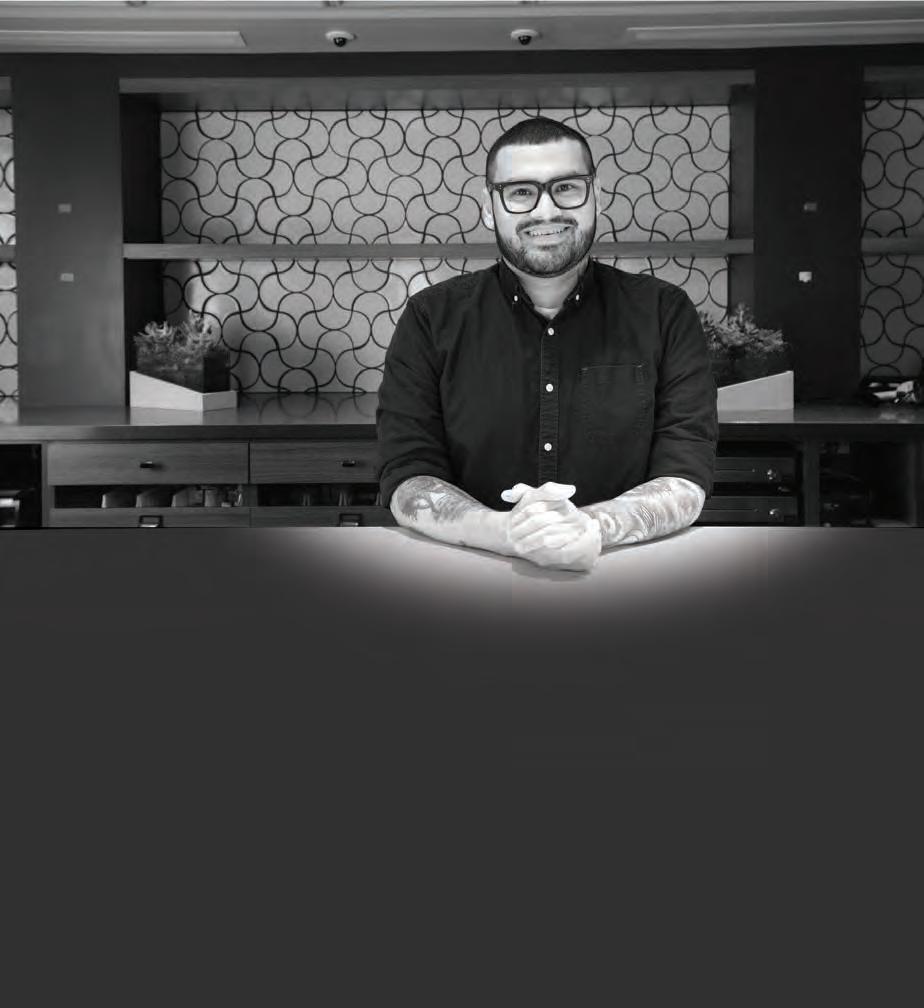
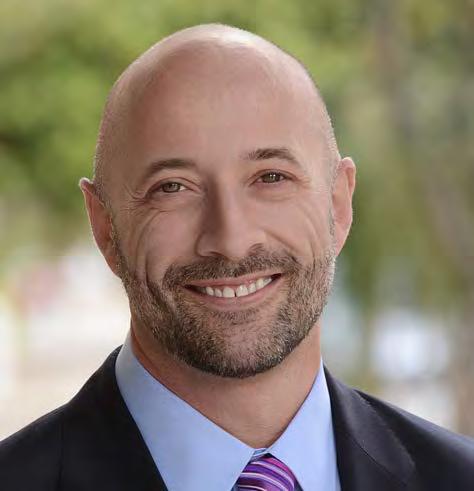
Matthew Goudeau, left, was appointed by Mayor Daniel Lurie to lead San Francisco’s new Arts and Culture department.
Courtesy mayor’s office
D8 hopefuls meet voters
Democratic House candidate Marie Hurabiell has views far to the right of her three main competitors in the race.
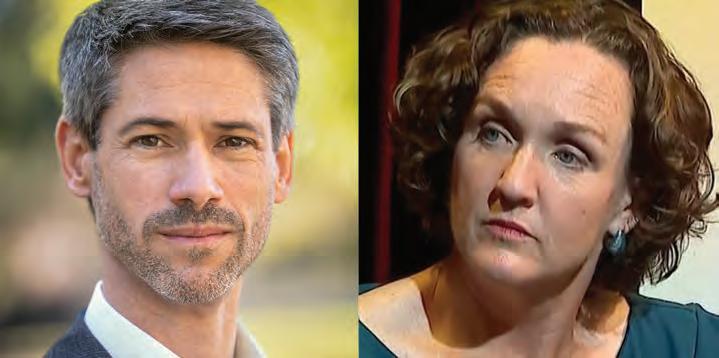
Democratic gubernatorial candidates Matt Mahan, left, and Katie Porter pledged to support gender-affirming care for trans youth.
Mahan, courtesy the campaign; Porter, screengrab from EQCA forum
Yekutiel, Patel bring supe campaigns to Castro
by John Ferrannini
Amainstay of the San Francisco political scene and a relative newcomer both made the rounds at Castroarea businesses in the past week. They are among four candidates campaigning to become the LGBTQ neighborhood’s next supervisor.
But the two were similar in other ways – both Emanuel “Manny” Yekutiel, a 36-year-old gay man, and Darshini Patel, a 37-year-old bisexual and queer woman, racked up experience in the private sector, and working on political campaigns before deciding to run for elected office for the first time.
They are among four candidates running for the District 8 seat in November. The other candidates, both gay men, are Michael Trung Nguyen, a patent attorney and elected member of the San Francisco Democratic County Central Committee, and Gary McCoy, who has led both of the city’s main LGBTQ Democratic clubs, Alice B. Toklas and Harvey Milk, and is a former aide to Congressmember Nancy Pelosi (D-San Francisco). McCoy now works for Pelosi’s Save Our Healthcare Campaign. Gay District 8 Supervisor Rafael Mandelman, currently president of the board, is termed out of office in early January and has sole endorsed Yekutiel to succeed him.
(The Bay Area Reporter recently conducted a merchant walk with Nguyen. McCoy’s campaign and the B.A.R. have yet to schedule a time to report from the campaign trail. Both declined to comment for this report.)
Yekutiel promises 10K homes
Yekutiel owns an eponymous cafe on Valencia Street that has become a hub for Democratic office seekers from around the country. It also draws those interested in local politics, as well as how to otherwise get involved in their communities.
Yekutiel pointed to his years as a small business owner who has to make payroll, manage budgets, and navigate the city’s regulatory processes as a reason why he’s the right person to represent the district, which includes Noe Valley, Glen Park, Diamond Heights, and other neighborhoods.
“We haven’t had a brick-and-mortar business owner at the board for some time and it’s a big reason why I’m running,” Yekutiel said. “This is a very, very public job interview. … Voters should think about what kind of personal experience do they think is necessary for who should have the job next.”
The last business owner from District 8 was Mark Leno, who owns a sign shop and has dual endorsed Yekutiel and McCoy in this year’s race. Elected in 2000 when the city reverted back to districtbased supervisor seats, Leno was the first in a successive list of gay male supervisors to serve in the seat.
in building community and connecting people,” Dufty told the B.A.R. “I think he’s probably going to have staff people do a lot of that work, but he’s been creating something very successful and, overall, he’s got ideas. But he doesn’t just talk about these things, he makes them happen.”
Yekutiel said he appreciates the support. Dufty showing him around helps neighborhood mainstays trust him, he said.
After Harris’ loss, Patel, who used to work at DoorDash, said during a merchant walk April 28 that she couldn’t go back to normal.
“I really felt like we’re not gonna fix any of our national problems until we really take a closer look at local issues,” Patel said. “When I got back from the (Harris) campaign, I felt weird going back into tech. So many things have changed. This was a devastating loss, and I can’t just pretend like nothing’s happened.”
Brightwell West is now leasing brand new units! 74 apartments at 750 Golden Gate Avenue available for lease through DAHLIA, San Francisco Housing Portal $843 - $1,520 per month $877 - $2,499 per month $1,054 - $2,999 per month
Yekutiel is a former member of the city’s Small Business Commission, as well as of the San Francisco Municipal Transportation Agency Board of Directors. As the former executive director of the Civic Joy Fund, which he co-founded alongside Daniel Lurie before he became mayor, Yekutiel helped launch a number of initiatives, including the Castro Night Market and the return of Halloween festivities to the neighborhood in 2023.
“For people who’ve seen a lot of supervisors – a lot of ups and downs, some have been here for decades – I think having someone they trust like Bevan, who’s been there for them, giving me a stamp of approval, helps a lot,” Yekutiel said.
Brightwell West is now leasing brand new units! 74 apartments at 750 Golden Gate Avenue available for lease through DAHLIA, San
$843 - $1,520 per month
$877 - $2,499 per month
Among the merchants visited on the walk was LGBTQ proprietor Jacob Paronyan of Parasol at Flore, in the former Cafe Flore space, which is currently open for coffee and pastries. Paronyan lives in District 8 and said, “I’m a fan.”
$1,054 - $2,999 per month
$1,216 - $2,725 per month
“Fighting for us, fighting for business owners, is all the difference,” he continued.
That led Patel to seek to get involved in local politics. She said she’s a full-time candidate now, spending her time getting to learn what issues matter to District 8 voters.
One issue she is passionate about is childcare. Patel does not have children herself.
“Childcare is something I think about a lot,” she said. “These are family-oriented neighborhoods.”
Patel said that there need to be more options for parents with young children.
$1,216 - $2,725 per month
“Judge me by what I’ve done,” he said, before listing Civic Joy Fund’s achievements.
Former B.A.R. leather columnist Race Bannon, a gay man, is another District 8 resident supportive of Yekutiel.
Households must have a minimum monthly income of two times the rent. Households must earn no more than the gross monthly income listed below:
Households must have a minimum monthly income of two times the rent. Households must earn no more than the gross monthly income listed below:
Households must have a minimum monthly income of two times the rent. Households must earn no more than the gross monthly income listed below: 1 Person 2 People 3 People 4 People 5 People 6 People 7 People
If he’s elected, Yekutiel wants to focus on “affordability, safety, and joy.” Specifically, he wants to build 10,000 new homes in District 8, fully staff the police department, “get all folks suffering from mental illness and drug addiction off our streets and into care,” and fill the district’s 63 vacant storefronts. A video of Yekutiel dragging a blackboard around upper Market Street details his housing plan, as does Yekutiel’s campaign website.
“As a successful small businessperson, he understands the challenges new and old businesses alike deal with amid onerous bureaucratic processes and a rough economic environment,” Bannon stated. “He has proven he’ll stand up for the rights and opportunities of people from all walks of life. He has a solid and doable housing and affordability plan while focusing on his district’s and the city’s joy, San Francisco’s secret weapon.”
While Lurie made spending $500 million in Baby Prop C (so called to distinguish between it and another Prop C) funds for that purpose a centerpiece of his plans this year, Patel said that the vouchers are too small and “there isn’t really any provider network” for using them for many families.” The 2018 initiative is a commercial rent tax for childcare.
Applications and information available on DAHLIA, the San Francisco Housing Portal, at housing.sfgov.org.
The applications’ deadline is 5PM on May 13, 2026. Lottery applications must be submitted online at housing. sfgov.org from April 22 to May 13, 2026. For assistance, contact one of the housing counseling agencies listed at housing.sfgov.org/housing-counselors.
and information available on DAHLIA, the San Francisco Housing Portal, housing.sfgov.org.
applications’ deadline is 5PM on May 13, 2026. Lottery applications must be submitted housing.sfgov.org from April 22 to May 13, 2026. For assistance, contact one of the counseling agencies listed at housing.sfgov.org/housing-counselors. has some units with special features for mobility-impaired or sensory-impaired Several preferences apply; learn more at housing.sfgov.org. Income and other apply. Section 8 welcome. Equal Housing Opportunity.
The applications’ deadline is 5PM on May 13, 2026. Lottery applications must be submitted online at housing.sfgov.org from April 22 to May 13, 2026. For assistance, contact one of the housing counseling agencies listed at housing.sfgov.org/housing-counselors.
Despite the support throughout the community, Yekutiel isn’t taking anything for granted. Asked about his campaign strategy, he mentioned his plans to have 200 house parties throughout District 8 over the course of the campaign. He has already had 92 as of press time.
Applications and information available on DAHLIA, the San Francisco Housing Portal, at housing.sfgov.org.
“I’m knocking on a lot of doors hours each day,” he said. “It’s just about spending time with D8 voters. It’s not rocket science.”
The applications’ deadline is 5PM on May 13, 2026. Lottery applications must be submitted online at housing.sfgov.org from April 22 to May 13, 2026. For assistance, contact one of the
Those specifics include creating a housing priority district on upper Market Street, dedicating half of the property tax revenue generated by new construction in the district toward building affordable housing, and temporarily removing all barriers to building housing for eight years within this district; as well as identifying and developing high opportunity housing sites; and incentivizing turning backyards and garages into new homes.
“The money is kind of sitting there underutilized, because families don’t have a place to use the money,” she said. “For 68,000 people, there’s only 71 slots for infants in all of District 8, so it’s just clearly not enough.”
One way to address the problem, Patel said, is to loosen licensing requirements for daycare operators, as they have to “go through the same process as any new business.”
agencies listed at housing.sfgov.org/housing-counselors.
This property has some units with special features for mobility-impaired or sensory-impaired households. Several preferences apply; learn more at housing.sfgov.org. Income and other restrictions apply. Section 8 welcome. Equal Housing Opportunity.
apply; learn more at
This property has some units with special features for mobility-impaired or sensory-impaired households. Several preferences apply; learn more at housing.sfgov.org. Income and other restrictions apply. Section 8 welcome. Equal Housing Opportunity.
Among those supporting Yekutiel, who lives on Castro Street, is gay former District 8 supervisor Bevan Dufty. Most recently a BART board member, Dufty joined him on the merchant walk April 23.
“It’s exciting to see someone who is creating space for the widest range of issues and candidates and I hear nothing but good things about what Manny has done
Newcomer focuses on childcare Patel, who resides in Noe Valley, has lived in San Francisco on and off since 2010. An alum of Kamala Harris’ 2024 presidential campaign, for three months in New Hampshire she ran get-out-the-vote operations for the then-vice president and Democratic presidential candidate.
and other restrictions apply. Section 8 welcome. Equal Housing Opportunity.
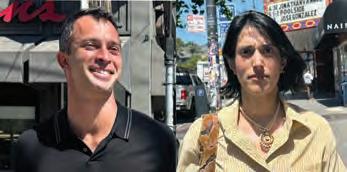
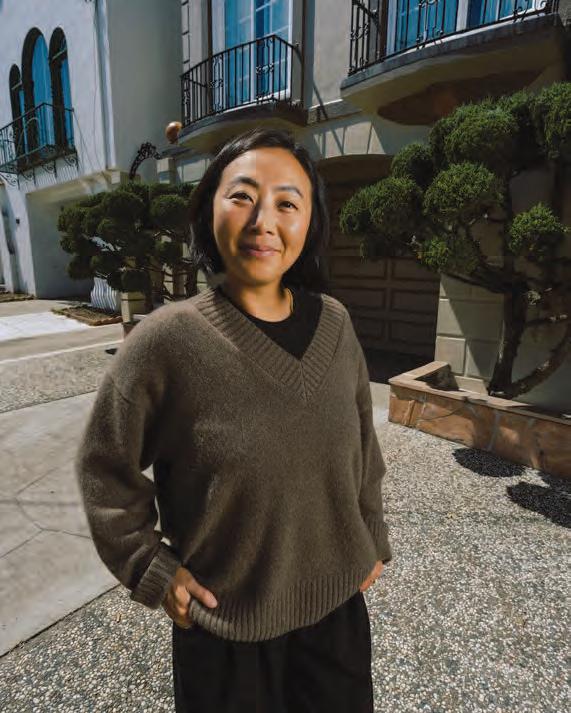
Darshini Patel, a candidate for District 8 supervisor, did a walking tour of the Castro April 28.
John Ferrannini
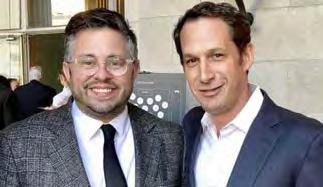
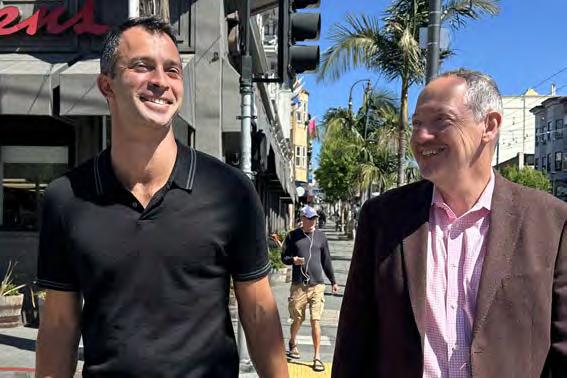
District 8 supervisor candidate Emanuel “Manny” Yekutiel, left, recently toured the Castro with former supervisor Bevan Dufty.
John Ferrannini
Grand marshals named for SF Pride Parade Community
compiled by Cynthia Laird
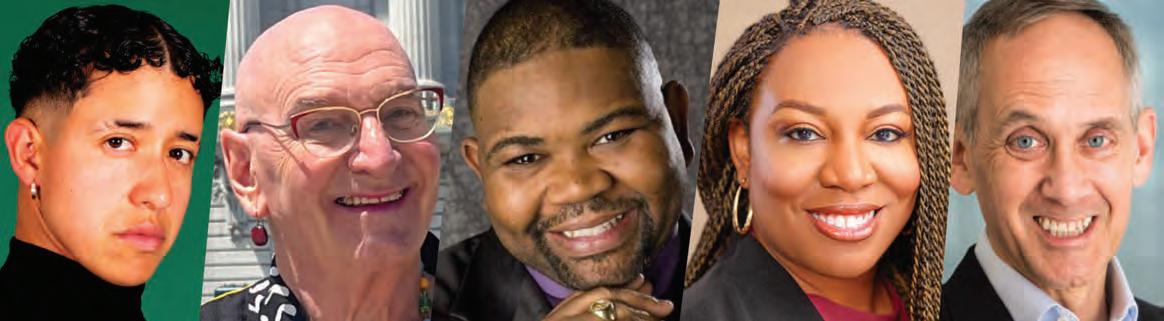
The slate of community grand marshals has been announced for this year’s San Francisco Pride Parade. The parade, under the theme of “Resistance in Action,” takes place Sunday, June 28.
The public’s choice for grand marshal is Marcel Pardo Ariza, according to an announcement from SF Pride. Ariza is a Colombian trans migrant and a visionary force in the Bay Area’s cultural landscape. They curated the retrospective of drag artist Juanita MORE! at the San Francisco Arts Commission and produced a groundbreaking trans history project featuring 33 trans and intersex Bay Area leaders, now in the permanent collection of the San Francisco Museum of Modern Art, according to SF Pride’s website.
The SF Pride board selected two grand marshals: Ms. Bob Davis and John Weber.
Davis, a trans woman, founded the Louise Lawrence Transgender Archive that is housed in Vallejo. Davis was also the first transgender tenured professor at City College of San Francisco, where she led policy reforms on gender identity, the website noted.
Weber, a gay man, served as the 36th emperor of San Francisco, where he made history when he became the first Black individual elected to that role. He works for the city’s Department of Human Resources in its workforce development division.
As the Bay Area Reporter previously reported, SF Pride members selected Imani Rupert-Gordon, a queer Black woman, as grand marshal. She is president of the San Francisco-based National Center for LGBTQ Rights.
For this year’s lifetime achievement grand marshal, the SF Pride board named Roger Doughty, a gay man who is stepping down from his job as president of the nonprofit Horizons Foundation at the end of this year, as the B.A.R. previously noted. Doughty
has led the LGBTQ philanthropic organization for 23 years.
Finally, the public selected TransThrive, part of the San Francisco Community Health Center, as organizational grand marshal. TransThrive earlier this month opened its new sexual health clinic in the Tenderloin.
For more information on all of the community grand marshals, go to sfpride.org/grand-marshals. For more information on SF Pride, go to sfpride.org.
SF Dyke March announces change for 2026
The San Francisco Dyke March will be as boisterous as ever, but will have a smaller footprint for the rally that precedes the event, organizers have announced.
In a recent newsletter, organizers stated that on Saturday, June 27, the event is shifting to a shorter street rally a couple of hours before the march steps off at 5 p.m. at 18th and Dolores streets, just outside Mission Dolores Park. The change is being made in order to sustain the march, the updated crowdfunding goal for which is $60,000, “a big lift, but more realistic,” the newsletter stated.
M Rocket, a dyke who is Dyke March project director, stated to the B.A.R. in a
follow-up email that there will not be an all-day rally of speakers and performers at the park. “This year we’ll have a few speakers/performers and DJs on the back of the sound truck in the street,” Rocket explained, adding there are no plans for official Dyke March events inside Dolores Park.
“Plans are still developing for a very full Dyke Day,” the newsletter stated, adding more information will be available once plans are confirmed.
Randall Museum Theater, 199 Museum Way. Doors open at 6:30. Ballots for the June 2 primary will start to arrive in voters’ mailboxes that week.
For more information or to donate, go to thedykemarch.org.
Neighborhood groups to host congressional forum
The District 8 Neighbors Congressional Forum will bring together all four leading candidates running to succeed Congressmember Nancy Pelosi (DSan Francisco). Eleven neighborhood groups will pose questions about issues affecting households in D8, a news release stated.
The forum will take place Wednesday, May 6, from 7 to 8:30 p.m. at the
Candidates Saikat Chakrabarti, District 1 Supervisor Connie Chan, Marie Murabiell, and gay state Senator Scott Wiener (D-San Francisco) will take part. Joe Fitzgerald Rodriguez, a reporter at the San Francisco Standard, will moderate. The event is open to the public; seating is first come, first served.
Participating organizations are: Buena Vista Neighborhood Association, Cole Valley Improvement Association, Corbett Heights Neighbors, Diamond Heights Community Association, Dolores Heights Improvement Club, Duboce Triangle Neighborhood Association, Duncan Newburg Association, Eureka Valley Neighborhood Association, Glen Park Association, Mount Olympus Neighbors Association, and Upper Noe Neighbors.
A livestream will be available, with the link shared closer to the event, the release noted.
Duboce ParkJam
Friends of Duboce Park will hold its fourth ParkJam Saturday, May 9, from noon to 5 p.m. The park is located at Duboce Avenue and Scott Street in San Francisco.
A news release stated that the free event will bring live music to the park, featuring performances by five musicians, songwriters, and groups.
People can bring their friends, spread out on a blanket, and enjoy an afternoon of music and community spirit, organizers stated. Attendees are reminded to pack out their trash and recyclables after the event. For more information, including a schedule, go to https://tinyurl. com/4n4eby27.
Podcast about MCC-SF wins Peabody Award
A podcast about the queer community during the AIDS crisis that focuses on the predominantly LGBTQ Metropolitan Community ChurchSan Francisco has won a prestigious Peabody Award.
San Francisco Pride community grand marshals are, from left, Marcel Pardo Ariza, Ms. Bob Davis, John Weber, Imani Rupert-Gordon, and Roger Doughty.
Courtesy SF Pride
Volume 56, Number XX
Volume 56, Number 18
April 30-May 6, 2026
Month XX-XX, 2026 www.ebar.com
PUBLISHER
Michael M. Yamashita
Thomas E. Horn, Publisher Emeritus (2013)
Publisher (2003 – 2013)
Bob Ross, Founder (1971 – 2003)
NEWS EDITOR
Cynthia Laird
ARTS & NIGHTLIFE EDITOR
Jim Provenzano
ASSISTANT EDITORS
Matthew S. Bajko • John Ferrannini
CONTRIBUTING WRITERS
Christopher J. Beale • Robert Brokl
Kyle Amato • Race Bannon • Robert Brokl
Christopher J. Beale • Brian Bromberger
Brian Bromberger • Philip Campbell
Heather Cassell • Eliot Faine
Philip Campbell • Myron Caringal
Heather Cassell • Meg Collins • Chelsea Davis
Michael Flanagan • Jim Gladstone
Natasha Dennerstein • Eliot Faine
Liz Highleyman • Brandon Judell • Lisa Keen
Michael Flanagan • Jim Gladstone
Philip Mayard • Laura Moreno
Liz Highleyman • Brandon Judell
David-Elijah Nahmod • Mark William Norby
JL Odom • Paul Parish • Tim Pfaff
Michele Karlsberg • Lisa Keen
Jim Piechota • Adam Sandel
Matthew Kennedy • Philip Mayard
Jim McDermott • Laura Moreno
Jason Serinus • Gregg Shapiro
David-Elijah Nahmod • Mark William
Gwendolyn Smith • Charlie Wagner
Ed Walsh • Cornelius Washington • Sura Wood
Norby JL Odom • Tim Pfaff • Jim Piechota
Joshua Polanski • Adam Sandel
Gregg Shapiro • Gwendolyn Smith
ART DIRECTION
Charlie Wagner • Ed Walsh
Max Leger
Cornelius Washington • Evelyn C. White
PRODUCTION/DESIGN
Ernesto Sopprani
ART DIRECTION
PHOTOGRAPHERS
Max Leger
Jane Philomen Cleland
Rick Gerharter • Gooch
PRODUCTION/DESIGN
Jose A. Guzman-Colon
Ernesto Sopprani
Rudy K. Lawidjaja • Georg Lester
PHOTOGRAPHERS
Rich Stadtmiller • Christopher Robledo
Jane Philomen Cleland
Fred Rowe • Shot in the City
Rick Gerharter • Gooch
Steven Underhill • Bill Wilson
Jose A. Guzman-Colon
ILLUSTRATORS & CARTOONISTS
Rudy K. Lawidjaja • Georg Lester
Christine Smith
Rich Stadtmiller • Christopher Robledo
Fred Rowe • Shot in the City
Steven Underhill • Bill Wilson
VICE PRESIDENT OF ADVERTISING
ILLUSTRATORS & CARTOONISTS
Scott Wazlowski – 415.829.8937
Christine Smith
NATIONAL ADVERTISING REPRESENTATIVE
VICE PRESIDENT OF ADVERTISING
Rivendell Media – 212.242.6863
Scott Wazlowski – 415.829.8937
LEGAL COUNSEL
Paul H. Melbostad, Esq.
NATIONAL ADVERTISING REPRESENTATIVE Rivendell Media – 212.242.6863
LEGAL COUNSEL Paul H. Melbostad, Esq.
Bay area reporter
44 Gough Street, Suite 302 San Francisco, CA 94103
Published weekly. Bay Area Reporter reserves the right to edit or reject any advertisement which the publisher believes is in poor taste or which advertises illegal items which might result in legal action against Bay Area Reporter. Ads will not be rejected solely on the basis of politics, philosophy, religion, race, age, or sexual orientation.
Advertising rates available upon request. Our list of subscribers and advertisers is confidential and is not sold. The sexual orientation of advertisers, photographers, and writers published herein is neither inferred nor implied. We are not responsible for unsolicited manuscripts or artwork.
Headline
Elect Scott Wiener to Congress
G ay state Senator Scott Wiener is the best choice for voters in San Francisco’s 11th Congressional District, which includes most of the city. Wiener has been a prolific legislator during his political career, both in Sacramento and as a member of the San Francisco Board of Supervisors. In this race to succeed Congressmember Nancy Pelosi (DSan Francisco), the first woman to become speaker of the U.S. House of Representatives, we need someone in Congress who will fight for us, especially as President Donald Trump has his sights trained on erasing the trans community. That person is Wiener.
The state legislation Wiener has authored or co-sponsored has had tangible benefits for the LGBTQ community. In his Bay Area Reporter endorsement questionnaire, Wiener noted that he has one of the strongest LGBTQ legislative records in the country. He has passed groundbreaking laws in the Golden State protecting LGBTQ people, from decriminalizing HIV and protecting trans youth and their families from criminalization to expanding PrEP access without a prescription. Wiener has not shied away from controversial legislation. And while he has not always achieved success, such
as with the case of his efforts to ban surgeries for intersex babies until they can consent, he has sparked dialogue and advanced the public’s awareness of the issue. More often than not, however, Wiener has seen success in his legislative efforts. When the U.S. Supreme Court recently ruled against a Colorado law that banned conversion therapy for minors, sending the case back to the lower courts with a heightened strict scrutiny standard, Wiener fought back with his Senate Bill 934 that, if passed and signed by Governor Gavin Newsom, will allow victims of conversion therapy to seek compensation. As Wiener noted, the high court’s majority opinion didn’t cover malpractice suits, which is what his bill addresses. That’s forward thinking.
Looking ahead to serving in Congress, Wiener stated in his endorsement questionnaire that he would focus on building bipartisan coalitions around areas of genuine overlap. As examples, he listed housing production, permitting reform, mental health treatment expansion, and small business support. He’s also worked to preserve HIV/AIDS funding, create LGBTQ youth homelessness grants,
and prevented non-discrimination provisions from being gutted. Right now, of course, the House is controlled by Republicans, but that could change after the midterm elections in November. However, even if Democrats regain control of the House, it will still not be easy to pass pro-LGBTQ legislation, which Trump could, of course, veto.
That’s why we asked Wiener about what, besides the long-dormant Equality Act, could be accomplished to expand LGBTQ rights at the federal level. “Even in a divided Congress, there are meaningful wins available,” he wrote. “Controlling even one house of Congress creates significant leverage on legislation and budget issues.” He added that he would use oversight hearings to expose executive overreach against LGBTQ Americans “and create political accountability for the administration’s anti-LGBTQ agenda.”
Should he win election, Wiener would be the first LGBTQ person representing San Francisco in Congress. (Famously, in 1987, the late supervisor Harry Britt, a gay man, and Pelosi ran against each other during a special election, with Britt narrowly losing.) Wiener is best positioned to hit the ground running and be an effective representative for San Francisco in Washington, D.C. t
Elect Matt Ortega to Congress
There’s a congressional race in the East Bay to replace nowdisgraced former congressmember Eric Swalwell, who was not seeking reelection because he was running for California governor. He dropped out of the gubernatorial race after accusations of inappropriate behavior against women, including sexual misconduct and assault. (Swalwell denies the allegations.) In the June 2 primary, we recommend Matt Ortega, a straight ally, for the 14th Congressional District, which includes Dublin, Livermore, Hayward, Castro Valley, parts of Fremont, and unincorporated areas. (Ortega is not running in the June 16 special primary to replace Swalwell, and we are not endorsing in that race.)
“I am a longtime ally of the LGBTQ community when there were no cameras, no press, and no campaign,” he stated. Ortega stated that it’s likely the U.S. House of Representatives will return to Democratic control in January, following the November midterms. Of course, President Donald Trump will still be in the White House. But if Democrats take back the House, it likely will curtail some of the Trump administration’s most hideous policies. “These next two years will be about holding the line against the administration’s attacks on citizens and immigrants but we must not lose sight of picking up wins where we can along the way,” Ortega stated.
believes Congress must use its oversight powers to investigate the Department of Justice’s subpoenas of children’s hospitals, which it has issued in an effort to have the medical centers pause or end gender-affirming care; many have, including Kaiser Permanente and Stanford in the Bay Area.
“Members of Congress hold immense platforms to raise issues,” Ortega stated. “House Democrats will play a major role in shaping the presidential politics heading into 2028. I intend to use the office to raise and champion protections for the LGBTQ community and lay the groundwork for a (hopefully) Democratic trifecta in 2029.”
Ortega, who grew up in Hayward, is a longtime progressive leader who stated in his Bay Area Reporter endorsement questionnaire that he’s the only candidate in the race with national political experience. He broke into national politics with the Democratic National Committee to help elect former President Barack Obama.
We would have liked to hear from another candidate in the race, state Senator Aisha Wahab (DFremont), on where she stands on LGBTQ issues. But she did not return our questionnaire, which is a prerequisite for the B.A.R.’s endorsement.
Ortega told us he supports the long-stalled Equality Act, the PrEP Access and Coverage Act, and other progressive legislation, he stated. He
We’re impressed with Ortega’s observations of the political landscape. He’s been endorsed by Our Revolution, nationally and the East Bay chapter, which was founded by U.S. Senator Bernie Sanders (I-Vermont), as well as Honor PAC, which backs candidates giving the Latina/o/e LGBTQ+ movement a voice in government.
Ortega would be a great addition to Congress at a time when the 14th District deserves solid representation from someone who knows it well.t
Wealth shouldn’t disqualify someone from public service
by Michael Colbruno
I’ve been struck by the renewed vitriol aimed at billionaire candidates in the 2026 race for California governor, particularly Tom Steyer. Some of the loudest criticism has come from the progressive wing of the party, yet even U.S. Senator Bernie Sanders (I-Vermont) –long a leading voice against wealth inequality – has taken a more pragmatic view, endorsing Steyer in recognition of his commitment to public policy and climate action. That shift should give pause to those who would reduce the conversation to a simple rejection of wealth, rather than a more thoughtful evaluation of how it is used.
Steyer’s record deserves that more nuanced look. Unlike many wealthy individuals who remain on the sidelines, he has devoted significant personal resources to advancing environmental causes, funding efforts to combat climate change, supporting clean energy, and holding polluters accountable. He has helped build political infrastructure around these issues, often filling gaps where public funding or political will has lagged. At a time when California faces existential climate challenges – from wildfires to sea level rise – this kind of sustained, mission-driven investment is not only relevant, it is essential.
The real question is not whether someone is wealthy, but what they choose to do with that wealth. There is a stark contrast between individuals like Steyer and people like President Donald Trump, who has repeatedly been accused of using public office to enrich himself, raising serious constitutional concerns, including potential violations of the Emoluments Clause. Wealth in and of itself is not disqualifying – history shows that voters are capable of evaluating leaders on their merits. From Democrats like former New York City mayor Michael Bloomberg and Illinois Governor JB Pritzker to Republicans like former Los Angeles mayor Richard Riordan and former California governor Arnold Schwarzenegger, as well as newer leaders like San Francisco Mayor Daniel Lurie, voters across the political spectrum have elected wealthy individuals who have gone on to serve effectively. The common thread is not their net worth, but their willingness to use their resources, experience, and leadership to advance the public good. Wealth has never been a reliable measure of leadership. George Washington was among the wealthiest Americans of his time, yet he helped found a democratic system built to outlast him. Former President Franklin D. Roosevelt, born into privilege, led the nation through the Great Depression with the New Deal – creat-
ing Social Security, establishing the National Labor Relations Board, and reshaping the relationship between government and working people. Former President John F. Kennedy brought generational energy to the presidency and guided the country through moments of profound tension and change.
On the other side of the ledger, some of the richest yet least effective presidents in American history – Andrew Johnson, James Buchanan, Warren G. Harding, and Millard Fillmore – demonstrate that poor leadership has little to do with personal wealth. The lesson is clear: character, judgment, and results matter far more than financial status.
If Democrats want to win in 2026, the focus should remain on results – on climate action, economic fairness, and governance – not on reflexive attacks rooted in personal wealth. Voters are sophisticated enough to distinguish between those who use their resources to build something meaningful and those who use power for personal gain. t
Michael Colbruno, a gay man, was a 2026 delegate to the California Democratic Convention where he supported Betty Yee for governor. He was an aide to former San Francisco mayor Willie L. Brown Jr. and former assemblymember Carole Migden (DSan Francisco). He is a founding partner of the Bay Area government affairs firm the Milo Group of California.
Congressional candidate Scott Wiener
Courtesy the campaign
Congressional candidate Matt Ortega
Courtesy the candidate
Tom Steyer is one of the leading Democratic candidates for California governor.
From Facebook
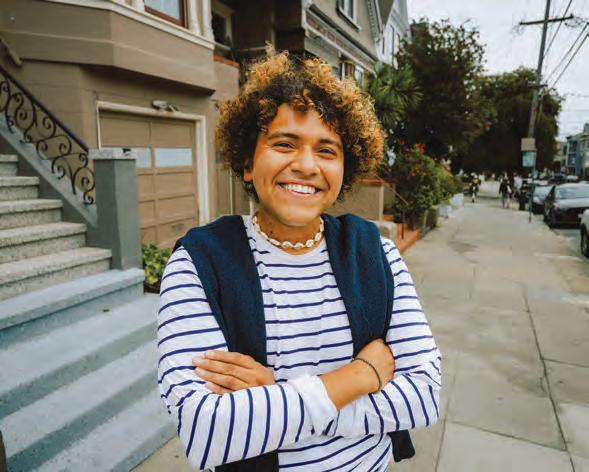
Dem Adams aims to be 1st asexual in CA Legislature
by Matthew
Central Valley Democratic Assem-
bly candidate Matthew Adams aims to be the first asexual to serve in the California Legislature. But first he needs to survive the June 2 primary where only the top two vote-getters regardless of party affiliation will advance to the fall ballot.
Adams, 30, is one of six candidates who qualified for the Assembly District 9 race in which the incumbent, Assemblymember Heath Flora (R-Ripon), is seeking reelection. One other Democrat also is on the ballot, as are three other Republicans.
Flora, the Republican leader in his chamber, represents a district that spans northern San Joaquin Valley covering the towns and cities of Acampo, Escalon, Farmington, Lathrop, Linden, Lockeford, Lodi, Manteca, Ripon, Thornton and Woodbridge, where Adams grew up and currently lives. He moved back in with his parents last year when he decided to seek the legislative seat.
“This area is a great area. It is one of the reasons why I never left. I do enjoy living here,” said Adams. “I enjoy talking to people here. The community here is very strong. It has a small-town feel but also has all the things you would want to do in any major city.”
Rather than overlook more ex-urban and rural parts of the state, Adams said Democrats need to be stepping up to run for public office in such locations. He noted Lodi has seen an influx of residents looking for cheaper housing options and, a few years ago, held its first Pride event.
“We need to be in these areas and be the change we want to see if we are not seeing the change we want,” Adams told the Bay Area Reporter during his first media interview about his candidacy. “I am more of a guy who stays and fights. We need someone willing to fight for our communities. This is a great place to live but it always can get better. That is what I am doing with this campaign; I want to take what we have and try to make it better.”
I’ve not been anticipating to see a lot of Democratic enthusiasm,” said Adams, noting he has spent a lot of time in Galt, the third-largest city in the Assembly district.
Seen as a rural GOP stronghold, Galt has held three “No Kings” protests against Trump, said Adams, who spoke at the most recent one that attracted upward of 300 people.
“One of my goals is to connect to people in communities who have felt not talked to before,” said Adams.
He worked for EQCA during the 2022 election cycle as its lone regional field organizer stationed in the Central Valley. Yet, Adams didn’t focus on the communities in AD 9 since EQCA had no endorsed candidates running within it.
“I didn’t get to talk to voters in the district I am running in now, which is telling in its own right,” recalled Adams. “There is not a lot of LGBTQ representation here.”
A map of LGBTQ elected officials in the U.S. maintained by the LGBTQ+ Victory Institute currently lists one person who identifies as asexual in California. Placerville City Councilmember Nicole Gotberg, who also identifies as queer, is currently vice mayor of her El Dorado County city and is up for reelection this year.
Adams, currently single, came out as asexual a decade ago. He explained he uses the term since he is heteroromantic.
Valley.
able information to have and valuable documentation to have in the public record,” said Adams, adding of school leaders, “I hope it will be a priority because this should matter. I know there are a lot of competing interests, but it can’t be a coincidence this slips through the cracks for so many schools.”
To learn more about Adams’ candidacy, visit his campaign website at https://sites.google.com/view/adams4assembly/home.
Stonewall Dems endorse Kellman for lt. gov
Hi, I’m Dr. Vadim Skorupko. I’m a UOP graduate and have been practicing dentistry since 1993. Over the years, I’ve helped many people feel proud of their smiles — not just because they are a joy to look at but because they feel natural.
I focus on implant and aesthetic dentistry, blending advanced digital technology with the artistry of truly gifted ceramists. The results look completely natural — just refreshed, confident, and effortlessly striking.
Consultations are complimentary. Fees are fair and transparent. My team is gentle, soft-spoken, and genuinely kind. We do everything we can to make your visit easy, comfortable, and even fun.
If you ever have an emergency, you can reach me day or night. I come from a long line of village doctors. My great-grandfather rode a horse and buggy down dark country lanes to deliver babies by lantern light. Things are a bit different today — no horses involved — but the commitment to showing up for people remains the same. My office is right in Union Square—bright, airy, and tastefully designed, with sweeping views of San Francisco’s pyramids and towers.
If your teeth make you look like you’re itching for battle, let’s make them look like you’re hungry for love.
“I am interested in dating people, women. It is just essentially what people imagine a straight relationship is but there is no sex involved and no sexual desire,” said Adams, who has been working as a part-time substitute teacher while he campaigns for the Assembly seat.
He believes he has a strong shot of surviving the primary race if GOP voters are split with whom they support. After the Sacramento Bee last fall reported n a number of issues about Flora, from questions on if he lives in the district or in Sacramento to his having an affair with a lobbyist while married and being ordered by a state court to pay past due child support to his ex-wife, a number of local Republican Party groups endorsed one of his GOP opponents, Jim Shoemaker, in this year’s race.
“The primary is going to be very fun,” noted Adams. “It is hard to predict what will happen, but I think Democrats will unify behind me. I’ve got the endorsements to signal to voters who are not paying attention yet that I am their guy. Hopefully, that is enough to get me through the primary.”
The California Democratic Party along with local Democratic parties across the district have endorsed Adams, as has the statewide LGBTQ advocacy organization Equality California. Lathrop Mayor Paul Akinjo also endorsed him.
Adams acknowledged to the B.A.R. he faces a harder road to climb if he does end up on the fall ballot against one of the Republican candidates. But he pointed out there are enough voters registered as either Democrats or independents to swing the race to the blue column. And he could also be swept along to victory if there is a strong enough wave of voters disgruntled with Republican President Donald Trump and the GOP-led Congress at the national level who also turn against the party in down ballot local contests.
“I’ve seen a lot of enthusiasm in areas
Previously, he had been commuting to the Bay Area to teach math and science at a Catholic school in San Leandro where he was out about his sexual orientation to some of his co-workers but not to his students. During the week Adams, whose family is Greek Orthodox, rented a place to stay and would return home to Woodbridge on weekends.
Prior to the start of the 2024-25 academic year, Adams spent the summer working on former San Francisco mayor London Breed’s ultimately unsuccessful bid for reelection that November. In addition to the political campaign experience he gained, Adams picked up public speaking chops and an ability to respond quickly from the five years he worked semi-professionally as a comedian, employed as a performer and referee with ComedySportz Sacramento prior to its closing due to the COVID epidemic.
“Politics is serious business, but we can find some laughs along the way,” he noted.
After graduating from Lodi High School, Adams earned his bachelor’s degree in government from California State University, Sacramento in 2017. During his final year there he interned with former assemblymember Jim Cooper, now the Sacramento County sheriff.
During the 2023-24 academic year Adams was employed at a Christian school in Sacramento. Due to his teaching credentials, the B.A.R. asked him if he would support legislation to require the state’s public schools take part in a biennial survey EQCA conducts about LGBTQ issues in the classroom.
Currently voluntary for school administrators to fill out, the 2026 supportive schools report card is expected to be released by EQCA this fall. As the B.A.R. has reported, the previous ones in 2024 and 2022 saw less than half of the state’s K-12 school districts complete the survey.
“I am not opposed at all to introducing legislation to propose that. It is valu-
In the race to succeed termed out Lieutenant Governor Eleni Kounalakis, a Democrat running for state treasurer this year, the Los Angeles-based Stonewall Democratic Club has endorsed gay former Sausalito city councilmember Janelle Kellman. The LGBTQ political group announced its backing of her candidacy Tuesday, several weeks after lesbian former Los Angeles Unified School District board member Jackie Goldberg, who served in the state Assembly, had endorsed Kellman.
“Janelle Kellman embodies those values through her leadership, vision, and unwavering commitment to building a more inclusive California. Our endorsement process reflects the seriousness of our mission. Janelle showed up, listened, and demonstrated a clear commitment to our community and its future,” stated Stonewall club president Renay Grace Rodriguez. “We are proud to stand with Janelle and encourage voters across California to support her campaign.”
With gay California Insurance Commissioner Ricardo Lara termed out of office next year, and no other prominent out candidate seeking a statewide office in this year’s election, Kellman presents the lone chance to maintain LGBTQ representation among the Golden State’s elected executive branch. She has lagged in the polls behind the other Democratic contenders for the state’s second-in-command position Josh Fryday, California’s chief service officer in Governor Gavin Newsom’s office; Michael Tubbs, a former Newsom poverty adviser and Stockton mayor; and termed out state Treasurer Fiona Ma, a former San Francisco supervisor.
While Kellman has also raised less money than her opponents, she announced last week that her campaign was able to secure a six-figure TV adbuy ahead of ballots landing in voters’ mailboxes next week. It started running Tuesday and can be seen at https://www.youtube.com/watch?v=V0HnRcKAhY.
“The lieutenant governor’s race is wide open, and we’re offering voters the change they have been asking for,” Kellman contended. “My affordability plan is immediate, and starts with cutting electricity bills by 25%, reducing home insurance costs, and making Community College free. Californians are feeling the pressure, and I know how to lower these costs quickly while also fighting for our future.” t
Matthew Adams is running for an Assembly seat in the Central
Courtesy the candidate
SF supes move to landmark LGBTQ North Beach sites
by Matthew S. Bajko
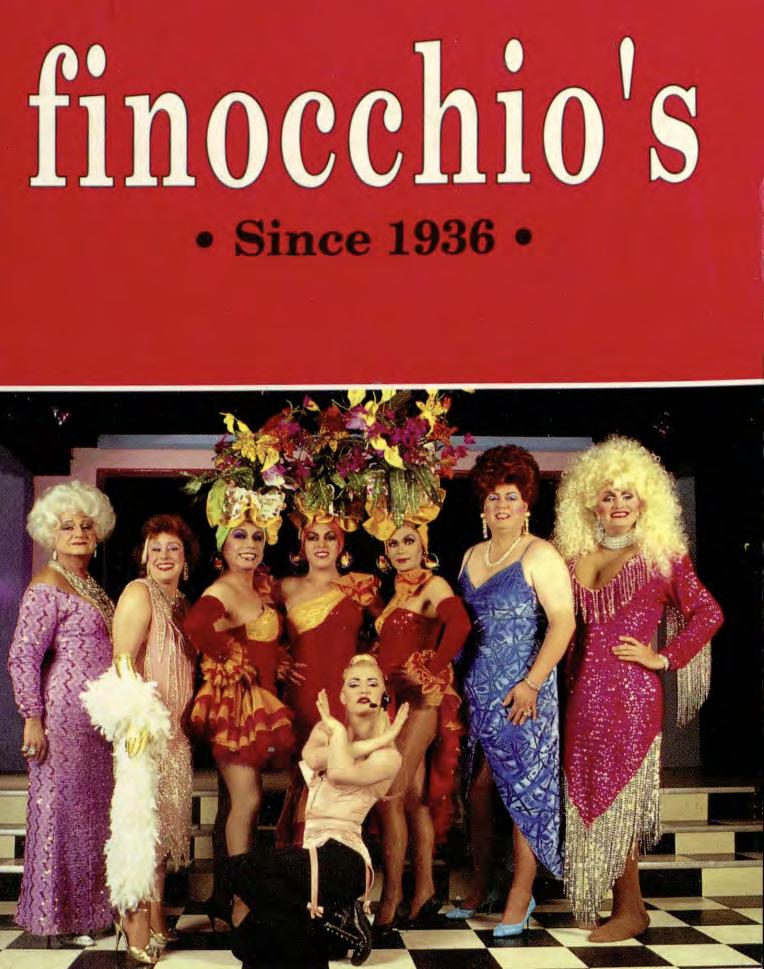
Back in the 1960s, Scott Keever’s parents would often drive down from their home in Santa Rosa to attend shows at Finocchio’s, the legendary female impersonators cabaret that since the 1930s had called San Francisco’s North Beach neighborhood home. One of the performers would give his mother makeup tips.
Decades later, after moving to San Francisco in 1983, Keever befriended that star of the cabaret, Al St. Claire, at the now defunct JJ’s piano bar in the
city’s Pacific Heights neighborhood. St. Claire played piano there, and they bonded over their shared musical theater background.
“He had so many hilarious stories about his time there,” Keever, who is gay, recalled of St. Claire’s reminiscences about Finocchio’s. “He would diss the management but also talk good things about the management. And the other girls he worked with, he dissed them but also said good things about them.”
Keever never made it to Finocchio’s before it shuttered in 1999. He had met St. Claire, who died in the early 1990s,
long after he had stopped performing there. Now that the city is looking to landmark the building that had housed the cabaret at 500-508 Broadway, Keever told the Bay Area Reporter his old friend would likely be delighted at the news.
“I think it is wonderful. I really do,” said Keever, 71, now retired from his corporate job in the Financial District. “At this moment in history, we need all the positive visibility we can get. And the fact Finocchio’s was so beloved for so many decades by so many straight and gay people, and it was all mostly queens in drag, and I don’t know how many of them may have been trans or may have become trans or how many were just gay or straight men who did drag, in that way it is important it has visibility.”
The property is part of a quintet with ties to the LGBTQ community that District 3 Supervisor Danny Sauter has recommended become city landmarks. Three are also in North Beach, with the fifth a Masonic temple turned concert venue atop Nob Hill with an endomosaic designed by a gay artist couple.
The Board of Supervisors voted 10-0 at its April 28 meeting to have the city’s historic preservation commission weigh in on the merit of landmarking a total of 12 properties that Sauter has identified for such a designation. Once the oversight body does, then it will be up to the supervisors to vote on the ordinances establishing the landmarks.
Two votes of approval by the board will be required before the landmarks are sent to Mayor Daniel Lurie to make official. Only then will the properties be added to the city’s list of local landmarks.
Among the “iconic buildings” Sauter wants to landmark are the Trans America Pyramid and several sites in Chinatown. However, at the board meeting Tuesday, he pulled his landmark request for the Great China Theater and won support to have more time to work on it.
“Through these landmarks, we will celebrate LGBTQ+ entertainment spaces, important Italian American heritage spaces, and iconic Chinatown buildings,” Sauter told the supervisors’ land use committee when it voted in support of his landmark requests at its April 20 meeting.
The Masonic temple at 1111-1171 California Street was constructed in 1958 in the ‘Miesian’ International Style of architecture and designed by San Francisco architect of merit Albert F. Roller. Gay artists and life partners Emile Norman and Brooks Clement created the endomosaic interior window.
As the California Freemason website notes about the artwork featuring various Mason symbols, it “was so novel it needed a name. Stretching practically the entire length of the temple foyer’s southern wall, Norman’s endomosaic is a stunning sight, one that for more than half a century has made an indelible impression on the thousands of visitors each year who come to the building.”
Another site under landmark consideration is 678 Green Street known as the Fugazi Building. For 45 years, it was the home of the mixed gender drag musical revue “Beach Blanket Babylon” created by the late Steve Silver, who died in 1995 at the age of 51 due to AIDS. The show, shuttered in 2019, became famous for its over-the-top costumes, constant updates with current pop culture and political references, and fabulous hats, one of which included an animated model of the San Francisco skyline.
“Many, many times I went. It was such a gay focal point for 40-plus years. Many of the performers were gay,” noted Keever, who was friends with a number of the cast members as well as Silver.
Two sites of watering holes welcoming to LGBTQ patrons are also up to become landmarks. The building at 473 Broadway had once housed Mona’s Candle Light, the fourth club opened in the late 1940s by lesbian bar owner Mona Sargent, who died in 2001.
The other at 253 Columbus Avenue is the home of Vesuvio Cafe, which since its opening in 1948 has counted queer and trans people among its clientele.
Early on it became a haunt of the Bohemians and Beat writers who moved into North Beach in the 1950s.
District 8 sites
Several supervisors have been working with planning department staff to landmark historically important sites in their districts in order to provide them some protection from being demolished and replaced with in-fill housing projects. They were
motivated to fast track the process due to the recent upzoning adopted by the board and pushed by Lurie to allow denser residential developments to be built on parcels across the city.
It was the driving force behind gay District 8 Supervisor Rafael Mandelman last fall moving to landmark numerous sites in the neighborhoods he represents. As the B.A.R. has reported, Lurie is expected to soon sign off on landmarking more than a dozen historic properties brought forward by Mandelman, president of the board.
Six directly relate to LGBTQ history, such as 4200 20th Street at Castro Street where the late B.A.R. founding publisher Bob Ross lived in the 1970s through the 1990s, when he moved to Clinton Park. Another is 220 Danvers Street, the inaugural site of LGBTQ synagogue Sha’ar Zahav, which means Golden Gate.
Also to be landmarked are 937 Cole Street where Maud’s bar packed in lesbian crowds from 1966 until 1989 and 520 Castro Street where the San Francisco AIDS Foundation first operated. The list also includes 4416 18th Street where the lesbian-run Full Moon Coffeehouse operated during the mid1970s and 582 Castro Street that once housed the Castro Rock Steam Baths from 1971 until 1977.
Earlier this year Mandelman requested a slew of other properties in his district to be landmarked. Among those is the mansion that the late gay Ambassador James C. Hormel had resided in at 181 Buena Vista Avenue East on the corner of Duboce Avenue and across from Buena Vista Park.
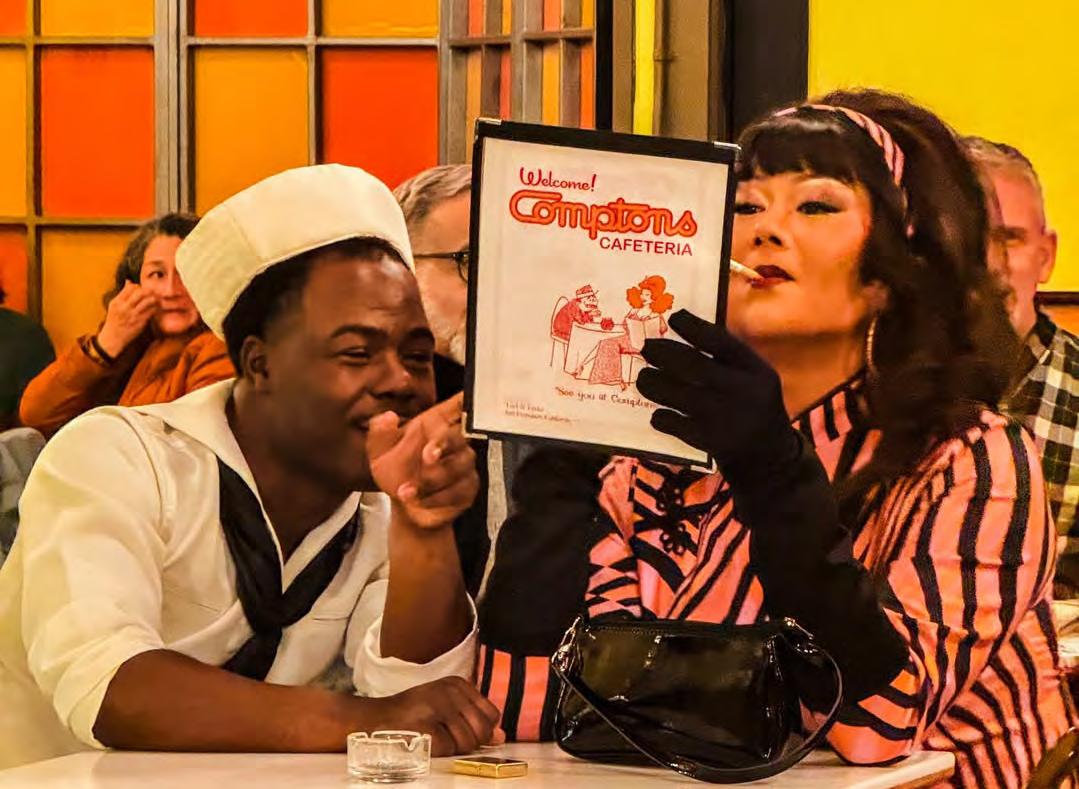
There are currently 11 city landmarks that relate to or mention LGBTQ history. The landmark for 101 Taylor Street, the site of a trans and queer riot against police in 1966 at Gene Compton’s Cafeteria, an all-night diner located in the Tenderloin, is in the process of being expanded to include the entire exterior of the building. It should be taken up by the supervisors in June during Pride Month.
One LGBTQ landmark is located in North Beach at 524 Union Street where the now-defunct Paper Doll operated in the 1940s. It is believed to have been San Francisco’s first restaurant and nightclub that catered to the queer community.
Seeing additional sites in the neighborhood be landmarked, “I think it is great,” said Keever. “North Beach was years and years ago a place where gay folks flocked to.” t
A promotional postcard advertised Finocchio’s nightclub. From GLBT Historical Society Archives
Symphony maestro Michael Tilson Thomas dies
by Cynthia Laird
Michael Tilson Thomas, a gay man who remade the San Francisco Symphony during his long tenure as music director, died at his home April 22. He was 81.
Known widely as MTT, Mr. Tilson Thomas was diagnosed in 2021 with glioblastoma multiforme, an aggressive brain tumor. He was named music director of the symphony in 1995 and stepped down in 2020, after his 25th season. He then became music director laureate.
Mr. Tilson Thomas’ husband, Joshua Robison, died February 22 at his home in the city. He had been recovering from a bad fall in August 2025.
San Francisco Mayor Daniel Lurie, who was traveling in Asia, issued a statement on Mr. Tilson Thomas’ passing.
“Michael Tilson Thomas was a visionary leader in San Francisco’s music and arts community and helped shape our entire city’s cultural identity,” the mayor stated. “In his time leading the San Francisco Symphony, Michael elevated the city’s music scene onto the global stage through innovative performances and a passion for bringing music to more people. As one of the first prominent and openly gay conductors, he helped lift up our LGBTQ+ community, commissioning and composing works that resonated deeply with many San Franciscans. His love for our city has been an inspiration to Becca and me and for generations of San Franciscans. His legacy will live on for generations to come.”
Thomas E. Horn, a gay man and former publisher of the Bay Area Reporter, has long been involved with the city’s fine arts scene. He sits on the board that oversees the War Memorial.
Michael was a living legend,” Horn wrote in an email. “He arrived here when he was 29 years old. There was controversy around appointing an openly gay conductor to the position,
but due to forward-thinking leadership on the symphony board, namely Nancy Bechtle, the symphony moved forward.
“Michael’s contributions to the symphony and to San Francisco are enormous,” Horn continued. “I was proud to stand with him not long ago when the section of Grove Street in front of Davies Symphony Hall was renamed MTT Way.”
That ceremonial street renaming took place in late 2023. https://www. ebar.com/story/73264
Horn explained that Mr. Tilson Thomas broadened the collection of music the symphony performed.
“He introduced modern music to a staid classical format that had been the symphony’s repertoire for years,” Horn stated. “He also favored American composers while respecting the European greats. He explained the music to the audience. I can’t overstate his contributions.
“He is a huge loss for San Francisco,” Horn added.
Matthew Spivey, CEO of the San Francisco Symphony, praised Mr. Tilson Thomas.
“Michael Tilson Thomas gave the San Francisco Symphony 25 years of extraordinary artistry, curiosity, and heart – and he gave each of us who knew him something more personal than that,” Spivey stated. “When we first met during my job interview, we spent the entire conversation on a single piece of music – Ligeti’s Violin Concerto – and that was how he came to know people and came to know the world. He was a brilliant conductor, a generous teacher, and a deeply original human being, and he reimagined what this orchestra – and classical music in a city like ours – could be. San Francisco and the musical world are better for his life. The musicians, audiences, and young artists he shaped will carry him forward.”
Varied artist
Mr. Tilson Thomas was a 12-time Grammy winner. His discography includes more than 120 recordings, and his television work includes series for the BBC and PBS, the New York Philharmonic’s Young People’s Concerts, and numerous televised performances. His profile “Michael Tilson Thomas: Where Now Is” aired on PBS’ “American Masters” series in fall 2020, according to a biography on the symphony’s website. Throughout his career, he had been an active composer, with major works including “From the Diary of Anne Frank,” premiered with narrator Audrey Hepburn, and “Meditations on Rilke.” Both appear on the San Francisco Symphony Media’s Grammy Awardwinning recording of his music. In 2023, Yuja Wang and Teddy Abrams released a recording on DG that included Mr. Tilson Thomas’ “You Come Here Often?,”
which won a 2023 Grammy Award for best classical instrumental solo.
Mr. Tilson Thomas made his debut with the San Francisco Symphony in 1974 at age 29 and, since then, led nearly 1,800 concerts over the course of his 52year relationship with the symphony, the organization stated in a news release.
“During his incredible 25-year tenure as music director (1995–2020), MTT oversaw the launch of SFS Media, the Symphony’s own recording label, which released many Grammy Award-winning recordings; introduced Keeping Score, creating a lasting and memorable music education experience for countless young people; and created unforgettable concert experiences for the Symphony’s audiences and community,” the release noted.
In early 2025, when Mr. Tilson Thomas shared that his glioblastoma had returned, he announced that he would, at that point, wind down public performances, the symphony release stated. At that time, he wrote, “A ‘coda’ is a musical element at the end of a composition that brings the whole piece to a conclusion. A coda can vary greatly in length. My life’s coda is generous and rich.”
In January 2024, Mr. Tilson Thomas conducted the San Francisco Symphony in Mahler’s Symphony No. 5, marking his final subscription series concerts with the orchestra. On April 26, 2025, he made his final public conducting appearance during a special concert celebrating his 80th birthday, leading the San Francisco Symphony in Benjamin Britten’s “The Young Person’s Guide to the Orchestra,” which Mr. Tilson Thomas conducted for his first gala as music director with the orchestra in 1995, and Ottorino Respighi’s ”Roman Festivals,” according to the release.
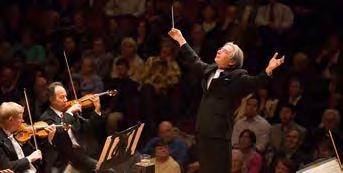
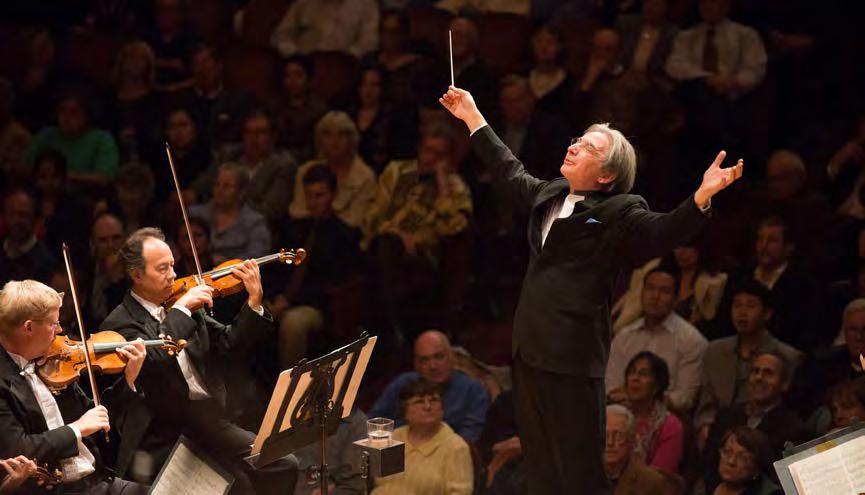
Michael Tilson Thomas conducted the San Francisco Symphony.
Kristen Locken
Film SF is presently housed in the Office of Economic and Workforce Development. It attracts and supports creative productions in San Francisco, according to its website. It provides hands-on permitting to a wide variety of projects, ranging from student films and still photography to feature films and television series.
Under the merger, the three agencies will now report to Goudeau, with the three agencies maintaining their individual leadership positions.
The city’s arts budget is funded by a baseline 1.5% of the hotel tax, the result of the passage of Proposition E in 2018. But, as the Examiner noted, huge deficits
<< CA Gov
candidates
From page 1
With state leaders such as Bonta and Governor Gavin Newsom using the bully pulpit that comes with their elected positions to speak up in support of health services for gender-nonconforming youth, the Bay Area Reporter inquired about the issue in its questionnaire sent to the 2026 gubernatorial candidates. While Bonta is seeking reelection this year, Newsom will be termed out of office in early January.
Only two of the remaining Democratic contenders in the race returned the paper’s questionnaire, former congressmember Katie Porter of Orange County and San Jose Mayor Matt Mahan. Both told the B.A.R they support using legal and legislative avenues to protect gender-affirming care for youth.
“No healthcare facility should ever bend the knee to a president who is hellbent on ripping away healthcare from millions of Americans through his cuts to Medi-Cal, Planned Parenthood, and gender-affirming care. Healthcare providers have a duty to provide medical care,” replied Porter. “California law is clear that discrimination in healthcare is prohibited, and I would work with the Attorney General to uphold the law to its fullest extent.”
Added Mahan, “California should not let Washington politicians override lawful medical care here. As governor, I would use every lawful tool the state has. That means aggressive legal defense of California’s authority to regulate medicine, clear guidance to hospitals and
in the tourism sector during the ensuing COVID-19 pandemic revealed the hotel tax to be a volatile source of funding.
Goudeau stated that he will be assisted by the city’s arts communities.
“As we bring together the city’s arts departments, I will rely on the experience and ideas of the artists, cultural workers, agency staff, and communities across the city to strengthen the creative sector and build on the work this community has done to make San Francisco the most exciting, creative city in the world,” he stated.
Goudeau was selected following a three-month national search process, the release stated, which included over a dozen interviews and 250 applicants.
Lurie stated, “San Francisco’s arts and culture ecosystem is the most vibrant
insurers that medically necessary care cannot be denied because of politics, support for families displaced by service cutbacks, and targeted state funding to stabilize providers if federal threats create gaps in care. California law already protects access to care free from discrimination, and my job would be to make those protections real in practice, not just on paper.”
Porter also told the B.A.R. that the governor’s budget needs to fully fund the $26 million investment put forward by advocates to prevent gaps in coverage should the federal government go through with additional Medi-Cal cuts that will slash funding for gender-affirming care. As the online Political Notes column reported April 27, the fiscal ask is one of several leaders from LGBTQ community centers across California made of state legislators during a lobbying day in Sacramento that coincided with Earth Day observations on April 22.
“We should not put our healthcare institutions in a situation where they are forced to choose between losing their funding, which provides healthcare for lots of Californians, and having to provide appropriate medical care for every single kid in California, including gender affirming care. $26 million to create a state-only Medi-Cal funding pipeline is just a fraction of what my billionaire opponent has spent on ads in this race, so this is something that must be included in the budget,” wrote Porter. “Additionally, Trump’s attacks mean we need more state leadership on healthcare than ever before, and ultimately California
series, ‘When We All Get To Heaven,’ is a profound achievement, and we offer them our most heartfelt congratulations.”
“When We All Get to Heaven” explores the complex relationship between faith and the LGBTQ community. It uses sound archives from MCC-SF and research from the B.A.R., noted Lynne Gerber, an independent scholar and producer behind the series, which was done by Eureka Street Productions.
The Reverend Daniel Borysewicz, pastor of MCC-SF, was thrilled with the news. MCC-SF celebrated 56 years of ministry Sunday, April 26.
“We couldn’t ask for a better anniversary gift,” Borysewicz stated in an email. “We are immensely proud of Lynne Gerber, Siri Colom, Ariana Nedelman, and the entire Eureka Street Productions team. Their Peabody Award-winning
Mr. Tilson Thomas and his husband often worked together, with Robison serving as a guiding force for Mr. Tilson Thomas.
Deborah Robison, a straight ally who’s Robison’s sister, told the B.A.R. after her brother’s death that he had an impact on Mr. Tilson Thomas.
“I think he was the strategist, the gatekeeper,” she said. “He paved the way for Michael. Josh knew and loved music really, really well.”
“Michael was a wonderful composer, and Joshua put the songs together and published them. He made a wonderful collection,” Deborah Robison said.
The two men had known each other
in the country, and under my administration, government is going to do a better job supporting those artists and organizations who are driving our city’s economic recovery.”
He continued that Goudeau’s experience will help him in that effort. Lurie oversaw the return of SF Music Week, and launched SF LIVE, a citywide show guide and online events calendar designed to boost ticket sales for live arts venues.
“As we bring together our arts departments to strengthen our support for this sector, we need a leader who is steeped in the community – Matthew Goudeau pairs that experience with a deep commitment to San Francisco,” Lurie stated. “I am excited for the work he will do to support our artists, strengthen our cul-
must work to capture the administrative efficiencies and wider provider availability of a single payer type system. Single payer will protect access to gender affirming care and make sure every Californian can get the healthcare they need, when they need it.”
While he didn’t turn in the B.A.R.’s questionnaire, State Superintendent of Public Instruction Tony Thurmond addressed the issue in the one he did fill out for the Harvey Milk LGBTQ Democratic Club. The progressive San Francisco political group endorsed Thurmond in the race.
“My commitment is clear. I believe transgender, nonbinary, two-spirit, intersex, and gender-expansive people deserve safety, dignity, and full equality. As state superintendent, I protected transgender students, enforced antidiscrimination laws, expanded inclusive training for educators, and spoke out forcefully against attacks on trans youth. As governor, I will continue to defend gender-affirming care, inclusive education, and strong civil rights protections,” Thurmond, who continues to trail in polling on the race, told the Milk club. Thurmond also pledged to use “every legal tool available” to ensure that the values held by Californians are not undermined by federal actions.
“As state superintendent, I defended transgender students despite political backlash, and I will continue that leadership as governor,” Thurmond told the Milk club. “California must remain a safe haven for transgender people. Healthcare decisions belong to patients,
The Peabody Awards honor excellence in storytelling that reflects the social issues and the emerging voices of today. This year’s winners were announced April 23.
To listen to the 10-episode podcast, go to heavenpodcast.org or wherever you get your podcasts.
Minter lands on Time 100 list
Shannon Minter, a transgender man who is the longtime legal director of the San Francisco-based National Center for LGBTQ Rights, was named to Time magazine’s annual list of the 100 most influential people in the world. Minter attended the gala for honorees April 23 at the Deutsche Bank Center in New York City. Minter is one of the nation’s foremost
tural institutions, and keep this community at the forefront of our city’s recovery.”
Thomas E. Horn, a gay man who is vice president of the War Memorial Board of Trustees and former publisher of the B.A.R., has known Goudeau for over 25 years.
“I talked to Matthew and that’s pretty cool,” said Horn. “There’s nobody who’d be better at that job than he is. I’m not sure why the search process took so long. I have known Matthew since he was a young intern in the Office of Protocol and I’m so proud of him.”
Matthew Shilvock, the general director of the San Francisco Opera, stated that he’s excited for Goudeau to step into the new role.
“I’m thrilled that Matthew will be tak-
families, and medical professionals, not politicians. I will not allow federal overreach to erode access to care.”
He also promised to invest in expanding provider networks in rural and underserved areas of the state, including support for telehealth options, in order to increase access to gender-affirming care across California.
“I will also work to protect providers from political or legal retaliation so they can deliver care without fear. I have also taken action to ensure public hospitals continue to provide gender affirming care,” Thurmond told the Milk club.
The other top two Democrats in the race, billionaire-turned-politico Tom Steyer and Xavier Becerra, who served as the U.S. secretary of health and human services in the Biden administration, didn’t return the B.A.R.’s questionnaire. Nor did the top two Republicans, former Fox News host Steve Hilton and Riverside County Sheriff Chad Bianco.
At a forum held earlier this year by LGBTQ advocates, Steyer and Becerra both expressed support for the trans community when asked about enforcing laws upholding their rights. Examples given by the moderators included the attacks on gender-affirming care.
Monday Becerra picked up endorsements from two LGBTQ groups. The Stonewall Young Democrats based in Los Angeles County and Equality California both announced April 27 they are now backing him in the race.
In a Facebook post about its endorsements in various statewide races, the political club for young LGBTQ Demo-
civil rights attorneys, whose career spans more than three decades and has produced some of the most consequential legal victories in the fight for LGBTQ equality, a news release from NCLR stated. He served as counsel in Obergefell v. Hodges, the 2015 U.S. Supreme Court case that legalized same-sex marriage nationwide. He has also worked on cases involving trans members of the military and trans prisoners.
Minter stated in a message to the B.A.R. that he’s honored to receive the recognition.
“I am encouraged that Time is recognizing the significance of this moment for transgender people,” he stated. “It is a tremendous honor to receive this recognition, and I hope that it will help to build more public understanding and support of our community.”
Tilson Thomas became music director.
“When Michael Tilson Thomas was named music director of the San Francisco Symphony, I remember a feeling of pure exhilaration – as though something extraordinary had just been set in motion for all of us,” Geeslin stated.
“What followed exceeded even that early excitement. On the podium, he brought brilliance, curiosity, and a singular voice that reshaped the orchestra. Off the podium, he revealed warmth, wit, and a generosity of spirit that made getting to know him as a friend an unexpected gift.
“MTT didn’t just lead the symphony – he became part of the cultural fabric of San Francisco itself, expanding what it meant to be an orchestra in a city like ours,” she added. “His impact reached far beyond the concert hall, touching the
ing on this new leadership role for art and culture in the city,” stated Shilvock. “Matthew has a unique set of experiences that will make him an excellent partner to the whole arts ecosystem in San Francisco, keeping the city one of the great cultural capitals of the world. He is passionately committed to the arts, brings incredible integrity, and is adept at navigating the city’s infrastructure to realize positive change. This marks an important commitment to strengthening the city’s support of arts and culture.”
Chuck Collins, the arts commission’s president, stated that Goudeau “has a strong ability to identify gaps and opportunities, build coalitions and consensus, and turn shared purpose into meaningful progress for the betterment of arts and culture in our city.” t
crats said Becerra would be among the leaders who “will continue to champion our mission of creating safe, affirming spaces for LGBTQIA+ youth across LA and throughout California!”
EQCA Executive Director Tony Hoang credited Becerra with understanding “that protecting LGBTQ+ people requires more than rhetoric – it requires action, especially in times of crisis.”
Earlier this year the statewide advocacy organization hadn’t come to a consensus on backing one of the gubernatorial contenders. But it took a second look at the race following the departures of Betty Yee, due to low polling numbers, and former congressmember Eric Swalwell, who resigned from his House seat after being accused of rape by a former staffer, which he has denied.
“At a time when LGBTQ+ people are facing coordinated attacks across the country, California needs a governor who has not only spoken out, but taken action to defend our community,” stated Hoang. “From standing up to Donald Trump in court, to affirming that transgender healthcare is medically necessary at the highest levels of our nation’s health system, Xavier Becerra has used all of his positions of power to defend our community’s rights and dignity.”
Under California’s open primary system, only the top two vote-getters regardless of party affiliation will advance out of the June 2 primary. They will then compete for a four-year term as governor on the November 3 general election ballot, with the winner to be sworn into office in early 2027. t
Minter was in the company of other honorees, including Hilary Knight, a lesbian who’s a champion women’s ice hockey player and was a member of the gold-winning U.S. women’s hockey team at this year’s Winter Olympics in Italy. NCLR shared a picture on Threads of the two at the Time gala.
To view this year’s Time 100 list, go to https://tinyurl.com/cdszz2bz.
May Day mobilization
Workers, students, immigrants, and families in San Francisco are expected to join more than 600 labor unions and community organizations in all 50 states for a national day of noncorporation Friday, May 1.
A news release stated that Bay Resistance is leading three major actions in San Francisco for the “No Work. No School. No Shopping” event.
life of the city in ways both visible and deeply personal. And even after stepping down as music director, he never truly stepped away. He remained an integral part of the symphony – artistically, intellectually, and as a guiding presence—continuing to shape and inspire the organization he helped define. We were, quite simply, so lucky to have him.”
Born in Los Angeles, Mr. Tilson Thomas studied conducting and composition with Ingolf Dahl at the University of Southern California and, as a young musician, worked with artists including Igor Stravinsky and Aaron Copland. In his mid-20s, he became assistant conductor—and later principal guest conductor—of the Boston Symphony Orchestra. He subsequently served as music director of the Buffalo
The international terminal at San Francisco International Airport will be the scene of “ICE Out of SFO,” a direct action taking place at 11 a.m. In March, Immigration and Customs Enforcement agents detained and deported a woman and her 9-year-old son at the airport, according to multiple media reports.
At 2 p.m. there will be a rally and march to protest attacks on immigrants and workers. The rally starts at Civic Center Plaza, and the march will go past the Federal Building, Salesforce, and Target, the release stated.
At 4 p.m., there will be a labor rally and mass march to protest corporate attacks on workers and proposed layoffs. The rally begins at Embarcadero Plaza and ends at City Hall.
For more information, go to bayresistance.org.t
Philharmonic, principal guest conductor of the Los Angeles Philharmonic, and principal conductor of the London Symphony Orchestra.
In 1987, he co-founded the New World Symphony, a postgraduate orchestral academy in Miami Beach dedicated to preparing young musicians of diverse backgrounds for leadership roles in classical music. He has worked with more than 1,200 NWS Fellows, many of whom have gone on to major musical careers.
The San Francisco Symphony stated that it will dedicate the June 18, 20-21 performances of Beethoven’s Ninth Symphony to Mr. Tilson Thomas. Plans for a special concert in celebration of his life and lasting impact will be shared at a later date. t
since childhood. Priscilla Geeslin, symphony board chair, stated that things changed once Mr.
Michael Tilson Thomas served as music director for the San Francisco Symphony for 25 years.
Deborah Robison
by Gregg Shapiro
It’s incredible to think that it took this long for Michael Jackson, the late “King of Pop” who died two months shy of his 51st birthday in 2009, to be the subject of a big-screen biopic (in IMAX, no less). Unfortunately, the mono-monikered “Michael” (Universal/Lionsgate), directed by Antoine Fuqua, with a screenplay by gay writer John Logan, comes off as nothing more than a glorified Lifetime movie.
Spanning a 22-year period that extends, geographically, from Gary, Indiana to Southern California, “Michael” tells a familiar tale with which his fans from the early years, as well as the children and grandchildren of those folks, are probably well-acquainted.
His steel-mill worker father Joseph (gay actor Colman Domingo) claimed to want a better life for his young sons Jackie (Nathaniel Logan McIntyre, and Joseph David-Jones as an adult), Tito (Judah Edwards, and Rhyan Hill as an adult), Jermaine (Jayden Harville, and Jamal R. Henderson as an adult), Marlon (Jaylen Lydon Hunter, and Tre Horton as an adult), Michael (Juliano Krue Valdi, and Jaafar Jackson as an adult), and daughter La Toya (Jessica Sula). Sadly, he was more abusive, especially with Michael, than he was well-intentioned. Particularly because he also hoped to reap the benefits of a profitable family musical act.
What follows is a portrait of the brothers’ rise to fame, mostly propelled by Michael’s undeniable talent which impressed Motown Records’ Suzanne de Passe (Laura Harrier) so much at an early concert that she gives Joseph her business card. Recording sessions with Berry Gordy (Larenz Tate), live and TV appearances, and concerts came next.
All the while, Joseph continued to make Michael’s life miserable. Fortunately, Michael had his mother Katherine (Nia Long) and his security guard Bill (KeiLyn Durrel Jones) to work interference.
“Michael” incorporates many trademark moments. There is lonely Jackson’s relationship with his animal friends, including a llama and CGI chimp Bubbles, his multi-platinum-selling solo career, MTV breakthrough and his lasting influence on the music video art form, the shocking transformation of his facial features, and more.
GOING OUT
Ultimately, it’s Jaafar Jackson’s riveting performance that is the only reason to see “Michael.”
The son of Jermaine, Michael is a role that Jaafar was born to play, and he gives it everything he’s got. From the intonation of his speaking voice to his physical presence, including facial expressions, the actor becomes the embodiment of his late uncle. So much so that it’s hard to imagine another actor, especially one making his film debut, doing the role justice.
That said, the movie ends in 1988, with Jackson having survived both Joseph (Michael fires him
THEATER
‘The Cherry Orchard’ @ Bus Barn Theater, Los Altos Los Altos Stage Company performs Tom Stoppard’s adaptation of Anton Checkov’s poignant drama about a family facing the loss of their beloved orchard; $28$41, thru May 10, 97 Hillview Ave. losaltosstage.org
‘Come From Away’ @ Mountain View Center for the Performing Arts
Irene Sankoff & David Hein’s rousing musical about the Canadian town that welcomed passengers from grounded planes after 9/11. $34-$115, thru May 10, 500 Castro St. www.theatreworks.org
‘Compton’s Cafeteria Riot’ @ 835 Larkin St.
Colette LeGrande, Mark Nassar, and Donna Personna’s dramatic recreation of the historic uprising of trans and drag people in 1966; set in a recreated diner, with breakfast served, now celebrating a one-year run! $75, Fri & Sat 7pm; extended thru June, 835 Larkin St. tenderloinmuseum.org
‘Flex’ @ San Francisco Playhouse
Candrice Jones’ drama focuses on the intense rivalry in a girls’ high school basketball team headed to a state championship. $57-$100, thru May 2, 450 Post St. sfplayhouse.org
‘The Goat or, Who Is Sylvia?’ @ Ashby Stage, Berkeley
Shotgun Players performs gay playwright Edward Albee’s acclaimed play. $25-$80, extended thru May 3, 1901 Ashby Ave. shotgunplayers.org
‘Hamnet’ @ Toni Rembe Theatre
American Conservatory Theatre presents the Royal Shakespeare Company and Neal Street Productions drama by Lolita Chakrabarti’s adaptation of Maggie O’Farrell’s novel about William Shakespeare and Agnes Hathaway’s life as they lose their son. $25-$140, thru May 24, 415 Geary St. www.act-sf.org
via fax) and the terrifying accidental igniting of his hair during the making of a Pepsi commercial. However, the worst was yet to come for Michael, including his declining record sales and two failed marriages, as well as the scandal that plagued him for the rest of his life. Nevertheless, the dreaded words, “His story continues,” flash on the screen before the closing credits, possibly signaling that a sequel is already in the pipeline. Rating: C-t www.michael.movie
‘Hedwig and the Angry Inch’ @ New Conservatory Theatre Center
John Cameron Mitchell and Stephen Trask’s rocking musical about a German trans wannabe pop star. $49.50-$69.50, May 8-June 7, 25 Van Ness Ave. www.nctcsf.org
‘Hell’s Kitchen’ @ Orpheum Theatre Touring company of Alicia Keys and Kristoffer Diaz’s Tony and Grammy-winning hit musical about a young woman’s coming of age in NYC. $69-$257, May 6-24, 1192 Market St. www.us.atgtickets.com
‘How to Make an American Son’ @ New Conservatory Theatre Center Christopher Oscar Peña’s comic play about a privileged rebellious gay teen and his father. $36.50-$55.50, thru May 10, 25 Van Ness Ave. www.nctcsf.org
The Marsh
Solo performers at two theaters include Dan Hoyle’s ‘Takes All Kinds’ thru April 25, then May 8-June 6; Steve Budd’s ‘Oy, What They Said About Love,’ Saturdays 8pm, May 2-June 6. Amy Bouchard’s ‘Amadeus Never Gives Me the Blues’ thru May 23, both at 1062 Valencia St. SF. Pearl Louise’s ‘Pass the Nails and Shame the Devil,’ April 25-May 23 and Wayne Harris’ ‘Drapetomania’ May 1-22; Nina Wise’s ‘What Just Happened?’ Saturdays May 2-16, at 2120 Allston Way, Berkeley. $25-$100. www.themarsh.org
‘Mean Girls the Musical’ @ Barbary Stage Ray of Light Theatre’s production of Tina Fey, Nell Benjamin and Jeff Richmond’s hit musical based on the film about high school cliques. $36-$46, May 1-30, 215 Jackson St. www.rayoflighttheatre.com
Les Misérables @ San Jose Center for the Performing Arts
Touring company of Alain Boublil and ClaudeMichel Schönberg’s Tony Award-winning megahit musical returns. $96-$385, April 29-May 3. www.broadwaysanjose.com
‘The Monsters’ @ Berkeley Repertory Ngozi Anyanwu’s two-actor drama about MMA fights and their personal struggles; thru May 3. $25-$135. Peet’s Theatre, 2025 Addison St. www.berkeleyrep.org
Jaafar Jackson in ‘Michael’
t << Film
‘That Alien, Sound’ Bizarre
by David-Elijah Nahmod
In “That Alien, Sound,” the debut feature from writer/director/editor Brando Topp, a young woman named Mika (Mia Danelle) becomes possessed by a soundwave that’s been floating around in outer space. No really, that’s the plot of this film. Sound, as she now calls herself, then proceeds to spend her time experiencing, for the first time, all that life has to offer. If this seems weird, it’s because it is, yet “That Alien, Sound” is actually a delightful coming of age tale. It’s something we rarely see in film, an original idea.
Mika’s beleaguered boyfriend Shannon (adorably cute Will Tranfo) and her parents (Amy Hill, Richard Masur) don’t know what to make of Mika/Sound’s claims. Is she really a soundwave trapped in a human body? Is she faking it?
A lot of time is spent on Sound’s exploration of a world she’s seeing for the
first time, a world she has previously only heard. This includes a brief lesbian flirtation she has with a friend of Shannon’s. This sequence is toward the end
of the film and is actually rather sweet. Newcomer Danelle is quite good as the possessed Mika. Her screen presence is strong and her chemistry with
her co-stars is palpable. She beautifully conveys Mika/Sound’s discovery of a world that is unknown to her. She looks at television for the first time,
Colin Higgins Youth Filmmaker
by Brian Bromberger
Ashort film, “Babaylan,” about Bay Area Filipino drag queens that blends ballroom and pre-colonial Babaylan spirituality as a reclamation and celebration of queer Filipino identity is one of the 2026 Colin Higgins Youth Filmmaker Grant Recipients, announced by Frameline on April 22. Frameline’s partnership with the Colin Higgins Foundation, begun in 2023, provides financial support for young queer filmmakers. These grants are given to 25 and under LGBTQ+ applicants who currently reside in the U.S. Along with the other grantees, who will each receive $15,000 for future film projects, Frameline49 will screen the grant recipients’ films dur-
ing various shorts blocks at the landmark 50th San Francisco International LGBTQ+ Film Festival June 17-27.
The late Colin Higgins (1941-1988) was an acclaimed screenwriter and director of the classic cult film “Harold and Maude,” but also the enduring comedy “9 to 5,” and the musical “The Best Little Whorehouse in Texas.”
Diagnosed with HIV in 1985, he founded the Colin Higgins Foundation, “as a means of supporting LGBTQ+ youth for underserved communities by helping to fund programs and organizations that foster and build their leadership skills and empowerment,” such as The Trevor Project, The Lesbian and Gay Immigration Rights Task Force, and Familia: Trans Queer Liberation Movement. Since 1988,
the Foundation has awarded over 660 grants totaling over $6 million.
James Cass Rogers, president of the foundation, noted, “Colin was a consummate filmmaker who wanted to help gay youth succeed. These grants are a perfect fit for his foundation. His memory will live on through these extraordinary young filmmakers.”
There are two directors of “Babaylan.” Franny trinidad, a documentary filmmaker and multimedia journalist, is based in the Bay Area and Central Coast. Her passion for storytelling is rooted in a love for human connection, a commitment to social justice, and an understanding of cinema as a tool for liberation and political action.
The second director is Kelly Liu, a first-year news documentary film-
making student at the UC Berkeley Graduate School of Journalism. Liu focuses on pressing issues such as climate change, social justice, and human rights, with a particular commitment to amplifying the voices of marginalized communities and shedding light on under-reported stories.
Crossing borders
Another recipient is Matthew Sorgie’s “So Be It,” an animated documentary offering a rare and tender portrait of lifelong queer love by sharing the candid, heartfelt stories of five LGBTQIA+ couples. Sorgie is a Los Angeles director whose work explores the intersection of nonfiction and animation, centering on marginalized voices through mission-driven
OutShine film fest’s online selections
by Jim Provenzano
I f you can’t wait for the Frameline International Film Festival to start in June, and you’re tired of scrolling through your streaming services to find the right queer film, then hit up Outshine LGBTQ+ Film Festival. Coming up with in-person events in South Florida, part of the 28th a nnual festival will be available online, so you can view new queer movies at home.
Among the films making their East Coast debut are Luke McFarlane starring in “Lone Star Bull.” The Hallmark movie heartthrob and hunky gay actor plays Bull Jackson, a military veteran turned bouncer at a popular gay nightclub. When Coco, the club’s beloved owner and mentor, is gravely injured in a suspected hate crime, Bull teams up with Jordan (D.J. “Shangela”
Pierce), a sharp-tongued drag queen and med student, to track down those responsible.
Another notable feature includes the return of a much-missed actress. Set against the wintry streets of the Canadian city, “Montreal, My Beautiful” follows a Chinese woman (Joan Chen, “The Last Emperor,” “Wedding Banquet”) navigating migration, loneliness, and queer self-discovery far from home.
Other films include collections of men and women’s short films, features, and international topics as well. Select films and programs stream May 4 through May 10; $18.25 for single films. And if you happen to be reading this in Florida, it starts on April 25 in person with lots of events and parties.t www.outshinefilm.com
watches her first movie, and burns herself when she picks up a frying pan that she doesn’t realize is hot. Through it all Danelle gives a magical performance.
Topp is a filmmaker worth keeping an eye on. His witty screenplay fully develops all of the characters and he keeps things moving at an even pace. His direction is strong, and he pulls good performances out of his cast. It all leads up to an unexpected conclusion that I’m not going to spoil. Ultimately, “That Alien, Sound” is a refreshing take on what it means to be human and how we interact with those we love.
Topp discussed what inspired the film, the challenges of making a lowbudget indie film, and the film’s lesbian subplot, in his interview. Read it on www.ebaar.com.t
“That Alien, Sound” streams on Fandango at Home, Amazon Prime and Tubi TV. www.streetsaheadproductions.net
storytelling that aims to both entertain and empower.
The final grantee is Edward Nguyen’s “Sweat,” (Mo Hoi) concerning a farm worker preparing to illegally cross the border of rural Vietnam in search of refuge abroad. The film premiered at BFI Flare.
Nguyen is a Vietnamese-American writer-director based between New York and Austin. He centers the intersection of the Vietnamese/diasporic experience and queerness through kink, the folkloric and the surreal. Inspired by Southeast Asian and slow cinema auteurs, his works trouble the surface of what we consider fixed, such as national trauma and memory, challenging us to deny one-dimensional narratives of queerness in contemporary Vietnam.
Allegra Madsen, Executive Director of Frameline, noted, “This year’s Colin Higgins Youth Filmmaker grantees and their exceptional films are a reminder that queer cinema needs all our voices, all our stories, to keep building a more empathetic, rounded world. These filmmakers’ willingness to put queer truths on screen is crucial to expanding what queer storytelling can look like, sound like, and mean.”
The Frameline50 program will be announced on May 13. Tickets for all programs, including the shorts blocks featuring the above Colin Higgins Youth Filmmaker Grantees’ works, will also go on sale at that time.t
www.frameline.org
Left: Luke MacFarlane in ‘Lone Star Bull,’ Middle: the Men’s Shorts Program, and Right: Joan Chen in ‘Montreal, My Beautiful’ in the OutShine LGBTQ+ Film Festival
Mia Danelle in ‘That Alien, Sound’
Streets Ahead Productions
Left: Franny Trinidad and Kelly Liu’s ‘Babaylan’ Middle: Matthew Sorgie’s ‘So Be It’ Right: Edward Nguyen’s ‘Sweat’
t Music & Books >>
Everything old & new
by Gregg Shapiro
Classic rock bands have remastered albums out now, and you’ll want to hear the great songs anew.
With legendary albums by Joni Mitchell, Patti Smith, Bruce Springsteen, Bob Dylan, Parliament, Pink Floyd, Led Zeppelin, Earth, Wind & Fire, and David Bowie, the year 1975 is one for the record books. Seattlebased rock band Heart led by sisters Ann and Nancy Wilson, also released its debut album “Dreamboat Annie” (Capitol/UMe), now reissued as part of the Vinylphyle series on 180g heavy weight vinyl featuring all-analog remastering.
As first albums go, “Dreamboat Annie” is notable not just because Heart is a female-led band, but because it perfectly represents the band’s impressive range, beginning with the spell cast by the hard-rocking album opener “Magic Man” and the equally blistering “White Lightning & Wine” to mellower numbers such as “How Deep It Goes” and the dreamy title track. It’s simply a must. heart-music.com
When discussing Fleetwood Mac’s commercial and critical breakthrough 1970s period, many automatically look to 1977’s illustrious “Rumours” album. However, as we all know, it was 1975’s eponymous album, available as a Super Audio CD reissue from Mobile Fidelity Sound Lab/ Reprise/ Rhino, that really got the (floating) ball rolling. It was on this album that core Fleetwood Mac members Christine McVie, Mick Fleetwood, and John McVie were joined by the dual firepower of Stevie Nicks and Lindsey Buckingham, providing the band, which had been in existence since 1967, with its first chart-topping LP. Additionally, successful hit singles “Rhiannon,” “Over My Head,” and “Say You Love Me,” exposed the band to an entirely new audience.
As any Nicks fan will tell you, her songs “Crystal” (which originally appeared on 1973’s “Buckingham Nicks” album) and, of course, “Landslide,” distinguished her from her fellow band members, establishing a devoted following. fleetwoodmacofficial.com
Tom LeNoble
by John Ferrannini
Heart, Fleetwood Mac, Supertramp & more music
By the late 1970s, British progrock band Supertramp had released five studio albums, including the band’s 1974 commercial breakthrough “Crime of the Century,” which yielded the popular singles and FM radio staples “Dreamer” and “Bloody Well Right.” However, nothing could have prepared the band, or its growing fanbase, for what occurred when “Breakfast in America” (A&M/ UMe) was released in 1979.
From its witty and eye-catching Grammy-winning cover art ( featuring the Statue of Liberty represented by a diner waitress through an airplane window) to its string of massive hit singles (“The Logical Song,” “Take The Long Way Home,” and “Goodbye Stranger”), the album, newly reissued in a halfspeed remastered edition on 180gram vinyl, was Supertramp at its peak, a feat they were never to repeat. Just shy of 50 years later, this album still sounds as tasty as it did when it was first served to us. supertramp.com
Author on his memoir and life
Sitting at a cafe in San Francisco’s Castro neighborhood, Tom LeNoble is happy his memoir, “My Life in Business Suits, Hospital Gowns and High Heels” has already received a number of accolades. But it’s only the entrepreneur and philanthropist’s first salvo into the literary world.
“There are three more coming,” LeNoble said, teasing his second book as being titled “Morning Ground.”
“I do something called ‘morning ground’ on Instagram and Facebook every morning,” LeNoble continued.
“It’s less than two minutes long, and it starts out before the day asks anything of you, take this moment for yourself. And there’s a word every day that I speak to. I post all these morning grounds, and put it into a daily empowerment, sort of bedside book called morning ground.”
The third book of LeNoble’s “My Life” series will focus on his time as one of Facebook’s first hundred employees. The working title? “The adult in the room,” he said.
“I was in the first 100,” he said. “I think, number 57, but who’s counting? Facebook was still in colleges
and everyone was 20, 21, deferred law school, business school, medical school to work there. And I was old enough to be their father. They called me the adult, and I’m going to tell the Facebook story through my eyes.”
The focus of the current book is LeNoble’s fights against life-threatening illnesses as he climbed corporate ladders. LeNoble has lived with metastatic cancer for more than fourteen years, and initially came to the Bay when he was “very sick with AIDS.”
“I’ve been given six months to live three times,” he said. “You become very acquainted with the thought of dying and make peace with that.”
In the 1990s, LeNoble was the executive director of the Andrew Ziegler Foundation, an all-volunteer organization named for an HIV antibody counseling coordinator who died of AIDS complications at age 29.
Life after life
“My Life in Business Suits, Hospital Gowns and High Heels” has already won a Pencraft Award for literary excellence for spring 2026, an Independent Press Award for 2026, was a silver star winner in the Non-Fiction Book Awards, and was a finalist for the
Want to feel old? The Molly Ringwald movie “Pretty in Pink,” directed by Howard Deutch and written by John Hughes, turns 40 in 2026. To commemorate this auspicious occasion, the various artists “Pretty in Pink”: Original Motion Picture Soundtrack (A&M) has been reissued on pink vinyl in an expanded edition with two bonus tracks, including the Otis Redding’s “Try A Little Tenderness” (to which Jon Cryer does his legendary dance and lip synch number).
In addition to featuring songs by A&M artists OMD (the topten single “If You Leave”), Suzanne Vega with Joe Jackson (“Left of Center”), and Jesse Johnson (“Get To Know Ya”), the soundtrack features The Psychedelic Furs rerecording of its titular song, New Order’s “ShellShock,” Danny Hutton Hitters’ cover of Nik Kershaw’s “Wouldn’t It Be Good,” as well as songs by The Smiths and Echo & The Bunnymen, among others. universalmusic.ca
In the pantheon of underappreciated bands, Jellyfish ranks near the top of the list. Seamlessly blending influences ranging from Paisley Underground to power-pop and retro rock, the quartet unfortunately suffered from bad timing (grunge was all the rage when its brilliant 1990 debut album “Bellybutton” came out) and poor record label choices (the obscure and floundering Charisma).
“Spilt Milk” (Capitol/UMe), Jellyfish’s stellar second (and final) studio album, is getting the well-deserved 180g double LP reissue treatment via the VinylPhyle series. Spread across three sides (and a fourth including “an engraved handwritten message” from Roger Manning), the 1993 album is the musical equivalent of whipped cream; equally delicious and fluffy (but with substance!). There’s not a skip track in sight, with “Glutton of Sympathy,” “Bye Bye Bye,” “The Ghost at Number One,” “Joining A Fan Club,” and “He’s My Best Friend,” all worth mentioning. udiscovermusic.comt
Feathered Quill Book Awards.
LeNoble, now 71, has worked at MCI, Walmart.com, Palm, and Facebook. He’s currently a confidential advisor to founders, splitting his time between the Bay Area and Hawaii.
He said his experiences with illness led to the question he wants readers to come away asking, and which he explores in his book: “What are you doing with your life while you’re here?”
“Eventually you realize you were dying all the way from the beginning; because when you’re born, there’s only one guarantee,” he continued.
LeNoble said that one thing he’s prioritized with his time here on earth is philanthropy.
Roberto Ordeñana, a gay man who is the executive director of the GLBT Historical Society, confirmed that in a statement to the B.A.R., saying the society has benefited from LeNoble’s largesse.
“Tom has been a steadfast supporter of the GLBT Historical Society for decades, and it is because of his dedicated efforts and those of a number of community champions that we have been able, for over 40 years, to collect, preserve, and share LGBTQ+ history and culture with a global audience,” he stated. “We are so deeply grateful for his philanthropic leadership, which has inspired countless others, and for his stalwart support of the society.”
LeNoble also counts among his friends Suzanne Ford, a trans woman who’s the executive director of San Francisco Pride.
“I first knew Tom as a donor due to his generous support for San Francisco Pride, which quickly blossomed into a personal friendship,” Ford stated. “The theme of this year’s pride parade is ‘Resistance in Action’, and I can’t think of anyone who embodies that more than Tom. Tom’s story of resilience against life’s hardships is remarkable and inspiring for us all to lead with courage and embrace reinvention.”t
www.tomlenoble.com
Author Tom LeNoble
‘Shades and Shadows’
@ Magic Theatre
World premiere of William Brasse’s play inspired by mythological stories. $20, April 30-May 3, Fort Mason, 2 Marina Blvd., Bldg D 3rd floor. magictheatre.org
‘La Traviata’ @ California Theatre, San Jose
Opera San José’s re-envisioned production of Guiseppe Verdi’s classic opera about a passionate couple, re-set in 1880s Paris; in Italian with English and Spanish supertitles. $58-$215, thru May 3, 345 South First St. www.operasj.org
DANCE
Bay Area Dance Week
10-day festival of workshops, classes, presentations, performances and more throughout the Bay Area at multiple locations; thru May 3. www.dancersgroup.org/badw
Oakland Ballet
@ Great Star Theater
Dancing Moons Festival includes works by Phil Chan and Wei Wang, April 30May 2, 636 Jackson St. Also, ‘Angel Island’ in collaboration with the Del Sol Quartet and Volti, May 8 & 9 at the Herbst Theatre, 401 Van Ness Ave. www.oaklandballet.org
San Francisco Ballet
@ War Memorial Opera House
The company performs Aszure Barton and Floating Points’ ‘Mere Mortals,’ a retelling of the Greek myth of Pandora and Prometheus via modern AI technology; thru May 3. 301 Van Ness Ave. www.sfballet.org
Smuin Contemporary Ballet
The acclaimed local company performs works by Andrea Schermoly, Artistic Director Amy Seiwert, Katarzyna Skarpetowska and the late Michael Smuin, $25$95, in May in Walnut Creek and Mountain View. www.smuinballet.org
LITERARY
David Archuleta
@ Book Passage
The gay pop singer signs copies of his memoir ‘Devout,’ $33 (includes book) May 4, 6pm, 1 Ferry Bldg. bookpassage.com
Fabulosa Books
Jibz Cameron (‘Hell in a Handbag’) with Brontez Purnell, May 6, 7pm. In-store and online monthly (4th Saturdays) book club group discussion of literary works, 8:30pm-10pm. 489 Castro St. www.fabulosabooks.com
MUSIC
Golden Gate Men’s Chorus @ St. Matthew’s Lutheran Church
The chorus performs ‘Eastern Wind and Western Skies,’ a concert of works by Veljo Tormis, Hugo Alfvén, The Eagles, and Crosby, Stills & Nash, arrangements of American spirituals by former GGMC Music Director Joseph Jennings, and more. $15-$50, May 9 & 110, 3pm, 3281 16th St. www.ggmc.org
Golden Gate Park Band
@ Park Bandshell
The historic band (144 seasons) begins its summer concert series, Sundays, 1pm, April 26-Sept. 27, 75 Hagiwara Tea Garden Drive at Music Concourse Drive. goldengateparkband.org
Lara Downes and Friends
@ Zellerbach Hall, Berkeley
The NPR host presents ‘This Land: Reflections on America, with guest Judy Collins, Tarriona Ball, Invoke string ensemble and the Oakland Interfaith Gospel Choir, $38$135, May 9, 8pm, UC Berkeley campus. www.calperformances.org
Liz Callaway @ Feinstein’s at the Nikko
The talented cabaret singer performs ‘The Wizard and I,’ a concert of musical composer Stephen Schwartz’s songs, $50-$82, May 8 & 9. 222 Mason St. www.feinsteinssf.com
Meshell Ndegeocello @ SF Jazz
The acclaimed musician performs ‘The People’s Playlist,’ with guest musicians and poets, live and streaming, $35 and up, April 30, May 1 & 2, Miner Auditorium, 201 Franklin St. www.sfjazz.org
Wiley Gaby @ Hotel Utah
The queer country singer-songwriter performs; also, Mike Hellman. $18, May 3, 8pm, 500 4th St., then at other Bay Area venues. www.wileygaby.com www.hotelutah.com
NIGHTLIFE
Beaux
The popular Bestie Award-winning Castro nightclub features drag entertainers, gogo cuties, drinks and food. Cinco de Mayo party May 5. New: Locker Room Thursday, a sports fetish night. Corazon, a Latin night, 4th Fridays. Shangri-La second Saturdays. Latin Divas Live 4th Saturdays, You/nique 3rd Saturdays. Big Top Sundays; Pan Dulce Wednesdays, Friday Manimal and Circuit Papi. Drag brunch Sat & Sun, 212:30pm & 2:30pm, and weekly ‘Drag Race’ guest shows and viewings. 2344 Market St. beauxsf.com
Catherine O’Harathon
@ Casements Bar
Weekly back patio film screenings of the late comic actress’s best films at a benefit for Queer Life Space, $15 and up, May 6, 6pm-10pm; other dates thru May, with different themes thru August. 2351 Mission St. www.queerlifespace.org
El Rio
The popular bar with a spacious outdoor patio hosts multiple LGBTQ events, including Hard French, Daytime Realness, Mango, live bands, comedy and more. The Buds perform April 29, 6pm. 3158 Mission St. www.elriosf.com
Fireside Lounge, Alameda Woman-owned LGBT-friendly bar with live shows, outdoor lounge, cool cocktails. 1453 Webster St. www.thefiresidelounge.com
Mother of Pearl Pageant
@ Make Out Room
Seven drag finalists take the stage for a night of individual performances, Q&A, and a lip-sync battle. $20$30, May 3, 7:30pm, 3225 22nd St. www.eventbrite.com
Next Level, Oakland
Valentin Carillo’s newest nightclub includes DJed music, gogo dancers, and drag shows. 341 13th St. www.nextleveloakland.com
Phenomenal Ball @ Exploratorium
Gala fundraiser for the science museum May 1 ($1500, 6pm-9pm), with an after-party featuring Lady Camden, P-Lo and DJed music, cocktails, mocktails, food & more ($125-$225, 9pm-12am), Pier 15, Embarcadero at Green St. www.exploratorium.edu
Queer Prom @ Alameda Veterans Memorial Building
Under the Big Top, a circus-themed LGBTQ night for teens only, May 8, 6pm-9pm, 2203 Central Ave. www.alamedapride.org
Rikki’s
New women’s sports bar just opened and is a big hit. 2223 Market St. www.rikkisbarsf.com
SF Eagle
The famed leather bar has numerous events; Real Bad Margarita Party with DJ Booty Juice, May 9, 12pm-3pm. monthly Tom of Finland leather gear and erotic art night, each last Friday; Karaoke, Mondays 8pm, hosted by Dana Morrigan. BLUF Cigar Buddies 2nd Fridays; Adonis, a muscle fetish night, first Fridays; Woof, the pup/handlers play party, first Saturday afternoons, 3pm; Filth, first Saturday nights; monthly Lair with host Suppository Spelling; the classic Sunday beverage bust, 3pm-7pm, $10-$15. 398 12th St. www.thesfeagle.com
The Stud
The historic bar has reopened at a new location with events, drag shows, and guest DJs each week. Drag Alive on Fridays; the cruisy Truck, Wednesdays, 9pm. Clutch the Pearls monthly drag cabaret. 1123 Folsom St. www.studsf.com
Sundance Saloon @ Space 550
The (mostly) country music line-dancing, two-stepping night, Thursdays and Sundays, 5:30pm-10pm. 550 Barneveld Ave. Sundance in the Castro, May 2, 1pm4pm, Noe St. at Market (also June 20 & Aug. 15), and May 8, 5pm-8pm in Union Square (also June 12, July 28, Aug. 11). www.sundancesaloon.org
Tina Burner @ Feinstein’s at the Nikko
The drag star welcomes Mercury Rising, Manni Peddi, Amelia Need More, Elio Gutierrez-Montoya, Kay Hight, and more. $31-$46, May 7 8pm, 222 Mason St. www.feinsteinssf.com/
White Horse Bar
Enjoy indoor and outdoor drinks at the famous Oakland bar, now in its 90th year, under new ownership. Respect, a monthly tea dance with veteran DJ Page Hodel, first Sundays, 4pm-8pm. music nights, new dance parties and more. 6551 Telegraph Ave., Oakland. whitehorsebar.com
Zhuzh
Stylish bar serves tasty cocktails. ‘Take a Disco Cruise’ with DJ Dank, May 7, 9pm12am, 1548 California St. www.zhuzh.bar
MUSEUMS & GALLERIES
Asian Art Museum
Historic and contemporary works by Asian artists. ‘Chiharu Shiota: Two Home Countries,’ a large-scale installation, thru July 20. ‘New Japanese Clay,’ thru June 1. ‘This Asian American Life’ thru Sept. 28. Fri-Mon 10am-5pm. Thu 1pm-8pm. 200 Larkin St. www.asianart.org
Berkeley Art Museum/
Pacific Film Archive
‘Object Oriented: Abstraction and Design’ thru June 28. Film series ‘Fassbinder and the New German Cinema,’ thru May 17. 2155 Center St., Berkeley. bampfa.org
Bob Mizer Museum and Photographic Archives
Exhibits of vintage male physique and erotica prints. ‘Analog Human Studies: 25 Years of Photography by Slava Mogutin,’ thru June 13. 920 Larkin St. www.bobmizer.org
‘Conjuring Power: Roots and Futures of Queer and Trans Movements’ @ YBCA
Exhibition that explores how queer and trans communities have harnessed creativity to build culture, sustain one an-
‘How to Make an American Son’ @ New Conservatory Theatre Center
Pearl Louise’s ‘Pass the Nails and Shame the Devil’ @ The Marsh
Oakland Ballet @ Great Star Theater
Jibz Cameron @ Fabulosa Books
Slava Mogutin photo exhibit @ Bob Mizer Museum and Photographic Archives
Wiley Gaby @ Hotel Utah
other, and strengthen movements across generations via contemporary artworks and historical materials; thru August 23, Yerba Buena Center for the Arts, WedSun, 11am-5pm, free-$18, 701 Mission St. www.ybca.org
California Academy of Sciences
The fascinating science museum includes live creatures (aquarium, terrarium) and educational exhibits. ‘The State of Nature,’ specimens, cultural objects, models, interactive experiences, videos, and sculptural elements, and more. ‘The World’s Largest Dinosaurs,’ an exhibit about sauropods. ‘Living Worlds,’ a planetarium show. Mon-Sat 9:30am-5pm. Sun 11am-5pm. Monthly Nightlife Live parties 6pm-10pm. 55 Music Concourse Drive, Golden Gate Park. www.calacademy.org
de Young Museum
Contemporary and classical collections of American, African, Oceanic, costume arts, sculpture and more. ‘Monet and Venice,’ an exhibition of the Impressionist painter’s works depicting the Italian city on water; thru July 26. $25. Tue-Sun 9:30am-5:15pm. 50 Hagiwara Tea Garden Drive. www.deyoung.famsf.org
GLBT History Museum
‘Queering Urbanism,’ a talk with author Stathis G. Yeros (‘Queering Urbanism: Insurgent Spaces in the Fight for Justice’), $10, May 7, 6pm. ‘Directory of Dreams: Bay Area Lesbian Economies and Radical Care, 1970–1995.’ Curated and co-presented by the Bay Area Lesbian Archives (BALA), the exhibit traces the everyday efforts of Bay Area lesbians who refused erasure and built community networks rooted in care, solidarity, and economic self-determination. Also, ‘Queer Past Becomes Present,’ the original Rainbow Flag, and ‘The Flag in the Map: Charting Rainbow Flag Stories.’ $10/free for members. 4127 18th St. www.glbthistory.org
Haight Street Art Center
‘I-Beam: Disco, Dancing and Modern Rock in the Haight,’ an exhibit of posters and ephemera from the historic nightclub;
special talks and music nights, too. Also, ‘A View From the Throne: Gina Schock: Inside The Go-gos’ thru May 16. 215 Haight St. www.haightstreetart.org
Harvey Milk Photo Center
‘A Fearless Eye: The Photography of Barbara Ramos, an exhibit and book featuring prints by the California photographer’s work from 1969-1973; thru May 16. 50 Scott St. www.harveymilkphotocenter.org
Legion of Honor
Centennial Celebration of the museum with events through the year. ‘The Etruscans: From the Heart of Ancient Italy,’ May 2-Sept. 20. European and ancient art, giant Renaissance landscapes and historic paintings, plus classical sculptures and contemporary works, from Degas, Caillebotte and Vuillard to Egyptian, Greek and Roman artifacts. Free/$15. Tue-Sun, 9:30am5:15pm. 100 34th Ave, Lincoln Park. www.legionofhonor.famsf.org
Jenkins Johnson Gallery
Lola Flash’s ‘Believable,’ an exhibit of the veteran artist’s photo imagery focusing on gender, the AIDS epidemic and more; thru May 22. 1275 Minnesota St #200. www.jenkinsjohnsongallery.com
Museum of the African Diaspora
Exhibits include contemporary works by African and Black artists, and about Black culture. Jasmine Ross’s exhibit, ‘Beauty Plus,’ thru May 31. ‘Authors in Conversation: Loving the Fire’ with Deborah Santana, April 26, 2pm. Also, award-winning films, talks and music performances thru the 20th anniversary. Free-$12. 685 Mission St. www.moadsf.org
Queer Arts Featured
LGBTQ-owned gallery, shop, and community space set in the former site of Harvey Milk’s camera shop. ‘No One Way: Transmasc Art as Activism in the Bay Area,’ a group exhibition bringing together photography and paintings that honor transmen and transmasculine non-binary artists and activists, thru May 31. 575 Castro St. queerartsfeatured.com
Rosebud Gallery
Cabure Bonugli’s queer-owned art gallery and community space showcases local artists. 839 Larkin St. www.rosebudgallery.com
SF Museum of Modern Art
‘New Work: Sheila Hicks,’ large fabric sculptures, thru Aug. ‘People Make This Place: SFAI Stories,’ an exhibit about the history of the San Francisco Art Institute, thru July 5. Kara Walker’s ‘Fortuna and the Community Garden’ thru Spring. ‘(Re) Constructing History’ photo exhibit thru May. Pop, Abstract, and Figurative art collections. Reg. admission free/$25. Mon 10am-5pm. Thu 1pm-8pm. Fri-Sun 10am-5pm. First Thursdays free. 151 Third St. www.sfmoma.org
‘Soft Portal’ @ 120710 Gallery, Berkeley
Dual exhibit of works by trans artists Aleo Landeta and Kit Robbins; group show April 19, 2pm-5pm; thru May