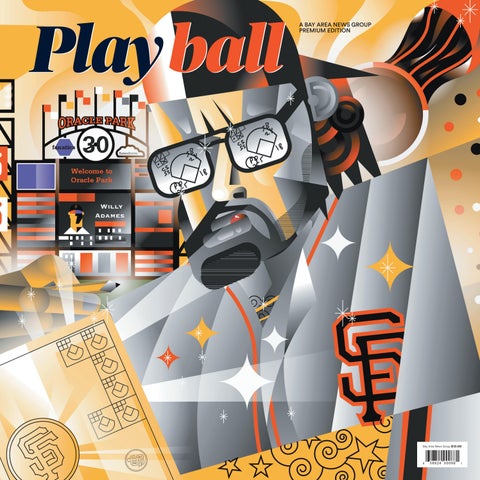
Over the last four seasons, the Giants have been, by the textbook definition, mediocre — nothing more, nothing less.
San Francisco’s record is 321-327 since the start of the 2022 season. Twice during these past four seasons — 2022 to 2025 — the Giants finished exactly at .500. They haven’t eclipsed 81 wins since winning a franchise-record 107 games in 2021.
Buster Posey took real paradigm-shifting, headline-garnering, OMG-inducing swings to change that trend in his first season as president of baseball operations, adding Willy Adames in free agency and Rafael Devers via trade. The Giants had their stars. They still finished three wins short of the dance.
So Posey took another swing by firing manager Bob Melvin and shocking the baseball industry by replacing him with the University of Tennessee’s Tony Vitello. When the Giants hosted the New York Yankees on March 25, it was Vitello’s first regular-season game in the professional ranks in any capacity.
San Francisco’s coaching staff underwent a massive transformation, but the roster remains foundationally the same. Instead of making another splash à la Adames and Devers, the Giants’ brass added around the margins without putting significant money on the books. If San Francisco is going to compete for a playoff spot, it will be the product of internal development.
Maybe that will be enough for the Giants to snag a wild card spot. Maybe it will result in a fifth straight season of .500 or worse. Here are four keys for the Giants to be successful ahead of Posey’s second season in charge.
San Francisco Giants’ Rafael Devers and Willy Adames celebrate Devers’ home run against the Baltimore Orioles at Oracle Park Aug. 31, 2025.
SCOTT STRAZZANTE/SAN FRANCISCO CHRONICLE VIA ASSOCIATED PRESS
4 key factors to take
the Giants to the playoffs
New San Francisco Giants manager Tony Vitello brings roughly two decades of experience in the college game but has not coached in the major leagues. The baseball world will be watching very closely to see how Vitello’s tenure plays out.
RAY CHAVEZ/STAFF
WELCOME TO THE SHOW
The Giants most important addition this offseason was not Tyler Mahle or Adrian Houser or Sam Hentges or Jason Foley or Daniel Susac or any non-roster invitees. Down the road, with retrospect, it might be shortstop Luis Hernandez, the top position player in this year’s international signing class. He’s also just 17.
AT THIS MOMENT, IT’S VITELLO.
Vitello brings roughly two decades of experience in the college game to San Francisco. He played three seasons at Missouri, was an assistant at three programs (Mizzou, Texas Christian University, and Arkansas) and then elevated Tennessee from the doldrums back to the limelight by stacking wins — and hurt feelings.
Major League Baseball is the same sport, but it’s a different animal.
In college, Vitello’s seasons ended at around 60 games. In the pros, that’s not even 40 percent of the schedule.
Harrison Bader waits for a pitch in batting practice at Scottsdale Stadium. Bader joins the Giants for 2026.
SUZANNA MITCHELL/ SAN FRANCISCO
GIANTS/ GETTY IMAGES
In college, Vitello’s players were in their late-teens or early-20s. In the pros, the players are mostly full-fledged adults, some of whom have nine-figure contracts.
In Knoxville, Vitello was Tennessee baseball. In San Francisco, he’s a cog in the machine.
His coaching staff features a pair of former managers in Ron Washington and Jayce Tingler. Bruce Bochy rejoined the organization as a special advisor to baseball operations, giving Posey his seal of approval before the Giants officially hired Vitello.
Dusty Baker and Ron Wotus will be invaluable sounding boards as well.
The onus of making the playoffs won’t fall on Vitello alone; players still have to play. But the baseball world will be watching very closely to see how Vitello’s tenure plays out.
WHO’S ON FIRST?
Devers and Bryce Eldridge share some important similarities — similarities that leave the Giants with a bit of a conundrum.
They’re both left-handed hitters. They both have power. Most importantly, they’re both limited to first base and designated hitter.
The Giants knew they’d have to figure out the pairing of Devers and Eldridge when they traded for the former last summer. Would they both play first base? Would Devers be the DH and Eldridge the first baseman? Or vice versa?
There isn’t a clear picture who will be better defensively.
Eldridge is eight years younger and boasts a 6-foot-7 frame with a rocket arm dating to his days as a pitcher in high school. Devers has more than 8,000 majorleague innings at third base and showed some very respectable picking ability in 28 games last season at first base.
San Francisco might be able to kick this can down the road for a couple months. There’s no guarantee that the 21-year-old Eldridge will make the Opening Day roster following his 10-game
cup of coffee in September. It’s an imperfect pairing, one that will make it difficult for other players to get the occasional DH day. But if Eldridge becomes the hitter the Giants think he can be, it’s an imperfect pairing worth balancing.
POP, POP, POP
Even when accounting for ballpark and the league-wide run environment, the Giants have been a below-average offense
Bryce Eldridge connects for a two-run home run in a spring training game last year at Surprise Stadium in Arizona.
JOSE CARLOS FAJARDO/S STAFF ARCHIVES
over the last four seasons. This year’s lineup, however, has some serious pop potential.
Devers has averaged 32 homers over the past five seasons. Adames broke the Giants’ 30-homer drought, the third time in his career he’s touched that mark. Matt Chapman has hit at least 21 homers in six of his nine seasons in the majors.
Heliot Ramos has back-to-back seasons with at least 21 homers.
Casey Schmitt had 12 homers over 95 games, a 20-homer pace.
Eldridge has yet to hit his first major-league home run but possesses elite power.
On paper, this group has the potential to generate some thump. Can that translate into an above-average offense for the first time since 2021?
The Giants beefed up their offense shortly before spring training, adding second baseman Luiz Arráez, who won three batting titles with three different teams from 2022-24, and center fielder Harrison Bader, who is known more for his defense, but is coming off a career-year. They also hired Hunter Mense from the Toronto Blue Jays to replace Pat Burrell as hitting coach.
One of Mense’s big assignments will be squeezing more offense out of Jung Hoo Lee, who ended his first full season with a .266 batting average and .735 OPS, with eight homers and 10 steals. Lee boasts elite bat-toball skills but has only been a
Luis Arráez stretches during batting practice at Scottsdale Stadium
SUZANNA MITCHELL/SAN FRANCISCO GIANTS/ GETTY IMAGES
slightly above-average hitter (110 OPS+ in 2025), despite stretches of excellence.
THE START OF SOMETHING NEW
The Giants telegraphed their offseason strategy for acquiring starting pitching early and often. They made it clear, even to the angst of the fanbase, that they were not going to spend big. They did not deviate from those plans.
Instead of throwing the bag at Dylan Cease or Framber Valdez or Ranger Suárez, the Giants added Houser (two years, $22 million, club option for 2028) and Mahle (one year, $10 million).
The best-case scenario is these deals pan out like those given to Kevin Gausman and Anthony DeSclafani, who both had career resurgences upon joining San Francisco. The projection models, however, are not particularly bullish on either. In fact, FanGraphs’ positional depth charts have the Giants’ rotation ranked 24th in the majors.
Logan Webb stands to provide his usual production, but after him? There’s legitimate uncertainty.
Can Robbie Ray still be a viable No. 2 behind Webb after losing steam down the stretch last season? Is Landen Roupp capable of being an effective starter from wire-to-wire? Can their young arms — Hayden Birdsong, Blade Tidwell, Carson Whisenhunt, Trevor McDonald and Kai-Wei Teng — emerge as legitimate rotation options?
If so, the Giants just might return to the postseason.
Former college coach Tony Vitello begins an unprecedented stint as the new Giants manager
STORY BY JUSTICE delos SANTOS
Everywhere Tony Vitello goes, the people want to know.
Whether it’s San Francisco or Seoul or Scottsdale, Vitello has been met with questions about how he’s going to navigate the transition from collegiate head coach to Major League manager with the Giants.
It’s no longer unheard of for teams to hire former players with no managerial or coaching experience to lead their teams.
The Los Angeles Angels and San Diego Padres hired former catcher Kurt Suzuki and former reliever Craig Stammen, respectively, this winter. Aaron Boone (hired by the Yankees in 2018) and Craig Counsell (entering his third season as the Cubs’ manager after nine seasons with the Brewers) didn’t have any coaching or managerial experience when they stepped into their roles. Stephen Vogt coached for just one season with the Seattle
ILLUSTRATION BY ROBERT BRUNO
Mariners before becoming the Cleveland Guardians’ manager three seasons ago.
The 47-year-old Vitello, however, is in his own category.
Boone, Counsell, Stammen, and Suzuki all had long careers in the majors. Even 33-year-old Blake Butera, hired nine days after Vitello to manage the Washington Nationals, managed for four seasons in the minors.
Vitello had zero professional experience when he was hired off the University of Tennessee campus this winter to replace Bob Melvin, immediately choosing to wear the number that came between Will Clark’s 22 and Willie Mays’ 24.
When the Giants host the New York Yankees on Opening Night, it will be Vitello’s first regular-season game in the professional arena in any capacity.
“I feel really comfortable about the person. A lot of people that I trust felt really comfort-
able about the person,” Giants president of baseball operations Buster Posey said when he hired Vitello. “So, I probably don’t see as much risk. Now, I will say that if this, for some reason, doesn’t work, then people are going to look back and say, ‘Well, that was a dumb decision, and it was too much risk that you’d take.’ I’m fully aware of that.
“I have full confidence this is going to be a great relationship with us and with him and the fanbase.”
Vitello’s dad Greg began teaching and coaching at De Smet Jesuit High School in the fall of 1969, about two years after the school opened in the St. Louis suburb of Creve Coeur. He won five state championships in soccer and one in baseball but also helped more
than 350 students play at the collegiate level.
“Getting to sit on the bench when I was little and see all the different teams he coached, you kind of become well-educated in, ‘Well, this isn’t the right thing to do in this situation,’ or, ‘this is,’” Tony Vitello said. “His teams had a knack for peaking toward the end of the season, and I think that’s piling up lessons learned.”
Tony piled up more lessons as a college player. After a season
Tennessee coach Tony Vitello, center, hoists the championship trophy following his team’s 6-5 victory against Texas A&M in the 2024 NCAA College World Series.
REBECCA S. GRATZ/ ASSOCIATED PRESS
at Spring Hill College, he walked on at the University of Missouri after his dad asked then-Mizzou head coach Tim Jamieson to take a chance on his son.
The decision put Tony’s coaching career in motion.
Starting in 2000, Vitello played three seasons with the Tigers as a “scrub walk-on” and then immediately got into coaching. His first gig was as the associate head coach for the Salinas Packers of the California Collegiate League. Vitello
San Francisco Giants Manager Tony Vitello talks to the media during spring training in Scottsdale, Arizona.
SUZANNA MITCHELL/SAN FRANCISCO GIANTS/GETTY IMAGES
returned to Missouri in 2003 as a volunteer assistant under Jamieson.
When a full-time position opened up following the season, Jamieson had a decision: hire Vitello, a former infielder with minimal coaching experience or a Division II head coach?
“There’s obviously going to be a learning curve and growing pains,” Jamieson said, “but the positives outweighed the negatives. I’ve always tried to hire the best person. I didn’t really
care what they coached. Tony was, by far, the best person.”
Missouri reached the postseason every year from 2003-09 and in 2006 came within one win of making the College World Series.
Early in Vitello’s coaching tenure, he worked with a young right-handed pitcher named Max Scherzer. Scherzer had been drafted in the 43rd round out of high school but needed seasoning when he arrived in Columbia. With the help of Vitello, Scherzer was the 11th overall
pick in the 2006 MLB draft and is widely considered a future inductee into the baseball Hall of Fame.
“They kind of grew up together in our program,” Jamieson said. “Max would go to the end of the world for Tony because of what Tony did for him as a coach, not necessarily developing him as a pitcher but developing him as a person.”
Vitello had 15 years of experience as an assistant coach at Missouri (2003-10), TCU (2011-13), and Arkansas (2014-17) when he landed the head coaching job at Tennessee.
When Vitello arrived, the program, a national power in the early 1990s, was an afterthought in the Southeastern Conference. The Volunteers hadn’t reached an NCAA tournament since 2005.
Manager Tony Vitello practices drills during spring training at Scottsdale Stadium.
SUZANNA MITCHELL/SAN FRANCISCO GIANTS/ GETTY IMAGES
Vitello’s first team went 29-27, but the Vols took a sizable leap in 2019 by going 40-21. The Volunteers roared out to a 15-2 start the following spring before the season was cancelled due to the COVID-19 pandemic, but something was clearly brewing in Knoxville.
In 2021, Tennessee won 50 games for the third time in program history and returned to the College World Series. A year later, the Vols won a then-program-record 57 games and the SEC Tournament, though they failed to reach the College World Series.
Vitello and Tennessee reached new highs in 2024, winning the first national championship in program history and becoming the first SEC team to win 60 games in a season.
What stood out as much as the team’s success was how it was winning.
Under Vitello, the Volunteers
were defined by confidence, passion, and swagger. They evolved into the villain of college baseball, intent on stacking both wins and hurt feelings. That personality reflected Vitello, who was never shy about expressing the full spectrum of emotion.
“Every sport is different, but you think of some of the great coaches: (Nick) Saban, (Bill) Belichick, Pat Riley, for example,” said Giants outfielder Drew Gilbert, who played for Vitello at Tennessee. “What do they all have in common? It’s a high level of intensity and a high standard they hold their players to every single day.”
What does Vitello think about how much has been made of his lack of professional experience?
Not much.
“I never dreamed of being a Major League Baseball player. I don’t know why,” Vitello told reporters at his introductory news conference. “I think it was just so far above the clouds that I never even saw it. And for me as a coach, I was just kind of trying to make my way. I got thrust into a position at a young age that I probably didn’t even deserve. So I was just trying to do a good job. And fortunately, it helped get me to the next spot, the next spot and the next spot. And eventually, this did become a dream.
“I decided if I was blessed enough to receive an opportunity, this is something I wanted to do before I was done coaching in general. Now, I’m incredibly humbled and blessed to do so. So it is a dream come true, but it’s a very recent dream. It wasn’t one I’ve had for a while.
And as much as I’d love to sit up here and promise things and pound my fist on the desk and all that, really, all I want to do is a good job.”
Before becoming the 40th manager in Giants history, Vitello already knew a fair amount about the history of the franchise.
Vitello was in the stands at Busch Stadium on July 24, 1988, when Giants star Will Clark slid hard into Cardinals infielder José Oquendo and sparked a benches-clearing brawl. When Kevin Mitchell made his iconic barehanded catch the following year, Vitello tried to re-create it himself.
Decades later, Vitello sat behind home plate for Game 7 of the 2014 World Series and watched Madison Bumgarner will the Giants to their third championship in five years.
Now, Vitello’s task is creating history in San Francisco, not just witnessing it.
Vitello will have a substantive support group during his first professional season. His coaching staff features Ron Washington and Jayce Tingler, a pair of former managers. Future Hall of Famers Dusty Baker and Bruce Bochy are currently special advisors, and Ron Wotus as special assistant to baseball operations brings decades of experience to the table.
For all the people in his corner, the onus of transforming the Giants ultimately falls on Vitello. Vitello effectively built Tennessee from scratch into a national powerhouse, and the Giants are banking on him bringing those skills to the Bay Area.
Whether it’s San Francisco or Seoul or Scottsdale, the baseball world will be watching closely.
Manager Tony Vitello, right, talks to catcher Patrick Bailey of the San Francisco Giants during spring training in Scottsdale. A scoreboard display at Oracle Park, above, welcomes Vitello as the new manager of the team last October.
SUZANNA MITCHELL/SAN FRANCISCO GIANTS/GETTY IMAGES; BENJAMIN FANJOY/ASSOCIATED PRESS
The 2026 Giants
might not look a whole lot different.
You’ll want to watch them anyway.
BY DIETER KURTENBACH
If you look closely at the spreadsheet — past the columns of projected WAR and the luxury tax tables that suggest the Giants are operating less like a major-market behemoth and more like a coupon-clipping Rust Belt team — you will see the number 81 staring back at you.
Eighty-one wins. The median. The dead center. The participation trophy of professional sports. The twilight zone of hope.
In a vacuum, an 81-win projection is the kiss of death for fan interest. It promises nothing but five months of meaningful-ish baseball followed by a September filled with “magic number” graphics. It is the baseball equivalent of a bran muffin:
during spring training in Scottsdale, Arizona.
uninspired and entirely devoid of flavor.
And here I thought we lived in America’s culinary capital.
The good news is that there is a difference between the median and the mean.
And that difference should be evident every night under the team’s new leader in the clubhouse, manager Tony Vitello.
The “median” Giants are boring. They are built to exist, not to conquer. Every night, the same average thing. Opponents can win a game against them, they can lose against them, but the result is entirely up to them — the Giants will just keep going at their own, steady, boring pace.
This is the baseball we have been subjected to in most of the last five seasons.
But the “mean” Giants? That’s up, down, left, right, and sideways. It contains outliers — big ones up and down.
That’s what we should get from Vitello’s Giants. There will be no more slow Tuesdays in Phoenix, Denver or San Francisco — this is going to be absolute, unadulterated chaos night after night.
And while it’ll all likely even
Nick Margevicius, Keaton Winn, Ryan Walker, Will Bednar, Blade Tidwell, Carson Whisenhunt and Hayden Birdsong walk in the outfield
ANDY KUNO/SAN FRANCISCO GIANTS/ GETTY IMAGES
out in the end, I doubt that at any point you’ll be able to say it wasn’t interesting.
You don’t hire Vitello — the man who turned Tennessee collegiate baseball into a mosh pit with cleats — to manage a calm, orderly, mediocre team.
You hire him because you want the team to play with the kind of desperate, caffeine and testosterone (natural, of course)-fueled energy that’s usually reserved for fraternity pledge week.
This roster isn’t going to beat the Dodgers over the course of 162 games.
But while the Dodgers are executing a corporate merger of talent and efficiency, Vitello’s Giants are going to be starting bar fights.
In an era of Major League Baseball defined by “load management,” “de-escalation,” and players treating 90 feet like a casual stroll, Vitello brings a collegiate spunk that will be startling to the professional ranks.
There is a version of 81 wins that feels like a slow suffocation. That was the last few years: an Excel table come to life.
The Vitello version of 81 wins should look different — different like turning a routine single into a hustle double and getting thrown out by 10 feet, then clearing the benches because the second baseman had the audacity to hold the tag.
Like stealing home when down by four runs just to prove a point.
Like winning a game 11-10 on a Tuesday and losing 12-0 on a
Logan Webb, Heliot Ramos and Landen Roupp talk during San Francisco Giants spring training in Scottsdale, Arizona.
SUZANNA MITCHELL/SAN FRANCISCO GIANTS/GETTY IMAGES
Wednesday, because the starting pitcher was too amped up to locate his fastball.
It is flawed. It is often stupid. But it is not boring.
Would it be preferable if the Giants — the last remaining team in arguably the richest market in baseball — stopped approaching their offseasons like a senior on a fixed income?
Absolutely. Seeing the front office hunt for bargains in the clearance aisle while charging how much? for garlic fries is a special kind of Bay Area torture.
Nothing says San Francisco quite like a mediocre product at the highest possible price.
But Vitello might be the one guy crazy enough to make more with less. Or, at the very least, make less look like it’s trying really, really hard.
Maybe that collegiate energy creates a few wins out of thin air. Maybe the thick air around McCovey Cove does the opposite.
With Tony Vitello as manager of the San Francisco Giants, top, fans can hope he brings the edge he brought to Tennessee’s collegiate program, above, and turn the Giants from a calm, orderly, mediocre team to one that plays with the kind of desperate, caffeine and testosterone (natural, of course)-fueled energy that’s usually reserved for a fraternity pledge week.
ANDY KUNO/SAN FRANCISCO GIANTS/GETTY IMAGES; ROGELIO V. SOLIS/ASSOCIATED PRESS
Either way, you’re going to want to watch.
And frankly, you have to watch. Because, friends, the storm clouds are gathering. Baseball’s collective bargaining agreement expires in December, and if you think the owners and the Players Association — two groups who seemingly hate the sport of baseball almost as much as they hate each other — are going to hold hands and sing Kumbaya, I have a bridge in Oakland to sell you (slightly used, no longer connects to a baseball team).
We are staring down the barrel of a long, cold winter that could stretch well into, or entirely consume, the 2027 season.
So this season — this weird, chaotic 2026 season — might be the last baseball we get for a long time.
So, don’t look at the projection. Don’t obsess over the median. Embrace the madness of the mean.
Watch Harrison Bader sprint into a wall for a ball that was already 10 rows into the stands. Watch Logan Webb throw 120 pitches because Vitello “liked the look in his eye.” Watch a team that knows it probably won’t win the war, but is absolutely determined to make every single battle as annoying as humanly possible for the opposition.
The Giants are going to be average again.
But for the first time in a long time, being average might actually be fun.
I’ll take it.
Six standout series pit the Giants against formidable challengers
BY JUSTICE delos SANTOS
It’s rare for the Giants to start a season at home. It’s even more rare for them to start and finish a season in San Francisco.
This millennium, there have only been two instances (2001, 2005) when the Giants have both started and ended a season in The City. The Giants can add this season to the list. Given who’s coming to town, they’ll want to bring out the fine china.
They’ll begin their year at Oracle Park by hosting three-time MVP Aaron Judge and the New York Yankees. They’ll end it against four-time MVP Shohei Ohtani and the back-to-back defending champion — and arch rival — Los Angeles Dodgers. Talk about box office draws.
Those two series will have Oracle Park filled to the brim, but they’re far from the only series worth circling on the calendar. Here’s a look at six series to watch this season:
March 25-28
vs. New York Yankees
The Giants and Yankees will share the national spotlight on March 25 as the only game of the day to open up the 2026 season. While the rest of the league begins its season on March 26, San Francisco and New York will face off the night before in a prime-time game exclusively broadcast on Netflix at 5 p.m.
So much for a soft landing for rookie manager Tony Vitello. Logan Webb, barring the unforeseen, will start his fifth consecutive Opening Day for the Giants. Since the team moved to San Francisco, only Hall of Famer Juan Marichal (1964-69) has started more Opening Days in a row.
Webb and San Francisco’s pitching staff will have to figure out how to slow down Linden’s Judge, the former Giants fan turned current Giants tormentor.
In his first three games at Oracle Park in 2024, Judge went 6-for-10, with three homers, six RBIs, three walks and two steals. Over nine career games against the Giants, Judge is 15-for-31, with five home runs, 10 RBIs and seven walks. His 1.590 OPS against San Francisco is also his highest against any opponent.
April 21-23
vs. Los Angeles Dodgers
Shohei Ohtani. Mookie Betts. Freddie Freeman. Kyle Tucker. Will Smith. Max Muncy. Teoscar Hernández. That’s seven AllStars, and three of those are future Hall of Famers, the Giants’
pitching staff will have to navigate.
The Dodgers made the move of the offseason by signing Tucker, a four-time All-Star, to a four-year, $260 million deal. Even when accounting for deferrals, Tucker’s average annual salary of $57.1 million is the highest in league history, usurping Juan Soto’s $51 million.
There’s also Los Angeles’ addition of three-time All-Star closer Edwin Díaz. Even with Clayton Kershaw retired, this is arguably the strongest iteration of the Dodgers over the last decade, and this series will provide Giants fans with their first look at the juggernaut.
April 24-26
vs. Miami Marlins
After celebrating the career of Brandon Crawford last April, the Giants will pay homage to another franchise icon on April 25 when they host Brandon Belt Celebration Day.
Belt spent all but one of his 13 seasons in the majors with the Giants, helping San Francisco capture championships in 2012 and ‘14. A one-time All-Star, Belt had a career .261/.356/.458 slash line with 175 home runs and 584 RBIs over 1,310 regularseason games with the Giants.
The defining moment of Belt’s long tenure in San Francisco arrived in the early hours of Oct. 5, 2014, in the nation’s capital. With the Giants and Nationals notched at one apiece in the top of the 18th, Belt blasted a solo homer that propelled San Francisco to a 2-0 series lead in the NLCS and, to that point, their 10th straight postseason victory.
July 6-8
vs. Toronto Blue Jays
Led by Vladimir Guerrero Jr., the defending American League champions arrive for a three-game set at Oracle Park.
After losing in seven games to the Dodgers in the World Series, Toronto bolstered its rotation by signing Dylan Cease to a seven-year, $210 million pact. They also added former Giant Tyler Rogers; reigning KBO MVP Cody Ponce; and Japanese third baseman Kazuma Okamoto, who blasted 248 homers over 11 seasons in the KBO.
For one new Giant, there likely won’t be a shortage of daps and hugs with the opposition. Hunter Mense, the Giants’ new hitting coach, served as the Blue Jays’ minor-league hitting coordinator from 2019-22 before joining the major-league staff as an assistant hitting coach from 2022-25.
August 21-23
at Boston Red Sox
Rafael Devers called Boston his home for nine seasons. He evolved into one of the game’s best hitters during his time in Beantown, earning three All-Star appearances, winning two Silver Sluggers and helping the Red Sox win the 2018 World Series. For all he accomplished, a hero’s welcome likely doesn’t await.
The final months of Devers’ tenure with the Red Sox were messy — ending with the Giants acquiring him in a shocking blockbuster trade. Devers played his old team in San Francisco just days after the deal, but August will mark his first return to Fenway Park since becoming a Giant.
There will, of course, be vitriol from Boston fans. But maybe the passage of time will reduce potential venom. The Red Sox made the playoffs after trading Devers, and 21-year-old Roman Anthony looks like a star in the making. Boston also gained a ton of financial flexibility after getting Devers’ contract off the books.
Then again, this is Boston.
August 27-30 vs.
Arizona Diamondbacks
It will be quite the summer for Jeff Kent. In July, he’ll make a trip to Cooperstown and be inducted into the National Baseball Hall of Fame. Then, on Aug. 29, Kent will return to Oracle Park as the Giants officially retire his No. 21.
Kent, the all-time leader in home runs by a second baseman, will become the 14th person in franchise history to have his jersey number retired by the Giants, joining Christy Mathewson (no number), John McGraw (no number), Bill Terry (3), Mel Ott (4), Carl Hubbell (11), Monte Irvin (20), Will Clark (22), Willie Mays (24), Barry Bonds (25), Juan Marichal (27), Orlando Cepeda (30), Gaylord Perry (36) and Willie McCovey (44). Over six seasons in San Francisco, Kent was a three-time AllStar and three-time Silver Slugger, won the 2000 NL MVP and helped lead the Giants to a World Series appearance in 2002. Kent had a career .297/.368/.535 slash line with San Francisco, hitting 175 home runs with 689 RBIs.
Giants’ 2026 schedule at a glance
Kent, Beltran took different paths to joining other former Giants greats in Hall of Fame
BY LAURENCE MIEDEMA
More members of the Baseball Hall of Fame have worn a Giants uniform than any other franchise.
Jeff Kent and Carlos Beltran will give the Giants two more on July 26, when they, along with longtime Braves center fielder Andruw Jones, are inducted as the Class of 2026.
Their paths through San Francisco to Cooperstown couldn’t have been more different.
Beltran’s stay in San Francisco was just a few months, a productive blip in a 20-year career that saw the fivetool center fielder star for seven teams. Kent joins Willie Mays, Willie McCovey, Orlando Cepeda, Juan Marichal, and Gaylord Perry as Hall of Famers who were primarily San Francisco Giants or had their biggest success with the franchise.
Kent played for three teams before he arrived in San Francisco and two more — including the hated Dodgers — after he left as a free agent. But Kent teamed with Barry Bonds to terrorize pitchers from the middle of the Giants’ lineup for six seasons. Kent hit more home runs as a second baseman than anyone in MLB history (351), and 171 of those came with the Giants.
“There’s no doubt all my accomplishments, my passion and my heart was left in San Francisco,” Kent told report-
Left: Jeff Kent collides with Atlanta Braves’ Rafael Furcal, turning a double play for the final outs of Game 1 of the NLDS October 2, 2002, at Turner Field in Atlanta.
TOM HAUCK/ALLSPORT; DOUG PENSINGER/GETTY IMAGES
ers in 2009 when he was added to the franchise’s Wall of Fame.
But Beltran and Kent would have forever been part of Giants lore even if the call from the Hall never arrived.
Both began their Giants careers as a result of trades that have been hotly debated since the day they were made, but for very different reasons.
Beltran was 34 and a six-time AllStar in 2011 when the Giants acquired him from the Mets to help bolster their hopes of defending their World Series title. Despite losing Buster Posey to a devastating injury two months earlier, the Giants had a four-game lead over Arizona in the National League West when Beltran arrived.
Fans were thrilled by the bold move, which only cost the Giants cash and a minor league pitcher who had barely played a full season.
Beltran boosted the offense, hitting .323 with seven home runs, nine doubles and four triples in 44 games. But he also missed two weeks with a hand injury in early August, a stretch that saw the Giants fall out of first place. They never caught the Diamondbacks and missed the wild-card spot by four games.
Beltran, a free agent, signed with the Cardinals and played six more seasons, making three All-Star teams and winning a World Series. The Giants suc-
Above: Jeff Kent, left, and Barry Bonds celebrate during an NLDS game between the Giants and the Mets in San Francisco. Kent and Bonds often were at odds, but both attribute the other’s contributions to the Giants’ success at the time.
Carlos Beltran boosted the offense when he joined the Giants in 2011, but the Giants missed the playoffs, and Beltran signed with the Cardinals in the offseason. Every time Beltran returned to San Francisco, it was to a chorus of boos.
cessfully moved on, too, winning the World Series again in 2012 and 2014.
But every time Beltran returned to San Francisco, it was to a chorus of boos. Why the hate? That Single-A pitcher, Zack Wheeler, blossomed into a three-time All-Star. He has finished second in Cy Young voting twice and is still one of the best pitchers in the league. Many Giants fans now rank the Beltran trade among the worst in franchise history.
The Kent trade aged like fine Napa Valley wine. His arrival after the 1996 season from Cleveland, along with pitchers Julián Tavárez and Joe Roa and infielder José Vizcaíno, is widely considered one of the best trades in franchise history.
That was far from the case when the deal was made, because the Giants gave up popular third baseman Matt Williams.
There was so much outrage among fans that first-year general manager Brian Sabean took to the airwaves of KNBR, the team’s flagship radio station, to defend the move. “I am not an idiot,” he famously asserted.
Kent, who played collegiately across the Bay at Cal, wound up helping create the Giants’ best 1-2 hitting punch since the days of Mays and McCovey. Kent, 28 at the time of the trade, had never hit more than 21 home runs, batted better than .292, or driven in more than 80 runs in his previous five seasons.
But in six seasons with the Giants, Kent batted at least .290 five times — including a career-high .334 in 2000. He drove in at least 101 runs each season (averaging 115) and averaged 29 home runs.
Although there were lots of high-fives and home runs, Kent’s tenure with the Giants was anything but warm and fuzzy.
Kent was prickly with everyone, including his teammates, because of his drive for perfection. He and Bonds often were at odds and were caught on live TV scuffling in the dugout during a game in 2002. Kent’s tenure also included a spring training incident before that season that left Kent with a broken left wrist. He said he got hurt when he slipped while washing his truck, although reports suggested Kent fell off a motorcycle while doing wheelies.
Through it all, Kent and the Giants flourished. The Giants finished last in the N.L. West in 1996 and hadn’t won the division since 1989. They won the West in Kent’s first season and again in 2000, when they reached the World Series. The Giants never finished lower than second with Kent on the team.
“I would not be here,” Kent said this winter when asked about being selected to the Hall of Fame, without playing for the Giants. “That was the turning point in my career.
They might be (briefly) Giants enshrined in The Hall of Fame
BY LAURENCE MIEDEMA
Jeff Kent and Carlos Beltran are joining a long list of former Giants in the Hall of Fame. Counting those who also played for the New York Giants, the franchise has a connection to 63 of 354 plaques at the museum’s gallery.
Kent is the sixth Hall of Famer best known for his accomplishments in San Francisco — though Willie Mays was, well, Willie Mays on both coasts. Willie McCovey, Orlando Cepeda, Juan Marichal and Gaylord Perry all began their storied careers in San Francisco.
Beltran, a Giant for 44 games in 2011, joins an impressive group of Hall of Famers who briefly wore Orange and Black on their way to Cooperstown. Here are a few more:
Randy Johnson
Hall of Fame Class of 2015
The “Big Unit”, who grew up in Livermore, returned to the Bay Area in 2009 for his 22nd and final season at the age of 45. He went 8-6 with a 4.88 ERA. Johnson earned his 300th career win on June 4 in a 5-1 victory at Washington, becoming the 24th player in MLB history to reach the mark. He finished his career with 303 wins.
Goose Gossage Class of 2008
In 1989, at the age of 37, the former Yankees fireballing closer was signed as a free agent. He had four saves in 22 appearances but was waived in August shortly after the Giants traded for Steve Bedrosian. Gossage played until 1994 but only recorded four more of his 310 career saves.
Gary Carter Class of 2003
“The Kid” was 36 when he left the Mets as a free agent and joined the Giants in 1990. He hit .254 with nine homers in 90 games, sharing catching duties with Terry Kennedy. He played two more seasons, joining the Dodgers in ’91 and coming full circle a year later, when he returned to his original team, the Montreal Expos.
NHAT V. MEYER/STAFF ARCHIVES
“When I got to San Francisco, (manager) Dusty Baker lit a fire under me to be better. … Sabean took a chance, and I can claim he wasn’t an idiot.”
Kent made three All-Star teams with the Giants and edged Bonds for the National League MVP in 2000. Bonds won four MVP awards as a Giant, but none until Kent arrived. Kent played in all but three games in 2001, the year Bonds broke Hank Aaron’s single-season home run record with 73. For what it’s worth, Bonds didn’t homer in any of the games Kent missed.
So, which slugger helped the other more?
Bonds took to social media to congratulate Kent on his Hall of Fame election, writing, “We spent six seasons together with the Giants and shared many successes as teammates, including an unforgettable World Series run.”
Kent told reporters that Bonds “was a teammate that helped me. I believe I helped him. I believe he was one of the best baseball players I ever saw.”
Until January, the Hall of Fame figured to elude both of the former Giants stars.
Bonds likely will never join Kent in the Hall of Fame because of his connection to the BALCO scandal and suspected steroid use.
He was on the same Contemporary Era ballot as Kent but received fewer than five votes from the 16-person panel. Kent, on the ballot for the
first time, received 14 votes, two more than were required to be elected.
Kent’s election was a surprise. Dale Murphy and Don Mattingly were widely considered the favorites before the ballots were announced.
Kent, 58, had been on the baseball writers’ Hall of Fame ballot for the maximum 10 years but failed to get on 20 percent of the ballots until Year 7. He topped out at 46.5 percent in his final year, far short of the 75 percent needed for induction.
“I didn’t think about it much during the 10 years of opportunity to get voted in (by the BBWAA),” Kent told reporters. “Not utter disappointment, but just disappointment. Frustration, a little bit, that I wasn’t better recognized, not necessarily that I wasn’t voted in.
“But a lot of people had said, ‘Hey, you know, you’re a Hall of Famer, blah, blah, blah.’ As the time has gone by, you leave it alone. And I left it alone. I loved the game. Everything I gave to the game, I left there on the field.”
Now, counting Beltran, Kent will be the 63rd Hall of Famer who played for or managed the Giants. And he’ll have some more company soon joining him.
Buster Posey will likely be a first-ballot inductee by the baseball writers, and former Giants managers Bruce Bochy and Dusty Baker are good bets to emerge from the Contemporary Era vote.
Steve Carlton
Class of 1994
The four-time Cy Young winner with the Phillies was released by Philadelphia during the 1986 season and, at 41, signed with the Giants. He went 1-3 with a 5.10 ERA in six starts — in the win, he hit a three-run homer and pitched seven shutout innings. Shortly after collecting his 4,000th career strikeout in early August, Carlton announced his retirement, but a week later, he signed with the White Sox for the remainder of the season. He played two more seasons before retiring with 329 career wins, the second most of any left-hander in MLB history.
Joe Morgan
Class of 1990
The Oakland native and sparkplug of Cincinnati’s “Big Red Machine” in the 1970s held down second base for two seasons after signing as a 38-year-old free agent in 1981. Morgan earned MVP votes in 1982, when the Giants surprisingly hung with the Dodgers and the Braves for the NL West until the final weekend. Morgan provided one of the most dramatic — and for Giants fans, satisfying — moments by hitting a three-run homer that knocked the Dodgers out of the pennant race on the final day of the season.
Kent made three All-Star teams with the Giants and edged out Barry Bonds for the National League MVP in 2000.
Frank Robinson
Class of 1982
The grad of Oakland’s McClymonds High, where he was a basketball teammate of Bill Russell, was the only player to win MVP honors in both leagues before Shohei Ohtani. He never played for the Giants but was in the second of his four seasons as San Francisco’s manager when he was inducted into the Hall of Fame in 1982.
Jeff
CALL ’EM ALL
Palo Alto’s Joe Ritzo is the voice of the San Jose Giants, but he’s also become a key part of the San Francisco Giants’ radio broadcast team
BY JUSTICE delos SANTOS
Two decades into his professional broadcasting career, Joe Ritzo decided to try something new.
The date was May 14, 2025. The San Francisco Giants were playing the Arizona Diamondbacks at Oracle Park in the afternoon, and the Single-A San Jose Giants had a game that night, 82 miles away in Stockton.
Ritzo was already committed to calling the big league game on the radio, but when his San Jose broadcast partner couldn’t make it to Stockton, Ritzo decided to call both games.
He did something similar in 2021, when broadcasters weren’t traveling, calling a San Francisco road game from home before driving to Modesto for San Jose’s nightcap. This day, though, was a true doubleheader.
San Francisco and Arizona didn’t bless Ritzo with a quick game. Despite pitch clocks and other methods to speed play, it ran more than three hours. Immediately after the final out, Ritzo braved rush-hour traffic. His commute lasted two-and-ahalf hours, but he arrived at Banner Island Ballpark in time for first pitch.
For Ritzo, 41, the day was a microcosm of his career.
Ritzo got his start as a student at Santa Clara University, working for the San Jose Giants in varying capacities and serving as the voice to multiple generations of prospects. And since 2023, Ritzo has become a fixture in the San Francisco Giants’ broadcast rotation, a full-circle moment for the Palo Alto native who grew up rooting for the black and orange.
Broadcaster Joe Ritzo called nearly every San Jose Giants game from 2007-19, and since 2023 has become a fixture in the San Francisco Giants’ broadcast rotation.
JANE TYSKA/STAFF
at USC.
Right: Joe Ritzo, right, has been calling San Jose Giants games since the 2007 season. Here, he calls a 2013 game from the press box at Municipal Stadium while Ben Taylor, who is now the team president, updates the team’s mobile app.
“It’s incredibly exciting to just be part of the Giants broadcast family in any capacity,” Ritzo said. “I’m grateful to learn from some of the best to ever do it, and that energizes me the most. My job is to be ready and do my best wherever they need me.”
Ritzo’s broadcasting origins begin at San Jose Municipal Stadium, where he practiced broadcasting games from the bleachers as early as 9 years old.
Ritzo knew at an early age that he wanted to be around baseball, but he wasn’t sure how to turn his knowledge and love of the game into a career.
As a freshman at Palo Alto High, Ritzo worked the scoreboard at Stanford’s baseball
games. He cozied up to the broadcasters over the years and when he was a junior, they let him call some innings here and there.
Most of his broadcasting opportunities were on the road because he still had to operate the scoreboard at home. Ritzo traveled on his own dime, since he was not part of the traveling crew, but the broadcasters let him crash on the floor of their hotel rooms.
Ritzo’s first official broadcast was in April of 2001, when Stanford played at USC. In 2001 and 2002, Ritzo flew to Omaha, Nebraska, to call the Cardinal’s games in the College World Series, including the 2001 title
game. Ritzo described himself as shy and quiet in childhood, but these opportunities brought him out of his shell.
“Doing games only confirmed this is what I want to do,” Ritzo said.
After graduating from Palo Alto High, Ritzo sent the San Jose Giants some of his Stanford broadcasts. At the time, San Jose only broadcast home games and relied on a rotating cast. Ritzo entered the fold and did five games that first season but called about 50 games by the time he was about to graduate from Santa Clara.
Around that time, San Jose decided it wanted a full-time broadcaster. The Giants were
already familiar with him, and as Ritzo prepared for finals, the team offered him the position.
“There was plenty of hard work that I had to show to put myself in that position,” Ritzo said, “but it was certainly the right place, right time.”
Broadcasting was only one of Ritzo’s many responsibilities with San Jose. He doubled as a member of the front office, where his daily responsibilities included — but weren’t limited to — updating the website, writing game stories and game notes, working with the coaching staff and coordinating travel with bus companies. For Ritzo, 15-hour workdays that concluded around 2 or 3 a.m. were
“ The one thing about Joe — and I think that really has made a difference — is that his answer is always yes.”
Mario Alioto, former San Francisco Giants vice president of business operations
Above: Joe Ritzo, center, was still a student at Palo Alto High school when he made his first official broadcast on April 20, 2001, joining Chad Goldberg for Stanford’s game
PHOTO COURTESY OF JOE RITZO; LIPO CHING/STAFF ARCHIVES
the rule, not the exception.
“Early on, he did everything,” said Mark Wilson, the former San Jose Giants general manager. “He would do our preview of the series, he would do our postgame notes, and he would update our website. He did it all.”
From 2007-19, Ritzo broadcast nearly every San Jose Giants game. The list of future bigleaguers he covered included Buster Posey, Madison Bumgarner and Brandon Crawford. He called three San Jose championships (2007, ’09, and ’10).
The work was taxing, but the opportunity to broadcast baseball made it all worth it for Ritzo.
Still, as he saw the players he called matriculate from San
Jose to San Francisco, Ritzo wondered about his own path forward.
“When I was growing up, I just wanted to broadcast baseball. Getting that first full-time position with San Jose right after I finished college, that felt like I was fulfilling a dream,” Ritzo said. “Then, as you go through a decade-plus in minorleague baseball and work those long hours, go on the bus rides, not getting back home until five or six in the morning, and you see the players that you knew in San Jose go up to San Francisco, you start to wonder, could that be me someday?”
In the middle of the 2019 season, Ritzo received a phone call from Mario Alioto, who spent much of his five decades with the Giants as the team’s vice president of business operations.
The San Francisco Giants had a doubleheader at Coors Field on July 15, and radio man Dave Flemming was unavailable because he had a national
Jon Miller and Joe Ritzo take a selfie ahead of Ritzo’s first broadcast at Dodger Stadium in September 2023.
commitment. Alioto asked Ritzo if he wanted to fly to Denver and call both games with Jon Miller. Ritzo had called Giants spring training games since 2017, but this was his first opportunity to call a regular-season majorleague game.
“I was ecstatic,” Ritzo said. “I hung up the phone, called my wife, called my parents, called all the important people in my life. ‘I’m going to be doing a regular-season major-league game!’
“When you’ve been a full-time minor-league broadcaster for 13 years, it’s a really big deal.”
The Giants didn’t give Ritzo much time to ease into his debut. They scored five runs in the top of the first inning and seven more in the third. With nearly 2,000 minor-league games under his belt, Ritzo handled the frenetic pace with ease.
“You had to be totally on your game when something like that happens, and it’s happening so quickly,” said Miller, the Hall of Famer who is entering his 52nd
season as a broadcaster. “There’s no time to settle in at that point.
“He didn’t miss a beat. Nothing was overlooked, nothing piled up on him where he was in over his head.”
Before that cup of coffee, Ritzo already decided that it was time for his next chapter.
Following 13 full-time seasons with San Jose, Ritzo moved into a seasonal role after the 2019 season. He and his wife, Emily, were expecting their first child, and 15-hour days were no longer a sustainable model.
Ritzo remained the radio voice of the San Jose Giants while filling in for the big-league team in 2021 and 2022. Before the 2023 season, Alioto offered Ritzo a designated block of games instead of last-minute fill-in work.
Ritzo believes one of the crucial moments in becoming a regular came during the 2022 season. San Jose was in San Bernardino when Ritzo got a call at 6 a.m. from Alioto, who told Ritzo he needed a pinch-hitter behind the mic. Ritzo hopped on a flight to Denver and arrived about 30 minutes before first pitch.
“The one thing about Joe — and I think that really has made a difference — is that his answer is always yes,” Alioto said. “That’s important, because sometimes situations can change dramatically. … We were in a bind, he figured it out, and he did what it took.”
Ritzo is long removed from his days of juggling school and work, of working tireless days that end in the dead of night. And as he enters his fourth season calling both San Jose and San Francisco, that passion he possessed as a 9-year-old in the stands of San Jose Municipal Stadium has never faded.
PHOTO COURTESY OF JOE RITZO
A San Francisco franchise is part of the largest Women’s Pro Baseball League launch in more than 70 years
A LEAGUE of THEIR OWN
BY LAURENCE MIEDEMA
The National Women’s Soccer League (NWSL) had been around for 11 years before Bay FC made its debut in 2024. The Valkyries joined the WNBA last spring for the basketball league’s 29th season.
The Bay Area is not only in the starting lineup for this summer’s debut of the Women’s Pro Baseball League, but it batted leadoff in the WPBL’s inaugural draft.
San Francisco is one of four cities represented in the largest attempt at a professional women’s baseball league in the United States in more than 70 years.
The team isn’t expected to play any games in the Bay Area this summer. Or maybe even next year. The WPBL will be based in Springfield, Illinois, as
Kelsie Whitmore pitched for the Oakland Ballers in 2024, above, and was drafted first overall in the new Women’s Professional Baseball League. The WPBL was co-founded by Justine Siegal, right, and Toronto businessman Keith Stein.
SHAE HAMMOND, DAN HONDA/ STAFF ARCHIVES
the league is established.
But there is definitely a local flavor to the team, which does not have a nickname just yet.
San Francisco selected a familiar name with the No. 1 overall draft pick — Kelsie Whitmore. Whitmore is a veteran of the U.S. women’s national team and has been a pioneer for women in baseball, including playing for the Oakland Ballers in 2024.
In all, one-third of the 30 players San Francisco drafted are from California. Not all of the drafted players will make the 15-woman Opening Day roster, but just as in the Majors, there will be personnel moves throughout the season.
What is the WPBL?
The WPBL was co-founded by Justine Siegal, who became the first woman to coach in MLB with the Oakland A’s in 2015 and one of women’s baseball’s most decorated trailblazers, and Toronto busi-
nessman Keith Stein in 2024.
Although early plans called for a six-team league, the WPBL’s original four teams represent San Francisco, Los Angeles, New York and Boston.
Various amateur women’s leagues have existed over the years, and the barnstorming allwoman Colorado Silver Bullets played 195 games against amateur and semi-pro men’s teams from 1994-1997. But organizers call this the first professional women’s baseball league in the U.S. since 1954. That’s when the All-American Girls Professional Baseball League, which began during World War II and inspired the film “A League of Their Own,” was dissolved.
The WPBL plans to begin play on Aug. 1, about a week after the conclusion of the Women’s Baseball World Cup. The regular season is expected to be six weeks, with two to three games per week. The season ends with two weeks of playoff games.
The games will be seven innings, and players can use aluminum bats. Unlike their AAGPBL predecessors, the players will wear uniforms with baseball pants, not skirts.
Who’s playing?
Although the league is based in the United States, the WPBL is
Ayami Sato, top, considered the greatest woman pitcher of the modern age, was drafted No. 2 overall by Los Angeles. The club also selected Mo’ne Davis, above, who famously pitched a shutout at the Little League World Series in 2014.
JULIA DEMAREE NIKHINSON, GENE J. PUSKAR/ ASSOCIATED PRESS
an international venture. Players from 10 countries were selected in the draft, including most of the top players in the world.
Whitmore, the No. 1 overall pick, is a nine-time member of the U.S. national team, participating in the Pan Am Games, the Women’s World Cup and other tournaments. She’s also played in multiple men’s pro leagues, including the Pioneer League with the Ballers. Fourteen former or current Team USA players were drafted, including five by the San Francisco franchise.
Japan’s Ayami Sato, consid-
ered the greatest woman pitcher of the modern age, was the No. 2 overall pick by Los Angeles. L.A. also drafted Mo’ne Davis, the breakout star of the 2014 Little League World Series. Davis, now 24 and returning to baseball after playing college softball, was the first Little Leaguer ever featured on the cover of Sports Illustrated.
Each team has a $95,000 salary cap, with compensation percentages based on where each player was picked in the draft.
Where are they playing?
The WPBL picked Springfield, about three hours southwest of Chicago, as its home base because it is centrally located but also for its role in the history of women’s baseball. All the games will be played at 5,200seat Robin Roberts Stadium, which hosted one of the earliest paid women’s games in 1875, according to the WPBL.
The league was still seeking a broadcast partner this spring, but the draft was streamed live on the WPBL’s website, the social media platform X, and the league’s Instagram, TikTok and YouTube channels.
“Each of these cities are storied sports cities,” Siegal said when the league announced its plans for 2026, “and we can’t wait to connect with the fans who live there and baseball fans across the country.”
What to expect
Women’s team sports leagues are gaining momentum in the United States. The WNBA is shattering attendance and viewing records, and the NWSL continues to expand.
Women’s baseball has had far less exposure than other sports, but there have been significant off-field breakthroughs. Kim Ng has spent more than 30 years in
MLB front offices and became the first woman GM in MLB in 2020 for the Miami Marlins.
Five years after Siegal broke through with the A’s, Alyssa Nakken was hired by the Giants as the first full-time female on-field coach in MLB. In 2022, Nakken became the first woman to coach on the field in a regular-season game when she took over in the first-base coaches box. She has since moved on to the Cleveland Guardians.
More than a dozen women are serving as general managers in the minor leagues, and in 2022, Rachel Balkovec became the first woman to manage an MLB-affiliated minor league team when she led the Yankees’ Single-A Tampa Tarpons. She’s now the Marlins’ director of player development.
The MLB has not had a woman player, but in 1993, Campolindo High grad Carey Schueler was drafted by the Chicago White Sox in the 43rd round of the MLB draft when her dad was the team’s GM. Schueler never signed, instead playing basketball at DePaul and Saint Mary’s in Moraga.
More than 600 players participated in the WPBL’s tryouts last summer at Nationals Park in Washington, D.C.
According to Siegal’s baseballforall.com web site, 100,000 girls play youth baseball in the U.S. More than 1,000 girls play on boys’ high school baseball teams, according to a report by the Associated Press, and there is a growing number of all-girl baseball leagues and teams, including in the Bay Area.
“There’s something special about girls playing with other girls,” Siegal told ESPN about the launch of the WPBL. “One, they’re no longer the girl, they’re just ballplayers. Two, there’s a lot of camaraderie. And three, there’s a pipeline that can be created. And that’s one thing that the WPBL provides: an end to that pipeline.”
DREAM COME TRUE
Livermore’s Arwen McCullough has spent most of her life playing baseball with the boys; now she and women across the world finally have a professional league of their own
BY DAVID KIEFER
Arwen McCullough represents the first wave of hope for young female baseball players in 72 years. That’s how long it’s been since the All-American Girls Baseball League, of “A League of Their Own” fame, ceased to exist.
Nothing has taken its place until the Women’s Pro Baseball League begins operations this year.
McCullough, a Livermore native and right-handed pitcher, was selected by the San Francisco franchise in the final round of the WPBL’s world-wide inaugural draft in November. There are no guarantees she’ll make the 15-player roster later this summer, but it’s a challenge — and opportunity — that until now, McCullough and countless other women’s baseball hopefuls couldn’t even dream about.
The 22-year-old has been an outsider on boys’ teams much of her baseball life. Until she joined her first women’s-only team in 2016 — with the Baseball for All organization — and felt the isolation lift.
Arwen McCullough was recently selected by the San Francisco team in the inaugural Women’s Pro Baseball League draft.
RAY CHAVEZ/STAFF
“Oh my God,” McCullough said. “It opened a whole new world. Wait, there are people just like me who play baseball?”
That’s the feeling McCullough wants other girls and women to experience.
“We support each other; we build each other up,” McCullough said. “There’s an underlying sense of camaraderie in that we all have a shared experience of being the only woman on men’s teams.
“Knowing that we’ve all had the same or very similar emotional experiences builds a sense of belonging that you can’t replicate anywhere else.”
Long ago, McCullough learned a valuable trait: the ability to rely on herself to make things happen. It began during the 2010 World Series, as her beloved Giants faced the Texas Rangers. Tim Lincecum, Buster Posey, Pablo Sandoval, Matt Cain … Five games.
Arwen was 7 years old.
“My mom said she’d never seen a kid with ADHD sit still for that long,” McCullough said.
In the wake of the Giants’ first world championship in the Bay Area, the McCulloughs signed their only child up for the Junior Giants and then Little League.
Arwen’s father, Steven, wasn’t a baseball fan, but learned how to throw and hit right alongside Arwen.
One thing was clear from the beginning: “I wanted to play baseball,” she said. Not softball.
The biggest reason?
“I’m a pitcher,” she said. “I like pitching overhand.”
Arwen found she could throw more accurately than most of the boys and had more control. The coaches wanted her on the mound, “and I began to love it.”
At younger ages, gender didn’t matter. “I was just one of
Arwen McCullough, 22, has been an outsider on boys’ teams much of her baseball life, although that never deterred her from pursuing her dream. As a fifth-grader, she joined Livermore’s Total Player Center training facility, which was “somewhat unique to have a girl playing,” said TPC founder Jason Sekany. “But we’re always excited to see players who are passionate about the game, and she definitely had a tremendous passion for baseball.”
the guys,” she said.
However, as she grew older, it became a bigger issue. The inevitable question of “When are you going to switch to softball?” became more frequent.
The other question she heard most often: “Why is there a girl out here?”
Arwen found that coaches treated her with a double standard. If she made a mistake or error, she was benched or criticized. If a boy did the same thing, he was given a second chance.
RAY CHAVEZ/STAFF; PHOTO COURTESY OF ARWEN MCCULLOUGH
“I had to be perfect,” she said.
In fifth grade, she joined Livermore’s Total Player Center training facility, founded by Jason Sekany, who would eventually become the pitching coach for the U.S. women’s national team development program.
“It was somewhat unique to have a girl playing, but not unheard of,” Sekany said. “But we’re always excited to see players who are passionate about the game, and she definitely
had a tremendous passion for baseball.”
McCullough is a perfectionist. She arrived daily at TPC to work on her mechanics — on the mound and in the batter’s box. She joined a travel baseball team, first as a reluctant guest, and then as a full-fledged rotational weapon. Not many pitchers her age could hit their spots and keep batters off-balance by changing speeds and locations.
She loved to see a batter’s overconfidence watching a girl on the mound end with a strikeout or a weak chopper in the infield.
On the mound, “I feel like I have so much power,” she said. “When I get out there, I’m like, I run this freaking game. You’re going to bend to my will, and I’m going to do what I want.
“It’s an intoxicating feeling: I pace the game, you’re at my whim. When you’re a pitcher, you know exactly what I’m talking about, that confidence of going up there.”
McCullough’s baseball evolution included the good and the bad. She remembers being sized up by a coach at one tryout and watching him whisper something to a male player. Then that player joined her to play catch and threw at her as hard as he could.
She often felt she was being tested.
Sometimes, teammates would stick up for her against the verbal barbs from opposing dugouts. Sometimes they wouldn’t. But through it all, McCullough never strayed from her desire to play baseball, even when that path was blocked.
She played softball her final three years at Livermore High after being cut from the freshman baseball team and was recruited to play college softball. But she had other ideas.
McCullough wanted to attend a West Coast-based college where she could create a women’s club baseball team.
Arwen McCullough’s baseball journey has included playing at several Major League ballparks, including in 2019 at the Texas Rangers’ Globe Life Ballpark in Arlington (originally called The Ballpark in Arlington) for the inaugural MLB Grit girls baseball tournament.
LM
OTERO/ ASSOCIATED PRESS
As a freshman at Cal Poly in San Luis Obispo, McCullough went to work. She posted flyers and created a Google interest form. She bought T-shirts with her own money, advertised at club fairs — “No experience necessary.” She got a university sanction to start the club, field time, equipment and the use of a shed.
McCullough’s first “recruiting” class consisted of just three players. But eventually, the club caught on, and last spring, the Mustangs won the Baseball for All Women’s College Club Championship.
“She was never afraid of failure, never afraid of resistance,” Sekany said. “There was never a roadblock that could stop her.
“We talk with our athletes all the time about the fact that this game’s going to tell you ‘no’ a lot. She’s been told ‘no’ more than just about anybody and has adapted to that and overcome it. She continues to not only find opportunities, but to create them.”
When word that the WPBL was forming, McCullough and three of her teammates paid their own way to Washington, D.C., to attend a mass tryout. In all, 600 players spent four days in August at Nationals Park, the home of the Washington Nationals, trying to secure one of 120 draft spots.
Among the group was Mo’ne
Davis, the first girl to throw a shutout in Little League World Series history, and Kelsie Whitmore, a veteran of five seasons as a pitcher in men’s pro independent leagues, including the Oakland Ballers.
McCullough took the attitude of: “I’m going to go in here, and regardless of what happens, I am part of history. I’m going to work the hardest on the field, and I’m going to have the most fun. I’m going to be loud, and I’m going to hustle my ass off.”
Her approach paid off.
McCullough, hosting a draft party in San Luis Obispo, was selected in the sixth and final round, with the 105th overall pick, by the San Francisco franchise. Shortstop Kaija Bazzano from Sebastopol — and a former teammate at Cal Poly — was the only other Bay Area native picked (Round 4, No. 80), also by San Francisco. Overall, 10 countries plus Puerto Rico were represented among the draftees.
The four teams — including Boston, Los Angeles, and New York — are expected to play the entire league schedule in a central location in Illinois.
The league won’t begin its inaugural season until August 1, shortly after the Women’s Baseball World Cup. And as the major leaguers were heading to Arizona for spring training, the WPBL draftees hadn’t been told how they might compete for roster spots.
The players have their own information network, and there has been talk that only players taken in the first three rounds will make the teams, with others sent to a developmental camp or on barnstorming tours.
Arwen, while frustrated at the lack of transparency, understands as well as anyone how difficult starting a baseball team — let alone a league — from scratch can be.
What matters is she’s a player in a pro women’s league.
“I am part of history,” she said proudly.
Those who keep scrupulous score by hand in the stands may be a vanishing breed, but they’re maintaining a long-standing tradition
BY LAURENCE MIEDEMA
Alex Marmur sat in his seat at Oracle Park, gazing up at one of the most elaborate stadium scoreboards in the Major Leagues.
Yet, he still was missing something.
“I’d go to these games, and I hang out with my buddy, and I play on my phone,” he said. “Then it’s like the fourth or fifth inning, and I’d look up to look at the score, and I’m like, ‘What the heck happened?’”
Anyone who’s attended a baseball game — Little League, college, the pros — has been there. Done that.
Marmur did something about it.
The business system analyst from San Anselmo had been a longtime baseball fan. But a couple of seasons ago, for the first time, he began keeping his own scorebook — the oldest of old-school baseball methods to track what’s happening on and off the field.
“It forces me to keep an eye on the game,” Marmur said. “I love it, but I’m not fanatical about it. … I’ll stop after the ninth (inning) because I want to get the hell outta here.”
But if you are hanging out with Vacaville’s Keith Kurtz and his scorekeeping family, forget about leaving Oracle Park early to beat traffic.
“They know,” Kurtz said, “that we’re not leaving until the final out. And we’re getting every single stat.”
Ah, the joy of scorekeeping.
Fans keeping score at a baseball game is a tradition nearly as old as the sport. The first score sheet for fans dates to 1866.
Anybody can do it, and almost everyone who does, does it differently.
You don’t have to be a season ticket holder — although you probably need to have been born before 1980 — to notice there are fewer and fewer fans scoring the game in the stands.
But you can still find them: fans scattered throughout the stands who dutifully track (most) every pitch, batted ball, run scored, and out made from pencil onto whatever paper surface they have available.
The Giants’ TV broadcasts often zoom in on fans keeping score during the game. And the guys in the booth try to keep the scorekeepers listening on the radio at the park or at home in the loop.
“If there’s a ruling that there’s a hit, and then we play two innings, and they change it to an error, we always say, for those of you at home who are keeping score …,” longtime Giants broadcaster Duane Kuiper said. “There are people keeping score.”
Lola Bowman, of Vacaville, keeps score during the San Francisco Giants game against the St. Louis Cardinals at Oracle Park.
JANE TYSKA/STAFF ARCHIVES
Jordan Kurtz keeps score as his girlfriend Maria Anderson laughs during a game between the San Francisco Giants and the St. Louis Cardinals at Oracle Park Sept. 23, 2025.
JANE TYSKA/ STAFF ARCHIVES
WHY DO IT?
Keeping track of every pitch of a Major League game — especially in the sped-up era of the pitch clock — is no easy chore. Certainly not as easy as using one of the dozens of available apps or by simply following a box score of the game update in real time on your phone.
For some scorekeepers, it’s recapturing memories of their youth. Maybe it’s the person who taught them the craft, possibly a parent or grandparent, trying to share their love and insight about the game. Others savor the “I was there” element of chronicling — and then reliving — an event or highlight you could never glean from a traditional box score.
For example, on Sept. 20, 1963, Willie Mays doubled to lead off the bottom of the second inning of the Giants’ win over the Mets.
Bobbi and Geoff Fong can tell you this because they attended that game at Candlestick Park and still have the score sheet.
The game itself wasn’t terribly remarkable. But it’s a fond memory for the Foster City couple because they took Bobbi’s mother, Yone, to the game for her birthday. But that’s just one of hundreds of scorecards the Fongs have filled out and saved.
Bobbi started keeping score at Giants games when she and Geoff began dating as high school students. Their 59th wedding anniversary is this summer.
“I rarely watch a game and don’t keep score,” said Bobbi, who learned how to keep score from her mom and has taught her three sons and three grandsons. “It’s fun.
“It just kinda keeps me in the game, probably helps me understand the game better.”
Kurtz, like Marmur, got into the scorekeeping game later in
life.
He was a broke UC Davis undergrad in the mid-1980s looking for a unique Mother’s Day gift. So he plunked down $5.60 for a pair of bleacher seats at Candlestick Park for himself and his mom, Diane. He filled out a scorecard as the game unfolded in front of them and
has scored hundreds ever since.
“I started doing all the stats for her, so she could see what happened in every game, relive it,” said Kurtz.
Last season was the first time since then that Diane, 86, wasn’t able to attend a game with her son. (Though there are plans to start a new streak this season).
The Kurtzes’ run was threatened in 2000 when the Giants moved to their downtown waterfront ballpark, and every game was sold out.
“I wrote the team to see if they could help,” Kurtz said. “And they got us in just so I could score the game.”
Kurtz saves his sheets but
also inputs the statistics into spreadsheets. So does his son, 30-year-old Jordan.
Armed with years’ worth of stats, everyone in the family can easily determine their personal win-loss record, scoring Giants games as well as identifying the most successful Giants players they have scored. For Keith,
Barry Bonds is easily his most productive hitter, and Shawn Estes is the most successful pitcher.
Jordan wears a No. 34 jersey to games because of his connection with his “best” player — former Giants shortstop Brandon Crawford. Crawford was a career .248 hitter at home in
his 13 seasons with the Giants. But in the 54 games scored by Jordan, Crawford’s slash line was .319/.449/.514, including five home runs and 24 RBIs.
“It’s kinda crazy all the stuff we’ve done,” Jordan said.
Carol, Keith’s wife and Jordan’s mom, is an experienced scorer. Maria Anderson, Jordan’s partner, has been getting up to speed — “Maria’s a pro now,” Jordan reported as spring training was beginning — and the couple’s 4-year-old daughter, Maggie, already is in the mix.
“I still keep score when I take Maggie, so she has her own little tab on my spreadsheet on stats of players she’s seen in our games together,” Jordan said. “Fourth-generation scorer. She’s a lefty, so the smudges will look a little different.”
BLASTS FROM THE PAST
There definitely is joy in reliving memories through an old score sheet.
Marmur has no shortage of
Lola Bowman, of Vacaville, cheers after San Francisco Giants’ Heliot Ramos hit a solo home run during the seventh inning of a game against the St. Louis Cardinals at Oracle Park Sept. 23, 2025. Bowman keeps score at every game.
JANE TYSKA/ STAFF ARCHIVES
pages that serve as mementos. But narrowing it to his favorite game?
“Any win,” he said with a laugh.
Jon Miller, the Giants’ Hall of Fame broadcaster, has shared on the air the story about how, during a family move, he discovered a box of old score sheets he filled out as a Hayward High School student.
One was a program he bought at Candlestick Park, and he had noted that Mays had moved up the all-time home run list. Another treasure was the scorecard from an A’s-Yankees game in 1968, the first season the team was in Oakland.
“Mickey Mantle hit a home run,” Miller said. “I went to the game specifically to see him play, and then he hit a home run. I can still see it going to right field, as if it were yesterday.”
Memories of Bonds’ home runs leap off the pages of Ellen Davis’ scorebook and so many other Giants fans.
“Like anything, if you write it down, you remember it more. It keeps you in the game more and gives fans a better understanding of how the game is played.”
Former Giants and A’s manager Bob Melvin
“I scored a lot of Barry Bonds’ games,” Davis said.
Vacaville’s Lola Bowman cherishes her scorecard of Matt Cain’s perfect game from June 13, 2012. She’s not alone. And Kuiper’s scorecard from that game — one that looks nothing like Bowman’s — is on display at the Baseball Hall of Fame in Cooperstown, New York.
In all, six Giants scorecards are on display at the Hall of Fame: Mike Krukow’s scorecard from Tim Lincecum’s no-hitter in 2014 and five from Kuiper: Cain’s perfect game, Barry Bonds’ 756th home run game, Randy Johnson’s 300th career victory, the scorecard from Gaylord Perry Day in 2016 and from last season, Justin Verlander’s 3,000th strikeout game.
“Yeah,” Kuiper laughed. “All the ones I’d want to keep.”
But not every scorecard makes its way home from the ballpark.
In the early 1990s, a popular item among Cubs fans was a scorecard that featured a beer ad with legendary broadcaster Harry Caray on the back, and the memorabilia still occasionally pops up on eBay. But Caray, whose Hall of Fame career spanned 52 seasons and five teams (including the Oakland A’s), typically didn’t leave behind the score sheets he used during his broadcasts.
“Harry used to keep score on the sheets that they give you in the press box, and then at the
end of the game, he’d crumple it up and throw it in the trash can,” Bob Brenly, the former Giants catcher and former broadcast partner with Caray, said with a laugh. “I always try to keep them so you can look back. Just so you have some reference to work off of.”
“But Harry didn’t need that,” Brenly continued, and then pointed to his head. “He had it all up there.”
WATCH THIS
It doesn’t take much to get the itch to return to scorekeeping. Or try it for the first time.
There are about a dozen brands of scorebooks available, although any sheet of paper could do. Actor Tom Hanks, a Hayward native who sold concessions at the Oakland Coliseum as a kid, last season used a spiral notebook to keep score of the Dodgers’ home opener and shared the effort on social media.
And for those headed to Oracle Park, score sheets have not been sold on the stadium concourse for several years. But free score sheets that included the lineups already printed are available at Guest Services, located behind home plate on the Promenade Level.
The concept of keeping score can be as complicated as the scorer wants to make it. The primary tasks are to track what pitches are balls and strikes, indicate when and how an out
is made and when a player reaches base and note how and how far around the bases they advance before the third out of an inning.
JANE TYSKA/ STAFF ARCHIVES
But there is room in the margins for creativity. That’s where elements such as the anthem
singer, the time of the first pitch, the temperature and even celebrity sightings can go.
At the end of the day, the final totals should line up. But they don’t have to.
“It’s my card, so I don’t always have to agree with the
Alex Marmur, right, keeps score while his friend Larry Hirschhorn watches.
official scorer,” Marmur said of potential disagreements on what’s ruled a hit or an error during the game. “My book, my call.”
No matter what, no two score sheets come out of a game looking identical.
Some scorekeepers are meticulous, with impeccable penmanship that makes each sheet look like a legal document ready to be notarized. There are others whose curled and often food-stained pages look like something that slob of a
sportswriter Oscar Madison of “The Odd Couple” might have scratched out.
Home runs can be noted in any number of ways. Some scorers use exclamation marks for particularly long drives, and others have been known to note a home run in the shape of a heart.
Before scorers get started, they must decide the age-old debate: Should you use a pencil or a pen?
It mostly depends on how confident you are that there won’t be a scoring change or other revisions.
“Oh, it gets messy, but always pen,” Kurtz said. “It lasts. That way I don’t have to go back and redo the book because pencil fades.”
Some scorers add even more color by using highlighters or different colored pens to identify an outcome. Red is common for a strikeout, green could be for a walk and blue for a base hit. And a fluorescent highlighter can help note unusual plays or significant moments.
But there’s also no shame in missing a pitch … or even an inning. Scorekeepers all have their own shorthand to fill in the gaps. Former Yankees star and longtime broadcaster Phil Rizzuto simply scribbled “WW” on his score sheet for plays that happened while he wasn’t watching.
Interestingly, most current players have never scored a game. Not because of technology or lack of interest, but because they were too busy playing. It wasn’t lost on the players that their parents, by and large, scored a LOT of their sons’ youth games on their way to the majors.
Former Giants and A’s manager Bob Melvin learned to
keep score as a kid growing up on the Peninsula. Fans might have noticed that during games, Melvin scribbled notes on an oversized lineup card, creating a version of a score sheet that allowed him to quickly reference previous at-bats.
“Like anything, if you write it down, you remember it more,” Melvin said. “It keeps you in the game more and gives fans a better understanding of how the game is played.”
When scorekeepers are spotted in action, it tends to be a conversation starter with other fans.
Marmur says he’s been asked if he is a scout for the Giants.
“I get a lot of people asking, what is it that I’m doing, like ‘Are you drawing, or what game is that you’re playing?’” said Jordan Kurtz. “I’ll tell them I’m keeping stats, and they’ll say, ‘Why are you doing that? It looks like a lot of work.’”
For Kurtz and others like him, keeping score at a baseball game is a labor of love.
That might seem like a lot of unnecessary work these days. Just a click away are dozens of ways to do it much faster, not to mention box scores updating in real time.
It’s just not the same, keepers of the score say.
“Half the fun is knowing what they did,” Vacaville’s Bowman said, tapping a fresh page in her scorebook where she’s just painstakingly completed writing in the full Giants’ and Cardinals’ lineups for that night’s game. “People will say, ‘Well, he did this or that …’ and I’ll say, ‘No, he didn’t!’
“Other people will say, ‘Don’t argue with her, she’s got score sheets!’”
Key matchups in the Athletics’ schedule worth highlighting
BY LAURENCE MIEDEMA
The Athletics are entering Year 2 of what they anticipate to be their three-year run in Sacramento with a different approach.
Oakland’s former franchise still uses its nickname, rather than its current residence, to identify itself while its new home is being constructed on the Las Vegas Strip. But it is making more of an effort to embrace the state’s capital city after a debut that saw the initial buzz about the Athletics’ arrival quickly dissipate. The Athletics finished dead last in MLB in home attendance, averaging 9,487 per home game, down from the 11,528 they averaged in their final season at the Coliseum.
In addition to the patch of West Sacramento’s Tower Bridge the team wore on its sleeves last season, on every Saturday home game — the 13 games have been dubbed Sacramento Saturdays — the Athletics will wear gold alternate jerseys with “Sacramento” across the front.
For the players, Opening Day will mark the debut of the “privacy area” at Sutter Health Park, a designated spot in the dugout where starting pitchers can gather without needing to go to the clubhouse, which is located beyond the outfield wall.
Here’s a look at some key series to watch this season, including the franchise’s first “home games” in Las Vegas since 1996:
April 3-5
vs. Houston Astros
After opening the season at Toronto and Atlanta, the Athletics begin their second season in Sacramento with a weekend series against the Astros. The team was 36-45 at home last season, the fourth-worst record in the majors. They were 40-41 on the road.
April 10-12
at New York Mets
After years of trading off their best players, the Athletics added two-time All-Star Jeff McNeil over the winter. The 33-yearold second baseman spent his first eight seasons at Citi Field, winning a batting title in 2022. Former A’s All-Star shortstop Marcus Semien is now with the Mets, but it won’t be much of a reunion: None of Semien’s 37 teammates from the 2020 team (his last season in Oakland) is still in the organization.
May 5-7
at Philadelphia Phillies
This will be a homecoming series for Nick Kurtz, who received the nickname “Big Amish” last season as he bashed his way to
the American League Rookie of the Year award — a nod to being 6-foot-7 and growing up in Lancaster County, Pennsylvania. That’s one of the oldest and largest Amish communities in the world, although Kurtz’s family is not Amish. His hometown is located about an hour and a half west of Citizens Bank Park, where Kurtz, as a kid, rooted for another massive slugging first baseman, Ryan Howard.
It’s also the franchise’s first visit to its original home since leaving Oakland. The A’s played in Philadelphia from 1901 until 1954 — two years less than their run in the East Bay — before moving to Kansas City.
May 15-17
vs. the Giants
The former Bay Bridge Series rivals will mark the second anniversary of the I-80 Series for a weekend series in the shadow of the Tower Bridge. The teams meet again in late June for three midweek games in San Francisco. The series (not counting the A’s sweep in the 1989 World Series) is tied at 77-77. The Athletics were 1-5 against the Giants last season, but the win came at Sutter Health Park, which they share with the Giants’ Triple-A affiliate.
June 8-14 in Las Vegas
vs.
Milwaukee Brewers and Colorado Rockies
Construction for the Athletics’ state-of-the-art stadium on The Strip isn’t expected to be completed until 2028, but Vegas fans will get their first regular-season look at their future team for the first time since it left Oakland. But the six games — the first part of a 13-game, two-city homestand — will not be the first regular-season home games the A’s have played in Vegas. They were the “home” team for six games — complete with Elvis impersonators — to open the 1996 season while Mount Davis was being constructed at the Coliseum to accommodate the return of the Raiders from L.A. The A’s went 2-4 at Cashman Field, which is now used primarily as a soccer venue after Las Vegas Ballpark opened in 2019.
June 29-July 1
vs. Los Angeles Dodgers
The Athletics had to boost their payroll to more than $100 million before last season ended to remain in compliance with MLB and continue to receive revenue-sharing benefits, but this is very much a series of the Haves vs. the Have Nots. The two-time defending World Series champs, led by Shohei Ohtani and 12 other former All-Stars, are expected to field a team with a league-leading payroll of about $413 million (for luxury-tax purposes. With deferments, the total is closer to $250 million.) The Athletics’ projected payroll heading into spring training was at about $77 million.
Sept. 7-13
vs. Toronto Blue Jays and Seattle Mariners
The Athletics haven’t sniffed the playoffs since 2021, but last season they flirted with .500 — no small accomplishment for a team that has averaged 98 losses over the past four years — and appear headed for an upswing. If that’s the case, a visit by the defending American League champions and the defending AL West champs will be an interesting litmus test. An Athletics Hall of Fame ceremony is scheduled for Saturday, the 12th, at Sutter Health Park.
Sept. 15-17
at Tampa Bay Rays
The Athletics get their first look at restored Tropicana Field. Last season, the Rays, like the Athletics, played in a minor league stadium after damage caused by Hurricane Milton forced them to play at George M. Steinbrenner Field, the Yankees’ spring training complex. But they are back in their domed home for 2026.
Sept. 22-27
vs. Los Angeles Angels and Houston Astros
The final regular-season games in Sacramento against a pair of division rivals. Will they serve as a tune-up for the Athletics’ first playoff appearance since 2020?
BY JUSTICE delos SANTOS
For the bulk of the offseason, teams around the National League took turns garnering headlines.
The New York Mets saw an early mass departure of foundational players. The Atlanta Braves beefed up their roster. The Pittsburgh Pirates finally shelled out money to surround Cy Young winner Paul Skenes with a better team. The Chicago Cubs signed Alex Bregman, swung a blockbuster trade for Edward Cabrera and invested heavily in their bullpen. The Washington Nationals hired a 33-year-old manager.
Then it was the Los Angeles Dodgers’ turn.
The Dodgers signed threetime All-Star closer Edwin Díaz during MLB’s Winter Meetings, but that move was not of the Earth-shattering variety.
Then they signed four-time All-Star Kyle Tucker. That was the type of move that elicited a visceral reaction in the baseball world.
The Dodgers’ lineup now boasts seven former All-Stars and three future Hall of Famers. On paper, this team appears to have no discernible weaknesses.
L.A. is in a prime position to become the first team to threepeat as World Series champions since the 1998-2000 New York Yankees.
Here’s a look at the Senior Circuit heading into 2026:
Sizing
up the National League
Los Angeles Dodgers’ Shohei Ohtani is the favorite to stack a fifth MVP onto his Hall of Fame résumé.
JOSE CARLOS FAJARDO/STAFF
NL West
1. Los Angeles Dodgers
2. San Francisco Giants (Wild Card)
3. Arizona Diamondbacks
4. San Diego Padres
5. Colorado Rockies
Aside from the aforementioned Dodgers, the rest of the N.L. West had a pretty tame offseason. The Giants (Tony Vitello) and Padres (Craig Stammen) hired new managers, and the Rockies brought in Paul DePodesta (of “Moneyball” fame) to be the team’s new president of baseball operations.
San Diego re-signed Michael King but saw Dylan Cease depart by taking a seven-year, $210 million deal with the Toronto Blue Jays. Nolan Arenado, who has historically tortured the Giants, is back in the NL West, traded to Arizona from St. Louis.
So, until proven otherwise, this remains the Dodgers’ division. They’ve won 12 of the last 13 division titles, captured three championships in the last six seasons and boast the best player in baseball.
NL Central
1. Milwaukee Brewers
2. Chicago Cubs (Wild card)
3. Cincinnati Reds
4. St. Louis Cardinals
5. Pittsburgh Pirates
The Cubs finally flexed their big-market muscle, signing Bregman to a five-year, $175 million contract and swinging a blockbuster trade for Cabrera. With a new franchise pillar and a reloaded bullpen, Chicago is
positioning itself to win its first full-season division title since 2017. Still, don’t count out the Brewers’ ability to compete despite not making any noise in the offseason.
There’s an argument to be made that the Pittsburgh Pirates — yes, the Pittsburgh Pirates — are the most interesting team in the National League.
Paul Skenes followed up winning Rookie of the Year in 2024 by capturing the N.L. Cy Young last season, and he headlines a talented rotation featuring Mitch Keller, Jared Jones and Bubba Chandler. They’ve supported Skenes by adding bats (Brandon Lowe, Ryan O’Hearn, Jhostynxon Garcia, Jake Mangum) and relievers (Gregory Soto, Mason Montgomery). There’s also shortstop Konnor Griffin, the No. 1 prospect in baseball, waiting in the wings.
NL East
1. Philadelphia Phillies
2. New York Mets (Wild Card)
3. Miami Marlins
4. Atlanta Braves
5. Washington Nationals
Following a season that felt like a months-long testament to Murphy’s Law, the Braves once again look the part of a contender. Atlanta made additions all across its roster, adding former Giants outfielder Mike Yastrzemski, infielders Ha-Seong Kim and Mauricio Dubón, and back-end relievers Raisel Iglesias and Robert Suarez. With MVP threat Ronald Acuña Jr. back for a full season and a promising rotation, Atlanta should be back in the mix in 2026.
On the opposite end of the spectrum are the Mets, who lost Pete Alonso, Edwin Díaz, Brandon Nimmo, and Jeff McNeil.
After whiffing on Tucker, the Mets immediately pivoted by signing infielder Bo Bichette to a three-year, $125 million deal. New York also traded for second baseman Marcus Semien and signed Jorge Polanco to play first, which should give the team a stronger infield defense.
The Phillies have made four straight postseasons and headed into spring training without any major roster changes. Philadelphia re-signed Kyle Schwarber and J.T. Realmuto, effectively running back its aging core, but whiffed on signing Bichette and lost left-hander Ranger Suárez to the Boston Red Sox.
And, yes, the Nationals hired 33-year-old Blake Butera to be their new manager.
Most Valuable Player
Shohei Ohtani (Dodgers)
Other candidates: Juan Soto (Mets), Corbin Carroll (Diamondbacks), Fernando Tatis Jr. (Padres), Francisco Lindor (Mets), Ronald Acuña Jr. (Braves), Pete Crow-Armstrong (Cubs), Elly De La Cruz (Reds), Paul Skenes (Pirates), Mookie Betts (Dodgers), Jackson Chourio (Brewers), Ketel Marte (Diamondbacks)
In 2025, Ohtani unanimously won his fourth MVP following another superlative-laden season, joining Barry Bonds as the only other player in league history to win the league’s top individual honor more than three times. (Bonds won it seven times, including four straight from 2001-04.) The Dodgers’ two-way titan is in the midst of one of the great runs in baseball history, and he’ll be the favorite to stack a fifth MVP onto his Hall of Fame résumé, although that’s not for a lack of viable contenders.
Cy Young
Paul Skenes (Pirates)
Other candidates: Yoshinobu
Yamamoto (Dodgers), Christopher Sanchez (Phillies), Logan Webb (Giants), Freddy Peralta (Mets), Chris Sale (Braves), Blake Snell (Dodgers)
Tarrik Skubal currently holds the title of “best pitcher in baseball,” but Skenes may snatch that status by season’s end. The Pirates star followed up winning Rookie of the Year in 2024 by winning Cy Young unanimously in 2025. The 23-year-old right-hander owns an absurd 1.96 ERA through his first two seasons. That’s the lowest ERA (and only one under 2.00) for a pitcher in his first 55 career starts since 1920, the dawn of the live-ball era.
Rookie of the Year
JJ Wetherholt
(Cardinals)
Other candidates: Konnor Griffin (Pirates), Nolan McClean (Mets), Bubba Chandler (Pirates), Justin Crawford (Phillies), Sal Stewart (Reds), Bryce Eldridge (Giants), Owen Cassie (Cubs)
The Mets’ McLean, 24, and the Pirates’ Chandler, 23, both dazzled in their first taste of major-league action late last season and are both slated to join their respective rotations for their first full seasons. McClean, in particular, had a sparkling 2.06 ERA over eight starts for the Mets with 57 strikeouts over 48 innings, carrying that decimated rotation with their season on the line.
Wetherholt, 23, didn’t get his cup of coffee at the end of last season, but the seventh overall pick from the 2024 draft will have a shot to make the Cardinals’ Opening Day roster, especially with third base vacant after Giants killer Nolan Arenado was traded to the Diamondbacks. As for Eldridge, the Giants’ slugging first base prospect’s candidacy for his hardware hinges on how many opportunities he gets at the major-league level in 2026.
Sizing up the American League
BY LAURENCE MIEDEMA
The Toronto Blue Jays came within inches of winning the World Series in seven games. Several times. But after getting so close, can they get back for a potential rematch with the Dodgers?
History is against them.
The American League has sent different teams to the World Series each of the past four seasons. If that’s not enough parity, consider this: Every team in the A.L. except the Athletics, White Sox and Angels has reached the playoffs since 2023.
The A.L. playoff race appears wide open again in 2026.
The Blue Jays and the Red Sox were the most aggressive among A.L. teams over the winter, but they also suffered two of the biggest losses — Bo Bichette (from the Blue Jays to the Mets) and Alex Bregman (from Boston to the Cubs). The rest of the East also got better, and the division has produced the past two pennant winners. Seattle seems to have all the ingredients to finally reach the World Series for the
first time in franchise history. Let’s try to predict who will win the divisions, who will make the playoffs and which players will take home hardware.
AL West
1. Seattle Mariners
2. Houston Astros (Wild Card)
3. Athletics
4. Texas Rangers
5. Los Angeles Angels
The Mariners took the Blue Jays to the limit, leading until the bottom of the seventh inning in the deciding game of the ALCS. Seattle will benefit from a full season of Josh Naylor to go with Julio Rodriguez and MVP runner-up Cal Raleigh and a pitching staff that, two years ago, was the best in the majors. The Astros continue to win despite their roster turnover, but they might have their hands full holding off the Athletics,
Above: Seattle’s Julio Rodríguez is a three-time All-Star and might be the most wellrounded player in the majors.
DUANE BURLESON/ GETTY IMAGES/TNS
Right: This season could be the last together for Detroit and pitcher Tarik Skubal, who can be a free agent after the season.
JEFFREY PHELPS/ ASSOCIATED PRESS
who are on the brink of relevance three years after losing 112 games. The Rangers’ rebuild remains a work in progress — too many old, injury-prone veterans or underachieving young players — but that’s still enough to hold off the Angels, who, despite a lot of new faces, will miss the playoffs for the 15th time in Mike Trout’s 16 seasons.
AL Central
1. Detroit Tigers
Kansas City Royals
Cleveland Guardians
Minnesota Twins
Chicago White Sox
Steven Vogt’s Guardians are the two-time defending division champs, and signing Jose Ramirez to an extension was a strong message to the team and the fans.
Adding Kenley Jansen as the closer was a smart move for the Tigers in what is likely their final run with ace Tarik Skubal, who can be a free agent after the season. The arrival of former Astros ace Framber Valdez and a solid young lineup make the Tigers more than just a wildcard round threat.
Fantasy owners should be aware that Kansas City brought in the fences this season, but Royals SS Bobby Witt Jr. already is one of the best players in the majors.
The Twins have a new wave of young hitters who will experience some growing pains but could be a headache to the rest of the division.
Losing fewer than 95 games will be a success for the White Sox.
AL East
1. Toronto Blue Jays
2. Baltimore Orioles (Wild Card)
3. Boston Red Sox (Wild Card)
4. New York Yankees
5. Tampa Bay Rays
Every team in the East is a potential World Series contender, although only three will make the playoffs.
Toronto added depth to its pitching staff with Dylan Cease and signed Kazuma Okamoto from Japan to provide more versatility to an already solid lineup.
The Orioles fell to last place in an injury-plagued 2025 after consecutive playoff appearances but seem poised to bounce back after a busy offseason
that included adding former Mets slugger Pete Alonso and two-time All-Star closer Ryan Helsley.
The Red Sox appear on the verge of a long run of success, while the Yankees will be at their best late in the season when Gerrit Cole, Carlos Rodon and Anthony Volpe are expected to join Aaron Judge and Co.
The Rays can’t compete financially with the rest of the East but are always a playoff threat.
Most Valuable Player
Julio Rodriguez (Mariners)
Other candidates: Bobby Witt Jr. (Royals), Aaron Judge (Yankees), Tarik Skubal (Tigers), Gunner Henderson (Orioles), Cal Raleigh (Mariners), Nick Kurtz (Athletics), Jose Ramirez (Guardians), Vladimir Guerrero Jr. (Blue Jays), Pete Alonso (Orioles), Junior Caminero (Rays)
Rodriguez is only 25, a threetime All-Star, and might be the most well-rounded player in the majors. He’s also been prone to slow starts — his career average in the opening month of the season is .229, and .284 the rest of the season. He’s been a beast in August and September, so a hot start could finally get JRod and the Mariners over the hump.
It will be a competitive field once again. Judge won his third MVP in four seasons in 2025, barely holding off Raleigh after the Mariners catcher’s historic season. Witt and Kurtz will get their MVPs someday, and Ramirez already should have won one.
Cy Young
Tarik
Skubal (Tigers)
Other candidates: Garrett Crochet (Red Sox), Bryan Woo (Mariners), Gavin Williams (Guardians), Sonny Gray (Red Sox), Max Friend (Yankees), RHP Tatsuya Imai (Astros)
Skubal, 30, has received all but four of the potential firstplace votes over the past two seasons and might be getting better, lowering his league-leading ERA to 2.21 and striking out 241 batters.
But will he remain with the Tigers all season? He’ll be a free agent after the season and would require an unprecedented return in a trade.
Even if Skubal stays put and has another dominating year, it might not be enough to hold off the 26-year-old Crochet, who put it all together in his Red Sox debut last season. Woo is the best of a potentially dominating Mariners rotation.
Rookie of the Year
Samuel Basallo (Orioles)
Other candidates: Trey Yesavage (Blue Jays), Munetaka Murakami (White Sox), Chase DeLauter (Guardians), Tatsuya Imai (Astros), Kevin McGonigle (Tigers), Jamie Arnold (Athletics), Travis Bazzana (Guardians)
The Orioles are going to score a lot of runs, and the 21-yearold Basallo will be right in the middle of the lineup because of versatility: He’ll rotate between catcher, first base and DH after crushing 27 homers in 107 games last season, including four homers with the Orioles.
Cleveland has an abundance of good, young players, and second baseman Bazzana (the No. 1 overall draft pick in 2025) and center fielder DeLauter (whose M.L. debut came during the playoffs last year) might cancel each other out.
Two arrivals from Japan will make an impact: Murakami has a reputation for home runs — and strikeouts. Imai might be the best rookie pitcher, but history suggests voters like their sluggers — 12 of the past 13 A.L. rookies of the year were hitters. Nine of the past 11 ROYs in the N.L. were hitters.
Calling balls and strikes goes high-tech
‘ROBO UMPS’ ARE HERE, BUT HOW WILL ABS IMPACT THE GAME?
BSTORY
BY
JUSTICE delos SANTOS
ILLUSTRATION BY DAVIDE BARCO
aseball fans have pleaded for “robot umpires” for years — a call that has finally been heard.
The Automated Ball-Strike Challenge System (ABS) makes its regular-season debut this spring after years of testing in the minor leagues, in the last spring training and in last year’s All-Star Game.
“We’ll just have to figure out what it looks like,” said Giants twotime Gold Glove catcher Patrick Bailey late last season. “I’ve had experience with it in Triple-A a little bit and in spring training. It’ll be a big chance, and we’ll have to figure out how to use it to the best of our ability.”
Giants rookie first baseman Bryce Eldridge already is sold on ABS after experiencing it firsthand in Triple-A last season.
“Fans are going to love it,” he told reporters last season.
As the name implies, ABS is a challenge system, rather than a robot — in this case, a dozen cameras — determining balls and strikes on every pitch, known as full ABS.
The challenge system is something of a middle ground, allowing players to quickly contest important calls but only a handful of times per game. Remember, this is the same league that three seasons ago implemented pitch clocks and other timing mechanisms to keep the games moving.
Following years of testing, players and fans both generally prefer the challenge system over the full ABS.
“I don’t really have a problem with (the challenge system). I do have a problem with the full ABS system. It just doesn’t seem right if you were to call balls and strikes off the full zone,” said Giants two-time All-Star left-hander Robbie Ray. “I feel like that would be taking away from the sport. … If there’s a big situation, and you feel like you make your pitch — or a hitter feels like he gets a close pitch that gets called a strike — I don’t mind having the ability to challenge that.”
Justin Verlander, the projected future Hall of Famer who pitched for the Giants last season, his 20th in the majors, said, “I think it’s a nightmare scenario with full ABS. I think you completely take away the art of pitching. It would just completely go away.
“You’d have a designated hitter sitting behind home plate (instead of a catcher) setting up on the corner. … I think the appeal system is definitely the better scenario for that.”
Major League Baseball has increasingly utilized video replay since it was first introduced in
2008, but this is the first time balls and strikes will be overturned.
This is how it will work:
The system includes 12 cameras located around the stadium. The strike zone is based on the height of each batter.
Each team will receive two challenges per game. If a challenge is successful, the team retains that challenge. If a game goes into extras, each team is guaranteed to have at least one challenge.
Challenges can only be made by the batter, catcher and pitcher, and no assistance from the dugout is allowed. To signal a challenge, a player must tap the top of their head immediately after a call.
When a challenge is initiated, an animated graphic will be shown on a stadium’s video board that shows whether a pitch was a ball or a strike.
The average review time during 2025 spring training was about 14 seconds.
According to MLB, the overturn rate was 52.2 percent during testing last spring training.
Prior to its arrival to MLB, the most high-profile examples of how ABS will work occurred in last year’s All-Star Game.
American League starter Tarik Skubal, the Tigers’ twotime Cy Young winner, was in danger of failing to get through the first inning. He allowed consecutive singles to the Dodgers’ Shohei Ohtani and the Braves’ Ronald Acuna, followed by a two-run double by the Diamond-
backs’ Ketel Marte.
After retiring the Dodgers’ Freddie Freeman on a ground ball, Skubal got ahead of the Padres’ Manny Machado 0-2. He threw a changeup that everyone in the ballpark (including Machado, he later conceded) and watching at home knew was strike three. Home plate umpire
Could the Automated Ball-Strike Challenge System (ABS), bring about more peaceful games? This argument between Minnesota Twins’ Carlos Correa and manager Rocco Baldelli with home plate umpire Austin Jones resulted in a double ejection May 31, 2025. Now, players can initiate a challenge to how a pitch was called, which was not available prior to the 2026 regular season.
STEPHEN BRASHEAR/GETTY
IMAGES
Dan Iassogna yelled, “Ball, down!”
Mariners catcher Cal Raleigh immediately tapped his helmet, triggering a review. Within seconds, the call was reversed, and Machado was called out on strikes.
“You take ’em any way you can get ’em, boys,” Skubal, who
was wearing a microphone, joked from the mound. He struck out the following batter to end the inning.
There were five challenges in all that night, and four were successful.
Two other challenges were made by catchers or pitchers: Mets closer Edwin Diaz on a ball
that was overturned to strike out the Mariners’ Randy Arozarena to end the top of the ninth and Blue Jays catcher Alejandro Kirk to get a first-pitch strike for Red Sox closer Aroldis Chapman, with two out in the bottom of the ninth.
The first challenge by a hitter was A’s shortstop Jacob Wilson, who got a 1-0 strike from Washington’s MacKenzie Gore reversed, and Miami’s Kyle Stowers unsuccessfully challenged a full-count strike that ended the eighth inning.
“I think some of the best catchers are going to be the ones that know the zone the best,” Bailey said.
One of the big questions with ABS is how it impacts the overall value of catchers.
Framing is one of the core tenets of catching, and no one is currently better than Bailey. Bailey became the first catcher in franchise history to win multiple Gold Gloves, and much of his defensive value derived from leading the majors in Framing
Texas Rangers’ Josh Smith taps the top of his helmet to challenge a strike three call by umpire John Bacon, left, to initiate a review by the Automated Ball-Strike System during a game against the San Francisco Giants Feb. 22 in Surprise, Arizona.
LINDSEY WASSON/ ASSOCIATED PRESS
Run Value in 2024 (22) and ’25 (25).
ABS will not completely prevent Bailey (or any catcher) from flipping a good number of balls into strikes. That said, there will likely be occasions where Bailey successfully frames a pitch on the corners — only for a hitter to challenge and overturn a call. Bailey, discussing the matter last September, doesn’t believe ABS will take away the value of framing, noting that catchers still “have to get calls and keep strikes strikes.” He added that while some of his framed strikes will get overturned, he’ll also have his own chances to flip incorrectly called balls into strikes.
Teams will also have to figure out the strategy of requesting challenges.
During 2025 spring training, MLB found that defensive players (pitchers and catchers) were more successful in challenging calls than hitters.
Catchers, of course, have the best view in the house.
Tribute to a trailblazer
A McCovey Cove statute honors Toni Stone, the first woman to play professional baseball
BY MARTHA ROSS
You’ll find her if you stroll south of Oracle Park to get something to eat or run along the promenade on the south side of McCovey Cove.
That is, you’ll find Toni Stone in bronze sculpture form. It’s a tribute by the San Francisco Giants to one of the most remarkable unsung heroes in the history of baseball — a longtime Oakland resident who was the first woman to ever play professional-level baseball and a trailblazer for Black American athletes during the dawn of the Civil Rights era.
Stone enjoyed a brief moment of celebrity in the early 1950s in the Negro Leagues before she mostly fell back into obscurity and died at age 75 in 1996. Growing up in Minnesota, Marcenia Lyle “Toni” Stone ascended in allmen’s leagues, starting with the San Francisco Sea Lions, and eventually replaced Hank Aaron on second base with the Indianapolis Clowns, a professional touring team where her skills as a ball player were once compared by a Miami newspaper to Jackie Robinson.
Unlike the towering Willie McCovey sculpture in nearby China Basin Park, the statue of Stone isn’t positioned on a pedestal or presented as larger-than-life. Rather, this more
A sculpture of Toni Stone, the first woman to play in a men’s professional baseball league, rests near Oracle Park in San Francisco.
SHAE HAMMOND/STAFF
human-sized figure is meant to invite passersby to walk up, read the inscription at the base and get to know her life and legacy, according to the artist, Dana King.
In this form, Stone stands with a baseball bat slung over her shoulders, sporting the rumpled, repurposed uniform that would have been typical for the Negro Leagues. She’s looking straight ahead and wearing a hint of a smile. It’s not a smirk, as if to rebuke the doubters and haters she faced at pretty much every game she played, but a confident, determined expression that says, “I’m here, and I’m ready to play.”
A large part of the Stone narrative is that she was a woman playing a sport that was generally considered unsuitable for females in the first half of the 20th century. The story might have been different if she had been white and, therefore, eligible to play in the All-American Girls Professional Baseball League, which was started during World War II and made famous in the 1992 film, “A League of Their Own.”
Instead, Stone had to navigate her sport as a Black athlete when segregation was still the law of the land. Up until Robinson signed with the Brooklyn Dodgers in 1947, talented Black players were barred from Major League Baseball.
“I just love everything about her,” King said. “She wanted to play baseball since she was a little girl, and she got pushed back at every turn. And she kept going and following her dream,
Toni Stone knew she was never going to get rich playing baseball, and she had to constantly deal with disparaging behavior by some of her male colleagues, including sabotage and the threat of sexual assault. And she had to endure racist taunts from fans and other second-class treatment.
The statue of Toni Stone isn’t positioned on a pedestal. Rather, this more human-sized figure is meant to invite passersby to walk up, read the inscription at the base and get to know her life and legacy, according to the artist, Dana King.
SHAE HAMMOND/STAFF
and that’s so inspirational and aspirational, especially for anybody who’s trying to do something and they’re told you can’t do that.”
King, who left her long career in Bay Area TV news to become a sculptor, admitted she knew little about Stone before she was commissioned by the Giants to create a monument to her.
Unveiled in 2024, the sculpture was part of the Giants’ efforts to honor prominent Black historical figures — including naming streets — at its new four-tower Mission Rock office-retail-residential development. Stone’s monument stands at the corner of Toni Stone Crossing and Dr. Maya Angelou Lane.
“Toni’s story is about gender inequality, and it’s obviously a story about Jim Crow America, and it’s a human story,” said Martha Ackmann, who wrote an acclaimed 2017 biography about Stone. “Curveball: The Remarkable Story of Toni Stone, the First Woman to Play Professional Baseball in the Negro League” became the inspiration for the play, “Toni Stone,” which premiered in New York City in 2019 and briefly played at the American Conservatory Theater in San Francisco before the COVID-19 lockdowns in 2020.
In certain ways, Stone’s story “is not triumphant at all,” Ackmann said. “She was hired
Sculptor Dana King speaks at the unveiling of the statue she created of trailblazing Negro League baseball player Toni Stone at Mission Rock in San Francisco near Oracle Park.
SUZANNA MITCHELL/SAN FRANCISCO GIANTS
as a gate attraction. She also knew that she was hired at a time when the Negro Leagues were losing their fan base. Major League Baseball was becoming integrated, and the talented Black players were moving (there). As to what Toni’s story says about us as human beings, it tells us what you do when you are given one lousy chance to grab your dream.”
Stone knew she was never going to get rich playing baseball, and she had to constantly deal with disparaging behavior by some of her male colleagues, including sabotage and the threat of sexual assault. And she had to endure racist taunts from fans and other second-class treatment.
“She paid a mighty price for wanting to do what she felt in her bones that she was born to do,” Ackmann said.
Born in 1921, Stone, known as “Tomboy” around her St. Paul, Minnesota, neighborhood, excelled in many sports, including basketball, skating, golf, swimming and hockey. But baseball captured her heart. In a 1991 interview, quoted by Ackmann. Stone said that baseball “was like a drug, whenever summer would come around (and) the bats would start popping, I’d go crazy.”
Stone’s parents, Boykin and Willa Stone, resisted her playing baseball, though not for the usual concerns, Ackmann said. “They didn’t think she could make a living at it. They were very pragmatic.”
The Stones finally relented, realizing their daughter needed a way to channel her prodigious energy. Around age 16, Stone began playing with the semipro Twin City Colored Giants and eventually dropped out of high school in the hope of making a living playing baseball. She
rejected any expectations that she’d try to find a husband, saying, “When you finish high school, they tell a boy to go out and see the world.”
For Stone, seeing the world meant joining her recently married younger sister in the Bay Area in 1943, which was in the midst of its World War II boom. She also experienced the possibility of a more egalitarian society when she became a “Rosie the Riveter,” one of the thousands of women who
The story of Toni Stone inspired sculptor Dana King. “I just love everything about her. She wanted to play baseball since she was a little girl, and she got pushed back at every turn.”
SHAE HAMMOND/ STAFF
worked alongside men in the Bay Area’s defense industry. Stone also continued to play baseball when she could. After the war, she talked her way onto the roster of the San Francisco Sea Lions, a barnstorming former team in in the West Coast Negro League. She told the owners that the novelty of a woman on the team could draw crowds. Ackmann said Stone was always met with resistance when she inserted herself into traditional male spaces. “But
somebody would also say, we’ll just give her a try, and once she showed how good she was, then, for the most part, her teammates wanted her on the team,” Ackmann said.
Always certain of her worth, Stone became discontented with the Sea Lions after learning she was being paid less than her teammates. She then signed on to the New Orleans Creoles through 1952, where she had to “steel herself” against the daily humiliations of playing in the
South, often being called the N-word from the stands.
Stone got her big chance to play professional baseball when Syd Pollock, the owner of the Indianapolis Clowns, signed her in 1953 to replace Hank Aaron, who had just been signed by the Milwaukee Brewers. Once again, Stone’s big break was initially thought of as a way to attract crowds.
That’s how Pollock promoted her in a press release, which declared: “The latest masculine
enterprise to fall before the advance of wearers of skirts and panties is the baseball diamond. The Indianapolis Clowns signed the first female baseball player in the history of the Negro American League.”
But Stone refused Pollock’s request to wear a short skirt in games, like the women of the All-American Girls Professional Baseball League did. Among other things, Stone said skirts were “foolish” if a player was expected to slide.
However, there were other indignities. As her team traveled the South, they often were barred from whites-only restaurants and hotels. The situation was even worse for Stone, because some hotel owners assumed she was a sex worker traveling with the team, so they would tell her to find the nearest brothel.
Despite these challenges, Stone excelled during the 1953 season, achieving a .364 batting average, which put her fourth in the league behind Ernie Banks. “She gives not an inch of ground
Dawn Ursula, right, as Toni Stone along with cast members perform during a dress rehearsal at ACT’s Geary Theater in San Francisco, March 4, 2020.
RAY CHAVEZ/ STAFF ARCHIVES
as she executes double plays with the finesse of Jackie Robinson,” the Miami Times reported. “She’s agile, has good baseball instinct and knows what a Louisville Slugger is for.”
Stone played 50 out of 175 games for the Clowns before Pollack sold her contract to the Kansas City Monarchs. For her only season with the Monarchs, she spent most of her time on the bench and decided to retire.
She returned to Oakland to her husband, Aurelious Alberga, a survivor of the 1906 earthquake, a World War I veteran and a politically active businessman whom she met at a Fillmore Street jazz club and married in 1950. He supported her when she left the Bay Area for months at a time to play baseball, though their 37-year age difference made people wonder about their marriage.
Stone had always been independent, seen as never having “a romantic bone in her body,” Ackmann said. But she and Alberga stayed married until he died at
the age of 103 in 1988, and when she died in 1996, she was buried next to him.
Leaving baseball was initially difficult for Stone, but she “found pieces of herself” when she began coaching baseball for teenage boys in the 1960s, according to Ackmann. She also worked in home health care and was known for riding her bicycle around Oakland.
Stone had long given up on being recognized for her baseball accomplishments, though the Giants invited her to throw out the first pitch at a game in the early 1970s. Then in 1991, she was honored by the National Baseball Hall of Fame along with other Negro League Players, and in 1993, she was inducted into the Women’s Sports Hall of Fame.
After becoming the subject of an acclaimed biography and of a new play, she now has a street named after her, meaning that any business or resident on Toni Stone Crossing will further remind people of her legacy when they send or receive mail from their addresses, said Yennga Khuong, the director of public space and programming for the Giants.
Plus, there is the sculpture in Mission Rock, accessible to anyone walking in this burgeoning San Francisco neighborhood. King noted that Stone always liked to be available to her fans, “who wanted to come up and talk to her after her games.” Ackmann added Stone certainly put up with a fair amount of sexism and racism from people in the stands, but she also had a devoted fan base, mostly women. “They hung out to meet her after the game, and some even wanted to touch her to confirm that this really was somebody, somebody who was real.”
Top draft choices
Two Pitchers founders left baseball behind and hit home runs with their brewery
BY KATE BRADSHAW
The Giants were in the middle of their World Series run when two aspiring college baseball pitchers took an honest, but glasshalf-empty, look at their futures in the game.
The Major League’s loss was a win for Bay Area beer fans: an Oakland-based brewery specializing in fruit juice and beer cocktails like radlers and shandies. It’s expanding to a new taproom in San Francisco later this spring.
Tommy Hester and Wilson Barr founded Two Pitchers Brewing Co. nearly 15 years ago, amid the heyday of the craft beer movement, motivated by the realization that their baseball careers had run their course.
The two young men had met as pitchers on the baseball team at Division III Williams College, a small, liberal arts school in northwestern Massachusetts that was established in 1793.
The Ephs — their mascot is a purple cow — are not exactly a baseball power, although they can claim notorious former Yankees owner George Steinbrenner and
A bartender, above, pours from a selection of beers at Two Pitchers Brewing Company in Oakland. Now, co-owners Tommy Hester and Wilson Barr, left, are expanding to a new location in San Francisco.
JANE TYSKA/STAFF
“We want anybody to be able to come in and get an affordable beer. ”
Two Pitchers Brewing Company co-owner Tommy Hester
former MLB Commissioner Fay Vincent as alumni. The school’s most accomplished professional player, Ted Lewis, retired in 1901 to teach full-time at Columbia University, and their most recent Major Leaguer appeared in one game in 1934.
Hester and Barr had modest careers with the Ephs but spent long hours in the dugout, cementing their friendship — and a plan to break into the craft beer business after college.
The pair proudly address their origin story on the brewery website, conceding that “we were better at brewing beer than throwing baseballs and didn’t have much hope of making it to the big leagues.”
Even as rookies, the pair quickly found their stride in the brewing game.
Barr first encountered radlers and shandies while studying abroad in Europe and wondered why the beverages weren’t more popular in the U.S. As novice brewers in a market saturated with craft IPAs, they knew they needed to offer something different to be competitive.
“We settled on this idea of doing craft radlers,” Hester says.
As novice brewers in a market saturated with craft IPAs, Two Pitchers Brewing Company co-owners Tommy Hester and Wilson Barr knew they needed to offer something different to be competitive, settling on the idea of doing craft radlers, right. Night falls on the patio of Two Pitchers Brewing Company, above, at their Oakland location.
JANE TYSKA/STAFF
“We figured we’d give it a shot and see where it went. And now here we are.”
After college, the duo moved to the Bay Area and launched their first beer in 2013, developed through trial and error, Hester says.
“It’s always the best part of the job,” he says. “We’d start mixing stuff, and we’d do
samplings, but once everything started tasting good, we knew we’d probably had enough to sample and would start over the next day.”
Their creations include their flagship grapefruit blood orange radler, a lager base mixed with red and white grapefruit juice and blood orange juice. “It’s like sunshine in a can,” Hester says.
Other flavors include Nordic Jam, made with elderberry, strawberry and cherry juices, “almost like a fruit punch mixed with beer,” he says. Then there’s their Weekender, made with passionfruit, guava and citrus from mandarins and clementine oranges, and a lime-and-sea salt beer blend called Free Swim they’re planning to bring back after a limited release last year. Rather than the super low-ABV of traditional radlers, which hover around 2 or 3 percent, theirs are about what a standard light beer is, at around 5 percent. They also developed the lager they use as their base beer, called the Baseline Lager (get it? It’s a baseball pun), which is available at their taproom for $3 a pint. The taproom also serves their pale ale and cider, and the
bar’s selection is rounded out with guest taps from other local breweries.
“We want anybody to be able to come in and get an affordable beer. In a region that is lacking in affordability, we’re trying to put our money where our mouth is and make our spots approachable for just about anybody,” Hester says.
Since the start of their brewery, they’ve weathered ups and downs in the industry.
Back when they started, Hester recalls, “you just put the word IPA on the shelf, and it would fly.”
While IPAs are still a huge part of the industry today, some people are looking for other sipping options, including less hoppy ones, he says.
Today doesn’t feel like the boom days for craft beer anymore, Hester says. But they’re able to continue and do well.
As they expand to a new location in the Outer Sunset, expected to open early this spring, they’re partnering with another former college baseball player, Max Ponzurick. Ponzurick, who played at Virginia Tech, runs Maillards, a smashburger fixture of the Outer Sunset farmers market. Maillards will be the food vendor at the new taproom, located at 3821 Noriega St. in San Francisco. Additionally, locations will be a great place to watch Giants games.
Hester says he’s an Orioles fan, and Barr is a die-hard Giants fan, who “would be upset if we did not have all of those (games) on.”
Details: Open 4-9:30 p.m. Tuesday, 4-10 p.m. Wednesday-Thursday, 4-11 p.m. Friday, 2-11 p.m. Saturday, and 12-8 p.m. Sunday at 2344 Webster St., Oakland; twopitchers.com/oakland.
Two Pitchers Brewing Company co-owners Tommy Hester and Wilson Barr walk through their new location on Noriega Street, above, in San Francisco as the remodeling project continues. Their original location, top, is on Webster Street in downtown Oakland.
JANE TYSKA/STAFF
There’ll be no resting on their laurels for the Pioneer League’s Oakland Ballers
BY NATHAN CANILAO
The Oakland Ballers didn’t spend the offseason admiring their Pioneer League championship rings.
The third-year franchise spent it asking a harder question: What comes next when winning is no longer a surprise?
After capturing the Pioneer League title in their second season of existence, the Ballers entered the spring with a different posture and a louder reputation. The underdog edge that fueled their rise has been replaced by expectations — a reality the Oakland independent league team has embraced rather than resisted.
The Ballers boasted a league-best 72-23 record last season after finishing with the second-best mark (58-38) in 2024.
The front office said the focus is now about sustaining success. That includes building smarter in the offseason, raising internal standards and handling a surge of interest from players and coaches eager to join a team that has proven it has every resource needed to win.
At Raimondi Park this season, the goal isn’t to defend a title but chase the next one.
“There will be a different expectation,” Ballers
co-founder Paul Freedman said. “The Pioneer League season is 96 games. That’s a lot of games. Often, teams take mental breaks, but we don’t have that luxury this year. Every game, people are going to be coming at us.”
After losing in the first round of the playoffs in 2024, the Ballers added 14 games to their regular-season win total last year. Then they added five more wins in the playoffs. The upstart team had a dominant regular season, but looked down for the count in the championship series as Oakland fell behind two games to none in a best-of-five series against the Idaho Falls Chukars.
The Ballers rallied to win three straight games, including the championship clincher in West Oakland, to capture the crown.
In their first two seasons, the Ballers had to prove to the rest of the league — and potential players — that they were more than a movement or a fad. That
Above: Community members gather in front of City Hall to celebrate the Oakland Ballers baseball team’s Pioneer League championship Oct. 5, 2025, in Oakland.
Left: Oakland Ballers’ Lou Helmig warms up before a Pioneer League baseball game against the Rocky Mountain Vibes in Oakland last season.
ARIC CRABB/STAFF; JEFF CHIU/ ASSOCIATED PRESS
meant delivering on promises made, such as higher pay, while fielding a team that brought in fans and became competitive.
Teams in the Pioneer League are not affiliated with Major League organizations, so there is no feeder pool of players to build out the rosters.
“We hadn’t even announced a team yet, and agents were telling their players not to call us back. They thought we were a phishing scam,” Freedman said. “Now we have a really good reputation, and players and coaches are much easier to find.
“More than anything else, players are telling their friends how much fun it is to play in Oakland.”
The Ballers also hope to build a reputation as a franchise that can help players get noticed and signed by MLB-affiliated minor league teams.
To sustain a winning culture, Oakland manager Aaron Miles said the recipe for success will
Ballers’ 2026 schedule at a glance
Ballers baseball team holds onto
be to help the organization’s best players move up the baseball pipelines while replacing those players with a new crop of standouts.
“We’re always looking for players,” Miles said. “We’re fortunate with the Oakland Ballers to have a staff that’s always looking for the next good player. … It’s about helping baseball players with their career succeed, go to a higher level and try to get back to affiliated baseball.”
In terms of the fan experience, Freedman and co-founder Bryan Carmel are looking to elevate their game in that space, too.
Last year, the team added a playground for children in right field and included prominent Oakland figures in many of its themed nights. Carmel said many of the team’s ideas were created out of chaos, but with two years of experience under their belts, the Ballers expect this season to top the first two. Last season, the Ballers averaged 2,303 fans per game, fourth-best in the league, after averaging 1,918 in 2024.
“I think we’re back to focusing on the key moments and what the fan rituals are,” Carmel said. “What are the outside-thebox elements that we can bring into the game-day experience that will make it a magical, unforgettable experience for every fan, so that they’re dying to come back. That’s what it’s really all about, and that’s how we’re going to build lifelong fans.”
Followers of the Pioneer League will notice some significant changes this season.
There are still 12 teams, and the regular season consists of 96 games, but the league, which before the 2024 season was based exclusively in Idaho, Montana, Colorado and Utah, is continuing to expand West.
Long Beach and Modesto will begin their operations two years after Oakland and Yuba-Sutter (Davis) became the first California-based teams in the league.
Both expansion teams are managed by former big leaguers — former Angels closer Troy Percival with the Long Beach Coast (who also have an alternate identity as the Regulators) and former Giants first baseman J.T. Snow with the Roadsters in Modesto.
The league is also adding a to-be-named travel team that will compete exclusively on the road.
The regular season will begin on Tuesday, May 19, 2026, and conclude on Sunday, September 6, 2026. The Pioneer League playoffs will follow the conclusion of the regular season.
“I’m so excited to get the 2026 season underway,” said PBL president Mike Shapiro. “As with each season, the schedule is the first tangible step toward Opening Day, and this year, with new teams in Modesto and Long Beach, the PBL will have a more profound presence in California along with the Mountain States.”
Co-founder and CEO Paul Freedman announces the Oakland Ballers franchise during a news conference at Laney College in Oakland, Nov. 28, 2023.
JEFF CHIU/ASSOCIATED PRESS
Top: Ballers fan Roberto Santiago, from Berkeley, bangs his drum after an out against the San Jose Giants during the “Battle of the Bay 2.0” at Excite Ballpark in San Jose, April 2, 2025.
Above: A youth team sponsored by the Oakland Ballers poses for a photograph at the Raimondi Park home opener last season.
,NHAT V. MEYER, KARL MONDON/STAFF ARCHIVES
After gaining valuable lessons as a player, former Giants star J.T. Snow steps up to manage his own team in Modesto
Following in their footsteps
BY EVAN WEBECK
Whether it was Dusty Baker or Felipe Alou or, later in his career, Terry Francona, J.T. Snow would “always” find the same seat in the dugout on his days off: next to the manager.
The six-time Gold Glove winner admired Baker’s gut instincts. He watched Alou take a more calculated approach. His brief stint with Francona was his favorite.
“He just was really honest and upfront and treated the guys like men, with respect,” the longtime Giants first baseman said of playing for Francona with the Boston Red Sox in 2006. “I played for some great managers in the big leagues.”
Now 57, two decades since his last Major-League at-bat, Snow wants to follow in their footsteps. The urge is so strong that, with the full support of his wife, Gina, Snow has decided to uproot his comfortable life on the San Francisco Peninsula to live out of a hotel in Modesto. Snow was introduced in
J.T. Snow has been active with the Giants since the former Gold Glove first baseman retired, here attending a ceremony for longtime clubhouse manager Mike “Murph” Murphy being inducted into the team’s Wall of Fame in 2023. Snow won’t be around much this season because he has a new gig as the Modesto Roadsters manager.
JEFF CHIU/ ASSOCIATED PRESS
November as the first manager of the Modesto Roadsters. Along with the Long Beach Coast, led by former Angels Troy Percival and Troy Glaus, the teams are the 10th and 11th entrants to the Pioneer League. They are independent from Major League Baseball, but due to the recent contraction of affiliated minor league teams, their rosters are filled with players who have fallen through the resulting cracks.
Snow, who spent 10 of his 16 seasons in the majors with the Giants, was the first choice of Roadsters owner Dave Heller, who made the club the fifth in his portfolio of minor league teams. Snow declined his first offer, so he came back with a better one.
“I wanted that combination of presence and history, with somebody who is a great teacher and really understands the game backward and forward,” Heller said.
Snow suggested his name rec-
ognition with the contingent of Giants fans in the Central Valley may have played a role. One of the most enduring images in franchise history is Snow, during Game 5 of the 2002 World Series, grabbing then-3-year-old Darren Baker, Dusty’s son and the Giants’ bat boy, to avoid a potential collision at home plate.
“We didn’t hire him because we thought he would be a draw for our fans,” Heller said. “We hired him because we thought he would be the best manager for the team, period.”
As soon as he was hired, Snow called up Francona, former Giants executive Brian Sabean and Diamondbacks manager Torey Lovullo, a minor league teammate, and picked their brains for an hour apiece.
After all, Snow said, “I’ve never actually really managed.”
Most recently, Snow was the first-base coach for the Oakland Ballers, the 2025 Pioneer League champions. But he left his post midway through their inaugural season, in 2024, when he needed hernia surgery. He overcame a more serious scare in 2022, one that left him in the hospital for five weeks, when he had an emergency procedure to remove his colon.
Snow, diagnosed with ulcerative colitis in 1997, said the health issues “took a toll” but that he is “pretty much back to normal now.” That is, besides his left rotator cuff, which he tore at a golf tournament in San Francisco and was supporting in a sling at his introductory news conference.
“It’s taken a few years to get back, but that’s one of the reasons why I wanted to get back into baseball,” Snow said. “To prove to myself that I could get out there and do it again.”
Snow has other motives, too. The players in the Pioneer League aren’t the only ones with
big-league dreams.
“I do hope it leads to something bigger,” Snow said. Twenty years after retiring, he said he can “feel the clock ticking” but added, “I would love to get back to the big leagues as a coach or a manager.”
Snow has had his chances with the Giants, the team he spent nine seasons with and helped to the National League pennant in 2002 but described his current situation with the organization as “kind of awkward.” After serving as a roving minor league instructor for Sabean, Snow said the ensuing regime under Farhan Zaidi and Gabe Kapler “didn’t want anybody around.”
When Buster Posey assumed the reins before last season, Snow was among a group of former players invited to help out at spring training. He struck up a close relationship with top first base prospect Bryce Eldridge that continued into the regular season, but Snow said, “I never got a thank you from anybody in the organization.”
Although with the Giants, “I didn’t get a lot of people asking me my opinion on things,” Snow said, in Modesto, “it’s all on me.” Well, almost.
Snow isn’t the Roadsters’ sole employee, but it’s a small enough operation that he’s had a hand in everything from the team’s color scheme (candy apple red and powder blue, akin to the Montreal Expos) to its uniforms (the black alternates were a personal suggestion from Snow).
Like the Ballers in Oakland, the team faces the challenge of winning over fans disenchanted by the previous players who skipped town. The ballpark that hosted the Modesto Nuts from 1955 until the team moved to San Bernardino after 2024 has been renovated and repainted
“I wanted that combination of presence and history, with somebody who is a great teacher and really understands the game backward and forward.”
as manager
so that, according to Heller, “it is a completely night-and-day experience than what it was in its last years.”
A pint of beer, which cost $14 in the Nuts’ final season, will be priced at half that, Heller said. Parking will be free of charge. A tattoo of the team’s logo gets fans admission for life.
Heller lives in Davenport, Iowa, where he runs the Single-A Quad City River Bandits, and also owns clubs in Wilmington, North Carolina; Billings, Montana; and Lowell, Massachusetts. He had no prior connection to California. So then, why Modesto?
“It has a very similar vibe,” he said. “There is very much a Midwestern sense of community.”
With Snow, Heller was more intimately familiar. He was behind home plate at Game 3 of the 2003 NLDS, when Snow crashed into Marlins catcher Ivan Rodriguez and was tagged out in extra innings as the Giants went on to be eliminated in four games.
“He was a tough, ferocious competitor,” Heller said. “I wanted to have that.”
Modesto Roadsters owner Dave Heller, speaking about hiring J.T. Snow
Unite& conquer
San Jose Giants manager Ydwin Villegas knows that tending to team chemistry is key to success
BY CHRISTIAN BABCOCK
Ydwin Villegas knows how challenging it can be to be a minor-league baseball player — the travel, being away from family, playing every day.
The demands can seem endless.
“It’s a tough game, and we can’t make it harder,” said Villegas, who returns this spring for a third straight season as the San Jose Giants’ manager.
Villegas led the Giants to the playoffs each of the past two seasons, and the team capped off a dominant 2025 by sweeping both of its playoff series to capture the franchise’s first California League championship since 2021.
Villegas, 35, was a minor leaguer himself from 2008-14, a career that brought him from Valencia, Venezuela, to the United States at the age of 17.
He had three stints with San Jose as a player, an experience that gives him an intimate understanding of the shoes his
Ydwin Villegas has led the San Jose Giants to the playoffs in each of his first two seasons as the team’s manager.
SHELLY VALENZUELA/ SAN JOSE GIANTS
that go on behind the scenes, you have to know what’s going on at home,” said Villegas.
players walk in. And he uses that knowledge to his — and his players’ — benefit every day at Excite Ballpark. The Class-A Giants are 155-108 in two seasons under Villegas and last season went 5-0 in the playoffs.
Villegas says it starts with having a good conversation.
“Asking them about their families, trying to get to know them, because a lot of things
“You have to know how they’re doing off the field. Because some players, they play hard, they go through a lot during the games and practice and all that. But we don’t really know what’s going on behind these things. And that’s why it’s really important to ask them and have that conversation.”
Villegas was once in need of one of those conversations.
“What helped me was I had a roommate,” he said. “He was Venezuelan, but he moved to Canada when he was 12, and then he learned English and
French. He helped me a lot. So he basically told me, ‘Let’s go get some food. Let’s go to a mall. I just want you to listen to me, how I ask for things, how I interact with people. And then the following week, I want to let you do it.’
“And then that’s the way I did it. We’re so afraid of making mistakes, or saying the wrong thing or the pronunciation and all that. We just sit back waiting for somebody to translate. So that’s why we take a lot of time to learn, because we’re not really listening. When I tried to listen, to pay more attention, I started picking up some words.”
Villegas relates well to San
Jose’s Latino players, but he tries to bridge the gap between players from different cultures in the clubhouse. Many minor league players come from significantly different backgrounds.
The manager’s charge is to unite them. Villegas’s three-year run as San Jose manager is the franchise’s longest since Andy Skeels guided the team from 2011 through the 2013 season. Lenn Sakata managed San Jose from 2004-07, the longest continuous run of his eight seasons with the team.
“As a Latino, we’re a little bit louder,” Villegas said. “And then some Americans, they’re more quiet. I always try to keep a bal-
ance in the clubhouse, to make sure they’re interacting together and helping each other, which has been great.
“Last year, we had really good chemistry in the clubhouse. You saw some American players trying to learn Spanish and vice versa.”
Some players even requested to room on the road with players from other countries.
“Which is great,” Villegas said, “because that way, they get together and they feel more comfortable being around the clubhouse. It’s definitely a challenge to do it, but we always try our best to keep everybody together, because at the end of the day,
“He connects to everybody, and he’s such a humble individual. . . . He’s a tireless worker. Every day, he shows up.”
Alex Burg, San Francisco Giants assistant coach who played with Villegas in San Jose
Above: Last season, the San Jose Giants captured the franchise’s first California League title since 2021. It was San Jose’s seventh title since it became a Giants affiliate in 1988.
SHELLY VALENZUELA/SAN JOSE GIANTS
it’s a team, and we have to play together to be able to succeed.”
San Francisco Giants assistant coach Alex Burg played with Villegas when they were in San Jose in the late 2000s and early 2010s. To him, what made Villegas a professional as a player is standing out in his coaching career.
“He connects to everybody, and he’s such a humble individual,” Burg said. “This guy’s a lifelong Giant. He wants the Giants to be great, and he brings that every single day. He’s a tireless worker. Every day, he shows up. He’s in Arizona right now. He shows up almost every day. He’s working with these guys when he doesn’t really have to. They see the effort and the care that he has, and it makes you want to play for him. It makes you want to be around him.”
Villegas is navigating his role while dealing with uncertainty back home in Venezuela. Though his wife and two children live in Arizona, where Villegas makes his offseason home, his parents and siblings remain in a country that recently lived through the capture and extradition of its president, Nicolas Maduro, to the United States.
Many Venezuelans are not fans of Maduro, who has been accused of human rights violations during his 13-year tenure.
“Something needed to happen there, because it’s been bad for many, many years,” Villegas said. “And obviously, we don’t want crazy stuff happening over there,
but something needed to happen for us to recover from all that dictatorship we have over there. So I’m just hoping this is the beginning for a new Venezuela, the Venezuela we used to have 20 years ago.”
While he sends well wishes to his family and friends back home, he has a tough task ahead, trying to top last year’s success on the field.
San Jose won the Cal League with an 81-51 record, achieving its highest win total since 2013.
The Giants had lost in the first round of the Cal League playoffs for three straight seasons since their most recent league title in 2021. They enter this season looking to repeat as league champions for the first time since 2009-10.
Villegas eventually has his sights set on managing in the major leagues.
But for now, he’s enjoying his time in the minors, grateful he found his way to San Jose and determined to see things through while continuing to grow and improve as a coach.
Or, as he says, finding the best version of himself.
“Being in the younger levels now means a lot, because this is the beginning for those players,” he said. “They need a lot of help. They’re learning the fundamentals. They’re learning everything about the game. For me, to have the opportunity to teach them how to play the game the right way, how to be a professional on and off the field, is a pleasure.”
San Jose Giants’ 2026 schedule at a glance
PROSPECT WATCH
Who are the Giants’ future stars?
BY JUSTICE delos SANTOS
Bryce Eldridge hasn’t quite graduated from prospect to the middle of the Giants’ lineup, but for all intents and purposes, he’s donning his cap and gown and walking toward the center of the stage to receive his diploma.
The 21-year-old Eldridge is the Giants’ best position player prospect since Buster Posey, but the Giants’ farm system can’t be described as “Eldridge et al.”
After landing shortstop Josuar Gonzalez, the top position player prospect in last year’s international signing class, the Giants followed up by signing shortstop Luis Hernandez, the top position player prospect in this year’s class. San Francisco will also add the No. 4 pick in the 2026 MLB draft.
Prospects aren’t promised to pop, but this franchise knows what can happen when their homegrown talent develops into a group of foundational players.
Here’s a list of 10 players not named Eldridge to monitor this season:
SHORTSTOP
Josuar Gonzalez
Age: 18
Signed: Dominican Republic (2025, $2,997,500)
Potential Opening Day Level: Arizona Complex League
Gonzalez was the No. 2 overall prospect of the 2025 international free agent class, second only to Japanese righthander Roki Sasaki. He won’t be gunning for Willy Adames’ job anytime soon, but he’s considered “shortstop of the future” material and has drawn comparisons to Francisco Lindor.
INFIELDER Luis Hernandez
Age: 17
In the Dominican Summer League, Gonzalez justified the hype during his first taste of pro ball. Over 52 games, Gonzalez hit .288 with four home runs, 33 steals and an .859 OPS and totaled more walks (37) than strikeouts (36). Where Gonzalez truly impressed, though, was with the glove.
“So many of these guys, you end up saying, ‘Well, maybe they stick at short.’ With him, he answered the question; there isn’t a maybe,” said senior director of player development Kyle Haines. “He is a shortstop. At least, that’s what he showed last year.”
Signed: Venezuela (2026, $5 million)
Potential Opening Day Level: Arizona Complex League
A year after signing Gonzalez, the Giants made another splash in the international market by signing Hernandez, the top player of the 2025-26 international signing class. And like Gonzalez, the potential upside is tantalizing.
“I think he is above his age for his maturity,” said Joe Salermo, the Giants’ senior director of international scouting. “He has a very strong character. He’s worked hard at the game. He
Luis Hernandez was the top position player in this year’s international signing class.
is a professional, through and through.”
INFIELDER
Jhonny Level
Age: 18
Signed: Venezuela (2024, $997,500)
Potential Opening Day Level: Single-A San Jose
Level was plenty impressive in his first full season of pro ball. Level hit well in the Arizona Complex League, slashing .288/.375/.493 with nine homers and 17 steals before earning a promotion to Single-A. Level couldn’t match that production with San Jose (.672 OPS) but it’s worth noting that he was one of the youngest hitters in the California League.
PHOTO COURTESY OF SAN FRANCISCO GIANTS
OUTFIELDER
Bo Davidson
Age: 23
Signed: Caldwell Community College & Technical Institute (Undrafted)
Potential Opening Day Level: Double-A Richmond
Davidson dominated with High-A Eugene to begin the 2025 season (.919 OPS, 10 homers, 12 steals) before advancing to Richmond in July. Davidson couldn’t match that production with the Flying Squirrels but still totaled eight homers and seven steals over 42 games.
“He’s a player that’s had to fight for everything that he’s gotten,” said vice president of player development Randy Winn. “As an undrafted player without a whole lot of hype, he just went out and produced and played.”
OUTFIELDER
Dakota Jordan
Age: 21
Drafted: 4th Round (2024, Mississippi State)
Potential Opening Day Level: High-A Eugene
Jordan’s first full-season as a pro was a smashing success. He hit .311 with 14 homers, 27 steals and an .875 OPS with San Jose. His exit velocity of 108.4 mph was the highest in the Giants’ system. Despite an aggressive approach, he lowered his strikeout rate from college to the pros to 22.8 percent.
“He’s a guy that made tremendous adjustments from his time in college,” Winn said. “To see him make change, to be open to change and then go out and work his tail off was fun to see. Then, we saw the results.”
LEFT-HANDED PITCHER
Jacob Bresnahan
Age: 20
Drafted: 13th Round (2023,
Washington’s Sumner High School)
Potential Opening Day Level: High-A Eugene
Bresnahan was acquired in the 2024 trade that sent Alex Cobb to the Cleveland Guardians. Cobb only pitched five games for the Guardians, but Bresnahan has emerged as one of the best pitching prospects in the Giants’ system. Bresnahan was the California League pitcher of the year last season with San Jose. In 22 starts, Bresnahan posted a 2.61 ERA with 124 strikeouts over 93 innings.
Top: Gavin Kilen played for Tony Vitello at Tennessee.
Above: Jhonny Level’s ascent in the Giants organization included a stop in San Jose.
SHELLY VALENZUELA/SAN JOSE GIANTS
JOHN MEDINA/ SPECIAL TO BAY AREA NEWS GROUP
RIGHT-HANDED PITCHER Keyner Martinez
Age: 21
Signed: Venezuela (2023, $10,000)
Potential Opening Day Level: Single-A San Jose
Martinez didn’t generate much buzz following his first taste of pro ball in 2024, totaling too few strikeouts (6.34 K/9) and walking too many batters (4.41 BB/9). Prior to the 2025 season, Martinez was left off the major preseason prospect rankings. Then he added a devastating breaking ball and an intriguing changeup and dominated the Arizona Complex League, owning a 1.90 ERA with 67 strikeouts over 47 1/3 innings before posting a 2.86 ERA with 30 strikeouts over 22 innings in San Jose.
RIGHT-HANDED PITCHER
Argenis Cayama
Age: 19
Signed: Venezuela (2024, $147,500)
Potential Opening Day Level: Single-A San Jose
Following a promising debut in 2024 (10 starts, 2.59 ERA) in the Dominican Summer League, Cayama ended his first pro season in Single-A San Jose after excelling in the Arizona Complex League (12 starts, 2.25 ERA).
INFIELDER Gavin Kilen
Age: 21
Drafted: 1st Round (2025, Tennessee)
Potential Opening Day Level: Single-A San Jose
Kilen is one of many former Tennessee Vols currently in the Giants’ farm system, a list that also includes Drew Gilbert, Blade Tidwell and Maui Ahuna — all of whom played under new manager Tony Vitello. His profile evokes shades of Joe Panik. He had a career. 323 batting average and miniscule 9.7 percent strikeout rate over three collegiate seasons.
INFIELDER
Parks Harber
Age: 24
Signed: North Carolina (Undrafted)
Potential Opening Day Level: Double-A Richmond
Harber was part of the trade that sent Camilo Doval to the New York Yankees, and Harber had a slash line of .333/.454/.644 with seven home runs after joining High-A Eugene. Harber didn’t slow down in the Arizona Fall League, hitting .383 with three home runs and an OPS of 1.196.
as other catchers wait their turn.
ROSS D. FRANKLIN/ASSOCIATED PRESS
Opposite: San Francisco Giants catcher Patrick Bailey works out during spring training baseball
Get all your team’s scores, news and notes delivered straight to your inbox all year long. Take a peek below, then sign up at mercurynews.com/newsletters or eastbaytimes.com/newsletters.