Welcome to BESPOKE magazine! In these pages, you’ll find stories about some of the most interesting artisans in the Bay Area. But what surprised me most in the process of putting this issue together was discovering how these stories of the diverse creative types who live and work among us are also unique history lessons about where we live. Did you know that wine used to be delivered like milk here, all up and down the Bay Area? Or that the reason Santa Clara County has what has been called the best dirt for agricultural growing in the world dates back to a 10-foot-deep layer of rich soil created by shifting earth thousands of years ago? I didn’t either, but those are just two examples of how the history of work in the Bay Area is the history of the Bay Area. The craftspeople, artists and other creative entrepreneurs featured in these pages — from beekeepers to coffee grinders to wordworkers, and everything in between — continue to evolve our understanding of not only work, but also community. We’ve even profiled some of the people who play a key role in this ecosystem by creating spaces for these artisans to showcase and sell their work. Whether it’s trying your first olive oil tasting or discovering the South Bay’s nearly century-old artist hub, I hope you’ll find plenty to explore in this issue — and lots of reasons to buy local.
— Steve Palopoli
CREDITS
Cover Illustration Jui Ishida
Section Editor Steve Palopoli
Design David Jack Browning, Chris Gotsill
Photo Editing Laura Oda, Doug Duran
Copy Editing Sue Gilmore
WHO MAKES SPACE FOR THE MAKERS?
PAGE 4
THREE GENERATIONS OF WINEMAKING IN MORGAN HILL
PAGE 42
WHAT’S UP WITH BAY AREA ROCK STARS AND COFFEE BEANS?
PAGE 48
PAGE 24
THE DUO AT THE HEART OF SAN JOSE’S ART SCENE
PAGE 30
THE NEW OLIVE OIL EXPERIENCE
PAGE 36
THE SOUTH BAY’S MOST HISTORIC ARTIST WORKSPACE
PAGE 64
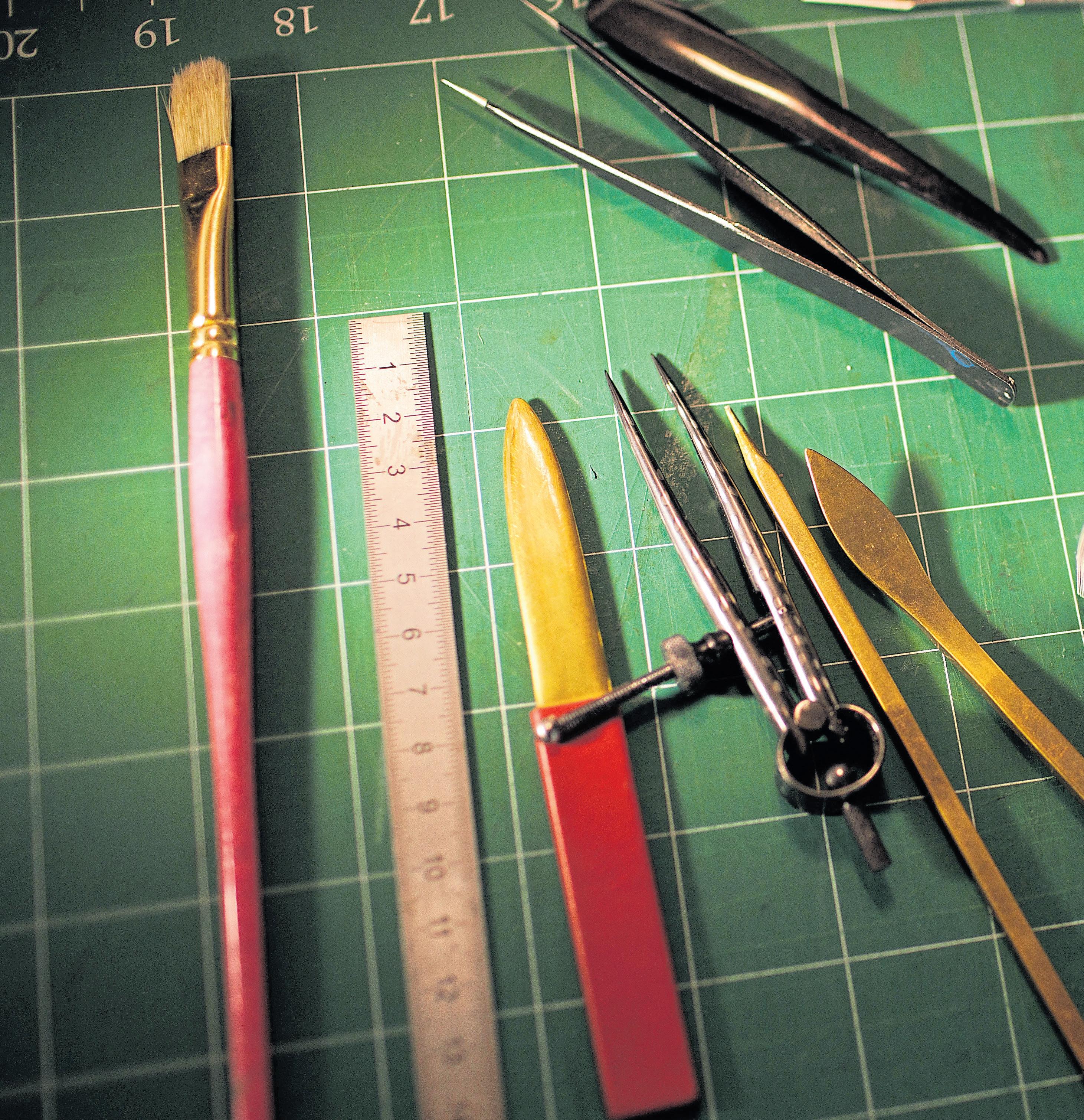
Book artist Paloma Lucas’ uses a variety of tools for making micro books in her studio at Cubberley Community Center in Palo Alto.
Throughout the Bay Area, a new type of entrepreneur is creating fairs, festivals and other marketplaces for local artisans
Making space for the makers
STORY BY MARTHA ROSS
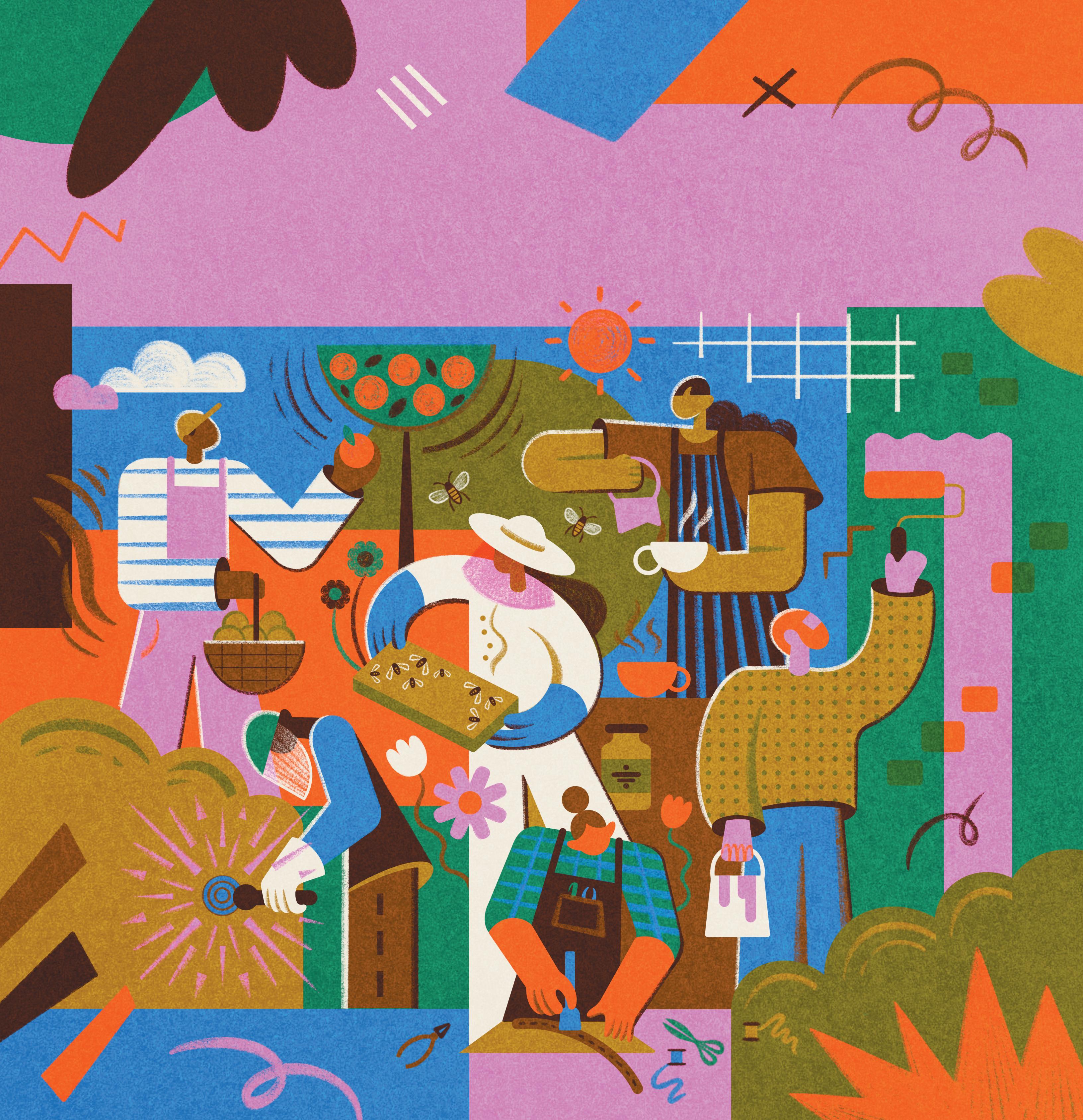
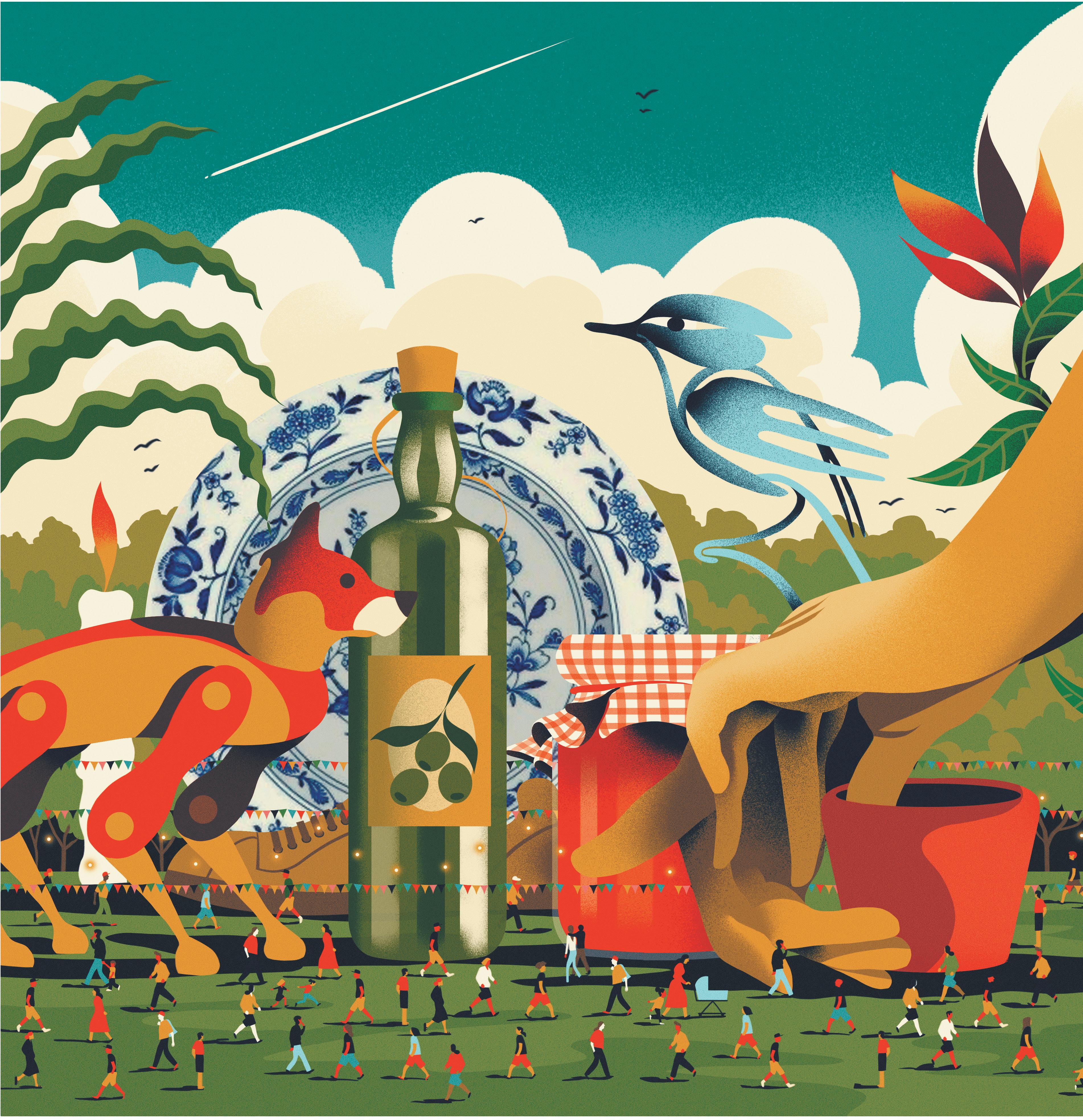
ILLUSTRATION BY PEP BOATELLA
Some of the talented potters, furniture makers, iron workers and textile weavers Suzy Ekman once met working out of their homes in the Alabama countryside probably would have done pretty well selling their handcrafted goods at one of her stylish Makers Market stores in Lafayette, San Jose’s Santana Row, Napa and Sebastopol.
Ekman met these artisans as a young girl in the 1970s, riding around on a motorcycle with her father, a machinist with the Apollo space program who did woodworking and rebuilt cars in his spare time.
“Whenever we would go to those places, we would stop and watch and hear their stories. I was fascinated,” Ekman says, explaining how she developed an early appreciation for the beauty and integrity of American craftsmanship.
Decades later, Ekman — then living in Pleasanton — left her management consulting career to launch the first Makers Market store in 2014, a response to the difficulty craftspeople have long had in finding markets for their products.
Now, as the U.S. is experiencing a craft renaissance, Ekman has become one of a new kind of entrepreneur in the Bay Area. They are founding companies, nonprofits and other professional communities that create new marketplaces through which local artisans can connect with customers.
These marketplaces include Ekman’s “rustic refined” brickand-mortar stores in upscale shopping areas; pop-up or “micro-retail” retail stores, like San Jose Made’s Moment shops in San Jose; as well as online stores, social media campaigns and special craft-focused exhibits. These entrepreneurs also have launched well-organized outdoor street fairs taking place around the Bay Area on an almost weekly basis and bringing new energy and foot traffic to downtowns.
“We had incredible attendance — 30,000 people,” Ryan Sebastian says about SJ Made Fest, the large outdoor event his company San Jose Made hosted in History Park on the last weekend in May. The festival featured more than 250 local vendors, including some 50 food stalls associated with San Jose Made’s sister company, Movable Feast.
“I actually don’t know where these people parked, but it was a nice weekend, and people were just coming out,” Sebastian said. “I mean, it’s a nice place to go
out, be with other people and look at really beautiful handmade things.”
At the fairs, customers can browse stalls, meet the artisans, learn about their work and enjoy the thrill of finding that one unique, handcrafted item for their homes or personal use or to give as gifts. For artisans, these new marketplaces give them places to meet fellow makers, network and build a
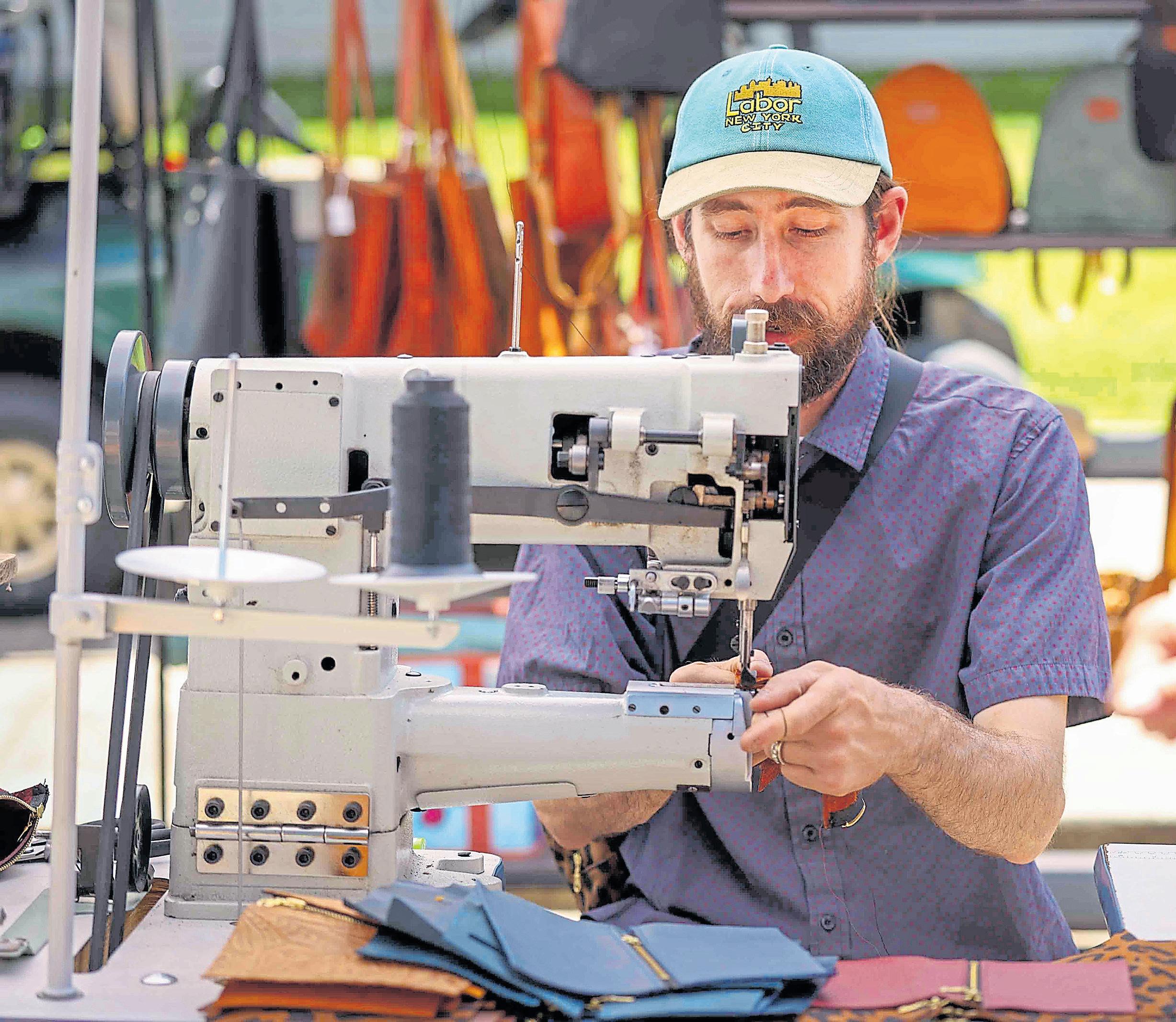
of McKinnon Collective sews leather goods during SJMADE Fest at History Park in San Jose.
RAY CHAVEZ/STAFF
professional community.
These new entrepreneurs like Eckman and Sebastian put an emphasis on how they curate their marketplaces, working with vendors — skilled professionals, talented emerging artists or small businesses — who produce quality, well-made products.
They also seek variety and diversity in goods that are sold in their stores or at their fairs.
For example, San Jose Made events feature vendors who sell classic crafts-fair items ceramics, candles, leather goods, etc. But the company also has become the go-to place for new lines of small and mostly affordable pieces made by local illustrators, Sebastian said. These are bright, colorful stickers, key chains and refrigerator magnets depicting cute animals and manga-style figures that
Adam McKinnon
have become popular with Gen Z customers.
For some events, organizers aspire to create “experiences” for customers, beyond the shopping. They include food stalls with chefs and bakers to add a culinary dimension, while entertainers can turn events into cultural happenings. At SJ Made Fest, a K-pop troupe performed high-energy dance numbers, while Head West, which hosts
marketplaces in San Francisco and Los Altos, kicked off Pride Month at the Ferry Building with a show by the “rollinhomos” — drag performers on roller skates. The more multifaceted these fairs become, the more they become destinations.
Sebastian says people are clamoring for opportunities to get out in public to see beautiful things, socialize and soak up the energy of the crowds, especially since the pandemic. Before 2010, these marketplaces didn’t really exist with any regularity or on this scale, according to Sebastian. That’s around the time that Janet Lees co-founded the nonprofit SF Made, another professional community in the Bay Area through which artisans can promote their work. Oakland-based custom furniture maker Jason Lees, Janet’s husband, says that at first, SF Made mostly focused on promoting San Francisco artisans; he wanted to create something “broader” to serve the region as a whole.
Now he runs Bay Area Made, a membership organization that includes some of the region’s most well-established brands, including Heath Ceramics, Humphry Slocombe ice cream and St. George Spirits. Bay Area Made showcases their work through newsletters, gift guides and special exhibitions.
“It’s basically building awareness of why you should buy local and the value of buying quality lasting products,” says Jason Lees.
Jimmy Brower launched his first Head West marketplace in Emeryville in 2017. Like San Jose Made or Ekman’s Makers Mar-
ket events, Brower charges vendors fees for participating in the fairs his company runs throughout the year in Walnut Creek, Los Altos, San Mateo, Berkeley and San Francisco’s Ferry Plaza. Brower tries to keep the fees low but high enough that he can cover the cost of operations. Brower explains he’s not getting rich off this business; he calls Head West “a social enterprise that is supporting creatives.”
“I wanted to create a model that was about connecting creatives with neighbors and neighbors with creatives,” says Brower, who used to make large-scale wall hangings while
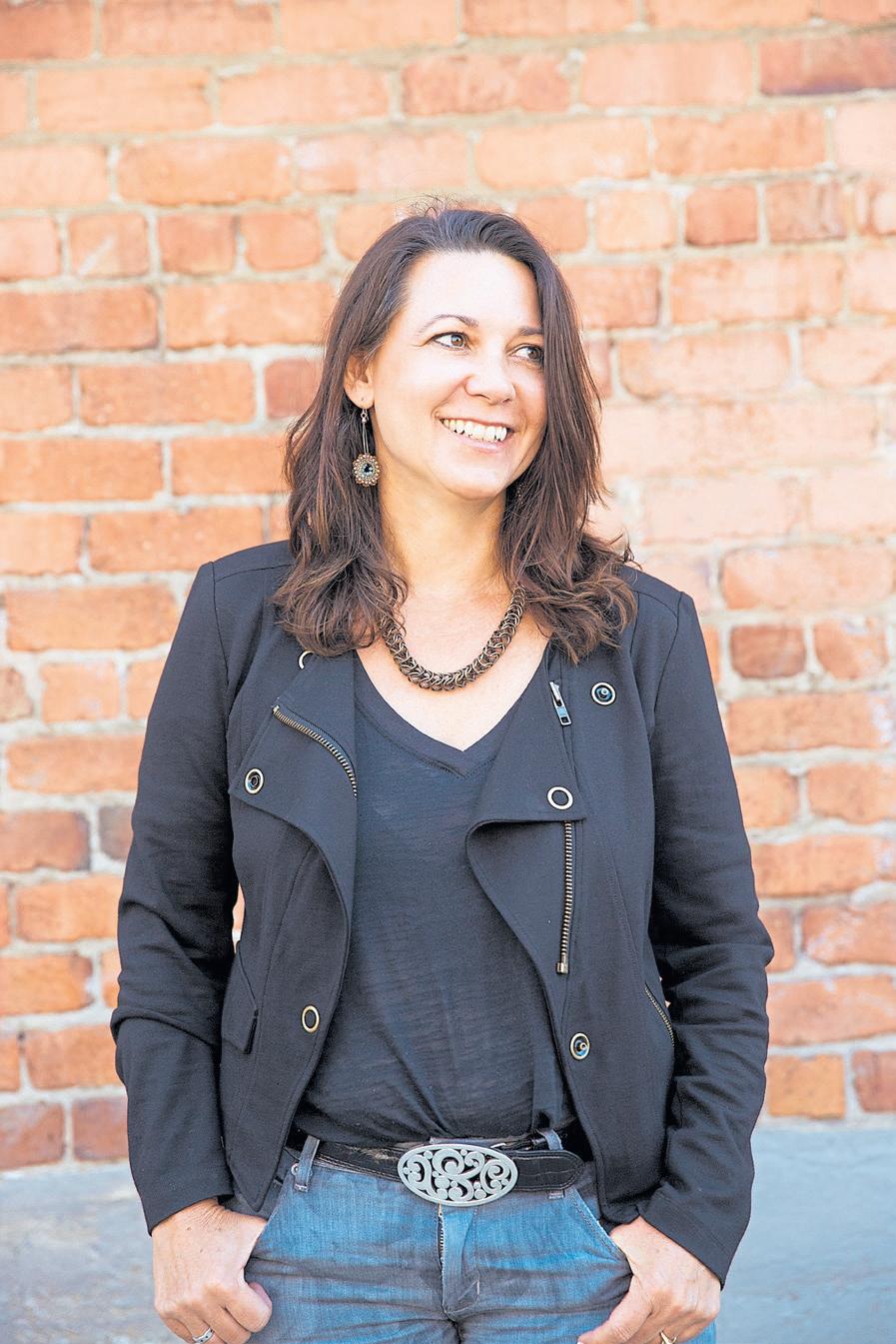
Suzy Ekman, is one of a new kind of entrepreneur in the Bay Area, creating new marketplaces through which local artisans can connect with customers.
COURTESY OF MAKERS MARKET
holding down a corporate retail job at Levi’s.
Sebastian’s path to San Jose Made also comes from being an artisan — one who wanted to create a community in the South Bay for small business owners like him. In 2010, the San Jose native was a transportation planner who started an ice cream truck with his wife, a chef, hoping that running their own venture would give them a more flexible schedule as they started a family.
He laughs at himself now for thinking he’d ever have more free time, especially after he began collaborating with other food-truck chefs to create mobile culinary events. This was the start of his company Movable Feast, which in turn, partnered with the newly established San Jose Made to organize street fairs, featuring both food and crafts. Sebastian acquired San Jose Made in 2016.
The fact that these destination events were organized around the work of artisans seems to demonstrate the strength of today’s American crafts industry. In a 2021 Smithsonian report, author and historian Glenn Adamson wrote: “Not even the Arts and Crafts movement, which ended a century ago, achieved the scale of today’s artisan economy — or anything like its diversity.”
Adamson charts the origins of the craft renaissance to the 1960s, when the counterculture “infused craft with a new attitude, positioning it as explicit means of opposition to heartless enterprise.” The industry really took off with the rise of the internet, which gave craftspeo-
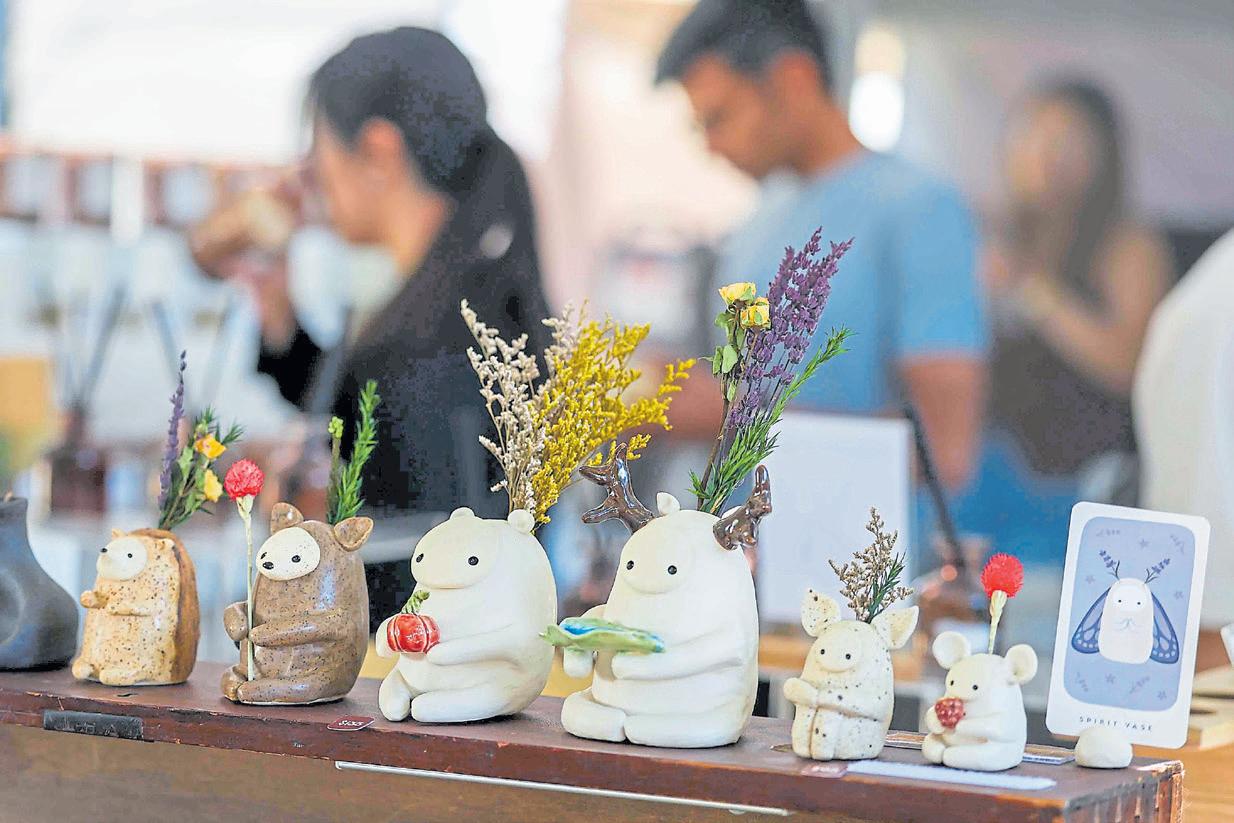
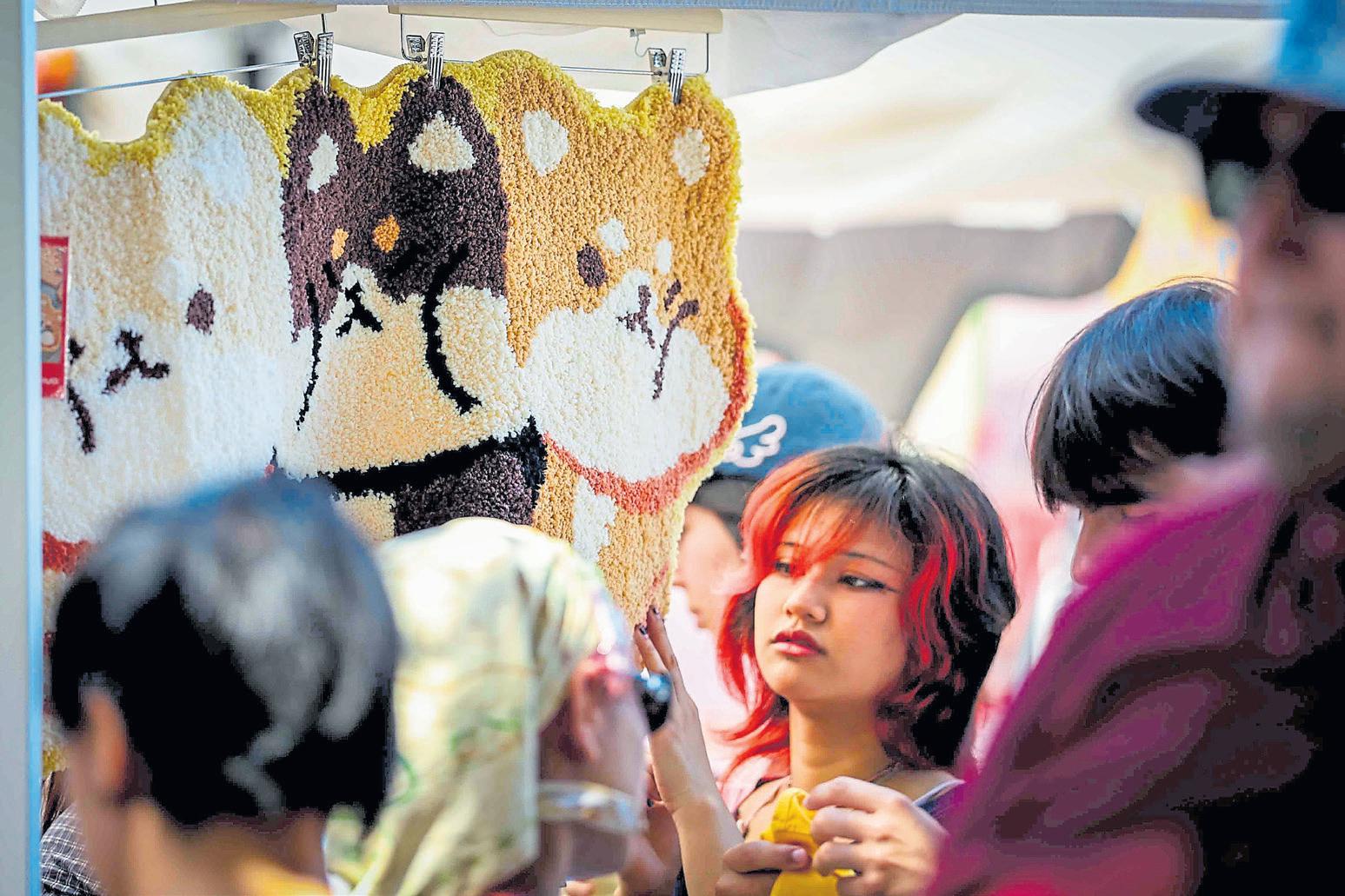
Festivalgoers look at wares at SJMADE Fest at History Park in San Jose. RAY CHAVEZ/STAFF
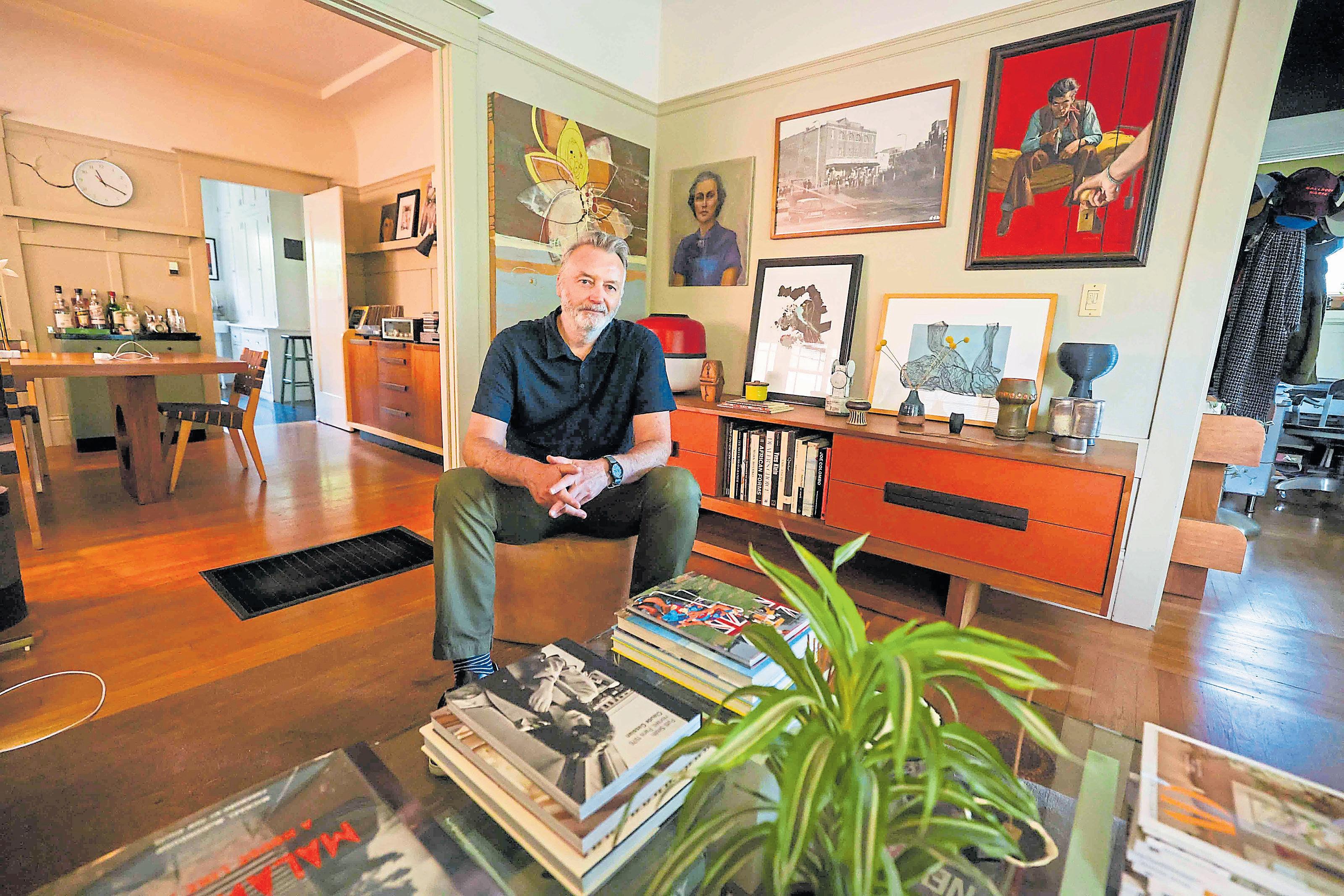
Furniture designer Jason Lees, founder of the regional artisan collective Bay Area Made, sits in the living room which features a custom walnut wood console he made in Oakland. Lee’s home includes a walnut dining table and a mixed walnut and birch wood stereo cabinet. RAY CHAVEZ/STAFF
of making things by hand or by supporting those that do.
The desire for that human connection is among the reasons that Sebastian and others feel optimistic about the future of the American craft industry and associated businesses like theirs. Ekman says she’s regularly contacted by Bay Area property developers who’d love to have a Maker Market come to their mall or downtown.
ple and small enterprises new tools for marketing their wares.
Digital technology — which allowed the takeover of commerce by Amazon and other online retailers -- helped spur many people’s needs to find a balance, Bay Area entrepreneurs say. In the craft world, that balance can come from engaging in the ancient human practice
Sebastian and others say authenticity is a quality that many of their customers are looking for, in their personal lives or in the objects they surround themselves with. In an age of global, 24/7 mass production and distribution, “how do you find something of value that’s important to you?” Sebastian asks.
For people with disposable income, splurging on a once highly prized item like a Coach handbag no longer feels special anymore, Sebastian says. That’s why a discerning consumer might head to a craft fair where they can pick up a truly one-ofa-kind purse, handmade by the person standing in front of them.
“I do think there’s something about people wanting to feel that connection — and I think supporting and seeing the person who actually makes the product you enjoy hits a little bit of that,” Sebastian says.
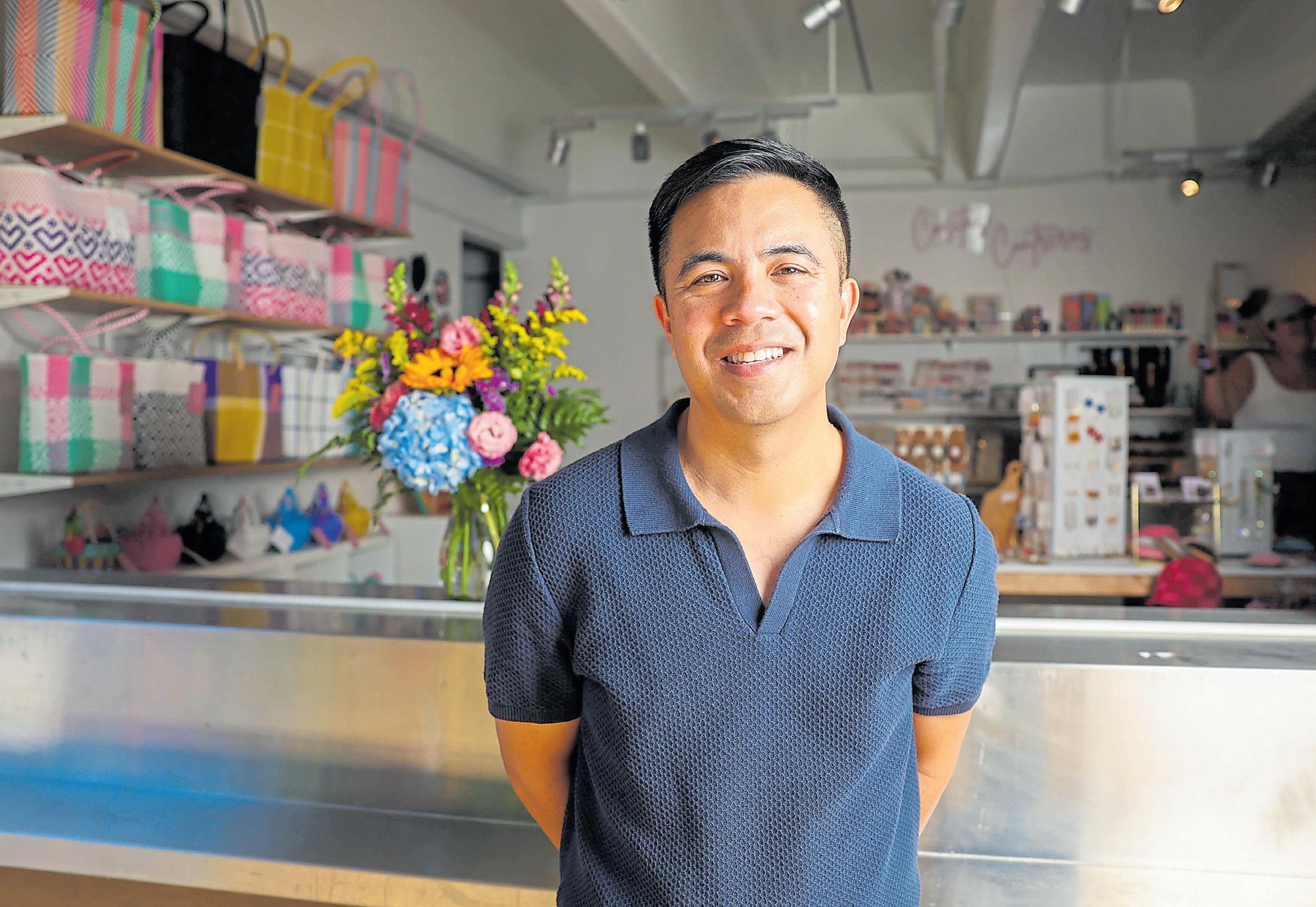
Top: Ryan Sebastian, founder and CEO of Movable Feast and owner of San Jose Made, stands at Pedro Square Market in San Jose.
Right: Pop-up stores allow local artisans to sell their work at SJMADE Fest in San Jose.
SHAE HAMMOND, RAY CHAVEZ/STAFF
Heritage fruit
Small farms in Silicon Valley fight to keep the area’s agricultural legacy alive
STORY BY LUIS MELECIO-ZEMBRANO
PHOTOS BY DAI SUGANO
Mary and Kari Cosentino didn’t have a typical San Jose childhood.
While other children were taking out the trash or washing the dishes, they were knee-deep in mud, moving irrigation pipes along the sections of their small family orchard or getting their hands covered in the sugary guts of fruit as they packed peaches.
“You’re sticky, and it’s awful,” recalls Mary, laughing at the memories. “At the time, you don’t appreciate it, but in hindsight, it’s awesome. The farm was our playground.”
Now, Mary and Kari run the farm where they grew up, J&P Cosentino Family Farm, becoming the third generation to work the earth in Santa Clara Valley. Together, they operate the last orchard in San Jose, tending to a tiny island of green surrounded by single family homes and hemmed in by Highway 85.
Once, there were thousands of farms that covered the region famed for its world-class fruit and christened “The Valley of Heart’s Delight.” While Santa Clara Valley is no longer the agricultural mecca it once was, some like
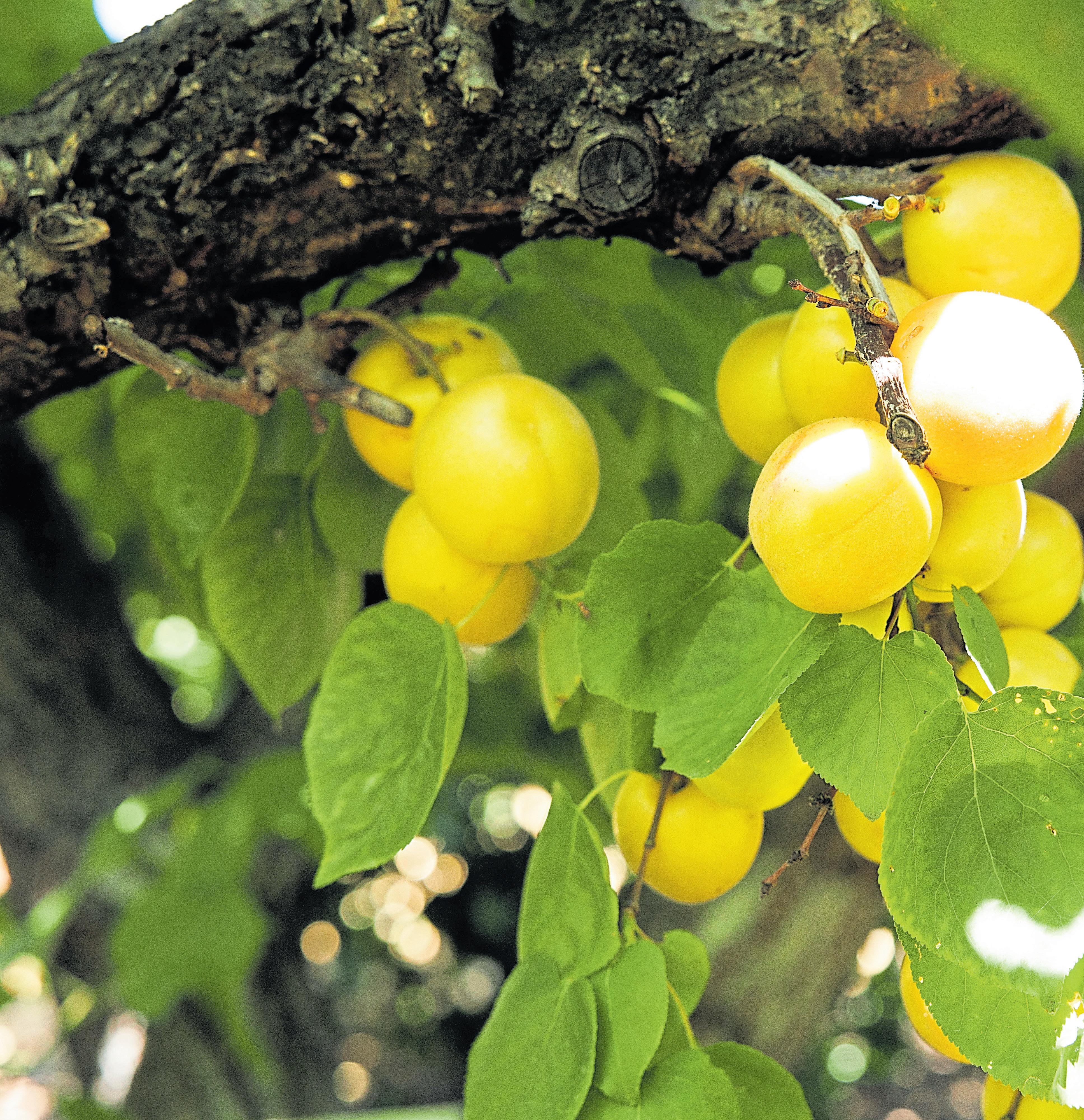
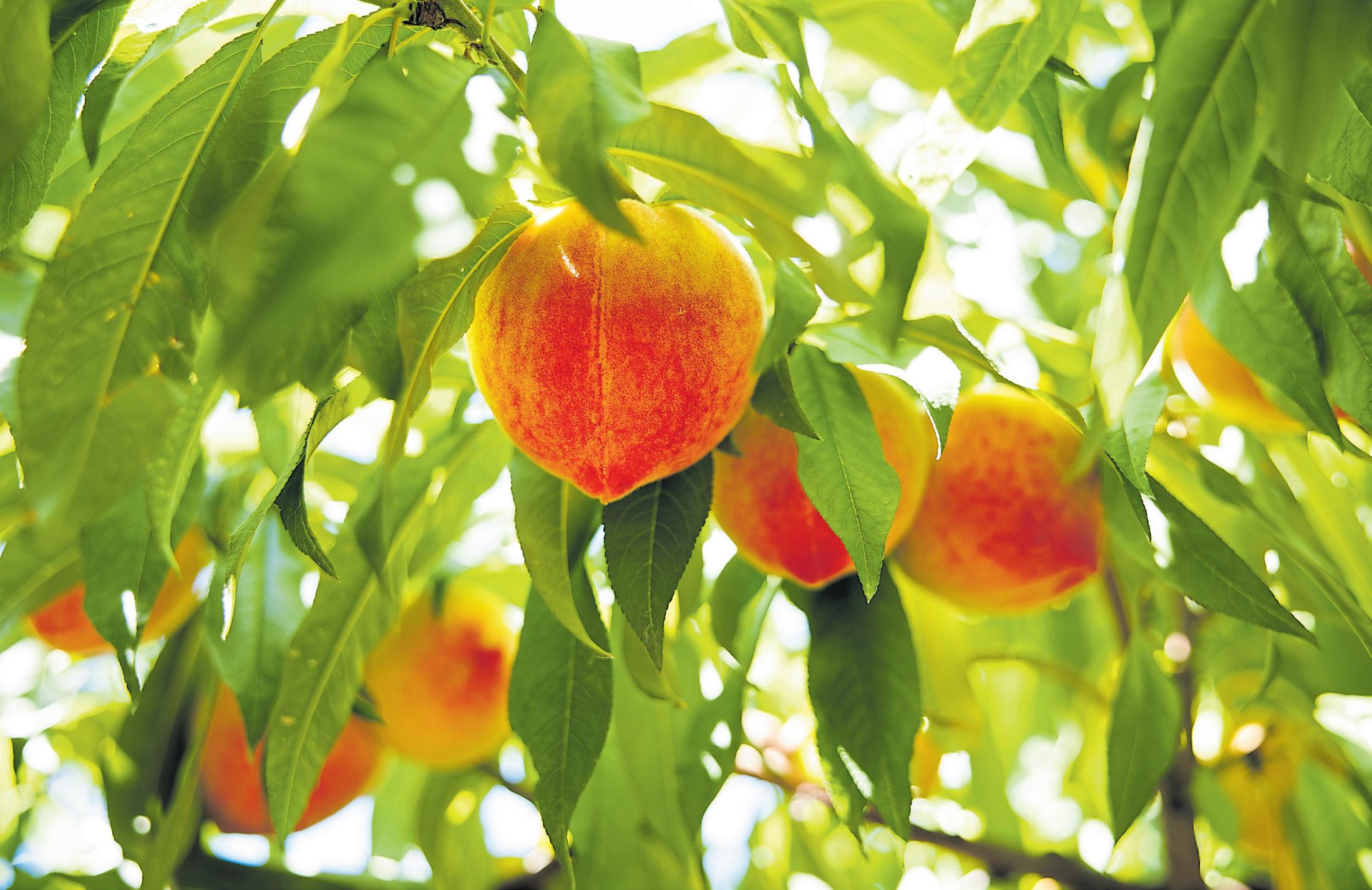
Golden Sweet apricots hang from a tree at J&P Cosentino Family Farm in San Jose.
the Cosentinos have fought to preserve the small farms that still exist — making them the torchbearers for the agricultural legacy that defined the region and the lives of those who work the land.
“I think of us as the current stewards of the land. There is this gift presented to us: carrying a legacy forward, being a part of a tradition,” said Kari Cosentino. “We both view the farm as a part of our family, and letting it go … that would be like selling one of our kids.”
THE VALLEY OF HEART’S DELIGHT
The agricultural history of the valley began thousands of years ago, as the shifting earth formed Santa Clara Valley and the Diablo and Santa Cruz Mountain ranges. Loam running off the mountains collected in the valley, forming a 10-foot layer of rich soil.
Paired with the moderate climate and (at least in the 1800s) abundant water, the valley created a unique environment where food could grow yearround.
“We had all the elements to have a rich agricultural area,” says Ken Middlebrook, curator of collections at History San Jose.
While the indigenous Ohlone were largely hunter-gatherers, the Spanish began to grow around their missions in Santa Clara and San Jose in the late 1700s. Still, it wasn’t until the 1800s that the agricultural industry that would define the area was truly set into motion by French brothers Louis and Pierre Pellier.
Pierre, lured to California to seek gold in 1847, found little
success in mining, but upon noticing the high cost of fruit in the area, decided to start a nursery in San Jose. A member of a farming family, he sent his brother Louis back to Europe to retrieve cuttings of French plum trees.
After some experimentation, the Pelliers developed “California plums” and unwittingly kickstarted another rush, this time for agriculture. Many who failed in the Gold Rush followed their path and tried their hands
“ We’re not getting more land, but we’re going to use every square inch of this dirt.”
J&P Cosentino Family Farm co-owner Kari Cosentino
at farming. Then the completion of the transcontinental railroad expanded the market to the rest of the nation.
Agriculture in the valley exploded. Within decades, orchards of plums, apricots, peaches, cherries and more began to dominate the valley.
The blooming of the orchards in spring was so extensive that it became the subject of poetry and prose.
“It is during the blossoming season that (the valley) presents
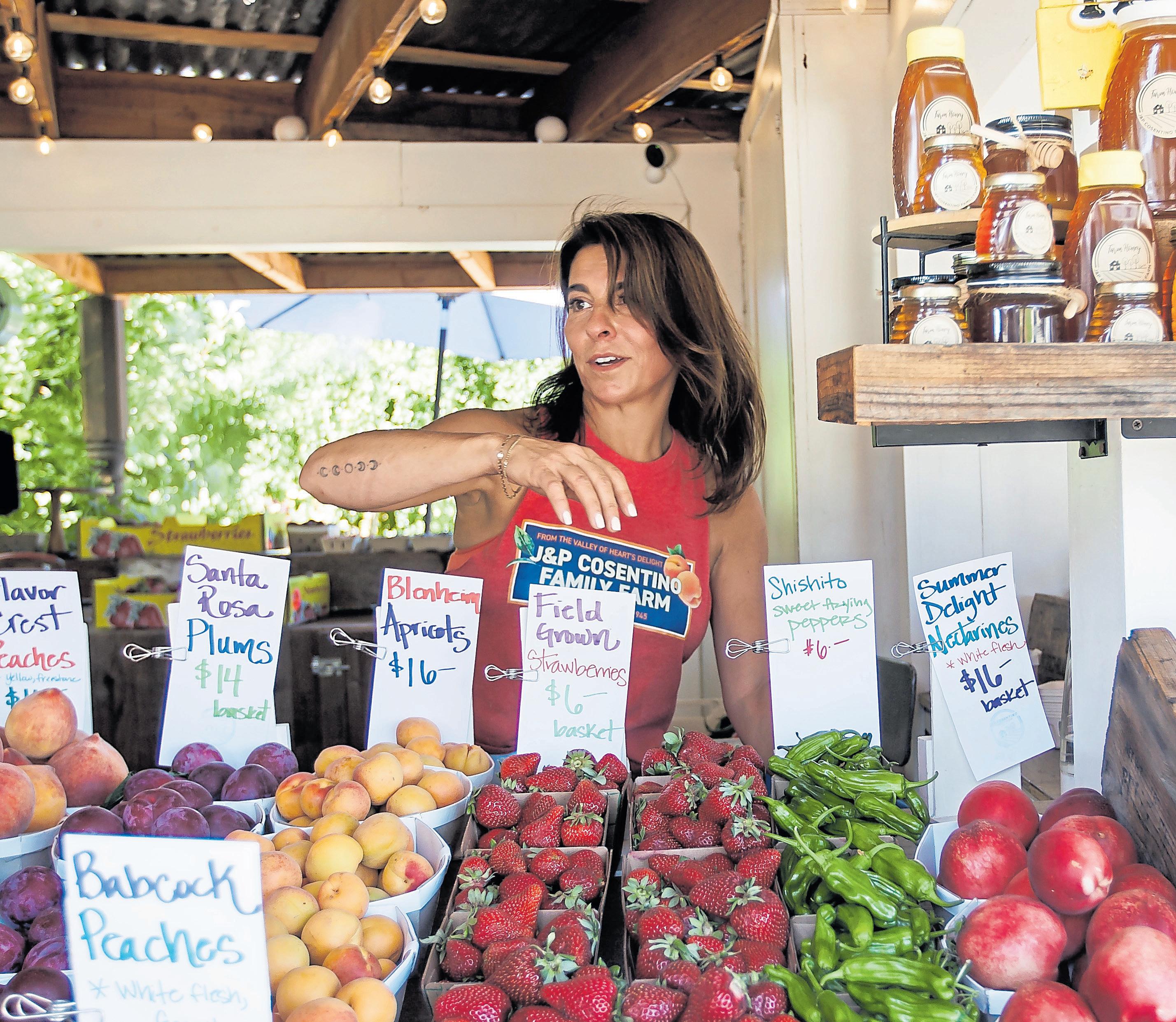
J&P Cosentino Family Farm co-owner Kari Cosentino works at her farm stand in San Jose.
DAI SUGANO/STAFF
its greatest charm … The white blossoms cover it almost like a mantle of snow,” described California historian Harry L. Wells in 1904. “It is a hopeless task to convey an impression of the beauty of this scene to one whose eyes have not beheld it.”
John Muir, on his famous 1868 voyage from San Francisco through to the Yosemite Valley recalled that the spring air here was “sweet and heavy with the scent of flowers,” that “the whole valley was a lake of light” and
“the hills were so covered with flowers that they seemed to be painted.”
The stunning beauty and agricultural productivity earned the valley its most enduring nickname, The Valley of Heart’s Delight, likely first used in 1905 when the San Jose Mercury Herald (the precursor to the San Jose Mercury News) held a competition for a name to help market the valley’s fruit.
The success of agriculture changed the face of the valley, creating a network of industries that rose and fell with harvests, drove the economy and marked the culture and the rhythm of the area. In many cases, school
wouldn’t start until the prune harvest was over, since children were a key part of the labor on the family farms.
Middlebrook, the history museum curator, grew up in Cupertino in the ’60s and recalls that during packing season, the city itself would be covered with the scents of the canneries. “You would have all of these different smells from the valley … one week it might smell like tomatoes, another it might smell like apricots,” he recalls.
But even as the agricultural hub rose to its peak, the seeds were already being sown for the industry that would supplant the Valley of Heart’s Delight.
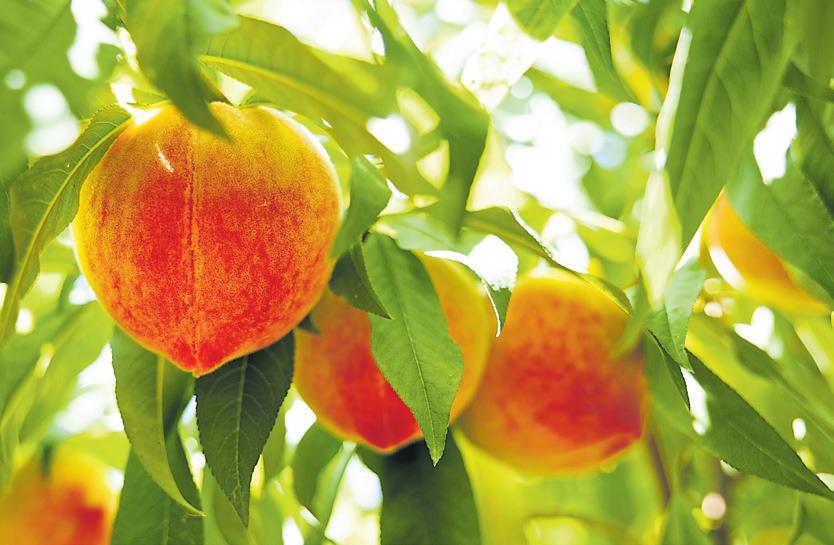
Flavor Crest peaches, above, grow at J&P Cosentino Family Farm, which has been in operation since 1945.
FROM APRICOTS TO APPLE
After World War II, a confluence of forces saw the population skyrocket, with former farming cities like Sunnyvale seeing tenfold increases to their numbers. Over the next few decades, orchards and farms were replaced by defense and tech companies, housing and office parks.
“High tech doesn’t depend on the weather or the amount of rain you get in the winter,” says Laura Babcock, the founder and director of Sunnyvale Heritage Museum. “Lockheed had totally replaced Libby’s (cannery) as the
largest employer in the city of Sunnyvale.”
Many farmers found that they could make more money by selling their land to developers than by growing fruit, and the influx of cash could allow them to retire. As “Silicon Valley” grew, agriculture, and the host of businesses that supported it, began to wane.
“Instead of growing fruit, you were growing housing,” said Middlebrook. “Farmers were cash poor but land rich, so they were incentivized to sell.”
That much is true for the family of farm owner Peter Van Dyke. In the early 1920s, Peter’s great-grandfather — a Croatian immigrant who had made money off the Alaskan gold rush — bought five acres of land in Cupertino and began to grow apricots. The farm grew to some 45 acres scattered throughout subdivisions, but rising property taxes and the pressure to sell became too much, and by 1960, the family opted to sell the land and buy 108 acres in Gilroy to re-establish the farm.
Van Dyke says that with ever-expanding development, many more farmers were driven out of the business or to other regions like the Central Valley.
The change was stark. While in the 1920s, some 7,000 farms covered the valley, that number has dropped to about 280 vegetable farms and 60 orchards in Santa Clara County in the present day, according to Ericka Mora, the county’s deputy agricultural commissioner.
“Agriculture right now is at a huge turning point,” says Van Dyke. “We’re all working hard to save ag land … but everything‘s working against us here.”
INNOVATING FROM THE GROUND UP
For the remaining farms, survival takes creativity, innovation and often, collaboration.
Van Dyke and his mother, Betty, bought the orchard from his grandfather in the ’70s, and in the ’80s, they became certified organic. But even as they soldiered on, many of the plants that canned and dried fruit began to close as demand shrank, meaning the remaining fruit processors could charge more or be more demanding. That meant they had to bring a lot of the processing home, collaborating with other nearby farms like Christopher Ranch — the garlic farm which helped kickstart the Gilroy Garlic Festival — and doing their own packing and fresh fruit sales, even shipping fresh fruit to Japan and Taiwan. Now, Van Dyke leases the land to an organic farm called Spade and Plow, which has introduced vegetables to the farm along with the fruit harvest.
“How most farmers survive is that they get more diverse,” says Van Dyke.
The Cosentinos, who also once ran a small chain of supermarkets in the area, are a prime example of that. The family farm, once 10 acres, now stands on a bit over 2 acres, with an adjacent farmstand where they sell produce.
“We’re not getting more land, but we’re going to use every square inch of this dirt,” says Kari.
The relatively small farm now houses 600 trees and a mind-boggling 200 varieties of fruit: apricots, peaches, bush-
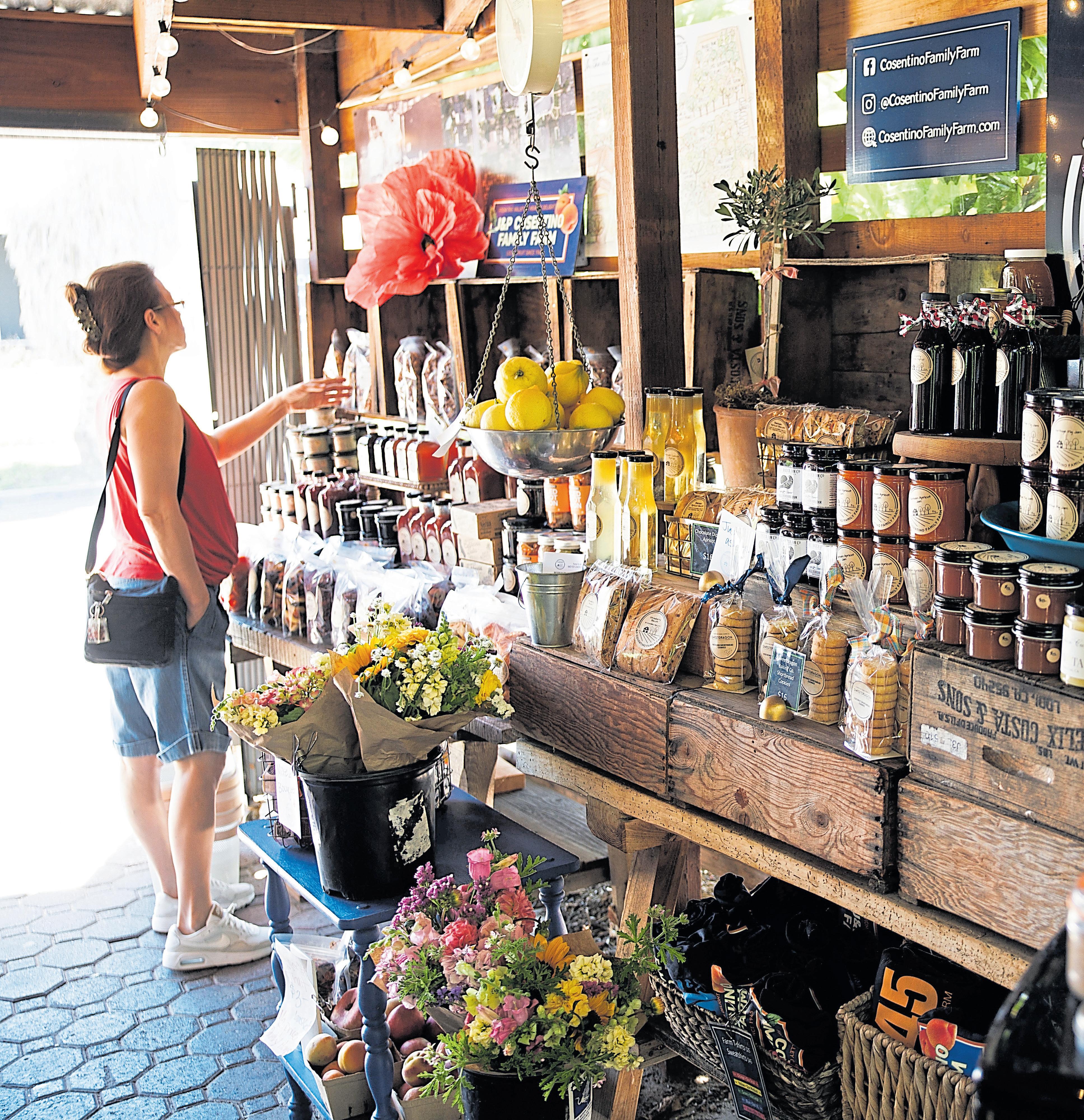
A customer shops at the farm stand at J&P Cosentino Family Farm in San Jose. Once, there were thousands of farms that covered Silicon Valley, famed for its world-class fruit and christened “The Valley of Heart’s Delight.”
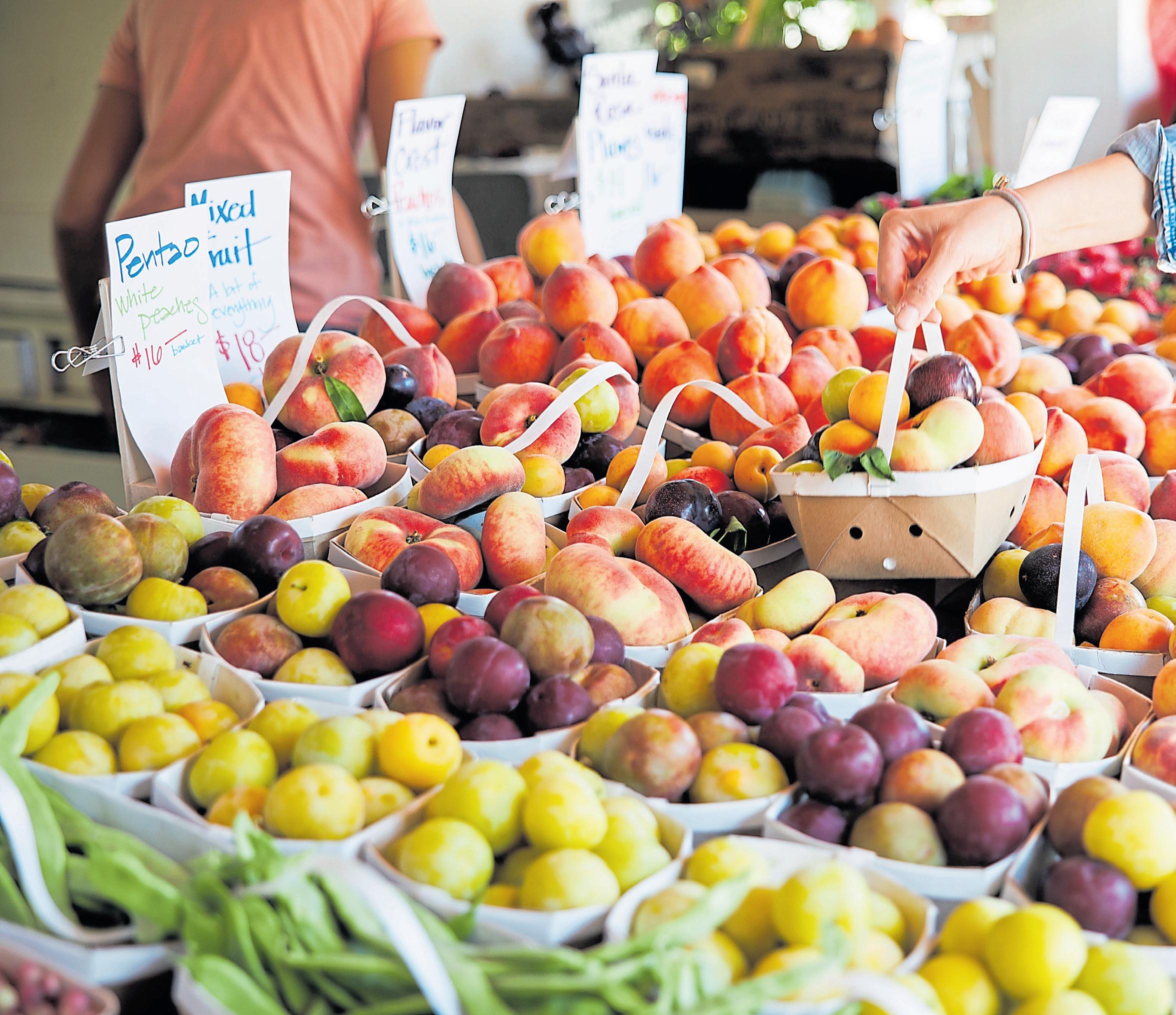
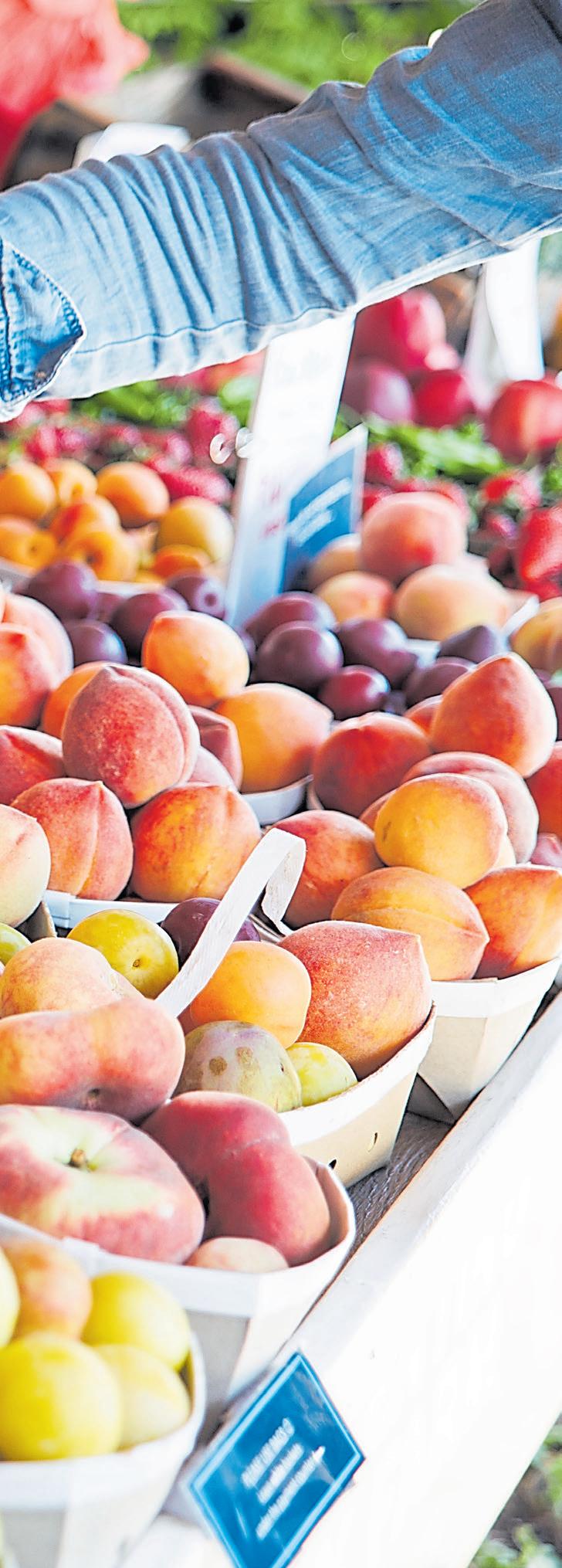
berries, persimmons, pomegranates, grapes, citrus and more. That means that they are constantly harvesting and constantly replanting trees. Every variety usually lasts a mere three weeks on the shelves of their farmstand.
“We like to drive ourselves a little crazy,” jokes Kari.
The variety not only helps preserve heirloom strains of fruits that once defined the valley — like Santa Rosa plums and Blenheim apricots, but also helps the farm adapt to another threat: a changing climate. Many stone fruit trees require cool winters to produce fruit in the summer; as winters shorten and get warmer, the Cosentinos have begun to plant hardier strains that don’t require the same cool weather.
Survival also requires a fair bit of collaboration. The Cosentinos will buy from other local farms — including Spade and Plow — to fill out their farm stand and ensure that those who come have plenty of fruits and vegetables available. They also have to innovate when it comes to their offerings and even how they make sure not to waste any product — whether that means picking up pallets of strawberries that other vendors couldn’t sell and turning them into strawberry margarita mix, providing fruit for small bakeries or selling peaches to Eataly at Westfield Valley Fair mall for its gelato.
“If we can support another small farm, of course we will,” says Kari. “We keep it local, and we keep it small.”
They’re part of a network of small businesses and farms that work together, sell with and to each other and help each other succeed.
FIGHTING FOR THE FUTURE OF FARMING
For the Cosentinos and others, San Martin farmer Joe Raineri is a key part of that network.
“The farming community, they’re a great group of people. Even though we’re all growing and in some ways competing, it’s a really tight-knit community,” says Raineri.
Under the hot June sun, Raineri walks among the rows of tomato plants, his three dogs
A customer selects fruit at the farm stand at J&P Cosentino Family Farm on a day in June.
traipsing in and out of the rows as they follow him. He leans down to one plant, grabbing a striated purple fruit that grows on the vine, turning it in his hand. While it looks more like an exotic berry to the untrained eye, he holds in his hand one of the 60 varieties of tomato that he grows on the farm. This one sports a particularly colorful name: Brad’s Atomic Grape. Ten years ago, Raineri and his wife bought land in San Martin with the money they had made
building and selling furniture. Both foodies, they began to garden heirloom tomato varieties and realized they produced way too much for themselves. Free giveaways led to an unmanned cart where they sold their tomatoes on the honor system. Now their farm, Terra Amico, grows on three acres and supplies heirloom tomatoes to high end restaurants and collaborates with other local businesses like the Cosentinos. But beyond his work as
owner of Terra Amico, Raineri has taken on another role as advocate for small farms, becoming part of a growing number of people who collaborate with farmers, nonprofits and government agencies to preserve farming.
Raineri interviewed scores of farmers from across the region and around the world to understand how different farmers were struggling or thriving. He founded the advocacy group the South County Small Farms
Association. In his travels and here at home, he has seen farmers face a panoply of pressures: rising costs of labor and materials, property tax laws making it more and more difficult to pass on farms from generation to generation, changing regulations, and — like many others in the Bay Area — the region’s exorbitant cost of living.
Together, the advocacy has gotten the ear and support of some local politicians, including county Supervisor Sylvia Arenas, herself the daughter of a farmworker.
Since she began her tenure in 2023, she has advocated for more farmworker housing, given grants to agricultural and agritourism projects — including the small farms association — and stepped in to block zoning regulations that local farmers said would put them at risk.
Arenas sees it all as a “commitment to preserving South County’s agricultural heritage and ensuring that our agricul-
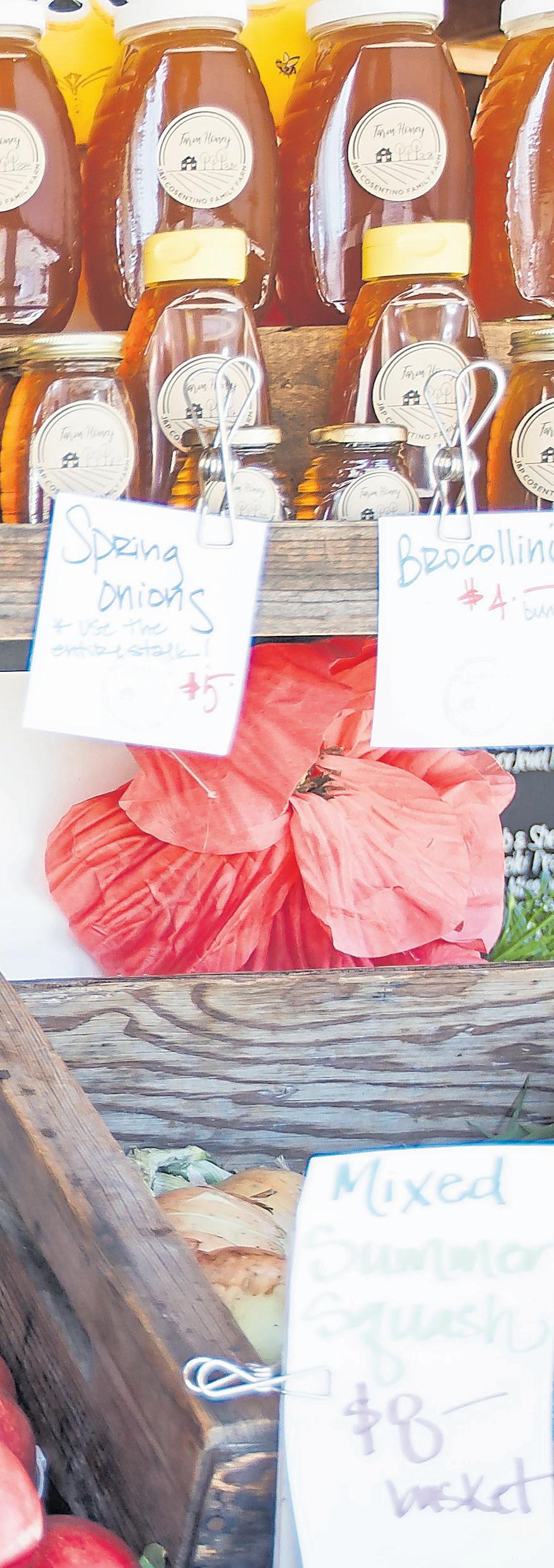
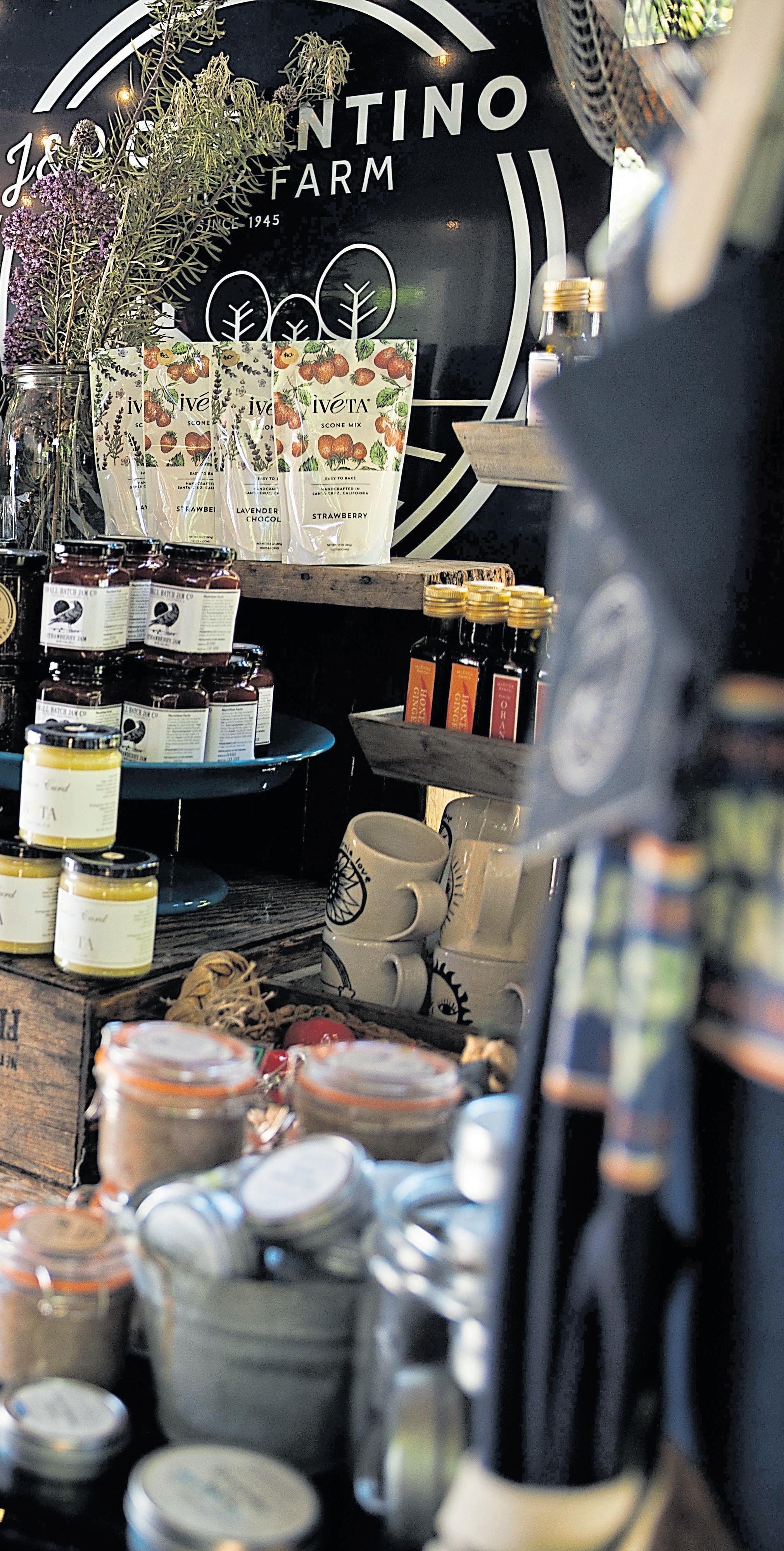
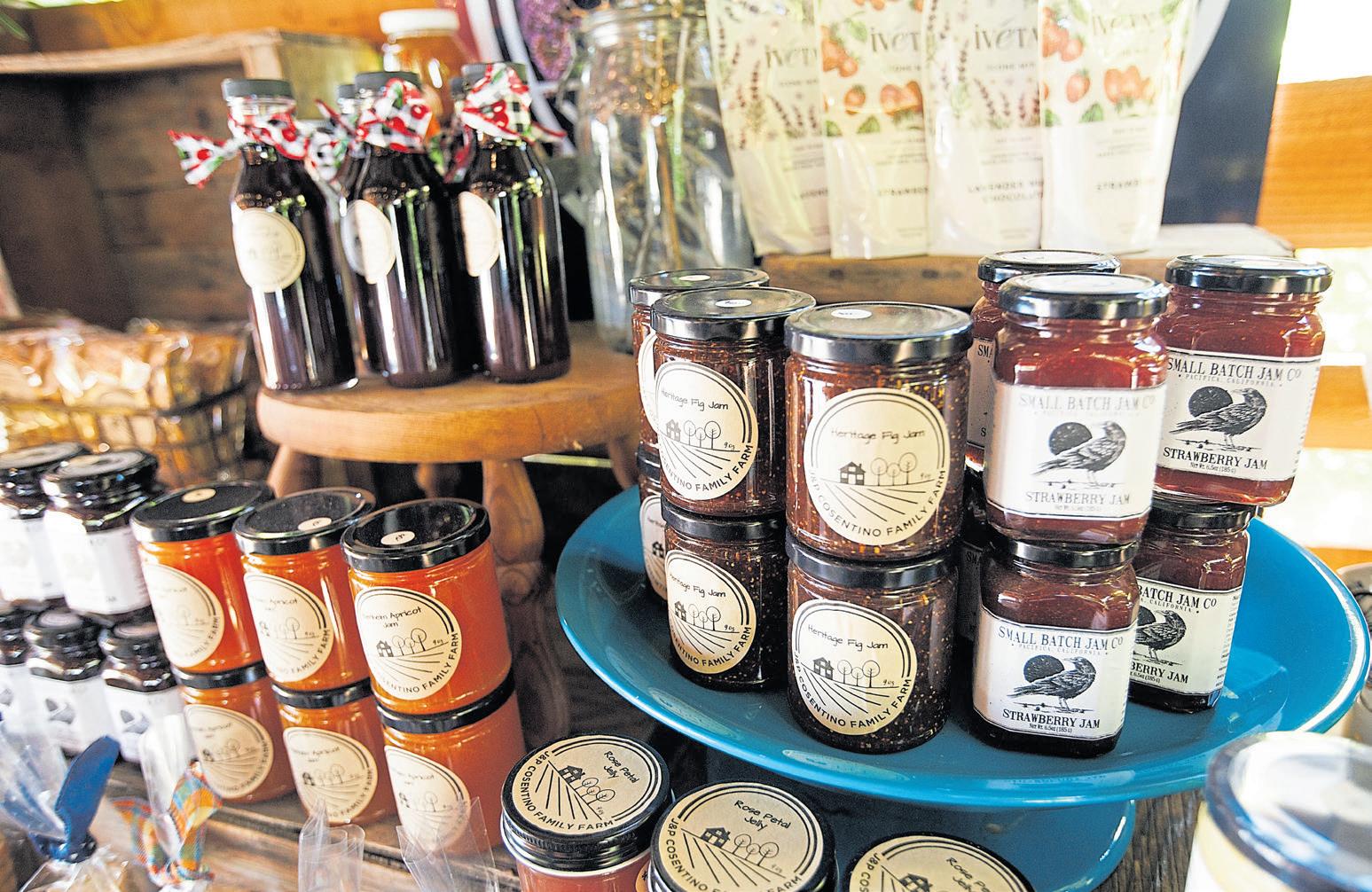
Various jams are sold at the farm stand at J&P Cosentino Family
Farm in San Jose.
tural community continues to thrive for generations to come,” she says.
Beyond political advocacy, Raineri hopes to create a hub for farmers to sell and thrive, Fattoria Public Market. The Market is an expansive vision for a 40,000-square-foot indoor farmers market and working farm that not only creates a space where farmers can sell their products, but has the equipment for cold storage; food processing; events; a beer, wine and cider garden; and a venue where chefs can take the fresh produce and create “farm to fork” dining.
He hopes to create a destination for foodies that would attract a larger market while making a year-round, all-week venue where farmers can rent a stall at an inexpensive rate and take home a bigger cut than they would at traditional farmers markets. Raineri is in the process of securing the funding for the market and says he expects the project to break
ground in 2027.
“These (small farmers) are hardworking folks who just want to do something great. They’re the ones who care about the food; they’re the ones who care about the land,” says Raineri. “I wanted to do something to keep ag alive. I want to give back.”
Even if farmers make enough to stay afloat, they continue to face the pressures of development and the push to sell their land. Now, a handful of organizations — from Peninsula Open Space Trust to the Santa Clara Valley Open Space Authority — are working with farmers to buy natural and agricultural land and preserve it for future generations. Having leased his farm, Van Dyke has now joined several organizations focused on conservation and open spaces.
“I have this weird respect and this passion for preserving this beautiful land,” says Van Dyke. “I’m getting deeply involved in trying to save what’s left.”
For farmers like Van Dyke, preserving and cultivating the land isn’t just about history, politics or business; it’s personal.
Like the Cosentinos, Van Dyke grew up on the farm, going out in the fields with his family since he was a toddler. Under the watch of the rolling foothills of the Diablo mountains, he would pick apricots off the ground and cut them to dry on blazing, 100-degree days. He says it was the “hardest job I ever had.”
Six decades later, he has dedicated his life to agriculture and just hopes that farms like his can survive, preserving the land and sustaining the soul of The Valley of Heart’s Delight.
“I love the land, it’s beautiful,” he says. “The land gave to me all my life, so my duty is to give back to it the best I can.”
BEE NOW
HERE
Bay Area beekeepers explain why honey is one thing you should always buy local
BY CAELYN PENDER
Paula Breen had just moved into her home in San Leandro in 2017 when a swarm of bees landed in her front yard.
The 55-year-old healthcare worker has been fascinated by bees and other insects since she was a kid, so rather than calling someone to remove the swarm, she decided to “just go for it” and set up her first backyard hive.
“I was just over the moon and very passionate about it very quickly,” she said. “When a swarm lands in your yard and you become a beekeeper that way — I know this sounds a little bit ‘woo-woo,’ but it feels like they came to me.”
Breen wasn’t initially planning to sell the honey her bees produced, but as she ended up with more and more bees, she found herself giving away so much honey that she eventually decided she should just start her own small business. That grew into Sweet Serendipity Honey, where Breen sells bee products produced from the 30 hives she oversees in Alameda and Contra Costa counties — from honeycomb and creamed honey to beeswax candles and homemade salves.
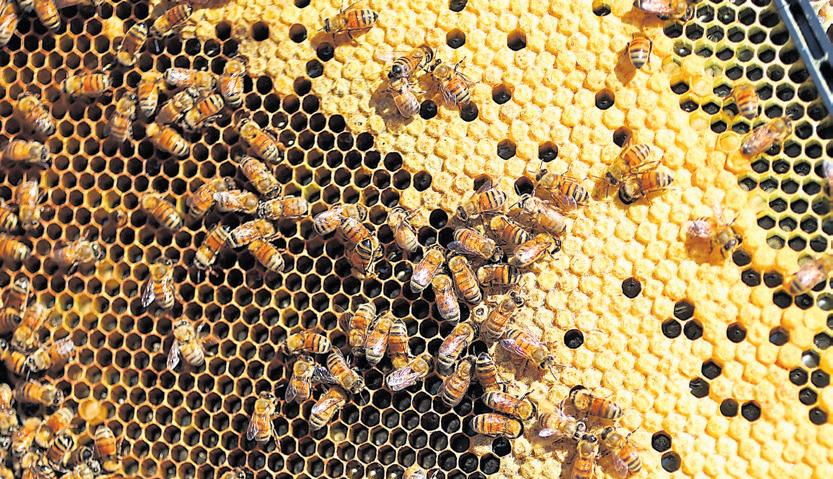
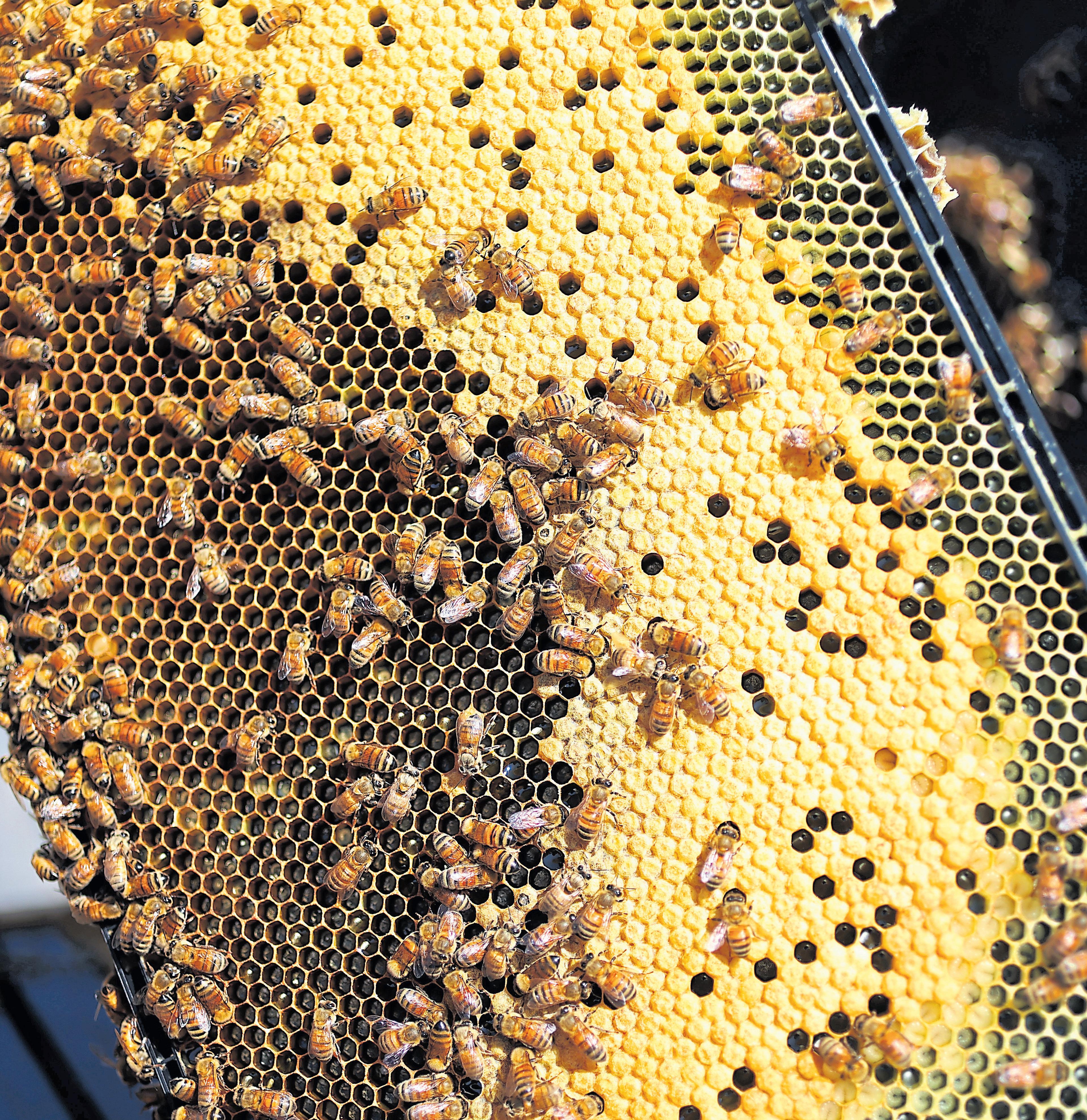
Worker bees crawl over honeycomb at an apricot orchard in Byron.
ARIC CRABB/STAFF
She is one of many local Bay Area beekeepers who care for their own hives — in their backyards, on the roofs of local hotels, at farms growing a variety of crops — then bottle and sell honey and other bee products.
Beekeepers can oversee a number of hives and often catch swarms in the wild. These bees then pollinate surrounding flora and produce honey, which can be harvested and bottled into local varietals, with flavors depending on the flowers and crops the bees find to pollinate. In the Bay Area, bees often feed on plants such as eucalyptus, star thistle, berries, spring flowers and more.
Beekeepers tout the benefits of purchasing locally produced honey — not the least of which is that it tastes better than what can be bought at the grocery store.
Breen, who offers small-batch honey produced by her bees, places an emphasis on collecting small harvests of honey frequently instead of waiting until the end of the season, and said each harvest tastes completely different.
“A lot of beekeepers just wait until the end of the season, pull everything off at once, harvest, bottle,” Breen said. “To me, that’s like taking all kinds of nice specialty wines and mixing them all in a vat and throwing them in bottles.”
Honey can also help build up the immune system against allergies as well as colds and
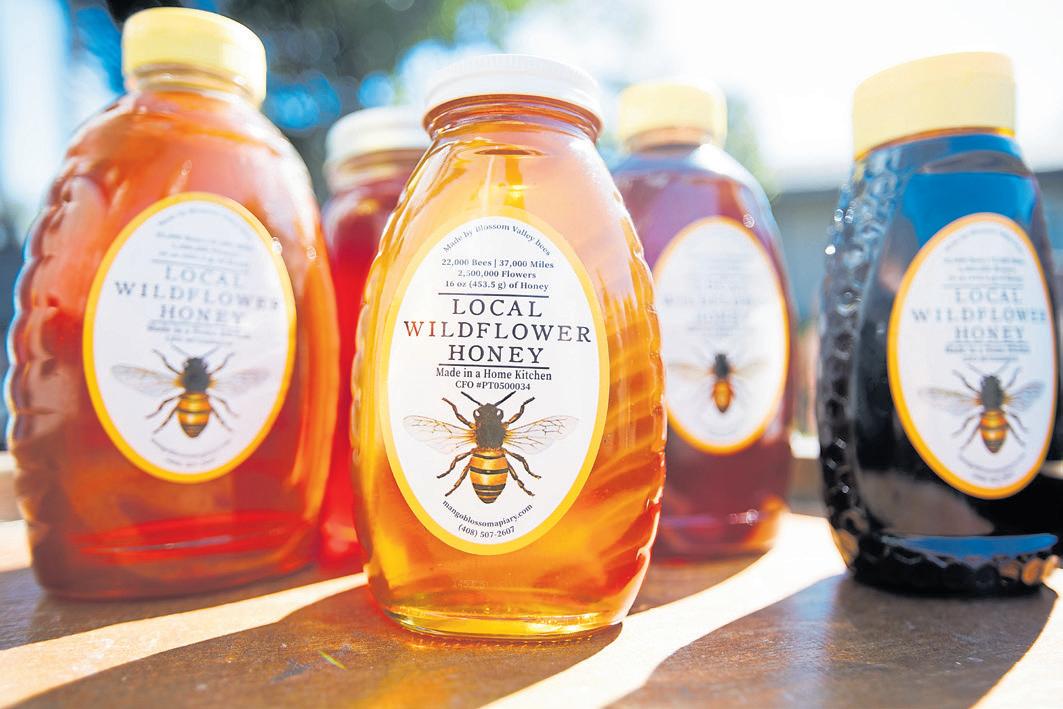
Sunlight illuminates bottles of honey from Mango Blossom Apiary, owned by beekeeper Bryan Godfrey of San Jose.
DAI SUGANO/STAFF
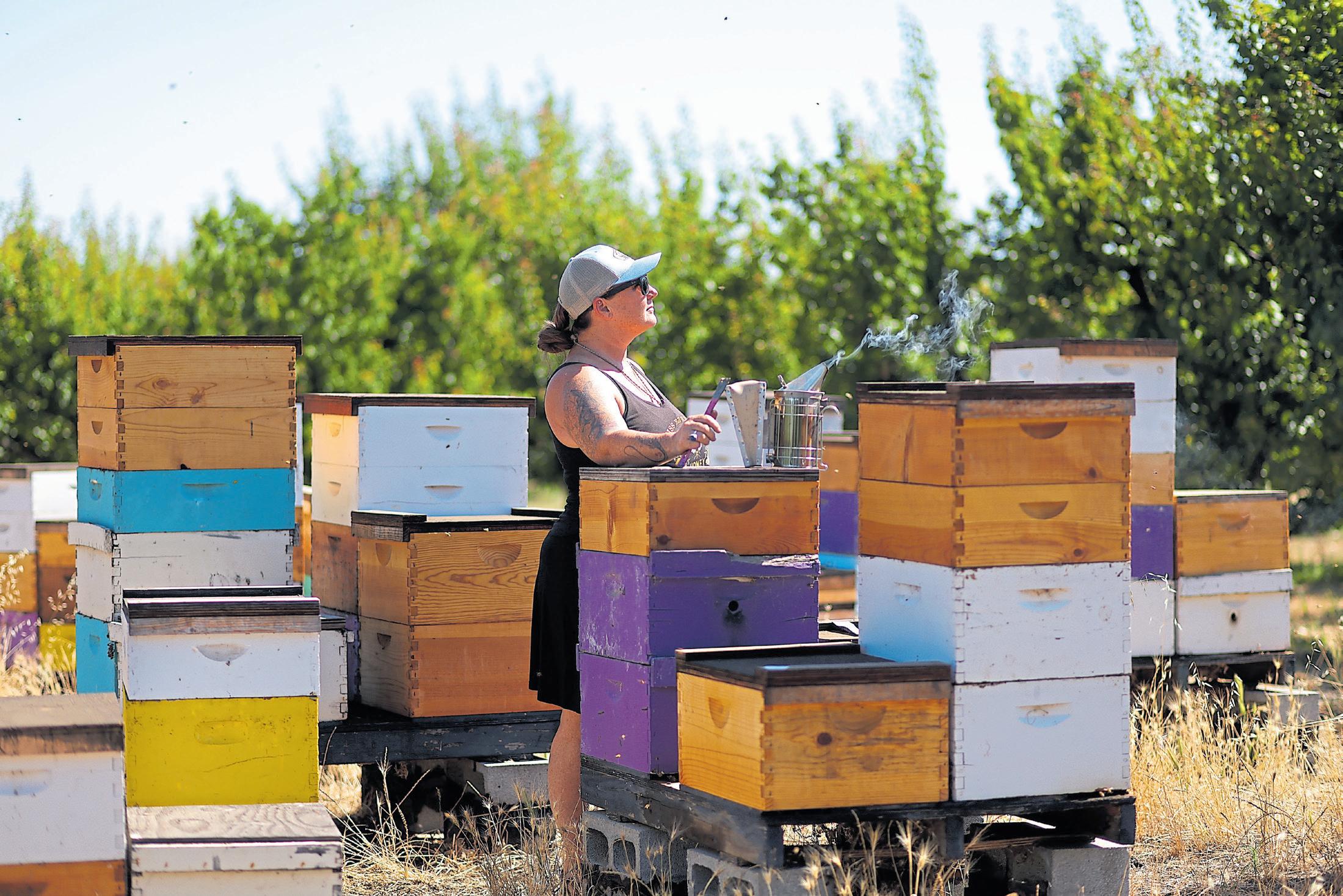
Kelly Knapp, founder and head beekeeper at Miss Bee Haven Honey, works with hives in an apricot orchard in Byron.
ARIC CRABB/STAFF
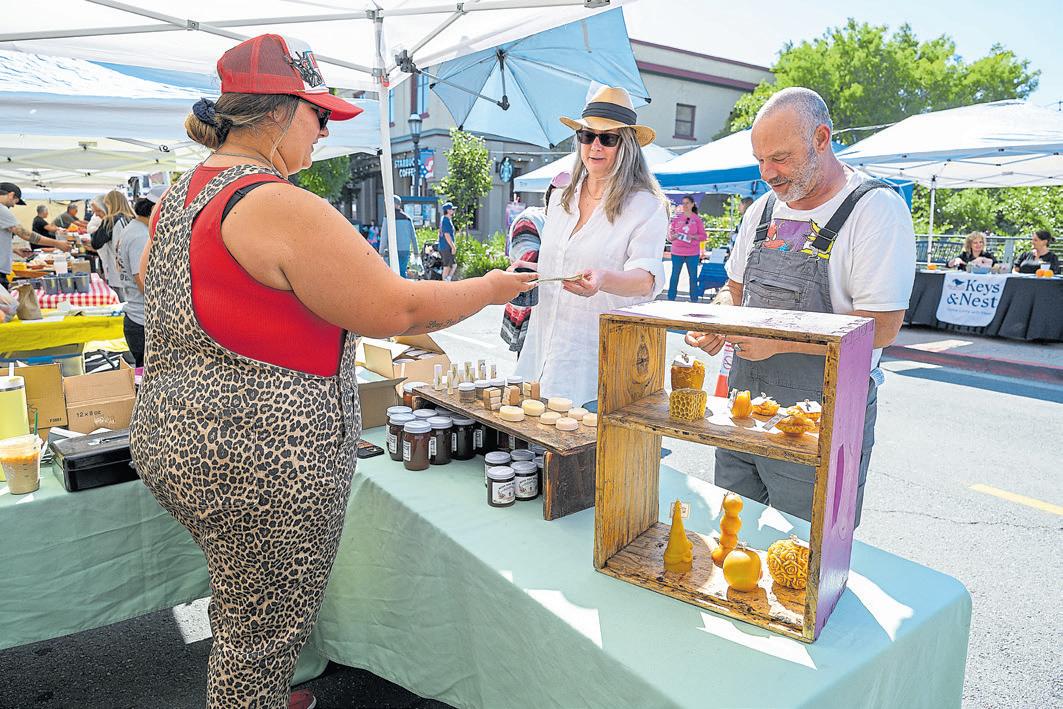
Customers purchase honey from employee Karlee Rosalez while at the Miss Bee Haven Honey booth at the Martinez Farmers Market
JOSE CARLOS FAJARDO/STAFF
“I tell people all the time, ‘I don’t care if you buy honey from me or not, but always buy it from a local beekeeper.’”
Bryan Godfrey, beekeeper and owner of Mango Blossom Apiary
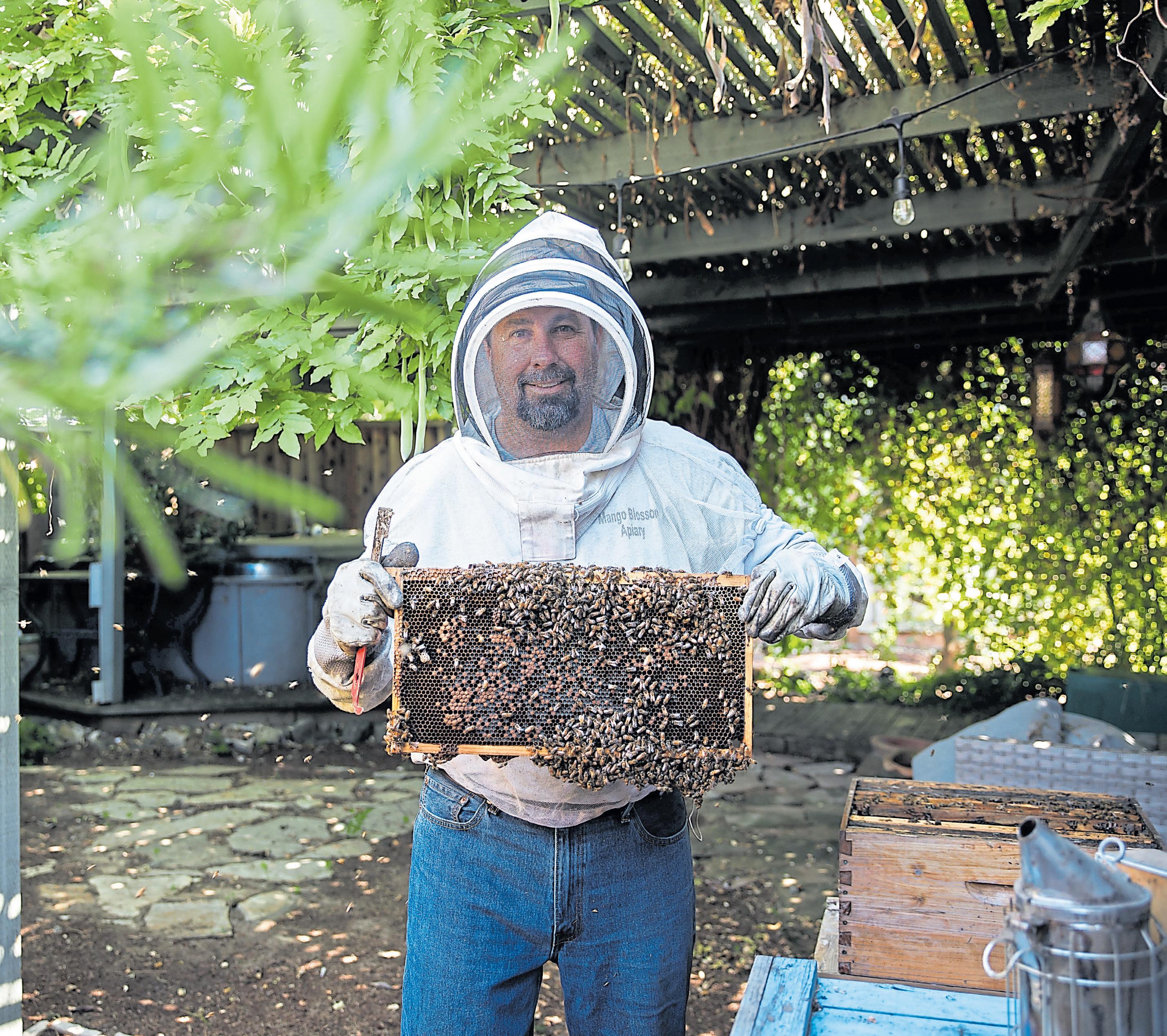
Beekeeper Bryan Godfrey, owner of Mango Blossom Apiary, holds a cluster of honeybees on a hive frame in his backyard in San Jose. DAI SUGANO/STAFF
illness, said Kelly Knapp, owner of Brentwood-based Miss Bee Haven Honey.
“There’s just a lot of minerals and there’s vitamin Bs and antioxidants in honey that are really good for you,” Knapp said.
Miss Bee Haven Honey sells its bee products at farmers markets across the East Bay — from honey and beeswax candles to chapstick and herbal balms to treat rashes and wounds. The business also offers seasonal products such as infused honey and soap varieties.
Over the course of the first summer that she started beekeeping, Knapp acquired 18 hives, she said. Within three years, she had started selling her honey at a local farmers market in Brentwood while also being a mom and working part-time for a school district. Her business has now grown to have 450 hives.
“I loved it, I loved the bees, and so I slowly just started doing honey and honeycomb, and then I slowly built up my products into what it is today,” Knapp said.
Knapp took the plunge and quit her job about eight years ago to beekeep and sell honey full-time, she said. Many of her honeys are fruit-based, as her bees pollinate the fields of local crops such as cherries, apricots and peaches.
Because of California’s climate, beekeepers are able to harvest honey from local bees from April all the way through October, depending on the weather, said Knapp.
“Here in California, we’re pretty lucky,” she said. “I’ve been doing it so long that I know where the honey is really good and the bees stay healthy. (The
flavors) all just depend on the flowers that are in bloom and what time of year it is.”
Khaled
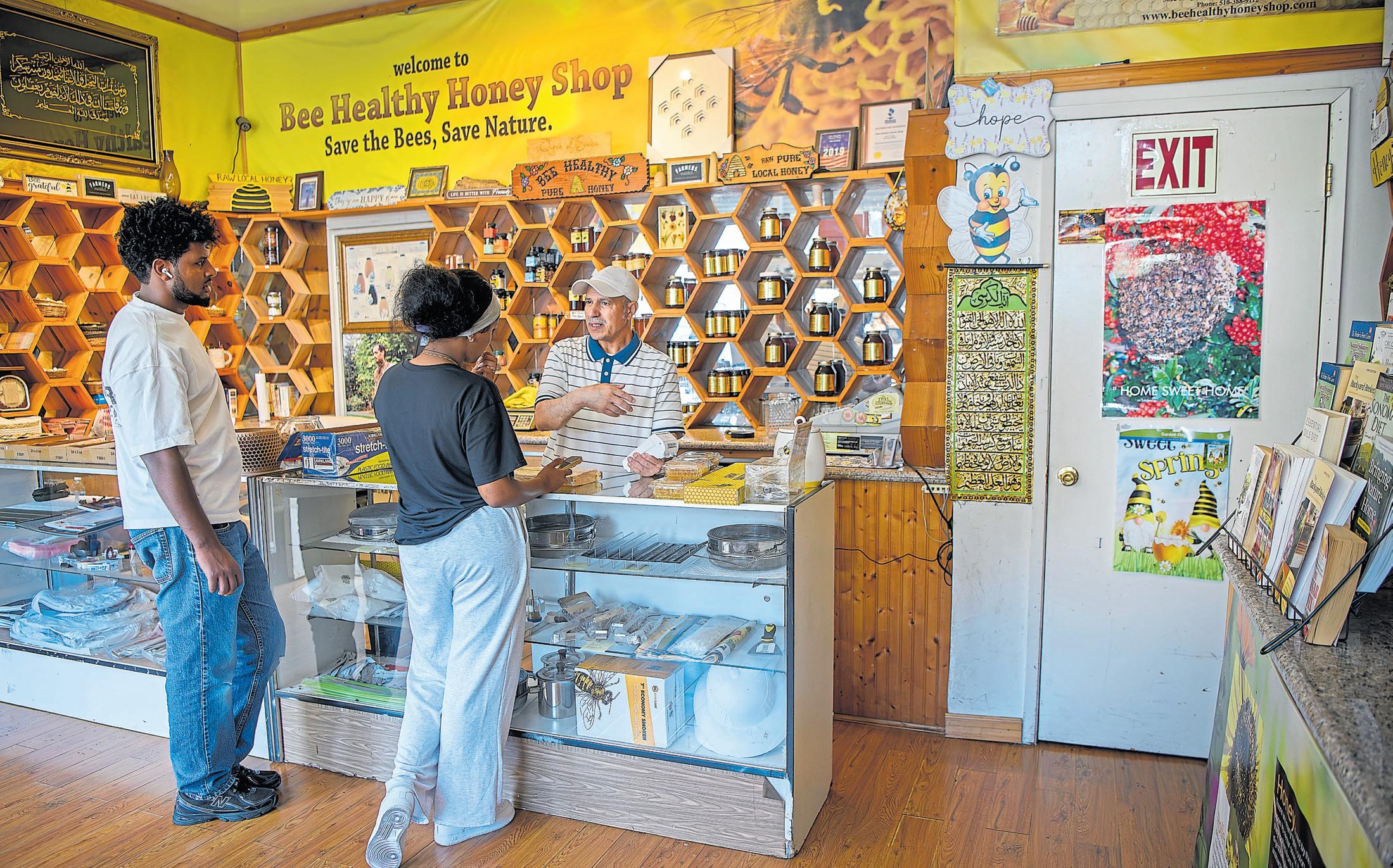
Almaghafi is a third-generation beekeeper who brought his skills to the United States after learning from his father in Yemen. Almaghafi came to the United States in 1986 and started working with bees professionally just one year later. Now he owns Bee Healthy Honey Shop in Oakland, where he sells a number of varieties, including Yemeni Sidr honey, which is produced from bees who pollinate the Sidr tree in desert regions of Yemen. Almaghafi, who also removes
bee swarms from houses and takes them around the region to pollinate, takes his honey offerings to Bay Area farmers markets as well, he said.
“It started from childhood,” he said. “Slowly, I got into beekeeping until it became a good habit. I cannot live without them.”
After his restaurant shut down during the COVID-19 pandemic, Bryan Godfrey, owner of San Jose’s Mango Blossom Apiary, decided to turn what had been a hobby into his job. He got started by placing hives in the backyards of his neighbors. After his first season of overseeing the bees, he began making honey, and shortly
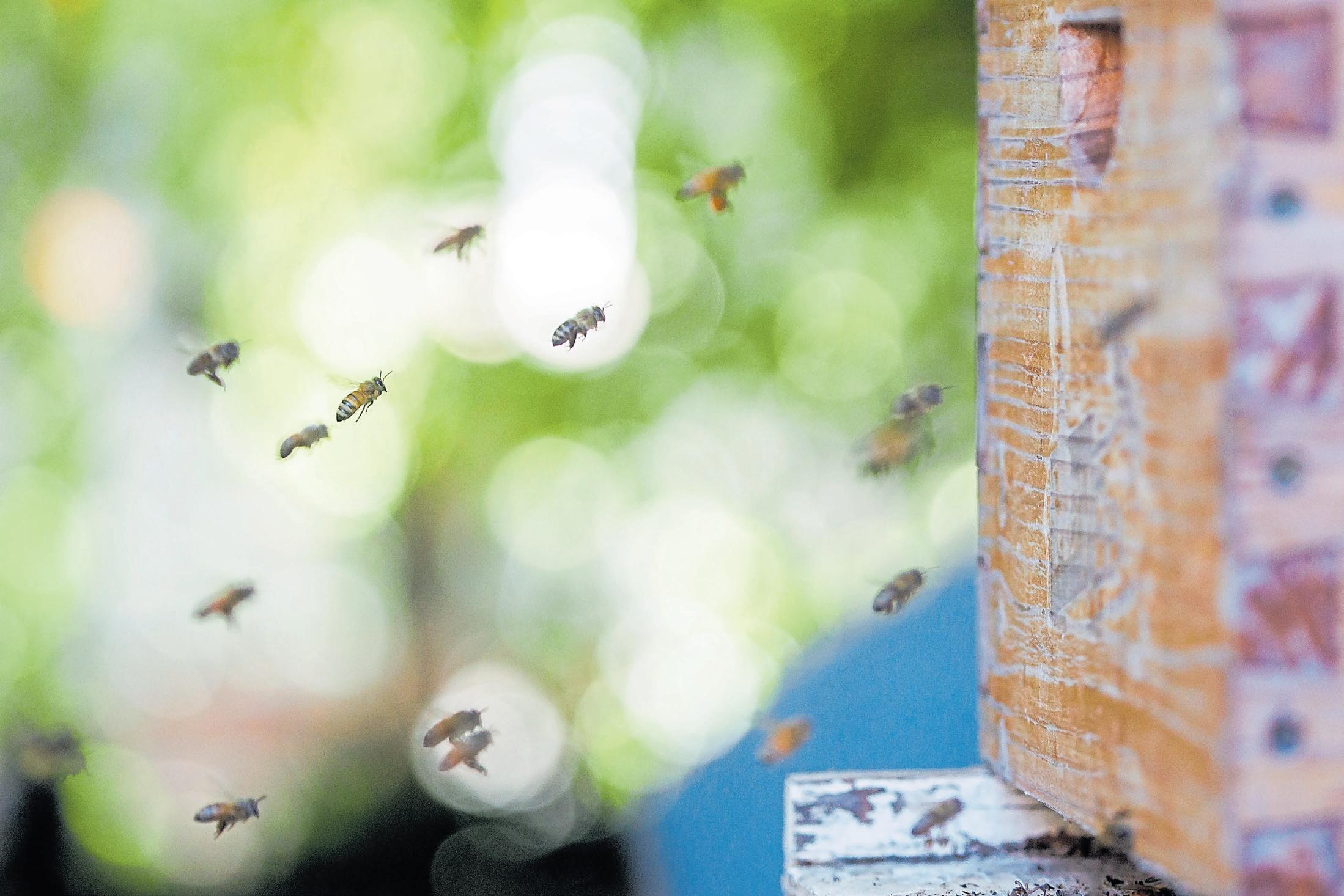
Above: Bees fly around a hive in the backyard of beekeeper Bryan Godfrey in San Jose.
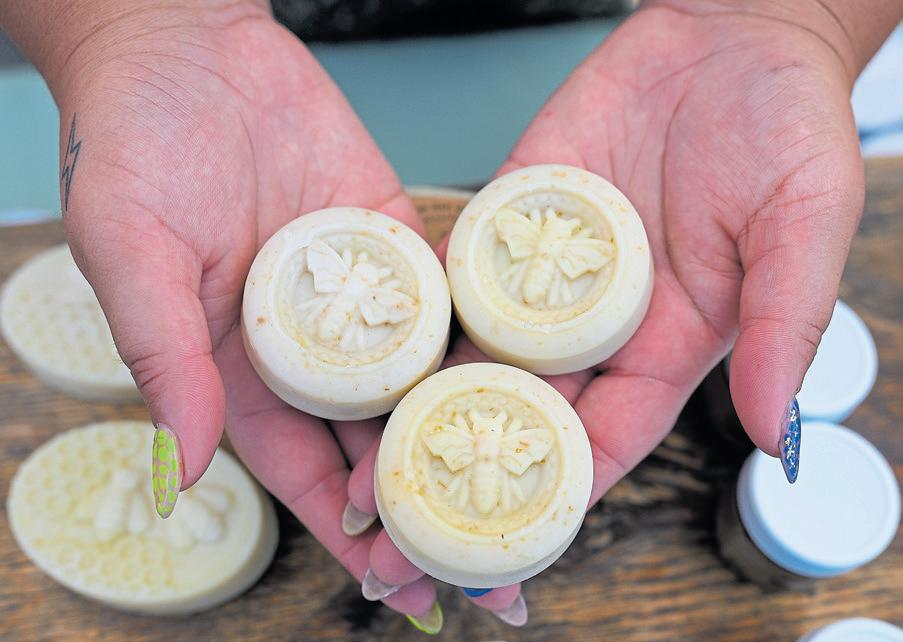
Below: Miss Bee Haven Honey employee Karlee Rosalez holds a handful of honey oat soaps sold at their booth at the Martinez Farmers Market.
DAI SUGANO, JOSE CARLOS FAJARDO/STAFF
later, he started to sell it out of a stand he set up in a nearby park, he said. His company now employs 18 people. Mango Blossom Apiary honey is available at farmers markets, festivals and other events across the Bay Area, selling at more than a dozen farmers markets per week.
As an urban beekeeper, Godfrey keeps bees in backyards across San Jose and surrounding cities — even on the roof of the Four Seasons Hotel in East Palo Alto. Some bees pollinate the fields of a farm in Gilroy as well, he said.
Godfrey calls the hobby “the craziest thing in the whole world.” “I equate beekeeping to scuba diving. It’s doing something that is so incredibly unnat-
Sweet Serendipity Honey
San Leandro
See sweetserendipityhoney.com for ordering information
See missbeehoney.com for products and farmers market schedule
Mike & Niki’s Honey
3495 S. Bascom Ave., Campbell
Also available at the Gate 26 gift shop in San Jose Mineta International Airport; mikeandnikishoney.com
Mango Blossom Apiary
5330 Mango Blossom Court, San Jose mangoblossomapiary.com
ural. Being in a bunch of bees, where your whole life you’ve been swatting them, scared of them, you’d run your car off the road if a bee got in your car. And to be in that environment where you know you’re not going to get stung and you just kind of listen and you’re looking.”
He notes that bees have a positive impact on the environments they are in, pollinating native flora and allowing nearby yards and plants to flourish. They typically prefer to stay within a mile of their hive, although they will travel as far as five miles away.
“They’re just out foraging,” Godfrey said. “Everything just goes bonkers when you have more pollinators, because so many things need to be
pollinated.”
Campbell residents Niki Canotas and Mike Ryan also started beekeeping as a hobby before founding Mike & Niki’s Honey Company.
“His mother trudged over 40-year-old bee equipment,” Canotas said. “We got one hive and then three hives and then two farms and then three farms, and then we just decided it was starting to build. We thought we’d do more, because everyone wanted our honey.”
Mike & Niki’s Honey sells a wide range of offerings, from local honeys and bee propolis to flavored options like hot honey. Sizes range from two-ounce honey bears to 50-pound buckets. The local company produces more than 92 varieties of honey from the flora of different neighborhoods.
It also offers 90-minute “bee experiences,” where people, including children 6 and older, can suit up as beekeepers to tour the hives and see the queen bee. These experiences cost $50 per person for a small group, $45 per person for a large group or $150 for a private session for one to two people.
Whether sold online, from a beekeeper’s front door or at local shops and farmers markets, options abound to experience the benefits of local honey in the Bay Area.
“I tell people all the time, ‘I don’t care if you buy honey from me or not, but always buy it from a local beekeeper,’” said Godfrey.
On every label of his Mango Blossom Apiary products, he asks the question: “How do you know it’s pure honey if you don’t know the beekeeper?”
Mohammed Alkharbi speaks to customers purchasing honeybee supplies at Bee Healthy Honey Shop in Oakland. JOSE CARLOS FAJARDO/STAFF
How Contra Costa County woodworker Joseph Brody found national renown handcrafting kitchen utensils
Spoon-fed success
BY MARTHA ROSS
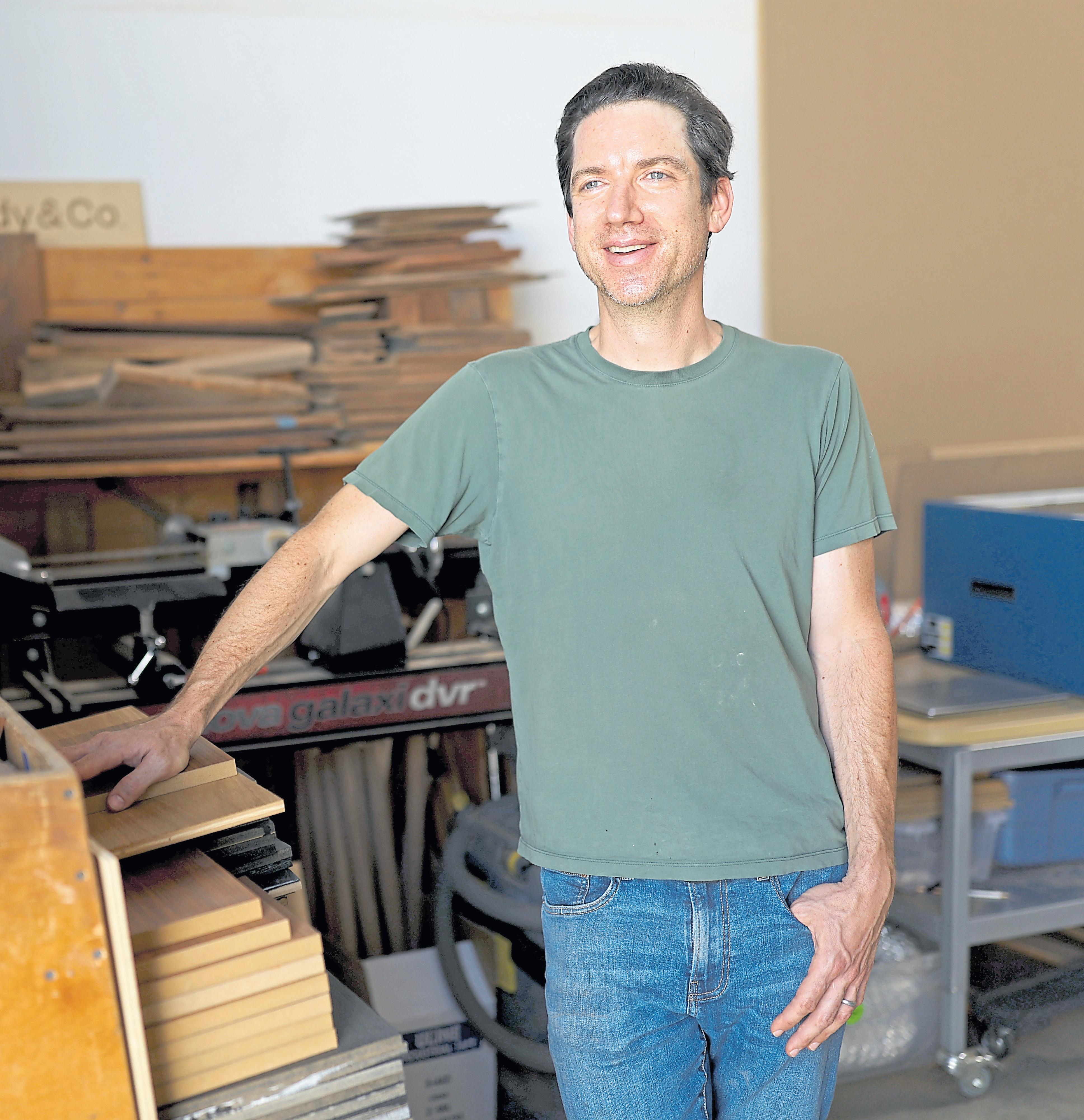
When Joseph Brody was building wooden beehives as a Peace Corps volunteer in West Africa after college, he couldn’t have predicted how that early-2000s experience would influence the course of his life years later.
In 2016, the Contra Costa County husband and father left his corporate job at Restoration Hardware to go to a master craftsman’s school in Maine and learn to make furniture. He returned to the Bay Area to launch JBrody & Co, his own custom woodworking business, out of his Walnut Creek garage.
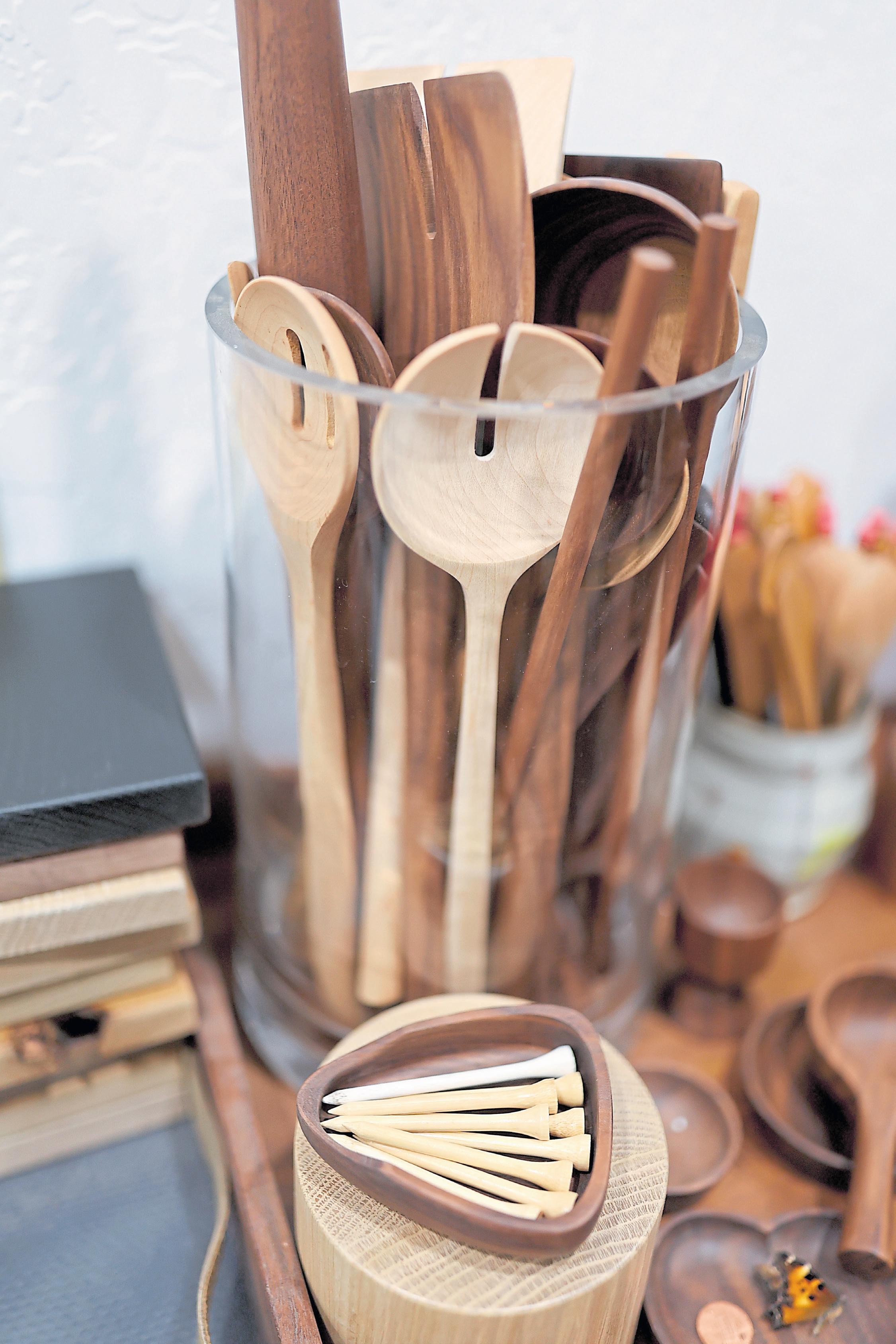
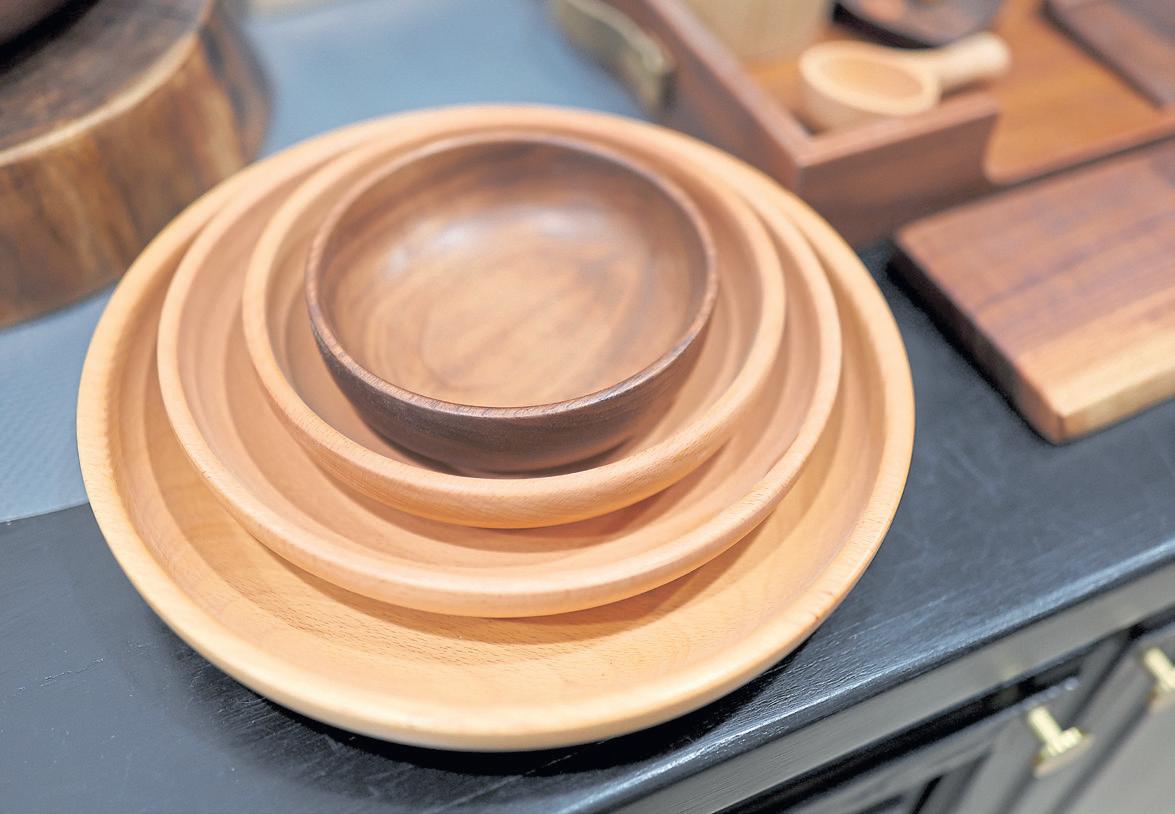
Brody has since moved to a larger workshop in an industrial space in Concord while gaining a national following for making smaller items — beautiful, hand-crafted walnut-wood bowls, trays, spoons and other utensils for cooking and serving food. He’s a regular at craft fairs in the Bay Area and beyond, and his pieces are sold in more than 500 independent stores around the country, including
Joseph Brody, right, learned woodworking from his grandfather Joseph, for whom he was named.
JANE TYSKA/STAFF
museum gift shops at the de Young and the Museum of Modern Art in San Francisco.
Brody’s designs are valued for their simplicity and quality. The attention he pays to each spoon or spatula comes through in every part of his process, including one that originates from learning to build those beehives in the Republic of The Gambia. He makes sure each piece leaves with a finish he has mixed himself, using wax from home beehives. He also uses wax that comes from hives belonging to friends he’s met through the Mount Diablo Beekeepers Association.
“You take that wax and melt that down in a double boiler with walnut oil and coconut oil, and then you can make a nice finish,” he says.
The nontoxic finish seals off pores in the wood, protects it from damage and deepens its natural, rich color.
Using his own wax serves other purposes as well. It helps reduce waste and is part of his emphasis on using as many locally sourced materials as possible. He believes that craftsmanship is a fundamentally human endeavor that supports community and sees the modern woodworker’s role as akin to the village carpenter 200 years ago. “Someone would come to me and say, ‘Make me a table, make me a spoon,’” he says. “You’re working directly with local materials and with local people. There’s an immediacy to it.”
When companies stopped opening new offices during the pandemic, a lot of Joseph Brody’s commercial work dried up. Brody switched to making smaller things like kitchen utensils and golf tees.
JANE TYSKA/STAFF
Brody’s journey as a woodworker actually began much sooner than Africa. Raised in Connecticut, he learned the “magic of creation,” as he says, during boyhood visits with his grandfather, who lived in Indiana. His grandfather had a day job as a mechanical engineer for General Motors but was a woodworker in his free time. He encouraged Brody to build things: a playhouse, for instance, or shelves for the garage.
“It was always kind of magical to spend time with him, and it just opened my eyes to (the idea that) if you need something, you can just make it; you don’t need to go buy everything.”
But when he was growing up, woodworking was considered “blue-collar,” and a college-bound Brody couldn’t imagine it being a future livelihood. Always interested in seeing the world and serving
Woodworker
Joseph Brody, above, learned the “magic of creation” from his grandfather, who was a woodworker in his free time.
JOSE CARLOS FAJARDO/STAFF
other people, he studied Mandarin and international affairs at the University of Puget Sound, then volunteered for the Peace Corps.
After his time in Africa, he briefly worked for a textile importer in New York, then spent 10 years living and working in China in product development and manufacturing. That’s where he met his wife, Helen. A job at Restoration Hardware’s corporate headquarters in Marin County allowed the two of them to move back to the United States and start a family.
But sitting in an office all day and helping to develop the furniture and other products being sold didn’t satisfy his growing desire “to be the one making the things.” But he worried about his responsibilities.
“You know, our daughter was 2 years old; we had a mortgage and
all this kind of stuff,” he says.
Then one night in bed, Brody was reading a memoir by Peter Korn, a master craftsman, furniture maker and founder of the Maine-based Center for Furniture Craftsmanship. The book explains why craftsmanship can be deeply fulfilling. As Korn said, working with one’s hands to build even a cabinet door — choosing the materials, directly using the tools and striving for quality — can be a way to design “a vision of the good life.”
Brody recalls his wife urging him to “just do it.”
“She was like, ‘Don’t be lying in bed in 10 years and be like, ‘Oh, I should’ve done this, I should’ve done that,’” he says.
Together, they took what he describes as a “leap,” with the family moving to Maine for nine months so he could study at Korn’s school. When he returned to Walnut Creek, Brody’s Restoration Hardware contacts helped him get commercial furniture-making commissions, including building a 27-foot-long conference table for an office at the top of Salesforce Tower in San Francisco.
But a lot of Brody’s commercial work dried up during the pandemic, when companies stopped opening new offices. So he switched to making smaller things, like his spoons. He learned to refine his process so that he could hand-produce them in greater quantities, and he quickly learned how to get his products noticed at fairs and in larger trade shows.
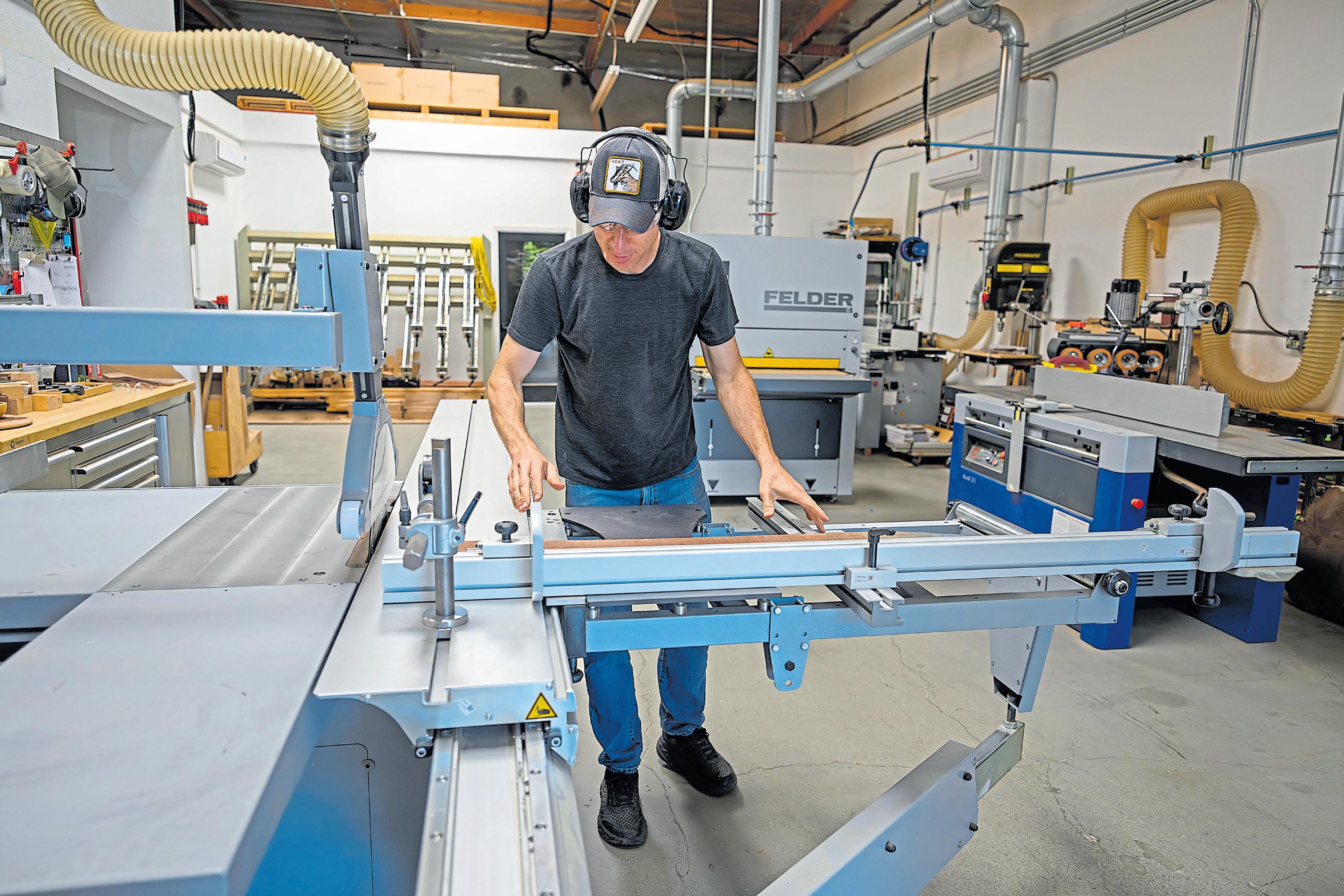
Moving into his 2,500-squarefoot workshop off Highway 4 about five years ago gave Brody
the space for industrial-sized saws and lathes to produce up to 10,000 pieces a year. He still builds chairs, tables and bar stools for commercial clients, some of which are on display in a small showroom next to his workshop.
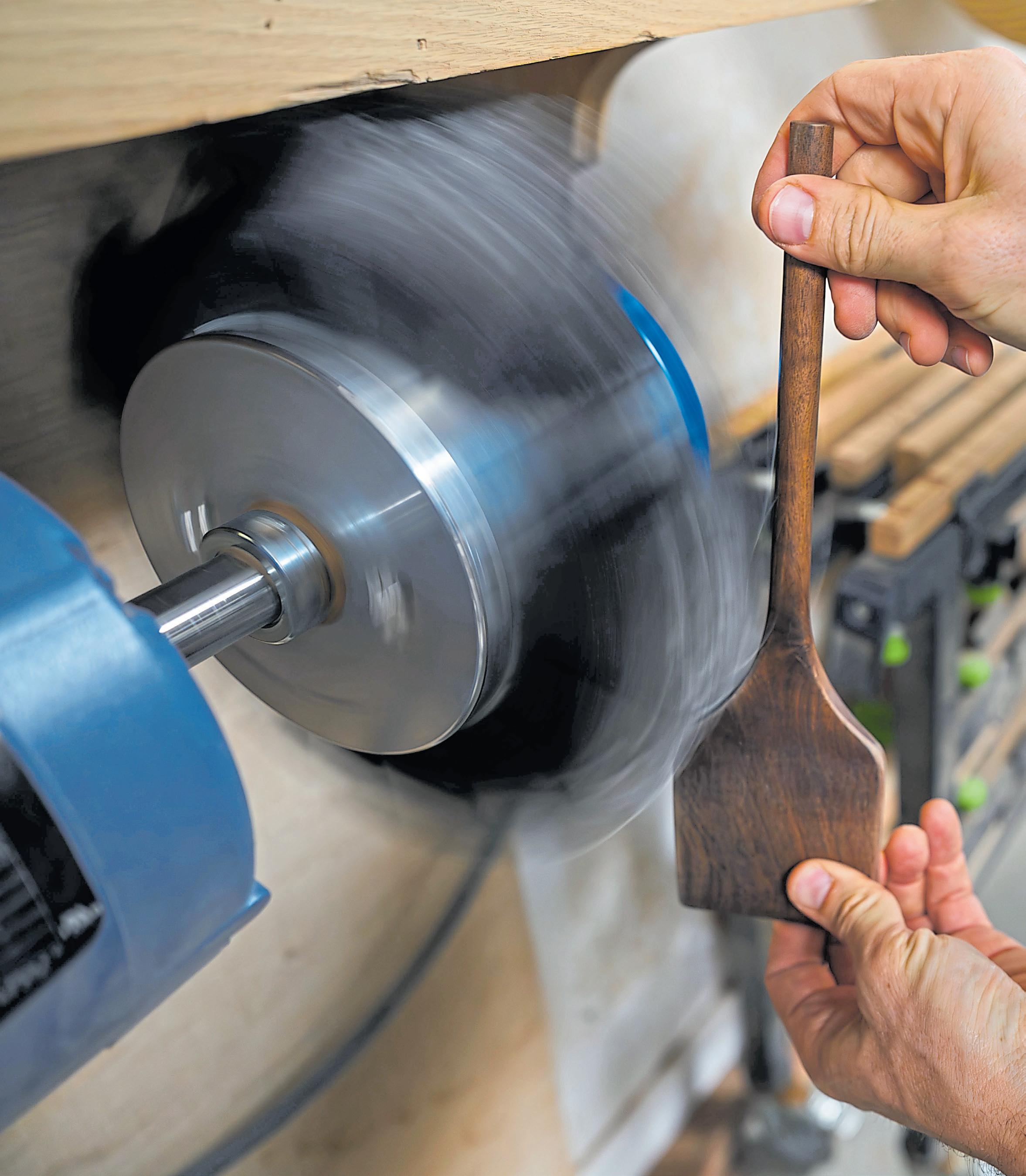
Even with the machines, a lot of his own handiwork goes into producing each piece. Using a bandsaw, Brody will cut out each spoon, one by one, from a block of wood and use the drill press to hollow out the bowl.
“Yeah, it’s labor intensive,” he says. “You have to do a lot and be fast. People who have a hobby of carving spoons may be able to do more by hand, but to make a living, you have to be thinking about every single part of the process and how you can be
more efficient.”
To keep the income steady, Brody works seven days a week, and he puts in time at craft fairs pretty much every weekend. But going to the fairs has become one of the most gratifying parts of being a craftsman, he says — having that human connection to his customers, like the village carpenter of 200 years ago.
For one thing, he gets valuable feedback, such as hearing that people want a curved spoon for wok cooking. But more than that, he gets to meet people who actually use what he makes.
“People come back and say, ‘I got this last time, I really love it, I’ve been using it, (it’s) my favorite spoon,’” he says. “It’s kind of how things should be, in my mind.”
Woodworker Joseph Brody polishes a spatula, left, in his workshop.
Brody is regular at craft fairs in the Bay Area and beyond. Pieces like his wood bowls are sold in more than 500 independent stores around the country, including museum gift shops in San Francisco.
JOSE CARLOS FAJARDO, JANE TYSKA/STAFF
Curators
ofAnno Domini founders have been supporting and connecting creators in San Jose’s art scene for more than two decades
BY SAL PIZARRO
I t may be I mpossI ble to know how many artists and art lovers have been brought together over the past 20-plus years at the monthly First Fridays art walks in downtown San Jose or the massive SubZERO fest every June.
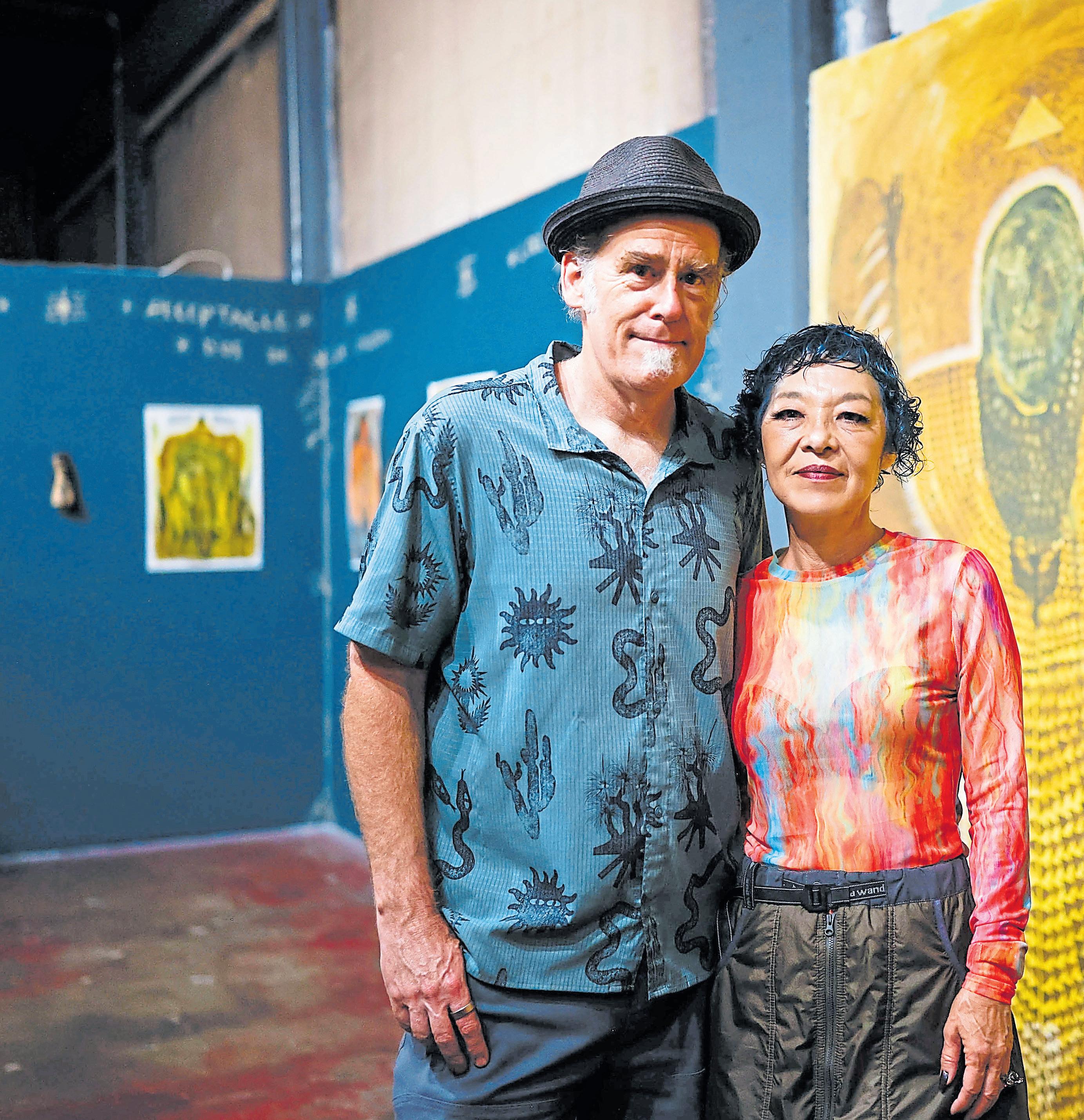
But while the cultural scene that has developed over those two decades includes countless muralists, zine creators, metal workers, painters, poets and postcard designers, it all started with two people: Anno Domini founders Cherri Lakey and Brian Eder.
“Our role is not lost on us,” Eder said, “We’re here to help artists do all this.”
Ironically, neither Lakey nor Eder consider themselves artists, but their creativity shines as the curators of cool in downtown San Jose. Putting together a monthly art walk — one that survived a pandemic and grew to the point that
SHAE
Brian Eder and Cherri Lakey own Anno Domini gallery in downtown San Jose.
HAMMOND/STAFF
its original name, South First Fridays, was geographically limiting — is no small feat. Coupling that with a two-day summer street fair that brings out not just artists but bands, artisan designers, vinyl record hounds and caricaturists is a work of art all its own.
The Anno Domini origin story certainly doesn’t follow a straight line — it’s more like a Moebius strip. It started in downtown San Jose’s storied Cactus Club, where Lakey and Eder first met, heads up to Portland, Oregon, where she moved, and then back to Mountain View, where they lived together above a welder in a converted warehouse near a Tower Records and a coffee shop, where they first curated artwork.
The pivot point was in San Francisco in the 1990s. They were both working at a prepress house, where Lakey was often transfixed by street art of a man painted on a building along the waterfront. One day, it was painted over with beige squares.
“I was really upset,” said Lakey, who later found out it was street art created by Barry McGee, then going by his moniker Twist. “I didn’t know what it was, but I wanted more of that in my life.”
When they were both let go from their jobs, they made their way to San Jose and opened Anno Domini in a brick warehouse on 150 S. Montgomery St. in 2000. They had no interest in being a gallery that rotated “safe” art on the same crystal white walls every month. Urban contemporary art was their forte.
“There was an activism to it,” Lakey said. “We never called it a gallery. That’s what it was, but we didn’t call it that. It was a place to get together.”
First Thursday openings were an art gallery trend at the time, Lakey said, but it didn’t make sense to them.
“Our friends all had jobs and had to work in the morning,” she said.
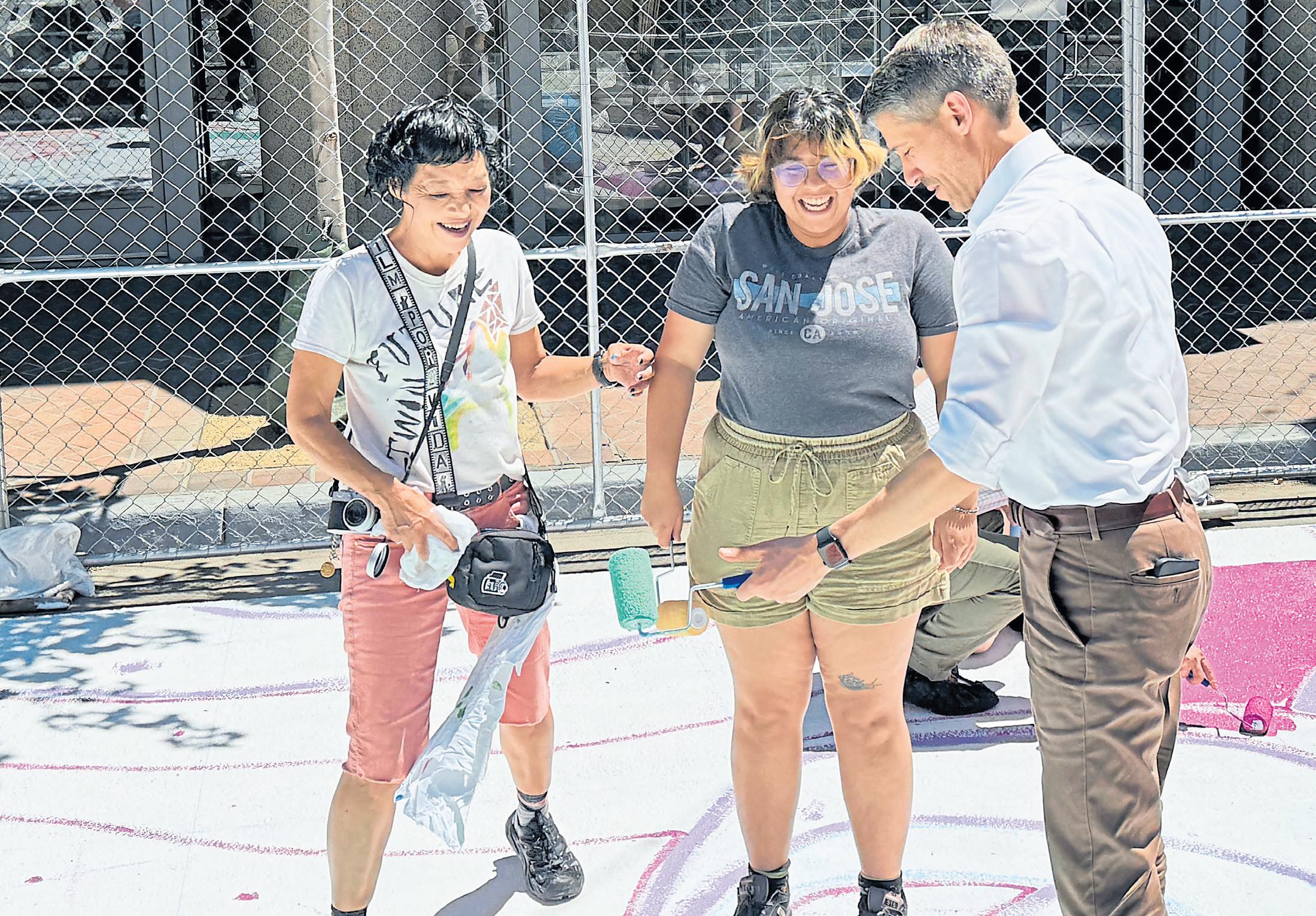
Above: Cherri Lakey shares a laugh with artist Danny Feliz Hanson and San Jose Mayor Matt Mahan while painting a mural on Post Street.
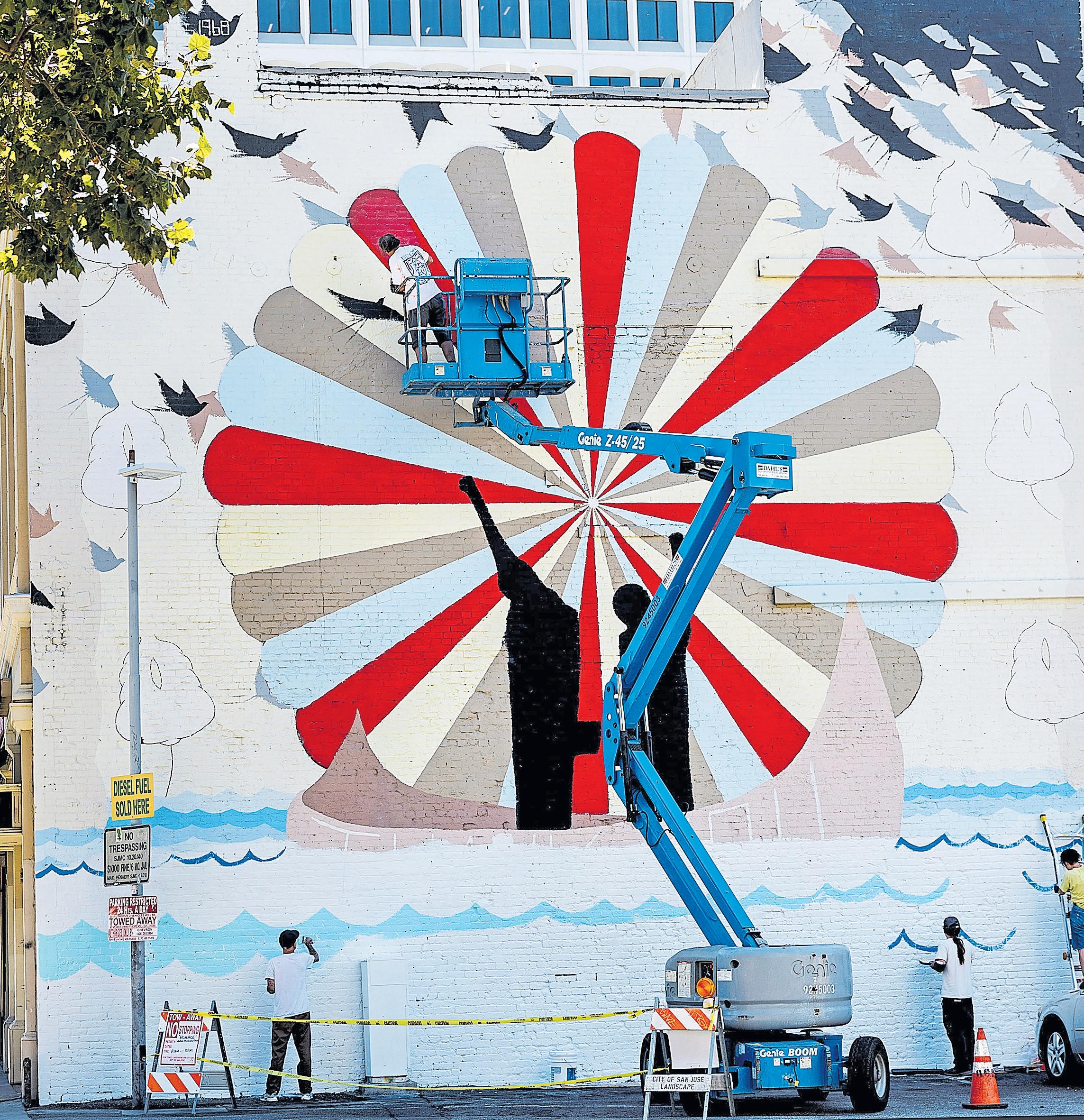
Right: Brian Eder (in the cherry picker) helps restore the “Homage” mural celebrating Olympic sprinters John Carlos and Tommie Smith at Santa Clara and Fourth streets in San Jose in 2024.
SAL PIZARRO, KARL MONDON/ STAFF ARCHIVES
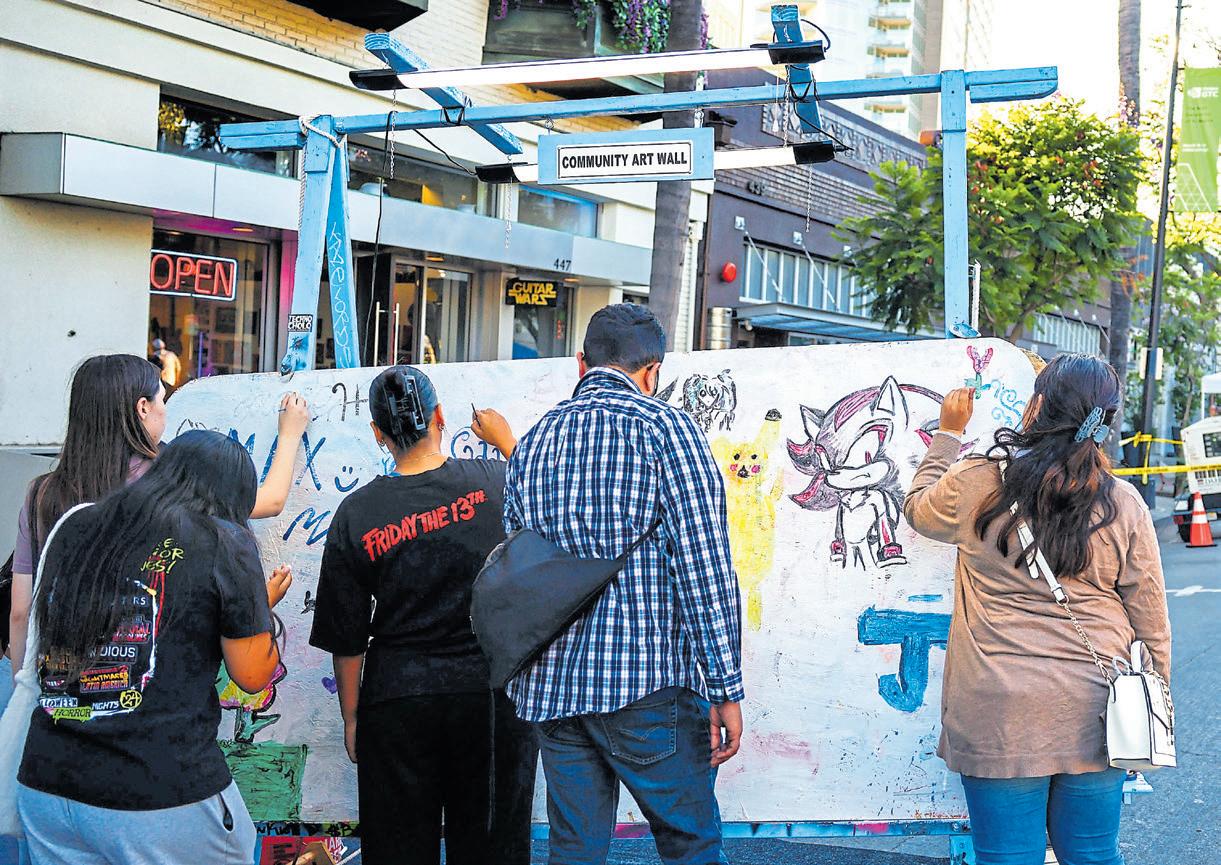
Above: Attendees at the 17th annual SubZERO festival create their own art on the Community Art Wall in downtown San Jose.
SHAE HAMMOND/STAFF
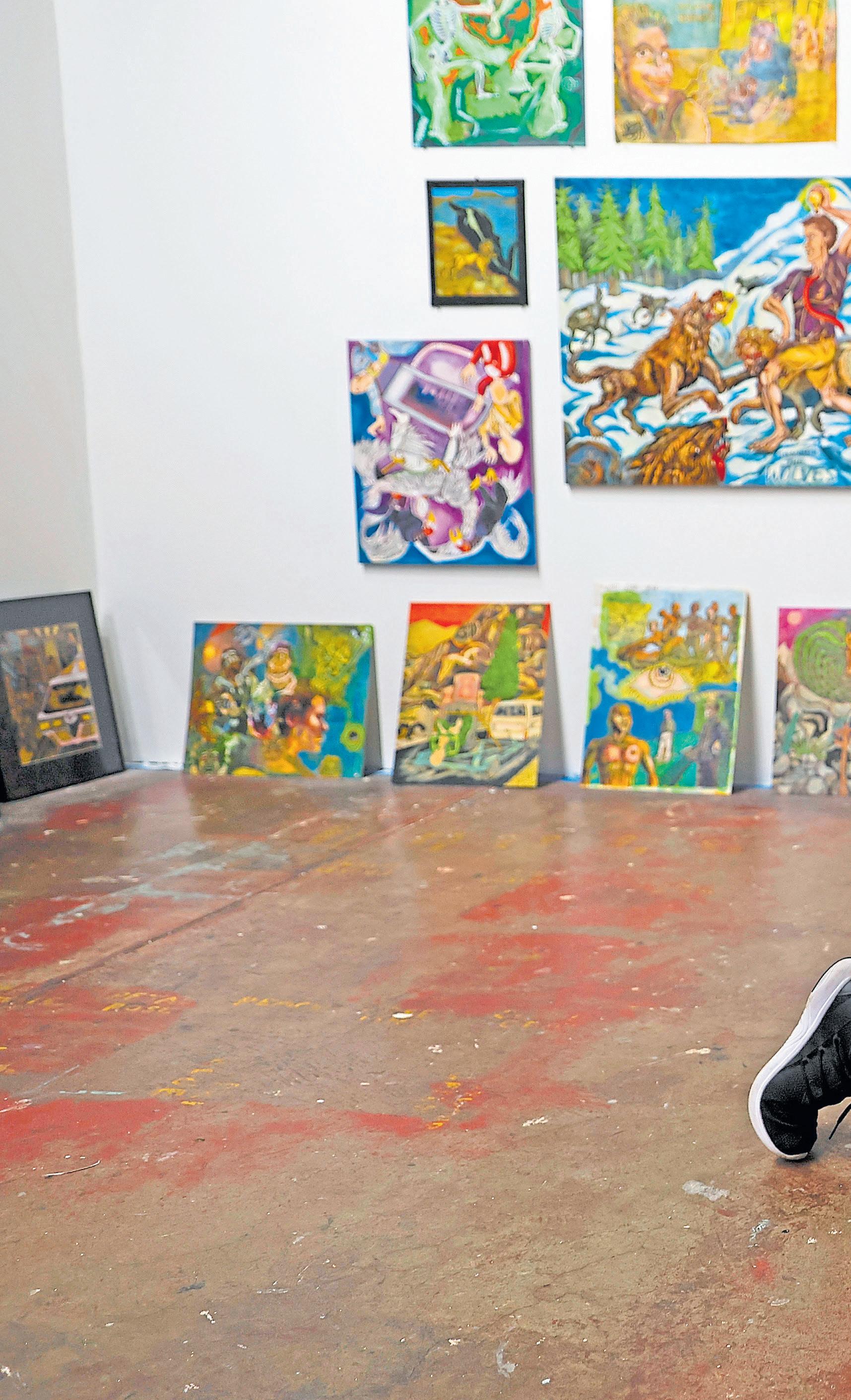
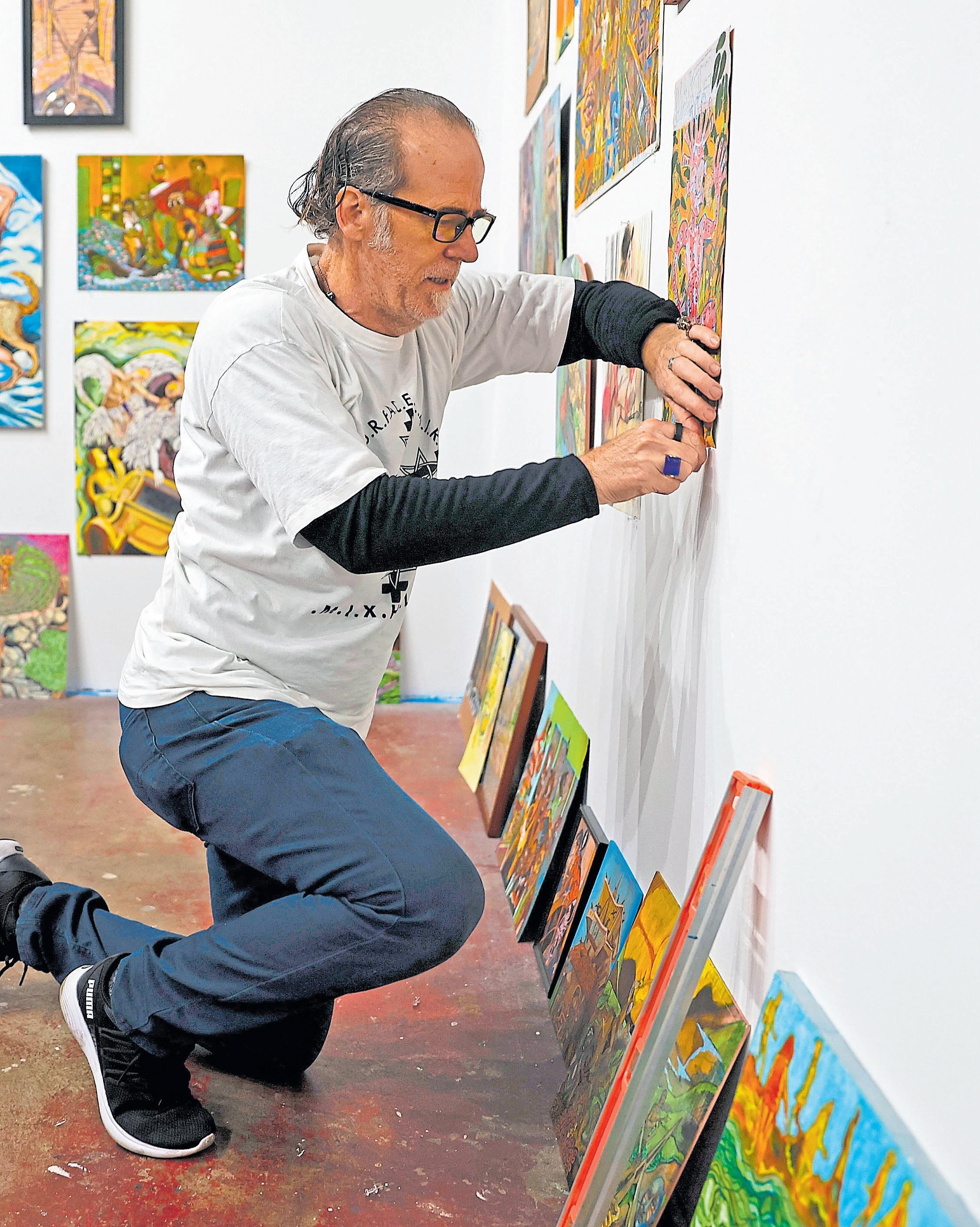
Right: Brian Eder, co-owner at Anno Domini gallery, hangs a painting by Zack Luchetti for a tribute exhibition called “Illuminate the Wolves” in 2023.
NHAT V. MEYER/STAFF ARCHIVES
Cherri Lakey gestures toward the mural entitled “Phylum of the Free” by Jeffrey Andrade in Fountain Alley in downtown San Jose in 2015. Lakey, curator with Anno Domini gallery, helped with the mural.
NHAT V. MEYER/STAFF ARCHIVES
Instead, they held their openings on the first Friday of the month, when they could stay up late and not worry about an alarm clock the next morning. In a fairly abandoned part of town near Diridon Station, they were quietly rebuilding the counterculture in a city where it seemed to have died — even if they didn’t realize it.
In October 2005, they moved into the former Camera One theater at 366 S. First St., a one-auditorium movie house known for showing art films. They spent a few months transforming the place before their first opening in February 2006 and realized that there were few places open besides bars where their arty friends could go in the gritty SoFA district on a Friday night. So they called the San Jose Museum of Quilts and Textiles, MACLA and Works/San Jose to see if they would stay open late and offer free admission. They said yes, and South First Fridays was born.
Over the past 20 years, Eder and Lakey have continued to manage the Anno Domini gallery, the First Fridays art walk and the SubZERO festival. They also curated Phantom Galleries, a nomadic art gallery that filled empty spaces downtown, and established Kaleid, a fine art gallery that originally filled an empty space adjacent to San Jose City Hall and has since moved to fill a vacant space in the former Valley Title building just down the block from Anno Domini.
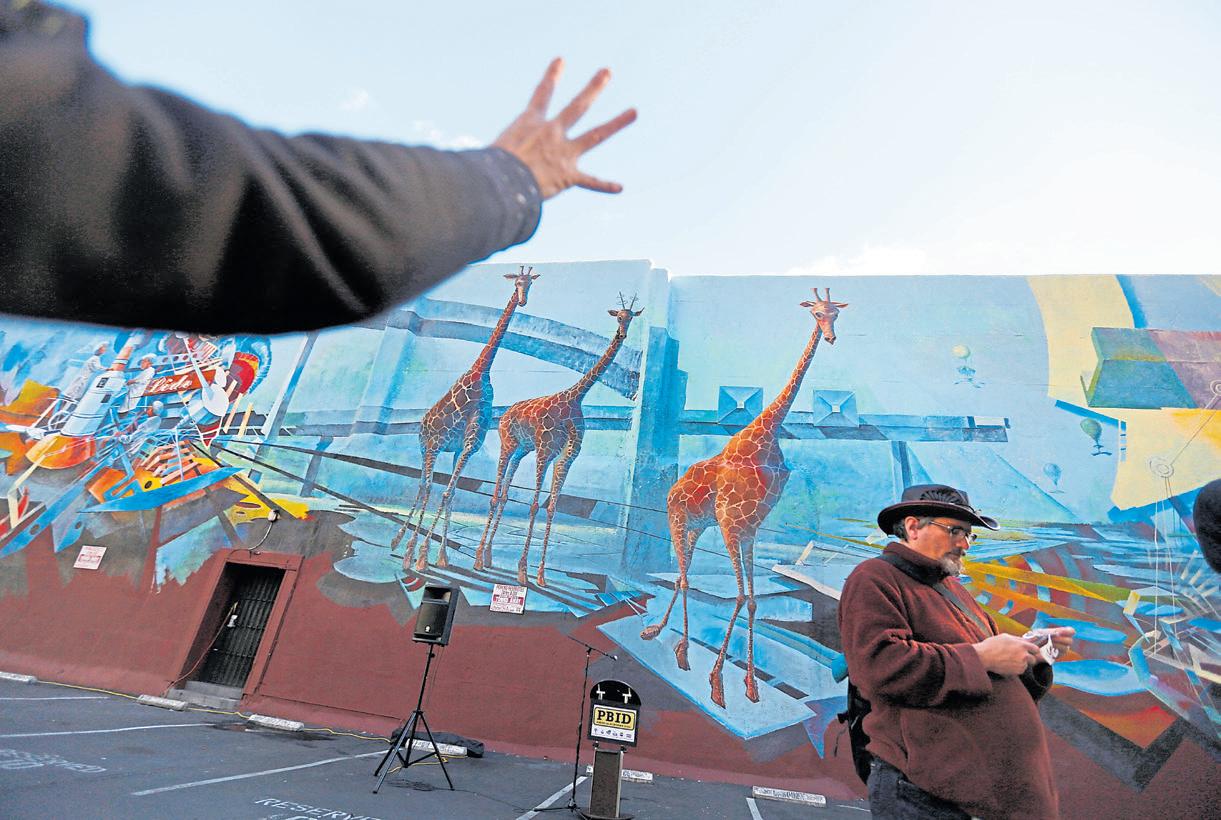
Through their production agency, Curatus, they have helped beautify San Jose’s walls — they were behind both the original “Homage” mural honoring Olympians Tommie Smith and John Carlos and its recent restoration — and its streets. After San Jose turned a portion of downtown’s Post Street into a pedestrian mall, they found artist Danny Feliz Hanson, whose unicorn-themed street mural “Romance” was a colorful fit for the bourgeoning Qmunity district, catering to the city’s LGBTQ scene.
It all adds up to making San Jose a more interesting city than it might have otherwise been. Lakey points out that every city has malls and restaurants, but it needs unique places and events where visitors can find its culture.
“We don’t go to other cities to see what their version of the Gap is.”
Bumper Crop
Bay Area craft producers ride the wave of California olive oil’s success
BY JOHN METCALFE
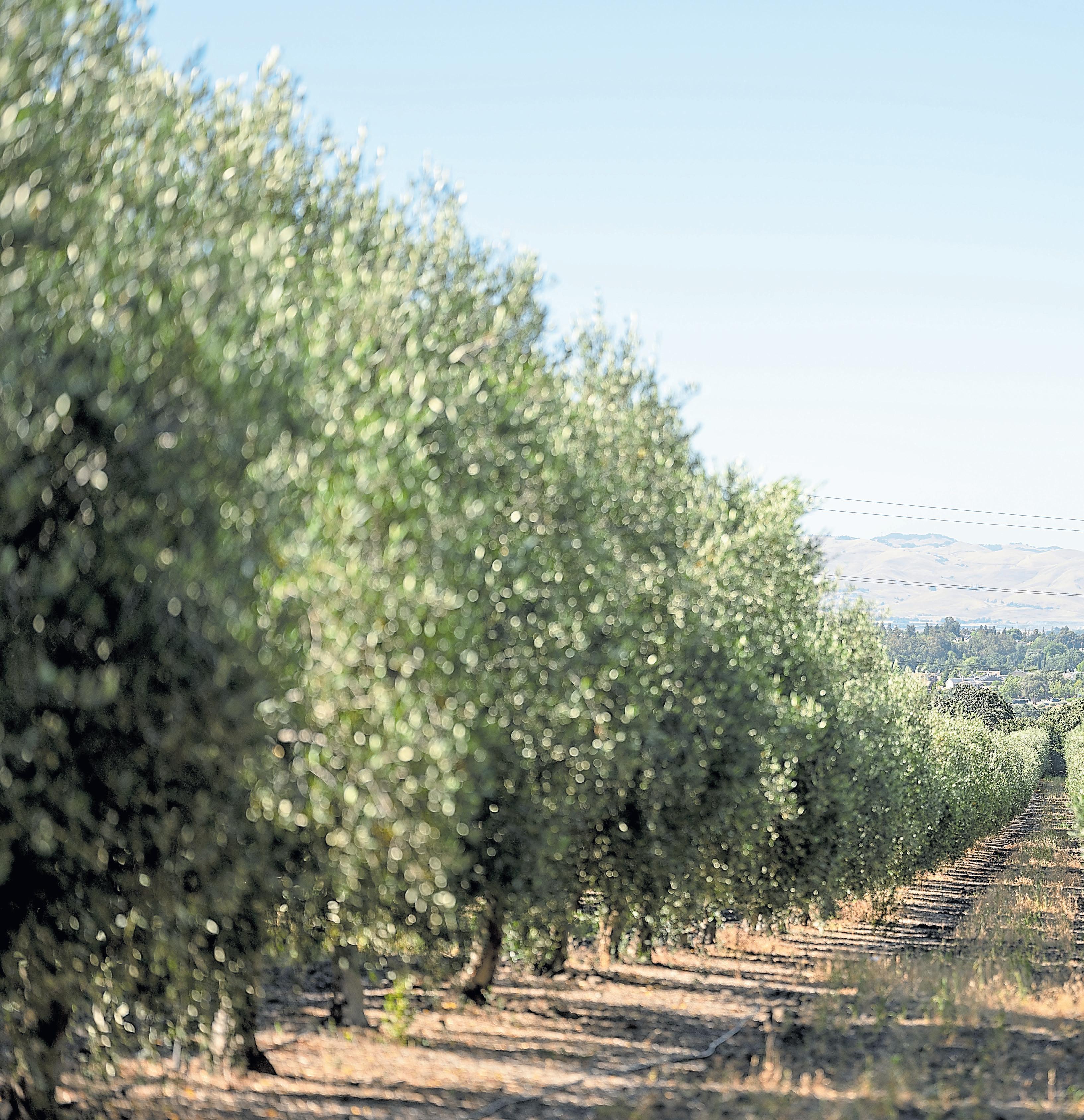
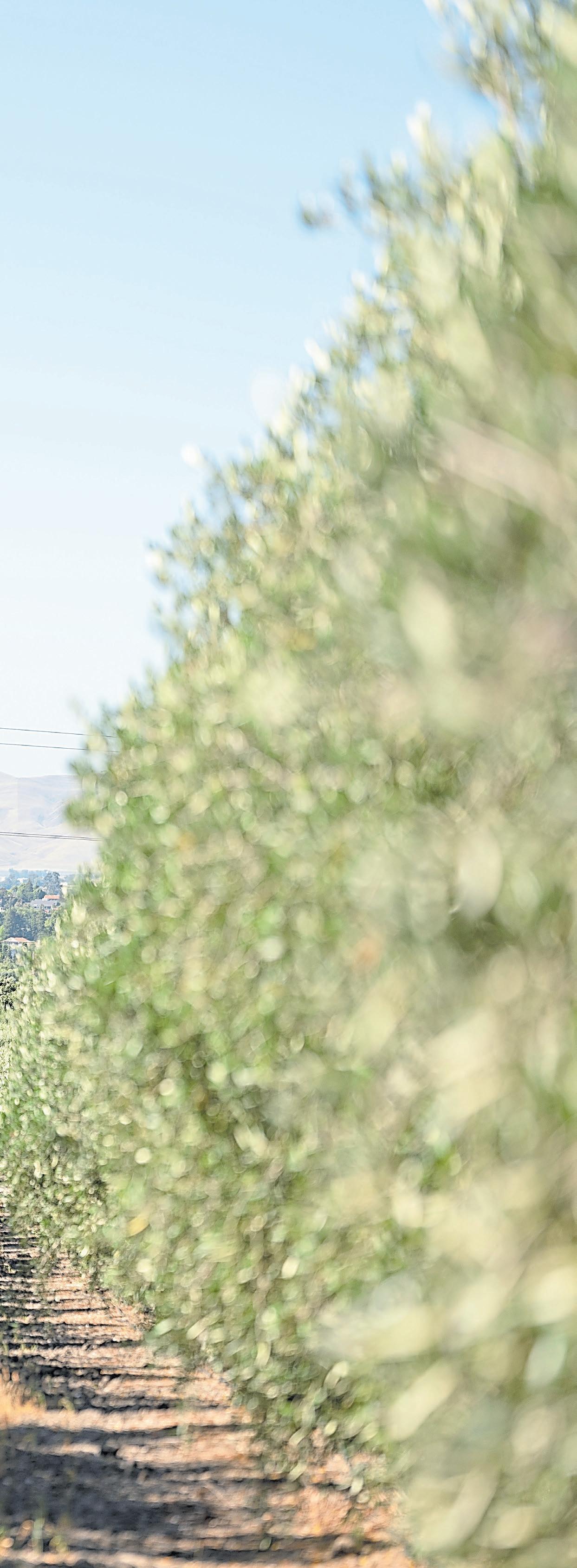
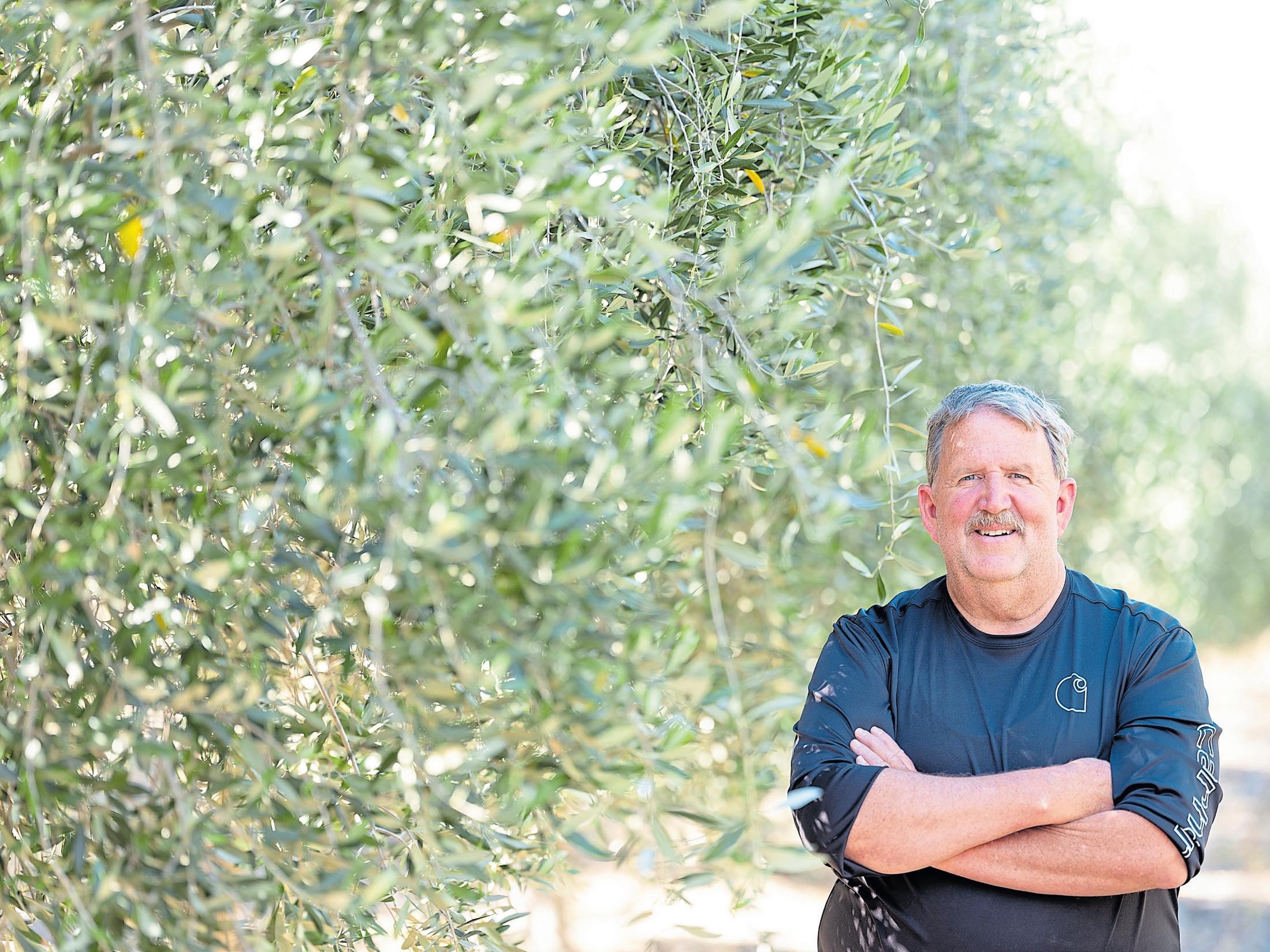
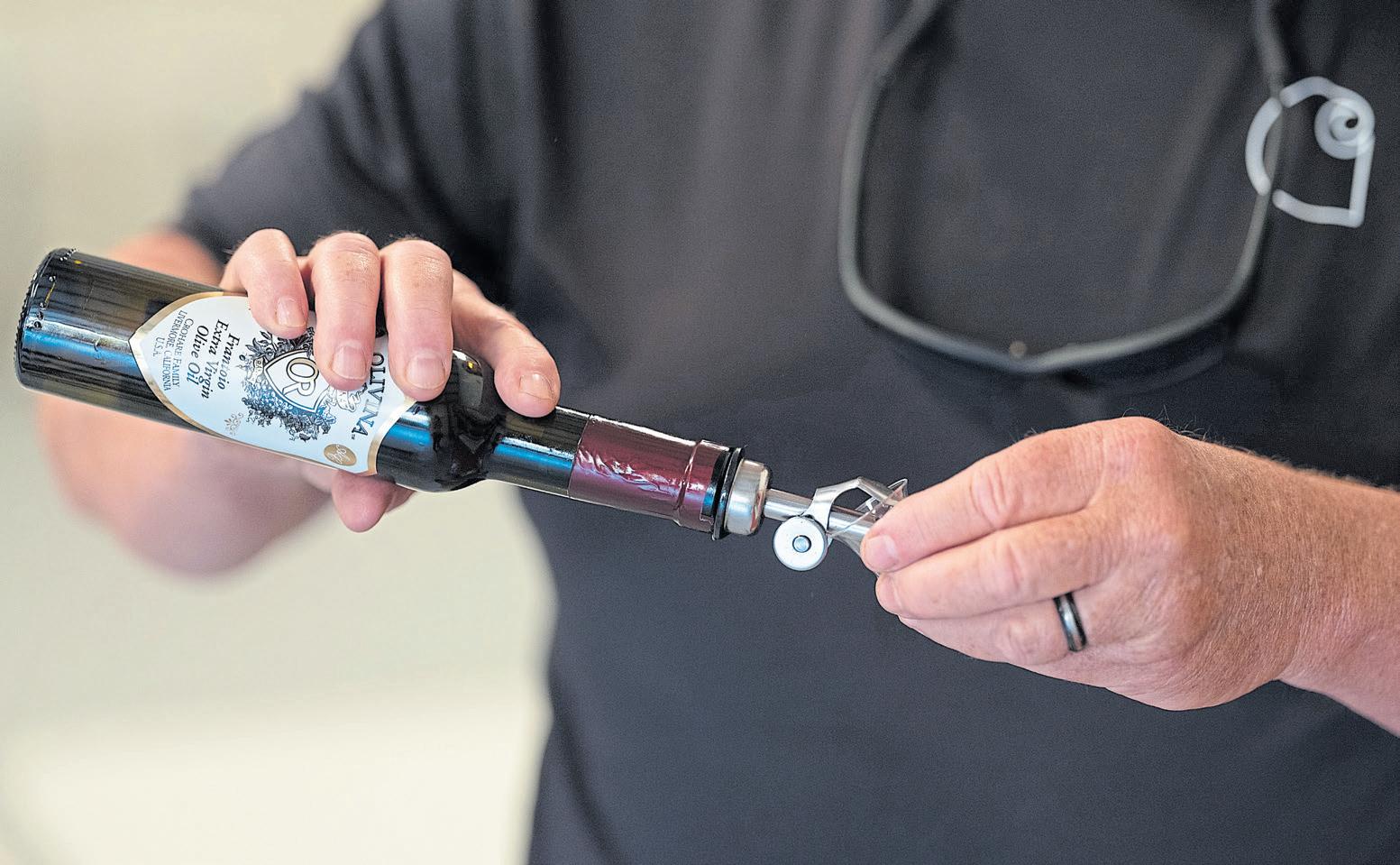
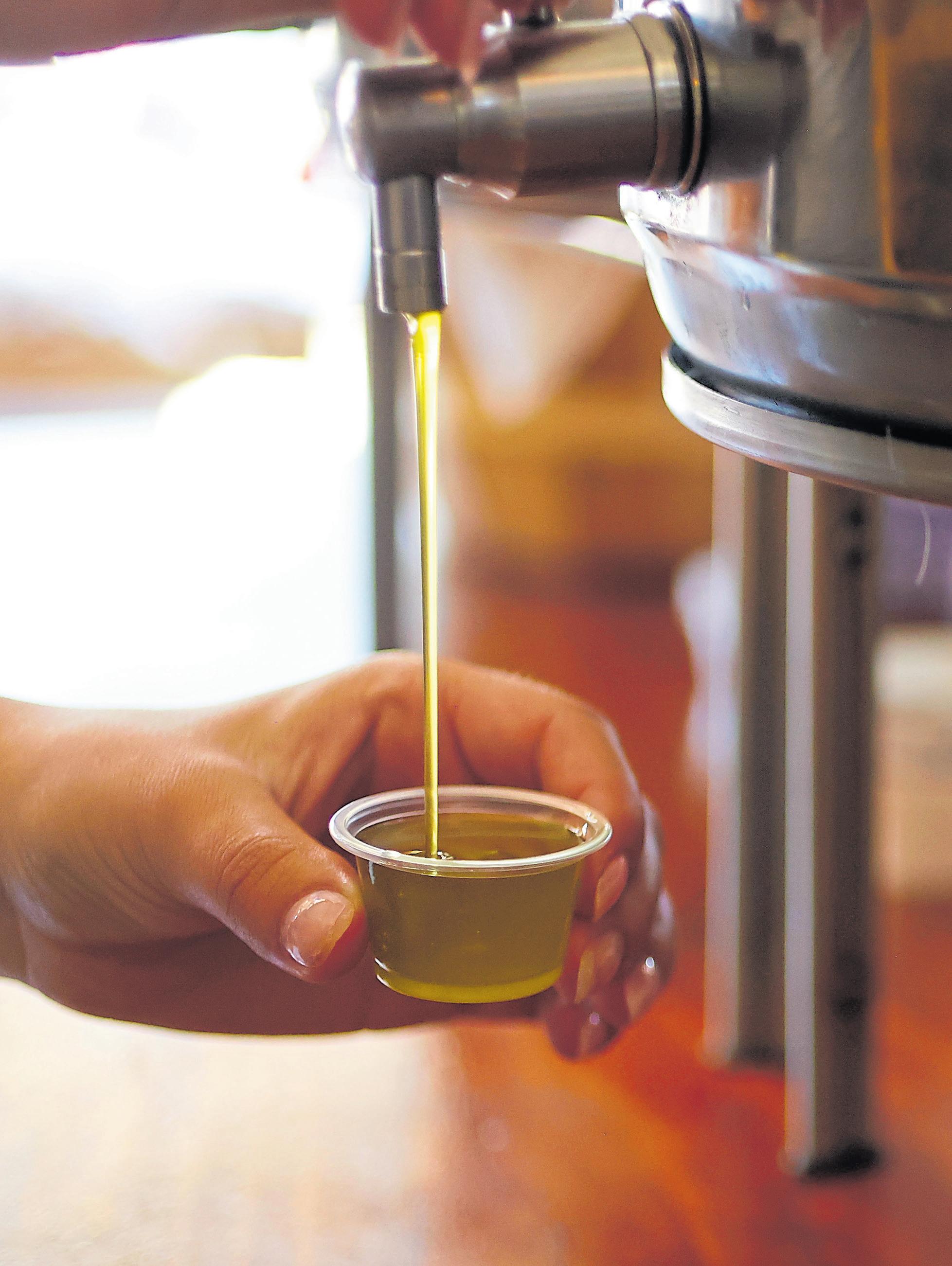
AtLivermore’s Olivina olive estate, where coyotes and squirrels dart among 19th-century olive trees, Charles Crohare is offering guests a tasting of home-milled extra-virgin olive oil.
“This has a nice, sweet nose, pretty buttery on the tongue and in the throat,” he says, proffering a thimble of lily-pad-colored liquid.
“This one has a nutty nose; ‘green’ is how some people describe the aroma,” Crohare says, hoisting another. “It’s peppery on the tongue, calms down, then after a few seconds it’s kind of like ‘krrrrch’” — he makes a throat-clenching sound to mimic the effects of polyphenols, the bioactive compounds in olive oil that carry health benefits but can be pungent.
It’s business as usual for Crohare, who starts each day by downing a shot of olive oil. “It’s super-healthy — maybe not calorie-wise, but I tell people it’s the bread and the pasta that get you,” he says.
Speaking of bread, there’s none in sight. At contemporary tastings, bread is laughably passé. “In the early 2000s, I would ask people to take a sip, and they’d go, ‘No bread?’ I’d say, ‘No, no, you don’t want the texture of the bread. You’re going to feel that going down. Instead, you want just the oil.’ People would say, ‘I’m not ready to do that!’ Well, that’s fine. But you’re not going to be introduced to true, virgin olive oil.”
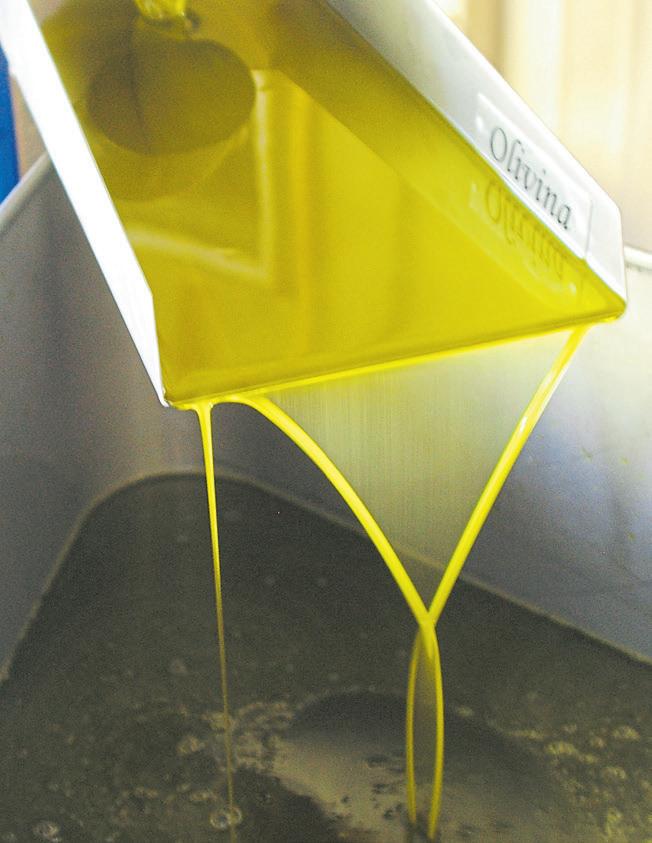
A stream of olive oil, above, flows into a container, harvested from olive groves at Olivina, left in Livermore.
COURTESY OF OLIVINA; DOUGLAS DESPRES / FOR BAY AREA NEWS GROUP
Crohare is the fourth-generation owner of Olivina, the East Bay’s largest olive orchard with gnarled trees planted in 1881 from cuttings at a Fremont mission. If that seems old, it is, and it isn’t — in the Middle East, there are olive trees that have been fruiting for more than a thousand years. The estate produces boutique oils from varieties you won’t find at most mega-orchards, such as French Lucques and Italian Frantoio.
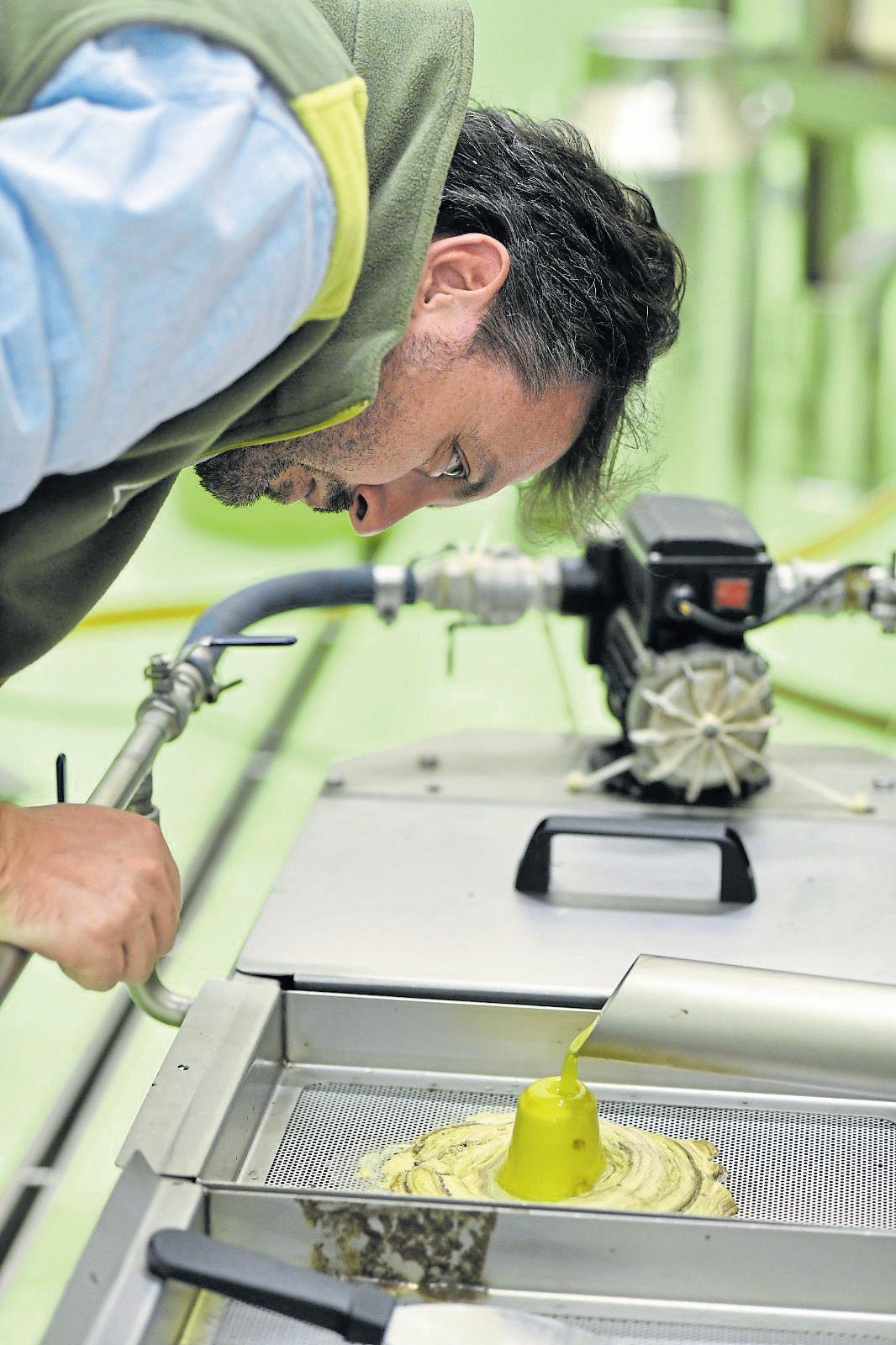
What makes Olivina special is not its devotion to history and lineage, but its blending of those things with modern tech. In a warehouse nearby is a state-ofthe-art Alfa Laval mill, which allows the estate to grow, mill and bottle oil right here — a rarity for most olive growers. “It came in pieces, and they had a guy from Italy come to help assemble it,” says Crohare. “I don’t even like doing IKEA.” California had its olive oil renaissance around the early 1990s. That was when an agricultural system from Spain called “super-high density” became popular across the pond. This technique allowed for the mechanical shaping and harvesting of olive trees, and all of a sudden, farming olives for oil became viable. Hundreds of growers popped up over the state, and good-quality oil from California appeared on tables across the U.S. — slightly weaning its dependence on foreign oils.
Samir Bayraktar is the founder and CEO of Olive Truck, a Californiabased business that uses a mobile press to make olive oil in the middle of farms and orchards.
COURTESY OF THE OLIVE TRUCK
More than three decades later, California is enjoying a second renaissance. Whereas the state’s olive oil used to make up 1 percent of what the U.S. consumed, now it’s above 5 percent (still below imported products, but a good start). A bevy of small-to-medium-sized manufacturers is tinkering with innovative techniques and formulas or rejiggering historic processes to make creative and delicious takes on oil. And everyone is looking to get in on the action — even at the expense of California’s other famed commodity, wine.
“There are many growers in the grape industry that are looking at the olive industry
Charles Crohare, left, is a fourthgeneration owner of Olivina, an olive oil estate in Livermore. Crohare carefully pours an olive oil sample, below.
as an alternative,” says Crohare. “The grape industry is struggling right now, with the decrease in alcohol-consumption issue. Olives take less water than grapes and certainly a lot less water than almonds. And olive trees can be around for many years, so you’re not having to replant them like you do with grapes.”
One of the newer things consumers will find at stores is co-milled or co-crushed olive oils. These are olives that have been processed along with other ingredients to add extra layers of flavor. The process was popularized by a family in Abruzzo, Italy, and it’s all the rage with craft operations in the Bay Area.
“I used to be very skeptical about what California was doing until they started doing chilies. But when I tasted jalapeno oil — the fresh chilies with the olives — all I could think about was how good it’d be on corn on the cob,” says Roberta Klugman, an olive-oil industry consultant and food-and-wine communicator in Oakland.
“There are a number of really good options,” Klugman says. “California, like California does, takes something and runs with it and makes it different. You’re seeing things now with lime oils, chili oils, even turmeric-ginger oils.”
Among recent co-crushed releases are garlic, herbes de Provence and chai-spice oils from McEvoy Ranch in Petaluma. Makrut lime, lemon and jalapeno-lime oils come from the IL Fiorello Olive Oil Company in Fairfield. Bondolio, a small organic producer in Winters,
DOUGLAS DESPRES/FOR BAY AREA NEWS GROUP
Where to taste olive oil locally
Amphora Nueva, various locations: Public and privatetasting classes are offered at this company with shops in Berkeley, Lafayette, Castro Valley and elsewhere. Details: amphoranueva. com
Gold Ridge Organic Farms, Sebastopol: This producer offers organic olive-oil tastings ($55), apple tastings and farm experiences by reservation. Details: goldridgeorganicfarms. com
Il Fiorello, Fairfield: Book a grove-and-mill tour online for $25 or an olive oil and balsamicreduction tasting for $30 (or do both). Details: ilfiorello.com/visit/ olive-oil-experiences
McEvoy Ranch, Petaluma: Reserve an olive-oil tasting for $35 or a ranch tour for $25-95; there are also wine, cheese and seasonal food tastings. Details: mcevoyranch.com
Olivina, Livermore: Public tastings are held on the first and third Sunday of each month from noon-4:30 p.m. Details: theolivina. com/events
The Olive Bar, Campbell: Complimentary tastings of a wide range of single-origin and infused oils. Details: theolivebar.com
We Olive and Wine Bar, Los Gatos: Dedicated tasting bar with knowledgable staff. Details: https://shop.weolive.com
makes mandarin-orange and Hatch-chile oils. The company says the latter sells out each year and pairs great with “fresh fruit, vanilla ice cream, cobblers, salads, fish and other delicate proteins.”
Another big trend is the maximization of polyphenols, naturally occurring compounds with antioxidant and anti-inflammatory properties. People who consume olive oil daily — especially when substituting it for fats like butter and mayonnaise — have lower risks of cancer, cardiovascular disease and dying from neurodegenerative disease like Alzheimer’s, according to a 2002 study in the Journal of the American College of Cardiology. The reason, many believe, is because of all these nice polyphenols.
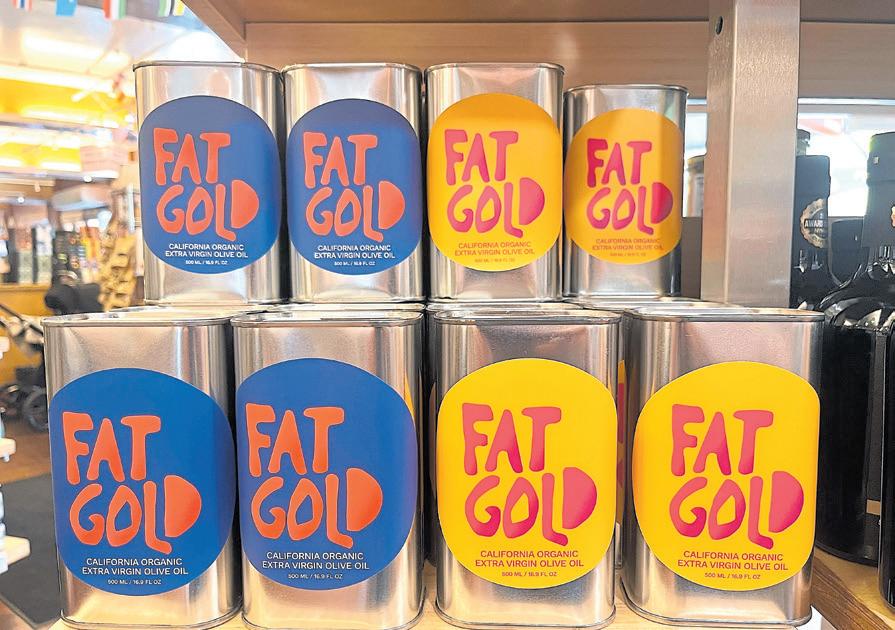
“This is all backed up by super-good science. It’s measured in parts per million of these little molecules, and more is generally better,” says Robin Sloan, co-founder of Fat Gold, an olive-oil company that ships out of Berkeley. “Every one of our oils has a batch page, and a URL is printed out on the tin. So if you’re at the level where you’re looking for that number, you can always find it for our oils.”
A polyphenol count above 300 is considered high; Fat Gold has made virgin oils with more than double that. It eschews glass bottles for metal tins to prevent light from degrading this valuable elixir. There’s a lot of science involved in crushing olives, it turns out, from plucking all the way to bottling.
“At a winery, there are a lot of creative choices a winemaker can make — how much time things take, or what you do or don’t do to decide on a style of wine,” Sloan says. “Olive oil is quite different, in the sense that mostly what you’re doing is trying not to mess it up. There’s a sense that there is this wonder-
ful, perfect oil locked up inside the olive, and we’re almost like shepherds or a midwife trying to get it out.”
Millers working their equipment face challenges like heat, a ticking clock and the quality of the fruit. “It is all conspiring to make the oil taste worse, and flatter and for it to lose some of those antioxidant health benefits,” says Sloan. “Some days it feels a little bit NASA-like in there. There’s this big, gleaming, precision-engineered Italian thing with a really cool control
An employee pours a sampling of olive oil for sale at Nuevo Amphora in Lafayette.
screen — all the temperatures and pressures and everything.”
A major factor in olive-oil production is how recently the fruit was harvested. All fruit, from apples to olives, starts dying the moment it’s pulled off the stem. Producers strive to ensure they get olives from tree to mill as quickly as possible. In Italy, that’s not really a problem, as everyone seems to have their own mill.
“In a village in Tuscany, you can find maybe five to ten quality mills. That’s because the tra-
ARIC CRABB/STAFF
dition is way older out there — there is like a thousand years of olive-oil production in parts of the Mediterranean,” says Samir Bayraktar, the Rockridge-based founder and CEO of Olive Truck.
In California, there are lots of olive growers but relatively few mills, forcing people to drive for hours and share equipment with other millers. Bayraktar’s solution was to domestically re-create a system he developed in his native Turkey. It’s an olive mill built into a cargo truck, fully loaded with “world-class
the press and make the oil right in the middle of the farm. When we finish, we just drive it to the next place.”
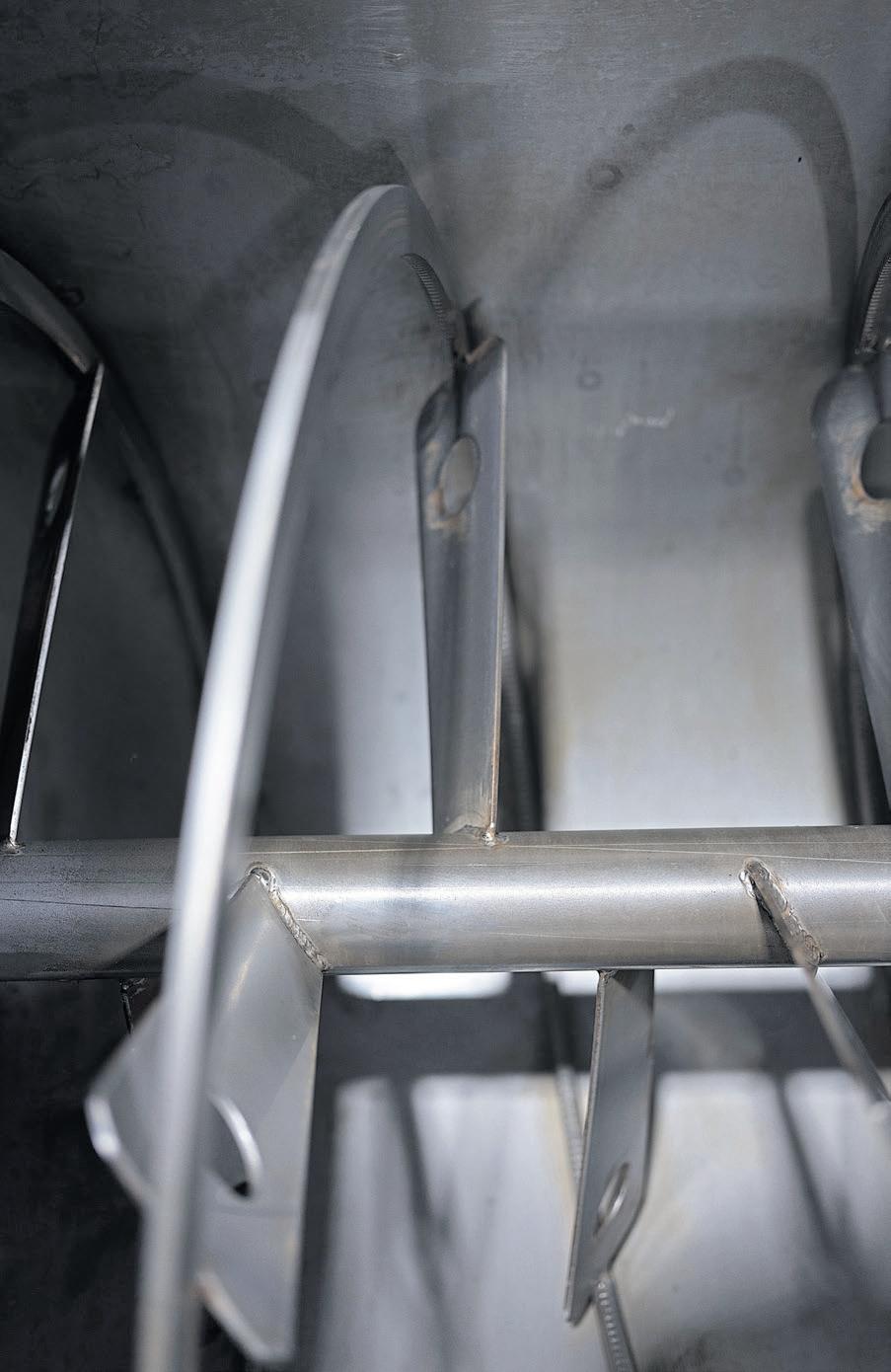
There’s no need for a mill on wheels at Livermore’s Olivina, as there’s a stationary one plopped right on the grounds. It occupies an entire room like a great, mechanical dragon, full of jagged teeth, ripping and tearing parts, and digestive-like conveyor belts that within hours of harvesting gobble thousands of olives. And other things, as it sometimes happens.
“At the end of the night, we open this up and we have found car keys, a man’s wedding ring and earrings, because a lot of people still do hand-picking,” says Crohare, gesturing at a water-containment unit made for such a purpose.
Mori-Tem extraction” technology imported from Italy.
He refers to it as making “tree to bottle” oil. And its super-freshness has impressed connoisseurs, as Olive Truck oil has won competitions from California to New York and earned a 95/100 score in the prestigious international guide, Flos Olei.
“We run the machine with a diesel-engine generator, and then we have a water source,” Bayraktar says. “Whatever olives are picked from the tree are right there, so we put them in
The mill is far from the mule-turning-a-stone that some might expect. If it was running, you couldn’t hear anyone speak over its jet-engine roar. Olives get crushed into a paste like oatmeal, then spun at incredible speeds to separate water from the precious green. Different olives lend specific nuances, whether it be floral nuttiness from Lucca or grass and artichokes from Frantoio. There’s even olio nuovo during the early part of the autumn harvest, which draws crowds and is basically like drinking unfiltered oil straight from the tap.
And as sick as that might make RFK, Jr. and fans of meat fats, this industry is likely going to continue to grow in the coming years.
“I don’t think beef tallow or avocado oil or any of those are really going to be a threat,” says Crohare. “The more people drill down and listen to the doctors, olive oil is still the healthiest out there. You can look at it all different ways. But it’s been that way for thousands of years, and it’s not going to change now.”
What makes Olivina special is its blending of history and lineage with modern tech. In a warehouse nearby is a state-of-the-art Alfa Laval mill, which allows the estate to grow, mill and bottle oil right here — a rarity for most olive growers.
DOUGLAS DESPRES/FOR BAY AREA NEWS GROUP
Tins of Fat Gold olive oil and other oils line the shelves of Rockridge Market Hall in 2026 in Oakland.
JOHN METCALFE/STAFF
Toasting a century of craftsmanship
Morgan Hill’s Guglielmo Winery has seen the wine industry — and Santa Clara County itself — evolve dramatically over 100 years
STORY BY LUIS MELECIO-ZAMBRANO
PHOTOS BY DAI
SUGANO
A lot can change in a century.
When Guglielmo Winery opened in 1925, Morgan Hill was a sleepy town of fewer than 1,000, nestled between the mountains in a narrow stretch of Santa Clara Valley. Orchards and wineries dominated the land, and homes were so far apart that children had to ride their bikes to see their nearest neighbors.
But over the years, technology boomed, farms disappeared, and the tiny town exploded into a city of more than 45,000 people. Now, Guglielmo stands across the street from a high school with a student body that outnumbers the entire population of Morgan Hill in the year the winery was founded.
Over its century of existence, Guglielmo Winery has been passed down through three generations, surviving through Prohibition-era restrictions, the rise of Silicon Valley and a rapidly evolving industry.
“The world has changed tremendously,” says winemaker George Guglielmo. “Being able to stay alive in an industry that’s constantly changing … we’re very proud of being able to do what we do, that we are making quality wines that people enjoy.”
The winery traces its roots to a voyage in 1909. That
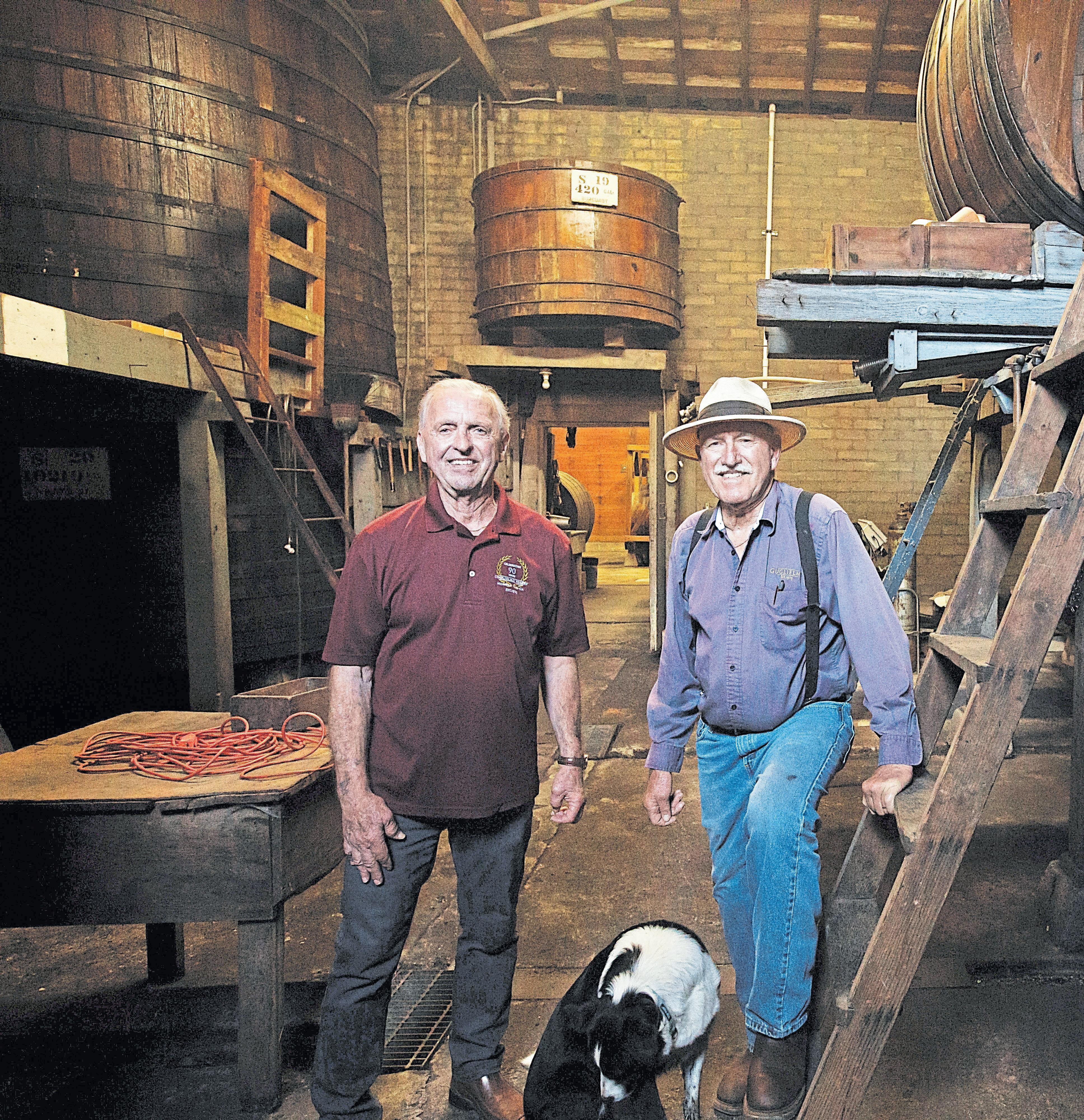
Gene Guglielmo, left, and George Guglielmo oversee their family winery that opened in 1925 in Morgan Hill.
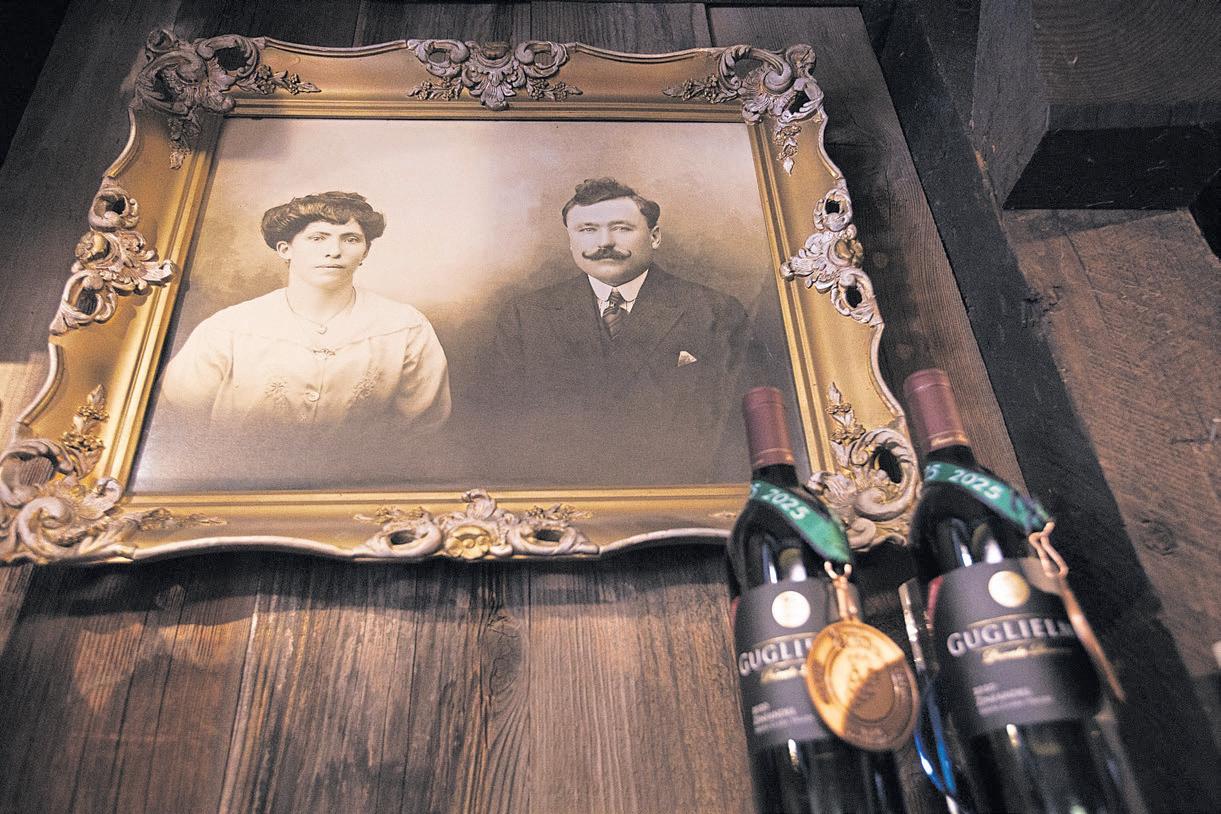
year, George’s grandfather Emilio Guglielmo emigrated from the north of Italy, landing on Ellis Island. He worked his way across the country to San Francisco, where he labored slaughtering animals and hauling their hides until he saved enough money to send for his sweetheart, Emilia. Together, they worked until they had enough to buy 15 acres in Morgan Hill in 1925.
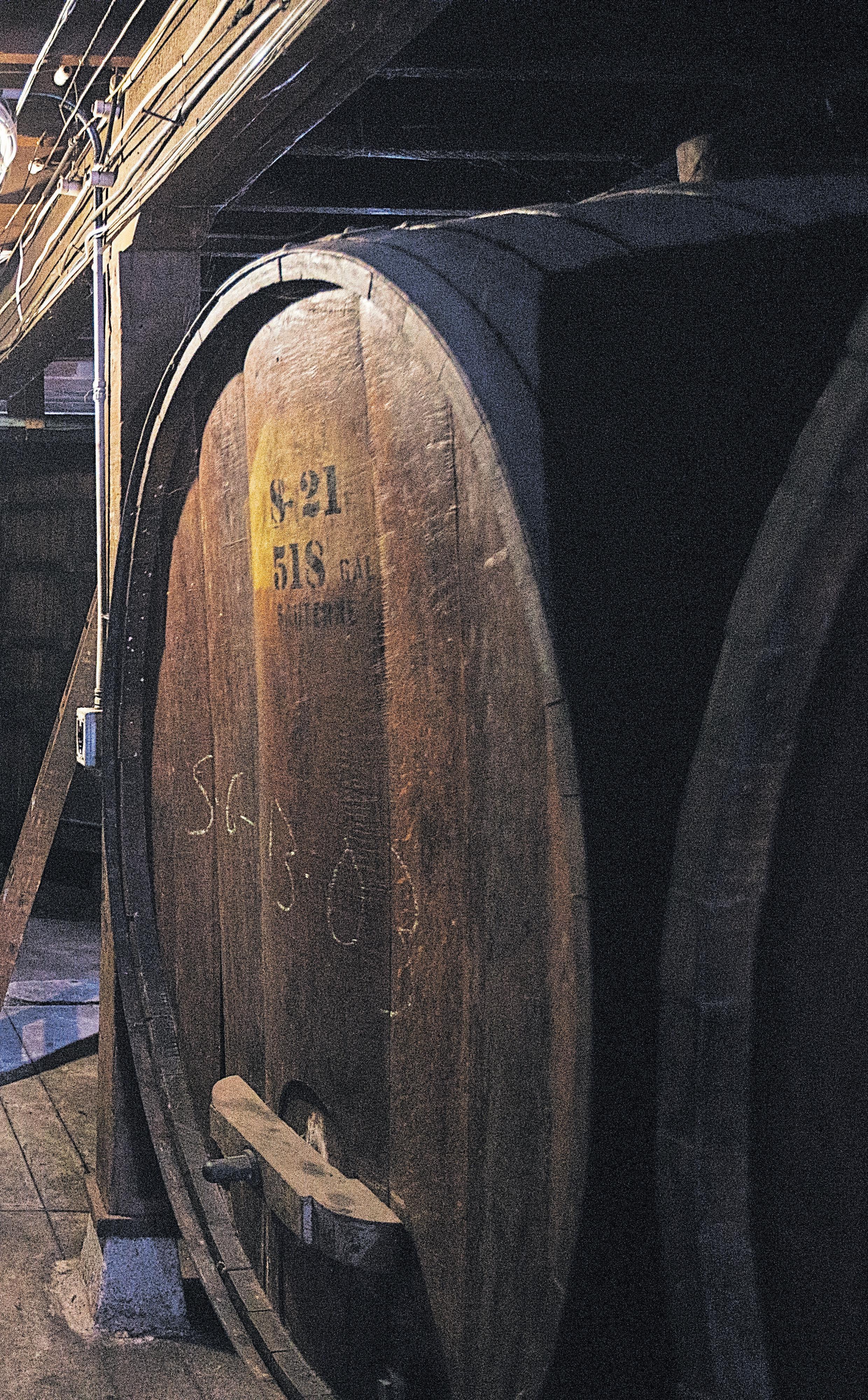
There, despite Prohibition, they began illicitly making wine to sell to largely French and Italian immigrant families, hiding it in a basement connected by a trap door to the front bedroom to help keep their operation under wraps.
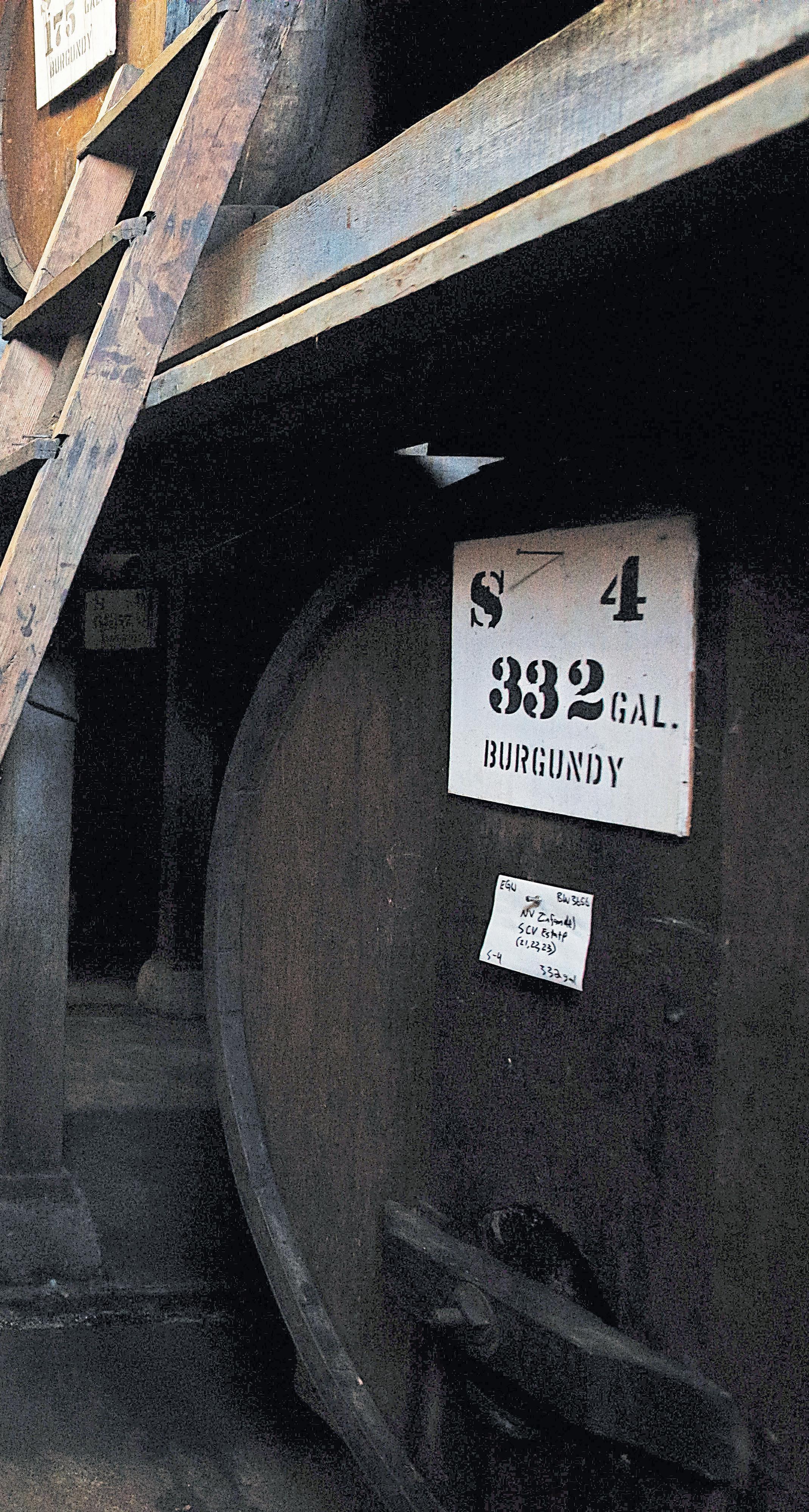
When Prohibition was lifted in 1933, they began to expand their operations. They produced barrels of wine that they would roll into place in liquor stores and place a spigot in them.
In 1945, Emilio’s son George Washington Gugliemo — so named because he shared a birthday with the first presi-
dent — joined the business after serving in the Army Air Corps during World War II.
He and his wife Madeline expanded the winery and began distributing to restaurants and delivering directly to the homes of customers.
As their parents took charge of the winery, brothers George, Gene and Gary were born. They played hide and seek among the tanks of wine and made forts out of wine cases.
“You could say my whole life has been at the winery,” says George, who was born in the family home in 1947.
Soon enough, they were involved in the process: working in the vineyard, helping with wine production, bottling, labeling and corking — all by hand.
“At the time, we didn’t have anything mechanical,” recalls Gene, the current CEO of the winery.
Then there were the deliveries, which stretched from homes in San Jose all the way up to San Francisco.
“We were delivering wine like
A portrait of Guglielmo Winery founders Emilio Guglielmo, right, and his wife, Emilia, hangs in the tasting room at the winery in Morgan Hill.
a milkman delivered milk,” says George.
To get the service, customers had to send the winery a postcard and buy five cases of wine — 20 gallons in those times. The families would pay $27.77 — George delivered so many cases, he remembers the number clearly — and leave out their bottles to be washed and recycled.
By modern standards, 20 gallons of wine might seem shocking, but at the time, they served largely immigrant families — French, Italian, Spanish and Portuguese — for whom wine was a daily part of lunch and dinner meals.
For many years, the Gugliemos made what George calls “jug wines” — one white and one red — that were inexpensive for everyday use. They delivered to Italian delis, French bakeries and even a French hospital.
“These were the first generation from the old country,” says George of their regular customers.
But as the years went by, wine consumption changed, and so did the winery.
George graduated from Cali-
In 1945, Emilio’s son George Washington Gugliemo and his wife Madeline expanded the winery and began distributing to restaurants and delivering directly to the homes of customers.
“ We were delivering wine like a milkman delivered milk.”
George Guglielmo
fornia State University, Fresno, with a degree in wine production and growing grapes. In 1969, he introduced the first single-grape varietal — a petite sirah.
Since then, the winery has survived through shifts in tastes and attitudes toward their business, from those who praised red wine for its antioxidants to those who said any alcohol is detrimental. People began to drink less wine, but the number of wineries exploded. While in the ’70s, California had close to 200 wineries, the state is now home to nearly 5,000.
The brothers took the helm of the winery and worked together to adapt to the times. Gary passed away in 2020 after retiring from the business, having been a crucial part of the evolution and growth of the winery.
Thirty years ago, they created an event space that allowed customers to celebrate weddings and other gatherings in the beauty of the valley.
George, the winemaker, leaned into natural winemaking, blending the “old-fashioned
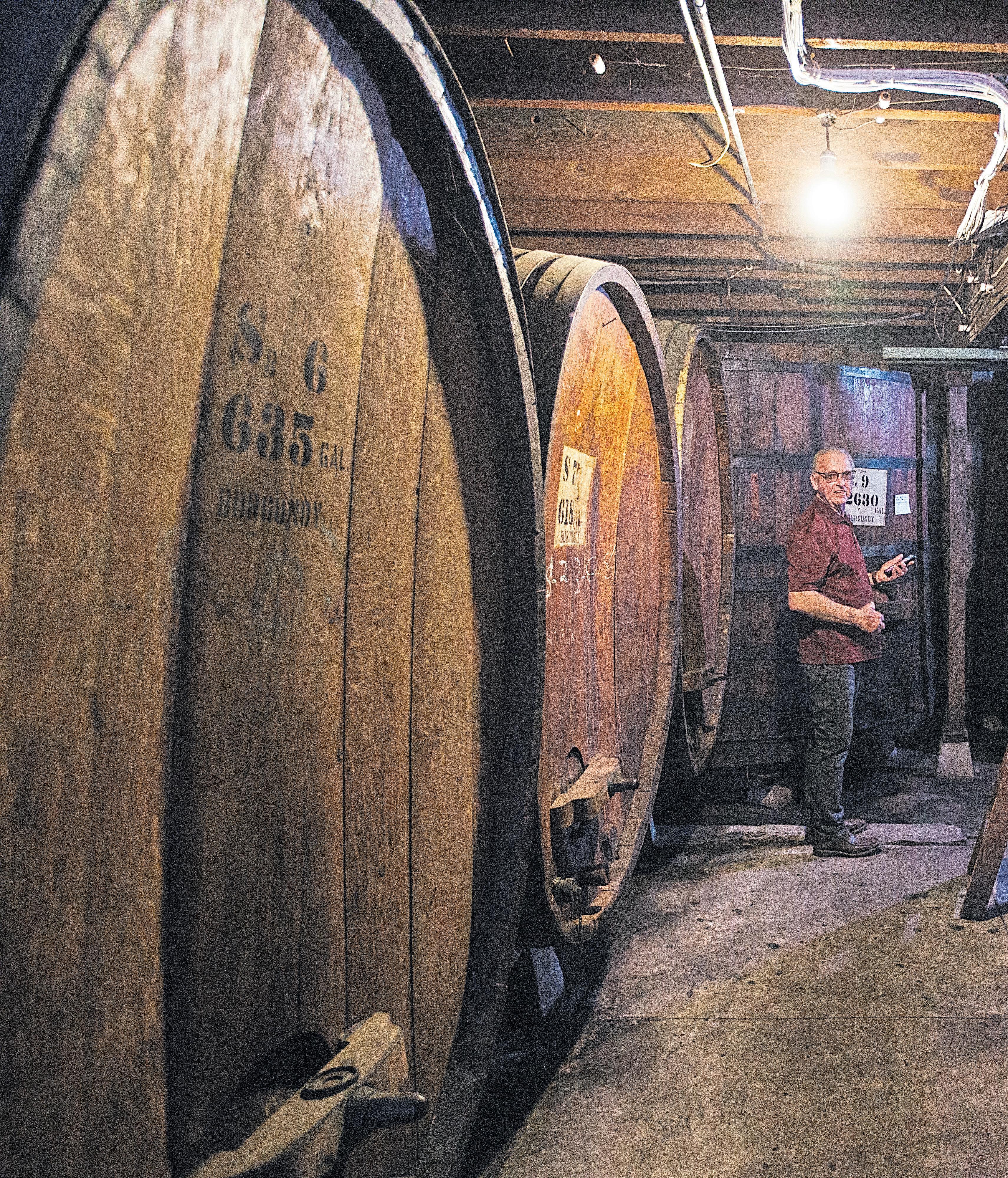
Gene Guglielmo shows the basement of the Guglielmo Winery that once hid its illicit winemaking operation during Prohibition.
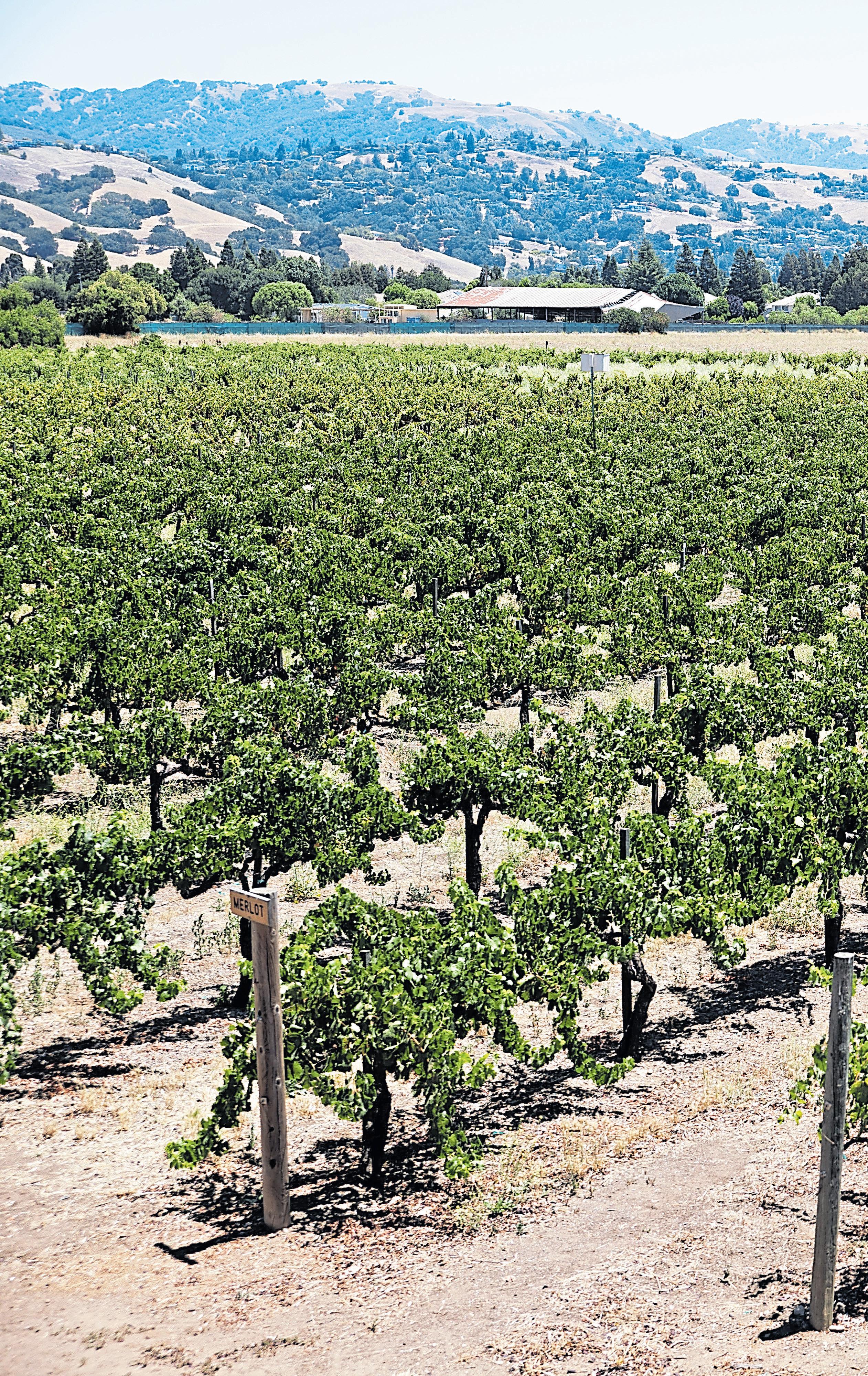
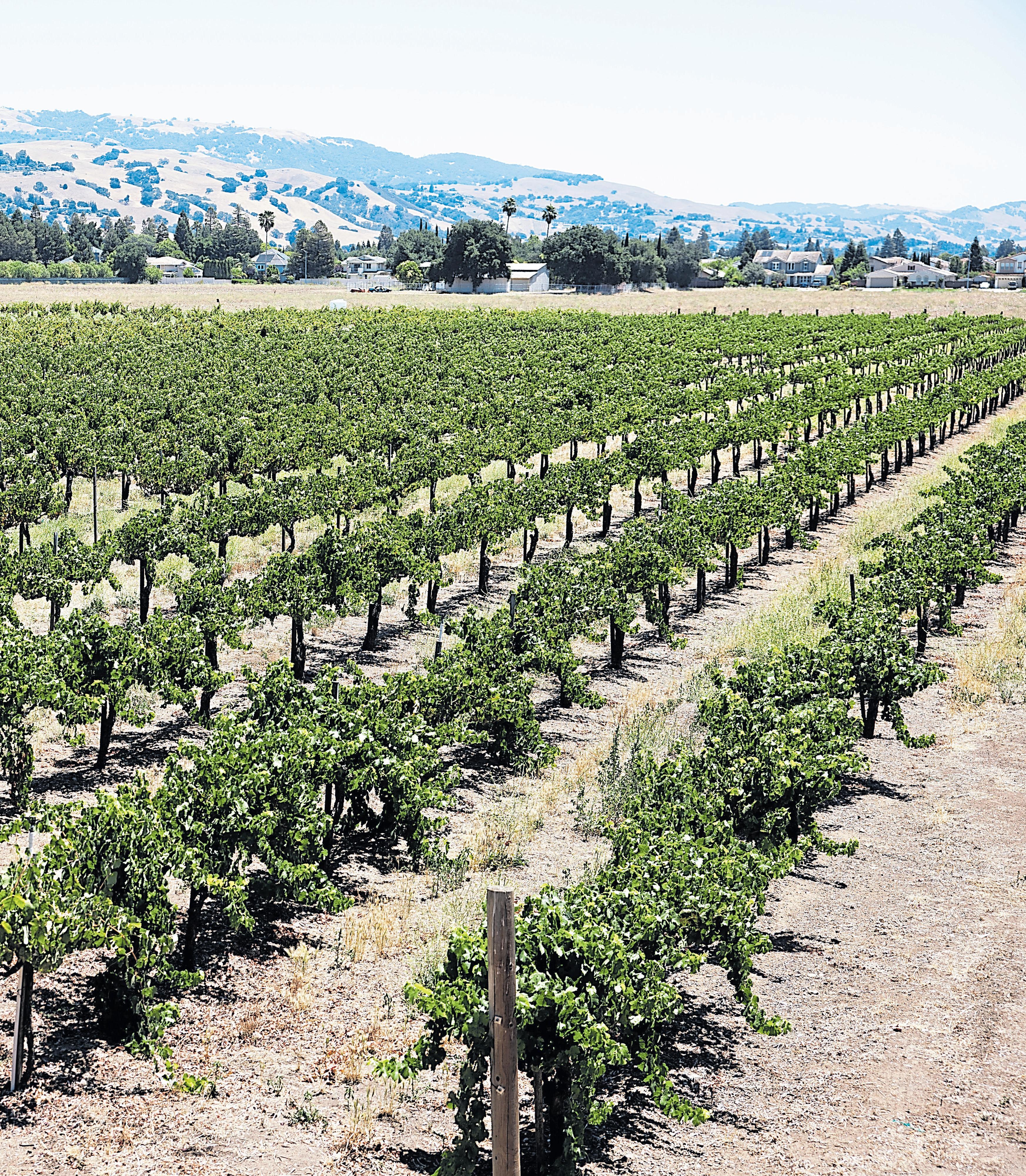
way” with new technology. They take advantage of the soil that once made the valley an agricultural destination, only adding natural ingredients to the earth to grow their grapes.
“We’re good stewards of the land. We try to use sustainable practices to protect the soils and the vines,” says Gene. “We try to let the quality of the grape show itself through the wine.”
With the agricultural history that once made this “the Valley of Heart’s Delight” he says, “there’s no excuse not to make good wine.”
The approach has worked, netting them more than a dozen award-winning wines, from cabernet sauvignon and petite sirah to zinfandel.
But as much as awards are a boon to the winery, the family pride goes deeper.
After college, Gene went to visit the village where his grandfather came from.
“They didn’t have any luxuries,” he recalls.
Seeing his family’s humble beginnings was one of the things that convinced him to stay in the winemaking business.
“It’d be a shame to turn my back on that after seeing what my grandfather came from, what he accomplished in his life and passed on to my dad and mom,” he says.
More than a century after his grandfather first began making wine in Morgan Hill, preserving that legacy is an award in and of itself.
“We take a lot of pride in our history,” says Gene. “The hard work that went into it, how it started from nothing to where we are today.”
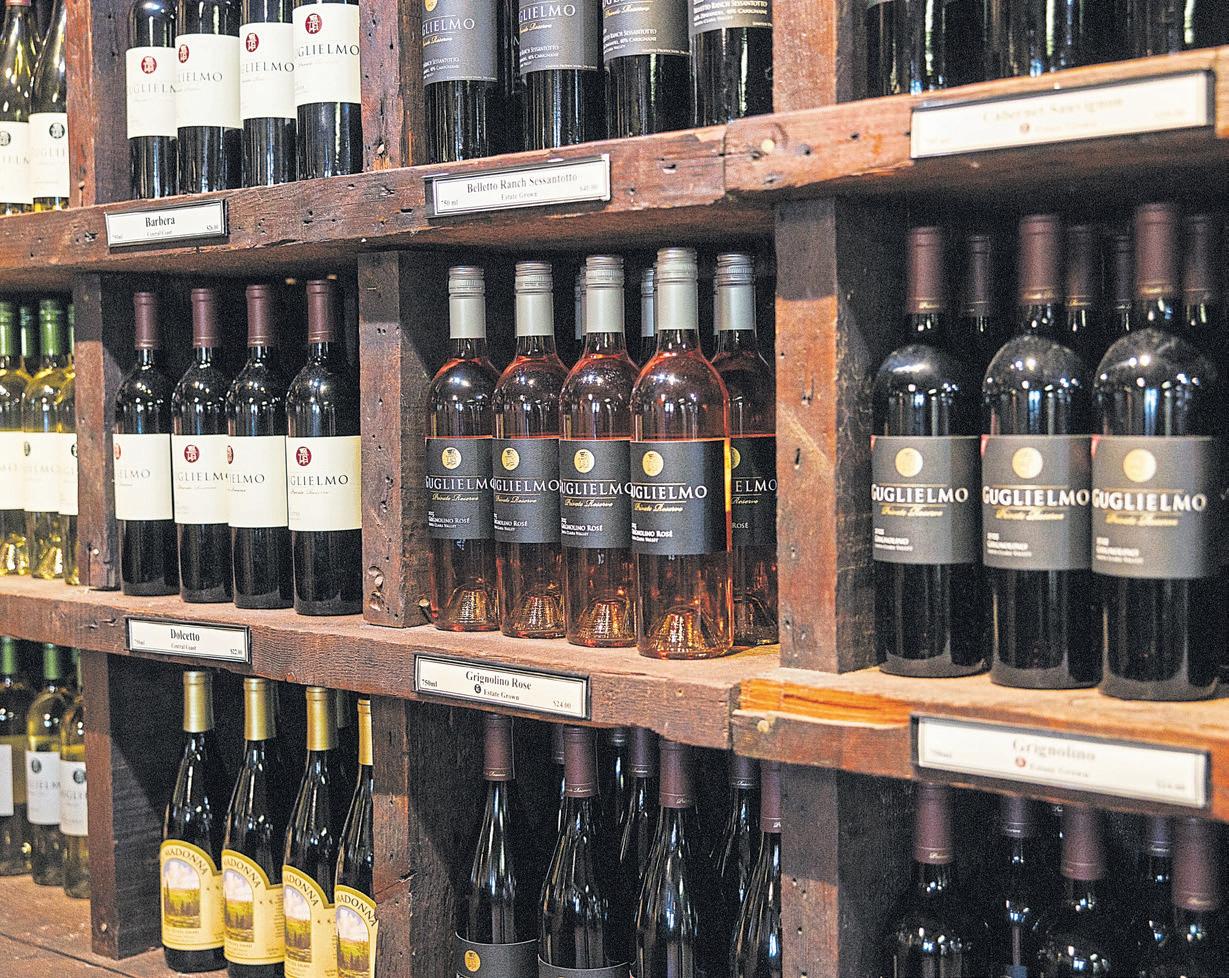
Wines are on display in the tasting room at Guglielmo Winery in Morgan Hill. Over the years as wine consumption changed, so did the winery. In 1969, George Guglielmo introduced the first single-grape varietal — a petite sirah.
Bay Area rock stars find another way to energize fans with craft coffee collabs
BY KATE BRADSHAW
Craft coffee isn’t exactly the first thing most people think of when they envision the rock ‘n’ roll lifestyle.
In the Bay Area, though, they should.
For proof, look no further than the partnerships that three of the biggest rock legends associated with this area have made with independent, organic coffee roasters — and in one case, built an entire brand around.
Muddy Waters Coffee Co. & Kirk Hammett
Chris Nichols was a one-man coffee roaster operating in Humboldt County, shouldering his way through the COVID-19 pandemic, when the team behind Kirk Hammett, lead guitarist of Metallica — one of the Bay Area’s most iconic rock bands — reached out to him in 2021 about the possibility of developing a custom coffee bean blend with the roaster.
“I thought it was spam,” he said.
But the proposal to work with the NorCal organic roaster was real. It turned out Hammett had previously worked with a different coffee roaster, and after buying beans from Muddy Waters Coffee Company, he wanted to partner with Nichols to develop his own blend.
“He loves coffee. It’s one of his only vices at this
point,” Nichols said.
So Nichols sent over a bunch of coffee bean samples, and Hammett identified the blend he wanted as his signature mix: a combination of Ethiopian and Sumatran coffees with dark chocolate, earth and tropical fruit notes. Thus, the Greeny Blues blend was born, named after Hammett’s “Greeny” Les Paul guitar.
They put together a limited run of 1,000 12-ounce bags that sell for $20 online, with discounts for subscriptions available.
A select number of autographed bags sold out in a matter of seconds, but they’ve still got some unsigned ones in stock, according to Nichols. At one point, they also cross-promoted the blend with a special run of Gibson guitars, where everyone who bought the guitar also got a bag of coffee.
“I just want to say thanks for the opportunity,” Nichols said. “It blew my mind.”
Details: Greeny Blues Blend, $20, ilovemud.com
Verve Coffee & Grateful Dead
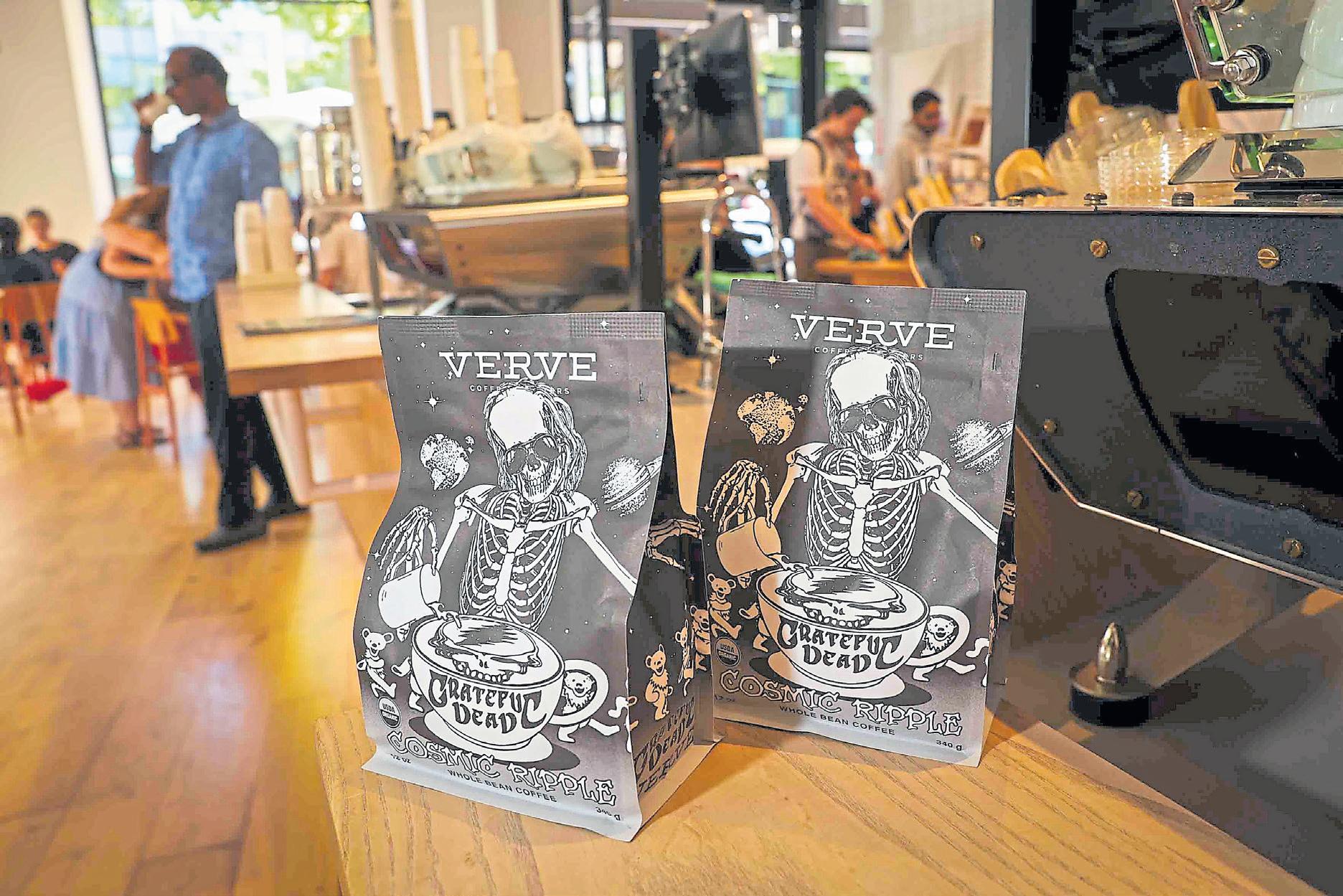
More than 40 years after the Grateful Dead played their first and last concert in Santa Cruz, where Verve Coffee is based, the company’s CEO Colby Barr learned through mutual friends at Warner Music about the possibility of a collaboration with the band. Barr was thrilled. He’d seen Jerry Garcia perform back in the day and says he has a “deep appreciation” for the band.
“It was also just an incredible and humbling moment to know the band approved of working with us and the incredible coffees we selected to highlight in the collaboration,” Barr said via email. “Coffee felt like the perfect medium for this partnership, because it’s rooted in ritual and shared experience. It’s something people return to every day that brings people together.”
In April of 2025, the collaboration between the band and the Santa Cruz-based craft coffee chain kicked off with Grateful Dead Morning Brew, a limited-edition coffee
Metallica lead guitarist Kirk Hammett performs at the l’AccorHotels Arena in Paris in 2017. After buying beans from Muddy Waters Coffee Company, Hammett wanted to partner with owner Chris Nichols to develop his own blend FRANCOIS GUILLOT/AFP
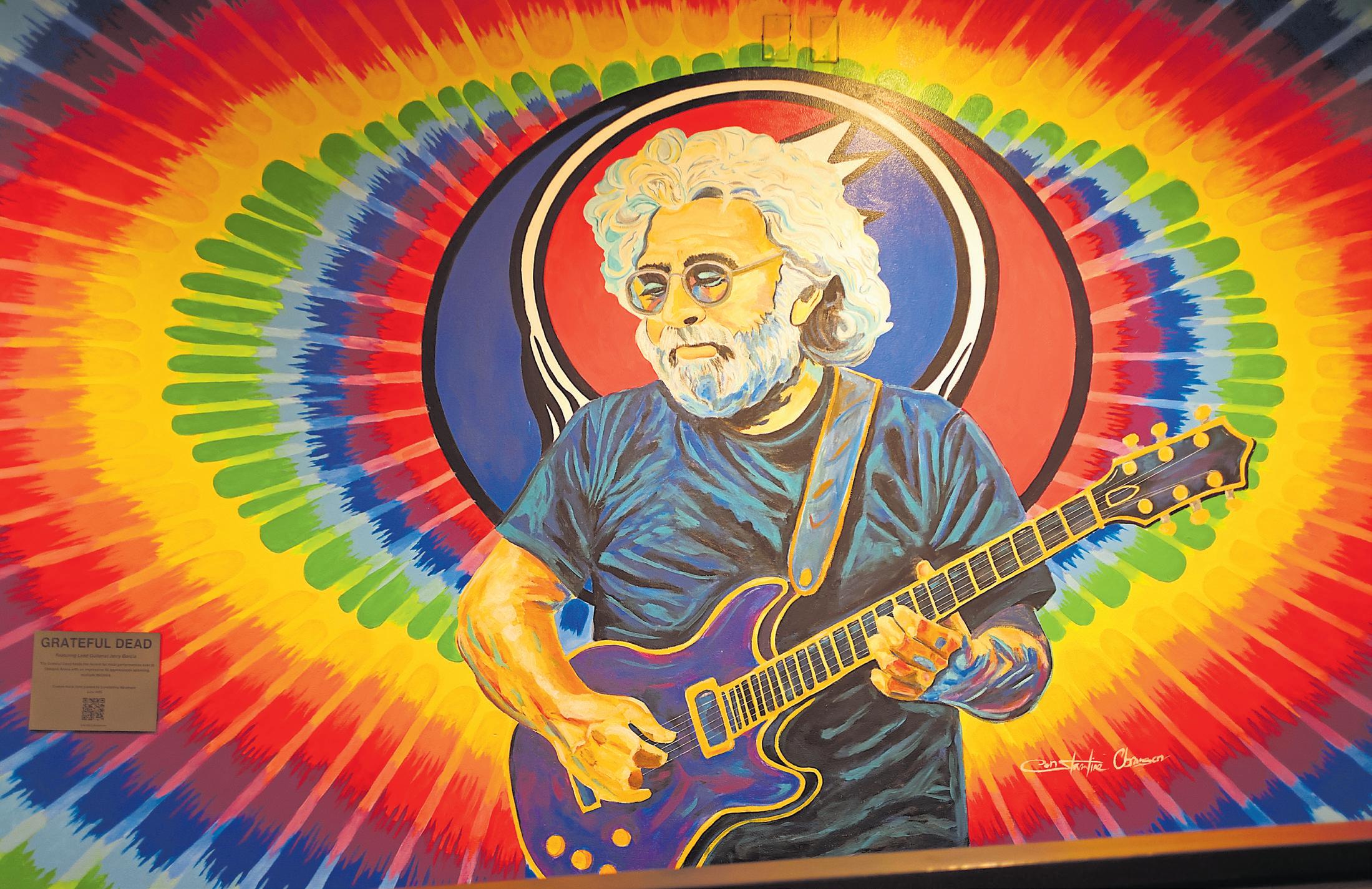
The Grateful Dead and Santa Cruz share a number of deep connections, and as of last year, now includes a craft coffee collaboration with Verve Coffee.
RAY CHAVEZ/STAFF
blend featuring plum, black tea and nectarine notes. The bag design was inspired by the poster from the only show the band played in Santa Cruz.
But it turns out the Santa Cruz connections to the Grateful Dead run even deeper — the Morning Brew collaboration was Verve’s first certified organic coffee and was certified by the Santa Cruz-based California Certified Organic Farmers. Over 30 years ago, the Grateful Dead donated $10,000 to help that organization through a difficult time and helped to support the local organic farming movement. Additionally, the band’s archive is housed in a collection at UC Santa Cruz, according to Barr.
The Morning Brew run eventually sold out, but Verve continued to work with the band, and in February of this year, they launched a new blend: Cosmic Ripple, with starfruit,
Meyer lemon and black tea notes. Verve worked with the Los Angeles-based art studio Online Ceramics that features otherworldly visuals, “psychedelic iconography” and illustrations from the studio’s Elijah Funk. They also sell a number of merchandise items, with illustrations, for instance, of the band’s famous dancing bear holding a mug of coffee, plus mugs, totes and T-shirts.
“So brew yourself a cup, throw on some Grateful Dead, and enjoy the ride,” Barr said.
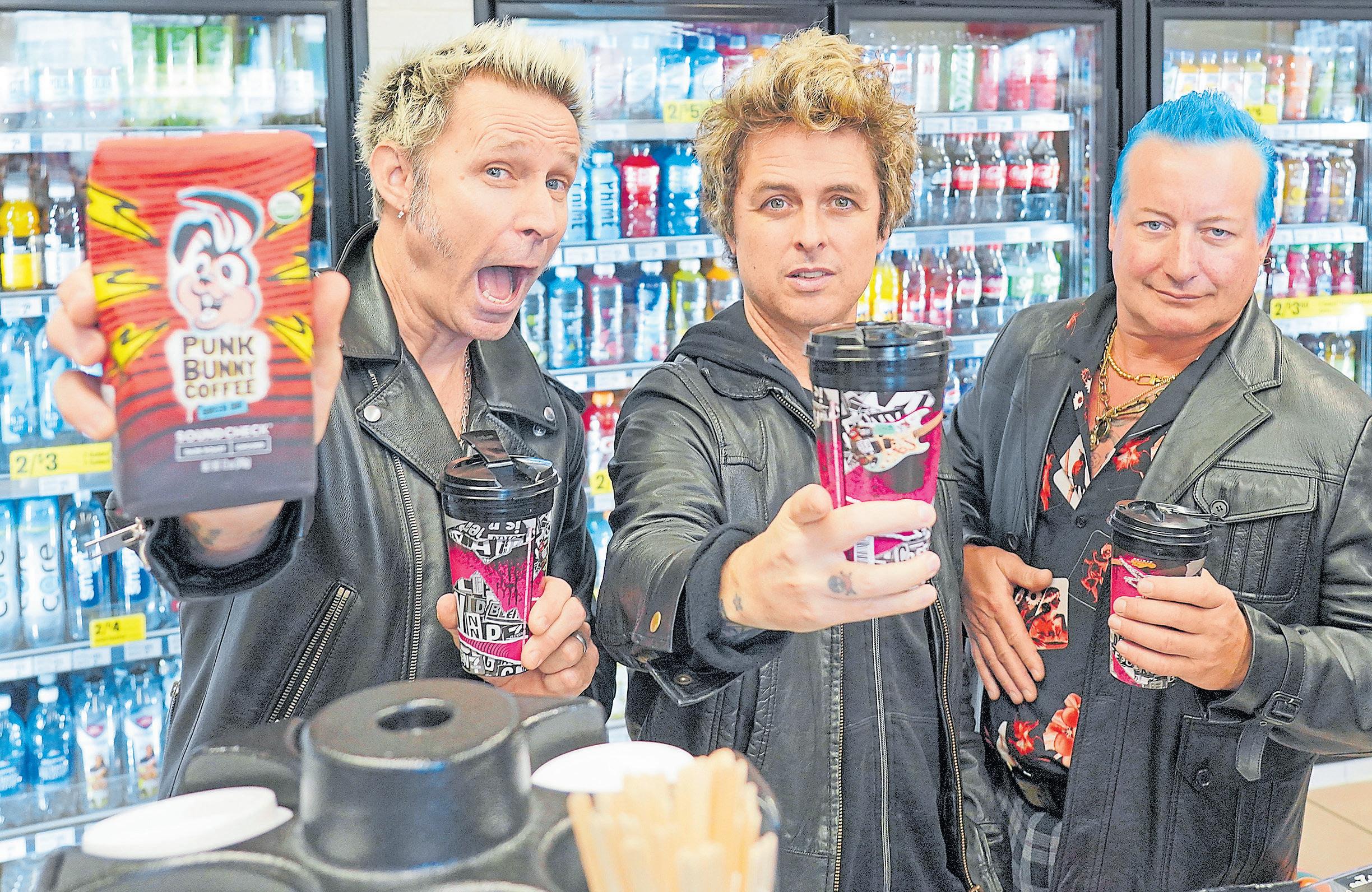
Lastly, iconic East Bay band Green Day operates an entire
Green Day operates an entire coffee brand called Punk Bunny.
DON FERIA/7ELEVEN, INC. VIA AP CONTENT SERVICES
coffee brand called Punk Bunny. Their PR representatives declined to chat with us for this story, but the organic coffee brand, launched in 2024, features roasts like Father of All...Dark Roasts, Soundcheck Last Ride In and Light Club, available as bags of beans and in Keurig pods.
In 2015, Green Day members Mike Dirnt, Billie Joe Armstrong and Tré Cool had started a coffee company called Oakland Coffee. Punk Bunny, which has a pink bunny mascot, is a new company built from merging with an “artisanal, family-run coffee roaster out of Ohio,” which gave them more control over their new line of coffee blends, according to a statement from Keurig.
Details: Father of All...Dark Roasts, Soundcheck Last Ride In and Light Club, $15.50, punkbunnycoffee.com.
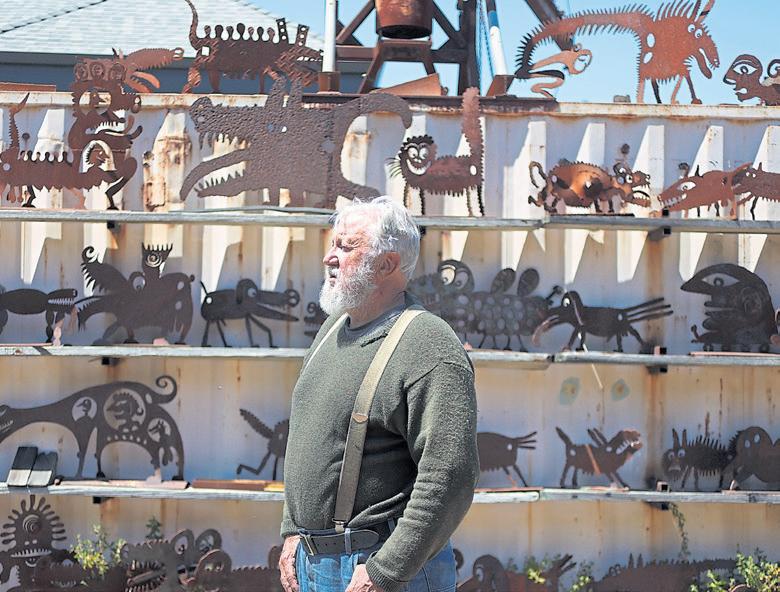
Metal artist Mark Bulwinkle has left his artistic legacy around the Bay Area
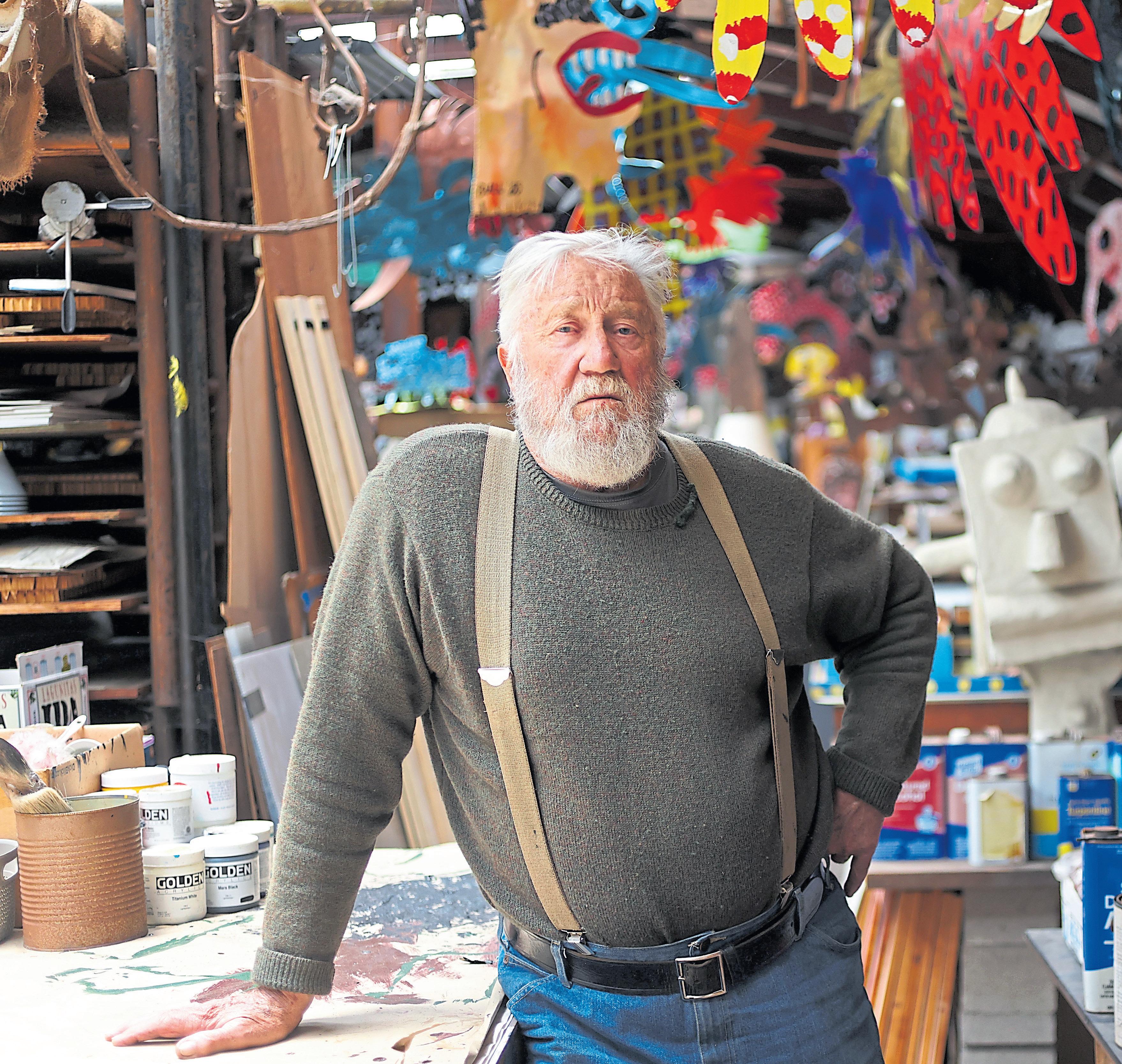
You might not have met Mark Bulwinkle. He’s not always interested in being found.
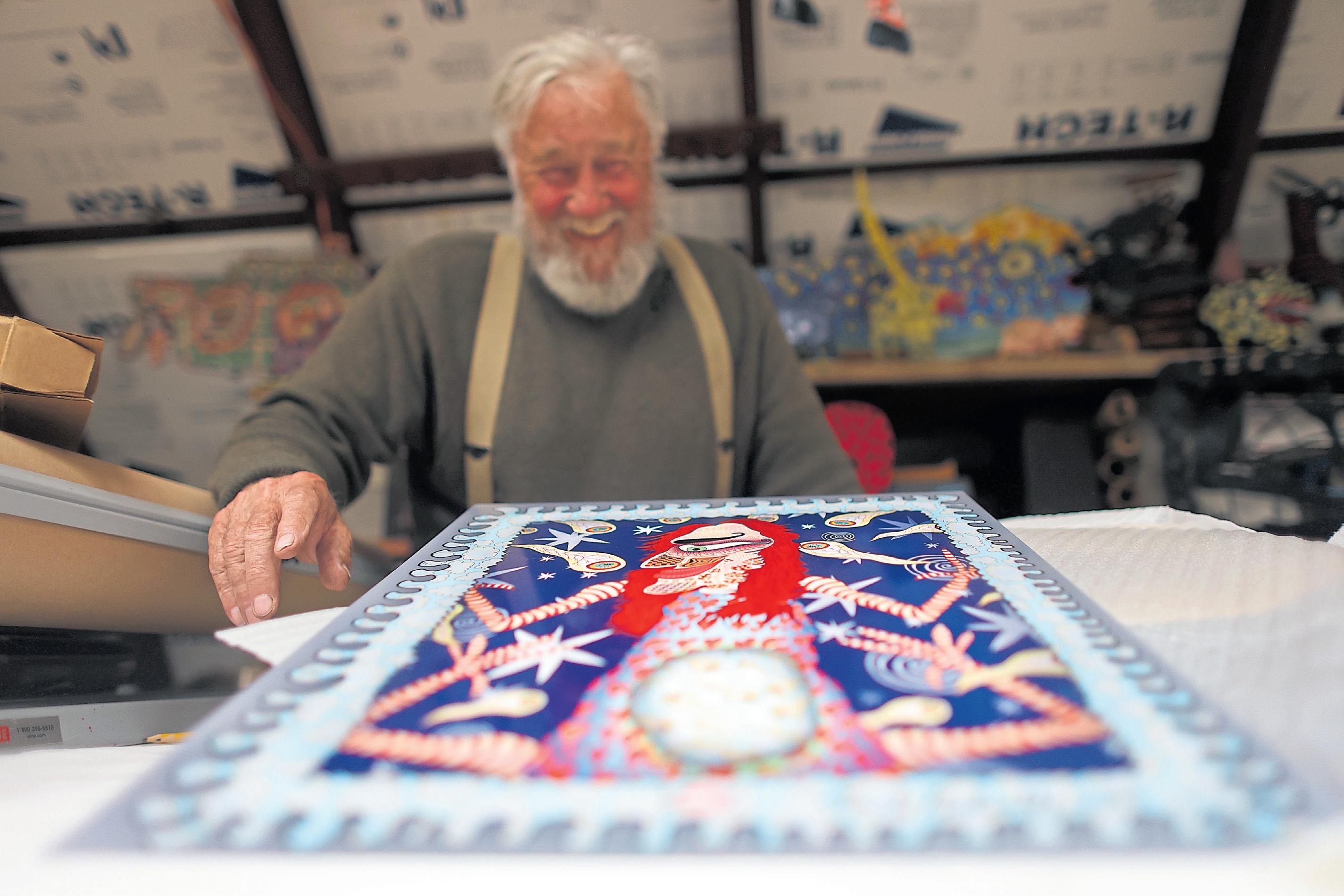
Though the 79-year-old still goes to the gym three times a week, he works inside a gated and bulletproofed compound in West Oakland.
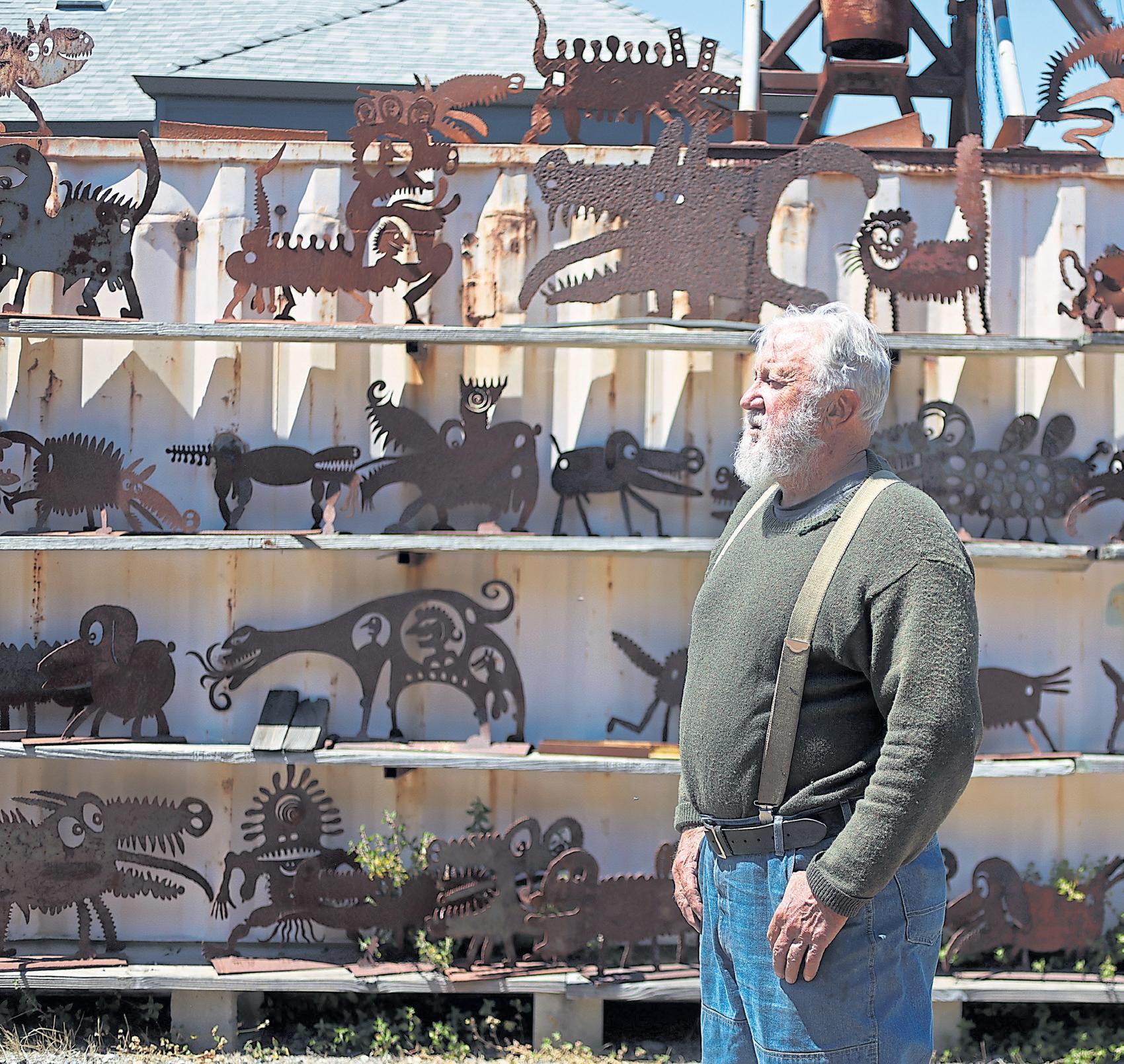
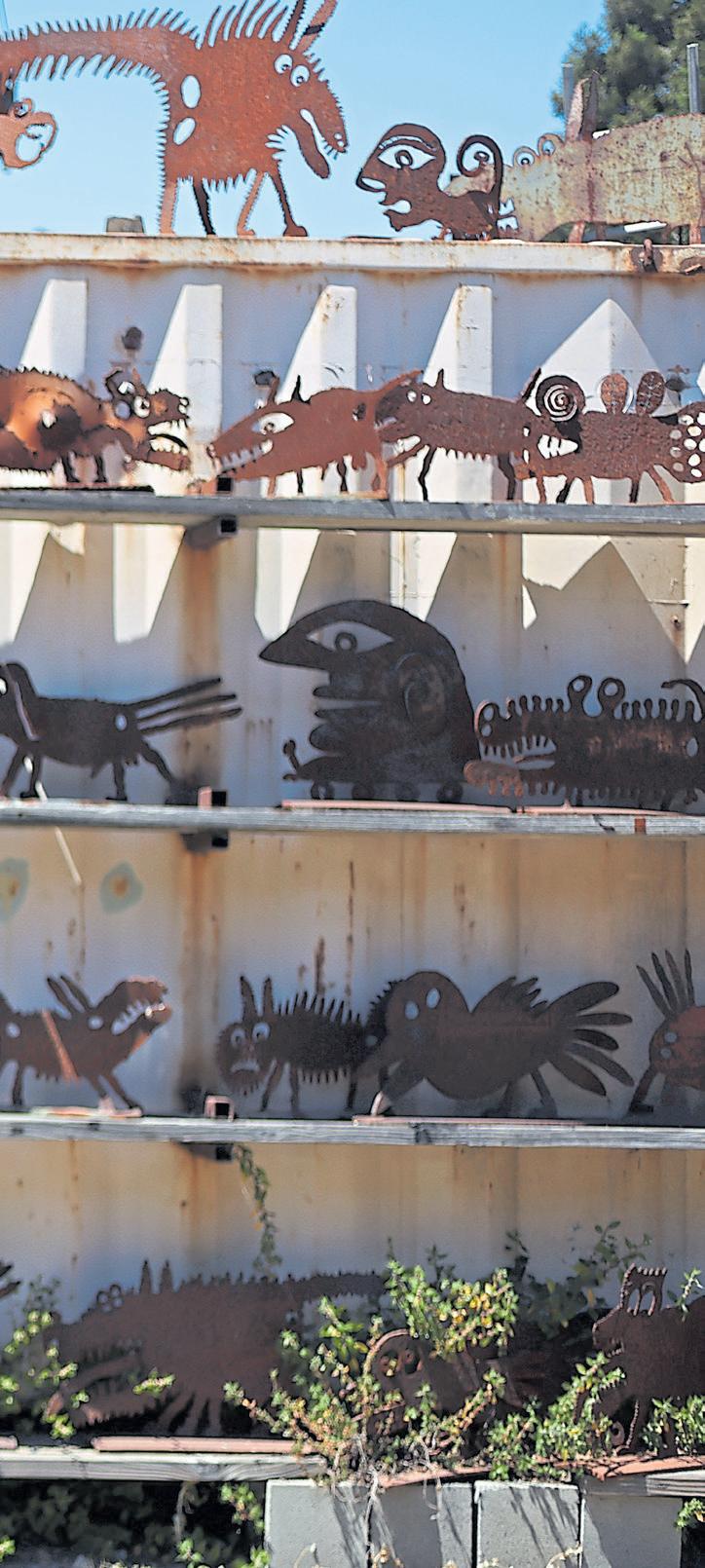
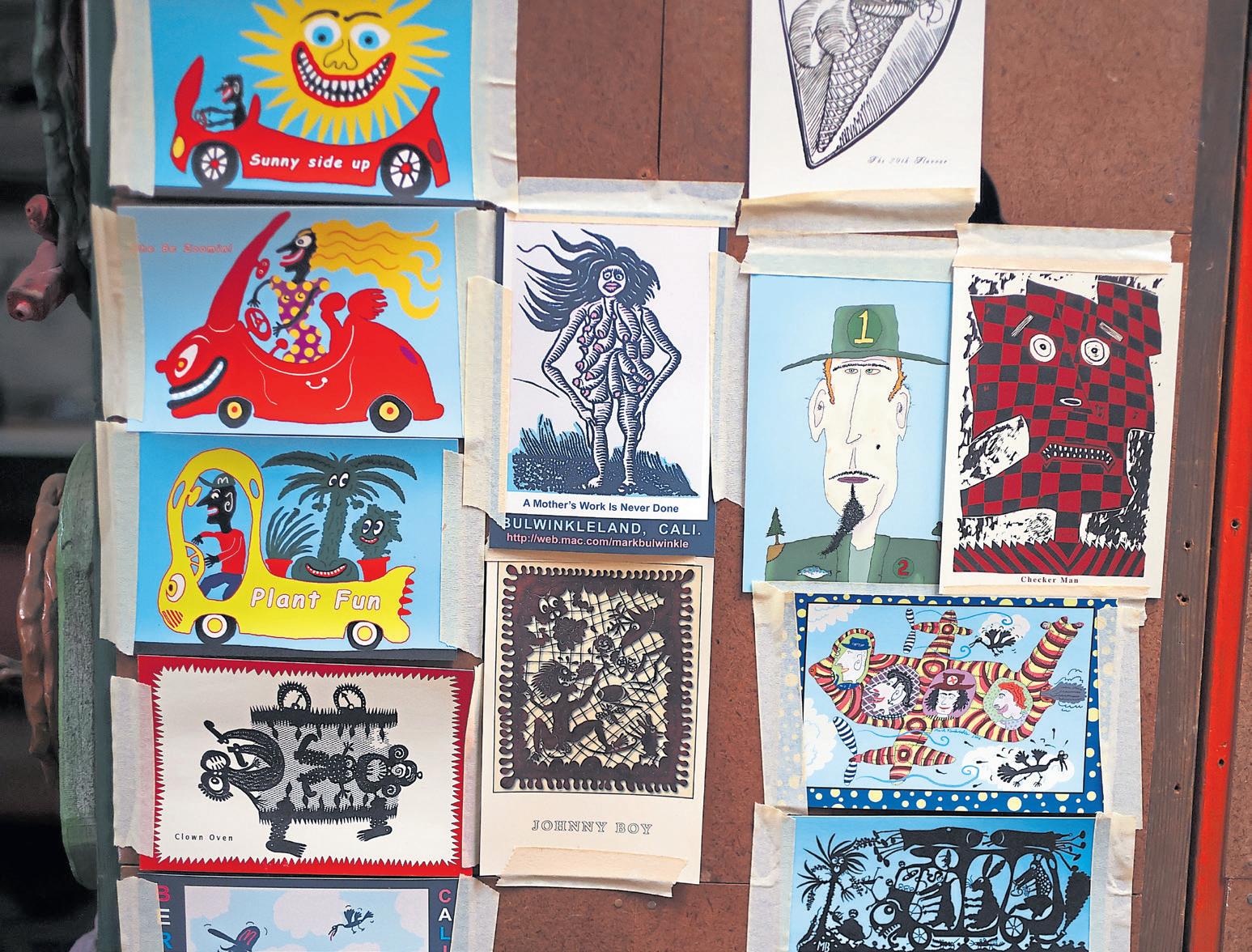
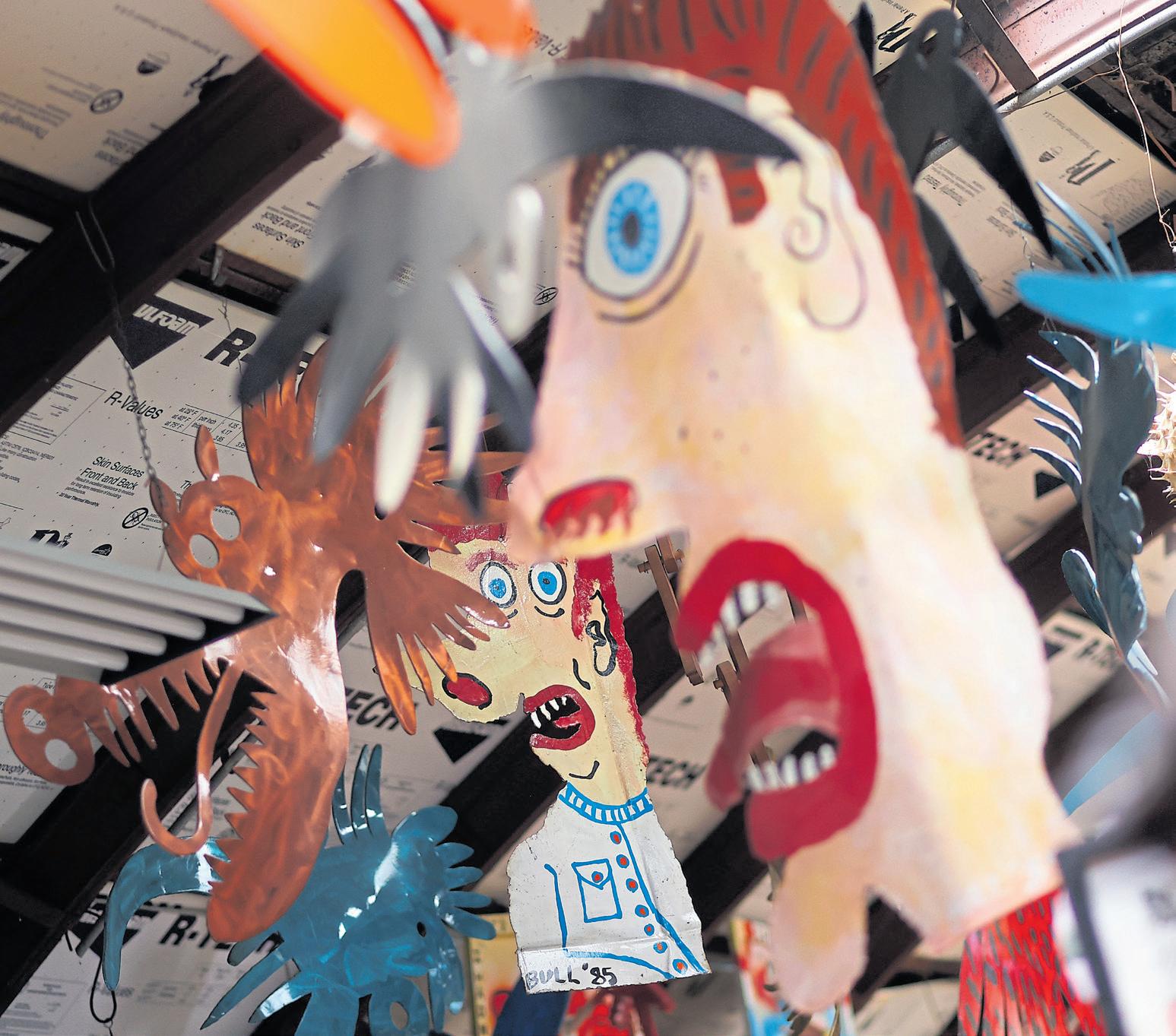
But if you live in the Bay Area, chances are you’ve seen his art: metal sculptures of crazy, spiky-haired dogs; wildly grinning suns; tiny people riding in caterpillar-legged, mechanical beasts and more.
For decades, Bulwinkle has seeded the region with art as if it were his vast, personal gallery. He’s so consumed with the creative process that he once transformed his own house into an artwork that delighted and freaked out neighbors. Legend has it that his metalwork influenced
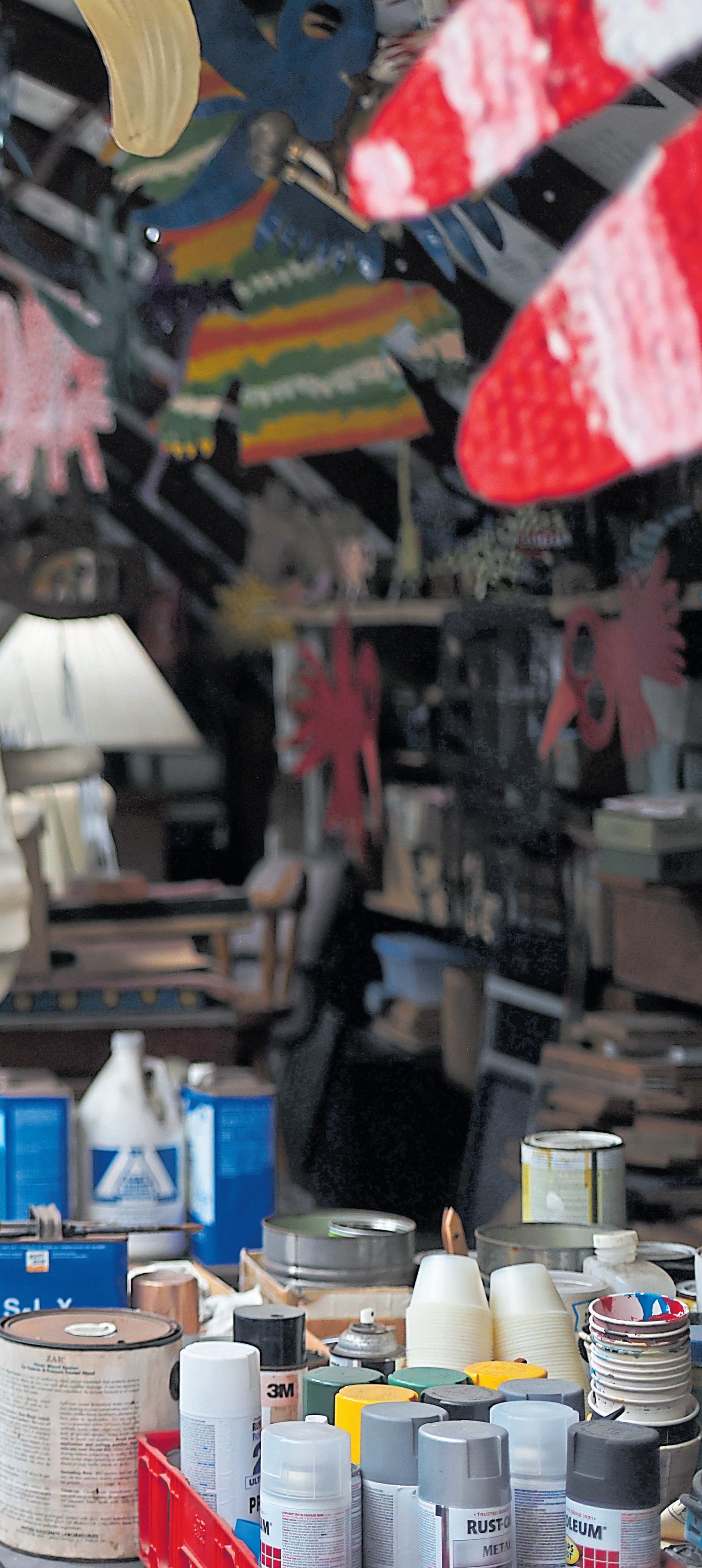
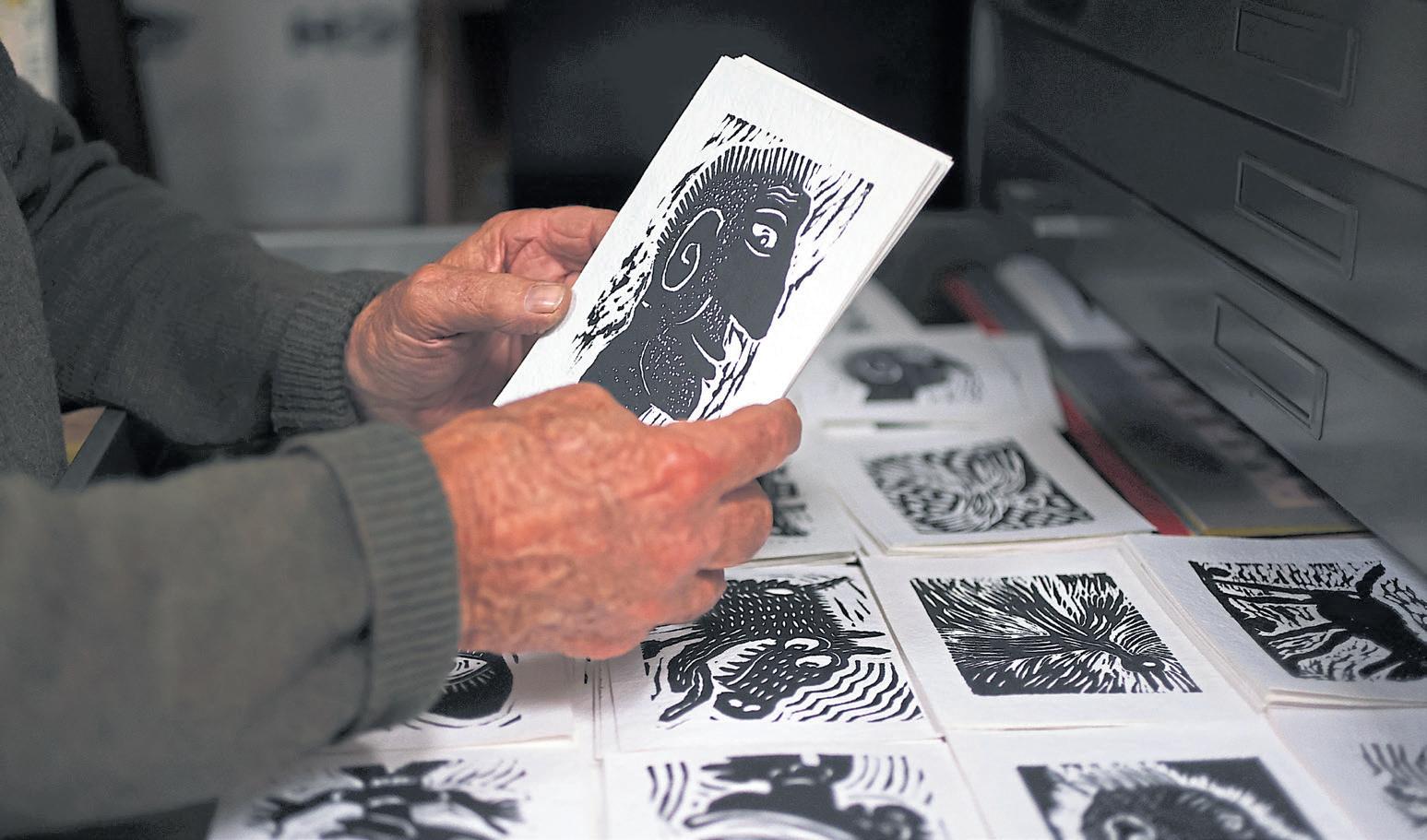
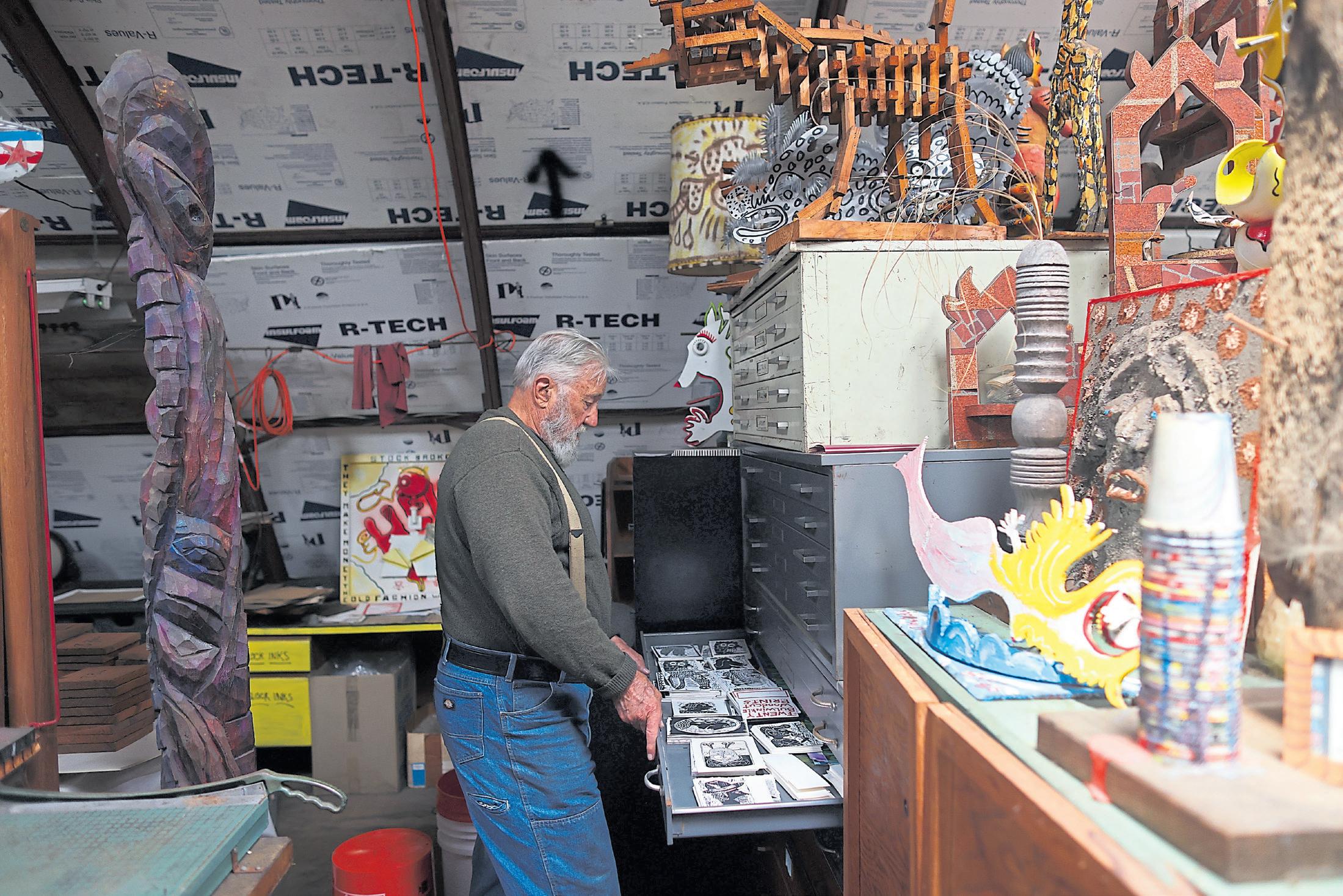
Mark Bulwinkle, left, maintains a workshop in Oakland. Bulwinkle was an influential member of the West Coast Funk art movement working in ceramics, printmaking, steelwork, and painting.
STORY BY JOHN METCALFE
PHOTOS BY ARIC CRABB
WHAT HAPPENED TO ART WAS IT BECAME SOME KIND OF CAREER.
farther into the block than you’d first guess. The front yard has canopies made from automobile hoods, a crane system and recent sculptures made from steel salvaged from the Golden Gate Bridge.
All this material is rusting, but Bulwinkle doesn’t care: “I used to refer to myself as the inventor of rust,” he jokes.
The artworks out here, from 2026, include a cat with huge eyes and frizzy hair, as if its tail were jammed in an electric socket (“Bad Cat”); a walking behemoth with a man inside its head pulling levers (“One Eye Joe Machine”) and a boat with happy passengers in the windows and a giant man basking on the deck, his wang pointed at the sky like a lightning rod (“On the Rocks”). Many of Bulwinkle’s creations, in this complex mythology of humans and varmints his mind has spawned, are fearlessly, anatomically accurate.
what became Burning Man.
For all this fame, he remains intensely private — Bulwinkle turned down a chance to be on “The Oprah Winfrey Show.”
“Lots of people think I’m dead,” he says, with a slight smile.
Bulwinkle seems happier talking about his years as a ship welder than his influence in the art world. “I was just a working dude. I did that for 12 years of my life — 14,500 hours as a professional welder, at least,” he says. “For my art, I was doing something that came right through me.... People called it ‘folk art,’ as if folk art wasn’t sophisticated. But thousands of people started doing what I did.”
On a recent afternoon, Bulwinkle gives a tour of his West Oakland studio as he preps for the first major retrospective of his life’s work, now at the John Natsoulas Gallery in Davis until August 22. It’s a military-style Quonset hut that stretches much
Venturing inside reveals stations for different kinds of art: a perch for painting birds, a place for ceramic tiles of robots and bees, drawers of printing blocks from the ’70s, a dark room that’s just sculptures of germs (inspired by a hospital stay). For visitors peering around, it seems like there are a thousand faces peering back, from a homemade, anthropomorphic wood-burning stove to shambling figures carved by late Oakland artist John Abduljaami, who gave them to Bulwinkle to pay off debts incurred gambling at the local card club. There’s a bedroom somewhere in here, too, surrounded by stacked steel — armor for the .50 calibers that were flying during the early-’90s crack wars.
“There’s no rest for the weary eye,” Bulwinkle says, looking around.
He was born in 1946 in a small Massachusetts town and from an early age, showed interest in art, or at least the devices
Artist Mark Bulwinkle showcases the various pieces of his work in his West Oakland studio.
for making it. “At 9 or 10, my grandfather gave me a very important tool. It was a plumb hammer — the best hammer you could get — not a cheap hammer, a quality tool. I think that’s important for young people, to feel the difference. Maybe it leads to other qualities.”
Bulwinkle earned a BFA from the University of Pittsburgh, then came out west in the ’70s to receive an MFA in printmaking from the San Francisco Art Institute. He got a job at the city’s Bethlehem Shipyard, cutting and welding steel for ocean barges bound for an Alaskan oil pipeline. He injured his back there — developing a lifelong relationship with spinal
pain — but also learned a lot about metalworking from a crew of tough hombres, with a San Francisco twist.
“There were people there who could do things you thought were impossible to do,” he recalls. “There was a whole group of Chinese guys who came over in 1936, and they were incredibly skilled and industrious. There was a machinist runner, Mario, and he would always come in wearing his wedding dress. It’s like, ‘This is San Francisco man — major, heavy industry in San Francisco.’”
The hand torch became a favorite tool for his art; after working on more than 300 ships, he started to view wielding it as relaxing. “People will ask me how to use it, and I tell them it’s just like playing a violin,” he says. “People think of steel as some kind of tough stuff you got to work with. It is not — I mean, you have to coax it. You don’t fight with it, because it’s just way bigger than you are.”
In 1986, Bulwinkle landed a group show at the city’s John
AND I’M STILL NOT INTERESTED IN IT, CAN YOU TELL?
Berggruen Gallery with heavy hitters of the modern-art world: Donald Judd, Joan Miro, Isamu Noguchi, Frank Stella. His sculpture, with its whimsical style, raised eyebrows. One gallery gadfly asked him point-blank, “What are YOU doing here?” By his recollection, famed abstract-expressionist sculptor Mark di Suvero was upset to exhibit even near his artwork.
“His sculpture framed my piece — you had to look through it to see mine — and he was so pissed off,” he says. “What a small-minded turkey.”
Bulwinkle joined the tail of an art movement called West Coast Funk, defined by its exaggeration and humor, countercultural bent and unorthodox use of materials. “Mark is critical to the history of Bay Area art, as well as California art. Funk became a major political art form,” says John Natsoulas, his gallerist in Davis. “Mark had no fear of what they thought of him. I know his work looks very cartoony and everything, but then there’s some hardcore stuff.”
Some of Bulwinkle’s work commented on the era of California serial killers, gun violence, racism and destructive Reaganomics. His method
Artist Mark Bulwinkle turned down a chance to appear on The Oprah Winfrey Show in the 1990s, saying, “I guess I didn’t realize until then how much publicity I had.”
itself — hand-cutting figures with a torch, without use of computers — was a pioneering technique that set him apart.
“The great sculptors of the ’60s, Mark di Suvero and Charles Ginnever, were doing geometric, hard-edged work,” Natsoulas says. “Mark was doing cats, dogs, humans — humans with penises, women with vaginas. He was doing very evocative work, right? I mean, there’s a 10-foot dog in the middle of my town (of Davis), and it has a penis. That’s unacceptable ... But Bulwinkle doesn’t care about what anybody says or does.”
That attitude became clear as Bulwinkle embarked upon one of the most astounding home-renovation projects in the Bay Area. One day, he was placing a sculpture outside his then-yard in Oakland’s Rockridge neighborhood — he makes so much art, it’s got to go somewhere — and a person walking by commented, “I really like that!”
“You don’t want to encourage me,” Bulwinkle says.
From 1975 to 1991, the artist accessorized his and his wife’s domicile with thickets, buttresses, sierras of metal imagery and scrap. If you can picture a two-ton bomb detonating in a car-parts factory, it
looked like the explosion frozen in time — with faces and flowers and critters all jumbled up in an incredible exoskeleton.
Bulwinkle maintains a web page devoted to what he calls the “The Thrilla on Manila” (the house was on Manila Avenue), with questions that he fielded from the curious public. “‘Where did you find the time to do all of this?’ You’d be surprised what you have time for if you don’t watch television,” reads one, and there’s also, “‘Do you own your own house?’ No. My landlord lives in Oregon and he has never seen this. But I keep paying him every month.”
Up until the time he dismantled it — which was also around the time he was getting divorced — the home attracted hordes of onlookers, including reportedly some of the people who would go on to launch Burning Man in the ’80s and ’90s.
“They would come by after being out at the beach in San Francisco and having a party. They’d be loaded, come back at 2 o’clock in the morning, and cheer my house,” Bulwinkle recalls. “It’s two o’clock in the morning, I got to get up early! And that (expletive) would go on.”
Both he and Natsoulis believe his work influenced the development of the festival’s signature, surrealistic style of art. “It was a seed for Burning Man,” Bulwinkle says, “because early Burning Man started to look like that stuff.”
John Law, a cofounder of Burning Man who’s since left the group, says there is “some small truth” to that story.
“Unfortunately, I don’t have any specific anecdotes, it’s just that he was by far the most visible local public artist for many years, and everybody kind of knew his work,” Law says. “Because of his wonderful, unique name, it was memorable. I suppose if he had been Chris Jones or something like that, I wouldn’t remember his name!” Law says he remembers
seeing Bulwinkle’s art in local gardens, “which I thought was pretty awesome,” he says.
“I do believe his work was really the first time I saw somebody doing so much with flat, plate-metal cutouts and really giving them a personality,” Law says, “I’m sure I’d seen some other plate-and-sheet metal stuff, but it certainly wasn’t memorable. Bulwinkle’s stuff really stuck in your mind.”
No less a figure than Oprah must’ve agreed, because in the ’90s, her people asked if he’d be interested in appearing on her show. At the time, Bulwinkle was fairly removed from the lights and glamour of network television. He had moved to West Oakland with the remnants of his dismantled house-sculpture and was living in a series of trailers — one a refrigerated “Reefer Box,” another that, prior to his moving
Artist Mark Bulwinkle and his gallerist in Davis, John Natsoulas, contend Bulwinkle’s work influenced the development of Burning Man’s signature, surrealistic style of art. “It was a seed for Burning Man,” Bulwinkle says, “because early Burning Man started to look like that stuff.”
in, was used by sex workers.
“It was so smelly that I painted the whole inside of it, because the pimp died in it,” he says.
He’s not exactly sure how Oprah learned of his existence.
“I guess I didn’t realize until then how much publicity I had,” he says. “And the name was fascinating — just Bulwinkle.” He took a day to think it over, then called them to say he wasn’t interested.
“I’ve run into Cal graduate students in a bar who thought it was a stupid thing to do. I said, ‘Listen, when I was going to art school, none of us wanted to be famous. We just wanted to figure out how to be an artist,’” he says. “What happened to art was it became some kind of career. And I’m still not interested in it, can you tell?”
Bulwinkle doesn’t make it a habit of checking on his public
artworks. But they’re out there for anybody to enjoy, rusting in the elements: at the East Bay Bridge shopping center in Emeryville, at Berkeley’s Dry Garden Nursery and the Mad Monk Center for Anachronistic Media. There’s even a ceremonial gate made in 2017 from Bay Bridge girders that guards the late composer Lou Harrison’s desert retreat in Joshua Tree. The Los Angeles Times dubbed it an “instant landmark.”
Bulwinkle continues to work, making art, tinkering and updating his artist website that’s almost as labyrinthine as his old house. That site has a self-penned biography that includes this line: “Close friends and fellow artists have remarked that Mark does not make art. He makes Bulwinkles. As I have grown older, I have found in that insightful observation less and less with which to disagree.”
PAINTING LEGENDS
Former Warriors mascot’s murals highlight rock history at Bay Area venue
STORY BY JIM HARRINGTON
PHOTOS BY ARIC CRABB
Peninsula-based artist Constantine Abramson has a long history with Oakland Arena.
It dates back to 2000 when he first joined the Golden State Warrior’s hype team — those ever-energetic characters whose job is to get the already exuberant fans even more excited and ready to root on the Dubs.
Then, four years later, he took the hype to an even higher level at the arena.
“I was already performing, and I was already doing acrobatic things and whatnot, and it worked out that I was asked to be (mascot) Thunder for the Golden State Warriors,” he says. “So from 2004 to 2008, I was the muscle-bound Warrior with the lightning bolt on his head.”
Although the Warriors would move out of “Roaracle” (the nickname for the building while it was known as Oracle Arena) to the brand new Chase Center in San Francisco at the start of the
Constantine Abramson stands in front of a mural of the artist Prince he painted at the Oakland Arena.
“Every mural is so meticulously done. I think, too, he just really gets what we’re trying to do here in this building and really celebrates that with us.”
Lauren Carey, senior director of marketing at Oakland Arena
2019-2020 season, Abramson maintains his longstanding relationship with Oakland Arena to this very day — albeit in a very different manner.
He is now the main muralist for the building, charged with creating large-scale paintings that honor the storied history of this venue.
“It’s been a great partnership, and I can’t thank the Oakland Arena enough for the opportunities that they have given me to be able to dabble in my passion here,” says Abramson, who studied at the San Francisco Art Institute.
The origin of this particularly colorful partnership dates back to late 2023, right as fans were starting to really get back to venues after the long COVID-19 pandemic, and officials were looking for a way to symbolically illustrate that it was the start of a new era at Oakland Arena.
“That’s when we as a building and brand here at Oakland
“Mural 510” honors the hip-hop/ R&B history of Oakland and surrounding areas by focusing on such acts as MC Hammer, Keyshia Cole, Too $hort, right, as well as E-40, G-Eazy and Goapele.
Arena really wanted to start separating ourselves from the legacy building of the Golden State Warriors to this new leader in live entertainment — and to really celebrate all the iconic shows and performances and also the championships here for the Warriors,” says Lauren Carey, senior director of marketing at Oakland Arena. “We wanted to celebrate everything that this great building has already seen and will continue to see with all of the awesome acts that are coming up here as well.”
The goal was to create a visual identity — one that would greet fans the moment they walked into Oakland Arena
“We took our entire main concourse and identified all different spaces where we could highlight the top (artists) who have performed here at the arena — different periods of time, different genres,” Carey says. But who would be the right person to help them accomplish that job?
That answer would reveal itself as Carey and colleagues were catching up with their partners at Visit Oakland and were absolutely floored by the gorgeous map mural of Oakland that adorned the wall of the organization’s conference room.
“We were like, ‘We’ve got to have something like this in the arena. This is awesome,’” Carey remembers. “And that’s when they connected us with Constantine, since he actually did that mural for Visit Oakland
Colors abound on a mural of Grateful Dead lead guitarist Jerry Garcia, top, by artist Constantine Abramson at the Oakland Arena. Abramson was the Golden State Warriors mascot “Thunder,” at right, from 2004 to 2008 after being part of their “hype team” since 2000.
ARIC CRABB/STAFF; MARCIO JOSE SANCHEZ/ASSOCIATED PRESS, FILE
in their office.”
Obviously, the meeting went quite well, but Abramson initially thought it would just translate to one job at the arena — painting an Oakland map mural like the one at Visit Oakland. But officials liked what they saw from him, so they asked him to submit other mural ideas.
“I just went with the next one and the next one and came to a good relationship where anytime they needed a project, I was their person,” says the painter, who also performs as part of the popular children’s entertainment act known as Choo Choo Soul. “It also kind of helped that I knew the building from my past of being a mascot for the Golden State Warriors at one point.”
One by one, Abramson would
create a whole series of murals, most of which celebrate the amazing history of legendary artists who have played the building.
One of the most striking (and certainly most colorful) is Jerry Garcia of the Grateful Dead, the Bay Area band that played Oakland Arena a staggering 66 times over the decades — and thus holds the record for the most concerts in the building.
“The Grateful Dead one was interesting, because it was one of my faster projects, but one of my more challenging because we wanted to represent the fact that they were at the arena 66 times and tie in things like the iconic symbols and the tie-dye and everything,” Abramson says. “I had no idea how hard a tiedye background would be, but I was very happy that we made it.”
Abramson’s other music murals at Oakland Arena include Prince, who performed the final arena show of his storied career in Oakland on March 4, 2016, and Aretha Franklin, who played the arena very early in its history (in 1968) and then returned to the same building nearly a half century later in 2015, Another piece called “Mural 510” honors the hip-hop/R&B history of Oakland and surrounding areas by focusing on such acts as Keyshia Cole, MC Hammer, E-40, G-Eazy, Goapele and Too $hort.
“I think Constantine’s done an incredible job of getting the vision of what I’ve wanted and then surpassing my expectations every single time — like every mural is so meticulously done, he stops for feedback all the time; he won’t finish or won’t stop a mural until it’s 100 percent done,” Carey says. “I think, too, he just really gets what we’re trying to do here in this building and really celebrates that with us.”
These murals are a key ingredient of the building’s #ProudToBeHere campaign, which aims to connect with fans who are still aching over the reality of losing three professional sports franchises in such a cruelly short span of time.
Abramson is working at the Oakland Arena once again — especially given his history as a mascot at the building.
“The countless memories of running up and down the stairs, and all through the building, throwing out pizzas and T-shirts and everything is just an immersive memory as I walk through (Oakland Arena),” he says.
“Now to get to come back and give back to everybody’s visual satisfaction with these murals is unreal to me sometimes — that I get to call it a job on a daily basis. It’s all rewarding, and the full-circle moment makes me very grateful and very proud.”
Artist Constantine Abramson, top, stands in front of a mural of singer Elton John that he painted at the Oakland Arena. After the Golden State Warriors moved to their new home at Chase Center in San Francisco, Oakland Arena has emphasized its status as a music venue, and Abramson’s murals, such as that of soul queen Aretha Franklin, above, are featured throughout the building.
Allied Artisans
Inside Menlo Park’s hidden oasis for the
arts
STORY BY KATE BRADSHAW
PHOTOS BY DAI SUGANO
Lined with shady trees and blooming roses and housing a cluster of art galleries and high-end artisan studios, the Allied Arts Guild in Menlo Park feels like an oasis amid the hustle and grind of the surrounding Silicon Valley.
Established in 1929, the Allied Arts Guild was part of a Spanish land grant and operated as a farm before married couple Delight and Garfield Merner bought the 3.5-acre property with the intention of turning it into an arts guild to support “peasant or folk art” — akin to the artist colonies that had developed across Europe and in some U.S. areas at the time. Inspired by their travels in Spain, the Merners built Spanish-colonial-style buildings, with elegantly named courtyards like the Court of Abundance and the Cervantes Court, which features a Don Quixote mural.
Woods craftsman Antonio Najera, left, applies a coat of stain to a vintage valet stand at Allied Arts Guild, a cluster of art galleries and high-end artisan studios in Menlo Park.
Above: The fine details stand out on this partially restored vintage secretary desk.
Top: Originally part of a dairy farm, a rickety barn is home to The Barn Woodshop, which has hosted generations of woodworkers since 1929.
Above: Flakes of sawdust fall as wood craftsman Antonio Najera restores a chair.
Top: Najera uses these pipe clamps for his various restoration projects at his workspace inside The Barn Woodshop.
Since 1951, the site has been owned and operated by the Allied Arts Auxiliary, an organization made up of volunteers that donates profits made at the guild to the Lucile Packard Children’s Hospital. These profits come largely in the form of sales from the on-site gift shop, which is packed with vintage housewares and jewelry, handicrafts and accessories. They also accept donations.
For the more than 200 members of the auxiliary, including roughly 75 regular volunteers at the facility, the group also provides a sense of connection through its fundraising events and other activities, says Joyce de Russy, president at the guild. “We do have a wonderful sense of community, I think. And that makes our business successful, because we like each other and we know each other.”
Over the years, the group has weathered a series of changes to keep the guild thriving — a major one was the extensive seismic retrofit of the facility and renovation that was completed in 2004. They’ve also pivoted the on-site Cafe Wisteria to be privately operated — it was formerly run by the volunteers. Of the 17 artisan-tenants at the center, about half operate by appointment, while the others have regularly scheduled gallery or retail hours, according to
A vintage wooden chair, midrestoration, is supported by clamps inside The Barn Woodshop.
Susan Lamkin, a longtime member and former president of the auxiliary. These artisans include specialists in florals, jewelry, menswear, painting, pottery, multimedia art and much more.
“Everybody seems to be happy about the environment,”she says. “It seems to be a very relaxing and charming environment for them to work.”
REMAKING DREAMS
At the rear of the complex is a rickety wooden barn that looks like it’s from the 1800s — because it is. Originally part of a dairy farm, it’s home to the aptly named The Barn Woodshop, which has hosted generations of woodworkers since it was first repurposed as part of the Allied Arts Guild in 1929. The first tenant was wood craftsman and sculptor Martin Nelson, who ran it until Tom Kieninger’s father, Albert Kieninger, took over the business in 1974.
Recently, Tom Kieninger, who’s run the woodshop since 1987, passed on the baton to the next generation. The day before our interview, he and his successor, Antonio “Tony” Najera, had celebrated the milestone over champagne as he announced his official retirement — although he plans to remain a fixture onsite.
“I’m not going anywhere. What am I gonna do? I love it here,” Kieninger says.
While some aspects of life at the Barn have stayed the same over the decades, the woodworking studio has weathered a number of changes by adapting to shifting needs. For instance, the shop used to do more custom furniture building, but as the cost of wood has skyrocketed — lumber is up nearly 300 percent over the past 50 years — they’ve shifted to specializing in restoration and repairing vintage wood furniture, carving out a particular niche in restoring hand-woven seating. The whole idea of this space is to work directly with the consumer.
Najera has worked for nine years at the shop and has come to love the work over the years. “To be honest, at the beginning I didn’t like it. But after
Numerous woodworking tools surround the workspace of craftsman Tom Kieninger.
Visitors wait to enter Cafe Wisteria, a privately operated cafe on the site.
Bitzer, above, is the founder of
B. at the Allied Arts Guild. The bulk of Bitzer’s work is in home furnishings, such as this custom pillow, right.
a while, I found the beauty. It’s just not fixing up furniture, it’s like remaking a dream,” he says.
Ushering the shop into the new generation, he’s planning website updates and social media, but mostly, he says, he wants to preserve the shop’s legacy of craftsmanship and handiwork.
“Everybody is welcome here,” Najera says.
The decor inside the barn acts as a museum of sorts, with a shelf of frontpage Giants wins on newsprint in varied shades of yellow and an enormous saw
from Redwood City’s lumber days. Over the door, there’s also a thick wooden placard bearing a quote that inspired Kieninger’s father, Albert, arranged between the late craftsman’s old work boots: “The man who works with his hands is a laborer. The man who works with his hands and his brains is a craftsman. The man who works with his hands, his brains and his heart is an artist.”
By this definition, Kieninger and Najera consider themselves artists.
“Well, our hearts are always there. The mind’s not always around,” Kieninger jokes.
Shalini
SHALINI
DESIGNING FABRICS
In the studio next door, Shalini Bitzer has covered the walls with a rainbow of vibrant fabrics, from pillows to jackets to bedspreads and more. And many of the fabrics, stamped with delicate floral patterns or naturalistic prints, she’s designed herself.
After living a real-life version of “The Devil Wears Prada” — she once worked in New York City as an editorial assistant at Italian Vogue — the textile designer, who has both Indian and German roots, pivoted into working with the family textile business. Her grandfather had started out selling silks from the city of Bengaluru in the 1960s, and over the years, the business has shifted toward cottons and linens, with prints and embroidery.
Today, she travels the world, working with a textile factory in Bengaluru, block printers in Jaipur and embroiderers in Nepal. Some items she brings back to sell from her small shop. The bulk of her work, though, is in custom home furnishings through her own design firm.
“The whole idea of this space is to work directly with the consumer,” she says.
Above: Many of the fabrics inside SHALINI B. are patterns or prints that owner Shalini Bitzer designed herself.
Opposite: Bryan Godfrey prepares a smoker to demonstrate transferring honey bees.
DAI SUGANO/STAFF
Many of her customers are older local homeowners, empty-nesters looking to refresh their furnishings and drapery, spread largely between San Francisco and Carmel.
“It’s a certain type who appreciates the handmade,” she says. It’s not just older people, but often it’s people who are attached to perhaps inherited or otherwise valuable furniture they have and who are willing and able to pay more for handcrafted work.
Reupholstering an ottoman, for instance, can cost her clients up to $1,500, depending on the type of fabric they choose. So some people will just buy a new ottoman, she says. But for those who work with her to transform beloved furnishings, she says, her projects tend to turn out well.
“My favorite part is when I see my clients just excited and happy with the result,” she says. “I love colors, textures — there’s just so much life in that. It makes me happy. And I love what I do.”
Allied Arts Guild is open 10 a.m.-5 p.m. Monday-Saturday at 75 Arbor Rd., Menlo Park; alliedartsguild.org.
Bay Area guide to what to do this weekend — hikes, shows, festivals and more — arrives every Thursday morning. apps. mercurynews.com/newsletters/weekender
EAT + DRINK
new restaurant openings, taproom updates and delicious recipe inspiration fill this free weekday newsletter. apps.mercurynews.com/newsletters/eat-drink