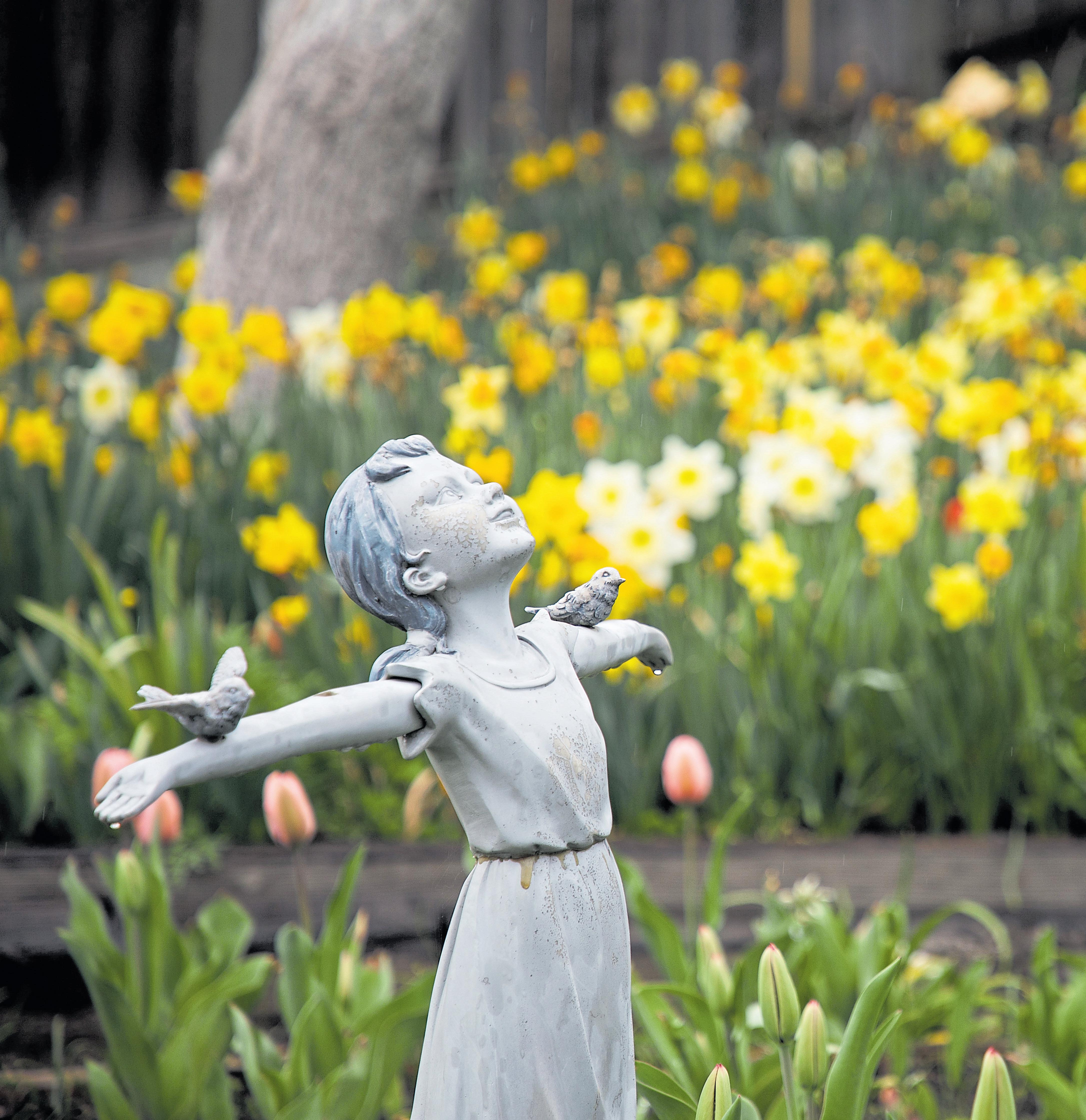
A garden statue seems to revel in the daffodils in the background at
Rich Santoro’s backyard garden in San Jose.
DAI SUGANO / STAFF
hen we create these magazines, we like to think about not only what will most interesting to our readers, but also what will be most useful. What can we reveal about the places we live in the Bay Area? In our last magazine, MAIN STREET, we went far and wide to cities across the whole region, but with BACKYARD, we wanted to take the opposite approach and examine what there is to discover close to home —with even one step out the back door. Our earliest discussions were literally about the fundamentals of standing in your own backyard. What do you see when you look up? What do you see when you look down? Surprisingly, perhaps, those most basic considerations led to a lot of the stories you’ll find in these pages. We all wonder what wildlife is secretly shuffling around in the bushes when we hear noises in the backyard late at night, and we have a story that answers that very question. Those of us with a sightline to the night sky may think about what astronomical events we should be watching for, and you’ll find a guide to that in these pages, as well. We tried to be as inclusive as possible in considering trends and tips for backyards of all types, and we even have a story for those with no backyards who’d like to have the garden experience at some of the lushest local sites. Ok, fine, so we can’t help highlighting some of the most beautiful places to go around the Bay Area, even in BACKYARD. We don’t want to fence you in, but we do hope you enjoy this magazine.
— Steve Palopoli
In the Bay Area, backyards are multipurpose sanctuaries for year-round outdoor recreation
STORY BY MARTHA ROSS
ILLUSTRATION BY JEFF DURHAM
NBA star and San Jose native Aaron Gordon could have been speaking for a lot of people in the Bay Area when he revealed his “happy place” early in his career.
No, it’s not Disneyland.
Living far from his hometown at the time while playing for the Orlando Magic, the then-21-year-old said he missed his family’s South Bay backyard.
“My backyard is where I spent most of my childhood growing up,” the Archbishop Mitty High School graduate said. “That’s my happy place. Anytime I need to go somewhere, that’s where I go.”
Gordon, who now plays for the Denver Nuggets, paid tribute to his favorite place by naming his line of basketball shoes “Backyard.”
Other Bay Area residents feel the same connection to their own backyards. For children, the backyard is a place of wonder, suitable for imaginative play of all types. For adults, it provides a private refuge and an easy way to get into nature. It’s where they relax, dine with family, entertain guests, let the kids run around, raise pets, exercise, practice golf swings, do art or look up at the stars. This can be the case whether they rent or own and whether their home’s outdoor space is a small patch of lawn, a cool pool deck, a meticulously landscaped garden or a hillside with a spectacular view.
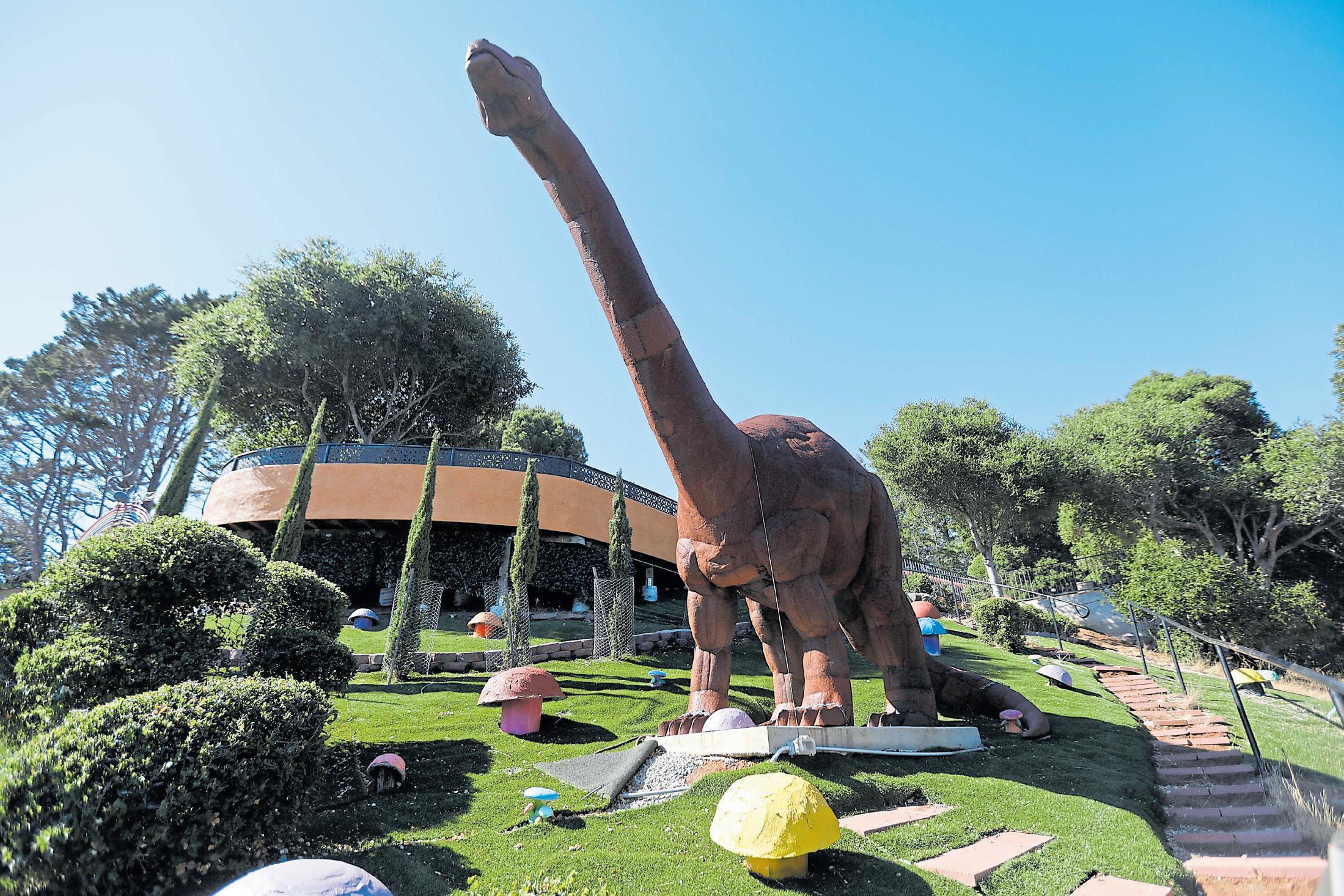
In the Bay Area, some residents fashion their backyards into showcases for their unique tastes and pursuits — like the owner of Hillsborough’s famed Flintstone House, where prehistoric dinosaurs roam the property above Interstate 280. For the Bay Area’s uber-wealthy, backyards can become displays of success and power, such as Larry Ellison’s 23-acre Woodside property with private lake
and tea house — his take on a 16th-century Japanese emperor’s palace.
But no matter who’s doing the landscaping, there is a particular psychological connection to backyards that Bay Area residents share, said Stefani Bittner, an East Bay-based landscape designer and author.
“In California, our gardens are an extension of our homes,” said Bittner, whose Homestead Design Collective created Sunset Magazine’s test kitchen and other ecologically diverse gardens for clients from Palo Alto to Wine Country. “With the climate that we have and with people in high-density housing and in other places where you may only have so much space, depending on where you are, your garden is actually an additional room.”
“It’s a refuge, and I think most people value that, and that’s one reason they like to have a garden to go out to,” said Valerie Matzger, a veteran landscape designer and avid birder from Piedmont who formerly served as the city’s mayor.
It’s long been argued that California pioneered the concept of indoor-outdoor living in American homes, with its Mediterranean climate allowing residents to be outdoors pretty much yearround. At one time, people with property around their homes tended to use it for practical purposes — like growing food, chopping wood and laundering and drying clothes, according to a history of Sunset magazine, which became strongly associated with the emerging postwar lifestyles of upwardly mobile suburbanites in the Western United States.
But that changed in the decades following World War
II. For one thing, the advent of washing machines and other modern conveniences meant that backyards could be used for leisure. At the same time, California’s population was growing exponentially, and people gravitated to new subdivisions in the suburbs, where they could achieve the dream of owning a home that also was ringed by land. Both ranch-style homes and the sleek, modernist residences built for the masses by developer Joseph Eichler
emphasized having windows and glass doors looking out onto their outdoor spaces, which new residents could fashion according to their personal needs and tastes.
The “California style,” as developed by pioneering landscape architect Thomas A. Church, promoted the idea that people were meant to live as much in their backyards as they did indoors. With that, he also created the concept of the “outdoor” room, sub-areas of yards
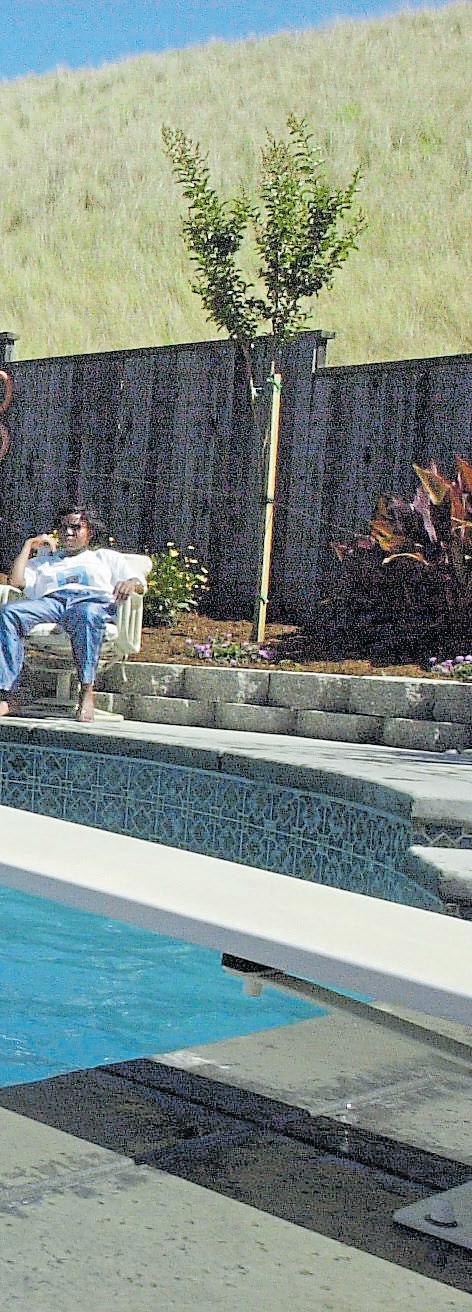
The backyard pool took off in California in the mid20th century, according to Dave Weinstein, an expert in Eichler home design.
SUSAN TRIPPPOLLARD/STAFF ARCHIVES
that would flow from the house, where residents could lounge, cook, eat and more. In translating these concepts, Sunset and other new lifestyle magazines showed readers how to integrate decks, outdoor kitchens and barbecues into their garden plans.
Church created one of the most famous backyards in American history with his work for the Donnell family of Sonoma. As featured on a 1951 cover of House Beautiful magazine, Church’s design spotlighted
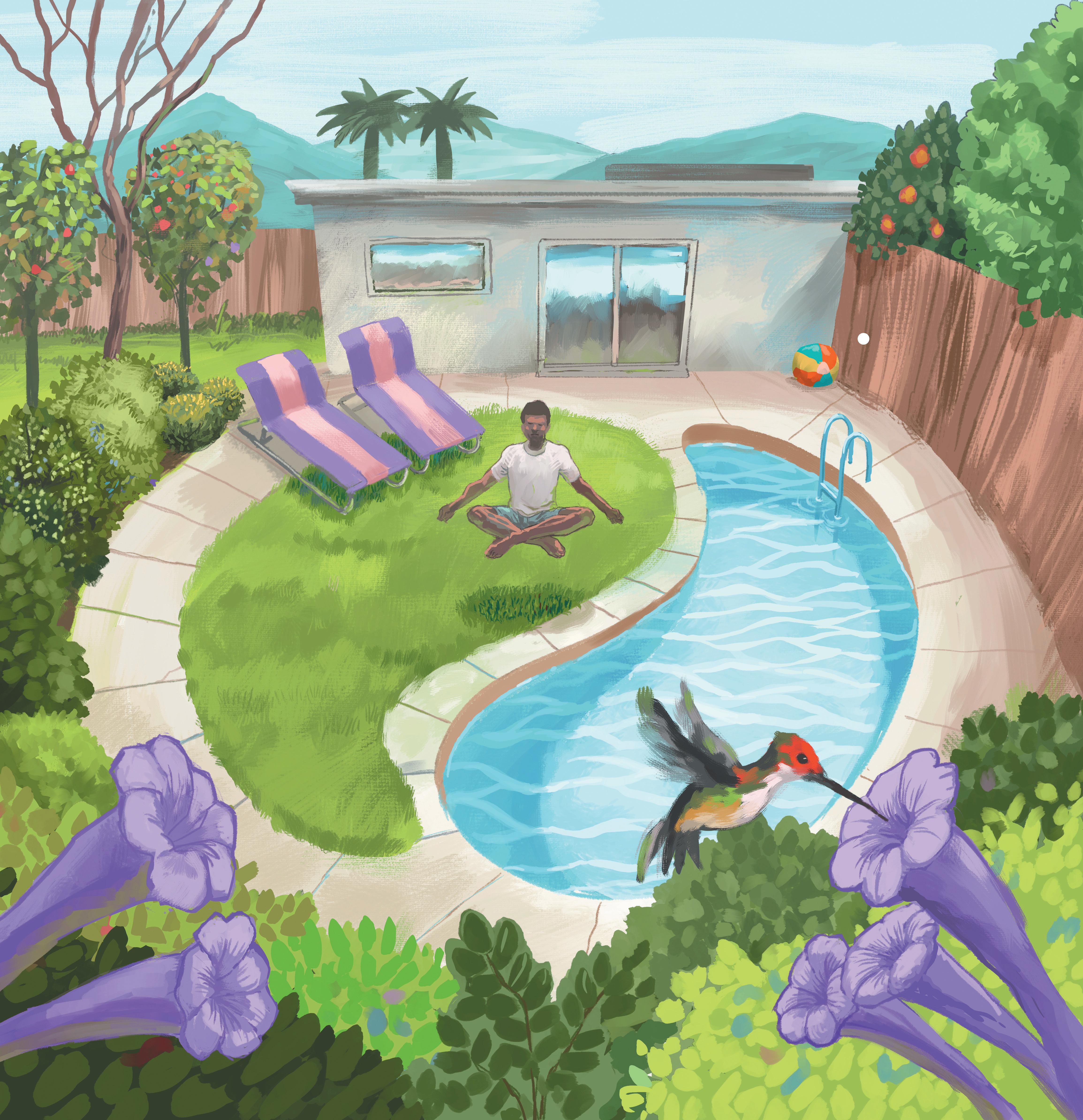
two components that would become synonymous with the California style of backyard: the swimming pool — particularly the kidney-shaped swimming pool — and the lawn.
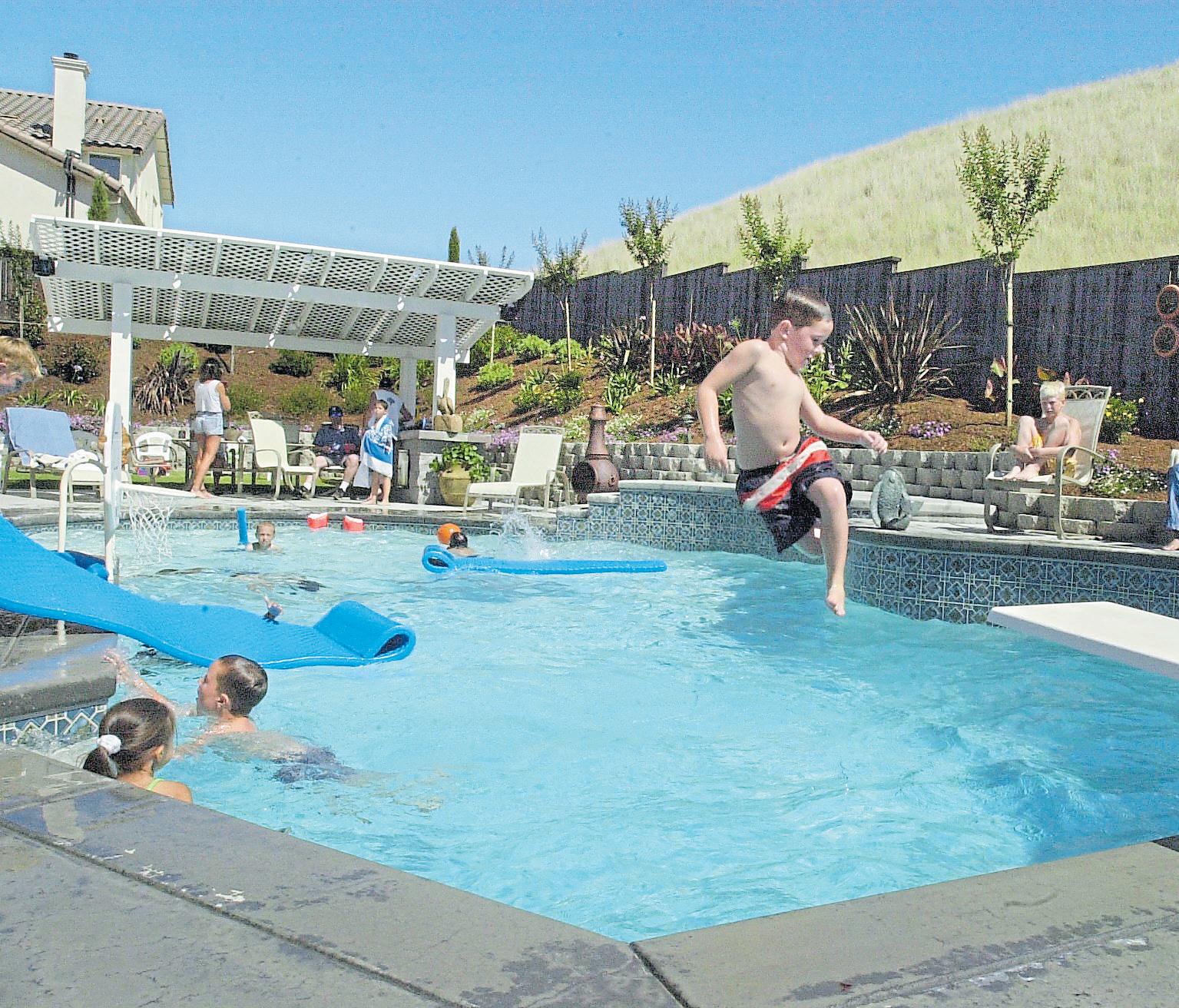
The backyard pool took off in California in the mid-20th century, according to Dave Weinstein, the former features editor at CA-Modern magazine and an expert in Eichler home design. Due to postwar prosperity and changes in pool-construction technology, private pools were
no longer considered luxuries but within reach of the burgeoning middle class.
Backyard pools were also a sign of status, while also helping to “articulate a vision” of the California backyard as a private sanctuary, Weinstein said. Pools, including the more affordable, above-ground Doughboy style, were popular with young families as they raised their boomer and Generation X children.
While Bittner said she herself was never “a pool person,” she inherited a house with a pool and came to appreciate its value when her kids were young,
“I was like, ‘I want to be the house where all the kids come to,’” she said.
Lawns, too, became a status symbol, harkening back to when
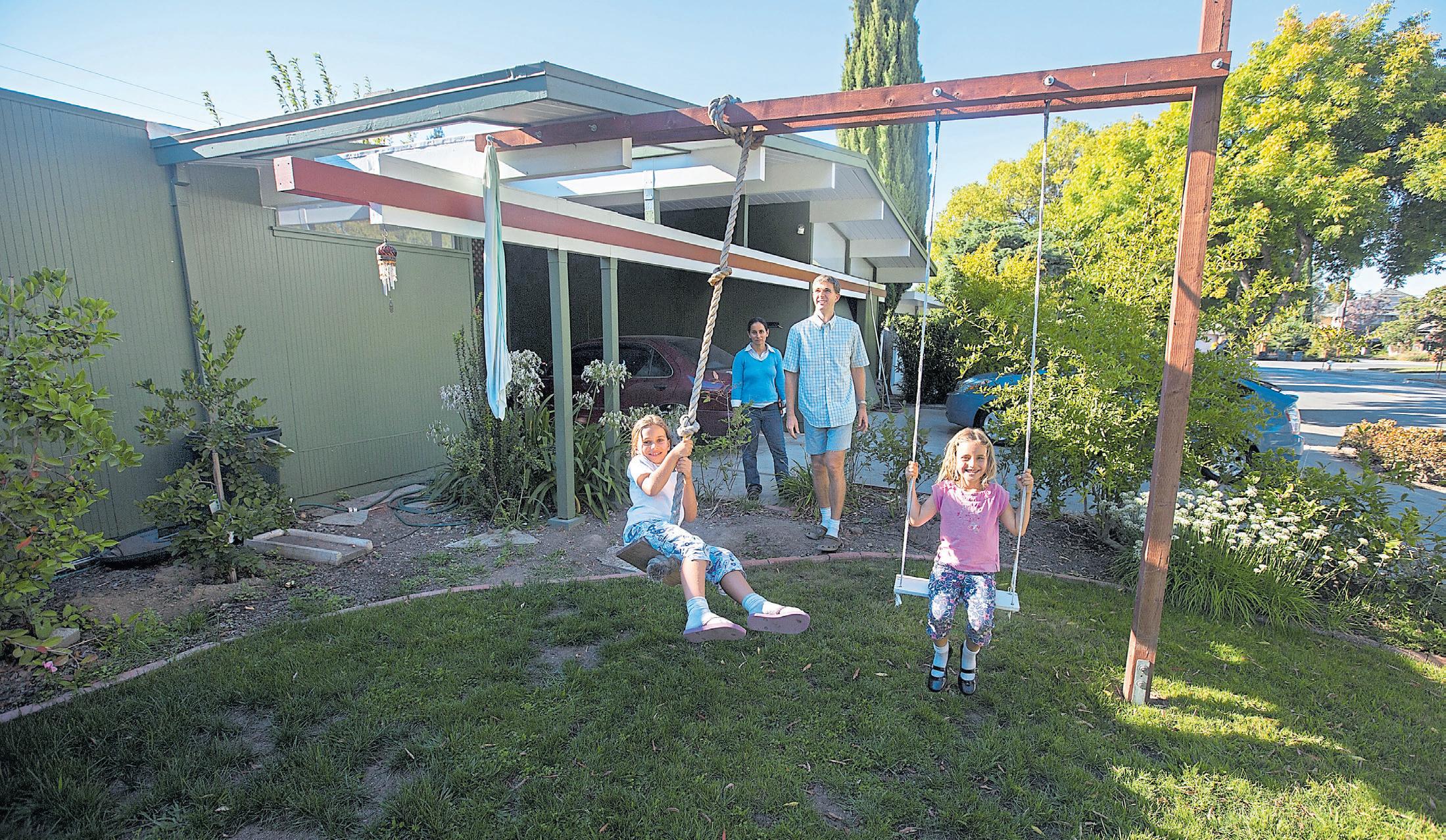
Top: The Luschas family enjoys time in the yard of their Eichler home in Sunnyvale.
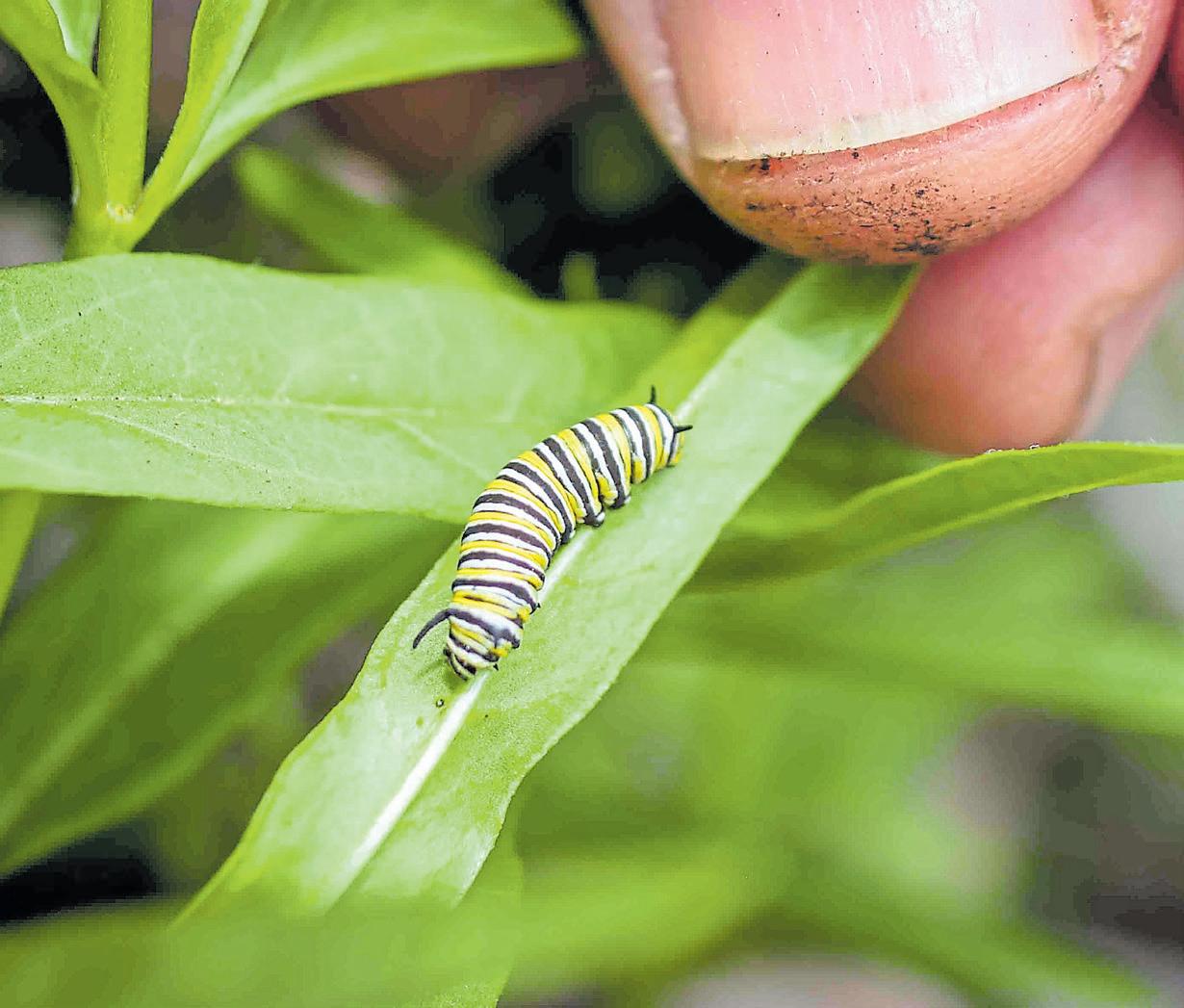
Left: A monarch caterpillar moves over a plant in a parking strip on Russell Street in Berkeley.
PATRICK TEHAN, RAY CHAVEZ/STAFF
lush, vast, manicured carpets of green were seen as emblems of wealth among the European aristocracy. In 20th-century California, lawns became democratized as the new middle-class found that they, too, could afford to install and maintain them, according to a report by the National Wildlife Federation.
Fast-forward to the 21st century: People still like their pools, even though periodic droughts and growing concerns about water resources and climate change in California have raised questions about their sustainability. Pool professionals like to point out that, once filled, private pools use less water annually than a section of lawn across the same surface area.
Whether or not that’s a viable argument for building new pools, it’s lawns that have become public enemy number one — at least to the growing Bay Area movement towards sustainable landscaping. This movement encourages the use of low-water, native plants in order to reduce water use and to bring birds, bees and other wildlife back into people’s backyards.
“My understanding is that lawns became popular because they
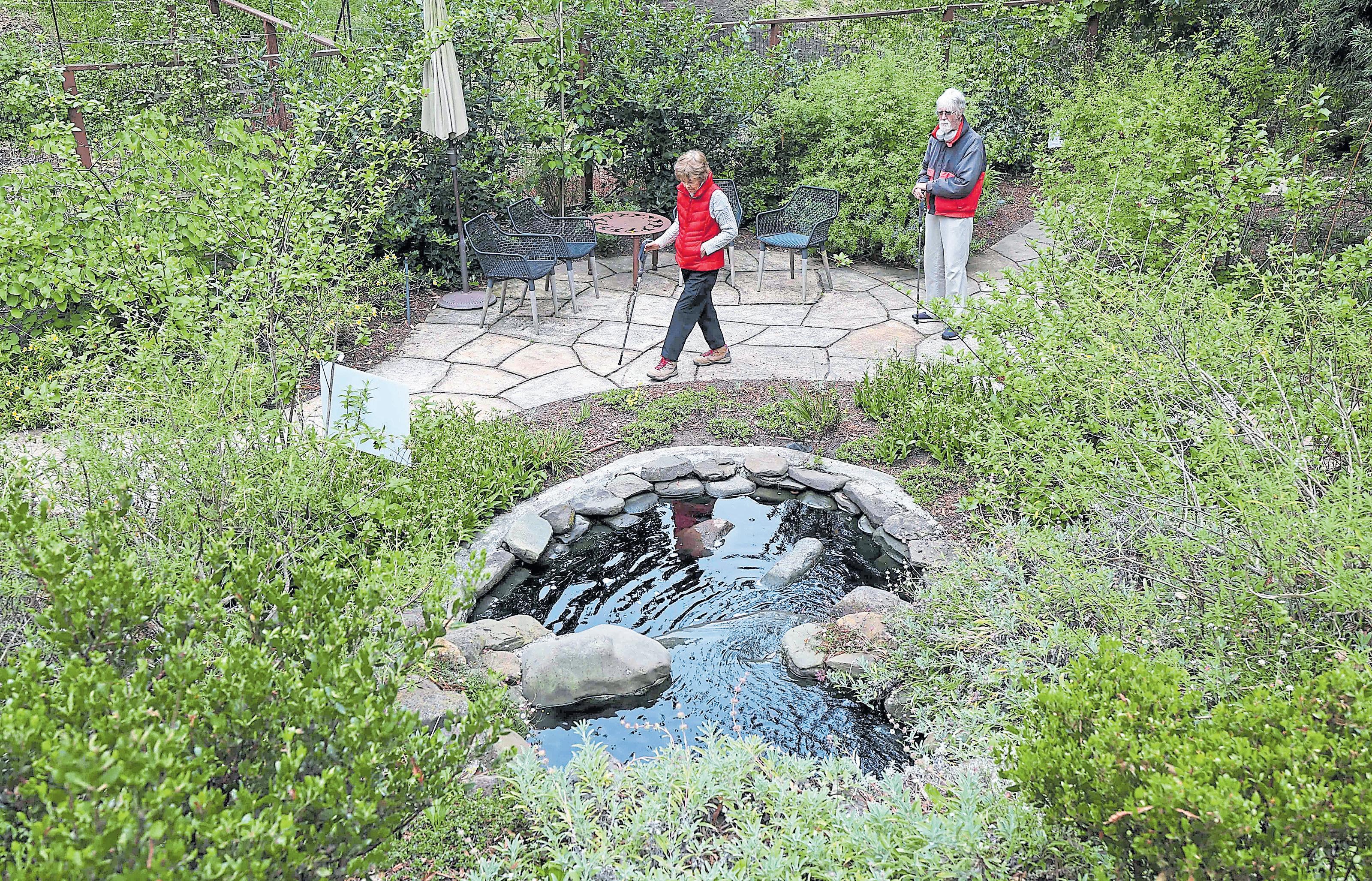
Marylou Arum, left, and her husband Bill Lesterante of Oakland, look around the backyard garden of homeowners John and Valerie Matzger during the Bringing Back the Natives Garden Tour in Piedmont.
RAY CHAVEZ/STAFF
came over from England, and it was a sign of wealth and gentility,” said Kathy Kramer, a native plants enthusiast who started the annual Bringing Back the Natives Garden Tour in the East Bay in 2005. “But it rains a lot in England, and it doesn’t rain that much here. So (the Bay Area) is a really inappropriate place for the lawn.”
The most recent Native Gardens Tour featured gardens in more than 70 private homes in Alameda and Contra Costa counties, and there were no swimming pools or lawns in any of them — a sign of where backyard trends may be heading. Kramer is grateful that the use of native plants in people’s yards is becoming “more mainstream.”
Kramer quotes Douglas Tallamy — the entomologist, ecologist and professor at the University of Delaware who has become a patron saint among native plant enthusiasts — saying that America’s 40 million acres of lawns are ecologically dead spaces that consume 3 trillion gallons of water annually.
“He’s a god,” Kramer said, citing Tallamy’s books and talks on how native plants attract insects, bees and other pollinators, which not only facilitate the reproduction of flowering plants but also serve as a
primary source of food for birds. While Tallamy doesn’t say people should rip out their lawns — though he does say they should have smaller ones — Matzger took his admonitions to heart after hearing him speak in 2017. “I thought the gardens I had been designing are exactly not what I should be doing,” she said, recalling clients who wanted backyards laid out in the English style, including with lawns and plants that used a lot of water or weren’t native.
During COVID-19, Matzger sat at home looking at the rolling lawns in her front yard and back and decided to rip them out and replace them with serpentine pathways, stone walls, terracing and massive numbers of native plants.
Since then, Matzer is delighted in how her backyard now teems with life. “I know
when I go out in my garden and I sit down and I watch the birds, and it’s like I am there with the birds. I’m out of myself — whatever tensions or whatever I’m dealing with, it just kind of goes away, and you have this feeling of peace and optimism,” she said.
Like Matzger, Bittner emphasizes the use of native plants in her backyard designs, a trend her clients embrace, though some are reluctant to part with their lawns. “They’re like, ‘Let me keep my lawn!’ And I’m like, “OK, let’s cut it in half,’” she said.
These days, homeowners don’t have much choice in adjusting their landscaping ambitions to make their properties safe from wildfires; they risk not getting insurance if they don’t, Bittner said. Fire-proofing strategies include using noncombustible materials in decks and fences, moving plants away from houses and limiting the use of certain beloved plants — like rosemary or junipers — because they are known to be flammable.
NHAT V. MEYER/STAFF
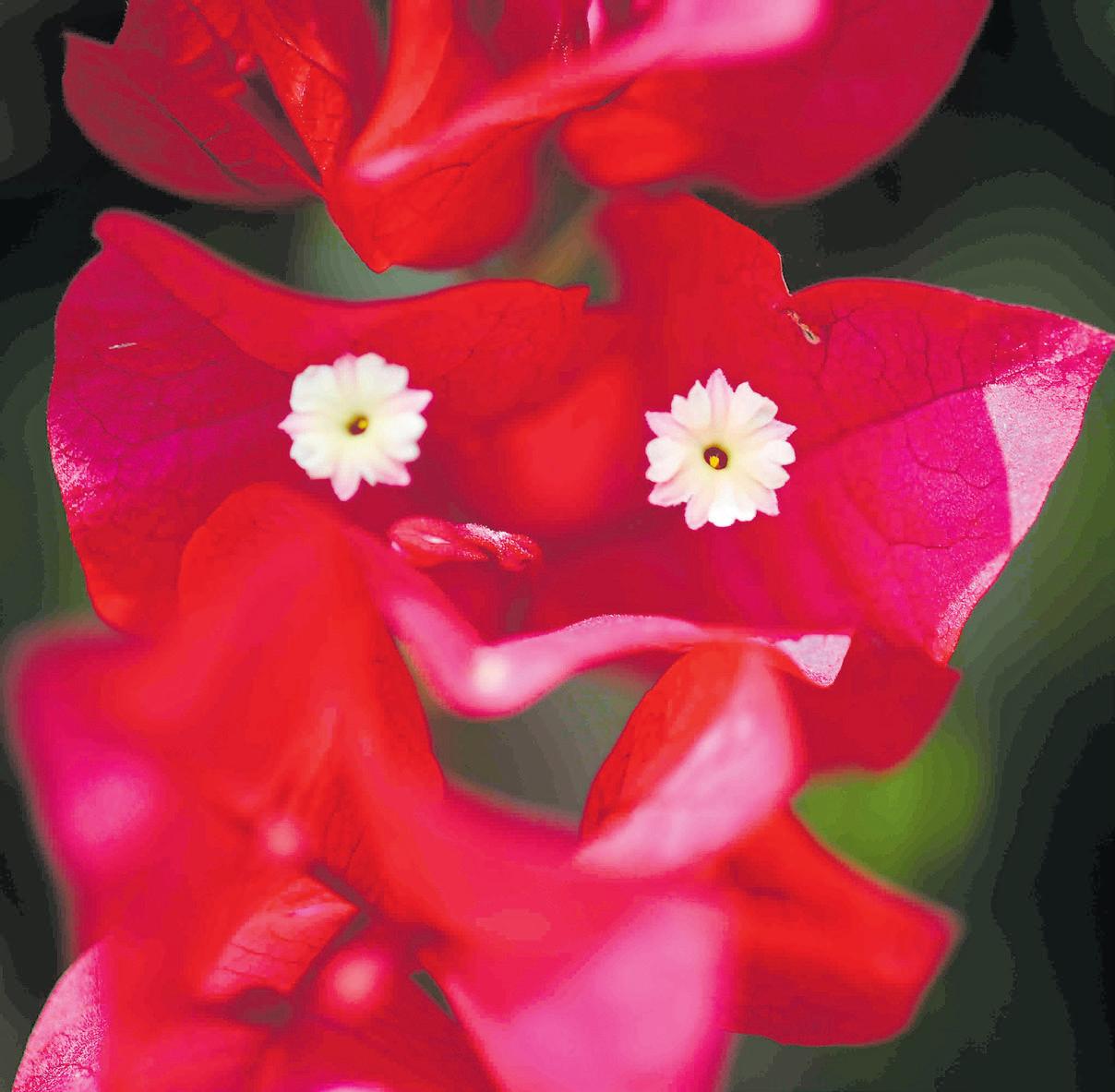
Left: Bougainvillea, with its white flowers, blooms and forms happy faces on a house facade in Oakland.
RAY CHAVEZ/STAFF
As has always been the case, emerging trends in backyard design likewise reflect the realities of life in the Bay Area. People with the means are installing plunge pools and saunas to promote wellness and are building ADUs not necessarily to rent out but often to house children who’ve returned home from college or elderly family members, Bittner said. During COVID, these ADUs also became places to work remotely.
And Bittner has been delighted to see people increasingly adopting one of the original functions of backyards — to grow food.
“It’s been nice to see that people have caught up with edible landscaping,” Bittner said. “People don’t want to grow all their own food — they don’t want to be farmers — they just want to have a garden, have some things at their fingertips. People really value food in the Bay Area.”
Above: A Brontosaurus statue towers over the backyard of the Flintstone House in Hillsborough.
W I LD KINGDOM
What’s living in our backyards, and how our personal spaces fit into the larger Bay Area ecosystem
STORY BY LUIS MELECIO-ZAMBRANO
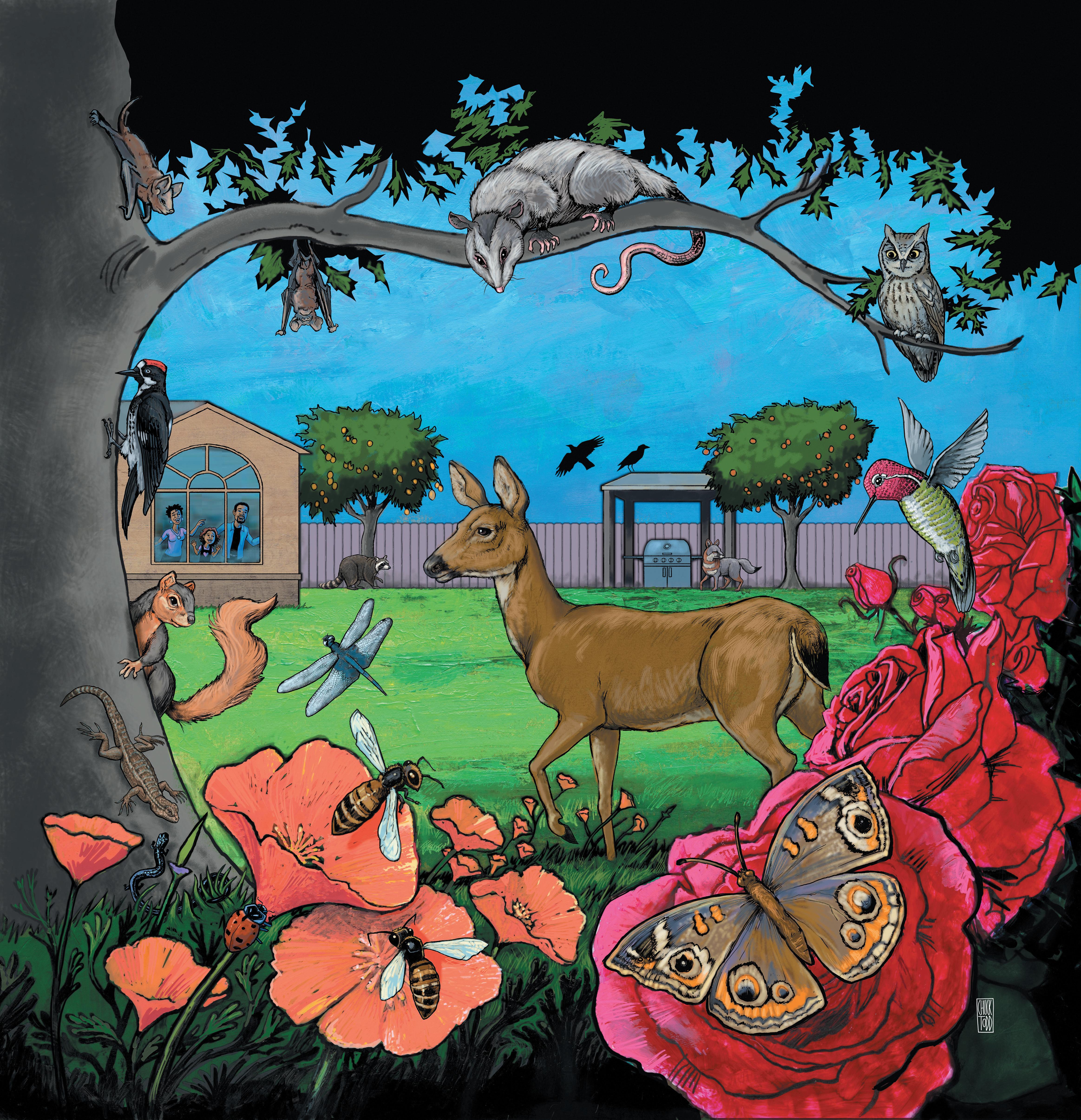
ILLUSTRATION BY CHUCK TODD
Hidden among leaf litter, a tiny salamander lies coiled up, its unassuming brown body a minute spiral in the darkness as it lies in wait for insectoid prey.
Flitting above it, the emerald coat of a hummingbird flashes in the sunlight, its wings buzzing in a near-invisible blur as it sips nectar from a native flower. Elsewhere, a squirrel dashes across a stretch of grass, unaware of a red-tailed hawk that reels in slow circles overhead before preparing to strike.
These scenes may sound like they belong in a nature documentary, but in fact, they represent a normal day in a Bay Area backyard.
Backyards aren’t just outdoor extensions of our homes, they’re unique habitats in their own right, often teeming with hidden creatures, acting as conduits between wild spaces and providing tiny hubs of resources for the nonhuman neighbors that call our region home.
“We think of nature as ‘out there,’ but we are part of nature, and nature is in our backyard,” says Aaron Hebert, natural resources manager at the Santa Clara Valley Open Space Authority.
AN OASIS FOR WILDLIFE
When it comes to nature, backyards are rather strange and special. Often, they are places where we cultivate blooming things, water lawns and plants and grow fruits and vegetables.
All of that can be attractive to animals, especially when resources are scarce in the wild — the water can attract species when there is a drought; blooming things can attract insects, and food sources can attract all sorts of foragers and hungry creatures.
“As long as you create the environment and as long as there is a conduit to where you are … a backyard can be an oasis,” says Paul Licht, former director of the UC Botanical Garden at Berkeley. Jessica Castillo Vardaro, a biologist at San Jose State University, has conducted research setting up cameras within San Jose city limits to catalogue wildlife. While she’s seen many of the usual suspects — she has several photos of squirrels and raccoons stealing away with junk food on her website — her cameras have also captured red and grey foxes, rare songbirds, coyotes, jackrabbits and a host of other creatures.
Beyond her research, Castillo Vardaro points to logs of animal sightings in the region, which show that of the 400 vertebrate species — animals with skeletons like birds and mammals — found throughout the county, 300 are found in urban San Jose.
Around the Bay Area, Rebecca Johnson leads the City Nature Challenge as part of her role as director of the Center for Biodiversity and Community Science at the California Academy of Sciences. The event encourages thousands of citizen scientists across the globe to count species in and around their cities. In the Bay Area alone, volunteers spotted more than 3,000 species of plants and animals.
“There’s something really cool about paying attention to nature in your backyard in the Bay area,” says Johnson. “They have such a diversity of habitats and landscapes where people live.”
Those numbers hint at the incredible variety of species that are living just beneath our noses, even in urban pockets of the Bay Area. In her teaching role, Castillo Vardaro will direct students to log a certain number of species in and around San Jose.
Students, she says, are often shocked to realize that so many other creatures move near us. But by deliberately logging species through online apps like Merlin or iNaturalist, her students and others can begin to realize the diversity around them.
“You have to stop and pay attention,” says Castillo Vardaro of noticing wildlife. “It just takes practice.”
THE NEIGHBORS HIDING IN PLAIN SIGHT
Once you begin to look, you can find all kinds of strange and beautiful organisms in your backyard. Some are flamboyant, others squirrel away in hidden tunnels, and others take cover of night.
But some of the most fascinating creatures are in plain sight.
Take Anna’s hummingbird, a tiny creature that weighs only as much as a quarter and is a frequent visitor to Bay Area hummingbird feeders. Its emerald coat of feathers is accented by a bright flash of amethyst or ruby that glimmers on its throat and, in males, often wraps around its head. That beauty is the stuff of legend — literally. In the cosmology of the Amah Mutsun tribe that has lived on this land for thousands of years, the hummingbird brought fire from underground, stealing an ember from the unwilling Badger people so that those on the surface could cook, but in its haste, the ember lit aflame and turned its throat red.
Its wings can propel its diminutive frame by flapping more than 50 times a second. They are also aggressively territorial and will fight and — on occasion even injure — each other in midair dogfights that can last several minutes.
Even their mating displays are dramatic. During courtship, males will fly up to 130 feet above a female and then perform daredevilish dives where
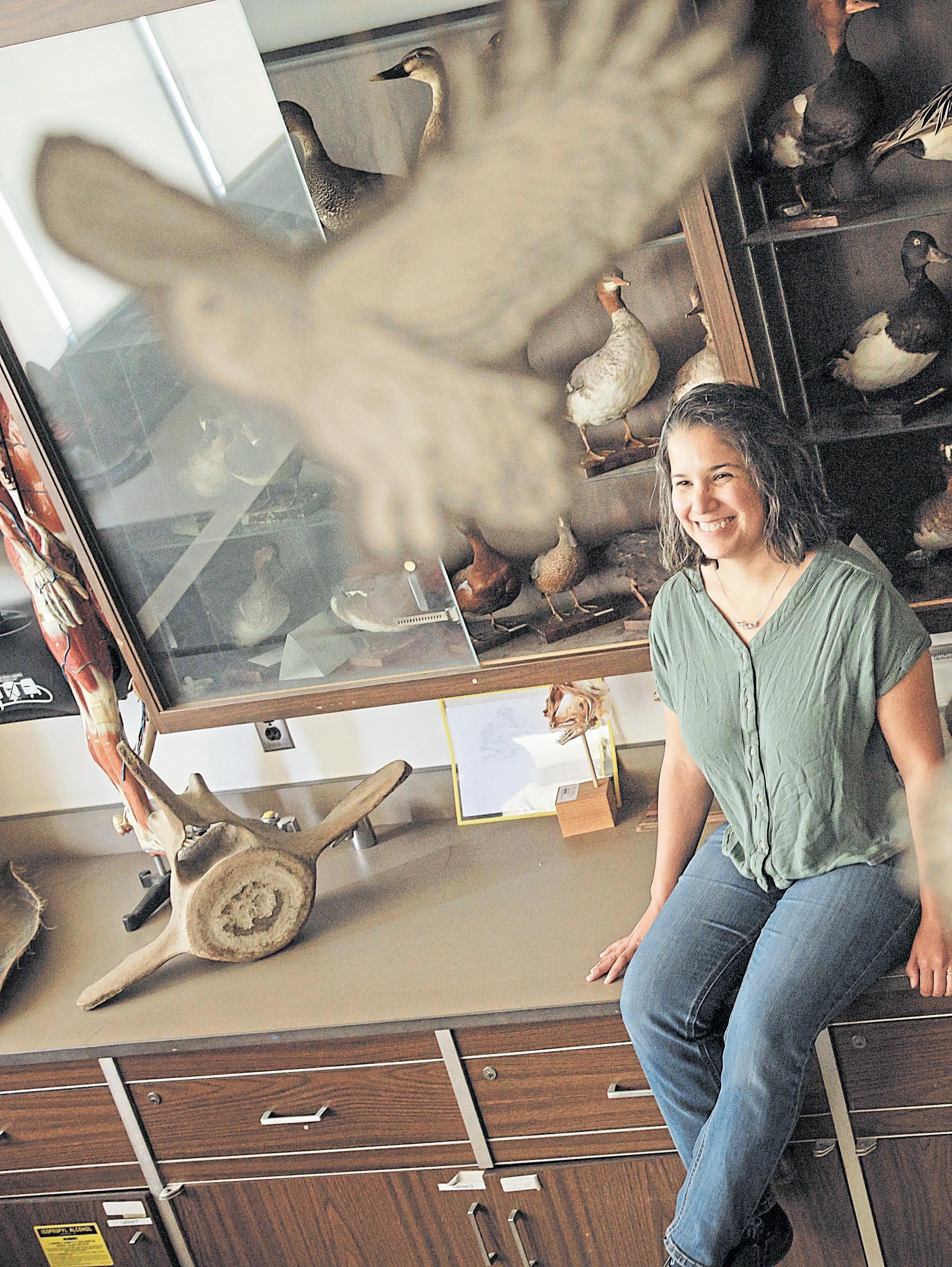
Jessica Castillo Vardaro is an associate professor of ecology and evolution in the Department of Biological Sciences at San Jose State University, where she teaches vertebrate evolution and natural history.
DAI SUGANO/STAFF
they freefall and then pull up in an arc feet in front of the object of their display while experiencing 10 Gs of force — more than what trained fighter pilots can withstand.
If Anna’s hummingbird is nature’s fighter pilot, the monarch butterfly is its long-distance flyer. It’s the only butterfly known to fly north in the winter and south in the summer, and the journey is an intergenerational odyssey that spans the continent.
Depending on the population, monarchs can fly all the way from Mexico to Canada, up to 3,000 miles. Their tiny wings — brilliant orange with coal-black veins and flecks of white — can help propel them up to 265 miles in a single day. Their journey north can take three to four generations, and the flight south takes another generation.
The butterflies do not learn the routes from each other; instead they follow cues and instincts that are etched into their genetics, traversing miles to places they have never been, in an ongoing cycle that no one butterfly will ever see in full.
When overwintering, tens of thousands can gather in a single grove, clustering together in massive groups that flap their wings like semi-sentient leaves. While the clusters happen to the south in Monterey and Santa Cruz, the monarchs can be spot-
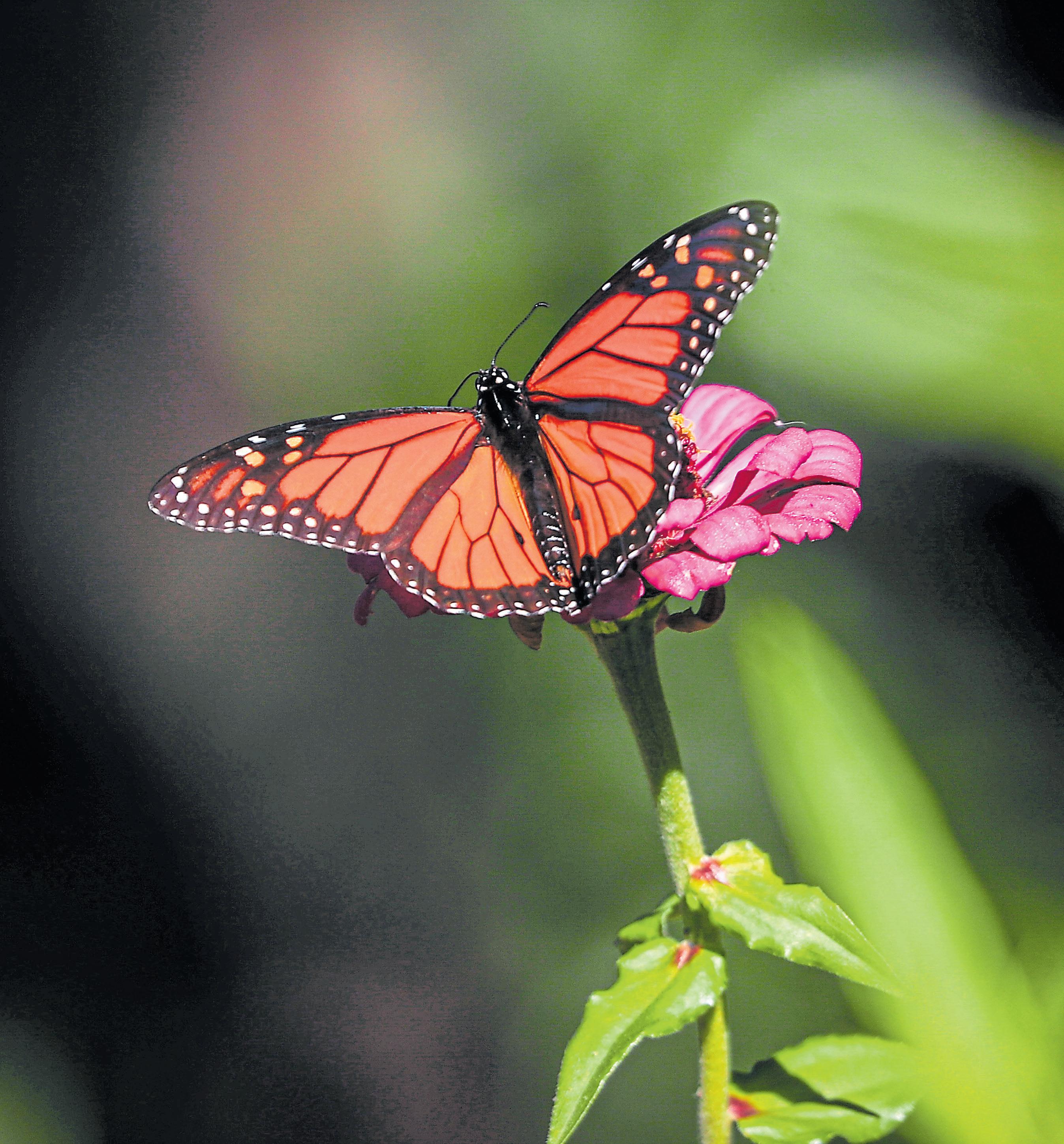
A monarch butterfly rests on a flower at Palo Alto’s Rinconada Park Community Garden near Stanford University. SHAE HAMMOND/STAFF ARCHIVES
ted while migrating throughout the Bay Area and are especially attracted to native milkweed. While some backyard creatures display their brilliant colors proudly, most are far more reluctant to be seen — with many hiding just beneath the surface of your backyard.
The long-tailed weasel is an elusive burrow dweller. The slender creature measures around a foot-and-a-half long and is the width of a soda can, with a brown coat, a light-colored belly and its namesake long tail — which can be a third or more of its length — capped with black. Nicole Weger, director of wildlife operations at the Peninsula Humane Society & SPCA, calls them “tiny little super predators” — the furry carnivores start eating meat even before their eyes or ears are fully developed. Once full grown, they are fierce hunters who use their agility and lethal bites to take down prey even larger than themselves.
Some burrow dwellers are even smaller and slimmer, like the California slender salamander. The amphibian is so tiny that it is often mistaken for an earthworm at first glance. Their little black or brown bodies are thinner and shorter than a pencil, capped with a pair of beady brown eyes and four limbs so small and stubby that they make even their minute bodies look large. They take advantage of
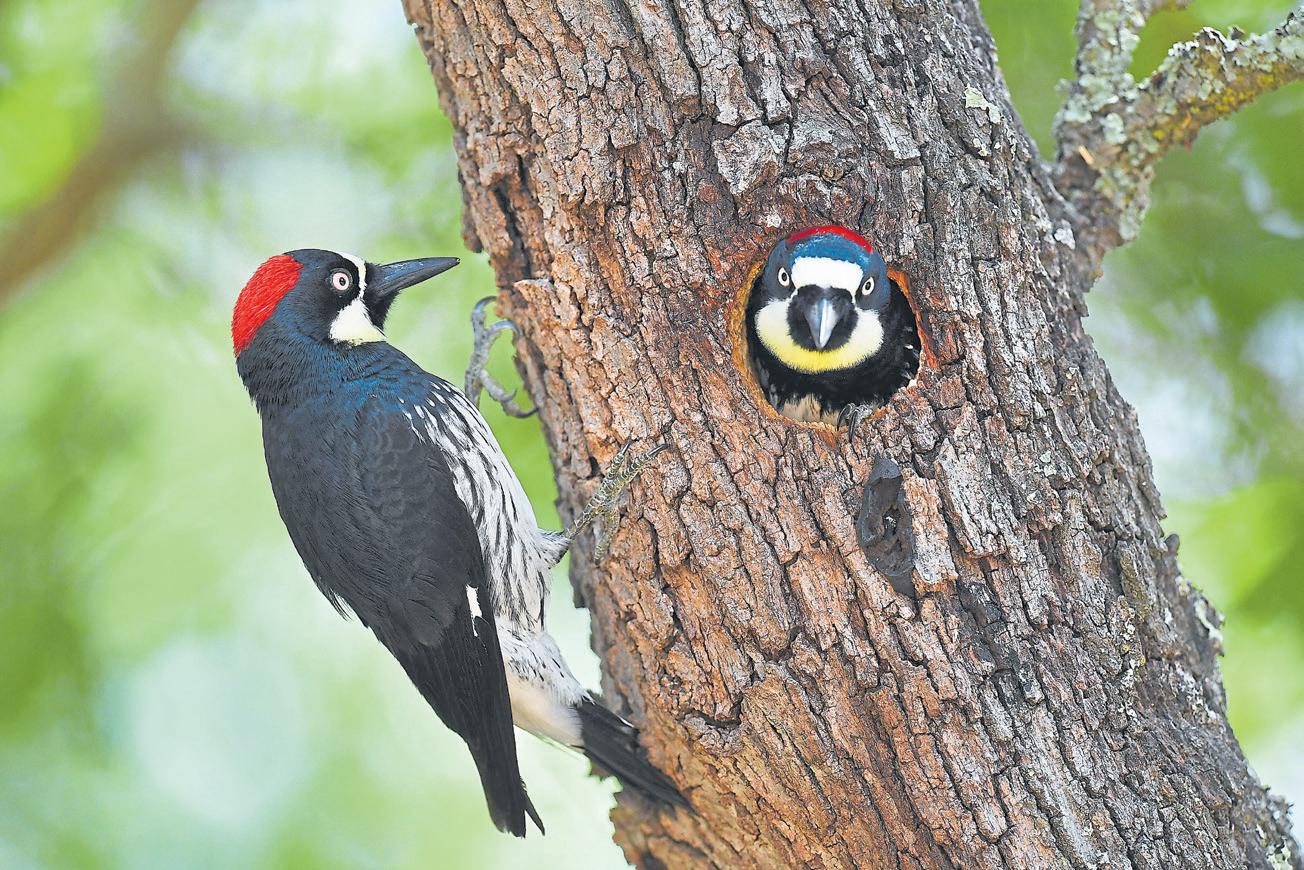
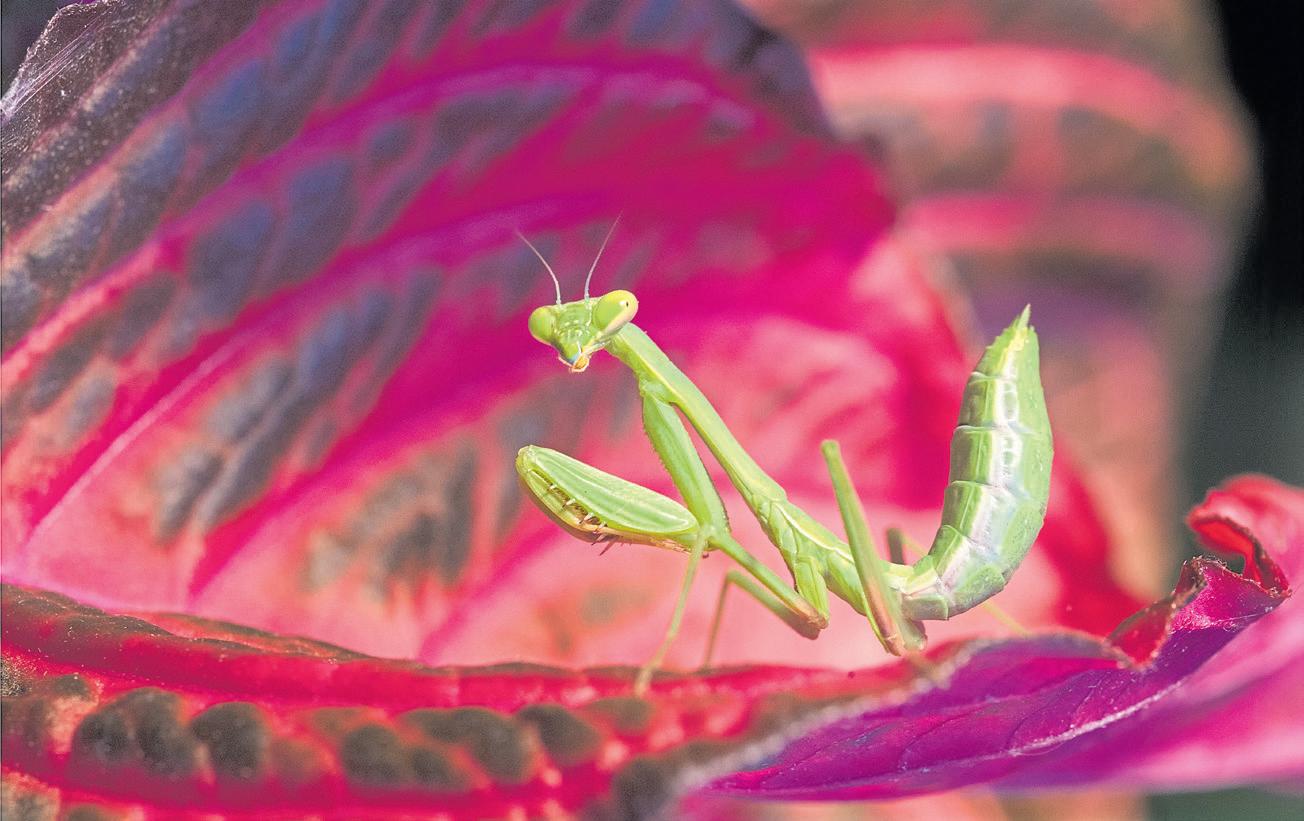
Two acorn woodpeckers nest in a tree, top, at Hidden Lakes Park in Martinez, while a praying mantis perches on a bloodleaf plant, above, in a garden in Tracy.
JOSE CARLOS, DOUG DURAN/STAFF ARCHIVES
their size to wriggle into burrows and eat insects, but they can also be found underneath stones, logs or leaf litter that might be sitting in your backyard. “The thing that I think is kind of magical about a species like this is (that) you don’t see it or think about it, but it’s like living its life right in your backyard,” says Weger.
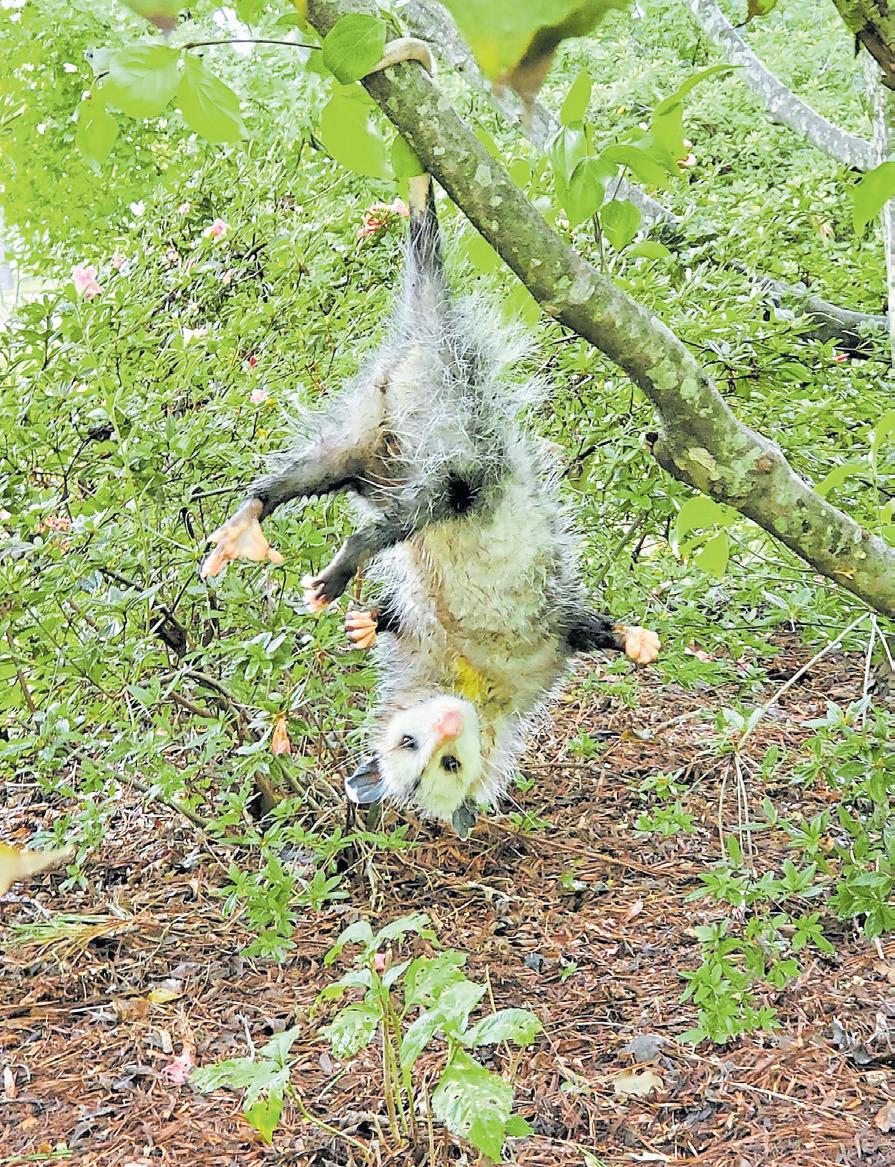
Above: Opossums dine on insects that are pests to us, including ticks, and despite their negative public perception, are incredibly unlikely to carry rabies because of their low body temperature.
COURTESY OF ANKIE KIZER
While some creatures hide underground, others take the cover of darkness — and sometimes these are the most misunderstood.
With their rows of sharp teeth and narrow, pale faces,
opossums can be off-putting and even frightening at first glance, but these largely nocturnal creatures act as a backyard clean-up crew. Opossums dine on insects that are pests to us, including ticks, and despite their negative public perception, are incredibly unlikely to carry rabies because of their low body temperature. While they’re known for “playing dead” — curling up on their sides with mouths agape — the reaction is actually an uncontrolled response that happens when the opossum gets stressed, and the animal can even get stuck in the position for several
hours at a time until the threat passes.
Of night creatures, some of those most feared and misunderstood are bats. In California and across the southwestern United States, the Mexican freetailed bat is the most common of these flying critters and is one the most abundant mammals on the continent. They also have a hearty appetite — a colony of thousands of bats can eat literal tons of insects in a single night (no blood drinkers here). But what makes them exceptional is that they are some of the best flyers on the planet. A network
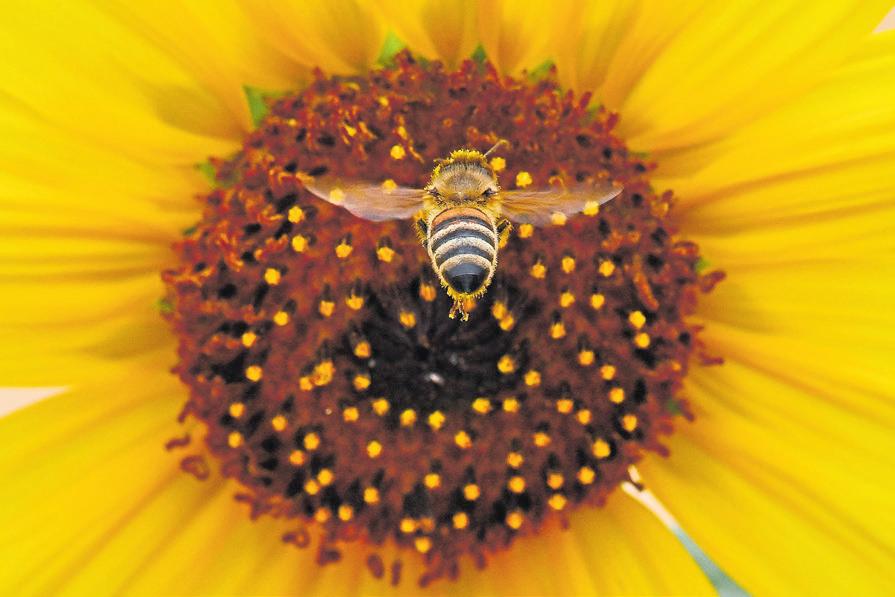
Top: A bee hovers above a sunflower at Shell Ridge Open Space in Walnut Creek.
JOSE CARLOS FAJARDO/STAFF ARCHIVES
opportunities for species,” says Spotswood. “If you make cities better, they will become better for species.”
colony.
of bones and muscles supports their handlike wings, which allows them to grasp the air and make dramatic turns midflight to intercept flying prey like moths. Their airborne prowess lets them fly at a striking 60 miles an hour, and they have even been measured at bursts of 100 miles an hour and flying more than 10,000 feet in the air.
ISLANDS OF NATURE
Beyond serving as habitats and feeding grounds for some creatures, backyards serve as pathways for others moving
JOHN BURGESS/THE PRESS DEMOCRAT
between wilder places. Many creatures sneak through the spaces in and between backyards, slinking through urban creeks or woods on their way to the wide-open spaces on the edges of the Bay Area. Bobcats, coyotes, badgers and even mountain lions have been spotted deep in urban San Francisco and San Jose, effectively island-hopping along an archipelago of backyards on their way to new territory to find mates and food.
The diversity of species that live in cities and the way that they have adapted to living in our backyards is forcing some scientists to rethink what it means to conserve species and habitats in a world that is indelibly changed by our impact and the environments that we build.
Wild spaces remain “the platonic ideal” for the organisms around us, and conserving those spaces is crucial to preserving the species and ecosystems that have lived on this land for millions of years, says Hebert, the conservationist.
But urban environments
have their own role and their own unique advantages. Erica Spotswood, an ecologist and the director of science at Second Nature Ecology and Design in Oakland, saw a gap between the science that showed the risk of human environments for biodiversity and the observations that so many were making of certain species thriving alongside humans.
She and her colleagues began to catalogue the ways that cities could benefit species. They can provide a release from certain pressures that they might feel in the wild, like drought or predators, or provide stops for migrating species. Spotswood says built environments can actually be “hotbeds” for evolution, speeding up the adaptation of species across generations. And because cities tend to be hotter than the surrounding wilderness, those evolutions could help species prepare for a warmer climate.
“We’re not glossing over the fact that cities are bad for biodiversity writ large … but (they) also create these unique, weird
Perhaps most importantly, our backyards — both literal and figurative — are what we make of them. Spotswood notes this possibility for cultivation could serve as a crucial way cities could benefit biodiversity. Building green spaces and parks, while creating places for humans, can also provide habitats for animals. Bringing native plants into our backyards and beyond can rebuild the food chain from the ground up, attracting the insects that evolved to pollinate the plants and the small creatures that evolved to eat them, and so on. And in some ways, this conservation is easier than trying to reinstate a native grassland in the wild, because we have so much control over the spaces within our “human” boundaries.
This has already started coming to fruition in some cases. While monarch butterflies are in decline because of a decline of the main food source for their caterpillars — native milkweed, more and more gardeners have begun to plant milkweed in their backyards. While this hasn’t offset the losses, it may help the species survive to continue its astounding sojourn across the continent.
Reimagining our backyards as environments to conserve could turn the millions of humans who call this region home into assets for their nonhuman neighbors.
“The thing that our backyards do is create a habitat for these little critters. It adds up because of how many millions of people live in the Bay Area,” said Hebert. “It really is a big deal in its effect on the species.”
A long-tailed weasel darting between burrows pauses for a second in a prairie dog
COURTESY OF DONNA FELEDICHUK
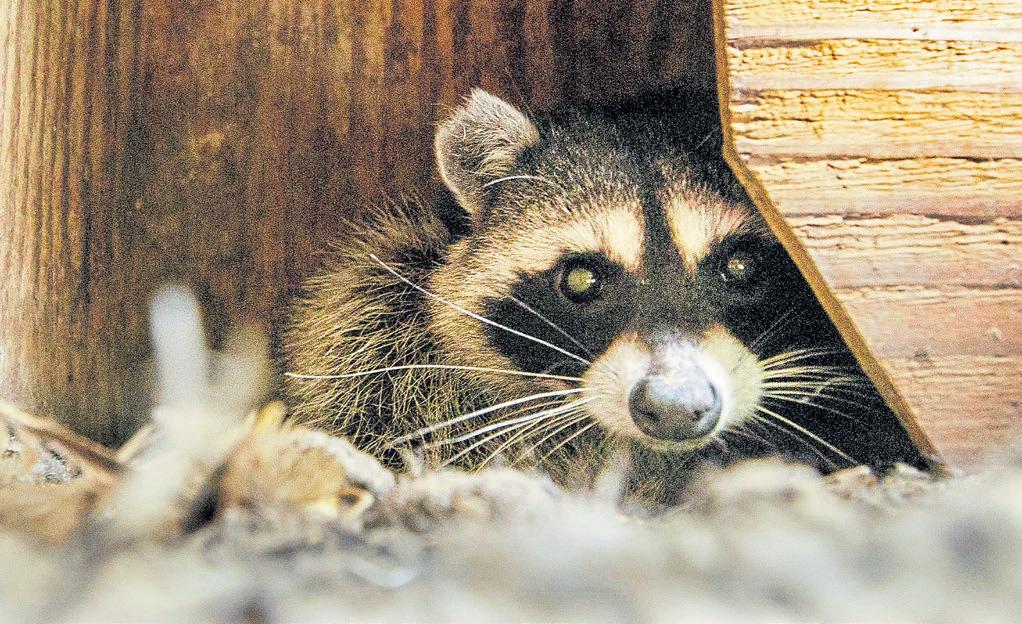
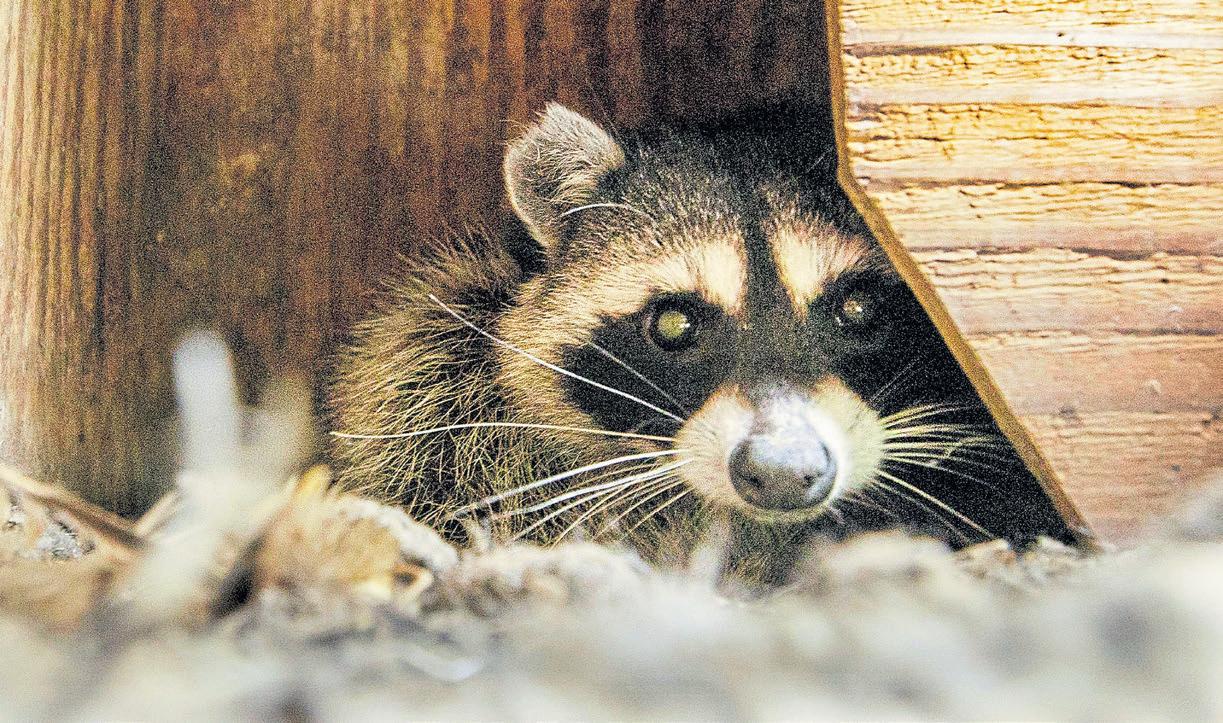
A mother raccoon takes over a barn owl box with her kits at Lynmar Winery in Graton. Great-horned owls are the most dangerous predators for barn owls.
Above & Beyond
A backyard astronomer’s guide to summer in the Bay Area
BY JOHN METCALFE
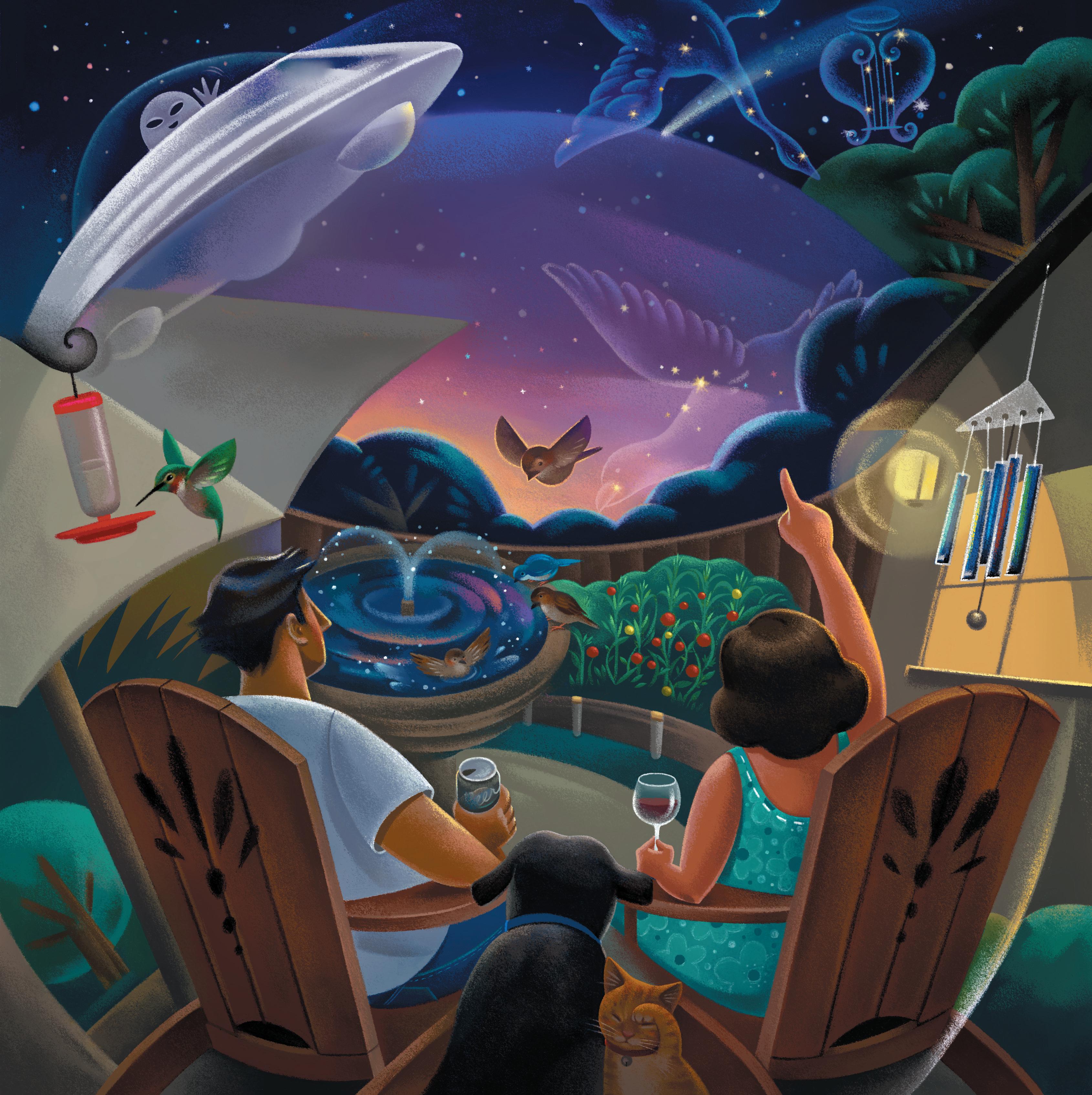
When the world seems out of control, sometimes there’s nothing more reassuring than going out into the backyard and simply looking up.
Amateur astronomy is a popular hobby in the Bay Area, and there’s plenty happening in our night skies this summer and early fall to illuminate and wow. So there’s no better time than right now to cut off the screens and the urban gray noise and bask in a show that’s been going on for billions of years.
There’s a reason that stargazing can make us feel centered in chaotic times, says Andrew Fraknoi, astronomy-faculty emeritus at Los Gatos’ Foothill College and an astronomy professor at USF’s Fromm Institute.
“At a time when our political leaders seem to be completely unpredictable, there’s some sense of reassurance that the cycles of the sky go on. They go on just as we predict from our understanding of celestial motions and gravity, and there’s an order and regularity there that’s so often missing from our everyday lives,” he says.
Not that predictable means dull. Like they say on “Star Trek,” space is our final frontier.
“Many amateur astronomers tell me that when they’re out there in their backyard — maybe with their small telescope, looking up at distant things like a nebula or even another galaxy — it gives
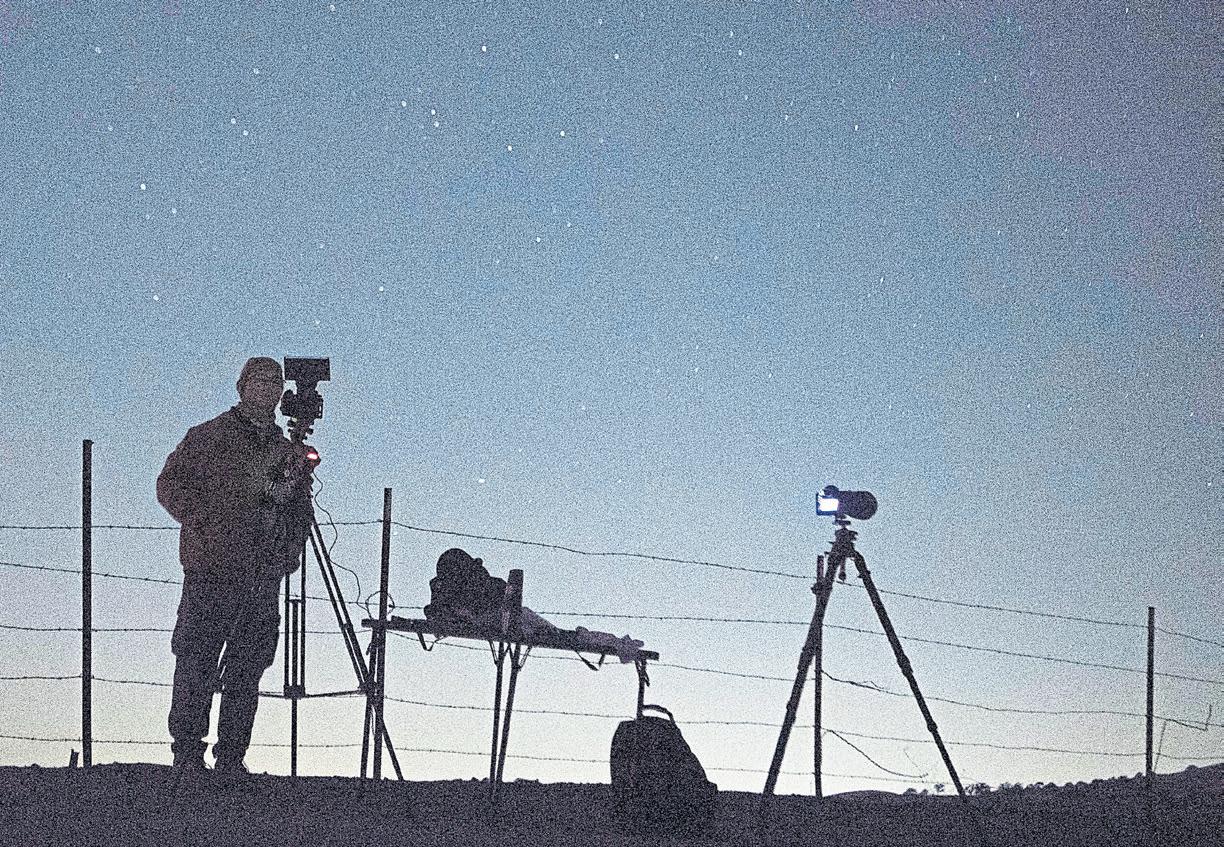
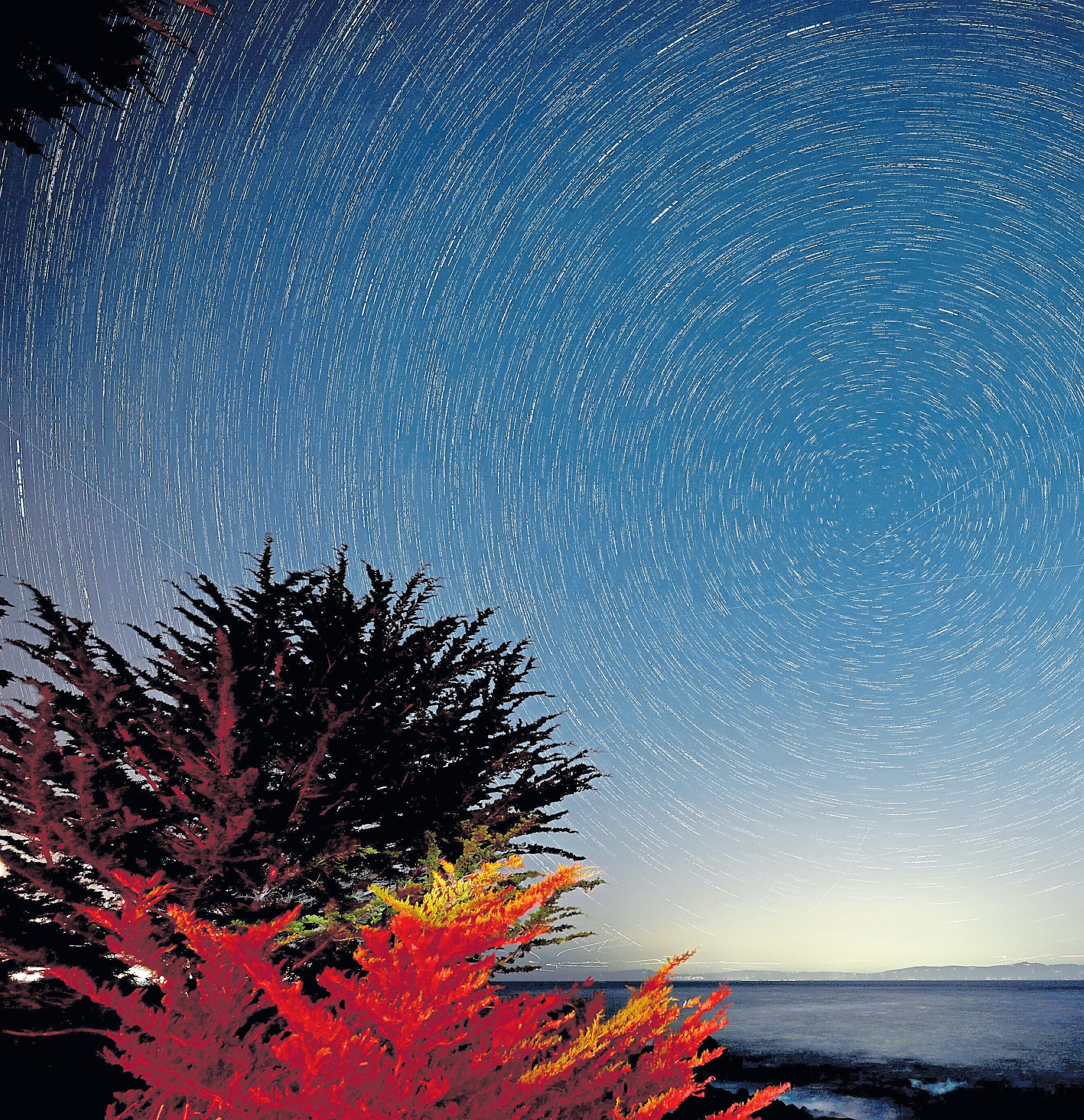
Because of the Earth’s rotation, layered exposures of the stars appear to circle Polaris, the North Star, at Berwick Park in Pacific Grove.
DOUG DURAN/STAFF
them this remarkable sense of connecting with the frontier. It’s connecting with something much bigger than themselves, which is a lovely feeling,” Fraknoi says.
How can newbies get started in their own backyards? First off, it helps to know the schedule. This summer will see a blockbuster meteor shower, the Perseids, as well as a blood-red lunar eclipse. There is an International Asteroid Day, in which the world will probably not get demolished, a visit from a 5-year periodic comet and views of the Milky Way’s brilliant core. (Keep reading for a monthly breakdown of astronomical events.)
The only gear most people will need is their eyes. It helps to let them adjust for 5 or 10 minutes before heading outside — don’t go out directly after watching TV. Beyond that, telescopes continue to get more accessible and effective, but even the more expensive computer-assisted telescopes that are all the rage now among amateur astronomers aren’t needed for basic backyard explorations.
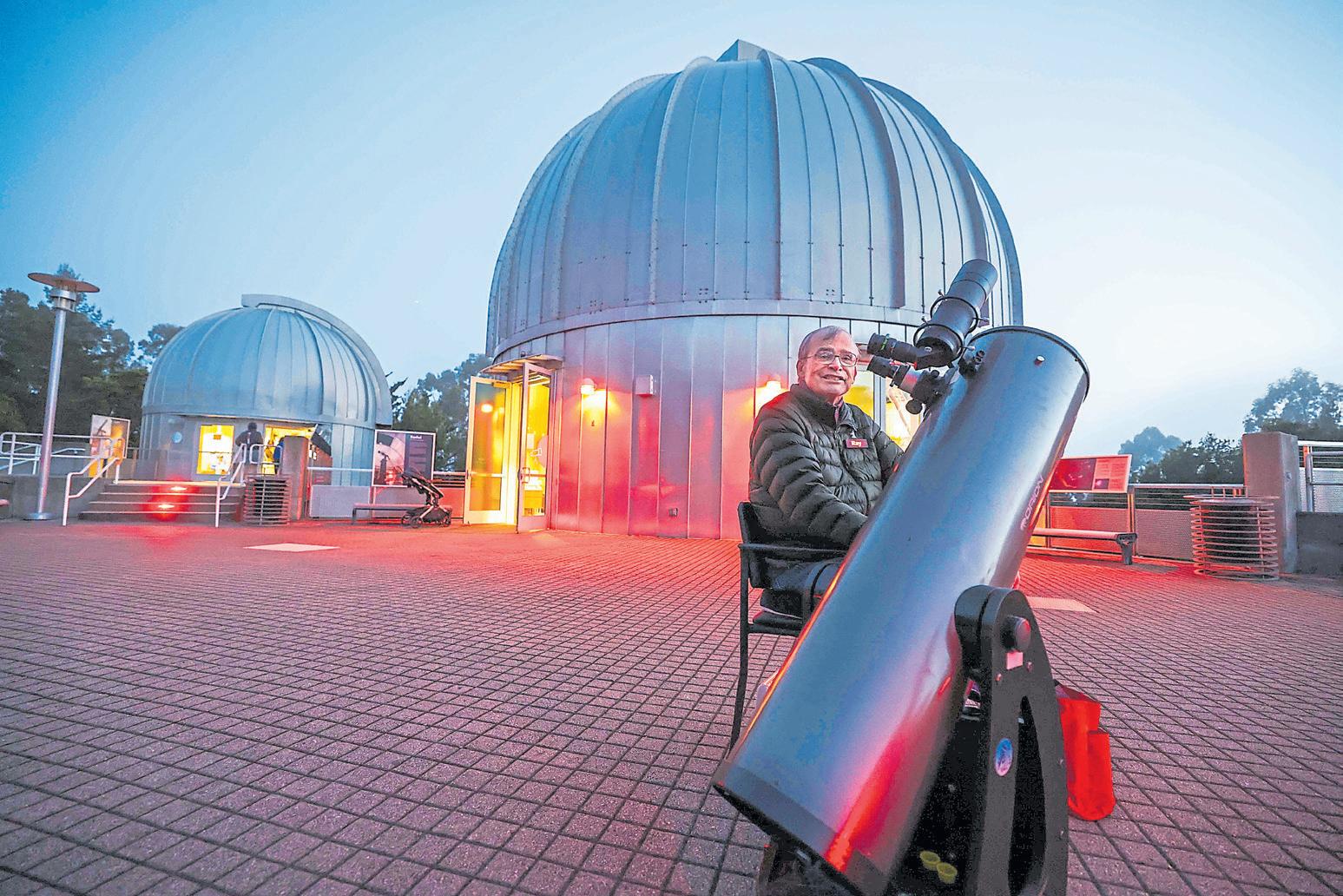
“Personally, I think people should get a manually operated telescope, initially, say a 6-or-8 inch Dobsonian reflector or Newtonian reflector. A manually operated telescope will require you to actually find things in the sky yourself, and for me, part of the enjoyment is learning the sky,” says Raymond Howard, outreach coordinator for the century-old Eastbay Astronomical Society.
A note about light pollution: Some communities have attempted to reduce urban glare, such as those by the Lick Observatory near San Jose (which transitioned to less-intense street lights) and in West Marin
(which is working to create an internationally recognized “Dark Sky zone”). If you face a light situation in your yard akin to a bumpin’ disco, you can ask your neighbors to please dim their lights or visit a friend who lives in a low-light area. Del Valle Regional Park in the Livermore hills is good, as are places in the Diablo Range or Santa Cruz Mountains. Even better is up north by Lake Sonoma, where many serious astronomers trek.
You can also supplement your backyard stargazing with visits to Bay Area observatories, which
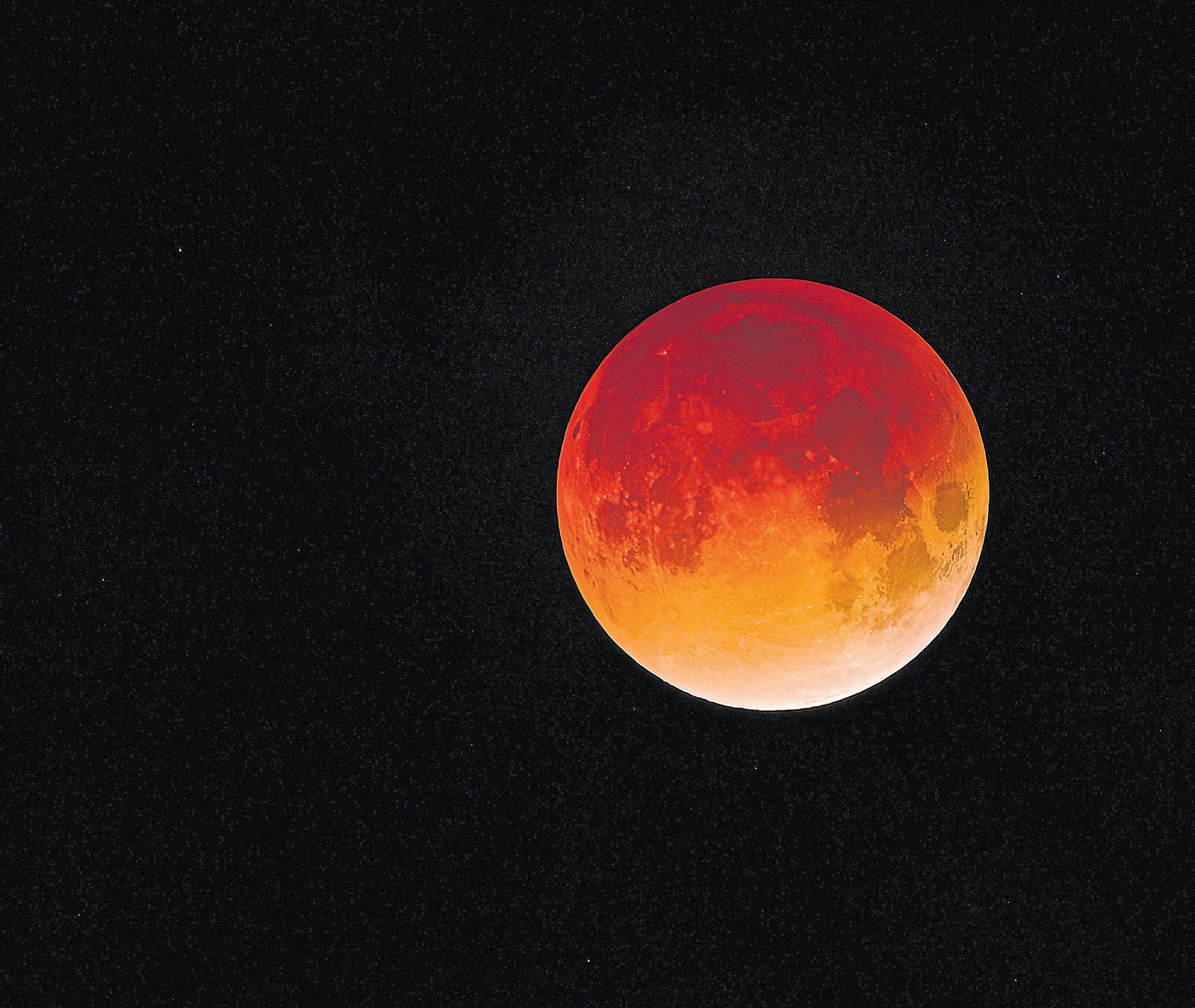
A total lunar eclipse, known as the “blood moon,” reveals itself on March 3 in Martinez.
JOSE
CARLOS FAJARDO/STAFF
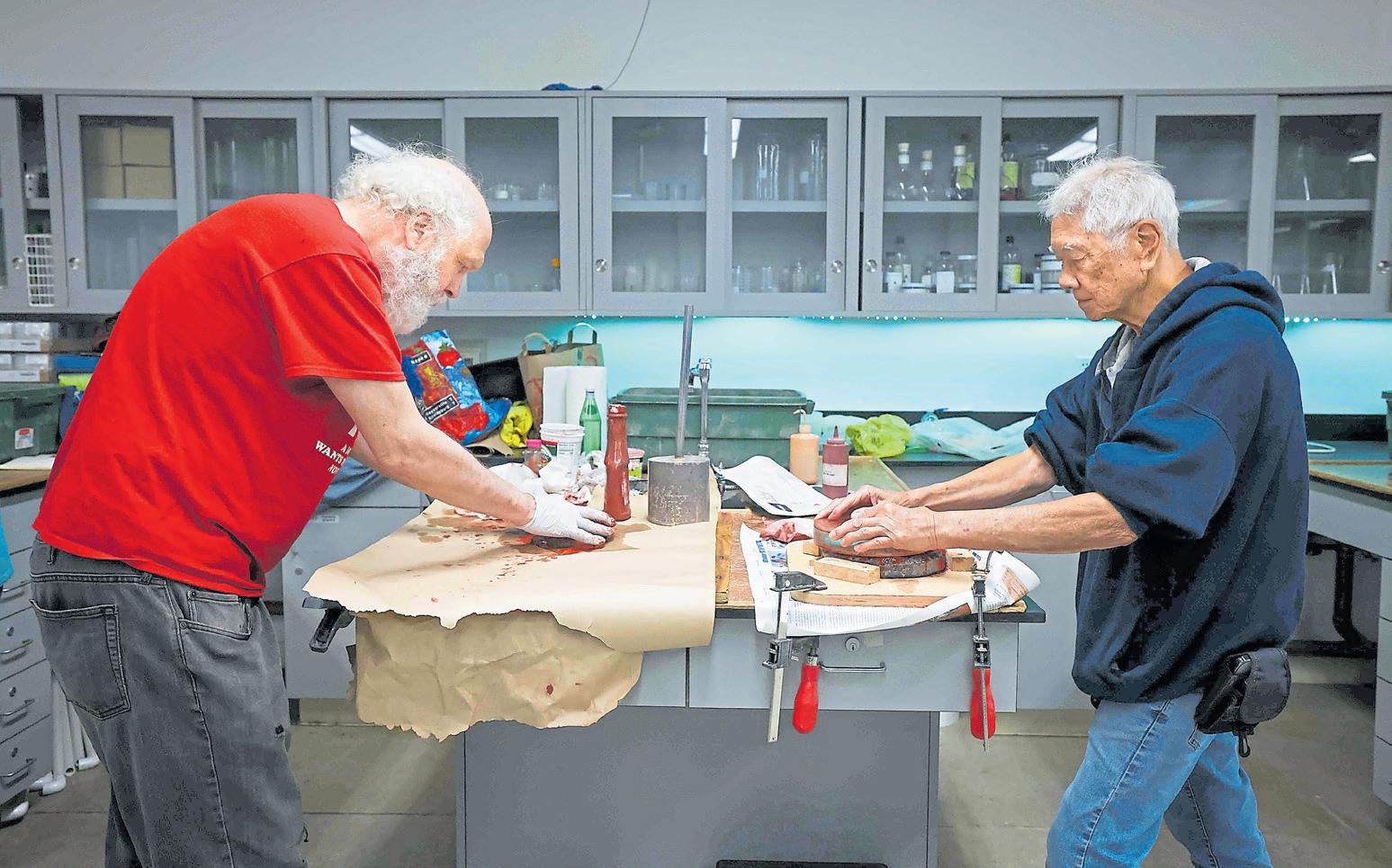
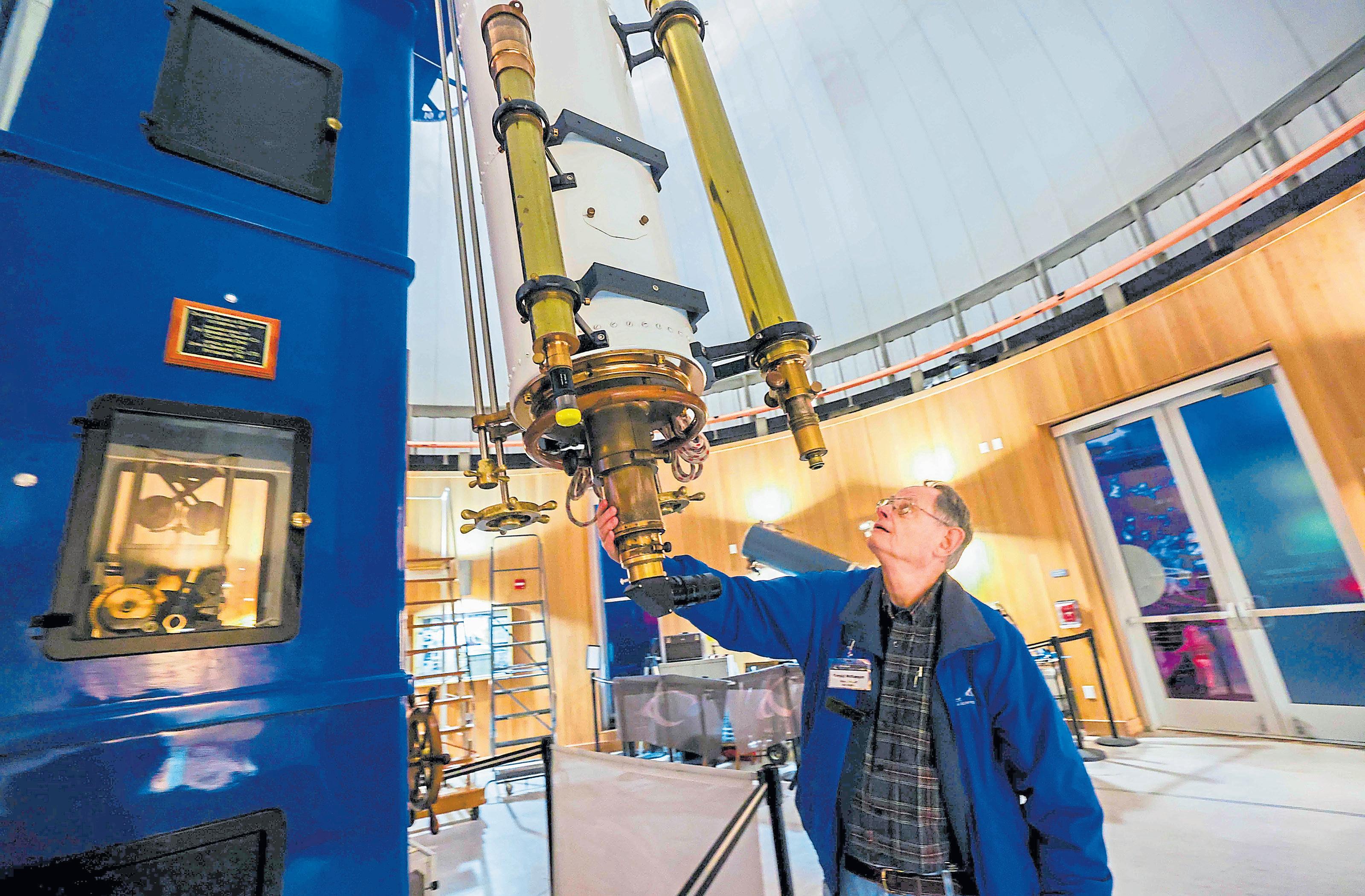
offer darker vistas and sophisticated equipment. The Chabot Space & Science Center in Oakland has free public viewings on weekends, for instance, run by the Eastbay Astronomical Society. There are weekly workshops for making your own telescope and the chance to admire Chabot’s equipment, including a 36-incher named “Nellie.”
But the most important thing? That’s to have fun, of course.
“If you can show something in the sky to kids or grandkids — or get the neighbors in and
share with them what’s going on — what a nice community-building, family-building activity,” says Fraknoi. “I think that’s something we desperately need more of in these times.”
What to look for in ... mid-June
For something different, a supernova called SN2026kid could be visible by telescope this month before it gradually fades from view. Bob Schiff, a Danville-based astro-photographer,
actually examined the star in April with no idea that it was about to go kablooey. “While I did not image the event itself, I was within five days of this supernova explosion,” he says. “On a galactic scale of millions of light-years, that is darn close!”
Asteroid Day falls on June 30, on the anniversary of the extremely powerful Tunguska Event. It’s a United Nations-sanctioned day of public awareness about defending the planet from space rocks. Thankfully, recent sky surveys have shown no threats from larger
bodies. “So I wouldn’t take out extra insurance on my home for asteroid destruction,” says Fraknoi.
... in July
There are a couple of meteor showers popping off this month: the Southern Delta Aquariids and the Alpha Capricornids. Viewing conditions from California and the moon’s bright phase will make them difficult to spot, however. It’s probably worth waiting for next month’s peak of the always jaw-dropping Perseids.
While you wait, how about getting some quality time with the moon? Our nearest celestial neighbor is the perfect starting point for backyard astronomers desiring to see a celestial object “up close.”
“Indeed, a pair of 8x 42mm or 10x 50mm (10 times magnification power, 50mm objective-lens diameter) binoculars will enable you to explore the moon’s impact craters, mountain ranges and basins,” Schiff says.
Another neat diversion is using the naked eye to spot the International Space Station as it whizzes by overhead. NASA provides a mobile app that gives its location and timing (nasa.gov/spot-the-station), and from there you can get about 5 minutes of tracking its path.
“It looks like a very bright star moving across the sky, and it’s always fun to point out to kids,” Howard says. “‘There goes the space station! Russians and Americans, getting along!’ That kind of thing.”
... in August
The Perseids are one of the most reliably impressive meteor
Above: Anthony Stillman, left, of Richmond, and Ray Wong, of Fremont, polish glass mirrors for their telescopes during a telescope-making workshop at the Chabot Space & Science Center.
Top: Raymond Howard, outreach coordinator for the Eastbay Astronomical Society, waits for visitors to see stars and planets with his telescope.
RAY CHAVEZ/STAFF
showers, and this year will peak overnight from August 12-13 (though they will be visible for days on either side of that window). The shower is expected to be especially good this year, thanks to blackened skies from a new moon.
Make your viewing spots as dark as possible — no lights on in the house! — then ditch the telescope and enjoy this cosmic gift with your eyes. Ponder that the beautiful, streaking fireballs you’ll hopefully catch are actually just sky garbage, streaking off the 16 mile-wide comet
“If you’ve got your kids or grandkids, one of the most amazing things you can point out to them is the shape of the Earth’s shadow as it slowly moves across the moon. The shape is clearly round. So despite what some very famous basketball players say, the Earth is not flat.”
Andrew Fraknoi Astronomy professor at USF’s Fromm Institute
Swift–Tuttle.
“This comet sheds material as it gets near the sun. Its ice evaporates, and dust and dirt are left behind, very much like that character Pig-Pen in the Peanuts cartoons,” Fraknoi explains. “The dust and dirt burns up in the Earth’s atmosphere and then makes these flashes of light that we call shooting stars.”
On the night of Aug. 27-28, an almost-total lunar eclipse will occur as the Earth’s shadow covers the moon. The maximum eclipse occurs at 9:12 p.m. PT, when only a little sliver will be
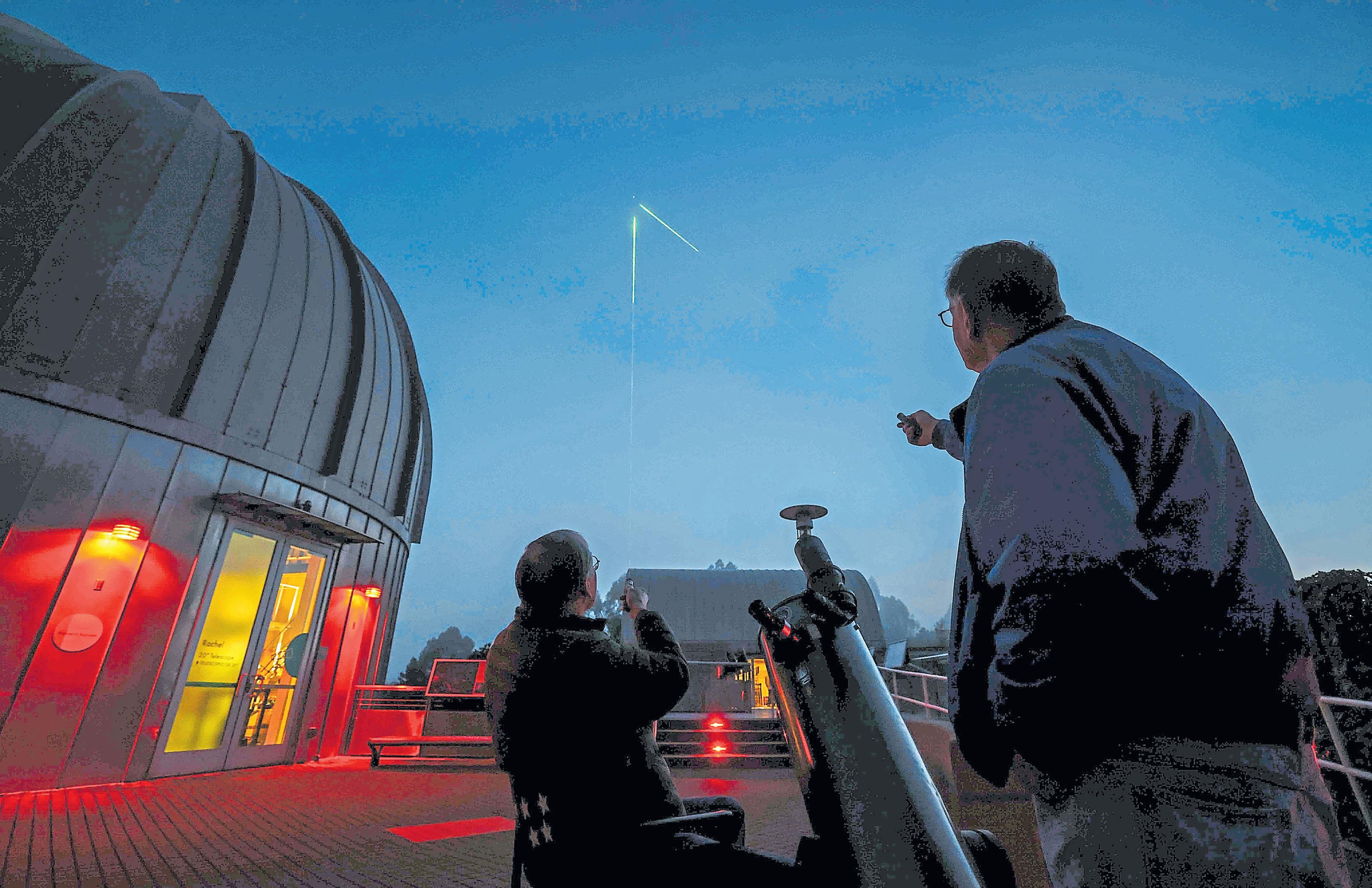
Raymond Howard, left, outreach coordinator for the Eastbay Astronomical Society, and Gerald McKeegan, volunteer and adjunct astronomer, use a laser pointer to show Jupiter to visitors.
RAY CHAVEZ/STAFF
bright, the rest tinted blood-red due to atmospheric optics. Every backyard astronomer should be able to see it without any special equipment (if the weather cooperates).
“If you’ve got your kids or grandkids, one of the most amazing things you can point out to them is the shape of the Earth’s shadow as it slowly moves across the moon,” Fraknoi says. “The shape is clearly round. So despite what some very famous basketball players say, the Earth is not flat.”
In August, there’s also a comet that should be visible with small telescopes. Comet Tempel 1 comes around about every 5 years, and people should look for it when it’s very dark (say, around 11 p.m.), as it crosses various constellations.
... in September
From August through September, we will be facing the central part of the Milky Way, the brightest region that’s easiest to see and is full of intriguing sky targets. Find dark skies and point your telescope toward the Milky Way to view the Lagoon Nebula — a star-forming region in the constellation Sagittarius, like a stellar nursery.
“Globular cluster M13 is also an excellent target,” Howard says. “And there’s also the Ring Nebula, which is caused by a dying star expelling an envelope of gas.”
During this same period, people who stay up late will have a new and improved view of Saturn’s rings. “Last year they were almost invisible, because they were edge-on to us or horizontal. They’re going to look better this year because they’re opening up more,” explains Howard.
Adds Fraknoi: “If you look through a modest telescope at the rings of Saturn, you’ll get your socks knocked off.”
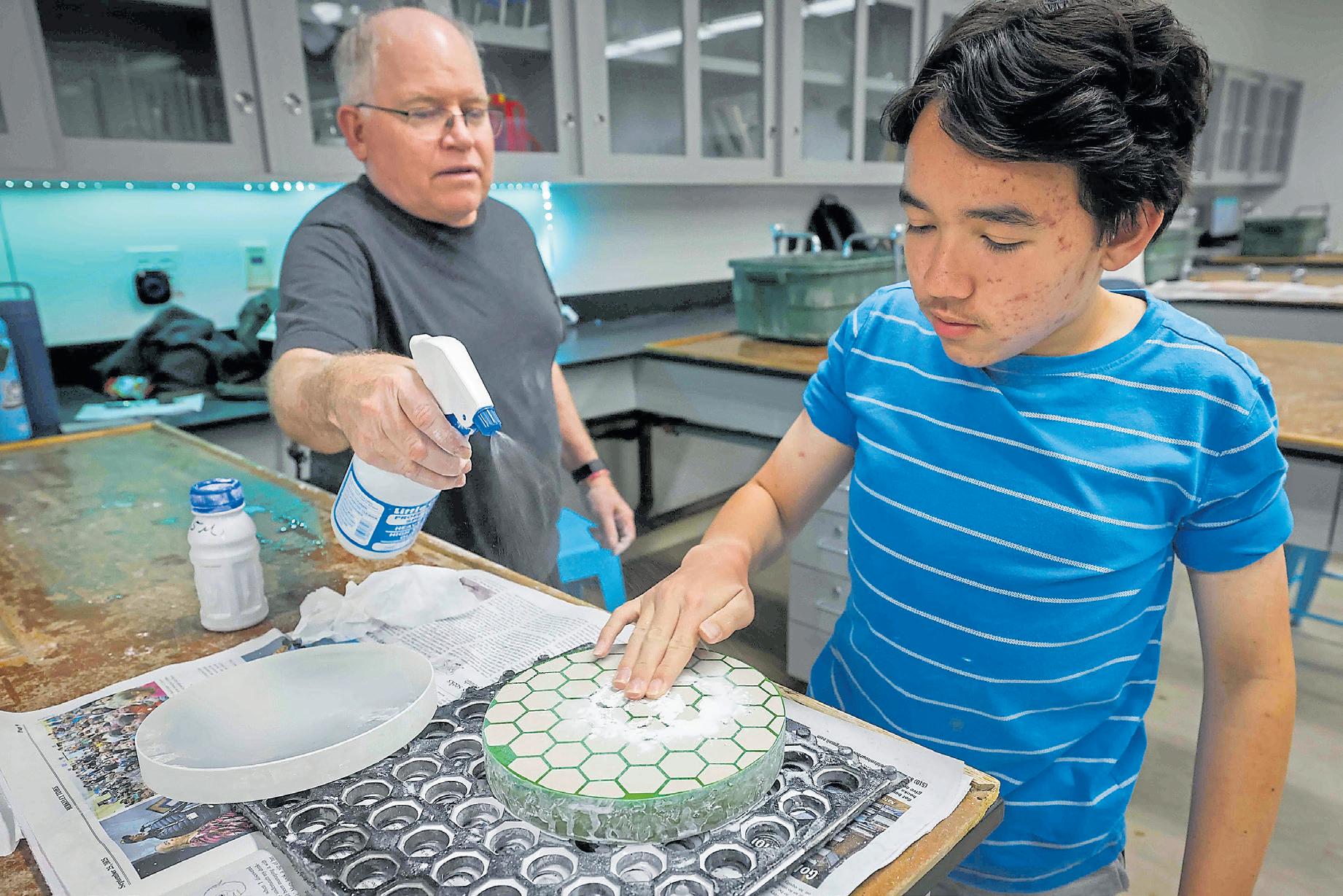
Left: Doug Tallman, of Belmont, sprays water on abrasive grits as his son Takumi, 14, grinds a glass mirror for their telescope during a telescopemaking workshop.
Top: Gerald McKeegan, a Chabot Space & Science Center volunteer, adjunct astronomer and Eastbay Astronomical Society member, shows “Rachel,” one of three telescopes open to the public at the center in Oakland.
RAY CHAVEZ/STAFF
Home Tweet Home
How to make your Bay Area backyard the best place for birdwatching
BY MOLLY GIBBS
Nestled below a canopy of oak trees on the rolling hills and sunlit woodlands of Contra Costa County lies a hidden oasis for birdwatching enthusiasts.
With a vast array of natural habitats perfect for spotting a variety of diverse native and migratory birds, Orinda is widely considered one of the Bay Area’s premier birding destinations.
The city’s welcoming environment for species like warblers, swallows and chickadees is evidenced by the dozens of birdhouses attached to street signs peppered along the valley’s winding roads.
And for many lucky Orinda residents, the best birdwatching doesn’t even require a trip to the loping East Bay trails — it can be done right in their backyards.
Visitors angle to view birds in the backyard of a home in Orinda.
ARIC CRABB/STAFF
Bob and Stephanie Sorenson’s backyard off Sundown Terrace, for instance, is a bustle of activity. On one recent visit, an Anna’s hummingbird hovered at a feeder, while a red-shouldered hawk drifted overhead and a chatty house finch and chestnut-backed chickadee crowed from the nearby woods — made up of more than 32,000 square feet of restored native plants and habitat.
The Sorensons’ backyard and garden is a safe haven for dozens of bird species and other wildlife, with more than 150 species of local native plants tucked throughout the 3/4 acre property. But it wasn’t always.
Previously used as grazing lands for cattle, the property was overrun with invasive grasses, Bob Sorenson said. He’s spent the last 30 years restoring and maintaining the property’s creekside and adjacent uplands to bring back the native habitat.
For budding birdwatchers looking to attract more birds to their backyards, Sorenson said the solution is simple: Make your backyard a more enjoyable ecosystem for wildlife.
“If you want birds, they want native plants,” he said.
Sorenson pointed to research by entomologist Douglas Tallamy which shows that native plants support significantly more insects than non-natives.
Tallamy’s research champions native “keystone” plants — essential native plant species that support the highest biodiversity in a habitat. Sometimes referred to as the “glue” of a local food web, keystone plants
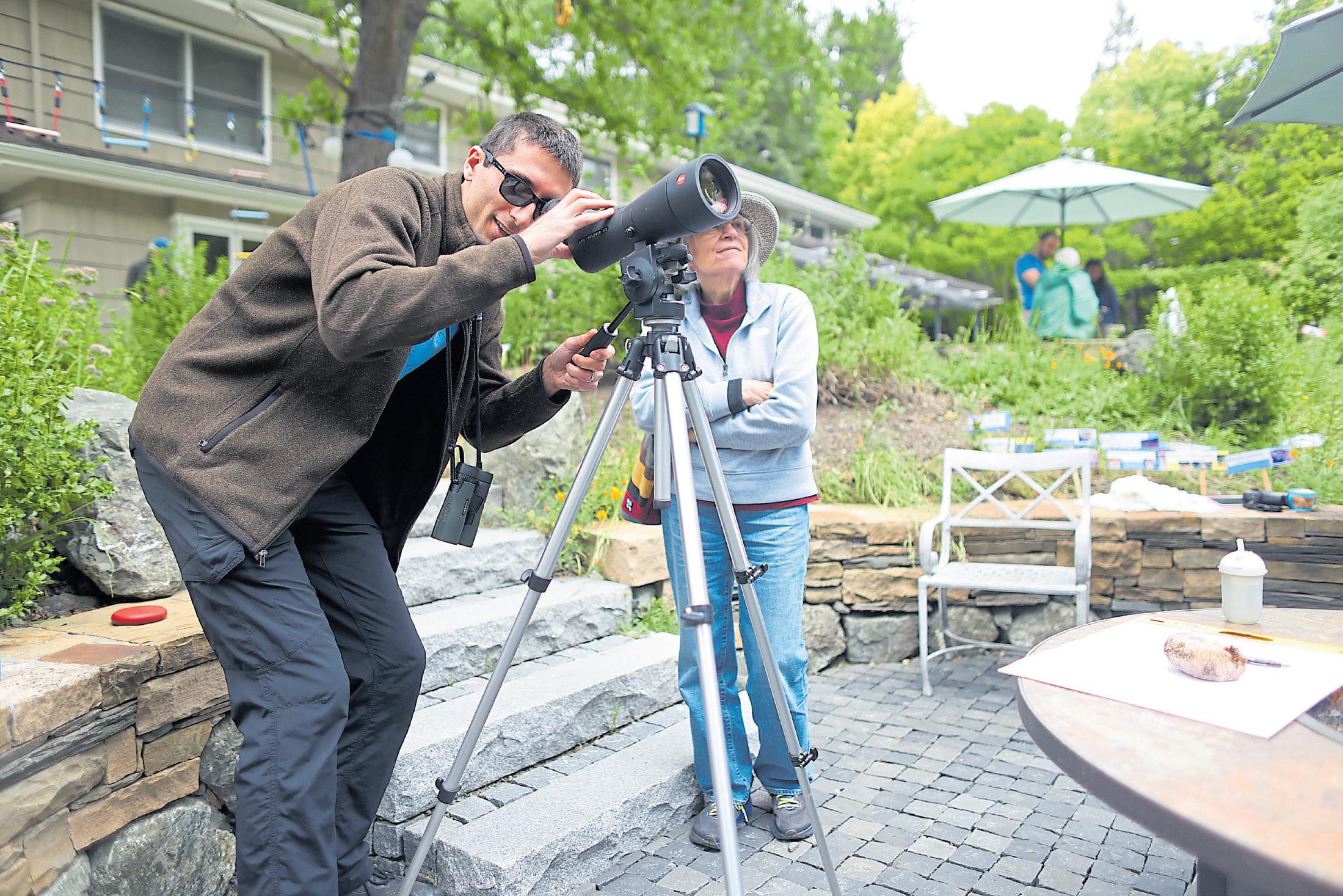
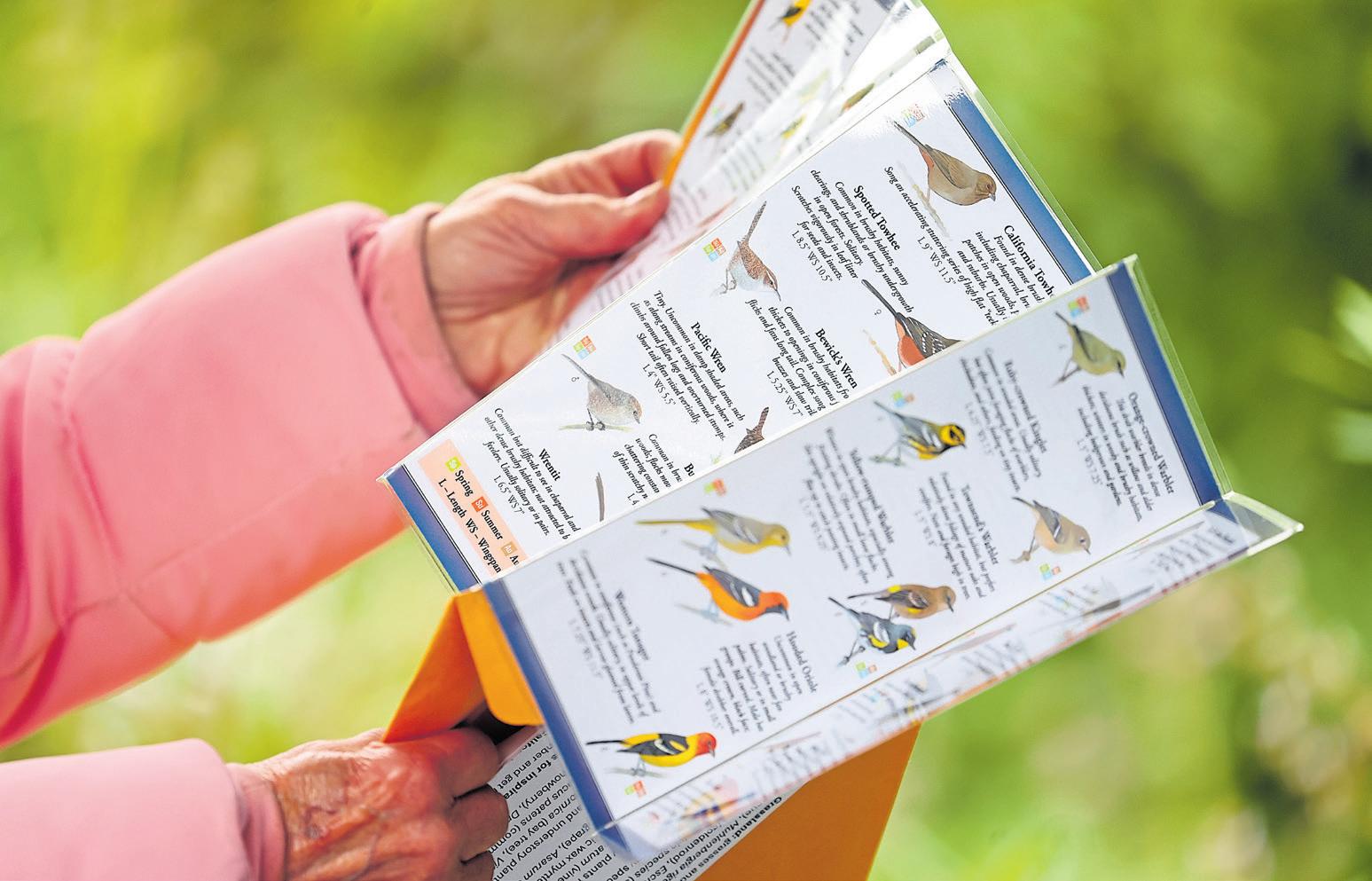
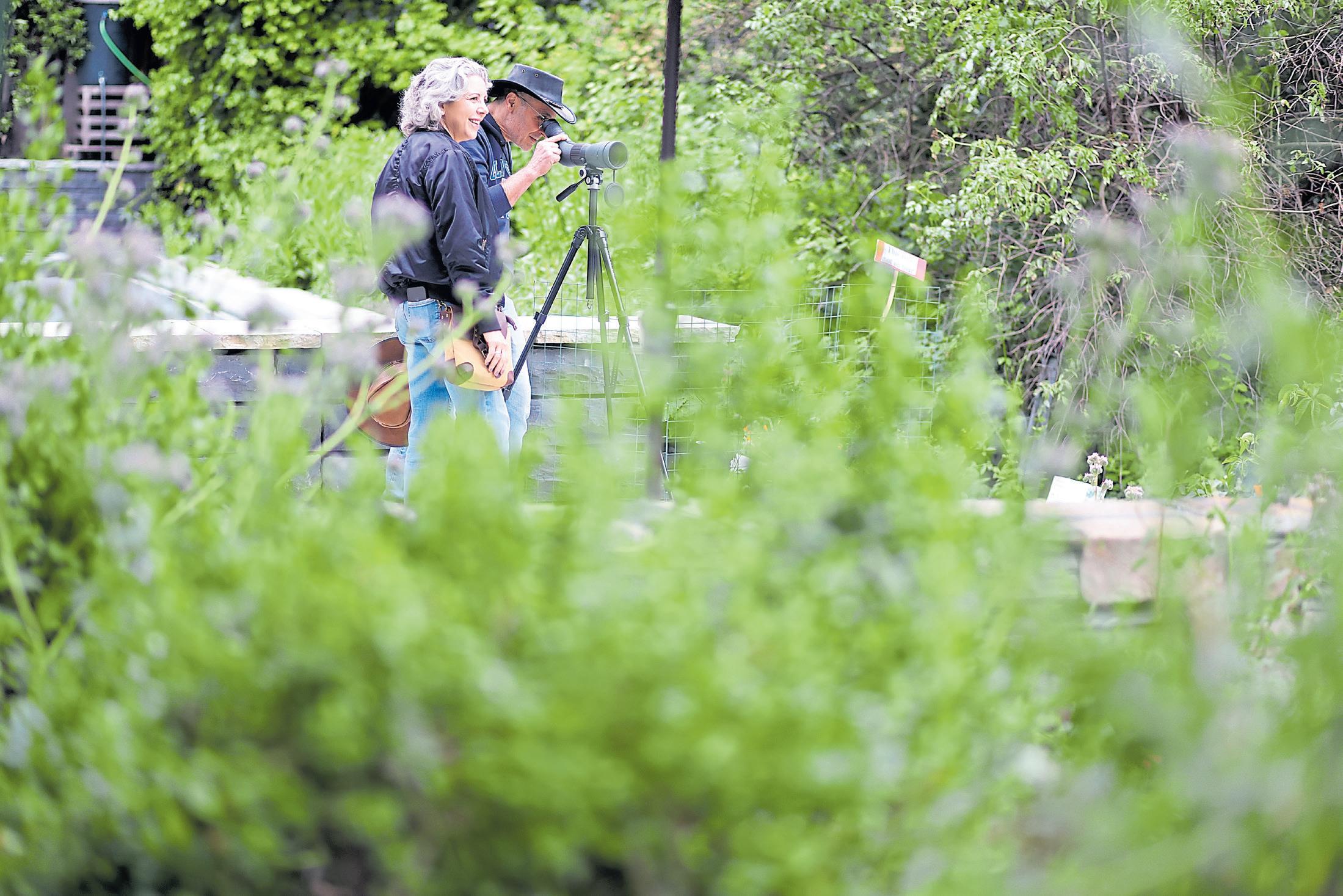
Top: Michael Strom helps visitors use a spotting scope to view birds in the backyard in Orinda. Above: A visitor looks over a bird identification brochure. ARIC CRABB/STAFF
support the vast majority of food, pollen, nectar and shelter that insects, birds and pollinators need to survive and reproduce.
In fact, keystone plant species support more than 90 percent of the insects — especially caterpillars — that nesting birds rely on to feed their young.
Sorenson said native oak trees, for example, will support hundreds of insects, while invasive eucalyptus trees — which were introduced to the Bay Area from Australia in the 1850s — support far fewer.
“If you look at all the reports about declining bird populations, declining butterfly populations, it boils down to loss of habitat,” Sorenson said.
Because birds tend to be sensitive to habitat changes, their population trends serve as useful
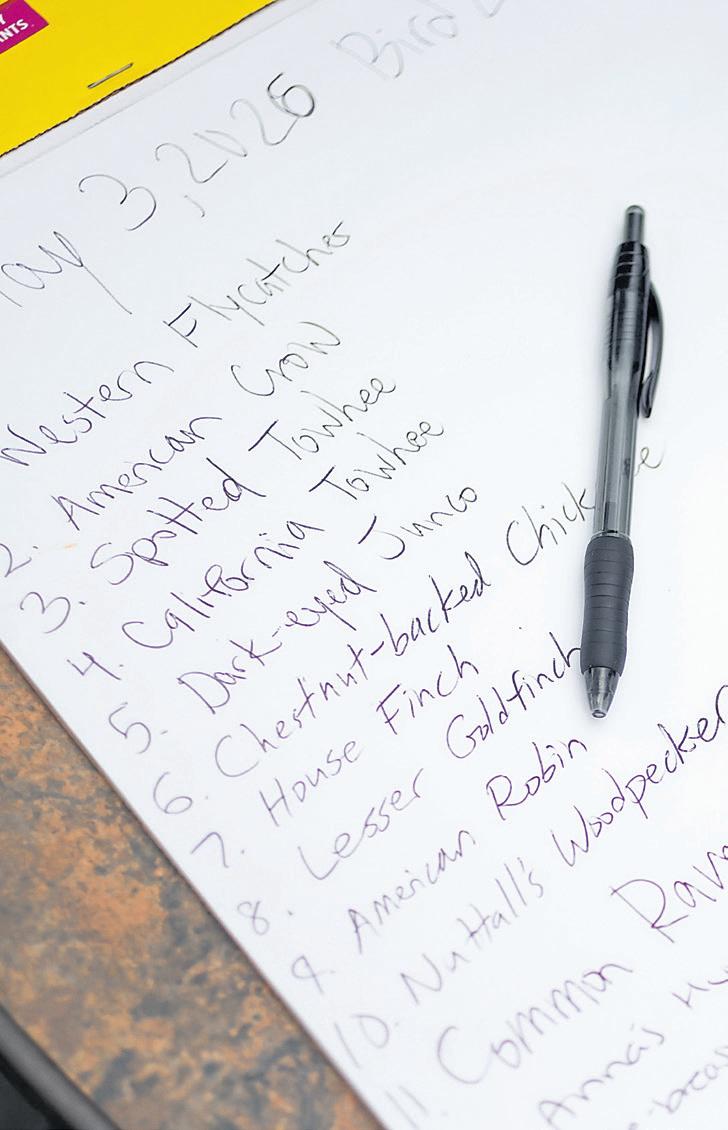
Above: Olga Bolting, left, and Joe Devries use a spotting scope to look at birds at a backyard feeder.
Left: A list keeps track of birds identified in a backyard.
ARIC CRABB/STAFF
indicators of ecosystem health, according to the San Francisco Bay State of the Birds, a nonprofit which tracks bird population trends and guides restoration and management actions across San Francisco Bay.
The group found that California’s bird populations are declining at alarming rates, with some shorebird species dropping by 25 to 86 percent since 2006, according to a January report.
Climate change, severe droughts and the loss of natural habitats are key drivers in bird population declines, the group says.
To combat that loss and because habitat creation is the single most effective way to attract and sustain local bird populations, many birdwatchers often transition to native planting, including Sorenson’s son-in-law, Michael Strom.
A local bird expert, Strom has been an avid birdwatcher for more than 25 years. Strom said he was first introduced to birdwatching by his grandmother, who had a pair of binoculars and some bird feeders in her backyard.
“She wasn’t a hardcore birder...She was just trying to get me interested in nature,” he said. “But I had a great time in the yard and tried to identify species with the book she got me, and then it built from there.”
Strom said he became more serious about birdwatching in college, going on to lead bird watching trips for his local Audubon society. Now, Strom said he’s getting into gardening and planting native plants — largely inspired by Sorenson.
“Before, it was just birds. And then I realized, oh, of course, the birds are using the plants,” Strom said. “So if I learn the plants, I’ll get better with what birds are going to be there, and then I can draw them into my own backyard.”
For those new to birdwatching or looking to improve their skills, Strom suggested starting small and local.
“If you’ve got it, your own yard is a great place to start, because you can familiarize yourself with maybe 10 species or so that frequent your yard,” he said. “That’s how I learned, too; you have this core set that you’re really familiar with and then build outward from there.”
Strom said understanding bird songs and calls is also crucial to getting into birdwatching.
“A lot of these birds, you’re
probably going to hear them before you see them,” he said.
Strom said today, there are tons of apps that make it easy to identify a bird’s song — far quicker than using the books with mnemonics that he grew up using.
When coming across a bird you haven’t yet identified, Strom suggested trying to determine the bird’s general shape to narrow it down to a few species before moving on to identifying its color and call.
And for attracting birds to your own yard, Strom suggested bringing in bird feeders, nesting sites and water features as well as planting native plants.
A small hummingbird or seed feeder is great for those with less space or who don’t have a backyard, Strom added. And native plants in container gardens are a great option for bird enthusiasts with small patios or balconies, he said.
Bird lovers who don’t have any outdoor space — or those ready to venture beyond their backyard — can join one of many local bird-
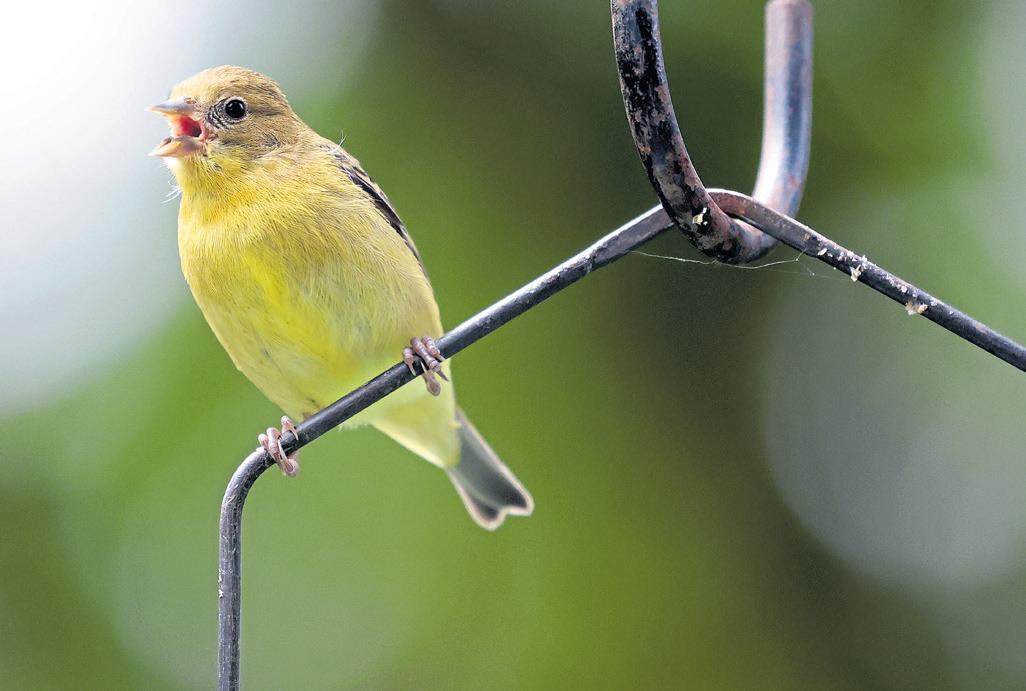
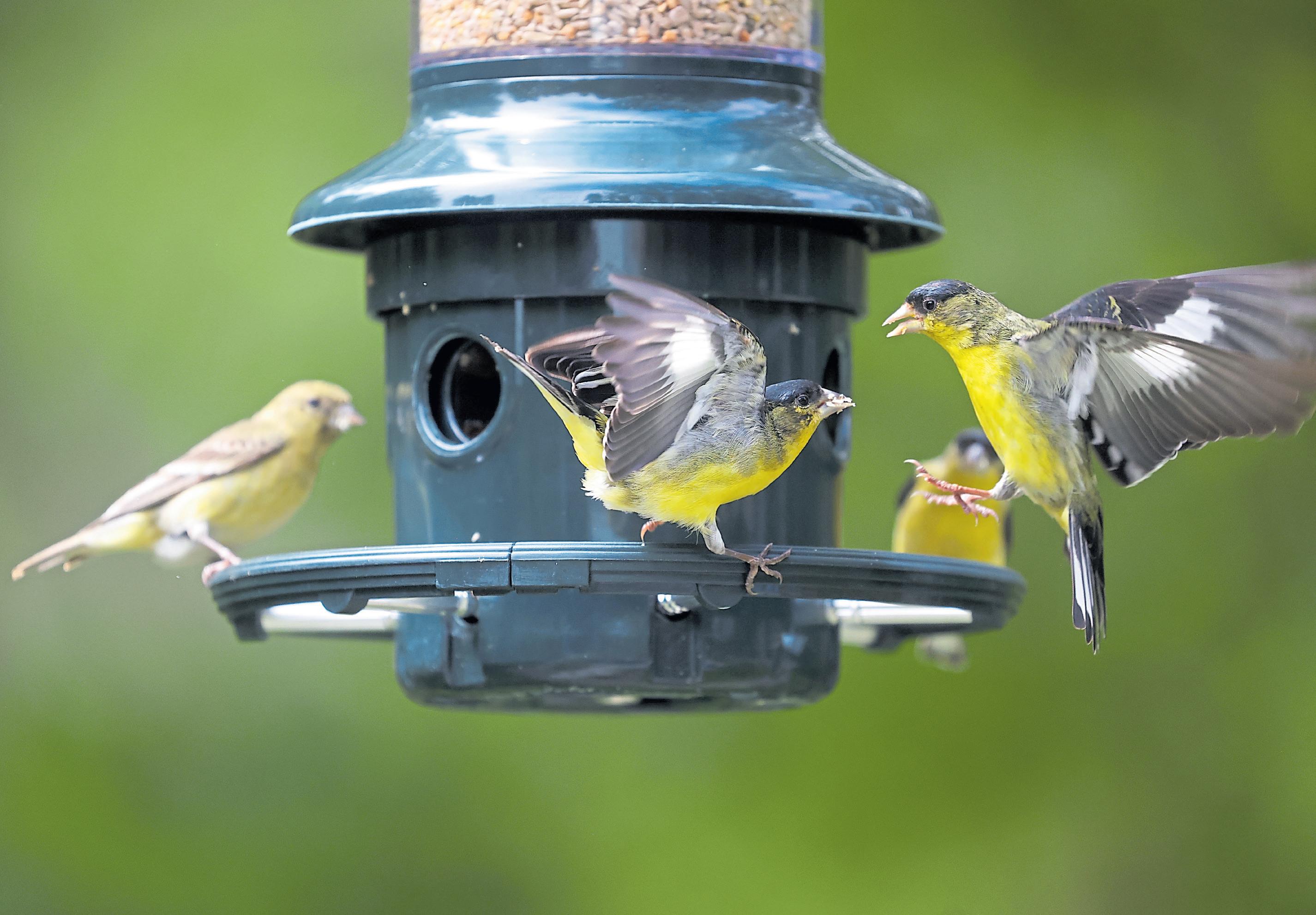
Lesser Goldfinch birds maneuver at a backyard feeder in Orinda.
ARIC CRABB/STAFF
watching groups or visit one of the Bay Area’s many parks and trails to improve their skills.
“We’re pretty spoiled in the Bay Area,” Strom said. “Just within a day’s drive, you could be at the Bay looking at waterfowl and shorebirds, or you could be in the mountains looking at a totally different set of birds.”
The hiking trail is where Oakland-based couple Joe DeVries and Olga Bolotina connected. Both avid lovers of nature, the couple said their first few dates were hikes during the pandemic when there was little opportunity to leave the house to do much else.
Their love for hiking and nature eventually led them into birdwatching, DeVries said, and the couple frequently use an app to identify birds by their songs and calls on trips or hiking expeditions.
“I can identify a lot of birds now that I couldn’t before,” he said.
Bolotina said they are also actively restoring the native plants in their garden to support wildlife and their natural ecosystems.
“To me, environmental protection means understanding the diversity of a particular region and preserving that,” she said. “We cannot save the planet by just planting trees. Planting trees does nothing for supporting the habitat.”
She emphasized the importance of educating others about the benefits of natural backyards rather than typical American manicured lawns, which she argued consume staggering amounts of water and erode native habitats.
“My goal is actually to create a garden of all natives and show people that they’re absolutely spectacular,” Bolotina said.
The couple visited Sorenson’s garden for inspiration, as part of the “Bringing Back the Natives Garden Tour” — an annual East Bay event where residents open their private yards to the public to showcase beautiful, water-conserving, pesticide-free gardens that are composed of at least 60 percent California native plants
Sorenson said he’s opened his home and backyard to the public for 15 years to try to encourage others to plant native plants in their yards and protect biodiversity.
He pointed to research by Tallamy that found that suburban landscapes must contain at least 70 percent of native plants to sustain bird populations and other wildlife.
Today, Sorenson’s property contains 95 percent of native plants.
“I like to show this off to encourage people to plant native plants in their yard,” he said. “I’m trying to change the world a little bit. One garden at a time.”
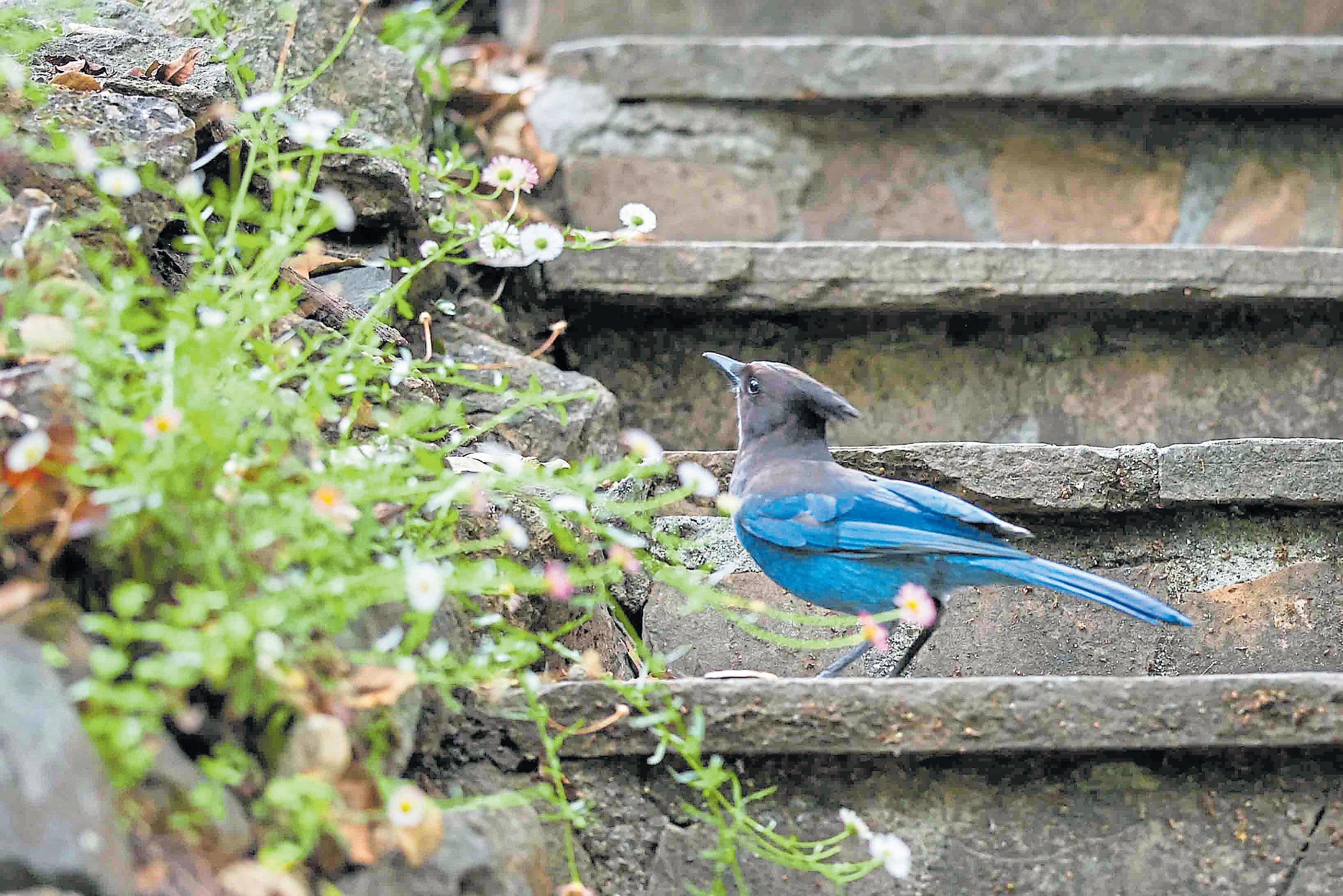
Above: A blue jay takes the steps in the backyard garden of homeowners John and Valerie Matzger during the Bringing Back the Natives Garden Tour in Piedmont.
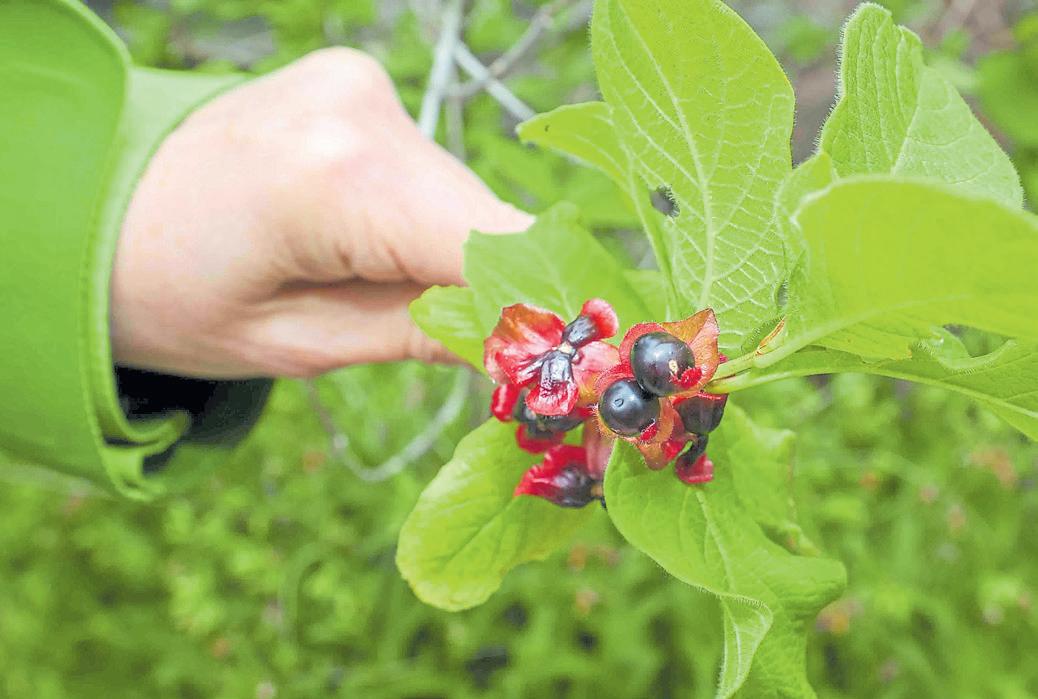
Below: Volunteer Cristin Williams shows a twinberry plant in the Matzgers’ backyard.
RAY CHAVEZ/STAFF
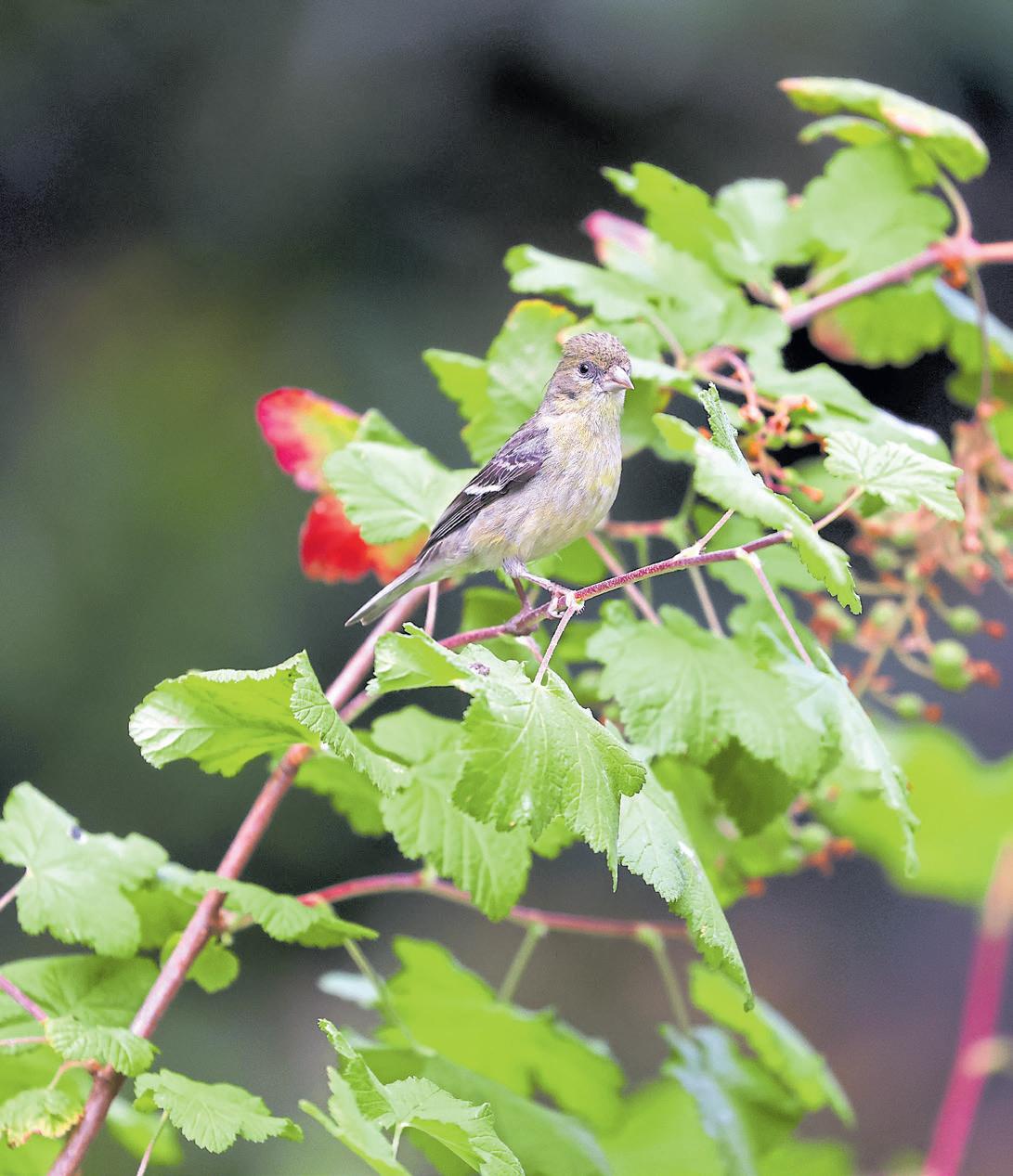
Left: A finch sits on the branch of a plant in Orinda.
ARIC CRABB/STAFF
forSearching serenity
Not getting the full backyard experience at home? Here’s where you can go in the Bay Area to find it
BY CAELYN PENDER
n a tranquil May morning in San Jose, small groups of visitors pass through an archway surrounded by sentry rocks and wander into the Japanese Friendship Garden.
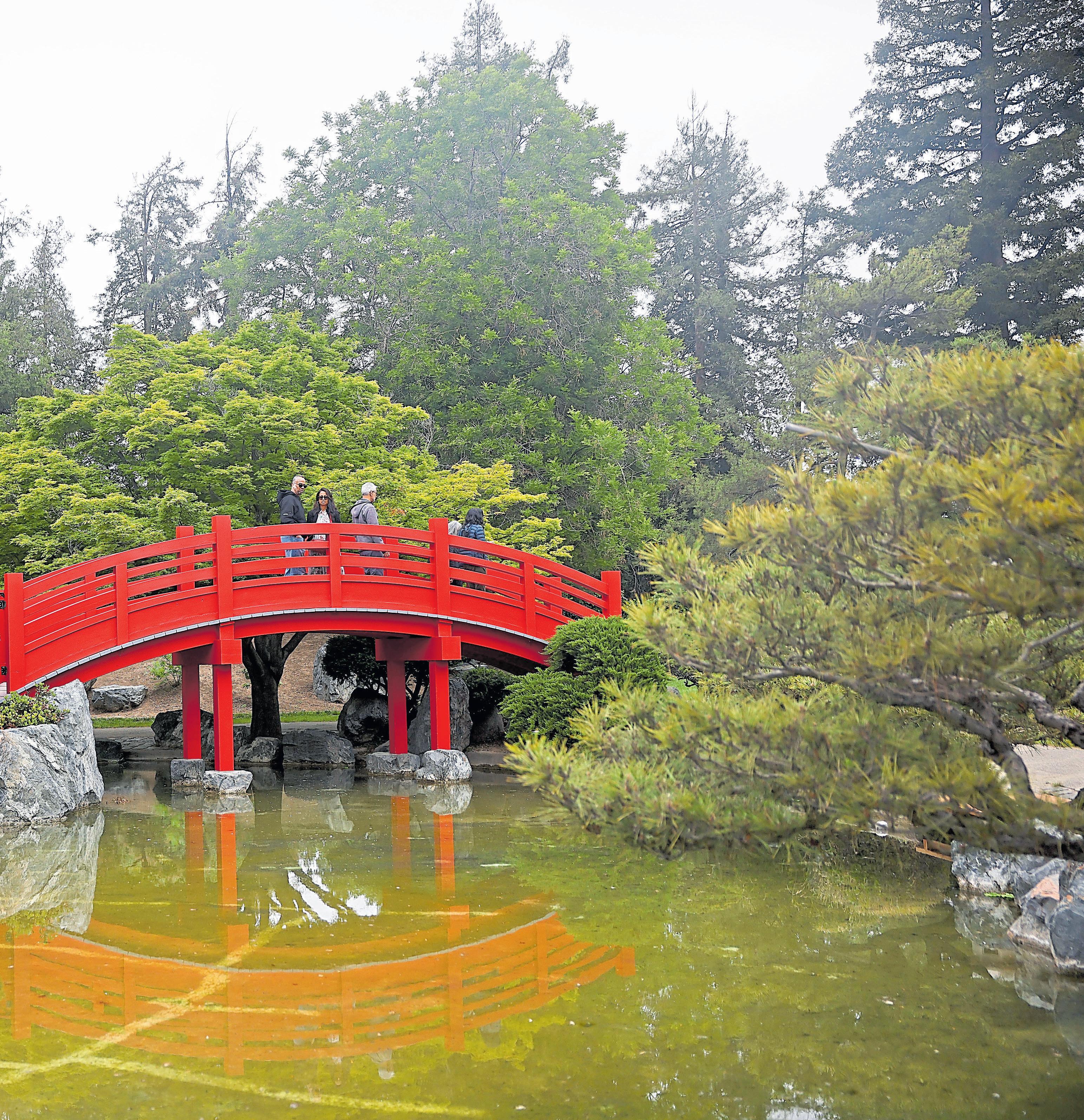
They cross over a freshly painted red bridge, some stopping for photos before wandering along meandering trails, admiring the flora and fauna and stopping to stare at koi fish. Geese and goslings wander from the grass to the water, where ducks swim along. Despite the cloudy skies, the place is full of enraptured visitors admiring the sights of a garden established in honor of San Jose’s sister-city relationship with Okayama, Japan.
Willie Davis, a 76-year-old resident of San Jose, has frequented the garden once a week since he discovered it more than 20 years ago. He uses the tranquil space to meditate, walk and admire the surrounding natural beauty, he said, and he recommends the recently revitalized garden to
People stand on the Taiko Bashi Bridge at the Japanese Friendship Garden in Kelley Park in San Jose.
NHAT V. MEYER/STAFF
those who have yet to explore it.
“Just walk around that bridge. It’s been closed for years, and they repainted it, and now you can get on there and take pictures,” Davis said. “Just circle the thing. Just take it all in. It’s a wonderful garden.”
The summer season calls for outdoor activities — from lounging on the grass to playing lawn games — but not every Silicon Valley resident has a backyard to enjoy. Luckily, the Bay Area offers many beautiful gardens that can give you that summer feeling.
The Friendship Garden is one of them, attracting both locals and visitors to its tranquil grounds. San Jose’s Jan Nathan, 79, brought her friend Sheila Hart, 79, visiting from Canada, to loop through the park’s attractions as a prelude to her upcoming trip to Japan.
“I used to bring my grandkids here all the time, and then it kind of died,” Nathan said, referencing the damage to the garden in the 2017 Coyote Creek flood. “To me, it’s a cultural experience, because I have a ‘black thumb,’ number one, and if I did gardening, it wouldn’t be this kind of gardening, so it’s always nice to see something new and different than what you do.”
The newly reinvigorated garden is located centrally in San Jose’s Little Saigon neighborhood, complete with six acres of attractions within Kelley Park near Happy Hollow Zoo. Dedicated in 1965, the park was established in honor of Okayama, Japan, and is modeled after that city’s Korakuen Garden. The city offers an online self-guided tour highlighting the garden’s features.
Trails meander through the verdant gardens, over steep hills and rocky river crossings, all complete with Japanese plants. The park is home to waterfalls, winding trails and Japanese landmarks.
The garden’s flora includes
groves of palm trees, plum trees, red maples, redwood trees and cherry trees. One cherry tree is even a historical tree gifted to the city by the Japanese ambassador to San Jose. Other garden landmarks include a moon bridge, a five-storied pagoda, traditional Japanese lanterns and a zigzag bridge designed to encourage “awareness and mindfulness.”
The garden also houses a tea house which can be rented out for private events, though the structure is currently closed for renovation.
Until Labor Day, the garden is open to the public from 10 a.m. to 7 p.m., after which it will begin to close at 5 p.m. until winter daylight savings. The garden,
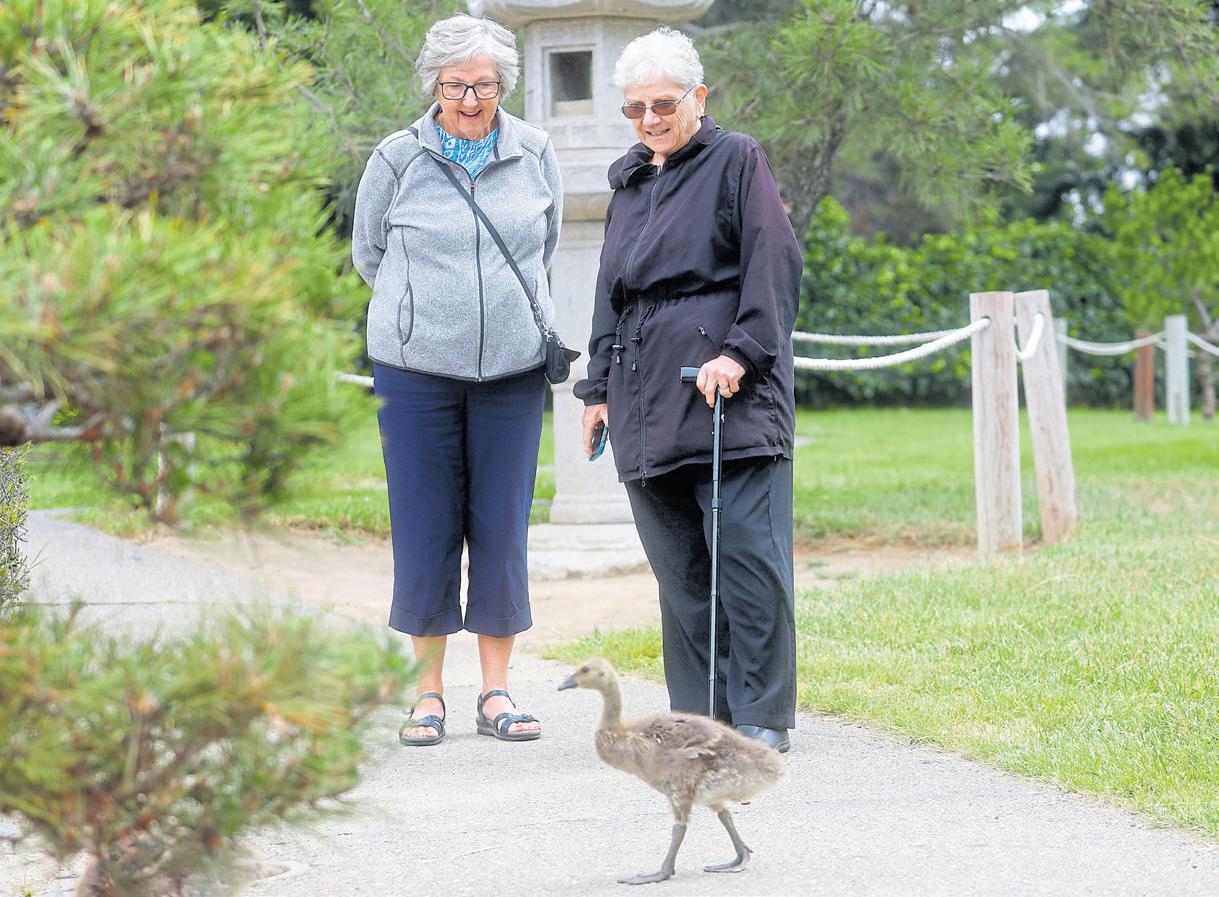
Janet Nathan, left, and Sheila Hart watch a gosling walk toward the water at the Japanese Friendship Garden in Kelley Park in San Jose.
NHAT V. MEYER/STAFF
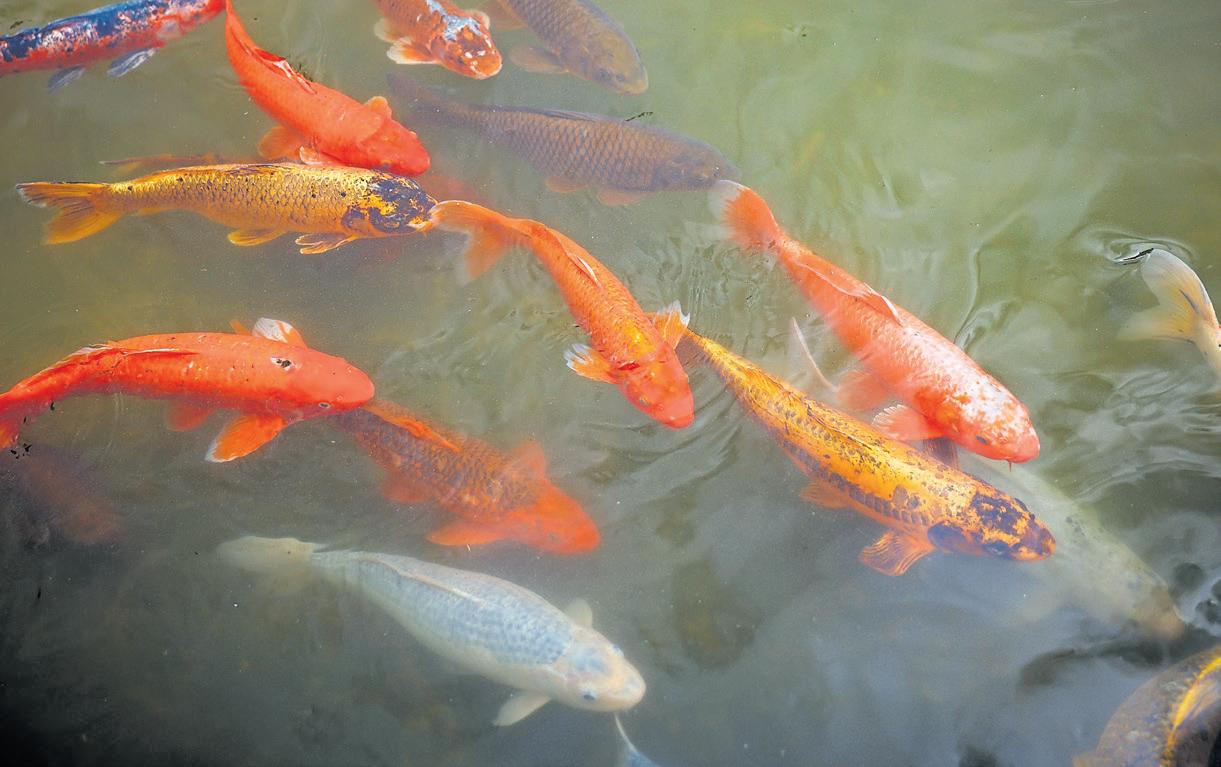
Above: Koi swim in the water at the Japanese Friendship Garden. Left: A couple has a picnic while visiting Heather Farm in Walnut Creek.
NHAT V. MEYER, JOSE CARLOS FAJARDO/STAFF ARCHIVES
which is at 1300 Senter Road inside Kelley Park, is free to enter. Parking costs $6 for a day pass or $80 for an annual pass. Discounted passes are available for seniors, disabled individuals and military members.
Here are a few of the Bay Area’s other best backyard alternatives:
THE GARDENS AT HEATHER FARM
Walnut Creek
Located in the heart of Walnut Creek, the Gardens at Heather Farms offers public access to its gardens, as well as private events. Featuring more than 6.5 acres of plants, the garden is home to waterfalls, a gazebo and verdant flower displays that make for the perfect summer day trip in Contra Costa
Above: Jessica Prieto, of Concord, right, enjoys a picnic with Alicia Candelaria, of Livermore, on Prieto’s birthday at Heather Farm Park.
DOUG DURAN/ STAFF ARCHIVES
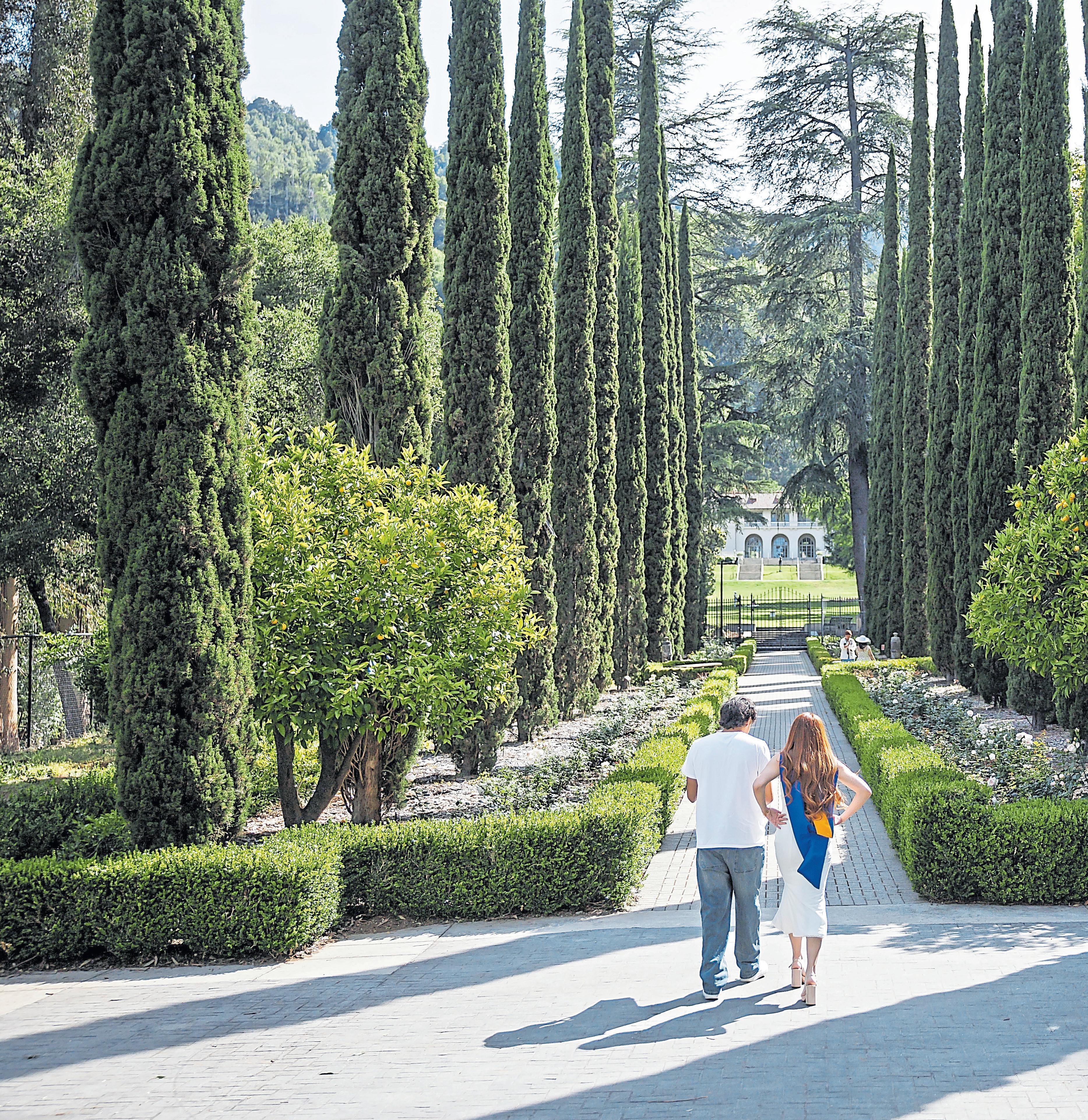
Left: Alan Munoz and Alondra Moran stroll through the Italianate Garden at Montalvo Arts Center in Saratoga.
DAI SUGANO/STAFF
County.
The Cowden Rose Garden boasts more than 1,000 roses, while the Diablo Ascent Garden is filled with Mediterranean and California plants. The Waterfall Garden, with plants that attract butterflies, has 11 waterfalls to be enjoyed, while the Meadow Garden offers an expanse of lawn where patrons can spread out a picnic blanket. Other garden offerings include the Blue Star Memorial Garden, which was established in honor of the U.S. Armed Forces, and the Butterfly Garden.
The venue also hosts classes in gardening, food preservation, flower arranging and even watercolor painting. Offerings for children include environmental science classes in the Natural Science Classroom.
The on-site GHF greenhouse
and nursery propagates plants that the at-home gardener can purchase and transplant directly into their backyard, overseen by volunteers and staff. The greenhouse also accepts volunteers, even without previous horticulture experience.
A community garden features about 80 plots where residents of Walnut Creek can grow their own produce, packed full of vegetables, flowers and ornamental plants. Reserving a plot requires an online application. Large plots, which are 4x12 feet, cost $185 annually, and small plots, which are 4x8 feet, cost $100 annually.
The garden is open to the public seven days per week from sunrise to sunset. It closes for private events, and exact hours can be seen on social media at @ gardenshf or by emailing info@ gardenshf.org. The garden, at 1540 Marchbanks Drive, is free to enter. Enthusiasts can also support the garden by purchasing a membership, with prices starting at $50 annually for an individual and benefits including discounts on programs and plant sales.
VILLA MONTALVO GARDENS
Saratoga
Tucked on the edge of Silicon Valley in the hills of Saratoga, Villa Montalvo is a historic estate open to the public featuring more than 100 acres of gardens and hiking trails. Built in 1912, the villa was originally the home of Senator James Phelan before it was transformed into a public art center in 1939.
From the Italianate Garden to Charmaine’s Garden Terrace, the estate offers an array of gardens and paths for locals to explore.
It also features an Oval Garden and a sprawling lawn outside the historic villa where patrons can lay out a blanket and relax in the sun. The estate’s gardens were designed by the same landscape designer who did Golden Gate Park, featuring hidden nooks and pergolas with wisteria flowers.
The grounds, which are also home to an artists’ residency program, feature more than a dozen art installations around the property. There are also
griffin statues across the estate, an homage to a fable written by Garci Ordóñez de Montalvo, a 16th-century Spanish writer who is credited with coining the word “California.”
Though owned by the nonprofit Montalvo Association, Santa Clara County Parks leases and oversees many of the property’s hiking trails.
The estate is open from 8 a.m. until sunset every day at 15400 Villa Montalvo Road and is free to enter. It is sometimes closed
for programming or private events, with dates of closure listed on its website at montalvoarts.org.
OVERFELT GARDENS & CHINESE CULTURAL GARDEN
San Jose
With more than 32 acres of gardens and park areas, the Overfelt Gardens & Chinese Cultural Garden are located just north of San Jose’s Mayfair
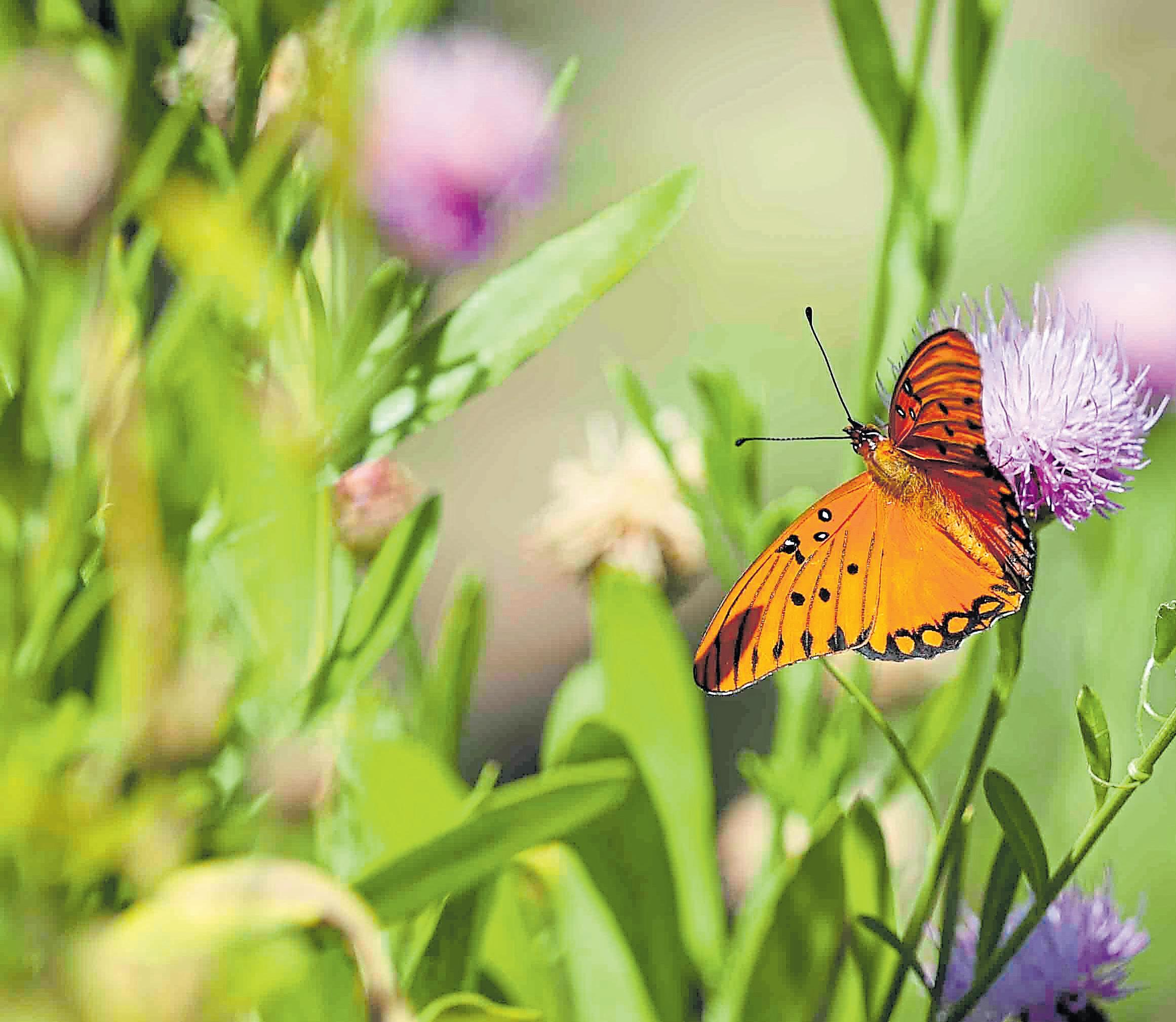
A Gulf Fritillary butterfly feeds on flower nectar at the Pollinator Garden at the Gardens at Lake Merritt in Oakland.
RAY CHAVEZ/STAFF
neighborhood, offering a wildlife sanctuary, three ponds and a picnic area.
The garden is home to Mildred Overfelt’s farmhouse and consists of land she donated to the city in 1959 “so there will be a place where people can find quiet contemplation in nature and beauty.” It also features a fragrance garden and the Educational Park Branch of the San Jose Library.
The peaceful Chinese Cultural Garden, established in 1971,
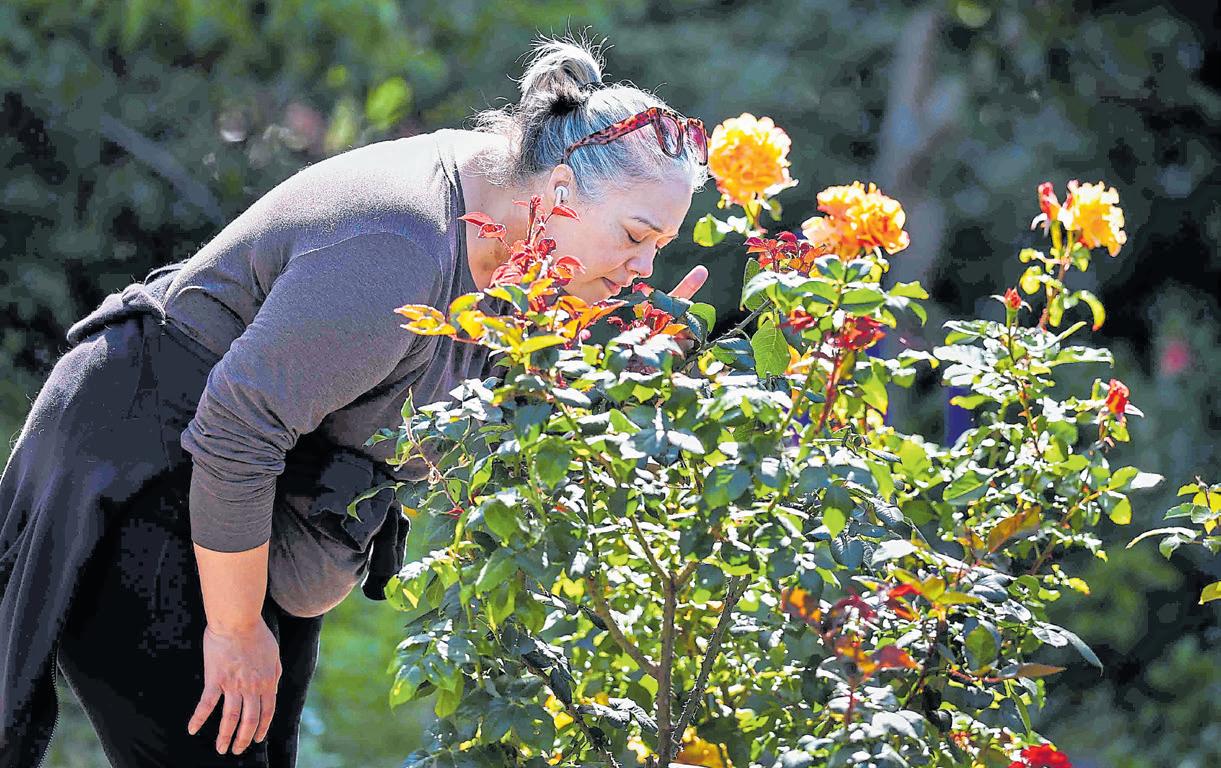
Above: Oakland resident Ivette Montemayor smells the roses at the Gardens. Montemayor, who lives in an apartment nearby and comes often to the gardens, said, “I wish I could have a backyard. I consider this my backyard.”
RAY CHAVEZ/STAFF
features a Confucius statue and the Plum Pavillion, a peaceful area surrounding a gazebo. The garden was inspired by San Jose residents Frank and Pauline Lowe, who wanted to “broaden the understanding between Eastern and Western societies in a tranquil and beautiful setting.”
The Sun Yat-Sen Memorial Hall was built in the style of a “miniature palace” and features statues of lions at its front steps. The garden is also home to the Black Stone, a gift to
San Jose from Tainan, Taiwan, another sister city, given in 1980 as a symbol of the friendship between the two cities. Admission to the garden, at 368 Educational Park Drive, is free.
THE GARDENS AT LAKE MERRITT Oakland
The Gardens at Lake Merritt, housed within Lakeside Park, boast seven acres of diverse
garden offerings ranging from a bonsai garden and a Mediterranean garden to a sensory garden and a bee garden. Since its establishment more than 50 years ago, the park has become a hidden gem of the city and offers an accessible respite to the urban bustle.
The Japanese garden features a waterfall and is surrounded by a traditional Japanese gate, while Bonsai garden hosts some of the “finest Bonsai on the west coast,” including close to 100 trees on display and an additional 100 in the garden’s stores. One tree in the collection — the Daimyo oak tree — was gifted by the Japanese government to the U.S. ambassador to China during Abraham Lincoln’s presidency in the 1860s.
The edible garden features vegetable plants, overseen by master gardeners who make themselves available on Wednesdays from 11 a.m. to 1 p.m. to answer community questions about gardening in the East Bay. The Mediterranean garden features the Easterbrook Fountain Wellhead, and the Vireya garden offers the “largest outdoor collection of Vireyas in the continental United States” — a species of tropical rhododendron flowers.
Other gardens include a sensory garden, a pollinator garden and a succulent garden.
The garden also hosts volunteer days in which community members can help the Friends of the Garden at Lake Merritt steward the garden. Volunteers are able to park for free.
The garden, located at 666 Lake Bellevue Ave., is open from 7:30 a.m. to 3 p.m. on weekdays and from 8 a.m. to 4 p.m. on weekends, and admission is free.
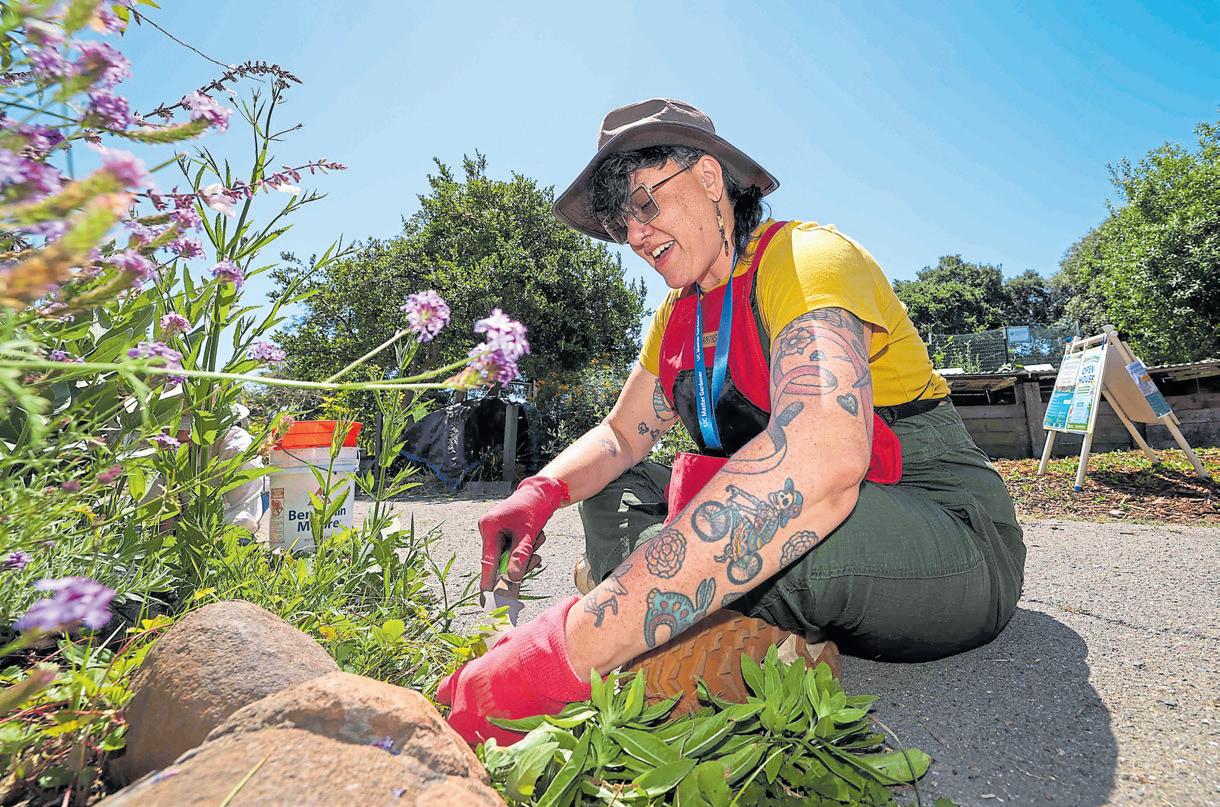
Top: Volunteer Ayah Young weeds the pollination garden at the Gardens at Lake Merritt in Oakland.
Concerts at private homes break down barriers between artists and fans
STORY BY JIM HARRINGTON
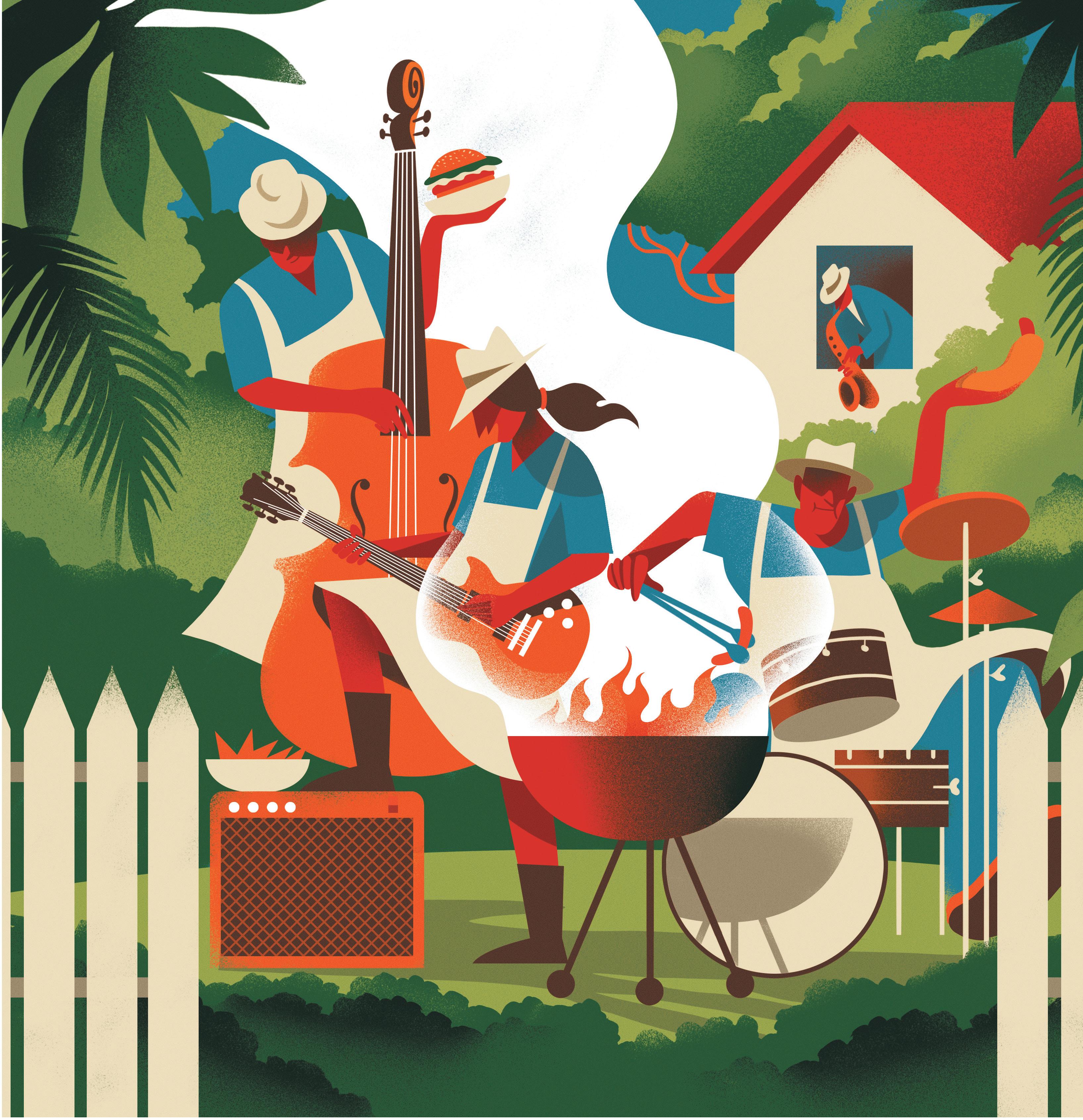
ILLUSTRATION BY PEP BOATELLA
about the only similarity between seeing a concert at a regular venue and one in someone’s backyard is that you’re going to hear music.
Pretty much everything else about the experience is different — and that’s what makes the latter so special for music fans. Backyard concerts tend to be low-key, informal events where you actually might find yourself sharing a plate of nachos with the artist before or after a gig.
“There’s definitely a formality to a concert experience,” says KC Turner of KC Turner Presents, who promotes shows at the HopMonk Tavern locations in Novato and Sebastopol and also books backyard concerts at individual residences. “Whether it’s at Chase Center or at HopMonk, there’s a formality there. There’s a boundary and, you know, it’s like you don’t walk behind the bar, you don’t walk on stage. There’s these boundaries that separate the artist and the fan.
“When you do a home concert, whether it’s a backyard or a living room, you immediately break that boundary down.”
The casual nature of backyard concerts is a huge part of their appeal for both fans and
a number of artists. These gigs showcase all sorts of different musical genres — from rock and pop to folk and hip-hop — and they are happening all around the Bay Area, which is blessed with the kind of weather that makes listening to music outdoors possible pretty much 12 months a year.
There are many different types of backyard concerts — some are booked at individual backyards, require a ticket to attend and are marketed by a concert promoter. Then there are the classic “private shows,” in which people pay an artist — often through a promoter — to play in their backyard and will invite friends and family to attend.
There are even more casual affairs where an artist from the community plays at a house party. These have long been a major proving ground, particularly in the rap realm. And the house party scene is definitely thriving right now in Oakland and other hip-hop hotbeds.
“The current house party scene in the Bay Area is a response to the current landscape,” says Oakland rapper Philip Bank$, noting the number of small, more-affordable music clubs that have closed down in recent years. “Venues charging too much or only booking bigname artists? No worries, I got a friend with a backyard.”
The dynamic appeal of these small outdoor shows has even caught the attention of The Krush, the popular Healdsburg-based radio station that can be found at 95.9 on the FM dial (as well as online at krsh. com). The station has hosted the KRSH 95.9 Backyard Concerts since 1997, and they have gained a following over the years.
“It really has become extremely popular,” says Mindi Levine, the host of the station’s
“Mindi in the Morning” show as well as the booker of the Backyard Concerts series.
The shows are free to attend, but they are also first-come-firstserved, with capacity set at 500.
“People literally start lining up early — like in the morning,” Levine says. “We have our regulars that come, and they put their chairs out.”
When asked about the appeal of the backyard series, Levine responds without hesitation:
“It’s the community. I think people love coming together and
celebrating the music that we all love together,” she said.
But what she calls the “beautiful setting” certainly doesn’t hurt.
“We’re in our literal backyard among the trees,” she says. “We have our own little stage here. Our station house was a former train station, and so you’re here behind the train cars. You’ve got the redwoods. We’re in the backyard. We’ve got the community. It’s a very charming setting. And, oh, did I mention it’s free?”
KC Turner drew a lot of atten-
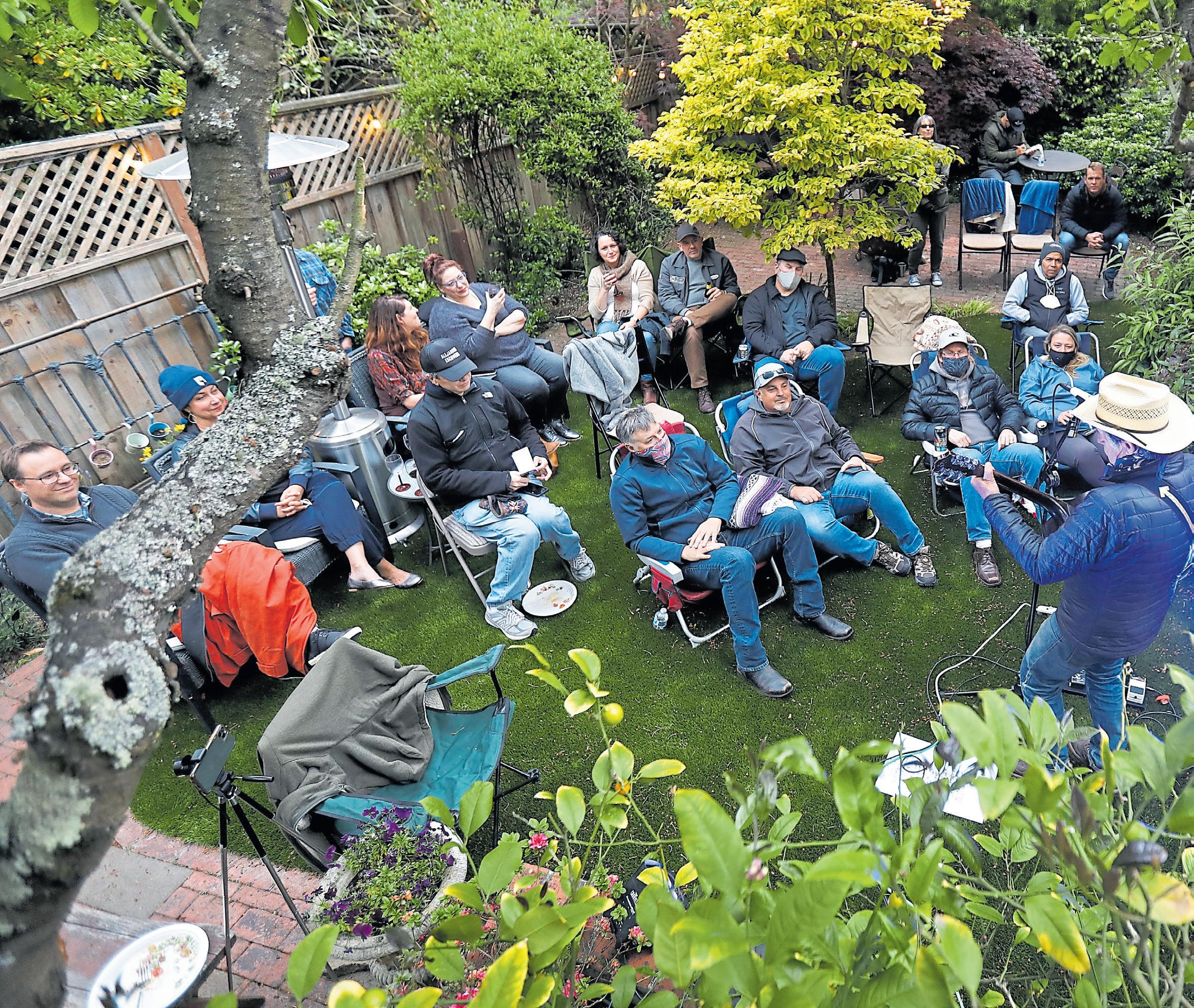
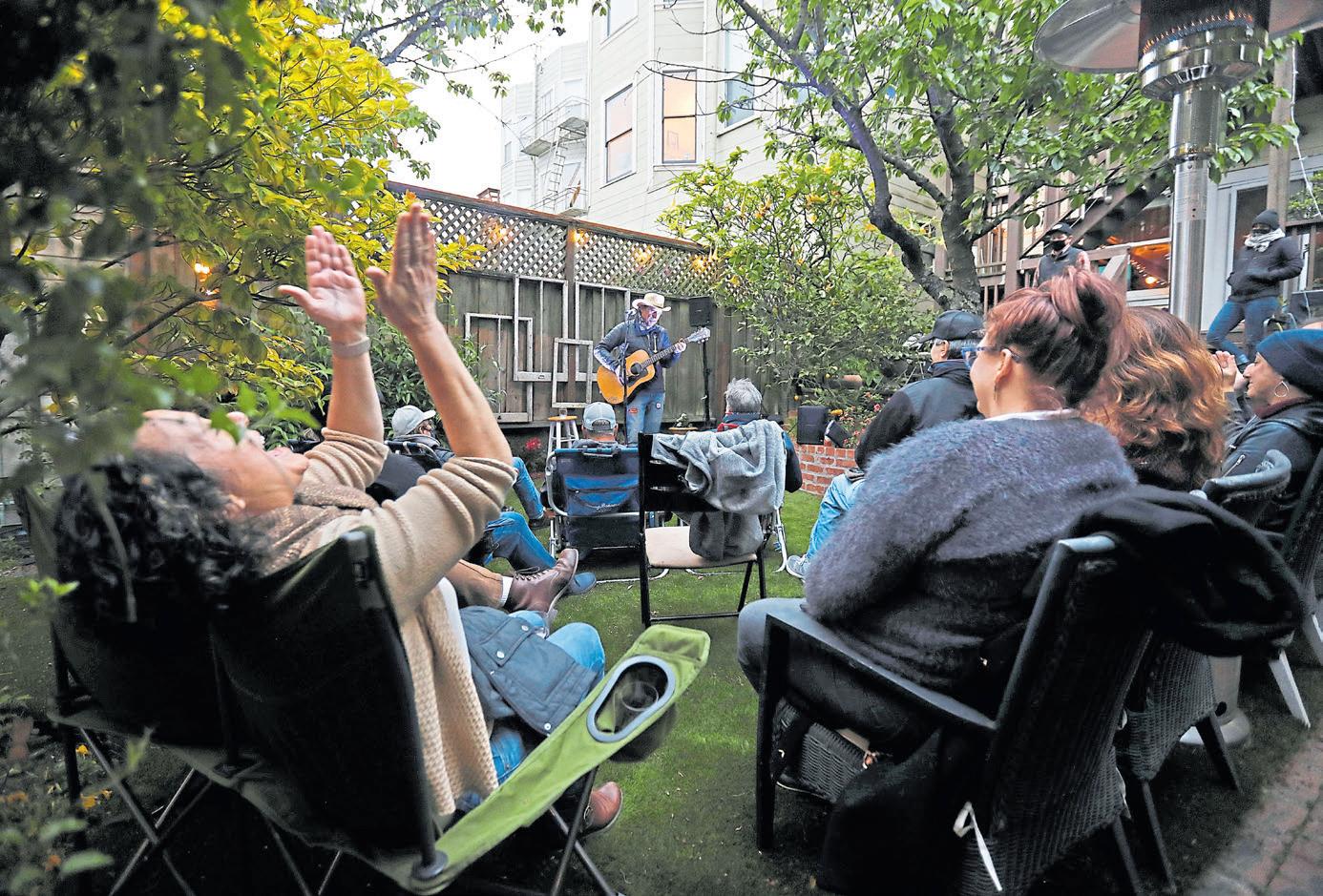
Attendees enjoy a backyard concert by John Doe in San Francisco on a Sunday afternoon in spring.
V. MEYER/ STAFF ARCHIVES
tion for the numerous backyard concerts that he presented during the pandemic — when most regular venues were closed down, and his shows were sometimes the only game in town.
“It was pretty magical,” Turner says, reflecting on the shows from that era. “We went into people’s homes and, of course, very early on, were as safe as possible with social distancing (and other safety protocols). But the experience that I gathered from people, as they were masked up, hearing
NHAT
sometimes their favorite artist of all time play in their backyard or driveway — I mean, I saw tears. I could tell people were smiling, because you can see their eyes crunching up under their mask, you know?
“There was a sense of just pure joy for at least the next 75 to 90 minutes, kind of forgetting that the world is on fire and we don’t know when we’re going to be back to normal. But there was a sense of normality gained between seeing people experience live music — whether it
was their favorite artist or not — and just experiencing something together.”
Turner says that he experienced the same kind of feeling during benefit shows.
“My favorite concerts to do are always benefit shows, where every single person shows up, and they know that their ticket purchase goes towards something important,” he says. “That’s pure joy. That’s what it kind of felt like, because there was such a demand. It wasn’t just about putting on a show, selling tickets and being on tour, moving down the road. It was trying to earn a living again, for sure. But mostly it was being able to have some sense of normality and community once again around live music.”
LaRussell, the rising rap star from Vallejo, also drew much attention for his performances at backyard concerts during the pandemic.
“What Vallejo’s LaRusell has done, starting with a live backyard performance during lockdown, is something that will be studied one day,” Bank$ says.
But the history and importance of the backyard concert in the Bay Area did not begin with the pandemic, Bank$ points out. There are tales of backyard concerts dating back to the mid1960s, setting the scene in some ways for the Summer of Love blossoming in 1967. And as long as people love music and have backyards, this potent combo offering will surely continue to be a popular attraction. It delivers a kind of intimate live music experience that simply can’t be matched in regular concert venues.
“I think when you see someone performing in this informal environment, a backyard or living room or whatever — especially if it’s your backyard or
your buddy’s, where you have had barbecues and memories before — it just creates this sense of inclusion,” Turner says. “There are no bright lights on you. There’s no stage. You’re with the people you know.
“I think that’s what makes it so unique and enjoyable and, in the right scenario, it really deepens the connection of the performance.”
Here are some resources for attending/hosting backyard/house concerts in the Bay Area: kcturnerpresents.com krsh.com/backyard-concerts-2026/ facebook.com/tinygarageconcerts facebook.com/echoesinthevalleyconcerts meetup.com/southbayhouseconcerts/ treehouseconcerts.net
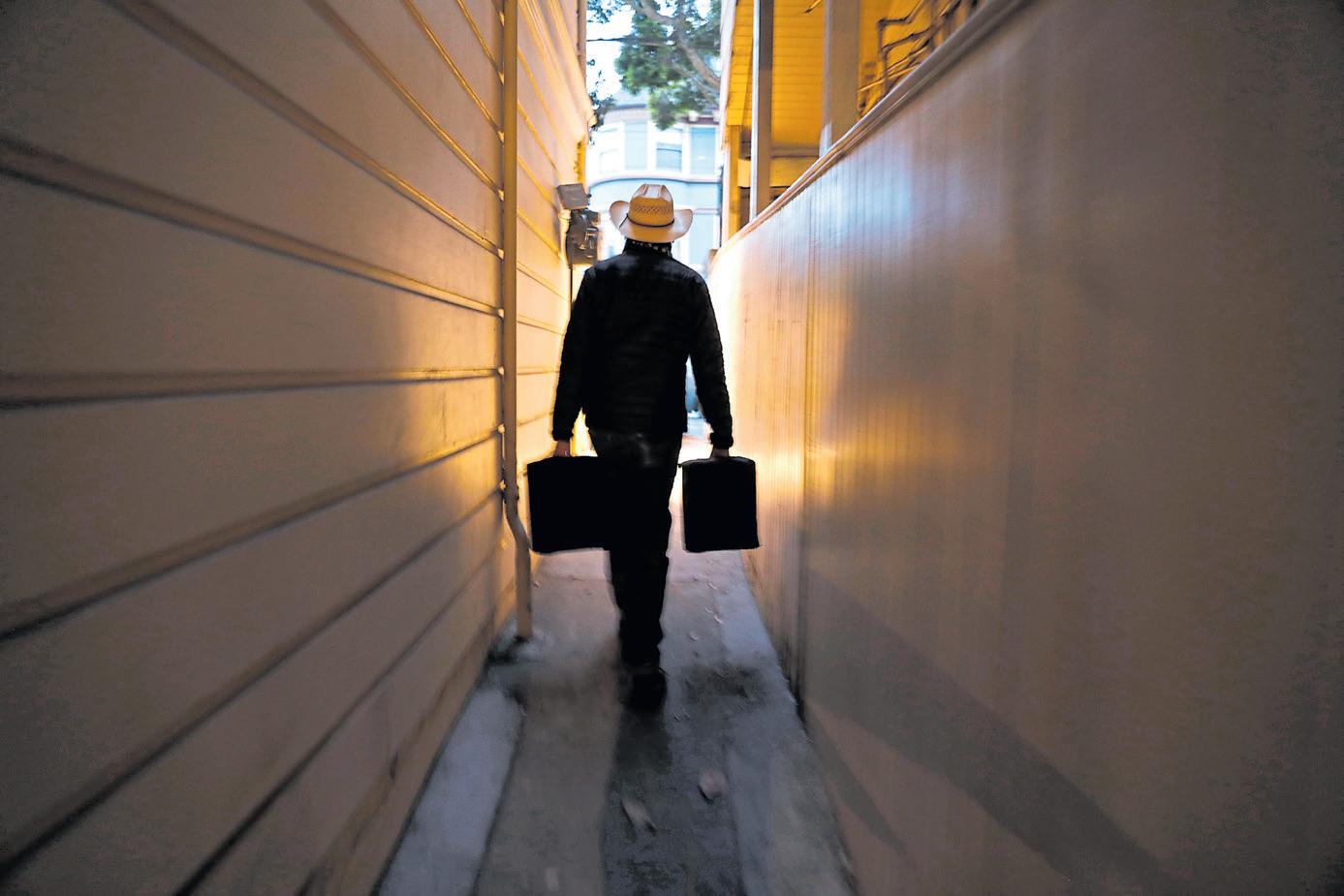
Top: Fans cheer as John Doe starts a song. Above: Doe takes equipment to his car after performing.
NHAT V. MEYER/STAFF ARCHIVES
LAND
SHAPING
From glamping to pickleball to ziplines, backyard design trends in the Bay Area aim for flexibility and fun
BY KATE BRADSHAW
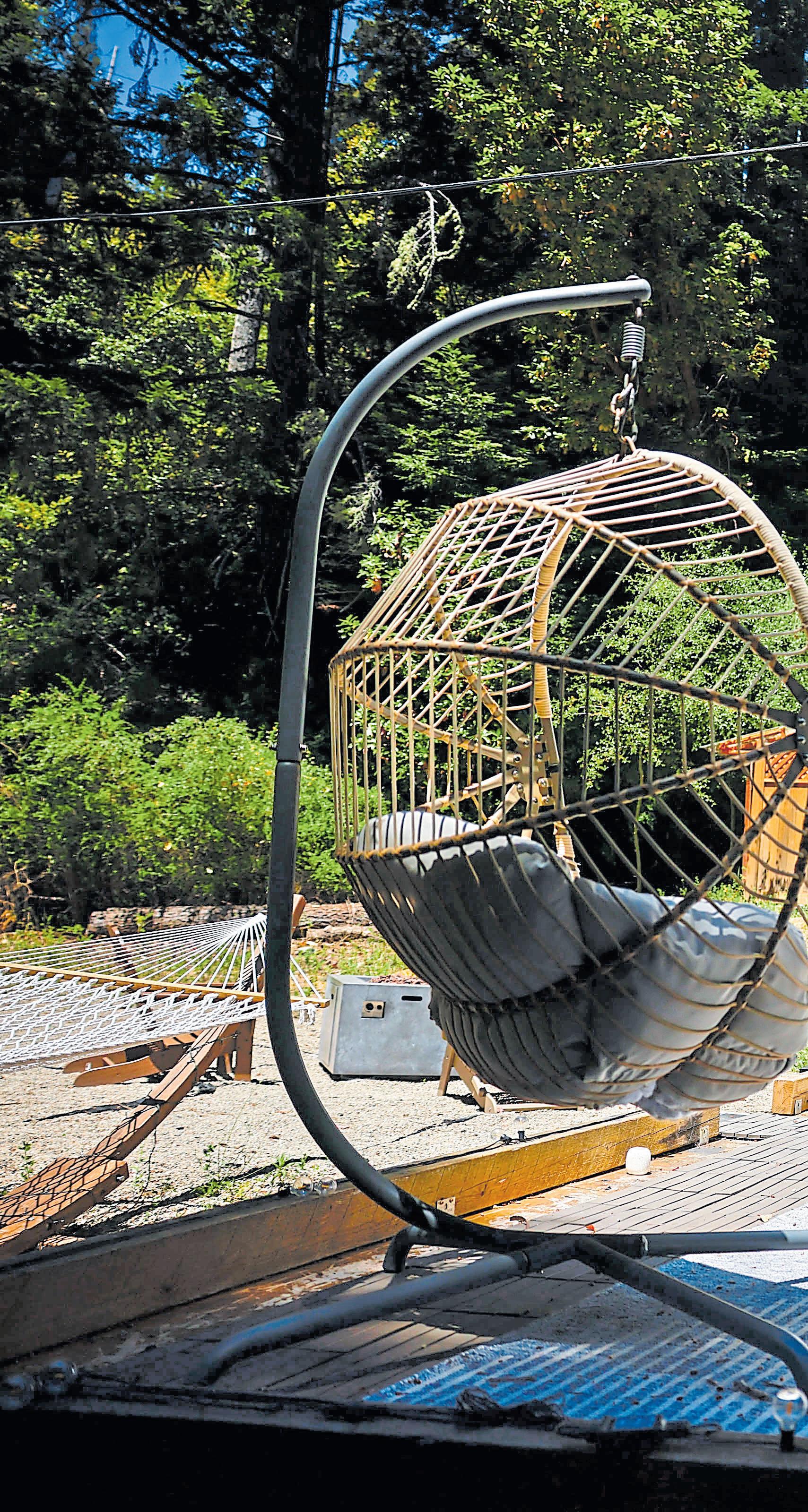
Whether it’s a flexible space with family-friendly features like ziplines and camping spaces, outdoor structures to reconnect with nature, a home gym setup or a pickleball court, Bay Area homeowners seem to be increasingly focused on putting every square foot of their backyards to use.
We asked top professionals who are busy designing, building and installing the latest in-demand features and amenities in big Bay Area backyards to reveal what’s new in local landscaping trends, and they emphasized two words: functional and flexible.
Horngsheng Tu, principal and co-owner of the Bay Area landscape architecture firm In Situ Landscape, says that because some of his clients are younger than those he used to have — thanks to the region’s AI boom — he’s seeing more homeowners designing their backyards around active hobbies. Bocce courts seem to be less popular, while pickleball is booming. Meanwhile, other clients are adding backyard running loops or outdoor gyms, he explains.
A Portola Valley backyard by In Situ Landscape Architecture features lush grasses and a zipline.
PHOTO COURTESY OF BRUCE DAMONTE
“I love the idea of connecting people with nature and giving people more relaxation moments in nature.”
Concra,
Among households with kids, he’s seen an uptick in requests for backyard camping spaces where families can set up a tent overnight to create family-friendly outdoor experiences.
“I love that kind of project,” he says. He also recently installed a kid-friendly zipline for a local backyard. Meanwhile, treehouses are on the decline, as they come with numerous safety requirements, he says.
Overall, he’s seeing a shift away from what he describes as a resortlike backyard aesthetic, which was more popular before the pandemic. Such yards focused on beautiful pools and fire features, for instance. Now, the look is “more down-to-earth,” he says. People love growing backyard vegetable gardens, and some are even growing their own wine grapes. There’s also more awareness of the benefits of planting native plants, he adds.
BACKYARD GLAMPING
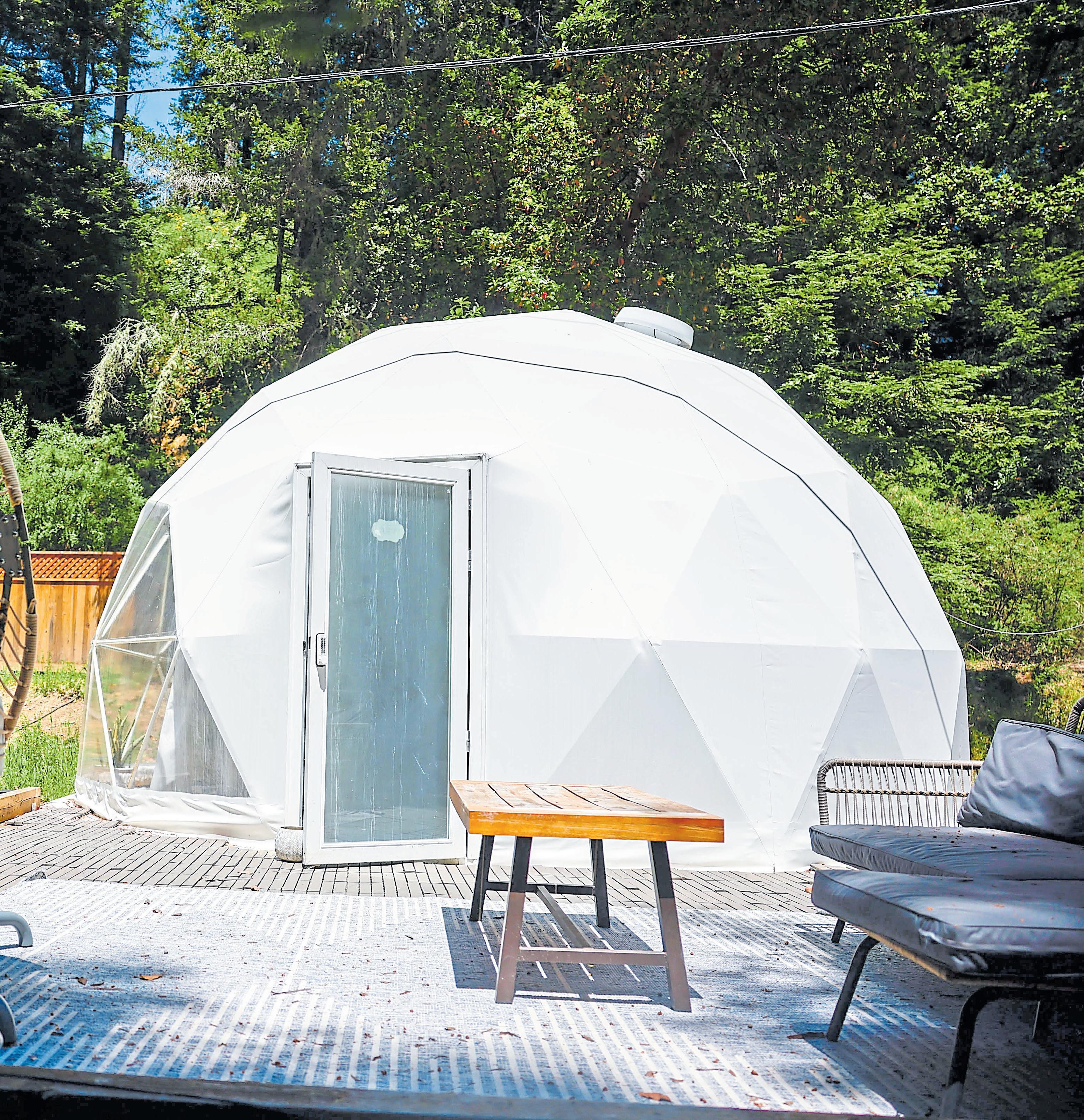
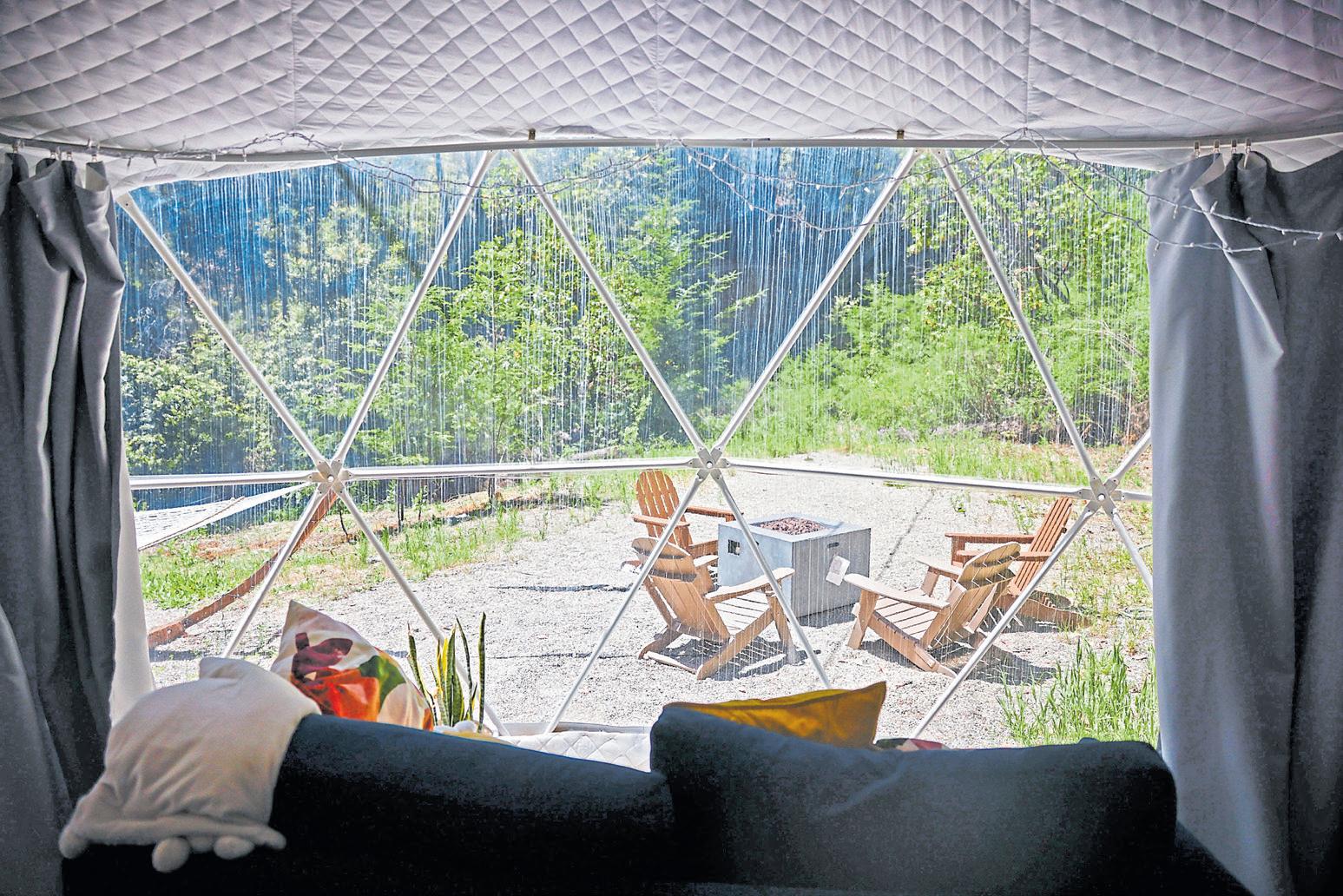
Meghan Concra, a former teacher and Meta employee who now runs Tanari Earth, a business specializing in custom backyard structures in Woodside, says homeowners are increasingly interested in installing backyard buildings like glamping domes, custom saunas and outdoor rooms as state laws have made it easier for people to build accessory dwelling units on their properties.
She and her husband built a glamping dome on
SHAE HAMMOND/STAFF
Meghan
owner of Tanari Earth, a business specializing in custom backyard structures in Woodside
Tanari Earth is a company that builds custom glamping domes and backyard saunas.
their 18 acres in the Santa Cruz Mountains and have seen it resonate with visitors looking for a low-key way to get into nature.
“I love the idea of connecting people with nature and giving people more relaxation moments in nature,” she says.
After searching high and low for a backyard sauna with a design and quality she liked and finding manufacturers who were agile and easy to work with, she went on to add a line of custom saunas to her offerings.
She’s observed more homeowners installing workout and relaxation spaces into their backyards so they don’t have to make a separate trip to the gym or spa, she says. Additionally, she’s seeing more interest in outdoor rooms purpose-built for things like yoga, a home office or just a retreat closer to nature, away from the chaos of the house.
“People are also looking at backyard space, and asking, ‘How do I make my house bigger?’” Concra says. “It comes down to getting your money’s worth out of your property and enjoying the outdoor space that you have.”
Some people also want to monetize their additional backyard structures, she notes. However, some local jurisdictions impose limits on short-term rentals, so it’s worth checking to see what your community’s rules are about making these spaces available for visits on websites like Airbnb or Hipcamp.
PICKLEBALL MANIA
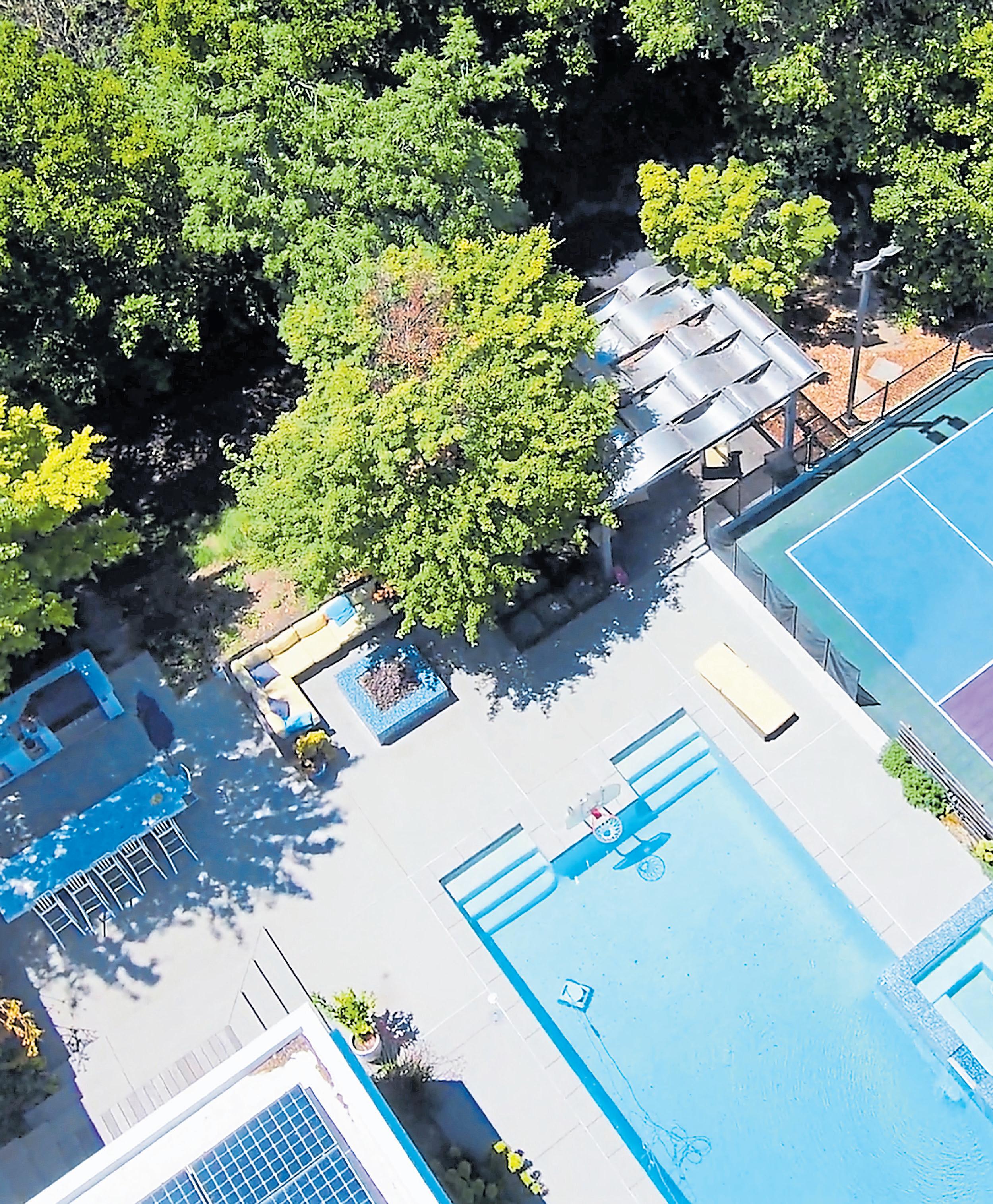
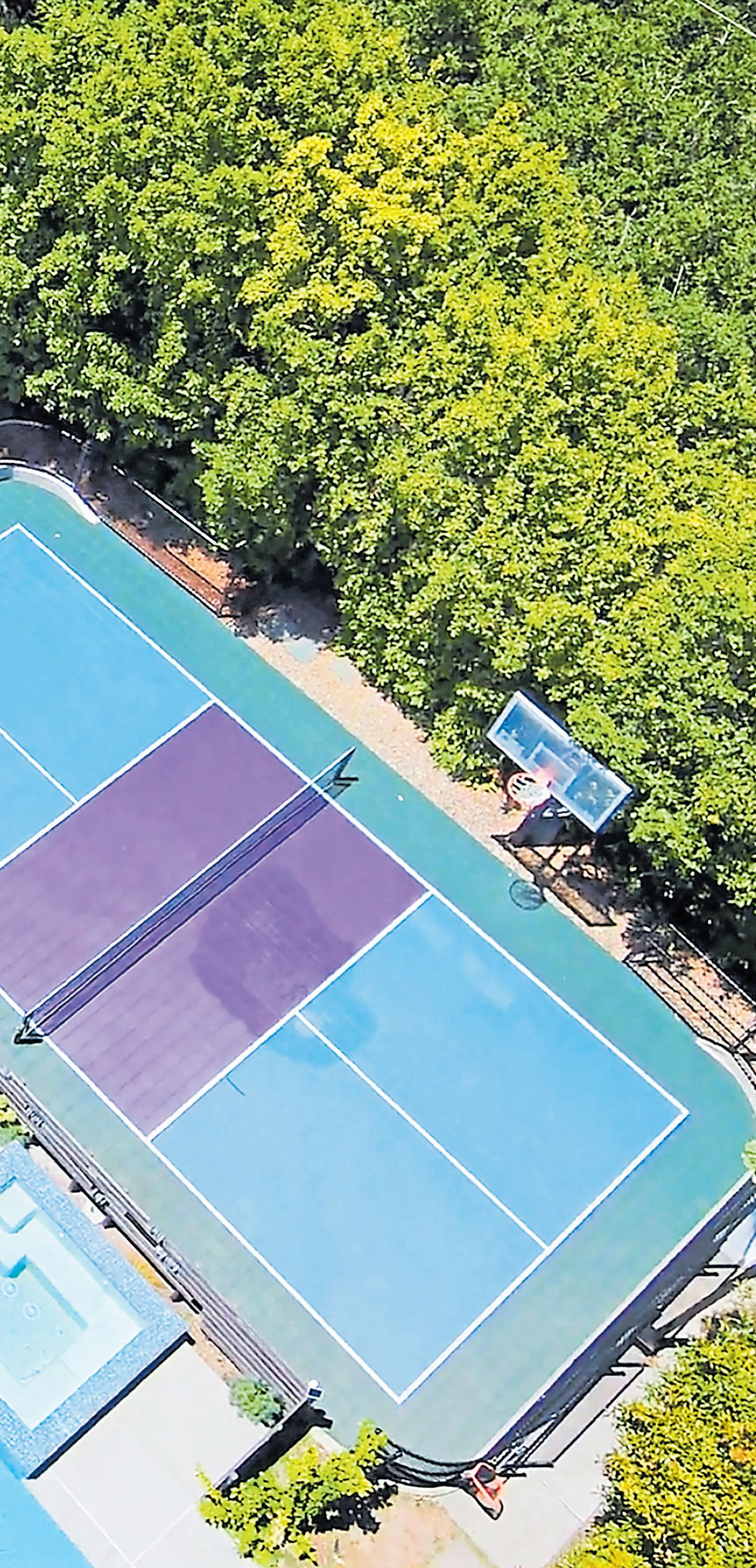
One of the biggest trends right now in Bay Area backyards is a booming demand for pickleball courts. Jeffery Strachan,
This project named “Court of Dreams” by Jeffrey Strachan, owner of Pacific Courts, was his first pickleball project in Los Gatos.
PHOTO COURTESY OF JEFFERY STRACHAN
owner of the Los Gatos-based Pacific Courts — a company that installs custom athletic courts for residential and commercial clients — has been inundated with demand since he built his first pickleball court in Los Gatos three years ago, he says. Twenty years into a career that’s included constructing backyard ice rinks, commercial movie theaters and an array of tennis, basketball and multisport backyard facilities, he’s gone all in on pickleball courts, which require significant expertise to build and surface.
Today, more than 90 percent of his projects are pickleballfocused, and demand isn’t going anywhere, he says. Last year, he completed a project in Rohnert Park to convert an entire 17-room movie theater into a state-of-theart pickleball gym and fitness center, CenterLine 33.
Not every backyard can accommodate the 60-foot by 30-foot footprint these courts require, and his residential courts tend to be in communities where larger properties are the norm — like Hillsbor-
Earth. builds custom glamping domes like this one in Meghan Concra’s Woodside backyard.
ough, Atherton, Woodside and Saratoga. However, creative options are out there for some smaller yards, too. Strachan recently installed a pickleball court in someone’s front yard, for instance, he says.
The sport, which was invented in the 1960s on Bainbridge Island, Washington, took its time getting to the Bay Area, but the craze has definitely caught on. This may be thanks to The Hub, a chain of pickleball facilities that have opened locally in recent years, according to Strachan. The Hub has had locations in Campbell and Alameda since 2023 and has one opening on Treasure Island this summer. But demand for courts is outpacing even what those facilities can offer, he says.
Another reason for pickleball’s backyard appeal? It’s a remarkably all-ages-welcome, family-friendly sport. While it first became popular among older people looking to stay active, it’s now being played by 5-year-olds, too, he says. “You’ve got quite a range.”
Tanari
SHAE HAMMOND/ STAFF
The Bay Area has its own wild connections to UFO culture and the search for alien life
BY JOHN METCALFE
t was the late 1950s when Ruben Uriarte saw his first UFO — a silvery, oval-shaped object hovering by the Oakland foothills.
“I thought maybe it was a blimp, because it was just hanging there. I thought it would eventually move. But it didn’t move at all, and that stayed with me, because I was puzzled,” says Uriarte, now 74 and living in Hayward.
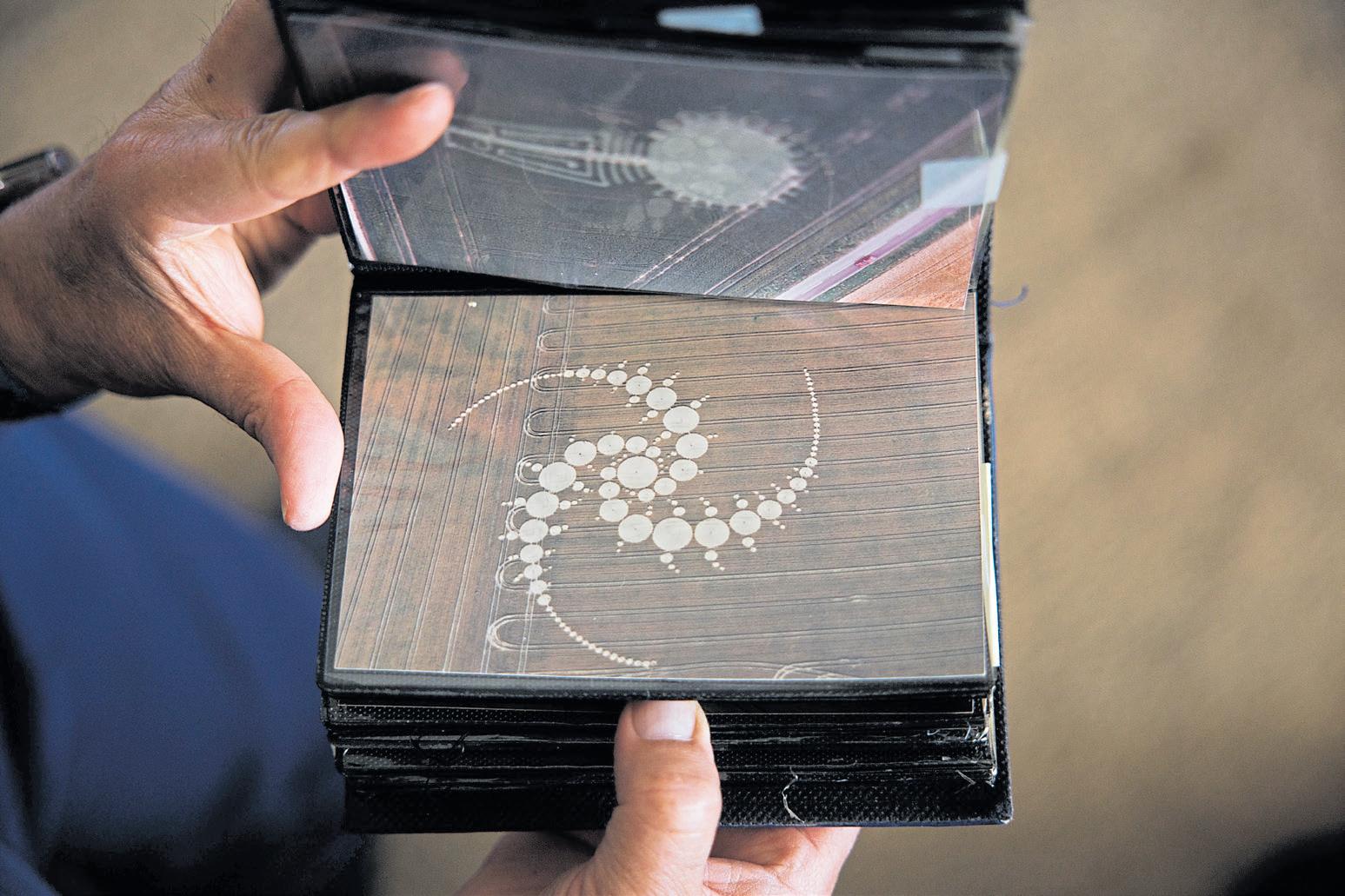
In his life, Uriarte has encountered other unexplained phenomena, including balls of light that grouped into a triangle during a crop-circle tour of England. But his own experiences are a drop in the bucket compared to the flood of UFO reports he receives from people around the world. It’s his job to suss out the ones worthy of further study, as Northern California assistant state director for the Mutual UFO Network (MUFON).
The volunteer-run organization has collected more than 100,000 reports of UFOs worldwide since its 1969 founding. In an average year, it logs between 700 to 900 in California, with nearly 200 reported last year in Northern California. The shapes of these objects range from dumbbells to eggs to diamonds to fireballs, and behaviors include takeoffs and landings. Some people report seeing “entities” — blond-haired Nordics, bobble-headed Zeta Reticulans, little green men and more.
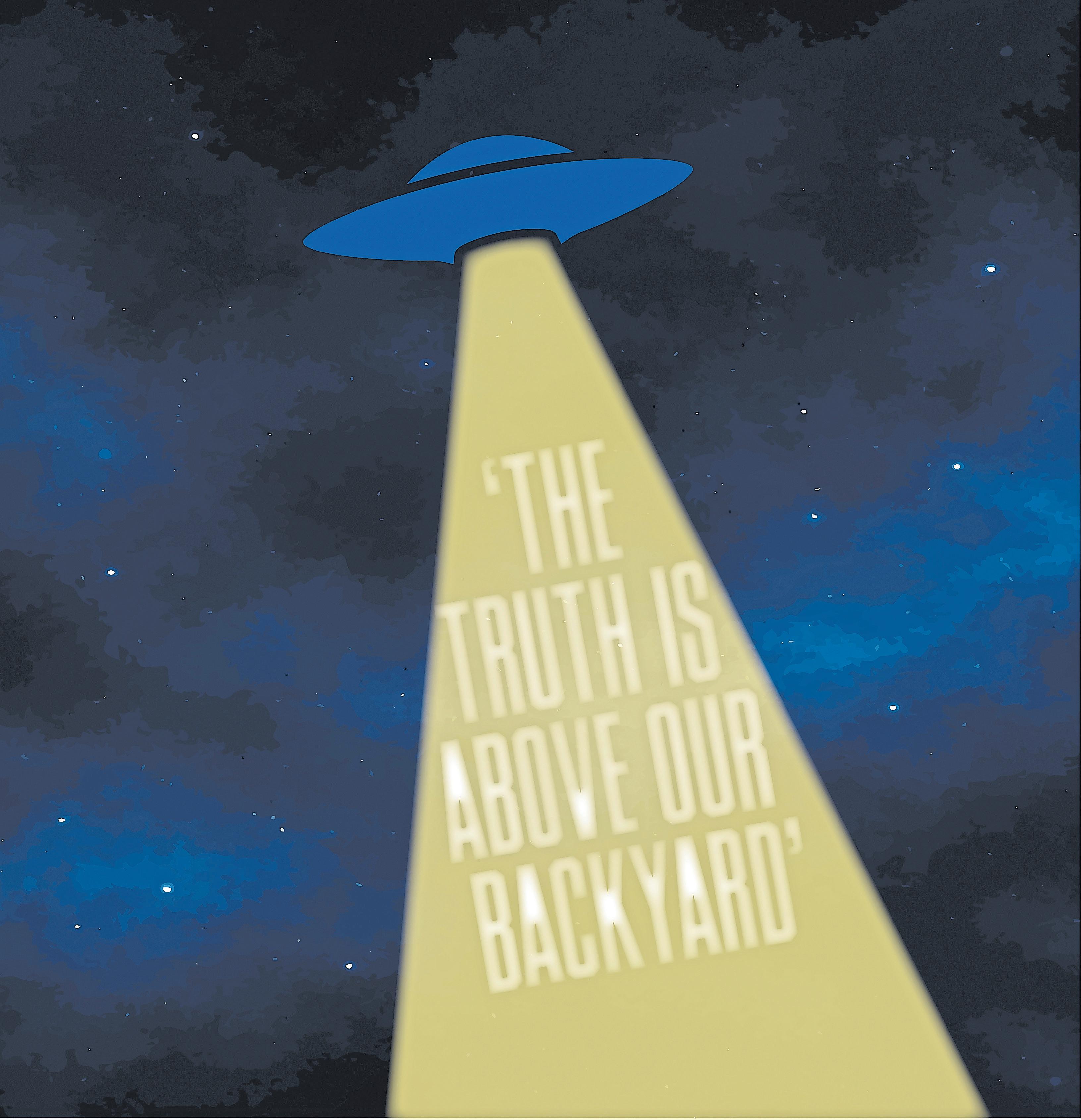
Uriarte, who signs his emails “THE TRUTH IS ABOVE OUR BACKYARD,” expects the pace of reports to soon pick up, due to recent media attention and the Trump administration’s declassification of military “UFO files.”
“Spielberg is going to be coming out with a
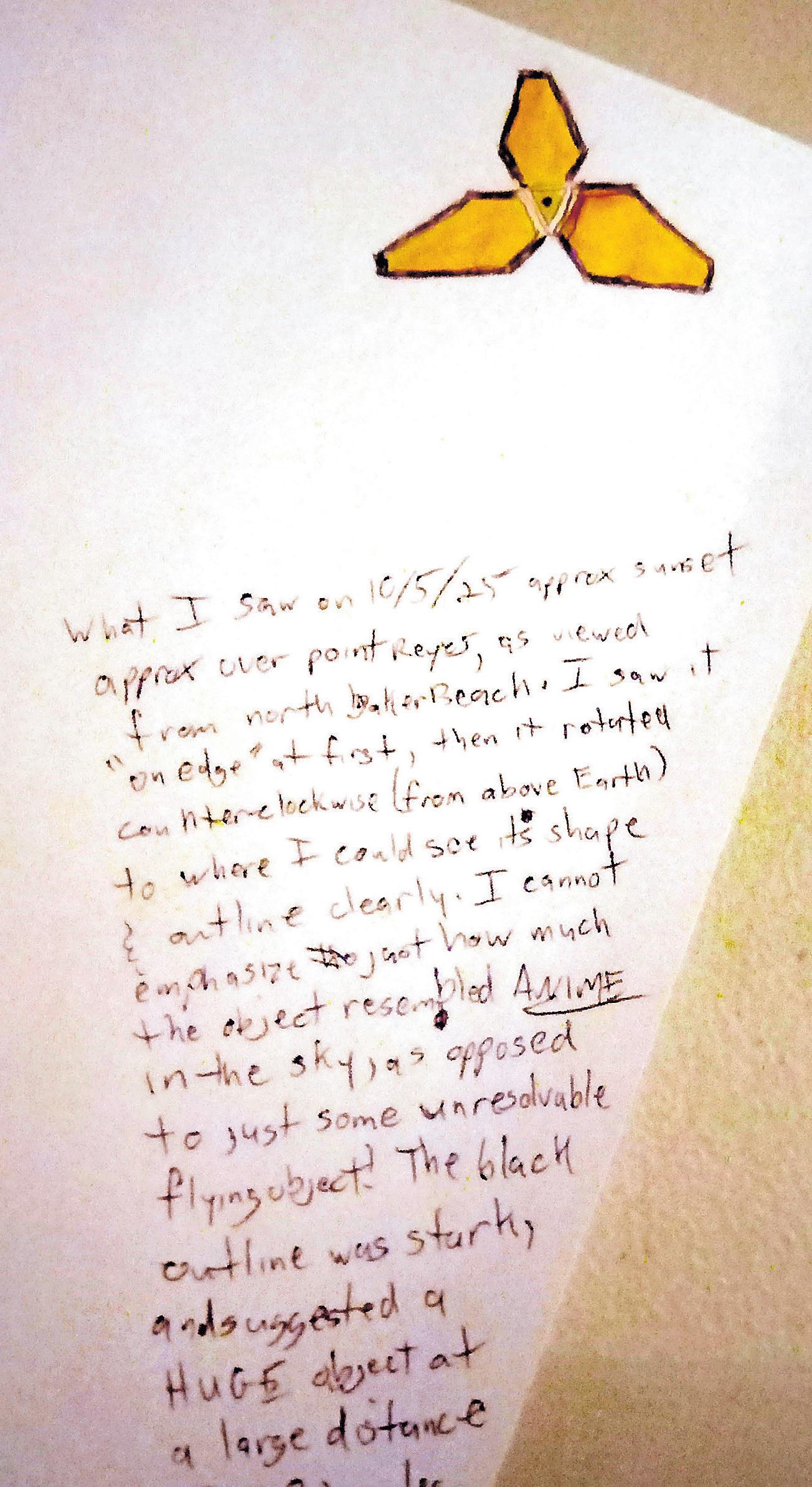
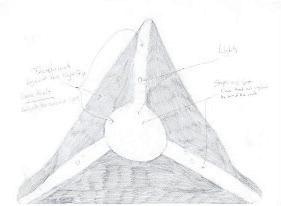
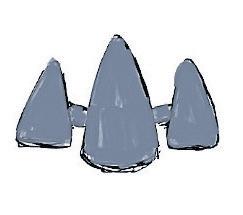
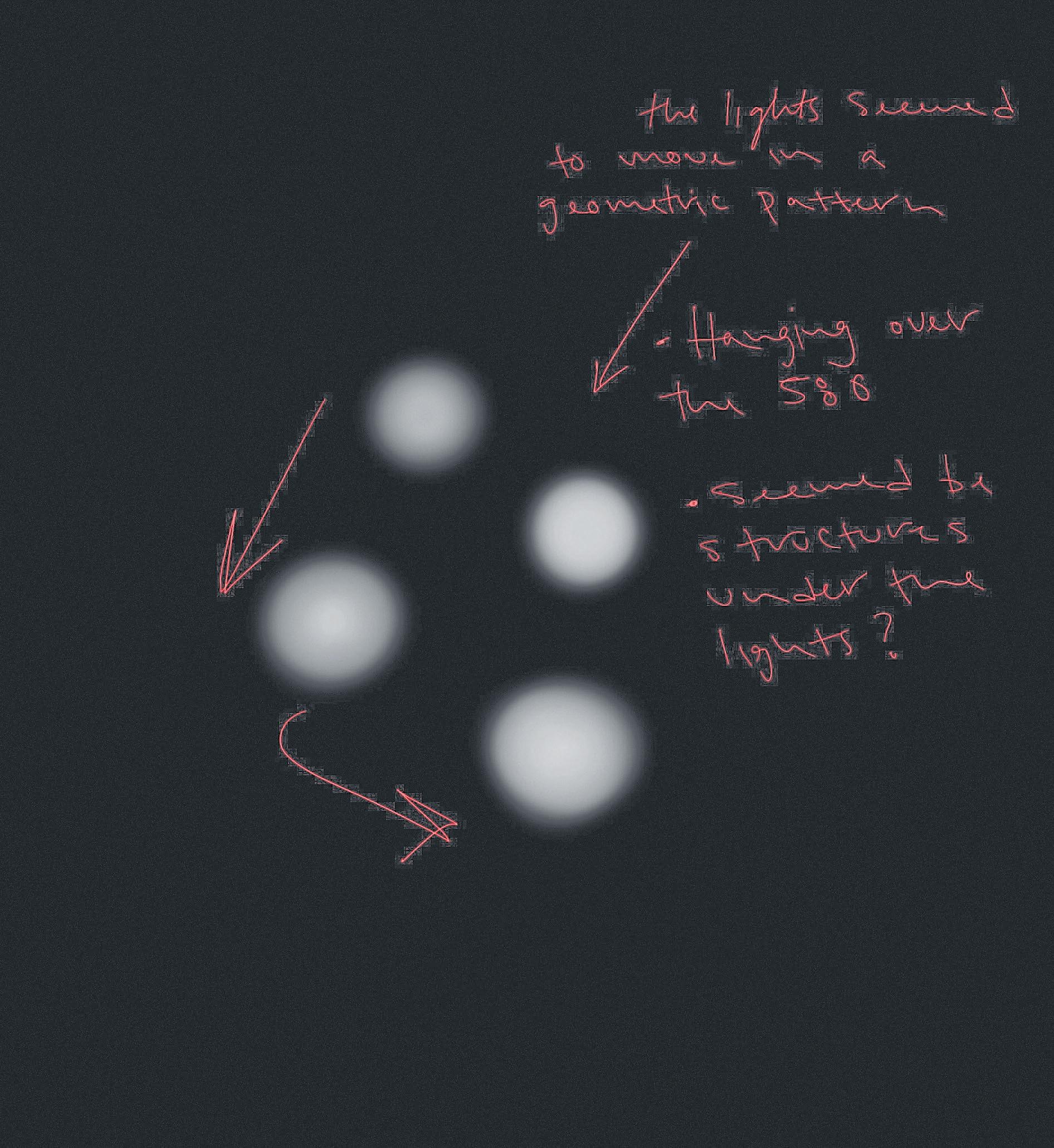
A person reported seeing a moving object in the sky in October 2025 from Baker Beach in San Francisco and later submitted this drawing to the National UFO Reporting Center.
new movie on UFO disclosure this June,” he says. “Then there are going to be more cases released by the Pentagon that I’m sure are going to spark a lot of interest. There might be new information like videos and pictures. I doubt they will release anything like a UFO crash or bodies of dead aliens — all that’s still going to be classified.”
Americans remain fascinated with UFOs, long after the first well-known report in 1947 of flying saucers on Washington’s Mount Rainier. Forty-one percent of Americans believe UFO sightings are evidence of alien spacecraft, as opposed to human or natural phenomena, according to a 2021 Gallup poll. And 2 percent believe they’ve personally been abducted by aliens, a 1992 Roper poll found, equal at the time to 3.7 million people.
But Bill Diamond, president and CEO of the SETI Institute in Mountain View, says those numbers may not reveal what we think they reveal.
“All of this says much more about human nature and the human species than it does about the presence or absence of aliens,” says Diamond. “What it says is we don’t want to be alone. We don’t want to imagine that there isn’t life and intelligence out there,” says Diamond.
That may sound ironic coming from the leader of a group with a name that stands for “search for extraterrestrial intelligence.” But SETI’s legion of well-trained scientists, with cutting-edge instruments scan-
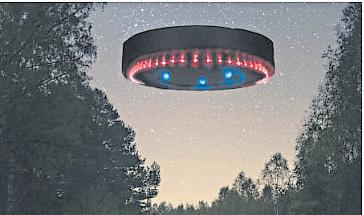
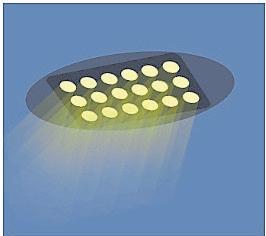
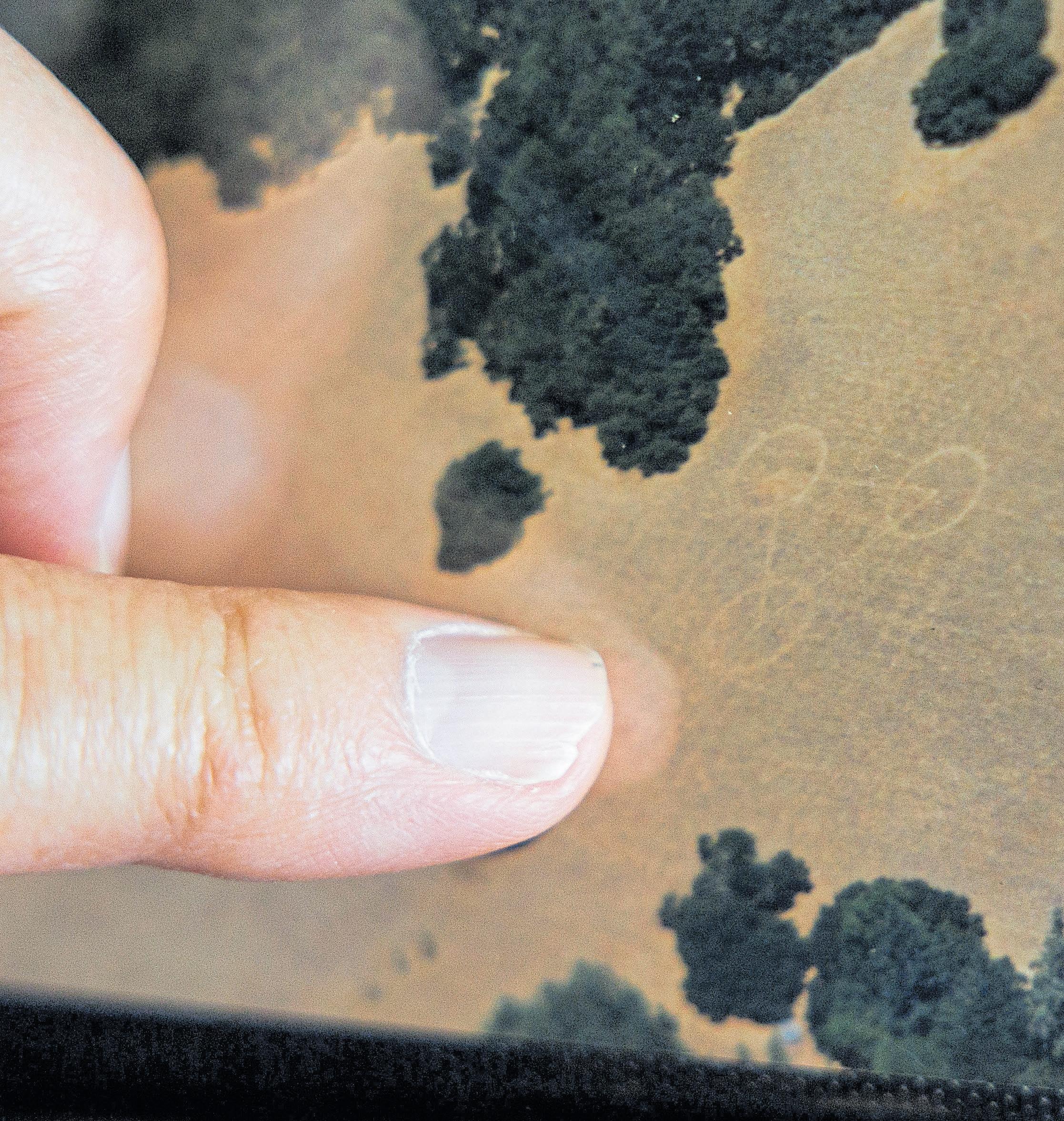
Multiple images of hand drawings and computer generations of UFO sightings have been sent to The National UFO Reporting Center from across the nation and globe.
COURTESY OF THE NATIONAL UFO REPORTING CENTER
ning the skies, have found zero evidence of alien visitation. The institute’s position is that life is statistically likely on planets far, far away — it just hasn’t made its way to us.
“You don’t work at SETI Institute if you don’t believe in life beyond Earth. But, I mean, the distances are extraordinary,” Diamond says. “They sure as hell also would not crash in our desert. It’s like, ‘Oh, we figured out how to travel light years through space and time, but we didn’t know how to fly around the planet. We crashed in the desert. And then we left somebody behind.’ That just doesn’t pass the straight-face test.”
Compared to places with eerie reputations like Roswell and Area 51, the Bay Area isn’t exactly a hotbed of UFO activity. The National UFO Reporting Center (NUFORC) counts roughly 2,900 sightings since 1947 in an area from Santa Rosa to San Jose.
“Where we get more reports per capita are generally where the sky is clearer, so places like Northwest Washington or in the remote stretches of Nevada,” says Christian Stepien, chief technology officer for the Washington-based center.
Light pollution and fog account for fewer UFO sightings in the Bay Area, as does the high rate of tech literacy, says Mick West, a Folsom-based analyst for UAPs (unidentified aerial/anomalous phenomena).
“You’ve got a higher density of people who are thoughtful about science and technology because
Above: A UFO sighting from Berkeley says “saw lights over the freeway, pulled over and watched them at a park for 30 minutes.” The sighting was logged on Nov. 26, 2024.
COURTESY OF THE NATIONAL UFO REPORTING CENTER
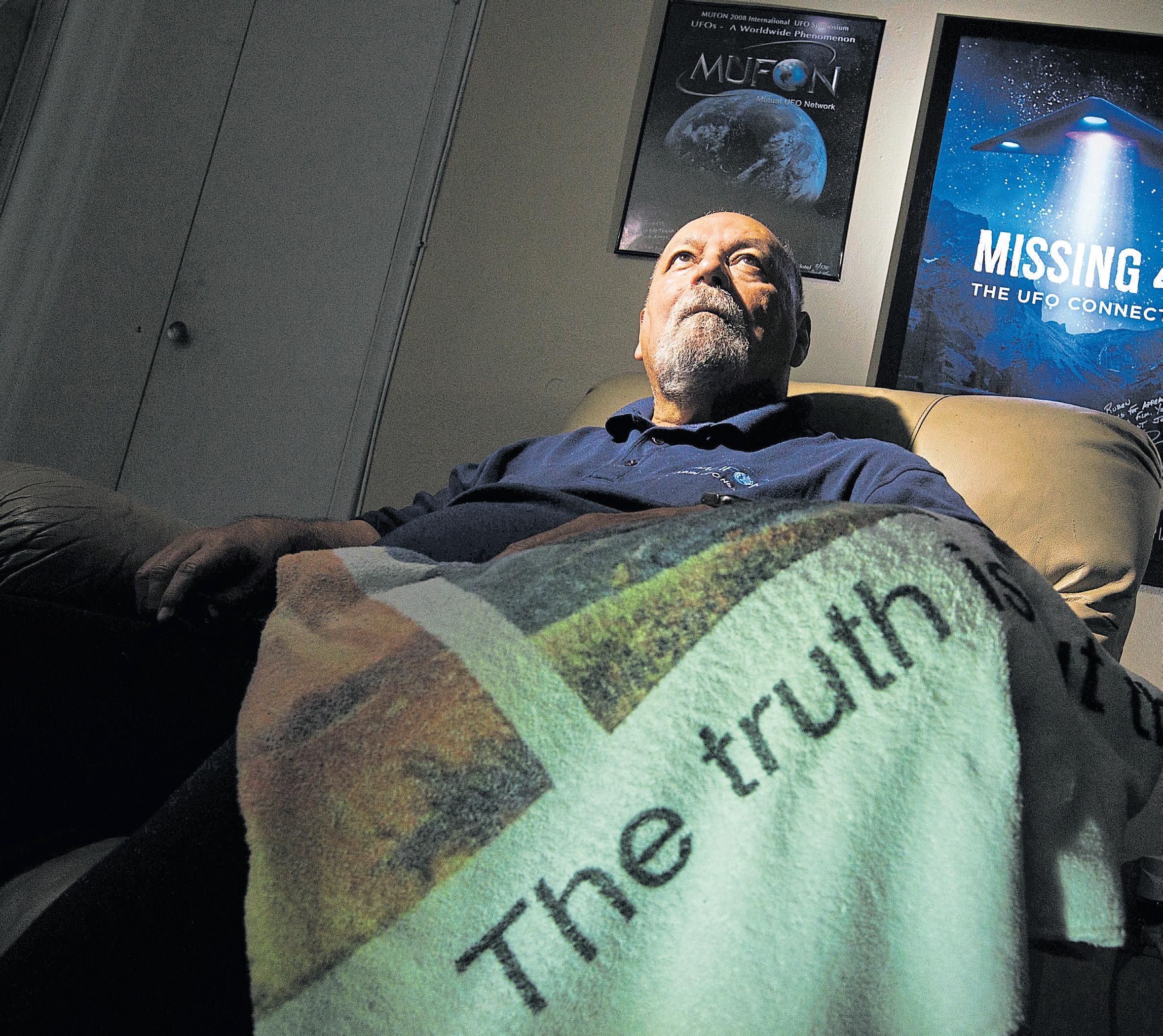
Left: Ruben Uriarte is the Northern California assistant state director for the Mutual UFO Network.
DAI SUGANO/STAFF
A UFO sighting from Santa Clarita reported “saw in air and seconds afterwards descended over my swimming pool suspended over water for 2 minutes.” The sighting was logged on July 14, 1978.
COURTESY OF THE NATIONAL UFO REPORTING CENTER
of the prevalence of the tech industry. It’s just something that pushes the needle a bit,” says West, who runs the skeptical site Metabunk.
That does not mean the Bay Area’s tech overlords are nonbelievers. A few years ago, a Peter Thiel-backed venture fund announced a “conference for thoughtcrime” called Hereticon for discussing things like UFOs and biological modification. And a former executive with Sam Altman’s OpenAI recently claimed the organization is “building portals from which we’re genuinely summoning aliens,” according to The New Yorker. (“It’s the most reckless thing that has been done,” he warned.)
In one 1990s case, a Silicon Valley CEO named Joe Firmage left his Internet-consulting company to pursue UFO inves-
tigations full-time. Firmage had “explicit confirmation that the UFO phenomenon is in fact occurring,” he told the Associated Press. He then related how a bearded interloper appeared in his Los Gatos bedroom and “produced a sphere, an electric blue ball about the size of a cantaloupe, which entered Firmage’s body, taking command of his muscles and producing unimaginable waves of uber-orgasmic ecstasy.”
If only all UFO encounters were so pleasant. Witness reports submitted to entities like MUFON, NUFORC and the U.S. Air Force’s defunct Project Blue Book range from curious to scary.
In 1896, newspapers reported
Ruben Uriarte, the Northern California assistant state director for the Mutual UFO Network (MUFON), holds pictures from the mid’90s that show a mystery circle in Santa Rosa, left, and a mystery circle in England.
DAI SUGANO/STAFF
that people from San Francisco to Sacramento witnessed an immense airship traversing the region — some say it was shaped like a bird. This was before zeppelins had made their way to America.
“Around 6:30 p.m., a light resembling an electric-arc lamp appears in the night sky above Sacramento,” reads one account. “Horse trainer David Carl notices it close to the ground and hears a voice saying, ‘We are too low down here. Send her up higher.’ Hundreds watch as it passes at low altitude for 30 minutes, avoiding buildings and hills. Some people claim to hear voices, either arguing or singing.”
In 1964, a bowhunter stalking deer near Lake Tahoe reported
that he was approached by two creatures that attempted communication by cooing like doves. As it happens, there was a robot with them, also. “They were garbed in a silverlike suit but visually had the complete absence of a neck. These strange (individuals) had unusual facial features especially in the region of the eyes that protruded extensively,” he later told a military investigator.
The encounter ended in a rude way, when the “beings emitted a vapor and the hunter said he blacked out.”
Also near Tahoe, a man claimed he was abducted from a cabin in 1977 in the Heavenly Valley ski resort by a trio of aliens who did nefarious things to him. They “materialized in the room like something out of ‘Star Trek,’ opened up a side of the cabin and took me to an illuminated room,” he told the San Francisco Chronicle. “There, he said, they extracted DNA for their own bizarre purposes, then deposited him back in his room ‘with a hell of a sunburn and two black eyes.’”
When asked why so many tales of alien abduction involve invasive medical procedures like probings, West cracks “You’re going to have to ask Dr. Freud.”
Shortly after World War II ended, sailors on a fishing charter going under the Golden Gate Bridge reported silver objects flying faster than aircraft, in formation, over Alcatraz Island. A couple years later, in 1950, local newspapers relayed dozens of accounts of an odd-shaped object drifting over the region, leading to an indelible Chronicle headline: “Flying ‘Ice Cream Cone’ Reported Over Alameda.” These type of accounts
continue up to the present day.
“My boyfriend and I went out to see the blue moon, and we saw lights. We felt like we were taken and branded somehow with burns to our skin,” reads a 2020 NUFORC report from San Jose. In 2025, sightings on two different dates from Benicia and San Francisco’s Baker Beach described glinting, triangular
crafts in the sky. “Using my pure, untrained estimation, I would say that, if the craft were the distance of Point Reyes from my location, it was hundreds of feet across,” wrote one witness.
As far as sightings go, flying saucers are out in the 21st century, and in their place are spheres, cigars and triangles. “It’s like when new models of
Ruben Uriarte’s home in Hayward features several UFO-related art pieces.
DAI SUGANO/STAFF
cars come out. I think there are new models of alien spacecraft coming out,” says Stepien.
To believe the mountain of witness accounts, aliens are visiting the Earth as often as you might go to the store for a bag of chips. But there are ordinary explanations for what many people are seeing, says West, who’s analyzed footage of
hundreds of UAPs.
“People misidentify planes. Starlink satellites are another common cause; satellites in the sky will reflect the sun, and they look like they’re crisscrossing and doing dogfights,” he says. “Then there are planets and stars — people are not used to looking in the skies. Balloons are the most common cause
Top: A UFO sighting from Porterville report, logged on April 4, 2025: “Octahedron, dark metallic, 600900 feet away, followed parallel with vehicle at same speed, turned 90 degrees away, no lights or sounds.”
Above: A person reported seeing an airplane-sized object in the sky in September 2025 from Benicia and later submitted this drawing to the National UFO Reporting Center. It was characterized as an “anomalous sighting.”
COURTESY OF THE NATIONAL UFO REPORTING CENTER
“What it says is we don’t want to be alone. We don’t want to imagine that there isn’t life and intelligence out there.”
Bill Diamond, president and CEO of the SETI Institute
of sightings among military and commercial pilots. Drones themselves are a whole other ball of wax.”
In the Bay Area, UFOs have later been attributed to electrical storms, airplanes taking off from Oakland and San Francisco airports, test missiles launched from Vandenberg Space Force Base in Santa Barbara County and a transformer fire on Mount Diablo.
The Pentagon started releasing declassified UFO files this spring — Donald Trump promised they contained “things that you wouldn’t believe” — but a search does not reveal anything relevant to California. One of the biggest things is Buzz Aldrin seeing a “fairly bright light source” while on an Apollo mission, but the astronaut said it could’ve been a laser. West has perused the Pentagon files and says they don’t contain anything new or compelling.
“It’s a distraction, because it’s something that’s more interesting for people to talk about than, you know, the war and Epstein,” he says. “It’s being exploited for political games, essentially. And I think that the more sunlight you can put on explaining what these things are, the more people can see how they’re being misled by pol-
iticians who don’t always have their best interests at heart.”
Nevertheless, many continue to believe. Decades of working as a UFO investigator for MUFON have convinced Uriarte that aliens are real, and they’re here right now.
“I had an international case of a woman who had an encounter with these Nordics — blueeyed, blond-haired beings that look very human — in Cuba when she was a younger lady,” he says. “I had another individual from Mexico who stated she felt a presence in her room and was lifted and went through the wall to meet these four beings.” Uriarte is happy aliens are finally being taken seriously at the highest federal level.
“Our executive director does meet with congressional members and other people in the U.S. government. He provides them with an update of what’s going on, so we’re working mainly behind the scenes,” he says.“The fact we’re having contact with representatives and getting cooperation is what I find really unique. There was a lot of mistrust over the years, because there was denial that there were such things as UFOs. Now it’s like, there is something out there — just who and what they are, we don’t know yet.”
Recent code changes in parts of the Bay Area let entrepreneurs turn their backyards into restaurants
Home cooking
STORY BY KATE BRADSHAW
PHOTOS BY ARIC CRABB
If you’re lucky — and a bit patient — Chef Kellie Joe might just let you into her backyard for an invite-only dinner at her custom-built venue, the Patio Oasis.
After decades of working to make it a reality, the Pleasant Hill chef and former culinary educator says she’s finally living her dream: offering fully legal food experiences from her backyard, where she cooks up fresh pizzas topped with eggs from her chickens and basil harvested from her herb garden.
The former Monte Vista High School culinary teacher pivoted to entrepreneurship around 12 years ago but struggled with the overhead costs associated with running her online pizza store Queen of Crusts and her private pizza chef program Chicks and Love Pizza. At the time, the law mandated that she could only cook in a commercial kitchen, which was costly to rent. And even with a cottage food permit, she was allowed to prepare pizza dough to sell but couldn’t cook or slice the toppings.
“Having a small food business is not for the faint of heart,” she says.
That all changed two years ago, when Contra
Costa County first launched a pilot program to take advantage of a 2018 amendment to the state health code that allows cities and counties to grant permits to home chefs to make and sell their products in-house — essentially legalizing what’s been an underground economy for centuries. These permitted businesses — called Micro-Enterprise Home Kitchen Operations, or MEHKOs — are thriving across the Bay Area counties where they’ve been permitted to operate and are bringing expanded access to unique outdoor dining experiences.
Joe went on to secure a license to serve beer and wine and now offers “pizza by the pond” fourcourse meals and themed dinners featuring wine cocktails or mocktails, organic salad, garlic noodles, pizza and handcrafted gelato next to her backyard koi pond.
“It’s not like a restaurant. You’re going to the chef’s house. They are serving you. Most likely, they’re telling you their story,” she says.
The MEHKO program, which now boasts nearly 80 such operations in Contra Costa County, has been so successful in its two-year pilot that the county’s Board of Supervisors voted unanimously on May 12 to make it permanent.
About two-thirds of the MEHKO businesses in Contra Costa County are owned by women, and there are more Hispanic/Latinx and Asian business owners than any other ethnicity, according to the county’s environmental health director, Kristian Lucas. An interactive map operated by the Cook Alliance, an advocacy group that supports informal home cooking businesses, shows hundreds of operations scattered throughout the Bay Area, each with its own approach to the microrestaurant concept. They’ve so far been legalized in Santa Clara, San Mateo, Alameda and Contra Costa counties, but not in San Francisco. Los Angeles County has the most MEHKO businesses so far, at nearly 300. While Joe hosts diners in her own backyard for special events, another up-and-coming MEHKO business, Live Oak Kitchen, operates as a weekly pop-up barbecue micro-restaurant in Concord.
Live Oak Kitchen
Every Saturday, Concord residents Chef Douglas Richey and Ariana Faustini convert their home kitchen into the preparation zone for an all-day cookout, bringing out the smoker to their driveway.
Richey’s fine-dining culinary background includes work with the Thomas Keller Group and Bouchon as well as the Culinary Institute of America. He grew up in Lompoc and specializes in Santa Maria-style barbecue, smoked over post or red oak, and spent three months traveling the South honing his barbecue craft.
Chef Kellie Joe holds private pizza parties in the backyard of her Pleasant Hill home.
However, for this couple, the limitations placed on MEHKOs are already being felt. For instance, the law governing the program limits the number of meals served to 30 per day and 90 per week and has an annual sales cap of $100,000. Catering is not permitted, and food has to be cooked, prepared and sold on the same day.
Still, says Faustini, “The MEHKO route was our only chance to take all the amazing skills Chef Douglas has and be able to have a business around it.”
Opening a brick-and-mortar restaurant, especially without access to generational wealth, is a challenge, she notes. “We are taking advantage of the pathway that is available to us financially.”
So each week, they wake up early and prepare the ingredients they store separately from their personal ones. Faustini gets to work preparing the sides, like cookies and slaw, while Chef Douglas gets the offset smoker going in the driveway. The sales limitations on MEHKOs mean that their dreams of a brick-andmortar restaurant remain years out, but still possible.
“It’s one of the best feelings in the world, when people tell you how amazing the food is,” Faustini says.
Lovely Tea Parties
And while the people behind Chicks and Love and Live Oak Barbecue both cook and sell their products at home, across the Bay, entrepreneur Paula Liebner operates her MEHKO, Lovely Tea Parties, a little differently. She prepares goods at home and then brings them to
other locations as the chef and creator behind elaborate pop-up tea parties held in backyards and other venues all around the Bay Area.
Liebner, who’s originally from Chile, started her business with two other Chilean friends in 2018, working to bring Englishstyle tea experiences into people’s homes, she says. During the pandemic, they began serving tea party boxes with full menus in people’s homes, and when her business partners were drawn in other directions, she continued to operate the business solo.
“I cook, decorate, organize and design each event myself, with a lot of care and attention to detail,” she says.
Operating as a MEHKO, she says, “has made it possible for me to continue growing in a flexible and sustainable way.”
“Every tea party feels special to me because each one is different and personal for the client. I’ve done birthdays, bridal showers, baby showers, celebrations of life, weddings and corporate events,” she adds. “What makes me happiest is creating experiences that bring people together in a world that often feels too fast and disconnected.”
Lettuce grows in the back of Kellie Joe’s home in Pleasant Hill, above. Joe brings out a pizza on a wood board, left.
WEED SEEDING
New for the backyard herb garden: cannabis
STORY BY MARTHA ROSS
BY RAY CHAVEZ
From her postage-stamp-sized backyard near the BART tracks, Penny Barthel is growing a revolution.
About 10 years ago, the longtime educator, gardener, author and foodie began to raise cannabis in her lush, colorful kitchen garden in Albany. A novice to cannabis, Barthel approached her project as an extension of her love for “messing around with herbs” to formulate new recipes. She also wanted to help a friend grow the plant for a loved one with stage 4 cancer.
In mid-May, Barthel held up a roughly six-inch-tall “Blue Orchid” cannabis plant in a small pot that she’ll soon transplant into her garden, alongside her mint, thyme, blueberries, edible flowers and lemon trees. She expects this and the “Orange Cream Pop,” “Lemon Grass” and “Penny’s Pine” cannabis plants she’ll be growing this summer to shoot up as high as 6 or 7 feet during the season, which lasts until early October.
“They really look like shaggy Christmas trees when mature,” she said.
PHOTOS
Penny Barthel, author of “The Cannabis Gardener,” holds a cannabis plant in her backyard in Albany.
Barthel wants everyone to be able to grow cannabis in their backyards — because it’s fun and because they can put the plant to use in a variety of ways, including therapeutically. Cannabis is used medically to help people sleep, reduce anxiety, alleviate minor aches and more.
Of course, Barthel’s mission would have put her on the wrong side of California law before 2016, when Proposition 64 made recreational use legal. Theoretically, her mission still puts her in the crosshairs of the U.S. government, because cannabis continues to be classified as a Schedule 1 drug with “no accepted medical use” by the feds.
But Barthel wants to challenge what she calls the “unexamined narratives” that cannabis is a dangerous gateway drug or can only be appreciated by stoners. She doesn’t see why cannabis can’t become as much a summer fixture in backyard gardens as tomatoes, beans or other popular annuals.
“I will say my real goal is pretty lofty. I want cannabis to be legalized and to be available and safe and legal for anyone who wants to grow it in their backyards,” said Barthel. “And the best way to do that is just to encourage people to grow it and see what happens.”
As part of her mission, Barthel published her 2021 book “The Cannabis Gardener” (Ten Speed Press), after her initial research into cannabis biology and its applications in medicine, food and even cosmetics prompted her to fall in love with it, she said. Four years ago, she
Above: Luis Mendez, of San Francisco, left, shows a cannabis flower to Penny Barthel, author of “The Cannabis Gardener,” during her introductory class on growing cannabis at Sloat Garden Center. The plant was grown from seeds purchased at Barthel’s workshop last year.
Right: Jars of cannabis buds and seeds are displayed during Penny Barthel’s class.
began partnering with Emily Gogol, an Oregon-based grower and advocate for home cultivation, to give talks on cannabis at nurseries and garden clubs around the Bay Area, from Concord to Dublin to Cupertino.
The two women have booked an increasing number of speaking gigs over the past year, including at popular venues like Sloat Garden Centers and SummerWinds nurseries around the Bay Area, and even at the venerable Marin Art and Garden Center. To Barthel, who also serves on the board of the Berkeley Herbal Center, the uptick in speaking gigs signals a shift in public attitudes. So, too, does the fact that some nurseries have begun to stock and sell cannabis seeds themselves.
Barthel’s talks tend to unfold like any hour-long gardening class at your local nursery. She introduces people to the basics of raising the plant from seed to flower and offers tips on best soils to use and best practices for growing in a pot, raised bed or in ground. For novice growers, Barthel likes to emphasize that cannabis is hardy and fast-growing, like a weed. At the same time, she warns that the plant is highly sensitive to light and needs lots of direct sunlight — six to eight hours a day. That means that cannabis thrives in certain microclimates and won’t work as an indoor plant unless the grower invests in a professional-level lighting set-up.
Barthel also discusses the advantage of using “feminized” seeds and how to harvest, dry, cure or store one’s grow. Her book, with its glossy color photographs, also offers recipes for turning dried buds into salves, tisanes and tinctures, and using homemade cannabutter to make treats such as CBD-infused vanilla gummies and cannabis chocolate sauce.
But because cannabis isn’t just any plant, Barthel also touches on topics outside the usual gardening class curriculum. That includes the legal complexities of outdoor growing. State law allows people over 21 to grow up to six plants for recreational use — and that’s per household, not per person. Barthel also advises growers to check their city or county regulations. Local municipalities as well as landlords and HOAs may impose further restrictions, such as requiring that outdoor plants be kept in a secure, fenced-off area. Or they may ban outdoor cultivation altogether.
Any talk about growing cannabis has to start with helping people understand THC and CBD and how these compounds make people feel. THC, the plant’s primary mind-altering, psychoactive
Chris Michon, of San Francisco, smells a cannabis flower brought by another participant.
compound, is associated with euphoria and getting high, while non-psychoactive CBD is good for anxiety and other maladies, according to Barthel. Different strains, or cultivars, come with different concentrations of either or both.
Following a May 14 class, Barthel suggested to Chris Michon, a first-time grower, that he try “Penny’s Pine,” a cultivar sold by Gogol’s Grow It From Home nursery and named for Barthel. She said: “It’s one-to-one. Half THC and half CBD. It smells like pine, and it’s going to be uplifting. It will be a fun high.”
“I’ve been looking for that,” Michon said. “Not paranoid?”
“Not paranoid,” Barthel assured him.
During the May 14 talk, the audience included members of the Sloat Garden Center staff, all of whom showed excitement about learning to raise a new plant or expanding on knowledge they already have. Barthel also passed around jars of dried cannabis buds for audience members to sniff, as if they were breathing in the aroma of a wine to get a full sense of its flavor.
Every once in a while, Barthel meets someone who’s had very little experience with cannabis but is dealing with a serious personal issue that has them wanting to explore cannabis.
“This one woman came in,” Barthel recalls. “She was curious because her husband had been diagnosed with a brain tumor, and they had a 4-year-old. This caused her to do a lot of rethinking of her life and to think, ‘I need to go to herbal school,’ for her own use or maybe to help her husband endure treatment.”
At the May 14 talk, Michon’s friend Shawn Chan likewise said he had little experience with pot — “I don’t even smoke.” But Barthel’s talk convinced him to try growing a plant in his backyard.
“I consider myself a zero green thumb, but I started growing some cherry tomatoes as a
hobby,” he said. “Now that (this is) legal, I’ll give it a try.”
The only thing that made Chan hesitant about the project was the location of his home, close to the ocean. He worried that summer coastal fog would keep his plant from getting enough sun. Other than that, he was OK with not knowing yet what he wanted to do with the harvest. “I’ll figure that out when the time comes,” he said.
Even among the curious, people in the gardening world remain “shy” about cannabis, Barthel said. One garden club consulted with their attorney to make sure it was legal to host Barthel. Some nurseries also won’t heavily promote her appearances. “They want to feel things out and see how custom-
Penny Barthel, above, author of “The Cannabis Gardener,” below, talks to participants during her introductory class on growing cannabis at Sloat Garden Center in San Francisco.
ers will respond,” she said.
As Barthel and other cannabis scholars say, the federal and state government crackdowns over the past century fueled the negative stereotypes and were always more grounded in culture wars than in evidence of medical harm. Starting in the 1910s and 1920s, anti-cannabis laws were introduced in the Midwest and Southwest to target Mexican Americans Later, John Ehrlichman, one of Richard Nixon’s top aides, admitted that the president launched the war on drugs in 1971 to have a reason to prosecute Black people and hippies.
Hundreds of thousands of people have been incarcerated on cannabis-related offenses, and the DEA’s Schedule 1 classification effectively stalled medical research for decades. While medical use is now allowed in most states, adult recreational
“I’m hoping that as more and more of us grow and enjoy this plant, we will learn a new story about cannabis, allowing it to be what it truly is: a healing, helpful, easy to grow garden herb.”
Penny Barthel
use remains illegal in nearly half of them. It’s also illegal to take cannabis across state lines or to possess it on federal lands, including national parks. Barthel laments that anti-cannabis laws encouraged growers to develop highly potent strains, just as Prohibition in the 1920s put potentially lethal moonshine into circulation.
“It turned cannabis into jet fuel,” Barthel said.
The lingering negative narratives are reflected in the way that California’s legal cannabis dispensaries can be intimidating places for first-time users, where they have to show their IDs and pay for purchases in cash because most major banks and credit cards won’t process transactions, Barthel said.
That’s another reason that people should be able to grow their own cannabis in their own backyards, said Barthel, who is excited about teaching more classes in the coming year and to even introduce cannabis cultivation at a major gardening show in 2027.
“I’m hoping,” she said, “that as more and more of us grow and enjoy this plant, we will learn a new story about cannabis, allowing it to be what it truly is: a healing, helpful, easy to grow garden herb.”
Penny Barthel passes around cannabis buds and jars full of buds grown from seeds purchased at her workshop last year.
tiny homestead
HOW TO CREATE A BACKYARD IN THE SMALLEST OF SPACES
STORY BY MARTHA ROSS
PHOTOS BY RAY CHAVEZ
“As you can see, I have to make the most of our space,” Amelia Greenland says about her cozy two-bedroom apartment in Alameda, which she shares with her 4-year-old daughter and their two cats.
Impressively, Greenland also is using her apartment’s limited outdoor space to grow food – lettuce, kale, mint and even strawberries. She’s doing it on a second-floor, southeast-facing balcony off her living room that doesn’t get direct sunlight. Still, she has created a small oasis of green for herself and her daughter. She’s growing the herbs and greens she throws into eggs, salads or dressings in four five-gallon “grow bags” and a set of ingenious planters that are designed to straddle the narrow metal railings of apartment balconies.
In her professional life, Greenland landscapes other people’s backyards for her company Sustain With Me Landscapes. The former public school biology teacher and nutrition and culinary arts educator is given sizable pieces of land on which to arrange other people’s displays of native flowering plants, build raised beds filled with vegetables or create small woodland areas and orchards.
Amelia Greenland shows her small garden, which includes edible plants, on her apartment’s balcony in Alameda.
But like a lot of Bay Area residents, Greenland is not in a position yet to be able to afford to rent or buy a home with a yard. So she’s making do with the outdoor area she has, a three-food-wide strip of balcony, a portion of which is occupied by a storage bin that she needs because of limited closet space elsewhere in her apartment.
No doubt, there are a number of Bay Area apartment and condo dwellers who would love to have backyards so they can garden. But if the backyard dream isn’t immediately available, they can still indulge their green thumbs. There’s actually a lot they can do with patios, balconies, rooftops and even window boxes, as local nurseries and landscapers like Greenland will attest — not to mention countless Pinterest posts and DIY YouTube videos.
When it comes to gardening in small spaces, people can raise a surprising variety of plants in pots and planters, from popular herbs to fruit-bearing trees, says Gracie Olson, an edible gardening expert at SummerWinds Nursery in Campbell.
They can start modestly with just a few pots and grow some of the usual — herbs, ferns or flowering annuals like pansies and impatiens. They can also get more ambitious, using fiveto-15-gallon containers to raise larger, bushy plants like azaleas, hydrangeas and camellias or to create a compact kitchen garden
with tomatoes, peppers and even sweet corn. By artfully arranging pots and plants of different sizes, shapes, colors and species, it’s possible to transform an otherwise concrete balcony or patio into a visually compelling natural space. By planting natives or by setting up a small burbling fountain, people also can make their outdoor retreat inviting to bees, butterflies, birds.
Bay Area nurseries like SummerWinds teach specific
classes on making the most of limited square footage. Here are three basic principles for gardening in small spaces.
KNOW EXACTLY WHAT YOU WANT
Like the garden experts at South Bay-based SummerWinds nurseries say, “Start with how you feel.” Gardeners should figure out whether they want their patio to be a second dining room, an outdoor retreat or
Amelia Greenland talks about her small garden, which includes edible plants, on her apartment’s balcony in Alameda.
a place to make an aesthetic statement. As with a tiny house, there’s no space for different distinct areas. But like a tiny house, even a balcony or patio can accommodate several functions, though every square foot and every element should have a purpose.
“A thoughtfully placed container, a vertical accent or even one standout plant can completely transform how a space feels,” the SummerWinds guide says.
LOCATION, LOCATION, LOCATION
Of course, every gardener has to consider soil conditions, water access, weather and amount and direction of sunlight when figuring out what to plant. But planning for location becomes even more necessary when space is limited.
When apartment dwellers approach Olson for advice about what to grow, she first asks about where they live, because
“it’s all about lighting, and it’s all about where they live, because there are so many microclimates in the Bay Area.”
For example, she says that Los Gatos is hotter and colder than Sunnyvale or Mountain View, while those cities also get a breeze in the north. As an advocate for growing edible plants in containers, Olson also said that the type of sunlight a balcony or patio gets dictates, say, which type of citrus plant she would recommend. Dwarf Meyer lemon trees, which can do well in containers, need hours of direct sunlight, she said. So do kumquats.
But if that kind of sunlight isn’t available, Olsen could recommend another type of citrus that’s becoming increasingly popular with customers who love cooking Southeast Asian dishes. That’s the makrut, or Thai lime tree, whose aromatic leaves are an essential ingredient in Thai curries and soup.
“It doesn’t need full sun,” Olsen said. “It could be morning sun or filtered sun; you’re not growing it for the fruit, you’re growing it for the leaves. So, if you do a lot of Thai cooking, that would be a good one.”
Another major issue with location is water, whether a spigot is available on a balcony or patio to attach a hose. Otherwise, a gardener will have to go back and forth inside to fill up a watering can. How regularly and much depends on the water needs of their plants, and low-water plants could be a consideration. “I have to come
out and hand-water everything, and since it’s getting hot, I’m watering a couple times a week,” Greenland said about her herbs and vegetables.
GO VERTICAL FOR PRIVACY AND MUCH MORE SPACE
Using homemade or storebought shelves, mounted planters, trellises and netting to create vertical spaces for gardening has become increasingly popular. It allows gardeners to grow a surprising variety of plants, including vegetables.
As British gardening guru Derek Fell writes in his book “Vertical Gardening,” “Successful vertical gardens can be created that are freestanding or placed against a wall where reflected heat can encourage earlier yields and protect from late frost.”
Even within a 12-inch-wide space, you can “grow an attractive curtain of climbing vegetables, fruits, or flowers,” he writes Fell says there are climbing varieties for most major vegetable families, including climbing zucchini and climbing spinach. He recommends using more compact, nonclimbing vegetables, such as lettuces and peppers, as foundation or “footprint” plants. Or these nonclimbing plants can be grown in tower pots and stackable planters, which are widely available in gardening stores and online.
Fell also recommends using tall plants for support, including okra or sweet corn; dwarf varieties of corn are known to do well in containers. These tall plants add to that “curtain,” which can give people a sense of privacy on a patio or balcony that’s within several feet of a neighbor’s, added Olson, who says she likes mixing okra with zinnias in containers Design-wise, a trellis, pot tower or even a living wall both create more space and an illusion of more space by drawing the eye upwards. Depending on the season, different plants
also be switched out among the pots, while a spiller plant, like ivy, geranium or a vine can add visual drama.
“A great vine in a pot that’s for morning sun or filtered lighting is the flowering maple, or abutilon,” Olsen says, describing the plant with large, lanternlike leaves that bloom in summer and fall. “The thing is, the hummingbirds love it.”
Greenland also likes the idea of using vertical gardening to cover a big bare wall that’s otherwise “doing nothing.” And while she would consider a
Above: Amelia Greenland talks about her small garden.
RAY CHAVEZ/STAFF
Opposite: Hens have a treat outside their coop in a backyard in Hayward.
LAURA A. ODA/STAFF
wall-mounted hanging planter herself, she notes that some landlords, including her own, probably wouldn’t appreciate tenants drilling holes into their walls to anchor them. Still, she envisions other ways to vertically garden. If she had more sunlight, she’d have a trellis filled with “tomatoes, cucumbers, kind of grow whatever,” she said. In the meantime, she’s trying strawberries in one of her containers, even if they, too, could use more sun. “They’re an experiment for my daughter,” she said.
Whether you’re looking for the best day trips or new places to discover in your own city, these free newsletters offer plenty of inspiration. Take a peek below, then sign up at mercurynews.com/newsletters or eastbaytimes.com/newsletters .
Your Bay Area guide to what to do this weekend — hikes, shows, festivals and more — arrives every Thursday morning. apps.mercurynews.com/newsletters/weekender
Buzzy new restaurant openings, taproom updates and delicious recipe inspiration fill this free weekday newsletter. apps.mercurynews.com/newsletters/eat-drink
Find inspiration for West Coast road trips, weekend getaways and close-to-home fun here every Monday morning. apps.mercurynews.com/newsletters/travel-play