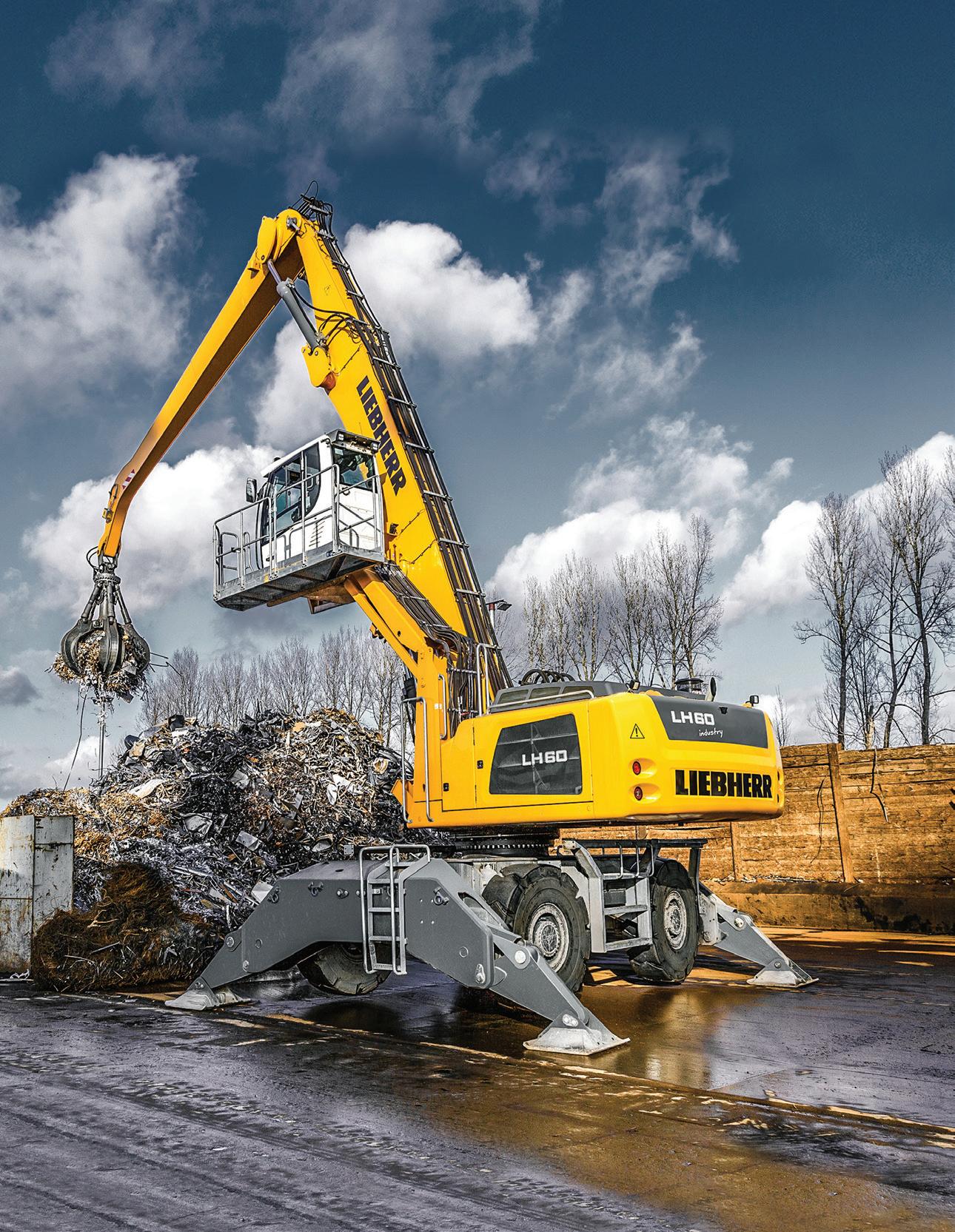
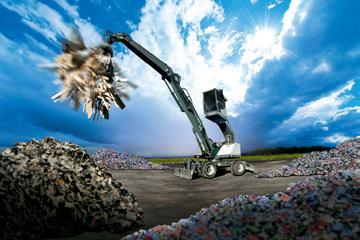
Robust, powerful and built for demanding scrap operations, the LH 60 M delivers outstanding performance where it matters most. With impressive reach, high load capacities and advanced hydraulic technology, it ensures fast cycle times and efficient material flow. Designed for durability and equipped with an elevated cab for excellent visibility, this versatile machine is optimally suited for high-volume scrap handling.
www.liebherr.ca








ADAPTING TO THE
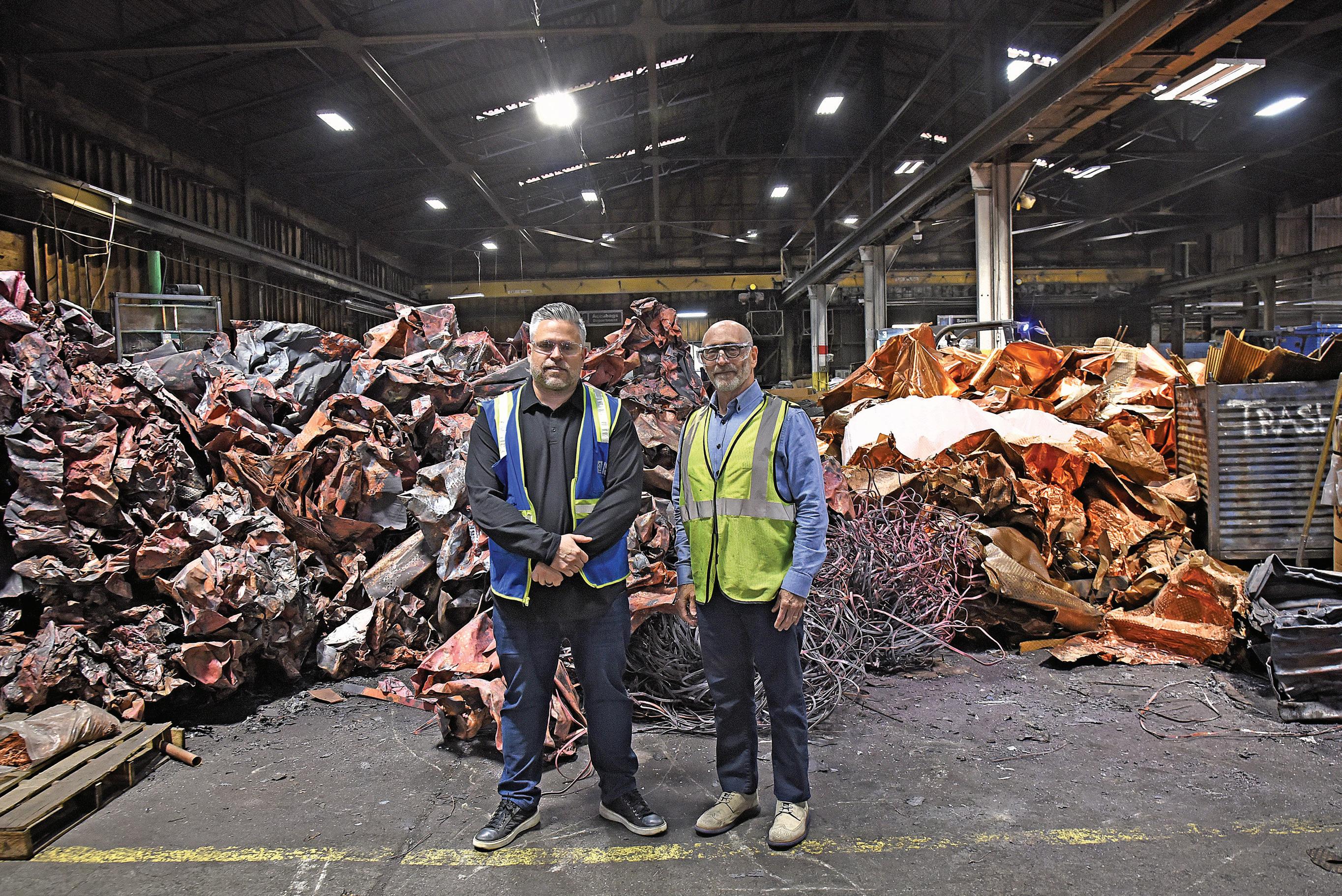

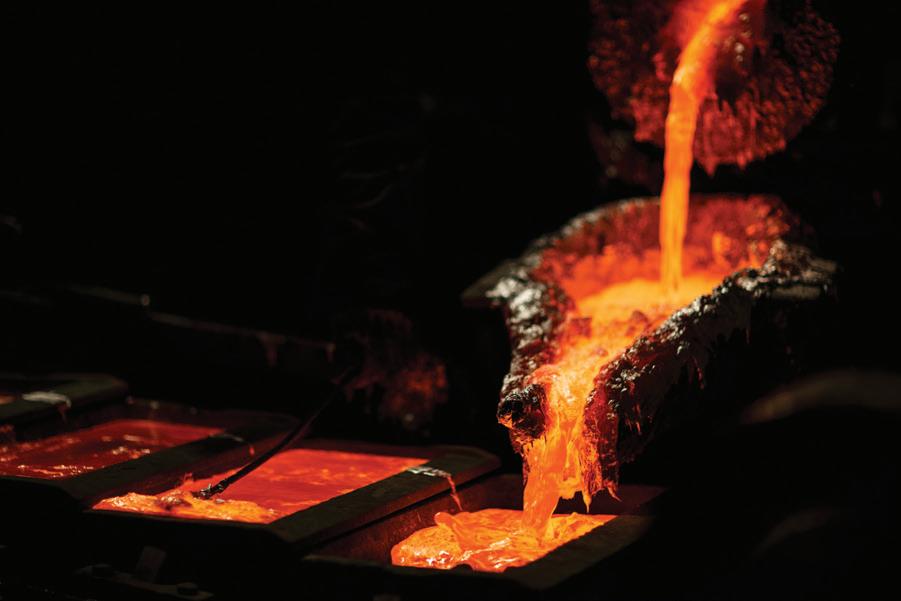
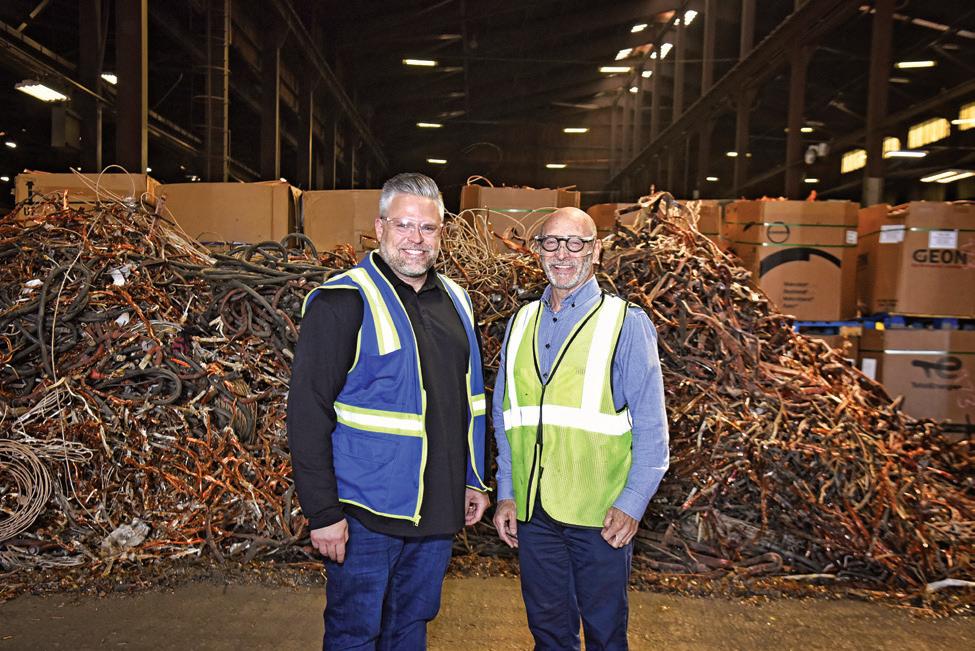
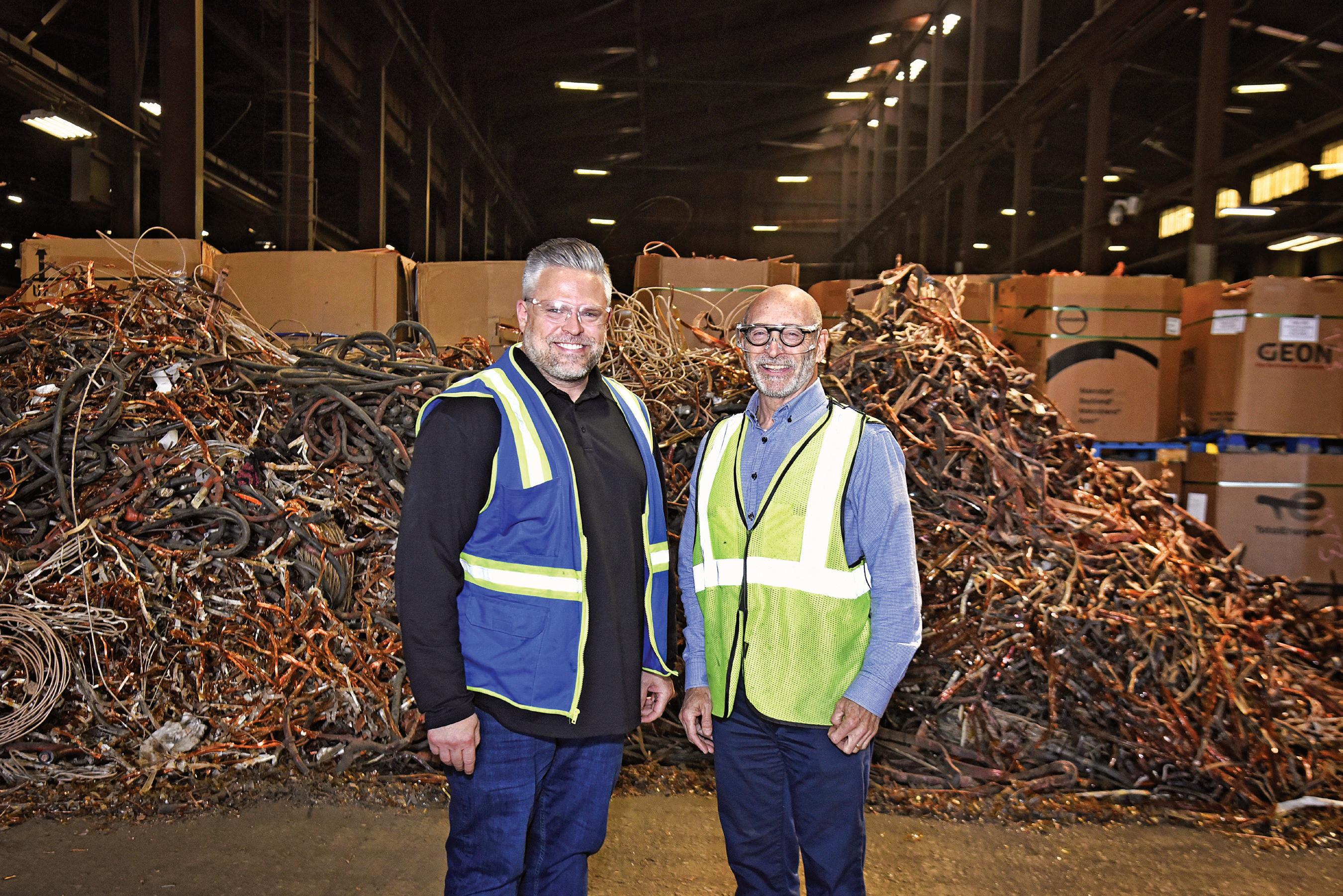
Adam Shine (left), president of Manitoba Corporation, and Brian Shine (right), CEO. Read more on page 20.

& DIRECTOR OF DIGITAL STRATEGY
sfox@baumpub.com 604-291-9900 ext. 335
EDITOR IN CHIEF ktill@baumpub.com 604-291-9900 ext. 330
mbarton@baumpub.com 604-291-9900 ext. 305
ASSOCIATE EDITOR Stephanie Bontorin sbontorin@baumpub.com
VICE PRESIDENT OF SALES/ ASSOCIATE PUBLISHER
sam@baumpub.com 604-291-9900 ext. 110
ADVERTISING PRODUCTION MANAGER
Tina Anderson production@baumpub.com 604-291-9900 ext. 222
DESIGN & PRODUCTION
Morena Zanotto morena@baumpub.com 604-291-9900 ext. 325
PRESIDENT/PUBLISHER
Ken Singer
ksinger@baumpub.com 604-291-9900 ext. 226
VICE PRESIDENT/CONTROLLER
Melvin Date Chong mdatechong@baumpub.com
FOUNDER
Engelbert J. Baum
Published by: Baum Publications Ltd. 124 - 2323 Boundary Road Vancouver, BC, Canada V5M 4V8
Tel: 604-291-9900 Toll-free: 1-888-286-3630 Fax: 604-291-1906 www.baumpub.com www.recyclingproductnews.com
@RecyclingPN


FOR ALL CIRCULATION INQUIRIES
Toll-free: 1-866-764-0227 email: rpn@mysubscription.ca
Subscription: To subscribe, renew your subscription, or change your address or other information, go to: https://www.recyclingproductnews.com/ mysubscription/subscribe
Recycling Product News is published six times yearly: January/February, March/April, May/June, July/August, September/October, November/ December. Advertising closes at the beginning of the issue month.



Do you have a story, equipment, or technology innovation, commentary, or news that our readers in the recycling industry should know about? Drop us a line any time.
Contact: Editor Slone Fox at sfox@baumpub.com or 604-291-9900 ext. 335
One year subscription rates for others: Canada $33.50 + 1.68 GST = $35.18; U.S.A. $40; other countries $63.50. Single copies $6.00 + 0.30 GST = $6.30; outside Canada $7.00. All prices are in Canadian funds.
Recycling Product News accepts no responsibility or liability for reported claims made by manufacturers and/or distributors for products or services; the views and opinions expressed are those of the authors and not necessarily those of Baum Publications Ltd.

We acknowledge the financial support of the Government of Canada.
Copyright 2026 Baum Publications Ltd. No portion of this publication may be reproduced without permission of the publishers.
Printed on paper made of FSC®-certified and other controlled material. ISSN 1715-7013. PUBLICATIONS MAIL AGREEMENT NO. 40069270.
Return undeliverable Canadian addresses to: Circulation Dept., PO Box 430 Stn Main, Alliston, ON L9R 1V6 email: rpn@mysubscription.ca / 705-502-0024



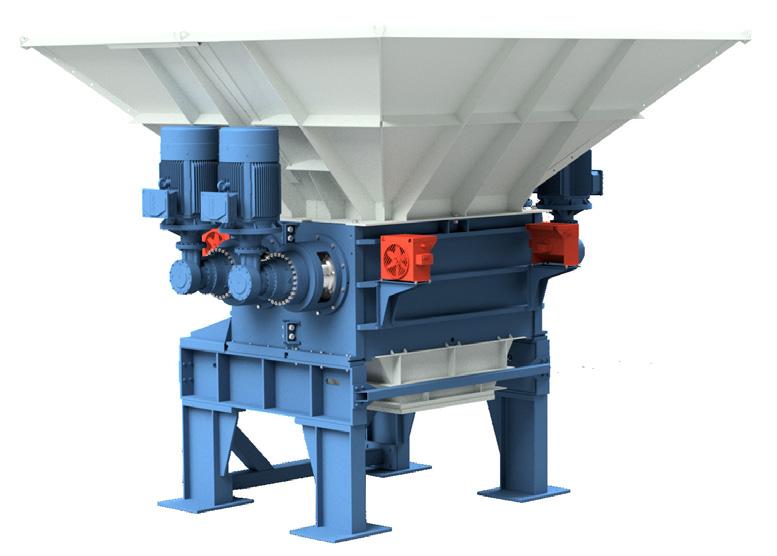
The very top shelf of my closet is a small graveyard of tangled charging cables that I can almost guarantee no longer have a corresponding device, a pair of laptops that haven’t seen a software update in years, and every cellphone I’ve ever owned. Multiply that by a few billion households, and you start to grasp the sheer volume of e-waste the recycling sector must be equipped to handle — and the scale of investment required to handle it
While the sector has never had a shortage of ambition, it can be difficult to secure the capital investment needed to transform the materials from recovered electronics into tradable commodities. However, the past few months have shown a lot of positive movement.
In Ontario, Quantum Lifecycle Partners recently opened an Advanced Plastics Recovery Line — a $4 million investment integrated into its existing $10 million processing infrastructure — which uses float-sink separation technology to sort mixed e-plastics into clean, separated polymer fractions. The output is high-quality material that meets Basel Convention standards and can re-enter global commodity markets.
So far, Ontario is the only province in Canada that has structured its electronics EPR system around competition. Multiple producer responsibility organizations compete for the same clients, with performance and value determining who wins the business. According to Quantum Lifecycle Partners President Gary Diamond, Ontario’s EPR framework has created conditions where it makes economic sense to build this kind of infrastructure domestically.
South of the border in Illinois, Elgin Recycling just completed a brand-new 52,174-square-foot facility designed from the ground up for electronics processing. The building is purpose built, with high-efficiency shredding and strict R2 data sanitization and security practices to meet sensitive information compliance standards and government mandates.
It’s also worth noting what’s happening at the manufactur-
Consumer awareness and devices that are nearly impossible to disassemble are still issues, but the infrastructure is headed in the right direction.
er level. Apple’s most recent Environmental Progress Report states that 30 percent of materials across all products shipped in 2025 came from recycled content, with 100 percent recycled cobalt in their batteries and 100 percent recycled rare earth elements in all magnets. One report doesn’t tell the full story of any company’s environmental impact, but Apple’s scale alone means that its material commitments send a signal through the supply chain.
None of this means the problems are solved. Consumer awareness and devices that are nearly impossible to disassemble are still issues, but the infrastructure is headed in the right direction.



Come Meet Canada’s
Recycled Materials Industry
Connect with recyclers from across Canada, the United States and abroad.
Network with peers. Meet sponsors and exhibitors. Hear from industry leaders shaping the future of recycled materials.
And Don’t Miss the Golf Great connections. A little friendly competition.
Join the conversations shaping the future of recycled materials.
REGISTER TODAY:
https://cari-acir.org/85th-annual-convention/

Dr. Jody Carrington Renowned psychologist & bestselling author speaks about resilient leadership
John Weigelt
National Technology Officer, Microsoft Canada speaks about AI
Canadian Association of Recycling Industries (CARI)


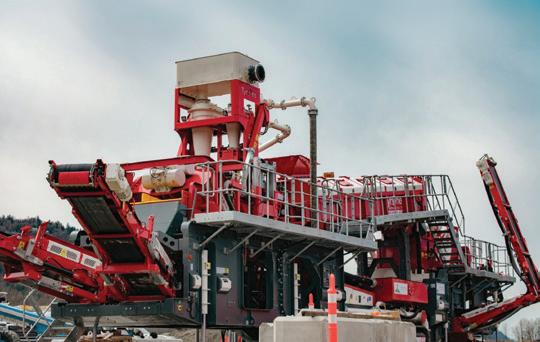
Rising hauling costs, shrinking landfill capacity, and tightening compliance requirements are forcing construction, aggregates, and waste operators to rethink how they handle excess soil and slurry. What was once a straightforward disposal problem now squeezes margins, disrupts schedules, and complicates long-term site economics.
To help Canadian operators take control of rising excess-soil and slurry costs with practical, scalable washing solutions and local support, Frontline Machinery has launched a specialized division — Frontline Washing Systems.
Soil and slurry washing is well established in European markets, where operators adopted advanced recycling and material recovery technologies long before the category gained any traction in Canada.
The division draws on Frontline Machinery’s national support infrastructure, keeping the focus on outcomes operators care about most: less material going to disposal, more usable product coming back out, and better long-term numbers at the site level.
“Our focus is on giving Canadian operators a better way forward in a market where hauling, disposal, and material handling costs are only getting harder to manage. This is not about adding another product line. It is about building a specialized capability around a category that now demands more attention, more expertise, and more support,” said Martin Anderton, managing director of Frontline Washing Systems.
With three Canadian locations and employees across British Columbia, Alberta, Saskatchewan, Manitoba, Ontario, and Quebec, the national reach means local teams are available through every stage of the process, from initial project planning and system commissioning to ongoing service, parts supply, and long-term performance optimization.
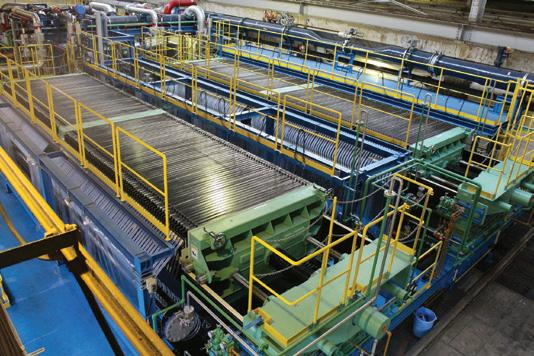
Asahi Kasei, Nippon Steel, and Nippon Steel Trading have launched a recycling initiative to convert pure titanium scrap generated during the manufacturing of electrolysis cells into a raw material for pure titanium. The initiative is designed to reduce the environmental impact of cell production and enhance the value of recovered materials.
For five decades, Asahi Kasei has worked in the chlor-alkali electrolysis industry, producing caustic soda and chlorine. The company provides operational expertise for electrolysis plants and manufactures and supplies electrolyzer cells, ion-exchange membranes, and electrodes. Electrolyzers apply an electric current to split concentrated saltwater into chlorine, hydrogen, and caustic soda, which are then used for a variety of chemical products.
To reutilize valuable pure titanium scrap and close the loop with the material value chain, this joint initiative will remelt the scrap generated during the cell production and use it to produce new pure titanium.
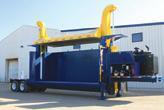
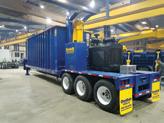
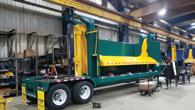
Harris American Company, a subsidiary of Avis Industrial Corporation, has completed the acquisition of G.P.S. S.r.l. The company, based in Ferrara, Italy, manufactures ferrous and non-ferrous scrap-processing balers and shears recognized for innovative design, high-efficiency throughput, and the flexibility of stationary and mobile equipment applications.
Harris American will continue to distribute G.P.S.’ flagship M Generation balers, along with its Predator and Destroyer lines.
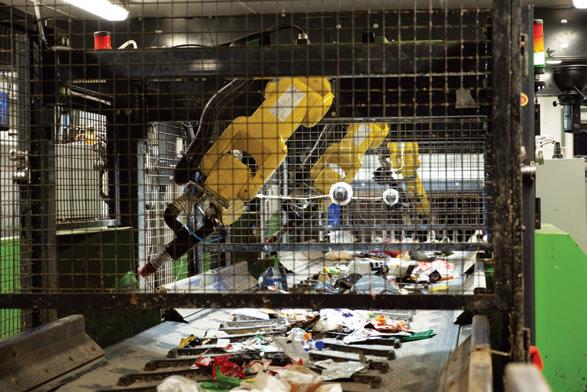
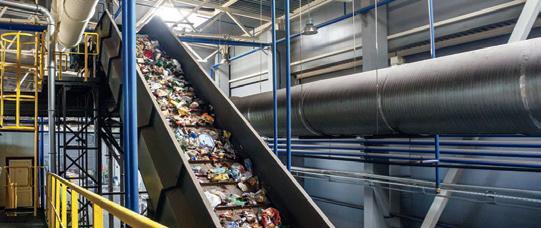
CP Group (CPG) has acquired a majority stake in Recycleye, significantly expanding its AI-driven sorting capabilities while further enabling MRFs to increase recovery, improve purity, and generate valuable operational data.
Recycleye specializes in high-accuracy AI-vision systems used across robotic and belt-based sorting applications. The acquisition unlocks technical synergies that enable alignment of products and technologies across the two companies.
The integrated AI platform helps facilities process materials to a higher purity, reduce reliance on manual sorting positions, and achieve real-time analysis of material composition. It also reinforces last-chance AI sorting capabilities deployed at the tail end of sorting lines to recover residual material value and drive measurable improvements in end-to-end plant purity.
Recycleye’s team and leadership will remain in place, continuing to serve customers internationally. CPG, MSS, and Recycleye will collaborate to expand sales across the U.S. and Europe while maintaining independent divisional operations to support each regional market.
Ocean Legacy creates a circular economy for some of the world’s most difficult plastic.
Read more on page 38.
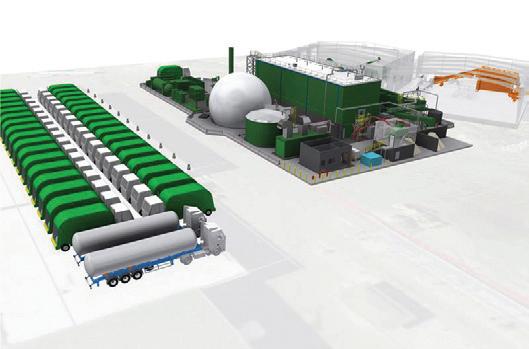
In a unique public-private partnership, Bulk Handling Systems (BHS) is partnering with Napa Recycling and Waste Services and the City of Napa to develop and operate a dry anaerobic digestion and renewable natural gas (AD-RNG) facility at the existing Napa Recycling and Composting Facility. The AD-RNG facility features Zero Waste Energy’s SMARTFERM Plug Flow system, which is specially designed to recover
the energy content from Napa Recycling’s existing organic waste stream in the form of biogas. The facility will allow the City of Napa to produce renewable natural gas (RNG) while also significantly reducing greenhouse gas emissions.
The AD-RNG facility is estimated to generate up to 500,000 diesel gallon equivalents of CNG annually, enough to power approximately 50 heavy-duty waste collection trucks or similar high-mileage vehicles per year. The RNG generated will be used to fuel Napa Recycling’s fleet of waste collection trucks. The facility can also utilize its RNG to generate electricity for the fleet if local regulations require refuse and recycling fleets to transition to electric-only vehicles.
RecyClass has updated its Design for Recycling Guidelines for all major plastic packaging streams and Automotive and Electrical & Electronic Equipment sectors. The developments reflect practical, science-based protocols to advance the circularity and recyclability of key plastic components in commercial products and their packaging.
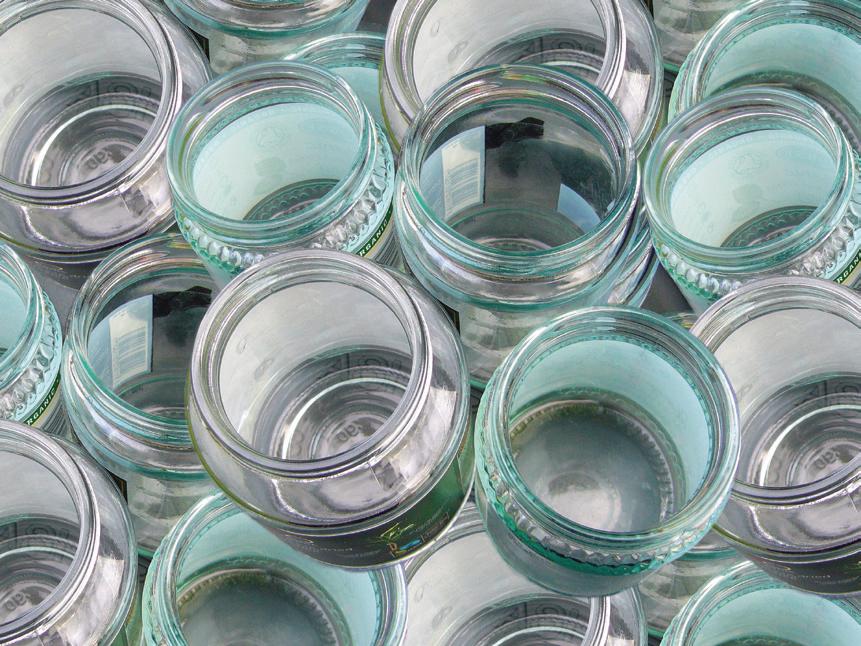
At a time when only one-third of glass is currently recovered for recycling — and 9.2 million tons still wind up in landfills — the Glass Recycling Foundation (GRF) continues to address infrastructure gaps and expand access to glass recycling.
In 2025, GRF awarded $76,000 in grants, supporting five projects and diverting 4,459 tons (8.9 million pounds) of glass from landfills. GRF’s next grant cycle closes on July 10 and will support projects that strengthen glass collection infrastructure and improve the quality and quantity of recycled glass through public education. Eligible applicants include non-profit entities, municipalities, state and county governments, public waste management districts, and private industries with a public partner.
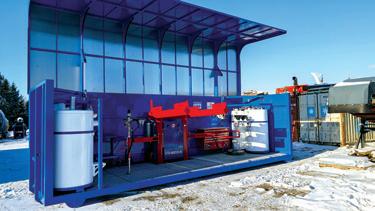








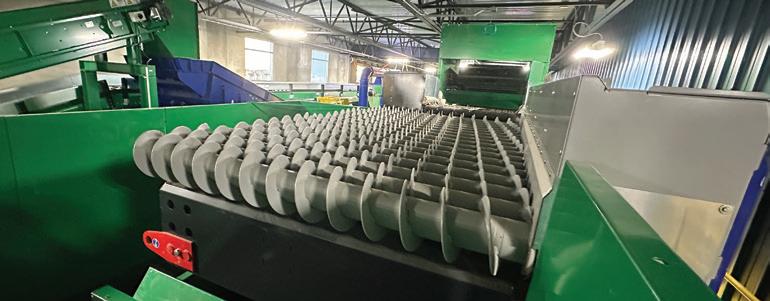
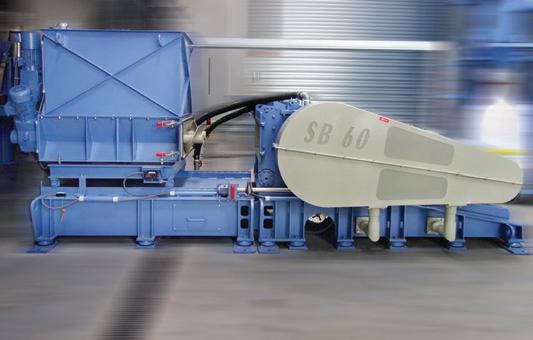
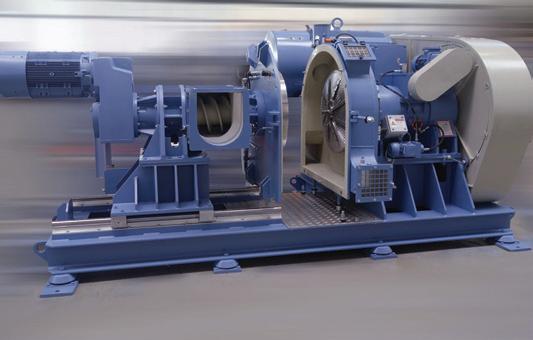
STADLER has designed and built a brand-new sorting facility for Flacipel Comercio de Aparas e Sucatas Ltda in São Paulo, Brazil. The plant has become a central pillar of Flacipel’s development strategy and of the region’s recycling infrastructure. Processing up to 200 tonnes of dry mixed recyclables per day, the facility was engineered to handle a highly heterogeneous input stream while maximizing material recovery and minimizing rejects.
The facility includes a pre-sorting station that separates
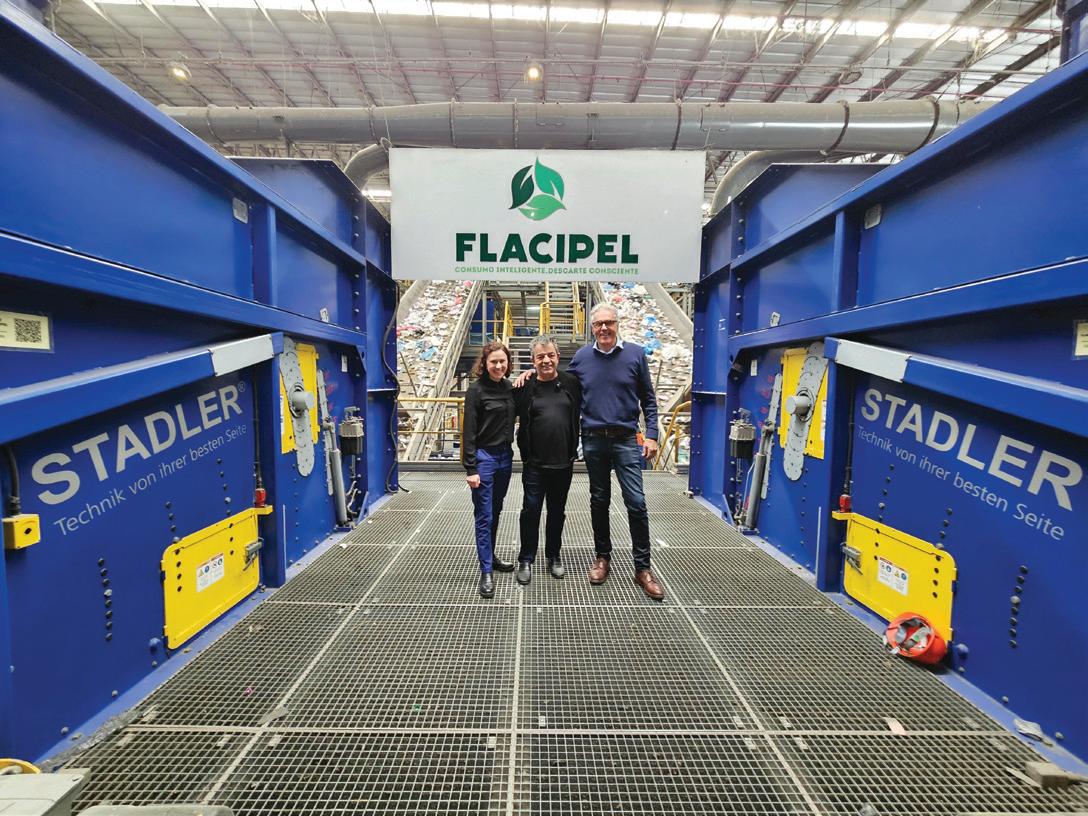
Flacipel’s ambitious objectives aimed to minimize residual waste, sort material into 21 fractions, and maintain the flexibility to process different input streams, including selective collection, office, and commercial waste. Achieving this balance between efficiency and adaptability posed a significant technical challenge.

n
material according to bag colour, followed by a first classification step using a ballistic separator to isolate cardboard. Pre-classified material streams are stored and then fed separately into the main sorting line, which features dosing units, bag openers, and two further ballistic separators. Windshifter, magnetic, and eddy current separation enable the recovery of a wide range of fractions, including various plastic types, films, and colours, paper grades, cartons, metals, and RDF. This configuration allows Flacipel to adapt the process and equipment settings to each material stream, ensuring stable output quality even as input composition varies.
The Solid Waste Association of North America (SWANA) and the Environmental Research & Education Foundation (EREF) have signed a Memorandum of Understanding to advance research, education, and awareness in the solid waste and resource management sector.
The collaboration will advance educational resources and research, reciprocal participation in events, and coordination on opportunities of mutual interest to strengthen industry understanding and best practices.

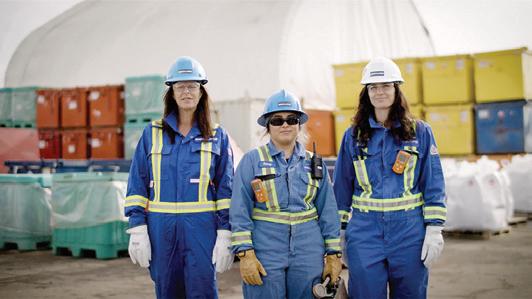
GFL Environmental has agreed to acquire all of the issued and outstanding common shares of SECURE Waste Infrastructure Corp. for $24.75 per common share, representing a total value of $6.4 billion. The acquisition will supply GFL with a complementary network of waste processing and disposal assets, expanding its footprint in Western Canada. SECURE operates a large-scale, diversified waste management platform in Western Canada and North Dakota with over 80 locations, including 12 landfills, 55 waste treatment facilities, 12 recycling facilities, 98 injection wells, and 5 transfer stations. SECURE’s operations are supported by a management team and over 2,000 employees.



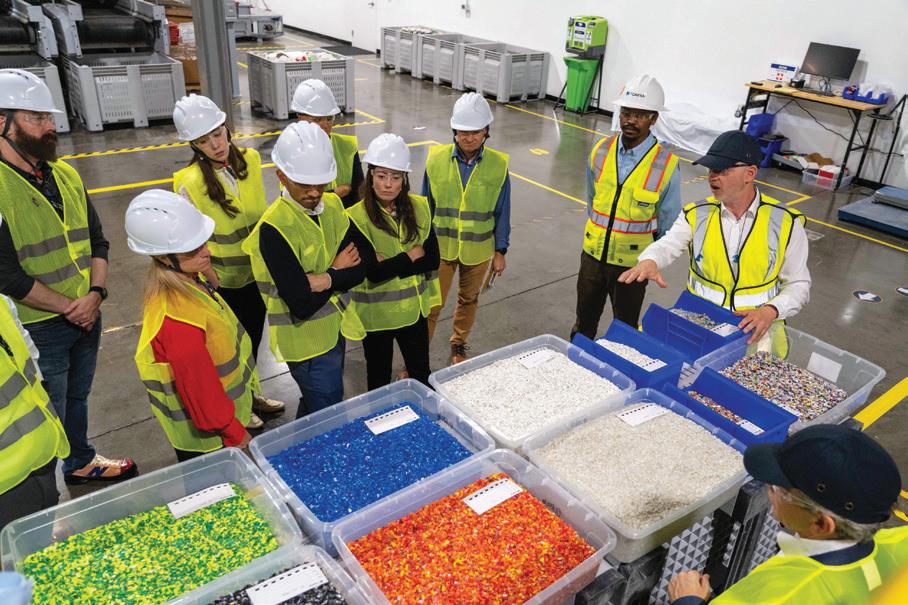
TOMRA Recycling’s new 4,500-square-foot Test & Training Center in Charlotte, North Carolina, is equipped with TOMRA’s latest sorting technologies to give recyclers a facility to test waste and plastic materials. A grand opening event previewed the object recognition capabilities of AUTOSORT and GAINnext, which uses deep learning tech and neural networks to solve complex sorting challenges across paper, packaging, wood, and waste materials. The INNOSORT FLAKE sorter was configured to show different colour


Recycling has moved from bulk sorting to precision recovery through innovations in platforms and technology. Tools like invisible UV tags, managed through Pellenc ST optical sorting solutions and the Polytag data platform, enable individual packaging items to be recognized and separated at the barcode level, allowing granular sorting and processing specifications to be accurately recovered and for closed-loop recycling to happen at scale.
The new module combines UV watermark reading capabil-


ities — on GS1 open-standard data matrices, invisible to the naked eye but readable under UV light, that uniquely identify individual packaging items — with Pellenc ST’s near-infrared (NIR) sorting systems. Together, they enable packaging to be identified and sorted in real time, providing operators with visibility into what is moving through their facilities.
GreenSpark Software and ReMatter have entered into an agreement to combine their existing organizations into a single company: ReSpark. The combined entity brings together two purpose-built software platforms in the metal recycling and scrapyard industry to unify their products, teams, and customer bases to serve more than 800 scrap companies across the U.S., Canada, and beyond.

















3 1
2
4
1
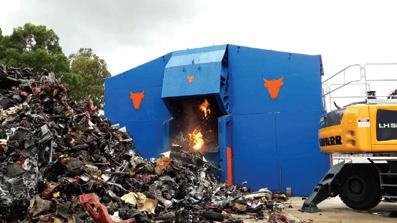
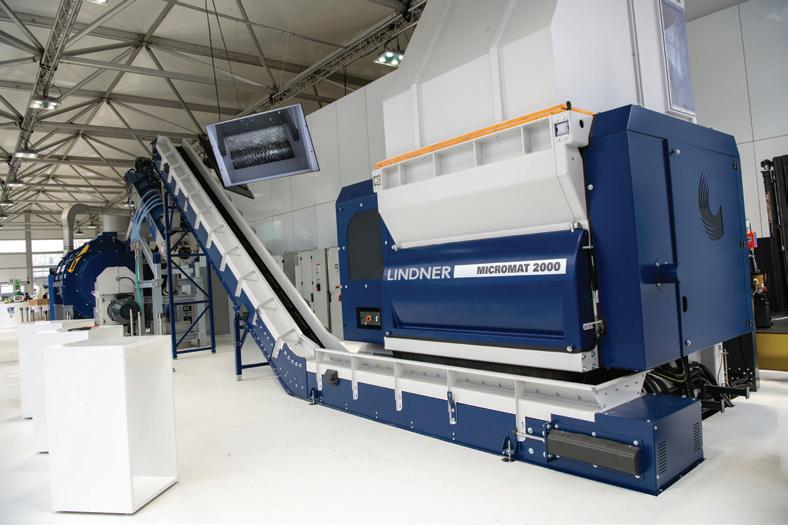
Lindner’s fourth-generation Micromat shredder series centres on a synchronous reluctance motor that contains no rare earth metals and has an energy efficiency class of IE6. A patented belt clutch and automated belt tensioning system make up the drive concept. The multicut rotor offers the flexibility to handle varying material flows due to its different knife systems and can process a broad range of materials, including post-consumer and post-industrial plastics, textiles, waste wood, and commercial and industrial waste.
2
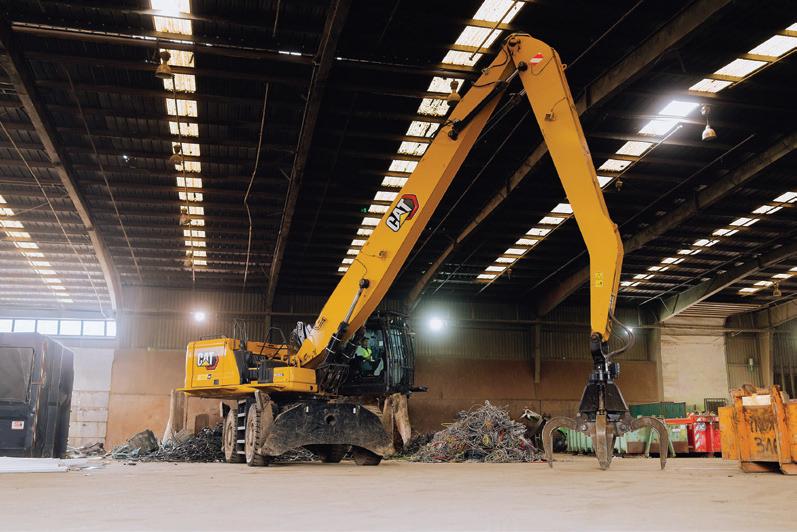
Caterpillar’s GSV420 and GSV425 orange peel grapples offer faster cycle times, increased hydraulic flow capacity, and enhanced capabilities compared to previous designs. Cast parts replace welds to improve durability and reduce weight so that operators can move more tons per hour. A refined tine curvature improves overall grapple fill factor by 140 to 200 percent, while a new rotation system delivers up to 160 percent higher flow capacity. Featuring abrasion-resistant upper and lower grapple housing stops, the new design prevents cylinders from overextending.
3
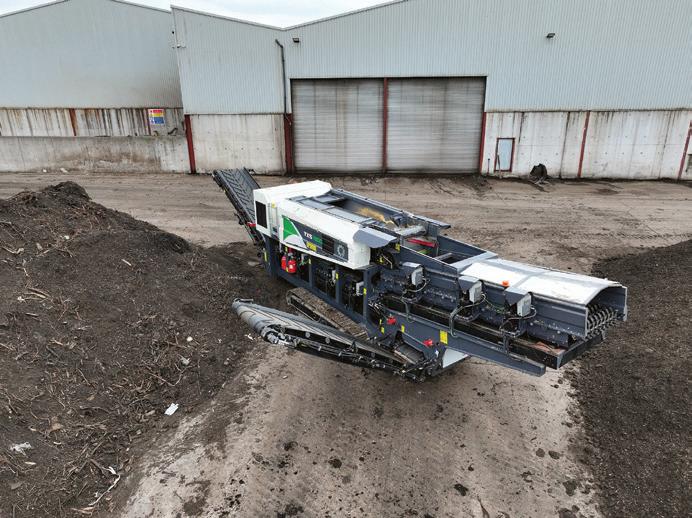
Terex Ecotec’s TXS 350 Starscreen is a three-fraction machine developed for high-throughput screening of materials, including biomass, compost, green waste, topsoil, wood chips, and bark. The machine incorporates self-cleaning stars and sectional speed control combined with an intuitive control system, allowing operators to easily optimize screening performance for different material types and operating conditions. The machine incorporates two variable-height stockpile conveyors that lower to ground level for maintenance. Mounted on crawler tracks, the TXS 350 is designed for site mobility and routine relocation.
4
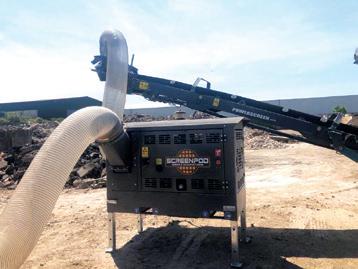
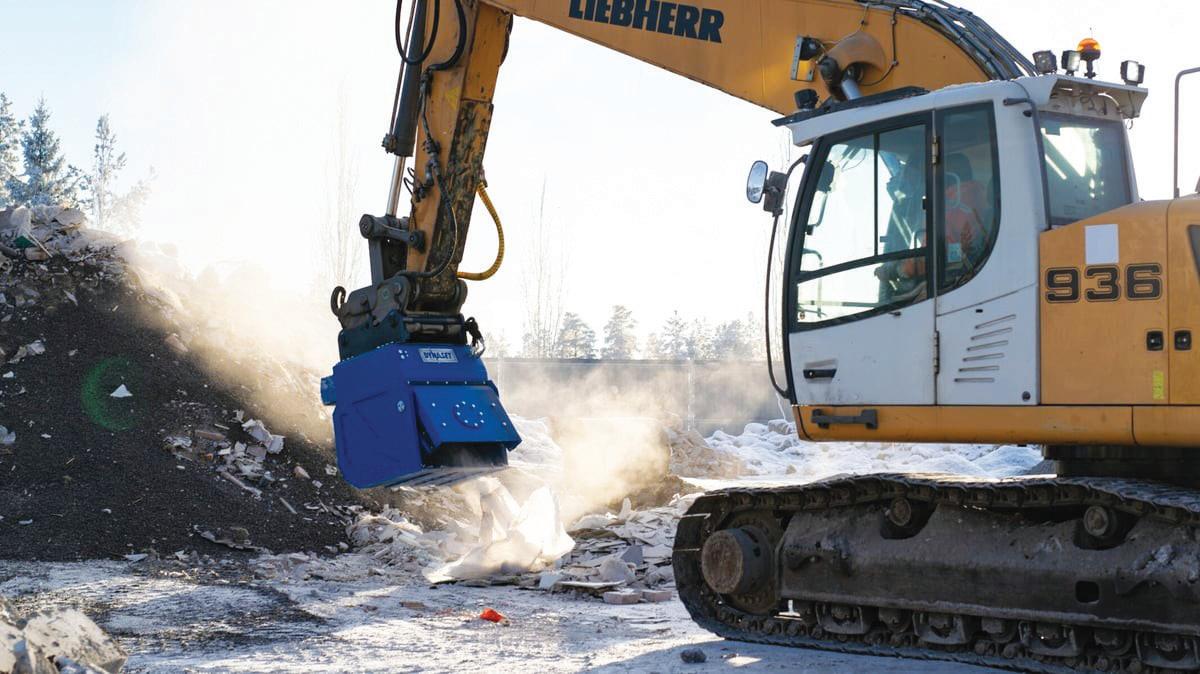
DYNASET’S HRVB-HD Hydraulic Recycling Vacuum Bucket is designed for demanding cleanup and material collection tasks at demolition, recycling, and construction sites. The bucket allows material piles to be opened and loosened, exposing recoverable materials. With the same attachment, operators can move materials, compact waste inside containers, and vacuum lightweight materials, such as insulation, on the worksite. The HRVB-HD converts the machine’s existing hydraulic system directly into a vacuum and air blower for cleaning and recycling tasks, without the need for an external power source.
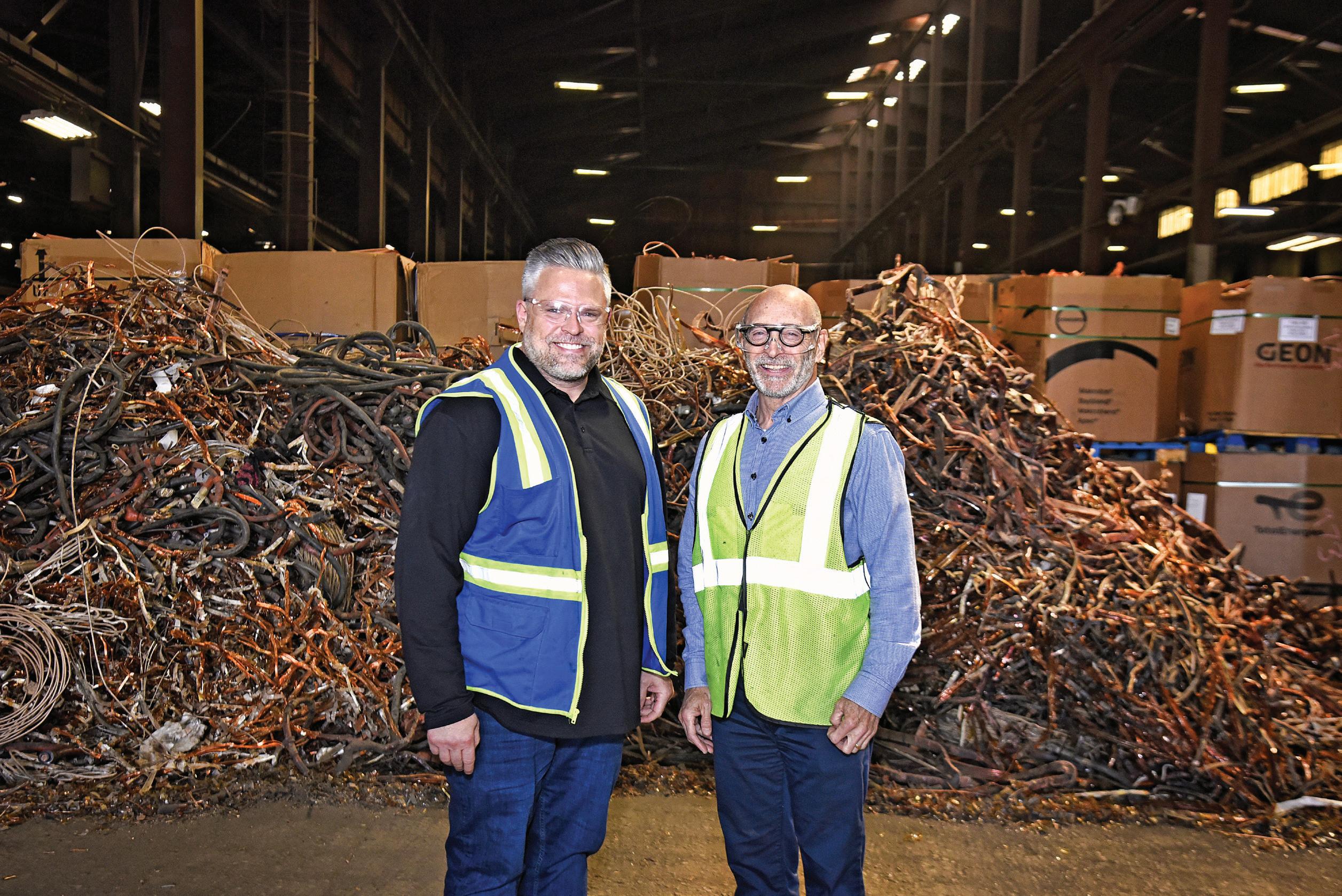
POSITIONS MANITOBA
CORPORATION AT THE CENTRE OF COPPER’S
EVOLVING SUPPLY CHAIN
BY MEGHAN BARTON, SENIOR WRITER
Data centres, electrification, grid upgrades, and the wiring behind almost every new build have put copper supply under the microscope. For recyclers, the spike in demand brings opportunity, but it also brings a new level of responsibility: tighter specs, more documentation, faster turnaround expectations, and rising pressure to quantify recycling’s environmental benefits.
“There’s a shortfall predicted in copper because so much copper is going to be [in demand for] AI and data centres,” says Brian Shine, CEO of Manitoba Corporation. “Recycling has the chance to make up some of that gap.”
Manitoba Corporation occupies a distinct role in the industry. Operating for over a century, the family-owned company has spent decades specializing almost exclusively in copper, processing copper-containing scrap into consistent, melt-ready material for downstream mills and manufacturers.
Manitoba Corporation’s story began in 1916, when it was founded by Shine’s great-grandfather, who built a livelihood collecting what others discarded.
“He couldn’t speak English and couldn’t get a job in the local factory,” says Shine. “So he started with the push cart . . . walking the city streets and collecting anything anybody wanted to get rid of.”
1991, Manitoba Corporation’s Buffalo-area operations moved to their current Lancaster, New York, site near the airport, a strategic location for a business built on North American supply chains. A second plant in St. Louis, Missouri, has been part of the business since 1981, supporting service across the Northeast and Midwest for both inbound supply and outbound sales.
Manitoba Corporation does not melt copper into new metal. Instead, it buys copper-containing materials from two primary streams — industrial generators and other recyclers — and processes that material into forms and chemistries that can go directly to melt.
“We’re not melting,” Shine says. “We . . . process it and get it ready to melt.” The material is then delivered to downstream customers for melting into new products.
That distinction matters because it explains why Manitoba Corp’s work increasingly resembles manufacturing. In copper, small yield errors can be expensive. And as downstream customers tighten their specifications, processors like Manitoba Corporation become the link that turns mixed, variable scrap into something a melt customer can feed reliably.
Shine describes Manitoba Corp as a wholesaler in the chain. Upstream yards aggregate scrap from retail traffic, trades, smaller dealers, and local generators. Manitoba Corporation focuses on the copper fraction: buying from those yards and from industrial sources, then doing the conversion work needed to meet meltready specifications.
There’s a shortfall predicted in copper because so much copper is going to be [in demand for] AI and data centres . . . recycling has the chance to make up some of that gap.
Brian Shine CEO, Manitoba Corporation
In the early decades, the business evolved from small-scale collecting to rag recycling and, in Shine’s words, eventually became the largest rag recycler in New York state. But the mid-century arrival of synthetic materials changed the economics of that trade. After World War II, he says, “They invented synthetic rags . . . and that took the economics of rag recycling off the table.”
That forced a strategic turn. In a region dominated by heavy industry and steelmaking, Manitoba Corp shifted into non-ferrous metals, first building an aluminum business from industrial scrap before ultimately specializing in copper as local manufacturing declined and the company moved toward a higher-value material suited to a North American market. That decision to specialize would become a defining trait. It also shaped the company’s footprint and sourcing model. In
In practice, Manitoba Corporation is not simply grading and shipping; it’s producing a defined product for a defined customer requirement. Shine calls it a job-shop approach: repeat business from longterm customers, but with end products tailored to individual customers and their melting operations.
At the Lancaster site, Manitoba Corporation uses a truck scale, but not in the way a ferrous yard might. In ferrous recycling, being off by a small amount rarely changes the outcome. In copper, it can. Manitoba Corp uses scale data as a verification step for inbound receipts and outbound shipments, ensuring a load matches the bill of lading and preventing costly errors.
From there, material is unloaded, weighed in smaller batches, and routed into processing based on its characteristics and the requirements of the customer it’s ultimately intended to serve. Much of the incoming stream is copper-containing (insulated wire, coils, and mixed materials that require separation) rather than clean copper.
Insulated copper wire is a good example of why Manitoba Corporation’s processing focus matters. Wire’s copper content is not visually obvious, and pricing is sensitive to yield. “If you’re five percent off in a $6 copper market, that’s huge money,” Shine says.
Manitoba Corporation’s facility includes chopping lines that mechanically separate insulation from copper. It also has furnaces for cases where insulation cannot be effectively removed
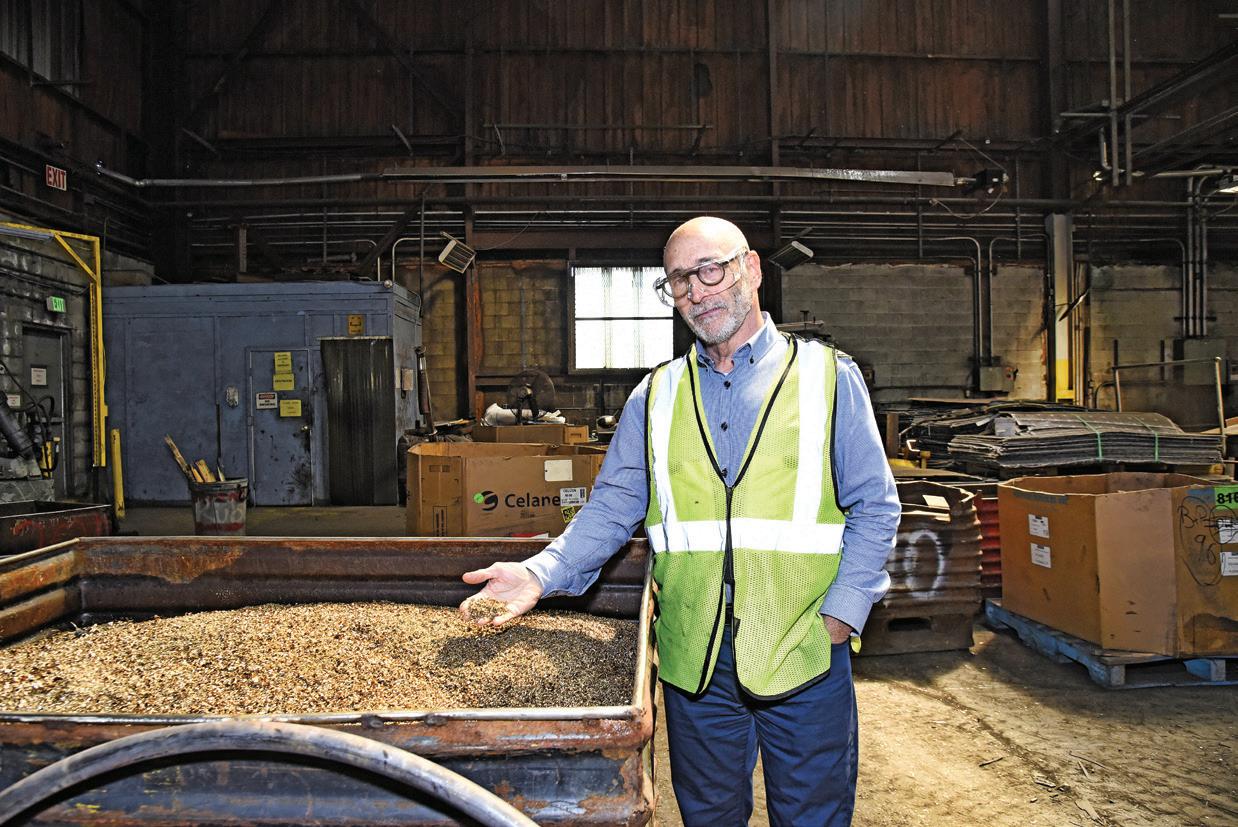
by chopping, like tar-based insulation that adheres to copper. In those situations, burning is part of determining copper content and producing clean output.
According to Shine, what has changed most in copper processing over the last few decades is the expectations.
There was a time when non-ferrous quality was often determined visually, supported by magnets and experience. Shine notes that when his father wanted analysis, he preferred to send samples to an outside lab, believing third-party testing strengthened credibility. But the tempo of modern supply chains has changed. Customers want answers quickly, and many require documented chemistry.
“The only way that we could do it was bring [in] the lab equipment and be able to, in 10 minutes, know if the load passes chemistry or not,” Shine says. “It’s amazing because things are measured in parts per million, so it’s very technically precise.”
Manitoba Corporation’s approach involves creating a test sample and using optical emission spectrometer-based analysis. The operational payoff is speed and control: the company can confirm whether a load meets a customer’s chemistry window before it ships, preventing downstream issues that can be costly and damaging in melt operations.
Manitoba Corp’s experience reflects a broader industry trend. As copper demand rises and melt customers become more selective, recyclers and processors are moving toward tighter internal quality systems and are investing in capabilities once less common outside primary metal or specialized alloy operations.
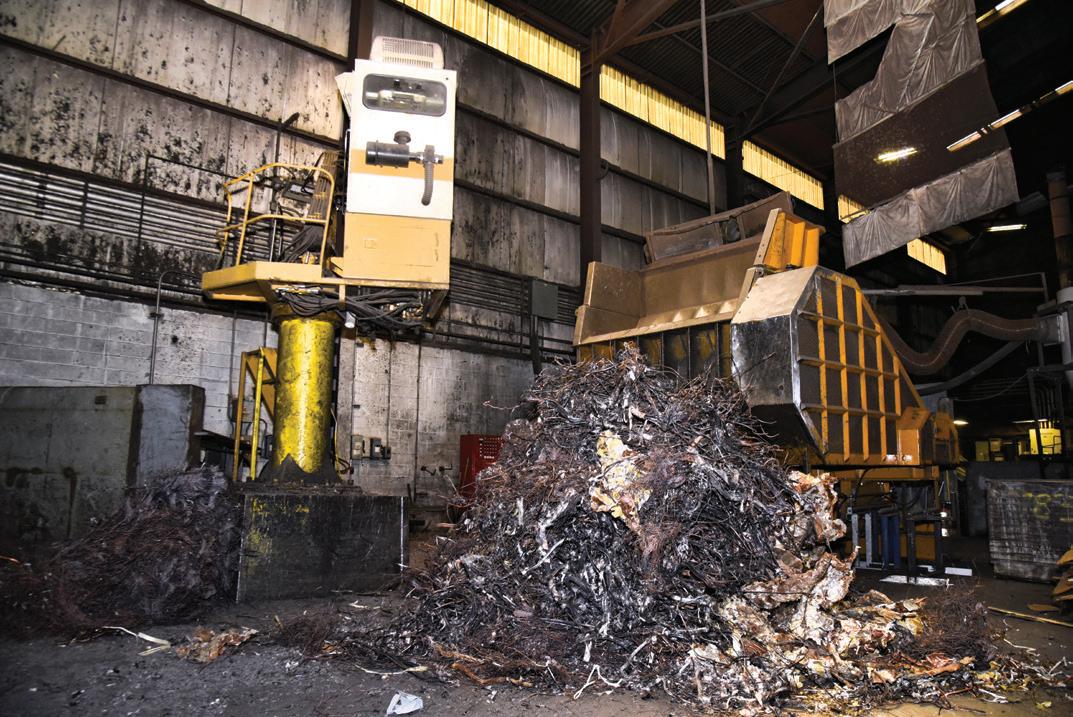
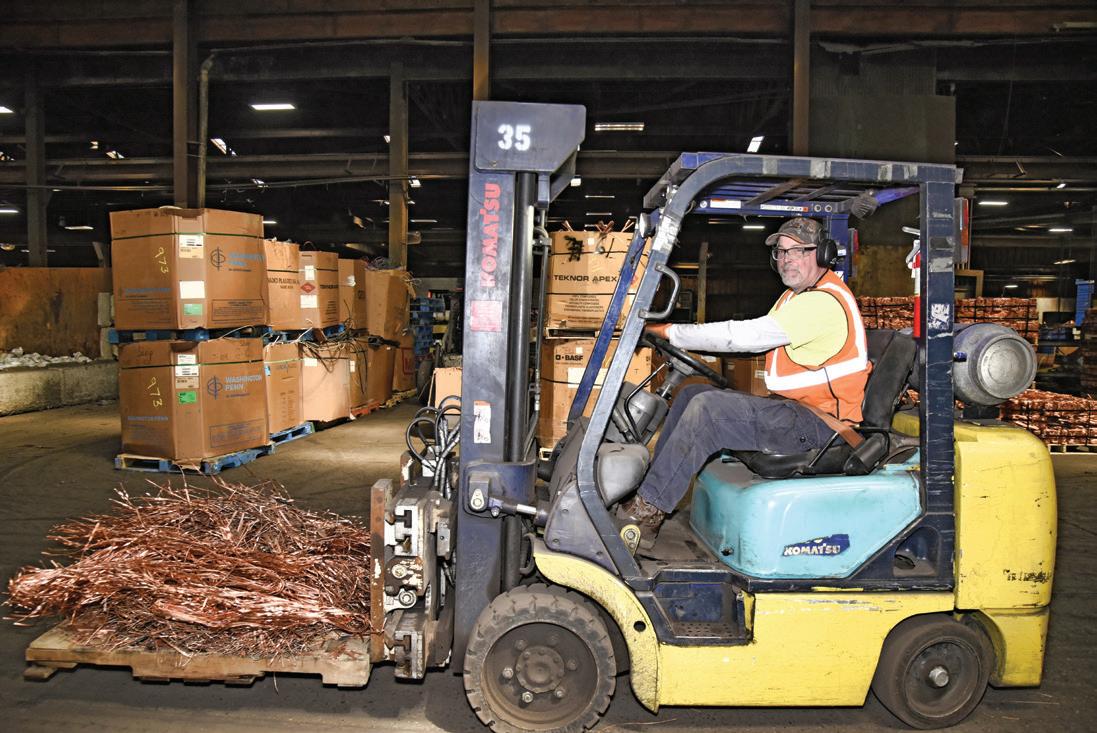
Much of the incoming stream is coppercontaining rather than clean copper.
Sustainability is one of Manitoba Corporation’s stated core principles, but Shine is careful about how he talks about it. The company’s position reflects a broader industry tension: recyclers know their work reduces the need for virgin extraction and diverts materials from landfill, but quantifying those benefits with credible, standardized metrics is a different skill set.
“What we don’t want to do is not be credible,” Shine says. “We know we’re doing good things, but in terms of quantifying that, that’s where we need trade associations [like] the Canadian Association of Recycling Industries (CARI), the Recycled Materials Association (ReMA), and others to help.”
Shine describes sustainability reporting as customer-driven. End-users face their own reporting demands and are asking suppliers, including recyclers, to provide verified inputs to support corporate disclosures. Manitoba Corporation’s approach has been pragmatic: build capability where possible, lean on external expertise when needed, and avoid overstating claims.
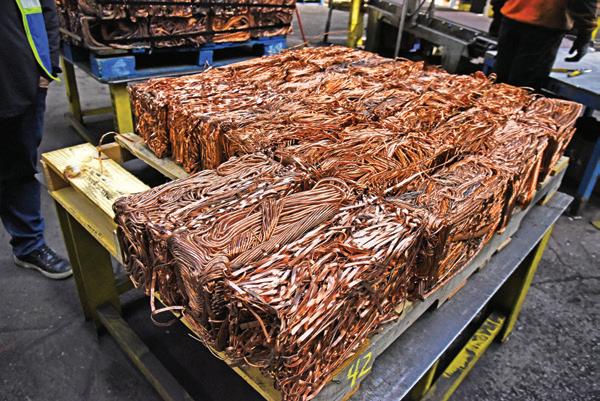
To get started, the company used a student program to bring in a University of Michigan environmental master’s candidate who helped it structure data collection and reporting processes. The project helped Manitoba Corporation translate sustainability from principle into practice, establishing a foundation for future reporting as customer expectations continue to evolve.
Shine’s industry perspective extends beyond Manitoba Corporation’s operations. In addition to leading the company, he has spent years in trade association leadership, including serving as chair of the Institute of Scrap Recycling Industries — now ReMA — from 2018 to 2020 and, most recently, as chair of
CARI. That experience gives Shine insight into how the non-ferrous recycling sector is changing both on the ground and at the policy level across North America.
His role with CARI brings a wider set of pressures into the conversation: pressures that are shaping operational decisions across the sector.
Trade policy is one. Shine describes the importance of keeping recyclable commodities moving across the Canada–U.S. border, noting that recyclers on both sides depend on cross-border trade and that disruptions can ripple quickly through pricing, logistics, and supply.
He also points to a risk that is increasingly shaping business decisions in recycling: insurance.
“A real huge [issue] that not as many people are talking about is insurance,” he says. “Because of fires throughout the industry, it is a targeted industry from an insurance perspective, and it’s

getting more and more difficult to get coverage.”
That pressure, he adds, is increasingly influencing day-to-day business decisions.
For recyclers, insurance is not an abstract overhead item. It affects deductibles, operating practices, the feasibility of certain processing activities, and even whether a company can continue operating. Shine says CARI is engaging insurers and promoting risk mitigation efforts to help keep coverage available to members. The discussion underscores how fire risk is increasingly influencing strategic business decisions across the recycling sector, not just day-to-day safety practices.
When Shine looks ahead, he returns to a theme that ties Manitoba Corporation’s internal evolution to the industry’s broader arc: the recycling sector is still physical and hands-on, but it is becoming more technologically dependent. And this will only become more important as the industry strives to meet rising demand and rising expectations.
“We are still a blue-collar, hardworking [industry], but it’s starting to transition to be more technologically sensitive and focused,” says Shine. He points to improved post-processing separation, optical sorting, and the gradual entry of AI and robotic sorting into recycling. This shift, he says, will accelerate as labour availability tightens, labour costs rise, and automation costs come down. “I think these [technologies] are starting to come at us and we need to embrace that.”
The barrier, he argues, is economic. The solution is an economic value proposition. Recycling is “high volume, small margin,” which makes capital investment decisions conservative by necessity. But the direction is set: more automation, more analytics, and more process discipline.
For Manitoba Corporation, the growth strategy mirrors the company’s long-term philosophy. The core copper business is mature but still focused on gaining share through customer
and supplier growth. The company is open to acquisition in principle, but only if it aligns with Manitoba Corporation’s niche. Shine resists diversification for diversification’s sake, understanding that chasing multiple commodities risks losing the specialization that defines the business.
At the same time, Manitoba Corp has expanded through joint ventures adjacent to its core business, including a water, gas, and electric meter-recycling venture with a Canadian partner and an electronics recycling operation connected through a consulting relationship. Shine describes these initiatives as complementary growth paths that allow the company to develop new business opportunities while maintaining its focus on copper processing.
Manitoba Corporation’s story is undeniably shaped by family legacy, but Shine describes its future focus as a responsibility to uphold market trust.
“We all have tremendous appreciation of what sacrifices were made by family members earlier to get us to this point,” he says. And the priority, he adds, is not nostalgia; it is integrity and forward motion.
In an industry that is being pulled toward tighter specs, faster verification, deeper documentation, and more transparent sustainability reporting, Manitoba Corporation’s evolution shows what stepping up your game can look like in practice. It is recycling, but it is also quality control, product design, and supply-chain reliability.
And for non-ferrous recyclers watching copper demand climb, that may be the most industry-relevant takeaway: the winners won’t just be the companies that can secure material. They will be the companies that can consistently convert that material into what melt customers actually need quickly, verifiably, and with precision. RPN
BY SLONE FOX, EDITOR
The recycling industry has spent decades refining the technology used to pull ferrous material from mixed streams. Magnets, belts, and drums are well-understood tools, and most processing lines have some version of them. What’s shifting is the quality standards that recovered ferrous material has to meet before it has value to the people buying it.
As steel mills tighten scrap specifications and plastics processors reject granules contaminated with metal particles, the tolerance for impurity in recovered ferrous is narrowing. What makes ferrous separation unusual is that the same material can be the target or the problem depending on the stream — wanted in one context, a contaminant in another. That shift is driving development in ferrous separation equipment: recycling systems are being designed not just to recover iron and steel, but to do so cleanly enough to meet the requirements of increasingly demanding end markets.
The response of equipment manufacturers has taken two main forms. One is to extract more purity from the magnetic separation stage itself, rather than accepting a lower-grade output and
addressing contamination downstream. The other is to chain multiple separation technologies together, so that what one stage misses, the next catches. Both approaches are reflected in recent product developments.
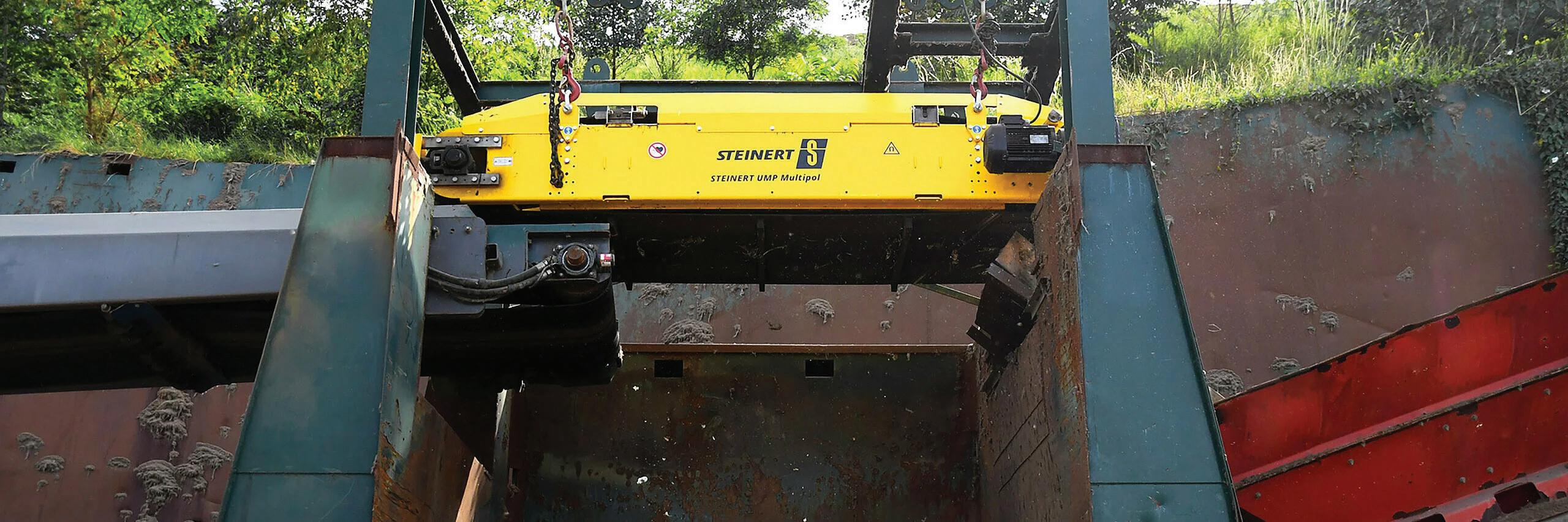
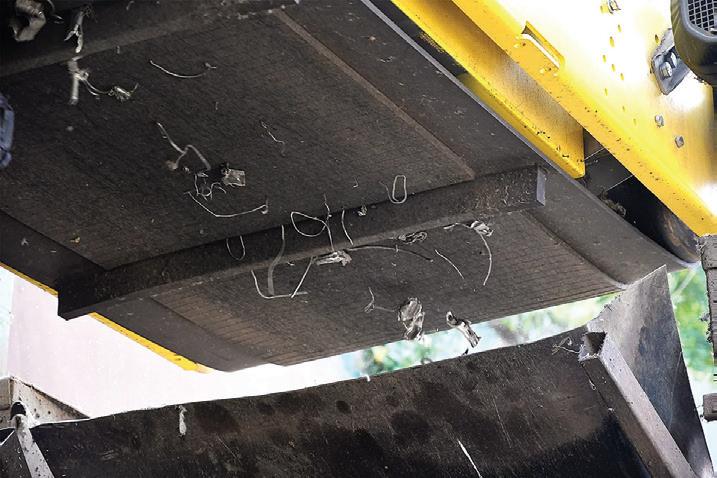
STEINERT’s UMP Multipol represents the first approach. Overhead magnets are familiar equipment on most separation lines, but the UMP Multipol features one main operational difference. Rather than sustaining a constant magnetic field, it alternates polarity multiple times as material passes beneath the belt, repeatedly turning iron pieces over and shaking loose any contaminants that might otherwise find their way into the ferrous fraction when they’re entangled with metal at the moment of separation.
The system uses permanent magnets rather than electromagnets, keeping energy consumption low and simplifying maintenance. STEINERT has designed it for integration into existing processing lines, which makes it an ideal option for operators working within the constraints of an established facility.
For operators already running a secondary cleaning stage, the UMP Multipol offers a simpler alternative to conventional cleaning methods. For those not currently cleaning their ferrous concentrate at all, it provides a practical route to higher-purity output without the complexity of a traditional secondary processing setup.
The UMP Multipol is targeted at shredder scrap, e-scrap, auto shredder residue, and other waste streams where entrapment of non-magnetic material in the ferrous output is a consistent problem. In WEEE applications specifically, the alternating polarity design has been shown to reduce copper losses, which is significant given the value of copper and the difficulty of recovering it once it has been mixed into a ferrous fraction.
For processors handling finer material, a different set of issues applies. Plastics recyclers in particular face contamination at particle sizes where conventional magnetic separation becomes less effective. Standard drums and overband
Alternating magnetic poles shake loose nonmagnetic impurities during separation.
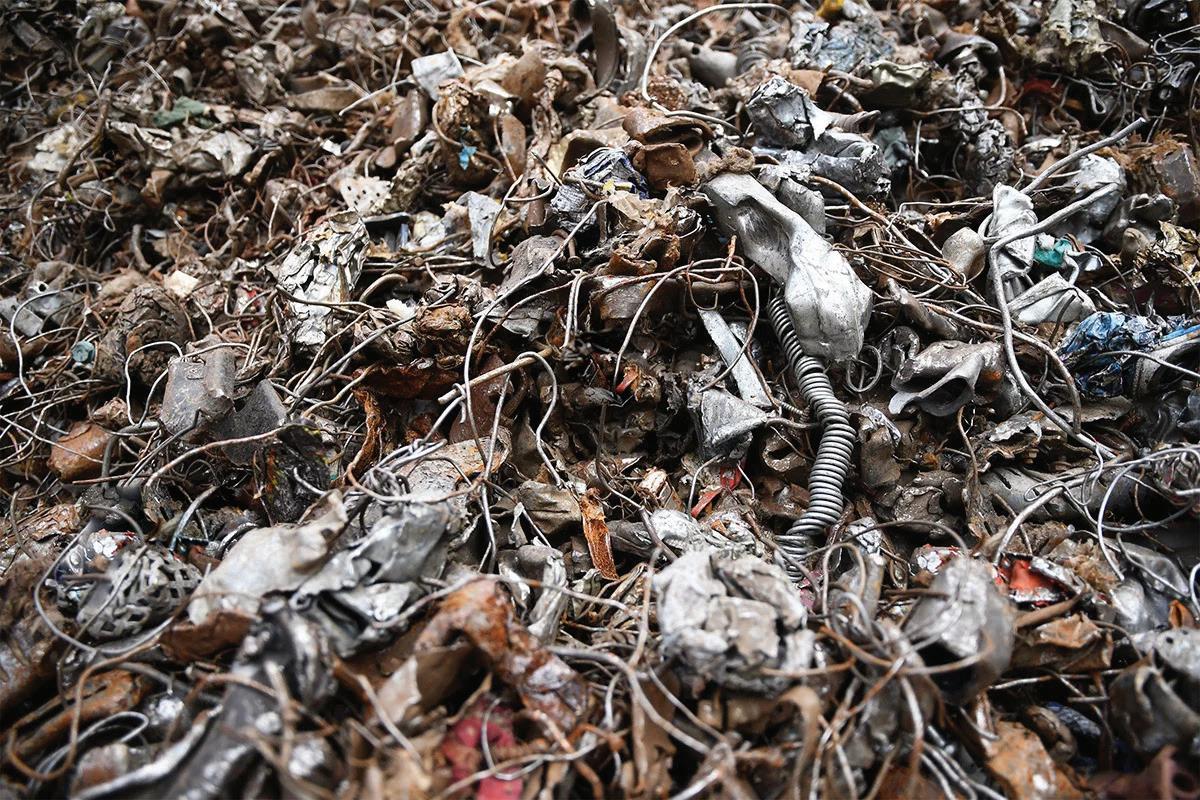
Ferrous metals.
magnets pull out larger ferrous pieces, but fine iron, stainless steel fines, and non-ferrous metals can carry through into the final product. Filters in melting screws can jam, and chemical processing equipment can become blocked, reducing output quality and increasing maintenance costs.
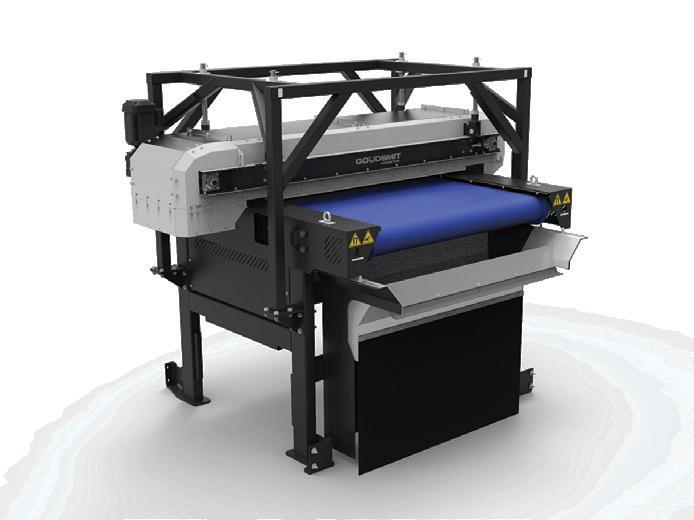
Goudsmit Magnetics has addressed this with a three-stage separator designed to run material through three distinct separation technologies in a single pass. An overband magnet handles coarser steel first. A high-gradient head pulley then removes fine iron and stainless steel, including particles attached to rubber or plastic. An eddy current separator follows, targeting non-ferrous metals including copper, aluminum, brass, precious metals, and lead.
Material is fed as a wide, thin layer through a vibratory feeder before reaching any separation stage. The overband magnet’s first-pass removal of coarser steel reduces the contamination burden on the head pulley and eddy current separator, allowing both to perform more effectively on a cleaner feed. The modular design allows the overband magnet to be removed for installations where it isn’t needed, giving operators the ability to configure the system around their specific feed material and available footprint.
Both of these developments approach ferrous recovery from different angles: one improves what a single magnetic pass can produce, and the other stacks technologies to catch what any individual stage would miss, but they’re responding to the same underlying pressure.
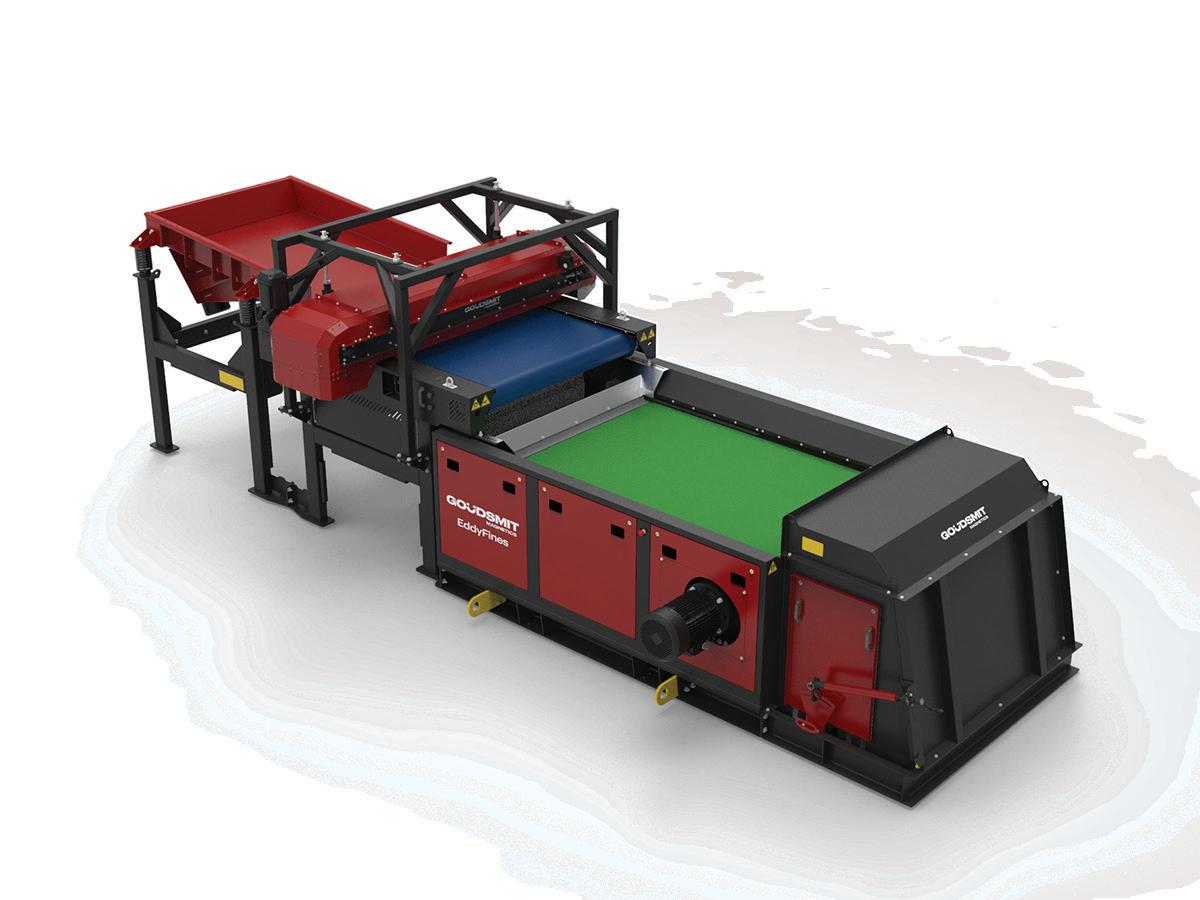
The question facing ferrous recovery equipment today isn’t whether a system can attract iron. It’s whether what comes off the magnet is clean enough to be useful. Recycled content mandates are increasing, and end markets that once absorbed lower-grade recovered ferrous with minimum scrutiny are now applying specifications that require tighter control at the separation stage.
Multi-stage polarity switching and sequential multi-technology separation are two different answers to that problem. The right fit depends on the material stream, the type of contamination, and what the recovered fraction needs to look like, but both reflect the same shift: precision at the separation stage is no longer optional. RPN
FULL-BOX SHREDDING REMAINS
ONE OF THE MOST IMPORTANT UPSTREAM FACTORS IN DOWNSTREAM RECOVERY
BY MEGHAN BARTON, SENIOR WRITER
Non-ferrous recovery is largely determined before material ever reaches downstream separation systems. It begins inside the shredder.
For shredder operators focused on maximizing yield, one of the most important upstream variables is whether the shredder is being kept full and run at the right density. According to Randy Brace, president of Riverside Engineering, maintaining full-box conditions is essential for efficient liberation of non-ferrous metals and for reducing oversized material.
Full-box shredding means keeping the machine consistently loaded so it processes a steady volume of scrap rather than cycling through partially filled conditions. When that consistency is maintained, the hammermill can do the work it was designed to do: break down material more effectively, improve liberation, and produce a more uniform shred.
When the box is not full, those results begin to slip.
“If you’re not full-box shredding, you’re losing a lot of efficiency,” said Brace during a session at the most recent ReMA Safety and Operations Forum. “Your scrap is larger, so you’re not getting the non-ferrous liberation that you really would be likely to get. You get more long bars out of the shredder when the shredder’s not full-box shredding.”
That matters because downstream recovery equipment can only separate what has been properly liberated upstream. If copper, aluminum, and other non-ferrous metals remain attached to ferrous pieces or trapped in larger fragments, they are less likely to be recovered cleanly. In that sense, poor box loading does more than reduce shredder efficiency. It directly limits non-ferrous yield.
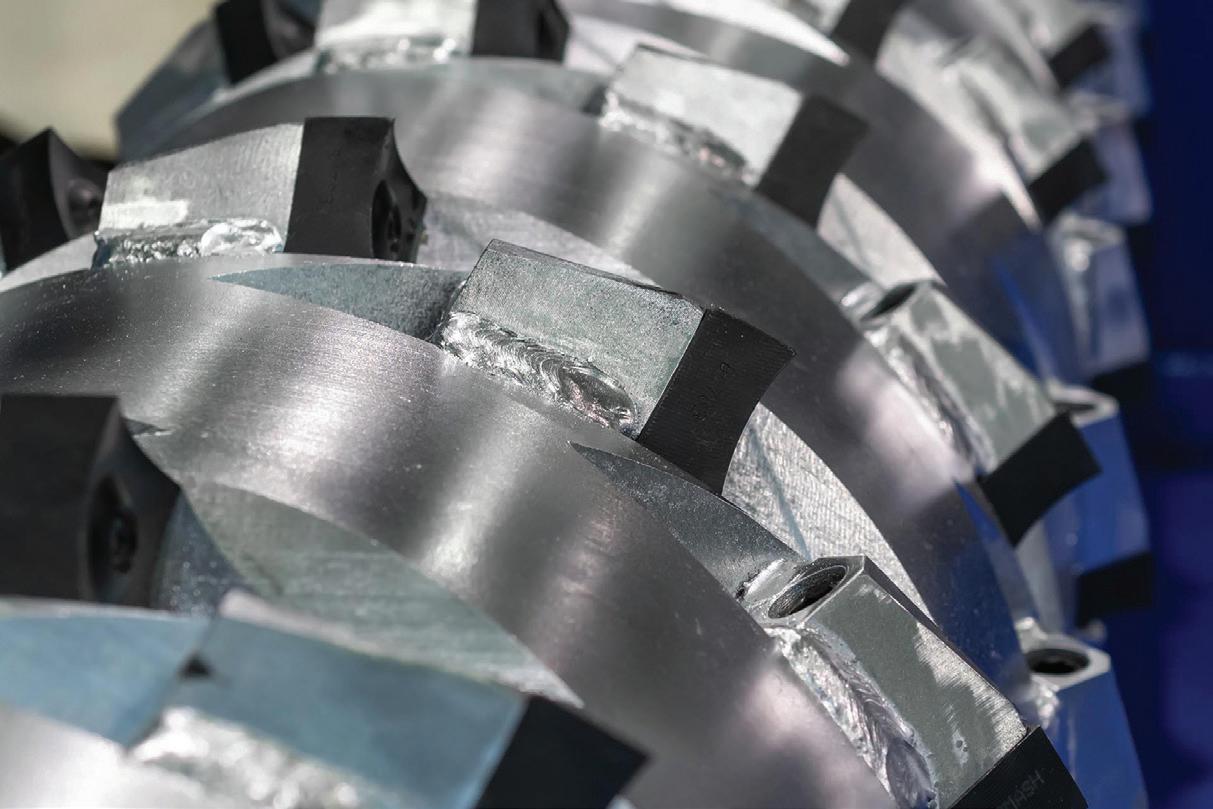
Brace points to shred density as one of the clearest indicators of whether the shredder is operating in an optimal range.
“What I hear in the industry is 85 pounds per cubic foot,” he said. “I would say you’re liberating the majority of your non-ferrous metals as you push 85.”
That benchmark has shifted over time. About 20 years ago, said Brace, many operators were aiming for 75 to 80 pounds per cubic foot to maximize throughput. Today, higher-density targets are more common as operators balance throughput with improved non-ferrous liberation and recovery.
The reason for that shift is straightforward. Lower-density shredding may allow material to move through the system faster, but it does not necessarily create the particle size and liberation needed for effective downstream recovery. If density is too low, operators are more likely to see larger shredded scrap, more unprocessed long pieces, and lower recovery of non-ferrous metals.
At the same time, Brace cautions that more density is not always better.
“At 90, you’re starting [to] maybe put more casting costs and electrical costs, wear and tear on everything,” he said.
In other words, the goal is not to drive density as high as possible. It is to stay in the range where liberation improves without pushing wear, power draw, and maintenance costs beyond the point of meaningful return.
The losses associated with underfeeding are not always
obvious in the moment. A yard may still be producing tonnage, and operators may feel the shredder is running normally. But the downstream consequences can show up in recovery rates, electrical cost per ton, and casting consumption.
Brace ties several of those effects directly to incomplete box loading.
“Your electrical costs and your casting costs are higher also when you’re not keeping the box full of scrap processing,” he said.
This happens because a shredder running below optimal fill is doing less productive work with each cycle. Material exits the shredder in larger pieces, non-ferrous components are not as fully liberated, and the system can spend more time effectively grinding or reworking material instead of breaking it efficiently. That affects more than throughput. It affects the quality of the shred and the value that can be recovered from it.
One indicator of this is an increase in long bars. When they increase, it is often a sign that material is not being processed with enough consistency inside the box. That can create downstream handling problems while also highlighting missed liberation opportunities.
Because the effects of underfeeding can develop gradually, Brace emphasizes the importance of measurement. Density targets only matter if yards are tracking them consistently and connecting them to production results.
If you’re not tracking things and if you’re not measuring things, the plant is deteriorating whether you recognize it or not.
Randy Brace President, Riverside Engineering
“If you’re not tracking things and if you’re not measuring things,” said Brace, “the plant is deteriorating whether you recognize it or not.”
Operators need to know what density they are achieving and how that relates to recovery, throughput, wear, and power consumption.
Brace also points to feed consistency as one of the biggest hidden drivers of shredder performance. “Material blockage at the feed rolls [and] gaps in the feed, those two are two of the biggest stealers of your production time,” he said.
Automated tracking can help identify those gaps more clearly. By setting amp thresholds and tracking how long the shredder falls below a defined load level, yards can measure underfeeding instead of relying on operator impression.
In some systems, this is configured to trigger alerts when thresholds are exceeded.
“If you are below that threshold amp, you get an alert that says, hey, you need to identify a gap in feed material, or you’ve got a problem getting the material in at the feed roll,” said Brace.
That kind of monitoring helps operators move beyond broad assumptions about performance. A yard may believe it is running efficiently because the shredder is active, but ampbased monitoring and density tracking can reveal whether the machine is actually being fed consistently enough to support proper liberation.
For yards trying to improve non-ferrous recovery, the takeaway is practical. Downstream systems cannot recover metals that were never adequately liberated in the first place. That makes full-box shredding and density control critical upstream disciplines.
The current benchmark of about 85 pounds per cubic foot reflects that balance point: dense enough to improve liberation and non-ferrous yield, but not so dense that added wear and energy cost erase the gains. In an operating environment where recovery value matters as much as throughput, keeping the shredder full may be one of the simplest ways to improve what comes out the other end. RPN
BY MEGHAN BARTON, SENIOR WRITER
Across material recovery facilities (MRFs) and plastics recycling operations, artificial intelligence is evolving beyond its early role in material identification. From incoming material composition to downstream residue losses, AI is being used to create a real-time, facility-wide picture of what is happening across the plant and to support more informed operational decisions.
As Matthew Steventon, head of business development at Greyparrot, explains, these systems are designed to track material at multiple points in the process, converting visual data into a running mass balance that establishes a central source of truth for the facility.
For operators managing variable feedstock and tight quality requirements, that visibility is becoming critical. But beyond delivering a snapshot of what is happening, AI is reshaping how that information is used.
In some MRFs, AI systems are now installed at multiple points across the process, capturing data on inbound material, sorted streams, and residue. The result is a system-wide view of performance that allows teams to track how material moves through the plant and where value is lost.
At Murphy Road Recycling, which processes up to 250,000 tons of recyclables annually throughout Connecticut and western Massachusetts, that visibility has reshaped how performance is monitored. The facility partnered with Greyparrot and Van Dyk Recycling Solutions to deploy multiple AI units throughout its system, establishing a centralized control environment.
“We installed 15 Greyparrot units throughout our facility, effectively transforming it into a real-time control centre,” says Brian Popovich, senior financial analyst for operations at Murphy Road Recycling.
That shift reduces reliance on delayed feedback loops. Instead of waiting for feedback from downstream customers, plant operators can identify changes in purity or capture rates as they occur and respond immediately.
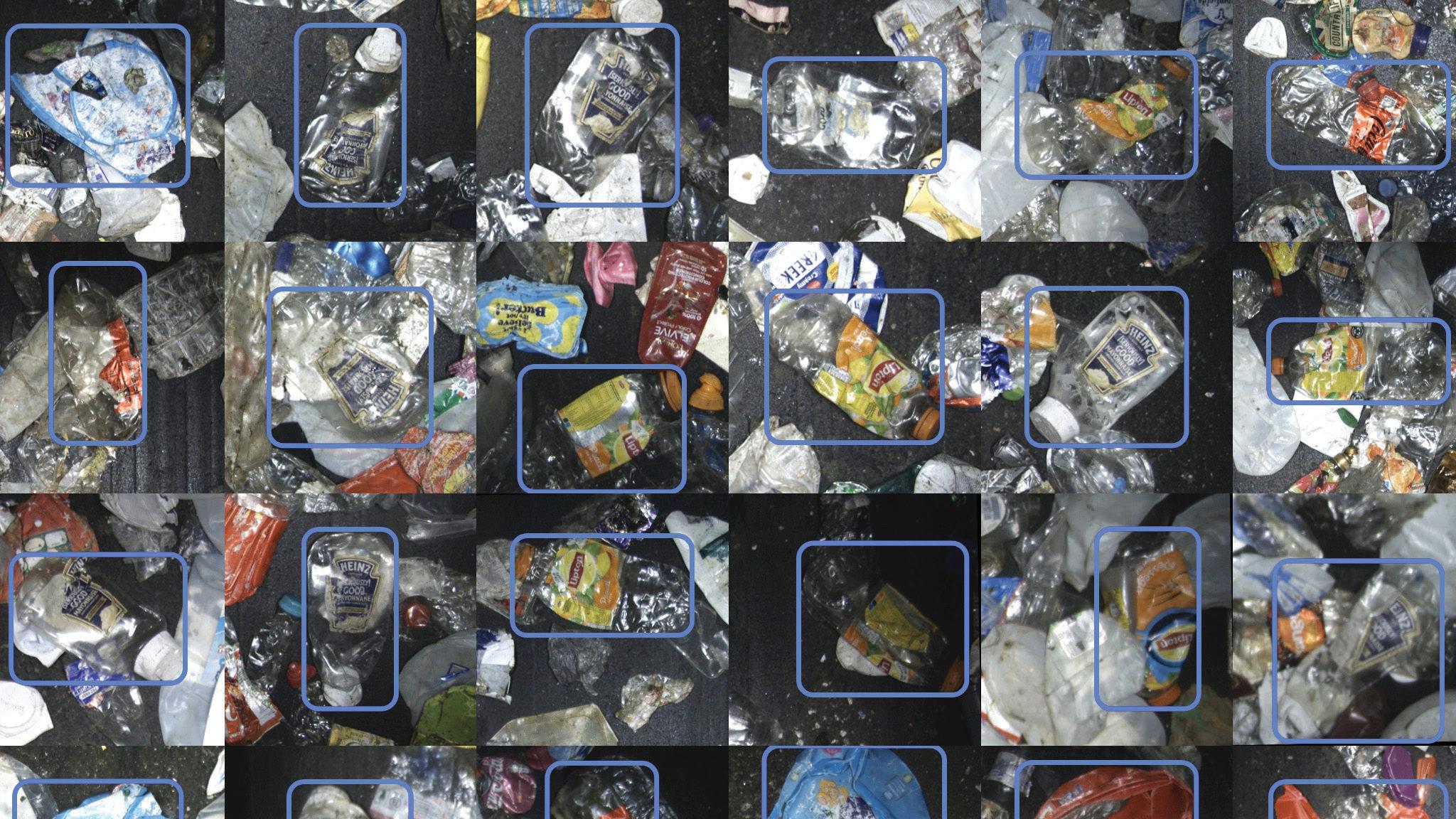
“If purity begins to swing, what we’ve built are dashboards and automated alerts that allow site management to intervene immediately,” Popovich says. “We’re not waiting three weeks, four weeks to get that feedback from a customer downstream.”
The ability to monitor performance in real time is only the first step. The more significant change is how facilities leverage that information to guide decisions across operations, maintenance, and capital planning.
At the KSI Recycling Facility in northern Holland, AI data has been used to identify subtle trends that would be difficult to detect through manual sampling. One example is the impact of equipment condition on recovery rates.
Using AI-generated data, operators identified a gradual increase in material entering the residue stream, which was ultimately linked to contamination buildup on optical equipment. By tracking that trend, they were able to refine their maintenance approach.
“When we clean this window, we see a jump in this line, and then we see an improvement of the quality and of the recovery,” says KSI plant manager Foppe-Jan de Meer. “Now we know how much this line can decline before we have problems with our quality. So we have now adapted our cleaning scheme.”
This shift from reactive to proactive maintenance illustrates
AI definitely is a great tool. It’s a great partner. But at the end of the day, it can trigger alerts and identify trends, but it still requires operators to act on the information quickly and correctly.
Brian Popovich Senior Financial Analyst of Operations, Murphy Road Recycling
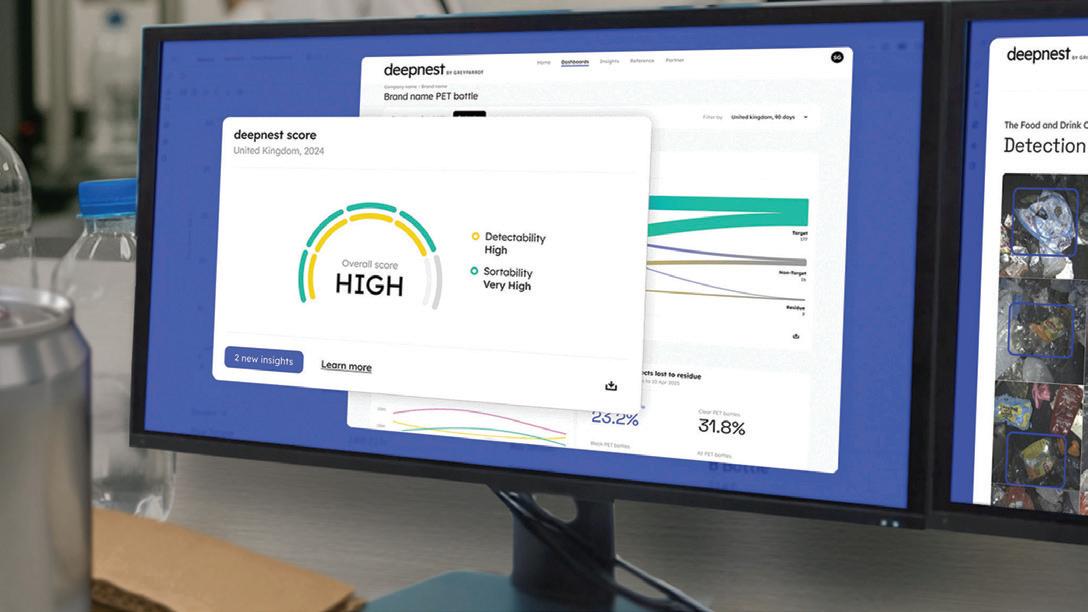
how AI is used to anticipate issues rather than respond to them after performance has already declined.
In addition to the immediate feedback loop, historical data also supports longer-term planning. At Murphy Road Recycling, sustained trends in material volumes are used to inform investment decisions, helping ensure that capital is deployed where it will have the greatest impact.
“When we see sustained volumes of specific materials, it strengthens the business case for targeted upgrades, ensuring that when we are deploying capital, it delivers the strongest ROI,” Popovich says.
As operators become more comfortable working with AI-generated data, the next step is connecting insight to action on the plant floor.
In some MRFs, this informed decision-making is already happening at the operator level. Teams are using live dashboards to adjust settings, respond to changing material streams, and fine-tune performance throughout the day.
At GreenTech Recycling, with plastics recycling facilities in Lithuania, Slovakia, and Romania, operations span multiple processing goals. Here, AI data is being used to optimize processing parameters in real time as input conditions shift.
“The operators can optimize those recipes live,” says Alan Smith, chief technical and operations officer at GreenTech. Previously, he adds, fixed settings meant facilities would start
to see losses due to variation in the input.
The ability to adjust processing parameters in real time is important in operations that rely on blending different grades of material. Variability in incoming bales can quickly affect output quality, but with better visibility into input composition, operators can adjust settings to maintain specifications and improve recovery.
AI data is also being used to evaluate supplier performance, providing a clearer picture of whether incoming material meets expected quality standards over time. That information can influence purchasing decisions and strengthen accountability across the supply chain.
While most facilities are still in the phase of using AI to inform human decision-making, there are early signs of a shift toward more automated responses.
At KSI, operators are exploring how AI insights could eventually be used to directly influence equipment settings. One pilot project involves adjusting a windshifter based on real-time material composition.
“In the really near future, we want to steer at least one windshifter . . . to change revs according to what the Greyparrot sees,” de Meer says.
The goal is not to remove operators from the process, but to support them with more responsive systems that can adapt to changing conditions. In practice, that means combining AI data with existing sensor inputs, such as motor load or vibration, to
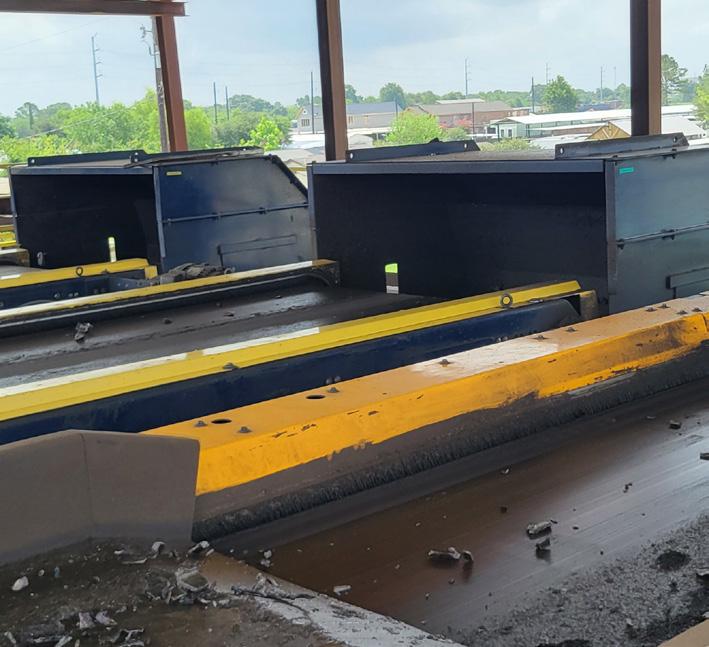
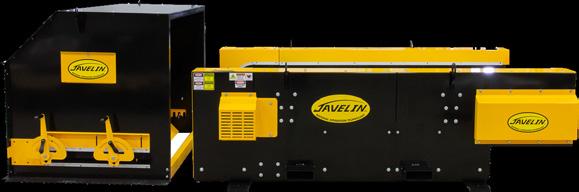
build a more complete picture of plant performance.
“We want to combine the Greyparrot data with other data,” de Meer says. “And that improves the way of working for the operators. It’s really, for us, . . . next level.”
Environmental factors can also be accounted for with this approach. At KSI, for example, operators have observed that moisture content increases during wet conditions, affecting how materials behave in the system and requiring adjustments to equipment settings. Integrating these variables alongside AI data opens the door to more adaptive operations.
Despite the increasing capabilities of AI systems, operators remain key to how these tools are used.
Across KSI, Murphy Road Recycling, and GreenTech, there is a consistent view that AI functions as a support system rather than a replacement for human expertise. It can identify trends, generate alerts, and provide analysis, but it still depends on operators to interpret the information and act on it.
“AI definitely is a great tool. It’s a great partner,” Popovich says. “But at the end of the day, it can trigger alerts and identify trends, but it still requires operators to act on the information quickly and correctly.”
This dynamic has implications for how teams are trained and how roles are evolving within the plant. Operators are increasingly expected to engage with data, understand system performance, and make informed adjustments in real time.
At the same time, adoption requires a shift in mindset. Initial
skepticism is common, particularly when new systems challenge established assumptions about how the plant is performing.
At GreenTech Recycling, data challenged long-held assumptions about the source of performance issues.
“Ultimately, any issue that we had on our process was always blamed on the input material,” says Smith. “But once we installed the unit, it actually identified that 90 percent of our problems were process issues.”
That shift in understanding helped build trust in the data and encouraged broader adoption across the team.
For many operators, the value of AI is about making existing processes more transparent and controllable.
In some cases, the benefits are difficult to quantify directly. Rather than driving immediate revenue gains, AI systems often help prevent losses by maintaining quality, reducing downtime, and avoiding penalties. At KSI, de Meer says the financial impact is not always easy to isolate, but the improved control over plant performance is clear.
As facilities continue to integrate AI into their operations, that control is likely to become more important.
With increasing pressure to deliver higher-purity materials and operate more efficiently, the ability to see and respond to changes in real time is becoming a core capability.
The shift from monitoring to action is still underway. But for many MRFs, AI is already playing a more central role, connecting data, decisions, and performance across the plant. RPN

In today’s fluctuating commodity markets, it is more important than ever to maximize yield productivity at sorting facilities. Validating capital expenditures is often a major obstacle for small and mid-sized facilities.
Material stream testing provides vital information about the characterization and value of materials being processed. Testing material samples allows operators to receive key insights into what system changes may be required to create long lasting improvements. Understanding the costs of required system updates and the timeframe for a return on investment is crucial to businesses where investing in new equipment retrofits could mean critical downtime and lost productivity or revenue.
BHS (Bulk Handling Systems) opened Nashville-based CTEC (Customer Testing and Education Center) to offer customers material stream testing and evaluation in real time with BHS equipment and systems. Clear, tested validation on what purity and recovery levels can be achieved is a significant benefit of on-site test sessions. A typical test session utilizes familiar BHS products, including NRT optical sorters, Max-
AI® detection & sorting technology, and Bulk Handling Systems screens and conveyors. Controlled and monitored via the Total Intelligence Platform (TIP), a fully integrated, smart management system which delivers centralized, system-wide performance and material-composition data at the fingertips of operators. Testing at CTEC provides important insights on the impact of upgrading a facility and what gains can be found when paired with the right technology.
Customers can choose from conventional linear sorting or autonomous circular sorting methodologies. Autonomous sorting methodology removes and stores target commodities returning non-target materials back to the front of the system; each pass focuses on increasing material recovery, leveraging different technology located around the system. The loop is fully integrated with multiple Max-AI® VIS units for unparalleled material categorization. A customer can choose either fully automated quality control (QC) option: the proven Max-AI® AQC-2 robotic quality control featuring the iEOT (Intelligent End of Arm Tool), or Max-AI® AIR direct eject QC.
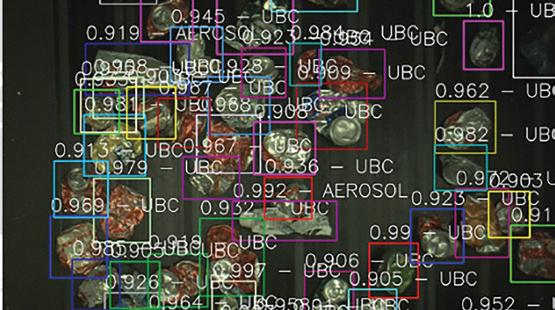
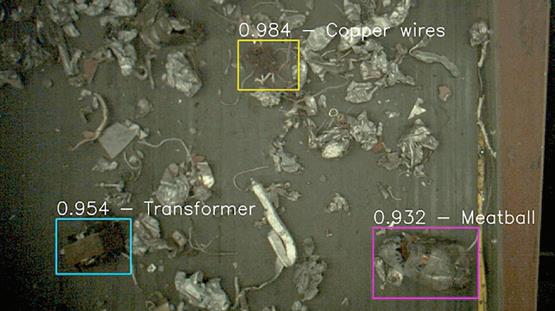
Max-AI® VIS identifies aluminium cans as the commodity and contaminants to be ejected (right); locating copper wires, transformers, and “meatballs” in a WEEE stream (left).
Material is evaluated with Max-AI® VIS which rapidly analyzes waste stream composition before Max-AI® Flex robots sort out contaminants and hazardous materials big and small.
This presort is followed by the industry-leading NRT SpydIR®HS optical sorter, integrated with Max-AI® VIS. Using the latest in data fusion, this sorter combines hyperspectral imaging with AI to solve complex sorts while providing real time material composition. The SpydIR®-HS has a nearly 10time increase in detection resolution and twice the precision in air ejection compared to other optical sorters in the industry. Showcasing the InFlight Sorting® technology NRT is known for; material is detected and ejected off the belt in less than 10ms, 15 times faster than the blink of an eye. Easy access enclosure with optimized airflow geometry reliably and consistently keeps the material stream in the right place.
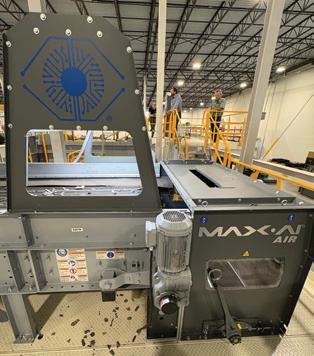
Max-AI® AIR, the latest in the Max-AI® lineup, uses proven air ejection technology with AI to separate contaminants from the material stream. Like all BHS products Max-AI® AIR is not limited to recycling streams like paper, plastics and mixed materials. Max-AI® AIR also sorts organics, metals, and printed circuit boards (PCBs) streams. A versatile solution for sorting all material types and sizes.
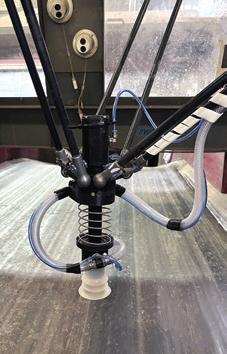
Max-AI® AQC-2 with iEOT utilizes patented BHS technology to successfully remove contaminants. Software and hardware seamlessly optimize picking performance, and an automated cleanout tool improves recovery and reduces downtime and maintenance. With hundreds of Max-AI® AQC units installed around the world, this QC is chosen for its ability to exceed manual QC in pick rates, accuracy, and uptime.
Data is fed into the Total Intelligence Platform (TIP). As an intuitive interface with a 3D system visualization, TIP displays a snapshot of equipment, expanded views into machine centers, and isolated machine modes for flexible timeframe and system monitoring. TIP integrates with NRT optical units, Max-AI® detection and sorting technology; providing bunker and baler monitoring, and product inventory visibility. Gone are the days of walking the system to gather information or adjust production settings. The power of real-time data and diagnostics can be accessed instantly, creating a new level of adaptation and profitability.


The solutions to be found at CTEC-Nashville address purity rates and efficiency problems for operators of all sizes. Customers will leave a testing session at CTEC with actionable data and insights for real opportunities to increase recovery, purity, boost revenue, and maximize system performance at their own facility. When the answers are data-validated, can you afford not to test in Nashville?
To learn more, or schedule a visit: www.bulkhandlingsystems.com/CTEC
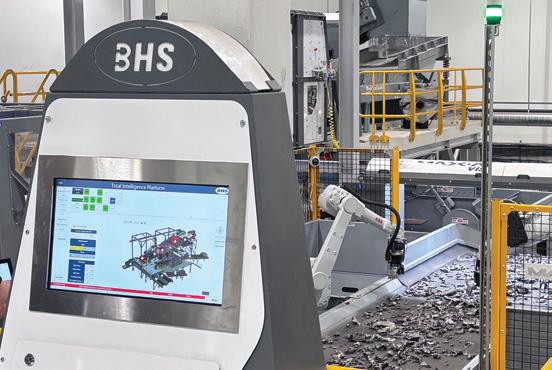
TIP provides valuable system-wide insight to help operators see where to improve performance and profitability.

BY SLONE FOX, EDITOR
Picture a buoy that has been drifting in the Pacific Ocean for 40 years. It left a fishing vessel on the other side of the world sometime in the 1980s, rode the currents across the ocean, weathered decades of UV radiation, saltwater, and barnacles, and finally washed up on a beach on the coast of British Columbia, Canada, its origin and composition mostly a mystery.
Many recyclers wouldn’t touch it, but Ocean Legacy specializes in what few others do: recovering plastic ocean pollution — abandoned buoys, nets, and ropes that accumulate on coastlines — and engineering it back into something useful. It’s the kind of waste that most facilities turn away, but Ocean Legacy’s Steveston Harbour location is built for exactly that.
What’s immediately apparent about Ocean Legacy’s model is its scope. Material arrives from three streams simultaneously: a network of seven Ocean Plastic Depots built alongside landfill sites so communities have a natural drop-off point; directly from the fishing and aquaculture industry, whose end-of-life gear would otherwise have few options beyond the landfill; and the organization’s own cleanup crews, who go out on boats to recover debris directly.
“We get reported to from a wide variety of sources,” says Josh McLean, director of product and business development at Ocean Legacy. “We have connections with BC Ferries, Western Canada Marine Response Corporation, and we’ve got our own geographic information system folks who are combing satellite images. We’ve got a whole reporting system online as well, so between all of those, you can get a good idea of where there’s buildup and accumulation.”
McLean notes that over a decade of operational experience has also given the team an intuitive map of the coastline, as certain areas consistently accumulate debris year after year. That knowledge has become an asset in itself, complementing the satellite data and reporting networks.
Fishing gear is about as far from a tidy, single-stream plastic as you can get. A single rope can contain more than one polymer type. Saltwater exposure, UV degradation, embedded sand, and chemical residues from fuel and antifouling coatings all complicate processing in different ways at different stages. These are precisely the characteristics that cause most recyclers to pass on marine plastic entirely.
“We’ve done a lot of training and education as far upstream as we can,” says McLean. “We do specific training with the shoreline, ocean, and marine industrial cleanup groups, like how it needs to be prepared and sorted, and try to push that as far forward in the process as possible so that once it lands here at the recycling facility, it’s 98 percent done.”
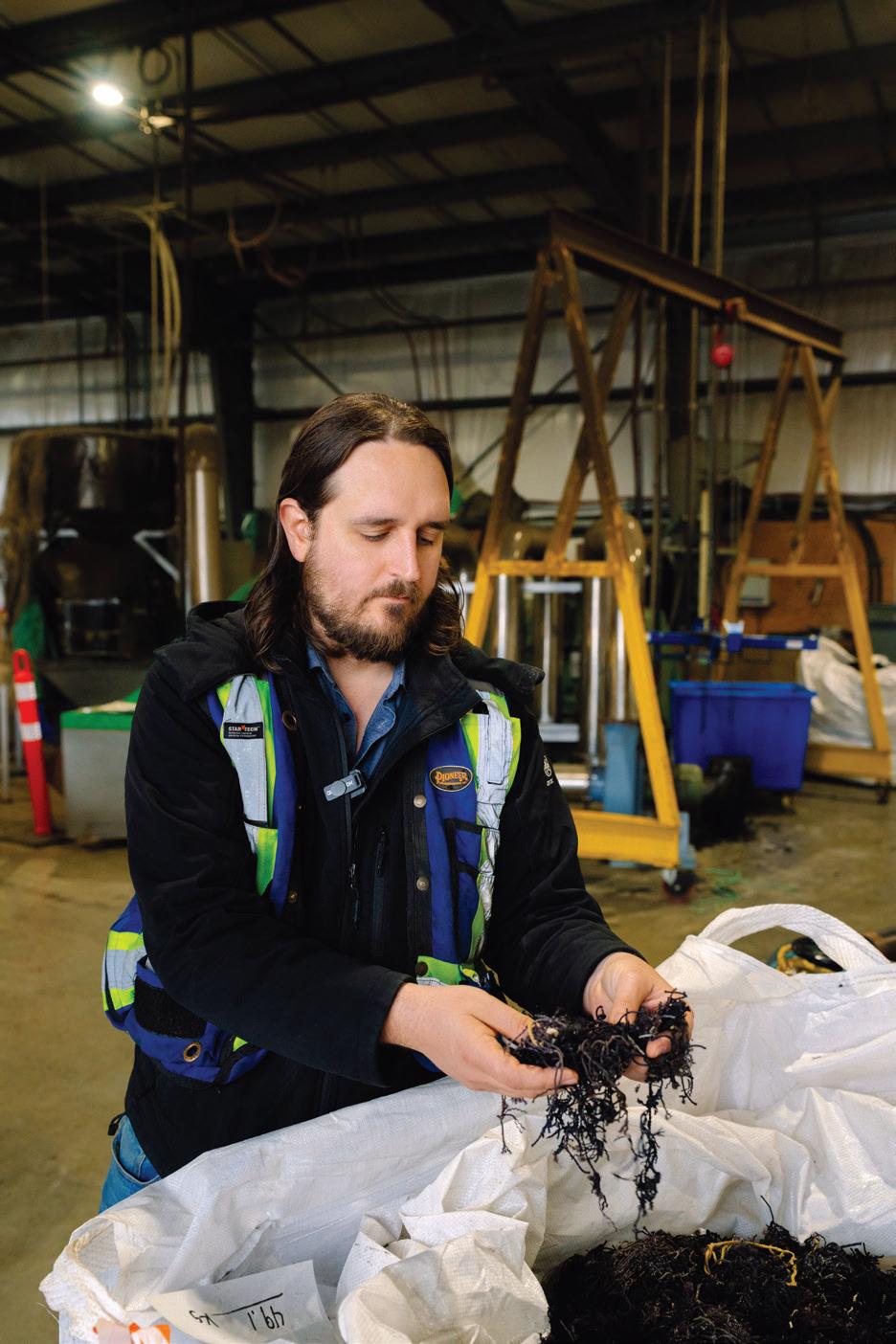
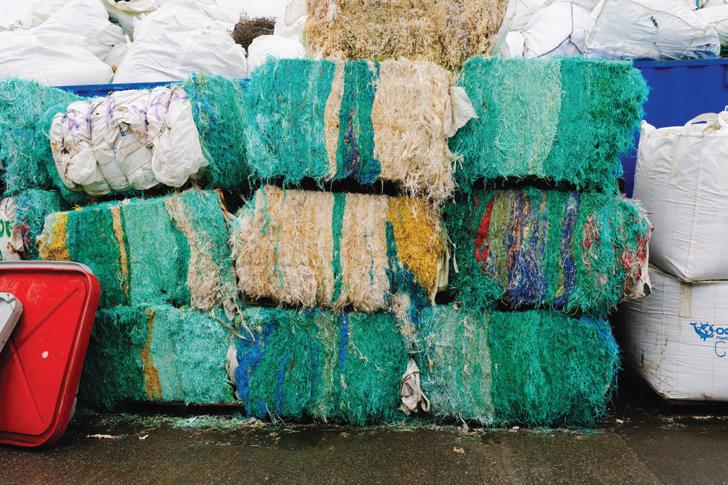
McLean breaks incoming material into two broad categories: hard, rigid plastics — barrels, buoys, buckets — and fibrous materials like rope and netting. By volume, fibre dominates. The most common rope material is relatively consistent: polypropylene, usually in a recognizable teal or turquoise colour. Ocean Legacy has processed millions of pounds of it. But rope can also contain woven strands of different polymers, and
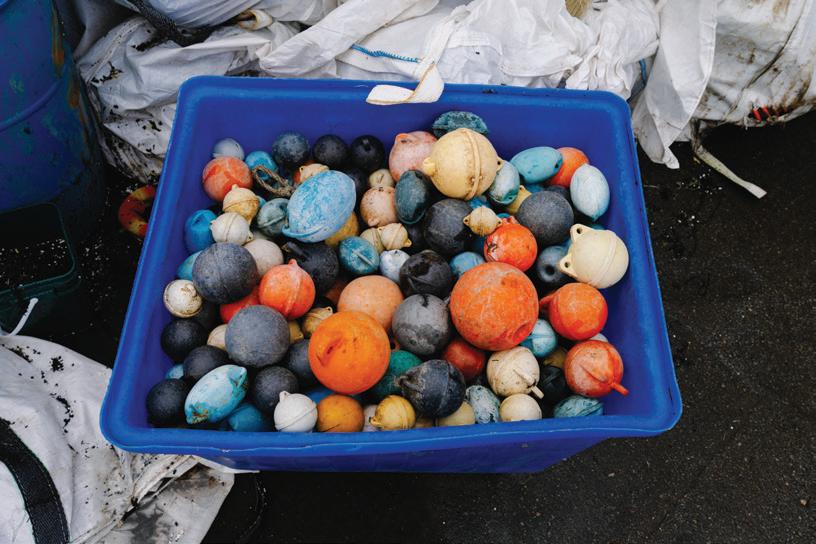
those blended materials can cause problems downstream.
When it comes to material identification, the facility has a near-infrared scanner for ambiguous cases, but McLean says they also mix technology with old-school methods.
“With buoys, we’ll bounce them off the concrete, and if it’s a lower-pitched thud, it’s more likely to be polyethylene,” he says. “And if it’s kind of a higher-pitched ting, it’s more likely to be acrylonitrile butadiene styrene (ABS).”
Buoys present a particular challenge since their spherical shape and thick walls actively resist processing equipment.
“It’s the toughest to work with them in a lot of ways because the shape means teeth on a grinder are not going to want to catch and actually chew it up,” says McLean. “It’s hard to tell just by looking at them from the outside how thick they’re actually going to be, so sometimes you start trying to claw into them, and it’s an inch and a half thick of rock-hard ABS. That’ll dull the blades on the grinders pretty quickly.”
The team has found creative workarounds like repurposing intact buoys as planters and art installations, with the ABS fraction largely getting diverted to upcycling rather than mechanical recycling. The buoys that do get recycled go through the grinder and ultimately become pellets.

The journey from incoming waste to finished pellet involves several distinct stages, each with its own processing challenges. Materials like rope and netting first go to a specialized shredder designed for fibrous material, capable of handling mooring lines up to five inches thick and whole sections of net. The output is a coarse, straw-like material roughly one to six inches in length.
Shredded fibre is extremely light and fluffy — too low-density to feed efficiently into an extruder — so it goes through a densifier, which applies heat and compression to produce a compact, workable feedstock.
“Densifying it is a necessary middle step,” McLean explains. “It allows the extruders to get higher throughput.”
Hard plastics follow a different path: they’re shredded, then put through a wash line — a large float-sink tank combined with a friction wash — followed by a dryer. The float-sink stage does double duty, both cleaning the material and helping separate plastics by density. Everything then feeds into the extruder, which runs the melt through a stainless steel mesh filter to catch any remaining contaminants or metals before the material is pelletized.

The facility currently produces finished pellets, regrind, and densified crumble, with the latter offerings going to downstream partners who do their own extrusion — a flexible model that keeps material moving efficiently through the supply chain while pelletizing capacity continues to scale.
Once pelletized, the end product is Legacy Plastic, Ocean Legacy’s branded recycled plastic resin, which falls into three grades — used marine gear, shoreline plastic, and ocean-recovered material — and is sold in bulk to manufacturers for use in finished goods. A well-established application is Legacy Plastic Lumber, which mirrors the standard dimensions of conventional lumber, as well as fence posts and parking curbs, distributed through CORE Landscape Products on Vancouver Island and beyond.
On the industrial side, Legacy Plastic also underpins a growing network of manufacturer partnerships working toward a closed-loop circular economy. One of these is with Sæplast

Americas, which manufactures the insulated fish totes found throughout the commercial fishing industry. Ocean Legacy collects end-of-life totes from industry partners, processes them into Legacy Plastic pellets, and ships those pellets to Sæplast’s facility in Saint John, New Brunswick, where they go back into production as new totes. The same product is effectively remade from its own recovered material.
“It’s like voluntary EPR, basically,” says McLean. “If we could do that with every original manufacturer in this space, that would be the dream. We’ve got a couple of million pounds of rope just in this yard. If we can recycle that and get it made back into rope, that’s true circularity, right? And that’s how we view it: giving companies the opportunity to take part in the circular economy and to redesign their products for improved end-of-life management.”
Ocean Legacy’s approach to the broader problem of marine plastics is captured in a four-pillar framework the organization
Once pelletized, the end product is Legacy Plastic, Ocean Legacy’s
calls EPIC: Education, Policy, Infrastructure, and Cleanup.
Together, the four pillars are designed to address plastic pollution at every stage, preventing it at the source, removing what has already accumulated, and building the systems needed to keep recovered material out of landfill and in circulation. Education equips people with the knowledge to act. Policy shapes the systems that govern how plastic is managed. Infrastructure builds the physical and technological capacity to process what’s recovered. And Cleanup does the immediate, hands-on work of getting plastic off shorelines and out of ecosystems.
One of the underlying questions driving it all, McLean says, is how to make people who don’t live near the ocean care about what happens to it. It’s a harder problem than it might seem.
“With ocean plastics, no country specifically wants to take ownership of it. When it’s on a shoreline, it’s a little more cut and dried,” says McLean. “But a lot of the stuff that’s washing up on coastlines is coming from the wild west that is the Pacific gyres — any of the ocean gyres. So how do we prevent that from getting out there in the first place?”
We’ve got a couple of million pounds of rope just in this yard. If we can recycle that and get it made back into rope, that’s true circularity, right? And that’s how we view it: giving companies the opportunity to take part in the circular economy and to redesign their products for improved end-of-life management.
Josh McLean Director of Product and Business Development, Ocean Legacy
The absence of clear ownership over plastic pollution makes it a uniquely difficult problem to solve. What Ocean Legacy has understood and built its entire model around is that the most durable solution is utility. Whether it’s a fish tote made from last season’s recovered gear or a fence post that was a fishing net not long ago, these products demonstrate that the material has value, that the loop can be closed, and that recovered ocean plastic has a place in the supply chain.
For communities, the most immediate and visible benefit is simply cleaner shores. But McLean argues that where the material ends up matters too.
“They’ve got somewhere to take it that doesn’t feel like an anti-climax,” he says. “If you go and spend a weekend with your neighbours and your kids, and you go out and you clean up your beach, and then all you do with that is just take it to the landfill, it doesn’t really feel like a huge win. It’s just moving a problem from one place to another. The more of it that you can actually get recycled and put back into the circular economy, the better.” RPN
THE RIGHT MACHINE FOR THE RIGHT APPLICATION CAN MAKE ALL THE DIFFERENCE IN THROUGHPUT, EFFICIENCY, AND PROFITABILITY
BY HEATHER CALIENDO
Granulators and shredders are both types of equipment used for size reduction. On the surface, it seems like they have similarities, but in reality, they are completely different types of machines.
You can’t just trade out a shredder for a granulator, or vice versa, and expect the same results on the shop floor. These are fundamentally distinct types of machinery with several different design and operational considerations. In other words, they are built differently and work differently.
In recycling, every minute counts and every pound of material matters. The nature of the business is all about production, preventing downtime, and keeping machines running all the time.
The industry is moving away from fancy and toward functional. Recyclers and plastic processors have become more
sophisticated and have upped their game. Understanding the key differences between granulators and shredders can help operations get the utmost production out of their machines. Believing they are interchangeable can be costly.
There is a place for both machines in the marketplace, and sometimes they even work together. But again, it’s all very specific and materials-focused. Let’s take a closer look.
Granulators are high-speed, inertia-driven machines that typically run around 500 rpm. These machines utilize speed and inertia to cut material into progressively smaller pieces. They are typically metered-fed by a conveyor or simply by hand. A steady, controlled flow of material maximizes the production rate of a granulator.
There’s lots of physics involved as the flywheel and rotor carry stored energy into each cut, so the machine isn’t relying solely on the motor for every pass of the blade. The heavier and more solid the flywheel and rotor assembly, the more cutting work it can do before the motor needs to kick in.
There’s also an energy advantage. Because the machine carries all that inertia, stored energy powers through the cut first. Only once that energy is used up does it go directly to the horsepower motor — that’s when amps go up, and the motor draws more electricity.
While many granulators were designed for light-duty inhouse scrap, many plastic processors and recyclers are now seeking high-performance granulators as part of a complete package. Things have evolved quite a bit from the days when a granulator just sat beside an injection molding machine waiting for the next sprue.
There is also a greater demand for customization, especially when it comes to recycling and handling a wide range of scrap material. Custom-built granulators and systems help recyclers and manufacturers keep materials in use longer, reduce waste, and close the loop on production.
A common misperception is that materials must first pass through a shredder in a two-stage process; a well-built, tough granulator can take on those materials on its own as long as the wall is thin. The right granulator can tackle large parts, thin-walled material (such as thermoforming sheet), scrapped parts, and more.
This is where utilizing inertia, solid flywheels, geometry, and build quality all matter. With this level of engineering, you
You can’t just trade out a shredder for a granulator, or vice versa, and expect the same results on the shop floor.
don’t need to go to a pre-size step just because parts are larger. These strong granulators can even process larger parts, such as a 55-gallon drum, without the need for pre-shredding. The solution is to make the grinder big, strong, and narrow enough so that the granulator can handle it.
Granulator output is a more consistent, evenly sized regrind since it is a high-speed cutting machine. This is especially ideal for plastics processors who typically put the material back into a plastics machine (such as an extruder or injection molding machine) without additional steps. Recyclers, meanwhile, are more focused on throughput and cost per pound, and a wellbuilt granulator delivers on both.
A shredder is a high-torque and low-speed machine (around 100 to 130 rpm) that shreds material instead of cutting it. The torque is a twisting force delivered through a motor and gearbox that ramps up significantly, tearing and ripping the plastic. The shredder can be shock-loaded since the load on the rotor shaft is controlled by a hydraulic ram mechanism. This allows you to dump a full load of material in the hopper and walk away.
Shredders are applicable for thick-wall material and purging, along with many heavy-duty applications. Since a shredder works on torque, the torn pieces vary widely in size and shape. Different shredder types include single-shaft, dual-shaft, and quad-shaft machines.
Something to note is that shredded material almost always needs a second processing step, typically passing
through a granulator, before it can be reused in production. Think of it more as a volume-reduction step, not a finished-product step.
Using size reduction machinery is all about the application itself. Using the wrong equipment for a specific application will be a costly mistake.
A key item to remember when considering a granulator or shredder is the material itself. Is it thin-walled or thick-walled? For instance, when using a granulator, thin-walled material, regardless of the application, does not need pre-shredding. A well-built and strong granulator handles it in one pass to deliver the regrind.
When it comes to thick-walled material and purging, this is where the shredder is appropriate.
It’s vital to find a machinery manufacturer who builds and sells equipment around the application. Look for a manufacturer that is all about front-end application engineering, where they evaluate the specific scrap type, volume, and production goals to recommend the right machine.
For the thin-wall plastics, a granulator can be used in one step. A shredder will get you halfway, but you would still need a granulator downstream.
For material that is designed to recycle back into the manufacturing process, if a shredder is used, oftentimes a second granulator option is also required. If the material is thickwalled, the shredder will use its brute-force torque to reduce it to a size the granulator can then finish.
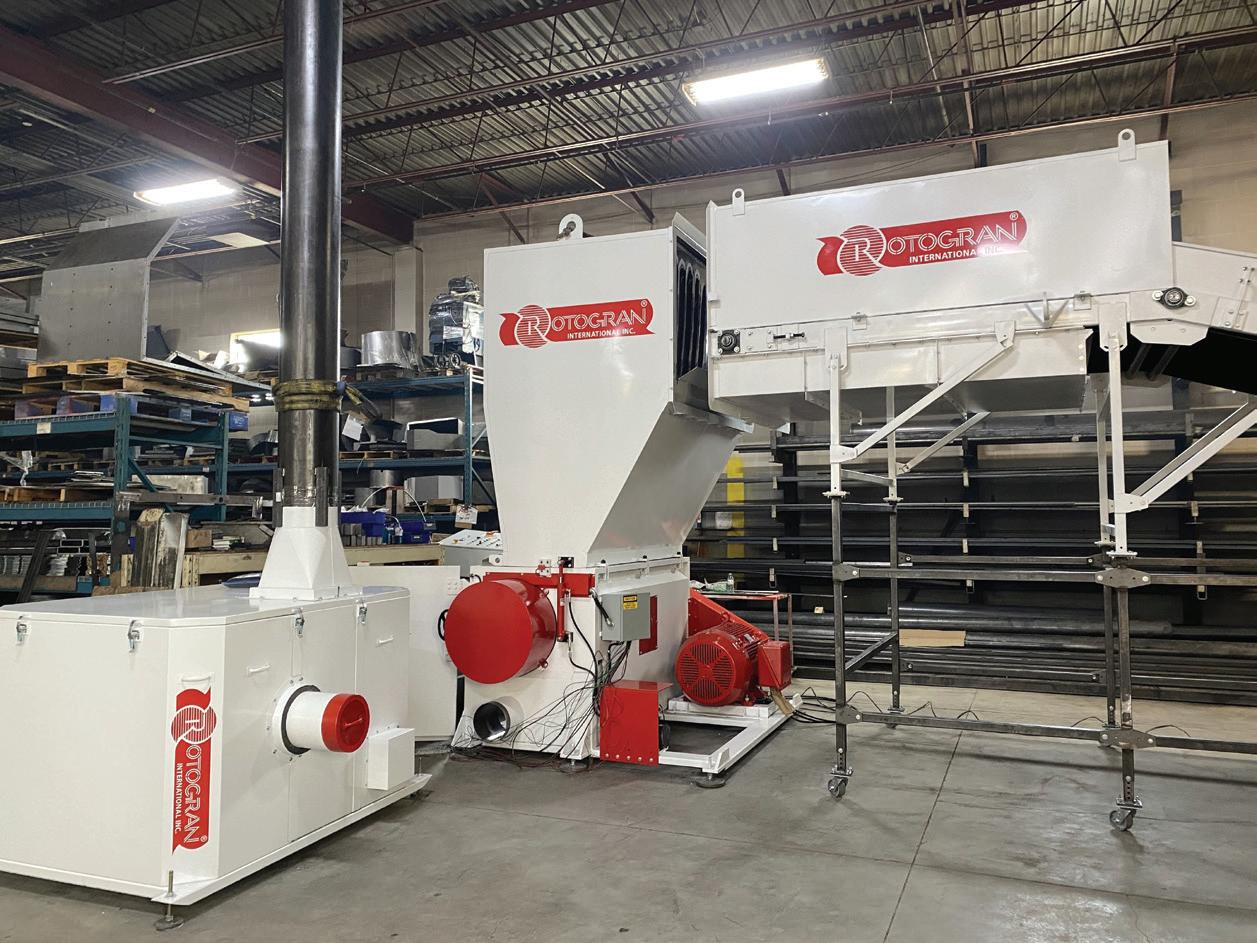
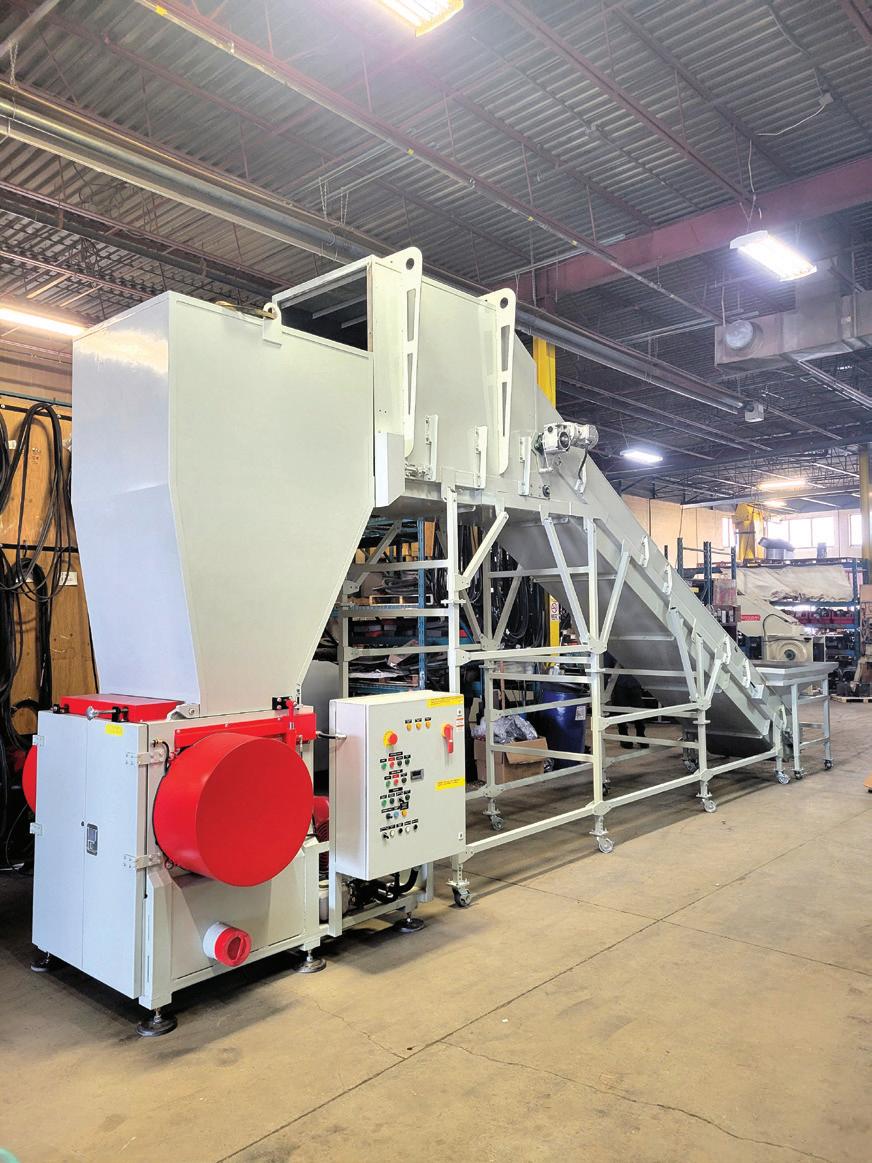
Stacked configurations are an option when you need volume reduction on thick material before final grinding. The concept of stacking a shredder on a granulator was developed as a solution to save valuable floor space in terms of integrated design and fewer pieces of equipment required for the process.
When an application calls for both to work together, and floor space constraints are an issue, a granulator can be designed to sit under a shredder in a stacked configuration, low-profile and robust.
However, there are sometimes issues on the shop floor with this stacked combination. As a result, Rotogran International designed a severe-duty granulator for use in stacked shredder/ granulator applications.
Granulators working with shredders are generally sized to meet a customer’s required production rate. The industry standard measurement for this is pounds per hour. For granulators, this rate should be achieved as a uniformly distributed material flow over the daily production time.
What generally happens is that an operator dumps a full gaylord of material into the stacked combo or loads up a standalone shredder (when equipped with a discharge conveyor) and walks away. The shredder immediately processes the entire load, but because the shredder can’t meter the output uniformly, it floods the granulator below with a massive shock load, then sits idle until the next load arrives.
During this cycle of shock loading, the granulator is processing material at four to six times its designed production rate. Most granulators are built to be uniformly fed at a specified rate and not designed to absorb large shock loads for a short
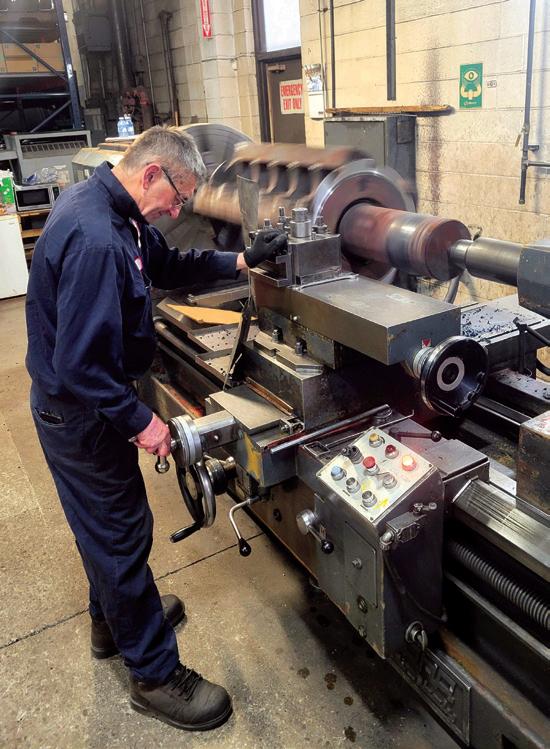
time, then wait idle for the next one.
This constant on-and-off overloading severely shortens the life of the granulator and increases downtime due to unexpected repairs. Rotogran engineered a purpose-built solution that is designed from the ground up for placement and integration under a shredder and is produced with all the considerations necessary for under-shredder applications.
The company currently has several of those granulators operating in integrated granulator-under-shredder applications. These granulators have successfully replaced other standard granulators that failed in this application and are performing without issue.
When it comes to choosing the right size reduction machinery, it’s about selecting the solution that suits the application’s needs. After all, every minute counts, so look for a big and strong machine to minimize downtime, maximize throughput, and profitability. Consider the material and choose a machine built to match.
HEATHER CALIENDO is the communications manager for Rotogran International, a Canadian manufacturer of size reduction equipment for the plastics and recycling industry. Rotogran custom designs and builds granulators, fines separators, evacuation systems, and feed conveyors with metal separators.
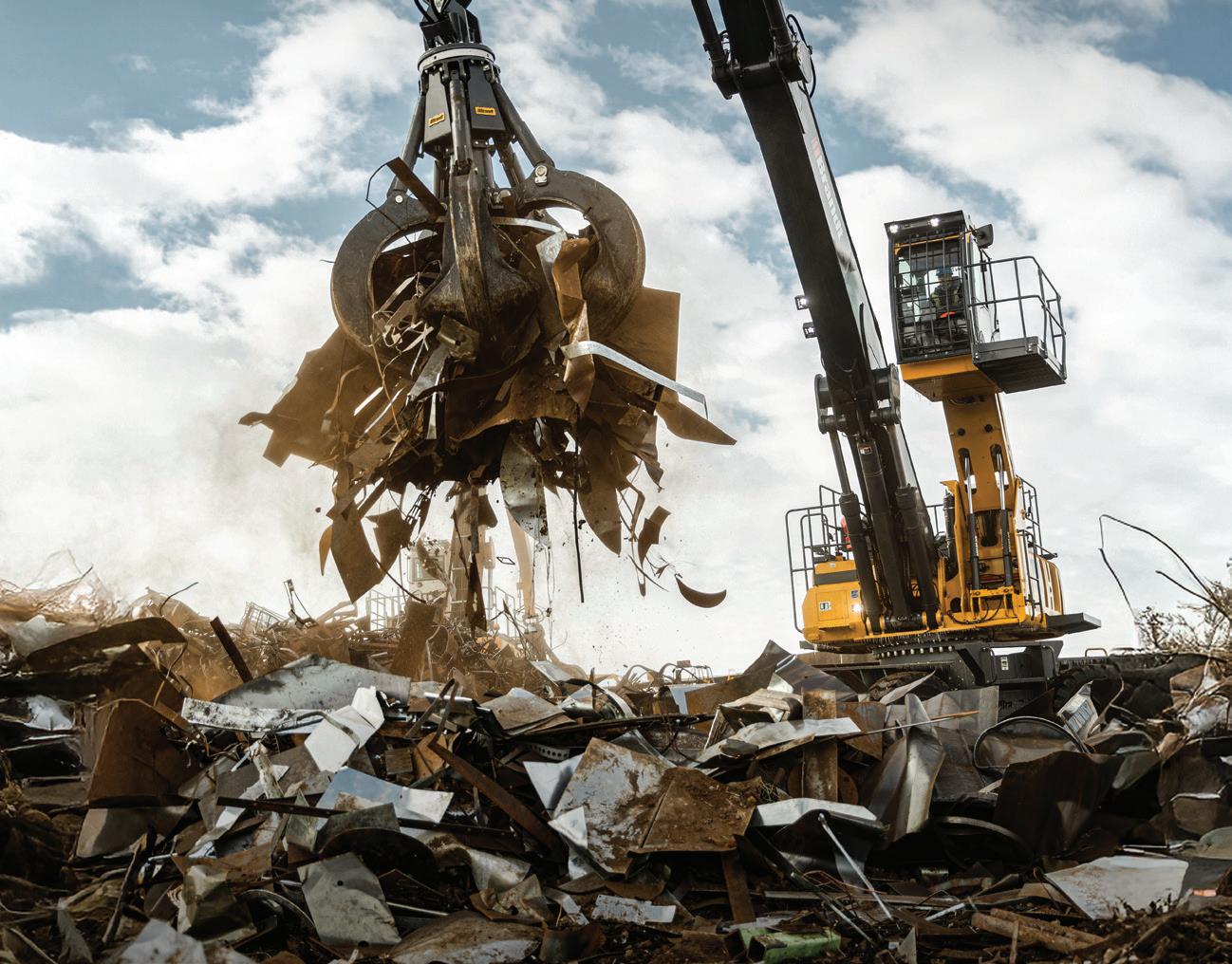

The heavy-duty Brandt BMH60A Material Handler is built and supported right here in Canada.
Proven Deere components and fast cycle times keep you moving.
The third-cylinder design boosts efficiency, lowers costs, and reduces wear. Increased Efficiency Easier to Own Reliable Performance
Unmatched support and North American parts availability maximize uptime.

The THOR 2121 KP — known as the THOR 8080 KP in the U.S. — is ZB Group’s bestselling mobile hammermill due to its flexibility and performance in a wide range of applications. Designed to meet the demands of today’s metal recycling operations, it gives yards of all sizes the tools to upgrade material, maximize scrap value, and compete in a challenging market.
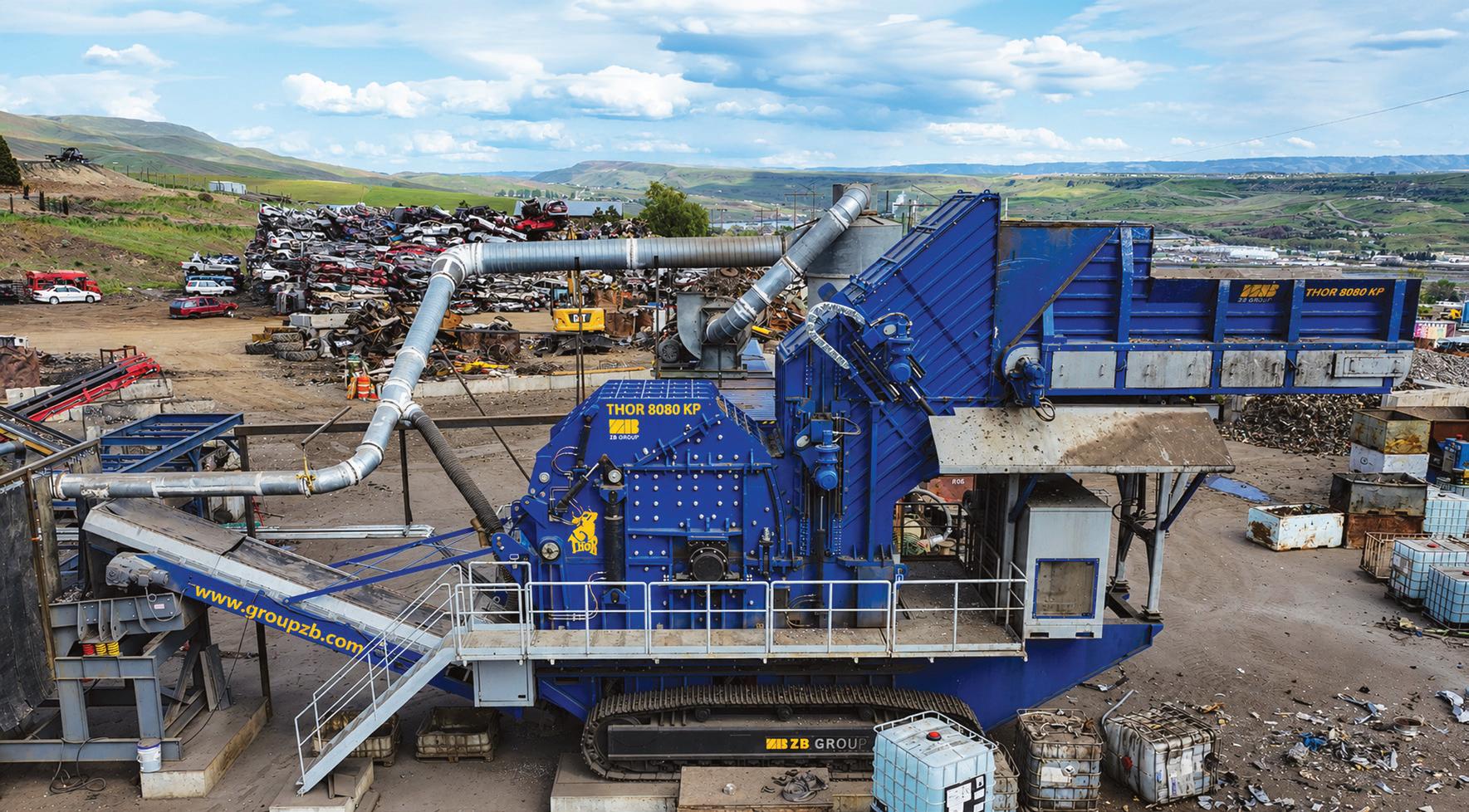
Designed to operate with power units from 1,500 hp up to 3,000 hp, the THOR 8080 KP can process everything from light scrap to full end-of-life vehicles. With throughput ranging from 30 to 90 gross tons per hour when combined with a pre-shredder, the THOR 8080 KP offers a powerful, scalable solution for scrapyards.
The THOR 8080 KP enables operators processing as little as 1,500 gross tons per month to take greater control of their operations by upgrading material and maximizing scrap value. Converting feedstock into a finished product improves market access, allowing operators to deal directly with end consumers instead of relying on intermediaries.
ZB Group’s patented solutions are engineered for efficiency, enabling automated operation with minimal supervision. In an era of ongoing labour constraints, reducing the workforce required to run the plant goes beyond convenience — it is a direct driver of profitability.
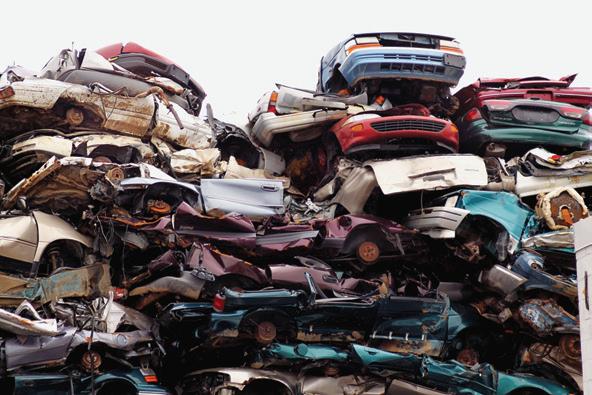
everything from
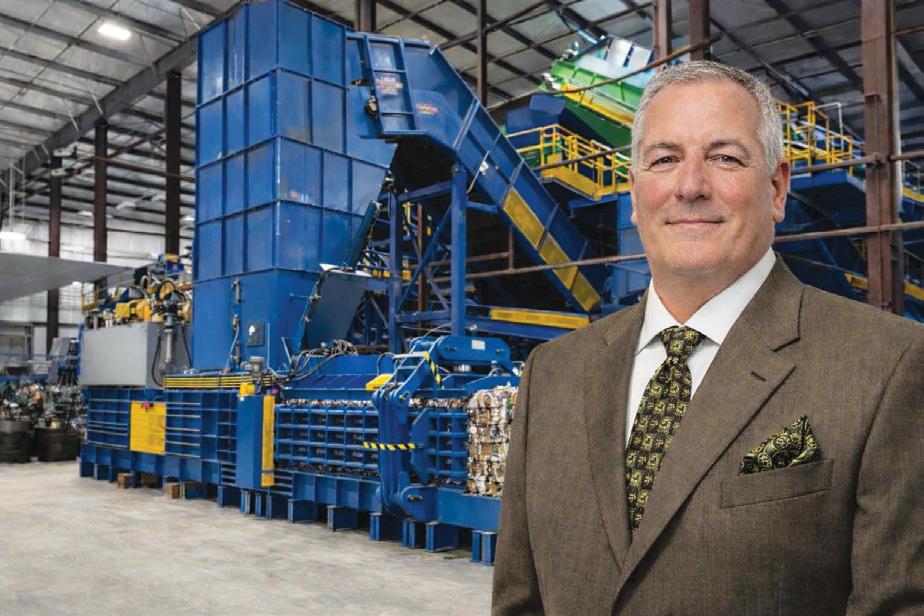
BY SLONE FOX, EDITOR
Whether a facility is processing post-consumer plastics, corrugated cardboard, or mixed paper, the baler is the machine everything else feeds into, and the one that brings production to a halt when it goes down. As recyclable material volumes grow and markets demand tighter, cleaner bales, operators are under increasing pressure to squeeze more efficiency out of their equipment without always having the budget to replace it.
I caught up with Dan Gregory, president of Unlimited Recycling Resources, to discuss the factors driving today’s baler investment decisions, how to use performance indicators to catch problems early, and where facilities can find meaningful efficiency gains in their existing equipment.
What’s driving your customers’ equipment investment decisions right now, and what matters most to them beyond the initial purchase price?
I believe, after hearing from our customers, that ease of maintenance is very high on the list. Reliability is and always will remain a top concern, but that goes hand in hand with ease of maintenance. No confined space issues and multiple access points create simplicity. When you make it easy to clean, workers will clean it more often. Along with these factors, access to spare parts is extremely important! Does the manufacturer hide the parts information? Or do they give you the manufacturer part information? Holding customers hostage for parts information is not a maintenance-friendly practice.
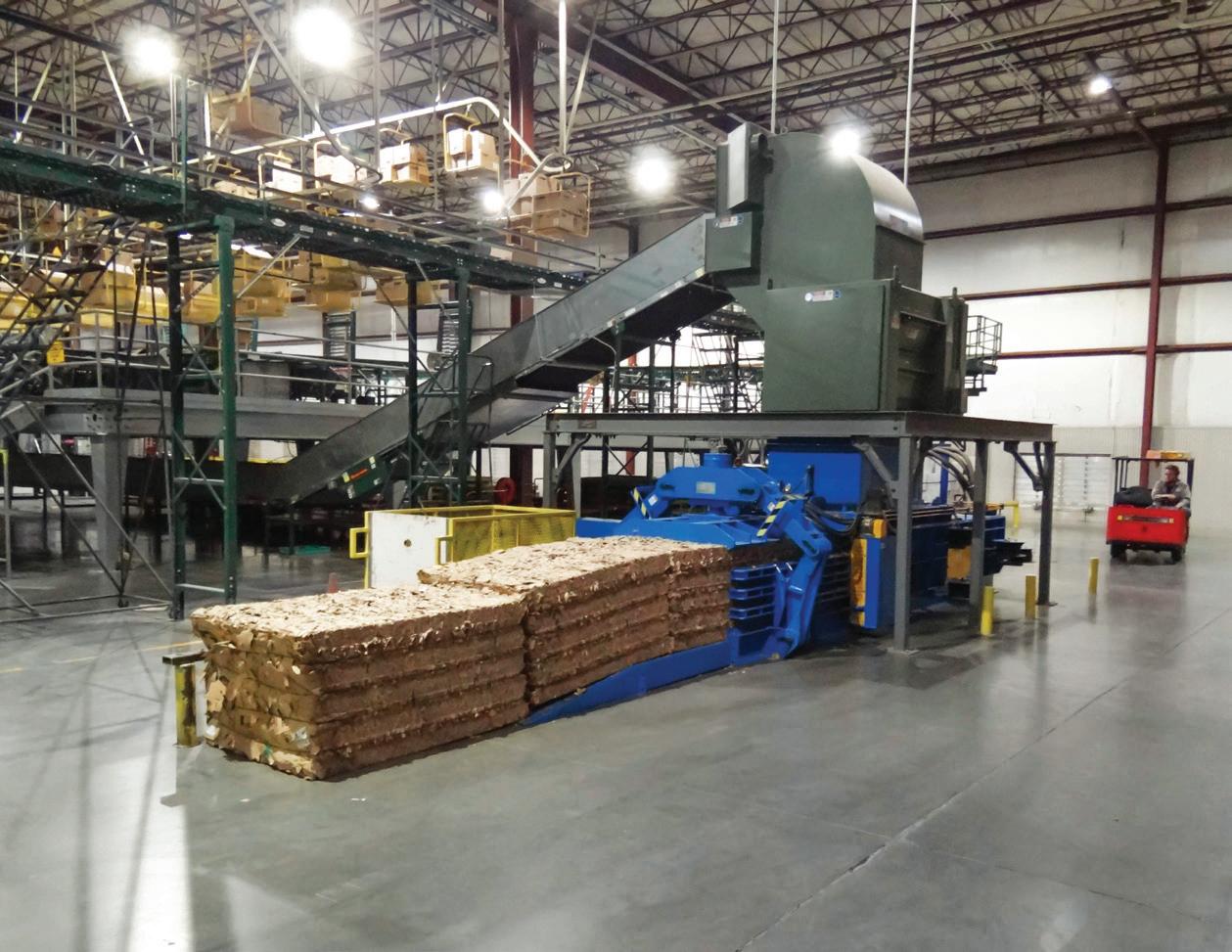
What do you see as the next major shift in baling technology over the next five to ten years?
This is an exciting question. For me, it is the ability for sortation equipment to monitor the sortation process. It can determine contamination percentage and total weight of the material in the bunker and, with proper controls, even change the mode of material on the baler depending on what bunker is currently being emptied. It’s extremely exciting.
What performance indicators should recyclers track to evaluate whether their baler is operating at peak efficiency and why?
Throughput is a key indicator of baler health, but that has to be weighed against employee performance. Regular preventive maintenance — tracking pressures, testing your hydraulic oil for contamination — is also key. It’s like a blood test for your baler. It can reveal hidden issues before they affect your performance.
For a facility that can’t afford major capital upgrades, what lower-cost operational adjustments tend to deliver the fastest return?
That is an extremely difficult question. I personally never recommend purchasing used equipment. In my experience, you inherit the problems that someone else had that motivated them to replace the equipment. If it’s been completely refurbished, then the cost is elevated to a level that is not much less than a new machine. You basically have a 15-year-old-plus piece of equipment with old technology and old structure. Plus, new equipment may present great tax advantages.
In your experience, where do you most commonly see opportunities to improve efficiency in the baling process? Are the biggest gains typically found in the equipment itself, the upstream material flow, operator practice, or somewhere else entirely?
For most facilities, it’s understanding your floor — your workers, materials, and layout. Keep workers who may be idle in a process moving. When one portion is done, shift them to assist elsewhere, do housekeeping, or prepare the next product. Mostly, small adjustments make big changes in production. RPN
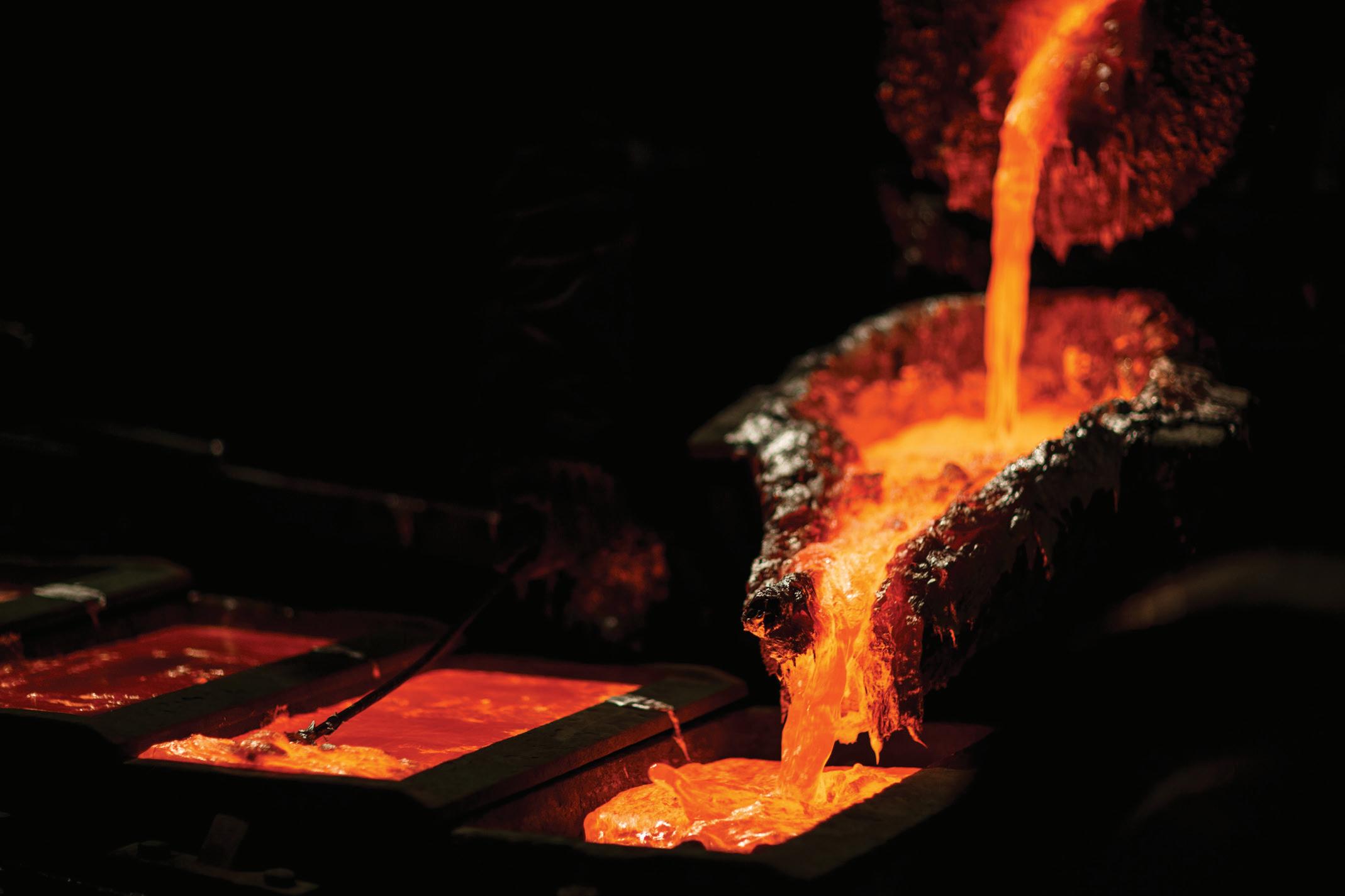
EGA’S $4 BILLION SMELTER BET COULD RESHAPE AMERICA’S ALUMINUM SUPPLY CHAIN
BY GEORGE DCRUZE
Headquartered in the United Arab Emirates (UAE), Emirates Global Aluminium (EGA) is a well-established name in the primary aluminum industry. The company has recently begun expanding across Europe and North America through acquisitions and greenfield projects, as well as serving both local markets and markets across Asia.
Jake Skelton, chief executive officer at EGA America, noted that as global demand for aluminum grew and production capacity expanded in the UAE, the company evolved its product mix to meet changing customer needs.
Today, EGA is the world’s largest premium aluminum producer, with roughly 80 percent of its production comprising value-added products, including billet, foundry alloys, slabs, and high-purity aluminum. Supporting this is a highly sophisticated global supply chain that enables it to reliably and efficiently deliver to customers worldwide.
Since the aluminum tariffs were implemented in April 2025, the U.S. has stopped importing material from several suppliers, but the UAE has emerged as the second-largest exporter of primary aluminum to the U.S. Commenting on this, Skelton said EGA’s continued presence in the U.S. market reflects the long-standing commitment to American customers.
When tariffs were introduced, some competitors shifted their focus away from the U.S. market or attempted to pass through tariff costs before they were fully reflected in pricing. EGA has taken a different approach, maintaining supply and strengthening customer relationships. Local production through EGA Spectro Alloys, combined with the strategy of maintaining inventory to quickly respond to customer needs, allows the company to serve the market much like a local supplier.
However, the U.S. still depends on primary aluminum imports to meet domestic demand. It only has one domestic producer, Century Aluminum, which has an annual production capacity of close to 700,000 metric tonnes, while the domestic consumption is close to 4 million metric tonnes. In 2025, the U.S. imported around 2.9 million metric tonnes of primary aluminum, reflecting its dependence on external suppliers who are being impacted by the tariffs.
As part of the tariff negotiations between the U.S. and the UAE in May, EGA agreed to build a new primary aluminum smelter in the U.S., investing $4 billion. This greenfield smelter would double U.S. domestic primary aluminum capacity, adding around 750,000 metric tonnes per year.
Earlier this year, EGA partnered with Century Aluminum to build the smelter. The project now combines Century’s market and supply chain leadership as the largest producer of U.S. aluminum with EGA’s technological expertise, supporting America’s push to reshore manufacturing.
At the end of this decade, EGA will be operating its first smelter in North America. The operational standards will be very different from those in West Asia. Skelton added that operating in different regions naturally involves complying with different regulatory frameworks and standards.
The global primary aluminum market appears to be drifting toward a deficit, making this U.S. primary aluminum smelter even more important. As regional players gradually prioritize their home markets, the West will need to step up
We are already seeing increased demand linked to data centre construction driven by artificial intelligence. Solar demand has also been strong, although imports from China have moderated growth in some markets. Over the long term, however, we expect both sectors to remain important drivers of aluminum demand.
Jake Skelton CEO, EGA America
production capacity and reduce reliance on imports if the supply chain is to remain as it is today.
Skelton indicated that EGA shares the view that the global primary aluminum market is tightening. In fact, this is one of the reasons the company is pursuing expansions worldwide. China has already capped its annual capacity to 45 million metric tonnes and is now moving production overseas to meet domestic demand. The U.S. having domestic capacity also makes it more resilient to global trade disruptions.
EGA has invested heavily in recycling capacity over the past few years. It began construction of its own recycling campus at the UAE’s Al Taweelah smelter in November 2023 and aims to produce 170,000 metric tonnes of secondary aluminum each year. In March 2024, it acquired German aluminum recycler Leichtmetall, with an annual capacity of 30,000 metric tonnes. It also acquired an 80 percent share in Minnesota-based Spectro Alloys in August 2024, which is in the process of raising capacity to 460,000 metric tonnes each year.
The Spectro Alloys acquisition was its foot in the door into the U.S. market, and a year later it signed the primary aluminum smelter deal. In essence, EGA will soon have more than 600,000 metric tonnes of recycling capacity across its global operations. This is in addition to 2.4 million metric tonnes of primary aluminum capacity at Jebel Ali and Al Taweelah in the UAE.
Speaking about the foray into recycling, Skelton said that forecasts show recycled aluminum production could grow by up to 50 percent by 2030.
“We intend to participate meaningfully in that growth,” he said. “Over time, we expect recycled metal to represent a substantial share of our overall output. We have also expanded into recycling because we see it as an important opportunity to better serve our customers. Many customers are looking for
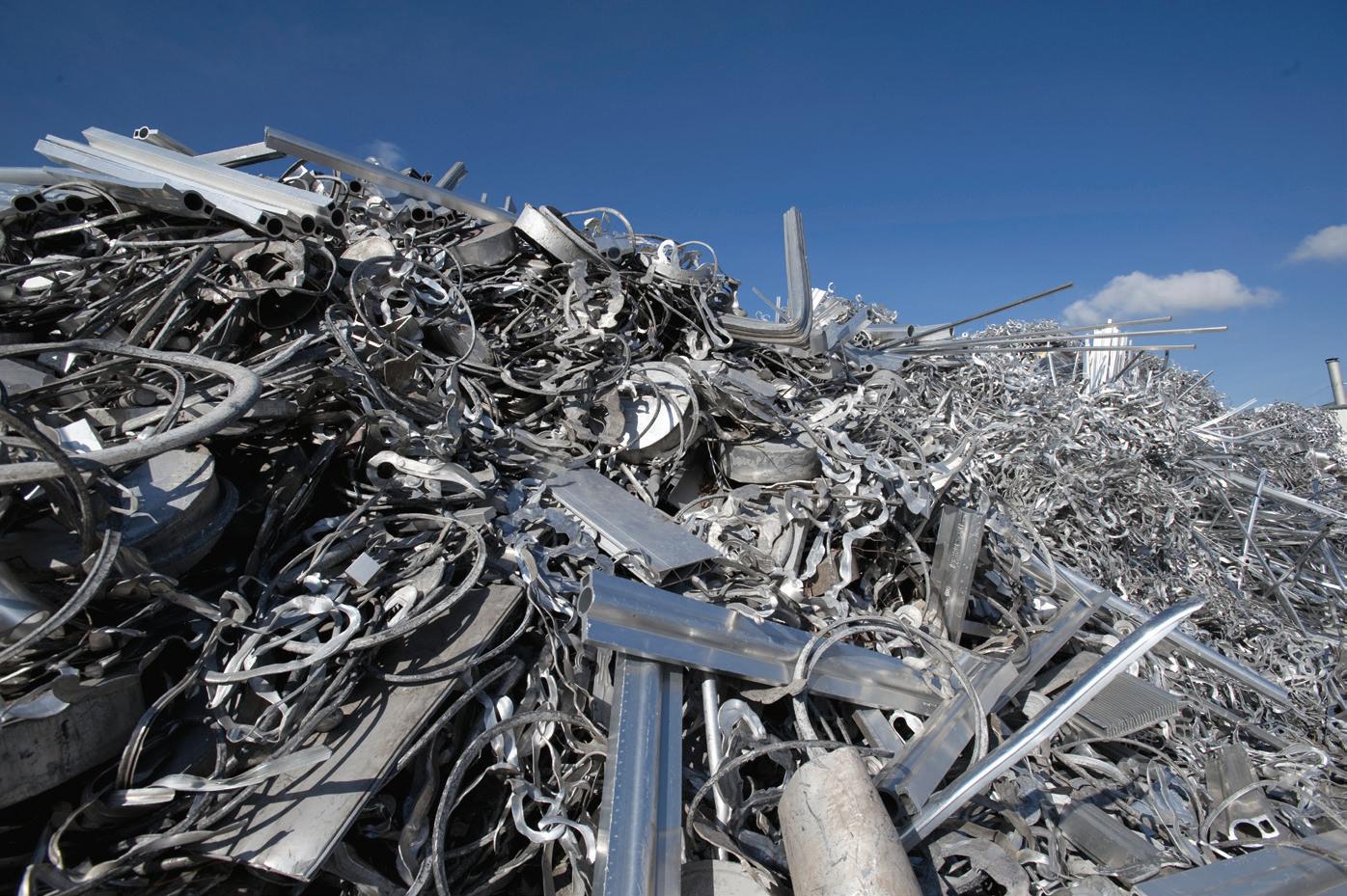
partners who can help manage both their primary aluminum needs and their recycled aluminum. By adding recycling capacity, we can offer a more complete solution across the aluminum value chain.”
Aluminum demand from various industries and segments remains robust. However, two sectors stand out — solar and artificial intelligence. Skelton expressed his views on the same: both industries require significant amounts of aluminum, particularly in the form of extrusions used in construction and infrastructure.
“This translates into strong demand for billet from aluminum producers and our customers,” said Skelton. “We are already seeing increased demand linked to data centre construction driven by artificial intelligence. Solar demand has also been strong, although imports from China have moderated growth in some markets. Over the long term, however, we expect both sectors to remain important drivers of aluminum demand.”
EGA continues to use a multi-pronged approach to expanding its footprint in the aluminum industry. This includes both
expanding primary aluminum production, while also aggressively integrating aluminum recycling into its portfolio.
As many analysts around the world expect a deficit in the aluminum market toward the end of this decade, harnessing recycled aluminum as a close substitute to meet growing demand for the lightweight metal seems to be a strategy that players across the industry are increasingly seeing value in.
The company is also successfully transitioning from a regional manufacturer to a global entity, extending its presence across three continents that are expected to drive future aluminum demand growth. An increasing presence in the U.S. domestic market will also ensure the status of its products as American-made under Section 232 tariffs that target imported aluminum.
GEORGE DCRUZE is a senior base metals analyst at Davis Index. You can reach him at george.dcruze@ davisindex.com.


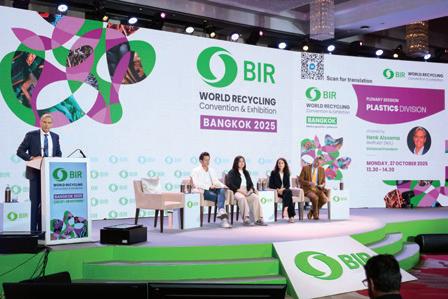

With more than 70 nationalities represented on a diverse stage, the BIR World Recycling Convention & Exhibition analyzes the global role of recycling. Panels will focus on international legislation affecting trade, analytical commodity information, and market forecasts. Key technological developments enhancing recycling machinery, equipment, and services can be seen in the exhibition hall. bir.org/events
CARI’s annual convention provides an opportunity for attendees to network with peers and industry leaders from the recycled materials industry across Canada, the U.S., and beyond. The event will feature educational sessions and panels led by experts and an exhibit hall presenting the latest in recycling technology. cari-acir.org/85th-annual-convention

The Waste Leadership Summit is a forum for executives, decisionmakers, and up-and-comers to connect with peers and mentors while discovering the latest insights into the industry. The event covers financial trends, market performance analysis, economic shifts, and growth forecasts. thewastesummit.com
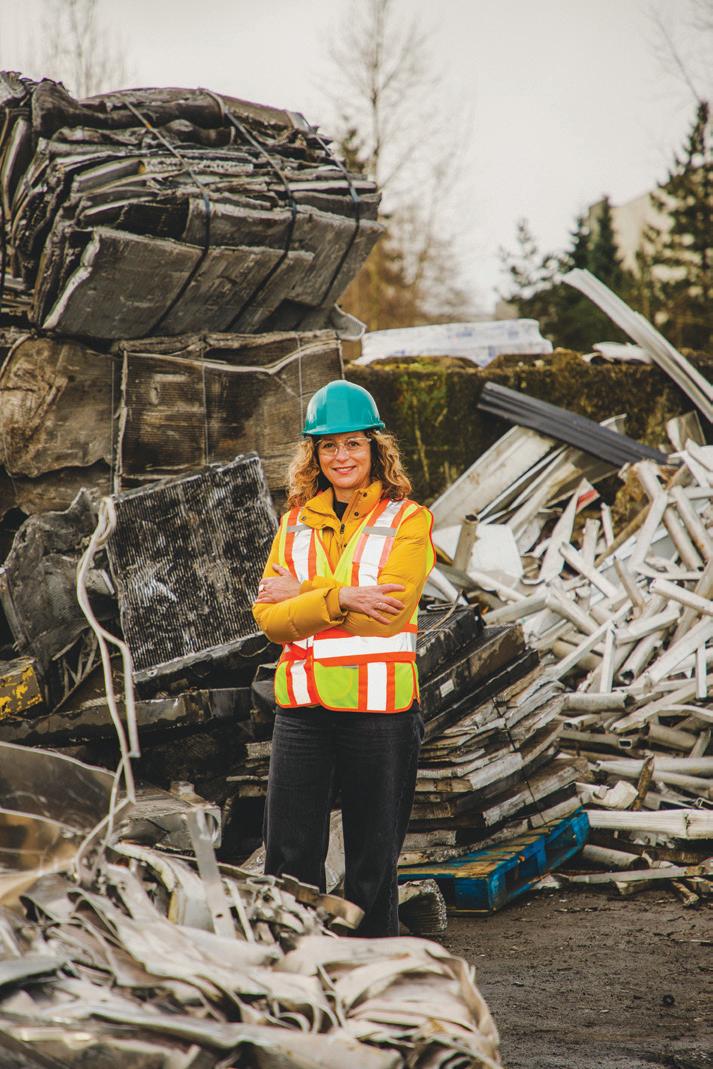
ABC RECYCLING BUILDS COMMUNITY ON A CENTURY-OLD FOUNDATION

Brandt Tractor Ltd.
Bulk Handling Systems (BHS) ...................................................
CARI
CP Group ...................................................
Eldan Recycling
ELV Select Inc.
FagusGreCon US..................................
Frontline Washing Systems
Harris American Company
Herbold USA
Industrial Magnetics, Inc.
Industrial Netting ...............................
Liebherr–Canada Ltd.
Machinex Industries Inc.
New West Gypsum Recycling Inc.
Okada America, Inc.
OVB Holdings LLC
Scrap Expo
Stadler Anlagenbau
VAN DYK Recycling Solutions
Send a photo of your four-legged coworker to sfox@baumpub.com for a chance to be featured in an upcoming issue.

Kloe United Metals Recycling Meet the unsung heroes of the industry — the dogs who keep watch, boost morale, and know the yard better than anyone.