Heavy Equipment Guide May/June 2026, Volume 41, Number 5
MEET
THE ALL-NEW
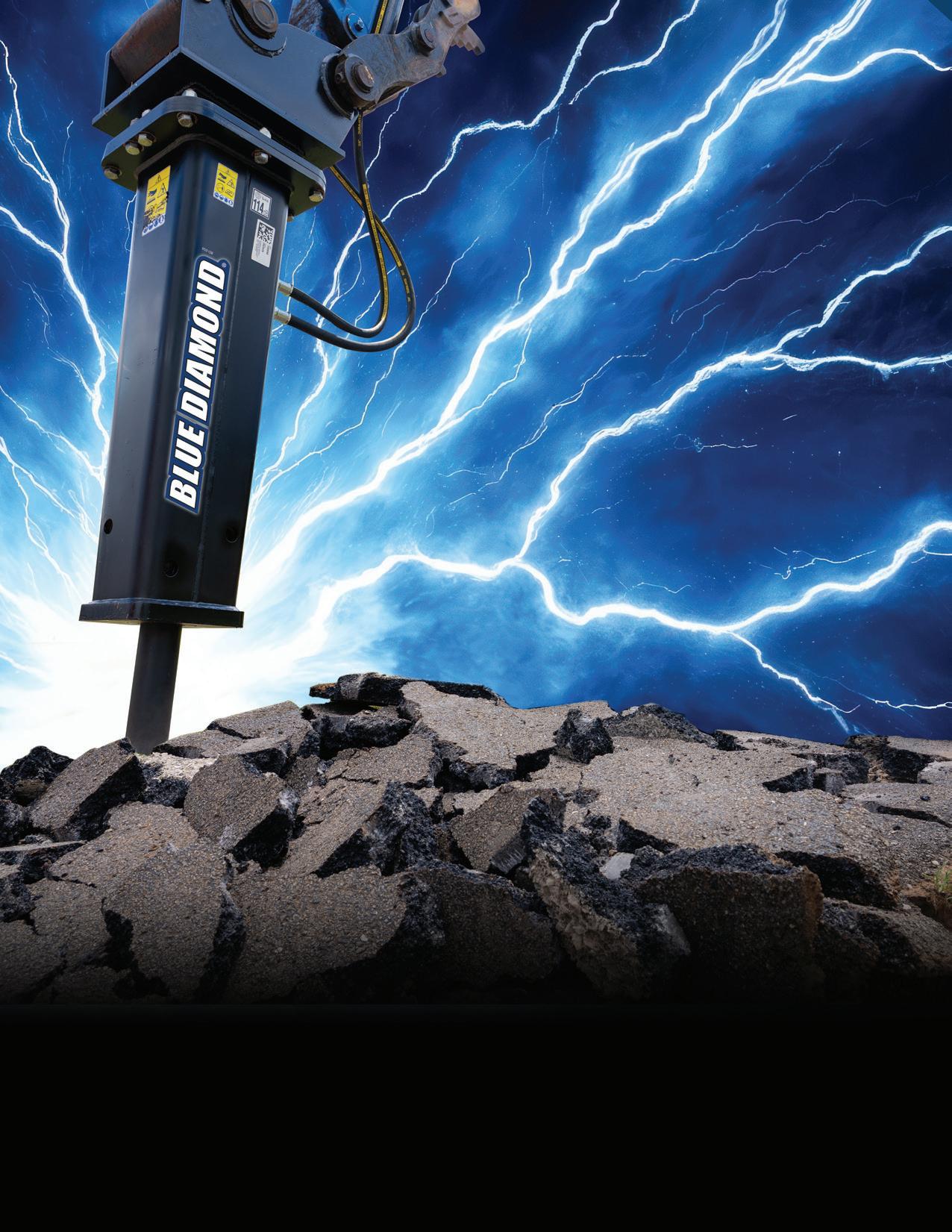
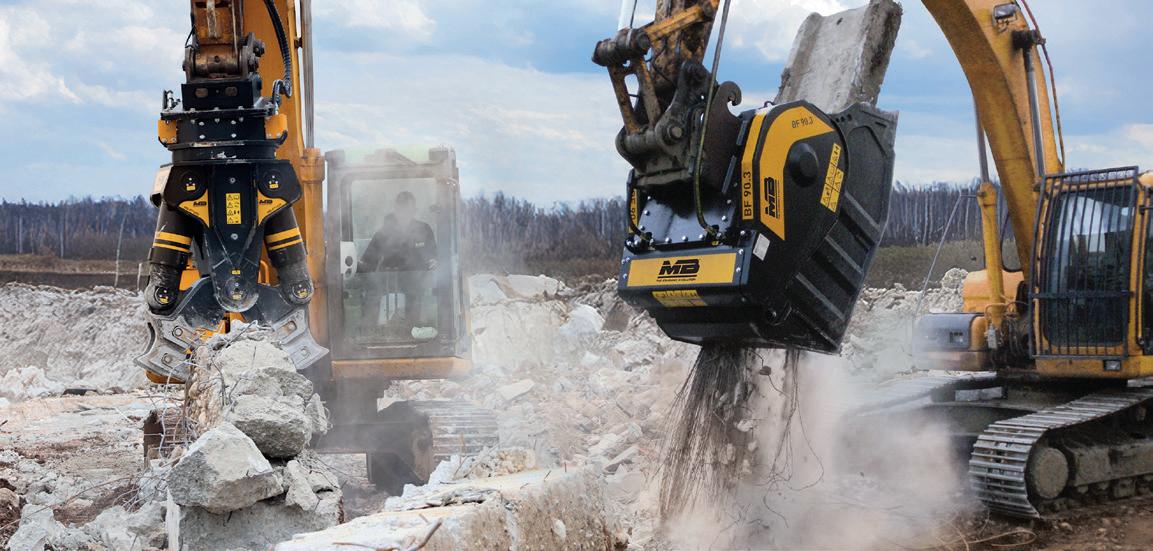
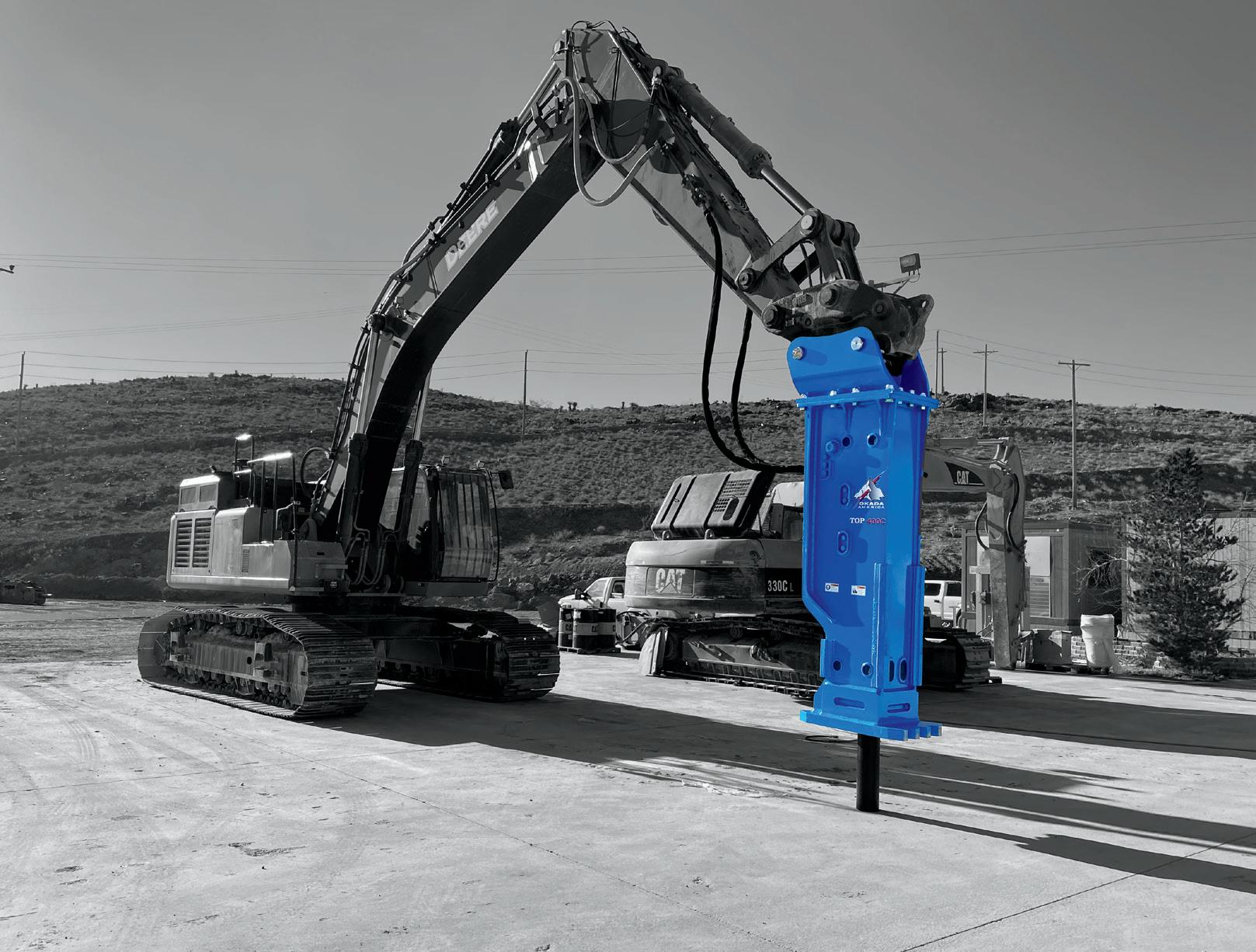
HYDRAULIC BREAKER FAMILY FROM BLUE DIAMOND ATTACHMENTS
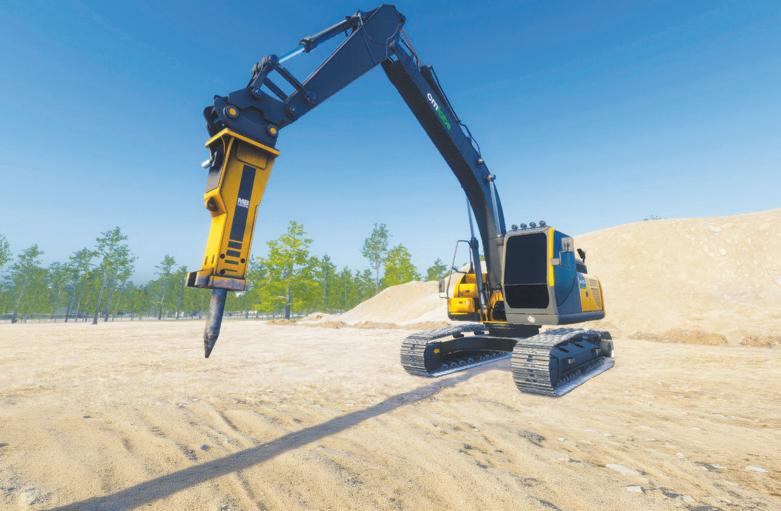
Designed for construction, demolition and quarry applications, including underwater jobs, our comprehensive breaker line includes 12 models. Blue Diamond Breakers are compatible with excavators, mini-skid, skid steer and compact track loaders.
Every one of our breakers features:
• Solid mono-block design; only 2 moving parts.
• Anti-blank firing to protect internal components.
• A unique poly case shell for vibration dampening.
• Interchangeable machine mounting brackets.
THERE’S SIMPLY NOTHING LIKE IT IN THE INDUSTRY.
Choose Blue Diamond –where all we do is elevate everything you do.
in Quebec
Turn to page 32.
CONNECT WITH US @HeavyEquipGuide WE’D LIKE TO HEAR FROM YOU
Do you have a job site story, innovation, or industry concern that our readers should know about? We’d like to hear from you.
EDITOR IN CHIEF Kaitlyn Till ktill@baumpub.com 604-291-9900 ext. 330
Subscription: To subscribe, renew your subscription, or change your address or other information, go to: http://mysubscription.ca/heg/
Heavy Equipment Guide serves the Canadian engineered construction industry including: roadbuilding and maintenance; highways, bridges, tunnels; grading and excavating; earthmoving; crushing; trucking and hauling; underground utilities; trenching; concrete paving; asphalt paving; demolition; aggregates production; fleet maintenance; and asset security and management. The magazine is distributed to key industry personnel involved in these sectors.
Subscription Price: In Canada, CDN $91.00; Outside Canada, US$149. Heavy Equipment Guide is published eight times a year in January/ February, March, April, May/June, July/August, September, October, and November/December.
Heavy Equipment Guide accepts no responsibility or liability for reported claims made by manufacturers and/or distributors for products or services; the views and opinions expressed are those of the authors and not necessarily those of Baum Publications Ltd.
Copyright 2026, Baum Publications Ltd. No portion of this publication may be reproduced without permission of the publishers.
We acknowledge the financial support of the Government of Canada.
Printed on paper made of FSC®-certified and other controlled material. ISSN 1715-7013.
PUBLICATIONS MAIL AGREEMENT NO. 40069270
Return undeliverable Canadian addresses to: Circulation Dept., PO Box 430 Stn Main, Alliston, ON L9R 1V6 email: heg@mysubscription.ca / 705-502-0024
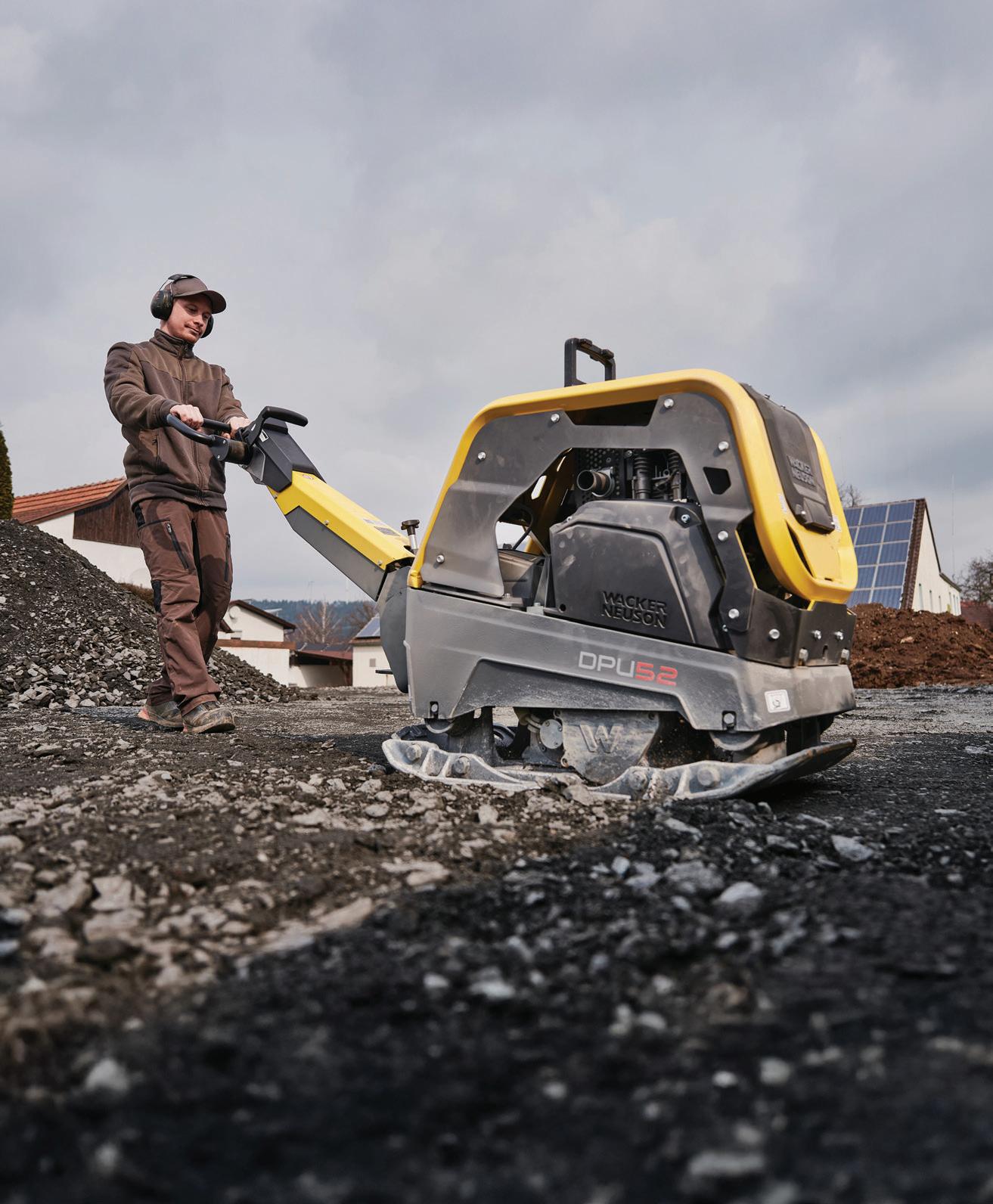
REVERSIBLE PLATES THAT MAKE THE GRADE
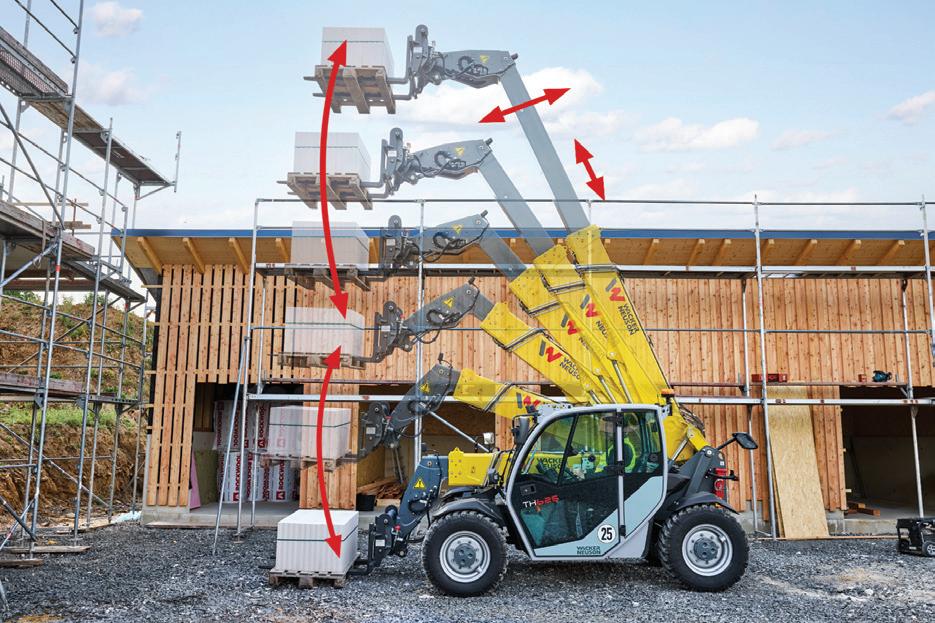
Compaction challenges don’t have to be an uphill battle. Wacker Neuson’s next generation medium-weight reversible plates deliver consistent performance and improved gradeability in the 700 - 1,000 lb. operating class. What’s more, these models have the smarts to prove it. The integrated Bluetooth technology provides real-time insights into machine data, helping you optimize operation, monitor usage, and stay one step ahead on maintenance. The result? E ciency and productivity from equipment that works as hard – and as intelligently – as you do.
For more information, contact your local Wacker Neuson dealer.
www.wackerneuson.com
FROM THE EDITOR
CANADA’S EQUIPMENT DEALERS ARE READY TO HELP YOU NAVIGATE UNCERTAIN TIMES AND CAPITALIZE ON OPPORTUNITY
Geopolitical influences, infrastructure investment, labour availability, and regional geography are major external forces that impact your business — and your dealer has a deep understanding of them all. Across Canada, the construction industry faces common challenges, and unique regional ones, along with opportunities. A strong dealer partner can serve as your ally in problem-solving and your bulwark against downtime. They’re ready to support you with equipment, technology, and attachment solutions when opportunity strikes.
For this issue, Senior Writer Meghan Barton connected with three independent equipment dealers from across the country, representing Alberta, Quebec, and the Atlantic provinces, to discuss the construction industry. Labour is a universal concern, as are seasonal swings. The infrastructure project pipeline, resource regulations, and resource export markets carry different weight from province-to-province. As you’ll see in these profiles, local dealers are deeply invested in your ability to navigate these forces.
Dealer representatives develop a deep understanding of the equipment they stand behind, and the best dealer representatives have a true passion for those machines. They understand the features and the capability inside and out, and they listen to what your operators like, and don’t like, about the equipment.
Komatsu previewed its first tight-tail-swing excavator with IMC at CONEXPO — an exciting announcement for contractors wanting advanced technology on a compact machine — so I caught up with an SMS Equipment dealer representative to discuss the reception to IMC 3.0 and the significance of this new excavator for Canadian contractors. His enthusiasm was clear, and it’s a great example of the consideration that dealer representatives give to operator feedback, job site challenges,
A strong dealer partner can serve as your ally in problemsolving and your bulwark against downtime.
and divergent contractor needs. A solution needs to contribute to your operation’s productivity and profitability, and it needs to keep your operators happy and safe.
These conversations are what Heavy Equipment Guide is about — delivering industry insight and information that can help you make better-informed business decisions. This issue marks our 40th anniversary, and we hope that these stories, and more in this issue, serve as a valuable representation of the work we do.
Kaitlyn Till Editor In Chief
ktill@baumpub.com heavyequipmentguide.ca
Safety is no option!
LRT product range
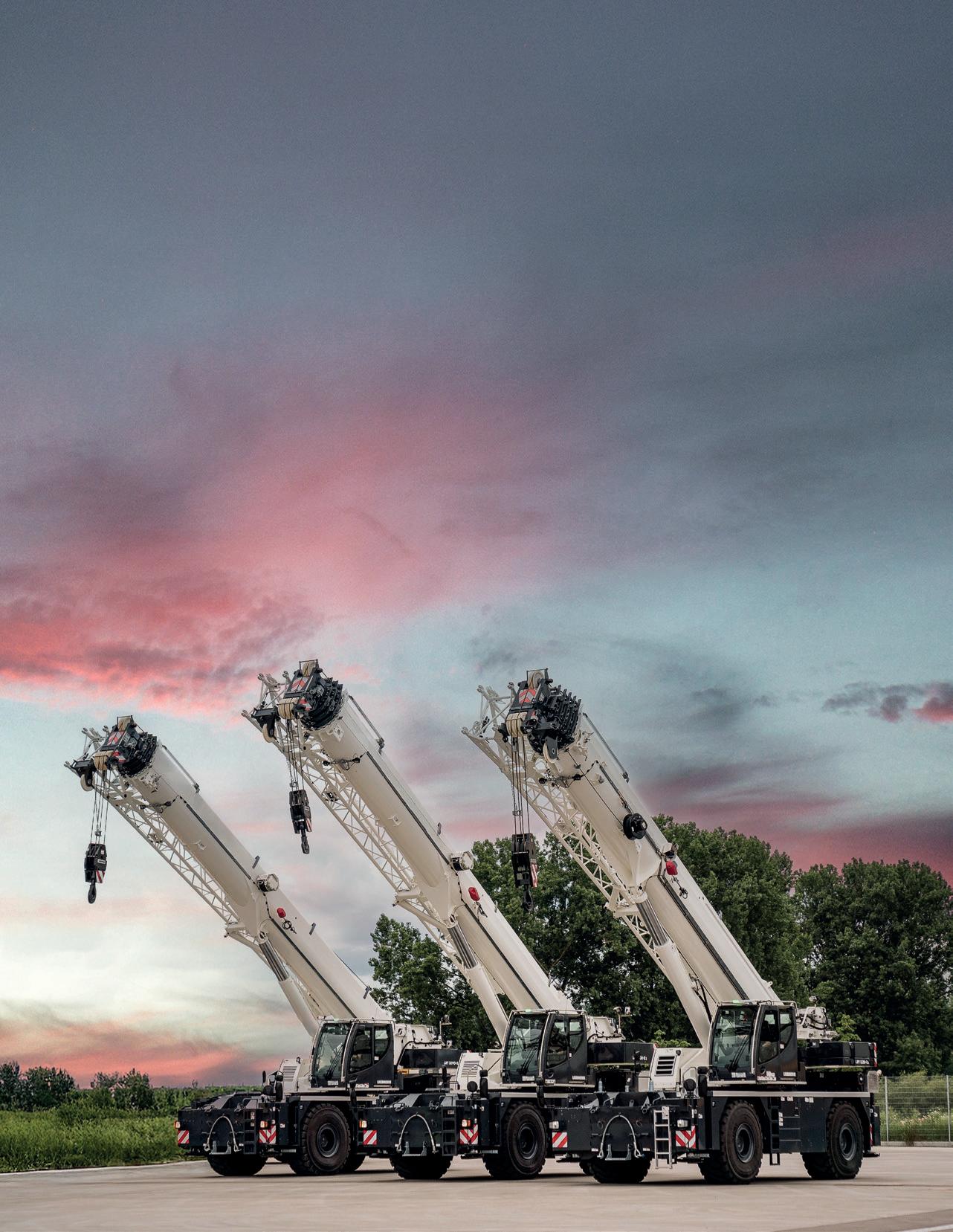
It’s a must have – in every crane. Wherever you need the next lift, Liebherr rough terrain cranes are the safest choice. Featuring the highest possible level of standard safety features available on a rough terrain crane, our LRT® cranes help you to grow your business while increasing jobsite safety. Three different models are available for your fleet! www.liebherr.com
Mobile and crawler cranes
NEWS ROOM
AMACO EQUIPMENT IS NOW SAKAI’S EXCLUSIVE ONTARIO DEALER
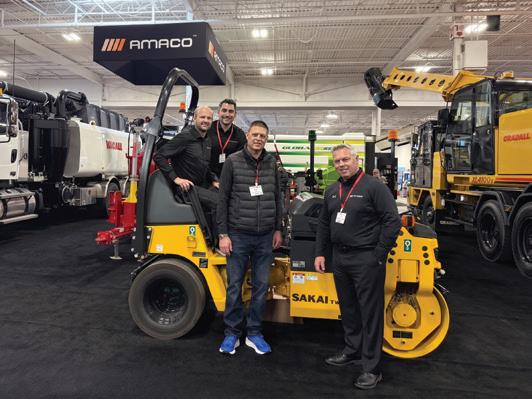
Amaco Equipment is SAKAI’s first dedicated distribution and support partner in the Ontario market, allowing SAKAI to better serve the Canadian construction, roadbuilding, and municipal sectors with its full line of vibratory soil compactors and asphalt rollers. Amaco, based in Mississauga, is an expert in heavy equipment solutions and is committed to providing specialized support for paving and municipal fleet managers.
“Ontario is a critical market for our North American growth strategy, and finding the right partner was essential,” said Brad Belvin, manager of sales and marketing for SAKAI America. “Amaco has a long-standing reputation for technical excellence and deep-rooted relationships within the Ontario construction community. By bringing them into the SAKAI family, we are ensuring that Canadian contractors have not only the best compaction technology available but also the local parts and service support they need to keep their job sites running efficiently.”
“We are excited to welcome SAKAI to our curated portfolio of manufacturers,” said Jamie Armstrong, president of Amaco. “Our customers look to us for reliable, high-performance equipment that simplifies their operations. SAKAI’s reputation for durability and compaction excellence aligns perfectly with our mission. This partnership allows us to fill a key need for our paving and roadbuilding clients across Ontario with a brand that is globally recognized for quality.”
AEM RELEASES CANADIAN EQUIPMENT MANUFACTURING INDUSTRY REPORT
The Association of Equipment Manufacturers (AEM) has released its triennial report, The Economic Impact of the Canadian Equipment Manufacturing Industry. The report finds that the industry experienced overall growth compared to 2022, with an 11 percent increase in sales and 3.3 percent growth in employment.
Find the full report at www.aem.org/advocacy/aem-canadian-economic-impact-report.
FRONTLINE MACHINERY OPENS
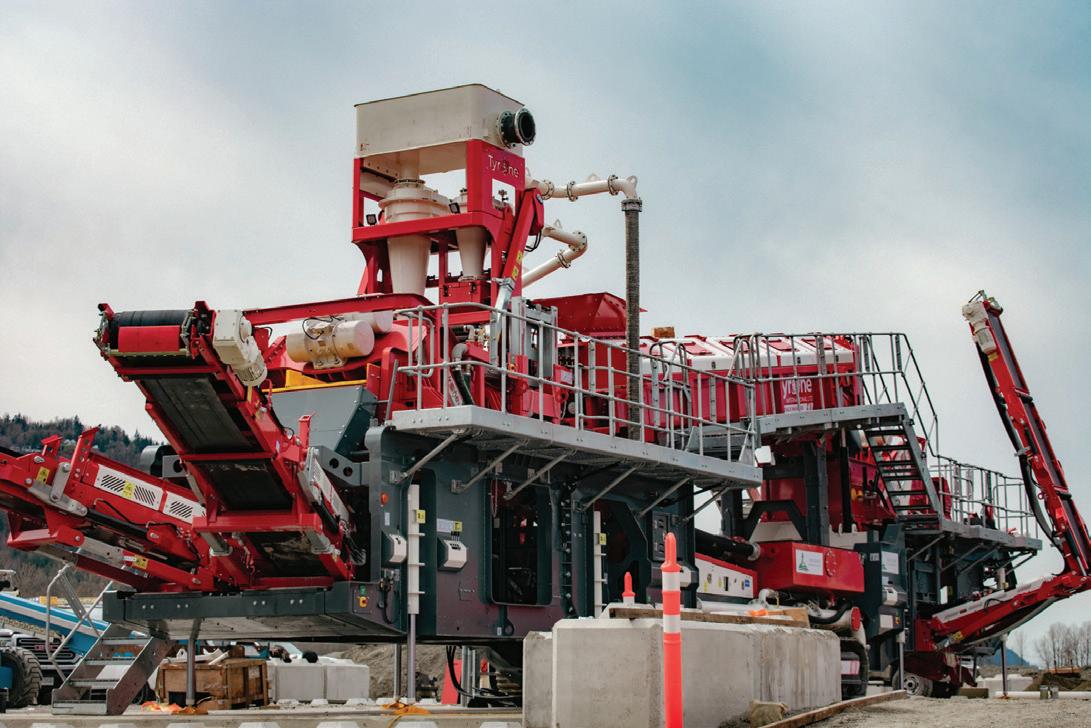
NEW DIVISION TO PROVIDE SPECIALIZED SOIL AND SLURRY WASHING SUPPORT IN CANADA
Rising hauling costs, shrinking landfill capacity, and tightening compliance requirements are forcing construction, aggregates, and waste operators to rethink how they handle excess soil and slurry. What was once a straightforward disposal problem now squeezes margins, disrupts schedules, and complicates long-term site economics.
To help Canadian operators take control of rising excess-soil and slurry costs, Frontline Machinery has launched a specialized division — Frontline Washing Systems.
Soil and slurry washing is well established in European markets, where operators adopted advanced recycling and material recovery technologies long before the category gained any traction in Canada.
The gap was never about whether the technology worked. Canadian operators simply lacked access to the specialized expertise, responsive service, and long-term support needed to make washing a viable option on the ground. Frontline Washing Systems was created to close that gap.
“We realized we needed to bring this technology into Canada and make it accessible, not just to one or two companies, but to the broader market,” said Daryl Todd, president of Frontline Washing Systems. “If it is not accessible, it is not going to help solve the problem we have on our hands in Canada.”
The division draws on Frontline Machinery’s national support infrastructure, keeping the focus on outcomes operators care about most: less material going to disposal, more usable product coming back out, and better long-term numbers at the site level.
Central to that is flexibility. Frontline Washing Systems offers modular, scalable washing solutions that lower the barrier to entry for operators looking to bring washing into their business. Rather than forcing customers into large, fixed installations from day one, Frontline Washing Systems provides a more flexible starting point with systems that can be matched to current volumes, site requirements, and recovery goals, then
expanded over time as needs grow. Unlike traditional washing set-ups that demand significant upfront commitment, it’s an easier entry point for operations that have been on the fence about whether washing stacks up financially.
“Our focus is on giving Canadian operators a better way forward in a market where hauling, disposal, and material handling costs are only getting harder to manage. This is not about adding another product line. It is about building a specialized capability around a category that now demands more attention, more expertise, and more support,” said Martin Anderton, managing director of Frontline Washing Systems.
With three Canadian locations and employees across British Columbia, Alberta, Saskatchewan, Manitoba, Ontario, and Quebec, Frontline Washing Systems is positioned to support customers wherever they operate. That national reach means local teams are available through every stage of the process.
“This market needs more than equipment availability,” Anderton added. “It needs a team that understands washing applications, understands the cost pressures customers are under, and can support these systems in the field over the long haul. That is exactly why Frontline Washing Systems exists.”
SPOTLIGHT ON CANADA’S EQUIPMENT DEALERS
Independent equipment dealers from across the country provide insight into regional challenges and opportunities.
Turn to page 20.
KUBOTA BREAKS GROUND ON COMPACT CONSTRUCTION EQUIPMENT TEST CENTRE
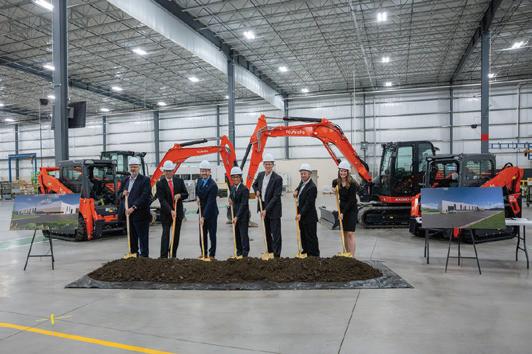
Kubota North America’s new construction equipment test centre in Salina, Kansas, reinforces its long-term commitment to designing, engineering, and validating compact construction equipment in North America. The
accelerating development cycles and improving local field-validated performance.
Kubota’s Construction Equipment Research and Development North America (CERDNA) operation was established in 2021 in Salina to bring engineering, testing, and validation activities closer to customers, ensuring equipment is engineered specifically to meet North American job site demands.
DOUGLAS LAKE EQUIPMENT AND AVENUE MACHINERY ARE NOW PINNACLE EQUIPMENT
The rebrand follows the integration of Douglas Lake Equipment and Avenue Machinery and brings their combined operations under one banner across B.C. As Pinnacle Equipment, the company says it will continue to build on that foundation with coordinated support across its locations, including shared inventory, service capabilities, and technical expertise. The new name coincides with the opening of a brand new dealership in Abbotsford.
“Even though this is a name change, our commitment to our customers and our direction remain the same,” said Michael Correale president. “Customers will see a new sign over the
The new Abbotsford North Parallel Road location features a showroom spanning approximately 15,000 square feet, offering customers a modern, purpose-built space to explore the equipment. The dealership carries a full range of equipment alongside on-site sales, service, and parts support.
“Customers trust the expertise and experience of our sales, parts, and service staff,” added Correale. “None of that changes with the new name. What changes is that we’re easier to recognize — one company, one network, the same local people.”
The Pinnacle Equipment brand will roll out across all locations this spring.
NORS EXPANDS METSO REPRESENTATION ACROSS WESTERN CANADA
Nors has expanded its exclusive representation of Metso across Western Canada, extending its coverage from British Columbia and the Yukon into Alberta, Saskatchewan, and the Northwest Territories. The expansion is aimed at improving parts availability, aftermarket support, and service for Metso customers operating across multiple provinces and at remote sites.
TOROMONT TO OPEN NEW REMANUFACTURING FACILITY IN QUEBEC
Toromont Industries Ltd. will construct a new 90,000-square-foot manufacturing centre in Saint-Augustin-de-Desmaures. The $55 million investment allows Toromont to meet growing demand from the construction industry and to address the life cycle of equipment needs. It is scheduled to open in the summer of 2027.
The centre will provide comprehensive remanufacturing services for engines, powertrains, and hydraulic systems intended for the industrial construction, mining, and marine transportation sectors. It will be equipped with all-new machinery, including: a 4,500-hp dynamometer; a 400-hp Transmission Test Cell; 25-tonne capacity overhead cranes; expanded capabilities for mining trucks, drill rigs, and excavators; and cleaning equipment.
“Our investment in this new facility is part of a broader modernization of our remanufacturing operations. By integrating advanced technologies and more efficient processes, we’re able to deliver high-quality components that support our customers’ performance goals while contributing to a more sustainable future,” said Michael S. McMillan, president and chief executive officer, Toromont Industries Ltd.
AEM: FEDERAL SPRING ECONOMIC UPDATE STRENGTHENS CANADIAN WORKFORCE, INFRASTRUCTURE
In response to the measures announced in the federal Spring Economic Statement, AEM Senior Vice President of Government and Industry Relations Kip Eideberg released the following statement:
The Association of Equipment Manufacturers welcomes the federal government’s continued focus on strengthening Canada’s economy through investments in trade-enabling infrastructure, workforce development, and measures to make the country more attractive to foreign investment. At a time of heightened global uncertainty, these are important signals that the country is prepared to compete, grow, and build with greater urgency.
AEM supports the creation of the Canada Strong Fund as a meaningful step toward advancing the major projects that will underpin Canada’s long-term growth. If implemented with clarity and speed, the fund can help unlock the nation-building infrastructure, industrial capacity, and private-sector investment needed to strengthen the economy and improve its global competitiveness.
The government’s commitment of $6 billion to expand Canada’s skilled trades workforce by more than 100,000 people by 2030–31 is a necessary step if the country is to meet its infrastructure ambitions. Equipment manufacturers need stronger access to the talent needed to remain globally competitive over the long term.
At the same time, this update must be the starting point, not the finish line. Canada must accelerate approvals for major projects so
Canadians can realize the economic benefits of these investments sooner. There needs to be a clearer long-term strategy to unlock private investment, expand export capacity, and ensure domestic manufacturers can compete and win. Canada cannot afford to lose momentum now.
CONEXPO-CON/AGG
NAMES VOLVO
CE’S SCOTT YOUNG AS 2029 CHAIR
Following a successful 2026 show, CONEXPO-CON/AGG has announced a new Chair for the 2029 convention: Scott Young, head of sales region North America for Volvo Construction Equipment. Young has been an active participant in the Association of Equipment Manufacturers leadership for many years as part of the association’s boards and committees.
“The 2026 show set new benchmarks for innovation, engagement, and industry collaboration,” said CONEXPO-CON/AGG Show Director Dana Wuesthoff. “We are thrilled to welcome Scott Young as Chair for 2029. His vision and leadership will help us build on that momentum and deliver an even more impactful event for the construction community.”
“I’m honoured to work with AEM in this role as our industry undergoes a historic transformation,” said Young. “CONEXPO-CON/AGG is one of the world’s largest platforms to showcase innovations that help our customers navigate change, overcome challenges, and improve performance. We’ll build on this year’s success and look ahead to 2029.”
VOLVO CE ELECTRIC ADTS GO INTO PRODUCTION
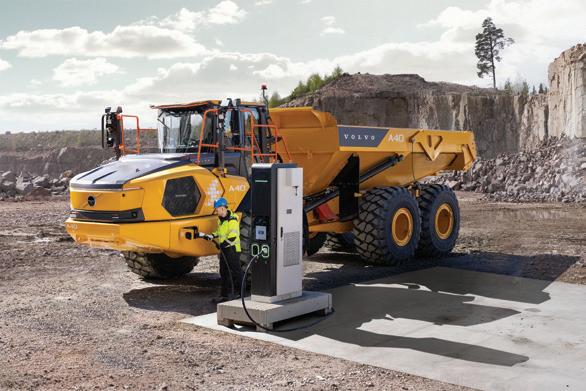
Volvo CE has begun production of its A30 Electric and A40 Electric, becoming the first manufacturer in the world to bring electric articulated haulers of this size into serial production.
First revealed at bauma 2025, Volvo says that strong customer interest in the A30 Electric and A40 Electric highlights a growing readiness to adopt zero-emission solutions in the quarrying and mining segments.
The electric articulated haulers are now being produced at Volvo CE’s Braås site in Sweden, the birthplace of the world’s first articulated hauler, Gravel Charlie, unveiled in 1966. More than half a century later, the start of electric articulated hauler production at the same facility underscores both the continuity of Volvo CE’s engineering and the pace of its technological evolution.
Melker Jernberg, president of Volvo CE, said: “Starting serial production of electric articulated haulers of this size is a proud moment for Volvo CE. It shows that our ambition to lead the transformation of our industry is backed by real execution. This milestone proves that electric solutions are ready to meet the demands of heavy, high-productivity applications, and that meaningful change is underway.”
The first machines rolling off the production line will be delivered to customers in the U.K. and Norway, with additional deliveries to customers across Europe planned for the second half of 2026.
www.heavyequipmentguide.ca
SPOTLIGHT
INTRODUCTIONS & UPDATES
DEVELON
ARTICULATED DUMP TRUCK
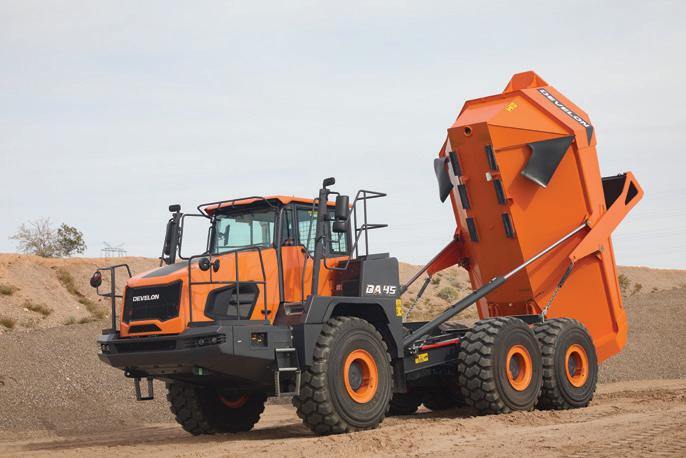
The DA45-7 articulated dump truck (ADT) features a redesigned cab with a more intuitive, automotive-inspired layout. DEVELON has reorganized the controls and included a 12-inch touchscreen display that provides real-time data, including active payload measuring, gradient metering, operational gauges, and machine temperature readings. A new Auto-Hold brake function supports hill starts and loading by maintaining brake engagement during stops, reducing the need for two-foot operation, and automatically releasing once sufficient driveline torque is applied. The DA45-7 ADT also includes an updated parking brake switch with a lever-style control. Core design elements remain unchanged, including a front-mounted turning ring for balanced weight distribution, a rear tandem bogie for six-wheel ground contact, and hydro-gas, self-levelling front suspension.
HORIZONTAL DIRECTIONAL DRILL
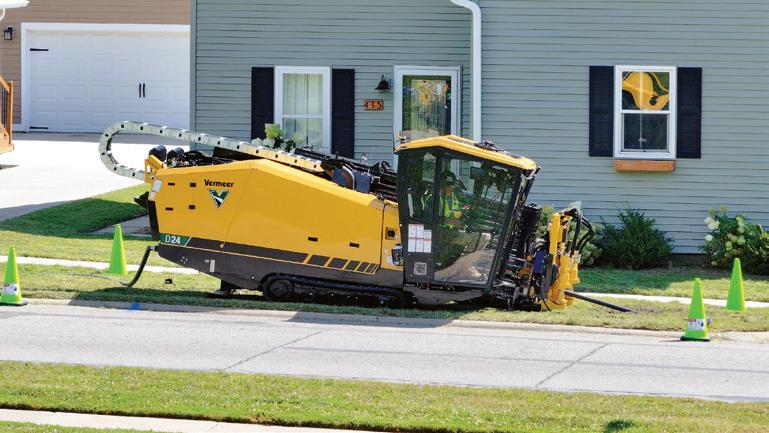
A factory-installed cab option is now available for Vermeer’s D24 horizontal directional drill (HDD), introducing an enclosed operator environment to the 24,000-pound class. The climate-controlled cab is designed to support year-round operation, with reduced sound levels, a suspension seat, vibration-isolating mounts, and a top-mounted condenser designed to limit debris exposure. Window tinting and an additional wiper are intended to maintain visibility in varying conditions. The cab is designed to fit the D24’s compact footprint for urban work while maintaining interior space and is available with a wireless radio option for operator communication. The D24 HDD retains its existing performance specifications, including a 100-hp engine, 24,700 pounds of peak thrust and pullback, and 3,080 foot-pounds of torque.
Vermeer
CASE Construction Equipment MINI EXCAVATORS
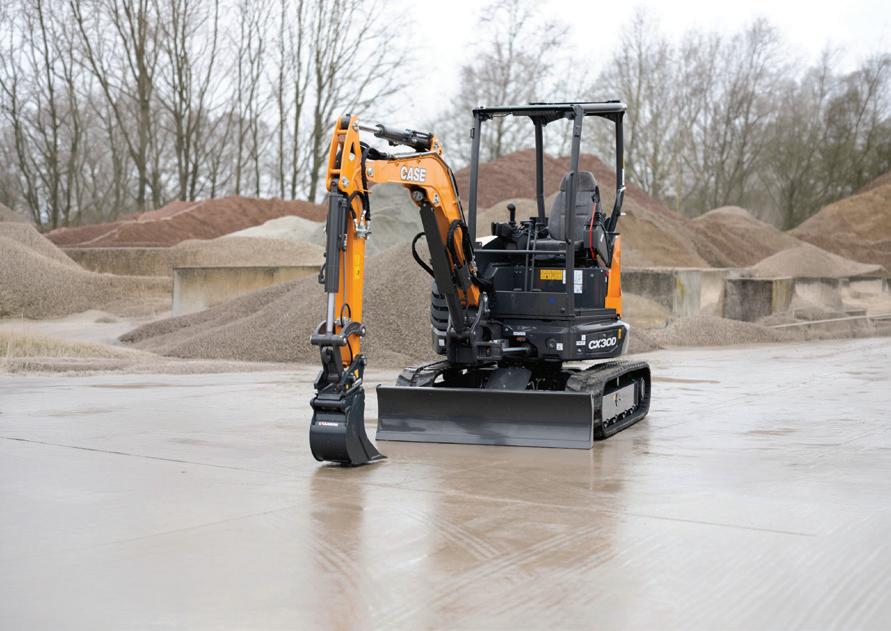
CASE Construction Equipment has expanded its D Series mini excavator lineup with three new 3-ton models: the CX30D, CX34D, and CX38D. These machines have a zero-tail-swing design for working in confined areas and around structures. The cab includes ergonomic controls, a suspension seat, and all-around visibility. A balanced undercarriage supports stability, and the CX38D is available with an optional six-way dozer blade for grading and backfilling. The excavators are compatible with a range of attachments, supported by one- and two-way auxiliary hydraulics and optional additional circuits for higher-demand tools. Select models include hydraulic auxiliary flow control, electronic throttle control with auto idle, extended arm configurations, and enhanced lighting packages.
Liebherr SELF-ERECTING CRANES
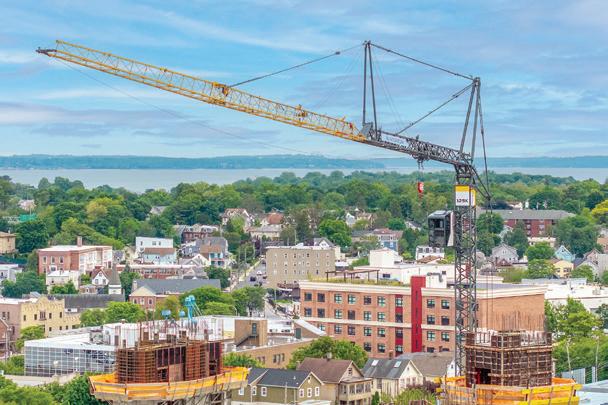
Liebherr is bringing a new generation of K-series self-erecting cranes to the North American market, including the 43 K, 61 K, and 91 K models. Designed for urban construction, the cranes combine compact transport dimensions with high lifting capacities and adaptable configurations, including variable jib lengths and telescoping tower configurations and multiple hook height options. The machines arrive as complete units for rapid set-up on site. Five integrated assistance systems, including Sway Control Plus, Positioning Pilot, Guided Hook, and Vertical Line Finder, are designed to support lifting precision, safety, and operator control. These assistance systems operate via the Liebherr Control 5 platform and Tower Crane Operating System 2.
Wacker Neuson
SURFACE HEATER
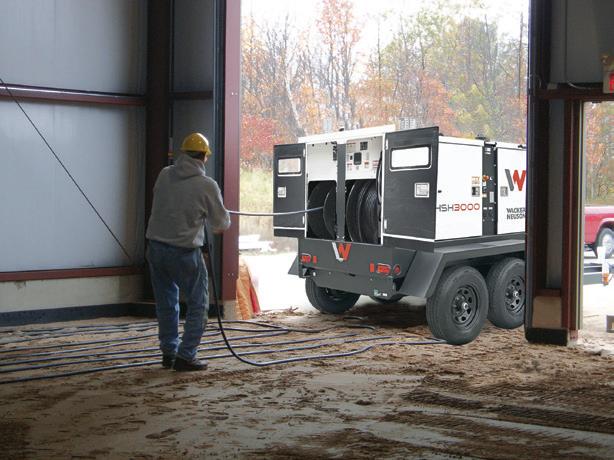
The HSH3000 hydronic surface heater is designed for thawing frozen ground, curing concrete, and maintaining soil and form temperatures on the job site. The unit features a simplified two-step start-up process and a touchscreen display for controlling functions such as thaw/cure modes, filtration, and hose management. It includes 3,000 linear feet of hose on dual reels, each supported by an independent pump for consistent heat delivery and the ability to operate separate heating zones. It is powered by a Rehlko KDW702 diesel engine with an integrated Macc Alte generator and Beckett burner system. A compact trailer design with a foldable tongue supports transport, while extended service intervals and on-board diagnostics simplify maintenance.
40 YEARS OF IRON, INNOVATION & INDUSTRY CHANGE
HEAVY EQUIPMENT GUIDE MARKS A MILESTONE
BY KEN SINGER, PUBLISHER & KAITLYN TILL, EDITOR IN CHIEF
Heavy Equipment Guide has documented the machines, technologies, and people shaping the construction equipment industry in Canada for four decades.
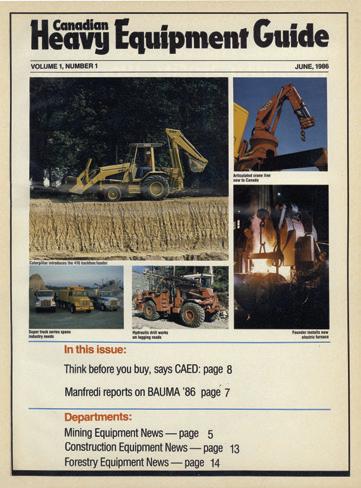
In our first issue, June 1986, under the headline “We’re off and running hard,” Heavy Equipment Guide founder Engelbert J. Baum wrote about the vital role of information in the construction equipment industry. “The better informed you are, the better decisions you eventually make, whether that involves the purchasing of equipment, a maintenance technique, or a new type of operation.” In every issue since, Heavy Equipment Guide has strived to be the trusted Canadian source for connecting contractors, equipment owners, dealers, and manufacturers.
INNOVATION THROUGH THE DECADES
Heavy Equipment Guide’s founding coincided with a significant industry transition. The 1980s marked the shift from purely mechanical machines to hydraulically advanced equipment with electronic monitoring systems. Excavators became faster, smoother, and more precise, while diagnostic systems began appearing in heavy machinery for the first time.
Compact excavators, skid steers, and compact track loaders exploded in popularity as urban construction expanded and contractors demanded more versatile machines for tight job sites. Hydraulic attachments transformed compact equipment into multi-purpose tools, and smaller contractors gained
access to highly productive equipment without investing in large fleets.
The introduction of GPS-guided dozers, graders, and excavators in the 2000s changed earthmoving forever. Operators could now grade to exact specifications using satellite guidance and digital site plans. The benefits have been transformative: reduced rework, lower fuel consumption, and dramatically improved accuracy are a boon to productivity and profitability.
Equipment also became connected through telematics platforms, allowing owners to remotely monitor machine location, fuel use, idle time, maintenance intervals, and operator performance. Fleet management shifted from reactive response to data-driven, proactive decision-making.
Through these digital innovations,
OEMs have evolved into technology providers in addition to manufacturing equipment.
In the 2000s, Tier 4 emissions regulations forced OEMs to redesign engines and exhaust systems to reduce particulate matter and nitrogen oxide emissions, injecting major R&D investment across the industry. Cleaner machines, improved fuel efficiency, and simplified treatment systems eventually evolved out of the Tier 4 Final regulation, but the transitional period introduced new maintenance requirements for equipment, and contractors had to adapt.
Electrification also developed over recent decades, starting with mining, lift, and compact earthmoving equipment. While electric machines remain niche and suited to specific applications, the variety of electric equipment solutions continues to grow.
Forty years of equipment and technology innovation has culminated in job sites that remain familiar but are now underpinned by an invisible ecosystem of data, technology, and people driving unprecedented efficiency.
OUR PURPOSE IS TO PROVIDE INSIGHT
Like the construction industry, publishing has undergone monumental
transformation in recent decades. Heavy Equipment Guide has evolved from a tabloid print magazine to a letter-size magazine format with growing digital and multimedia platforms. In 2025, we published our first Excavators issue — an industry-first special edition print and digital magazine dedicated to one equipment category.
Over 40 years, our purpose hasn’t changed. We report from industry trade shows and job sites and connect with OEMs, dealers, and equipment owners. Visits to OEMs at their proving grounds, where we get in the dirt to learn from their experts and try the equipment for ourselves, are further opportunities to provide practical insights for equipment buyers and contractors.
When covering the latest news, equipment, and technology announcements, our role is to situate innovation in the industry and present new solutions in a range of contexts. Heavy Equipment Guide’s readership encompasses civil contractors, small-to-mid-size construction firms, owner-operators, and other industry stakeholders. Factoring in Canada’s geographical diversity — including climate, economic, and industry variability — adds another layer to the insight we deliver.
While the latest technologies are incredible, iron is still the foundation of
construction work, so we aim to cover equipment and technology with an eye on the essential markers of success for any construction business: productivity, profitability, quality, and safety.
Whether that success is achieved with the latest 3D machine control and data-driven insight, a workhorse machine that’s reliable in the dirt every day, or something in between, our focus on solutions remains grounded in providing information that can help you solve problems today and plan for the future.
THANK YOU FOR YOUR SUPPORT
We are grateful for the many relationships built over the 40 years with our readers and partners.
To our readers, thank you for continuing to subscribe to our magazine. To our many advertisers over the years, thank you for your continued trust and support.
To the entire Heavy Equipment Guide team, past and present, thank you for your hard work and collaboration.
For 40 years, Heavy Equipment Guide has chronicled the machines building our world and the people driving the industry forward. The next chapter promises to be just as transformative. HEG
Heavy Equipment Guide, June 2006
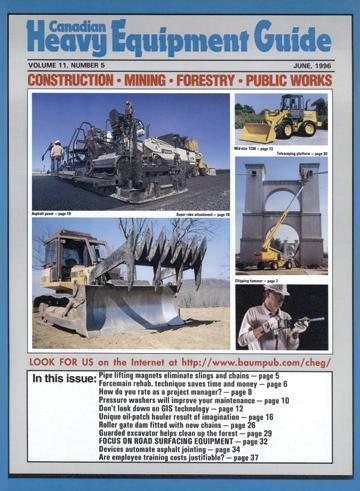
Heavy Equipment Guide, May 2016
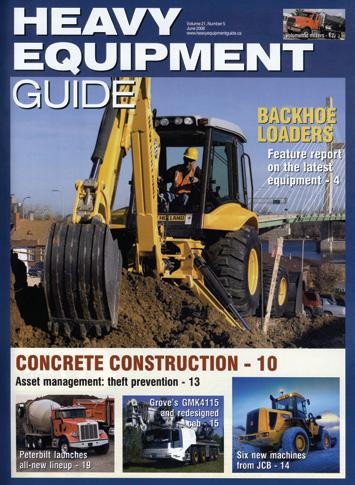
Heavy Equipment Guide, November/ December 2024
JT EQUIPMENT
KEY CONSTRUCTION BRANDS
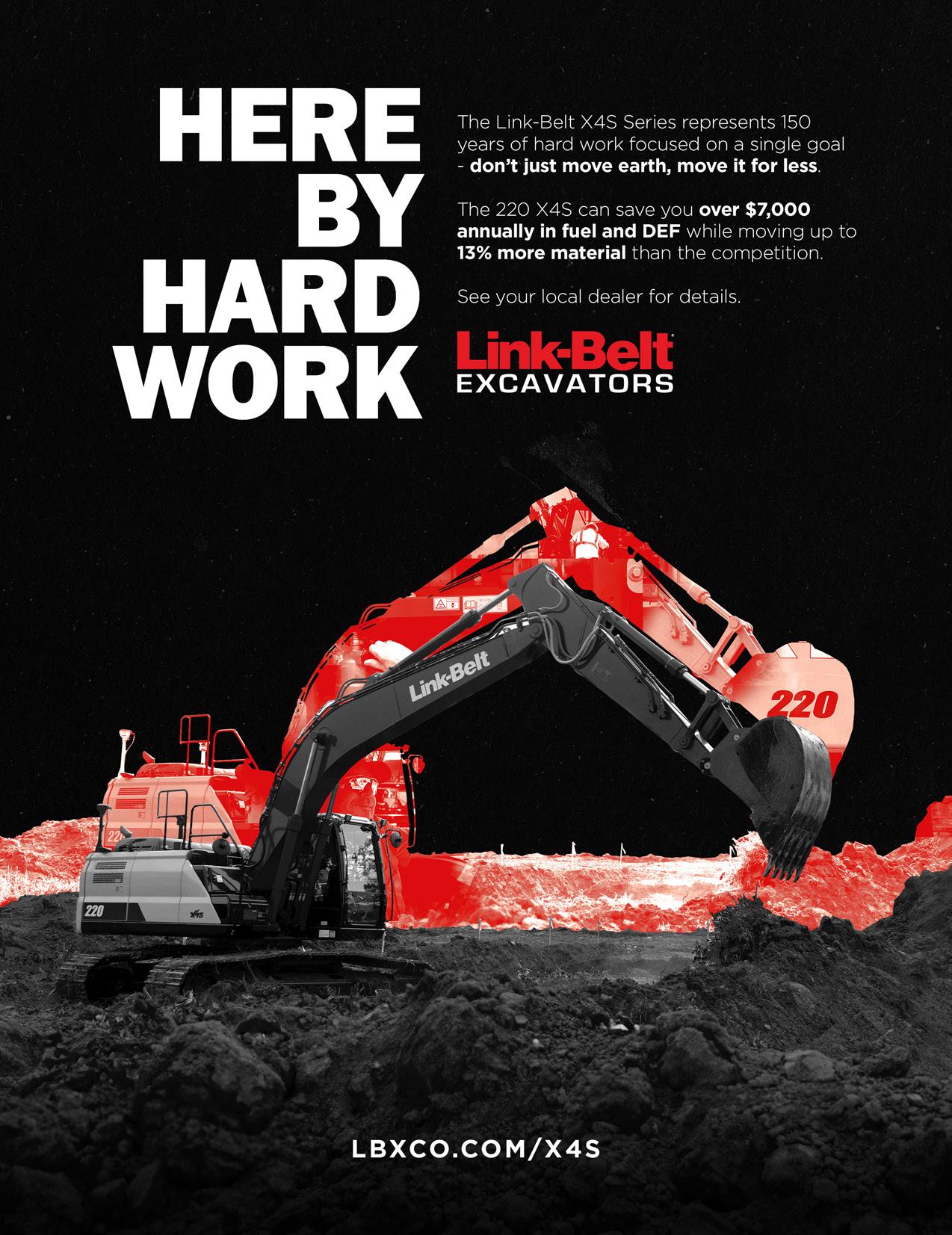
Link-Belt Excavators, Wacker Neuson, Bandit, TOBROCOGIANT, HUDDIG, PowerCurbers, Kinshofer, Metal Pless, OilQuick, Engcon, AMI Attachments, FAE, Laurini, Antraquip
REGION SERVED
Southern Alberta
NUMBER OF LOCATIONS
1
HEAD OFFICE
9479 Endeavor Dr SE Calgary, AB
T3S 0A1
WEBSITE
jtequipcorp.com
In southern Alberta, the equipment market remains one of the most active and competitive in Canada. But as demand continues across multiple sectors, the dynamics of the market are becoming more complex as patterns shift and contractors face tighter cost and labour constraints.
Matt Cox, vice president of JT Equipment in Calgary and a 20-year industry veteran, says demand continues to be driven by oil and gas activity, infrastructure investment, and population growth. Several large-scale projects across the city have tied up major contractors, creating opportunities for mid-sized firms to take on work and expand their presence in the market. At the same time, residential construction, a key driver in recent years, is beginning to ease.
“There aren’t as many new builds happening . . . the earthmovers aren’t as busy in that sector,” says Cox.
Even so, the expectation is that this slowdown will be temporary, with many contractors anticipating renewed growth.
DIVERSIFICATION AND STEADY SEGMENTS
While construction continues to anchor its business, JT Equipment has expanded into landscaping, snow removal, and tree care, partnering with two new OEMs to broaden its reach across a more diverse customer base.
The Wacker Neuson equipment is suited to clients in landscaping and snow removal, while the Bandit line offers solutions for
I feel, truthfully, that this is one of the last industries where a relationship actually matters.
Matt Cox Vice President, JT Equipment
arborists and tree care. These segments can provide more consistent activity across different types of work, particularly when large construction projects slow.
Cox notes that demand in these segments is driven by different factors than traditional construction work, including seasonal needs, property maintenance, and discretionary services that are less tied to large project cycles.
WEATHER, TIMING, AND BUYING CYCLES
Weather continues to shape operations and the timing of equipment decisions. Extended periods of wet or unpredictable conditions can delay project starts, pushing demand into shorter, more concentrated windows.
“This year is a prime example,” says Cox, referring to Alberta’s frequent snow/ melt cycles. “They can work in the mud,
but it’s not great.”
Those conditions can slow productivity and delay the start of new work, shifting both project activity and purchasing decisions into a tighter timeframe. As a result, purchasing activity tends to accelerate once conditions improve, creating a compressed spring buying cycle.
“Basically, March until June is a very busy buying cycle,” he says.
SUPPORT, TECHNOLOGY, AND LABOUR PRESSURES
In southern Alberta, customer priorities remain firmly centred on support, uptime, and reliability.
“I would say dealer support is a very high factor,” says Cox. “I don’t think anything outweighs it.”
For contractors, that support extends beyond the initial sale. The ability to keep equipment running, respond quickly to issues, and minimize downtime is often the deciding factor when choosing between suppliers.
Machine control systems are no longer viewed as optional add-ons, but as essential tools for meeting specifications and maintaining efficiency on site, particularly on larger projects.
“I don’t know if you can run a dozer or a grader on a big project without
GPS now,” Cox says.
Labour constraints are reinforcing that shift. With fewer experienced operators available, contractors are increasingly relying on technology to support productivity and reduce the learning curve for newer workers.
THE COST GAP
According to Cox, one of the most significant challenges facing contractors in this region is the widening gap between equipment costs and what they can charge for a project.
“I don’t necessarily feel that the price of equipment today is reflected in what contractors are able to charge,” Cox says. “You have to pay more to do the same job and bill it at the same rate.”
This pressure is influencing purchasing strategies, with some contractors turning to used equipment or rentals, while others focus on maximizing output from existing fleets.
RELATIONSHIPS DELIVER SOLUTIONS
As the industry continues to navigate labour constraints, the dealer plays a greater role in helping contractors find the right combination of machines, attachments, and technology to get the job done.
“They’re going to try to have more efficient machines and different attachments . . . to complete jobs with fewer people,” says Cox, noting that how that shift plays out is still evolving.
That uncertainty is shaping how both contractors and dealers approach the market in Alberta, with greater emphasis on flexibility and practical problem-solving.
For JT Equipment, that includes its in-house fabrication capabilities, which allow the company to respond quickly to specific customer needs and develop customized solutions. “What we’re trying to do over there . . . is be flexible and build different things and think outside the box,” Cox says.
In a market defined by changing demands and tighter operating conditions, service, adaptability, and hands-on support are expected to play an increasingly important role — and relationships remain a defining factor.
“I feel, truthfully, that this is one of the last industries where a relationship actually matters,” Cox says. For JT Equipment, customer loyalty is built on trust, service, and long-term support. “I don’t think you’re necessarily loyal only to the brand,” he adds. “I think you’re loyal because of those other factors.”
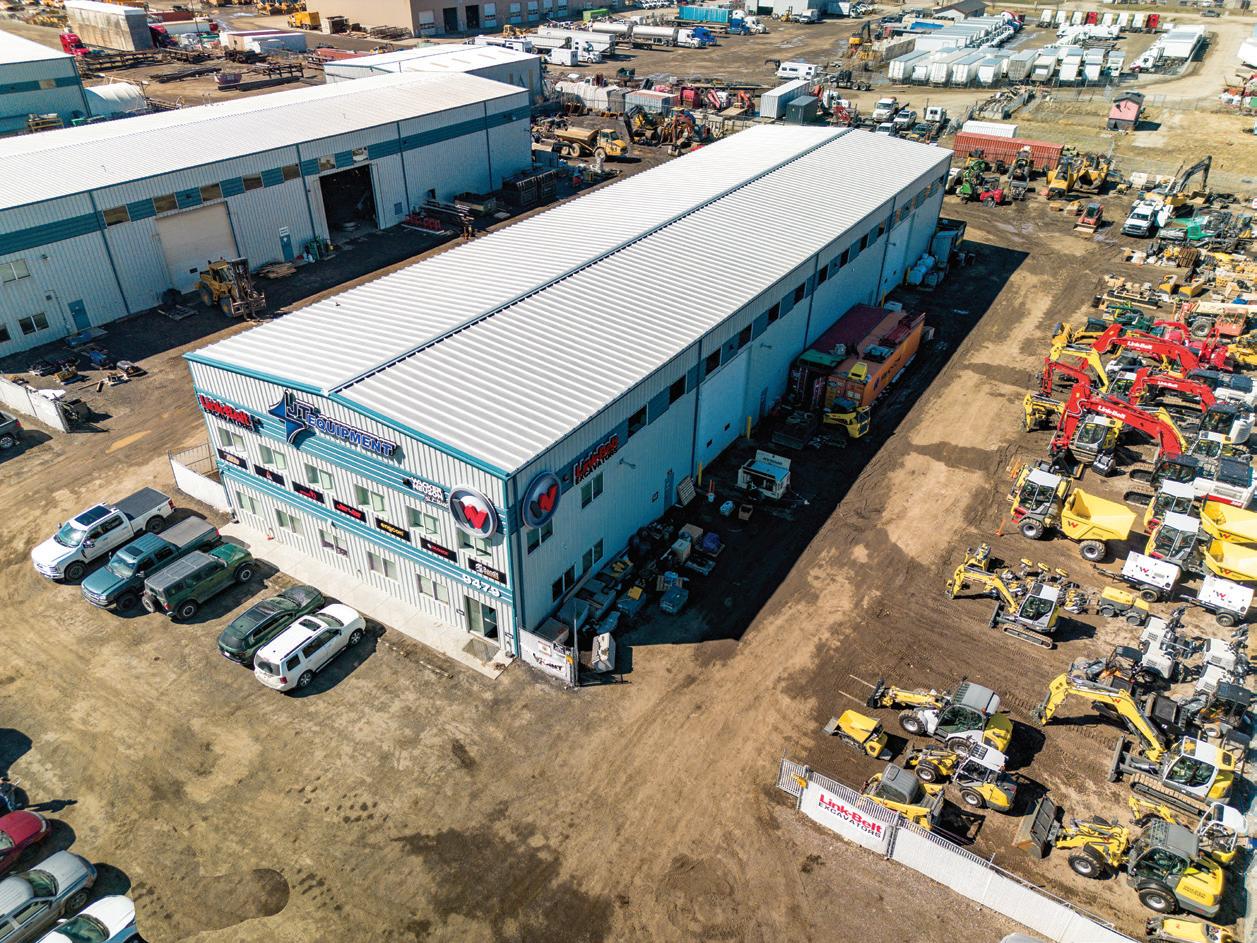
Images by Tomas Kraus Photography.
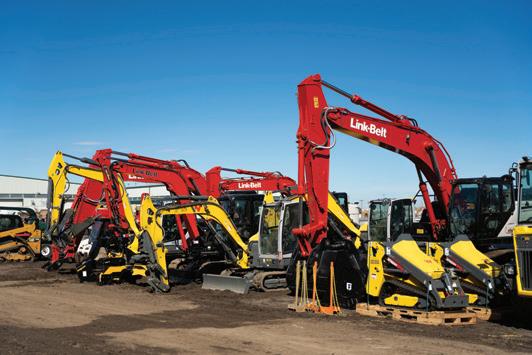
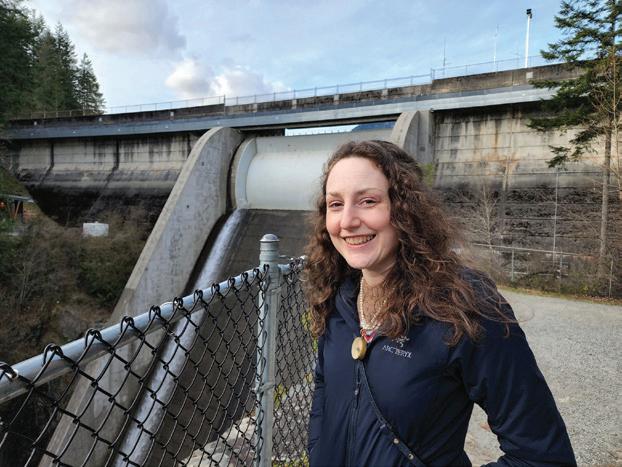
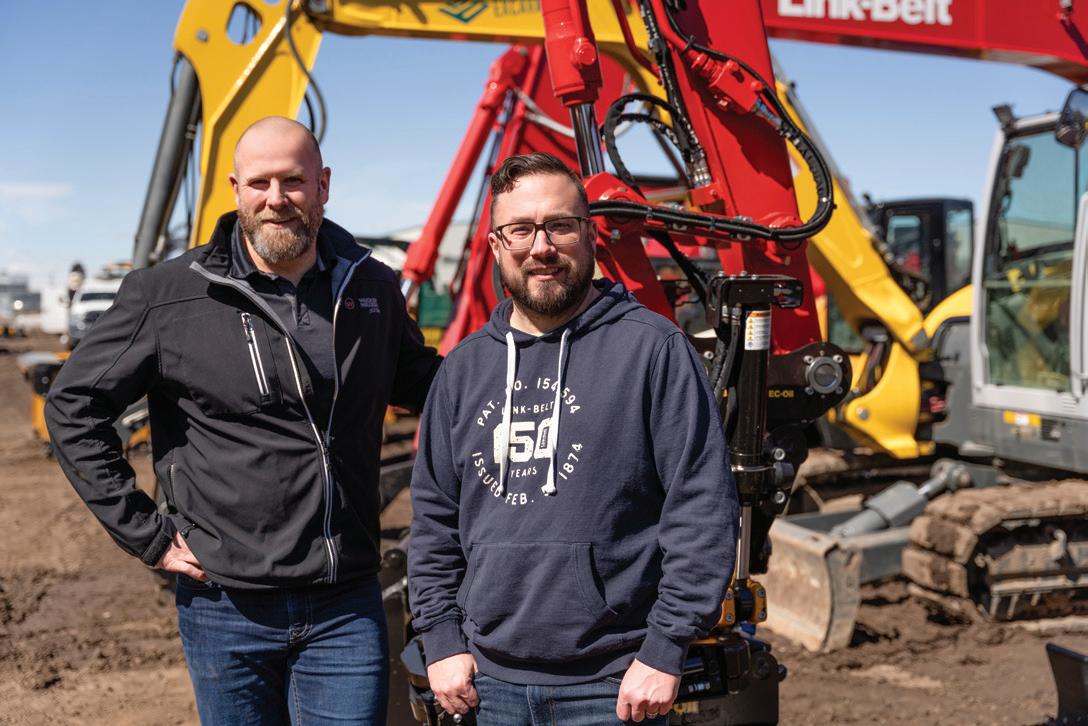
JT Equipment President Josh Arnold and Vice President Matt Cox. JT Equipment represents several construction brands in southern Alberta, including Wacker Neuson and Link-Belt Excavators.
GROUPE GYMDEX
KEY CONSTRUCTION BRANDS
LiuGong, Kinshofer
In Quebec, the construction equipment market follows cycles shaped by government procurement, seasonal slowdowns, and early indicators that signal what’s coming next.
For Groupe Gymdex, those signals are critical to understanding demand across the province and helping customers plan ahead to position themselves for upcoming work.
According to Jean-Nicolas Gonzalez, sales representative, the current market is uneven, with strong activity in some sectors and hesitation in others.
“On the construction side, it’s not really good,” Gonzalez says. “But now we’re seeing a lot of demolition. When we see demolition we know the construction contracts are going to come along.”
It’s really the operator that’s deciding which machine they want.
Jean-Nicolas Gonzalez
Sales Representative, Groupe Gymdex
boul. des
4J9
Demolition first, construction later, is a defining pattern in Quebec. As older structures are taken down, contractors position themselves for the next phase of development. For dealers and contractors, demolition activity is often the clearest early signal that new work is on the horizon.
A GOVERNMENT-DRIVEN PROJECT PIPELINE
Infrastructure remains the backbone of Quebec’s equipment demand, with roadwork, bridges, and major urban projects driving activity across the province.
Gonzalez says projects are awarded through a centralized, province-wide bidding system where contractors compete for government work. But that structure
also introduces volatility. When large firms don’t secure major contracts, they move into smaller-scale work, increasing competition and putting pressure on smaller contractors. In a market where government work can account for a significant share of activity, the timing and volume of public tenders directly influence the entire ecosystem.
At the same time, private-sector construction has been constrained by broader economic conditions. When the interest rate is high, construction activity dips. Gonzalez says that the construction slowdown has shifted activity toward demolition and recycling activity in the short term, but signals an eventual return to new construction cycles.
SEASONAL SWINGS
Weather is another defining factor in the Quebec market, creating more pronounced seasonal swings than in some other regions.
“From January to beginning of March, we
don’t see a lot of movement . . . because everything is frozen,” Gonzalez says.
That slowdown is particularly evident in industries like forestry, aggregates, and earthmoving, where frozen ground limits activity. In some areas, the impact is significant enough to reduce equipment sales to a fraction of peak-season levels.
This creates a compressed operating window, with activity accelerating quickly once conditions improve. By late June, Gonzalez expects to see a lot of contracts and a lot of demand for machines.
The timing of government contracts often aligns with this seasonal shift, reinforcing that mid-year surge in demand.
LABOUR SHORTAGES AND EXTERNAL PRESSURES
Labour availability remains one of the most pressing challenges across the Quebec market, says Gonzalez.
This shortage is influencing both equipment selection and job site strategy, with contractors looking for ways to increase productivity with fewer workers. Attachments, automation, and machine control systems all play a role in helping crews do more with less.
That focus on productivity is also reflected in the types of equipment and attachments gaining traction in the market. As a Kinshofer dealer, Groupe Gymdex has seen growing interest in multi-function attachments and is expanding its offering to include NOX tiltrotators, which allow operators to perform a wider range of tasks with a single machine.
At the same time, external market pressures are affecting key industries. In logging — a major sector in Quebec — shifting trade dynamics have created uncertainty.
“We were really exporting a lot of wood to the U.S., and they’ve pretty much closed the border with that,” Gonzalez says. “It’s really rough.”
Companies are beginning to explore alternative export opportunities, such as Europe, but those transitions take time.
TECHNOLOGY ADOPTION IS DRIVEN BY OPERATORS
As in other regions, technology is playing an increasingly important role in equipment decisions. Contractors are adopting tools such as machine control, on-board weighing systems, and advanced camera technologies to improve efficiency and precision. Operators are placing greater emphasis on comfort, control, and ease of use, and their influence on purchasing decisions continues to grow.
“It’s really the operator that’s deciding which machine they want,” Gonzalez says.
The transition to newer technologies is not without challenges, particularly as machines move from traditional hydraulic controls to fully electronic systems. While electronic controls can reduce physical strain and improve long-term efficiency, they also change how operators interact with the machine.
“They were able to feel the soil . . . with the joystick,” Gonzalez explains. “Now they don’t feel it anymore.”
Because there is an increased expec-
tation of high efficiency and productivity with the integration of new technologies, downtime can have an even greater impact. The pressure to keep machines moving means that dealer support and responsiveness is more important than ever. “When machines break down . . . you need to have fast service,” Gonzalez says. “That’s honestly our strength right now.”
A LEADER IN ELECTRIFICATION
Despite current challenges, there are clear signs of momentum building. Demolition activity, pending infrastructure projects, and continued investment in technology all point toward future growth.
Contractors are increasingly focused on efficiency in terms of machine performance and how work is executed across the job site.
For Gonzalez, one of the most significant developments in the region is electrification. As the exclusive distributor of LiuGong’s electric wheel loaders and excavators in Quebec, Groupe Gymdex is already seeing interest in the segment.
In Quebec, where electricity comes from renewable resources and costs are relatively low, the electric proposition is particularly compelling. Provincial incentive programs support adoption in the market, and Gymdex is ready to help customers evaluate where electric equipment can fit within their operations.
“That’s really what I’m excited about,” he says. “We’re gaining a lot of market share with the electric machines.”
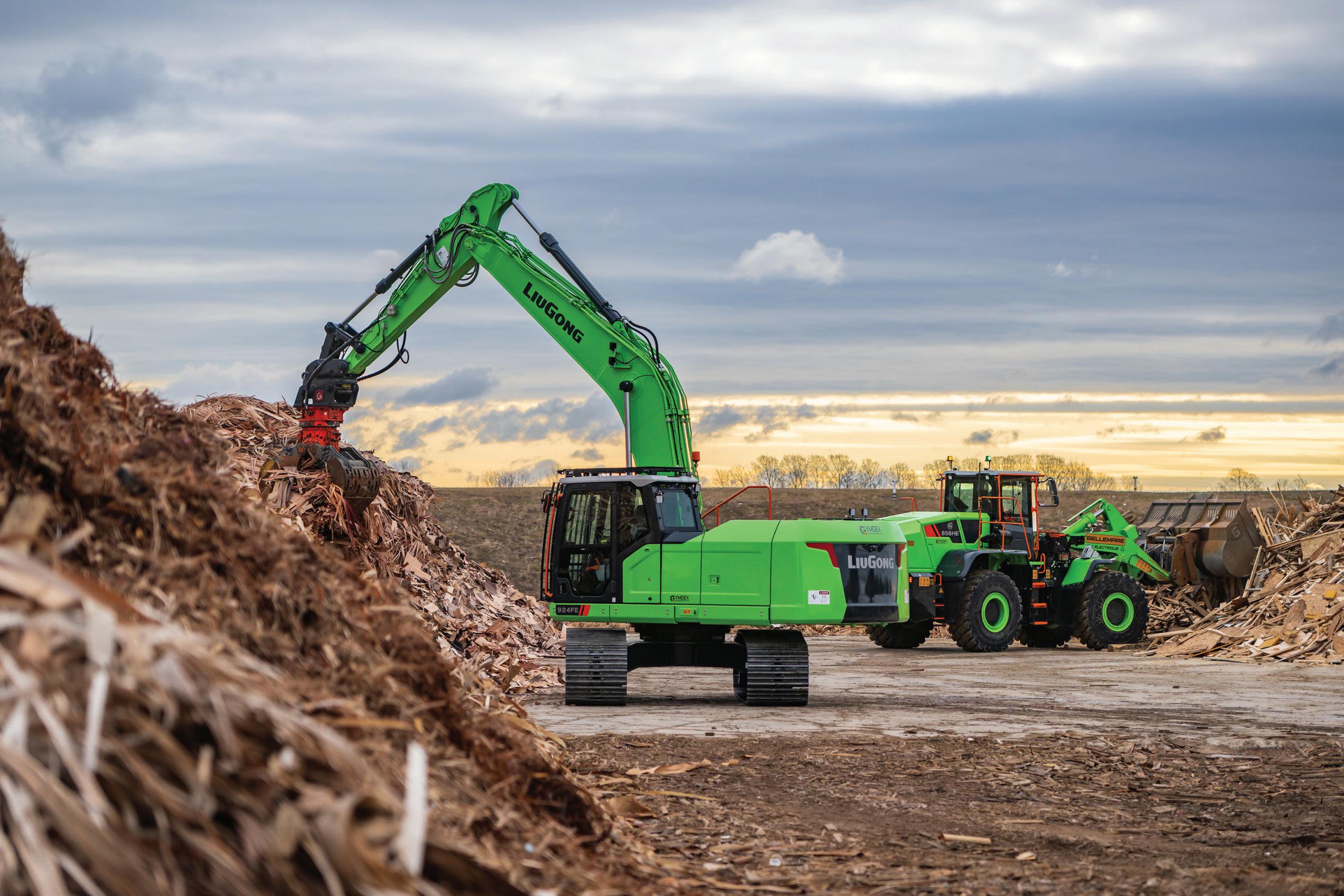
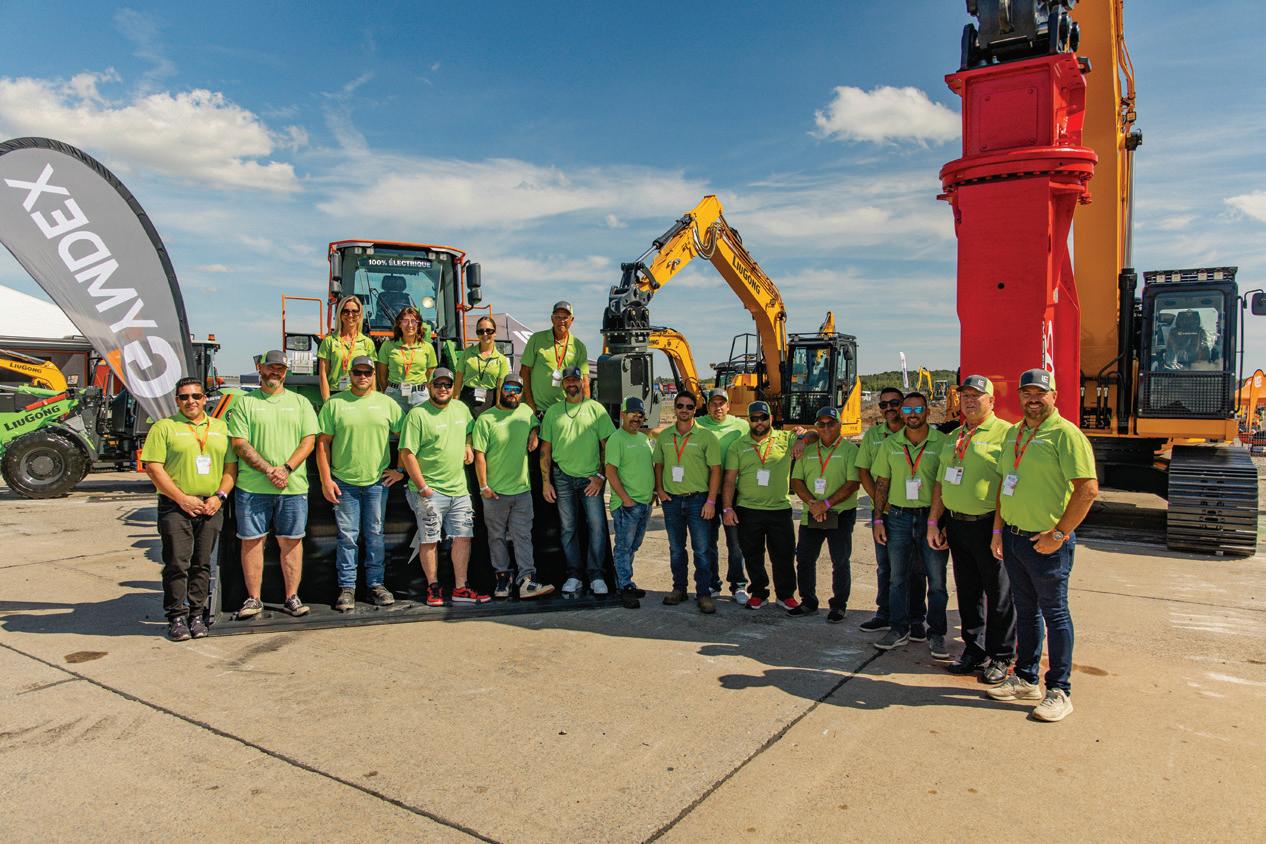
Groupe Gymdex sells and supports LiuGong equipment in Quebec, including electric machines.
SPOTLIGHT ON CANADA’S EQUIPMENT DEALERS
TIDAL TRACTOR
KEY CONSTRUCTION BRANDS
SANY, SWT, New Holland, Craig, AMI Attachments, GRYB, Shearex, FAE
REGION SERVED
Nova Scotia, New Brunswick, Prince Edward Island
NUMBER OF LOCATIONS
5 HEAD OFFICE
42 Onslow Road
Central Onslow, NS B6L 5K5
WEBSITE tidaltractor.ca
Across Atlantic Canada, the equipment market is defined by a steady mix of smaller, fast-moving opportunities, including residential construction, municipal infrastructure, forestry, and utility work. For Tidal Tractor, with customers covering the farming, construction, and consumer markets, responsiveness and access often matter just as much as the equipment itself.
Demand remains steady across Nova Scotia, New Brunswick, and Prince Edward Island, supported by urban development alongside ongoing infrastructure upgrades and resource-sector activity.
Within that mix, certain equipment categories are consistently sought after. According to Adrian McBriar, territory manager at Tidal Tractor, that demand is concentrated in small and mid-sized, versatile machines.
McBriar says that 4- to 8-tonne and 15- to 23-tonne excavators are popular. These machine sizes reflect the nature of work across the region, where many projects favour versatility and mobility over large-scale, high-production equipment.
AVAILABILITY DRIVES DECISIONS
One of the defining characteristics of Atlantic Canada is how quickly opportunities can emerge and how quickly contractors must respond. Contractors in this region often need to secure equipment on short
We think long-term operating costs and dealer support will become increasingly more influential.
Adrian McBriar Territory Manager, Tidal Tractor
timelines to capitalize on available work. That dynamic places added pressure on both dealers and customers, making inventory access and delivery timelines critical factors in purchasing decisions.
“Availability is important as contracts may be awarded at short notice,” McBriar says. “We keep a lot of equipment in stock. We keep a lot of attachments in stock. If a customer comes to us today with the funds, we should be able to have him out the door in less than a week with equipment that he needs.”
By stocking the machines and attachments most commonly used in the region, the dealership avoids delays associated with shipping from other provinces or international suppliers. That ability to respond quickly is critical in a market where timing can determine whether a contractor secures or misses an opportunity.
CUSTOMER PRIORITIES
SHAPED BY COST AND SUPPORT
While competition among equipment suppliers is strong, customer priorities remain grounded in reliability and longterm performance.
McBriar points to aftersales support, warranty, product reliability, and cost as the key factors that guide purchasing decisions, even as customers become more informed about available products and pricing.
At the same time, financing conditions are playing a larger role in shaping the market, particularly for smaller or newer contractors.
“We don’t have in-house financing, we use lending partners,” McBriar says.
That reliance on external lenders can create barriers to entry, especially for younger companies that have not yet established strong credit histories.
“You definitely have to be creative, particularly with the younger companies that are only two or three years old,” he adds.
In some cases, that means using alternative purchasing options, such as rent-to-own structures, to help customers build toward ownership.
LABOUR CONSTRAINTS AND TECHNOLOGY ADOPTION
Labour availability is a significant challenge across the region.
“There are definitely lots of stories about the guys who have more machines than they have operators because they can’t get operators to sit in the seat,” McBriar says.
That shortage is one of several factors shaping how contractors approach equipment and technology investments. Technology adoption is slower in Atlantic Canada, but McBriar is seeing an increase in inquiries for 2D and 3D systems.
Adoption varies depending on the scale of operations. Larger companies are more likely to invest in fully integrated systems, while smaller owner-operators tend to be more selective.
“Some companies have bought into the full comprehensive system . . . but that’s a huge expense. So you’ve got to have the work lined up to pay for that.”
For smaller fleets, the return on investment is not always as clear, McBriar adds. “If you’re jumping from one job to another, it’s not often required with the type of work you’re on.”
THE ATLANTIC PROJECT PIPELINE
The construction landscape across Atlantic Canada tends to be steady but is rarely defined by one large civil infrastructure project.
There is still construction. McBriar points to ongoing highway twinning and infrastructure work, but says there isn’t anything huge. “That’s kind of how a small province works.”
Beyond infrastructure, potential growth areas include mining, port expansion, and renewable energy projects, such as wind farms. However, many of these opportunities remain in early stages.
“We have a mineral-rich province, but we’re struggling to get [those resources] out of the ground,” he says, pointing to regulatory and public approval challenges.
As a result, growth tends to come incrementally, with new activity emerging gradually rather than through large, single-project surges.
PRACTICAL PRIORITIES SHAPE WHAT’S NEXT
As the market evolves, long-term considerations are expected to play a greater role in equipment decisions.
“We think long-term operating costs and dealer support will become increasingly more influential,” McBriar says.
Concerns around operating costs also shape how manufacturers approach machine design, with greater emphasis on operator experience that supports productivity and uptime. This is particularly appreciated in Atlantic Canada, where labour constraints and tight timelines make both critical.
“They realized we need better seats, better cab interior, more operator comfort,” he says, pointing to recent equipment trends.
As demand evolves, having the right mix of equipment, attachments, and technology is increasingly important for both contractors and dealers.
With that foundation in place, McBriar says the focus is on being ready when opportunities emerge. “When the time comes, we’ll be well positioned to respond.” HEG
Dealer profiles by Meghan Barton, senior writer.
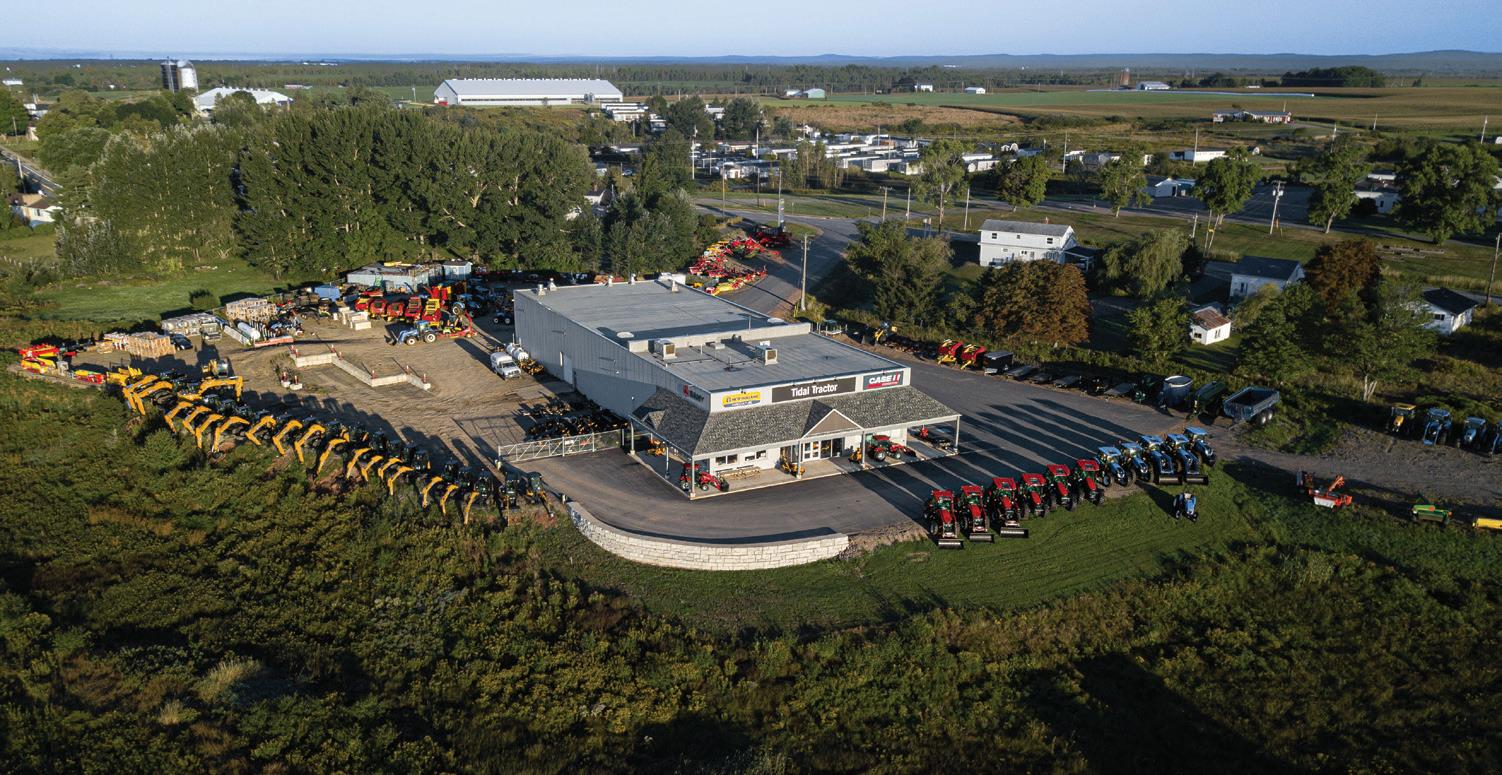
Tidal Tractor is SANY’s dealer serving Atlantic Canada.
KOMATSU EXPANDS THE POWER OF IMC TO
A
SMALLER EXCAVATOR PLATFORM
THE PC158USLCi-12 IS THE FIRST TIGHT-TAIL-SWING EXCAVATOR WITH FACTORY-INTEGRATED INTELLIGENT MACHINE CONTROL
BY KAITLYN TILL, EDITOR IN CHIEF
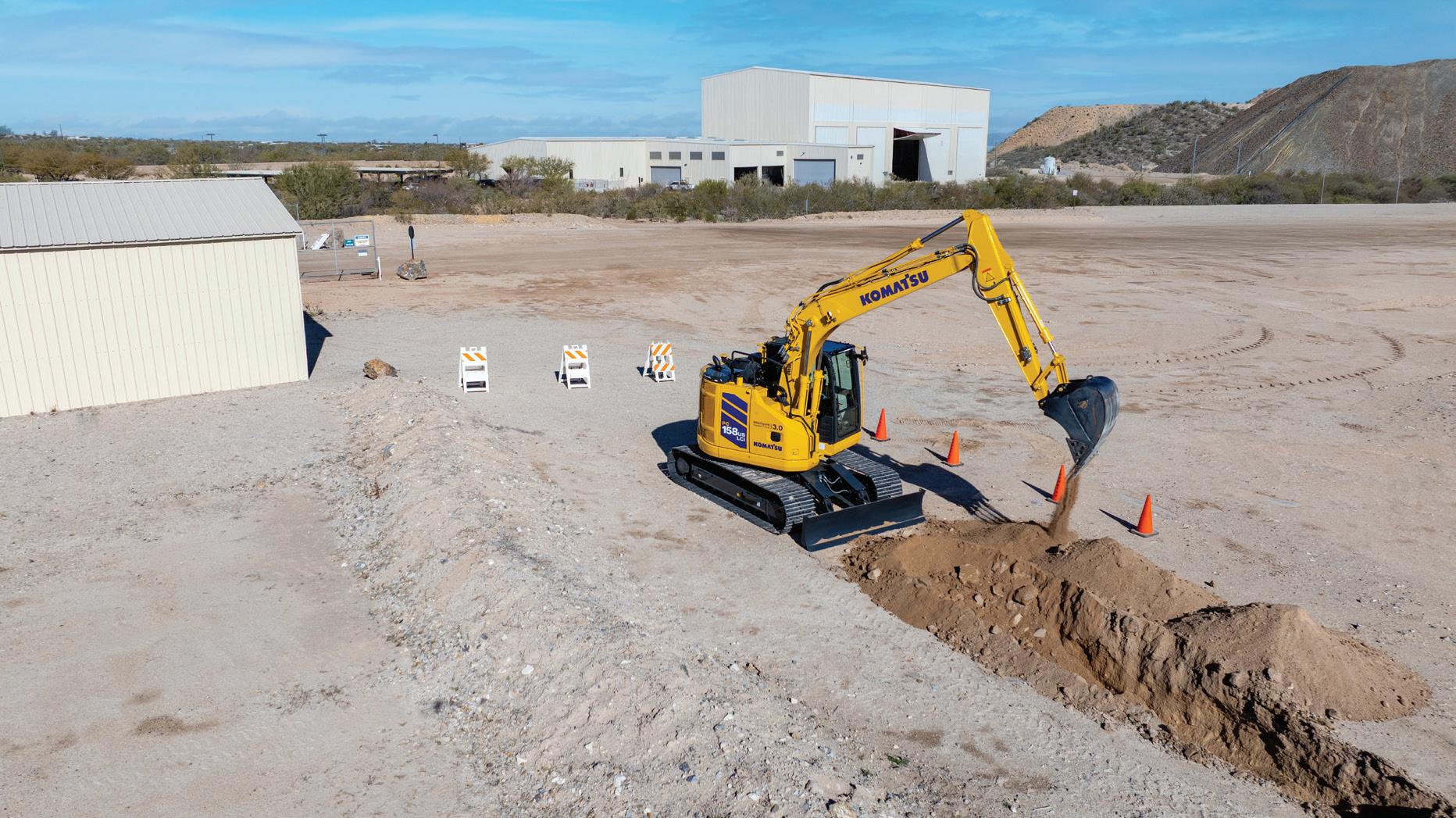
When the PC158USLCi-12 comes to market later in 2026, it will be the first tight-tail-swing Komatsu excavator with factory-integrated IMC (Intelligent Machine Control) and the second excavator with IMC 3.0. This is a game-changer for contractors who want the benefits of advanced automation on space-restricted job sites.
KOMATSU’S MOST ADVANCED TECHNOLOGY PACKAGE EVER
SMS Equipment Smart Construction Operations Manager James Barr can’t wait for Canadian contractors to get their hands on the new PC158USLCi-12, which was previewed at CONEXPO-CON/AGG 2026. Barr has been representing the Canadian Komatsu dealer since the first IMC excavator was introduced in 2014.
IMC 3.0 debuted on the PC220LCi-12 in 2025, and reception from owners and operators has been very positive, says Barr.
“Operators are telling me it’s incredibly responsive, quick, and accurate. While technology in equipment is evolving, they see IMC 3.0 in particular as a major step forward for construction automation.”
Expanded in-field design capability, an advanced payload meter, auto swing, advanced attachment settings, swing-toline, 3D boundary control, and auto stop control are all new to IMC, but IMC 3.0 is also designed to evolve further. Komatsu can send even more new features to machines in the field via over-the-air updates and recently pushed travel-along-line to IMC 3.0 machines.
Barr explains, “In a pipeline ditch application with a 3D design,
you can tie the machine to the centre of the ditch in the plan and use the thumb control wheel to travel in reverse. The machine will stay directly centred, so even if the ditch curves, the machine follows and steers to that curve and always keeps you centred.”
The operator just has to focus on digging. Travel-along-line pairs nicely with IMC 3.0’s swing-to-line function, which automatically swings the bucket to the line specified in the 3D plan.
Barr also praises the safety features new to IMC 3.0. A big one is the 3D boundary control system that allows the operator to set fixed height, depth, and swing boundaries tied to GPS coordinates, not the machine. Those boundaries do not move, ensuring that the machine can’t penetrate them, even if the operator tracks and returns.
The takeaway from IMC 3.0 on the PC220LCi-12 is that operators are more precise, the machine requires fewer inputs, and the job site is safer. Now there’s an appetite for more machines with the latest IMC package, says Barr.
“Contractors say, ‘It’s a great product, but when are you going to release a zero-swing or tight compact excavator with the same technology?’”
With the PC158USLCi-12, Komatsu is satisfying that request.
A TIGHT-TAIL MACHINE DESIGNED FOR OPERATORS
Built on the foundation of the PC138USLC-11, the PC158 will be slightly heavier and available in two versions: a standard PC158USLC-12 without IMC 3.0 and the PC158USLCi-12 with IMC 3.0. Preliminary operating weight, which may change at launch, is 35,715 pounds.
Komatsu has moved to EH controls with its -12 excavators, which facilitates easier technology integration. Track steering, programmable buttons, swing priority settings, and work speed settings are all more easily incorporated with EH controls. The operator can also customize the controls to match their operating style, reducing fatigue and increasing efficiency.
Beyond the controls, attention to the operator experience is vital, says Barr. When operators don’t like something, they’ll say it. He saw strong, positive reception to Komatsu’s switch from a sliding door to a swing-open door at CONEXPO and notes that addressing these preferences, even if they seem like minor details, is important to the operators who use the equipment every day.
Barr is also impressed by the comfort improvements that have been incorporated across Komatsu’s recent equipment launches. The PC158’s new wide-profile cab with increased visibility has a multifunction seat that is adjustable to give operators plenty of options.
“Everyone’s built differently,” he says, “and the different seat adjustments and positioning can make operators of all sizes comfortable.”
For contractors seeking a machine with some advanced technology, but not the whole 3D package, the standard version of the PC158 includes 2D grade control, 2D boundary control (boundary control tied to the machine, rather than job site GPS coordinates), bucket payload monitoring, KomVision 360° with human and object detection, an 8-inch touchscreen, and joystick travel.
The equipment landscape is competitive, and that standard technology package for the base machine will deliver value to
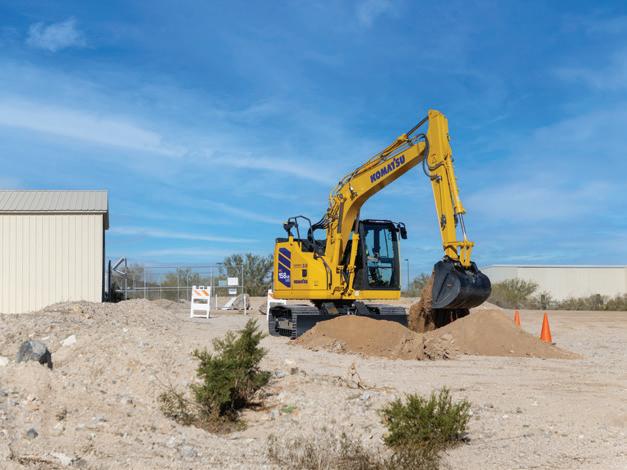
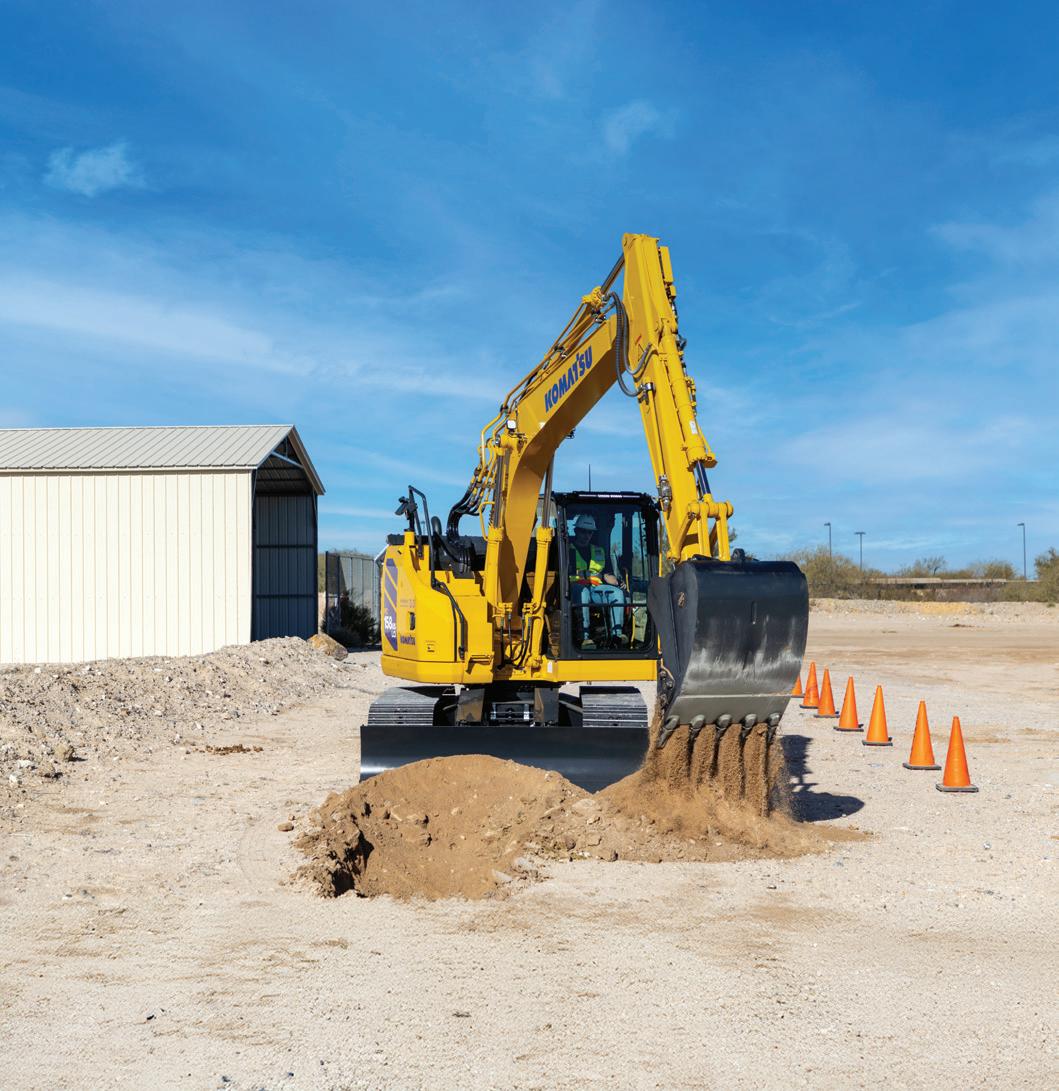
Komatsu’s PC158USLCi-12 is packed with IMC 3.0 innovations, including travel-along-line and swing-to-line.
It’s hitting that need for a grade control machine that can work in tight quarters.
James Barr
Smart Construction Operations Manager, SMS Equipment
contractors, says Barr. “There’s nothing better than having 2D when digging a basement. You set the benchmark, you cut it down however many metres you need, then you move around that. It’s perfect every time.”
ADVANCED TECHNOLOGY FOR MORE APPLICATIONS
With the PC158USLCi-12, Komatsu has stepped up to offer advanced automation on a smaller platform, and Barr is thrilled to introduce it to Canadian customers later this year. He expects the machine to do particularly well in Canada on utility and residential job sites.
“It’s hitting that need for a grade control machine that can work in tight quarters. Those customers who need that compact unit will have the full benefit of Komatsu’s most advanced excavator technology.” HEG
The PC158USLCi-12 excavator will be the first tight-tail machine to feature Komatsu’s most advanced technology package.
CASE CONSTRUCTION EQUIPMENT N SERIES DOZER PREVIEW
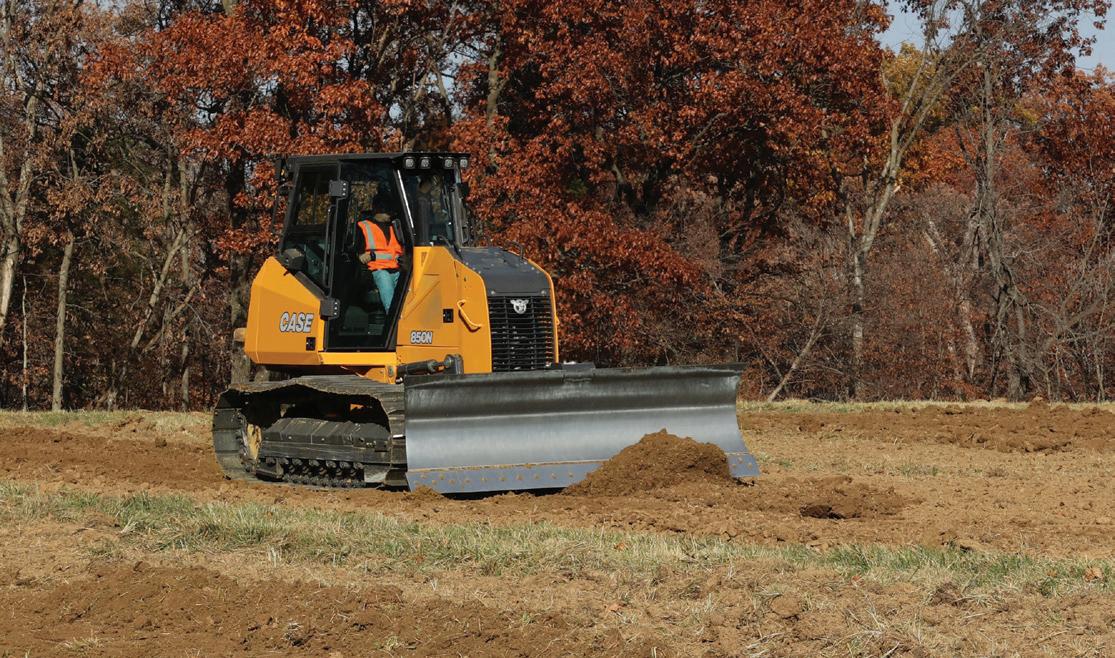
CASE Construction Equipment will launch its next-generation 650N, 750N, and 850N small crawler dozers later this year, with upgrades to the cab along with several machine and technology updates. Operators will have more options to customize machine responses for shuttle, steering, and blade control, as well as travel speed and rev speed differential.
The N Series dozers are also designed to maximize efficiency and fuel savings with EcoMode for fine grading and auto-idle shutdown.
Electro-hydraulic blade control will become standard on the 650N, as well as integrated machine control with factory options for universal or CASE 2D/3D machine control and guidance positioning hardware and software. The dozers also feature CASE SiteWatch, including two-way communica-
tion with remote update capability. Cab updates include a new operator station with a touchscreen display and encoder navigation, new keypad, and keyless ignition. Ergonomic seat-mounted controls and heated and ventilated seating options provide more comfort. Other updates include new sliding windows, four additional air vents, an improved pedal, multiple USB/ USB-C ports, and lockable storage. A rearview camera and ripper up/down notification on the main display improve job site awareness.
A new rear flat panel design improves rear visibility, while the redesign of the sweeps, air intake, and exhaust provide improved forward visibility.
The 750N and 850N feature a hydraulic reversing fan to keep the engine compartment cool and prevent debris buildup.
VOLVO CONSTRUCTION EQUIPMENT STREAMLINED 7-TON SOIL COMPACTOR
DELIVERS COST EFFICIENCY
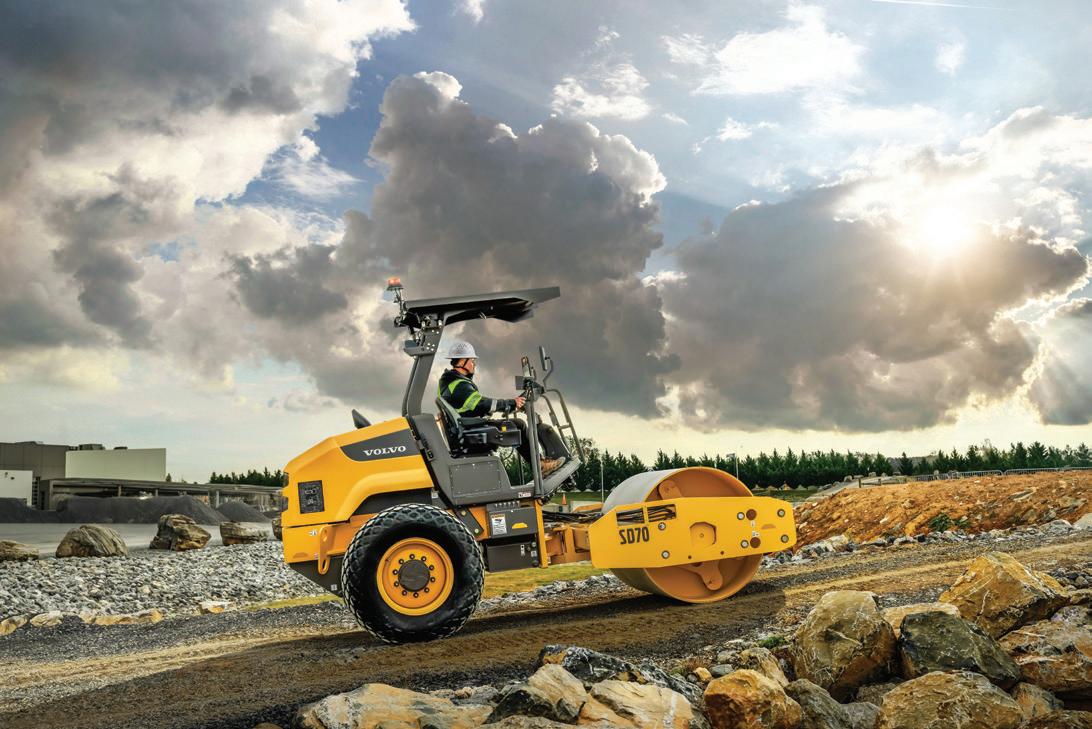
Volvo’s SD70 soil compactor is a streamlined version of SD75.
CASE’s 850N crawler dozer.
Volvo Construction Equipment’s new SD70 soil compactor is a smart, cost-efficient solution for contractors and rental fleets. This 66-inch, 7-ton roller has the same drum performance as Volvo’s SD75 but with a streamlined design to reduce costs.
Volvo’s advanced drum control system offers multiple frequencies, dual amplitudes, and optimized centrifugal force for consistent, high-quality results across a variety of conditions.
The 74-hp Volvo Tier 4 Final engine provides high torque at low rpm, keeping fuel consumption low while delivering the performance that operators want. The passive regeneration cleans filters automatically.
The ergonomically designed operator’s station provides a safe, comfortable, and productive working environment with excellent all-around visibility. An optional canopy sunshade is available.
Volvo says that durability and heavy-duty components, common across Volvo’s soil compaction range, is central to the SD70’s design. Convenient ground-level service access simplifies routine maintenance, maximizing uptime and productivity. Volvo also offers a lifetime frame guarantee.
CareTrack telematics is standard and ActiveCare Direct advanced telematics is available. Both systems provide weekly performance reports and proactive maintenance alerts. With both options, owners will have reliable 24/7 machine monitoring from Volvo’s Uptime Center.
TRIMBLE EARTHWORKS 3D UPGRADE FOR HYUNDAI EXCAVATORS
Owners of select Hyundai excavators with Hyundai 2D grade control can now easily upgrade to Trimble Earthworks 3D grade control. This collaboration between Trimble and Hyundai will allow Hyundai equipment owners to take full advantage of the Trimble Earthworks 3D platform, including “autos” functionality, as an aftermarket upgrade.
Trimble Earthworks 3D is intuitive, easy to use, and allows operators to create smooth, flat, or sloped surfaces more easily. When the excavator is placed in autos mode, the operator controls the stick, and Trimble Earthworks controls the boom and bucket to stay on grade, reduce overcut, and increase production.
“A lot of civil contractors start with 2D machine control, which is great for simpler projects or instances where you just need to reach general depth and slope specifications, but upgrading to 3D is also a natural progression as jobs become more complex and users begin to experience the benefits firsthand,” says Scott Crozier, vice president, civil construction at Trimble. “Now, contractors that are currently using 2D systems on select Hyundai models will be able to upgrade to a 3D Earthworks system quickly and easily in the aftermarket, through the Trimble dealer channel.”
In addition to the 3D upgrade functionality, the factory Hyundai 2D grade system of the newest next-generation excavators includes virtual fence and payload capabilities, which will continue to function when the system is upgraded.
“We build machines to meet our customers’ toughest expectations, and now more than ever, they expect to be able to use the technology they need to get the job done precisely and profitably,” says Joe Hodges, North American excavator product manager at Hyundai. “We are excited to provide an easy upgrade path from factory 2D grade control to the Earthworks 3D platform.”
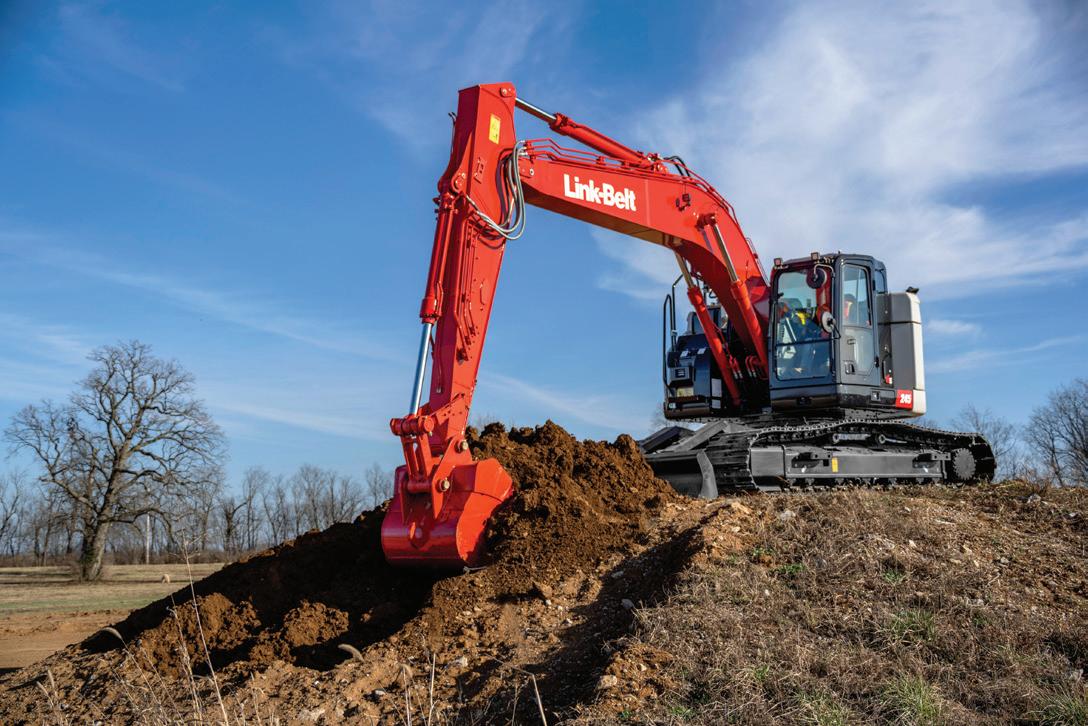
Link-Belt’s 245 X4S is a technologyready reduced-tail-swing excavator.
LINK-BELT EXCAVATORS
REDUCED-TAIL-SWING EXCAVATOR
READY TO MEET PRODUCTION
DEMANDS
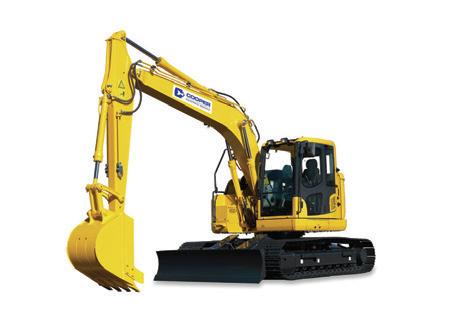
The new 245 X4S reduced-tail-swing excavator is engineered for maximum performance in confined spaces.
Delivering 160 hp, Link-Belt says that the 245 X4S is built for contractors who need manoeuvrability without sacrificing power. Key applications include urban infrastructure and roadwork, utility installation, and demolition.
The 245 X4S is a technology-ready solution, offering optional advanced features such as Digital Level, Height and Depth Alarms, and an integrated Payload system. To further streamline an upgrade to machine control, the machine arrives Precision Grade–ready. This factory configuration reduces the time and labour required to install IMU sensors and machine guidance kits, allowing contractors to deploy automated control systems with minimal downtime.
Link-Belt’s electronically controlled hydraulic pump system, paired with Spool Stroke Control (SSC), delivers smooth, responsive operation with improved controllability. The new Customizable Hydraulic Flow Balance allows operators to fine-tune flow distribution to their specific preference and reduces arm drift when manoeuvring heavy attachments during a swing.
The 245 X4S is powered by the Isuzu AR-4HK1X Tier 4 Final engine, combining strong performance with improved fuel
efficiency and reduced emissions. No Diesel Particulate Filter (DPF) is needed.
Four selectable operating modes allow operators to match machine performance to the job:
Lifting Increases hydraulic pressure and control for lifting and precision placement
Eco Optimizes fuel efficiency while maintaining productive performance for general excavation.
Power Maximizes productivity and heavy-duty cycling.
Speed Priority Prioritizes faster cycle times and responsive operation for applications requiring quick movement.
A 500-hour fuel filter service interval and a DEF tank with a consumption rate of only 2 to 3 percent compared to diesel facilitate longer operational periods between refills. Ground-level access to service points streamlines routine maintenance and minimizes downtime.
In the cab, a high-definition, 10-inch, anti-glare LCD monitor can be customized to display critical information, including hydraulic work tool names, system alerts, SCR regeneration status, and in-cab pressure controls. Integration with WAVES (Wide Angle Visual Enhancement System) provides 230 degrees of visibility around the machine.
GROUPE BELLEMARE’S ELECTRIC
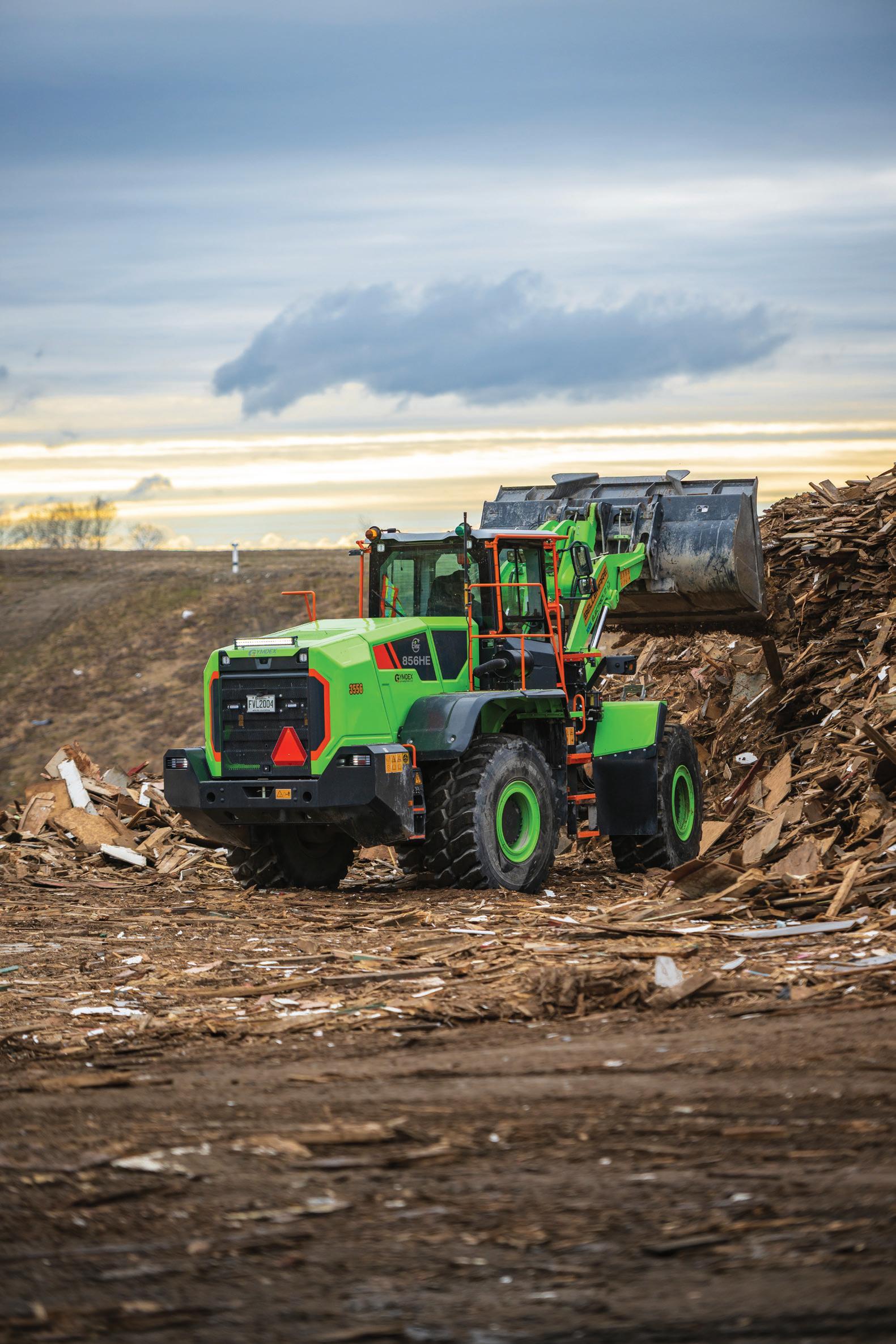
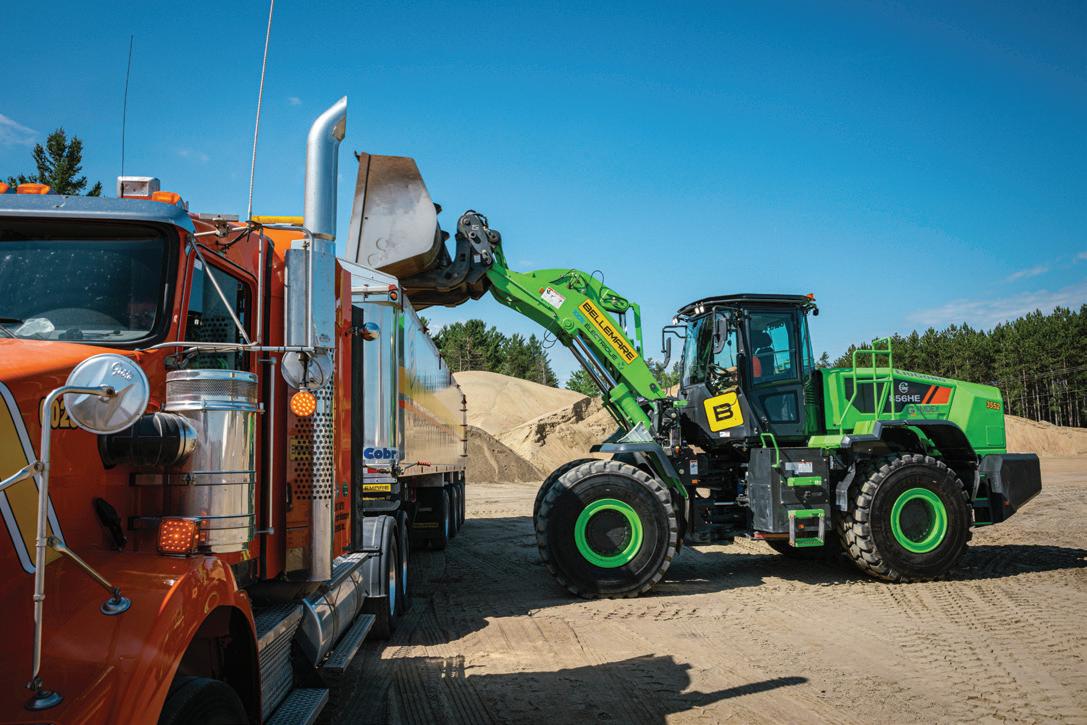
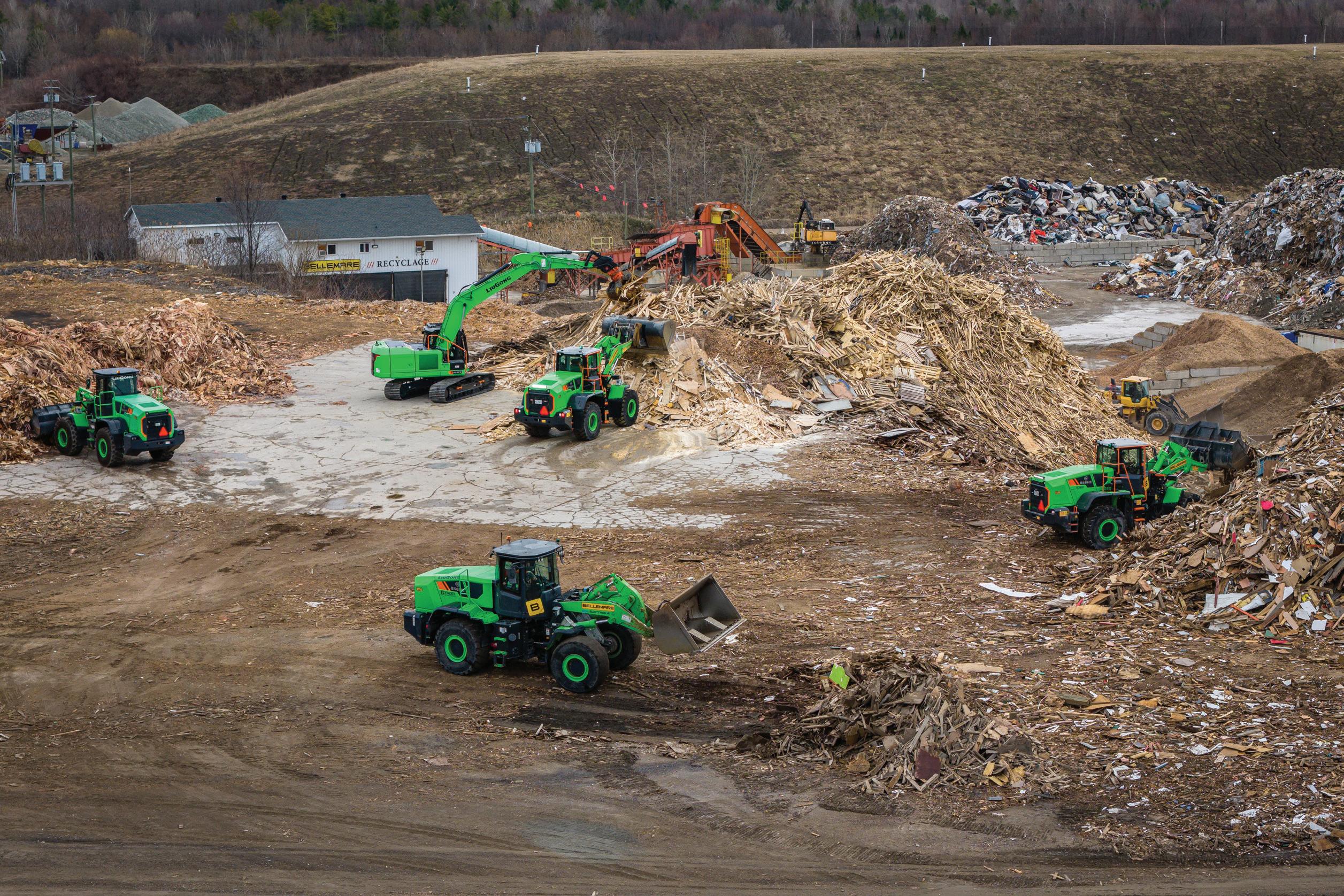
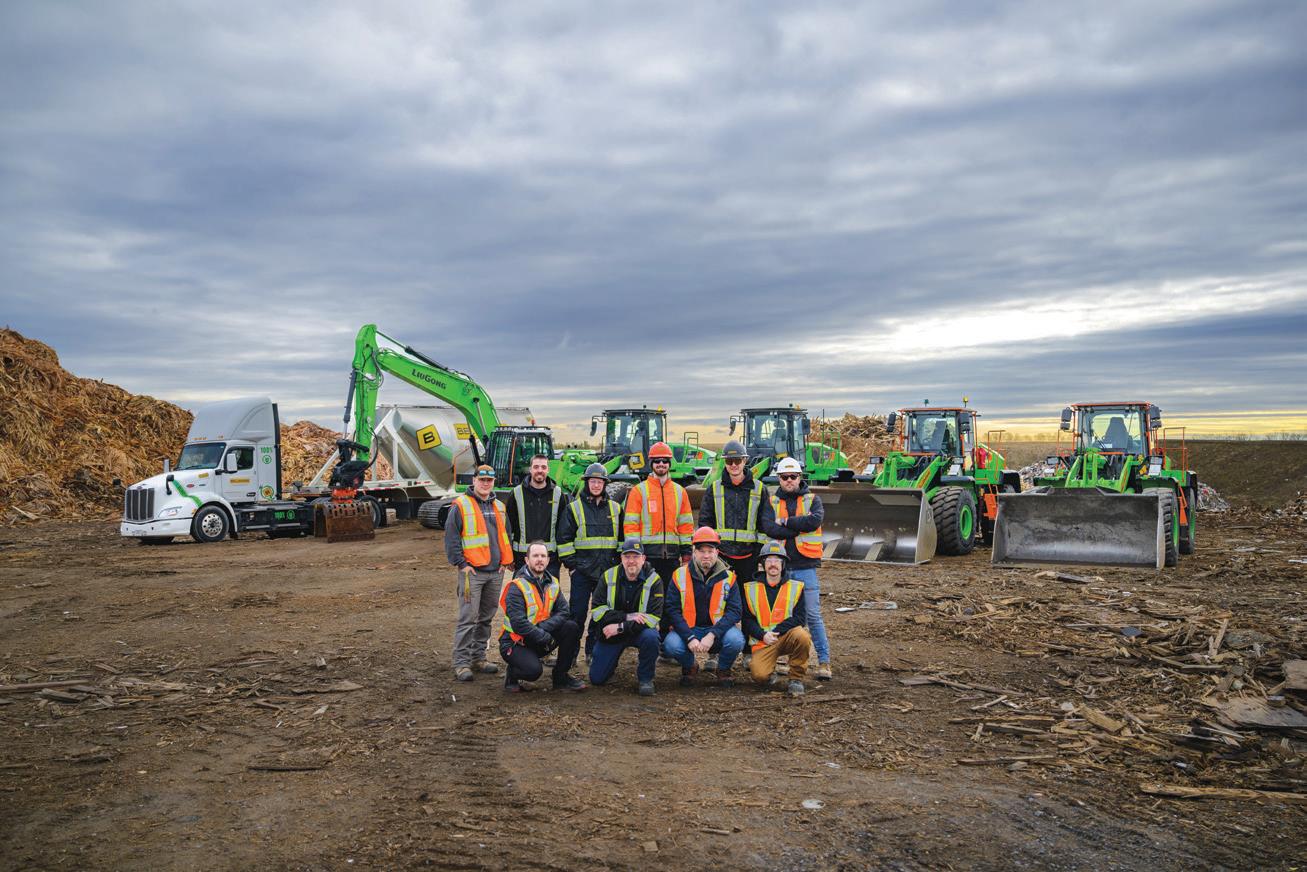
Groupe Bellemare’s five electric LiuGong machines are at work in Trois-Rivières, Quebec.
INCREDIBLE FLEET AT WORK IN QUEBEC
IN TROIS-RIVIÈRES, BATTERYPOWERED LOADERS AND EXCAVATORS DELIVER PRODUCTION PERFORMANCE AND COST SAVINGS
BY MEGHAN BARTON, SENIOR WRITER
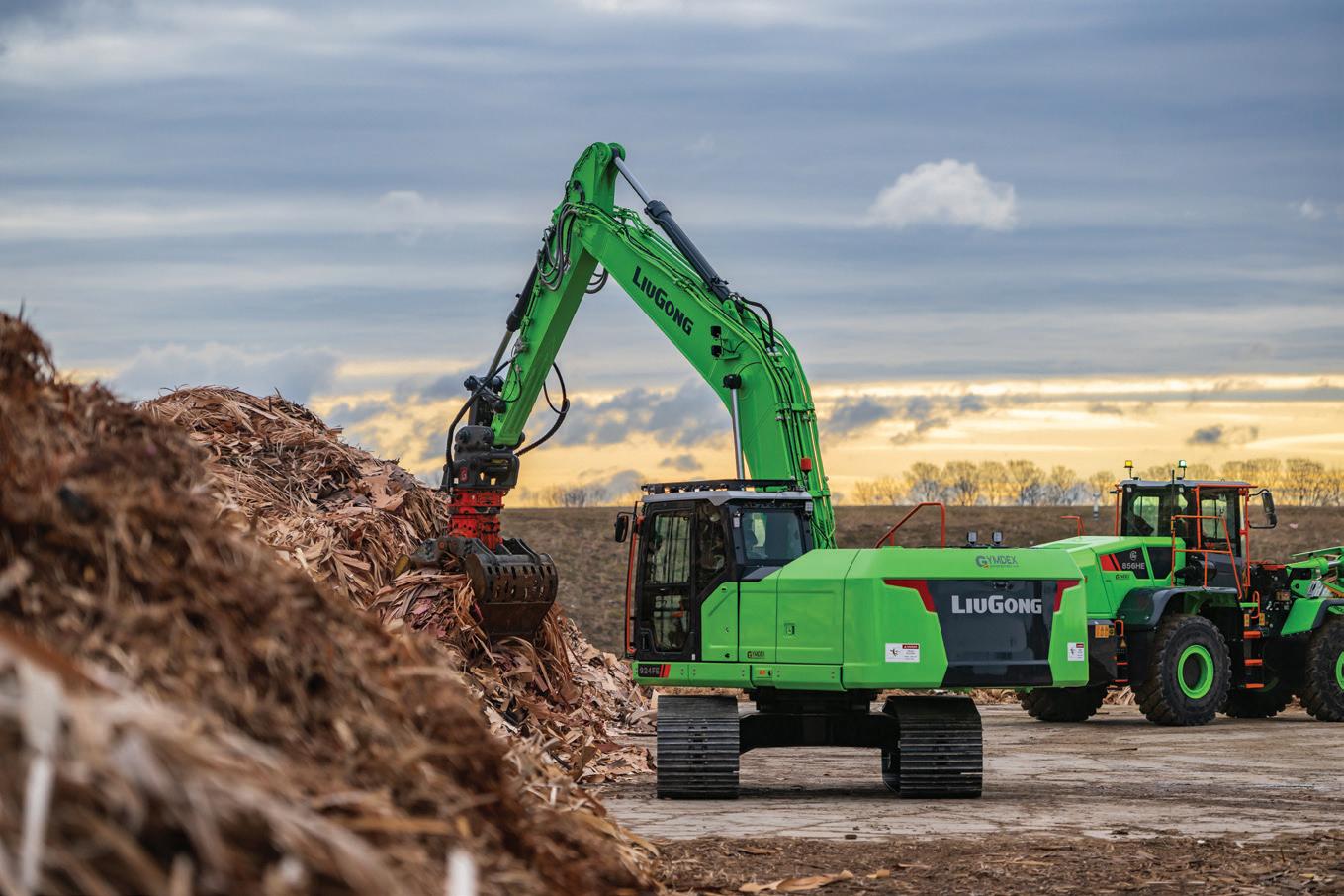
At Groupe Bellemare’s Plan 1 facility in Trois-Rivières, Quebec, five mid-size electric machines are hard at work. This is not a pilot project or a test run. In Trois-Rivières, Groupe Bellemare has successfully integrated one of North America’s first fleets of mid-size electric construction equipment into its daily operations. Its equipment lineup includes four 46,297-pound LiuGong 856HE MAX electric wheel loaders and a recently added 58,422-pound 924FE electric excavator — among the first machines of their kind sold in North America.
For the family-owned company, founded in 1959, the transition spans its abrasives and minerals division and its C&D recycling operations. In these divisions, short travel distances, controlled work cycles, and indoor material handling define the work.
According to Jason Lagacé, operations manager with Groupe Bellemare, the electric loaders have matched or exceeded the output of comparable diesel machines, while delivering responsive hydraulics, strong travel speed, and a quieter operating environment for crews working long shifts.
“We really wanted the best available,” he says. “We looked around . . . and we found out that there weren’t any other companies building something that even compared to LiuGong in terms of performance and reliability.”
Bellemare worked with Groupe Gymdex, LiuGong’s Quebec dealer, to review specifications, assess site suitability, and determine whether the loaders could realistically replace its diesel units. The evaluation process included multiple visits to the dealer, where supervisors and operators tested the equipment first-hand. The company also reviewed available government incentives, including provincial and federal subsidies tied to replacing diesel equipment with electric machines.
Because they had to replace a diesel machine with an electric one to qualify for subsidies, the loader was not a supplemental unit. Reliability quickly became one of the most critical considerations.
Jean-Nicolas Gonzalez, sales representative with Groupe Gymdex, says the evaluation centred on understanding how the equipment would perform in Bellemare’s specific environment. Hands-on testing and early support from the dealer helped build confidence in the machines and confirmed they could be integrated into Bellemare’s production workflow.
ASSESSING SITE SUITABILITY
Because they had to replace a diesel machine with an electric one to qualify for subsidies, the loader was not a supplemental unit. Reliability quickly became one of the most critical considerations.
In Bellemare’s abrasives and minerals and C&D recycling division, fulfilling orders and moving material efficiently and consistently over multiple shifts is critical. The company has proven that productivity doesn’t slow when switching from diesel to electric. Instead, in the right application, and with support and collaboration from the right dealer and OEM partners, electrification delivers tremendous operational cost savings.
ELECTRIC EVOLUTION
Bellemare’s introduction to electric loaders came unexpectedly. A company sales representative saw one operating during a business trip to India, recorded a video, and sent it back to the team. That sparked the internal discussion about whether electric machines were available in Quebec and whether they could handle Bellemare’s workload at Plan 1.
At the time of Bellemare’s evaluation, electric equipment options were limited. Lagacé says the company was looking for a machine that could meet its production requirements while remaining financially viable, but few manufacturers offered electric loaders that aligned with those needs.
That evaluation process ultimately led Bellemare to LiuGong’s electric platform.
The centralized layout and predictable material flow at Plan 1 were well-suited to evaluating electric equipment, particularly as an environment where machines operate within a defined area and access to power is readily available.
In both the abrasives and minerals and the recycling divisions, the work is relatively light duty. In the recycling division, applications primarily involve handling recycled glass, wood, and construction debris, with limited exposure to higher-load work that would place greater demand on battery systems.
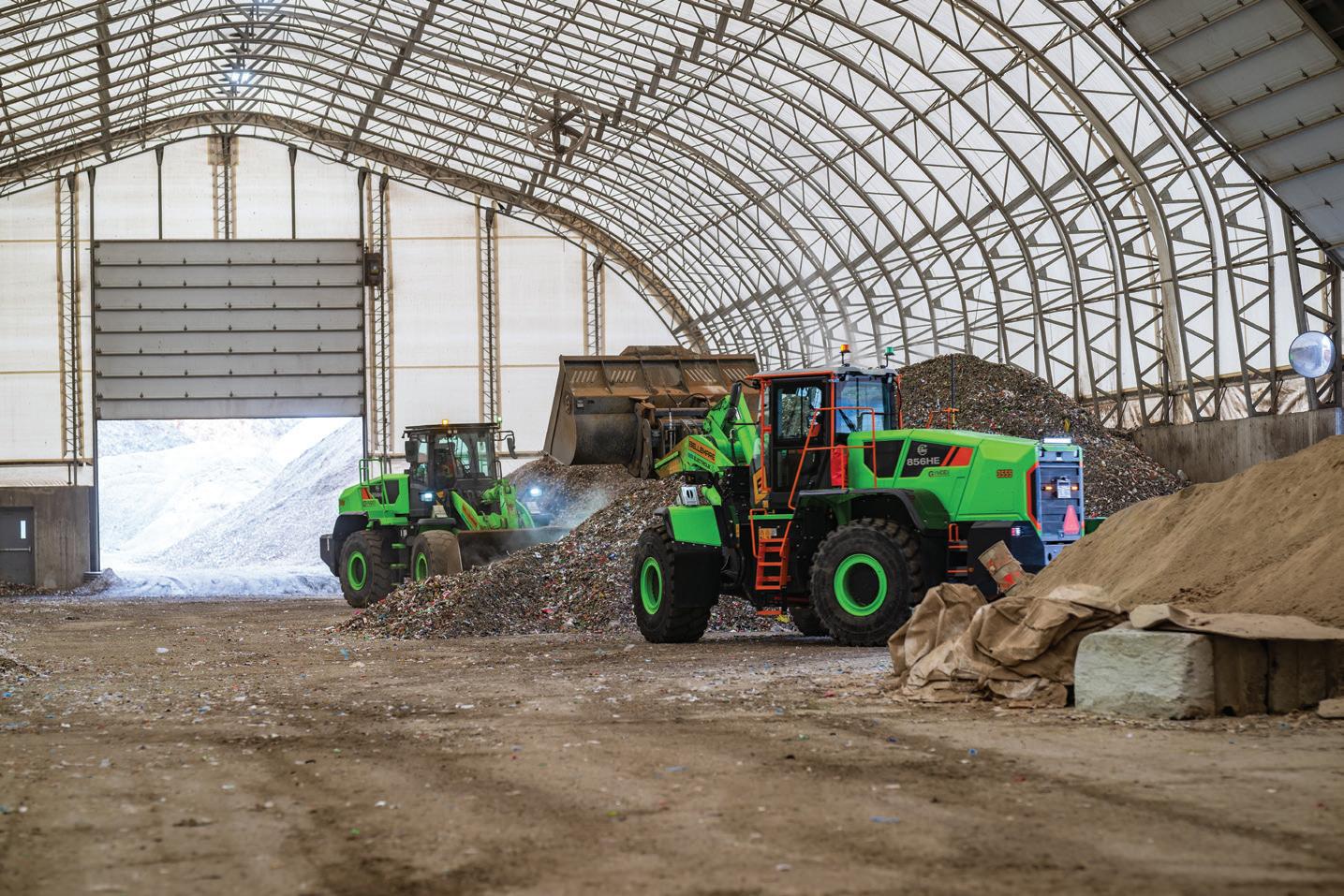
The loaders work primarily feeding crushers, screens, and other processing equipment. The operating area is compact, and the machines spend most of their time within a defined indoor space rather than travelling long distances between stockpiles and production equipment.
That indoor environment also mattered. As Bellemare’s operations grew, the prospect of running multiple diesel machines inside the building became more difficult to ignore from both a workplace and operational standpoint. Electrification offered a way to reduce those exhaust concerns.
INFRASTRUCTURE SUPPORT
Charging was another early concern. Bellemare runs two eight-hour shifts, and the company needs its machines to operate through a full day without disrupting workflow to charge.
The company had upgraded its electrical service years earlier in anticipation of future business growth. While not originally intended for electric equipment, that investment has provided sufficient capacity to support charging infrastructure. As a result, Bellemare was able to install multiple chargers across its operations without major last-minute electrical upgrades.
To support future fleet expansion and Bellemare’s growing mix of mobile electric assets, including loaders, trucks, and
Groupe Bellemare uses electric wheel loaders in its indoor operations.
Groupe Bellemare purchased the first LiuGong 924FE electric excavator in North America.
other vehicles, the company plans to install a centralized charging hub with nine stations. When it becomes fully operational in September 2026, the hub will allow equipment to return to a single location for charging, but smaller chargers will still remain in place for equipment with fixed operating patterns. For example, the electric excavator, which will be used to feed a mulcher, is expected to be charged in place to minimize unnecessary movement.
The transition to electric equipment also required Bellemare’s maintenance team to adapt. Gymdex and LiuGong spent time on site with the company’s technicians and supervisors to review the systems, safety requirements, and precautions necessary when working around high-voltage batteries.
Bellemare’s team handles standard service items, such as oil changes, while more specialized battery-related work remains in the hands of the dealer.
FINE-TUNED MACHINES FOR OPERATOR EXPERIENCE
Bellemare’s operators were also accustomed to diesel loaders, and the first LiuGong wheel loader arrived before there was much of a North American reference point for how an electric machine should be calibrated for their kind of work. The first electric wheel loader, delivered in 2023, arrived with factory calibration that required adjustment once they were put into operation.
“The machine was too quick,” says Lagacé. “The hydraulics were too fast.” Gymdex and LiuGong representatives helped fine-tune the machine’s hydraulic settings.
Gonzalez adds that steering was another operator concern. The first-generation electric wheel loader steering column assembly allowed operators to adjust only the tilt. Bellemare’s operators preferred the comfort and functionality of the steering configuration available on a comparable diesel loader.
Gymdex modified the electric machine in-house by adapting the steering column set-up to better match the ergonomics operators were already familiar with.
These targeted adjustments were part of adapting the machine to match operator expectations shaped by conventional equipment. Lagacé adds that these kinds of refinements have also helped reduce the learning curve for operators.
In response to operator feedback, LiuGong has integrated the adjustable steering column into all 856HE MAX production models. The OEM has incorporated other updates into newer versions of the loaders that make set-up and operation easier. Lagacé reports that this improvement allows operators to personalize their own experience directly through an incab control panel.
PERFORMANCE MEASURED WITH REAL NUMBERS
While Bellemare’s broader environmental goals played a role in the initial decision, Lagacé says that success has been determined by measurable operating data.
“The cost savings are miraculous,” he says. Based on the company’s internal tracking over the first 5,000 hours of operation, the electric loaders consume roughly 30 kWh per hour during operation. At an average electricity cost of $0.12
Groupe Bellemare’s team on the Plan 1 job site in Trois-Rivières, Quebec.
per kWh, that translates to significantly lower energy costs compared to a diesel machine consuming approximately 12 litres of fuel per hour.
Maintenance costs have remained similar to diesel machines, at roughly $8 per hour including tires, but Lagacé notes that diesel machines typically see those costs increase significantly after 5,000 hours due to engine wear and aftertreatment-related issues.
Bellemare also benefitted from provincial and federal financial support when purchasing the equipment and chargers, including Quebec’s ÉcoPerformance program and Canada’s Clean Technology Investment Tax Credit (ITC). In addition, the company has accumulated more than 300 carbon credits over the past year, adding another layer to the overall return on investment.
WHERE ELECTRIFICATION FITS NEXT
Bellemare’s experience with the LiuGong equipment — and its measurable operational cost savings — has made the company more confident about continuing to electrify other parts of its fleet where the technology fits. Within the abrasives and minerals and environmental operations, which include C&D recycling, sand pits, and quarries, Lagacé says Bellemare is working toward the goal of having about 80 percent of relevant machinery electrified over the next few years.
That does not mean every division is ready for the same shift. Gonzalez confirms that electrification across the construc-
The cost savings are miraculous.
Jason Lagacé Operations Manager, Groupe Bellemare
tion industry remains highly application-specific. Electric equipment tends to be most effective in operations where work is centralized and access to power is reliable — conditions that are not always present on distributed or remote job sites.
Even within the divisions where Bellemare sees the most promise, the company expects to retain some diesel equipment as backup. In a production-focused business, redundancy still matters. If a charger fails or the power goes out overnight, Bellemare wants to ensure it can keep material moving and customer orders on schedule.
That pragmatic approach may be the clearest lesson from Bellemare’s experience so far. The company is not treating electrification as an all-or-nothing proposition. It is evaluating where the equipment performs well, where it improves economics, and where it can be deployed with confidence. Bellemare’s machines operating in Trois-Rivières prove that electric equipment delivers. HEG
40 YEARS OF INNOVATION
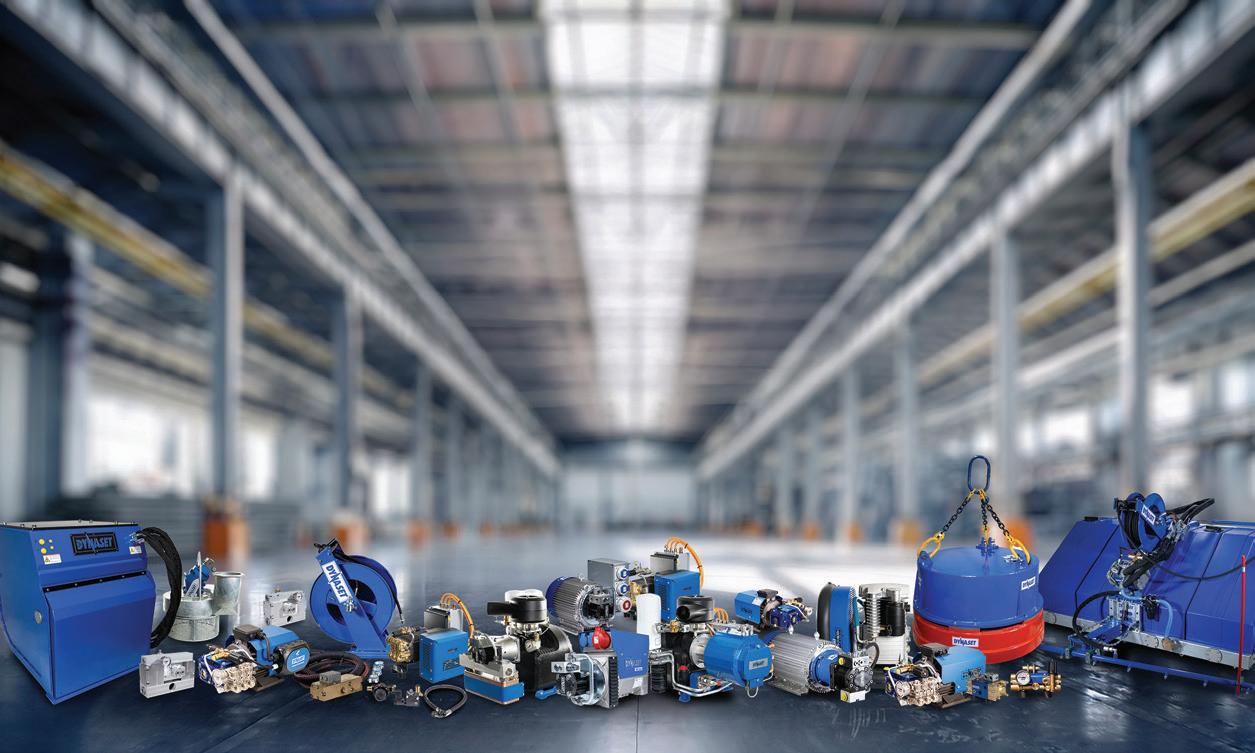
For four decades, DYNASET has manufactured compact equipment designed to improve machine productivity and versatility. An extensive range of integrable solutions crafted to simplify your work and withstand even the most demanding conditions.
NORTH AMERICA’S BIGGEST DEMOLITION MACHINE
THE TRANSFORMATION OF BCS ENTERPRISES’ CAT 5130B UHD FROM MINING EXCAVATOR TO DEMOLITION BEHEMOTH
BY MACK PLOVIE
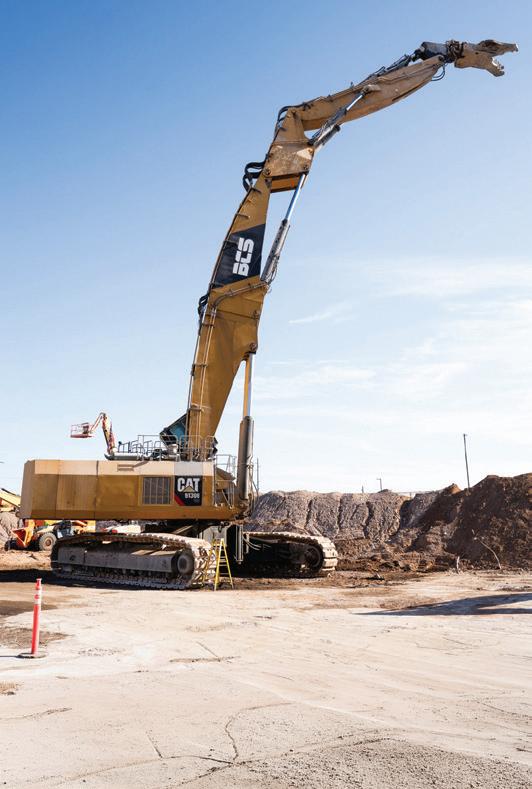
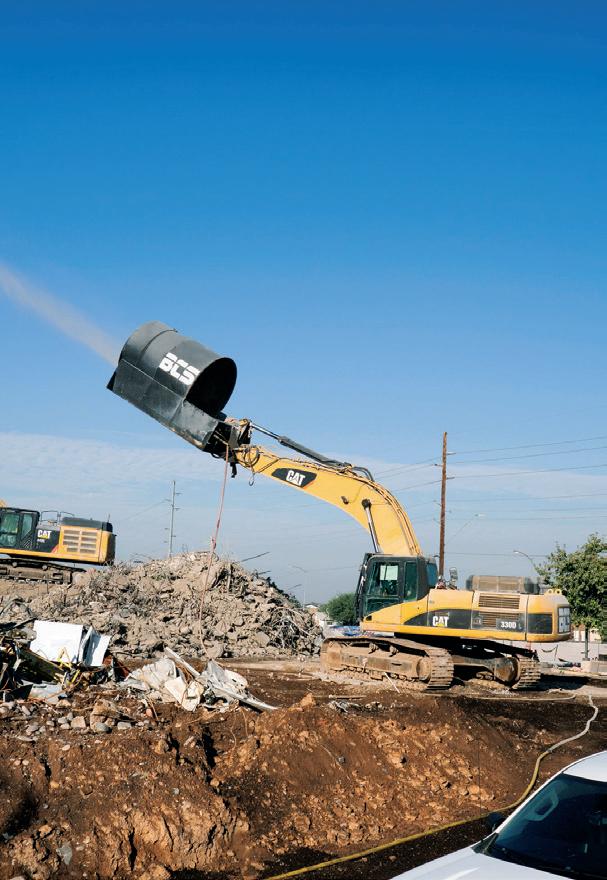
Amining excavator doesn’t usually go to work on an urban job site, but BCS Enterprises’ Cat 5130B UHD is an impressive exception. Cat doesn’t offer a 5130B ultra-high demolition excavator. Instead, over the course of multiple owners, two transatlantic journeys, and a couple of decades, a Cat 5130B mining excavator has been converted into North America’s biggest demolition machine.
Since 1956, BCS Enterprises has been helping clients safely and effectively demolish old infrastructure throughout the American Southwest. BCS specializes in selective and structural demolition, with key projects including a large power plant in Tucson, Phoenix Trotting Park, and a 200-foot-tall smelter stack in Dewey–Humboldt. Today, BCS Enterprises is one of the leading demolition companies in Arizona with headquarters, laydown yard, and shop facilities located in Mesa.
Demolition has always been about more than simply smashing and wrecking buildings in an unorganized manner: it’s a coordinated effort between engineering, heavy equipment, and operators to carefully remove outdated infrastructure. I had the opportunity to see BCS’ Cat 5130B UHD on its latest project, the demolition of a Valleywise Medical Health Center building in central Phoenix, where it was integral to that coordinated demolition effort — but the 5130B UHD’s vital contribution was only possible because of its unusual journey.
HIGH-REACH, HEAVY-DUTY DEMOLITION REQUIRES A UNIQUE SOLUTION
America’s biggest demolition machine is well-travelled — and has been extensively modified — having worked in multiple countries before finally landing in Arizona with BCS Enterprises.
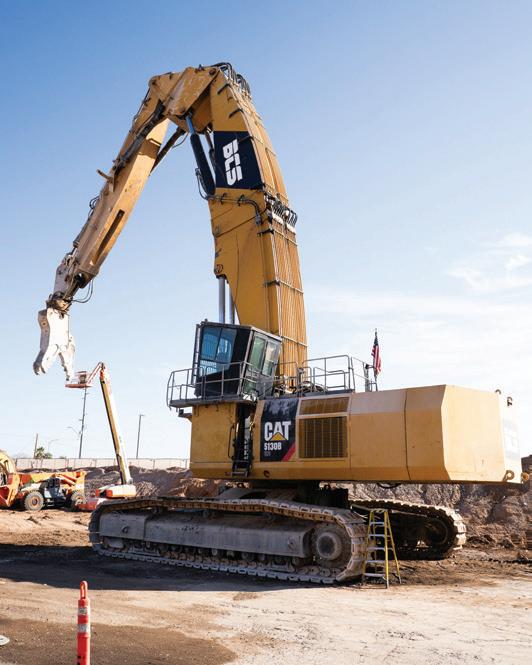
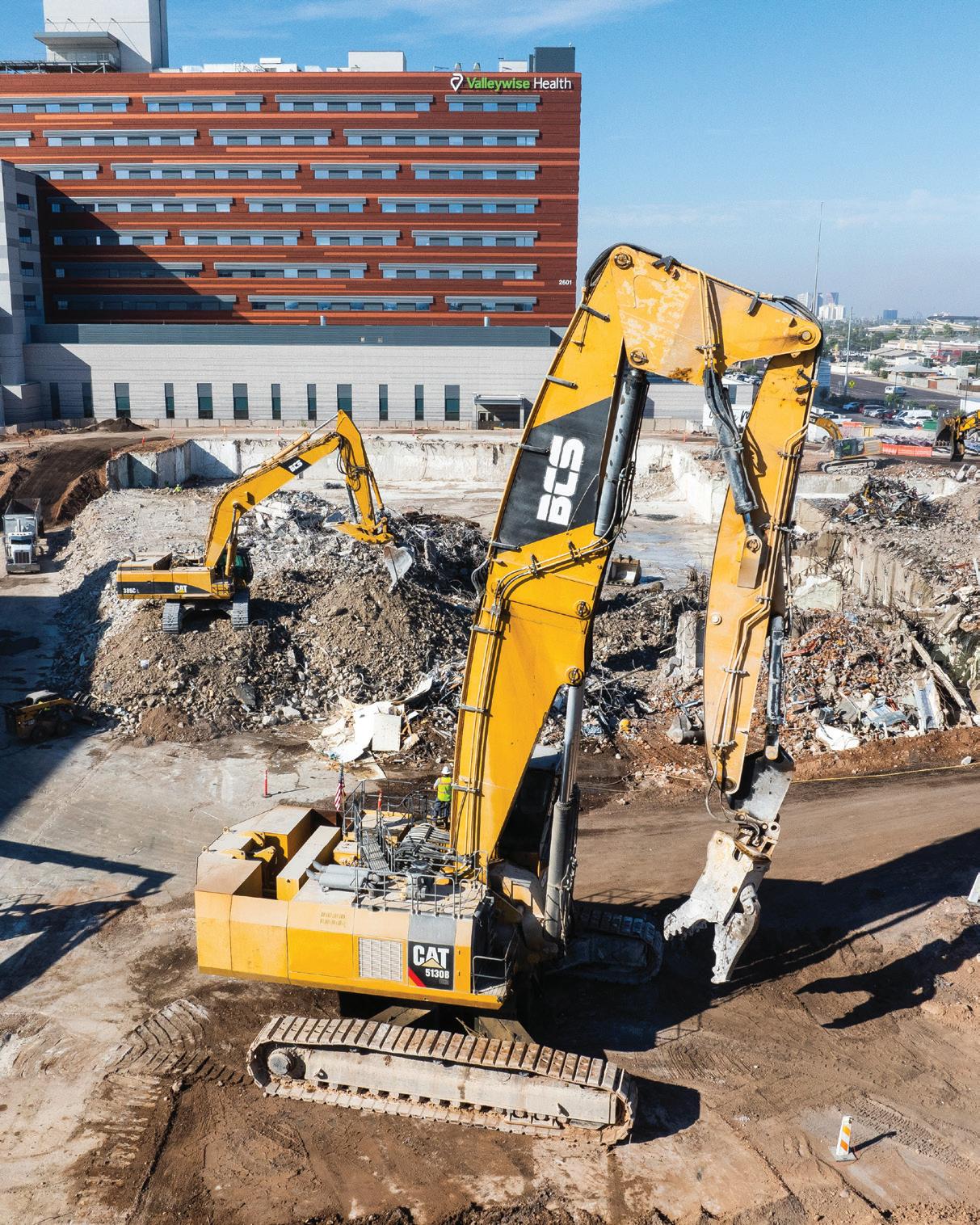
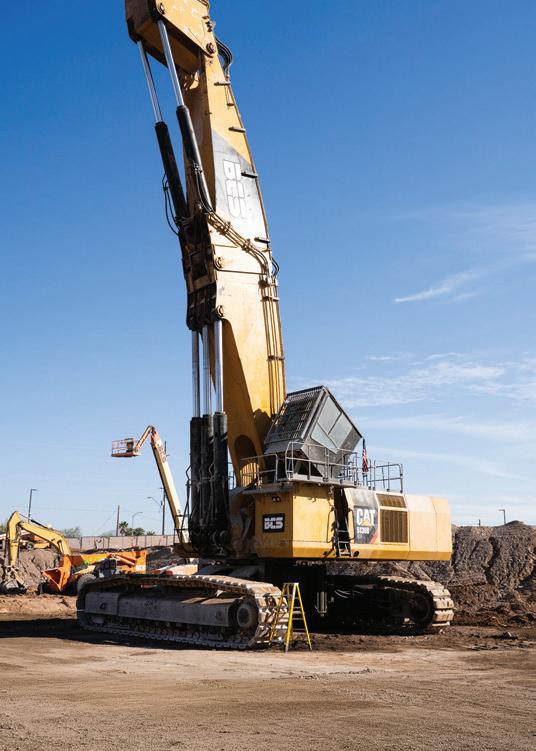
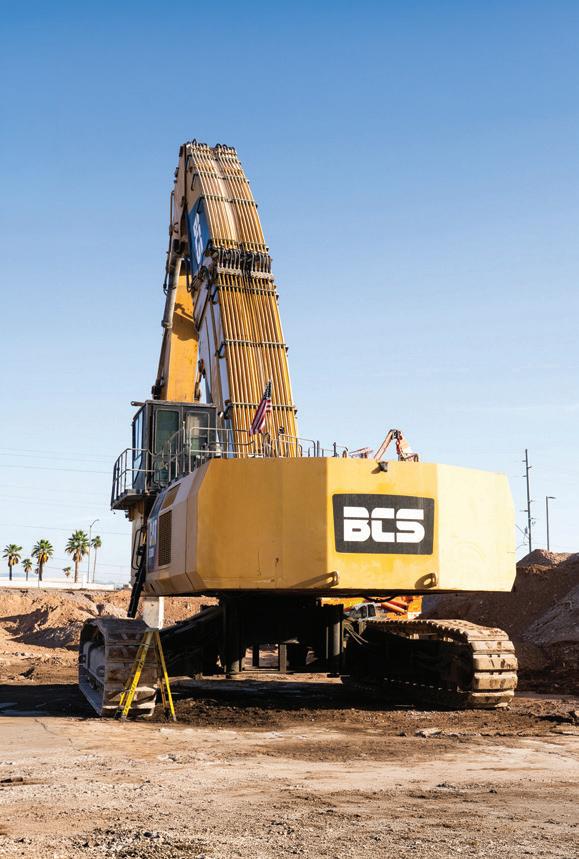
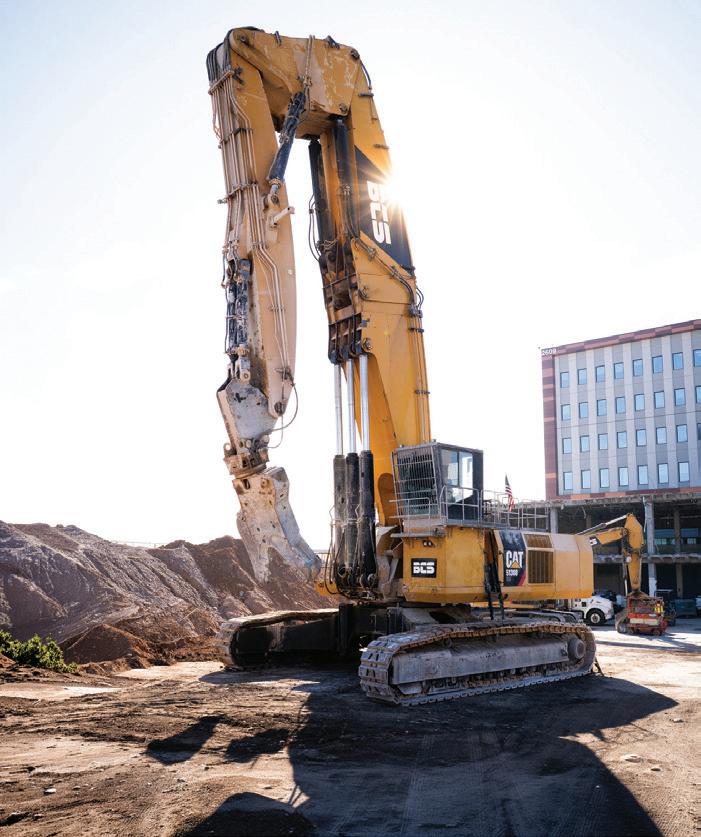
BCS Enterprises’ Cat 5130B UHD is North America’s biggest demolition excavator.
With a deep understanding of their market and future projects, BCS focused on building different reach configurations. In its base configuration, the Cat 5130B UHD can reach 120 feet to the top pin.
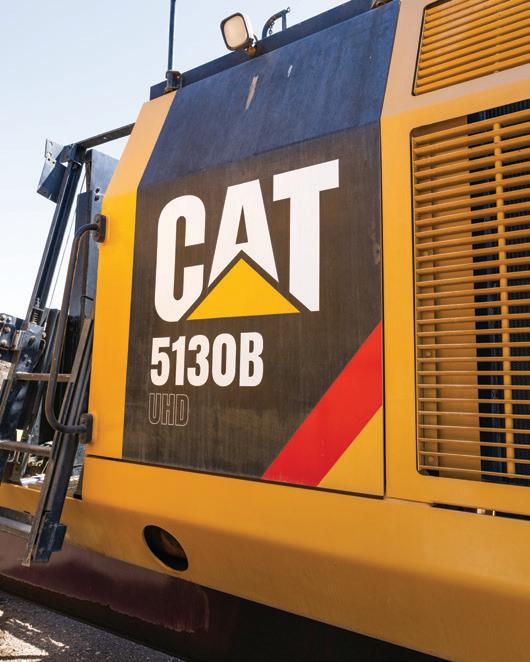
The only machine in the world to feature the Cat 5130B UHD nomenclature.
BCS Enterprises’ Cat 5130B
UHD began its journey as a conventional Cat 5130B mining excavator in backhoe configuration.
BCS Enterprises’ Cat 5130B UHD began its journey as a conventional Cat 5130B mining excavator in backhoe configuration. Caterpillar originally unveiled the 5130 series machine at MINExpo 1992 as a prototype, with the B series debuting in 1997. When released, the 5130B excavator weighed 200 U.S. tons (400,000 pounds) and was powered by a Cat 3508B diesel engine producing 860 hp. It was fitted with a 13.7-cubic-yard bucket and built to pass-match a 100ton mining truck, such as the Cat 777.
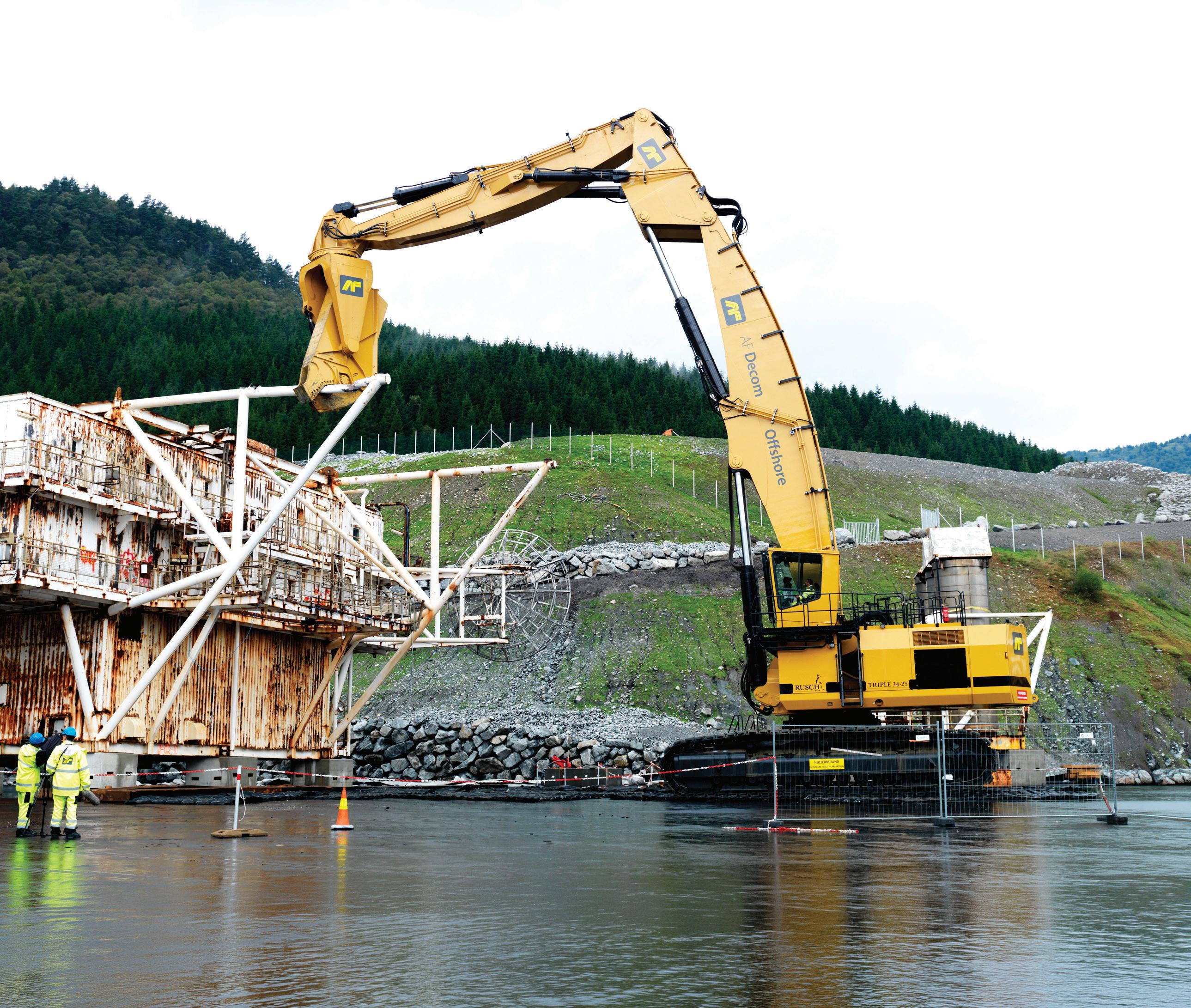
This Cat 5130B was originally sold by Thompson Tractor Company in June 2002 to an open pit coal mine in Birmingham, Alabama, where it was used to strip overburden. Once the machine was no longer needed at the mine, it was sold to Euro Machinery, a heavy equipment trading company, and then sold and shipped to Rusch, a specialty crane repair and inspection company based in the Netherlands, in 2008.
Rusch had been contracted by Norway-based AF Offshore Decom to build a high-reach machine for demolition of offshore oil rigs from the North Sea. Once decommissioned, these large, heavy-duty platforms were floated to the AF Environmental Base to be brought onshore one by one for dismantling and recycling. AF Offshore Decom identified that cutting the platforms into pieces with shears would be the fastest option. However, it was clear that the cutting had to be done at height, and given the heavy-duty construction of the structure with 915-mm-diameter steel pipes, the only suitable tool was a 25-tonne shear, which would require a specialty carrier.
A BIG TRANSFORMATION
Rusch refurbished and then converted the Cat 5130B mining excavator into a specialty high-reach demolition machine that fit AF Offshore Decom’s demanding application. While still resembling the mining excavator at the base, Rusch built it into what it called a RS7500 in triple 34-25 configuration. The 34 refers to height in metres that the machine can reach, while 25 refers to weight in metric tonnes of the work tool that the machine can handle at that maximum reach.
Construction of the new boom relied on Rusch’s extensive expertise in crane repair and service. Cranes feature high-tensile steel in their boom construction, allowing for the boom to be lighter, bigger, and stronger. The high-tensile-steel boom that Rusch built for the excavator is four times stronger than rebar, measuring 960 newtons per sq mm. The steel can only be sourced from two suppliers in Europe: SSAB in Sweden and Thies in Germany. It is heat-treated with metallurgy incorporating chrome, nickel, copper,
The Cat 5130B was first modified for the demolition of offshore oil platforms in Norway.
and vanadium for strength. The modular triple 34-25 boom consists of three pieces: a 17-m-long boom, 4-m-long mid stick, and 12-m-long stick.
The machine’s base was also modified to increase stability. In addition to moving the OEM counterweight farther back to balance the machine, the track frames were lengthened and the undercarriage was widened to make a 10-m-long by 10-m-wide footprint, giving the machine a square base to work from.
The three main boom cylinders were built in-house by Rusch for longer stroke and to accommodate torsional forces, while the OEM Cat 5130B boom and stick cylinders were moved up to the mid stick and stick.
A mining excavator requires hydraulic pump priority for slewing (swinging) circuits, so Rusch redirected the hydraulic pumps to prioritize work tool, boom, and stick functions for demolition.
Rusch modified the cab to tilt 40 degrees to give the operator better visibility up to their work area. The cab was also outfitted with bulletproof glass and metal cage guarding to protect the operator from debris.
ultra-high-demolition configuration of the machine.
To make transportation easier, a cable winch system for counterweight removal was added along with four hydraulic jacks mounted to the undercarriage to allow for easier removal of track frames. Transporting the machine takes 12 semi-truck loads split into key components, which include mid stick and stick, work tool, diesel power pack, track frames, counterweight, carbody, super structure, and two boom sections. Assembly or disassembly of the entire machine typically takes BCS roughly one week if everything goes smoothly.
In the cab, BCS added a seven-point 4K resolution camera system to allow for better visibility around the machine. The live camera stream also connects to a spotter’s iPad for added safety.
The Cat 5130B UHD can reach up to 200 feet and weighs 400 tons.
In addition to the expanded undercarriage footprint and repositioned counterweight, Rusch added a safety system that prevents tipover if the boom is vertically extended too far. Sensors measuring angles and position of each of the three boom sections, in addition to pressure sensors in the hydraulic cylinders, all feed data into a programmable logic controller (PLC), which can warn and then cut boom movement if it exceeds a pre-determined safe working limit. The completed machine was named Big Wolf and shipped to AF Offshore Decom in 2009.
BIG WOLF ON THE MOVE
Once AF Offshore Decom’s oil rig dismantling project was complete, the specialty machine’s fate was uncertain. It was put up for sale, but it was unclear when, or even if, a buyer would appear. In 2017, it caught the attention of Arizona-based BCS Enterprises. BCS acquired and shipped it back to Phoenix — the well-travelled, and transformed, Cat 5130B returned to the U.S. Before putting it to work, BCS Enterprises made further modifications to better-suit their application. BCS added 100,000 pounds of additional counterweight, moved the counterweight farther back, and widened the carbody by 25 inches to better balance the machine. The machine was repainted with custom trade dress, and BCS decals were applied. While the original Cat 5130B trade dress was from Caterpillar’s “red line” era, BCS applied a much more visually appealing “power edge” trade dress with an outlined “UHD” designation, denoting the new
With a deep understanding of its market and future projects, BCS focused on building different reach configurations. In its base configuration, the Cat 5130B UHD can reach 120 feet to the top pin. BCS built a 40-foot boom extension for the machine, which reaches 150 feet to the top pin, and, if that still isn’t enough reach, BCS also has a custom 40-foot hook attachment, which allows the machine to reach 200 feet. In both the 120- and 150-foot configurations the machine hosts a Genesis GXP2500R scrap shear that weighs 25 tonnes and can cut 46-inch steel I-beams. The culmination of Rusch and BCS Enterprises’ extensive modifications is a 400-U.S.-ton beast — that’s double the original Cat 5130B mining excavator’s operating weight.
A MASSIVE SOLUTION FOR URBAN DEMOLITION
There are few machines comparable to BCS’ Cat 5130B UHD, and, while it sometimes sits idle in the contractor’s Mesa yard, BCS isn’t afraid to deploy it in any of its three high-reach configurations.
In fall 2025, I got to witness the 5130B UHD come out of hibernation to demolish a 120-foot-tall, nine-storey building at Valleywise Health Medical Center in central Phoenix. The machine was outfitted with a 20,000-pound Genesis GDT 890 concrete pulverizer and made quick work of the building by pulling, toppling, and chewing into the concrete structure, while smaller support equipment, including Cat 385C and 395 excavators, sorted and removed the material for recycling.
It’s no secret that demolition creates a lot of dust. Given the location of these projects in urban centres, BCS developed its own dust suppression solution for the massive machine. The BCS Rainmaker is a custom-built water cannon consisting of an array of spray nozzles and a hydraulically powered fan. Resembling a jet engine and fixed to the end of a Cat 330 excavator, each Rainmaker lays down a monsoon-like mist to suppress any dust created by the Cat 5130B UHD.
After completing another successful project, BCS’ Cat 5130B UHD was demobilized and returned to the yard in Mesa. There it quietly waits for its next big demolition assignment.
MACK PLOVIE is the president and chief dirt enthusiast of Earthmovers Media.
Thank you to BCS Enterprises, Rusch, and AF Offshore Decom for providing the account of the Cat 5130B UHD’s transformation from mining excavator to America’s biggest demolition machine.
BCS added an additional 100,000 pounds of counterweight to the already bulked up 5130B after its acquisition.
BCS’ Cat 5130B UHD has since returned to its yard in Mesa where it waits for its next big assignment.
Photos by Mack Plovie
The mining excavator cab was modified to tilt, and guarding was added.
BCS uses its Rainmakers to suppress dust during operation of the 5130B UHD.
CM LABS SIMULATIONS DEMOLITION TRAINING CURRICULUM INCLUDES HYDRAULIC HAMMER, SHEAR JAW, AND GRAPPLE SIMULATIONS
CM Labs Simulations has expanded its training solutions to demolition operations. The training curriculum for excavator-based hydraulic hammer, shear jaw, and grapple attachments is a safe, integrated approach to training for an application that sits at the challenging intersection of high risk, high cost, and limited training opportunities. Demolition training is hard to stage, and, as a result, many operators learn while under production pressure on a live job site with safety, precision, and material behaviour lessons all converging at once.
“Demolition is exactly the kind of work organizations struggle using traditional training methods,” says Lisa Barbieri, VP of marketing and strategic partnerships at CM Labs. “By moving those first critical experiences into simulation, we help customers build confidence and competence before anyone is exposed to job site risk or costly mistakes.”
CM Labs’ new demolition exercises are designed to close that gap, giving operators the opportunity to develop familiarity with these attachments without flying debris and other safety risks or productivity loss on a real job site.
Operators learn to attach and detach demolition tools using a live quick coupler and apply controlled force to both concrete slabs and steel structural elements. The training covers concrete breaking with a hydraulic hammer and controlled steel cutting with a shear jaw, reflecting the range of tasks operators perform during real demolition operations.
“Every strike and cut matters in demolition, and material response is never identical,” says Alan Limoges, manager of product growth and partnerships at CM Labs. “Our demolition training models concrete fracture and steel cutting based on applied force and contact angle, not scripted outcomes. That real-
ism allows operators to practice the true nuances of demolition work and develop muscle memory that transfers to the job site.”
This new demolition training capability builds on CM Labs’ recent expansion of the Tracked Excavator curriculum, which also includes advanced trenching scenarios and realistic soil behaviour. The company says that these updates reflect a broader shift toward training for the work operators are actually being asked to perform, not just the machines they are certified to run.
The demolition training curriculum allows operators to practice the true nuances of demolition work.
Operators can develop competence with demolition attachments without the safety risks of a live job site.
MCLANAHAN CORPORATION
IMPACT CRUSHER FOR C&D RECYCLING
McLanahan Corporation’s new Renew Impact Crusher is designed for the recycling of asphalt, concrete, and rubble, as well as virgin aggregate crushing.
It has a feed opening of 36 x 52 inches that is designed to process 24-inch feed material with ease, producing a wide range of output sizes from 6 inches down to 3/4
Breakers / Pulverizers / Shears
Crushers / Multi Processors
Compactors / Grapples
Pedestal Booms
Oregon - Ohio - Texas
AUTONOMOUS HAULING SOLUTION FOR OPEN-PIT QUARRIES
With Smart Quarry Autonomous, powered by Pronto, Komatsu aims to make hard work easier by incorporating autonomy into its Smart Quarry suite of solutions, which includes Smart Quarry Site, a total job site management tool covering inspections, real-time remote monitoring, fleet optimization, and more.
“Quarry operations are under pressure to keep production moving despite ongoing labour challenges,” says Michael Gidaspow, chief digital officer, Komatsu North America. “Autonomous haulage can help address ongoing workforce challenges by reducing reliance on skilled operators, helping to mitigate the impact of absenteeism and shift changes and enabling more predictable haul cycles across operating hours.”
Smart Quarry Autonomous is designed to be deployed quickly and economically without the need for extensive site infra-
structure or a dedicated control centre. The solution can be installed as a retrofit on select Komatsu haul trucks enabling quarry operators to adopt autonomy in stages, matching the sensor stack to the specific complexity of their haul roads and environment. The autonomous system utilizes artificial intelligence, onboard computing, and sensor-based perception technologies to navigate mapped haul routes with minimal set-up.
Komatsu’s dealers support Smart Quarry Autonomous through hardware installation, system deployment, training, and ongoing service. Components are supplied through Komatsu’s distribution network, helping ensure consistency, support, and long-term service readiness.
Smart Quarry Autonomous was a finalist for the CONEXPO-CON/AGG Next Level Awards, which recognize equipment and technologies that demonstrate measurable potential to advance operations.
Kleemann’s flexible new MOBISCREEN MSS 1102 PRO mobile scalper is equipped for fully electric or diesel-powered operation.
KLEEMANN MOBILE SCALPER WITH DUAL POWER DRIVE
Kleemann’s new MOBISCREEN MSS 1102 PRO mobile scalper offers high output, simple operation, and excellent ergonomics. It has a Dual Power drive for full-electric or diesel operation. With its robust design, its generously dimensioned feed hopper, and a screen casing of 120 square feet (11.2 square metres), the plant achieves feed rates of up to 827 U.S. tph (750 tph). Infinitely variable speed adjustment of all conveyor belts and easy conversion from two to three final grain sizes make the plant highly flexible. The wide setting range of the screen casing angle (12.5–17 degrees) makes it possible to simultaneously achieve high screening performance and good product quality. Kleemann adds that an extensive range of screening media
enables efficient utilization of the plant, and the screen decks can be fitted with a combination of screening media.
The intuitive plant control system reduces the risk of operating errors and reduces the time required to train new operators. All relevant functions can also be run from a safe distance. The optional SPECTIVE radio remote control can be used to control not only the driving function, but also all plant settings.
The plant is compatible with SPECTIVE CONNECT, Kleemann’s smartphone app that provides operators with all relevant data such as speed, consumption values, and fill levels, in addition to stockpile monitoring.
The MOBISCREEN MSS 1102 PRO offers good accessibility to all mainte-
nance and lubrication points as well as smart cleaning solutions. The screening media are also easily accessible for quick exchange via extra-wide catwalks and a horizontally adjustable screen casing. Easily accessible fuel filling nozzles on both sides of the plant guarantee a smooth refuelling procedure even if one side of the plant is inaccessible.
With the all-electric option of the electro-hydraulic Dual Power drive system, the MOBISCREEN MSS 1102 PRO can be operated with zero emissions. When the plant is run on diesel fuel, a load-controlled cooling fan reduces noise and fuel consumption. Water spraying on the discharge conveyors significantly reduces dust emissions during plant operation, providing better working conditions for plant operators.
Komatsu’s Smart Quarry Autonomous solution is designed for easy and affordable retrofit on compatible haul trucks.
BLUE DIAMOND EXTREME DUTY SERIES 2
1
Blue Diamond’s self-levelling Extreme Duty Series 2 Cold Planers are designed for road surface milling, concrete scarification, and asphalt removal. The line includes eight models, ranging from 14 to 48 inches in milling width, for use with skid-steer and compact track loaders. The cold planers feature milling depths from 4.3 to 6.7 inches and are available in low- and high-flow models. All models have clear depth indicators for precise control and an optional dust suppression spray system. The direct-drive hydraulic motors ensure reliable performance while minimizing maintenance requirements.
SIMEX PLB AND PHD SERIES
2
The PLB and PHD cold planer attachments for excavators are able to remove the entire layer of asphalt or cement in preparation for trenching and can also be used to mill deteriorated sections for later resurfacing. These planers can work on horizontal, vertical, or sloped surfaces. Thanks to the swinging support pivoted on the same rotation axis as the cutter drum, SIMEX says the attachment maintains a perfect planing surface in any condition, regardless of ground contour or the position of the attachment with respect to the carrier machine. Independent RH-LH depth adjustment allows the slide on the opposite side of the motor to be height-adjusted independently. This ensures consistent surfaces with side-by-side passes. A variety of drum and teeth options are available.
JCB COLD PLANER
3
The JCB cold planer attachment delivers precision milling with its durable, operator-focused design. With working widths from 12 to 65 inches and cutting depths up to 5 inches, it maximizes versatility and productivity. Protective shields help safeguard hydraulics and electronics, minimizing risk in tough conditions. Electro-hydraulic controls provide accurate adjustment of side shift, tilt, and cutting depth for consistent performance. Independent self-levelling plates enable precise lapping and taper cuts, while removable wheels allow close curb work. Hardened steel wheels with recessed greasers ensure smooth travel and reduced resistance. An angled spoil guard enhances cutting force and depth control.
BOBCAT SUPER-FLOW PLANER
4
Bobcat Company's super-flow planer attachment is engineered for high performance concrete and asphalt milling applications that demand maximum hydraulic power and precision control. Designed to take advantage of the extra power and productivity of a super-flow loader’s hydraulic system, the attachment delivers high torque for consistent cutting and efficient material removal. Available in 24-inch and 48-inch cutting widths, the super-flow planer can mill surfaces up to 7 inches deep. Hydraulic oscillation allows the planer to maintain uniform depth and match uneven surfaces, while in-cab controls help operators achieve accurate results on roadwork, surface prep, and utility repair jobs.
ROTATING TELEHANDLERS
EQUIPMENT INSIGHT & TRENDS
BY KAITLYN TILL, EDITOR IN CHIEF
Magni’s RTH 17.167 rotating telehandler.
Rotating telehandlers are a flexible alternative to many types of equipment, including aerial work platforms and high-capacity material handlers. They have also become an attractive replacement for small cranes on tight urban job sites due to their added manoeuvrability and quick set-up times. Compared to fixed telehandlers, they can place heavier loads at greater heights without repositioning. Ideal for industrial construction, maintenance and renovation, roofing, and framing, the rotating telehandler is an efficient and powerful three-in-one machine.
A variety of attachments further the rotating telehandler’s capability. These include winches, jibs, hooks, aerial work platforms, forks, general purpose buckets, and even more specialty options for unique applications. Today’s rotating telehandlers are technologically advanced for safe placement of their heavy loads. Remote control, real-time load and stability monitoring, and cameras promote job site awareness.
Many of today’s rotating telehandlers can crane heavy loads to impressive heights while maintaining a small footprint. With that advantage in mind, let’s take a look at some of the highest-lifting, farthest-reaching rotating telehandlers available in North America.
MAGNI TELESCOPIC HANDLERS
Magni’s RTH 17.167 is the highest-lifting rotating telehandler in the world. Optimized for performance that challenges compact off-road cranes, the RTH 17.167 has a maximum lift height of 167 feet and a maximum reach of 113 feet. When fitted with the company’s TP 4.5.10 platform attachment, this rotating telehandler can reach a maximum working height of 207 feet.
The RTH 17.167 is packed with technology to promote safe and efficient lifting. Magni notably offers three reach modes on this model:
M1, or Max Outreach Mode, is a unique extension sequence. Smaller end sections are extended first and larger sections are extended last. Magni says that this mode increases both the range and the load capacity of the boom’s horizontal reach and provides greater capacity at maximum height.
M2, or Max Capacity Mode, extends boom sections in a specific order, starting with the largest and finishing with the smallest. This optimizes load capacity in the early stages of extension and enables the boom to handle bigger loads than Max Outreach Mode. It’s ideal for lifting heavier loads in a shorter range.
M3, or Full Power Mode, deactivates
boom extension and retraction when the working position is reached to increase load capacity and improve stability. When paired with winches or winch booms, it is ideal for operating as a crane. By blocking the boom extension, the impact of dynamic forces generated by friction on the chains is reduced. Rotating and lifting are still enabled.
MANITOU
The MRT 3570 is Manitou’s highest-lifting rotating telehandler. It delivers a maximum lifting height of 114 feet and a maximum forward reach of 92 feet. Maximum capacity is 15,432 pounds. It features a 211-hp engine and a continuous CVT transmission. ECO-LIFT adjusts engine speed automatically and ECO MODE automatically adapts engine speed to the needs of the transmission, reducing fuel costs.
Manitou emphasizes exceptional job site visibility. The telehandler has a ROPS/FOPS Level 2–compliant ultra panoramic cab option that gives operators a clear view through the roof — and there is no roof window grill. Rear-view and boom-mounted cameras promote excellent job site awareness, and dynamic load charts ensure the operator can continuously monitor their machine’s limits.
Manitou’s MRT 3570 rotating telehandler.
LIFT & ACCESS
Automatic levelling of telescopic outriggers promotes precise movement and stability. A radio remote control with integrated screen allows for precise control, and the machine can be moved from the platform basket or at a distance.
Manitou will soon add an even higher-lifting model to its rotating telehandler lineup. The MRT 4070 will have a maximum lift height of 131 feet, a maximum outreach of 88 feet, and a maximum lift capacity of 15,400 pounds.
JLG INDUSTRIES
JLG recently introduced the R13100, the successor to its previous highest-lifting rotating telehandler, the R11100. New operator-focused features and greater connectivity headline the update. This model offers a 13,200-pound capacity and a maximum lift height of 97 feet. Maximum reach is 86 feet. It has 360-degree continuous rotation and is powered by a 168-hp engine. A twospeed, stop-to-shift hydrostatic transmission provides smooth travel on rough terrain. JLG has redesigned the counterweight and integrated lights into it, and a new integrated remote-control mount and optimized joystick controls improve operator comfort and efficiency. The remote boom control is standard.
Several systems promote safe lifting on the R13100. Automatic attachment recognition identifies the attachment and displays the load chart for the operator. JLG’s Load Management Information System (LMIS) supports operation outside of load limit boundaries. Load Stability Indication (LSI) provides visual and audible alerts when approaching forward stability limits.
MERLO
Merlo’s ROTO 50.35 has a maximum capacity of 11,000 pounds and a maximum lift height of 112 feet. Maximum reach is 89 feet. It is powered by a 170-hp engine with CVT transmission. A variety of options, depending on machine version, are available.
Merlo’s ASCS safety system, viewable on a 10-inch colour display with automatic brightness adjustment, ensures that the operator is aware of real-time stability conditions. It adjusts speed and maximum movements based on the attachment, load, and position, eliminating the risk of overturning. Operators will appreciate the ergonomic cab, which tilts 20 degrees to facilitate comfortable load monitoring.
Continuous turret rotation provides unrestricted, efficient access to the entire working area. Infinitely configurable stabilizers ensure that the 50.35 can safely work in tight spaces. HEG
JLG’s R13100 rotating telehandler.
Merlo’s ROTO 50.35 rotating telehandler.
TELEHANDLER SAFETY
NEW FEATURES ON MANITOU’S REDESIGNED TELEHANDLER EASE ENTRY AND EXIT AND BOOST VISIBILITY
BY STEVE KISKUNAS
Manitou has incorporated several new safety features into its redesigned MTA 842 telehandler, which was shown at CONEXPO-CON/AGG 2026. These safety features make it easier for seasoned operators to work safely and also benefit renters who may not be as familiar with this machine.
SAFER TELEHANDLER ENTRY AND EXIT
The telehandler now includes the Manitou-exclusive Easy Step system — a curved floor sill integrated into the machine. It provides the operator with optimal visibility to the step when entering and exiting the cab. In addition to improved visibility, it also allows the operator to climb into the cab without bruising their shin on the cab floor.
INCREASED FORWARD VISIBILITY
Manitou has further enhanced visibility with an exclusive, innovative new cab design called Super View, which increases forward visibility by approximately 30 percent. This increased visibility has been achieved by replacing the large, thick bar supporting the cab with narrower angled steel bars.
AUTOMATIC PARKING BRAKE
The MTA 842 telehandler also includes a new and exclusive automatic parking brake feature that secures the machine when it is still running. While travelling at slow speeds, the operator simply places the machine in neutral and within two seconds, the parking brake engages automatically. This allows the operator to safely step out of the cab when necessary. After returning to the cab, the operator shifts the machine into gear and presses the accelerator to automatically release the parking brake.
A STRONG SUITE OF LEGACY SAFETY FEATURES
These new features join existing and optional safety features on the MTA 842 telehandler.
These include a Manitou-exclusive software system that comes standard and provides 57 different pop-up messages to inform the operator of the proper use of the machine. Also standard and exclusive on the MTA 842 telehandler are axle sensors that prevent steering mode changes unless the machine’s axles are centred. This is especially critical when loading or unloading the machine onto a trailer, as it eliminates the risk of the telehandler tipping.
Manitou offers optional rear radar and video as additional safety features on the MTA 842 telehandler. They provide a visual and an audio warning of any obstacle behind the machine when the operator is reversing. The audio sounds within the cab and is in addition to the standard backup alarm that alerts workers in the surrounding area that the machine is moving.
TRAINING AND CERTIFICATION ARE ESSENTIAL FOR SAFE TELEHANDLER OPERATION
These features are only part of a telehandler’s safe operation. According to OSHA requirements under Standard 29 CFR 1910.178, all operators must obtain a telehandler certification prior to operating any telehandler. When renting equipment, the rental company can assist in obtaining this certification, which consists of a written exam and hands-on training that covers proper operating procedures.
STEVE KISKUNAS is the product manager for telescopic handlers at Manitou.
Manitou has incorporated several new safety features into the redesigned MTA 842 telehandler.
WACKER NEUSON VERSATILE, GROUNDENGAGING TELEHANDLER WITH AN INTEGRATED DRIVER ASSISTANCE SYSTEM
Wacker Neuson’s new TH625 telehandler is a highly capable off-road telescopic forklift that offers versatility for both moving and lifting and ground-engaging work. With a standard skid-steerstyle attachment plate and standard auxiliary hydraulics, the new telehandler can handle the jobs of multiple machines in any of its Basic, Deluxe, and Premium versions. Extended lifting height is 18 feet 6 inches and payload is 5,511 pounds. Two Perkins diesel engine configurations are available
The TH625 offers a comfortable cab that features excellent ergonomics and all-round visibility, electronically controlled travel drive with various travel modes,
a robust telescopic arm that facilitates an excellent view of the attachment, and a wide range of options. The transversely installed motor and the optimized arrangement of components ensure easy accessibility for maintenance.
INTEGRATED DRIVER ASSISTANCE SYSTEM
With the integrated driver assistance system, the Vertical Loading System (VLS), the TH625 allows the operator to choose between two loading functions: bucket mode and fork mode.
Bucket mode The boom automatically retracts when the operator lowers in order to keep the load as close to
the front axle as possible to minimize tipping situations.
Fork mode The boom extends and retracts automatically when the operator raises the arm in order to keep the load on a vertical plane. Similar to a forklift, the operator does not have to adjust the boom while loading.
THREE VERSIONS PROVIDE A VARIETY OF OPTIONS
Basic model features include push-button pressure relief to easily depressurize attachment hoses and the machine couplers, as well as three steering modes: front wheel, all wheel, and crab steering.
The Deluxe and Premium versions offer higher horsepower and faster travel speed for high-demand applications. They also include ride control, LED work lights, and an amber safety beacon.
The Premium TH625 features return-to-dig, which allows the operator to program the angle position of the
TADANO ENTERS NORTH AMERICAN AWP MARKET
Tadano has entered the North American aerial work platform (AWP) market with a portfolio of specialized, high-capacity access solutions for demanding applications, including new construction and renovation projects, factory maintenance, utilities work, and access on confined or low-emission job sites.
“The customer response to Tadano’s aerial work platform offering in North America has been very positive,” says Erik Elzinga, vice president of AWP & Tadano Utilities, Pan-America. “The specifications are getting noticed — particularly the high platform capacities, which allow customers to accomplish more in harsh terrain or heavylift situations, as well as the advanced control systems and crawler-based mobility. This market acceptance confirms the demand for differentiated access solutions designed for challenging job site conditions.”
The lineup includes crawler, wheeled, spider, and truck-mounted solutions, with a particular emphasis on spe-
cialized, high-capacity and rough-terrain applications. Highlights include:
AS-63HD HEAVY-DUTY BOOM LIFT
Featuring a 2,200-pound platform capacity and an expansive 13 feet 9 inches by 6 feet 4 inches by 3 feet 7 inches platform, this heavy-duty boom lift is engineered to handle large volumes of materials and tools. Its single-joystick, four-motion control system enables precise and simultaneous vertical and horizontal movement across all boom functions.
AS CRAWLER BOOM SERIES
Leveraging Tadano’s crawler technology expertise, these machines deliver low ground pressure and up to 57 percent
Wacker Neuson’s TH625 telehandler features a Vertical Loading System with bucket load and fork mode.
bucket cylinder. The boom and bucket positions can also be programmed in tandem, via the 7-inch display, to select between tilt cylinder and tilt and boom position memory.
With bucket shake, also on the Premium TH625, the operator can press and hold the return to dig and differential lock (reverse side of joystick)
button at the same time. The tilt cylinder will rapidly and automatically cycle quickly to aid in clearing the bucket of sticky material.
Additional Premium features include three selectable drive modes; an enhanced cab with an air ride, high back fabric seat; and auxiliary hydraulic flow control.
Tadano’s AS crawler booms deliver low ground pressure. gradeability, making them ideal for rough terrain and sensitive surfaces where conventional wheeled lifts are limited.
AL68 SPIDER LIFT
An articulated, narrow tracked crawler with outriggers, the spider lift is designed for applications and rental environments where compact dimensions, flexible positioning, and excellent access for tree care are essential.
LGMG
MICRO SCISSOR LIFTS
LGMG North America’s new electric micro scissor lifts, the SS1532ER and SS1932ER, are engineered for applications where access, weight, and productivity are critical, particularly in the construction of data centres, chip factories, battery plants, and healthcare facilities.
Designed with rental-first utilization in mind, LGMG says that these machines were built to deliver reliable job site performance, with high uptime and utilization across repeat rental cycles.
The SS1532ER and SS1932ER feature a true compact design, with a 31.9-inch overall width and a 61-inch overall length. The only difference is their working heights and weights.
The SS1932ER has a maximum platform height of 18 feet 1 inch (indoor) and 14 feet 9 inches (outdoor) and a weight of 2,866 pounds. The SS1532ER offers a maximum platform height of 14 feet 9 inches and weighs 2,293 pounds.
Their low stowed heights of 6 feet 7 inches for the SS1932ER and 6 feet 4 inches for the SS1532ER allow operators to pass through standard doorways without folding guardrails. They feature a 500-pound-capacity platform rated for up to two occupants (2 indoor, 1 outdoor). Their permanent magnet synchronous lift motor provides smoother motion for better control with higher efficiency, meaning more working time between charges.
Both machines come equipped standard with perimeter lighting and an integrated step deck. They include a standard leak containment system designed to capture hydraulic drips, helping control leaks on job sites. A simple keyed brake release switch easily disengages the brakes if the machine needs to be winched or pushed.
LGMG’s new micro scissors come with standard perimeter lighting.
SECURE IT WITH STRAPS
A CONVENIENT, COSTEFFECTIVE ALTERNATIVE TO ZIP TIES FOR FASTENING HYDRAULIC HOSES
BY KAITLYN TILL, EDITOR IN CHIEF
Hydraulic hoses are the most delicate components of construction equipment, and to stay organized on the machine — and off the ground — they are typically fastened using zip ties. This isn’t news if you regularly service hydraulics, but if you’re not directly maintaining or working with hydraulic lines, you probably haven’t noticed, or considered, how many zip ties are used to manage them.
THE DOWNSIDES OF ZIP TIES
While they are cheap and easy to use, the ubiquitous zip tie has drawbacks. Zip ties have hard edges that can cut and cause unnecessary damage to hydraulic hoses. They are single-use and must be cut whenever hydraulic hoses are replaced or serviced. Install a hose wrong during servicing? Those new zip ties need to be cut and tossed away.
The zip tie’s big advantage is its low cost per unit, with the smallest ties costing just a few cents. However, more robust, thicker zip ties are more expensive, and all of these zip ties take time to cut. Their low cost adds up.
Another solution is Velcro, but that also has drawbacks: Velcro isn’t durable for extended use in harsh outdoor environments and can easily become clogged with mud.
A SIMPLE ALTERNATIVE
An easier, more cost-efficient alternative to the zip tie or Velcro is a reusable strap that is specifically designed and manufactured to withstand rugged job sites and repeated use.
Swedish manufacturer Arno-Remmen AB has designed its reusable polypropylene strap with a self-locking buckle to be a more convenient alternative to zip ties. These straps are cost-effective, stronger, easier to use, and have softer edges, eliminating the risk of fastener-induced wear on hoses.
The company’s first strap was invented to fasten skis in the 1940s, and the design was later applied to industrial applications. The current design was patented in the 1970s, and its buckle was updated in the 1990s. Today, Arno straps are made of 25 percent recycled material and are used by OEMs, service technicians, and dealers as a convenient, long-lasting method for securing hydraulic hoses on construction and mining equipment.
You might be familiar with Arno straps, even if you don’t recognize the name — and that’s for good reason, explains Patrik Svensson, Arno-Remmen’s sales representative in Canada. These straps are often branded by the customer, such as an OEM or service provider, or they come in plain black, which has allowed the Arno-Remmen brand to fly under the radar.
Arno straps are a more common method for managing
Arno straps can easily be ordered in Canada, and custom branding can be added to bulk orders.
hydraulic hoses in Europe, and they are often referred to as “Copco straps,” says Svensson, because of their extensive use on Epiroc (formerly Atlas Copco) equipment for underground mining. That OEM is a leading evangelist for this solution: in addition to fastening hydraulic hoses, the Epiroc-branded Arno straps fasten fire extinguishers, tools, and more.
According to Svensson, service techs who encounter the straps are enthusiastic about them, even if they don’t know where they come from and aren’t familiar with the Arno brand name. That enthusiasm is earned by the high-quality, reliable construction of both the strap and buckle and their ease of use.
EASY-TO-USE FASTENERS THAT ARE MADE TO LAST
The Arno strap is made from high-grade polypropylene yarn woven into webbing on a Jacquard loom.
This high-grade material ensures the strap’s longevity compared to similar straps constructed from lower-grade polypropylene, says Svensson. Straps made from lower-grade materials are more prone to wear, can become brittle, and can break, particularly with prolonged UV exposure. High-grade polypropylene yarn keeps the strap strong, potentially for decades of use.
While these straps are not sewn in a loop and thus are not
designed (and should not be used) for lifting, an Arno strap has the strength to hold several hundred pounds, says Svensson, which is plenty robust for its applications.
Fastening and unfastening the strap is easy. Pressing on the end of the compact, alligator-mouth-style buckle will lift the fastening mechanism and allow you to slide the other end of the strap through. When the buckle is released, the strap loop
The high-grade polypropylene yarn used for construction ensures the Arno strap’s longevity compared to similar straps constructed from lower-grade polypropylene.
Epiroc (formerly Atlas Copco) is a leading evangelist for Arno straps: in addition to fastening hydraulic hoses, the Epiroc-branded straps fasten fire extinguishers, tools, and more.
Custom branding incorporated on the Jacquard weaving loom makes the Arno strap’s structure even stronger.
will lock in against small teeth that do not rip into the webbing.
An additional loop can fasten the strap around a hose for convenient management of hoses that are regularly connected and disconnected, such as hydraulic attachment hoses. The strap can stay attached to the hose while the attachment is connected to the carrier machine, leaving the longer tail ready to secure the coiled line when it is dis-
connected. This easy solution keeps the hose off the ground and protects the fitting end.
The straps are available in 18 mm and 25 mm widths and lengths can range from 25 cm to 10 m. Hydraulic hoses are usually fastened with 25 mm width straps. The straps are available premade in solid black for small orders, but Svensson says that the bulk of Arno-Remmen’s business in North Amer-
When a design is added to reinforce the
ica is fast-turnaround custom orders. Branding can be woven in on custom orders, with up to 3 colours for the 25 mm width. Typically this will be a black backing colour with two additional colours forming the custom design.
When a design is added to reinforce the customer’s branding, the strap is literally made stronger. The Jacquard weaving method incorporates the branding pattern into the weave, which strengthens its structure. The branding does more than last. It makes an already durable, useful product even stronger.
Bulk orders for custom-branded straps require a minimum 300 metres total length of webbing; that total length can then be divided into a variety of strap lengths. Bulk custom orders for Canadian customers can be fulfilled within four weeks, including shipping time, and the brand does almost all manufacturing in Sweden.
STRAPS CAN PROTECT ASSETS
Hydraulic hoses are the most vulnerable components on construction and mining equipment, and caring for them properly can reduce downtime and maintenance costs. While fasteners may fill a rarely considered function on complex machines, they are vital to effective hydraulic hose management. A switch to straps can also help protect the equipment by eliminating unnecessary wear from tightening zip ties with sharp edges.
That durability and longevity of the Arno strap keeps customers coming back, says Svensson, “You have a solution that is cost-effective, much stronger, and easy to use, and that’s where it really excels.”
The custom branding builds on these benefits, he concludes. “When the machine owner sees the branded strap on their hydraulic lines, they know who to call for service.” HEG
MICHELIN NORTH AMERICA
BIG EARTHMOVER TIRE UPDATE
Michelin’s new XHA3 earthmover tire for loaders and graders is the successor to the XHA2. Compared to its predecessor, the new tire increases load capacity and ton-per-hour (TKPH) performance and offers a bold new tread design engineered for today’s more demanding machines.
“With the Michelin XHA3 tire, we’re building on a heritage our customers trust while delivering the next level of performance they demand,” says Yahn Heurlin, VP of marketing, Michelin North America. “Construction equipment continues to evolve with higher loads, longer duty cycles, and greater productivity expectations. The XHA3 tire is designed to help fleets unlock more ton-per-hour performance, carry heavier loads with confidence, and extend tire life, all while reducing total cost of ownership.”
The XHA3 tire replaces previous tire lines including XHA2, XADN+, XAD65, and XLD. Michelin says that it is its most
BRIDGESTONE
significant innovation in this segment in more than a decade.
The company adds that this tire is purpose-built to meet the rising expec-
tations of modern construction fleets and is designed to deliver measurable productivity gains while protecting longterm asset value.
FIRESTONE CONSTRUCTION TIRES FOR ADTS AND WHEEL LOADERS
The new Firestone Multi Block T radial tire for articulated dump trucks and wheel loaders is built to deliver higher cut resistance for an enhanced tire life. It replaces the Versabuilt AP.
Key benefits include a +10 percent cut resistance, which is achieved with strategically placed tie bars that minimize damage from debris, a strong steel cord, and advanced tire compounds; a +10 percent tread depth and new tread block design with biting edges to provide uncompromising grip on challenging terrain; and a multi-star and non-directional pattern designed for greater application versatility and easier tire management to help reduce overall operational costs.
The Firestone Multi Block T will be offered in five sizes: 17.525, 20.5R25, 23.5R25, 26.5R25, and 29.5R25. It will be available in summer 2026.
Michelin’s XHA3 earthmover tire for loaders and graders increases load capacity.
Firestone’s new Multi Block T radial tire has +10 percent cut resistance.
MILESTONE
AEM REPORT
Canada’s equipment manufacturing industry proving resilient amid economic headwinds
Liebherr celebrates its 100,000th wheel loader produced with custom machine delivery
SAFETY
Five practical steps to strengthen safety on your job site
A LONG WAY TOGETHER
AIROMAX AM 543
With outstanding traction and stability, AIROMAX AM 543 is the ideal BKT’s tire for construction applications with cranes. As crane tires are subject to particular stress and extreme usage conditions, AIROMAX AM 543 has been designed for providing excellent heat resistance. Besides, it is suitable for all operations requiring a high level of handling.
Joe Dias
Eastern Zone Manager
Directeur Régional, Est du Canada
BKT Tires (Canada) Inc.
Cell: 514-792-9220
Web: www.bkt-tires.com
Discover
The Worldwide Leader in Concrete Paving Technology
GOMACO offers the full range of concrete slipform pavers, curb and gutter machines, trimmers, placer/spreaders, texture/cure machines and bridge/canal finishing equipment. GOMACO equipment features our exclusive and proprietary G+® control system, created in-house by our software engineers from the wants and needs of contractors paving in the field. At the heart of GOMACO equipment is our passion for concrete and our commitment to our customers. We look forward to visiting with you about your upcoming paving projects and your concrete paving equipment needs. Our worldwide distributor network and our corporate team always stand ready to serve and assist you.