
















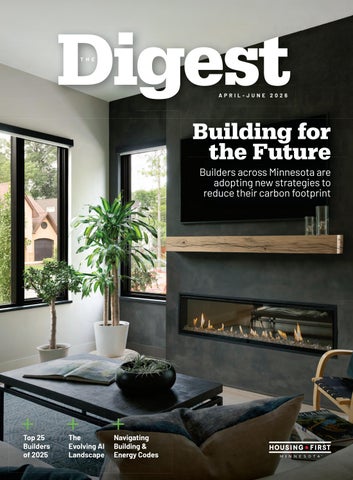



Builders across Minnesota are adopting new strategies to reduce their carbon footprint

















Cut costs, not comfort with a $500 bonus rebate on tankless water heaters!
*
Tankless water heaters o er you and your homebuyers many advantages:
• Saves energy
• Continuous supply of hot water
• Space savings
• Longer life
• Tax credits
Here’s another bonus. A high-e iciency natural gas tankless water heater may also impact the gas savings of your participating High E iciency Home and that could mean a higher rebate.
*Must install a high-e iciency natural gas tankless water heater rated at .90 UEF or greater in a qualifying CenterPoint Energy High E iciency Home.

Learn about more ways you can benefit from building with natural gas. Visit CenterPointEnergy.com/Builders or contact Jake Schwietering at 612-321-4386.




































EXECUTIVE
BOARD CHAIR JOHN KRAEMER, John Kraemer & Sons, Inc.
BUILDER VICE PRESIDENT JAMIE THARP, Pulte Homes of Minnesota, LLC

IMMEDIATE PAST PRESIDENT ART PRATT, Pratt Homes
SECRETARY/TREASURER PETER MARTIN, Pella Windows & Doors
AT-LARGE MEMBER MALORIE DRUGG
AT-LARGE MEMBER JENNIFER MCALPIN, McAlpin Marketing
AT-LARGE MEMBER REBECCA REMICK, City Homes, LLC
BOARD + COMMITTEE CHAIRS
PARADE OF HOMES COMMITTEE BLAKE SWANSON, Swanson Homes
ADVOCACY COMMITTEE ANDREW LEJEUNE, GlassArt Design
REMODELERS COMMITTEE ANDY MICHELS, Michels Homes
SMALL VOLUME BUILDERS COMMITTEE JOE BRAUN, Style & Structure
LARGE VOLUME BUILDERS COMMITTEE JOHN RASK, M/I Homes
AMBASSADOR COMMITTEE KATIE HRONSKI, Cambria
ARTISAN HOME TOUR COMMITTEE AMY HENDEL, Hendel Homes
HOUSING AFFORDABILITY INSTITUTE PETER COYLE, Larkin Hoffman
HOUSING FIRST MN FOUNDATION JEREMY LARSON, Hampton Construction, LLC
HOUSING FIRST MN NETWORK TONY WIENER, Cardinal Homebuilders, Inc.
CENTER FOR HOUSING CAREERS PAUL GRABOW, Robert Thomas Homes, Inc.
AT-LARGE MEMBER NATHAN CARLSON, Highmark Builders, Inc.
AT-LARGE MEMBER JIM FUSCHETTO, Lyman Companies
AT-LARGE MEMBER RYAN HANSON, Sustainable 9 Design + Build
AT-LARGE MEMBER MATT HOLMSTROM, Nor-Son Custom Builders
AT-LARGE MEMBER ALEX LELCHUK, Lelch
AT-LARGE MEMBER JARRETT PARKS, D.R. Horton, Inc. - Minnesota
AT-LARGE MEMBER RACHEL PAULOSE, Home Electronic Systems, Inc.
EXECUTIVE LEADERSHIP
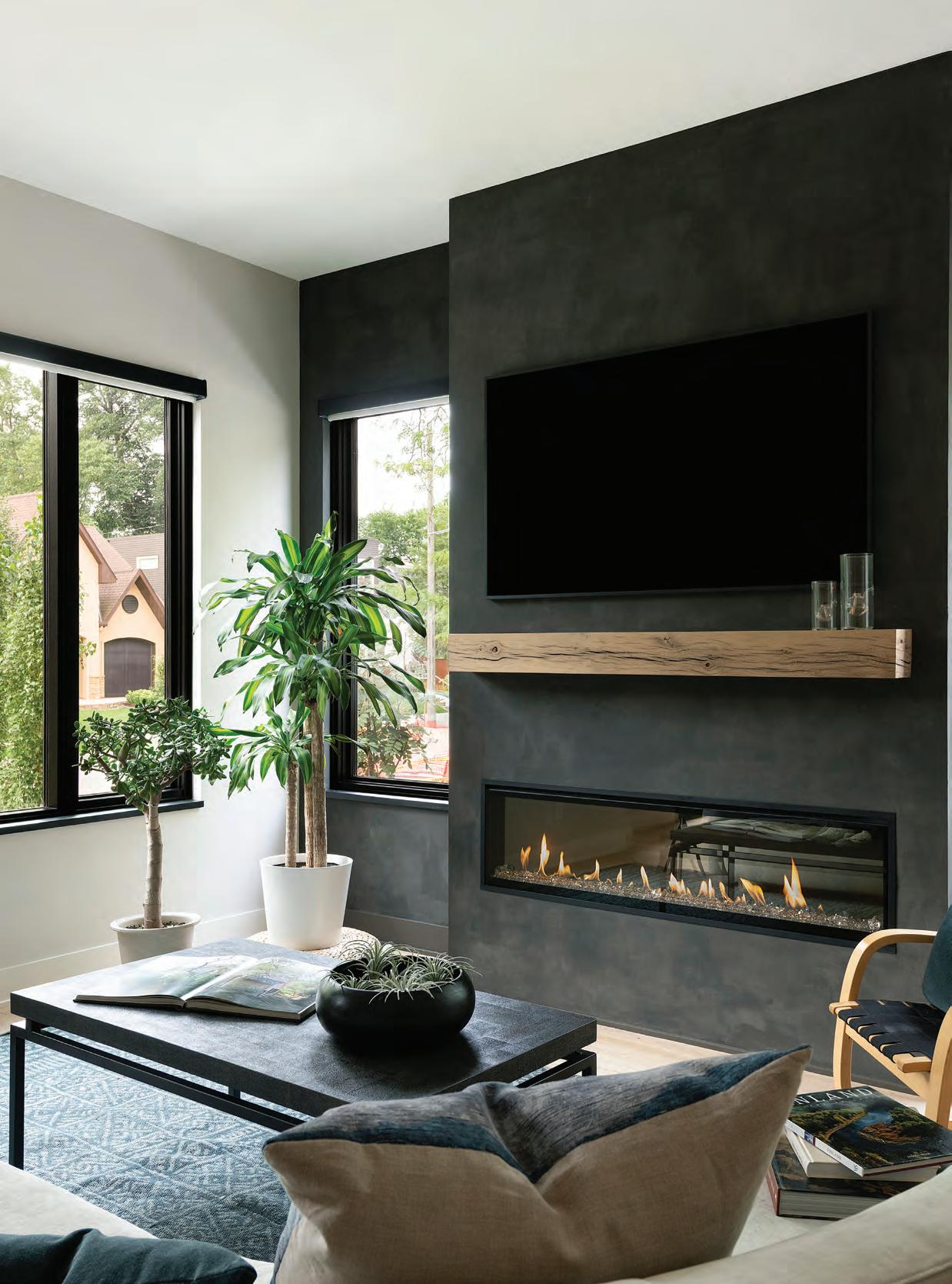
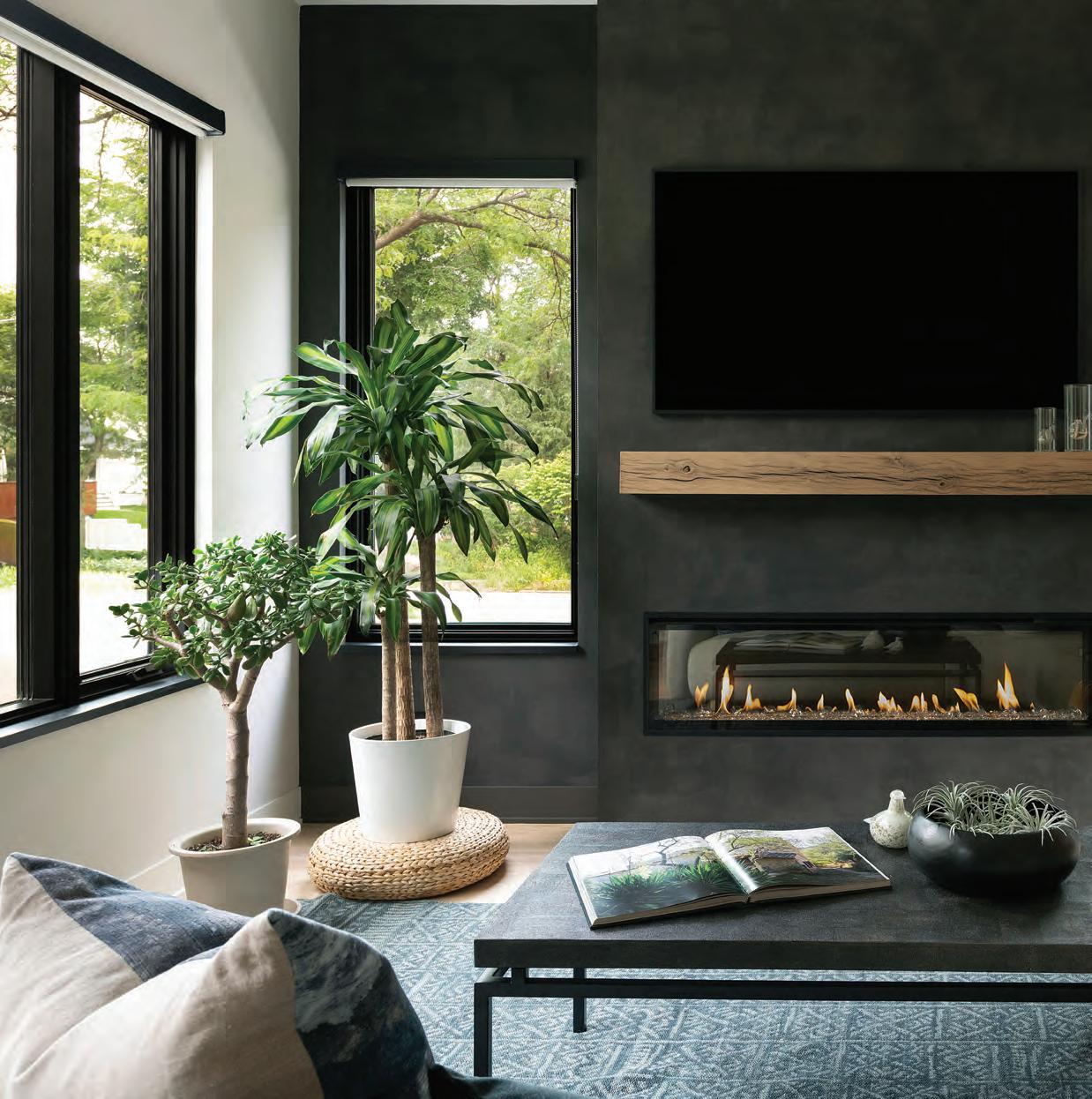
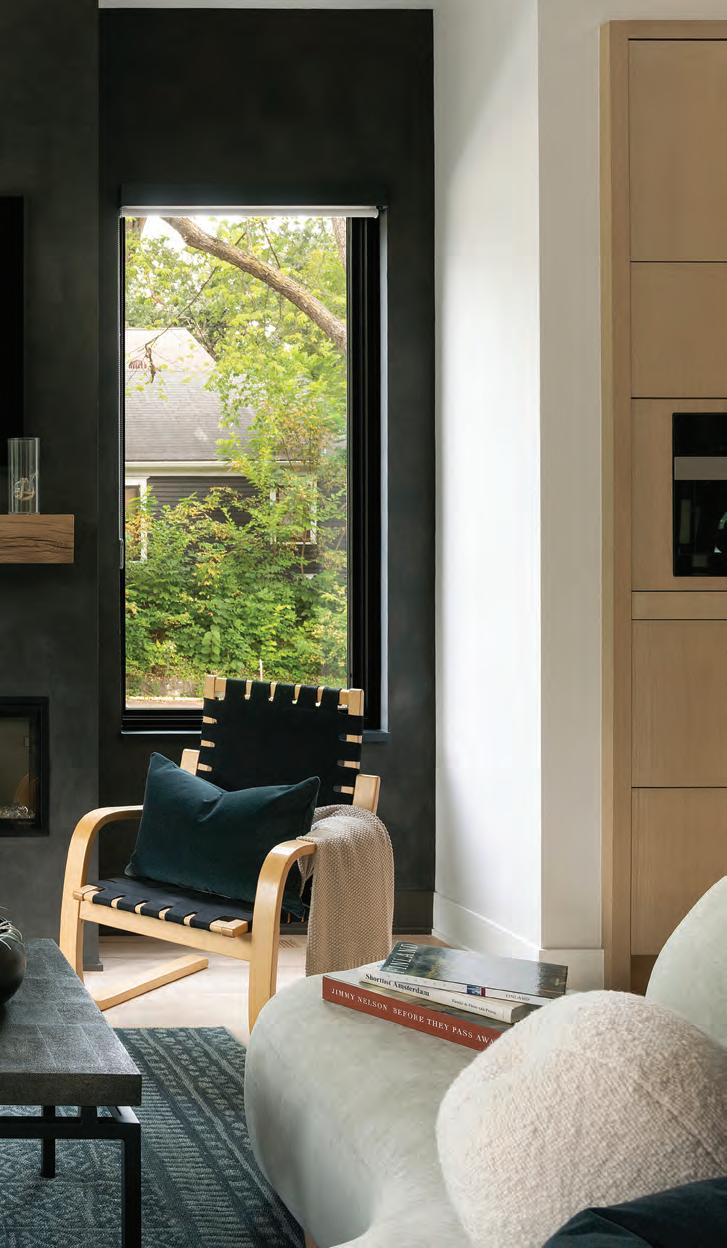
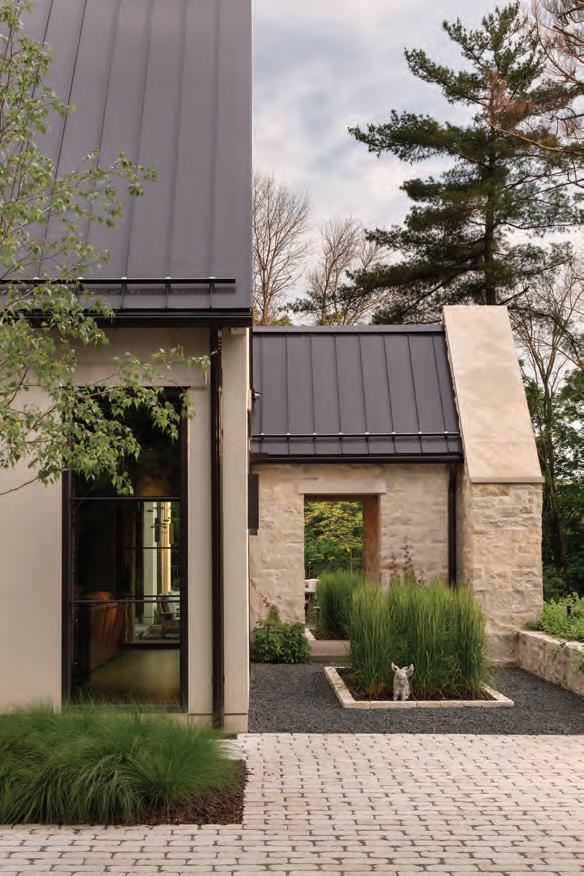
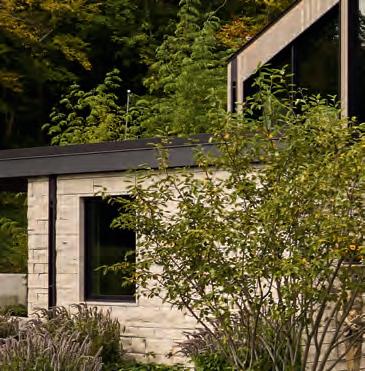
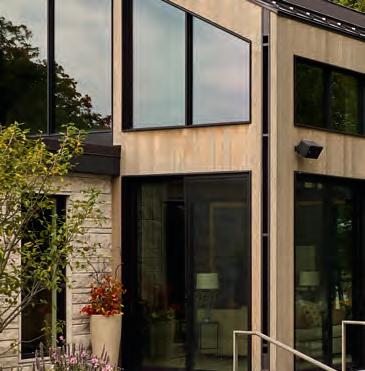
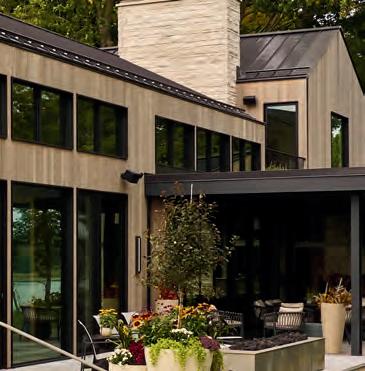
This modern Scandinavian abode by Sustainable 9 Design + Build boasts triple-pane
CHIEF EXECUTIVE OFFICER JAMES VAGLE
ASSOCIATION STAFF
SENIOR DIRECTOR, MARKETING & COMMUNICATIONS KATELYN BLOOMQUIST
MEMBER SERVICES MANAGER KIM CARTER
MEDIA RELATIONS MANAGER KRISTEN CROSSMAN
SENIOR DIRECTOR, HOUSING POLICY NICK ERICKSON
ART DIRECTOR MANDY FINDERS
VICE PRESIDENT, LEGISLATIVE & POLITICAL AFFAIRS MARK FOSTER
POLICY ASSOCIATE GRACE GREENE
SENIOR VICE PRESIDENT, GROWTH & ENGAGEMENT KATE GUNDERSON
SENIOR DIRECTOR, FINANCE TAMMI HALL
PROGRAM OPERATIONS MANAGER NIKKI HUBIN
FOUNDATION EXECUTIVE DIRECTOR SOFIA HUMPHRIES
FOUNDATION DEVELOPMENT & ENGAGEMENT MANAGER KRISTI JORGENSEN
EVENTS COORDINATOR GABRIELLE LANENBERG
SENIOR DIRECTOR, CLIENT STRATEGY & GROWTH DEVIN LEHNHOFF
DIRECTOR OF GROWTH TECHNOLOGY KRISTIN MARVIN
STYLE & COMMUNITY CONTENT COORDINATOR MOLLY MCCHESNEY
CHIEF OPERATING OFFICER JANICE MEYER
SENIOR DIRECTOR, EVENTS MARY CATHERINE PENNY
EVENTS COORDINATOR MORGAN RAY
CONTENT & PROJECT MANAGER ELIZABETH ROUBIK
CHIEF IMPACT OFFICER JESSICA RYAN
ENGAGEMENT ACCOUNT EXECUTIVE ALLYSON SAMPLE
OPERATIONS MANAGER CASEY SCOZZARI
GRAPHIC DESIGNER PA GAR VANG
CHIEF OF STAFF KATE WIGLEY
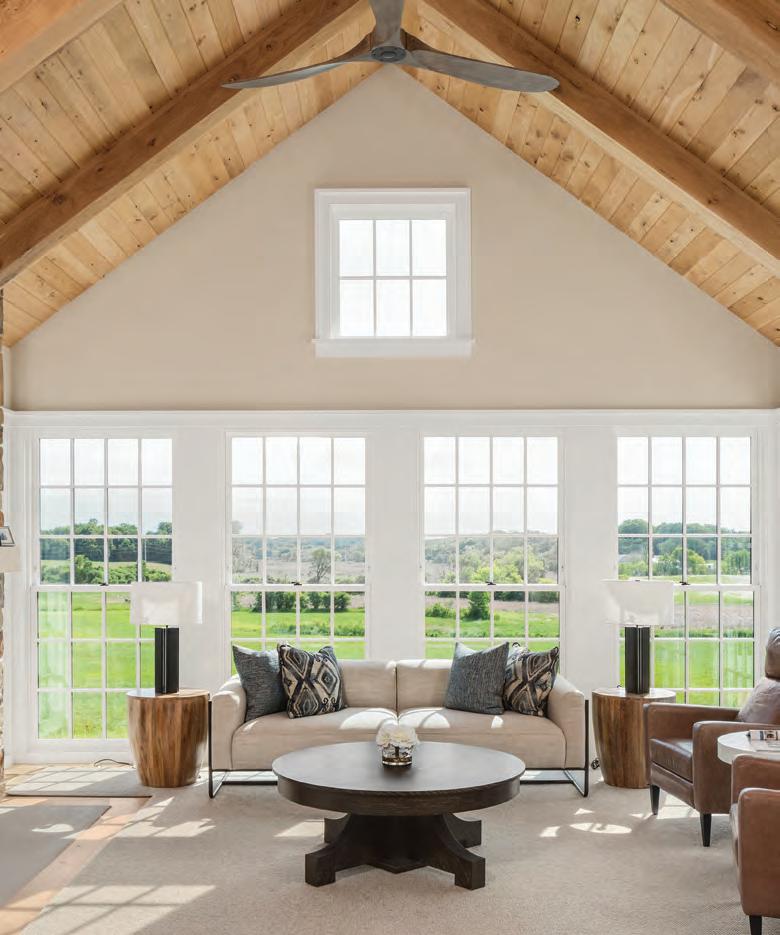
Envision your custom design with best-in-class products at the Marvin Design Gallery: A Window and Door Showroom by Shaw/Stewart
Two of the most established and well-respected companies in Minnesota are here to meet your window and door needs. When you combine the legacy of Shaw/Stewart Lumber Co. with the craftsmanship of Marvin, you get Minnesota’s premier showroom.
Shaw/Stewart Lumber Co. has been providing quality products and creative custom solutions to its customers since 1886. They serve luxury homebuilders and remodelers as well as commercial contractors in the Twin Cities area.
As a homebuyer or remodeling customer, you can depend on Shaw/Stewart to be the trusted source to provide your builder or remodeler with quality products, responsive service, and creative solutions for your project.
When you're ready to select windows and doors, join your contractor on a visit to the Marvin Design Gallery and confer with their professional design staff. You'll see the latest offerings from Marvin and feel the difference in quality, design, and craftsmanship.
All of the window and door displays are set in realistic vignettes, designed to help you imagine the possibilities for your own home.
SHAWSTEWARTLUMBERCO.COM 645 JOHNSON ST. NE MINNEAPOLIS 55413 612-378-1520 CONTACT US

BUILDING MATERIALS AND MILLWORK SOLUTIONS FOR CONSTRUCTION PROFESSIONALS
The long journey toward securing homeownership for future generations of Minnesotans resumed in St. Paul this February.
For years, our industry has led this conversation from the front lines. We have brought forward the data showing how dramatically affordability has eroded and how the dream of homeownership has slipped further out of reach for too many families across our state. At the same time, we have led with inspiration. Homeownership remains one of the most powerful institutions in Minnesota—strengthening communities, improving health outcomes, deepening civic engagement, and serving as the primary path to wealth creation for most families.
That is why our industry advocacy matters. At the center of this work is the Starter Home Act— a practical step toward restoring balance to our housing ecosystem.
For decades, the starter home served as the on-ramp to opportunity. Today, with an estimated 100,000-home shortage statewide, we all know that entry point has largely disappeared. We must build our way out of this challenge—delivering homes at every price point, including a meaningful return of starter homes.
As members of Housing First Minnesota, it is critical that our collective voice is heard. Policymakers must understand the urgency of restoring affordability and expanding homeownership opportunities.
Bringing back starter homes is the fastest and most practical way forward. But this debate—and others coming soon, including energy code proposals and workforce mandates—will require our industry to stand together. Our message must be clear and consistent.
Minnesota needs more homes. Minnesota needs starter homes.
And together, we will continue leading the effort to make homeownership possible for the next generation.
Onward,
JOHN KRAEMER
2026 BOARD CHAIR, HOUSING FIRST MINNESOTA















Housing First Minnesota would not be as strong or successful without our Elite Sponsors. Thank you to our biggest associate supporters!






Do




















Connect with Lyman Companies today for expert guidance, endless options for your budget, and the largest inventory in the Upper Midwest.
Visit our showroom, pick up samples, and start your next project!
Our sponsorship and advertisement opportunities enhance your ability to communicate your products and services to other members and engaged consumers. Your participation as a sponsor is a win-win opportunity: You gain exposure to your key markets, and Housing First Minnesota can continue offering high-quality programs to members, outreach to the community, and advocacy to create a healthy and vital industry.
FOR MORE INFORMATION, CONTACT Sales@HousingFirstMN.org

As a member of Housing First Minnesota, your company has been added to our online association portal at HousingFirstMN.org. This website makes it easy to search and connect with fellow association members, stay in the know with industry updates, and register for upcoming events. The member portal is the best way to take advantage of association benefits and keep your team engaged with all Housing First Minnesota has to offer.
DETAILS AT HousingFirstMN.org


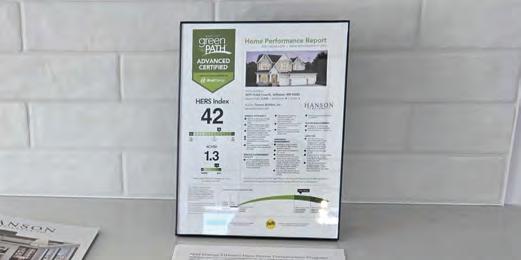
Become an industry leader with the Designated Green Path Builder program. Enjoy recognition in both building industry and consumer marketing, and gain access to exclusive Designated Green Path Builder program benefits.
DETAILS AT MNGreenPath.org


Earn your continuing education credits through Contractor University’s online courses. With more than 50 courses available, you’ll find specialized classes that provide useful and practical knowledge to apply to your business.
Minnesota’s Green Path program is the leading energy efficiency and green building program for residential construction in the state. As part of its commitment to green building, Xcel Energy has teamed up with Minnesota’s Green Path to recognize new homes that go above and beyond in regard to energy efficiency. Xcel Energy covers the $79 Advanced and Master Certification application fee for builders who build in their territory and achieve Advanced or Master certification on their homes.



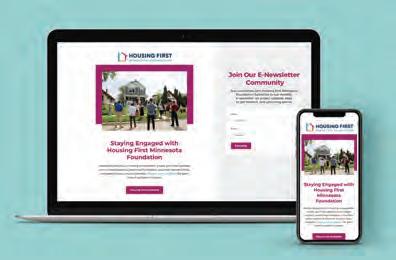
Stay up to date on all the latest news from the Housing First Minnesota Foundation with our enewsletter! From updates of build projects and upcoming events to new ways to get involved, this monthly email is the perfect way to stay in the loop.
SUBSCRIBE AT HousingFirstMNFoundation.org





Lawmakers reconvened in St. Paul on Feb. 17, launching a compressed 2026 legislative session shaped by electionyear dynamics and narrow partisan margins. With every legislative seat on the ballot this November, proposals with clear, constituent-level impact and bipartisan appeal are expected to move to the forefront.
Minnesota’s persistent housing shortage, rising home prices, and regulatory barriers dominated debate in 2025. Those pressures are only intensifying in 2026. At the center of the conversation is the return of the “Yes to Homes” framework, designed to expand housing options while maintaining local control where additional density makes sense.
“During the 2026 session, lawmakers need to hear clearly that every dollar added in fees, mandates, or delays is a dollar taken away from a Minnesota family’s ability to own a home,” says Mark Foster, vice president of legislative & political affairs at Housing First Minnesota. “The Yes to Homes framework is about removing artificial barriers while
still respecting local planning and infrastructure realities.”
The bill had overwhelming support from the Housing Committee in the house and will be heard in the coming weeks at its next committee stops: House Elections Finance and Government Operations, and Senate State and Local Government.
The 2026 bill builds on prior versions by combining baseline statewide standards with meaningful local flexibility.
Under the proposal, municipalities would designate a modest portion of residential and commercially zoned districts where additional housing types and density are allowed by right, using existing administrative approvals rather than discretionary reviews that add cost and uncertainty.
All municipalities, regardless of size, would be subject to core baseline provisions, including:
• Allowing accessory dwelling units (ADUs) in all residential districts
• Prohibiting requirements that mandate the creation of homeowners associations

• Limiting certain aesthetic mandates that increase costs for potential homebuyers
• Preventing minimum lot-size requirements exceeding oneeighth of an acre in residential greenfield development
Beyond those baseline reforms, the proposal uses a menu-based approach. Larger municipalities would select additional supply-supporting options, such as:
• Expanding the percentage of residential districts that allow up to four units per lot
• Increasing multifamily capacity in commercial districts
• Reducing or eliminating parking minimums
• Providing building-size bonuses for workforce, affordable, or senior housing
Importantly for builders, feasibility is a central focus. While municipalities would retain control over bulk standards—such as setbacks, floor-area ratios, and height limits—those standards could not be applied in ways that make newly allowed housing types impractical or impossible to build.
“There’s a big difference between allowing housing on paper and allowing
housing that can actually be built,” Foster explains. “This bill is structured to ensure that when communities say ‘yes’ to more homes, the rules don’t quietly say ‘no’ afterward.”
Starter homes, which are largely absent from Minnesota’s new-construction market, are expected to be a defining issue this session. The Yes to Homes framework directly addresses long-standing zoning and lot-size barriers that have constrained entry-level housing production for decades.
At the same time, the proposal recognizes infrastructure realities. Additional housing would not be required in areas where infrastructure cannot support it, including floodplains, shorelands, and areas of critical environmental or historic concern. District selection would prioritize proximity to transit, commercial centers, parks, and schools, with clear transparency requirements for municipal decision-making.
Unlike budget years, the 2026 session does not require passage of a full biennial budget, placing added emphasis on cost-neutral solutions. For Housing First Minnesota members, that strengthens the case for zoning and land-use reforms that expand supply without relying on new state subsidies.
After years of study and debate, the message heading into the session is clear: Minnesota’s housing challenges are well documented. The 2026 Legislature will decide whether state policy finally aligns with the realities builders face, or whether outdated regulations will continue to limit housing production across the state.
Housing First Minnesota warned lawmakers about the impact of Minnesota’s upcoming residential energy code changes during a House Workforce & Labor committee hearing at the State Capitol. Despite these efforts, a bill to
address the issue failed to advance out of committee on a party-line vote, with seven Republicans voting for and seven Democrats voting against.
Housing First Minnesota pushed back against strong claims from environmental and energy advocacy organizations that stronger building codes are necessary to reduce energy use and help Minnesota meet its climate goals. Several organizations claimed that stronger energy codes would have little to no impact on the cost of building a home.
Environmental groups also claimed that stronger energy codes would not restrict new construction—ignoring evidence from other cities and states where similar mandates have caused significant slowdowns, and even complete halts, in residential permitting.
Builders across Minnesota know firsthand that every new mandate added to
the building code carries a cost. Eric Boyd, north region president at ARCXIS, noted in his testimony that there have been six-month permitting delays and $10,000-$30,000 cost increases per home in Washington. In Kansas City, the 2024 code was adopted and met with a six-month halt on the issuing of permits before an eventual repeal of the code.
In its letter to lawmakers and in testimony during the hearing, Housing First Minnesota warned that Minnesota is already on a statutory path toward significantly more aggressive residential energy codes in coming years.
Nick Erickson, senior director of housing policy for Housing First Minnesota, noted in his testimony, “In the next decade, we will see the energy code become the number one cost driver in Minnesota.” These policies risk adding substantial costs to new homes at a time


when housing affordability is already under severe pressure.
Minnesota builders support improving energy efficiency and have already delivered dramatic improvements in home performance over the past two decades. Homes built today are significantly more energy efficient than those built just a generation ago. But piling additional mandates onto the building code without accounting for affordability risks makes Minnesota’s housing shortage even worse.
The hearing highlighted a growing divide at the Legislature between climate policy goals and housing affordability. Environmental advocacy groups are pushing for faster and more aggressive building code mandates as part of the state’s climate agenda. Builders and housing providers are warning lawmakers that policymakers must also consider the real-world consequences of those policies—particularly at a time when Minnesota already faces a severe housing shortage.
Housing First Minnesota emphasized that improving efficiency should not come at the expense of homeownership opportunities for Minnesota families.
While the proposal will not move forward at this time, Minnesota’s residential energy code will continue to evolve through the state’s rulemaking process, meaning the debate over costs, mandates, and housing affordability is far from over.
Housing First Minnesota will continue working with lawmakers and regulators to ensure energy efficiency improvements are implemented in a way that
protects housing affordability and preserves homeownership opportunities for Minnesota families.
Minnesotans deserve homes that are both efficient and attainable—and Housing First will continue fighting to ensure policymakers don’t lose sight of that reality.
On Jan. 14, the Minnesota Court of Appeals heard oral arguments in Housing First Minnesota’s cases against the Cities of Corcoran and Dayton regarding building permit fees.
The association argues that both cities violated Minnesota Rule 1300.0160 by inflating permit fees far beyond the actual cost of service, turning them into an unlawful revenue source. A prior 2023 ruling confirmed Housing First Minnesota’s standing to bring the challenge; this new phase focuses squarely on whether the cities’ fee structures violate state law.
Members can expect a ruling in the case by mid-April.
In January, the Board of Electricity approved the 2024 National Electrical Code (NEC). Housing First Minnesota worked closely with the Department of Labor and Industry (DLI) to ensure housing affordability and the looming housing shortage remained top of mind amid the process. Following a meeting between Housing First Minnesota staff and DLI Commissioner
Nicole Blissenbach, four amendments that would have drastically increased new construction costs were denied.
Members can expect the following approved changes:
• SURGE PROTECTION DEVICES (SPDS): All services, including new builds and panel replacements/upgrades, now require a Type 1 or Type 2 SPD to protect electronics from voltage surges.
• EXTERIOR EMERGENCY DISCONNECTS: An external, readily accessible disconnect switch is required for all oneand two-family dwellings, allowing responders to safely shut off power.
• EXPANDED GFCI/AFCI PROTECTION:
The requirement for Ground-Fault Circuit-Interrupter (GFCI) and Arc-Fault Circuit-Interrupter (AFCI) protection is expanded, covering more residential outlets, kitchens, and bathrooms.
• OUTDOOR/GARAGE OUTLETS: There are now more stringent requirements for tamper-resistant and weatherproof outlets in garages and exterior locations.
• DEDICATED CIRCUITS & ELECTRIFICATION: Mandates for dedicated circuits are increasing for high-demand equipment, including HVAC systems, water heaters, and electric vehicle (EV) charging stations.
• ARC FL ASH LABELING (NONDWELLING): NEC 110.16(B) requires permanent arc flash hazard markings on service and feeder equipment rated 1000 amps or more.
• CODE FORMAT UPDATES: The code includes formatting changes, such as single-column text,
modern fonts, and the use of QR codes instead of traditional margin markers, to identify changes.
While there is currently no timeline for the residential building code to move on to the next stage of rulemaking nor for implementation, Housing First Minnesota will remain engaged in the process and keep members informed.
Housing First Minnesota has issued the following public statement regarding the City of Edina’s repeal and replacement of its vegetation and tree replacement ordinances:
“By repealing and replacing its vegetation and tree replacement ordinances, the City of Edina has effectively acknowledged that these programs, as they existed prior to Housing First’s lawsuit, were likely to be ruled illegal under state law,” says CEO James Vagle. “The city’s ordinance amendment has improved the ordinance and addressed several of the concerns raised in our lawsuit.
As we’ve said from the outset, local governments must operate within the authority granted under state law, and homeowners should not be subjected to unlawful fees or requirements. We continue to have concerns with aspects of the city’s tree ordinance; however, in light of the amendment, we will dismiss the lawsuit to see how the amended ordinance is implemented.
Housing First Minnesota will remain engaged to ensure homeowners are
protected from unlawful fees and exactions moving forward. If the new ordinance is abused, Housing First will not hesitate to return to court.”
In October 2024, Housing First sent the City of Edina a letter demanding that it amend its ordinances to comply with state law. The city did not modify the ordinances, leading to Housing First’s lawsuit. According to city records, Edina had collected and retained nearly $1 million under its tree escrow program in recent years and earned interest on those funds, which it did not pay out.
On Aug. 25, 2025, Housing First Minnesota filed suit in Hennepin County District Court challenging the Tree Replacement Ordinance and Vegetation Ordinance.
On March 3, 2026, before a summary judgment hearing could be held, the City of Edina repealed and replaced its tree protection ordinance. Due to the repeal of this ordinance, Housing First Minnesota has withdrawn its complaint and will closely monitor how the city implements this new ordinance.
A recent report from the Housing Affordability Institute found local zoning rules are significantly constraining housing production across key growth regions in Minnesota and warns that meaningful supply gains will require structural policy changes.
The report, “Lot Sizes and the Supply Gap: Housing Production Constraints in Minnesota’s Growth Regions,” evaluates zoning regulations in the St. Cloud, Twin Cities, and Rochester areas, concluding that current standards—particularly minimum lot size requirements—are limiting much-needed housing development.
Drawing on national housing production benchmarks from the American Enterprise Institute and the U.S. Chamber of Commerce, the analysis finds that production in the St. Cloud, MinneapolisSt. Paul-Bloomington, and Rochester regions could be substantially increased by permitting smaller lots in greenfield areas.
However, data from the Minnesota Zoning Atlas show that most communities in the St. Cloud and Twin Cities regions do not allow smaller, more affordable lots as a permitted use under base zoning. Instead, builders often must pursue planned unit developments (PUDs) or variances—adding time, cost, and uncertainty to projects. In contrast, zoning in the Rochester area more commonly allows smaller lots by right.
The report emphasizes that smaller lots improve land-use efficiency and better align new construction with today’s market realities, including affordability pressures and shifting buyer demand. “Housing production remains far below historic levels, with the state never recovering from the Great Recession,” says Erickson, who is also the executive director of Housing Affordability Institute. “Adjusting lot size and width standards would go a long way toward restoring housing production and expanding homeownership opportunities.”
The report concludes that without broad-based zoning reforms such as lot size and width requirement changes in Minnesota’s growth regions, the supply of more affordable, smaller homes will remain constrained.
For Housing First Minnesota members, the findings reinforce what many builders experience firsthand: Restoring production levels and meeting demand will require policy frameworks that allow the market to deliver the housing Minnesotans need


Our builders in the Twin Cities region are truly shaping the future of our communities. Through their dedication to building safe, high-performing homes, they’re opening the door to homeownership for more Minnesotans.”
JAMES VAGLE CEO, HOUSING FIRST MINNESOTA
Results from a recent survey by Housing First Minnesota show that Lennar was the region’s top builder once again in 2025. This ranking is determined based on annual gross revenue as reported by respondents for forsale housing. Lennar has held the top spot since 2006.
Together, the Top 25 Builders accounted for $3.69 billion in gross revenue and 6,512 housing units in 2025. Of those housing units, 5,183 were single-family homes and 1,390 were townhomes or multifamily units. Lennar reported gross revenue of $1,054,392,394 for 1,644 single-family homes and 492 multifamily homes closed in the 2025 calendar year, for a total of 2,136 units.
“Our builders in the Twin Cities region are truly shaping the future of our communities,” says James Vagle, CEO of Housing First Minnesota. “Through their dedication to building safe, high-performing homes, they’re opening the door to homeownership for more Minnesotans.”
“At Lennar, we strive on our mission of helping more Minnesotans live the American dream,” says Lennar Division President Jon Aune. “Our focus has been, and continues to be, on building great homes in neighborhoods throughout the state that are important to Minnesota families. We are proud of the fact that for the last 20 years, more Minnesota families put their trust in Lennar to help them make their homeownership dream become a reality.”
In addition to Lennar, the top 10 homebuilders were D.R. Horton, Inc. – Minnesota with over $416 million in revenue and 813 housing units closed; Pulte Homes of Minnesota, LLC with over $350 million in revenue and 662 units; M/I Homes with over $338 million in revenue and 733 units; Capstone Homes, Inc. with over $196 million and 437 units; Robert Thomas Homes, Inc. with over $184 million and 244 units; Hanson Builders, Inc. with over $161 million and 135 units; Creative Homes, Inc. with over $142 million and 219 units; Gonyea Homes, Inc. with over $118 million and 107 units; and David Weekley Homes with over $91 million and 167 units closed.

AS AI TOOLS BECOME MORE ACCESSIBLE, BUILDERS ARE FINDING PRACTICAL WAYS TO USE THE TECHNOLOGY— WITHOUT REPLACING EXPERIENCE OR EXPERTISE

From OpenAI’s popular ChatGPT bot to Google’s new personal Gemini assistant, artificial intelligence (AI) is popping up everywhere these days—in our schools, workplaces, social media feeds, and more. With AI’s rapid acceleration into our daily lives, it’s become a hot topic for both intrigue and alarm. However, when thoughtfully driven by human authority and creativity, AI tools and technology can be a useful resource for streamlining workflows and improving overall day-today management.
“When people hear ‘AI,’ they think, ‘Oh no, they’ll take our designs, they’ll take our jobs!’ But what they don’t realize is these are tools to expedite, not replace,” explains Morgan Molitor, co-founder and creative director at local contracting firm construction2style, who has more than four years of AI-related industry experience under her belt. “We’re already good at the craft side of the business, but AI can help elevate the other side—the cash flow and internal processes—so you can think deeper, move faster, and build better.”
If you believe the world is changing because of AI, you better start incorporating it.”
SVEN GUSTAFSON CEO, STONEWOOD, LLC
From helping develop strategies and draft communications to acting as a personal assistant when it comes to schedules and reminders, AI can offer additional support on a wide variety of workflows.
“We’ve been leaning in on AI for the last few years, particularly the side that can automate processes and make work more efficient,” says Sven Gustafson, founder and CEO of Stonewood, LLC. “We use AI for all our marketing; building websites, communications, blog posts—it’s all been enhanced and made much more efficient using AI.”
As another collaborator available to bounce ideas off of, AI can help refine your company’s brand identity and brainstorm marketing strategies. “I can ask my bots to keep a pulse on anything company-related, like Google Alerts, or if construction2style pops up on any news or social media outlets,” says Molitor. “If that happens, they let me know and help me see if there’s a potential marketing opportunity there.”
While AI tools can help finesse emails, schedule meetings, and even streamline the initial vetting process of a client, they can also be used to facilitate smoother communication. Gustafson and his employees utilize ChatGPT and Claude (an AI assistant built by Anthropic) to automatically transcribe all their meetings, both in-person and online. “It frees

me up to better focus on the conversation because I don’t have to take notes,” he explains. “I find I’m a more effective design partner and salesman because I get to be more present.”
AI can also be a great tool for helping identify areas for your company to improve financially, as well as brainstorm ways to meet and recover margins. “I get our financial stats from our accountant every month, and the first thing I do is throw the numbers into my [ChatGPT] bot and ask it how we can be better,” says Molitor. “It keeps track of where all our money is coming from and going to, and it can help us see any gaps we might not have noticed before.”
1. EXPERIMENT WITH DIFFERENT KINDS: “Be curious, try different kinds, and make it part of the mission of your company,” says Gustafson. “If you believe the world is changing because of AI, you better start incorporating it.”
2. TREAT AI LIKE ANOTHER EMPLOYEE: “People start working with AI expecting executive-level results to come out,
but it needs to start at entry level,” says Molitor. “You have to be the leader—it won’t learn unless you take the time to educate it. Start by having it work on more simple tasks, and don’t throw out the system at its first mistake.”
3. DON’T GET LAZY: “Remember that AI enhances everything, good and bad,” says Gustafson. “If you have a brilliant writer, AI can help their writing be even better. But if you have a lazy employee who’s using it to write emails, AI will also enhance their foolishness. You have to be careful not to replace human thinking with AI.”
Gustafson, who developed a construction project management software called BuildTools that’s used by custom homebuilders and remodelers around the country, shared his current plans to rebuild the entire platform using AI. “We launched that in March, and I think it’ll open a lot of builders’ eyes to what’s possible with AI,” he says.
Molitor, who recently spoke about the topic on a panel at the national Kitchen & Bath Industry Show in Las Vegas, added, “My advice? Don’t fight it unless you want to be left behind.”
1. DALL-E FOR DESIGN INSPIRATION: “Say I’m working with a client on a stair railing,” explains Molitor. “I can snap a photo, pop it into the image generator, and ask it to show us different iterations. While I wouldn’t use the pictures for building accuracy, they can be great for inspiration—just another way to think fast in the moment!”
2. DESCRIPT FOR SOCIAL MEDIA: “I use high-level Descript for a lot of our video content, like our Facebook posts, Instagram reels, and YouTube shorts,” says Molitor. “I take B-roll footage, throw it into Descript, and with about five clicks, it clips the footage down, stitches it together, and helps it flow.”
3. CANVAS FOR DIMENSIONS:
“If I’m visiting a client’s home for the first time, I can tell it to scan the room and it’ll get all the dimensions, and the measurements are very accurate,” says Molitor. “It gives you a good starting point and saves time on making another trip out there to get some initial numbers.”
4. PERPLEXITY FOR RESEARCH: “Perplexity is great for getting quick answers to your questions and identifying setbacks in a particular city,” says Gustafson. “For example, I can ask it, ‘What will the city of Orono charge for a demolition plan?’ and it’ll spit out the answer.”

Your brand is your voice—the thing that tells the world who you are, what you offer, and why it matters. In the homebuilding and remodeling industry, branding plays a key role in how customers perceive your business, long before the first conversation ever takes place. And in a market where much of the competition can feel visually and stylistically similar, the ability to stand apart isn’t just helpful—it’s essential for long-term success.
According to Matt Shimon, director of brand, creative, and marketing at Robert Thomas Homes, Inc., effective branding boils down to four foundational questions: Who are you serving? What makes your business unique? Why are you in business? And how are you different from everyone else? “Your brand and business strategy need to back up the answers to these questions,” Shimon says. “That’s the heart of your offering, your sales pitch, and how customers connect with you. It’s your unique spot in the market. It’s what makes your brand.”
Of course, answering said questions— and putting them into practice—is easier said than done. The best starting point is establishing your brand persona and owning it with confidence. “In the [housing and construction] market, one of the most effective tactics we’ve found for setting ourselves apart is intentionally using our employees’ thoughts, ideas, and perspectives to help shape the business,” explains Elizabeth Christenson, marketing manager at Stonegate Builders.
Audiences today aren’t expecting perfection, they value content that feels human—something Housing First Minnesota’s Content & Project Manager Elizabeth Roubik has seen firsthand. “With AI tools like ChatGPT becoming so widely used, it’s easy to rely on them when crafting content,” she says, “but when it comes to telling your brand’s story, make sure it sounds like you. Consumers value that connection, and when they can see both the beautiful work you do and the people behind it, that’s where the magic happens.”
Shimon, who previously ran his own branding and creative agency, agrees that this human element should be a top priority—especially for companies developing their brand from the ground up. In practice, this means crafting content that reflects who you really are; think walkthrough video tours, casual social media Q&As, or behind-the-scenes moments. “Homeowners need confidence, not just a sales pitch,” he says. Whether it’s high-quality imagery, video tours, floor plans, or helpful guides and checklists, every touchpoint should reinforce your expertise and build trust.
Once your persona and voice are defined, the next step involves building that brand consistently across all platforms. “The less time a consumer has to take to recognize your brand, the better,” Roubik says. “That means ensuring your business name appears the same everywhere— your website, Google, social media, and
beyond.” Christenson adds that unified visual elements like logos, color palettes, photography style, and overall aesthetic play an equally important role. Together, they create a cohesive identity that reinforces your brand at every interaction.
If you’re looking to build or refresh your brand, Shimon recommends starting with a clear audit of where you currently stand. Too often, he says, builders market homes like a grocery list—emphasizing details like square footage, finishes, and appliance brands. “The missed opportunity lies in failing to communicate the lifestyle outcome their product provides customers,” he explains. “Instead of marketing a ‘custom
kitchen with professional-grade appliances,’ a brand-led builder markets ‘the backdrop for Sunday morning pancakes with the grandkids.’”
One of the most common branding pitfalls Christenson sees is builders simply following what others in the market are doing. “When builders copy the same content, aesthetics, and messaging [as others], their unique position in the market becomes diluted,” she says. “Today’s buyers are highly attuned to authenticity, and they notice when three or four builders are sharing the same look, the same story, and, essentially, the same product.”
Shimon echoes the sentiment, advising brands not to overthink or overreach.
Instead, everything should feel natural and aligned with your voice, tone, and values. Christenson adds that inauthenticity often appears when brands chase trends without intention. She adds, “When there’s little effort behind the content, it feels more performative than purposeful.”
Ultimately, how you build your brand is how you will be perceived. Your brand is how trust is formed—and trust is what drives engagement, loyalty, and new leads. After all, when your voice, visuals, and story work together, your brand becomes a powerful tool for connection. As Shimon says, “When all these pieces fall into place, your brand has its best potential to truly resonate.”


With plenty of people still on the hunt in the current job market, it’s a prime time to reevaluate your company’s hiring processes and consider new ways to help position yourself as an employer of choice. We spoke with Christina Graese, vice president of sales and marketing at Burnsville-based Brandl Anderson Homes, to share her insights into what companies can do to attract, retain, and engage the top talent of today.
“Flexibility is the overwhelming thing I hear as I’m hiring people these days, oftentimes even more than salary,” says Graese. “People want to know your company’s
stance on flexibility and what that might look like for them, whether it’s the hours they’re working or the ability to do some hybrid or at-home work. If you’re able to offer those types of options, it’s something a lot of people value in an employer.”
While the national COVID-19 pandemic affected many employees’ physical working locations, it also affected their priorities. A cultural shift occurred that placed more emphasis on creating a healthy work-life balance, evident in the workforce’s growing mentality that “A job shouldn’t be your entire life; it should support your life.”
“People are trying to better balance their work and life, whether that’s being able to schedule an appointment during the day, picking your kid up from school, or staying home with them when they’re sick,” explains Graese. “It’s important to them to feel they have the support of their employer when it comes to making those decisions, and as an employer, I’ve found you tend to get more out of your employees when they feel safe and trusted.”
With many companies issuing return-to-office mandates (and many employees’ responding resistance), creating a strong and welcoming
Flexibility is the overwhelming thing I hear as I’m hiring people these days, oftentimes even more than salary.”
CHRISTINA GRAESE
VICE PRESIDENT OF SALES AND MARKETING, BRANDL ANDERSON HOMES

company culture is more important than ever. If your company requires people to work in-office, it’s crucial that employees see it as a valuable opportunity to collaborate and achieve, rather than an empty request to simply see “more bodies in chairs.”
“Potential employees place a high value on company culture,” Graese adds. “If you’re going to ask them to come into the office, they don’t want to just sit in cubes and not talk all day—they can do that at home. You want to create a positive environment where there’s a reason for them to show up in person; otherwise,
they’re not going to want to come in, and then they’re not going to be able to achieve and excel.”
Since Minnesota has plenty of building and remodeling companies of all shapes and sizes, Graese encourages everyone to lean into their strengths. While larger companies may have the resources to offer higher pay or a more attractive benefits package, smaller companies may have the ability to offer a wider variety of flexible working options.
“People are looking to work at a place where they’re valued, and they tend to feel valued when they feel their opinions
are heard and they can see their work is having a tangible effect on the business,” explains Graese. “That’s a benefit for us at Brandl Anderson—we’re a smaller company, so employees have a more direct line to leadership as opposed to a larger, more corporate environment where you might be further removed from those decision-makers.”
Finally, with job-hopping a much more common practice in today’s workforce compared to previous generations, and the process of replacing valuable employees being both time-consuming and costly, it’s important to find ways to
retain that top talent you worked so hard to attract in the first place.
“Communication is key—be open and accessible, and really get to know your employees and their lifestyle,” says Graese. “Dig deep into their goals: Are they happy in their current position? Do they want to move up into a higher position, or even into a different part of the building industry? It’s a benefit to be able to allow your employees to wear multiple hats and explore different areas they might be interested in.”
If you want to position your company as a top employer of choice, Graese recommends first taking another look at your options for flexible work. “The fact is, COVID made a lot of companies and employees see that not only can their jobs be done in multiple places, but they may be done better in those places,” she says. “If you can offer some kind of flexibility that supports their life realities, it really adds to an employee feeling valued. Then, in response, they’re going to give you even more.”

5 TIPS TO ATTRACT & RETAIN TALENT:
1. BE HONEST WITH YOUR JOB DESCRIPTIONS. “Depending on the size or structure of your company, there are going to be certain things you’re not able to offer employees, so it’s never a good thing to overpromise,” says Graese. “If you’re honest with people up front, they’ll know whether you’re a good fit for them.”
2. REACH OUT TO YOUR NETWORKING GROUPS. “If I need to add someone to my team, I’ll reach out to my networking groups or other resources in the industry and just ask them, ‘Hey, do you know anybody?’
As much as we’re competitors, we’re still all in the same boat,” says Graese. “Reaching out to the tech schools has been a success for our production teams as well.”
3. STREAMLINE YOUR HIRING PROCESS. “The more rounds of interviews you hold, the more hoops you make people jump through during the hiring process, the more wary they become of the way your company might be run internally,” says Graese.
4. KEEP YOUR TEAM CONNECTED. “It can be tough for builders and remodelers because your team is broken up geographically, and workers in the field can feel
disconnected from the rest of the team,” says Graese. “Communication is key to keeping that connection, whether that’s planning activities everyone can participate in, thanking everyone for their hard work, or celebrating wins both big and small.”
5. SUPPORT ADDITIONAL LEARNING OPPORTUNITIES. “Encourage employees to take part in classes, events, and seminars that can help them grow professionally,” says Graese. “Work with them on personalized training programs [and] fund some learning opportunities if possible. If employees feel they have a voice and a say in their job and where it’s headed, they’ll be more motivated and more likely to stay.”









With Peter Kulczyk BUILDING INSPECTOR, PLANS EXAMINER, AUTHOR & EDUCATOR


Even the most experienced builders can stumble when it comes to code compliance. As requirements evolve, small oversights can turn into failed inspections, costly delays, and frustrated teams. Here, we dig into the most common areas where projects miss the mark—and more importantly, the practical steps builders can take to get it right the first time.
Q. What would you say are the top three areas where builders most commonly fail to meet code?
In no particular order of importance:
FIRST: If you are installing replacement windows in existing homes, in addition to obtaining a building permit, the permit holder (contractor) is responsible for ensuring the replacement windows meet the State Energy Code requirement of a U-Factor of 0.32 or lower. The contractor is also responsible for ensuring the house has smoke alarms and carbon monoxide alarms in the locations specified by the code in International Residential Code (IRC) Sections R314 and R315. On a somewhat regular basis, during my final inspection for replacement windows, the contractor fails to leave the National Fenestration
Rating Council (NFRC) labels on the windows that indicate the U-Factors, and quite often, they comment that they have never heard of the requirement for smoke alarms and carbon monoxide alarms.
SECOND: If you are constructing a deck, porch, garage, or addition, a printed copy of the city “approved plan” needs to be on site, along with the printed building permit card. The city provides a plan review as part of the building permit application process to see if your plan appears to meet the intent of the code—and if not, the city will typically either make notes on the plan or return it to you for corrections. When the permit application is approved, you will need to have that “approved plan” available on site for all inspections.
THIRD: If you are building a deck, please note that the minimum and maximum measurements related to guard height and openings, stair run and risers, and gripable handrail dimensions are listed in the code as requirements, not suggestions. If your deck guardrail is only 35 1/2 inches high, it will not meet code. (I see this often with wood guardrail systems.) A 2-by-6-inch board laid flat does not meet code for the handrail.
Q. Are there any code updates builders should be aware of right now?
The State of Minnesota adopts the IRC—published by the International Code Council—on a somewhat regular basis. Minnesota has plans to adopt the 2024 edition of the IRC in late 2026, according



to the latest communications from the Minnesota Department of Labor and Industry (MN DLI); although, no dates are set in stone yet. The plan is to also adopt a new Minnesota Residential Energy Code at approximately the same time, but nothing is guaranteed until it is signed into law. There are proposed amendments to both the building code and energy code, but we will see where they go.
Q. What issues are most likely to cause delays, failed inspections, or corrections of existing work?
Permits can be delayed with submittal documents that are incomplete, such as insufficient information on plan, improper survey/plot drawing, or lack of submittal documents (ie. Truss specifications, etc.).
As a building inspector, I try to be on time for all inspections, within 10 minutes of the scheduled time, so I do not delay anything. In my experience, failed inspections are generally due to lack of approved plans


on site, damaged engineered products, or lack of manufacturer’s installation information on products. If the builder shows up at the scheduled inspection and brings permit documents, the inspection process typically moves along well, even if there are minor issues to address (nailing, blocking, flashing, etc.).
Q. Where do you see builders struggling most with energy code compliance right now?
The code requires specific minimum requirements for insulation, vapor retarders, and continuous air barriers. It opens the door for options based on design. My best advice is for designers, builders, and code officials to attend energy-code classes from competent instructors where they can ask about these options and get some clear answers that will help them move ahead. Also, with the proposed new energy code coming toward the end of this
year, we still do not know specifically what changes will take place.
Q. What should a preinspection checklist include if a builder wants to catch common misses early?
If you try to create a checklist, you will likely miss other things. Learn the code from multiple instructors and other sources. And, when in doubt, ask the local inspector what specific codes related to your project mean. I also suggest buying copies of the Building Code and Energy Code to keep in your truck.
Q. What’s one best practice you teach in your trainings that builders adopt quickly and see results from?
I became a building inspector more than three decades ago and have been teaching continuing education classes





My best advice is for designers, builders, and code officials to attend energy-code classes from competent instructors.”

for residential builders, designers, and code officials for more than two decades. I think my job out in the field is to ensure a structure is built according to the state code—weather resistive, structurally sound, safe, and energy-efficient—and adopted standards. I am also there to assist the builders, designers, and homeowners with information on codes, standards, and best practices that will assist in keeping their projects moving along. I like to keep the dialogue open between the inspectors and those out in the field.



Q. What other advice or suggestions do you have for residential builders?
When preparing a bid proposal for any structure, be very specific about the materials being used, such as the type of treated wood, composite decking, siding, and roofing; wind-rating of proposed shingles; U-factors of glazing; and what’s included and not included in the proposal. Put all change orders in written form and have both parties sign it. If you have large quantities of building materials, ensure you address lien rights—and


when those deliveries are paid for, you should provide a material lien waiver to the homeowner with your invoice.
MN DLI requires your state license number be listed on your vehicles, identification cards, and business cards. That makes it easier for code officials to pick out the unlicensed builders that are taking your work.
Learn more about building codes and requirements at dli.mn.gov.




Sponsored by:



50+ On-Demand Courses Available 24/7
Level up your skills, stay ahead of shifting codes, and earn credits on your terms. With more than 50 online courses led by seasoned industry experts, Contractor University has been the trusted continuing education hub for Minnesota and Wisconsin contractors since 2004. From building science to business management, every course delivers specialized insight you won’t find anywhere else.
Learning starts at just $18.
EXPLORE COURSES AT

When thinking about cooling in a new build, the conventional choice has long been the standard air conditioner. However, heat pump technology can be a more efficient and sustainable choice for homeowners, especially when building a new home. Heat pumps have similar capabilities to air conditioners but offer the added advantage of dual functionality, providing both cooling and heating. With incentives for both builders and homeowners, Xcel Energy makes installing a heat pump an excellent choice.
Unlike traditional air conditioners, which are limited to cooling, heat pumps deliver both cooling and heating. This dual functionality allows homeowners to replace two separate systems—namely, the gas furnace and the air conditioner—with a single, efficient unit. By consolidating these systems, a heat pump simplifies year-round comfort. And, heat pumps are getting more effective all the time, with many of the newest cold-climate models able to heat efficiently down to 22 degrees below zero.
Heat pumps are renowned for their energy efficiency, with variable-speed heat pumps often surpassing that of conventional single- and dual-stage air conditioners. During the summer months, a heat pump operates similarly to an air conditioner, effectively removing heat from the home to maintain a comfortable indoor environment. In winter, the heat pump reverses its operation, transferring heat energy into the home to provide warmth.
According to the U.S. Department of Energy, heat pumps can reduce electricity
consumption for heating by up to 50% compared to electric furnaces or baseboard heaters. This significant decrease in energy usage may help reduce monthly utility bills and carbon footprint.
For homeowners prioritizing sustainability, heat pumps are the clear choice. Unlike systems that rely on burning fossil fuels on site, heat pumps utilize increasingly clean electricity, helping reduce greenhouse gas emissions. When paired with renewable energy sources such as solar panels, heat pumps can contribute to a nearly carbon-neutral home.
Heat pumps can help maintain more consistent indoor temperatures compared to traditional HVAC systems, enhancing overall comfort.
While the initial investment in a heat pump may be higher than that of a traditional air conditioner, the potential energy savings make it worth it. Furthermore, rebates and tax incentives from Xcel Energy and other sources can help make the installation of an energy-efficient heat pump comparable in cost to installing a standard air conditioner.
Heat pumps represent the latest innovations in home climate control technology. They are not merely an alternative to air conditioners, but rather, they are an ugrade that can offer superior efficiency, year-round comfort, and environmental benefits. For homeowners considering the installation of a new air conditioning system, a heat pump is a smart choice for a clean energy future to keep your home comfortable year-round.

HOUSING FIRST MINNESOTA MEMBERS ARE TAKING MEANINGFUL STEPS TO REDUCE THEIR CARBON EMISSIONS IMPACT
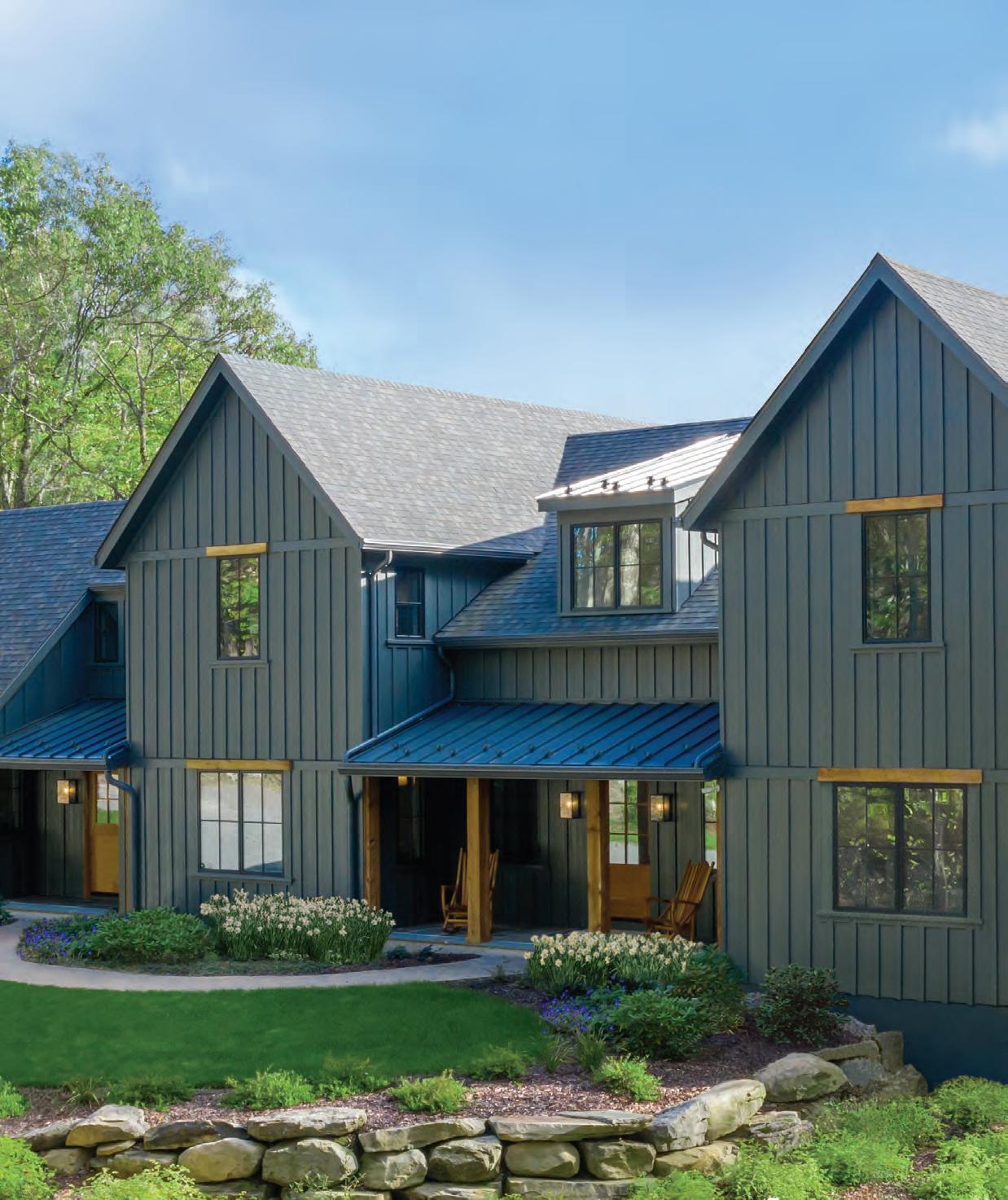
Sustainability has become a hot-button topic in the world of residential construction. With new Energy Code advancements set to take effect by 2027, builders across Minnesota are having to rethink how homes are designed and built. Yet many Housing First Minnesota members are already ahead of the curve, integrating
environmentally friendly practices into their processes—particularly Designated Green Path Builders, who continue to set the standard for energy-efficient home construction in the state.
Sustainable 9 Design + Build, for example, has long been a leader of sustainable building in the Twin Cities community. The
firm is aptly named after its nine principles of sustainability, which ultimately boil down to three core ideas: performance, health, and carbon. “People often talk about health, performance, and carbon separately,” says Paul Trieu, Sustainable 9’s director of architectural design and engineering. “But to us, the holy grail is hitting all three at the same time.”
In practice, that means creating homes that are high-performing, exceptionally healthy, and thoughtfully constructed using locally sourced and renewable materials whenever possible. In fact, material sourcing plays a key role in reducing carbon emissions. “If you build a very high-performance home using high carbon-emitting materials, that’s not fully sustainable,” Trieu explains. “If materiality isn’t addressed, but the home has very high insulation and performance, you’ve checked only one box. It might be low energy, but it could still be toxic and high carbon.”
Hendel Homes shares a similarly holistic approach to sustainability, describing its mission as creating homes that are thoughtfully designed, built to last, and perform at a high level over time. “We put this into practice through building science, high-performance envelopes, high-quality materials, and detailed execution that lowers long-term operating costs,” says Amy Hendel, principal of Hendel Homes. She goes on to explain that sustainable building is not solely reliant on adding “green” products or technology, but rather, “True sustainability comes from thoughtful design, sound building science, and disciplined execution.”
At Hanson Builders, sustainability is approached through incremental, high-impact improvements that add up over time. For instance, Jerrid Voss, vice president of purchasing, points to airtightness and insulation details as examples of upgrades that deliver measurable gains in efficiency. “These practical,

common-sense choices reduce energy use and material waste while making homes perform better over time,” he says. Vice President of Construction Mike Carbone adds that improving performance while remaining attainable for buyers is key. “We utilize stick framing versus panelized framing,” he notes. “This allows us to achieve a tighter building envelope, reducing air leakage and improving a home’s air changes per hour (ACH).”
For builders who haven’t yet embraced energy-efficient practices but want to move in a more sustainable direction, the question becomes: where to start?
“If a builder is already asking that question, they’re doing great,” Trieu says. “By spring 2027, we’re likely jumping forward many years in code requirements all at once. Things like exterior continuous insulation will become required. Builders are worried, but these changes raise the floor of sustainability.” Because of




this, he advises builders to start building above code before it’s required.
One accessible starting point is to address demolition waste, and in fact, there are many organizations to make this process streamlined and simple for builders. In Hennepin County, there is a deconstruction grant program that helps builders and homeowners pay to deconstruct existing homes instead of demolishing them. Better Futures Minnesota, a local nonprofit Sustainable 9 regularly partners with, is another excellent option. Its team removes cabinets, toilets, doors, hardwood flooring, light fixtures, and more, which then go into a reused building supply chain for organizations like Habitat for Humanity—keeping materials out of landfills. Trieu adds, “Managing waste streams, recycling, reclaiming, and building a local supply chain are some of the biggest opportunities to reduce a builder’s carbon emissions impact.”
But ultimately, all three builders agree that reducing carbon impact comes down to longevity. “The sustainable investments that pay off the most over time are those that improve performance and durability rather than chasing trends,” Hendel says. “High-quality building envelopes, efficient mechanical systems, and thoughtful material choices consistently deliver long-term value through improved comfort, operating costs, and homes that continue to perform well for decades.”
She also stresses the importance of client budgets, explaining that with increased sustainability comes increased costs, and it’s crucial to help clients make informed, thoughtful choices that balance longevity with investment.
As these Housing First Minnesota members demonstrate, building better doesn’t require perfection—just intention, collaboration, and a commitment to crafting homes that stand the test of time.

At the Housing First Minnesota Foundation, Community Build Projects exist because of the housing industry, including builders, remodelers, suppliers, manufacturers, and committed trade partners. These projects always come with the complex realities of the construction world—compressed timelines, evolving scopes, and unique nonprofit partner needs. Through all the ups and downs, trade partners remain the constant that allows the project to move forward. Subcontractors, suppliers, and manufacturers don’t just support Foundation projects—they shape them, strengthen them, and make them possible.
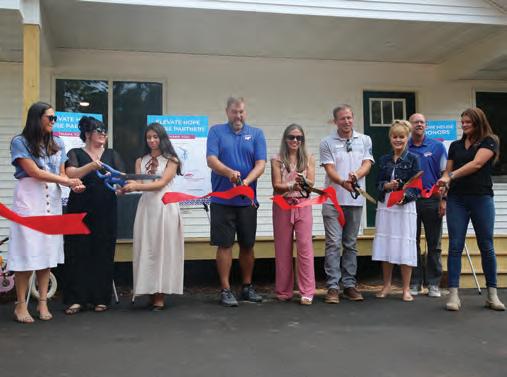
The critical impact of trade partners has become very clear for the Housing First Minnesota Foundation over the past two years. It all began during the Elevate Hope House project, built in 2024 and 2025 by students in the Construction Trades Program at Spring Lake Park High School. From the start, the Foundation
relied on trusted trade partners to step into key roles. Window manufacturers, lumber suppliers, electricians, plumbers, HVAC professionals, and other trades contributed not only materials and labor but also expertise and mentorship to the Spring Lake Park High School students. These partners adapted to changing needs, helped solve real-time challenges, and invested in the success of both the project and the students involved. Their leadership transformed Elevate Hope House from a concept into a completed home for mothers and children in need. During this project, trade partners weren’t just filling scopes—they were driving progress, outcomes, and educating the next generation of individuals entering the trades.
“As a trade partner, it’s meaningful for us to contribute our skills to projects that have a lasting impact beyond the build itself,” says Eric Link, general manager at In-Focus Systems. “Seeing how thoughtfully designed homes and spaces can positively shape lives reinforces why we continue to support and stay involved
THANK YOU TO OUR PREMIER PARTNER
with the Foundation’s mission year after year. It’s those goose bumps and pride at the end of the projects that make the work well worth it.”
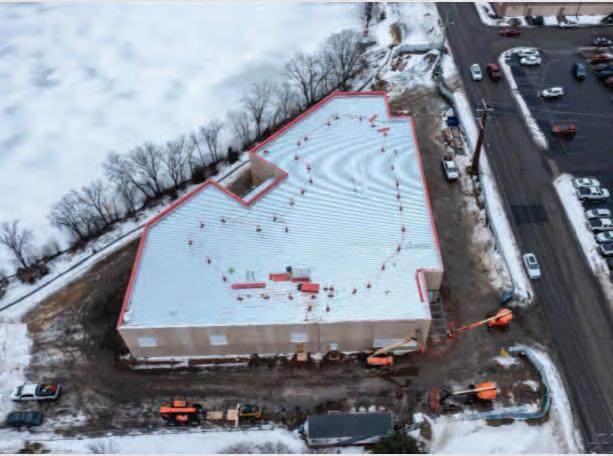
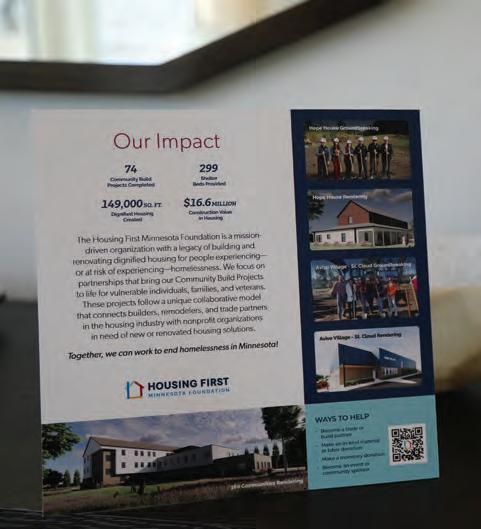
That same trade-led approach is now central to the Foundation’s work on Avivo Village – St. Cloud, a 48-bed homeless shelter comprised of eight individual living pods. Each pod includes six private rooms designed to offer dignity and stability for residents. This project requires trades to apply their skills in new and innovative ways, coordinating across all eight pods.
Looking ahead, there may be Foundation projects where a traditional build partner is not part of the equation. In those cases, trade partners will guide the projects—leading scopes of work, coordinating solutions, and ensuring projects remain on track. Building a strong, engaged trade partner network is essential to sustaining the Foundation’s mission long-term and helping those in need throughout the state.

At Kowalski’s, we bring you the freshest seafood all year long, from catch to case in as little as 24 hours!
• We receive daily shipments of seafood from around the world, offering up to 40 choices every day!
• In 2019, Kowalski’s became the first retailer in the country to become a Smart Catch Leader, which promotes transparency and sustainability in the seafood supply chain.

The Housing First Minnesota Foundation’s work has always been grounded in a simple but powerful belief: Safe housing is the foundation for opportunity, dignity, and long-term stability. For years, that belief has guided its partnerships and projects—and it continues to shape how the Foundation responds to the evolving needs of communities.
Historically, the Foundation has focused on serving some of Minnesota’s most vulnerable populations through long-standing, trusted partnerships, which have allowed the Foundation to provide homes that offer security, stability, and a place for residents to heal and grow. For veterans, that means a chance to rebuild after service and sacrifice. For mothers and children, it means safety, consistency, and hope for the future. These projects are the heart of the legacy the Foundation hopes to leave, and of course, they are only able to happen because of key partners—nonprofits in need of housing solutions and the generous construction industry trades, builders, and remodelers that dedicate their time and resources to the cause.
While the numbers matter, the true impact of the Foundation’s work is best understood through the voices of the nonprofit service providers helping those
experiencing homelessness, as well as the people who call these homes their own.
“The dullness in a lot of these men’s eyes is gone,” says Tim Murray, executive director of Bravo Zulu House. “There is a light, energy, and spark that a lot of them haven’t had for decades. It’s really rewarding to see that what we hoped was going to happen, and what we have seen happen in our civilian sober houses, is now happening with these veterans.”
A current Veteran Village resident, Todd, shares a similar story. “I didn’t know this [Veteran Village] existed until we were told about it,” he says. “To find a place stay and have a roof over your head, to then address the issues someone else might have because you have that roof over your head … that is going to solve a lot.”
As we enter 2026, the Foundation is partnering on multiple exciting projects defined by thoughtful expansion and responsiveness to real-time community needs.
Firstly, it’s expanding geographically, allowing for broader reach in communities across Minnesota. At the same time, the Foundation is also expanding its demographic reach to reflect the realities of housing insecurities in the Twin Cities metro and greater Minnesota communities.
As a responsive organization, the Foundation keeps a pulse on the needs of the

communities its nonprofit partners serve. Looking ahead, future projects may include a focused effort on supporting:
• Single mothers and children
• Sur vivors of human trafficking
• Sur vivors of domestic violence
• Families experiencing general homelessness
• Female veterans
These populations often face overlapping challenges—trauma, financial instability, and limited access to safe housing options. By expanding its focus, the Foundation aims to ensure its projects continue to meet people where they are with compassion, dignity, and meaningful impact.
While the reach of the Foundation is growing, its mission remains the same. Every home it helps build is a step toward the pursuit of ending homelessness in Minnesota. Every partnership strengthens the fabric of our communities. And every project reflects the collective generosity, expertise, and heart of Housing First Minnesota members and supporters.
As we honor the work that brought the Foundation here and embrace the opportunities ahead, the Housing First Minnesota Foundation remains committed to building homes that change lives—today and for years to come.

Check us out online at abcsupply.com or visit us in:
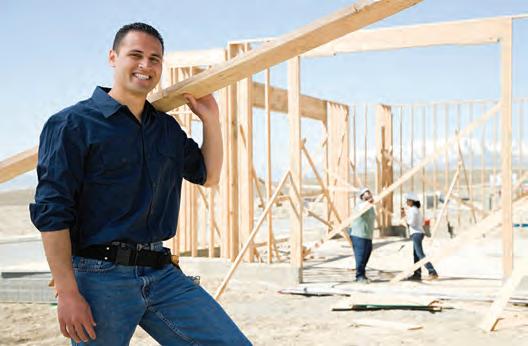

ABC Supply is the largest wholesale distributor of roofing in the United States and one of the largest distributors of siding, windows, and select exterior and interior products. Founded in 1982, ABC currently has more than 760 locations nationwide. Specializing in select product lines and categories, ABC offers the professional contractor competitive pricing, superior service, and the highest quality building materials available. Check us out online at abcsupply.com or visit us
Trust Mike Hoppe, Josh Dalki and Larry Larson with your


Silt Fence Installation
Hydro Seeding
Seed and Mulch
Tree and Safety Fence
It is a 10” geotextile fabric sewn together and filled with recycled wood product. It’s reusable and can be easily moved to another location. The Minnesota Mulch Log is a very effective perimeter control device and is more aesthetically pleasing providing a great alternative to silt fence.
Reusable
Ditch Checks
Inlet Protection
Perimeter Control
Easy to Install
Self Anchoring
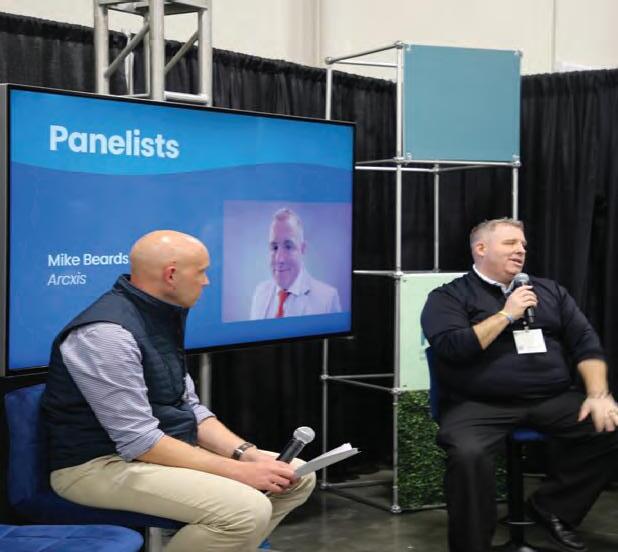
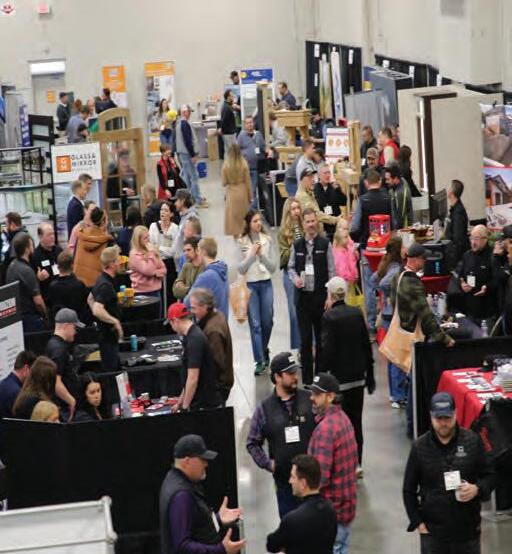
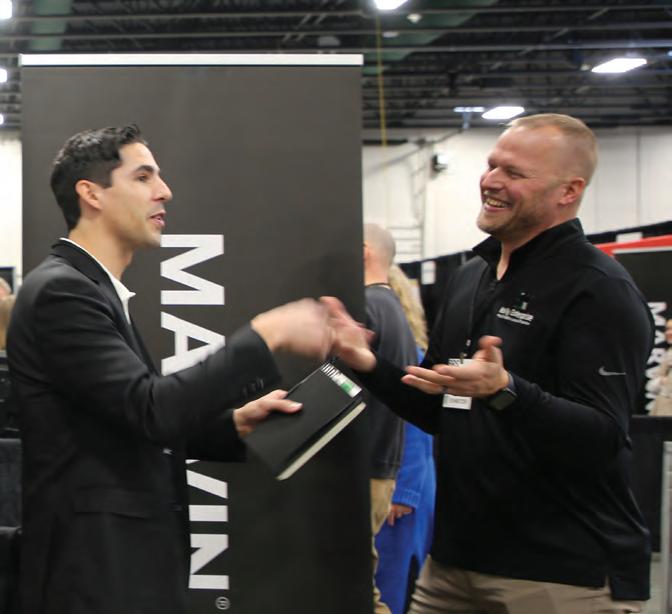













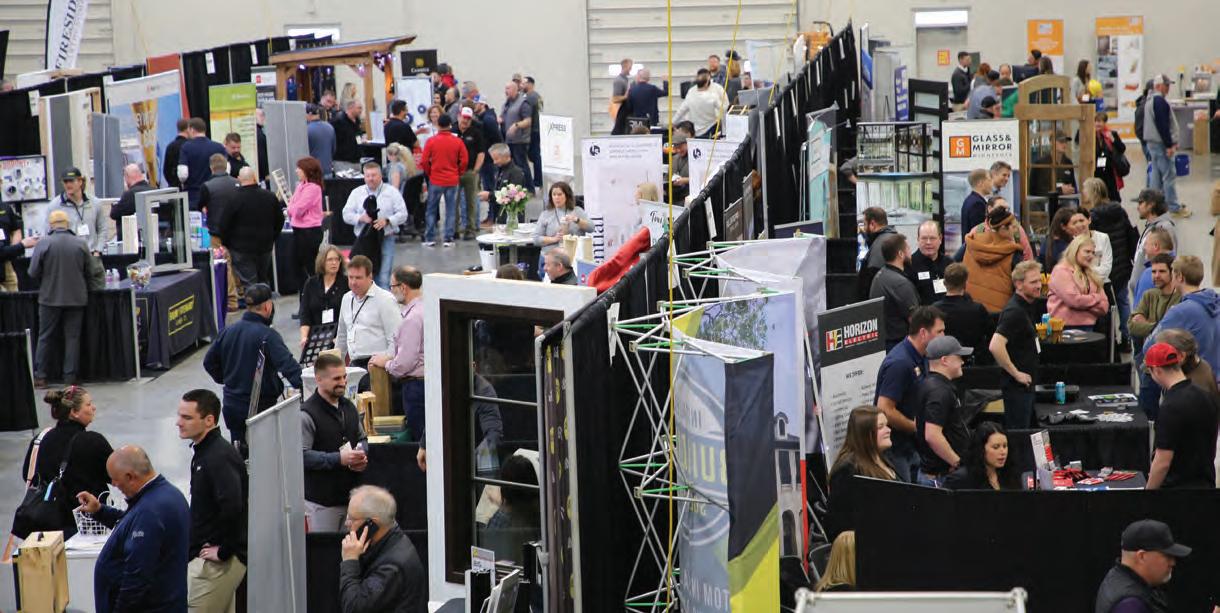
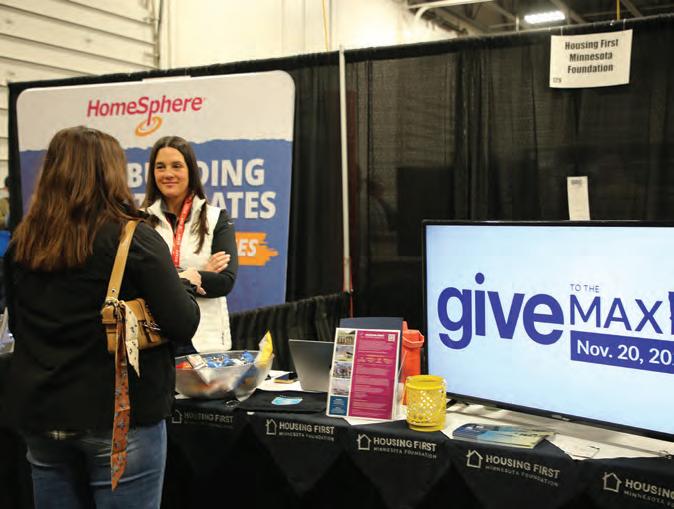
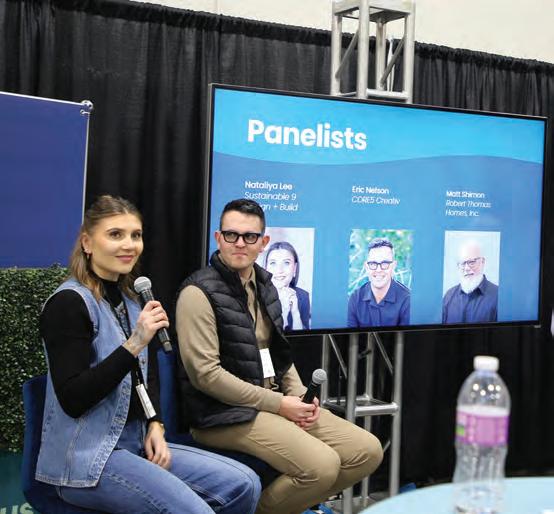
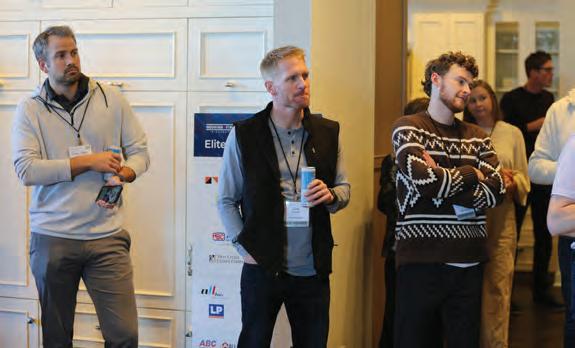
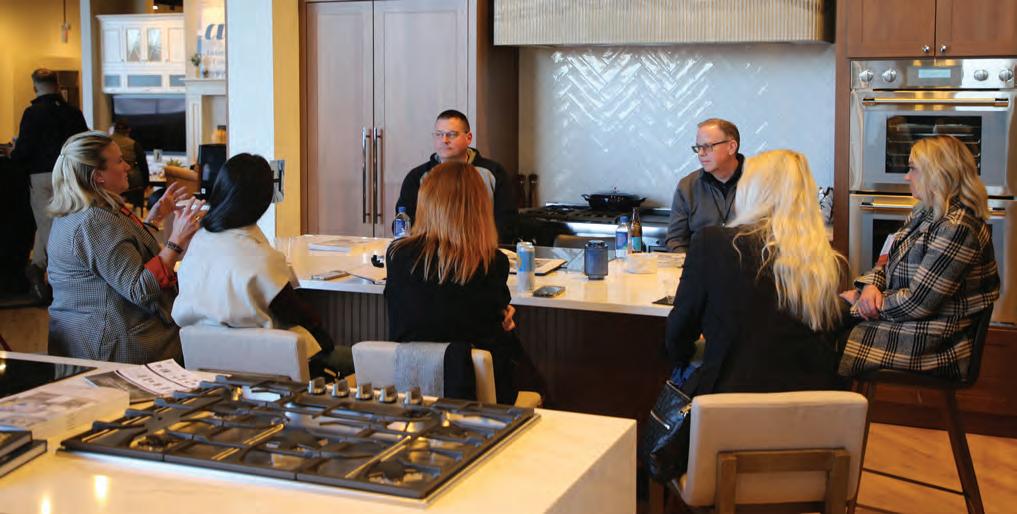
This year’s Builders & Remodelers Show (BRS) brought together builders, remodelers, designers, students, and more for a full afternoon of learning discovery, and connection. Attendees gained insights from fellow industry pros, explored the latest products and services, and made meaningful connections.
feb. 12, 2026



PRESENTING SPONSORS

SHOW SPONSOR
WORKFORCE SPONSOR
BEER GARDEN SPONSORS
ABC Supply Co., Inc.
Horizon Electric Services, LLC
Installed Building Solutions II, LLC
LP Building Solutions
Southern Lights
Twin Cities Closet Company
HEADSHOT STATION SPONSOR
Arrow Building Center


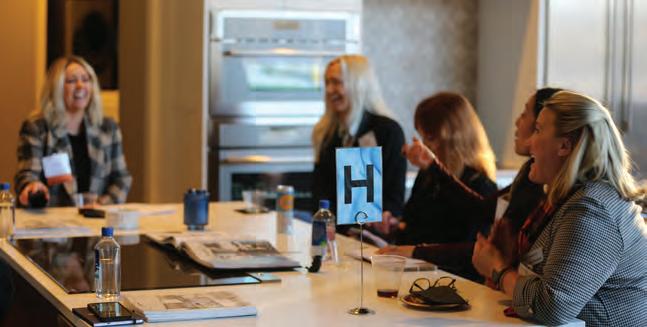

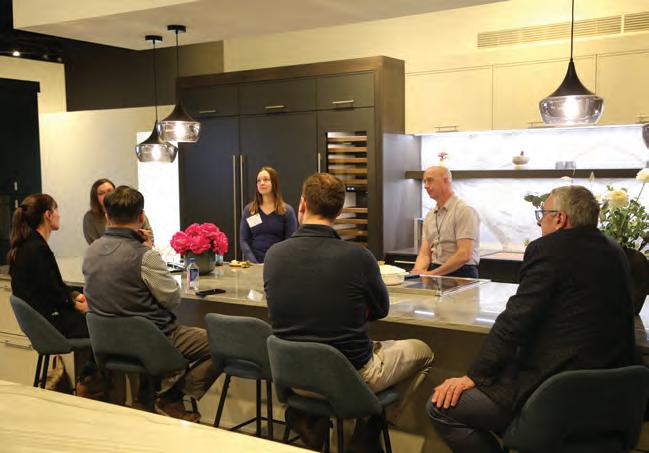
A perennial favorite among members, this event gathered professionals from across the industry for a high-energy evening of speed networking. Guided discussion prompts, rotating tables, and skilled moderators sparked conversations that led to new connections, fresh perspectives, and unexpected ideas.
feb. 24, 2026





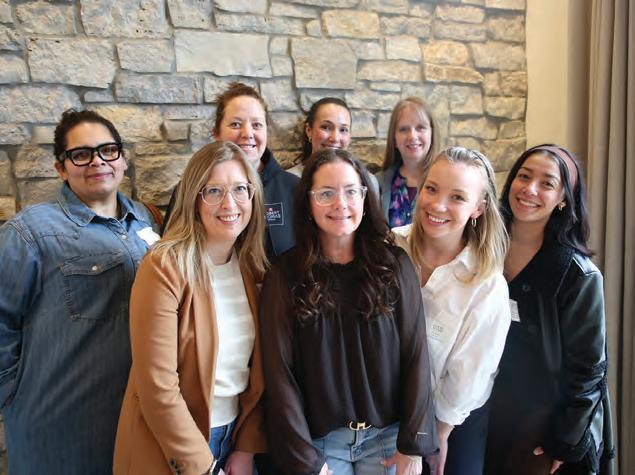

Women in construction deserve to be celebrated, and there’s no better way to do it than with a champagne toast inside a stunning home. On March 5, women from all corners of the industry gathered to connect, honor their impact, and, of course, toast to their many accomplishments.
march 5, 2026
SPONSORS
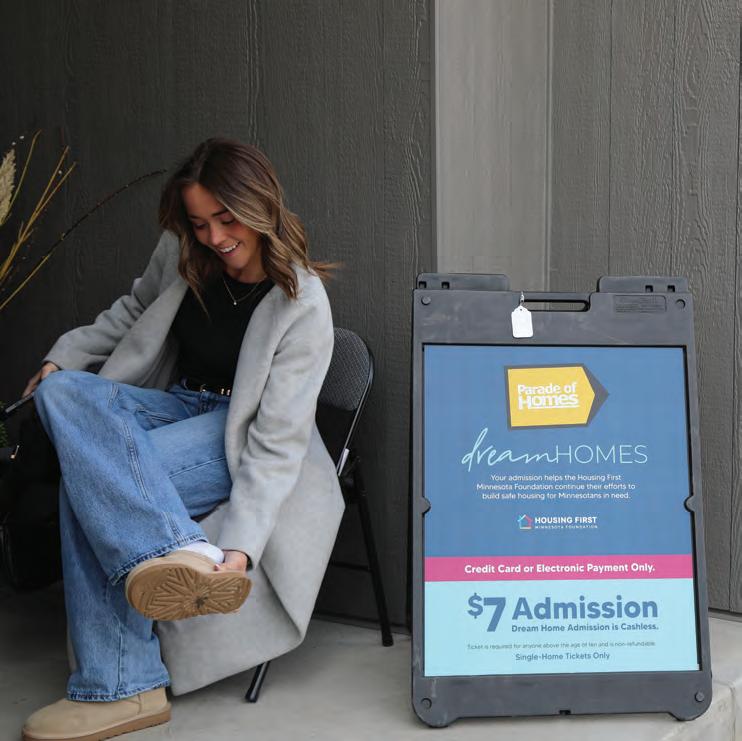
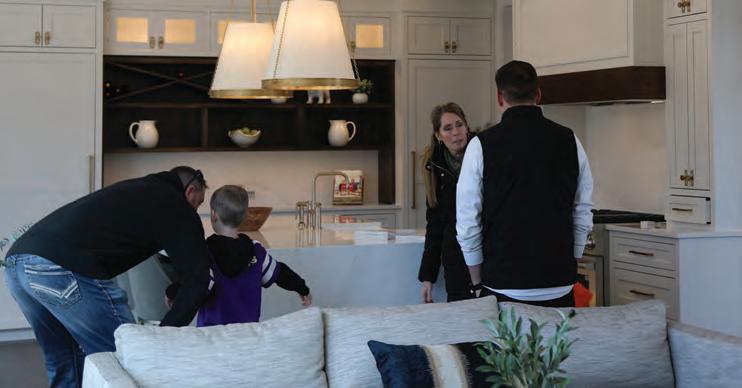
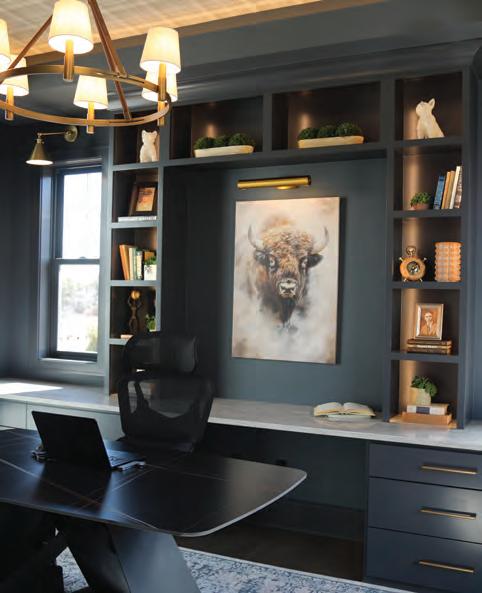
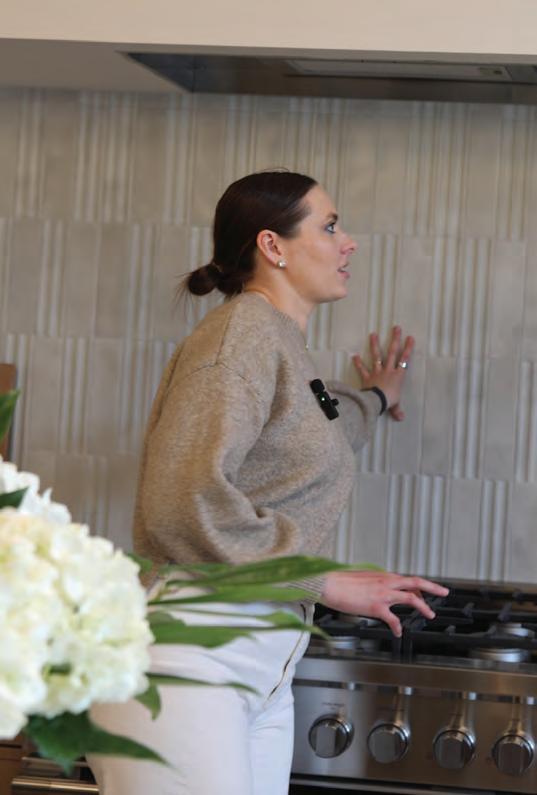
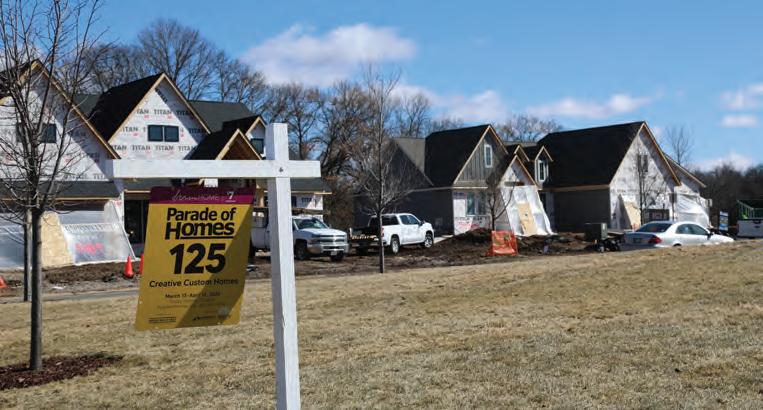
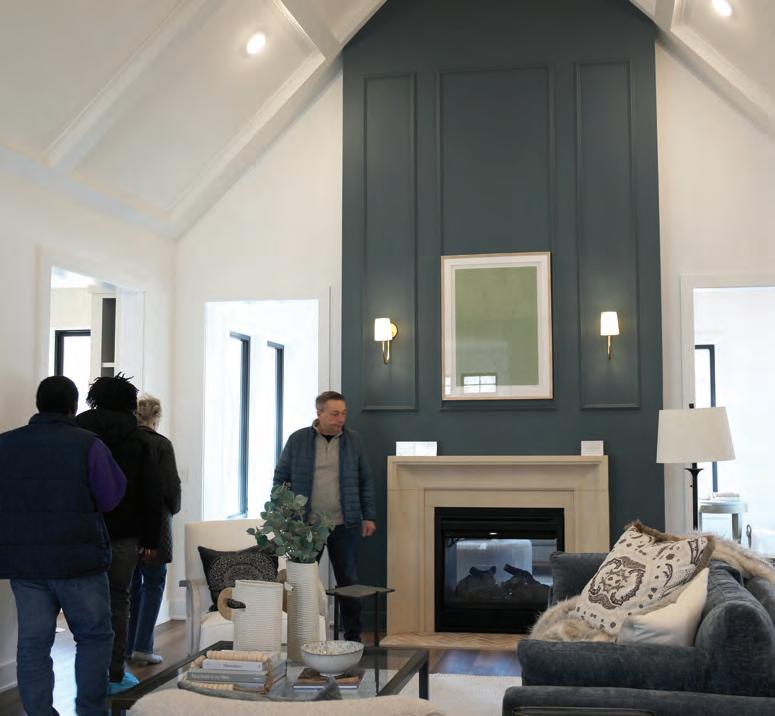
For the 78th year, builders and remodelers across the state opened their doors, inviting the public to tour more than 300 new and remodeled homes. The event showcased something for everyone—from first-time buyers and growing families to design enthusiasts and inspiration seekers.
March 13–April 12, 2026


OF HOMES PRESENTING SPONSORS
REMODELERS SHOWCASE PRESENTING SPONSOR
OF HOMES ROCHESTER SPONSOR
Boulder Creek Stone
Paul Ansolabehere 763-786-7138 bouldercreekstone.com
Controllr
Chris Anderson 612-470-0284 controllr.app
Floor Coverings International
Joe Pederson 612-845-9421 floorcoverings international.com
FOD Studio
Ross Agnello 763-553-1800 FOD-Studio.com
Frontier Homes, LLC
Braxton Dumonceaux 763-263-7810 frontierhomesllc.com
Full Swing Sports
Curtis Gruidl 800-798-9094 fullswinggolf.com
Interior Impressions, Inc.
Amy Leferink 651-238-0995 interiorimpressions.org
Lone Tree Construction, LLC
Dustin Marquand 651-341-8170 lonetreeconstruction.com
Maplewood Homes, LLC
Dennis Einck 507-273-4275 maplewood customhomes.com
Mathews Vasek Construction
Andrew Vasek 952-367-9161 mathewsvasek.com
Matthew Homes, Inc.
Matthew Hemmelgarn 612-750-1836 matthewhomesinc.com
North Star Home Builders, LLC
Anna Ovsyannikova 612-229-7009
Omni Custom Builders, LLC
Paul Jilek 612-749-0199 omnicustombuilders.com
Petta Building & Design, LLC
Emily Blaser 715-690-9400 pettabuilding anddesign.com
Prima Construction
Kim Studham 612-888-5959 prima-construction.com
DECEMBER 2025–FEBRUARY 2026
Principle Builders, LLC
Jesse Moxness 651-368-6767 principlebuilders.com
Redstone Interiors
Brittany Wille 763-234-7681 redstoneinteriors.com
RND Construction, Inc.
Elizabeth Gemelli 763-286-3729
Samsung Home Appliance Builder
Channel
Tracey Siler 201-229-4000 samsung.com/us
SRS Building Products
Brad Holden 763-401-8440 srsdistribution.com
Suncoast Twin Cities
Kelly Smith 612-315-9444 suncoasttc.com
Terry Gustafson
Interior Design
Terry Gustafson 952-210-0685 terrygustafson interiordesign.com
Unlimited Outdoor Services
Craig Trenary 612-324-8444
uosmn.com
Weekes Forest Products, Inc.
Leif Lindbo 651-393-2739 weekesforest.com
WoodMark Builders
Colin Paulson 952-270-7568 woodmarkmn.com






















Housing
Housing First Minnesota Foundation







Housing First Minnesota has brought together an array of member-only benefits that positively impacts your bottom line. We seek companies that thoroughly understand the building industry and provide products at rates generally not available to the public. Give these folks a chance to see what they can do for you.



HOMESPHERE
Learn how you can join over 2,700 builders receiving incentives and rebates from building product manufacturers. Rebates often exceed the cost of membership and it’s easily manageable!
Melissa Wolf 331-431-7433
MWolf@HomeSphere.com
NATIONAL PURCHASING PARTNERS (NPP) DISCOUNTS
• Airgas
• Cintas
• Projul
• Sherwin Williams
• Staples
• Verizon Business
• And MANY more!
NPP
800-810-3909 CustomerService@MyNPP.com






ASSOCIATION HEALTH PLAN
HOLIDAY STATIONSTORES / CIRCLE K
• Save 30 cents per gallon for the first 90 days (new applicants only)
• Save 6 cents per gallon all the time
Jayden Rosenfeld 952-921-5375
Jayden.Rosenfeld@CircleK.com
SPEEDWAY & 7-ELEVEN
• Business fuel card program
• Fuel rebates up to 5 cents off per gallon
• Mobile management tools
Avani Mehta 630-698-0118
Avani.Mehta@WexInc.com
Our Association Health Plan (AHP) helps small businesses in the residential construction market provide insurance to their employees. Fully insured by Blue Cross Blue Shield and managed by North Risk Partners, the AHP is a great way to recruit and retain employees with an average savings of 7-10% for participating companies.
Janice Meyer 651-697-7566
• Janice@HousingFirstMN.org
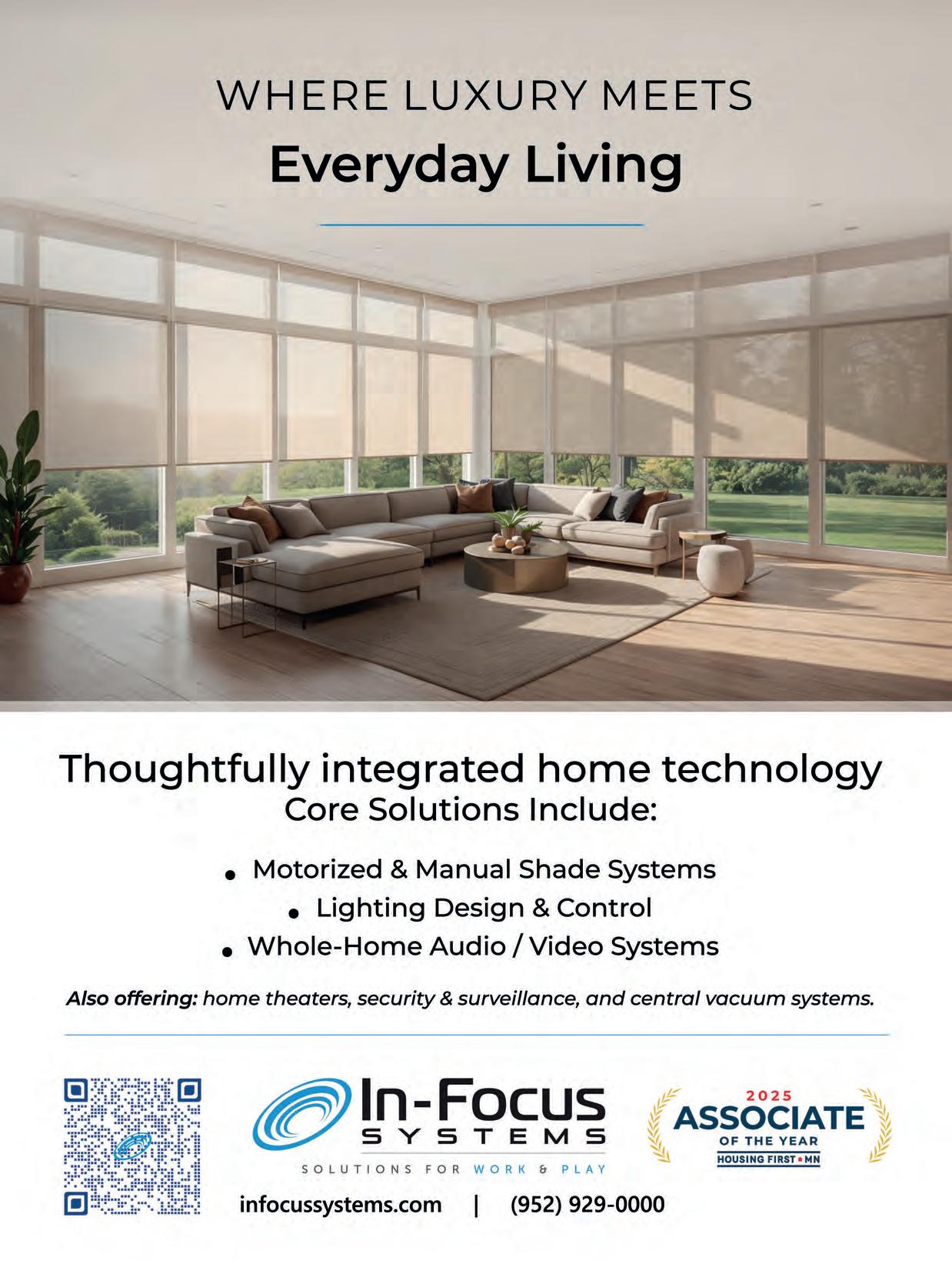







As a premier provider in the luxury residential and architectural market, we collaborate closely with builders, architects, and designers to ensure every detail aligns with your vision.
Our commitment to excellence drives us to deliver precision, performance, and an elevated client experience from the first conversation to final installation.
Connect with us today to elevate your next project from concept to completion.