Housing Industry News Vol. 10 Issue 1 - March 2026
Housing First Minnesota’s permit lawsuits heard in Court of Appeals
On Jan. 14, the Minnesota Court of Appeals heard oral arguments in Housing First Minnesota’s cases against the Cities of Corcoran and Dayton regarding building permit fees.
The case was filed in 2021 after correspondence from Housing First Minnesota that asked the cities to bring their permit fees in line with state law and to refund the surplus to homebuyers.
A prior 2023 ruling confirmed Housing First Minnesota’s standing to bring the challenge; this new phase focuses squarely on whether the cities’ fee structures violate state law.
The association argues that both cities violated Minnesota Rule 1300.0160 by inflating permit fees far beyond the actual cost of service, turning them into an unlawful revenue source.
A ruling in the case is expected by mid-April.
Homeowner sues the City of St. Paul over permit fees
Another case involving overcharging of building permit fees was brought forth by a homeowner against the City of St. Paul last year and is currently working through district court. The homeowner, Patrick Bollom, argues that his case could be the basis of a class-action lawsuit. This would force the city to rewrite its fees and refund permit holders millions of dollars in overcharges.
Bollom says he was charged $1,960.78 for electrical permits, warm air permits, mechanical permits, a plumbing permit, and a building permit for a total, which he claims, “exceeds the actual cost St. Paul incurred to perform the services needed to review and approve the applications.”
The lawsuit argues that the city overcharged more than $22 million in permit fees from 2018 to 2023. The city denies the claim and unsuccessfully tried to get the lawsuit dismissed in Ramsey County District Court.
The city asked for a second 120-stay in legal proceedings in November, following an initial stay due to a cyberattack.
2026 Minnesota legislative session: ‘Yes to Homes’ returns in an election year
Lawmakers returned to St. Paul on Feb. 17 for the second year of the biennium, launching a compressed 2026 legislative session shaped by election-year urgency and narrow partisan margins. Every legislative seat will be on the ballot in November—a dynamic that historically favored targeted, bipartisan proposals with clear constituent impact.
The Minnesota House remains evenly divided at 67–67, while the Senate holds a slim DFL majority. In that environment, housing policy, particularly reforms aimed at increasing supply without new state spending, is positioned as a top-tier issue.
Minnesota’s ongoing housing shortage, rising home prices and regulatory constraints dominated debate in 2025, and those pressures are expected to intensify in 2026. At the center of the discussion is the return of the ‘Yes to Homes’ legislation, a framework designed to expand housing choices while allowing municipalities to determine where additional density makes sense in their communities.
On March 3, the House Housing Committee heard the Minnesota Starter Home Act, which received strong support from
members. The bill will eventually be heard in each chamber’s respective local government committee.
Nick Erickson, senior director of housing policy at Housing First Minnesota, was among more than a dozen testifiers who spoke in support of the bill.
“Simply put, the current system is not working, and inaction on proven reforms is only harming Minnesotans,” Erickson said. “When we don’t build enough homes, opportunities leave the state.”
What’s in the 2026 Yes to Homes proposal
The 2026 Yes to Homes bill builds on prior versions by pairing baseline statewide standards with local flexibility.
Under the proposal, municipalities would designate a modest portion of residential and commercial districts where additional housing types and density are allowed. Projects in those areas would move through existing administrative approval processes rather than discretionary reviews.
While the Housing First Minnesota Foundation works to build safe housing for Minnesotans in need through its Community Build Projects, these efforts often come with unique challenges—delayed timelines, evolving scopes to address nonprofit partners’ needs, and flexibility from housing industry supporters.
The Yes to Homes bill returns in 2026 to a closely divided legislature with every seat on the ballot in November.
Coming together for homeownership
The long journey toward securing homeownership for future generations of Minnesotans resumed in St. Paul this February.
For years, our industry has led this conversation from the front. We have brought forward the relentless data—showing how dramatically affordability has eroded and how the dream of homeownership has slipped further out of reach for too many families in our state. At the same time, we have led with inspiration. Homeownership remains one of the most universally valued institutions across Minnesota. It strengthens health outcomes, deepens civic engagement, stabilizes neighborhoods, and represents the primary wealth-building tool for most Minnesotans.
That is why the 2026 legislative session matters. A broad and increasingly diverse coalition has formed around the need for housing policy modernization. What began as an industry eff ort has grown into one of the largest housing-focused movements in Minnesota. At the center of this eff ort is the Starter Home Act—a practical step toward restoring balance to our housing ecosystem.
For decades, the starter home was the on-ramp to opportunity. Today, with an estimated undersupply of 100,000 homes statewide, that entry point has largely disappeared. We cannot regulate our way out of this challenge. We must build our way out—delivering homes at every price point, including a meaningful surge of starter homes over the next decade.
Our industry is ready to meet this moment. Now, we need the Legislature to remove the roadblocks standing in the way. If floor votes come this year, we must be united and vocal. Bring back starter homes.
Onward, John Kraemer Board Chair, Housing First Minnesota
Subscribe
Stay up to date on the latest housing news. Subscribe to our newsletter at HousingIndustryNews.org.
Advertising
For advertising information, rates, editorial calendar, and production specifications, contact: Sales@HousingFirstMN org
News Tips
Have a story idea for our next issue?
Contact Grace Greene at Grace@HousingFirstMN org
Follow Us
Be a part of the growing housing movement in Minnesota. Follow us @housingnews_mn facebook.com/HousingIndustryNewsMN
John Kraemer 2026 Board Chair, Housing First Minnesota
Across
the country, there is much
talk about housing.
HERE ARE SOME OF THE LATEST QUOTES ON THE STATE OF THE
INDUSTRY
We’re in a market where sellers should be realistic and price their homes competitively, but they should also know that any improvement in interest rates or the economy could open the door for more buyers and activity.”
WENDY UZELAC PRESIDENT OF MINNESOTA REALTORS ®
There are many factors contributing to the continued growth of the remodeling market, including the aging housing stock. The typical age of a home has increased from 31 years old in 2006 to 41 years old in 2023. And with the dramatic rise in home equity post-pandemic, more homeowners are able to finance remodeling projects that align with their needs.”
ERIC LYNCH ECONOMIST FOR NAHB
The increase in new construction activity in January reflects strength on the demand side of the market. Even amid broader economic headwinds, buyers are remaining active and engaged.”
JOHN KRAEMER 2026 BOARD CHAIR OF HOUSING FIRST MINNESOTA
This lower rate environment is not only improving affordability for prospective homebuyers—it’s also strengthening the financial position of homeowners. Over the past year, refinance application activity has more than doubled, enabling many recent buyers to reduce their annual mortgage payments by thousands of dollars.
SAM KHATER CHIEF ECONOMIST FOR FREDDIE MAC
CHOOSE LAMPERT.
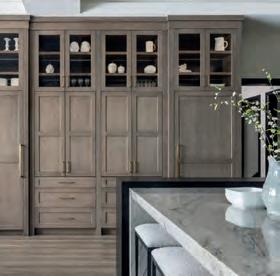
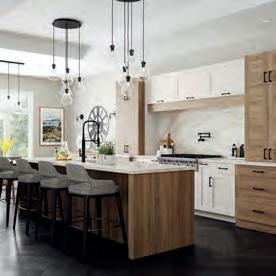
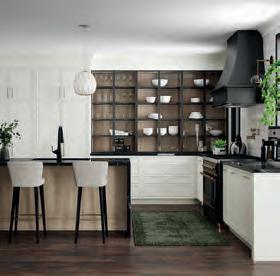
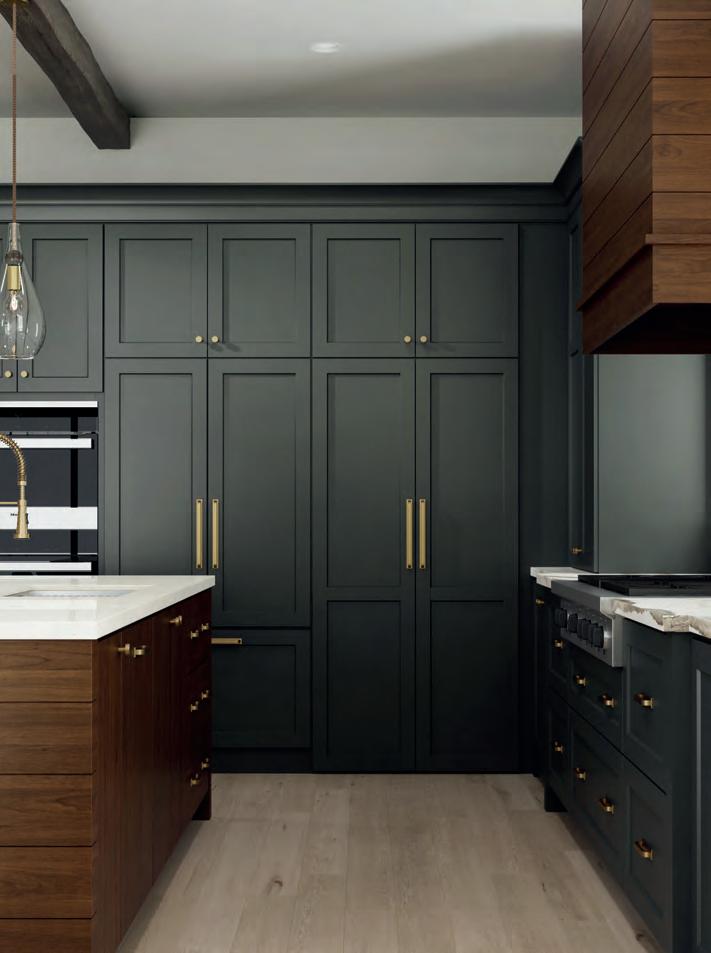
Lampert Lumber offers a wide selection of high-quality cabinetry to meet the needs of professionals in residential, commercial, and multi-family projects. Our expert designers are here to assist you and your customers with product selection, design support, and customization options to ensure the perfect fit for any space. With competitive pricing, top brands, and reliable service, Lampert Lumber is your trusted partner for cabinetry solutions that deliver style, functionality, and durability.
Electrical Code update
In January, the Board of Electricity approved the 2024 National Electrical Code (NEC).
Significant approved changes include:
• Surge Protection Devices (SPDs): All services, including new builds and panel replacements/upgrades, now require a Type 1 or Type 2 SPD to protect electronics from voltage surges.
• Exter ior Emergency Disconnects: An external, readily accessible disconnect switch is required for all one-and two-family dwellings, allowing responders to safely shut off power.
• Expanded GFCI/AFCI Protection: The requirement for Ground-Fault Circuit-Interrupter (GFCI) and Arc-Fault Circuit-Interrupter (AFCI) protection is expanded, covering more residential outlets, kitchens, and bathrooms.
• Outdoor/Garage Outlets: There are now more stringent requirements for tamper-resistant and weatherproof outlets in garages and exterior locations.
Dedicated Circuits & Electrification: Mandates for dedicated circuits are increasing for high-demand equipment, including HVAC systems, water heaters, and electric vehicle (EV) charging stations.
• Arc Flash Labeling (Non-Dwelling): NEC 110.16(B) requires permanent arc flash hazard markings on service and feeder equipment rated 1000 amps or more.
• Code Format Updates: The code includes formatting changes, such as single-column text, modern fonts, and the use of QR codes instead of traditional margin markers to identify changes.
There is currently no timeline for the residential building code to move onto the next stage of rulemaking, nor for implementation.
2026 Minnesota legislative session: ‘Yes to Homes’ returns in an election year
All municipalities, regardless of size, would be subject to several baseline provisions, including:
• Allowing accessory dwelling units (ADUs) in all residential districts
• Prohibiting requirements that force the creation of homeowners associations
• Limiting certain aesthetic mandates
• Preventing minimum lot sizes greater than oneeighth of an acre for residential greenfield development projects
Beyond those baseline provisions, the proposal uses a menu-based approach. Larger municipalities would choose additional options designed to support housing supply, such as expanding the share of residential districts that allow up to four units per lot, increasing multifamily capacity in commercial districts, reducing or eliminating parking minimums, and offering building-size bonuses for workforce, affordable, or senior housing.
“This bill is the exact opposite of one-size-fits-all,” said co-author of the bill and House Housing Committee co-chair Rep. Michael Howard (DFL–Richfield).
“It’s more of a ‘do it your own way’ approach.”
For builders, the proposal places a particular emphasis on feasibility. Municipalities would retain control over bulk standards such as setbacks, floor-area ratios, and height limits, but in practice, those standards would not make permitted housing types impractical or impossible to build.
“There’s a big difference between allowing housing on paper and allowing housing that can actually be built,” said Mark Foster, vice president of legislative & political affairs for Housing First Minnesota. “This bill ensures that when communities say ‘yes’ to more homes, the rules don’t quietly say ‘no’ afterward.”
Starter homes and infrastructure realities
Starter homes, which are largely absent from Minnesota’s new-construction market, are expected to be a defining issue in the 2026 session. The ‘Yes to Homes’ framework directly targets zoning and lot-size requirements that have constrained entry-level housing for decades while also recognizing infrastructure limitations.
The proposal makes clear that additional housing cannot be required in areas where infrastructure cannot support it, including floodplains, shorelands, and areas with critical environmental or historic concerns.
District selection would be guided by proximity to transit, commercial centers, parks, and schools, along with transparency requirements for how municipalities share those decisions publicly.
Unlike prior years, the 2026 session does not require passage of a full biennial budget, placing greater emphasis on cost-neutral policy solutions. For the housing industry, that strengthens the case for zoning and land-use reforms that expand supply without relying on state subsidies.
Co-bill author and committee co-chair Rep. Spencer Igo (R–Wabana Township) emphasized the bipartisan nature of the issue during the hearing.
“This isn’t a red or a blue issue—this is an issue for all Minnesotans,” he said. “The American Dream starts at home, and right now, Minnesota is facing a serious shortage. We are just shy of 100,000 housing units short in the state of Minnesota.”
After years of discussion, the message is clear: Minnesota’s housing challenges are well documented. The question for lawmakers in 2026 is whether state policy will finally align with that reality—or if it will continue to limit housing production through outdated rules.
The 2026 proposal emphasizes feasability for builders while allowing municipalities to expand housing options in ways that make sense for their community.
The 2024 National Electrical Code was approved by the Board of Electrcity
A new report commissioned by the Minnesota Department of Labor and Industry (DLI) concludes that single-stair multifamily buildings could be constructed at roughly twice the height and occupancy allowed under the current model code with a small set of targeted code adjustments.
According to the draft report, released on Dec. 30, 2025, requiring smoke alarms in common means of egress for multifamily buildings taller than three stories, along with more rigorous sprinkler system maintenance, would establish a framework that allows these structures to be built beyond the limits currently permitted by the model code. Smaller apartment and condo buildings with a single stairway, commonly built on smaller lots, are limited to three stories above grade in the model code, plus a basement. Minnesota’s report shows that with these adjustments, these structures can be built much larger than the model code allows without impacting safety.
The State Legislature directed DLI to commission the study in 2024 to evaluate the safety performance of single-stair dwellings in Minnesota compared with model-code-compliant buildings. The analysis was completed by Wiss, Janney, Elstner Associates and presented to the state’s building code panel in early January.
“In the first meeting, I told the group this approach could revolutionize how we prepare
Minnesota’s study was based on fire risk assessment, with the researchers creating a risk-informed event tree of scenarios in which existing protections may fail. Each of these was based on the likelihood of occurrence. Failure of the sprinkler system, for example, is tied to 97% of the overall risk to building occupants— this failure could be due to the sprinklers not having water or the alarm system not being signaled. The two recommended changes to the building code can eliminate most of the risk associated with these structures.
building codes at both the model code and local adoption levels,” said Nick Erickson, senior director of housing policy for Housing First Minnesota and industry representative on the panel. “Using data-driven decisions, building codes can be a powerful tool to increase both housing affordability and supply. This report proves what is possible when we reexamine longstanding housing regulations.”
“The draft findings suggest there are huge safety benefits to point access block buildings, which would make single-stair reform a win-win for both affordability and safety—not something you often see in code development discussions,” said Stephen Smith, executive director of Center for Building in North America and panel appointee. “Governments across the U.S. have taken a back seat on code development, cutting funding and deferring to private organizations. This study’s cost was pennies compared to what Minnesotans pay for housing, and we’ve been penny-wise, pound-foolish in not funding more of this research. It could be just the start of finding efficiencies in our codes, if only cities, states, and the federal government would spend a tiny bit of money to look for them.”
This report is not tied to any specific code change. The Department and consultants incorporated the Technical Advisory Group’s feedback into the final report, which was sent to the State Legislature for consideration.
‘Yes to Homes’ coalition builds momentum for zoning reform despite 2025 legislative setbacks
Q&A with Evan Roberts, Minnesota Zoning Atlas
Q: What is the Minnesota Zoning Atlas? How is it built and validated?
The Minnesota Zoning Atlas is part of the National Zoning Atlas, which is an eff ort to standardize and analyze the rules around residential building across the country. Minnesota has a lot of cities and townships. The time to analyze a small city with half a dozen zoning districts is nearly as much as a suburban city with more than 20 zoning districts. To create the atlas, our team of researchers at the University of Minnesota read the zoning codes for more than 400 cities covering more than three-quarters of the state’s population. We have read about 30,000 pages of zoning text so far. Each city’s code is examined by one analyst, and then, the work is independently reviewed. Zoning codes are complex and laid out in a range of diff erent ways. While computers have shown a lot of promise for reading text and tables, our national partners found the accuracy of AI for picking out the key details of zoning is too low. AI tools can get the right direction, but they often fail to identify the correct numbers. Minimum lot sizes and fl oor area ratios matter a lot for the viability of building new homes.
Q: When you look across the state, what patterns show up immediately in the data?
Most residential land in Minnesota is zoned to only allow single-family homes—a zoning practice distinctive to the United States. In the Twin Cities metro area, there is a bit of a mismatch between cities with strong employment density and the cities allowing new housing. Th is mismatch means longer commutes and demand for transportation infrastructure. Minimum lot sizes in Minnesota’s cities are much larger than required for health purposes in areas served by urban sewer and water.
Zoning in Minnesota is distinct from East and West Coast patterns. In the Twin Cities, there are similarities to other large Midwest metropolitan areas that are also divided into many diff erent cities. On the East Coast, large minimum lot sizes of a half-acre or more can often be found closer to urban centers, but this is balanced by zoning for a denser urban core with mid-rise multifamily buildings. On the West Coast, there are more areas zoned for small-lot single-family homes of less than 10,000 square feet. In the Twin Cities area, we see many suburban cities with minimum lot sizes of one-quarter to one-third of an acre. Th e reliance on opaque Planned Unit Developments in many suburbs to permit housing is very clear on our maps.
Q: Where does “missing middle” housing (duplexes, fourplexes, townhomes, ADUs) fit into the Atlas?
Th e Atlas distinguishes between areas that allow one, two, three, or four or more units on a lot. Four-unit lots are a very common breakpoint in zoning regulations. If you can build four units, you can often build many more, even hundreds. Th e rules that make building more than four units diffi cult are often height and bulk rules, rather than direct regulations on the number of units. In the Atlas, we record all the important dimensional rules that aff ect the viable building envelope: lot coverage, height, parking requirements, and fl oor area ratio. If a city directly limits the number of units, we display that information on the map.
ADUs are mapped separately. In the Twin Cities metro, we see a lot of cities allowing ADUs in theory, but often with occupancy or public hearing regulations that make them diffi cult to build.
Evan Roberts is an assistant professor in the History of Medicine and Population Studies programs at the University of Minnesota, and he leads the Minnesota Zoning Atlas project. Roberts is a demographer and economic historian who has published broadly on topics including residential segregation, social influences on health, and social science data construction.
Currently, he is also working on a study of how randomized redistribution of farmland and mortgages affects life expectancy. Originally from New Zealand, he began his career working on evaluations of housing and mental health services and has lived in the Twin Cities since 2000.
Q: What zoning types dominate most Minnesota cities today, and what does that mean for housing supply? Are there major differences between the Twin Cities metro and greater Minnesota?
Most residential land, about 75%, in the Twin Cities metro outside of Minneapolis and St. Paul is still zoned for singlefamily homes on lots of 10,000 to 15,000 square feet. Suburban cities such as Richfi eld and Bloomington that have moved away from exclusively single-family zones tend to only allow duplexes and retain existing lot sizes. The evidence from major U.S. cities such as Portland, Oregon, and Houston, Texas, as well as international cities like Auckland, New Zealand, show that duplex or triplex development on lots of 10,000 to 15,000 feet is not often viable. Per-unit minimum lot sizes of 1,200 to 2,000 square feet make infi ll townhouses and two to eightplex (“moreplex”) development viable.
Th ere is signifi cant variation between Minnesota cities in their zoning for mixed-use development. Some cities have zoned for most commercial areas to allow housing either above retail and commercial buildings or stand-alone apartments. Other cities, particularly in second- and third-ring suburbs, are more likely to strictly regulate where housing is allowed by prohibiting mixed-use buildings in commercial areas.
Zoning in small cities outside the Twin Cities metro area and in townships is distinctive. Many smaller cities outside the metro allow duplexes, “moreplexes,” or townhouses to be built in most of the city. Lot sizes and per-unit land requirements in smaller cities and towns are often signifi cantly smaller than in metro-area suburbs, with per-unit land requirements of 3,000 to 7,000 square feet.
In small townships in greater Minnesota, we have observed an interesting pattern of most townships in a county following the same zoning regulations. However, the rules are formally adopted by the township, not the county.
Q: Are there cities that stand out as “best in class” for housing flexibility and affordability? What are they doing differently?
Minnesota cities are slowly reforming their zoning. It is notable that minimum lot sizes, and bans on duplexes, townhouses, and moreplexes, are signifi cantly more common in many Twin Cities suburbs than in greater Minnesota cities. Th ere are several important dimensions to improving the feasibility of homebuilding in Minnesota, and no city has adopted all of them.
St. Paul has adopted the most missing middle-friendly zoning of any city, with 1,500-foot minimum lot sizes on most residential land. These reforms are a couple years old, and projects are being proposed that couldn’t be built in other cities.
Meanwhile, Minneapolis has streamlined rules for largerscale multifamily buildings. Despite the attention to triplexes in the debates over the Minneapolis 2040 comprehensive plan, fl oor area ratio rules make building missing middle housing more diffi cult in Minneapolis.
Rochester has adopted useful changes to zoning administration. Small deviations from dimensional standards can be approved administratively by having staff assess the context and impact of proposed homes.
White Bear Lake has just revised its zoning code with simplified mixed-use zoning and a well-written and illustrated presentation of the code that is straightforward for residents and builders to interpret.
Q: From a builder or developer perspective, what zoning constraints most often prevent projects from moving forward before they begin?
Zoning regulations shape the value and use of land. When most residential land is zoned for single-family homes on relatively large lots, land values will be pushed down but home prices will be higher. To build or buy the home, you must have the land that goes with it. Land zoned for townhouses, moreplexes, or apartments will be expensive because regulations limit availability. For missing middle and apartment development, site acquisition in an area with the right zoning is a challenge. The dimensional rules for apartments vary across cities, increasing upfront design and development costs.
For single-family homes, many developers are trying to meet market demand by building homes on smaller lots than the zoning allows. Cities will maintain the density they zoned for by asking developers to put excess land in the subdivision into shared open spaces that must be managed by a homeowners association.
Q: How directly does zoning correlate with housing affordability in Minnesota communities?
Allowing smaller lots, missing middle housing types, and more apartments is associated with improved aff ordability. Measuring this is hard because new homes cost more than old homes, and new homes are often built in desirable areas. Th e most studied Minneapolis 2040 reforms seem to have led to lower home prices and rents than would have happened otherwise. Th e international evidence about zoning reform clearly shows that greater housing supply through the allowance of missing middle homes in more places and zoning for larger apartments near public transit leads to lower prices for new homes and lower rents. Missing middle zoning can also be a win-win for owners of existing homes. Because new owners can do more on the same land, missing middle reforms increase the value of existing single-family homes.
Evan Roberts
Minnesota Zoning Atlas
New report analyzes how zoning constrains housing production in Minnesota’s growing communities
A new report from the Housing Affordability Institute, Lot Sizes and the Supply Gap: Housing Production Constraints in Minnesota’s Growth Regions , analyzes zoning rules in three regions of Minnesota and how they prevent new housing production. The report argues that this underproduction cannot be overcome without underlying policy changes.
The report used data from American Enterprise Institute and the U.S. Chamber of Commerce, which suggest that housing production in St. Cloud, Minneapolis-St. Paul-Bloomington, and Rochester could be boosted by allowing smaller lots in greenfield areas.
However, the Minnesota Zoning Atlas shows that zoning rules in most St. Cloud and Minneapolis-St. Paul-Bloomington communities limit production by not allowing smaller, more affordable lots as a permitted use. Zoning in the Rochester area does allow for this.
The report also notes that many communities rely on planned unit development variances, or PUDs, rather than functional base zoning, which adds an additional hurdle to building smaller homes on smaller lots.
“Smaller lots allow housing development to become more efficient and better aligned with market demand,” said Nick Erickson, executive director of Housing Affordability Institute. “Housing production remains far below historic levels, with the state never recovering from the Great Recession. Adjusting lot size and width standards would go a long way toward restoring housing production and expanding homeownership opportunities.”
The report concludes that without wide-scale zoning changes in these growth areas, affordable, smaller lot homes will continue to be limited.
Housing in the 21st Century Act approved by U.S. House
In early February, a major housing bill made significant progress at the federal level, signaling rare bipartisan agreement on one of the country’s most pressing economic challenges: the cost and availability of housing. The package, designed to increase housing supply and improve affordability, was approved by the U.S. House of Representatives in an overwhelming 390–9 vote.
The legislation focuses primarily on expanding the nation’s housing inventory by streamlining certain regulatory processes, encouraging new residential development, and supporting local efforts to reduce zoning and land-use barriers. Limited construction following the 2008 housing crisis, coupled with population growth and strong demand, has left many communities facing severe shortages of affordable homes.
The Senate previously passed its own housing package in October, titled the “ROAD to Housing Act”. While both chambers share the goal of expanding housing access, the Senate’s version includes several grant programs that would increase federal spending to support state and local housing initiatives. These provisions are expected to face resistance in the House.
A new report shows that zoning rules in most St. Cloud and Minneapolis-St. Paul-Bloomington communities limit the construction of smaller, more affordable homes.
Your Trusted Window and Door Experts.
When it comes to windows and doors, no one does it better than the team at Arrow Building Center. With decades of experience and deep product knowledge, our dedicated specialists provide expert guidance to help you find solutions for even the most complex projects. We offer a broad selection of styles, materials, colors, and sizes to achieve the look your customers want. As a trusted supplier of premium brands like Andersen Windows & Doors, we deliver competitive pricing without compromising on quality, ensuring you get the best value for every project.
CMBA builds community and industry advocacy through home show and government affairs engagement
The Central Minnesota Builders Association (CMBA) invites the community to kick off the spring building season at its annual home show this March at River’s Edge Convention Center in St. Cloud. With free admission and something for everyone, this year’s event offers current and future homeowners and families an easy way to connect with trusted professionals from across central Minnesota. Attendees are encouraged to bring a food shelf donation to support local families—all donors will be entered into a drawing for a free wheelbarrow. The CMBA Home Show brings together industry partners ready to help with every stage of homeownership—from new construction and remodeling to landscaping, interior design, financing, and more. Whether you’re planning
a custom build, refreshing your kitchen, or simply gathering ideas, the show off ers the opportunity to meet face-to-face with experts who understand the local market. This year’s platinum sponsor, Magnifi Financial, helps make the event possible, reinforcing its commitment to strengthening communities and supporting homeownership throughout the region.
A highlight of the show will be the student-built projects on auction, with proceeds benefiting CMBA’s Tools for Schools program. The initiative supports trade programs in central Minnesota high schools, equipping students with the tools and hands-on experience needed to pursue careers in the skilled trades. Attendees can bid on impressive student creations while investing in the
Rochester Area Builders evolves to meet moment of unprecedented growth
Rochester’s building and development landscape continues to evolve, thanks to Mayo Clinic’s multibillion-dollar “Bold. Forward. Unbound.” initiative, and Rochester Area Builders (RAB) has been evolving right alongside it.
Since January 2025, the association has taken several steps to strengthen its programs, sharpen its local focus, and deliver greater value to members. This includes formally departing the Builders Association of Minnesota (BAM)/National Association of Home Builders (NAHB) federation, allowing RAB to operate with greater agility and
alignment to the specific needs of Rochester’s housing and construction community.
RAB has also completely refreshed the Home & Outdoor Show, reimagining the event to better connect builders, businesses, and homeowners. Early feedback and attendance trends point to renewed energy and strong community interest.
Alongside the show’s transformation, RAB launched a fully revised website and signifi cantly enhanced its social media presence—expanding digital reach, improving communication, and elevating member visibility.
next generation of builders and craftsmen. Beyond the exhibits, guests can relax on the indoor patio with cocktails, enjoy face painting for the kids, and take in live music from a solo artist on Saturday. The CMBA Home Show runs Friday, March 13, from 3–7 p.m., and Saturday, March 14, from 9 a.m. to 4 p.m. As the industry engages in the 2026 legislative session, CMBA is also reminding members that involvement in government affairs remains critical. Builders and developers consistently cite regulations, mandates, taxes, and fees among their top concerns. While CMBA advocates locally and at the State Capitol, policymakers are most infl uenced by hearing directly from those in the field. CMBA Government Affairs Consultant Steve Gottwalt emphasizes
On the advocacy front, meaningful progress has been made in collaboration with the City of Rochester on multiple industry issues. To further amplify its voice at the state level, RAB partnered with Northern Minnesota Builders and Mid-Minnesota Builders to jointly hire a lobbyist at the Capitol, ensuring regional priorities are clearly represented in legislative conversations.
Momentum is building in other ways as well. Over the past year, RAB has welcomed 13 new homebuilders into membership, reflecting growing confi dence in the association’s direction. The organization is also excited to partner with Housing First Minnesota on the Parade of Homes in Rochester, continuing its commitment to showcasing all Rochester’s housing market has to off er.
that elected offi cials “listen to builders and developers diff erently than they do lobbyists.”
To encourage involvement, CMBA hosts a Government Affairs Meeting on the third Tuesday of each month, connecting members with local and state offi cials to discuss legislation, code changes, zoning reforms, and community growth.
In addition, CMBA is partnering with Housing First Minnesota for Housing Day at the Capitol on April 30, off ering members a direct opportunity to meet with legislators and advocate for industry priorities. The event is free for CMBA members, and there will be free shuttle transportation there and back. Visit cmbaonline.org for more details and to register.
Pat Sexton
Rochester Area Builders Executive Director
Pat Sexton Rochester Area Builders
PERFORMANCE AND AFFORDABILITY DOWN
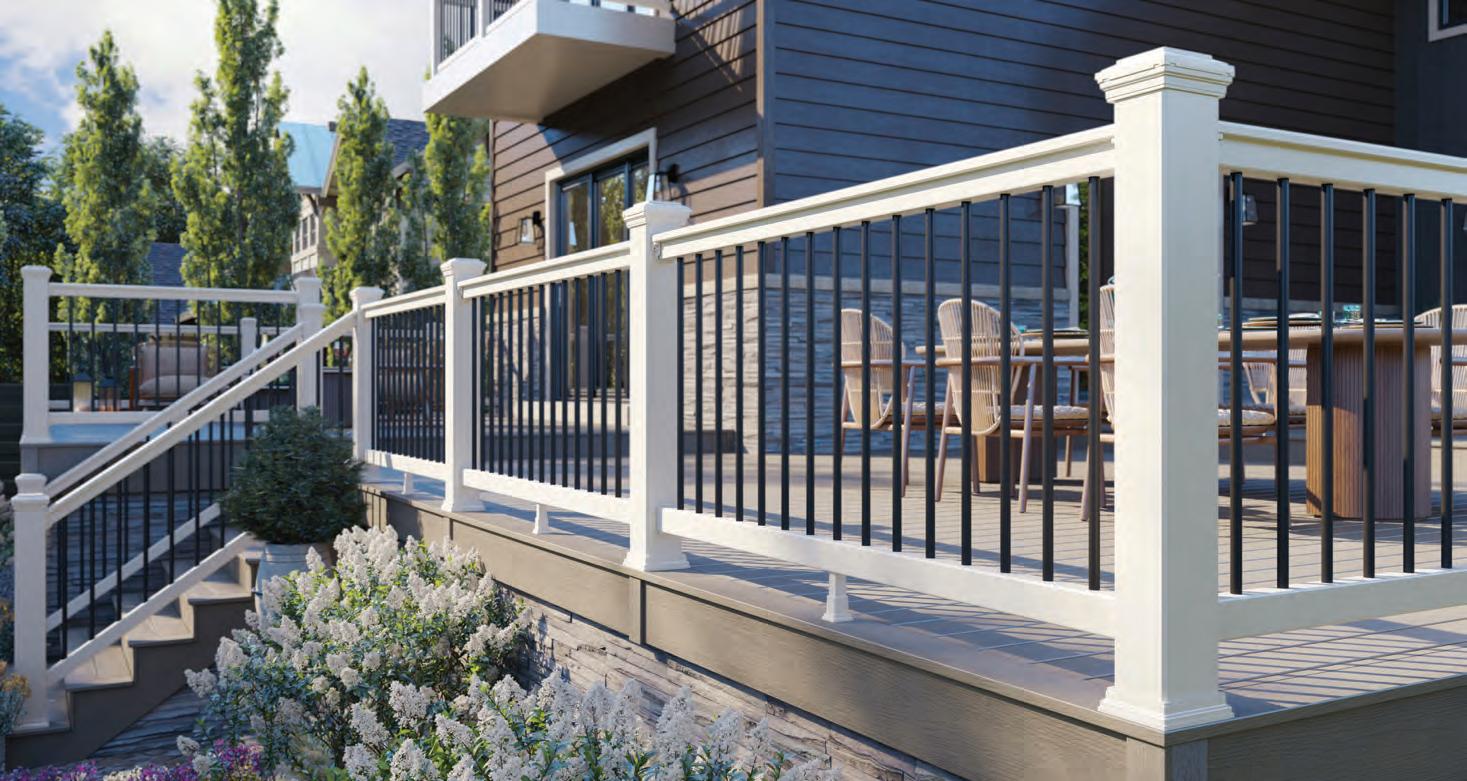
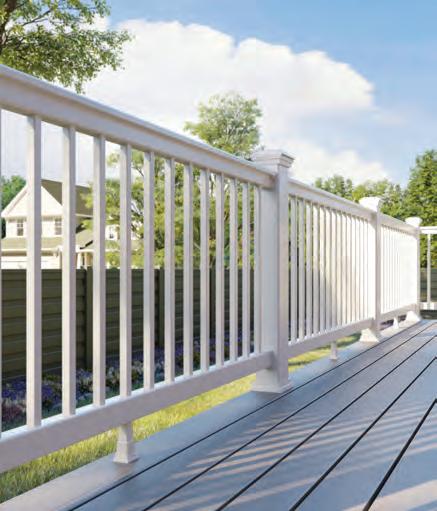
Ease. E iciency. Economic value. That’s what you’ll experience with Trex Select® T-shaped top rail – our most a ordable o ering ever. It’s long lasting, easy to maintain and quick to install. Taking your outdoor living vision to the next level without raising your budget: We See It Too. To learn more, visit bldr.com
Housing market report
Twin Cities homebuilding saw a jump in activity in the first month of the year, with upticks in construction in all areas of the market. Homebuilders pulled permits for 453 singlefamily homes in January, a 9% rise in activity from last year.
Additionally, builders reported 313 multifamily units under construction, a 47% jump from January 2025. Multifamily activity accounted for 41% of all construction activity in January.
However, residential new construction ended 2025 down 2% with 6,207 permits reported for 8,052 units. Single-family construction was down 2% compared to 2024. SOURCE: CITY OF ST. CLOUD
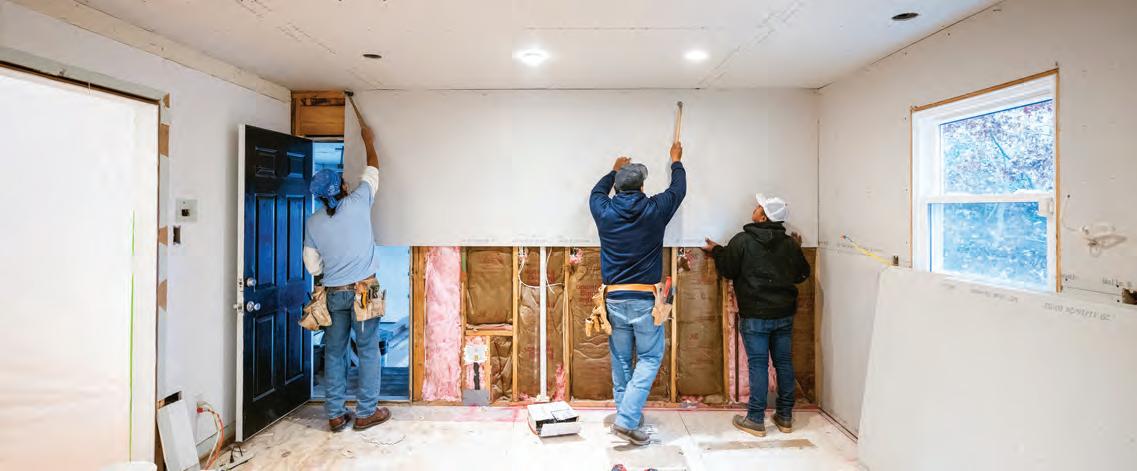
Remodeling activity builds momentum
With mortgage rates remaining elevated and many would-be sellers still “locked in” to loans well below today’s rates, a growing number of households are choosing not to move at all. Instead, they’re staying put and investing in the homes they already have.
According to the National Association of Home Builders (NAHB), remodeler sentiment has remained steadily positive, even as other parts of residential construction have experienced more volatility. The NAHB/Westlake Royal Remodeling Market Index, produced in partnership
with Westlake Royal Building Products, has held above the break-even level for two straight years. In a market defined by uncertainty, that kind of consistency stands out.
Looking ahead, industry projections point to continued but moderate growth in residential remodeling activity. NAHB forecasts roughly 3% growth in real remodeling activity in 2026, with further increases projected in 2027. Longer-term projections from industry analysts suggest overall remodeling expenditures could be significantly higher by the end of the decade.
Market dynamics at play
Millions of homeowners refinanced or purchased during the era of historically low mortgage rates. Trading a 3% mortgage for something north of 6% or 7% simply doesn’t pencil out for many families. Instead of relocating, they’re reimagining finishing basements, expanding kitchens, updating mechanical systems, or tackling long-delayed whole-house renovations.
Additionally, the housing stock is aging. The median age of owner-occupied homes in the U.S. now exceeds 40 years. This creates a steady
baseline of demand. Whether it’s the roof, siding, kitchen, or bathroom, every home needs reinvestment eventually. Even in slower economic cycles, maintenance and functional upgrades don’t disappear. Aging-in-place work is also carving out a meaningful share of projects as more homeowners opt to modify their homes rather than transition to new ones.
A different kind of opportunity
For remodelers, the current environment calls for discipline as much as opportunity. Cost pressures—particularly around labor and certain materials—haven’t disappeared, which makes benchmarking performance and closely managing Key Performance Indicators (KPIs) and financial ratios essential to protecting margins. At the same time, there’s a clear opening to position remodeling as a smart alternative to relocation. With many homeowners hesitant to give up low mortgage rates, strategic renovations can offer a practical path to getting the space and functionality they want without entering today’s sales market. Firms that also lean into emerging niches, especially aging-in-place modifications and higher-end functional upgrades, are likely to find steady demand among homeowners focused on long-term comfort, accessibility, and value.
POWERED BY XCEL ENERGY SPONSORED
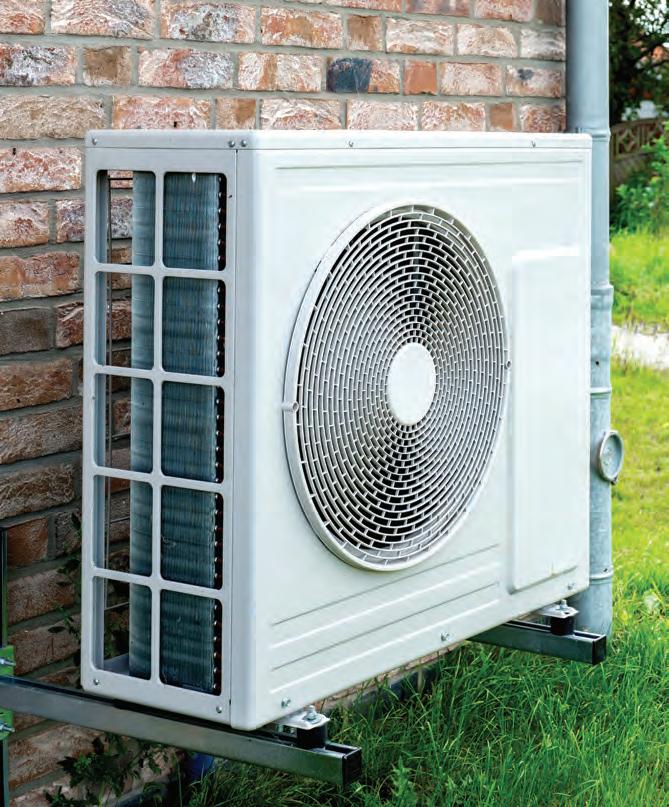
Heat pumps: The right choice for cooling (and heating)
When it comes to cooling, most people think of standard air conditioners. However, heat pumps are quickly becoming the smarter, more sustainable choice for homeowners. Heat pumps use the same technology as air conditioners, but they can both cool and heat your home. Here’s why installing a heat pump instead of an air conditioner is a decision that can pay off in comfort and efficiency.
1. Dual functionality: Heating and cooling in one system
Unlike air conditioners, which only cool your home, heat pumps provide both cooling and heating. This means you can replace two systems—your gas furnace and your AC—with one efficient unit. Instead of investing in separate systems, a cold climate heat pump keeps your home comfortable year-round. Plus, with only one HVAC system to support, there’s less maintenance.
2. Energy efficiency
A heat pump can efficiently remove heat from your home during the summer, like an air conditioner, to keep you comfortable. During the winter, it can move heat energy into your home to keep you warm. And, modern inverter-driven heat pumps are more efficient than regular single-or dual-stage air conditioners because an inverter-driven heat pump can modulate its speed and capacity. This efficiency can translate into less energy used and a smaller carbon footprint.
3. Environmentally friendly choice
If sustainability matters to you, heat pumps are the clear winner. They use increasingly clean electricity rather than burning fossil fuels on-site, which helps reduce greenhouse gas emissions. Pairing a heat pump with renewable energy sources like solar panels can potentially make your home nearly carbon neutral.
4. Improved comfort
By modulating speed and capacity, heat pumps maintain more consistent indoor temperatures compared to traditional HVAC systems. Just like an air conditioner, they also help dehumidify the air during summer, creating a more comfortable environment.
5. Utility incentives
While the upfront cost of a heat pump can be higher than an air conditioner, Xcel Energy offers rebates for installing energy-efficient systems like heat pumps. This makes heat pumps even more affordable and comparable to the cost of just installing an air conditioner.
The bottom line
Heat pumps aren’t just an alternative to air conditioners—they’re an upgrade, with superior efficiency, year-round comfort, and environmental benefits to boot. If you’re considering installing an air conditioner, a heat pump is the smart alternative for your wallet and your home. Learn more at xcelenergy.com/HeatPumps.
Builders & Remodelers Show builds connections between housing industry professionals and trade exhibitors
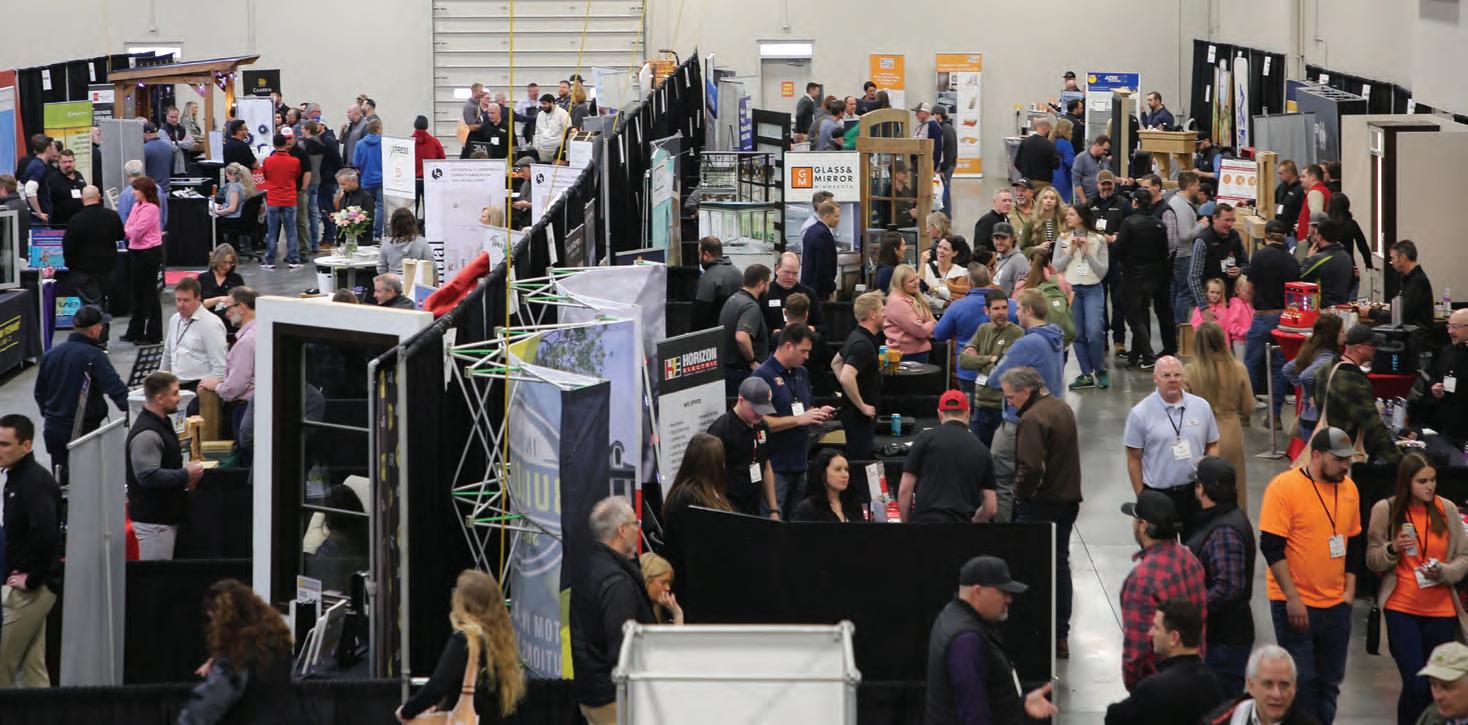
More than 720 housing industry professionals gathered at the Canterbury Park Expo Center in February for the annual Builders & Remodelers Show (BRS), presented by Housing First Minnesota. This is a private event for builders, remodelers, architects, building officials designers, and construction students to explore the latest trends, products, and services shaping the industry.
With more than 100 exhibitors showcasing the latest products and services, the event allowed attendees to discover advancements in building materials, smart-home technology,
Builders celebrated for energy efficiency excellence
Three Minnesota homebuilders—Stonegate Builders, Hanson Builders, Inc., and Lennar—have been recognized for their commitment to energy-efficient construction, earning Gold Designated Green Path Builder Status under Minnesota’s Green Path program. Paltrin Homes received Silver Status with three Master Certifications.
Minnesota’s Green Path, developed by Housing First Minnesota, is the state’s premier energy efficiency certification for new homes. It sets high industry standards, offering Advanced and Master certifications to homes that exceed energy code requirements. Builders earning a minimum of three certifications annually
and design trends. Industry professionals exchanged ideas and forged valuable business connections. From energy-efficient solutions to high-tech home automation, exhibitors provided insights into the future of home construction and renovation.
Beyond the exhibition, the event featured four Genius Huddle sessions, where experts shared insights on key topics influencing the housing market and business operations. Sessions included a high-level overview of recent energy code changes, AI tools for builders and remodelers, marketing tips and tricks, and a highlight of new products and services in homebuilding.
achieve Silver Status, while those reaching five or more earn Gold Status.
Other homebuilders that achieved one or more Advanced Certifications in 2025 include Brandl Anderson Homes, Inc., Eternity Homes, LLC, Bergeron Homes & Development, Inc., Creative Homes, Inc., Ron Clark Construction, and D.R. Horton, Inc.
Prospective buyers can visit Green Path certified homes on the Parade of Homes.
Minnesota homebuilders leading the nation in sustainability
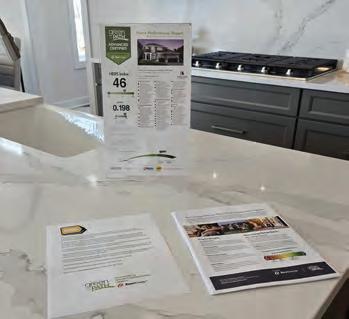
Green Path certifications are based on the Home Energy Rating System (HERS) Index, rated on a scale of 0 to 150, with lower numbers indicating a more energy-efficient home. Homes are rated on exterior walls, HVAC systems, water heating systems, leaks, quality insulation, seals, foundation, and air quality and flow.
In 2024, the average HERS score nationwide was 57, while the average score in Minnesota was 47—the lowest among states that test over 4,000 homes.
Minnesota’s Green Path continues to shape the future of homebuilding and reward the
“The Builders & Remodelers Show brings together every corner of the industry under one roof,” said Mary Catherine Penny, senior director of events at Housing First Minnesota. “It’s a chance for professionals to get inspiration, see innovations up close, and strengthen connections that support the industry year-round.”
As the housing industry navigates evolving market conditions and consumer demands, the Builders & Remodelers Show remains a key event for professionals looking to stay ahead of the curve.
commitment of our state’s homebuilders. Its Home Performance Reports (HPRs) provide transparency for buyers and reinforce the value of energy-efficient construction.
With Minnesota already leading the nation in energy efficiency, builders like these demonstrate that sustainability is not just an industry trend—it’s a competitive advantage. Their achievements in 2025 signal a growing movement toward higher-performing, cost-efficient homes that benefit both homeowners and the environment.
The 2026 International Builders Show (IBS), presented by the National Association of Home Builders (NAHB), took place in Orlando in February, welcoming industry professionals from around the world to explore the latest products and technologies.
The 2026 IBS featured product launches, live demos, informational sessions, workshops, and panel discussions. Attendees also had the chance to explore outdoor exhibits, official show homes, and networking events.
The annual event will be held in Las Vegas next year.
Creative Homes,
For nearly 50 years, the Builders & Remodelers Show (BRS) has brought together networks of industry professionals.
The community behind mission-driven Housing First Minnesota Foundation projects
Despite project hurdles, trade partners, subcontractors, suppliers, and manufacturers have consistently been at the forefront of these builds and are truly the heart that makes this work possible.
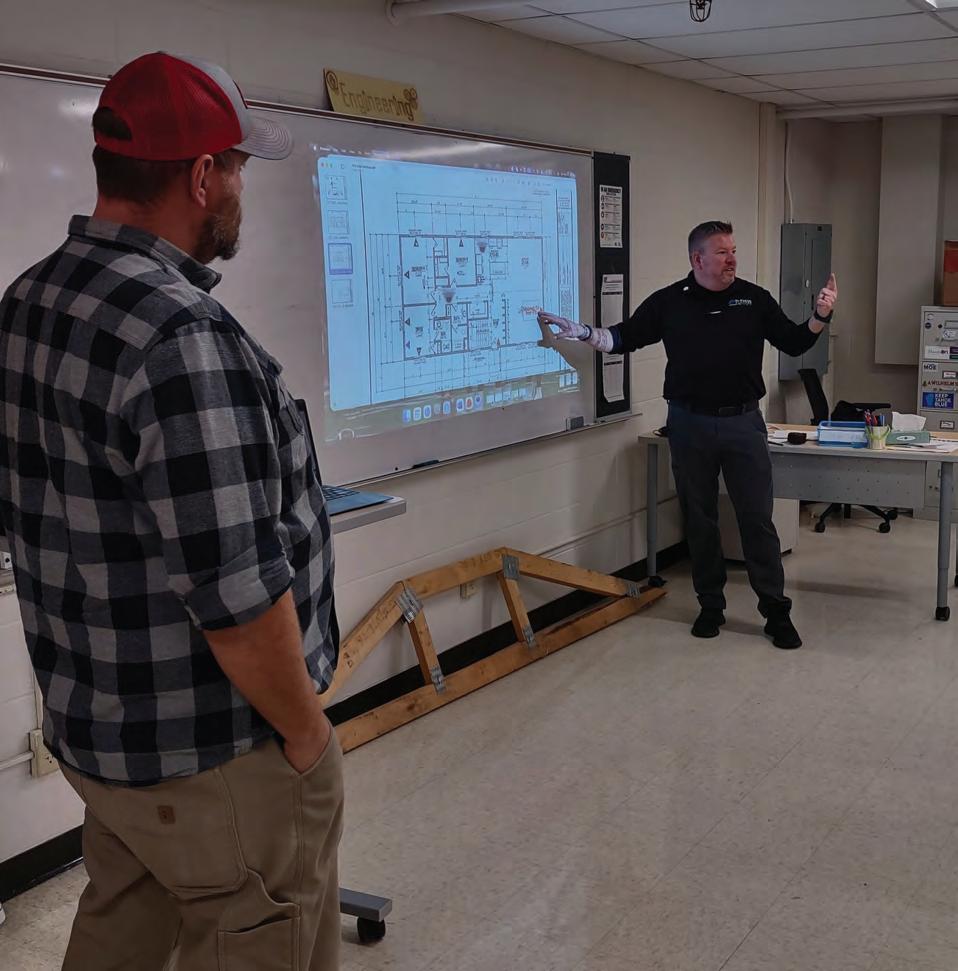
The role of trade partners for the Foundation’s Community Build Projects became especially clear in 2024 and 2025 with the Elevate Hope House project, constructed by students in the Construction Trades Program at Spring Lake Park High School. Like many builds, the project began by tapping into existing industry relationships to meet specific needs. Window manufacturers, lumber suppliers, electricians, plumbers, HVAC professionals, and other trades stepped in not only as subcontractors but also as committed partners—invested in the outcome and in teaching their trade to the next generation. Their willingness to collaborate, problem-solve, and adapt quickly transformed Elevate Hope House from a broad concept into a sanctuary for mothers and children experiencing homelessness.
What emerged from that experience was a shift in perspective. Trade partners were not just supporting the build—they were driving it forward. Th eir expertise, coordination, and dedication provided the structural backbone that allowed the project to move ahead.
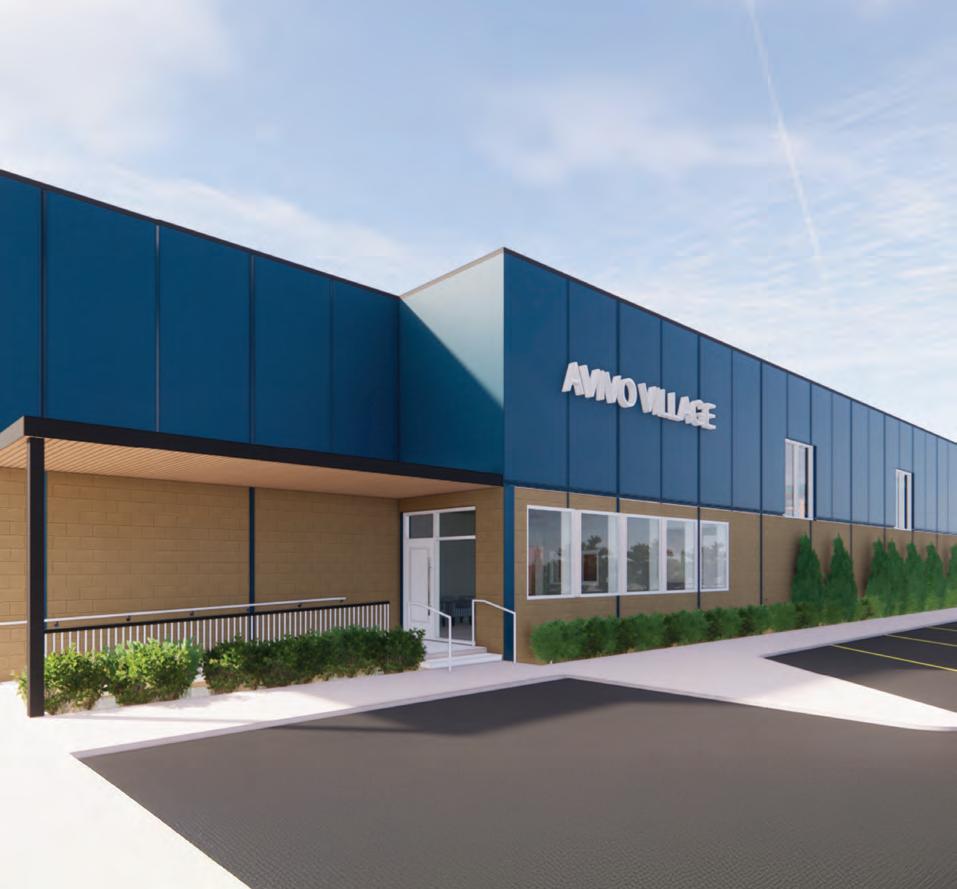
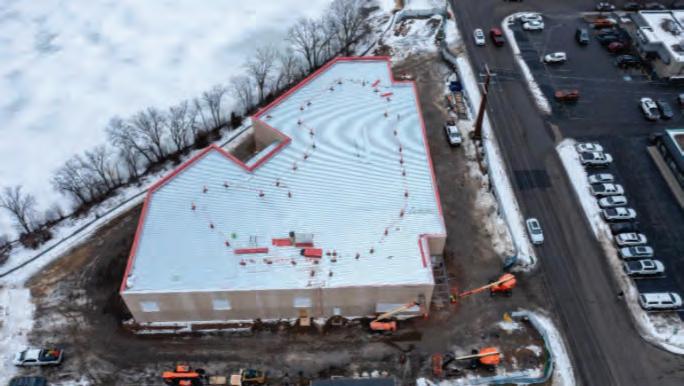
That same model is now shaping the Foundation’s work on Avivo Village – St. Cloud, a 48-bed, uniquely designed homeless shelter. Once again, trusted trade partners are stepping up to meet the complex needs of constructing eight living pods, with each pod containing six individual rooms.
Th e trade partners involved in this project are applying their skills in ways that go beyond how the Foundation has historically facilitated its Community Build Projects—creating a stronger, more resilient framework for tackling larger and more ambitious build projects.
Looking to the future, this approach is becoming even more important. There may be Foundation projects ahead in which a traditional build partner is not part of the equation. In those moments, trade partners will play an even more central role in leading scopes of work, coordinating solutions, and ensuring projects remain on track.
“As a trade partner, it’s meaningful for us to contribute our skills to projects that have a lasting impact beyond the build itself,” said Eric Link, general manager at In-Focus Systems. “Seeing how thoughtfully designed homes and spaces can positively shape lives reinforces why we continue to support and stay involved with the Foundation’s mission year after year. It’s those goose bumps and pride at the end of the projects that make the work worth it.”
As housing industry leaders continue to partner with the Foundation, projects like Elevate Hope House and Avivo Village – St. Cloud demonstrate the power of trade-driven collaboration. When trade partners step up, entire communities benefi t. Th eir involvement is not just valuable—it is essential. They are the heart of these projects, and the reason meaningful, mission-driven construction continues to happen for those most in need in Minnesota.
Eric Link, general manager at In-Focus Systems, working with Spring Lake Park High School’s Construction Trades Program
Rendering of Avivo Village - St. Cloud
- St. Cloud
Rochester debuts first-ever Dream Home, benefiting the Housing First Minnesota Foundation
The Housing First Minnesota Foundation is proud to launch its first-ever Dream Home in the Rochester area as part of the 2026 Spring Parade of Homes. This milestone marks an important step in expanding the Foundation’s programs, partnerships, and impact across greater Minnesota.
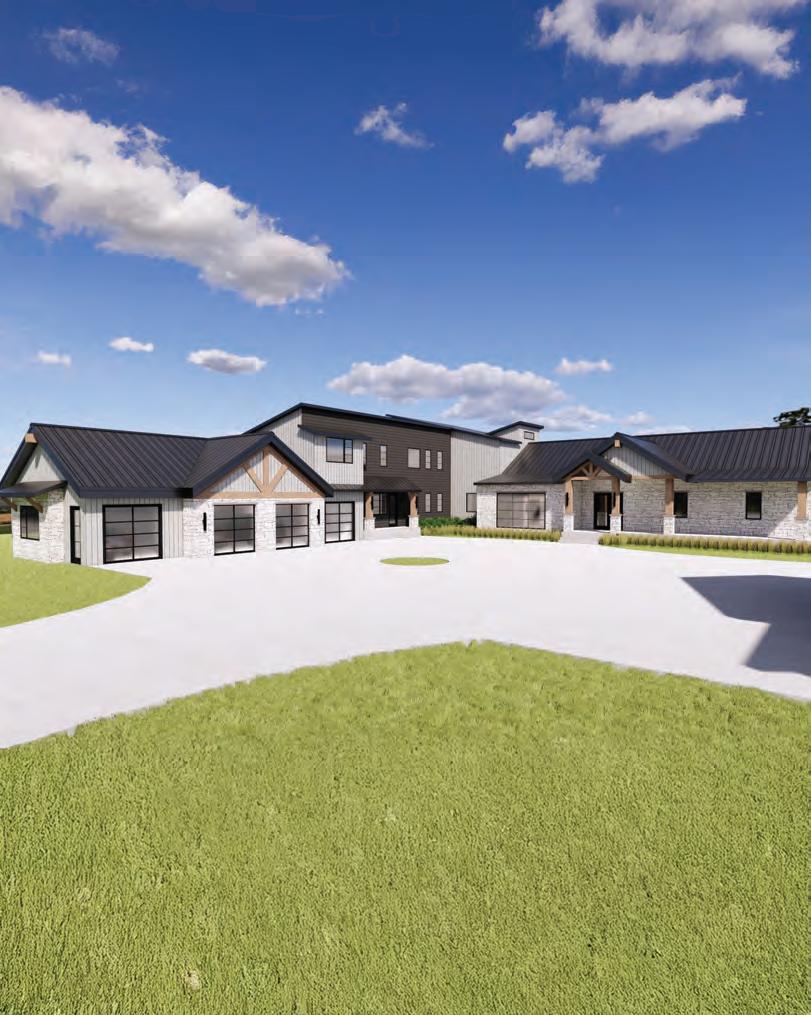
The Rochester Dream Home, constructed by Zen Custom Homes, pairs bold, modern architecture with a warm interior palette. Limewashed walls, creamy tones, and rich wood floors and beams bring a certain depth and softness to every space, creating a home that feels both elevated and inviting. It’s a Dream Home that balances statement-making design with livable comfort.
This Dream Home is more than a beautiful house—it reflects the Foundation’s ongoing commitment to strengthening communities through collaboration within the housing industry across greater Minnesota. This expansion extends the Foundation’s reach more intentionally beyond the Twin Cities metro.
“Kicking off the expansion of the Dream Homes program with the amazing home by Zen Custom Homes is a great way to bring both the Dream Homes tour and the Foundation’s community work statewide,” said Sofia Humphries, executive director of the Housing First Minnesota Foundation.
A commitment to greater Minnesota: Expanding programs and community impact
As one of Minnesota’s fastest-growing regions, Rochester presents both opportunity and need. Expanding the Dream Home program into the area reinforces the Foundation’s commitment to greater Minnesota and lays the groundwork for partnering with local nonprofits on housing projects that respond to community needs.
“Bringing the Dream Home to Rochester means more support for housing across Minnesota,” Humphries added. “Every builder and partner involved helps make a real impact. Proceeds will go directly to our Community Build Projects, helping address homelessness and housing needs statewide.”
The first Dream Home in Rochester signals a continued focus on building not only homes but also meaningful connections, housing solutions for those in need, and a stronger Minnesota.
2nd Annual Stones to Homes Pulte Curling Tournament brings together trades and community in support of the
Housing First Minnesota Foundation
The 2nd Annual Stones to Homes Pulte Curling Tournament, hosted in partnership by the Housing First Minnesota Foundation and Pulte Homes of Minnesota, LLC, was an incredible afternoon of fun, connection, and impact. Returning for its second year, the event brought together industry partners, supporters, and community leaders for a unique curling experience—all in support of the Foundation’s mission of partnering to build safe housing for Minnesotans in need.
This year’s event was made even more special with the participation of Aidan Oldenburg, a member of the U.S. National Curling Team, who competed as part of the USA Men’s Curling Team in the Winter Olympics this past February in Cortina, Italy. Having an elite athlete in attendance added excitement and inspiration, giving participants a chance to learn from someone who competes at the highest level of the sport.
Fundraising with impact
Thanks to strong attendance, generous sponsors, and enthusiastic participants, the event raised significant funds for the Housing First Minnesota Foundation. These dollars
will directly support programs that strengthen the capacity of the Housing First Minnesota Foundation to assist in Community Build Projects and help address homelessness and housing needs across Minnesota. The continued growth of this event shows just how committed partners and supporters are to making a difference. “People had a great time,” said David Von Ruden, land development manager at Pulte Homes of Minnesota, LLC. “Plus, it goes to a great cause.”
Looking ahead
The Foundation is grateful to Pulte Homes of Minnesota, LLC, for its continued partnership and to everyone who joined on the ice for the second year of this special event. “What a great turnout and great teams,” said Chuck Ratts, area construction manager at Pulte Homes of Minnesota, LLC. “This was a fun opportunity to give back and support. We hope to keep this going, as it seems to be a highlight of the winter.”
With strong momentum and growing enthusiasm, the Foundation looks forward to making this curling fundraiser an even bigger success in the years to come.
Rendering of 2026 Spring Rochester Dream Home, built by Zen Custom Homes
Pulte Homes of Minnesota, LLC; at the 2026 Stones to Homes Pulte Curling Tournament
A quick recap of housing news and development updates
Sartell launches new housing incentive program
As communities across Minnesota face mounting housing shortages, the City of Sartell is rolling out a new initiative aimed at expanding housing opportunities.
According to the “2025 Sartell Housing Needs Analysis,” the city will need more than 1,500 new housing units over the next decade to keep pace with demand. In response, Sartell is launching “Growing Sartell Together,” a pilot housing incentive program designed to reduce costs and encourage responsible growth.
The program waives all Water Access Charges (WAC) and Sewer Access Charges (SAC) and caps core building permit fees for new single-family homes on existing, platted lots at $1,500. City officials say the initiative, the first of its kind in central Minnesota, aims to keep homeownership attainable while supporting continued community development.
By prioritizing infill development, the city expects to lower costs for builders and homeowners while making efficient use of existing infrastructure. Officials note that the approach minimizes impact on taxpayers and avoids additional strain on the city’s budget.
“Sartell’s economic momentum, disciplined budgeting, and expanding commercial tax base are exactly why we can launch programs that reduce barriers for families and builders,” Mayor Ryan Fitzthum said.
City leaders say the “Growing Sartell Together” program, paired with a flat tax rate, reflects a broader, data-driven strategy that balances housing opportunity, fiscal responsibility, and quality of life—positioning Sartell as a model for sustainable growth in central Minnesota.
SOURCE: SARTELLMN.COM, HOMES.COM
Minnesota Hockey Hall of Fame project advances in Inver
Grove Heights
A proposed $70 million Minnesota Hockey Hall of Fame and museum cleared a key step in the approval process in early February. The Inver Grove Heights Planning Commission recommended rezoning the site from “office” to “mixed-use,” paving the way for development. The request is now moving to the City Council.
The 120,000-square-foot facility is planned for a 40-plus-acre site near Viking Lakes. Plans call for a 30,000-square-foot museum with a “Great Hall” and exhibit wings, a 20,000-square-foot performance venue, an ice rink, a restaurant, and multiple event spaces. Developers estimate up to 420,000 visitors annually.
The capital stack includes $22 million in public funding, including city infrastructure support. The city is purchasing the land for approximately $8.7 million and is expected to complete site and public improvements. Additional funding sources include private lending, developer equity, sponsorships, and philanthropic support.
Organizers are targeting a 2026 construction start and a 2028 opening, with city officials positioning the project as a catalyst for surrounding mixed-use growth and higher value taxable development.
SOURCE:
At Lyman Companies we specialize in what we know and love, which means we understand the roofing business inside and out. Our roofing specialists bring decades of experience to the table and are dedicated to getting material to you correctly and on time to keep your jobs moving.Whether your project is residential, commercial, or multi-family, we have the expertise, products, and services you need to get the job done right.