US Supreme Court hands down landmark ruling on impact fees
El Dorado County landowner George Sheetz secured a legal triumph from the Supreme Court in April. is ruling comes after months of challenging an impact fee he argued was unconstitutional.
In 2016, Sheetz bought a parcel of land where he hoped to place a manufactured home. Before Sheetz could get a building permit, the county conditioned approval of the permit on the payment of a $23,000 tra c impact fee. Sheetz sued, arguing the imposition of the fee sidestepped the Constitution’s Fifth Amendment clause and the Nollan-Dolan standard, requiring a connection to the impact (Nollan) and the fee being roughly proportionality (Dolan).
Sheetz v. El Dorado County examined whether legislative or administrative actions tied to land use permitting are exempt from the Takings Clause of the US Constitution’s Fifth Amendment.
In April, the U.S. Supreme Court ruled 9-0 for Sheetz, reversing an earlier California Court of Appeals ruling.
“Holding building permits hostage in exchange for excessive development fees is obviously extortion,” said Paul Beard, partner at Pierson Ferdinand, who represented Sheetz. “We are thrilled that the Court agreed and put a stop to a blatant attempt to skirt the Fifth Amendment’s prohibition against taking private property without just compensation.”
Following Sheetz, any impact fee, even those enacted as part of a fee schedule, must follow the standards of “essential nexus” and “rough proportionality,” otherwise it may be viewed as a regulatory taking.
“In sum, there is no basis for a ording property rights less protection in the hands of legislators than administrators. e Takings Clause


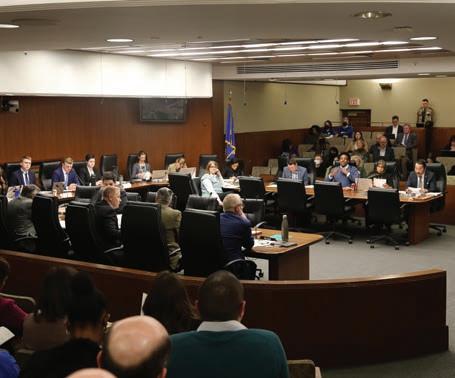
Legislature shelves housing supply bills
Despite support from a diverse coalition, legislation was unable to get across the nish line.
e “Minnesotans for More Homes Initiative” was unveiled in February with the support of a bipartisan group of legislators and more than two dozen organizations, with the goal of expanding housing choices while encouraging more environmentally e cient, a ordable and attainable housing options.
e agenda made housing supply a prominent topic of discussion throughout the legislative session. Numerous bills authored by both Republican and Democratic legislators were heard in both chambers, but two bills garnered the most attention.
SF 3964/HF 4009 was deemed the “Missing Middle” bill allowing for a variety of new housing options and more density in all areas of the state.
e bill drew the ire of many city lobbying organizations including the Coalition of Greater Minnesota Cities who opposed the language citing, “unreasonable minimum lot sizes to support legislatively
mandated density requirements” and claiming that the language “does not guarantee actual a ordable housing is built.”
However, there was also support for the language from city council members and mayors throughout the state.
“Minnesotans work hard and shouldn’t have to make the choice between moving or having their entire paycheck go towards housing,” said Aaron Wagner, councilmember from Robbinsdale. “Some people don’t even have that choice and are forced to leave their community when it becomes too expensive to live there. We need statewide rules that increase the amount of a ordable housing throughout Minnesota.”
Cristen Incitti, president & CEO of Habitat for Humanity Minnesota, supported the language.
“ e Missing Middle bill’s aim to diversify the types of housing developers can build in our communities is critical to
a healthy housing continuum. We need a diverse housing stock that addresses the needs of communities across the entire continuum,” said Incitti.
Additionally, SF 3980/HF 4010 would have established multifamily residential development requirements within commercially zoned areas of cities. is language was considered in the mix for the longest duration and had the support of numerous mayors, council members and organizations across the political spectrum.
“Given the scope of Minnesota’s housing shortage, this is a critical piece of the puzzle that will enable communities to address their housing challenges,” said St. Cloud Mayor Dave Kleis. “ e scale of this shortage requires state action like HF 4010.”
Libby Murphy, director of policy for the Minnesota Housing Partnership, testi ed in a legislative committee saying, “Many of today’s
Historic fundraising campaign fuels housing initiative
HOUSING INDUSTRY NEWS | 1
VOL. 8 ISSUE 2, JUN. 2024 THE MINNESOTA HOUSING INDUSTRY NEWS SOURCE BY HOUSING FIRST MINNESOTA • HOUSINGINDUSTRYNEWS.ORG Industry gathers to advocate for homeownership opportunities PAGE 8 Mortgage rates level o , market activity picks up PAGE 12 Minnesota homebuilders continue to lead the nation in energy e ciency PAGE 16 INSIDE THIS ISSUE 2960 Centre Pointe Drive Roseville, MN 55113 HousingFirstMN.org PRSRT STD U.S. POSTAGE PAID PERMIT # 93652 TWIN CITIES, MN
CONTINUED >> PAGE 18
This session, the industry was successful in defending against an array of issues at the Capitol, and the foundation for land use reforms was laid for next year’s legislative session.
CONTINUED >> PAGE 6
e Housing First Minnesota Foundation and Lennar are taking a signi cant step toward ending veteran homelessness with the announcement of a Veteran Village project. According to the
for veterans experiencing homelessness CONTINUED >> PAGE 10
Solving the housing supply puzzle
As we move through the rst half of 2024, we’ve seen growth in single-family construction, continued strength in remodeling and a big slowdown in multifamily construction projects. is mixed bag of both good and challenging news speaks to the two main issues impacting our industry: strong demand for homeownership and the continued presence of roadblocks that are holding us back from xing our undersupply of over 100,000 housing units in Minnesota. ese issues were intensely debated at the Capitol this spring as our elected leaders attempted to take positive steps to solve the puzzle.
e zoning modernization debate in 2024 advanced the discussion to its furthest point in more than a generation. e bill’s basic premise follows the national movement to create a housing approval structure that prioritizes property rights, market and demographic responsiveness, along with some basic e ciencies and common sense when it comes to allowing starter homes to once again be built in this state.
Not surprisingly, the zoning modernization initiative was met with strong opposition from local governments and others who see a shift away from the current system as a negative. And even with strong bipartisan support for these changes, legislative leaders elected to not advance the zoning modernization bill in 2024 – leaving that portion of the housing supply puzzle unsolved for now.
In other industry-related items, changes are coming to the independent contractor status test. Part of the housing supply challenge is our workforce shortage, and Housing First Minnesota will be working to limit any unintended consequences of this and other bills through education and continued work with stakeholders. In a housing supply and a ordability crisis like the one we nd ourselves in, we simply cannot a ord to add any more homeownership roadblocks.
Looking ahead, the work to solve the housing supply and homeownership puzzle continues. Housing is emerging as a local and national issue in the upcoming elections, and we anticipate

lots of discussion about how to solve this critical issue. We also expect to see ongoing discussions in preparation for an even larger housing policy discussion in 2025 at the Minnesota Capitol. One of the brightest spots in our work to solve the housing puzzle is the increase in our industry’s engagement. It’s critical that we continue to share our stories and help to rally our community around homeownership.
Let’s Build it Together, Art Pratt 2024 Housing First Minnesota Board Chair

Go to HousingIndustryNews.org for subscriber exclusives, breaking housing news and features.
Subscribe
Be a part of the growing housing movement in Minnesota. Follow us @housingindustrynews_mn facebook.com/HousingIndustryNewsMN HousingIndustryNews.org
Stay up to date on the latest housing news. Subscribe to our newsletter at HousingIndustryNews.org
Advertising
For advertising information, rates, editorial calendar and production specifications, contact: Sales@HousingFirstMN.org
News Tips
Have a story idea for our next issue?
Contact Katie Elfstrom at Katie@HousingFirstMN.org or send your story to Info@HousingIndustryNews.com
Follow Us
The Parade of Homes has a long legacy of supporting homeownership in Minnesota. Over the past few years, the Parade of Homes First-Time Homebuyer $10K Giveaway has created more homeownership opportunities and made a major impact in the lives of Minnesotans. These down payments were made possible through several generous donations from Housing First Minnesota members.
June
PUBLISHER
James Vagle
James@HousingFirstMN.org
EDITOR
Katie Elfstrom
Katie@HousingFirstMN.org
ASSOCIATE EDITOR
Laura Burt
GRAPHIC DESIGN
Pa Gar Vang
ACCOUNTING
Janice Meyer
ADVERTISING SALES
Brad Meewes
Kori Meewes
Kate Gunderson
Devin Lehnho
Olivia Rolland
CONTRIBUTING WRITERS
Katie Elfstrom
Katie@HousingFirstMN.org
Nick Erickson
Nick@HousingFirstMN.org
Mark Foster
Mark@HousingFirstMN.org
Kristen Ober
Kristen@HousingFirstMN.org
Kate Wigley
Kate@HousingFirstMN.org
James Vagle
James@HousingFirstMN.org
Sarah Hinderman
Sarah@HousingFirstMN.org
Housing First Minnesota
James Vagle, Chief Executive O cer
Art Pratt, Board Chair
Housing Industry News is a publication of Housing First Minnesota. Housing Industry News is published and distributed four times per year to housing industry professionals and others associated with the homebuilding industry. Neither the advertisers, nor Housing First Minnesota, will be responsible or liable for misinformation, misprints, typographical errors, etc., herein contained. For address change information, contact Housing First Minnesota. Suggestions, ideas and letters are welcome.
HOUSING INDUSTRY NEWS
2960 Centre Pointe Drive Roseville, MN 55113
info@HousingFirstMN.org
housingindustrynews.org
Housing Industry News is published by Housing First Minnesota
Entire contents copyright 2024 All rights reserved
Housing
Housing
Learn
2 | HOUSING INDUSTRY NEWS SIGN UP TO BE A PART OF THE HOUSING MOVEMENT • HOUSINGINDUSTRYNEWS.ORG BOARD CHAIR NOTE
First Minnesota
the voice
homebuilders, remodelers
all who are dedicated to building safe, durable homes at a price Minnesotans can a ord.
is
for
and
First Minnesota is dedicated
advancing the American dream
homeownership
Minnesotans
leading resource
housing-related issues in Minnesota.
advocacy work has never been more important.
housing industry remains under intense regulatory
political pressures that impact Minnesota homeowners’ ability to buy, build and remodel their dream home. Housing First Minnesota supports reasonable policies,
to
of
for
and is the
for
This
The
and
regulations and protections, but our call for a ordability for families is a voice that must be heard.
more at HousingFirstMN.org.
2024, Volume 8, Issue 2
HOUSING INDUSTRY NEWS
Giveaway $10K FIR S T-TIME HOMEBUYER THANK YOU
Art Pratt 2024 Board Chair, Housing First Minnesota
Across the country, there is much talk about housing
HERE ARE SOME OF THE LATEST QUOTES ON THE STATE OF THE INDUSTRY:
Shelter inflation is 5.5%; 'everything else' inflation is 2.2%. The problem is housing; the solution is more homes."
BEN HARRIS BROOKINGS INSTITUTE
We’ve seen that there are buyers who have gured out ways to make the market work for them despite higher interest rates. If we think about future demand, though, there’s been a lot of hope and emphasis on rates coming down over the next handful of months. We haven’t seen that yet, though, and so each sale has builders looking further down their interest list."
ALI WOLF ZONDA
Rising home prices are a doubleedged sword. On the one hand, Americans who already own homes bene t from rising values and they can consider themselves lucky they broke into the housing market while they could still a ord it. On the other hand, price appreciation makes the prospect of buying a new home daunting or even impossible for many people who want to move."
ELIJAH DE LA CAMPA REDFIN
Even as inventory levels rise, sellers are still finding they have the upper hand in most areas and price points. Buyers should understand that while they have more options, there is still competition. That'll be even more true if rates fall."
GERI THEIS MINNESOTA REALTORS
While the start of the year has seen an expansion for single-family home building because of a lack of existing home inventory, home building activity leveled o in April as higher interest rates, tighter lending conditions and lower home building sentiment acted as headwinds on new home construction."
CARL HARRIS NAHB
WE’RE EXPANDING OUR REACH TO HELP YOU GET THE JOB DONE EASIER.
Lakeville (952)229-1933
Other Metro Locations:
St Paul, MN (651)224-3675
New Brighton, MN (651)636-7260
New Locations: Savage, MN (952)736-8384 Minneapolis, MN (612)729-7353
Maple Plain, MN (763)479-2966
Coon Rapids, MN (763)757-5077 Eagan (651)452-1835 (Siding & Gutters Only)
Roofing | Siding | Windows Decking | Gutter
SIGN UP TO BE A PART OF THE HOUSING MOVEMENT • HOUSINGINDUSTRYNEWS.ORG HOUSING INDUSTRY NEWS | 3 THE HOUSING BEAT
Eagan
Maple
Savage
Coon Rapids St. Paul
Minneapolis
New Brighton
Plain
Lakeville
ABC_DecHIN23_placed_DR.indd 1 11/20/23 4:13 PM
Building code technical review underway
Four years into Minnesota's six-year building code cycle, work has begun to review proposed changes to the Minnesota State Building Code. Ten Technical Advisory Groups (TAGs) have been formed to review di erent chapters of the State Building Code.
e TAGs formed include Residential Energy Code, Accessibility Code, Administration and Minnesota Provisions, Commercial Building Code, Elevator Code, Existing Building Code, Fire Code Compatibility, Mechanical and Fuel Gas Code, Structural, and Residential Building Code.
Members of the TAGs are code o cials, builders, specialty
contractors, engineers, architects and other stakeholders with an interest or knowledge of the code sections being reviewed.
A review of the 2024 Internal Residential Code (IRC) has not started, as the code books are not available. Technical sta at the Department of Labor of Industry must review the changes in the 2024 IRC in advance of any work. e Residential TAG is expected to begin its work in the second half of 2024, roughly three months after the books are available.
e TAG process is only the rst step in the process to update Minnesota's building codes, which will need to work through Minnesota's rulemaking process before going into e ect in 2026.
Residential energy code TAG paused
While most of the other TAGs are underway, work on
tree fee raises eyebrows
Demand for ve- to six- gure cash deposits for trees in Edina has sparked debate, casting doubt on the validity of the city’s tree protection ordinance. e required cash deposits can be held by the city for up to three years.
Tree fees and deposits, which are not explicitly authorized in Minnesota, are enacted as part of local government planning ordinances. Edina's ordinance was enacted nine years ago with the stated goal of protecting its tree canopy.
Concerns over tree fees have grown in recent years, says Nick Erickson, senior director of housing policy for Housing First Minnesota. He said it is an example of exclusionary policies designed to raise the barriers to entry into the community.
“When you have a policy that requires newhome buyers to give the city tens of thousands of dollars in cash, which the city can hold for years, it sends a message,” said Erickson. “ at message is one of socio-economic exclusion.”
Complicating the discussion over the tree protection ordinance in Edina are two factors: the cash requirement rather than letters of credit and a recent Supreme Court decision.
Cash deposits in the development space are not common, yet there is no other option, as letters of credit are not available from banks due to Edina's unique approach.
Concerns over the amount of money required as a deposit have increased since the Sheetz v. El Dorado ruling issued in April that administrative and legislative acts, such as ordinances, are not immune from the Takings Clause of the U.S. Constitution.
Release of funds
Another concern from Edina residents is how and when their money held by the city will be released. e current version of the ordinance allows for the release of funds in two steps.
First, after the certi cate of occupancy (CO) has been issued and the city forester has
the Residential Energy Code has been on pause since February. Over the course of 15 meetings between August and February, the TAG reviewed the residential portions of the 2021 International Energy Conservation Code (IECC) and proposed Minnesota-speci c amendments. e TAG is expected to return to work once work on the 2024 IRC is underway.
Plumbing code review continues
e Minnesota Plumbing Board's Ad Hoc Rulemaking Committee is part of the separate process, which is reviewing the 2024 UPC and proposed amendments. e Plumbing Code reviews are held monthly through January 2025. Final rulemaking on the next edition of the Minnesota Plumbing Code will follow the 2026 building code update.
MPCA enforcement cases down in 2023
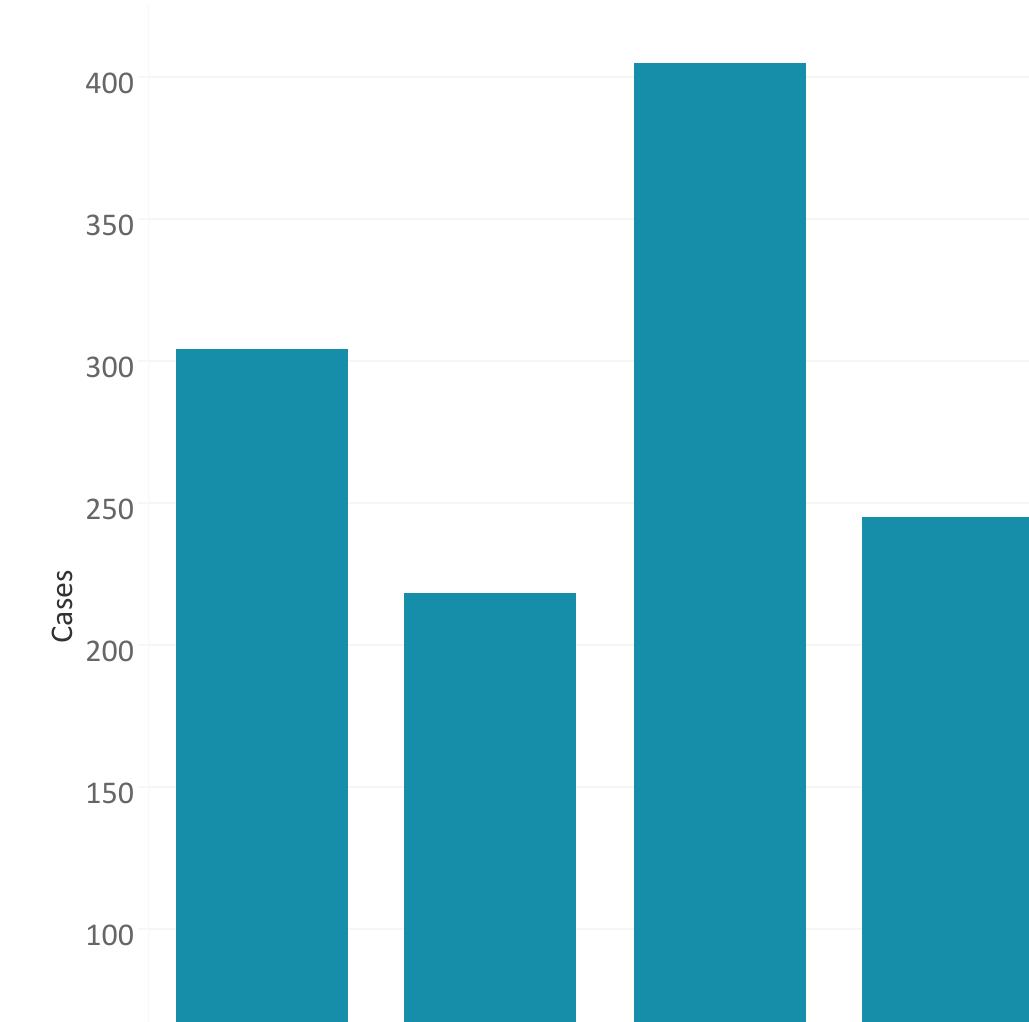
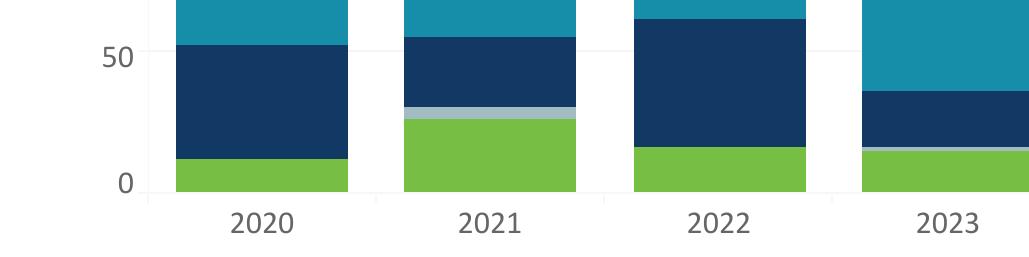
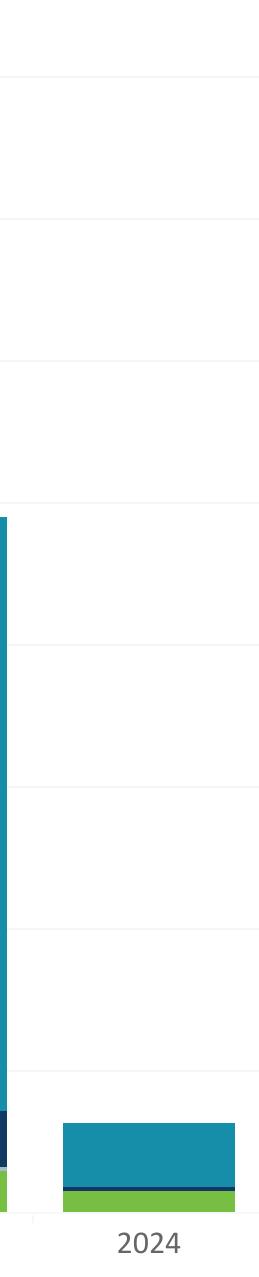
e Minnesota Pollution Control Agency (MPCA) closed 291 enforcement cases for water quality, air quality, waste, stormwater and wastewater violations in 2023. at’s down from over 400 enforcement cases in 2022.
e highest penalty issued in 2023 for a construction stormwater permit was $52,378. Of the 291 enforcement cases, 71 of the penalties issued were for $5,000 or more.
According to MPCA, the penalties are calculated using several factors, including harm done or potential for harm to the environment, the economic bene t the company gained by failing to comply with environmental laws or how responsive and cooperative a regulated party was in correcting problems.
MPCA states that imposing monetary penalties is only part of their enforcement process. Agency sta provides assistance, support and information on the steps and tools necessary to bring any company, individual or local government back into compliance.
approved that any municipal requirements have been met, the forester will inspect the site and calculate the fee owed based on how many trees are preserved or replaced. Half of the original escrow or line of credit, minus this fee, will be released.
Second, three years after the CO has been issued, the applicant must submit a review by a certi ed arborist indicating new and preserved trees are still healthy. If any trees are unhealthy, the certi ed arborist can replace them on site and the second half of the nancial guarantee (minus the fees above) will be released. If the applicant doesn't replace the trees on site, the city will keep this half of the nancial security.
Calls for change
e long-simmering concerns over the ordinance have caused builders and residents to call for change.
“New tree ordinances are gaining popularity under the guise of climate action plans and
protecting tree canopies, but they are going too far,” said Rebecca Remick, president and owner of Edina-based builder City Homes. “ ese ordinances are excessively impacting housing developers, homeowners and real estate agents, consuming signi cant amounts of money.”
City leaders have met with residents whose money is being held by the city, along with their builders. e topic was also the subject of a May 7 City Council work session.
“I'm glad to see various segments of our industry addressing this issue and expressing concern as cities become stricter with these ordinances without considering economic feasibility,” Remick added. “ e ordinance could lead to reduced construction and exacerbate our already limited new housing supply.”
e city of Edina has not taken any action on the tree protection ordinance despite the concerns of residents.
4 | HOUSING INDUSTRY NEWS SIGN UP TO BE A PART OF THE HOUSING MOVEMENT • HOUSINGINDUSTRYNEWS.ORG
REGULATORY AFFAIRS
Source MPCA Administrative penalty order (APO) Citation Consent Decree Stipulation Agreement Case Type
Edina's
Habitat for Humanity project inserted into reform debate
Since 2019, Minnetonka Mills Church in Minnetonka has been looking to do something somewhat unique with its property: Use it for housing.
e proposed housing units would occupy the church's property in the Minnetonka Mills neighborhood, a prime real estate location near Minnetonka Boulevard and Baker Road. Habitat for Humanity Twin Cities proposed a 10-unit project of ve twin homes on the church grounds.
From the beginning, there were concerns from the community that the project didn't t with the character of Minnetonka. Seeking a pathway forward, Habitat made several concessions, lowering the height of the buildings and reducing the number of units from 12 to 10.
After years of work on the project and a series of meetings earlier this year, the project faced one of its last major hurdles: a planning commission hearing on a rezoning of the property to allow the project to proceed.
e sta report for the hearing initially recommended denying anything requiring a comprehensive plan amendment, noting the project would “create unintended impacts on the neighborhood” and that the twin homes were inconsistent with the “neighborhood character.”
e planning commission followed the sta recommendation and issued a non-binding recommendation that the rezoning request be denied as the ve duplexes on 2.2 acres were too dense for the community.
e Planning Commission's recommended
denial came at a time when skepticism was growing over local government's ability to address the state's housing crisis.
In February, Anne Mavity of Minnesota Housing Partnership told the House Housing Finance and Policy Committee that structural reforms are necessary.
“We are ghting project by project, 30 units at a time, to create more housing when actually we have more than 100,000 new homes that we need,” said Mavity.
During that same hearing, Julie Wischnack, the city's community development director, spoke against housing reforms that would have streamlined the approval process for projects like Minnetonka Mills. “Minnetonka has been a leader in density,” said Wischnack.
In March, Minnetonka Mayor Brad Wiersum joined several other mayors in a Star Tribune oped saying that the housing crisis should not be solved at the expense of local power.
“Undoubtedly, Minnesota faces a housing shortage that impedes our economic growth,” they wrote. “However, addressing this issue should not come at the cost of relinquishing local control over zoning decisions.”
Former Minnetonka city council member Bradley Schaeppi took issue with the denial laid against the backdrop of the state's housing crisis.
“I was not surprised the city of Minnetonka planning leadership resisted Mills Church's comp plan amendment request,” said Schaeppi. “Land use applications almost never contain

alternative ndings other than sta recommendation, leaving it next to impossible for the city council to override any sta recommendation.”
Chris Coleman, president and CEO of Twin Cities Habitat for Humanity, stressed the urgency of expediting such projects, citing the persistent housing crisis in Minnesota. He emphasized the need for swift action, stating that prolonged delays hinder e orts to address the housing shortage e ectively.
On May 2, Minnetonka city sta released a new report supporting the a ordable housing initiative by Habitat for Humanity. Additionally, the report advised the City Council to greenlight the project during
its May 6 meeting after an additional 0.31 acres was added to the development plan.
“Habitat for Humanity expanded the lot size on which the project is located, and what happened in that [change] is there was no longer that need for the comprehensive plan amendment, so that issue of density and maximum amount of density on the site was resolved by making the properties slightly larger,” Wischnack said in an interview.
Ultimately, the City Council unanimously approved the rezoning on May 6 and contributed to Habitat for Humanity through its a ordable housing trust fund.



SIGN UP TO BE A PART OF THE HOUSING MOVEMENT • HOUSINGINDUSTRYNEWS.ORG HOUSING INDUSTRY NEWS | 5 Replace. Repair. Restore. Roofing Siding Windows Gutters Metal License #BC751852 The Fine Art of Creating Exceptional Exteriors. For your complimentary consultation, connect with us: 763-298-9047 www.allstartoday.com Le n m e Allstar_Jun24HIN_placed.indd 1 5/20/24 8:22 AM
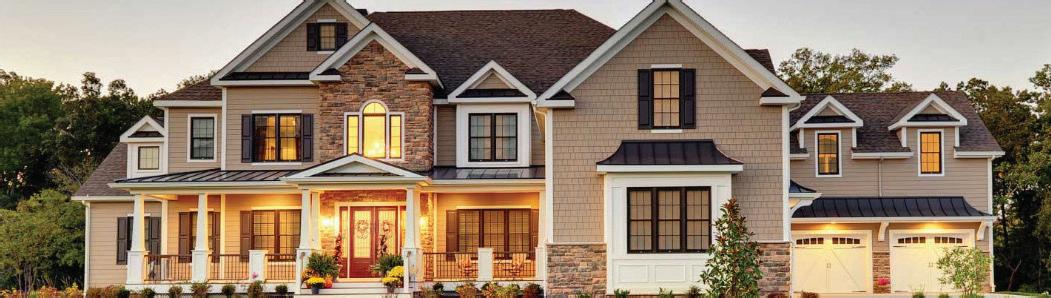
Rendering of twin homes from the proposed development at Mills Church in Minnetonka.
Appeals Court rules in favor of Minneapolis in 2040 housing plan dispute
e city of Minneapolis is now able to move forward with its 2040 housing plan, following the Minnesota Court of Appeals' decision on May 13 to overturn a previous injunction issued by a lower court last year. at earlier decision had placed projects in the development pipeline on pause.
An earlier ruling in the battle between Smart Growth Minneapolis and the city was remanded to Hennepin County District Court after it found the city did not address the requirements of the Minnesota
Environmental Review Act, requiring an environmental review of any comprehensive plan.
e Court of Appeals ruling made it clear that the burden of proof was on Smart Growth Minneapolis, not the city, as the district court stated, “Smart Growth bore the burden of demonstrating that its requested relief was necessary or appropriate to protect the environment and would not cause unnecessary hardship to the city. "
At the time of publishing, the city had not addressed how it intended to proceed following the ruling.
Mississippi Dunes redevelopment faces legal battle
A group formed to stop the redevelopment of the former Mississippi Dunes golf course in Cottage Grove has sued to block Rachel Development’s project, approved by the city of Cottage Grove earlier this year, from going forward.
e group is suing the city and the developer to
Blaine apartment denial challenged in federal court
e city of Blaine is being sued in Federal Court for damages over the denial of an apartment building.
According to the plainti 's brief, neighbors told
halt the development of 377 homes on the former Mississippi Dunes golf course.
A Washington Country judge denied the group's motion for an emergency temporary restraining order preventing any site work from going forward while the case is adjudicated.
the city during a public hearing that they opposed the apartment's approval because they were “concerned about the potential rapists” and that it would be a short walk for the residents to rob a nearby bank.
e project, which closely aligned with the city's plan failed by a single vote, and a dissenting vote was cast because one council member voted against the project citing neighbor opposition.
e developer is seeking more than $1.2 million in damages.
US Supreme Court hands down landmark ruling on impact fees
applies equally to both — which means that it prohibits legislatures and agencies alike from imposing unconstitutional conditions on land-use permits,” wrote Justice Amy Coney Barrett in the court’s decision.
Under Sheetz, existing case law regarding regulatory takings expanded to fee schedules enacted through legislative or administrative action. Any fee not tied to an individualized analysis of a project’s speci c impact can be an uncompensated taking of private property. e case is not a complete ban on impact fees, and it is expected that several new court challenges will test the extent to which the Supreme Court will take the impact fee questions.
e case will now be sent back to the state courts for further review.

















6 | HOUSING INDUSTRY NEWS SIGN UP TO BE A PART OF THE HOUSING MOVEMENT • HOUSINGINDUSTRYNEWS.ORG LEGAL
CONTINUED FROM PAGE 1
The Supreme Court ruling stems from a 2016 lawsuit filed by a California landowner.
Building permit lawsuits appealed to state Supreme Court
e Minnesota Court of Appeals issued a split decision in March in the legal challenge over building permit fees in two fastgrowing communities, remanding the case to the Hennepin County District Court, but an appeal from homebuilders may send the case to the Minnesota Supreme Court.
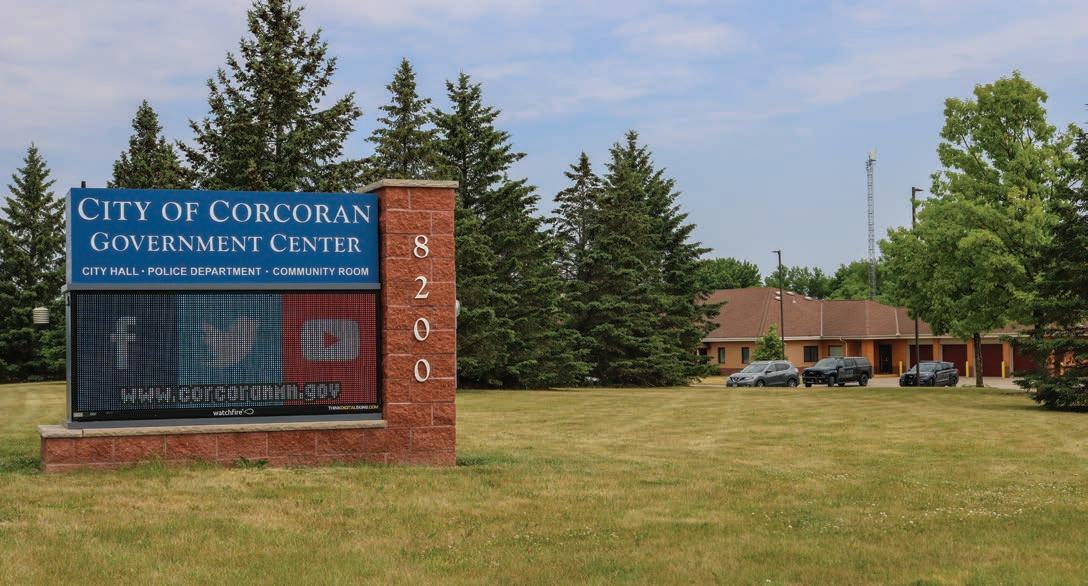
In the consolidated matters of Housing First Minnesota vs. the cities of Corcoran and Dayton , a three-judge panel overturned a July 2023 decision from the Hennepin County District Court that the housing industry trade association lacks standing to challenge the cities' building permit fees in late March.
Supporting the decision, the opinion states that Housing First Minnesota's members paid the permit fees, were responsible for an “overwhelming majority” of building permit fees for new single-family homes, and were required by law to pay the fees to build in these communities.
“Housing First’s members have a su cient economic stake in challenging the allegedly excessive fee schedule to satisfy the requirements of the standing doctrine,” the court said.
e non-precedential opinion also upheld the lower court ruling dismissing Housing First Minnesota's due process claims, noting “the cities were acting in a legislative capacity as opposed to a quasi-judicial capacity.”
A recent decision from the U.S. Supreme
Court issued 18 days after the Minnesota Court of Appeals ruling states that legislative and administrative fees are not exempt from the Takings Clause of the U.S. Constitution.
In its petition for review by the Minnesota Supreme Court, attorneys for Housing First Minnesota wrote that Sheetz v. El Dorado , the new unanimous legal precedent, found “the

Takings Clause applies to local government monetary conditions on a building permit.”
e appeal to the state's top court is one of the rst times the April 12 opinion from Sheetz v. El Dorado was cited in a legal ling in the country.
In response to the petition for review by the Minnesota Supreme Court, the cities
did not appeal the standing determination by the Court of Appeals but did contest Housing First Minnesota's appeal.
e Minnesota Supreme Court has until June 23 to decide to hear the appeal.


SIGN UP TO BE A PART OF THE HOUSING MOVEMENT • HOUSINGINDUSTRYNEWS.ORG HOUSING INDUSTRY NEWS | 7 Behind every building there are regulations. Bricks and mortar meet rules and records. From concept to completion, we keep you compliant and provide the foundation on which your business can safely stand. Let our team help you build with confidence. Learn more at mncls.com
The Appellant, Housing First Minnesota, is the publisher of Housing Industry News.
LEGAL
In March, a three-judge panel overturned a July 2023 decision that the housing industry trade association lacks standing to challenge the cities' building permit fees.
Industry gathers to advocate for homeownership opportunities
Nearly 100 Housing First Minnesota and Central Minnesota Builders Association (CMBA) members gathered in St. Paul in April to discuss the housing market and the obstacles the industry faces before sharing those issues with their legislators at the Capitol.
e Housing Day at the Capitol event kicked o with a program featuring remarks from leadership from the two housing associations emphasizing the importance of the day and what it means for the industry.
“ is is shaping up to be a truly meaningful year at the Legislature, and it is more important than ever that we stand


together as an industry,” said Art Pratt, 2024 board chair of Housing First Minnesota.
Welcoming remarks were followed by a brief market update which gave attendees insight into key indicators like mortgage rates, homebuilding activity and home prices.
Mark Foster, vice president of legislative and political a airs, discussed a slate of housing- and industry-related legislation. Foster shared policies and bills focused on improving housing a ordability and attainability, but he also discussed the many proposed bills that would harm housing and increase the cost of construction and homeownership.
A panel discussion featuring a bipartisan slate of legislators spoke about bills currently in play and housing priorities on
THANK YOU 2024 SPONSORS
Housing issues discussed at the Capitol
What bills did and didn't pass the Minnesota Legislature this year?
e Minnesota Legislature concluded its session on May 19 in a urry of activity as lawmakers hurried to meet the deadline. In the nal hours, Democrats assembled a 1,400-page bill to push through some of their key priorities, prompting strong objections from Republicans. Here is a rundown of the issues that impact the industry from the 2024 session of the Minnesota Legislature.
Independent contractor changes in the construction industry: Despite broad construction industry opposition, language that will change the current nine-factor test determining independent contractor status to a 14-factor test passed as a part of a larger omnibus bill. Additionally, this language has many pieces to it that would include severe penalties for violations of misclassi cation.
License to paint: Language that would have required certain paint contractors to sit for an exam to get a license to buy certain
types of paint was originally introduced and scheduled for a hearing. e bill was later withdrawn and never heard in either chamber.
Preempting municipalities from banning natural gas in residential construction: is language would protect natural gas as a fuel source for residential construction. It was heard in the Senate but ultimately did not pass.
Residential Energy Code changes:
A bill that would change how the residential energy code is adopted was included in a larger omnibus bill. Expect further discussion on this item within the Department of Labor and Industry for many years.
Ban on new single-family for rent: is topic gained some coverage last year and would have originally not allowed the new construction of single-family homes
the hill. e discussion covered topics ranging from zoning modernization to labor issues.
“I cannot remember a time when so many developers, contractors and subcontractors have stepped up to the plate to voice their concerns about the issues we are currently facing in the building industry,” said Jack Brandes, 2024 president of CMBA. “It’s truly astounding, and it shows how much these issues matter to our present and our future.”
Following the program, attendees met with their representatives to help advocate for their industry by asking legislators to keep housing as a priority for the rest of the legislative session.
that would be rentals. ere was language adopted to create exemptions for builders and developers who do this type of work. Ultimately, the bill did not pass this year.
Minneapolis 2040 Comprehensive Plan fix: Cities, developers and environmental groups worked together to earn a legislative x following the court’s dismissal of the 2040 Comprehensive Plan. e bill passed as part of a larger omnibus bill and will put to rest the lawsuit in Minneapolis.
Single-Egress Stairway Apartment Building report: e Department of Labor and Industry will gather stakeholders to evaluate conditions under which apartment buildings with a single means of egress above three stories up to 75' would achieve life safety outcomes equal to or superior to currently adopted codes.
Electric-vehicle requirements in single-family construction: Following new requirements of electric-vehicle infrastructure in commercial and some multifamily settings, new legislation that would require electric-vehicle infrastructure in single-family homes was introduced and discussed in both chambers. e language was ultimately not adopted.
New lobbying requirements at city halls: For many months there has been confusion about what is considered lobbying at the Capitol and within political subdivisions. e broader government relations community worked throughout the session to gain greater clarity. e Legislature passed language that may require certain professionals who interact with state and local o cials to register as lobbyists. is could include certain lawyers, engineers, architects and more. If you interact with local government, look for future rules from the Campaign Finance Board.
8 | HOUSING INDUSTRY NEWS SIGN UP TO BE A PART OF THE HOUSING MOVEMENT • HOUSINGINDUSTRYNEWS.ORG
HOUSING ON THE HILL
Over 100 housing industry members joined together to advocate for homeownership and homebuilding in Minnesota..
After a presentation and bipartisan legislative panel, attendees met with their elected officials to make their voice heard.
ADVOCATE SPONSORS LP Building Solutions BREAKFAST SPONSOR CAPITOL SPONSORS All, Inc. Lyman Companies LP Building Solutions Scherer Bros. Lumber Co. Event
Sponsors

THE FUTURE OF BETTER BUILDING IS NOW.
Every day our team of professionals is driven to be the best and deliver for our customers. We’re on a mission to develop next-generation solutions that accelerate, optimize and transform the homebuilding industry.
Through the acquisition of Paradigm, a building industry technology leader, Builders FirstSource is uniquely positioned to lead the digitization of our fragmented industry. Together, we will help homebuilders drive e iciency by reducing project costs and increasing labor productivity across the country.
Oak Grove Yard (763)-856-2355
Lakeville Yard (952)-469-2116
Twin Cities Millwork (952)-469-3466
Twin Cities Cabinets (763)-856-2355
Oak Grove Components (612)-656-1642
Mankato Yard (507)-387-5608
Montevideo Yard (320)-269-5552
St. Cloud Yard (320)-251-0861
Little Falls Yard (320)-632-9209
Osakis Yard (320)-859-2814
Brainerd Yard (218)-829-2891
Pequot Lakes Yard (218)-568-4040
Wadena Components (218)-631-2607
Detroit Lakes Yard (218)-847-2688
Fergus Falls Yard (218)-736-7537
SIGN UP TO BE A PART OF THE HOUSING MOVEMENT • HOUSINGINDUSTRYNEWS.ORG HOUSING INDUSTRY NEWS | 9
Untitled-5 1 2/14/23 7:54 PM
Legislature takes a pass on zoning reform, focuses on state funding for housing
local government policies and everyday practices, currently permitted by state policies, perpetuate segregation. ese restrictive growth policies are rooted in racist policies established, enacted and enforced to exclude Black, Indigenous and people of color (BIPOC) and disabled residents. We believe that it is time to end regulatory deference and state enforcement of these outdated, discriminatory tools.”
Ultimately, the only piece of the agenda that was passed by the Legislature and signed by Gov. Walz was a “legislative x” to an ongoing lawsuit regarding the Minneapolis 2040 Comprehensive Plan, which allows for more density throughout the city. Individual residential projects will still be subject to
environmental reviews, but the entirety of the comprehensive plan will not.
“All-in-all, we saw the most important land-use and zoning discussions we’ve had at the Minnesota Legislature in a generation,” said Mark Foster, vice president of legislative and political a airs at Housing First Minnesota. “Unfortunately, without more meaningful legislation getting signed into law, it’s likely that Minnesota’s supply issues will only worsen over the coming year. e coalition is laser-focused on solving these issues and we hope the Legislature and Gov. Walz will address these desperately needed policy changes in 2025.”










*Fornewvehiclepurchasesthroughourcommercial/fleetdepartment-businessuseonly;personal vehiclesarenoteligibleforrebate.Seedealerforcompletequalifications.Offervalidthrough12/31/24.







DISCOVER THE FUTURE OF HOMEBUILDING
Minnesota’s Green Path is the state’s leading energy efficiency and green building program for residential construction. This innovative initiative provides homeowners with easy-to-understand energy efficiency reports and recognizes builders who are dedicated to sustainable construction practices.
Three Levels of Excellence in Green Building
ENERGY TESTED: Every new home receives a Home Performance Report, ensuring a solid foundation of energy efficiency.
ADVANCED CERTIFIED: Homes that achieve this mid-level certification meet rigorous energy testing standards and incorporate additional green features.
MASTER CERTIFIED: The top level of green building, homes at this level exceed the Advanced Certified standards, showcasing the highest commitment to energy efficiency.


TheReSNeTHome energyRatingSystem(HeRS)Indexprovidesa comprehensiveassessmentofahome’senergyefficiency.Thelower ahome’sscore,thebetteritsenergyefficiency.Olderhomesoften score130orhigher.ThenationalaverageHeRSScoreforanewhome TheAirChangesPerHourat50Pascals(ACH50)istheindexusedin blowerdoortestingtoindicatehowairtightahomeis.AswithHeRS, thelowerthescorethemoreenergyefficientthehome. NewThishomeisaparticipantintheHighEfficiency CenterPointHomesProgram,ajointofferingbetween EnergyandXcelEnergypromotinghighefficiencyhomeconstruction.


Xcel Energy has teamed up with Minnesota’s Green Path to recognize new homes that set the bar for energy efficiency. As part of their dedication to green building, Xcel Energy is covering the application fees for Advanced and Master Certification for builders operating in their territory.
Elevate your homebuilding standards and contribute to a greener future. Learn more

10 | HOUSING INDUSTRY NEWS SIGN UP TO BE A PART OF THE HOUSING MOVEMENT • HOUSINGINDUSTRYNEWS.ORG CONTINUED FROM PAGE 1
Housing
a prominent topic of discussion throughout the
being heard in both chambers. JeffBelzersChevy.com
supply was
legislative session, with multiple bills
Jeff Belzers_JunHIN24_placed.indd 1 5/18/24 4:46 PM
® Powered by Xcel Energy
about achieving Green Path Advanced or Master Certification at MNGreenPath.org. THANK YOU MINNESOTA GREEN PATH SPONSORS Home Performance Report MN GREEN PATH WWW.MNGREENPATH.ORG Yourhome’splaceontheGreenPath: MN’s GreenENERGY TESTED Typical Existing Home MN’s PathADVANCED CERTIFIED MN’s GreenMASTER CERTIFIED Here Home Your home’s place on the Green Path: Home Home Address: 144 Mississippi River Boulevard S., St. Paul, MN 55105 Square Feet: 5,433 Bedrooms: 2 Baths: 4 Builder: Hagstrom Builder, Inc. hagstrombuilder.com ENERGY EFFICIENCY HERS -2 Blowerdoortestresultof≤0.3 cfm per Sub-slabsqinsulation installed slabs within envelope(R10minimum) Systems approach to home design Bottomusedplates exterior walls sealed subfloor with gasket or two beads Foundation and mudsill Cantilevered floors completely sealed with spray foam above supporting walls GSHPI system with a efficiencyfurnace(95+)and ECM Motor installed Insulated sheathing installed onexteriorofbuildingwalls(R20 +5continuousorR13+10 continuousminimum) n wood burning fireplaces installed inside thermal envelope Induction top installed Solar-electric photovoltaic system installed 80%ofwindowssq.footage haveU-valueof0.20orlower Basement walls InsulatedConcreteFormwork(ICF) Above grade walls are Structurally Insulated Panels (SIPs) Exterior foam insulation installedonabovegradewalls(R10 minimum) High-Efficiency Boiler installed (94%minimum)All above grade wall insulation achieves RESNET 1 standards INDOOR ENVIRONMENT QUALITY Activesoilgas(radon)mitigation system installed 4” min perforated foundationdrainwith3/4”ofgraveland fabric installed INSIDE perimeter of footings and rockWater-basedunderneathwaterproofing system installed below-grade Drainageplaneand3/8”air/ drainage space exists behind siding Recessed light fixture installed unconditioned are sealed Carpetcovers50%orless of floor space excluding bathrooms, kitchens, entryways and utility rooms n No carpet installed; home all hard-surface flooring Exterior envelope sealed andtestedat1.25ACHorlower Certified low-VOC or no-VOC interior paints and finishes throughout ENERGYSTAR® certified bath kitchen adhesivesmaterialsfanscontaining or paint are low- emitting low-formaldehyde RESOURCE MANAGEMENT n Recycled erosion control materials used silt fencing Two-stud with drywall clips 3-stud(California)forframing corners Single plate construction installed throughout majority of house’s framing n Recycling center with minimum two sorting bins installed Reusable footings and foundation used Roofing material carries lifetime-warranty n Whole-house surge protector Oneinstalled of following items are recycled reclaimed: wall coverings, floor coverings, countertop materials, millwork, Threecabinetsthe following locallysourced(within500miles): cabinets, interior doors and trim, millwork, windows, flooring, shingles, roofing, PEX tubing, countertops Materials that protect waterproof membrane and function as hydrostatic pressure release installed Special feature: Roofing material100%recyclableandproduces 50%lesscarbonemissionsto manufacture when compared to other architectural metals WATER MANAGEMENTLandscape plan with topography layout n Drip Irrigation System Roofinstalledwater drainage system is Roofinstalledwater drainage systemusesrainbarrels/cysterns n Hot water recirculating pump installed (pump must NOT run continuously) NSF-certified water are installed on drinking water sources Two composting toilets with light and heavy modes installed in home, using less than1.2gal/flush Personal rain garden installedaminimumof10feetfrom foundation n Atleast3”ofmulchappliedto all planting beds LAND USE Home shares common driveway alleyway with at least other home Accessible community garden within mile home-site Homewithin1/2mileoflocal businesses Homewithin1/2mileofpublic transportation access Home within five miles of park- and-ride location Homewithin1/2mileofbike No impervious surfaces outside the building footprint, other than driveway and code- required surfaces n Compost installed outside home Driveway surfaced with permeable pavers Metal installed French drains installed to keep on-site Home oriented maximize available light Minnesota’s Green Path program Housing Minnesota Generous support for Minnesota’s Green Path is provided by Windows Doors FeBRUARy26,20241:09PM
ACH50 These results reflect AirChangesperHour measured air flow. 1.36 HERSIndex -2 Thishomeis53%moreenergyefficientthanthe HERS reference home built code. ® HOUSING ON THE HILL
Community leaders tackle workforce housing challenges in collaborative summit
e Greater St. Cloud Development Corporation and CentraCare hosted a day-long session to learn more about workforce a ordable housing challenges and discuss solutions this spring. More than 50 community stakeholders, including the Central Minnesota Builders Association (CMBA) and Housing First Minnesota, participated in the event.
Santo Cruz, vice president of community and government relations for CentraCare, facilitated the event and shared his own workforce housing story, highlighting the need for local solutions and follow-through.
“CentraCare is not in the business of building housing,” said Cruz, while emphasizing that the community's largest employer has a strong vested interest in su cient workforce housing.
Cruz noted that CentraCare would process the results of the event and allow community stakeholders to plug into one of several cohorts stemming from the results. “Our hope is to hold an annual meeting to check in on our wins and losses,” he added.
e event featured a keynote address from Minnesota Housing Commissioner Jennifer Ho who applauded the

day-long
e ort and highlighted the $1 billion the Legislature put into addressing housing in 2023.
“We are a bank,” said Ho as she encouraged communities to seek state funding. “Now is a great time to be planning a housing development in your community.”
Ho also encouraged community stakeholders to partner together and challenged local cities and counties to have open communication with developers to learn about the challenges of building within their communities.
“It is very important to have key community stakeholders
Construction industry reports some improvement in market conditions despite slowdown
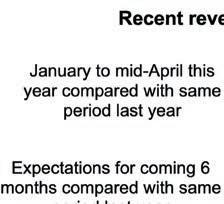
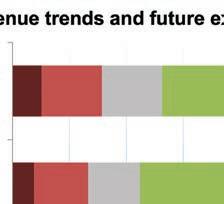
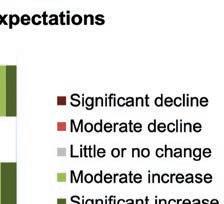
A recent survey of regional construction rms by the Minneapolis Federal Reserve shows that despite a broad slowdown in construction activity and falling revenue, better days may be ahead. e survey gathers input from construction rms across the region and construction sectors including, nonresidential/commercial, infrastructure, residential and industrial.
According to the Fed, rms that reported year-over-year worsening revenues outnumbered those reporting improving revenues. Many rms also reported signi cantly higher labor and material costs exceeding 5%.
Despite this, the share of rms reporting worsening revenues fell since the spring 2023 survey, as did the share reporting signi cantly higher costs. e residential sector reported the biggest improvement in rms expecting to see revenue increases.
When asked about revenue and pro ts compared to one year ago, 41% of the responses re ected that high construction
costs and the inability of rms to pass those cost increases on to clients have led to at or shrinking pro ts.
Price increases were similar across di erent sectors and different types of work. However, among respondents from the Twin Cities, there were signi cantly fewer rms that reported price increases — compared to the rest of the district.
According to the Fed, a Twin Cities plumbing supplier reported in the survey that manufacturers appear to be returning to the “standard once-a-year 3%-5% increase.”
Most have halted the pandemic-era practice of twice-a-year price hikes, he added.
While on a snapshot basis, the reports don’t look great, by comparison, there is signi cant improvement in several areas compared to
leading the charge on these issues,” said Wanda Schroeder, executive director of CMBA.
“It really boils down to bridging the gap between what a decent, basic home costs to build, and what the average worker can a ord,” said Steve Gottwalt, government a airs consultant at CMBA. “ ere are numerous ways to address that gap, including local government buy-down of development costs, gap nancing assistance, employer-supported revolving loan funds, Local A ordable Housing Aid grants from the state, zoning reforms and much more.”
the previous survey. at could be why the industry remains mostly positive with a half of respondents saying they were optimistic about the next several months ahead.
e Minneapolis Fed and its partners surveyed the second half of April, receiving nearly 300 responses.
WE BUILD TRUST
Larkin Hoffman has been a go-to real estate, land use and construction law firm in Minnesota and the Upper Midwest for over six decades.
Pete Coyle | Matthew Bergeron | Jake Steen | Bryan Huntington | Megan Rogers
SIGN UP TO BE A PART OF THE HOUSING MOVEMENT • HOUSINGINDUSTRYNEWS.ORG HOUSING INDUSTRY NEWS | 11 AROUND THE STATE
The
session brought community stakeholders together to strategize solutions.
Source: Minneapolis Federal Reserve
Learn More
C M CM MY CY CMY K Housing Industry News Digital Ad 02-24.pdf 1 2/23/24 1:53 PM Larkin Hoffman_MarHIN24_placed.indd 1 2/23/24 2:22 PM
Mortgage rates level o , market activity picks up
e Federal Reserve's decision to increase interest rates in 2021, aimed at curbing rampant in ation, has had a profound impact on the housing market over the past two years. After a series of hikes, mortgage rates soared to nearly 8% in October of last year. is sharp rise in rates led many potential buyers and sellers to pause their plans, hoping for more favorable conditions. However, as of the rst half of this year, rates have stabilized, averaging around 6.5% for a 30-year mortgage, according to Freddie Mac.
At their latest meeting, the Federal Reserve maintained its benchmark interest rate and indicated that no changes are expected until later this year.
With mortgage rates holding steady, market activity is beginning to rebound, suggesting cautious optimism among stakeholders in the housing sector.
Activity in existing market shows signs of improvement In 2023, existing home sales in the United
States dropped to just over 4 million, marking the lowest level since 2012, according to the National Association of Realtors.
However, the rst half of this year has seen a shift in sentiment among buyers and sellers. Growing impatience with mortgage rates has spurred many to re-enter the market, signaling a potential upswing in activity.
In their latest report, the Minneapolis Area REALTORS report that activity for both buyers and sellers is up considerably across the metro area. Compared to last year, new
• In-depth training video by Minnesota experts
• Exam guidebook
• Study guide
listings were up 21% in April. Additionally, closings were up 14% during the same time period.
“ is is a market where both sides really can be successful with their needs but may not get all of their wants,” said Jamar Hardy, president of Minneapolis Area REALTORS. “It’s okay to be excited about more inventory, but people should know that we still have an undersupplied market which means sellers have the advantage overall.”
• Minnesota Statues reference guide
• 2020 Minnesota residential code book
• 175+ practice questions
“The course was very clear and thorough, and I would highly recommend it to anyone taking the Minnesota Contractor License Exam!”






Xcel Energy’s FastApp tool helps speed up your natural gas hookup. It gives you access to dedicated professionals, cost-effective designs and in-project timelines. Plus you’ll alwayshave a single-point contact with our construction team.
For more info, visit: xcelenergy.com/Builders.







12 | HOUSING INDUSTRY NEWS SIGN UP TO BE A PART OF THE HOUSING MOVEMENT • HOUSINGINDUSTRYNEWS.ORG MARKET REPORT © 2024 Xcel Energy Inc.
NATURAL GAS IN , GET A LOT OUT. 9.75x6.6675_MN-HousingIndustry_Feb2024_P01.indd 1 2/29/24 7:53 AM Untitled-2 1 3/6/24 12:35 PM
PUT
CONTRACTORU.COM Details and registration at Know
looking to become a licensed contractor? MINNESOTA CONTRACTOR Pre-License Exam Prep Online Course
someone
SPONSORED BY
YOUR $249 COURSE INCLUDES:
Jose Alamilla, BJT Roofing LLC
PROVIDING SOLUTIONS
Lyman Roofing & Siding has been proudly serving the pro builders and remodelers in Upper Midwest area since 2006. At our climate controlled facility in St. Louis Park, we produce pre-finished siding in variety of custom colors and finishes, providing added value for architects, home designers, interior designers, custom home builders and contractors, ready for shipping to your jobsite.
•State of the art coating process with over 1200 colors
•Capacity to finish ALL siding accessories
•Huge fleet to accomodate your schedule
•Same day pick up for stocked trim & siding colors

• Our drying process cures the paint for a high quality durable finish.
• Backed by 15 or 30 year warranties vs field painting with no warranty.
SIGN UP TO BE A PART OF THE HOUSING MOVEMENT • HOUSINGINDUSTRYNEWS.ORG HOUSING INDUSTRY NEWS | 13 Lyman_SepHIN23_placed_DR_FINAL.indd 1 8/25/23 3:44 PM LYMANCOMPANIES.COM
Looking for a business partner to help save you time and money? Contactustodayat612-430-7200. Lyman_SepHIN23_placed_DR_FINAL.indd 1 8/25/23 3:44 PM
Housing market report
Homebuilding in the metro continued to show strength throughout the spring. Metro builders pulled permits for 541 single-family homes during the month of April, a 40% increase from the same time last year. Activity in the multifamily construction sector, however, continued to see decreases in overall activity with permits pulled for only 115 units – a 52% decrease compared to this same time last year.


















































14 | HOUSING INDUSTRY NEWS SIGN UP TO BE A PART OF THE HOUSING MOVEMENT • HOUSINGINDUSTRYNEWS.ORG
1,420 Year-to-Date Single-Family Construction Select Cities Mankato 27
U.S. CENSUS SOURCE: U.S. CENSUS Duluth 24 SOURCE: U.S. CENSUS Twin Cities 549 SOURCE: U.S. CENSUS Rochester 10 SOURCE: U.S. CENSUS St. Cloud 25 SOURCE: CITY OF MOORHEAD Moorhead 14 HOUSING FIRST MINNESOTA COLLECTED THE ABOVE PERMIT INFORMATION FROM AVAILABLE PUBLIC RESOURCES. State of Minnesota Through April 2024 Twin Cities homebuilding goes on a spring hot streak MARKET REPORT Twin Cities Median Sales Price SOURCE: MINNEAPOLIS REALTORS® Minnesota Median Sales Price SOURCE: MINNESOTA REALTORS® 4.5% Y-Y Change 2.0% Y-Y Change $350,000 APR. 2024 $335,000 APR. 2023 $407,090 APR. 2024 $399,000 APR. 2023 Minnesota Construction Employment Past 5 Months SOURCE: DEED Twin Cities Construction Employment Past 5 Months SOURCE: DEED Employment Update Minnesota’s non-seasonally adjusted unemployment rate dropped to 2.7% in April, according to the Minnesota Department of Employment and Economic Development. This is compared to the March rate of 3.2%. The national unemployment rate also declined month-over-month from 3.9% in March to 3.5% in April. Construction employment in Minnesota recorded a gain of 1,100 jobs since last year.
SOURCE:
SOURCE: CITY OF ST. CLOUD South - 68 Midwest - 68 Northeast - 63 Regional Remodeling Market Indices, 2024 Q1 SOURCE: NAHB The Overall Remodeling Market Index is calculated by averaging the Current Marketing Index and the Future Market Indicators Index. Any number over 50 indicates that more remodelers view remodeling market conditions as higher than the previous quarter. Results are seasonally adjusted. CURRENT 74 FUTURE 59
Exterior upgrades provide best ROI in 2024, Zonda nds
Which home remodeling projects deliver the highest return on investment (ROI) nationwide in 2024? According to Zonda’s most recent Cost vs. Value Report, exterior home improvement projects continue to rank as more valuable than larger interior projects.
is year’s top three projects, which have been consistently ranked among the highest valued projects in years past, have remarkably high return values – with garage door replacement at 194% ROI, steel door replacement at 188% and manufactured stone veneer at 153%.
“When it comes to adding resale value to a home, exterior replacement projects continue to make the most sense,” said Clay DeKorne, chief editor of Zonda’s JLC Group. “Discretionary projects like an upscale bathroom or kitchen remodel will feel valuable to those who make the selections but won’t provide nearly as much return to sellers.”
Zonda’s 2024 report also revealed a surge in project values compared to last year with door replacements doubling in value. Zonda states these increased values are due to the unique nature of our current housing market combined with higher mortgage rates, and high equity for current homeowners.
“ is shift in [cost versus value] between categories is fascinating,” said Todd Tomalak, principal of Zonda’s building products advisory. “It mirrors a broader underlying disconnect we are seeing between remodel segments in 2024, driven in part by di erences in homebuyer activity.”
Zonda’s Cost vs. Value Report seeks to answer the

 Source: Zonda
question, “What value does a particular remodeling project add to the sale price of a home?” is year’s results were determined in part through data collected from surveys of real estate

























SIGN UP TO BE A PART OF THE HOUSING MOVEMENT • HOUSINGINDUSTRYNEWS.ORG HOUSING INDUSTRY NEWS | 15 TRUSS TURNKEY WALL PANEL 1:1 CONSULTATION WITH DESIGNER INSTALLATION SERVICES JOB SUPERVISOR ON SITE ON TIME DELIVERY PRECISION MANUFACTURING 651-762-1110 info@jlschwieters.com jlschwieters.com Untitled-1 1 2/12/24 9:54 AM
Rank Remodeling Project Job CostValue at SaleCost Recouped 1 Garage Door Replacement $4,513 $8,751 194% 2 Entry Door Replacement | Steel $2,355 $4,430 188% 3 Manufactured Stone Veneer $11,287 $17,291 153% 4 Grand Entrance Upscale | Fiberglass$11,353 $11,054 97% 5 Minor Kitchen Remodel $27,492 $26,406 96% 6 Siding Replacement | Fiber-cement$20,619 $18,230 88% 7 Deck Addition | Wood $17,615 $14,596 83% 8 Siding Replacement | Vinyl $17,410 $13,957 80% 9 Bathroom Remodel Mid-Range $25,251 $18,613 74% 10Deck Addition | Composite $24,206 $16,498 68%
professionals along with data delivered via Zonda’s collaboration with Verisk’s remodeling estimating solution, XactRemodel®.
Minnesota homebuilders continue to lead the nation in energy e ciency
According to Residential Energy Services Network (RESNET), Minnesota has one of the lowest average Home Energy Rating System (HERS) Index Scores of all states that energy tested more than 4,000 homes in 2023. e lower the HERS Index Score, the more energy-e cient the home is.
According to RESNET, Minnesota tested 7,727 homes in 2023 and the state’s average HERS Index Score was 49. e U.S. Department of Energy has determined that a typical resale home scores 130 on the HERS Index, while a standard new home is awarded a rating of 100.
Created in 2011 by Housing First Minnesota, Minnesota’s Green Path program is the leading energy e ciency and green building program for the residential construction industry in Minnesota.
e Green Path program has provided Home Performance Reports (HPRs) and HERS index scores for more than 43,000 homes that have been third-party tested since the program began.
e state’s average HERS score of 49 means that the average Minnesota Green Path energy-tested home is 51% more energy e cient than a HERS Reference Home and 81% more energy e cient than the average existing home.
Many builders across the state consistently choose to go above and beyond the code to provide additional energy-e cient bene ts to their homebuyers thanks to Minnesota’s Green Path program.
“Homebuilders in Minnesota continue to demonstrate their commitment to consumers and the environment by building some of the most energy-e cient homes in the country,” said James Vagle, CEO of Housing First Minnesota. “Minnesota’s Green Path program and HERS Index Scores have equipped buyers in our state with the necessary knowledge to inform their home-e ciency choices.”
Industry toasts to women in construction
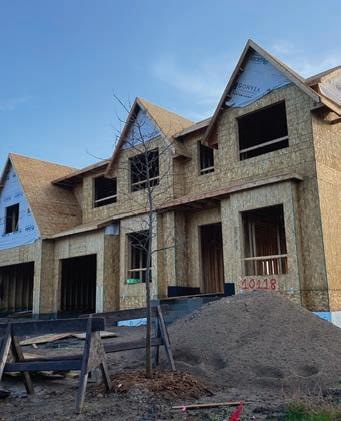
To celebrate Women in Construction Week and International Women’s Day, the Parade of Homes and WINC hosted a champagne toast at two magni cent homes on the Spring Parade of Homes in March. e goal was to bring women in the housing industry together to recognize their impact, celebrate their accomplishments and highlight opportunities available to women in construction.
Attendees enjoyed drinks and appetizers while mingling with fellow women in construction and touring homes from Hanson Builders and NIH Homes featured on the spring tour.
During the event, attendees were invited to listen to several women from the industry about their experiences including Katie Elfstrom of Housing First Minnesota, Masha Romer with Lelch Audio Video, Heather Gri s with Admit One Home Systems, Caroline Moynihan with Twin Cities Closet Company, Karyn Braddock with Neighborly Property Group, Courtney Ernston with North Star Law Group and Melissa Andresko with Lutron. Many of the remarks centered around the importance of building up the next generation of women in new construction.
Attendees at the event were given a copy of " e House at She Built" by Mollie Elkman, a children’s book showcasing the variety of careers for women in the home construction space.















16 | HOUSING INDUSTRY NEWS HOUSINGINDUSTRYNEWS.ORG
INDUSTRY IN ACTION
Housing First Minnesota is an association of 900+ housing industry companies across the state. Members unlock access to networking events, world-class marketing efforts, a trusted-consumer brand, Not a member? Let’s change that! Learn more about the benefits of membership or freezing conditions. A James Hardie exterior can help keep your homes looking beautiful longer – no matter what nature brings. Contact a sales representative: Kevin Morel | (612) 323-6358 kevin.morel@jameshardie.com © 2019 James Hardie Building Products Inc. All Rights Reserved. AD1511-MDW-03/19 James Hardie fiber cement products are Engineered for Climate . For ® ® uncompromising performance, our HZ5 siding and trim are specifically ® designed to resist shrinking, swelling and cracking even after years of wet or freezing conditions. A James Hardie exterior can help keep your homes looking beautiful longer – no matter what nature brings. Contact a sales representative: Kevin Morel | (612) 323-6358 kevin.morel@jameshardie.com © 2019 James Hardie Building Products Inc. All Rights Reserved. or freezing conditions. A James Hardie exterior can help keep your homes looking beautiful longer – no matter what nature brings. Contact a sales representative: Kevin Morel | (612) 323-6358 kevin.morel@jameshardie.com © 2019 James Hardie Building Products Inc. All Rights Reserved. AD1511-MDW-03/19 designed to resist shrinking, swelling and cracking even after years of wet or freezing conditions. A James Hardie exterior can help keep your homes looking beautiful longer – no matter what nature brings. Contact a sales representative: Kevin Morel | (612) 323-6358 kevin.morel@jameshardie.com Achieve instant curb appeal and lasting character. TOUGHER THAN THE ELEMENTS © 2019 James Hardie Building Products Inc. All Rights Reserved. AD1511-MDW-03/19 James Hardie fiber cement products are Engineered for Climate . For ® ® uncompromising performance, our HZ5 siding and trim are specifically ® designed to resist shrinking, swelling and cracking even after years of wet or freezing conditions. A James Hardie exterior can help keep your homes looking beautiful longer – no matter what nature brings. Contact a sales representative: Kevin Morel | (612) 323-6358 kevin.morel@jameshardie.com © 2019 James Hardie Building Products Inc. All Rights Reserved. AD1511-MDW-03/19 James Hardie fiber cement products are Engineered for Climate . For ® ® uncompromising performance, our HZ5 siding and trim are specifically ® designed to resist shrinking, swelling and cracking even after years of wet or freezing conditions. A James Hardie exterior can help keep your homes looking beautiful longer – no matter what nature brings. Contact a sales representative: Kevin Morel | (612) 323-6358 kevin.morel@jameshardie.com © 2019 James Hardie Building Products Inc. All Rights Reserved. AD1511-MDW-03/19 James Hardie fiber cement products are Engineered for Climate . For ® ® uncompromising performance, our HZ5 siding and trim are specifically ® designed to resist shrinking, swelling and cracking even after years of wet or freezing conditions. A James Hardie exterior can help keep your homes looking beautiful longer – no matter what nature brings. Contact a sales representative: Kevin Morel | (612) 323-6358 kevin.morel@jameshardie.com © 2019 James Hardie Building Products Inc. All Rights Reserved. AD1511-MDW-03/19 James Hardie fiber cement products are Engineered for Climate . For ® ® uncompromising performance, our HZ5 siding and trim are specifically ® designed to resist shrinking, swelling and cracking even after years of wet or freezing conditions. A James Hardie exterior can help keep your homes looking beautiful longer – no matter what nature brings. Contact a sales representative: Kevin Morel | (612) 323-6358 kevin.morel@jameshardie.com © 2019 James Hardie Building Products Inc. All Rights Reserved. AD1511-MDW-03/19 James Hardie fiber cement products are Engineered for Climate . For ® ® uncompromising performance, our HZ5 siding and trim are specifically ® designed to resist shrinking, swelling and cracking even after years of wet or freezing conditions. A James Hardie exterior can help keep your homes looking beautiful longer – no matter what nature brings. Contact a sales representative: Kevin Morel | (612) 323-6358 kevin.morel@jameshardie.com
storms and
weather Water resistant to protect against swelling, warping and cracking; also resists mold damage Won’t be eaten by animals or insects Fire resistant Helps reduce time and money spent on maintenance
Many builders choose to go above and beyond the code to provide additional energy benefits to their buyers.
Stands up to
harsh
The annual Tour & Toast event recognized women in our construction industry and kicked off the Spring Parade of Homes.
Event Sponsors
Job fair aims to address dwindling labor force
Minnesota’s homebuilding industry is grappling with a noticeable labor shortage, a challenge that has been exacerbated by the rising demand for housing and an aging workforce. is shortage has slowed the industry's ability to meet the growing needs for residential construction across the Twin Cities metro, leading to delays and increased costs.
At the beginning of this year, Housing First Minnesota announced a new strategic partnership with Building Talent Foundation (BTF) to address this issue.
BTF is a national nonpro t organization founded by the Leading Builders of America, with the purpose of addressing the acute and persistent talent shortage across residential construction. Minnesota is the 20th market in which Building Talent Foundation has a presence.
As a part of the partnership, BTF coordinates and hosts job fairs and events to connect job seekers and industry members.
e rst of these events in the Twin Cities market was hosted at Housing First Minnesota in May. is event was presented by Lennar and its trade partners and attracted dozens of individuals interested in jobs in the homebuilding industry.
“Hiring events are vital for homebuilding employers and job seekers, providing a platform for swift talent evaluation and valuable networking opportunities,” said Lauren Kunkel, engagement manager for BTF. “For job seekers, these events o er insight into job openings and a chance to highlight quali cations, nurturing their growth into skilled tradespeople and future leaders.”
BTF plans to host more of these job fairs in the coming months.


Hiring for residential construction made easy




NAVIGATING NEW ENERGY CODES WITH XCEL ENERGY
A new resource is available to help builders statewide review and implement new energy codes.
It’s called minnesotaenergycodesupport.org, the work of Xcel Energy vendor Shums Coda. The site includes information, recordings, curated resources, a code helpline and an FAQ page with answers and insight provided by subject matter experts. It will be continually updated to reflect the latest energy codes, as well as provide free training and technical resources to support energy code compliance throughout Minnesota.









The timing is great since a recently passed Minnesota law requires that energy codes be adopted every three years to move toward achieving a 70% reduction in annual net energy consumption.
“We’ll do a training in person every month in each of the nine districts throughout Minnesota,” explains Hope Medina, energy and sustainability plans examiner and instructor with Shums Coda. “Our series will focus on the new codes as they are announced, how to design and show the codes on the plans, and what implementation looks like in the field.”
In addition, they coordinate with the state of Minnesota to make sure their courses are eligible for continuing education credits.
Xcel Energy’s E cient New Home Construction Program ensures that participating builders are constructing homes at least 10% more energy e cient than the code requires.
The new codes are 9% more e cient, but builders who participate in Xcel Energy’s program are already ahead.
“This is a great resource that helps all builders understand impending codes, what they mean to their operations and how to implement them,” says Rob Buchanan, Xcel Energy product portfolio manager.








“Whether it's navigating new code requirements, accessing incentives for energy-e cient upgrades, or staying abreast of emerging technologies, we have resources to empower and educate builders across the state.”
For more information, visit minnesotaenergycodesupport.org and xcelenergy.com.











SIGN UP TO BE A PART OF THE HOUSING MOVEMENT • HOUSINGINDUSTRYNEWS.ORG HOUSING INDUSTRY NEWS | 17
Building Talent Foundation hosted a job fair in partnership with Lennar to connect job seekers and industry members.
Post
Find candidates.
jobs.
Hire talent.
Start filling open roles today at JobsToBuild.com
Habitat
for Humanity
raises over $1 million at annual gala
Habitat for Humanity’s annual Hard Hat & Black Tie Gala, held April 27 at e Depot in Minneapolis, successfully raised over $1 million to support a ordable homeownership in the Twin Cities. e event highlighted the profound impact that having a place to call home can have on every aspect of a person’s life, including safety, security, community engagement, educational outcomes, health and nancial opportunity. e community turned out in force to support this crucial cause.
e gala featured a vibrant silent auction, live auction and a fund-a-need segment, collectively generating more than $1.1 million by the end of the night.
“Our Hard Hat & Black Tie Gala is a testament to the broad support for expanding a ordable homeownership and advancing racial equity in housing,” said Chris Coleman, president and CEO of Twin Cities Habitat for Humanity.
“Nearly 1,000 people brought enthusiasm to our mission, donned ‘construction couture’ and generously contributed to support families through Twin Cities Habitat for Humanity.”
Established in 1985 by a Lutheran congregation in South Minneapolis, Twin Cities Habitat for Humanity has since partnered with over 1,500 families to achieve a ordable homeownership. is year’s gala underscores the community’s continued dedication to supporting families and advancing housing equity in the region.
Industry breaks fundraising, attendance records at Housing First Minnesota Foundation
Gala
Housing industry members from across the state gathered to give back to a worthy cause this spring. e Housing First Minnesota Foundation held its annual gala on April 19 at the Radisson Blu Mall of America. is year’s event was completely sold out with a record-breaking 550 builders, remodelers, trade partners and Foundation supporters in attendance.
e mission of the Housing First Minnesota Foundation is to end homelessness in Minnesota by building safe housing for those in need. Together with their build partners and community organizations, the Foundation works

to provide housing for individuals experiencing homelessness, such as veterans and women in recovery from substance abuse.
During the event’s program, attendees heard from community partners and clients who were directly impacted by the supportive work done by the Foundation. e event also featured a silent auction, live auction and live fund-a-need.
e event helped to raise more than $467,000 for Minnesotans experiencing homelessness according to the Foundation.
Additionally, the Foundation recognized its 2023 award recipients for going above and beyond in supporting the work of the Foundation.
Nor-Son Custom Builders and Lennar Minnesota were presented the 2023 Build Partner Awards. Lennar Minnesota was awarded the 2023 Distinguished Service Award. Finally, the 2023 Hearts in Housing Awards were awarded to Paul Roecker (Lyman Roo ng and Siding) and Kristin Reinitz (Admit One Home Systems).

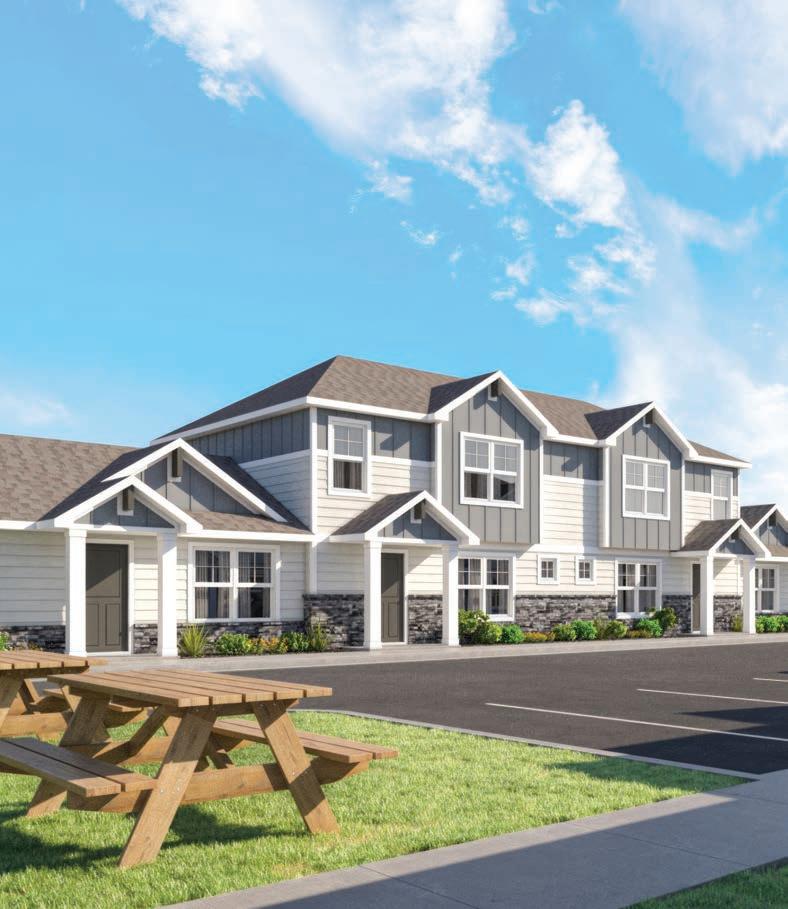
Historic fundraising campaign fuels housing initiative for veterans experiencing homelessness
Minnesota Department of Veteran Affairs, over 200 veterans are currently experiencing homelessness throughout the state. e Housing First Minnesota Foundation, in partnership with Lennar, the Lennar Foundation, and the Minnesota Assistance Council for Veterans (MACV), aims to bring that number to functional zero.
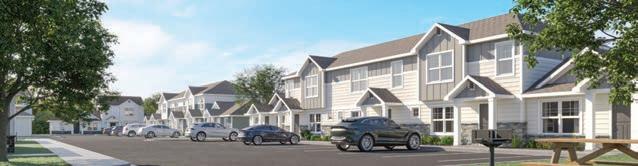
e Veteran Village, a rst-of-its-kind project, is designed to house up to 60 veterans and their families who are experiencing or at risk of homelessness. e initiative marks a signi cant milestone in the Foundation’s mission to provide safe and stable housing for veterans.
" is project represents a monumental step in our ongoing mission to eradicate veteran homelessness in Minnesota,” said So a Humphries, executive director of the Housing First Minnesota Foundation. “By providing safe and stable housing, we are not just giving our veterans a
place to live, but also the dignity and support they deserve for their sel ess service to our country."
e project was made possible through an aggressive fundraising campaign earlier this year, the largest in the Foundation’s history. Nearly $1.5 million was raised to support the Veteran Village project, and now the Foundation is entering a new phase of fundraising, with the goal of raising another million dollars by fall of 2025.
e Foundation has a long history of building and remodeling homes for Minnesotans in need, completing 11 Housing for Heroes build projects and providing over 33,000 square feet of housing for Minnesota veterans experiencing homelessness. Currently the Foundation is building three Housing for Heroes Homes in Minneapolis, which will provide 10 more beds by the end of the year.
18 | HOUSING INDUSTRY NEWS SIGN UP TO BE A PART OF THE HOUSING MOVEMENT • HOUSINGINDUSTRYNEWS.ORG
INDUSTRY GIVES BACK
The live auction and fund-a-need program helped raise money for the Foundation.
Lennar Minnesota’s renderings of the Veteran Village. The first of its kind, this community build project is designed to house up to 60 veterans and their families who are experiencing or at risk of homelessness
More than 550 industry members and Foundation supporters attended this year’s event.
CONTINUED FROM PAGE 1
NORDY PHOTOGRAPHY
NORDY PHOTOGRAPHY
A quick recap of housing news and development updates

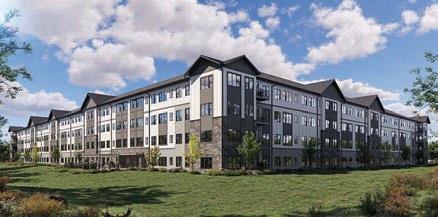

Former Uptown YWCA to become workforce development hub
e vacant 80,000-square-foot YWCA building on Hennepin Avenue in Minneapolis is progressing in plans to become a job training center. A coalition group of ve nonprofits and labor organizations are partnering on the project and seeking state funding. e bill’s author, Rep. Frank Hornstein (DFL-Minneapolis), said the workforce center will enable “multiracial, low-income working families” to “access pre-apprenticeship, job readiness training in the elds of green energy, construction, food processing and more.” e transit-friendly location will make the space accessible for the community and provide another much-needed option in the Twin Cities for training in the trades.

In May, the city of Victoria approved a 278-unit development project spanning 24 acres called Victoria South. The construction of townhomes, apartments and community space will be broken up into three phases, set to commence in 2025. The first phase will include the first 36 town homes and a community building. The second phase will include an additional 34 town homes and a 144-unit apartment building. The third and final phase will include the remaining 64 town homes, bringing the total to 134 town homes. Eighteen of the town home units will be a single story for easier accessibility. The community space will include two playgrounds, an indoor pool and a dog park for residents.
Minneapolis approves plan for former
Following a period of public open houses and comments, the Minneapolis City Council voted in May to move ahead with a board-based plan for the former Kmart location on Nicollet Avenue in South Minneapolis. e store has been closed since 2020 and was demolished in 2023. Part of the plan includes reconnecting Nicollet Avenue’s two-lane road. In the 1970s, city planners decided to accommodate the big-box retailer by cutting o Nicollet for a block between Lake Street and Cecil Newman Lane, a decision many city o cials came to regret. A recent a tra c study done by the city con rmed that diverting vehicle tra c around the oneblock stretch does slow down tra c in the area and cause delays for buses. Other public features included in the plan are a bicycle and pedestrian promenade, a new city park and a new ADA-accessible ramp to the Midtown Greenway. e space will be a mix of residential and commercial properties with more information to come as the project moves along. Construction is scheduled to begin in 2025.
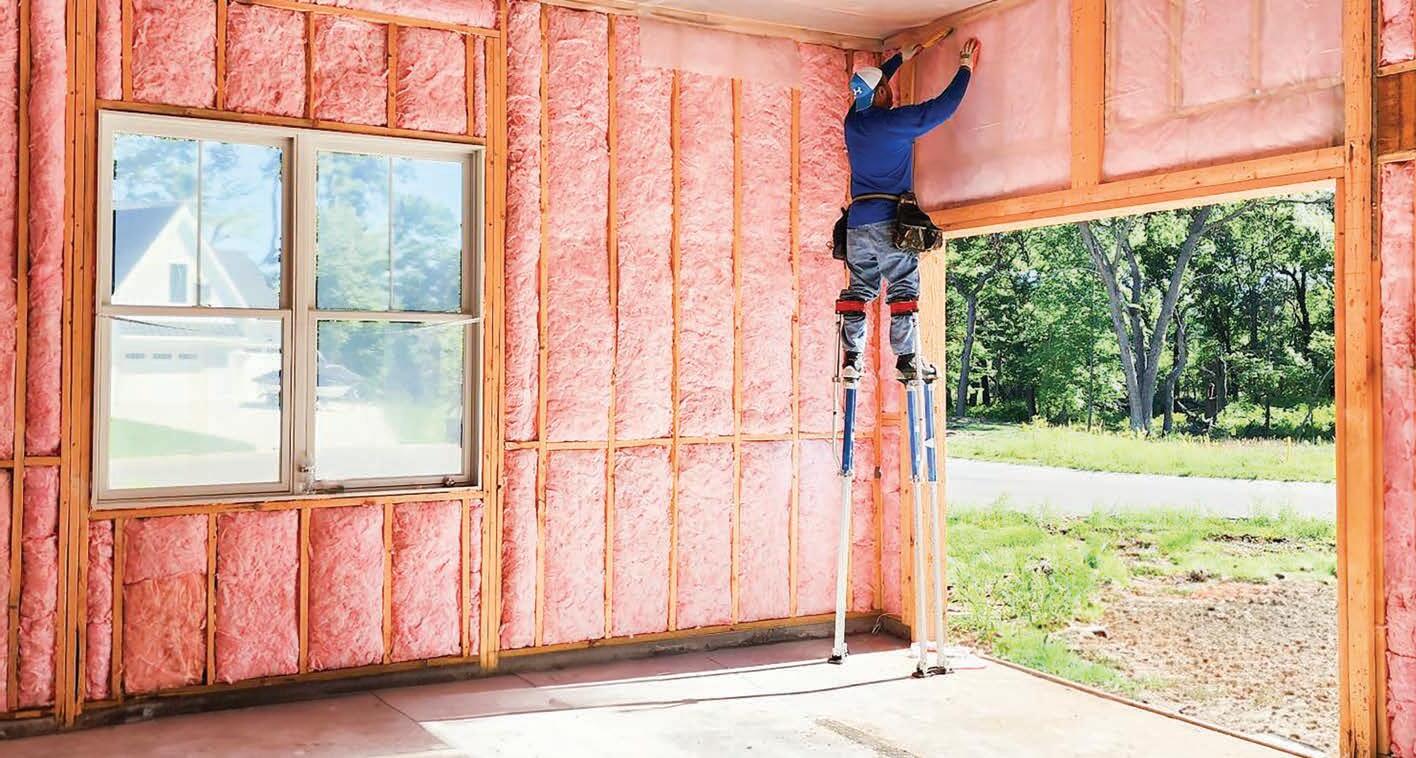



SIGN UP TO BE A PART OF THE HOUSING MOVEMENT • HOUSINGINDUSTRYNEWS.ORG HOUSING INDUSTRY NEWS | 19 ELEMENTS SYSYTEM ELEMENTS AIR/VAPOR BARRIER CELLULAR CONCRETE FINISHED FLOORS EPOXY & RESINOUS FLOORING INSULATION UNDERLAYMENTS WATERPROOFING STREAMLINE YOUR PROJECTS. MAXIMIZE YOUR SUCCESS. 651-243-3438 • STRUCTIS.COM CONTACT US! Structis_Jun24HIN_placed.indd 1 4/10/24 12:30 PM
1 SOURCE: FINANCE & COMMERCE
3
Victoria City Council approves biggest development project in years
SOURCE: FINANCE
COMMERCE
SOURCE: STAR TRIBUNE
&
2 IN THE DIRT
Kmart location
STAY INFORMED WITH THE LATEST HOUSING NEWS HOUSINGINDUSTRYNEWS.ORG













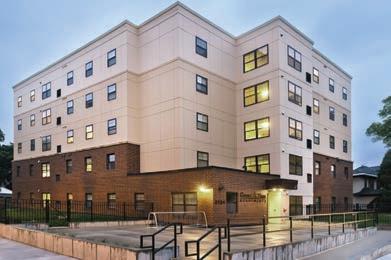


20 | HOUSING INDUSTRY NEWS SIGN UP TO BE A PART OF THE HOUSING MOVEMENT • HOUSINGINDUSTRYNEWS.ORG DRAFTING & DESIGNWINDOW SERVICESCABINET DESIGN WALL PANELSCOMMERCIAL SERVICES Top Quality Building Materials & Exceptional Services GET A QUOTE TODAY! Visit www.abc-clc.com MINNESOTA LOCATIONS: ALBERT LEA • BIG LAKE • KASSON • MILACA • RED WING STILLWATER • WATERTOWN WISCONSIN LOCATIONS: CHIPPEWA FALLS • HAYWARD • HUDSON • RIVER FALLS SIREN • SPOONER • ST. CROIX FALLS PROUDLY SUPPLYING Andersen® products rate #1 in quality. 2022 Andersen brand surveys of U.S. contractors, builders, architects & homeowners “Andersen” and all other marks where denoted are trademarks of Andersen Corporation. ©2022 Andersen Corporation. All rights reserved. Arrow_MarHIN23_placed.indd 1 2/24/23 5:20 PM
