



















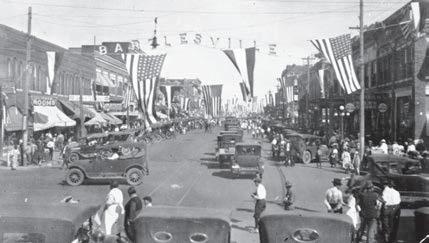
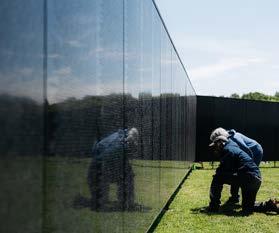

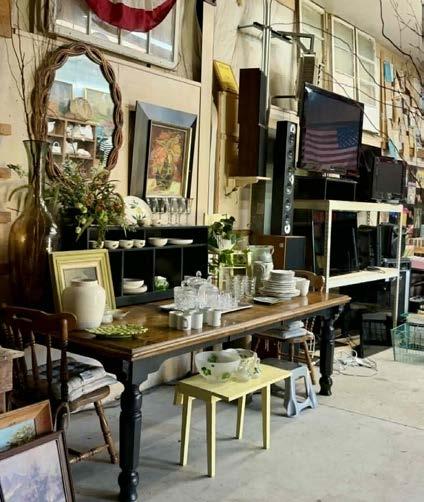
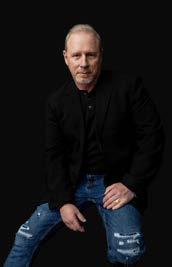

Welcome to June, friends, and I hope this Upfront finds you well. June is a very busy month for the McPhail family when it comes to birthdays. June 4th is my birthday, and I will be 57 years old. Wow, 57. Over the years, I have always told people I was a year older than I really was because when I did become that age, I wasn’t shocked. I’m telling you, as that big 60 gets closer, I just keep on keeping on. I still work out twice a day and try my hardest to keep that number just a number - not a feeling or a state of mind. June 12th is our Gracie girl’s 20th birthday. This is the one that always takes me back a little. Our baby - when I look at her, I can’t believe she is growing up so quickly. She will be a junior this coming fall. She has transferred from Ottawa College to Park University, which is about 10 miles north of downtown Kansas City. We are excited for her because she just wants to play basketball. Her new team and coach are so excited for her to join the team. Her new coach aggressively pursued her to play for him. June 21st, the first day of summer, is our son Parker’s 23rd birthday. Parker is our youngest son and probably our smartest kid. He is finding his way right now. I know for a fact that when he finds that, he will be so successful in whatever he does!
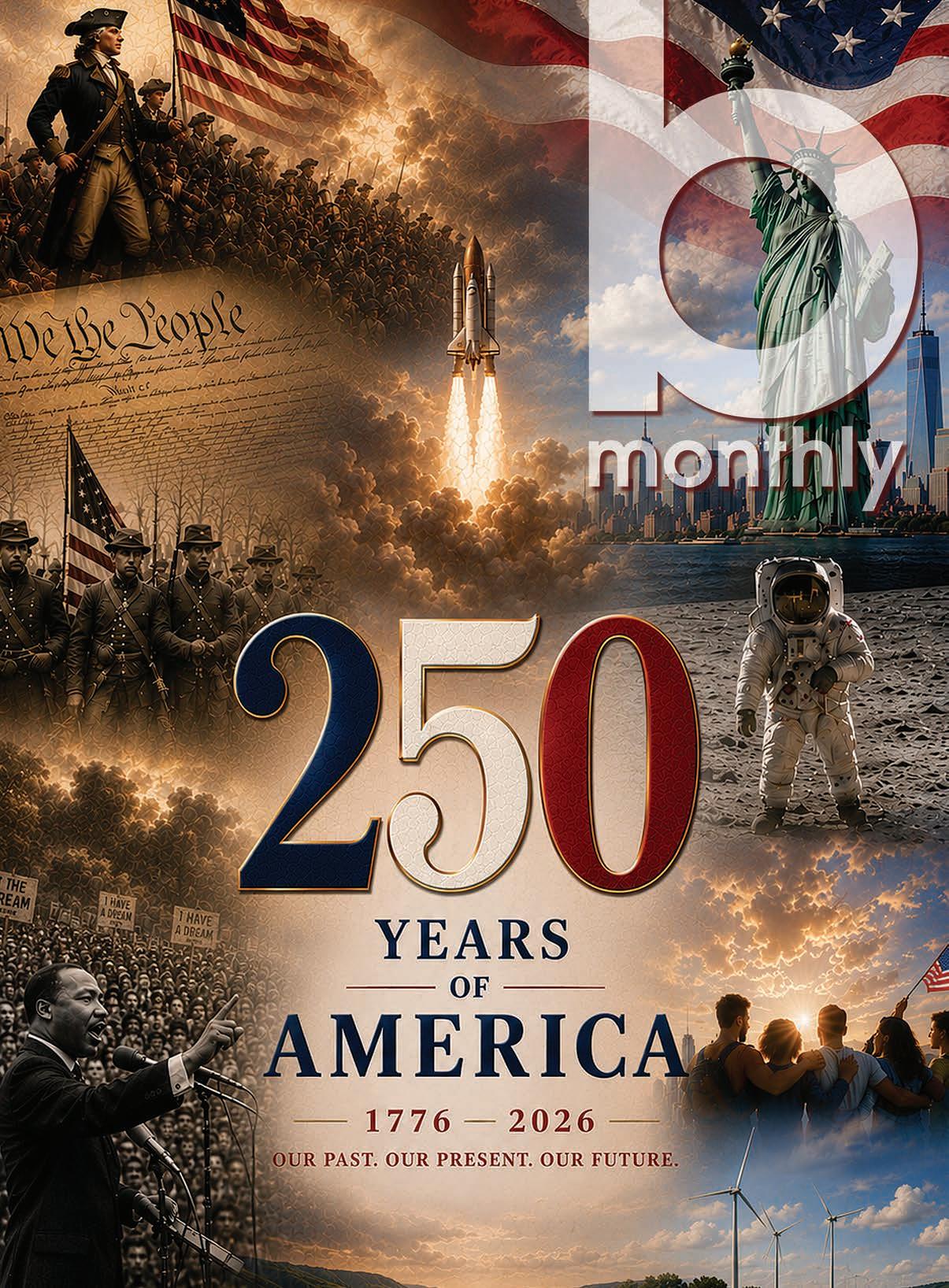
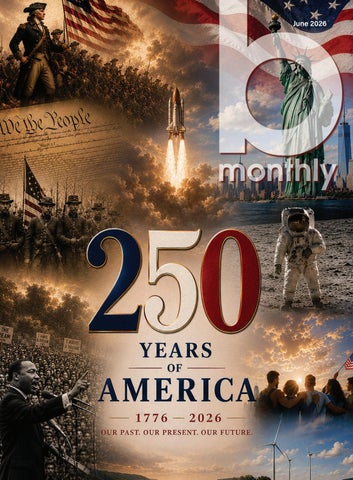
This month’s feature story is the celebration of America’s 250th anniversary as a country. I reached out to Granger Meador to write this story. He called his story “The Freedom Train.” Some of you might be wondering why we are doing this story in June and not July, when we celebrate our nation’s independence. In 2020, we wanted our readers to be more a part of our magazine. We have two contests each year - “Baby New Year” and “Best of Pets.” Five years ago, we started a contest where our readers would take pictures of the building we chose. We have had photos of the Price Tower, the Bartlesville Community Center (The Center), and our beautiful downtown. This year we will have the “Beautiful Bartlesville” magazine cover contest voted on by 9 judges. You get to choose the subject from our beautiful city. Our over 29,000 Facebook followers will vote on the People’s Choice winner. Their picture will cover a full-page inside the magazine.
Get your camera and go take pictures of this great city!
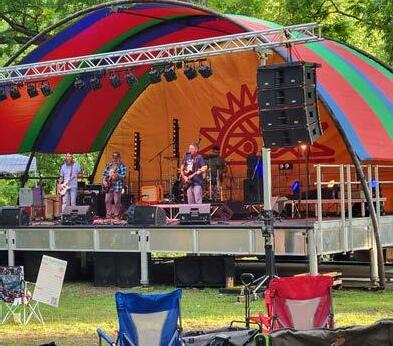
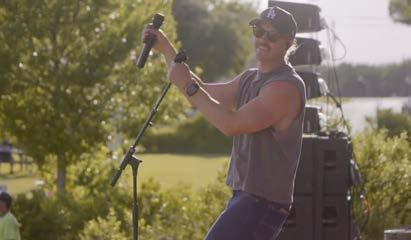
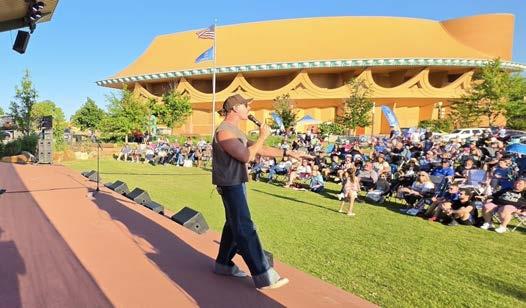
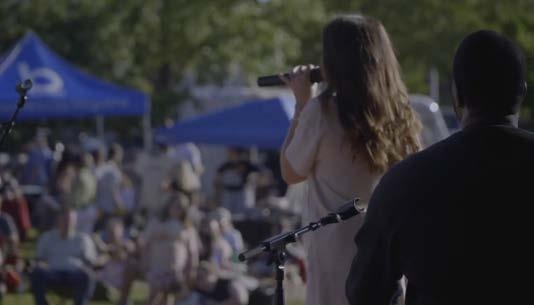
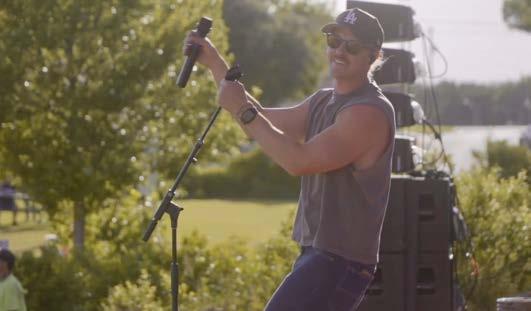
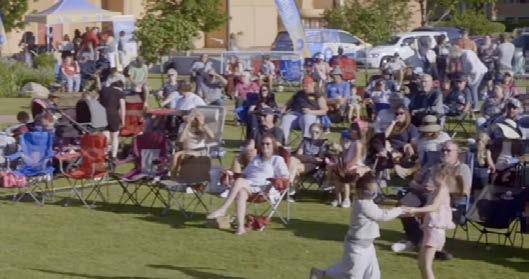
Christy and I want to thank everyone who came out to our 6th Gracefest on the Green concert which benefits B the Light Mission. This year we had Chris Cleveland with Stars Go Dim. WOW! What a concert he put on! It has always been our hope when we put on this concert to bring people to Jesus. That has and will always be our priority. We want to thank all of our sponsors, without whom we could not have done this concert. We raised over $24,000 for B the Light Mission to help keep the lights on and continue changing people’s lives! Thank you, Bartlesville! We look forward to Gracefest on the Green 2027.
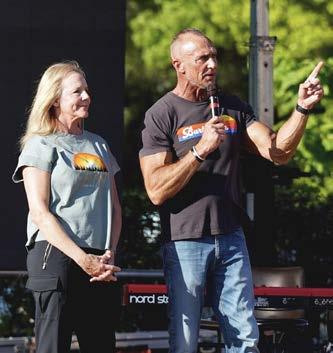
Christy
Father’s Day is Sunday, June 21st. Over the years, I have written many stories of my life growing up with really no father. My first dad walked out of our lives when I was six days old, and my second dad beat me black and blue from the age of 4 to 12. My 3rd dad, who gave me the name McPhail, committed suicide when I was 19 years old, so I never had a chance to have a lasting relationship. I did not want to be a father because of all the HELL I went through, but God had a different plan. A plan that changed my life… to be a father, a dad. At the age of 23, I had my first child, Blake. Coming off years of addiction and partying, that day changed my life. I didn’t have a plan or map for being a father, but I knew I wanted to be better than what I was given. My first girl was Madison. You know, as fathers, what those girls will do to your heart. Parker was my third child and a spitting image of me. When I married Christy, she brought three children: 2 boys, Tyler and James, and a girl, MaryBeth. Now I was the father of three and a stepdad of 3. For a man who never wanted kids, I now have 6! After being married 3 months Christy was pregnant! Our daughter Grace was born, and that changed everything for me. We called her Grace, because she is a gift from God. I needed this gift in my time of the darkness. I have made more mistakes than I can ever count, but one thing I know is that God blessed me as a father. I wouldn’t trade one day for the joy and happiness of this time. Happy Father’s Day, God Bless, Keith
Volume XVII
Issue VI
Bartlesville Monthly Magazine is published by ENGEL
PUBLISHING
New office located in the B the Light Mission 219 North Virginia Avenue, Bartlesville, Oklahoma 74003 www.bartlesvillemonthly.com facebook.com/bartlesvillemonthly
Publisher Brian Engel brian@bartlesvillemonthly.com
Graphics Engel Publishing matt@engelpublishing.com
Director of Sales & Marketing Keith McPhail keith@bartlesvillemonthly.com
Community Liaison
Christy McPhail christy@bartlesvillemonthly.com
Project Manager Andrea Whitchurch andrea@bartlesvillemonthly.com
Administration
Shelley Greene Stewart
Delivery and Distribution Dewayne Engel Calendar/Social Media calendar@bartlesvillemonthly.com
Contributing Writers
Debbie Neece, Kay Little, Kelly Hurd Granger Meador, Andy Dossett
Keith McPhail, Jay Webster, Lori Just Greg Wheat, Maria Gus, Brent Taylor, Joe Todd
Contributing Photographers
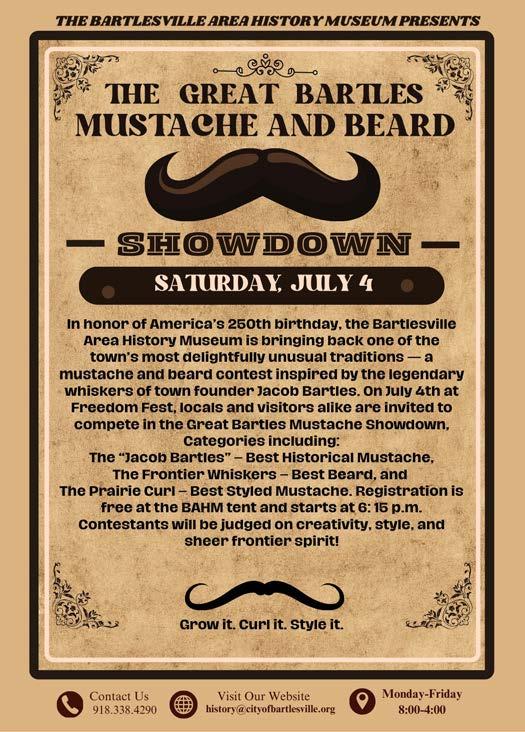
Bartlesville Area History Museum
Bartlesville Photo Studio, Andy Dossett Paul Lukacs
Calendars
Debbie Neece, Jessica Smith

Looking back at 250 years of American history.
Creative concept by Keith and Christy McPhail Design by Engel Publishing




by Lori Just
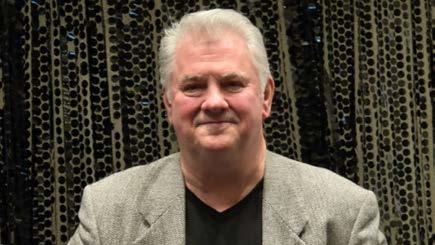
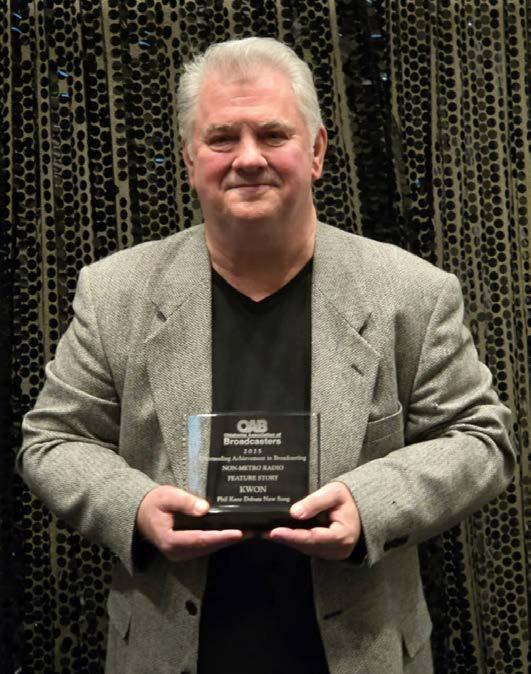
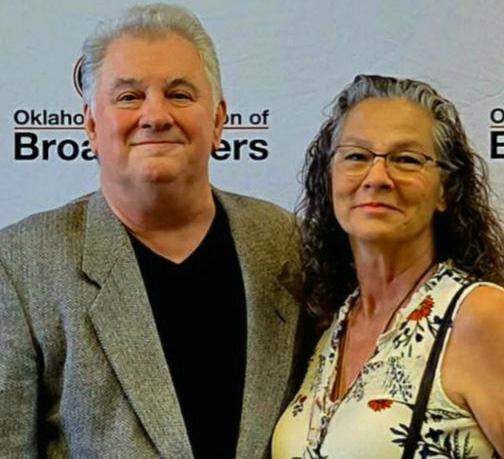
Tom Davis has spent more than five decades behind microphones and cameras, working in radio and television stations from Illinois to Florida. But when he arrived in Bartlesville in 2019, he found something he says had become increasingly rare in modern broadcasting: a community that still believed local connections matter.
“I got here, and I fell in love with the town,” Davis said. “I’m in my 51st year of broadcasting, being either on the radio or television and a lot of times both. I was looking for some place to go so that in my last few years it would remind me of my first few years, being in a smaller community where the connection really matters, where the news has some impact, and where looking out for one another is more than just saying so.”
That search led him to Bartlesville Radio in 2019. He said he saw an ad for the job at KWON and responded to it. He came down for an interview when the strangest thing happened.
“I was driving in from Illinois while listening to the station cover a potentially dangerous situation during a Phillips 66 Clean House event,” he recalled. “I heard all of a sudden, ‘We’re going to break our normal programming. We seem to have an event going on with the possibility of an explosive chemical,’ I heard how a radio station responded to it.
I pretty much had my mind made up before talking to anyone there for my interview that day.
Even before arriving at the station, Bartlesville continued to make an impression.
“I got lost coming into town and drove passed the station, so I pulled into OnCue just to get gas and ask for directions,” he said. “I asked the guy inside, ‘What’s with that sombrero thing across the street?’ He said, ‘Oh, that’s the Community Center.’ I said, ‘What kind of stuff do they have there?’ and he said, ‘Oh, Broadway plays and other big things.’”
Tom laughed at the memory.
“Here’s a small town I’d never heard of until a few weeks ago
with big buildings, Frank Lloyd Wright’s Price Tower right over there, and the ‘sombrero thing’ holds Broadway plays,” he said.
By the time he met with station owners Kevin and Dorey Potter, he already knew he was going to take the job.
On the road to moving to Oklahoma, Tom and his fiancée, Susie, survived a frightening car accident on Interstate 44 near Buffalo Run Casino.
“We ran into 60-70 mile-per-hour straight-line winds, and it took our little car and spun us from the center lane into the median,” he said. “We spun around two or three times and got missed by a couple of trucks and cars.”
A responding officer told them he was surprised anyone had survived. “He said, ‘I watched it happen. I just wanted to see if anybody was still alive.’”
Despite the scare, the couple moved to Bartlesville in June 2019. Tom stepped into the role previously held by longtime broadcaster Charlie Taraboletti, whose 23 years on local radio left “big shoes to fill.”
“I just decided I’m not going to be the second version of somebody else,” Davis said. “I’m just going to do what I’ve done for the last 50 years.”
What he found in Bartlesville exceeded his expectations.
“I’m overwhelmed by how many nonprofits and helping agencies we have here,” he said. “You want to talk about actually caring and doing the work for your fellow citizens — this is the special community. You don’t find this anywhere else.”
He specifically praised organizations like B the Light, Lighthouse Outreach Center and Get Real Ministries.
“Not enough people are willing to get dirty, willing to do the work in order to help out their brother,” he said. “I take a look at those folks and I’m like, ‘Wow, I made the right decision here.’”
Tom said his philosophy in broadcasting has always centered on serving the community rather than seeking attention.
“You don’t have to be the star,” he said. “In fact, in the whole galaxy, you don’t have to be the sun because not everything’s going to revolve around you. You’re better off being the moon and reflecting what the sun meaning your community is all about.”

That mindset shaped his career from the very beginning.
“My first boss told me, ‘As soon as you figure that out, you won’t have any problems with ego, and you’ll probably do very, very well.’ He was right,” he added.
Over the years, Tom has worked in radio and television in places including Orlando, Des Moines, Springfield, BloomingtonNormal and Chicago. He’s been a disc jockey, weathercaster, reporter and talk show host.
“The big differences? We started out with records,” he said while reflecting on changes in the industry. “We had cartridge tapes to play commercials, and we recorded things on reel-toreel tape instead of digitally.”
He laughed while describing early broadcast equipment.
“You had these things called patch cords. It looked like an old telephone operator setup,” he said. “Now you can practically run a radio station with a laptop computer.”
Tom credits technology with transforming the business but says the heart of local radio remains the same: building trust.
“When we do weather coverage, we’re probably saving more property than lives, but it’s nice to know people can tune in and feel like their friends are there giving them information so they can stay safe,” he said.
He believes local broadcasting still plays an important role in bringing people together. “We reflect back on the community,” he said. “I think we create trust.”
Outside of radio, Tom also found unexpected success in music later in life. “I guess I got discovered musically at 60,” he joked.
After uploading some original songs online for his children
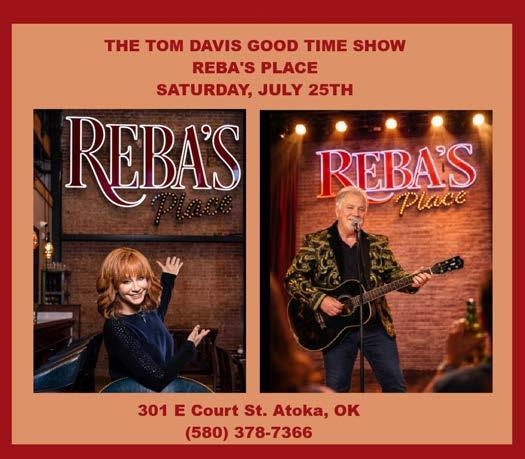
to enjoy, a producer from England reached out and encouraged him to professionally record them. One of those songs, “Long Distance Love Gave Me Heaven,” went on to win a 2023 International Red Carpet Music Award in the Americana category. Since then, he has recorded multiple albums in Nashville and Tulsa and frequently performs at Reba McEntire’s venue in Atoka and at Tulsa’s Church Studio.
At this stage in life, however, Tom says he’s scaled back the demanding touring lifestyle.
“I used to set up my own sound, lights and stage rigging, then go change clothes and do a three-hour show,” he said. “Now I figure after all that work, the performance itself is free.”
Family remains central to Tom’s life. He and Susie hope to marry within the next year or more. His children range in age from 19 to 48 and live across the country. The family has also endured heartbreak, losing two children over the years, including one son who served in the military.
“We never know when our ticket gets punched into the next world,” he said quietly. “Somewhere in a big old book that knows more than we do, it says, ‘Always be ready.’”
Despite life’s hardships, Tom remains grateful for where he landed.
“I jokingly told the Potters, ‘yep, I’m going to die here,’” he said with a laugh. “Relax, it just means we’re not moving.”
And after seven years in Bartlesville, he still believes he made the right choice.
by Granger Meador
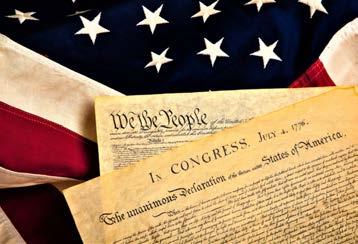
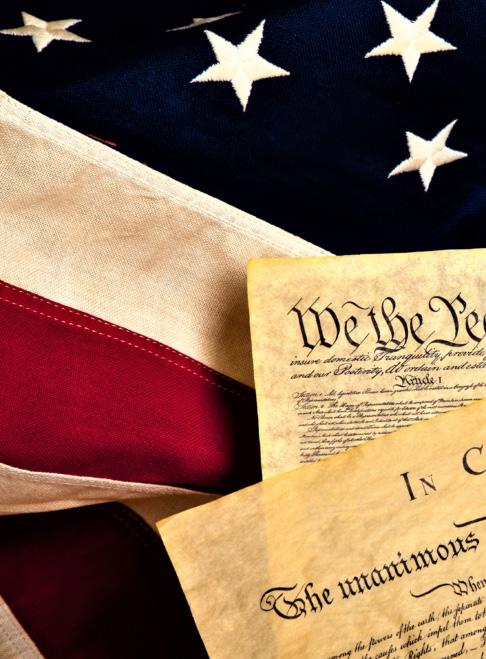
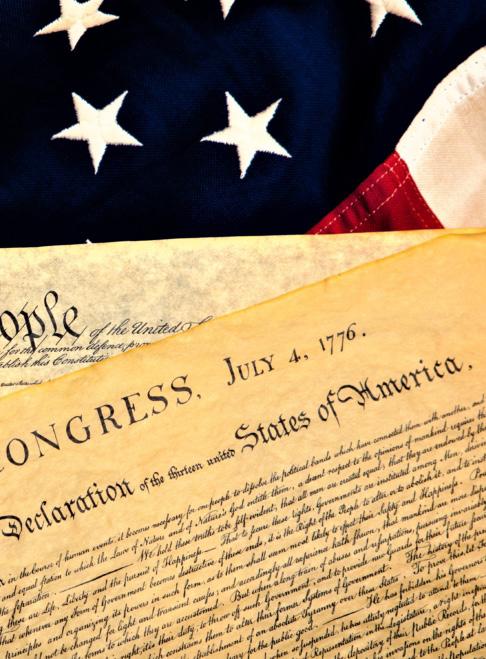
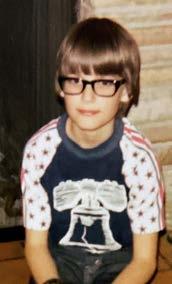
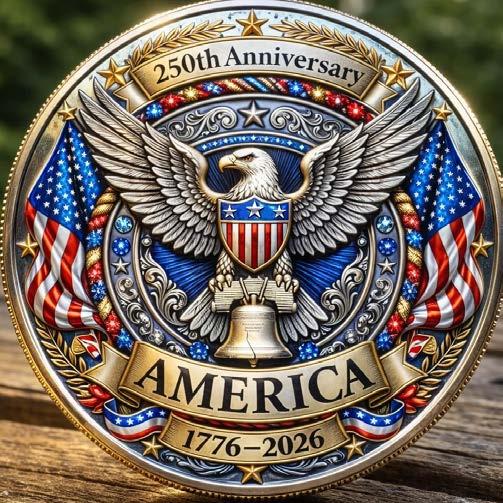
July 4, 2026 will be celebrated as our nation’s 250th birthday. It will be its semiquincentennial, which doesn’t exactly roll off the tongue like the bicentennial of 1976 that I experienced as a nine-year-old in Oklahoma City. The bicentennial featured lots of red, white, and blue, including a favorite shirt of mine featuring the Liberty Bell and some nifty stars and stripes.
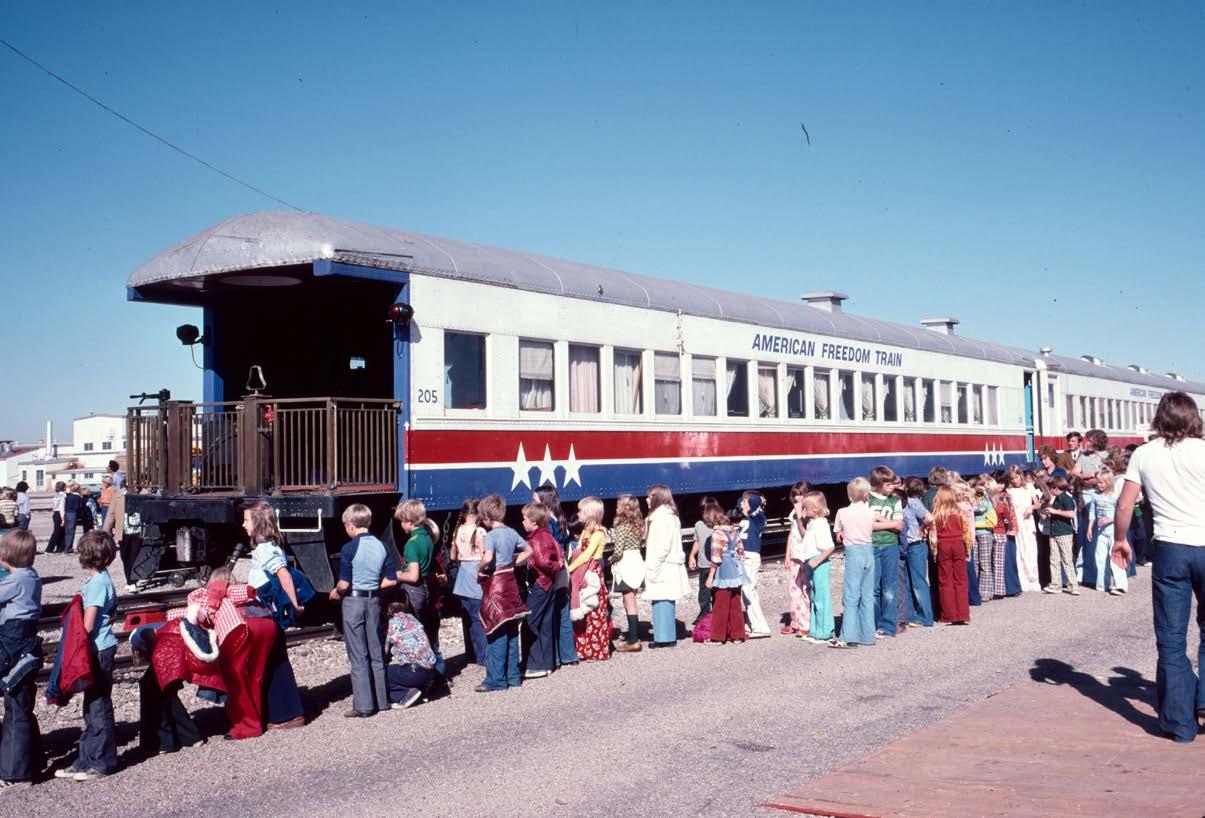
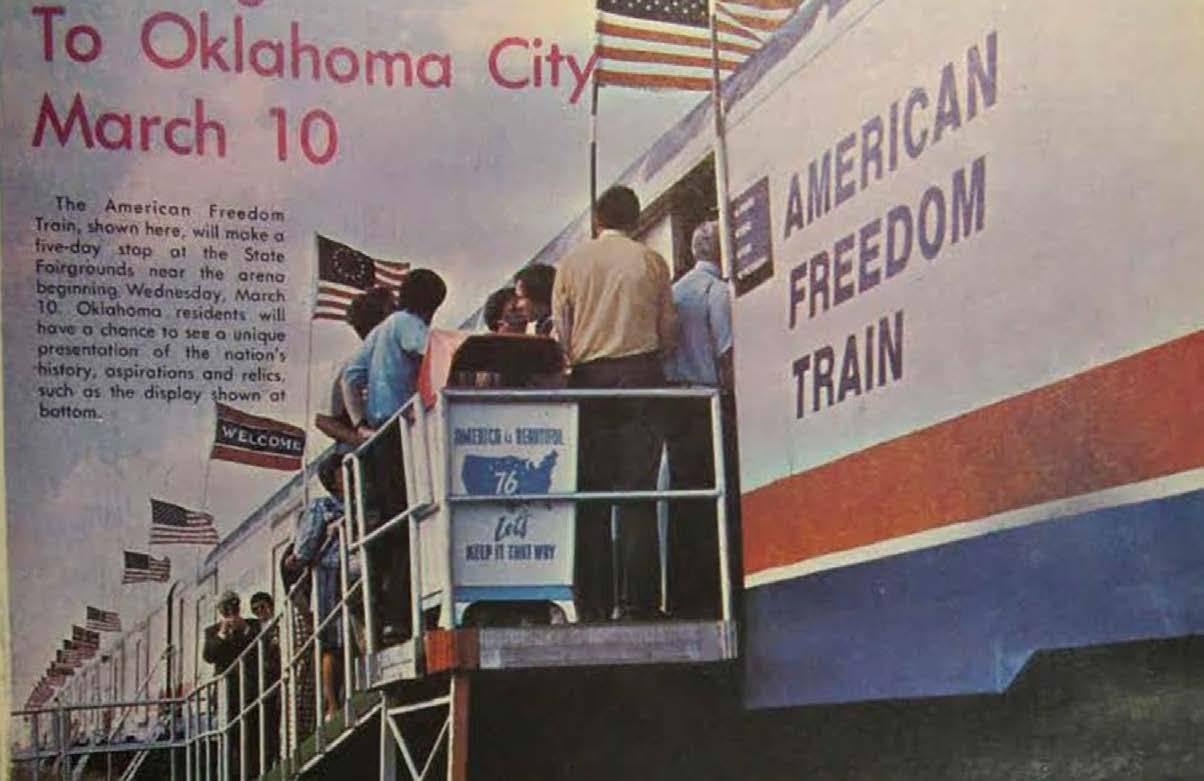
One bicentennial event prominent in my memories is from March 1976, when the 26-car Freedom Train was pulled by a steam engine along the rails from Texas north into the Oklahoma City fairgrounds for five days, rolling on to spend four days at the Midland Valley Station in Tulsa before heading to Wichita. Much like in 2026, the month of March a half-century ago was a warm one. I remember sweating with my fourth-grade classmates in the long line outside the Freedom Train and being grateful when we finally stepped inside its air-conditioned cars.
Up to 32,000 pounds of ice were used daily to keep the train cars cool and comfortable, not only for the over seven million people who toured them during their 21-month journey across the 48 contiguous states, but also for their many historical artifacts. The eclectic mix was pure Americana. Among the 500 artifacts were Judy Garland’s dress from The Wizard of Oz, Joe Frazier’s boxing trunks, a pair of Wilt Chamberlain’s basketball
shoes, and a rock that had been brought back from the moon less than four years earlier by Apollo 16 astronauts John Young and Charles Duke.
The train also carried some important historical documents. Seeing them showed us how we are a nation governed by written words that form the Rule of Law binding both citizens and leaders.
The semiquincentennial itself is tied to a written document, not a historic battle or surrender, but instead the adoption by the Second Continental Congress of the Declaration of Independence. We know the weather in Philadelphia on that auspicious day of July 4, 1776, thanks to Thomas Jefferson. He kept logs of weather observations, liking to record the temperature and conditions early in the morning and late in the afternoon. He wrote that it was 68 degrees Fahrenheit in Philadelphia at 6 a.m. that July day of 1776, but he couldn’t take his usual reading at 4 p.m. since he would be busy with the adoption of the Declaration of Independence. So, he told us that it was 76 degrees with increasing clouds at 1 p.m. How fitting.
The Declaration was composed primarily by Jefferson, with revisions by Benjamin Franklin and John Adams. Its second sentence became iconic: “We hold these truths to be selfevident, that all men are created equal, that they are endowed by their Creator with certain unalienable Rights, that among these are Life, Liberty and the pursuit of Happiness.”
Those were high ideals promulgated by truly gifted yet deeply
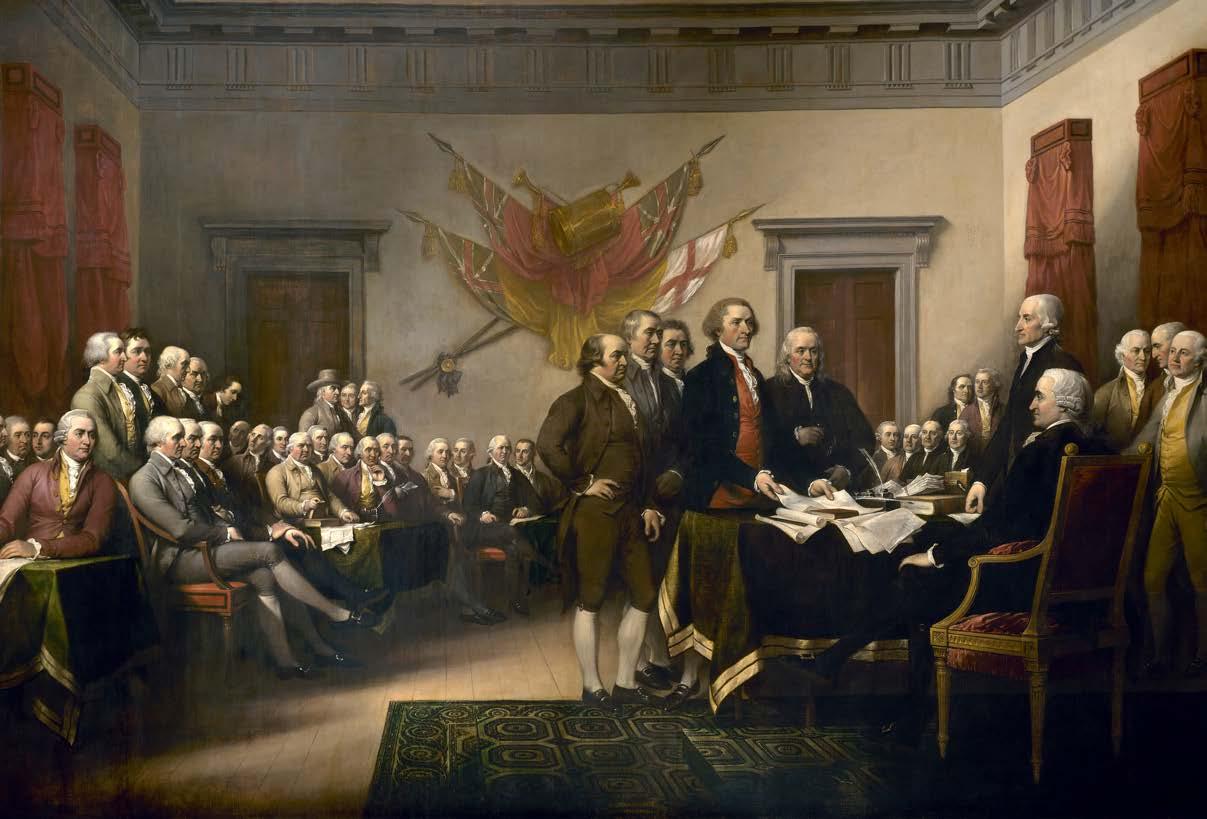
flawed human beings. Jefferson wrote that all men are created equal, yet he enslaved more than 620 people during his adult life. Franklin also owned slaves for decades before becoming a staunch abolitionist. While Adams was opposed to slavery and never owned one, he was prickly, vain, and stubborn, and decades later he signed the Alien and Sedition Acts of 1798, which violated free speech and crippled his public reputation.
Yet those very flaws and contradictions are what humanize the Founding Fathers for me. They were great men, but also men of their times. We can aspire to emulate their best characteristics while recognizing how all people inevitably miss the mark. We often criticize and sometimes vilify modern day politicians, but we should be careful lest we besmirch the true public servants among them. We also must realize that even a flawed partisan politician can sometimes be convinced to act in the public interest. Even an enslaver can express ideals of equality for us to later strive to achieve.
The Freedom Train carried across the nation documents of the founders’ struggles to form a new nation after the Revolutionary War. It had a handwritten draft of Franklin’s Articles of Confederation, which was our first constitution adopted in 1777, ratified in 1781, and abandoned in 1789 when the present-day Constitution went into effect.
The train had George Washington’s personal copy of the second Constitution, which still governs the separation of powers, divides authority between the federal and state governments, and thankfully included an amendment process. It was only 4,400 words, compared to Oklahoma’s 50,000-word
constitution of 1907. The brevity of our nation’s Constitution led opponents to its ratification to demand protections against tyranny and federal power. That in turn led to its first ten amendments, the Bill of Rights, which are our promises of personal freedom. Ever since their adoption, we have debated and defended our rights of free speech, religion, press, assembly, arms, search and seizure, due process, and more. I am reassured that we still debate and fuss over them, as that tells me we still live in a federal republic, one designed to thwart authoritarianism.
Two of the most influential later amendments were the 13th and 14th, but they were only ratified after the brutal Civil War over the nation’s original sin of slavery. The 13th ended slavery, but it failed to extend citizenship or voting rights. The 14th granted citizenship to all persons born or naturalized in, and subject to the jurisdiction of, the United States. It also established due process and equal protections under the law for all citizens. However, that did not include the First Peoples of this land.
The Freedom Train also carried the original Louisiana Purchase Agreement of 1803, by which Jefferson acquired land from France to double the nation’s size. The 828,000 square miles that were purchased, at about four cents per acre, included all of modern-day Oklahoma.
Humans have been in what is now the Sooner State for perhaps 30,000 years, with agriculture-based settlements dating back about 2,000 years, such as the Wichita and Caddo. By the 1500s, there were Pawnee, Quapaw, and Osage living here with
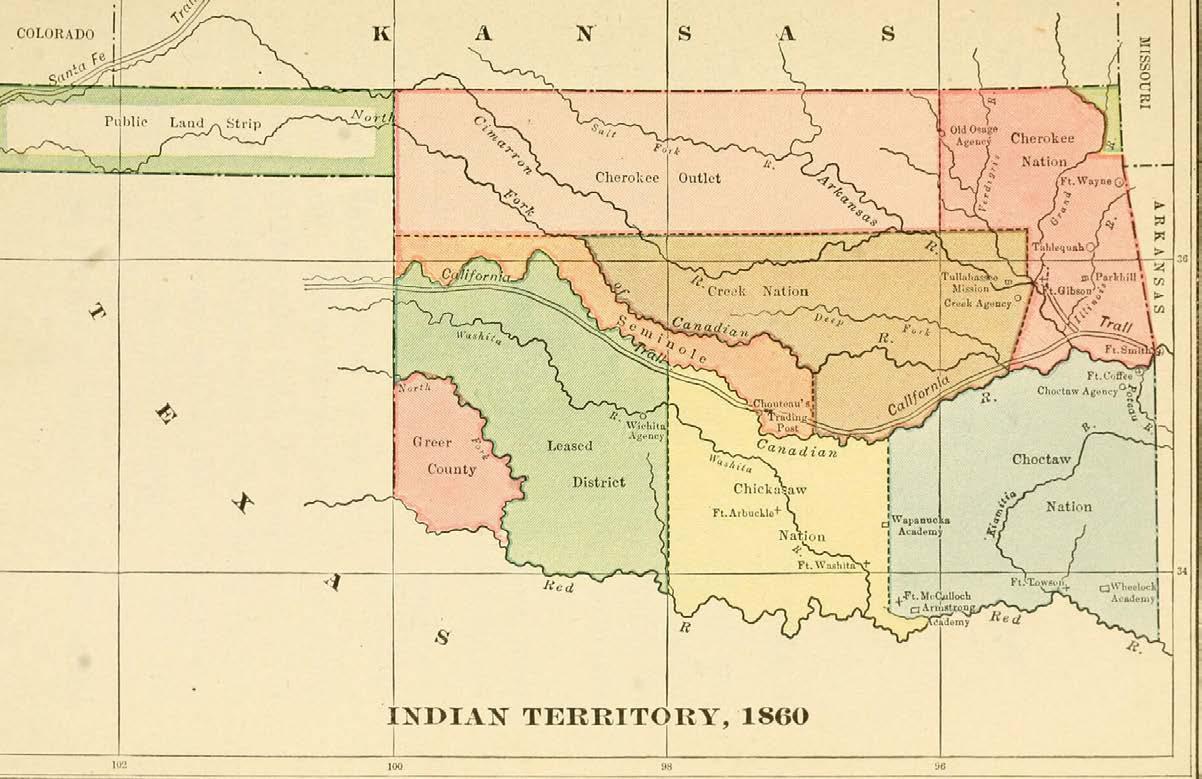
raids by Kiowa, Comanche, Apache, and Cheyenne tribes. The land became part of Missouri Territory in 1812, then Arkansas Territory in 1819, and the Indian Removal Act of 1830 changed it into Indian Territory, with multiple tribes living east of the Mississippi River forcibly removed to it. By 1840, nearly 100,000 First Peoples had been evicted, mostly from Georgia, Tennessee, Alabama, Mississippi, and North Carolina. Nearly 15,000 had died along the months-long journeys to Indian Territory.
Several of the tribes had adopted slavery in their adaptation to European settlement, and they understandably sided with the Confederacy in the Civil War both because of that as well as their poor treatment by the U.S. government. Their defeat resulted in land concessions and the emancipation of their slaves, who were made members of the respective tribes, but interestingly that did not make them citizens of the United States. While the 14th amendment granted citizenship to all “persons” born or naturalized in this country and “subject to the jurisdiction thereof,” Congress treated tribal nations as sovereign “alien nations” and did not grant them citizenship.
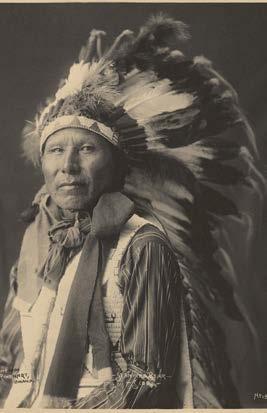
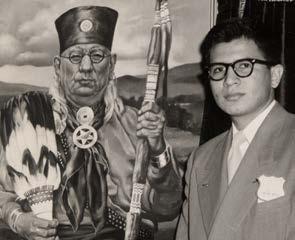
In Ponca City, sixty miles west of Bartlesville, along U.S. 60, is a statue of Chief Standing Bear, the Ponca
chief who successfully argued in 1879 that First Peoples are “persons within the meaning of the law” and have the right of habeas corpus: the right of a prisoner to challenge the legality of their confinement before a court. Standing Bear held up his hand in court, saying, “My hand is not the color of yours, but if I pierce my hand, I shall feel pain and if you pierce yours, you too shall feel pain and the blood that flows from mine will be the same color as yours. I am a man. The same God made us both.”
That was a first step in securing civil rights for First Peoples, yet the Supreme Court affirmed in 1884 that most of them were still not citizens. It wasn’t until 1924 that Congress finally extended citizenship to all of the First Peoples born in the United States.
That was four years after the 19th Amendment finally extended the right to vote to all citizens no matter their gender, part of the stuttering expansion of various rights, protections, and privileges of the Constitution to more and more people. Bartlesville was incorporated in 1897, and the Bartlesville Area History Museum has a 1915 photo of several women crowded into an old Model T with signs that read, “Votes for Women.” In 1918, Oklahoma voters ratified a state constitutional amendment that made it the 21st state to grant women voting rights, almost two years before the 19th Amendment was ratified.
Bartlesville’s own founding father, Jacob Bartles, was born in New Jersey in 1842. His parents moved to Wyandotte County, Kansas in 1857. When the Civil War began, he was clearing heavy timber near Quindaro, Kansas to establish a farm. His patriotic spirit was aroused, and he joined the Sixth Kansas Cavalry Regiment of the Union forces, engaging in battles in multiple states. The Civil
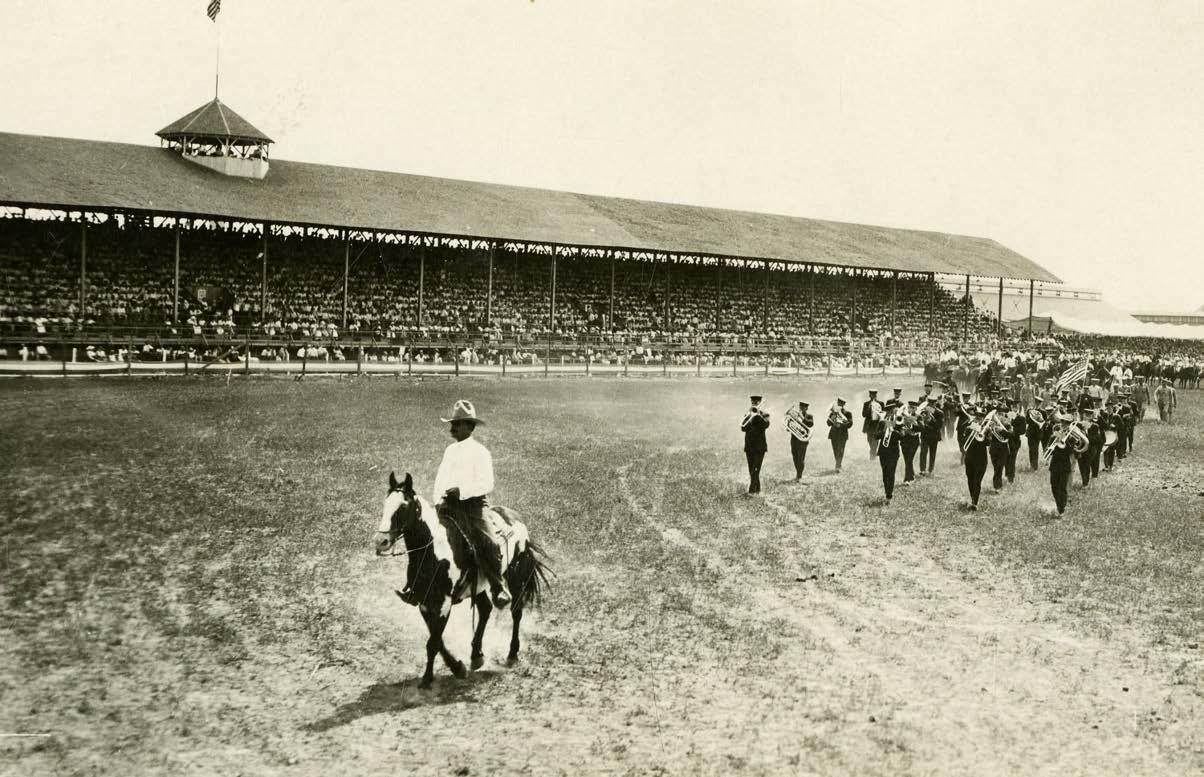
The annual 4th of July Dewey Roundup
War was the deadliest conflict in our nation’s history, claiming over 650,000 lives, or about two of every one hundred Americans, including two of my great-great-grandfathers on opposing sides of the conflict. The Freedom Train carried artifacts of that era as well: an early draft of the Emancipation Proclamation and President Lincoln’s stovepipe hat.
In 1908, one month before his passing, Jacob Bartles invited the survivors of his old Civil War regiment to Dewey. Jacob asked his son, Joe, to gather local cowboys and ranch hands for a roping and riding contest for the regiment’s reunion, and that experience inspired Joe to recreate it on the following July 4th. That evolved into the annual Dewey Roundup, which entertained visitors each Independence Day for forty years.
The Roundup became one of the three largest rodeos in the world, sometimes attracting nearly 40,000 people to what is now the Dewey High School complex and Washington County fairgrounds. My father was born in Dewey in 1925, and his folks had a barn that sat next to the highway. He and his cousins, including local historian Edgar Weston, would climb up on the barn to see over into the rodeo grounds for a free show. One year, Dad was fascinated when his parents let one of the cowboys keep his horse in their barn during the rodeo.
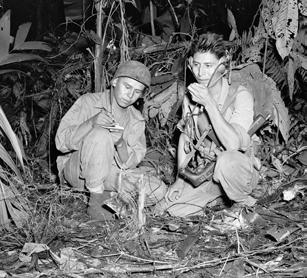
Code Talkers
In the early 20th century, the rise of the
German Empire, the decline of the Ottoman Empire, and imperial rivalries led to World War I. The United States initially followed a policy of neutrality, staying out of the brutal conflict for over two years. That changed after Germany resumed unrestricted submarine warfare and tried to incite Mexico to ally with it against the U.S. to recover territory lost after the MexicanAmerican War.
While Indian coalitions had fought against the United States in the War of 1812, the Civil War, and many tribal Indian Wars, it is interesting to note that over 12,000 First Peoples served in the U.S. military during World War I, many of them volunteering despite not being recognized as citizens. They were integrated into the American Expeditionary Forces, and some were members of the first combat units to reach France in 1917, suffering heavy losses. An exception to that integration, because of the value of their language skills, were the Cherokee and Choctaw Code Talkers.
Telephone lines were among the fastest ways to communicate in World War I, but Germans could tap into the lines. Sending messengers was dangerous, with one in four captured or killed, so the Allied forces tried buzzer phone codes, which were secure but slow. The unique nature of First People languages, unrecorded and unstudied outside the U.S., allowed them to rapidly relay verbal messages over the phone lines that German forces could not decipher. Code Talkers also served in World War II, primarily in the Pacific Theater, where the Navajo Code was used in every major Marine operation from 1942 to 1945.
It is ironic that the U.S. wound up relying on native languages in war, given that mandatory Indian boarding schools often labored to strip away native languages in a process of assimilation. It
wasn’t until 1975’s Indian Self-Determination and Education Assistance Act that tribes were empowered to control their children’s education, effectively ending the era of mandatory federal boarding school attendance.
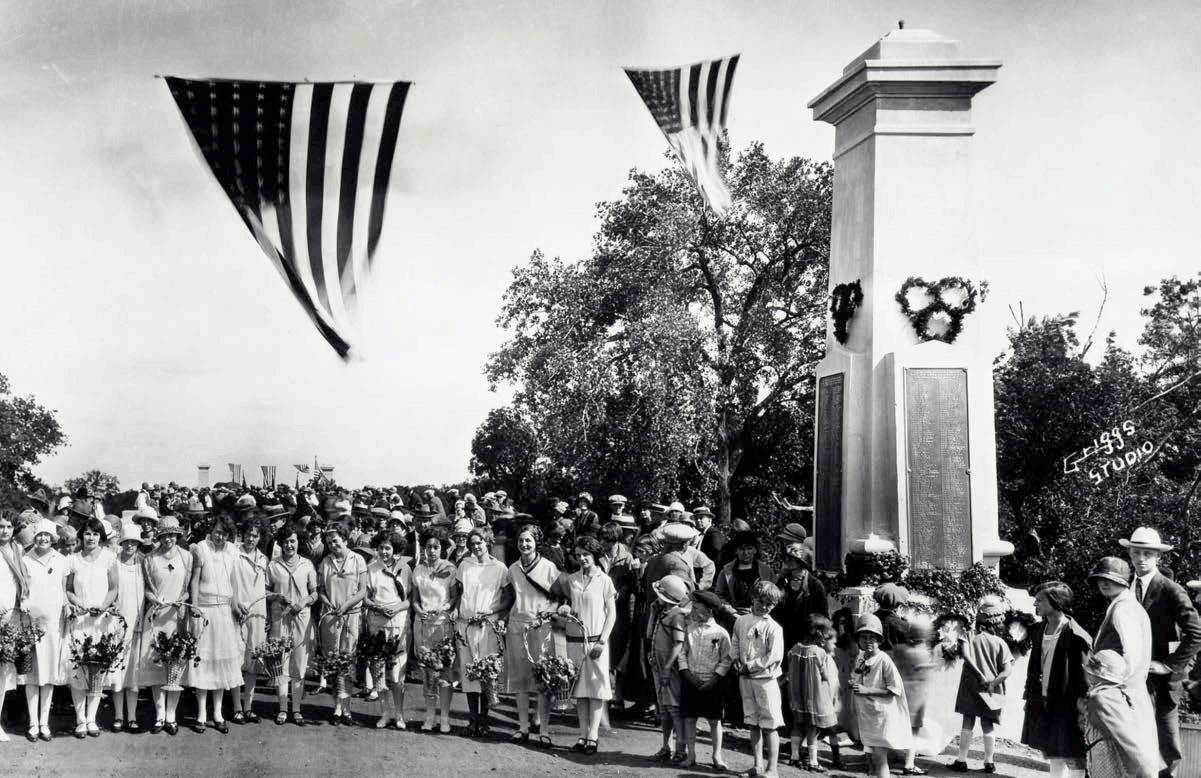
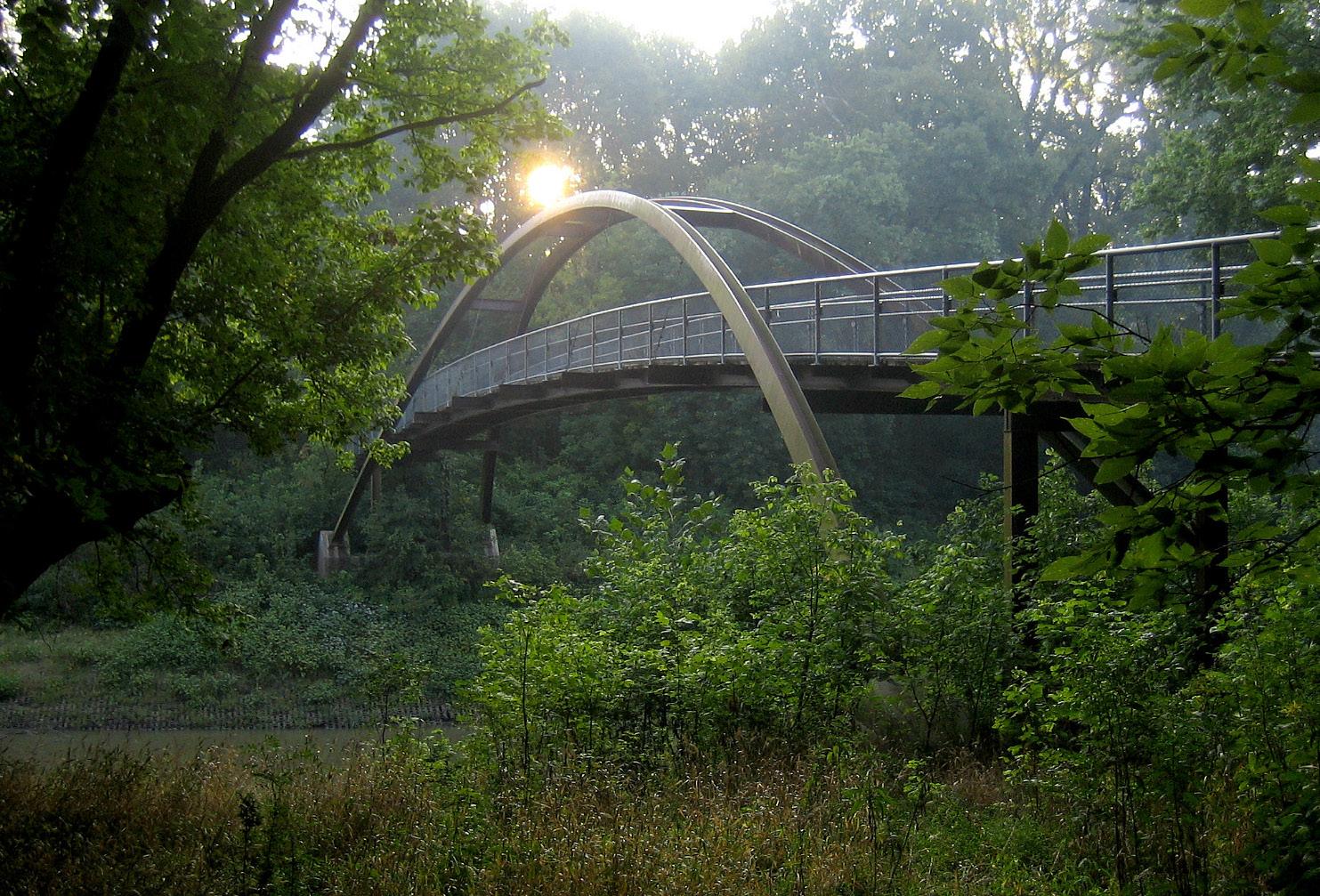
Almost five million Americans served in the armed forces during World War I, and over 300,000 of them were killed or wounded. A reminder of Bartlesville’s contribution to the war effort is the Memorial Bridge over the Caney River, a concrete arch span built in 1925 that also became a war memorial thanks to Ellen Howard Miller and Frank Phillips.
Miller had a long history of civic engagement, including promoting many city bird sanctuaries. When she learned of the new bridge to be built across the Caney, she thought of making it a memorial to those who had served in the world war. The county commissioners supported the idea, but they lacked the funding. Miller approached Frank Phillips, who agreed to fund the construction of four pylons with bronze name markers for $2,500, the equivalent to over $47,000 in 2026, if she would take on the considerable task of compiling all of the names. She identified over 1,500 who had served.
When the adjacent Adams Boulevard bridge was constructed in the early 1970s, the old bridge was slated for demolition and the bronze markers were moved to the local American Legion post. Thankfully the bridge was spared, and in 2006 it was restored and enhanced by the Bartlesville Monday Noon Rotary Club with support from various other local groups and citizens. The markers were restored, and decorative lights added atop each of the pylons, restoring that memorial of Bartlesville’s young men who served in that fight for freedom.
The fundamental rights our Constitution’s Bill of Rights extends to both its citizens and non-citizens, our personal promise of freedom, are often non-existent under authoritarian or totalitarian regimes. This was especially evident almost a century ago, in the aftermath of World War I and amidst the Great Depression. Dictatorial regimes of Nazism in Germany, Fascism in Italy, and Communism in the Soviet Union gained power by promising stability, utilizing propaganda, and employing violence to control all aspects of life. Japan also embraced political totalitarianism, ultranationalism, and militarism, with Army and Navy leaders taking control of its government. The German and Japanese regimes sought to expand into large empires, threatening a takeover of most of Europe and across east Asia.
The United States was again reluctant to join those conflicts, protected by large separating oceans. When Great Britain became the only major European power left standing against Hitler’s war machine, President Roosevelt bypassed strict neutrality laws to support the United Kingdom with a destroyers for bases deal, a lend-lease act, and adopting an “Arsenal of Democracy” policy to supply Britain with war materials, aircraft, and food while protecting Atlantic shipping lanes from German submarines.
The Japanese attack on Pearl Harbor brought America into World War II, and over 16 million Americans, including my father, served in the U.S. forces. Over 400,000 American lives were lost, or about four out of every thousand Americans. That was the heaviest death toll since the Civil War, a sacrifice that united the nation. In that war’s aftermath, the United States and the Soviet Union became superpowers with thermonuclear bombs
that could destroy civilization. The U.S. invested in rebuilding Europe and occupying Japan to shift it from a devastated militarist empire into a peaceful democratic nation.
During the Cold War, the U.S. served as a beacon of freedom, not only for its own citizens but for large swaths of the globe. However, its internal racism continued to legally discriminate against and segregate Black people, and that affected an earlier Freedom Train than the one I toured in 1976.
The first Freedom Train consisted of seven cars that traveled across the United States from September 1947 until January 1949. The American Heritage Foundation which sponsored it required the train to be desegregated, causing it to skip cities like Birmingham, Alabama, and Memphis, Tennessee, rather than comply with local Jim Crow laws. Ridiculous racism like that led to a civil rights movement from 1954 to 1968 that featured nonviolent protests and civil disobedience campaigns in a sustained effort to help the country live up to its own professed ideals.
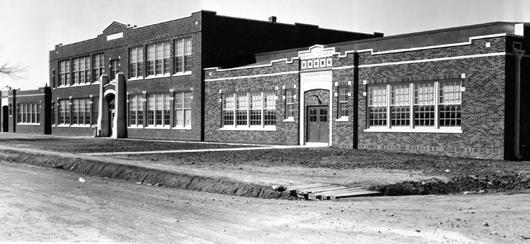
A local example is how Bartlesville segregated Black students at the Douglass Separate School at 5th Street and Virginia Avenue until finally starting a slow process of desegregation in 1956 after the historic Supreme Court decision of Brown vs. Board of Education...and Bartlesville’s only state football championship, earned by the Douglass Dragons, prompting the Board of Education to not only buy them some letter jackets but also move forward with integrating such talent.
The lesson I take from American history is of strength through diversity. We are a nation of immigrants, both voluntary and involuntary, a nation born of both invaders and natives, which
for 250 years has slowly melded into an alloy, one from many, that combines our best characteristics. The freedom trains that have traversed our great land lived up to their names because they welcomed everyone aboard.
Sadly, after the victories of the Civil Rights Act of 1964, Voting Rights Act of 1965, and Fair Housing Act of 1968, the civil rights movement’s golden age of nonviolent, unified protest ended with the assassination of Dr. Martin Luther King Jr. in 1968. Eight years later, I saw Dr. King’s Bible, pulpit, and vestments aboard the 1976 Freedom Train.
That meant that the replica Liberty Bell aboard the train had me thinking of multiple American Revolutions and kings. It reminded me not only of King George and the American Revolution, but also of the civil rights revolution led by Dr. King. The bell had me recalling the closing words of his speech at the March on Washington in 1963, which we had been taught in school: “When we allow freedom to ring, when we let it ring from every village and every hamlet, from every state and every city, we will be able
to speed up that day when all of God’s children, Black men and white men, Jews and Gentiles, Protestants and Catholics, will be able to join hands and sing in the words of the old Negro spiritual: Free at last. Free at last. Thank God almighty, we are free at last.”
In that same era, defending democracy abroad was costly, with the U.S. becoming involved in both the Korean War from 1950-1953 and in Vietnam for almost two decades until 1975, when Congress finally cut off funding. The Cold War ended much more successfully between 1989 and 1991, with the fall of the Berlin Wall, the collapse of Sovietbacked regimes in eastern Europe, and the final dissolution of the Soviet Union.
An unexpected byproduct of the end of the Cold War, however, was the loss of its unifying influence upon our own politics. A political realignment of Southern conservatives, rising economic inequality, and the proliferation of ideological media amplified partisanship and division. Fifty years ago, we were still in the Cold War, and we didn’t think of red for Republicans or blue for Democrats. We were all Americans, celebrating our status as the oldest surviving federal republic in the world, a beacon of everevolving freedom in a world often darkened
by authoritarianism.
Back in 1976, Bartlesville joined the rest of the nation in celebrating its 200th birthday. The Washington County Philatelic Society held a 1976 Bicentennial Stamp Exhibition in the McKinney Music Building in March of that year. There was a free fireworks display at Sooner Park, and the Kiwanis Club of Bartlesville still offers a Freedom Fest each Independence Day at Sooner Park, partially funded by proceeds from the Sooner Jr. miniature golf course.
The most lasting local project was the adoption of a Green Belt project linking the major parks as a Horizons ‘76 project. Residents had first dreamed of linking the parks with bike paths and walkways back in 1963, and the Bartlesville Improvement Authority had purchased 136 acres east of what was then College High School while H.C. Price donated land north of Price Road for what would become Jo Allyn Lowe Park.
City planner Joel Smith worked out a comprehensive plan to link those tracts with the existing Sooner, Johnstone, and Robinwood parks via trails along the
Caney River and Turkey Creek. He even canoed four miles down the Caney from Johnstone Park to what was then called Country Club Bridge, along what is now Hillcrest Drive.
The project was renamed the Pathfinder Parkway and the excitement for the bicentennial was channeled into additional land donations and fundraising by the Jaycees, led by ExaminerEnterprise editor Jarrell L. Jennings. The project was selected for the Governor’s First Annual Oklahoma Volunteer of the Year Awards, with Governor Boren recognizing a public fund drive in which over 2,500 individual donors contributed over $200,000 in just over two months to help fund the $750,000 project.
The Parkway was dedicated on July 3, 1976 and it became one of Bartlesville’s most distinctive features, with twelve miles of allseason trails which Bartians have repeatedly chosen to invest in maintaining and improving over the past half-century.
Mike Tupa would want me to point out another lasting Independence Day tradition in Bartlesville. The Glen Winget Memorial Tournament has taken place every July 4th weekend since 1959, save for a cancellation in 1963. Eight to ten teams gather to play baseball games at Doenges Memorial Stadium, with the local Doenges Toyota Indians having played in all 66 tournaments, securing the title eighteen times. Becky Burch Slack would point out how the bicentennial year was when Ms. Belva Hively began playing traditional baseball music at the tournament, which she continued to do until 2009, passing away the next year at age 81.
With the semiquincentennial fast approaching, there won’t be a Freedom Train steaming around the lower 48. That time has passed, and I fear the kind of grassroots and bipartisan celebrations of our nation that I witnessed in 1976 will be less conspicuous for its 250th. In our hyper partisan era, whatever some politicians arrange will be celebrated by one faction and denigrated by another.
Name-calling now tarnishes all forms of media, with ordinary people subjected to insults and demeaning labels, from the top on down. Well, we all miss the mark, and this former schoolteacher finds it all rather childish. I like a great many Bartians, regardless of their political persuasions. When someone’s politics disagrees with mine, I bear in mind what Will Rogers wanted for his epitaph: “I joked about every prominent man of my time, but I never met a man I didn’t like.”
It would do us all a world of good to apply more of that openminded, optimistic, and accepting attitude toward our fellow Americans, in a spirit of unity, and reject the hateful rhetoric of the demagogues who seek to divide us. I realize that is asking ourselves to not only be charismatic and diplomatic, but also idealistic and aspirational. But, so was the notion that all men, and women, are created equal, an evolving conception that our nation has struggled to live up to for 250 years. I say, grab a bell and a determined smile, help your fellow Americans board the Freedom Train, and let freedom ring. Happy birthday, America.

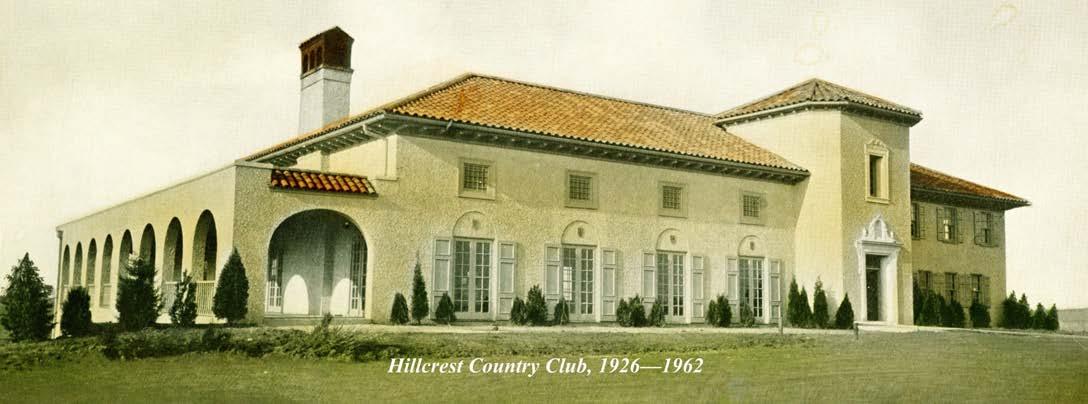
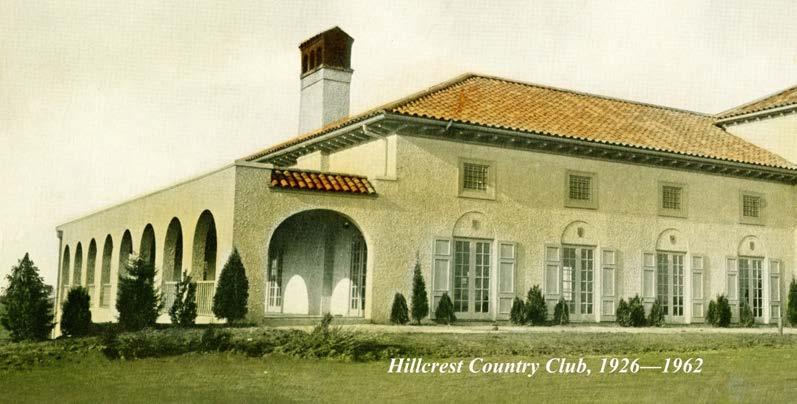
In the 1920s, there were few 18-hole golf courses in Oklahoma; however, a few local golfers saw a vision and created a plan. Designed by Architect Edward Delk, the Spanish-Mission style Hillcrest Country Clubhouse held a grand gala opening New Year’s Eve 1926 with a small, but elite golfing membership. Hillcrest became the go-to place to celebrate weddings, host parties and hold Eggstravagant Easter parties. Then, the Hillcrest golf course opened during the spring of 1927, bringing notoriety to Bartlesville and a place to seal many oil deals with healthy competition.
As time passed, membership and popularity grew, while the original clubhouse became outdated and overwhelmed. A committee worked on the architectural design and budgetary constraints for the replacement during 1961, resulting in the December 1962 grand opening of the substantially modernized clubhouse.
Between 1967-1968, the Service League of Bartlesville held a charity ProAm Golf Tournament with foursomes of one pro and three amateur golfers; open to members, guests and celebrities. Golfdom GOATs like pros Jack Montgomery, Terry Dill, Ben Hogan and Billy Martindale played with Hollywood stars Dean Martin and Dale Robertson, and local amateurs Boots Adams, Mike May, Foster Doornbos, Art Gorman, Dick Kane and more. Notable caddies were Bob Fraser, Dean Lowe, Mark Kane.
by Debbie Neece
their education at the Oklahoma college of their choice. The following June 7-8, 1968, 52 pros and 156 amateur golfers competed in the second annual Hillcrest Hillblast.
Billy Martindale won the 1967 Hillcrest Hillblast; and Terry Dills won the 1968 Hillblast.
In 1969-1970, the Service League stepped aside and Hillcrest held the Sandblast, a member-guest amateur tournament. In 1970, Hillcrest also hosted the Regional High School Golf Tournament, won by Bartlesville’s Sooner High School.
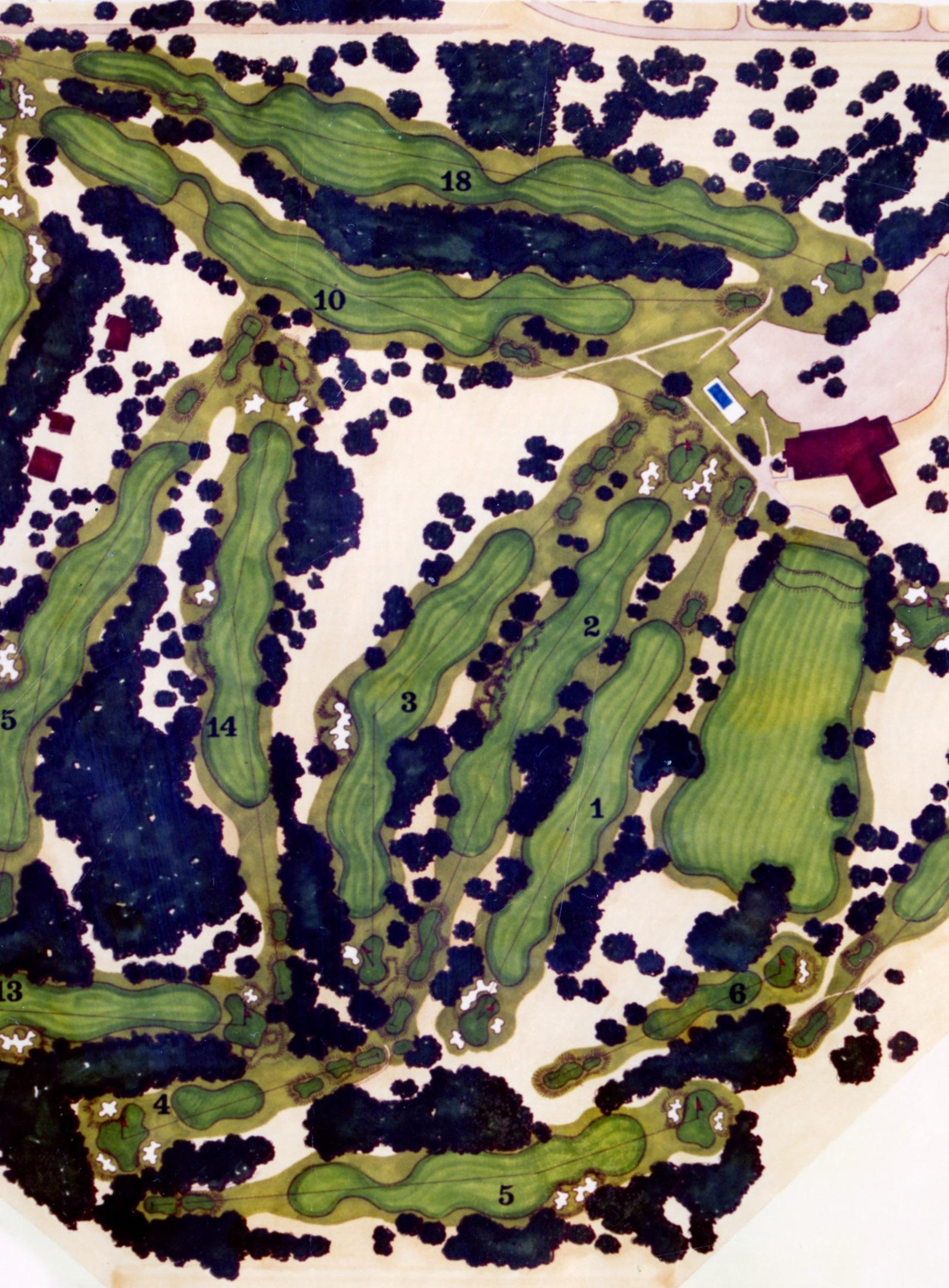
Nestled among the well-established trees and emerald-green fairways, Hillcrest Country Club offers much more than a pristinely manicured Perry Maxwell designed 18-hole golf course, members enjoy a sparkling swimming pool, indoor and outdoor pickleball and tennis, wellness center, Golf Shop, and a variety of amenities offered at the beautiful clubhouse. Hillcrest is more than a country club; it is a community!
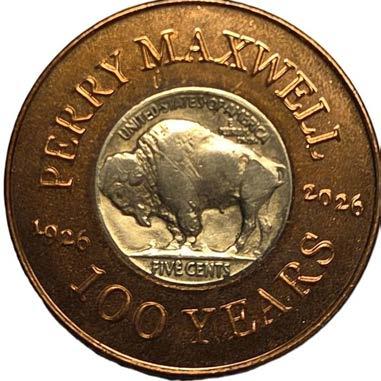
2026 brings a Hillcrest Country Club year-long party! This year members are celebrating the 100th Anniversary of the Hillcrest Country Club with a host of exciting activities including the 58th Anniversary of the Hillcrest Hillblast on June 24-27.
The 1967, double shotgun start tournament had 50 professionals and 150 amateurs competing. To up the ante, the person with the first Hole-in-One was awarded a 1967 Camero by K.S. “Boots” Adams. In addition, from the proceeds, the Service League awarded two-year, full-ride, scholarships to Col-Hi Seniors John Beaumont and Jim Reynolds forwarding
If you are interested in additional history about the Hillcrest Country Club and Bartlesville’s Civic Culture, seek out Gale Kane’s book “Bartlesville Means Business” at the Bartlesville Area History Museum or the Hillcrest Golf Shop.
If you are interested in becoming a Hillcrest member, contact John Hron V. (Head Golf Professional) at jhronv@ hillcrestok.com.
FORE!
by Maria Gus
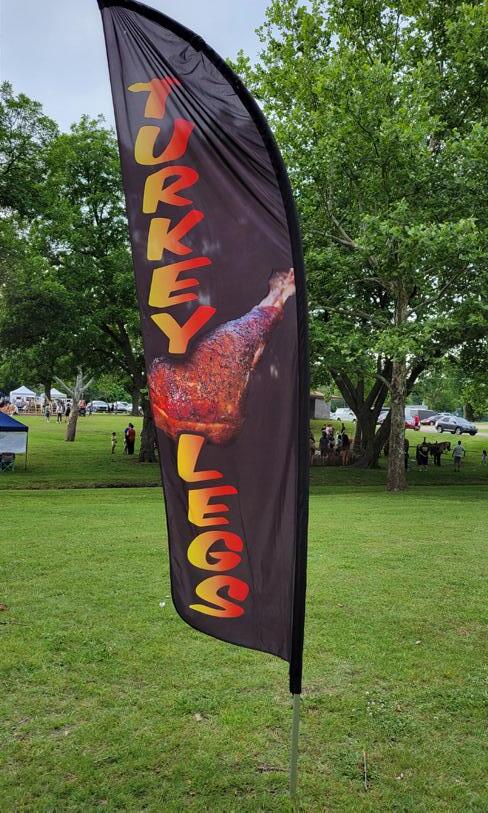
SunFest has always been about more than funnel cakes, turkey legs and live music, although those are still pretty great reasons to go.
At its heart, it remains one of Bartlesville’s biggest and best reminders that real community still matters. In an age where so much of life happens through screens, scrolling and delivery apps, there is something refreshing about spending a weekend in beautiful Sooner Park surrounded by thousands of actual people laughing, dancing, shopping, eating and reconnecting.
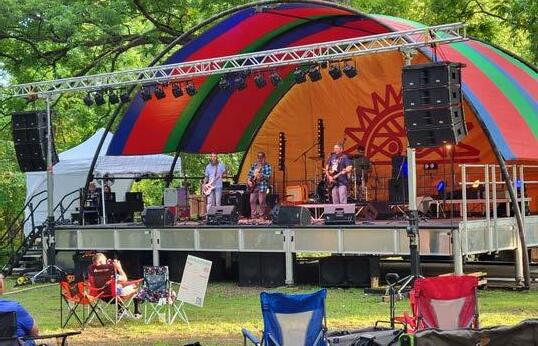
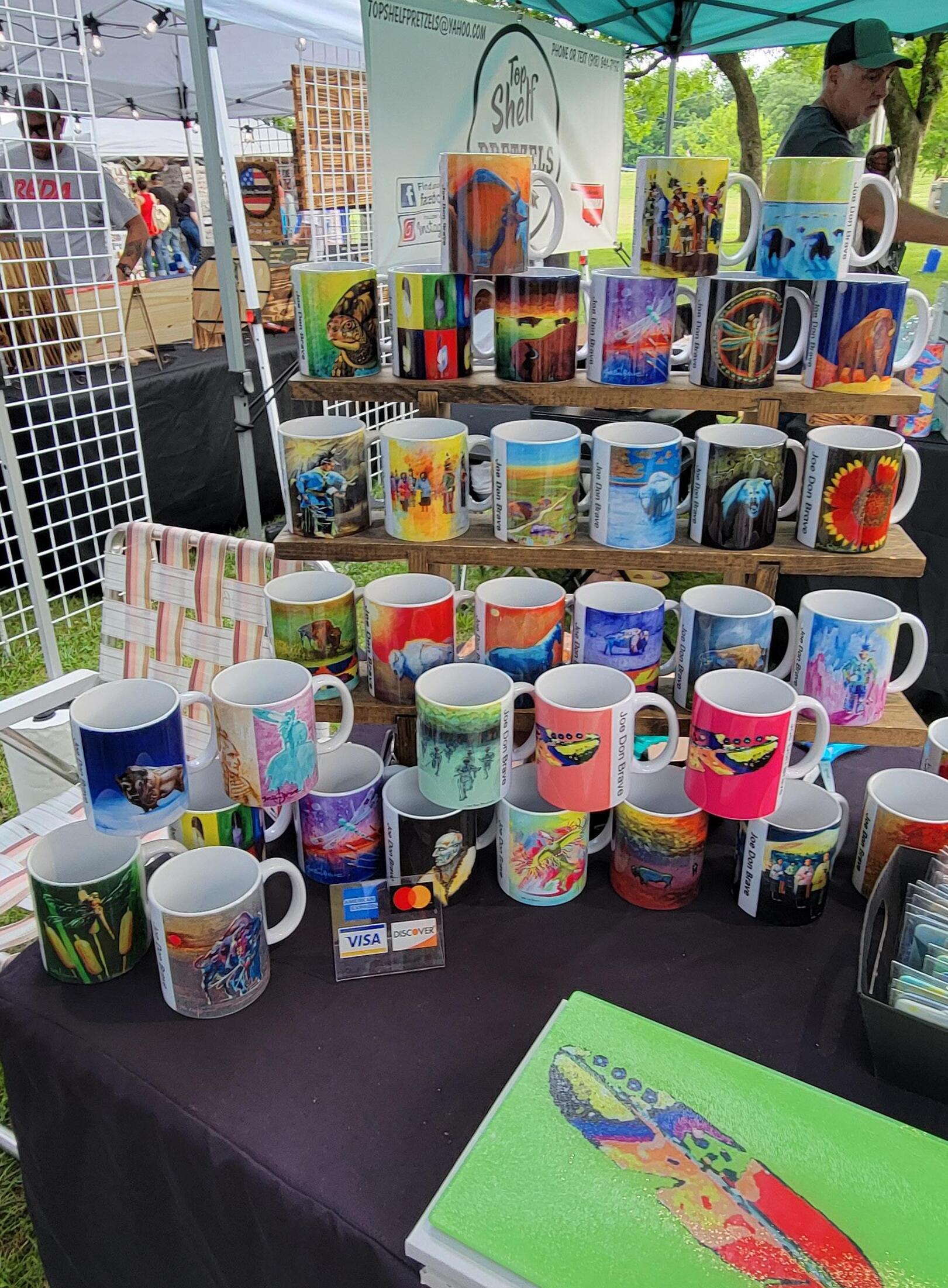
And while SunFest has become a beloved tradition for generations of Green Country families, one of the reasons it continues to thrive is because organizers have never been content to simply repeat the past. The festival does a remarkable job blending the old and the new. Yes, you can still grab a freshly squeezed lemonade, wander through the craft booths and inhale the unmistakable smell of kettle corn drifting through the park. But every year there is also something new to discover.
Maybe it is a band you have never heard before that suddenly becomes your newest playlist obsession. Maybe it is a local artist creating handmade jewelry or woodworking pieces you cannot stop thinking about. Maybe it is a nonprofit organization that sparks something in you and inspires you to volunteer or get more involved in the community. That is the magic of SunFest. You never quite know what you are going to stumble across.
The festival’s 2026 celebration feels especially fitting as the country marks America’s 250th birthday. Community gatherings are part of the American story, and SunFest continues to deliver the kind of hometown experience that feels increasingly rare and valuable.
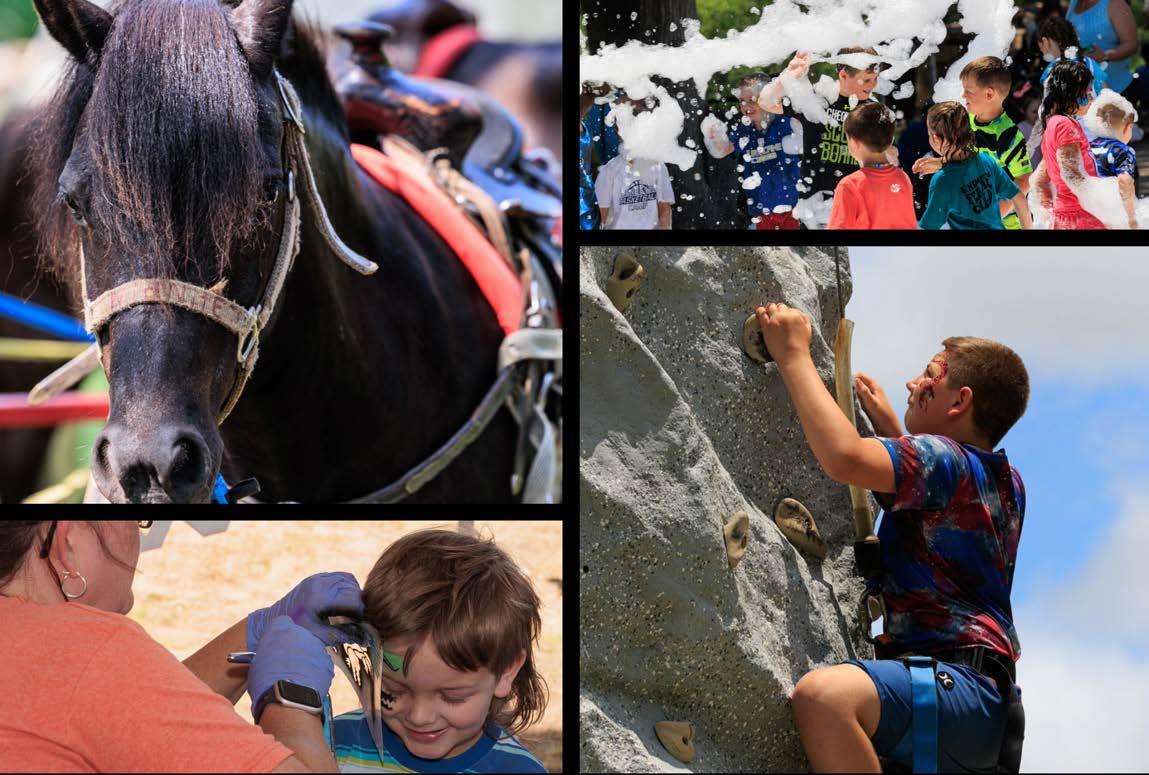
There is no shortage of things to do throughout the weekend. Families can explore kid-friendly activities, pony rides, games and performances while music lovers bounce
between stages featuring everything from bluegrass and rock to jazz and worship music. Car enthusiasts can admire classic vehicles lined up for the annual car show while shoppers browse rows of vendors offering art, crafts, boutique items and every kind of snack imaginable.
SunFest volunteer Charles Lewis says the festival’s family activities continue to grow each year.
“For kids activities we have the Ponies, Petting Zoo, Bubble Machine, Glowfest, Waterfest and Scouting Adventure Zone,” Lewis said. “Fitness in the Park on Saturday morning is still growing.”
And of course, there is the longtime SunFest tagline that still perfectly captures the spirit of the event: “Oklahoma’s Biggest Outdoor Picnic.”
You can spend ten minutes talking to a local nonprofit volunteer, grab a smoked turkey leg the size of your forearm, listen to live music under the trees and run into six people you know before you even make it back to your lawn chair. What a time to be alive!
There is also something comforting about the rhythm of SunFest itself. People know the traditions. They know where to park, where to find the lemonade stand and where to meet friends. For many families, attending SunFest is woven into childhood memories and summer routines. But because the event continues to evolve, it never feels frozen in time.
The best community events honor tradition while still making room for new ideas, new people and new experiences. SunFest manages to do both beautifully. It feels nostalgic and familiar without feeling recycled.
Perhaps most importantly, it gives people an excuse to simply be together.
One of the biggest challenges of modern life is isolation. We spend so much time disconnected from one another while technically being more connected than ever. Events like SunFest push back against that trend in the best possible way. Sometimes the cure for feeling isolated is as simple as hanging out with 2,000 of your closest friends in the middle of Sooner Park while a local band plays nearby and somebody hands you a funnel cake.
For one weekend every year, SunFest reminds us that community is not just something we talk about. It is something we experience together.

Bartlesville Public Library, Safari Zoo
600 S. Johnstone Avenue, Meeting Room A, Bartlesville 11:00 a.m.-1:00 p.m.
Bartlesville Public Library, Teen Graffiti
600 S. Johnstone Avenue, Meeting Room A, Bartlesville
June 5, 2026 | 2p.m.-4p.m.
Redeemer Lutheran Church VBS
3700 Woodland Rd, Bartlesville
June 8-9-10-11, 9a.m.-11:30 a.m.
Stage Art Productions, Fancy Nancy Dance Camp
318 S Quapaw Ave., Bartlesville
June 8-9-10-11, 10:33a.m.-12p.m.
Bartlesville Public Library, Teens Basic Sewing Workshop
600 S. Johnstone Avenue, Meeting Room A, Bartlesville 2p.m.-4p.m.
Bartlesville Public Library, Dinosaur Play
600 S. Johnstone Avenue, Meeting Room A, Bartlesville 10a.m.-12p.m.
Stage Art Dance, Once Upon a Princess Camp
2 5 8 10 11 11 12 15 26 25 27 18 19 16 23
318 S. Quapaw Ave., Bartlesville 5:30p.m.-7p.m.
Bartlesville Public Library, American Storytellers
600 S. Johnstone Avenue, Bartlesville 2p.m.-3p.m.
Bartlesville Public Library, Teens Painting with Joy
600 S. Johnstone Avenue, Meeting Room A, Bartlesville 2p.m.-4p.m.
Bartlesville Public Library, Dinosaurs Among Us
600 S. Johnstone Avenue, Meeting Room A, Bartlesville 10a.m.-11a.m.
Stage Art Dance, Cartwheels and Cupcakes
318 S. Quapaw Ave., Bartlesville 5p.m.-7p.m.
Woolaroc, Kidsfest
1925 Woolaroc Ranch Road, Bartlesville June 19-20, 10 a.m.-5p.m.
Bartlesville Public Library, Magic Show
600 S. Johnstone Avenue, Meeting Room A, Bartlesville 10a.m.-11a.m. & 1p.m.-2p.m.
Stage Art Dance, Building Up Lego Fun
318 S. Quapaw Ave., Bartlesville 5:30 p.m.-7p.m.
Children’s Musical Theatre, BINGO
Washington County Fairgrounds
1109 N. Delaware St., Dewey Time TBA
Youth and Family Services, Fun Run and 5K Unity Square (Dewey & 6th Streets)
300 S.E. Adams Blvd, Bartlesville 7p.m.-11p.m.
Bartlesville Public Library, Teens Forensic Osteology
600 S. Johnstone Avenue, Meeting, Bartlesville 11a.m.-1p.m.
Bartlesville Public Library, Weekly Storytime
Babies, Toddlers and Preschoolers
600 S. Johnstone Avenue, Meeting Room A, Bartlesville
Every Wednesday & Thursday | 10:00 a.m. and 11:00 a.m.
Richard Kane YMCA for water safety, swimming lessons and Y Summer Camps
Swim at Sooner Pool, Frontier Pool, and 3 Splash Pads
Bartlesville and Dewey Boys and Girls Clubs
The Rock and Teen Rock
Red Apple Bowling
Boots Hollow Golf Club
Sooner Park Junior Miniature Golf
Pathfinder Parkway
Climb the Bruce Goff Play Tower at Sooner Park
Disk Golf at Sooner Park, Lee Lake or Pathfinder Trailhead
Pickle Ball, Tennis, or Sand Volleyball at Sooner Park
Skate Park at Lee Lake
Fishing at Lee Lake or Hudson Lake with OK fishing license
Woolaroc Museum and Wildlife Preserve
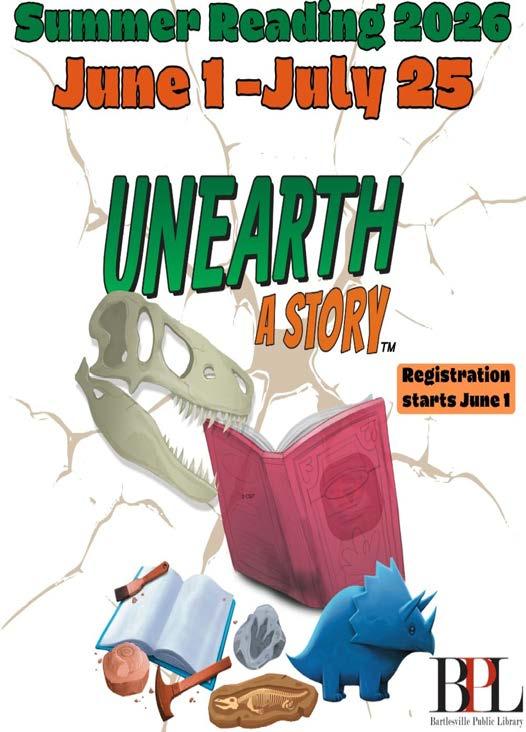
Bartlesville Public Library Summer Reading Program
Or enjoy one of Bartlesville’s many parks
Mon-Fri 10am-5:30pm Sat 10am-4pm
City-owned, YMCA-managed, Sooner and Frontier swimming pools are open for the summer. For additional information see https://www.rkymca.org/OutdoorPools
Kiddie Park Open Nightly 6:00 p.m. – 9:00 p.m.
Kiddie Park, 205 N. Cherokee Ave, Bartlesville Tuesday, Wednesday, Thursday, Friday & Saturday
OKWU Summer Camps
Oklahoma Wesleyan University, Bartlesville
June 1–August 1, 2026 | Times Vary
Children’s Musical Theatre, Summer Camp
101 S. Wyandotte, Bartlesville
#1 The Knight at Dawn Kids
June 1-13, 2026 | 9:00 a.m.-3:00 p.m.
#2 The Knight at Dawn Kids
June 15-27, 2026 | 9:00 a.m.-3:00 p.m.
#3 Shrek the Musical Kids
June 29-July 11, 2026 | 9:00 a.m.-3:00 p.m.
#4 Shrek the Musical Kids
July 27-August 8 | 9:00 a.m.-3:00 p.m.
Bartlesville Art Association Camp
217 S. Comanche Ave., Comanche Center, Bartlesville
Every Monday, Tuesday, Wednesday, Thursday & Friday
June and July 2026 | 9:00 a.m.-3:10 p.m.
2026 OKM Music, Especially for Kids Festival!
415 S. Dewey Avenue, Amber Hall, Bartlesville
June 1-7, 2026 | Times Vary

Know
Every Monday
5:00 p.m. – 6:00 p.m.
FREE Beginning Spanish Class
Bartlesville Public Library, 600 S. Johnstone Avenue
Every Monday
6:00 p.m. – 7:00 p.m.
FREE Intermediate Spanish Class
Bartlesville Public Library 600 S. Johnstone Avenue
May 1–July 7
8 a.m. – 4 p.m.
Bartlesville Area History Museum Presents “Our Culinary Past”
BAHM, 401 S. Johnstone Avenue, Bartlesville
Every Tuesday
2:00 p.m. – 3:00 p.m.
Price Tower Exterior and The Center Tour
Every Tuesday
5:30 p.m. – 6:30 p.m.
Bartlesville Public Library ELL
Conversation Class
Bartlesville Public Library, 600 S. Johnstone Avenue, Literacy Office
Every Tuesday through Saturday
6:00 p.m. – 9:00 p.m.
Bartlesville Kiddie Park Open for summer season
Kiddie Park, 205 N. Cherokee Avenue
Every Tuesday & Wednesday
Times Vary.
Bartlesville Public Library ELL
Conversation Class
Casa Hispana, 3850 Frank Phillips Blvd., Bartlesville
Every Thursday
10:00 a.m. – 11:00 a.m.
FREE Citizenship Classes
Bartlesville Public Library, 600 S. Johnstone Avenue
Every Thursday
7:00 p.m. – 8:30 p.m.
Crossing 2nd Trivia in the Garage
Crossing Second, 215 E 2nd Street, Bartlesville
Every Thursday
11:00 a.m. – 12:00 p.m.
Bartlesville Public Library ELL
Conversation Class
Bartlesville Public Library, 600 S. Johnstone Avenue, Literacy Office
Every Saturday, May 2 –
October 10
8:00 a.m. – 11:30 p.m.
Bartlesville Area Farmers Market
Frank Phillips Park, Frank Phillips Blvd and Keeler Avenue
Nightly, All Month
6:00 p.m. – 9:00 p.m.
Kiddie Park Open
Kiddie Park, 205 N. Cherokee Ave,

Thurs, June 4
6:30 p.m. – 7:30 p.m.
OSU Alumni Chapter Monthly
Meeting–Washington County
Scissortail Brewing Company, 623 E Don Tyler Ave., Dewey
Fri-Sat-Sun, June 5-6-7
Times Vary
42nd Annual OKM Music Festival
OKM Music, Inc., 415 S. Dewey Avenue, Amber Hall
Sat, June 6
8:00 a.m. – 5:00 p.m. 35th Dewey Antique Show
Washington County Fairgrounds, 1109 N Delaware St., Dewey
10:00 a.m. – 4:00 p.m.
Farm Hippie Picklefest 314 S. Johnstone Ave., Bartlesville
Saturday & Sunday
Times Vary
Time Travelers Geeks & Antiques Indoor Market
Washington Park Mall, 2350 SE Washington Blvd., Suite 320
12:00 p.m. – 9:00 p.m.
Nowata Pioneer Day Downtown Nowata
Tues, June 9
12:00 p.m. – 4:00 p.m.
Bartlesville Public Library, 2nd Tuesday Craft Club 600 S. Johnstone Avenue, Meeting Room A
5:30 p.m. – 7:00 p.m.
Dudes and T.A.C.O.S.
Cooper and Mill Brewing Company, 200 S. Dewey Ave., Bartlesville
Sat, June 13
8:00 a.m. – 11:00 a.m.
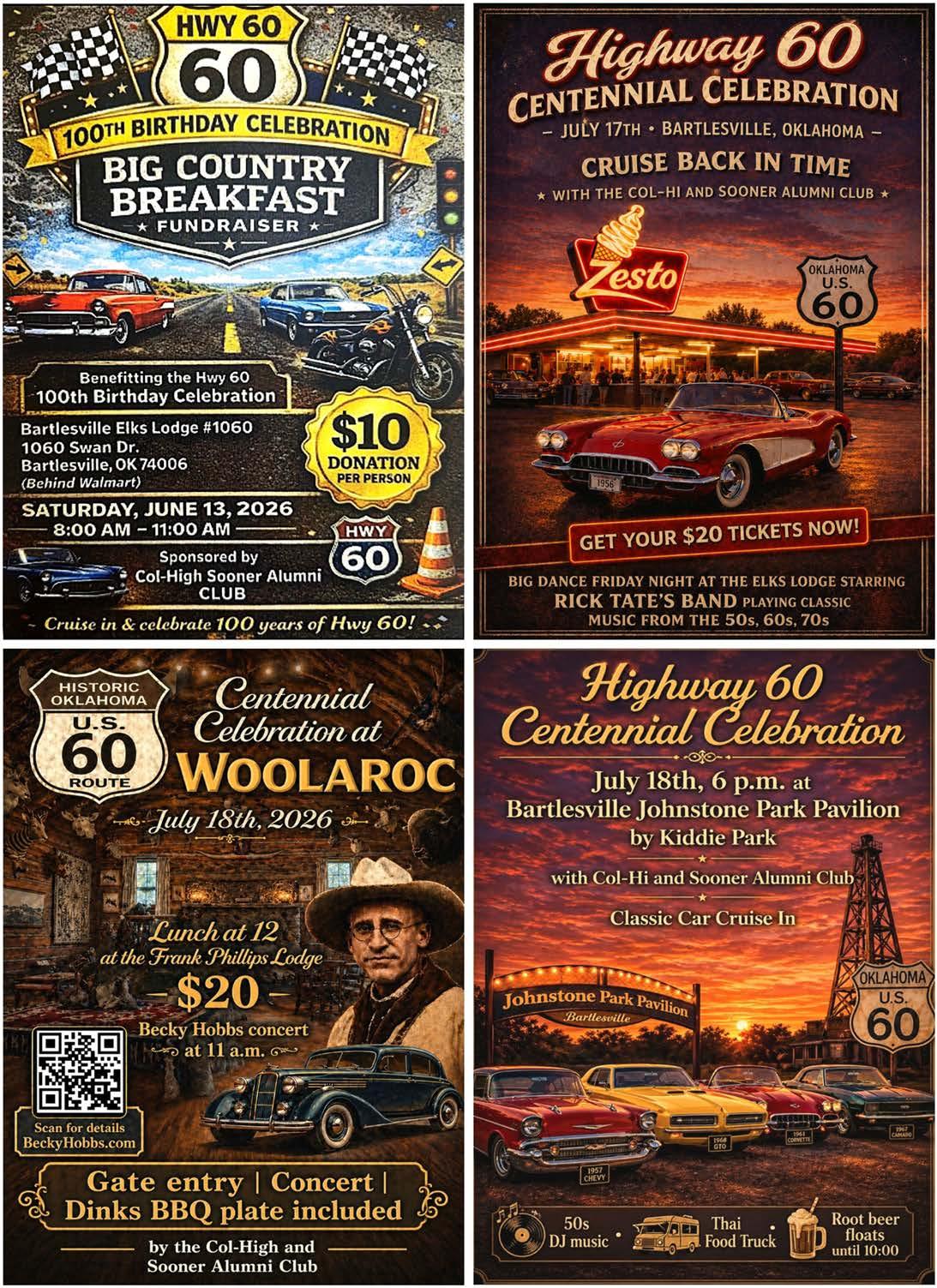
Big Country Breakfast BenefitHighway 60 100th Birthday Bartlesville Elks Lodge #1060, 1060 Swan Drive (Behind Walmart)
10:00 a.m. – 5:00 p.m.
Visit Dewey Second Saturday Downtown Dewey
5:00 p.m. – 8:00 p.m.
Hulah Lake Noodling Tournament
Hulah Lake Wah-sha-she Park, 5739 State Highway 10, Copan
Thurs, June 25
7:00 p.m. – 8:00 p.m.
Bartlesville Public Library A Fan’s Guide to the World Cup Bartlesville Public Library, Fri, June 26
5:30 p.m. – 9:00 p.m.
Sizzlin’ Summer Series at Unity Square Unity Square, 300 S.E. Adams Blvd., Bartlesville
Sat, June 27
7:00 p.m. – 11:00 p.m.
Youth and Family Services, Fun Run and 5K Unity Square, 300 S.E. Adams Blvd


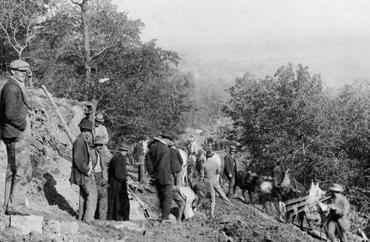
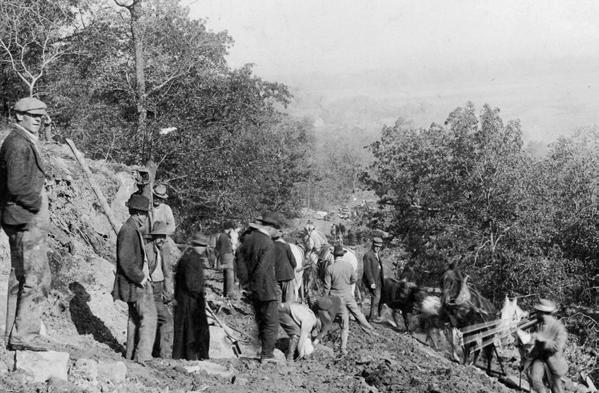
In the early days of Indian Territory, more than ladies complained about muddy streets that soiled and stained their flowing dresses. Although most transportation was by foot, horse or buggy, between the 1870s and 1926, the Good Roads Movement was taking shape. And, most shockingly, it was not the ladies, oilmen or cattlemen who worked the hardest to forward the move towards better roads, it was bicyclists.
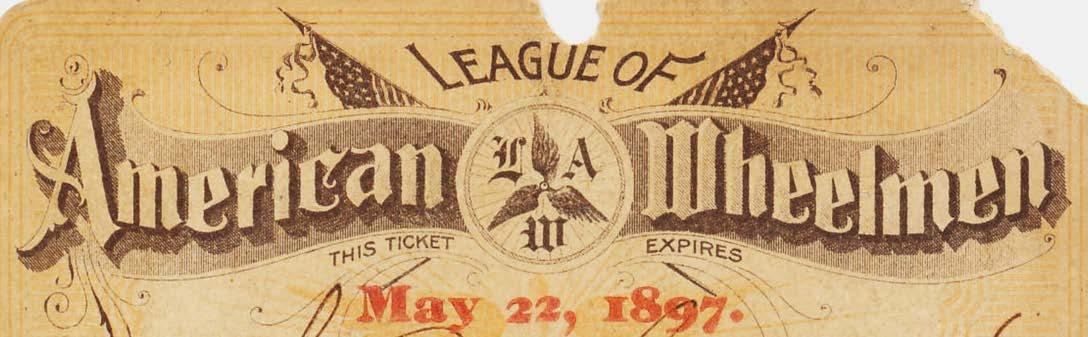
Early high-wheeled bicycles were termed “boneshakers” with large front wheels to promote speed and smaller rear wheels for lighter weight and stability. This mode of transportation was quick but dangerous on muddy or rutted roads. It was the combined force of the cyclists, farmers, landowners and businessmen that brought the plight of American roads to Washington, D.C. The cyclists also organized the League of American Wheelmen and published the Gospel of Good Roads, which evolved into the Good Roads Magazine with over one-million readers within the first three years.
There is power in numbers, prompting the U.S. government to pay attention. In 1898, the Higbie-Armstrong Good Roads Act provided construction cost-sharing between cities, counties and states. In 1913, the first transcontinental highway was dedicated. The coast-to-coast Lincoln Highway began at Time Square, NYCity, ending at Lincoln Park, San Francisco, and originally crossed 14 states. However,
by Debbie Neece
change is inevitable.
To forward road paving efforts, in 1916, the Federal Aid Road Act was passed to provide matching federal funding to states. Then, in 1921, the federal government took a serious step forward by passing the Federal Aid Highway Act, which organized the first national road grid. In 1926, the U.S. Numbered Highway System was established to number the highways on the grid.
Major interstate highways traveling east/west were given two-digit, even numbers, divisible by 10 (i.e. I-10 to I-90), skipping 50 and 60. Furthermore, north/south highways were given two-digit, odd numbers, ending in 5 (i.e. I-5 to I-95, with I-5 only a single digit). The lower the highway numbers, the further southwest the travel; while the higher numbers indicate travel is further northeast. Are you confused? Early directionally challenged travelers set out on their destination as the sun peeked over the horizon, seeking the guidance of the sun and stars as navigation. Perhaps their method was superior.
Interestingly, the births of U.S. 50, U.S. 60 and Route 66 share the same inception date, November 11, 1926. The highway numbers I-50 and I-60 were intentionally skipped in the original numbering grid to avoid even further confusion, as these highways predate the interstate system.
Highway 50 was designed in 1925 and
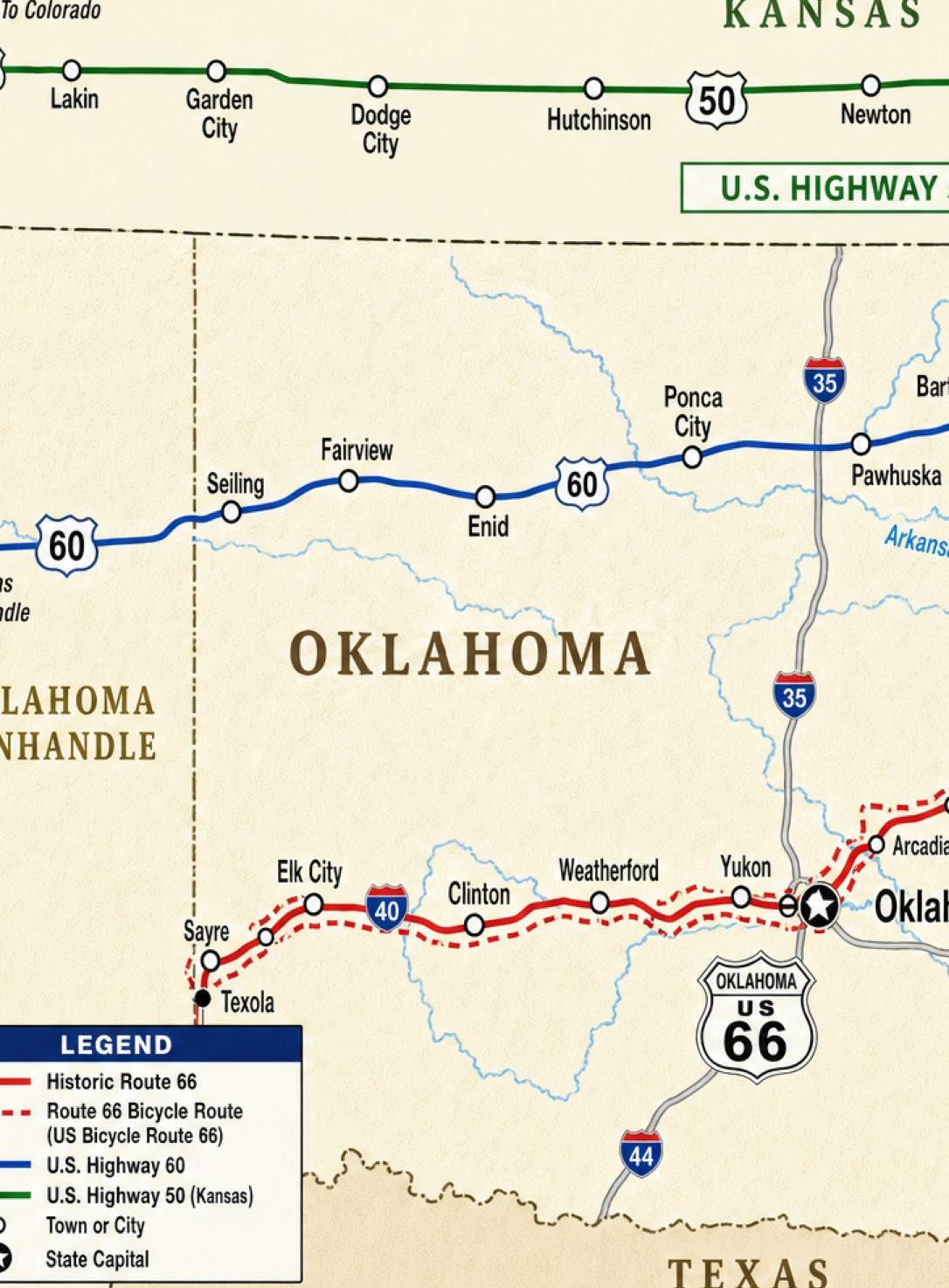
travels coast-to-coast, from “sea to shining sea,” so to speak. This 3,000-mile transcontinental highway crosses twelve states, stretching from California to Maryland, crossing Kansas but not Oklahoma. Additionally, in 1986, Life magazine nicknamed a 400-mile stretch of Nevada’s Highway 50 as “The Loneliest Road in America.” Although the sunsets and scenery are glorious in Nevada, there is a section of road that comes with a survival skill warning due to extreme isolation. In contrast, hop aboard U.S. Highway 60 and you can cross nine states (Arizona, New Mexico, Texas, Oklahoma, Missouri, Illinois, Kentucky, West Virginia, and Virginia) on this east-west, 2,655-mile highway.
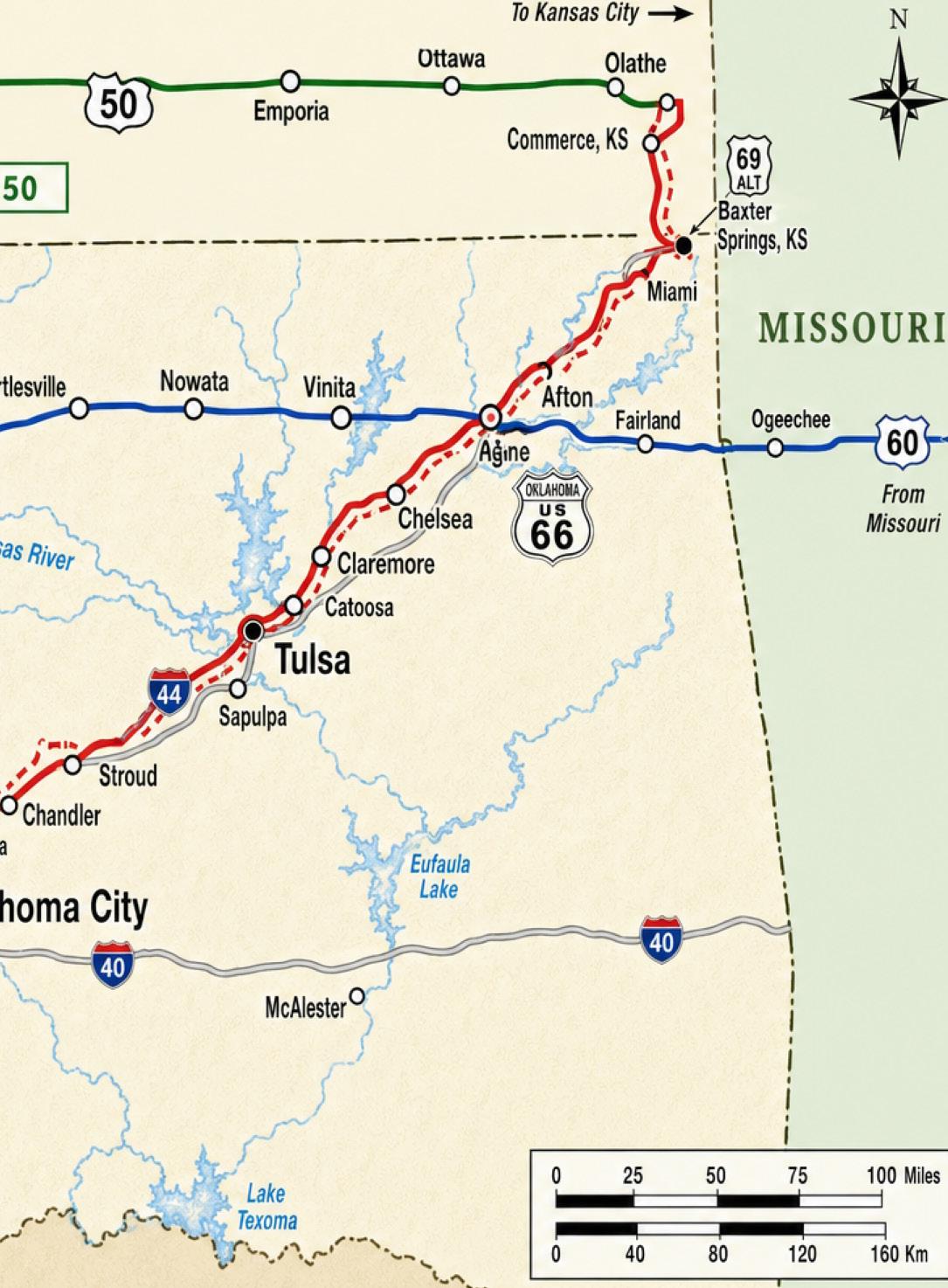
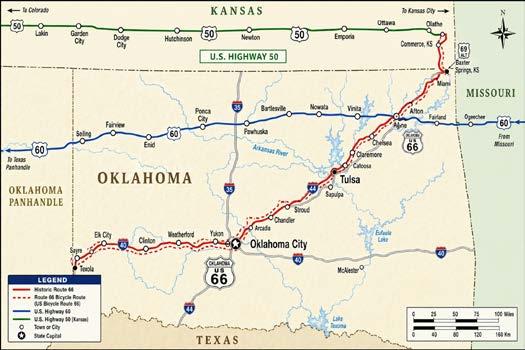
The beginning of the highway system has some very interesting history ties to Oklahoma’s roots, rather “routes.” Traveling though the state of Oklahoma on the gentle drive along Highway 60 allows you and your family to enjoy the depth of history Oklahoma has to offer. Along your trek, museums, art and architecture, parks, lakes and wildlife allow you to take a slower pace and enjoy the ride. Highway 60 enters Green Country Oklahoma from the east along the border with Missouri, just east of Miami and Afton, and exits the state on the west at the Texas border, just west of Arnett. The mostly twolane highway spans approximately 352 miles across Oklahoma passing through Arnett, Seiling, Fairview, Enid, Tonkawa, Ponca City, Pawhuska, Bartlesville, Nowata, Vinita, Afton; 11 towns to pause for a mixture of land run history, Native American culture where buffalo roam, and experience the growth of oil boomtowns.
Another interesting fact is Highway 60 was originally planned as a Chicago–Los Angeles highway. However, Kentucky and Virginia had different plans; they vied for Highway 60 to be
a Virginia Beach–Los Angeles route. The biggest gain of their win was Kentucky obtained a 495mile, east-west highway, traversing 22 counties and creating greater access to small towns and rural areas. In 1964, the California portion of U.S. 60 was decommissioned and became State Route 60 with U.S. 60 terminating at Brenda, AZ.
Tulsa businessman, Cyrus Avery became recognized as the “Father of Route 66” for his efforts in securing a highway from ChicagoLos Angeles. His compromise to Kentucky’s highway argument was to propose numbering the Chicago-Los Angeles route #66 for its phonetic sound and visual appeal. The original Route 66 “Mother Road” remains iconic because the businesses along the route celebrate the nostalgia of the 1960s. The overall advantage for both Highway 60 and Route 66 were access to beautiful country and small-town atmospheres.
With all great inventions, something bigger and better comes along, and so it was with Route 66. On June 27, 1985, U.S. Route 66 was officially decommissioned and removed from the United States Highway System when the route was bypassed and consumed by interstates. In Oklahoma, that main culprit was I-44. Removed from the system, but not forgotten, Historic Route 66 became designated as a National Scenic Byway, which breathed new life and possibilities into its future.
“What goes around, comes around” and for Oklahoma bicyclists karma had arrived. In 1978, the U.S. Bike Route System was established; and slowly, but surely, the U.S. Bicycle Route was designated to run parallel to the original/abandoned Route 66. In 2022, Oklahoma’s “Mother Road” gained its place on the official U.S. Bicycle Route, allowing cyclists to join motorists who “Get Their Kicks on Route 66.”
Did You Know: The Dewey Portland Cement plant operated in Dewey, OK from 1906-07 to 1964-65 and greatly impacted the structure and economy of Washington County. Under the direction of Don Tyler, some of the company contributions became the Washington County Fair building, Herbert Tyler Memorial Library, Dewey’s School gymnasium, streets, sidewalks and a host of cement buildings. The company even made concrete electrical poles, some of which are still being used today. Take a road trip west on Dewey’s 9th Street to check this out .
Now You Know *

$280,000 $280,000 GET IN THE GROOVE FOR A SHARE OF OVER ACROSS ALL LOCATIONS
$500 CASH DRAWINGS • 5PM–11PM
$10,000 GRAND PRIZE DRAWINGS • 11PM–MIDNIGHT








by Joe Todd
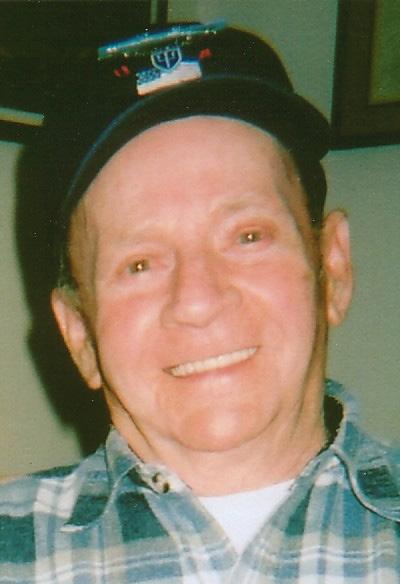
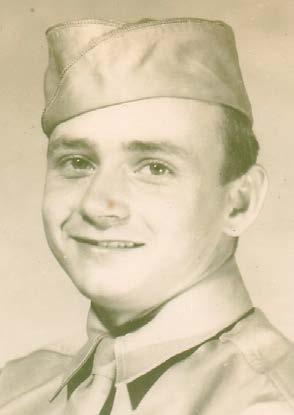
Bud Stapleton was born 28 October 1924 in Bartlesville, Oklahoma. His father, Porter Stapleton, was a mechanic for Cities Service, which was known as the Indian Territory Illuminating Oil Company. The Depression didn’t affect the family much because they had a farm on Coon Creek and raised a lot of their own food. He heard of the German invasion of Poland in 1939 on the radio and knew the U.S. would be involved at some point.
Bud had come home from church and was walking downtown with a friend when they heard of the Japanese attack on Pearl Harbor. He had a car during high school and his father was able to get used tires from Cities Service so tire rationing didn’t affect him, but gas rationing did. He had finished the 11th grade; then was drafted 10 March 1943 and sent to Camp Callin, California for Basic Training. Basic lasted 4 months; then, he was trained as a Fuse Cutter on the 90mm Artillery Gun. His job was to set the fuse on the shell for the distance it was to fire. He was assigned to Company B, 303rd Battalion, 97th Division.
The Battle of the Bulge was raging in Europe and he was transferred out of the Artillery to the ground forces and sent to New York City. His unit boarded the USS Monticello and he saw the Statue of Liberty as they left New York City, wondering if he would be coming back or not. The trip took 28 days and he was seasick most of the trip due to the rough weather. The ship landed at Le Havre, France, and he was assigned as a truck driver because he had driven trucks on the family farm. As a driver, he could drive anything from a motorcycle to a 2½ ton truck. He was then assigned as a jeep driver and drove the captain.
His unit crossed France and was to help relieve Bastogne. He first went into combat in Belgium near Liege. He said combat is one thing he would not talk about as he still has nightmares. After the Bulge, the Americans began moving fast and entered towns and cities where they encountered snipers. They crossed the Rhine River on the Remagen Bridge at Bonn before it collapsed. In Bavaria, they came upon what they thought was a factory; but found out it was the
Concentration Camp at Flossenbürg. He recalled people walking around that looked like skeletons and bodies piled in a fenced area. He went into the shower room, which was about 12 feet square, and this is where the people were gassed. He said those images of the concentration camp still bother him today. From Flossenbürg, they crossed into Czechoslovakia and met a German panzer division. All the tanks were lined up with flags flying and the crews were in front ready to surrender because they had run out of fuel. They met the Russians in Czechoslovakia and his unit returned to Le Havre.
They returned to the states and saw the Statue of Liberty again. He had a 30-day leave, then put on a ship at Seattle for the invasion of Japan. On the way to Japan, the atomic bombs were dropped and the war ended so they went to Tokyo Harbor. He spent 6 months in the Army of Occupation. He said Tokyo was not damaged as bad as the cities in Europe. While his unit was in Tokyo, they searched houses for anything military, which was destroyed. He said the majority of the people were very friendly and glad the war was over.
He had enough points to come home and landed at Seattle. He was discharged 10 March 1946, returned to Bartlesville, and finished high school. He began working as a painter at the Chevrolet Garage in Bartlesville where Sam Chestnut saw his work and offered him a job as a painter at Reda Pump. He had a paint stall and painted all the pumps produced at Reda Pump until he retired. He passed away November 4, 2014 and rests in Memorial Park Cemetery.
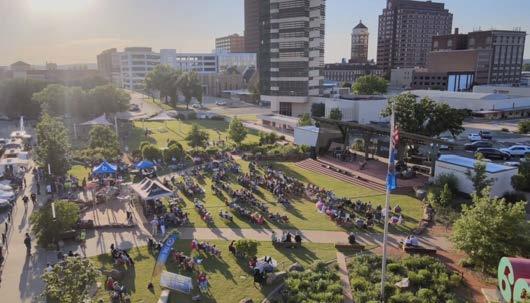
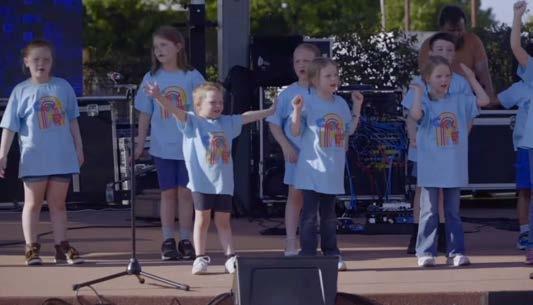
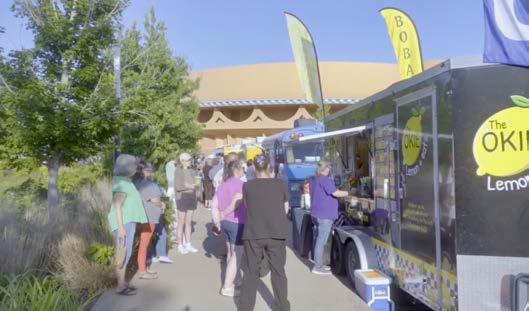
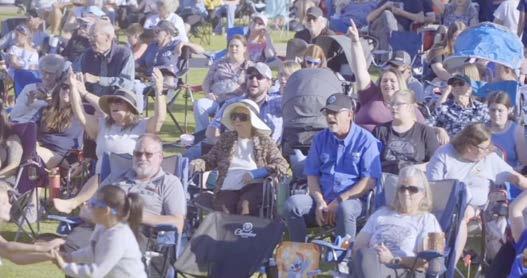
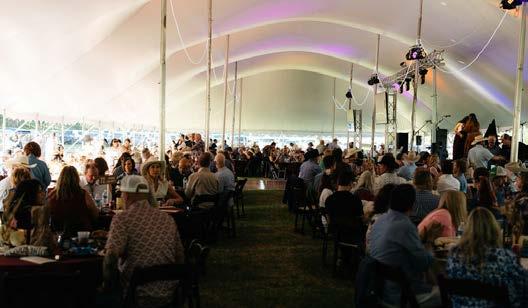
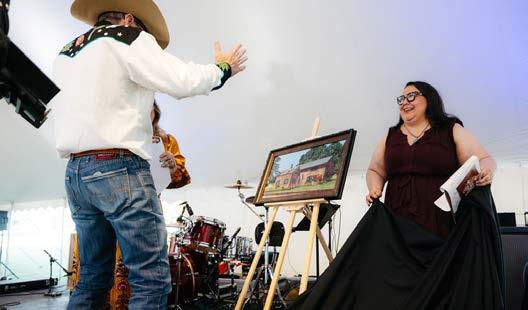
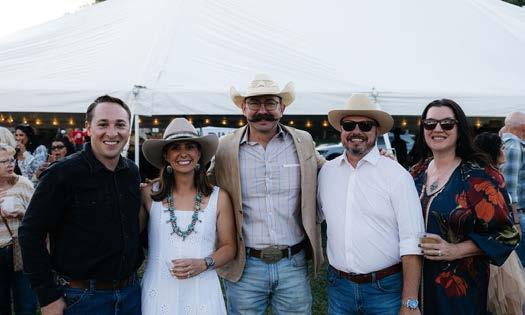
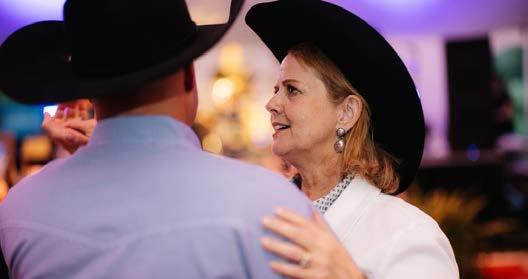
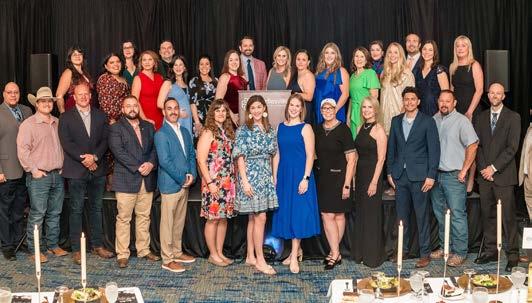
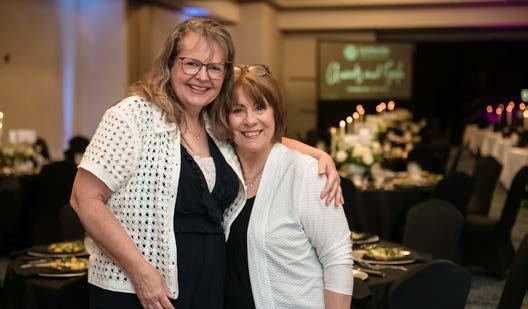
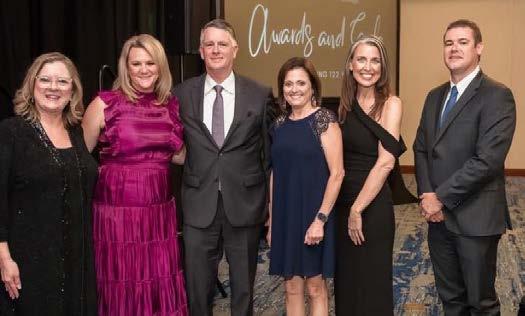
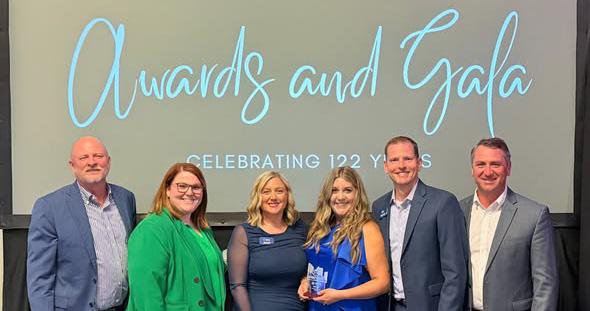
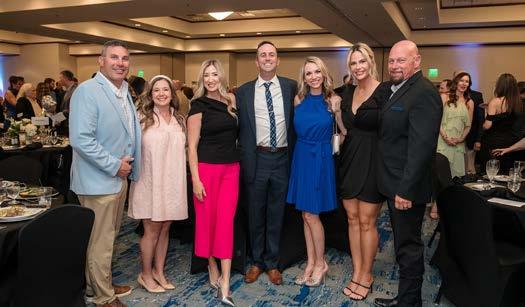
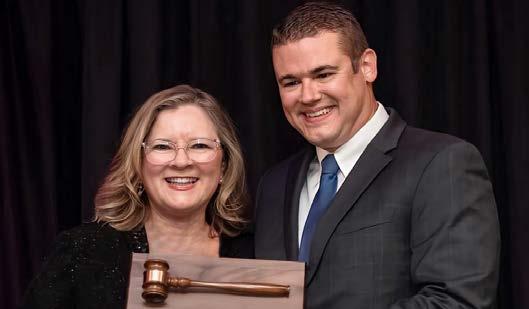
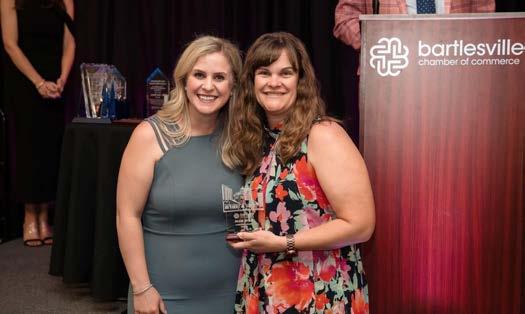
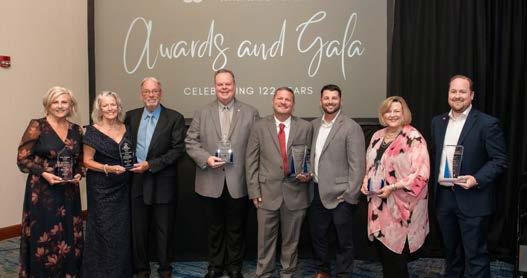
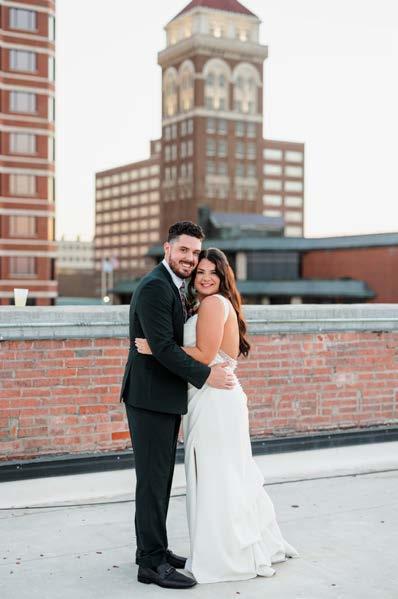
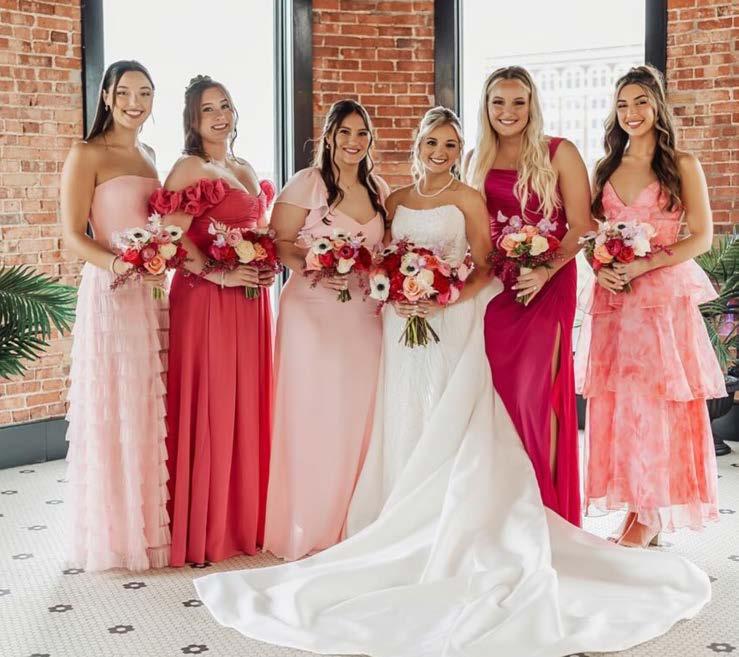
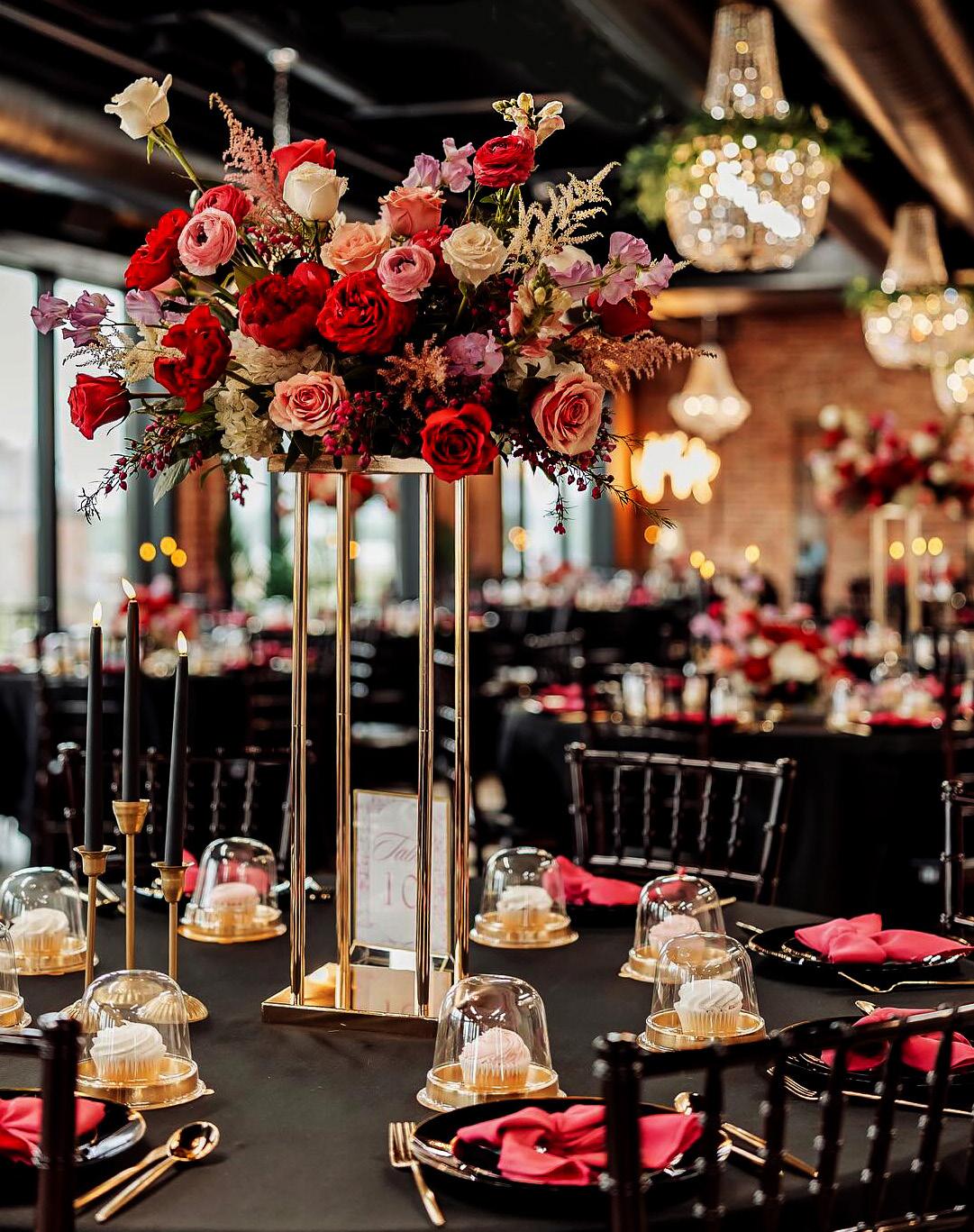
Downtown Bartlesville’s one-of-a-kind setting for your once-in-a-lifetime milestones and celebrations.
Two floors of chandelier-studded ballrooms — and an utterly charming on-site boutique hotel.
Inquire today for your special event! The Refinery at the Johnstone-Sare Building 888-733-1633
THEREFINERYOK.COM instagram @therefineryok
* Engaged? Mention B Monthly when you book a Grande Weekend Wedding package starting at $7500 and your bridal party will receive a complimentary Brunch & Bubbles!
by Kay Little, Little History Adventures
Flags are generally used to identify something about you. The colors and designs are very symbolic of who they represent. A national flag is a symbol designed to show loyalty for a country, to inspire respect and admiration.
Countries and groups flying flags and banners dates to Bible times, as seen in Numbers 2:2: “The Israelites are to camp around the Tent of Meeting some distance from it, each man under his standard with the banners of his family.”
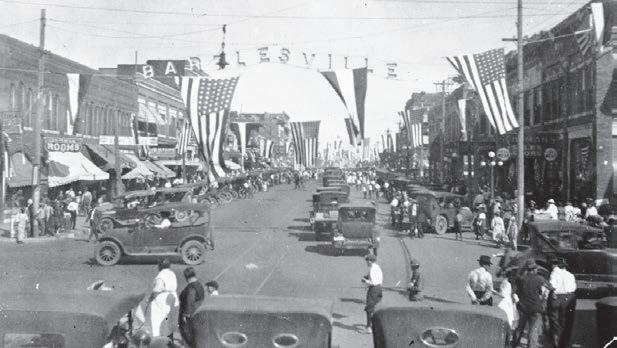
During the first of the Revolutionary War, the Patriots fought under several flags. In 1776, they had a flag with 13 red and white stripes, with the saying, “Don’t Tread on Me.” Later it was the Continental Colors with 13 red and white stripes and on the canton was the English Union flag.
Francis Hopkinson, a delegate to the Continental Congress and a signer of the Declaration of Independence, wanted the navy to fly a true American flag. He designed the flag to have 13 alternating red and white stripes to represent the 13 colonies at the time. In the canton, he wanted 13 stars on a blue background to also represent the 13 colonies. The Continental Congress adopted the flag on June 14, 1777, which is now Flag Day.
Red, white and blue represent liberty and freedom from dictatorship instead of all the royal colors and emblems associated with kings and dictators. Red=hardiness and valor. White=purity and innocence. Blue=vigilance, perseverance and justice.
Before that, the belief was that a Quaker seamstress from Philadelphia sewed and designed the first flag at the request of George Washington. Actually, several people contributed to the first flag and Betsy Ross was one of those.
Even though Betsy was a Quaker, she and her husband, John, supported the Patriot cause. The story says that Washington came to see Betsy about sewing a flag for him and
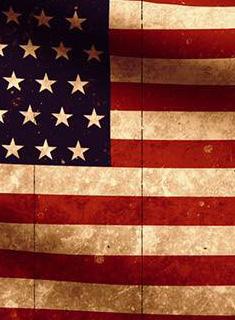
his soldiers. While she may not have designed the first flag, historians believe she did show Washington how the stars should look on the flag; 5 points, not 6. The Betsy Ross flag has the 13 5-pointed stars in a circle, meaning the symbol of eternity.
On January 13, 1794, a law was passed providing for a flag of 15 stars and 15 stripes to represent the 2 newest states. This was the flag that flew over Fort McHenry during the War of 1812, which inspired Frances Scott Key to write the poem, “The Star-Spangled Banner”. The poem was put to music and eventually became our National Anthem in 1931.
In 1818, the government decided the flag should have 13 stripes to represent the 13 colonies and a star for each state added to the union.
According to Gary Bauer, “Our flag deserves special protection. A nation’s flag is a symbol of its sovereignty. So an attack on the flag is an attack on the nation. It represents value of freedom, representative democracy and justices under the law. It also symbolizes the sacrifice of our nation’s veterans, many of whom gave their lives to defend it.”

by Greg Wheat
Think back.
Back to your childhood. Back to your home life from grade school through high school.
What was it like?
For some, it was steady. There was structure. Direction. Guidance when you needed it. You were mentored, corrected, encouraged. Love wasn’t just assumed—it was shown. You felt secure, confident, prepared. You had examples to follow and tools to handle life when it got hard.
But for others… maybe only some of those pieces were present. And for some, maybe none of them were. Maybe you were trying to figure life out on your own— learning as you went, carrying questions no one ever answered.
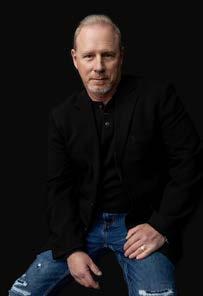
And that brings us to something we don’t always talk about—the role of a father.
Because Father’s Day can mean something very different depending on your story.
Some had a father who wasn’t there at all. Some had a father who was there—but not really present. Some had a father who loved them deeply but never knew how to show it. Some had a father who worked long hours, doing his best to provide, but never quite able to give time. And some were blessed with a father who invested, taught, encouraged, and showed up consistently.
Every story is different. But every story matters.
If I’m being transparent, my father did the best he could—and I say that with respect.
But he was raised without many of the things that help someone succeed in life or parenting. The structure wasn’t there. The guidance wasn’t there. The example wasn’t there.
So he struggled.
Not because he didn’t care—but because he didn’t know how to give what he had never received.
And because of that, I grew up without many of the tools I needed. There weren’t guardrails to keep me on track. There wasn’t direction to help me navigate decisions. Without those things, you can end up far off course.
I made choices that led me into places I shouldn’t have gone— decisions that brought consequences and hurt along the way. I wasn’t anchored. I wasn’t prepared. Whether I realized it or not, I was living out a pattern that had been handed down.
Do you see it?
What people call a “generational curse” isn’t something mystical.
It’s patterns—habits, mindsets, attitudes, and ways of living passed from one generation to the next. Unless someone recognizes it, it continues.
My life was spinning out of control and headed in a wrong direction because of everything that had been handed down to me.
But thank God—that’s not where my story ended.
When I gave my life to Christ as a teenager, things began to change. A new foundation was laid. A new direction took shape.
When I became a father, I realized something clearly: The cycle had to stop with me.
I couldn’t just go with the flow—I had to stand up in it. Like stepping into a rushing river and refusing to be carried by it. That takes intention.
It meant being present. It meant making family a priority. It meant giving them the things I never received.
Was I perfect? No.
But I was determined to stop the cycle.
And that’s where this turns to you.
Because if you’re a father, a grandfather, or in any stage of life—it’s not too late.
You may not have it all figured out. Balancing work, responsibilities, finances, and family—it’s not easy.
But you don’t get second chances with time.
Scripture says, what good is it to gain the whole world and lose your soul?
And I would add—what good is it to chase a world of fulfillment and lose your family?
So maybe today is a moment to pause and ask:
What needs to change?
What needs to be realigned?
What do you need to say no to so you can say yes to what matters most?
Because your kids and your family don’t need perfection. They need presence.
They need consistency.
They need to know they matter—through your words, actions, and time.
And the truth is, this applies to all of us.
We all carry things people don’t see—pressure, doubt, regret, wounds from the past. But those things don’t have to define the future.
Every day, in small choices, you’re either repeating a pattern—or rewriting it.
So this Father’s Day, don’t just celebrate the title.
Embrace the calling.
You have the power to change a legacy. To create a new story. To be the reason the next generation walks stronger, stands taller, and lives freer.
And one day, when your name is spoken, let it be said: He showed up.
He cared.
He made a difference.
He changed everything for us.
Because you still can.





Yes,



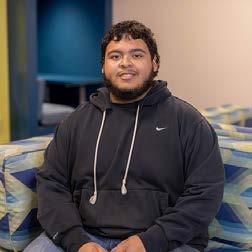
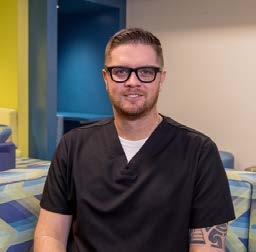
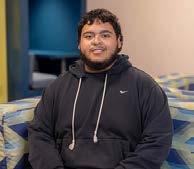
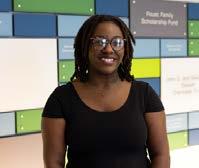
Jose is a graduate of the Applied Welding Technology program at Tri County Tech and Bartlesville High School. He chose this program because of the influence of family members already working in the field. During his time at Tri County Tech, he especially enjoyed the hands-on learning opportunities and gaining experience with different types of metal. He said, “The most inspiring part of my experience was the opportunity to continually learn new skills and concepts.” Jose credits his uncle as the person who inspired him most in life. Following graduation, he plans to enter the workforce directly. Congratulations, Jose!
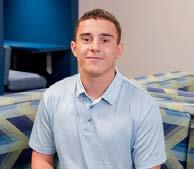
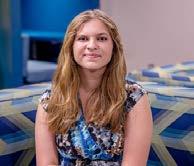



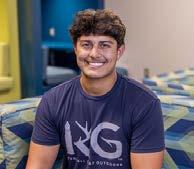
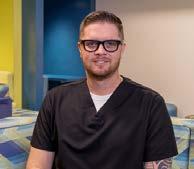
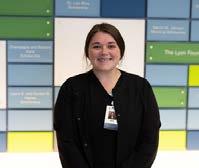
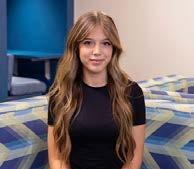
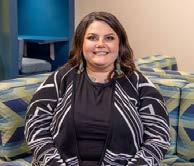
Gatlin is a graduate of the Practical Nursing program at Tri County Tech. He chose this program after seeing the strong outcomes of its students and involvement in the community. He found the most inspiring part of his experience to be the supportive environment and the commitment from staff and peers to help students succeed. After graduation, Gatlin plans to continue his education in an RN program and further his healthcare career. He said his previous supervisor, Lyn McKee, has inspired him most. He said, “She is an amazing leader, an amazing nurse, and a really caring person who taught me the way of healthcare.” Congratulations, Gatlin!


by Kelly Hurd
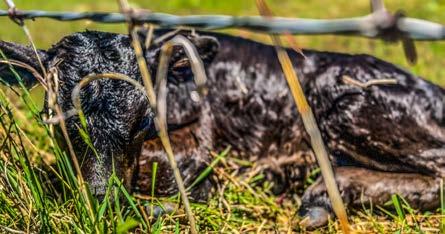
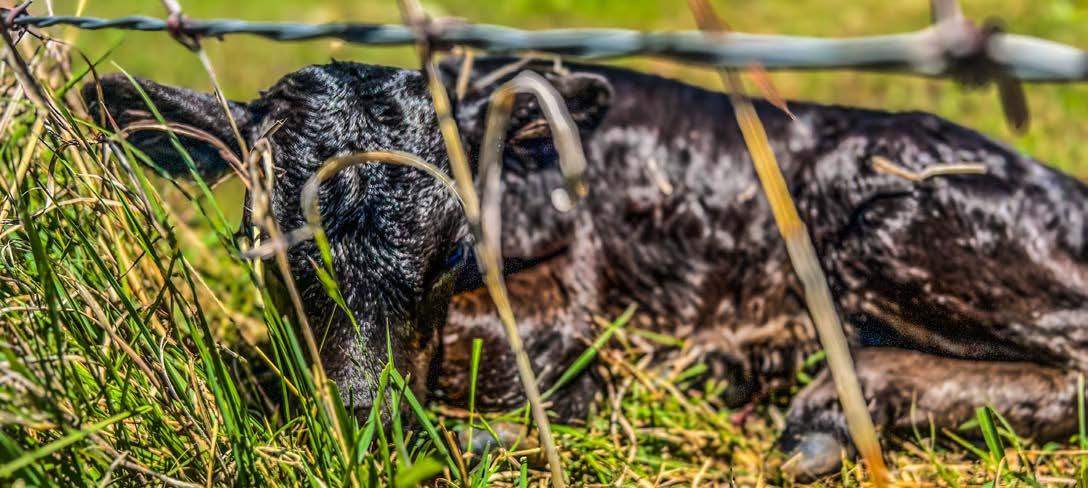
I was running late as I skipped off the front porch, hopped in the pickup, and started heading to town to the gym for a workout class. I hadn’t made it to the gate at the end of our two-track gravel road when I saw a little wet black calf on the ground outside the fence where some first-calve heifers had been under our watch the last few weeks.
Its mother was on the other side of the fence trying to lick it off and coax it back through. Since I was late and driving fast, I passed the calf before I came to a complete stop and then made a quick phone call to John Hurd for his input on what I should do as in my rear view mirror I watched the calf try to stand on wobbly legs and get through the barbed wire to no avail.
Sizing up the situation while waiting for John to answer, my fear was that the momma cow might get a little stirred up if I got too close to her calf and tried to help it. And, while the fence between us was a five-string Jim Dandy, I didn’t trust it. I’ve had a few snorting heifers breathe down my collar before, so I wanted a little advice in the moment.
John said to ease on up to the calf and try to slide it under the bottom wire to the pasture side where his momma was – so I did –and it worked “slicker than snot” as my descriptive husband would say, but I felt like I was covered in it (snot, that is) once the job was completed because I had afterbirth all over me.
So much for making it to workout class.
Now y’all, there’s a life lesson in here somewhere, I can feel it. If you’ll let me – I’d like to take a moment and get into your head where those thoughts we don’t say out loud live, and by doing so, y’all can get into mine.
That little calf was born on the wrong side of the fence – out of place and down on his luck. In his best attempts he couldn’t get
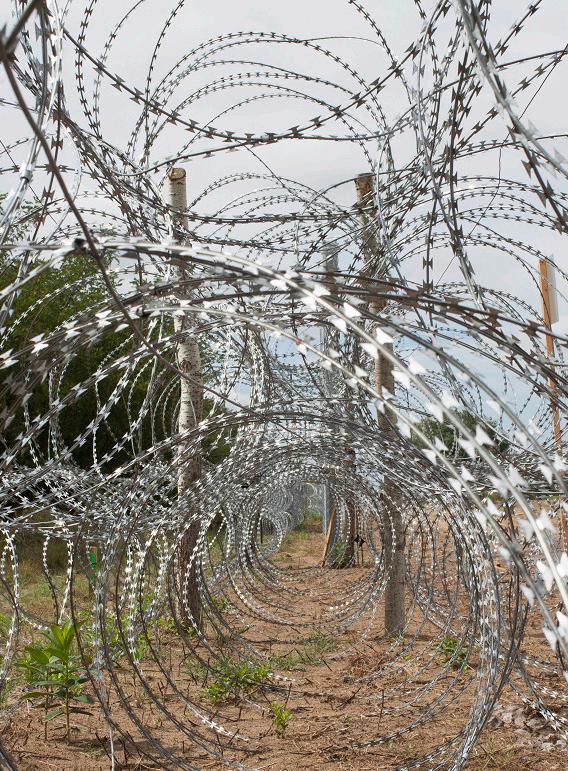
through what seemed like a wall of separation even though it was just five narrow strands of barbed wire.
Ever feel like maybe you were born on the wrong side of the fence – or the wrong side of the tracks? Like maybe you could see where you knew you belonged, but you just couldn’t get there?
The thing with those feelings is, if we entertain them too long, we start to believe them.
Maybe it’s your past that you kick yourself for that’s become your five-strand wall of barbed wire keeping you from being all you were created to be.
Maybe it’s your family pedigree that whispers “Not good enough” in your ear.
Careful, because thoughts become pathways – and those pathways become destinies. So, whatever that wall is that holds you back from being who you know you were created to be, I’d encourage you to be like that little calf. He didn’t fight me. He let me lay him down on his side, reach through the wires and grab his hooves, and gently pull him under the bottom wire to his mother –without a scratch, except for one or two on me.
I’m thinking that’s what it’s like when we put our life in the hands of the Lord. Instead of resisting His hand, arguing with the plan or running away - rather yielding to His touch and trusting Him to get us where we need to be, because just like that little calf, we can’t do it on our own – and as for the “scratches”, He’ll take those for you too. You might say He’s tough as nails and has the scars to prove it.
Well, thanks for reading along this month. This is me over here in Osage County encouraging you to be all that you were created to be! I’m believing your BEST days are yet to come. Let’s keep #CallingToTheGood together!






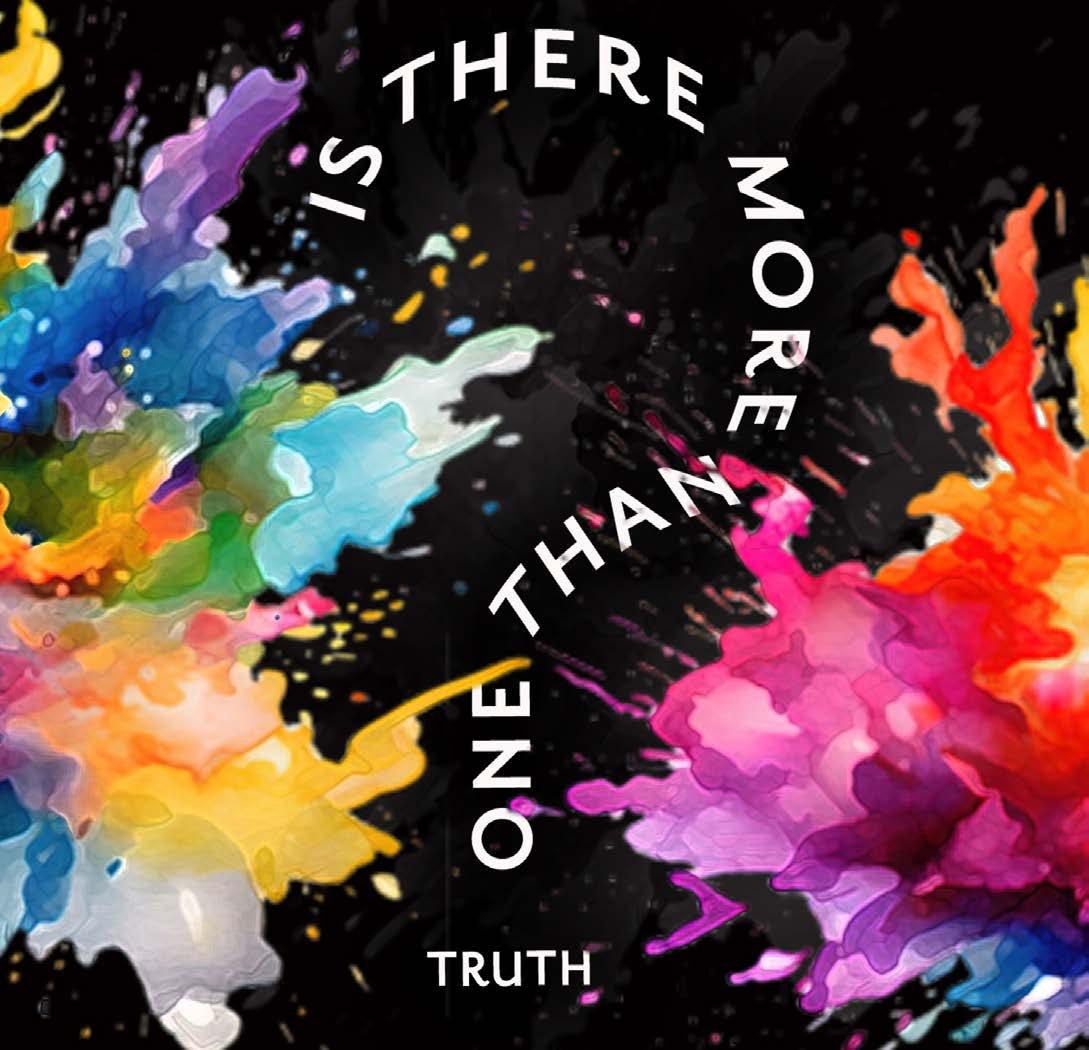
Ever have a phrase show up in pop culture and automatically develop disdain for it? Like, it’s hard to keep a straight face in a conversation when someone uses it? Sometimes it’s the phrase itself. “Let’s unpack that.” “Personal Journey.” “Future Proofing.” Other times, it’s how these trendy phrases get adopted and overused to the point that they make your ears bleed just hearing them. “Unprecedented.” “Literally.” “Six Seven…”
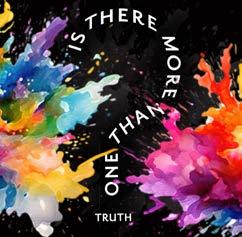
There’s a phrase I’ve struggled with a lot over the last few years: your truth. Now, before you either cheer or jeer me, let me explain. At first, the idea of “your truth” felt like an oxymoron. Truth, by definition, seems like it should be objective and free from interpretation. But the deeper we go into human history, the more I find the issue is often your
by Jay Webster
proximity to or context with that truth, which is really the issue.
In therapy, the term “your truth” often refers to your personal experience in a situation. It is centered on your point of view. In religious circles, your truth might be closely related to the term “testimony.” This is my story. My fatherin-law, who’s been a pastor for 50 years, says the amazing thing about testimony is that no one can take it from you. It’s your experience. I overcame cancer, battled insignificance, and achieved financial stability. It’s your truth.
In the ancient scriptures, near the end of the Gospel of John, there’s a collision between the spiritual and political worlds. Jesus is on trial, and Pilate is desperately trying to
make sense of the man who has turned Jerusalem upside down. Finally, Jesus responds to the inquisition by saying, “Everyone on the side of truth listens to me.” Pilate retorts, “What is truth?” Is it Jewish truth? Roman truth? Truth that is politically expedient? Truth that is spiritually enlightening? Truth that is morally comforting? Truth that is simply consistent with the evidence we have so far?
Before Galileo (and even after for some), our truth was: the world is flat. We arrived at that truth by the limited evidence we had at the time. The world was flat, and we were the center of God’s known universe. It turned out, however, that we weren’t even the center of our neighborhood solar system. Our truth changed based on what we now know.
But what happens when someone’s truth is not your truth?
When I grew up, I had no real context for homosexuality. I wasn’t gay. We didn’t talk about being gay, unless it was a crass joke or a put-down. And none of my friends were gay, as far as I knew. So it wasn’t part of my truth. Then two things happened. First, my world got bigger. I traveled to many more places and met more people. I discovered that a number of close friends and associates were, in fact, gay. Second, through the practice of Christianity, my heart and mind became not only more accepting in a generic sense but also motivated to intentionally love and actively support others. The natural byproduct of living out this faith broadened my world.
So, had there been homosexuality all along? Yes. Did these friends and associates only “turn gay” when I became aware of it? No. But my context to that truth changed…and so did my truth. The Earth was no longer flat.
This “context-to-truth” nearly killed us as a nation during the pandemic. If your context involved being on the front lines, where over a million Americans died, or watching someone loved die, or suffering from Long Covid yourself, your truth was not surprisingly shaken by the idea of reopening the nation “too quickly.” On the other hand, if you were facing the loss of a business, having to lay off employees, or the loss of your livelihood, you couldn’t reopen fast enough. Context played a major role in shaping our truth (and, consequently, which facts we let in to support that truth).
We can quickly see that just because a truth isn’t your truth doesn’t mean we can dismiss it out of hand. Or just because it’s not your context doesn’t mean it isn’t real. My fourteen-year-old has virtually no context for what it means to be married, to have a family you’re responsible for, to “work for a living,” to load a dishwasher properly, or to have a body that doesn’t cooperate with you. So her truth is that I am an idiot most days when I try to offer my context to her school crisis, teen anxiety, or lust for freedom. That being what it is, I’m still pretty sure my truth and context have merit.
In the same way, I have lived my entire life in America. This is my tribe. My origin story. I distinctly remember being my daughter’s age, waiting for my mom to drive me somewhere, when I had the conscious thought, sitting in our full-size
Chevy van: I’m male. I’m white and middle-class. And I’m Catholic… just like JFK (which is ironic since we were staunch Republicans)…I’ve got a lot going for me in this world. That was my truth. The context I didn’t have is what it’s like to be born into devastating poverty in another country, in a system that isn’t going to get better, and where the only hope is to leave. At that moment, even though the sign on America says, “There’s no room in the inn,” I might choose to risk it like others over starvation or being murdered.
It may surprise you, but the majority of my friends are rednecks. I myself am only one generation removed from East Coast Florida Rednecks… which is a whole special breed. I don’t own a gun, but most of my friends do. I don’t own a truck, but they do. I don’t chew, dip, or spit, but they do. We don’t agree on politics, music, or what beer to drink, but if I picked up a phone right now, any one of them would be at my house in under thirty minutes to help me. We love and respect each other.
We live in Oklahoma, and to many of us, that’s a beautiful thing. It shapes our truth. But should we feel less American because we don’t live on one of the coasts or have a larger population? Are we less than, simply because we are not a majority? Does New York’s truth outweigh ours because they are bigger than us? Are California’s values more important than ours because its economy is larger? Do the sacrifices of our service men and women mean less than those of Texas because they enlist more? And yet when we dismiss someone else’s experience or truth because it’s not our own, aren’t we implying that their civil rights, human rights, votes, quality of life, or income are not as important as ours? No one wants to be dismissed or disregarded.
Objective truth is a powerful thing. In a spiritual context, it is that truth that invites me - even challenges me - to change, to confront what is uncomfortable, to evolve beyond my own comfort, and to consider others. It is also the truth that allows me the freedom to consider other people’s experiences.
So, just because a truth, experience, or context isn’t our own doesn’t mean it’s not real. It simply means you haven’t experienced it personally. You can still offer respect, equal footing, and space. That is (as we profess) the American way.
Thanks for showing up for another month. I love talking with you… all of you. Until next month, there is so much good to be done out there; let’s go do it.
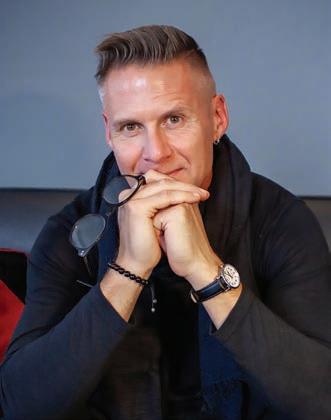















We live, work, and play in Bartlesville, and we’re proud to serve our neighbors with integrity

Experienced, Honest, Local
by Andy Dossett
Before the final black panels of The Wall That Heals were locked into place on Wednesday morning at Lee Lake, Larry Lemons was already searching for his friends.
The Vietnam veteran stood beneath the information tent, flipping slowly through a thick binder containing over 58,000 names etched into the traveling replica of the Vietnam Veterans Memorial.
Nearby, volunteers assembled the wall piece by piece while Lemons searched for men he had not seen in more than 50 years.
Some, he feared, never made it home.
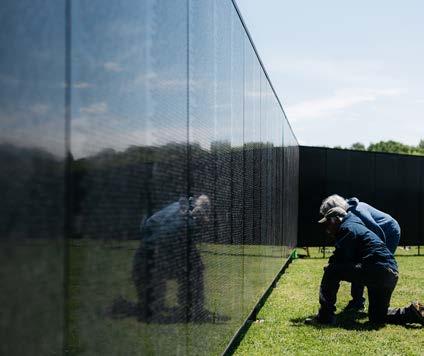
Lemons served with the 88th Transportation Company under the 1st Logistical Command during the Vietnam War. Laughing softly, he recalled the less-than-flattering nickname soldiers gave the command’s insignia — a joke better suited for another time.
Now, Lemons wasn’t drafted; he signed up because, in his words, he didn’t have anything better to do.
“We weren’t doing much at the time,” Lemons said. “We were drinking beer and chasing women.”
So in 1969, he and several friends volunteered for the Army. Because of his experience working on cars, Lemons was assigned the role of a line mechanic.
Standing beside a large map of Vietnam displayed at the exhibit, Lemons traced his finger across the country while naming the places he stayed on his journey to Pleiku.
“When they opened the door to the plane, you thought you were in an oven,” he said.
Some memories arrived instantly. Others surfaced only in fragments.
Lemons remembered Pleiku clearly — the suffocating heat, the long ride inland after landing in Vietnam and the grinding routine of military life. Mortar and rocket fire came so often, he said, that eventually it became part of the rhythm of daily life. He said he spent his days fixing anything with wheels on it.
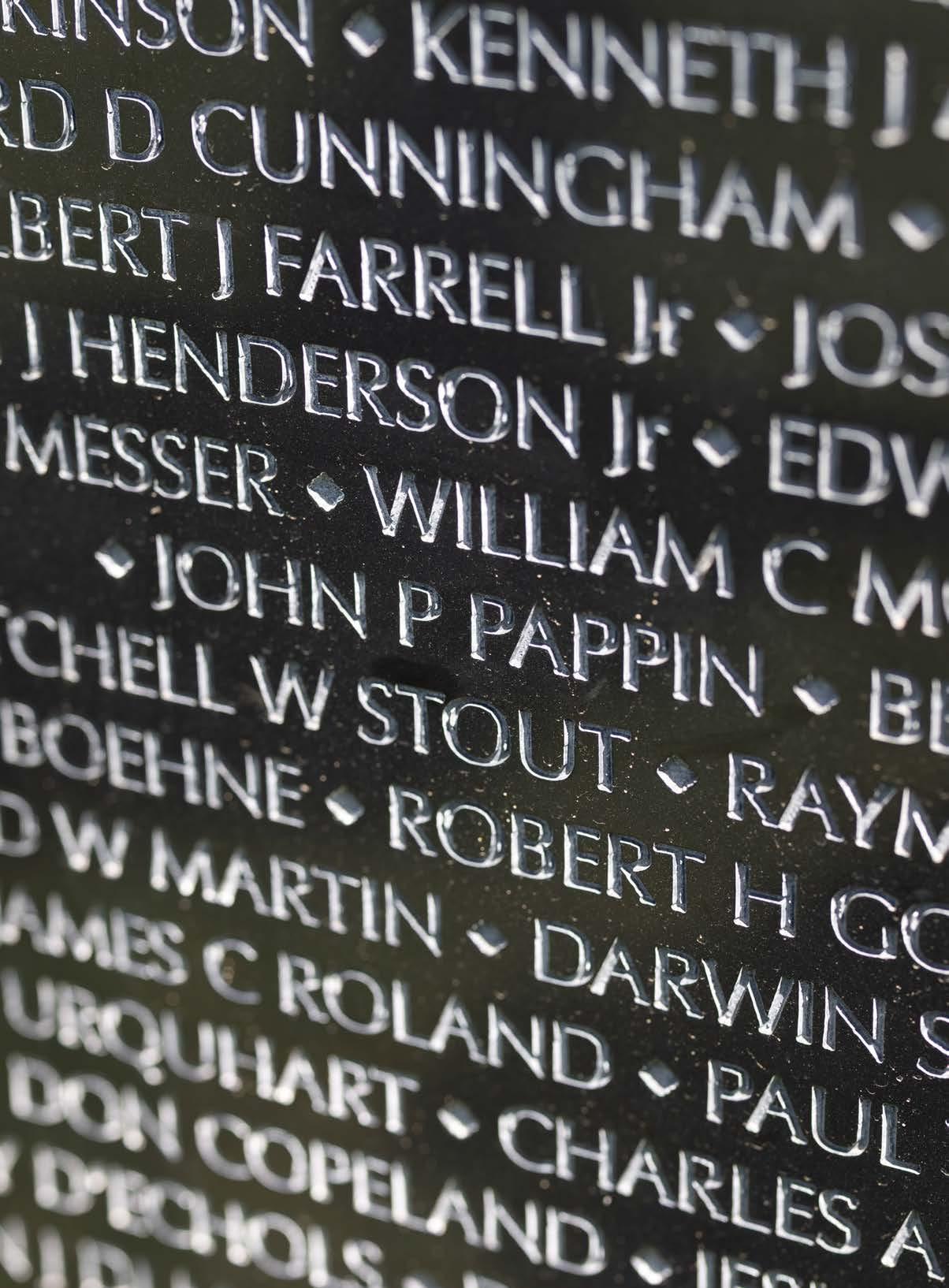
But after his barracks was struck by mortar fire and he was wounded, parts of his memory blurred together.
“There was a guy named Orie,” Lemons said, pausing as he tried to remember whether that had even been the man’s real name. “That’s just what everybody called him.”
Lemons said he was in the barracks when the attack happened.
“I never saw him again,” he said.
He searched the directory but could not find the name. Lemons began naming others, but were unable to locate their names. It was bittersweet for him, knowing they had made it home but not knowing what had happened.
Then he remembered another friend.
“There was a Pap Pappin,” he said. “He was in the Navy.”
This time, the search found something.
John Pattrick Pappin of Pawhuska appeared in the directory, listing his date of death as March 13, 1970 on Panel 13 West, Line 120.
Lemons helped carry the plate bearing his friend’s name to the wall.
Around him, volunteers continued assembling the memorial while veterans and visitors wandered quietly through the exhibit grounds. Some searched for names. Others simply stood in silence.
While helping with the wall, Lemons struck up a conversation with another Vietnam veteran volunteering at the site.
The two men realized they had served in Vietnam at the same time and stayed on the same base.
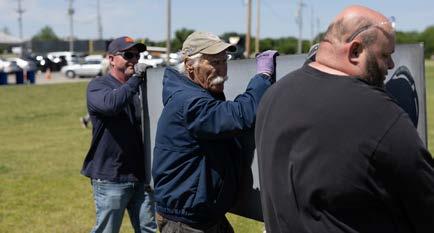
Then came the surprising part.
Turns out Lemons worked on the trucks the other man drove.
More than half a century later, the two men met again in Bartlesville beside a wall built not only to remember the dead, but also to reconnect the living.
Personalized service means having a financial advisor who understands you and what you’re trying to achieve, and helps to create a unique strategy based on your needs and circumstances.
We’re ready when you are. Contact us today.

Dustin Hancock AAMS™ Financial Advisor
3851-B Tuxedo Blvd
Bartlesville, OK 74006 918-331-9236
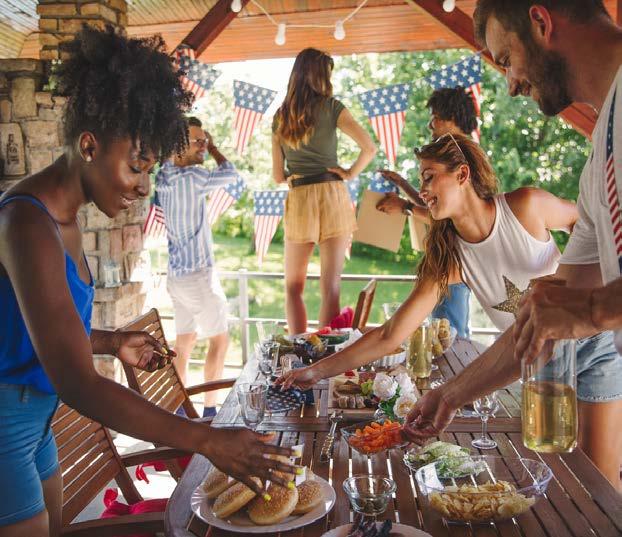

Green Country Pet Cremation Service offers private pet cremation with timely return of ashes in your choice of a decorative wooden urn with an engraved nameplate. If no return of ashes is requested, the ashes will be gently scattered on a beautiful pastoral/garden property.
We are located in Bartlesville, Oklahoma and gratefully serve pet owners from a wide area surrounding Bartlesville, Dewey, and Northeast Oklahoma.
For our fee schedule, please feel free to call us at any time.


Painted Horse Bar & Grill, together with Wolf Creek Ranch owners, Mark and Kelly Spencer, are proud to offer our locally raised, guaranteed all natural Angus beef products.
Painted Horse Bar & Grill, together with Wolf Creek Ranch owners, Mark and Kelly Spencer, are proud to offer our locally raised, guaranteed all natural Angus beef products.
110 SW Frank Phillips Blvd. 918-336-1100 painted-horse.com
110 SW Frank Phillips Blvd. 918-336-1100 painted-horse.com
Dine In and Carry Out Available! New dine in hours!
Dine In and Carry Out Available! New dine in hours!
Restaurant: Mon - Sat 11a - 9p Bar: 11a - 10p
Restaurant: Mon - Sat 11a - 9p Bar: 11a - 10p
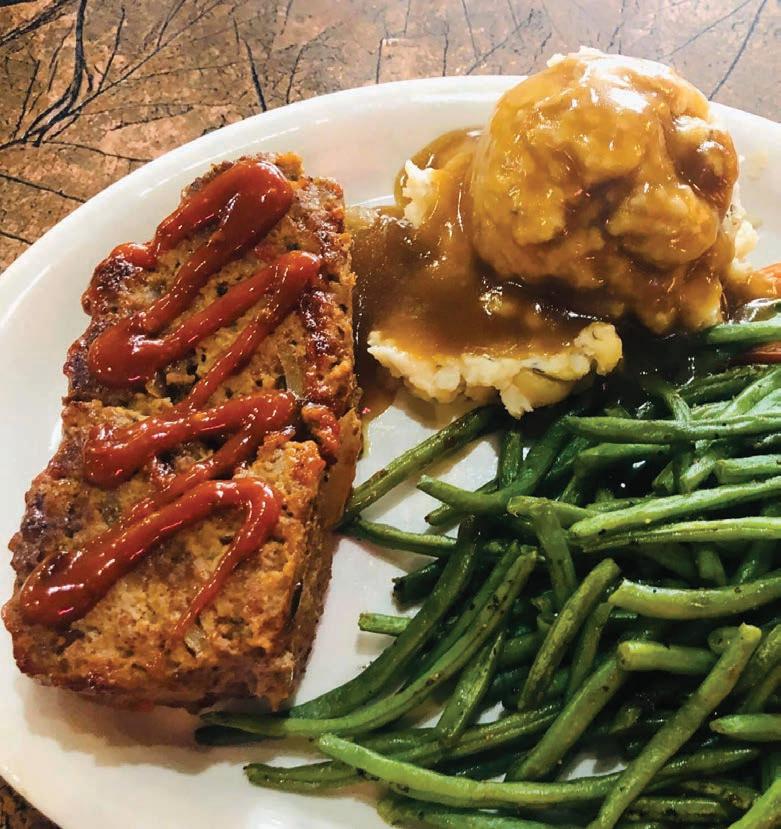


Featuring post-hospital skilled nursing and rehabilitation to help you heal, regain strength, and return home!
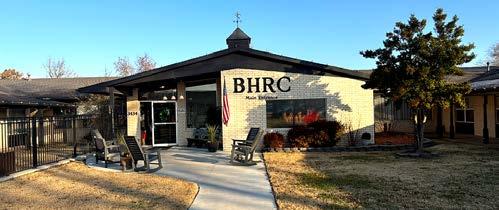

Newly remodeled semi-private and private rooms available, subject to availability.
Bartlesville Health & Rehab Community provides a comprehensive continuum of senior healthcare services, all under one roof. Locally owned, BHRC offers 24-hour skilled nursing care along with inhouse physical, speech, and occupatonal therapy. We also provide specialized care for individuals with Alzheimer’s disease or related disorders within our newly remodeled, secure Memory Living Area. In addition, BHRC’s senior living apartments offer the independence of home while fostering comfort, connection, and the companionship of a supportive senior community. For more information or to schedule a tour, call (918) 333-9545. Medicare, Medicaid, private pay, and most insurance plans accepted (Determined by on level of care). 3434 Kentucky Place • 918-333-9545 • www.bartlesvillehealthandrehab.com
For the past month, something powerful has been happening across Bartlesville — neighbors, churches, volunteers, businesses, and families coming together to support the work happening every day at B The Light Mission. From a packed field at Gracefest 2026 to milestones happening inside the mission itself, May served as a reminder that real change happens when a community chooses to care for its own.
Gracefest 2026 brought people together on Saturday, May 9, for an evening filled with worship, food trucks, family fun, and live music from headliner Stars Go Dim, along with Candace Eddleman and Everett Music Studio. Tower Center Unity Square, known by many as “the green space,” was filled with lawn chairs, children dancing near the stage, and families enjoying a night centered around hope, faith, and community.
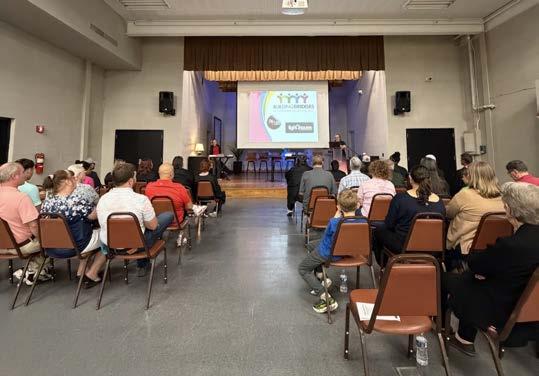
Mission proudly celebrated the graduation of its first three residents from the “Getting Ahead” portion of the Faith & Finances program through Building Bridges of Oklahoma.
The graduates completed the program through hard work, commitment, and determination, marking an important milestone not only for themselves but for the mission as a whole. Their success represents exactly what B The Light hopes to accomplish — helping individuals discover new opportunities and healthier paths forward.
The mission is thankful for partnerships with organizations like Building Bridges of Oklahoma, The Salvation Army, and The Lighthouse as community groups continue working together to create stronger support systems for those in need.
Gracefest is more than just a concert. It is the largest fundraiser of the year for B The Light Mission. The event is made possible through sponsors, churches, volunteers, donors, and the thousands of people who simply show up to support the cause. Every dollar raised goes directly back into the mission’s daily operations and programs.
B The Light Mission continues working to clarify an important misconception within the community. The organization is not a walk-in homeless shelter. Instead, it operates as a structured 15-month residential program for men and women who are ready to pursue lasting change in their lives. Residents commit to accountability, work participation, life skills development, and living within a supportive faith-based community. The goal is not temporary relief, but long-term transformation — helping individuals move from instability toward independence and restored purpose.
During times of dangerous weather, the mission does open its doors to provide emergency refuge for those needing a safe place to stay.
The mission also remains open Monday through Thursday from 10:00 AM to 2:00 PM for walk-ins needing showers, food, clothing, and resource assistance. The goal continues to be meeting immediate needs while helping individuals find a pathway toward longterm change.
One of the biggest celebrations this month came through education and personal growth. B The Light
Another growing part of the mission’s outreach is the B The Light Thrift Store. Operated through donated items and volunteer support, the thrift store helps fund daily operations while also giving residents opportunities to restore, organize, and prepare items for sale. The sale is open the last Saturday of each month from 10:00 AM to 4:00 PM, and the community is encouraged to come shop, donate, and support the cause.
At the same time, B The Light Mission continues pursuing its goal of reaching 500 monthly partners giving $20 per month. These recurring gifts provide stability between large fundraising events and allow the mission to continue saying “yes” to the next person who walks through the door needing help.
The heart behind everything remains simple: Bartlesville should be known as a place that cares for its own.
That vision is visible in residents rebuilding their lives, volunteers sorting donations, churches supporting families, and neighbors choosing to show up for one another. It is visible in every person who attended Gracefest, every donated item at the thrift store, and every life beginning to believe change is possible again.
As the mission looks ahead to June, there is gratitude for everything accomplished this past month and hope for the blessings still to come.
To learn more, become a monthly partner, or get involved, visit info@bthelight.org. From all of us at B The Light Mission — thank you for being part of this story.

Do you have a design idea that celebrates the courage, sacrifice, and service of our veterans? Submit your original design for our Veterans Day Celebration T-shirt Contest for a chance to have your artwork featured as the official 2026 Veterans Day T-shirt design.
Winning Design Prize Includes:
•Your artwork becomes the official T-shirt design for our Veterans Day celebration
•The winning shirt will be sold in the hospital gift shop beginning September 11, 2026
•All proceeds benefit the Bluestem Medical Foundation
Grand Prize: $100 Gift Card
Let your creativity help honor those who served while supporting a meaningful cause! Contest closes July 31st.
Scan to submit your entry

Questions? Contact Linda Lewis for additional information at linda.lewis@ascension.org or (918)331-1323.

by Brent Taylor
I’m pretty lazy, although selectively industrious. What I mean is that I work incessantly at things for which I have a passion, then procrastinate over the things that bore me. I’m writing a book, an American novel about how a town buried its truth—and the children who learned to hear what was hidden beneath the surface.
Why?
Because it’s hard to do.

I’ve always wondered how difficult it is to write a book. I have not been disappointed. It is one of the hardest projects I’ve ever attempted.
Arthur C. Brooks, writing in The Atlantic, draws on the 19thcentury philosopher Arthur Schopenhauer to answer a question most of us ask sooner or later: How does a person accomplish something large? Like writing a book, running a marathon, learning a sonata, building a company, or doing your life’s work?
Schopenhauer gives us a mason. The mason lays one brick, then another, then another. He may not understand the whole design of the house. He may only know the section in front of him, the mortar, the line, the level, the weight of the day. But if he can see, even faintly, the larger structure, his labor changes. He is not merely stacking brick. He is building a home.
That is the first rule of meaningful work: keep the whole thing in view. Not obsessively. But enough to remember why the ordinary day matters. Most days are not dramatic. You answer emails. Sweep floors. Write a page. Miss a page. Start again. Yet those days are the only materials we are given. A life is built almost entirely out of unremarkable mornings.
The second counsel is balance. See the cathedral, but lay the brick. Hold the future in mind, but do not live there. Stay in the present. That feels especially true now. We can spend half our lives imagining the finished thing and the other half avoiding the work required to get there.
Dale Carnegie called this living in “day-tight compartments.” There is wisdom in that phrase. Today has walls. Today has a door. Today has enough trouble, grace, work, and possibility of its own. A person writing a book does not really write a book today. He writes a paragraph. A person building a company

does not build a company today. He makes a decision, solves a problem, treats someone fairly. The large thing is always hidden inside the small thing.
The third rule is to block out the noise. Schopenhauer believed that a narrower field of attention often produces greater peace. Modern life offers us endless windows, endless opinions, endless alarms. News, social media, gossip, trivia, outrage—all of it comes dressed as urgency. Much of it is only distraction with good lighting.
This does not mean hiding from the world. It means refusing to let the world dictate your attention. Attention may be the most valuable tool we have. Without it, even talent becomes scattered. With it, ordinary effort begins to gather force.
So the way forward is not mysterious. Begin the day by remembering the house you are building. Then forget the house just enough to lay today’s brick well. At night, look back honestly. Where did I build? Where did I drift? What needs tightening tomorrow?
John F. Kennedy famously said we choose certain things “not because they are easy, but because they are hard.” In his 1962 Rice University moon speech, Kennedy argued that a great challenge measures a people. It gathers their scattered abilities, disciplines their ambition, and asks whether they are willing to attempt what comfort would never require. The moon, for Kennedy, was not only a place in the sky. It was a test of resolve.
That is part of the attraction of hard things. They give shape to us. They ask for patience, humility, stamina, and faith. They outlast moods. They require us to become the kind of person who can finish.
Maybe that is the hidden gift of a great project. The finished work matters, of course. The book, the building, the race, the music. But the deeper work is happening in the builder. Brick by brick, the project constructs the person.
The advice is simple: see the whole, live the day, guard the mind. That may not make the work easy. But it makes the work possible.

available — find a time that works for you
When you choose Ascension Medical Group St. John Heart and Vascular Center Bartlesville and Jane Phillips Medical Center, you get an entire team dedicated to your heart care. Start a conversation with a doctor about new symptoms, health history and your risk for heart disease. From routine to advanced heart care, we’re ready to work with you on a personalized care plan.
Talk with one of our cardiovascular specialists today:
WELCOME!
Megan E. Barber, DO Cardiology

Gary T. Dykstra, DO Cardiology

Todd M. Thomas, DO Interventional Cardiology

Anderson P. Mehrle, MD Interventional Cardiology

Ascension Medical Group St. John Heart and Vascular Center Bartlesville 3460 S.E. Frank Phillips Blvd. Bartlesville, OK 74006
p: 918-972-1664
For more information scan the QR code or visit ascension.org/StJohnHeart


Dr. Charles Holland Jr., Dr. Mark Robertson, and Jessica Shelton each bring decades of experience, compassion, and dedication to patient care through Ascension Medical Group’s Bartlesville ENT & Allergy Clinic. Together, they serve the community with a shared commitment to improving the health and quality of life of patients of all ages through advanced ear, nose, throat, allergy, hearing, and balance care.
sinus problems and breathing difficulties through advanced sinus surgery and personalized treatment options.
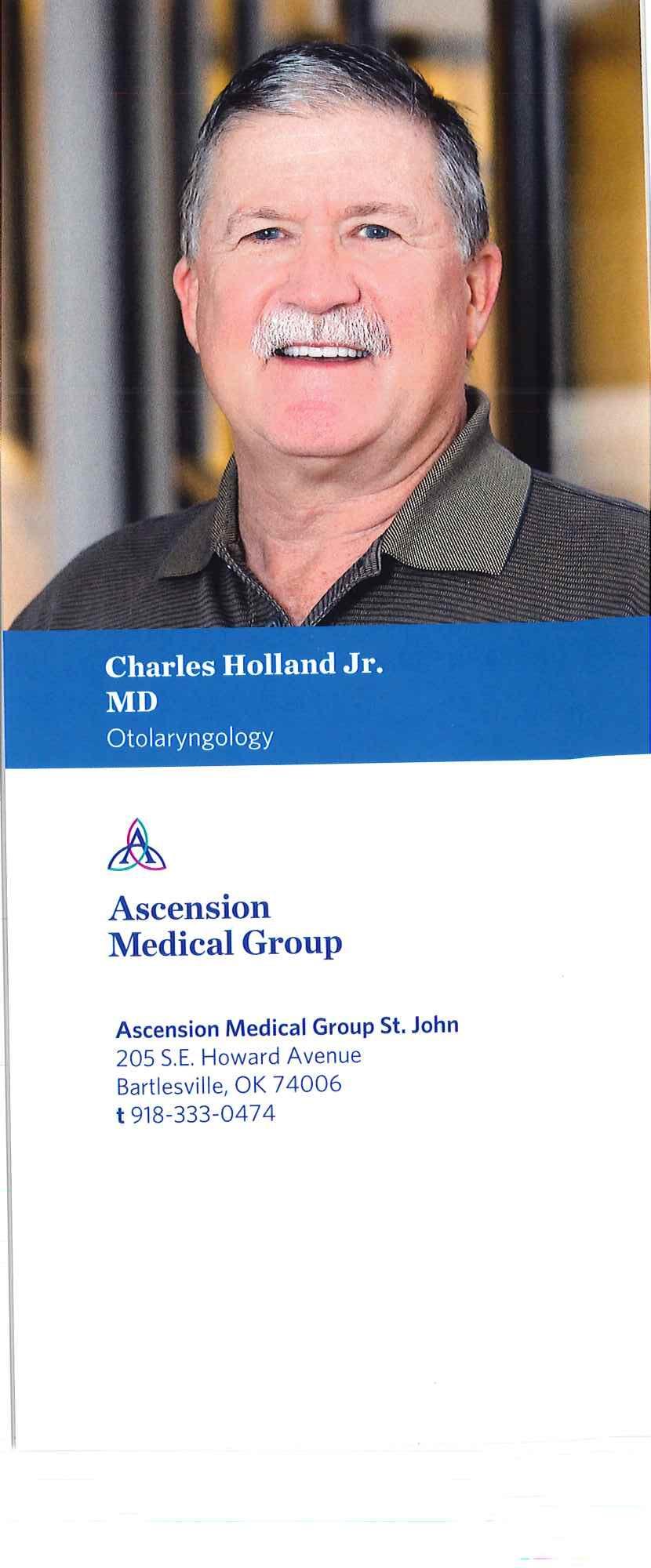
Dr. Charles Holland Jr., MD, is a boardcertified Otolaryngologist who proudly continues a family legacy of medical care and service. Following in the footsteps of his father, Dr. Holland has built a reputation for combining medical excellence with genuine compassion for his patients. He has a special interest in sinus and nasal surgery and works closely with patients experiencing chronic sinus conditions, nasal obstruction, allergies, and other ENT-related concerns.
Patients appreciate Dr. Holland’s caring and reassuring approach, as he believes every individual deserves to feel heard, respected, and comfortable throughout their healthcare journey. His focus on individualized treatment plans allows him to address the unique needs of each patient while helping improve both their health and overall quality of life. Outside of the office, Dr. Holland enjoys spending time with his wife, children, and grandchildren, traveling, golfing, and staying active in his church community. His strong faith and family values continue to guide both his personal life and medical practice.
Dr. Robertson believes one of the most important parts of healthcare is treating patients the way he would want to be treated himself. This philosophy shapes the kindness, patience, and attention he brings into every appointment. Patients value the time he takes to listen carefully, communicate openly, and ensure they feel informed and supported throughout their care. Outside of medicine, Dr. Robertson enjoys maintaining an active lifestyle, spending time with his family and grandchild, and living out his faith through service and compassion toward others.
Jessica Shelton, MS, CCC-A, is a licensed Audiologist with more than 24 years of experience serving patients at Bartlesville ENT & Allergy Clinic. Since beginning her career in 2001, Jessica has remained dedicated to helping patients improve their hearing and balance health through advanced audiology services and compassionate care.
Dr. Mark Robertson, MD, also serves as a board-certified Otolaryngologist–Head and Neck Surgeon with Ascension Medical Group. Known for his thoughtful and patientcentered approach, Dr. Robertson provides comprehensive care for a wide range of ear, nose, throat, head, and neck conditions. He cares for patients of all ages and is especially passionate about helping individuals find long-term relief from chronic
Jessica provides a full range of hearing and balance services, including diagnostic hearing evaluations, hearing aid evaluations and fittings, follow-up hearing aid care, and advanced balance testing. She works with both children and adults and understands how hearing and balance challenges can affect communication, independence, relationships, and everyday life. Her commitment to staying current with evolving technology and treatment options allows her to offer patients highly personalized care designed to meet their individual needs.
Patients consistently appreciate Jessica’s warm and encouraging personality. She believes listening carefully and building strong relationships with patients are essential parts of quality healthcare. By creating a welcoming and supportive environment, Jessica helps patients feel confident, informed, and cared for throughout every step of their treatment journey.
Together, Dr. Holland, Dr. Robertson, and Jessica Shelton reflect the mission of Ascension Medical Group through their dedication to clinical excellence, compassionate care, and strong personal values . Their combined expertise and commitment to serving others continue to make a meaningful impact on the health and well-being of countless individuals and families throughout the Bartlesville community.
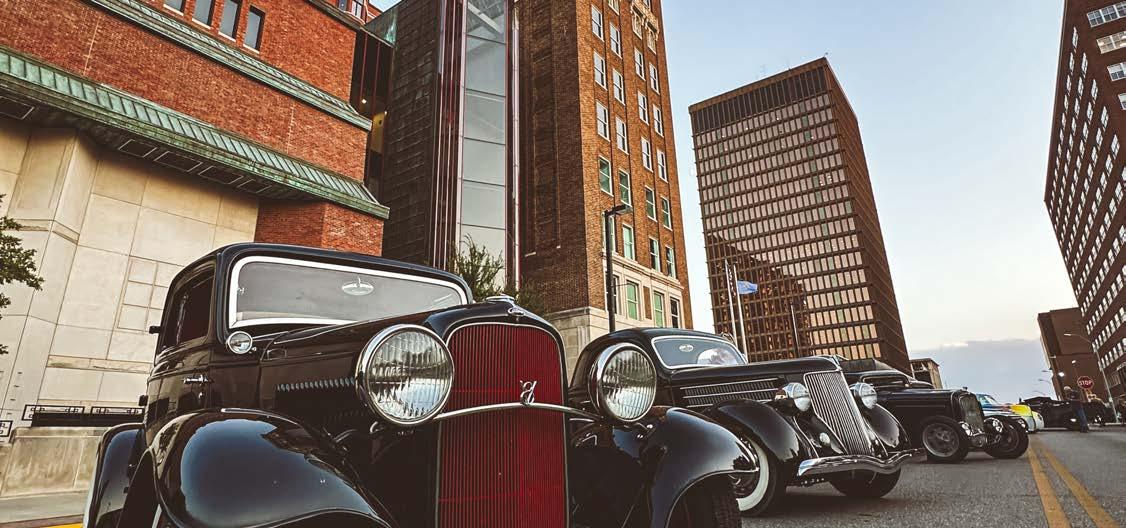
We are looking for Facebook voters to select the perfect photo of our beautiful city for our People’s Choice Winner!
Vote on our Facebook page. Remember to follow and share!
The contest entry period runs from noon on on June 1 through noon on June 5. Entries that were accepted will be pictured in the July issue of bmonthly. Facebook voting opens at noon on June 8 and runs through noon on June 12. Complete rules online.
Grand Prize:
Cover winner will also receive a $100 gift card to Lollipops or Palace Rooms! People’s Choice winner will receive a $25 gift card to Hideaway Pizza!
Go to our Facebook page and like or live a photo to cast your vote. Follow our page and share it with your friends so they can get in on the fun, too! Remember that a vertical photo will work the best and the bmonthly logo is always in the upper right section of the cover. Only photos that accommodate those requirements will be considered for Judges’ Choice winner.