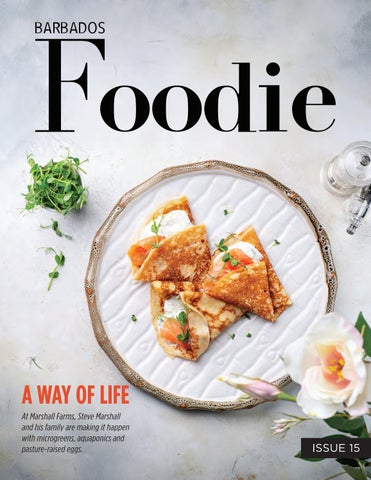
A WAY OF LIFE
At Marshall Farms, Steve Marshall and his family are making it happen with microgreens, aquaponics and pasture-raised eggs.



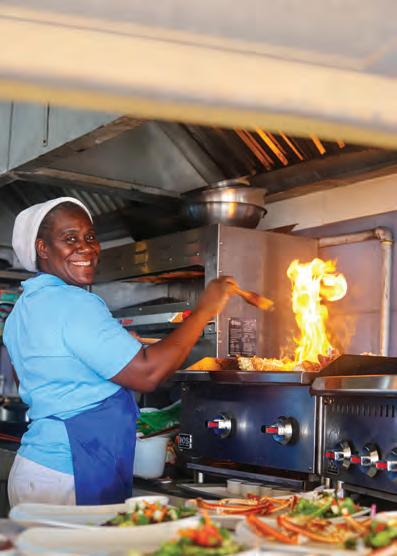

Open for lunch and dinner
Friday, Saturday and Monday: 12:00 pm - 9:00 pm
Sunday: 12:00 pm - 4:00 pm


Publisher's note

Welcome to Issue 15
Summer has a way of scattering us.
Some of us pack bags and chase other cultures across other shores, coming home with stories of what we tasted and a longer list of places we want to see next.
Others choose stay right here, in no particular hurry, letting the island do what it does best in the warm months.
And then there are those who come home: the Bajans living abroad who find their way back for Crop Over. And let us not forget the visitors who return year after year.
All are drawn by the festivities, the opportunity to reconnect with family and friends, and of course the home cooking they have missed.
Food, after all, becomes part of our heritage and who we are.
It is the recipes passed down through generations and kept alive over time. It is the breadfruit that arrived in the Caribbean under extraordinary circumstances and never left our tables. It is the flavours of somewhere else, made at home with love.
This issue would not have come together without the generosity of the people who say yes. To everyone who gave us their time and trusted Foodie with their stories, thank you.
Whether this is your first issue or you have been with us from the beginning, we are genuinely glad you are here.
Wishing you a wonderful summer full of good food, good company and all the things worth savouring. Cheers!
Nia Vlahakis Juman Publisher & Editor Barbados Foodie Magazine



BARBADOS FOODIE MAGAZINE
Rockley New Road, Christ Church, Barbados
PUBLISHER AND EDITOR
Nia Vlahakis Juman
CONSULTING EDITOR
Richard Thomas, Clarity Communications
DESIGN AND LAYOUT
Nia Vlahakis Juman
Natasha Boos
ADVERTISING SALES
Nia Vlahakis Juman nia@foodie.bb
Charlotte Prud’Homme
charlotte@foodie.bb
CONTRIBUTORS
The Embassy of Colombia
Kim & Roger Goddard
Zoe Manning
Jeunesse Pouchet
Charlotte Prud’Homme
Richard Thomas
Marielle Wilkie
DISCLAIMER
We strive to maintain the highest standards in our content, aiming to prevent errors, misspellings, and omissions. However, if you happen to encounter any inaccuracies, we extend our sincerest apologies and encourage you to bring them to our attention. Your feedback is greatly appreciated.
COPYRIGHT NOTICE
No part of this publication may be used without explicit permission from the publisher.
© 2026 Barbados Foodie Magazine
A
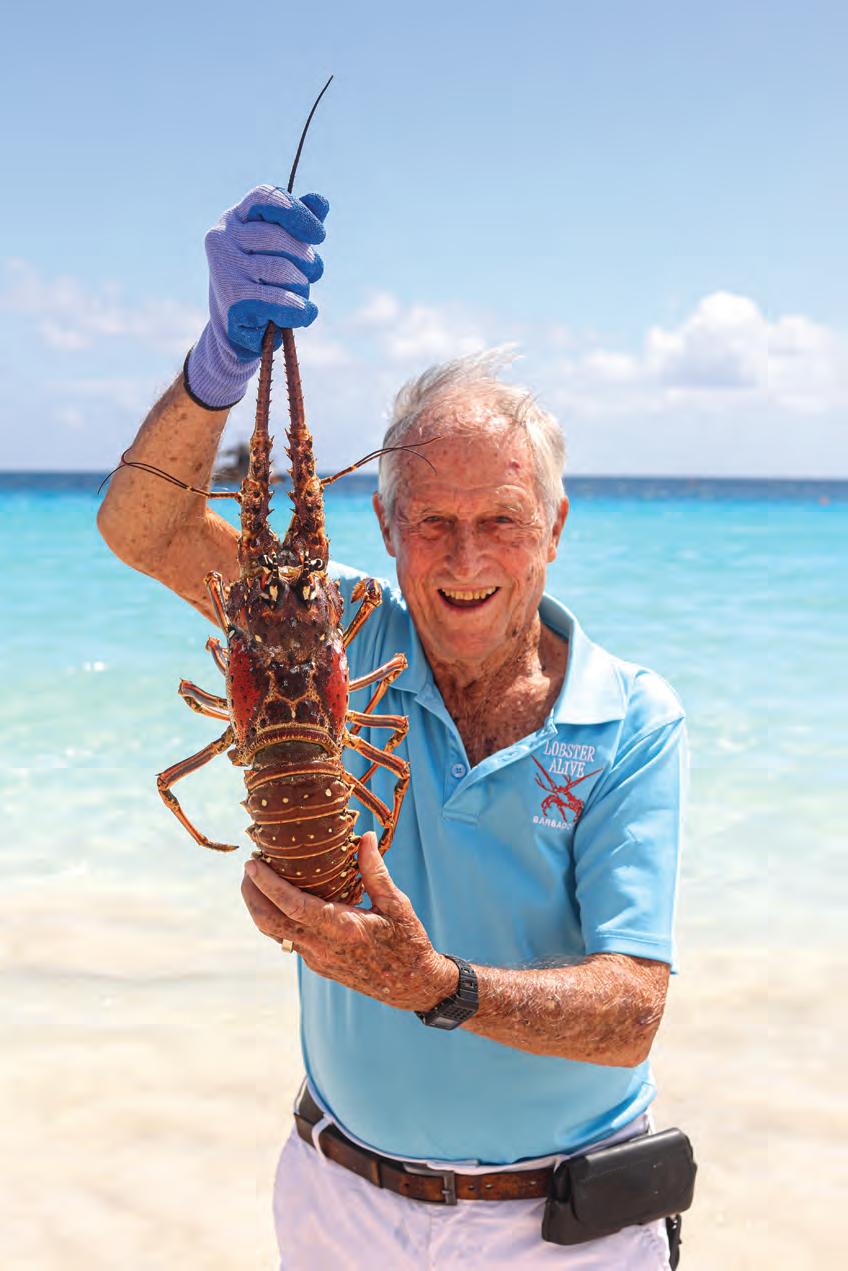
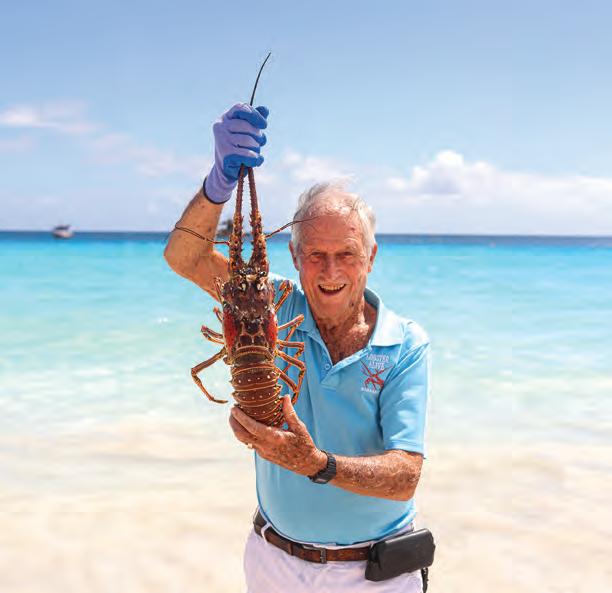
TRIBUTE TO THE MAN BEHIND LOBSTER ALIVE AND ALL THAT JAZZ
Surfer, sailor, pilot, jazz pianist, and the spirited force behind Lobster Alive and All That Jazz — passed away peacefully on March 15th, aged 87. We featured Art in Issue 13, and hearing his story reminded us why we love what we do: because food, at its best, is really about people. Art flew his own plane to the Grenadines to fetch live lobster, played piano with
REMEMBERING
Arthur "Art" Taylor
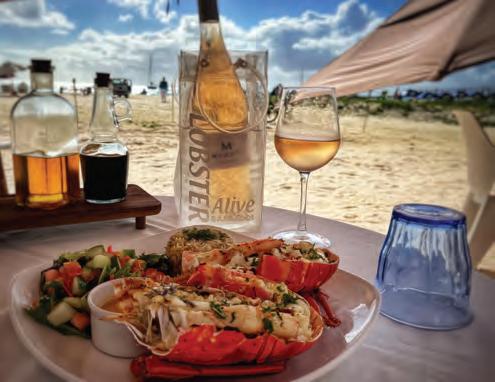
the VSOP Jazz band for over 40 years, and remained devoted to the restaurant until the very end. His legacy lives on at Lobster Alive, where the fresh lobster, live jazz, and that unmistakable Carlisle Bay charm continue just as he would have wanted.
We send our love to his wife Lisa, son Sam, daughter Joanna, and all who loved him.
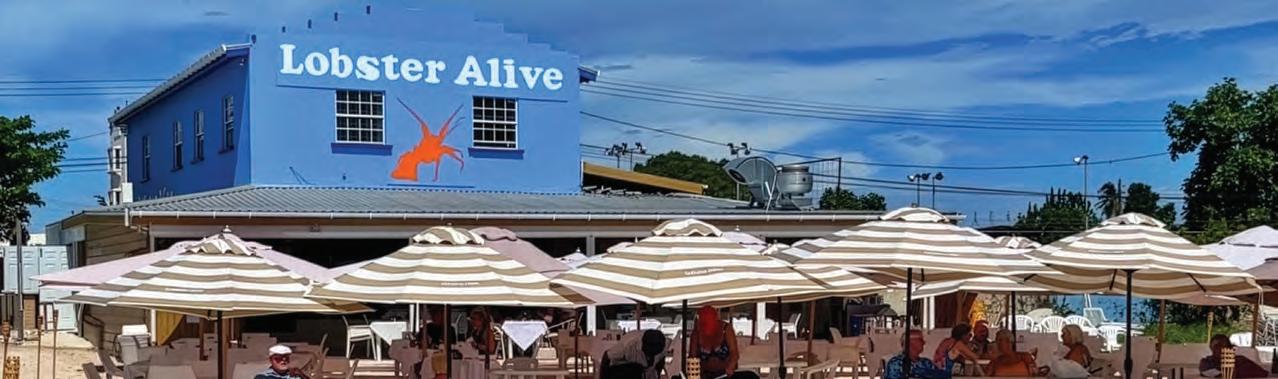
Table of contents
14 A way of life
At Marshall Farms, Steve Marshall and his family are making it happen with microgreens, aquaponics and pastureraised eggs.
20 Family, food and tradition
Inspired by her grandmother, restaurateur Angela Lozada has put traditional Venezuelan food on the menu in Barbados
COLOMBIA IN BARBADOS
25 Coffee, cocoa and diplomacy
For Colombia’s Ambassador to Barbados, her country’s famous products can create lasting bonds
26 A future in coffee
Sebastian Martinez López’ passion, practice and perseverance have made him the champion barista of Colombia
30 The power in cocoa
Cacao is helping the women of Afromuvaras exercise their rights as women, achieve financial independence, and shelter their children from the drug trade
32 Colombian treats: Quimbolitos and Almojábanas
Recipes courtesy of Colombian Chef David Ruiz Koch










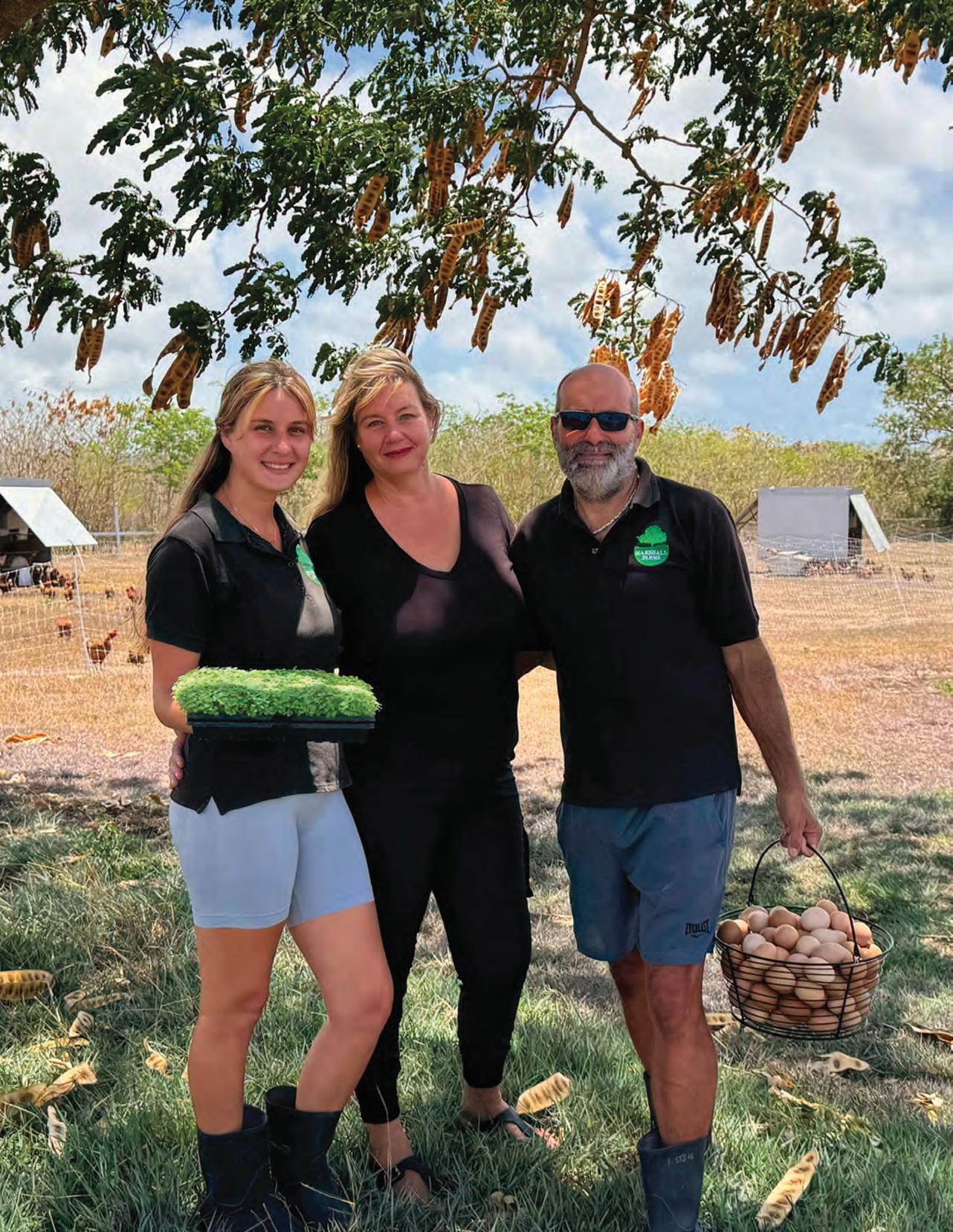
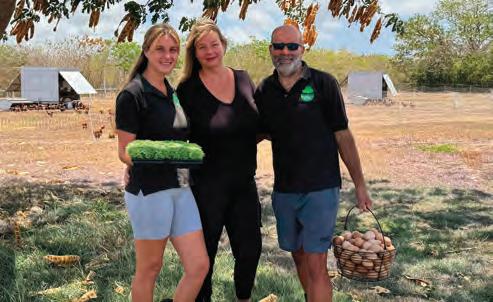
Left to right: Melissa, Kathy and Steve Marshall of Marshall Farms.
A way of life
At Marshall Farms, Steve Marshall and his family are making it happen with microgreens, aquaponics and pasture-raised eggs.
In 2018, Steve Marshall established Marshall Farms to supply a need for fresh microgreens in the local market. It was what is now called a “side-gig”, because his real job was that of an executive with a major retail company.
But in 2020 Covid-19 triggered many corporate reshuffles and one of these put an end to his 33 years in retail management. And before long, that side-gig in microgreens became much more.
The conventional response would have been for Steve to dust off his CV and shop around corporate Barbados. However, during he pandemic most companies were downsizing. With full support from his wife, Kathy, daughter Melissa, and two sons, Ryan and Adam, Steve decided to focus on building Marshall Farms and become a full-time farmer.
Using available capital, he acquired three acres of land in Hopefield, Christ Church, and cobbled together four shipping containers to construct a home and farm operation. Marshall Farms now had a base on which to grow.
The focus on microgreens, which could be grown in greenhouses and on a larger scale, was a no-brainer. (Microgreens are a stage
of growth that most plants go through. If left to their own devices, they become fully mature vegetables.)
Growing demand
Steve’s market research had already revealed a growing demand for microgreens, especially among local hotel and restaurant chefs who were using them to add the “gourmet touch” to their dishes. They also use them to add colour, body and nutritional value to their salads.
His research also indicated that high-end hotels and restaurants were importing microgreens, “But why do that when we can grow them locally,” he says. “So, we decided then micros would be our focus.”
Steve also learned from the chefs that the imported microgreens didn’t last. “It is hardly surprising,” he says, “since after being processed they must spend time on a boat or plane to get here.”
Most microgreens have a growth cycle of seven to 14 days depending on the variety, so to ensure peak freshness, Steve has set up a standing order system with his chefs. This allows for a more efficient planting and harvesting strategy. Chefs get fresh weekly farm-to- table micros, and Marshall Farms
“We have learned by trial and error. It’s like building an airplane while you are flying it.”
have reduced wastage. “This way we know what we have to deliver and, by extension, what we have to plant and produce every week,” he says.
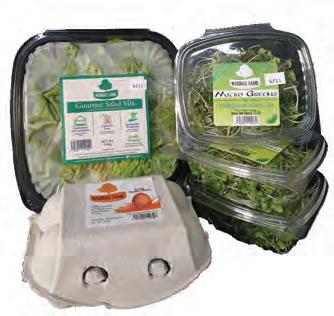
Today, Marshall Farms is a reliable supplier of microgreens to about 20 restaurants and hotels. Consumers can also find their wide variety of microgreens at locations such as Brighton Market, Clifton Markets, and major outlets of Massy and Popular Supermarkets. Marshall Farms grow approximately 15 different varieties of micros regularly. They have been washed, dried and packaged and are ready to serve.
Education is key as local consumers learn more about the excellent benefits of eating microgreens, says Steve. “They are great tasting and are extremely nutrient dense. In addition, due to their short growing cycle, there is virtually no pest pressure, and that eliminates the need to use pesticides, herbicides or chemical fertilisers that are required on mature field crops.”
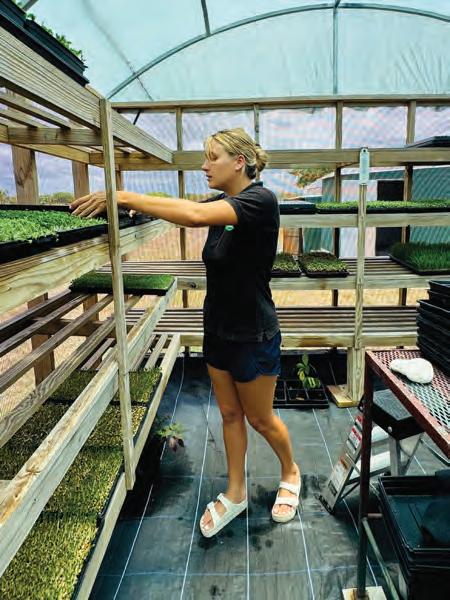
Left: Melissa tending to some microgreens in the nursery at Marshall Farms.
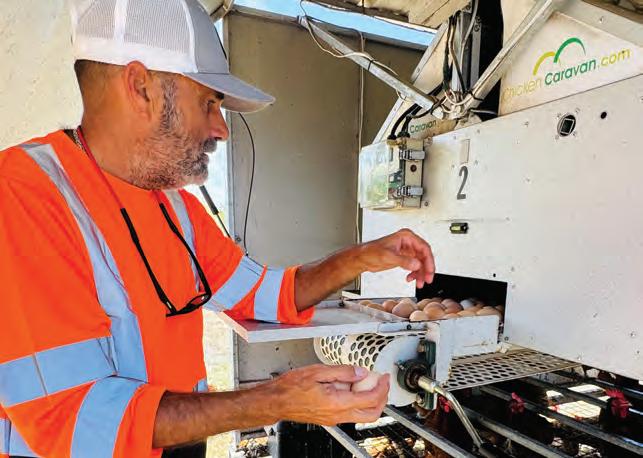
Right: Steve demonstrating egg collection from the farm’s mobile chicken caravan.
Aquaponics and pasture raised eggs
In 2021, Steve decided to introduce aquaponics to Marshall Farms. Aquaponics is a sustainable, food production system that combines aquaculture and hydroponics in a closed loop system (See AQUAPONICS 101).
Steve and Melissa travelled to Wisconsin for a three-day training session with a company that specializes in supplying aquaponics systems, ranging from small Hobby farms to Commercial size operations. They purchased the small commercial model which all came in a 40-foot container. “We started on page one of the assembly manual,” he jokes.
Using aquaponics, Marshall Farms currently produces organic basil and mint, supplying hotels, restaurants and supermarkets.
Next came the introduction of eggs from pasture-raised chickens. Today, about 400 chickens (Isa Brown) roam the farm’s fenced-in paddocks. They forage during the day and roost in safety at night in three mobile caravans, box-like structures that can house 130 chickens each.
Steve says pasture raised chickens eat 20-25 per cent less commercial feed because they forage daily. In addition, studies have shown that pasture-raised eggs have a higher nutritional value, particularly Omega-3 fatty acids and Vitamin E. Also, the freedom to forage means a better quality of life for the chickens.
However, Steve points out that producing eggs this way is a more labour-intensive operation, and this translates into a higher price for the final product. He points out that expansion of his egg production is imminent and an additional caravan is on its way. This will double his egg production almost overnight.
Trial and error
But for Steve and his family, his moving from retail management to full-time farming has not been a walk in the park. “I didn’t know anything about farming, but I learned a lot from watching videos on YouTube and then putting it into practice,” he says. “We have learned by trial and error. It’s like building an airplane while you are flying it.”
And it seems he has not finished building yet. He wants to expand into fruiting crops such as cherry tomatoes and green peppers etc., which will mean additional greenhouses and operational equipment. Also, future plans (three to five years) include a café/ bistro on the farm and tapping into agro tourism.
“People will be able to come and relax have coffee and/or a meal and grab some Marshall Farms products to take home,” he says.
There is money to be made in farming, he points out, but younger generations wanting to be involved need to know that it can’t be made quickly unless you have the capital to scale up.
“For me it is more of a way of life,” he says. “It is not a 9-to-5 job, but it can be very rewarding because you are growing food for your community and your country and that’s a great thing.”
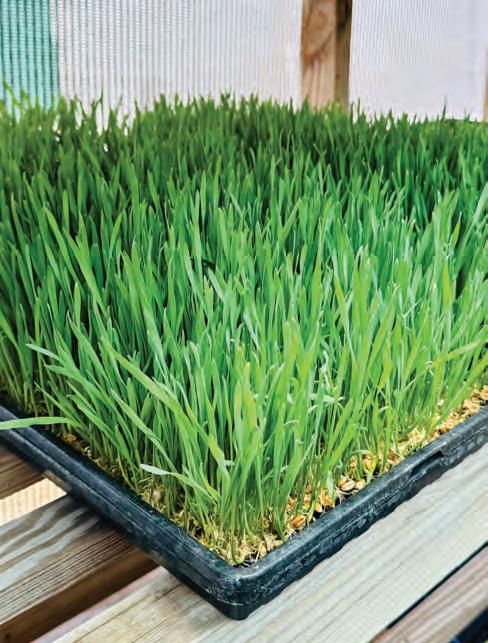
Wheatgrass at Marshall Farms.
AQUAPONICS 101
Aquaponics is a closed-loop system for growing plants using nutrient-rich water but no soil. What is more, the nutrients are supplied not by adding chemical fertilisers but through the waste generated by live fish.
How it works
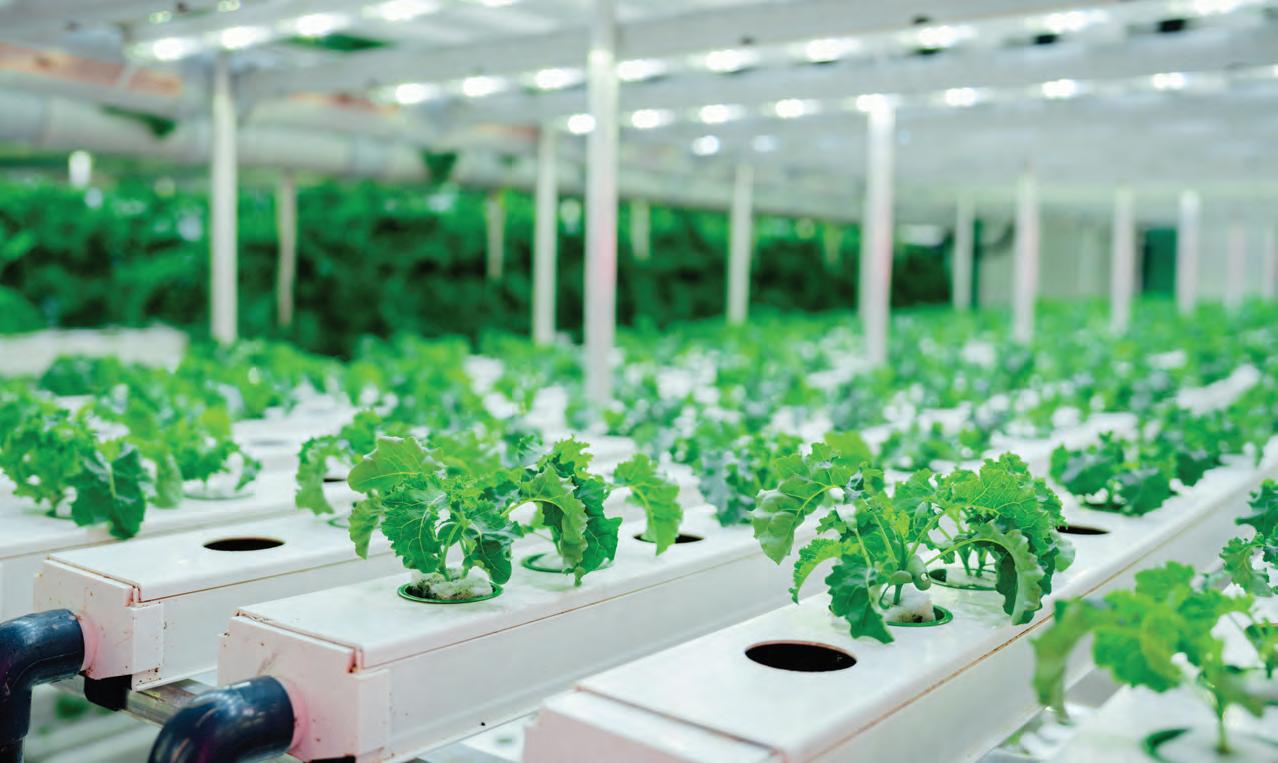
Large tanks of water are filled with live fish. Water carrying their waste is pumped into other tanks where beneficial bacteria convert it into nitrates and nitrites, essential nutrients for plant growth. The nutrient-rich water is pumped into long, shallow troughs with floating rafts.
The rafts have holes. The small plants are plugged into these holes so their roots can reach the water. The plants filter the nutrients from the water, which is then recycled back to the fish tanks.
It is a continuous process that uses less water than traditional soil-based planting. It can be operated year-round, and because it uses no chemicals it is environmentally friendly.
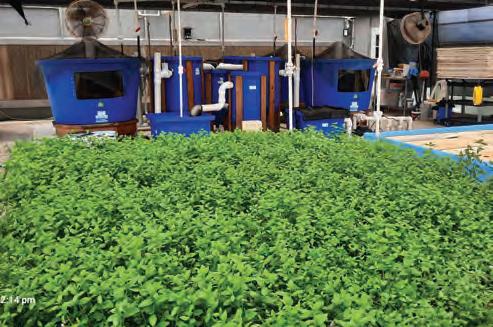
Spearmint growing in Marshall Farms’ aquaponics house.

food and
Family tradition
Inspired by her grandmother, restaurateur Angela Lozada has put traditional Venezuelan food on the menu in Barbados
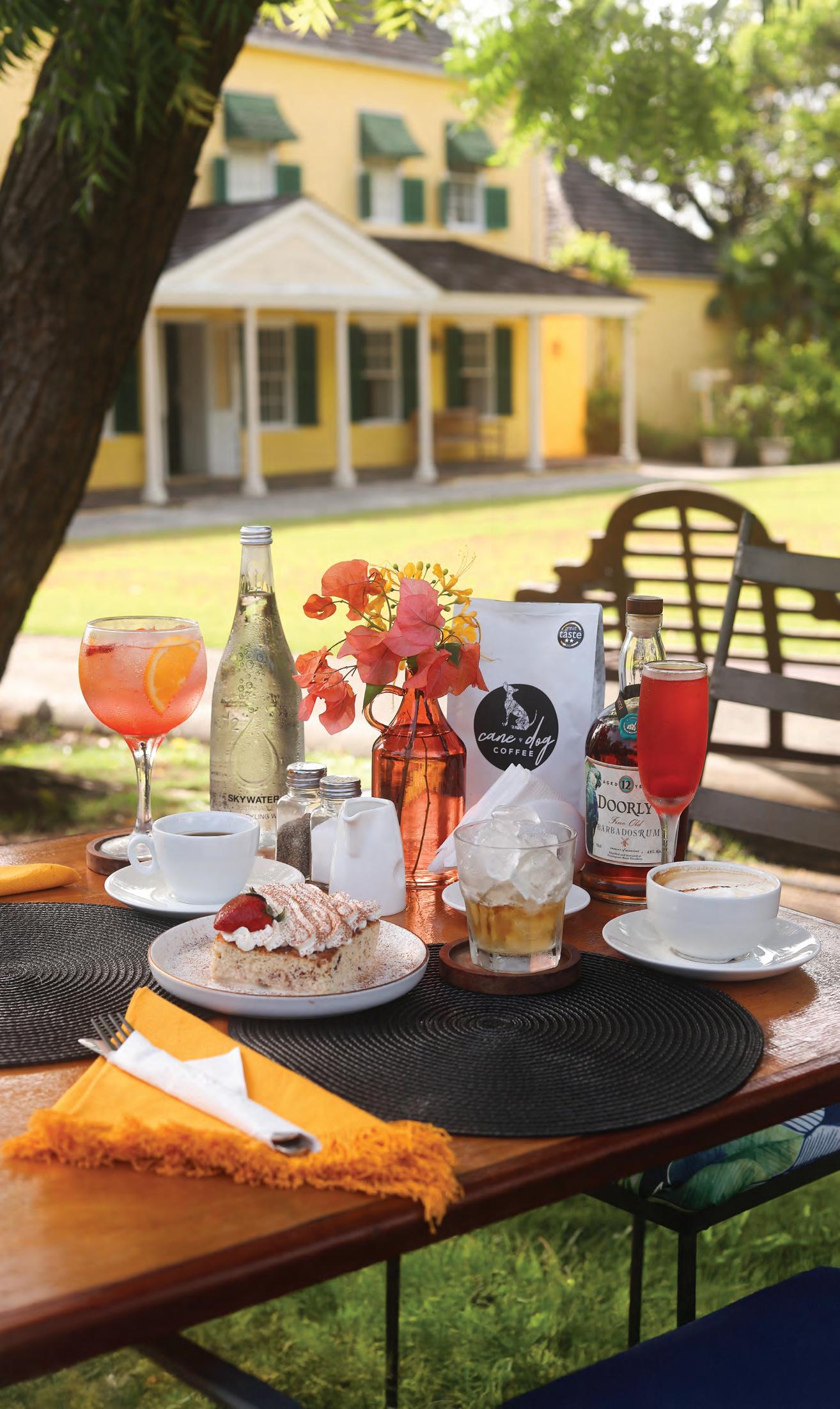
Angela Lozada is the proprietor of the George Washington Café. Located in the grounds of the historic George Washington House, it is the only restaurant on the island specialising in traditional Venezuelan food. Angela’s eldest daughter helps her run the restaurant while her sister, Karina Lozada, is the actual cook.
But there is another woman who makes her presence felt in this family-run restaurant every day, even though she is hundreds of miles away. Her name is Carmen Luisa Hernandez. She is 101, and she lives in Venezuela.
“She is my grandmother, and she has been my inspiration,“ says Angela. “We talk all the time about recipes, and she is still giving me tips.”
Carmen Luisa has her own claim to fame. Perez Jimenez, President of Venezuela from 1950-1958, so loved her hallacas (a traditional Christmas dish made with corn flour) that he never wanted to eat anyone else’s.
“My grandmother was the housekeeper-cook at the plantation house of a wealthy Italian family with political connections,” explains Angela. “A friend of the family who was also close to the president came for a visit and took back some of her hallacas for him to taste. The president liked them so much he ordered
about 60 for a special occasion at his residence in Caracas.”
Traditional Venezuelan food
Needless to say, the George Washington Café uses Carmen Luisa’s recipe for its hallacas. “It is a very famous Christmas dish in Venezuela, something like a Trinidadian pastel, but made with different meats, capers, olives and wine,” explains Angela. “We make it every year, and we sell out very quickly.”
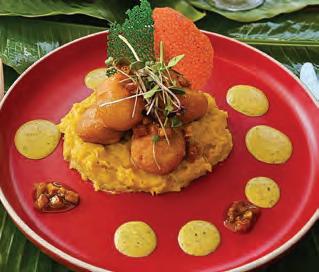
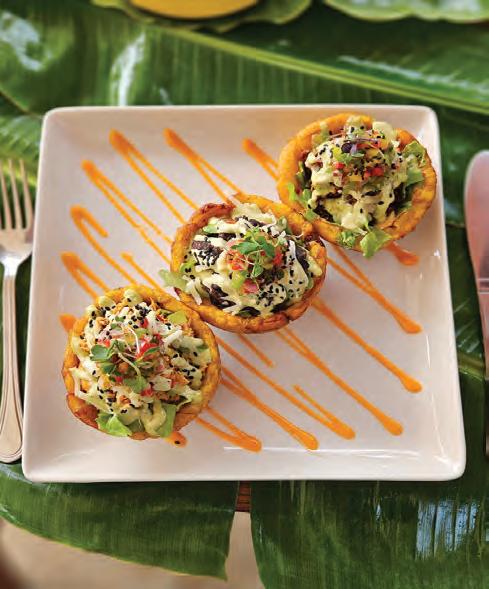
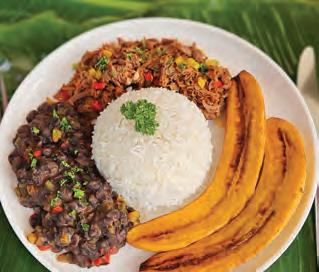
While the café’s menu includes some local and European dishes, the emphasis is on traditional Venezuelan food. There is ceviche, fish cooked in lime, and patacones, which are sandwiches that use plantain instead of bread. There are empanadas, and patrons can also enjoy cachapas, sweet corn pancakes that can be filled with cheese, bacon or even scrambled eggs that Angela says are “super famous” back in Venezuela. “They are quite filling, so they are a good breakfast choice to keep you going through the day.”
Quite simply, the café’s menu reflects the meals of everyday life in Venezuela. “Back in the day there wasn’t anything really fancy,” says Angela. “Even today this is what Venezuelans eat at home. I have kept these traditional dishes because the food is healthy and tasty.”
"I thought of my grandmother and what she would think, and I decided to try and hope for the best."
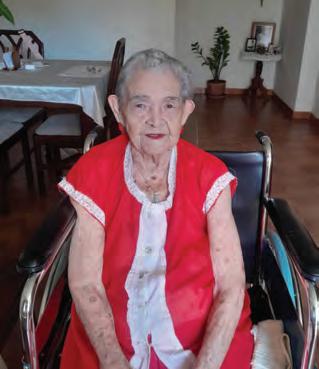
Carmen Luisa
"Even today this is what Venezuelans eat at home. I have kept these traditional dishes because the food is healthy and tasty."
But much like that of Italy, Venezuela’s gastronomy is extensive, varying from region to region, Angela says. “There is too much variety for us to do it all, so I am also focusing on those dishes that people like the most.”
Focus and hard work
Focus, hard work and grit have characterised this restaurateur’s journey since she first arrived in Barbados in 2000. Although she had studied hotel administration and tourism in Caracas, here she started from the ground up in a café owned by one of the island’s major coffee producers.
“I worked hard,” she says. “I learned the English language, and I learned about coffee and how to operate an espresso machine. I love coffee and I made coffee.”
As her journey continued, Angela went to work for an entrepreneur who owned several restaurants and a boutique hotel, and whom she credits with being her mentor in the restaurant business. “I worked everywhere in the organisation, a jack-of-all trades, but I didn’t mind because I loved to learn, and I come from
a family of hard-working women. We have always worked.”
In 2022, management of the George Washington House wanted to reopen the café which had been closed because of the Covid pandemic. There were many applications, but Angela’s proposal was the winner.
“I wanted to continue calling it the George Washington café. I didn’t want to change that because I wanted the restaurant to help the house, to keep a link between food and history.”
At first, while her husband, Steven, supported her wholeheartedly, others were quite negative and discouraging. “People told me it wasn’t going to work because no one in Barbados knows about Venezuelan food, and I was diving into deep waters,” she recalls. “But I thought of my grandmother and what she would think, and I decided to try and hope for the best.”
With a mixed clientele of locals and tourists, the George Washington Café is doing well. However, Angela has some advice for those who aspire to running a restaurant: “If you can’t work fast, this is not the business for you.”


































































COLOMBIA in Barbados
In this section
• Coffee, cocoa and diplomacy
• A fu ture in coffee
• Th e power in cocoa
• Co lombian treats: Quimbolitos and Almojábanas
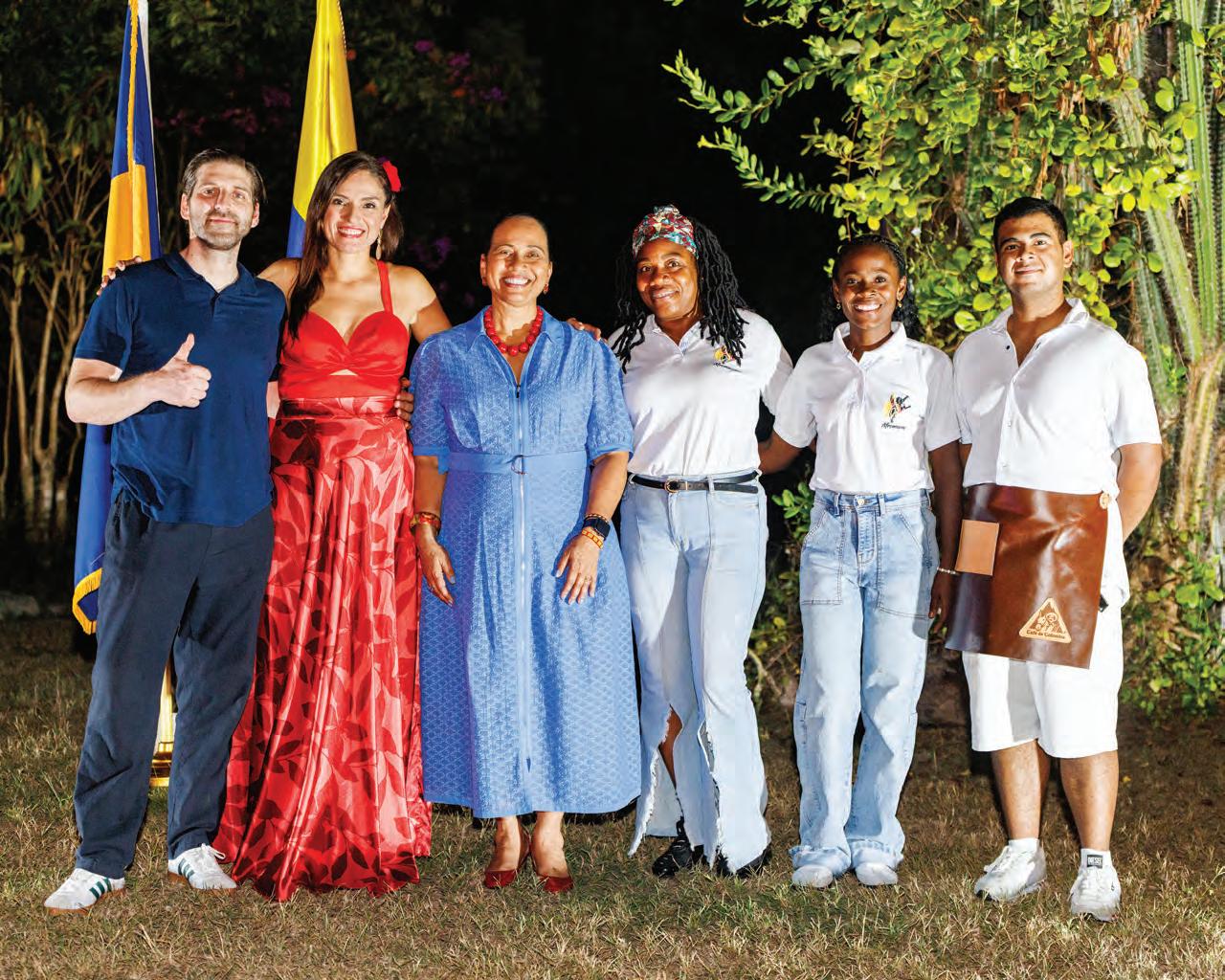
Left to right: Chef David Ruiz Koch, Victoria Sur- Colombian singer, Her Excellency Elizabeth Taylor Jay, Colombia’s Ambassador to Barbados, Carmen Rodriguez Espana and Ana Milena Ponce - AFROMUVARAS and Sebastian Martinez López – Colombian barista
Section stories by: Richard Thomas
Coffee, cocoa & DIPLOMACY
For Colombia’s Ambassador to Barbados, her country’s famous products can create lasting bonds
Her Excellency
Elizabeth Taylor Jay, Colombia’s Ambassador to Barbados, would like Barbadians to drink more coffee. But not just any coffee; she would like them to drink Colombian coffee, considered by coffee lovers the world over to be the gold standard for this muchloved beverage.
There is plenty to go around. Colombia produces about 700 million kilos of coffee beans per year and exports 95 per cent of them. And if coffee is not your thing, try hot chocolate made from Colombian cocoa (cacao), which has won international awards for its quality.
The ambassador made her pitch during a week of promotional activities in
April, helped by a team of fellow Colombians including the country’s top barista, a chef, a singer steeped in Andean traditions, and representatives of a collective made up of single mothers who are using cacao crops as a path to empowerment, peace in their communities, and a better future for their children.
In Colombia, the ambassador explains, coffee and cocoa are not simply agricultural products; they are expressions of identity, community life, and tradition.
“Across Colombia, entire communities have evolved around coffee and cocoa,” she says. “Around these crops Colombians have built rituals, celebrations, gastronomy, and spiritual and oral traditions.”
Today, coffee and cocoa also contribute to sustainability and social development, she points out. “Thousands of smallholder families cultivate them, contributing to rural development and, in many regions, peace-building efforts.”
Apart from increasing public awareness of Colombia’s excellent coffee and cocoa, Ambassador Taylor’s goal is to help Colombia create new partnerships with Barbados’ hospitality, cultural and productive sectors.
“We hope to strengthen people-to-people diplomacy and open avenues for lasting cooperation between Colombia and Barbados,” she says. “Our two nations are linked by sea and by a shared belief that culture is a powerful bridge between peoples.”
A future in COFFEE
Sebastian Martinez López’ passion, practice and perseverance have made him the champion barista of Colombia
"I became obsessed with preparing coffee. Every day I practiced my presentation, again, and again, and again."
Sebastian Martinez López is a professional barista in his native Colombia. In fact, he is currently the barista in Colombia.
You see, he is the winner of the 2025 Colombian Brewers Cup Championship, an annual event designed to both promote the country’s deeply embedded coffee culture and provide an opportunity for baristas around the country to demonstrate their skills and creativity.
Only just 21, he is the youngest champion in the competition’s history. His win has earned him the right to represent Colombia at the World Brewers Cup competition in Belgium in June.
But winning this prestigious title did not come easy. There are only 30 places, the time limit for applying is extremely tight, and the competition for a place is intense.
Those that are accepted have only 15 minutes to impress seven judges with their ability to produce four examples each of
espresso, coffee with milk, and a beverage of their own design. They are judged on technique, flavour, and the quality of their presentation.
Sebastian didn’t win in 2023, and he was late in applying in 2024. Two misses made him determined to nail it the third time out.
“I became obsessed with preparing coffee,” he says. “Every day I practiced my presentation, again, and again, and again. For me, there is a lot of emotion involved in making coffee, and this competition is all about connecting with the judges.”
A meticulous presentation
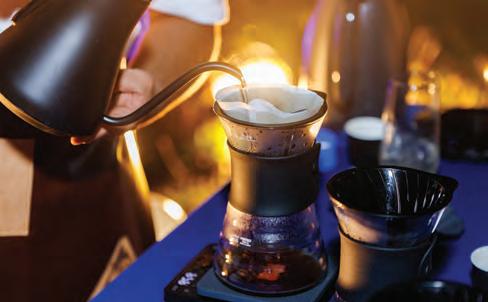
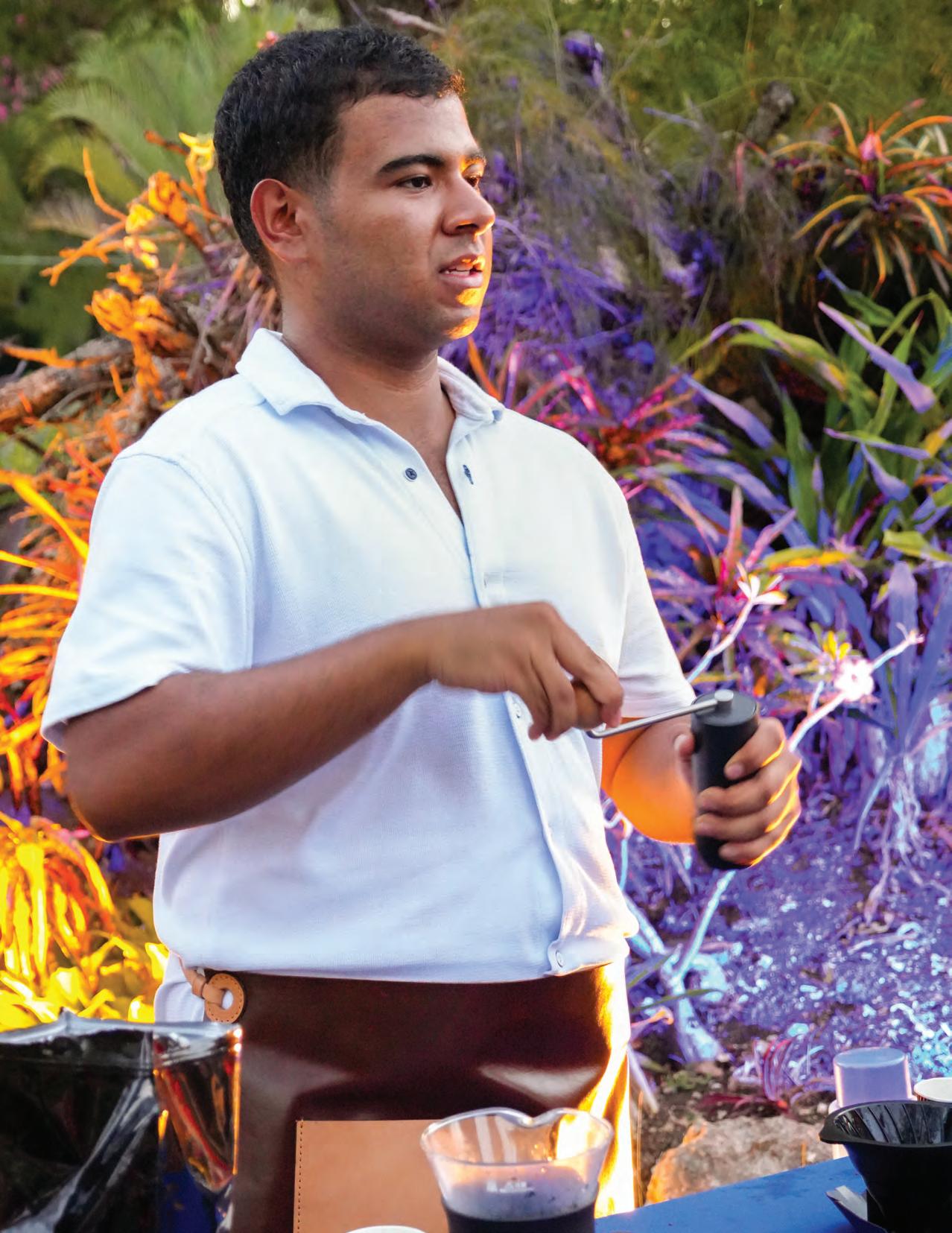
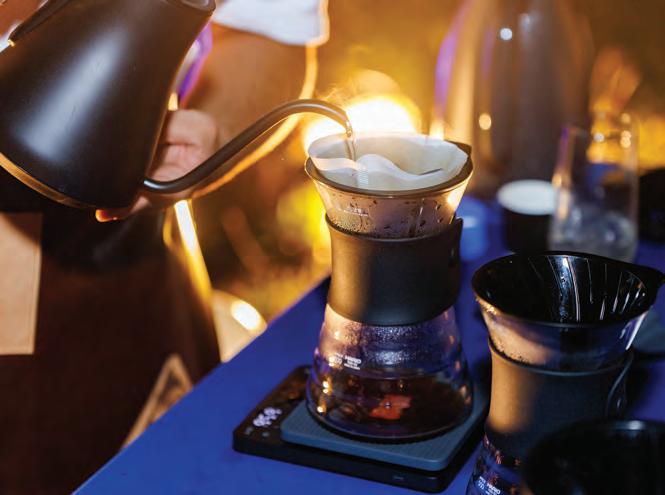
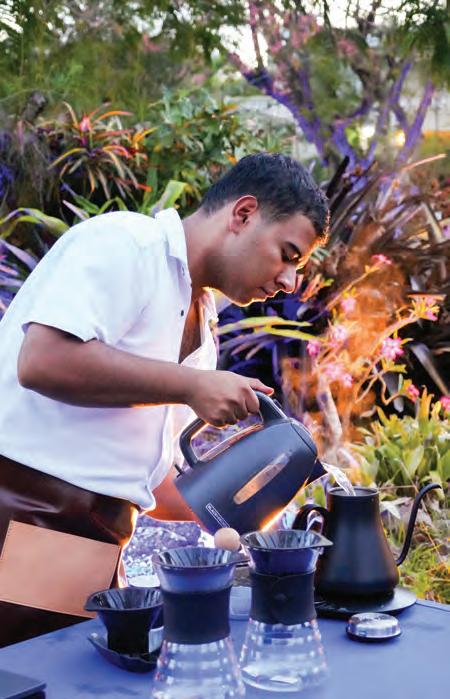
As he makes coffee for guests at a recent event hosted by the Colombian Embassy in Barbados, Sebastian’s presentation is indeed meticulous. First, he grinds the coffee beans by hand using a burr grinder – not too fine – and carefully measures the grounds into a pour-over dripper with a cone-shaped paper filter.
COLOMBIA IN BARBADOS
He slowly adds hot water, allowing the mixture to drip into a glass pot. This method of brewing relies on gravity rather than pressure, and it produces a lighter, more delicate cup of coffee.
This method takes about three minutes, but Sebastian insists it is time well spent. “The wait is what makes the flavour,” he says.
The bean he uses is known as Gesha, a high-quality Arabica bean that has been fermented using yeast derived from the skin of the coffee cherry itself. The fermentation process, he explains, increases the coffee’s flavour.
Sebastian’s knowledge of coffee is vast. And while the water drips, he explains why Colombia has been so successful in growing coffee, and why the coffee it produces is considered to be among the finest in the world.
To begin with, Colombia relies almost exclusively on the Arabica bean, which produces coffee famous for its rich aromas, smoothness, and balanced acidity. The next key factor is the stable equatorial climate, with its consistent rainfall, volcanic soil, and cool mountain temperatures. These all come together to create an ecosystem that wine makers refer to as “terroir”.
The berries ripen slowly at altitudes that range from 900 metres to 2000 metres developing more sugars and nutrients. They are hand-picked to ensure that only the ripest cherries are selected.
Once the skins and pulp are removed, the beans are washed (sometimes fermented first) and ready for roasting. The higher the altitude the richer and more flavourful the beans tend to be, and top-quality beans can fetch hundreds of dollars per pound.
Sebastian's brewing tips
The best way to make your morning brew –or any time of the day for that matter – is to start with whole roasted beans.
Using coffee that is already ground will save you time, but the taste won’t be the same. Coffee beans oxidize quickly once ground and lose flavour in the process.
For best results grind the beans with a hand grinder rather than an electric one. The hand grinder can be set to produce grounds that are fine or coarse, depending on how rich or strong a brew you want. An electric
grinder may not offer that degree of control.
Always grind the beans just before brewing, you can keep beans in the freezer, but it is best to divide them into small portions. This avoids taking the whole bag out every time, with the risk of thawing more than you need. Once the beans are thawed grind them immediately.
Once frozen, coffee beans will hold their flavour for several weeks. A 250-gram bag of beans should last six to eight weeks.
How it all began
Sebastian grew up in the Quindio Region, in the heart of what is known as Colombia’s “coffee triangle”. His love affair with coffee began five years ago when, at the age of 16, he was contemplating what he would pursue as a career.
“I was planning to go to university, but I didn’t know what I wanted to study,” he says. ‘And so, I decided I would study coffee in the meantime, because here in Colombia coffee is life.”
He enrolled at the Servicio Nacional de Aprendizaje (SENA), a technical institute known for its practical training in industries such as hospitality, construction, gardening and, of course, coffee. The young barista never made it to university. “The people I met, the coffee growers, the baristas, the
people who supported me and supplied me with coffee in the competitions, these are the people who convinced me to stay in the industry.”
Sebastian’s passion and expertise brought him to Barbados (It is his first trip outside of Colombia) and will now take him to Belgium. At 21, his world is filled with opportunities. But regardless of the choices he makes, one thing he says is certain: “Coffee is my future.”
Colombian coffee facts
Coffee plants were introduced to Colombia by Jesuit priests in the early 1700s. By then, coffee was already hugely popular in Europe, having made its way there via countries such as Arabia and Turkey. Allegedly, it originated in Ethiopia in the 9th century.
By the early 1800s coffee was being cultivated in several regions that now form Colombia’s famous “coffee triangle”. In 1835, the country exported coffee for the first time, mostly to the U.S.
By the early 1900s, coffee had become Colombia’s main export. Today, the country exports about 13 million bags of beans annually – roughly 790 million kilos – bringing in approximately US$5.4 billion. According to Forbes Colombia magazine, Colombia is the world’s third largest producer of coffee, after Brazil and Vietnam, and the main exporter of mild Arabica coffee.(Globally, Colombian coffee, made exclusively from the Arabica bean, is often referred to as the “gold standard” in coffee production.)
The economic benefits are undeniable, but there is more to coffee in Colombia than its contribution to the nation’s coffers. Coffee cultivation supports hundreds of thousands of families and helps to unite rural communities.
In essence, coffee – its cultivation and consumption – is woven into the country’s culture and tradition. It is celebrated through events and competitions and revered in much the same way that wine is in countries such as France and Italy.
The power in COCOA
Cacao is helping the women of Afromuvaras exercise their rights as women, achieve financial independence, and shelter their children from the drug trade
Adecade ago, in the City of Tumaco on Colombia’s Pacific Coast, a group of women of African descent, united in the spirit of entrepreneurship to build better lives and create a safer future for their children. They created a collective called Afromuvaras.
Mostly single mothers, they wanted to be more visible in what was a male-dominated society and to exercise their rights as women. They wanted to participate more fully in the economic and social life of their communities. They wanted a means to create financial independence. They dreamt of being able to send their children to university one day.
But the women of Afromuvaras wanted something more. In a region deeply affected by narcotrafficking-related violence, where many children and young people were vulnerable to recruitment by criminal groups, they also wanted to find a way to bring about some measure of peace and to raise their children safely.
Making legal products
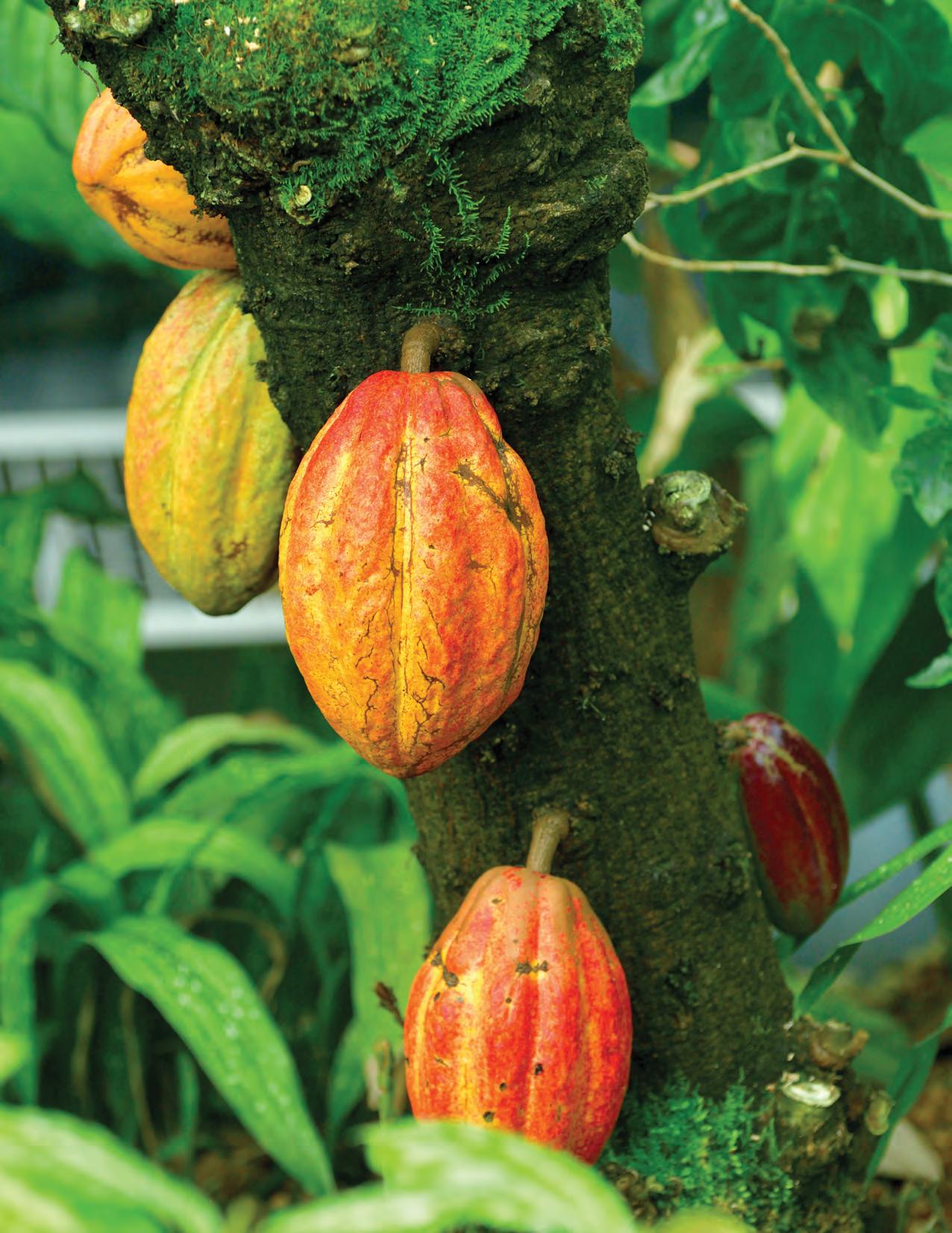
And so, to help them achieve their goals, they chose to grow a crop that generates legal products they could sell openly; a crop that produces chocolate not cocaine; a crop with deep-rooted connections to Colombia’s customs and culture. In short, they chose to grow cacao.
Today, the almost 600 women of Afromuvaras have organised themselves to deal with every aspect of cacao production. They grow the trees, harvest the crops, ferment the beans, dry them on raised beds under cover rather than in direct sunlight. (It is a slower process compared to largescale industrial methods, but it produces a premium product.)
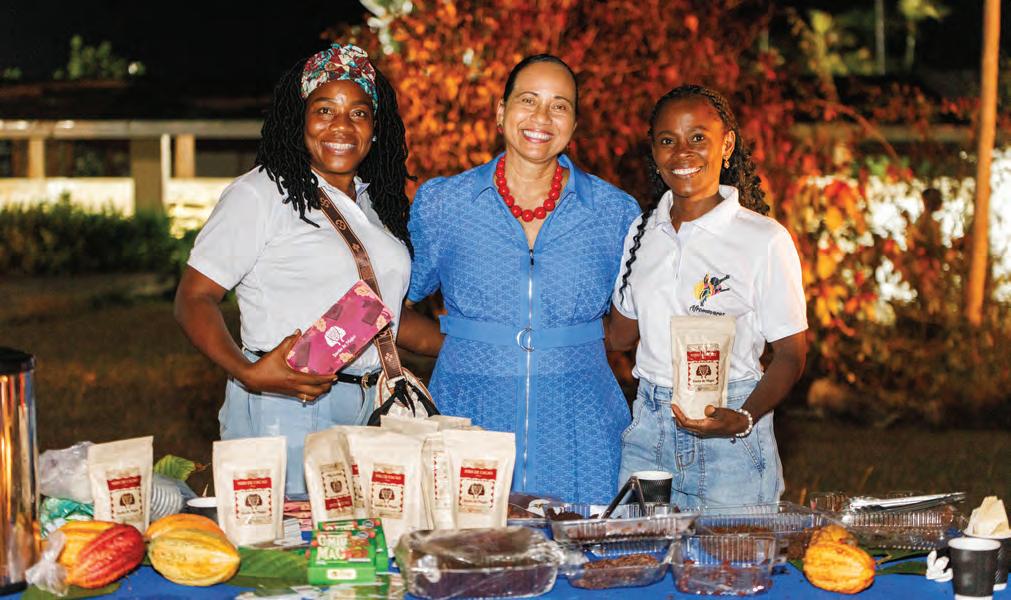
The dried beans are sorted by hand and sold to chocolate makers, but the collective produces its own line of chocolate products, explains Carmen Rodriguez Espana, a senior member of the Afromuvaras council.
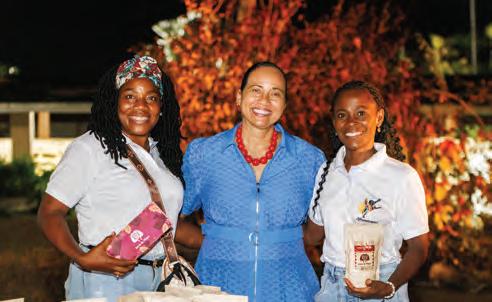
Colombia’s Ambassador to Barbados - Her Excellency Elizabeth Taylor Jay (center) alongside Carmen Rodriguez Espana (left) and Ana Milena Ponce (right) - AFROMUVARAS
For example, there are cacao nibs, coarse fragments of the bean that are eaten plain as an energy booster, or sprinkled on cereals, yogurt, or fruit salad. There are also solid blocks of dark, bitter unsweetened chocolate that can be grated and mixed with hot milk to create hot chocolate, a beverage that is a part of everyday life in Colombia.
Skin care too
According to Ana Milena Ponce, another senior member of the collective’s council, the dark chocolate can also be dissolved in warm water to make a face mask, or to treat your hair and scalp. “It helps to activate the pores of your skin,” she says. Afromuvaras has been sending samples and small orders of its products to countries such as Mexico and Paraguay, and even the UK. Carmen says they would like to supply their products to Barbados. “We are open and ready for that.”
Is it cacao or cocoa?
Is cacao the same as cocoa? Is it just a slip in spelling, whereby an O came before the A?
It can be confusing, and it is not surprising that many people believe the two are one and the same. Well, they are not. Cocoa is derived from cacao but only after a specific process. So, let us start at the beginning. Cacao is a pod that contains between 20 and 60 seeds. Huge crops are grown in African countries such as Ghana, and in South American countries such as Colombia as well. These seeds are often called cocoa beans, but in the interest of accuracy, they are cacao beans.
However, Barbadian chocolate makers currently source their cacao beans and chocolate from Grenada which, like Barbados and 13 other countries, is a member of the Caribbean Community (CARICOM). CARICOM was created to promote economic integration, cooperation and coordinated development, and it offers protection to regionally produced products. Both women want to see Afromuvaras become self-sustaining – an enterprise that can be passed on from generation to generation. “We don’t want to be seen as a project but as a lasting business model run by women,” says Carmen.
But will men be welcome to participate in this female-centred enterprise? The question raises a smile from Ana. While the answer is yes, it comes with a warning. “Today we do not work behind a man, we work beside him,” she says.
When the ripe pods are harvested, the beans are removed, cleaned, fermented, and roasted. They are then pressed to remove the fat known as cocoa butter and ground into fine powder. It is only at this stage that cacao becomes cocoa.
But most cacao beans are not pressed and ground into cocoa. After being fermented they are dried for several days before being sorted and sold to chocolate makers. Yes, you read that right. It is the cacao beans, still containing the butter that are used to make chocolate. Cocoa can be used as well, but it is not the main ingredient.
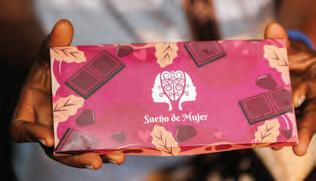
Cacao beans are also broken into pieces called “nibs”. These are often sprinkled on cereals or salads. The beans are also compressed into blocks of dark, bitter chocolate that is grated and mixed with hot water to create the beverage we know as hot chocolate.
Consumed in these ways, unsweetened cacao seeds are an excellent source of several essential minerals and antioxidants. And this is why dark chocolate is better for us than milk chocolate.







COLOMBIAN TREATS: Quimbolitos and Almojábanas
Recipes courtesy of Chef David Ruiz Koch
Quimbolitos
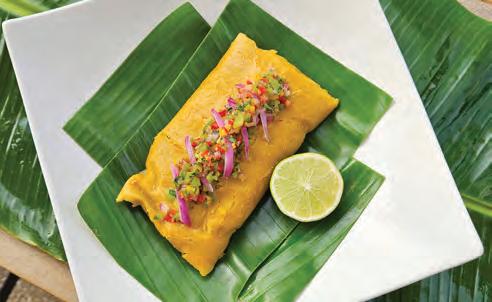
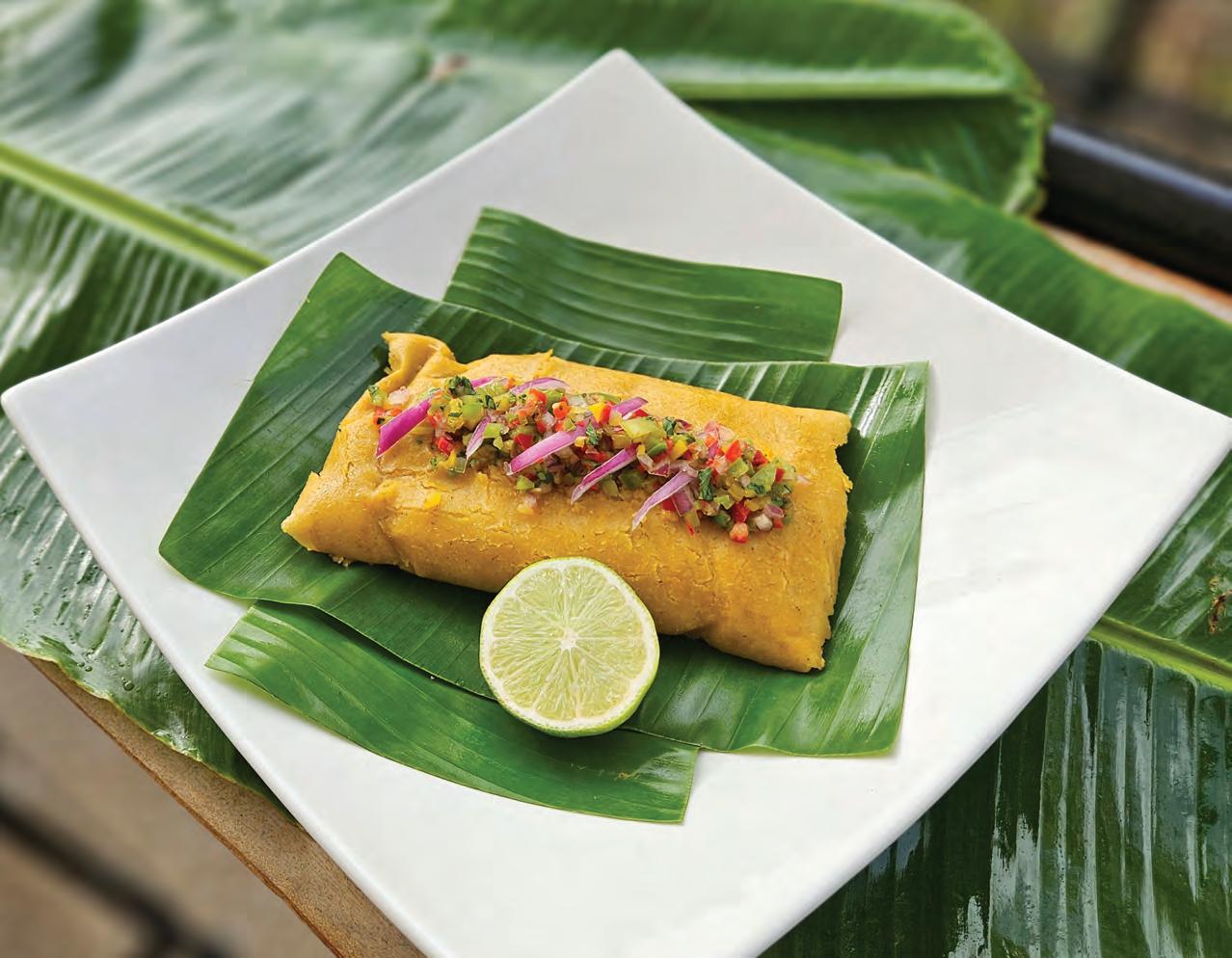
Quimbolitos are airy, sweet steamed cakes made with corn and wheat flour, enriched with butter, cheese and eggs. They are made and eaten in the Colombian departments of Nariño, Santander and Cundinamarca. They are commonly wrapped in achira or bijao leaves and served with coffee or chocolate. It is a dish Colombia shares with Ecuador.
Ingredients
150 g wheat flour
100 g porva corn flour
150 g room-temperature butter
100 g cuajada or fresh curd cheese
5 eggs
250 g sugar
Raisins, to taste
5 g baking powder
5 achira or bijao leaves (similar to banana leaves)
Method
1. Beat the butter, cuajada and sugar until p ale and smooth, with no lumps.
2. Ad d the eggs and flours, mixing until the dough is smooth and homogeneous.
3. Ad d the baking powder and mix again.
4. Pl ace a portion of dough in the centre of each achira or bijao leaf.
5. Ad d raisins on top of the dough.
6. Bri ng each edge of the leaf to the centre and fold outwards. Fold the ends down, leaving the centre slightly open so the Quimbolito has room to expand.
7. Steam for 45 minutes.
Almojábanas
Almojábanas are cheese breads found throughout Colombia. They are made with flours such as corn and cassava, combined with dry costeño-style cheese and eggs. They are often paired with coffee or chocolate and eaten at any time of day, especially for breakfast, mid-morning or mid-afternoon.
Ingredients
900 g farmer’s cheese or cuajada, well drained and ground
100 g cornstarch
2 eggs
40 g porva corn flour
20 g sour cassava starch
60 g sugar
2 g baking powder
Salt, as needed
Milk, as needed. It may not be needed, depending on the moisture of the cheese.
Method
1. Knead all the ingredients using the r ubbing-in technique. This can also be done in a mixer with a paddle attachment.
2. Th e moisture level is right when a ball of dough can be pressed without cracking and the dough is homogeneous.
3. Po rtion and shape into rounds.
4. Ba ke at 200°C without convection. Do not open the oven until golden brown. Makes 12 pieces of 100 g dough

















































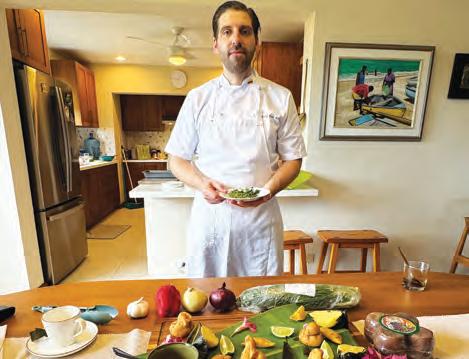
Chef David Ruiz Koch
Eat your way...
... through the change
How to nourish your body through perimenopause and menopause
Written by: Zoe Manning, Integrative Nutrition Health Coach, Weight Management Specialist & Precision Nutrition Coach - The Health Coaching Studio at One Wellness Clinic
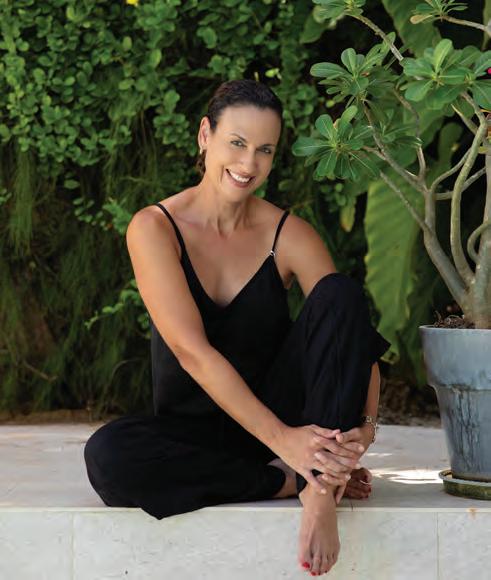
In my practice at The Health Coaching Studio, one of the most common things I hear from women is this: “I thought something was wrong with me.” The fatigue, the weight that won’t budge, the sleep disruptions, the mood shifts — these aren’t signs that your body is failing you. They’re signs that your body is changing, and that your nutrition and lifestyle need to change with it.
But don’t wait for symptoms to show up before investing in your hormonal health. Perimenopause — the transition phase leading to menopause — can begin quietly in your late 30s, nearly a decade before your last period. The nutritional
foundations you build now directly shape how your body handles what’s coming.
Research confirms what I see in practice every day: your gut microbiome, blood sugar regulation, and inflammation levels are central to how severe your symptoms become — and all three respond powerfully to what you eat. Starting early isn’t about restriction. It’s about building resilience.
Beyond the plate
As an integrative nutrition coach, I work from a whole-person model of health. That means I look at two categories of nourishment. Secondary food is what’s on your plate.
Primary food is everything else that feeds you — your relationships, your sleep, your stress levels, your sense of purpose and joy. The Functional Medicine Coaching Academy teaches that no supplement or superfood can compensate for a life that is chronically stressed and sleep-deprived. Two women eating identically can have vastly different experiences of menopause, because their primary food picture is completely different.
There is no single menopause diet that works for every woman. My role is to help you identify what your unique body needs — and that conversation begins with listening to yourself.
Zoe Manning
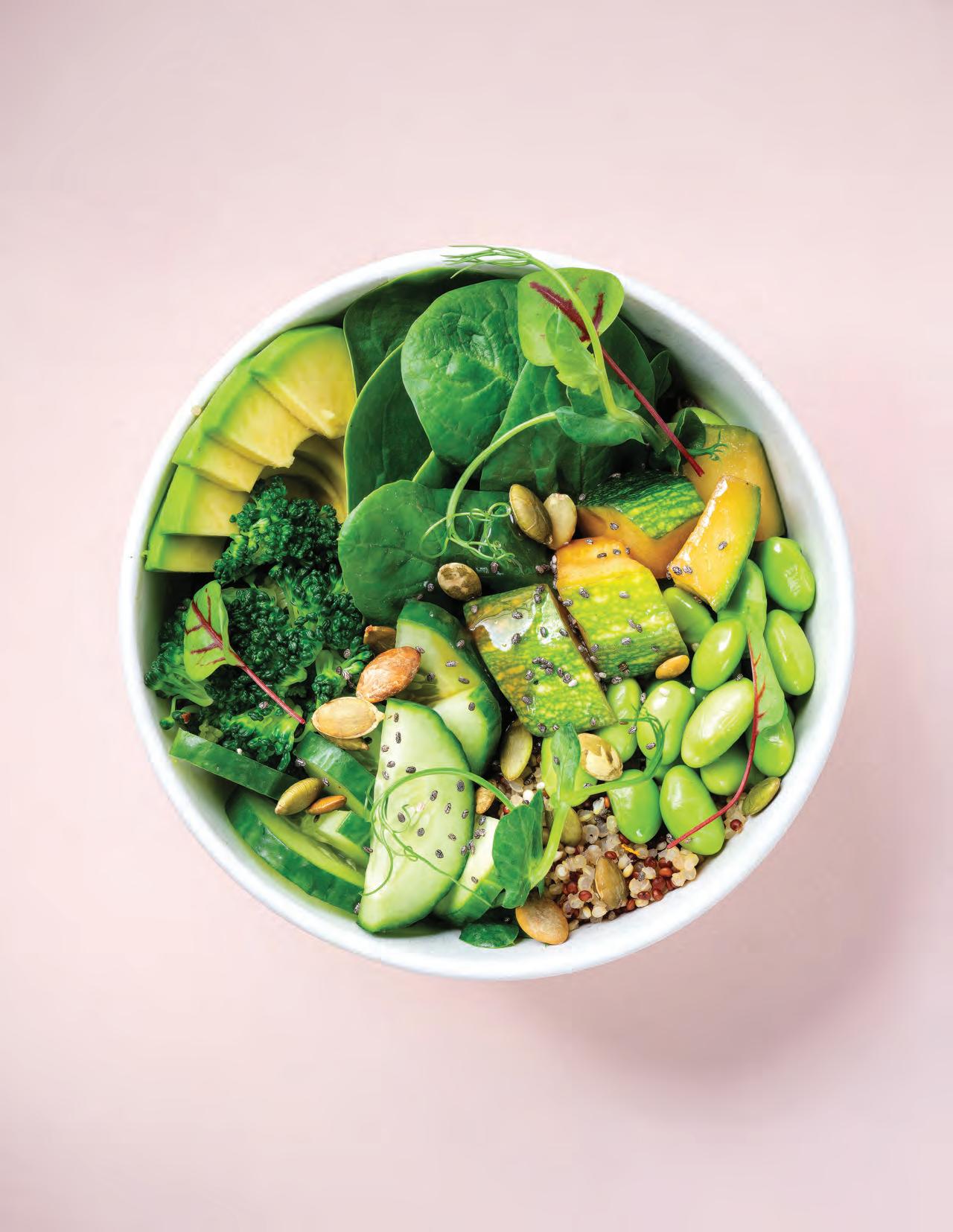
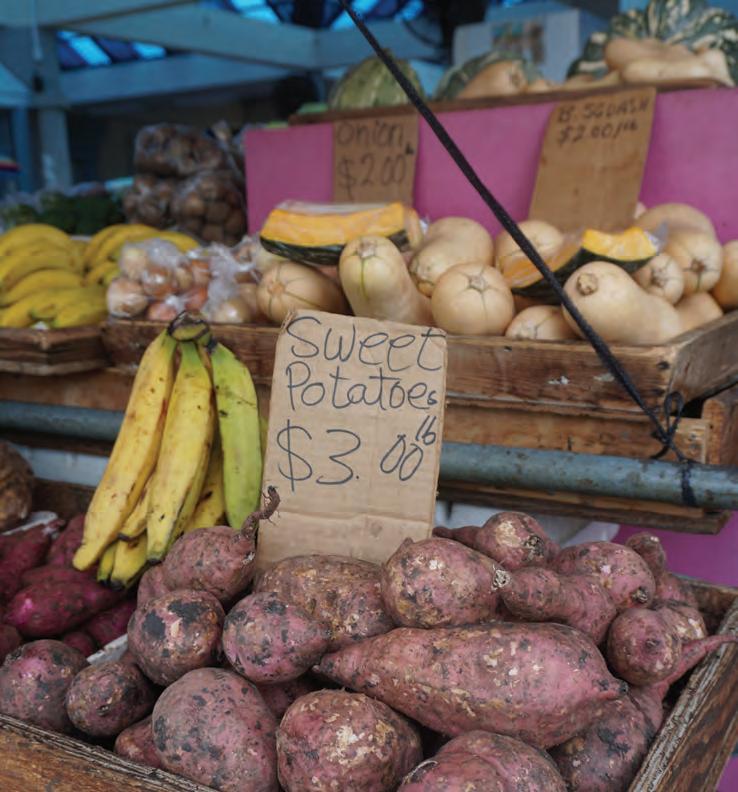
The most powerful hormone-supporting foods don’t need to come from a health food store. Sweet potato, dasheen, breadfruit, plantain, local fish, avocado, and legumes are fibre-rich, nutrient-dense, and available at every market in Barbados. Eat local. Your hormones will thank you.
Key nutritional priorities
There are four key nutritional priorities during this transition: stabilising blood sugar, reducing inflammation, supporting oestrogen metabolism, and protecting bone density. In practical terms, this means anchoring every meal with quality protein — local fish, eggs,
legumes, chicken — paired with colourful vegetables, healthy fats from avocado and coconut, and fibre from ground provisions.
You should also seek out phytoestrogen-rich foods like flaxseed and legumes, which gently support hormonal balance. A daily handful of pumpkin seeds — affordable and widely available — provides zinc and magnesium that support sleep, mood, and hormone production. Simple, local, and effective.
Sleep, stress and movement
You cannot eat your way out of chronic sleep deprivation or unmanaged stress. As oestrogen declines, it

disrupts sleep architecture. Poor sleep raises cortisol. Elevated cortisol worsens hot flashes, promotes abdominal weight gain, and accelerates bone loss. It is a cycle, and it must be broken intentionally. I recommend magnesium-rich foods — leafy greens, seeds, dark chocolate — alongside a consistent wind-down routine as a powerful, accessible first line of support.
For movement, I draw heavily on the work of Dr. Gabrielle Lyon, founder of the Institute for Muscle-Centric Medicine, who argues that muscle is the organ of longevity. As oestrogen declines, it accelerates muscle loss (sarcopenia) and reduces bone mineral density — making progressive resistance training the most important exercise a woman in this phase can do.
Two to three sessions per week of lifting or working against resistance — at a gym, at home, or even in the sea — signals the body to retain muscle, protect bones, improve insulin sensitivity, and support cognitive health. Women need not fear “bulking up”: what resistance training builds is a stronger, more resilient body that ages well.
Protein intake matters just as much. Dr. Lyon recommends leucine-rich sources — eggs, fish, chicken, dairy — distributed evenly across meals to support muscle repair throughout the day, not just at dinner. This is
Photo: courtesy of Lana Sealy, founder of Body Mekanix.
precision nutrition in action. Pair it with daily walking in our Caribbean sunshine for Vitamin D, and stress practices that work for you — prayer, breath-work, community — and you have a multidimensional approach that no pill can replicate.
Transition is not a breakdown. It is a biological invitation to nourish yourself more deeply and more intentionally than ever before.The good news is that much of what your body needs grows right here, in Barbados — at your market, in your garden, in your community. The change is coming. You may as well eat well for it.

Photo (left): Carla, @barbadianista for Barbados Foodie Magazine.
BEYOND THE CAVENDISH
Rare banana varieties come to Barbados
Written by: Mitchel Hird, Paradise Nature Park
The banana is perhaps the world’s most recognised fruit, yet most of us have only ever tasted one variety. The Cavendish, that familiar yellow stalwart of every supermarket shelf, earned its global dominance not through superior flavour, but through its ability to survive the long journey from plantation to shop. It is reliable and consistent. What it is not, is the best tasting banana in the world.
There are in fact hundreds of banana varieties grown across the tropics, many of them offering flavours and textures quite unlike anything most people have encountered. Barbados has, until recently, had very little access to them. Importing banana plants is a complex and tightly regulated process. Strict plant health controls exist to prevent the introduction of serious diseases that could threaten local agriculture. As a result, new varieties have simply not been available here for many years.
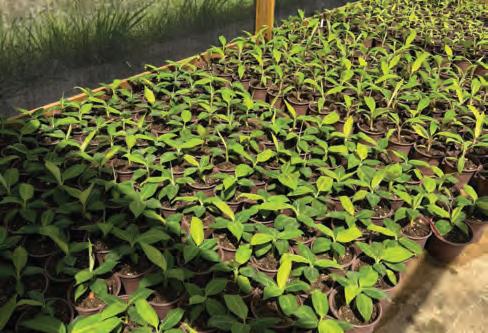
The Paradise Nature Park in Christ Church has spent the past two years working through the import process. A dedicated quarantine and isolation facility was built specifically for this purpose. Each variety was virus-tested, and the plants are now here, tissue-cultured, certified disease-free, and available in limited numbers.
Eight new varieties make up the collection.
The Asian Lakatan is a Filipino cultivar with a dense, honeyed sweetness widely considered among the finest dessert bananas in the world.
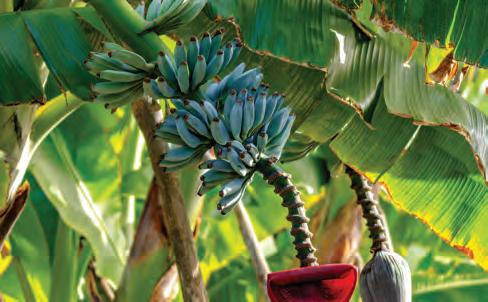
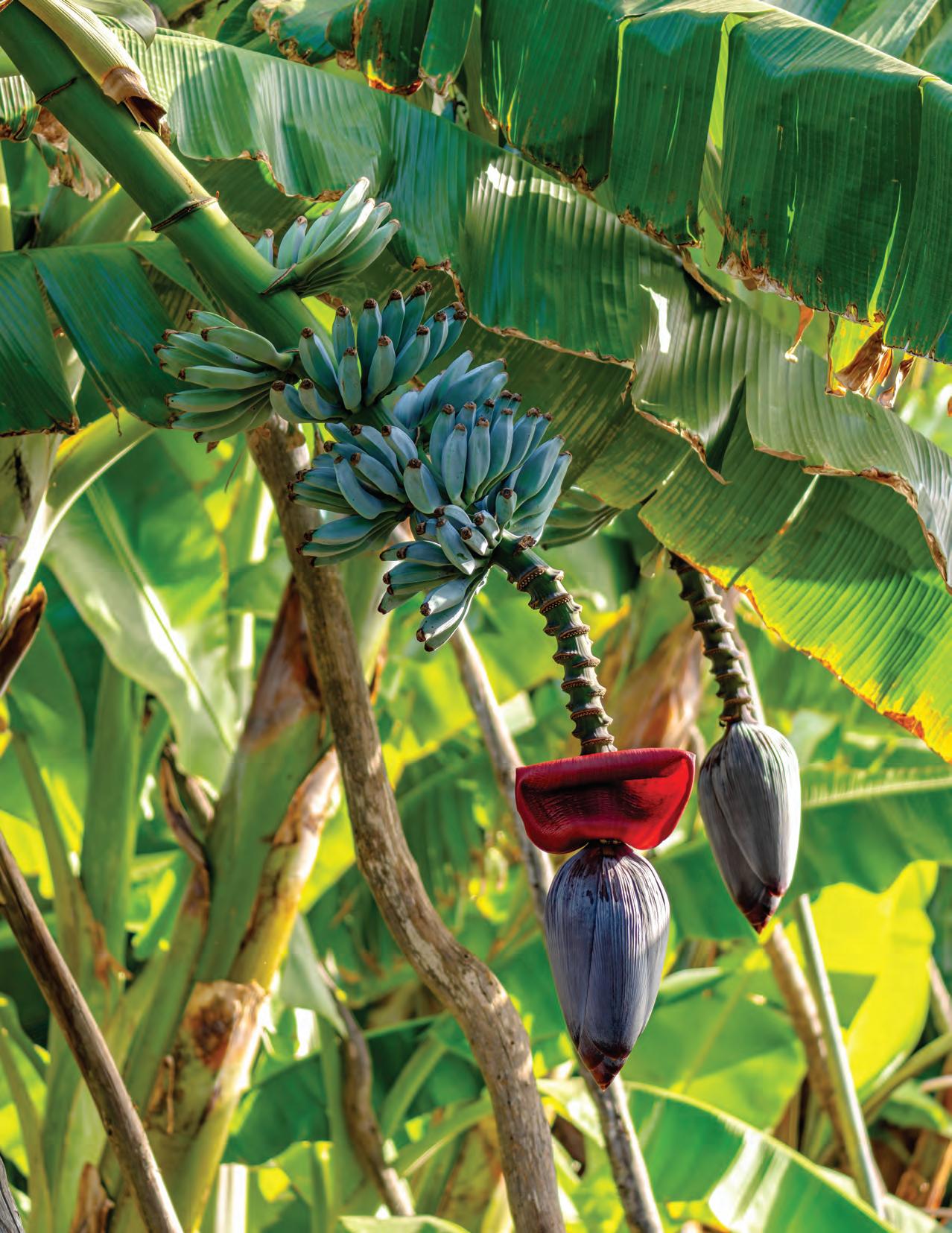
The Ice Cream banana, also known as the “Blue Java”, has an unusual pale bluish skin before ripening and a soft, vanilla-like flavour and dense texture that lives up to its name.
The Improved Red Dacca produces striking deep-crimson fruit with a taste that carries hints of raspberry.
The Kandarian is a giant heirloom plantain from Papua New Guinea, growing to over twenty feet and bearing large bunches of thick fruit with notes of custard and cantaloupe.
Rounding out the collection are the apple-flavoured “Goldfinger” a resilient
hybrid variety, the dual-bunching Double Mahoi, and two improved Cavendish cultivars — the heavy-cropping Sweet William and the compact Honey Dwarf.
The plants were imported in limited numbers, with the intention of making these varieties available to Barbados for the first time.
Enquiries are welcome by email at: hello@paradisenaturepark.com.





SEASONED BY HISTORY
The heritage of Caribbean cuisine
Written by: Sophia Lewis
Heritage is not simply history. History records the past, while heritage chooses what it wants to keep from that past.
It may be tangible like historic buildings, landscapes and treasured objects or intangible, such as language, music, customs, festivals and food traditions. Indeed, while we often think of heritage as old monuments or museum exhibits, some of the Caribbean’s most dynamic and enduring heritage is actually found on our very own dinner tables.
Heritage lives in the dishes we cook, the ingredients we season with, the traditions and customs surrounding the festivities we celebrate, like conkies at Independence time in Barbados, or a Bajan Christmas with ham and sorrel. It sizzles in a frying pan awaiting a piece
of breadfruit. It lingers in the smell of a bubbling Saturday morning cornmeal porridge; spiced up with bay leaf, cinnamon and nutmeg. It survives in the pepper sauce or sweetbread recipe fiercely guarded by a grandmother, who insists, “This is how my mother made it.”
The incredible diversity of Caribbean cuisine has been shaped by centuries of upheaval and cultural exchange. And long before European settlers arrived from across the Atlantic, the Indigenous Amerindian peoples of the Caribbean (the Taino in particular), had already developed food traditions deeply connected with both land and sea. Archaeological evidence has shown that early Caribbean diets were rich in seafood, cassava and tropical fruits. Remarkably, cassava bread (or bammy) has survived
centuries of history and is still made in Jamaica and among the Kalinago people of Dominica.
After 1492, the Spanish, British, French and Dutch colonists introduced new plants, animals and culinary customs through what historians call the Columbian Exchange; while the contributions of the enslaved Africans, showcased their culinary ingenuity by turning their limited provisions into flavourful and resilient dishes like cou cou and flying fish and ackee and saltfish. Then, by the mid-19th century, Indian and Chinese indentured labourers were seasoning their way into Caribbean cuisine with curry, spices, rice dishes and cooking techniques now inseparable from our regional identity.
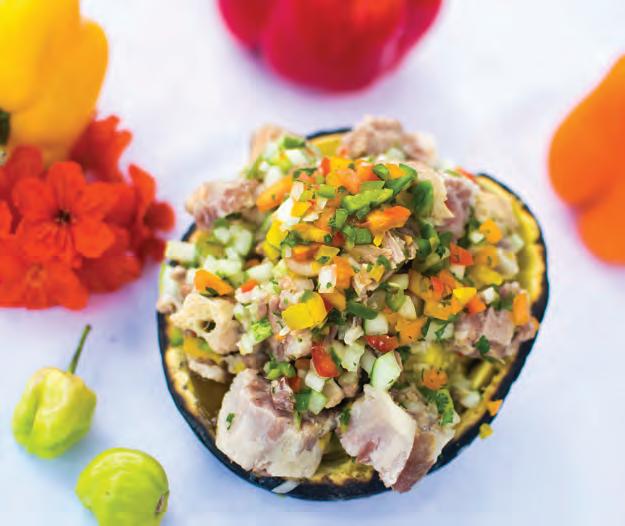
Roasted breadfruit stuffed with souse — two Bajan Saturday staples that carry centuries of history in every bite.
But, few foods connect history to our heritage as dramatically as the breadfruit; with its arrival into the Caribbean through one of history’s most famous maritime dramas: the ill-fated 1787, Mutiny on the Bounty. The premise of which begins with a search for an inexpensive way to feed the enslaved populations of the West Indies. When West Indian planters heard the enthusiastic reports of the prolific breadfruit growing in Tahiti; they commissioned Captain William Bligh to transport breadfruit plants from across the world to the Caribbean. Ironically, despite these efforts, the enslaved people initially disliked the fruit, and it was only after Emancipation in 1838, that the breadfruit was eventually embraced throughout the Caribbean; becoming one of the Caribbean peoples’ most beloved foods.
Many of the things we currently eat and drink — bear testimony to our culinary heritage, so that, in some ways, we are still having conversations with the past. Though modern variations have emerged and busy lives have shortened traditional preparation methods, Caribbean cuisine still prides itself on authenticity and remains relatively reverential to the inherited ways of cooking.
Dishes such as pudding and souse have endured, not just because they taste good, but because they carry meaning. Like a grandmother’s necklace passed down lovingly through generations, our cooking traditions and recipes, whether kept to memory, or on paper, are precious heirlooms too.
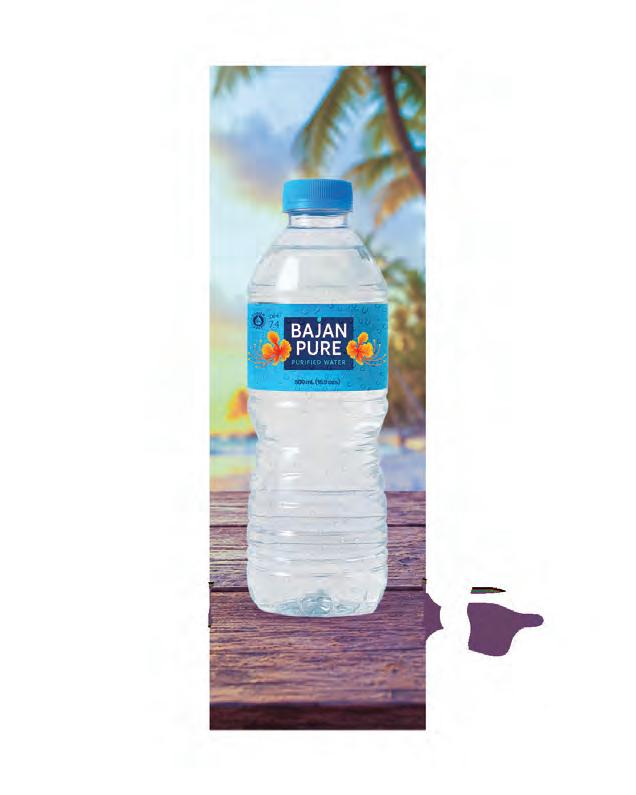
Bajan pure purified water
Delivering the highest standard of purity is our top priority. That's why Bajan Pure Purified Water is sourced, filtered and bottled right here in the pristine island of Barbados using our advanced, multistage Reverse Osmosis purification technology. With up to six sizes to choose from, every sip provides you with the experience of the pinnacle of pure, crisp hydration - without any unknown extras.
NPure water filtration
Say goodbye to impurities and contaminants in your tap water with NPure Water Filtration. Our state-of-the-art filtration systems are designed to provide your family with clean, safe, and great-tasting water right from your own kitchen. Experience the convenience and peace of mind that comes with having a reliable water filtration system in your home, whether you choose our Under Counter or Whole House System. Choose NPure Water Filtration for a healthier lifestyle today.
Delivery available islandwide! Call us today at (246) 436-8625 or (246) 234-9418. Find us at Unit 3A XS Warehouse Complex, Salters, St. George

The colour of rosé
What the shade tells you, and what it does not
Rosé can make a wine shelf feel surprisingly complicated.
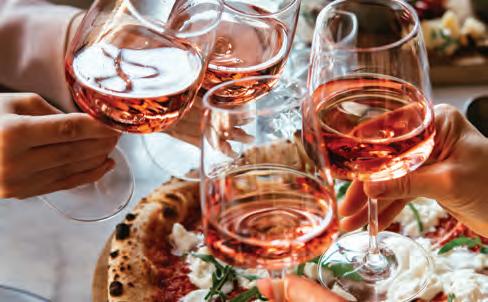
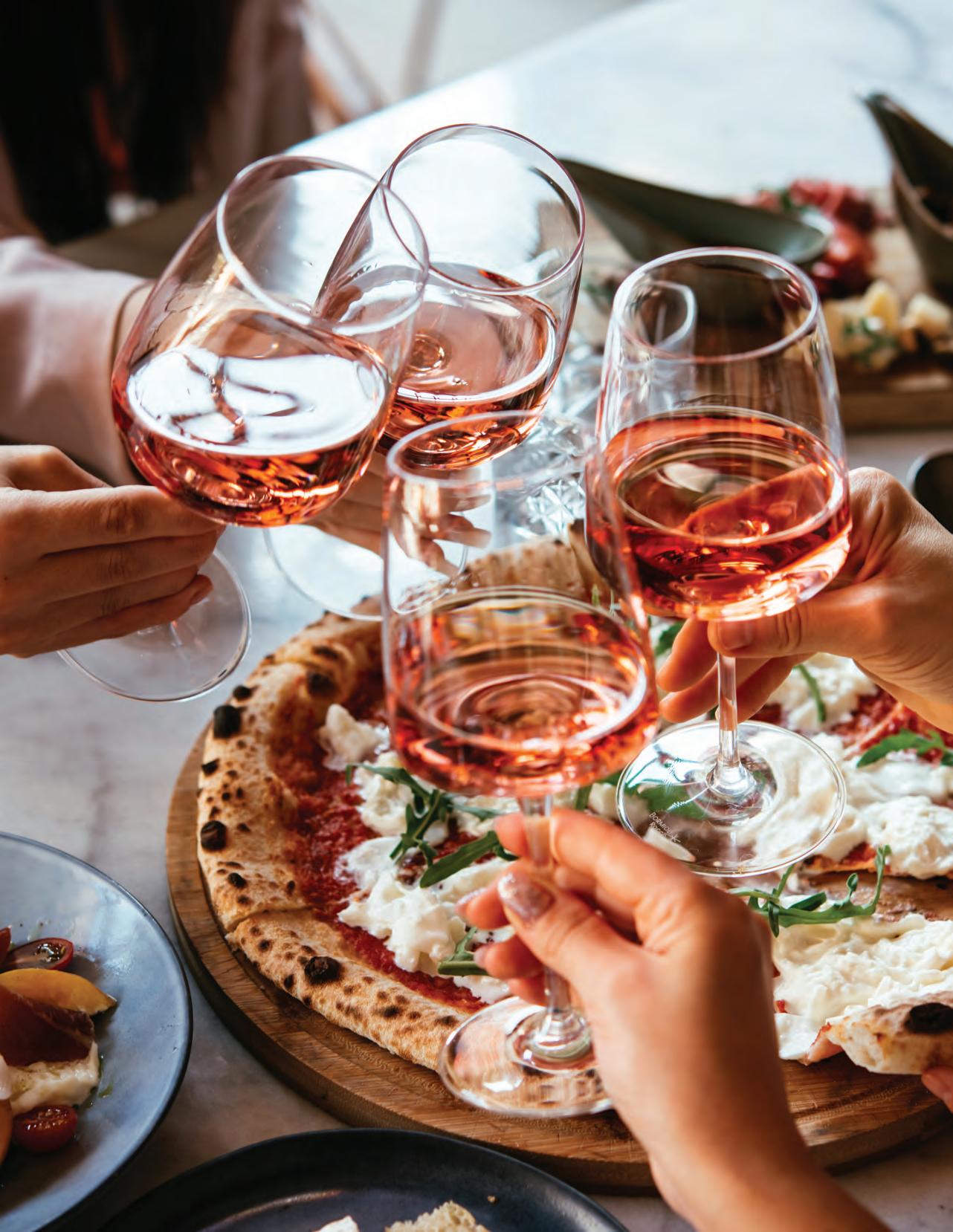
One bottle is barely pink. Another is salmon. Another is closer to watermelon. A fourth is deep and bright, almost raspberry. Many of us reach for the palest bottle. It looks crisp. It looks elegant. It has become the shade many people associate with good rosé. But colour alone does not tell the full story. It gives you a clue, not a final answer.
Where the colour comes from
Most rosé is made from red grapes. The juice is usually pale at first, but the colour sits in the grape skins. The longer the juice stays in contact with those skins, the more colour it picks up.
A short time with the skins can produce a pale blush. A little longer may give you peach, coral or watermelon pink. Longer again can create a deeper rosé. But skin contact is only part of it.
The rosé spectrum
Pale blush / salmon
Often light, crisp and dry, with citrus, floral or delicate red fruit notes. Good with seafood, salads and light appetisers.
Peach / coral
Often fresh and fruit-forward, with a little more body than the palest styles. A useful choice for roast chicken, cold meats, light pasta, picnic food and grazing boards.
The grape variety matters. Some grapes naturally give more colour than others. The winemaker’s style matters too, along with the region, climate, ripeness of the fruit and the way the wine is pressed and fermented. That is why rosé does not come in one shade of pink. It comes in many.
The pale rosé myth
Pale rosé became popular for good reason. Provence, in the south of France, helped make that delicate salmon-pink style famous. Many Provence rosés are dry, crisp and refreshing, which is exactly what people often want in warm weather.
But somewhere along the way, pale became confused with better.
That is the mistake.
A pale rosé is not automatically superior. A darker rosé is not automatically sweeter, cheaper or less serious. Colour does not tell you how much sugar is in the wine. It also does not tell you whether the wine was well made.
Watermelon pink
Often fuller, with more obvious red berry fruit. Can work well with spiced dishes, charcuterie, richer salads and casual summer meals.
Deep pink / raspberry
Often bolder and more structured, though not necessarily sweet. Worth trying with grilled meats, substantial seafood, stronger cheeses or dishes with more depth.
Sweetness depends on what happens during fermentation. Quality depends on the fruit, the vineyard and the winemaking. Colour is only one part of the picture.
There are excellent rosés in very pale shades. There are also excellent rosés in deeper pinks. Some fuller-coloured rosés are dry, structured and very good with food. The better question is not “Which one is palest?”
It is “What am I drinking it with?”
Choosing the right rosé
For lighter food, such as seafood, salads or simple appetisers, a pale, crisp rosé usually works well. It refreshes without taking over.
For food with more flavour, a slightly deeper rosé can be a better match, especially with grilled meats, roast chicken, tapas-style bites or a grazing board. A rosé with a little more body can hold its own at the table.
And with spicy food, do not assume the palest wine is always the safest choice. Something a little fruitier and rounder may work better.
For casual entertaining, rosé earns its place because it is flexible. It can start as an afternoon drink and carry through to dinner.
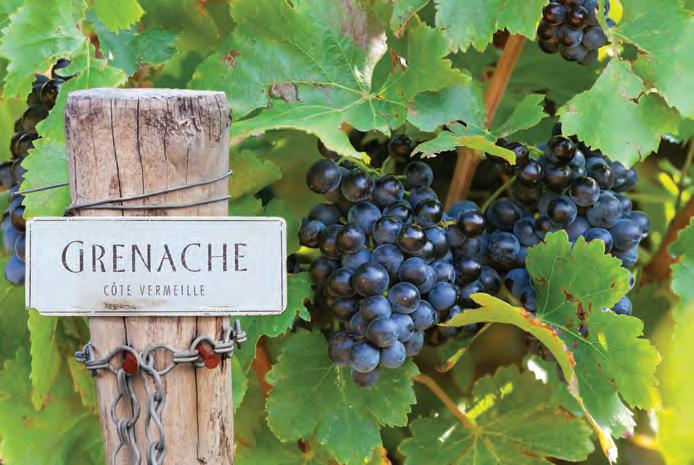
Grenache, Côte Vermeille — the backbone of Provence rosé. Its thin skins and high sugar levels make it ideal for the pale, dry style that put French rosé on the map.
It sits somewhere between white and red, which makes it easy to serve when people are eating different things.
Just serve it cold, but not so cold that all the flavour disappears.
What the colour can suggest
Colour can point you in a general direction.
A very pale rosé may be light, crisp and delicate. A coral rosé may have a little more fruit. A deeper pink rosé may have more body or more berry flavour.
But these are only tendencies. They are not rules.
The label, region, grape varieties and producer will usually tell you more than the shade alone. Better still, ask the wine merchant, ask the server, or taste before committing to a bottle when that is possible. There is no wrong shade of rosé. There is only the bottle that works for the food, the setting and the people around the table.
So if you enjoy the pale one, pour it. If you find a darker rosé you like, do not let anyone tell you it is the wrong pink.




















Feed your gut. Live your holiday.
Why what you eat on vacation matters more than you think — and a bread that proves healthy can be extraordinary.
Written by: Kim Goddard, Cutters of Barbados
There's a reason some people return from holiday feeling refreshed and radiant, while others come back bloated, sluggish and quietly regretting the buffet. The difference, more often than not, comes down to one quietly powerful factor: gut health.
Your gut is home to roughly 38 trillion microorganisms — bacteria, fungi and other microscopic allies — collectively known as the microbiome. When these are thriving, so are you. When they're disrupted — by unfamiliar foods, erratic meal times, alcohol, or a dramatic dip in fibre — you feel it in your energy, your digestion, your mood, even your skin.
Your Gut Doesn't Take a Holiday
Travel naturally disrupts the gut. New cuisines, different water,changed routines, jet lag — all of these can shift the delicate ecosystem inside you. The good news? A few intentional choices can keep your microbiome balanced and your body feeling its best, whether you're on a sun-drenched terrace in Barbados or exploring a bustling city market.
Fibre is your first friend. The beneficial bacteria in your gut thrive on prebiotic fibres — the indigestible plant matter found in oats, seeds, nuts and wholegrains. When you feed them well, they produce shortchain fatty acids that support immunity,
reduce inflammation and regulate energy. When you don't, the less helpful bacteria gain ground.
The beauty of eating for gut health on holiday is that it doesn't mean deprivation. It means making a few smart anchoring choices — a nourishing breakfast, plenty of plants, adequate water — that give your body the resilience to enjoy everything else without consequence.
Holidays are made for indulgence. But the best of them — the ones where you feel truly alive — are built on a body that's thriving from the inside out.
Our Gut-Friendly Loaf
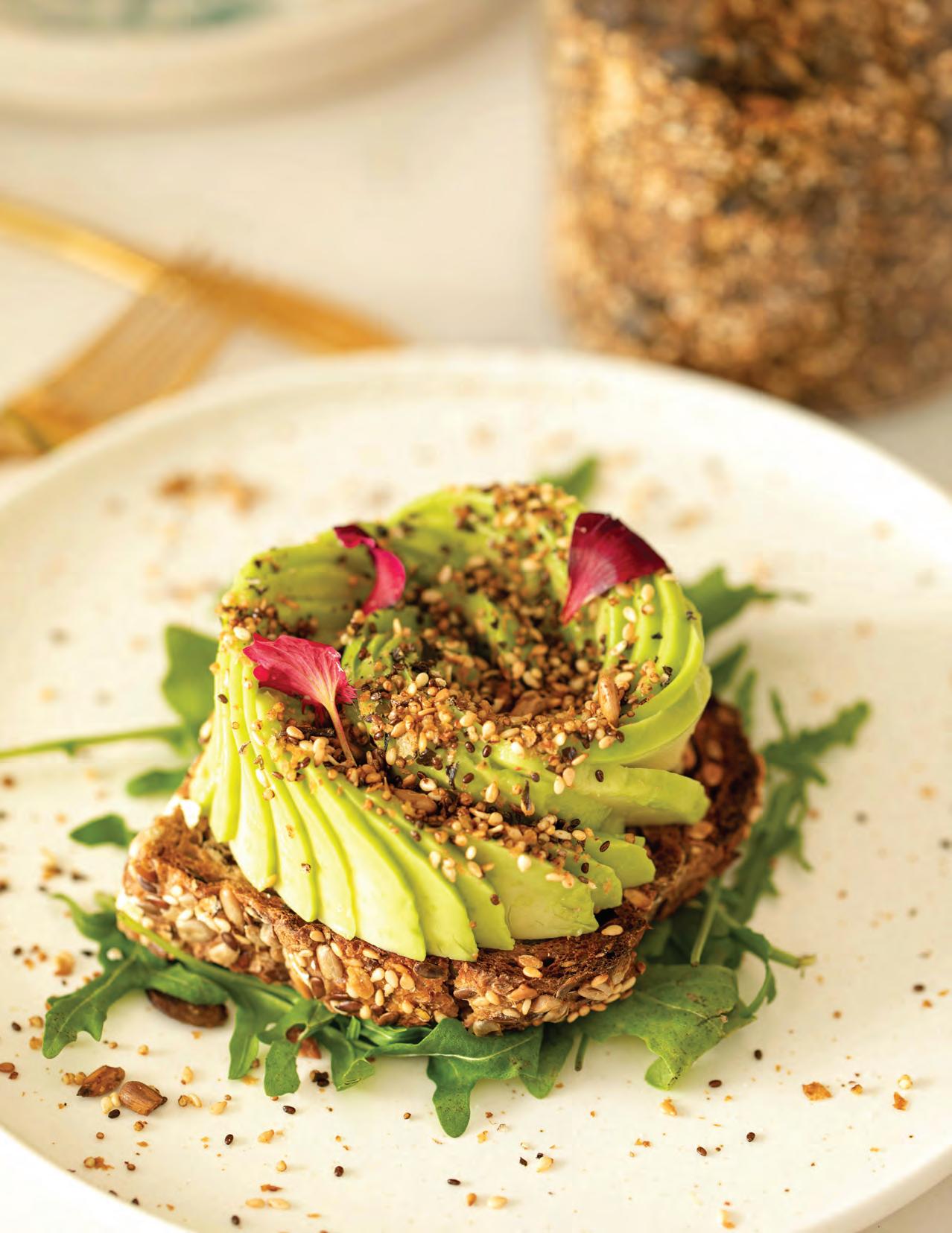
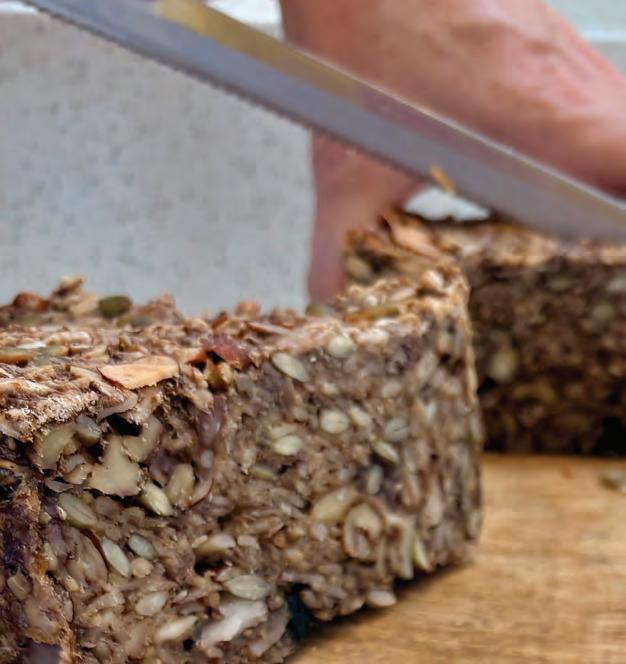
This is our season's standout: a loaf that's dense with prebiotic fibres, healthy fats and slow-release energy. No yeast, no kneading, no fuss. Just a bowl, a tin, and ingredients that your gut will genuinely celebrate. Slice it thick, toast it golden, and enjoy with ripe avocado, a drizzle of olive oil, or simply as it is.
GUT-
FRIENDLY SEED LOAF
No yeast. No kneading. High in fibre.
Ingredients
20g chia seeds
35g psyllium husk
150g rolled oats, preferably jumbo oats
150g mixed nuts, roughly chopped
150g mixed seeds
1½ tsp fine sea salt
400ml water
3 tbsp extra virgin olive oil
Method
1. Place the oats, nuts, seeds, chia, psyllium h usk and salt in a large mixing bowl. Stir well.
2. Ad d the water and olive oil. Mix until everything is evenly combined and no dry patches remain.
3. Le ave the mixture to rest for at least two hours, or cover and refrigerate overnight. The chia and psyllium will absorb the liquid and help the loaf hold together.
4. Preheat the oven to 180°C, or 160°C fan. Line a loaf tin with baking paper.
5. Press the mixture firmly into the tin and smooth the top.
6. Ba ke for 60 to 70 minutes, until the loaf is firm and deeply golden.
7. Rem ove from the tin and cool completely on a wire rack before slicing. This is important, as the loaf firms as it cools.
8. Store wrapped at room temperature for three to four days, or slice and freeze. Toast slices straight from frozen.
Ingredient notes
Psyllium husk: This acts as the binder in the loaf and helps give it structure without eggs or yeast.
Chia seeds: Chia absorbs liquid and helps hold the mixture together. It also adds fibre and texture.
Rolled oats: Oats give the loaf body and make it more filling.
Mixed nuts and seeds: These add crunch, flavour and healthy fats. Use whatever combination you prefer.
Extra virgin olive oil: A little olive oil helps the texture and adds flavour without making the loaf feel heavy.
Available at Cutters of Barbados
This summer, you don't even need to bake it yourself. Cutters of Barbados has The Gut-Friends Bread available to try — so come by, pull up a seat, and let your gut have a holiday too. It's the perfect reason to visit one of the island's most beloved spots.

PLANTAIN SPELT PANCAKES
Recipe by: Jeunesse Pouchet
Ingredients
1 cup spelt flour
1 cup ripe plantain, sliced
1 cup water
1 tsp pure vanilla extract
1/4 tsp Ceylon cinnamon
1/4 tsp ginger powder
1 tsp aluminium-free baking powder
Pinch of mineral salt
Method
1. Add the dry ingredients to a bowl and w hisk to combine.
2. Bl end the plantain and water until smooth. Add the mixture to the dry ingredients and fold to combine.
3. He at a lightly oiled griddle or pan over medium-high heat. Pour the batter onto the griddle, using approximately 1/4 cup for each pancake. Sprinkle the top with hemp hearts and sesame seeds, if using. Cook until bubbles form and the edges are dry, about 2-3 minutes.
4. Fli p and cook until browned on the other side. Repeat with the remaining batter.
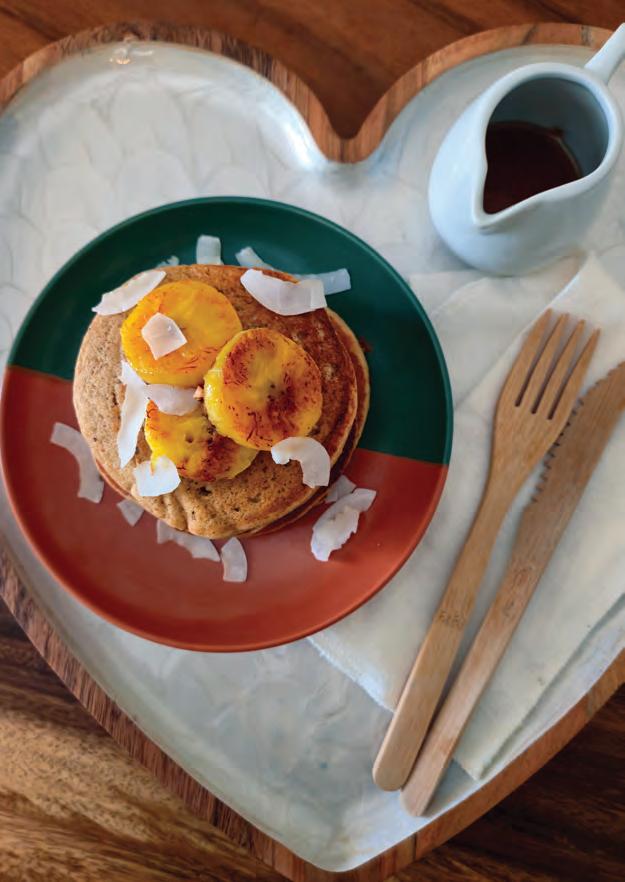
5. Se rve with pan-fried plantain, toasted coconut and maple syrup.
Note
Use the spices you prefer, such as ground clove, cardamom, turmeric or nutmeg.
INGREDIENT SPOTLIGHT
Spelt flour
An ancient grain with a mild, nutty flavour. A near-direct swap for regular wheat flour, it gives baked goods a lighter, more tender crumb.
Why use it
• Higher in protein, fibre, B vitam ins, magnesium & iron than white flour
• Ea sier to digest for some people sensitive to modern wheat
• Lower gluten intensity for a softer, airier texture
Common uses:
Pancakes, bread, muffins, pizza dough, cookies and cakes







COCONUT VELVET MAHI
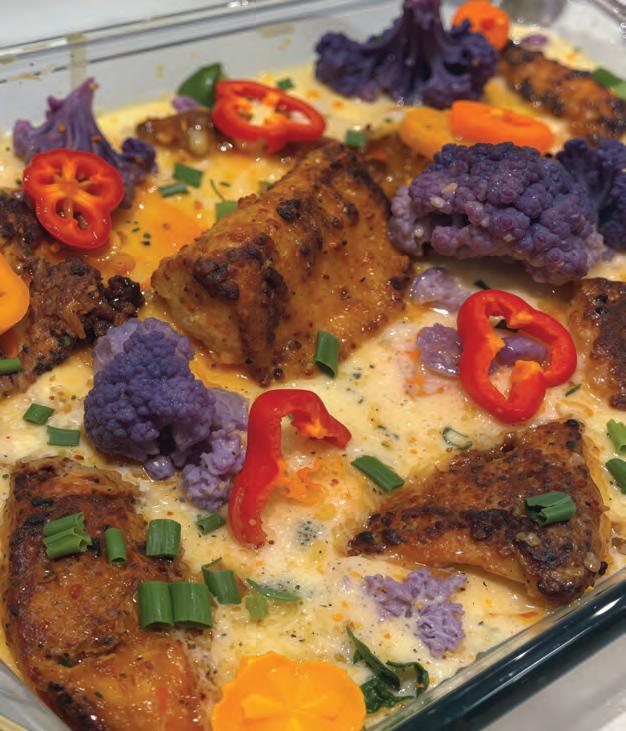
Recipe by: Marielle Wilkie, Hooked Bistro
Ingredients
For the fish
2-3 fresh mahi mahi fillets
1-2 tbsp fresh herbs, such as parsley, thyme or chives, finely chopped
1 clove garlic, minced
Zest of 1/2 lemon
Salt and black pepper
Olive oil, for searing
For the coconut-Prosecco beurre blanc
1/2 cup Prosecco
1 small shallot, finely minced
1 tbsp white wine vinegar, optional
2 cups coconut milk
2 packets coconut milk powder
100g (about 7 tbsp) cold unsalted butter, cubed
Salt, to taste
Vegetables
1 cup small purple cauliflower florets
1/2-1 cup sweet peppers, sliced
2 cups fresh spinach
Method
1. Herb rub the fish M ix the herbs, garlic, lemon zest, salt, pepper and a little olive oil. Rub over the mahi mahi and leave to sit for 5-10 minutes.
2. Sear the fish
H eat oil in a pan over medium-high heat. Sear the fish for 3-4 minutes per side, until golden and just cooked. Remove from the pan and set aside.
3. Sta rt the sauce base
Lower the heat to medium. Sauté the shallot until soft. Add the Prosecco and vinegar, if using, and simmer until reduced by half.
4. Bu ild the coconut layer
Whisk in the coconut milk and coconut milk powder until smooth. Simmer gently for a few minutes to thicken slightly and develop the flavour.
5. Co ok the vegetables in the sauce
Add the purple cauliflower first and simmer for 3-4 minutes. Add the sweet peppers and cook for another 2-3 minutes, until just tender but still vibrant.
6. Fi nish the beurre blanc
Lower the heat to very low. Whisk in the cold butter gradually, until the sauce is glossy and lightly thickened.
7. Ad d the spinach and bring it together
Add the spinach and let it wilt directly in the sauce. Return the mahi mahi to the pan, spoon the sauce over the fish and simmer gently for 1-2 minutes.
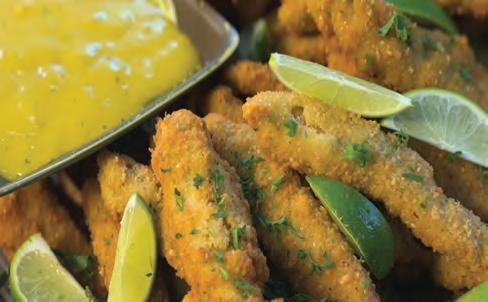
FLYING FISH GOUJONS
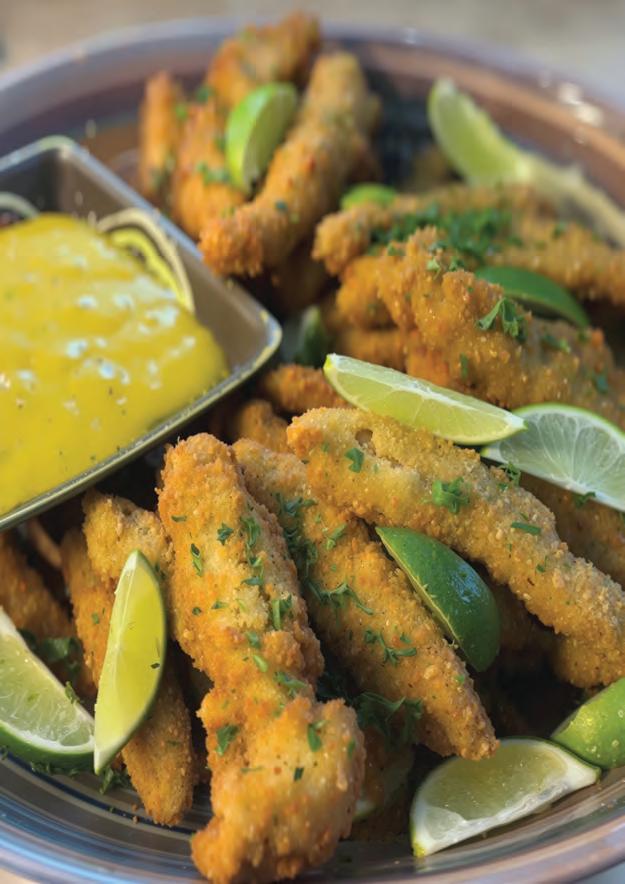
Recipe by: Marielle Wilkie, Hooked Bistro
Ingredients
Fish
6-8 flying fish fillets, boned and cleaned
Juice of 1 lime
Salt and black pepper
Seasoning mix
2 cloves garlic, minced
1 tsp fresh thyme, or 1/2 tsp dried thyme
1 tsp paprika
1/2 tsp all-purpose seasoning
1/2 tsp onion powder
For breading
1 cup flour
2 eggs, beaten
1 cup breadcrumbs, preferably panko for extra crunch
2 tbsp cornmeal, optional
For frying
Vegetable oil, for shallow or deep frying
Method
1. Prepare the fish
R inse the fillets with lime juice and water. Pat dry and cut into goujon-sized strips. Lightly season with salt and pepper
2. Se ason
Rub the fish with the garlic, thyme, paprika, onion powder and all-purpose seasoning. Leave to marinate for 10-15 minutes. Flying fish is delicate, so do not leave it much longer.
3. Set up the breading station
P lace the flour in one bowl, the beaten eggs in a second bowl and the breadcrumbs, with cornmeal if using, in a third bowl.
4. Co at the fish
Dredge each strip in flour and shake off the excess. Dip into the beaten egg, then coat in breadcrumbs, pressing lightly to help them stick.
5. Fry
H eat the oil to 170-180°C (340-355°F). Fry in batches for 2-3 minutes, until golden and crisp. Do not overcrowd the pan; this helps keep the goujons crunchy rather than oily.
6. Dra in
Remove and drain on paper towel or a wire rack. Sprinkle lightly with salt while hot.
Curry dipping sauce
Ingredients
1 cup mayonnaise
1-2 tsp curry powder, adjusted to taste
1 tsp honey
1-2 tsp fresh lime juice
1/2 tsp Dijon mustard
1/2 tsp garlic, very finely minced or made into a paste
Pinch of salt
Tiny pinch of turmeric, optional, for colour
Method
1. Make the base
Add the mayonnaise to a bowl.
2. Bu ild the flavour
Whisk in the curry powder, honey, mustard and garlic.
3. Ba lance
Add the lime juice a little at a time to lift the sauce and cut through the richness.
4. Se ason
Add salt, then adjust the curry level to taste.
5. Res t
Leave to rest for 10-15 minutes so the curry flavour develops.
CHEF TIPS
Prep ahead
• The curry dipping sauce c an be made several hours in advance — in fact, it benefits from the extra resting time, which allows the curry flavour to deepen and mellow. Cover and refrigerate until needed, then give it a quick stir before serving.
• Th e fish, however, needs a lighter touch. Flying fish is delicate, so limit the marinade to no more than 10–15 minutes — any longer and the acidity from the lime will begin to break down the flesh. You can set up your breading station ahead of time, but coat and fry the goujons close to serving for the best crunch.

















































Is service included?
How
to book, tip and read the bill when dining out in Barbados
The question usually comes at the end of dinner.
“Is service included?”
It sounds simple. It is not always simple. Visitors arrive in Barbados with habits from home. Americans and Canadians may expect to add a sizeable tip. British visitors may look for a service charge. Locals tend to do what makes the most sense: read the bill first.
That is the safest rule. Before adding anything, check what is already there.
Book ahead
Barbados may feel easy-going, but good tables still need planning.
This is especially true in the winter season, on weekends, during Crop Over, around public holidays, and anywhere with a sunset view. A small restaurant can fill quickly. So can a casual place if it has a loyal crowd and limited seating.
For popular west coast and south coast restaurants, book before the day you plan to dine. For Christmas, New Year’s Eve, Valentine’s Day and Easter, book much earlier.
Casual does not always mean walk-in. Some beach bars can make space. Some small restaurants cannot. Many places are working with limited tables, limited staff and carefully planned ordering.
A no-show is not just an empty chair. It is a lost table.
The polite approach is simple. Confirm the booking. Arrive on time. Call if plans
change. Call if you are running late.
Some restaurants will hold a table for a short grace period, then release it. Others ask for a deposit or credit card details for larger groups. That is not unusual. It helps protect the restaurant when one booking can take up a large part of the room.
When booking, give the details that matter: date, time, number of guests, children, dietary needs and any special occasion. It saves back-and-forth and helps the restaurant prepare properly.
Read the bill
A Barbados restaurant bill can include the meal, VAT and service charge.
They are three different things.
VAT is the government tax, charged at 17.5%. Service charge is separate. The line to look for, when deciding whether to tip extra, is the service charge.
Many restaurants add a service charge, often around 10 to 15%. Some do not. Some show it clearly on the menu. Others show it at the bottom of the bill. Larger groups may also attract a set service charge.
This is where visitors can get caught.
They see a tip line on the card machine and add more without noticing that a service charge has already been included.
So pause before paying.
Look for “service charge,” “gratuity” or “service included.” If it is not clear, ask the server: “Is service already included?”
That is a normal question. It is better than guessing.
What to tip
Tipping in Barbados is appreciated, but it is not meant to feel like a trap.
If a service charge is already on the bill, any extra tip is optional. Leave more if the service was especially good, if a large table was handled well, or if the staff made a real effort with dietary needs, children or a special occasion.
If there is no service charge, around 10% is a useful guide for good restaurant service. Cash is welcome. Many restaurants can also add a tip by card.
If you want to know how tips are handled, ask. Some restaurants pool gratuities. That means the money may be shared with servers, runners, bar staff, kitchen porters and others who helped make the meal happen. That matters. The person at the table is not the only person serving you.
Card machine moment
The awkward part often comes at the card machine.
Some diners report that the card machine is sometimes handed over already showing the “Add tip?” prompt, before they have had a clear look at the final total. That can feel uncomfortable, especially when a service charge is already on the bill.
The guest should not have to guess.
Before tapping, ask to see the total. If the “Add tip?” prompt appears and service has already been added, it is fine to select “no tip” or enter zero. That is not rude. It simply means you have already paid the service charge.
Restaurants can help by showing the bill clearly, explaining whether service is included, and giving guests a moment to decide without pressure.
Clear bills make better endings.

The easy rule
Dining out in Barbados does not require a complicated formula.
Book the table.
Show up on time.
Read the bill.
Remember that VAT is 17.5%. It is separate from service charge.
Check whether service has already been added.
Then tip with judgement. That is enough.





THE DIRECTORY
Barbados Foodie Magazine's ever-growing directory is your handy guide to the island's incredible selection of gourmet, organic, and health-conscious purveyors, restaurants, caterers, and business services. From artisanal suppliers to well-established wholesalers, our expanding directory connects you with the best of local flavours.
Bakeries and Confectioneries
BAJAN CAKES
Authentic Barbados Rum Cake made with Mount Gay Rum.
Contact: (246) 234-9193
Website: barbadosrumcakes. com
CARIBBEAN CONFECTION CO. LTD. (CCC)
Providing the Barbadian public and regional territories with handmade assorted candy.
Location: Edgehill, St. Thomas
Contact: (246) 425-0069
Email: orders@cccbarbados. com
GROUND UP
Plant-based vegan food and desserts made fresh daily
Contact: (246) 233-8548
Instagram: @groundup.bb
LA BAGUETTE
Fresh French Breads and Pastry.
Contact: (246) 850-2460
Website: labaguettebarbados. com
MAHOGANY BAKERY
A scrumptious selection of gourmet baked goods. Family-owned. Exquisite pastries. Find them at Brighton Farmer’s Market on Sunday mornings or order online through Instagram. Instagram: @mahogany.bakery
ROSE & LAFLAMME (BARBADOS) LTD.
Manufacturers of drink flavours and flavour concentrates. They supply flavours, essences, and extracts to hotels, restaurants, bars, bakeries, soft drink bottlers, ice-cream & popsicle manufacturers, essence manufacturers, and snow-cone vendors.
Location: Building No 9, Newton Industrial Park, Christ Church
Contact: (246) 428-8841 / 428-4112 / 420-5593
Website: roselaflammebds.com
THE WEST INDIA BISCUIT COMPANY (WIBISCO)
Manufacturer of the following brands of cookies and crackers: Tea Time and Shirley biscuits; Eclipse, SodaBix, Envita, and Crunch crackers. Contact: (246) 227-6200
Email: customerservice@wibisco.com Website: wibisco.com
Business Support
ANTILLES OUTDOOR
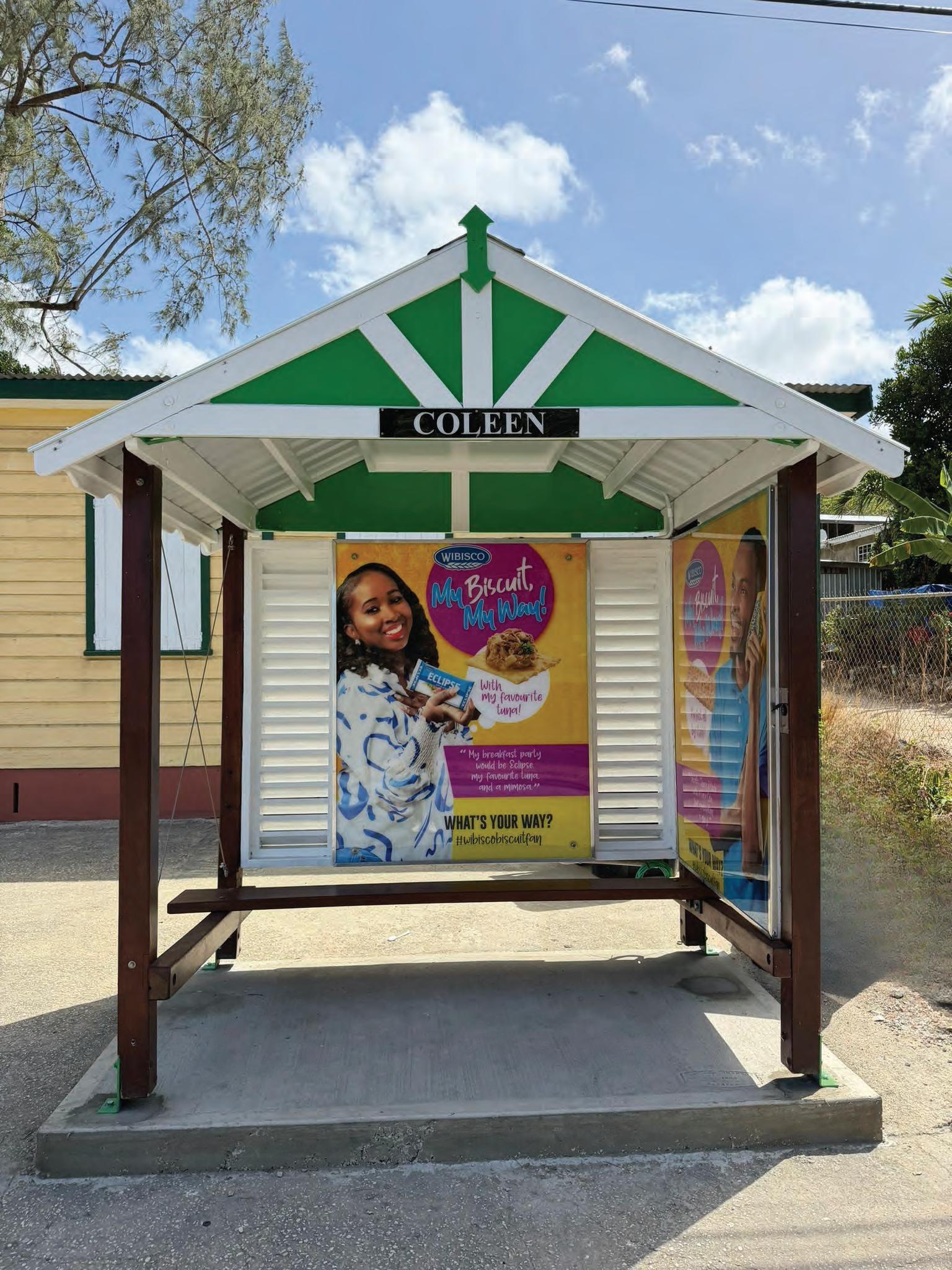
Barbados' leading out-ofhome advertising company since 1991, Antilles Outdoor connects brands with audiences island-wide through a network of solar-powered bus shelters, digital screens, and benches generating 50M+ monthly impressions. Community-driven at their core, they design and manufacture all products locally and champion sustainable initiatives like the Barbados Trailway.
Contact: (246) 428-2020 Website: antillesoutdoor.com
CARIBBEAN LABEL CRAFTS LTD.
Providing customers with top of the line packaging solutions. Location: Wildey Industrial Estate, St. Michael. Contact : (246) 436-7877
EXPORT BARBADOS (BIDC)
Providing effective solutions that will enhance the capacity of businesses to create and respond to market opportunities.
Contact: (246) 427-5350 Fax: (246) 426-7802
Email: bidc@bidc.org Website: exportbarbados.org
EXPRESSIONISM INC.
A creative ecosystem delivering sculptural signage, custom prints, and full-scale event infrastructure for clients who want bold, art-driven experiences.
Location: Kensington Mall Complex, Fontabelle, St. Michael
Contact: (246) 425-7203
Email: info@expressionism246 com
Website: myexpressionism.org
SIGN UP INC.
Print, Construct, Install
Location: Unit 38 Building 2 Newton Industrial Park, Christ Church.
Contact: (246) 622-1838
Instagram: @signupbb
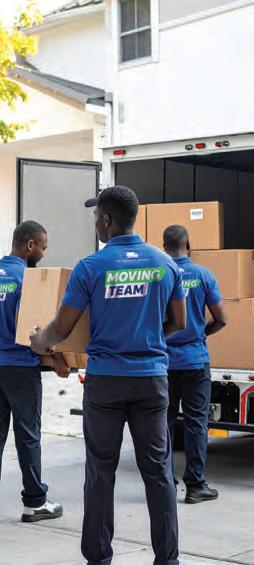
TMT TRANSPORT SERVICES
From home moves and office relocations to furniture deliveries and airport luggage transfers, TMT Transport Services makes moving easy - whether it’s for your home, business, or next event.
Contact: (246) 240-8267
Website: quotes.movingcompanybarbados.com
VIRGIN ATLANTIC
Virgin Atlantic’s Barbados office connects travellers to the UK and the region, with daily direct flights to London, Manchester, Grenada, and St Vincent. It’s all backed by world-class service and local support.
Location: Parravicino Offices, Hastings, Christ Church
Contact: (246) 266-3096
Email: CaribbeanSalesTeam@ Fly.Virgin.Com
Website: virginatlantic.com
Dairy Products
BICO LTD.
Famous for ice cream but also supplies a range of world-famous brands in frozen breads, novelties, and desserts.
Contact: (246) 430-2100
Email: admin@bicoltd.com
Dairy Products cont.
DOOFLICKY GOAT FARM
A family-owned and operated goat farm, producing fresh goat's milk, goat cheese & rich "garden gold" manure. Location: Woodbourne, St. Philip, Barbados. Contact: (246) 230-9263
GREEN MEADOWS CREAMERY
Producing fresh, raw, and pasteurised cow’s milk in St. John.
Contact: (246) 253-0368
Email: jmsdairyfarm@gmail. com
HATCHMAN’S PREMIUM CHEESES
Locally made, artisanal cheese. Location: Pasture Road, Haggatt Hall, St. Michael. Contact: (246) 436-5475
Email: info@hatchmanscheeses.com Website: hatchmanscheeses. com
HOADS DAIRY FARM
Goats Milk and cheese.
Location: St. Andrew Contact: (246) 422-9083
VAYLEN / VALENCIA LTD.
Specialising in the manufacturing of yogurts, samosas, simple syrup, vinegar, and chutneys. Location: #19 Brighton Crescent, St. Michael. Contact: (246) 421-7272 / 832-3516
Website: vaylenbarbados.com
Drinks
BAJAN PURE FILTERED WATER AND NPURE WATER FILTRATION SYSTEMS
Providing premium filtered water and advanced water filtration solutions for your home and business.
Location: Unit 3A, XS Warehouse Complex, Highway 4, Off Norman Niles Roundabout, St. Michael
Contact: (246) 436-8625
Email: info@npure.co Website: npure.co
COCO HILL FOREST GINGER RUM LIQUEUR
Made at Foursquare Distillery by macerating freshly harvested ginger from Coco Hill Forest in matured Barbados Rum.
Contact: (246) 571-5520
Email: info.cocohillforest@gmail.com Website: cocohillforest.com
CORUS SPARKLING RUM PUNCH
A refreshing twist on a true Bajan classic. Order online or check their website for retailers and rum shop locations. Website: corus.life
DREAD HOP BREWING
The only local microbrewery in Barbados.
Location: Brewery Lane, Gibbons Industrial Park, Gibbons, Christ Church. Contact: (246) 622-1225 or 231-1877 Website: caribbeanbrewhouse.com
ECO SKY WATER
Email: sales@ecoskywater.com Contact: (246) 572-4587 Website: ecoskywater.com
ELIXIR GENUINE CREOLE RUM PUNCH
A homemade creole rum punch inspired by two strong Caribbean women; stylish, complex, modest, and sweet, yet packs an unexpected punch with every sip. Available for purchase directly by ordering via Instagram @elixirrumpunch, all Wine World stores, and various other retailers around the island.
MÁS VINO
Offering a range of premium wines and spirits. Open Monday to Friday from 9 AM to 5 PM and Saturday from 9 AM TO 4 PM.
Location: Sunset Crest, Holetown, St. James (Next to Bean N’ Bagel). Contact: (246) 417-8711 or 230-8023 Email: info@masvinobb.com Website: masvinobb.com Instagram: @masvinobb
MUTINY ISLAND VODKA
Handcrafted from breadfruit in the US Virgin Islands. Currently distributed in Barbados by Bryden Stokes, try Mutiny at Local & Co in Speightstown or request it at all your favourite locations. Website: mutinyislandvodka. com
PERKINS & SONS
Perkins & Sons crafts smallbatch Bajan rum and sugarcane gin with over 75 years of family tradition behind every bottle. Visit their website to shop or find local stockists. Website: perkinsandsons.com
PLATINUM WINES
Free deliveries of wholesale wine orders of $150 and over. Their Wine Circle Club is an exclusive and comprehensive club for those who enjoy the “good life” and love wine. Their newsletter features critiques, trends, and money-saving specials and activities. Monthly mix 6 and save specials. Contact: (246) 629-4525 or 629-4517
Email: celeste_pontifex@ rlseale.com.bb
Website: platinumwinesbarbados.com
SPARTAN DISTRIBUTION
Location: 17 Lears Business Park, Lears, St. Michael Contact: (246) 232-0660
Email: sales@spartandistribtution.bb
Website: spartananimalkingdom.com
TRIDENT WINES
Known for the highest level of service, Trident Wines delivers to your door mixed cases from their extensive wine list. Visit their beautiful shop “The Wine Cave” at Walkers World, Millhouse Complex, Canewood, St. Thomas.
Contact: (246) 228-5261
Website: tridentwines.com
Drinks cont.
WHISKY REBELLION INC.
Barbados’ online boutique retailer of premium spirits. Visit our website to view our curated collection of single malt whiskies from all over the world, bourbons, and premium rums! Free islandwide delivery on orders $100 and over.
Contact: (246) 231-1932
Email: sales@whiskyrebel. com
Website: whiskyrebel.com
WINE WORLD
Wholesale provider of fine wines and spirits, cooking and tasting events.Contact: (246) 434-4305
Website: wineworldinc.com
WYNDHAMS
Local island coffee roaster, distributor of Lavazza coffee, Harneys and Son’s teas, and fine coffee equipment and accessories. Now offering coffee tasting tours.
Contact: (246) 538-1000
Email: info@wyndhams.bb
Website: wyndhams.bb
Eggs, Meat and Poultry
AMIR’S CHICKEN
Halal chicken and turkey. Available at leading supermarkets or directly from their plant.
Location: Lowlands, Christ Church.
Contact: (246) 428-2647
Website: facebook.com/amirschicken
CARMETA’S
Locally grown meats - duck, chicken, pork, rabbit, beef, and black belly lamb, as well as gluten-free cassava, breadfruit, and sweet potato flours. Location: Bridgetown, St. Michael
Contact: (246) 427-0065
FLINT HALL FARMS
Pasture-raised eggs, lamb, goat, pork & broilers.
Location: Kendal Plantation, St. John Contact: (246) 244-8458
Website: facebook.com/ flinthallfarms
HANSCHELL INNISS
The place to get Farmers Choice, the Bajan Ham choice. Also available at supermarkets island-wide. Location: Goddard’s Complex, Kensington, Fontabelle, St. Michael Contact: (246) 426-3544
Email: hanschell@thegelgroup.com
Website: hanschellinnissltd. com
PEG FARM AND NATURE RESERVE
Free-range meats, eggs, and vegetables.
Location: Easy Hall, St. John Contact: (246) 433-9806
Website: pegbarbados.com
THE SMOKERY
Homemade bacon.
Location: Industry Plantation House, Bridgetown Contact: (246) 259-3224
Website: Facebook.com/ TheSmokerybds
Farm Produce
AC FRUIT GROWERS
Supplier of fruits, vegetables, ground provisions, and herbs. Contact: (246) 420-7979
Website: Facebook.com/acfruitgrowers
GROW IT
Grower of non-GMO, pesticide-free, nutrient-packed micro-greens and sprouts. Available at Massy Stores, Popular Discounts, and for delivery to restaurants. Contact: (246) 230-1333
Email: growitcaribbean@gmail.com Website: growitstore.com
MARSHALL FARMS
A small Urban Family Farm producing fresh, organic, locally grown Micro-greens, free-range eggs, and an Aquaponic system to grow fresh variety lettuces. Marshall Farms products can be found at Brighton Farmers Market, select supermarkets island-wide. Contact: (246) 571-3129
Email: marshallfarms3@ gmail.com
PEG FARM & NATURE RESERVE
Fruit, Herbs, and Vegetables
Location: Easy Hall Plantation, St. John
Contact: (246) 433-9806
Website: pegbarbados.com
VEG CO
A variety of vegetables and herbs. Location: Grove Plantation, Six Roads, St. Philip Contact: (246) 622-4063
Email: mholder.vegco@gmail. com
WALKERS RESERVE
Bananas, Figs, Plantain, Edible flowers, Cassava, Lemongrass, Moringa, Ginger, and more.Location: Walkers, St. Andrew Contact: (246) 422-9308
Email: info@walkersreserve. com Website: wirred.org
Farmer’s Markets
BRIGHTON FARMERS MARKET
Every Saturday, 6:30 AM10:00AM
Location: Brighton Plantation, St. George
Instagram: @ brightonfarmersmarket
CHEAPSIDE MARKET
Location: Cheapside, Bridgetown, St. Michael
Open: Monday to Saturday, 7AM - 3PM
HASTINGS FARMERS MARKET
Location: Art Splash, Hastings, Christ Church
Open: Wednesday, Saturday and Sundays, 8 AM - 2 PM
Website: Facebook.com/
HAYMANS MARKET
Haymans Market is located in St. Peter on the North/ West side of Barbados and showcases the islands best ingredients, chefs, entrepreneurs, and entertainment.
Contact: (246) 419-0055
Website: haymansmarket.com
Fish Markets
BRIDGETOWN FISH MARKET
Open: Monday to Sunday, 7AM - 7PM
Contact: (246) 431-0202
OISTINS (BERINDA COX FISH MARKET)
Open: Monday to Sunday, 7AM - 9PM
Contact: (246) 428-7180
SPEIGHTSTOWN FISH MARKET
Open: Monday to Sunday, 7AM - 5 PM
Contact: (246) 422-2912
Health & Wellness
BETTER BALANCE BEING
Wellness coaching with Ravina Thomas. Located at Lascelles, Holetown, St. James Website: betterbalancebeing.com
HELICONIA HEALTH
Website: Heliconiahealth.com
Email: Holly@Heliconiahealth. com
Home, Garden Supplies & Services
Restaurants & Catering
CARTER’S GENERAL STORE
Discover a vast selection of building materials and much more at Carter's. With eight convenient locations across Barbados in Wildey, High Street, Barbarees Hill, Lower Estate, Warrens, Six Roads, Princess Alice Highway, and Pilgrim Road. Contact: (246) 431-1500 Website: cartersonline.bb
RHINO RENTALS INC.
Equipment Rentals, Land Clearing Services, Soil, Mulch and Other Materials. Contact: (246) 427-4466 / 247-4466
Email: info@rhinorentalsbarbados.com
Website: rhinorentalsbarbados.com
SEEDBURST NURSERIES
Seedlings, Fertiliser, and Growing Media Contact: (246) 428-1938
Website: facebook.com/seedburst
SLEEP RITE (BARBADOS) LIMITED
Leading supplier of mattresses and bedding products in Barbados. Visit their showroom located in Chelston Avenue, Culloden Road, St. Michael. Contact: (246) 43-SLEEP (75337)
Website: sleepritebarbados.com
SUSTAINABLE BARBADOS RECYCLING CENTRE (SBRC)
Soil, mulch, and other soil amendments. Contact: (246) 425-2255
ASIAN SPICE INDIAN RESTAURANT
Located at The All Seasons hotel on the West Coast. Offering a wide variety of Mughlai dishes.
Contact: (246) 432-5046 or (246) 432-1321
Website: allseasonsresort. bb/asian-spice-indian-restaurant-barbados
BAIN’S KITCHEN
Offering daily lunch, dinner, and specials. Catering available for parties, private dinners, and small events.
Location: Hilton Road, Maxwell, Christ Church. Contact: (246) 249-3803
Instagram: @bains_kitchen
BENTO BOX
Fresh sushi and Japanese-Caribbean fusion takeaway.
Location: Warrens, St. Michael Contact: (246) 537-2348
BOMBAS RESTAURANT
Opening Hours: Tuesday to Saturday from 4 PM. Closed on Sundays
Location: Road View, St. Peter Contact: (246) 236-7750 / 432-5664
BUZO OSTERIA ITALIANABARBADOS
Savour the flavours of Italy in the heart of Barbados. Open every day.
Location: The Pavilion, Hastings, Christ Church Contact: (246) 629-BUZO Website: buzorestaurant.com
Restaurants & Catering cont.
CAFÉ SOL
Stop in for lunch or dinner or just a snack on the patio overlooking St. Lawrence Bay. They offer a sizeable margarita list and have recently created one of the most extensive mojito menus in Barbados.
Location: St. Lawrence Gap, Christ Church
Contact: (246) 420-7655 Website: cafesolbarbados.com
CARIBBEAN VILLA CHEFS
Boutique culinary services including private chef dinners, gourmet drop-offs, cooking lessons, and full event catering - plus professional chef placement, butlers, sommeliers, and waitstaff.
Contact: (246) 233-5102
Website: caribbeanvillachefs.com
CINNA CAFE
A South Coast gem open for breakfast, coffee and lunch. Location: Skyway Plaza, Hastings, Christ Church
Contact: (246) 4281160
IG: @cinnacafebb
COASTAL CRAVINGS
Menu offerings include hearty Bajan dishes, comfort food and local drinks
Location: Holetown, St. James (Opp. St. James Parish Church) Contact: (246) 571-7745
IG: @coastalcravings_246
CUTTERS OF BARBADOS
Deli treats all day, catering services, pre-ordered meat and cheese platters, award-winning rum punch. Delivery available. Location: Crane, St. Philip Contact: (246) 423-0611
Website: cutters.bb
DE GARAGE BAR & GRILL
A great spot to relax and unwind in Bathsheba, St. Joseph. Contact: (246) 433-9521 or 844-1911
ECO LIFESTYLE + LODGE
Proudly offering a unique, primarily plant-based and organic menu.
Location: Tent Bay, Bathsheba, St. Joseph. Reservations are recommended.
Contact: (246) 433-9450
Website: ecolifestylelodge.com
FLINDT GOURMET
Creative canapés, quality meals, decadent desserts and of course Carsten’s famous celebration cakes are made to order, with delivery or pickup options. Flindt Gourmet also offers cooking classes and catering services in your own home, office or rental villa. Contact: (246) 266-9094
Website: flindtgourmet.com
FRESKO
The world in a bowl. Fresko serves up vibrant meals made with locally sourced ingredients, designed for a healthier lifestyle, with three locations to enjoy - Coverley, Limegrove and Ross University School of Medicine.
Contact: (246) 234-7653 (Coverley) (246) 235-4352
(Limegrove) Website: freskobarbados.com
GEORGE WASHINGTON CAFE
Experience the beauty of George Washington House, while enjoying the art of coffee & signature dishes from across the region.
Open daily from 7 AM - 4 PM. Location: The Garrison, St. Michael Contact: (246) 622 2365
GREEN MANGO CAFÉ
Contact: (246) 266-4009
IG: @greenmangocafebb
LE SHACK RESTAURANT & BAR
Le Shack is a fun, vibrant place happily serving quality food with personality, located on Crane Road, close to one of the most beautiful beaches of the island! You will experience an eclectic menu, shaped by Chef Jean Jacques and Chef Elvis.
Location: Crane Road, St. Philip Contact: (246) 271-3008
Email: info@leshackrestaurant.com
Website: leshackrestaurant.com
THE GRILLE AT HILTON BARBADOS RESORT
Enjoy an authentic Bajan experience that's sure to tantalise your taste buds and satisfy your senses.
Location: Needham’s Point, St. Michael Contact: (246) 434-5761
Website: barbados.hilton.com
IVANA’S WELLNESS AT CITRINE’S
Specialising in gourmet salads, catering, and personalised meal plans.
Location: Bagatelle Great House, St. Thomas. Contact: (246) 826-0000
IG: @ivanaswellness
NAUTI HQ
The land - ba sed home of sea adventures, serving fresh - of f-th e - bo at fish grilled to perfection alongside tropical cocktails, beach - in spired bites and island classics in a laid - ba ck coastal setting. Open Wednesday to Monday from 10AM to 10PM
Location: Mount Standfast, St. James
Contact: (246) 833-1208
Website: nautihq.com
MULLIGANS ON THE GREEN
Discover the perfect blend of international cuisine with a Bajan twist.
Location: Barbados Golf Club, Durants, Christ Church
Contact: (246) 538-4658
Website: barbadosgolfclub.com
O2 BEACH CLUB & SPA
With a culinary landscape that spans the globe, this oceanfront resort caters to every gastronomic desire, promising an unforgettable dining experience from sunrise to sundown. Location: Dover Road, Christ Church
Contact: (246) 418-1800
Website: o2beachclubbarbados.com
RAINBOW REBOOT BY STEFANIA OLIVARES
Olivares introduces all the colours of the rainbow onto your plate! This 5-day programme includes a daily delivery of a juice, smoothie, salad, and soup - plant-based whole food, cooked and raw and delicious.
WhatsApp: (246) 820-4690
SAND STREET BISTRO
A casual seaside bistro located in Speightstown, St. Peter. Enjoy local flavours, cocktails, and an unforgettable dining experience. Open Tuesday to Sunday, 11AM – 10PM.
Contact: (246) 422-1175 Website: sandstreetbistro.com
SAKÉ
Elevated Asian fusion cuisine by Chef Scott Ames. Open Monday to Saturday for lunch (11:30AM - 3PM) and dinner (6PM to 10PM).
Location: Hastings Main Road, Bridgetown, Christ Church Contact: (246) 537 0117 Website: sakebarbados.com
SEA VIEW BAR
Real Bajan country food with unbeatable views of the east coast. Open Tuesday to Sunday, 10AM to 7PM. Location: Bathsheba, St. Joseph Contact: (246) 237-4103, 821-4103 or 624-9518
SPLURGE CAKE STUDIO
Beautiful and delicious cakes, pastries and more.
Email: splurgecakestudio@gmail.com Contact: (246) 431-0863
SUNGROUP HOTELS
Sun Group Hotels is a Barbadian-owned hospitality group bringing a fresh culinary vision to the island across three distinct dining experiences — the beachfront flavours of Savannah Beach Club, the wellness-led cuisine of Sugar Cane Club, and the vibrant social dining of Sand Street Bistro in Speightstown. Contact: (246) 434-6835
Website: sungrouphotels.com
STIX GRILL
A Fusion of culture, grilled to perfection. Healthy and freshly made!
Location: Worthing Square, Worthing, Christ Church Contact: (246) 836-1477
SURFERS BAY
Nestled in a quiet and magical part of the island, Surfers Bay Beachfront Inn & Gastro Pub beckons travellers and locals alike with its irresistible blend of rustic chic surf charm and unparalleled culinary delights.
Location: Green Gardens, Landsdown, Silver Sands, Christ Church
Contact: (246) 235-1502
Website: surfersbay.com
TAPAS RESTAURANT
Offering a fusion of Thai, Bajan, Italian, and Mexican influences, creating a global spread of flavours that resonates with a diverse clientele.
Location: Hastings Main Road, Christ Church
Contact: (246) 228-0704
Website: tapasbarbados.com
Email: info@tapasbarbados.com
THE CLIFF RESTAURANT
Indulge in a luxurious fine dining experience on the water’s edge.
Location: Derricks, St. James. Contact: (246) 432-1922
Email: reservations@thecliffbarbados.com Website: thecliffbarbados.com
THE FISH POT
Opening Hours: Breakfast 8 AM to 10 AM Monday to Friday and 8 AM to 10:30 AM Saturday and Sunday. All Day Dining 12 PM to 8:30 PM
Location : Little Good Harbour, Shermans, St. Lucy
Contact: (246) 439 3000
Website: fishpotbarbados.com
LOBSTER ALIVE
Regionally caught live lobster. Location: Wesley House, Bay Street, Bridgetown, St. Michael Contact: (246) 435-0305
Email: info@lobsteralive.net
Website: lobsteralive.net
LOCAL
& CO
From the farmer nurturing his produce ‘til harvest, to our Chef passionately creating gastronomic perfection, at Local & Co. you meet the hands that feed you
Open: Mon - Sun 9 AM - 11 PM.
Location: Queen Street, Speightstown, St. Peter Contact: (246) 421-3276
Email: reservations@thelocalbarbados.com
Website: thelocalbarbados.com
THE RUSTIC CHEF
Restaurant and café by Chef Dawid Pniak. Freshly prepared, European style cuisine with a gourmet twist!
Location: Limegrove Lifestyle Centre, Holetown, St. James Contact: (246) 432-0116 or (246) 432-0117
Email: therusticchefbarbados@gmail. com
Website: therusticchefbarbados.com
THE PARK CAFE
Join them for breakfast, lunch daily, unique Sunday ‘Brunch Me’ concept or Friday and Saturday dinners and drinks - an oasis of relaxation and culinary delights awaits you! Location: Behind Massy Worthing, Peronne Village, Christ Church Contact: (246) 421-7448
Restaurants & Catering cont.
THE ROCKLEY
Boutique hotel, restaurant, and bar offering a full-on Barbadian experience.
Location: Rockley Beach, Hastings, Christ Church Contact: (246) 435 8561
Email: eat@therockleybarbados.com
Website: therockleybarbados.com
WORTHING SQUARE FOOD GARDEN
Worthing Square is a Food Garden with 20 unique food canteens, to cater to every culinary experience! Open daily from 10AM - 11PM. Located at Cave Shepherd Worthing Parking Lot, Worthing, Christ Church. IG : @worthingsquare
ZEMI EAST COAST CAFE
Coffee, Dining, Cocktails. Open Wednesday to Sunday from 11AM to 5PM.
Location: Hillcrest Community Centre, Bathsheba Contact: (246) 571 9172
Email: zemicafebarbados@ gmail.com IG: @zemicafebarbados
Seafood
LOBSTER ALIVE
Regionally caught live lobster. Location: Bay Street, St. Michael Contact: (246) 435-0305 Website: lobsteralive.net
PREMIUM SEAFOOD LTD.
Location: Lancaster, St. James Contact: (246) 437-2498
Website: premiumseafoodbarbados.com
SHORELINEZ
Location: Lot 4A Uplands Plantation, St John Contact: (246) 433-0227
Website: shorelinez.com
Shopping
ABED’S
A cornerstone of the island's retail landscape, specialising in high-quality fabrics, home décor, and uniforms. Shop online or visit their two locations at Sheraton Mall, Christ Church, and Bridgetown, St. Michael.
Contact: (246) 427-2233
Website: abeds.bb
A-ONE CARLTON SUPERMARKETS
Emerald City in St. Philip and A-ONE Carlton in St. Michael; home of Proper Pork, distributors for Bob’s Red Mill line of health-conscious foods offering a great selection of sundries. Website: aonesupermarkets.com
BELLA DONNA BOUTIQUE
Casual to casually elegant clothing and jewellery, located downstairs at Shop #4, downstairs Town Square Mall, Speightstown, St. Peter. Contact: (246) 850-0726
BLADES & WILLIAMS HOTEL & RESTAURANT SUPPLIES
Commercial and residential kitchen appliances and supplies.
Contact: (246) 426-2850
Website: bladesonline.bb
BYD BARBADOS
Home of the #1 global sales new EV automaker, operated by the authorised dealer, Automotive Art.
Located: Canewood, St. Michael.
Contact: (246) 426-1800
IG: @bydauto_barbados
CARTER’S GENERAL STORE
Discover a vast selection of building materials and much more at Carter's. With eight convenient locations across Barbados in Wildey, High Street, Barbarees Hill, Lower Estate, Warrens, Six Roads, Princess Alice Highway, and Pilgrim Road.
Contact: (246) 431-1500
Website: cartersonline.bb
CLIFTON MARKET
Two locations (Limegrove, St. James & Worthing Main Rd, Christ Church) offering premium meats, gourmet foods and health - con scious options for home cooks and indulgent shoppers alike.
Contact: (246) 537-0510
Website: cliftonmarketbarbados.com
Email: info@cliftonmeats.com
CONTINENTAL FOODS
A privately owned food service import and distribution company operating in Barbados. It sources the highest quality food products from around the world.
Contact: (246) 425-1800
Website: continentalfoodsbarbados.com
DILLON AMBER DANE
D.M.I Complex Fontabelle, St. Michael Contact: (246) 436-4836
Email: info@dillonamberdane.com
Website: dillonamberdane.com
GALE’S AGRO PRODUCTS
Farm supply store open Monday to Friday from 8am5pm and Saturdays from 8am - 1pm.
Location: Market Road, Mangrove, St. Philip Contact: (246) 416-5600
Website: galesagroproducts.com
HARRIS PAINTS
Proudly offering the largest selection of paint colours and tools in the Caribbean. Find Harris Paints at all major hardware stores or visit one of their three Colourcentres located in Wildey, Six Roads, or Fitts Village. Website: barbados.championsofcolour. com
HEATHER HARRINGTON JONES
The premier private jeweller of Barbados, offering exquisite and bespoke jewellery pieces. Location: Indigo Courtyard, Holetown, St. James. Contact: (246) 432-6318 Website: heatherharringtonjones.com
LIMEGROVE LIFESTYLE CENTRE
Experience duty-free and tax-free shopping, complemented by a unique mix of retail, dining, services, offices, and residential options. Open from 10AM to 6PM. Restaurant and bar hours vary, starting from 8AM.
Location: Holetown, St. James Website: limegrove.com
MINDFUL MARKET
Discover 3,000+ products for every dietary preference—Gluten Free, Dairy Free, Vegan, Organic, Keto, Paleo, Low FODMAP and more. From groceries and organic wines to clean beauty and natural supplements, Mindful Market is your one-stop wellness shop. Location: Millhouse & Home Canewood, St Michael. Contact: (246) 629-4249 Website: mindfulmarketbb.com
NIVEN DISTRIBUTION
Wholesale wines, mixers, beer, meats, and more.
Contact: (246) 432-8453
Website: nivendistribution.com
THE GOURMET SHOP
Food gourmet store and upmarket delicatessen selling great food and wine, branded products with great service. Contact: (246) 432-7711
Website: thegourmetshopbarbados.com
THE GREEN MONKEY CHOCOLATIER
Renowned for their sophisticated, handcrafted creations, the European trained chocolatiers make their delicious pieces of edible art daily using only fresh ingredients and the highest quality chocolate.
Locations:
Limegrove - (246) 427-5567; Quayside Centre - (246) 435-5567
Website: thegreenmonkeychocolatier.com
THE SHOP AT PREMIUM SEAFOOD
Specialising in quality seafood and meat and offering a range of pastas, sauces, condiments, and wines. The perfect accompaniments all in one convenient location at Lancaster, St. James.
Contact: (246) 437-2498
Email: premiumseafoodltd@caribsurf. com
Website: Premiumseafoodbarbados.com
SUPREME DISTRIBUTORS INC.
Distributor of a variety of quality products available at our warehouse in Newton, Christ Church or in supermarkets island-wide.
Contact: (246) 418-6910
Email: supremedistributors@caribsurf. com
Website: supremedistributorsbb.com
Tours & Experiences
BOOSY'S SURF SCHOOL
Surfing lessons. 37 years of experience. Simplified and tailored to you.
Whatsapp: +1 (246) 267-3182
Website: learntosurfbarbados.com
IG: @learntosurfbarbados
COCO HILL FOREST
Hiking Trails, Forest Bathing, Agroforestry, Coconut, Cocoa & Ginger Nursery. Open weekdays from 10 AM-4 PM and weekends from 9 AM-5 PM. Location: Richmond Road, St. Joseph Contact: (246) 571-5520
Email: info.cocohillforest@gmail.com Website: cocohillforest.com
CUTTERS MIXOLOGY MASTERCLASS
Learn to make the perfect Barbados Rum Punch. Gather your friends, make your very own bottle of Very Special Rum Punch BB$150 includes Cutters select menu with starter and dessert, mixology secrets, and your personalised bottle of joy.
Email: service@cutters.bb
Contact: (246) 423-0611
Website: cutters.bb
GEORGE WASHINGTON HOUSE & THE GARRISON TUNNELS
Open for tours 365 days a year. Monday – Sunday 9AM to 4PM
Location: Garrison, St. Michael Contact: (246) 228-5461
Email: info@georgewashingtonbarbados.com
Website: georgewashingtonbarbados.com
LICKRISH FOOD TOURS
The most exciting, informative and belly-filling cultural tours in Barbados.
Contact: (246) 622-1886
Website: lickrishfoodtours.com
Tours & Experiences cont.
MOUNT GAY HISTORIC DISTILLERY TOURS
Come to the site where Mount Gay has distilled rum for over 300 years to discover how Barbados became the birthplace of rum and how Mount Gay’s focus on quality has made us the oldest, continuously running rum distillery in the world. With unparalleled access to our working estate, you will explore our lands, original well, molasses house, fermentation house, distillation house and bonds. This tour is located at Mount Gay’s Northern Facility in the parish of St Lucy, in the North of Barbados. Website: mountgayrum.com
RASCALS OF BARBADOS
The Caribbean’s largest waterpark, beach bar and beach restaurant
Contact: (246) 234-9999
Email: rascalsbandr@gmail.com
Website: rascalswaterpark.com
ST. NICHOLAS ABBEY GREAT HOUSE, DISTILLERY AND RAILWAY
Contact: (246) 422-5357
Website: stnicholasabbey.com
FOODIE
Published twice per yearsummer and winter editions
Enquiries: beseen@foodie.bb































Mulcher Excavator Bulldozer
•Mattresses
•Baby Products
•Accessories
•Pillows
•Foam