


+The challenge is staying fast and calm—speed can easily create a sense of chaos’ - p38
Issue 45 May/June 2026

+The challenge is staying fast and calm—speed can easily create a sense of chaos’ - p38
Issue 45 May/June 2026

•
•
•
•


United, we go further
With UTB at the helm, you can be condent your bridging deals will sail over the line. Our latest service enhancements include expanded AVM usage, the launch of a new Desktop Valuation option, Dual Representation extending to include nonregulated bridging and a raft of criteria updates designed to help you place more cases for your clients. www.utbank.co.uk/intermediaries

Editor-in-chief
Beth Fisher
Magazine manager
Dhuha Al-Zaidi
Creative direction
Beth Fisher
Dhuha Al-Zaidi
Sub editor
Christy Lawrance
Contributors
Jessica Reehal, Joseph Aston, Shazad Ahmed, Siv Sivanesan, Karan Doshi, Piragash Sivanesan, Jennifer Cruickshank, Star Yixuan Hu, Beth Fisher, Kate Cowan, Kim Parker, Justin Trowse, Matthew Elliot, Roz Cawood, Calypso Cox, Matt Watson
Photography
Connie Burke, DG Corporate
Sales and marketing
Beth Fisher beth@medianett.co.uk
Ellen Townsend ellen@medianett.co.uk
Special thanks Cover story respondents Charlene Nayler, TAB SQ1 Team
Printing Jam Print
Design and image editing BePro
Bridging & Commercial Magazine is published by Medianett Publishing Ltd
Managing director
Beth Fisher beth@medianett.co.uk 0203 818 0160
Follow us: LinkedIn @Medianett Publishing | Instagram @medianettpublishing
To read about our commitment to the environment and sustainable print publishing, please visit https://bridgingandcommercial.co.uk/page_magazine.
There are moments that define a market.
Not because they arrive with fanfare, but because they force an industry to stop, look in the mirror and ask itself some difficult questions.
This issue of Bridging & Commercial is our Market Affairs Issue, and throughout these pages you’ll find a sector doing exactly that.
At the centre of the conversation is the collapse of Market Financial Solutions earlier this year. What began as a story about one lender has rapidly evolved into something much bigger: a debate about governance, transparency, funding scrutiny, institutional confidence, and the future shape of specialist property finance.
For our cover story [p50], we brought together nine senior leaders from across the specialist lending market to discuss how this could have happened, what lessons must be learned, and what comes next. The result is one of the most candid and consequential conversations we have published in recent years.
Their conclusions are striking. Some believe the sector is witnessing a necessary self-correction. Others warn that tightening funding requirements, enhanced audit expectations, and greater governance demands will trigger a wave of consolidation over the next 12 to 18 months. As funding scrutiny intensifies and institutional capital becomes more selective, many believe the era of easy expansion may be coming to an end.
The debate raises uncomfortable but necessary questions. Have some lenders grown faster than their governance frameworks? Has competition compressed margins to unsustainable levels? Can smaller lenders absorb the increasing demands of audits, reporting requirements, and institutional oversight while remaining commercially viable? And perhaps most importantly, what does a healthy specialist lending market actually look like?
What emerges is a picture of an industry entering a period of reckoning.
Several contributors predict a significant flight to quality, with capital increasingly flowing towards lenders with the strongest governance, reporting standards and funding structures. Others warn that enhanced scrutiny could create a two-tier market, separating well-capitalised institutional platforms from smaller operators facing mounting operational and regulatory burdens.
One of the most striking observations made during the discussion was that the greatest risk may not be on the demand side at all.
Borrowers continue to need finance. Brokers continue to need solutions. The challenge, many argued, lies on the supply side: who can access capital, under what conditions, and at what cost.
Many of those around the table believe this moment could ultimately strengthen the sector. Greater transparency, better governance and more robust funding structures may be painful in the short term, but they could also provide the foundations for a more credible, resilient and institutional market in the years ahead.
As one contributor put it, “The shakeout will be uncomfortable, but it’s probably going to be very healthy.”
Whether MFS proves to be an anomaly or a catalyst remains to be seen. What is clear, however, is that the conversation it has triggered is far from over.
Elsewhere in this issue, we meet Lumora Capital [24], whose leadership team argues that the industry doesn’t need more lenders saying yes—it needs more lenders who know exactly what their yes means. In an increasingly crowded marketplace, they believe certainty has become a competitive advantage. As they told us: “Brokers don’t want theatre. They want a lender who can perform.”
Performance, conviction, and timing are themes that run throughout this edition.
We sit down with Star Yixuan Hu to discuss why she chose to launch Orientis in what many would describe as one of the least certain economic environments in recent memory [p32]. Against a backdrop of geopolitical instability, unpredictable rate movements, and persistent macroeconomic uncertainty, she explains why she saw the current market not as a reason to wait, but as the most compelling time to build.
We also travelled to Manchester to visit Roma’s impressive new headquarters [p112], where we spoke to its refreshed leadership team about the lender’s next chapter, a new funding line, and the ambitions behind its long-term lending division. Meanwhile, in Ibiza, we joined Black & White Bridging for its overseas conference [p84], where the conversations were refreshingly candid. Behind the sunshine and networking, senior figures spoke openly about growth, service standards, operational pressures, and some of the uncomfortable truths facing a lender with serious ambitions to scale.
And, of course, no summer issue would be complete without celebrating the people who continue to drive this industry forward. Following another memorable day at the B&C Awards 2026, we’ve included a special photographic review of the night, capturing the winners, reactions, celebrations, and moments that made this year’s event our most talked-about yet [p71].
Taken together, these stories paint a picture of a market at an inflection point.
The specialist finance sector remains ambitious, entrepreneurial, and resilient. But it is also becoming more mature, more scrutinised and, perhaps inevitably, more demanding of those who operate within it.
The gold-rush years may be fading. In their place, a new era appears to be emerging—one defined less by who can grow the fastest and more by who can build the strongest foundations.
As always, we’d love to hear your thoughts.
Enjoy the issue.
Beth Fisher

“Whether it’s for a broker waiting on a credit decision or an underwriter trying to work through a case, we’re building technology that actually makes a difference”
Who can brokers really trust?
Lumora Capital knows what intermediaries want / A female-led brokerage joins the market
Behind-the-scenes on TAB’s £800m lending milestone
A deep-dive into why recent lenders went bust
A montage of our glamorous 1950s night to remember
B&W takes conferences to a new level
Monitoring agents matter / The key to delivering 1.5 million homes
AI agents built for brokers and lenders
Renters’ reform is changing how deals get done
Calypso Cox
Roma Finance secures a new funding line
SDKA’s 10th anniversary / Medianett Gala / SIP events on the horizon
Matt Watson




Not every lender is what it appears. Behind the polished branding, the competitive rates, and the promises of speed, some firms have been hiding cracks in their foundations—and brokers are now paying close attention. We asked three specialists how the recent lender administrations have changed the way they work, and what they’re looking for that will change how they choose to collaborate with firms
Jessica Reehal Specialist broker at London Mortgage Solutions
Yes, positively—it’s made me more focused and more intentional.

Bridging has always been a fast-moving space, and that’s exactly what makes it so powerful when used correctly. What this has done is sharpen my approach behind the scenes. I’m looking beyond speed and rates and focusing more on consistency, delivery, and how lenders perform across different scenarios.
It hasn’t shaken my confidence in the market. If anything, it’s reinforced the importance of working with the right lenders and placing deals properly. There are still some very strong players in this space, and that gives me confidence when advising my clients.
Joe Aston Sales and commercial director at Aria Finance

It’s actually a nice and sobering reminder that there is more to responsible lending than just rate and criteria headlines. I believe that most established and reputable broker firms have always been aware of lending stability, funding processes, and lender integrity—but recent events have been a timely reminder of the importance of industry ethics and trust. I think the impetus is now on lenders to prove their reliability to the wider market, and that level of accountability isn’t a bad thing—particularly given that there is a lot of ‘good’ in the market.

Shazad Ahmed Director at Elan Property Finance
The recent lender administrations have definitely changed how many brokers, including myself, perceive firms within the specialist lending space. One of the biggest takeaways has been the realisation that not all lenders have the level of control over their funding lines, operational processes, or back-office infrastructure that the market may assume they do.
It has also highlighted what can happen when governance and internal controls are not as robust as they should be. In some cases, strong branding and aggressive marketing can create the perception of scale and credibility, even where the underlying structure may not necessarily support that image.
As brokers, we naturally focus heavily on service, pricing, and appetite. However, these events have pushed many of us to look more critically at the foundations of a lender’s business and how sustainable those foundations actually are.
Joe Aston Sales and commercial director at Aria Finance
The main points are about accountability and the translation from marketing messaging through to actual delivery. We often hear of speed, communication, and other service buzzwords, and the lenders who live up to their own hype build trust by delivering on those promises. The other element that helps to build long-term trust is how a lender communicates and interacts with a borrower mid-term. You see a lender’s true colours when problems arise in cases, and how they look to support borrowers to stay clean—this always goes a long way!
Jessica Reehal Specialist broker at London Mortgage Solutions
For me, it’s all about delivery.
A strong relationship is great, but it’s consistency that builds real trust. I look at a lender’s track record, how they perform under pressure, and whether they can deliver when timelines are tight.
The broker network is also invaluable. We’re constantly sharing real experiences, and that gives a clear, honest view of who is performing well in the market.
But the biggest indicator is how a lender handles challenges. Not every deal is straightforward in bridging—and that’s fine. It’s how those situations are managed, communicated, and resolved that really stands out.
That’s what builds long-term confidence.
Shazad Ahmed Director at Elan Property Finance
In terms of gauging the trustworthiness of a lender, I have found myself leaning even more heavily on relationships within the specialist broker community. One of the advantages of the bridging space is that experienced brokers tend to speak openly about lender experiences, service issues, funding concerns, and deal execution.
Recommendations, peer feedback, and real transaction experience now carry even greater weight for me. If a lender has been operating for a while and is actively visible on social media and industry press, but very few trusted brokers are actually using them regularly, that immediately raises questions. Equally, consistency matters. A lender that delivers reliably over time, communicates transparently, and handles issues professionally will naturally build confidence within the market.
Jessica Reehal Specialist broker at London Mortgage Solutions
Short term, there may be some caution, but I see the bigger picture as very positive. The bridging market has grown significantly, and moments like this help drive it forward. They encourage stronger processes, greater consistency, and higher standards across the board.
I see it as part of the market evolving, becoming more robust, more resilient, and ultimately better for everyone involved.
For brokers and clients, that’s a good thing. There’s still a huge opportunity in this space, and with the right approach and the right lenders, bridging continues to be a really powerful tool for getting deals done. Strong markets aren’t built on perfection; they’re built on experience, trust, and the ability to evolve.
Joe Aston Sales and commercial director at Aria Finance
This may be controversial, but if the market loses a small handful of lenders who haven’t been acting appropriately, I don’t think that is a bad thing. Overall, I’m confident this will improve the standards across the bridging sector and will bring some new, credible, and ethical disruptors into the space, who are used to holding themselves to higher standards from the off!
Shazad Ahmed Director at Elan Property Finance
Looking ahead, I do think these events will continue to shake up the bridging market in the short to medium term. However, that is not necessarily a negative overall outcome. The sector has grown rapidly over recent years, and situations like this will likely expose lenders that are not properly structured operationally, financially, or from a compliance perspective.
The wider concern is the potential regulatory knock-on effect. Increased scrutiny around unregulated bridging and investment lending could eventually attract greater FCA attention. While improved oversight is not inherently a bad thing, the reality is that additional regulation usually creates more paperwork, higher operational costs, and slower processes. Ultimately, those costs often find their way back to the client.
The challenge for the market will be maintaining the speed and flexibility that make bridging finance attractive in the first place, while also improving confidence and professionalism across the sector.
Choppy market conditions and wider question marks are seeing borrowers place a premium on lenders that can deliver on their commitments. Sean Adams, managing director at Hilco Real Estate Finance, examines how reliability became the new priority.
What is it that borrowers, and their brokers, are looking for in a lender? The cheapest money possible is an obvious answer, and a compelling one. Speed, flexibility, and in-depth understanding are also highly prized, particularly at the less orthodox end of the asset spectrum. Lending success is driven by the ability to blend these factors to create an offer that meets the specific needs of each situation.
But beyond these features, reliability is increasingly prominent on borrowers’ wishlists, the triggers for which are well known. Choppy market conditions are seeing less assured lenders reassess promised facilities, and anecdotally, there are more than a few instances of agreed loans being withdrawn. In parallel, some well-documented failures and a proliferation of new players are pushing borrowers towards lenders they know for certain they can depend on.
So, what does reliability look like? At a basic level, it means providing an answer speedily, even if it is to decline a loan. Firms would rather know where they stand with a swift “no” than a drawn-out “maybe”. In a similar vein, consistency of approach helps borrowers and brokers understand a lender’s position and the likelihood of a facility being agreed.
But perhaps most crucially, borrowers need to be able to rely on lenders to honour their commitments. They need to know that an offer, once made, will not be withdrawn, and that agreed timelines will be met. That means choosing a lender that has an established track record, proven funding and the capability to see through market volatility to agree terms that are set in stone. Short-term finance is perhaps unique in its level of time sensitivity; in this context, reliability is doing what you said you would, when you said you would.
Launched in 2023, HREF offers short-term finance for growth initiatives, acquisitions, development exits and refinancing, and has recently expanded its offering to include a new medium-term loan product. Providing loan sizes ranging from £3m to £150m+, the firm operates across a wide range of real estate sectors throughout the UK and Ireland, lending against assets including residential, PBSA, healthcare, hotels, offices, industrial, retail and even forecourts and agricultural.
As a provider of short-term finance to the real estate sector, our ability to lend against both vanilla and esoteric assets is underpinned by our core tenets of flexibility and understanding. Our approach enables very competitive pricing for traditional mainstream sectors—the majority of our lending—alongside bespoke products for alternative assets.
Dependability, too, is at the core of HREF. As part of ORIX Corporation USA and supported by its parent ORIX Corporation—with assets under management of $683 billion as of 31st December 2025—HREF is one of the best-capitalised lenders in the sector. Alongside the wide-ranging expertise of its specialist team, it brings these capabilities to bear on lending that is flexible, insightful and above all, reliable.
For borrowers, each circumstance is unique, involving bespoke arrangements, knowledge and timescales. Choosing the right lender for each situation is not only desirable, but it is also fundamental to the success of any transaction. In HREF, they have a lender that is able to take each asset on its merits, identify the best solution and follow through with delivery. In a shifting market, these capabilities have a value of their own.







Too many deals that should close smoothly are scuppered by lastminute problems that should have been anticipated at the outset. Lumora Capital is structured to prevent this
Every broker working in the £10m–50m bridging market has a version of the same story. A credible borrower, a strong asset and a realistic deadline. A lender that nodded enthusiastically through the first call, issued indicative terms within 48 hours and then, somewhere between week three and week six, started to drift.
Credit asked questions that should have been asked at the outset. Legal arrived late. Compliance appeared at the 11th hour. The valuation came in soft, and the funder “needed to revisit”. By the time the lender came back with revised terms, the borrower had spent legal money, missed an exchange and run out of patience with both the lender and the broker who introduced them.
That is the deal that should have closed. And it is the deal that Lumora Capital was built to close.
Lumora was launched by four principals who, between them, have spent a combined 70-plus years inside the bridging, specialist banking, structured credit and institutional legal markets.
We had each watched the same problem play out from a different vantage point: as a risk officer signing off on facilities that should never have reached the credit committee in the form they did; as a general counsel
cleaning up loans that had been documented in haste; as an operator trying to scale platforms whose front end ran on enthusiasm and whose back end ran on heroics; and as an originator listening to brokers describe, again and again, a market in which a fast no was a luxury and a slow yes was the norm.
The question that brought us together was not, “How do we originate more loans?” It was: “What would a lender that genuinely owns the whole loan look like—from first conversation through to repayment—and why does that lender not yet exist at scale in the £10m–50m space?”
The horse’s mouth
In the months leading up to launch, we spoke to brokers who place £10m-plus mandates as a routine part of their week. The feedback was consistent.
They do not need another lender. They need fewer lenders wasting their time. They want to know quickly whether a deal is real. They want a single point of contact who can speak for credit, legal and capital simultaneously. They want indicative terms that survive scrutiny. They want certainty—not theatre.
The market does not need more lenders saying yes. It needs more lenders who know what their yes actually means. A quick no is


The market does not need more lenders saying yes. It needs more lenders who know what their yes actually means. A quick no is not what damages a broker relationship. A lazy yes does”
not what damages a broker relationship. A lazy yes does.
That is the discipline Lumora was built around. Pressure points—borrower structure, asset quality, exit, valuation, legal risk, funder appetite—are stress-tested at the front of the process, not at the back. The senior team underwrites together. There is no committee that the originator has to sell a deal to weeks after it has been agreed in principle.
In most large-loan transactions, legal and compliance are treated as terminal stages—a hurdle to be cleared once the commercial deal is done. That sequencing is the single biggest cause of late-stage failure in this market. Issues that could have been resolved in week one become crises in week eight.
The worst time to find a structural problem is when everyone thinks the deal is already done. By then, every issue feels like a crisis. Legal and compliance are only blockers when they are brought in too late, given too little context or treated as box-ticking exercises.
At Lumora, legal and compliance are part of the underwriting conversation from day one. Ownership structures, sources of funds, security packages, intercreditor positions and cash control mechanics are pressure-tested alongside credit, not after it. The result is not a slower process. It is a process in which the issues that usually become apparent late surface early, and means deals that should not proceed are filtered out before brokers and borrowers have spent serious money chasing them.
“Brokers do not want theatre. They want a lender who can perform”
Lumora is an AI-first platform. That phrase is overused, so it is worth being precise. AI is not making credit decisions at Lumora and it never will. What AI does is remove the drag around experienced lenders—organising data, surfacing inconsistencies, monitoring covenants and freeing up senior judgement for the questions that actually matter.
The lender of the 2030s will not win because it shouts loudest about speed. It will win because it combines judgement, data, technology and accountability in one operating model.
AI should not be making judgement calls in isolation. But it should help experienced people get to the right questions faster.
Lumora is not promising to be the cheapest lender in the market. It is not promising to be the fastest at issuing indicative terms—any lender can be fast at the front. It is promising something more useful: that the terms issued on day three will be the terms that we work towards while navigating any new information from the due diligence process on day 45. That credit, legal, compliance and capital will speak with one voice. That the senior team will be reachable, accountable and present from first call to repayment.
Brokers do not want theatre. They want a lender who can perform.
That is the standard Lumora has set for itself: not another lender chasing volume but a large-loan partner built for brokers who need certainty, professional borrowers who need momentum and a market that has outgrown the old excuses.



Irene Thomas sets out the vision for the next chapter

Having built a strong reputation within specialist property finance under the leadership of Andrew Lazare, the lender is now focused on refining its customer journey, strengthening internal structure and preparing for the next stage of significant growth. Managing Director, Irene Thomas, is leading this next phase of the company’s evolution, so Bridging & Commercial sat down with her to discuss leadership, culture and the vision shaping the future of Mint Property Finance.
Irene, before looking forward, it feels important to acknowledge the journey Mint has already been on.
Irene Thomas:
Absolutely. Reaching 15 years in specialist property finance is a significant achievement, particularly in a market that has experienced so much change and instability over that period.
Andrew deserves enormous credit for what he has built. Mint has developed a fantastic reputation because the business has always stayed close to its customers, remained commercial in its thinking and continued investing in relationships. Those foundations are incredibly strong.
What have been your priorities since joining the business?
Irene Thomas:
My initial focus has been around listening and understanding. Before making changes, I wanted to understand the people, the culture and how the business operates day to day.


From there, we have focused heavily on clarity and execution. That includes introducing clearer structures internally, refining parts of the customer journey and strengthening collaboration across the business.
One of the things we have introduced internally is five key words that now help guide our thinking and decision-making across the organisation.


Can you talk us through those?
Irene Thomas:
Of course. The five words are customer, attitude, environment, enjoyment and execution.
Customer is first for a reason. Every decision we make should ultimately improve the experience for our brokers and their customers.


Attitude is about mindset and accountability. Environment is about creating a workplace where people feel supported and able to perform at their best. Enjoyment matters because people do their best work when they genuinely enjoy being part of a business. And execution is about delivering consistently on what we say we are going to do.
Alongside those themes, we have also identified ten core focus areas for the business. These range from improving operational efficiency and increasing productivity through to enhancing broker confidence, embedding our values and ensuring every colleague understands what good looks like


How important is culture to long-term success?
Irene Thomas:
It is fundamental. Financial services can be a high-pressure environment, particularly during periods of market uncertainty. My belief has always been that when people feel supported, understand their role clearly and feel listened to, they perform better.



That is why we have introduced more structured colleague feedback initiatives, clearer reporting lines and stronger management rhythms across the business. It is all connected.
Finally, what does success look like for Mint over the next few years?
Irene Thomas:

Success for me is delivering the next stage of significant growth while staying true to the qualities that made the business successful in the first place.
The market continues to change and introducers increasingly need certainty from their lending partners. They want confidence that applications will complete, that communication will remain strong and that lenders are built for the long term.
We have has already demonstrated that resilience over the last 15 years. Now, under my leadership, the focus is on building the next chapter of the business with the same energy, clarity and ambition that has brought us to this point.


Irene Thomas Managing Director



• Founded
• Joins NACFB 2012
• Paul Wertheim joins
• Launches 90% LTV product
• MoneyAge Awards, Shortlisted Specialist Lender of the Year
• Ten-year anniversary
• Rebrand from Mint Bridging to Mint Property Finance
• What Mortgage Awards, Best Short Term Lender
• Joins FIBA and BDLA
• Launches the Power Products range
• Adam Robson promoted to Head of Key Accounts
• Sam Herd promoted to Head of Credit



Over the past 15 years, the specialist property finance market has seen lenders come and go, while even established names have faced significant challenges. In an environment where lender stability has never been more important, Mint has continued to evolve, invest and grow, providing the consistency, experience and certainty that brokers, professional introducers and borrowers depend on. As Mint marks its 15-year milestone, the focus now turns firmly towards the future and the next stage of the company’s evolution.
• Shortlisted for Bridging Lender of the Year at the B&C Awards
• Five-year anniversary
• Andrew Lazare recognised in Insider Media’s 42 Under 42
2016
• Business Comparison Awards, Best Bridging Finance Lender
• Adam Robson joins
• Sam Herd joins 2019
• Karen Shepherd joins as Head of Operations
• Two distinct internal teams created to progress bridging and development finance
• Sam Herd recognised in B&C’s 35 Under 35
• SME Finance Awards, Best Bridging Finance Company
2025
• What Mortgage Awards, Best Short Term Lender
• Adam Robson, B&C Awards Underwriter of the Year
• Bespoke auction product launched
• B&C Awards, Best Development Lender Highly Commended
• Crystal Ball Specialist Finance Awards,Development & Refurb Lender of the Year
• Irene Thomas joins as Managing Director
• Andrew Lazare transitions to CEO
• 15-year anniversary
2026


In an unstable world where sophisticated clients need complex, multifaceted funding, the nimble and focused can become indispensable within the space that technology cannot reach
Words by STAR YIXUAN HU
Founder of Orientis
Launching Orientis did not mean a significant departure from how I had been working. As I had been a self-employed finance broker beforehand, everything was already directly tied to my performance. There was no fixed income structure or safety net—results were earned through execution, relationships and consistency.
The transition to setting up my own platform felt like a natural and inevitable progression rather than a leap into the unknown. The relationships and the way of working were already there. What changed was simply the name above the door.
The timing, to some, may seem counterintuitive. We are operating in one of the most uncertain macroeconomic environments in recent memory—rising geopolitical tensions, unpredictable rate movements and a global landscape that feels, at times, closer to the edge than most of us are comfortable admitting. For many, that is a reason to wait.
I see it differently. There has never been a more compelling time to build.
The tools available today—from AI to digital infrastructure— have removed barriers that once made entrepreneurship the preserve of the well-capitalised. The playing field has changed. If you are willing to adapt, the uncertainty that unsettles others becomes the environment in which the nimble and the focused can move the fastest. The world, right now, genuinely is your oyster—if you choose to see it that way.
For many years, financial brokerage has largely been transactional, driven by deal flow, speed and volume. With the unprecedented pace at which AI and automation are advancing, we are now at an inflection point in financial services. These technologies will fundamentally reshape how vanilla, process-driven transactions are handled.
Simple residential mortgages, straightforward remortgages and tick-box applications will increasingly be processed faster and more efficiently by an algorithm than by a broker sitting at a desk. That is not a threat. It is a clarification. It tells us exactly where human expertise still matters—and where it matters most. It matters in complexity.
Bridging finance, development exit and commercial transactions are not products you can reduce to a decision tree. They involve nuance around the development life cycle of a site from acquisition through to exit, the credibility of a borrower, the evolving appetite of a lender on a given week and the structuring required to make a deal work where others have stalled.
No application can read a room. No algorithm builds the kind of trust that gets a lender to pick up the phone on a deal they would otherwise decline.
That is the market I chose to operate in, deliberately. I also chose a particular type of client.
My client base is not sourced through TikTok or Instagram. It never has been. It comes through the oldest and most reliable channels in financial services—word of mouth and


“THE WORLD, RIGHT NOW, GENUINELY IS YOUR OYSTER—IF YOU CHOOSE TO SEE IT THAT WAY”
“THE BROKER WHO SUCCEEDS IN THIS ENVIRONMENT IS NOT THE ONE PROCESSING THE HIGHEST VOLUME OF SIMPLE CASES. IT IS THE ONE WHO UNDERSTANDS A CLIENT’S FULL FINANCIAL PICTURE, ANTICIPATES WHAT IS COMING IN THEIR PIPELINE AND
the careful cultivation of long-term relationships. A significant proportion of my clients are East Asian corporates and investors, a community that places exceptional value on trust, discretion and continuity. Once you earn that trust, the relationship extends far beyond a single transaction.
The model behind Orientis is intentionally selective: fewer clients, but a genuinely all-round service with one roof, one relationship and one point of accountability.
This is not a conventional brokerage model nor is it intended to be. It is designed around a specific reality: sophisticated clients rarely have a single, isolated funding requirement.
For example, an established corporate client may come to me initially for a working capital revolving credit facility but, within that same transition, sits a hotel acquisition. Similarly, an East Asian investor may be pursuing a UK development opportunity while simultaneously deploying capital across borders, requiring foreign exchange, legal coordination and local execution. These are not isolated transactions but overlapping layers of requirement, arriving at the same time from the same client and demanding a joined-up response.
Navigating this effectively requires not just technical expertise but also cultural fluency and an understanding of relationship dynamics, which become as important as the financing itself.
The broker who succeeds in this environment is not the one processing the highest volume of simple cases. It is the one who understands a
client’s full financial picture, anticipates what is coming in their pipeline and becomes the first call they make for whatever they need.
Rather than operating purely as an intermediary, the role becomes more integrated, providing a broader layer of support around a client’s financial activity. In this context, value is no longer defined by access to lenders alone but by the ability to connect multiple elements into a cohesive solution.
The objective is not volume but depth and the delivery of an integrated, all-round service that reflects the full breadth of our clients’ needs. That is where Orientis is positioned.
The market is changing. AI will take what can be standardised and, in doing so, it will make the remainder more valuable, not less.
The complex, bespoke and the relationship dependent. That is where real value is created.
The question for brokers today is not how to compete with technology. It is how to become indispensable in the space that technology cannot reach. That is the space Orientis is built to define.

Why make finance difficult.
Whether you're an expert or new to bridging, we make the process clear, fast, and hassle-free.
• 1st, 2nd, 3rd and Equitable Charge loans.
• Market-leading rates and LTVs.
• Loans for ANY business purpose.


‘
Fresh from passing £800m in lending and launching a new digital platform, TAB is focused on what comes next. Founder and CEO Duncan Kreeger and the wider team outlined how AI, technology and relationships are shaping the lender’s next phase of growth—and why speed means far more than fast completions
Words by DHUHA AL-ZAIDI
When you sit down with the team at TAB, you’ll notice a pattern. Conversation tends to move quickly—a short mention and celebration of a milestone, this time achieving £800m lending to date—then it rapidly progresses into something else, in a manner that reflects the lenders’ striving for speed, and not just across mortgage applications.
In May, Bridging & Commercial visited TAB at its new headquarters in Borehamwood—brightly lit with double monitors in your vision and teams at work in hoodies—following its launch of a website that aims to provide users with “direction, structure and certainty”.
It doesn’t sound like an easy feat, so I set out to speak to Duncan Kreeger, founder and CEO at TAB, to discuss how technology is being used to make £800m look like a stepping stone. Which, for this team, is exactly what it is.
“I’m super proud of the last £800m that we have lent, but what’s important to me is the next 800. We’ve tried to build solid teams with solid people, and sales has been a big one for us; we’ve gone from having two or three strong BDMs to try to cover the country properly,” he shares.
Relationship-building is a core pillar of the business model, and Duncan says embodying sales traits and working with clients and experts across departments is key. “You would think something like the underwriting department isn’t an area of focus for building relationships but, to me, it really is. It’s almost this mentality that everybody is in sales; just because the sales team has done the hard work of bringing enquiries in and getting applications doesn’t mean we don’t still have to do an amazing job and make people smile and feel good,” he states.

It’s ridiculous how much you can build right now with fewer people. Oddly, it’s an example of how much tech has improved. Our tech team’s been able to be five times more productive than before,” he reflects.
On his reaction to the lending milestone, he says: “I wouldn’t say it’s hit me yet. It’s more about what have we learned during the first £800m-plus of originations that we can use to make the experience better for our staff, customers, brokers and borrowers moving forward?
From conversations around the city, where people are trying to raise capital, one of the frustrations I hear is that lenders say they’re going to go from A to B but they don’t have the infrastructure to do it. So, one of the things that’s been appealing about TAB is that we have invested heavily in the business.”
Brokers have been key to figuring out what the business needs to fulfil its next goal. “We’re talking to brokers because we want to learn what the gaps are in the mortgage market that we could be filling properly. We’re not launching to the market saying, we’re the best, use us,” he asserts. “We’re saying we’ve raised some capital, we think we’re good at what we do. Let’s figure it out together.”
The new website is merely a front door, says Duncan, and he knows all too well that the hard work begins after the launch. “We’ve begun questioning more things like: do you pick up the phone? Do you return emails? Do your terms go out quickly? If you want to meet someone from TAB, we’ve got someone in your location that you can see. If you email an enquiry, you get a response super quick. If we say we’ll do it, you get terms in your inbox and in an electronic format, and you can sign up if those are
While his eyes are fixed on the next lending milestone, he admits having no plans to expand the team further but, rather, invest heavily in his passion—AI and technology. “We feel like the tech is like another team member; it can start to do some of the jobs that the team has to do now but better and more quickly, which gives the really dedicated people the freedom to focus on what they’re good at,” he explains.
For example, Duncan says the leading underwriters will be able to take on more cases because the technology provides detailed information, identifies what is missing and removes unnecessary delays.
acceptable using online application forms. What we want to do is allow people to get through the gates quicker,” he emphasises.
The platform is intended to give brokers and users direct visibility into deal progress. This stems from the founder’s understanding that information is demanded in various ways. “I like to log in and check stuff when I get a moment, and while we’re updating stuff in our platform, it’s visible to anybody who logs in that has permissions to do that. So, I can obviously see everything, and brokers should be able to see all their cases in one go too,” he says.
He explains this helps to remove friction with brokers, who had struggled to get access to certain types of information easily. Greater transparency appears to be becoming a trend. “Brokers are starting to see that the next generation will demand that,” he observes. “I’m sort of starting to become one of the older people in the industry. It’s weird because I’ve been around it for so long and I’ve been one of the young ones for a long time. We can start to see what the new generation expects and we want to be at the front of the queue on that.”

Duncan Kreeger

Nearly a year ago, Duncan mentioned a low-key project he had been working on called DK AI and, as the name suggests, it was an AI ‘brainbot’ that aimed to replicate Duncan’s thinking for press purposes, briefings and social media content, to name a few.
I had to get the latest on this development, and learnt that another project has overtaken it. I’m told the idea of DK AI has gone through various iterations but while Duncan figures out its true purpose, he has since created an AI agent using Claude.
I’m baffled by how slowly AI is being adopted, not just in our market but also on a personal level. There seem to be two camps of people; they either think it’s incredible, or they don’t think it’s as good as they initially thought it was. I’ve built mortgage calculators that the whole business uses just from my laptop at home on the weekend,” he shares.
He explains how AI can help keep your day organised:
“In the morning, the agent will read my diary, tell me what to be prepared for and where I need to be. It holds my entire to-do list and it nudges me on things that it thinks are important or that I’ve forgotten or that I haven’t replied to.”
What is more is that the agent keeps him in the loop.
“It’s constantly looking at the bridging market and it will send me any reports that are released, relevant articles and things I would have gone to look for in the past, such as property news—it even gives me traffic updates on the days where it knows I’m going to pick my son up from school.”
You’re probably thinking, “I saw an episode of Black Mirror just like this.”
The passion for technology appears to have transferred across departments, including underwriting, where Francesca Kindrat, head of underwriting, is constantly looking to cut back on onerous tasks.
“We’ve been focusing on understanding how to free up more time for our underwriters to do the high-level complex underwriting. So rather, than them doing data entry and admin, we’ve now got the AI doing that, instructing solicitors, instructing valuers, going off and doing credit searches, and then coming back to alert us,” she explains.
From there, she says that the team closely monitors the information and checks if it is correct. If not, it gets relayed to the tech department, who will adjust the AI.
Francesca acknowledges that the lender’s “biggest win” is technology, and mentions that past employees at new lenders share how advanced TAB’s systems are. “It’s amazing that a lender like us, not a bank and not as massive as its competitors, has such a crazy system that can underwrite a case for us if we want it to. It can write us a credit paper and highlight to us what trends it’s seeing over in portfolio recoveries or what are the trends in sales of cases that have come in but not proceeded,” she explains.
The department aims to improve it every week. Just a year ago, the goal was for it to be able to search for red flags. It now does that, enabling Francesca and the team to
reflect on inconsistencies and verify matters themselves. “It’ll give me alerts and suggest where there are the red flags on a case. I can verify it and say, ‘Yes, you’re right, these are red flags.’ I then give it a reason as to why the case is okay: we’ve done a security call, we’ve met the borrower, we’ve been down to the site,” she says. The AI tool then learns what to look out for, and will later flag the same issues on another case and ask the team if they need to undergo a site visit or get the borrower in.
Her focus for the year ahead is making sure that, alongside the advancements in tech, the people behind it are equally progressing. “The underwriters shouldn’t feel like tech’s taking their job because it hasn’t—it’s specialist lending. We’re always going to need really experienced, great underwriters,” she says.
Rapport and regions
Karen Rodrigues is the latest hire to join the lender as director of sales, following her role at Market Financial Solutions. Commenting on the rationale behind choosing this lender, Karen points to TAB’s “well-known” name in the industry and rejoices in joining a company with strong foundations in place.

For her, she knew it was a match when her interview with the senior leaders lasted two hours—a reflection of the lender’s friendly approach. “When I came to meet with Duncan and Rikesh [Saujani, chief commercial officer], it was lovely. It was
The underwriters shouldn’t feel like tech’s taking their job because it hasn’t—it’s specialist lending”

Francesca Kindrat
like coming home and it was more of a chat than an interview, which was super nice,” she shares. “I’m loving the way that they’re embracing technology and AI into the process; it’s all about working smarter, not necessarily harder.”
For Karen, stepping into the role will mean driving the sales strategy forward and making it more efficient for new and existing clients. She emphasises that building relationships is a priority. “What I really love about this place is it’s a collaboration and everybody wants to do better, and everybody wants to improve and no idea is a bad idea,” she states.
As she comes to grips with the latest technological platforms, Karen appreciates her chance to learn. “One of the things that the guys here are great with is ‘Don’t be afraid to ask a question. If there’s a better way of doing stuff, let’s explore it and build on the foundations that we have.’ There’s an energy and a willingness to change,” she highlights.
Across over 25-year course of her career, two things stand out. “Across my career, I’ve learned that working collaboratively and actually being open and honest with everybody is massively important,” she states.
This is crucial to establishing rapport with brokers, who Karen says need confidence in decisions now more than ever.
Certainty is massively key for brokers and, with everything else that’s going on with swap rates etc, they’re very busy. So getting it right first time is important for everyone involved. We can make sure that
when we say yes, we do mean yes,” she asserts.
Over the next 12 months, Karen plans to spot opportunities, and semi-commercial properties are among those on the radar, along with regional lending. “You can’t just be London and the South East centric. I think Scotland is going to be massively key, as well as the North from a BTL side of things; that’s very buoyant,” she notes.
After discussing AI all morning, it was time to learn more from one of the many brains behind TAB’s tech department, namely technology director Mark Gillis, who joined the lender in 2021.
He shares that his recent priority has been introducing TAB’s loan management system TARA into the development team and across the company. “We want to look at how we can make the rest of the team become part of the dev team, which is one of the promises of AI that we’re really beginning to realise. The common thread of it is always: are we doing it faster?” he observes.
Ultimately, Mark wants to make a difference with the systems he’s building. “Whether it’s for a broker waiting on a credit decision or an underwriter trying to work through a case, we’re building technology that actually makes a difference. One of the things I really love is walking around the office and I can see our tech on everyone’s screen,” he shares.
He explains that the platform is intended to reduce how

long people spend trying to find certain pieces of data. “We’re trying to surface the right information to the right person at the right time and not requiring anyone to go and look for it. It’s not just speed—it’s reducing people wondering what’s going on in the chain,” he states.
Already, Mark has spotted opportunities in automation. The first is document intelligence, which, simply put, extracts key information from a record or paper and puts it onto the lender’s systems for the underwriter to review.
Second, the AI is working on cross-referencing documents and extracting details in minutes to support an underwriter’s decision-making. “We’re not replacing underwriters—it’s taking some of that drudgery out of the whole process so that they’ve got all the information to hand,” he explains.
“Bringing documents front and centre allows the AI to clearly show underwriters why it reached a particular conclusion, while directing their expertise toward genuinely complex cases instead of routine reviews. That’s where the agentic layer comes in—moving beyond analysing facts to taking action.”
A successful platform rollout for Mark is more likely to result in silence than celebratory cheers and attention. “In some ways, success is the one thing we don’t hear about because it just works,” he says.
“There’s a nice benefit to having the in-house team because we’re good at understanding what the business requires. We focus on understanding requirements upfront so that what we deliver is adopted immediately, with measurement built in from the start.”
After launching the website, Mark shares one standout result: 42,000 lines of AI-generated code produced, of which 92% had been accepted by the coders. “Developers still reviewed everything, but the high approval rate shows how effectively AI is improving productivity alongside the team,” he affirms.
Looking to automate the recoveries and risk profile is Jack Bonner, who was recently promoted to chief risk officer (CRO) following his role as head of portfolio and recoveries. He felt “well


suited” for the role, and sees a lot of risk comes from existing loans on the lender’s books. “A lot of risk comes from historic default loans, but we are working hard to achieve full recovery on these matters and progress is being made,” he notes.
“Personally, I’m always looking for growth. I loved my previous role, but I’ve always wanted to do more and keep learning. So, when the opportunity came up, I pushed for the move into the CRO role,” he says.
He notes: “AI is something we’ve been exploring for a while because of the clear benefits it brings. Last year, in portfolio and recoveries, we developed an AI tool nicknamed Paris to automate reminder emails sent 90, 60 and 30 days before loans are due, removing a significant admin burden,” he shares. More broadly, he notes that the business is looking at how to increase AI in areas such as underwriting and working more closely on those initiatives.
“From a CRO perspective, there’s also a strong focus on managing the risks AI could introduce, such as inaccurate information or advice being relied upon by humans, so there will, naturally, be a lot of crossover,” he reckons.
Success for Jack would mean closing the gaps that were previously identified and having a strong handle on the risks affecting the business. “From a credit risk perspective, that includes reducing default loans to achieve a below-industry-average
Whether it’s for a broker waiting on a credit decision or an underwriter trying to work through a case, we’re building technology that actually makes a difference”
default rate, which would be key to sustainable growth, while also managing liquidity risk more effectively,” he notes.
While there is opportunity to grow, his focus is on managing funding and expanding the loan book strategically rather than lending simply to hit targets. “Ultimately, success would be positive feedback from the board that we understand our risks well and have grown the book without significantly increasing default rates,” he says.
Charlene Nayler was promoted to head of marketing earlier this year and, before the ink was dry, she was drawing up her next to-achieve list.
“The priority is making sure TAB has visibility everywhere it needs to be. A key part of our strategy is increasing presence at events and continuing to raise the profile of the BDM team, which has grown from two people to 10 since I joined,” she states.
Charlene explains that her focus now is ensuring every region—from Scotland to the South East and South West—gets equal support from marketing so each BDM can build their local profile and maintain a steady flow of business. “Ultimately, it’s about continuing to act as a driving force behind sales growth across the business,” she asserts.
She’s confident in TAB’s ability to stand out in our crowded industry, and this comes down to the lender’s directness. “If we say we’re going to do something, we do it. We’re


not overly corporate and never pretend to be something we’re not; we often describe ourselves as having a hoodie culture because we’re approachable and down to earth,” she notes. “We also pride ourselves on hosting great events and being highly relationship-driven. Relationships are at the heart of this industry and, without strong ones, no amount of branding or events will make you successful.”
Coming from a marketing background in the luxury cars industry, namely Porsche, Charlene channels a natural parallel between speed types—sell speed and speed with control. Whether it’s a Porsche accelerating on a track or a loan approval moving quickly through the process, she understands the value of performance.
We’re operating in a culture of endless scrolling; crowded inboxes, constant LinkedIn and Instagram updates, and so much competing noise that it’s difficult to make people stop and pay attention.

Jack Bonner

Relationships are at the heart of this industry and, without strong ones, no amount of branding or events will make you successful”
That’s why video content is so powerful for us,” she admits.
Consistency is just as important. “A lot of people post once and disappear, but we focus on maintaining a steady presence, posting four to five times a week so people know what to expect from TAB. Being open and transparent through video and case studies helps cut through the noise but, ultimately, the key is staying in your lane and continually refining what you do well,” she asserts.
Charlene is thankful for having a boss who understands the power of marketing and urges other leaders in the industry to consider it with the same passion. “You need a CEO who genuinely believes in marketing, like ours. Duncan understands the power marketing can have on a business. In some companies, marketing is treated as an afterthought—a nice advert or event
rather than a core function—but that’s not the case here,” she says. Across the business, from sales and underwriting to risk teams, Charlene recognises that marketing is respected alongside every part of the organisation.
She alludes to a forthcoming event. “We’re really leaning into speed as a core part of our brand. In an industry where a mortgage can take four or five months to complete, we can often do it in four or five weeks. We always say mortgages bridge on speed, so we’re building campaigns around that message and finding new ways to bring it to life. There’s something exciting coming that will lean even further into the idea of speed and really put our money where our mouth is,” she teases.
TAB’s next chapter promises more, but it remains adamant on precision over noise. “The strategy to achieving our next billion will be calmer, faster and built to last,” emphasises Duncan. “It’s about using everything we’ve learned—both the successes and the mistakes—to our advantage. Making mistakes is inevitable, but what matters is learning from them
It’s about using everything we’ve learned—both the successes and the mistakes— to our advantage. Making mistakes is inevitable, but what matters is learning from them and making sure you don’t repeat them”
and making sure you don’t repeat them.”
The focus now is on growing in a way that’s sustainable, measured and built for the long term. According to Duncan, the market has changed dramatically over the past 12 months, driven by political uncertainty, shifting international affairs, changing funding landscapes and rapidly evolving borrower expectations.
“Access to information for brokers is also changing quickly. In that environment, the challenge is staying both fast and calm at the same time, because speed can easily create a sense of chaos,” he says.
Plus, hopefully, you’ll be excited by the tech side because we haven’t really lifted the lid yet.”
Charlene Nayler










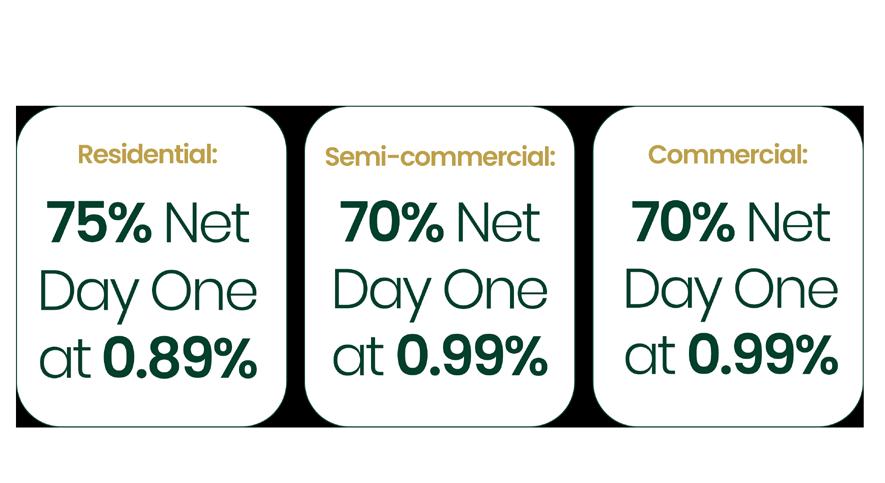
• Purchase, refinance, capital raise, plus works • Forward funded refurbishment tranches • Flat fixed rate • Refurbishment funds typically released the same day
Dual legal representation
No upfront legal undertaking (on residential)
Full title insurance
No exit fees
Flexible payment options
Up to 100% of build costs covered





The collapse of Market Financial Solutions sent shockwaves through specialist finance, raising difficult questions about trust, funding and oversight. In the wake of the administration, nine leading lenders share their views on what happened, what the industry can learn and how confidence can be rebuilt
At the start of the year, the specialist finance industry was gripped by a question nobody wanted to ask aloud: how does a lender simply... disappear? The administration of Market Financial Solutions—once a reputable name in bridging and short-term finance—sent shockwaves far beyond its own loan book. Funding lines dried up without warning. Borrowers found themselves stranded mid-transaction, clutching completion notices that suddenly meant nothing. Brokers who had staked their reputations on deals were left scrambling for answers that weren’t coming. And, overnight, hundreds of staff cleared their desks, many blindsided by the speed of the collapse.
Whispers of double pledging—the same assets being offered as security to multiple funders—began circulating almost immediately. Such a practice, if proven, could ruin the very foundation of trust on which this industry is built. High-street banks, the quiet backers of private lending operations, sat up and took notice. Funding lines tightened.
To grasp this and its implications, Bridging & Commercial sat down with nine prominent specialist lenders for a candid conversation.
Dhuha Al-Zaidi: Please introduce yourself, and describe the type of funding your firm relies on
Tanya Elmaz: I’m the managing director for intermediary sales at Together. We’ve got a diverse, flexible funding structure. We have over £1bn in shareholder funds, wholesale funding, secured notes, revolving credit facilities and private and public securitisation as well. So it’s quite a broad mix of lots of bits and bobs.
Irene Thomas: I’m the new managing director at Mint Property Finance. Again, we have a diverse capital base, across private investors, family offices and some institutional funding lines.
Thomas Cantor: I’m the co-head of our short-term division at West One. Short-term is bridging and development finance. We’ve got a combination of warehouse and debt capital markets. We’ve got about 15 different funding arrangements, a total of about £4bn. We’ve got six products with tenures ranging from three years to 25 years. We’ve also got significant shareholder equity, so about £350m of shareholder funds.
Jonathan Sealey: I’m the founder and CEO of Hope Capital. We have diversified funding lines with a mix of various revolving credit facilities and a growing pool of high-net-worth investors.
Michael Stratton: I’m the CEO and founder of MS Lending Group, a bridging lender in the North West. We lend all over the UK, mainly in the vanilla space. We’ve got a diverse pool of funding—institutional funding, revolving credit facilities and also a good number of high-net-worth investors.
Matt Mawdesley: I’m the founder and CEO at Morpheus Lending. We are a reasonably new digital-only bridging lender operating in England and Wales, focusing on rapid and commercially driven
loans for clients and brokers. We currently have three main funding vehicles, two of which are from high-net-worth investors. We then closed our first institutional funding line in December with Pollen Street Capital, which is a five-year committed facility of £110m with plenty of room to scale it further.
Sean Adams: I’m the managing director at Hilco Real Estate Finance. We are, effectively, a discretionary fund structure, predominantly funded by our parent Hilco Global, which is in turn mainly funded by its parent, which is Orix, a big Japanese organisation.
Johan Groothaert: I’m the CEO at Fiduciam. We are effectively entirely equity-funded, coming from a diversity of sources. We have 50 investors behind us. We don’t use any leverage and nor do our investors. We operate in the UK and multiple Western European countries.

Ben Keenan: I am the executive director at Pallas Capital. We are a specialist lender providing bridging and development finance. We have, like others, a diversity of funding sources across both high-net-worth investors and various institutional funding lines.
DA: How would you describe the state of the UK bridging market following the lender administrations?
MS: It’s tricky—I don’t know if anyone’s got any different opinions. I’ve been in the space for about 15 years or so, and I think the industry, especially bridging, has done a lot to change views of it. It used to be quite taboo. It was, if you’re taking bridging, a last resort. It’s become a much more mainstream product.
Things like this don’t help the industry and can tarnish it and take it back a number of years because, naturally, that mindset is creeping back in. Is it a bit like the Wild West? What sort of reg-

ulations are in place? So, as a whole for the UK bridging market, it’s not a good look, it’s not a good feel and it undoes quite a lot of the hard work many people on this call have done.

TC: As Mike said, the product’s gone from being a not really spoken about but quite important to being one of a range that property professionals and developers use and use well. There have always been connotations that, because loans move so fast, maybe there is not as much diligence as with a traditional mortgage product, that fraud is easier in bridging and there’ve been historical examples of that.
The size and scale are what strike me the most; they have just reverberated around the whole industry, made a lot of players probably nervous and uncertain about where it goes from here. That’s probably the overarching sentiment.
JS: I think, in general, the market is healthy—the numbers say it is strong. However, I do expect more casualties from the fallout of Century and MFS. I think the increased funding scrutiny will surface practices that have been operating in the shadows for some time. I don’t think it’s a bad thing, and it’s the way that the market should self-correct.
MM: There’s a broader macro point as well. Even if you take the MFS stuff out of it, the timing wasn’t great, given where we are with global conflict and rising prices and everything else. It was already turning into quite a difficult market.
When you’ve got lots of funding, cheap funding, coming into the market, lots of new lenders pop up and, sometimes, they don’t build the risk infrastructure and governance that’s needed. I think we’re just seeing a natural correction. For us, it’s probably one of those where you just keep an eye on the future and make sure you’re doing the right things and the basics well.
IT: I’ve been in the market now for 30-odd years and saw this happen in 2007–08. Some of us who are my age have been through that as well. It’s resilience that is key. Whether it’s a new lender or an existing one with 15, 20, 50 years of experience, it is about having the governance in place to manage this going forward.
We haven’t seen any huge change in appetite in the industry at Mint Property Finance. It is about resilience. Looking after your own business, your loan book and your customers is so important.
TE: I’m glad you said that word, Irene. I know it’s been a tricky time, but I would describe the market as resilient—and entrepreneurial. We haven’t seen applications for bridging go down.
I know this year presents some global issues, but we had other global issues in 2025 and bridging finance reached near the £12bn mark in the last three months of 2025, which was a growth of around 2.5% from the quarter before. So, despite what’s going on in the world, growth is there.
Even though the Middle East crisis has had an impact, our experience is that the effects are much more felt in the term market. Where term pricing is impacted by turbulent geopolitical or economic environments, bridging sees an uptick or continuous growth as people move to acquire but are not quite ready to secure a term loan.
JG: There are far too many operators. On some statistics, there are
being operationally loss making, including some very large ones. Look for instance at some UK private equity-funded lenders.
It’s been a bit of a gold-rush mentality with everybody coming in, which lead to excesses, people taking too much risk and sometimes engaging in activities that they shouldn’t be engaging in, cutting corners, for instance not having consolidated accounts, not being audited. It is important that we, as a bridging industry, change. We should learn something from MFS. That was a real eye-opener. I had expected it to be bad but not that bad.
BK: We don’t see that the fundamentals have changed; we are still seeing steady demand. I think capital will become scarcer, so raising institutional finance will become more difficult. The bar to accessing institutional capital has been raised, and I think that will force out some of the smaller players, ultimately leading to sector consolidation.
TC: I agree that demand is probably more important in volatile times because people don’t know what long-term plans they have while rates are moving.
I don’t think it’s about the consumer side but the other side, which is the reputational and the institutional impacts. Customers are somewhat isolated from really knowing what’s going on behind the scenes. They might not even be aware of the funding difficulties that the industry has been through.
So we’re talking about two different things. I don’t think we’re talking a demand but a supply issue.
MM: When we talk about MFS and our funders, every board meeting we have, we always come back to operational infrastructure, getting that governance right. We spent quite a lot of time, probably 12 months, before our first loan, building tech and ops and processes with some good, sensible people.
Back to an earlier question: what was the immediate reaction?
“When you’ve got lots of funding, cheap funding, coming into the market, lots of new lenders pop up and, sometimes, they don’t build the risk infrastructure and governance that’s needed”


“There will still be an appetite for private credit institutions to deploy into the property bridging industry, but they’ll be much more cautious about credit processes and how loans are underwritten”
Well, we didn’t really change anything is the honest answer because we felt we were ready. It’s lenders that haven’t spent the time and effort to get those operational guardrails and reporting infrastructure in place that ultimately will feel more pressure and struggle to raise capital.
Money will now go to fewer people. That is where I think it will shake out.
MS: What Johan was saying before about the gold rush mentality—we’re all in the specialist space, so we all saw something in it or wanted to work for the lenders that are in this space. But, like Matt said, in terms of things such as governance and operationally, it is tough because there are lenders of different sizes. Everyone, I think, would say that they try to do things the right way.
We are looking at things like audit requirements from both our financial and now funding lines. If you’ve got multiple funding lines and they’re moving from annual, biannual to quarterly audits, there might be 13 audits in a 12-month year. There are lots of positives to that because it’s maybe the cleanse that the industry needs.
If you’ve got the right governance and processes, it’s something you should embrace, but also not be naive to realise that it’s a stretch for businesses. It’s a lot to take on. But if it means that the right outcomes come in, that the lenders that are doing the right things come through and the lenders that aren’t get weeded out, maybe this is the cleanse the space needed.
SA: If I look back to my first bridging loan in the early 2000s, then the quality and integrity of the actors in the industry now, it’s chalk and cheese. The market’s becoming much more institutionalised. I’m determined not to let a couple of bad actors destroy what’s becoming a grown-up industry that’s become more respected. We need to promote the fact that the businesses that will rise to the top are those that follow the right processes, have the right checks and balances in place and are well funded. It’s important we reassure people that there are still some very strong players who are able to put brokers and customers at the heart of what they do and deliver good outcomes.
JS: If we all use this moment properly, the sector will emerge tighter, more transparent and more institutional. The shakeout will be uncomfortable, but it’s probably going to be very healthy.
DA: What was your immediate reaction about the lenders going into administration then hearing this hit bridging’s reputation?
TC: I’m personally not worried as I don’t think recent events will have any impact on our business at all. We’ve got the size, we’ve got the scale, we’ve got the experience and we’ve got the institutional ownership to weather that storm.
It is a very big deal. I don’t think it can be overstated. A lot of big institutions have lost a lot of money. Century’s probably a bit more contained—I think they probably had their own issues. But the MFS situation was very impactful and I think change will be profound over the foreseeable future.
There’ll be a flight to quality from maybe everyone having access to the same capital to funds only wanting to deploy that towards the best in class, the right people with the right governance and the right structure and all that. I think it’s going to be a big change.
JG: We have to look at why MFS happened. We all know Paresh [Raja, MSF owner]. I’ve met him several times. I didn’t have the feeling that he was there to go and allegedly steal £1.3bn. I believe the underlying story is potentially something like what we saw with Nick Leeson, Bernie Madoff, Kweku Adoboli and Jérôme Kerviel—it started with trading losses that were covered up and then led to large frauds.
If that turns out to be the case here, it’s a clear sign there is a problem with the underlying business model. Bank funding lines are not cheap when you take into account non-utilisation fees, structuring fees, and everything else. I remember once sitting around a table with Paresh at an event. This was at the beginning of the Ukraine war and it was clear he was very concerned about interest rates going up, I assume because this was making his funding lines more expensive than his loan book returns.
If an industry is not fundamentally profit-making, that’s not a good industry. As Claudia Buch, Chair of the ECB Supervisory Board said, you have to make sure that your financial services industry is profitable. You don’t want to have too many loss-making parties. If you look at the overall bridging sector, aside from the returns that go to banks and the funding providers, it isn’t really making money.
Therefore, I believe MFS is just a symptom of this underlying issue.
TE: Johan, you said there are at least 100 bridging lenders in the UK. I think there are probably about 500. I’m sure you would agree that not all lenders are equal. While a lot will not be profit making, there are probably plenty that are. In such a vast market, there is a big difference.
I think the first reaction was just shock. It’s not something anybody saw coming.
So, shock. Upset for customers who are in the middle of a transaction because they definitely don’t understand what’s going on. Upset for brokers because they always want to do an amazing job for their customers. Brokers were running around, trying to bridge the gap, so to speak. And concern for colleagues as well because I was in that position when HM Treasury took over the bank I worked for. You come in to work one day, and you haven’t got a job anymore. It’s very upsetting for all those.
What is required now, as mentioned, is increased due diligence. We’re seeing that not so much from customers because, as Tom said, they don’t really understand—but brokers are certainly asking questions.
It is for us as an industry to increase our due diligence, so all lenders stand up to scrutiny. If you are the lender with the right processes and governance in place, as Matt mentioned, you’d welcome that extra due diligence and scrutiny.
MM: My reaction was probably relief. We closed our funding line a week before Christmas. We had a conversation with Pollen. If that had happened three months further on, would that money have come into an early-stage lender like we were? So I guess we were reasonably fortunate. We had a small book and a small team. We couldn’t hide anything because we weren’t at that scale.
We were relieved that we managed to close that funding

sustainably in the right way. If I was now looking down the barrel as a brand-new, start-up entrant, I think that funding process would be far more difficult over the next 12–18 months and rightly so.
TC: When you asked Pollen whether the process would have been different, did they say anything?
MM: Pollen aren’t a bank. They’re far more commercial and entrepreneurial. It’s not like dealing with an RBS or a Shawbrook. They are credit people, not banking professionals. They said the process wouldn’t have moved. We’d gone through the right rigour so it was business as usual. It was a relief.
JS: A lot of it is business as usual, though, from what I’ve seen. It’s very much tightening rather than withdrawal and, obviously, genuine concern for the lenders, brokers and borrowers who are caught up in all this. Look, we all have to take stock. We have to review our covenants, controls and communications, not because we’re all worried but because that’s what a good, well-run lender should do. You bring your team together. You talk about the external pressures, what’s happening outside, how we operate differently and why we’re not in the same position as MFS. Then you run through that internally and externally with stakeholders, etc. If the double-pledging allegations are proven, which I think they will be, this isn’t commercial misjudgement—It’s just plain fraud. It’s a completely different category. I think markets can reprice in a quarter. Reputation takes two or three years to recover; it’s a completely different kettle of fish when it comes to fraud.
“The risk hasn’t gone up uniformly across the whole sector; funding good lenders is no riskier than it ever has been, but certainly, funding bad lenders now is visibly costly”

MS: We’re talking about lenders and their practices, processes and governance, but the banks need to take some responsibility as well because major institutional banks—Barclays, Castlelake and Jefferies, lots of players—were involved.
JS: HSBC—a $400m write off.
MS: You saw Barclays share price plummet. They were, in my opinion,, quasi-complicit in what’s gone on by them not having the correct practices. Yes, there are obviously lenders or an isolated lender in MFS that clearly didn’t have the proper governance. We’re now talking about other lenders and what they need to do. I suppose we’re going to face the difficulties of something that the banks should also be taking a lot of responsibility for.
The banks were heavily involved and allowed certain practices to go on under their noses. If the rumours are right, MFS was picking its own auditors and they were people that they were lending to etc. So, as it starts to unravel and some of the allegations come out, lots of people will shine a light on the specialist lending space, but I think a light should definitely be shone on the banks.
JS: We’re all probably feeling that now, in terms of the enhanced due diligence and audits that are now being done on all of us. It’s not probably just going to be us—it’s going to be everyone in the industry. That’s why I think more casualties will come out of this.

“If the allegations are proven to be correct, this was fraud conducted at an institutional scale, and it was fraud that was enabled because of the legal structures that underpin these warehouse facilities”

investment banks, so I can speak on how capital markets are reacting in the wake of MFS. The appetite is still there and strong. It’s easy to overreact to the MFS scenario.
If the allegations are proven to be correct, this was fraud conducted at an institutional scale, and it was fraud that was enabled because of the legal structures that underpin these warehouse facilities. Modifications can be made to the way these facilities are structured to largely eliminate the risk of the alleged double-pledging and that’s what we’re seeing.
Provided you can accommodate these changes, the institutional capital is still there. There will be a lot more regular reporting. Quarterly asset-level reporting will be commonplace. So, agreed-upon procedures and audits of the full collateral pool will be required. Again, the larger platforms can accommodate and absorb those additional requirements.
JS: We’ve already taken a proactive, pragmatic approach with all of our funders. We brought them all together into one email chain. We proposed doing one master audit across the entire book, so every funder sees everything—every single change. It makes double-pledging pretty much operationally impossible.
IT: I think that’s key, having worked at Together where it was institutional led and the auditors were in there every three- or six-months doing audits on you. Anybody who’s got weak risk management needs to get everything in order. You should have your policies and processes in place, so no stone goes unturned.
This sort of thing upsets the market. It will affect us all reputationally, but we’ll bounce back as we always do. As long as you know your own values, you’re transparent and you’ve got everything documented, there should be nothing to worry about. It just comes down to experience.
Going back to the immediate reaction, for me, it was: how could this have happened when they’ve got auditors going in there and reviewing what they’re doing and a well-established business? How could it have gone unnoticed for such a long time? Where there’s a will, there’s a way, unfortunately.
If we can, hand on heart, say that we’re doing everything that we should be doing, then we’ll get through this. The best people and the stronger people will be resilient and get through it.
MS: Regarding securitisation, I’m not saying that the securitisation structure as it will cease, but I think you will see more banks potentially looking at things like revolving credit facilities from a security perspective, having their own special purpose vehicles (SPVs) set up and charges over that SPV as a cleaner structure.
BK: Securitisation structures will likely now require legal assignment to be perfected within dedicated SPVs as opposed to beneficial

assignment of title only.
MM: I agree with Tanya that there are 450–500 lenders, not 100. If you work on the assumption that a good proportion of those are break even or loss making, adding all of this extra audit, governance, risk, operational infrastructure means their margins are going to get squeezed even more.
Also, I think where technology and AI and everything else has now started to come in, people are going to have to invest into that to get economies of scale. Because if you go and have to do—what did you say, Michael, 13 audits in a year?—that’s a lot of time and effort by some senior, expensive people, internal and external.
How do we still get that level of governance, keep our funders happy but ensure we all make enough margin? If we don’t make margin, we don’t grow, scale or hire. That, I think, is where we’ll see some structural movement in the market as a whole. What ultimately happens will be that smaller players will drop out and there’ll be overarching consolidation over the next 12 months.
JS: I know everyone is funded differently, but you could get all your funding lines to rely on the same audit because it’s across your whole book rather than it being very insular and siloed. That is the standard model across the industry: different funding lines with different borrowing bases, auditing different parts of the business. No one has an overview of what’s going on. Which is what’s happened to MFS. We saw that risk and moved away from it deliberately, which is why we proposed the master audit to all our funders.
I’m going to say allegedly double pledged, but I’m going to guess they were quadruple-pledged at some point, all those assets, and no one’s any the wiser because they didn’t see what the whole book looked like. And it’s all extra cost if you’re having 12, 11 or 13 audits a year. Can’t we just have one quarterly audit with all funding lines, seeing all loans? It always takes away that rebridging from one borrowing base into the other as well, which goes on a lot. I just think

“There is going to be more scrutiny. There are going to be different processes we should adopt, notwithstanding the operational strain that puts on us. The easier and more efficient you can make that scrutiny for auditors and funders, the better”
When you've got a business that doesn't have the right governance, processes



and can effectively mark their own homework, it can cause the problems we've seen


it’s good for the industry.
BK: Even if you organise reporting to all of your funders together and have one audit across all funding lines, the risk is always there that, if you’re intending to be fraudulent, there’ll be a funding line that you don’t disclose.
I think the only way of really, truly addressing that risk is for each funder to have their own dedicated SPV that takes security over the collateral they’re financing. They won’t need to worry about double-pledging because this can’t happen. It’s being secured by their own vehicle.
JS: All the major banks have individual SPVs now, and double-pledging still allegedly happened.
JG: I anticipate you’ll see regulators and supervisors come in, for instance the Bank of England taking an interest in what exposure UK banks have to private credit through funding lines. Risk committees within banks will also tighten policies.
We’ve had JP Morgan already saying they want to reduce their exposure to the private credit sector. But the true reaction, I believe, is still to come from regulators, central banks, bank risk committees etc. That will not be defined by our small bridging industry but by what’s happening in the much wider credit industry and that’s not looking good. I don’t believe it’s a systemic risk, but it’s clearly going to create some losses, both on the equity and the debt side.
reason.]
SA:
quality lenders. To go back to the ques tion about the reaction to MFS and Century, we’ve looked at some of the deals that they lent on, and we’ve seen them take what I’d put politely as very aggressive credit decisions.

enues or market shares at the expense of profitability, your loan book suffers and the problems roll on from there. There will still be an appetite for private credit institutions to deploy into the property bridging industry, but they’ll be much more cautious about credit processes and how loans are underwritten. As I said, all this started originally with poor credit decisions. If they weren’t made, we might not be having this conversation now.
“It is a recipe for disaster when you have no external oversight over any of the components of the process. Going forward, you have to try to ensure those functions are separated to prevent something like this happening again”
Central banks and regulators are like slow-moving tankers but as they adjust, I believe a new wave of requirements will come in.
BK: We’re seeing that in Australia. The regulator in Australia, ASIC, has conducted an industry-wide probe of many of the non-bank lenders in the property lending space and private credit more generally. That investigation has been ongoing now for about six months. It’s quite a comprehensive process. They’re looking at your business from top to bottom and understanding all the disclosures that have been made. We are welcoming of this oversight, and it will help to lift standards across the industry.
JG: It’s also interesting to look at potential contamination. If you look at Century Capital, the guys that pulled the plug were Blue Owl, a US credit fund. [Blue Owl has faced negative press in recent months. One interpretation is that issues within Century Capital’s loan book may have contributed to the decision to withdraw funding, although there is no public evidence that this was the primary
JS: I suppose, having two or three billion to deploy, you start making loans you don’t really want to be putting on the book, eh?
SA: Definitely. They would have felt pressure to get money out the door and, presumably, have fees they’ve got to take into account, and that’s going to force poor credit decisions. Ultimately, the lenders that will survive will be the ones with robust credit processes.
BK: Most institutional warehouses typically have fairly prescriptive eligibility criteria for the loans that you’re permitted to write using that capital, so that should force sensible lending practices. It’s typically the smaller non-bank lenders who may be relying on, I guess, inferior-quality credit lines where they have more flexibility. It’s more expensive credit, and that could force them into riskier loans. I think those are the ones that really suffer.
Because they’ll be the ones chasing the poorer credits because that’s all they are positioned to compete for.
JS: I think the gap between well-run and badly run lenders has got much wider. The risk hasn’t gone up uniformly across the whole sector; funding good lenders is no riskier than it ever has been, but certainly, funding bad lenders now is visibly costly.
BK: You have a two-tier system. You’ve got the non-banks who are well funded with good institutional funding lines. They will be adopting sensible lending practices because they have to and because they would anyway. Then you’ve got the second tier of non-bank lenders who don’t have the same access to capital, and their funding is more expensive and, therefore, they can be susceptible to taking riskier bets.


TC: Brokers will become a bit more cautious about who they’re partnering with. Those in the middle of deals when MFS collapsed obviously don’t want to go through that again because it puts their relationships with their customers at risk. You’ll probably find lenders get weeded out, because not only will their cost of capital be expensive, but also their deal flow just won’t be there because they don’t have a brand to support what they’re doing.
MM: We dealt with six brokers last year. That was it. We then came into January and were looking to scale. Since then, I’ve probably spoken to 500 brokers. At least half of them will ask me where my funding comes from because they want that certainty. They want to know that it’s not Jack and John down the road, and if they change their mind on a Monday, the deal won’t fall away on a Tuesday.
Having that certainty and letting them know you’re not here as a flash in the pan is something that we’ve not necessarily battled with, but it’s been an open discussion, and it’s a good conversation to have with brokers to build that relationship. They need to know their clients are ultimately going to be looked after and they will have that consistency of delivery. That’s all they really want.
TC: Yes, and that you’re making your decisions—there’s not someone else making them for you.
MM: The whole re-underwrite is difficult because it just takes it out of your control. I just think brokers are getting savvy to the fact that they don’t want another person taking four weeks to make a decision. They want to know on the day if it’s going to happen or not. I think that certainty is probably the most important thing brokers want now.
JS: Maybe we should all say who audits us as well. Make sure it’s not a one-man band who’s your best mate.
IT: Having your own lines of defence internally is really important, as is having your own quality assurance processes and internal audits in place. We can’t mark our own homework all the time in our senior positions, but we’ve got people doing that for us, and we’re overseeing that so when the auditor does come in, we can be sure our processes are being followed, and the risks are reduced, which helps with reputational risk.
BK: I think this is going to be good for the industry in the long term. It is going to force improved governance. It’s going to require a level of professionalism and sophistication that isn’t present across all 500 lenders in the space.

DA: If multiple funders simultaneously decide they’re going to hesitate or be more picky about who they fund, what would a worst-case scenario look like? Would the market get shaken up? Or would it filter out unreliable lenders and move us towards stability?
MM: Probably the latter. There are too many players in the market; we’ve all alluded to that. There needs to be some consolidation. I think technology, as we move through the next 12–36 months, will become even more important. There are lots of inefficiencies out there, alluding to the point around margins being squeezed. AI now can do things that never have been done before, and the cost of acquiring that technology and leveraging it in larger organisations is cheap. I think we’re going to see a structural change driven by technology and then good, robust risk governance as well. Those are the areas I think will markedly move over the next few years.
TE: I would agree. There is going to be more scrutiny. There are going to be different processes we should adopt, notwithstanding the operational strain that puts on us. The easier and more efficient you can make that scrutiny for auditors and funders, the better. As we have said, the net result—and it will take a while—is a bit of a clean-up. It is always good for any market when there is a tidy-up and standards are pushed higher. If you are a lender with the right policies and the right governance, this is not something you’re afraid of. It’s a little bit inconvenient but, at the same time, we’d rather go through that inconvenience and secure the reputation of our market and help it continue to grow and clean it up than not.
Ultimately, there is light at the end of the tunnel, but again I don’t think everything has come out. Somebody at JP Morgan said recently that where you find one cockroach, you might find a few.
JS: I don’t think the worst-case scenario is that another lender will collapse. I think that is probably going to happen, if not more than one. It’s going to be a slow squeeze that will quietly remove the small and mid-tier lenders over 12–18 months, which is bad for brokers, bad for borrowers and bad for the property market. Bridging is now core funding. It’s not niche. I do expect more lenders to be caught out as funding scrutiny tightens. It’s not me being pessimistic; I just think that’s how the market will correct. The levers to prevent the worst case for me are operational, not legislative. So I think we can fix it, but we’ve got to fix it from the inside out.
JG: What we don’t know is how most bridging lenders have negotiated their funding lines. Banks usually put in some clauses very favourable to them, making it easy to accelerate the funding line. If you look right now at where the stock market is, the situation in the Middle East, the pressure on credit markets, there’s certainly a path on which we see a major correction both in the equity markets and credit markets. In a situation like that, you could have a lot of these funding providers looking at their legal documentation and saying, oh, well, I have a way here to put this now into acceleration to get my money back.
DA: Where do you think the breakdown of MFS happened specifically? Was it across origination, servicing or monitoring or was it just overlooked?
BK: All of the above. Let’s face it, there were issues in all of those levels. If MFS was allegedly able to originate loans with somebody who was on a sanction list and that was several years after a documentary highlighting these exposures, that’s phenomenal. In terms of servicing,it is alleged, from some of the reports, that cash flows were being swept and funnelled across the business. In terms of the monitoring, the reviews and audits of their collateral pool were obviously defective. At every level, there was a failure.
TC: There was probably too much of a focus on the asset class rather than on the platform from those funding MFS. They were obviously attracted to the private credit and the specialist finance sectors because of the reported returns they generate. But, as has been highlighted, the platform, the lender itself, is as important as the actual sector.
When you’ve got a business that doesn’t have the right governance and processes, and can effectively, as Irene said, mark their own homework, it can cause the problems we’ve seen. I think there was a whole host of separate issues.
MM: It’s not one person who does that either, is it? That’s a handful of senior people.
TC: No, but it’s not the whole organisation.
MM: It’s not your junior underwriters and your BDMs. They’re going and selling what they’ve been told to sell. They’re underwriting to the risk models that were set by the board. I think your issue is there was too much power in too few hands. I just don’t understand how that was swept under the rug for so long. I cannot see how that could happen in a large organisation of proper professionals. It blows my mind a little bit.
TC: There was no structure to it, was there? There were probably no board meetings. There were no non-executive directors. There were no external shareholders, which a lot of businesses in this sector now have. There was no one to tell them. So, whether it’s the top tier of management or whoever, there’s no one to turn around to them and say, ‘You’re doing the wrong things,’ because there’s no external scrutiny.
SA: You’ve got a lender that’s marking its own homework on origination, servicing and reporting. It is a recipe for disaster when you have no external oversight over any of the components of the process. Going forward, you have to try to ensure those functions are separated to prevent something like this happening again.
JG: People believe that the bridging market is massive, but it’s not that large. Yes, demand for loans is good, but there’s too much money chasing the same opportunity.
To put this into context, MFS is a symptom. MFS is not the disease. We need to look the disease in the eyes and say, look, there’s just far too much money chasing limited return in an overcrowded market. As long as that isn’t addressed, we’ll see
other incidents.
BK: There’s fraud present in every industry, in every market. I wouldn’t say that what we saw at MFS was a direct consequence of the competitiveness of the bridging market. There will always be bad actors in every industry. It is a competitive market, and you will see some operators cease trading over the next 12 months, but I wouldn’t personally link what we saw at MFS to this competitiveness.
TC: I don’t think the MFS situation is a symptom. Bridging is attractive because the returns can be decent, but it has to be structured in the right way. No one’s forcing these guys to lend to bridging lenders or specialist finance providers. They’ve elected to do so. The what market should be big enough to support all of that because it keeps growing year on year, but it just hasn’t been done in the right way, and people have taken advantage of that.
IT: I agree with some parts. I think there are symptoms of success and greed. I was around in the self-cert days, which led to lots of greed as well as the downfall of a bit of the market. So I think it’s a bit on both sides, the institutions as well. The investors are greedy, and they want more money out of the door and quickly. So they do not turn a blind eye but allow the lenders to just get on with things without doing those checks and the scrutiny because they want their market share.
It just becomes greedy and rushed: just get the money out of the door then we’ll go in and check what’s going on later. It’s the symptom of their own success at the time and the greed just to get the money out the door.
JS: Let’s be honest, the bank institutions that fund this sector can probably reduce advance rates and increase pricing due to risk. Advance rate refers to the proportion of each loan the funder will lend against, and pricing refers to the interest rate they charge. Both are likely to move in the funder’s favour, which is the underlying point.
JS: Let’s just say this is an opportunity for us well-run lenders to do better from it. Simple.
DA: What governance standards or structures should be non-negotiable for lenders that are operating at the same scale as MFS?
JG: Each entity needs to be audited, banks and accounts, on a consolidated basis, including investor audits. There should be audits on a consolidated and single-entity basis and on the loan book itself, and these should be done by proper auditing firms that are not a client.
TC: You’ve got to have some external governance as well, some non-executive directors or external governing bodies who can come in and look at what you’re doing and stand independently and away from being emotionally attached to the business.
TE: Also, clear disclosure of funding structures. I know a lot of you, but we’ve never had a conversation about how we’re funded and what our governance arrangements are and that type of thing. It’s not something that is ever a secret, but it’s not something that’s really ever discussed. I think just being

transparent about that as well is a good start.
JS: It’s not just double-pledging as well. Obviously, there are rumours that other lenders are rewriting loans into different funders’ borrowing bases to mask the level of defaults they’ve got. Loan book redeems funder A and puts it into funder B, so it never looks like a loan’s been defaulted on. That obviously is not picked up because they haven’t got a whole-of-book approach to the audits or to their due diligence. It’s slightly different to fraud but exploits the same structural weaknesses.
JG: To add to that, I would say we focus a lot these days on rules and check-the-box, but one thing that is much more important than that is culture, having the right people, those who understand what’s right and wrong without having to read a 100-page policy. If it is true what is said about MFS, I don’t believe it can have been just one person but must have involved multiple people. This industry, as we said, has not always been regarded as having the best governance and the highest standards. But cultural and ethical standards are really important, and we should all work on those. I know many around the table here are doing that, but there’s much more work to be done.
postmortems internally but will continue to invest into the sector
MS: There will definitely be a postmortem. I’m not as flippant to say it’s just a knee-jerk reaction from the banks, but they’re under pressure to get capital out just like we’re under pressure to get our capital out, which has led to bad decisions. I think there will be a bit of a knee-jerk reaction where they will retrench. They might be bullish to get some of their capital back in.
They’ll face a lot of scrutiny in-house, but I don’t think it’ll be long-lasting. Yes, it might be a painful 2026, but once the dust settles, a lot of people see a lot of value in this space. That’s not going anywhere. There are lots of good players and I think the banks will be keen to get stuck back in again even if there is some short-term pain.
JG: The central banks will maybe take more control and supervise funding lines more closely, but they’re not going to want to kill the business because it allows banks to deploy deposits in the real economy with someone else providing an equity buffer so there’s someone else to take the first loss. Fundamentally, that’s what Basel III wants, and that’s a good thing for the banks and for the overall prudential framework.
DA: Michael, you raised a good point that a lot of it is down to high-street banks’ funding and they’re not actually being held to account. What do you guys think will happen to the high-street

lenders and banks that were funding MFS? Who do you think will hold them to account in the future and what would their funding structure look like?
BK: A reckoning is occurring at many investment and high-street banks, and they’ll be considering quite carefully how they made these errors. Where that accountability ends up, whether or not individuals are held responsible or whether or not these are seen as corporate failures will be happening behind closed doors. Ultimately, they will look at the way that they structure these facilities to try to ensure greater visibility over the loans that they’re funding and making sure that they’ve got better and more transparent reporting. I think they will hold

TC: There will probably be a shift. I think the domestic banks will continue to lend in the UK because it’s their home territory, and a few of the international banks will probably contain their lending closer to home because many of the top institutions that have probably been hit the most, aside from Barclays, were international. They might jump to the conclusion that it’s because the governance and the scrutiny that they can put their international teams under is not the same when they’re based 5,000 miles away in America or wherever. Domestically, the banks will still operate here because they understand it more, but I do think there’ll be a retrenchment from a lot of the international credit funds and banks.
JS: It happens every time there’s a problem in the market, doesn’t it, whether that’s economic or socioeconomic. The US seems to retrench back to the US first then comes back slowly and does it again.
TC: They probably will, but the initial retreat will be, ‘Well, we can’t control what’s going on in the UK the same as we can control in the US, so I’ll probably just put more money in the US where I know and have better oversight than take chances on the UK.’
So it means, even if they are lending in the UK, it will be to the best-in-class operators. There’ll be a flight to quality; they’ll be obviously a lot stricter, and they won’t take the same risk because the reward just isn’t there. The downside at the moment probably far outweighs the upside for them.
DA: If you could implement one immediate change across the industry to prevent this from repeating, what would it be?
JS: Single, shared, independently audited loan book across all lend-

“We just all need to get comfortable with total transparency, which is something the industry has not really had”


ers and funders. I think that should be the new industry standard.
JG: I would add to it consolidated accounts that are audited.
TC: I think funding structures and reporting is probably more important than audit. The MFS situation, from just looking at it on a piece of paper, the complexity of the organisational structure will probably take months to get your head around. You’ve got to stop the complexity of the structures and allow people to hide things in different vehicles that aren’t all connected. I think that’s probably a good place to start.
JS: It would be a better experience for us as lenders as well to have just one process instead of multiple parallel audits. It would be more efficient and transparent. It’s just better by design, not by trust.
IT: Just go back to basics. Review what you do today. Make sure it’s solid and, yes, auditable.
MM: At some point you’ve probably got to look to the regulator in the unregulated bridge space. I was at an event the other week, and the word cowboy was used about bridging lenders three times, and I said, ‘Well, that’s a bit harsh, guys.’ But the question then moved on to, well, what’s the regulator doing about this and how are you moving this market forwards? I suspect that will probably get discussed over the next 12 months.
JS: I don’t think it needs legislation. I think it needs leadership. Only with full transparency within everybody here on this roundtable and within the industry will we all prosper. We don’t need a regulator. I just think we need to be better as leaders.
BK: Although they’ll think that there needs to be better oversight, they probably won’t try to regulate it. That’s been our perception in Australia with what’s happening there. Because, if they start regulating it, you’ll basically strangle the flow of private credit, which is such an important part of the financial ecosystems.
JG: Hopefully, the BDLA can take some initiative around consolidated accounts and audits. They could set a best-in-class standard and promote it. Some smaller firms may need more time to get there but could work towards it. That would be probably a more
friendly way than having regulators come in.
JS: Would it not be the banks and the funders that should really be insisting on this rather than the BDLA?
JG: Yes, as well.
BK: Well, they will be in their individual facilities.
TE: It’s something the banks and the non-banks need to take on board themselves. I understand what you’re saying, Johan, about the BDLA coming out as a stronger voice perhaps to talk about how the landscape could look in two or three years. This is probably a conversation we should have had a while ago.
Just going back to transparency, lenders could just put on their websites how they’re funded and their governance and audit arrangements. Why should a broker have to phone somebody to find out? The average BDM is probably not going to be assured on the specifics of how to answer that question because it’s not something they’ve thought about either. Why should you have to hunt for that information? It should just be public.
JS: We just all need to get comfortable with total transparency, which is something the industry has not really had.





Short-term and flexible financing for your clients property projects. From Refurbishments to Regulated Bridging we have fast and flexible solutions. Highlights include:
• Regulated and unregulated
• Dual-representation: one solicitor for both parties saving time and money
• Refurbishment Bridging up to 73% net LTV
• Covering auctions, house-flips and landlord refurbs
• Access to expert support, including Underwriters
• AVMs available up to 65% LTV on regulated bridging, and up to 75% LTV on unregulated bridging.

ur B&C Awards 2026 Drive-In showcased a rock ’n’ roll spectacular celebrating the stars, the trailblazers, and the big hitters of specialist finance. Broadcast in proud partnership with Black & White Bridging, we’re honoured to have hosted you at our reimagined 1950s diner, where conversations over jukebox classics happened, and the spirit of the 50s met the energy of our extraordinary market.
The 19th annual B&C Awards rolled into town with all the razzle-dazzle of a Saturday night picture show. Outside, guests immersed themselves in carnival games, neon-lit funfair thrills, and old-school stalls made for a little friendly competition. Inside, our diner doors were open, and the floor was set for an evening of celebration, showmanship and rock ‘n’ rolling.
Now, every great drive-in has its stars — and they were in the room. These awards shone a spotlight on the lenders, brokers, and businesses who’ve been making headlines for all the right reasons: bold ideas, outstanding service, and the kind of innovation that keeps this market moving.
And speaking of stars… what’s a 50s spectacular without a little entertainment? We served dazzling performances throughout the day that’ll have you twisting before dessert. This wasn’t just an awards event; it’s a full-colour production. Our winners had once again been decided through our industry voting process, with hundreds of companies helping spotlight those making the biggest impact across the specialist finance scene. No long-winded submissions. No smoke and mirrors. Just recognition earned from the peers, partners, and professionals who know excellence when they see it.
After the awards ceremony, the good times kept rolling at our pit-stop bar, marquee bands, and plenty more surprises as we celebrate long into the night.
Coaches arrived at 9:30 pm outside the venue to whisk guests off to our Official After Party, kindly sponsored by TAB.
On behalf of all of us at Medianett Publishing, thank you for joining attending for what was a spectacular night to remember. At the B&C Awards Drive-In, everybody’s a star.
With warmest regards,
BETH FISHER
Managing director, Medianett Publishing


BEST BRIDGING
NEWCOMER — BROKER
Winner: Vandermolen Real Estate
Highly commended: Aquilae Capital
BEST BRIDGING
NEWCOMER — LENDER
Winner: Morpheus Lending
Highly commended: Pallas Capital
BEST SURVEYOR
Winner: Project & Co
Highly commended: Anderson Wilde & Harris
SPECIALIST BTL
BROKER OF THE YEAR
Winner: Ramsay & White
Highly commended: SPF Private Clients
SPECIALIST BTL
LENDER OF THE YEAR
Winner: LendInvest
Highly commended: Castle Trust Bank
BEST SPECIALIST
FINANCE PARTNER
Winner: Method Valuation UK
Highly commended: VAS
LARGE LOAN LENDER OF THE YEAR
Winner: Hilco Real Estate Finance
Highly commended: HSBC
BEST SPECIALIST DISTRIBUTOR
Winner: Positive Lending
Highly commended: Crystal Specialist Finance
BEST SPECIALIST BANK
Winner: OSB Group
Highly commended: United Trust Bank
BEST SOLICITOR
Winner: SC&W
Highly commended: Gunnercooke
BEST DEVELOPMENT BROKER
Winner: Positive Commercial Finance
Highly commended: FRP Real Estate Advisory
BEST DEVELOPMENT LENDER
Winner: West One
Highly commended: Goldentree Financial Services


BEST REGIONAL BRIDGING LENDER OF THE YEAR
Winner: MS Lending Group
Highly commended: ScotLend
UNDERWRITER OF THE YEAR
Winner: Heather Hancock, Black & White Bridging
Highly commended: Mike Watson, MS Lending Group
SPECIALIST PRODUCT OF THE YEAR
Winner: Colenko (HMO Conversion)
Highly commended: Avamore (Part-Build / Finish & Exit)
REGULATED BRIDGING BROKER OF THE YEAR
Winner: Clifton Private Finance
Highly commended: KIS Finance
REGULATED BRIDGING LENDER OF THE YEAR
Winner: MT Finance
Highly commended: Alternative Bridging Corporation
LENDER RELATIONSHIP MANAGER OF THE YEAR
Winner: Ginny Warby, Masthaven Finance
Highly commended: David Weir, Hope Capital
BEST COMMERCIAL BROKER
Winner: Envelop
Highly commended: Coreco Commercial
COMMERCIAL LENDER OF THE YEAR
Winner: Hampshire Trust Bank
Highly commended: Allica Bank
“Receiving the Outstanding Contribution to the Industry Award is a privilege I’m genuinely humbled by. I’ve always tried to do my part to support progress and raise standards, but nothing is ever achieved alone. This recognition reflects the dedication of the many colleagues, partners and teams I’ve been fortunate enough to work alongside. I’m grateful for the opportunity to contribute and excited to keep supporting the industry’s future.”
Scott Marshall Founder and managing director at Roma Finance
SERVICE EXCELLENCE — BROKER
Winner: SPF Private Clients
Highly commended: Word On The Street
SERVICE EXCELLENCE — LENDER
Winner: Octane Capital
Highly commended: Allica Bank
BEST BRIDGING BROKER
Winner: Willow Isle Capital
Highly commended: FRP Real Estate Advisory
BRIDGING LENDER OF THE YEAR
Winner: Together
Highly commended: MS Lending Group
OUTSTANDING CONTRIBUTION
Winner: Scott Marshall, Roma Finance
LIFETIME ACHIEVEMENT
Winner: Ray Cohen, Jackson Cohen Associates
BEST DRESSED
Karen Rodrigues, director of sales at TAB
Josh Rees-Davies, senior marketing executive at Lendco
“It’s very humbling to have received the lifetime achievement award. It has been a pleasure to have worked with so many great people over the years, and I believe the industry will continue to go from strength to strength.”
RAY COHEN Director at Jackson Cohen Associates

“Together took home the flagship Bridging Lender of the Year award at the Bridging & Commercial Awards last week; to say we are proud is a massive understatement.
This win belongs to every single one of our incredible colleagues. It is a testament to the relentless hard work, passion, and care our team delivers every day to support our brokers and borrowers.
Beyond our own team, we are immensely proud of the entire bridging industry. As a sector, the speed, flexibility, and creative solutions we ALL provide for borrowers are unmatched.
We couldn’t have achieved this without our fantastic partners and brokers. Thank you for trusting us, pushing us with feedback and celebrating with us.”
TANYA ELMAZ Managing director for intermediary sales at Together










• Streamlined service with all communication responded to within 24hrs
• Streamlined service with all communication responded to within 24hrs
• One dedicated underwriter assigned to the case
• One dedicated underwriter assigned to the case
• Range of property types accepted
• Range of property types accepted
• Owner-occupied & investor finance available through limited companies or individual names
• Owner-occupied & investor finance available through limited companies or individual names
• Lending in England and Wales
• Lending in England and Wales
• Loans up to £3million considered
First Time Landlords Acceptable
First Time Landlords Acceptable
LTV up to 75% accepted
LTV up to 75% accepted
Day 1 lending available
Day 1 lending available
No application fee
No application fee • Loans up to £3million considered
Intermediaries Only
Words by BETH FISHER
Managing director at Medianett Publishing

Black & White took 50 brokers and industry figures to Ibiza for two days of candid conversation about growth, service standards, and the uncomfortable truths facing a scaling lender with serious ambitions
Specialist lender Black & White swapped boardrooms for the beach as it hosted its inaugural conference in Ibiza, bringing together 50 brokers, lenders, and industry figures for two days of strategy sessions, major business announcements, and frank debate about where the specialist finance market is heading. Between cocktails, delayed alarms, and a noticeable dependence on iced coffees, delegates tackled everything from scaling pains and service standards to funding lines and the realities of rapid growth in the bridging sector. Beneath the fun, however, sat a serious message: B&W is entering its next phase of evolution, and it has no intention of standing still.
There’s a particular kind of chaos that unfolds when you combine a “wellness-focused” corporate day with an all-inclusive bar and 50 specialist finance professionals who desperately need to let off steam.
When our premium accounts manager Ellen Townsend and I arrive at TRS Ibiza on Thursday evening—a day later than the rest
of the group—we had envisioned herbal teas, non-alcoholic cocktails, and an early night. Instead, we walk onto a rooftop terrace packed with B&W employees, brokers, underwriters, lawyers, and surveyors who had collectively interpreted the “wellness day” agenda as more of a suggestion than a mandate. By the time we join the group, most attendees were already several cocktails deep into what would eventually spiral into a 4:30am expedition through San Antonio.
Later that morning we walk into the conference hall at 9am on Friday for the second day of the conference, greeted by a sea of B&W branded bucket hats.
While we frantically put the finishing touches to the media training session we were hosting later that afternoon, B&W’s chief operating officer Damien Druce delivers a recap of the previous evening’s fun and overnight, the lender had received, and already begun processing, an £11m loan.
However, the morning then kicked off with a
more serious discussion as the group delivered a candid assessment of where the specialist finance market is heading and where B&W intends to position itself within it.
The numbers tell a story
Among the clearest announcements to emerge from the conference was B&W’s ambition to build a £500m loan book, a target that underpinned much of the wider discussion around growth, infrastructure, and scalability. Damien also reveals that the lender plans to expand into Scotland and Northern Ireland once its next round of funding is secured.
Currently operating with a £10m cap on individual loan sizes, B&W appears positioned to grow this further. However, attendees repeatedly return to a key challenge facing many scaling lenders: how to secure larger volumes of capital without compromising speed, flexibility, and service standards in the process.
One message often surfaces throughout the discussions: in specialist finance, “flexibility and speed” remain the defining traits of lenders that successfully scale. Yet several brokers in the room warn that growth itself can quickly become the risk if new funding
lines, processes, and layers of approval begin slowing decision-making.
One broker puts it bluntly: if they had supported a lender from inception, they would expect the same level of accessibility and service to remain intact as new distribution channels and broker relationships are introduced. In a market built heavily on relationships, it seems that many in the room agree that maintaining service standards through periods of rapid growth is often where lenders are truly tested.
B&W’s commercial director Nick Russell addresses the issue head-on, openly questioning whether the operational layers introduced to support expansion could unintentionally create friction for brokers and borrowers alike. The discussion quickly evolves into a candid exchange around how the lender could continue growing without losing the close relationships and responsiveness that helped build its reputation in the first place, the kind of honest industry conversation rarely aired so openly in the wider market.
Nick’s observation about new capital typically being “the biggest slower” in lender operations speaks to a real constraint in the sector. You can have the best processes in the world, but if your treasury function, described as “the
engine room” of B&W, isn’t moving capital efficiently, nothing else matters. It’s a reminder that specialist finance operates on different constraints than mainstream lending.
The open discussion sessions highlight that brokers’ biggest concerns extend far beyond headline rates and product features. Instead, the conversations often return to responsiveness, communication, and the ability to maintain strong relationships as lenders scale.
One example particularly resonates across the room: a relationship manager taking seven days to respond to a broker enquiry. Attendees view it not simply as an operational issue, but as a breakdown in trust and service. The feedback sessions give B&W an opportunity to better understand the frustrations brokers experience in the wider market, and where the lender believes it can make positive changes.
While pricing and products remain important, the consensus is clear: in specialist finance, relationships still carry the greatest value.
Damien notes that B&W has been running a three-month pilot scheme assessing its com-

petitive positioning on rates versus proc fees, with brokers actively feeding back on where the lender currently sits in the market. The findings are expected later this summer.
The lender has already completed deals as low as 0.69%, underlining the increasingly aggressive pricing pressures emerging across specialist finance. Yet amid the discussion around growth and competitiveness, one comment resonates strongly across the room: “a lot of lenders are out-lending their problems.” It was a pointed observation that reflects wider concerns around sustainability, profitability, and whether parts of the market are prioritising short-term volume over long-term stability.
After a lunch break, we are invited to sit in as flies on the wall during an internal strategy session, offering a rare glimpse into how B&W operates behind closed doors, and sparking a surprisingly frank debate around whether remote working in this industry is genuinely benefiting businesses, clients, or staff at all.
Damien announces that B&W’s annual office rent bill stands at a staggering £1.2m, a figure that visibly stuns the room after employees had confidently guessed anywhere between £150,000 and £450,000. The disclosure quickly triggers a wider discussion around office culture,
productivity, and whether businesses are truly getting value from the post-pandemic working patterns some firms have settled into.
The lender admits that productivity has noticeably declined under its current Friday WFH structure, prompting plans to return staff to a full five-day office week from 1st July following a consultation period. Rather than taking a hardline approach, however, B&W is attempting to encourage the shift through a wider benefits package, including increased pension contributions, additional CSR (charity) days, and a stronger emphasis on staff rewards.
The revamped package includes up to 25 “work from home anywhere” days each year, allowing staff to extend holidays abroad, alongside four seasonal “duvet days” and £500 bonuses for quarterly standout performers. The message is clear: B&W sees the move not as a step backwards, but as part of the next phase of the business’ evolution.
That sentiment is reinforced when 19-yearold executive assistant Jasmine was named the company’s first ‘Star of the Quarter’, recognised for taking everything “in her stride”. In many ways, the announcement says as much about the company’s culture as the benefits package itself: rewarding attitude, adaptability, and capability over seniority or tenure.
The dynamic between Damien and Martyn Smith, CEO—the leadership pair steering the company—became clearer as the conference progressed. They operate as a deliberate yin and yang; one pushes, one reassures, and the message lands with more credibility because of that balance. When they state they’re positioning their recently renovated Bristol office York House as their headquarters and the main hub for bridging, it feels like a statement about where they’re placing their bets. When they mention they’re exploring potential institutional acquisition or leveraged buyout scenarios, it feels like a statement about ambition.
What makes this conference particularly interesting is the deliberate inclusion of external stakeholders and the media. The “state of the nation” sessions aren’t just internal navel-gazing. They are genuine attempts to understand how the sector sees itself and how external parties see B&W within that.
The repeated question: “What do we need to do to be regarded as one of the best?” runs through multiple sessions. It’s not a comfortable question for any organisation, because it requires honest acknowledgement of where you’re currently falling short. But it’s the right question, and the fact that they ask it repeatedly suggests they’re serious about the answer.
Beneath the cocktails, bucket hats, and early morning finishes sits a lender wanting to invite
Kicking off the first day of Black & White’s Ibiza conference, TwentyCi strategic solutions director Stuart Ducker delivered a stark but surprisingly optimistic assessment of the UK property market. While transactions may have slowed, the sector is proving more resilient than expected
On the first day of the Ibiza conference, keynote speaker Stuart Ducker, strategic solutions director at TwentyCi, revealed the key trends reshaping the industry.
Here are the highlights of what he had to say:
Residential transactions are currently down 3.9% year-on-year following the distortion caused by last year’s stamp duty deadline rush, while agreed sales have also softened slightly. However, transaction volumes remain well ahead of both 2023 and 2024, with TwentyCi forecasting that overall transactions should still hover around the 1.2 million mark by year-end.
Perhaps the most striking shift is on the supply side. The number of properties newly listed for sale has reached its highest level in a decade, rising 5.1% year-on-year, with particularly strong growth across southern regions. Yet despite increased stock levels, demand has not collapsed. Buyers remain active, albeit more cautious, suggesting the market is slowing rather than freezing.
The data also highlights a widening regional divide. London and the South are facing noticeably sharper slowdowns than the Midlands and the North, with Inner London recording a 17.1% fall in exchanged transactions year-on-year.
In the lettings sector, conditions are beginning to rebalance after years of extreme supply shortages. Newly listed rental stock has surged 18.8% year-on-year to its highest level in six years, while tenant demand has climbed to a 10-year high. Average agreed rents have eased slightly nationally, particularly across London and the South, with affordability pressures remaining.
Meanwhile, the PRS continues to undergo structural change. While fewer landlords are planning to exit the market compared to last year, the vast majority of former rental properties are not returning to the sector once sold. Of the properties sold in Q2-Q3 2025, only 11% came back to the market to rent.
At the same time, BTR operators are becoming increasingly influential, with many now bypassing traditional letting agents altogether by listing stock directly on portals. TwentyCi suggested this shift is already beginning to erode corporate lettings agents’ market share.
The new-build market remains another standout trend. Developers still face a major challenge: new-build properties are currently taking significantly longer to sell than resale homes. In April, new-build properties took 112 days to sell, 41 days more than a resale home.
difficult conversations around growth, culture, service, and sustainability.
B&W is clearly positioning itself for a far bigger future. Whether it can successfully deliver on those ambitions remains to be seen, but the willingness to ask the right questions and allow

external voices to challenge their own answers suggests they’re taking the challenge seriously. The sector will be watching how this unfolds.
We are a principal development and bridging lender with a forward-thinking approach.
Funding for light, medium or heavy refurbs
Grade listed and student accommodation considered
No exit fee regardless of the build cost
Flexible on experience
Solution driven equity structures
Flexible on PGs

Ability to step in at any stage of the build Experienced team with strong track record in funding PCDs
Pre-agreed equity release available

Acquisitions and development exits Net Sales proceeds available Lend against OMV not 180 day value








We’ve got you every step of the way:
• Bridge with us to acquire the asset up to 75% LTV day one
• We fund up to 100% of the cost of works
• Exit hassle-free onto a competitive BTL product Why us?
• Proc fee payments for each stage of the transaction
• Deal with the same underwriter from start to finish
• Re-use the valuation if the bridge is exited within 6 months
• Minimal or no additional legals required
For more information, to discuss a case, or to register as a broker, visit our website, call or email:


Borrowers often view monitoring agents as an administrative necessity. Yet they provide critical oversight and risk management, verifying that work is being delivered according to plan, of the required quality, and within budget

Words by KATE COWAN
Chief financial and operating officer at Hope Capital Property Finance
KIM PARKER
Director of lending operations and commercial strategy at Hope Capital Property Finance

When it comes to refurbishment, the monitoring agent is often one of the most undervalued appointments on a development. Borrowers sometimes fail to understand why specialist lenders require them and, as a result, the role is frequently viewed as a procedural necessity—a cost attached to the loan that simply needs to be tolerated. That characterisation couldn’t be further from the truth.
The Royal Institution of Chartered Surveyors (RICS) defines the independent monitoring agent as a provider of technical advice and risk assessment to lenders funding real estate developments, with a scope spanning project structure, procurement, technical due diligence, construction monitoring and review through to practical completion and close-out. That is not a description of an administrator. It is an essential position that is central to effective risk management and one that any responsible lender should look to use.
The role can be carried out by quantity surveyor monitoring agents, who track build progress, costs and drawdowns, and asset monitoring agents, who focus on valuation, condition and the ongoing strength of the lender’s security position. Of course, specialist lenders do not always require the services of a quantity surveyor monitoring agent for every development. For lighter works, such as a kitchen or bathroom refurbishment, the use of an asset monitoring agent is more than sufficient.
The development finance framework operated by Homes England provides a clear example of the extent to which monitoring agents are embedded within a lender’s control architecture. Under this regime, the monitoring agent is formally appointed to certify drawdowns. Their responsibilities include monitoring expenditure against the approved development budget, verifying compliance with the terms and conditions of the facility, and identifying any material discrepancies, omissions or risks that may impact the successful delivery of a project.

The monitoring agent has traditionally been described as the lender’s eyes and ears on site; however, such a description materially understates the substantive nature of the role. In practice, the monitoring agent performs a critical control function, safeguarding the lender’s position by verifying that the works are delivered in accordance with the agreed programme, within the approved budget and to the requisite standards of quality. In addition, the monitoring agent engages with the developer throughout the lifecycle of the project to facilitate delivery, address issues as they arise, and oversee and certify the staged release of funds.
In many instances, lenders do not maintain internal monitoring functions and, instead, appoint professionals from established panels of independent monitoring surveyors operating across England, Wales and Scotland. This arrangement ensures that inspections can be undertaken at short notice where required and provides a further layer of independent oversight.
The monitoring agent’s certification is not advisory in nature. It is a condition that must be met before further funds can be released. Accordingly, no capital may be advanced unless and until the monitoring agent has confirmed that the relevant conditions have been satisfied and that the project remains compliant and financially on track.
A similar structure is commonly adopted within specialist lending markets, particularly in the context of bridging finance. In such transactions, the monitoring agent operates as an independent control mechanism between lender and borrower, providing objective verification of progress and certifying drawdowns in accordance with the facility documentation. Consistent with the Homes England model, the monitoring agent’s reports frequently constitute a contractual precondition to funding, thereby ensuring that oversight is integrated into the operative loan mechanics rather than being confined to post-completion review.
The monitoring agent serves as the lender’s earliest risk indicator, with its effectiveness depending on timely action while meaningful intervention remains possible.
The ongoing phase of development monitoring is a structured, continuous process that runs from the first drawdown through to practical completion, rather than a series of isolated inspections. The monitoring agent undertakes regular, scheduled site visits to assess progress on site against the agreed cost of works and timeline, with findings formally reported to the lender at each funding milestone. This includes reviewing the quality of the work, confirming that works completed genuinely correspond to the value claimed and testing whether the programme remains achievable considering site conditions and potential constraints, in line with the RICS guidance on lenders’ independent monitoring surveyors.
This continuity is where everyone involved will see value. Variations, delays and cost pressures spotted early on, for example, in month three, give the borrower, broker and lender time to act. The same issues spotted at month nine, when the reserve money has run out, and the project has fallen off track, do not.
The exit stage is where weak monitoring is most exposed and where it has the greatest commercial impact. The next lender or purchaser will expect a fully assembled due diligence pack at exit, including building control
completion, FENSA certificates, electrical installation condition reports, gas safe certification, energy performance certificates, structural engineer sign-off and all applicable warranties. Having a monitoring surveyor tracking the project throughout ensures every document is captured, validated, correctly filed and ready to support a smooth refinance or disposal at completion.
A prolonged back-and-forth over missing documentation is often a direct reflection of substandard monitoring throughout the project. Certainty at exit, knowing the asset is fully documented, compliant and ready for refinance or sale without delay is a hallmark of responsible lending and robust risk management. While the upfront cost of enhanced monitoring may not always suit the borrower in the short term, experience consistently shows that it significantly reduces friction at exit and delivers meaningful long-term benefits to the borrower through smoother completions, faster refinancing and stronger lender confidence.
The monitoring agent serves as the lender’s earliest risk indicator, with its effectiveness depending on timely action while meaningful intervention
The legal and financial consequences of inadequate monitoring have been tested in court on multiple occasions, with judgments carrying significant implications for all parties involved in refurbishment lending.
In a recent High Court case, a monitoring agent was found liable for around £2.5m in damages after failings on a refurbishment and conversion scheme (Eiger Funding (PCC) Ltd v Ridge and Partners LLP [2026] EWHC 609 (TCC) (16 March 2026)). The case is relevant not because of the specific facts but for what it confirmed about poor monitoring. The court found that significant defects and slow progress had not been properly challenged during the works, and that reporting had been too passive, with the surveyor relying heavily on developer figures without sufficient scrutiny.
Law firm Hugh James’ analysis of the ruling set out the “no transaction” principle—the idea that a lender can argue they would never have continued releasing funds had the advice given during the build been right. That represents a significant shift in how monitoring advice is treated in law, with the courts confirming that lenders are entitled to rely on it rather than treat it as background information.
This case, ultimately, demonstrates the cost of a weak relationship between lender and monitoring agent. Confidence in a monitoring agent is not built through a one-off appointment but over time, through repeated work together and a working relationship where both sides understand how the other operates.
For lenders, this means viewing the monitoring function as a strategic relationship rather than a transactional appointment
driven by price alone. A monitoring agent who is known, trusted and proven through prior instruction will consistently add greater value than one selected solely on availability or cost.
The same principle applies in reverse. A monitoring agent who understands a lender’s credit philosophy, risk appetite and operational approach is far better positioned to provide relevant, proportionate and commercially useful insight, rather than generic reporting that adds little practical value to the decision-making process.
Understanding what a monitoring agent does is only part of the picture. The other, often overlooked half is what happens once their report lands with the lender.
In too many cases, lenders take several days to release a drawdown after receiving a monitoring agent’s report. On a refurbishment project, that delay does not cause just administrative friction; it translates into stalled site activity, subcontractors left waiting for payment, materials not ordered on time and programmes slipping while the loan term clock continues to tick. The monitoring function may have fulfilled its role, but any delay in lender response quickly erodes its value.
Speed of drawdown is therefore a critical link between oversight and delivery on site. A report that sits in a queue for days inevitably loses much of the immediacy and usefulness it was intended to provide.
The same applies when a monitoring agent flags an issue. The presence of a named loan support contact with the decision-making authority to approve a facility increase, extend terms, reprofile tranches or sanction a variation can be the difference between a project recovering momentum or grinding to a halt while it waits for committee approval. When a borrower decides mid-project to add a permitted development storey, convert to an HMO or adjust the unit mix, the monitoring agent can document the change. But whether the lender can flex the facility around that revised plan, rather than forcing an expensive refinance, depends entirely on how responsive and empowered their servicing structure is.
For brokers advising on refurbishment finance, the question is not whether a monitoring agent is required. It is whether the lender behind the facility is structured to act on their findings efficiently and empowered to make decisions that keep projects moving. That is a question best asked before completion, not after, because the difference between a transactional lender and a genuinely full-service one is felt not at drawdown but throughout the life of the loan.
Words by JUSTIN TROWSE
director

Getting homes built is a government priority but, unless attention is paid to the underlying economics and the whole development lifecycle, the rhetoric will never become reality
talks confidently
about delivering 1.5 million homes over the next five years, backed by planning reform, infrastructure promises and the release of “grey belt” land. On paper, it looks like a major shift in favour of development.
But anyone operating in the market knows the reality is far more complicated. Building homes at scale is not simply about freeing up planning. It is about whether schemes are commercially viable from the day land is acquired through to the eventual exit. Right now, there are still major gaps in that equation.
The industry has spent years dealing with rising land prices, prolonged planning delays, inflation in build costs, labour shortages, utility delays, higher borrowing costs and softer buyer demand. Against a backdrop where the underlying economics of development remain fundamentally broken, it is hard to take much of the government’s housing rhetoric seriously.
There is no doubt that reforming the planning system is necessary. SME developers in particular have spent years navigating a system that has become increasingly expensive, slow and unpredictable. Holding costs alone can materially affect viability before a scheme has even broken ground.
But planning is only one part of the development cycle.
The reality is that developers first need to secure land at sensible values, carry the cost and risk of planning, fund construction in a high-interest-rate environment, and then successfully exit the scheme into a retail market that has become increasingly fragile. If any one part of that chain weakens, the whole development model comes under pressure.
That is the challenge many SME developers are facing today.
While the government continues to focus heavily on supply, far less attention is being given to the demand side of the market. Since the withdrawal of Help to Buy, first-time buyer activity has slowed considerably. Higher mortgage rates, tighter affordability testing and larger deposit requirements have reduced the pool of buyers able to purchase new-build stock at the values developers require to maintain viability.
This matters because the viability of future developments depends heavily on confidence in the exit. Developers can continue buying land and starting schemes only if there is certainty around sales values, absorption rates and buyer affordability at the other end.
Without that confidence, land deals become harder to justify, lenders become more cautious and projects simply do not come forward at the pace assumed in government targets.
Specialist lenders have become increasingly important in helping to bridge some of these gaps. While mainstream lenders often remain conservative, specialist finance providers are giving developers greater flexibility to manage projects through uncertain market conditions.
There are development exit bridging facilities carrying only a 10–20% premium above equivalent investment facilities from challenger banks, allowing property companies to refinance out of a more expensive construction facility and create breathing space while units are sold into a slower retail market. Flexible capital structures have become more important, particularly for SME developers operating in a market where exits can no longer be taken for granted.
The market is also becoming increasingly location sensitive. Recent research from TwentyCi suggests demand for new-build homes is strongest in accessible rural and regional locations, particularly across parts of the Midlands and North, where buyers still perceive relative value. In contrast, parts of London and the South East are seeing greater affordability pressure and slower absorption rates.
This creates another challenge for policymakers. National housing targets may sound straightforward politically but the economics of development vary significantly between regions. A scheme that works commercially in one area may simply not stack up in another once land values, planning obligations, construction costs and achievable sales prices are properly assessed.
The government is right to acknowledge that the UK needs more homes. Few in the industry would disagree with that. But a large gap remains between political ambition and the commercial realities developers face every day.
The housing market cannot be fixed through planning reform alone. Delivering homes at scale requires viable land acquisition, a planning system that operates efficiently, realistic construction costs, access to flexible finance and, critically, buyers who can actually afford to purchase the finished product.
At present, too much focus remains on headline supply numbers without enough attention being given to the full development lifecycle. Until those wider structural issues are addressed, the industry is likely to continue falling short of the targets politicians so confidently promote.
When you need flexible Buy to Let mortgages and help navigating the impact of the Renters’ Rights Act, think Together.
First and Second Charge Buy to Let | Portfolio lending
Non-standard properties and ownership
Call the team on 03300 294 223.

Scan to read a handy breakdown of the changes.



Cases lose momentum because of small, repeated issues. AI agents can address this by working through processes, checking and chasing up, and supporting case packaging with speed and certainty
Words by MATTHEW ELLIOTT
Co-founder and chief commercial officer at Nivo
Over the past year, we have spent a lot of time sitting down with lenders and brokers, working through how cases move from enquiry to completion.
Not how the process is supposed to work—but how it really works.
The reality is often very different from the clean version on a process map. Our discovery work with lenders, brokers and prospects showed the same pattern repeatedly. The biggest pain points were chasing clients for documents, checking that documents are complete and accurate, going back when things are wrong or missing, know your customer and ID verification, status back and forth, preparing application packs and re-keying data into lender portals.
That is why AI agents are the right option. Not because AI is fashionable, but because the job is a natural fit. Lending origination is

full of unstructured communication: emails, documents, messages, ID checks, evidence, questions, clarifications and exceptions. Generative AI is strong at handling that kind of material. Agentic AI goes further by working through steps and helping get a job done. The opportunity is not in using AI for isolated tasks. It is to have AI agents working like a team member: gathering information and documents, checking what comes back, chasing missing items and helping teams get to a packaged case right first time.
That is particularly important in bridging and commercial finance, where speed and certainty matter. Brokers are often working to tight deadlines. Borrowers need clarity quickly. Lenders may have an appetite, but they still need the case to arrive in good order before they can make a decision.
When that does not happen, the whole process slows down.
Our market insights report, ‘The Rework Problem’, looked at this in more detail. Based on conversations with more than 70 lenders and brokers, structured process reviews and analysis of real broker-lender interactions, it found that many firms are losing time not because deals are too complex but because the same work is being done more than once.
It found that a typical secured loan case can take one- to- two- months, generate 15–20 message rounds, involve more than five people and require more than five hours of administration on the broker-to-lender leg alone. Most firms in the sample reported right-first-time submission rates to be 50% or below, while between 20% and 50% of cases were stalling or failing to complete.
A case does not usually lose momentum because of one big problem. It loses it through repeated small issues. A document is incomplete. A requirement is unclear. A client is asked for something twice. A broker waits for a response. A lender picks the case back up days later. By then, the urgency has gone, the client is frustrated and the opportunity may have moved on.
In a more unsettled market, that friction matters even more. Brokers and lenders are under pressure to do more with the resources they have. Hiring more people to absorb admin is expensive, and it does not fix the underlying problem if the same errors keep entering the process. Generating more leads will not solve it either if too many cases are being slowed down or lost after they enter the pipeline.
Nivo’s AI agents work over email, 24/7 and
within the flow of how many firms already communicate. They can guide customers through what is needed, check whether documents are complete and readable, extract information, flag inconsistencies and support case packaging before submission.
That changes the point of intervention. Instead of waiting for the lender to identify a missing page or a mismatch after submission, the issue can be caught before the case reaches the lender.
This is not about replacing brokers or underwriters. Lending still needs human judgement, commercial understanding and relationships. AI should not be making higher-risk decisions. It should be taking on the administrative jobs and communications that sit around those decisions.
In early deployments, we are seeing reductions of six to eight hours of administration per case when AI agents are applied at the intake and document collection stages. That is capacity back for brokers, lenders and operations teams.
Nivo is not new to this market. The business was originally developed within Barclays before becoming independent, and more than 100 financial brands are already live on the platform. That foundation matters because firms do not need generic AI. They need technology built around secure communication, document exchange, identity checks and regulated workflows.
The launch of AI agents is the next step in that work.
The aim is simple: help lenders and brokers get to a complete, packaged case faster, with less chasing, less checking and fewer avoidable delays.

“
In early deployments, we are seeing reductions of six to eight hours of administration per case when AI agents are applied at the intake and document collection stages”

HOTEL PORTFOLIO
COMMERCIAL | UK
• £17.1m Senior Debt Facility
• Heritage & Coastal Hotel portfolio
• LTV: 60%
• 36 month term

COMMERCIAL BRIDGE
COMMERCIAL | SUNDERLAND
• £1.6m Commercial Bridging
• 70,000 sq ft Office Building
• LTV: 64%
• 16 month term
INDUSTRIAL SCHEME
COMMERCIAL | SOUTH-EAST
• £12.25m Commercial Stabilisation
• 5-Unit Grade A Industrial Scheme
• LTV: 65%
• 24 month term

The name throws people off.

We lend across England, Wales and Scotland. Including the Highlands and Islands. No drama. Just deals. Go on then. Give it a scan.

The private rental market is not disappearing— deals are being done differently as chains appear more fragile and people look for opportunities
Words by ROZ CAWOOD
With the Renters’ Rights Act now in force, it feels as if people are finally taking action rather than just talking about it. Even though many of the changes are not expected to come into play fully until later in 2026 and into 2027, you can already see them feeding into how deals are undertaken.
A good level of business is moving through, but the way people are approaching this has changed. There is a bit more caution and more of a “let’s just take a moment on this” mindset creeping in, which is probably no bad thing.
You can see that sitting alongside what is happening more broadly in the market. According to Rightmove’s Rental Price Tracker, published in April 2026, rents were flat at the start of the year for the first time since 2017, and 26 per cent of rental listings saw price reductions, which is the highest proportion recorded since 2012. That does not suddenly change everything overnight, but it does start to change the tone.
Rental growth has been carrying much of the weight in recent years, so even a slight easing can change how people view the market, particularly when considering margins, exits and what to hold over the longer term.
At the same time—and this is where it becomes slightly more interesting—the Renters’ Rights Act is not pushing everyone in the same direction, which is probably where some of the confusion comes from.
You have some landlords stepping back and asking themselves, “Does this still work for me in the same way?”, while others are looking at the same set of changes and thinking, “Right, where is the opportunity in this?”
As we have seen many times before, people may come out of BTL at certain points; however, the market itself does not disappear—it simply resets and creates opportunities elsewhere.
So, rather than watching activity fall away, what we are really seeing is it moving in different directions at once, and that is what starts to make things feel a little less predictable than they might have been previously.
Alongside that, demand has eased slightly, with Rightmove data showing that average enquiries per listing have fallen from around 11 to roughly eight year-on-year. This is still a strong position to be in, but it does mean you can no longer assume everything will let itself, which feeds into how people approach pricing and void periods.
We are seeing transactions involving tenanted properties take longer to settle, particularly where landlords are selling, refinancing or restructuring portfolios, as timelines can become harder to pin down, which is where things can start to feel a bit like a merry-go-round if everything does not quite fall into place.
That then feeds into everything else, because chains become more fragile, not because anything has gone wrong but because fewer parts of the deal are fully within anyone’s control.
Bridging has always been associated with speed but, increasingly, it is becoming a way of managing uncertainty and, in some cases, it is what actually allows a deal to happen at all, particularly where timeframes do not align.
A landlord may be looking to exit while a buyer may need time to refinance or reposition. In both cases, the deal works, but the timing does not always line up, which is often where things fall down if no flexibility is built in.
That is where bridging comes in, because it allows people to move forward without everything needing to be aligned perfectly from day one, which, in the current market, is proving increasingly valuable.
I suppose this is where the idea of thinking differently comes through. It is not about doing the obvious deal but about looking at something that might not quite fit and considering out how it can be structured so it does work in practice.
When we say, “think outside the box, think StreamBank”, that is very much how we approach cases day to day, particularly in a market where not everything lines up tidily.
This is where we are now—in a market that demands more thought, greater flexibility and a different approach to getting deals done. In many cases, that flexibility will decide whether a deal happens at all.
As we have seen many times before, people may come out of BTL at certain points; however, the market itself does not disappear—it simply resets and creates opportunities elsewhere”
Up to
Semi-commercial lending just went higher. 75%


Life is full of surprises, but your lender shouldn’t be.
Brokers tell us they want a lender who means what they say on day one – and that’s exactly how we operate.
We provide more than just “indicative terms.” Our credit team can also assess your case before terms are issued, meaning when you hand those terms to your client, you can do it with total conviction.
Send us your next case and give your clients a lender that means what they say, from day one to drawdown.
Development Finance Features:
Reg & non-reg loans
No exit fees
Credit-backed terms
Interest charged on funds drawn
Flexibility on LTC ratios
Direct access to underwriters
Since joining Stamford Finance in January, Calypso Cox has quickly immersed herself in the relationship-driven world of specialist property finance. In this interview, she reflects on why she joined a fast-growing lender at a pivotal stage of its growth, while sharing her thoughts on the shifting dynamics shaping the market—from increasing demand for speed and certainty to the rise of more creative, personality-led marketing in a sector often seen as overly transactional. She also explores the opportunities emerging amid economic uncertainty, and why simplicity and trust may be becoming the industry’s most valuable assets
What attracted you to join Stamford Finance?
I was immediately won over by the people. I’d met several team members before joining, and they made a strong first impression through their genuine and personable approach. Beyond that, I really liked the idea of joining a small, fast-growing business that was in an exciting phase of growth. Being relatively early on in my career, having that opportunity to work with the decision-makers and seeing a transaction through from first enquiry to completion has been very rewarding.
What’s your go-to strategy for developing connections with industry professionals?
Saying yes to everything! I try to get as many in-person meetings in as I can, where possible. In a relationship-driven industry like ours, face-to-face interaction still carries a huge amount of weight, it builds trust far more quickly than calls or emails alone. Communication is also key, so I try to be as fast with my replies, ensuring I give regular updates on deals so that all parties are in the loop.
I’ve found that attending events and asking for introductions from your existing relationships is also valuable when it comes to growing your network. I try to take a long-term approach to relation -
ship-building, rather than keeping it strictly transactional, as it feels more genuine that way.
What is the sales and marketing sector missing and how will you aim to bridge that gap?
I don’t think the sector is necessarily missing anything, but there are areas that are underutilised or underappreciated. One of those is simplicity—I’ve seen the market become increasingly saturated with endless highly specialised products with nuanced pricing structures. While that is a good thing, and it shows a level of innovation from lenders, sometimes it can just create confusion. I often wonder how many real-life deals actually fit the criteria of these hyper-specific products with incredibly cheap rates. We make a point of keeping our communication as clear and straightforward as possible—by making sure that the offerings we market align with the deals that come across our desk.
I also think there’s an opportunity to bring more creativity and personality into our marketing, as finance is often known for its stale and transactional tone. We’re trying to bring more of the human side of the business to the forefront to create more of a personal brand.
What trends and opportunities are you currently observing in the market?
We’re getting a lot of traction in the development space now, which has been really positive to see. It suggests there’s still encouraging confidence and momentum in the market, despite the broader economic and political headwinds. There’s an opportunity there for lenders who can move quickly and think pragmatically.
At the same time, there’s been a noticeable increase in BMV transactions and downward valuations— these are areas we’ve had to be increasingly cautious about when doing our due diligence. Utilising accurate comparables and realistic figures provides a lot of comfort to lenders.
From a business development perspective, it seems that brokers favour lenders who are transparent, reliable, and pragmatic. Now more than ever, certainty of completion is one of the most important factors when choosing where to place a deal, and brokers are leaning on their most trusted partners with a proven track record.
How have recent UK government policies shaped opportunities in the specialist property sector?
Recent policy changes have had a mixed impact, but ultimately, this has reinforced the importance of the specialist lending market and the usefulness of short-term finance as a tool for investment. The housing supply squeeze has created opportunities for development, especially for smaller to mid-sized developers who may not fit the criteria of a traditional, high-street lender. In the same vein, higher interest rates and affordability pressures have made mainstream lending more restrictive. Borrowers requiring a more specialist approach are effectively using short-term lending to unlock the funding they need when in complex circumstances. Overall, I think it has created a more challenging environment, but there are plenty of opportunistic investors and buyers who are increasingly looking towards our sector in order to take advantage of our flexibility, pragmatism and speed.


With a refreshed leadership team, a new long-term lending division and a strong first quarter behind it, Roma Finance is strengthening its ecosystem approach, centred on closer collaboration between brokers, borrowers and internal teams
Words by DHUHA AL-ZAIDI

ost of us learnt about ecosystems—a community of animals, plants and other life forms interacting with each other and their environment—in geography and science at school. One lender is applying this concept to specialist property finance, recognising the interplay of borrowers, brokers and services, with consequences for business growth and reputation. Bridging & Commercial went to Manchester in late April ahead of Roma Finance’s refresh, which saw internal promotions and hires and the formation of RomaPRO to handle long-term cases. We discussed the latest changes and plans with the senior team, namely Scott Marshall, managing director and founder, Lorraine Hart, head of credit, Charlotte Rutter, head of partnerships and marketing, and Gaynor Doran, head of people, as well as some of the sales team including Sonia Mann, head of sales, Michael Allison, commercial director, and Matthew Severs, finance director. At our roundtable, we looked at the lender’s priorities, what’s behind a first strong quarter, a new funding line and why brokers need mini power teams.
Dhuha Al-Zaidi: Can you walk us through Roma Finance as a whole? What makes you stand out and why should brokers pay attention to you?
Scott Marshall: Let’s take a step back and just talk about what Roma is actually here to do. What is the purpose of the business? What is our why? Roma exists to lend people money who are using that money to either add value to or get an income from property. That means we’re a solutions-led business. All of our customers are creating wealth in some way, shape or form for themselves and their families.
What makes us different is that, if I look at short-term lending, so many firms in this space make their money by extracting some of the equity that the borrower has in their property. So, if they’re doing a loan at 60% LTV. By the time they get the redemption figure, they’ll be at 70% LTV. So, that other lender is taking 10% of that borrower’s equity out of that property as their revenue. And that’s where so many firms sit in this space.
Our mentality is totally different. It is: how can we change that dynamic so that, instead of that loan being at 60% LTV by the time we finish lending, it’s at 50%, it’s at 40%? So the borrower is creating value and wealth for themselves.
We constantly ask ourselves: what does success look like—

for the borrower, not just for us? That mindset shapes how our products are designed. It’s why our range spans the full spectrum of short and long-term finance.
On the short-term side, our bridging and development finance can support ground-up construction, conversions, refurbishments, or even below-market-value purchases where equity is created on day one. These products are built to help borrowers add value quickly and efficiently.
Then, once the project is complete and the property begins generating income, we can transition the borrower from a short-term facility onto a longer-term product. At that stage, they’re no longer building wealth through value uplift - they’re building it through income. And we have the products to support them through that entire journey.
What we offer is a genuine end-to-end solution. From acquisition and improvement to long-term income, we stay with the borrower throughout the lifecycle of their project. That continuity is one of the key things that sets us apart from most firms operating in this space. It’s an end-to-end solution we’re providing for a borrower, and that is one of the things that we think makes us truly different from the majority of firms in this space.
Michael Allison: As we’ve grown our business—and certainly, the last five years have been a real big growth period at Roma— we recognise that brokers play an important part within this industry. In the absence of bank managers, more and more customers use the broker as the voice of the market. Our
role is to stand alongside those brokers, becoming a genuinely strong lending partner that ensures they can deliver the right outcomes for their clients
As we grow our business, they grow theirs, and our job is to look after their customer—who they’ve fought hard to win—to make sure that when that borrower, as Scott said, creates that value, we have an end-to-end process so they can reinvest that wealth on the next project, hand in hand with us and the broker. It’s important to us that we keep the broker in mind all the way through as well as the customer, because the broker is the custodian of the customer and the customer is custodian of our cash, but we are the custodian of the relationship. And I think that’s the way that we operate.
SM : I think we take great pride in seeing how, over the past few years, not only have we grown our business but also we’ve found it very rewarding to see how our brokers have grown their business. Our goal is mutual success. It’s a synergistic relationship where they grow theirs, we grow ours—and it’s not just a customer creating wealth. The broker’s creating wealth for themselves and their family, and we’re also growing our business at the same time. Rewarding.
MA: Absolutely. We know how important brokers are within this industry—we embrace both the opportunity and the relationship that comes with working alongside them.To put it slightly crudely, we want there to be an open relationship between ourselves, the customer and the broker, because all our interests are aligned with the customer making as much profit as they can to reinvest, then we get repaid and the opportunity to relend.
The broker gets remunerated, keeps that customer, and we both then have a net promoter within the marketplace. We see that a lot, don’t we, with the brokers we work with?
Charlotte Rutter: Yes. Another thing that we do a lot—and I think we do that differently to what I’ve seen in this industry for so many years in the past—is that, when we’re sitting in front of a broker, we’re listening to what their business model is. What do they want to achieve? Instead of just saying, “Well, these are the products, and this is what we can do,” it’s actually understanding: what’s their business doing? What’s their vision? Where are they trying to get to?
We have these kinds of conversations. It’s great because then I can sit in front of a broker and ask, “What network events do you go to?” They may say, “Oh, I really want to go to somewhere in the Midlands.” So, it’s great because we can then share knowledge on great places for them to grow their knowledge and opportunities. And they really appreciate that because you’re helping them thrive and grow their business. It’s not purely just the products/ solutions that we have. It’s a wider piece.
MA: The essence is that we see the value in a relationship much more than we do in a transaction—be that with a customer, a broker, some of the great relationships that Lorraine’s built, with our legal panel, evaluation panel—we see the value of the relationships that we build.
SM: It’s fair to say that we see it as a complete ecosystem.
MA: Yes, 100%. At the centre of that value chain, whatever you want to call it, is a really good borrower who wants to move through and use the specialist lending products.
SM: It’s the borrowers who are paying our wages. We treat them like kings and queens because everyone’s success is aligned.
DA: Talk to us about the RomaPRO team. What is it, and when did you decide to initiate it?
MA: It’s a mixture of me and Lorraine. The reason we have the RomaPRO is we are expanding our term products into fixed-rate BTL as well as our existing offering, and moving into commercial mortgages as well. So having a dedicated team within for those transactions enable us to continue to provide the specialist service of longer term finance, was key. I think it’s something Lorraine’s been really keen on.
Lorraine Hart: Yes, because we’ve got the Flow Desk, which deals in fast but varied, bridging products, the development team, which, there’s so much variety in the types of deals that they see. We wanted to keep this new PRO team separate. We wanted to keep it very slick, very straightforward and not to cross-contaminate, so that we can concentrate on those products and those products alone. It’s a very important piece of the business for us, and we want to make sure that it’s absolutely right, and we’ve got a dedicated team concentrating on it.
MA: I think it ties into that conversation we had earlier about processes and making sure we’re not applying the same process to all our products.
The customer and broker experience will be different from what they expect on an auction purchase bridging loan, compared to a 25-year commercial mortgage with a fixed-rate period. Their expectations are different and we make sure we
“WE KNOW HOW IMPORTANT BROKERS ARE WITHIN THIS INDUSTRY—WE EMBRACE BOTH THE OPPORTUNITY AND THE RELATIONSHIP THAT COMES WITH WORKING ALONGSIDE THEM”
keep our specialists within their team.
SM: The underwriting skill set is different as well, isn’t it?
LH: It is slightly different. We wanted fewer grey areas. We want it to be very much: “This is how it works. What you see is what you get. The criteria are there, and we’ll run with it.” Obviously, we’re a flexible company and, wherever we can see opportunity for the borrower and for Roma—as Scott rightly said, we’re all partnered together in this—then we will take it. But we want it to be nice and slick, with no grey areas.
MA: It’s worth pointing out also that rather than give more products to the same underwriters, it’s created a real good opportunity for colleague growth as well. So, of that PRO team, three colleagues were internally promoted, two of from case management and one from our portfolio team. We had quite a lot of staff apply internally, something that, since Gaynor’s joined as well, we’re championing—that colleague growth and having different avenues for people to move through.
SM: I find it, personally, very rewarding, seeing people grow with their careers in a business that wasn’t here just over 15 years ago. I can look at so many colleagues and see how they have grown and moved around and how the business has grown as a result.

DA: Was there a eureka moment that led you to launching PRO now, at this point in the year?
MA: I think it goes hand in hand with the new funding line that we received and the ability to do more term products. I think we’ve always wished to be able to take a customer through the development, bridging and BTL journeys on residential properties, but we’re seeing more and more property professionals diversify into commercial or semi-commercial properties.
We had a successful launch of our commercial development product last year.
We’ve had a real increase in commercial bridging, again, as people diversify portfolios. Providing the opportunity to the customer at Roma—the end-to-end journey in residential and commercial properties—was key for us. And the customer can join us at any point in that journey, and find out why it’s worth their while to work with us in the next transaction as well.
SM: We’ve got what we call the customer for life proposition. Essentially, this is how we create sticky, long-term relationships with great brokers, with great customers, where, again, back to what Michael was saying, we can all grow each other’s business in a collaborative way. It’s a win-win-win. Win for the customer, win for the broker, win for us as the lender. As I said, we have grown ours and our brokers’ businesses significantly over the past six years.
Over the next six years, we can help other brokers that are just starting or joining that journey with us, and we know we can help grow their businesses as well. We’re looking forward to working with even more people, having an impact on their lives and their businesses that, so far, haven’t experienced working with Roma.
LH: It’s fair to say that we’ve gone in a little bit early with the team, getting them in place and carrying a relatively small caseload to get used to the process, so that, when the new funding line comes into play, they are ready to go. Because the one thing that we do want throughout the operation is to offer excellent customer service, and we want them to be well prepared to provide that.
SM: We’ve always done that as a business, haven’t we? We’ve always invested first in people, then growth follows. It takes a long time to earn a good reputation. It can be very easily lost.
LH: It’s worked with the other teams, and we want to get it right again.
DA: Can you share any internal strategies that led to Roma’s strong Q1?
Matthew Severs: Collaboration across departments. That’s got stronger and stronger as we’ve gone along. I keep harking back to the meeting we had this morning and, again, I think that is becoming more evident. That was the first time I’d been in a sales meeting for, I don’t know, 12 months, 18 months.
SM: What have you been doing all day? [Laughter]
MS: Just very busy. But there was a stark difference between what the meetings used to be like and what they were like today. There was collaboration between teams and departments, but also there was friendly challenge when things needed to be debated as well. That was a massive difference.
MA: First and foremost, they’re accountable for themselves and their performance. That really does come through in the work Gaynor’s been doing with us as well. It’s about the whats and the hows. It’s not just what we do, it’s how we do it, and I think that really does ring true. You can speak to a customer, you can speak to somebody in sales, somebody in underwriting, somebody in portfolio, somebody in IT, somebody in people and somebody in marketing. The message and the culture will be the same, end to end, nose to tail of the business.
Gaynor Doran: I was going to say, there’s one thing you missed when you said what’s special about Roma. It’s definitely the people. And the culture. We’re recruiting at the moment and internally promoting people who are showing values of hard work, dedication and delivering on promises. If we promise something, we ensure that we deliver every time and, when things do go wrong, we’re having honest conversations.
When we recruit, especially when bringing in experts as well as promoting internally, the things we’re testing through the recruitment process include: do they align with our values? Do they place an absolute focus on relationship building, on hard work, on dedication, on trust?
MA: There’s a lot of work that we do, the results of the transactions, like Lorraine said, and also regular contact with our brokers and making sure that we’re delivering what they and the customer are looking for so we don’t sit in an echo chamber but are delivering what the perfect Roma journey looks like. We have to make sure we remain relevant in the marketplace. Sonia and the team are constantly thinking about feedback about what we need to be to stay ahead of the curve to enable growth.
Sonia Mann: Just adding to that, you talk about what good looks like and, if we look at the past three years, the amount of repeat business that we get from customers, whether they are going through a broker or they’ve originated through a different channel, over 50% of the business we’ve written

has been for a customer we’ve lent to before. In the majority of those cases where we’ve written a new loan for the same customer, there’s been a broker involved.
Again, I think that’s a testament to how we value brokers as part of our business’s journey. If we didn’t value the brokers, they wouldn’t be giving us these levels of repeat business. We understand that, in a business, the easiest business to win is from the customer and the broker you’ve already got.
The hardest business to win is the customer or the broker you’ve just lost. So, focus on the low-hanging fruit, and everybody benefits.
Just going back to what Gaynor was saying around the business itself, we have tried very, very hard for Roma to be an aspirational business that our brokers and our customers want to work with and an inspirational business that our people want to work for.
Essentially, everything that we’re doing is answering: how can we grow our colleagues’ careers within the operation that we’ve got, and how can we grow our customers’ and our brokers’ businesses, as stakeholders in ours, to see us grow at the same time? It’s going back to this whole thing around the ecosystem that Michael was talking about, where everybody benefits by doing the right things in the right way and playing the long game.
DA: Charlotte, you said that brokers seem to be caring less about rates and more about service. How does or how will Roma’s service or brand refresh stand out to gain broker trust, especially in a crowded market?
CR: Yes, brokers don’t seem to care about rates as much. Some do, absolutely, but they want to know that their client is going to be looked after. They want to know we won’t just fund the money then leave them or their client. Focusing on relationships and maintaining the commitment to the broker and their customer will make both parties want to come back to us.
We have been really good at creating ecosystems—which has come up already—but those ecosystems have evolved. Brokers are part of them, and they can reap the benefits of having their own little mini power teams created around
them, of which they and we are part of. There are a lot of other aspects and parties, such as solicitors and insurance brokers, accountants etc, which remain part of each borrower’s journey. Showcasing our dedication to enhancing those ecosystems is really, really important. Also ensuring that every single broker and every single customer are treated with the same consideration after funding as before ensures they keep coming back to us. That is what I want to get across as we do this refresh.
MS: I think that’s become more and more evident over the last couple of years, to me, anyway, that brokers are putting more importance not just on the lead up to funding but afterwards as well, and the way, potentially, other lenders treat customers. I think that’s something where we can differentiate ourselves, potentially, from others.
MA: People don’t actually realise how big an organisation Roma is in terms of people within our space and that is by design—it’s not by accident. It’s to make sure that we’re well staffed and also well skilled within our portfolio, because we know, in a development finance case, there will be many twists and turns. In a bridging finance case, it’s market dependent for the exit.
“WE WANT TO BE A BROKER’S GROWTH PARTNER BECAUSE WE’RE ON A GROWTH JOURNEY AND, FOR THE RIGHT BROKERS AND THE PEOPLE WHO WANT TO WORK WITH US, IT’S AN INCREDIBLY EXCITING TIME FOR ALL OF US”
Legislation is continually changing, which is putting pressure on, ultimately, the borrower.
We’ve got a strong team in portfolio. We’ve got a strong team in IT, which is about making sure we’ve got the right digital tools for growth as well, because customer and broker expectations are changing. We’ve got strong teams in marketing and people. Our internal ecosystem means that we are all aligned to giving the right journeys.

So, rather than fund a customer through a gimmick of leverage or low rate, we are entering them into a service package for loan that they’re on—an end-to-end service package with a commitment to customer outcome that remains postcompletion just as much as it does pre-completion. That’s how our processes are aligned, because the broker has fought hard to win that customer and win their trust.
They’ve recommended us or the customer has chosen us because of what we presented on a piece of paper. It’s then up to us to put that into an actual, real-life example for the 12, 18 or 24 months that the customer is with us, and act with continued clarity, not just the transparency to get the deal in the pipeline; it’s a transparency to enable that customer to grow that wealth.
SM: I think you said it perfectly. Often, a customer will spend two weeks with sales then between two and eight weeks in underwriting, depending on what the loan product is, but they’ll spend 12 months with portfolio management, postcompletion. So, as a business, where should you be investing in order to give the customer the best service? It’s an obvious thing to ask, but very few firms do that. With many, it’s all about getting the cash out the door—volume, volume, volume.
It’s almost like, well, it doesn’t really matter what happens afterwards. Actually, it’s the other way around.
Going back, the easiest business to win is the one you’ve already got; that’s where you invest as a business, and everybody at Roma’s on the same page about this. Not only that but also
everyone’s interests are aligned with the customers and the brokers, so we all share success.
CR: There is an understanding. Everybody understands where we want to get to and how we want to treat everybody. And I think that’s proved by the fact that we still have the first employees, who have been with Roma for a really long time. I’ve been here for seven years now, and the people who greeted me when I walked in are still here.
MA: I think the other piece is that, again, we’re not doing this in isolation. Brokers have been involved in refining our processes. We’ve held regular focus groups with them. They voiced about things, and we’re really open. We want to know the bits that, perhaps, aren’t going as well because they’re the bits that we want to continue to evolve on and change. Over time, we want to make sure that we are providing a service that delivers for the broker and for their customer so, ultimately, we’ve got more chance of them continuing with us. Our building a process that is just for Roma is not the right thing. Our building a process that brokers have had a say in is the correct way of doing it.
DA: How do you cut through in a market where many lenders sound the same?
Sonia Mann: I think it’s all to do with your people and your services. First of all, it’s consistency. If lenders provide a good service but not consistently so, then that’s where you could be different. There are so many other lenders out there that are very good at what they do, and say they’ve got their USPs but, to be honest, if you’re talking about USPs, a lot of them are very similar.
Where you’ve also got to be a bit different is your people and how you provide your service. Like we’ve said, we’re creating a back office first before we decide to move on a product. That’s a different way of looking at it; some lenders will say, “Right, let’s throw some salespeople out, get some business coming in,” but, actually, they haven’t got anything in the back to support it. So, little things like that, which you wouldn’t see in the marketing as such, that’s what we’re doing. The backbone of the business is we’re thinking strategically about what we want to do. That’s how you can be different as a lender.
When brokers are looking at what lender they want to work with, they need to be looking at: who are these lenders? They need to understand the background, who the owners are, what their strategy is, their vision, how many funding lines they have and if there is certainty of funds. They need to be able to do that background check for their customers, really. And, if we’re not transparent with that in the first instance, then we’re lacking it, aren’t we?
I think we do that quite well as a business. We share all that information quite openly with brokers, so they get confident with what we’re doing.

SM: In the current climate, it’s about deliverability. And we know that we can deliver. The brokers we work with know we can deliver. I think that, as we continue to scale the business, it’s sharing that piece with people who don’t necessarily know us or who knew us 10 years ago when we were a fraction of the size that we are now.
MA: It also comes down to the certainty of the funding lines behind us. Who backs a lender really matters, and it has a direct impact on the confidence brokers can place in us. That trust— that we can deliver exactly what we say, with genuine certainty of funding—is a major part of what sets us apart.
It’s also about differentiating between what is service and what is expectation. This can be a very clouded judgement, because some people may deem a service has been provided because it was easy to get a case through underwriting.
That’s not service. That’s process. Service is making sure we do what we say we’re going to do. Sometimes, a fast “no” is more valuable to a broker because they know they can move that transaction elsewhere. It’s us being transparent about what to expect next. And we will continue to work at that. We’ll embrace technology to enable even greater transparency as we continue to scale our business.
It’s also about making sure that service just doesn’t mean rushing a case through. We still are a lender. We still have credit. Our credit performance is still incredibly important to us. Service is about our colleagues being accountable and doing what we say we’re going to do on a transaction.
LH: At the end of the day, we’re very aware that we are instrumental in the broker’s reputation. The broker wants to be able to say, with a great level of confidence, to the borrower: “This lender will provide this.” They then will need to trust us that we’re aware that that’s the case, so it’s back to doing what we say we’ll do. We have to be there for the broker. They need to have trust in what we’re going to deliver.
SM: Yes, there’s so much work that goes on between the applicant and the broker before the case is submitted to the lender. And we have to be acutely aware of all the pain and the barriers that they’ve been through in order to get the case submitted in the first place.
And, if we screw up at that point or any time after that, it’s the broker’s reputation that’s at stake. We’re just as mindful of their reputation as we are of our own.
DA: What’s becoming increasingly difficult to get across as a lender in a crowded market? How are you adapting your approach to maintain attraction to your services?
SO: Earlier, we talked about cutting through the noise. And there is a lot of noise. There are a lot of bridging lenders. There are a lot of, well, a number of development lenders and BTL lenders. I think, from Roma’s perspective, we’ve grown fast but we’ve done it with grace. It’s trying to get people to understand that we are a lender that can do the full service. We are finance that can go further, essentially.
I want to get the message out there as much as I can, that we aren’t just the bridging lender that we were eight, nine, 10 years ago. We’ve evolved enormously but we might not have shouted about it a huge amount. We’ve done it broker by broker, deal by deal, conversation by conversation, and the word is now spreading.
SM: It’s fair to say that one broker said to me that you are the best-kept secret and that Roma is very much untapped potential. Now is the time to release that potential as we scale over the next three to four years.
MS: I think one of the hardest messages to put across to borrowers and brokers at the same time is about which bit the service line extends to. is it up to the funding bit—is it the after bit? The after bit is quite important, because I think most people go into those deals thinking that it’s all going to go to plan and will be fine. So they think that the rate is the most important thing but it isn’t. You want that insurance policy so if the project does go off track, that lender’s got your back and can help you out.
I think that’s one of the things that we, as a business, probably need to get better at: trying to get that message across.

us: “I didn’t choose you because of the rates, but do you know what? I really wish that I had done, and I’m going to come to you with the next.”
Going back to your question, the proof of the pudding is very much in the eating. It’s like: do you have to be the cheapest or the biggest in the market to be the best? No, you just have to be the best at what you can be, and recognise that it is the borrowers and the brokers who are paying our wages, which means that that’s where our focus is. If we are invested in their success, then we will be successful on the back of that.
DA: What do you want this brand refresh to say about you the most?
CR: I want people to look at it differently. I want our brand to instil confidence into those who work here, which I think it does already. In the wider market, I want the brokers and the borrowers who work with us to be confident that we will deliver and that they can communicate openly with us so we can resolve issues, as a team, with them. I want them to be confident and understand that we have vested interests in them. We underwrite really, really differently here. We start with the borrower and the story first, then the asset and then the exit or the income. It’s underwritten differently here because we do put people first, and that’s what I want people to understand.
MA: As our product toolkit broadens, so does our opportunity to be more of a solution along the property life cycle, be it building it, be it bridging it, be it maintaining the income that comes from it. We’ve got that provability. As Scott said before about us being the best-kept secret, we’re almost like a hidden gem but, as brokers have grown their businesses with us and as we’ve continued to grow, we’ve actually got a big story to tell people about what we’ve been up to.
It’s not what about we’re going to do; it’s about doing more of the same, but with more products. Our appetite and our ability to work with even more people has never been greater. And that is what the refresh is about. It’s almost “Come and see what you’ve been missing,” rather than, “Come and see what we’re going to do differently”. And that’s where we’re positioned.
SM: We’ve had so many cases where people have said to
SM: We are weeks away from completing a funding line that will move us into, well, 10–40-year, long-term products for commercial mortgages, semi-commercial mortgages and BTL, where we’ll be offering anything from two-year to seven-year fixed rates at the outset of the loan.
Going back to the customer-for-life proposition, whether a customer is building, converting or renovating residential or commercial property, whether they are buying below market value, whether they are investing in commercial property, either as a trading business or as an investment company, we will then be able to provide the exits for the short term loans that we’ve written to help the borrower create the value in the first place in the residential, commercial and semi-commercial space.
Going back to what Michael was saying around us being a solutions-led business, all of a sudden, there is a massive USP in working with us because we can exit any of the short-term loans that we’ve written.
So, if you’re giving a customer a guaranteed exit from the outset of the loan, why would they need to go anywhere else?
We always say all roads lead to Roma and, very shortly, they will do.
MA: Offering our new product line is going to give us access to new brokers who, perhaps, haven’t used us before. We’re seeing more and more brokers who want to diversify their businesses into bridging or development finance. We want to be at the forefront of the education piece for them as well to enable brokers entering into the specialist lending world to grow their businesses.
We’re all about adding quality into our ecosystem, and we want to be that trusted lending partner for their growth, not just the customers’.
SM: It’s not just our customers who are adding value to property. We’re adding value to our brokers’ businesses as well, and they’re adding value to ours. It’s getting back to this being a win-win-win where all of us benefit by collaborating in the same way.
DA: Where are you seeing the real opportunity in today’s market, in terms of newfound borrower demands and what your brokers are asking for? How are you positioning yourselves to meet said demand?
MA: There are a couple of things. As Scott mentioned, we lend across mainland UK, and our footprint means we understand that various areas of the UK will have different opportunities. Following that investment is what the good property professionals and the good brokers are doing, and we’re there, hand in hand with them, to exploit that. So, first and foremost, we look for the regional opportunities, not just taking a broad-brush approach, because the UK is a very diverse property and lending sector.
Next, from speaking to the brokers about what opportunities lie in those areas, it may transpire that there is a push to commercial development, and we’re certainly seeing that in the middle belt across the UK. The outskirts of
Bedfordshire are really hot for us at this moment in time with commercial development. Likewise, we know that residential or reconfiguration of the high street is really hot in the North, because we’re seeing the old banks being reconfigured into semi-commercial opportunities, certainly in areas where maybe there’s an influx of new workers via transport links etc.
We follow the investment and the money. Rather than applying one strategy and saying, “Everybody wants bridging, so we’re going to follow bridging,” we make sure we tailor our solutions.
LH: Absolutely. We know in advance what the areas are like. We’ve got the experience to be able to deal with these cases properly and in the right way and in the fastest way for the broker and the borrower. It’s definitely a skill of ours that we’ve honed over the last 15 years or so.
MS: We also know that borrowers have got more sophisticated. Bridging is now firmly part of the toolkit of any property investor. You go back to 2006, and bridging involved unscrupulous lenders with unbackable people and unmarketable properties. Right now, as proud members of the Bridging and Development Lenders Association, we know that it’s a £30bn-and-rising industry.
We are now seeing borrowers diversifying. They’re going for semi-commercial and commercial. Certainly, with the changes in the Renters’ Rights Act, people don’t want to have everything in residential. We know that development has been tricky for people over the last 12–24 months.
People are diversifying, so the commercial mortgage line we’re launching is about getting into that space where there is a real need not just from property investors but also from businesses who want to own their own premises and be able to trade from them. It is going back to our overall goal, which is to create wealth through property for borrowers and their families.

Charlotte Rutter
LH: We’re really aware that the lender that gets remembered will be the one you have a good experience and make a profit with. Our back-end piece is as important as the front-end piece because we want to help you get there and make sure you get there in the best way possible. We’re very aware that everybody being successful in this—broker, borrower, ourselves and our partners—is key to us.
MA: One of the great things, and probably one of the things I’m proudest of that we’ve really worked hard on at Roma, is having that product toolkit.
I’ve been here five years and, every year, there’s another reason not to grow. There are material shortages. There are housing crashes. There’s a mini-Budget. There’s been a reason not to grow, but we’ve grown and we’ve grown that product toolkit, which means we’ve been able to lean into whatever the property professional and broker needed to continue their growth through that period.
Adding our new product range just broadens our strength but also to be an enabler for people to come in at any point and find out what they’ve been missing by not working with Roma, so they can then continue to grow their business with ours.
DA: What type of deals are you more willing to do now than maybe a few years ago?
MA: All of them. [Laughter]
SM: We’ve massively innovated within our space. if I think about our history, we were the first business back in 2015 to have bespoke title insurance for the transactions we were writing. We were the first in our space in September 2018 to introduce open banking as part of the underwriting process in order to speed up transactions.
We were the first business in SpecFin in May 2020, when the market reopened after COVID, that was able to read a borrower’s passport by them putting their mobile phone against the passport and our being able to extract the information embedded within the chip in the document.
Everything we’ve done is about: how can we innovate in this space to drive up standards, to give the customer a better borrower experience and to give the broker more certainty that we are a lender that can deliver and help them to grow their businesses as well?
If we think about the innovations we’ve done over the past few years, we introduced the revolving credit facility, which has been a game changer for some of our customers as they are able to buy properties as cash buyers. We were one of the first—I think we were the first or second firm in the industry—to introduce a customer for life proposition back in March 2019, where we could go from a dev loan to a BTL, retaining the borrower throughout that process, rewarding the broker at each opportunity.
As we move into what’s going to be launched in July of this year, how many lenders in this space can write a commercial development loan then give the customer a guaranteed exit onto a long-term commercial mortgage? We can. Everything we do is all about: how do we innovate in a space where there
is very little innovation? There’s so much imitation, but we’re all about innovation.
MA: Underpinning that is we’re not reliant on any one person for that growth.
We’ve worked really hard to elevate existing talent within the business and bring existing talent into the leadership team, around this table and into the wider operation. There’s no key person dependency for any products—we bring the skill set within the business and enable people to grow. So, when you ask about which products we want to do, we’ve got 75 colleagues and counting who all have all different experiences that will add to our ability to provide even more opportunities.
SM: About the work that you’re doing, Gaynor, on learning and growth, we’ve got personal development plans for all of our colleagues, including training and management education. I think we also wrote a big chunk of the certified practitioner in specialist property (CPSP) finance materials. Charlotte, you were heavily involved in creating the bridging & development content. We wrote a lot of the syllabus for that. Everything is: how can we add value to the industry we’re working in as well?
DA: How do you want brokers to describe you differently this time next year? What are your priorities for the next 12 months to achieve this?
SO: How we would like brokers to describe us differently this time next year—that we’re not the best-kept secret any more—is the first thing. That more of them know about us and what we do, that we carry a good, positive weight with us and that, working with Roma, they found a solution for everything they were looking to do with regards to their customers’ needs.
That’ll be the first thing. Priorities for the next 12 months to achieve this are to continue to do what we have been doing. Q1 has been successful. From today’s earlier sales meeting, I’ve got a lot of positives, knowing that what the team plan to do in Q2, Q3 and Q4 is to continue to grow that. And how they’re going to do that is by being consistent, being present, having a strategy, going out and seeing brokers and finding solutions.
This means not just fitting a product in where they think it is but actually having a solution for that customer and that broker. That’s where I’m thinking where we should be.
SM: Tapping into the potential rather than untapped potential.
SO: It’s not necessarily about doing more but doing the right thing better. I think we can all run around and just keep doing more and more and not getting anywhere. Whereas if you just focus on doing things the right way and doing it better, that’s the key.
LH: I think that covers an awful lot of it and, to be fair, Sonia, I think I would add is that we’d like to be known as one of the most trusted/the most trusted lender in the business.
If there’s a deal to be done, we would like to find a way to do it, and we’d like brokers and borrowers to trust us to do that because we know how. We’d just like to do it for more people. CR: The go-to lender—that’s what I want us to be more than
anything, because the toolkit is expanding. We’re sitting here, talking about this incredible launch, and I’m sure there will be more. So that’s what I want: to be the go-to lender. The first lender that comes to mind when the next case lands on the desk.
SM: We’ve lent over £1bn as a business. We’re weeks away from completing a funding facility yet, in meetings that we’ve had recently, people were like, “Oh, we thought you were just a small lender with two people in an office in Manchester”. It’s really interesting. If we are the size that we are after not having done very much with lots of people, imagine what we can do once the profile of the business actually reaches its full potential. We’ve not even scratched the surface of what this business can achieve.
MS: When we have meetings with partners, and we put that heat map up where all our projects are, people are shocked. They think that we’re this lender based in Manchester with just a few projects in and around the city. They’re quite shocked at how well diversified and spread we are across the UK.
MA: Over the next year, I’d like brokers to go from seeing us as a lender to seeing us or recognising us as a lending partner, but then realising we are actually their growth partner for them and their businesses. That’s what we want to be. We want to be a broker’s growth partner because we’re on a growth journey and, for the right brokers and the people who want to work with us, it’s an incredibly exciting time for all of us.
GD: I don’t know if there’s anything I would change based on the way people speak about the business. We’ve been going through some recruitment, and it’s very apparent that people want to work for Roma, both because of the culture externally and the way they treat customers and, internally, as we’re known as having a culture of trust.
“THAT’S WHAT I WANT: TO BE THE GOTO LENDER. THE FIRST LENDER THAT COMES TO MIND WHEN THE NEXT CASE LANDS ON THE DESK”
I think it’s probably continuing to build capability and pathways for our own people, bringing the right people in and scaling up in a culture of trust and still delivering on our promises—because there’s the danger, isn’t it, as you scale? We’re continuing to build our leadership capability.

If you haven’t worked with us, where have you been?
This is your reminder to give us a call...
WITH CONCORDE CELEBRATION







SDKA celebrated its tenth anniversary with over 250 VIP guests under the wings of Concorde.
With a focus on speed, precision and innovation, the evening saw sponsors, business backers, brokers, staff and family party long into the night flight.
Attendees raised over £9,000 for Seashell Trust, a learning disability charity that supports young people across the UK.
Event sponsors included TWM Solicitors, Downing, gunnercooke, AJP Surveyors, Visionary Finance, Burlingtons and Igloo Finance.
Former Boeing 777 pilot for Emirates and founder and managing director of SDKA, Kunal Mehta said from the stage: “Concorde stood for something special. Speed, precision and innovation, and that’s exactly what we’ve tried to build with SDKA.


“I’ve always believed turbulence might shake you, and it is most definitely part of the journey, but it never knocks us off course because with this team at SDKA, we have the right people in the flight deck. Here’s to the next phase of the flight ahead.”



On 9th April, Medianett Publishing unveiled a fully redesigned Bridging & Commercial website and refreshed brand identity, following a major investment in technology and AI. The new platform is built to deliver faster, more personalised content for brokers, with smarter content delivery, improved usability, and more actionable market insight at its core.
The relaunch marks a significant evolution in how B&C serves the specialist finance market—prioritising speed, relevance, and practical value for brokers making time-sensitive decisions. Enhanced marketing formats also offer premium partners greater visibility and more dynamic ways to connect with the right broker audience.
The event, sponsored by TAB, was held at BAFTA Piccadilly—bringing together around 200 industry professionals to mark the next chapter of the publication’s journey.

Managing director Bethany Fisher said:
“The new platform allows us to move faster, be more targeted, and create a significantly better user experience. At the same time, the rebrand reflects where B&C sits today: at the centre of the specialist finance market.”

On the morning of 29th April B&C Magazine joined forces with SIP (Sisters In Property) to host an exclusive brunch bringing together women from across the property industry. From brokers and solicitors to surveyors and designers, the event created a space for new connections, genuine conversation, and wholesome community. Guests were treated to delicious pastries and breakfast platters, alongside exclusive B&C Magazine tote bags and the latest issue—a celebration of the women shaping the future of property.
24th
SIP x Downing, sip & reflect—mindfulness and journaling session led by Stacey Baxter

8th
SIP x Simkins LLP, summer rooftop—wine tasting event led by Laura Taylor at Private Cellar
22nd
SIP book club, picnic in the park; this month’s read is Funny Story by Emily Henry
Join the group chat by scanning the QR code—your connections are waiting for you


Specialists in bridging loans for smaller development projects (£37,500 – £1,000,000)
Flexible security options, including additional collateral for complex deals
65% LTV for land acquisition (with planning consent in place) and up to 65% LTGDV for build costs
Funding available for single-property developments
Willing to consider be low market value and open market value properties
First-time developers considered


As the specialist finance market navigates a period of caution and complexity, Matt Watson stepped in as director at Hilco Real Estate Finance in March. He brings a clear focus on the deals others may shy away from and hints at the opportunities emerging beneath the uncertainty, while explaining why relationships, trust and execution have never mattered more in property finance
Congratulations on your new role. What gave HREF prominence in a crowded field?
What made HREF stand out to me was the flexibility of its proposition and focus on larger and more complex loans. The number of lenders who can reliably deploy capital into larger transactions really thins out as the quantum increases, and HREF has a great reputation for delivering on these, reducing execution risk to the deal. This, combined with a real willingness to take the time to understand more complex and nuanced requirements, gives HREF a unique market position.

How does this role differ from your previous position at West One, and what are you most excited to get started on?
At HREF, I’ll be focusing on larger, more sophisticated transactions where a more considered approach to debt structuring is key, rather than on high-volume lending. I’ll be more hands-on right the way through the process to tailor solutions specific to client needs—something I’m particularly looking forward to. What this means for brokers and borrowers is that I’ll be much more involved from cradle to grave, including dealing with third parties such as surveyors and solicitors. This ensures deeper working relationships and more consistency as we develop a genuine understanding of how one another operates.
What’s one meal you’re secretly good at cooking?
Gheimeh; it’s an Iranian lamb stew with chickpeas, lentils and onions. I’ve been learning how to cook Persian food because my other half is Persian...
What’s a perfect weekend for you, from start to finish?
I’m a big foodie but also very active, so I always need to be doing something. I’d say a day out on a walk somewhere in the countryside or by the coast, followed by good food and wine on the Saturday. Then an early round of golf on Sunday morning, and making it back home in time to watch the afternoon football on TV. Followed by more good food, of course.
Do you have a favourite city or place you keep going back to?
That’s an easy one—Florence. I’ve been a number of times and got married there at the end of May.
Talk us through your new responsibilities. Where do you hope to be in six months’ time?
My focus is still on originating across both bridging and medium-term lending. In six months’ time, I’d expect to have the first few completions over the line, backed by a strong and diverse pipeline across both products. I’ll be building on my well-established broker network to generate repeat opportunities from a strong core introducer base.
Your role focuses heavily on leveraging relationships. What does a strong intermediary relationship look like to you?
Transparency and communication are key. It’s more important than ever to have clear and open communication from both sides of the transaction. Brokers appreciate a quick and honest “no” rather than being led down the garden path. This approach builds credibility, and giving consistently reliable responses breeds confidence that we will repeatedly deliver for them and their clients.
How do you plan to deepen engagement with brokers and borrowers this year?
Face-to-face engagement remains the most effective way to build trust, particularly across London and the South East. Brokers and clients with more complex and bespoke requirements really value this as it ensures clear communication and an approach from the outset that’s relationship-led as a partnership rather than transactional.
Are there sectors or deal types within specialist finance that you think are underserved?
There is a clear gap in the mid-market, particularly for transitional assets, where there is a credible value-add story. Deals involving repositioning or lease events to enhance the weighted average unexpired lease term, for example, can be more complex to underwrite, but offer strong opportunities for the right lenders—such as HREF—that are prepared to take the time and put the work in to fully understand the situation.
How much of an impact is the current political and economic environment having on confidence within the specialist finance market?
There’s still a degree of caution amid ongoing uncertainty, both at home and abroad. However, this brings opportunities for those who have a deeper understanding of their sectors and geographies. Execution risk and the cost of delays remain key concerns and are resulting in a more considered approach for many, which can slow down decision-making. In these circumstances, choosing the right lending partner from the outset is even more crucial.