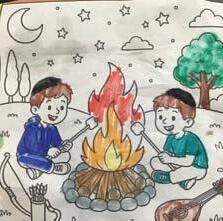
There was a time when Lag B’Omer in Baltimore felt more like a technicality than a Yom Tov. As kids, it meant getting out of school early after a softball game and heading home feeling like we had somehow pulled off a free afternoon. There was no organized excitement around town. No major gatherings. No citywide celebrations. The highlight was that there was a fun day at school, no tachanun. Maybe you got a haircut. Maybe the music came back on after weeks of sefira restrictions. That was pretty much the extent of it. It was a nice day. A lighter day. But it did not yet feel like something that overtook the streets or captured the imagination of the broader Torah world outside of Eretz Yisroel.
Growing up, Lag B’Omer always seemed like an “Eretz Yisroel Yom Tov.” You would hear about children collecting wood for weeks beforehand and building towering bonfires in neighborhoods throughout the country. You would see photos from Meron with tens of thousands packed together singing and dancing through the night in honor of the tana,
. And of course, there was the famous hadlaka of the Boyaner Rebbe, a sight that became iconic even for people who had never stepped foot in Meron. Somehow, even through grainy livestreams and newspaper photos, you could feel that there was something electric about the day there that was difficult to fully translate overseas.
This year felt different in an even more dramatic way. With Meron largely closed to the massive festivities people had become accustomed to, there was almost a question hanging in the air beforehand. What would Lag B’Omer look like without the videos of hundreds of thousands packed onto that mountain? And then came the hadlaka of Rabbi Elimelech Biderman. Tens upon tens of thousands gathered together in a scene that was honestly breathtaking to watch. The singing, the dancing, the emotion, the unity. It felt as though the energy of Meron had not disappeared at all. It had simply found another outlet and somehow reached even
greater heights of excitement and inspiration. Even watching from afar, you could sense that this was not just another event. There was a feeling of yearning and connection that seemed to pull people in from every background. And it was not only in Eretz Yisroel. I found myself genuinely blown away this year by just how enormous Lag B’Omer has become across the United States. Massive hadlakos took place in places like Lakewood, Kiryas Joel, and throughout New York City, drawing crowds that looked more like Chol Hamoed events than a regular weeknight in Iyar. And yes, even here in Baltimore, the energy felt different. Huge crowds gathered at the bonfires hosted by Khal Chasidim, the Zidichover Rebbe, and many others throughout the community. Families came out with their children. Music filled the air late into the night. People danced around the fires with a warmth and enthusiasm that honestly felt new to me on this scale. What struck me most was not just the attendance. It was the feeling. Lag B’Omer no longer feels like a free day from school. It feels like a Yom Tov. There is a spirit in the air now. A sense that people are searching for something deeper in the day itself. I cannot pretend to fully understand all of the inyanim and deeper meanings connected to Rabbi Shimon bar Yochai and Lag B’Omer. There are many who can explain the תוימינפ of the day far better than I can. But even for those of us standing a bit more on the outside looking in, it is impossible not to notice that the day has taken on a holiness and significance that feels very real. What once felt distant and uniquely tied to the hills of Meron now fills streets and communities around the world with singing, dancing, fire, and Jewish pride. And for those of us who remember when Lag B’Omer was mostly about softball games and school trips to the zoo, it is remarkable to see how this day has transformed into something so vibrant and alive.
Wishing a everyone a peaceful Shabbos!
Aaron M. Friedman
and mazal tovs to
WIN with !
Comfort Year-Round:
Experience stable indoor temperatures, and reduce drafts, with warm winters and cool summers, when you upgrade to spray foam insulation in your attic.
Save Big on Energy Costs:
Cut your heating and cooling bills by 30-50% and make your HVAC system work smarter, not harder.
Breathe Better:
Enjoy improved air quality with reduced drafts and outdoor pollutants, creating a healthier living environment.
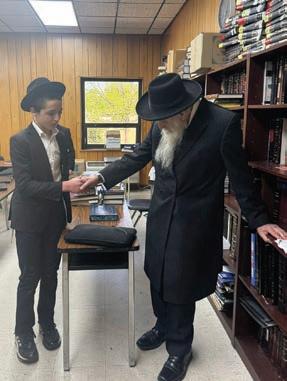
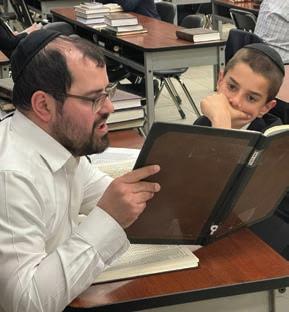
Lag B’Omer At Mercaz Torah U’Tefillah
Students And Rabbeim At Yeshivas Toras Simcha Celebrated Lag B’Omer
By: BJLife Newsroom | Photos: Dovid Kapenstein
Students and rabbeim at Yeshivas Toras Simcha celebrated Lag B’Omer with spirited dancing and singing. Inspiring stories were shared as the students gathered around a bonfire.
Menahel Rabbi Hillel Shepard and Rabbi Aryeh Sternman led an impromptu band of YTS-Zaidie musicians, who graciously shared their talents to enhance the occasion. Students also took part by leading their classmates in singing “Bar Yochai.”
Following the event, students enjoyed pizza and ices in honor of the special day.
SHABBOS DIALOGUE
TOGETHER, WE EXPLORE THE REAL ISSUES SHAPING OUR LIVES THROUGH A TORAH LENS.
8:25 PM Roundtable with Shushie Ehrenfeld and Yonah Openden
Each session begins with guided chavrusa learning (text-based with Hebrew and English sources) followed by a short shiur.
A light Shalosh Suedos buffet will be available during this time.
Sponsored by the Jewish Education Enhancement Project, a grant of the Charles Crane Family Foundation and the Associated, facilitated by Jewish Educational Services.
Around the Community
It’s Happening: Construction Officially Underway At Miriam’s Library
Baltimore isn’t waiting around, and neither is Miriam’s Library. What started as a vision is now steel, concrete, and real momentum. Construction is officially underway at Miriam’s Library and Learning Center, the 14,000-square-foot educational hub at 201 Milford Mill, built in memory of Mrs. Miriam Mintz, a”h, the beloved special education teacher whose decade at the Talmudical Academy of Baltimore left an imprint on hundreds of children and families across the city.
Following the closing on the building this past Chanukah, work began almost immediately. While the full second floor, all 7,000 square feet, is being prepared for buildout as existing tenants transition out, a vacant space in the building was identified, and crews moved in right away. “Because children shouldn’t have to wait,” Mendel Mintz shared. The 1,400-square-foot pilot space is scheduled to open this summer.
At the heart of the pilot space is a robust afterschool program designed to give Baltimore’s children a place to
land when the school day ends. Somewhere to get help with homework, work through challenging material with one-on-one support, recharge, and grow. The afterschool zone is being built with that in mind: open, welcoming, and structured to meet kids where they are. Surrounding it, the plans call for digital learning areas, private study rooms, quiet reading nooks, and a reading lounge bathed in natural light, with comfortable seating and shelves filled with possibility.
For the Baltimore community, the milestone is the result of months of collective effort, and the realization of a vision first announced at Miriam’s tribute event last summer, where the campaign was publicly launched. Since then, more than $2.3 million has been raised toward the project, carrying it from announcement to closing to active construction in under a year. Construction now marks the moment that vision becomes brick and mortar.
“This is only the beginning,” Mintz said. “In the coming weeks, we’ll be sharing real photos from inside as the space takes shape, B’ezras Hashem.”
Darchei Noam’s Lag Baomer
Darchei Noam’s Lag Ba’Omer Field Day was bursting with ruach, simcha, and nonstop fun! The excitement was in the air as students enjoyed a day packed with activities, celebrating together with a bounce house was a huge hit, filled with smiling faces and laughter.
The kids cooled off with refreshing ice pops, refueled with yummy hotdogs, and kept the fun going with games, friends, and plenty of outdoor excitement. It was a day full of joy, connection, and unforgettable memories—exactly what a Lag Ba’Omer celebration should be!
Rabbi Duvi Rubin Delivers An Inspirational Message To YTS Students
Rabbi Duvi Rubin, Rav of Baltimore’s Kehillas Ohr Yisrael, addressed the middle school talmidim of Yeshivas Toras Simcha today, sharing a timely message as we approach Shavuos. He asked the boys to reflect on why Rabbi Akiva’s talmidim passed away during this period, suggesting that these days leading up to Matan Torah highlight the teaching of
Chazal, “ derech eretz kadma laTorah .”
Rabbi Rubin encouraged the talmidim to strengthen their respect and sensitivity toward one another, emphasizing that even small acts—such as holding the door open for a friend— demonstrate humility and kindness. These everyday moments of proper conduct help prepare us to receive the Torah in the most meaningful way.
Bais Yaakov High School Wins Big At CIJE Robotics Competition
The CIJE Robotics Competition was an exciting nationwide event held in Bronx, New York, bringing together talented students from schools across the region. Organized by the Center for Initiatives in Jewish Education (CIJE), the event promotes STEM education through hands-on engineering, programming, and teamwork. This year, 57 robots competed in the event, and we are thrilled to share that Bais Yaakov of Baltimore achieved an incredible success, taking home both
first and third place awards!
Congratulations to our first-place team, Shana Gross, Avigayil Levi, Leah Shnaidman, and Huvie Zalesch, and our third-place team, Miriam Ansbacher, Rafaela Karimova, Huvi Passe, and Shani Rothschild
A special thank you goes to Mrs. Sarena Schwartz, our robotics coach, for her guidance, encouragement, and dedication throughout the entire process. We are also deeply grateful
to our chaperones, Mrs. Ora Attar, Mrs. Simona Markowitz, and Miss Rikki Berry, for their time, support, and enthusiasm.
Congratulations to our entire robotics team: Miriam Ansbacher, Tali Glickman, Shana Gross, Rafaela Karimova, Avigayil Levi, Tehilla Levin, Aidee Moss, Huvi Passe, Shani Rothschild, Leah Shnaidman, Chaya Yasni, and Huvie Zalesch. Your innovation, perseverance, and teamwork made our school incredibly proud!
AIM Pregnancy Workshop – Week 3: Nourishing Body And Baby
With each passing week, AIM’s Pregnancy Workshop series continues to inspire and uplift, drawing mothers back with a sense of excitement, empowerment, and connection. Week three was no exception, featuring a “dream team” of knowledgeable and passionate women who guided participants through the essential topics of nutrition and lactation, preparing them for both pregnancy and the early weeks of motherhood.
The morning began with Shira Greenfield, Registered Dietitian, who delivered an engaging and practical presentation on proper nutrition during pregnancy and postpartum. Using relatable analogies, she explained that just as a car cannot run without gasoline, a mother’s body requires consistent, quality fuel to support both herself and her growing baby.
Shira broke down the roles of macronutrients and micronutrients, emphasizing that even small amounts of key nutrients play a powerful
role in sustaining energy and overall health. She highlighted the importance of taking prenatal vitamins not only during pregnancy but also throughout the postpartum period.
Understanding the realities of new motherhood, Shira offered practical strategies to help women maintain healthy eating habits after birth. She addressed “decision fatigue” and encouraged participants to prepare in advance by creating a personalized list of go-to foods. When energy is low and hunger strikes, having a plan in place can make all the difference. She also shared a variety of nutritious “grab-and-go” snack ideas such as Greek yogurt, string cheese, hard-boiled eggs, trail mix, and whole-grain bars, reinforcing that preparation is key to nourishing both body and mind.
The workshop then transitioned to an invaluable session led by AIM’s dedicated lactation volunteers, Mindy Orner, RN, BSN, IBCLC, Esther Ribakow, PMH-C, IBCLC, and Michal Schechet, RN, BSN, IBCLC, who facilitate the organization’s weekly lac-
tation support group. Their warmth and expertise provided mothers with both practical tools and reassurance as they prepare for their nursing journeys.
The presenters discussed factors that can help set a mother up for success, including initiating nursing during the “golden hour” immediately after birth and understanding the powerful benefits of colostrum, often referred to as “liquid gold.” They emphasized that while nursing is natural, it is also a learned skill, for both mother and baby, and every experience is unique, regardless of how many children a mother has.
With a reassuring and nonjudgmental approach, they reminded participants of a central message: FED IS BEST! Mothers were encouraged to trust their bodies and their babies, understanding that behaviors such as cluster feeding are natural and play an important role in establishing milk supply.
The lactation consultants also explored the hormonal processes that support milk production and highlighted the significant impact of stress
on supply. Creating a calm, supported environment can make a meaningful difference in a mother’s experience.
Importantly, the speakers set realistic expectations, noting that it can take up to six weeks to establish a comfortable nursing routine. Patience, persistence, and self-compassion are essential during this time. They encouraged mothers to hold onto one or two meaningful benefits of nursing, whether for themselves or their baby, as a source of motivation during more challenging moments.
The session concluded with a powerful reminder: Hashem has given women the incredible ability to nourish their babies, and with the right support and guidance, many find success on their own unique path.
As the series heads into its final session, the anticipation continues to grow. AIM looks forward to concluding this impactful workshop by further equipping mothers with the tools, confidence, and inspiration they need as they embark on the extraordinary journey of motherhood.
New Stories from the Author of The Will
!
Strengthen Your Bitachon—Every Day
In these powerful stories, bestselling author Chaim Greenbaum brings unforgettable people and moments to life — tales of mesirus nefesh, unexpected connections, and Hashem’s guiding hand. Uplifting and moving, they remind us that nothing happens by chance — Hashem is always with us.
by Rabbi David Sutton
From the bestselling author of:
Following the success of his first volume, Rabbi David Sutton returns with A Daily Dose of Pesukim of Bitachon 2, a continuation offering selected pesukim with insights, practical takeaways, and uplifting chizuk to bring clarity, strength, and connection to Hashem into daily life.
Around the Community
Let’s Connect Spring Circles Create Meaningful Connections Across The Community
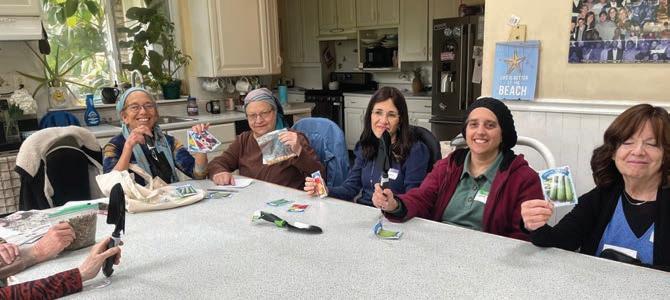
This spring, something quietly powerful has been bringing women together across the Baltimore community. Through Let’s Connect, more than 100 women have been gathering in small Circles, meeting regularly around shared interests, conversation, and Torah.
Let’s Connect’s mission is to create meaningful, Torah-oriented connections among women ages 50 and older. It is a simple idea that has resonated: participation has more than doubled since the program began less than a year ago. The enthusiasm reflects a strong desire for something ongoing and rooted; participants have found not only activities, but connection, belonging, and consistency. Circles clearly meet a real need.
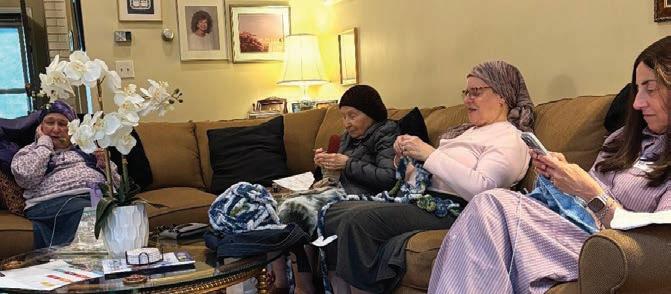
The Spring Circles include a range of offerings, from walking and movement groups to creative journaling, gardening, learning chaburahs, and even Mahjong. But the excitement is not only due to the subject matter of the Circle. The energy comes from the Let’s Connect women themselves: the warmth, enthusiasm, and genuine desire to show up, meet new people, and be part of something meaningful. Each Circle is intentionally kept small, allowing participants to feel comfortable, get to know one another, and return week after week to a familiar and welcoming space.
For many, that consistency has been key. In a time when connection can often feel fragmented or transactional, these Circles offer something different. They create room for genuine relationships to develop naturally, grounded in shared values, shared interests, and a sense of ease.
Behind the scenes, the program has been built and sustained by a devoted group of volunteers. A core team, including Moshay Cooper, Chaya Dachs, Sara Arno, Chaya Major, and Goldie Silberberg, has invested significant time and care into shaping the initiative. Their efforts are reflected not only in the organization of Let’s Connect programs, but in the steady sense of connection and belonging participants experience.
Let’s Connect is fortunate to work with a dedicated group of women who volunteer to lead Circles, bring-
ing warmth, thoughtfulness, and commitment to each experience. Their role is central to what makes each Circle feel personal and welcoming.
Leiba Gornbein leads the Art Circle, where participants tap into their creativity as they explore the fundamentals of color and color mixing, and the techniques of watercolor. Through guided painting, participants build their skills and will leave with several completed paintings.
Leah Pinck leads a Creative Journaling & Expressive Art Circle, which employs a variety of creative self-reflection techniques, including journaling with one’s non-dominant hand, and guided expressive exercises. The exercises are designed to help participants uncover their inner strength and cultivate clarity, hope, and self-compassion. Mrs Pinck was trained by the Creative Journaling and Expressive Art Institute.
Feigi Oberstein leads the Gardening Circle, where participants share ideas, experience, and practical tips as they focus on planting and growing throughout the season. The Circle offers inspiration and advice for all levels, from beginners to experienced gardeners.
Nomi Frankel leads the Emunah and Bitachon Circle, a learning group centered on strengthening emunah and bitachon through guided study and discussion.
Chaya Bina Samuels leads the Hiking Circle, which explores local trails at a comfortable pace.
Sara Helman and Esther Radzyner each lead a Mahjong Circle, teaching American Mahjong, a version of the game that has fewer rules, allowing for an easier flow of play. Participants are learning the basics, and are already enjoying their first few rounds of gameplay.
Pam Kanter leads a Movement Circle, employing gentle Pilates-style movement to work on strength, flexibility, and balance.
Sara Helman leads a Needlecraft Circle, which brings together wom-
en who enjoy knitting, crocheting, embroidery, sewing, quilting and other handcrafts. The Circle offers a relaxed environment for conversation, as well as guidance and troubleshooting for any technical craft issues that may arise.
Ilana Smith leads a Circle entitled, The Torah Approach to Eating and Nutrition, employing chabura-style learning of readings to thoughtfully explore the topic.
Chani Retter leads the Walking Circle, which offers steady, moderate walks that allow time for easy conversation amid the springtime beauty of neighborhoods in and around Baltimore.
The Circles themselves are just one of many ways Let’s Connect brings women together. The organization
hosts monthly Rosh Chodesh Hallel at a local shul, and large community events. The next community event, The Power of One, will take place on June 7 at Bnai Jacob Shaarei Zion.
Not satisfied to rest on its laurels, Let’s Connect is creating a growing range of programs and touchpoints in order to build opportunities for connection across the community. A speaker series is being planned for the Three Weeks, and Circles that meet once a month for six months are being developed, along with other new programming.
As meaningful as they are, Circles are much more than a seasonal program. They are part of a broader effort to strengthen connection within the community, one Circle at a time.
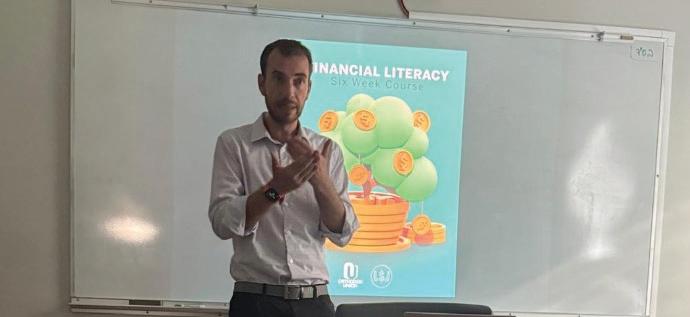
Mesivta Shaarei Chaim Students Gain Valuable Financial Literacy Insights From Northbrook Financial Co-Founder
By: BJLife Newsroom
Northbrook Financial Co-founder and long time Financial Literacy course developer, educator, and consultant, Elliot Pepper, joined the 11th grade of Mesivta Shaarei Chaim to discuss financial planning and investing.
Elliot’s presentation covered the essential elements of
• The Psychology of Money
• Cash Flow Management
• Compound Interest and Investing
The students walked away with a strong understanding of how the
Hatzalah Parade
During the Hatzalah parade, the children of Hatzalah volunteers handed out ice pops as families gathered excitedly to
financial “plumbing system” works with an emphasis on some of the unique financial considerations of the frum community and how to utilize compound interest to supercharge the wealth building journey.
Elliot noted: “These young men came to class excited and ready to learn. I have always loved being in the classroom and providing not just financial education but financial empowerment to young people!”
The bochurim were attentive, energetic, and asked thoughtful questions. You could feel the energy in the room as we jumped into the benefits of automating savings, diversifying investments, and “Staying the course” with your financial plan.”
watch the Hatzalah ambulances pass by. Thank you Hatzalah for all the amazing ways you help our community!
Siyum At Ohel Torah Marks Milestone For Baltimore MDY
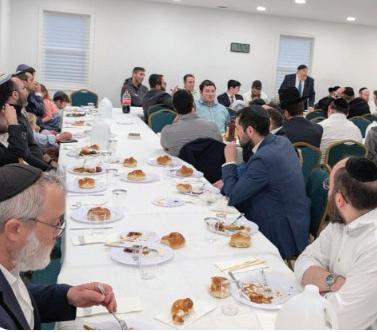
Sixty local ‘daffers” recently gathered at Ohel Torah on Stevenson Road to celebrate a collective Siyum on Maseches Menachos.
Ohel Torah serves as the official MDY (Mercaz Daf Yomi) satellite location for Baltimore, providing a dedicated space for those in the community to learn together. This event marked the satellite location’s second
successful Siyum.
Looking ahead, the group is already planning for the next Masechta, Chullin. To generate excitement and provide practical context for their learning, Ohel Torah plans to host a live shechita demonstration in the near future. This hands-on event aims to welcome even more participants to the local learning program.
By: BJLife Newsroom
Photos: Dovid Kapenstein
Around the Community
JCSL Week 2: Walks, Home Runs, And A Little Friendly Chaos
Week 2 of the 2026 JCSL by MDSC season served up plenty of action, excitement, and yes—some colder than expected weather. With 8 teams back on the Friendship Circle fields following two weeks of rainouts, players were itching for some fun and competitive softball. Once again, the beautiful jerseys sponsored by Stutman Chiropractic made the players look sharp, while photographer Josh Finkelstein captured the intensity, the dives, and the occasional celebratory high-five mid-run.
This week, several teams were eager to bounce back after opening-day losses, and the games delivered everything from offensive fireworks to smart, patient play.
Tov Pizza 20, CREZLY 12
Both Tov Pizza and CREZLY came into Week 2 searching for their first win of the season. Tov Pizza wasted no time, jumping out to a 3-0 lead in the first inning and never looking back. In a brisk 40-degree morning that might have kept most people in bed, Tov Pizza decided to take a more relaxed approach—strolling their way to a league-high 14 walks. Somehow, patience at the plate became the winning strategy.
Backing their offensive patience was solid defense and savvy baserunning. Plays were made when it counted, and runners advanced with a mix of aggression and smarts that kept CREZLY on their heels all day. By the final inning, Tov Pizza had assembled a 20-12 victory and proved that sometimes the key to winning is less about swinging for the fences and more about making the other team work for every out.
Naftali Gerstman: Allstate Insurance 18, Web Interactive Technologies 6
In what can only be described as a “softball fireworks display,” Gerstman Insurance lit up the scoreboard in a dominant 18-6 rout. From the very first pitch, it was clear that Gerstman’s bats were hot—and they stayed that way all day.
Shimon Kanter set the tone at third base, going 3-for-4 and holding down
the hot corner like it was his day job. Josh Zaslow turned left field into a personal highlight reel, lacing a double and a triple. And Abie Hyatt showed that he’s not just a professional Jewish singing/musical prospect but a talented softball player as well - hitting not one but two home runs, adding a double and single for good measure.
Season debuts from David Pensak and David Gelberman only added fuel to the fire, with both going 3-for-4, Pensak doubling twice and Gelberman hitting a homer. Avi Safren kept the momentum rolling with a 3-for-4 day, while Binyamin Guttman contributed a tidy 2-for-3 effort. By the time the dust settled, Gerstman Insurance had firmly proven that sometimes the best defense is simply scoring 18 runs.
Orshan Legal Group 14, YL Waitering 5
Orshan Legal Group had plenty to celebrate in their 14-5 win over Web Interactive Technologies, led by a complete team performance that combined pitching, defense, and timely hitting.
Danny “Kofax” Weissmann dominated on the mound, striking out four while also raking at the plate. First baseman Shlomo “Alonzo” Rosenstein was a wall of reliability, adding two doubles to his defensive gems. The outfield was equally impressive: Joseppi Elazer in center, Eli Kelemer in left, Yehuda Pensack in short center, and Moshe “Hello” Mudderperl in right made sure nothing got past them. Even Coach/Player Moshe “Just give it a” Treitel stepped up with a bases-clearing triple and a heads-up defensive play to stop a rally at home.
In the infield, Captain My Captain Meir Parry held down shortstop with elite defensive plays, while Meir “Manny” Samberg at third and Leopold Lefky at second combined for clutch stops and timely hits.
Player of the day honors went to Tzvi “Rutschman” Pearlman, who led the team with four RBIs and made huge plays in key moments.
Off the bench, Freedman made an immediate impact as a pinch runner, scoring seven runs and turning the bases into his personal obstacle course.
Despite a strong showing from Yoni Levin and his YL Waitering teammates, Orshan Legal’s dominance was evident throughout the contest.
PsychCare 11, Clothier 6
PsychCare turned in a masterclass in patience and execution in a comeback win over Clothier. After falling behind early, PsychCare methodically chipped away at the deficit with disciplined at-bats, sharper defense, and relentless focus.
The turning point came with a pair of defensive gems: Aharon Loiterman in right field stopped a potential rally, and Sammy Sonnenberg followed with a diving catch in center that energized the team. Mordechai Schiermeyer stayed locked in at shortstop, delivering clutch hits while making key defensive stops. At the plate, “Feisty Meisty Feister” Meister drove in crucial runs to help swing the momentum fully in PsychCare’s favor.
Pitcher Aharon Adler led the
pitching staff with a composed outing that kept Clothier from regaining traction. The win was a true team effort, combining timely hitting, crisp fielding, and steady pitching—a reminder that in softball, patience and precision often beat sheer power.
Week 2 of the JCSL reminded fans why this league continues to excite the Baltimore Jewish community. From Tov Pizza’s patient approach to Gerstman’s offensive fireworks, Orshan Legal’s all-around dominance, and PsychCare’s comeback resilience, each team brought something unique to the field.
With early-season standings starting to take shape and plenty of games still to come, the race to the Ashley Homes postseason and the Premier Financial trophy is heating up. And if Week 2 proved anything, it’s that whether it’s home runs, walks, or diving catches, the 2026 JCSL season promises to deliver drama, talent, and a little friendly chaos every Sunday.
Greater Washington: Around the Community
A Behind-The-Scenes Look At The Kosher World
By Rabbi Avichai Pepper, Director of Academic Advancement, and Community Relations, issue a greater Washington
Rabbi Turoff’s seventh-grade class at Yeshiva of Greater Washington headed out on an exciting trip to Baltimore to get a real, behind-the-scenes look at how a kosher supermarket operates.
Their first stop was Seven Mile Market, where they met with Rabbi Tendler of the Star-K, who oversees the store’s kashrus. After a brief introduction, the boys jumped right into exploring. They walked through each department, including the deli kitchen, bakery, separate meat and fish departments, and even produce, getting an inside look at what it takes to keep everything up to the highest kosher standards. Rabbi Tendler brought it all to life, explaining the care, detail, and halachic precision involved in every step.
From there, the boys continued on to Ner Yisrael, where they had the spe-
cial opportunity to sit and learn in the main Beis Medrash. The energy in the room was tangible with Kot Torah, and for half an hour, the seventh graders became part of it. The highlight came when they met the Rosh HaYeshiva, HaRav Aharon Feldman. He took the time to greet each boy and shared heartfelt and inspiring words about bringing Torah into everyday life.
On the van ride back to Silver Spring after lunch at Tovs, the excitement didn’t die down. The boys were talking, reflecting, and clearly inspired. Several of them shared how eye-opening it was not just learning how kosher food is prepared, but seeing what it means to live as a Ben Torah. A life full of meaning, tradition, and plenty of excitement.
The LEV Experience Inspires Unity With Uplifting Challah Bake
Before Pesach, The LEV Experience hosted a challah bake led by Devorah Buxbaum, bringing together a vibrant group of women from different Jewish backgrounds.
From the moment the evening began, the room felt alive. It was hands-on, warm, and full of energy, centered around the mitzvah of challah and the meaning it carries far beyond the kitchen.
As the dough was mixed, kneaded, and braided, the space naturally filled with conversation, laughter, and connection. With live musical accompaniment by Shira Buxbaum during the dough’s rising, the atmosphere took on a very special tone. The carefully chosen songs created a space that felt open and reflective, softening the room and inviting moments of real heart and soul connection.
By the end of the evening, each participant left with two of her own
freshly prepared challahs to bake at home, carrying that energy back into her own kitchen. More than anything, she left feeling uplifted and connected, carrying with her a powerful reminder of what can happen when women come together to connect with each other and with Hashem.
Massive Local Inventory
Our
Real-Time Design
We design your memorial with you in our studio. You approve it instantly, avoiding weeks of waiting.
Complete Local Control
From
We engrave everything ourselves to spot and fix potential flaws before they occur.
We build to last, so we guarantee it. We are your partners for life.
613 Seconds with Shmuel Leshnoff, Owner of Conkretely
BJH: For those who may not know you, tell us a little about yourself.
Shmuel Leshnoff: I’m Shmuel Leshnoff, born and raised right here in Baltimore, and I really feel deeply connected to this community. I’m a TA alumnus, an active Hatzalah responder, and for a number of years I served as Program Director at Ahavas Chaim. Depending on where people know me from, some might remember me from community events, others from Hatzalah calls, and some probably just recognize the red truck driving around town. For a while I was even on the Park Heights Roofing billboard, which definitely made for some interesting conversations. A few years ago, I also started my construction company, Reno Co., which gave me the opportunity to work closely with homeowners all across Baltimore.
BJH: You seem very involved in the community. Has Baltimore always been home for you?
There’s also something special about working in your own city. You’re not just serving customers. You’re helping neighbors, friends, and people you’ll continue seeing in shul, at simchos, or around town. That creates a level of accountability and pride in the work.
BJH: What led you into the construction world?
SL: I’ve always enjoyed building things and solving problems. Construction combines both. There’s something very satisfying about taking a space that’s outdated, damaged, or underutilized and turning it into something functional and beautiful.
Through Reno Co., I spent years remodeling homes and managing projects, and one thing I learned quickly is that no two houses are ever the same. Every project comes with its own challenges, personality, and goals. That keeps the work interesting and forces you to constantly learn and improve.
Over time, I also started noticing certain areas of construction where homeowners were frustrated with the experience itself. Communication was lacking. Scheduling was inconsistent. People felt overwhelmed or left in the dark. I realized there was a real opportunity to create something more streamlined and customer-friendly.
Over the past several months, I invested into building systems and processes that make the experience easier from beginning to end. We wanted fast estimates, dependable scheduling, clear communication, and quality workmanship to be the standard, not the exception.
A lot of my background in project management and organizing teams helped shape the way we built the company. I’m excited to bring that level of professionalism to Baltimore’s blue-collar industry.
BJH: You mentioned outdoor spaces. A lot of homeowners automatically think “deck.” Why are you encouraging people to consider patios instead?
SL: Decks absolutely have their place, especially when you need elevated access from a second story. But what I noticed over the years is that many homeowners were looking for a simple ground-level entertaining space directly off the back of the house. In many of those situations, concrete patios simply make more sense.
SL: Absolutely. Baltimore is home in every sense of the word. It’s where I grew up, where I built friendships, and where I’ve had opportunities to grow personally and professionally. One of the things I appreciate most about Baltimore is how interconnected the community is. People genuinely care about each other here. Whether it’s through volunteering, responding with Hatzalah, or helping homeowners improve their spaces, I’ve always tried to contribute through action.
BJH: Is that what led to Conkretely?
SL: Exactly. Conkretely was built to simplify concrete work for homeowners. We focus on the essentials that almost every homeowner eventually deals with: driveways, sidewalks, patios, and steps.
Concrete is one of those things people don’t think about until there’s a problem. Maybe the driveway is cracking, the sidewalk becomes uneven, or they want to create a more usable outdoor space.
When you compare the long-term cost and maintenance of a wood or composite deck versus a concrete patio, the difference can be significant. Concrete is durable, clean, and low maintenance. You don’t have to worry about carpenter bees, rotting wood, splinters, or constantly re-staining and repairing it every few years.
A patio can provide the same practical outdoor living space while often costing substantially less. And I always tell people that the savings can be used to make the area even more enjoyable. Instead of putting every dollar into decking materials, maybe add a pergola, outdoor lighting, comfortable seating, or upgrades that really transform how the family uses the space.
I’ve even suggested Costco-style pergolas for families looking to improve their sukkah area in a practical but beautiful way.
BJH: What do homeowners appreciate most about working with you?
SL: I think people appreciate honesty and guidance. Sometimes homeowners know exactly what they want, and other times they just need someone to walk them through the possibilities.
Every family uses their home differently. Every budget is different too. I genuinely enjoy sitting down with people, understanding how they live, and helping them figure out what makes the most sense for their project.
At the end of the day, this business is really about relationships and trust. We’re entering people’s homes and helping improve spaces where families spend time together. That’s something I don’t take lightly.
BJH: Any final message for the community?
SL: First of all, I’m incredibly grateful to Baltimore for the support over the years, both personally and professionally. This community has given me so much.
If someone is considering concrete work, whether it’s replacing a driveway, fixing sidewalks, adding a patio, or simply exploring ideas, I’m always happy to have a conversation. Estimates are free, and even if someone just wants guidance or wants to understand their options better, we’re happy to help.
You can check out our ad in this week’s issue to learn more about Conkretely and some of the services we provide. And of course, feel free to call or text me anytime at 443-320-6773. I’m always happy to connect.
The Week In News
The Week In News
Deadly Virus on Cruise Ship
A deadly virus outbreak aboard a remote expedition cruise is raising alarm, but global health officials say the risk to the wider public remains low.
The World Health Organization said Tuesday that limited human-to-human transmission of hantavirus may have occurred on the MV Hondius cruise ship, where three passengers have died and several others have fallen ill. Still, officials stressed the situation appears contained.
“We do know that some of the cases had very close contact with each other,” said Dr. Maria Van Kerkhove. “Human-to-human transmission can’t be ruled out…but this is not a virus that spreads like flu or like COVID.”
The ship, carrying nearly 150 people,
remains anchored off Praia in West Africa after what was meant to be a oncein-a-lifetime trip turned into a medical emergency at sea. Operated by Oceanwide Expeditions, the vessel had departed Ushuaia, Argentina, last month, stopping at remote islands before passengers began reporting severe flu-like symptoms.
So far, seven cases of hantavirus— two confirmed and five suspected—have been identified. Among the dead are a Dutch couple and a German national.
One British passenger remains in intensive care in Johannesburg, though officials say his condition is improving.
For those still onboard, uncertainty lingers. Travel vlogger Jake Rosmarin described the tense atmosphere: “What’s happening right now is very real for all of us here. We’re not just a story. We’re not just headlines.”
Health authorities are now racing to evacuate two symptomatic crew members for urgent treatment, while planning to send the ship to the Canary Islands for a full investigation and disinfection. Meanwhile, contact tracing efforts have already begun for passengers who may
have been exposed before leaving the vessel.
Hantavirus is rare but dangerous, typically spread through contact with infected rodents. In severe cases, it can lead to respiratory failure, with a mortality rate of roughly 38%, according to the Centers for Disease Control and Prevention.
Experts believe the outbreak may be linked to exposure during excursions in Argentina or on remote islands visited during the voyage. The strain is suspected to be the Andes virus, the only known type capable of limited human transmission between close contacts.
For now, officials emphasize caution, not panic. The outbreak may be serious for those onboard, but it is not expected to spread beyond it.
Surging Antisemitism in UK
On Saturday, top UK police official Mark Rowley decried a social me-
dia-fueled antisemitism “epidemic,” declaring that British Jews are facing their greatest threat ever. Furthermore, he urged the government to hire 300 officers to protect the Jewish community.
“If you overlay three things now — hate crime, terrorism and hostile state activity — you add all that together, that combined effect with that building of ideology online, that is really dangerous and troubling,” Rowley, the head of London’s Metropolitan Police, said. “And Jewish communities feel that, and you can see that in how they talk, how it’s making them change their lives. That’s an appalling state of affairs.”
In an interview with The Times, Rowley noted that British Jews are on every racist and extremist group’s “hate” list.
“Whether you’re extreme left, whether you’re an Islamist terrorist, whether you’re a right-wing terrorist, and some hostile states as well, now with some sort of Iranian-related threats. There’s a sort of ghastly Venn diagram that they’re at the middle of,” he added.
Greater Washington Weekday Minyanim Guide
6:15 am Young Israel Shomrai Emunah M-F
6:20 am Ohev Shalom Talmud Torah OLNEY M, Th
6:25 am Southeast Hebrew Cong., Knesset Yehoshua M-F
6:30 am Beth Sholom Congregation M-F
Beit Halevi (Sfardi) M, T
Chabad of Silver Spring M-F
Ohev Shalom Talmud Torah OLNEY T, W, F
Young Israel Shomrai Emunah S YGW M, Th
6:35 am Ohr Hatorah M, Th
6:40 am YGW S, T, W, F Magen David Sephardic Congregation M-Th
6:45 am Beit Halevi (Sfardi) S, T, W, F
Kemp Mill Synagogue M, Th
Ohr Hatorah T, W, F
Young Israel Shomrai Emunah M, Th
6:50 am Woodside Synagogue/Ahavas Torah M, Th Silver Spring Jewish Center M-F
Chabad of Upper Montgomery County M-F
6:55 am Young Israel Shomrai Emunah T, W, F
7:00 am Kemp Mill Synagogue T, W, F
Southeast Hebrew Cong., Knesset YehoshuaS Silver Spring Jewish Center S
BETHESDA
Magen David Sephardic Congregation [S]
11215 Woodglen Dr, North Bethesda, MD 20852
GAITHERSBURG
Chabad of Upper Montgomery County [Ari] 11520 Darnestown Rd, Gaithersburg, MD 20878
OLNEY
Ohev Shalom Talmud Torah (OSTT)
Woodside Synagogue/Ahavas Torah T, W, F
Young Israel Ezras Israel of Potomac T, W, F
7:05 am Kesher Israel M, Th
7:15 am Kemp Mill Synagogue M, Th Kesher Israel T, W, F
Ohev Sholom Talmud Torah/The National Synagogue M-F
Ohr Hatorah S
7:30 am Chabad of DC M-F
Chabad of Potomac M-F JROC M-F
Kemp Mill Synagogue T, W, F
Southeast Hebrew Cong., Knesset Yehoshua M-F
Young Israel Shomrai Emunah S
Young Israel Shomrai Emunah (Sfardi) M-F
7:45 am YGW (Yeshiva Session Only) S-F
8:00 am Beth Sholom Congregation S
Kemp Mill Synagogue S Kesher Israel S
Ohev Shalom Talmud Torah OLNEYS
Southeast Hebrew Cong., Knesset YehoshuaS Chabad of Upper Montgomery CountyS
Young Israel Ezras Israel of Potomac Young Israel Shomrai Emunah (Asheknaz) Young Israel Shomrai Emunah (Sefarhadi)
maariv
8:45 pm YGW S-Th
9:15 pm Silver Spring Jewish Center S-Th
9:30 pm YGW S-Th
9:45 pm Ohr Hatorah S-Th 10:00 pm YGW S-Th
shacharis
The Week In News
Rowley’s statement followed an antisemitic terror attack last Wednesday, during which terrorist Essa Suleiman, a 45-year-old Somalia-born British citizen, stabbed 34-year-old Shloime Rand and 76-year-old Moshe Shine in north London’s Golders Green, a Jewish neighborhood. Suleiman was charged with two counts of attempted murder and one count of possession of a bladed article in a public place, according to officials.
Following the attack, the UK raised its national terrorism threat level to “severe,” indicating that terrorist attacks will very likely happen.
On Saturday, British Prime Minister Keir Starmer said in an interview that certain anti-Israel protest chants should be banned, adding that some protests shouldn’t be allowed at all.
Zach Polanski, the leader of the Green Party, retweeted a post criticizing British police for their treatment of Suleiman, decrying alleged police brutality. After coming under fire, he issued an apology, acknowledging that his decision to share the inflammatory post was hasty.
U.S.-Canada Oil Pipeline
A proposed cross-border oil pipeline linking Canada to the United States is gaining momentum, as industry commitments near the threshold needed to move the project forward.
Sources familiar with the matter told Reuters that oil companies have already pledged to ship at least 400,000 barrels per day along the Alberta-to-Wyoming route, roughly 72% of the pipeline’s initial capacity. Developers, including South Bow Corp and U.S.-based Bridger Pipeline, are aiming for about 80% capacity commitments before beginning construction.
If completed, the project could boost Canada’s crude exports to the U.S. by more than 12%, offering a long-sought solution to persistent pipeline bottlenecks that have constrained the country’s oil industry.
The plan received a boost last week when U.S. President Donald Trump signed an order granting a key cross-border permit. The move marks a sharp pol-
icy shift from 2021, when former President Joe Biden revoked the permit for the now-defunct Keystone XL pipeline.
Unlike Keystone XL, the new proposal follows a different U.S. route. However, it would revive about 150 kilometers of pipeline already built on the Canadian side, connecting it to a new 645-mile stretch through Montana to Guernsey, Wyoming. The system could eventually carry more than 1.1 million barrels per day, according to regulatory filings.
Major Canadian producers—including Cenovus Energy and Canadian Natural Resources—are among those backing the effort, alongside other firms seeking additional export capacity. Industry leaders say the project reflects growing urgency to expand infrastructure as Canada’s oil output continues to rise, with production projected to reach as high as 6.1 million barrels per day by 2030.
“The engagement has been constructive, and there appears to be sufficient momentum,” said Whitecap CEO Grant Fagerheim, noting that support from the U.S. administration has helped drive progress.
Pipeline constraints have long limited
Canada’s ability to fully capitalize on its oil reserves, prompting parallel expansion efforts. Enbridge is already moving ahead with upgrades to its Mainline and Flanagan South systems, while the Trans Mountain pipeline is planning enhancements that could significantly boost export capacity.
Still, challenges remain. Analysts note that Guernsey is not a major refining hub, meaning additional connections would be needed to transport crude to key markets such as the U.S. Gulf Coast.
Even so, industry experts see the proposal as one of the most viable paths forward. As one analyst put it, expanding pipeline capacity “remains necessary,” regardless of shifting political or economic conditions.
How Houthis Seized U.S. Equipment
After the Trump administration cut foreign aid and shut down U.S. Agency of International Development (USAID) op-
Yeshivas Chofetz Chaim –
Supervision and mentoring of Special Education staff
Oversight of student support services, scheduling, and accommodations
Collaborating with Rebbeim, teachers, administrators, parents, and outside professionals
Guidance for parents through testing, diagnosis, and placement processes
Participation in student planning and support meetings
Ongoing development and strengthening of the program to meet student needs
REQUIREMENTS
A background in Special Education
Leadership, organizational and communication skills
Experience working collaboratively with teachers, parents, and outside professionals
A deep commitment to helping children succeed within a yeshiva environment
RIDER PROFILE
The Week In
erations last year, the Houthis, an Iranian proxy group based in Yemen, reportedly seized over $122,000 worth of abandoned American equipment in Yemen.
Former government officials claim that the U.S.’s rapid cuts left little time for officials on the ground to deal with the equipment.
has secretly deployed its Iron Dome missile defense system in the United Arab Emirates, helping the Arab state intercept Iranian drones.
The deployment was ordered by Prime Minister Benjamin Netanyahu after he received a call from UAE President Sheikh Mohammed bin Zayed Al Nahyan, requesting help. This is the first time, as far as is known, that Israel has deployed the Iron Dome outside of its
In 2020, the UAE joined the U.S.-brokered Abraham Accords, becoming the first Arab nation in 26 years to normalize
Since the war in Iran began, the UAE has expressed concern regarding its fellow Arab states’ stance on the conflict, particularly its neighbors in the Gulf. As such, Abu Dhabi has started drifting away from its Arab allies, boosting ties with Israel, the United States, and other
Whether top officials at USAID or the State Department were warned about Houthi seizures is unclear.
“Organizations were really, really scared. Particularly because the Houthis have kidnapped, tortured, and killed both USG, UN, and NGO staff for less,” one former official said. “Now there were assets in play and very quickly, so you had the Houthis just coming in and starting to take stuff by force.”
Israel Shares Iron Dome With UAE
In an unprecedented move that highlights the countries’ growing bond, Israel
“Amid the limited positive developments to emerge from the Iran war, this relationship (with Abu Dhabi) stands out as ‘good news,’” an Israeli official said. “Ties have advanced to a new level, including at the leadership level.”
“The war brought an unprecedented level of closeness, driven largely by a shared sense of fate – both countries were attacked and the enemy is common,” another Israeli official said. “This will definitely be reflected in the expansion of relations from here on.”
Last week, the UAE left OPEC, an intergovernmental oil group, citing constraints imposed by the organization. It was a member for almost 60 years. Some speculate that Abu Dhabi will leave other international and regional bodies, such as the Gulf Cooperation Council, the Arab League, or the Organization of Islamic Cooperation, though it has yet to do so. A UAE official has said that the country isn’t considering any more withdrawals at this time.
Israel and the UAE both view radical Islam as their chief enemy.
Talks for PM’s Corruption Trial
On Sunday, the attorney general’s office notified President Isaac Herzog’s legal adviser that prosecutors in Prime Minister Benjamin Netanyahu’s corruption case are open to discussing the possibility of a “suitable plea bargain.”
Gali Baharav-Miara, the attorney
Beth Tfiloh Congregation
BAIS YAAKOV OF BALTIMORE
SEEKING DIRECTOR OF FACILITIES
For a large multi-campus school
KEY RESPONSIBILITIES
Oversee facility operations, including maintenance, repairs, purchasing, operations and project management
Manage contractor engagements for building systems, communications infrastructure and seasonal needs
Manage facilities teams and security operations
Partner with leadership on long-term planning and capital budgeting
Manage facilities supplies and equipment inventory
Liaison with government agencies; manage compliance with facilities licensing, permits, and inspections
Maintain a network of reliable vendors and contractors
Manage financial aspects of facilities operations
Respond to facility issues and be on call for emergencies
YOU SHOULD BE
A leader who is comfortable working independently and making decisions in real time
Able to balance strategic planning with day-to-day operations
Proactive, collaborative, with a strong service mindset
The Week In News
general, and Amit Aisman, the state prosecutor, expressed their appreciation for “the honorable president’s efforts” to secure a deal. They added that they would engage in the talks “provided there are no preconditions, and without detracting from the trial’s progress.”
“At the present time, we will not address additional issues including the
government has 31 ministries — significantly more than comparable countries — and that many of these ministries are unique or overlapping in responsibility. Englman said this leads to duplication, confusion, and fragmented authority across the system.
man issued a sharply critical report on Tuesday, warning that Israel’s frequent reshuffling of government ministries is creating deep inefficiencies, weakening public services, and costing the state hundreds of millions of shekels each year.
The audit, covering March 2024 to March 2025, examined how often governments opened, closed, split, and reassigned ministries and responsibilities. According to the findings, Israeli governments carried out 76 structural changes between 2020 and 2024 alone — a pace Englman said is unsustainable and damaging.
“The government in Israel is characterized by a large number of ministries compared to other countries, as well as by frequent changes,” Englman said. He added that this creates both a “functional price” and a financial one, ultimately reducing efficiency and harming public service delivery.
The report found that Israel’s current
“The Prime Minister’s Office did not examine the possibility of abolishing ministries, as required,” he said, suggesting that political considerations often override administrative planning. He also noted that reform proposals repeatedly drafted by professional teams were never fully implemented.
The consequences, according to the report, are visible on the ground. Of 50 transfers of responsibilities between ministries, 40% were shifted more than once, with each transfer taking an average of seven and a half months. In most cases, ministers approved changes without basic information such as budgets or
Several case studies highlighted real-world disruptions. The Agriculture Planning Authority, for example, was transferred between ministries and left without a functioning budget for a year, with its operational funding significantly reduced. Other agencies, including the Bedouin Authority and the Holocaust Survivors’ Rights Authority, were described as suffering from repeated relocations that damaged continuity and
One of the most serious findings concerned post-war rehabilitation efforts in Israel’s north and south. Englman said repeated transfers of responsibility during wartime created instability at a critical moment. “One of the most painful failings in the government’s conduct concerns the handling of rehabilitation,” he said.
The report also criticized the lack of stable long-term planning, noting that recovery efforts in affected regions have been delayed as responsibilities continue to shift between ministries.
Englman recommended that the government reduce the number of ministries, improve coordination within the Prime Minister’s Office, and require full budget and staffing data before approving any future structural changes.
U.S. Arms Package
The U.S. State Department said on Friday that it was approving military
Where the Next Generation Finds Its Voice
The future of Jewish life is not something we inherit.
It’s something we prepare for.
Across campuses, schools, and communities, the Orthodox Union is investing in young Jews who will shape what comes next. Through NCSY, JLIC, and programs across North America and Israel, they deepen their commitment to Torah, strengthen their identity, and gain the confidence to lead.
These are tomorrow’s leaders of Jewish life.
Preparing them begins today — and it depends on all of us.
The Week In News
sales totaling over $8.6 billion to Middle Eastern allies Israel, Qatar, Kuwait and the United Arab Emirates.
The package included approving military sales to Qatar of Patriot air and missile defense replenishment services costing $4.01 billion and of Advanced Precision Kill Weapon Systems (APKWS) — a laser-guided weapons kit — costing $992.4 million.
They also included approval of the sale to Kuwait of an integrated battle command system costing $2.5 billion and to Israel of Advanced Precision Kill Weapon Systems costing $992.4 million.
The State Department approved a sale to the UAE of APKWS for $147.6 million.
The principal contractor in the APKWS sales to Qatar, Israel and the UAE was BAE Systems, the State Department said.
RTX and Lockheed Martin were the principal contractors in the integrated battle command system sale to Kuwait and in the Patriot air and missile defense replenishment sale to Qatar, the State Department added. Northrop Grumman was also a principal contractor in the Kuwaiti sale.
U.S. Withdraws Troops From Germany
Following critical comments by German Chancellor Friedrich Merz on the United States’s war in Iran, U.S. officials announced the withdrawal of around 5,000 American troops from Germany.
“The Secretary of War has ordered the withdrawal of approximately 5,000 troops from Germany,” Sean Parnell, the chief spokesman of the Pentagon, said. “This decision follows a thorough review of the Department’s force posture in Europe and is in recognition of theater requirements and conditions on the ground. We expect the withdrawal to be completed over the next six to twelve months.”
Some 36,000 U.S. troops would remain in Germany following the withdrawal, though President Donald Trump pledged further cuts.
Strains in relations between the Trump administration and European leaders have deepened in the wake of the Iran conflict, especially after the United
States carried out military action without first consulting many of its NATO partners. At the same time, the U.S. president has openly criticized allied nations for not contributing enough, even raising the possibility of pulling back U.S. forces stationed in countries such as Italy and Spain.
Sen. Roger Wicker and Rep. Mike Rogers, the Republican chairmen of the House and Senate Armed Services committees, said they were “very concerned” by the move, calling on the Pentagon to instead move the troops east, where U.S. allies “have made substantial investments to host U.S. troops … while strengthening NATO’s front line to help deter a far more costly conflict from ever beginning.”
Boris Pistorius, the defense minister of Germany, suggested that the move wasn’t very significant, adding that Europe needs to be able to defend itself.
Since the U.S.’s war with Iran began, Germany has been of little help, barring American forces from using German military infrastructure as staging grounds for direct strikes.
Last Monday, Merz claimed that the U.S. had no clear strategy and was being “humiliated” by Iran.
“The Iranians are obviously very skilled at negotiating, or rather, very skillful at not negotiating, letting the Americans travel to Islamabad and then leave again without any result,” Merz said. “An entire nation is being humiliated by the Iranian leadership, especially by these so-called Revolutionary Guards. And so I hope that this ends as quickly as possible.”
The following day, Trump declared that Merz “doesn’t know what he’s talking about.” A day later, Trump floated the idea of withdrawing troops from Germany.
The End of Spirit Airlines
Thirty-four years into the company’s existence, Spirit Airlines, an airline known for its cheap tickets, is now out of business, with operations winding down and all flights canceled, effective immediately.
Spirit survived two bankruptcies, but
The Week In News
current oil prices, which have skyrocketed due to the war in Iran, pushed the struggling airline over the edge. While the company was in talks with the Trump administration regarding a potential bailout, negotiations fell through.
All Spirit flights were suddenly canceled on Saturday, leaving many stranded. According to U.S. Transportation Secretary Sean Duffy, the airline intends to refund customers with money kept in a reserve fund. Meanwhile, United, Delta, JetBlue, and Southwest offered stranded Spirit customers $200 one-way flights. Spirit employees, who are now without a job, will go through a preferential application process at some airlines.
Spirit declared bankruptcy in November 2024 and August 2025. During its first bankruptcy, it said it had lost over $2.5 billion since the beginning of 2020. At the time of its second bankruptcy, the company was $8.1 billion in debt. Spirit began struggling financially during the coronavirus pandemic.
Duffy and other Trump administration officials blamed the Biden administration for Spirit’s demise, noting that then-President Joe Biden, in 2023, barred Spirit and JetBlue from exploring a potential merger, a move that could have saved
the now-out-of-business airline.
“Voice of the Yankees” Passes
John Sterling, the New York Yankees’ beloved three-decade radio voice, passed away on Monday, according to WFAN.
Sterling was 87 years old and had suffered heart failure a week ago.
In 1989, Sterling became the Yankees’ announcer, using his deep, iconic, uniquely energetic voice to excite fans during his play-by-plays. He called 5,651 games, 5,060 of which were consecutive, in addition to 211 postseason ones, missing his first ever game in July 2019 amid illness. He retired 36 years later in 2024.
Born John Sloss, he was raised in the Upper East Side. He was a longtime Yankees fan and a radio enthusiast who dreamed of broadcasting for the baseball team.
Among his most popular lines was “The Yankees win! The Yankees win!” Sterling had personal home run calls for each player and had won 12 Emmy Awards.
“It’s like he gets in that chair, and
it shoots life through him,” said Aaron Boone, the manager of the Yankees. “He’s at home when he’s in his office. It’s a remarkable career, to be able to do it like that and as long as he did it. He’s left quite a mark on this organization and the game of baseball.”
Before joining the Yankees, Sterling broadcast for other teams, including the New Jersey Nets, New York Islanders, Atlanta Braves, and the Hawks.
“Showing up to perform virtually every single day since 1989, he was a pillar for Yankees fans who relied on the comfort and familiarity of his voice to be the soundtrack of their spring, summer and fall,” the Yankees stated after his retirement. “Given the tremendous care he had for the team and his performance on the air, it’s not a stretch to believe that our fans live and die with every pitch because John Sterling did the same.”
2 Soldiers Missing in Morocco
Two U.S. Army soldiers went missing in the waters of the Atlantic off Morocco’s southern coast over the weekend. The
soldiers were part of an annual training exercise known as African Lion, although the incident is not believed to be related to the exercise.
According to a preliminary report, a group of service members was on a hike to watch the sunset when a soldier fell into the water. The soldiers were last seen near ocean cliffs near the Cap Draa Training Area.
When the first soldier fell into the water, the nearby service members attempted a rescue by forming a human chain with their belts but were unsuccessful. Another soldier then jumped in to try to save the service member, who was known not to be able to swim, but the would-be rescuer was immediately hit by a wave. Both soldiers were having trouble getting back to shore, so a third jumped in. That third soldier wasn’t able to save the other two but was able to make it back safely on their own, officials said.
Multiple aircraft, drones, divers and vessels have been searching along Morocco’s southern coast for the two missing U.S. soldiers. The Moroccan military is sending scuba divers to search inside the caves that are characteristic of that part of the North African coast.
African Lion is the largest annual joint
The Week In News
military exercise led by AFRICOM, one of the U.S. Department of Defense’s 11 unified combatant commands. It brings together thousands of troops from the United States, African partner nations, and NATO allies to train for modern warfare across land, air, sea, cyber and space domains. The soldiers were stationed at a base along with more than 7,000 service members from over 30 countries for the annual exercises.
Federal officials first declared the opioid epidemic a public health emergency in 2017. While overdose deaths surged during the COVID-19 pandemic, health data from KFF shows they have begun to decline since mid-2023, though the longterm impact of the crisis continues to be felt nationwide.
Buried Treasure
Somewhere in San Francisco, buried 1 foot underground, rests a treasure chest filled with $1 coins — 10,000 of them.
In this city of exorbitant wealth, where a modest home can top $2 million, $10,000 is not life-changing. Nevertheless, people armed with shovels and maps fanned out across San Francisco this past week determined to find the loot. In this high-tech city, the center of the artificial intelligence boom that could upend society, an old-timey adventure that required getting outside and digging in the dirt proved irresistible.
The quest began Wednesday morning on a bustling San Francisco Reddit page. A post announced that a treasure chest with $10,000 had been buried and offered a poem with clues to its location.
“Minute steps climb, and beyond fingers rise, onward on pins where the treasure lies,” the poem began, only getting more cryptic from there.
From the gold seekers of 1849 to the dot-com entrepreneurs of the 1990s and 2000s to the AI masterminds of today, San Francisco has always been a place where enterprising people seek their riches.
And treasure hunts have long been part of the city’s lore. Back in 1953, The San Francisco Chronicle launched the Emperor Norton Treasure Hunt — named for an eccentric city resident who, in 1859, declared himself “Norton 1, Emperor of the United States” and saw whimsical San Franciscans embrace him as their leader with a knowing wink.
For several years, the newspaper hosted the hunt, burying a medallion and printing clues until it was found. The medallion could be turned in at The Chronicle’s headquarters for $1,000.
More recent contests have included the Chinese New Year Treasure Hunt, run by a private detective annually since 1989 at the same time as the Lunar New Year Parade. A local coin shop has also hosted three hunts in which people look for rare coins.
Lazare may just be setting records. The rescue dog is believed to have been born on December 4, 1995, making him the world’s oldest dog.
His old age makes his life a bit “ruff.” He suffers from several health issues including being arthritic, slightly deaf, visually impaired and has a problem with his tongue, which permanently hangs out of his mouth.
The canine was recently re-homed having spent time at Annecy Marlioz Spa, an animal refuge in the French Alps, after his previous owner died.
Anne-Sophie Moyon, the head of the refuge, said that his microchip indicated his age, and that his date of birth had been checked via the livre des origines Français, the French pedigree dog register.
“We have done a double check. There can be no doubt,” she said. “Lazare is in his 31st year.”
Ophélie Boudol, Lazare’s new owner, said, “I’m not interested in this record. I adopted him because I love animals and there was an instant bond between us. It was unthinkable for me that he should end his life at the Spa. He needed a loving family.”
An Australian cattle dog, called Bluey, previously held the title of the world’s oldest dog, having lived to the age of 29 before dying in 1939.
Continental toy spaniels usually live for about 15 years, but every dog has its day.
COMMUNITY CALENDAR
Baltimore Weekday Minyanim Guide
Shacharis Mincha
Mercaz Torah U’Tefillah: EVERY 15 MINUTES
M-F: 6:15 AM, S-F: 6:30
AM, 9:45AM, 10:00AM
Neitz Beit Yaakov [Sefaradi] M-F
Mercaz Torah U’Tefillah S-F
Ohel Yakov S-F
Ohr Hamizrach [Sefaradi] S-F
6:00 AM Shomrei Emunah Congregation M-F
6:10 AM Agudath Israel of Baltimore M, Th
6:15 AM Kol Torah M, TH
Shearith Israel Congregation M, TH
6:20 AM Agudah of Greenspring M, TH
Agudath Israel of Baltimore S, T, W, F
Arugas HaBosem (Rabbi Taub's) S-F
Bais Dovid-Bais Medrash of Summit Park M-F
Bnai Jacob Shaarei Zion Congregation M-F
Kehilath B'nai Torah M, TH
Pikesville Jewish Congregation M, TH
Shomrei Emunah Congregation S, M, TH
6:30 AM Agudah of Greenspring T, W, F
Chabad of Park Heights M-F
Darchei Tzedek M-F
Kehilath B'nai Torah T, W, F
Khal Bais Nosson M-F
Khal Ahavas Yisroel/ Tzemach Tzedek M-F
Kol Torah T, W, F
Ohr Yisroel M-F
Pikesville Jewish Congregation T, W, F
Shearith Israel Congregation T, W, F
Shomrei Emunah Congregation T, W, F
6:35 AM Aish Kodesh (downstairs Minyan) M, TH
Ohel Moshe M, TH
6:40 AM Aish Kodesh (downstairs Minyan) T, W, F
Bnai Jacob Shaarei Zion Congregation M, TH
Ohr Hamizrach [Sefaradi] M-F
6:45 AM The Adas: Chofetz Chaim Adas Bnei Israel M, Th
Neuberger, Quinn, Gielen, Rubin & Gibber One South Street, 27th Floor
Ner Israel Rabbinical College - 400 Mt Wilson Ln
Ner
The Doubletree By Hilton Baltimore North – Pikesville Continues To Elevate Its Guest Experience
As One Of Baltimore’s Premier Destinations For Kosher Weddings And Events With A Series Of Thoughtful New Amenities And Property Enhancements.
One-of-a-Kind Outdoor Simcha Space
Among the most exciting additions is the hotel’s newly built outdoor patio space. This inviting area offers a one-of-akind in Baltimore, picturesque setting for wedding ceremonies, cocktail hours, and intimate gatherings. New landscaping and outdoor bollard lighting has been installed along the entrance drive for improved visibility and a more elegant arrival.
For a limited time, those holding events in the month of May will enjoy complimentary use of a tent on the outdoor patio, creating a seamless and weather-conscious extension of the hotel’s ballroom capabilities.
Elevated Ballroom Experience
The hotel’s grand ballroom, the largest in Baltimore County, also received a significant upgrade with the addition of a 5,000-square-foot permanent hardwood dance floor. This enhancement provides a warm, elegant foundation for weddings
and large-scale celebrations, elevating both the visual appeal and overall guest experience. With total square footage of more than 10,000 sq. ft., the main ballroom can comfortably seat more than 700 people for your next gala or conference.
Understanding the importance of every detail on simcha day, the DoubleTree has introduced complimentary bathroom amenities for wedding guests, ensuring comfort and convenience throughout each celebration. These small touches reflect the hotel’s broader commitment to “unscripted” hospitality and guest satisfaction.
Greater Comfort for Overnight Guests
Guestroom comfort has also been a priority, with upgrades to in-room HVAC systems to provide more consistent temperature control and improved overall stay quality.
In addition, the property’s elevators have been fully refaced, offering a refreshed, modern look that aligns with the elevated aesthetic of the hotel’s event spaces.
These enhancements are part of an ongoing investment in the property infrastructure to ensure a reliable and comfortable experience for all visitors.
Continued Leader in Kosher Cuisine
The hotel proudly partners with preferred caterer Y Events & Catering (Yaakov Simanowitz), whose expertise in kosher cuisine and event execution continues to attract families from across the region. Y Events and Catering has always been known for their fresh ingredients and delectable combinations. Their menus are ever evolving to meet the diverse needs of clients and culinary trends reflecting both the rich traditions of kosher cuisine and incorporating contemporary flavors and presentations.
Owner Jonathan Ehrenfeld shared his enthusiasm for these recent improvements:
“We are incredibly excited to introduce these enhancements, and we are committed to investing in the DoubleTree for the benefit of our community. It’s important
to us that every guest, from local families celebrating simchas to out-of-town visitors, experiences a space that feels elevated, welcoming, and thoughtfully designed. We look forward to everyone coming in and experiencing these upgrades firsthand.”
Phran Edelman, eCos (Ehrenfeld Companies) Director of Enterprise Initiatives and Experience, is working on behalf of the community and owner management to ensure each DoubleTree event is beyond expectations!
With these latest upgrades and amenities, the DoubleTree is reaffirming its position as a trusted and premier venue for weddings, simchas, and community events in Baltimore. For those planning an upcoming celebration, now is an ideal time to explore what the DoubleTree Pikesville has to offer. Contact Phran now to take advantage of the complimentary patio tent for the month of May. Email pedelman@ehrenfeldcos.com to discuss your next simcha or corporate event.
Torah Thought Seeing The Light
By Rabbi Zvi Teichman
The Tur presents a fascinating correlation between each day of Pesach and the other holidays during the year. Based on the mystical cipher system known as ש"ב ת"א—Atbash, where the first letter of the alef-bet (aleph) is replaced by the last letter (tav), the second letter (bet) by the second-to-last letter (shin), and so on, he points out how the exact day of the week each subsequent day of Pesach falls out on will correspond to the same day some of the other holidays will occur.
פ"ו צ"ה ק"ד ר"ג ש"ב ת"א
ת"א—the alef referring to the first day of Pesach, is the same day of the week באב העשת, will take place that year. ש"ב—the bet indicating the second day of Pesach, will also be the day of the week Shavuos initiates. Day ג will be the same as the first day of הנשה שאר; ד paired with the day celebrating הרותה תאירק—Simchas Torah, when we read the conclusion and beginning of Torah; ה parallels םוצ— ‘Fast’ of Yom Kippur; ו, the sixth day of Pesach is the same day of the week as the prior םירופ
The Tur adds an additional pairing, noting that Purim and Lag B’Omer also fall out on the same day of the week, offering the following mnemonic, יח גלפ—the first word a combination of [רמועב] ל"ג [םירו]פ, and יח which equals 18, emphasizing the eighteenth day in the month Iyar, the calendar date of Lag B’Omer.
The late Yerushalmi sage, Rav Shlomo Fisher, suggests this is no mere coincidence. There is a strand that threads through this alignment of Purim to the sixth day of Pesach, Lag B’Omer, and the 18th of Iyar.
On the sixth day after the Exodus, the Jews were poised with the enemy swiftly approaching behind them, and just the wide sea before them. They were petrified, cynically asking Moshe if there was a shortage of graves in Egypt, that they were brought here to die. They were told not to fear. The cloud that had led them till now had repositioned behind them and they
were left with their own choice whether to march forward into the raging sea.
This was the very first test of their bitachon — trust in G-d.
The Chasam Sofer posits, based on Midrashim, that the Manna fell first three days after the Matzah they had taken out of Egypt ran out on the 15th of Iyar. On the 16th they complained. On the 17th they were told the Manna would fall the next day on the 18th of Iyar.
Once again, their trust in G-d was greatly challenged.
On the 50th day from the Exodus they experienced the revelation at Mount Sinai declaring their allegiance with the famous words of עמשנו השענ—We will do, and we will obey!
Moshe ascends the mountain for forty days to receive the Torah, to return on the 17th of Tammuz. The people miscalculate thinking Moshe is late, they become restless. Lacking patience, they assume the worst, and misguidedly devise a golden calf. Moshe descends and discovers their folly, smashes the Tablets, returns to the mountain, appeals to G-d for forty days, achieving forgiveness for his people, remaining another forty days upon high, returning with the Second Tablets on Yom Kippur and effecting a full atonement.
Once again, the Children of Israel exhibited a lack of trust, since one who loves does not lose patience that quickly, remaining confident their loved one will not fail them.
The Midrash says that before the sin of the Golden Calf, we would have been able to devote ourselves entirely to the pursuit of Torah without distraction, with G-d providing all our needs. After the sin we would have to prove our love and regain trust again. We would face challenges, pain and toil, remaining loyal to our mission with all our heart, soul, and possessions.
Our initial commitment that ‘We will do, and we will obey’ was when we were promised that G-d would take care of all
our personal needs. Now that the gameplan changed it would take until the story of Purim — where we first wavered in our allegiance by participating in the feast of Achashveirosh, resisting the guidance of Mordechai — to prove our unbending devotion to G-d and His Torah, without rationalizations, despite the political realities.
It was only after we experienced a second revelation — though one concealed within nature unlike the first one at Sinai — that we reiterated willingly and lovingly—without a ‘mountain over our head’ — “We will do, and we will obey!”
With Purim we began anew with a fresh commitment to remain loyal, through thick and thin, in our adherence to G-d’s Torah, with complete trust that He will never fail us.
But in the post ‘Sin of the Golden Calf’ world, we would still be challenged in determining the path that would best express our love and devotion to G-d.
Would we slough off involvement in a material world, devoting ourselves to the study of Torah in poverty and deprivation? Or would we negotiate with the reality of our earthly existence in embracing a physical world and its needs but define them through the prism of Torah?
Originally the great Tanna, Rebbi Shimon Bar Yochai, promoted the former approach, enduring twelve years of isolation, suffering, and lack, escaping the dangerous outside world by entering his cave.
Upon exiting after that prolonged period and observing people engaged in commerce he reacted in disgust, bewildered how anyone could immerse oneself in anything other than Torah.
After being instructed to return to his cave for an additional year, he exits once again, observing an elderly man carrying two myrtle twigs right before Shabbos, lovingly explaining how these represent the two themes of Shabbos, Zachor V’Shamor Remember and Preserve the Shabbos, infusing the physical world with holiness. Rebbi Shimon remarks how touching it is to see this man beautifully cherishing his relationship with G-d even as he embraces the realities of this temporal world.
Rebbi Shimon is transformed. With this new understanding he begins to comprehend the depths of every man’s
profound worth that can find its expression in the subtlest of ways, each one in their own personal struggle, seeking to allow their soul to enlighten this world in this uncharted ‘Oral Law’ that is now up to everyone to discover.
On Lag B’Omer this year, our eyes were focused on Eretz Yisroel.
There is a great divide among our own ranks even amid a war where our enemies seek to eradicate us all indiscriminately. The secular versus the religious. The Charedim versus the Dati Leumi.
There is the Charedi world whose love and dedication to Torah promotes isolation from material pursuits and absolute devotion to Torah study shunning comfort and financial success, to grow in Torah.
There is though, a segment of the religious population whose love for G-d, His Torah and land, that advances the study and devotion to Torah and Mitzvos, yet believes one must engage in a profession, enlist in the army—not at the expense of our values but on the contrary, to sanctify the Name of G-d by infusing these involvements with tremendous sacrifice, faith, and mesiras nefesh.
And there are many others whose souls are thirsting for definition, willing to make the ultimate sacrifice for our land and our people, that no doubt would arouse admiration in the eyes of the holy Tanna, Rebbi Shimon Bar Yochai, as only he can properly appreciate the depths of these holy neshamos
The Holy Reb Aharon of Karlin was fond of saying that just as Hashem is for all, so too, in G-d’s image, is the Rashbi ‘for all’!
Perhaps the Tur’s choice of the sentiment יח גלפ to connote this Pesach-Purim-Lag B’Omer connection, was meant to intimate that despite what may appear as a frustrating גלפ—divide, it is truly an indication of how much we are indeed יח—alive!
May the merit of the great Rashbi ward off the measure of ןיד—judgment, as he did in his lifetime, in bringing us all to ‘see the light’ restoring our trust of one another and bring us to greater levels of bitachon in—and love for—Hashem.
You may reach the author at: Ravzt@ ohelmoshebaltimore.com
nspiration Nation
Yisroel Brownstein
Surviving Flight 232
By Eliyahu RosEnBERg
July 19, 1989, was an exciting day for nine-year-old Yisroel Brownstein. He remembers it like it was yesterday: the day of his first airplane ride.
He remembers the car ride with his parents. Getting to the airport. The drama that unfolded when United Airlines changed his seat from the front to the
In His Words…
back, despite his father’s protests. Hopping onto the gigantic DC-10 airplane and waving goodbye to his mom and dad.
He remembers sitting next to a kind stranger, an older gentleman who he said Tefillas HaDerech with as soon as the plane flew over the clouds.
And most of all, he remembers the
always ask yourself, am i doing anything in life right now to drown the pain? am i doing anything right now to run away from suffering? Because you’ll eventually realize that you can’t hide from it. you need to take it on, head-on.
if you focus on the big miracles, then the people around you will start recognizing the smaller miracles. The idea is: from the great miracles, you start recognizing some of the smaller miracles.
For me, spirituality is unavoidable. you can question as much as you want, but i refer to it as ‘unavoidable spirituality.’
panic that swept through the cabin when the airplane began falling from the sky…
His mother was on the road at the time; her younger son — Yisroel’s threeyear-old brother — nestled in the back. They were on their way back from the airport, approaching their home in Denver, when suddenly, an urgent voice crackled on the radio. She listened closely.
“Flight 232 has just crashed into Sioux City, Iowa,” it declared.
“No survivors.”
Yisroel’s mother pulled over, in a daze, stumbling out of her car and into an automobile repair shop owned by a friend. Words flowed out of her mouth with urgency, but nothing she said made sense. She was hysterical.
And then, everything went dark. She lost consciousness, tumbling to the floor.
“There are certain things that are seared into my memory,” Yisroel Brownstein recalls some 35 years after the crash that he barely survived. “I never was unconscious. I have a clear memory of all of this.”
Though he was a little boy, he immediately understood that something was amiss. The plane was plunging to the ground at over 200 miles per hour. He knew they were in trouble.
He recalls the man who sat next to him — the kind gentleman he said Tefillas HaDerech with — asking him to
switch seats, so that the boy sat by the window. Then, the man turned to Yisroel and smiled gently.
“Do you want to say that traveler’s prayer again?” he asked the child. And so, they did.
Most painfully, Yisroel remembers the moments before the plane hit the ground.
“Instead of us both bracing properly for the crash, he didn’t even bother with himself. He threw himself on top of me,” Yisroel recalls. “And that was it. I’ll never forget that moment… He was gone.”
The man — a hero named Richard Sudlow — sacrificed his life to save the child, shielding Yisroel from the force of the impact.
The next thing Yisroel knew, he was pulled out of the wreckage, the nineyear-old’s right arm all but severed, his eye severely inflamed, and his skull fractured in five places.
“My skin was all mauled up. There’s only two pictures that my parents allowed to be taken while I was at the hospital initially. And in one of them, you could see my eye was just crazy looking. I remember looking in the mirror for the first time after the crash, and it was just a big red ball,” Yisroel recounts.
“Eventually, my parents — my mom — heard that I was alive, and she became ecstatic. She was running from the staging area to see me,” he shares. “It was really rough, because they told my mom I was alive, and she got a pic -
ture in her mind that I was okay. So, my mom’s coming, and she’s hoping that everything’s great. And then, she sees me. And I see her. And it was just…it was bad. I mean, it was really, really bad… She fainted again.”
* * *
Yisroel was 11 years old when he met Michelle, the daughter of the man who saved his life.
“She was nine. On the day of the crash, she waited for her dad outside of school for seven hours to pick her up. Seven hours!” Yisroel shares. “So, she comes into my house and I immediately… I just can’t stop crying. I couldn’t talk. Nothing.”
“Israel,” the little girl said. “Why are you crying?”
Between sobs, the boy explained the reason for his tears.
“Because I killed your father. It’s my fault that you don’t have a dad. Because of me, you’re growing up without a father,” Yisroel replied, shaking.
Michelle stared at him, her expression calm.
“Don’t worry,” she assured him. “One day, you’ll be in the same situation, and you’ll make the same decision that my dad made.”
And like that, the boy stopped crying.
Fast forward nine years to 1999.
Yisroel, 20, was strolling down a bustling Jerusalem street two hours before Shabbos when, suddenly, an outof-control bus came barreling towards a crowd of hundreds of pedestrians. Instantly, Yisroel jumped into the crowd, clearing the area and pushing people out of the giant bus’s path. A group of religious girls stared at the incoming ve -
hicle, frozen in their tracks, and Yisroel helped save their lives. But then, the 80ton bus arrived.
“And the next thing I know, the bus is on top of me, and I’m just tangled underneath,” Yisroel recalls. “The part of me that got hurt the most was my leg.”
His leg was crushed. That week’s parsha was Parshas Vayishlach, when Yaakov Avinu injured his foot after fighting with Eisav’s angel. And what did Yaakov change his name to? Yisroel. The incident was shortly after Yisroel’s 20th Hebrew birthday, which is the age when people are first held responsible for the mitzvos. Furthermore, what’s the gematria of regel ? 233. And what was the flight that changed Yisroel’s life? Flight 232.
“Prior to that, I had gone through a really rebellious stage in my life,” Yisroel shares. “You can question as much as you’d like, but I refer to it as ‘unavoidable spirituality.’”
Yisroel, now a clinical psychologist and father of two children, prefaced his miraculous story with the following famous question from the Ramban: Why is Judaism so obsessed with Yetzias Mitzrayim? Of course, it’s an important episode in our nation’s history, but must we be as fixated on it as we are? We mention the Exodus in everything. Throughout davening, on every holiday, in everything. It seems that all roads lead to Egypt. But why? Why must we constantly remember it?
“The answer is very simple: ‘M’nissim gedolim m’fursomim, adam modeh b’nissim nistarim. From big, famous miracles, man appreciates small miracles.’ These
were unbelievable, blatant, in-your-face miracles: splitting the sea, beating this huge Amaleiki tribe. These miracles were blatant,” Yisroel notes. “And basically, if you focus on those miracles, then the people around you will start recognizing the smaller miracles. The idea is: from the great miracles, you start recognizing some of the smaller miracles. And that’s why, every year I make a se’udas hoda’ah, a meal of gratitude, and my friends come and listen to me tell stories of my miraculous survival.”
Every year — every July 19 — Yisroel returns to the site of the plane crash. He and others lay stones to honor the 184 people who miraculously survived the crash and remember the 112 who tragically didn’t. On a recent anniversary, Yisroel recited a poem that he and other survivors co-wrote about the incident. The poem documents the intense trauma — the unbearable pain and suffering
that the survivors of Flight 232 have endured and continue to face.
But in its final stanzas, which Yisroel wrote alone, the poem’s tone brightens; its confusion and pain turn into clarity and hope. It goes like this:
There is such confusion and pain
In our harsh reality
If for one cannot make it through
Without spirituality
Call it a belief in a power
Higher than our own
I personally refer to it as Hashem
Sitting on the most majestic throne
Each of us has struggles in the world
From day to day
It’s a choice whether our words
Are even used to pray
I most certainly speak
For myself, alone
But I’m confident Hashem hears me
Even all the way from His glorious throne.
This article is based on a podcast, “Inspiration For the Nation,” hosted by Yaakov Langer. To catch more of this conversation, you can watch it on LivingLchaim.com or YouTube.com/LivingLchaim or listen wherever you listen to podcasts (just search for “Inspiration For The Nation”) or call our free hotline: 605-477-2100
Tech Triumphs
Shavuos Table Insecurity
As told to Rebbetzin Sara Gross
Ilove going on Instagram and checking out the beautiful tablescapes women make for Shavuos. The lush flowers, vibrant and elegant colors, and upscale coordinating table settings are incredible to look at. I usually check out ideas and try to put care and attention into making a tablescape that I am proud of.
The problem I run into is that my creation never quite matches up to the level of the posts I see on Instagram. Thinking it over, I decided that this year I would not look at the posts. My table will be my own creation with my own
ideas and no comparing with others. The thought of staying away from Instagram posts gives me a sense of inner calm and confidence. Go me!
TECH TIPS:
AI now allows anyone to create photos, illustrations, and even videos from a simple prompt— whatever the imagination can describe. This has become so widespread that much of the visual content online is now AI-generated. The old saying “a picture is worth a thousand words” has shifted; today, pictures are often made from just a few.
This new power brings both creativity and risk. With little effort, people can generate and share images that demean others or misuse someone’s likeness. What makes this especially concerning is how accessible it is—even basic phones can create, receive, and spread such content quickly.
We’re already seeing the effects. Teens have shared AIgenerated images mocking teachers, chipping away at respect in subtle ways. At the same time, trust in reality is weakening— authentic photos and videos are increasingly dismissed as “just
AI,” even when they are genuine.
We’re only beginning to understand the long-term impact. As AI reshapes how we see and trust the world, we’ll need to reinforce values like respect, truth, and responsibility—so truth doesn’t get lost in a flood of convincing fakes.
To Raise a Laugh
We Like The Same Foods!
Dear Mordechai,
I’m engaged, and I just found out that my kallah likes some of the same foods that I do! How exciting is that?
So exciting! It’s like found money! You didn’t tell the shadchan you wanted someone who liked this food, yet he/she/it found someone who did anyway. Aren’t you lucky? After all, they say it’s important to find someone with whom you have things in common. Like for example, my wife and I noticed, back when we were engaged, that we both preferred orange juice without pulp. And we’ve been together numerous years, and that’s probably the main reason.
Okay, so I can’t remember the main reason. But that’s just as good as any.
To be honest, it’s better if you don’t like all the same foods. If you like the same foods, then whenever you go to eat that food, there will never be any left.
So okay, it’s convenient to like some of the same foods, defined as “any food that one person can’t finish on their own before it goes bad.” If one of you likes lamb shoulder and the other one doesn’t, the person who likes lamb shoulder is going to be sick of it pretty quickly, and then you’ll both be on the same page. (Lambs have big shoulders. They’re like the linebackers of the animal kingdom.)
And that’s your main thought: “There are two of us now, and it’s not worth buying something if just one of us likes it.” Yeah, but how long is it going to be just the two of you? Before you know it, there will be a bunch of kids, iy”H, and some of them will like the foods that you like. And anyway – and I say this as a parent – there’s not going to be a single food that everyone in the family likes. If you and your wife both like something, none of your kids will like it. It will just be the two of you versus however many kids you have, and you’ll be outnumbered, baruch Hashem, until they all get married. Hopefully to people who like that food. That’ll show ‘em.
And in fact, in a way, it’s more convenient to like different foods from your spouse, because that way you can buy your spouse the food that that they like, and you can say, “I bought you something!” and they can say, “Awww…” But if you like all the same foods, you’ll say, “I bought you this food!” And they’ll say, “Right, you bought it for me. You didn’t buy it for yourself.” And you’ll say, “No, this other package is for me.” And then, when they don’t eat theirs right away, you have to prove you didn’t buy it for yourself by sitting there and constantly fighting the temptation to eat it. Because if you do, they’re going to be like, “Aha! It was for you!” So you’re constantly reminding them it exists in the hopes that they’ll start eating it, so you can schnorr some.
I’m not telling you to leave her. But I am saying that you two liking the same foods will cause more fights than you two not liking the same foods. You could always buy two separate containers of orange juice.
Even allergies are conquerable, as a couple. For example, when I was younger, I could never understand how one of my friends married someone who was allergic to dairy. But all it basically means is that you can never split a pizza. You have to eat the whole pizza yourself, nebech. And if you want a dairy meal, you have to make it special for just you and your kids, and meanwhile your spouse, who is a grown adult, can make their own food, and eat it next to you. This is why it’s good to marry an adult.
“Hey, we’re both adults!”
We have that in common.
The only benefit of you both liking the same food is that if it turns out someday that it’s a food that one of you is not supposed to be eating for one reason or another and you want to eat it anyway, it will be in the house for the other person, and you can sneak some. And even then you might not be so lucky, because if the person really likes you, they might give it up. Or at least hide it better.
I’m not saying you can’t like any of the same things. I’m not saying that if you enjoy long walks on the seashore, you should look for someone who
By Mordechai Schmutter
specifically enjoys staying home with the kids so you can take long walks on the seashore.
And anyway, the truth is that there are going to be foods you both like. Just playing the odds. But it’s not a reason to celebrate. I mean you can still have a wedding. But make sure this isn’t the reason for your wedding.
Or don’t; I don’t care. Invite everyone you know. Everyone will think you’re celebrating because you’re getting married, but you’ll know the real reason.
Or you can be honest and put that on the invitation:
With gratitude to Hashem Yisborach, Rabbi and Mrs. Hamburger and Mr. and Mrs. Hotdogs
Cordially invite you to attend the wedding of their children
Chani Shani and Shmerel
Who both like pickles, But not the sweet ones…
That way, someday in the future when Shmerel can’t eat pickles anymore because of ulcers, and Chani Shani can’t eat them anymore because of the sodium, so they have at least two separate jars hidden around the house, they can look at the invitation and it will remind them why they’re together in the first place – a mutual love of being straightforward with people. Because shared values are really what’s important here.
Unless one of them is a vegan. Then forget it.
Mordechai Schmutter is a freelance writer and a humor columnist for Hamodia and other magazines. He has also published eight books and does stand-up comedy. You can contact him at MSchmutter@gmail.com.
Political Crossfire
Anti-Zionists Who Condemn Antisemitic Crimes are Gaslighting Us
Last week’s stabbing attack against two Jews in London’s Golders Green neighborhood was just the latest instance of what even local police agreed was an “epidemic” of antisemitic crimes. It was just one of many such incidents in the United Kingdom, the United States, continental Europe and Australia over the course of the last 31 months in which Jews were subjected to violence merely for being conspicuously Jewish.
Since the Hamas-led Palestinian Arab attacks on Israeli communities on Oct. 7, 2023, such incidents have become commonplace. The connection between the two is not a coincidence. That’s because the Oct. 7 attacks were the spark for a global surge of Jew-hatred. It’s rooted in the idea that the war to destroy Israel—for which the atrocities of Oct. 7 were just a trailer for what would happen to the rest of the Jewish state should Hamas and its allies triumph— was a righteous cause that enlightened progressives should support.
And in the name of this supposedly righteous cause of ending the one state on the planet that is Jewish, where half of the world’s Jews just happen to live, a lot of harm is being done to Jews elsewhere.
They Don’t Want To Be Called
“Antisemites”
The curious thing about the people who support these awful ideas is that they don’t wish to be considered antisemitic.
Listen to those like leftist podcaster Hasan Piker and former MSNBC host Mehdi Hasan, who openly support Hamas, and they’ll tell you that while they support the destruction of Israel, they want to assure Jews in the Diaspora that they have nothing to fear from them. Or, at least, not as long as they don’t support Israel.
They are adamant in asserting that anti-Zionism—a movement that denies
By Jonathan S. Tobin
rights to Jews that no one would think to deny to any other group or people—is not the same thing as antisemitism. Indeed, like New York City Mayor Zohran
Mamdani, they are proud of their public advocacy against the Jewish state and their nonstop floating of lies about it committing horrible fictional crimes while denying or rationalizing the actual crimes committed against it and its people.
At the same time, they deny that this has anything to do with the unprecedented worldwide increase in acts of Jew-hatred. Piker was at pains to make this argument in, of all places, JTA, which was once the respected primary source of news about the Jewish world. He claims that he’s trying to fight antisemitism while leading the charge in favor of demonizing the Jews of Israel and their supporters abroad.
Making common cause with rightwing Jew-haters, like former Fox News host and current podcaster Tucker Carlson—their moral equivalent at the other end of the political spectrum—says the same thing. That was exhibited this
past weekend, when he attempted to explain himself in a largely friendly interview with The New York Times.
Demonizing Jewish Rights
What it boils down to is the claim that the war on the Jewish state is not a war on the Jewish people or Judaism.
That is why college students and their professors chanting for Jewish genocide (“From the river to the sea”) and terrorism against Jews everywhere (“Globalize the intifada”), or demonstrators on the streets of American cities, could believe that they were not behaving indecently—that they were simply doing the right thing. If you’ve been indoctrinated by toxic leftist ideologies to believe that Israelis and Jews are “white” oppressors of Palestinians who are victimized “people of color,” then anything, even a genocidal war, done to them can be rationalized.
This mindset, in which Israel and Zionism are demonized and delegitimized, is the reason why so many left-wing activists and ideologues, especially those who masquerade as mainstream jour -
nalists, have spread Hamas propaganda that amounts to blood libels about Israelis committing “genocide” against Palestinian Arabs in Gaza.
Those smears are the core content of what Israeli journalist Matti Friedman dubbed “Gazology” or what legal scholar and author Alan Dershowitz calls “Palestinianism.” They are both ways of describing an international movement aimed not at uplifting this populace, but of singling out Israel and the Jews as a malevolent global force that is symbolic of all the world’s ills. It’s a long-told sinister fantasy: Their eradication will magically liberate the oppressed people and causes in the world.
That is why Jews are being assaulted and murdered in the name of “Free Palestine” in the streets of England, Australia, and, yes, the United States.
The people who are most prominent in publicizing the ideas that help to incite such crimes, however, are indignant at the claim that what they are doing is antisemitic.
Redefining Antisemitism to Exonerate the Jew-Haters
Their problem is that their advocacy—not to mention the name-calling they indulge in—falls directly into the category of behavior cited in the International Holocaust Remembrance Alliance’s working definition of antisemitism. And, of course, that’s why antisemites and their enablers and apologists consistently oppose the IHRA.
Carlson’s platforming of Holocaust denial is an example of Jew-hatred labeled in the definition. But so do his claims, similar to his left-wing equivalents like Piker, that Israelis are the new Nazis. More than that, their repudiation of the right of self-determination to Jews in their own homeland is inherently antisemitic, judging it by double standards
not applied to any other nation. Another classic antisemitic trope is their claims that American Jews who support Israel are guilty of “dual loyalty.”
Let’s also be clear that what Carlson on the right, along with what Piker and Jewish apologist writer Peter Beinart are doing on the left, is not “criticism” of the State of Israel and its government. Like all Americans, Israelis publicly criticize their governments for one reason or another all the time. Criticism of the actions of Jerusalem or of Prime Minister Benjamin Netanyahu and his cabinet is not antisemitic. But claiming that Zionism—the national movement of the Jewish people aimed at securing their rights to live in peace, security and sovereignty in their ancient homeland—is not only racist but uniquely illegitimate when compared to the rights of any other people is indeed an expression of Jew-hatred.
Israel and Judaism
How can they justify this?
They do so by attempting to redefine Jewish identity in a way that strips it of one of its essential elements. It is not merely a set of theological concepts. It is composed of the Torah and the Hebrew bible, combined with the age-old set of works that interpret the scriptures in the oral law that has been handed down in the Mishna and Gemara, known as the Talmud. But it is also composed of Jewish peoplehood and the connection of that people to the land of Israel. To claim that the land is not integral to Judaism and Jewish identity is to demonstrate illiteracy about the faith and history of the Jews.
Yet that is exactly what a generation of anti-Zionists, who repeat talking points written by Soviet propagandists in the 1960s and 1970s, is doing. So brazen are they that those like Max Strasser, the anti-Zionist Jew who is the “Ideas” editor of The New York Times, are actually prepared to mock the idea that the role of Israel in Judaism is nearly as integral to it as circumcision, as he did in a recent book review.
Strasser’s point (like that of Beinart, Piker and Carlson) is essentially to claim that the only way to be a “good” Jew is to pretend that the Jewish connection to their homeland is a modern invention of racist fascists. They ignore the fact that it is noted throughout the Torah, as well as part of the liturgy that religious Jews have invoked three times a day when they prayed for millennia.
Still, to justify this rewriting of history and Judaism to suit their politics and ideologies, they must do more than
that. To defend this shameless set of lies, they must also accuse Israelis of being, in Strasser’s formulations, “monsters” that moral people—Jewish and non-Jewish alike—abhor.
That is why Israel’s moral and legal war of defense against genuine genocidal monsters, like the Palestinian Arab supporters of Hamas and the other terrorist groups that comprise their national movement, must be falsely portrayed as
survival in Europe died in the Nazi death camps and the Soviet gulags. Zionism provided the only viable path for Jewish survival, even though its triumph came too late to save European Jewry.
To oppose Israel’s existence now, whether in the name of an extinct Jewish movement or fashionable leftist ideologies rooted in toxic ideas about race, is not merely to ignore this basic history. It involves the contemplation of, if not
Seen clearly, it’s easy to understand why the mainstreaming of anti-Zionism in liberal outlets like the Times, as well as left and right-wing podcasts hosted by Piker and Carlson, has been accompanied by an increase in the targeting of Jews for violence. Anti-Zionism is not distinct from antisemitism; it is just a variant of it.
“genocide.” That is why the sole democracy in the Middle East must be libeled as a form of “apartheid,” and its American supporters smeared as conspiracists who are determined to drag America into wars against its interests.
Stripped of their disingenuous moral preening about human rights, anti-Zionists and their claim to be concerned about antisemitism can be seen for what it is: a disingenuous smokescreen whose pur pose is to conceal backing for a cause that has one purpose. And that is the destruc tion of Israel and the mass murder of half of the world’s Jews.
The Pre-Shoah Debate
The debate about Zionism inside the Jewish world before the creation of the modern-day State of Israel was different from what is now asserted by the anti-Zi onists. As Jonathan Brent, the head of the YIVO Institute for Jewish Research—the home of the archives of the pre-Holo caust European Jewish world—told me in a podcast Jews prior to 1939 was not about an Israel that didn’t yet exist.
At that time, the arguments between the socialist Bund (extolled by anti-Zi onists like Strasser), which wanted the largely Yiddish-speaking Jewish popula tion to have autonomous rights in East ern Europe, and Zionists were about how best to preserve Jewish life. Jews faced existential threats from Nazis and Com munists, as well as traditional forms of Jew-hatred rooted in the Christian re ligion and its institutions. As it turned out, the hopes of the Bundists for Jewish
actually cheering for, a new Holocaust in which more than 7 million Jewish lives would be snuffed out to accommodate the Arab and Islamist intolerance for any non-Muslim sovereign entity in the Middle East, coupled with Marxist opposition to Jewish nationalism.
The denial of the connection between the two—and the resulting violence that is its inevitable corollary—is not any more of an intellectually coherent argument than the efforts of the likes of Strasser, Piker or Carlson to define Judaism or antisemitism in a way that exonerates their hateful advocacy. It is nothing more than gaslighting and should be treated as such. News outlets like The Times that attempt to portray this compendium of hoaxes and conspiracy theories as an enlightened cause or a well-meaning difference of opinion that deserves a hearing aren’t just wrong. They are as intellectually and morally bankrupt as those who are actually carrying out the antisemitic assaults and murders that they self-righteously claim to deplore.
Jonathan S. Tobin is editor-in-chief of JNS (Jewish News Syndicate).
Appreciation Of A Druze Living Kiddush Hashem
ABy Rabbi Shraga Freedman
few years ago, on a summer visit to Eretz Yisroel, Chaim Berkowitz (name changed) was driving from the Galil to Rosh Hanikra with his family and a group of friends. The hot summer sun beat down on their two cars as the vehicles drove along the rough dirt roads. Suddenly, a loud boom startled Chaim, and he quickly braked. Emerging from his car, he was dismayed to discover that two of its tires had blown out. The Berkowitzes waited wearily at the side of the deserted road, while their friends in the other car drove further down the road to look for help.
Just a few miles away, the passengers in the other car found a small, rundown gas station. The dark-
skinned owner of the gas station was friendly, and when he heard about the Berkowitzes’ plight, he leapt into action. With the help of a friend, the station owner spent several hours finding replacement tires of the right size and installing them on the car. When the process was over, the Berkowitzes were amazed when the man named a very reasonable price for his efforts. But the truly astonishing part of this story was yet to come.
“You probably wonder why I spent so much time helping you,” the gas station proprietor said, accepting his payment and the family’s profuse thanks. “The truth is that whenever I see Jews, I do my best to help them. You see, we are Druze. My cousin was Zidan Seif, the policeman who
was killed in the terror attack in Har Nof in 2014. Terrorists attacked the Kehilas Bnei Torah Shul in Jerusalem. 4 Jews were killed in the attack in the middle of their prayers. Zidan was the first police officer to arrive on the scene, and he shot at the terrorists, almost certainly shortening their attack, but he paid for it with his own life. Hundreds of Jews came to the funeral and then to the house of mourning to offer us their consolation. I will never forget the outpouring of compassion, love, and caring from the Jewish community in response to Zidan’s death.”
The warmth and kindness that impressed that man are echoed by countless caring, selfless people in our nation, who reflect the midos of Hashem.
Rabbi Shraga Freedman is the author of Sefer Mekadshei Shemecha, Living Kiddush Hashem, and A Life Worth Living.
Email LivingKiddushHashem@ gmail.com for a free sefer. Visit LivingKiddushHashem.org for more resources
Living Kiddush Hashem was founded with the goal of imbuing every Jew with a powerful sense of mission — the mission to be mekadeish Sheim Shamayim in his or her own unique way. We strive to accomplish this by raising awareness of the paramount importance of the mitzvah of Kiddush Hashem and its centrality in everything we do.
Zidichover Rebbe Shlit"a & the entire Eichenstein mishpacha on the engagement of Chani to Yosef Tzvi Unsdorfer
Yosef Meir Rabinowitz & Rina Leah Meyers
Want to see your simcha here? Email mazeltov@baltimorejewishhome.com or text 443-675-6507 to submit your simcha!
Aharon & Rachelli Stern on the birth of a son
Aviva & Rafi Shenk on the birth of a daughter
Rabbi & Mrs. Uri Feldman on the birth of a daughter
Daniel & Avigail Khaver on the birth of a son
Mr. & Mrs. Shmuel and Oriya Schupak on the birth of a son
Ari & Rosa Bennett on the birth of a son
Rabbi Mordechai & Hadassah Bennett on the birth of twins
Want to see your simcha here? Email mazeltov@baltimorejewishhome.com or text 443-675-6507 to submit your simcha!
TJH Centerfold
Sterling Calls
Thirty-six-season Yankee radio broadcaster John Sterling, who died this week, was not just famous for his signature “Theeee Yankees win!” call. He was also known for his super witty homerun calls. The following are all famous homerun calls of his. Can you complete the calls?
1. Derek Jeter: “El ________!”
2. Robinson Cano: “Robinson Cano – don’t you ______!”
3. Didi Gregorius: “Gregorius makes Yankee fans _____!”
4. Alex Rodriguez: “An ______for A-Rod!”
5. Jason Giambi: “The Giambino goes ______!”
6. Bernie Williams: “Bern _____burn!”
7. Aaron Judge: “All _____, here comes ______!”
8. Mark Teixeira: “Tex ______!”
9. Gleyber Torres: “Like a ________ Torres is ______!”
10. Tino Martinez: “Great _______!”
11. Hideki Matsui: “A thrila from ________ !”
12. Brett Gardner: “Gardner ______one!”
13. Jorge Posada: “Jorgie ______one!”
14. Austin Romine: “Austin ________ one!”
15. Miguel Andujar: “Andujar getting _______ with it!”
A woman in her eighties made the evening news because she was getting married for the fourth time. The following day, she was being interviewed by a local TV station, and the commentator asked about what it felt to be married again at that age and would she share part of her previous experiences, since it seemed quite unique that her new husband was a “funeral director.”
After a short time to think, a smile came to her face and she proudly explained that she had first married a banker when she was in her twenties; in her forties, she married a circus ring master; in her sixties, she married a pastor; and now in her eighties, a funeral director.
The amazed commentator asked her why she had married men with such diverse careers. With a smile on her face she explained, “I married one for the money, two for the show, three to get ready, and four to go.”
Sports Announcer Stats
1. From when he started calling games for the Yankees until 2019, how many CONSECUTIVE Yankee games did John Sterling call?
a. 2,045
b. 3,450
c. 5,060
d. 8,983
2. What year was the first-ever baseball game broadcast on radio?
a. 1915
b. 1921
c. 1937
d. 1955
3. For how many years did Vin Scully call games for the Dodgers?
a. 29
b. 46
c. 52
d. 67
4. Who was the first woman to call play-by-play for an MLB team full-time?
a. Jessica Mendoza
b. Suzyn Waldman
Riddle Me This
c. Doris Burke
d. Beth Mowins
5. Who delivered the famous 1973 boxing call, “Down goes Frazier! Down goes Frazier!”?
a. Jim Lampley
b. Howard Cosell
c. Larry Merchant
d. Marv Albert
6. What did Al Michaels say when the U.S. beat the U.S.S.R. in the 1980 Olympics
the highest sports broadcaster ever when he signed a 10 year contract with Fox Sports. How much is he paid per season to call approximately 20 NFL games?
a. $4.2 million
b. $6.7 million
c. $11.4 million
Championship game?
a. “Do you believe in miracles?!”
b. “Stalin is spinning in his grave!”
c. “U.S. ices Russia!”
d. “Now let’s beat them in the Cold War!”
7. In 2024, Tom Brady became
“You are a GENIOUS! Oh, and yes, I really MEAN this!”
3-5 correct: “No homerun call for you. You are mediocre – you definitely don’t barbeque on a smoker!”
0-2 correct: “You are very LAME. Every week your score is the SAME!”
What do you call a potato that is not too big and not too small?
Answer: A commentator!
Notable Quotes
“Say What?!”
Nancy Pelosi spoke at a college commencement speech where she reminded graduates that if they work hard and follow their dreams, they can soar as high as their eyebrows.
– Greg Gutfeld
The White House says that they now have approval to build a 250-foot arch in Washington, D.C. And according to the Army Corps of Engineers, it’s the same design used to construct Nancy Pelosi’s eyebrows.
- ibid.
As governor of Florida, I get this great cheat code. All I gotta do is look to New York, Illinois, California, and then do the opposite.
- Florida Gov. Ron DeSantis
There is only one side in America today that has a persistent and very realworld problem with political violence, and everyone knows it’s the left.
- John Daniel Davidson, The Federalist
It’s the left that has produced four would-be assassins of President Trump. It’s the left that produced Charlie Kirk’s assassin and the sneering online hordes who celebrated his murder. It’s the left that produced Luigi Mangione, who allegedly killed UnitedHealthcare CEO Brian Thompson in cold blood and overnight became a folk hero to his fellow travelers.
- ibid.
Mr. Allen, I am sorry. Whatever you’ve been through, I apologize for the prior week.
- U.S. Magistrate Judge Zia M. Faruqui apologizing for jail conditions to Cole Allan, the attempted assassin who shot at police officers and tried to assassinate Pres. Trump at the White House Correspondents’ Dinner last month
Welcome to Washington, D.C., where U.S. Magistrate Judge Faruqui believes a defendant armed to the teeth and attempting to assassinate the president is entitled to preferential treatment in his confinement compared to every other defendant.
- U.S. Attorney for Washington, D.C., Jeanine Pirro
Every day the conflict continues, our leverage increases and Iran weakens. It’s time for Iran to make a sensible choice. But it’s not easy because their top people are insane in the brain.
- Secretary of State Marco Rubio
Who are you cheering for here? Who are you pulling for? Your hatred for President Trump blinds you to the truth of the success of this mission and the historic stakes that the president is addressing that the American people support. You call it a quagmire, handing propaganda to our enemies?
Shame on you for that statement.
- Sec. of Defense Pete Hegseth during a congressional hearing when Rep. John Garamendi (DCA) called the Iran war a quagmire
I mean, you want to ask that question after you and your fellow Democrats defended Joe Biden, who could barely speak and didn’t know what day of the week it was? He governed through an autopen. He had a Secretary of Defense that went AWOL for two weeks!
- ibid., responding to Rep. Sara Jacobs (D-CA) asking him if Pres. Trump is mentally up to the job
All of these rescue bailout programs for failing companies—capitalism works because the losers die, the protein goes to the bottom of the ocean, it’s acquired by private equity firms, lenders, or other strategic buyers, but it’s bad management. You don’t want to support bad management. You want to let them die. That’s how the private system works. The best rise to the top, and the loser dogs go out of business.
- Millionaire investor and Shark Tank star Kevin O’Leary arguing against a governmental bailout for Spirit Airlines
Dating Dialogue What Would You Do If…
Moderated by Jennifer Mann, LCSW of The Navidaters
Dear Navidaters,
Dear Navidaters,
I’m twenty-seven years old, and I’ve struggled with my weight for most of my life, so I know what it feels like to worry that someone will judge you for something visible and deeply personal. I’ve been dating a guy for about six weeks. He’s thoughtful, funny, and we’ve had a really nice time together. I felt like things were starting to become more serious. Last week, we were getting out of an Uber after dinner. He got out first, but as he turned back toward me, he lost his balance. The car door started to swing shut and caught the lower part of his leg at an awkward angle. He tried to steady himself, but the movement seemed to twist the leg unnaturally.
A second later, part of it detached and fell to the ground.
For a moment, I didn’t understand what had happened. I thought he had been seriously injured. I panicked and asked if he was okay. He looked mortified, picked up the leg, adjusted himself, and quietly explained that he wears a prosthetic leg.
I was shocked not because he has a prosthetic leg, but because we had been dating for six weeks and he had never told me. When I asked why he kept it from me, he said that most girls stop going out with him once they find out, so he planned to tell me “deeper into the relationship,” after I had gotten to know him and would hopefully be okay with it.
I feel terrible that he’s clearly been hurt before, and I don’t want to make him feel rejected over something like this. At the same time, because of my own experience with my weight, I also know how painful it can be to feel like someone is reducing you to one physical issue. That is why I’m confused by my own reaction. Part of me understands why he waited, but another part of me feels uncomfortable that he kept something so personal from me and assumed I would simply accept being kept in the dark.
Is this a trust issue, or am I being insensitive? How do I talk to him about this without making him feel judged?
Please advise,
Rina*
Disclaimer: This column is not intended to diagnose or otherwise conclude resolutions to any questions. Our intention is not to offer any definitive conclusions to any particular question, rather offer areas of exploration for the author and reader. Due to the nature of the column receiving only a short snapshot of an issue, without the benefit of an actual discussion, the panel’s role is to offer a range of possibilities. We hope to open up meaningful dialogue and individual exploration.
The Panel
Dear Readers, We want to offer YOU an opportunity to be part of the discussion! Please email us at MichelleMondShadchan@gmail.com, subject line “reader’s response,” if you would like to participate in the new “A Reader’s Response” columnist spot. We will send you a question and publish your answer in an upcoming Navidaters edition.
If you have a question you would like the Navidaters to answer, please reach out to this email as well.
Looking forward!
Michelle, the “Shadchan”
The Rebbetzin
Rebbetzin Faigie Horowitz, M.S.
Talk about yourself. Talk about your challenges including your struggles with weight and share your feelings. Allow yourself to be vulnerable. And see where it goes. Do not ask him about his feelings about his challenge. When he is ready to be vulnerable, he will be. If you demonstrate trust and honesty, he will probably open up. It may not be at the very same time you open up; it may be. Be patient.
You are not reducing him to one physical issue if you are sensitive and caring as you are patient.
This bashert situation gives you both an opportunity to communicate about sensitive matters. Use it wisely. It gives both of you an opportunity to share, communicate, and react.
Don’t pressure him for more explanations until he is ready. You already asked him the question because the situation happened. Wait to sort yourself out. Give yourself time and him space to figure out how you feel.
The Shadchan
Michelle Mond
Rina, thank you so much for bringing this question to the panel. You sound like a very compassionate person, and it also seems like you understand the emo -
tional difficulty surrounding physical struggles and insecurities. Your example of dealing with weight for much of your life is, in many ways, a much more visible challenge. His struggle is more hidden, which comes with its own complicated emotions.
While I completely understand why you were shocked by the scenario you described, I also cannot imagine what it must feel like, carrying that kind of fear and vulnerability into dating. Understandably, he did plan to tell you. It sounds like he wanted to first make sure you got to know the real him before learning about his disability. Sadly, he has learned through painful experiences that many people make a decision immediately after hearing something like this, before giving the relationship a real chance.
I truly don’t think he was trying to manipulate you or purposely deceive you. To me, this sounds much more like someone who was scared of being written off as “the guy with a prosthetic leg” rather than seeing him for who he is.
At the same time, I don’t want you to feel guilty for being shaken by this. What happened was emotional and very unexpected. Finding out something significant in such a dramatic way would throw almost anyone off track!
The best thing you can do right now is use this as an opportunity to strengthen communication between the two of you. Talk openly and listen to his perspective. Share your own feelings without attacking him for not being open sooner. See how the conversation feels. Sometimes the way a couple handles an uncomfortable moment tells you far more about the relationship than the actual issue itself.
The Zaidy
Dr. Jeffrey Galler
Dr. Galler is sitting shiva this week, following the death of his dear mother. May Hashem bring true nechama to the family, and may she may be a meilitz yosher for the family and for Klal Yisroel.
Dr. Galler’s daughter asked him the question for this week. This is the short answer that he gave:
Life is very short. I hope the young lady and her boyfriend learn to accept each other, appreciate each other’s good qualities and their frailties, and succeed in building a bayis ne’eman b’Yisrael.
The Reader’s Response
Rabbi Jack Abramowitz Local Author
Hi, Rina! My initial thought upon reading your quandary was that I might have some special insight into the situation, seeing that I am both a lifelong “person of size” and a person with a special placard that enables me to park in the spaces with the blue lines. But then I realized that neither your struggles with weight nor his disability really play any part in the dilemma. Rather, it appears that your feelings may have been injured simply because he didn’t confide in you sooner.
If you were married for six months and discovered he had a prosthetic limb,
I’d say you had a valid grievance. Even if you got engaged yesterday and he had never mentioned it, I would think you had a point. But you’ve been dating for six weeks. I don’t think you were necessarily at that stage yet.
There’s always a balancing act when trying to decide when to share personal details. If someone has a broken engagement, an illness that runs in the family, a black-sheep relative, or anything else that they feel might impair their dating prospects, it’s a struggle to find that sweet spot of when to share it, and there’s no universal standard. I think we can agree that the first date may be too soon and the
vort may be too late, but beyond that, one has to follow one’s gut.
That you feel he could have shared this information speaks well of the relationship – you thought it had reached that point. The fact that he hadn’t shared it doesn’t mean that he’s not as invested as you, or that he’s somehow untrustworthy. He’s making his best guess as to when to share based on his experience. Apparently, it hasn’t gone so well when he’s told previous dates about it, so he proceeds carefully. This is a difficult thing for anyone to judge if they haven’t been in this exact situation.
You think you know what it’s like,
Pulling It All Together
The Navidaters
Dating and Relationship Coaches and Therapists
Dear Rina,
Thank you for writing! I keep coming back to the moment itself. Not the prosthetic – the moment. You thought he was hurt. You were scared. And then, within seconds, you realized there was a whole part of his reality you didn’t know yet…six weeks in. That can feel disorienting. Not because of what it is, but because of how and when you were brought into it. So let’s start with you, clearly. You’re not being insensitive.
It makes sense that part of you felt thrown. That part might also be saying, “Why wasn’t I trusted with this sooner?” or even, “Did I not get to have my full bechira here, to take this in earlier and decide how I feel?” There can even be a subtle feeling of something being withheld, or managed, or revealed later than you expected. That doesn’t make you harsh. It makes you honest. And…we have to zoom out a little. In
the shid - duch world, I’ve worked with countless people who carry something they experience as a “secret.” Not because it defines them, but because the system can make it feel like it does. Medical issues, family complexities, anything that doesn’t fit into a very narrow idea of “perfect.” And what happens? They get rejected. Quickly. Repeatedly. Sometimes before anyone even sees who they are. So they’re often given advice, sometimes explicitly, sometimes just absorbed over time:
“Don’t say it too early.”
“Let them get to know you first.”
“Wait until there’s some connection.”
It doesn’t usually come from a place of trying to deceive. It comes from shame, and from trying to survive a system that can make people feel like
but you really don’t. You and I don’t want to be judged by our size, but our size is visible to others upon meeting us. This fellow’s disability isn’t readily apparent. So, he has to metaphorically walk that tightrope that you and I haven’t experienced.
It sounds like the relationship was going well until you got thrown for a loop. I wouldn’t judge him too harshly for this. In his situation, any of us might have done the same thing. Trust that he used his best judgment, based upon his own unique experiences, and his failure to disclose sooner in no way reflects upon his commitment to the relationship.
The first date may be too soon and the vort may be too late, but beyond that, one has to follow one’s gut.
Bottom line, don’t deprive yourself of a potentially good thing over this.
they are only as lovable as their resume.
So when he waited, it was likely less about, “How do I hide this?” and more about, “How do I not lose this before it has a chance?”
That doesn’t erase your experience. But it softens his intention.
This is one of those moments where impact and intent don’t match.
The impact for you might feel like: I wasn’t trusted. I was brought in late. My choice was limited.
The intent for him may have been: I was scared. I wanted to be seen first. I didn’t want to be rejected again.
Both of those can be true at the same time.
Which is why the conversation now matters so much more than the timing then.
If you’re open to continuing, I would lean into something like this:
“I want you to know this didn’t change how I see you. I like you. And I’m really glad I know. And…I also want to be honest that I had a few reactions come up. Part of me felt a little thrown realizing there was something significant I didn’t know yet. Not because of what it is, but because openness matters
to me as things start to feel more serious. There was also a part of me that wondered if you didn’t trust me with it sooner, or if I didn’t have the chance to take it in earlier and decide how I felt.
“At the same time, I can imagine this hasn’t been easy for you to share, and maybe you’ve had experiences that made it feel safer to wait. I’d really want to understand what that’s been like for you.”
And then…listen.
Not just to what he says, but to how he says it.
Does he open up?
Does he let you into his experience?
Can he hear yours without getting defensive? Because the prosthetic leg isn’t actually the issue.
The question is whether the two of you can build something where you feel included and trusted, and he feels safe and not reduced…where neither of you has to hide or manage the other. Be real about your experience. Make space for his. And let your decision come from what unfolds between you. That’s where the truth will be.
Sincerely, Jennifer
Mann, LCSW, is a therapist and certified life coach in private practice in Cedarhurst, NY and via telehealth. She works with individuals, couples, and families, and is a part-time school social worker at Bnos
Academy. Her work centers on anxiety, relationships, life transitions, and narcissistic abuse. She integrates attachment-based therapy, cognitive behavioral approaches, and relational work, grounded in the belief that healing and growth emerge through honest, attuned, and meaningful human connection. To set up a consultation or to ask questions, please call 718-908-0512.
Jennifer
Malka
Mental Health Corner
After One Hundred and Twenty
By Rabbi Azriel Hauptman
Life does not go on forever, and after one hundred and twenty, as we often say, one will eventually die. If that person is unfortunately an abuser, this can raise a constellation of complex emotions amongst the victims. These emotions include happiness, sadness, indifference, grief, guilt, and shame. This unexpected rollercoaster can catch the victim by surprise and may lead one to question their own right to have these complex emotions. We hope that by explaining the psychological
basis for this wide range of emotions, we may bring some relief to this difficult experience.
One of the first emotions that one may feel is happiness. Happiness can be due to the knowledge that the abuser will never abuse anyone else again. There also might be some level of happiness due to the relief one feels from knowing that they will never have to see the abuser again. The difficulty with feeling happy is that it may lead to shame. The standard feeling one feels when
someone dies is sadness. If we feel happiness when someone dies, we might feel a sense of guilt or shame for just having that emotion.
Another emotion one may feel upon the death of an abuser is sadness. Sometimes, an abuser is someone who the victim had no relationship with. However, most of the time it is someone that the victim knows very well and may be a very close relative or acquaintance. In these situations, one’s memory of the abuser can be very confusing. There may have been years of very positive experiences that predated the abuse. Additionally, human beings are rarely all good or all bad, and therefore the close relative may have positive aspects to their personality. Sometimes, one may not internalize the fact that they are being abused, and then the abuse and the positive experiences may be happening at the same time.
All of this may lead to a genuine sense of grief and sadness when the abuser dies. Feeling sad at this juncture can be very confusing. After years of negative feelings towards the abuser, suddenly one is feeling sadness. This can be very difficult to digest and can lead to understandable feelings of cognitive dissonance.
A further sentiment that one may experience is questioning oneself about the very nature of the abuser. After years of blocking him or her out of one’s mind, that individual’s death may lead to thoughts of reflection about the nature of that person. Was he or
she a villain or not? Why did that person commit such terrible acts? The reemergence of these buried thoughts may pop up at this time and lead to greater confusion.
Some people will feel no motion whatsoever when the abuser dies. This may due be to the fight-flight-or-freeze response that leads some people to become emotionally indifferent as a protective mechanism. Alternatively, the abuser might have been dead in the victim’s mind years before they actually died and therefore their death does not even register. This also may lead to confusion if one asks him or herself, “Why am I feeling nothing whatsoever about this person’s death? What does this mean about my humanity?”
The aftermath of abuse may cast waves over years or decades. Major life events may trigger intense and confusing feelings, thoughts, and emotions. We are here to say that this is normal and understandable. Sometimes, it would be prudent to seek therapy to process what one is experiencing. Although sometimes one may feel that the light at the end of the tunnel just leads to another tunnel, rest assured that although occasionally the tunnels return, there is no reason why you can’t spend most of your time in the comforting sunshine of a healthy and happy life.
This is a service of Relief Resources. Relief is an organization that provides mental health referrals, education, and support to the frum community. Rabbi Yisrael Slansky is director of the Baltimore branch of Relief. He can be contacted at 410-448-8356 or at yslansky@reliefhelp.org
Old School
Health & F tness
Mother Nature Knows Best Seasonal Fruit with Powerful Benefits
By Aliza Beer MS, RD, CDN
As spring transitions into summer, one of the simplest and most effective ways to improve overall health is by incorporating fresh, seasonal fruit into daily eating habits. Fruits are naturally rich in vitamins, minerals, fiber, and antioxidants, making them an ideal replacement for processed snacks that are often high in added sugars and unhealthy fats. During the warm months, fruits are harvested at their peak ripeness, meaning they contain more nutrients and have improved taste. This not only enhances enjoyment but also encourages consistent intake.
A diet rich in fruit has been consistently associated with a reduced risk of chronic diseases such as cardiovascular disease, type 2 diabetes, and certain cancers. These protective effects are largely due to antioxidants, compounds that help neutralize free radicals and reduce oxidative stress, a primary contributor to inflammation and disease development. By choosing a variety of colorful fruits, individuals can benefit from a wide spectrum of nutrients that work together to support overall health.
1. Strawberries
Strawberries are one of the earliest fruits to peak in late spring, making them a seasonal favorite. They are rich in vitamin C, providing about 100% of the daily recommended intake in just one cup, which plays a crucial role in immune function, collagen production, and skin health. In addition to vitamin C, strawberries contain folate, manganese, and a variety of polyphenols, particularly anthocyanins, which contribute to their vibrant red color and strong antioxidant properties. These antioxidants have been shown to reduce markers of inflammation and improve cardiovascular health. A study, titled “Dietary Strawberries Improve Biomarkers of Antioxidant Status and Endothelial Function in Adults with Cardiometabolic Risks in a Randomized Controlled Crossover Trial,”
found that eating strawberries regularly can improve health. In adults with higher risk for heart disease, consuming strawberries for four weeks increased antioxidant levels, reduced inflammation, and improved blood vessel function. The benefits were even stronger with higher amounts of strawberries. This demonstrates their role not just as a nutritious snack but as a functional food with measurable health benefits.
Strawberries are extremely versatile. They can be eaten fresh as a naturally sweet snack, sliced into yogurt or cereal, blended into smoothies, or frozen for a refreshing treat. They also work well in
baked goods such as muffins or oatmeal and can serve as a great dessert.
2. Blueberries
Blueberries are widely recognized for their high antioxidant content, particularly anthocyanins, which have been extensively studied for their effects on brain health. These compounds help protect brain cells from oxidative damage and may improve communication between neurons. Research suggests that regular blueberry consumption may delay cognitive aging and support memory and learning. In addition to their cognitive benefits, blueberries provide vitamin C, vitamin K, and
dietary fiber, all of which contribute to immune health, blood clotting, and digestive function. They also have a low glycemic impact, making them a suitable fruit choice for individuals managing blood sugar levels.
Blueberries are convenient and easy to incorporate into everyday meals. They can be added to oatmeal, yogurt, or cereal, blended into smoothies, or frozen for a cool and refreshing snack. They are also commonly used in baking, adding both natural sweetness and nutritional value to pancakes, muffins, and breads.
3. Raspberries and Blackberries
Raspberries and blackberries are grouped together due to their similar nutritional profiles and health benefits. Both fruits are exceptionally high in dietary fiber, providing approximately 8 grams per cup, which is significantly higher than most other fruits. This high fiber content supports digestive health by promoting regular bowel movements, feeding beneficial gut bacteria, and helping maintain stable blood sugar levels. In addition to fiber, these berries are rich in vitamin C and antioxidants such as anthocyanins and ellagic acid. These compounds help reduce inflammation, support immune function, and may play a role in reducing the risk of chronic diseases, including heart disease. Their combination of fiber and antioxidants makes them particularly beneficial for both metabolic and cardiovascular health.
Raspberries and blackberries can be mixed into yogurt or oatmeal, added to salads for a burst of flavor and color, blended into smoothies, or used to create fruit sauces. Please check with your rabbi on how to clean these fruits for kosher consumption.
4. Cherries
Cherries, especially tart cherries, offer a unique set of health benefits due to
their high levels of polyphenols and natural melatonin. Melatonin is a hormone that helps regulate the sleep-wake cycle, making cherries a natural option for supporting sleep quality. Additionally, their anti-inflammatory properties make them beneficial for reducing muscle soreness and aiding recovery after physical activity. Cherries are also a good source of vitamin C and potassium, which support immune function and help regulate blood pressure. Their deep red color indicates a rich antioxidant profile, which contributes to their role in reducing oxidative stress and inflammation.
They can be enjoyed fresh as a snack, added to salads for a sweet contrast, blended into smoothies, or baked into desserts. Frozen cherries also make a refreshing and convenient option, especially during warmer months.
5. Pineapple
Pineapple is a tropical fruit that is both refreshing and nutritionally valuable. It is rich in vitamin C, which supports immune function, and manganese, which plays an important role in metabolism and bone health. Its high-water content also helps with hydration, which is especially important in warmer weather when fluid needs increase. One of pineapple’s most unique features is bromelain, a natural enzyme that helps break down protein and supports digestion. Bromelain has also been studied for its anti-inflammatory effects, making pineapple beneficial for reducing swelling and supporting recovery.
A study, titled “Bromelain, a Group of Pineapple Proteolytic Complex Enzymes (Ananas comosus) and Their Possible Therapeutic and Clinical Effects. A Summary,” found that bromelain has strong anti-inflammatory, antioxidant, and digestive properties. The review showed that bromelain may help reduce inflammation and swelling in the body and support healing processes in different conditions. This supports the idea that pineapple is not just a refreshing fruit, but also a functional food that may help with digestion, inflammation, and recovery in the body.
Pineapple can be eaten fresh, grilled to enhance its natural sweetness, blended into smoothies or juices, or incorporated into stir-fries or salads. Grilling pineapple, in particular, brings out a caramelized flavor that makes it a popular addition to meals.
6. Mango
Mango is known for its rich, sweet flavor and vibrant orange color, which reflects its high beta-carotene content. Beta-carotene is converted into vitamin A in the
body and is essential for vision, immune function, and skin health. Mango also provides a significant amount of vitamin C, further supporting immune health. In addition to vitamins, mango contains fiber, which aids digestion and contributes to satiety. Its natural sweetness makes it a satisfying alternative to sugary snacks, while still providing important nutrients. Because mangoes are relatively higher in carbohydrates and natural sugars compared to many other fruits, portion size may need to be considered for individuals managing blood sugar or total carbohydrate intake. When eaten in moderation, mango remains a nutrient-rich and beneficial fruit.
Mango is best enjoyed fresh or blended and frozen into mango popsicles for a naturally sweet and refreshing treat.
7. Peaches
Peaches are a juicy and refreshing fruit that is especially popular during the summer months. They are rich in vitamins A and C, both of which play important roles in skin health and immune function. Their high-water content makes them particularly hydrating, helping to maintain fluid balance during hot weather. Peaches also contain potassium, which supports heart health by helping regulate blood pressure. Their natural sweetness and soft texture make them easy to enjoy and incorporate into meals.
Peaches can be eaten fresh, grilled for a caramelized flavor, baked into desserts such as pies and crisps, or blended into smoothies.
8. Apricots
Apricots may be small, but they are packed with nutrients. They are rich in vitamins A and C, as well as antioxidants that support eye health, immune function, and skin health. Their bright orange color indicates the presence of carotenoids, which are beneficial for vision and may help protect against certain diseases. Apricots also provide potassium, which supports heart function and fluid balance. Despite their size, they offer a concentrated source of nutrients that make them a valuable addition to the diet.
They can be eaten fresh or dried, added to salads, or baked into pastries. Dried apricots are particularly convenient for snacking, although portion sizes should be monitored due to their concentrated sugar content.
9. Apples
Apples are one of the most widely consumed fruits and provide a reliable source
of nutrition year-round. They are particularly high in fiber, especially pectin, a type of soluble fiber that supports gut health and helps regulate blood sugar levels. Apples also contain vitamin C and a variety of antioxidants that contribute to heart health. Regular apple consumption has been associated with improved digestion, reduced cholesterol levels, and better overall metabolic health. Their portability and long shelf life make them a convenient and practical snack option.
Apples can be eaten raw, sliced with nut butter, baked into desserts, cooked into applesauce, or dried into chips for a crunchy snack.
10. Watermelon
Watermelon is a quintessential summer fruit, composed of over 90% water, making it one of the most hydrating fruits available. It is an excellent source of vitamin C and vitamin A, as well as lycopene, a powerful antioxidant linked to heart health and reduced inflammation. Lycopene, also found in tomatoes, has been studied for its potential role in reducing the risk of certain chronic diseases. Combined with its high water content, watermelon supports hydration, skin health, and overall well-being during hot weather.
Watermelon is best enjoyed fresh and chilled, but it can also be blended into smoothies, or made into a refreshing hydrating watermelon agua fresca (a light, naturally sweet fruit drink) for a healthy beverage option (see recipe below).
Incorporating a variety of seasonal fruits into your diet during the spring and summer months is a simple yet powerful way to improve overall health. Each fruit provides a unique combination of vitamins, minerals, fiber, and antioxidants that support different aspects of well-being, from heart health and digestion to brain function and immune support. By choosing fresh, in-season options and experimenting with different preparation methods—such as eating fruits fresh, frozen, blended, baked, or grilled— healthy eating can become both enjoyable and sustainable. Replacing processed snacks with fruit is a small yet impactful change that can contribute to long-term health and disease prevention.
Aliza Beer is a registered dietitian with a master’s degree in nutrition. She has a private practice in Cedarhurst, NY. Patients’ success has been featured on the Dr. Oz show. Aliza can be reached at alizabeer@gmail. com, and you can follow her on Instagram at @alizabeer
Aliza Beer’s Compote
Ingredients
• 5 Macintosh apples
• 5 Bartlett pears
• 1 bag frozen sliced peaches
• 1 bag frozen pitted cherries
• Fresh, cleaned strawberries, halved or quartered
• 5 black plums (when available)
• Cinnamon
Directions
• Peel and cut up apples and pears
• Mix all fruit with cinnamon and place into a 9x13-inch pan.
• Cover tightly and bake for three hours at 350°F. Serve cold and enjoy!
Watermelon Agua Fresca
Ingredients
• 2-3 cups cubed watermelon
• 4 cups water
• 1 lime
• Sweetener of choice (optional) - honey, maple syrup, sugar
Directions
• Add watermelon cubes, water, lime juice, and sweetener, if using, to a blender, and blend on high until completely dissolved
• Strain the watermelon juice and discard the pulp
• Serve over ice
Last week’s article mentioned the importance of respecting a child’s developmental level. We can’t force a child to meet a standard they are not ready for, but there are things we can do to support their development into the next level. Perhaps they need to learn how to complete a task, such as dressing themselves or cleaning their room. Maybe they are learning a new skill, such as woodworking.
We can’t rush children’s development, nor can we pressure them, but we can certainly do our part to help them get there at the earliest point they could be ready.
Getting Started
Before helping a child reach their goal, we need to believe they can accomplish it. If we don’t truly believe in them, then it can show through and our child may pick up on it. Knowing your loving adult doesn’t feel you are capable is an excellent way to not succeed.
We need to make sure we are setting realistic and developmentally appropriate expectations. This means we ensure they are physically, developmentally and emotionally capable of any specific step before we expect them to do it.
We need to ensure they physically have the size, strength, flexibility and coordination necessary for anything we ask of
Parenting Pearls Leveling Up
By Sara Rayvych, MSEd
them. It takes time to build these preliminary but foundational prerequisites, and we certainly can’t expect a child to do anything that is physically impossible for them. Of all these physical attributes, recognizing a child’s coordination can be the most difficult to accurately ascertain.
As discussed last week, many tasks may be developmentally unrealistic for a child at this time or emotionally too much. For example, a young child is generally developmentally unready for impulse control and cannot be expected to stop themselves from doing something dangerous.
Encouragement
We easily forget the most basic, simple solutions. Sometimes, we look for complicated answers, thinking we need to dig into esoteric arenas, when it’s the most obvious solution that is appropriate. Positive encouragement goes very far and is potentially the most important method.
Children thrive on praise and encouragement from their parents. Receiving the love and support that comes from parental praise is an important part of development and appreciating one’s selfworth. They will go to the nth degree to get our approval, and this is a powerful tool when used properly.
There is some overlap, but I think of
encouragement as referring to a belief in what we think they are capable of doing, while praise is an acknowledgement of what they’ve already accomplished. An example of encouragement is “I know you will do a great job on that project.” Praise would come after they completed that project, “Wow! I really like the way you organized that project and followed through till the end.”
Encouragement can be verbal, but it can also be a smile, a high-five or a sweet written note. Some parents find it difficult to express their emotions, while some children are uncomfortable with being in the spotlight. These other forms of expression permit a variety of ways to express and receive this much needed support.
We can also allow our children to hear us express our pride about them to others (assuming it won’t embarrass the child). A “nachas call” to their other parent, grandparent or close family friend is a special way of letting them know we value what they did. I lost count of how many times I called to proudly announce a toddler first made in the potty. That little one beamed each time they heard their accomplishment announced.
Encouragement and praise are most effective when they’re sincere. Kids know when our words are hollow, and sarcastic
praise is not taken positively. Rather than carelessly throw out a few words, we can take the time to look directly at them and smile while we speak.
Praise is best when it’s targeted. “Good job” is not as effective as “I really like how you colored in the lines.” “You did a great job handling that situation with your friends.” “I really like how sensitive you were when you spoke with that other child.” Saying “good job” and other vague statements still have value, but it doesn’t really say what we appreciated, nor does it demonstrate that we truly noticed what they did.
Setting the Steps
Beyond the emotional support that is so necessary in any successful endeavor, there are also many forms of practical, hands-on assistance we can provide. Most of what we know how to do we learned through seeing or hearing what others have done; it was not acquired in a vacuum. While any given skill may seem natural to us, it only appears that way because we’re so familiar and comfortable with it. Recognizing that even seemingly mundane tasks need to first be taught is one step in helping our children develop these skills.
Rather than assume children will ac -
quire everything simply through existing in this world, we have to work with the assumption that it’s our job to educate and teach our young charges even seemingly obvious or simple tasks. With this mentality switch, we know to expect our help will be needed, and we can be prepared to patiently demonstrate for them what they need to learn.
We often think of a skill or task at its final point. You either have it or you don’t. It’s either completed or it’s not. Many, if not most, accomplishments are composed of smaller, more manageable ones. For example, we can give a child a large science project to do independently and watch them cry. Alternatively, we can break it down into smaller, more manageable “chunks.” Each chunk is realistic and not overwhelming, leading the child to eventually completing the entire project with minimal stress. Similarly, we can break up a larger task or skill into smaller, more realistic ones. As they complete each level, we can demonstrate for them the next one.
Learning the Task
Once we know what they need to
learning can take many forms. Ideally, the best learning is hands-on and in smaller increments, not a lengthy lecture (which we know they will ignore anyway).
Demonstrating a task is very effective. We show the child exactly how it’s done as we verbally provide any information and support they need. We demonstrate each step slowly and carefully, stopping as we go to ensure they understand. We can have
over the child’s (or on the object the child is holding, such as a pencil, marker/crayon or scissors) and assists the child as the task is done, effectively allowing the child to feel how the action is done. For example, they can feel how their hands open and close in the scissors and how they pivot when reaching a corner.
Let’s see one of the many examples of how we can use these learning methods.
independently, we should not expect their results to mimic ours. It takes a long time to gain proficiency, and children will make many mistakes getting there.
Children don’t always learn how and when we expect they will. Perhaps we mis-estimated their readiness, or maybe the technique we’re using isn’t meeting their needs. Sometimes taking a step back and giving them more time to grow and develop is all they need to be ready for the task at a later point. If a child is still struggling at reaching any given milestone, then it’s worth speaking with a professional to see if they could benefit from professional assistance.
them imitate our motions as we go or right after we’ve finished. We need to be prepared to demonstrate more than once. All verbal instructions should be presented clearly, concisely and patiently.
In addition to demonstrating the skill, working hand-over-hand is very effective. This is often used in schools
If we want to teach a child how to paint a specific area, we can first demonstrate how to use the brushes, explaining which brush we use and how to hold it as we paint. After they’ve seen us do that particular brushstroke, we can hand them the brush. Perhaps they are able to replicate our steps and work independently, but they may still need us to paint alongside them or with our hands lightly holding their hand or the top of the brush. Even once they can work
Ideally, the final step is to watch your child’s face light up with joy and pride, recognizing what a capable person they are. Let them know how proud you are of them as you gain tons of nachas!
Sara Rayvych, MSEd, holds a master’s degree in general and special education. She has been homeschooling for over 15 years. Sara provides personalized parent mentoring services, addressing a variety of general and specific parenting concerns. She can be contacted at Sara.Rayvych@gmail.com with comments, questions or for private consultations.
Chaya K., 9
Meira Molayem, 7
Ephraim Blashka, 4
Dora Siegel, 4
Adina Kleinman, 6
Dalya, Devorah Leah, Leeba Cohen
Adina Radfard, 5
Eliana, 8
Adirah F., 4
Eliana
Dovid, 7
Ahuva Bracha, 5
Note: Not all submission have been published. Keep sending in your artwork for another chance to be featured!
Chayale Rosen, 5
Daniel Horowitz, 7
Meira Orlofsky
Racheli Feldman, 8
Rikki Brody, 10 Meira, 4
Rena Feigenbaum
Devorah Feldman, 5
Eli Tendler 5, Mayer Heinemann 4
Asher L.
Avigayil Oberstein, 7
Atara Siegel, 7
Aryeh Gross
Binyamin Schiermeyer
Avigayil Weber, 8
Shoshi, 11
Maya, 5
Izzy, 6
Meir Cohen, 7
Hadar Kedar, 8
Goldie Tenenbaum, 7 Chana & Esther Chaikin, 7 & 8
Kayla Kovacs, 4
Aliza Wecker, 8
Esti, 5
Ariella S., 6
In The K tchen
Watermelon Gazpacho
Pareve / Yields 6 servings
By Naomi Nachman
This refreshing Watermelon Gazpacho is a vibrant twist on the classic Spanish soup –perfect for warm weather entertaining. Light, naturally sweet, and beautifully balanced with a hint of heat from jalapeño and tang from vinegar, it’s an elegant starter that requires no cooking at all. I love how the juicy watermelon pairs with fresh vegetables to create a silky, cooling dish that feels both sophisticated and effortless. Serve it well chilled for a bright and modern addition to your Shabbos lunch menu.
• ½ English hothouse cucumber, peeled and coarsely chopped
• 2 Tablespoons olive oil
• 2 Tablespoons red wine vinegar
• 1 teaspoon kosher salt
• ¼ teaspoon black pepper
Preparation
1. In the bowl of a food processor fitted with the “S” blade or in a blender, puree all ingredients until smooth.
2. Serve chilled.
Plan Ahead: Store in the refrigerator for up to a few days until ready to serve. Stir before serving, as components might separate.
Recipe from Perfect Flavors by Naomi Nachman, published by Artscroll.
Naomi Nachman, the owner of The Aussie Gourmet, caters weekly and Shabbat/ Yom Tov meals for families and individuals within The Five Towns and neighboring communities, with a specialty in Pesach catering. Naomi is a contributing editor to this paper and also produces and hosts her own weekly radio show on the Nachum Segal Network stream called “A Table for Two with Naomi Nachman.” Naomi gives cooking presentations for organizations and private groups throughout the New York/New Jersey Metropolitan area. In addition, Naomi has been a guest host on the QVC TV network and has been featured in cookbooks, magazines as well as other media covering topics related to cuisine preparation and personal chefs. To obtain additional recipes, join The Aussie Gourmet on Facebook or visit Naomi’s blog. Naomi can be reached through her website, www.theaussiegourmet.com or at (516) 295-9669.