





















There are certain people whose presence continues to shape a city long after they are gone. Rabbi Yehuda Naftali Mandelbaum zt”l was one of those people. This past week marked his 31st yahrtzeit, yet for so many in Baltimore, his memory still feels remarkably alive. To many, he was a legendary rebbe, mechanech, mentor, and community leader. But to those of us who knew him personally, he was something even greater. He was the living example of what a ben Torah could look like when Torah fully penetrates a person’s heart, personality, and home. I grew up spending countless hours in the Mandelbaum home together with his son, my friend Osher Zelig. What I remember most was not grandeur or intensity, but happiness. The home was simple, warm, alive, and infused with simcha together with Mrs. Rochel Mandelbaum, ybl”c. There was no ego in that house. Rabbi Mandelbaum had no issue taking out the garbage, fixing things himself, cleaning up, or doing whatever needed to get done. Everything was done naturally, humbly, and with joy.
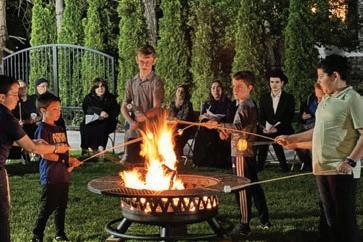
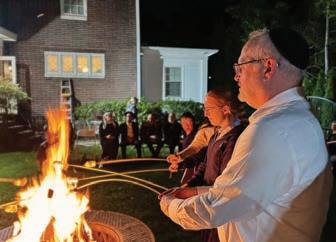
More than anything, Rabbi Mandelbaum was an innovator in chinuch. He deeply understood children and understood that building a talmid meant far more than teaching information. He recognized the importance of healthy fun, outdoor activities, adventure, and genuine connection. Some of my greatest memories are the camping trips we went on together as a class and camp during the summer. He pitched the tents, built the bonfires, cooked with us, hiked with us, and made sure we noticed the beauty of the scenery around us. He wanted us to appreciate Hashem’s world, not just sit in a classroom. He was always easy to talk to and impossible not to love. I always looked forward to seeing him outside of school because he showed such sincere interest in me and made it obvious how much he cared. Every child felt seen by him. Every talmid felt important. That understanding led him to build programs that became legendary foundations of Baltimore chinuch. Together with Rabbi Moshe Juravel zt”l, he co-founded Chemdas, a program that transformed Torah learning into something exciting and meaningful for countless boys. He founded Yeshivas Bein Hazmanim at the Agudah, creating an environment where boys wanted to spend their free time

learning Torah together. He was also deeply involved in Ahavas Yisroel and constantly looked for ways to turn values into action. One unforgettable example was motivating boys to spend the precious moments before Shabbos collecting money for aniyim throughout the community. He did not merely teach Torah. He lived it. And because he lived it so authentically, others wanted to live that way too.
I was in tenth grade at Mechinas Ner Yisroel when a friend broke the shocking news that Rabbi Mandelbaum had suddenly been niftar while on Lag B’Omer trip with his class. I still remember the searing pain of that moment. The pain for the entire Mandelbaum family was unimaginable, but as a teenager, I especially felt heartbroken for my friend Osher Zelig, who suddenly became a young yasom. But the pain spread far beyond the family. Baltimore collectively felt broken. Rabbeim lost a mentor. The community lost a leader. Thousands of talmidim lost the role model who helped shape their lives.
So many years later, the pain still lingers because his impact never disappeared. His programs still exist. His derech in chinuch still lives on through countless rabbeim he influenced. But most of all, his imprint remains in the hearts of those who loved him and looked up to him. Baltimore owes much of its Torah growth and warmth to people like Rabbi Yehuda Naftali Mandelbaum zt”l who quietly laid the groundwork for what this city would eventually become. We speak often about building Torah communities. Rabbi Mandelbaum built people. And through those people, he helped build Baltimore itself.
Wishing a everyone a peaceful Shabbos!
Aaron M. Friedman
& photos, and mazal tovs to
in coming editions!
Comfort Year-Round:
Experience stable indoor temperatures, and reduce drafts, with warm winters and cool summers, when you upgrade to spray foam insulation in your attic.

Save Big on Energy Costs:
Cut your heating and cooling bills by 30-50% and make your HVAC system work smarter, not harder.
Breathe Better:
Enjoy improved air quality with reduced drafts and outdoor pollutants, creating a healthier living environment.







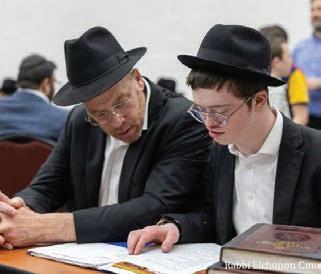














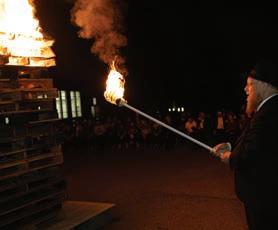
















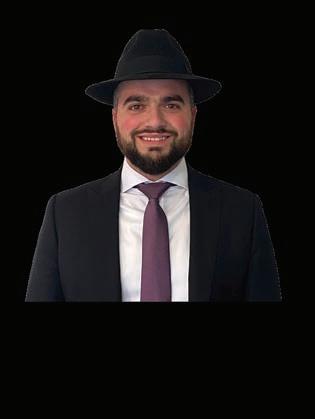












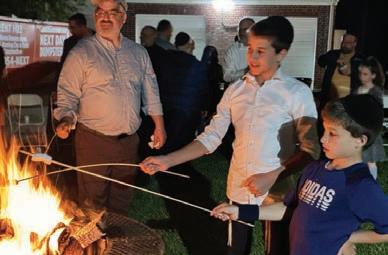












Participants from across diverse hashkafic backgrounds came together for chizuk, networking, and practical guidance rooted in a shared mission of chessed shel emes
The sacred work of Chevros Kadisha is among the most humble and quietly performed mitzvos – carried out by individuals for whom this final act of kindness is its own reward. Recently, however, more than 100 men devoted to this ultimate chessed shel emes stepped out from behind the scenes and joined together for chizuk, networking, and practical guidance at the Men’s Chevra Kadisha Leadership Conference.
Hosted by the Orthodox Union and NASCK (National Association of Chevra Kadisha), the conference brought together administrators and active tahara leaders from more than 50 cities across 17 U.S. states, as well as Canada. Representing Chasidish, Yeshivish, Chabad, Sefardi and Modern Orthodox communities, participants were united in their avodas hakodesh.
“The people who devote the most time and energy to serve Klal Yisrael often go unrecognized, by choice,” says OU Director of Torah and Halacha Initiatives Rabbi Ezra Sarna, who organized the conference together with NASCK Director of Chevra Relations Rabbi Shmuel Fromowitz. “They do their chessed quietly. Yet to be in a room with others who understand their expertise and who are similarly carrying Klal Yisrael on their shoulders gives them strength. The exchange of knowledge and experience, along with the relationships formed, significantly enhances their work and service.”
Rabbi Elchonon Zohn is a world-renowned halachic expert in afterlife care, the director of the Chevra Kadisha, Vaad Harabonim of Queens, New York, and the founder and president of NASCK, which he launched over 25 years ago as a resource for Chevros Kadisha. NASCK offers education and practical guidance on a broad range of issues relating to kovod hameis with a special focus on tahara and the broader role the Chevra Kadisha plays in its communal work.
Rabbi Zohn reflects that the sense of achdus cultivated by the diverse community representatives was

truly inspirational. “From smaller communities in Seattle and San Francisco to the major Torah centers of Brooklyn, Monsey, and Lakewood, the energy and synergy were palpable,” he says. “Everyone was engaged — learning, growing, sharing, and united by a common sense of purpose, mission, and the goal to emulate Hashem and His chesed shel emes, as defined by His Toras emes.”
In his keynote address, Rabbi Zohn recognized the overwhelming power and collective impact of the chesed represented at the conference, and underscored the basic precepts of chesed shel emes: to treat each tahara as a singular moment of loss for that specific family and neshama, to perform this selfless mitzvah in the spirit of Hashem’s boundless kindness, and to ensure that every act of chesed is guided by the halachos and minhagim passed down through generations.
Throughout the day, participants attended sessions exploring both halacha and best practices, covering topics such as rechitzah, tahara, tachrichim, and complications that arise in the tahara room.
“The tahara process is not very complicated, but it is highly detailed,” says NASCK Associate Director Rabbi Yaakov Lyons, who coordinates the men’s division of the Boca Raton Chevra Kadisha and presented at the conference. “Every step carries significance, and our goal is to ensure that each individual is treated with the utmost dignity. Modern medical interventions often introduce complexity to the tahara process, so this leadership conference focused on some of those complex scenarios.”
A panel discussion entitled Working with Funeral Homes offered insights into how Chevros Kadisha can cultivate positive relationships with funeral homes. Topics included

how to set the tone of the partnership, how to communicate the standards of the Chevra Kadisha, and how to encourage funeral homes to promote traditional burial and tahara to the broader Jewish community.
“This is a very important topic because, in most communities, Chevros Kadisha operate independently of funeral homes yet rely heavily on them, making the relationship both essential and delicate,” says Rabbi Fromowitz. “There is also a responsibility to educate and sensitize funeral home staff to the needs of the traditional Jewish community, ensuring that families are cared for in accordance with their minhagim and values. Clear communication is critical.”
For Ari Wartelsky, who oversees the Bergen County Chevra Kadisha, the open exchange of ideas sparked by the networking sessions stood out as particularly valuable.
“While funeral home costs can be challenging, Chevros Kadisha depend on them to serve kehillos with dignity and care,” says Wartelsky, who presented on transporting the deceased in Bergen County, New Jersey. “At the same time, we must continue exploring ways to reduce the financial burden on families.”
A conference highlight was the informal networking that took place between sessions and over lunch, where participants exchanged experiences and practical approaches.
“I met a Chevra Kadisha volunteer from New York whose team carries out taharos and related protocols with remarkable care, precision, and efficiency,” says Yisroel Salamon, who oversees Chesed Shel Emes of Connecticut. “I plan to send members of my Chevra to observe how they operate so we can learn from their approach. That’s just one
of the many benefits that came out of the conference.”
Equally meaningful were two roundtable sessions in which participants divided into small groups, each focusing on a specific area such as meis mitzvah, tahara team organization, volunteer recruitment and retention, shmira, coordination with medical examiners, community education, and cemetery relations.
“The smaller format allowed every participant to contribute as well as learn,” says Rabbi Fromowitz. “Each discussion generated thoughtful exchanges about best practices, with insights shaped by the size and dynamics of different communities. We received amazing feedback on these sessions.”
What stood out most for Salamon was how each Chevra navigates the unique regulations of its state while addressing the needs of its community.
“I moderated one of the discussions where we compared approaches in Connecticut, New Jersey, Ohio, upstate New York, Indiana, and Texas, each with its own challenges and community dynamics,” he says. “While every group brought different practical wisdom and creative solutions, the shared values, goals, and sense of purpose were the same.”
Rabbi Fromowitz reflects that partnering with the OU helped bring valuable experience and a strong understanding of communal needs to the event.
“The OU’s involvement reinforces that this is a national priority for Klal Yisrael,” he says. “Beyond that, there is tremendous value in organizations working together to strengthen and elevate communal infrastructure. We hope this marks the beginning of continued partnerships that will further support these vital efforts.”


Discover the light of Rav Moshe Wolfson, zt”l — the revered mashgiach of Yeshiva Torah Vodaath who saw the greatness in every Jew and drew it forth with warmth, insight, and love. A master of tefillah and a baal chessed whose heart embraced all, he guided thousands for over seven decades, blending the depth of Torah with the warmth of chassidus as the founder of Bais Medrash Emunas Yisroel.
In this powerful biography, bestselling author and devoted talmid Rabbi Shimon Finkelman, brings his legacy to life through vivid stories, personal recollections, and timeless teachings. More than a biography, it’s an invitation to experience his unwavering emunah, boundless ahavas Yisrael, and transformative tefillah — and to elevate your own.




This past Thursday, Ohel Moshe celebrated the Siyum Hashas of their Rav, Rabbi Zvi Teichman, as he completed Shas for a second time with his daf yomi shiur. The event marked more than 15 years of Rabbi Teichman’s learning and teaching daf yomi twice daily and recognized the extraordinary daily dedication and perseverance of Rabbi Teichman and his shiur’s participants.
The evening included divrei Torah and words of inspiration from Rabbi Teichman and Rabbi Teichman’s sonin-law Rabbi Yaakov Frand. Spirited dancing and delicious food also helped celebrate the consistent Torah learning and the tremendous accomplishment of completing Shas once again. May Rabbi Teichman and his shiur finish Shas many more times in continued good health and camaraderie.
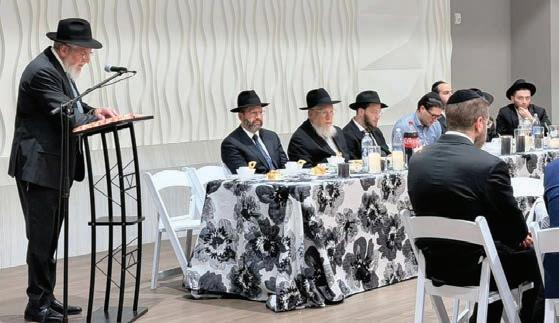


Construction is officially underway on Torah Institute’s expansion, bringing renewed excitement and momentum to the Invest in Baltimore campaign.
To contribute, please visit: InvestInBaltimore.com










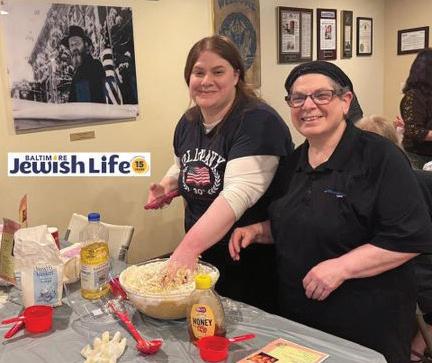
On a meaningful evening, the aroma of fresh dough and the spirit of sisterhood filled the JUSA Chabad House as women from across the region gathered for the inaugural Women’s Challah Bake The event was held in special recognition of Military Spouse Appreciation Day, observed annually on the Friday before Mother’s Day, to honor the resilience and sacrifices of those whose partners serve in the armed forces, whether active duty or reserves.
The evening was a collaborative effort between the Jewish Uniformed Services Association (JUSA) of Maryland Chabad and the Jewish War Veterans (JWV) Maryland Free State Post 167. The turnout reflected a wide geographic reach, with participants like military spouse Chaya Sara Ceitlin traveling from Annapolis to participate in the tradition.
The concept for this unique event was manifested by Dan Berkovitz, Commander of JWV Post 167, who recognized the vital importance of showing tangible appreciation for the work military spouses do.
“Spouses do so much to support their other half serving or having served in the military,” Berkovitz noted. “It is vital that we recognize the important work that spouses do for our
military. We hope to grow this event for next year and the year after.”
The Mitzvah of Connection
Rebbetzin Chani Tenenbaum, who hosted the event, shared the deep spiritual roots of the gathering and its connection to modern acts of service.
“The mitzvah of Challah originates from Biblical times, when the Jewish people would give a portion of their dough to the Kohen,” Tenenbaum explained. “Today, we continue that beautiful tradition of giving through acts of kindness and caring for one another. It was incredibly special to bring together at JUSA Chabad House a group of women connected to our local heroes for this meaningful mitzvah and uplifting experience.”
For many attendees, the act of kneading and braiding served as a physical metaphor for the strength required of military families - weaving together different strands of life into a single, strong whole.
Strengthening the JUSA Women’s Society
The Challah Bake also highlighted the impact of the JUSA Women’s Society, a program dedicated to providing a space for connection, inspiration, and community for women within the military and uniformed services circle.

Chesky Tenenbaum, Director
JUSA Chabad, noted that the event was a powerful way to bring these women together. “There was no better way to kick off our activities for the JUSA Women’s Society than with our Military Spouse Appreciation Challah Bake,” he said. “Seeing the camaraderie, strength, and unity among the military spouses while participating in the special mitzvah of Challah was truly inspiring.”
Parents and grandparents of Yeshivas Toras Simcha’s 4th grade talmidim gathered to celebrate a beautiful siyum on Sefer Breishis and Meseches Pesachim Mishnayos.
The talmidim sang songs, bringing much nachas and delight to their parents and grandparents. The group was also privileged to hear stories and words of inspiration from Rabbi Baruch Brull, who served as a rebbi for more than three decades and now serves as executive director of Ahavas Yisrael, located across the street from Yeshivas Toras Simcha.
Rabbi Brull described the daily “struggle” he experiences as he
drives to his office: he is drawn to the singing and special atmosphere of the yeshiva as he passes by, yet knows he must turn into his office.
The celebration concluded with lively dancing together with parents and grandparents, followed by a festive seudah.



He concluded by highlighting the ultimate goal of the organization: “As our military families sacrifice so much for our country, it is important that they also have moments of connection, inspiration, and community.”
As the women left with their braided loaves ready for the oven, the message of the night was clear: while their spouses serve the country, the community is here to serve and support them.
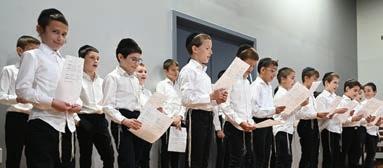








This year, we are incredibly proud of our students at Sylvia Rosenblatt Hebrew School who participated in the JewQ International Competition—a dynamic and engaging program that inspires children to deepen their knowledge of Torah, mitzvot, and Jewish customs.
JewQ, short for Jew Quest, challenges students through three tests over the course of the year, each focused on different areas of Jewish learning. Students who score above 70% earn exciting prizes—but beyond that, they gain confidence, knowledge, and a true sense of accomplishment.
This marks our third year participating in this outstanding program, and the growth has been remarkable. In our first year, only a handful of students joined. Last year, that number grew to nine participants—and this year, we proudly had 13 students take part! Based on this success and enthusiasm, we are excited to announce that next year, JewQ will become part of our regular curriculum, giving every student the opportunity to participate and shine.
Our students achieved impressive
results throughout the year, with most scoring between 90–100% on all three tests—a true testament to their hard work and dedication.
At the regional competition, our school celebrated a major accomplishment, placing first in both the 3rd and 4th grade divisions. We are proud to recognize our grade winners: Yosef Rosenblatt, who earned first place in 3rd grade, and Eliana Hartford, who earned first place in 4th grade.
We are especially proud of our school’s top scorer, Yair More, who has been a dedicated student at our Hebrew school for several years. His commitment and enthusiasm truly paid off.
A special highlight this year was Chana Beard, who represented our school at the International Shabbaton in Brooklyn, NY. Chana had the incredible opportunity to go on stage during the game show on Sunday and earned a silver medal—an achievement that brought great pride to our entire school community.


We also want to recognize our other dedicated participants—Avi Jacobs, Avraham Zhu, Shimon Shkolnik, Gittel Beard, Baila Lentz, Gittel Lentz, Chaya Carr, Livia Kunin, Menachem Shalom —who excelled. Each of these students showed impressive commitment and growth, contributing to the overall
Anew season of Charm City Ballers Sponsored by Councilman Isaac “Yitzy” Schleifer kicked off with a pair of hard fought games showcasing some of the league’s new talent alongside the returning stars!
Thank you to all of our great sponsors this year: Diamond Auto Leasing, Fired Up Promotions, M&S Enterprise, Orshan Legal Group, King David Nursing & Rehab, and Advanced Security Lock & Key! Special thanks to our Media Sponsor, Baltimore Jewish Home!
Diamond Auto Leasing 52 Advanced Security Lock & Key 49
Diamond Auto Races Out to Early Lead, Hangs On Late
Yitzy Hyatt hit 6 first half 3s to push Diamond Auto Leasing out to a double digit first half lead, which was enough to carry them to victory after they cooled off in the second half. Hyatt started 6-7 from deep on his way to 25 points for the game, leading the way in his team’s 52-49 win over Advanced Security Safe & Lock.
Advanced rallied to cut the lead to 1 in the final minutes, with a pair of big Avi Yudkowsky 3s looming large. But Eitan Hariri and Ahron Schmell each had clutch buckets for Diamond to keep Advanced at bay and help their team hang on. Avraham Frost did have a good look in the final seconds to tie the game but it didn’t fall.
Yudkowsky paced his team with 17 points and 11 rebounds while Heshey Green added 10 and 10 and Leon Sheny-
man chipped in 10 and 6 before leaving the game with an ankle injury. Noach Schwartz scored 8 points in the loss.
For Diamond, Eitan Hariri had 10 points and 7 rebounds, Ahron Schmell had 8 points and a game high 17 rebounds, and David Raden grabbed 10 boards in the win.
King David Nursing & Rehab 54 Orshan Legal Group 42
King David Rides Strong Team Effort to Season Opening Win
King David Nursing & Rehab had 3 players in double figures and had all 7 of their players contribute meaningfully as they took down Orshan Legal Group 54-42 to kick off both teams’ seasons. The game was a back and forth affair and was tied at 30-30 early

success and spirit of our JewQ team.
We celebrate all of our JewQ participants for their hard work, growth, and enthusiasm for learning. They are an inspiration to us all!
in the first half before a strong 15-0 King David run gave them a comfortable lead that wouldn’t seriously be threatened. Orshan Legal got no closer than 9 points for the rest of the game.
King David was paced by 12 points each from Menachem Blackman and Dovi Salzberg, while Yisroel Luchansky added 10 points and 6 assists. Blackman also grabbed 13 rebounds and chipped in 3 assists, while Elazar Freedman scored 8 points and grabbed 11 rebounds. Dany Donaty came off the bench and was 2-3 from behind the arc in his team’s win.
Mordy Reches led the way for Orshan Legal with 22 points while also grabbing 6 rebounds. Isaac Beletskiy had 10 and 6 in the loss, while Yoseph Orshan had 9 rebounds and Avromi Gartenhaus dished out 4 assists.

Week 3 of the 2026
JCSL by MDSC season had it all: big bats, lockdown defense, thrilling comebacks, and of course, plenty of excitement for fans of all ages. Read on for recaps of the excitement from this past Sunday!
PsychCare 14, Tov Pizza 5
PsychCare flexed both offensive and defensive muscles in a convincing 14–5 win over Tov Pizza. The game started a bit tense, with Tov Pizza sneaking out a few early runs, but once PsychCare settled defensively, the momentum shifted completely. Nearly every hard-hit ball found a glove from that point forward.
Nat “King Cole” Braun and Feisty “Spicy” Meisty anchored the field with spectacular plays, while Aharon Adler worked efficiently on the mound, keeping hitters off balance and trusting his defense. PsychCare broke the game open in the fifth inning with a one-two punch from Akiva Furman and Slicey Meisty, who each ripped triples to energize the dugout. Doc Breuer, “Jack” Beinstock, “Nat” Turner, Sammy “Here Comes the” Sonnenberg, and Meir “The right is” Preis all contributed timely hits, putting the game out of reach. By the final out, it was clear: PsychCare’s combination of airtight defense and relentless hitting is something to behold.
Clothier 19, YL Waitering 13
Clothier staged an epic rally after spotting YL Waitering an early 6–0 lead, ultimately pulling away for a 19–13 win. Yankie Goldsmith, Yossi Muller, and Jeremy Strauss each had 4 hits, with Goldsmith also controlling things on the mound to move to 2-0 as a pitcher.
Contributions came from all corners of the lineup, including Yitzy “Doubletree” Hyatt, Hillel Stutman, Tzvi Schechtman, and Chaim Baruch Lefkowitz with 3 hits apiece. Goldsmith drove in 4 runs, while Ozzie Marizan added 3 RBIs, helping Clothier turn a tense start into a comfortable victory.


Scouts were reportedly in attendance for this battle, and safe to say, the rumors of Orshan Legal’s skills were spot-on.
Team Orshan Legal jumped to a 6-0 lead early, but Gerstman Insurance, led by Dr. Josh Zaslow, Shimon “High Holy Days” Kanter, and David “Kosher Stand” Pensak, chipped away steadily, getting within two runs late. Orshan Legal responded from that point forward, with collaborative team play that ensured a victory.
Captain Meir “Peter, Paul, and” Parry dazzled at shortstop and crushed a home run, finishing just a triple short of the cycle. Shlomo “Joker” Rosenstein was a wall at first base and drove in 2 RBIs in the first inning.
On the mound, Danny “Wagner” Weissman threw three scoreless innings, while Meir “Machado” Samberg made jaw-dropping plays at third. Eli “Yellow Socks” Kelemer and Yehuda “The Spleen” Pensack patrolled the outfield like pros, and Gedaliah “Dinner Plates” Gelb in right field earned All-Star consideration with a spectacular day.
Tzvi “Jam” Pearlman contributed at the plate, and Uncle Aaron “Cricket Butter” Lefkowitz Jr. kept his 112game hitting streak alive with a few rockets of his own.

In the end, Orshan Legal held on for a thrilling 14–12 victory, proving that buzz and talent are sometimes a perfect match.
Lazar Real Estate 18, Opponent
After nearly a month off due to rainouts and a bye, Lazar Real Estate reminded the league why they’re such a feared team. While the defense needed to shake off rust, the bats were hotter than ever. Pilot Gershon Vegh led the charge with 5 hits, including a 3-run homer. Shmuel Artman homered and collected 5 RBIs, while Walter Johnson Jr. and Captain Chaim Finkelstein each posted 4 hits, with multiple runs and RBIs.
The battery duo of Yacov “Horatio” Benzaquen and Yitzchok “Lean, Mean,
Fighting Ma” Sheen chipped in 3 hits each, Dany Donaty drew crucial walks, and Ben “The Incubator” Blackman, owner Mordy Lazar, and Yoni “Soggy Boots” Finkelstein all contributed at the plate. Lazar jumped out to a 6–0 lead, expanded it to 11–4, and reached 18–6 before the opponent scored late to make it 18–12. The question remains: can anyone slow down this offensive juggernaut? Tune in next week… but don’t hold your breath.
Week 3 showcased everything that makes the JCSL great: spectacular defense, big swings, close comebacks, and unpredictable weather. From PsychCare’s lockdown fielding to Lazar Real Estate’s unstoppable bats, fans were treated to a full plate of excitement—and the season is just heating up.





Ukraine’s war with Russia has entered its fifth year, but this week, the political explosions were happening far from the battlefield.
Anti-corruption investigators in Ukraine announced that Andriy Yermak, a longtime top aide and close confidant of President Volodymyr Zelensky, is now an official suspect in a massive money-laundering investigation involving roughly $10.5 million.
The announcement came from Ukraine’s National Anti-Corruption Bureau and Specialized Anti-Corruption Prosecutor’s Office, which said the investigation centers on an alleged scheme involving luxury real estate development
near Kyiv. Authorities stressed that Zelensky himself is not suspected of wrongdoing.
Still, the case is politically awkward for the Ukrainian president, who has spent years trying to convince Western allies and the European Union that Ukraine is serious about tackling corruption. Joining the EU remains one of Kyiv’s biggest long-term goals, but corruption concerns continue to slow the process.
Yermak, who resigned in November, had been one of the most powerful figures in Zelensky’s government and served as a key negotiator in talks with the United States. His attorney, Ihor Fomin, dismissed the allegations as baseless and argued the investigation was fueled by public pressure rather than evidence.
Meanwhile, as legal troubles swirled in Kyiv, Zelensky spent Tuesday discussing artificial intelligence and warfare with Alex Karp, head of Palantir Technologies. The company has worked closely with Ukraine throughout the war, helping analyze battlefield data, air attacks, reconnaissance information, and drone operations.
Zelensky said Ukraine and Palantir
“can be useful to each other,” which is diplomatic shorthand for: modern wars are increasingly fought with algorithms as much as artillery.
Ukraine’s digital transformation minister, Mykhailo Fedorov, said the partnership has given Ukraine a technological advantage against Russia’s larger military force.
At the same time, hopes for a broader ceasefire appear as fragile as ever. A three-day U.S.-brokered pause in fighting officially expired Monday, and Ukraine says Russia quickly resumed large-scale drone strikes overnight.
Ukrainian Foreign Minister Andrii Sybiha said more than 200 Russian drones targeted civilian infrastructure, killing at least one person and injuring several others.
Russia, meanwhile, claimed its own air defenses intercepted 30 Ukrainian drones near the border.
While diplomats talk peace, investigators chase corruption, and tech companies build AI war tools, the war itself keeps grinding on — one drone strike at a time.
On Saturday, Syrian President Ahmed al-Sharaa replaced several government officials and ministers, including his own brother, in a partial government overhaul, state media reported.
The new appointments, announced by Syria’s official SANA news agency, include former Homs governor Abdul Rahman Badreddine al-Aama replacing Sharaa’s brother Maher as secretary-general for the Syrian presidency.
Mahar’s appointment had drawn criticism from opponents who accused the administration of favoring nepotism over merit.
Sharaa appointed Khaled Zaarour as information minister, replacing Hamza Mustafa, who was moved to the foreign ministry. As agriculture minister, he named Bassel Sweidan, who also heads a committee tasked with reaching settlement agreements with business tycoons linked to the Assad-era elite, replacing Amjad Badr.
6:15 am Young Israel Shomrai Emunah M-F
6:20 am Ohev Shalom Talmud Torah OLNEY M, Th
6:25 am Southeast Hebrew Cong., Knesset Yehoshua M-F
6:30 am Beth Sholom Congregation M-F Beit Halevi (Sfardi) M, T Chabad of Silver Spring M-F Ohev Shalom Talmud Torah OLNEY T, W, F Young Israel Shomrai Emunah S YGW M, Th
6:35 am Ohr Hatorah M, Th
6:40 am YGW S, T, W, F Magen David Sephardic Congregation M-Th
6:45 am Beit Halevi (Sfardi) S, T, W, F
Kemp Mill Synagogue M, Th
Ohr Hatorah T, W, F
Young Israel Shomrai Emunah M, Th
6:50 am Woodside Synagogue/Ahavas Torah M, Th Silver Spring Jewish Center M-F
Chabad of Upper Montgomery County M-F
6:55 am Young Israel Shomrai Emunah T, W, F
7:00 am Kemp Mill Synagogue T, W, F
Southeast Hebrew Cong., Knesset YehoshuaS Silver Spring Jewish Center S
BETHESDA Magen
Sephardic Congregation [S]
Woodglen Dr, North Bethesda, MD 20852
GAITHERSBURG
Chabad of Upper Montgomery County [Ari] 11520 Darnestown Rd, Gaithersburg, MD 20878
OLNEY
Shalom Talmud Torah (OSTT) 18320 Georgia Ave, Olney,
Woodside Synagogue/Ahavas Torah T, W, F
Young Israel Ezras Israel of Potomac T, W, F
7:05 am Kesher Israel M, Th
7:15 am Kemp Mill Synagogue M, Th Kesher Israel T, W, F
Ohev Sholom Talmud Torah/The National Synagogue M-F
Ohr Hatorah S
7:30 am Chabad of DC M-F
Chabad of Potomac M-F JROC M-F
Kemp Mill Synagogue T, W, F
Southeast Hebrew Cong., Knesset Yehoshua M-F
Young Israel Shomrai Emunah S
Young Israel Shomrai Emunah (Sfardi) M-F
7:45 am YGW (Yeshiva Session Only) S-F
8:00 am Beth Sholom Congregation S
Kemp Mill Synagogue S Kesher Israel S
Ohev Shalom Talmud Torah OLNEYS
Southeast Hebrew Cong., Knesset YehoshuaS Chabad of Upper Montgomery CountyS
Woodside Synagogue/Ahavas TorahS
8:00 am YGW (High School; School-Contingent) S-F
Young Israel Ezras Israel of PotomacS Young Israel Shomrai Emunah (Sfardi)S
8:05 am Ezras Israel Congregation of Rockville M, Th
8:15 am Ohr Hatorah S Ezras Israel Congregation of Rockville S, T, W, F
Kehilat Pardes / Berman Hebrew Academy S-F
Silver Spring Jewish Center M-F
8:30 am Chabad of DC S Chabad of Potomac S JROC S Ohev Sholom Talmud Torah/The National Synagogue S Silver Spring Jewish Center S YGW (Summer Only) S-F
8:45 am Young Israel Shomrai Emunah S-F
9:00 am Chabad of Silver Spring S Kemp Mill Synagogue S
mincha
2:00 pm Silver Spring Jewish Center S-F
2:10 pm YGW M-Th School Days
2:45 pm YGW S-Th
3:00 pm YGW Middle School M-Th School Days
Before Shkiah (15-18 minutes), S-TH
Beit Halevi (Sfardi)
Beth Sholom Congregation
Chabad of Potomac
Chabad of Silver Spring
Chabad of Upper Montgomery County
Ezras Israel Congregation of Rockville (20 min before, S-F)
JROC
Kemp Mill Synagogue
Kesher Israel
Magen David Sephardic Congregation
Ohev Sholom Talmud Torah/The National Synagogue
Ohr Hatorah
Silver Spring Jewish Center
Southeast Hebrew Congregation
Woodside Synagogue/Ahavas Torah
Young Israel Ezras Israel of Potomac
Young Israel Shomrai Emunah (Asheknaz)
Young Israel Shomrai Emunah (Sefarhadi)
maariv
8:45 pm YGW S-Th
9:15 pm




Zaarour was head of the media faculty at Damascus University before his appointment.
Sharaa also appointed new governors for several provinces, including Homs, Quneitra, Latakia, and Deir Ezzor, the eastern province where most of Syria’s oil fields are located.
The reshuffle is the first since the ouster of former President Bashar al-Assad and comes around a year and a half into the five-year transitional period set out in Syria’s constitutional declaration.
The Syrian transitional cabinet created in March 2025 came after the ouster of longtime ruler Assad in 2024 and was dominated by Sharaa’s inner circle.
The Syrian Civil War began in 2011 after protests against Assad escalated into a devastating conflict involving rebel groups, Islamist factions, foreign powers, and militias, leaving hundreds of thousands of people dead and millions displaced. In late 2024, Assad’s government collapsed after a major rebel offensive. Sharaa, a former rebel commander, took over the government.
In honor of Russia’s yearly Victory Day celebration, which marks the day the Soviet Union defeated Nazi Germany in World War II, Ukraine and Russia agreed on Friday to a three-day ceasefire and major bilateral prisoner swap, starting Saturday.
The halt was announced by U.S. President Donald Trump, who noted that his request for the ceasefire was accepted by both Ukrainian President Volodymyr Zelensky and Russian President Vladimir Putin.
“The Celebration in Russia is for Victory Day, but, likewise, in Ukraine, because they were also a big part and factor of World War II,” Trump posted on Truth Social, expressing his hope that this ceasefire marks “the beginning of the end of a very long, deadly, and hard-fought War.”
Zelensky noted that he accepted the deal, not to honor Russia’s holiday, but to secure the release of prisoners. As of late, Ukraine has been hitting Rus-
sia with long-range missiles, posing a threat to Moscow’s annual military parades. Initially, Zelensky rejected the deal because he believed that Russia was only looking for “a permit to hold their parade, so that they can go out onto the square safely for one hour once a year and then go on killing.”
“Red Square is less important to us than the lives of Ukrainian prisoners who can be brought home,” Zelensky posted on X. “I thank the President of the United States and his team for their productive diplomatic involvement. We expect the United States to ensure that the Russian side fulfills these agreements.”
Likewise, Russian officials thanked Trump for securing the ceasefire. Russia had threatened Ukraine with major retaliatory strikes if Kyiv breaks the three-day halt.
An outbreak of a rare rodent-carried virus called hantavirus has killed three
people and infected six others after the disease spread on the MV Hondius, a cruise ship traveling on the Atlantic Ocean, according to the World Health Organization.
Although the outbreak led to evacuations and quarantines, the WHO has insisted that hantavirus, while dangerous, does not pose a serious threat globally. Dr. Maria Van Kerkhove, the WHO’s head of epidemic and pandemic preparedness, declared, “This is not the start of an epidemic … this is not the start of a pandemic.”

The first victim, a 69-year-old Dutch man, died on the ship on April 11 after experiencing symptoms such as a fever, headache, abdominal pain, and diarrhea. His 69-year-old wife left the ship on April
Yeshivas Chofetz Chaim –

Supervision and mentoring of Special Education staff
Oversight of student support services, scheduling, and accommodations
Collaborating with Rebbeim, teachers, administrators, parents, and outside professionals
Guidance for parents through testing, diagnosis, and placement processes
Participation in student planning and support meetings
Ongoing development and strengthening of the program to meet student needs
A background in Special Education
Leadership, organizational and communication skills
Experience working collaboratively with teachers, parents, and outside professionals
A deep commitment to helping children succeed within a yeshiva environment




24, bringing his body to the British island of St. Helena, from which he was repatriated to the Netherlands. Soon thereafter, she became sick. After fainting at an airport in Johannesburg, South Africa, she was brought to a health facility and soon thereafter died.
On May 2, the third victim, a German
Many Iranians complain that the situation is unfair, noting that it exacerbates a major gap between the country’s upper and lower classes.
According to the independent Khabar Online publication, Internet Pro has “divided Iranian society into two distinct classes: a digital elite who enjoy fast, unfiltered channels for business, education, and communication, and digital subjects who are confined within heavy filtering, restricted speeds, and the high costs of the black-market VPN economy.”




Nechemya Jakobovits rides for the joy of it the wind in his face, the energy of the road, and the camaraderie of a great group that turns every ride into an adventure.
For him, Biker Cholim is about more than cycling. It’s a way to give back to those who wish they could ride but can’t. Every mile becomes a way to support Bikur Cholim and the community they care so deeply about combining fun, friendship, and meaningful chesed.



Although the masses have largely lost internet access in Iran, a program called “Internet Pro” is giving a select privileged few unrestricted access to the web.
Internet Pro’s debut came in February when the government-backed Mobile Communications Company of Iran (MCI) began selling the program to businesses suffering financially from internet blackouts implemented during the January nationwide protests.
Internet Pro focuses on offering more reliable connectivity and fewer limitations when accessing international websites. In many ways, it restores the broader online access that was previously common for all users, though it is now limited to a select group. To qualify, applicants must complete a verification process and be involved in business, academic, or scientific work.
In late February, the Supreme National Security Council approved Internet Pro, which has won praise from hardliners. However, the office of President Masoud Pezeshkian has criticized the
To access the internet, many Iranians use black-market VPNs (Virtual Private Networks), which hide one’s location by changing the device’s IP address.
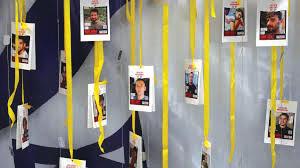
Israel’s parliament approved sweeping legislation on Monday night to create a special military tribunal for Palestinians accused of taking part in the October 7, 2023, Hamas-led massacre, paving the way for what lawmakers described as one of the most significant legal proceedings in the country’s history.
The bill passed the Knesset by a vote of 93-0, reflecting unusually broad support from both coalition and opposition parties. The law was jointly introduced by Simcha Rothman of the Religious Zionism party and Yulia Malinovsky of Yisrael Beytenu.
The legislation establishes a special court within Israel’s military justice system to prosecute roughly 300 suspected terrorists captured inside Israel during the October 7 assault and held in detention ever since.
Under the new law, prosecutors will




be permitted to pursue charges including genocide, terrorism, harming Israeli sovereignty, assisting an enemy during wartime, and causing war. Defendants convicted under Israel’s genocide statute could face the death penalty.
Justice Minister Yariv Levin called the vote “one of the most important mo-
the violence on body cameras and cellphones.
The law also bars anyone accused, charged, or convicted in connection with October 7 from being released as part of future prisoner exchange agreements.



Still, the tribunal’s implementation may face delays because of disputes over cost. According to Hebrew media reports, the Defense Ministry estimates the project could cost nearly NIS 5 billion ($1.72 billion), largely due to plans for a dedicated judicial complex and hundreds of military and civilian staff members. Finance Ministry officials reportedly believe the figure could be closer to NIS 2 billion.
Trials would be public and livestreamed online. The court system would consist of 15 judges, including retired Israeli judges and potentially international jurists approved by the justice and foreign ministers. Panels of three judges would hear individual cases, while larger cases involving multiple defendants would be overseen by five-judge panels. Appeals would be heard before the full
In explanatory notes attached to the bill, lawmakers said the “unique scope and severity of the atrocities pose an un-






precedented challenge to the Israeli justice system,” citing the massive number of crime scenes, victims, suspects, and wartime evidence collection.
The legislation also sparked criticism from rights advocates, who questioned whether suspects held for nearly two-anda-half years without trial could receive fair proceedings. Some groups also raised concerns over allegations of abuse and harsh prison conditions, warning that public outrage surrounding the attacks could place enormous pressure on judges.
Debate in the Knesset became heated ahead of the final vote. Ahmad Tibi of the Hadash-Ta’al party was repeatedly interrupted by bereaved family members in the visitors’ gallery while speaking in Arabic. Protesters accused him of supporting terrorism, prompting shouting matches and the removal of several audience members by ushers.
Outside the plenum, however, many hostage families and bereaved relatives focused their attention elsewhere — demanding a state commission of inquiry into the failures that allowed the October 7 attack to occur.
At a press conference organized by the October Council, former hostage
Rom Braslavski called on all lawmakers to resign.
“The blood of everyone murdered on October 7 is on your hands,” he said.
“And just before you go, establish the state commission of inquiry that will investigate what exactly happened here, so it never happens again.”

Jan Koum, co-founder of WhatsApp, has given the largest single gift to an Israeli hospital, donating $200 million to Shaare Zedek Medical Center in Jerusalem through The Koum Family Foundation. The hospital will be officially renamed as Koum Shaare Zedek Medical Center.
including new surgical and emergency care facilities.
The donation surpasses the $180 million donation made by Shmuel and Anat Harlap to Rabin Medical Center (Beilinson Hospital) in August 2025 to build the “Tower of Hope.”
“This gift reflects our confidence in a future of medical innovation and research that will benefit patients in Israel and around the world,” Koum said in a statement.
Shaare Zedek, a leading center of medicine and research that treats over one million patients annually, has built a strong relationship with The Koum Family Foundation in recent years.
The Koum Family Foundation was established by Jan Koum, co-founder of WhatsApp, the world’s most popular messaging platform. As one of the world’s prominent Jewish philanthropists, Koum has built a remarkable legacy of support for Jewish communities globally.
Shaare Zedek Medical Center is Jerusalem’s most active major hospital and one of the seven largest medical centers in Israel.


Upon completion, the building will be the largest and most advanced facility of
its type anywhere in Israel. The tower will total 24 stories and encompass over 1.5 million square feet including all-new and expanded surgical and emergency care facilities. In response to developing regional threats, it will be designed to the highest standards of structural protection, including significant underground spaces and a helipad positioned on the building’s roof to enable direct helicopter access.
A few days ago, the United Arab Emirates gave the Board of Peace $100 million, funding the body’s contract for the training of a new Palestinian police force in Gaza.
While countries committed $17 billion to the Board of Peace, an international body led by the United States, less than one percent of those funds have been transferred. The Board of Peace, which is tasked with governing and policing Gaza, is already dealing with funding issues some three months after its founding. The Board of Peace’s police force would replace Israeli forces in policing



and administering the Strip and ensure the demilitarization of Hamas. The police force would be part of the National Committee for the Administration of Gaza (NCAG), a panel of Palestinian technocrats who are expected to govern Gaza, though the NCAG has yet to enter the Palestinian enclave.
Thousands of Palestinians have applied to join the police force, according to the board’s Gaza envoy, Nickolay Mladenov. Former Hamas civil servants are allowed to apply but must undergo vetting by the Shin Bet, according to an Arab diplomat. Recruits would be trained in Jordan and Egypt.
Only the UAE and Morocco have begun transferring the funds they pledged, although Qatar, Saudi Arabia, and Kuwait each vowed to donate $1 billion or more to the Board of Peace.
An Israeli reservist was killed in a Hezbollah drone attack near the Lebanese border on Sunday, as fighting between Israel and the terror group
continued to intensify despite a shaky ceasefire agreement.

The IDF identified the fallen soldier as Alexander Glovanyov, 47, of Petach Tikva. Glovanyov served as a driver in the Transport Center’s 6924th Battalion.
According to the military, several explosive-laden Hezbollah drones crossed into Israeli territory Sunday afternoon and struck near Manara, a community along the northern border. One of the drones directly hit and killed Glovanyov.
He is survived by his wife, a 15-yearold son, and an eight-month-old daughter. His mother, Flora, described her son as someone who constantly tried to calm her fears about the dangerous situation in northern Israel.
“We spoke the day before yesterday for the last time,” she said. “I was afraid of what was happening in the north. I called him, and he would always tell me, ‘Everything is fine.’ Until yesterday, it was fine.”


Join Our Team For School Year 2026-2027
Open Positions:
Early Learning Center:
Lead Teachers (Infant/Toddler - 3 years)
Assistants
Preschool/Elementary School:
General Studies Assistants
Full Time Receptionist
Reading Specialist
Middle School:
Kodesh and General Studies Teachers
Permanent Substitutes
Office Secretary
High School:
Limudei Kodesh Teachers
General Studies Teachers
Computer Assistants
AM and PM Tutors





She added, “Alexander was a good person. He was my only son. I have no one now.”
Glovanyov is the fifth Israeli soldier killed in southern Lebanon since the ceasefire took effect in mid-April, underscoring how fragile the truce has become.
On Monday, the IDF said three additional soldiers were lightly wounded in separate Hezbollah drone attacks inside southern Lebanon. During the evacuation effort, an Israeli Air Force helicopter suffered a technical malfunction and was temporarily unable to take off after landing
in Lebanon. The military stressed that the aircraft was not struck by enemy fire, and technicians later repaired the issue on-site.
Hours later, the IDF issued evacuation warnings for nine villages in southern Lebanon ahead of planned airstrikes against Hezbollah targets. Residents were instructed to move at least a kilometer away from areas expected to be targeted.
“In light of the Hezbollah terror organization’s violations of the ceasefire agreement, the IDF is forced to act against it with force and does not intend to harm you,” said IDF Arabic-language

spokesman Avichay Adraee.
The fighting persists as diplomatic efforts continue behind the scenes.
Lebanese Prime Minister Nawaf Salam said Lebanon supports peace with Israel “under certain conditions,” including a ceasefire, a full Israeli withdrawal from Lebanese territory, and the release of Lebanese detainees. He noted that more serious negotiations could follow if those demands are met.
Despite international mediation efforts, clashes along the Israel-Lebanon border have continued almost daily, with Hezbollah repeatedly launching rockets and drones at Israeli forces and communities in the north
The mayor of a Southern California city is stepping down — and not because of potholes, parking tickets, or budget battles.
Eileen Wang, the mayor of Arcadia, resigned on Monday after agreeing to resolve federal charges accusing her of acting as an illegal agent for the Chinese government.
According to court filings, Wang admitted to working with Chinese officials between 2020 and 2022 to spread propaganda through a Chinese-American news website she operated with her former fiancé, Yaoning “Mike” Sun. Prosecutors said the pair posted articles at the direction of officials tied to the People’s Republic of China and then reported back with screenshots showing how many people viewed the content.
One message highlighted in the plea agreement involved a defense of China’s policies in Xinjiang, where Beijing has faced international criticism over its treatment of Uyghur Muslims. After reposting a letter from China’s consul general defending the government’s actions, Wang allegedly received a reply from an official reading, “So fast, thank you everyone.”
Federal prosecutors said Wang never disclosed that the material was being directed by the Chinese government.
“Individuals in our country who covertly do the bidding of foreign govern-





ments undermine our democracy,” said First Assistant U.S. Attorney Bill Essayli in a statement announcing the agreement.
Wang appeared briefly in federal court in downtown Los Angeles on Monday, dressed in blue and accompanied by four attorneys. Through a Mandarin interpreter, she listened quietly as a judge scheduled future proceedings. She faces a maximum sentence of 10 years in prison.
Her attorneys insisted the conduct was unrelated to her work as an elected official and stemmed from “her personal life” and the media platform she once operated with Sun, whom she believed she would marry.
“Her love and devotion for the Arcadia community have not changed and did not waver,” attorneys Brian Sun and Jason Liang said.
Sun, meanwhile, was sentenced earlier this year to four years in federal prison after pleading guilty to acting as an illegal foreign agent. Prosecutors said he worked to advance Beijing’s interests in California, including monitoring critics of the Chinese government and opponents of Communist Party policies.
Arcadia officials said an internal review found no evidence that city finances or government decisions were affected though the political fallout has already paved its way into City Hall.
According to a federal lawsuit filed against OpenAI by a victim’s widow, ChatGPT helped Phoenix Ikner carry out a deadly mass shooting at Florida State University last April.
Ikner, the suspected gunman, had “extensive conversations” with ChatGPT, during which the AI “either defectively failed to connect the dots or else was never properly designed to recognize the threat,” according to the complaint.
Ikner allegedly sent ChatGPT pictures of his firearms, and the chatbot helped him learn how to use them. In the months before the shooting, Ikner also spoke to ChatGPT at length about “his interests in Hitler, Nazis, fascism, nation-
al socialism, Christian nationalism, and perceptions about ‘Jews’ and ‘blacks’ by different political ideologies and social groups,” the lawsuit alleges, as well as other mass shootings.
Ikner allegedly asked ChatGPT about suicide, terrorism, and mass shootings, posing questions about the busiest times at the FSU student union and hypotheticals regarding what would happen in the event of a shooting at the university, including legal outcomes. According to the lawsuit, ChatGPT told Ikner that a shooting is significantly more likely to gain national attention “if children are involved, even 2-3 victims can draw more attention.”
OpenAI, the company behind ChatGPT, has denied wrongdoing.
“Last year’s mass shooting at Florida State University was a tragedy, but ChatGPT is not responsible for this terrible crime,” the company asserted in a statement.
“In this case, ChatGPT provided factual responses to questions with information that could be found broadly across public sources on the internet, and it did
not encourage or promote illegal or harmful activity,” OpenAI spokesperson Drew Pusateri said. “ChatGPT is a general-purpose tool used by hundreds of millions of people every day for legitimate purposes. We work continuously to strengthen our safeguards to detect harmful intent, limit misuse, and respond appropriately when safety risks arise.”
The lawsuit, however, claims that ChatGPT should have known better.
“ChatGPT inflamed and encouraged Ikner’s delusions; endorsed his view that he was a sane and rational individual; helped convince him that violent acts can be required to bring about change,” the lawsuit said. “[The chatbot] generally provided what he viewed as encouragement in his delusion that she should carry out a massacre, down to the detail of what time would be best to encounter the most traffic on campus.”
A month ago, seven families sued OpenAI over a school shooting in Canada. In 2025, a family sued the company after their teenage son took his own life after speaking with ChatGPT.














Mercaz Torah U’Tefillah: EVERY 15 MINUTES
M-F: 6:15 AM, S-F: 6:30
AM, 9:45AM, 10:00AM
Neitz Beit Yaakov [Sefaradi] M-F
Mercaz Torah U’Tefillah S-F
Ohel Yakov S-F
Ohr Hamizrach [Sefaradi] S-F
6:00 AM Shomrei Emunah Congregation M-F
6:10 AM Agudath Israel of Baltimore M, Th
6:15 AM Kol Torah M, TH
Shearith Israel Congregation M, TH
6:20 AM Agudah of Greenspring M, TH
Agudath Israel of Baltimore S, T, W, F
Arugas HaBosem (Rabbi Taub's) S-F
Bais Dovid-Bais Medrash of Summit Park M-F
Bnai Jacob Shaarei Zion Congregation M-F
Kehilath B'nai Torah M, TH
Pikesville Jewish Congregation M, TH
Shomrei Emunah Congregation S, M, TH
6:30 AM Agudah of Greenspring T, W, F
Chabad of Park Heights M-F
Darchei Tzedek M-F
Kehilath B'nai Torah T, W, F
Khal Bais Nosson M-F
Khal Ahavas Yisroel/ Tzemach Tzedek M-F
Kol Torah T, W, F
Ohr Yisroel M-F
Pikesville Jewish Congregation T, W, F
Shearith Israel Congregation T, W, F
Shomrei Emunah Congregation T, W, F
6:35 AM Aish Kodesh (downstairs Minyan) M, TH
Ohel Moshe M, TH
6:40 AM Aish Kodesh (downstairs Minyan) T, W, F
Bnai Jacob Shaarei Zion Congregation M, TH
Ohr Hamizrach [Sefaradi] M-F
6:45 AM The Adas: Chofetz Chaim Adas Bnei Israel M, Th
B”H and Mesivta of Baltimore (Dirshu Minyan) S-F
Beth Abraham M, TH
Greenspring Sephardic Synagogue M-F
Kehilas Bnei Yeshiva M-F
Ner Tamid M-F
Ohel Moshe T, W, F
Suburban Orthodox Congregation Toras Chaim M-F
6:50 AM Agudath Israel of Baltimore M, TH
Ahavat Shalom [Sefaradi] M, TH
Bais Medrash of Ranchleigh M, TH
Bnai Jacob Shaarei Zion Congregation T, W, F
Community Kollel Tiferes Moshe Aryeh M, TH
Derech Chaim M-F
Kol Torah M-F
Ohel Moshe S
Ohr Hamizrach [Sefaradi] M, TH
Shomrei Emunah Congregation M, TH
The Shul at the Lubavitch Center M, TH
6:55 AM Beth Abraham T, W, F
Kol Torah M, TH
The Adas: Chofetz Chaim Adas Bnei Israel T, W, F
7:00 AM Aish Kodesh (upstairs Minyan) M-F
Agudath Israel of Baltimore S, T, W, F
Ahavat Shalom [Sefaradi] T, W, F
Arugas HaBosem (Rabbi Taub's)S
Bais Medrash of Ranchleigh T, W, F
Community Kollel Tiferes Moshe Aryeh T, W, F
Greenspring Sephardic Synagogue S
Khal Ahavas Yisroel/ Tzemach TzedekS
Kol Torah T, W, F
Moses Montefiore Anshe Emunah M-F
Ohr Hamizrach [Sefaradi] S, T, W, F
Shearith Israel Congregation S, M, TH
Shomrei Emunah Congregation T, W, F
Shomrei Mishmeres Hakodesh M-F
The Shul at the Lubavitch Center T, W, F
Tiferes Yisroel M-F
7:05 AM Machzikei Torah (Sternhill's) M, TH
7:15 AM Kedushas Yisrael S
Kol Torah S
Machzikei Torah (Sternhill's) S, T, W, F
Ner Israel Rabbinical College S-F
Shearith Israel Congregation T, W, F
Shomrei Emunah CongregationS
Suburban Orthodox Congregation Toras Chaim S
The Adas: Chofetz Chaim Adas Bnei IsraelS
Tzeirei Anash M-F
7:20 AM Agudath Israel of Baltimore M, TH
Beth Tfiloh Congregation M-F
Kol Torah M-F
Shomrei Emunah Congregation M, TH
7:30 AM Agudah of Greenspring S
Agudath Israel of Baltimore S, T, W, F
Ahavat Shalom [Sefaradi] S
Bais Haknesses Ohr HaChaim S-F
Bais Hamedrash and Mesivta of Baltimore S-F
Bais Medrash of Ranchleigh S
Beit Yaakov [Sefaradi] S
Bnai Jacob Shaarei Zion CongregationS
Chabad of Park Heights S
Community Kollel Tiferes Moshe Aryeh S-F
Darchei Tzedek S
Kedushas Yisrael S-F
Khal Bais Nosson S
Ner Israel Rabbinical College (Mechina) S-F
Ohr Hamizrach [Sefaradi] S, T, W, F
Shomrei Emunah Congregation T, W, F
7:45 AM Bnai Jacob Shaarei Zion Congregation M-F
Talmudical Academy S-F
Darchei Tzedek M-F
Mesivta Kesser Torah S-F
Mesivta Shaarei Chaim S-F
Yeshivas Torah Simcha (school days only) S-F
7:50 AM Derech Chaim S
Ner Tamid S
Ohel Moshe M-F
8:00 AM Agudath Israel of Baltimore S-F
Bais Dovid-Bais Medrash of Summit ParkS
Beth Abraham S
Chabad Israeli Center M-F
Darchei Tzedek S
Khal Ahavas Yisroel/ Tzemach TzedekS
Kehillas Meor HaTorah S
Ohr Yisroel S
Pikesville Jewish CongregationS
Shearith Israel Congregation S
Shomrei Emunah Congregation S-F
The Shul at the Lubavitch CenterS
Tiferes Yisroel S Tzeirei Anash S
Yeshiva Tiferes Hatorah S-F
8:15 AM Kehilath B'nai Torah S
Kol Torah S
8:20 AM Bais Haknesses Ohr HaChaim S-F
Suburban Orthodox Congregation Toras Chaim S-F
8:30 AM Agudath Israel of Baltimore S-F
Chabad Israeli Center S
Machzikei Torah (Sternhill's) S-F
Ohel Moshe S
Ohr Hamizrach [Sefaradi] S
Shomrei Emunah Congregation S-F
Shomrei Mishmeres HakodeshS
9:00 AM Aish Kodesh S
Bais Haknesses Ohr HaChaimS
Beth Tfiloh Congregation S
Bnai Jacob Shaarei Zion CongregationS
Moses Montefiore Anshe EmunahS
Shomrei Emunah Congregation S-F
Suburban Orthodox Congregation Toras Chaim S-F
Mincha Gedolah Mercaz Torah U’Tefillah
Khal Ahavas Yisroel/Tzemach Tzedek
1:45 PM Ohel Moshe
Yeshivas Torah Simcha (school days only) M-Th
1 South Street, 27th Floor.
1:50 PM Wealcatch Insurance - 37 Walker Ave 2nd floor
2:00 PM Agudath Israel of Baltimore (S-F)
Big Al @ The Knish Shop Party Room
Kol Torah
Market Maven
Reischer Minyan - 23 Walker Ave 2nd Floor
10055 Red Run Blvd Suite 295
2:15 PM Pikesville Beis Medrash - 15 Walker Ave
2:30 PM Bais Medrash of Ranchleigh
Community Kollel Tiferes Moshe Aryeh
Tov Pizza Mincha Minyan
Ner Israel Rabbinical College
Mesivta Shaarei Chaim (Community Kollel)
Shearith Israel Congregation
2:45 PM Kollel of Greenspring
Shearith Israel Congregation (S-Th)
3:00 PM Bais Haknesses Ohr HaChaim Mercaz Torah U'Tefillah
3:05 PM Kedushas Yisrael
3:15 PM Hat Box
3:30 PM Mercaz Torah U’Tefillah
4:00 PM Agudath Israel of Baltimore (S-Th) Mercaz Torah U'Tefillah
4:30 PM Mercaz Torah U’Tefillah
5:00 PM Agudath Israel of Baltimore (S-F) Mercaz Torah U’Tefillah
5:30 PM Agudath Israel of Baltimore (S-Th) Mercaz Torah U’Tefillah
6:00 PM Agudath Israel of Baltimore (S-F) Mercaz Torah U’Tefillah
Shearith Israel Congregation (S-Th)
6:30 PM Mercaz Torah U’Tefillah
10 Min Before ShkiAh Chabad Israeli Center
14 Min Before ShkiAh Kol Torah
Plag
continued
8:50 PM Mesivta Shaarei Chaim (Etz Chaim Building)
8:55 PM Community Kollel Tiferes Moshe Aryeh
9:00 PM Agudath Israel of Baltimore
Arugas Habosem
Shomrei Emunah Congregation
Suburban Orthodox Congregation Toras Chaim
9:15 PM Kehilas Bnei Yeshiva
9:20 PM Kol Torah
9:30 PM Agudah of Greenspring
Agudath Israel of Baltimore
Kedushas Yisrael
9:40 PM Ahavat Shalom [Sefaradi]
9:45 PM Bais Haknesses Ohr HaChaim
Kollel Erev Birchas Yitzchok (Luries)
Kollel of Greenspring
Machzikei Torah (Sternhill's)
Ohr Hamizrach [Sefaradi]
Yeshiva Tiferes Hatorah
9:50 PM Aish Kodesh
Community Kollel Tiferes Moshe Aryeh
Ohel Moshe
10:00 PM Agudath Israel of Baltimore
Darchei Tzedek
Kehilath B'nai Torah
Kehillas Shaarei Avodah
Khal Ahavas Yisroel/ Tzemach Tzedek
Ohr Yisrael
Shearith Israel Congregation
Shomrei Emunah Congregation
10:05 PM Kol Torah
10:10 PM Ner Israel Rabbinical College
10:15 PM Derech Chaim
Khal Bais Nosson
10:30 PM Agudath Israel of Baltimore
Ohel Yaakov
Shomrei Emunah Congregation
Suburban Orthodox Congregation Toras Chaim
Aish Kodesh
Agudath Israel of Baltimore
Agudah of Greenspring
Before Shkiah
Bais Dovid-Bais Medrash of Summit Park
Bais Haknesses Ohr HaChaim
Beth Abraham
Bnai Jacob Shaarei Zion Congregation
Darchei Tzedek
Derech Chaim
Kehillas Meor HaTorah
Kehilath B’nai Torah
Khal Ahavas Yisroel/ Tzemach Tzedek
Machzikei Torah (Sternhill’s), 5:00pm Mercaz Torah U’Tefillah
Ner Tamid
Ohel Moshe
Ohr Hamizrach [Sefaradi]
Ohr Yisroel
Pikesville Jewish Congregation
Shearith Israel Congregation
Shomrei Emunah Congregation
Shomrei Mishmeres
Suburban Orthodox Congregation Toras Chaim
The Adas: Chofetz Chaim Adas Bnei Israel
The Shul at the Lubavitch Center
Tiferes Yisroel
Mercaz Torah U’Tefillah: EVERY 15 MINUTES
8:00 PM, 8:15 PM, 8:30 PM, 8:45 PM, 9:00 PM, 9:15 PM, 9:30 PM, 9:45 PM, 10:00 PM, 10:15 PM, 10:30 PM, 10:45 PM, 11:00 PM, 11:15 PM, 11:30 PM
8:00 PM Agudath Israel of Baltimore
8:10 PM Kol Torah 8:15 PM Khal Ahavas Yisroel/Tzemach Tzedek
8:30 PM Agudath Israel of Baltimore
8:45 PM Darchei Tzedek
Ner Israel Rabbinical College (Mechina)
Ohr Yisroel
11:00 PM Agudath Israel of Baltimore
Agudah of Greenspring - 6107 Greenspring Ave
Agudath Israel of Baltimore - 6200 Park Heights Ave
Ahavat Shalom - 3009 Northbrook Rd
Aish Kodesh - 6207 Ivymount Rd
Arugas HaBosem - 3509 Clarks Ln
Bais Dovid-Bais Medrash of Summit Park- 6800 Sylvale Ct
Bais Haknesses Ohr HaChaim - 3120 Clarks Ln
Bais Hamedrash and Mesivta of Baltimore - 6823 Old Pimlico Rd
Bais Medrash of Ranchleigh - 6618 Deancroft Rd
Beit Yaakov - 3615 Seven Mile Ln
Beth Abraham - 6208 Wallis Ave
Beth Tfiloh Congregation - 3300 Old Court Rd
Bnai Jacob Shaarei Zion Congregation - 6602 Park Heights Ave
Chabad Israeli Center - 7807 Seven Mile Ln
Chabad of Park Heights - 3402 Clarks Ln
Community Kollel Tiferes Moshe Aryeh - 3800 Labyrinth Rd
Darchei Tzedek - 3201 Seven Mile Ln
Derech Chaim - 6603 Pimlico Road
Greenspring Sephardic Synagogue 6611 Greenspring Ave.
Kedushas Yisrael - 6004 Park Heights Ave
Kehilath B’nai Torah - 6301 Green Meadow Pkwy
Kehilas Bnei Yeshiva - 6700 Cross Country Blvd
Kehillas Meor HaTorah - 6539 Pebble Brooke Rd
Khal Ahavas Yisroel/ Tzemach Tzedek - 6811 Park Heights Ave
Khal Bais Nosson - 2901 Taney Rd
Kol Torah - 2929 Fallstaff Rd
Kollel of Greenspring - 6504 Greenspring Ave.
Machzikei Torah - 6216 Biltmore Ave
Mercaz Torah U’Tefillah - 6500 Baythorne Rd
Mesivta Kesser Torah - 8400 Park Heights Ave
Mesivta Shaarei Chaim - 5415 Greenspring Ave Moses Montefiore Anshe Emunah - 7000 Rockland Hills Dr
Neuberger, Quinn, Gielen, Rubin & Gibber One South Street, 27th Floor
Ner Israel Rabbinical College - 400 Mt Wilson Ln
Ner


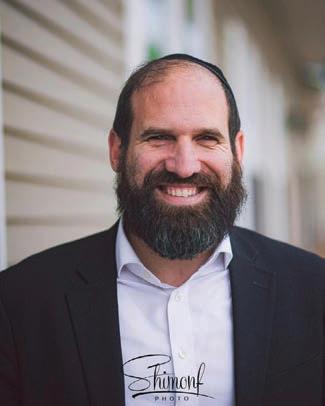




By Rabbi Zvi Teichman
The Torah describes the four divisions the twelve tribes were divided into during their sojourn in the desert. Each grouping camped in different directions with the Tabernacle at its center. When they traveled this order was maintained as well.
These three-tribe formations and positions were already devised by Yaakov Avinu when he advised his children prior to his departure how they should place themselves around his bier when they transported him to the Land of Israel.
The tribe of Yehuda lead the ‘first’ division, Reuven the ‘second’, Efraim the ‘third’.
When it comes however to identifying the next and final group which was led by the tribe of Dan it refers to him not as the ‘fourth’ one, but rather as the one that was “last” to journey according to their banners. (אל ב רבדמב)
Why among all the children were these four tribes specifically Yehuda, Reuven, Efraim, and Dan selected to lead their respective divisions?
The Baal HaTurim points out that in the blessings Yaakov Avinu bestowed upon his children before his death, it was only to these four that he addressed them with a pronoun in the second person singular. The other tribes were referred to in the third person.
Yehuda - You, your brothers will acknowledge. Reuven - you are my firstborn To Yosef, the father of Efraim, Yaakov said - From the G-d of your father and He will help you.
In the last verse of the blessing to Dan, Yaakov expresses, 'ד יתיוק ךתעושילFor Your salvation do I long, O G-d.
This more intimate form of expression was evidence of Yaakov entrusting them with leadership.
This last reference though is perplexing, wasn’t Yaakov directing his words to G-d, For Your salvation do I long, and not to Dan?
Evidently, the Baal HaTurim understands this sentiment as Yaakov addressing Dan directly and stating to him how he longs to G-d for ‘your salvation’, reflecting on some salvation that is unique to Dan.
What salvation is Yaakov Avinu exactly pining for?
Dan was the son of Bilhah, the maidservant of Rachel. For that diminished stature, not having been born to a Matriarch, he was called the דורי, the lowly amongst the tribes. (גי אשת יכ אמוחנת)
Later, the Torah describes how the tribe of Dan was the ‘gatherer’ of all camps, in its simple meaning referring to their large populace and the fact that they traveled last that enabled them to pan out behind the traveling camps and gather all lost belongings. It wasn’t just objects but the weakened travelers who couldn’t keep up and trailed behind that were fortified and ‘gathered in’ by the members of Dan. (אזר חנעפ)
Elsewhere the Torah reports how the nation of Amalek cut off those lagging to your rear. The Midrash says these were the members of the tribe of Dan who were susceptible to the worship of idols who were expelled from within the protective Clouds of Glory and thus exposed to the blows of Amalek. (אצת יכ ףוס טוקלי)
Later in history it was the tribe of Dan in whose region was the temple where the idol of Micha stood that seduced many to its worship.
Micha was a child who was implanted in a wall to fulfill the daily quota of bricks during the slavery in Egypt. Moshe against G-d’s advice saved the child. It was Micha who took a graven image out of Egypt and eventually set up a temple of idolatry in the region of Dan during the period of the Judges. (:אק ןירדהנס)
What camaraderie developed between Micha and specifically the tribe of Dan that led them astray and was apparently already prevalent in their sojourn in the desert, where they were expelled from the protective cloud due to their being tainted with idolatry?
Perhaps Micha although having been saved, was traumatized by the ordeal of having been compressed as a brick into the wall. He could no longer accept the possibility of an intimate relationship with a Creator who could allow this to happen to him. Maybe he even felt he had license to sin as he lived in a state of having been already rejected and couldn’t fathom a relationship with the One who permitted this to occur.
The tribe of Dan, having been the ‘diminished’ among all tribes, being the first born of a maidservant, were always tottering between acceptance and rejection.
Sitting on that fence they faced an equal opportunity to either succumb to dejection or rise to the challenge and accept G-d’s love even amidst what appears as failure.
Wasn’t it the son of the Jewish woman, a daughter of the tribe of Dan, who was fathered by the Egyptian taskmaster that upon seeking to stake a claim amongst the members of his mother’s tribe was rejected and went on to blaspheme G-d?
It is precisely those who are most vulnerable, who upon overcoming their challenge can rise to heights no one else can.
Dan because of this awareness was thus the tribe who would be most capable of picking up the stragglers and infusing them with a sense of inner pride and self-confidence founded on a deeper faith and consciousness that even in our seemingly diminished state we are truly great and beloved by G-d and play a major role in advancing us towards the ultimate redemption.
Amalek whose matriarch Timna was rejected from entering the family of Avraham Avinu, knew how to play on this weakness and taunted those who were expelled from the protective cloud. Amalek’s self-pity and feelings of inferiority initiated a philosophy that man needs no spirituality and can claim a right to exist without responsibility or meaning.
But we assert that no matter what we face, we are part of a bigger picture and despite the lack of clarity to see that larger landscape, we know that there is but One we look to for our salvation.
That lesson was derived yet before the conception of Dan.
Rachel complains to Yaakov that her life is worthless without a child. Yaakov responds that he is not G-d to be able to dispense children. Rachel then offers her maid, Bilhah, for him to consort with so that Rachel may build up a child through her. Upon the birth of that child Rachel exclaims, םיקלא
- G-d has judged me, He has also heard my voice, giving her a son she calls ןד, Dan.
Rather than rejection she senses acceptance. Although she would have certainly wanted to mother him herself she accepts the greater consciousness of G-d’s plan and purpose in all of creation.
We must always maintain hope even in the worst of predicaments. We may get our entreaties answered precisely as we desire but even when we don’t we accept that therein lies our salvation nevertheless.
We must know three things:
Our true salvation and accomplishment lies in the fulfillment of His scripting of events even when it may appear as rejection.
We must live it every conscious moment of our lives and inspire our every breath with that belief so that we will never fall into rationalizing our apathy.
We can turn directly to G-d no matter how far we have fallen.
When reciting this verse in prayer we order it three ways.
'ד יתיוק ךתעושיל, For Your salvation do I long, O G-d
ךתעושיל 'ד יתיוק, I long, O G-d, for Your salvation יתיוק
'ד, O G-d, for Your salvation I long
The first accents our acceptance of true salvation, Your salvation, not our own image of what we’d like. The second emphasizes the need to live with hope constantly, I long. Finally, we assert our privilege in knowing we speak directly to G-d, ‘O G-d’, and that He listens.
Yaakov yearned to see the manner in which Dan would resist the easy path of dejection and express hope for salvation as only Dan knew how. ךתעושיל, ‘for your salvation’ my beloved son Dan, Yaakov says, I so long for to G-d.
The challenge of our age is precisely never to give up. It sometimes seems so enticing. How can G-d expect us to overcome our pain, confusion and failures?
But Dan taught us that we can overcome and it is in that accomplishment that will bring us to the ultimate finish line.
In the End of Days we will too come in ‘last’, because it’s not about winning the race, but more so about staying in it. Each one of us runs according to the handicaps we were handed and we are each victorious as long as we stay focused and truly believe that despite our having fallen we can forge ahead and find salvation.
You may reach the author at: Ravzt@ ohelmoshebaltimore.com

By Avi Heiligman


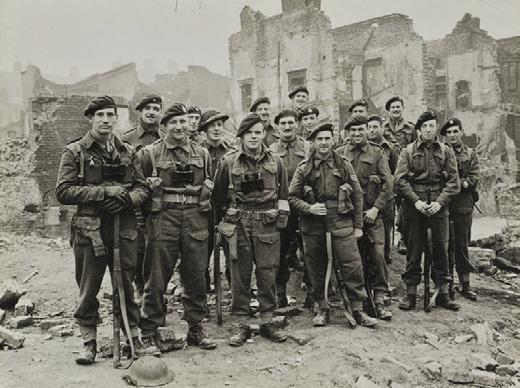
In June 1940, British Prime Minister Winston Churchill issued a directive:
“Enterprises must be prepared, with specially-trained troops of the hunter class, who can develop a reign of terror down these coasts.” This order created the British commandos who were to train for high stake raids against Nazi-held territory in Europe. By the end of the war, more than 25,000 soldiers had trained as commandos, with operations spanning all theaters of war. Whether striking by sea or dropping by airplane, these units became the spearhead for crucial operations and invasions. Within the ranks of the commandos were hundreds of Jewish volunteers, many coming from the Middle East, and their language skills and determinations to defeat the Nazis left a legacy that remains today.
Born in Berlin in 1916, Peter Nagel was from a Jewish family that fled to Great Britain after a brief period in Paris. Peter joined the British Army in 1940 and volunteered for No. 2 Commando in 1941 where his primary role was interrogating German prisoners. His fluency in German was also utilized on the battlefield where he would shout conflicting commands to confuse the enemy soldiers. In early 1942, he participated in two of the most daring missions of the war: Operation Biting (the Bruneval Raid) and Operation Chariot (the St. Nazaire Raid).
Operation Biting was a raid into France involving British paratroopers from Company C, 2nd Parachute Battalion, led by Major John Frost. Nagel, operating under the alias Peter Newman, served as the unit’s German language expert. One
hundred twenty men jumped from twelve planes into France with the objective of capturing components of the advanced Wurzburg radar system. Despite facing stiffening opposition as the raid progressed, the paratroopers suffered only two fatalities. Engineers worked fast to dismantle the radar system, and the force fought its way to the beach for a rendezvous with the navy. The raid was a success as the captured radar proved vital in developing counter-measures. Among the prisoners Nagel interrogated was a radar operator who was convinced his wife had predicted the airborne raid and tipped off the British.
Nagel was the only participant from Operation Biting to also go on Operation Chariot, although the outcome of the operation proved to be the last mission he would undertake during the war. The objective was to disable the massive Normandie dry dock at St. Nazaire to prevent heavy warships like the Tirpitz from being repaired on the Atlantic coast. Of the 612 men who launched the raid, casualty rates were staggering: 169 were killed and 215 were captured, including Nagel. However, the mission achieved its goal when the destroyer HMS Campbeltown, packed with tons of hidden explosives, rammed the dock and detonated. Nagel survived the remainder of the war in a Nazi POW camp while successfully maintaining his second alias, Peter Walker. While he was recommended for the Military Medal, Nagel never received it, making him one of the war’s most highly regarded undecorated heroes.
Fritz Sigmund Hausman was another German-born refugee who found his way
into the ranks of the British Commandos. His family fled Europe in 1934 and moved to the Mandatory Palestine which was under British control. As with many Jewish refugees who were in Eretz Yisrael at the time, Hausman joined the British Army determined to play a part in defeating the Nazis. He joined the 462nd General Transport Company of the Royal Army Service Corps (RASC), which was made up mainly of Jewish volunteers from the Mandate and had previously fought during the Battle of El Alamein. On May 1, 1943, the unit was traveling from Egypt to Malta on the troopship SS Erinpura when it was sunk by Luftwaffe bombers. Tragically, 140 Jewish soldiers from the unit went down with the ship. Hausman, who had joined the 462nd after the unit’s battles in North Africa, survived the sinking because he had left the lower decks to visit someone in the sick bay. Surviving members of his unit were placed in different units with many becoming core members of the Jewish Brigade. It was at this point that Hausman decided to join No. 2 Commandos and changed his name to Fred Houseman in the hope of avoiding torture if he was ever captured.
The first battle that Hausman participated in with the Commandos was the invasion of Salerno. He went for special commando training at Monte Volturno and was then sent to the island of Vis, Yugoslavia. It was in the Balkans where he participated in most of the 23 landings and 40 battles during his time with the Commandos. It was a dangerous job as he was wounded eight times. He was awarded the Distinguished Conduct Medal, the second-high-
est gallantry award for non-commissioned personnel. One of the missions his citation mentions occurred on March 5, 1944. As the lead scout for his section on Brac Island, Hausman opened fire after they were spotted by two sentries. The Commandos were pinned down, but Hausman pushed forward. He killed one sentry and followed the other into a house. Hausman threw a grenade and shouted in German for the remaining occupants to surrender. They gave up and surrendered to Hausman.
Hausman’s citation also mentions his actions on March 19, 1944. This refers to the Commando raid on Solta Island. After leading a small assault team against a German garrison in a village, Hausman personally wounded a Nazi machine gunner who was holding up the British advance, allowing his unit to seize the objective.
Most of the commando units were disbanded after the war, but their legacy lives on today within the special forces units of the modern British military. The commando raids of World War II played key roles in the defeat of the Nazis. While men like Nagel and Hausman are hardly known today, the bravery and actions of these Forgotten Heroes are essential chapters of military history that deserve to be remembered.
Avi Heiligman is a weekly contributor to The Jewish Home. He welcomes your comments and suggestions for future columns and can be reached at aviheiligman@gmail.com.
Massive Local Inventory
Our

We design your memorial with you in our studio. You approve it instantly, avoiding weeks of waiting.
From
We engrave everything ourselves to spot and fix potential flaws before they occur.
We build to last, so we guarantee it. We are your partners for life.

President Donald Trump’s decision to launch Operation Epic Fury will go down in history as one of the most courageous and important in my lifetime. Presidents of both parties declared that Iran could not have a nuclear weapon; only Trump took decisive action to stop it.
But how you finish a war matters just as much as how you start one. And right now, Trump is in danger of snatching defeat from the jaws of victory with a deal that would give the battered Iranian regime a new lease on life.
Trump says he holds all the cards, but Tehran disagrees. Why is that? Consider the events of the past few days from Iran’s perspective: First, the president launched “Project Freedom” to guide ships through the Strait of Hormuz and warned that if Iran dared to fire at American vessels, it would be “blown off the face of the earth.” Iran defied his warning, not only firing on a U.S. warship but launching 12 ballistic missiles, three cruise missiles and four drones at the United Arab Emirates. In response, the United States did … nothing. Not only did Trump not blow Iran “off the face of the earth,” Secretary of State Marco Rubio said at a White House news conference that “the operation is over. Epic Fury is – the president notified Congress we’re done with that stage of it, okay? We’re now on to this Project Freedom.” Then, Trump suspended Project Freedom – pulling the plug on the mission and allowing Iran to violate the ceasefire with impunity.
If you were in Iran’s shoes, what would you think? You would perceive weakness. You would conclude that Trump’s threats were bluster and that he is unwilling to resume the bombing campaign. You would decide that Trump is feeling political pressure from high gas prices, that the U.S. blockade of Iran in
By Marc A. Thiessen

the strait is backfiring on him and that it is only a matter of time before he is forced to end that, too. You would think that your ability to threaten the oil infrastructure of America’s Persian Gulf allies is not only successfully deterring Trump
a fragile ceasefire in the conflict.” This comes after Trump publicly appealed to the regime to spare the lives of a group of female protesters. Far from being chastened, Iran’s leaders are stepping up their campaign of domestic repression
How you finish a war matters just as much as how you start one.
from striking you again but also preventing him from taking away your control of the strait. You would think that you, not Trump, have the cards.
If anyone doubts that Iran is emboldened, consider: The Financial Times reports that “Tehran has stepped up hangings of people accused over anti-government unrest,” adding that “the pace of hangings accelerated following
in a clear message of defiance to Trump.
So, what should Trump do? Simple: finish what he started. Resume Project Freedom, making clear that Iran will not be allowed to control the Strait of Hormuz or threaten ships passing through it. If Iran fires at the U.S. or threatens the energy infrastructure of our Gulf allies again, retaliate by striking Iran’s energy infrastructure on Kharg Island, through
which over 90 percent of Iran’s oil passes. Then give Israel the green light to resume combat operations, striking leadership, weapons and energy targets across Iran. Israel keeping the regime occupied at home will make the freedom-of-navigation operation easier for U.S. forces. If Iran still won’t capitulate, Trump can launch a final barrage of strikes, eliminate all the targets he set at the start of the war, declare victory, and then begin covert operations to arm the Iranian people to overthrow the regime.
Politically, the only way the Iran war can hurt Trump is if he does not bring the conflict to a decisive victory. While most Americans did not support the decision to go to war, polls show they do want the U.S. to prevail. A new Harvard CAPS-Harris poll of registered voters finds that supermajorities support Trump’s objectives in Iran: Seventy-one percent say it is essential that “Iran gives up the right to enrich any uranium and turns over the enriched uranium it already has on hand”; 74 percent agree Iran “must give up control of the Strait of Hormuz”; 78 percent agree “Iran must stop executing protesters”; and 79 percent agree that “Iran must stop supporting terror proxies like Hezbollah and Hamas” – and 66 percent say Trump should “insist on all these points” and not “settle for less.”
Americans want to win. The only thing they like less than war and high gas prices is enduring them for nothing. But to deliver that victory, President Trump needs to show the Iranian regime that it doesn’t have the leverage it thinks it does. And he can’t negotiate a deal that lets the regime off the mat. If he does, he will squander the opportunity to secure one of the greatest national security achievements of any modern president.
© 2026, Washington Post Writers Group

To Receive the Kuntres:
1. Pickup at any Yalkut pickup location
2. Email INFO@ORAYSA.ORG to receive a copy
3. Download it from our website:


By Rabbi Azriel Hauptman
Yosef is going through a difficult period. As a Bochur in Yeshiva in the middle of a long winter Zman reaching the age of Shidduchim, he feels depleted. He is still putting in a full
day in Yeshiva, but he just feels that something is missing. Yosef wonders to himself, “Should I speak to my Rebbe? Should I confide in a close friend? Should I see a therapist?”


Every situation is different and there are times where one would benefit from utilizing all of one’s resources that includes speaking to a Rebbe, confiding in a friend, and consulting a therapist. Other times, it may be detrimental having too many spoons stirring the same pot. This makes knowing the right address something that must be custom tailored for each individual situation. What we can address in this article are the benefits and drawbacks of each of these categories.
Rebbe/Mentor
Rebbeim and mentors provide wisdom and life experience, and in the case of a Rebbe, a Torah perspective. The role of a Rebbe or mentor is not to provide therapy and therefore will usually not address the underlying emotions and core beliefs that can be at the basis of one’s issues. Therefore, a mentor or Rebbe is not a source of therapeutic healing, but can be a wellspring of sagely advice and clear perspectives.
Friends

There is nothing in the world like a close friend. We are not talking about a friend that you hock with at the water cooler or in the coffee room. We are talking about a true friend who will have your back and genuinely cares about you. The average person does not have that many friends that fit this bill, and studies have shown that the average person has only about five genuinely close friends. These genuine friends are invaluable, as Shlomo HaMelech tells us in Koheles (4:9-10), “Two are better off than one… For should they fall, one can raise the other. Woe to him who is alone and falls with no companion to raise him.”
Spending time with friends when one is going through a challenging time can be the difference between
recovering or floundering. The role of a friend is not necessarily to offer advice or direction. Very often, one’s friends do not have enough life experience to be a source of advice. Rather, friends can be a shoulder to lean on, a safe space to unload, and a source of encouragement.
The role of a therapist is not to be your friend. Someone that you have to pay to talk to is by definition not a friend. The role of the therapist is also not to offer sagely advice. The role of a therapist is to provide a service. That service is what we call therapy. Therapy is defined by the use of psychological methods to help a person change behaviors, increase happiness, and overcome problems.
Let us use the analogy of physical health to help us understand a situation of emotional health. Imagine someone is dealing with a serious health challenge. A Rebbe or mentor can be an indispensable resource in navigating through all the questions that one has regarding decisions that have to be made and a source of wisdom to understand one’s new life situation. One’s friends will be there to offer encouragement and help whenever they can. A doctor is there for dealing with the actual medical problem.
Whatever your problem may be, realize that you are not alone. We are all surrounded by resources that can keep us afloat when we are tossed around in the turbulent waves of life. We just need to recognize that sometimes our best resources are hiding in plain sight.
This is a service of Relief Resources. Relief is an organization that provides mental health referrals, education, and support to the frum community. Rabbi Yisrael Slansky is director of the Baltimore branch of Relief. He can be contacted at 410-448-8356 or at yslansky@reliefhelp.org

We now return to the fertile topic of “expressions that annoy me”, which is growing ever bigger the older I get.
And I’m not just talking about expressions that people say specifically to annoy me, such as, “You’re old!” My bother frequently says this, just because I’m older than he is. And I have to constantly be reminded, because I’m old. He says it all the time, because younger people like repetition. And this isn’t going away, because I’m always going to be older than him, as far as I can tell. But if I would’ve known he’d be like this, then I would have said, when he was younger, “You’re young!”
“Hey, I’m going to play this board game, for ages 3 and up. Want to play? Oh, wait, you can’t. You’re young!... Fine, cry about it. Because you’re young!”
I just thought of this now, because I’m smarter. Because I’m old.
But people do say some things specifically to be annoying. Take, for example, the people who yell, “Tekiyah!” when you blow your nose. Really? It’s great that they’re taking your nose blowing as a reminder to do teshuva, and that they think they’re hilarious and that no one has ever made this joke before, and they’re wondering why you’re not laughing along with them. As you’re blowing. But they’re doing it wrong. The ba’al makreh doesn’t announce what the baal tokeiyah is going to blow after he blows it. Otherwise they’d be stuck in a loop all day. (Blow. “Tekiyah!” Blow. “Tekiyah!”) Move on! If I’d make this joke, which I never would, I’d say, “Shevarim-teruah!” Then the guy might actually respond by making three medium bursts, followed by 9-18 short bursts, followed by, if he has anything left, a tekiyah gedola. He might have to change shofars in middle.
Could someone remind me why it’s acceptable to blow your nose in public again?
It’s weird that the tekiyah thing is what annoys me more.
Another annoying thing that people say is
“It’s the best part.” This is usually said by someone who is trying to get you to eat something you don’t want to eat.
“You don’t like the crust? It’s the best part!” No it’s not. No one’s buying pizza for the crust. How about we trade my crusts for your centers?
And then he pops the crust into his mouth right in front of you, just to show off. “Yum! Boy, I’m really enjoying this crust! And talking with my mouth full!”
And of course there are the people who say “entrée” when they mean “appetizer”. But I’m pretty sure they think they’re saying “on tray.”
But people don’t want your opinion. If they did, they’d say something like, “I need to pick your brain.” Which, I’m sorry, but I hate the visual that comes with that expression. Does it mean that he’s choosing your brain? You don’t get to pick your brain. You get the brain you get Otherwise everyone who lived before us would have gotten all the good brains, and by the time we got to our generation, we’d be getting…
Oh.
On the other hand, sometimes it’s good to hear the other person out, because, of course, the reason he wants to pick your brain is that “two heads are better than one”.
Are they really? Because if I had two heads, I’d get stared at a lot. But on the other hand, I could talk when I’m eating, whistle while I brush my teeth, and give myself a haircut without a mirror – or at least on one side of each head.
Though my breath-mint expenses would skyrocket.
And how would I wear knapsacks?
So the expression isn’t really true. It only works if the two heads belong to two people. And in that case, you’re leaving crucial information out of the expression. It’s actually two people who are better than one. Assuming they each have a head.
Though two people aren’t always better than one either.
By Mordechai Schmutter
“I have to go get something out of the crawl space.”
“Well, two people are better than one!”
“What? No! Get out!”
There are a lot of things we say without thinking, because they’re very easy to say. Take, for example, the verb “do”. It’s a universal verb that can mean too many things. This is something I learned back when I was in yeshiva, and my chavrusa invited me to come do avodah zara with him. I was pretty sure he meant “learn Meseches Avodah Zara”, as in “My whole yeshiva’s doing Avodah Zara this year,” but I wasn’t sure. So I did skeelah with him. Meaning that I learned about skeelah. In Sanhedrin. Also, I threw something at him.
Not that I’m not guilty of using mindless expressions. For example, whenever someone is looking for something, I generally help by saying, “It’s got to be around here somewhere!”
That way, they know. It’s very helpful but easy on my part, and then I can get back to standing around and picking my brain.
I also mishandle the phrase, “You too”. I bet you do too. I was at the library the other week, and the librarian gave me my books, and she said, “These are due back in 3 weeks,” and I said, “Thanks a lot. You too.”
What? I work here! I’m due back every day!
And then she said, “Have a good day,” which is what they always say after they tell you when you have to bring back the books, and then I realized that I’d already said, “You too.” I’d responded first by accident. I was in a rush.
So at this point, I had nothing to say, because I was clearly tired, and also it wasn’t my turn to use the head. So I made like a bird and took off, and smacked into the glass door.
That was the best part.
Mordechai Schmutter is a freelance writer and a humor columnist for Hamodia and other magazines. He has also published eight books and does stand-up comedy. You can contact him at MSchmutter@gmail.com.













WBy Rabbi Shraga Freedman
hat do we do when there is so much negative PR surrounding the Jewish people?
Does it mean we are failing in our mission of Kiddush Hashem?
There’s a story told about a rabbi who was once approached by a congregant upset about how Jews were being portrayed negatively in the media.
“What should we do?” the person asked.
people encounter Jews, they encounter something that reflects G-d.
Sometimes that will be recognized. Sometimes it won’t.
But the question we have to ask ourselves is not: “Did this make us look good?” The question is: “Was this good?”
If we only care about Chillul Hashem when others notice, we have already misunderstood it.
And if we live lives of integrity – quietly, consistently, courageously, then even in an age of headlines, we will be doing what Jews have always been called to do: To sanctify God’s name not by managing perception, but by embodying it.”
(Rabbi Elie Weinstock, “Not Good PR, Good Jews,” Times of Israel Blog)
was pleasantly surprised and said, “Only in a store like this would this happen.”
I was driving home after shopping in Cedarhurst early Friday afternoon. In Far Rockaway, there was a non-Jew selling flowers on the sidewalk. I stopped and picked out a bouquet. I wanted to give him a check, but he accepted cash only. I was out of cash, so I tried to return the flowers. He said, “You’ll pay next week or whenever”. I was surprised, “But you don’t know me”. He smiled, “I know that you, people, fear G-d”.
Rabbi Shraga Freedman is the author of Sefer Mekadshei Shemecha, Living Kiddush Hashem, and A Life Worth Living.
Email LivingKiddushHashem@ gmail.com for a free sefer. Visit LivingKiddushHashem.org for more




1. In China, burping after a meal can be a compliment to the chef. Similarly, slurping your noodles or soup is a perfectly fine way to dine.
2. People may hand you hot water instead of ice water because it’s considered healthier.
3. Refusing a gift once or twice is often polite before finally accepting it.

4. Business cards are usually given and received with two hands.
5. Entire fish are commonly served whole with the head still staring directly at you during dinner.
6. Many people avoid giving clocks as gifts because the phrase sounds similar to attending a funeral ritual.
7. The number 8 is considered lucky because it sounds similar to the word for wealth or prosperity.

8. In some places, wearing shoes inside the home is considered very impolite.
9. It’s common to share many dishes family-style instead of ordering individual meals.
10. Silence during a conversation is not always awkward; it can simply mean someone is thinking carefully.
11. Tapping two fingers on the table is a traditional way of silently saying “thank you” when someone pours tea for you.
12. Some apartment buildings skip the fourth floor because the number 4 sounds similar to the word for death.
13. Guests may keep insisting they should leave while the host keeps insisting they must stay longer. Both sides understand the ritual.
The government of China announced today that they would be removing all telephones from their country. The government explained that there are too many Wings and Wongs and that many people are becoming annoyed when people wing the wong number.

1. Which U.S. president made the first-ever official visit to China, helping reopen relations between the two countries?
a. Ronald Reagan
b. Richard Nixon
c. Jimmy Carter
d. Gerald Ford
2. Which animal is considered China’s national treasure?
a. Tiger
b. Snake
c. Panda
d. Dragon

6. What color is considered especially lucky in Chinese culture?

Answers:
Red Blue Green Purple
7. What is the official currency of China?
Renminbi
Three guards stand along the Great Wall of China.
The first guard can see the second guard.
The second guard can see the third guard.

The third guard can see nobody.
Each guard is wearing either a red hat or a blue hat. They know there are two red hats and one blue hat in total.
3. What is the capital city of China?
a. Shanghai
b. Hong Kong
c. Beijing
d. Guangzhou
4. Approximately how many people live in China?
a. 630 million
b. 700 million
c. 900 million
d. 1.4 billion
5. How long is the Great Wall of China?
a. 700 miles
b. 13,000 miles
c. 75,000 miles
d. 125,000 miles
Wisdom Key:
6-7 correct: 汉字 龙 北京 上海
长城 中国 茶 熊猫 和平 福气 春节 红 包 功夫 面条 饺子 皇帝 山水 风龙 你 好 谢谢 再见 学习 快乐 朋友 家庭 好 运 天地 祥云 凤凰 灯笼 月亮 星星 河 流 竹林
3-5 correct: Your fortune cookie was spot on: “Don’t try to be great when mediocre suffices!”
0-2 correct: Let’s try this one, MAYBE you will get it right: Which country does Chinese food originate in?
The first guard says, “I don’t know my hat color.”
The second guard says, “I don’t know mine either.”
The third guard says, “Then I know mine.”
What color is the third guard’s hat?
Answer: Blue. If the first guard saw two red hats ahead, he would know his must be blue. Since he didn’t know, the second and third guards are not both red. The second guard sees the third guard. If the third guard were red, the second would know his own must be blue. Since the second also doesn’t know, the third guard must be blue.
“Say What?!”

We get it—we know that Trump is a two-hour drive for an hour at the beach. Sure, there is too much traffic, the road is bumpy, and the AC is broken. But you’ve been to the beach and it’s pretty awesome! Sunshine! Cold beer! Free hypodermic needles. But it’s pointless to explain because the derangement filter still morphs reality into one conclusion: Trump bad! - Greg Gutfeld
Gavin Newsom is saying that the Dems have to be more culturally normal. Which is like Hillary saying not to hang people. – ibid.
The Democrat Party is like a thug with 44 priors, and to stay out of jail they have to make their past inadmissible in court, and we can’t let that happen. – ibid.
Such signage does not reduce crime and can reinforce biased surveillance. - Statement by the Ann Arbor City Council explaining why it removed 600 anti-crime watch signs across the city to be more “inclusive”
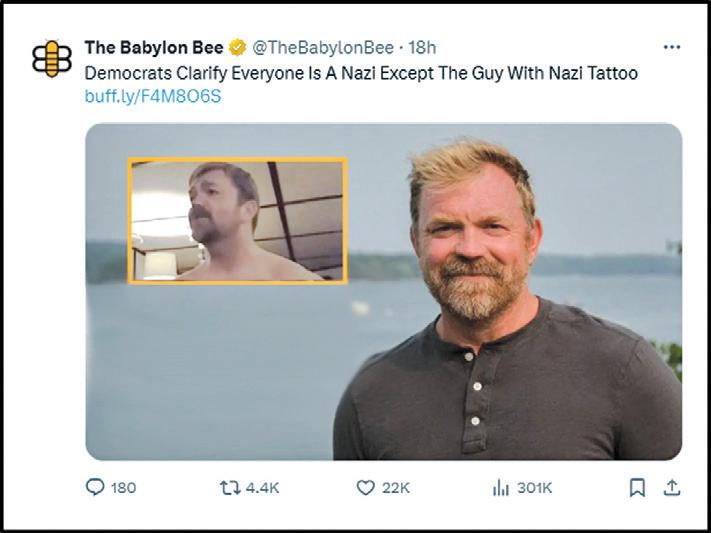






I want to draw down to zero the American financial support, the financial component of the military cooperation that we have. Because we receive $3.8 billion a year. And I think that it’s time that we weaned ourselves from the remaining military support.
– Prime Minister Netanyahu on “60 Minutes”
I didn’t know that number. I would certainly like to be there, but I wouldn’t pay it either, to be honest with you.
- Pres. Trump when asked by the New York Post about FIFA World Cup tickets going for over $1,000
I’ve always thought that anger is one thing that eats up a person’s insides –and hate.
- Actor Dick Van Dyke, 99, talking about his secret to longevity
It’s no news flash that President Obama does not like Republicans. It occurred to me that he might have been pandering to Mr. Colbert and his audience, all seven of them. President Obama has always been better at pandering than persuasion.
- Sen. John Kennedy (R-LA) when asked about Obama’s recent interview with Stephen Colbert
I don’t have anything against Mr. Colbert. I’ve always thought that he was shallow as a puddle. Now, he doesn’t believe that. He thinks he’s one of the smartest people on the planet. If you don’t take my word for it, ask him. His personal vanity has always been unshakable.
- ibid.
I know he promised his voters the subway will be free, and I’m promising my voters the L.A. Metro buses and trains will be free from urine, feces, stabbings, attacks. So that’s kind of similar – we both have free things for public transportation.
- Former reality TV personality and insurgent Los Angeles mayoral candidate Spencer Pratt when an interviewer pointed out that his insurgent campaign seems similar to democratic socialist NYC Mayor Zohran Mamdani’s campaign
AOC says that there are a lot of people who want to see her run for president in 2028. Yes— they are called Republicans.
– Greg Gutfeld
Thanks to the war, businesses in Iran are experiencing mass layoffs. The good news is that all the guys that scream “Death to America” were hired by Columbia University.
- ibid.
I regret it 100%, and I actually feel really bad that a man lost his life. Maybe a part of me was like, I don’t want to put another black man in jail.
– A 23-year-old woman, who declined to cooperate with police after a man had pushed her onto subway tracks and then days later shoved a retired schoolteacher to his death




















Moderated by Jennifer Mann, LCSW of The Navidaters

Dear Navidaters,
I’m in a conundrum, and I don’t know what I should do. I’m a 23 year old girl and have been dating for three years. I don’t get a lot of dates in general. Recently, a shadchan proposed an idea that sounded great to me (let’s call him Avromi). I told her I was definitely interested. The shadchan didn’t get back to me within a week, so I assumed he wasn’t interested. By the way, she asked me first because I happened to tell her in the past that I like getting ideas suggested to me first. In the meantime, a different shadchan came to me with an idea where the guy (let’s call him Shua) already said yes. I said yes to Shua, and we went on a date; it went well. In the meantime, while I was waiting on going on another date, Avromi got back to the shadchan that he is interested.
Having all these opportunities at once has never happened to me before. My gut says to go out with Avromi also, at the same time, for two reasons. Firstly, Avromi sounded like an amazing guy, and I don’t want to lose out and compare as I’m dating Shua.
But also, the shadchan is pressuring me, saying that since I already said yes over a week ago, it’s not nice for me to now say that I’m busy. She says I should have been waiting for an answer or at least, I should have told her when I decided to move on.
I simply cannot lose this opportunity! What do you suggest I do in this situation?
Thank you, Danielle*
Disclaimer: This column is not intended to diagnose or otherwise conclude resolutions to any questions. Our intention is not to offer any definitive conclusions to any particular question, rather offer areas of exploration for the author and reader. Due to the nature of the column receiving only a short snapshot of an issue, without the benefit of an actual discussion, the panel’s role is to offer a range of possibilities. We hope to open up meaningful dialogue and individual exploration.
Dear Readers,
We want to offer YOU an opportunity to be part of the discussion!
Please email us at MichelleMondShadchan@gmail.com, subject line “reader’s response,” if you would like to participate in the new “A Reader’s Response” columnist spot. We will send you a question and publish your answer in an upcoming Navidaters edition.
If you have a question you would like the Navidaters to answer, please reach out to this email as well.
Looking forward!
Michelle, the “Shadchan”
Rebbetzin Faigie Horowitz, M.S
Danielle, it is neither menschlech nor acceptable in current Orthodox circles to date two people at the same time. There are exceptions for this practice which is when one comes from abroad for a limited amount of time.
It is neither fair to you nor to the young men to not give your full interest to one person at a time.
Shadchanim are used to getting yeses from both parties but with the time not aligning. This is part of the dating life if you are being set up. You are not obligated to wait a week for an answer. And don’t let the current scarcity of dating opportunities throw you off your values.
This shadchan should not pressure you. Finally, be wary of this shadchan who is encouraging you to double date because “it’s not nice.” I would check into his/her reputation and consider whether s/he can be trusted with information and introductions.
Michelle Mond
Danielle,
The first thing I want to say is that it is completely understandable that you moved on to another idea after not hearing back for over a week regarding Avromi. You did not do anything wrong here. In
fact, I think the pressure this shadchan is putting on you is unfair. If she knew you were interested, it was her responsibility to keep her finger on the pulse. Having you sit and wait for a whole week without any communication is not reasonable. Even a quick check in every few days (possibly getting an answer from Avromi sooner) would have prevented this entire situation.
At the same time, your current dilemma is actually a bracha, even if it feels stressful right now. As they say, “When it rains, it pours.” After years of not having many opportunities, suddenly having multiple promising ideas at once can feel overwhelming.
The question of dating two people simultaneously is not always black and white. On the one hand, there is logic to wanting to explore both opportunities before closing a door. Especially because Avromi sounded exciting to you from the beginning, it makes sense that you do not want to automatically let that go without seeing where it could lead.
On the other hand, there are risks that you should honestly think through. Dating two people at once requires a tremendous amount of compartmentalization. Scheduling can become complicated, emotions can become blurred, and sometimes instead of bringing clarity, having two options at once can make decision making even harder. There is also the possibility, however small, that he might see you on a date with the other guy. What if you slip up with the names? It just won’t be worth the risk.
Most importantly, you have to ask yourself if you are truly capable of giving each person the attention they deserve. Too often, singles become so focused on the possibility of what else may be out there that they never fully invest in what is directly in
front of them. Every new suggestion starts being compared against hypothetical future options. Unfortunately, that mindset can keep people stuck for a very long time.
For every person you agree to date, there should be a level of seriousness. Ask yourself, “Can I create a bashert with this person?” Only you know whether you can genuinely do that with two people simultaneously. Some people may. Others become emotionally scattered very quickly.
I also want to offer you another option that may buy you some time without forcing an immediate decision. Since you technically never did your own research into Avromi before saying yes, you can tell the shadchan that initially the idea sounded promising, but now that it is becoming more practical, you would like a little time to make your own calls and look into it properly. That is a completely reasonable request. (You know you have at least a week to do so without her checking in if you get the same white glove treatment he did!) In the meantime, you can focus on the guy you’re dating for a week or so and see whether things naturally progress. You may gain clarity very quickly about whether you want to continue pursuing that path or whether you would rather move on.
Most importantly, do not make this decision based on guilt because a shadchan is pushing you. This is your life. The decision should come from clarity and self-awareness, not pressure.
Dr. Jeffrey Galler
Here are some thoughts for you to consider
Decisions, decisions
Many years ago, I took a public speaking speech course at Brooklyn College. At the end of the semester, the department chairman asked whether the course had helped me become more decisive.
I answered, “Well, yes and no.”
I thought that my answer was clever and sophisticated. Later, I came to realize that he deserved a more mature and thoughtful response.
As we go through life, we learn to think carefully before making a decision, so that afterwards we minimize time stressing over what we could have done differently.
Alternative scenario
Imagine if you had gone on a first date with a boy, and “it went well.” Then, imagine if the boy said, “Our date went well, and there may be potential for us. However, I now have an opportunity to date a different girl who might be much better than you.”
Ask yourself how that would make you feel about yourself. More importantly, ask yourself how that would make you feel about the boy.
Isn’t that, in some ways, precisely what you are now thinking of doing?
So, what is really important here. The first shadchan? The second shadchan? The first boy? The second boy? Yourself?
Ricky Nelson (Garden Party, 1972) experienced some major disappointments, and famously sang:
But it’s all right now, I learned my lesson well
You see, ya can’t please everyone, so ya got to please yourself.
So, after weighing everyone’s feelings and perspectives, and after all the contemplation and hand-wringing, the bottom line is to gently prioritize what is genuinely best for your future.
Allow me to offer a decision tree of alternatives for you to consider.
• On your date with Boy #1, did you feel a spark, an attraction, a possibility of true love and marriage? If so, continue dating him, and don’t worry about disappointing the other boy and his shadchan.
• But, if on your date with Boy #1, you did not feel anything special but were simply planning a follow-up date because that seemed like the proper protocol, politely end things with him and explore the second opportunity.
• However, if you honestly just can’t decide, then I see nothing wrong with pursuing both opportunities for a short while, until there is more clarity.
However, this would be a very bad idea: if both boys travel in the same circles,
or if you do not realistically have enough time in the week to properly date two guys. And, if you do decide to date both of them for a short while, keep the situation private and don’t share the decision with your friends, or the other shadchanim.
Conclusion
Consider yourself lucky to be in this position. You have gone from a scarcity of dating opportunities to a crisis of too many opportunities.
Yogi Berra once uttered, “When you come to a fork in the road, take it.” Like many “Yogi-isms,” the remark
seems nonsensical and humorous, but it does carry some serious wisdom.
His advice is to make a decision, stop worrying, and move forward.
Shalom Berger A Single Who’s Been There
Hi Danielle. Kudos to you for considering
The Navidaters
Dating and Relationship Coaches and Therapists
Dear Danielle,
Thank you for writing! First, I want to say that I’m answering this not as a shadchan, but as a therapist and coach who thinks a lot about the emotional experience of dating, anxiety, attachment, and decision making. Those are very different lenses. This and other questions of this nature put me in a bit of a pickle, because I really can’t tell you what to do. I am here to support you as you figure out what is best for you.
When someone has gone on very few dates over a long period of time, suddenly having two possibilities at once can feel emotionally overwhelming. Scarcity changes people. It can create a feeling of, “If I make one wrong move, I’ll lose everything.” At the same time, I think it’s important to slow the panic down a little.
You are not engaged to Shua after one date. And you are also not obligated to put your life on hold indefinitely because a shadchan disappeared for over a week without an answer. People move forward. That’s part of dating.
I can also understand why the shadchan feels frustrated. In the shidduch world, there’s often an expectation of communication and follow through, and ideally it may have been cleaner to update her once you decided to move ahead with another date. But I don’t think this is really about etiquette as much as it is about fear. You finally have options, and now you’re terrified of making the wrong choice and losing an opportunity.
At the same time, I do think it’s important to be mindful of the norms and expectations of your particular community. Different dating cultures handle this very differently. In some circles, dating more than one person early on is considered completely acceptable. In others, even very early dating carries more of an assumption of exclusivity or emotional focus.
One approach is not morally superior, but relationships do not happen in a vacuum. If either Shua or Avromi would feel hurt, misled, or uncomfortable dis-
what’s best for you and not just following the status quo! That shows real maturity and intellect.
This is definitely not a one-size-fits-all answer, but as someone who has double dated in the past, here is what I found helpful to consider.
Will double dating overwhelm you?
The time spent preparing for the date, the emotions of the actual date, and the processing of the date afterward, can often be a lot, and that’s only while dating one person.
If double dating, and all that goes into it, is too much, it can lead to you not being able to put your best foot forward for either boy, and you may end up losing both.
However, if you know that it’s within you to be able to double date and still put your best foot forward, I would definitely tell you to double date.
The Gemara says when a man wants to marry a woman he shouldn’t delay, as someone else may marry her first. I think this applies to your situation.
And throughout the dates, you’ll see who you naturally connect to more and can shift your focus solely onto him.
I wish you the utmost clarity.
P.S. You are not in the wrong for originally moving on after a week of not hearing back from the shadchan regarding Avrumi. That’s more than enough time for an update to have been communicated to you.
covering that you were dating both simultaneously, that is something worth thoughtfully considering. You are not only choosing between two men. You may also be choosing between cultural norms and your own emotional instincts.
If dating both men is considered socially acceptable in your world, then I don’t think you need to panic or feel guilty for gathering information before making a decision. One date is still very preliminary.
But if it would genuinely violate expectations in your community or create distrust later on, then that deserves reflection too – not from a place of shame or pressure, but from a place of integrity and self-awareness.
What stood out to me most in your letter was the sentence, “I simply cannot lose this opportunity.”
No person should feel like their entire future depends on grabbing every possible option before it disappears. That mindset usually develops after a lot of disappointment, longing, comparison, and hurt.
The truth is, dating is not a game of securing the last chair before the music stops.
It’s about finding someone you can ac-
tually build emotional safety, attraction, trust, friendship, and compatibility with. I would also encourage you not to date from panic, fantasy, or résumé comparison.
You mention that Avromi “sounds amazing.” Be careful there. Sometimes when we haven’t had many opportunities, we can become attached to the idea of someone before we’ve met the actual human being. A profile can sound perfect on paper and still not be your person. And someone quieter or less exciting on paper can wind up being emotionally safe, deeply compatible, and genuinely wonderful in real life.
Try to stay grounded in what you actually experience with these men, not what you fear losing.
And one more thing: shadchanim facilitate introductions. They are not the emotional authority over your inner world or your future. You are allowed to think carefully about both your values and your reality.
The goal is not simply to secure a husband as quickly as possible. The goal is to choose wisely from a grounded place instead of an anxious one.
Sincerely, Jennifer
a therapist and certified life coach in private practice in Cedarhurst, NY and via telehealth. She works with individuals, couples, and families, and is a part-time school social
on anxiety, relationships, life transitions, and narcissistic abuse. She integrates attachment-based therapy, cognitive behavioral approaches, and relational
grounded in the belief that healing and growth emerge through honest, attuned, and meaningful human connection. To set up a consultation or to ask questions, please call 718-908-0512.
If you’ve ever watched a basketball game where the opposing team starts hitting every shot, you know the feeling in the arena. The energy shifts, the crowd gets loud, and every fan in the building starts coaching from their seat. The universal cry is usually some version of: “Change something! Put in the bench! Do something!”
It’s a natural human reaction to a shift in momentum. When things are going south, we feel a physical need to intervene. We assume that “doing nothing” is the same as being passive or unprepared. In a highstakes environment, whether it’s in a sports game, at work, or in your brokerage account, inactivity just doesn’t feel right.
But the best coaches, and the best investors, know that a 10-0 run by the opposition isn’t necessarily a reason to scrap the game plan. In fact, subbing out your star players just because they’re in a cold stretch is a great way to turn a temporary slump into a permanent loss.
We call this the Bench Warmer Principle. It’s the understanding that when the market gets volatile, the urge to “sub in” something new, shiny, or “safe” is usually your biggest liability.
The Temptation of the “Flashy” Sub
When the S&P 500 dips, we suddenly become very interested in the players on our bench. We start looking at that one niche sector that happens to be green today, maybe it’s energy, maybe it’s a specific tech trend, or we listen to a pitch for a “guaranteed” alternative investment that promises to ignore market gravity.
This is Action Bias in its purest form. Our brains are hardwired to believe that a complex problem requires a physical, energetic response. This served our ancestors well: if a predator was charging, “staying the course” got you removed from the gene pool. You had to move, and you had to move now
Just a couple of weeks ago, I was talking with a friend and fellow investor after receiving some less-than-stellar news about a particular investment. We both immediately started discussing alternative investment options, even though the underlying fundamentals of our investment were strong.
In finance, however, this survival instinct is often counterproductive. The market doesn’t care about your heart rate. When you sub out a diversified strategy for a “hot hand” during a downturn, you’re almost always making two fundamental mistakes:
1. You’re selling your core holdings at a discount. You’re essentially firing your star players while their trade value is at its lowest point.
2. You’re buying the “bench warmer” at a premium. By the time a specific sector or fund looks like a “safe haven,” the rest of the world has already bid up its price. You’re chasing last week’s winners with this week’s capital.
The Brutal Math of Missing Out
One of the most dangerous myths in investing is that you can “sit out” the bad days and jump back in for the good ones.
The problem is that market volatility is a package deal. The market’s best days, the ones that do the heavy lifting for your longterm retirement goals, historically occur within days or weeks of its absolute worst ones.
Consider this: Over a 20-year period, missing just the 10 best days in the market can cut your total return nearly in half. Missing the 30 best days? Your return might drop to zero or even turn negative.
If your “star players” (your core diversified investments) are sitting on the bench during those recovery days because you got nervous in the second quarter, you aren’t just losing money; you’re losing time. You can’t recover the compounding power of a missed 5% day. You don’t win by timing the exit; you win by having time in the market.
The Behavioral Trap: Why “Doing Nothing” Feels Like Losing
If the math is so clear, why is it so hard to stay in the game?
Two words: Loss Aversion. Studies consistently show that the pain of losing $1,000 is twice as intense as the joy of gaining $1,000. When you see your net worth dip on paper, your brain processes it as a literal threat to your security.
Subbing in a “bench warmer” is like moving everything to cash or a low-yield “safe” fund; it provides immediate psychological relief. It stops the bleeding of the paper loss. But it creates a much more dangerous, invisible loss: the loss of purchasing power and the failure to meet your long-term objectives.
We also struggle with Recency Bias
When the market has been down for three weeks, our brains tell us it will be down for the next three years. We forget that market cycles are just that, cycles. We treat a temporary decline as if it’s a permanent destination.
Tactical Patience vs. Total Neglect
To be clear, “doing nothing” doesn’t mean we aren’t working. It means we aren’t making emotional trades. People are often most active when the markets are most volatile, but this isn’t always a bad thing. There are some very legitimate reasons for being active with
your investments when markets are volatile.
Most investors are busy chasing last week’s winners, a disciplined fiduciary is looking for actions that actually move the needle:
• Tax-Loss Harvesting: This is the CPA’s favorite move. If an investment is down, we can “sell” that loss to create a tax asset. This asset can offset future capital gains or up to $3,000 of ordinary income. We then immediately buy back into a similar (but not identical) position to stay invested. We’ve turned a market “loss” into a real tax benefit without ever leaving the court.
• Rebalancing: This is the only “subbing” we advocate for. Over time, your winners become a larger percentage of your portfolio than intended. When the market dips, we sell a bit of the “safe” stuff that held its value (like bonds) to buy more of the “star players” (stocks) while they are on sale. This forces you to buy low and sell high, which is the exact opposite of what your emotions want you to do.
• Roth Conversions: When market values are low, it can be an opportune time to convert funds from a traditional IRA to a Roth IRA. You pay the tax on a lower “value” today, allowing all future growth to be tax-free.
The difference? These moves are part of the original playbook. They are calculated, proactive, and tax-efficient.
The Foundation: A Portfolio is Not a Plan
The reason many investors feel the need to sub in bench warmers is that they don’t have a plan to begin with. If your only strategy is “buy things that go up,” you will naturally want to sell when they go down.
But if you have a comprehensive financial plan, your portfolio is just the engine. The plan includes your emergency fund (your “protective defense”), your insurance (your “special teams”), and your tax strategy (your “coaching staff”).
When you know you have two years of cash sitting in a high-yield account to cover your bills, a 10% drop in the stock market feels much less like a crisis and much more like a temporary fluctuation. You can afford to be patient because your immediate needs are already met.
The Takeaway
The most disciplined move in finance is often the one that feels the least productive in the moment. In the heat of a market “10-0 run,” the urge to change players is a siren song
that usually leads to the locker room. Winning isn’t about having the flashiest portfolio every single month; it’s about having the stomach to stick with your stars when the scoreboard looks ugly. Trust the math, trust the process, and keep your best players on the floor.
Your Common Cents Action Plan
• Audit your Action Bias. Next time you feel the urge to change an investment because the headlines are scary, ask: “Has my 10-year goal changed, or am I just reacting to the last 10 days of news?”
• Check your Defensive Line. Review your cash and fixed income. If you have a solid emergency fund, you have the “breathing room” required to let your long-term investments do their job. If you don’t, that’s where we should focus our energy, not on the stock market.
• Look for the Small Wins. Instead of selling out, ask your advisor about tax-loss harvesting or rebalancing. These are the ways we “score” during a market downturn without abandoning our strategy.
• Consult the Playbook. If you’re feeling uneasy, review your financial plan. Sometimes, just seeing the actual financial plan for your life is enough to remind you why we chose these specific players in the first place.
The information contained herein is intended to be used for educational purposes only and is not exhaustive. Diversification and/or any strategy that may be discussed does not guarantee against investment losses but are intended to help manage risk and return. If applicable, historical discussions and/or opinions are not predictive of future events. The content is presented in good faith and has been drawn from sources believed to be reliable. The content is not intended to be legal, tax or financial advice. Please consult a legal, tax or financial professional for information specific to your individual situation.
Subscribe to Common Cents digitally on LinkedIn.
The decision to start saving and investing is yours, but the “how” can be hard. Email commoncents@northbrookfinancial. com to schedule a financial planning consultation with our team.
Elliot Pepper, CPA, CFP®, MST is Co-Founder of Northbrook Financial, a Financial Planning, Tax, and Investment Management Firm. He has developed and continues to teach a popular Financial Literacy course for high school students.








By Etti Siegel


Q:Dear Etti, My child complains all the time. Everything is negative. Nothing is ever good enough. If supper is okay, something else is wrong, like what I am serving to drink, or who is sitting too close at the table. If school was fine, the homework was terrible. If the homework was okay, the teacher was annoying.
My child is just an unhappy kvetch, and it brings us all down. How do I help a child like this see the good and not only the bad?
- Under a Constant Rain Cloud
A:Dear Under a Constant Rain Cloud, I smiled a little when I read your letter, not because it’s funny, but because almost every parent knows this child. The child for whom the glass is not half empty – it’s cracked, the water is warm, and the cup is the wrong color. There is always something. Living with that can be exhausting, and it can bring down the whole feeling in a house. But I want you to take a moment to think about this child differently as it changes how we look at this problem.
Your child is probably not an “unhappy child.” I see lots of children in schools like him or her. Your child is a child who has learned the habit of looking for what is wrong. And habits can be changed.
There was a very interesting article recently by Tatiana Denning called “The Science of Complaining: How It Harms Your Brain.” In the article, she explains that complaining is not just words coming out of our mouths, it actually trains the brain. When we repeatedly focus on what is wrong, we strengthen the brain’s pathways for negative thinking, so over time, the brain gets better and better at finding what is wrong and
worse and worse at noticing what is right. She explains that this pattern, called rumination, “reinforces attention on problems and amplifies negativity,” making it harder for a person to regulate emotions and cope well with stress.
In other words, complaining becomes a habit of mind, not just a habit of speech.
So the goal is not just to tell your child, “Stop complaining.” That won’t work. The goal is to retrain the brain to notice the good, not only the bad.
The goal is to retrain the brain to notice the good, not only the bad.
But before we work on the child, I always tell parents we have to first look at our home with honesty. What is the general tone in your home? When you and your spouse talk about your day, do you talk about what went wrong or what went right? When the first person walks into the house at the end of the day, what is the first conversation? Is it complaints about work, traffic, people, and problems? Or do your children sometimes hear you say, “You know what was nice today?” or “Something funny happened today,” or “I had a good conversation with someone today”?
Children don’t become positive or negative in a vacuum. They absorb the emotional tone of the house like sponges.
Another thing to think about, and this one is very practical, is what is the first question you ask your child when they walk in the door. Many parents, without realizing it, ask questions that invite complaints, like “How was school?” “Do you have homework?” “Any tests?” “Anything go wrong today?”
So what does the child do? The child scans the day for what went wrong, because that is what we are asking for.
Try changing the question. Instead of “How was your day?” try: “Tell me one good thing that happened today.” “What made you smile today?” “Who did you sit with today?” “What was the best part of your day?” By shifting what you ask and how you ask you are training the brain to look for good first.
Many families have a beautiful minhag to go around the supper table and say the best thing that happened that day. I love that idea, and I think every family should do it. But I would add one more question, because life is not only about good things; life is also about handling hard things. So at the table, everyone shares: One good thing, one thing you are grateful for, and one thing that was hard and what you did about it. It takes some practice, but it produces a child who learns, “Some things are hard, and I can handle hard things.”
Many children who complain a lot are not trying to be negative. They are often children who are easily frustrated, or who like things a certain way, or who feel uncomfortable when things don’t go the way they expected. Complaining is sometimes a child’s way of saying, “This is not how I wanted it,” or “This is hard for me,” or “I feel uncomfortable.”
So we don’t only want to stop the complaining, since it is their mode of communication. Instead, we want to replace the complaining with coping language. There is a big difference between a complaining sentence and a coping sentence.
A complaining sentence sounds like this: “This supper is disgusting.” “This homework is stupid.” “My teacher is so annoying.” “He’s sitting too close to me.”
A coping sentence is solution-oriented: “I don’t really like this. Can I add something to it?” “This homework is hard for me. Can you help me get started?” “My teacher is strict and I don’t like it. What should I do so I don’t get in trouble?” “Can we make a little more space at the table?”
One makes a person into a victim. The other makes a person into a problem-solver.
I think every child should learn the following sentence: “I don’t like this, but I can handle it.” That sentence builds resilient children. That sentence builds capable adults.
In the article I mentioned, the author explains that one of the most powerful ways to break the complaining habit is gratitude. She writes that “even brief, daily gratitude practices can shift attention away from chronic complaint patterns” and help retrain the brain to notice what is going well instead of only what is wrong.
One small rule that helps families trying to shift from kvetch mode to positive/solution mode is this: before you can complain about something, you have to say three good things. At first, the child will say,
“Nothing good happened.” And you calmly say, “I’m sure we can find three small good things. Did someone hold the door? Did you like lunch? Did you understand something in class? Did someone say something funny?” We are not looking for big things. We are training the brain to notice small good things.
Another strategy the article talks about is helping a person see another perspective. Complaining is very self-focused; this is bothering me, this is not how I want it, this is uncomfortable for me. When we help a child think about what someone else might be thinking or feeling, it softens the complaint and builds empathy.
So when your child complains, instead of arguing, try asking: “Why do you think the teacher did that?” “Why do you think your sister wanted to sit there?” “What do you think I was thinking when I made supper?” “What is another way to look at this?”
The goal is not to raise a child who thinks everything is wonderful. That is not real life. The goal is to raise a child who understands that some things are annoying, some things are disappointing, some things are hard, and I can handle hard things, and I can still find good things in my day.
If you slowly change the conversation in your home, if you model noticing the good, if you create small routines of gratitude, if you teach problem-solving language instead of complaining language, you will hopefully slowly see a change. But it won’t happen overnight. Habits take time to change. But you are not just stopping complaining – you are teaching your child how to think, how to cope, and how to see the world.
This is helping your child expand their thinking. And one last thing – and this is very important –be careful with labels. Even jokingly, try not to call your child a kvetch. Children grow into the labels we give them. If a child hears, “You are so negative,” they begin to believe that this is just who they are. Instead say, “You are very good at noticing what’s wrong. Now we are going to train your brain to also notice what’s right.”
Hatzlacha, - Etti
Mrs. Etti Siegel holds a MS in Teaching and Learning/Educational Leadership and brings sound teaching advice to her audiences culled from her over 35 years of teaching and administrative experience. Etti is an Adjunct at the College of Mount Saint Vincent/Sara Shenirer. She is a coach and educational consultant for Catapult Learning, FACTS Education Solutions, Brienza Academic Advantage, Yeled V’Yalda; is a sought-after mentor and workshop presenter around the country; and a popular presenter for Sayan (a teacher-mentoring program), Hidden Sparks, and the Consortium of Jewish Day Schools. She is a frequent contributor to Hamechanech magazine and The Journal for Jewish Day School Leaders and has a weekly column in The Jewish Home She can be contacted for questions and comments at ettisiegel@gmail.com.






By Sara Rayvych, MSEd

In a recent article, I briefly touched upon the role of praise, but it’s such an important tool in our parenting toolbox that I felt the topic deserved a separate article.
Compliments and praise are not only great motivators, they also build up people and improve relationships. They are an important way to boost our children and create emotionally healthy individuals. It’s also a great skill to have for all our interpersonal relationships.
Praise is something that everyone can appreciate. Compliments are not only for children – we all feel differently once we’ve received well-spoken and warm words. It’s amazing how quickly a terrible mood can be lifted from a few thoughtful words.
Sadly, we often forget how powerful a few well-placed words can be. It’s not often enough that we take the time to praise our children (and those close to us). Complaints can come quickly, while praise takes some time to catch up.
Beyond words that praise are an entire world of ways we can use our speech to connect with others and make them
feel good. Words are a powerful way to raise our children with a healthy awareness of who they are and how we feel about them.
Sometimes, we take the time to say something nice, yet our child dismisses us or says we don’t really mean it. Hearing this, parents may feel hurt or angry. They tried so hard and it was thrown in their face. Rather than praise their child further, these adults just want to scream about chutzpah.
There are some special individuals that have a gift for saying just the right things. It’s an underappreciated talent – but a talent it is! I hope someone writes an article sharing their wisdom on choosing the perfect words, but until then, there are some techniques we all can use to improve our ability to convey words of appreciation and praise towards our children.
Words only have meaning if they’re sincere. Lies don’t have value, and sheker lacks a leg to stand on. We need to give our children enough credit to as -
sume they can differentiate between the times when we are sincere and the times we are not.
Part of being sincere is not saying things we don’t mean. It sounds simple, but it is still something we can forget if we’re not paying attention. It’s tempting to toss out a meaningless compliment because it’s easy and doesn’t require thought. We also need to be careful with exaggeration. There is definitely a place for being “over-the-top” or effusive with our responses, but we need to make sure it is appropriate for the situation.
Body language is underappreciated as a form of communication. We convey so much with our facial expressions and body language, sometimes more than with our actual words. My daughter is taking a course in ASL (American Sign Language), and the use of facial and body expressions is strongly stressed. ASL signs may be the words, but the rest of the body strongly conveys meaning and intention.
There are many ways to use facial expressions and body language. Eye contact or looking where our child di -
rects us shows we are paying attention and actually seeing something. Smiles and enthusiasm demonstrate excitement, joy and love.
I’ve written before about the benefits of written notes. Even a brief token of love means more when it’s written down. There is something special about the written word, and it can be cherished and read again and again. Notes can be left in bags, on pillows or anywhere the child will find it. For young children, I find that smiley faces and other pictures are particularly meaningful and appreciated – even without words.
I know this may be unnecessary to include, but please don’t be sincere if it means being hurtful. “That is the ugliest dress you could have chosen to buy for yom tov.” It may be exactly what you are thinking, but please don’t say it out loud. “Look at your grade. Did you turn off your brain before the exam started?” Again, this would not be the time for sincerity. Additionally, this would not be the way to motivate a child to improve. You don’t need to say how “stunning” the dress is, nor do you need to
pretend a failing grade is an amazing success – it’s not necessary to say everything we think.
It’s All In the Details
“Good girl/boy!”
“Nice job!”
There is an endless supply of nice, but relatively meaningless, compliments. We may say it with intention and thought, and the person may appreciate the sentiment, but our words are still perfunctory.
One way to demonstrate we truly noticed them (and their accomplishments) is to be specific. It’s easy to say “nice picture,” and those are words we can toss out easily. A child may hear “nice picture,” but they may just as easily hear, “I didn’t notice anything you just showed me.” “I like the colors you used for the flowers, and the details of the house are beautiful” says to a child: “I looked at what you showed me, I noticed it and I really did like it.” We don’t need to mention every detail or minor point to show we mean our words, nor
I do feel that there is a place for these generalized sentiments. Especially when combined with the right body language and facial expressions, these generalized statements can convey meaning. “Great job” when combined with vigorous clapping will certainly excite a little one. What is important is to recognize the limitations of these superficial praises and use them sparingly.
“I saw you studying hard yesterday. How did your test go?”
There are an endless number of ways we can use our words to create a bond with our children and demonstrate to them how much we love and value them.
“I love you” is simple, but popular, for good reason. “I’m proud of you” and other words of endearment add up. Not everything needs to be fancy – some -
test their loving adults to see if that love withstands their childish phases and endures over the days ahead. As hurtful as rejection is, parents should not take this as a sign that their child doesn’t require their love and attention. Often, these children need it the most, and parents shouldn’t give up. If the rejection continues or the child seems to be struggling, then parents may want to speak with a professional for guidance.
We may look for complicated equations to solve basic parenting – and general relationship – issues. Often, it’s the words we say and the emotions we convey that provide the framework for the love and connection our children need to grow into their best selves.

Additionally, we can make these words more meaningful by adding other ways to convey just how much we appreciate them and their accomplishments.
times, it’s the simplest words spoken in the most heartfelt ways that mean so much. Children, too, can make others feel good with their words, and we should encourage this positive behavior.

Sometimes, kids need time to warm up to their parents’ warm and affectionate words. At other times, they may
Sara Rayvych, MSEd, holds a master’s degree in general and special education. She has been homeschooling for over 15 years. Sara provides personalized parent mentoring services, addressing a variety of general and specific parenting concerns. She can be contacted at Sara.Rayvych@gmail.com with comments, questions or for private consultations.







































Note:

























Note: Not all submission have been published. Keep sending in your artwork for another chance to be featured!