I write this with very little time, and with a clarity I wish I had much earlier.
In recent days, my words have been repeated back to me. Not just the decisions I made, but the way I spoke. I described a people as “scattered,” “different,” unwilling to follow the king’s laws. I suggested they were a burden, even a threat. I presented it as concern for the kingdom, as if I were simply pointing out what others were afraid to say.
I told myself it was responsible leadership.
But I see now how much of what I said was built on assumptions that I never properly examined.
I spoke about them as if they held unusual influence across the provinces. As if there was some quiet coordination, some hidden network that allowed them to shape outcomes from behind the scenes. I framed it carefully, never stating it outright, but always hinting that there was more going on than people realized.
I see now how dangerous that is.
I also leaned into the idea that their financial success was not simply the result of effort or opportunity, but something suspect. I allowed myself to speak in a way that suggested they cared more about gain than about the well being of the empire. That their prosperity came at the expense of others.
It was easier to say that than to accept that people can succeed without it being a threat.
There were also moments where I questioned where their true loyalties lay. I spoke as if their identity meant they could not be fully committed to the kingdom. As if being part of their people automatically placed them at odds with everyone else.
I presented that as a concern.
But it was an assumption.
And then there were the things I allowed to circulate without stopping them. Claims that they had influence over what people hear, what people believe. Even absurd suggestions that they somehow affect things far beyond their reach. I never stated those directly, but I did not challenge them either. I allowed them to exist in the background, adding to the suspicion.
That silence was not neutral.
Looking back, I see a pattern. I took ideas that sound almost reasonable when phrased carefully, and I built on them. I repeated them. I gave them weight. And slowly, they became the foundation for decisions that should never have been made.
I told myself I was just raising questions.
But those questions were never truly open. They were leading in one direction.
When it came to action, I hid behind language. I called it a decree. A solution. A necessary step for stability. I avoided saying plainly what it meant. I told myself that if I framed it carefully enough, it would be seen as reasonable.
But the result was fear.
Now, as everything has come to light, I find myself trying to explain actions that cannot truly be explained. I can point to a personal slight. A refusal to bow that I turned into something much larger. I can point to my role, to the responsibility I felt. But those are not answers.
They are rationalizations.
The truth is that I allowed myself to believe things about an entire people without truly knowing them. I spoke in a way that made those beliefs sound justified. And I acted on them.
I cannot undo what has been done. I cannot take back the words that have already spread. I can only say that I see now how wrong it was to speak that way, and how much damage can come from it.
I realize it now.
And I wish I had realized it before.
Sincerely,
Haman
Advisor
to the King
Have a peaceful Shabbos and a Freilichin Purim, Aaron M. Friedman
Factory Direct Pricing. Salon-Level Service.
You deserve a LUXURY WIG —without paying exorbitant middleman markup—backed by a warranty and personal, professional support.
THURSDAY, MARCH 5
We
Thurs, Mar 5 2-5 PM & 6-8 PM
Shomrei Emunah Simcha Hall 6221 Greenspring Avenue
Around the Community
Baltimore Kehillos Come Together To Talk Aliyah
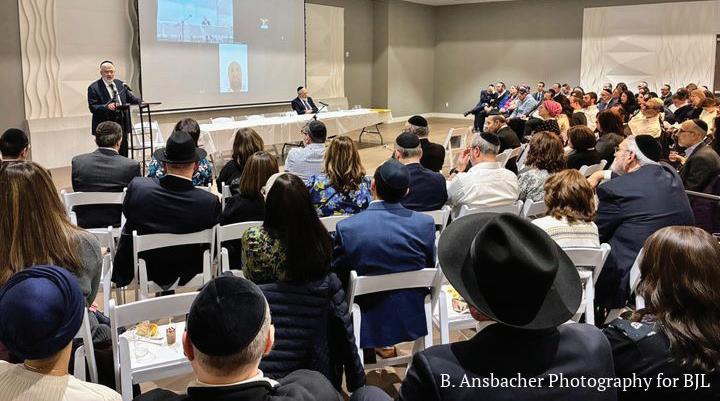
Dozens of families from across the Baltimore community attended a Naava Kodesh Melava Malka to hear and engage in a meaningful discussion about living in Eretz Yisrael.
The event took place in Ohel Moshe’s new hall and was co-hosted by three local kehillos: Congregations Ohel Moshe, Shomrei Emunah, and BJSZ
The evening was made possible through the generous sponsorship of The Dream Raffle, whose partnership enables Naava Kodesh to bring vital resources and open conversations to the Baltimore community about living in Eretz Yisrael.
The program offered both inspiration and a practical discussion focused on keeping Eretz Yisrael at the forefront of people’s minds and, ultimately, on meriting to one day live there.
Joining from Eretz Yisrael was renowned author and speaker Yonoson Rosenblum, who chaired the panel and spoke about the opportunity to effect positive change on Klal Yisrael by living in Eretz Yisrael. He spoke about the ability to build a meaningful life in Eretz Yisrael with chinuch and parnassah, emphasizing that while challenges exist, they are realistically manageable.
The chashuve panel was comprised of local rabbanim, including Rabbi Moshe Teichman of Ohel Moshe; and Rabbi Shmuel Kimche, Assistant Rabbi of Ohel Moshe. The panel discussed the importance of living in Eretz Yisrael and the ongoing aspiration to strive toward making that goal a reality.
The event highlighted a common drive and hope to live in Eretz Yisroel,’’It was encouraging to see how the pulsing of love for Eretz Yisroel flowed through the hearts of the large audience gathered at the Naava Kodesh event’’, Commented Rabbi Tzvi Teichman
There was a palpable sense of a common drive and hope to make the dream of Aliyah a reality.
Naava Kodesh presented an honest picture of both the challenges and joys of life in Artzeinu HaKedosha.’’
Rabbi Daniel Rose, Rav of Bnei Jacob Shaarei Zion, shared divrei chizuk, highlighting the deep yearning and chashivos of Eretz Yisrael, ‘’we yearn for Eretz Yisrael not because we are missing something in Baltimore or anywhere else, we yearn for Eretz Yisrael because that’s the place we want to be’’.
Also sharing Divrei chizuk was, Rabbi Binyomin Marwick, Rav of Shomrei Emunah, who noted the strong connection and aspiration Klal Yisrael has for Eretz Yisrael. ‘’We all have a connection to the land, that is where we all belong, that’s where the future is, the destiny of the Jewish people.…Your attitude is, when the right time comes I am going to be on that plane.’’
Joining virtually from Eretz Yisrael was Rav Eli Levy, Menahal of Yeshivas Yesodei Yisrael in Ramat Beit Shemesh, who himself recently made Aliyah from Baltimore. Rav Levy shared insights into day-to-day life in Israel and spoke about the new realities on the ground that are making living in Eretz Yisrael increasingly attainable for frum families. Rav Levy
By: BJLife Newsroom | Photos: B. Ansbacher Photography
highlighted that ‘’in the past, you had to fit in a specific “box”. Now, a s an American Oleh, you can grow close to Hashem in a way that is unique to Eretz Yisroel while maintaining your unique identity.’’
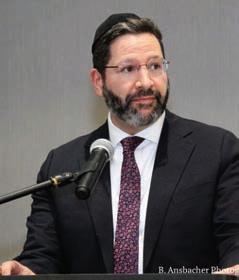
Dovid Paige, Director of the Naava Kodesh Baltimore Division, directed the evening, remarking:
“Gathering in a room of over 100 people focused on building their future in Eretz Yisroel was a powerful expression of the Baltimore community’s chashivus and deep yearning. We are already hearing thoughtful feedback from members of the kehila and Rabbanim, and I look forward
to continuing to work together with community members, leaders, and Rabbanim to help translate the vision into practical, actionable steps.”
Founder and Executive Director of Naava Kodesh, Tzvi Arnstein shared,
“When respected rabbanim and entire kehillos lend their voices to the conversation, it tells you something fundamental is changing. Aliyah is reaching new heights within the frum community, and the excitement we witnessed in Baltimore reflects a growing sense that this is our moment. It’s profoundly moving to see Am Yisroel taking real steps toward coming home to Eretz Yisroel.”
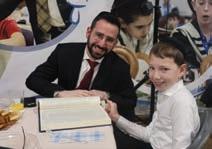
Mazel Tov TA 5th Grade On Their Haschalas Gemara!
WIN with !
Comfort Year-Round:
Save Big on Energy Costs:
Cut your heating and cooling bills by 30-50% and make your HVAC system work smarter, not harder.
Breathe Better:
Enjoy improved air quality with reduced drafts and outdoor pollutants, creating a healthier living environment.
BCL By Columbia Group Continues Its Season Into Week 3!
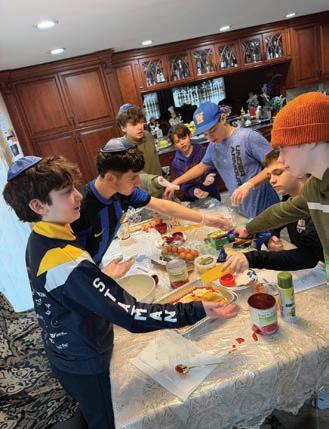
Week 3 of The Baltimore Chesed League was infused with the energy and excitement of Purim, as the boys channeled the spirit of the season into meaningful acts of chesed across the community. Teams packed mishloach for TI’s Purim project, baked more lasagnas for Jewish Caring Network,
and prepared desserts for Bikur Cholim, ensuring families facing challenges felt remembered and supported. Others rolled up their sleeves to clean and organize the pantry at Khal Bais Nosson and decorated Tikva House in vibrant Purim spirit.
In quiet but powerful acts of
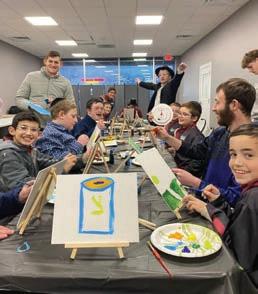
service, boys assisted Misaskim by removing siddurim and chairs from shiva homes, helping families during sensitive times with dignity and care. The week also included a meaningful paint night with members of YACHAD, fostering friendship and inclusion, as well as setting up a Purim event for Chai Lifeline to
Team Erez Seiferas spent the morning baking delicious lasagnas for Jewish Caring Network. Some snow in the forecast wasn’t going to keep these chefs from their holy work.
bring simcha to children who need it most. Through every project, the boys embraced the joy, responsibility, and unity that define this special season. Read on to see how these boys took Week 3 of Baltimore Chesed League and transformed the excitement of Purim into tangible acts of kindness that uplifted the entire community.
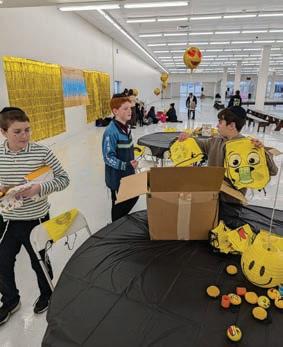
Team Kove went all out for the Chai Lifeline Purim Event, setting up over 30 tables with chairs, activities, and Purim decor, to hanging banners around the room.
Team Union Bridge Family Dentistry helped deliver Mishloach Manos to Friendship Circle families, dressed in full Purim costume to help spread the Adar cheer!
Team Kelemer Brothers Replacement Windows sorted and shelved books for the Jewish Library of Baltimore, the largest Jewish library in the US not connected to a shul or school!
learning about the critical role the Tikva House plays in the community
Team Kineged Glass Repair spent time with the boys of Yachad, sharing in a paint night and a delicious dinner together.
Team WesBanco brought energy to the Enclave, packing nearly 250 Mishloach Manos bags in an hour to support TI’s Purim Project.
Team Solomon Counseling helped sort Agudah scrip while learning the benefits it provides for our community.
Team Councilman “Yitzy” Schleifer completed a full circle chesed experience by baking and delivering two desserts for Bikur Cholim of Baltimore
Team Naomi Center visited, Sterling Care singing, dancing, performing magic tricks, and singing songs with the residents to provide some wonderful Purim spirit!
Team Heideman Design did a great job decorating the Tikva House for Purim, while
Team Sage Ventures spent nearly 2 hours setting up Chai Lifeline Purim Event to include tables and chairs, decor, running electricity, the inflatables, and more.
Team Stellar Scientific brightened up the day for the residents of Autumn Ridge at North Oaks.
Team AMP Solutions baked two delicious lasagnas to be delivered to families receiving support from the Jewish Caring Network.
Team Ivymount Clinic braved the rain and sleet and helped Misaskim remove siddurim and chairs from two shiva homes.
Baltimore OU Women’s Initiative Nach
Yomi Group
Celebrates Siyum
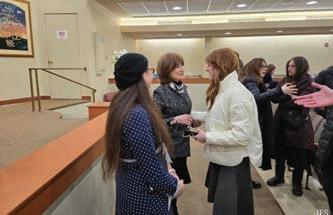
The Baltimore chapter of the OU Women’s Initiative Nach Yomi group celebrated its siyum, which marked the completion of the Nach Yomi cycle of 742 perakim in just over two years.
The event began with the showing of a welcome video from Rebbetzin Dr. Adina Shmidman, head of the OU’s Women’s Initiative. Bracha Poliakoff then delivered an engaging talk on Megillas Esther. This was followed by a fun chidon on Nach facts. The program concluded with a video message from Rabbi Moshe Hauer, zt”l, who spoke about the importance of Nach Yomi learning and the worldwide connection it creates among participants.
The Nach Yomi initiative takes place across the globe, with women learning the same perek each day, creating a shared learning experience across continents.
This cycle concluded on February 11, and the next cycle began on February 12. A beautiful buffet was jointly catered by Yesh and Market Maven.
Today’s attendees included (in alphabetical order): Chumie Azman, Sarah Barth, Elaine Bodenheimer, Adena Cohen, Chaya Sara Cohn, Sue Dickstein, Ruth Felder, Elizabeth Green, Esther Hollander, Kelila Horowitz, Sima Jacoby, Hayley Koteen-Lichterman, Alissa Kovacs, Tessa Lebinger, Rachel Lebowitz, Chaya Major, Shaina Margolese, Leeba Marks, Adina Michelsohn, Stefanie Olson, Tikvah Pickett, Bracha
Poliakoff, Laura Poliakoff, Risa Prince, Chani Retter, Esty Rosenfeld-Marks, Malka Rosinsky, Andrea Scott, Dvora Sherman, Meira Sperling, Marcy Steingroot, Allison Steinmetz, Tiffy Storch, Tova Taragin, Rina Walter, Sara Wetstein, Mary Jaine Winokur, Rochel Ziman, Susan Zwany
Special thanks and appreciation go to
for graciously providing the space and helping make this meaningful celebration possible.
Baltimore Women And Girls “Rise Together” At BGCubed Challah Bake
By:
Baltimore’s women and girls came together, for an unforgettable night of achdus and growth at BGCubed’s Rise Together Challah Bake. Mothers and daughters, sisters, neighbors, and friends filled the room — some families spanning three generations.
Each woman and girl was greeted by BGCubed’s “Challah Doctors” — incredible high school girls who helped every person find their seats, handed out pastries, and took pictures by the Rise Together backdrop. On every chair was a Rise Together apron, along with a few thoughtful giveaways waiting for them.
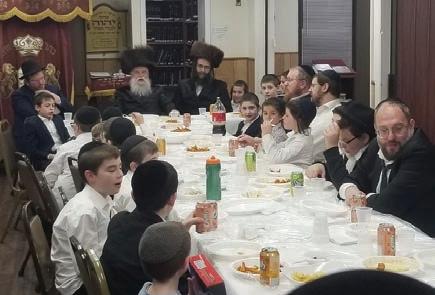
Khal Machzikei Torah held its annual Avos Ubonim Melavav Malka Siyum, capping off another great season of Motzai Shabbos learning and camaraderie. Close to 50 fathers and sons were treated to a delicious seudah and enjoyed a great story by Rabbi Yechezkel Yudkowsky of Sammy’s Adventures. Following Divrei Chizuk by the Rov, Rav Nesanel Kostolitz shlit”a, the evening ended with the Grand raffle and dancing.
The program opened with a moving video message from Mrs. Sova, followed by Tehillim led by Rebbetzin Hauer. A powerful video featuring Rebbetzin Hopfer, Rebbetzin Feldman, Rebbetzin Gross, and Rebbetzin Weiss brought depth and meaning to the mitzvah of challah, and each shared a heartfelt bracha for the 750 women and girls. Rebbetzin Hopfer and Rebbetzin Feldman both spoke about the special bracha that comes when Jewish women come together b’achdus.
After Mrs. Jackie Bitton encouraged everyone to truly “Rise Up,” gloves went on, challah was made, and the room was full of incredible
energy. They then segued into a meaningful kumzitz.
And then came the bracha.
Seven hundred and fifty women and girls answered Amen together. Right after, the room became completely silent for one full minute while everyone davened quietly. The intensity of those few minutes was very real.
The night ended with braiding challahs, dancing, and a surprise giveaway of chulent and potato kugel!
As women left, you could hear it over and over: “We’re leaving on a high.”
a night where Baltimore’s women and girls truly got to “Rise Together.”
BGCubed programs like Together, We Rise give Baltimore’s girls consistent opportunities to connect, learn, and grow in meaningful ways.
Thank you to Rabbi Akiva Slepoy who once again did a phenominal job organizing and arrranging Avos Ubonim this year.
Kehilas Shaarei Avodah (KSA)
Baruch Hashem, it was a night of achdus, of bracha, and of women and girls coming together in a meaningful way —
BJLife Newsroom
By: BJLife Newsroom
DON'T JUST ARRIVE AT THE SEDER; ARRIVE READY.
A Daily Dose of Preparation from Purim to Pesach
THIS UNIQUE TWO-IN-ONE SEFER FEATURES:
• The 30-Day Reader: Daily doses of emunah and bitachon relating to the Haggadah.
• The Full Haggadah: Profound commentary and stories to bring the Seder table to life.
Designed to help readers arrive at the Seder with a deeper sense of emunah and bitachon, Rabbi David Sutton, bestselling author of Beis HaLevi on Bitachon, A Daily Dose of Bitachon, and A Daily Dose of Preparation for Yamim Noraim, will transform your Pesach preparation into a meaningful journey that will culminate in a more focused and elevated Seder.
BRING GIANTS OF CHACHMEI LUBLIN TO YOUR SEDER TABLE
This beautifully crafted Haggadah brings the spirit and teachings of Chachmei Lublin to the Pesach Seder table. Rooted in the Torah and legacy of R’ Meir Shapiro — founder of Daf Yomi and Yeshivas Chachmei Lublin — it weaves together the divrei Torah, stories, and insights of the yeshiva’s leading figures, along with illuminating biographical sketches.
Featured personalities include:
• R’ Meir Shapiro
• R’ Aryeh Tzvi Frommer, the Kozhiglover Rav
• R’ Shimele Zelichover
• R’ Pinchas Hirschprung
• R’ Shmuel Wosner
• and others
SAKA FAMILY EDITION
DEDICATED
A Rabbi, A Psychologist, And An Educator Walk Into A Room And Talk About Raising Stronger Families
For The fifth annual Family First Lecture brought together Rabbi Yisroel Motzen, Dr. Tammy Mintz, and Dr. Zipora Schorr for a candid, thoughtful conversation to an audience that included parents and school leaders on how to raise emotionally healthy, resilient Jewish children today. Many attendees described the evening, hosted by Jewish Educational Services, as “refreshing,” noting how well the panelists complemented one another and how “relaxed, informative, and enjoyable” the conversation felt. Moderated by Rabbi Aaron Levitt, Executive Director of Jewish Educational Services, the program also honored the memory and enduring impact of Rebbetzin Dr. Aviva Weisbord, whose warmth, authenticity, and unwavering belief in people continue to guide JES’s work with children and families. Dr. Weisbord, remembered for her gentle wisdom, her ability to make every person feel seen, and her lifelong dedication to strengthening families and schools, embodied the very values the evening sought to elevate.
From the outset, the panelists returned repeatedly to a shared premise, emphasizing that children draw their sense of security from the steadiness of the adults around them. Dr. Schorr encouraged parents to cultivate homes marked by consistency, predictability, and stability, an antidote to the anxiety children inevitably absorb from a noisy world. She offered a simple but powerful practice, urging parents to pause and “take the temperature” of the home; if it feels frenetic, consciously lower it. Joy or simcha, she reminded the audience, is not superficial. It is the emotional tone that allows children to feel safe enough to grow. When calm rhythms shape daily life and gratitude is experienced, not merely spoken, children flourish.
Dr. Mintz approached resilience as both a deeply Jewish value and a developmental imperative. Drawing on decades of research, she highlighted the enduring strength of authoritative parenting, the balance of warmth with clear, consistent boundaries, over either harshness or permissiveness. Parents do “real good,” she noted, when they resist the instinct to solve
By: BJLife Newsroom
every problem and instead allow their children to encounter manageable struggle. In those carefully chosen moments of stepping back, children step forward, discovering their own capacity to handle hard things.
Rabbi Motzen connected these themes directly to Torah life. He explained that healthy education requires both structure and spirit, with clear rules and expectations providing stability and the emotional richness of Torah living that gives those rules meaning. He spoke about agency as one of the greatest gifts parents can offer, guiding children to respond to challenges with dignity and inner strength instead of rushing to fix every conflict for them. When boundaries are firm and love is unmistakably felt, children learn to take ownership of their growth. The personal stories he shared brought to life how Torah values play out in everyday parenting moments.
The panel also addressed a paradox familiar to many families: we tend to limit children’s physical independence while granting them wide latitude in the digital world. The speakers suggested that a healthier balance may look like the reverse, gradually expanding age-appropriate real-world independence while setting clearer and more consistent boundaries online. When children are trusted with supervised autonomy in their everyday lives and technology is approached with greater caution, they are better positioned to grow responsibly and safely.
When the conversation turned to school, the panel made a heartfelt case for partnership rather than polarization. Dr. Mintz urged parents to start from a place of trust, remembering that schools genuinely want what is best for each child, even when difficult feedback is shared. Dr. Schorr emphasized the importance of generous communication and the discipline to pause before forming conclusions, noting that a child’s first account is not always the full picture. When home and school stay aligned, sharing information openly and keeping the focus on growth instead of blame, children are the ones who benefit most.
To anchor the evening’s guidance, Rabbi Motzen shared what he called the three P’s, simple and memorable prompts for parents: pay attention, patience, and prayer. Paying attention means noticing small shifts and asking gentle, curious questions. Patience is the reminder that children’s brains are still developing and that one difficult week does not define a child’s future. Prayer reflects the humility to recognize what lies beyond our control and to hold our children in sincere tefillah. Together, these three practices offer parents a grounded and hopeful way to navigate the daily work of raising a child.
Closing the program, Rabbi Levitt shared a classic Talmudic story about a traveler who blesses a life-giving tree with a simple wish, that its offspring be like it. He offered that same blessing to the families in the room, expressing the hope that our children will grow to reflect
the best within us - our steadiness, our joy, our integrity, and the care we show in helping others feel seen. It was an apt tribute to Dr. Aviva Weisbord and a fitting distillation of the night’s message to create calmer homes, hold loving boundaries, model the Torah you want your children to love, and trust them enough to grow. One guest shared that the evening “was a wonderful tribute to Dr. Weisbord’s neshama and life.”
The evening was a testament of the deep value JES places on supporting families. Through our parent programming, monthly CHADD meetings, and upcoming events, like the parent lecture with Mariposa Education on March 9, JES strives to provide practical guidance and meaningful connection for every parent. For more information on how JES can help you, please reach out to Faye Friedman at ffriedman@jesbaltimore. org or call 410-843-7589.
Jewish learning that revolves around you
Meet OHRBIT, the AI companion that turns your curiosity into clarity. Explore any Jewish topic with confidence through a personalized learning path that is tailored to your interests and life.
Your Daily Feed:
Tell OHRBIT what inspires you and get a curated stream of videos, audio, and articles about philosophy, halacha, parsha, history, and more.
Your Personal AI:
Ask anything—from life’s big questions to help with a Dvar Torah for the family table. Get instant insights drawing from a library of 100,000+ trusted Torah sources.
Bonei Olam Of Greater Washington Hosts Annual Dinner
Almost a year to the day from the last annual Bonei Olam fundraising dinner, Bonei Olam of Greater Washington (Bonei Olam) hosted its annual dinner at the Kemp Mill Synagogue (KMS), “Joy That Builds Futures – Hope Today… Tomorrow A Child.” For those that do not know, Bonei Olam is an organization dedicated to providing funds for couples struggling with infertility and who need financial assistance to help pay for medical treatment. Over the past year, Bonei Olam funding provided to couples within the Greater Washington Jewish community led to 21 couples receiving counseling and guidance, 13 couples receiving treatment, and four babies being born.
The evening involved extensive behind the scenes planning and fundraising reach-outs, spearheaded almost entirely by Aliza Mervis over the past year via continual emails, calls, and texts, with buildup and planning for the event provided by the Lakewood Bonei Olam office. A virtual one-woman show with many a late night – a tremendous level of care and concern over nearly every aspect of the annual dinner.
ious meat carving stations, scrumptious fish tacos, and exquisite soups, among other delicacies.
But getting to the substance of the event itself, Chaim Lazarus did a masterful job blending humor and content as MC. He worked in tandem with Aliza Mervis, who introduced speakers and provided her own beautiful, extensive remarks as well around the fundraising phrase she frequently utilized when soliciting donors, “couples struggling with infertility.”
The event first featured divrei Torah and Bracha from Rabbi Brahm Weinberg. Through his deep remarks, Rabbi Weinberg explained that each of us have times where we feel fulfilled and times we’re not fulfilled; Rabbi Weinberg felt this viewpoint aligns well with the purpose for the evening – Bonei Olam is here to support individuals who have the highs and lows of pregnancy. Elation and despair. Circumstances may even change dayby-day or within the same day.
The first main speaker was Dr. Richie Broth, a maternal-fetal medicine specialist and obstetrician-gy-
Dr. Broth said people will sometimes say to someone experiencing miscarriage or a difficult pregnancy, “G-d doesn’t give anyone what he (or she) can’t handle.” What’s heard by the recipient, paraphrasing Dr. Broth, “Put on a happy face and deal with it. You shouldn’t be expressing pain and vulnerability because you are tailor made to handle this situation.”
The second main speaker was Jessica Levi, a mother of four, who expressed her personal story of infertility. Based on her personal experiences, Jessica said there’s nothing more important than what Bonei Olam is doing – they’re making it possible for couples to try, who don’t have the financial re-
sources that she was able to rely upon.
Coupled with Jessica’s personal remarks was a powerful video produced by Bonei Olam Chabad about a couple who experienced infertility and had to wait ten years to get pregnant. There were not many dry eyes in the room after viewing it.
The end of the fantastic evening ended with a raffle of various prizes that were donated to Bonei Olam to help with meeting the fundraising goal of $110,000 to support the $130,000 annual budget for the Greater Washington chapter. At the present time, a little more than $95,000 has been raised with more on the way!
Greater Washington: Around the Community
Kemp Mill Uncle Moishy Concert
Over 250 people gathered to “feel the simcha in the air” at The Learning Center preschool’s Uncle Moishy concert! The legacy continues as many parents were thrilled to bring their children to the very concert they themselves enjoyed in their youth. This concert was hosted by The Learning Center and located in Kemp Mill.
Some Recent Events At YISE
Rosh Chodesh Adar Pizza Party and Make Your Own Sundaes, Purim Costume Gemach, and Spaghetti family dinner!
Greater Washington Weekday Minyanim Guide
6:15 am Young Israel Shomrai Emunah M-F
6:25 am Southeast Hebrew Cong., Knesset Yehoshua M-F
6:30 am Beth Sholom Congregation M-F
Beit Halevi (Sfardi) M, T
Chabad of Silver Spring M-F
Ohev Shalom Talmud Torah OLNEY M-F
Young Israel Shomrai Emunah S YGW M, Th
6:35 am Ohr Hatorah M, Th
6:40 am YGW S, T, W, F
Magen David Sephardic Congregation M-Th
6:45 am Beit Halevi (Sfardi) S, T, W, F
Kemp Mill Synagogue M, Th
Ohr Hatorah T, W, F
Young Israel Shomrai Emunah M, Th
6:50 am Woodside Synagogue/Ahavas Torah M, Th Silver Spring Jewish Center M-F
Chabad of Upper Montgomery County M-F
6:55 am Young Israel Shomrai Emunah T, W, F
7:00 am Kemp Mill Synagogue T, W, F
Southeast Hebrew Cong., Knesset Yehoshua S Silver Spring Jewish Center S
Woodside Synagogue/Ahavas Torah T, W, F
Young Israel Ezras Israel of Potomac T, W, F
7:05 am Kesher Israel M, Th
7:15 am Kemp Mill Synagogue M, Th Kesher Israel T, W, F
Ohev Sholom Talmud Torah/The National Synagogue M-F
Ohr Hatorah S
7:30 am Chabad of DC M-F
Chabad of Potomac M-F JROC M-F
Kemp Mill Synagogue T, W, F
Southeast Hebrew Cong., Knesset Yehoshua M-F
Young Israel Shomrai Emunah S
Young Israel Shomrai Emunah (Sfardi) M-F
7:45 am YGW (Yeshiva Session Only) S-F
8:00 am Beth Sholom Congregation S
Kemp Mill Synagogue S
Kesher Israel S
Ohev Shalom Talmud Torah OLNEY S
Southeast Hebrew Cong., Knesset Yehoshua S
Chabad of Upper Montgomery County S Woodside Synagogue/Ahavas Torah S
8:00 am YGW (High School; School-Contingent) S-F
Young Israel Ezras Israel of Potomac S Young Israel Shomrai Emunah (Sfardi) S
8:05 am Ezras Israel Congregation of Rockville M, Th
8:15 am Ohr Hatorah S Ezras Israel Congregation of Rockville S, T, W, F
Kehilat Pardes / Berman Hebrew Academy S-F
Silver Spring Jewish Center M-F
8:30 am Chabad of DC S Chabad of Potomac S JROC S Ohev Sholom Talmud Torah/The National Synagogue S
Silver Spring Jewish Center S YGW (Summer Only) S-F
8:45 am Young Israel Shomrai Emunah S-F
9:00 am Chabad of Silver Spring S Kemp Mill Synagogue S
12:30 pm YGW S
1:00 pm Silver Spring Jewish Center S-F
2:10 pm YGW M, T, W
2:45 pm YGW S-Th
3:00 pm YGW Middle School School Days mincha
mincha/maariv
Before Shkiah (15-18 minutes), S-TH
Beit Halevi (Sfardi)
Beth Sholom Congregation
Chabad of Potomac
Chabad of Silver Spring
Chabad of Upper Montgomery County
Ezras Israel Congregation of Rockville (20 min before, S-F)
JROC
Kemp Mill Synagogue
Kesher Israel
Magen David Sephardic Congregation
Ohev Sholom Talmud Torah/The National Synagogue
Ohr Hatorah
Silver Spring Jewish Center
Southeast Hebrew Congregation
Woodside Synagogue/Ahavas Torah
Young Israel Ezras Israel of Potomac
Young Israel Shomrai Emunah (Asheknaz)
Young Israel Shomrai Emunah (Sefarhadi)
maariv
7:30
8:15
8:45
9:00
9:30
9:45
shacharis
613 Seconds with Rabbi Shimon Hirsch Menahel of Torah Institute of Baltimore
BJH: Torah Institute has officially launched its capital campaign under the banner “Invest in Baltimore.” As Menahel, how do you frame this moment?
Rabbi Shimon Hirsch: Achrayus.
RSH: The reality is that we are operating at full capacity every single day. Classrooms are filled to their limits. Our Bais Medrash, which should provide room for davening and learning, is housed in a temporary tent in the middle of the parking lot. Program space is tight. Areas meant to serve multiple purposes are doing exactly that, often simultaneously. Our rebbeim and teachers have shown remarkable dedication in maximizing what we have, but chinuch deserves more than makeshift solutions. A physical environment should elevate learning, not constrain it. We want our talmidim to feel that the space around them reflects the dignity and seriousness of Torah.
he is doing inside those walls is both honorable and important.
BJH: The campaign’s theme is “Invest in Baltimore.” Why emphasize the city rather than the school itself?
RSH: Because Torah Institute is not operating in isolation. We are part of the larger Baltimore Torah community. Our talmidim grow up here. When someone supports this campaign, they are investing in the Torah infrastructure of Baltimore itself. They are ensuring that this community remains vibrant, strong, and forward looking.
Baruch Hashem, our Cheder has experienced steady and meaningful growth over the past several years. Our rebbeim are inspiring, our talmidim are engaged, our limudei chol department is vibrant, and the energy in the building is palpable. Enrollment is strong. Growth like that is a bracha. When a school reaches the point where every classroom is full and every shared space is stretched, the question is no longer whether we expand. The question becomes how we do so responsibly and thoughtfully.
BJH: What are the concrete realities that made this campaign necessary?
BJH: In what ways will the new building change the day to day experience of a talmid?
RSH: Additional classrooms will allow for proper class sizes and more focused learning. Expanded Bais Medrash space will restore the sense of kavod and presence that davening and Torah learning deserves. There will be improved areas for both resource and recess. These are not luxuries. They are tools for chinuch. When a boy walks into a building that feels dignified, orderly, and thoughtfully designed, it communicates that what
BJH: How does this expansion align with the values that define Torah Institute?
RSH: Our values remain unchanged. We are committed to serious Torah learning, to close relationships between rebbe and talmid, and to nurturing each student according to his strengths. Expansion is not about becoming bigger for its own sake. It is about preserving quality while accommodating growth. We are planning carefully to ensure that the warmth, accessibility, and personal attention that characterize Torah Institute are not diluted but enhanced.
BJH: Capital campaigns can sometimes feel transactional. How do you hope the community views this effort?
RSH: I hope it is seen as a partnership. Chinuch is not the responsibility of a school alone. It belongs to parents, to alumni, to grandparents, and to every member of the community who values Torah. When the community comes together to build for Torah, it brings nachas ruach to Hakadosh Baruch Hu and it also sends a powerful message to our children. It tells them that their learning matters. It tells them that Torah stands at the center of our priorities. That message is as important as the building itself.
BJH: Looking ahead, what is your tefillah for the outcome of this campaign?
RSH: That it allows us to continue raising bnei Torah who carry themselves with yiras Shamayim, integrity, pride, and middos tovos. That when future generations walk through the doors of our school, they will benefit from the foresight and generosity of this moment. With siyata d’Shmaya and with the partnership of our community, we will b’ezras Hashem build an edifice that supports Torah in Baltimore for decades to come.
The Week In News
The Week In News
U.S. Wins Canada in Hockey
It was a game destined to be played under the shadow of politics, but in the end, fans mostly put aside the growing animosity between the Trump administration and Canada’s government to cheer on top-tier ice hockey at the Winter Olympics.
As the men’s squads from Canada
and the United States squared off for a gold medal at the Santa Giulia Arena in Milan on Sunday — with the United States winning in overtime, 2-1 — a tense atmosphere had mostly dissolved by the sportsmanly medal ceremony.
Canadian and American fans cheered players from both teams as they received their medals. There was no booing when the American national anthem played, unlike at the Four Nations tournament in Montreal a year ago.
Mike Sullivan, the U.S. team’s coach, said that President Donald Trump made a video call to the American players in the locker room after their victory to congratulate them. “He just spoke to the group expressing how proud he was,” said Sullivan, who is also coach of the New York Rangers in the National Hockey League.
Before the contest, the political undertones were unavoidable. Fans dressed in the red and white colors of Canada seemed to dominate the 14,000-seat arena, highlighting that the game meant even more than usual to the many Canadian fans who flew in for one of the marquee events of the Winter Olympics.
Magda Palczynska, who was raised in Wolfville, Nova Scotia, took a large gulp of air as she considered the significance of Sunday’s encounter.
“Let’s be honest, it’s a grudge match,” Palczynska said, her husband vigorously nodding in agreement. “Canadians feel insulted by who they thought were their allies. It’s a matter of pride.”
Inside the arena, spectators from both sides waved their flags, decked out in team gear. One American wore a hockey jersey with 1980 emblazoned across the front, reminding everyone of the last time the U.S. men’s team had won Olympic gold, its upset of the Soviet Union at the Winter Games in Lake Placid, New York.
That was perhaps the last time that ice hockey carried so much political significance. Canada last won the men’s gold in 2014. The U.S. women’s team won the gold medal against Canada on Thursday.
According to Oman’s foreign minister, Badr al-Busaidi, the United States and Iran are expected to engage in nuclear talks in Geneva on Thursday. The talks come amid rising tensions between Washington and Tehran. Last week’s round of indirect talks was also facilitated by Oman in Geneva.
In an interview, Abbas Araghchi, a senior Iranian diplomat, told CBS he plans to speak with U.S. envoy Steve Witkoff on Thursday. Araghchi added that he believes there is a “good chance” the two countries will resolve the nuclear issue diplomatically. In the meantime, the United States has been awaiting a proposed deal from Araghchi.
Araghchi said the talks would focus solely on Iran’s nuclear development, despite the United States and Israel seeking to include discussions of Tehran’s missile program and support for militant groups in the Middle East.
If diplomacy fails, President Donald Trump said last Friday, the United States is prepared to strike Iran.
Iranian President Masoud Pezeshkian wrote on social media that previous talks have led to “the exchange of practical proposals and yielded encouraging signals.” However, he added, Iran has “made all necessary preparations for any potential scenario.”
Among Washington’s reported demands is that Iran not possess nuclear weapons, build them, or enrich uranium. However, Araghchi said the United States has not demanded zero uranium enrichment.
He added that the goal of the talks is to ensure the Iranian nuclear program remains “peaceful forever,” with economic sanctions lifted in exchange for confidence-building measures.
The talks follow the 12-Day War in June, during which the United States and Israel struck Iranian nuclear sites. Since withdrawing from the 2015 nuclear deal in 2018, Trump has sought to negotiate a new agreement.
The negotiations come amid renewed protests in Iran. About six weeks ago, authorities launched a deadly crackdown that killed more than 7,000 people, including 214 government officials, according to the U.S.-based Human Rights Activists News Agency.
Russia Probes Telegram Founder
Russian authorities have launched a criminal investigation into Pavel Durov, accusing the founder of Telegram of “abetting terrorist activities,” in a move that could pave the way for the platform’s ban inside Russia.
Two major newspapers — the staterun Rossiyskaya Gazeta and Kremlin-aligned tabloid Komsomolskaya Pravda — published reports on Tuesday citing materials from Russia’s Federal Security Service, known as the FSB. The articles alleged that Telegram has become “a primary tool” for foreign intelligence agencies and the Ukrainian government to incite unrest and coordinate sabotage during what Moscow calls its “special military operation” in Ukraine.
Kremlin spokesperson Dmitry Peskov said authorities have documented “a large number of violations” by the platform and described Telegram management as unwilling to cooperate with regulators.
Andrey Svintsov, a member of Russia’s parliamentary committee on information policy, warned that if Telegram does not begin cooperating with authorities “within the next month or so,” it could be designated an extremist orga-
The Week In News
nization — a label that would effectively outlaw the app under Russian law.
The probe comes as Moscow intensifies pressure on foreign messaging services, steering users toward Max, a statebacked platform envisioned as Russia’s answer to China’s WeChat. Critics have described Max as a potential surveillance tool designed to centralize digital communications under tighter state control.
Durov founded Telegram in 2013, branding it as a privacy-focused alternative to state-influenced platforms. He left Russia in 2014 after claiming the Kremlin forced him to sell his stake in VK, the country’s largest social network. Now a citizen of France and the United Arab Emirates, Durov has also faced legal scrutiny abroad. French authorities arrested him in 2024 over allegations Telegram failed to adequately moderate illegal content; he has denied the claims. The case remains pending.
Telegram is deeply embedded in Russian daily life and widely used by military personnel in Ukraine. Even some pro-Kremlin military bloggers have criticized the government’s recent throttling of the app, calling it “almost the only means of communication in active troops.”
Russia previously attempted to block Telegram in 2018 after it refused to hand over encryption keys. That ban proved largely ineffective and was lifted in 2020.
Yoon Gets Life in Prison
Fourteen months after then-President Yoon Suk Yeol shocked South Korea by declaring martial law, he was convicted of leading an insurrection.
Although prosecutors sought the death penalty, Yoon was ultimately sentenced to life in prison. He can appeal the ruling but also faces several additional trials.
On the night of December 3, 2024, Yoon declared martial law, marking the first time in 44 years that South Korea had imposed such a decree. Six hours later, he rescinded the order, three hours after 190 lawmakers forced their way into the National Assembly and voted unanimously to lift martial law.
Eleven days later, lawmakers impeached him.
Under martial law, political activities and protests are banned, the media is
censored, and the military is authorized to make arrests without warrants.
Months before declaring martial law, Yoon’s party suffered heavy losses in elections, which he claimed were rigged. The Democratic Party and other opposition groups, which controlled the National Assembly, subsequently impeached senior cabinet members and stalled legislation. Yoon said he imposed martial law to restore order.
It took weeks for authorities to arrest Yoon after he resisted investigators’ summons. He denies any wrongdoing.
Pakistan Strikes Afghanistan
Over the weekend, Pakistan carried out multiple overnight air strikes on Afghanistan. The Taliban said that the strikes killed and wounded dozens of people.
According to Pakistan, the attacks targeted seven alleged militant camps and hideouts near the Pakistan-Afghanistan border. They had been launched after recent suicide bombings in Pakistan.
There is a 1,600-mile mountainous border between the two countries.
Afghanistan condemned the attacks, saying they targeted multiple civilian homes and a religious school in the civilian areas of Nangarhar and Paktika provinces.
The fresh strikes come after the two countries agreed to a ceasefire in October following deadly cross-border clashes, though subsequent fighting has taken place.
Pakistan’s Ministry of Information and Broadcasting denied targeting civilian areas, adding that the country had
carried out “intelligence based selective targeting of seven terrorist camps and hideouts.”
In a statement on X, it said the targets included members of the banned Tehreek-i-Taliban Pakistan, which the government refers to as “Fitna al Khawarij,” along with their affiliates and the Islamic State-Khorasan Province.
Pakistan has accused the Afghani Taliban of failing to take action against militants that targeted areas in Pakistan, including a recent attack on a Shia mosque in Islamabad this month, as well as other attacks that took place since Ramadan began last week in the north-western Khyber Pakhtunkhwa province.
In response to the air strikes, the Taliban’s defense ministry posted on X that the attacks were a “blatant violation of Afghanistan’s territorial integrity,” adding that they were a “clear breach of international law.”
“An appropriate and measured response will be taken at a suitable time,” the Taliban warned, adding that “attacks on civilian targets and religious institutions indicate the failure of Pakistan’s army in intelligence and security.”
The strikes come days after Saudi Arabia mediated the release of three Pakistani soldiers earlier this week, who were captured in Kabul during border clashes last October. Those clashes ended with a ceasefire after the worst fighting since the Taliban returned to power in 2021.
Panama Seizes Ports
Panama on Monday seized control of two major ports at the entrances to the Panama Canal, escalating a long-running legal and geopolitical dispute involving a Hong Kong-based operator and global powers.
The move came after Panama’s Supreme Court ruled in January that the concession granted to Panama Ports Company (PPC), a subsidiary of Hong Kong conglomerate CK Hutchison Holdings, was unconstitutional. The decision voided both the original 1997 contract and a 2021 extension, stripping the company of its legal authority to operate the Balboa and Cristóbal terminals at the Pacific and Atlantic gateways of the Panama Canal.
A decree issued on Monday authorized the Panama Maritime Authority to
occupy the ports for “reasons of urgent social interest.” The order covered all movable property tied to the terminals, including cranes, vehicles, computer systems and software.
In a statement, PPC said it ceased operations after government officials arrived at the facilities and warned of criminal prosecution if the company did not comply.
“The takeover of the ports by the Panamanian State is a culmination point of the unlawful campaign that the State launched a year ago targeting PPC, its investors and its concession contract,” the company said. PPC added that it has not received compensation for its decades of investment.
The dispute unfolds against the backdrop of growing tensions between Washington and Beijing. Last year, U.S. President Donald Trump accused China of “running the Panama Canal,” drawing Panama further into the rivalry between the two powers.
CK Hutchison had planned to sell the ports to a consortium that included U.S. investment firm BlackRock, but Chinese authorities intervened to halt the deal. Panama’s government has pledged to ensure uninterrupted port operations and protect jobs. It said APM Terminals, a subsidiary of Danish shipping giant A.P. Moller-Maersk, will temporarily manage the facilities while a new contract is awarded.
Meanwhile, CK Hutchison has initiated arbitration proceedings under the rules of the International Chamber of Commerce and has threatened legal action against APM Terminals if it assumes the concession. The Danish firm has said it is not a party to the dispute.
A Tragic Accident
Ori Mechtaiev, an 18-year-old Border Police trainee, was killed on Sunday when he was shot by a soldier at a home in central Israel, in what authorities are investigating as an accident.
The officer-in-training and several other friends had been playing with their weapons at a home in Azor, south of Tel Aviv, when one of the guns went off, according to Hebrew media reports.
The Week In News
The IDF Military Police detained two people involved in the incident, including a soldier. The suspected shooter serves in the Givati Brigade, Haaretz reported.
Mechtaiev, a resident of Azor, enlisted in the Border Police in November. Ori is the son of Ronen Mechtaiev, deputy chief of the Fire and Rescue Service.
“The Mechtaiev family has been connected for years to the Fire and Rescue Service. His grandfather was appointed as the commander of the Bat Yam [fire] station. And the two brothers of the deputy chief are appointed to senior positions in the service,” a statement from Fire and Rescue Service read.
The agency “shares in the deep mourning of the dear family, embraces them, and will continue to stand by them
always,” it continued.
In a similar incident in October, a Border Police officer was indicted on the charge of reckless homicide after fatally shooting a friend on the doorstep of his home in Kiryat Arba.
Highest Number of Cyberattacks
In 2025, Israel faced the highest number of geopolitically motivated cyberattacks in the world, with nearly one in eight such attacks targeting the Jewish state, according to a report released Thursday by Radware, an Israeli cybersecurity firm.
Israel accounted for 12.2% of geopolitically motivated cyberattacks. The United States ranked second at 9.4%, followed by Ukraine at 8.9%.
Last year, Israel experienced 1,881 unique attack claims — more than 300 above the previous year’s total.
The statistics highlight “the role of hacktivism as a proxy weapon in international conflicts, used to disrupt
the digital infrastructure of perceived state adversaries,” Radware said.
Hackers were largely motivated by Israel’s war against Hamas and the country’s 12-day war with Iran in June 2025.
Nearly 39% of all claimed attacks targeted government services.
Distributed Denial-of-Service (DDoS) attacks were increasingly aided by generative artificial intelligence tools.
“The threat landscape is evolving rapidly,” said Ron Meyran, Radware’s vice president of threat intelligence. “Attackers are now combining automation, artificial intelligence, and multi-vector strategies to disrupt operations at scale.”
The hacker groups that targeted Israel most frequently last year included Arabian Ghosts, a pro-Iranian group; Black Ember; Mr. Hamza, a pro-Palestinian group; and NoName057(16), a pro-Russian group.
“The data confirms that hacktivists prioritize countries with ongoing geopolitical conflicts, using DDoS attacks as a tool for political protest and nationalist signaling,” Radware said.
“Ideologically driven threat actors are running ongoing DDoS campaigns against government websites, critical infrastructure, and commercial companies, sometimes publicly claiming responsibility in real time through dedicated Telegram channels.”
Breakthrough in Schizophrenia Research
In a major breakthrough, Israeli researchers say they have developed an innovative deep-brain stimulation
The Week In News
technique aimed at treating patients with schizophrenia by restoring functions that govern movement, learning, and decision-making.
“The study proposes a new therapeutic direction, which may in the future expand treatment options for patients with schizophrenia who do not respond sufficiently to existing therapies,” said Dr. Nir Asch, 44, a physician and researcher in the psychiatric department at Rambam Health Care Campus in Haifa, who led the peer-reviewed study.
The research, published in the scientific journal Nature Communications, utilized computational modeling, data analysis, and machine learning. It was guided by Prof. Hagai Bergman, a Hebrew University neuroscientist, deep-brain stimulation (DBS) pioneer, and 2024 Israel Prize laureate.
“A problem we have with many psychiatric diseases is that we define them by the symptoms,” Asch said. “In our paper, we provide a clear theory about what is happening on a mechanistic level in the brain — and also a potential way to address it.”
Approximately 70,000 people in Israel live with schizophrenia — roughly one in 143 residents — according to the Israeli mental health organization Ozma.
“The World Health Organization estimates that 21 million people worldwide have schizophrenia,” Asch said. “About one-third are what we call treatment-resistant. This is a significant burden.”
Schizophrenia symptoms include hallucinations and delusions, disorganized thinking and speech, unusual behavior, social withdrawal, and impaired memory and attention.
According to Asch, patients experience “cognitive inflexibility,” meaning they struggle to update their internal models of reality even when circumstances change.
“Basically, the brain is a prediction
machine,” Asch explained. “It builds a model of the world and constantly updates it based on sensory input. Patients with schizophrenia can become stuck in their own model.”
The study focused on applying DBS to two female African green monkeys. Researchers first induced a schizophrenia-like psychotic state using phencyclidine, a drug known to produce similar symptoms. They then targeted the globus pallidus externus (GPe), a region of the brain involved in decision-making processes. After applying low-frequency electrical stimulation (13 Hz) to the GPe, the monkeys’ cognitive inflexibility was immediately reversed.
Researchers believe the therapy could eventually help humans experiencing cognitive inflexibility associated with schizophrenia.
Hamas Tightening Grip on Gaza
Hamas is strengthening its control over Gaza by appointing loyalists to senior government positions, resuming ministry and municipal operations, collecting taxes, and paying salaries, according to an assessment by the Israeli military and local sources. The move raises questions about the viability of U.S. President Donald Trump’s peace plan, which hinges on Hamas’s disarmament.
“Hamas is advancing steps on the ground meant to preserve its influence and grip in the Gaza Strip ‘from the bottom up’ by integrating its supporters into government offices, security apparatuses, and local authorities,” the Israeli military informed Prime Minister Benjamin Netanyahu late last month.
According to Palestinian sources, Hamas has appointed five district governors linked to its armed wing, the al-Qassam Brigades, and hired new senior officials in Gaza’s economy and interior ministries.
Ali Shaath, a former Palestinian Authority official leading the new U.S.-backed Palestinian technocratic committee governing Gaza, “may have the key to the car, and he may even be allowed to drive, but it is a Hamas car,”
Old School
The Week In News
a source told Reuters.
“Looking ahead, without Hamas disarmament and under the auspices of the technocratic committee, Hamas will succeed, in our view, in preserving influence and control in the Gaza Strip,” the Israel Defense Forces assessed.
Hamas rejected the claims, asserting that the appointments are temporary and intended to “prevent any administrative vacuum” while maintaining essential services until a new government is formed.
The National Committee for the Administration of Gaza (NCAG), a 15-member body positioned to govern the territory, has called on mediators to address the issue, stating it cannot function properly “without the full administrative, civilian, and police powers necessary to implement its mandate effectively.”
Documents suggest that Hamas is laying the groundwork for a parallel
technocratic leadership begins operating.
U.S. President Trump convened his Board of Peace in Washington last Thursday, securing $7 billion in international commitments to rebuild Gaza. Five participating countries have pledged troops to an International Stabilization Force expected to serve as Gaza’s peacekeeping body.
Although Hamas says it plans to transfer its records to the new committee, sources say the group has retained copies. Documents reportedly issued by Hamas leader Izz al-Din al-Haddad outline plans to transition commanders from the al-Qassam Brigades into civilian roles within the NCAG structure to coordinate with the incoming technocratic administration.
Knesset Axes Tax Exemption
Israelis to buy up to $150 of personal goods from overseas – including sites like Amazon and Temu – without incurring an additional 18% value-added tax. That amount was double the previous limit of $75. This week, the Knesset, by a vote of 59 to 25, axed the measure.
Now, the limit is back to $75.
Since the order went into effect a few months ago, it was hailed by the general public but had drawn sharp condemnation from local business owners who argued it would hobble their sales. They succeeded in garnering support from other members of the coalition, in particular from within Prime Minister Benjamin Netanyahu’s ruling Likud party.
“This activity is a death sentence for the business sector,” said Likud MK Eli Dalal, who opposed the measure, according to a Knesset readout. He said Israel’s high cost of living derives from housing, rent and food prices, which he says “unfortunately weren’t addressed over the last three
After the vote, Smotrich lashed out at the members of Prime Minister Benjamin Netanyahu’s right-wing coalition who tanked his measure, branding them as part of the “left” and accusing them of linking up with the opposition and working against the government. He vowed to issue another order in place of the one that was revoked.
“What happened tonight in the Knesset plenum was the joining of two forces: the communist faction, the economic left in Likud,” and coalition MKs who “just want to hurt Prime Minister Netanyahu,” Smotrich said.
“Israeli citizens will pay more,” he continued. “I’m not planning to give up. G-d willing, in the coming days, I will sign a new order, because I am determined, against the entire left, to prove that it can be inexpensive here.” It is highly unusual for the Knesset to overrule ministerial orders. The vote was a notable defeat for Smotrich and reflected divisions in the coalition during an election year.
Following the vote, Opposition
The Week In News
Leader Yair Lapid mocked the coalition for failing to maintain an order issued by one of its leading members.
“Netanyahu does not have a coalition and his government is crumbling,” Lapid wrote on social media. “He doesn’t even control his own party. He and Smotrich were once again degraded in the plenum. We will continue to fight in the Knesset against the worst government in the country’s history.”
The uproar surrounding the VAT order came alongside another controversial effort by Smotrich to lower the cost of living by eliminating tariffs on dairy products in order to import more of them. The dairy industry has reacted with fury to that effort, holding protests and staging a brief strike that led supermarkets to be devoid of milk for part of a day.
Man Killed
Breaching Mar-a-Lago
Authorities have identified the man shot and killed early Sunday morning after breaching the secure perimeter of President Donald Trump’s Mar-a-Lago estate as 21-year-old Austin Tucker Martin of Cameron, North Carolina.
The incident unfolded around 1:30 a.m. on February 22, when Mar-a-Lago security detected an unauthorized entry near the property’s north gate. According to law enforcement officials, Martin was seen carrying a shotgun and a fuel can as he attempted to make his way onto the resort grounds.
Palm Beach County Sheriff Ric Bradshaw said officers and Secret Service agents confronted Martin after he entered the restricted area. Authorities ordered him to drop the items he was carrying. Martin complied by placing the fuel canister on the ground, but when he raised the shotgun into a shooting position, agents and a sheriff’s deputy opened fire, fatally striking him at the scene. No law enforcement officers were injured.
President Trump was in the White House in Washington, D.C., during the incident.
Martin had been reported missing
by his family shortly before the breach. A missing persons alert was issued by the Moore County Sheriff’s Office as federal investigators began looking into the case.
Though law enforcement has not publicly confirmed a motive, investigators are examining his movements and personal history to better understand what led him to breach the President’s retreat. Some reports suggest Martin may have acquired the shotgun during his travel south from North Carolina.
Martin worked locally on golf course grounds and had interests that included sketching landscapes and donating at times to charity, according to relatives.
President Trump has faced multiple threats to his life, including two assassination attempts during the 2024 presidential campaign. Thomas Crooks, 20, shot Trump during a rally in Butler, Pennsylvania, in July 2024 when he clipped Trump’s ear before a Secret Service counter sniper fatally shot him. Ryan Wesley Routh was arrested after taking up a position with a rifle near Trump’s golf course in West Palm Beach, Florida, as Trump was playing in September 2024.
Storm Blankets Northeast
A powerful nor’easter that buried much of the Northeast under massive snowfall is being described by meteorologists as one of the strongest blizzards in at least a decade — and among the most intense ever recorded.
In some areas, snowfall approached or exceeded three feet as the storm rapidly intensified into what experts classify as a “bomb cyclone.” Rare features such as thundersnow and lightning were reported, underscoring the storm’s extraordinary strength. While the blizzard disrupted daily life for millions and created dangerous conditions along the Eastern Seaboard, meteorologists expressed awe at its near-perfect alignment of atmospheric forces.
The storm struck what experts call a meteorological “Goldilocks zone,” said
Owen Shieh, a warning coordination meteorologist at the National Weather Service’s Weather Prediction Center. Temperatures were just cold enough for precipitation to fall as heavy, wet snow, yet warm enough to retain moisture in the atmosphere — a balance that maximized snowfall totals.
The system also followed an ideal path along the coast. Had it moved farther inland, it would have lost energy from the warm Atlantic waters. Had it stayed farther offshore, much of the snow would have fallen harmlessly over the ocean, noted Jeff Masters of Yale Climate Connections.
Providence, Rhode Island, set an alltime snowfall record with 33.5 inches by midday Monday, surpassing the mark set in 1978, according to the National Weather Service. Warwick, Rhode Island, reported the highest total at 36.2 inches. At least 19 weather stations across five states measured two feet of snow or more, with Central Park recording over 19 inches.
Wind gusts reached 83 mph in Nantucket, Massachusetts, with hurricane-force winds observed on Cape Cod. The wet, dense snow increased the risk of heart attacks during shoveling, prompting officials to urge frequent breaks.
Veteran forecasters compared the blizzard to historic storms in 1961 and 2016. “It was just an amazing system,” said Louis Uccellini, meteorologist and former director of the U.S. National Weather Service.
Trump Sues JPMorgan
After President Donald Trump sued JPMorgan Chase Bank and its CEO, Jamie Dimon, alleging that the bank debanked him and his organization for political reasons, JPMorgan acknowledged that it had closed Trump’s accounts following the January 6, 2021, events.
In February 2021, the bank notified Trump and The Trump Organization that their accounts would be closed.
“JPMorgan Chase Bank, N.A. (‘we’)
has decided to close its banking relationship with The Trump Corporation and its affiliated entities,” read one letter dated February 19, 2021.
“We may determine that a client’s interests are no longer served by maintaining a relationship,” a separate letter to Trump stated the same day. “With that in mind, this letter is to respectfully inform you that we will need to end our current relationship.”
According to Dan Wilkening, chief administrative officer for global banking at JPMorgan, the bank assisted Trump and his company in transferring hundreds of millions of dollars to other institutions, giving him until April 19, 2021, to complete the transfers. However, Trump’s lawyers claimed that Bank of America prevented him from finalizing the transfer. Trump has since sued JPMorgan for $5 billion.
“JPMC’s unilateral decision came about as a result of political and social motivations, and JPMC’s unsubstantiated, ‘woke’ beliefs that it needed to distance itself from President Trump and his conservative political views,” Trump’s lawyers said. “In addition to the considerable financial and reputational harm that Plaintiffs and their affiliated entities suffered, JPMC’s reckless decision is leading a growing trend by financial institutions in the United States to cut off a consumer’s access to banking services if their political views contradict those of the financial institution.”
Banks are not required to provide a reason for closing a client’s accounts. However, Trump’s lawyers alleged that his accounts were blacklisted and “unlawfully closed due to political discrimination,” noting that Trump and his companies had transacted “hundreds of millions of dollars” through the bank.
About a year ago, Dimon, while testifying on Capitol Hill, rejected claims that JPMorgan engages in political debanking.
Weight Loss Meds Prices to Decrease
The blockbuster weight-loss and diabetes drugs that ignited America’s GLP1 boom are set to see significant price reductions.
Novo Nordisk announced it will lower the list prices of its top-selling medications — Ozempic, Wegovy and Rybel-
The Week In News
sus — to $675 for a one-month supply beginning January 1, 2027. Currently, the drugs carry list prices exceeding $1,000 per month, with Wegovy topping out at $1,349.
The company said the cuts are designed primarily to help insured patients whose out-of-pocket costs are tied to a drug’s list price. Those paying coinsurance — a percentage of the medication’s total cost — or enrolled in high-deductible health plans could see meaningful savings. Cash-paying customers, however, are unlikely to notice a difference.
“We think this addresses and responds to repeated calls for lower list prices on Capitol Hill and elsewhere, as well as the call for lower list prices from our patients who want access to these innovative medicines,” said Jamey Millar, Novo Nordisk’s president.
The move comes as Novo faces mounting competition from Eli Lilly, whose obesity drug Zepbound has rapidly gained market share. In late-stage trial results released February 23, Novo’s next-generation obesity treatment, CagriSema, showed a 23% average weight reduction over 84 weeks. That fell short of the 25.5% reduction seen with Lilly’s tirzepatide in a comparable study. Novo shares dropped 16% following the announcement.
Despite the setback, company executives said they remain confident that CagriSema could become a leading option if approved by the FDA, potentially by the end of 2026.
Cost remains a major barrier for many patients. A recent survey commissioned by Navitus Health Solutions found roughly 70% of GLP-1 users said price influenced their decision to start or continue treatment, with one in four paying more than $250 per prescription.
“Difficult tradeoffs exist for patients and plan sponsors alike,” said Sharon Faust, Navitus’ chief pharmacy officer.
Novo said announcing the changes well in advance will allow insurers and employers time to adjust coverage. The goal, Millar said, is to “improve the insurance-based traditional side of the market in terms of quality, access and affordability.”
As of late 2025, approximately 1 in 8 American adults (roughly 12–13%) reported taking a GLP-1 medication like Ozempic or Wegovy for weight loss or to manage chronic conditions.
Boston Globe Doesn’t Print
For the first time in its 153-year history, The Boston Globe wasn’t able to print its daily newspaper due to the record-setting snowstorm that blanketed Massachusetts.
Snow and winds prevented staff from safely getting to the Globe printing plant to print Tuesday’s paper, the newspaper said in an article on its website. Parts of Massachusetts’ Bristol County, where the Globe’s printing press in Taunton is located, recorded 32 inches of snow by Monday night, the National Weather Service said.
Readers are much less reliant on newsprint for their news in today’s internet age. A 2025 survey by the Pew Research Center found that only 7% of U.S. adults often got their news from printed newspapers or magazines. That’s compared to 56% who said they often got their news from a smartphone, computer or tablet.
Tuesday marks the first time Globe management has called off the newspaper’s daily production since its 1872 founding.
The Globe said it went to press during another record-setting blizzard nearly five decades ago, when it printed a few thousands copies of a February 7, 1978, edition. Despite being printed, only a few people picked up the paper because piles of snow prevented delivery trucks from getting farther than a mile or two from its building.
The Globe said print subscribers will get Tuesday’s paper delivered on Wednesday.
Trump’s Tariffs
After the Supreme Court ruled against President Donald Trump’s tariffs, the president remained defiant, imposing trade duties through other legal mechanisms.
On Friday, the Supreme Court struck down the trade measures Trump had implemented under the International Emergency Economic Powers Act (IEEPA). It remains unclear whether other countries will withdraw from previously negotiated agreements, though Trump has threatened to impose additional tar-
iffs on nations that back out of deals.
On Saturday, following the ruling, Trump invoked an emergency provision to impose a global 15% tariff. He had initially announced a 10% rate but raised it to 15% less than a day later. The provision, which has never previously been used in this manner, allows the president to impose across-the-board tariffs of up to 15% for 150 days, after which congressional approval is required to extend them. The tariffs were set to take effect February 24.
“I, as President of the United States of America, will be, effective immediately, raising the 10% Worldwide Tariff on Countries, many of which have been ‘ripping’ the U.S. off for decades, without retribution (until I came along!), to the fully allowed, and legally tested, 15% level,” Trump wrote on social media. “During the next short number of months, the Trump Administration will determine and issue the new and legally permissible Tariffs, which will continue our extraordinarily successful process of Making America Great Again — GREATER THAN EVER BEFORE!!!”
“Some of them stand, many of them stand, some of them won’t, and they’ll be replaced with other tariffs,” Trump said of the measures.
The administration is also expected to rely on other legal authorities, including Section 301 of the Trade Act of 1974, to impose tariffs on specific countries.
Although the new tariffs apply broadly, certain exemptions remain. Beef and other agricultural products are excluded. Separate national security tariffs continue to apply to goods such as foreign automobiles and steel.
Gold Gift
The city of Osaka in Japan just received an unusual gift: gold bars worth 560 million yen ($3.6 million).
The generous present came from an anonymous donor. But it also came with a specific request: that the money be used to fix the Japanese city’s dilapidated water pipes.
The gold bars weighing 21 kilograms (46 pounds) in total were given to the Osaka City Waterworks Bureau
in November by a donor who wants to help improve aging water pipes, Mayor Hideyuki Yokoyama told reporters last week.
“It’s a staggering amount, and I was speechless,” Yokoyama said. “Tackling aging water pipes requires a huge investment, and I cannot thank enough for the donation.”
Concern over the safety of Osaka’s waterworks systems grew after a massive sinkhole swallowed a truck and killed the driver last year. It was linked to a damaged sewer in Saitama, north of Tokyo. Osaka had 92 cases of water pipe leaks under city roads in the fiscal year ending March 2025, the city’s waterworks official Eiji Kotani said. Osaka is the country’s third-largest city, with a population of 2.8 million. It needs to renew a total of 160 miles of water pipes. Renewing a 1.2 mile segment of water pipes would cost about 500 million yen ($3.2 million), according to Kotani.
Sounds like a pipe dream.
Dog Days
The most accomplished athletes in the world pushed to the finish in the women’s team sprint heats last Wednesday at the Milan Cortina Olympics. But one participant hadn’t been training for the event.
Nazgul, a Czechoslovakian wolfdog, had darted onto the course and began to cross the finish line with the runners.
According to the Varesco family, which owns Nazgul, “He was crying this morning more than normal because he
By Baltimoreans for Baltimoreans
The Week In News
was seeing us leaving — and I think he just wanted to follow us. He always looks for people.”
But the owners weren’t near Nazgul when he made his surprise world-famous debut.
“We were on the train to Anterselva to watch the biathlon,” Alice Varesco recalled. ”We were three hours from home when friends started sending us videos. That was the panic moment. We realized we could not do anything.”
Some runners and spectators thought Nazgul was a wolf.
“I was like, ‘Am I hallucinating?’” Croatian skier Tena Hadzic said. “I don’t know what I should do, because maybe he could attack me, bite me.”
Alice said they were worried about their pet, who had escaped the house on his own. He had repeatedly hit the lever on the door, which allowed him to sneak out after the family had left.
“Concern, for sure,” Alice said of her first reaction when she saw her pet on the slopes. “It was with us the whole day actually. Even after they told us he was safe, we kept thinking about what could have gone wrong.”
Despite the four-legged competitor on the track, racers stayed focused. Officials restrained Nazgul after he crossed the fin-
ish line.
You know what they say: every dog has its day.
All Pies Lead to Rome
When in Rome, do what the Romans do. But when in Hungary…do what ancient Romans did?
That’s what Netherland Pizzeria in Budapest is doing. Founder Josep Zara and his team have created a limited-edition pie using only ingredients that would have been available in ancient Rome, long before what we know today as pizza ever existed.
“Curiosity drove us to ask what pizza might have been like long ago,” Zara said. “We went all the way back to the Roman Empire and wondered whether they even ate pizza at the time.”
It turns out that the ancient Romans did not eat pizza. Tomatoes arrived in Europe centuries later from the Americas, and mozzarella cheese was as yet unknown. Some histories have it that the discovery of mozzarella led directly to the invention of pizza in Naples in the 1700s. So perhaps their dream was a pie in the sky?
Years ago, Romans ate oven-baked flatbreads topped with herbs, cheeses and sauces, the direct ancestors of modern pizza, which were often sold in ancient Roman snack bars called thermopolia
In 2023, archaeologists uncovered a fresco in Pompeii depicting a focaccialike flatbread topped with what appear to be pomegranate seeds, dates, spices and a pesto-like spread. The image made headlines around the world, and piqued Zara’s pizza obsession.
“That made me very curious about what kind of flavor this food might have had,” he said. “That’s where we got the idea to create a pizza that people might have eaten in the Roman Empire, using only ingredients that were in wide use at the time.”
Zara began researching Roman culinary history.
“We sat down to imagine what we might be able to make using these ingredients, and without using things like to-
matoes and mozzarella,” Zara said. “We had to exclude all ingredients that originated from America.”
Head chef Gergely Bárdossy said the constraints forced the team into months of experimentation and a few false starts.
“We had to discard a couple ideas,” Bárdossy said. “The fact that there wasn’t infrastructure like a water system at the time of the Romans made things difficult for us, since more than 80% of pizza dough is water. We had to come up with something that would have worked before running water.”
Their solution included using fermented spinach juice to help the dough rise. Ancient grains such as einkorn and spelt, widely cultivated in Roman times, formed the base. The dough ended up slightly more dense than that of most modern pizzas.
The finished pie is topped with ingredients associated with Roman aristocratic cuisine, including epityrum, an olive paste, garum, a fermented fish sauce ubiquitous in Roman cooking, confit duck leg, toasted pine nuts, ricotta and a grape reduction.
Bárdossy noted, “While most people want more conventional pizza, it’s not for everyday eating. It’s something special.”
Neuberger, Quinn, Gielen, Rubin & Gibber One South Street, 27th Floor
Ner Israel Rabbinical
6:00
6:30
7:00
7:30
8:00
8:30
PM Agudath Israel of Baltimore
PM Agudath Israel of Baltimore
PM Agudath Israel of Baltimore
PM Agudath Israel of Baltimore
PM Agudath Israel of Baltimore
PM Agudath Israel of Baltimore
Khal Ahavas Yisroel/Tzemach Tzedek
7:05 AM Machzikei Torah (Sternhill's) M, TH
12:30 PM Agudath Israel of Baltimore (S-F)
12:50
PM One South Street, 27th Floor, Baltimore, MD 21202
Kol Torah
Derech Chaim
8:45
PM Darchei Tzedek
Ner Israel Rabbinical College (Mechina)
Park Heights Ave Ohr Yisroel - 2429 Lightfoot Dr Pikesville Jewish Congregation - 7644 Carla Rd Shearith Israel Congregation - 5835 Park Heights Ave Shomrei Emunah Congregation - 6221 Greenspring Ave
Shomrei Mishmeres
Torah Thought AI - Authentic Intelligence
By Rabbi Zvi Teichman
The reading this week of the second of the four parshiyos, Zachor, follows that of Shekalim, which was read two weeks ago.
On Zachor we read a passage at the end of Ki Seitzei, where the Torah outlines the command to remember what Amalek did to us yet when we first left Egypt, and the obligation to obliterate any memory of them.
The passage immediately preceding Zachor discusses the imperative to maintain honest and accurate weights — תולקשמ, and measures. The juxtaposition of these passages teaches us that if you use fraudulent measures and weights, you should be worried about provocation from the enemy. (י"שר)
Is this parallel coincidental? םילקש, the half-shekel coins we are obligated to give, is read about prior to the portion of Zachor, just as the paragraph that deals with תולקשמ, weights, comes right before the command of Zachor. These coins are called shekalim, rooted in the word לקש, because of the requisite לקשמ, weight, of silver contained within them.
Why is this sin of dishonesty in weights specifically the one transgression that spurs the provocations of Amalek against us?
Weights are instruments that are used to measure the properties of many items and their true value. Cheating with one’s weights and utilizing the very item that is to be yardstick for authenticity in deceiving others, is not simply a violation of another’s monetary rights by stealing from them, it is the very negation of our very essence, of who we are — representatives of truth and all that is genuine and real.
Amalek is the nation that stands for nothing and has no identity or set of truths they live by. They merely seek to exist without any need for definition. They are the antagonists of those who claim to live by a higher reality that grants them authenticity.
When they attacked us in the desert after the death of Aharon we are taught they disguised themselves as Canaanites by speaking in the language of Canaan, in order to delude us into praying to save us from the Canaanites, when indeed they were Amalekites, foiling the efficacy of our prayers.
Why didn’t they disguise themselves more effectively by also wearing Canaanite clothing?
The holy Reb Yitzchok of Vurka answers that if the vacuous nation of Amalek, who stands for nothing and are merely identified by their externals affects, were to don Canaanite garb they would de facto become Canaanites!
The moment we lose our allegiance to ‘truth’, we become susceptible to their provocations.
It is fascinating that Amalek is symbolized, not by a drive to overtake our land, nor by an ambition to strut its might, but simply by its desire for ‘provocation’. They just want to disturb our universe, our claim to an authentic and meaningful life we allege can only be achieved when we stick to the truth, we know to be the ‘ultimate’ one.
Their mission is to attempt in shaking our beliefs in ourselves and the special role we play. At every juncture where we seem to be living peacefully, they rear their heads in
disturbing that confidence. Whether after we left on a high at the exodus from Egypt, or in the desert where we lived securely under the protective Clouds of Glory, or in the days of Haman when we thought we had an unassailable and respected position within Persian society, Amalek ‘provokes’ us in declaiming our unique relationship with the ‘truth’.
In our role as Hashem’s chosen, even in the absence of a physical Amalek, we are plagued by the invisible forces of Amalek — the circumstances of our life that often challenge our premises of comfort, direction and purpose that we take for granted.
We must constantly be vigilant in ‘weighing’ accurately our choices in life against the backdrop of our beliefs, our teachings, and our confidence in the missions we each strive to.
When we maintain precise ‘weights’, seeking the Torah’s truth, as best as we understand it, with honesty, absent of bias and ulterior motives, that is when the negative influences of Amalek will be quelled.
My dear friend, Dr. Edo Lavi shared with me a personal story with a vital lesson he learned from a non-Jew.
During his years at Orthodontic school he befriended a non-Jewish colleague, T.J., who shared many of his values. They often shunned the social get-togethers of the other classmates that many a time crossed the lines of their comfort zones. A mutual admiration and friendship developed.
Years later Dr. Lavi and his family made Aliyah. Edo proudly shared the actualization of this
lifelong dream with T.J. In a bittersweet farewell T.J. expressed awe and admiration for his dear friend’s estimable undertaking, wishing him only the best.
They maintained their friendship over the years that Ido and his family were living in Israel and T.J. even visited with them twice, with T.J. often expressing his esteem for his pal’s courageous decision and great merit to live in the ‘Holy Land’.
Seventeen very successful years later circumstances warranted the Lavi family’s relocation back to the States.
Edo, somewhat sheepishly, informed his buddy of the unhappy ‘ending’ to his big dream.
T.J. sensed Edo’s embarrassing confession. He then told him something that would change his perspective one hundred and eighty degrees.
Firmly looking Ido squarely in the eyes, he said, “There is no need for apologies or shame. The same determination and pursuit of truth that lead you to your decision seventeen years ago, is what drove you even more so in your decision to return. One who pursues what he believes in, deliberating and ‘weighing’ his decision in the light of the honest and unbiased truth of the Torah and G-d you believe in, is the very same hero in my eyes as you were those many years ago!”
When we falter, Amalek and its minions ‘provoke’ us. But when we seek the truth, the whole truth and nothing but the truth, we will finally eradicate Amalek once and for all.
You may reach the author at: Ravzt@ ohelmoshebaltimore.com
OVERVIEW
The parsha begins with the discussion of the oil for the Menorah and then digresses to discuss the appointment of the Kohanim and their special garments that were required to be donned for the priestly service. At the end of the parsha, the Torah discusses the golden incense altar, the Mizbeach Ha”ketores.
Quotable Quote “ ”
“Words that come from the heart enter the heart”
TSorahparks
-Alshich HaKadosh
GEMATRIA
Moshe Rabbeinu’s name is not mentioned in this week’s parsha. The Vilna Gaon points out that Moshe said ךרפסמ אנ ינחמ (mecheini na m’sifricha), which means: erase me from your sefer. The word ךרפסמ can be understood as כ רפסמ, the 20 book. If you count 20 books (parshios) from the beginning of the Torah, you land on Parshas Tetzaveh. Indeed, Moshe’s name is left out of the parsha!
th
QUICK VORT
The parsha begins with the words התאו הוצת - and YOU shall command. Several of the commentaries are bothered why the word התאו - "and you" - is necessary. The Torah could have just said, “Command the Jewish people.” Why “and you shall command”?
Perhaps the Torah is teaching us a great insight for our holy service of Hashem. There are people who serve Hashem and do the mitzvos; they go through the mot ions. They check off the list.
They learn, daven, perform acts of kindness, and so on.
But it's entirely possible to go through the motions, yet not live with emotions. It is possible that the most important element - the presence of YOU - is simply not involved.
We are being taught about always making sure you are there and present. Be mindful. Live in the moment.
Words - 1412 PARSHA STATS
Pesukim - 101
Letters - 5429
Mitzvos - 7
ThoughtsChassidus in
Reb Nosson, in Likutei Halachos (Birchas HaShachar 5), says that the soul of a person is the aspect of ratzon (will). This ratzon that resides deep inside every one of us, burns with a passionate fire towards Hashem, and through this fire/light, the physical darkness of this world becomes illuminated.
Did You
Know?!
The parsha does not mention the name of Moshe, rather it says: הוצת
- and you shall command. The Nachal Kedumin says this is because Moshe "cursed" himself by saying “erase me from Your sefer.” We learn about the importance of not "cursing" oneself. Of course, we should not speak negatively of others, but we learn from here about not talking negatively even about yourself.
PointsPonder to
Rabbi Ori Strum is the author of “Ready. Set. Grow.” “Dove Tales,” “Karpas: The Big Dipper,“ and “VEYIDGU: The Upstream Jew.”
His shiurim and other Jewish content can be found on Torah Anytime and Meaningful Minute. He may be reached at 443-938-0822 or rabbistrumo@gmail.com
Be part of things you are doing!
R’ Eyebeshitz asks: The garments of the kohen were measured to fit him, prior to his actual anointment. Upon being anointed, he would physically grow in size. If so, how did the garments fit, if in the future, he would grow?
Dear Yid! I am thrilled to announce that my new book, VEYIDGU: The Upstream Jew, is now available on Amazon. The book explores the fascinating connection between Yidden, fish, and Purim! Scan the QR code!!
Inspiration. Everywhere.
Parshas Tetzaveh
Political Crossfire Ukraine Has Passed a Point of No Return
By M. Gessen
Hundreds gathered over the weekend to socialize and party on the frozen Dnieper River
KYIV, Ukraine — In the middle of the last Saturday of January, hundreds of people congregated on the frozen Dnieper River for a rave. Under the high noon sun, the world was white: the tall apartment blocks lining the riverbank, the unplowed boardwalk and the flat, snow-covered expanse of ice. With a citywide curfew in effect, parties in Kyiv have long moved to daytime hours, and with much of the city lacking light and heat, it makes sense to gather outdoors. So adults of different ages, dressed in puffy coats of every color, baggy designer sweatpants and chunky Uggs, had gathered, though there wasn’t much dancing, perhaps because the battery-powered speakers weren’t quite strong enough to blast music through the open air. There was, however, much mingling, some barbecuing, a lot of mulled wine and at least one book burning, of a Russian-language young-adult novel. Kids in snow pants slid down the steep,
iced-over bank of the river; when they skidded across the ice, they knocked over a few adults.
After the music ended, as scheduled, at 3 p.m., many of the revelers poured into a cafe overlooking the river. It was a quintessential Kyiv scene: exaggeratedly large wineglasses on sturdy wooden tables, a seafood bar, a display of bottles — impeccable style and a commitment to enjoyment as resistance to the Russian onslaught. But a few minutes after the influx of customers, a waitress announced: “We have no water. I won’t be taking orders.” Seconds later, the electricity went off, taking the music and the lights with it and turning the oyster display cases into dark gray boxes. Most of the customers left. The servers vanished, too, leaving dirty dishes on many tables. The cafe looked like a movie set after the director shouts “Cut!” and the actors and crew disperse, exhausted.
Kyiv is tired. For most of the four years
since Russia began its full-scale invasion of Ukraine, the capital city has insisted on maintaining or restoring its usual vibrant urban life. Theaters have been operating, as have art galleries and museums (although permanent collections have been stowed away in safe locations); universities and secondary schools have continued in-person instruction; electric bikes and scooters have been well maintained; the metro has kept running; and the railroad has served the city like clockwork. The railroad in particular has become a symbol of Ukrainian nezlamnist — invincibility or, literally, unbreakability.
But with Russia’s attacks on Ukrainian energy infrastructure leaving people without light and heat for weeks on end, living a normal life has become untenable. It is probably fair to say that there isn’t a place or a person left in Ukraine who can forget about the war for even a few minutes.
People still try — not to forget, but to
continue living the best possible life every minute. After a short while, the servers at the riverbank cafe returned and cleared the tables. New customers came in. Someone restarted the generator, bringing the lights and the music back. Without running water, the place couldn’t serve food, but there could still be — and there was — drinking. Soon, the sun went down, and the giant apartment blocks dissolved into the dark sky. Only a few windows flickered dimly, perhaps with the light of candles, oil lamps or a few battery-powered fixtures.
Feb. 24 marks the fourth anniversary of the full-scale invasion. Four years is a particularly significant milestone for people who, like me, grew up in the Soviet Union, in the eternal shadow of World War II, because four years was the duration of the fight against the Nazis. The number was seared into our minds. Four years in which the Soviets fought what
they called the Great Patriotic War. Four years that created the country we lived in — its superpower status, its claim to world moral superiority. Four years of death, displacement, of tens of millions of people being called upon to sacrifice for their country’s war effort. The slogan of those years was “Everything for victory.”
Mila Teshaieva, the photographer I worked with on this story, and I were both raised (she in Kyiv, I in Moscow) by parents who were born during that war. For us and so many people of our generation, the war explained why our grandfathers were absent, our grandmothers hoarded odd objects, our parents had fraught relationships to food, and all of our family members seemed at all times to be in a state of hypervigilance. Most of all, the war explained why none of the plans our grandparents had made for their future ever came true. In our generation, the future, as a category, continued to be suspect.
Growing up, I never questioned the heroism and special status of Soviet society. It was only as an adult that I came to understand that the war, which ended 22 years before I was born, had recast public morality, valorizing single-minded commitment and self-sacrifice above all else — above happiness, human connection, creativity, freedom.
Many Ukrainians — even those born after the country gained independence from Moscow’s rule in 1991 — grew up with much of the same mythology of the Great Patriotic War. Ukraine, which was under German occupation for most of that war, lost some 10 million people. Mila’s surviving grandparents, like mine, celebrated every anniversary of that war’s end but almost never talked about what they had experienced. After the war, the Soviet authorities sent thousands of Ukrainians to the gulag for suspected collaboration with the Germans — in many cases, as what amounted to punishment for surviving the occupation. Ukrainians never forgot that injury. Both of those World War II stories — of the heroism of Ukrainians and of the cruelty of Moscow — inform the way Ukrainians think about the war they are fighting now.
Newer works of history reframe the period as two sides of a coin: German and Soviet occupations of Ukraine, two empires that aimed to enslave Ukrainians — Germany during World War II, the Soviet Union before and after. And yet, the number four has continued to loom large in collective memory. Now Ukraine’s patriotic war, against Russia, has crossed that threshold, with no end in sight. Rus-
sia’s offensive appeared to speed up in December. In February, Ukraine recaptured ground, in its most successful counteroffensive in more than two years. But on the whole, the front line has remained largely static for more than three years. Russia’s apparently overwhelming superiority in manpower and military resources didn’t bring about a swift victory, but neither have the resolve of the Ukrainian people and the Western aid they have received proved enough to stop Russia’s aggression.
Whatever lies ahead feels as if it will last forever. Ukrainians have organized their lives accordingly. They are living this war in their work, their social lives, their waking and sleeping hours. It is a fundamental orientation of time, values and social relations that will define many future generations of Ukrainian life.
By any measure, Ukraine is a profoundly different country now than it was four years ago. At the start of the full-scale invasion, excluding regions that were already occupied by Russia, it had a population of perhaps 36 million people, according Tymofii Brik, a sociologist and the rector of the Kyiv School of Economics. (Other estimates tend to be higher.) Since then, Brik says, 6 million have been displaced inside the country and some 4 million — mostly women and
ern Europe have adapted to their new homes and to the separation from those they left behind.
“What kind of relationship can we have, with them over there and me back here?” Taras Viazovchenko said when I asked him about the state of his marriage. He got his wife and two children out of Irpin, one of the Kyiv suburbs then under Russian occupation, on March 3, 2022. The wife and kids live in Switzerland now. He has visited once. “She’s built a life there,” he said. “The kids speak French to each other, and I don’t understand.”
Like many Ukrainians who remained in the country, Viazovchenko has lived several different lives in the past four years — lives that he has shared with his parents and some of his friends, but not with his wife and kids. Before the full-scale invasion, Viazovchenko was a yoga instructor and a member of the Irpin City Council, a position he still holds. During the weeks in
azovchenko couldn’t sleep. He couldn’t think of anything else. He kept unzipping the black bags in which the bodies were kept — or what remained of them after several months in morgues that didn’t consistently have electricity.
It is probably fair to say that there isn’t a place or a person left in Ukraine who can forget about the war for even a few minutes.
children — have left Ukraine. More than 100,000 Ukrainians, troops and civilians, are estimated to have been killed. Millions of people live under occupation in areas Russia controls.
When people were fleeing the Russian offensive in the winter of 2022, squeezing onto overcrowded train cars headed west, few imagined that the war would go on for a long time. Either Russia’s tremendous military might or the West’s firm resolve would dictate a fast resolution, it seemed. But four years after that — and 13 months into the presidency of Donald Trump, who promised to bring the war to an end within 24 hours of his inauguration — there is no safe home for Ukrainian war refugees to return to. And there is less and less reason even to think about it: The people who stayed in West-
2022 when part of Irpin was occupied, he spent every day helping people escape the town. When Russian troops retreated from the Kyiv region, Viazovchenko joined the effort to identify the bodies of people killed in Irpin and neighboring Bucha, which has become synonymous with Russian war crimes.
People killed during the occupation had been buried in private yards, in group graves, in town parks, often after their bodies were left for days wherever the killing had occurred. Viazovchenko and others exhumed the bodies, interviewed loved ones and witnesses, and tried to match remains to descriptions. After several months of this work, Viazovchenko became obsessed. He and his colleagues had been able to identify more than 400 bodies, but several dozen remained. Vi-
It took the intervention of visiting mental health professionals for Viazovchenko to get help. He worked on setting up therapy centers for survivors of Russian aggression in different parts of Ukraine. And then last year, at the age of 46, he enlisted. He thinks that everyone should.
To be clear, not everyone agrees. After an initial wave of volunteers immediately after the full-scale invasion, the Ukrainian armed forces have struggled to conscript enough people. People who enlisted four years ago and who are still physically able to serve have been unable to leave the service. Meanwhile, enlistment officers stage daily raids in Ukrainian cities, apprehending potential conscripts and delivering them to military bases. Some escape. At the same time, on this visit in particular, I heard many stories of people who either chose to enlist or submitted to a conscription raid and found peace in the service — and in no longer trying to evade it. Viazovchenko thinks this is as it should be, and that those who cannot serve at the front should join the war effort in the rear. He complained that after several years of pooling money for the war effort, parents’ groups have resumed collections for gifts and flowers for teachers.
Taras Vyazovchenko
That strikes him as frivolous, as does any pretense of peacetime life. As an example of proper, realistic adjustment, he cited the schools of Kharkiv, many of which have permanently moved to underground bunkers.
Underground schools have become symbols of Ukrainian unbreakability, along with warming tents set up in the shadow of unheated high rises. I visited the Kyiv School of Economics, a small, ambitious private university that has managed to draw some outstanding academic talent from both Ukraine and the West. Brik, the rector, excitedly led me to the basement, where the university has created several classrooms, complete with whiteboards. The school schedules only as many classes as can simultaneously convene in the bunker, so that whenever the air-raid alarm sounds, as it does on most days, classes can move down below. Then Brik showed me something else he was proud of: a classroom equipped for a vocational training program, this one in soldering — a skill newly in demand in the growing drone industry.
Most recently, Brik told me, the university had moved dozens of students out of apartment buildings that had lost power and heat and into hotel rooms. I wondered what, with his ingenuity and energy, he would be capable of in peacetime. Russia’s war — a war for the return to an imperial past — has always been a war against Ukraine’s future.
“I imagine that if there were no war, I’d get another Ph.D., in neurobiology,” another acquaintance, Lena Samoilenko, told me. Her first doctorate is in mathematics (multidimensional spaces, to be exact). She got it before Russia annexed Crimea and Russian-backed forces occupied the small town in the east where she’d grown up. When that phase of the war began, in 2014, Samoilenko was 28 and living in Kyiv. She started volunteering, helping some people to escape the Russians and others to survive under occupation. She spent many years organizing aid and reporting about the war — and then it came to Kyiv.
“It’s Groundhog Day every day,” she said. “You had your ear to the ground every day, listening for tanks.”
It was only later that night that I realized that it was, in fact, Groundhog Day, Feb. 2. It was also four years to the day since I first wrote about Samoilenko. Back then, I had come to Kyiv — a city I had often visited — to cover its preparations for the Russian invasion. I had sought out Samoilenko because she had written
a Facebook post decrying the idea that anyone can adequately prepare for war. While most people she knew were packing go-bags and laying in supplies to survive a short-term crisis, Samoilenko was girding herself and her family for a more fundamental change.
In 2022, Samoilenko started to help out in Kherson, a port city in southern Ukraine that spent more than six months under occupation. After Russian troops retreated, remaining residents — a disproportionate number of them poor, older, disabled — needed basic supplies, medicine and care. Samoilenko raised money, recruited volunteers, bought a car and set up shop in a working-class neighborhood of the city. In June 2023, Russian forces apparently blew up the nearby Kakhovka dam, unleashing a deadly flood, which created even more need for Samoilenko’s work.
Meanwhile, her marriage ended, and her ex-husband, a poet and musician, joined the military. “Even if he hadn’t joined up, he might have met a[nother] woman,” Samoilenko said. It’s just that the war has been going on for a long time — long enough for people to fall in and out of love, among other things.
It’s been going on so long that the war itself has changed in profound ways. It started with bomber planes and tanks, but it is continuing primarily with drones — and the drone technology keeps chang-
youth in a dimly lit office space with people I wouldn’t ordinarily choose to socialize with.” Like other service members, Samoilenko can’t tell me exactly what she does, but she is based in Kyiv, a couple of hundred miles from the active fighting, which means that she doesn’t get supplemental frontline pay. From her old life, she still has her remote jobs as a consultant, which allow her to rent an apartment near her base, and some floorlength velvet dresses that she keeps in a closet there as something like a talisman. Someday, she hopes to wear them again, to travel and to walk by the sea — those are the things she needs to feel happy.
ing. Military personnel have had to train and retrain. So have journalists. On a Sunday afternoon, Mila and I attended a training session for journalists at a former Soviet Young Pioneer camp outside Kyiv. A group of people who became war correspondents four years ago — before that, many of them wrote about politics or social issues, or produced movies — were learning how to detect and avoid drones. They looked for cover, pursued by the devices’ beehive-like hum, but how can you dodge weapons that are capable of turning corners, hovering in wait, and going into open doors and windows? At one point, a journalist dropped to her knees in the snow and yelled: “That’s it! I’m [done].”
The drones made it harder for Samoilenko to continue working in Kherson. She could no longer use the car, because drones would follow the few vehicles traveling the city’s largely deserted back roads, and the distances she needed to cover were too great to travel by foot regularly. So she, too, joined the military. The day we met up, she had been promoted to staff sergeant. “Let’s drink to that,” she said, in a way that made it clear this wasn’t a milestone she’d ever hoped to celebrate.
In her past life, Samoilenko was a prominent figure in Kyiv’s cultural scene. She organized a poetry festival, and she loved to dress up for events. “And I’m spending the last years of my
While we talked, Ukrainian, American and Russian representatives continued their endless negotiations — negotiations about negotiations that, Trump kept promising, would bring an end to the war. Meanwhile, 2025 had been the deadliest year for civilians since the war started. The Americans said that Russia had agreed to stop hitting Ukrainian energy infrastructure, for a week. The agreement didn’t hold. “It’s been so cold for the last month that you keep feeling that it must warm up soon,” Samoilenko said. “But there is still February, and March in Kyiv is cold too. There is no reason to think that it will get warmer. And nothing gets easier, even though we’ve been through so much.” Even the catastrophic early days of the full-scale invasion felt more hopeful, she said.
The way we think about the future is also, usually, the way we think about the past. The inescapable sense that this war is forever has compelled Ukrainians to reframe their history — including the history of World War II — as one of eternal war against Russia. I saw and heard this narrative seemingly everywhere on this visit, including in Independence Square in the center of Kyiv, long a site of memorials both permanent and makeshift. For years, these were memorials to revolutions, particularly those of the Orange Revolution of 2004 and the Revolution of Dignity in 2014, for which the square served as the main stage.
But the memorials currently on display in the square tell a different story: There is an exhibit devoted to the 1991 protests against the Soviet regime, now reframed as a revolt against Russian imperialism; a permanent memorial to the people who died in 2014, both during the revolution and in the war in the east; and a growing memorial to Ukrainian fighters who have died since 2022, each of them marked with a small Ukrainian flag.
A funeral for a soldier, which happen every day at the Saints Peter and Paul Garrison Church, in Lviv, Ukraine
What struck me most about this current memorial is its scale: There is a multitude of flags, but most are tiny, guaranteeing that the memorial can keep expanding for a long time.
Paradoxically, thinking of the war as eternal gives Ukraine some room for negotiating with Russia and gives Ukrainians a modicum of hope. No one expects the current negotiations to bring permanent peace, but a truce that gives Russia domain over parts of eastern Ukraine may be acceptable when one compares it with the outcome of World War II — the Russian occupation of all of contemporary Ukraine, including lands that had belonged to Poland before that war.
If the war is eternal, it must also be all-encompassing, just as Taras Viazovchenko told me. All of Ukraine is the front. The country’s westernmost major city, Lviv, which has been subjected to only intermittent assault, has transformed itself into a city that visibly lives and breathes the war. A large stand in Market Square, updated every morning at 9, displays the photos and biographies of soldiers who will be buried that day. Typically at 11, cars carrying flag-draped coffins pull up to the Saints Peter and Paul Garrison Church, one of the largest houses of worship in the city. A military band assembles in front to play while coffins are loaded back into the vehicles. They are then driven to Market Square, where the mayor of Lviv pays his respects as a trumpeter, dressed in red, plays “Il Silenzio” by Nini Rosso. Every day.
But perhaps the biggest change the war has brought to Lviv is that the city has become a world capital of amputations and prosthetics. Together, centers with names like Unbroken and Superhumans serve thousands of people at a time. In all, some 100,000 Ukrainians are estimated to have lost limbs in this war, so far. At Unbroken, I walked down a hallway filled with photographs and architectural renderings of rehab centers, vocational training schools, new surgical clinics and on and on — that the organization either has recently built or plans to build. At Superhumans, I heard about centers the organization is opening in other cities — including one in Odesa that’s being built partly underground.
These centers are, of course, proud of their work — their technological expertise, their range of rehabilitation services, the speed with which they get people standing and walking and being self-sufficient again. At Superhumans, I interviewed two men who seemed preternaturally cheerful, full of hope for the
future; both were fairly newly in love. Each of them was missing both legs above the knee — one because a rocket hit the trench where he was operating a machine gun, the other because an attack caused the loaded drone he was carrying to explode in his hands. So, this man is also missing one hand.
This war, like the great war before it, has extracted and normalized extraordi-
ondary. But in many ways, Ukrainians have never been less independent from Russia. It’s Russia that determines when and if Ukrainians sleep, whether they can move through their cities and whether they have running water, light and heat.
In Lviv, I met Mariana Mamonova, who works as a therapist at the Unbroken center. She began the war as a military doctor in Mariupol, where she worked
her life and her marriage.
When I told Mamonova that I was trying to describe Ukraine’s current predicament, she compared it to being a prisoner of war. “It is a kind of captivity,” she said. “You are in bondage. Russia tortures its prisoners with cold — cold and hunger. And here it is the same.” Continuing the comparison, she likened Kyiv, where many apartments have no heat or electricity and almost no one has enough, to solitary confinement — not because Kyiv is isolated but because it’s a place where even more people are suffering from the cold than elsewhere in the country.
nary sacrifice. It demands that everyone serve and everyone be a hero. I talked with a lawyer who said he was defending more than 50 of the thousands of people accused of collaborating with the Russians — some, he said, because they didn’t resist occupiers who entered their houses, others because they continued to run businesses under occupation and paid taxes to the occupying authorities.
War poses impossible choices, Samoilenko said — “like, when you are fleeing the advancing Russian troops, whether to force your grandmother, who has dementia, to come with you. And then you have to live with that choice, whatever the decision that you made.”
War turns writers, artists, engineers and house painters into soldiers. “And when people come back from the war, they are going to want to have a say in how the country is run,” Anton Liagusha, chair of the newly formed master’s program in memory studies and public history at the Kyiv School of Economics, told me. “Some of them will be in government. In the history of the world, I am not aware of any case of a country that is run by military officers that is democratic.”
This is the most painful irony forced by the war. Ukrainians rose up against Russian aggression in order to protect their democracy — by any measure, one of the most vibrant and robust in the post-Soviet space. But over four years of martial law, military censorship, suspended elections, and mobilization both legal and psychological, Ukraine has become progressively less democratic. This was part of Russia’s goal.
In the course of the war, I’ve heard Ukrainians talk less about democracy. It’s understandable: This is a war for independence, and everything else is sec -
through the first couple of months of the siege of that city. In April 2022, just weeks after she learned she was pregnant, she was taken prisoner. She spent almost seven months in a notorious Russian prisoner camp near the occupied Ukrainian city of Olenivka before being released as part of a prisoner exchange. Less than a week later, Mamonova gave birth. She retrained as a therapist, and the skills she learned, she told me, saved
Yet another round of U.S.-led negotiations on the Russian-Ukrainian war was in the planning stages. A day before Mamonova and I talked, Russia had violated the ostensible temporary ban on targeting the energy infrastructure. Kyiv had spent much of the previous 24 hours without electricity and under an air-raid alert. It wasn’t the first such day, or the second, or the fifth, and it wasn’t clear that anyone outside Ukraine took much notice.
This, too, reminded Mamonova of Russian captivity. “You scream, and no one can hear you.”
As a pretty regular girl in middle school, many of my friends would call me lucky.
My parents don’t bother me about limits when it comes to technology. They’re super relaxed and allow me full access to whatever I want to see. Sometimes I wish they would put restrictions on me. It’s not that I’m looking at inappropriate things; it’s more that being on the computer sucks up hours of my time. Once I get started, I lose track of time and end up going to sleep late after rushing through my homework.
One day, I had had enough. Knowing that asking my parents for limits on my computer time was opening up a can of worms, I went to my older sister. I asked her to put a code on the computer that I didn’t know and that would help me limit my time on the computer. This system works pretty well for me. Before I mindlessly log onto the computer, I have to ask my sister to put the code in
for me. It makes me plan my time better and limit myself before it gets out of hand. There’s nothing like a big sister!
TECH TIPS:
About three years after the release of ChatGPT, the world has had time to experience the excitement and potential of popular AI models. At first, many people treated them as a novelty—using them to create poems, stories, and assist with brainstorming. Today, however, AI is rapidly becoming an essential workplace tool, one that managers and executives are eager to leverage in order to increase productivity and achieve business goals.
Alongside this excitement, serious concerns have emerged. Beyond the obvious risks of harmful or inappropriate content, there are deeper and more lasting effects. When an expert in nearly every subject is constantly available, people may lose the ability to think independently and to grow through the process of overcoming
challenges. There is also growing concern that real human expertise—built through experience, judgment, and intuition— may be weakened or replaced. Over time, this could lead to fewer skilled professionals and a diminished respect for genuine knowledge. For these reasons, there is a strong argument that individuals should limit their reliance on AI, and where possible, avoid it altogether except when truly necessary.
When it comes to children and teenagers, the risks become even more significant. Research from Pew Research Center shows that while most parents are uncomfortable with their children using AI chatbots for emotional support, many teenagers are already doing so. This raises concern about young people forming emotional reliance on systems that possess knowledge but lack personal values, accountability, and responsibility. Parents are also increasingly worried about misinformation and the exposure to unfamiliar or foreign values that children
may absorb without the maturity or critical thinking skills needed to evaluate them.
At the same time, platforms such as Google now prioritize AI-generated summaries in search results. Even when sources are cited, most users do not verify or fully understand them, instead trusting chatbots to interpret complex information. While this may seem harmless for simple tasks, the risks are far greater when people depend on AI for medical advice, business decisions, or mental health guidance.
The long-term consequences of widespread AI use remain uncertain, and new risks will likely continue to emerge. It is therefore important to stay aware and act cautiously. Rather than merely limiting children’s exposure, there is a strong case to be made for preventing their reliance on AI for communication, decisionmaking, and entertainment during their formative years, while encouraging all users to be intentional, restrained, and selective in their own use as well.
Forgotten Her es Achashveirosh Arena and Loads of Violations in Shushan
By Avi Heiligman
There have been many debates among Rishonim, Achronim and cholent-deprived bochurim regarding many parts of the Megillah –ranging from halachos made up by the self-appointed expert at the Shabbos table to little known midrashim that sound like they were forwarded in a WhatsApp group with three “thinking” emojis and no source. We here at TJH have unearthed newly discovered (Apple) tablets from within the walls of Shushan. The cloud storage was a bit dusty, but we were able to recover much of the data. What we discovered wasn’t very shocking.
Even in ancient times, the governments had budget overruns, office dramas, HR complaints about Haman’s hostile work environment, reporters asking irrelevant questions, and at least one employee who constantly “accidentally” ate the king’s Uber Eats order from the palace fridge. So grab your gragger, ignore the mounting credit card debt from Pesach that’s still a month away, and relax as we uncover some situations from that town called Shushan that might sound suspiciously familiar.
Before we continue, we would like you to hear from our sponsor – the Kugel Keto Diet. This revolutionary 127step diet program allows you to eat the crunchy ends of the potato kugel while still maintaining that svelte figure needed for you upcoming Pesach in Orlando program. With customizable options for Yerushalmi kugel and late-night Yapchik, it’s practically a salad. (Because nothing says “ketosis” like a side of schmaltz.)
One of things that we discovered in these tablets were memos from the HR department, and let me tell you, these were a total doozy. Both Bigsan and Seresh had the largest file as they were complaining about everyone and everything. They
couldn’t stand the head of the palace security, Constance Snoring, whom they claimed was too busy counting sheep instead of counting spears. They hated Dusty Plotikin – the head of the sanitation department who was always getting in their way as they tried to scrub 180 days’ worth of Persian cabernet out of the expensive Persian carpets. (Pro tip from Dusty: never trust a carpet that’s older than your bubbe’s sheitel.)
Speaking of sanitation, they were very unhappy with cleaning up after Achashveroish’s 180-day party as the floor was super sticky from all the wine stains. A complaint was also filed against the palace caterer, Catering in Containers by Kalman and Cory, for the unforgivable sin of running out of spicy Oneg Shabbos herring and egg kichel by day 87 of the party. The palace guards weren’t happy with the trief caterer either, Russell Upsumgrub, as he just reheated fast food that was “too wormy.” (In his defense, the worms were probably just extra protein –very keto-friendly.)
The Palace press conferences back in those days weren’t that far off from White House press briefings in the 21st century. At the chaotic briefing where the palace secretary, Ari Stotle, was announcing that the king had chosen Esther as his queen, a chassidish guy (name sounds like Urx, long beard, up-hat, press badge and a lot keys) working for the Medina Magazine asked if the king had any architectural plans or building permits in place for the rebuilding of the Second Temple. Mr. Stotle didn’t respond to that question but then made the big announcement: “The king has selected Esther as queen. No comment on her background check – it’s classified under ‘Need-to-Know’ and apparently nobody needed to know.” However, we
now know that the Mossad and President Trump knew where she was from. After the fact, Candace Owens also said she knew because Charlie Kirk came to her in a dream and told her.
At the second part of the briefing, the king announced that the palace hall would be renamed Ateres Vashti. However, there was an immediate uproar from the keffiyeh-wearing crowd who weren’t sure what they were protesting since the Zelle payment from Haman hadn’t cleared yet. Instead, the king just named it after himself, Achashveroish Arena, but said that there will be strict takanos (regulations) at the royal wedding: only a 30-piece band, the royal portrait would not be a take home gift for every guest, and the sushi bar would cost less than a Pesach vacation in Morocco. There would be an open bar and a Viennese table for dessert called Dessert in the Desert – which was really just 40 different types of pareve chocolate mousse.
We were also able to get a copy of the Shushan Department of Safety and Health as well records from the city council. According to inspectors, the palace was cited for “excessive open buffets,” serving kishka without a proper license, and a cholent pot that had been simmering since the days of Nevuchadnetzar. However, this pales in comparison to the violations that Haman racked up. Aside from telling people he had permission to use the signet ring – he didn’t even have a basic notary license – his three-cornered hat was called in by a purple haired lady because he posed a public safety hazard. The city loved handing out violations, and even Mordechai was giving a loitering ticket for sitting at the king’s gate for too long. He tried telling them that he was part of Shomrim, but they responded, “Listen, Reb Yid, unless you’re learning Daf
Yomi with Rabbi Eli Stefansky out here, it doesn’t count.” Rabbosai!!
After all these things had transpired, another unredacted document was unearthed. This stated that after Haman had been hanged – that’s where the game hangman comes from if you didn’t know – the Jews would be allowed to fight back on the 14th day of Adar. The hamantaschen could only come from the most heimishe bakeries and the gallows were taken down and turned into a jungle gym used primarily for chol hamoed trips.
It all ended well for Mordechai as he was given Employee of the Month and a parking spot right outside the palace gates right next to the minyan factory, which leads us to the new definition of prime real estate: close enough for Shacharis, far enough from the king’s “quiet car” policy. So there you have it. Ancient Shushan was basically a modern office that smelled like kebabs and rice with politics, drama, and an HR department that rarely did anything except misplace leave request forms.
We wish you a happy Purim. May all of your mishloach manos arrive before Pesach cleaning starts!
Avi Heiligman is a weekly contributor to The Jewish Home. He welcomes your comments and suggestions for future columns and can be reached at aviheiligman@gmail.com.
To Raise a Laugh
Haman Haman Haman
They say that part of what keeps Yiddishkeit going for all these generations is that every social deviant has some kind of release. Think about it: Pesach is for adults with OCD, Tisha B’Av is for people who want to bring beach chairs to shul, Yom Kippur is for people obsessed with dieting, Rosh Hashanah is for people with a major sweet tooth to the extent that even their fruits need honey, Shavuos is for insomniacs, and Purim is for people who like to bang on the table in shul. I know there are a lot of you out there, because every Rosh Chodesh, right before Shemoneh Esrei, six different guys bang, and I’m left there silently wondering what six things I have to add to my davening.
So on Purim, we get to bang every time we hear Haman’s name, because we want to blot him out. After all, Haman was the one who plotted the wholesale murder of our people, which is bad news, even though it has the word “wholesale” in it.
The reason we bang is to drown out the name of Haman, even though there’s a halacha that you have to hear every word of the Megillah, and Haman is like 54 of them. Also, no one technically bangs until after the guy says, “Haman,” so we don’t really drown him out, and anyway, after we bang, he usually says, “Haman” again. So basically, because we bang, we hear Haman’s name at least an extra 54 times. So huge victory there.
In fact, hearing Haman’s name is the reason most little kids show up. Kids love making noise in shul. They come to shul with their costume and their groggers and their megillah made out of coloring pages in a Pringles can, all excited for legalized shul shrieking, and then they have to sit around for the first two perakim (Haman shows up late to his own megillah) until they totally forget why they’re there, and that first Haman totally takes them by surprise.
“What? Oh.”
A lot of these kids show up with groggers they made in school, where you put raw cholent beans between two paper plates stapled together. This is why beans are called “the musical fruit”. Probably.
But the thing about those groggers is that the beans keep moving. You can’t touch the grogger without it making noise. The teachers don’t really think this through. So you have to convince the kid to put it down on the table and not touch it for two whole perakim. Or hold his arm steady so he doesn’t accidentally shake it until Haman shows up. And you can’t tell him why, because we’re not allowed to talk.
That’s always been the challenge: We have to make noise during Haman, but we can’t talk during the Megillah. We have to get creative. How do you make noise without saying anything? Can I say “Boo”? I’ve definitely heard some people saying, “Boo,” during Haman. The jeering kind of boo, not like the kind where you’re trying to scare someone.
“Haman!”
“Boo!”
“Aaah!”
So can I say “Boo”? If I wash and haven’t eaten challah yet, I can’t talk, but I could say, “Noo,” right?
But that’s not really the challenge. The challenge is that every year I have to wait for Haman to blow my nose.
Okay, that sounded weird. Haman’s not blowing my nose. What I meant was that every year right after leining starts, I realize that I really need a tissue, but I also don’t want to make noise. So I have to wait until everyone bangs for Haman and try to time my nose-blowings so they’re not longer than the banging. Which means I blow harder, which means they’re loud. But in the meantime, I’m holding back sneezes until Perek Gimmel while trying to hold my kid’s grogger steady so it doesn’t rattle.
Sure, some people use those big, classic, wooden groggers. You know – the ones that weigh 15 pounds and you spin them over your head and knock out your neighbor who stands for Megillah?
Why is that the classic grogger? Those things are actually weapons!
I guess in the old days, when the Goyim heard us blotting out Haman’s name, they got upset. So they marched into shul, and when they saw us all holding those big, heavy things, they ran.
Okay, so in the old days, everyone used to stomp during Haman. At least I assume so, because that’s what all older people I’ve seen seem to do. I guess that’s how they grew up. And their parents were like, “This is too noisy. When I was growing up, everyone used to just frown.” So everyone stomped. Some people used to write Haman’s name at the bottom of their shoe, which is funny, because Purim’s the day that you’re most likely to get drunk and lose a shoe somewhere, and its only identification is the name on the bottom.
“Who is this Haman character? He’s sure losing a lot of shoes!”
Whereas nowadays, there seems to be this ongoing contest where everybody has to make the loudest noise during Haman. There could be a crashing din of a million things happening at once, but if the entire room doesn’t hear your noise personally, you’re not yotzeh the minhag.
I usually win with the nose-blowing thing.
One way people attempt to win is by, every time Haman’s name is said, trying to set off the smoke detectors. When I was younger, I used party snappers. For like a quarter, you could get 50 snappers in a nice bag of itching powder. 50 party snappers; 54 mentions of Haman. Coincidence? Maybe. Gematrios can’t really be 4 off. But then when you’re throwing party snappers at carpet, you have to re-throw a few, and you might even end up with leftovers. Unless you’re throwing them at the wall.
(This is not advised if you don’t sit near a wall.)
But then many of the foot-stomping crowd started putting their feet down, so to speak, and they decided
By Mordechai Schmutter
that party snappers were inappropriate for shul, though arguably all of the noise is generally inappropriate for shul, so where do we draw the line? And eventually a lot of shuls banned it.
I was very upset about it, but the truth is that it really brings out people’s creativity. People bring in all kinds of things for Haman now, including pots and pans, drum sets, train whistles, and there’s always one guy in every shul who brings an air horn. And if he sits right next to you and keeps it in his bag until that first Haman and then surprises you with it and you jump out of your skin, you may halachically be allowed to punch him in the face. Ask your rav.
Point is, you can really get creative and bring things in, as long as those things are not more inappropriate for shul than a 15-pound flail, an air horn, or nose blowing.
And if you sit next to an outlet, your possibilities are endless. Like you can bring in a blender. By the end of the Megillah, if you do this efficiently, you can have smoothies for everyone. Bring some Hamantaschen along, and you have shalach manos.
The whole situation is very interesting, though. People talk about the hilarity of bringing newcomers to a Pesach Seder and having them sit around for all of Maggid wondering when all the food is coming, or if the potato was it. But no one talks about bringing him to Megillah. He’ll be sitting silently and thinking, “Everyone is dressed up like it’s a party, but they’re all just sitting still. What’s happening here?”
And then suddenly everyone’s back to sitting still like nothing happened.
And yes, I miss party snappers. But I don’t know why we just have to bang for Haman during megillah. Why can’t we bang for Haman all day?
So here’s a fun thing to try: This Purim, let’s try to get into conversations with people about inyanei d’yoma, and every time someone mentions Haman, make some noise. You can even set off a firecracker. But don’t call attention to it – just keep schmoozing afterward like nothing happened.
Or maybe, instead of throwing things (if that’s been disallowed in your house), you can turn it into a drinking game.
Oh wait, we do.
Mordechai Schmutter is a freelance writer and a humor columnist for Hamodia and other magazines. He has also published eight books and does stand-up comedy. You can contact him at MSchmutter@gmail.com.
Think. Feel.Grow.
Our Existential Battle Against Amalek
By Rabbi Shmuel Reichman
As we encounter Purim, let us delve deeper into the unique spiritual and existential battle that the Jewish People continue to wage against the philosophy of Amalek. Amalek first appeared on the scene when they attacked Klal Yisrael in the Midbar, on their journey to Har Sinai. The most striking aspect of this attack was its timing.
Hashem had just performed the Makkos and split the Yam Suf for the Jewish people — acts that had worldwide reverberations. The Jewish people were viewed as invincible and untouchable, and exactly at this moment, Amalek chose to attack them, undertaking a (practically) suicidal battle with zero provocation. What was their motivation to undertake such a mission?
This question can be extended to the Purim story as well. Haman, suddenly promoted to second in command, makes it his mission to wipe out the entire Jewish people. As a descendant of Amalek, he is clearly continuing their legacy of Jewish obliteration.
Why is it that, throughout history, people have made it their singular focus to wipe out the Jewish people? And why is this the spiritual legacy of Amalek? In order to answer this question, we must examine the fundamental principles of Jewish belief, based on the thirteen ikarei emunah (principles of faith) delineated by the Rambam in his commentary on perek Chelek in Sanhedrin.
Three Fundamental Principles
• The first fundamental principle of Jewish belief is that Hashem is the Creator of the world. He is the Source of time, space, and all of existence.
• The second principle is that Hashem has a direct relationship with this
physical world. This is the concept of hashgachah — that Hashem oversees and controls the events of this world.
• The third fundamental principle is that there is a purpose to this world and our lives within it. There is not a single aspect of life that is random; rather, each and every occurrence and interaction is part of an infinitely beautiful grand plan, a cosmic symphony, a masterpiece designed by Hashem.
While Amalek does not tend to focus on the first of these principles, their entire existence is devoted toward destroying the second and third of these principles. Amalek claims that although Hashem may exist, He has absolutely no connection to us or our world. Our lives are therefore meaningless, and this world is devoid of spirituality.
This destructive conviction is embodied in the pasuk describing Amalek’s attack on the Jewish people. As we read
in Parshas Zachor, we must remember what Amalek did to us, “Asher korcha ba’derech — How they happened upon us while we were traveling” (Devarim 25:18). The word korcha is peculiar, and Rashi therefore quotes three interpretations of this word, each fundamental and significant.
1. Randomness and Happenstance
The first explanation of the word “korcha ” is based on its connection to the word “karah” (happenstance).
This interpretation reflects Amalek’s claim that everything in this world is random and meaningless. There is no hashgachah, no Divine providence. Anything that happens to you, whether bad or good, has no deeper meaning or significance behind it. Amalek implied that they just “happened” to be there with swords in hand, ready for battle; they simply “chanced” upon the Jewish
people as they were on the way.
This is the exact approach that Haman took when plotting to kill the Jews. He did not rationally calculate a date on which to kill the Jews, but rather, he specifically chose one through a pur (lottery). A lottery represents and embodies randomness and chance. Haman let the luck of the draw determine when he would kill the Jews, an act of devotion to “karah.” The gematria of Amalek is the same as that of the word safek (doubt). Amalek represents doubt and uncertainty, randomness and chaos.
2. Keri: Spiritual Marriage
The second interpretation offered by Rashi connects the word “korcha” to “keri,” a concept linked to marital impurity. Judaism views marriage as a lofty mitzvah; the relationship between husband and wife holds incredible spiritual potential. The Ramban explains that the relationship between man and wife ideally reflects the relationship between Hashem and the Jewish people. It is a relationship of spiritual and existential oneness where potential is developed and actualized.
Amalek, however, claims that marriage is no more than animalistic mating, a relationship devoid of higher meaning and spirituality. The name Amalek shares its root with the word melikah, which is the process of removing the head from the body of a bird before it is offered as a sacrifice. The head is the highest part of the body, representing the mind and the spiritual; the body is the lower part, representing the physical. Ideally, the two are harmoniously connected (and the head [spiritual] influences the outer expression of the body [physical]). Amalek attempts to disconnect the head from the body, to
disconnect the spiritual (head) from the physical (body), claiming that there is no spirituality within the physical world, no meaning, and no connection to Hashem or anything higher.
3. Kor: Cooling the Flame Rashi’s third explanation of the word “korcha ” is based on a Midrash that relates the word to “kor ” (cold). The Midrash describes the mashal of a boiling hot bath of water that nobody dares jump into for fear of being scalded. Along comes a man and boldly jumps into the boiling water, severely burning himself in the process. Although he burned himself, he has now cooled the water enough to allow others to follow suit and jump in as well.
This is what Amalek did as the Jewish people traveled from Egypt to Har Sinai. After Hashem performed the ten Makkos and took the Jewish people out of Mitzrayim, Hashem’s providence was flamingly clear in the world. The nations of the world were ready to accept Hashem and His Torah, and they began flocking toward Har Sinai to join the Jewish people in accepting the Torah. (The Ramchal explains at the end of Derech Hashem that until the Torah was given, any nation could have joined Klal Yisrael. See Zevachim 116a.) The Jewish people were at the height of their success, about to receive the Torah, and the other nations were ready to accept the Torah along with them. At this point, Amalek attacked the Jewish people, undertaking a nearly suicidal mission.
Although the Jewish nation won, Amalek showed the other nations that the Jews were not as invincible as they seemed. They “jumped into the scalding bath,” i.e., attacked the Jewish people, and “cooled the waters,” i.e., showed the other nations that the Jewish people were vulnerable to attack. Why did Amalek do this? Why were they willing to burn themselves simply to weaken the Jewish People?
The Philosophy of Amalek Amalek rejects Hashem’s connection to this world or any connection between the spiritual and the physical. Essentially, Amalek denies Hashem’s control of this world and the ability for man to uplift himself to the level of the spiritual. Torah is the epitome of both of these principles, and it provides the guidelines for how to achieve this spiritual elevation. It is based on the axiom of Hashem’s connection with this world, and it is the means for elevating ourselves and all of physicality to a higher purpose.
Amalek stands in direct opposition to this, and when they saw that not only the Jewish people but the entire world was ready to adopt the Torah way of life, they had no choice but to attack. Amalek’s entire existence is predicated on a lack of connection between Hashem and this world; therefore, a complete acceptance of that principle by all the nations of the world would mean the cessation of Amalek’s existence.
Amalek fights for a G-d-less reality, devoid of spirituality and meaning; a world of Haman, of doubt, where a gap exists between us and Hashem. Only when you look closer, deepening your gaze, do you see the deeper layer of reality, the transcendent root. Hashem is Echad, One, and our goal is to see the spiritual oneness inherent within every event and object in this world. Amalek seeks to hide the truth, to disconnect us
Our
challenge is to see past the surface, to see the miraculous within the natural.
Amalek attacked the Jewish people order to prevent Matan Torah — to stop the world from accepting Hashem’s Torah and the truth that lies within it. And although Amalek was sorely beaten with only a few survivors, they still managed to slay a few Jewish warriors. They showed that the Jews were not invincible, “cooling” down the excitement of all the nations of the world and paralyzing their readiness to accept the Torah.
Amalek won. Physically, they lost, but in a deeper way, they won. The na tions of the world walked away, turning down the opportunity to accept Hashem and His Torah.
Why Isn’t Hashem Mentioned in the Megillah?
Megillas Esther is unique in that it is one of the only books in Tanach in which Hashem’s name is not mentioned. This is because Purim marks a transition in history, when our battle against Amalek manifested in a new form. Until Purim, history was permeated with consistent open miracles, Hashem was openly revealed in the world.
The second stage, ushered in by Pu rim, is characterized by hidden mira cles. In our present world, Hashem is no longer openly manifest and clearly visible. In this stage, we must choose to see Hashem within the darkness — to peer past the façade of a meaningless world. It is in this stage that Amalek’s claims are all the more tempting to be lieve, as it is so easy to ignore Hashem’s involvement in this world. Our challenge is to see past the surface, to see the mi raculous within the natural, the ethere al within the mundane, and the infinite within the finite.
from our Source, and thus to strip all meaning from life. Only when we see past the surface, when we trace everything that happens in this world back to Hashem, our spiritual Source, will we ultimately defeat Amalek and all that they stand for.
speaker, bestselling author, business coach, the CEO of SMA, and a TED Talk Speaker. His online content reaches millions of people every month, and he lectures internationally on topics of Torah thought, psychology, leadership, and business – uniquely blending many areas of Torah and wisdom together. His bestselling book, The Journey to Your Ultimate Self, serves as an inspiring gateway into deeper Torah thought. After receiving his BA from Yeshiva University and Semicha from Yeshiva University’s RIETS, Rabbi Reichman received a Masters degree in Philosophy and Religion from the University of Chicago. As part of his Masters Degree at the University of Chicago, Rabbi Reichman received an Ivy Plus Scholarship to Harvard where he spent a year studying Religious Philosophy and Literature as an Ivy Scholar. Additionally, he received a Masters degree in Educational Psychology from Azrieli Graduate School and a Masters degree in Jewish Thought from Yeshiva University’s Bernard Revel Graduate School. As a business and leadership coach, Rabbi Reichman provides a unique 1-on-1 coaching program where he helps high-achievers, coaches, and business owners achieve their financial and personal goals. To learn more or to get in contact with Rabbi Reichman, visit his website: ShmuelReichman.com
Rabbi Shmuel Reichman is an international
Living Kiddush Hashem
“You Make Me Feel Guilty About My Way Of Life”
WBy Rabbi Shraga Freedman
ho could imagine that the next-door neighbor of a yeshivah high school dormitory would be impressed and inspired by the boys who live there? A few years ago, the boys in yeshivah Toras Chaim of Denver were approached by their non-Jewish neighbor, who wanted, to their surprise, to present them with a gift of several basketballs and softballs. “I really appreciate having you guys as neighbors,” the man said fervently. “The boys are polite and respectful. They greet me every morning and are quiet and sensitive to the neighbors at night.”
One of the boys mentioned to the neighbor that the yeshivah was considering moving to another part of town, and the man was horrified. “If you guys move, I’m going with you. You guys make the neighborhood!”
he declared unequivocally. “Not only that, but if any of you ever needs a job, you can come to me. I am the manager of a hotel, and I don’t need any additional staff, but I would hire you guys anytime. I know that if I take care of you, your G-d will take care of me.” He paused, then added, “I used to be a sinful person, but I changed, because of you guys. When I see you boys walking to your school or even playing ball, I feel guilty about my way of life. Seeing you reminds me that G-d is watching everything I do.” Because these boys were so focused on the goal of kiddush Hashem, their actions inspired and uplifted others.
Every successful business and organization needs to have a mission statement. Without a clear focus on that mission statement, they run the
risk of failing in their mission. And every employee of the business must be aware of that mission statement. Imagine a hotel whose mission statement is to provide exemplary comfort and satisfaction to their guests. If the chambermaids are unaware of that mission statement and think that their ultimate goal is to maintain the cleanliness of the rooms, they might disturb the guests in order to do so, thereby sabotaging the company’s mission.
For the Jewish people, the same is true. If we are not constantly aware of our mission statement, the goal of kiddush Hashem, we run the risk of being caught up in the details and losing sight of the overall objective.
In Yiddishkeit, the spirit of the law is defined by kiddush Hashem The mission of the Jewish people is to be
mekadesh shem Shamayim. It is vital for us to keep this in mind.
Rabbi Shraga Freedman is the author of Sefer Mekadshei Shemecha, Living Kiddush Hashem, and A Life Worth Living.
Email LivingKiddushHashem@ gmail.com for a free sefer. Visit LivingKiddushHashem.org for more resources
Living Kiddush Hashem was founded with the goal of imbuing every Jew with a powerful sense of mission — the mission to be mekadeish Sheim Shamayim in his or her own unique way. We strive to accomplish this by raising awareness of the paramount importance of the mitzvah of Kiddush Hashem and its centrality in everything we do.
Sparks of Light
When Fortune Turns
The Jewish People Beyond Mazal
TBy Rabbi Benny Berlin
he Megillah contains many puzzling moments but perhaps none more perplexing than Zeresh’s response to Haman. After Haman returns home humiliated from parading Mordechai through Shushan, his wife and advisors tell him: “Im mi’zera haYehudim Mordechai asher hachilosa linpol lefanav, lo tuchal lo ki nafol tipol lefanav. If Mordechai, before whom you have begun to fall, is of Jewish descent, you will not prevail against him; you will surely fall before him” (6:13). If? Does anyone not know that Mordechai is Jewish? That was the entire premise of Haman’s decree. The Megillah states explicitly that Haman sought to destroy all the Jews because Mordechai the Jew refused to bow. Zeresh herself had enthusiastically supported building the gallows only hours earlier. Why does she suddenly speak as if Mordechai’s Jewish identity is uncertain?
The Vilna Gaon offers a reading that turns this question into the very core of Purim.
To understand Zeresh’s words, we must retrace the astonishing events of that night. “Balailah hahu nadedah shnat HaMelech. That night, the king’s sleep was disturbed” (6:1). Achashverosh is troubled by a political mystery. His queen risked her life by entering uninvited. Clearly, she needs something urgent. Yet when offered up to half the kingdom, she requests another party. Why the delay?
The king reasons that Esther was raised in Mordechai’s home. She is an orphan, and he is her guardian. If she would risk everything for anyone, it would be for him. And she brought Haman, the most powerful of-
ficial in the empire. Whatever they intend to request, it must concern Mordechai.
Unable to rest, Achashverosh orders the royal chronicles. He is searching for leverage. The records reveal that Mordechai once saved his life by exposing the plot of Bigsan and Seresh. The king understands that before any request is made, he must place himself in control. He will honor Mordechai first and regain the upper hand.
At that precise moment, Haman arrives, eager to secure permission to execute Mordechai. The king, however, assumes Haman has come to advocate for Mordechai. Before Haman can speak, the king asks, “What should be done for the man whom the king wishes to honor?” Haman, imagining himself the subject, suggests a royal parade: garments, horse, public proclamation.
“Hurry,” the king commands. “Take the garments and the horse and do so for Mordechai the Jew” (6:10). Immediately.
Picture the scene at Haman’s home. Only hours earlier, they had finalized their strategy. Build the gallows. Secure approval. Eliminate Mordechai. Suddenly, they see Haman leading Mordechai through the streets in royal attire, proclaiming his greatness.
Any rational observer would conclude that Haman attempted to destroy Mordechai and was decisively defeated. His career is over.
When Haman arrives home, his household assumes the tide has turned. “We sent you to kill him, and now you are honoring him. You have lost everything.”
Haman protests. The king interrupted me. It was a sudden impulse. A
strange coincidence. Nothing more. I am still in control.
The Megillah describes his account with a precise word: “Vayesaper Haman…es kol asher karahu. Haman told them all that had happened to him” (6:13). Karahu implies happenstance. Random occurrence. This is the worldview of Amalek, the philosophy of mikreh, where events are stripped of meaning and history is reduced to accident.
It is at that moment that Zeresh speaks.
She is not questioning Mordechai’s identity. She is challenging Haman’s interpretation. If this concerns the Jewish people, and you are dismissing your fall as coincidence, then you have already misunderstood the nature of your opponent. Because with this nation, there is no such thing as mere chance.
The Vilna Gaon explains that we are a people of ein mazal l’Yisrael. We are not confined to the ordinary calculus of fate. This began with Avraham and Sarah. According to every natural measure, they could not have a child. Yet G-d lifted Avraham beyond the stars and declared that his destiny would not be dictated by them. Jewish existence does not unfold within predictable systems.
This does not mean we are immune to history. It means our history is not self-contained. When we fall, we descend with an intensity that defies explanation. When we rise, we rise in ways that defy expectation. Empires have vanished. Ideologies have crumbled. We have endured dispersion, persecution, and exile, yet remain a living covenantal people. Not because fortune
favored us. Not because statistics predicted us. But because our story is tethered to something beyond mazal.
Zeresh understands this instinctively. If you have begun to fall before a Jew, and you attribute it to coincidence, you have already lost. Jewish history does not turn on randomness. It turns when Heaven decides it turns. Once that pivot has begun, it is irreversible.
The next verse makes this clear. “While they were still speaking, the king’s officers arrived and rushed Haman to the banquet” (6:14). The descent accelerates. What Haman labeled accident reveals itself as orchestration.
Here lies the deeper message of Purim. The king’s insomnia. The precise page in the chronicles. The timing of Haman’s arrival. Each detail appears incidental. Yet each is perfectly aligned. Purim is the celebration of hidden governance, of divine direction operating beneath the surface of political intrigue.
To live as a people beyond mazal is not to ignore natural reality. It is to recognize that beneath it runs a deeper current. Amalek sees coincidence. Zeresh senses destiny. Haman insists nothing has changed. In truth, everything has changed.
Purim teaches that what looks like randomness is divine choreography. There is no such thing as happenstance in Jewish history. Because we are a people whose story is written beyond the stars.
Rabbi Benny Berlin is the rabbi of BACH Jewish Center located in Long Baeach, New York. For more information, visit: https://www. bachlongbeach.com/.
Hey Man, What Do You Do By “Haman”?
The Vintage Wooden Gragger Guy: Owns the same gragger since 1987. Claims that “they don’t make them like this anymore.” You are right – they don’t because it sounds like a folding chair fighting for its life.
The Cap Gun Guy: You really should have followed your dreams of becoming a cop. Your parents had you become a lawyer instead and now you are shooting cap guns in shul. It’s never too late to go to the Police Academy
The Blank Starer: You don’t even make any noise by Haman. Lighten up and have a good time…for a change!
The Airhorn Extremist: You are not content with everyone disliking you just because you are annoying. You also want everyone to dislike you because you blew their ear drums out.
The Gently Bang on Table Guy: I don’t want to insult you in any way; you can put the heebie-jeebies on me.
The App Guy: We all have the same phones in our pockets, but we choose to be more creative.
The Singer: “Nah nah nah nah nah nah nah nah, heeeyy goodbye!” You never grew out of camp. You still tell your kids about how you won color war in 1992 in Camp Manavu.
The Guy Who Has to Finish Last: We have a lot to say about you. Do you realize just how annoying you are? OK, you know what…I can’t. Just stop! We all could do the same thing. Each of us has the ability to be the last one to belch out another scream but we have other ways of getting our self-worth. You want to do it once, that’s annoying but we can live with it. But every time? I’m beginning to think that you are a control freak. Do you not realize that most of us are actually fasting and are hungry? Seriously, bro, what is it deep in your psyche that gives you this need? Power? Control?
The Failed Musician: Shows up with a kazoo, or trumpet, and treats every Haman like it’s a solo at Lincoln Center. When your annual recital is during Haman chaos, that may be a sign that you didn’t practice enough.
The Late Banger: You were spacing out so much that you didn’t even realize that the Haman banging even started. Concentration is not your… Did the Mets get any new players this pass the chips?
Gosh, I could keep on going, but whatevs. Do me a favor, can you at least not make each Haman take an extra minute? You are personally responsible for taking 22 minutes out of my Purim night! Are you really comfortable with that? Is your hootin’ and hollerin’ just because everyone else is civilized enough not to lift you up and remove you from the shul really that important? Wow! That felt good! [Editor: Mr. Centerfold Commish, you need to calm down a bit and let people have fun. Do you really need this message to be out there in a CF? People will think that you have anger management issues? Centerfold Commish: I do have anger management issues when I have to sit there and make believe that I’m enjoying some guy always having to be the last one to make noise by Haman.]
EAAAARRRRRRP! EAARRRRRRP! EAAAAARRRRRRP!
Riddle Me This
After having almost been poisoned, King Achashveirosh decided to inoculate himself from being poisoned again. He knew that in Paras, if you drank poison, the only way to save yourself is to drink a stronger poison, which neutralizes the weaker poison. So King Achashveirosh needs to make sure that he possessed the strongest poison in the kingdom, in order to ensure his survival, in any situation.
He called the kingdom’s pharmacist and the kingdom’s treasurer, and he gave each of them a week to make the strongest poison. Then, each would drink the other one’s poison, then his own, and the one who will survive will be the one that had the stronger poison.
The pharmacist went straight to work, but the treasurer knew he had no chance, for the pharmacist was much more experienced in this field, so instead, he made up a plan to survive and make sure the pharmacist dies. On the last day, the pharmacist suddenly realized that the treasurer would know he had no chance, so he must have a plan. After a little thought, the pharmacist realized what the treasurer’s plan must be, and he concocted a counter plan, to make sure he survives and the treasurer dies.
When the time came, the king summoned both of them. They drank the poisons as planned, and the treasurer died, the pharmacist survived, and the king didn’t get what he wanted. What exactly happened there?
get a strong poison like he wanted.
because both of them brought King Achashveirosh water, he didn’t
The pharmacist drank only water, so nothing happened to him. And
own water, and died of the poison he drank before the meeting.
who drank poison earlier, drank the pharmacist’s water, then his
out this plan, he decided to bring water as well. So the treasurer
and then his poison, would surely die. When the pharmacist figured
no effect on him, but the pharmacist, who would drink the water
poison. As his own poison, he would bring water, which would have
the pharmacist’s strong poison, which would neutralize the weak
the meeting with King Achashverosh, and then he would drink
Answer: The treasurer’s plan was to drink a weak poison prior to
Dear Underlings,
如果你能讀到這段文字,你真的很聰明,除非你是中國人,在那種 情況下,你只是跟任何能讀英文的美國人一樣聰明。Oops…I’m sorry. I deal with the Chinese a lot. For all my American underlings, I hope you have a great, happy, and fun Purim. If you want to bring me mishloach manos, I like sardines, dumplings, and rice with seaweed. Если ты понимаешь это--как думаешь, кто выиграет войну, Украина или Россия? Этот парень Путин и правда кажется довольно больным типом, согласись.
к шуткам… Sorry, sorry…just had to answer Putin’s call for a minute. Look, bottom line is, I’m a busy guy. I have a lot going on.
Seriously…they don’t leave me alone, and on top of all of that, I have to write a Purim Centerfold.
I know that I usually keep myself incognito. People have no clue who the true CF Commish is, but I do want mishloach manos, so I guess I have to tell you who I am. Hmm, probably not a smart thing to do. Let me think about it a little more.
In the meantime, don’t forget to send your Purim pictures to TJH. Your fellow underlings want to see how you dressed up. So, send your pictures to editor@fivetownsjewishhome.com, in the Subject line write: Chanukah Pics. No, little Einstein—the subject line should say Purim Pics!
Have a Happy Purim!
-Jared Kushner
Notable Quotes
“Say
What?!”
The UK has been colonized… You can’t have an economy with nine million people on benefits and huge levels of immigrants coming in. I mean, the population of the UK was 58 million in 2020, now it’s 70 million. That’s 12 million people
- Britain’s wealthiest man, Sir Jim Ratcliffe
Britain is a proud, tolerant and diverse country. Jim Ratcliffe should apologize.
- England’s Prime Minister Sir Keir Starmer
When there is scarcity in jobs, when there is scarcity of opportunity, they pick boogeymen — or in this case boogey-people — and they blame them.
- Rep. Tim McBride (D-DE) at a recent town hall meeting
They roughed him up with special snacks, smiling pictures, and VIP treatment.
- U.S. Amabassador to Isael Mike Huckabee on Newsmax mocking Tucker Carlson’s claim that he was roughed up when he got to Israel
Of all places, I went to a Jesuit college. I think I knew two other Jews at the entire university. They were all kids that went to private Catholic schools. We’d have these 100-question multiple choice tests, and these kids in class were just rattling off the answers. And I was like, “I have no idea. I’m in way over my head here.” I went to a Hebrew school, having never done any of that. It was definitely something that stood out, and ever since then, I’ve just been really happy to represent Jewish people.
- American speedskater Emery Lehman, who won a silver medal in the Olympics, in an interview with The Times of Israel
While President Donald Trump’s deportation agenda separates families, and federal agents detain 5-year-olds and kill unarmed civilians, American athletes are winning medals on behalf of the nation at the Olympics right now. This whiplash between pride for United States competitors and national shame for the federal government is common.
- Huffington Post
I, on behalf of the American people, would like reparations from them for allowing Somali fraudsters to steal billions of dollars from the American taxpayer that live in Minnesota.
- Vice President J.D. Vance in response to Minnesota officials saying that they want reparations from ICE
I’m not trying to impress you, I’m just trying to impress upon you, I’m like you. I’m not better than you. I’m a 960 SAT guy.
- Gov. Gavin Newsom (D-CA) to Atlanta’s Mayor Andre Dickens, who is black, at a town hall of mostly black people.
Wow! Gavin Newscum just dropped out of the Presidential race!!! President DJT.
- Social media post by Pres. Trump in response to Gov. Newsom’s seemingly racist statement
Gavin’s got a new pitch— “I’m dumb.” Maybe this is the reason Dems have lost men.
- Jesse Watters, Fox News
I was trying to stick with the spirit of the speed round, but since it’s gotten attention let me clarify. Statistically, the universe is so vast that the odds are good there’s life out there. But the distances between solar systems are so great that the chances we’ve been visited by aliens is low, and I saw no evidence during my presidency that extraterrestrials have made contact with us. Really!
- An online statement by former Pres. Barack Obama shortly after he said on a podcast that aliens exist
He gave classified information; he’s not supposed to be doing that. I don’t know if they’re real or not, but I can tell you he gave classified information. He made a big mistake. He took it out of classified information.
- Pres. Trump responding to former President Barack Obama saying last week that aliens are real
I love [Pres. Trump]. I don’t want to hear nothing you got to say about that racist stuff. And don’t be looking at me on the news, hating me because I’m standing up for somebody that deserves to be standing for. Get off the man’s back. Let him do his job. He’s doing the right thing. Back off him.
- Forlesia Cook, whose grandson was murdered in 2017, addressing the White House audience at a Black History Month event
Israel will stand united — there will be no opposition coalition during war with Iran. Prime Minister Netanyahu and I will put aside our differences to defend our country. For the defense of our people, all of Israel will unite behind our soldiers and pilots.
- Israeli opposition Leader Yair Lapid in a recorded statement addressing the people of Iran
Trump: has never had a child. Has been married 3 times. Ran several businesses into the ground. Never ran a home, couldn’t make a bed to save his [life]. Calls people he works with dumb, losers, etc.. Has never done sweat labor. Has never served on a local committee. He has no life experience.
- Writer Stephen King, who has chronic TDS, in a post on X
I’m friends with a million bad people, or I’ve talked to a million bad people.
- Tucker Carlson during his interview with Ambassador Mike Huckabee
Hey, I’m sitting here with you!
- Ambassador Mike Huckabee’s response
I love the idea of a refund. Are we getting refund checks for the $9 billion the Somalis stole? Are we getting refund checks for Bidenomics? The average family paid thousands more a year under that disaster.
- Jesse Watters, Fox News, responding to Democrat claims that there should be a “tariff refund”
We spent hundreds of billions on migrants—their hotels, healthcare, phones. I want a refund. Are California taxpayers going to get the $24 billion back that Gavin spent on the homeless? Do they get the $16 billion back from the train to nowhere that Gavin never built?
- ibid.
[AOC] is kind of like Kamala Harris, just with more bartending experience.
- Sen. John Kennedy (R-LA) on Fox News
Someone told me a joke today: Congresswomen Ocasio Cortez announced today categorically that she is not a moron. And, she went on to say, she hasn’t even been to Utah, much less embrace their religion.
– ibid.
If this speech made you mad, you need to take a Valium and maybe take a thousand steps back.
- Barstool Sports founder David Portnoy responding to people who are upset about a video of Pres. Trump congratulating the USA hockey Olympic team after they won the gold medal
After massive loss to USA, entire Canadian national hockey team to be euthanized for being “sad.”
-Breccan F. Thies, the Federalist
Dating Dialogue What Would You Do If…
Moderated by Jennifer Mann, LCSW of The Navidaters
Dear Navidaters,
Thanks for the opportunity to ask my question. I’m in a bind and would love to have some guidance.
I’m 26, a hard worker, and have been dating for five years. I’m dating a really nice guy now whom I respect and appreciate. He is a baal teshuva and has been since 2020.
My friends are now asking me questions – these are not meant maliciously, more to bring my attention to it. Questions like, “Are you sure you are OK ending up with a guy whose family you can’t spend yom tov with?” Or “I never pictured you with a guy who had a past.”
I have been very happy and confident responding to my friends, but it has been planting seeds... should I be OK with this stuff? Maybe I should think twice? This week, one friend pulled up his old Facebook account and was showing me pictures he never deleted. These are not bad or alarming pics, just very different than who he is now. This made things all the more real and upset me.
I know he’s a baal teshuva and is not who he was then, but now my mind is full of questions. Is this really what I’m comfortable with? I thought so, but now I’m not so sure.
Thanks!
Chana*
Disclaimer: This column is not intended to diagnose or otherwise conclude resolutions to any questions. Our intention is not to offer any definitive conclusions to any particular question, rather offer areas of exploration for the author and reader. Due to the nature of the column receiving only a short snapshot of an issue, without the benefit of an actual discussion, the panel’s role is to offer a range of possibilities. We hope to open up meaningful dialogue and individual exploration.
The Panel
Dear Readers,
We want to offer YOU an opportunity to be part of the discussion!
Please email us at MichelleMondShadchan@gmail.com, subject line “reader’s response,” if you would like to participate in the new “A Reader’s Response” columnist spot. We will send you a question and publish your answer in an upcoming Navidaters edition.
If you have a question you would like the Navidaters to answer, please reach out to this email as well.
Looking forward!
Michelle, the “Shadchan”
The Rebbetzin
Rebbetzin Faigie Horowitz, M.S.
Chana, it’s the person who shares his past and is open about it who deserves respect for his journey as well as his transparency. He has put hard work into his quest, and you value effort. Middos tovos are what are essential, not necessarily family.
If you need encouragement, speak (again) with the mentors on his Jewish journey and the teachers with whom he is close. They know him well and for a long time. They can speak to his sense of direction, effort, solidness, and authenticity. This will also give you an opportunity to deepen your relationship with those who will play a role in his future life, the religious family in his life.
Your friends are assuming you are not mature enough to handle things like not having another side for yom tov. It sounds like you are. Go for it.
The Shadchan
Michelle Mond
As someone who deals with shidduchim and setting people up constantly, I could tell you that the biggest mistake you made here was involving your friends in your dating life. Your friends shouldn’t know you are dating someone; and even more so, they should not know details (aka his BT status).
I’m sorry to break the news this way, but not all friends have their friends’ best
interest in mind. Friends could speak negatively about a friend’s shidduch prospects for a myriad of reasons. They could be jealous and subconsciously try to sabotage. They could fear losing your close connection and use these tactics to try to make you doubt yourself. Whatever the case may be, your friends are very off base. It is inappropriate for them to be asking you these questions.
Be proud of yourself for choosing someone who has chosen this path. Be proud of the guy you’re dating for the amazing accomplishments he has made, including turning to the path of Yiddishkeit. You mention in your letter that you respect and appreciate him – keep this on the forefront of your mind. You have dated long enough to know when you have truly found a gem.
If it is too late, and you are already doubting yourself, I want you to do the following: Sit down with a paper and a pen and start writing. List all the qualities you see in this guy as a future husband. Write down what you appreciate about him and how he makes you feel. After a few minutes, put your pen down and read. This is what you truly feel about the guy you’re dating. Whenever you are in doubt, refer back to this paper and read it to yourself.
And last but not least, stop talking about dating with your friends. Let them know in a kind and gentle way that you no longer would like to talk about your dating life. Tell them straight out that if they have questions or comments, they should please hold back. Assure them you have proper guidance and mentors to discuss the intricacies with. There is nothing wrong with being assertive.
Hatzlacha with this, and hopefully you will get past this soon!
SHIMON
The Zaidy
Dr. Jeffrey Galler
Istarted to type “Helpful Friends,” but, when I re-read it, I had accidently written “Helpful Fiends.” Oh, the delicious irony.
Question #1 – When friends create doubt instead of support
Your letter touches upon one of my biggest pet peeves. Why, oh why, do friends sometimes plant uncertainty just when someone may finally be dating “the right guy”? Instead of being genuinely happy, why do some people unintentionally put a damper on their friend’s happiness?
Perhaps they mean well. But as George Bernard Shaw famously wrote, “The road to hell is paved with good intentions.”
Question #2 – When to share and when to stay private
Self-confident people have learned to trust their own instincts, intuition, and
judgment. They do not need others to affirm their decisions and opinions. There are some subjects that one should discuss with friends and some subjects that should be kept private.
In my 50 years of practicing dentistry, I was blessed with wonderful young dental assistants who often discussed their dating adventures. However, when they suddenly became close-mouthed about a boyfriend, it usually meant the relationship had become serious.
I learned something from that pattern. When a relationship becomes meaningful, wise people protect it from excessive outside commentary and noise.
Question #3 – How to respond to intrusive comments
At this point, your friends’ comments have clearly caused you to question your own judgment. How do you proceed?
First, politely end the conversation: “Thank you for sharing your concerns, but I’m pretty happy with how things are
going.” Then say no more.
And ask yourself why someone would take the time to show you old, potentially embarrassing Facebook posts instead of asking the questions that truly matter: Do you share the same goals and values? Do you bring out the best in each other?
Those are the questions that intelligent and good friends should be asking.
Second, ignore the noise and trust your instincts. You have been dating long enough to know what you like and what you don’t like. Don’t let others sidetrack you. Fifty-four years ago, if my wife had listened to some of her friends, she would never have agreed to a second date with me.
Third, it is understandable that seeing old photos feels jarring. If you need reassurance, speak with his rabbanim or references who can vouch for the person he is today, not who he was years ago.
Finally, consider a story that may or may not be true but remains inspiring. A 40-year-old man complained to his rab -
bi that he had not yet found a suitable wife. The rabbi suggested that perhaps his bashert had not yet been born. Years later, he married a convert. In a sense, he had been waiting for his wife to be born. Maybe that’s the case here, too. Perhaps you have been dating unsuccessfully for the past five years, because you have been waiting for this particular person to become reborn spiritually and become the person he is today.
Reader’s Response
Rachel Klein
Ihear your concern and validate your questions completely. I married a baal teshuva more than 20 yrs ago, who was frum for three yrs.
Here are a few points I feel are important to mention.
1. Marrying a baal teshuva does come with tremendous advantages.
I always loved going to my family for yom tov and Shabbosim. The fact that only my side was an option was such a treat. There were no taking turns or traveling in between first days and second days. My parents’ home was everything for both of us. Plus, he embraced my parents and siblings like his own and felt and still feels extremely close to them as he can relate to them more than his own non-religious family.
2. Being married to a Baal teshuva is a true inspiration every day.
They chose this derech; they left behind so much for the more fulfilling way of life. I look up, admire and respect him so, so much. Change, growth, and being different is so hard. Yet, they chose this way. One doesn’t get this when marrying an FFB. I look at all these pictures of him with earrings and long hair with such admiration. I sure haven’t changed that much! It serves as such a great mussar for me: how am I growing? How am I
Pulling It All Together
The Navidaters
Dating and Relationship Coaches and Therapists
Dear Chana,
I want to answer you carefully, because “intrusive thoughts” is a real psychological term, and it deserves precision.
Intrusive thoughts are unwanted, repetitive thoughts that feel sticky and distressing. They often show up suddenly, can feel ego-dystonic (meaning they don’t line up with your core values), and they create anxiety precisely because they clash with what you believe or want. The more you try to neutralize them or get certainty, the louder they tend to become.
They are not always planted by someone else. They can arise internally, especially during transitions, attachment shifts, or when something starts to feel serious. Commitment itself can activate intrusive doubt. The brain’s job is to scan for risk. When the stakes go up, so can the scanning.
Common signs you may be dealing with intrusive doubt:
• The thought feels urgent and demands certainty.
• You replay the same ques - tion over and over with - out arriving at peace.
• You seek reassurance but it only helps briefly.
• The distress comes from not being able to be 100% sure.
That is different from a grounded concern.
A grounded concern tends to move you toward thoughtful reflection. It may feel uncomfortable, but it has texture. It leads to questions like, “What does this actually mean for my life?” and you can think about it without spiraling.
So the first gentle question for you is this:
Are you trying to solve a real-life compatibility question?
Or are you trying to get rid of anxiety?
Those are two very different projects.
Now let’s talk about what may be getting activated.
changing for the good?
He also feels so much meaning in his life…whether it’s bumping into a friend of his who still isn’t married or just seeing his siblings’ families. He often stops and says, “Wow! Hashem saved me!” All this reminds me just how lucky we are to be shomer Torah and mitzvos, something I take so for granted being born into.
3. It’s hard to change as an adult. Whether it’s one’s character traits or to grow in Torah and Yiras Shamayim, change isn’t easy. Yet the fact that these are ppl of change and growth, when in marriage, they need to change they are
more adaptable and acceptable to change which is a huge plus in a marriage.
4. While all these positive items I mentioned come with marriage to a bt. One has to be sure he’s grounded and not looking to seek out chassidus or other life changes that you are not looking to pursue.
I would assume a rebbi or good friends or just a heartfelt discussion with him can reassure you. This was not an issue for me but I do know bts that were still changing and finding themselves when they married. And this could be a marriage issue.
Wishing you clarity!
You’re dating someone you respect. That matters. He is a baal teshuva. That means he has a visible “before” and “after.” When you saw old photos, something inside you reacted. That reaction deserves curiosity, not judgment.
What exactly was upsetting?
Was it fear of social perception?
Was it a grief about not sharing a fully parallel background?
Was it a question about long-term family integration?
Was it a subtle shift in how you view him?
You don’t need to have the “right” answer. But you do need your real one.
The yom tov question your friends raised is not superficial. Lifestyle alignment matters. Family rhythms matter. But here’s the piece I’m most interested in: Have you brought any of this to him?
Not in a dramatic way. Not as “I’m doubting you.” But as: “Something came up for me this week about what our future looks like practically. I want to understand it better.”
Is there space in the relationship for that conversation?
If there is, that’s a very healthy sign. If there isn’t, that’s important information.
Also, remember this: every person has a past. His is simply more visible because there is a clear religious shift. The real question is not whether he had a past. It’s how he relates to it now. Is he integrated? Is he grounded? Is he aligned with the life you want?
Intrusive thoughts thrive on the pursuit of perfect certainty. But marriage is not chosen from a place of zero doubt. It is chosen from a place of enough alignment, enough respect, enough shared direction, and enough emotional safety to grow. So I would encourage you not to rush to eliminate the thoughts. Instead, slow them down.
Notice when they spike. Notice what triggers them. Notice whether they soften when you connect with him, or intensify when you’re alone scrolling.
And then ask yourself, quietly: When I picture building a home with this man as he is today, do I feel expansion or contraction?
That answer will be more trustworthy than the noise.
Ultimately, this is your life. Your future. You get to decide what feels aligned.
Sincerely, Jennifer
Jennifer Mann, LCSW is a licensed psychotherapist and certified trauma healing life coach, as well as a dating and relationship coach working with individuals, couples, and families in private practice at 123 Maple Avenue in Cedarhurst, NY. To set up a consultation or to ask questions, please call 718-908-0512. Visit www.thenavidaters.com for more information. If you would like to submit a dating or relationship question to the panel anonymously, please email JenniferMannLCSW@gmail.com. You can follow The Navidaters on FB and Instagram for dating and relationship advice.
Mental Health Corner
The Pursuit of Happiness
By Rabbi Azriel Hauptman
Purim is the happiest day on the Jewish calendar. This makes sense as there is indeed so much to be happy about. A sinister schemer tried to
use his connections in the Persian monarchy of old to annihilate the Jewish people. Hashem rescued us from behind the divine curtain, thus
demonstrating to His nation that He will always be there for us, watching and protecting us even if we do not always see His hand.
This begs the question, why do Chazal instruct us (Megillah 7b) that a person is obligated to become inebriated on Purim until he cannot distinguish between cursed is Haman and blessed is Mordechai? Shouldn’t the natural joy of the day be sufficient? Why must we artificially gladden ourselves by numbing our senses with an exterior substance?
Before we attempt to answer this question, we must preface our comments with a disclaimer that there are numerous approaches in the Poskim as to the proper way to fulfill the aforementioned dictum. The appropriateness of the consumption of alcoholic beverages, even in small quantities and even on Purim, varies greatly based on one’s age, personal history, and many other factors. Our goal in this article is to merely explore the spirit and underlying wisdom that is embedded in Chazal’s teachings.
a loving family, and are still pursuing happiness, even though there is so much in their life right now that should make them happy.
Furthermore, pursuing happiness usually involves a certain specific goal that the person is convinced that if only he or she had “that thing” they would be happy. This might be more money, more honor, or some other perceived source of happiness. Guess what? Invariably, you will remain unhappy even after that goal is achieved. When one cannot appreciate the here and now of life, pouring on more future-oriented whipped cream might not make life feel any happier.
An even greater problem is that most of us do not even know what happiness is. How do you define happiness? Maybe you are really happy right now and you don’t even know it since you have a warped picture in your head of what happiness looks like.
Thomas Jefferson, the author of the Declaration of Independence of the United States, wrote in that very famous document that people “are endowed by their Creator with certain unalienable rights, that among these are life, liberty and the pursuit of happiness.” The notion of a right to pursue happiness implies that one can achieve happiness by pursuing it. However, is that really true? Does pursuing happiness make you more likely to achieve happiness? Unfortunately, you might actually be sabotaging your happiness by chasing after it.
There are several reasons for this. First of all, the pursuit of happiness creates an impression in your mind that right now you do not have enough to experience happiness. There are people who are healthy, well off, have
The solution to this conundrum is to stop thinking about happiness! The more you analyze whether or not you are happy or whether or not you have enough in your life to be considered happy the more you are losing your grasp on happiness.
Perhaps this is the reason why Chazal instructed us to turn down the volume of our thoughts until we cannot differentiate between cursed is Mordechai and blessed is Haman. (Or is it the other way around?) Since Purim is the happiest day of the year, we are directed to not think so much, relax, and just enjoy the happiness that the simple pleasures of life have to offer. L’Chaim!
This is a service of Relief Resources. Relief is an organization that provides mental health referrals,
There’s a question that quietly lives in the minds of almost everyone who sits down in a therapist’s office — and even more in the minds of those who hesitate to come at all: Is this real? Or am I just paying someone to care about me? It’s a question many of us carry — sometimes long before we ever walk in the door. The short answer? Therapy is both professional and personal. But that barely scratches the surface.
Professional Boundaries, Personal Connection
Yes, we know, therapy is structured. There’s a set time. Boundaries. Confidentiality. Training. Clinical expertise. All of it exists to make the space safe. But within that structure, something deeply human happens.
I love a phrase therapists often share: “We’re paid for our time — but the care comes for free.” The boundaries keep it professional and secure for both of us. The connection? That’s real. That’s human. That’s the part that actually breeds the change.
In Emotionally Focused Therapy, which shapes much of the work we do at Core Relationships, healing isn’t primarily about advice or insight. It’s about secure connection — you being seen, you being heard, you being held in emotional safety. And that can’t be faked. You feel authenticity in a heartbeat. If it weren’t real, therapy wouldn’t work.
The Quiet Truth About Therapists
We’re human. Surprising? Maybe. But it’s true. We’re navigating our own struggles, just like you. We know what it’s like to feel overwhelmed, unseen, uncertain. We know what it’s like to long for real connection. Lori Gottlieb describes this phenomenon in Maybe You Should Talk to Someone: therapists are often growing alongside the people we support. This is not a flaw in
Relationships Rewired
Is the Therapist-Client Relationship Real? How secure connection in therapy shapes relationships beyond the therapy room
By Bassy Schwartz, LMFT
the system — it’s part of the design.
We bring that human experience together with clinical training and intentional presence. The result is not a detached expert analyzing you, but two humans meeting in a space carefully structured for safety and growth. Professional in boundaries. Personal in humanity.
“It’s Not a Real Relationship”
Some people say that. And we get it. But it begs the question: what is a real relationship? What is more real than when someone can see you clearly, responds with care, and shows up consistently? Most of us go through life surrounded by people and still feel unseen. Politeness, obligation, roles — not real connection.
In therapy, the goal is precisely that: to create a relationship defined by nonjudgmental presence, emotional responsiveness, and psychological safety. For many of us, this becomes one of the first experiences of secure connection.
It’s more common than not for us to have spent years in relationships where our feelings were minimized, dismissed, or simply not noticed. In therapy, we discover that someone can listen without
judgment, respond with care, and hold us accountable in a way that is safe. It’s a relationship where our emotions are welcomed, our experiences are validated, and our needs are seen as important.
This safe, attuned connection teaches something profound: being vulnerable doesn’t have to be dangerous. Expressing our feelings doesn’t have to push people away. Having needs doesn’t make us a burden. For someone who has rarely felt truly “seen,” this is revolutionary. It models, in real time, what it feels like to be met with respect, warmth, and steadiness — a template for the healthy, secure relationships we can seek and build outside the therapy room.
The Relationship Is Everything Research across therapeutic approaches consistently shows that the strongest predictor of change in therapy is not technique — it is the quality of the therapeutic relationship. From an attachment perspective, this makes sense. Humans heal in connection. When we experience a relationship that is reliable, respectful, and emotionally safe, our nervous system learns something new: I can be seen and remain safe. I can
have needs and remain accepted. Connection does not have to mean danger.
In my book, this is not an abstract concept. The hope is that the therapeutic relationship itself becomes a lived experience of secure connection — not as an end in itself, but as a model.
If you can experience a relationship that is safe, responsive, and respectful within the therapy space, you begin to recognize what healthy connection feels like. And once you recognize it, you can seek it, build it, and sustain it outside the therapy room — in marriage, friendship, parenting, and community.
So What Are You Paying For, Really?
You’re not paying someone to care. You’re investing in a space designed for growth — a space where care is real, consistent, and safe. The payment keeps the structure. The relationship keeps the healing. Therapy isn’t artificial. It’s concentrated. It’s a place where everyday roles fall away, and connection becomes purposeful.
And maybe that’s why the question sticks. Because deep down, we all know: A relationship built on authentic presence, care, and safety isn’t less real than everyday relationships. It’s what we’re all searching for. And what we can learn to build — in therapy, and beyond.
Bassy Schwartz, LMFT is the founder of Core Relationships, a boutique therapy practice in the Five Towns offering individual, couples, and family therapy. Her work centers on helping clients build safer, more authentic connections by healing the patterns that block intimacy and trust. Bassy is trained in Emotionally Focused Therapy (EFT) and integrates trauma-informed care and relational insight in her approach. She believes therapy is not about “fixing” people — it’s about creating the safety to be fully human.
School of Thought
By Etti Siegel
Q:Dear Etti, I was raised to believe that “tough love” builds strong children. But lately, I’m worried that my kids think I only love them when they behave well. I want them to grow up responsible, but I also want them to feel secure. How do I set limits without making my love feel conditional?
-Conflicted Parent
A:Dear Conflicted, We often use the phrase “unconditional love” as if it means “accept everything.” But as Dr. Benzion So -
rotzkin, a Flatbush-based clinical psychologist, writes in his essay “How Unconditional Is Unconditional Love?”, that’s not what it means at all. True unconditional love isn’t permissiveness; it’s permanence. It’s the unwavering sense that no matter what I do, my parents’ love for me will not disappear.
Dr. Sorotzkin explains that when children experience love as something tied to approval or success, they internalize a deep fear: “I am only lovable when I’m good.” That fear becomes the root of anxiety, perfectionism, or even rebellion later in life. Many adults who “turn away” from religion or family expectations, he notes, are not rejecting values – many are fleeing shame. They grew up associating authority with judgment rather than warmth.
But when love is truly unconditional, the opposite happens. A child who knows they are loved even when they fail can face correction and consequence without losing their sense of self-worth. They don’t experience limits as rejection; they experience them as guidance.
I work with teachers and stress this all the time. Shock and awe, like raising your voice, tightening rules, and/or humiliating a child into obedience simply doesn’t work. Veteran teachers sometimes tell me, “It used to work!” I always wonder: Did it? Perhaps it produced compliance but not connection. And compliance without connection doesn’t last.
Whether we’re parents or educators, we must remember: children don’t thrive under fear. They don’t give their best to someone who frightens them; they give their best to someone who believes in them. Children work hard for adults who make them feel seen, capable, and worthy. The ones who feel small, scolded, or shamed shut down instead.
Dr. Sorotzkin’s message is validating and clear: authority without warmth breeds rebellion, but authority with compassion breeds respect. When a child feels that your limits come from love, they will grow from them.
Dr. Sorotzkin writes, “The world can indeed be a
harsh place. Parents should be the ones providing the support and guidance to help their child cope with the difficulties the world brings.” That line resonates with me. Our homes and our classrooms should be the places where the world recedes and we can be ourselves (within healthy boundaries).
It is not our place as parents or teachers to say, “Life isn’t fair, so get used to it.” Life will teach that lesson soon enough. Our job is to make life as fair and warm as possible while children are in our care. We are the foundation-builders. The world may be unpredictable, but the child who grows up with consistent love, security, and fairness learns how to face that world with strength and confidence. A firm, kind home teaches children that they can weather life’s storms without losing their balance.
A child who knows they are loved even when they fail can face correction and consequence without losing their sense of self-worth.
He also reminds us that “unconditional” doesn’t mean “without boundaries.” Every family, and every classroom, needs structure. But structure given with respect, not resentment, builds both character and connection. A parent can calmly say:
“I can’t let you speak that way, because I love you and you’re capable of better.”
or
“That choice wasn’t okay, but you are still my wonderful child.”
In those moments, you’re teaching two messages at once: accountability and belonging.
In one of his most moving examples, Dr. Sorotzkin quotes Rabbi Moshe Sherer, who explained that even some-
one who is a tzaddik in his own behavior but “looks at you as if you’re a bad person” is a dangerous neighbor. Why? Because being in the presence of someone who judges you chips away at your sense of worth.
That same truth applies in the home and the classroom. When a child senses judgment instead of compassion, it damages their emotional well-being. But when they feel seen for their goodness, even when corrected, they flourish.
If we want to raise emotionally secure and spiritually strong children, our authority must be steady, not sharp. We can hold them accountable without cutting them down. We can teach them what’s right without making them feel wrong at their core.
We need to remember: our goal isn’t to create children who fear disappointing us, but children who trust us enough to come to us when they do. That kind of relationship doesn’t make them soft; it makes them spiritually strong, emotionally resilient, and deeply connected to their parents’ values.
Rules teach children how to act. Love teaches children who they are. When both come together, discipline becomes a lesson in trust, not in fear.
The goal of parenting isn’t to raise children who behave perfectly, but to raise children who feel secure enough to learn from their mistakes. When love is steady and boundaries are clear, children internalize both self-discipline and self-worth. That combination is one of the greatest gifts a parent can give.
Hatzlacha, - Etti
Mrs. Etti Siegel holds a MS in Teaching and Learning/Educational Leadership and brings sound teaching advice to her audiences culled from her over 35 years of teaching and administrative experience. Etti is an Adjunct at the College of Mount Saint Vincent/Sara Shenirer. She is a coach and educational consultant for Catapult Learning, FACTS Education Solutions, Brienza Academic Advantage, Yeled V’Yalda; is a sought-after mentor and workshop presenter around the country; and a popular presenter for Sayan (a teacher-mentoring program), Hidden Sparks, and the Consortium of Jewish Day Schools. She is a frequent contributor to Hamechanech magazine and The Journal for Jewish Day School Leaders and has a weekly column in The Jewish Home. She can be contacted for questions and comments at ettisiegel@gmail.com.
A Fulfilled L fe Are You Really Listening? Why Love Without Value is Like a One-Sided Chat
By Miryam Werdyger
We’ve all been there, right? You hear someone say, “But I love you!” It’s the classic excuse for a relationship that’s a little wobbly. Love becomes our trusty parachute—always ready to catch us when we trip. But as a communications coach, I’ve seen this awkward trend: you can be showered with love and still feel like a ghost in your own life. You can be adored by someone who still crashes your dreams, ignores your boundaries, and makes decisions like you’re not even in the room.
Here’s the scoop: love is just the volume knob turned up. Value? That’s the actual clarity you need to hear the music!
If you’re in a relationship where you feel “heard but not understood” or “cared for but not considered,” it’s not that they don’t love you. Nope! You’re facing a classic Value Gap.
When we stop really tuning into our partner’s needs and opinions, love turns from a duet into a solo act—where one person is feeling all the love while the other is left out in the cold, feeling undervalued.
We’ve all been there. You’re in a relationship—could be with a spouse, a parent, or that friend who still owes you lunch—where “I love you” is tossed around like confetti, yet you still feel a tad invisible. They care, but your thoughts, time, and boundaries seem to vanish into thin air.
At “Are You Really Listening?”, we often chat about the magic of hearing words. But today, let’s spotlight the need to truly value one another.
Here’s the real deal: you can love someone to the moon and back and still not give them the value they deserve.
Heart vs. Head:
The Ultimate Showdown
If love is that warm, fuzzy feeling in
your chest, value is the solid ground that keeps you from free-falling.
Love is all about feelings: “I love how you make me feel” or “I can’t imagine life without you.”
Value? That’s about who they are: “I respect your time,” “I admire your judgment,” and “I prioritize your needs.”
When we stop really listening, we stop valuing. We start treating our loved ones like extras in our own movie. In my prac-
Watch Out For These “Communication Crashes”
- The Assumption Trap
You think you already know their opinion, so you stop asking. (Translation: You don’t value their ever-changing perspective.)
- The “I’m Busy” Shield You wave your packed schedule like a flag to ignore their boundaries. (Trans -
You can love someone to the moon and back and still not give them the value they deserve.
tice, I often see clients shouting, “I love you!” from the sidelines. But love alone doesn’t cross the divide; respect does. And the only way to build that bridge is through consistent, intentional communication.
lation: You value your time more than their feelings.)
- Selective Hearing
You only catch what you agree with and tune out the rest. (Translation: You
love the cozy vibes but don’t value their truth.)
How to Show Value Through Communication
Ready to shift from “passive love” to “active value”?
Here are three tips to get you rolling:
1. From “Informing” to “Consulting”
Instead of saying, “I invited my parents over for dinner on Sunday,” try: “I’d love to have my parents over on Sunday—how does that work for you this weekend?”
Why it works: It shows you care about their comfort, too!
2. Listen for the “What” Not Just the “Why”
When they share, don’t just wait for your turn. Ask: “What made you feel that way?”
Why it works: It shows you value their thought process, not just the end result.
3. Be Specific
“I love you” is sweet, but “I value your resilience” hits harder. Shine a light on the traits you admire. When you recognize their character, you’re saying, “I see you, and I think you’re amazing.”
The “Are You Really Listening?” Challenge: Next time you’re with someone you care about, ask yourself: “Am I really listening to understand them, or just waiting for my turn to be heard?”
Love brings us close, but communication—especially the kind that shows value—keeps us connected!
Miryam Werdyger is a Certified Life Coach and mentor specializing in effective communication skills for individuals and couples. She can be reached at coachmiryam@icloud.com or via WhatsApp/Text at 516-924-7695.
Looking in my rearview mirror, I still firmly see Chanukah. When I wasn’t looking, Purim snuck up on me. Despite my lack of attention to calendar details, my kids have been keeping up to date. The costumes have slowly been accumulating, and the mishloach manos eagerly packed.
It’s a big decision for the kids. Do we do a theme? What do we include in our mishloach manos? The seudah menu is uniquely fun because there are no cooking restrictions. It’s a wild day but a special time to relax and connect with others.
Purim is a holiday like no other. Besides the ability to drive and do other melacha, it’s a time of silliness and when each of us takes a step back to view the world a little differently. We see people we don’t otherwise have a chance to be with, and we have the opportunity to experience their personalities from a different angle.
Megillah
The story of the Megillah is one of many competing emotions as Klal Yisroel ascends into the king’s favor before plummeting to the depths of despair. Salvation comes from the very source of pain, and our greatest weakness becomes our mightiest strength. By the tenth perek, we remember that we have never left – and will never leave – the favor of the True King.
The details of the story may be lost on the kids, drowned out by the roar of removing the remembrance of Amalek. For regular shul-going children, it must be confusing to see how the adults are dressed while a ruckus is periodically made in an otherwise quiet environment. Purim is one of those times of year when very young children may be brought to shul. In their excitement, kids may not recognize when it is – and isn’t –appropriate to make noise. Parents may need to cue their child when to start and stop shaking their graggers.
I am all for bringing kids to join the festivities, but before the big day, parents need to make sure their child is ready to be in shul. Some kids are too young to
Parenting Pearls Purim
By Sara Rayvych, MSEd
sit still; other kids are overwhelmed by crowds or noise. Let your child know what to expect in advance. Keeping little ones close to a parent will not only ensure supervision, but most importantly, it will provide comfort to a nervous child.
The Festivities
Purim is every child’s dream. Costumes of their favorite characters. Enough sugar to down a pachyderm. The world around them is acting silly. It’s fun and mayhem for over 24 hours. It’s easy to forget yourself and for little ones to get distracted in the action. Make a point of knowing where your children are and who they are traveling with. This includes older children and teens who generally have more freedom.
Costumes tend to have all the fun alongside the child wearing them. Take the proper precautions of covering or removing their costume when they’re eating or otherwise liable to make a mess. Hats, jewelry and other costume items may pose a potential strangulation or other hazards, chas v’shalom.
Purim is the perfect time to build bridges and make new friends. It’s the
one time of the year when it’s not awkward to give mishloach manos to someone you don’t know well or send over a seudah invite. Some children are not included throughout the year; many families are experiencing their own challenges. Try to remember these individuals during your Purim day.
Ad D’lo Yada
We had a rebbi for one year of school, and he taught many classes. He was good at answering questions, and the girls had plenty to ask. Sadly, the only teaching I remember is the one I often present at Purim time. My only memory is the story he shared with us of how he spent Purim. Well, truthfully, he probably doesn’t remember that Purim. His wife eventually found him lying in a ditch by the side of the road. It’s truly unfortunate that such a disgraceful image is my sole memory of his many lessons.
My family has, at times, asked why I bother speaking about the many concerns regarding alcohol. As they have logically stated, the ones doing it are probably not reading these articles anyway, and in the remote chance they are, then it’s unlike -
ly they will change their behavior. Still, I feel the need to add my own humble words asking for sanity and kedusha in Purim.
Purim is the one time of year when there is actually an inyan to really drink. Other times may have some alcohol associated with them, but not to the risk of excess. Please ask a shaila and determine what the Torah actually wants from us. This is one area where being “machmir” is anything but that.
Nobody, especially teens, should be forced or otherwise pressured to drink. There are many reasons a person may refuse alcohol, and it’s not our place to make assumptions or comment.
There should always be a designated driver – especially for teens. Parents need to make sure there is always a safe driver whenever their child will be in a car. Do not give the keys to your teenager unless you are positive they can be responsible. It doesn’t take much to impair their judgement, and they are new to the road. Purim is once a year. Shabbos, yom tov and simchas are year-round. Our children should see us as their role models and who they would like to follow. We should be mindful of our drinking throughout the year and what lessons we are teaching with our actions.
Let’s not forget who we are in our ad d’lo yada state. It isn’t a kiddush Hashem to see Jewish teens vomiting on the lawns, nor is it nice for the lawn owner. It is also frightening for children to see drunk behavior. Let’s encourage our families to be the example we want others to follow, not the lesson of what to avoid.
I want to wish all our readers a happy and safe Purim. May Hashem continue to protect us from all our enemies, bringing us brachos and yeshuos.
Sara Rayvych, MSEd, holds a master’s degree in general and special education. She has been homeschooling for over 15 years. Sara provides personalized parent mentoring services, addressing a variety of general and specific parenting concerns. She can be contacted at Sara.Rayvych@gmail.com with comments, questions or for private consultations.
Ayelet Yocheved Baron, 10
Eli Eichhorn
Meira Molayem, 6
Sion Molayem, 5
Chaya Sara Gelber, 5
Adina 14
Meira Robinson 6
Ouriel Sima, 5
Itiel Raminfar, 5
Chana Bayla Katz
Note: Not all submission have been published. Keep sending in your artwork for another chance to be featured!
Tani Shmidman
Avigayil, 8
Chaya A.
Naomi, 7 & Ezzy, 5 Samuels
Gavriel Yardley, 2
Liana Raminfar, 2 & Ella Shotz, 4
Rivka & Tehilla Rosenbaum, 9
Fraidy Klein, 11
Netanel Ezzatpour, 7
Chananya Grossman, 5
Bella & Mayer Scheinfeld, 9 & 8
Chana Rus Purec, 7
Sari Sheps, 9
Aliza Ezzatpour, 4
Leah Miller
ER, 4
Eliyahu Benporat, 11
LC, 7
Sarah Sanders, 10 Natan, 5, & Maiera, 2
Sara Schwartz, 10
Michali Sheps, 12
Baila Ungar, 7
Ilana Berman, 4 Tamar, 7 & Renah, 5 Massre
In The K tchen
Taco + Hamantashen = Taco-Tashen
By Aliza Grubin
By Naomi Nachman
My friend Aliza is a kosher personal chef in Israel and a recipe developer with an Instagram page to share her ideas @aliza—personal—chef. She is super creative.
Seeing Purim is on a Tuesday this week, she gave Taco Tuesday a whole new meaning by turning tacos into hamantashen. Below is her recipe for Taco-Tashen. I asked her if I could share her recipe with my readers.
Ingredients
◦ 1 lb. ground beef
◦ 1 medium onion, diced
◦ 1 teaspoon salt, divided
◦ 2 tsp onion powder
◦ ½ tsp garlic powder
◦ ¾ cup barbecue sauce
◦ Black pepper, to taste
◦ Oil (for sautéing + brushing tortillas)
◦ 4–5 large tortillas
◦ Toothpicks
Preparation
1. Make the filling: Sauté onions in oil until translucent. Add ½ teaspoon salt. Add beef, remaining salt, pepper, onion powder, and garlic powder until lightly browned. Stir in barbecue sauce and simmer for about 15 minutes. Set aside.
2. Shape the taco-tashen: Brush tortillas with oil on both sides. Using a 4- inch cutter (or cup), cut circles from each tortilla. Pinch each circle into a hamantashen shape and secure well with toothpicks so they don’t open.
3. Bake: Place on a lined baking sheet. Bake at 375°F for about 10 minutes, or until crispy and golden. Cool slightly and remove toothpicks carefully (it’s important to be gentle).
4. Fill & serve: Spoon the meat mixture into the tacos and top with your favorite toppings such as guacamole, salsa, and parve sour cream.
Make ahead tip: Store baked shells airtight at room temp. Refrigerate or freeze the meat filling separately and reheat before serving.
Naomi Nachman, the owner of The Aussie Gourmet, caters weekly and Shabbat/ Yom Tov meals for families and individuals within The Five Towns and neighboring communities, with a specialty in Pesach catering. Naomi is a contributing editor to this paper and also produces and hosts her own weekly radio show on the Nachum Segal Network stream called “A Table for Two with Naomi Nachman.” Naomi gives cooking presentations for organizations and private groups throughout the New York/New Jersey Metropolitan area. In addition, Naomi has been a guest host on the QVC TV network and has been featured in cookbooks, magazines as well as other media covering topics related to cuisine preparation and personal chefs. To obtain additional recipes, join The Aussie Gourmet on Facebook or visit Naomi’s blog. Naomi can be reached through her website, www.theaussiegourmet.com or at (516) 295-9669.