bimonthly-daily companion
bimonthly-daily companion
Inside the world’s largest marine battery retrofit
Designing danger out of cargo handling
LOGISTICS
Lessons in resilience from Ukraine’s transport sector
SUSTAINABILITY
Emissions that could be cut tomorrow – but won’t
The Port of HaminaKotka is a multipurpose seaport serving trade and industry. This major Finnish port is an important hub in Europe and in the Baltic Sea region.
Welcome to the Port of HaminaKotka!
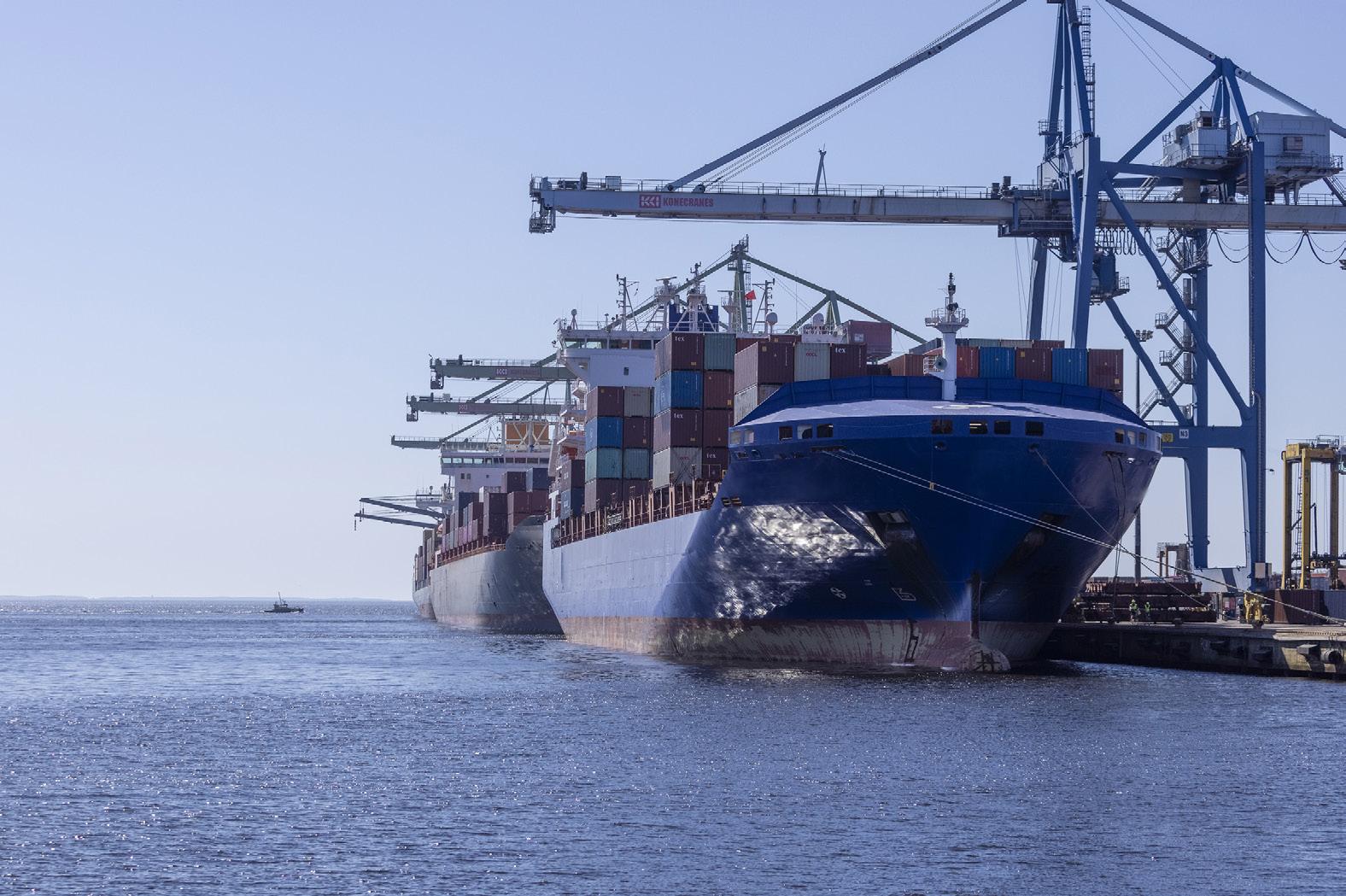

Shipping is like physics. At the ‘quantum’ level of haphazard news feeds, not a day goes by without an item about this-and-that forward-looking company investing in such-andsuch energy efficiency measure (EEM) or even ordering a newbuild that’s ‘ready’ to run on x-future fuel. But take an astronomical step back and the green part of shipping becomes something else entirely – a handful of pebbles swallowed by the endless sand of the broader seascape.
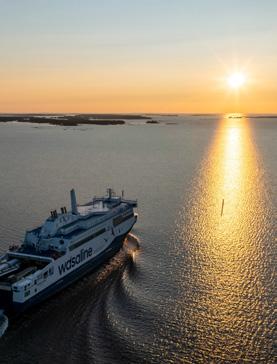
This is even more quizzical for the Baltic Sea region. Here, many a ferry or ro-ro company is doing its best to push the green needle – for the sake of the environment, regulations, bottom line, or a mix thereof. To showcase that championing spirit, this issue features an article on the world’s largest battery-retrofit project to date (with a twist!). However, another read explains why ferry decarbonisation hinges on an adjustment of the EU Emissions Trading System. Yet, even at their boldest, these regional green knights remain ants beside the elephantine container, bulk, and tanker fleets that break oceanic waves under the banner of fossil-fuel smoke.
Drawing on a World Bank investigation into EEMs, one of this issue’s articles makes the case that while shipping can (partly, at least) decarbonise itself, it probably won’t. Much like our previous look at EU transport mega-projects, this piece also doesn’t shy away from circulating a few unasked-for remarks in a column-style fashion. A reasonable stir-up of emotions, which may be – if you’ll allow a thought – more refreshing than a certain sub-stack on LinkedIn that gets twittery every time a new proposal for the IMO Net-Zero Framework surfaces (at this rate, by iteration 666 we may witness the opening of the Seven Seals, or the end of another Maya or Curonian or Ostrobothnian calendar, or the dawn of a new, spectacularly unremarkable day altogether…). Even without the millionth Middle East crisis, NZF would be deader than an unplugged lava lamp. Prove me wrong!
What’s as rare as a green EEM deployed at scale? Rare earths. Continuing our exploration of modern EU woes, we dissect another report by the European Court of Auditors, this one on the bloc’s faltering efforts to secure critical materials (for the energy transition, among others). To flip the coin, presumably, nobody in Europe would like a mine dug in their backyard. In other geographies, meanwhile, nobody cares about others’ backyards…
Perhaps nuclear propulsion will shift the paradigm. Another piece digs into a joint research by Lloyd’s Register and LucidCatalyst into ‘atomic’ container ships – this one with engineering rigour that has the ambition to take that nuclear speculation right onto the drawing board – and then shipyards and commercial shipping, the model of which can fundamentally change if you need to replace your fuel cartridge every five to seven years only. That’s boldness with extra seasoning!
This spring issue also includes a decade-in-review of the LNG-as-marine-fuel market (now entering its bio-phase en route to e-methane) and about adaptive, mobile multi-sensor platforms for enhanced security and resilience of maritime infrastructure – because we no longer live in the boring times when ports and ships were 99.9% preoccupied with ‘merely’ handling cargo and passengers. Wishing you a springy read!
Przemysław Myszka
Publisher
BALTIC PRESS SP. Z O.O. Address: Aleja Zwycięstwa 96/98 81-451 Gdynia, Poland office@baltictransportjournal.com
www.baltictransportjournal.com www.europeantransportmaps.com
President of the Board BOGDAN OŁDAKOWSKI
Managing Director
PRZEMYSŁAW OPŁOCKI
Editor-in-Chief
PRZEMYSŁAW MYSZKA przemek@baltictransportjournal.com
Proofreading Editor EWA KOCHAŃSKA
Contributing Writers
MICHAEL BAMPAOU, MICHELLE COTTET, STEVE ESAU, ERIK FROSTE, DESPOINA GEORGIOU, JARI IHONEN, ALEXA IVY, OLE JOHN, LENA LORENC, CHRISTOPH MARTIUS, KYRIAKOS PANOPOULOS, ROB PRESTON, MAXIMILIAN REIMANN, FITZWILLIAM SCOTT, RICHARD STEELE, ANDRZEJ URBAŚ
Art Director/DTP DANUTA SAWICKA
Head of Marketing & Sales
PRZEMYSŁAW OPŁOCKI po@baltictransportjournal.com
If you wish to share your feedback or have information for us, do not hesitate to contact us at: editorial@baltictransportjournal.com
Contact us:
PRZEMYSŁAW OPŁOCKI tel.: +48 603 520 020
Makkonen/Wasaline

3 Editorial
8 BTJ calendar of events
10 Safety news
12 Market SMS
14 What’s new?
16 Map news
18 Venture forth
19 What’s in the Cabinet
21 Chart of the issue:
EU’s dependency on imports of critical raw materials
64 Events:
Ports, technology, and the future of maritime operations
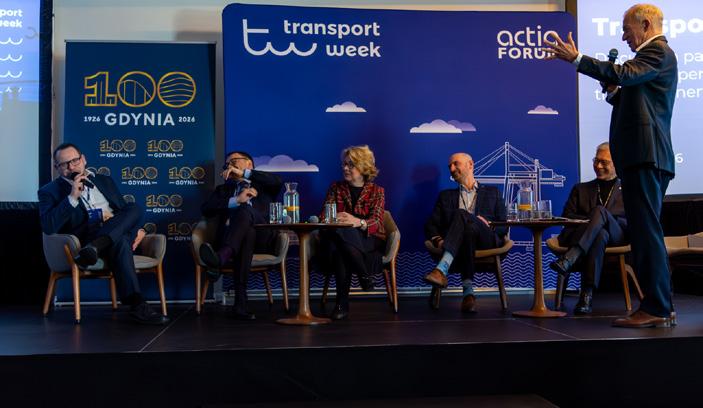
– Transport Week 2026, 18-19 March, PL/Gdynia by Marek Błuś
66 Who is who
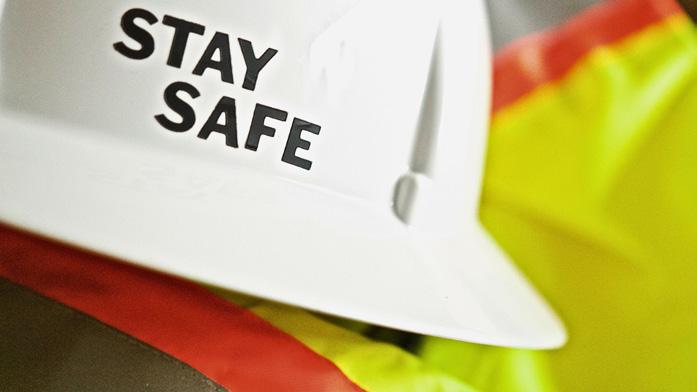
22 Safety refined many a way – Designing danger out of cargo handling – part one by Richard Steele
24 Brighter – safer – future
– Designing danger out of cargo handling – part two by Richard Steele
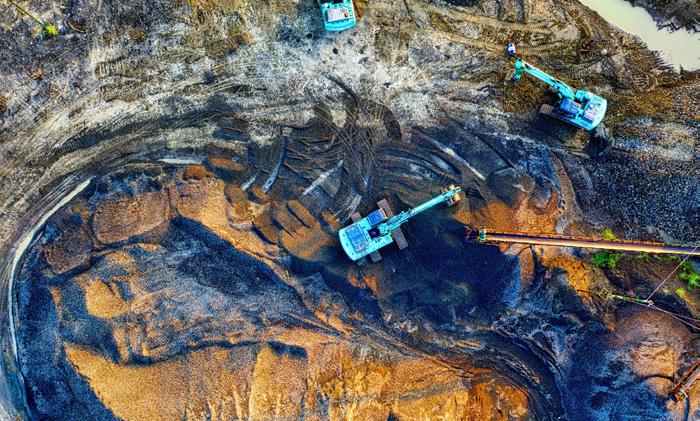

26 The raw reality – Where are the material resources needed to feed Europe’s energy transition? by Ewa Kochańska
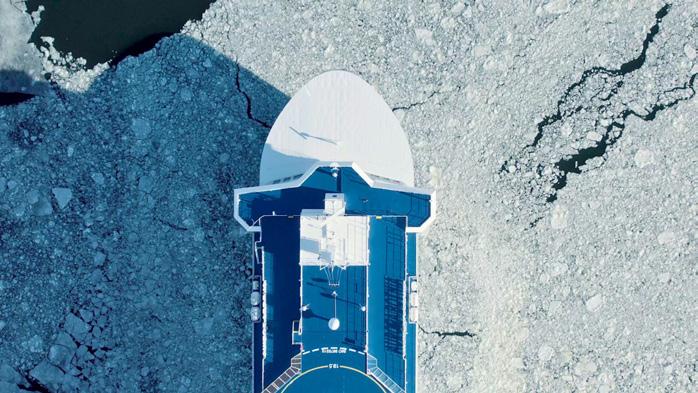
32 Emissions that could be cut tomorrow – but won’t – Key takeaways from the World Bank’s Keys to EnergyEfficient Shipping – and a few op-ed remarks by Przemysław Myszka
42 The right tools for the job
– Why ferry decarbonisation hinges on an EU ETS adjustment by Alexa Ivy
44 Towards advanced maritime fuel cells
– Presenting the H2MARINE and MiNaMi projects by Kyriakos Panopoulos, Despoina Georgiou, Michael Bampaou, and Jari Ihonen

The Port of Oxelösund is growing. With expanded capacity for 10.5 million tons of goods every year, we are now Sweden’s largest port for bulk handling.
It’s all part of Oxchange, our transformation journey that’s redefining our role in Baltic logistics. Higher capacity from ship to shore. A new quay, expanded storage areas and modernized yards.
Discover how our port can become your platform for growth.
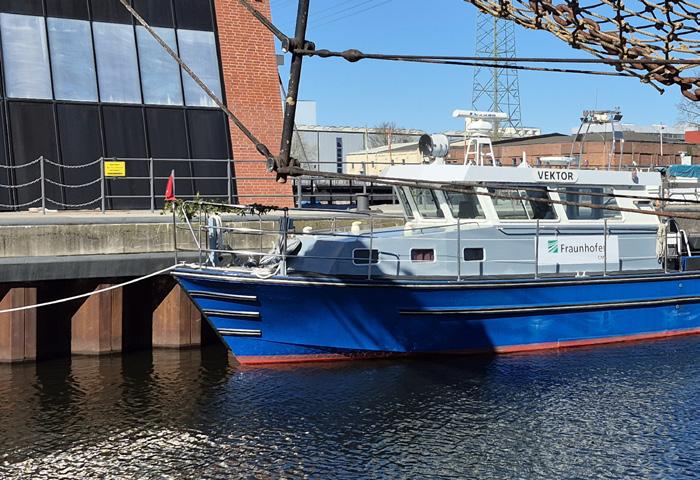

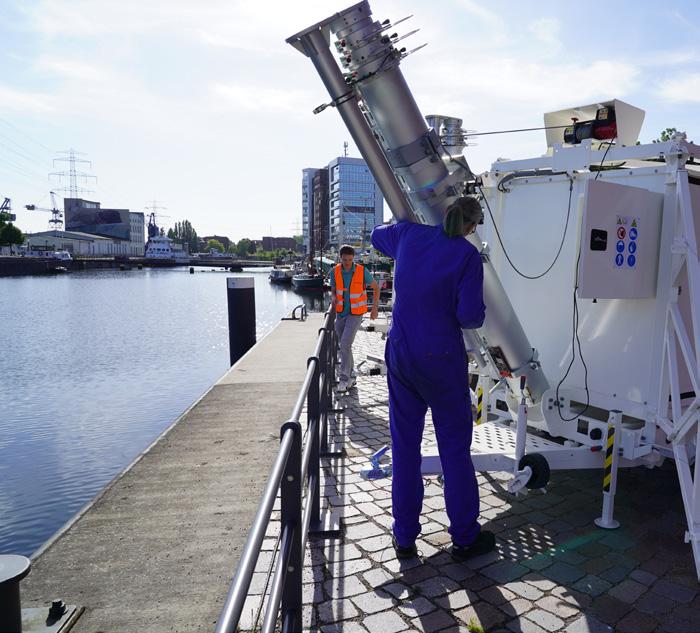
46 In sight – Adaptive, mobile multi-sensor platforms for enhanced security and resilience of maritime infrastructure by Maximilian Reimann, Christoph Martius, and Ole John
48 The methane runway is open – How liquefied biomethane is reshaping Baltic and Northern European shipping by Steve Esau
52 Smartly specialised
– Interview with Tracy Jin, Business Development Manager, Port Esbjerg by Przemysław Myszka
54 BalticSea-GSC: facilitating zero-emission shipping by Lena Lorenc
55 Baltic port leaders convene in Brussels to shape future EU maritime policy by Andrzej Urbaś

56 Built to evolve
– Inside the world’s largest marine battery retrofit by Michelle Cottet
58 From speculation to engineering – A requirements-led foundation for container ship design by Fitzwilliam Scott
60 Security through dependable workflows & advanced tools – What’s the most dangerous data transfer in shipping – and how to spot & avoid it by Rob Preston
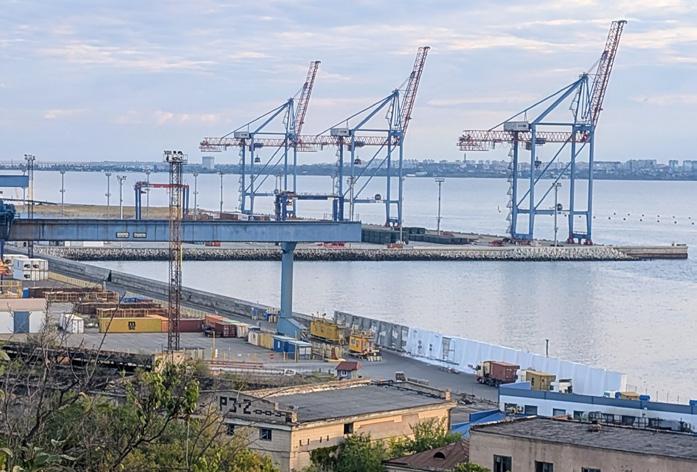
62 Logistics under fire – Lessons in resilience from Ukraine’s transport sector by Erik Froste




ESPO 2026 , 7-8 May 2026, PL/Gdańsk, espo.be/events
TOC Europe , 19-21 May 2026, DE/Hamburg, tocevents-europe.com
ECG General Assembly & Spring Congress 2026 , 4-6 June 2026, TR/Istanbul, ecgassociation.eu/activities/events
Breakbulk Europe , 16-18 June 2026, NL/Rotterdam, europe.breakbulk.com/home
Baltic Ports Conference 2026 , 2-4 September 2026, FI/Turku, balticportsconference.com

ECG Conference 2026 , 15-16 October 2026, DK/Copenhagen, ecgassociation.eu/activities/events
IAPH World Ports Conference 2026 , 3-5 November 2026, GB-ENG/London, iaphworldports.org
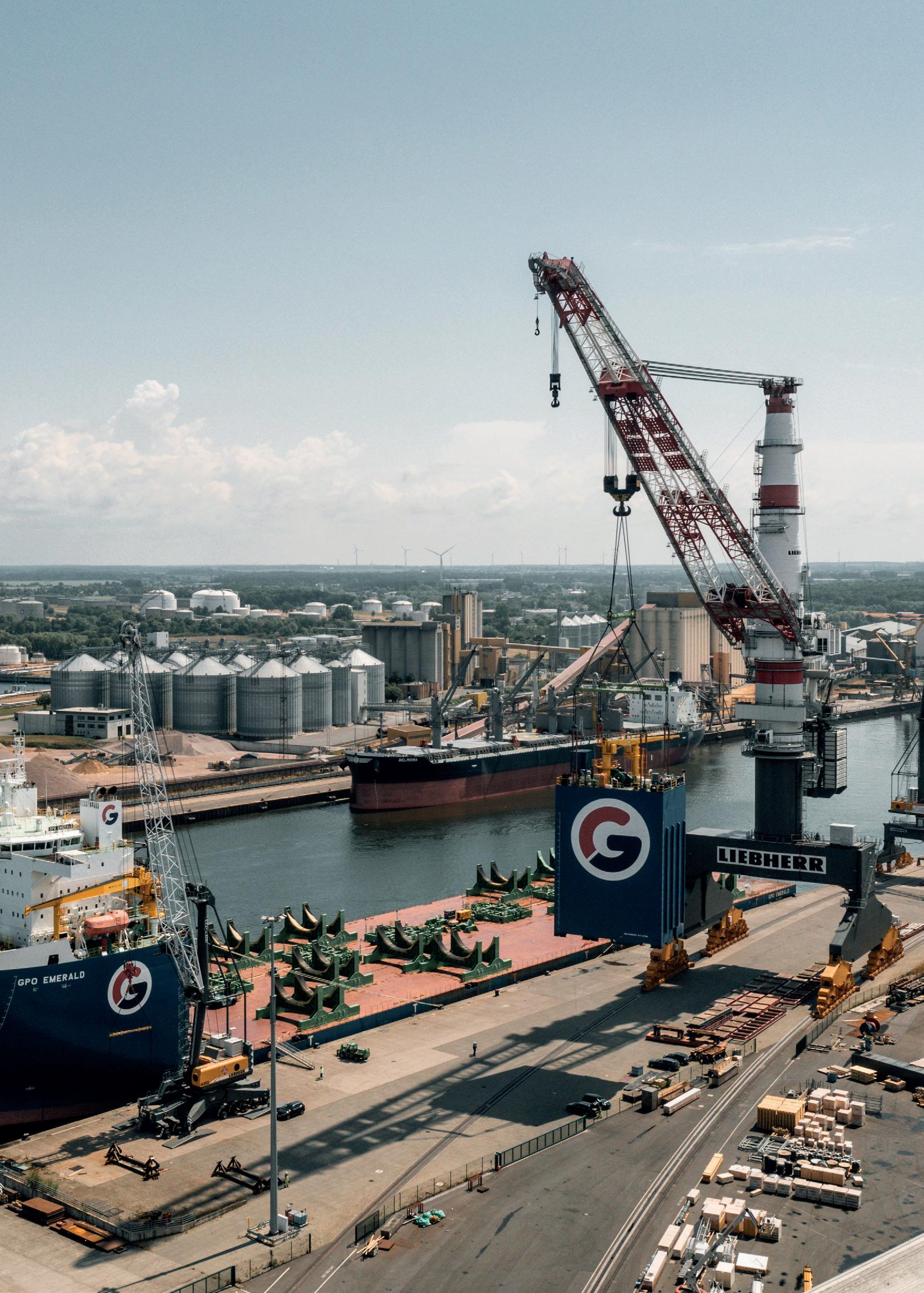
Organised by the ICHCA – International Cargo Handling Coordination Association, the award-handing ceremony saw the celebration of products, processes, and services that address safety issues in an increasingly complex and challenging industry of moving goods. ICHCA’s CEO, Richard Steele, commented on the occasion, “The calibre of entries we continue to receive for these awards is truly amazing. Each of these winning innovations represents a genuine breakthrough in addressing critical safety challenges in cargo handling operations. From harnessing the power of data analytics to developing more effective training methodologies and creating practical solutions that separate people from machinery, these innovations have the potential to effect real change in our industry and ultimately save lives. We are proud to champion these ideas and give them the visibility they deserve.” Mike Yarwood, Managing Director, Loss Prevention, TT Club, added, “These innovations demonstrate the industry’s unwavering commitment to safety advancement. These awards are just one part of our continuing efforts to connect innovators with operators and investors who can help scale these life-saving solutions.” This year’s TT Club Innovation in Safety Awards picked winners in four categories. SICK won ‘Turning data into insight’ with its MultiScan100-S, the first safety-certified 3D LiDAR sensor with safe multi-echo technology that can detect obstacles through rain, fog, and dust, enabling automated container handling equipment to maintain full safety-rated detection ranges and high-speed operations without false alarms. Active Training Team came atop ‘Learning and engaging’ with Thrive, an immersive safety leadership centre that uses live actors, film, and realistic scenarios across purpose-built rooms to emotionally engage offshore wind and cargo-handling workers, transforming their understanding of risk and empowering them to intervene and challenge unsafe practices. Thanks to SLP (Snag Load Protection), SIBRE championed
the ‘New ways to make operations physically safer’ category. The solution uses a high-precision sensor and machine-learning algorithms to detect and prevent dangerous snag-load events on ship-to-shore cranes before tension develops, while its Guardian add-on provides continuous monitoring of crane motion intensity and 360° impact detection. The gold in ‘Safety of people/ equipment interface’ went to Long Beach Container Terminal for its Overhead Load Protection System that physically restricts cranes from passing over ground personnel in the rail yard, eliminating the risk of falling objects while providing live monitoring of all personnel and vehicle locations throughout the 4,460 m² facility. ICHCA and TT Club have also prepared a digest of all the entries received and the winners
As the maritime industry’s first, Lloyd’s Register (LR) has released the Notes in question to provide clear, risk-based technical direction for the design, installation, and integration of on-board hydrogen generators that use liquefied natural gas, methanol, or ammonia as feedstock. “On-board hydrogen generation offers a practical bridge to the future of zero-emission shipping. By producing hydrogen directly on board, shipowners can avoid the need for space-demanding and complex compressed or liquefied hydrogen storage systems and eliminate dependence on the future development of widespread hydrogen supply chains and bunkering infrastructure. At the same time, they position themselves for compliance with tightening emission
requirements and future decarbonisation regulations,” LR shared in a press brief. The organisation furthered, “However, on-board hydrogen generation also presents safety and regulatory challenges due to the presence of two gases or low-flashpoint fuels and the absence of mature international regulations.” The Guidance Notes also recognise the challenges of adapting land-based technologies for the marine environment. LR’s Lead Specialist Fuel Cell Technology, Technical Directorate, Thomas Bayer, stressed, “Clear guidance is essential for emerging technologies. The industry cannot afford to stand still while formal regulations are developed; our Guidance Notes provide the clarity needed to move projects from concept to delivery.”
On commission by the European Maritime Safety Agency, a consortium led by the American Bureau of Shipping, including the National Technical University of Athens (NTUA) and Fundación Valenciaport, has released the Safety of Ammonia for Use in Ships report. The publication covers ammonia properties, regulations, and also includes a review of accidents. The report also comprises a safety assessment and reliability analysis of main components, equipment, and various systems, as well as three vessel risk assessments – for a generic ship design, bulk carriers, and for ro-ros. Safety of Ammonia for Use in Ships also contains recommendations for future regulatory developments. “Exploring pathways toward more environmentally sustainable maritime transport is essential for society, but it must always be pursued with safety as the highest priority,” noted Professor Nikolaos P. Ventikos of NTUA. Josep Sanz-Argent, Director of Energy Transition and Sustainability at Fundación Valenciaport, also shared, “Ammonia will play a key role in the decarbonization of the maritime sector, and ports must prepare for bunkering operations to be carried out safely within their jurisdiction. The results of the study will contribute significantly to preparing that future.”
3.05 million tonnes handled in international traffic in Q1 2026 (-16.8% yoy)
On the other hand, the Finnish seaports’ domestic cargo traffic advanced by 278% year-on-year, up to 25.6 thousand tonnes. Exports abroad totalled 2.13mt (-20% yoy) while imports – 917.2kt (-8.1% yoy). HaminaKotka’s container traffic decreased by 4.4% yoy to 166,278 TEUs.
3.07 million tonnes handled in Q1 2026 (-7.9% yoy)
While the Estonian seaport’s prime trade, ferry & ro-ro, advanced by 2.0% year-on-year to 1.62 million tonnes, other cargo segments noted decreases, most notably liquid bulk – down 58.9% yoy to 230 thousand tonnes. Dry bulk lost 3.5% yoy to 545kt, and containerised freight contracted by 5.0% yoy to 482kt. Container traffic shrank by 3.8% yoy to 60,152 TEUs. Conversely, break-bulk advanced by 57.3% yoy to 181kt. With 16kt, the handling of goods classified as ‘non-marine’ was up 297% on the Q1 2025 result. Tallinn’s passenger traffic also noted a downtick, altogether -3.3% yoy to 1.36 million ferry & cruise travellers. The ferry crossing to Helsinki also saw a decrease of 3.3% yoy to 1.23m, followed by -12% yoy to 79 thousand on the service to/from Stockholm. The Muuga-Vuosaari link lost 4.0% yoy, down to 39k. Passengers labelled as ‘others’ totted up to 10k, up 43.6% yoy. Unlike in the previous year, the first quarter already brought cruise guests over Tallinn’s quays, 4.0k in total.
975,000 road consignments transported in combined road/rail transport in 2025 (+4.3% yoy)
Translated into containers, the Swiss rail company carried 1,853,000 TEUs last year. “The launch of high-frequency services [Köln NordBusto Arsizio and Ludwigshafen-Busto Arsizio] shows that the negative effects of delays on customers can be minimised. It is clear to everyone that the German network needs to be upgraded. We intend to consistently expand our services in the coming years in order to be able to offer our customers a reliable service even in this challenging infrastructure situation. Maintaining this capacity is essential for the networking of industries in Europe and thus for our customers,” Michail Stahlhut, CEO, Hupac Group, commented.
843,665 TEUs handled in 2025 (+27.9% yoy)
“Exceptional capacity challenges at several large European ports increased demand for alternative gateways, enabling Aarhus to attract a higher volume of transit containers,” noted the Danish seaport in a press brief. Kåre Clemmesen, the Port of Aarhus’ interim CEO, also shared, “I am pleased with these historic results, achieved by skilled employees in close collaboration with the terminal operator and the companies operating on and around the port. It underlines that the Port of Aarhus is an attractive port and a vital hub for cargo and logistics – not only in Denmark but also in a European context.” According to the port authority, 11.34 million tonnes went over Aarhus’ quays last year, an increase of 13.7% over 2024’s result.
Finnlines: 1,021,000 passengers served in 2025 (+9.1% yoy)
The company’s ferries and freighters also transported 788,000 ro-ro cargo units, an advance of 0.8% year-on-year. Finnlines also took care of 1.11 million tonnes of non-unitised freight (-9.8% yoy) and carried 71,000 commercial vehicles (-16.5% yoy). “While we continue to develop our services, capacity and route network, the business environment in Europe is undergoing structural change. As regulations tighten and sustainability requirements accelerate, Finnlines’ role as a provider of critical maritime logistics infrastructure will become even more pronounced. We will ensure that trade and industrial transport flows remain reliable even under changing conditions,” commented Thomas Doepel, President and CEO, Finnlines. He furthered, “During the year, the focus was on fleet optimisation, route profitability and responsible growth. Finnlines continued to strengthen its competitiveness in the Baltic Sea and North Sea markets by developing its route network and adding a weekly departure from Gdynia […] to the North Sea & Biscay […]. This enhances our services and offers customers in Poland a direct link to the Grimaldi Group’s global network.” Doepel also noted, “The IMO’s decision last October to postpone consideration of the Net-Zero Framework adds uncertainty to shipping’s green transition. Nevertheless, Finnlines remains firmly committed to achieving its own environmental targets. […] The fleet’s carbon intensity decreased by 14% when compared with 2024. Compared with 2008, which is used as the baseline year in shipping, the company has already achieved the 40% reduction target set for 2030 ahead of schedule.”
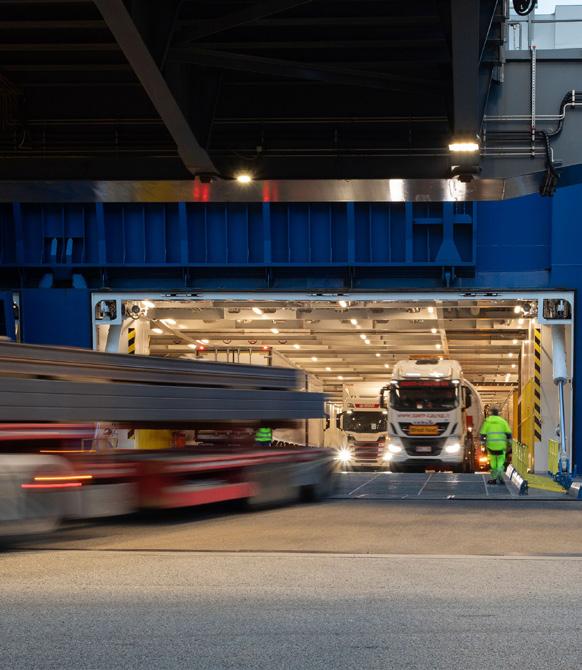
HHLA’s sea container terminals: 6,295 thousand TEUs handled in 2025 (+5.4% yoy)
POH_205_x_133.5_.qxp_(BTJ Package) 09.02.24 17:46 Seite 1
The company’s facilities in the Port of Hamburg took care of 5,956 thousand TEUs (+4.8% year-on-year), while the terminals in Estonia, Italy, and Ukraine added the remaining 339,000 (+19.2% yoy). HHLA’s intermodal arm transported 1,982 thousand TEUs (+10.9% yoy), of which 1,719 thousand were carried by rail (+11.2% yoy) and 263,000 by road (+8.7% yoy).

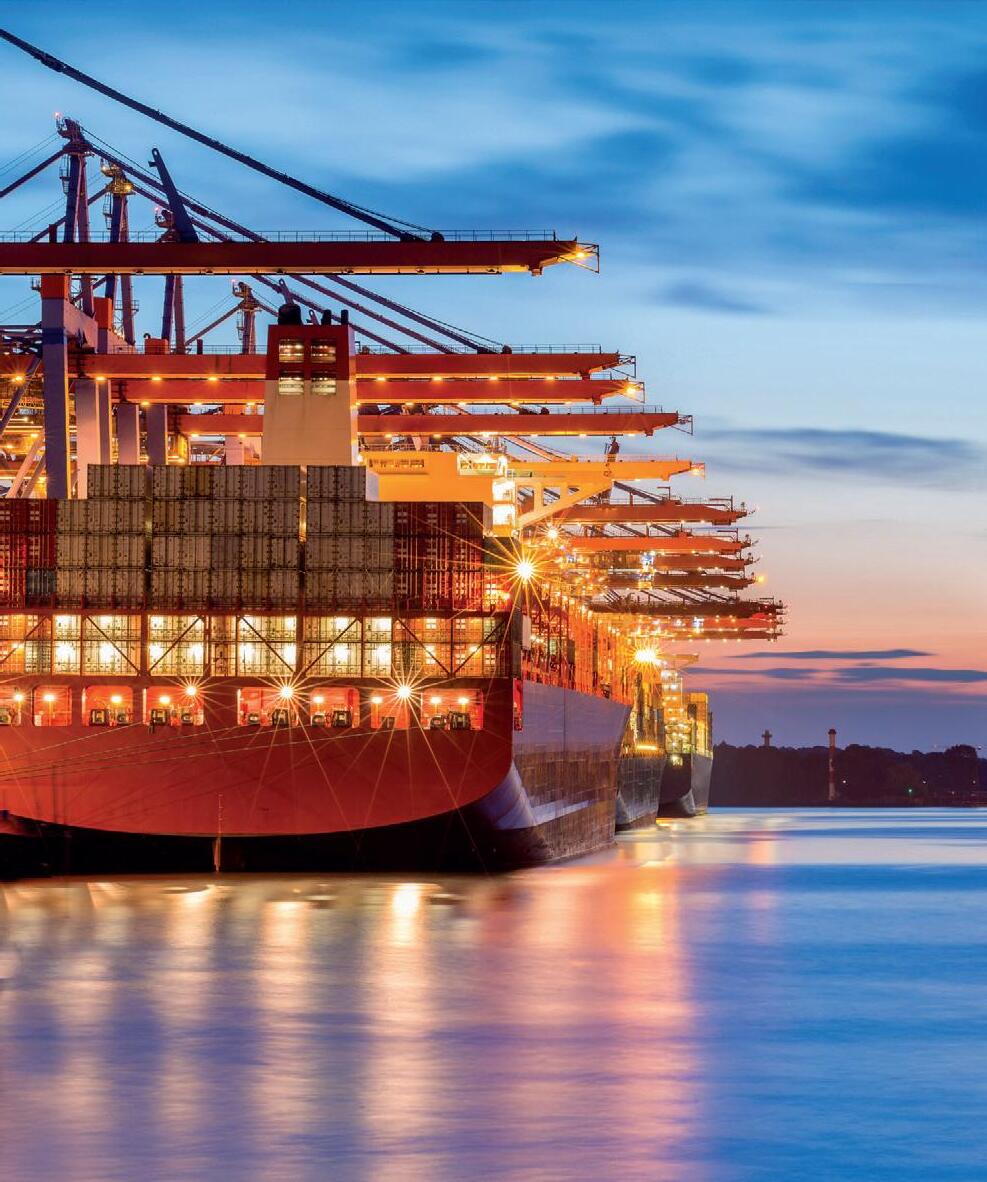
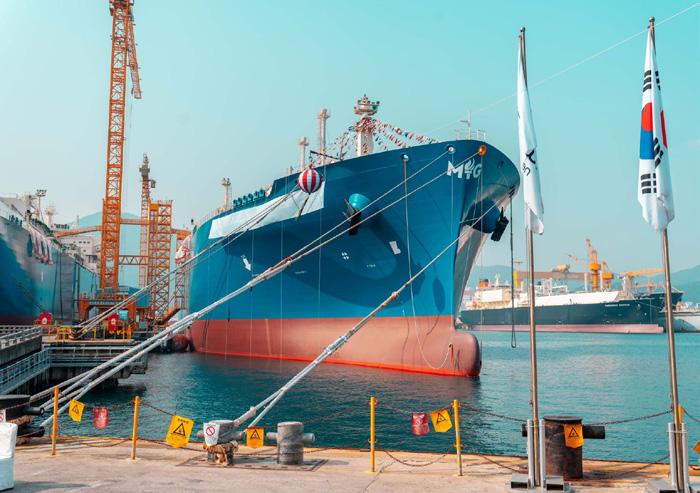
Two brand-new 174,000-m³ gas carriers, Danuta Siedzikówna-Inka and Rotmistrz Witold Pilecki, have received their names at Hanwha Ocean’s shipyard in the South Korean Geoje. Each will be able to transport around 70,000 tonnes of liquefied natural gas (LNG) per voyage. The Polish state-owned energy company received 81 LNG imports via the terminal in the Port of Świnoujście last year, 20 more shipments vs 2024, totalling nearly 6.0 million tonnes (+30% year-onyear). “ORLEN is investing continuously in the energy security and independence of both Poland and the wider region. We are developing not only our own production, with successful exploration campaigns both domestically and on the Norwegian Continental Shelf, but also expanding our trading capabilities by growing our fleet. Each additional carrier enhances the flexibility of LNG transport to Poland and enables us to ensure stable supplies for Polish consumers and all our customers, while strengthening the energy security of the entire region,” commented Ireneusz Fąfara, President of the ORLEN Management Board. “ORLEN is also expanding its presence on the global LNG market. The company has already made deliveries to Japan, China, Thailand, Egypt, and terminals in Western Europe. The new carriers will enhance its logistics capabilities and enable even more active participation in global LNG trade,” ORLEN added in a press brief. In the meantime, the company has booked the entire regasification capacity of the under-construction floating LNG terminal in the Gdańsk Bay (6.1 billion m³/year).
The Port of Gdynia saw the completion of upgrading nearly 800 metres of the quay wall in question, including dredging it to 15.5 metres. As such, ships with a 14.5-metre draft can now call at the Baltic Container Terminal Gdynia (BCT Gdynia). The PLN300 million investment (about €71m), carried out since September 2023 with the support of EU funds, also saw the installation of a new gantry rail – with the new reinforced structure adding only 1.2 metres to the Helskie Quay, the existing ship-to-shore cranes can still reach across the entire beam of the carriers visiting BCT Gdynia. The construction works included using 9,500 tonnes of steel (7,500 for piling and another 2,000 for filling with 20,000 m³ of concrete) and dredging 80,000 m³. Hundreds of foundation piles and kilometres of smaller ones were installed to reinforce the structure. Modernising the Helskie Quay was part of the Deepening of the Approach Fairway and Internal Waters of the Port of Gdynia and Reconstruction of the Quays project, which, altogether, will increase the Polish seaport’s annual cargo throughput capacity by some 5.0 million tonnes.
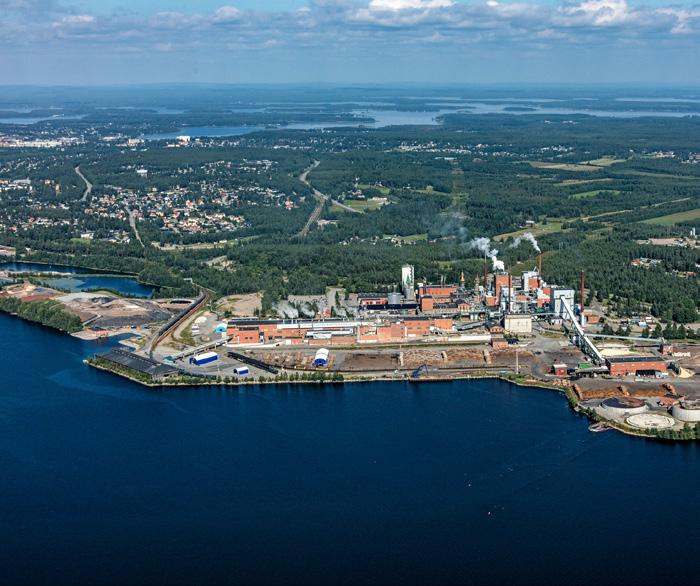
From October 2026, the output from SCA’s Munksund Paper Mill, which earlier was dispatched by train to Umeå for shipping, will head to the Port of Piteå. Munksund produces around 400,000 tonnes of packaging paper per year. Altogether, some 550,000-600,000 tonnes of SCA products will be shipped through Piteå on board the company’s ro-ros. “The change is both environmental and economic. The ships can reduce speed from 15 to 11-12 knots and operate with a higher payload, which reduces emissions per transported tonne by approximately 40%,” the Port of Piteå underscored in a press brief.
The stevedore, part of the Rhenus Group, will buy a new crane, modernise its mobile cargo-handling fleet, and erect two warehouses in the Polish port. Specifically, the funds will go into purchasing a 65-tonne lifting capacity ARDELT quay gantry, a heavy forklift, a mobile crane, and three tractors. The new warehouses designed for storing general cargo will add 11,400 m², increasing Bulk Cargo – Port Szczecin’s total storage capacity by 27%.
The EU Commissioner for Sustainable Transport and Tourism, Apostolos Tzitzikostas, officially awarded the nearly €3.1 million support to the Finnish seaports for setting up onshore power supply (OPS) at the Mussalo Harbour during his visit to Finland’s capital. Six berths at quays B and C will be equipped with cold-ironing connections. “The completed OPS system will provide an electrical power of 4.0MVA for each OPS connection point with a medium voltage of 6.6kV on two different frequencies, 50Hz and 60Hz […]. The maximum total electrical power of the system will be 10MVA. Six vessels will be able to connect to the OPS simultaneously,” the Port of HaminaKotka detailed on the project’s website. The investment covers the construction, installation, and commissioning of all required infrastructure, including a new OPS building with switchboards, transformers and frequency converters, and all required cabling, earthing and OPS connection points with sockets on the quays. In addition, a new electricity grid connection of 20kV will be procured for the needs of the OPS system.
In a deal worth SEK684 million (€62.6m), the Swedish seaport has bought from Platzer land, office properties, and water areas, altogether enabling the development of 210,000 m² of new terminal space. The plot is located directly next to Stena Line’s future 2031 terminal. “This acquisition is being carried out to create conditions for the port’s continued long-term development. The Port of Gothenburg needs to keep growing in the future, and this is a natural step directly adjacent to existing port operations and surrounding logistics infrastructure,” highlighted Göran Eriksson, the Port of Gothenburg’s CEO. “Revenue from the property’s existing office buildings will form the basis for financing the continued development of the area,” the Port of Gothenburg shared in a press brief. It furthered, “Both the acquisition and divestment of the respective properties are subject to approval by the municipal council [as part of the deal, the port sold a logistics property at the port entrance]. Transfer of ownership is expected to take place no earlier than the fourth quarter of 2026.”
The European chapter of the Houston-based company has supplied a certified waste-based bio version of liquefied natural gas (bioLNG) to Avenir LNG’s Avenir Ascension in the Port of Klaipėda. The 7,500 m³ vessel then took the load to Sweden for bunkering Destination Gotland’s ferries, marking one of its 200+/year fuelling operations. “Greening shipping is not a future ambition – it is happening today. By combining our expanding renewable gas network with Avenir’s maritime infrastructure, we are delivering robust, fully certified bioLNG supply chains that are practical, flexibly accessible, and aligned with regulatory requirements. We are proud to launch our first initiative with Avenir as we expand our bioLNG offering globally,” commented John Cosmo Dwelle, Managing Director at Anew Climate Europe. His counterpart at Avenir LNG, Jonathan Quinn, also shared, “BioLNG plays a crucial role in reducing emissions from shipping today. This transaction with Anew strengthens our ability to deliver reliable, traceable bioLNG solutions, directly supporting our customers as they reduce emissions and progress on their decarbonisation pathways.” Later, also in the Port of Klaipėda, Avenir Ascension performed Lithuania’s first ship-to-ship ferry bunkering by fuelling TT-Line’s Peter Pan
The SEK230 million (€21.3m) EU-supported investment saw the Port of Halmstad grow with a new 12-metre-deep and 200-m-long quay. Oceanhamnen additionally features 25,000 m² of yard space. “This is our biggest investment ever. With new quays, larger areas, and modern infrastructure, we are strengthening our role as a key port player and creating the conditions for handling larger volumes and more types of goods,” Carl-Henrik Hägg, CEO, Ports of Halland, commented. He also detailed, “We expect to increase capacity in the recycling segment by around 40%, while opening up to new cargoes. With Oceanhamnen, we have also expanded the port’s total area to around 800,000 m².” According to the Swedish port authority, Oceanhamnen is the first step in an altogether SEK1.4 billion investment (€130m) that will see the setup of new quays, more yard space, a direct motorway link, as well as railways and a quay-connected electrified marshalling yard for serving 750-m-long trains.
The Helsinki-based supplier of raw materials and chemicals will add a new storage facility in Loviisa, slated for opening this year, and new tank capacity in Kokkola (2027). In latter's Deep Harbour, Berner Industries will erect two sodium hydroxide storage tanks linked to a liquid terminal. “In its environmental permit application, the company states that up to 230,000 tonnes of sodium hydroxide will be stored in Kokkola each year. The product will be imported by ship from the EU and the United States. Sodium hydroxide is used in sectors such as the chemical and metal industries as well as the pulp and paper industry,” the Port of Kokkola shared on its LinkedIn profile. Berner Industries is already present in the Port of Pori’s Tahkoluoto Harbour, where it has two tanks for the storage of various liquid chemicals. “Automation and process systems have been further developed to ensure that logistics within the port area run smoothly and reliably 24/7, every day of the year,” highlighted Olli-Pekka Taivalmaa, Sales Support Director at Berner Industries. The Loviisa-Kokkola investments will increase the company ’s storage capacity from 25,000 to 45,000 m³.
The logistics property developer Nordsten Development has taken over the disused margarine factory in the Port of Helsingborg’s South Harbour to turn the plot into a logistics facility. The 61,000 m² property will see the demolition of some 40 industrial and ancillary buildings to make room for the Helsingborg Zenit 2 40,000 m² warehousing complex. “The plan is to start demolishing the existing buildings and renovating the land as soon as possible, possibly this spring, and then start construction of the new logistics property at the end of 2026 with the goal of having the property ready for occupancy at the end of 2027,” Christoffer Bööj, Nordsten Development Co-founder, shared. The new facility will be set up according to the BREEAM certification for sustainable buildings, with the ambition of reaching the Outstanding level. “Besides sustainability and flexibility, the property offers very high electrical capacity. With the current connection, we can welcome electricity-intensive businesses, which in many cases have difficulty finding premises where their electricity needs can be met without a long wait,” Bööj added. Flora Food Group’s margarine factory in Helsingborg has been running since the 1960s. Its new owners, the New York City-based KKR global investment firm, have moved the production abroad.
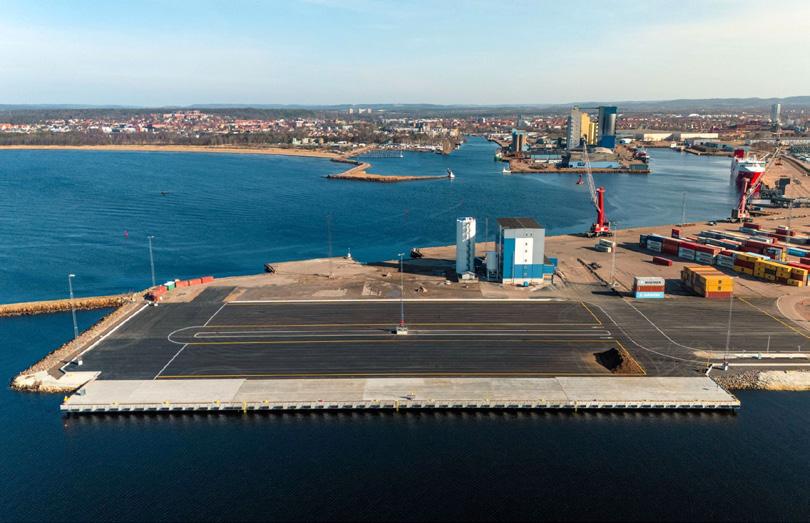
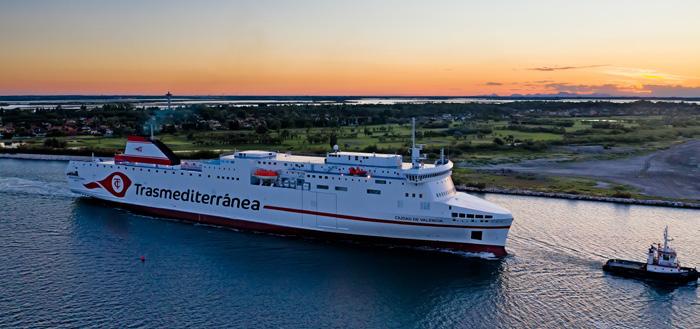
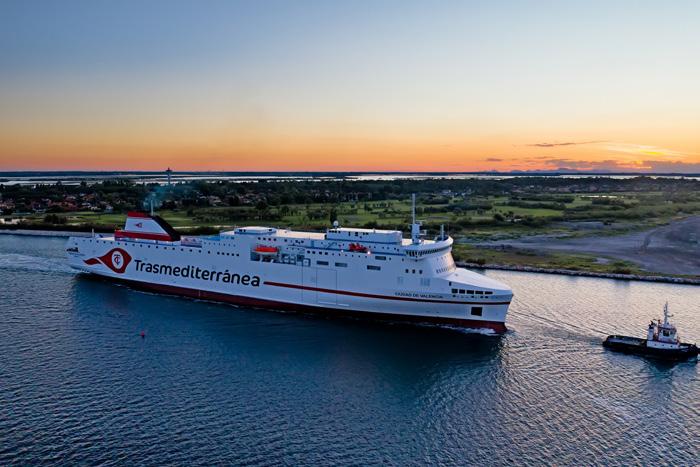
In mid-September 2026, DFDS will put in place the chartered Ciudad de Valencia instead of Optima Seaways on the Swedish-Lithuanian crossing. The 2020-built ferry offers room for 950 passengers across 159 cabins and 2,562 lane metres for cargo (vs Optima ’s 328/2,240).
“With this vessel, we are significantly boosting our ability to serve both freight and passenger customers on one of our most important Baltic routes. We see strong growth potential on the route, and this is an important step in ensuring we can offer reliable, comfortable, and efficient services well into the future,” highlighted Per-Henrik Persson, VP, Route Director, DFDS. Ciudad de Valencia will ply together with Luna Seaways (600/4,500) on the Karlshamn-Klaipėda service.
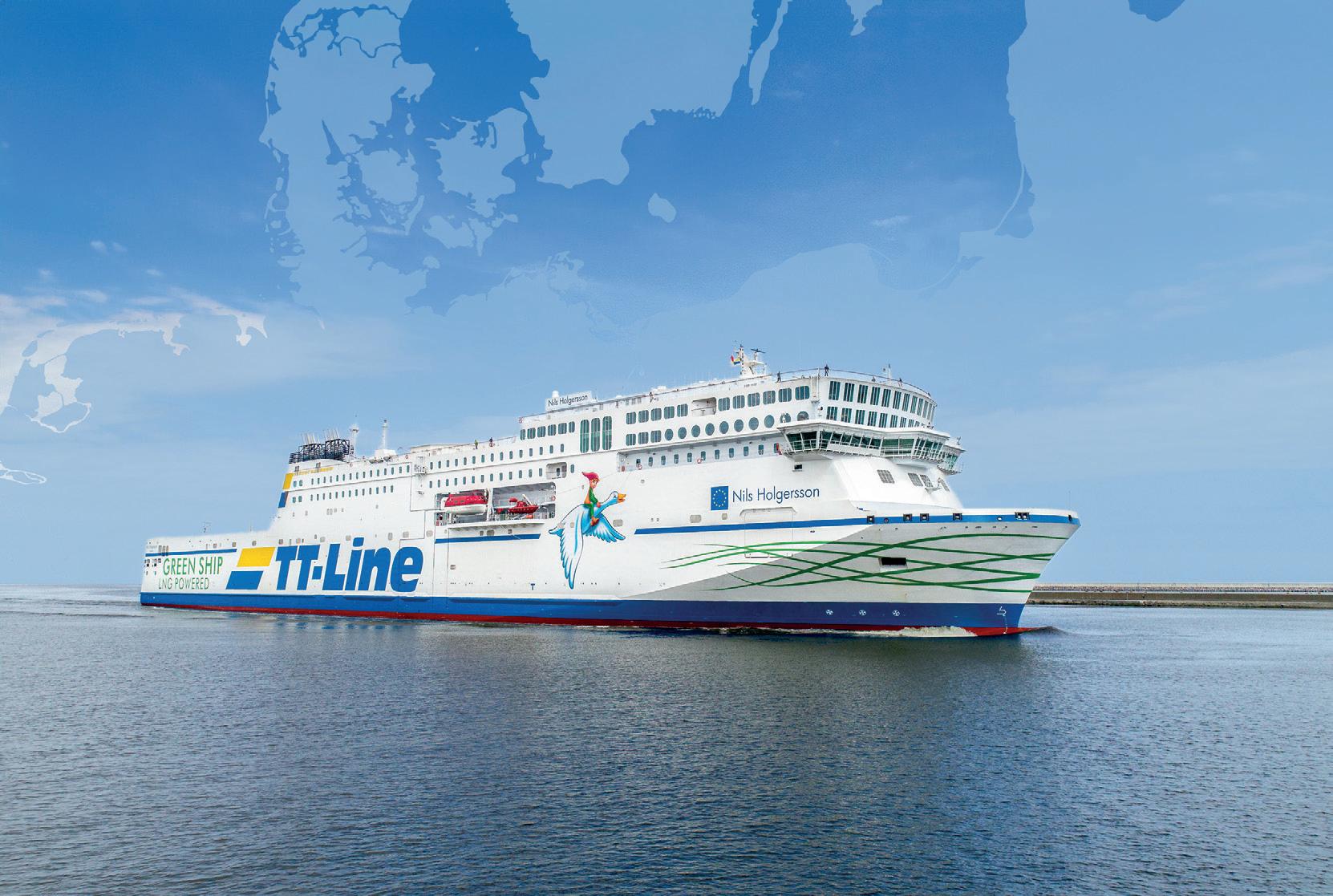
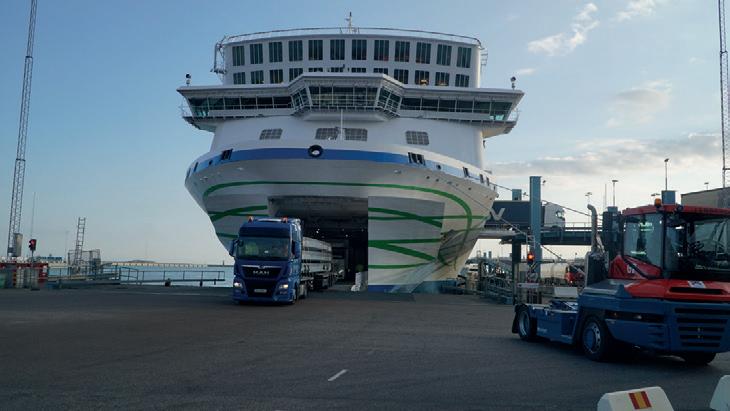
The shipping company from Lübeck has entrusted the Jinling Shipyard of China Merchants Industry Holdings to construct the gas-run, hybrid, 240-metre-long ro-pax. Classified by RINA, the ferry will also be equipped with a connector to draw electricity from the shore, including charging the batteries. The class has also shared that the newbuilding will be able to welcome around 1,000 passengers; however, RINA did not share the ferry’s cargo capacity (TT-Line’s previous ferries of the Green Ship class, Nils Holgersson and Peter Pan, can accommodate 800 travellers and offer 4,000 lane metres). The latest commission sees TT-Line exercising the option from the 1+1 contract it signed with the shipbuilders from China Merchants in December 2025.
The Finnish Nurminen Logistics and the Italian Lanzi Trasporti kicked off a weekly intermodal service between Frövi (near Örebro) and Parma on 24 February 2026. “Until now, our container management took place on mixed trains; the introduction of a full train now allows us to offer greater loading capacity and improved punctuality, providing companies in Northern Italy with a ‘fast track’ to Scandinavian markets,” Lanzi Trasporti highlighted in a press release. The company also shared, “This new link to Sweden is only the first step. Our vision for 2026 already includes extending the service to semi-trailers, allowing entire road units to travel by rail, further reducing environmental impact and operating costs for our partners.” Lanzi Trasporti’s CEO, Leonardo Lanzi, underscored, “This development is something we have worked on for a long time. For us, it is not just a new and strategic service, but a real step up in the quality of our offering. It marks the transition from established conventional intermodality to the full handling of load units via complete, dedicated trains.”
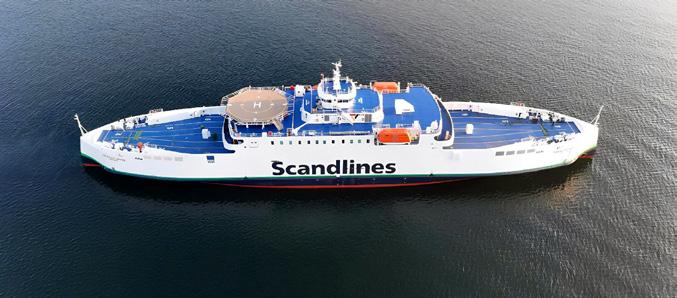
The 147.7-by-25.4-metre double-ended, brand-new hybrid ferry, an investment of €84 million by Scandlines, departed from Rødby on her maiden voyage to Puttgarden on the morning of 10 March 2026. The 18.5 km crossing is covered in 45 minutes, with 12-18 minutes needed to charge the newbuild’s 10MWh-battery stack while berthed (thanks to Scandlines’ investment in charging stations at both ends of the Danish-German service; ‘plugging in’ the vessel is said to take less than 15 seconds). If necessary, e.g. due to challenging weather, Baltic Whale ’s diesel generators can kick in for hybrid operations. The ferry offers 1,200 lane metres (across two decks) for wheeled cargo, including dangerous goods such as batteries, and room for 140 passengers.
The 2002-built ferry will be handed over to her new owners at Hibernia Line on 1 May 2026, swapping the Kapellskär-Paldiski crossing for the newly created service between Cork and Boulogne-sur-Mer. It will be a three-year charter, with options to either extend it by 24 months or to purchase the vessel outright. Superfast IX currently offers room for 550 passengers and 2,425 lane metres for rolling cargo. She returned under Tallink’s wings two years ago after her 2008-24 employment with Marine Atlantic. “Tallink continues to optimise its routes to ensure efficient operations. The charter agreement provides the company with a stable cash flow rather than a reduction in business volume,” said Paavo Nõgene, the outgoing CEO of Tallink Grupp. He also noted, “Superfast IX is not the most suitable vessel for the Paldiski-Kapellskär route due to its large passenger capacity. We have no plans to withdraw from the route; instead, we are looking for a replacement vessel of appropriate size and configuration.”
The ceremony took place at the Austal Philippines shipyard in Balamban, marking the first construction step towards delivering the 130-metre-long high-speed ferry to her Swedish owners at Gotland Company in mid2028. Hull fabrication is expected to begin in H1 2026. “The ferry will be constructed using lightweight ‘green aluminium,’ manufactured through energy-efficient processes to support reduced embodied carbon […],” Austal underscored in a press brief. Once deployed, Horizon X will be able to transport up to 1,500 passengers between the island of Gotland and Sweden’s mainland, plus some 400 vehicles. “We are delighted to be building Horizon X, a world-leading hydrogen-ready high-speed ferry – and the largest we have ever built – at Austal Philippines. This vessel’s innovative multi-fuel design – including a unique combined cycle propulsion system integrating gas and steam turbines, driven by waste heat recovery – will help redefine efficiency and sustainability in the ferry sector,” highlighted Paddy Gregg, Austal’s CEO. He furthered, “There is no single solution that fits every operator or route. Long-term success in decarbonisation will come from flexible fuel and technology solutions that allow operators to adapt as alternative fuels mature and infrastructure develops. Horizon X has been designed with that flexibility at its core.”
• Replacing and consolidating existing solutions, the Port Management Information System (PMIS) will serve as the Finnish seaport’s primary platform for managing daily planning, operations, and financial processes. The suite includes port call handling, invoicing, work order management, rental administration, shift planning, reporting, and GIS-based operational views. “The project will be delivered in phases, starting with a design phase followed by implementation. The objective is to establish a modern and
well-defined system foundation that supports automation, data quality, and future development,” Grieg Connect detailed in a press brief. Janne Virta, CEO of the Port of Rauma, commented, “Our goal was to find a future-proof system that can modernise our processes and provide better structure and efficiency in daily operations. Grieg Connect was selected based on the functionality of the solution, their experience delivering port systems in comparable ports, and their ability to support the delivery locally.” •
• The logistics & stevedore from the Finnish Inkoo will further digitalise its various operations with Grieg Connect’s PMIS. Through the solution, Inkoo Shipping will have access to a unified platform for port call management, cargo handling processes, resource coordination, operational workflows, agency documentation, and automated invoicing. “Through integrations with Netvisor and PortNet – with Nemo integration planned for the future – the PMIS will enable efficient information flow between operational activities, financial processes, and national maritime reporting systems, creating a strong foundation for operational control and further development,” the parties shared in a press brief. Inkoo Shipping’s CEO, Thomas Bergman, commented, “We aim to further streamline our operational processes and ensure reliable data flow across our port, cargo, and agency operations. A unified system supporting these activities is an important step in that direction, and Grieg Connect demonstrated the system and service concept that best fits our needs.” Inkoo Shipping’s stevedoring
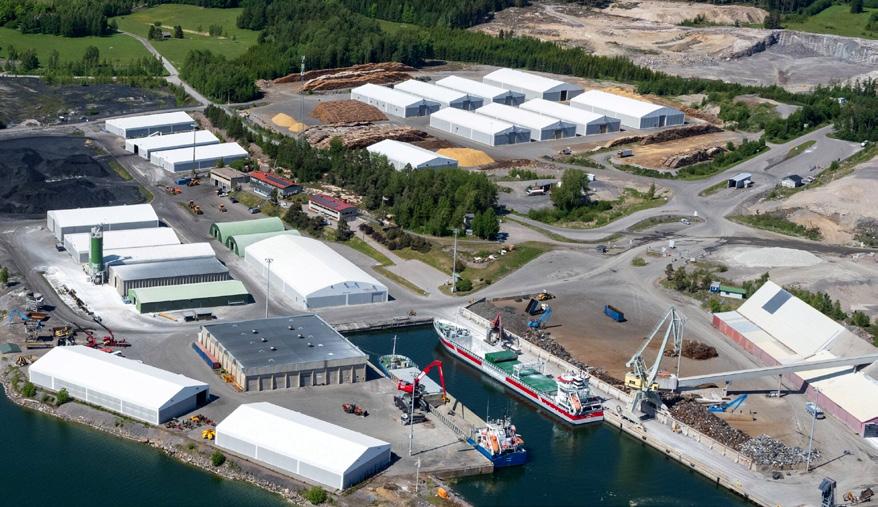
arm manages cargo operations in the Finnish ports of Inkoo and Kantvik, while its ship agency and forwarding teams provide vessel agency services and customs clearance at the two plus at Parainen. •
• The Finnish seaport will see the deployment of a new PMIS, featuring port call management, resource planning, time tracking with salary bases, contract management, invoicing, and business intelligence. Grieg Connect’s solution will be integrated with national systems like PortNet, which provides port traffic information such as vessel and cargo notifications. “The new system supports the port’s ongoing work to develop its processes and strengthen control of daily operations
by bringing key workflows and data into one system. The solution is designed to meet relevant cyber-security requirements, including NIS2,” the parties underscored in a press release. “This is an important step in how we manage the port. We need stronger and clearer insight into our operations for enabling smooth flows of cargo and people. Grieg Connect provides a solution that supports this and gives us a solid foundation for further development,” said Hannu Kallio, the Port of Naantali’s CEO. •
• Acwa, a Saudi energy company, EnBW, a German energy supplier, VNG, a gas importer and infrastructure operator from Leipzig, and the Port of Rostock have put their pens to a memorandum of understanding tasked with supplying Germany’s energy transition with clean fuel. Green ammonia produced at Acwa’s site in Yanbu will be shipped to the German seaport, where VNG will reform it into hydrogen in its ammonia cracker plant (70,000-140,000 tonnes of H₂ per year). By mid-2026, the detailed technical planning of the production facilities should be completed, with commercial commissioning expected in 2030. EnBW’s task will be to purchase the green ammonia and take care of the commercial processing and logistics from Saudi Arabia to Baltic Germany. “This MoU with EnBW, Rostock Port, and VNG represents a pivotal step in forging a reliable green ammonia export corridor from Saudi Arabia to Germany. It leverages Acwa’s Yanbu hub, where we lead development with support from EnBW, to deliver scale for Europe’s hydrogen needs, with processing at Rostock for core network injection. These assets accelerate global
decarbonisation, bolster energy security, and affirm our role as Saudi Arabia’s green molecules champion,” Marco Arcelli, CEO of Acwa, commented. His counterpart at EnBW, Dr. Georg Stamatelopoulos, added, “International partnerships like this are essential if we want to advance and make the transformation of the energy system affordable and bring innovative solutions to market. Each partner brings complementary strengths, and by working together, we are able to address challenges more effectively than we could individually.”
Jens Scharner, Managing Director of Rostock Port, also shared, “The signing of this agreement marks a significant milestone in developing a hydrogen economy between our countries and represents a major step forward for Rostock’s energy port. By forming this cooperation, we are establishing a strategic, more efficient, and forwardthinking framework for securing a long-term supply of green energy and further investment in Germany. We are delighted to be involved in these important energy projects and want to express our sincere gratitude to all partners for their excellent cooperation and trust in us.”
•
• By the end of the year, HHLA TK Estonia will see the deployment of a pair of Konecranes’ 296kWh rubber-tyred gantry (RTG) cranes in its container terminal in the Port of Tallinn’s Muuga Harbour. The battery system will make it possible to operate the 1-over-5 sixlane RTGs for up to eight hours off-the-grid. An integrated 25-meter busbar charging system will supply the energy. “Our terminal in Muuga follows a long-term sustainability strategy that we are implementing step by step. This investment marks an important milestone in the development of battery-powered equipment at European container terminals and supports our efforts to modernise operations while further reducing emissions,” commented Riia Sillave, CEO, HHLA TK Estonia. The company’s Technology and Infrastructure Manager, Tanel Ringo, added, “Renewing our container
yard RTG fleet [two other Konecranes] with these Europe-first Konecranes battery-electric RTGs allows us to further modernise our yard while maintaining operational consistency across the fleet, which already includes several equipment from the supplier. Having the manufacturer’s engineering and production located in the same northern climate region is also beneficial when developing equipment for our operating conditions.” Philipp Reiter, Regional Sales Manager EMEA, Port Solutions, Konecranes, also shared, “Close collaboration with a partner just across the Gulf of Finland enables us to move development initiatives quickly into realworld yard performance. This order demonstrates how battery technology is shifting from being a mitigation solution to providing power for full-scale operational use in container terminals.” •
• The Turku-based tech company will furnish the currently underconstruction, to-be-completed-in-2027 facility with a passenger and cargo traffic management system. Apart from the software, the solution will include gates, measuring devices, and digital signage. Post-commissioning, Weasel Software will provide maintenance and support services. “Automated and integrated processes make it possible to manage simultaneous departures from a single shared waiting area. This reduces manual workload and improves overall performance
even at the busiest times, when vessel turnaround time is extremely tight,” Weasel Software highlighted in a press brief. Erik Söderholm, the Port of Turku’s CEO, commented, “One of the key objectives of the Ferry Terminal Turku project is to create an even smoother and more efficient port experience for passengers and shipping companies. The passenger and traffic management system is a central element in achieving this, and we are very pleased to have an experienced and highly competent provider as the implementation partner.” •
• Through its Industrial Leap programme, the Swedish Energy Agency has granted SEK31 million (€2.9m) to Nordion Energi to make the project in question investment-decision ready. To be established in the Port of Malmö, the Hub is expected to come online in 2030, offering a yearly handling capacity of 1.5 million tonnes of CO₂ (including storage).
“There is great potential for making Southern Sweden more sustainable with the help of carbon dioxide capture – and with a hub we can
contribute to enabling that potential. A common infrastructure for liquid carbon dioxide will make the entire process from capture to final storage significantly more cost-effective for customers,” commented Henrik Nebrelius, Chief Development Officer, Nordion Energi. He furthered, “Many projects for carbon dioxide capture are currently emerging around Sweden. We believe that the Malmö Hub can become a precedent for how to collaborate to create a better system solution.” •
• The Danish Business Authority has committed DKK17.5 million (some €2.34m) through the Just Transition Fund to support the project tasked with making Hirtshals a focal point for CO₂ handling. The funds will be spent, among other things, on developing solutions to minimise the carbon footprint of CO₂ handling, ensuring costefficiency for participating businesses, and establishing a knowledge base (including the development of a life-cycle assessment for
modelling climate impact). Some €134,000 from the grant is earmarked to support 10 local businesses that can symbiotically contribute to the various stages of CO₂ capture, transport, and storage processes. Apart from the Port of Hirtshals, the Greenport Scandinavia CIRCLE CO₂ Hub project partners are Greenport North, Aalborg University, Maripure, EMD International, 2-0 LCA, PlanEnergi, Complete Solutions, and Energy Cluster Denmark. •
• KN Energies, Akmenės cementas, SCHWENK Latvija, Larvik Shipping, and Mitsui O.S.K. Lines have teamed up to form the CCS Baltic Consortium to develop Lithuania’s first full carbon capture and storage (CCS) value chain. The establishment follows the country’s only cement producer’s goal of becoming climateneutral beginning in 2035. As such, Akmenės cementas will invest up to €600 million in CCS. “This year, [Sweco Lietuva and] we will carry out the environmental impact assessment and the front-end engineering design studies for the CO₂ terminal in Klaipėda – key steps towards the final investment decision. This would be the first infrastructure of its kind in the Baltic States, opening the door to broader industrial decarbonisation in the region,” highlighted Rūta Tumėnienė, Head of New Energies at KN Energies. The CO₂
captured by Akmenės cementas will be liquefied for shipping out of KN Energies’ liquid energy products terminal in the Port of Klaipėda for storage underneath the North Sea. Tumėnienė also commented, “CCS technologies not only enable a significant reduction in CO₂ emissions but also create conditions for sustainable industrial operations, and development and the use of cleaner energy. The CCS value chain infrastructure will also help develop biogenic CO₂ capture and the synthetic fuels production sector in Lithuania. At the same time, this is an important tool in the fight against climate change, which affects every one of us.” In 2024, the European Commission granted the CCS Baltic Consortium Project of Common Interest status (renewed last year). The project is co-funded under the energy envelope of the EU Connecting Europe Facility. •
Port of Aarhus is Denmark’s largest commercial port and a key hub in the European transport network. We connect the Baltic region to Denmark, the North Atlantic, and global markets.
We want to create the sustainable port of the future, where business can develop in a changing world.
The European Commission (COM) has published the expressions of political direction in question, both aimed at driving competitiveness, sustainability, decarbonisation, security, and resilience within the EU’s wider waterborne sector of ports, shipping, and shipbuilding. The EU Ports Strategy includes action proposals across five areas. In ‘Strengthen competitiveness, innovation, and digitalisation,’ COM will, among others, support the digital and green transformation by promoting innovation and the scale-up and uptake of innovative technologies. In ‘Advance energy transition, sustainability, and clean industries,’ COM will put a rocket under permit-granting and provide faster assessment procedures for strategic energy and environmental port projects. Meanwhile, the upcoming Electrification Action Plan will support port electrification, access to the grid, and the deployment of clean energy. In ‘Protect and secure ports,’ COM will establish a forum for the EU Member States’ cyber-security and port authorities to exchange best practices, and an EU-wide security risk assessment will be carried out to identify the most pressing cyber-security risks and to develop countermeasures. In ‘Access to finance and investments,’ COM will support ports with clear and targeted funding principles aimed at improving the coordination and efficiency of EU financing. Finally, in ‘Social cohesion, skills, and quality jobs,’ the EU Ports Strategy recognises the important role of
small and medium-sized ports by outlining specific initiatives on innovation, clean energies, security, and connectivity to support them. In turn, the EU Industrial Maritime Strategy will see the launch of the EU Industrial Maritime Value Chains Alliance, tasked with advancing high-tech shipbuilding, offshore wind support vessels, underwater drones, and next-wave port equipment. As such, the Horizon Europe’s Shipyards of the Future R& I flagship call will support the testing of innovative solutions in real-world shipyard environments, with the goal of scaling successful technologies across Europe. The EU Industrial Maritime Strategy will also ramp up naval industrial production capacities, including the development of a dual-use ferry construction support mechanism. Apostolos Tzitzikostas, Commissioner for Sustainable Transport and Tourism, commented, “With our EU Ports and Industrial Maritime Strategies, we are equipping Europe’s ports, shipping, and shipbuilding sectors to lead the clean energy transition, secure trade and defence, and remain globally competitive. They renew our ambition for European maritime leadership, reinforcing economic security, driving sustainable growth, and supporting quality jobs and territorial cohesion across Europe. Working hand in hand with industry and all relevant stakeholders, we will turn these Strategies into concrete results and anchor Europe as the leading waterborne continent.”
Altogether, 45 European transport organisations have penned an open letter to the EU Member States, urging national cabinets to strengthen funding for their sector under the 2028-34 Multi-Annual Financial Framework – increasing in particular the Connecting Europe Facility budget to at least €100 billion. “A robust European transport network is of crucial importance in responding to Europe’s strategic objectives. Only with strong and state-of-the-art transport infrastructure at its core will Europe be able to ramp up its resilience and military preparedness, reinforce its industrial competitiveness, and safeguard its supply chain sovereignty. The sector stands ready to deliver, but cannot do so without adequate support,” the signatories underscored in a press brief. Isabelle Ryckbost, Secretary General, European Sea Ports Organisation, commented, “Europe’s transport sector keeps sounding the alarm. We need more, better, and resilient transport infrastructure and connectivity to make
Europe more competitive and secure. […] EU governments should understand that Europe can only achieve its strategic objectives if it has a strong transport sector providing the necessary fundament of Europe’s internal market.” Her counterpart at the Baltic Ports Organization, Bogdan Ołdakowski, also noted, “For Baltic ports, which serve as key TEN-T nodes and strategic gateways to European and global markets, such investments are crucial to modernise dual-use infrastructure, enhance connectivity, and strengthen Europe’s overall transport resilience.” Frank Schnelle, Executive Director of ECG – The Association of European Vehicle Logistics, urged, “Persistent under-investment has created clear capacity and connectivity gaps. Strengthening the Connecting Europe Facility is essential to close these gaps, enhance mobility, military mobility included, and ensure that Europe’s transport corridors are fit for the future.”
The legislative proposal in question, presented by the European Commission in early March 2026, is aimed at strengthening Europe’s economic competitiveness and boosting its clean-tech manufacturing capacity. Specifically, the Act aims to increase the share of industrial production in EU GDP to 20% by 2035, up from 14.3% in 2024. Commenting on the proposal, WindEurope highlighted, “The last days have shown, yet again, how vulnerable Europe’s energy system is to geopolitical shocks. Natural gas prices in Europe surged by over 40% since the escalation in the Middle East on 28 February, reaching their highest levels since 2023. Europe is simply too exposed to expensive and volatile fossil fuel imports.” The organisation furthered, “Europe’s energy security and competitiveness will rely on accelerating electrification, and ensuring we have the clean tech to deliver this domestic energy at scale. We simply cannot replace our reliance on imported fossil fuels with reliance on imported technology.” WindEurope’s CEO, Tinne van der Straeten, commented, “The EU
has rightly identified wind energy as a strategic sector: industrial leadership in wind is in Europe’s strategic interest. […] Now a simple and harmonised implementation of the new rules is crucial.” The Act sets out a suite of measures, including a streamlined permitting system built around a single digital application and a strict 45-day completeness check to reduce administrative delays and a Made-in-EU preference in public procurement requiring minimum thresholds that favour goods produced in the bloc. There will also be an oversight tightening of strategic sectors through mandatory foreign direct investment screening, ensuring compliance with EU standards so that FDIs do not compromise security or competitiveness (on security, WindEurope underlined, the Act proposes that all wind auctions apply a pre-qualification criterion on cyber-security). The Act also wants to see the creation of Industrial Acceleration Areas, designated zones where permits are consolidated and procedures fast-tracked to create efficient, investment-ready industrial hubs.
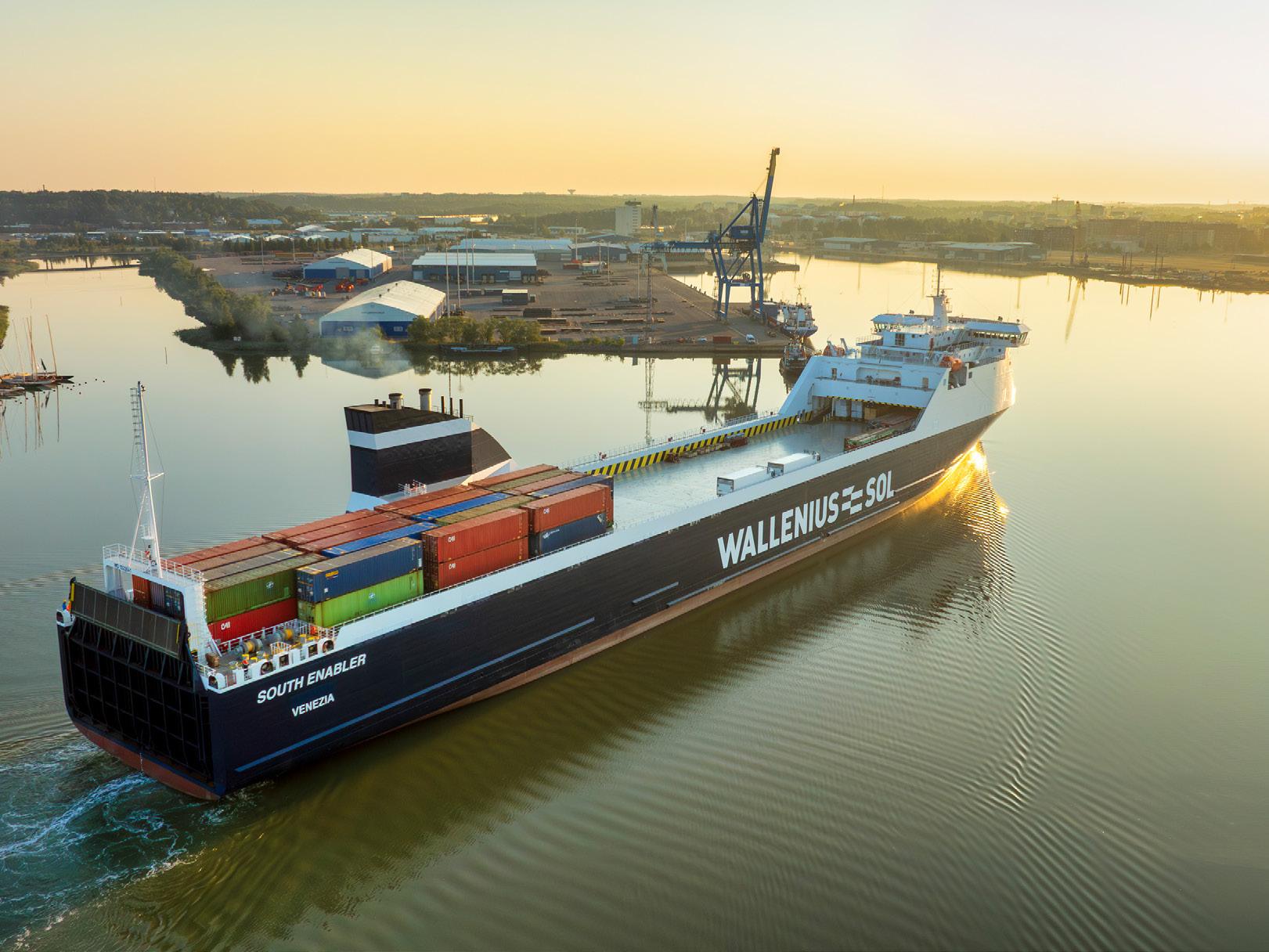
Port of Turku offers fast and frequent connections to Scandinavia and Central Europe, with sufficient capacity and a diverse fleet for all kinds of sea transport.
Regular liner services provide a shortcut for freight traffic to European markets and, through ocean lines, to more distant countries. These ensure flexibility in transport schedules, offering competitive and costeffective solutions for import and export transportation for trade and industry.
In addition to unitised cargo, the port has expertise in handling project cargo that requires special attention. The transit time for cargo is short, allowing vehicles bringing and picking up cargo to get back on the road quickly.
Port of Turku responds swiftly to changing situations to ensure the smooth flow of your supply chain.
Figure 7 | The EU is highly dependent on imports of critical raw materials
Imports from non-EU countries as a share of EU supply
The EU imports less than 0.3 % of its strontium supply, with 99.7 % sourced from Spain extracted material processed material
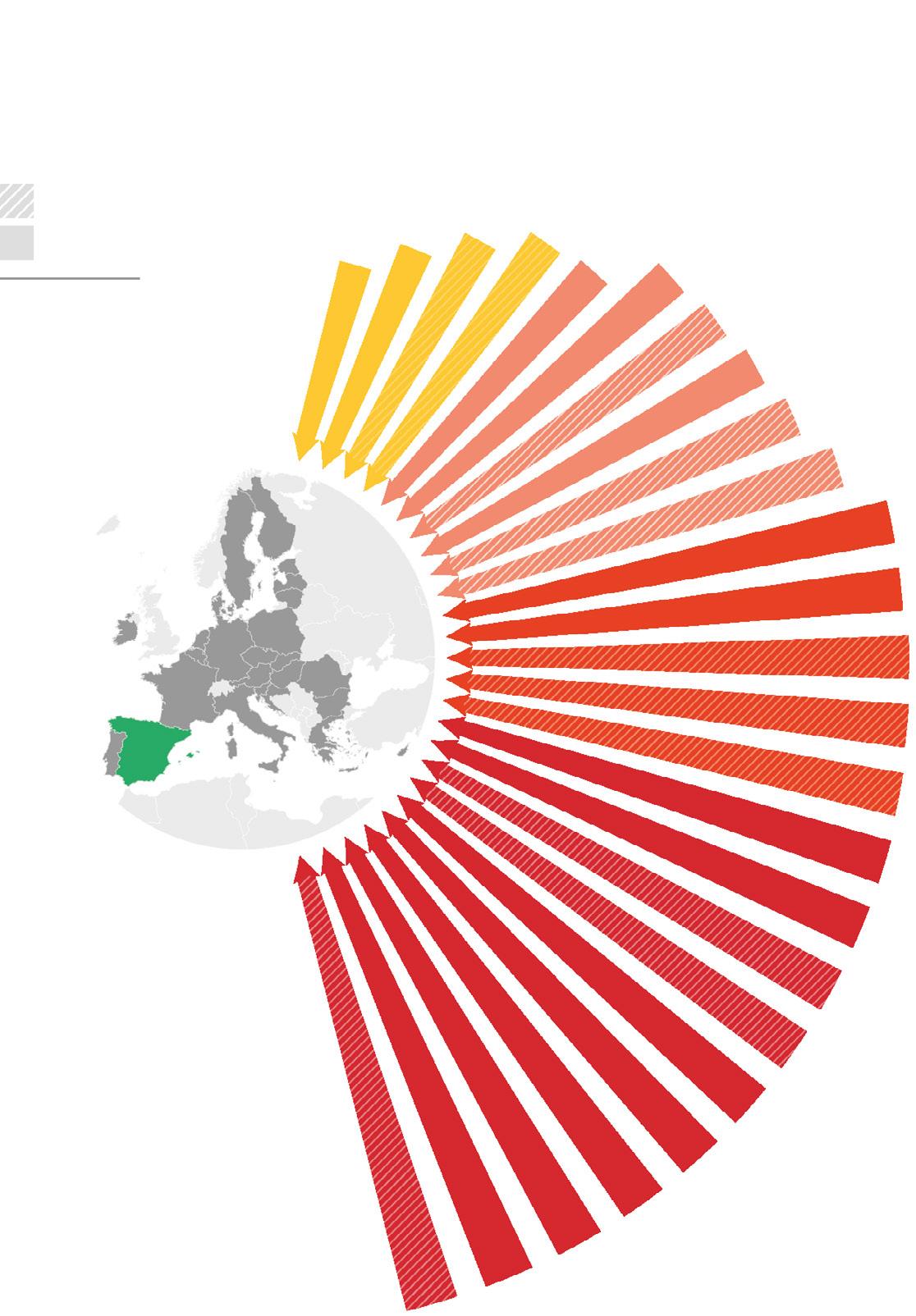
Note: Import dependency is the percentage of CRMs supplied from outside the EU, indicating the EU’s reliance on imports to meet demand. Higher values reflect greater vulnerability to external supply disruptions.
Source: ECA, based on Commission information (2016-2020).
by Richard Steele, CEO, ICHCA International
Safety in cargo handling has never been a fixed point. It evolves, sometimes gradually, sometimes in more decisive steps, shaped by operational experience, technological progress, and, often, by hard lessons learned. What is striking in the latest TT Club Innovation in Safety Awards is not just the range of solutions being put forward but the clear shift in mindset behind them. Across ports, terminals, and the wider cargo supply chain, there is a growing movement away from simply managing risk towards actively removing it, through better design, smarter use of technology, and a more realistic understanding of how people behave in complex environments.
These are not abstract ideas. They are being delivered by organisations working at the operational frontline, and increasingly they are addressing long-standing risks in ways that feel both practical and scalable.
For many years, safety strategies have relied heavily on procedures, compliance frameworks, and training programmes designed to instruct people on what to do. While these remain essential, there is a growing recognition that they do not always reflect the realities of day-to-day operations.
This is where organisations such as Psychology Applied, working alongside the Energy Institute, as well as the Active Training Team (ATT), are helping to shift the dial. Their approaches, while distinct, are complementary. Psychology Applied’s work is grounded in behavioural science, focusing on how people perceive and respond to risk in real-world settings. ATT, meanwhile, brings this to life through immersive, scenario-based learning that places participants in realistic, high-pressure situations. Rather than passively absorbing information, individuals experience how incidents unfold, how distractions creep in, how communication can falter, and how small decisions can escalate into serious consequences.
The value of this approach lies in its realism. It acknowledges that people do not operate in ideal classroom/laboratory conditions, and it equips them to make better decisions in the environments they actually face. Similarly, initiatives from the United Kingdom Maritime Pilots’ Association emphasise situational awareness and human performance in dynamic, often unpredictable settings, reinforcing the idea that safety
requires informed and active human judgement as well as systems of rules.
What connects these efforts is a move beyond compliance towards actionable competence and confidence. It is about enabling individuals not just to follow procedures, but to recognise risk, speak up, and intervene when it matters.
At the same time, some of the most impactful innovations are those that eliminate or reduce risk by removing the need to do hazardous activities.
In port environments, the interface between personnel and heavy equipment has long been a source of risk. Traditionally, this has been managed through separation measures, training, and vigilance. Increasingly, however, organisations are looking to innovative technology to support existing approaches.
The Peel Ports Group, for example, has introduced a new authorisation and permitto-work system designed to manage highrisk activities across its harbours. Moving away from a historically paper-based and inconsistent approach, this digital system provides greater standardisation, visibility, and control across the business, representing a more holistic, organisation-wide step change in how risk is managed.
By contrast, Lyttelton Port Company has focused on reducing exposure during specific high-risk operational tasks. While targeted in origin, the success of this initiative is now opening up opportunities to apply similar approaches across other activities within the New Zealand seaport, demonstrating how focused interventions can scale.
Technology providers are also reshaping this space. TrafficAngel, for instance, is
addressing a different but equally important risk: driver security. Its AI-enabled systems monitor the surroundings of stationary vehicles, helping detect suspicious activity when drivers may be resting in their cabs. In doing so, it extends the concept of safety beyond traditional operational risks to include personal security within the logistics chain.
Elsewhere, companies such as Bollard Proof are tackling the risks associated with mooring operations, an area where the consequences of failure can be severe. Their engineered solutions are designed to prevent catastrophic bollard failures, reducing the risk to personnel working nearby. Similarly, SIBRE is focusing on the safe handling of heavy loads, developing lifting and securing systems that reduce the likelihood of equipment failure and the need for manual intervention.
What is notable across these examples is that they operationalise the hierarchy of controls at the engineering stage – solutions that address risk at source rather than relying solely on human behaviour to manage it.
Turning data into (anticipating) action
Another defining trend is the increasing use of data to improve safety outcomes, not just retrospectively, but in real time. Organisations such as SICK are leading this development, deploying advanced sensor technologies that monitor operational environments and detect hazards as they emerge. These systems can identify the presence of people or obstacles within predefined safety zones, triggering alerts or automatic responses that help prevent incidents before they occur.
Similarly, LASE Industrielle Lasertechnik is using laser-based measurement and positioning technologies to improve precision and situational awareness in cargo-handling operations. By providing accurate,

real-time information, these systems support safer decision-making in environments where visibility and spatial awareness might be restricted.
The application of data is not confined to equipment and infrastructure. Organisations such as the National Cargo Bureau are addressing safety challenges at a systemic level, particularly in relation to the handling of dangerous goods. By improving data quality, standardising reporting, and enhancing transparency across the supply chain, they are helping to reduce the risk of misdeclared or improperly handled freight, an issue that has been at the root of numerous incidents globally.
Together, these innovations point to a more proactive approach to safety, one that anticipates and mitigates risk before it results in harm.
What is particularly encouraging is that many of the solutions being developed are grounded in operational reality. They are designed to solve real-world challenges in practical ways.
Fire-Containers, for instance, is addressing the growing challenge of containerised fire risk with engineered solutions that can contain and manage fires within cargo units. As the industry grapples with the increasing prevalence of lithium-ion batteries and other potentially high-risk cargoes, such interventions are becoming ever more critical.
Meanwhile, companies like Passify are focusing on the flow of vehicles and people through terminal environments. By digitising and streamlining access processes, they are reducing congestion at entry points, an often-overlooked factor that can contribute
to unsafe conditions through queuing, frustration, and rushed behaviour.
Even smaller-scale innovations, including those put forward by individual entrants, demonstrate how incremental improvements can have a meaningful impact. Whether it is a new approach to securing cargo, a refinement in equipment design, or a low-cost intervention that addresses a persistent hazard, these ideas highlight the value of practical ingenuity.
Innovation does not happen in isolation, and its impact depends on how effectively it is shared and adopted. The most brilliant innovation may fail if you cannot bring people along with you.
One of the encouraging aspects of the current landscape is the level of collaboration across the sector. Ports, terminal operators, technology providers, and industry bodies are increasingly working together to develop solutions that can be applied more broadly.
This is reflected in the diversity of organisations represented in the TT Club Innovation in Safety Awards, from global operators to specialist technology firms and training providers. Each brings a different perspective, but all are contributing to a common goal: safer operations.
Standardisation is also an important part of this process. Consistent approaches to safety, whether in training, equipment, or procedures, help reduce variability and confusion,

particularly in environments where workers move between different sites and roles.
Taken together, these developments signal a continuing shift in how safety is understood and delivered. Moving away from approaches that are limited to managing risk through procedures, towards a richer picture that seeks to eliminate risk through design, technology, and behavioural insight. This is not about replacing existing safety frameworks, but about strengthening them, making them more effective, more resilient, and better aligned with operational realities.
The challenge now is to ensure that these innovations do not remain isolated examples of good practice. Their real value lies both in their adoption and in inspiring others to continue the innovation journey.
At ICHCA, our role is to help facilitate learning and the exchange of ideas: identifying effective solutions, sharing them widely, and supporting their implementation across the global cargo-handling community. And what is becoming increasingly clear is that many of the tools needed to improve safety are already within reach. The task ahead is to apply them consistently and collaboratively, focusing clearly on the outcomes that matter most: protecting people, improving operations, and raising standards across the industry as a whole. Safety is not defined by what is possible, but by what is accepted as normal.
The International Cargo Handling Coordination Association (ICHCA), founded in 1952, is an independent, not-for-profit organisation dedicated to improving the safety, security, sustainability, productivity, and efficiency of cargo handling and goods movement by all modes and through all phases of national and international supply chains. Visit ichca.com to learn more.
by Richard Steele, CEO, ICHCA International
Safety innovation is not confined to one aspect of the operation. It is continuously emerging across training, equipment design, digital systems, cargo integrity, and the critical interface between people and machinery. In Safety refined many a way. Designing danger out of cargo handling – part one, we explored how organisations are reshaping safety through behavioural insight, engineering controls, and better use of data. What becomes even clearer when looking across the full breadth of this year’s TT Club Innovation in Safety Awards is just how widely that thinking is now being applied.
The diversity of this year’s entries reflects an industry that is not only innovating but doing so in ways that are increasingly connected and practical. As we’ve seen in part one of how to design danger out of cargo handling, several entrants are rethinking how safety knowledge is built in the first place, not as a one-off exercise, but as something embedded in operational culture.
Safety is not just taught
CM Labs Simulations is pushing the boundaries of immersive training through high-fidelity simulation environments. These allow operators to experience complex cargo handling scenarios, crane operations, equipment failures, and environmental challenges in a setting where mistakes can be made safely and learned from. This is not theoretical training; it is experiential learning that builds instinct as well as knowledge.
At an organisational level, Dublin Port Company is demonstrating how to unite multiple independent terminals within their port through open dialogue, structured safety training, standardised rules, and joint problem-solving. This peer-led engagement has been seeded into everyday port operations, reinforcing expectations consistently across the workforce. Similarly, the ESLI School of Logistics and Global Supply Chain Classroom are tackling the issue earlier in the pipeline, ensuring that cyber-risk understanding is embedded into the education of future logistics professionals, rather than retrofitted once they enter the workforce.
G2 Ocean adds another dimension, focusing on how safety engagement can be sustained. Rather than relying on periodic
interventions, their approach reinforces real-world applicable safety behaviours through continuous communication and operational integration, helping to prevent complacency and keep risk awareness alive in day-to-day activities.
Taken together with the initiatives highlighted in part one, these entries point to a more mature understanding of learning: safety is not just taught; it’s experienced, reinforced, and lived.
Re-engineering the people-equipment interface
If there is one area where innovation is both critical and increasingly visible, it is at the interface between people and equipment. Terminal operators such as APM Terminals Callao are focusing on improving how people and machinery coexist in busy operational environments. Their approaches centre on reducing uncertainty – whether through clearer separation, better communication protocols, or operational redesign that limits unnecessary interaction between personnel and moving equipment.
Alongside this, Aqaba Container Terminal is addressing safety from a different but equally important angle: the standardisation of personal protective equipment. By implementing a single, globally aligned system, Aqaba is bringing greater consistency and clarity to front-line safety practices, an undertaking that is operationally complex but critical in reinforcing expectations and reducing variability across the workforce.
At Long Beach Container Terminal, this thinking is visibly present in the integration of technology and operational design to create more predictable, controlled environments. The aim is not simply to react to risk,
but to structure operations so that it is less likely to arise in the first place.
Equipment and cargo-focused innovations are also playing a critical role. Autolash is addressing one of the most physically hazardous aspects of container operations, lashing, by developing automated systems that reduce or remove the need for manual intervention in potentially dangerous zones. This represents a direct application of the ‘designing out risk’ principle explored in Safety refined many a way
Similarly, Cordstrap is focusing on cargo securement, ensuring that loads remain stable throughout the transport chain and that securing is more ergonomic and has a lower physical impact on those doing the work day in and out. Failures in this area can have serious consequences, and improved securing systems reduce the likelihood of incidents during handling.
KALP brings an engineering solution to ‘pinning’ operations where the traditional approach is to have people manually handle twistlocks, while port authorities such as Shoreham Port and Warrenpoint Harbour demonstrate how local operational changes, often grounded in detailed knowledge of site-specific risks, can deliver meaningful safety improvements to port work.
What unites these efforts is a move towards predictability and control. By reducing ambiguity in how people and equipment interact, they curtail the opportunity for error.
Building a system, not just solutions
Beyond the interface itself, several TT Club Innovation in Safety Awards entrants are tackling the broader challenge of how cargo operations are structured. The Euroports Group, working with Notra, is
exploring novel approaches to cargo handling to reduce manual intervention, altogether lowering the risk of cuts, eye injuries, and musculoskeletal injuries. Their work reflects a broader trend towards rethinking processes rather than simply refining them. Modalinta is similarly focused on improving the safety of access through an accommodation ladder design, which is simpler and safer to deploy.
Fire risk continues to be an area of focus, and Turtle Fire Systems is addressing this through specialised fire suppression technologies designed for the unique challenges of cargo environments. Their work complements the solutions highlighted in part one, reinforcing the growing emphasis on preventing and managing high-consequence incidents such as container fires. Also addressing the potential for fire, Lokistix provides bespoke modular cargo packaging designed to contain and control fires, as well as providing digital alert and documentation benefits.
Data-driven safety continues to evolve as well, with several entrants showing how insight can be translated into action. Frederik Elting’s SeaTag Float design addresses a very specific but important issue: the tracking and recovery of containers lost at sea. By improving the visibility of lost cargo, it not only supports recovery efforts but also reduces navigational hazards and environmental risks.
Similarly, Rombit Europe is applying wearable and connected technologies to improve worker safety. By tracking personnel location and movement and integrating this with operational data, their systems create a more responsive safety environment, one that can adapt in real time to changing conditions.
These innovations build on the work of organisations highlighted in part one, reinforcing a key point: data is most valuable when it is actionable. The goal is not simply to collect information but to use it to shape safer behaviours and decisions. Also, the inclusion of individual innovators such as Edmund Greenwood is in itself significant by highlighting the fact that not all innovation comes from large organisations. Individual insight, often stemming from direct operational experience, can identify simple but highly effective solutions to persistent safety challenges.
What stands out across all these entries is not just their individual merit but how they contribute to a broader system of embedded safety. Training initiatives are becoming more realistic and continuous. Equipment design is reducing reliance on human intervention for safety. Digital tools are improving visibility and coordination. Operational processes are being rethought to eliminate unnecessary risks.
Crucially, these developments are not happening in isolation. They are increasingly interconnected. A safer system is one where training, technology, process, and culture reinforce each other. This is where the role of collaboration becomes particularly important. Many of these innovations, whether developed by ports, technology
providers, training organisations or individuals, have the potential to be applied far beyond their original context.
From innovation to standard practice
Across both parts of this series, a consistent picture emerges. The industry is neither short of ideas not lacking in capability. What matters now is how these innovations are adopted and embedded. The challenge is to scale what works; to ensure that effective solutions move beyond individual organisations and become part of standard practice across the sector. At ICHCA, that remains a central focus: showcasing success, learning from what has gone wrong before, facilitating the exchange of ideas, and supporting the industry in turning innovation into expectation.
What is increasingly clear from this year’s TT Club Innovation in Safety Awards is that an ever-safer, more resilient cargo handling system is not a distant ambition: it’s already taking shape. That progress is down to the ingenuity, commitment, and leadership of people across the industry, including those recognised here.
Congratulations to all those who entered! Your work is not only raising standards today but shaping the tomorrow of the industry. And if these innovations are any indication, that future is not only brighter, but fundamentally safer.
The International Cargo Handling Coordination Association (ICHCA), founded in 1952, is an independent, not-for-profit organisation dedicated to improving the safety, security, sustainability, productivity, and efficiency of cargo handling and goods movement by all modes and through all phases of national and international supply chains. Visit ichca.com to learn more.
TWhere are the material resources needed to feed Europe’s energy transition?
by Ewa Kochańska
One of the latest reports from the European Court of Auditors (ECA) analyses the strategic importance of critical raw materials (CRMs) to the EU’s goals towards climate neutrality – unsurprisingly revealing a too heavy dependence on imports, with supply chains concentrated in a handful of non-EU countries. This situation exposes the bloc to geopolitical risks and trade disruptions, significantly weakening efforts to strengthen its strategic autonomy. Although recent policy initiatives, including the Critical Raw Materials Act, have provided clearer direction, issues related to data, targets, and implementation still need more attention. foundation is uneven. Although the policy is based on solid data and clear justification, problems show up in how key materials are identified, how targets are defined, and how progress is measured.
he EU’s objectives of reaching net-zero emissions by the middle of this century and significantly expanding renewable energy by 2030 have rapidly increased the demand for wind turbines, batteries, and photovoltaic panels. As these technologies depend on a small group of key raw materials – including lithium, cobalt, nickel, and rare-earth elements – raw material supply security has become the core of both energy and industrial policy. As consumption rises sharply, ensuring reliable and sustainable access to these materials is emerging as one of the defining challenges of the energy transition.
However, ambitions to expand domestic production and improve resource efficiency face persistent structural obstacles. Financial, regulatory, and technological challenges suppress mining, processing, and recycling activities within the EU; permitting procedures are also slow and complex. Circular economy measures and recycling targets offer a pathway to reduce reliance on primary extraction, but market and regulatory constraints hinder their full realisation. Strategy-based projects designed to accelerate progress may ultimately bring about positive outcomes, but they are unlikely to contribute meaningfully before the end of this decade.
Before you build, lay the foundation
The EU’s approach to securing strategic raw materials sets a clear direction, but its
The lists of critical and strategic raw materials help prioritise resources needed for the energy transition, but data limitations and methodological issues affect both the selection of materials and the forecasts of future demand. Gaps in trade data and modelling also undermine confidence in the overall picture, meaning the system for identifying and tracking CRMs is still not fully reliable.
Similar issues appear in the targets and funding that support the policy. The EU has set benchmarks for extraction, processing, recycling, and import diversification, but it is not always clear how these targets were determined or how they link to broader energy and industrial goals. At the same time, significant EU funding has been allocated to raw materials projects, yet its impact on supply is difficult to measure because funding is spread across different programmes and results are not systematically tracked. ECA’s Critical raw materials for the energy transition report therefore recommends improving data quality, making targets more transparent and better aligned with EU objectives, and monitoring funding more closely to understand whether it is actually strengthening the bloc’s raw materials supply.
The EU remains highly dependent on imports for most of the raw materials needed for the energy transition, and in certain instances, completely dependent. To deal with this, the Critical Raw Materials Act sets a target to limit dependence on any single non-EU country, but current supply patterns show a long path ahead. In some cases, sourcing is still heavily concentrated, particularly at the processing stage, where a few countries dominate key materials such as lithium and rare-earth elements. This leaves supply chains exposed to disruption and underlines the scale of the diversification challenge.
Efforts to secure access through trade policy and external cooperation have intensified, but the results are difficult to measure. Free trade agreements and other initiatives should improve access to resources and create more stable conditions for investment, yet there is little evidence so far that they have increased the flow of materials into the EU. Meanwhile, global trade conditions are continually worsening. Among other pressures, export restrictions, licensing systems, and growing geopolitical tensions continue to affect availability, with recent limits on rare-earth exports and the disruption of supplies from Ukraine. As a matter of fact, CRMs are becoming at least some of the reasons for geopolitical aggression, such as the attack on Ukraine, and they have been used as tools
Source: JRC, Supply chain analysis and material demand forecast in strategic technologies and sectors in the EU – A foresight study (2023)
of economic warfare, such as China vs Japan/US/EU. These developments highlight how external factors can quickly reshape access to critical materials.
As such, strategic partnerships with resource-rich countries have been important in the EU’s policy. These agreements are meant to create long-term cooperation along
the value chain, from extraction to processing, instead of just focusing on imports. While they have helped build relationships and set out areas for working together, their
Norway
Belgium
France
Spain
Strontium 99 %
Morocco
Mexico
Bolivia
extraction stage processing stage
Russia Nickel 29 %
Kazakhstan
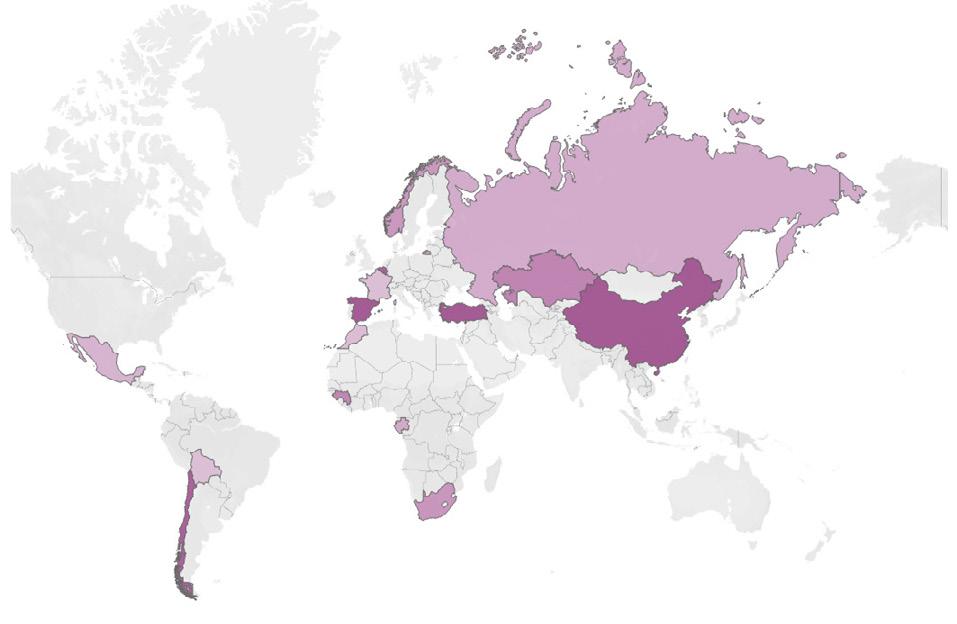
Chile
Guinea
China
Arsenic 39 %
Baryte 44 %
Gallium 71 %
Germanium 45 %
Magnesium 97 %
Natural graphite 40 %
Tungsten 31 %
South
1 The figure shows the main EU suppliers for 18 out of 26 critical raw materials that are important for the energy transition, for which over 25% of EU supply (2016-20) is concentrated in one country
Source: ECA (based on information from COM)
effect on actual supply has been limited. Many are still at an early stage, with roadmaps lacking clear timelines or measurable outcomes. In practice, trade data show little consistent improvement in import patterns, suggesting that these partnerships, while useful for engagement, are not yet delivering the level of supply security the EU seeks. Here, the ECA report suggests that the European Commission (COM), in order to ensure that its efforts to diversify imports actually result in a more reliable supply of CRMs, must evaluate whether trade agreements that include raw materials provisions are genuinely improving supply security; these findings should then be used to strengthen future agreements. It is also recommended to regularly review strategic partnerships with resource-rich countries
to determine whether they are delivering concrete results in terms of supply. By identifying which co-ops or initiatives work best, the EU could replicate successful approaches and make its external raw materials strategy more effective overall. The suggested implementation date for these changes is 2026.
Efforts to build up domestic production of CRMs in the EU continue to face a number of fundamental obstacles. While the Critical Raw Materials Act sets targets to increase both extraction and processing within the bloc, current production remains limited and far below global levels. A key issue is the lack of exploration. Many areas in Europe still need to be properly assessed
for their resource potential, and early-stage exploration has seen little investment for years. Even when deposits are found, turning them into successful mining projects is uncertain, expensive, and risky, which slows progress from the very beginning. Processing presents a similar challenge. Much of the value chain is still outside the EU, particularly for complex materials such as rare-earth elements, where processing capacity is almost entirely concentrated elsewhere. Within Europe, facilities have declined in number, and high energy costs continue to weigh on competitiveness in energy-intensive industries, like smelting and refining. Although new policy initiatives aim to support industrial capacity and reduce energy costs, it is too early to judge whether they will
to 15 years
Mining concession valid for 25 years
Mining inspectorate and government
Land use permits
Mining inspectorate and municipalities + financing, construction and start-up
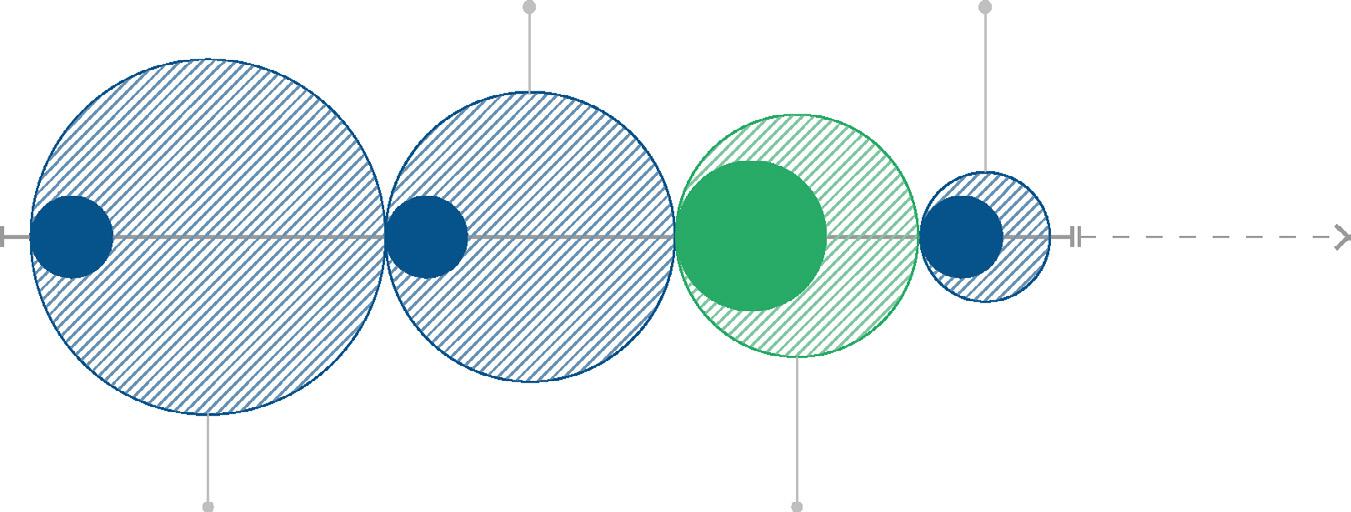
Exploration permit maximum 15 years
Mining inspectorate
Source: ECA (based on information from SVEMIN; 2025)
reverse this trend. The lack of a secure and stable raw material supply makes it harder to justify investment in processing, a cycle that is difficult to break.
Financing and regulation add more challenges. Many see investment in mining and processing as risky, which makes it hard to attract private money. Public funding is just beginning to grow. Unclear sustainability rules and a want of clear financing guidelines have also slowed progress. On the regulatory side, permitting procedures remain long and complex, with environmental assessments and administrative requirements significantly extending project timelines. In many cases, it can take more than a decade (or a few) for a mining project to move from discovery to production. Recent measures, such as one-stop shops, are intended to simplify the process, but implementation has been rather rough around the edges, and delays continue to hold back the expansion of domestic supply.
According to the ECA report, COM should launch a consultation process to gather evidence and develop practical recommendations on how to make investments easier. Based on the findings, the EU executive should then consider policy measures that could help reduce financial risks and
Environmental permit and Natura 2000 permit if needed
Environmental Court and Supreme Environmental Court
encourage more investment across the raw materials value chain; the recommended target date is 2027.
Untapped (sustainable) potential
Sustainable resource management is expected to play a larger role in reducing the EU’s reliance on primary raw materials, but its potential is still only partly realised. Current policy recognises the importance of improving how materials are used, reused and recovered across their life cycle, and the Critical Raw Materials Act introduces measures to support recycling, efficiency, and substitution. However, there are omissions in how these elements are addressed. In particular, substitution, as in the replacement of critical materials with alternatives, is not fully covered in existing legislation, and delays in implementing key measures are holding back progress. National circularity plans, intended to guide action at the EU Member State level, have yet to materialise because of delays in supporting rules.
Recycling plays a key role in this effort, but current targets and systems do not deliver consistent results for all materials. Some sectors, like battery development, have
stricter requirements, but many important raw materials still do not have clear incentives for recovery. Recycling rates remain low for several materials used in the energy transition, and sometimes they are not recycled at all. Valuable materials embedded in electronic waste are often lost ‘thanks’ to low collection rates and inefficient recovery processes. Existing targets tend to focus on overall volumes rather than individual materials, which limits the incentive to recover smaller or more complex components.
Even where recycling is technically possible, market conditions continue to constrain its development. High processing costs, limited access to feedstock, and technological challenges make it difficult for European recyclers to compete, particularly against larger, more integrated players in other geographies.
Regulatory factors also play a role, with differences in how rules are applied across the EU Member States and restrictions on waste movement reducing economies of scale. Although recent measures aim to improve product design, labelling, and permitting for recycling projects, these steps are still working their way through the system. For now, the business case for recycling many CRMs spells uncertainty,
Fig. 4. The patchwork of EU recycling, recovery, and waste collection targets
Material/ waste Regulation/policy (deadline)
CRMA (2030)
Batteries Regulation (2026, 2028, 2031, 2032)
Waste Electrical and Electronic Equipment Directive
(From August 2018 onwards - annually)
Waste Framework Directive (2025, 2030, 2035)
Strategic raw materials
Cobalt, lithium, nickel, copper (recovery target only)
Lithium-ion batteries
nickel-cadmium batteries
Household appliances, IT and telecommunication, photovoltaic panels
Municipal waste
Source: ECA (based on EU legislation)
which slows its expansion as a meaningful source of supply.
Consequently, to reduce the EU’s reliance on newly extracted CRMs, there must
Material-specific targets
General recycling and waste collection targets General SRM target
Recovery of materials
Recyclingbased consumption
be a focus on making better use of recycling, recovery, and substitution. The ECA report suggests that when the Net-Zero Industry Act is reviewed, COM should give
Waste collection Recycling efficiency
Preparation for reuse and recycling
more attention to replacing CRMs with alternative materials, especially by encouraging innovation in product design so that fewer scarce inputs are needed.

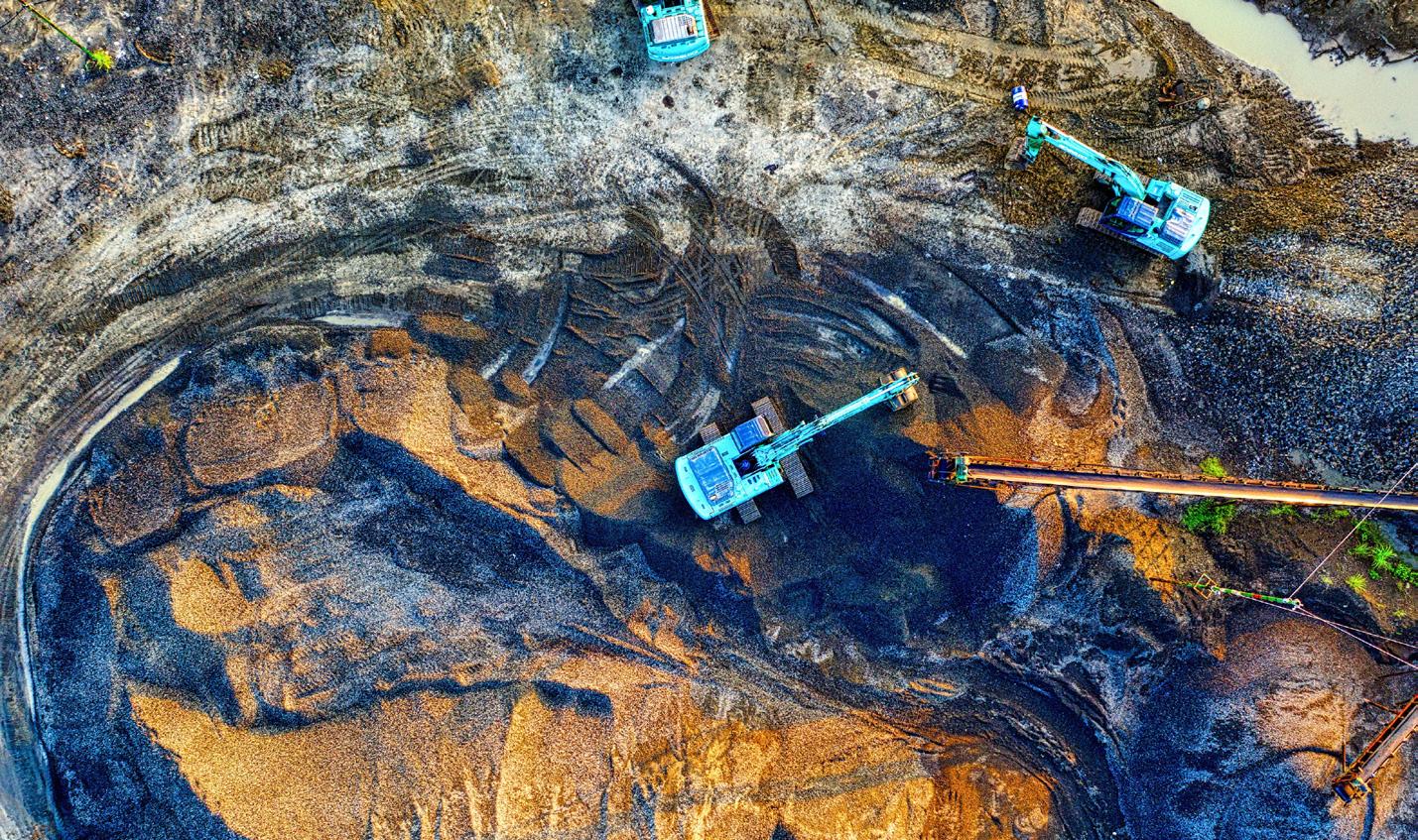
The ECA report also proposes introducing binding recycling targets for individual CRMs where this is technically possible, along with realistic targets for collecting and recovering waste that contains these materials. Finally, it stresses the need to make recycling more economically viable by making it easier to import relevant waste into the bloc and to transport it between the EU Member States, improving recycling operations. The suggested target date for these improvements is 2029.
The introduction of the new strategic project label in the Critical Raw Materials Act aims to speed up projects that will help the EU secure important materials. The label brings benefits, like quicker permits and more attention, which has already caught the interest of many in the industry. The first round of applications covered a broad range of activities, from extraction to recycling, and both EU and non-EU projects were selected. However, the rollout has been up-and-down, with fewer calls for projects than originally planned, and the overall framework still evolving as implementation progresses.
On the ground, however, the benefits of the strategic label are constrained by familiar challenges. While permitting procedures may be streamlined, delays
linked to appeals and administrative processes are still present. Financing is another weak point, as the label does not come with dedicated EU funding, leaving many projects to rely on external capital. Furthermore, the scheme’s scope is limited to strategic raw materials, excluding others, though they are important for the energy transition too. Questions have also been raised about project selection, as financial viability is not a requirement, and some projects have faced difficulties even after being granted strategic status.
In the big picture, many of these projects are unlikely to make a meaningful contribution to supply by the next decade. A large share is still at an early stage of development, with uncertain timelines and, here and there, no secured buyers for their output. Although a handful of more advanced projects are expected to move forward, they would likely have done so without the strategic designation. The link between these projects and wider EU partnerships with resource-rich countries also appears weak, limiting their role in reducing supply risks. As a result, while the strategic project instrument may support longer-term development, its impact on near-term supply is uncertain.
The ECA report’s recommendations in this area suggest that COM, during the evaluation of the Critical Raw Materials
Act in 2029, should widen the range of CRMs that can qualify, particularly those important for the energy transition. Priority should be given to projects that already have buyers in the EU, as this would increase the likelihood that the materials actually support European industries. Also, projects with longer development timelines should be allowed, recognising that many raw materials projects take years to become operational.
The EU’s raw materials strategy points the way forward, but its effects will not be immediate. Key issues – among them import dependence, slow project development, recycling limits, and investment risks – are still not solved. A sizeable gap remains between what politicians hope for and what industry can deliver, so the EU will likely stay vulnerable to global markets and geopolitical risks for some time.
Turning strategy into the reality of tangible and secure supply will require better data, clearer priorities, faster permitting, stronger financing, and more effective recycling, as well as the development of complete value chains within Europe. The Critical raw materials for the energy transition report found that without faster progress, raw materials will remain one of the key weak points in the energy transition.
by Przemysław Myszka
“The best fuel is the one not used,” is a phrase heard often enough during discussions about shipping’s decarbonisation. It is perhaps up to investments in energy efficiency to push the needle. After all, the vote on the International Maritime Organization’s (IMO) Net-Zero Framework ended in a debacle last year – with the main instigator doubtlessly more concerned with abducting or assassinating its political rivals abroad than doing something remotely green(ish), not to mention other items on the Big Beautiful Agenda. Truly low-/ zero-carbon marine fuels propelling the sector’s transition? A trickle at best. The World Bank Group did all the math in its latest report on the topic: in short, the numbers (for the most part) add up – you save on bunker by shelling out on energy-efficiency measures (EEM). Notwithstanding, almost the entire global shipping industry is merrily sailing on fossil fuels, with but a few shipowners that do it more efficiently. How come?
The paper on which the IMO greenhouse gas emission (GHG-E) reduction goals are written fortunately avoided scorching in the autumn of 2025: the ambition of hitting that net-zero by/around the middle of this century, with interim (minimumstrive) checkpoints of 20-30% by 2030 and 70-80% a decade later. The Keys… analysis states that technical and operational EEMs offer a maximum potential of reducing absolute GHG-E by 23-39% by the end of this decade vs the baseline 2008-levels. Read: no need to scramble in supply-and-demand panic and pay the premium for alternative fuels (granted you own a vessel that can run on them in the first place) to arrive at that first IMO station with flying colours. What is more, the biggest EEM potential, 5.0-15% of GHG-E reduction, lies in good-old slow steaming. Read: no need to dry-dock your precious tonnage for mounting a rotor or getting a propeller re-work.
World Bank.
Next, “about half of emissions savings from energy efficiency measures are considered cost-effective in 2030, cutting 250 million tonnes of emissions at no cost.”
Let’s money do the talking: EEMs can reduce the cost of the maritime energy transition by $170 billion/year in 2030, some $220b/y in 2040, and $190b/y in 2050. “To save up to $270 billion in green ammonia fuel costs per year, an additional annualized investment of about $35 billion in energy efficiency across the fleet is required.” Well, that’s indeed spare change of capital investment expense –should shipping, of course, want to make those paper dreams of IMO a reality. Just for comparison, the IEA World Energy Investment 2025 report states that about $1.1 trillion of total global energy investment goes to oil, natural gas, and coal combined, with the first two representing the overwhelming majority of that fossil fuel segment ($700-900b injected into the up-, mid-, and downstream value chain).
Maybe the current Oval Office tenant should reconsider reviving the country’s shipbuilding industry and instead inject that (still virtual) tribute money into Big Beautiful Factories of Big Beautiful Sails (getting on board them some NSA equipment incidentally)? Then again, you don’t see the Chinese pouring endless buckets of yuan into EEMs (let alone wind-assisted propulsion systems). The EU is, too, somewhat ascetic towards throwing funds at European shipping (even if it is the sector’s own monies collected via the block’s Emissions Trading System).
The World Bank mentions the Energy Efficiency Design Index (EEDI) and that “it has a strong enforcement mechanism as a vessel is not allowed to sail without a valid International Energy Efficiency Certificate.” But how a ship is designed and how it’s operated are two different things. Besides, when reporting on newbuilds ordered by some more environmentally inclined owners from the Baltic Sea region, the announcements either do not mention EEDI at all or state that the vessel will surpass the requirements by the magnitude of several lengths. Read: EEDI won’t save shipping’s green transition. Neither will its cousin, the Energy Efficiency Existing Ship Index (EEXI). Here, compliance is ticked off by shaft or engine power limitation. “This reduction of available onboard power is unlikely to lead to a short-term reduction of CO₂ emissions, since most vessels routinely operate at
200520102015202020252030203520402045
Historic emissions
BAU, high demand growth
Moderate Efficiency-High Demand Scenario
Moderate Efficiency-Low Demand Scenario
Source: World Bank.
BAU, low demand growth
Maximum Efficiency-High Demand Scenario
Maximum Efficiency-Low Demand Scenario
Historic intensity
BAU, high demand growth
Moderate Efficiency-High Demand Scenario
Moderate Efficiency-Low Demand Scenario
Source: World Bank.
BAU, low demand growth
Maximum Efficiency-High Demand Scenario
Maximum Efficiency-Low Demand Scenario
Fig. 4. Modelled uptake speed of measures among eligible ships
Mature energy efficiency measure
Source: World Bank.
speeds and engine loads between 38% and 50% of their maximum continuous rating, well below the maximum allowed under the
Innovative energy efficiency measure
EEXI.” If anything, the World Bank further highlights, “[…] in the future, the EEXI may limit the ability of vessels to speed up under
Fig. 5. The maximum efficiency-high demand emissions reduction pathway – relative to 2008
Historical data Projection
2005201020152020202520302035204020452050
Business-as-usual (High Demand)
Business-as-usual (High Demand)
Minimum IMO GHG reduction goals
Minimum IMO GHG reduction goals
Source: World Bank.
Source: World Bank.
Maximum Energy Efficiency-High Demand Scenario
Maximum Energy Efficiency-High Demand Scenario
Striving IMO GHG reduction goals
Striving IMO GHG reduction goals
Fig. 6. Absolute GHG emissions for the three fleet segments to 2050
200520102015202020252030203520402045 2050
Tanker (BAU)
Container (BAU) Bulker (BAU)
Tanker (Maximum Efficiency)
Container (Maximum Efficiency) Bulker (Maximum Efficiency)
Source: World Bank. GHG emissions for three fleet segments (bulker, container, tanker) under BAU-High Demand and the Maximum Efficiency-High Demand scenario to 2050.
Fig. 7. Emissions intensity for the three fleet segments to 2050
Tanker (BAU)
Tanker (Maximum Efficiency)
Container (Maximum Efficiency) Bulker (Maximum Efficiency) Container (BAU) Bulker (BAU)
Source: World Bank. GHG intensity is shown for the three fleet segments (bulker, container, tanker) under BAU-High Demand and the Maximum Efficiency-High Demand scenario to 2050.
favorable commercial conditions or to catch up on schedules due to port delays.” Read: neither EEXI will carry the day.
Then there’s the Carbon Intensity Indicator (CII) that, in turn, looks at how vessels are operated. As things stand
today, CII as a GHG-E-reduction tool underperforms twofold. First, its reduction factor for 2027-30 stands at roughly 2.6%, with 6.0-7.0% needed to nail that 30% ‘strive’ target of IMO, according to Keys… Second, CII lacks enforcement. Getting a really poor score over several years will earn the shipowner a slap on the hand and the need to come up with a corrective action plan to get a minimum CII rating. But a swarm of barely performing students, instead of a masterclass of A(ce)s, isn’t exactly what shipping needs to decarbonise. IMO does not publish annual global rating distributions in order to follow the score changes (read: CII’s efficacy; so much for transparency for an agenda that’s largely financed from public funds…). The actual supply of vessels in the best A-B range might be limited for the market to orient itself towards this energy-efficient tonnage – which was a key pitch point behind CII to begin with. And if you have goods to ship, well, C, D, or E must do (never mind the environment).
Even though the EU, with its FuelEU Maritime (FEUM) Regulation, wields an enforcement stick, it’s a piece of legislation with a limited geographical reach; thus, the World Bank’s report does not stoop over it a single time. Given the geopolitical climate these days – and the European shipping sector itself keeping a wary eye on the Regulation (with a few bioLNGcompliance-generator exceptions) – it’s a foregone conclusion that the IMO won’t agree to copy and paste FEUM on a worldwide scale. The shipping-needs-globalover-local-regulation mantra will most likely sound even more clichéd and contentless in the years to come.
Last, the shadow fleet that’s bankrolling the Russian war of aggression against Ukraine operates at zero-care capacity, its concerns over EEDI, EEXI, CII, having an IMO number, valid insurance (or any cover at all), etc., being perpetually on holiday. Those ghost tankers aren’t exactly in the prime of life – and doughnuts to roubles they aren’t sporting any EEMs…
In the model employed by the World Bank, baseline (full life cycle/well-towake) GHG-E are extended to 2050 using two business-as-usual pathways, with low and high transport demand scenarios from the Fourth IMO GHG Study and EEM uptake driven by EEDI-EEXI. For dry bulk and container carriers, a significant growth in transport demand is projected, reaching up to 200% by mid-century. “The
* Includes miscellaneous ship types such as pleasure yachts for which no improvements are modeled. Negative values mean GHG emissions increase.
Source: World Bank.
* Only includes ships which transport freight goods.
Source: World Bank.
Source: World Bank. Results are presented for the Maximum Efficiency-High Demand scenario. Solar panels were included in the modelling but were omitted from the visual for presentation purposes due to their small contribution to emissions abatement.
tanker sector experiences a decrease in demand for oil transport, but an increase in gas and chemicals transport,” the Keys… report claims, pointing out that this will probably increase emissions as the latter category’s tankers are smaller, hence the fleet’s emission/tonne performance will worsen. Also, while there will be a cap on the size of container ships, the
largest size bins are expected to grow (so more blank sailings if there’s not enough merch to stuff the deep-sea trades, eh?).
Next, the model assumes no changes to the future fuel mix, with heavy fuel oil, marine gas oil, and liquefied natural gas dominating the bunker landscape, similar to today. “This is a simplifying assumption to understand the
impact of energy efficiency measures on GHG emissions, GHG intensity, and energy efficiency.” That said, the World Bank also ran calculations for a scenario assuming a future uptake of green fuels – using e-ammonia as a proxy for a zeroemission bunker – to check EEMs’ impact on lowering the energy transition bill for the shipping industry.
In total, the analysis covers 30 technical and operational EEMs (distinguishing between market-ready technical and innovative technical measures) further divided into over 15 groups. Interestingly, “onshore power supply is […] not explicitly considered, although reduced auxiliary power demand is included among other technology groups.” Whereas innovations – such as wind-assisted ship propulsion, air lubrication, photovoltaic panels, and super-light shipbuilding materials – will enjoy an uptake of 5.0% among eligible vessels in 2030 only, other measures will reach 90% (both rise to 100% two decades later; read: the lowhanging fruit of slow steaming will contribute most in the next few years).
Alike transport demand, the analysis is split into moderate and maximum efficiency scenarios; the difference being here the application in speed reduction (10% vs 30%). There is a clear tension between transport demand and GHG-E reduction gains provided by EEMs. More goods to transport require more ships, which translates into higher absolute emissions – even despite the reduction in ship GHG-E intensity due to better vessel design coupled with the higher uptake of EEMs by existing ships and newbuilds. All Keys… scenarios foresee an increase in transport demand, putting pressure on EEMs to outpace the subsequent increase in total GHG-E. Though all abatement scenarios exceed the 20% target set by the IMO for 2030 (also thanks to a relatively small increase in transport demand in 2030 vs the baseline 2022 as opposed to 2022 vs 2040-50), with the maximum efficiency scenario even ‘overshooting’ the 30% target in both low and high demand scenarios, “[…] even in a scenario with maximum uptake of energy efficiency measures, there is a clear need for green fuels before 2040.”
Technical EEMs involve modifications to the ship’s design or equipment to decrease engine power need, “for example, reducing the frictional resistance of the ship in the water or by using
9. Cost-effectiveness and abatement potential of individual measures for tanker fleet in 2030 under fossil fuel prices
Source: World Bank. Results are presented for the Maximum Efficiency-High Demand scenario. Solar panels were included in the modelling but were omitted from the visual for presentation purposes due to their small contribution to emissions abatement.
Fig. 10. Cost-effectiveness and abatement potential of individual measures for container fleet in 2030 under fossil fuel prices
while sailing in the Middle East…), so tasking them with ensuring this-or-that EEM runs optimally might just add to their stress levels, which probably isn’t the best working environment for taking care of the environment.
Whether technical or operational, “Information about the savings potential is fragmented. While some studies only report the minimum and maximum savings, others provide only the average savings.” Regardless of data imperfection (or should we say: data secrecy?), the World Bank says that from a total fleet perspective, the largest potential for emissions reduction comes from deceleration, “[…] particularly in the maximum efficiencyhigh demand scenario.” Another operational EEM, hull maintenance, comes in second. The hyped wind-assisted propulsion systems “[…] can reduce absolute emissions from global shipping by up to 3.0% […].” Assuming full uptake, that is.
Marketing brochures/academic papers can tell the truth, e.g., that a ship constructed with the use of super-light materials will glide over the waves. Yet, actually constructing a featherweight bulker or container ship would cost a king’s ransom, flying the vessel’s freight rates sky high (which is a story already told by nuclearpowered freighters many a decade ago). As such, the Keys… report puts EEMs against the marginal abatement cost (MAC), showing the tonnes of GHG-E abated compared to whether it saves or costs money (and if somebody else isn’t recompensing for your green efforts, then, well, it’s hard imagining a business ‘investing’ in something that puts it in the red). What you want is a negative MAC, when an EEM’s CAPEX-OPEX spending is lower than the bunker invoice.
wind-assisted propulsion to reduce the power demand from the engines, thereby enhancing the overall efficiency of the machinery system.” As such, these EEMs are capital-intensive. Operational EEMs are, in turn, more on the OPEX side of things. “Better use of data and training can, for example, help to operate a vessel at optimum engine loads, reducing fuel consumption. […] However, studies highlight the need for quality and continuous
training to enhance crew capabilities for energy-efficient operations.”
In other words, if you’re buying an EEM gizmo, be it hardware or a piece of code, make sure your people know how to use it. On a side note, the World Bank does not further dwell into the human element as it relates to EEMs; data from other areas of shipping, such as safety, paint a picture of modern seafarers overloaded with work and data (not to mention being fired at
At the total fleet level – with container ships, dry bulk carriers, and tankers accounting for almost 80% of the global shipping GHG-E – nine out of the 15 analysed EEM groups are MAC-negative. “This translates to approximately half of the total GHG emissions savings from energy efficiency measures, resulting in a reduction of 250 million tonnes of emissions at no net cost,” the World Bank underscores in its Key… report.
Not surprisingly, super-light ships are also super expensive. Air lubrication also comes with a hefty price tag (and a rather modest GHG-E abatement potential). Curiously enough, slow steaming is MAC-positive, which isn’t something positive for shipowners’ pockets. But this is where the Keys… analysis takes a sharp
Source: World Bank. Results are presented for the Maximum Efficiency-High Demand scenario. Solar panels were included in the modelling but were omitted from the visual for presentation purposes due to their small contribution to emissions abatement.
12. Annual costs of meeting the lower end of the IMO GHG reduction goals
Source: World Bank. Total annual costs (in $ billion) for the global shipping fleet for reaching the lower end of the IMO GHG reduction goals according to IMO’s 2023 GHG Strategy.
turn, just as different vessels head to their specific terminals.
Deceleration isn’t a cost-effective EEM for tankers as their auxiliary engines power on-board systems (e.g., cargo temperature control equipment) run full steam regardless of a ship’s actual speed. “Assuming that the voyage length increases at slower speeds, the overall energy from auxiliary engines forms
a larger proportion of the total energy demand.” Altogether, nine out of 14 EEM groups scrutinised for tankers are MACnegative by 2030, making it possible to cut this segment’s GHG-E by 60% at no cost. Container carriers, on the other hand, benefit greatly from slow steaming. These freighters, conversely, do not – or simply cannot – benefit from wind assistance as their decks are unsuitable for mounting
fixed sails (kites are a different story, told by now as models only, with theoretical power savings in the 1.0-4.0% range; also, getting a kite entangled in the Øresund/ Öresund Bridge or in a passing ship in the Kiel Canal would in all probability be an operational bummer of the year). Then again, you could, as the Dutch from Econowind, put a wing sail in a 40-foot box for mounting on a container ship (two pieces aboard ONE’s 1,036-TEU Kalamazoo, expected to generate up to 400kW of power, potentially reducing the feeder’s fuel consumption by 5.0%). Minus the power of the Anemoi (the Greek gods of wind, not the rotor-producing bearing that name), most EEMs are cost-effective for container ships, representing 95% of the total container ship emissions savings.
Also, most EEMs are MAC-negative for bulk carriers by 2030, here too accounting for 95% of GHG-E savings (with rotor sails being among the most cost-effective, though not exactly the most potent). Overall, “the emission reduction potential is largest for bulk carriers and container ships, especially for scenarios with low growth in transport demand” (read: fewer vessels needed, so we can decelerate the fleets).
Lastly in this thread, it was quite puzzling to see the following remark in the Keys… report, “There is less overall emission reduction potential from energy efficiency measures for non-major fleet segments such as vehicle carriers and ferries, segments that are included in the global fleet.” As things stand in the Baltic (and Norway regarding car carriers), it’s exactly these shipping sub-sectors that are exploring EEMs with gusto. Finnlines’ President and CEO, Thomas Doepel, in his company’s financial review for January-December 2025, noted, “The IMO’s decision last October to postpone consideration of the Net-Zero Framework adds uncertainty to shipping’s green transition. Nevertheless, Finnlines remains firmly committed to achieving its own environmental targets. […] The fleet’s carbon intensity decreased by 14% when compared with 2024. Compared with 2008, which is used as the baseline year in shipping, the company has already achieved the 40% reduction target set for 2030 ahead of schedule.” Finnlines operates in the FEUM-EU ETS area, so given these regional regulations, it’s just good business to green one’s footprint. Its three Hansa Superstars cruise ferries, to criss-cross the Baltic Sea between
Source: World Bank. Total annual costs (in $ billion) for the global shipping fleet for reaching the higher end of the IMO GHG reduction goals according to IMO’s 2023 GHG Strategy.
Helsinki and Travemünde as of 202829, will include multi-fuel (methanol) engines, optimised hull and propeller designs, shore-power connectors, and energy-efficient on-board power management systems for both at-sea and in-port operations, “all contributing to over a 50% reduction in CO₂ emissions per transported cargo unit compared to vessels currently operating on the same routes,” Hansa Superstars’ designers from Deltamarin highlighted in a press brief. What Finnlines’ newbuilds won’t sport is wind-assisted propulsion, a total sham according to Emanuele Grimaldi, who heads Finnlines’ parent company, the Grimaldi Group.
Finally, the Keys… analysis also calculated the total cost of reaching the IMO’s GHG-E reduction goals, considering annual fuel expenses, as well as CAPEX and OPEX of EEMs and green fuels (CAPEX covers fleet investments to make vessels ammonia-capable; ammonia-OPEX includes bunkering, maintenance and repair, and crew training; considered separately, fuel costs include raw material, production, fuel distribution, and supply-demand considerations). The business-as-usual scenario will see shipping spending over $200b/year on fossil marine fuels towards the middle of the century. Should the sector decide
to tick off IMO goals with e-ammonia, the costs would increase by $410-500b in 2050 (depending on transport demand and whether base or ‘strive’ IMO checkpoints are met along the way).
Technologies must demonstrate
All things counted, why isn’t the shipping sector investing like mad to (de)fuel
Barrier
Economic
Market failures
Negative externalities
Imperfect information
Asymmetric information
Split incentives
the green transition? The World Bank goes over several economic, behavioural, and organisational barriers. It cites a survey of 5,500 ships (275 shipowners), which found that the most widely implemented devices had only a small energy-efficiency savings potential at the vessel level. At the same time, EEMs with the highest savings potential had the lowest levels of implementation. “Even for technologies with the highest uptake, the share was low, ranging from 11-18% for pre-/post-swirl devices and 20-26% for energy-saving lighting for the ships in the sample.” Then again, the Keys… analysis continues, “Air lubrication, wind-assisted propulsion, and advanced low-friction anti-fouling coatings remain less common but have grown over the past five years.” However, “The entry into force of the 2023 EEXI regulation has also driven a marked increase in engine power limitation and shaft power limitation, which may have contributed to reduced near-term investment in other energy efficiency technologies.” Well, if complying with (it seems counterproductive) EEXI is the best shipping can do concerning its green transition, it’s not doing much at all.
The industry has long been mocked as a fossil – not only owing to its extensive use of fossil fuels. “[…] Behavioral barriers relate to decision makers’ non-financial behavior. These include their inability to process information, their inertia in adopting energy efficiency measures, their values about energy efficiency, and credibility and trust issues with an information
Non-market failures
Description
Situations where market outcomes do not maximize efficiency.
Markets do not price the full cost of production.
Decision-makers lack full knowledge of efficiency options or savings potential.
One party has more/better information than another.
The party paying for efficiency is not the one reaping the benefits.
Barriers representing real features of decision-making, which are not captured in techno-economic modelling.
Shipping-specific example
Energy savings may not be fully realized if costs/benefits are misaligned across actors.
The climate impact of GHG emissions, and health impact of air pollutants, is not included in fuel or shipping costs.
Shipowners may not know the true fuel savings of new technologies.
Charterers may not trust owners’ claims about ship efficiency, leading to underinvestment.
Owners pay for retrofits, but do not receive a premium from charter rate in a time charter that pays back the investment.
Barriers such as hidden costs (downtime in retrofitting) and funding prevent uptake.
Non-market failures Barriers representing real features of decision-making, which are not captured in techno-economic modelling.
Market heterogeneity Variations across actors make “one-size-fits-all” solutions ineffective.
Hidden costs Additional costs beyond purchase/installation not always accounted for.
Access to capital Difficulty obtaining financing for efficiency improvements.
Barriers such as hidden costs (downtime in retrofitting) and funding prevent uptake.
Different ship types and routes mean that savings and applicability of measures varies.
Downtime during retrofits, training, increases in operational costs, or certification requirements deter investment.
Smaller operators may lack credit to invest in new technologies.
monetarily from fuel savings also doesn’t have to be a clear-cut issue in the shipping business (and going with that to court would guarantee a protracted source of headaches and lawyers’ bills).
Risk Uncertainty around future fuel prices, policy, or technology performance.
Shipowners hesitate to invest if payback periods are unclear.
Barrier Description Shipping-specific example
Behavioral
Bounded rationality Sub-optimal decision making.
Bounded rationality Limited cognitive capacity leads to suboptimal decisions.
Human dimension Social factors that influence the adoption of measures.
Form of information Presentation of information affects decision-making.
Credibility and trust Lack of trust in the source of information or data.
Inertia Preference for the status quo or resistance to change.
Values Cultural or personal attitudes influence choices.
Organizational
Power Internal decision-making authority shapes outcomes.
Culture Shared norms and attitudes affect organizational behavior.
Source: World Bank.
provider or party they need to collaborate with to implement an energy efficiency measure.” Organisational structures affect the implementation of EEMs, too, reflecting “[…] how the different groups within an organization have different priorities that prevent the rational and efficient implementation of energy efficiency measures.” Just like in those cartoons, where the sustainability spirit sits on the protagonist’s one shoulder, while the commercial imp perches on the other. And since shipping is a business, well, unilateral hearing loss isn’t unheard of.
Operators focus on short-term costs rather than lifetime fuel savings.
Complex technical data may not be understood by shipowners or financiers.
Owners may distrust technology suppliers’ performance claims.
Companies continue established operating practices despite available solutions.
Some owners prioritize reliability and reputation over efficiency.
Technical teams may recommend upgrades, but financial departments block them.
Companies with conservative cultures may be slower to adopt new technologies.
Within shipping, there are split incentives as well. Shipowners “sail fast, then wait” because they’re compensated for this operational inefficiency through demurrage. If it pays more than savings on bunker, that’s a clear incentive – especially if the charter-party contract contains a charter speed and a due despatch clause. Also, the payload might be so lucrative that slow steaming would only cut into the financial gains of delivering the goods as fast as possible (plus taking on board another shipment to utilise the asset as quickly as possible). Who gains
“Modeling studies, sea trials, and operational data suggest fuel savings from wind-assisted propulsion can range from as low as 1.0-2.0% to more than 40%, depending on the specific vessel configuration and operational context,” says the Keys… report. A rotor is an expensive piece of machinery in itself, not to mention the dry-docking commotion when one goes for a retrofit. Imagine now that real-life performance doesn’t live up to simulations (especially that climate change can drastically outdate historical weather data on which AI models rest). Would a manufacturer share such a case study in its circular? Surely the operator would think twice before mounting another sail – or perhaps even give another EEM a try. An EU survey from 2016 said the most important challenges seen by owners-operators for wind-assisted propulsion uptake were the lack of trusted information on the performance, operability, safety, durability, and economic implications, followed by access to capital for the development of this EEM type. While recent years have upped the number of installations to several dozen (71 at the end of Q1 2025 according to the International Windship Association), “Still, suppliers are not using a standardized method to calculate fuel savings from wind-assisted propulsion,” notes the World Bank. “Datasets on the performance of wind technologies are currently owned by each technology provider, who struggle to communicate the average savings as they depend on several factors (for example, ship type, size, and route).” Shipping not having the full picture of what they’re about to invest in is one red flag. “Financiers’ lack of knowledge about technology and trusted third-party verification data have also exacerbated access to capital.” Wind-assisted propulsion system manufacturers are trying to remedy the situation. For example, the Finnish Norsepower has shifted the upfront cost of its technology to a monthly fee based on the actual fuel saved, “[…] effectively implementing a pay-as-you-save model.” Other options explored by the industry are lease and modular rentals. And here is a real cracker: a system installation (two 37.5-metre tall WindWings) on Pyxis Ocean , chartered by Cargill,
Remuneration
Control of the ship (trading, routes sailed)
Cargo handling (stowage and storage)
Voyage expenses (port and fuel costs)
Operating expenses (crew wages, maintenance, repairs, stores & supplies, insurance, overheads)
Capital expenses (interest and capital repayment)
Voyage charter
Per unit of cargo for example $/ ton/TEU
Contract of affreightment Time charter Bareboat charter
Per unit of cargo over a fixed duration and route Per day Per day
Owner Owner Charterer Charterer
Charterer Charterer Charterer Charterer
Shipowner Shipowner Charterer Charterer
Shipowner Shipowner Shipowner Charterer
Shipowner Shipowner Shipowner Shipowner
Source: Adapted from Rehmatulla and Smith (2020), Stopford (2009) and Plomaritou (2014).
14. Range of savings from different technical measures
Savings ranges with min, max, and average points
Wind-assisted propulsion
Waste heat recovery
Contra-rotating propeller Air lubrication
Source: World Bank.
Fig. 15. Range of savings from different operational measure
Savings ranges with min, max, and average points Weather routing
Onshore power
Source: World Bank.
Ultimately, the World Bank stresses in the Keys… analysis, energy-efficiency technologies are inherently linked to the underlying asset, the ship itself. “To justify financing for energy efficiency upgrades, these technologies must demonstrate that they enhance the ship’s value, for example, by improving operating cash flow through reduced fuel costs or lower compliance expenses.” Given that wind-assistance potential largely depends on the weather conditions of the specific route a vessel serves, such a system might very well be a value-adding asset, as it can be a liability when the time comes to sell the ship. You can worry about the resale value of a ship with a sail, get sleepless nights from regulations or bunker prices, and whatnot – or you can be obscenely rich (catering to even richer people) and build the world’s largest luxury sailing yacht. At the beginning of this year, Orient Express Corinthian of Orient Express (of Accor, the largest hospitality company in Europe, in co-op with none other than LVMH) seatested her three 360-degree rotatable, tilting-up-to-70°-masts, 100-metre tall rigs, each spanning 1,500 m². In 20 knots of wind, this GT 26,600, 220-by-25-metre lavishness reached a speed of 12 knots. Because if you’re filthy with money, you can either afford to run your engines on pure apathy or be wind-green while cracking open a cognac bottle the price of a mundane rotor while sailing in the Med or the Atlantic (or anywhere you want, safe for reason or ice restrictions). Of the chronicler’s duty, it needs to be added that Orient Express Corinthian ’s engines can burn gas, and the propulsion system design is hydrogen-ready. What is partly reassuring is that Orient Express Corinthian at least isn’t a grave offence to the eye, as when the Americans commission the biggest cruise ship in the world… A four-night oh-so-green cruise (from Monte Carlo to Saint-Tropez) is being pre-sold for £35,535 (that’s for the smallest 70 m² suite; the presidential suite is 1,000 m² – in case you’re wondering), up to £62,186 for a week en route Marseille-Monte Carlo. That would Tab. 4. Cost allocation between
was supported by a grant from the EU’s Horizon 2020 research and innovation programme (Cargill and Pyxis Ocean ’s owner, Mitsubishi Corporation, aren’t exactly the poorest businesses, but if the EU wanted to foot the bill…). According to the WindWing Project, on an average global route, WindWings can save 1.5 tonnes of fuel per day (with the possibility of saving more on trans-ocean crossings).
Requested Time of Arrival (RTA)
be, respectively, some 770 and 1,350 sailings on the Umeå-Vaasa ferry crossing, the world’s first green shipping corridor. Whatever wags your environmental tail.
Source: World Bank (2025b) based on GIA (2020).
Trust to break the anchoring habit
The Keys… report concludes by putting the spotlight on an operational EEM, the uptake of which continues to face headwinds: port call optimisation (PCO). Its Holy Grail – just-in-time (JIT) arrival – can cut a vessel’s GHG-E by 3.0-25%, “[…] depending on the ship type, model assumptions, the period over which speed is optimized, and the length of the voyage. […] The reduction of GHG emissions in ports also has the added benefit of reducing the CII because emissions in port cannot be offset by tonne-miles.”
The World Bank illustrates this with a set of case studies, including Tanger Med (average anchorage time down from 17.5 hours in 2017 to 7.3 h in 2023) or the Hamburg Vessel Coordination Center (HVCC), a JV between two competitors, EUROGATE and HHLA (with a direct API with the ports of Rotterdam and Le Havre). “An example of a JIT journey provided by HVCC shows that an 18,000 TEU container ship was able to reduce its speed from 18 knots to 14 knots travelling from the Port of Rotterdam, saving 22 tonnes of bunker fuel and 66 tonnes of carbon emissions.” The Keys… report also mentions the PCO solution implemented by Gävle, especially underscoring that the Swedish seaport has made its queuing systems mandatory through law for specific terminals (managed by the port itself) or types of vessels (tankers).
These examples pretty much exhaust the GHG-E reduction opportunities and
the challenges with implementing PCO/ JIT. On the one hand, the (ever) promising yet seldom-implemented slow steaming. On the other, first, the lack of datasharing trust among stakeholders (and even the most backwater pen & paper shipping line knows that data is more precious than family silverware), who are “[…] concerned that this information could be used by third parties to infer commercially sensitive information, such as the type of commodities being traded or terminal productivity”). Second, the shortage of collaboration/ coercion tools in a landlord port authority’s box, primarily concerned with infrastructure and not with the lessee’s operations. While a crisis or an accident can be a catalyst for developing a PCO system – massive air pollution caused by a container-ship-anchorage surge outside Long Beach and Los Angeles or the grounding of a bulk carrier in the Australian Port of Newcastle, respectively – “other motivating factors include improving coordination, transparency, efficiency and situational awareness; reducing GHG emissions; reducing costs; reducing air pollution; and mitigating disputes arising from the first come, first serve system.”
Then again, the charterer-shipowner dynamics can very well mess up the cosiest PCO-slow steaming bed for cargo and demurrage’s sake. That and the endless calamities forces outside shipping’s influence throw at the schedules, with armed conflicts playing the first Kalashnikovfiddle recently (this is not to forget that a ship can wedge shut one of the world’s most important canals on its own or ram into a bridge at the cost of life and limb, effectively sealing off a seaport).
In 2026 and beyond
Do we have to wear sackcloth and ashes for reporting on transport & logistics developments, particularly the green ones? After all, a news bit about a shipowner inking a rotor investment carries more market intel (and clicks, and thumbs up on LinkedIn, and hope in humankind) than the rest of the kin not doing the same – or does it? Maybe both carry the same message, “[…] voluntary initiatives are not effective to decarbonize the shipping industry on their own […]” Read: if all the ships around the world were to employ all the EEMs, then it still wouldn’t be enough.
Authors of the World Bank’s Keys to Energy-Efficient Shipping state that “regulations, policies, and standards are key to address [the sector-specific economic, behavioral, and organisational] barriers.” As things stand today, IMO’s NetZero Framework is still lying bruised on 4 Albert Embankment’s pavement in London after last autumn’s defenestration. Coming with new, larger-than-life ‘green-everything’ slogans every postelection time, the EU has been effective at taxing the shipping business – how about a carrot policy now? The current EEDI/XI standards are too low a bar to jump over to make a decarbonisation difference.
I am not cynically saying that those who invest in EEMs do not care about the environment. But as sure as eggs is eggs, they care about their margins, too, with the bunker invoice being an opponent worthy of throwing their best punches at. In 2026 and beyond, what else can a shipping company do alone to make its business greener? If it wants to decarbonise to begin with, that is…
by Alexa Ivy
The global ferry industry stands at a critical crossroads. While the sector is eager to lead the maritime transition to net-zero, current European policy risks draining the very capital needed to achieve it. Interferry, representing the ferry industry worldwide, asserts that for sustainable shipping to succeed, the EU must fundamentally adjust its Emissions Trading System (EU ETS) to earmark funds raised for maritime projects and secure the sector’s competitiveness.
The industry’s position is clear: the transition to green technology – specifically electrification, provision of onshore power supply (OPS), and access to alternative fuels – requires massive, targeted investment. However, as the EU ETS surrendering obligation jumped from 70% to 100% in 2026, ferry operators are seeing vital funds diverted from the maritime industry’s energy transition. This financial drain comes at a moment when the sector needs every available euro to bridge the gap between ship-side innovation and shore-side infrastructure.
Interferry has been calling for an immediate halt to the further phasing-in of the EU ETS for the maritime industry. This is not a retreat from climate goals, as its representatives declare, but a pragmatic adjustment to a shifting global and domestic landscape.
Funding a modal backshift?
The initial acceptance of the EU ETS by the ferry sector was predicated on two assumptions: that a global market-based measure from the International Maritime Organization (IMO) was imminent, and that a level playing field would be maintained within the European transport sector. Both assumptions have been challenged by recent events.
In October 2025, the IMO postponed the adoption of a global greenhouse gas pricing mechanism for at least 12 months.
This delay means EU ferry operators face a regional tax without any obvious benefit for the industry, and with no clear timeline for a global solution. Almost at the same time, the EU decided to postpone the ETS-inclusion of road transport, further undermining the financial position of ferry service providers, who often are in direct competition with road transport.
“The lack of a global pricing mechanism and its default purpose to help fund the maritime green transition leaves EU ferry operators in a difficult position,” says Mike Corrigan, CEO, Interferry. “We are being taxed for our carbon emissions without any certainty of what happens with the money or when global regulation will come into force. This drains vital capital away from the very companies that are trying to lead the green transition. We are not asking for a handout; we are asking for the reinvestment of the funds we provide.”
He is seconded by Inteferry’s Director of Regulatory Affairs, Johan Roos, who emphasises the importance of the sector’s competitiveness. “The exemption for road transport creates an adverse incentive. As it stands, the ETS pushes goods and passengers back onto already congested European roads because ferry costs are artificially inflated. This directly contradicts decades of EU policy aimed at shifting transport from road to sea. Every freight rate increase on a ferry risks pushing volumes back to the road.”
The land must follow
But what about the actual main objective of the EU ETS policy, which is to create incentives for greener shipping? The ferry industry is uniquely positioned to lead the charge in maritime electrification. With many routes lasting under two hours, the sector is the low(est)-hanging fruit for zeroemission operations.
However, the technology on the ship is only half the equation. The primary hurdle is the availability of power at the pier and the funds required to install it. “Ferry operators are already the prime trailblazers in adopting battery propulsion,” says Corrigan. “But to meet ambitious targets, the land side must follow suit. We urgently need investment in high-capacity OPS infrastructure that can actually charge propulsion batteries, not just power the hotel load while at berth.”
Interferry argues that the roughly €10 billion collected annually through the maritime EU ETS should be strictly ring-fenced. These funds are essential for two specific pillars. First, electrification and OPS. An infrastructure gap stalls the transition to battery-electric vessels. Currently, OPS deployment lags behind on-board battery technology by nearly a decade. Though OPS investment is the critical link in enabling ferries to reach their full emissions-reduction potential, governments and utilities are often reluctant to invest aggressively in portside infrastructure, creating a bottleneck.

Second, the development of green bunker production. For longer routes where full electrification is not yet feasible, the industry must transition to alternative fuels such as e-methanol or bio-methane. The development and production of these bunkers require substantial support to reach commercial viability.
Despite the friction regarding the EU ETS timeline, Interferry has welcomed the European Commission’s recent policy publications, the EU Ports Strategy and the EU Industrial Maritime Strategy, launched in March 2026. These explicitly recognise the strategic importance of the maritime industry and acknowledge that the sector faces annual financing needs for fleet decarbonisation between €2.4 billion and €8.5 billion. Notably, the Commission is now encouraging Member States to reinvest EU ETS revenues into maritime decarbonisation. This includes the proposal for a dedicated EU mechanism to provide shipping companies with allowances for the uptake of sustainable fuels and clean propulsion. “The Commission is moving in the right direction by suggesting ETS funds stay within the maritime sector,” Roos notes. “However, the funding must target the existing industry and fleet. We do not need ‘prestige’ innovation projects that lack broad impact. We
know what we need to do: we need practical support for electrification and alternative fuels that can be deployed right now.”
Europe’s ferry fleet facilitates the movement of 400 million passengers and 200 million freight units annually. In many regions, such as the Baltic Sea or the Mediterranean islands, ferries are the only viable lifeline for many communities. Recent studies by environmental associations have highlighted the potential for ferry electrification, noting that ferry emissions in certain European ports are significant. Interferry shares this vision but stresses the need for context. “Ferry services are high-capacity, shared infrastructure,” underlines Roos. “In places like Barcelona or Dublin, they provide essential services that keep the economy moving. Taxing these links without providing the infrastructure to green them only serves to penalise the communities that rely on them. We must balance climate ambition with the financial reality of our industry.” The Baltic, on its part, has already shown that it’s possible to electrify shorter but also longer ferry

services (either fully or in a hybrid mode, with newbuilds or retrofits).
The ferry industry remains fully committed to the goal of net-zero emissions. The technology is ready, and the will is there. However, for this transition to be successful, it must be supported by an economic framework that preserves the industry’s ability to invest.
Ring-fencing EU ETS funds for a sustainable transition of ferry shipping is the most pragmatic way to secure this future. It allows the industry to retain the capital necessary for electrification, OPS, and retrofitting, while ensuring that ferries remain competitive against road transport.
As the European Commission prepares its review of the ETS Directive in Q3 2026, Interferry will continue to pound this message: use the funds where they are collected, secure the level playing field, and give the ferry industry the tools it needs to finish the job.
Interferry is a highly respected global ferry trade association with consultative status at the IMO and similar influence at the EU, as well as with many other maritime governance authorities. Speaking on behalf of more than 280 companies and representing 2,200+ individuals in over 40 countries, its primary purposes are to represent the ferry industry on regulatory and policy matters, including safety and sustainability, and to facilitate networking and communications among its members. Ferry to interferry.com to learn more.
by Kyriakos Panopoulos, Director of Research, Centre for Research and Technology – Hellas (CERTH), Despoina Georgiou, Collaborating Researcher, CERTH, Michael Bampaou, Collaborating Researcher, CERTH, and Jari Ihonen, Principal Scientist, VTT Technical Research Centre of Finland
Hydrogen and hydrogen-derived fuels are expected to play a critical role as future energy vectors for maritime applications, as clearly stated in the EU Hydrogen Strategy. Fuel cells, particularly proton exchange membrane fuel cells (PEMFCs), utilizing hydrogen or hydrogen derivatives, have emerged as promising alternatives to conventional combustion engines, offering high efficiencies, lower emissions, and quiet operation. However, maritime applications require higher power and much longer lifetimes than those developed and achieved so far by state-of-the-art fuel cell stacks and systems.
Two EU-backed projects (both supported by the Clean Hydrogen Partnership and its members Hydrogen Europe and Hydrogen Europe Research), H2MARINE and MiNaMi, are currently pioneering the next generation of high-power PEMFCs by addressing the dual challenges of power density and durability, providing the maritime sector with a viable roadmap for the multi-megawatt era.
The H2MARINE project is a 42-month initiative co-funded by the EU and the Swiss State Secretariat for Education, Research, and Innovation (SERI). It is implemented by 13 partners from academia, research, and the commercial & maritime sectors. H2MARINE aims to design, test, and validate two PEM stacks capable of generating 250-300 kW of electric power for marine applications.
Adopting a top-down approach, the project builds on the proof of concept of two PEM stacks and will identify testing requirements, operating conditions, and load curves in collaboration with key stakeholders from the shipping industry. The overarching objective is to define end-user needs, maritime operating environments, and test conditions, while also evaluating diagnostic tools for stack performance, overall system integrity, and the health prognosis of critical components. By optimizing the design of stack modules for future up-scaling to
10MW powertrain systems, H 2MARINE aims to advance fuel cell technology and support the transition toward cleaner and more sustainable maritime transport.
The technical targets of H2MARINE focus on designing and building two different PEM stacks (by Powercell Group and EH Group) generating 250-300 kW for marine vessels, while achieving a stack lifetime of 40,000 to 80,000 operating hours in line with the targets set by the Clean Hydrogen Partnership. The project also seeks to improve system integrity and the health monitoring of critical components through enhanced diagnostics and testing. Scalability remains a core priority, with flexible design concepts adaptable to different power needs and targeting systems of up to 10MW. Cost efficiency is another defining purpose, with a CAPEX target of €1,000/kW by 2030.
Through the assessment of the technical and economic feasibility of the proposed solutions, the partners will be able to identify promising end uses, potential markets, and the most attractive opportunities. The project is designed to test these solutions in a relevant environment that closely reflects actual implementation conditions, ensuring that the results are robust and applicable to the global maritime sector.
MiNaMi
Following H 2MARINE (and using one of the stacks developed within it), the
MiNaMi project (development of ‘Million Nautical Mile’ fuel cell systems for the shipping industry) aims to develop a megawattscale PEMFC system, focusing strongly on durability. Rather than simply scaling up existing technology, the project integrates advanced sensing and smart-power electronics to minimize hydrogen losses and extend the system’s lifetime to more than one million nautical miles.
The principal ambition is to develop the first megawatt-scale PEMFC system for maritime use, capable of operating over one million nautical miles at a speed of 12.5 knots. The system and its associated power electronics are being designed as modular building blocks for fuel cell installations exceeding 10 MW, opening the way for new maritime applications. Meanwhile, the use of the latest stack technology developed in H 2 Marine is expected to reduce the system’s footprint, increasing the usable on-board volume for fuel, cargo, and passengers.
The expected results of MiNaMi include the development of a MW-scale PEMFC module with durability above 80,000 operating hours in relevant maritime applications, while targeting a maritime system CAPEX below €1,000/kW. The project also aims to maximize hydrogen utilization and minimize hydrogen emissions to the atmosphere, both of which are essential for improving
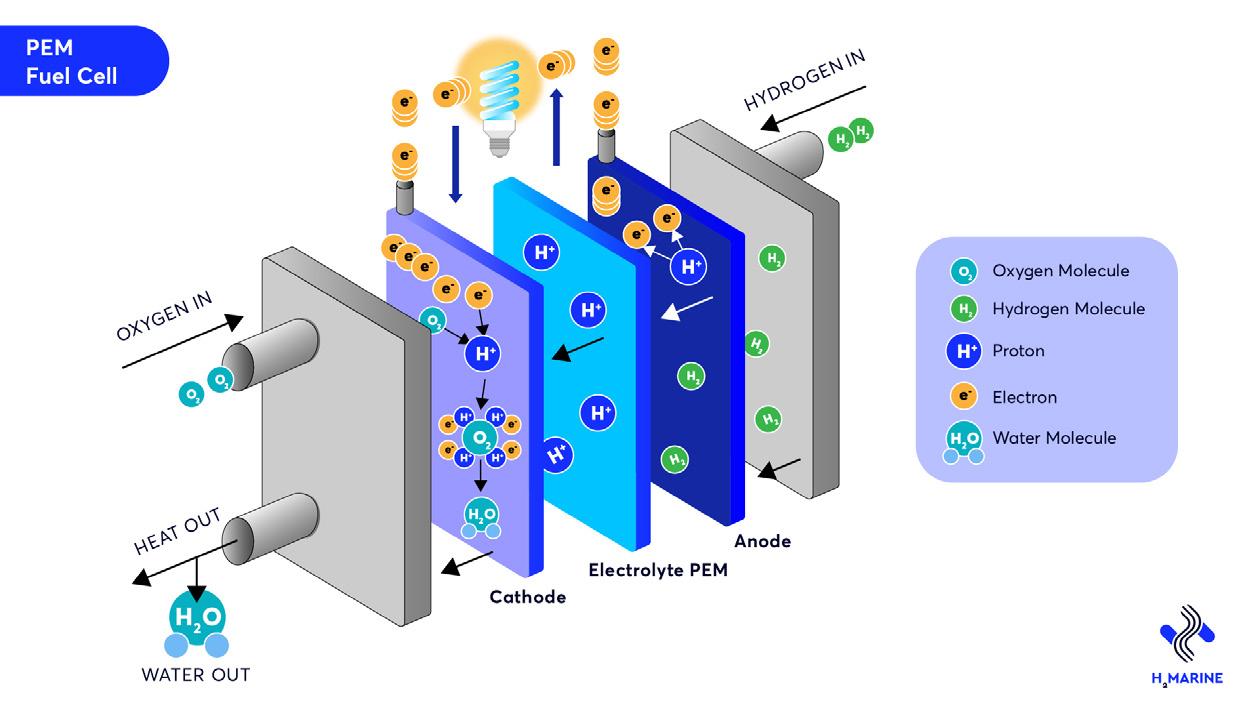
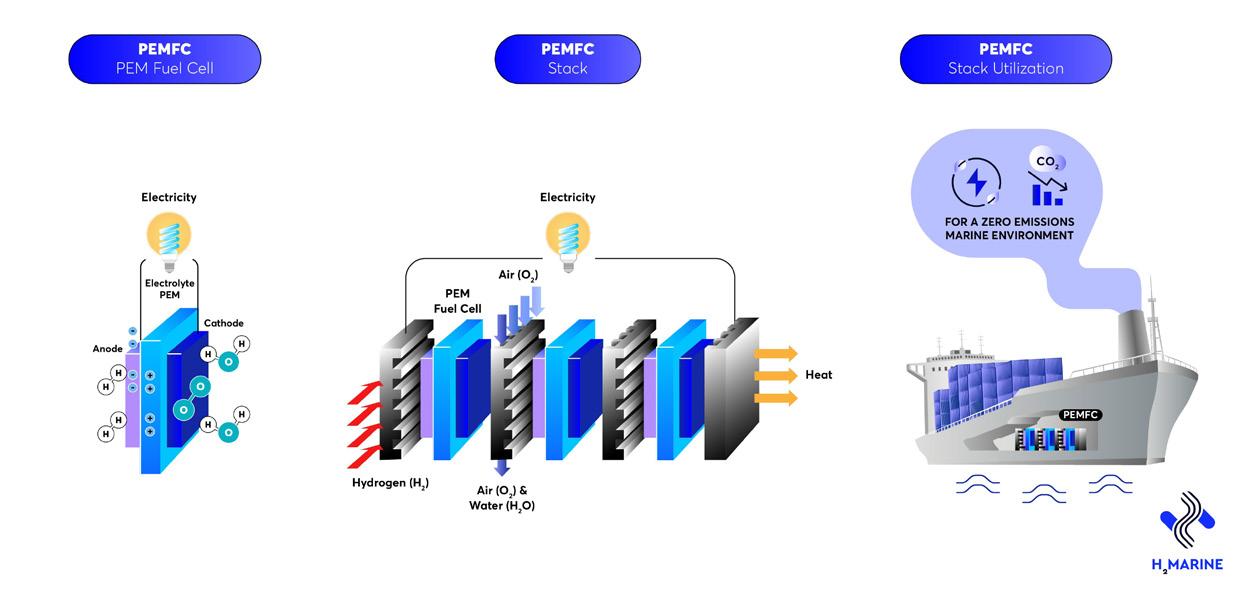
the environmental and economic performance of hydrogen-powered vessels. Although its primary focus is maritime transport, the multi-stack solutions developed within MiNaMi can also be applied to other MW-scale PEMFC applications, including trains, mine trucks, and peakpower plants supporting the electricity grid. In this way, the project contributes not only to maritime decarbonization but also to the wider deployment of hydrogen technologies in sectors where direct electrification may not be sufficient. Through the advancement of durable and modular megawatt-scale PEMFC systems, MiNaMi supports Europe’s ambition to maintain a leading position in the development of efficient fuel cell technologies.
Taken together, H 2 MARINE and MiNaMi address two closely connected challenges on the path toward zero-emission shipping. The former focuses on the design, testing, validation, diagnostics, and health monitoring of PEMFC stacks for marine applications, helping to establish the technical foundations needed for reliable MW-scale maritime deployment. The latter builds on this direction by targeting the development of durable MW-scale fuel cell systems, with an emphasis on long operating lifetimes, hydrogen efficiency, and modular designs that can be scaled beyond 10 MW. Their combined output is expected to strengthen the entire development pathway
of maritime PEMFCs, from stack-level innovation and system integrity assessment to large-scale system integration and long-term operation under realistic marine conditions. The broader impact extends beyond technology development alone – the improvement in power density, durability, diagnostics, and scalability will help increase the competitiveness of PEMFCs against fossil- and synthetic-fuel-based solutions, especially in applications where weight, volume, and operating efficiency are critical. Lastly, the projects are also expected to strengthen European fuel cell manufacturing, stimulate innovation across the hydrogen and maritime value chains, and support supply chain development, type approval, and future market uptake.
by Maximilian Reimann, Team Leader Maritime Operations Management, Christoph Martius, Scientific Researcher, and Ole John, Head of Department Ship and Information Management, Fraunhofer Center for Maritime Logistics and Services
The maritime industry is facing a growing number of security-related challenges that are increasingly pushing traditional monitoring and control approaches to their limits. Besides traditional risks such as marine accidents or severe weather, deliberate disruptions and hybrid threats are on the rise: sabotage of subsea cables, GNSS jamming and spoofing, or drone flights over ports and terminals demonstrate that maritime infrastructure has become an integral part of hybrid threat scenarios. Port authorities, waterway administrations, and offshore operators, therefore, face challenges in providing a robust maritime situational picture under dynamic conditions.
Until now, maritime monitoring and surveillance have relied primarily on stationary sensor systems. Radar stations, AIS receivers, and cameras are permanently installed and configured to cover specific, predefined areas. Their deployment involves significant administrative, organisational, and infrastructural effort. While fixed systems provide a continuous flow of data, they are limited in their coverage and adaptability. High investment costs, lengthy approval processes, space requirements, and complex IT integration contribute to long lead times for deployment.
In rapidly changing situations, such rigid structures can only respond to a limited extent. Furthermore, data sources are often evaluated in isolation, meaning that the interactions between cyber and physical events remain only partially visible.
One way to overcome these limitations is to deploy mobile, adaptive, multi-sensor platforms. Rather than relying solely on fixed infrastructure, such platforms can be
rapidly moved to where they are currently needed the most. Land-based and waterborne sensor platforms shift the monitoring paradigm from static presence to demanddriven responsiveness – without prolonged set-up phases or permanent alterations to existing infrastructure. Such systems can be put into operation within a very short time and removed just as quickly once an operation is concluded. They complement stationary solutions and significantly expand the scope of action for operators and authorities.
The real challenge, however, lies not only in data collection but also in processing the resulting volumes efficiently: vessel movements, radio signals, GNSS data, radar information, operational data, and environmental parameters. Only by intelligently linking these sources can a consistent maritime situational picture be created.
For operators of critical maritime infrastructure, this approach means not only more data but also better decision-making. Ports, terminals, offshore wind farms, or key waterways can be monitored in a targeted and needs-based manner – without having
to install new fixed systems across entire areas. AI-driven analytics detect anomalies – such as suspicious vessel movements, disruptions to navigation signals, or drone overflights – prioritise events and reduce false alarms, crucial in a crisis.
Monitoring thus evolves from mere observation to a proactive situation assessment that actively supports decision-making. These systems do not replace human judgment – they enhance transparency and situational awareness.
The Fraunhofer Center for Maritime Logistics and Services combines expertise in data and sensor fusion, system integration, and AI-based decision support. By combining real infrastructure with an in-house analytics platform, research concepts can be validated directly under real-world operating conditions. To this end, Fraunhofer CML operates a sensor network of four mobile, adaptive, multi-sensor platforms. Three land-based cells-on-wheels and the
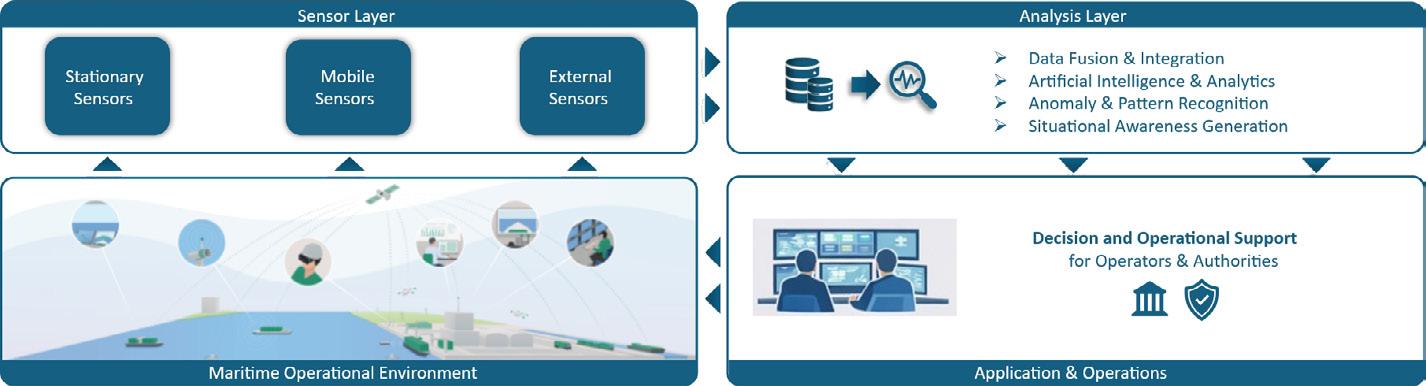
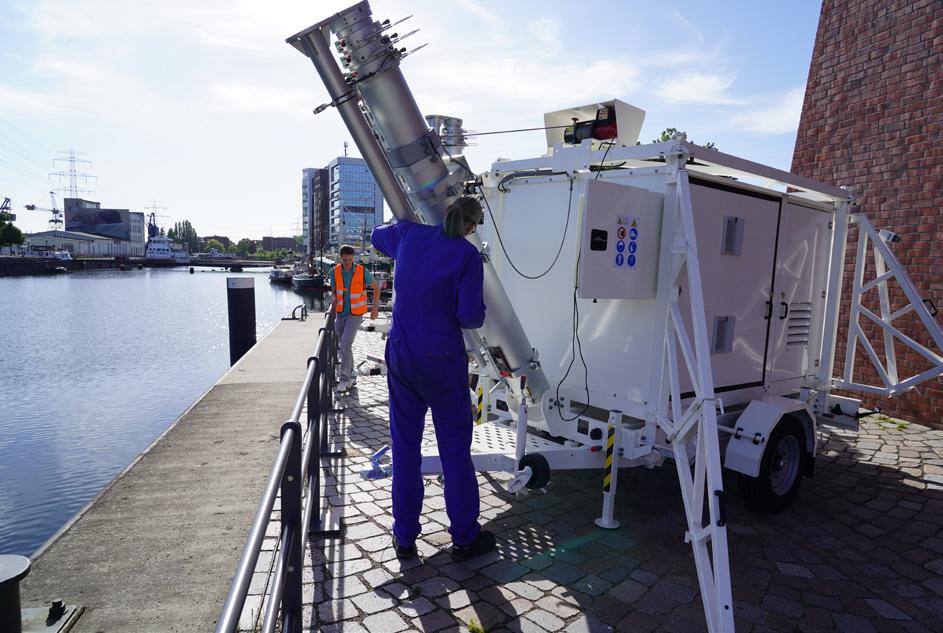
research vessel Vektor, serving as a maritime carrier platform, form the core of this network.
Equipped with a wide range of sensors, this combination makes it possible to capture the maritime domain from both land and sea, and to merge these different perspectives into a single common situational picture. All collected information is fused into a cyber-physical situational picture within an independent (and safe) data and analytics platform. AI and analytical tools – for example, for traffic flow analysis or speech recognition – are used to extract relevant information from data streams and to link them in a way that creates operational value.
Building on the data and analytics platform, Fraunhofer CML develops application demonstrators for various use cases as part of its research and development. For example, the adaptive, mobile multi-sensor platforms are being used in the DIEB research project (data-driven identification, assessment and addressing of hazards for LNG terminals) to supplement the situational picture at the LNG terminal in Wilhelmshaven with additional data sources. Based on this enhanced situational picture, data-driven algorithms are being developed to identify and assess threats posed by espionage and sabotage activities across the domains of air, sea, and cyber. The goal is to shorten response times significantly in addressing these threats.
The DIEB project is being carried out in collaboration with Niedersachsen Ports and other industrial and governmental partners, including the Association for Unmanned Aviation, the German Federal Waterways and Shipping Agency, Deutsche Energy Terminal, the State Office of Criminal Investigation of Lower Saxony, and the German Navy. The Federal Ministry of Research, Technology and Space funds the project as part of the Research for Civil Security programme.
The development of AI-supported situational awareness systems and the integration of adaptive, mobile multi-sensor platforms represent an important step towards greater maritime resilience. One conceivable scenario would be the rapid deployment of mobile sensor platforms around a sensitive port facility or along a heavily trafficked waterway to provide a robust, context-specific situational picture within a matter of hours in response to a changing threat level.
The future of maritime security does not lie in replacing stationary systems but in strategically complementing them with mobile multi-sensor platforms and utilising the data they generate wisely. These platforms enable flexible scaling of monitoring capabilities and direct integration of data-driven analytics into operations. For operators of maritime infrastructure, this ultimately means greater responsiveness, increased transparency, and enhanced resilience in the face of dynamic threat scenarios.
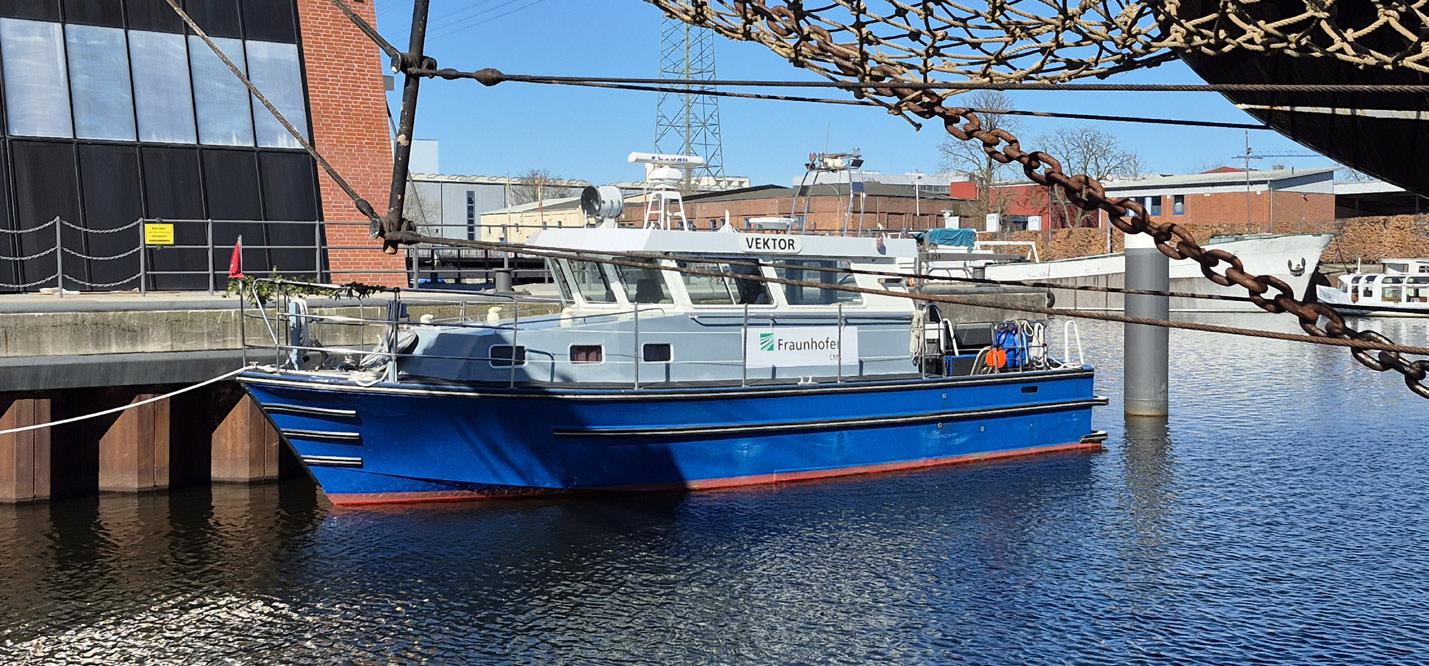
by Steve Esau, COO, SEA-LNG
A decade ago, liquefied natural gas (LNG) as a marine fuel was largely confined to short-sea shipping corridors in Northern Europe. Today, SEA-LNG’s 2025-26 A View from the Bridge annual assessment –titled The Journey: A Decade Moving Towards a Cleaner Future – shows a picture transformed beyond recognition. The methane decarbonisation pathway, advancing from fossil LNG through liquefied biomethane (LBM) to e-methane, has become, as our organisation describes it, a clear runway to a cleaner future. Nowhere is that transformation more evident than in the ports and sea lanes of the Baltic and North Sea regions, where LBM uptake has accelerated from pilot project to commercial reality at remarkable speed.
When SEA-LNG was founded in 2016, just 81 dual-fuel vessels were in operation worldwide.
Today, there are almost 900 in service, with a further 650+ on order. Including LNG carriers, the methane-powered global fleet in operation and on order equates to approximately 10% of global vessel tonnage by deadweight.
Regulatory uncertainty and constrained shipyard capacity pushed total alternative fuel orders down from 551 in 2024 to 275 last year – yet LNG’s share of that total strengthened, from 67% to 79%, underscoring that when shipowners commit to alternative fuels, they overwhelmingly choose methane. “Moving forward, it is abundantly clear that LNG has both a short-term and long-term role to play in shipping’s transition strategy. This is reinforced by added safety advantages not yet enjoyed by
other low-greenhouse gas fuels,” said Knut Ørbeck-Nilssen, CEO, DNV Maritime.
LBM: we have lift off!
Liquefied biomethane is chemically identical to fossil LNG, fully drop-in compatible, and can cut greenhouse gas (GHG) emissions by up to 80% on a well-to-wake basis – or even deliver negative lifecycle emissions when produced from manure-based anaerobic digestion. The standout finding of our latest assessment is the explosion in LBM bunkering across Europe over the past 12 months, driven by EU regulatory pressure and voluntary customer commitments. LBM bunkering has already taken place in key ports across Finland, Lithuania, Norway, Sweden, and the Netherlands, involving at least 10 major bunker suppliers.
The Scandinavian dimension is particularly compelling. Since August 2025,
Viking Line’s Viking Glory and Viking Grace c ruise ferries have operated between Turku and Stockholm entirely on LBM, generating compliance within Gasum’s FuelEU Maritime pool.
The Swedish Furetank committed its entire EU fleet to mass-balanced LBM for the remainder of 2025. United European Car Carriers, which took delivery of the first LNG ro-ro vessel in 2016, confirmed that over 95% of its LNG consumption since July 2024 had been LBM, avoiding 75,000 tonnes of GHG emissions.
Gasum’s new 120GWh biomethane plant in the Swedish Götene is physical evidence of the supply chain investment now underpinning the transition. And these are just a few examples from the Baltic; others are following suit.
“Bio-LNG is a scalable solution we can use today. Its increasing availability
LNG fuelled vessels in operationLNG fuelled vessels on order
LNG fuelled vessels in operation LNG fuelled vessels on order
LNG carriers in operation LNG carriers on order
Source: SEA-LNG/DNV AF
and commercial viability give our customers confidence that their dual-fuel LNG fleets are ready to further reduce emissions,” shared Dexter Belmar, Vice President of Shell Downstream LNG.
Why methane leads: the infrastructure advantage
LNG bunkering is available in 222 ports worldwide, supported by 62 bunker vessels in operation and 38 on order – up from a single
PORTS WITH REGULAR BIOMETHANE BUNKERING OPERATIONS
PORTS WITH AD HOC BIOMETHANE BUNKERING OPERATIONS
KEY PORTS DECEMBER 2025
Source: SEA-LNG Analysis
Source SEA-LNG DNV AFI
2016 bunker barge in Sweden. Over $150 billion has been invested in LNG dual-fuel vessels and supply chains over the past decade.
The contrast with rival fuels is stark: current global LNG production stands at
406 million tonnes per annum, already 100 times marine fuel LNG consumption, with infrastructure at virtually every major port. The infrastructure supporting the global ammonia and methanol trade is approximately 30 and 80 times smaller.
Fossil ammonia and methanol are themselves mainly produced from methane today, meaning they carry higher well-to-wake emissions than fossil LNG – despite the green credentials often attributed to them. To achieve emissions parity with LNG, operators choosing these fuels must blend in large and costly volumes of green variants. On any standard investment metric, the methane pathway offers a materially shorter payback period than any rival alternative fuel.
The pathway forward: bio- to e-methane
The methane framework is incremental: fossil LNG today, LBM as the nearterm step, and e-methane – produced from renewable electricity and green hydrogen –as the zero-emission destination. All three stages use identical engines, bunkering infrastructure, and operational procedures.
Current global biomethane production of approximately 36 million tonnes per annum already represents 15% of shipping’s total energy demand, and the International Energy Agency estimates just 5.0% of the total global
production potential is currently exploited. For the Baltic region, with its developed agricultural sector and growing biogas industry, the feedstock opportunity is significant.
On e-methane, three large-scale projects totalling approximately 150,000 tonnes per annum are in FEED, targeting start-up between 2028 and 2030 in the US and Finland – the latter’s involvement reflecting the Baltic’s continued leadership on the methane pathway.
Methane slip and fugitive emissions: an improving picture
High-pressure diesel cycle two-stroke engines, accounting for 75% of the LNG vessel order book, have already effectively eliminated methane slip. For low-pressure technologies, slip has fallen by roughly 60% over the past decade, and SEA-LNG maintains that it will be resolved across all engine types by 2030. A recent Baltic trial on Wasaline’s Aurora Botnia ferry (under the EU-funded Green Ray project) cut methane slip by up to 56% in Wärtsilä’s low-pressure four-stroke engine.
A 2025 Rystad Energy study commissioned by SEA-LNG found the global average wellto-tank fugitive emissions intensity for LNG bunkering fuel is 13.9 grams of CO₂e per megajoule – materially below the EU FuelEU Maritime default of 18.5g CO₂e/MJ.
Recognise and reward: a call for (global) regulatory clarity
The International Maritime Organization’s October 2025 decision to delay its Net-Zero Framework was frustrating as it risks regulatory fragmentation. SEA-LNG is calling for a single, global, goalbased, and technology-neutral decarbonisation framework that protects early adopters, incentivises practical and investable solutions, and permits compliance pooling – a mechanism already delivering results through the FuelEU Maritime pools operating across the Baltic Sea region. For operators here who led LNG adoption and are now at the frontier of LBM commercialisation, the rules of tomorrow must recognise and reward what has already been built.
The methane decarbonisation pathway is no longer a proposition or a projection – it is a functioning commercial reality, with infrastructure in place, long-term supply agreements signed, and vessels in Northern European waters already running on near-zero emissions fuel today.
For the shipping community up there in the North, the transition is not approaching. It has already begun, and the industry is leading it alongside bunker providers and regional market regulations.
Founded in 2016, with numerous high-profile members including shipping companies, ports, LNG suppliers, bunkering companies, infrastructure providers, original equipment manufacturers, classification societies, banks, and brokers, SEA-LNG is a multi-sector industry coalition whose members work together to demonstrate the benefits of LNG and its variations as a marine fuel throughout the entire value chain. Head to sea-lng.org for more info.
by Przemysław Myszka
The Danish Port Esbjerg has, throughout the years, become Europe’s prime spot for installing wind turbines out there in the open sea. Though still booming, the Danes are already investigating other potential golden goose businesses. As such, we’re talking with the seaport’s Tracy Jin about developing Europe’s first carbon capture and storage terminal, while facilitating the flow of electric vehicles into Europe and aquatic product exports to Asia. The conversation also touches on military mobility, innovation, and why building direct international partnerships is key to strengthening resilient and future-proof logistic corridors.
Can you walk us through your port’s recent performance?
The past year will go down in history as a record one for our seaport, especially concerning the offshore wind energy (OWE) business. As things stand today, almost 93% of all North Sea OWE projects are carried out with the involvement of Port Esbjerg. In 2025, 1.3 gigawatts of capacity were ‘exported’ through our quays, a year-on-year increase of around 100%. The start of this year has been nothing but robust as well, as we have secured a significant pipeline of OWE projects that will use Esbjerg for years to come. Automotive is another sector that puts a smile on our faces. With a growing number of Chinese EVs entering Europe, the port is positioning itself to capture an increasing portion of this market. Interestingly enough, fish shipments are heading more and more in the opposite direction. Building on the co-op we’ve struck with one of the world’s largest container ports, Ningbo Zhoushan, Esbjerg aims to create a full value chain that will see Scandinavian fish exported in reefers to Far East Asia. In parallel, we are exploring the development of a dedicated container facility to further strengthen our offering, including intermodal. Beyond boxes and cars, break-bulk and project cargo remain Esbjerg’s core strengths. Besides the wind energy sector, we’re expanding our heavy-lift capacity to serve
other large-scale industrial and energyrelated shipments. As a case in point, Chipolbrok’s Herbert called at our port this year, the largest vessel from China to date, bringing wind energy components. Together with the Chinese-Polish shipowner, we hope to further deepen Esbjerg’s role in serving Asia-Northern Europe trade. This reflects how we approach business – directly. In an increasingly uncertain geopolitical environment, ports must rely on strong, trusted partnerships to secure trade lanes, expand networks, and share knowledge. That is also why Esbjerg joined the Baltic Ports Organization, as a commitment to regional collaboration and building resilient, future-proof logistics corridors.
Apart from wind (and fish, vehicles, and containers), what other trends are shaping Esbjerg’s business ventures – today and tomorrow?
After OWE, the topic of decarbonisation surfaced. Our seaport was the first in Denmark to obtain a licence to handle liquid CO₂ for further storage underneath the North Sea. Developing Esbjerg into a CO₂ logistics hub will begin with handling tank containers coming to us on lorries. The next stage will see CO₂ transported by rail in greater volumes. Ultimately, there should be a pipeline network through which CO₂ from Denmark and abroad will come to us. Also, we wouldn’t mind witnessing the addition
of the ‘utilisation’ part to carbon capture and storage, making Esbjerg a production site for alternative fuels.
Esbjerg will not only help other industries decarbonise, but it’s also greening its own operations – we’ve invested in onshore power supply and started monitoring inport emissions to pinpoint areas for future green incentives, like vehicle or cargo-handling equipment electrification.
Dual-use infrastructure for military mobility? Esbjerg is a NATO port, meaning we’re commercially closed from time to time when the Organization uses our quays for (dis)embarkation. The deepening of our fairway (from 9.3 to 12.8 metres) and adding land space (570,000 m²) are two recent examples of dual-use investments.
Innovation? Port Esbjerg has established a hub to work with our partners on new solutions. Our seaport is home to around 250 companies serving the OWE industry. Esbjerg wouldn’t be such a success story if we were ‘only’ focusing on the heavy-duty job taking place on our quays and in the yards.
Though Esbjerg can be seen as a traditionally universal seaport, handling dry and liquid bulk goods and general cargo, we came to realise that we also need to specialise – and do it smartly. The OWE ‘gamble’ paid off, and our port grew handsomely alongside the industry. Richer with this experience, we hope other vistas will prove as developmental.
The Port of Trelleborg, with the ambition of being Europe’s most sustainable RoRo port, is constantly working on various improvement measures within environment and sustainability. Now onshore power facilities have been installed at ferry berths no. 10 and 11. In quarter 2 in 2026, four of TT-Line’s vessels will be able to connect to onshore power in the Port of Trelleborg.
By using onshore power, vessels can turn off their auxiliary engines while being alongside berth, which reduces emissions of carbon dioxide, nitrogen oxides and particles, as well as reducing noise. The port’s two own wind turbines will supply the vessels with fossil-free electricity.
The Port of Trelleborg has been granted co-financing in the EU’s Alternative Fuels Infrastructure Facility (AFIF) in the Connecting Europe Facility (CEF) for the onshore power supply (OPS), in the project called ”Baltic Green NET”. As a next step, the port is planning to install onshore power supply also in ferry berth no. 8.
The Port of Trelleborg is taking the next step in its energy transition with a new agreement for a 4 MWh battery facility in the port area. The battery will store electricity and be used during periods of peak demand, for example when several vessels require power at the same time.
The Port of Trelleborg already produces renewable electricity through its wind turbines, generating approximately 15 million kWh per year. This makes the port self-sufficient in electricity. With battery storage, this energy can be used when it is most needed, such as when vessels are connected to onshore power.
From 2030, an EU regulation will require larger vessels to connect to onshore power while in port. This will result in significantly higher energy demand. The battery facility will play an important role in meeting these future requirements and provides an energy-efficient way to store and utilise the port’s own renewable electricity for its customers.
Port of Trelleborg is Scandinavia’s largest RoRo port for rolling traffic, one of Sweden’s five core ports designated as strategically important by the EU and an important part of the European transport corridors. The port is an important node for Sweden’s import and export, and thus has an important meaning and role for the climate transition of freight transports.
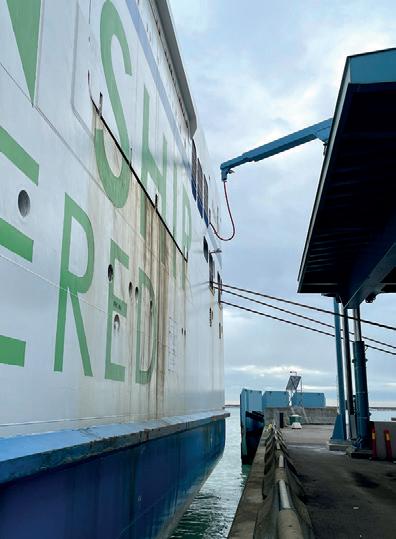
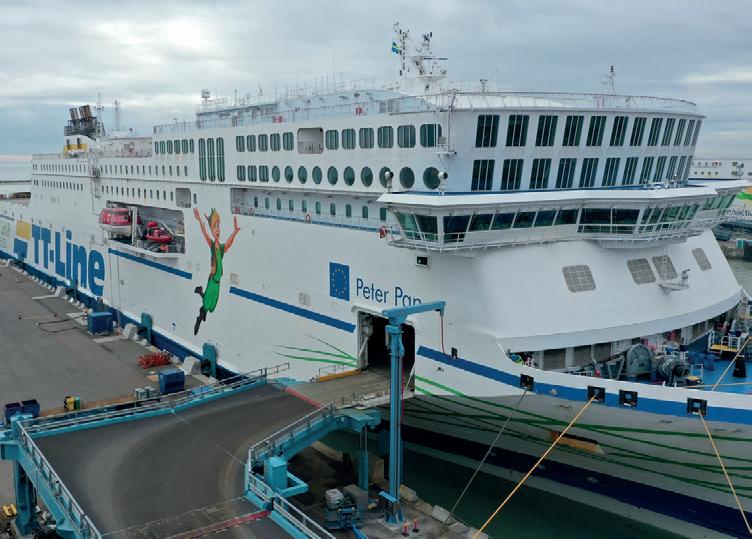
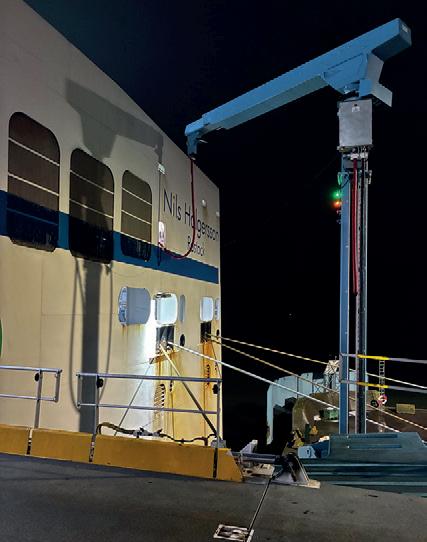
by Lena Lorenc, External Consultant, BPO
Green shipping corridors (GSCs) have emerged as a promising mechanism to speed up the transition away from fossil fuels in shipping. However, there are significant practical barriers standing in the way of establishing these zero-emission maritime routes, including high costs, limited availability of alternative fuels and infrastructure for bunkering them, a lack of operational experience with new technologies, and insufficient policy instruments tailored to corridor-level implementation. Addressing these challenges requires transnational collaboration that brings together ports, shipowners-operators, fuel suppliers, forwarders, shippers, financiers, and policymakers across multiple countries and sectors.
To advance this work, the Baltic Ports Organization (BPO) has partnered with IVL Swedish Environmental Research Institute and the Port of Klaipėda to launch Baltic Sea Green Shipping Corridors (BalticSeaGSC) – a seed funding project under the Swedish Institute Baltic Sea Neighbourhood Programme, running from October 2025 through September 2026. The project, explicitly positioned as a stepping stone toward a larger transnational initiative, maps stakeholder needs alongside financial and regulatory instruments supporting GSCs at the EU and national levels in Estonia, Lithuania, and Sweden. It evaluates which shipping segments, fuel types, and routes to target, as well as expands the partnership through targeted stakeholder engagement.
One large green shipping corridor
The project strongly aligns with key policy frameworks, including the EUSBSR PA Ship objective of making the Baltic Sea a model region for sustainable shipping, the EU Mission on Oceans and Waters (carbon-neutral blue economy), the EU Green Deal suite (FuelEU Maritime, EU ETS, Fit for 55, the Alternative
Fuels Infrastructure Directive), and the Clydebank Declaration commitment to establish GSCs globally. BalticSea-GSC has been registered as an umbrella project under the EUSBSR Policy Area Transport, providing enhanced visibility and access to regional decision-maker networks.
According to Sami Vesterinen, Advisor for EUSBSR PA Ship and the Finnish Transport and Communications Agency, projects such as this play an important role in advancing green corridor development:
“The participation of PA Ship in an advisory function ensures that project results are communicated to policymakers. Our ultimate goal is for the Baltic Sea to become one large green shipping corridor.”
At the beginning of December last year, IVL hosted a successful two-day kick-off meeting in Stockholm, bringing together project partners, reference group members from Swedish and Finnish transport authorities, the Estonian Climate Ministry, and industry leaders, including Wasaline –operator of the Aurora Botnia , one of Europe’s most advanced hybrid ferries
that plies on the world’s first GSC, the ferry crossing between Vaasa and Umeå.
“The purpose of the meeting was to begin the project with a broad dialogue, bringing together perspectives from both public and private actors to guide implementation and establish a strong foundation for the work ahead,” shared Ignė Stalmokaitė, BalticSea-GSC’s Project Leader, from IVL. The meeting formed a shared vision, validated the work plan, and started a dialogue on potential corridor routes for further assessment.
At this year’s Transport Week in Gdynia in late March, BPO’s Secretary General Bogdan Ołdakowski presented the BalticSea-GSC seed project, emphasizing: “The transition to zero-emission shipping is accelerating, and Baltic ports need to be ready. This project ensures we’re proactively shaping the infrastructure and partnerships that will define green maritime transport in our region.”
Running through September 2026, the project will develop a comprehensive concept for a larger EU-funded initiative. The BPO is seeking ports, shipping companies, cargo owners, fuel suppliers, and research institutions committed to advancing corridor development.
by Andrzej Urbaś, External Consultant, BPO
The Baltic Ports Organization (BPO) held its annual debate at the European Parliament on 24 March 2026, bringing together policymakers and port executives to address the critical challenges and opportunities facing the Baltic Sea region. Against the backdrop of a shifting geopolitical landscape, the meeting served as a vital platform for aligning regional interests with upcoming EU strategic frameworks.
Under the patronage of Merja Kyllönen, Member of the European Parliament (MEP) and Finland’s former Minister of Transport, the event emphasized the ports’ role as frontrunners in maritime innovation, shaping the future of Europe’s transport infrastructure. Torsten Klimke, Head of Unit at DG MOVE, provided key perspectives from the European Commission and engaged in direct dialogue with port representatives regarding the integration of Baltic interests into EU-wide transport policy. A strong Baltic line-up further underlined the meeting’s significance, with participants from Esbjerg, Gdańsk, Gdynia, HaminaKotka, Kemi, Riga, Rostock, Rønne, Stockholm, and Södertälje demonstrating the unified commitment of the region to driving the European maritime agenda forward.
The debate focused on three pillars essential to the future of maritime infrastructure. Foremost, the EU Ports Strategy. Here, discussions centered on the evolving role of ports as hubs for energy and
modern logistics, underscoring the need for effective implementation and sustainable funding models. While the BPO welcomes the initiative, recognizing its importance for adapting the European port sector to evolving geopolitical, economic, and environmental landscapes, the Organization highlights that its success will depend on practical implementation. This sentiment was also reflected in Kyllönen’s opening speech, “The European Commission has sent a clear signal: ports are central to Europe’s green and digital transition. They are essential for trade, regional development, and sustainable mobility. The strategy emphasizes three key areas: modernizing infrastructure, supporting digitalization, and promoting environmental sustainability. But vision alone is not enough; it must be matched by effective implementation and adequate funding.”
The EU Budget 2028-34 was the next topic in line for scrutiny. Participants analyzed the upcoming financial perspective, specifically focusing on investments in the TEN-T network, the Connecting Europe Facility, and the prioritization of strategic port projects. Lastly, the debate tilted
into the theme of military mobility. In light of regional security concerns, the debaters explored the dual-use implications for port infrastructure and its role in European defense readiness.
A smart and industry-conscious approach is key to maintaining the overall competitiveness of the Baltic and broader European port sector. Onshore power supply systems, for instance, represent very costly investments for ports, offering no immediate direct revenue advantage, and are coupled with limited access to appropriate financing opportunities, making their timely and widespread implementation challenging.
Similarly, in the context of the development of alternative fuels infrastructure, ports should not be obliged to ensure their availability based solely on theoretical projections. Shipowners should be the principal driving force behind the demand for such infrastructure, as the real demand remains largely unknown and should emerge from natural market growth. As with investing, a practical, market-driven ‘line of attack’ should always precede any regulation.
by Michelle Cottet, Manager Marketing & Communications, Foreship
When Aurora Botnia entered service in 2021, she quickly became known as one of the most environmentally advanced ferries in the Baltic Sea. Designed from the outset to minimize emissions, the 24,300 gross tonnage ro-pax was equipped with dual-fuel LNG engines, shore power capability, and a 2.2MWh battery system that enabled zero-emission port stays and efficient hybrid operations. Serving the 52-nautical-mile Kvarken route between Vaasa and Umeå, the world’s northernmost regular ferry service, the vessel’s performance soon validated its reputation as a model for sustainable short-sea transportation.
With tightening EU and International Maritime Organization regulations, and with electricity costs on shore remaining attractively low up there in the north of the Baltic, the company sought a way to accelerate Aurora Botnia’s decarbonization pathway. In 2024, Wasaline set an ambitious target to transform the vessel into a next-generation hybrid capable of meeting 2030-andbeyond climate goals by installing the largest battery retrofit system on a ship to date.
Building on a long-standing relationship with Wasaline that began during the vessel’s initial design phase, Foreship provided comprehensive technical and strategic support for the retrofit. The project included an extensive feasibility study covering technical impact evaluation, emissions modeling, and cost analysis, later followed by supplier evaluation, classification design, engineering support, and implementation assistance.
Extra capacity without compromise – and with a (chem) twist
Wasaline tasked Foreship with assessing the extension or replacement of Aurora Botnia’s 2.2MWh battery energy storage system (BESS). The two-part feasibility study also examined the technical implications and business case for converting one or two of the vessel’s LNG-fueled engines to operate on e-methanol in a dual-fuel configuration. However, when regional e-methanol production plans were delayed, the focus shifted toward a solution that could deliver near-term decarbonization results.
Foreship evaluated 12 different options for the BESS extension in terms of return on investment and technical complexity.
“We based our analysis on the improved energy efficiency of the vessel and the low price of shore-side electricity, and factored in the shelter and cost incentives the energy type will offer under EU
emissions arrangements,” details Joonatan Haukilehto, Head of New Technologies at Foreship. Eventually, our company selected a mixed-chemistry architecture that could be safely accommodated in a single compartment, in accordance with stringent battery notation from the vessel’s classification society, supported by a comprehensive safety philosophy.
The resulting installation not only added over 10MWh to the vessel’s BESS capacity but also saw an innovative integration of two different battery chemistries: Nickel Manganese Cobalt (NMC) and Lithium Ferro Phosphate (LFP). The vessel’s original NMC batteries deliver high-power density and are well-suited for peak-load shaving and maneuvering support. The new LFP battery system, meanwhile, offers significantly greater energy capacity with deepdischarge cycles and an overall lower lifecycle cost profile. “With cheap electricity available from shore power, not only covering 100% of the ship’s power needs during port stays but also charging batteries, the retrofit could contribute up to 20% of overall ship energy needs,” shares Haukilehto. “Furthermore, the vessel’s total energy efficiency is clearly improved by the possibility to run on a single engine under high load for the majority of voyages.”
To house the expanded BESS, the project team designed a new battery compartment by extending the existing potable water tank toward a port-side void space. This arrangement was beneficial since it could utilize the power electronics from the existing battery system, reducing the complexity of the modifications and minimizing the impact on the vessel’s lightweight.
The majority of the modifications consisted of steelwork, which was carefully designed due to the proximity to the propulsion units. Integrating a battery installation of this scale also required extensive
cabling and updates to several auxiliary systems, including firefighting, cooling, ventilation, and lighting. However, these modifications were rather straightforward, as most could be implemented by extending the current on-board systems.
The expanded BESS fundamentally changes how Aurora Botnia can be operated. The vessel is powered by four Wärtsilä 8V31DF generating sets (although in normal weather, only two engines have typically been required). With the new energy storage system, most voyages can now be completed with a single engine running at optimal high load, supplemented by the large battery pack to cover the remaining propulsion and hotel loads.
This operational shift brings a series of tangible advantages. By allowing the DF engines to run at a steady, higher load, the vessel operates closer to its optimal efficiency range, reducing both fuel consumption and methane slip, which typically increase at part-load. At the same time, the enlarged battery system makes far greater use of the renewable electricity available in Vaasa and Umeå: during each port call, the batteries are charged for as long as the stay enables, further decreasing the vessel’s reliance on LNG. Foreship’s modeling indicates that, with the new hybrid system, as much as one-fifth of Aurora Botnia’s annual energy demand can be covered by battery power alone, a gain that cuts CO₂ emissions significantly while positioning the vessel to possibly generate surplus emission allowances under the FuelEU Maritime framework.
For a route with challenging winter conditions and a demanding schedule of 20-24 crossings per week, this upgrade reaches the ambitious target of reducing fuel consumption and emissions without compromising operational resilience.
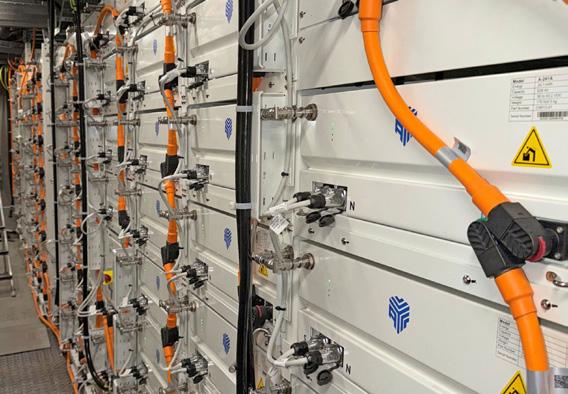
The retrofit progressed from the goahead decision to commissioning in just 14 months, an ambitious timeline for a project of this scale. Most of the modifications were completed during normal vessel operations, and work items such as critical connections to switchboards were completed during the regular dry-docking, which takes place once every five years.
The extended BESS was finally commissioned in February 2026, demonstrating that a tight delivery schedule can be met with proper planning, project execution, swift decision-making, and strong collaboration among the main project stakeholders, including Wärtsilä as the system integrator and AYK Energy as the battery supplier. “This is one of the most technically ambitious hybrid conversions yet attempted on a ro-pax ferry,” said Haukilehto. “By integrating highpower NMC batteries with energy-dense LFP batteries, we have enabled Aurora Botnia to draw on the unique strengths of both battery chemistries. All of this has been achieved without requiring major changes to the vessel’s electrical infrastructure. To our knowledge, it is the first time this dual-battery approach has been realized in a maritime retrofit.”
The result is more than a technical achievement; it is an example of how strong collaboration can accelerate decarbonization in a pragmatic, commercially viable way.
Aurora Botnia ’s battery-extension project marks a significant step forward in the evolution of maritime hybridization. By increasing the vessel’s energy storage capacity nearly sixfold and implementing the first dual-chemistry battery

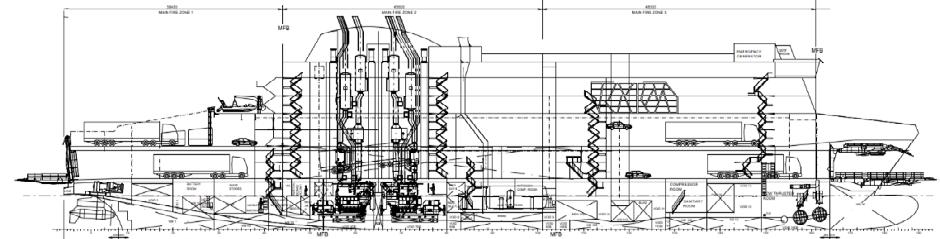
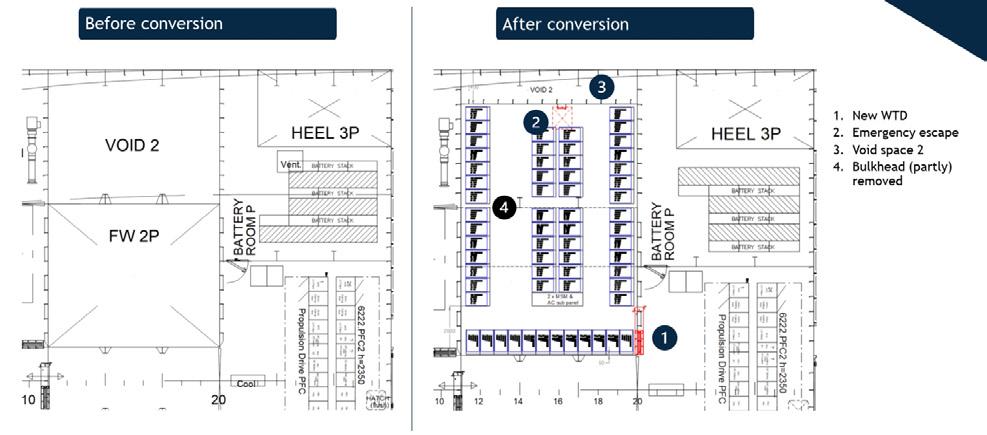

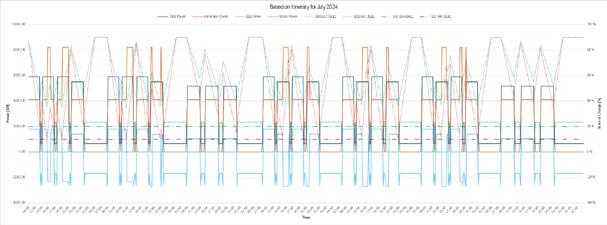

installation on a ship, the ferry is a leading example of how a carefully engineered hybrid architecture can deliver significant emissions reductions on one of Northern Europe’s most demanding short-sea routes.
“From the beginning, Aurora Botnia was built to evolve,” underscores Peter Ståhlberg, Managing Director, Wasaline. “This latest upgrade represents a significant leap toward our 2030 climate goals.
By integrating advanced battery solutions and maximizing our use of clean shore power, we are proving that sustainable ferry transport is wholly viable.”
The project demonstrates what becomes possible when owners adopt a strategic, longterm approach to compliance and decarbonization. With careful planning and the right partners, retrofitting does not mean compromise; it can instead create lasting competitive advantages.
Part of RINA (a multinational engineering consultancy, inspection, and certification company), Foreship is an independent, highly respected ship design and engineering firm, providing a broad range of services to the shipping industry since 2002. The company’s portfolio includes preliminary studies, sketches, and complete design processes, as well as on-site support, supervision, and project management during the construction phase. Head to foreship.com to discover more.
by Fitzwilliam Scott
A study by Lloyd’s Register (LR) and LucidCatalyst for Seaspan shows that defining what shipowners need makes nuclear propulsion not only feasible but economically compelling. The headline numbers demand attention: approximately $68 million in potential annual savings in fuel and carbon costs per vessel, a 32% increase in annual cargo capacity, and increased speeds (in the case of this study – 25 knots). A nuclear-powered 15,000-TEU container ship would not merely match conventional vessels on economics; it would fundamentally outperform them.
But these figures only become meaningful within a rigorous engineering framework. The study’s most significant contribution is establishing a comprehensive set of functional requirements that defines what a nuclear power system must physically achieve when integrated into a modern container carrier. This requirements-led approach transforms nuclear propulsion from an open-ended research question into a defined engineering challenge – and that shift changes everything.
Previous efforts to evaluate nuclear propulsion for merchant ships have suffered from an excessively broad design space. With no clear use cases or performance targets, assessments default to comparing reactor technologies on generic metrics such as levelised cost of energy, without first defining the actual performance thresholds required. Missing the requirements to filter against, every option must be evaluated, and the regulatory implications multiply accordingly. “The result of having requirements specified is that it begins to sort out what the technical design work would need to actually do,” explains Eric Ingersoll, Managing Partner at LucidCatalyst. “One of the problems we’ve had is that there isn’t this kind of broader framework and understanding. Without making decisions about what the requirements are, the problem becomes much, much harder than it needs to be.”
Constraining a cascade of complexity – without compromising safety
The study addresses this directly by defining a specific use case – a 15,000-TEU Asia-to-Europe container ship operating
at sustained high speed – and developing requirements across 17 categories, from technical design through decommissioning. The essential ‘must-have’ specifications, representing roughly 20% of total requirements but driving 80% of project risk, coalesce around three principles: operational competitiveness, technical maturity & modularity, and regulatory viability.
The nuclear system must deliver approximately 74 megawatts electric to sustain a cruise speed of 25 knots, enabling 6.3 Asia-Europe round-trips per year compared with five for slow-steaming conventional ships. The reactor module must fit within an approximately 25 m × 10 m × 10 m envelope at no more than 1,000 tonnes, ensuring integration using existing shipyard capacities without fundamentally altering standard container-ship hulls.
Given commercial staffing constraints, the reactor must achieve ‘walk-away safe’ operation, requiring no active crew intervention to maintain safety under all credible conditions. This aligns nuclear operations with commercial maritime norms, where engineering crews are not trained nuclear specialists.
But perhaps the most consequential single requirement is that each reactor operates as a sealed cartridge for five to seven years, with refuelling aligned to the vessel’s standard dry-dock schedule. This eliminates the need for at-sea refuelling infrastructure, nuclear-trained port personnel, on-board spent fuel storage, and specialised bunkering operations. The regulatory scope narrows dramatically, and port state acceptance becomes significantly more viable. This single constraint eliminates a cascade of complexity.
The framework also treats safety not as a downstream verification step but as a core design requirement originating from stakeholder concerns about nuclear hazards. Safetycritical interfaces – including hazard monitoring, emergency shutdown, failure signalling, and damage control – are defined early in system design, ensuring that decisions protect the crew, the public, and the environment from the outset. By deriving safety requirements from rigorous risk scenarios, the framework links hazards directly to protective design features, supporting feasibility studies, risk assessments, and structured regulatory engagement.
This approach ensures that the nuclear system is engineered to be both intrinsically safe and operationally compatible with commercial shipping realities. As LR continues advancing regulatory readiness and technical assurance, this safety-driven foundation will serve as a durable framework guiding all subsequent engineering and risk evaluation.
Operating at 25 knots, a nuclear-powered container ship achieves a 39% speed increase over conventional slow-steaming vessels, driving up annual cargo capacity by 32-38%. Eliminating bunker fuel entirely delivers roughly $50 million in annual savings, while avoiding carbon penalties under projected regulatory regimes contributes an additional $18m. Crucially, conventional vessels must slow-steam to comply with the International Maritime Organization’s Carbon Intensity Indicator thresholds, while nuclear vessels face no such penalty at higher speeds, a divergence that will only widen as carbon pricing intensifies.

The study also compares nuclear against the alternative fuels the industry is actively pursuing. E-methanol and e-ammonia face fundamental availability constraints. The current global production of the former stands at approximately 0.5 million tonnes annually, while a fleet of 250 vessels would require 34 million tonnes. Ammonia bunkering infrastructure does not exist at scale. The synthetic fuels promising zero-emission shipping require massive green hydrogen production, itself competing for limited renewable electricity across multiple industrial sectors.
Meg Dowling, Senior Engineer for Nuclear Technology and Alternative Fuels at LR, notes that the economic modelling reveals opportunities that static fuel-cost comparisons miss: “It’s not just a drop-in new engine. You could potentially change your entire operating profile of a ship and your business case.” An operator might redesign routes to exploit higher cruising speeds, bypass fuelling ports, or serve routes where alternative fuel infrastructure will remain sparse for the foreseeable future.
By defining a standardised physical envelope and operational specification prior to vendor selection, the framework creates a competitive environment where multiple reactor developers design against the same requirements. Propulsion modules can be factory-built, transported, and installed using predictable, repeatable procedures. The study envisions a cross-industry consortium with purchase commitments for
1,000+ reactor units over 10-15 years, spanning maritime, mining, chemical processing, and data centre applications. At this volume, reactor costs of $750-1,000/kWe become achievable – well below the $3,000-5,000/ kWe typical of bespoke nuclear projects. The study deliberately avoids specifying reactor technologies, defining instead the requirements any successful design must meet. Because reactor technology is not yet locked in, maritime requirements can still shape designs, and vice versa. As Dowling notes, the process is “a twoway street of technology development,” where vessel requirements inform nuclear system configuration and reactor capabilities open new operational models. Ingersoll adds, “The longer we wait to bring these two parts of the process together, the longer it’s going to take to get solutions in the water. You don’t want someone to go through years of detailed testing and then have us say, ‘Well, how does that work when the platform’s moving around?’”
This work establishes the foundation for subsequent concept design, shipyard

engagement, and a detailed supply chain strategy. Market modelling indicates potential uptake of 40-90GW of nuclear propulsion by 2050, with manufactured units potentially reaching commercial readiness within four years of an intensive programme launch.
Through rigorous, functional engineering, LR and LucidCatalyst have created the first comprehensive technical foundation for nuclear-powered container ships, tied explicitly to real-world operations. By defining clear physical dimensions, power requirements, safety criteria, and life-cycle considerations, this work converts nuclear propulsion from a speculative proposition into an actionable engineering pathway. As the maritime sector confronts rising carbon costs, fuel volatility, and intensifying regulation, nuclear-powered shipping – designed and evaluated through strict requirements – offers not merely an alternative but, at its core, a superior pathway for safe, reliable, zero-emission global trade.
Lloyd’s Register (LR) is a global professional services group specialising in marine engineering, technology, and digital solutions. We were created more than 260 years ago as the world’s first marine classification society to improve and set standards for the safety of ships. Today, we are a leading provider of classification and compliance services to the marine and offshore industries, helping our clients design, construct, and operate their assets to accepted levels of safety and environmental compliance. Head to lr.org/en to learn more.

LucidCatalyst is an international consultancy offering thought leadership, strategy development, and techno-economic expertise, specialising in interventions that deliver the critical strategic changes necessary to bring about deep and rapid cuts to carbon emissions worldwide while expanding affordable energy access. Go to lucidcatalyst.com to discover more.
What’s the most dangerous data transfer in shipping – and how to spot & avoid it
by Rob Preston, Senior Technical Sales Engineer, GTMaritime
Shipping has always been pragmatic. If something works, it stays. If it fails, people route around it. That instinct has served the industry well for decades, but in today’s increasingly connected environment, it’s creating a new – and often overlooked – cyber-security risk.
Modern vessels are no longer isolated systems. They are part of a constantly connected operational network, exchanging navigation data, compliance reports, maintenance updates, and business-critical information between ship and shore. With the rise of VSAT, LEO connectivity, and hybrid communications, expectations around digital performance have increased significantly. At the same time, cyber threats targeting maritime organisations continue to grow in frequency and sophistication. In this environment, the reliability of data transfer is no longer just an IT concern; it’s a fundamental part of cyber resilience.
Consider a familiar scenario: a vessel is scheduled to receive a critical software update. The connection is unstable, though. The transfer starts, stalls, resumes, and eventually appears to complete. There is no clear confirmation of integrity. The crew assumes the update is done. Later, it becomes clear that the files were incomplete or corrupted. The process is repeated. Eventually, under time pressure, a technician arrives in port with a USB drive to ‘just get it done.’ Nothing in that chain feels like a failure. In fact, at each step, the system ‘nearly worked.’ In cyber-security, that is often more dangerous than something that fails outright. When a transfer fails completely, it’s visible. It triggers investigation and resolution.
When it nearly works, it creates a pattern of behaviour. Crew begin to compensate. Files are re-sent manually. Processes that should be automated become dependent on human intervention. Physical media reappears because it feels more predictable. Over time, these workarounds become normalised. This is a hidden failure mode in maritime IT. It does not present as an incident. Rather, it presents as friction; and friction drives people to bypass controls.
The result is a gradual erosion of the security posture. Files are copied locally to ‘be safe.’ Policies are quietly ignored to meet operational deadlines. Patching is delayed because transfers cannot be trusted. Data is assumed to be complete when it is not. None of these actions are malicious. They are logical responses to unreliable systems. USB usage is an obvious example of this dynamic. Despite years of investment in cyber defence, removable media remains widely used across fleets. Not because organisations are unaware of the risks, but because it solves a practical problem. When digital delivery is slow, unreliable, or unpredictable, physical transfer feels dependable. However, that convenience comes with significant exposure. USB devices introduce a well-documented malware vector. They bypass network-based controls. They often lack proper audit trails. In regulated environments, this creates
compliance challenges alongside security risks. Frameworks such as the International Maritime Organization’s cyber risk management requirements and TMSA increasingly expect demonstrable control over data flows. Physical media makes that harder to achieve. The issue is not negligence; it’s a necessity created by fragile systems.
Reliability vs pilling up (in)visible costs
This is why automated, encrypted, and integrity-checked transfer should be viewed not as an IT enhancement but as a core risk control. Reliability is cyber-security’s quiet sidekick. It determines whether controls survive real operating conditions. A perfectly designed security policy is irrelevant if the underlying system cannot deliver updates consistently. If patches do not arrive, vulnerabilities persist. If training content fails to reach vessels, awareness degrades. If logs and reports cannot be transferred reliably, visibility is lost. The industry is not short of data; it lacks dependable delivery thereof. Meanwhile, digitalisation on board continues to accelerate. E-navigation systems, performance monitoring tools, compliance platforms, and remote support solutions all depend on the continuous movement of data. Each additional system increases reliance on stable and predictable transfer mechanisms. More connectivity has not reduced this dependency – it has amplified it.
This creates a compounding effect. As fleets scale their digital capabilities, any weakness

in data transfer becomes more significant. What was once an inconvenience becomes an operational risk. There is also a clear commercial dimension. Unreliable transfers increase the workload for both the crew and shore teams. IT departments chase failed deliveries instead of focusing on highervalue security tasks. Delayed updates can lead to downtime or degraded system performance. In some cases, incomplete or corrupted data can impact operational decisionmaking. These are not always visible costs, but they accumulate quickly across a fleet.
The human layer is critical in this equation. Crews operate in demanding environments, often under fatigue and time pressure. They are not cyber-security specialists, nor should they be expected to manage complex data workflows. Systems that require constant monitoring, retries, or manual intervention increase the likelihood of errors; those that work quietly in the background reduce it. In maritime, ‘user-friendly’ does not mean intuitive interfaces or better dashboards. It means minimal interaction. The most effective systems are those that remove the need for human involvement altogether.
This is where the concept of ‘data transfer without drama’ becomes important. It is not a marketing phrase; it’s an operational requirement. Reliable transfer should be
invisible. Regardless of connectivity conditions, files should move automatically, securely, and completely. Interruptions should be handled seamlessly. Integrity should be verified without user input. Audit trails should be available without additional effort.
Achieving this requires a shift in how solutions are evaluated. Buyers often focus on features, performance metrics, or cost. Less attention is paid to behaviour under realworld conditions, particularly when vessels are offline or operating with limited bandwidth. Before signing the next technology contract, organisations should ask a simple question: what happens when the vessel is offline? If the answer is unclear, it’s not resilience that’s on offer; it’s a cat-in-a-bag special in the form of future workarounds. A yieldless venture with a headache ROI…
A resilient approach to data transfer typically includes several key principles. Store-and-forward capability ensures that data is not lost during connectivity gaps. Automation removes the need for crew intervention. Encryption protects data in transit. Integrity checks confirm that files arrive complete and unaltered. Resume functionality allows transfers to continue without restarting from scratch. Comprehensive logging provides visibility

and supports compliance. None of these elements are new in isolation. The challenge is ensuring they work together consistently in the maritime environment, where connectivity is inherently variable.
As the industry continues to digitise, the margin for error is shrinking. Cybersecurity is no longer defined solely by firewalls and endpoint protection. It is shaped by the reliability of everyday processes. The most secure environments are not necessarily the most complex. They are the ones where systems work so consistently that nobody feels the need to bypass them.
This is particularly important as regulatory pressure increases and cyber risk becomes more visible at the board level. Organisations are being asked not just to implement controls, but to demonstrate that they work in practice across entire fleets operating in inconsistent conditions. Reliability is what turns policy into reality.
In shipping, security is built as much through dependable workflows as through advanced tools. The most dangerous data transfer is not the one that fails; it’s the one that nearly works, because that is the one people learn to live with.
GTMaritime delivers reliable maritime IT solutions, keeping 17,500 vessels connected, compliant and secure worldwide, daily. Visit gtmaritime.com to learn more.
by Erik Froste
During the winter and spring of 2024, Odesa in Ukraine was my home for five months. By then, the full-scale invasion had been ongoing for two years. I was there on an EU assignment to determine what needs to be done to bring the country’s maritime sector closer to Europe and prepare for future EU accession. Since then, I have continued to travel back, often for one to two weeks at a time, to work with Ukrainian authorities and transport operators. Sitting in meetings that are suddenly interrupted by wailing air-raid sirens, prompting a calm relocation of the discussion to a basement shelter, quickly becomes a surreal but necessary routine.
For us in Northern Europe, transport and logistics are a matter of efficiency, margins, and sustainability. In today’s Ukraine, it’s literally the bloodline of the nation. It is not just about keeping civil society afloat. The transport sector, and the massive export revenues it generates – not least from grain – is ultimately what covers the soldiers’ pay and buys the ammunition. Without international financial support, Ukraine would, of course, be in a brutally tight corner, but without its own export revenues, the system would have collapsed long ago. Furthermore, a heavy global responsibility rests on these logistics chains: Ukraine’s grain exports are a guarantee that parts of the world will not starve.
This is the story of a sector that refuses to stop, and the invaluable lessons we around the Baltic Sea must take to heart.
Lifeline(s)
Ukraine’s ports were the first in the 21st century to be forced to operate under a fullscale naval blockade and systematic drone & missile attacks. During the war’s first year, between July 2022 and July 2023, the Black Sea Grain Initiative, an UN-sanctioned corridor, was negotiated. It enabled the export of around 32 million tonnes, corresponding to about 30% of pre-war volumes.
But the agreement was fragile. Unsurprisingly, Russia weaponised the Bosphorus inspections; a process that should have taken 30 minutes was dragged out to three hours. Capacity dropped from 10 to 15 ships a day to a mere three. Eventually, Russia abandoned the agreement entirely, and Ukraine’s exports via the Black Sea ground to a halt.
But the deadlock was short-lived. In an impressive display of adaptability, creativity, and defiance, Ukraine soon opened its
own independent corridor. This was not just a matter of changing routes; it required immense effort, including securing statebacked war insurance for both cargo and freighters, conducting extensive minesweeping operations, and systematically neutralising the Russian Navy’s offensive capabilities in the region. By having vessels sneak closely along the Romanian and Bulgarian NATO coastlines and then sail in convoys up to ‘Greater Odesa,’ a new lifeline was created. Port after port has opened up, and today, even container traffic is functioning again. Since the autumn of 2023, volumes have reached previously unimaginable 70 to 80% of pre-war levels.
But the numbers do not tell the whole truth. The reality in the ports is extremely brutal. In 2024 alone, operations were estimated to have been hit by 850 hours of air-raid sirens. That equals over a month of total standstill. Every time the alarm sounds, the stevedores must stop everything and seek shelter. Every hour of such bunkering is a lost hour of export for the Ukrainian state treasury.
And the threat is not theoretical. Russian airstrikes destroy port infrastructure several times a week. It is not just berths that are hit – the attacks knock out gantries, conveyor belts, and oil storage tanks, and also erase critical functions such as civilian VTS stations and strike merchant ships. Tragically, this also means that dockworkers are continuously being injured and killed on the job.
One of the many lessons from the Ukrainian ports concerns bomb shelters. Before the war, the large, centralised facilities of this type were sufficient. Today, they are useless if they are a 10-minute walk away. A ballistic missile launched from occupied
Crimea can reach Odesa in one to two minutes. There is no time to run. Ukrainians have been forced to build mobile shelters in the immediate vicinity of workplaces, allowing queuing drivers to leave their trucks or crane operators to descend and seek cover. Life and safety have become the absolute most important logistical parameters.
When we shift our gaze from the coast inland, the role of the rail network – with Ukrainian Railways managing the infrastructure, likewise being in charge of operations – becomes immediately apparent. It is a gigantic organisation with approximately 175,000 employees and constitutes Ukraine’s second-largest budget item. It is the backbone for both freight and passengers in a country where aviation is grounded. What is perhaps most impressive is their ‘rapid restoration’ capability. When Russian attacks destroy tracks, bridges, rails, or overheads, traffic does not stand still for weeks. Thanks to rehearsed crisis management and dedicated staff, trains are often rolling again just 12 to 24 hours after shelling. It is systematic maintenance in an extreme environment without parallel.
But the railway also faces deep human challenges. The workforce is severely affected by the war. Today, intensive work is underway to retrain employees injured in combat or on duty, allowing them to continue working on new tasks. At the same time, with many men at the front, the railway is driving strategic initiatives to attract more women to the industry. Another acute need is physical accessibility: the war has tragically created a massive new demographic of people with reduced mobility. The adaptation of platforms, stations, and train cars is therefore
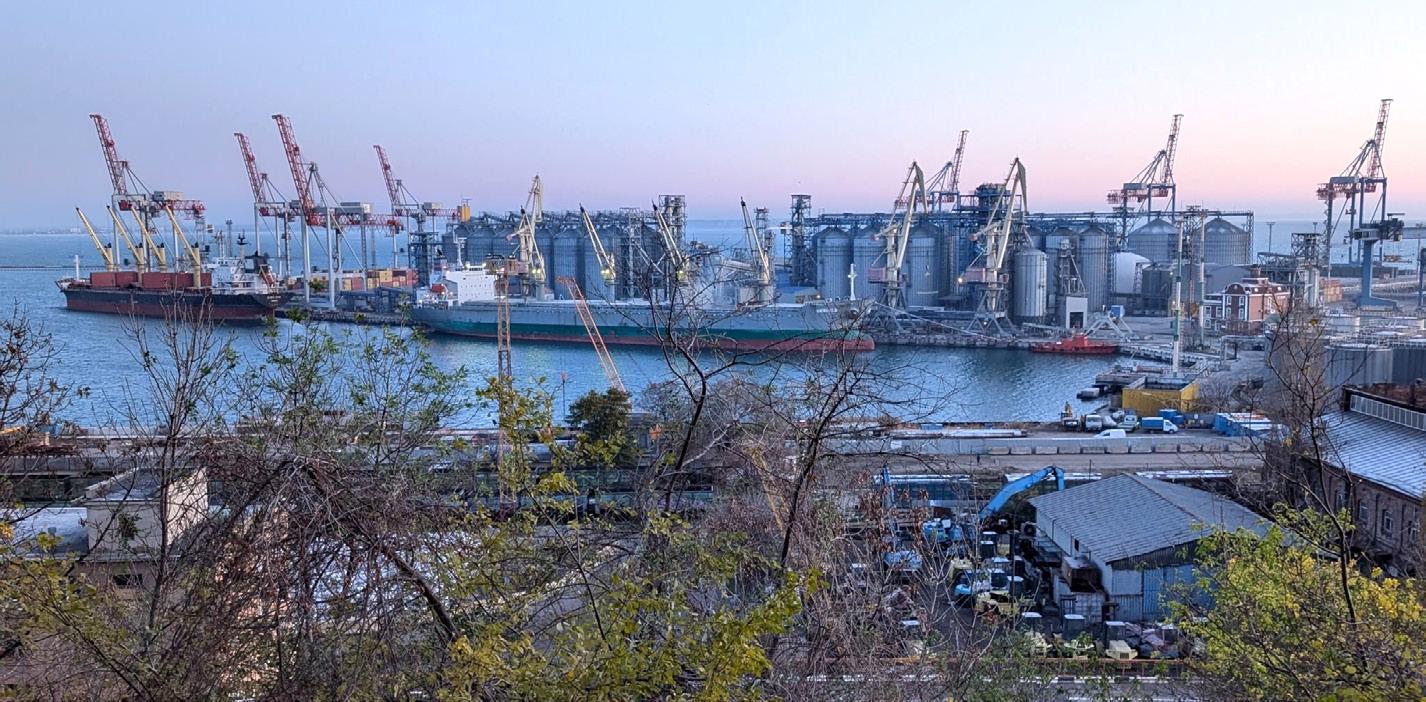
no longer just a policy issue but an immediate national necessity.
Lesson learned the hard way
Helping Ukraine is not a one-way street of foreign aid; it’s a mutual exchange. We in Sweden and the Baltic Sea region have a lot to learn from how Ukraine manages logistics under maximum stress. Preparedness and resilience are often equated here at home with multi-million-dollar investments in fencing, advanced IT systems, and heavy-duty back-up generators. Ukraine shows us that true resilience is just as often about leadership, flexibility, and small, cost-effective measures that secure operations. It is about being able to switch to manual paper routines when cyber attacks knock out servers, and about the mentality of quickly finding solutions rather than surrendering to problems.
To be in Ukraine is to live in a paradox. Large parts of the country, especially in the west and in Kyiv, are seemingly open. Restaurants, hotels, and pubs serve guests in a pattern that defiantly refuses to change. But air-raid sirens, curfews, and the muffled thuds of air defence systems constantly shatter this ‘business as usual’ illusion. Yet, amidst the chaos, Ukrainian civil society displays a breathtaking determination to maintain normality and dignity. They are incredibly efficient at cleaning up after attacks. Shrapnel and debris from a nighttime strike are swept off the streets by morning. Massive craters in the roads are often patched before lunch. Even during the war, flowerbeds are watered to keep cities beautiful, and park
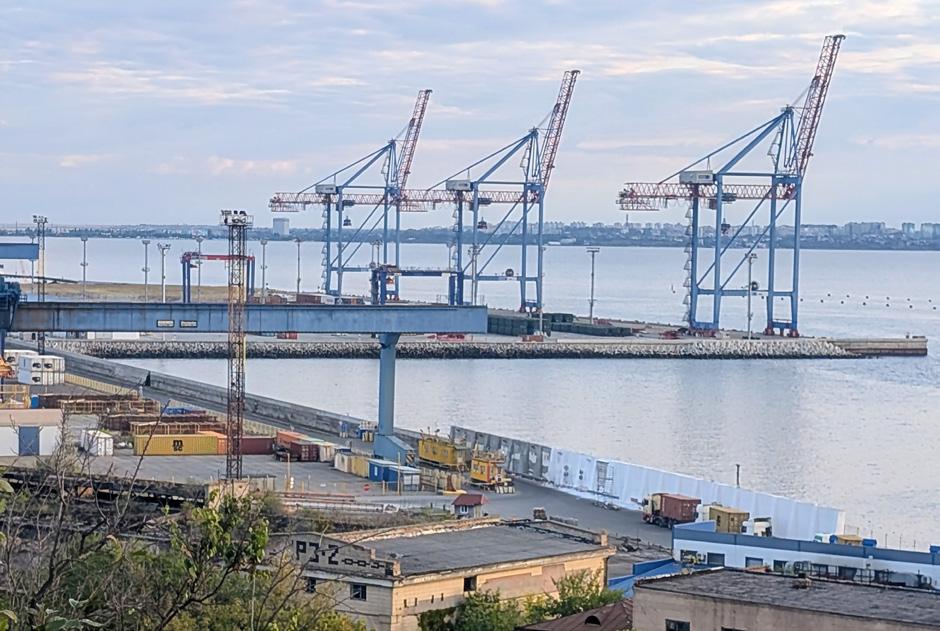
benches are freshly oiled for the season. Amid this raging war, Ukrainians are building the institutions required for the future.
To keep logistics running
Establishing trust and cooperation between authorities is an absolute prerequisite for the country’s path into the EU.
We around the Baltic Sea must never get used to Ukraine’s suffering, but we should be inspired by their resolve. Our support for their transport sector must not stop at words – it must continue to be translated into practical, operational action. Their fight to keep logistics running is ultimately a prerequisite for freedom in our entire region.
Erik Froste, the former CEO of the Port of Södertälje and the Swedish Transport Administration Ferry Operations, is now an independent maritime advisor. Based in Sweden, he regularly operates on the ground in Ukraine to advise on maritime and logistics resilience. As these complex realities and lessons are often best shared through direct dialogue, Erik holds lectures and presentations for companies, authorities, and management teams. Reach out to Erik via LinkedIn or mail to discuss how these operational insights can strengthen your organisation’s preparedness.
by Andrzej Urbaś, External Consultant, Actia Forum
This year’s Transport Week opened in Gdynia with a clear message: the maritime sector is standing at a crossroads. As global trade patterns shift and environmental requirements tighten, Baltic and European seaports must rethink how they grow, operate, and secure their place in an increasingly competitive supply chain. Day 1 set the tone by confronting the dual challenge of expanding physical capacity while simultaneously optimising operations through technology and smarter processes. The following day shifted focus to the technological – soft- & hardware – backbone of modern port operations.
The conference began with an address by Arkadiusz Marchewka, Secretary of State at Poland’s Ministry of Infrastructure, who outlined the current condition of the country’s ports and their long-term prospects. His remarks framed the broader discussions that followed, linking global trade dynamics with the realities of European transport. Day 1’s outstanding moderator, Kris Kosmala (D2XCEL), examined on- and offshore capacity trends, while Wojciech Muchlado (DP World) focused on the never-ending challenge of shifting goods from road onto the greener modes of transport, rail & sea, and the operational demands this transition places on multimodal logistics.
A recurring theme throughout the event was the need for new terminal capacity, particularly in the Baltic Sea region. Speakers from the Port of Gdynia, Port of SzczecinŚwinoujście, Gdynia Container Terminal (GCT), Baltic Hub, and Port of Hamburg Marketing agreed that additional capacity is not optional but essential. Extra capacity means being able to stay flexible and better react to dynamic, sometimes rapid, market changes.
However, capacity expansion is not simply a matter of pouring concrete.
Grzegorz Bławat (Port of Gdynia) and Rafał Zahorski (Port of Szczecin-Świnoujście) emphasised that infrastructure projects must be understood as integrated systems – a new, well-oiled trade-facilitating machine – rather than isolated construction efforts. For Polish ports, improving their hinterland connections, especially towards the south, remains a critical prerequisite for unlocking the full value of new terminals. Cooperation with shipping lines will also be decisive, as they ultimately determine where vessels call.
If capacity is one side of the competitiveness coin, efficiency is the other. Yet defining it proved surprisingly complex. Bogdan Ołdakowski (Actia Forum) described it as simplifying and accelerating processes at minimal cost. Isabelle Ryckbost (ESPO) framed it as maximising the use of heavy infrastructure within operational, financial, and regulatory boundaries. For Mikołaj Magiełka (GCT), efficiency is the balance between cost and service quality, while Frank Kho (ATAI) highlighted the elimination of waste in meeting customer needs (with the use of AI, of course).
Despite differing definitions, the speakers converged on one point: efficiency requires
change based on educated and carefully planned enhancement of what works, not necessarily a revolution. GCT’s ongoing electrification of yard cranes and tractors served as a practical example of incremental, targeted improvement.
Moderated by Przemysław Opłocki ( Port Gear ), day 2 of Transport Week shifted focus to the tech side. Before diving into specific tools and systems, Lawrence Henesey (Blekinge Institute of Technology) addressed cyber security – a topic that grows more urgent as ports become increasingly digital. Drawing on work from the DigiTechPort2030 project, he stressed the need for multilayered resilience spanning technical, operational, and governance domains. With ports & terminals relying on networked systems for everything from truck gates to vessel tracking, vulnerabilities can lead to cargo de-routing, equipment shutdowns, or broader supply chain disruptions. Henesey’s message was clear: tech can be as much an asset as a liability.
Yet the digital landscape is not all ‘hooded hackers in a dark basement lying in ambush for your data.’ Daniel Beck (HHLA/HPC)

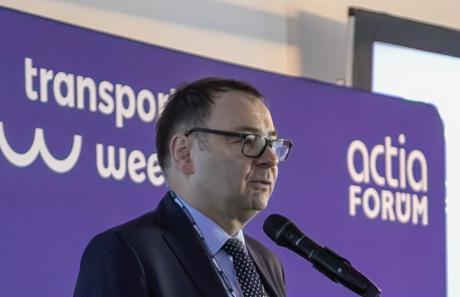
showcased AI-driven workflows and agentic systems that can streamline port logistics, while Peter Østergaard Hansen (Thermo King) presented advanced monitoring solutions for the cold chain, demonstrating how software can enhance reliability and visibility across operations.
Hardware also took centre stage, particularly mobile harbour cranes and reachstackers. Hyster shared insights from testing hydrogen fuel cell reachstackers, highlighting the collaborative process involving customers, suppliers and operators – and overcoming many a product development challenge. Kalmar, meanwhile, presented its third-generation e-reachstackers, underscoring electricity as its preferred path toward decarbonisation.
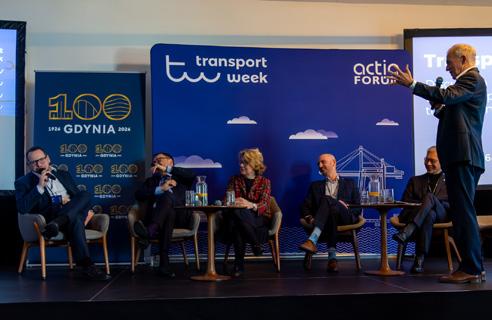
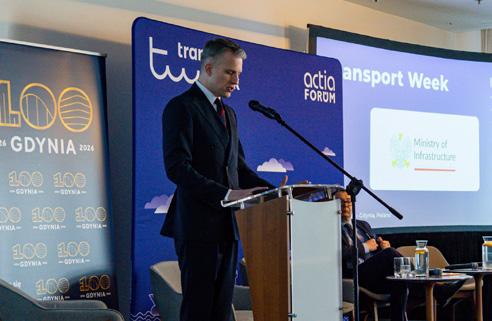
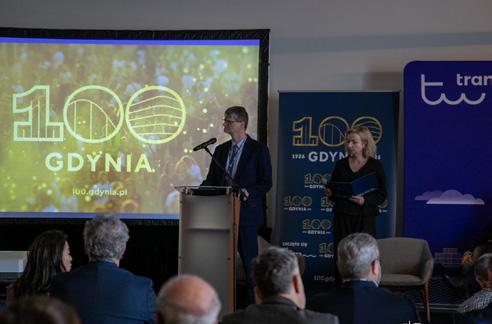
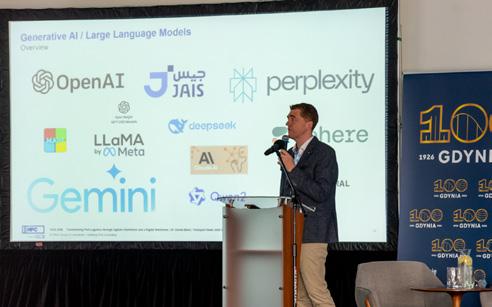
Liebherr offered a deep dive into the complex considerations for choosing mobile harbour cranes or ship-to-shore gantries –delivery times, outreach, moves per hour, and resale value all shape investment decisions. The resale/rental market itself is thriving, as Forkliftcenter noted. With long lead times for new equipment, refurbished machinery often becomes the fastest and most practical solution for operators needing an immediate capacity boost.
The conference concluded with a look at the evolution from national to EU-level and eventually global maritime single window(s). Representatives from Sprint, the Polish Port Community System, and the Gdynia Maritime Office acknowledged the scale of
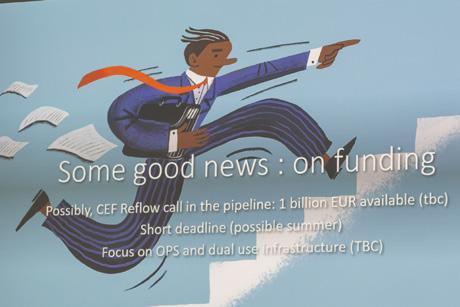
the challenge. Despite legal deadlines having already passed, many countries still struggle with national implementation. Crucially, the speakers emphasised that the maritime single window should not be treated as a mere compliance exercise. Safety and security must remain the primary drivers of its development, not to mention enhancing the efficacy of ship clearance as a tool for improving port performance.
Transport Week 2026 closed with thanks to partners, sponsors, speakers, and the engaged audience whose participation continues to shape the event’s legacy. The gathering once again showed that the maritime sector’s future depends on a careful balance of infrastructure, technology, cooperation, and adaptability.
SUNE NORUP CHRISTENSEN CCO, Port of Helsingborg
The Swedish seaport’s new Chief Commercial Officer filled the post at a number of companies earlier, including Unifeeder (Europe and the Americas), Copenhagen Malmö Port, and Svitzer (Europe). Christensen also worked for Maersk for many years, including as Head of Finance, IT, and Customs at Maersk Container Industry Qingdao, and CFO at Maersk Group’s UK holding company. He graduated from Aarhus University (accounting & controlling, economics) and holds an EMBA from London Business School.
MICHAEL HANSEN President & CEO, DFDS
The Danish shipping & logistics company will, as of July 1st, have a new helmsman, the up-todate President & CEO of Hempel. Hansen will rejoin the transportation business, having earlier worked for Maersk for 18 years (VP Global Head of Sales being his last role there) and its subsidiary, Seago Line (CEO). Hansen graduated from the Copenhagen Business School in international business, completed INSEAD’s Young Managers Program, and obtained a Global Executive MBA from IE Business School.
ALEXANDER JOHANSSON
Marketing Manager, Port of Södertälje
An alumnus of Mälardalen University (BBA in international marketing), Johansson joins the Swedish port from Hutchison Ports Stockholm, where he began as Sales and Marketing Officer, leaving as Sales and Marketing Executive. Earlier, he worked for, among others, MSC (in customer service), Odin Warehousing & Logistics (Dry Cargo Chartering Shipbroker/Forwarder), and at the Cypriot Interyachting (First Mate).
ROBERT SOMMAR
Railway Manager, Port of Gothenburg
A double graduate of Chalmers University of Technology (MSc in automation & mechatronics, and BEng in logistics & transportation), Sommar joins the seaport from the Swedish Transport Administration, where he worked as Investigation Leader. He is no stranger to Gothenburg, having worked for the city as a Planner (Strategic Traffic & Urban). Among many others, Sommar was also a researcher at the KTH Royal Institute of Technology.
OSKAR CLAESSON Account Manager for Defence and Governmental Logistics, SOL TransProCon
With a bachelor’s in shipping and logistics from Chalmers University of Technology, Claesson enters the Swedish Orient Line from the defence industry. He also worked for the GAC Group, in Qatar as Business Development Manager, and in Sweden as Logistics Coordinator. In between his GAC gigs, Claesson was with the logistics arm of Yara Marine Technologies.
PEEP JALAKAS CEO, Tallink Grupp
Jalakas joins the group that owns the Estonian ferry line Tallink & Silja from the banking sector, where he had most recently been a member of AS SEB Pank’s Management Board and Head of Corporate Banking. He joined SEB’s Merchant Banking arm in 2010 as Account Manager, after which he became Client Executive at SEB Eesti, then Head of Client Coverage, before moving to lead the Credit Department. Jalakas holds a bachelor’s in economics from the University of Tartu.

ELISA ROUHIAINEN
Sales & Business Development, Grieg Connect
Rouhiainen has joined the Finnish team of the Norwegian tech company from Identec Solutions, where she was VP Sales Marine & Ports. An alumna of the Tampere University of Technology (MSc in industrial engineering & management), she worked in the past for Kalmar (including as Sales Director – Smart Ports & Terminals), Navis (Account Director EMEA) and Cargotec (Director – Global Account Management), and also outside the industry for BeeHealthy (Sales Lead).
BRITTA WEBER CEO, Hupac Group
The current Vice President of UPS Healthcare for Europe and Asia will join the Hupac Group on July 1st. Previously, Weber spent over 13 years with the logistics company, working for UPS through several positions, including VP Global Learning and Development, Managing Director (first for Switzerland & Austria, then for Italy), and Director of HR for multiple locations. Weber holds a law degree from the University of Bonn and an MBA from Macquarie University.




Overview of products, infrastructure, Overview of products, infrastructure, services, and many more greenstuff services, and many more greenstuff in one place – on your wall, in one place – on your wall, computer, or phone! Plus the digital computer, or phone! Plus the digital BALTIC GREEN MAP BALTIC GREEN MAP

CATALOGUE with plenty of CATALOGUE with plenty of wholesome details! wholesome details!
