HOME IS WHERE THE HEART IS
By Nic Fenger
As the cost of living climbs nationwide, many Floridians are finding it increasingly difficult to secure and finance new homes in today’s competitive market. Even as new residential developments continue to rise across Northwest Florida, ensuring these new homes remain attainable for local residents is more important than ever. Pensacola Habitat for Humanity (Pensacola Habitat) is one organization working to meet that need.
“Five or six years ago, it would take a family making the average median income 3.5 times that income to purchase an average-priced home in Pensacola,” Habitat President and CEO Sam Young explained. “Now, it requires about 4.8 times the median income to purchase the averagepriced home. So, you can see that it has become increasingly difficult, and families that would have qualified for a mortgage five years ago can no longer qualify for a mortgage amount necessary to purchase just an average-priced home in this market.”
Pensacola Habitat was established in 1981 and has grown into the eighth largest of the 1,000 Habitat organizations in the country.
This nonprofit organization has not only constructed 17,000 new homes across Escambia and Santa Rosa counties but also helps homeowners maintain and finance new homes. Pensacola Habitat has created groundbreaking initiatives to both improve home affordability and expand homeowner knowledge.
“While we were traditionally just a homebuilder for affordable homes, we have grown into what we refer to as a home ownership solution organization,” Young said. “Meaning the families that we serve now expand from those folks who are in a rental situation to people who are in that missing middle where they don't they make too much to qualify for a Pensacola Habitat home but don't make enough to go out on the open market and purchase a home on their own.”
Beyond building new homes, Pensacola Habitat also helps equip future homeowners with the financial knowledge and longterm stability needed to succeed in homeownership. As a HUD-certified counseling agency, the organization also develops innovative strategies to reduce housing costs and advocates for policies that support local homeowners.
In accordance with these goals and values, Pensacola Habitat is
offering several programs to help people realize their dreams of homeownership: the Northwest Florida Community Land Trust (CLT), the Homebuyer Program, neighborhood programs, rental properties and market-rate homes.
The Northwest Florida Community Land Trust
The Northwest Florida Community Land Trust (CLT), created by Pensacola Habitat in 2023, is most helpful for those with lower incomes. Through this share-equity model, the CLT sells the home to buyers via a ground lease. A homeowner can purchase and own the home while the CLT keeps ownership of the land. This separation of homeownership and landownership allows people to buy homes at reasonable prices within their spending range. This practice also allows the price of the home to remain consistently affordable for future generations of homeowners.
Pensacola Habitat’s most recent partnerships are helping to direct traffic to the CLT. Through the Home for Good Program, Levin Rinke’s agents are working to refer aspiring homeowners who cannot purchase a home on traditional markets to Pensacola Habitat’s land trust.
“It's a win-win for everybody,” Young said. “Levin Rinke gets to help people that they would not otherwise be able to help, and we get to increase our homebuyer pipeline with referrals from 400 realtors out in the open market.”
Another CLT-related program is the Blueprint to Homeownership program. In partnership with the Home Builders Association (HBA) of West Florida and the City of Pensacola, Pensacola Habitat put three new homes up for purchase on citydonated land. Although all homebuyers interested in these homes must attend an eight-hour PrePurchase Homebuyer Workshop, for this program, they are not required to complete sweat equity or other requirements like background checks.
A limited-time program, Blueprint to Homeownership has already sold two of its three new homes. One home at 2300 West Jackson Street is still available for applications approved on a first-come, first-served basis.
Basic eligibility requirements for Blueprint to Homeownership include:
• Must be at least 18 years of age and a U.S. citizen
Income below or at 80% AMI (area median income)
• Minimum preapproval mortgage of $180,000
• Provide $3,500 down payment at closing
The CLT applies to aspiring homeowners in Escambia and Santa Rosa counties. Benefits of utilizing the CLT include lower homeownership costs; increased housing security, including security from eviction; permanent affordable housing and opportunities for building equity through homeownership. In order to qualify for the CLT, individuals must meet the following criteria:
• Individuals must be at least 18 years of age and a U.S. citizen
• Have 12 months of current employment, having lived or worked in either county for at least one year
• $30,000 annual income in Escambia County, or $35,000 annual income in Santa Rosa County
The Homebuyer’s Program
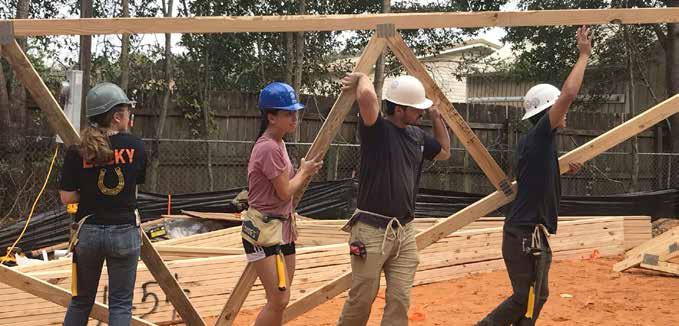
Alternatively, the organization encourages families or individuals making a steady income to leverage the Homebuyer Program, Pensacola Habitat’s flagship homeownership program. As part of this program, aspiring homeowners become active participants in their journeys to ownership with hands-on involvement in helping build a home.
“They provide 100 hours of sweat equity on either their home or another colleague's home that is being built,” Young explained. “They go through an educational curriculum, and we help them identify and secure subsidies that we have access to which will bring down the cost of that home for them. They will qualify for a mortgage, but a mortgage that is much less than what it would take to purchase a home on the open market. Then, we get them to close, and, at the end of that process, they will completely own a home.”
This process cultivates an intimate connection with homes and a knowledge of proper home financial management. Through sweat equity, homebuyers work side-by-side with volunteers to build a home from the framing to the furnishing. Through the financial classes, homeowners acquire essential skills for navigating the financial maintenance of a home—budgeting, home maintenance, financial planning and more. There are few better ways for new Pensacola homeowners to prepare for homeownership than utilizing the Homebuyer’s Program.
“They need to be a first-time home buyer,” Young clarified. “All that means is they can't have owned a home for the last two years. They need to have a stable income and have been employed for a minimum of two years. They need a credit score of at least 620, and they have
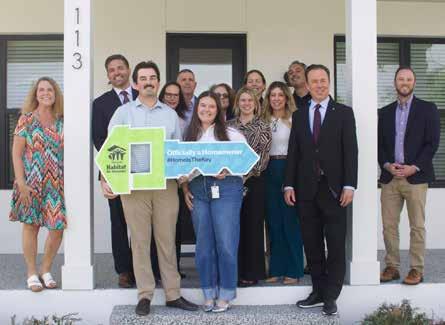
to income-qualify. And, depending on the family size, that income that would qualify them for the Homebuyer’s Program would vary based on the number of folks in the family. But, for a single person, the maximum they can make is around $60,000.”
Other requirements for this program include being a U.S. citizen of at least 18 years of age and having an unmarried or married but not separated relationship status.
Alternative Housing Options
Other avenues for finding a home through Pensacola Habitat are neighborhoods and rental properties. Plus, market-rate homes are on the horizon—with listings to be announced when available on the organization’s website. Pensacola Habitat’s neighborhoods provide homeowners with the opportunity to not only secure a home but also join a community. Hancock Meadows, the most recently constructed neighborhood, has 33 homes with floor plans that include two to four bedrooms per house. Other amenities include attached garages, impact windows and Moen plumbing. This community will also feature a community park thanks to Pensacola Habitat’s partnership with PenAir Credit Union. To learn about the requirements for applying to live in Hancock Meadows or other Habitat neighborhoods, visit the website pensacolahabitat.org/requirements.
Rental properties are also available, providing a more flexible and even lower-cost option for those who are not quite ready for full homeownership. All rental properties come with floor plans with three to four bedrooms and one to two bathrooms, and the property owner handles most maintenance responsibilities. For more information on application and eligibility for Habitat’s rental homes, visit pensacolahabitat.org/rentals.
Volunteering and Other Support
However, purchasing or renting a home through Pensacola Habitat’s programs isn’t the only way to support the organization.
“We have tens of thousands of hours a year that the volunteers come out and help build homes, support us at the ReStore and support us and our administrative offices,” Young said. “The volunteer component of our mission has never been greater, and the commitment and passion that they demonstrate each and every day is remarkable. We would not be able to do what we do without that volunteer support.”
Volunteer opportunities are available for anyone of at least 16 years of age to sign up for on Pensacola Habitat’s website. Opportuni -
ties in Pensacola are divided into three groups: construction, ReStore and the community development program. For construction, no prior experience is required to be able to help. Slots are available for both framing and, occasionally, landscaping. The team at ReStore distributes donated furniture and home supplies to new homeowners. Volunteers in this group work in flexible four-hour time blocks, completing tasks like donation processing and furniture restoration. However, the organization also encourages volunteers with special skills like experience in demolition or collectible evaluation to lend their talents to this work.
Meanwhile, community development involves repairing and rehabilitating damaged or dilapidated homes, especially homes of senior and disabled citizens and homes impacted by natural disasters. Projects include painting, installing accommodative structures for handicapped homeowners and cleaning up neighborhoods.
To learn more about these volunteer opportunities or apply, email volunteer@pensacolahabitat.org. You can also support the organization by donating items such as stocks, land, vehicles, or home goods. Additional details are available on Pensacola Habitat’s donation webpage.
Thanks to the efforts of Pensacola Habitat for Humanity, the dream of homeownership in Pensacola is becoming a more achievable reality for the working class. The organization built 53 new homes for 53 families last year, with the organization’s counseling programs, rental homes and ReStore donations making even more positive impacts. Supporting initiatives of organizations like Pensacola Habitat ensures that more Floridians can afford homes and grow fulfilling lives.
“We're going to build nine beautiful homes on the former Malcolm Yonge property,” Young said. “We have lots scattered all over Escambia and Santa Rosa County you can select from. So, if you're looking for a home, do not discount the advantages of working with Pensacola Habitat to find your solution.”
To get involved with or learn more about Pensacola Habitat for Humanity and their affordable housing programs, visit pensacolahabitat.org or call (850) 434-5456.
Those interested can also follow @PensacolaHabitatforHumanity on Facebook and @pensacolahabitat on Instagram for updates on the latest programs, volunteer opportunities and important news.■
Photos courtesy of Pensacola Habitat for Humanity
PLEASE CHOOSE THE SUMMATION WEEKLY FOR ALL YOUR LEGAL NOTICES
The Summation Weekly, a publication of the Escambia-Santa Rosa Bar Association (ESRBA) produced in partnership with Ballinger Publishing, offers highly competitive insertion rates and a way to indirectly support your local bar association.
The Summation Weekly is a subscription-based community newspaper circulated to ESRBA members and made available to the general public throughout Escambia and Santa Rosa counties. The publication satisfies Fla. Stat. 50.031, which governs the requirements for publication of legal notices. In addition to the published weekly newspaper,
The Summation Weekly website –summationweekly.com satisfies Fla. Stat. 50.0211, which requires all legal notices to be made available online and on the state registry – floridapublicnotices.com.
Ballinger Publishing manages the day-to-day operations of the publication. Darien Hardy is the contact person for legal notices. She can be reached at 433-1166, ext. 25 or legals@ballingerpublishing.com.
Thank you for your support. Choosing The Summation Weekly generates non-dues revenue that helps subsidize programs and services
CONTINUING LEGAL EDUCATION ONLINE LIBRARY: CLE.ESRBA.COM
ESRBA’s CLE Library is now digital! Go to cle.esrba.com to get your credits. Each download comes with the audio from the seminar, the PowerPoint/handouts, and the CLE Certificate of Accreditation from The Florida Bar. The audio can be downloaded in any file type that you would like including MP3, FLAC, ALAC, AAC, Ogg Vorbis, WAV, and AIFF formats. For your convenience and ease of listening, the seminars can also be streamed directly from the library.
If you are interested in presenting a CLE seminar or being recorded for a CLE accredited podcast, please email esrba@esrba.com.
Continuing Legal Education (CLE)
Library Cost: $15 per credit – ESRBA members, $25 per credit –nonmembers Focus Grouping your Premises
















Have a community event or announcement? You can submit information for possible publication in Community by sending an e-mail to Morgan@ballingerpublishing.com. Submissions must include the organization’s name and details about events including times, dates, locations and any costs involved. Contact information also is required. All submissions are subject to editing to comply with established standards. Items should be submitted at








ESCAMBIA COUNTY OFFERING FREE ADOPTIONS THROUGH BISSELL PET FOUNDATION
The Escambia County Department of Animal Welfare is excited to partner with the BISSELL Pet Foundation for the 10th anniversary of its Empty the Shelters adoption event.
Running through May 17, this annual event offers free adoptions for dogs and cats one year or older.
Escambia County Animal Welfare encourages the community to visit the shelter and consider giving a forever home to one of the many loving pets available for adoption.
A $15 licensing fee will be applied to all adoptions for Escambia County residents.
To view a full list of adoptable pets in Escambia County, visit 24petconnect.com.
The adoption fee for pets younger than one year old will be $50 for puppies and $25 for kittens.
BISSELL Pet Foundation will also sponsor free pet adoptions during Animal Welfare's Petpalooza adoption event on May 16 from 11 am to 3 pm at the Animal Welfare and Adoption Center located at 200 W. Fairfield Dr. in Pensacola.
Empty the Shelters is the nation’s largest funded adoption event and has helped nearly
400,000 pets find homes across the U.S. and Canada since its inception in 2016.
Sponsored by BISSELL Pet Foundation, the program works with hundreds of animal welfare organizations to reduce adoption fees and make pet adoption accessible to more families.
The Escambia County Animal Welfare and Adoption Center’s hours of operation are Monday through Friday, from 12 to 5 pm, and on Saturday and Sunday from 11 am to 4 pm.
For more information, visit the Escambia County Department of Animal Welfare website.
BISSELL Pet Foundation is a charitable 501©(3) nonprofit organization with a mission to help reduce the number of animals in shelters through pet adoption, spay/neuter programs, microchipping and crisis and disaster response.
Founded in 2011 by Cathy Bissell, BPF is an extension of her long-standing love for animals and commitment to their welfare.
BPF has since partnered with more than 5,800 shelters and rescues across the U.S. and Canada to help pets find loving homes.
The foundation is supported by generous donors and BISSELL Homecare, Inc., where every purchase saves pets.
DISTRICT 4 NORTH DAVIS
NEIGHBORHOOD CLEANUP MAY 6
A neighborhood cleanup for residents in North Davis will take place Wednesday, May 6.
This is a chance for residents to dispose of items such as old furniture, appliances and household waste free of charge.
Only residents in the designated cleanup area can participate in the neighborhood cleanup. Please have all items for pickup at the curb by 7 am on the day of the cleanup.
Items left at the curb outside of the cleanup area will not be collected.
Residents who live in the targeted area will have received a postcard in the mail with more information.
Items eligible for removal include:
Household appliances and electronics, household junk and debris, bicycles and toys, old furniture and mattresses, barbecue grills, household hazardous waste (old paint, motor oil, chemicals, batteries), tires (limit 10 per household) and yard debris
Items NOT eligible for removal include:
Building materials (concrete, bricks, blocks, roofing, drywall or lumber), explosives or ammunition, auto parts, dirt or sod, vehicles or vessels or 55-gallon drums of fluids
During neighborhood cleanups, crew members and volunteers visit different neighborhoods in the county to remove a variety of debris and waste free of charge.
SANTA ROSA COUNTY CELEBRATES SUCCESS OF BEYOND SCHOOL WALLS MENTORSHIP PROGRAM
In 2024, the Santa Rosa County Board of County Commissioners entered into a memorandum of understanding with Big Brothers Big Sisters of Northwest Florida to bring the Beyond School Walls program to local students.
While the program has seen strong success in neighboring communities, this marked the first time Santa Rosa County and the Santa Rosa County School District participated in the initiative.
The Beyond School Walls program is designed to prepare students for life after high school by connecting them with professional mentors who provide guidance, support and real-world exposure to career environments.
Fourteen students from Milton High School participated in the program, beginning in their junior year and continuing through their senior year.
Notably, two students graduated early and have already enrolled in college. Each student, known as a “Little,” was thoughtfully paired with a mentor, or “Big,” from local government offices including the Board of County
Commissioners, Santa Rosa County Property Appraiser and the Santa Rosa County Clerk of Court.
Over the course of two school years, mentors and students met monthly for fourhour sessions focused on mentorship, skillbuilding and relationship development.
Sessions covered practical topics such as resume writing, interview preparation, completing the Free Application for Federal Student Aid (FAFSA), budgeting and stress management.
In addition to these foundational skills, students participated in hands-on activities including virtual reality simulations of various career paths, aptitude testing to explore future opportunities and public speaking exercises designed to build confidence.
Participants also gained valuable insight into careers in local government through direct interaction with professionals in the field.
Santa Rosa County is proud of these students and honored to have played a role in supporting their growth and future success.
PREPARATIONS BEGINNING FOR $9.5 MILLION FRICKER CENTER RENOVATIONS
The City of Pensacola Parks and Recreation Department is preparing for renovations to begin at the Fricker Resource Center. Neighbors should see site work beginning the first of May. The latest overall project timeline is included below:
• Senior Programming will move to Bayview Senior Center beginning May 18.
• Parks and Recreation’s After School Programming will end on May 22. Summer campers may have been accommodated at Woodland Heights.
• Center staff will be relocated to other centers on May 26.
• Interior demolition work will begin after the center staff are relocated.
• The center will reopen with services in June 2027.
“We’re building more than just a facility —
we’re building a space that reflects the heart of this community,” Pensacola Mayor D.C. Reeves said. “Our goal is to maintain what we
SANTA ROSA COUNTY ANIMAL SERVICES TO HOST COMMUNITY CAT DAYS IN MAY
Santa Rosa County Animal Services will host a series of Community Cat Days throughout May, offering free spay and neuter services for eligible outdoor cats owned by no one and living in Santa Rosa County.
Community Cat Days will take place on the following dates:
• Thursday, May 7 (pickup Friday, May 8)
• Thursday, May 14 (pickup Friday, May 15)
• Thursday, May 21 (pickup Friday, May 22) Thursday, May 28 (pickup Friday, May 29)
All events will be held at Santa Rosa County Animal Services, 4451 Pine Forest Road in Milton. Cats must be dropped off at 8 a.m. on the scheduled Thursday and picked up between 9 - 10 a.m. the following day. Space is limited to 50 cats per event, first come, first served.
The program is open to Santa Rosa County residents, who must provide proof of residency. Participants may bring up to three community cats per event. Eligible cats must be at least three months old, unowned, outdoor, and free-roaming.
In addition to spay or neuter surgery, each cat will receive a rabies vaccination and an ear tip, a universal sign that a community cat has been sterilized.
Residents are responsible for safely trapping and transporting cats to and from the shelter. Cats must be secured in a humane trap, one cat per trap, with enough room to stand comfortably. Cover the trap with a towel, blanket or sheet to reduce stress and do not trap more than 24 hours before drop off. Cats brought in carriers or traps designed for other animals will not be accepted. Traps are available to rent from the shelter for a refundable $65 deposit, cash or check only.
Since the start of 2026, more than 600 community cats have been spayed or neutered through the program, contributing to a total of 1,873 cats altered since January 2024. This milestone highlights the county’s continued commitment to reducing the outdoor cat population through humane, effective strategies.
Santa Rosa County uses Trap-NeuterReturn (TNR), a widely recognized approach that involves humanely trapping cats, sterilizing and vaccinating them, and returning them to their original outdoor habitats. TNR helps prevent future litters, reduces nuisance behaviors such as fighting and spraying, improves overall cat health, and decreases the number of animals entering shelters.
“Programs like Community Cat Days are making a measurable difference in our community,” said Randy Lambert, chief of Santa Rosa County Animal Services. “We’ve seen firsthand how Trap-Neuter-Return reduces overpopulation, improves the health of outdoor cats, and lessens the strain on our shelter. Continued community participation is essential to sustain this progress and meet the ongoing need.”
“Community cats” are outdoor, unowned cats that may be friendly or feral. Some are cared for by residents, while others survive independently. Though they live outdoors, they are protected under state animal anticruelty laws and are commonly found in both urban and rural areas.
Residents who care for community cats are encouraged to participate in future TNR events to help manage populations in a compassionate and sustainable way.
PENSACOLA INTERNATIONAL AIRPORT WELCOMES MIMI TSAI AS THE ASSISTANT AIRPORT DIRECTOR OF PLANNING & ENGINEERING
The City of Pensacola and Pensacola International Airport are proud to announce the hiring of Mimi Tsai as Assistant Director of Planning and Engineering.
Tsai brings nearly two decades of publicsector leadership experience in architecture, aviation development, and large-scale capital planning to Pensacola International Airport’s executive team.
In her new role, Tsai will help oversee planning, engineering, design and development initiatives as the airport continues advancing major infrastructure projects, including its Terminal Expansion & Modernization Program.
“We are thrilled to welcome Mimi to Pensacola International Airport,” PNS Executive Airport Director Matt Coughlin said. “Her depth of experience, technical expertise and proven leadership on complex projects at one of the nation’s largest airport systems make her an outstanding addition to our team. As PNS continues to grow, Mimi will play an important role in helping shape our future.”
Prior to joining Pensacola International Airport, Tsai spent nearly 20 years with the City of Houston, where she most recently served as
Chief Architect and Interim Assistant Director of Design for the Houston Airport System, in addition to serving as Architect for the City of Houston General Services Department.
Throughout her career, she has led complex, high-profile projects, including spearheading the planning, feasibility, and design of a 52-story facility for the Houston Police Department that was approved by City Council for lease in 2025.
Tsai has also demonstrated a strong commitment to civic and professional leadership, serving as Assistant Chair of the City of West University Place Zoning and Planning Commission, Chapter Head of YaleWomen, President of Toastmasters and organizer of numerous citywide panels and events.
She is a CM and ACE with the American Association of Airport Executives, an NCARBcertified and registered architect and a LEED Accredited Professional in Building Design and Construction.
Tsai earned her degrees from Yale University and the Yale School of Architecture.
Outside of work, she enjoys hiking Florida’s state parks with her husband, Ray, and is excited to now call Pensacola home.
already have and make it resilient enough to endure for many more years to come.”
With nearly $9.5 million in grant funding awarded in 2023 and some Local Option Sales Tax funds, the project will allow Fricker to provide a wide variety of leisure and cultural activities, special events and services that encourage health, exercise, fitness, relaxation, enjoyment and learning.
The renovated Center will include a career lab, senior center, STEM Lab for students, health and wellness access, increased weather resiliency (and expanded stormwater treatment), increased parking, ADA-compliant playground updates, a multipurpose field/ green space and additional renovations to the restrooms, entryways, kitchen, social hall, library and more.
The Fricker project is part of the City's Direction 25 program, a nearly $22 million effort to invest in and revitalize parks and public recreation spaces across the city.
The 5th Annual The MAX Volleyball Tournament is set to return on Saturday, May 16, bringing the community together for a day of beach volleyball, remembrance and purpose, all in support of Rally Foundation for Childhood Cancer Research Gulf Coast. This year’s tournament will be held at the Salty Rose, located next to the Pensacola Beach Resort, offering a scenic and energetic setting for players and spectators alike.
Founded in honor of Maxine, affectionately known as “The girl with the heart of gold,” the event continues to celebrate her legacy through community, compassion and action. Organized by Maxine’s friends and family, the tournament has become a meaningful annual tradition dedicated to making a difference.
All proceeds from this year’s event will directly support Rally Gulf Coast, helping fund critical childhood cancer research and provide support to families facing a diagnosis.
“Each year, this tournament is more than just a day at the beach; it’s a way to honor Maxine’s life while rallying our community around a cause that impacts so many families,” said event organizers. About Rally Gulf Coast Rally Foundation for Childhood Cancer Research Gulf Coast is dedicated to raising awareness and funding for childhood cancer research while supporting families throughout their journey. To date, Rally Gulf Coast has raised nearly $8 million locally. Through communitydriven events like The MAX Volleyball Tournament, Rally continues to make an impact both locally and nationally. Childhood cancer is the leading disease-related cause of death among children in the United States. Rally Foundation for Childhood Cancer Research is a 501(c)(3) nonprofit dedicated to funding critical childhood cancer research nationwide, investing $47.5 million in research and helping secure $317.5 million in federal funding for pediatric, adolescent, and young adult cancer research.
KENNY CHESNEY TAKES OVER FLORA-BAMA’S DOME TO CELEBRATE 10 YEARS OF NO SHOES RADIO ON SIRIUSXM
On the afternoon of Saturday, April 18, after fans had been lining up since 6 am, Kenny Chesney performed live at FloraBama to a room of 388 fans to celebrate 10 years of his exclusive SiriusXM channel, No Shoes Radio.
Kenny Chesney took the stage with a 1, 2 sweep of Get Along and anthemic FloraBama, with the crowd of SiriusXM subscribers and fans singing as loud as the band – an emotional Chesney announced, “thank you is a word you’re going to hear a lot.”
Chesney’s set included The Good Stuff after asking for the key, a forgotten, but obvious No Shoes, No Shirt, No Problems and a lostin-it version of George Strait’s Carried Awa” – he also dials up the sing-alongs, the positive energy and life affirming truths with the rarely played Guitars and Tiki Bars, Chris Stapleton’s “Never Wanted Nothing More” and Save It For A Rainy Day
By the time a particularly robust When The Sun Goes Down was headed to the final verse, Megan Moroney joined Chesney onstage in a grey No Shoes Nation “corset,” and picked up the chorus. After telling the live audience and everyone listening on SiriusXM Channel 59 the story of their friendship, mutual admiration and adventures, Rosie &
The Revival swooped into Moroney’s You Had To Be There. Announcing Megan had just joined the band, the pair shared the smoky You & Tequila
“Some days, the songs are just bigger than you are, and they take you where they and the people want to be,” Chesney said of the show.
“It was so alive, so free and we were all so glad to be together playing, being with the people, that energy took over everything. Whether it was up tempo or thoughtful, talking or laughing, it reminds me why music is the most powerful force to bring us together.”
American Kids, which closed the 90-minute set, delivered the loudest, biggest cheers.
“It’s crazy: people more on fire at the end than the beginning,” Chesney marveled.
“When we hit that intro, you could feel the energy double and slam right into us. Talk about a wild ride! It’s the exact reason we do this, and the reason we can’t get to Vegas soon enough.
“I’ve lived a lot of life on No Shoes Radio. I am so grateful to SiriusXM for taking what we do and amplifying it all over the world. A whole lot has happened over the last ten years, and because of them, we’ve been able to live it with everyone who loves these songs.”
NIGHT ON THE TRACKS FAVORITES RETURN IN MAY
The latest incarnation of NIGHT ON THE TRACKS is set for Saturday, May 16, beginning at 5pm and continuing into the night. Night on the Tracks is Pensacola’s favorite multivenue event series along the railroad tracks in the artsy, gritty Old East Hill neighborhood. Local venues invite folks to come out, mingle, and move throughout the neighborhood for art, music, crafting, illusions, and food and drinks. Each of the participating venues is offering something unique.
Attendees to Night on the Tracks will want to pick up a punch card at one of the participating venues. The card should be punched or stamped at each location and will be good for a discount at The Handlebar.
The event kicks off at 5 pm at End of the Line Café, 610 E Wright St, with a vintage market and music running until 8pm.
Pensacola MESS Hall, 418 E Wright St, offers an immersive experience in the form of their latest installation, Illusion Exploration, which will be open 5:30-7:30 pm. The exhibition is free one night only with the event punch card.
309 Punk Project, 309 N 6 th Ave, is hosting a “Make Your Own Possum” workshop with
current Artist in Residence Jaime Diffee , an artist, muralist, and creature-enthusiast.
The event runs from 6-8pm and includes open studio hours along with a free book giveaway hosted by the Sapphic Book Club.
The Handlebar, 319 N Tarragona St, is holding a night of local musicians featuring Fatejacket. Doors open at 7pm. Attendees can get half off of the cover price for the show by presenting a filled-out Night on the Tracks punch card.
Night on the Tracks is a recurring arts and culture event. A future event is planned for Fall 2026.
DETAILS
Who: 309 Punk Project in partnership with Old East Hill Preservation District and local venues of Old East Hill
What: Night on the Tracks event
When: Saturday, May 16, 5 pm until 11 pm (specific times for each venue)
Where: Old East Hill neighborhood along the Wright Street corridor, 32501 ZIP code.
Why: Enjoy art, music, crafting, illusions, and food and drinks and movement in and around an eclectic Pensacola community
SENIOR VOLUNTEERS SERVE UP CHANGE AT GRANNY GET-DOWN: A COOK-OFF CELEBRATION
AmeriCorps Seniors volunteers are trading their typical service roles for aprons and chef's hats for an upcoming community event that delivers flavor and purpose.
Granny Get-Down: A Cook-Off Celebration will be held Saturday, May 23 at Sanders Beach Resource Center, showcasing the culinary talents of Council on Aging of West Florida’s AmeriCorps Seniors volunteers while raising funds for their programs and awareness of the growing risks of food insecurity and social isolation among older adults.
Attendees can purchase tickets and sample an array of homestyle dishes while enjoying cooking demonstrations, music, raffles and more in a festive atmosphere reminiscent of traditional community food festivals. This unique cook-off showcases home cooks from two AmeriCorps Seniors volunteer programs: Foster Grandparents and Senior Companions.
Foster Grandparents mentor at-risk children in schools and child development
centers and Senior Companions serve with other older adults assisting with daily activities and offering their friendship.
These vital programs connect senior volunteers to meaningful service opportunities and education while also benefiting the communities they serve.
“Our senior volunteers give so much to our communities through their service. Now they're stepping up to share their cooking expertise while highlighting the often-overlooked issues of food insecurity and isolation among older adults,” Senior Volunteer Programs Director Alesia Macklin said. “This event celebrates their contributions while helping us raise awareness of crucial needs that these programs address.”
Granny Get-Down will be held May 23 from 11 am to 2 pm. Tickets are $20 for general admission and $10 for individuals ages 55 and up. Children 12 and under may attend free of charge. Proceeds benefit Council on Aging’s programs supporting older adults.
$316,000
THIS WEEK'S EVENTS AT YOUR LIBRARY
Library Closures
• All Santa Rosa County Libraries will close at 1 p.m. on Fri., May 8 for quarterly staff development.
Military Appreciation Month May is National Military Appreciation Month. Join the Santa Rosa County Library System as we recognize and show appreciation for the contributions of the courageous men and women who have served or are currently serving in the United States Armed Forces. Visit your local library and fill out a star to thank our local service members for their service. The stars will be displayed in each library throughout the month.
Senior Social Gulf Breeze Library – 1060 Shoreline Dr. May 6, 10 - 11 a.m.
Adults are invited for coffee, pastries, engaging conversation, and fun games and activities on the 1st Wednesday of each month at 10:00 am. Refreshments provided by the Friends of the Gulf Breeze Library.
Beginning Genealogy Series
Family History and Research Center
6275 Dogwood Dr., Milton May 7, 3 - 4 p.m.
Discover your family history with the Beginning Genealogy Series. This introductory program covers the fundamentals of genealogy research, with a special focus on locating and working with immigration records to build your family tree.
Tech It Easy: Email Basics and Google Tools–
Pace Library – 4750 Pace Patriot Blvd.
May 7, 3 – 4 p.m.
A welcoming technology skills series designed for all experience levels. Whether you’re just getting started with technology or want to sharpen your skills, these sessions offer practical tips and hands-on guidance to help you navigate the digital world with confidence. Topics for the series will include email basics and Google tools, internet safety, online learning tools, digital literacy for seniors, and more. Bring your curiosity and get ready to learn in a supportive, no-pressure environment.
labARTory
Navarre Library – 8484 James. M. Harvell Rd. May 7, 4 - 6 p.m.
Visit the Navarre Library for an open art studio. Design your own project or do a special project which changes each month. All art materials are provided by the Friends of the Navarre Library. This is a drop-in program; all ages are welcome, but children 10 and under must be accompanied by an adult.
Cover to Cover Book Club
Navarre Library – 8484 James. M. Harvell Rd. May 8, 10:30 - 11:30 a.m.
Visit the Navarre Library on the 2nd Friday. each month for the Cover to Cover Book Club. Anyone 18+ who has read the book of the month is welcome to attend. This month’s title is Wild Dark Shore by Charlotte McConaghy. Speak with a staff member for more information. For the Win! Games Day
Milton Library - 5541 Alabama St. May 9, 9 a.m. – 1 p.m.
Enjoy playing tabletop or board games? Join us for game day at the Milton Library. Bring games from home or play those provided by the library. This event is open to all ages, and game groups are welcome.
Coffee Talk
Gulf Breeze Library - 1060 Shoreline Dr. May 9, 11 a.m.- 12 p.m.
Are you a reader who enjoys everything from a gripping mystery or historical novel to an eyeopening memoir? Then, Coffee Talk book club is the book club for you. This club meets on the 2nd Saturday in odd months at 11 am. Anyone 18+ who has read the book title is welcome to attend. This month’s book title is Canary Girls by Jennifer Chiaverini. Refreshments provided by the Friends of the Gulf Breeze Library.
FOPL Book Club
Pace Library – 4750 Pace Patriot Blvd. May 12, 5:30 - 7 p.m.
Visit the Pace Library on the 2nd Tuesday each month for the Friends of the Pace Library Book Club. Anyone 18+ who has read the book of the month is welcome to attend. Speak with a staff member for more information. This month’s selection is Booked for Murder by P.J. Nelson.
NATIONAL ASSOCIATION OF VETERANS UPWARD BOUND AWARDS ITS HIGHEST HONOR TO PSC DIRECTOR
The National Association of Veterans Upward Bound awarded PSC Veterans Upward Bound Project Director Rob Gregg its highest honor, the NAVUB Eagle Award, on April 14 during the organization’s national conference in Boston. The award recognizes exceptional service beyond the call of duty to the NAVUB and its mission to support veterans in educational pursuits.
Gregg was nominated for the honor by Southeastern Louisiana University Veterans Upward Bound Senior Program Director Chevonne Neal, who said he has always believed it was important to be associated with and an active member of the national organization.
“Robbie Gregg represents excellence as one who has served his country and continues to serve veterans in his professional role at Pensacola State College and the surrounding community,” she said. “He has been involved in every facet of the NAVUB association and has served us well.”
As an NAVUB member, Gregg has served as the national organization’s president, past president, vice president and board member; a mentor for directors in the Southeastern Association of Educational Opportunity Program Personnel (SAEOPP); a conference workshop presenter for the NAVUB and the Council for Opportunity in Education (COE); a COE Policy Seminar attendee, the NAVUB Legislative Commission chair; and an Emerging Leaders Institute (ELI) participant. He has also been commended for regularly attending NAVUB Thursday Chats and lending extraordinary support to NAVUB Hospitality.
“In all of his roles, I have observed his sincerity, care, optimism and professionalism, which equals excellence to me,” said Neal. “He has been open to sharing his knowledge and experience with the intent of members learning and sharing, but moreover delivering services to veterans at the end of the day.”
GULF WINDS CREDIT UNION CONTRIBUTES $10,000 GIFT TO RALLY GULF COAST FOR CHILDHOOD CANCER
Gulf Winds Credit Union is proud to contribute a $10,000 gift to Rally Gulf Coast to advance their mission of raising funding, awareness, and urgency for childhood cancer research. This donation reflects the credit union’s commitment to financially empowering local youth and families and demonstrates true dedication to supporting initiatives that make a meaningful difference in the lives of those they serve.
entire families and communities,” said Daniel Souers, Gulf Winds President and CEO. “We’re proud to support Rally Gulf Coast in the work they’re doing to bring hope, resources, and a sense of community to those walking through incredibly difficult circumstances.”
Baptist Health Care Foundation’s 12th annual Casino Royale gala raised more than $316,000, its highest total to date, to benefit Gulf Breeze Hospital as Baptist Health Care continues advancing care across the organization.
“This is another exciting year for Baptist Health Care as we celebrate 75 years as an essential and trusted partner in our community,” said Heather Moorer, director, Baptist Health Care Foundation. “We are grateful for the generosity of our community, which strengthens our commitment to elevating care and access at Gulf Breeze Hospital and throughout our health care system.”
The annual black-tie Casino Royale gala is held at the Hilton Pensacola
For over 10 years, Rally Gulf Coast has dedicated their impact to changing the future of childhood cancer, fostering a child’s future, and a family’s hope, and increasing the drive to discover better treatments for youth affected by pediatric cancer. Rally Gulf Coast is centralized in Studer Family Children’s Hospital at Ascension Sacred Heart in Pensacola, but serves families across the Florida Panhandle, southern Alabama, Mississippi, and Louisiana.
“When a child is facing cancer, the impact reaches far beyond the diagnosis; it affects
Investing in partnerships that address real challenges facing local families, especially those impacting children, is central to Gulf Winds’ values. By helping bring attention, resources, and community support to families right here at home, Gulf Winds can help ensure that kids fighting cancer can get back to being kids.
“Support from community partners like Gulf Winds Credit Union allows us to continue pushing forward in the fight against childhood cancer,” said Jessica Siderio, Development Manager for Rally Gulf Coast. “This investment not only fuels critical research but also strengthens the network of care and support for families who need it most.”
ENGINEERING A LEGACY:
BASKERVILLE-DONOVAN, INC. UNVEILS DONOVAN-HILL GROUP
Baskerville-Donovan, Inc., a long-established engineering firm serving communities across the Gulf Coast and beyond, has announced a new name and brand identity — Donovan-Hill Group.
The updated name and brand reflect the company’s continued evolution while honoring the legacy the firm has built through decades of engineering, infrastructure and community development projects.
The new brand centers on the theme “Engineering a Legacy,” representing the firm’s long history of technical expertise, strong relationships and commitment to improving the communities it serves.
Fred Donovan Jr., chairman of DonovanHill Group, said the new name recognizes the firm’s heritage and its future direction.
“Our company has always been built on relationships, integrity and a dedication to the communities we serve,” Donovan said. “The Donovan-Hill name reflects the leadership that has shaped our firm and the legacy we are committed to continuing for our clients and partners.”
Founded in 1927, the firm has earned a reputation for delivering engineering solutions that address complex infrastructure challenges while maintaining strong collaboration with clients, regulatory agencies & local communities.
Keith Hill, president and CEO of Donovan-Hill Group, said the updated brand better communicates how the firm approaches its work.
“Engineering is more than technical design,” Hill said. “It’s about listening to clients, understanding their goals and delivering thoughtful solutions that make communities stronger. Our new brand reflects the values that have guided our firm for decades and positions us for continued growth.”
Hill added that the firm will remain committed to the relationship-driven approach that has long defined its work.
“In today’s industry, many firms have become large national organizations,” Hill said. “We’ve intentionally stayed focused on building close partnerships with our clients. That allows us to stay responsive, collaborative and accountable on every project.”
The new Donovan-Hill Group brand will be introduced across the company’s website, marketing materials, and communications in the coming months.
Despite the name change, company leaders emphasize that the core mission remains the same: delivering engineering solutions that elevate communities and support the success of the people and organizations they serve.
“They listen — and that’s a differentiator,” said Ed Spears, City Manager for the City of Milton. “Most firms will tell you what they think — Donovan-Hill Group takes the time to understand what you need and then follow through on what they present. That builds trust over time.”
CITY OF PENSACOLA HOUSING PUBLIC HEARING MAY 13
The City of Pensacola will host a public hearing Wednesday, May 13, 2026, at 2 p.m. concerning the development of the 2026-2027 Annual Housing and Community Development Plan. The public hearing will take place in the Vince Whibbs Conference Room, located on the first floor of City Hall, 222 W. Main Street. The public hearing will afford citizens the opportunity for input and recommendations regarding assisted housing, housing and community development related needs/priorities, supportive housing needs, and non-housing community development needs within the city under the Community Development Block Grant Program. In addition to direct input provided during the public hearing, written comments or input regarding local housing and community development needs or priorities will be accepted through May 26, 2026.
UWF BREAKS GROUND ON NEW RESEARCH BUILDING, THE SYNAPSE
On April 23, the University of West Florida officially broke ground on a new advanced intelligence, cybersecurity and engineering research building called The Synapse. Funded by part of a $32.5 million award from Triumph Gulf Coast and more than $21 million in state funding, the 55,000-square-foot building on the Pensacola campus will house specialized labs and state-of-the-art equipment and technology to support advanced computational, AI, cybersecurity and engineering research across the University.
University leaders, faculty, staff, students, donors, community partners and elected officials gathered on campus to celebrate the beginning of construction on the new building, which will be located just south of the John C. Pace Library and identified as Building 129.
“The Synapse is a transformational facility made possible through the support of Triumph Gulf Coast and the state of Florida,” said UWF President Manny Diaz Jr. “This new modern facility will allow the University to expand research capacity, strengthen industry partnerships and better prepare students for career fields critical to our region’s future.”
The new building, designed by Caldwell Architects, is intentionally shaped like a Y to reflect its core design inspiration, the way neurons connect within the human brain. Just as synapses transmit information between neurons, the building is designed to foster collaboration and innovation across disciplines. Inspired by neuromorphic architecture – a strategy that mimics how the brain processes and stores information – The Synapse integrates research labs, office hubs and open collaboration spaces to encourage parallel discovery and the free exchange of ideas.
“The Synapse is intentionally designed to bring researchers and students together in ways that spark innovation,” said UWF Provost Jaromy Kuhl. “By connecting disciplines and creating shared spaces for discovery, this facility will accelerate research and expand opportunities for experiential learning.”
The facility will serve as the base for the Center for Computational Intelligence and the Center for Cybersecurity and AI, as well as a hub for collaborative projects in robotics, artificial intelligence, cybersecurity, power systems, material science and civil engineer-
MOVIES IN THE PARKS RETURNS FOR SUMMER 2026
Santa Rosa County Parks and Recreation is bringing the big screen back to the outdoors with the Movie in the Parks program this summer. Families and community members of all ages are invited to enjoy free, familyfriendly movie nights under the stars at community parks across the county.
To get ready for the relaunch of the popular Movies in the Parks program this summer, Parks and Recreation wants to hear from you! Help create the lineup the whole community will love by taking a quick poll and sharing which movies you’d like to see on the big screen. Your input will help shape this season’s schedule. Share your thoughts through the poll online by Sunday, April 26.
The series will begin on Friday, May 8, and run through Friday, August 21, running every second Friday of the month at Benny Russell Park in Pace and on the fourth Friday of the
month at Tiger Point Park in Gulf Breeze. A full schedule of dates can be found online.
Attendees are encouraged to bring blankets or lawn chairs for a fun-filled evening of entertainment. Free popcorn will be provided, while supplies last. A local food truck vendor will be on-site, and movies will be shown on a large outdoor screen, creating a theater-like experience in the heart of Santa Rosa County’s beloved parks. Visitors are responsible for purchases from food trucks.
“We’re excited to bring back our Movie in the Parks Summer Series this summer to bring the community together in a fun, familyfriendly setting," said Sabrina White, Assistant County Administrator. "It’s about more than just watching a movie; it’s about creating shared experiences, enjoying our beautiful parks, and strengthening the connections that make Santa Rosa County such a special place to live.”
ESCAMBIA COUNTY ANIMAL WELFARE TO HOST "PETPALOOZA" EVENT MAY 16
The Escambia County Department of Animal Welfare invites the public to its "Petpalooza" event Saturday, May 16 from 11 a.m. to 3 p.m. at the Animal Welfare and Adoption Center, located at 200 W. Fairfield Drive. This event is free and open to the public.
During the event, attendees will enjoy free pet adoptions, food trucks, vendors, pet resources, and more.
“I’m excited to invite everyone to our second annual ‘Petpalooza,’” Escambia County Animal Welfare Director John Robinson said. “We had a great show of support from our community last year, and we’re excited to once again host this fun, family-friendly event
for pet lovers of all ages. I’d like to thank everyone who helped make 'Petpalooza' possible and continues to support the work we do in our community. Everyone is invited to come out, take advantage of our free pet adoptions, and enjoy a fun afternoon with us."
Free adoptions are sponsored by BISSELL Pet Foundation, with adoption fees waived on cats and dogs one year or older. Puppies will be available for $50, and kittens will be available for $25. A $15 licensing fee will be applied to all adoptions for Escambia County residents.
Attendees will be able to adopt pets same day during “Petpalooza."
PENSACOLA NAVY LEAGUE HOSTS ANNUAL ENLISTED RECOGNITION BREAKFAST
The Pensacola Navy League hosted their annual Enlisted Recognition Breakfast April 23 at Seville Quarter’s Heritage Hall in downtown Pensacola.
ing. A central multi-story atrium with interconnected corridors create efficient pathways for interaction, resulting in a facility built not only for cutting-edge technology, but for constant intellectual connection.
“The new building will support the type of interactions its namesake implies,” said Dr. Mohamed Khabou, dean of the Hal Marcus College of Science and Engineering. “Ideas from various research areas come together to excite other research pathways.”
The Center for Computational Intelligence, housed within UWF’s Institute for Analytics and Industry Advancement, serves as a world-class hub for advanced computational research, uniting faculty, researchers, students and industry partners around the development of next-generation technologies. With its new home in the Synapse, the CCI will be able to design and apply computational models and systems capable of performing complex tasks to accelerate innovations with direct applications in healthcare, applied and basic sciences, engineering, energy, environmental monitoring, personalized education and defense.
“This dynamic new research hub will position UWF to expand its cutting-edge computational research, creating opportunities to tackle complex, real-world challenges across diverse fields through collaborations on campus and with external partners,” said Karen Molek, associate vice president of Computational Intelligence and Student Scholars Programs.
Upon completion of the new building, the UWF Center for Cybersecurity and AI will join CCI in the Synapse. The UWF Center for Cybersecurity and AI is a globally recognized leader in advancing secure, responsible digital and intelligent systems and preparing workforce-ready AI and cybersecurity leaders.
“The Synapse represents the future of innovation, where AI, cybersecurity and advanced computing come together to solve complex challenges,” said Dr. Eman El-Sheikh, associate vice president of the UWF Center for Cybersecurity and AI. “This state-of-the-art environment will accelerate research, strengthen collaboration and position UWF as a leader in securing and advancing intelligent systems.”
The event was held to recognize outstanding enlisted service members from commands onboard Naval Air Station (NAS) Pensacola as well as other U.S. military activities in Northwest Florida.
“It is my sincere honor to stand before the next generation of leaders and recognize the long nights, sacrifices and dedication you and your families have given to this great nation,” said retired Master Chief Petty Officer Terrence Pinnock, the event’s keynote speaker. “Your actions speak louder than words. All of the leaders in this room understand the impact of strong leadership.”
Nearly 20 awardees representing the Navy, Marine Corps, Air Force and Coast
Guard were recognized during the event for outstanding service from several local organizations and government representatives.
“The enlisted recognition breakfast serves as a vital opportunity for the community to honor the sacrifices and significant contributions of outstanding enlisted service members who are nominated by their commands,” said NAS Pensacola Command Master Chief Brian Bellefeuille. “It fosters camaraderie and reinforces the community’s support for our warfighters.”
Event attendees included service members, state and local government representatives and local community and industry leaders.
“Leadership is not a part-time gig,” said Pinnock, addressing the awardees. “It is a lifestyle, in and out of uniform.”
As our area continues to feel the effects of prolonged drought, the risk of wildfires increases. Santa Rosa County Public Safety urges extreme caution for all outdoor burning or potentially hazardous activities.
While there is currently no burn ban in place for Santa Rosa County, burning yard debris is not recommended. Residents should also be extremely careful with any campfires or cooking fires as well as be mindful when parking vehicles, ATVs, etc., in tall grass or over leaves. According to the Florida Forest Service, of all wildfires in our area last year, 70% were human-caused and avoidable, with nearly 50% of the causes coming from yard debris or equipment/vehicle use.
Residents may take the following actions to protect their families and homes from fire danger:
• Create at least 30 feet of defensible – clean and green – space around your home.
• Clear trash and dead vegetation from your front and backyards.
• Remove leaves and debris from roofs and gutters.
• Use extreme caution when grilling.
• Properly dispose of cigarettes.
The Florida Forest Service has also suspended authorizations for prescribed burning and large pile burning until further notice. Santa Rosa County Public Safety continues to work closely with the Florida Forest Service and National Weather Service Mobile Office to monitor conditions and evaluate the need for possible burn bans.
• Call 9-1-1 if you see fire in your area.
Legals
Notice of Sale
NOTICE OF SELF STORAGE SALE
Please take notice Old Milltown Storage located at 6250 Stewart St Milton FL 32570 intends to hold a sale to sell the property stored at the Facility by the below Occupant who is in default at an Auction. The sale will occur as an online auction via www.storagetreasures.com on 5/16/2026 at 12:00 PM. Unless stated otherwise the description of the contents are household goods, furnishings and garage essentials. Brandon Penton. This sale may be withdrawn at any time without notice. Certain terms and conditions apply. See manager for details.
2WR4/29-5/6NOS
Notice of Foreclosure Sale IN THE COUNTY COURT IN AND FOR ESCAMBIA COUNTY, FLORIDA
PARASOL WEST HOMEOWNERS’ ASSOCIATION, INC., a Florida not-for-profit corporation, Plaintiff,
v.
KENNETH LAMAR VICK, et al., Defendants.
CASE NO.: 2025 CC 008234
NOTICE OF FORECLOSURE SALE
Notice is hereby given that Pam Childers, Clerk of the Circuit Court of Escambia County, Florida, shall sell the following described property situated in Escambia County, Florida:
Lot 35, Block A, Parasol West, a subdivision of a portion of Fractional Section 6, Township 4 South, range 32 West, and a portion of Fractional Section 31, Township 3 South, Range 32 West, Escambia County, Florida, according to the Plat thereof, recorded in Plat Book 15, Page(s) 14, of the Public Records of said County.
including the structures and improvements located thereon, if any, at a public sale on the 20th day of May, 2026, at 11:00 a.m. (Central Time), or as soon thereafter as the sale may proceed, to the highest bidder or bidders for cash, except as set forth hereinafter, at www.escambia. realforeclose.com, in accordance with Chapter 45, Florida Statutes, and the Final Judgment of Foreclosure entered in a case pending in said court, the style of which is PARASOL WEST HOMEOWNERS’ ASSOCIATION, INC. v KENNETH LAMAR VICK, et al., the case number of which is 2025 CC 008234.
In accordance with the AMERICANS WITH DISABILITIES ACT, persons needing a special accommodation to participate in this proceeding should contact the Courthouse not later than seven days prior to the proceeding at (850) 623-3159.
ANY PERSON CLAIMING AN INTEREST IN THE SURPLUS FROM THE SALE, IF ANY, OTHER THAN THE PROPERTY OWNER AS OF THE DATE OF THE LIS PENDENS MUST FILE A CLAIM WITHIN SIXTY (60) DAYS AFTER THE SALE.
Dated April 20, 2026.
Moorhead Law Group, PLLC
By: /s/ Matthew F. Carbone
John “Jay” A. Fraiser, Jr.
Florida Bar No. 110741
Matthew F. Carbone
Florida Bar No. 1058003
Moorhead Law Group, PLLC
127 Palafox Place – Suite 200
Pensacola, Florida 32502
Telephone: (850) 202-8522
Fax: (850) 477-0982
jfrasier@moorheadlaw.com
mcarbone@moorheadlaw.com
aharris@moorheadlaw.com
calitigation@moorheadlaw.com
Attorneys for Plaintiff
2WR4/29-5/6NOS
Notice to Creditors IN THE CIRCUIT COURT OF THE FIRST JUDICIAL CIRCUIT, IN AND FOR ESCAMBIA COUNTY, FLORIDA PROBATE DIVISION
IN RE: Estate of ALEX K. GUP, Deceased.
Case No. 2025-CP-000103 Division “U”
NOTICE TO CREDITORS
The administration of the Estate of ALEX K. GUP, deceased (the “Decedent”), whose date of death was January 9, 2025, is pending in the Circuit Court of Escambia County, Florida, Probate Division, the address of which is Escambia County Clerk of Court, Attn: Probate Division, 190 W. Government Street, Pensacola, Florida 32502. The names and addresses of the Personal Representative and the Personal Representative’s attorneys are set forth below.
The Personal Representative has no duty to discover whether any property held at the time of the Decedent’s death by the Decedent or the Decedent’s surviving spouse is property to which the Florida Uniform Disposition of Community Property Rights at Death Act is described in §§732.216–732.228, Florida Statutes, applies, or may apply, unless a written demand is made by a creditor as specified under §732.2211, Florida Statutes.
All creditors of the Decedent and other persons having claims or demands against the Decedent’s estate, including unmatured, contingent or unliquidated claims, on whom a copy of this notice is required to be served must file their claims with this Court ON OR BEFORE THE LATER OF THREE (3) MONTHS AFTER THE TIME OF THE FIRST PUBLICATION OF THIS NOTICE OR THIRTY (30) DAYS AFTER THE DATE OF SERVICE OF A COPY OF THIS NOTICE ON THEM.
All other creditors of the Decedent and other persons having claims or demands against the Decedent’s estate, including unmatured, contingent or unliquidated claims, must file their claims with this court WITHIN THREE (3) MONTHS AFTER THE DATE OF THE FIRST PUBLICATION OF THIS NOTICE.
ALL CLAIMS NOT FILED WITHIN THE TIME PERIODS SET FORTH IN §733.702, FLORIDA STATUTES, WILL BE FOREVER BARRED.
NOTWITHSTANDING THE TIME PERIODS SET FORTH ABOVE, ANY CLAIM FILED TWO (2) YEARS OR MORE AFTER THE DECEDENT’S DATE OF DEATH IS BARRED.
The date of the first publication of this Notice is May 6, 2026.
ATTORNEY FOR PERSONAL REPRESENTATIVE
RICHARD N. SHERRILL Florida Bar No.: 172812 CLARK PARTINGTON 125 East Intendencia Street Pensacola, FL 32502 P.O. Box 13010 Pensacola, Florida 32591-3010 Telephone: (850) 434-9200 Fax: (850) 208-7100 E-mail: rsherrill@clarkpartington.com Attorneys for Petitioner
PERSONAL REPRESENTATIVE
PAMELA G. SPEER 2761 Dunsinane Road Pensacola, Florida 32503
2WR5/6-5/13NTC
IN THE CIRCUIT COURT OF THE FIRST JUDICIAL CIRCUIT IN AND FOR ESCAMBIA COUNTY, FLORIDA PROBATE DIVISION IN RE: ESTATE OF JOHN F. BLASY III, Deceased.
File No. 2026-CP-348 Division
NOTICE TO CREDITORS
The administration of the estate of JOHN F. BLASY III, deceased, whose date of death was November 6, 2025, is pending in the Circuit Court for ESCAMBIA County, Florida, Probate Division, the address of which is 190 Governmental Center, Pensacola, FL 32502. The names and addresses of the personal representative and the personal representative’s attorney are set forth below.
All creditors of the decedent and other persons having claims or demands against decedent’s estate on whom a copy of this notice is required to be served must file their claims with this court ON OR BEFORE THE LATER OF 3 MONTHS AFTER THE TIME OF THE FIRST PUBLICATION OF THIS NOTICE OR 30 DAYS AFTER THE DATE OF SERVICE OF A COPY OF THIS NOTICE ON THEM.
All other creditors of the decedent and other persons having claims or demands against decedent’s estate must file their claims with this court WITHIN 3 MONTHS AFTER THE DATE OF THE FIRST PUBLICATION OF THIS NOTICE.
The personal representative has no duty to discover whether any property held at the time of the decedent’s death by the decedent or the decedent’s surviving spouse is property to which the Florida Uniform Disposition of Community Property Rights at Death Act as described in ss. 732.216-732.228, Florida Statutes, applies, or may apply, unless a written demand is made by a creditor as specified under s. 732.2211, Florida Statutes. The written demand must be filed with the clerk.
ALL CLAIMS NOT FILED WITHIN THE TIME PERIODS SET FORTH IN FLORIDA STATUTES SECTION 733.702 WILL BE FOREVER BARRED.
NOTWITHSTANDING THE TIME PERIODS SET FORTH ABOVE, ANY CLAIM FILED TWO (2) YEARS OR MORE AFTER THE DECEDENT’S DATE OF DEATH IS BARRED.
The date of first publication of this notice is May 6, 2026.
Attorney for Personal Representative: Kerry Anne Schultz
Attorney
Florida Bar Number: 563188 2777 Gulf Breeze Parkway GULF BREEZE, FL 32563
Telephone: (850) 754-1600
Fax: (850) 754-1601
E-Mail: kaschultz@schultzlawgrp.com
Secondary E-Mail: ashlyn@schultzlawgrp.com
Personal Representative: Sharon Anne Blasy 9500 Camberwell Road Pensacola, Florida 32514
2WR5/6-5/13NTC
IN THE CIRCUIT COURT IN AND FOR SANTA ROSA COUNTY, FLORIDA PROBATE DIVISION
IN RE: ESTATE OF PETER SALVATORE STINGO, Deceased.
Case No. 2026-CP-109
NOTICE TO CREDITORS
The administration of the Estate of PETER SALVATORE STINGO, deceased, Case No. 2026-CP-109, is pending in the Circuit Court for Santa Rosa County, Florida, Probate Division, the address of which is Post Office Box 472, Milton, FL 32572. The Estate is Testate. The names and addresses of the Personal Representative and the Personal Representative’s attorney are set forth below.
All creditors of the Decedent and other persons having claims or demands against Decedent’s estate, including unmatured, contingent or unliquidated claims, on whom a copy of this notice is served must file their claims with this court WITHIN THE LATER OF 3 MONTHS AFTER THE DATE OF THE FIRST PUBLICATION OF THIS NOTICE OR 30 DAYS AFTER THE DATE OF SERVICE OF A COPY OF THIS NOTICE ON THEM.
All other creditors of the Decedent and other people having claims or demands against Decedent’s Estate, including unmatured, contingent or unliquidated claims, must file their claims with this court WITHIN 3 MONTHS AFTER THE DATE OF THE FIRST PUBLICATION OF THIS NOTICE.
ALL CLAIMS NOT SO FILED WILL BE FOREVER BARRED.
The date of first publication of this Notice is May 6, 2026.
/s/ Arthur Stingo ARTHUR STINGO
Personal Representative 2271 Knapp Street, Apt. 5G Brooklyn, New York 11229
/s/ Marisa Andrews Marisa Andrews Florida Bar No. 1016466
Willing Street Law
5218 Willing Street Milton, FL 32570
Phone: (850) 623-3200
Attorney for Petitioner
2WR5/6-5/13NTC
IN THE CIRCUIT COURT IN AND FOR ESCAMBIA COUNTY, FLORIDA PROBATE DIVISION
IN RE: ESTATE OF VIOLET MAGDALENE WATSON, Deceased.
Case No. 2026-CP-380
NOTICE TO CREDITORS
The administration of the Estate of VIOLET MAGDALENE WATSON, deceased, Case No. 2026-CP-380 , is pending in the Circuit Court for Escambia County, Florida, Probate Division, the address of which is Post Office Box 333, Pensacola, FL 32591. The Estate is Testate. The names and addresses of the Personal Representative and the Personal Representative’s attorney are set forth below.
All creditors of the Decedent and other persons having claims or demands against Decedent’s estate, including unmatured, contingent or unliquidated claims, on whom a copy of this notice is served must file their claims with this court WITHIN THE LATER OF 3 MONTHS AFTER THE DATE OF THE FIRST PUBLICATION OF THIS NOTICE OR 30 DAYS AFTER THE DATE OF SERVICE OF A COPY OF THIS NOTICE ON THEM.
All other creditors of the Decedent and other persons having claims or demands against Decedent’s Estate, including unmatured, contingent or unliquidated claims, must file their claims with this court WITHIN 3 MONTHS AFTER THE DATE OF THE FIRST PUBLICATION OF THIS NOTICE.
ALL CLAIMS NOT SO FILED WILL BE FOREVER BARRED.
The date of first publication of this Notice is April 29, 2026.
/s/ Theresa D. Messick THERESA D. MESSICK Personal Representative 6830 Pine Street Milton, Florida 32570
/s/ Ronald D. Watson RONALD D. WATSON Personal Representative 6859 Oser Road Milton, Florida 32570
/s/ Roy V. Andrews Roy V. Andrews Florida Bar No. 228291 Willing Street Law 5218 Willing Street Milton, FL 32570 (850) 623-3200 Attorney for Petitioner
2WR4/29-5/6NTC
IN THE CIRCUIT COURT FOR SANTA ROSA COUNTY, FLORIDA PROBATE DIVISION
IN RE: The Estate of WILLIAM BRANTLEY AKINS A/K/A WILLIAM AKINS Deceased.
CASE 2026-CP-000218
NOTICE TO CREDITORS
The administration of the estate of WILLIAM BRANTLEY AKINS A/K/A WILLIAM AKINS, deceased, whose date of death was March 13, 2026, is pending in the Circuit Court for SANTA ROSA County, Florida, Probate Division, the address of which is 4025 Avalon Blvd., Milton, FL 32583. The names and addresses of the personal representative and the personal representative’s attorney are set forth below.
All creditors of the decedent and other persons having claims or demands against decedent’s estate on whom a copy of this notice is required to be served must file their claims with this court ON OR BEFORE THE LATER OF 3 MONTHS AFTER THE TIME OF THE FIRST PUBLICATION OF THIS NOTICE OR 30 DAYS AFTER THE DATE OF SERVICE OF A COPY OF THIS NOTICE ON THEM.
All other creditors of the decedent and other persons having claims or demands against decedent’s estate must file their claims with this court WITHIN 3 MONTHS AFTER THE DATE OF THE FIRST PUBLICATION OF THIS NOTICE.
The personal representative has no duty to discover whether any property held at the time of the decedent’s death by the decedent or the decedent’s surviving spouse is property to which the Florida Uniform Disposition Of Community Property Rights at Death Act as described in ss. 732.216-732.228, Florida Statutes, applies or may apply, unless a written demand is made by a creditor as specified under s. 732.2211, Florida Statutes. The written demand must be filed with the clerk.
ALL CLAIMS NOT FILED WITHIN THE TIME PERIODS SET FORTH IN FLORIDA STATUTES SECTION 733.702 WILL BE FOREVER BARRED.
NOTWITHSTANDING THE TIME PERIODS SET FORTH ABOVE, ANY CLAIM FILED TWO (2) YEARS OR MORE AFTER THE DECEDENT’S DATE OF DEATH IS BARRED.
The date of first publication of this notice is May 6, 2026.
Attorney for Personal Representative: /s/ Kimberly S. Sullivan
Kimberly S. Sullivan, Esq.
Coastal Estate Planning & Elder Law
Florida Bar Number: 101408 4400 Bayou Blvd., Suite 4 Pensacola, FL 32503
Telephone: 850.434.7276
E-Mail: kimberly@planwithcoastal.com
Secondary E-Mail: lynn@planwithcoastal. com
/s/ Amelia P. Akins
AMELIA P. AKINS 357 Belmont St., #2 Manchester, New Hampshire 03103
2WR5/6-5/13NTC
IN THE CIRCUIT COURT FOR SANTA ROSA COUNTY, FLORIDA PROBATE DIVISION
IN RE: The Estate of RICHARD BROWNING, SR. A/K/A
RICHARD BROWNING Deceased.
CASE 2026-CP-000196
NOTICE TO CREDITORS
The administration of the estate of RIICHARD BROWNING, SR. A/K/A RICHARD BROWNING, deceased, whose date of death was October 9, 2025, is pending in the Circuit Court for SANTA ROSA County, Florida, Probate Division, the address of which is 4025 Avalon Blvd., Milton, FL 32583. The names and addresses of the personal representative and the personal representative’s attorney are set forth below.
All creditors of the decedent and other persons having claims or demands against decedent’s estate on whom a copy of this notice is required to be served must file their claims with this court ON OR BEFORE THE LATER OF 3 MONTHS AFTER THE TIME OF THE FIRST PUBLICATION OF THIS NOTICE OR 30 DAYS AFTER THE DATE OF SERVICE OF A COPY OF THIS NOTICE ON THEM.
All other creditors of the decedent and other persons having claims or demands against decedent’s estate must file their claims with this court WITHIN 3 MONTHS AFTER THE DATE OF THE FIRST PUBLICATION OF THIS NOTICE.
The personal representative has no duty to discover whether any property held at the time of the decedent’s death by the decedent or the decedent’s surviving spouse is property to which the Florida Uniform Disposition Of Community Property Rights at Death Act as described in ss. 732.216-732.228, Florida Statutes, applies or may apply, unless a written demand is made by a creditor as specified under s. 732.2211, Florida Statutes. The written demand must be filed with the clerk.
ALL CLAIMS NOT FILED WITHIN THE TIME PERIODS SET FORTH IN FLORIDA STATUTES SECTION 733.702 WILL BE FOREVER BARRED.
NOTWITHSTANDING THE TIME PERIODS SET FORTH ABOVE, ANY CLAIM FILED TWO (2) YEARS OR MORE AFTER THE DECEDENT’S DATE OF DEATH IS BARRED.
The date of first publication of this notice is May 6, 2026.
Attorney for Personal Representative: /s/ Kimberly S. Sullivan Kimberly S. Sullivan, Esq. Coastal Estate Planning & Elder Law Florida Bar Number: 101408 4400 Bayou Blvd., Suite 4 Pensacola, FL 32503
Telephone: 850.434.7276
E-Mail: kimberly@planwithcoastal.com
Secondary E-Mail: lynn@planwithcoastal. com
/s/ Vincent Jerome Browning, Sr. VINCENT JEROME PROWNING, SR. 637 FM 2830 RD. S. Liberty, Texas 77575
2WR5/6-5/13NTC
IN THE CIRCUIT COURT FOR SANTA ROSA COUNTY, FLORIDA PROBATE DIVISION
IN RE: ESTATE OF WARREN HARDY SCOTT, SR. Deceased.
File No. 2026 CP 000026 Division
NOTICE TO CREDITORS
The administration of the estate of Warren Hardy Scott, Sr., deceased, whose date of death was November 24, 2025, is pending in the Circuit Court for Santa Rosa County, Florida, Probate Division, the address of which is 4025 Avalon Boulevard, Milton, Florida 32583. The names and addresses of the personal representative and the personal representative’s attorney are set forth below.
All creditors of the decedent and other persons having claims or demands against decedent’s estate on whom a copy of this notice is required to be served must file their claims with this court ON OR BEFORE THE LATER OF 3 MONTHS AFTER THE TIME OF THE FIRST PUBLICATION OF THIS NOTICE OR 30 DAYS AFTER THE DATE OF SERVICE OF A COPY OF THIS NOTICE ON THEM. All other creditors of the decedent and other persons having claims or demands against decedent’s estate must file their claims with this court WITHIN 3 MONTHS AFTER THE DATE OF THE FIRST PUBLICATION OF THIS NOTICE.
The personal representative has no duty to discover whether any property held at the time of the decedent’s death by the decedent or the decedent’s surviving spouse is property to which the Florida Uniform Disposition of Community Property Rights at Death Act as described in ss. 732.216-732.228, Florida Statutes, applies, or may apply, unless a written demand is made by a creditor as specified under s. 732.2211, Florida Statutes. The written demand must be filed with the clerk.
ALL CLAIMS NOT FILED WITHIN THE TIME PERIODS SET FORTH IN FLORIDA STATUTES SECTION 733.702 WILL BE FOREVER BARRED. NOTWITHSTANDING THE TIME PERIODS SET FORTH ABOVE, ANY CLAIM FILED TWO (2) YEARS OR MORE AFTER THE DECEDENT’S DATE OF DEATH IS BARRED.
The date of first publication of this notice is April 29, 2026.
Attorney for Personal Representative: BRADEN K. BALL, JR. Florida Bar No. 89000 LITVAK BEASLEY WILSON & BALL, LLP 40 Palafox Place, Suite 300 Pensacola, Florida 32502 Office: (850) 432-9818 Facsimile: (850) 432-9830 Attorney for Petitioners Primary E-mail: braden@lawpensacola. com Secondary E-mail: mandrews@lawpensacola.com
Personal Representative: Simone Scott 5979 Happy Hollow Drive Milton, Florida 32570 2WR4/29-5/6NTC IN THE CIRCUIT COURT FOR SANTA ROSA COUNTY, FLORIDA PROBATE DIVISION IN RE: ESTATE OF FRANK KAIP Deceased.
File No. 2026-CP-000206 Division D
NOTICE TO CREDITORS
The administration of the estate of Frank Kaip, deceased, whose date of death was December 17, 2025, is pending in the Circuit Court for Santa Rosa County, Florida, Probate Division, the address of which is 4025 Avalon Boulevard, Milton, Florida 32583. The names and addresses of the personal representative and the personal representative’s attorney are set forth below.
All creditors of the decedent and other persons having claims or demands against decedent’s estate on whom a copy of this notice is required to be served must file their claims with this court ON OR BEFORE THE LATER OF 3 MONTHS AFTER THE TIME OF THE
PUBLIC NOTICES
All other creditors of the decedent and other persons having claims or demands against decedent’s estate must file their claims with this court WITHIN 3 MONTHS AFTER THE DATE OF THE FIRST PUBLICATION OF THIS NOTICE.
The personal representative has no duty to discover whether any property held at the time of the decedent’s death by the decedent or the decedent’s surviving spouse is property to which the Florida Uniform Disposition of Community Property Rights at Death Act as described in ss. 732.216-732.228, applies, or may apply, unless a written demand is made by a creditor as specified under s. 732.2211, Florida Statutes. The written demand must be filed with the clerk.
ALL CLAIMS NOT FILED WITHIN THE TIME PERIODS SET FORTH IN FLORIDA STATUTES SECTION 733.702 WILL BE FOREVER BARRED.
NOTWITHSTANDING THE TIME
PERIODS SET FORTH ABOVE, ANY CLAIM FILED TWO (2) YEARS OR MORE AFTER THE DECEDENT’S DATE OF DEATH IS BARRED.
The date of first publication of this notice is May 6, 2026.
Personal Representative:
Penny Carter
4782 Guernsey Road Pace, Florida 32571
Attorney for Personal Representative:
Angela J. Jones
E-mail Addresses: ajjones@ljslawfirm. com, serviceprobate@ljslawfirm.com
Florida Bar No. 96441
Locklin, Saba, Locklin & Jones, P.A.
4557 Chumuckla Highway Pace, Florida 32571
Telephone: (850) 995-1102
2WR5/6-5/13NTC
IN THE CIRCUIT COURT FOR SANTA ROSA COUNTY, FLORIDA PROBATE DIVISION
IN RE: ESTATE OF RUSLAN DASHKIN
File No.: 2026 CP 215
Division: D Deceased.
NOTICE TO CREDITORS
The administration of the estate of Ruslan Dashkin, whose date of death was March 23, 2026, is pending in the Circuit Court for Santa Rosa County, Florida, Probate Division, the address of which is P.O. Box 472, Milton, FL. 32572. The names and addresses of the personal representative and the personal representative’s attorney are set forth below.
All creditors of the decedent and other persons having claims or demands against decedent’s estate on whom a copy of this notice is required to be served must file their claims with this court WITHIN THE LATER OF 3 MONTHS AFTER THE TIME OF THE FIRST PUBLICATION OF THIS NOTICE OR 30 DAYS AFTER THE DATE OF SERVICE OF A COPY OF THIS NOTICE ON THEM.
All other creditors of the decedent and other persons having claims or demands against decedent’s estate must file their claims with this court WITHIN 3 MONTHS AFTER THE DATE OF THE FIRST PUBLICATION OF THIS NOTICE.
ALL CLAIMS NOT FILED WITHIN THE TIME PERIODS SET FORTH IN SECTION 733.702 OF THE FLORIDA PROBATE CODE WILL BE FOREVER BARRED.
NOTWITHSTANDING THE TIME PERIODS SET FORTH ABOVE, ANY CLAIM FILED TWO (2) YEARS OR MORE AFTER THE DECEDENT’S DATE OF DEATH IS BARRED.
The date of first publication of this notice is May 6, 2026.
Attorney for Personal Representative: Jason R. Mosley
Attorney for Personal Representative
Florida Bar No.: 386650 6706 Plantation Rd, Suite C, Pensacola, FL 32504 Telephone: (850) 696-1196 jmosley@mosleyestatelaw.com
Personal Representative: Lenora Dashkina 2WR5/6-5/13NTC
IN THE CIRCUIT COURT FOR ESCAMBIA COUNTY, FLORIDA PROBATE DIVISION
IN RE: The Estate of ROBERT EDWARD YOUNG A/K/A ROBERT E. YOUNG Deceased.
File No. 2026-CP-000536 Division U - Judge Boles NOTICE TO CREDITORS
The administration of the estate of ROBERT EDWARD YOUNG A/K/A ROBERT E. YOUNG, deceased, whose date of death was September 27, 2026, is pending in the Circuit Court for ESCAMBIA County, Florida, Probate Division, the address of which is 190 Government St., Pensacola, FL 32501. The names and addresses of the personal representative and the personal representative’s attorney are set forth below.
All creditors of the decedent and other persons having claims or demands against decedent’s estate on whom a copy of this notice is required to be served must file their claims with this court ON RO BEFORE THE LATER OF 3 MONTHS AFTER THE TIME OF THE FIRST PUBLICATION OF THIS NOTICE OR 30 DAYS AFTER THE DATE OF SERVICE OF A COPY OF THIS NOTICE ON THEM.
All other creditors of the decedent and other persons having claims or demands against decedent’s estate must file their claims with this court WITHIN 3 MONTHS AFTER THE DATE OF THE FIRST PUBLICATION OF THIS NOTICE.
The personal representative has no duty to discover whether any property held at the time of the decedent’s death by the decedent or the decedent’s surviving spouse is property to which the Florida Uniform Disposition of Community Property Rights at Death Act as described in ss. 732.216-732.228, Florida Statues, applies, or may apply, unless a written demand is made by a creditor as specified under s. 732.2211, Florida Statutes. The written demand must be filed with the clerk.
ALL CLAIMS NOT FILED WITHIN THE TIME PERIODS SET FORTH IN FLORIDA STATUTES SECTION 733.702 WILL BE FOREVER BARRED.
NOTWITHSTANDING THE TIME PERIODS SET FORTH ABOVE, ANY CLAIM FILED (2) YEARS OR MORE AFTER THE DECEDENT’S DATE OF DEATH IS BARRED.
The date of first publication of this notice is April 29, 2026.
Attorney for Personal Representative:
/s/ Kimberly S. Sullivan Kimberly S. Sullivan, Esq. Florida Bar Number: 101408 Coastal Probate Trust & Elder Law 4400 Baoyou Blvd., Suite 4 Pensacola, FL 32503 Telephone: (850) 434-2761 E-Mail: kimberly@planwithcoastal.com Secondary E-Mail: lynn@planwithcoastal.com
Personal Representative:
/s/ Sherri Renee Young SHERRI RENEE YOUNG 813 596TH STREET COLUMBIA, Pennsylvania 17512
2WR4/29-5/6NTC
IN THE CIRCUIT COURT FOR ESCAMBIA COUNTY, FLORIDA PROBATE DIVISION
IN RE: The Estate of EITH DUANE SIMES A/K/A KEITH D. SIMES Deceased.
File No. 2026-CP-000565 Division U - Judge Boles
NOTICE TO CREDITORS
The administration of the estate of KEITH DUANE SIMES A/K/A KEITH D. SIMES, deceased, whose date of death was April 3, 2026, is pending in the Circuit Court for ESCAMBIA County, Florida, Probate Division, the address of which is 190 Government St., Pensacola, FL 32501. The names and addresses of the personal representative and the personal representative’s attorney are set forth below.
All creditors of the decedent and other persons having claims or demands against decedent’s estate on whom a copy of this notice is required to be served must file their claims with this court ON RO BEFORE THE LATER OF 3 MONTHS AFTER THE TIME OF THE FIRST PUBLICATION OF THIS NOTICE OR 30 DAYS AFTER THE DATE OF SERVICE OF A COPY OF THIS NOTICE ON THEM.
All other creditors of the decedent and other persons having claims or demands against decedent’s estate must file their claims with this court WITHIN 3 MONTHS AFTER THE DATE OF THE FIRST PUBLICATION OF THIS NOTICE.
The personal representative has no duty to discover whether any property held at the time of the decedent’s death by the decedent or the decedent’s surviving spouse is property to which the Florida Uniform Disposition of Community Property Rights at Death Act as described in ss. 732.216-732.228, Florida Statues, applies, or may apply, unless a written demand is made by a creditor as specified under s. 732.2211, Florida Statutes. The written demand must be filed with the clerk.
ALL CLAIMS NOT FILED WITHIN THE TIME PERIODS SET FORTH IN FLORIDA STATUTES SECTION 733.702 WILL BE FOREVER BARRED.
NOTWITHSTANDING THE TIME PERIODS SET FORTH ABOVE, ANY CLAIM FILED (2) YEARS OR MORE AFTER THE DECEDENT’S DATE OF DEATH IS BARRED.
The date of first publication of this notice is May 6, 2026.
Attorney for Personal Representative:
/s/ Kimberly S. Sullivan
Kimberly S. Sullivan, Esq. Florida Bar Number: 101408 Coastal Probate Trust & Elder Law 4400 Baoyou Blvd., Suite 4 Pensacola, FL 32503 Telephone: (850) 434-2761
E-Mail: kimberly@planwithcoastal.com
Secondary E-Mail: lynn@planwithcoastal.com
Personal Representative: /s/ Sabrina Jo Medina
SABRINA JO MEDINA 1104 103rd Avenue Greeley, Colorado 80634
2WR5/6-5/13NTC
IN THE CIRCUIT COURT FOR ESCAMBIA COUNTY, FLORIDA PROBATE DIVISION
IN RE: ESTATE OF RUSSELL T. MCDONALD III Deceased.
File No. 2026-CP-227
Division: U
NOTICE TO CREDITORS
The administration of the estate of Russell T. McDonald III, deceased, whose date of death was July 14, 2025, and whose Social Security Number is available upon request, is pending in the Circuit Court for Escambia County, Florida, Probate Division, the address of which is Escambia County Clerk of Court, Attn: Probate, P.O. Box 333, Pensacola, Florida 325910333. The names and addresses of the personal representative and the personal representative’s attorney are set forth below.
All creditors of the decedent and other persons having claims or demands against decedent’s estate on whom a copy of this notice is required to be served must file their claims with this court WITHIN THE LATER OF 3 MONTHS AFTER THE TIME OF THE FIRST PUBLICATION OF THIS NOTICE OR 30 DAYS AFTER THE DATE OF SERVICE OF A COPY OF THIS NOTICE ON THEM.
All other creditors of the decedent and other persons having claims or demands against decedent’s estate must file their claims with this court WITHIN 3 MONTHS AFTER THE DATE OF THE FIRST PUBLICATION OF THIS NOTICE.
ALL CLAIMS NOT FILED WITHIN THE TIME PERIODS SET FORTH IN SECTION 733.702 OF THE FLORIDA PROBATE CODE WILL BE FOREVER BARRED.
NOTWITHSTANDING THE TIME
PERIODS SET FORTH ABOVE, ANY CLAIM FILED TWO (2) YEARS OR MORE AFTER THE DECEDENT’S DATE OF DEATH IS BARRED.
The date of first publication of this notice is Wednesday, April 29, 2026.
Attorney for Personal Representative: /s/ Nicholas R. Medley
Nicholas R. Medley
Attorney for Personal Representative FL Bar #: 107194
Medley Law Firm 714 N. Spring Street Pensacola, FL 32501
Telephone: (850) 607-7890
Fax: (850) 254-7872 nicholas@medleyelderlaw.com
Personal Representative: Tara M. Casey 13180 Bethany Road Alpharetta, GA 30009
2WR4/29-5/6NTC
IN THE CIRCUIT COURT FOR ESCAMBIA COUNTY, FLORIDA PROBATE DIVISION
IN RE: ESTATE OF MICHAEL J. PHILLIPS, A/K/A MICHAEL J. PHILLIPS, A/K/A MIKE PHILLIPS Deceased.
File No.: 2026 CP 000060 Division: U NOTICE TO CREDITORS
The administration of the estate of Michael J. Phillips, a/k/a Michael Joseph Phillips, a/k/a Mike Philips, deceased, whose date of death was November, 22, 2025, is pending in the Circuit Court for Escambia County, Florida, Probate Division, the address of which is M.C. Blanchard Judicial Bldg., 190 W Governmental Street, 2nd Floor, Pensacola, FL 32502. The name and address of the personal representative and the personal representative’s attorney are set forth below.
All creditors of the decedent and other persons having claims or demands against decedent’s estate on whom a decedent’s estate on whom a copy of this notice is required to be served must file their claims with this court ON OR BEFORE THE LATER OF 3 MONTHS AFTER THE TIME OF THE FIRST PUBLICATION OF THIS NOTICE OR 30 DAYS AFTER THE DATE OF SERVICE OF A COPY OF THIS NOTICE ON THEM.
All other creditors of the decedent and other persons having claims or demands against decedent’s estate must file their claims with this court WITHIN 3 MONTHS AFTER THE DATE OF THE FIRST PUBLICATION OF THIS NOTICE.
ALL CLAIMS NOT FILED WITHIN THE TIME PERIODS SET FORTH IN FLORIDA STATUTES SECTION 733.702 WILL BE FOREVER BARRED.
NOTWITHSTANDING THE TIME PERIODS SET FORTH ABOVE, ANY CLAIM FILED TWO (2) YEARS OR MORE AFTER THE DECEDENT’s DATE OF DEATH IS BARRED.
The date of first publication of this notice is April 29, 2026.
Attorney for Personal Representative: /s/ Matthew C. Hoffman Matthew C. Hoffman
Florida Bar Bumber: 632164 mhoffman@carverdarden.com Cheslee G. Mathis
Florida Bar Number: 1065260 cmathis@carverdarden.com CARVER DARDEN
151 W. Main Street, Suite 200 Pensacola, Florida 32502 Telephone: (850) 266-2300 Fax: (850) 266-2301
Attorneys for Personal Representative
Personal Representative: /s/ Laura J. Michelli 10516 Byrum Woods Dr. Raleigh, NC
2WR4/29-5/6NTC
IN THE CIRCUIT COURT FOR ESCAMBIA COUNTY, FLORIDA PROBATE DIVISION
IN RE: ESTATE OF JOYCE ESTELLA MCNEILBIGMALL Deceased.
File No. 2026 CP 000199 Division PROBATE
NOTICE TO CREDITORS
The administration of the estate of JOYCE ESTELLA MCNEIL-BIGMALL, deceased, whose date of death was July 13, 2025, is pending in the Circuit Court for Escambia County, Florida, Probate Division, the address of which is M.C. Blanchard Judicial Building 190 W Government Street, Pensacola, Florida 32502. The names and addresses of the personal representative and the personal representative’s attorney are set forth below.
All creditors of the decedent and other persons having claims or demands against decedent’s estate on whom a copy of this notice is required to be served must file their claims with this court ON OR BEFORE THE LATER OF 3 MONTHS AFTER THE TIME OF THE FIRST PUBLICATION OF THIS NOTICE OR 30 DAYS AFTER THE DATE OF SERVICE OF A COPY OF THIS NOTICE ON THEM.
All other creditors of the decedent and other persons having claims or demands against decedent’s estate must file their claims with this court WITHIN 3 MONTHS AFTER THE DATE OF THE FIRST PUBLICATION OF THIS NOTICE.
The personal representative has no duty to discover whether any property held at the time of the decedent’s death by the decedent or the decedent’s surviving spouse is property to which the Florida Uniform Disposition of Community Property Rights at Death Act as described in ss. 732.216-732.228, applies, or may apply, unless a written demand is made by a creditor as specified under s. 732.2211, Florida Statutes.
ALL CLAIMS NOT FILED WITHIN THE TIME PERIODS SET FORTH IN FLORIDA STATUTES SECTION 733.702 WILL BE FOREVER BARRED.
NOTWITHSTANDING TIME PERIODS SET FORTH ABOVE, ANY CLAIM FILED TWO (2) YEARS OR MORE AFTER THE DECEDENT’S DATE OF DEATH IS BARRED.
The date of first publication of this notice is May 6, 2026.
Personal Representative: /s/ Anthony Bigmall ANTHONY BIGMALL 8518 JOHN DAVID DRIVE PENSACOLA, Florida 32526
Attorney for Personal Representative: /s/ Robert C. Allen ROBERT C. ALLEN E-mail Adresses: ROBERT@ROBCALLEN.COM, ROBERT@ROBCALLEN.COM
Florida Bar No. 826774 P O BOX 1270 PENSACOLA, FL 32591 Telephone: (850) 438-6800
2WR5/6-5/13NTC
IN THE CIRCUIT COURT FOR ESCAMBIA COUNTY, FLORIDA PROBATE DIVISION
IN RE: ESTATE OF EARNEST LEVERT LYONS, Deceased.
File No.: 2026 CP 108 Division: U NOTICE TO CREDITORS
The administration of the estate of EARNEST LEVERT LYONS, deceased, whose date of death was July 14, 2024, is pending in the Circuit Court for Escambia County, Florida, Probate Division, the address of which is 190 West Government Street, Pensacola, Florida 32502. The name and address of the personal representative and the personal representative’s attorney are set forth below.
All creditors of the decedent and other persons having claims or demands against decedent’s estate on whom a copy of this notice is required to be served must file their claims with this court ON OR BEFORE THE LATER OF 3 MONTHS AFTER THE TIME OF THE FIRST PUBLICATION OF THIS NOTICE OR 30 DAYS AFTER THE DATE OF SERVICE OF A COPY OF THIS NOTICE ON THEM.
All other creditors of the decedent and other persons having claims or demands against decedent’s estate must file their claims with this court WITHIN 3 MONTHS AFTER THE DATE OF THE FIRST PUBLICATION OF THIS NOTICE.
ALL CLAIMS NOT FILED WITHIN THE TIME PERIODS SET FORTH IN FLORIDA STATUTES SECTION 733.702 WILL BE FOREVER BARRED.
NOTWITHSTANDING THE TIME PERIODS SET FORTH ABOVE, ANY CLAIM FILED TWO (2) YEARS OR MORE AFTER THE DECEDENT’S DATE OF DEATH IS BARRED.
The date of first publication of this notice is April 29, 2026.
Attorney for Personal Representative: /s/ Lauren A. Merritt LAUREN A. MERRITT
Lauren A. Merritt, P.A.
Florida Bar Number: 1017893 105 S. De Villiers Street Pensacola, FL 32502
Telephone: (850) 741-2999
Fax: (850) 466-0956 E-Mail: lauren@laurenmerrittlaw.com
Personal Representative: /s/ Janice M. Lyons JANICE M. LYONS 8530 Chisholm Road Pensacola, FL 32514
2WR4/29-5/6NTC
IN THE CIRCUIT COURT FOR ESCAMBIA COUNTY, FLORIDA PROBATE DIVISION
IN RE: ESTATE OF DANIEL WILLIAM JOHNSON, Deceased.
CASE NUMBER: 2026-CP000608
NOTICE TO CREDITORS
The administration of the Estate of DANIEL WILLIAM JOHNSON, deceased, whose date of death was March 17, 2026, is pending in the Circuit Court for Escambia County, Florida, Probate Division, the address of which is PO BOX 333, Pensacola, FL 32591-0333. The names and addresses of the personal representative and the personal representative’s attorney are set forth below.
All creditors of the Decedent and other persons having claims or demands against the Decedent’s Estate on whom a copy of this notice is required to be served must file their claims with this court WITHIN THE LATER OF 3 MONTHS AFTER THE TIME OF THE FIRST PUBLICATION OF THIS NOTICE OR 30 DAYS AFTER THE DATE OF SERVICE OF A COPY OF THIS NOTICE ON THEM. All other creditors of the Decedent and other persons having claims or demands against the Decedent’s Estate must file their claims with this court WITHIN 3 MONTHS AFTER THE DATE OF THE FIRST PUBLICATION OF THIS NOTICE. ALL CLAIMS NOT FILED WITHIN THE TIME PERIODS SET FORTH IN SECTION 733.702 OF THE FLORIDA PROBATE CODE WILL BE FOREVER BARRED.
NOTWITHSTANDING THE TIME PERIODS SET FORTH ABOVE, ANY CLAIM FILED TWO(2)YEARS OR MORE AFTER THE DECEDENT’S DATE OF DEATH IS BARRED.
The date of first publication of this notice is April 29, 2026.
Attorney for Personal Representative: DAN STEWART Florida Bar Number 319392 4519 Hwy. 90, Pace, FL 32571-2043 Telephone: (850) 994-4887 Fax: (850) 994-4541
Personal Representative: BRUCE JOHNSON 34106 Kathryn Drive Lillian, AL 36549 2WR4/29-5/6NTC IN THE CIRCUIT COURT FOR ESCAMBIA COUNTY, FLORIDA PROBATE DIVISION IN RE: ESTATE OF CORBETT JOHN LEE, Deceased.
File No.: 2026 CP 000540 Division: T NOTICE TO CREDITORS
The administration of the estate of CORBETT JOHN LEE, deceased, whose date of death was May 7, 2025, is pending in the Circuit Court for Escambia County, Florida, Probate Division, the address of which is 190 West Government Street, Pensacola, Florida 32502. The name and address of the personal representative and the personal representative’s attorney are set forth below.
All creditors of the decedent and other persons having claims or demands against decedent’s estate on whom a copy of this notice is required to be served must file their claims with this court ON OR BEFORE THE LATER OF 3 MONTHS AFTER THE TIME OF THE FIRST PUBLICATION OF THIS NOTICE OR 30 DAYS AFTER THE DATE OF SERVICE OF A COPY OF THIS NOTICE ON THEM.
All other creditors of the decedent and other persons having claims or demands against decedent’s estate must file their claims with this court WITHIN 3 MONTHS AFTER THE DATE OF THE FIRST PUBLICATION OF THIS NOTICE. ALL CLAIMS NOT FILED WITHIN THE TIME PERIODS SET FORTH IN FLORIDA STATUTES SECTION 733.702 WILL BE FOREVER BARRED. NOTWITHSTANDING THE TIME PERIODS SET FORTH ABOVE, ANY CLAIM FILED TWO (2) YEARS OR MORE AFTER THE DECEDENT’S DATE OF DEATH IS BARRED. The date of first publication of this notice is April 29, 2026.
PUBLIC NOTICES
Attorney for Personal Representative:
/s/ Lauren A. Merritt
LAUREN A. MERRITT
Lauren A. Merritt, P.A.
Florida Bar Number: 1017893
105 S. De Villiers Street
Pensacola, FL 32502
Telephone: (850) 741-2999
Fax: (850) 466-0956
E-Mail: lauren@laurenmerrittlaw.com
Personal Representative:
/s/ Debra Lynn Lee
DEBRA LYNN LEE
5087 Via Celeste Bellview, FL 32526
2WR4/29-5/6NTC
IN THE CIRCUIT COURT FOR ESCAMBIA COUNTY, FLORIDA PROBATE DIVISION
IN RE: ESTATE OF BETTY ANNE OVERSON, Deceased.
File No. 2026-CP-000520
NOTICE TO CREDITORS
The administration of the estate of BETTY ANNE OVERSON, deceased, whose date of death was February 27, 2026, is pending in the Circuit Court for Escambia County, Florida, Probate Division, the address of which is Post Office Box 333, Pensacola, Florida 32591-0333. The names and addresses of the personal representative and the personal representative’s attorney are set forth below.
All creditors of the decedent and other persons having claims or demands against decedent’s estate, including unmatured, contingent or unliquidated claims, on whom a copy of this notice is served must file their claims with this court WITHIN THE LATER OF 3 MONTHS AFTER THE DATE OF THE FIRST PUBLICATION OF THIS NOTICE OR 30 DAYS AFTER THE DATE OF SERVICE OF A COPY OF THIS NOTICE ON THEM.
All other creditors of the decedent and other persons having claims or demands against decedent’s estate, including unmatured, contingent or unliquidated claims, must file their claims with this court WITHIN 3 MONTHS AFTER THE DATE OF THE FIRST PUBLICATION OF THIS NOTICE.
ALL CLAIMS NOT FILED WITHIN THE TIME PERIODS SET FORTH IN SECTION 733.702 OF THE FLORIDA PROBATE CODE WILL BE FOREVER BARRED.
NOTWITHSTANDING THE TIME PERIOD SET FORTH ABOVE, ANY CLAIM FILED TWO (2) YEARS OR MORE AFTER THE DECEDENT’S DATE OF DEATH IS BARRED.
The date of first publication of this Notice is the 6th day of May, 2026
Attorney for Personal Representative
LOUIS E. HARPER III HARPER LEGAL GROUP, LLC.
2810 E. Cervantes St. Pensacola, Florida 32503 (850) 435-4435 Florida Bar No.97318 Attorney for Personal Representative
Personal Representative Timothy Michael Overson 9620 Holsberry Road Pensacola, Florida 32534
2WR5/6-5/13NTC
IN THE CIRCUIT COURT FOR ESCAMBIA COUNTY, FLORIDA PROBATE DIVISION
IN RE: ESTATE OF PATRICIA ANN POPE Deceased.
File No. 2026 CP 19 Division _________
NOTICE TO CREDITORS
The administration of the estate of Patricia Ann Pope, deceased, whose date of death was October 5, 2025, is pending in the Circuit Court for Escambia County, Florida, Probate Division, the address of which is 190 W Government Street, Pensacola, FL 32502. The names and addresses of the personal representative and the personal representative’s attorney are set forth below.
All creditors of the decedent and other persons having claims or demands against decedent’s estate on whom a copy of this notice is required to be served must file their claims with this court ON OR BEFORE THE LATER OF 3 MONTHS AFTER THE TIME OF THE FIRST PUBLICATION OF THIS NOTICE OR 30 DAYS AFTER THE DATE OF SERVICE OF A COPY OF THIS NOTICE ON THEM.
All other creditors of the decedent and other persons having claims or demands against decedent’s estate must file their claims with this court WITHIN 3 MONTHS AFTER THE DATE OF THE FIRST PUBLICATION OF THIS NOTICE.
The personal representative has no duty to discover whether any property held at the time of the decedent’s death by the decedent or the decedent’s surviving spouse is property to which the Florida Uniform Disposition of Community Property Rights at Death Act as described in ss. 732.216-732.228, Florida Statutes, applies, or may apply, unless a written demand is made by a creditor as specified under s. 732.2211, Florida Statutes. The written demand must be filed with the clerk.
ALL CLAIMS NOT FILED WITHIN THE TIME PERIODS SET FORTH IN FLORIDA STATUTES SECTION 733.702 WILL BE FOREVER BARRED.
NOTWITHSTANDING THE TIME PERIODS SET FORTH ABOVE, ANY CLAIM
FILED TWO (2) YEARS OR MORE AFTER THE DECEDENT’S DATE OF DEATH IS BARRED.
The date of first publication of this notice is May 6, 2026.
Attorney for Personal Representative: William A. Brightwell IV
Attorney Florida Bar Number: 0111387 Brightwell Law PLLC 236 W. Garden St. Suite 4 Pensacola, FL 32502
Telephone: (850) 332-0003
E-Mail: william@brightwell.law
Secondary E-Mail: office@brightwell.law
Personal Representative: /s/ Chris Pope Chris Randall Pope 9919 Candlestick LN Pensacola, Florida 32514
2WR5/6-5/13NTC
Notice of Action IN THE COUNTY COURT IN AND FOR ESCAMBIA COUNTY, FLORIDA CORAL CREEK HOMEOWNERS ASSOCIATION OF PENSACOLA, INC., a Florida not-for-profit corporation, Plaintiff, v. BARBARA M. BOLIN, an individual, et al., Defendants.
CASE NO.: 2026 CC 002758
NOTICE OF ACTION TO: BARBARA M. BOLIN, an individual, UNKNOWN SPOUSE OF BARBARA M. BOLIN, and any UNKNOWN TENANTS, and all claimants, persons or parties, natural or corporate, or whose exact legal status is unknown, claiming under any of the abovenamed or described Defendant or parties or claiming to have any right, title, or interest in the property described in the Complaint: and all persons in possession of the property described in the Complaint:
YOU ARE HEREBY NOTIFIED that pursuant to Chapter 64, Florida Statues, an action has been filed against you which seeks to partition the real property located at 2072 Coral Creek Drive, Pensacola, Florida 32506, legally described as:
Lot 6, Block A, Coral Creek Unit 2, according to the Plat thereof as recorded in Plat Book 14, Pages 86 A-C, of the Public Records of Escambia County, Florida.
YOU ARE REQUIRED to serve a copy of your written defenses, if any, on Matthew F. Carbone, Esquire, Moorhead Law Group, PLLC, 127 Palafox Place, Suite 200, Pensacola, Florida 32502, on or before June 5, 2026, and file the original with the Clerk of the above named Court, either before service on the Plaintiff’s attorneys or immediately thereafter; otherwise, a default will be entered against you for the relief demanded.
WITNESS my hand and the seal of this Court on this the 29th day of April, 2026.
Pam Childers Clerk of the Circuit Court (COURT SEAL)
By: Cassidy Hornick Deputy Clerk
2WR5/6-5/13NOA
IN THE CIRCUIT COURT OF THE FIRST JUDICIAL CIRCUIT IN AND FOR ESCAMBIA COUNTY, FLORIDA CIVIL DIVISION
IN RE: FORFEITURE OF:
SIX THOUSAND FOUR HUNDRED
EIGHTY-NINE DOLLARS AND 00/100 ($6,489.00) UNITED STATES CURRENCY
CASE NO: 2025 CA 001405
DIVISION: F-Civil
NOTICE OF ACTION
TO: RAYFORD RICHARDSON
YOU ARE NOTIFIED that an action pursuant to the Florida Contraband Forfeiture Act has been filed by Chip W. Simmons, Sheriff of Escambia County, on the following property: Six Thousand Four Hundred Eighty-Nine Dollars and 00/100 ($6,489.00) United States Currency and you are required to serve a copy of your written defenses, if any, to it on Laura Young, Esq., attorney for Escambia County Sheriff’s Office, whose address is 1700 W. Leonard St., Pensacola, FL 32501, on or before June 8, 2026, and file the original with the Clerk of this Court either before service on Plaintiff’s attorney or immediately thereafter; otherwise a default will be entered against you for the relief demanded in the complaint.
DATED this 30TH day of APRIL, 2026.
PAM CHILDERS CLERK OF THE COURT
Russell Long DEPUTY CLERK
Laura D. Young, Esq.
Laura D. Young, Esquire
Escambia County Sheriff’s Office 1700 West Leonard Street Pensacola, FL 32501 (850) 436-9515 FL Bar #0099369
4WR5/6-5/27NOA
IN THE CIRCUIT COURT IN AND FOR ESCAMBIA COUNTY, FLORIDA
ALVIN D. JOHNSON, a/k/a ALVIN JOHNSON Plaintiff,
v.
JUNIOR FIELDS, if living, or if dead, his unknown heirs, devisees, grantees, creditors and all other parties claiming by, through, under, or against him; ROSA BELL FIELDS, if living, or if dead, her unknown heirs, devisees, grantees, creditors and all other parties claiming by, through, under or against her; GEORGE FIELDS, if living, or if dead, his unknown heirs, devisees, grantees, creditors and all other parties claiming by, through, under, or against him;
CATHERINE FIELDS, if living, or if dead, her unknown heirs, devisees, grantees, creditors and all other parties claiming by, through, under or against her. Defendants.
Case No.: 2026 CA 000327
NOTICE OF ACTION TO DEFENDANTS:
JUNIOR FIELDS, if living, or if dead, his unknown heirs, devisees, grantees, creditors and all other parties claiming by, through, under, or against him
ROSA BELL FIELDS, if living, or if dead, her unknown heirs, devisees, grantees, creditors and all other parties claiming by, through, under, or against her
CATHERINE FIELDS, if living, or if dead, her unknown heirs, devisees, grantees, creditors and all other parties claiming by, through, under, or against her
YOU ARE HEREBY NOTIFIED that a Complaint has been filed in the aboveentitled Court by Alvin D. Johnson, a/k/a Alvin Johnson, against the abovereferenced Defendant in an action for a declaratory judgment pursuant to Fla. Stat. Chap. 86 confirming Plaintiff’s fee simple title to the following describe real property, and that any interest of the Defendants in said real property is extinguished, as more fully set forth in the Complaint filed in the above-styled action:
Dated this 24th day of April 2026.
Beginning at the Southwest corner of Lot 2, Section 40, Township 1 South, Range 30 West, thence run North a distance of 906.5 feet; thence run East a distance of 768.4 feet to point of beginning of this description; thence continue East a distance of 77.5 feet; thence run South a distance of 210 feet; thence run West a distance of 77.5 feet; thence North a distance of 210 feet to the point of beginning of this description.
Less and except any portion lying within the Right-of-Way for Angel Avenue.
You are notified and required to file your answer, pleadings and written defenses, if any, to said Complaint with the Clerk of the said Court, and to serve a copy thereof upon the Plaintiff or the Plaintiff’s attorney, Matthew C. Hoffman, Esq. of Carven, Darden, Koretzky, Tessier, Finn, Blossman & Areaux, LLC, 151 West Main Street, Suite 200, Pensacola, Florida, 32502, no later than MAY 11 2026, otherwise a default will be entered against you for the relief sought in the Complaint.
This notice shall be published once each week for four (4) consecutive weeks in a newspaper of general circulation in Escambia County, Florida.
IN WITNESS WHEREOF, I have hereunto set my hand and affixed the official seal of said Court at Escambia County, Florida, this 6th day of April, 2026.
PAM CHILDERS, as Clerk of the Circuit Court of Escambia County, Florida
By: /s/ Russell Long
DEPUTY CLERK
CERTIFICATE OF SERVICE
I HEREBY CERTIFY that a true and correct copy of the foregoing Notice of Action, along with the Complaint, Designation of Email Address, Civil Cover Sheet, and Order to Plaintiff Regarding Required Reporting was served upon the last known addresses of the parties as set forth below:
JUNIOR FIELDS, if living, or if dead, his unknown heirs, devisees, grantees, creditors and all other parties claiming by, through, under, or against him Unknown Address
ROSA BELL FIELDS, if living, or if dead, her unknown heirs, devisees, grantees, creditors and all other parties claiming by, through, under, or against her Unknown Address
GEORGE FIELDS, 6739 FIELDS LANE
PENSACOLA, FL 32505
CATHERINE FIELDS, if living, or if dead, her unknown heirs, devisees, grantees, creditors and all other parties claiming by, through, under, or against her 6739 FIELDS LANE
PENSACOLA, FL 32505
on this 6th day of April, 2026 by U.S. Mail.
PAM CHILDERS, as Clerk of the Circuit Court of Escambia County, Florida.
By: /s/ Russell Long
DEPUTY CLERK
4WR4/15-5/6NOA
Notice of Application for Tax Deed NOTICE OF APPLICATION FOR TAX DEED
NOTICE IS HEREBY GIVEN, That THE GREEN DOG GROUP LLC holder of Tax Certificate No. 06334, issued the 1st day of June, A.D., 2023 has filed same in my office and has made application for a tax deed to be issued thereon. Said certificate embraces the following described property in the County of Escambia, State of Florida, to wit: BEG AT SW COR OF SE1/4 OF SW1/4
For information regarding the Tax Deed auction, please contact the Tax Deeds Division at 850-595-3793 or email TAXDEEDS@ESCAMBIACLERK.COM.
PAM CHILDERS CLERK OF THE CIRCUIT COURT ESCAMBIA COUNTY, FLORIDA By: Emily Hogg Deputy Clerk 4WR4/29-5/20TD
Notice of Intention to Engage Business Under a Fictitious NM
NOTICE OF INTENTION TO ENGAGE IN BUSINESS UNDER A FICTITIOUS NAME
NOTICE IS HEREBY GIVEN that BMF VENTURES, LLC, whose Federal Identification Number is 99-1887666 and Florida registration number is M24000005271, desires to engage in business under the fictitious name of “BM Flynn Construction” at 1116 E. Olive Road, Pensacola, FL 32504, Escambia County, Florida and intends to register such name with the Division of Corporations of the Department of State, pursuant to Section 865.09, Florida Statutes.
BMF VENTURES, LLC
By: Lionheart Capital Holdings, LLC Manager
By: /s/ Blaine M. Flynn Blaine M. Flynn Its Manager 1WR5/6FN
The assessment of the said property under the said certificate issued was in the name of EST OF GLOVER UNDERWOOD