

When
Luxury












When
Luxury
Obesity, diabetes and heart disease became death sentences for too many people battling Covid. While genetics predispose some to these illnesses, many can be managed or eradicated by lifestyle changes. I’d like to focus on making healthy choices while still enjoying the bad-for-you good stuff in moderation.
Passion and Joy
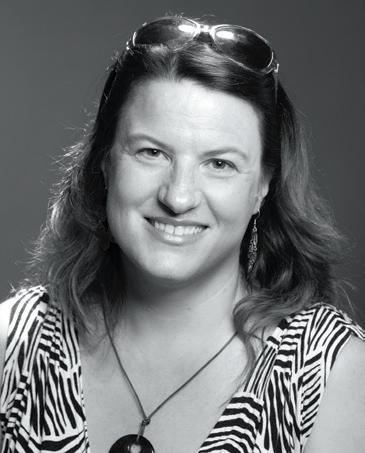
Kelly Oden Editorial & Creative Director
first responders and hospital workers? Thank you for putting yourselves on the front lines to keep us as safe as possible. Also, a big shout out to all the teachers out there scrambling to put together online lessons to keep our kids engaged and learning instead of worrying about things they cannot control. We appreciate you!
incredible special-needs pets and owners and she discovered that while these precious babies may take a little more care, the love they give in return is worth every second.
I don’t know about you, but 2020 offered far too little of either of these to me. I was so consumed with my mom’s illness and then with surviving the grief of her loss and the anxiety of the pandemic and the sorrow of so many national news stories that I took little time for myself. This year, I hope to explore creative and personal endeavors that help me rediscover myself and discover new outlets for personal expression.
On that note, I encourage you to read our COVID-19 Resource Guide, which provides resources for food, business, community and more. The ever-changing nature of this crisis necessitates that I mention that these resources may or may not be available to you by the time you read this issue. I hope it will provide a place to start, some ideas or some inspiration either way.

If exotic animals are more your thing, head on over to the brand spanking new and significantly enlarged Alabama Gulf Coast Zoo. The new location features all the hands-on, up close interaction as the previous location plus added attractions, amenities and experiences that will make for a wonderful family day out.
If you’re interested in conservation, check out Dakota Parks story on local Panhandle Rooftop Nesting Biologist, Rebekah Snyder. Through her work with Audubon Florida, Snyder helps to ensure local shorebirds have safe nesting spaces in an increasingly overpopulated region.
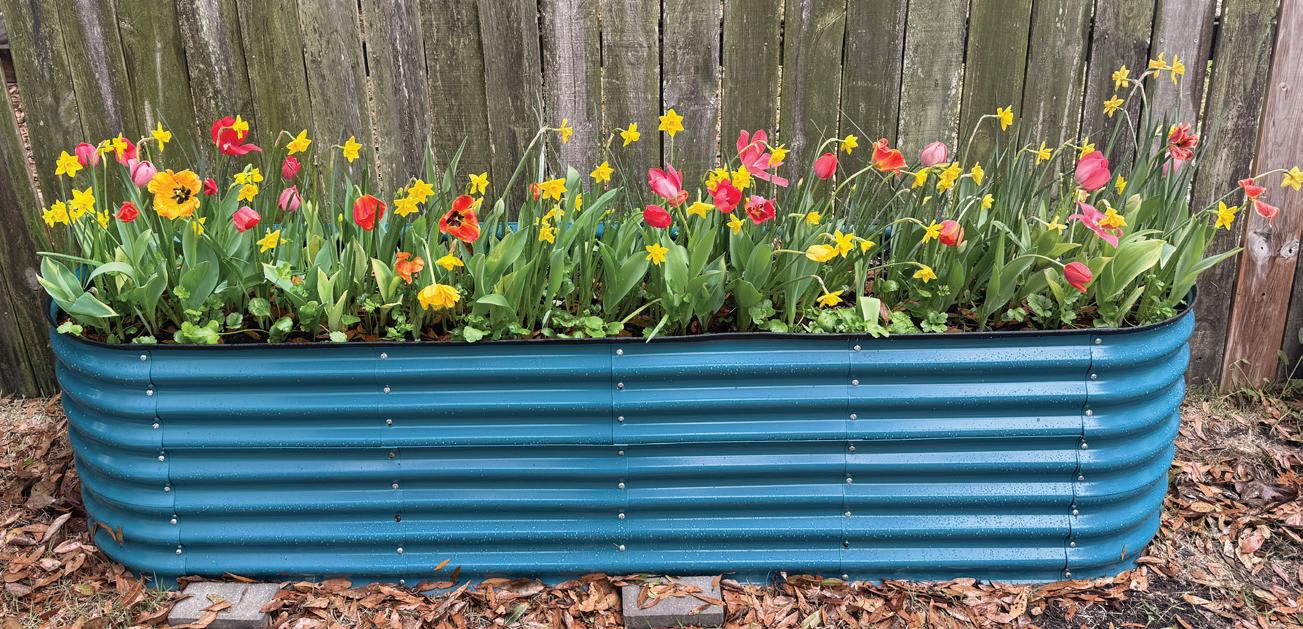
When it comes to spring gardening, I am typically late to the game. I find myself scrambling in April to get everything cleaned up and planted before it gets too hot. I’m sure that will be the case again this year with most of my yard, but I did plan ahead for one raised bed, and it is paying off! Last fall, I bought hundreds of clearance spring bulbs online—tulips, daffodils, iris, crocus and ranunculus. I chilled the tulips and daffodils for five to six weeks and finally got them in the ground in late December. They are blooming now, and they are glorious! A true cacophony of color. I absolutely love this little corner of the yard and can’t wait to plant more! For most people, March in Pensacola is when the outdoors starts calling again and this month, we have all your landscaping dreams covered. Our native landscapes story will make you rethink what your yard can be and help you understand the many benefits of landscaping with the native environment in mind.
You may also notice that we have some nonpandemic related stories in this issue. We made the call to include already planned articles that might still be helpful, relevant or enjoyable for our readers. We hope you find them useful.
Stay safe, stay healthy and stay strong, Pensacola! you equally— pandemic stress, and things provide
While many people made glorious headway on home improvement and personal projects in 2020, I did not. I did not organize anything. I did not fix anything. I did not learn a language or a new skill. Nothing. But that’s ok, too. I’m still here. That’s an accomplishment. However, in 2021, I’d like to lighten my load and empty my house of much of the clutter and unnecessary junk that fills it. It’s time to make room for something new.
All of this, plus a few DIY pet treat recipes and some good news from the Florida legislature regarding protection for pets in abusive situations.
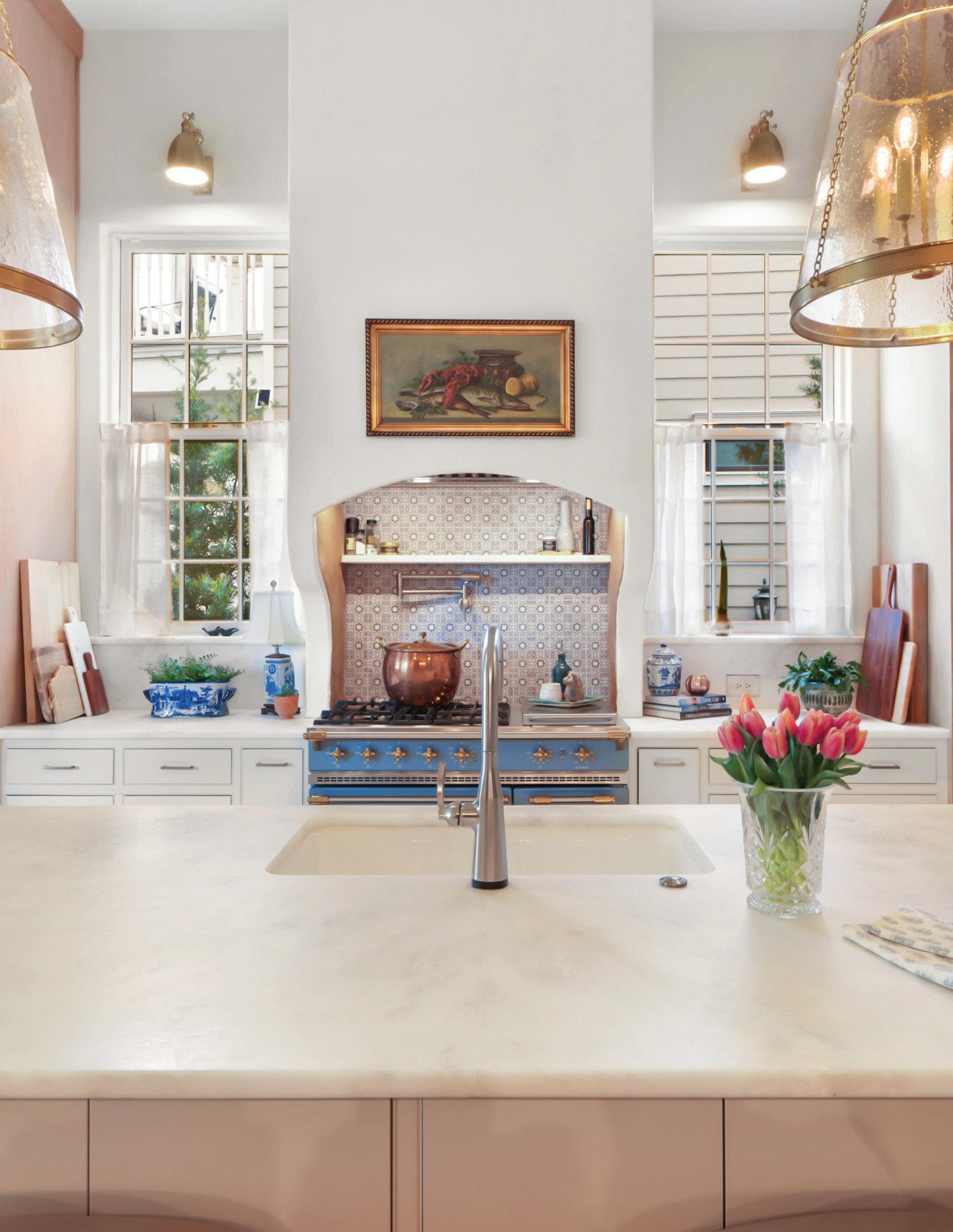
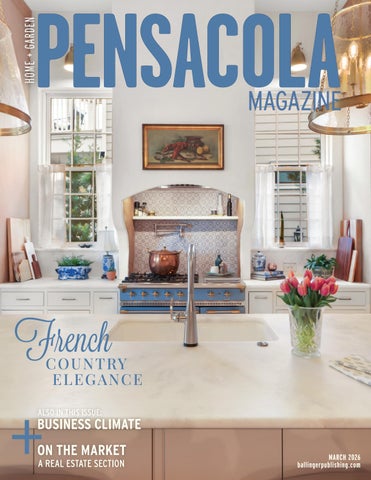
Our featured home is also full of design inspiration. Lisa and Eric Lewis built their French country coastal home from the ground up and the result is a home that is warm, artistic and deeply personal. Elegance, pops of color and spa level baths are the standout features of this stunning home.
As for us, Pensacola Magazine has been published under one title or another for more than 40 years. We have no plans on changing that. We will continue to publish and to bring you all the information we can for as long as we can. Please reach out to us with story ideas, inspiration or just a quick hello. We are all working from home and we are missing our water cooler conversations.
So, turn off the news, put down your phone and enjoy these heartwarming tales and adorable of photos of local animals and the folks who care for them. When you’re done, give your kitty a little catnip and throw your dog a bone. It’s these simple pleasures that will keep us all sane.
In this issue, we’ve covered all of these topics and more to help readers shift their own focus in 2021. We hope you enjoy. Here’s to your health!
Beyond the cover, we have kites, a beloved Humane Society gala, a night of cabaret and performance at Pensacola Little Theater and some truly beautiful bathrooms by local interior designers. There is something here for wherever your attention lands this month.
Happy spring, Pensacola.





By Hilary Towns
As the flowers bloom in Pensacola this spring, there are ample opportunities to catch the intoxicating aromas of jasmine, gardenia or orange blossom. These scents also occasionally occur in the wine glass. The smell of wine is called the bouquet for a reason.
The bouquet, or combination of aromas in the wine, is a complex blend of hundreds of volatile compounds. The detection of a floral note is not happenstance. The same group of aromatic compounds that are arising from the wine are also present in the actual flowers. They come from a chemical group known as terpenes.
The most common terpenes found in wine are linalool, geraniol, nerol and citronellol. They are responsible for notes of lavender, rose, violet, geranium, citrus blossom, bergamot and coriander. Muscat, Gewurztraminer, Viognier, Albarino and Torrontes are famous examples of grapes that smell very floral. While tens of thousands of different terpenes exist in nature, mostly in herbs, fruits and trees, only about 75 have been identified in grapes, with even fewer ultimately present in the finished wines. Interestingly, the ones that do typically meet our sensory thresholds from the wine are not usually detectable in the grapes themselves. The terpenes tend to bind to sugar molecules in the grapes and are not released until the yeast detaches the sugar during fermentation and the aromatic compounds are freed to become airborne and reach our olfactory receptors.
Aromatic wines of this nature are underrepresented and too often underappreciated. They seem to get wrapped into the association of their smells rather than seen for their own merits. When a scent reveals notes of honeysuckle and jasmine, it is assumed that the wine will be sweet, and that the sweetness is an indication of inferiority. In practice, that is rare. The wines often finish dry. In reality, a little sweetness is not always a bad thing.
In a world that treasures citrus, minerality and steely notes as a sign of refinement in wine, I’d like to make a case for florality because it is a set of particular aromatic compounds that we love in so many other common products, yet seem to be reticent to in wine. Consider skin and hair care products, cleaning products and air fresheners. The aromas found in these wines are often the very same scents we use to add fragrance to our daily lives.
This spring, take a chance and open a bottle of something light, delicate and full of all the promises that are held within the first buds of the season. Here are a few inexpensive and widely available examples:
Elio Perrone Moscato d’Asti - Often overlooked as a novice wine that is not to be taken seriously, this low alcohol fizzy wine is the brunch wine par excellence. Better than a mimosa with its sweet, delicate notes of peach, jasmine, orange blossom and pear, and low in alcohol, so a couple glasses won’t ruin the rest of the day.
Zuccardi ‘Serie A’ Torrontes - A unique grape from high altitude, cold climate Argentina, Torrontes is a great choice for dishes featuring strong flavors such as ginger, lemongrass and cilantro. It is also dry and refreshing, and can very enjoyably fill the afternoon porch session. Geranium, jasmine and rose are common descriptors while citrus and minerality are the signs of a well-made example.
Yalumba ‘Y Series’ Viognier - Originally grown in the Northern Rhône Valley, Viognier exudes floral notes of honeysuckle and gardenia. This example is from one of Australia’s ‘First Families of Wine’ and it is a steal for its easy drinking style. It is best on its own or with very delicate foods such as scallops or crab. Never pair Viognier with anything with vinegar or citrus juice, as the acids will make this lower acid wine taste bitter.
Villa Wolf Gewürztraminer - Sweet, spicy German nectar with a pronounced rose and lychee nose, if ever a wine could surprise, this is the culprit. A great bottle to convert non-wine drinkers, Gewürztraminer translates to spice grape and shocks the palate with otherworldly flavor.
Domaine Skouras Moscofilero - Enough acid to hold up to salads, and enough aromatics to complement strong herbal dishes, Moscofilero is a fun and festive wine that is at home on the beach as it is on the table. Jasmine, honeysuckle and lime blossom dominate the terpene scene of this much loved Greek varietal.




By Emily Higgins
If you are looking for a fun, family-friendly event that gives back to the community, Council on Aging of West Florida’s annual Kites on the Coast is for you!
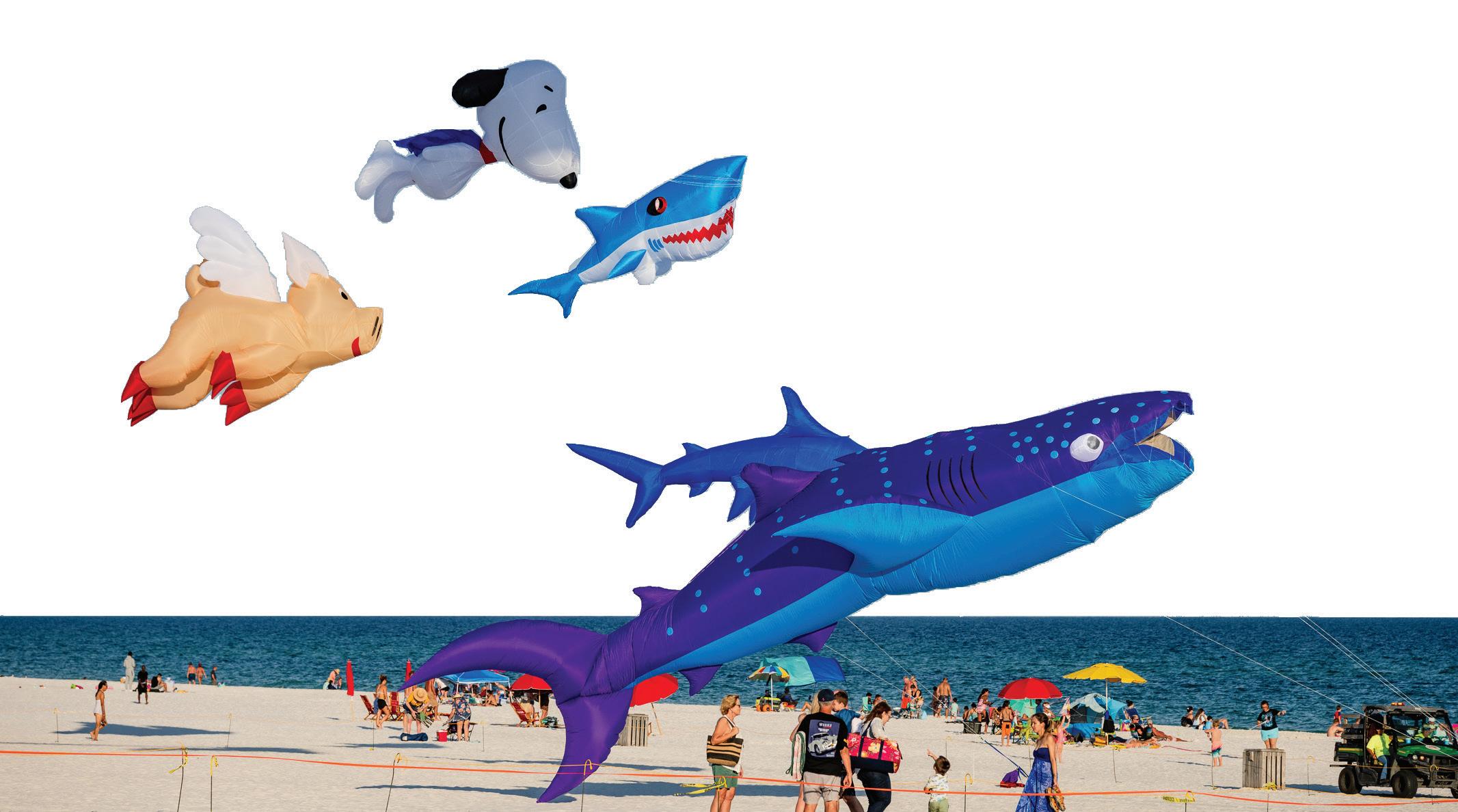
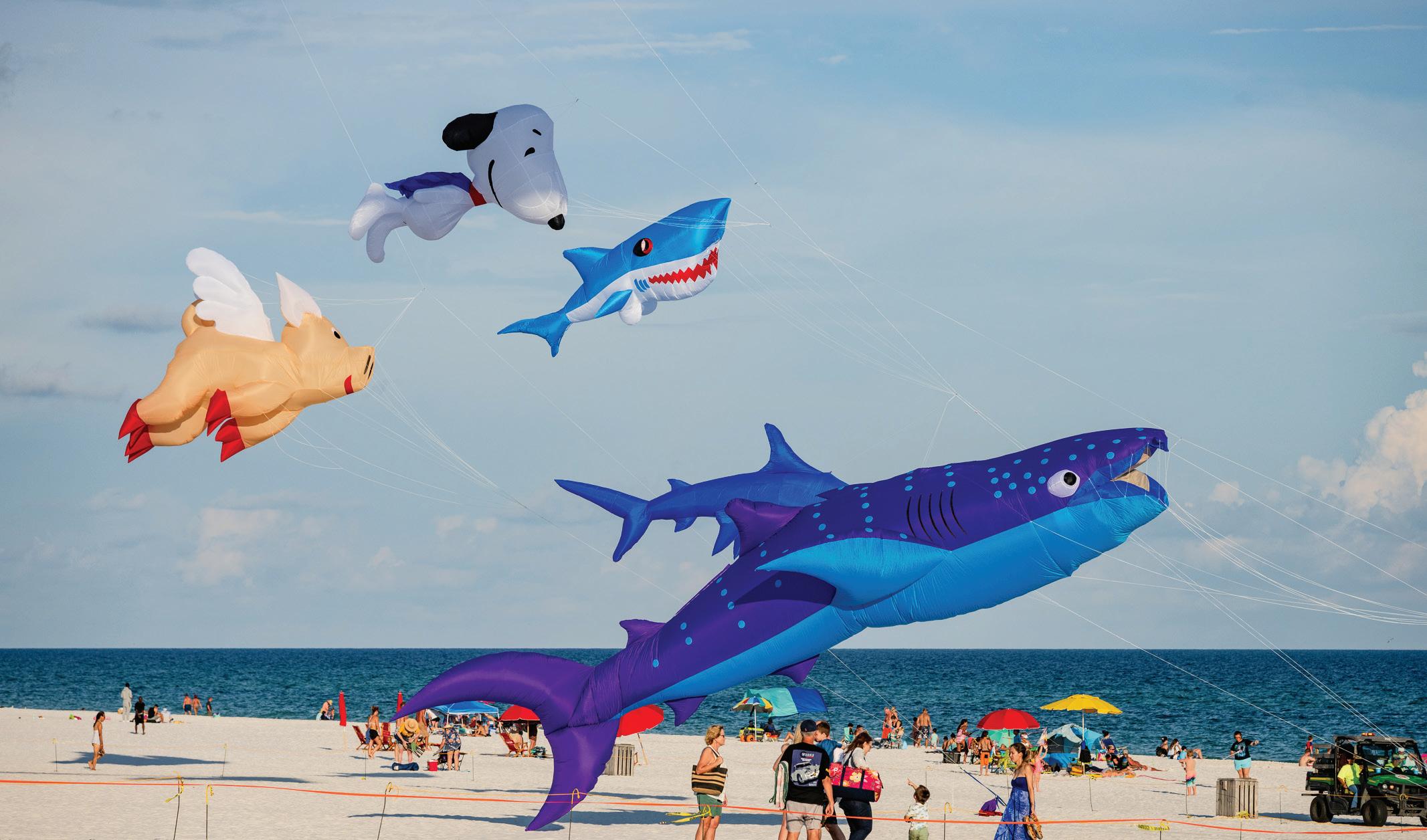
Colorful kites will be soaring high at the fifth annual Kites on the Coast festival, which will be held at the Casino Beach Pavillion on Pensacola Beach from 12 pm Friday, March 13 through 2 pm Sunday, March 15.
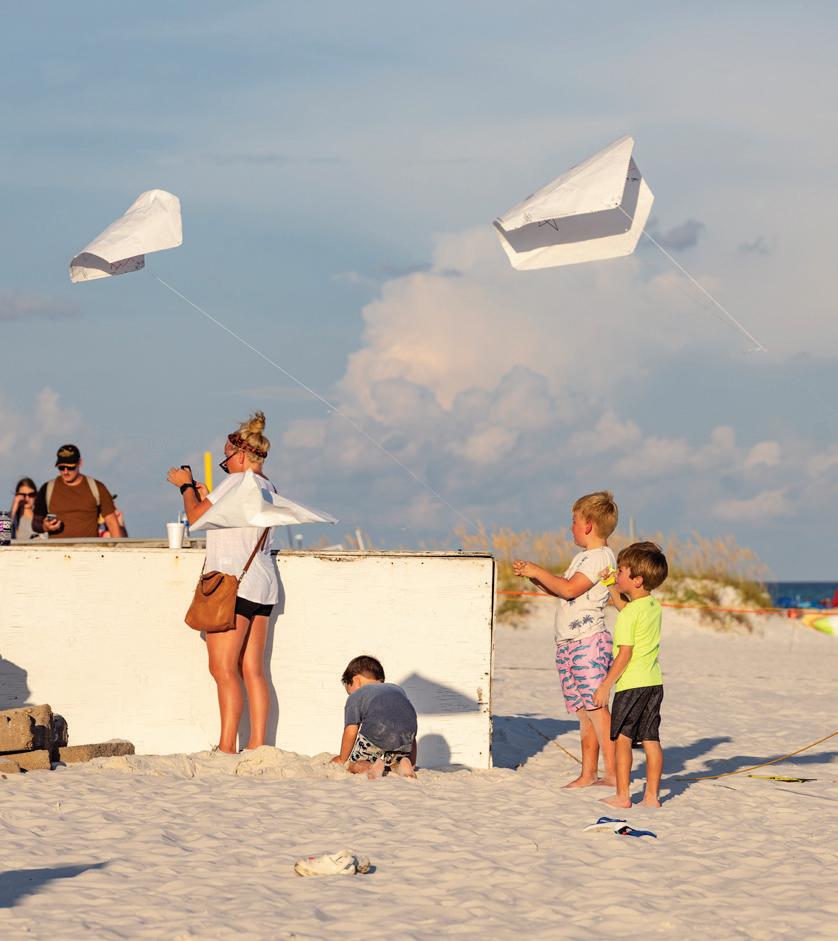
Throughout the weekend, massive show kites and zooming stunt kites by Chicago Kite and SkyFX will be soaring above the beach as the community explores local vendors and food trucks, enjoys music, and participates in activities. On Friday and Saturday evening, lighted kites will glide through the air for a night kite show, weather permitting.
Kites will be available for sale at this event, or attendees are free to bring their own kites from home. Proceeds from sponsorships and donations will directly benefit Council on Aging of West Florida, which serves aging adults and
caregivers in Escambia and Santa Rosa counties through programs like Meals on Wheels, case management, adult day care and more. The purpose of the event is to celebrate the intergenerational attraction of the classic pastime of kite flying, something that every age group can appreciate.
“We’re thrilled to bring Kites on the Coast to the community and introduce those that don’t know our agency to all that Council on Aging does for older adults,” Council on Aging Marketing Communications Director Emily Echevarria said. “Even if someone just comes out to enjoy the amazing kite demonstrations, they’ll hear about Council on Aging and have an idea of who to call when they do have those elder care needs.”
Cat Country will be onsite live on Friday with music, and a local ukulele group will be performing during Saturday’s festivities. Kid’s area activities include arts and crafts and the opportunity to Send Sunshine to a Senior by drawing a picture or making a card that will be delivered to Council on Aging clients to help brighten their day.
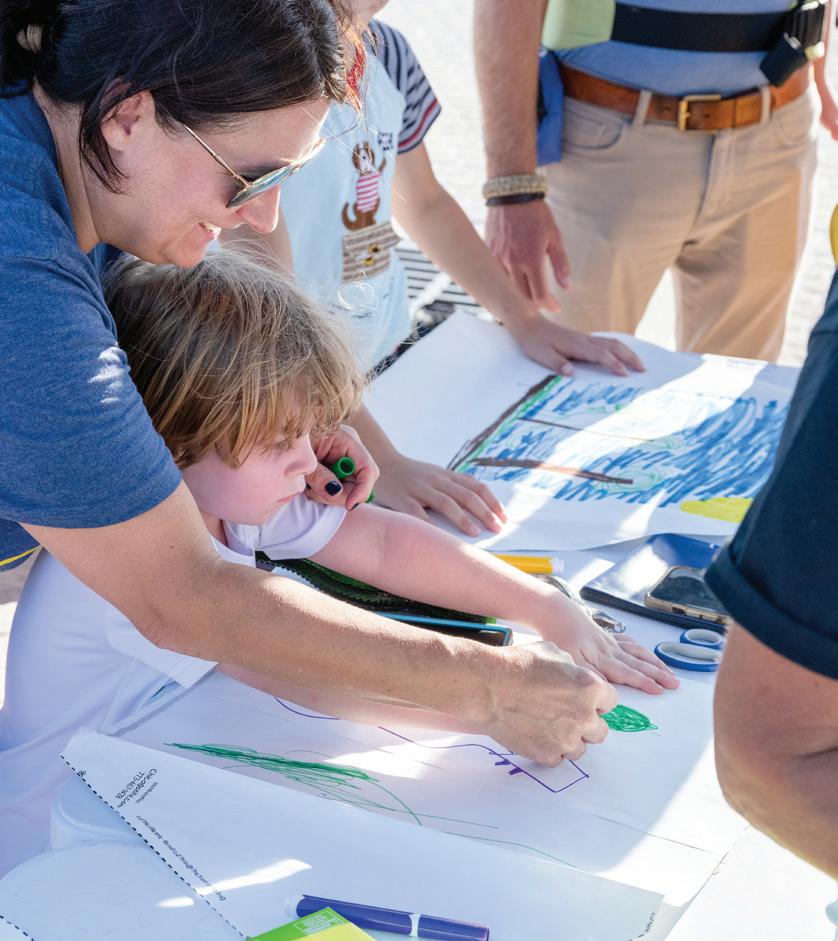
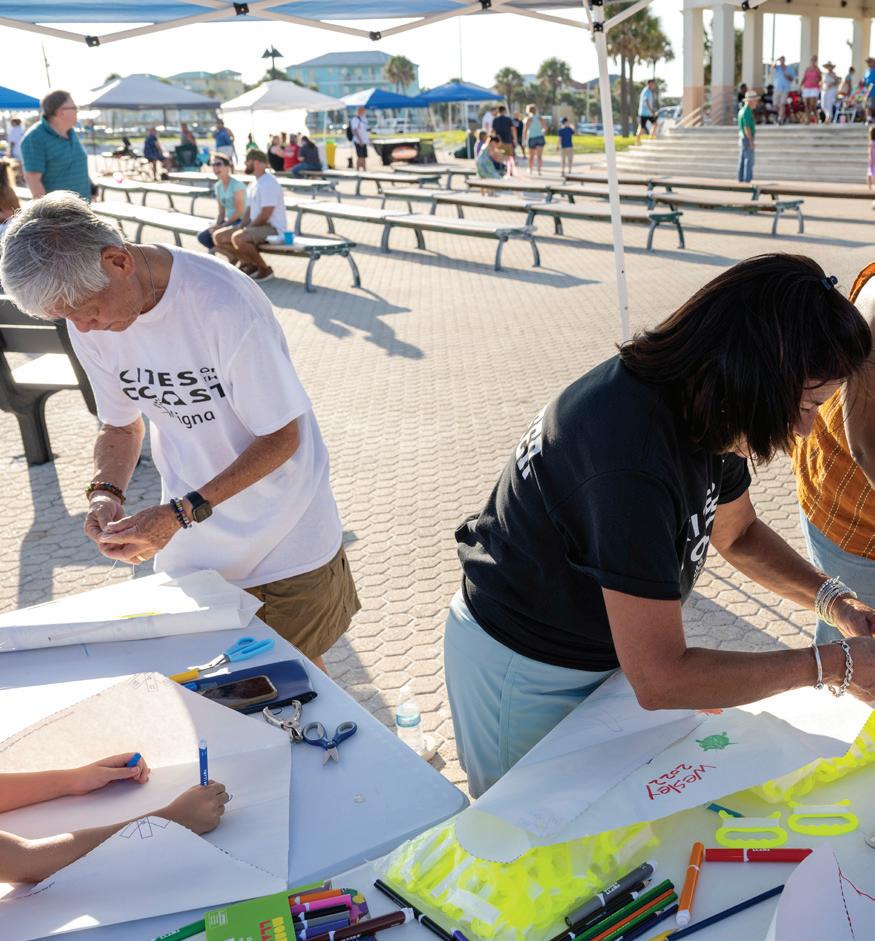
While this event will have many activities for individuals of all ages, the main event consists of thrilling kite shows put on by Chicago Kite and SkyFX. Owner of Chicago Kite David Zavell, will be performing the kite show along with members of his team.
“Some of my favorite things about performing at this event are the sandy beach, the open air, the different temperature and getting to put up kites that people have never seen,” Zavell said.
Zavell says he also enjoys the ease and warmth of the South and its people. Throughout the year, Zavell and his team at Chicago Kite do about 34 events, where they travel to locations from California to Guantanamo Bay and, of course, Florida. Since Chicago Kite is based in Chicago, primarily do shows in the Midwest. David says his favorite kite would be the easiest one to fly,
but since the kites are inflated by air, the ease of flying the kite depends on how much wind there is on a given day.
During the shows, Zavell interacts with the audience a lot, and he says that he enjoys hearing the different questions people have about the kites. He says people are often astonished by how large some of the kites are, which range from 15 to 100 feet long. But Chicago Kite does not only perform; they also sell a wide range of specialty kites.
Kites on the Coast is a free event that’s open to the entire community. On Friday, March 13, the evening portion of the kite flying will coincide with the first night of Cinemas in the Sand with a family-friendly film playing at the Gulfside Pavilion. For more information and updates visit kitesonthecoast.org.

By Bella Shields
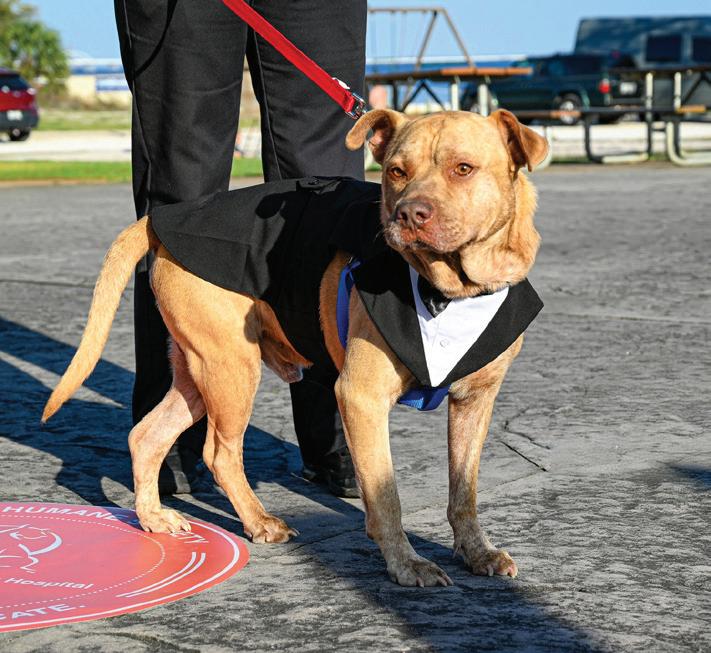
You won’t want to miss this year’s Fur Ball: a glamorous soirée offering a chance to give back to our furry friends at the Pensacola Yacht Club on March 21 from 5:30 to 10 pm.
Featuring cocktails, a sit-down gourmet dinner, and entertainment, the night will be one to remember. But it’s more than just a glitzy ball. This event stands out from the others in the best possible way: attendance will directly support local animals in need.
The Fur Ball is an annual event hosted by the Pensacola Humane Society as an opportunity for the public to have an exciting night out while contributing to a very worthy cause–the shelter pets under the Humane Society’s care.
The Pensacola Humane Society is a nonprofit organization that has been operating for over 80 years now. It doesn’t receive any funding on a city, state or federal level, only directly making money off of adoption fees, which is not nearly enough to cover the animals they care for and the wide work they do for the community.
“Last year, the Fur Ball netted approximately $175,000, so it’s our major fundraiser of the year,” Pensacola Humane Society Vice President of Development Mary Donovan McClellan said.
From 2024 to 2025, the Humane Society had 943 intakes, performed 1,535 spay/neuter operations and provided 13,023 pounds of food for pets in need.
They showed results too, with 921 adoptions and a whopping 98.7 percent save rate for animals in their care.
“The money that we raise goes towards giving each animal a chance from the time they come in the door till the time they leave,” McClellan said.
The animals of Pensacola need the Humane Society, but the Humane Society needs community support to continue helping animals in our area. The Fur Ball is one opportunity for Pensacola to fill that need.
Tickets to this event are $175, and all proceeds will go directly to funding Humane Society operations. Additionally, on the Humane Society website are sponsorship levels for the event, ranging from $500 to $20,000 for those who choose to donate beforehand.
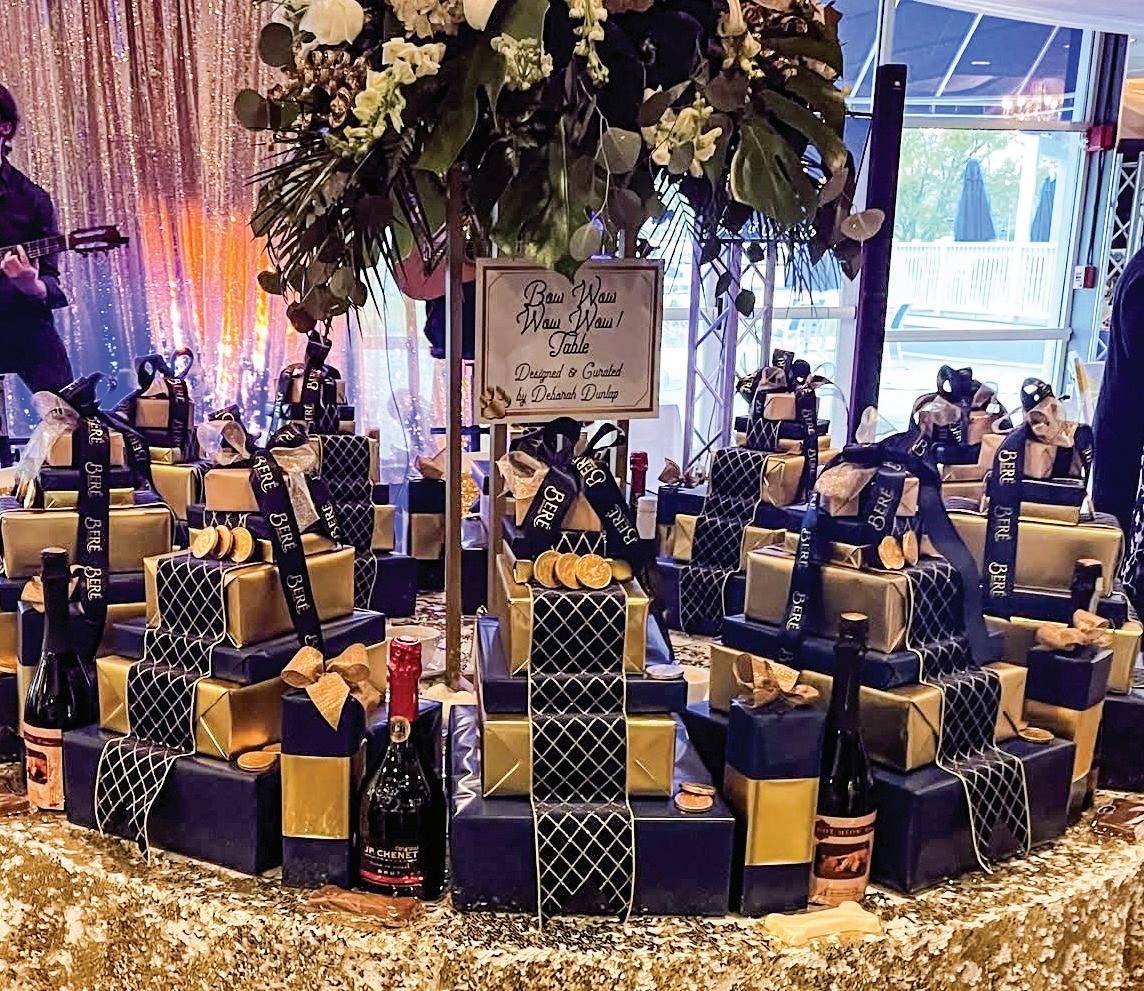
At the Ball, attendees will have the option of participating in both live and silent auctions. This includes a highlight of the night, the Bow Wow Meow Table Auction.
The Bow Wow Meow Auction table is a 10-seat table piled high with wrapped mystery gifts provided by donors, with each tower of gifts totaling up to hundreds of dollars. The highest bidder, upon successfully winning the table, gets to sit at the table in the front of the room for the rest of the night, and of course gets to take home all the gifts.
“The items range from jewelry to books to gift certificates and novelty items,” McClellan explained. “One thing we’re doing this year is offering incentives for the people who donate to the Bow Wow Meow Table. We decided it would be nice to recognize them in a special way.”
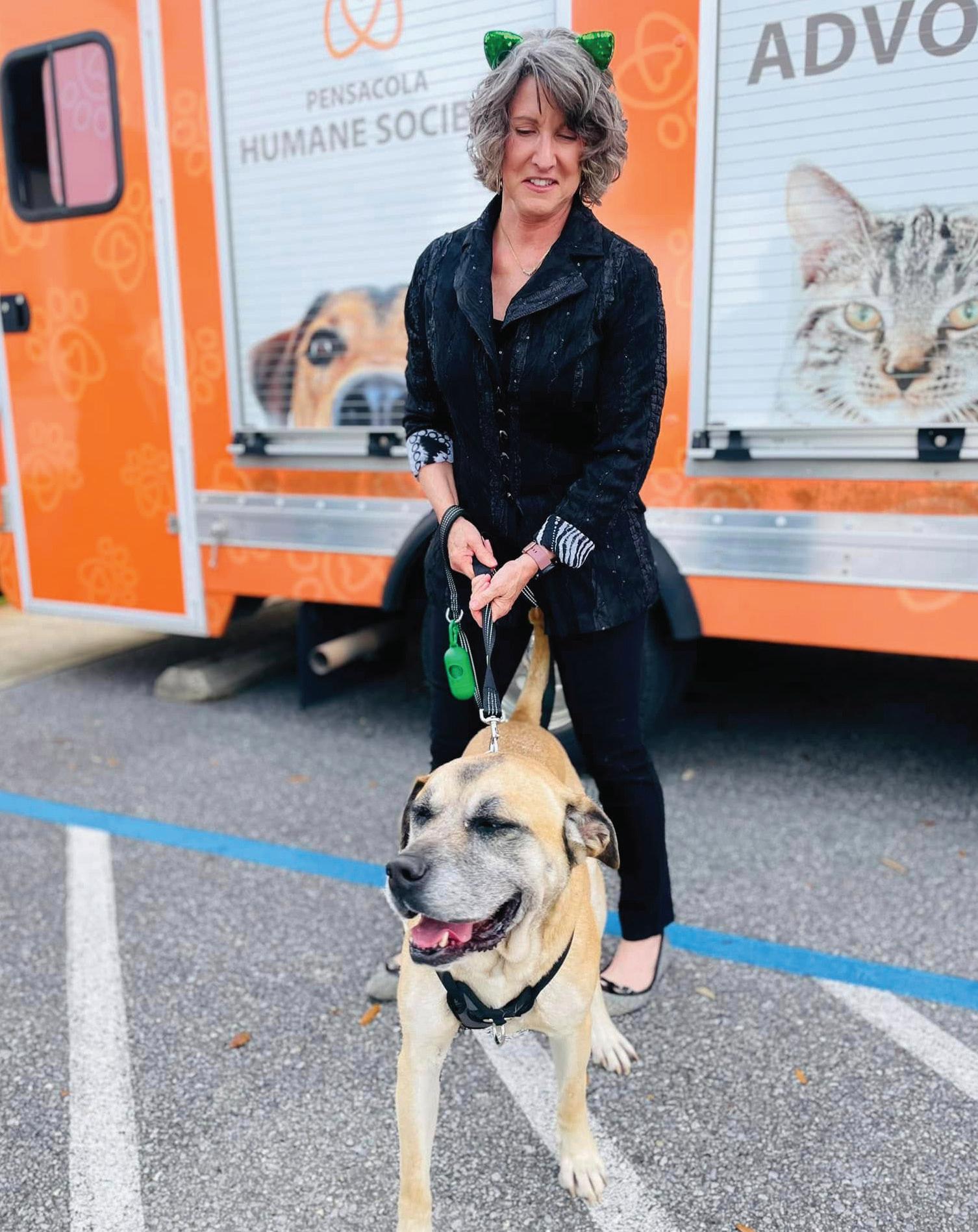
One of the incentives for contributors to the table is earning a place on the back of the Humane Society adoption van for their logo, getting advertisement for six to 12 months.
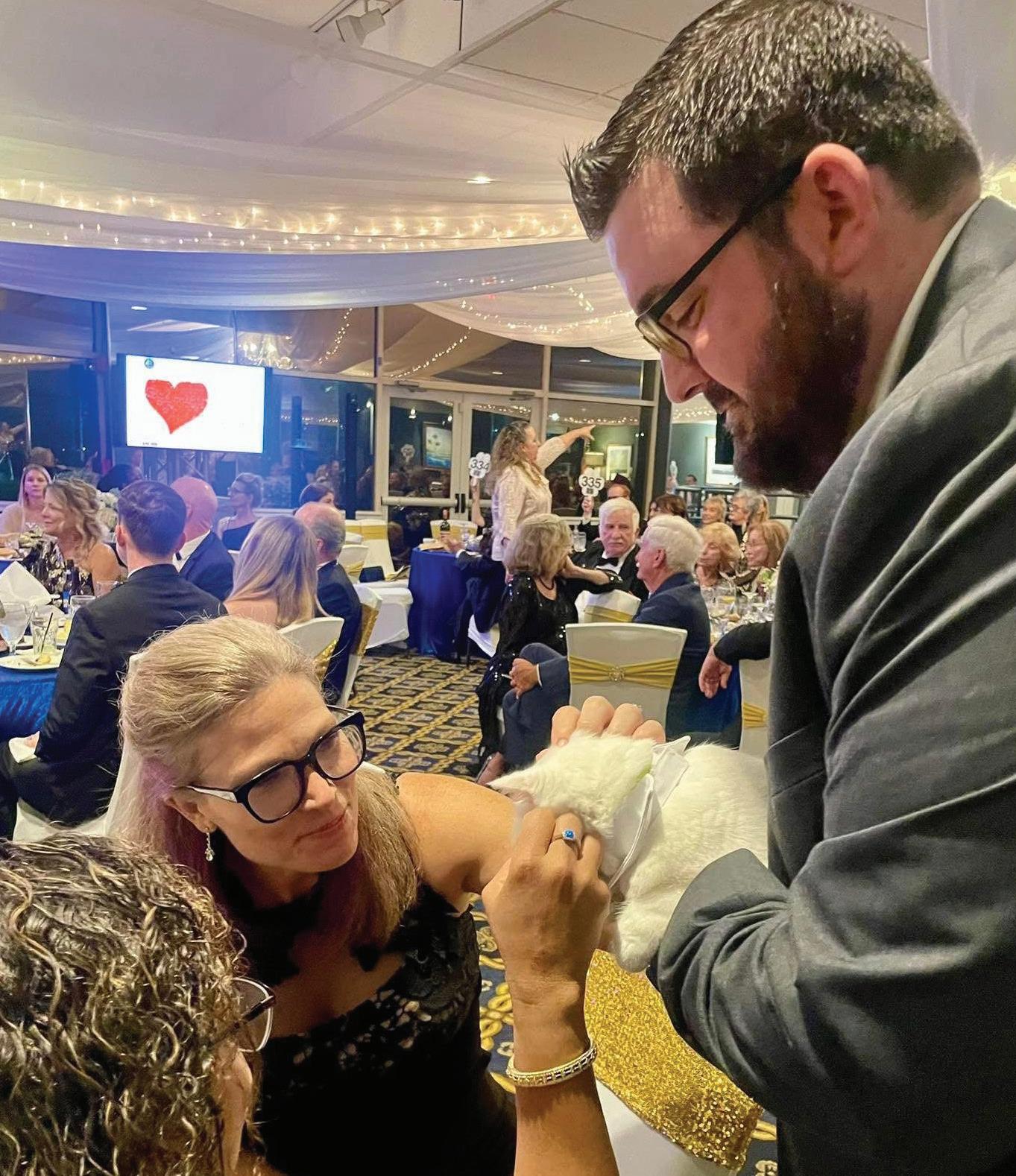
Not only will this event raise money to support the animals under the Society’s care, there will actually be animals present at the event itself. The gala features a puppy parade during cocktail hour (which the event dubs “Yappy Hour”) when attendees are able to interact with puppies currently up for adoption.
“We have our staff walking around as people are mingling with our puppies,” McClellan said. “They’re between the ages of eight weeks and three months and are so cute.”
Though adoptions are not available immediately on-site to avoid any impulse adoptions, if attendees are interested in any of the puppies, they are encouraged to reach out to the shelter when the work week begins again to make arrangements.
Whether you plan on finding a new furry soulmate or just making some adorable memories, there’s something for everyone. If you enjoy a good party and want to support the Humane Society and its mission to aid animals in need, Fur Ball is the place to be.
For tickets and event details, visit pensacolahumane.org.


By Nic Fenger
As Pensacola Little Theatre (PLT) closes the chapter on its 2025-2026 season, its signature fundraising event steps back into the spotlight for its 25th anniversary.
Cabaret: Storybook Soirée turns a fresh page on PLT’s annual celebration of the arts, transforming The Clark Family Cultural Center (The Center) into an immersive

Cabaret: Storybook Soirée will take place on March 28 at The Center located at 400 S. Jefferson St. in downtown Pensacola.
Each year, PLT transforms The Center with a new Cabaret theme, inviting guests to wander from room to room as each space unfolds like a chapter—bringing the worlds of beloved classic stories to life.
This year, PLT’s staff and volunteers are shaping the rooms of the building into a living storybook, with each featured artist taking inspiration from classic fairy tales and literary legends to craft unique experiences in every room. This literature-centric theme is the brainchild of PLT Marketing Director Ashley Simmons.
“With the storybook soirée, every room is going to be a different literary adventure,” Simmons said.
Attendees who enter the venue will be met with a massive library, and traveling outside takes you on a dungeon tour of villains, showing well-known no-gooders like Lady Macbeth and Pennywise. There will also be a Midsummer Masquerade with a Pride and Prejudice meets Bridgerton vibe. The rooftop area will showcase Camelot-inspired themes and decor.
Kayla Stephenson, PLT’s technical director, is spearheading the construction of the rooms and set pieces, converting a stage into a giant storybook and creating a bar within a large teacup.
These performances, exhibitions and music will entertain guests beginning at 7:30 pm. Although the dress code for Cabaret is formal, this year, the team behind Cabaret encourages guests to dress in attire inspired by their favorite literary characters.
“The dress code is also one of my favorite parts because it is black tie formal, but we would love a little whimsy,” Simmons said. “So, if you want to dress up as your favorite literary character but make it formal, that’s what we’re looking for—like a fancy Alice in Wonderland.”
This year’s Cabaret will feature a diverse range of performative art, including live bands, ballerinas, firebreathers, aerial performers, drag performers and much, much more.
“I love that we’ve integrated and spotlighted the talent that we have here for the party,” Simmons said. “We’re not just speaking about outside talent. We’re really going within and using our own volunteers. I love the yearly drag performance for the event. That always gets super fun and really artistic.”
Guests will also enjoy a variety of culinary creations, including specialty party fare served later in the evening and handcrafted macarons prepared by PLT board member and Chef Michael Gordy.
However, the festivities will not rest until the clock strikes midnight. For the first time in Cabaret history, starting at 10:30 pm, the Moonlight Madness afterparty will follow the soirée, taking the celebration to The Rooftop, the The Center’s recently unveiled exclusive bar and event space. Here, guests can serve their moves on the dance floor to a live DJ, and they can be served craft cocktails to enjoy under a starry sky.
Drag performers will also take to The Rooftop, following up their performances downstairs with show-stopping encores. The sensational drag performances, lively energy and luxurious libations make the Moonlight Madness afterparty an unforgettable conclusion to a night of stories and celebration.
Cabaret continues to be a magnet of community, revelry and artistry through its enthralling storybook soirée

theme. However, Cabaret is not only a celebration of local art and creative expression but also a crucial component to PLT’s $150,000 funding goal for its annual slates of theatrical productions, acting classes and community outreach programs. The event also serves as the perfect opportunity to support Pensacola’s artistic community, funding future stories that PLT’s volunteers and staff seek to create.
“People need art in their life,” PLT Technical Director Kayla Stephenson said. “It’s a great part of the community that different walks of life can come and enjoy it and be a part of who we are. That’s what Cabaret is about: experience something different and come enjoy what we are—come be a part of the family.”
Sponsorship opportunities have also returned to Cabaret. Currently, 140 sponsor tickets are available, which provide a premium Cabaret experience, including expedited entry to the event and access to the preparty for Cabaret at The Rooftop, exclusive performances and the premium bar. For more information on sponsorship opportunities, contact Tucker O’Connor at booking@pensacolalittletheatre.com.
Tickets for Cabaret are currently available for $150 each, which provide full access to the event, including six open-bar venues, culinary art catering, live entertainment and various performances. Tickets for the Moonlight Madness afterparty are $100 each.
For tickets and information, visit pensacolalittletheatre.com or call the PLT Box Office at (850) 432-2042.


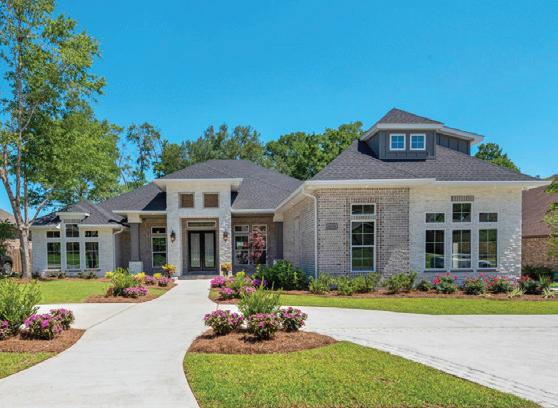
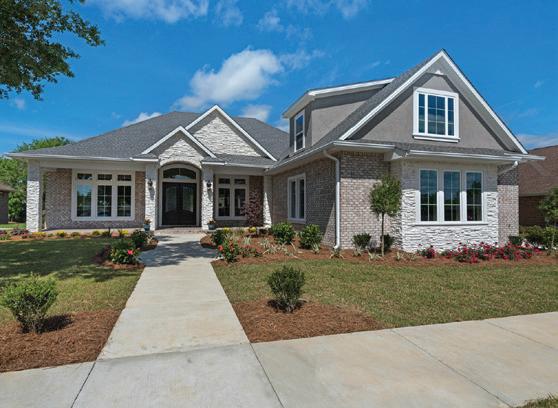
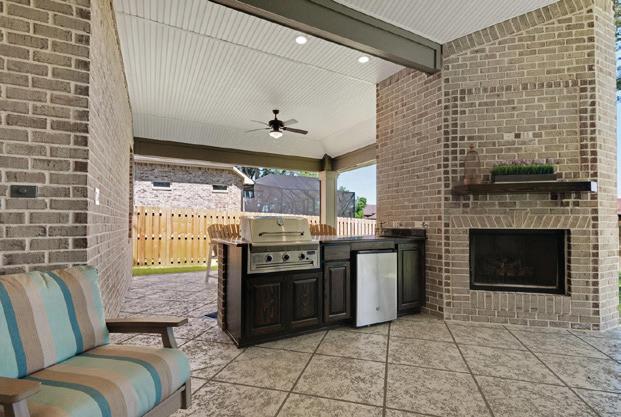
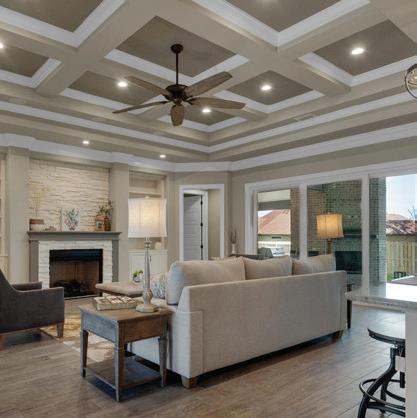

By Morgan Cole
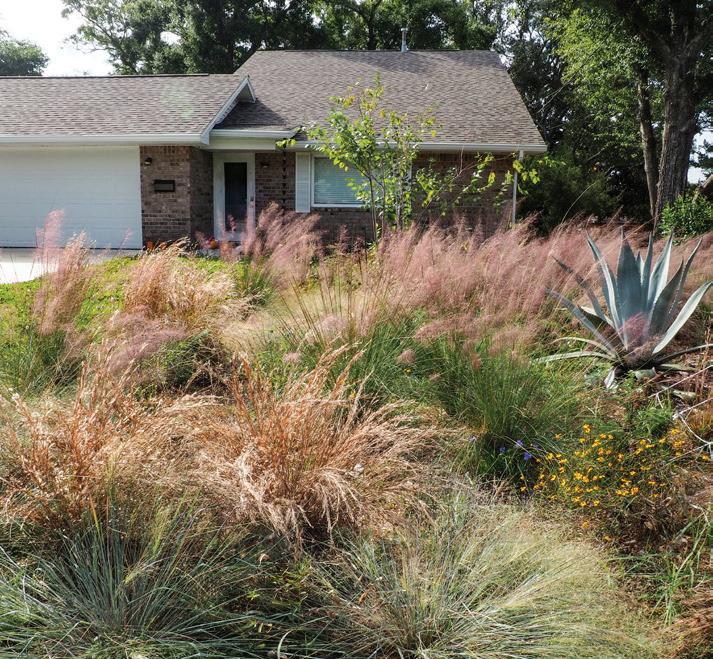
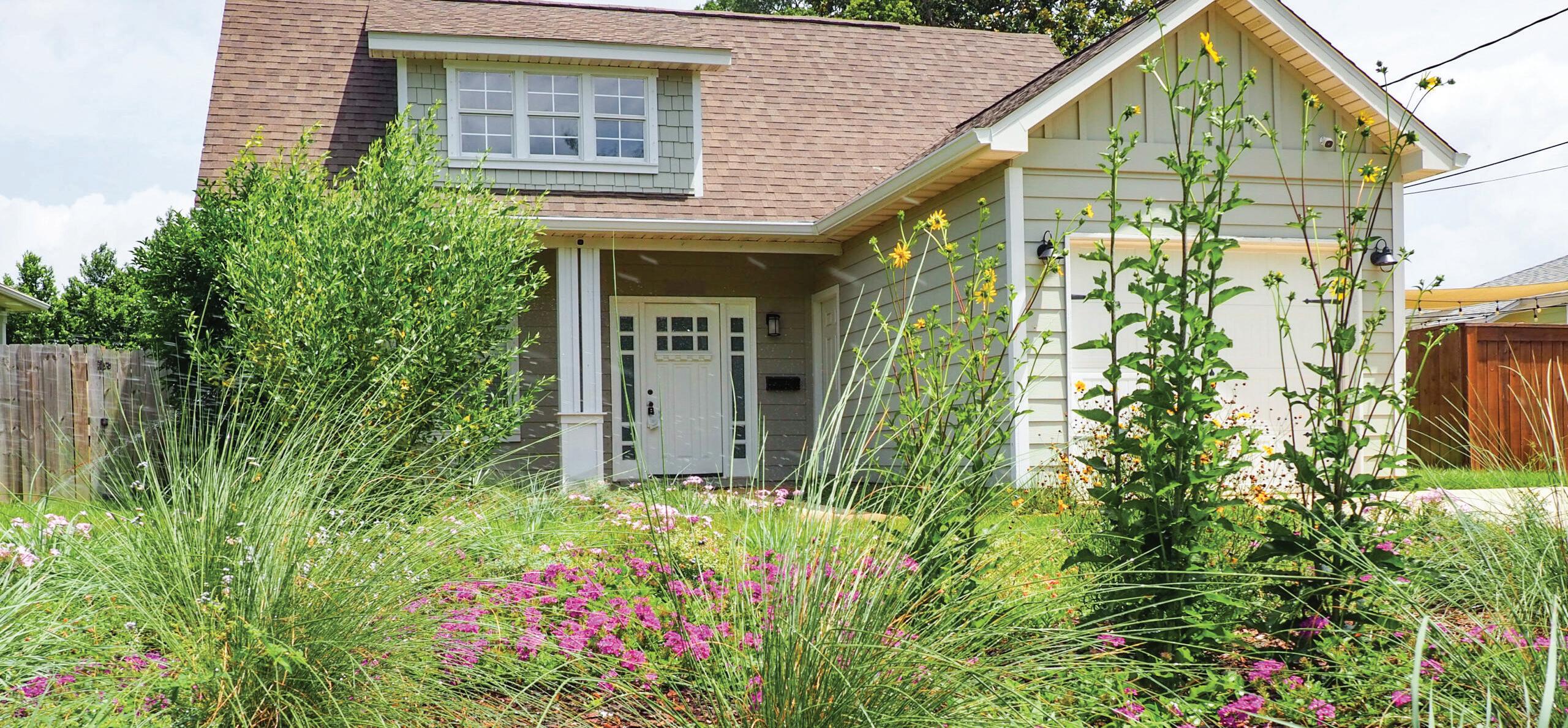
Drive through almost any neighborhood in Northwest Florida, and you’ll notice a familiar sight: stretches of bright green grass running from sidewalk to porch. Neat and carefully maintained, these lawns may fit the traditional idea of picture-perfect curb appeal, but they rarely reflect the natural beauty and character of the landscape we call home.
Florida Native Landscapes is a small, Pensacola-based landscape design firm that specializes in using native plants in residential and commercial projects. For owner Emily Hauman, reimagining urban spaces isn’t about dismissing beauty or abandoning tradition. It’s about restoring a sense of belonging for the people and wildlife that once thrived here.
Hauman’s approach to designing landscapes that benefit both people and wildlife grew from more than professional ambition—it was sparked by a personal curiosity about plants. During a break from her graphic design studies in college, Hauman found herself unexpectedly captivated
by a simple backyard tomato plant. That curiosity quickly evolved into a determination to study horticulture, eager to understand plants not just as decorative elements, but as complex, living systems.
While completing her degree, Hauman worked in the wildlife ecology departments at the Florida Forest Service and the University of Florida’s West Florida Research and Education Center. She spent her days in longleaf pine forests, meadows and wetlands. Immersed in these landscapes, where she developed a deep appreciation for Florida’s natural systems.
“During those formative years spent immersed in wild Florida, I learned to appreciate the diversity and natural wonder of these places,” Hauman said. “I would return home from work and realize how stripped of natural Florida our urban spaces are. The more familiar I became with our local ecology, the more apparent it was that our cities had lost much of the beauty of these places and the biodiversity that depends upon these plants.”
At the same time, she was learning about the demanding upkeep of traditional landscaping—constant irrigation, fertilizers, pesticides and mowing and how unsustainable these practices can be, especially in Florida’s sandy soils.
After graduating, Hauman explored several paths before connecting with Native Plant Company, a local wholesale grower based out of Milton, Fla. specializing in regional native plants. Encouraged to pursue their shared passion for bringing more native species into developed spaces, the two partnered to launch Florida Native Landscapes in 2022
Today, Florida Native Landscapes operates as a small, handson team designing, installing and maintaining ecologically beneficial landscapes for clients throughout Northwest Florida.

For those new to the concept, native landscaping goes beyond swapping out a few shrubs or flowers. Hauman defines native landscapes as those that prioritize plants that occurred in the region prior to colonial settlement—species that evolved alongside local climate, soils and wildlife.
“When functioning properly, these native ecosystems clean our water and air, host important wildlife such as caterpillars needed to raise baby birds and create flowers that provide nectar to native insects that pollinate our crops,” Hauman said.
Meaning that native plants aren’t just aesthetically suited to Florida, but foundational to the food web. Choosing native plants isn’t just good for your garden—it’s a way to strengthen ecosystem function and help reconnect fragmented habitats in our local communities, one yard at a time.
Hauman explained how this work is especially critical in our region, part of the North American Coastal Plain, which has been designated a global biodiversity hotspot due to the diverse flora and fauna occurring here.
“The vast majority of our ecosystems have been scrubbed from existence as we continue to develop our cities,” Hauman explained. “Florida’s population is growing rapidly and this suburban sprawl threatens our remaining pockets of high-density, diverse ecosystems. What remains of these fragmented forests and meadows is at risk of being lost entirely, as well as the many species of animals that live within it.”
At the same time, we are witnessing historic biodiversity loss worldwide. Traditional landscaping often centers on large expanses of lawn, or what Hauman refers to as a “carpet of grassy monoculture.”
Lawns require repeated mowing, irrigation, fertilization and pesticide treatments to maintain their uniform appearance. Nationally, turfgrass is considered the most irrigated crop in the United States. That resource use is particularly problematic in Florida’s excessively drained sandy soils, as water and nutrients quickly leach into nearby waterways.
A thoughtfully designed polyculture—the practice of growing multiple, diverse plant species together in the same place to support each other—of native plants
requires far less care and maintenance once established. These plants are adapted to local rainfall patterns, soil chemistry and seasonal shifts. Rather than fighting the environment, they work with it.
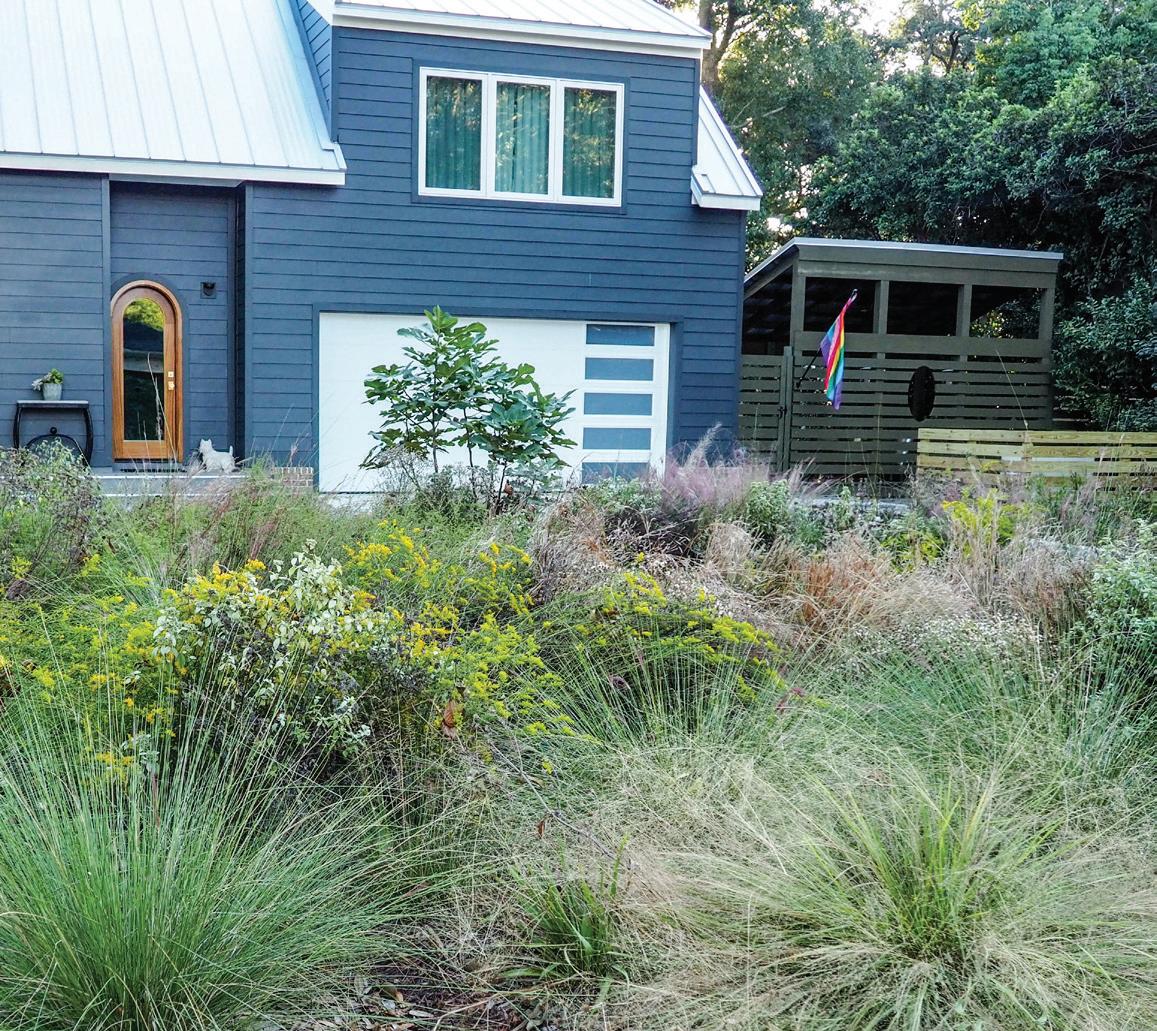
Hauman notes that one of the biggest misconceptions about native landscaping is that it can’t look polished or formal. In truth, many Florida native plants have clean, structured forms, evergreen presence and vibrant seasonal blooms. Cultivated varieties are also available in specific heights, colors and extended bloom times, making it entirely possible to design landscapes that feel both intentional and refined.
Another common misunderstanding is that transitioning to native landscaping requires ripping everything out. Hauman is quick to reassure clients that positive change can happen incrementally. While she advises removing species listed as invasive to prevent ecological harm, she often works with homeowners to preserve historic plantings such as azaleas and camellias, as well as noninvasive fruit trees.
“By strategically adding even a few pollinator beds, you can greatly increase the resources your landscape provides without a complete remodel,” Hauman explained.
Ironically, one of the most common mistakes she sees is overcare. Homeowners often overwater or overfertilize native plants, assuming they need the same treatment as traditional ornamentals. However, many native species become more resilient and drought-tolerant as they become established, and excess water or fertilizer can cause disease or make plants grow tall and flop.
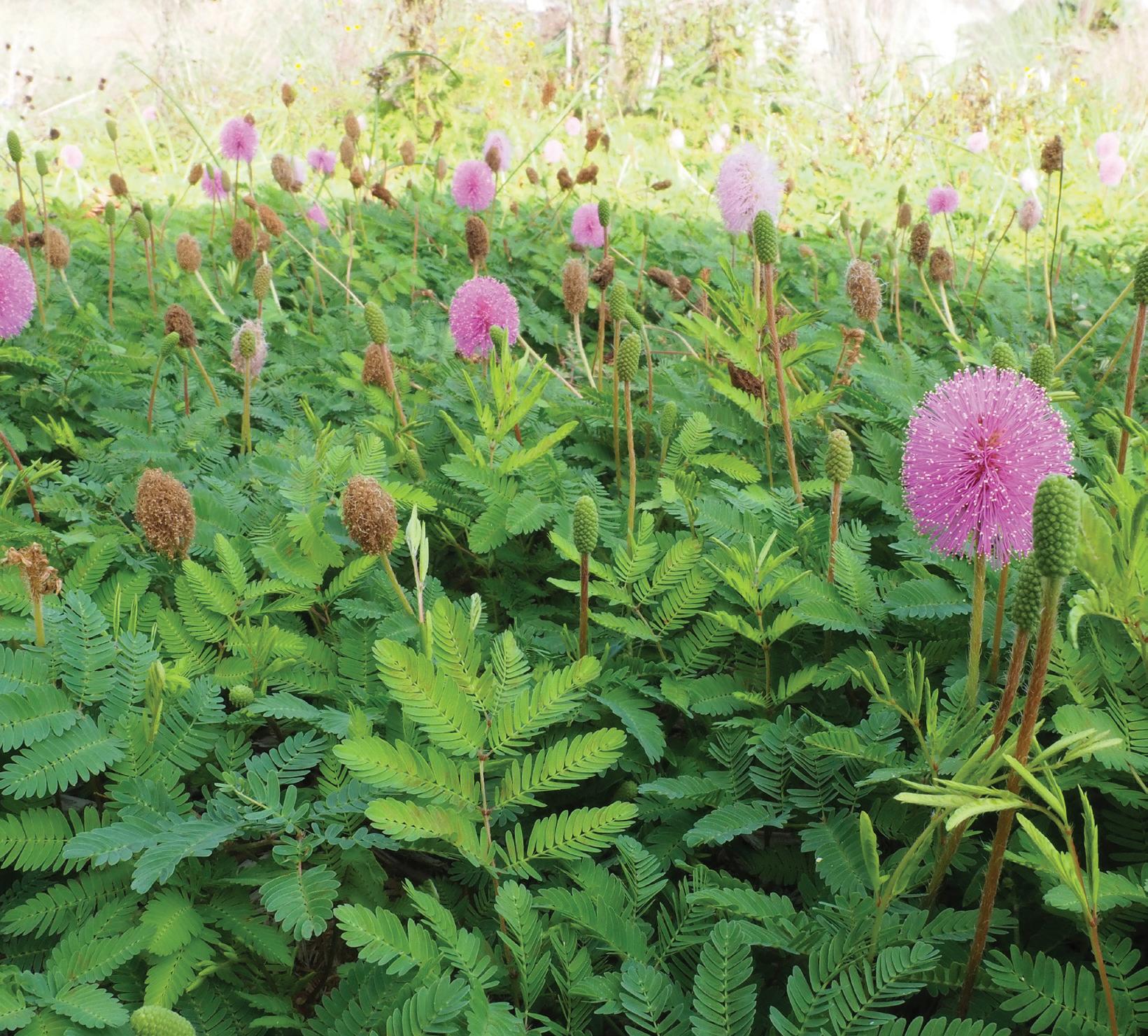
For those reluctant to give up the lawn entirely, there are alternatives. Hauman recommends fast-growing, mowable native groundcovers such as sunshine mimosa (Mimosa strigillosa), which can create lush green spaces with ecological value and far less maintenance.
For homeowners interested in making that shift, Hauman and her team offer guidance every step of the way. Florida Native Landscapes offers a range of services available for residential, commercial and public projects.
Consultations begin with a one-hour, inperson site evaluation, which costs $200. During this visit, a team member walks the property with the client, assessing light conditions, soil type, existing vegetation (both native and invasive) and discussing the client’s vision.
Following the evaluation, clients receive a detailed report that includes a scaled diagram of planting areas, notes on site conditions, examples of suitable plants and a proposal outlining design fees and a general installation estimate.
The design package features a complete scaled plan and key, a plant list with quantities and an estimate of plant materials. Proposals include photographs of each species to help clients visualize the finished space. Designs may also incorporate hardscape elements such as pavers, pathways, seating areas, lighting or sculptural features.
Once a design is accepted, Hauman coordinates with suppliers to custom grow and source plants, a process that typically takes around four to six weeks depending on availability. The team also grows some plants at their office nursery in smaller sizes to help keep costs manageable, particularly for highdensity plantings.
Installation marks the beginning—not the end—of the transformation. Newly planted landscapes are most vulnerable during their first year, when weeds can easily overtake young plants. For this reason, Florida Native Landscapes

recommends a first-year maintenance plan for all installed projects, with monthly visits to manage weeds and support establishment.
Hauman describes her landscape designs as dynamic ecosystems that will grow and shift over time. When properly managed, they become increasingly stable, self-supporting systems—supporting biodiversity, managing stormwater, enhancing soil health and offering yearround habitat.
The process of plant selection is both a science and an art. Hauman and her team study local ecosystems to identify species that would historically have thrived on a given site—constantly learning and adapting their methods to what grows best in urban environments.
Each project palette is tailored to client preferences while matching plant growth requirements to existing light and soil conditions. Emphasis is placed on drought-tolerant species with high ecological impact, and on designing for four-season interest. That means layering varied heights, bloom times and structural elements to ensure color, texture and wildlife resources year-round.
For homeowners looking to start small, Hauman offers simple advice: plant a tree. Choose a species that can grow to its mature size without interfering with structures or utility lines, and that can grow to its mature size within the chosen space. Smaller specimen trees, such as Chickasaw plum (Prunus angustifolia)
or fringe tree (Chionanthus virginicus), provide shade, slow stormwater runoff and create valuable habitats.
At the heart of Hauman’s work is the belief that ecological gardening is accessible to everyone. She emphasizes that change doesn’t have to be an all-ornothing endeavor, and that every yard that incorporates native plants, reduces chemical use or simply allows a few wildflowers to bloom, plays a part in a broader cultural shift.
“You don’t have to completely rip out existing landscaping and start over to have an impact,” Hauman said. “All of our combined efforts contribute toward building a more sustainable future and healthier environment.”
In a region celebrated for its natural beauty, Florida Native Landscapes is helping residents reconnect with the landscapes that truly define our region.
Through intentional design, thoughtful plant selection and ongoing stewardship, Hauman proves that gardens can be more than decorative backdrops—they can be living, breathing habitats that support local wildlife and bring the outdoors closer to home.
To learn more about Florida Native Landscapes, including prices and consultations, visit flnativelandscapes.com, and check out Florida Native Landscapes on Facebook and Instagram.
By Dawn Gresko
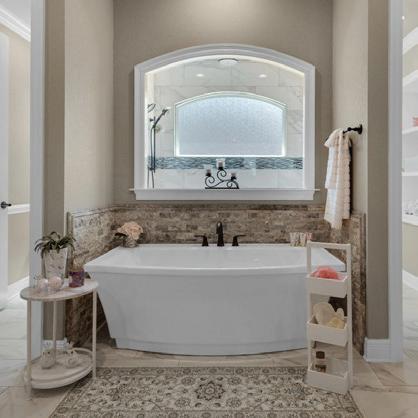
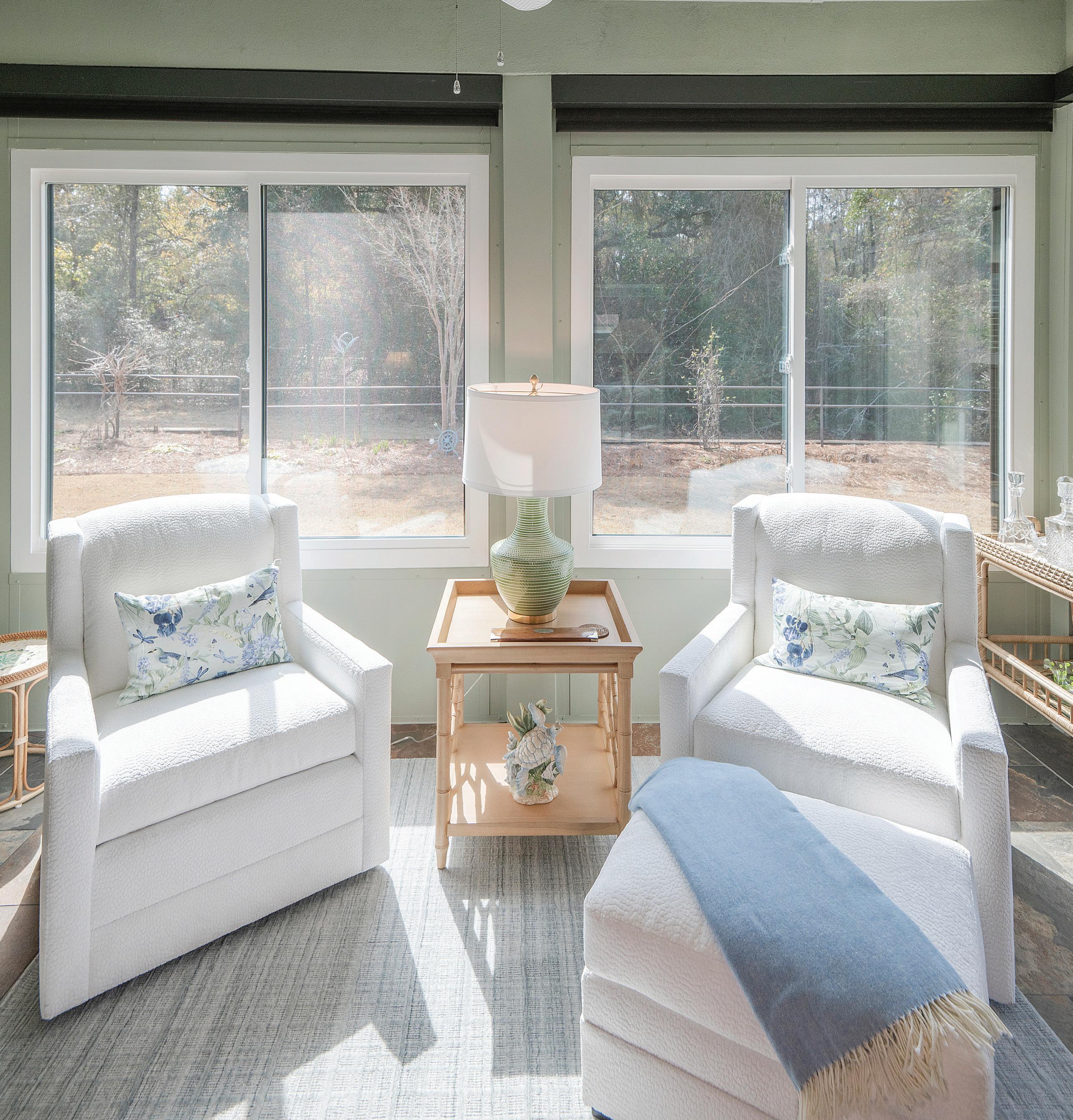
A bathroom can be far more than a functional stop in the early-morning rush. While it certainly serves practical daily needs, it also has the potential to become a personal sanctuary—a place to pause, reset and embrace moments of meaningful self-care. Thoughtful details such as soft lighting, natural materials, calming color palettes and ergonomic layouts can transform the space into a serene retreat from an increasingly fast-paced world. Four local designers demonstrate how intentional bathroom designs can seamlessly blend beauty and functionality to create an at-home haven designed for slowing down, soaking in the moment and finding renewed calm.
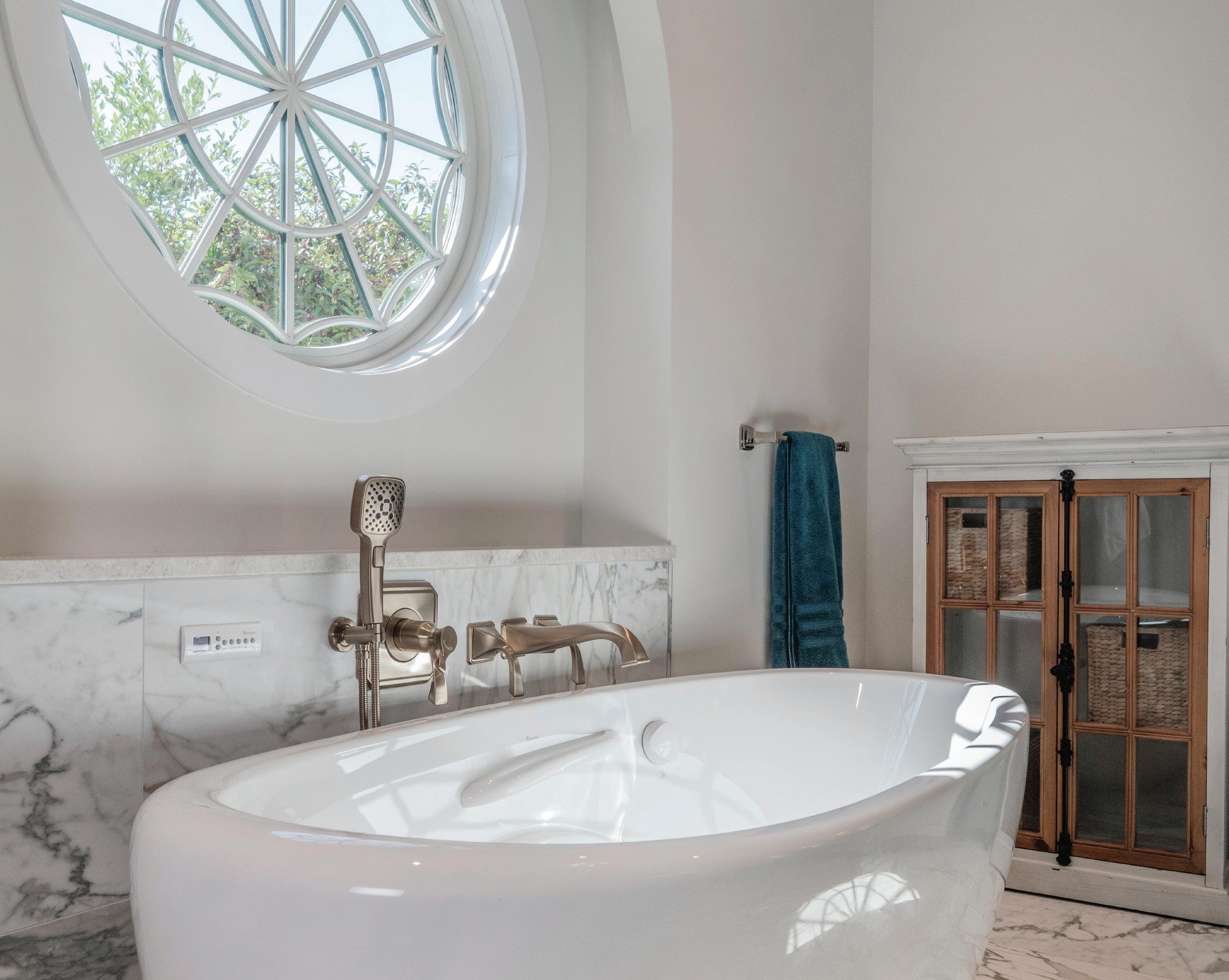
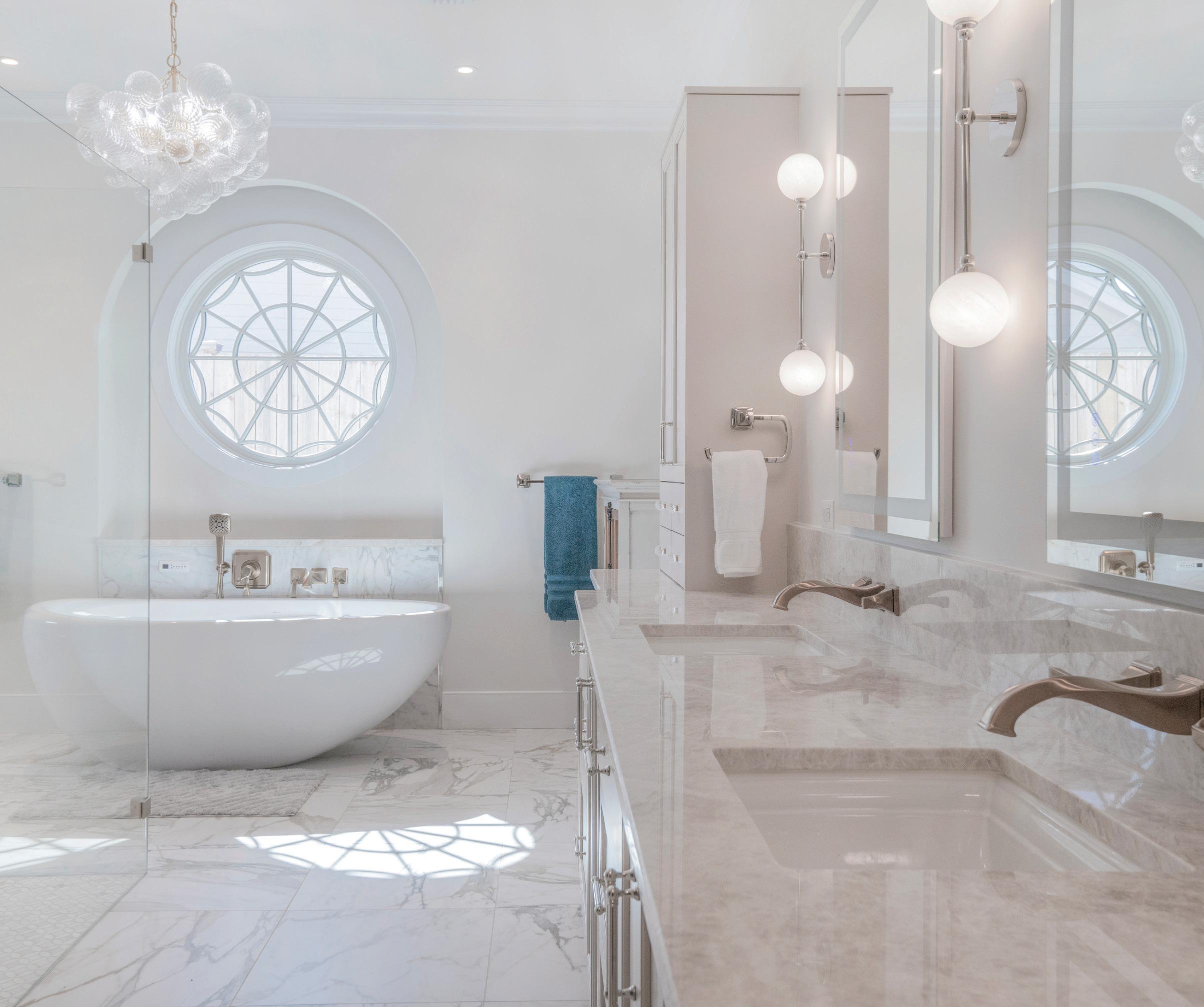
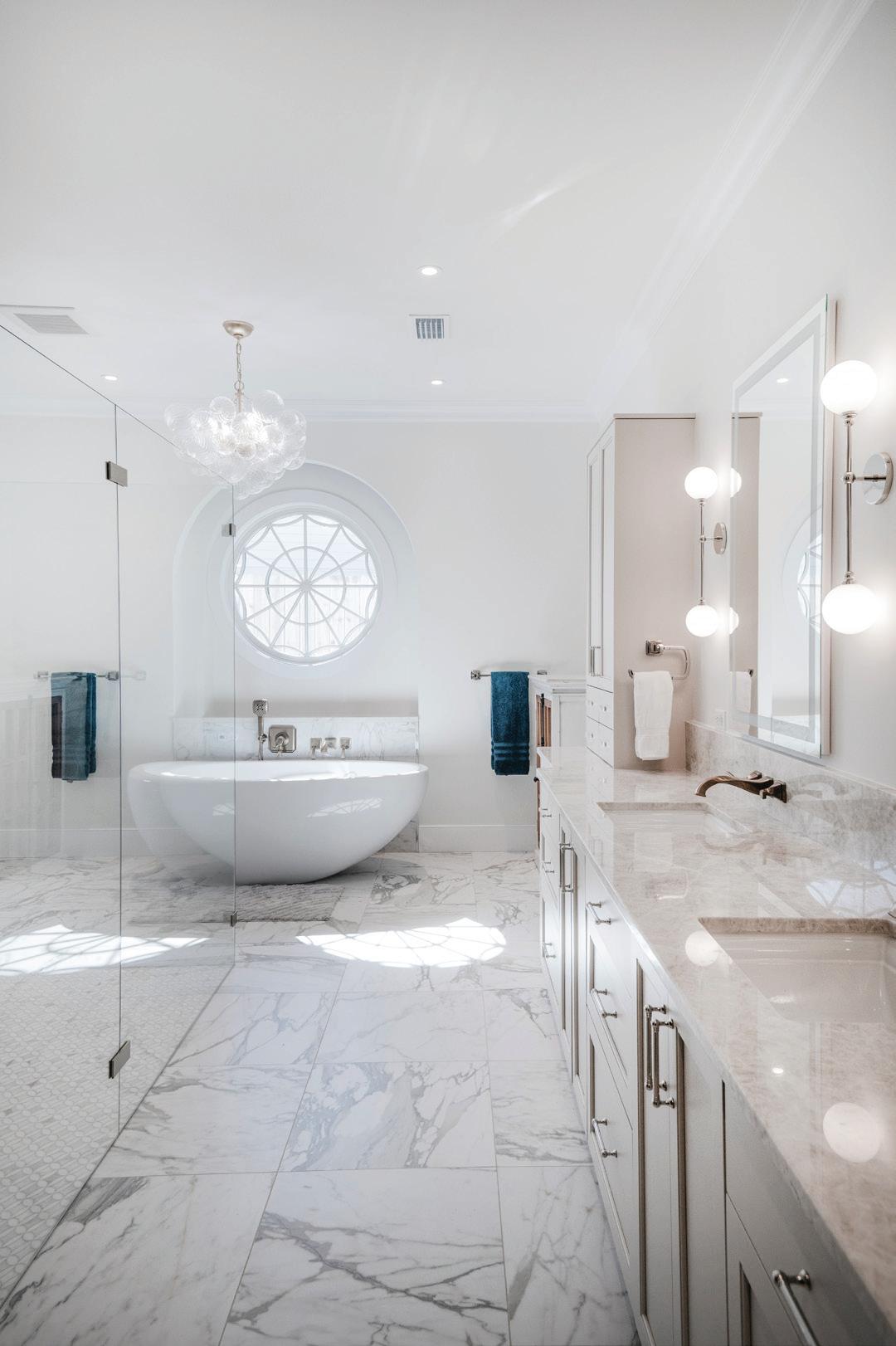
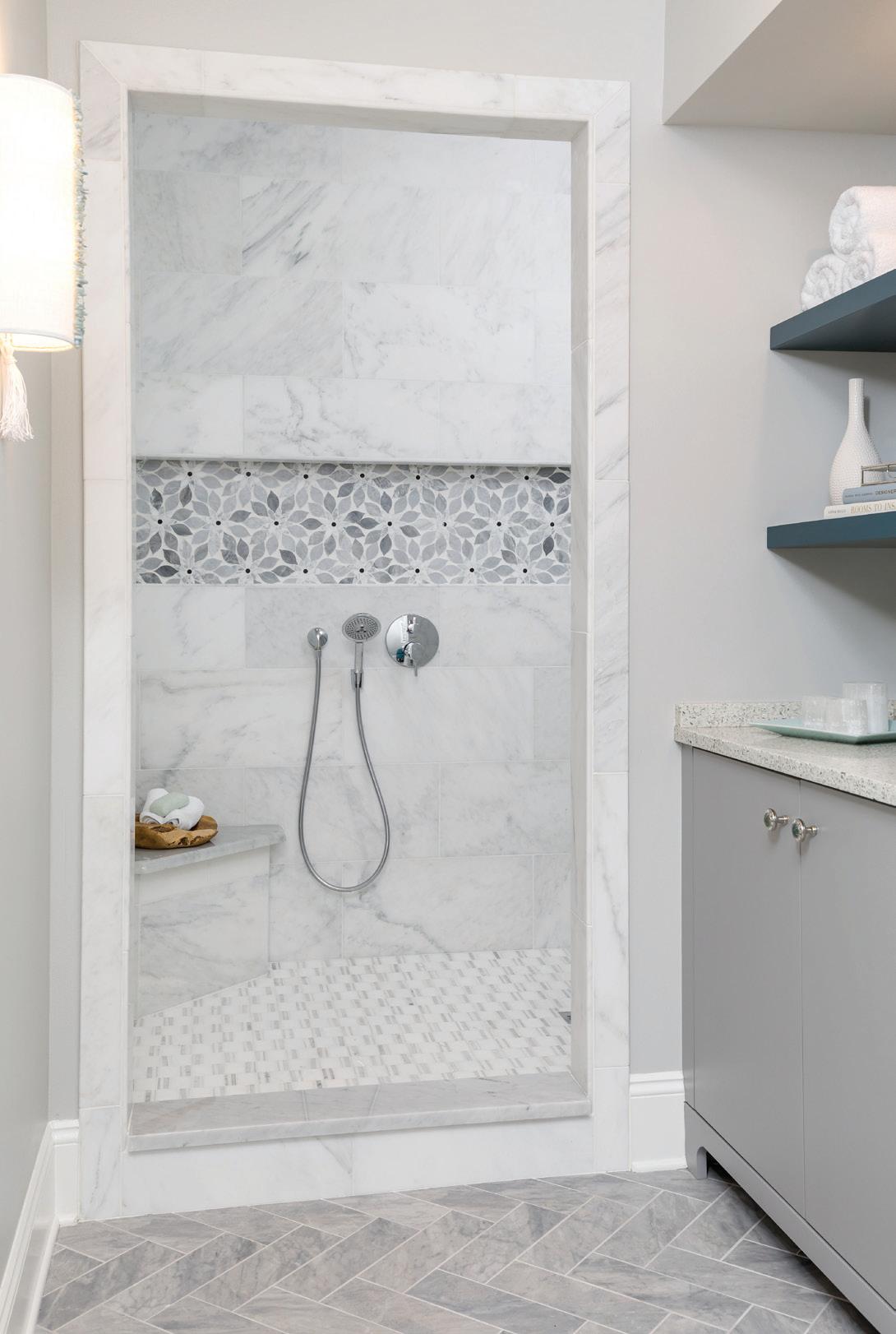
Creating a serene, spa-like oasis was the inspiration behind this newly constructed bathroom. The designer’s worldwide travels and frequent visits to high-end, luxury spas often inspire her design choices, and this project was no exception. Collaborating closely with the clients, they envisioned a spacious master bath with a wheelchairaccessible shower, easy access to the tub and vanities, a large water closet and a calm, elegant space for relaxation. These intentions are reflected in carefully considered details such as a heated spa tub, expansive shower area and Toto toilet bidet with a heated seat, self-cleaning bowl and automatic flush.
Planning and layout were all designed to meet ADA standards for a retirement home, ensuring the bathroom would be fit for residents of all ages. The materials were selected for easy maintenance, including porcelain tiles with rectified edges, antimicrobial grout that’s resistant to
both mold and staining, complemented by elegant quartz countertops. The master bath wall color was selected to correlate with the decorative English wallpaper in the adjacent hallway. These choices create a light, open and easy-to-maintain space.
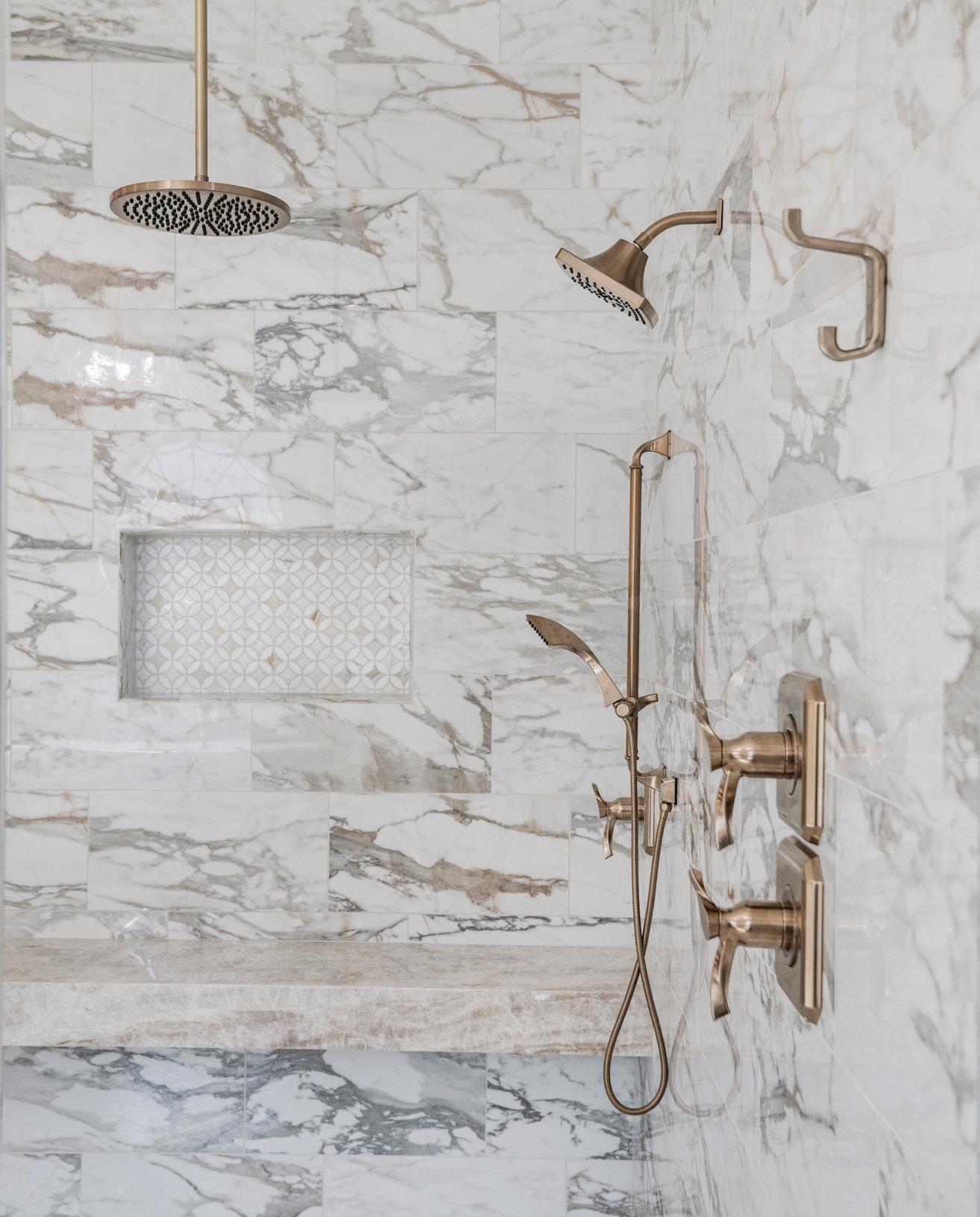
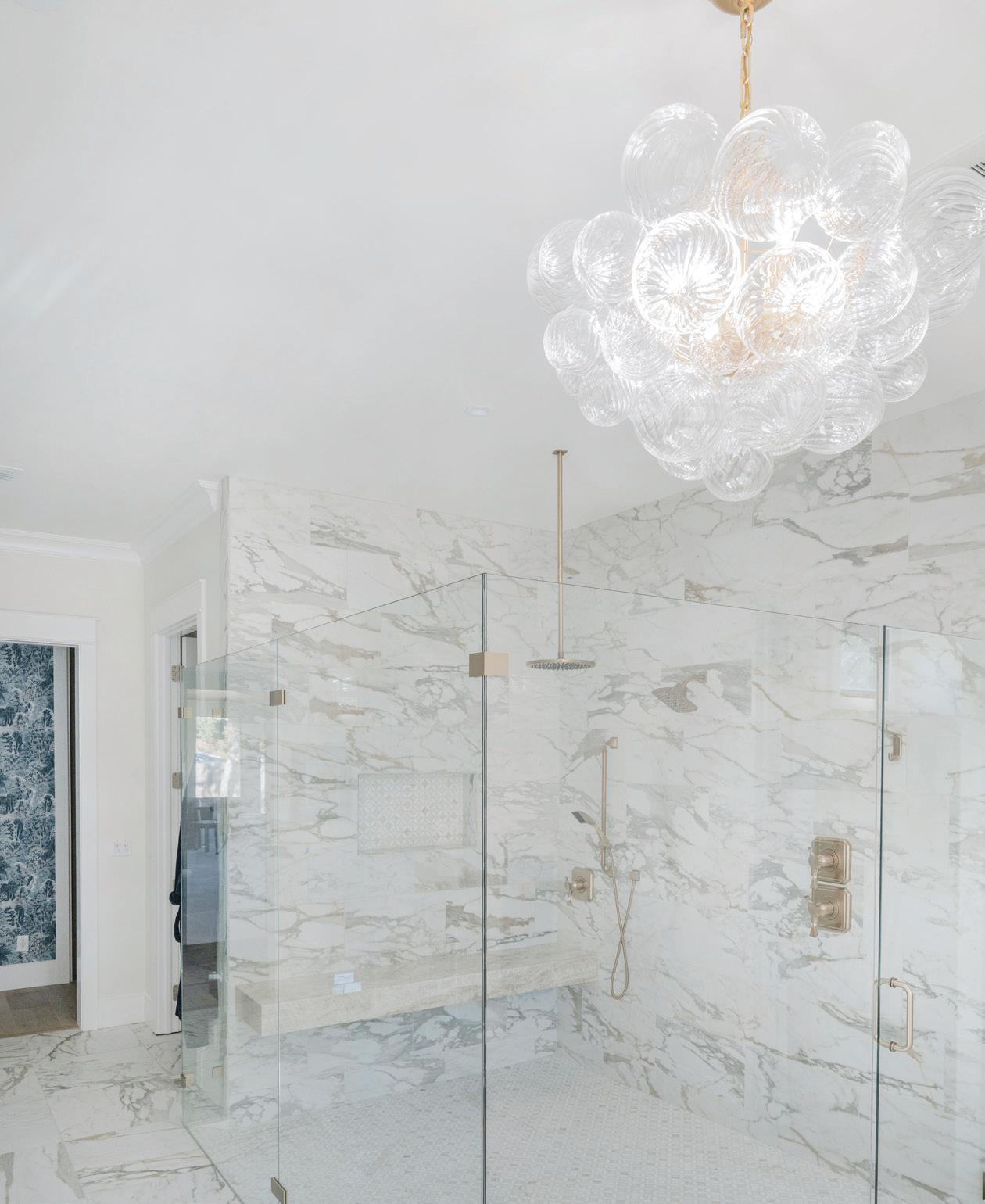
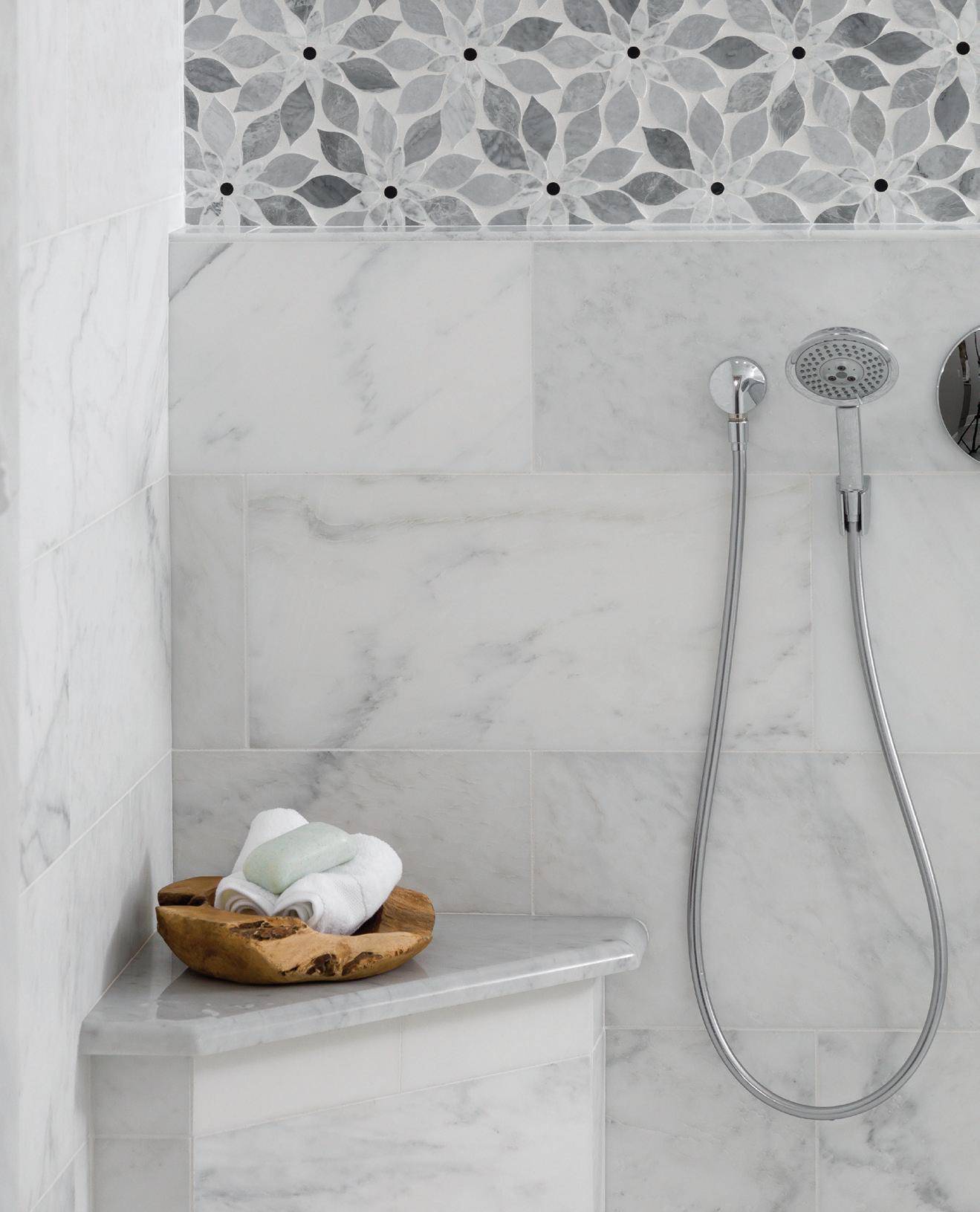
A blend of 3-inch overhead LED can lights, a striking chandelier and elegant wall sconces provides both beauty and functionality, with all fixtures on dimmers to easily set the perfect mood. The space showcases a large heated Bain Ultra freestanding tub. A beautiful octagonal window above the tub allows the room to be filled with plenty of natural light while creating an elegant and dramatic impact. The exceptionally large shower includes multiple shower heads, a handheld tapware and a large bench for plenty of sitting room. All these elements combine to create a master bath that offers a calm and relaxing sense of opulence.

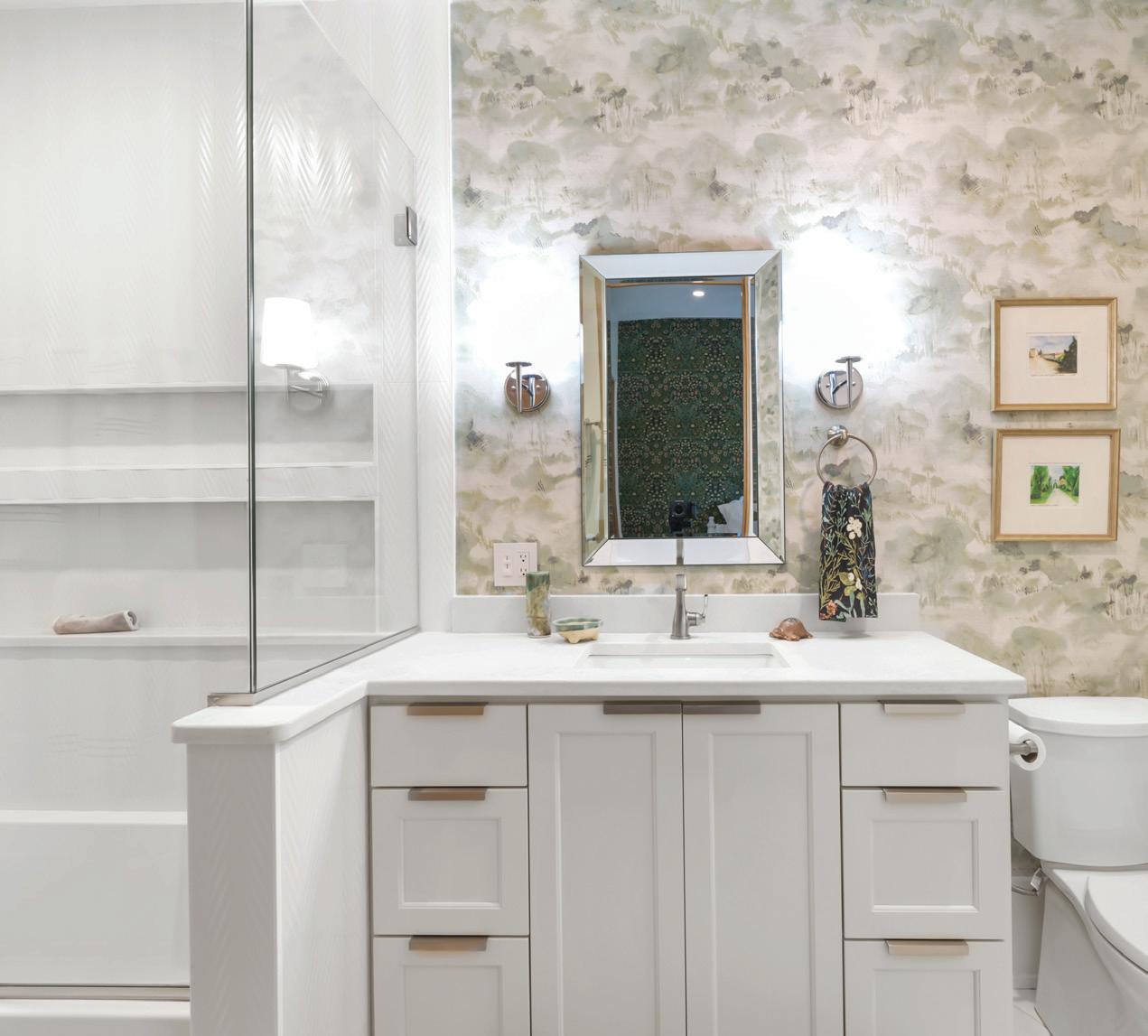
For this stunning waterfront home, the overall design goal for this bathroom was to accentuate the outdoors in a unique and thoughtful way to create a space that is both elegant and tranquil without being overly ornate. White was utilized in a way to avoid feeling sterile, creating a brighter and lighter feel that spoke to the client’s style. The goal was to also use finishes and detail that brighten and open the bathroom entry up, while incorporating more functional storage where possible. Aesthetics were combined with functional improvements to ensure the owners would still be able to use the bathroom with ease as they aged.
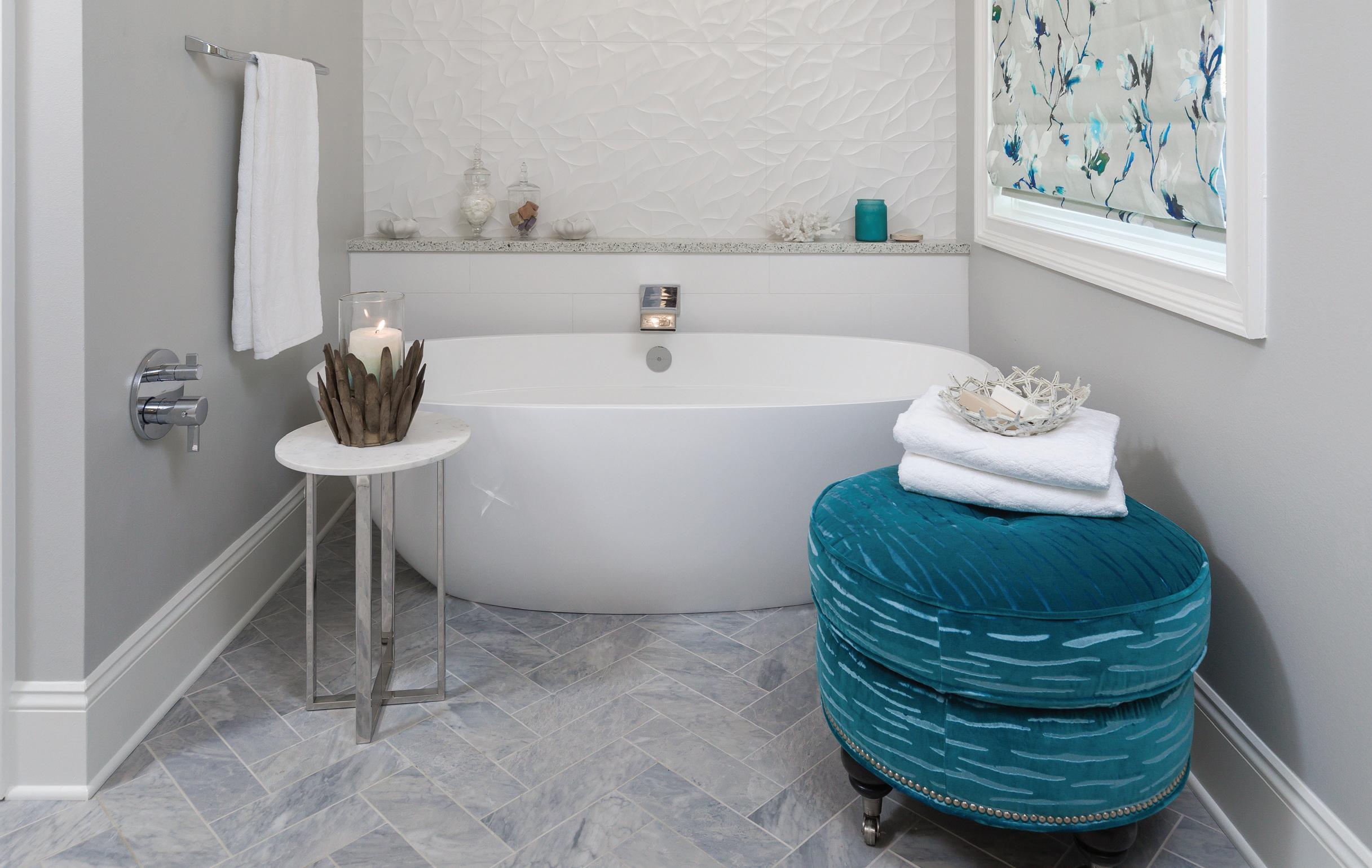
When assessing aesthetics, it was mandatory that the existing, dated tub be replaced with a freestanding tub that offered a sleeker look and more airy vignette when viewing the bathroom from the entry. Building a small ledge and wall behind the tub provided a functional space for soaps and accessories while also allowing space for plumbing needs. Using texture to highlight areas of the bathroom was also a huge inspiration behind this design. The combination of wall covering selections and mix of tile shapes and textures provide a fresh, clean and eclectic variety, adding interest and beauty to the space.
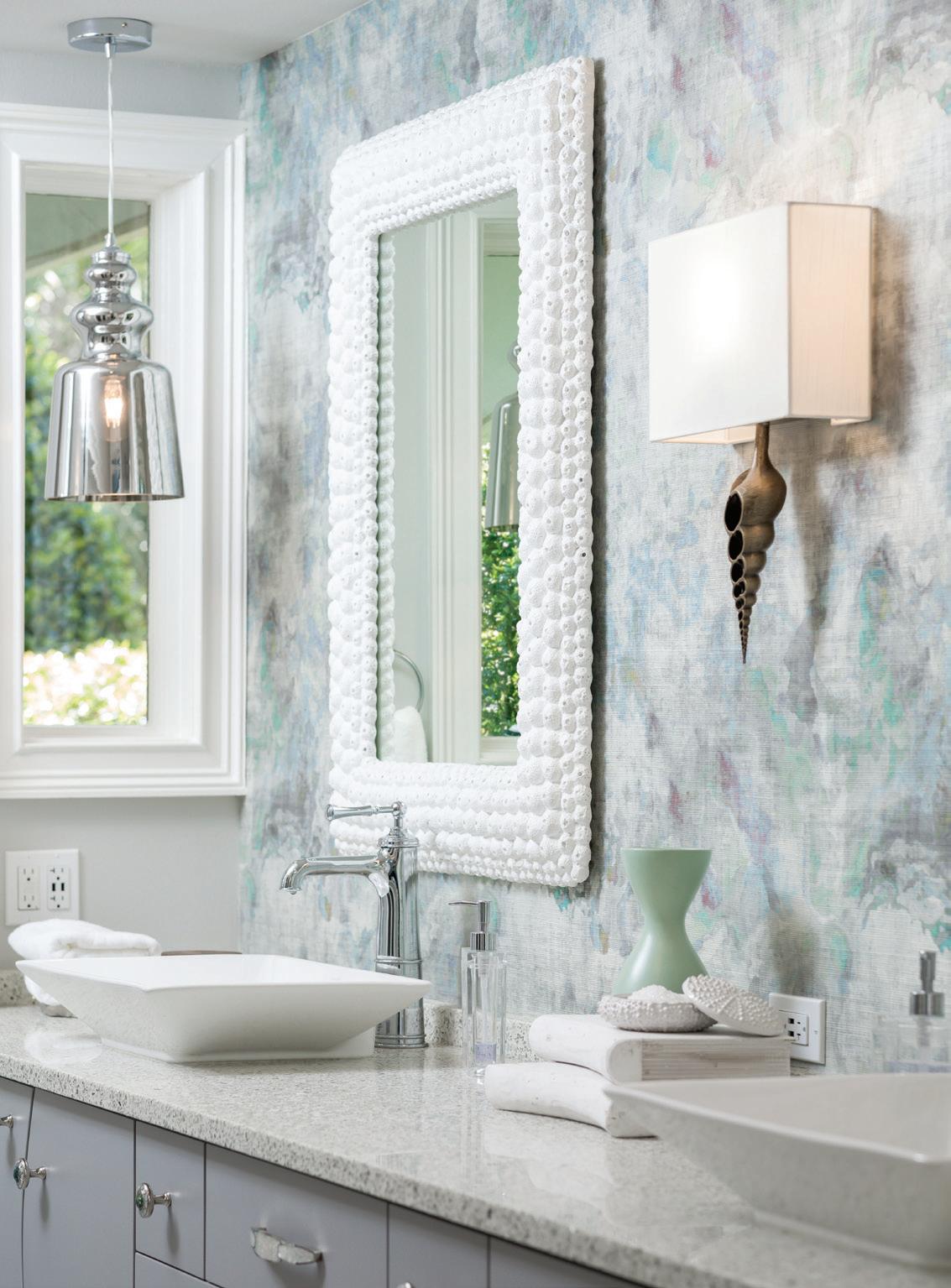
Redesign of the dual sink vanity area with single level countertop offers more functional surface area and more closed storage beneath. A combination of sculptural stone
wall tile by the tub, custom watercolor-inspired grasscloth wallcovering by the vanity and mixed tile application in the shower gave each space value and aesthetic impact while also offering a balance across the overall bathroom. Demo of the antiquated arched niche area by the shower served as the perfect space for additional closed storage and simple shelving for storing towels and toiletries. Reducing the size of the shower bench and repositioning the hand shower improves functionality for the homeowners both now and as they age.
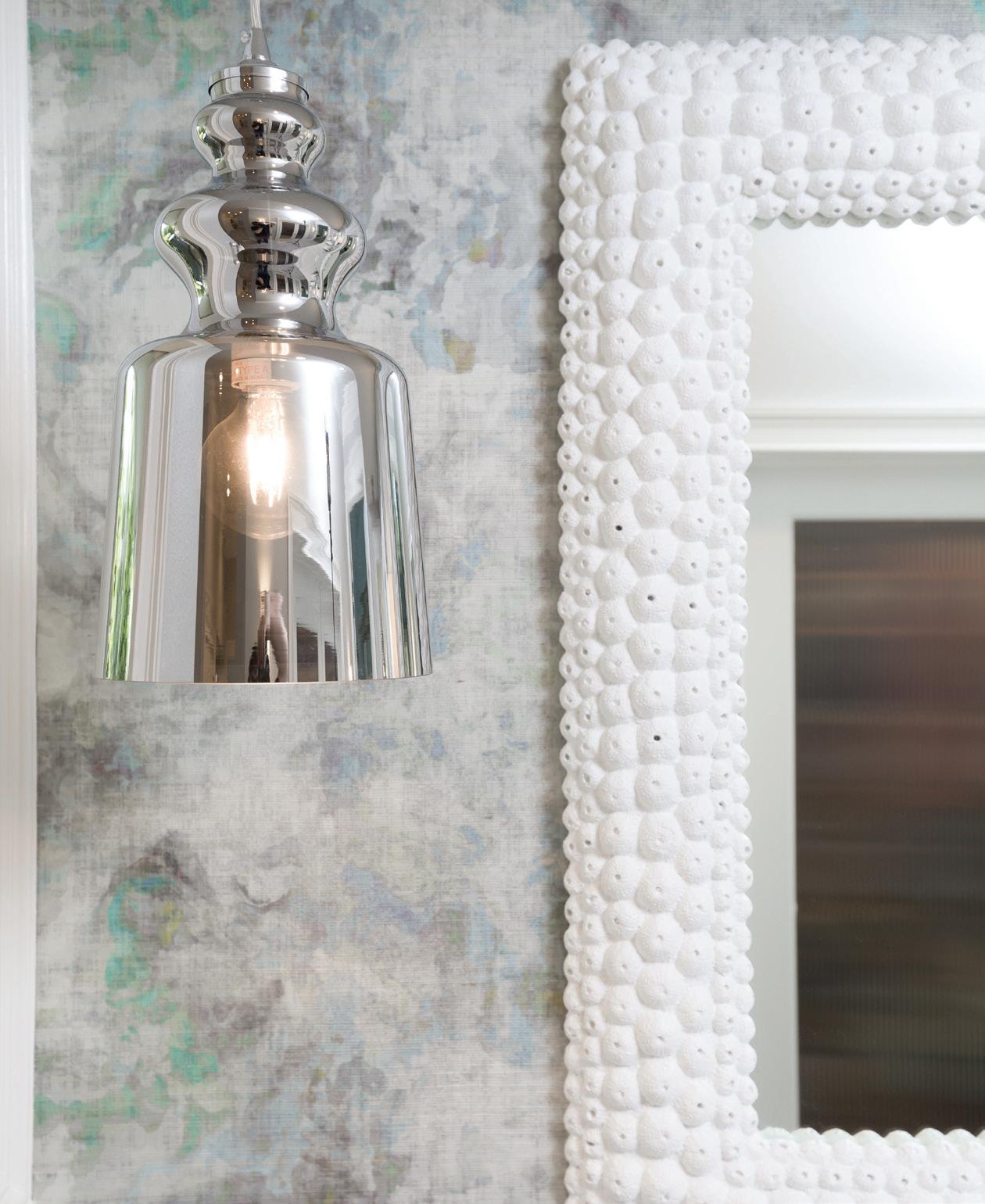
A custom S-curve vanity, designed by the team and crafted by a local cabinetmaker, is highlighted by elegant mother-ofpearl in-laid hardware, crisp white vessel sinks and striking cast-resin urchin accents. A linear niche running length of the shower offers additional texture and interest with a more detailed stone mosaic tile and LED lighting. Assorted light fixtures add ambiance without feeling heavy and dated. A juxtaposition of materials to execute a design focused on the interrelationships between graphic shapes and slightly softer organic details.
The original stained glass window was replaced with clear glass, creating a cleaner look for the space and allowing for the addition of a beautifully patterned Roman shade that adds an extra pop of color while providing the privacy needed in a master bath.
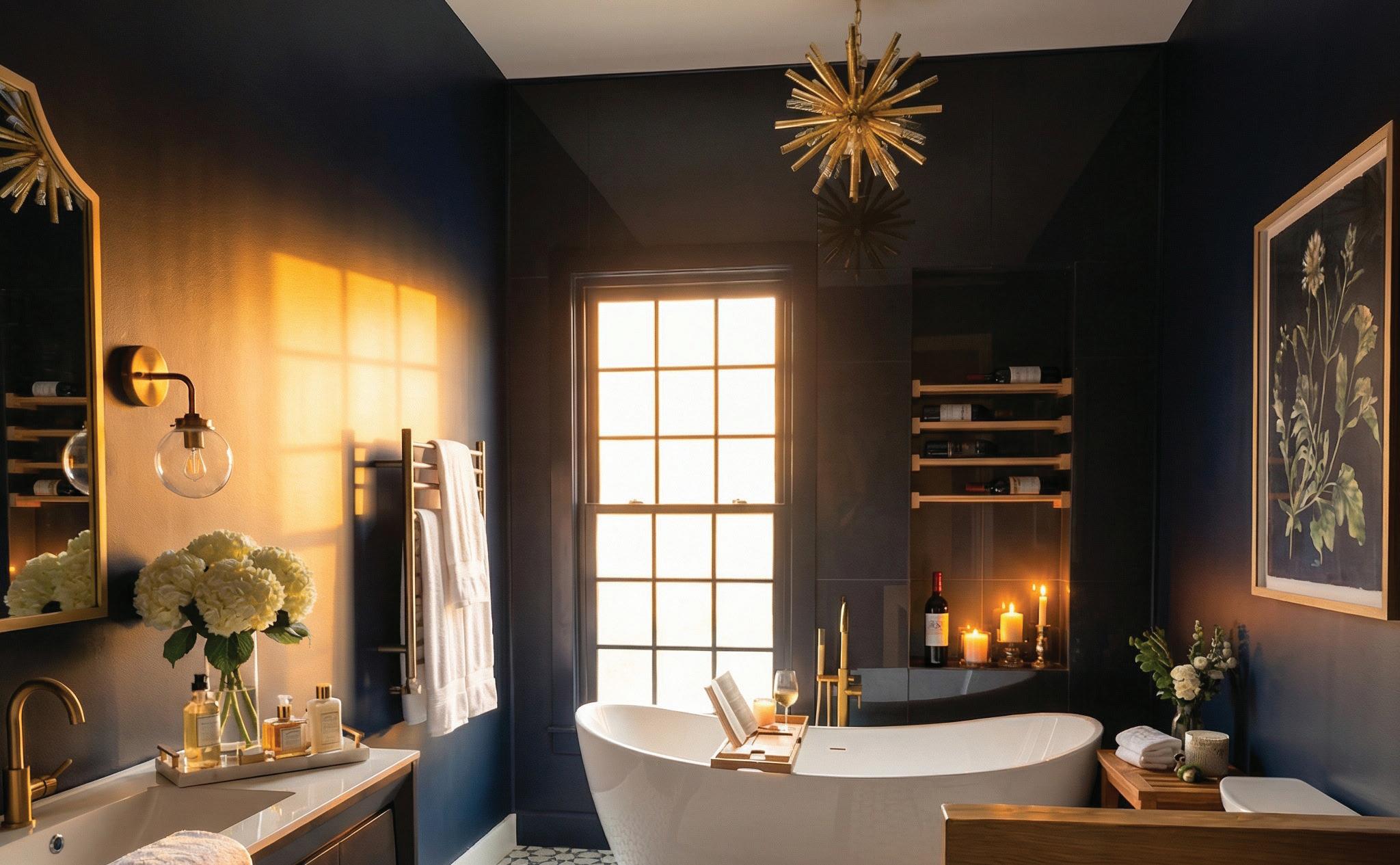
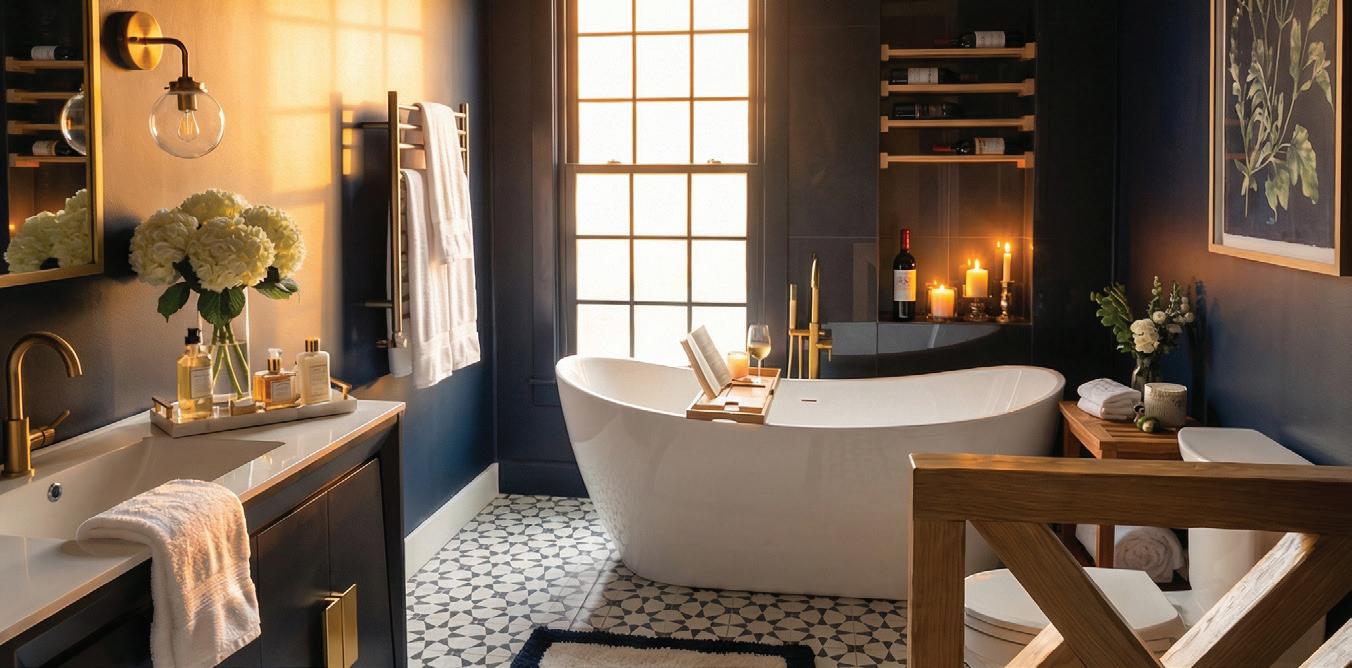
The inspiration behind this bathroom design was to honor the home’s historic 1850’s character while giving the space a refined, modern personality that still feels timeless. The homeowner wanted something bold and memorable instead of a typical light coastal bathroom. For that reason, deep navy walls were chosen along with warm brass fixtures and clean, simple cabinetry. The patterned tile adds a historic feel that fits the age of the home, while the modern lighting and a streamlined vanity keep the space feeling fresh and functional. The goal was to create a bathroom that feels as though it has always belonged in the home—while offering all the benefits of a thoughtful, modern update.
Patterned porcelain floor tiles provide the historic character the homeowner wanted while standing up well to daily use and moisture. The countertop and fixtures were chosen for both durability and performance, with low-maintenance finishes that add warmth and contrast against the room’s darker tones. Brass fixtures and hardware bring in a classic feel that complements the age of the home while still feeling current. The deep wall color was intentional in creating a bold, moody atmosphere that sets the bathroom apart from the lighter coastal palettes common in our area. Paired with lighter fixtures and patterned flooring, the darker walls add depth and sophistication while allowing the design elements to stand out.
A freestanding soaking tub was selected to create a strong focal point while maximizing comfort within the available space. In a historic home, a freestanding tub helps the layout feel more intentional and open than a traditional built-in alcove design, while introducing a timeless element that complements the home’s character.
The lighting strategy was designed to balance function with atmosphere. The vanity sconces were positioned at eye level on each side of the mirror to provide even, flattering light and minimize shadows, making everyday tasks like grooming more comfortable and practical. Dimmers were incorporated so the lighting can easily shift from bright, functional light during the day to a softer, more relaxed mood in the evening, especially when enjoying the soaking tub. One unique element is the inset tile niche behind the freestanding tub that serves as both a towel holder and a small wine and candle shelf within arm’s reach of the tub. It adds convenience without introducing visible clutter or disrupting the clean design of the space.
The hidden gem of this bathroom is the custom wood feature wall crafted from material sourced from a local farmer in DeFuniak Springs. This one-of-a-kind element introduces natural warmth and texture, giving the space a distinctly personal feel while celebrating local materials and craftsmanship.
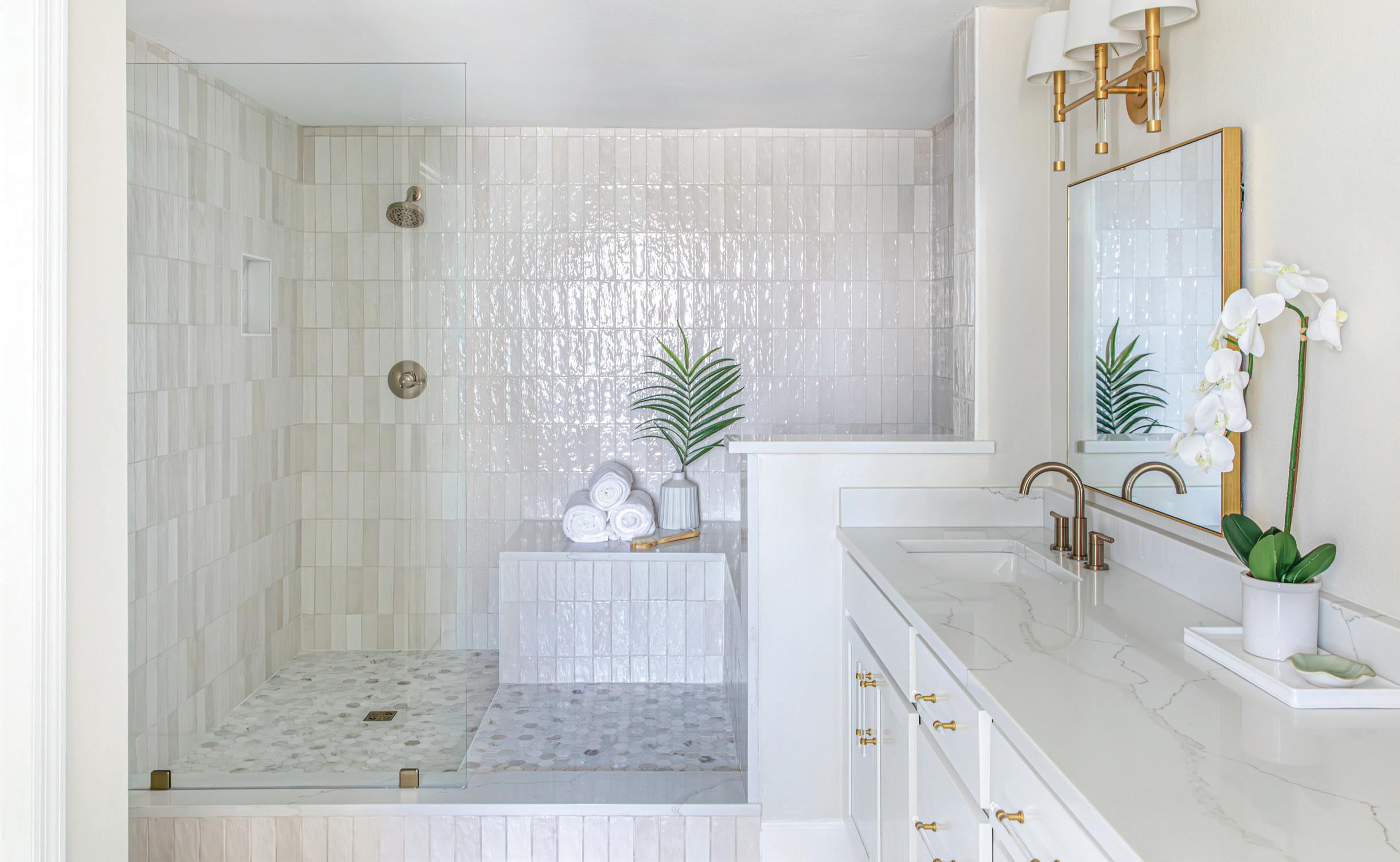
Designers: Jessica Nguyen & Mallory Reutter
A vacation home offers its own form of sanctuary, and this bathroom matches that tone with something serene and relaxing. The goal with the layout was to utilize the minimal space more efficiently and link the shower and tub area together to create one large wetspace, instead of two disjointed ones with awkward angles. This also allowed for a bench and counter space between the tub and shower area. The vanity countertop was converted to one level to offer more usable space for storage underneath and on top.
The larger, open shower lends itself to future-proofing: should a shower chair or any other accessibility feature be needed, one can easily be added.
The designers selected glossy ceramic tiles for an easy-toclean surface and quartz countertops for their nonporous, maintenance free durability. The goal was to go light and bright in a space that didn’t have much natural light. Brass accents were added to bring in some warmth and contrast to all of the white elements in the room. The design carries the same soft, neutral wall color throughout the condo for a cohesive design that brings a sense of peace and calm. An updated three-light sconce was installed over each sink for extra lighting instead of a single sconce on each side of the mirrors. The owners opted for a traditional shower head for easy maintenance and a new soaking tub to fit the reoriented layout.
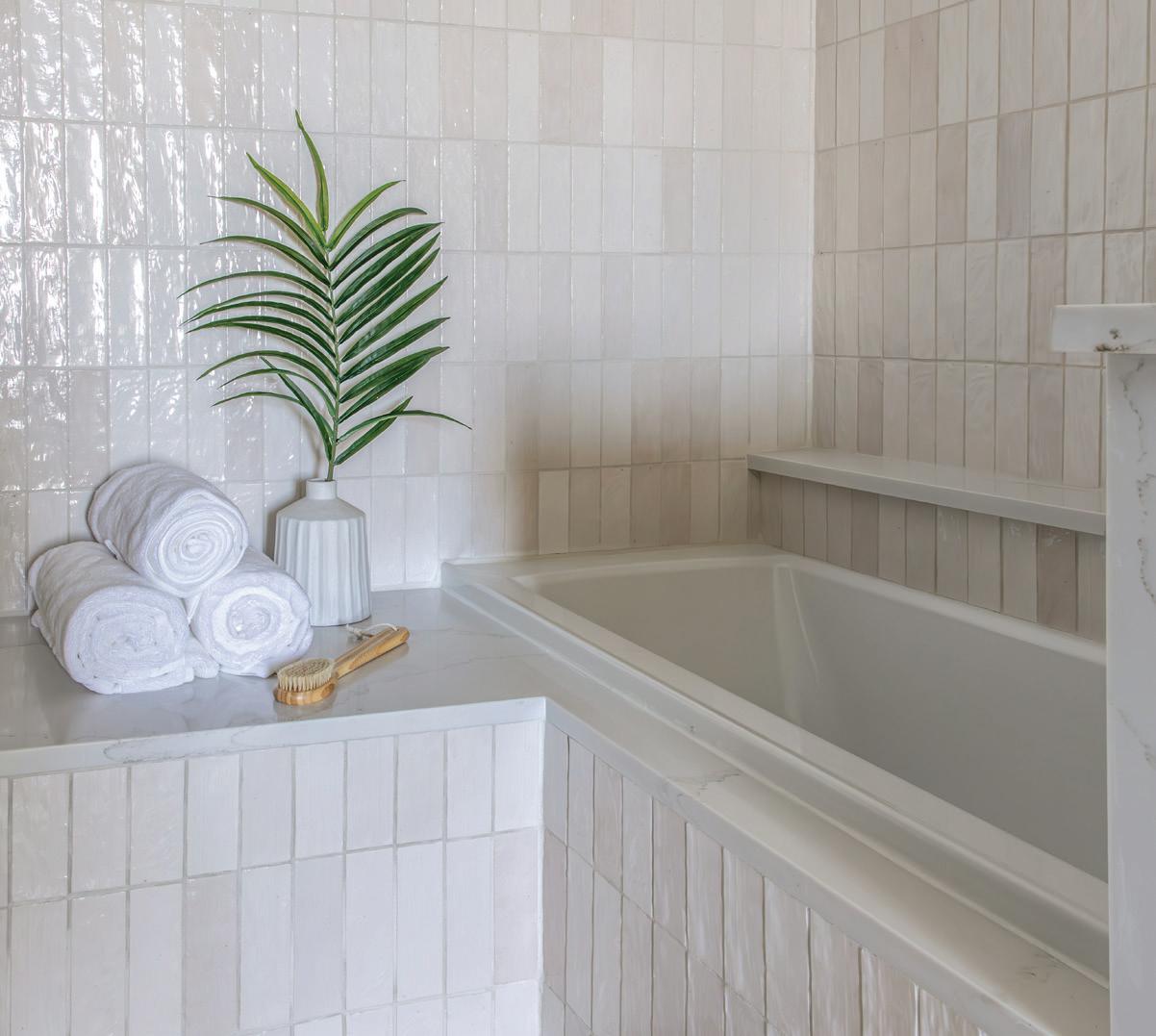
Being that the bathroom was in a condo with concrete floors that could not be drilled into, it created a challenge with moving the plumbing. The built-in ledge over the tub, originally began as a means to solving that problem. In the end, it became a great spot to place bath toiletries, accessories or even a glass of wine. It is a great example of how simply changing the layout of your space without moving any walls can still yield a complete transformation that brings new beauty and function.
By Kelly Oden
For years, Lisa and Eric Lewis kept a boat docked at Palafox Marina. When they came to Pensacola, they stayed aboard, walked to dinner, wandered the downtown streets and loved not needing a car.
After many visits, the couple fell in love with Pensacola and decided it would be the perfect place to retire.
“Once we decided that Pensacola would be our retirement home, we discovered the Aragon neighborhood and immediately fell in love with its location,” homeowner Lisa Lewis said. “We were drawn to its proximity to the water and the marina, as well as its easy walkability to downtown restaurants, shopping and cultural attractions. It truly offers the best of coastal and city living.”
The house they built together in Aragon features a modern French country vibe and boasts four bedrooms, four and a half baths, a carriage house apartment above the garage and a courtyard pool the color of the Gulf.
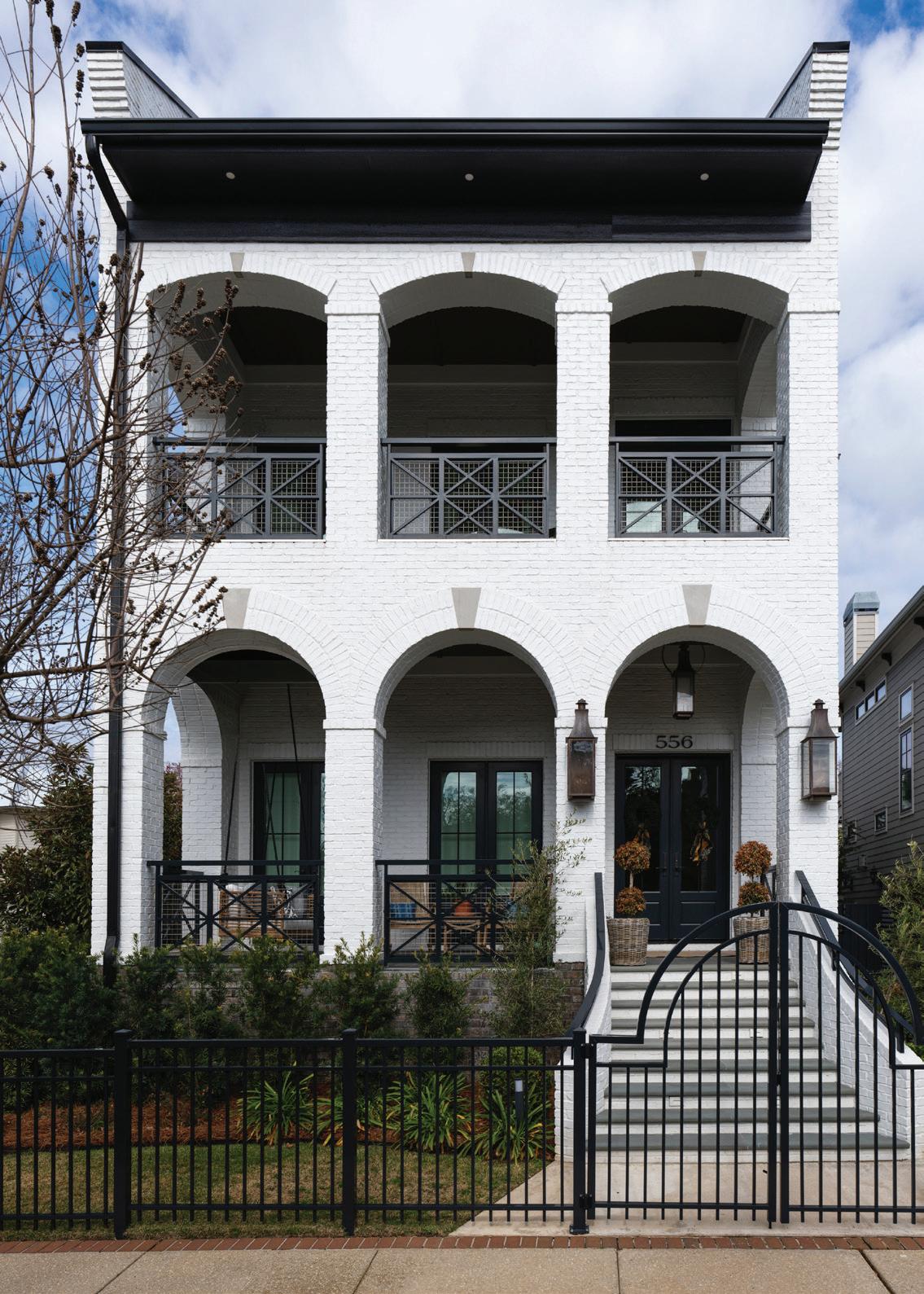
The classical facade is a showstopper. Painted white brick stretches across two stories, with six arches (three on each level) stacked in perfect symmetry, flanked by parapet walls and trimmed in deep charcoal. It combines classical, European and coastal elements in a way that feels natural and intentional. Architect Scott Sallis of Dalrymple Sallis Architecture designed the structure with what he describes as a clean, classical approach driven by the homeowners’ preferences and the Aragon neighborhood’s design guidelines, which steer buildings toward courtyard-centered living and encourage the kind of architectural detail that reads well at street level.
“Constraints can be a great thing,” Sallis said. “Empty slates and blank paper can create even more obstacles for a designer.”
What visitors cannot see is what lies beneath. The site sits over weakened soils where Cadet’s Creek once ran, requiring helical pier foundations and additional structural investment before a single brick went up. When Lewis later chose Pennsylvania bluestone for the outdoor surfaces, heavier than originally planned, crews had to go back in and reinforce further. “We have a lot of money under the ground,” Lewis said.
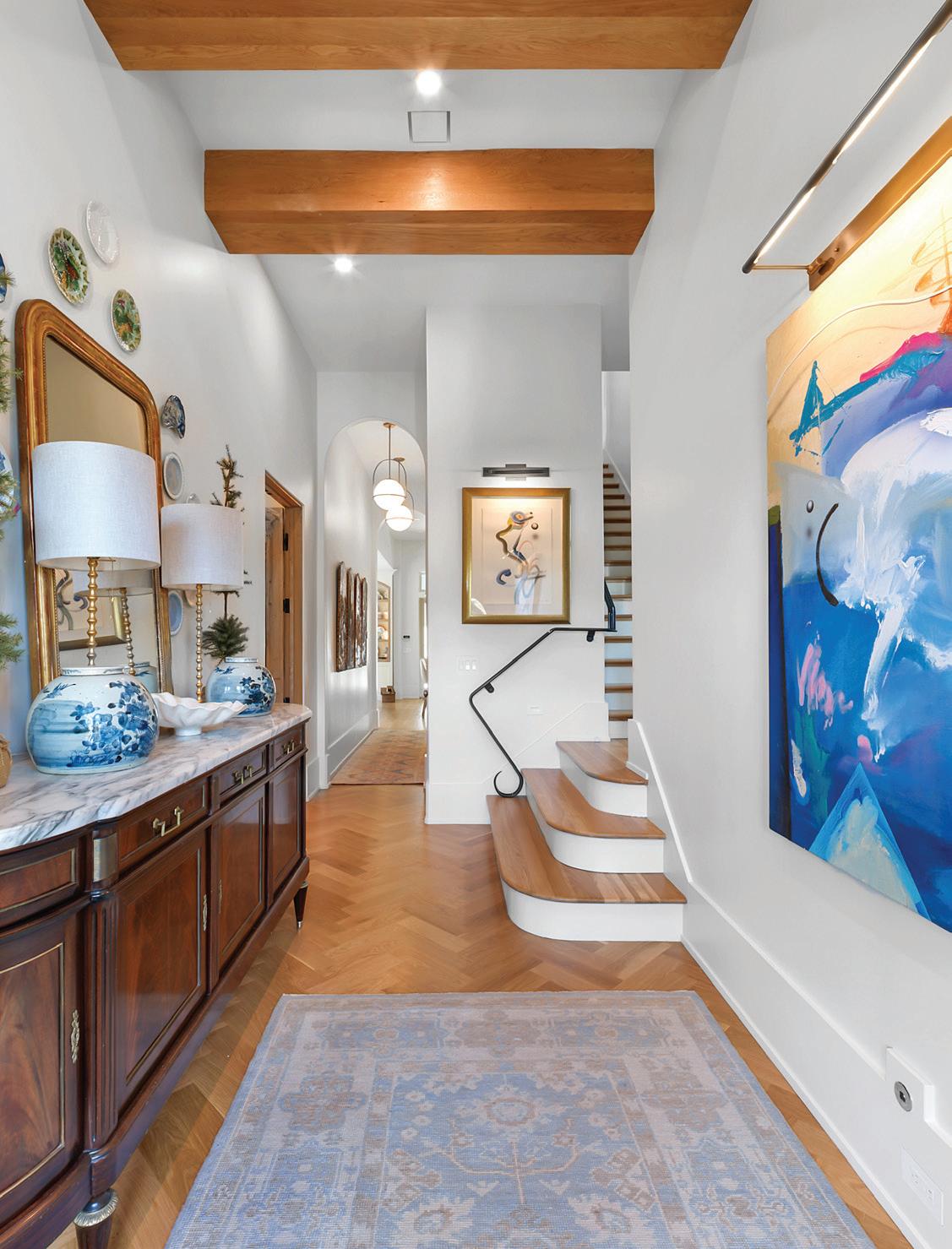
Inside, the home unfolds with Southern charm, French refinement and coastal colors all seamlessly integrated into a cozy, stunning home. Lewis is a retired interior designer, and she had a defined vision from the start. She wanted European influence, classical lines and a palette that would feel timeless in both the architectural context of Aragon and the broader history of Pensacola.
Sallis put it plainly: “Lisa is a delightful client with classically trained excellent taste. It was a great collaboration, and I’d do it again in a heartbeat.”
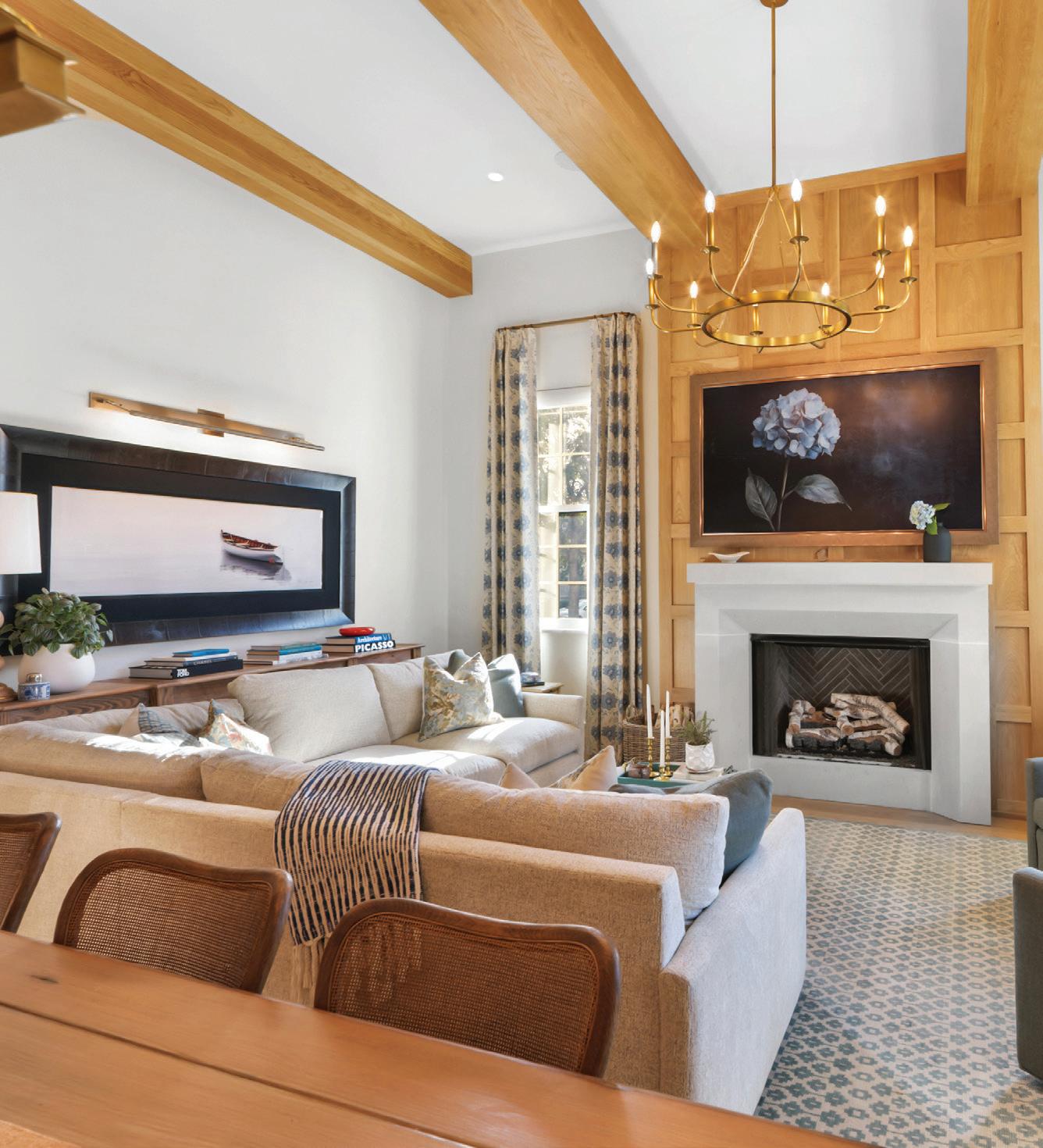
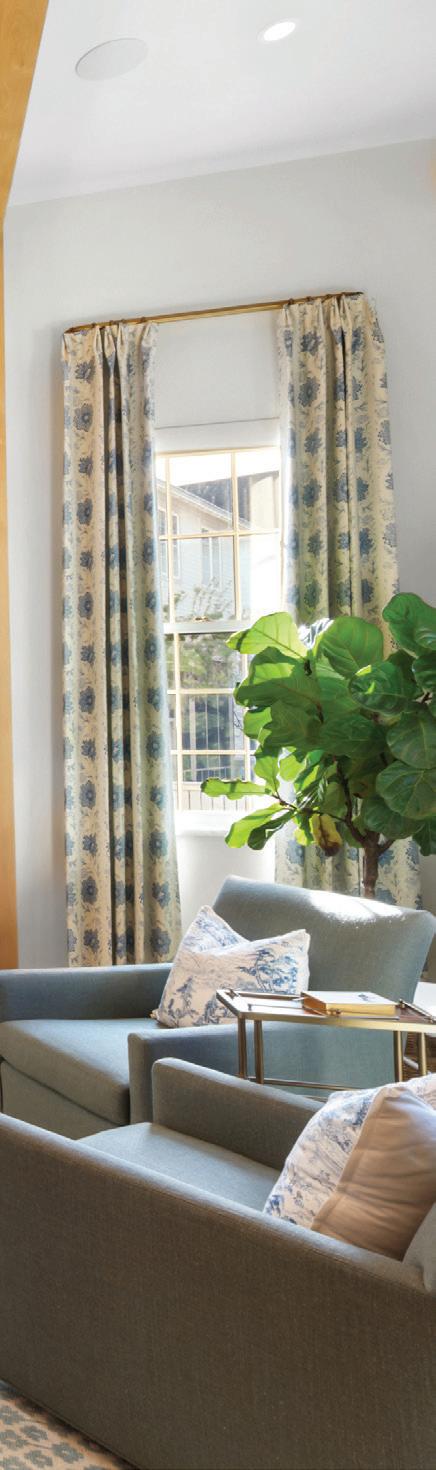
The living room is where that collaboration is most visible. White oak beams run across the ceiling, which Aragon requires to be a minimum of 10 feet, but in the Lewis home, reach 12 and a half feet. A custom fireplace surround, built from white oak sheets that trim carpenters fabricated on site, anchors the room. A framed TV sits centered above the mantle. Printed drapes in a blue and cream botanical pattern frame the windows.
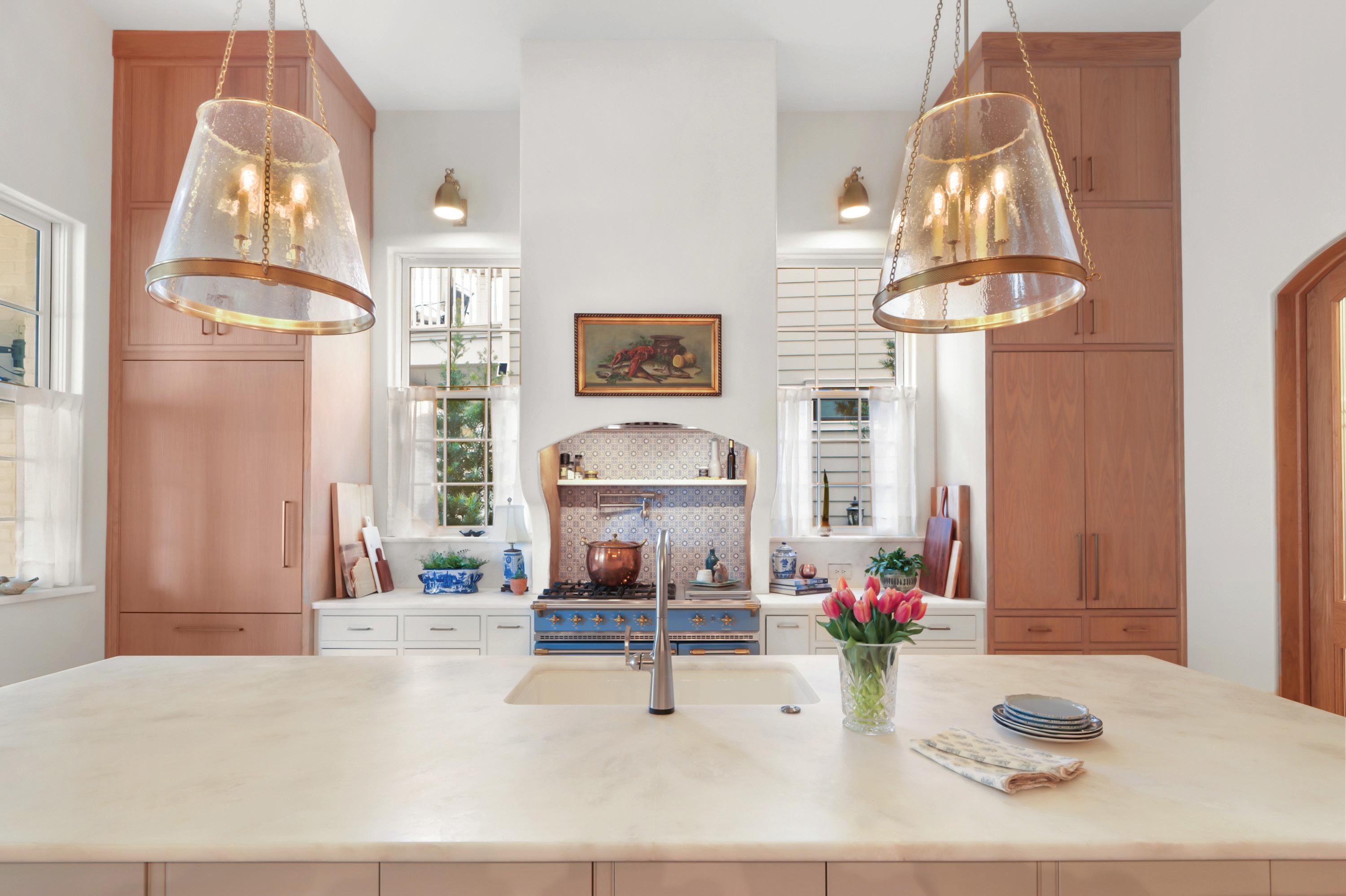
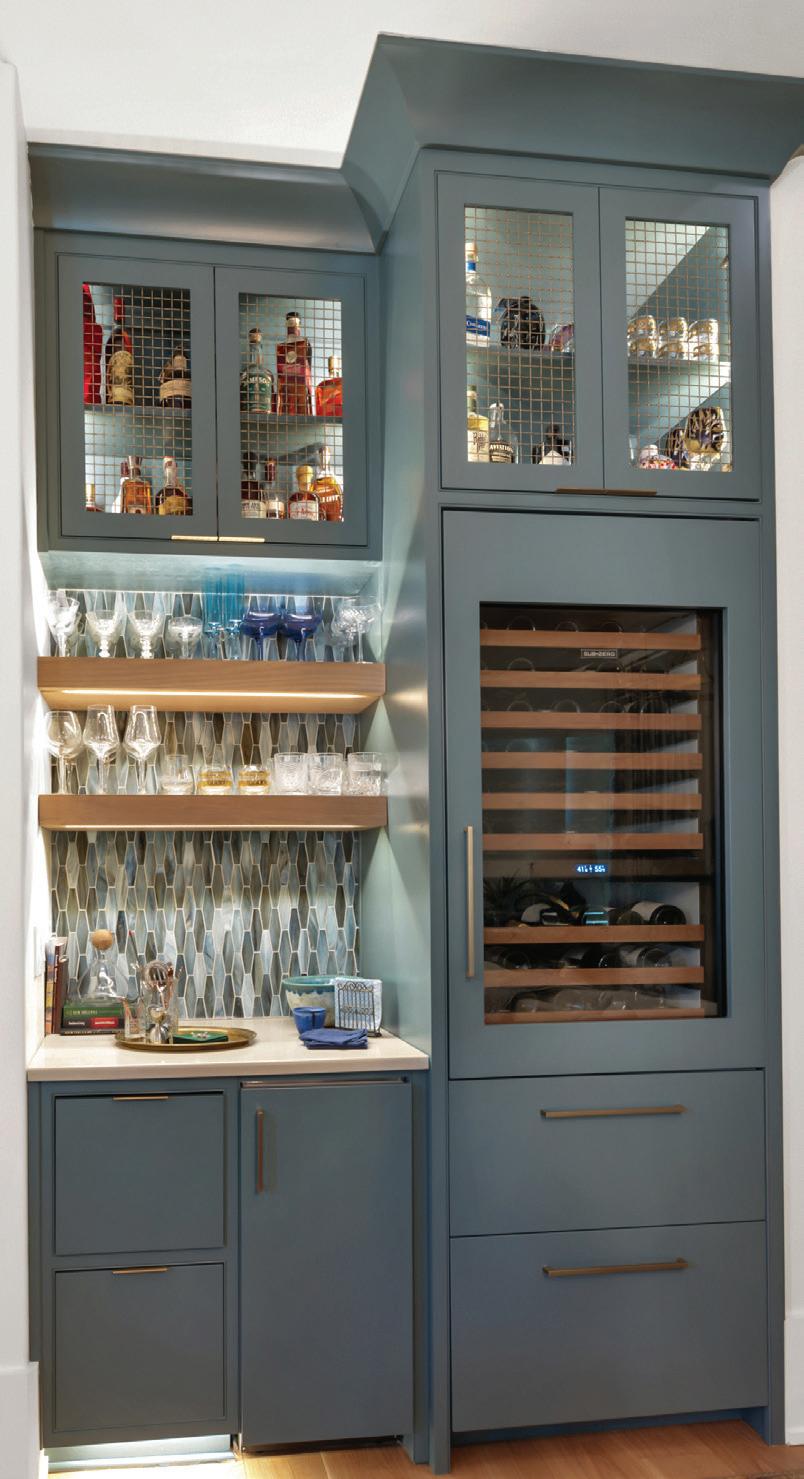
The kitchen began with a tile. The mosaic backsplash behind the custom blue bar cabinet tucked just off the kitchen became the unlikely source of the home’s entire color palette. “A lot of times it’s a rug or a fabric or something that a homeowner loves,” Lewis said. “But basically, the colors of my house are in that tile.”
From there, the kitchen came together around a Lacanche range in a soft blue, a French professional appliance Lewis researched carefully before choosing for its oven capacity and traditional aesthetic. Custom cabinetry by Stile Cabinetry, a local firm, is white oak with a custom gray-white finish and beaded detailing. Counters are White Rhino Dolomite, a natural stone with the look of marble but a honed finish that doesn’t show fingerprints. The white oak flooring continues into the foyer, where it’s cut in a decorative inlaid pattern at the entry.
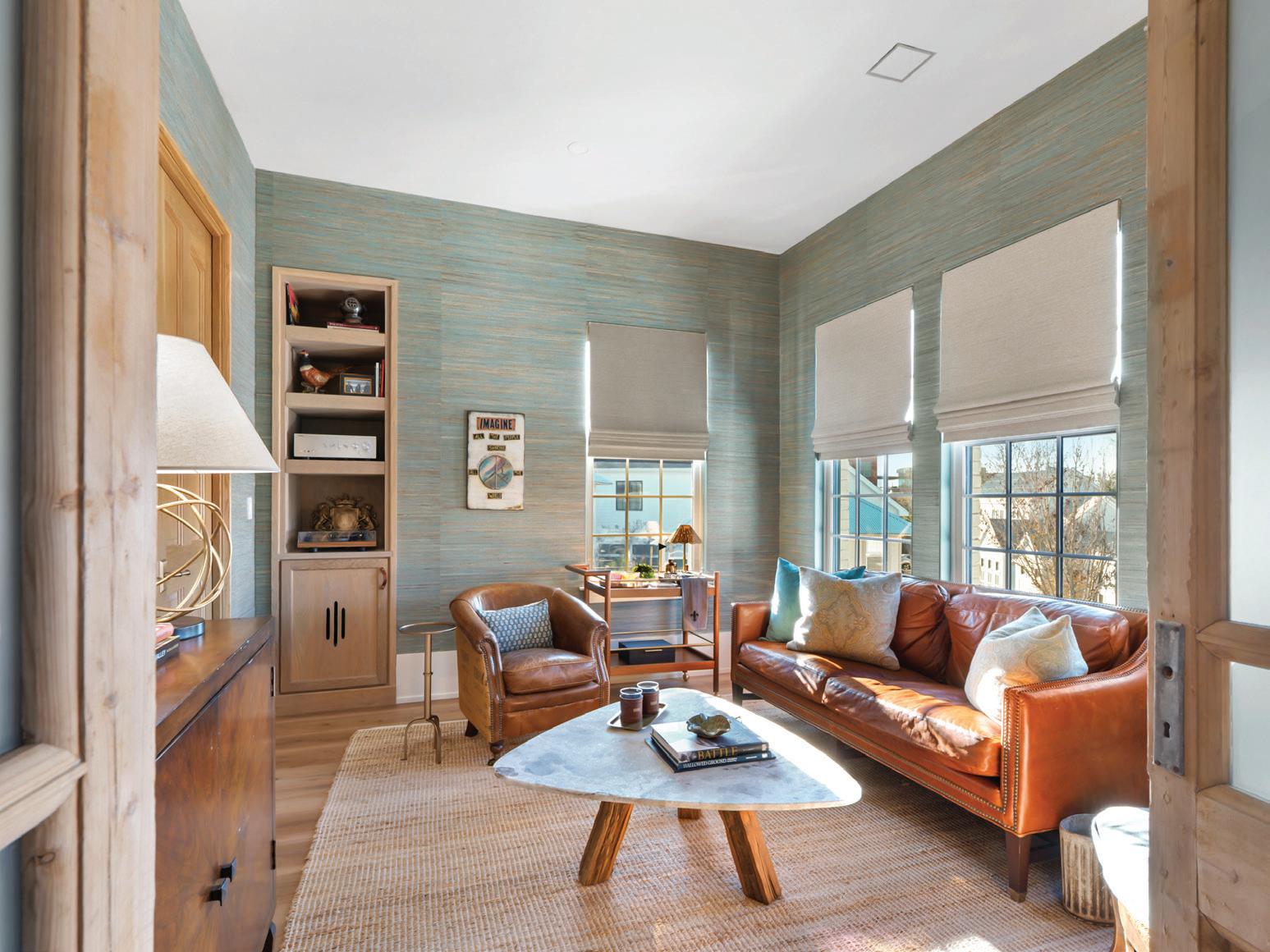
Every room in the house is different by design. The study is the house’s one clear departure from the European palette. The room features grass cloth walls in deep teal green, a cognac leather sofa, a sculptural marble coffee table and extra insulation packed into the walls and ceiling specifically to contain sound. The room was designed around Eric’s love of music. “He enjoys music of all genres and loves sharing it with friends,” Lewis said.
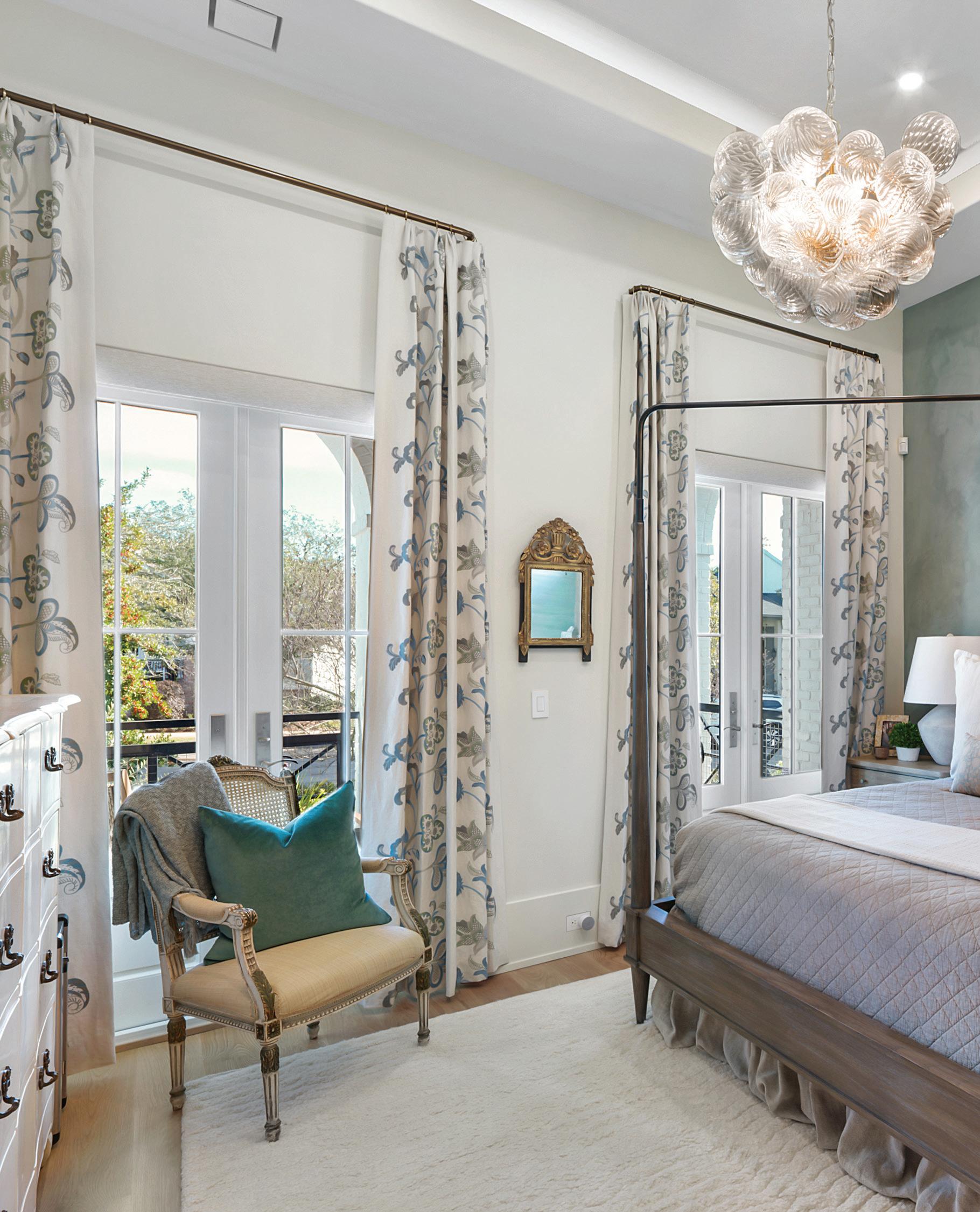
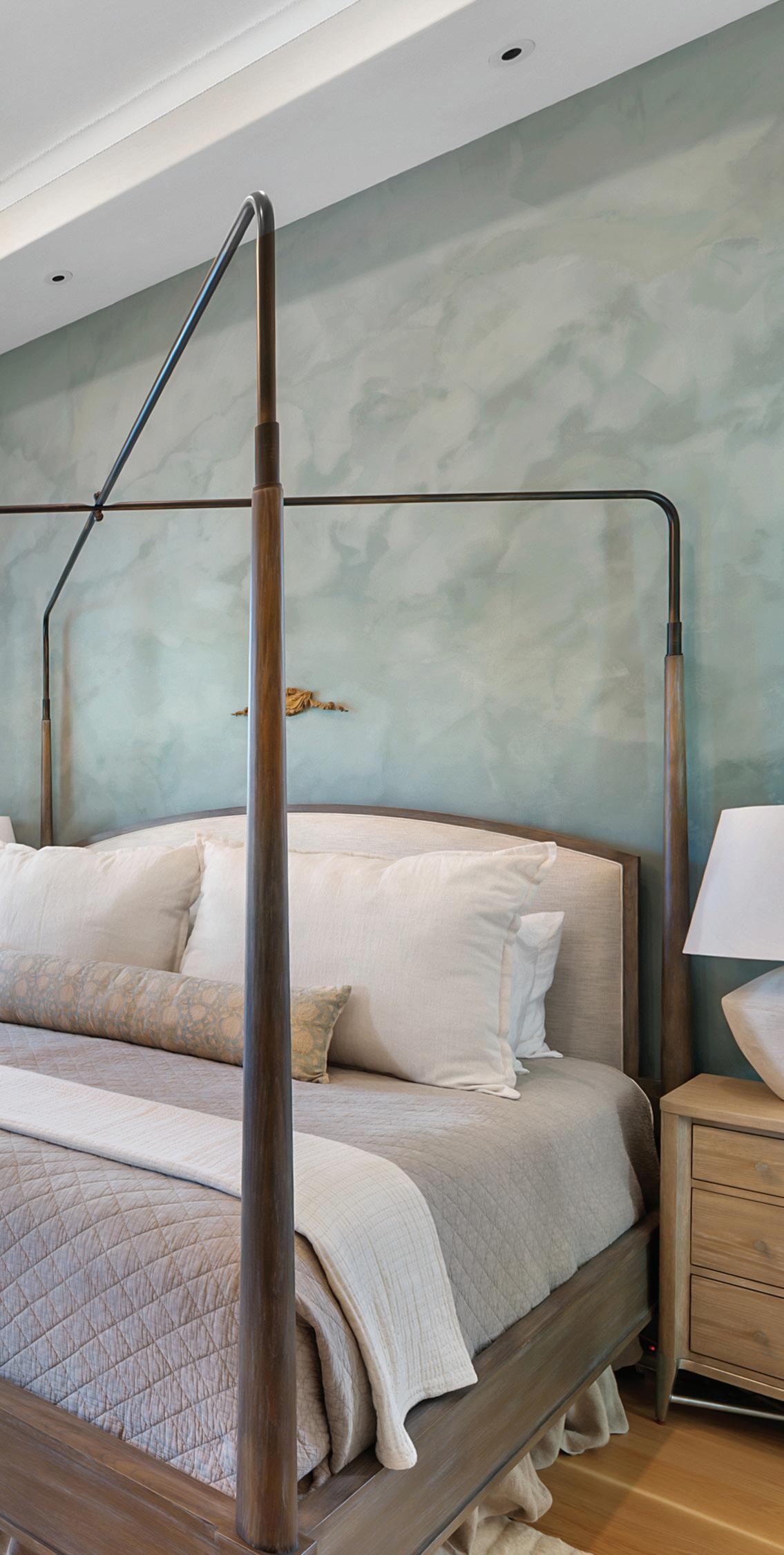
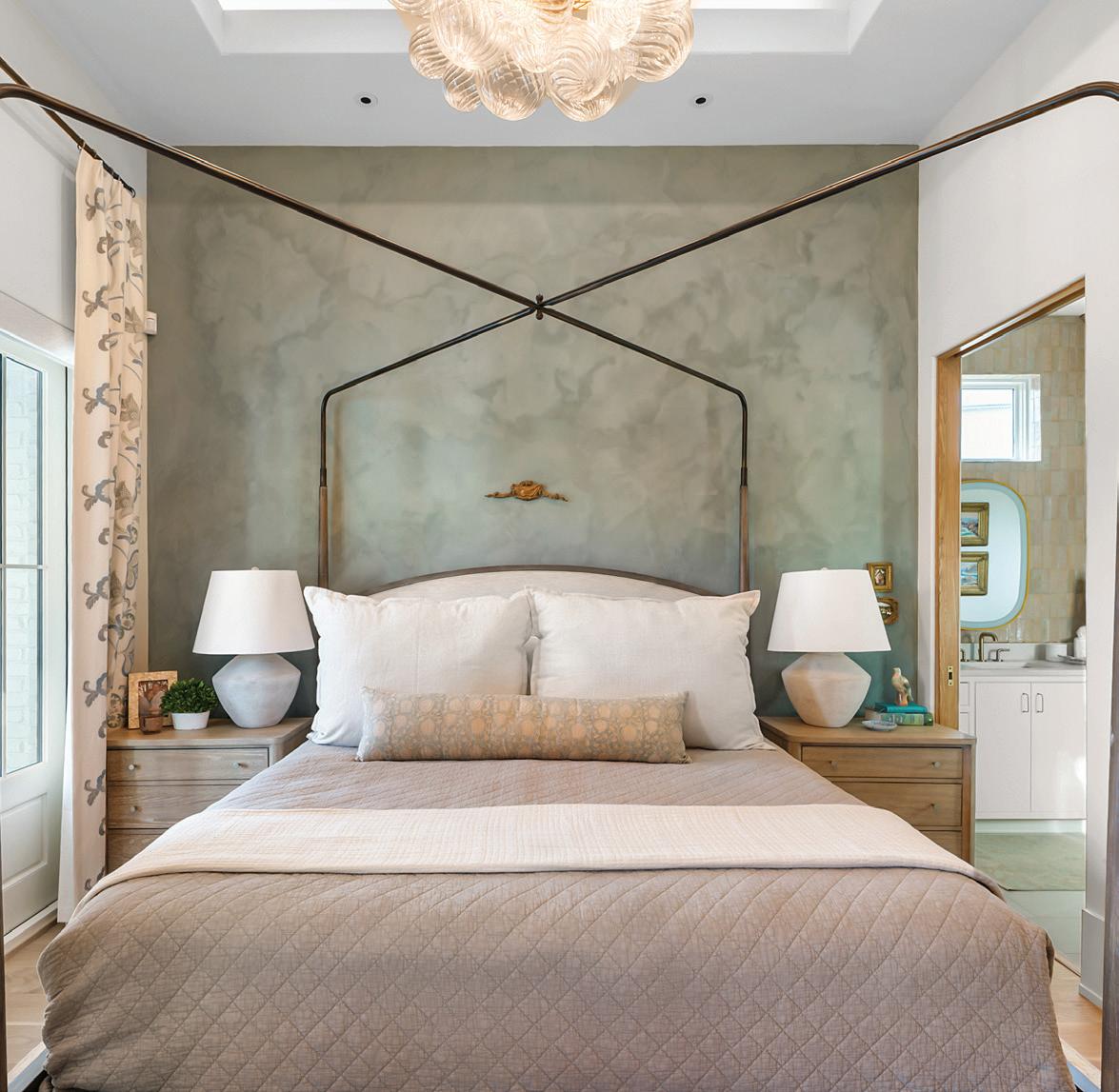
The primary suite carries the home’s water theme into its most elaborate spaces. A four-poster bed sits beneath a bubble glass chandelier that Lewis chose specifically for this room, resisting the common impulse to put it in a living
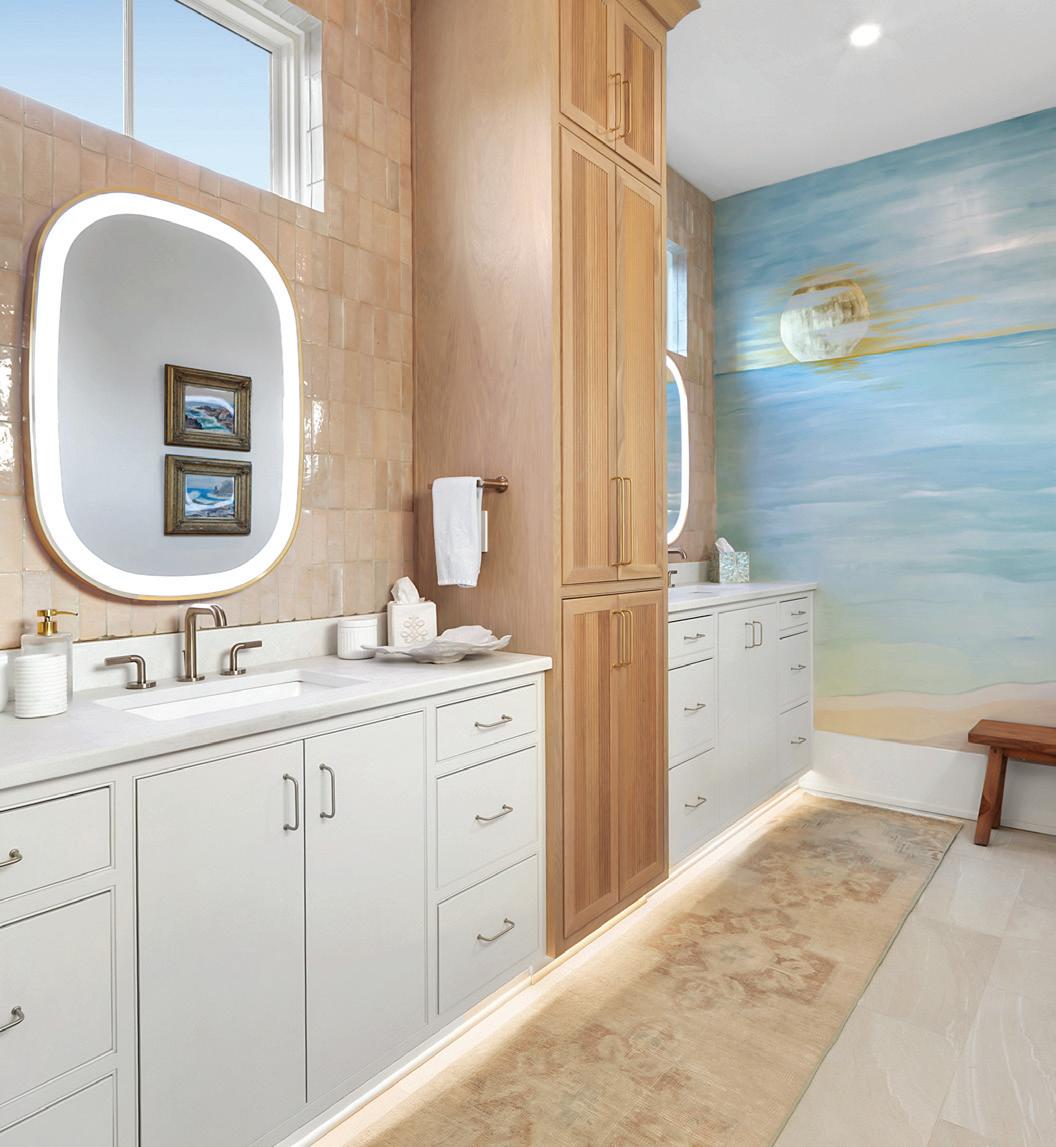
room. “To me, it’s dreamy,” she said. The seascape in the primary bath is a hand-painted mural, commissioned from Bekye Fargason with a request from Lewis to include water, a strong sun and sandy tones woven through. The pale pink handmade Moroccan Zellige tile in the bath and shower is deeply textural and adds both lightness and depth to the room.
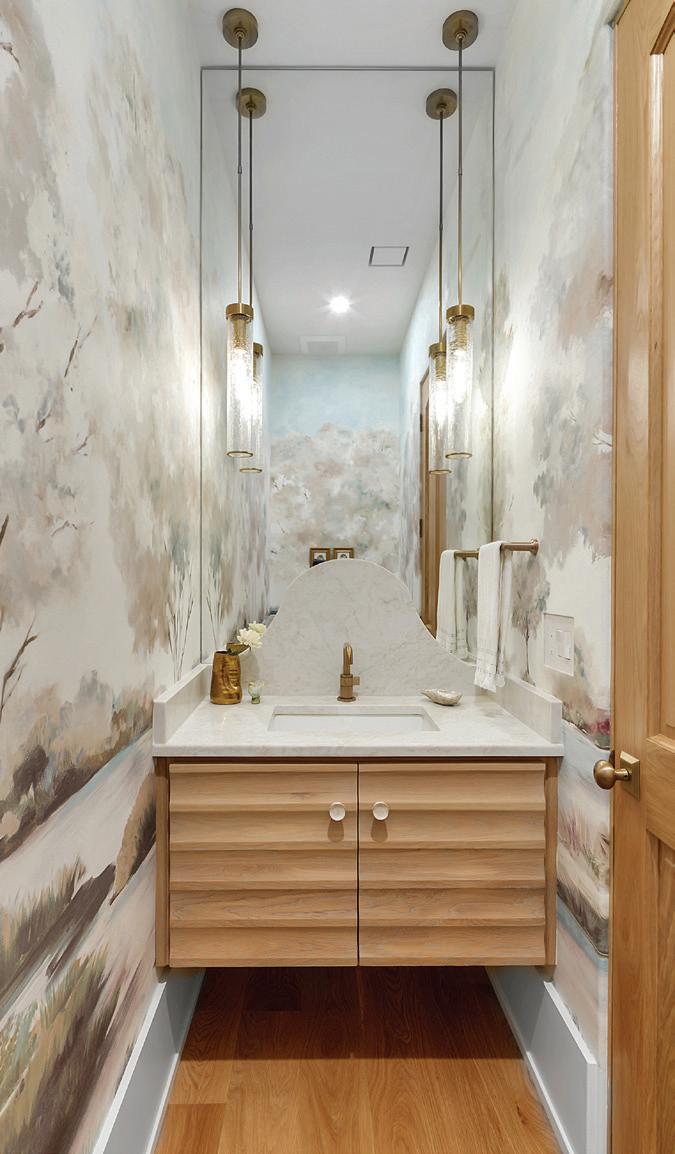
The powder room mural looks like wallpaper and most of it is. When the second set of panels came up short, Lewis painted the gap herself, extending a tree up into the corner and the sky, matching the wallpaper exactly.
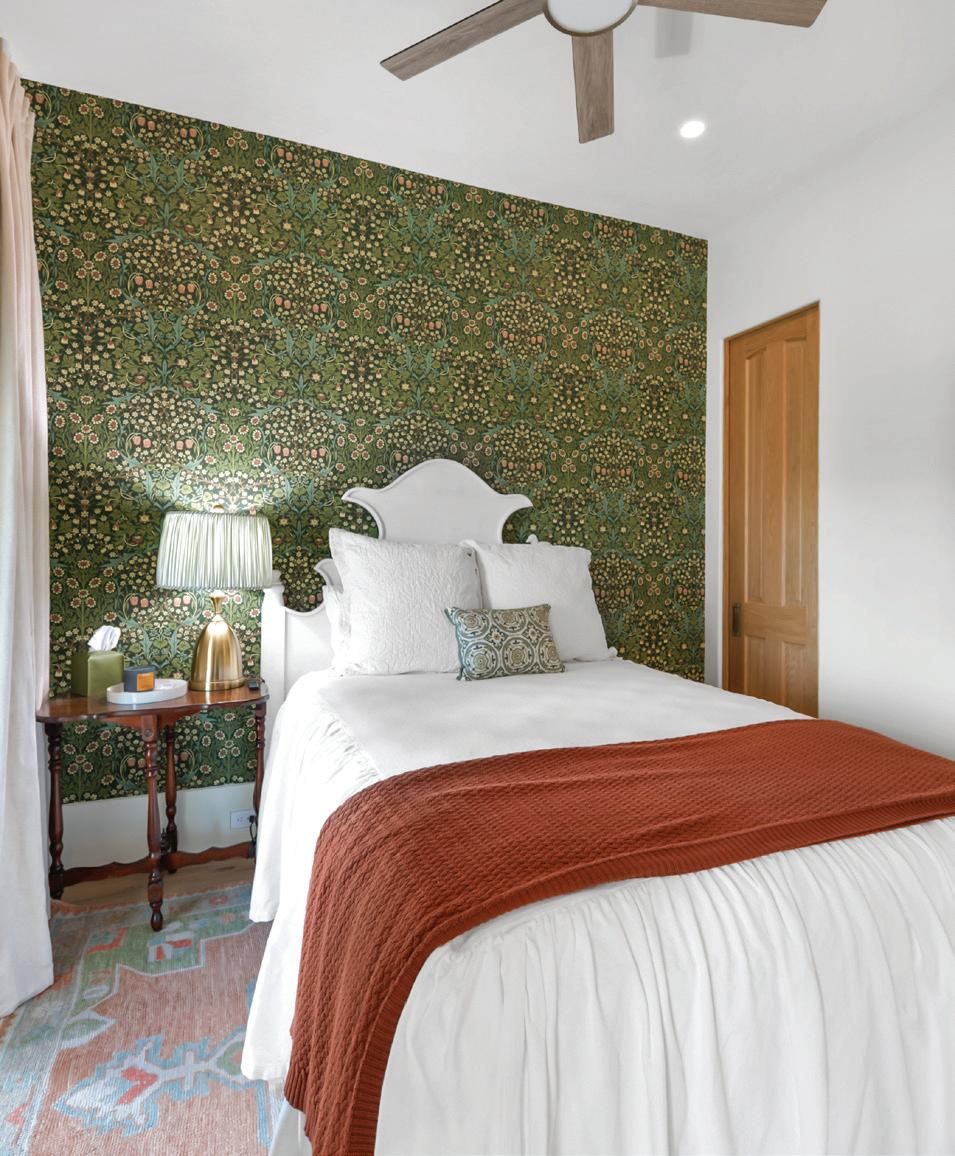
The home uses wallpaper in many rooms and in many ways. One guest bedroom uses a bold green with a pattern that Lewis calls a modern take on an old design. “This was the hardest wallpaper for me to choose because I knew I wanted the more muted one in the adjoining bathroom. They couldn’t compete, but they had to have the same color,” she said.
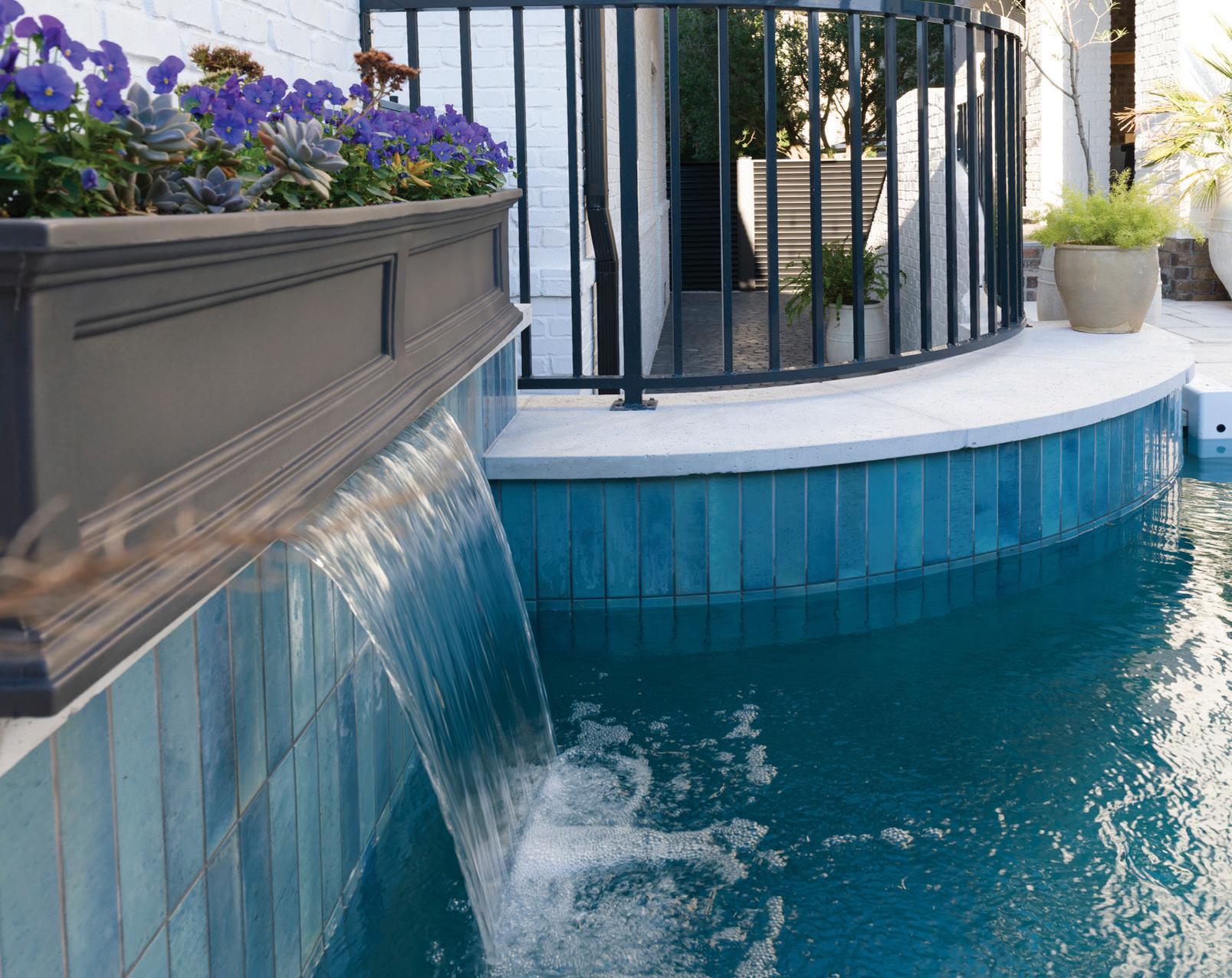
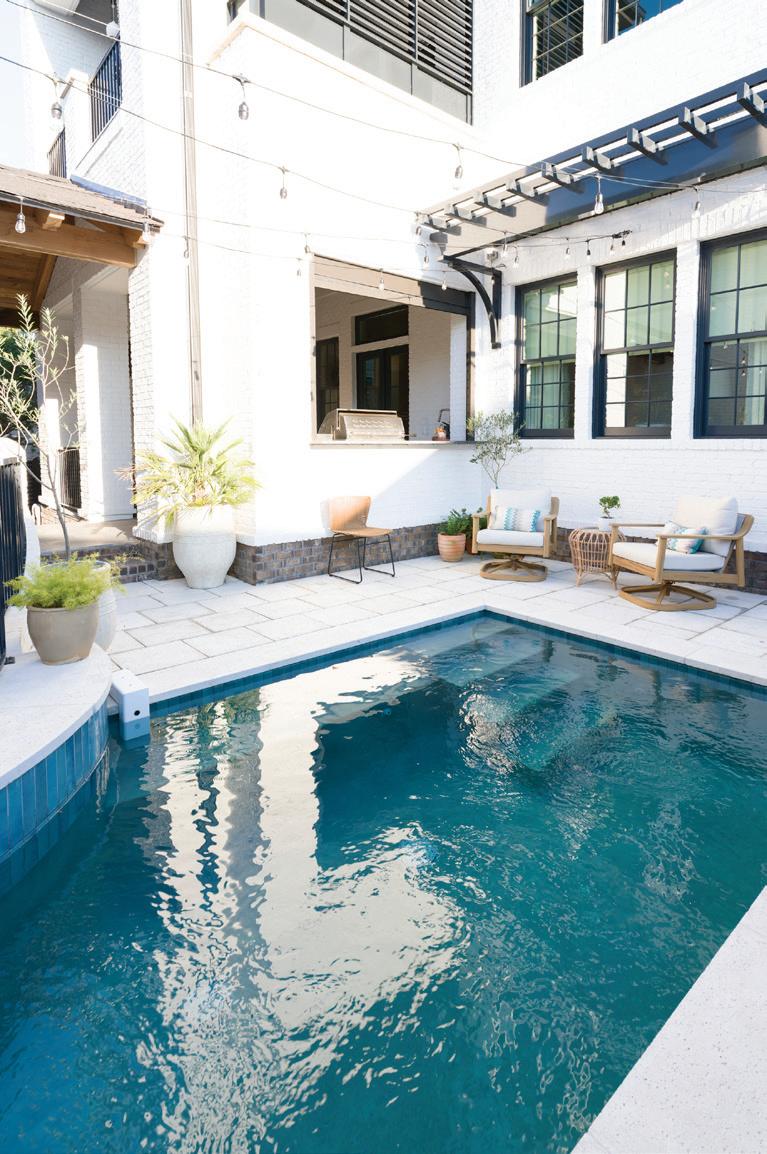
Out back, the Aragon design philosophy of indooroutdoor living is captured perfectly. A covered living room with a brick fireplace and three televisions opens to a courtyard. The pool is small by some standards—Lewis calls it a cocktail pool. It is geothermal, drawing on ground
temperature to keep the water swimmable through a Pensacola July. The tile is a Gulf-blue that ties back to the marina and the couple’s love of water.
After decades in rural Mississippi, the couple found that they love the energy of a downtown city block and the pleasure of being connected to something larger than a house.
“I’ve come to enjoy the city’s energy, watching neighbors walk by, seeing a bit of traffic and soaking in Pensacola’s beautiful weather,” she said. “It’s such a charming, connected space.”






















Pensacola Ice Flyers Schedule & Theme Nights
March home games and theme nights at the Pensacola Bay Center. Games begin at 7:05 pm. For tickets and information, visit iceflyers.com.
March 13 - Macon Mayhem vs Ice Flyers; St. Patrick’s Celebration
March 14 - Macon Mayhem vs Ice Flyers; Small Dog Race Night
March 27 - Quad City Storm vs Ice Flyers; Rebrand Night
March 28 - Quad City Storm vs Ice Flyers; Military Appreciation Night
Pensacola Little Theatre presents Six: Teen Edition
March 6 to 15
Pensacola Little Theatre is excited to present Six: Teen Edition as part of its Treehouse – Teens and Families series. Performances run March 6 to 15 at Pensacola Little Theatre, located at 400 South Jefferson Street in downtown Pensacola. Directed by Anthony Broughton and Lexi Mayo with music direction by Destiny Howard, Six: Teen Edition transforms history into a modern pop concert. The six wives of Henry VIII step out of the history books and onto the stage as contemporary pop icons, each telling her story through powerhouse vocals, dynamic choreography and infectious pop music. Blending pop, hip-hop and contemporary musical styles, the show explores themes of identity, resilience and sisterhood as the queens reclaim their narratives and redefine how their stories are told. For tickets and complete show details, visit pensacolalittletheatre.com.
Wine on the Water
March 7
Sip, savor, and support Sacred Heart at the annual Wine on the Water fundraiser on March 7 from 1 to 4 pm at the Blue Wahoos Stadium in downtown Pensacola. Presented by Sandy Sansing Dealerships and Florida Insurance Agency, the event celebrates community, connection and compassionate care for mothers and babies across our region. The Grand Tasting invites guests to stroll the waterfront while enjoying a curated selection of fine wines, champagne, craft beer, handcrafted mocktails and gourmet cuisine. Proceeds support Ascension Sacred Heart’s Perinatal Specialty Unit, helping complete the campaign for the PSU family room and outdoor space. For tickets and sponsorship details, visit wowpensacola.com.
March 7
On March 7 homeowners of Pensacola are invited to bring their blooms to the annual Community Camellia Show and Plant Sale at the West Florida Library at 239 Spring St. in downtown Pensacola. The fun starts at 9 am, where members of the community are invited to bring their colorful camellias to compete for a variety of prizes. Club members will assist with entry of camellias from 9 to 11:30 am and judging from 11:30 am to 12 pm, when you will learn what judges look for in a winning bloom. Viewing of the beautiful winning blooms will happen from 1 to 3 pm. Admission is free for all ages. Camellia plants will also be for sale. Learn more at pensacolacamelliashow.com.
March 7
The 49th Annual McGuire’s St. Patrick’s Day 5K—the largest prediction run in America—returns March 7 at 9 am. Participants can run or walk the certified 5K, support local charities, sport the official run shirt and celebrate at Pensacola’s legendary post-race St. Patrick’s Day party. With more than 100 awards and serious fun, no perfect pace is required—just your best guess. The event welcomes all ages and runs rain or shine. Registration includes a McGuire’s Run shirt and access to the post-race party featuring live entertainment, Irish fare, Irish Wakes, Bud Light, McGuire’s Red Ale and soft drinks. Register at mcguiresirishpub.com.
2026 Women in Leadership Conference
March 12
The University of West Florida’s (UWF) Aylstock, Witkin, Kreis & Overholtz Center for Leadership will host the 12th Annual Women in Leadership Conference on March 12, offered both virtually and in person at the UWF Conference Center on the Pensacola campus. Designed to support women pursuing higher-level leadership roles, the conference connects attendees with recognized local leaders to share strategies for career advancement, communication skills and navigating challenges in underrepresented fields. The program also fosters networking with UWF alumni and community leaders. Tickets are $180 in person and $80 virtual, with discounts available. Learn more at uwf.edu.
March 13 & 15
Dance back in time to the American wild west with Oklahoma!–a classic, feel-good musical that follows the blossoming love story between farm girl Laurey and charming cowboy Curly as they navigate rival suitors and the challenges of frontier life. With unforgettable songs like Oh, What a Beautiful Mornin’, People Will Say We’re in Love, the lively Kansas City and, of course, Oklahoma! This Rodgers & Hammerstein classic captures the heartwarming spirit of a community on the brink of change. Get tickets or learn more at pensacolasaenger.com.
March 17
The Pensacola Beach Chamber of Commerce invites everyone to Go Irish on the Island for the annual St. Paddy’s Day Pub Crawl on Monday, March 17. The annual pub crawl along Pensacola Beach features participating beach bars, restaurants and hotels serving up Irish drink specials, music, mayhem and mischief. Everyone is invited to dress in green and join in on the revelry and fun by crawling along Pensacola Beach and supporting beach businesses. Find out more at pensacolabeachchamber.com.
March 20
The First City Chili Bowl heats up downtown Pensacola on March 20 from 5:30 to 8:30 pm at Museum Plaza in downtown Pensacola with a night of chili, charity and community. Tickets include unlimited chili samples, live music and access to a cash bar. Guests can vote in two categories—Classic Red and Freestyle Fire. Proceeds benefit local efforts of the Wounded Warrior Project and the Pensacola-Cordova Rotary Foundation, both 501(c)(3) organizations supporting veterans and community initiatives. Team entry is $200 (50 percent off for active Military, veterans and first responders). Awards include Fan Favorite, Top Fundraiser and Judges’ Choice. Tickets are $20, and kids ages 5 and under are free. For details, visit firstcitychili.org.
March 26
Save the date for the 2026 Rally On the Runway event on Thursday, March 26 at Brownsville Community Center. This exciting New York-style fashion event, benefiting Rally Gulf Coast, seeks to raise vital funds for childhood cancer research. The highlight of the evening will be the brave Rally Kids, children who are either currently battling or have battled cancer,
as they take center stage as our models, sharing the runway with celebrities. Funds raised by this event directly support essential research for better treatments with fewer long-term side effects and, ultimately, cures for childhood cancer. Rally On the Runway is more than just a fundraising event; it is a celebration of the resilience, strength and courage of our Rally Kids. For more information, check out rallyfoundation.org.
Books by the Bay
March 28
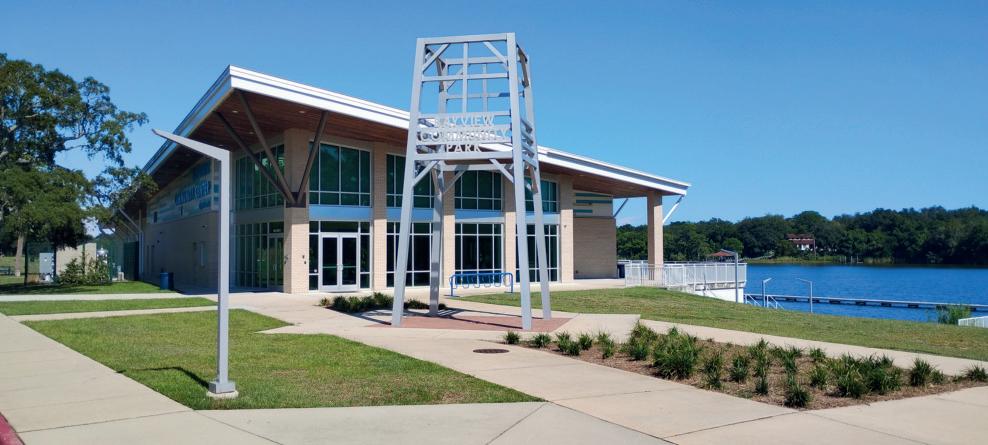
Immerse yourself in a literary extravaganza and let your imagination set sail at Books by the Bay, returning to Bayview Park on March 28 from 10 am to 4 pm. The festival is a haven for book enthusiasts of all ages, and features activities that celebrate the magic of storytelling and the written word. Meet acclaimed authors and discover new literary treasures at author signings and book vendor booths. Delve into the world of literature with free presentations by bestselling, regional and international authors, offering insights and inspiration. The festival will have a Kids Area for young imaginations, featuring activities such as writing your own
poetry, crafting personalized bookmarks, and gathering around to hear captivating children’s stories and readings from youth authors. Unleash your creativity with the Photo Prompt Poetry contest and Haiku slam, or mingle with costumed characters for a touch of whimsy. With so much to explore and enjoy, Books By the Bay Festival promises a day filled with enchantment and literary delights. Admission is free. Learn more about the 2026 presenters and exhibitors by visiting booksbythebay.info.
March 28
Join Gary’s Brewery & Biergarten for the ninth bi-annual Pensacola Plantapalooza, the biggest plant-centric event along the Gulf Coast. Spring is here and everything is turning green, so visit Gary’s Brewery & Biergarten to find all of your plant needs for the new year. There will be a wide range of all things plant from common to uncommon and everything in between. They also have four food trucks on site and Gary’s will be brewing up Plantapalooza Pale Ale just for us. Follow Gary’s Biergarten & Brewery on Facebook for updates.
Inaugural Pensacola Pickles and Wings Family Festival
May 16
Pensacola History and Haunting Tours and Events announces the inaugural Pensacola Pickles and Wings Family Festival on Saturday, May 16, from 10 am to 8 pm at historic Seville Square in downtown Pensacola. The daylong, family-friendly event features wings, pickles, food trucks, craft vendors, costume contests with cash prizes, a pickle-eating contest and a kids zone with carnival games. Attendees will also enjoy live entertainment from singers, dancers, poets, acoustic performers and more, along with Instagram-worthy pickle-themed photo stations. A portion of proceeds benefits the Ronald McDonald House of Northwest Florida, supporting families with children receiving medical treatment. For details, visit pensacolafest.com.







At Florida Power & Light Company, we believe that building strong communities in the regions we serve is a vital mission.
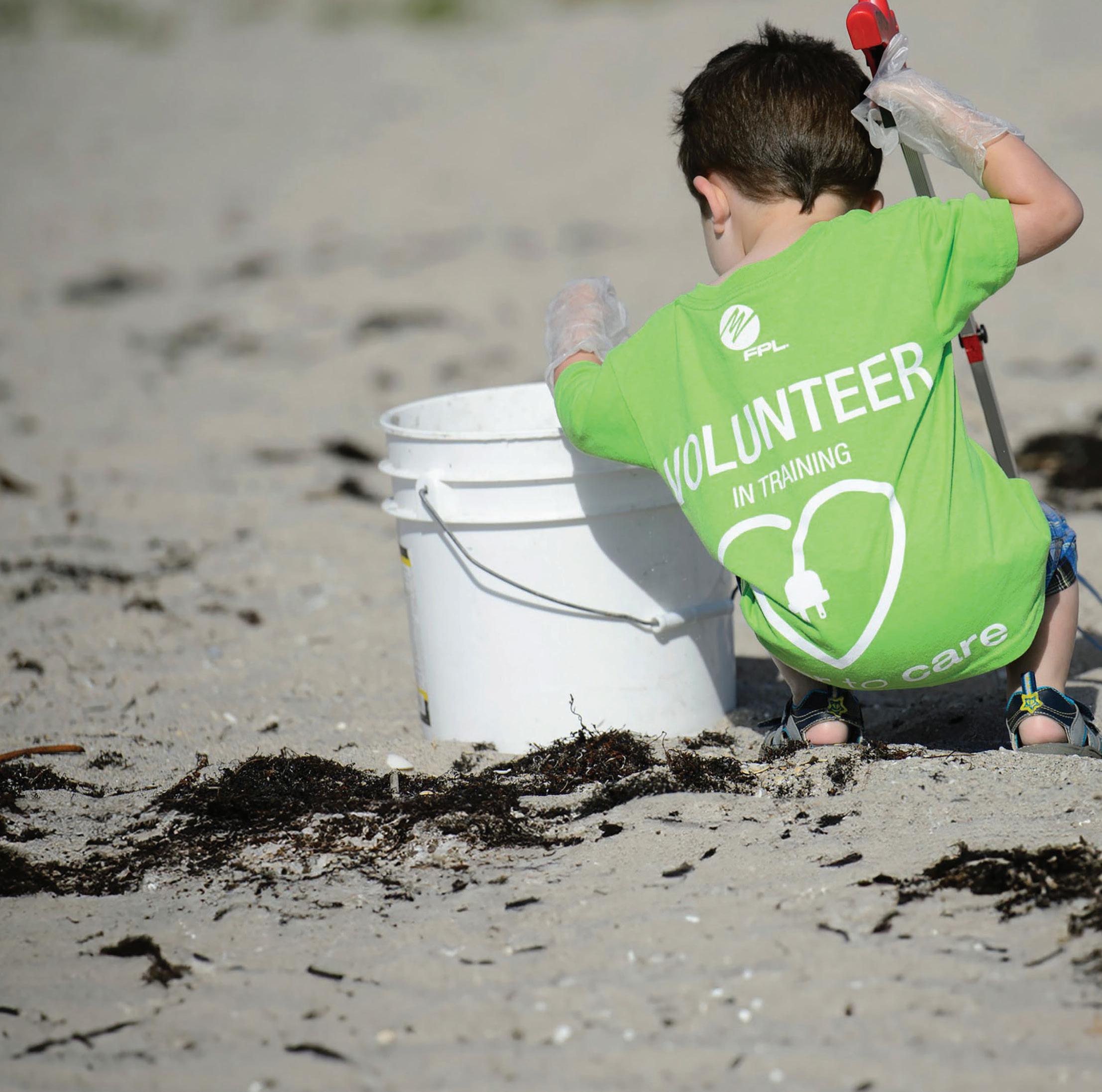
We’re helping our neighbors and nonprofits through volunteerism, donations and other resources.
We’re investing in the next generation by supporting STEM programs, granting scholarships, and helping students with the building blocks toward a strong future. By supporting local businesses and higher education programs, we’re laying the groundwork where Floridians can shine and shape our economic future. From giving back to investing in the future, FPL is Powering
Join us in our journey to care, educate and innovate. Discover how we’re making a difference at FPL.com/Community
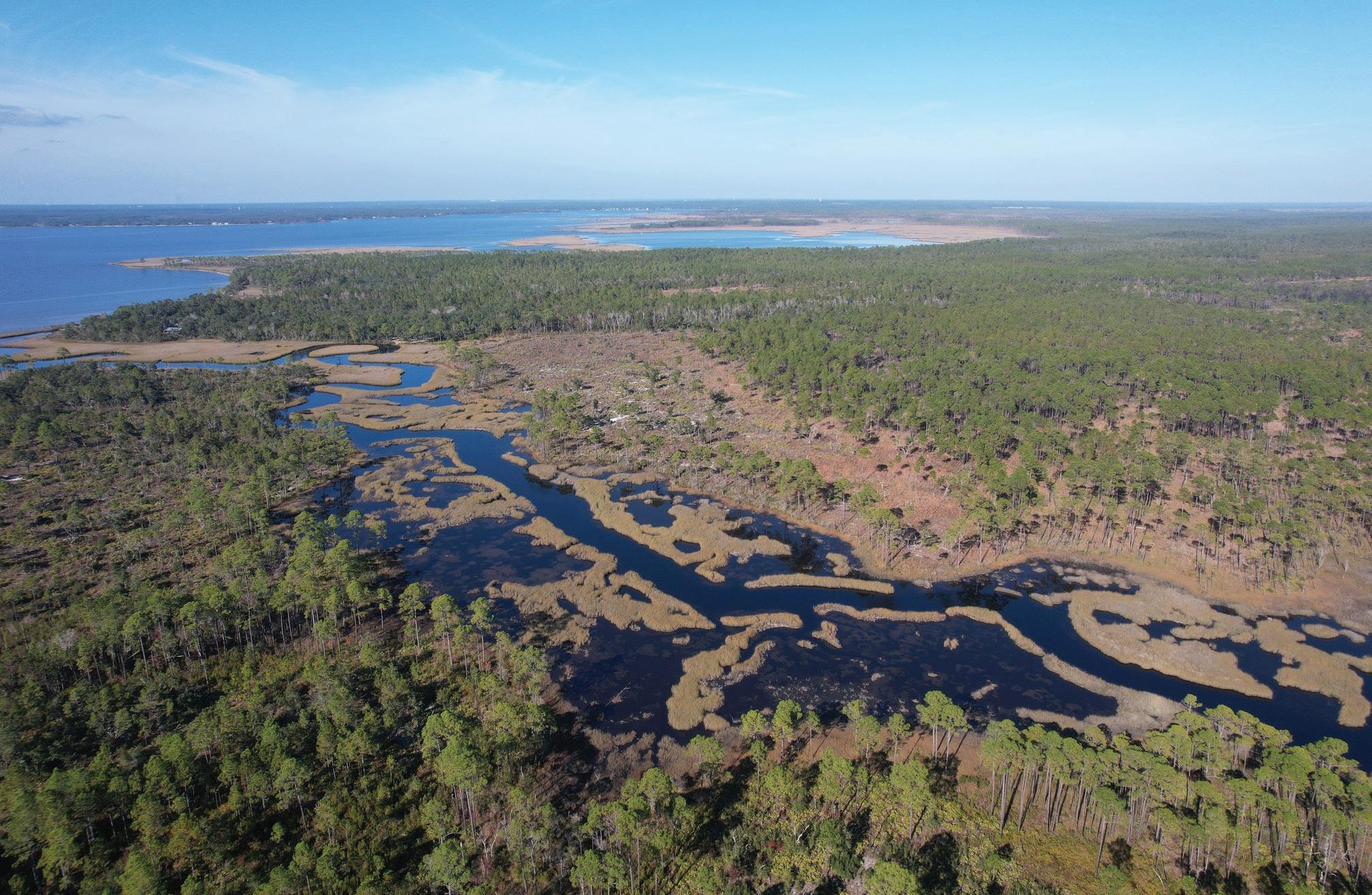
45 Pensacola & Perdido Bays Estuary Program Awarded $750,000 Grant for Water Quality Monitoring Collaborative Learn how this water quality collaborative aims to improve the health and resilience of our watersheds and communities
49 Around the Region Find out what's happening in business, government and cultural news throughout Pensacola and Northwest Florida



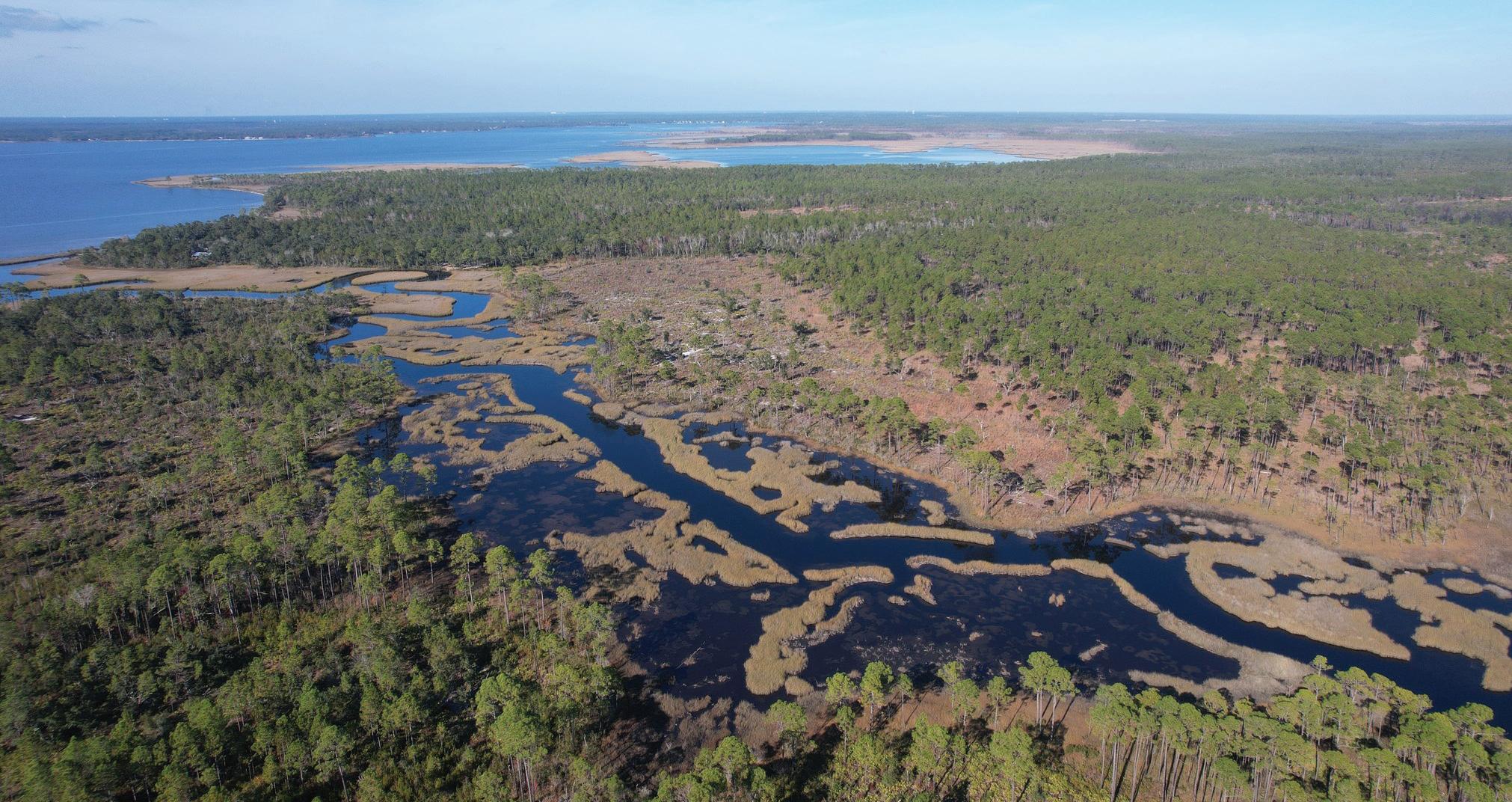
The Pensacola and Perdido Bays Estuary Program (PPBEP) is pleased to announce the U.S. Environmental Protection Agency’s (EPA) Gulf Program has awarded a $750,000 grant to support the development of a regional Water Quality Monitoring Collaborative.
This collaborative initiative will establish a comprehensive network of sentinel water quality monitoring sites across the Pensacola and Perdido Bays watersheds. Project partners include Escambia, Santa Rosa and Okaloosa counties, the City of Orange Beach and the Poarch Band of Creek Indians.
Over the next three years, the program will collect monthly water quality data at approximately 30 sites, building on existing water quality monitoring efforts, standardizing water quality monitoring parameters and methods and ensuring consistent and comparable data across area watersheds.
Data collection includes nutrient and bacteria parameters, which are key indicators of water quality conditions. This data will feed into PPBEP’s biennial State of the Bays Report, support the launch of a new public-facing water quality dashboard and help guide development of a water quality improvement action plan aimed at making the region’s waters more swimmable and fishable.
Establishing a coordinated water quality monitoring network was a priority action of PPBEP’s first Comprehensive Conservation and Management Plan (CCMP), which provides a roadmap for improving the health and resilience of our watersheds and communities. Long-term, standardized monitoring of the Pensacola and Perdido Bays watersheds is critical for tracking environmental conditions and trends, measuring progress toward restoration goals and informing local decision making.

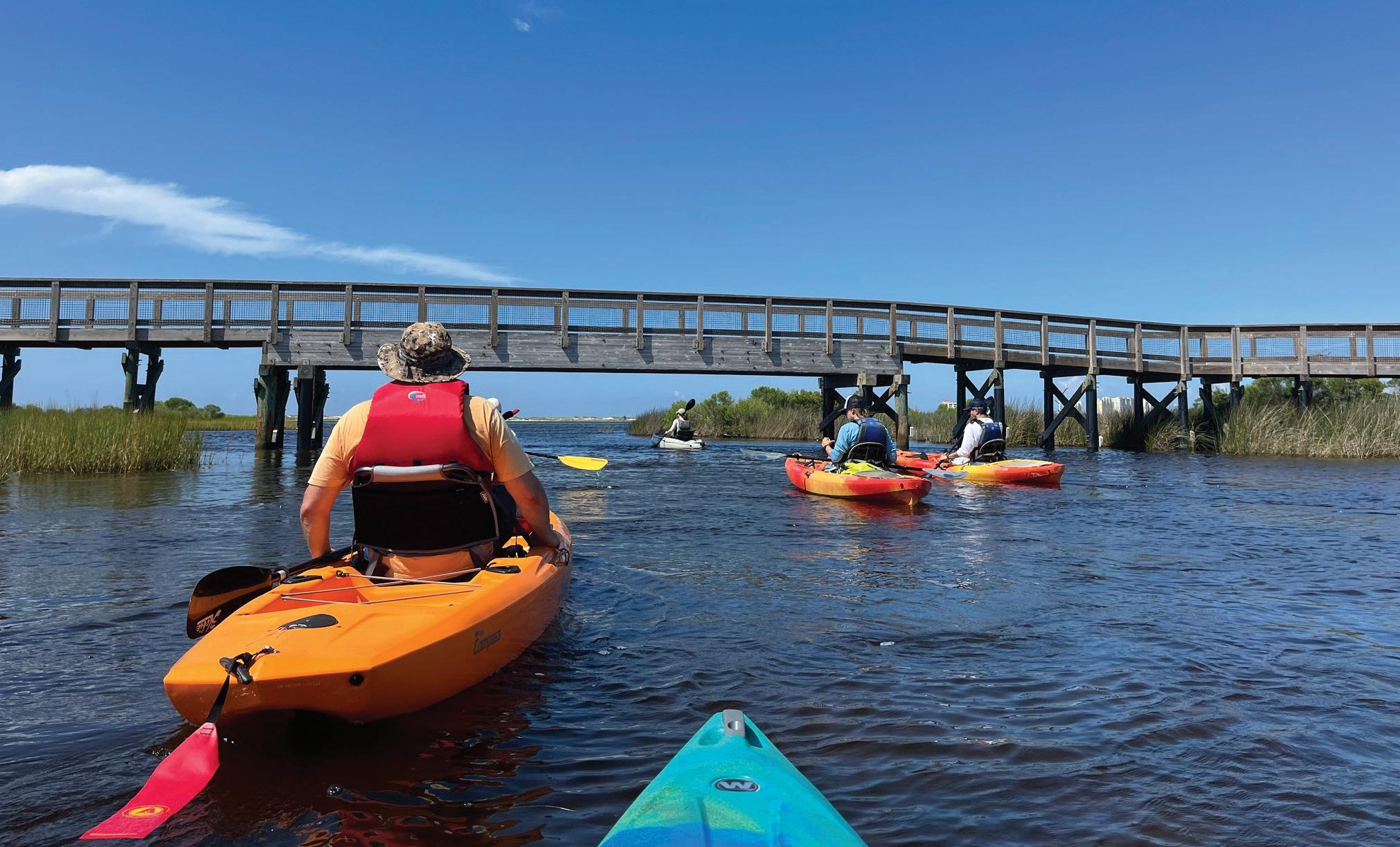

“This collaborative effort came together as a direct result of several engagements with our Technical Committee and regional partners that expressed the need for consistent and comprehensive water quality monitoring,” PPBEP Senior Scientist Whitney Scheffel said. “By working together and standardizing how we monitor our waters, we can better track progress and support meaningful restoration efforts.”
The Water Quality Monitoring Collaborative will improve transparency and accessibility by making it easier to share water quality results with the public, partners and decision makers. Local communities have continually expressed an interest in the health of their local waterways for fishing, swimming and recreation.
This new dashboard will help visualize water quality information in a clear and meaningful way—educating, informing and connecting communities to the bays they care about.
The grant is part of a larger push to improve the health of the bays, which have experienced significant habitat loss, including 85 to 90 percent of historic oyster habitat. This funding complements other ongoing projects, including the Living Shoreline Assistance Program and the Community Grant Program, aimed at bolstering resilience against erosion and pollution.
The mission of the PPBEP is to restore and protect the Pensacola and Perdido Bay watersheds through restoration, education and unbiased monitoring of our bays, estuaries and watersheds.
PPBEP serves as a trusted source for residents, businesses, industry and the community on issues relating to preserving, restoring, improving and maintaining the natural habitat and ecosystems of the bays, estuaries and watersheds of Pensacola and Perdido Bays.
To learn more about the PPBEP, visit ppbep.org and follow @pensacolaandperdidobaysprogram on Instagram @ppbepflal on Facebook.







The Greater Pensacola Chamber of Commerce announced its support for the Penny for Progress effort to renew the Local Option Sales Tax (LOST) in Escambia County. The renewal referendum will be on the general election ballot in November 2026.
“Supporting Penny for Progress will help our economic development efforts and improve the lives of our residents,” Chamber Board Chair Ildi Hosman said. “The millions of dollars brought in by the Local Option Sales Tax will continue to fund key infrastructure projects in Escambia County.”
LOST generates approximately $90 million annually, supporting projects that directly impact the safety, functionality and quality of life in our community, including:
• Public Safety: Law enforcement and fire department equipment, facilities and essential upgrades
• Facilities: Major public facilities such as the One-Stop Shop building and the 1,048-bed county jail facility
• Transportation and Drainage: Road resurfacing, transportation infrastructure and regional stormwater improvements
• Recreation and Natural Resources: Athletic and recreational parks, artificial reefs, numerous community centers and environmental enhancements
Over the past 30+ years, this dedicated revenue source has enabled over a billion dollars in public investment, strengthening infrastructure, supporting local jobs and driving economic growth throughout the region.
LOST allows local governments to plan responsibly, undertake major capital improvements and maintain a level of investment that would not be feasible through existing tax structures alone. Without this funding source, many of the projects that improve our community and sustain the local construction and design economy would not be possible.
Pensacola’s Foo Foo Festival Announces $500,000 Grant Pool for 13th Year
The Pensacola Foo Foo Festival Committee officially announced its plans for its 13th year of events, scheduled for October 29 to November 9, 2026. At this morning’s kickoff presentation, the Foo Foo Festival Committee shared this year’s grant application process and funding structure that will be implemented for this year’s happenings. In 2025, Foo Foo Fest celebrated its twelfth iteration, featuring 10 grant recipients backed by more than $450,000 in grant funding.
In 2026, the Pensacola Foo Foo Festival will once again fund topscoring grant applicants, with the number of grants to be awarded contingent upon the number of submissions. The Foo Foo Festival Committee will award up to $500,000 in grant funding and grant applicants can apply for up to $100,000 in grant funding per event. All organizations, businesses and community partners are also encouraged to submit their various events (occurring October 29 through November 9, 2026) for consideration to become a Friend of Foo, receiving visibility as part of the regional marketing campaign and throughout the 12-day series of events.
Organizations interested in applying for a Foo Foo Fest grant must submit a mandatory letter of intent by Noon (CT) on Friday, March 6. To learn more about the letter of intent and the Foo Foo Fest application process, visit ACEPensacola.org. To apply for consideration as a Friend of Foo, visit FooFooFest.com; applications will open on Friday, May 1.
The 2026 Foo Foo Fest Committee members include Warren Sonnen (Chair/Compliance), Therese McKenzie (Past-Chair), Nicole Stacey (Curator), Robbie Schrock (Public Relations Liaison), Kelly MacLeod (Marketing Liaison) and Mallory Studer (Member at Large).
2026 Foo Foo Fest Application Timeline:
Friday, March 6: Foo Foo Fest Organization Letter of Intent Deadline (Noon CT)
Monday, April 6: Foo Foo Fest Grant Applications Open
Friday, April 10: Foo Foo Fest Grant Application Deadline (Noon CT)
Thursday, April 30: Public Grant Scoring and Announcement
Friday, May 1: Friend of Foo and Foo Foo On the Menu Applications Open
Friday, May 22: Foo Foo On the Menu Application Deadline (Noon CT)
Friday, October 1: Friend of Foo Application Deadline (Noon CT)
To download resources provided by the committee, visit ACEPensacola.org. For more information on the 2026 Pensacola Foo Foo Festival, visit FooFooFest.com or follow Foo Foo Festival on Facebook, X and Instagram.
Baptist Health Care is celebrating 75 years of compassionate care and unwavering commitment to the community since opening its doors in 1951.
The founders of the organization had a bold vision to transform health care in the community, and Baptist Health Care has evolved from a single hospital into a health system that continually enhances access and services. Today, locations and services span Northwest Florida and include three hospitals, four medical parks, the Andrews Institute, the area’s largest primary care group and a robust specialist provider network.
As the area’s only remaining locally rooted health care system, Baptist draws on its knowledge of and connection within the community to adapt rapidly and meet the community’s everchanging health care needs.
“Our 75th anniversary is more than a milestone—it’s a testament to the trust our community has placed in us,” Baptist Health Care President and CEO Mark Faulkner said. “We are honored to have cared for generations and remain focused on advancing health care for decades to come.”
Today, more than 4,500 team members make Baptist one of the largest employers and a significant economic driver in Northwest Florida. Salaries and wages ripple through the local economy, reinforcing Baptist’s role as a cornerstone of the community. Baptist’s commitment to care includes caring for vulnerable populations. In 2025 alone, Baptist Health Care provided more than $65 million in charity care.
Over the years, Baptist has earned accolades from CMS, Forbes, Newsweek and U.S. News & World Report, but the greatest honor remains the enduring trust of the community.
While Baptist Health Care’s official anniversary date is October 17, festivities and reflections will be held throughout the year. Baptist will share stories that celebrate the past contributions, presentday achievements and the future of care in our community at ebaptisthealthcare.org.
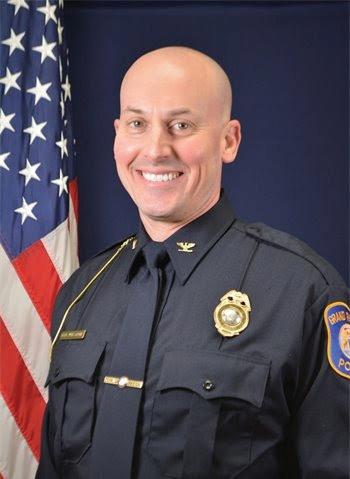
Mayor D.C. Reeves has chosen Eric Winstrom to lead the Pensacola Police Department, wrapping up a national search for the City of Pensacola’s next chief of police.
Winstrom, who has been the chief in Grand Rapids, Michigan, will start with PPD on March 2, pending approval of his hiring by Pensacola City Council. He will be on hand at the mayor’s weekly news conference at 10 a.m. Feb. 4 at City Hall, 222 W. Main St.
“Choosing the right person to lead our police department is perhaps the most important decision I will make as your mayor,” Reeves said. “My focus was on finding the person who is the right fit for our community with the ability to lead PPD into the future. After much consideration and feedback from the community throughout this selection process, I look forward to working with Chief Winstrom to help write PPD’s next chapter.”
Kristin Brown, who has been serving as PPD’s Acting Chief, will serve as the Deputy Chief during the transition.
Winstrom began his law enforcement career with the Chicago Police Department in 2000, patrolling public housing complexes on the city’s South Side. In his 21 years in Chicago, he rose to the rank of commander, taking on multiple leadership roles and guiding tactical, investigative, and administrative teams through some of the department’s most challenging periods. He led the citywide child sex crimes unit at CPD, was captain of the 400-person 9th district in Bridgeport and commander of the Area 5 Detective Division, a 200-person team that covers the Northwest side and O’Hare Airport.
In 2022, Winstrom was named the Chief in Grand Rapids, Michigan’s second-largest city. In his tenure there, which he began as an external candidate, he focused on recruitment, training, community engagement, accountability and reducing crime, while managing day-to-day operations and high-profile police and public safety incidents that drew national attention.
When Winstrom arrived in Grand Rapids, the force was budgeted for 302 officers but had only 260 sworn officers. There are now 312 sworn officers on the force so that the department can better keep pace with the needs of the city.
“Trust is a key component not only of leadership within a police department but also between the department and the community it serves,” Winstrom said. “I’m well aware that trust is earned and there are no shortcuts in earning it. I am eager to get to work with the team already in place at PPD.
“Pensacola’s looking to strive to thrive in an ethical way, and in a way that lifts everyone up. Policing is an integral part of that effort. Everyone wants to be on a winning team. Pensacola is a winning team, and I am looking forward to being part of that.”
Winstrom has been a guest lecturer on police issues at numerous colleges and universities and a regular expert witness in policerelated litigation.
He earned his bachelor’s degree in criminal justice from Rutgers University, followed by a juris doctor degree from Brooklyn Law School. After law school, Winstrom worked at the NYPD Legal Affairs Bureau, where a police officer mentor told him that if he wanted to make substantive changes to the system, he should become an officer and help change it from the inside. It was advice that launched his career.
Winstrom and his wife — a former Chicago police officer — have been married for more than 15 years and have two children, ages 12 and 14.
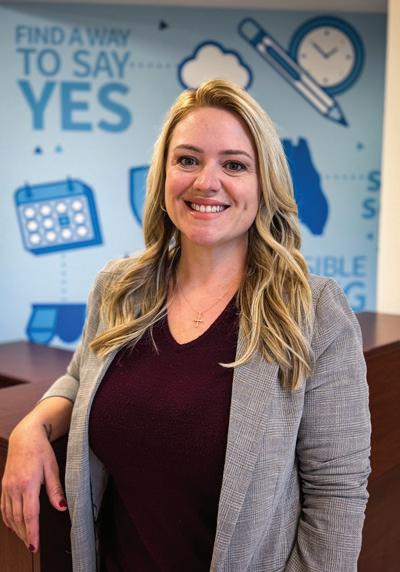
Gulf Winds Credit Union is proud to announce that Jacquelyn “Jacquie” Bolinger has been named Vice President of Accounting and Controller. In this role, Bolinger will oversee Gulf Winds’ Accounting Department, managing all financial systems and day-to-day operations, supporting financial planning and analysis and ensuring compliance with all regulatory standards.
With an extensive background in leading financial teams, Bolinger is prepared to grow and strengthen Gulf Winds’ accounting team and build the department strategy. She brings deep experience in financial modeling, portfolio management, monthly financial budgeting, forecasting and reporting and audit and examiner relations.
“We are excited to bring Jacquie onboard and have her as part of our senior leadership team,” Gulf Winds Credit Union Chief Financial Officer Brad Tanberg said. “She brings a wealth of knowledge in both accounting and finance, and I look forward to seeing her develop our accounting team and drive operational excellence.”
As founder of several community service programs in the area including Eyes on a Better Tomorrow at the Retina Specialty Institute and Meraki in Motion at Meraki Solar, Bolinger has a demonstrated passion for leading initiatives for those who are underserved in the community. Her dedication to supporting those around her aligns with the Gulf Winds core values and reflects her commitment to honest, caring leadership.
“I’m so excited to join Gulf Winds and make an impact on the members and communities we serve,” Bolinger said. “Strong financial leadership is often behind the scenes, but it is essential in giving members the experience they deserve, and I’m honored to join a credit union that values the importance of strategy, stewardship and service.”
The City of Pensacola has secured initial approval for a $76 million grant that would transform the Port of Pensacola and fuel the creation of 2,000 jobs.
On January 28, the Board of Triumph Gulf Coast gave initial approval to Project Maeve—an investment that will establish shipbuilder Birdon America Inc.’s Southeastern headquarters and a Tier 2 advanced ship manufacturing facility in Pensacola.
The facility would create 2,000 jobs with 1,437 jobs at an average salary of $68,000 annually and 563 jobs at an average salary of $112,000.
“This project will change the trajectory of our city for generations to come,” Mayor D.C. Reeves said. “I promised careers for our hardworking taxpayers. Today shows that we are delivering on that promise. We’re focused on building Pensacola’s future and Triumph’s investment helps us do just that.”
When fully approved, this investment will support a 400,000 square-foot shipbuilding facility at the port, strengthen the local economy and support U.S. military interests through the production of critical modules for ships and submarines.
It will become the largest job creation project in the city’s history and would be one of the largest grants approved by Triumph
Gulf Coast, the nonprofit corporation created to manage funds recovered for economic damages from the 2010 Deepwater Horizon oil spill.
The city and Triumph will enter a term sheet negotiation, which will outline the components of the grant agreement. The third and final step is the grant agreement approval.
The total project cost is $275 million, with additional funding from the company’s own capital investment and other grant funding, including a pending $14 million request to the Florida Department of Commerce.
Triumph funding will be used for construction costs associated with two new shipbuilding facilities at the port. The $105 million construction program includes a Phase 1 panel line and module fabrication warehouse and a Phase 2 assembly bay, together housing advanced ship manufacturing and office space.
The city will retain ownership of the facilities as public infrastructure and will enter into a long-term ground lease with Birdon America Inc. for its use. Established in 1977, Birdon is a globally established maritime engineering and shipbuilding company with over 15 years of proven performance delivering major defense contracts for the U.S. Army, U.S. Navy, U.S. Marine Corps and allied defense forces worldwide.
The new facility will be able to produce complex Navy ship modules for Tier 1 yards, submarine modules and complete surface vessels up to 400 feet, directly supporting the federal objective of restoring America’s maritime dominance and expanding the U.S. maritime industrial base.
The overall goal is to catalyze a broader maritime and defense cluster, attract suppliers, and leverage partnerships with the University of West Florida’s WAVE Center, Pensacola State College and the Florida Institute for Human and Machine Cognition to create a sustained talent pipeline and applied research ecosystem.
Baptist Medical Group’s new primary care clinic at 4244 Avalon Blvd., Milton, Florida, is now open. Board-certified physician Gurwinder Kaur, M.D., and the experienced care team will provide compassionate, high-quality care to the community. The location expands convenient access to trusted health care for families across Santa Rosa County. Appointments are available.
“We’re excited to bring Baptist’s trusted care to the Milton community,” said Dr. Kaur. “Our team is committed to building lasting relationships with patients and supporting their health journey with personalized attention and evidence-based care.”
The clinic will operate Monday through Friday from 8 am to 5 pm. Patients can expect a welcoming environment, convenient access to services and the same high standard of care that Baptist Health Care is known for throughout the region.
Whether you’re new to the area or seeking a reliable health care partner, Baptist Medical Group Primary Care – Milton is here to serve you. To schedule an appointment, call (448) 227-5750. For more information, visit baptistmedicalgroup.org.

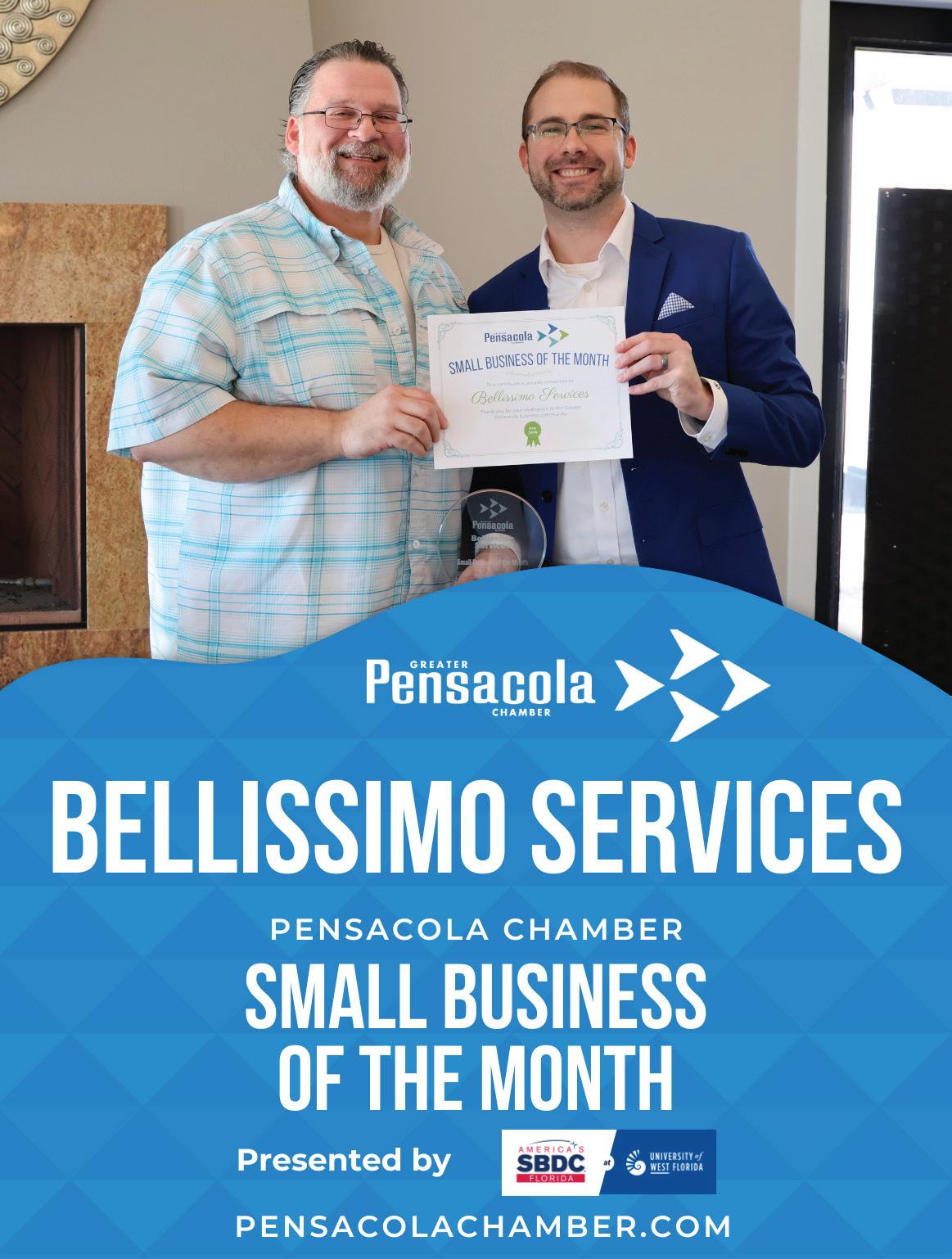
Written by Sigrid Rehrig, MBA, Education Programs Specialist, Emerald Coast Utilities Authority
Ever stood over your curbside bin wondering who actually handles this stuff? If not, you’re not alone. Between power, water, internet, phone, gas, and sanitation services, most of us are juggling more bills—and more service providers—than we even want to think about. It’s a lot to keep straight, and sanitation is one of the most commonly misunderstood. For City of Pensacola residents, that confusion is understandable. Residents receive one bill from Pensacola Energy for natural gas and garbage and recycling collection, and a separate bill from the Emerald Coast Utilities Authority (ECUA) for water and sewer services. Add to that the fact that ECUA sanitation trucks are abundant on local roads, it’s easy to assume ECUA is everyone’s hauler. So, who picks up your trash and recycling—and where does it all go once it leaves your curb? Let’s break it down. The answer depends on where you live.
If you live inside city limits:
The City of Pensacola provides your weekly curbside garbage and collection. After pickup, your trash is taken to the Perdido Landfill, which is owned and operated by Escambia County. Your recycling, on the other hand, travels to the ECUA’s Materials Recovery Facility—often called the MRF—where it is sorted and prepared for sale to manufacturers who turn it into new products.
If you live in unincorporated Escambia County (that is, everywhere outside the City of Pensacola and the Town of Century):
The ECUA provides your weekly curbside garbage and recycling collection. Just like City residents, your trash goes to the Perdido Landfill, and your recycling goes to the ECUA’s MRF for sorting and processing.
Different agencies, same destination—and the same shared goal of managing waste responsibly while recovering valuable materials whenever possible. What belongs in the recycling bin?
Recycling guidelines can vary slightly depending on your hauler, so it’s always best to follow the instructions provided by your specific service provider. That said, recycling in our area generally includes a few main categories we call

“The Core Four:”
• Cardboard and mixed paper
Shipping boxes, cereal boxes, junk mail, magazines, and office paper.
• Plastics #1 and #2
Water and soda bottles, berry containers, clear plastic egg cartons (#1), milk jugs, and laundry detergent bottles (#2).
• Metal food and beverage cans
Aluminum soda and beer cans, as well as steel cans from foods like soup, beans, or fruit.
• Glass jars and bottles
Pasta sauce or pickle jars, wine bottles, and beer bottles all make the cut.
And that’s it. If an item doesn’t fall into one of these categories, it doesn’t belong in your recycling bin.
A helpful phrase to remember is: “When in doubt, throw it out.” While it might feel counterintuitive, placing questionable items in the recycling can actually do more harm than good by contaminating loads and slowing down the sorting process.
That said, a contaminated load of recycling doesn’t automatically mean everything ends up in the landfill. At the ECUA, staff do their best to sort out recyclable materials whenever possible. Keeping contamination low is all about protecting the continued function of the sorting machinery. When equipment runs smoothly, operating costs stay lower, downtime is reduced, and materials are more likely to be successfully sold to remanufacturers—many of them right here in our region, supporting the regional economy.
One more important rule:
Recyclables should always be loose in the can—that means no plastic bags. Plastic bags are a major problem at recycling facilities. They’re known as “tanglers” because they wrap around sorting equipment, causing jams, damage, and costly shutdowns.
Other common tanglers include garden hoses, chains, extension cords, and even old VHS tapes. While these items may look recyclable, they don’t belong in the curbside recycling bin and can create serious challenges for both workers and machinery at the MRF.
Plastic bags and other plastic films can be recycled, just not curbside. Many grocery stores offer drop-off locations that send these materials to specialized recycling facilities designed to handle them safely.
Why it matters
Knowing who your hauler is and how recycling works makes it easier to recycle with confidence. Every correctly sorted item helps keep the system running smoothly, protects equipment and workers, and increases the likelihood that recyclable materials make it back into the manufacturing stream.
By recycling, we’re also diverting waste from the landfill—helping it last longer and protecting our local water and air quality in the process.
Recycling doesn’t have to be complicated. With a little clarity and a few simple habits, you’re already doing your part—and that’s something worth feeling good about.
In This Section
A look at January's real estate market highlights.
Bold colors introduce a striking way to reflect personality and elevate a home’s design.
Total sales for January improved modestly compared to the same month last year, however sales fell across all price categories from the prior month.
Single Family inventory rebounded 5% from December and 19% from last January.
Condo inventory improved 8% over December and 14% compared to last January.
January’s pending sales rebounded 18% from December.




Homeowners seeking ideas to make a design statement and modernize their home interiors and exteriors can incorporate bold colors to achieve their renovation goals. Neutrals may be versatile, but bold colors introduce a striking way to reflect personality and elevate a home’s design.
Learn how to incorporate bold colors into your home with these tips from the design experts at Simonton Windows & Doors, part of Cornerstone Building Brands, a leading manufacturer of windows in North America.
The wall color sets the tone of a room’s overall ambiance, but many homeowners are cautious about incorporating too much color. That’s a valid concern, since too many vibrant hues can feel overwhelming or create competing focal points that leave a room feeling cluttered and busy.
The key to bold colors on walls is balance. Bold walls offset by moderate flooring and furnishings create a room that is equally attention-grabbing and tastefully grounding. If you’re hesitant about taking bold colors too far, try designing your room with one bold accent wall and complement that color with accessories such as pillows and rugs or even statement furnishings to tie it all together.
Windows often fade into a home’s design aesthetic, but that doesn’t have to be the case. In fact, dark window finishes are becoming one of the season’s biggest design statements, offering homeowners a way to refresh their home’s curb appeal.
In response to growing consumer demand for sleek, modern window designs, Simonton introduced on-trend black and bronze interior and exterior finishes across its vinyl window collections, including DaylightMax Windows, which feature a unique slim-frame window design offering ample natural light while providing maximum energy efficiency.
For maximum impact, durability and low-maintenance appeal, consider pairing black or bronze window finishes with trending seasonal palettes and decor.
Architectural elements can also play an important role in establishing a modern design motif for your home. This is especially true when it comes to the cabinetry in your kitchen and bathroom. Stepping away from classic neutral wood stains, white or gray to use bold paint or stain colors instead can completely transform a room.
Some homeowners go all-in and incorporate color across the entire room while others apply different colors for the tops and bottoms to create some variation or avoid overdoing a bold hue. Still others opt for a statement approach, and similar to choosing just one wall, they add a bold color to just one section of cabinetry, such as a coffee station or island base.
Cabinetry hardware adds another dimension of bold design. Stepping away from classic brushed nickel or oil-rubbed bronze and instead installing matte black, brushed brass, bronze or gunmetal brings a contemporary vibe that can accentuate a bold color choice.
Establishing continuity between your indoor and outdoor living spaces means making your patio door part of a cohesive design that flows from the indoors out. An option like the Simonton MaxView Multi-Slide Patio Door Collection does precisely that. With custom sizing up to 10 feet high and 30 feet wide, the collection is available in multiple panel options with bypass, pocket or bi-part configurations. The doors also come in black or bronze exterior finishes, reflecting the trend toward bolder color choices.
“Homeowners want modern design without compromising performance,” Vice President of Product and Innovation at Cornerstone Building Brands Kate Land said. “Incorporating these innovative, durable finishes into our premium vinyl window and door collections delivers exactly that. These bold color options elevate a home’s overall design while the advanced glass and functionality of these vinyl windows deliver the highest standards of energy efficiency and durability.”
Incorporating bold colors into your design can make the space feel your own while demonstrating personality and modernization. Find more ideas and inspiration to answer the call for bold style at simonton.com.










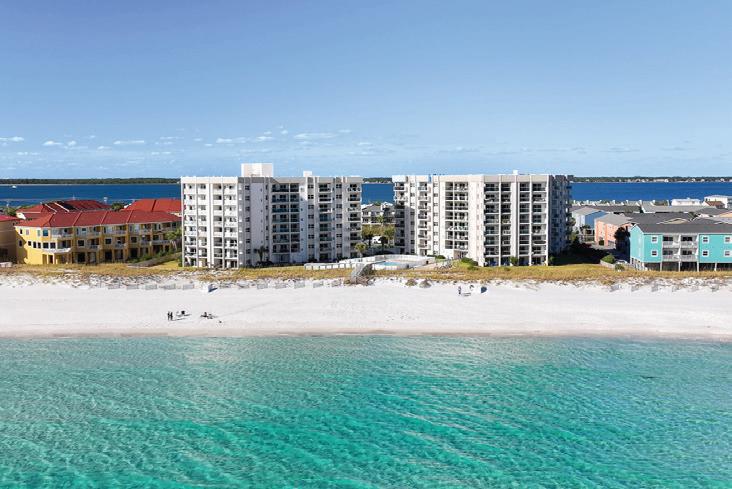
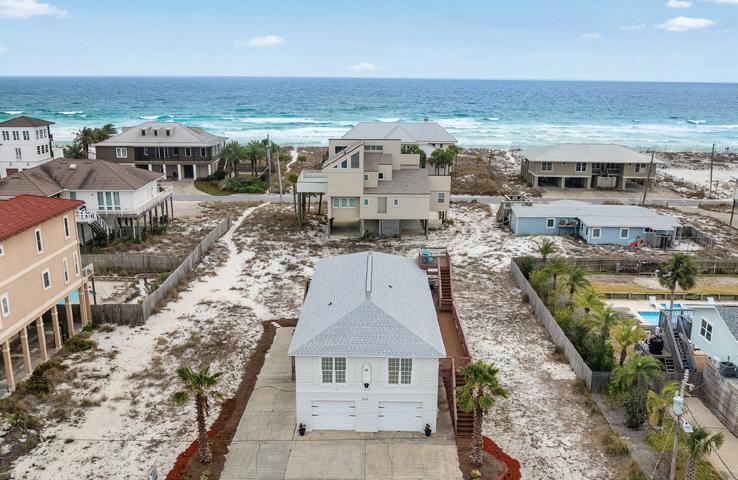
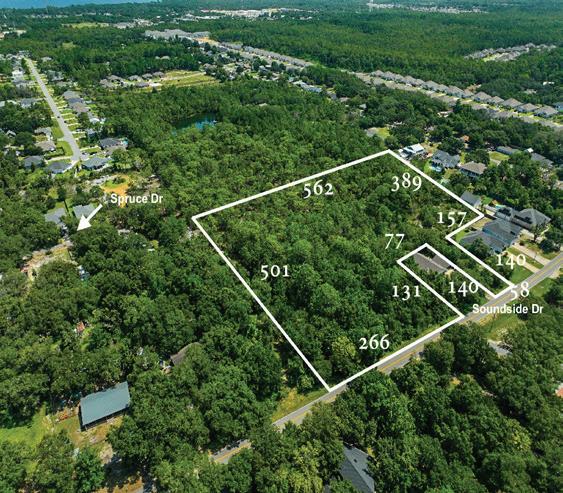
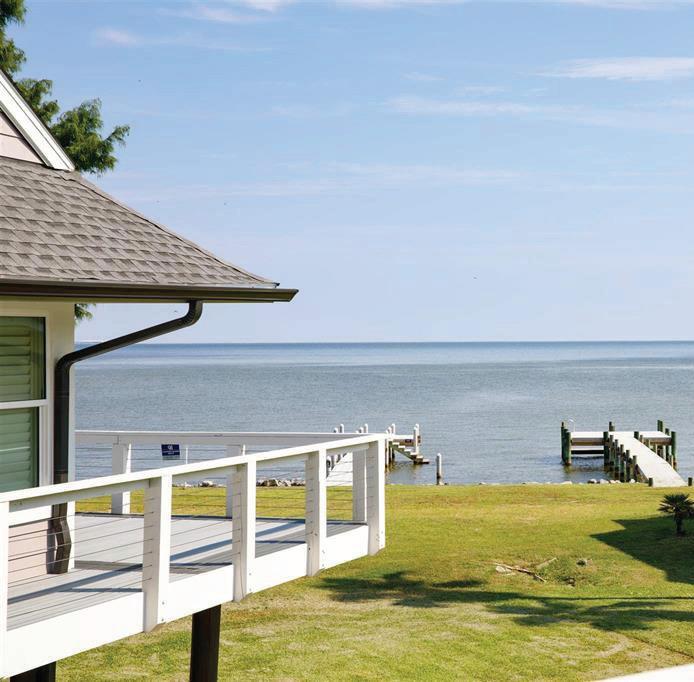

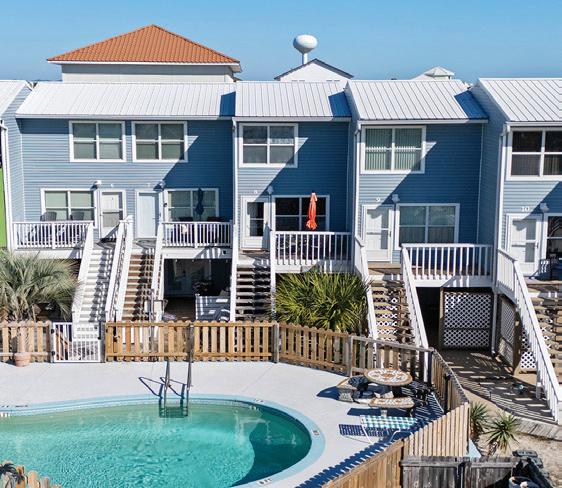
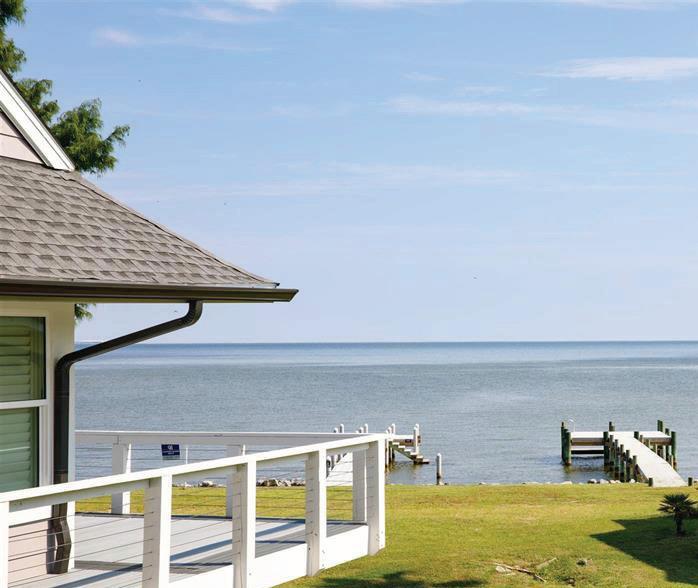
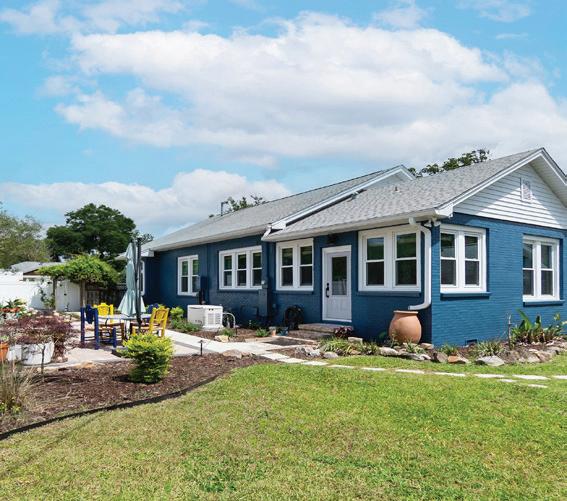


Congratulations to Beré couple Nick and Christy!