
reesinkturfcare.co.uk
reesinkturfcare.co.uk
The amazing BALI National Landscape Conference in March truly felt like a defining moment for both BALI and the wider landscape industry, and set the perfect optimistic tone for a busy start to the new financial year.
From there, attention quickly turned towards RHS Chelsea Flower Show and the fantastic collaborative BALI presence with “The Hive –A BALI Collaboration”. Seeing so many of our members come together to deliver something that truly represents the professionalism, innovation, and craftsmanship within our sector has been incredibly rewarding. The project has demonstrated exactly what BALI membership looks like in action –collaboration, expertise, and shared ambition.
Of course, we all recognise that the UK continues to face political, economic, financial, and taxation challenges, with a level of uncertainty ahead. However, one thing I’ve always believed about this industry is that its people are resilient. They adapt, pivot, plan ahead, and continue to move forward positively – and as an Association we are committed to supporting our members through those challenges wherever possible.
Before we know it, summer will be drawing to a close and preparations will begin for our National AGM in September, followed by one of the most significant milestones in our history: the 50th Anniversary of the BALI National Landscape Awards this December. Reaching fifty years is a remarkable achievement. I doubt many of those involved at the very beginning could ever have imagined just how successful and respected the awards would become. The demand, attendance, quality, and reputation of the event continue to grow year after year, and it remains one of the greatest showcases of landscaping excellence anywhere.
As a Board, we continue to focus on how we can strengthen and modernise the Association while supporting our Chief Executive and the wider team in delivering continual improvement for members. It is never easy to improve year-on-year, particularly after such consistent success, yet we continue to move forward positively. That is down to the dedication of the team, the strength of the Board, and – most importantly – the engagement and passion of our members.
This year will mark my final year as National Chair and it has genuinely been an honour. The people, the places, the projects, the regional meetings, the conversations, and the experiences have made it an unforgettable journey. I’m incredibly proud of the progress we’ve made together and I look forward to supporting Matt Nokes as he takes over the role in September, while I continue to support as Immediate Past Chair.
For the first time in many years, I believe we have real consistency – consistency in the Board, in our vision, and in the positive outcomes we are achieving together.
To everyone reading this edition of Landscape News, I encourage you to share what BALI does with your staff and colleagues. Get more people involved in this fantastic industry and help continue building the future of landscaping under the banner of BALI.
I wish you all the very best for a successful, profitable, and enjoyable summer.
Adrian Wickham National Chair
“The project demonstrated what BALI membership looks like in action –collaboration, expertise, and shared ambition.”

06
A message from the Editor
Our editor welcomes you to the Summer issue.
08
Chief Executive's report
Find out how our Chief Executive has been championing BALI members’ interests.
10
Out and about with BALI
Where we’ve been and what’s coming up in the world of events this quarter.
12
BALI benefit: BALI Digital
Explore how you can supercharge your online marketing efforts and attract customers effectively through BALI Digital.
14
Meet the judges
Get to know the newest judges for the BALI National Landscape Awards and what they look for in an award winner.
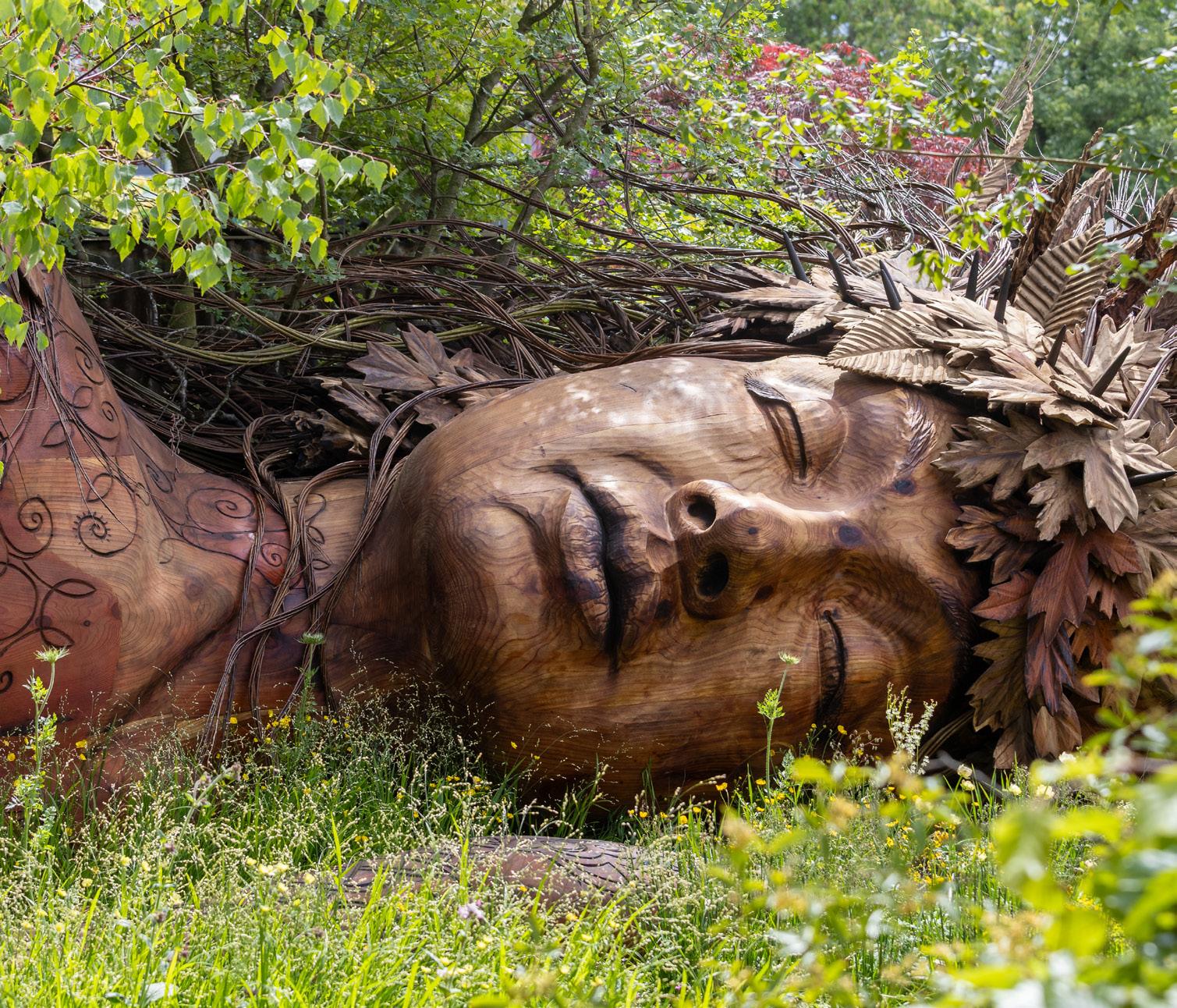
Discover everything we’ve got lined up in this issue of Landscape News…
18
Origin Enterprises: Sponsor insight
The BALI National Landscape Awards’ headline sponsor explains more about how they champion urban regeneration through green growth.
20
New arrivals
Meet all the newest members to the BALI community, including Q&As with some of our latest recruits.
22
The gold rush: BALI members shine at RHS Chelsea Flower Show
We recap all the stories, successes and sights through a BALI member lens.
28
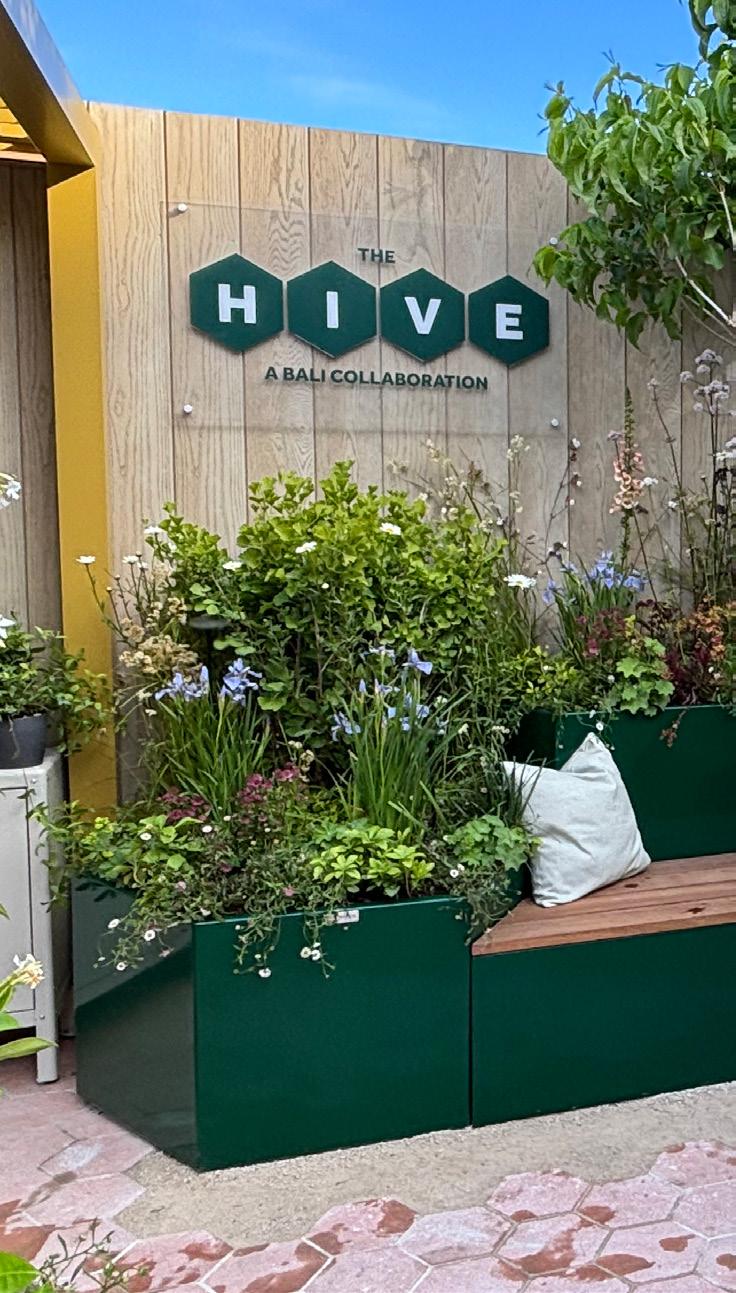
The Hive: A BALI collaboration
Discover the behind-the-scenes knowledge from BALI’s collaborative RHS Chelsea trade stand garden, created by more than 15 BALI members.
28 10 14
32
A changing world set in stone
In a world where customers are more sustainability-conscious than ever, Stone UK reveal how they balance history and craft with provenance.
37
Beyond the showroom
Combining collaboration and innovation for a new approach to showcasing the talents of the landscaping industry.
40
How to turn every job into a marketing opportunity
Are you making the most of the lead-generation opportunities your work provides?
43
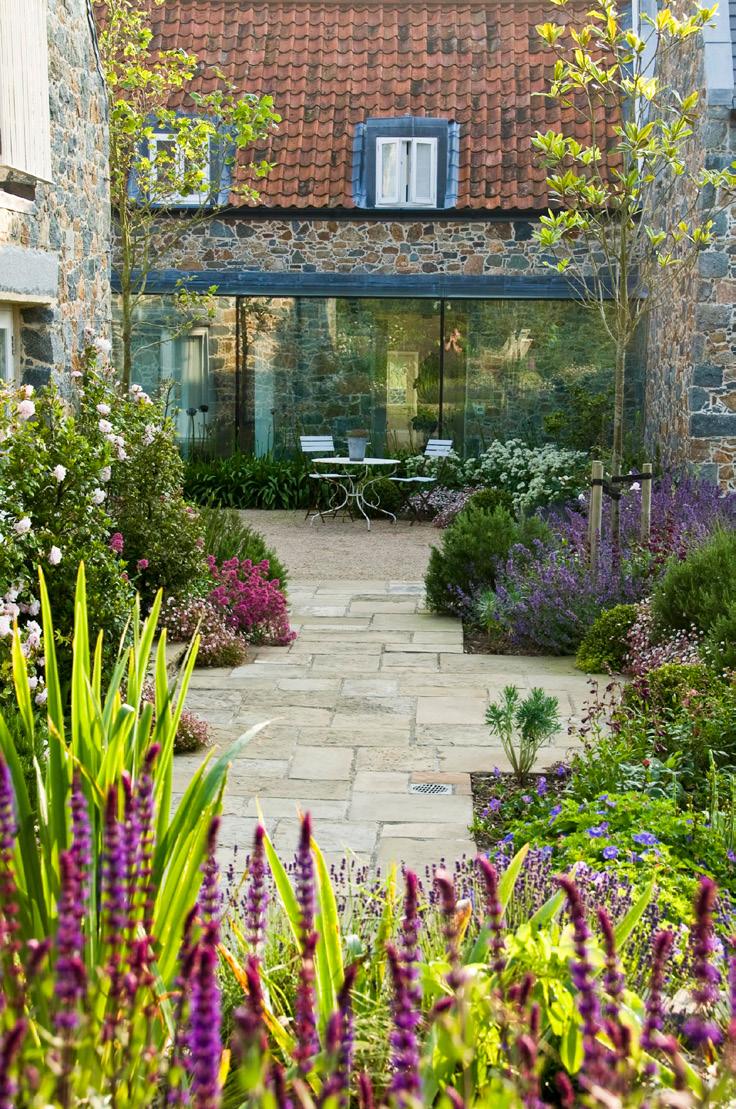
Real gardens for real people
In a social media-driven world, are we in danger of losing the essence of what truly makes a garden function?
46
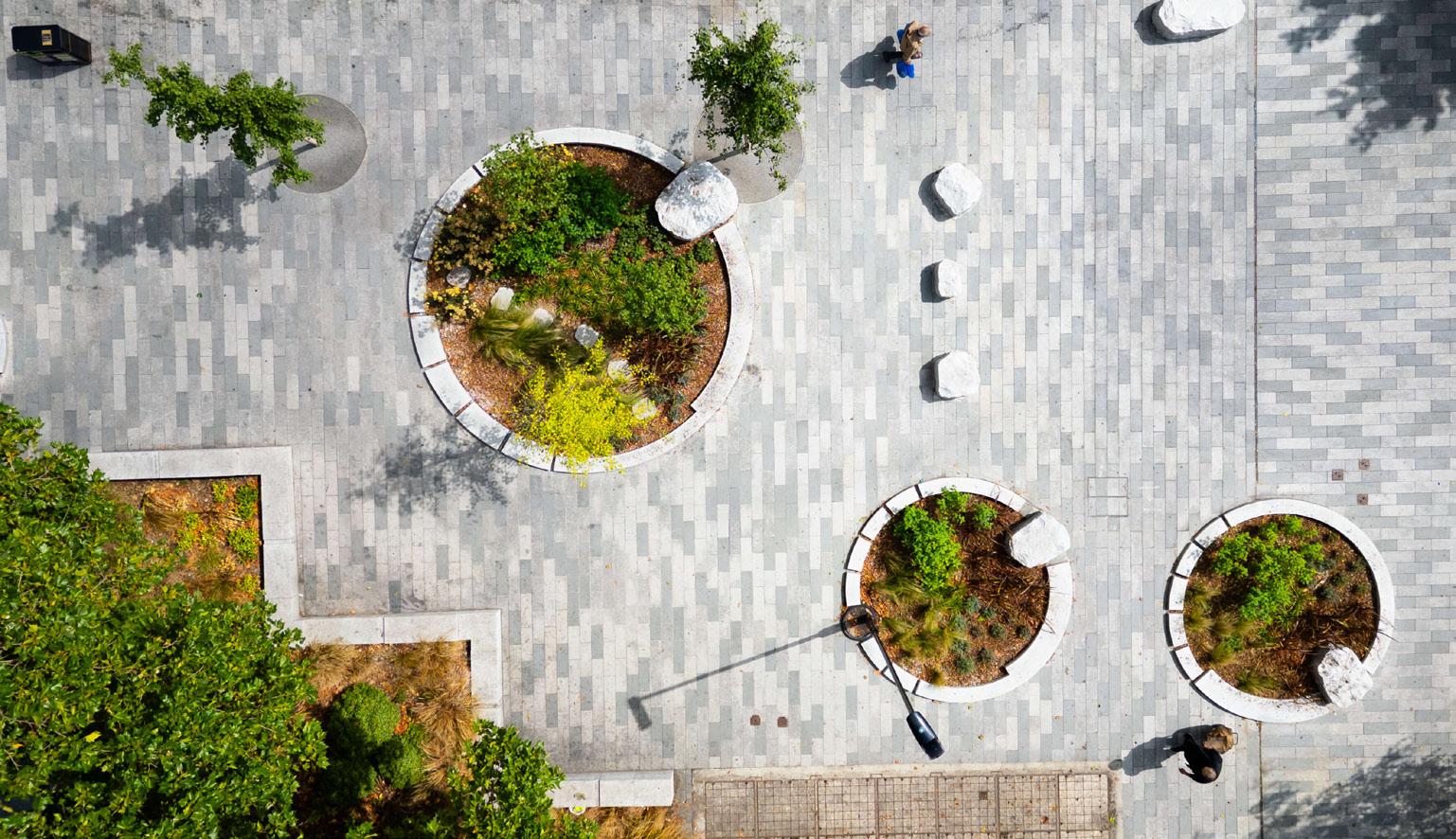
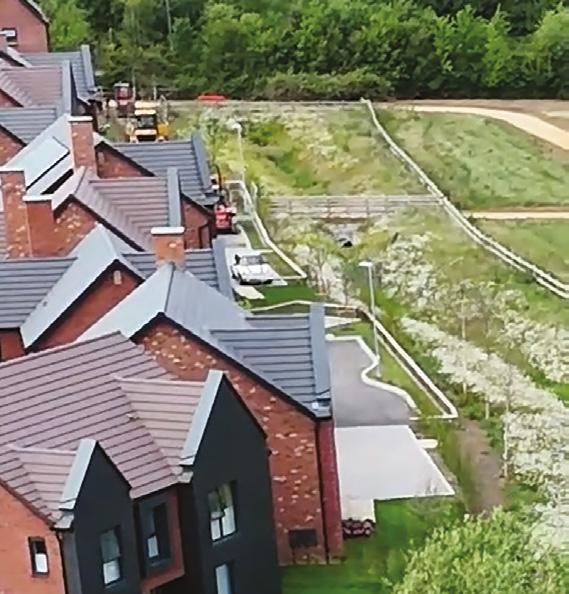
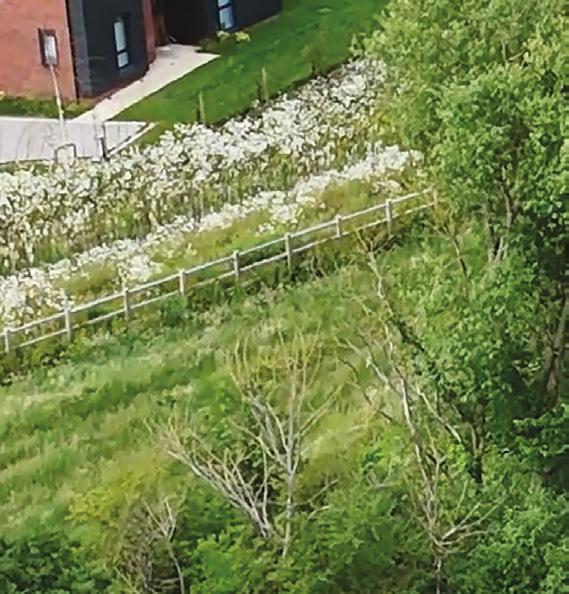
Designing SuDS around underground constraints
The experts at Meristem Design explore the options open to landscapers when complex underground utilities pose a challenge.
50
Middle East conflict: BALI members discuss the impacts on landscaping
Our Policy team reviews the latest member views on the impact of the recent conflict from our latest member survey.
54
Dealing with disciplinary issues and underperformance
Nobody likes disciplinaries, but they are a tough fact of business. Quest HR reveal how to get it right every time.
56
More than their past
BALI member Blue Sky Services tell us how they’re helping disadvantaged members of society find opportunity and meaning again through landscaping.
58
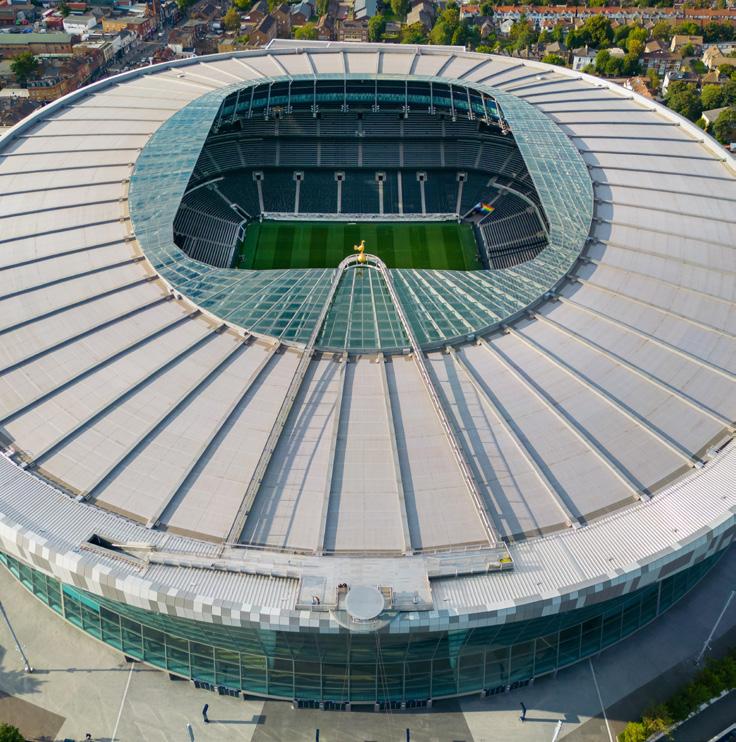
GoLandscape diary
From football grounds to flower shows, the team recap how they’ve helped nurture the next cohort of landscapers this quarter.
37 58 46
Social media is rarely far from the headlines. From debates around banning under-16s to concerns over AI-generated imagery, misinformation and curated “perfect” lifestyles, questions are increasingly being asked about the impact of our digital worlds. In an age of filters, fleeting trends and attention-grabbing content, it can sometimes feel as though style is beginning to outweigh substance.
This raises an important question for our industry too.
As designers and contractors strive to create outdoor spaces that stop the scroll and capture attention online, are we at risk of losing sight of what truly makes a garden successful for the people who use it every day? In this issue, designer Lizzie Tulip, MBALI, explores exactly that in “Real gardens for real people” on page 43, examining how meaningful design can strike the right balance between visual impact and practical, lived-in functionality.
Yet social media is far from the villain of the piece. Used well, it remains one of the most powerful tools available to landscaping businesses, helping showcase craftsmanship, tell compelling stories and build trusted reputations. Every completed project is an opportunity not only to demonstrate quality, but to connect with future clients. On page 40,

Name: Izzy Plain
Role: Membership Events Manager
Guilty pleasure song: Take That – Rule the World
Hobbies: Netball, running and baking
we explore how businesses can better turn everyday project work into valuable marketing opportunities.
Of course, nowhere do storytelling, creativity and craftsmanship come together more spectacularly than at the RHS Chelsea Flower Show. Once again, BALI members demonstrated the very highest standards our industry has to offer, securing an incredible haul of 10 Gold medals. Their achievements are testament not only to exceptional skill and dedication, but also to the resilience and ambition that continue to drive our sector forward. You can relive the highlights through a BALI lens on page 22.
That spirit of resilience and collaboration feels especially significant this year, against a backdrop of global uncertainty, rising costs and climate challenges. The importance of working together has never been clearer, and BALI’s own trade stand garden at Chelsea, “The Hive: A BALI Collaboration”, embodied exactly that spirit. Delivered through the combined expertise of more than 15 BALI members from across industry, the project celebrated the collective strength, creativity and professionalism that define our Association. Discover more about this remarkable team effort on page 28.
Luke Garner Editor
QWhat did you do before joining BALI?
Prior to working at BALI, I was an events manager at the Telford International Centre. Before moving into the corporate world of events, my career was rooted in sports – particularly Badminton. I worked on the Birmingham Commonwealth Games as an Assistant Sport Competition Manager for Badminton, which was an incredibly rewarding experience and gave me valuable insight into large-scale, international event delivery.
QWhat do you do at BALI and how does this help members?
My primary focus is on delivering key industry events, including the National Landscape Awards and, more recently, reintroducing the National Landscape Conference after a more than 17-year hiatus. Both events
Editor: Luke Garner E: luke.garner@bali.org.uk
Sales: Joanna Pieprzak E: joanna.pieprzak@bali.org.uk T: +44(0)24 7518 5614
Registered address: British Association of Landscape Industries Landscape House Stoneleigh Park Warwickshire CV8 2LG
Designed by: humaniise.com
Print and mailing: hobbs.uk.com
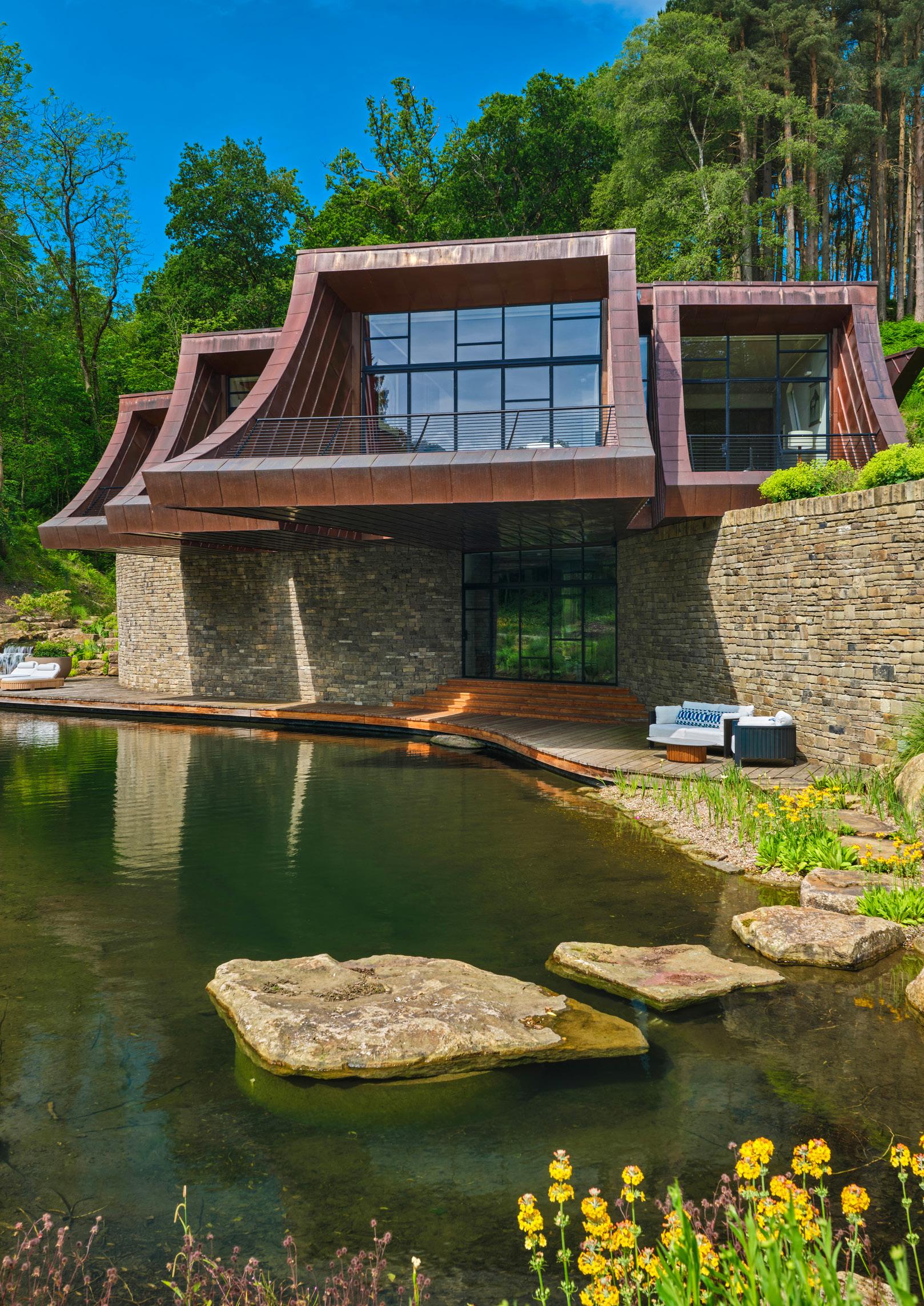
Front cover: PWP Landscape"Private Estate Yorkshire" BALI Awards National Award Winner 2025, Domestic Garden Constructionover £750k category.
play a vital role in supporting members by providing opportunities to connect, celebrate achievements, and share best practice. By bringing members together, these events encourage collaboration, spark new ideas, and help strengthen the industry as a whole.
QWhat is your favourite thing about working for BALI?
One of my favourite aspects is the opportunity to meet such a diverse range of people across landscaping. From passionate business owners to skilled professionals, it’s inspiring to work alongside individuals who are so dedicated to what they do. I also really enjoy the variety within my role – no two events are ever the same, and each one brings new challenges and opportunities to be creative.
Contact: izzy.plain@bali.org.uk
100 YEARS OF STIHL CELEBRATING 100 YEARS OF STIHL INNOVATION.

ROOTED IN TRADITION. INSPIRED BY INNOVATION.
stihl.co.uk
We're celebrating working in nature with you for 100 years. Since 1926, STIHL has led the way in both petrol and battery technology - helping you tackle every job with confidence. Thank you for being an essential part of our journey.

With much uncertainty plaguing the industry and turbulence on the wider world stage, older heads will no doubt have feelings of déjà vu. Wayne Grills, BALI Chief Executive, explains why that familiarity and lessons learned should see BALI members through once more.
As we move through another busy year for the landscaping profession, one thing has become increasingly clear from my conversations with members across the country: there is no single story that defines our industry right now.
Over the past quarter, I have spoken with members from every corner of the sector. What strikes me most is how varied the picture is. Some businesses are reporting growth, while others are experiencing slower trading conditions. Some commercial contractors are seeing year-on-year increases in turnover, while others are managing project delays and uncertainty. Residential businesses continue to receive enquiries, but many tell me that clients are taking longer to commit to projects than they were a year or two ago.
The common theme is not a lack of opportunity, but a growing sense of unpredictability.
For commercial landscaping businesses in particular, delayed project start dates are becoming a significant challenge. Planning applications are taking longer, developers are reassessing budgets, and projects that were expected to commence months ago remain in limbo. The difficulty for employers is that they must still retain skilled staff while waiting for confirmation that work will proceed. Then, almost without warning, contractors can be asked to mobilise within a matter of days, creating considerable pressure on businesses trying to balance workforce planning, cashflow and customer commitments.
“For commercial landscaping businesses in particular, delayed project start dates are becoming a significant challenge.”
Alongside this, wider economic factors continue to affect confidence and decisionmaking. Global events, including ongoing instability in the Middle East, have contributed to volatility in fuel and transport costs. As a result, suppliers are finding it increasingly difficult to hold prices for extended periods –in some cases I am hearing of quotations only being valid for days rather than weeks.
This understandably creates challenges throughout the supply chain as contractors can find themselves having difficult conversations with clients when material prices have increased between quotation and order placement. While most people understand rising costs when they see them reflected in household bills, the same price fluctuations in construction and landscaping projects can come as an unwelcome surprise.
Yet, despite these challenges, I remain optimistic.
One of the characteristics I most admire about our sector is its resilience. Many of our members have successfully navigated economic downturns before, whether during the financial crisis of 2008–09, the uncertainty surrounding Brexit, or the disruption caused by the COVID-19 pandemic. Those experiences have created businesses that are adaptable, innovative and solution-focused.
Rather than engaging in a futile “race to the bottom” on price, professional landscape businesses understand the importance of delivering value, maintaining quality and protecting their reputation. Cutting margins to unsustainable levels may win work in the short-term, but it rarely creates a successful business in the long-term. Our members understand this, and it is one of the reasons why accreditation, professionalism and shared industry knowledge remain so important. This is also one of the reasons we are undertaking a Quality Standards Review, to ensure that accredited businesses who are longer-term members of BALI are continuing to deliver the highly respected and valued standards that BALI members have come to be known for.
Planning delays causing significant pain
A topic that has occupied a significant amount of my time this quarter is planning.
I have received several reports from members about projects that have taken years to progress through the planning system. In one case, a development took almost a decade to move from initial planning application to commencement. While these examples may
seem extreme, it highlights a wider issue facing local authorities across the country. Planning departments often lack both the capacity and specialist expertise required to process increasingly complex applications efficiently. The result is delay, and delay has consequences. Costs increase, project scopes change and, because landscaping is often one of the final elements of a development, budgets can become squeezed by the time work reaches our sector.
Through my role with industry groups and ongoing engagement with government officials, I continue to raise these concerns and advocate for greater investment in planning resources. Encouragingly, additional support is now being made available to local authorities, but meaningful improvements will take time.
Water management and resilience remain another major focus. Recently BALI has contributed to government consultations on future water strategy, and the implications for our profession are significant. Temporary Use Bans, water availability, irrigation requirements and long-term climate resilience all have the potential to affect UK landscaping projects.
I often remind policymakers that landscaping is not simply about private gardens. Large-scale commercial developments, infrastructure projects and public realm schemes all depend on successful establishment and management. We have seen examples in recent years where substantial planting schemes have failed because watering restrictions or maintenance challenges prevented plants from becoming established. For example, I recently reminded politicians about the Hinkley Point project back in 2012, where 600,000 whips were planted and then lost because restrictions prevented watering. Similar things have happened with HS2, where tree planting is taking place and then they've not been watered, maintained, managed, etc., so they've not established and have had to be replaced again. The environmental and financial consequences of replacing those schemes are considerable and these are often public funds we’re talking about.
These discussions reinforce the importance of ensuring that landscaping is represented in national conversations about infrastructure, sustainability and environmental policy.
At the end of March, we completed another successful business plan year, delivering a substantial proportion of our planned objectives. Our focus now shifts to the priorities identified within the current year's action plan, particularly membership recruitment, engagement and retention.
Our current strategy concludes in March 2027, and discussions with the Board will focus on identifying future priorities, opportunities and challenges.
Finally, I would be remiss not to mention the RHS Chelsea Flower Show.
Chelsea remains one of the highlights of my year. Beyond the extraordinary quality of the exhibits, what continues to inspire me is the opportunity to share the experience with people entering our profession. This year, I had the privilege of taking students from the RHS School of Horticulture behind the scenes and onto show gardens, hearing directly from designers about their concepts, challenges and ambitions.
Watching newcomers to the industry experience Chelsea in that way is genuinely special. Seeing their enthusiasm, curiosity and excitement reminds me why our profession matters. It is a profession built on creativity, craftsmanship, environmental stewardship and people.
In uncertain times, that optimism is worth holding onto.
Our industry has always been resilient. I believe it will continue to be so.
Wayne Grills Chief Executive

Membership Engagement Manager, Fran Bienek, recaps some of the highlights in the BALI events calendar this past quarter.
The lead from spring into summer is always a busy time of year, with both membership renewals and Regional AGMs keeping everyone busy and engaged, as well as lots of planning for further exciting events later in the year.
Our much-lauded National Conference –the first for many years – was a great catalyst for the quarter, bringing positivity, a resilient outlook, and a can-do attitude in the face of industry challenges. The keynote speakers and breakout sessions fuelled some lively and much-needed debate, with attendees leaving energised and with many new ideas.
I also managed to attend the first anniversary event for The Glasshouse Collective, which is a stunning venue with a fascinating concept (find out more on page 37). There were talks from renowned designers Catherine MacDonald and Baz Grainger ahead of their RHS Chelsea Flower Show gardens, providing intriguing insight into the inspiration and design process.
I have been extremely pleased with the delivery of all Regional AGMs this year. Our eight regional committees are going from strength-to-strength, with ideas for events and forward planning. We are also seeing more and more new people attend, sharing their knowledge and experience with each other, which is fantastic. If you haven’t been to a
BALI event before, the regional events are a fantastic opportunity to network and share –visit bali.org.uk/events for details of upcoming events.
Here’s a recap of some more of our recent AGM events to whet your appetite:
At the South West Regional AGM, we visited the Bristol Zoo Project. Architects Grant Associates shared insight into the unique challenges involved with developing the zoo’s “African Forest habitat” which houses the gorillas, plus Elmtree Landscapes shared project insight into the “Bear Walk” projecta winding walkway 650-metres long, 2.4-metres wide, and reaching up to 7-metres in height, allowing visitors to walk through the woodland canopy and observe the animals below in a natural setting.
Up in Yorkshire & North East, we held a Black Sheep Brewery event, with tour of the brewery plus an in-depth talk on Rolawn’s Hydro Rock product.
The Midlands Royal Air Force Museum hosted our Midlands AGM, sponsored by Boningale Nurseries, which included a talk from Boningale on their propagation site, while Oxford Stone spoke about the types of materials they work with and diverse projects they’ve completed.
Get social
Following on from the Regional AGMs we also held some exciting social events, including the North Thames, who held their annual clay pigeon shooting meet up - thank you to Springbridge Group for sponsoring this event.
“If you haven’t been to a BALI event before, the regional events are a fantastic opportunity to network.”
The South West committee chose to do something a bit different and held a fun croquet event, while Yorkshire & North East held a golf day at Rudding Park following on from the popularity and success of the same event last year.
For the summer months and beyond we have many events to follow. We’ll be working closely with the committees and are keen to cover even more areas within the regions to enable more members to attend events, improving engagement and offering greater benefit to you, our members. We hope to see you at an event soon!
Fran Bienek
Membership Engagement Manager

When: 16-17 September 2026
Where:
Discover: Stoneleigh Park, Warwickshire groundsfest.com
GroundsFest 2026 is a free-to-attend trade event for professionals working across the grounds management, landscaping, sports turf, golf, local authority, estate management and amenity sectors.
Taking place on 16 and 17 September 2026 at Stoneleigh Park, Warwickshire, GroundsFest has quickly become one of the industry’s most talked-about events thanks to its unique combination of indoor exhibits, outdoor demonstrations, live entertainment and festival atmosphere.
Unlike traditional exhibitions, GroundsFest gives visitors the opportunity to get handson with the latest machinery and tools in real working conditions. Attendees can see equipment in action, compare products sideby-side, speak directly with manufacturers and experience live demonstrations throughout the event.
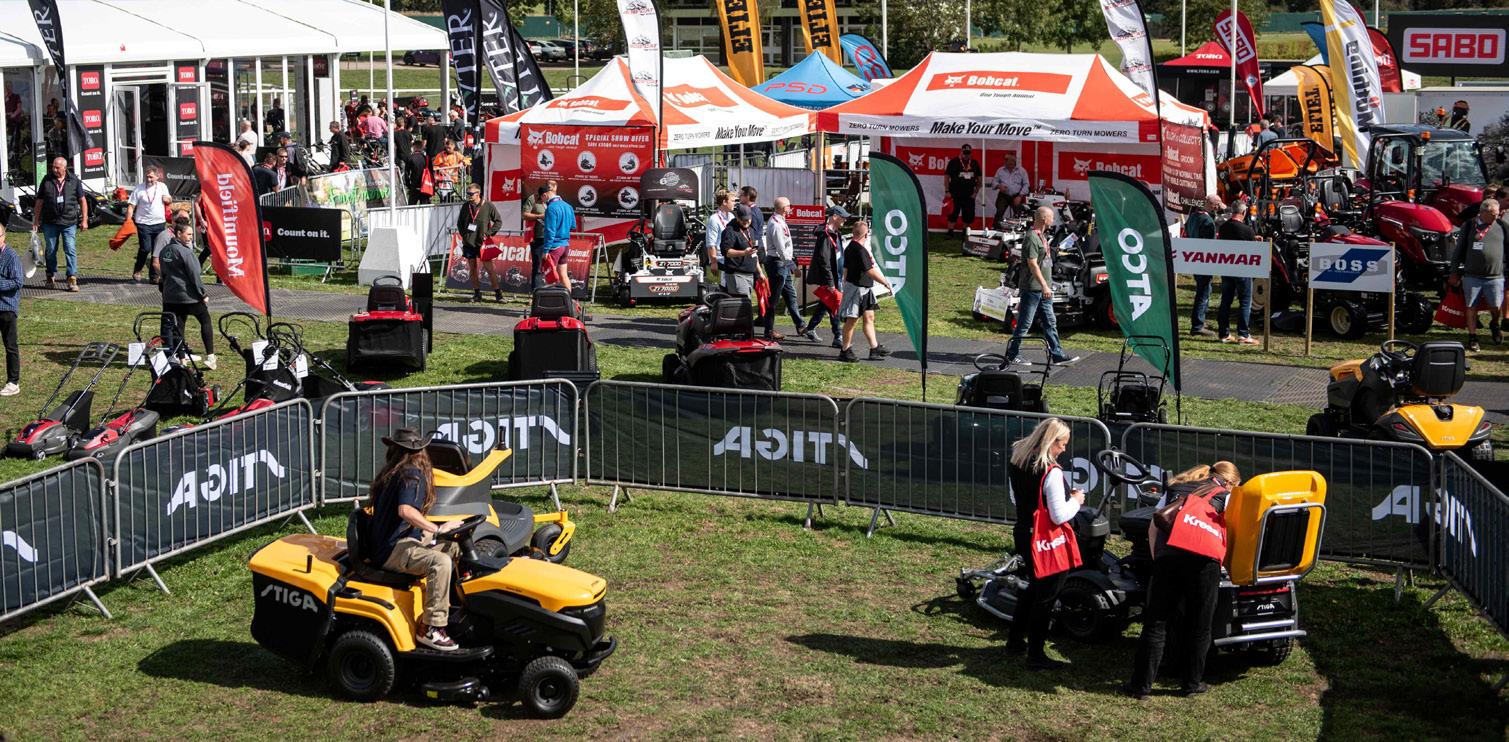
GroundsFest 2026 will feature more exhibitors than ever before, with leading brands from across the industry showcasing the latest innovations, products and services. The event will also include popular attractions such as The Landscape Zone in partnership with British Association of Landscape Industries (BALI), the return of Machinery Nation Live, educational seminars, networking opportunities and the hugely entertaining lawnmower racing.
The event’s famous festival atmosphere will once again include live music, food vendors, social spaces and after-hours entertainment from 4pm on the first day, helping to create a relaxed and enjoyable environment for both visitors and exhibitors.
GroundsFest 2026 is free to attend and visitor registration is now open.
Discover some of the key industry events taking place over the coming months…
RHS Badminton Flower Show 8–12 July 2026
The Supplier Forum 16 July 2026
RHS Sandringham Flower Show 22–26 July 2026
Four Oaks Trade Show 02-03 September 2026
Landscape Festival 04-20 September 2026
Badminton, South Gloucestershire rhs.org.uk
STIHL, Camberley, Surrey bali.org.uk
Sandringham Estate, Norfolk rhs.org.uk
Lower Withington, Macclesfield fouroaks-tradeshow.com
Bergamo, Italy landscapefestival.it
Glee 08-10 September 2026 NEC, Birmingham gleebirmingham.com
BALI National AGM 16 September 2026
GroundsFest 16-17 September 2026
Harrogate Autumn Flower Show 18-20 September 2026
BALI Chalk Fund Landscape Open Mic Night 1 October 2026
Stoneleigh Park, Warwickshire bali.org.uk
Stoneleigh Park, Warwickshire groundsfest.com
Newby Hall, Harrogate flowershow.org.uk
Spice of Life, Soho, London balichalkfund.org.uk/tickets
To stay updated about all BALI events, visit our website – bali.org.uk/events
Discover how BALI’s targeted marketing benefit, BALI Digital, helps members secure the right enquiries and grow with confidence.
In landscaping, reputation and reach go hand in hand. While delivering high-quality work remains the foundation of any successful business, being visible to the right audience at the right time is just as critical. That’s why Adtrak, a powerful digital marketing agency whose services are available to all members as BALI Digital, is a standard part of BALI membership. This partnership has been developed with landscapers in mind –offering members a practical, results-driven way to connect with clients actively seeking trusted professionals.
BALI Digital ensures members are equipped to increase awareness, expand their reach and attract new customers through a focused, professional approach to digital marketing.
Expert support from industry specialists
With extensive experience in the landscaping and outdoor services sectors, Adtrak understands the unique challenges and opportunities faced by BALI members.
Their team has delivered results for businesses across the UK, designing and building effective websites while managing integrated marketing campaigns. From payper-click advertising to social media strategy, members benefit from proven expertise tailored specifically to their industry.
“A key starting point for members is the complimentary website audit included within the BALI Digital package.”
A key starting point for members is the complimentary website audit included within the BALI Digital package. This detailed review provides valuable insight into how a business is currently performing online and where improvements can be made.
The free audit covers a wide range of essential areas, including web design, site structure and overall user experience. It also assesses website security, mobile responsiveness and page speed – all critical factors in ensuring a site performs effectively for both users and search engines. In addition, members receive an SEO and Google performance review, helping to identify how easily their business can be found online.
This comprehensive assessment gives members a clear, actionable overview, forming a solid foundation for future digital activity.
Every landscaping business is different, and BALI Digital reflects this with a flexible range of options. Members can access exclusive discounts on website development, whether they require a simple one-page site, a more comprehensive multi-page platform, or a bespoke project-specific build.
Adtrak works closely with each member to understand their goals, tailoring solutions to meet individual needs and budgets. This ensures that whether a business is starting from scratch or looking to enhance an existing presence, the support provided is both practical and effective.
A well-designed website and targeted marketing strategy can make a significant difference in how a business is perceived and how easily it can be found. Through BALI Digital, members are better positioned to reach potential clients at the right time, with a professional and credible online presence that reflects the quality of their work.
By combining technical expertise with industry knowledge, BALI Digital helps members turn online visibility into meaningful enquiries, supporting both short-term wins and longterm growth.
Accessing BALI Digital is easy. Members can begin by contacting Adtrak, to discuss their requirements and arrange their free website audit. For general queries about the package, BALI’s membership team is also on hand to provide guidance.
With expert support, practical tools and exclusive member benefits, BALI Digital powered by Adtrak offers a valuable opportunity for landscape businesses to strengthen their marketing, enhance their online presence, and secure a competitive edge.











Judging of the 50th BALI Awards is taking place, and with the competition fiercer than ever, we caught up with three new faces tasked with picking the very best from landscaping’s elite to discover what they’re looking for in a winner.
This year’s marks the 50th anniversary of the BALI National Landscape Awards, with countless names and projects having been

Dave has worked in horticulture and landscape his entire working life, starting his career as an apprentice at Wisley Gardens, before completing the Master of Horticulture (RHS). He has worked for The Royal Parks, Local Authorities and private landscape construction companies – culminating in the formation of Elite Landscapes Limited with his wife Diana over 25 years ago. Elite Landscapes is a highly reputable landscape construction and maintenance company based in the South-East, with a current turnover in excess of £45m while employing 250+ people. Elite Landscapes have been entering the BALI National Landscape Awards for multiple years, winning over 20 awards.
honoured since 1972. Bigger and better than ever, 2026 promises to be an all-out extravaganza that celebrates the best of the best in our industry and pays homage to the history of these great celebrations.
One key element that has made the awards so special over the years is the high calibre of judges who are tasked with parsing the entries and selecting the deserving winners. This year is no exception, with three new judges joining
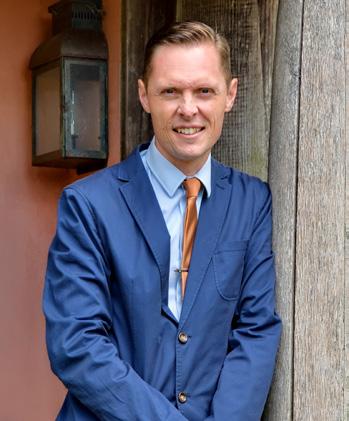
Chris Deakin
Chris Deakin Garden Design
Chris started studying amenity horticulture after leaving school - where he admits he wasn’t a star pupil. Having gained qualifications in horticulture, he worked as a head gardener in a beautiful private garden in the heart of the Norfolk Broads, but eventually decided to go back to college.
After graduating from Writtle college, he worked for three different design and build landscape companies: Frosts Landscapes, Pantiles Landscapes, and Notcutts Landscapes.
In 2008 he formed Deakinlock Garden Design with Jason Lock MSGLD, before leaving to set up Chris Deakin Garden Design nine years later.
Over the years, he has designed show gardens at both the RHS Hampton Court and Chelsea flower shows, winning gold medals and a Tudor Rose best in show award, as well as numerous BALI awards.
the judging panel to strengthen the lineup. With many, many decades of experience between them, we caught up with them to find out what motivates them, why the BALI Awards is such a special date in the landscaping calendar, and their hopes for this year’s awards.
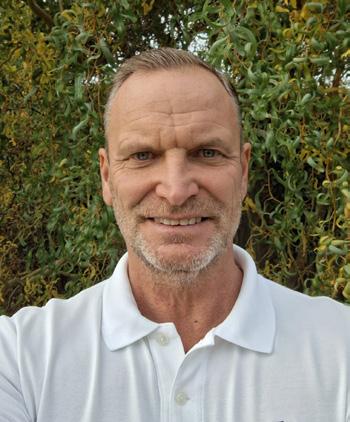
A career landscaper, Ray has worked for a myriad of highly-respected companies in landscaping, providing him with an unrivalled range of knowledge and experience. His passion was ignited with a youth training scheme (YTS) over four decades ago – though he confesses to getting a taste for it doing odd jobs for his brother when he should have been in school. He graduated to both commercial and domestic projects, with particular expertise in the hard landscaping sector. Ray has worked on prestigious projects that include Disneyland Paris, the Channel Tunnel, and GCHQ, and since re-joining Marshalls late last year, has worked as a regional assessor. He has also been a judge for the Marshalls Register Awards, which has given him valuable experience of judging projects, and he has helped to craft award-winning gardens at RHS Chelsea and Hampton Court.
QWhat initially inspired you to take up a role as a judge of the BALI National Landscape Awards?
Chris: I have been in the landscape industry for 30 years and have always been passionate about championing our industry and the benefits brought by what we do, both to individuals and the country as a whole. Over the years I have been attending the BALI Awards, I have watched how the quality of landscaping in our country has blossomed, and I wanted to play more of a direct role in helping this continue throughout our industry.
Ray: On a personal level, I wanted to be part of it as I think the BALI Awards panel is the best out there and knowing I’m good enough to sit on it, have my professional opinion counted, fills me with pride. I also want to help give back to the next generation. Contractors my age, we're all getting a little bit old and a little bit worn out and so you want to see the young guys coming through. The awards inspire them, and this is where my passion is, so I want to use it to pass that passion on to the younger generations.
“These awards inspire people to up their game, helping the industry to always be moving forward.”
QWhat does it mean for the awards to reach the 50th Anniversary milestone?
Ray: It’s incredible. It shows the longevity of BALI, and it shows that they're committed to the industry - it's not “here today, gone tomorrow”. These awards are inspirational. They inspire people to up their game, helping the industry to always be moving forward. Hopefully we’ll see another 50 years out of it.
Dave: It is a massive milestone to reach, and the industry should pride itself on how well the BALI Awards are entered into. The event is the highlight of most landscapers’ diaries and rightly so.
Chris: 50 years is such an amazing achievement and reflects the long history of our industry and the pivotal role BALI has played in growing landscaping and raising standards and professionalism. I’m confident that it will be a milestone on a much longer journey into the future.
QWhy are the BALI Awards so important to the industry?
Chris: The awards are, of course, a celebration of best practice and excellence within landscaping, which both sets the benchmark but also offers inspiration; it offers an invaluable space for designers and contractors to meet and review other people’s work, to have the opportunity to get outside our day-to-day bubbles.
Dave: They showcase the industry and all the different aspects of landscaping to a very wide and varied audience – displaying the quality of work that is being undertaken by all BALI members, which also adds credibility to BALI as an organisation.
QWhat do you feel sets a submission apart from the crowd?
Ray: My expertise is mainly on the hard landscaping side, so for me, it is seeing the technical aspects behind a project and how they’ve tackled a particular challenge. For example, how they’ve thought about the drainage, the damp proofing, how they're going to get water away from the building, etc. It's not just about making it look pretty, it's the thought process and everything behind it that makes it interesting.
Dave: For me, it is quality of work and a clear submission – any scheme to be showcased needs to be photographed well.
Chris: Projects that get the balance and harmony between the hard and soft landscaping catch my eye. Planting is what really elevates a garden or landscape space in my opinion, bringing beauty to the eye but also tapping into the emotions of those who view and experience a well-designed and built space.
“I’ve watched how the quality of landscaping in our country has blossomed, and I wanted to play more of a direct role.”
QWhat does it mean to an individual or business to be recognised with a BALI award?
Dave: It is a great honour for all companies to win a BALI award and a great way to show your clients and staff recognition for their commitment and hard work.
Chris: For a business trying to compete in a crowded industry where it’s important to stand out ahead of the crowd, a BALI award provides a recognition that they have achieved a high level of skill and artistry. This differentiation can be vital to establish or grow a business.
Ray: A BALI Award is the pinnacle of what you can achieve. Many people will never get one, and the judging process is so thorough and considered and there’s so much expertise in all areas on the judging panel that it speaks volumes if you win one.
Contact: baliawards.co.uk










sculptures and for cutting another landscaping and leaves systems off one can attach safe to use. I





Contact your Local Dealer to book a demonstration on your site today!

Contact your Local Dealer to book a demonstration on your site today!
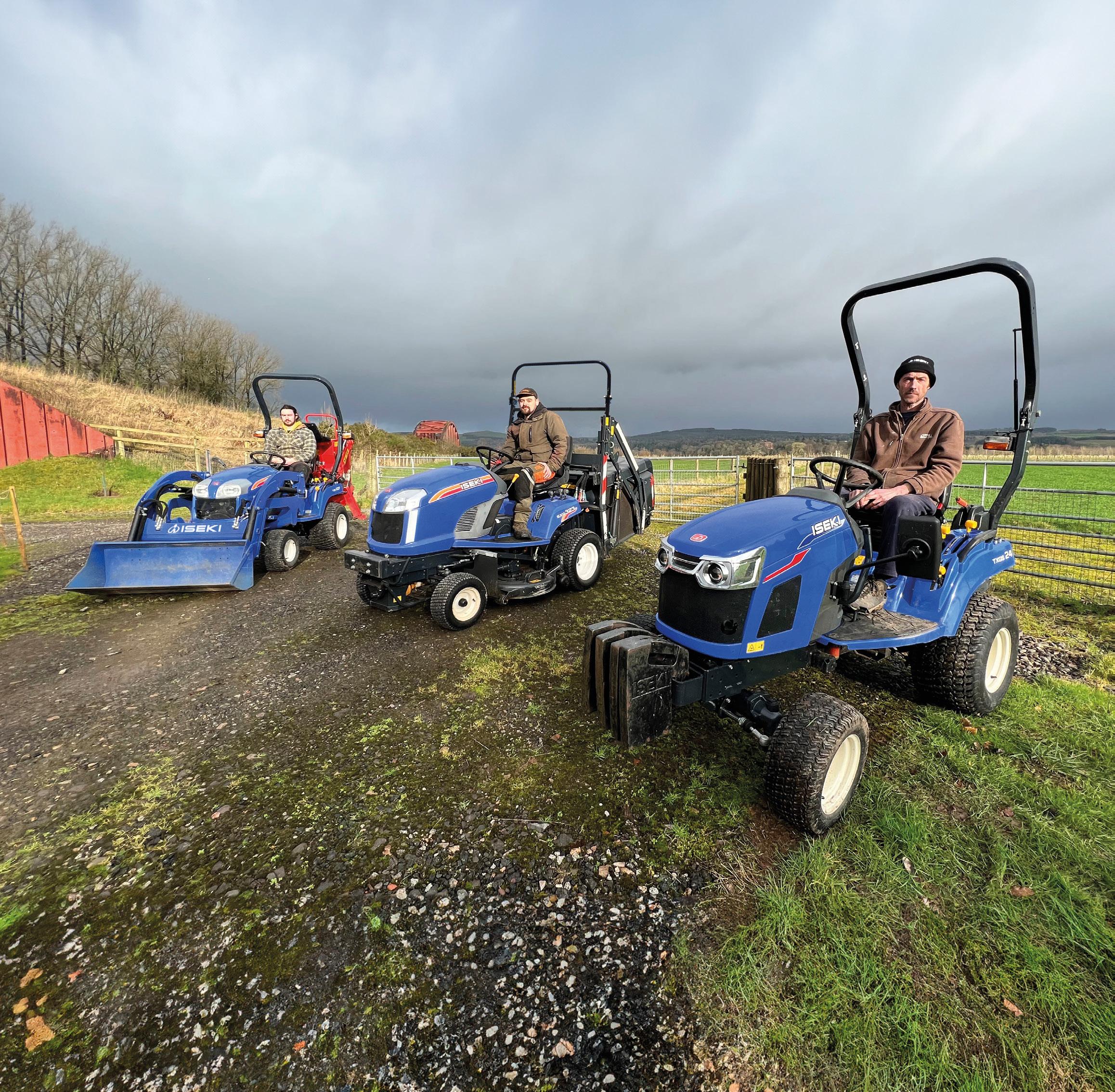
“Here at the Garden of Cosmic Speculation with it’s vast landscapes, sculptures and gardens we are never short of jobs to do. We already have a SXG mower for cutting the lawns and one TXG tractor, so to help with the workload we purchased another TXGS24 23hp subcompact tractor.
“With the front loader and bucket fitted it’s largely used for excavating and landscaping purposes. It’s also used for towing trailers, transporting grass cuttings and leaves for easy disposal. With the two tractors we can run the PTO’s and systems o one trailer and can unload into a trailer attached to the other tractor. If we can attach something to them, then we can use it.
“ISEKI o er exactly what we need, they are reliable, comfortable and safe to use. I would recommend these machines to absolutely anyone.”
Ben Wakefield, Portrack House
Origin Enterprises PLC is the headline sponsor of this year’s National Landscape Awards. As a global leader in sustainable land use, they offer technically-led solutions and empower customers to enrich their land to achieve its true potential. The company’s sponsorship reflects its dedication to supporting the professionals who design, build, and maintain the UK’s landscapes, sports facilities, and green spaces.
Within the group, the Living Landscapes division delivers future-ready products, services and expertise across the sports, environmental and landscapes sectors.
From disused viaduct to urban green corridor
The Monkbridge Viaduct Garden was a project delivered by Green-tech, part of the Landscapes division, which demonstrated how the group has supported the transformation of a complex urban infrastructure in Leeds city centre into a valuable green space, contributing to wider biodiversity and sustainable city living objectives.
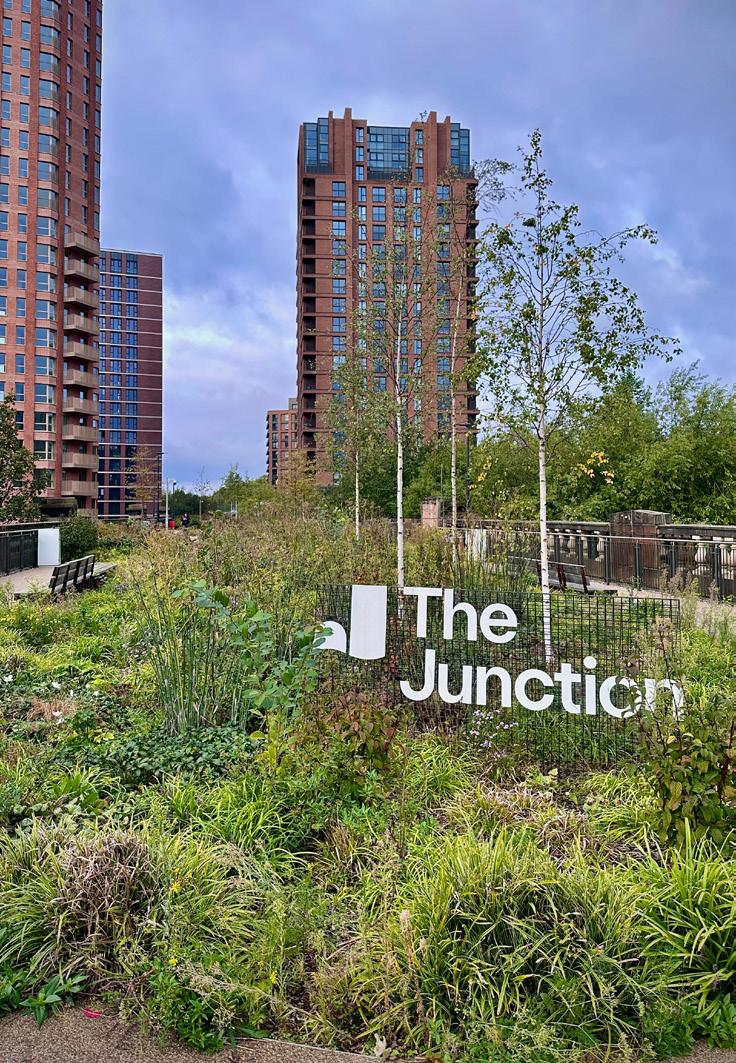
It was delivered by Galliford Try, with landscaping by Gavin Jones Ltd, a BALI Accredited Contractor and long-standing member of BALI, with soils, planting and establishment materials supplied by Green-tech.
The Monkbridge Viaduct is a Grade II listed former railway structure in Leeds, originally built in the 1840s. Following the closure of Leeds Central Station in the 1960s, the viaduct remained unused and fell into disrepair for decades, before being reinvigorated as a 300-metre-long elevated linear park, now known as Viaduct Gardens. The scheme forms part of The Junction development, linking over 600 new homes with retail, leisure and public realm spaces, while creating a green pedestrian route through the city.
Projects of this nature reflect a growing shift in urban regeneration, where disused infrastructure is repurposed as accessible green space, extending biodiversity and wellbeing benefits into densely built environments. Comparable examples include New York’s High Line and Manchester’s Castlefield Viaduct, both of which demonstrate the value of elevated landscape interventions in modern city planning.
Over a 16-month programme, Green-tech worked in partnership with Gavin Jones, a long-standing collaborator with extensive experience in complex landscape delivery. The scheme included landscaped walkways, lawned areas and diverse planting beds incorporating trees, shrubs and John Chambers Wildflowers, all designed to establish a resilient, biodiverse elevated landscape.
Technical delivery, establishment and urban impact
A key element of the project was the soil specification and delivery strategy. Given the viaduct's structural capacity, there was no need for lightweight aggregates, enabling Green-tech to supply over 2,000 tonnes of Green-tree BS3882:2015 topsoil. The
specification ensured long-term growth performance and consistent establishment conditions across the full scheme. Materials were supplied in both bulk loads and bagged formats to align with construction sequencing and installation requirements.
Each tree was installed with a Mona Relief Aria irrigation ring, designed to deliver water directly to the root zone while allowing air to move through the system. This dual-function approach supports efficient irrigation, improved soil aeration, and successful establishment in an elevated and exposed environment.
Rootmaster compost was supplied to support root development, GT RootBarrier to protect planting areas from invasive root ingress, and thousands of bags of ornamental bark mulch to assist with moisture retention, temperature regulation, and weed suppression during establishment.
The completed scheme has transformed a redundant piece of industrial infrastructure into a vibrant green corridor in the heart of Leeds. It now reconnects key parts of the city while enhancing biodiversity, improving microclimate conditions and encouraging social interaction within a high-density urban setting. Beyond its visual impact, the project delivers a long-term environmental legacy aligned with contemporary approaches to sustainable urban development.
As part of the Living Landscapes division, Green-tech’s involvement in projects such as the Monkbridge Viaduct Garden reflects a broader commitment to creating technically robust, ecologically beneficial landscapes that support the evolving needs of cities and communities across the UK.
Contact: originenterprises.com














(Accredited Contractor)
We are a garden design, build and maintenance practice based in Saffron Walden. We’re proud to be a family-run business rooted in a shared love of creativity, nature and long-term relationships. Our clients are people who want their outdoor space to be an extension of their home and family, a place for all of life’s occasions to be enjoyed over the years.
AQAre there any specific projects you are particularly proud of?
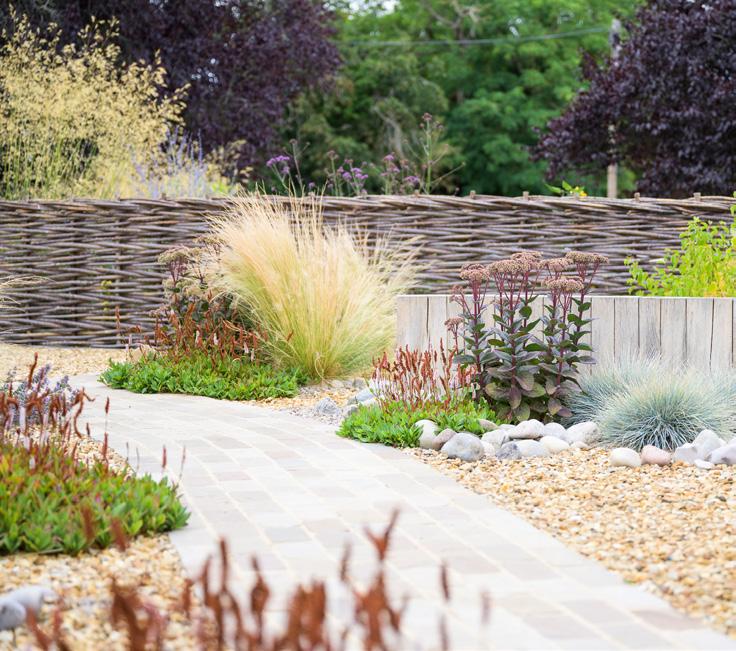
The Contemporary Dry Garden in Ickleton, near Saffron Walden (pictured). Our client was looking for a front garden that was low maintenance and able to fit two cars while also being a joy to look at. We designed a contemporary garden using a combination of gravel, sandstone paviours and river cobbles, and created a raised planting bed made from vertical oak sleepers. To finish, we planted drought tolerant plants which had a cottage garden feel and incorporated a beautiful willow fence on the boundary.
(Accredited Supplier)
AQHow have your early experiences with BALI been?
From the very beginning, we have really appreciated the time taken to consider our team and the people behind Jacq and Wills. The BALI assessor who visited us didn’t just look at our work, but also how we manage and take care of our team and clients, which isn’t something we’d been assessed on before. With team and client relationships being at the forefront of what we do, it reaffirmed that becoming BALI members is a good fit for us and, in the long term, will help us continue to be the best we can be.
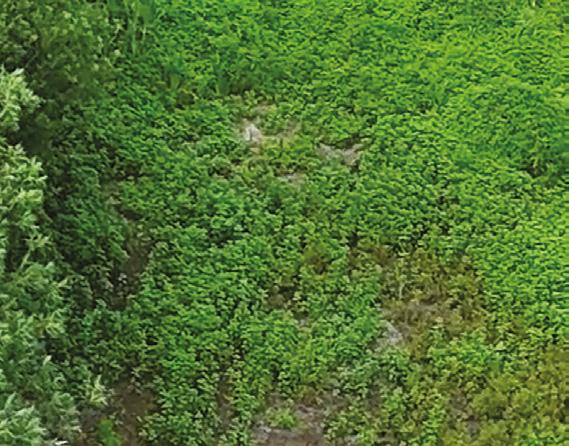
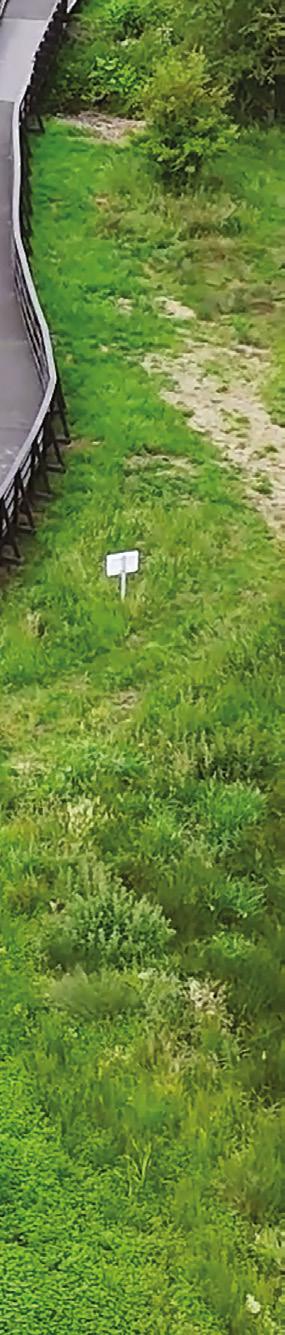
Meadowmania supplies wildflower seed mixtures, plants and bulbs, and lawn and amenity grass seed products to landscaping professionals, contractors, local authorities, developers, conservation organisations and private landowners across the UK. We support a wide range of projects, from public spaces and housing developments to commercial landscapes, habitat restoration and BNG schemes. Alongside supplying high-quality products, we provide practical technical advice and support to help customers achieve reliable, sustainable and visually successful outcomes across both ecological and amenity landscaping projects.
AQAre there any projects you’re particularly well-known for?
Working with charities such as the RSPB is particularly rewarding for our team. One recent project involved supplying a bespoke wildflower meadow seed mix for a 10-hectare site in the south of England, helping to create and restore valuable wildlife habitat. Projects like this play an important role in supporting biodiversity by providing food and shelter for pollinators, birds and other wildlife, while also contributing to healthier, more resilient natural environments for the future.
Q Why did you join BALI?
A We joined to become part of a respected network of landscaping professionals who share a commitment to quality, sustainability and high standards. As a business focused on biodiversity-led and sustainable landscaping projects, becoming a BALI member felt like a natural fit.
Meet the latest members of your Association who have joined BALI this quarter.
Contact: jwlandscapes.co.uk

Contact: meadowmania.co.uk
Q
A
What do you hope to get out of your BALI membership?
We’re looking forward to connecting with professionals across the landscaping sector and building long-term relationships with contractors, landscapers and industry specialists. We’re also excited to contribute to wider conversations around biodiversity, sustainable landscaping and the role wildflower habitats can play in future landscape design.
Michelle Brandon (Garden Design Collective)
(Accredited
Designer)
Led by Michelle Brandon, with over 25 years’ experience as a garden designer and qualified horticultural therapist, Garden Design Collective is a design studio and store creating immersive, considered landscapes that foster a deep connection to nature. Our store and studio in Cobham, Surrey, champions community, showcasing bespoke, predominantly handmade pieces with a lowlandfill ethos, extending our philosophy into the everyday.
Contact: gardendesigncollective.com
AQWhat projects have you worked on that you’re particularly proud of?
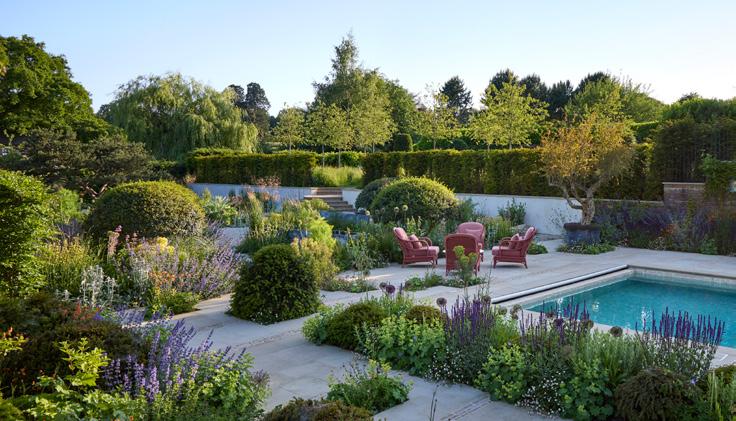
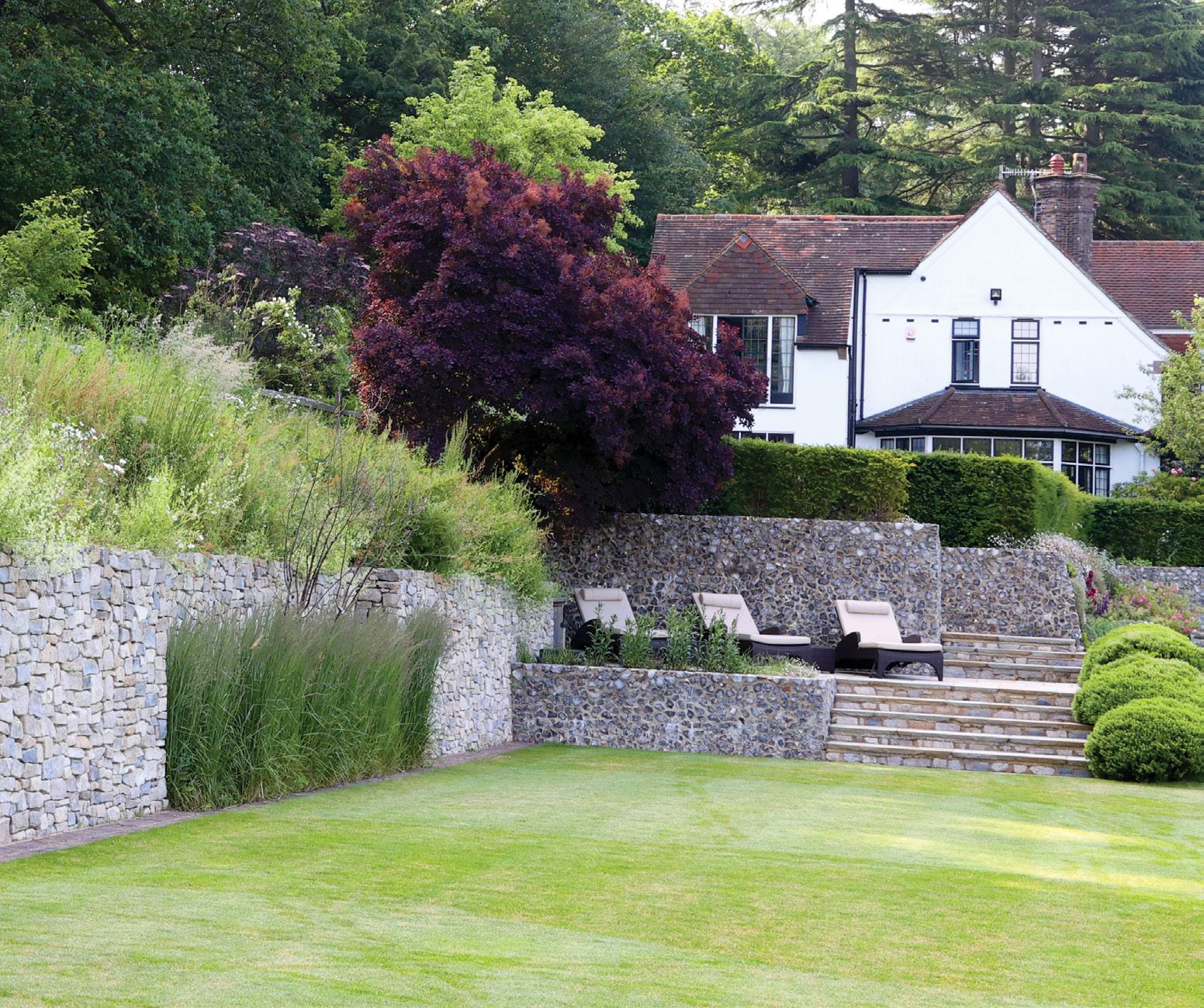
A recent project in Surrey that transforms a steeply sloping site into a layered, immersive garden (pictured). What was initially a challenging gradient has been carefully reimagined to create a seamless journey, where level changes unfold almost imperceptibly. The result is a space that feels effortless yet rich with moments of discovery, inviting exploration and pause.
New members
(1 March – 31 May 2026)
Accredited Contractors
• Jacq & Wills Landscapes
• LS Landscape Solutions
• Labrynth Landscapes
• J B Groundcare
• Clean and Tidy Services
• Larkstel
• Marlow Groundswork & Landscaping
• Glen Group
• House Gardens
• Eco Garden Construct
QWhat do you hope to get out of your BALI membership?
AWe’re looking to connect with likeminded professionals, collaborate with trusted contractors, and stay engaged with industry standards and developments. Access to events, knowledge-sharing and a strong professional network are all key benefits.
QHow important is the BALI accreditation and vetting process to you and to your customers?
ABALI’s accreditation and vetting process is incredibly important to us. It provides reassurance to clients that they are working with a trusted, professional practice, and reinforces our own commitment to quality, transparency and high standards across everything we do.
• Glen Group
• Perennial Landscapes
• Wealden Services
Associate Contractors
• TwinRoots Landscapes
Accredited Supplier
• City Suburban Tree Surgeons Recycling
• P J Bridgman & Co.
• MAS Seeds Ltd T/A Meadowmania
• Double Yew Nurseries
• FP McCann
• Jubilee Seeds & Turf
• Hyphae Learning Ltd
Accredited Designers
• Paul French
• Michelle Brandon
• Anca Panait
Student
• Kara Goldsmith
Training Provider
• Growth Path Services
• Multevo Ltd
BALI members flourish at RHS Chelsea Flower Show once again, scooping top accolades, including Garden of the Year and Best Construction. We revisit those successes through a BALI lens.
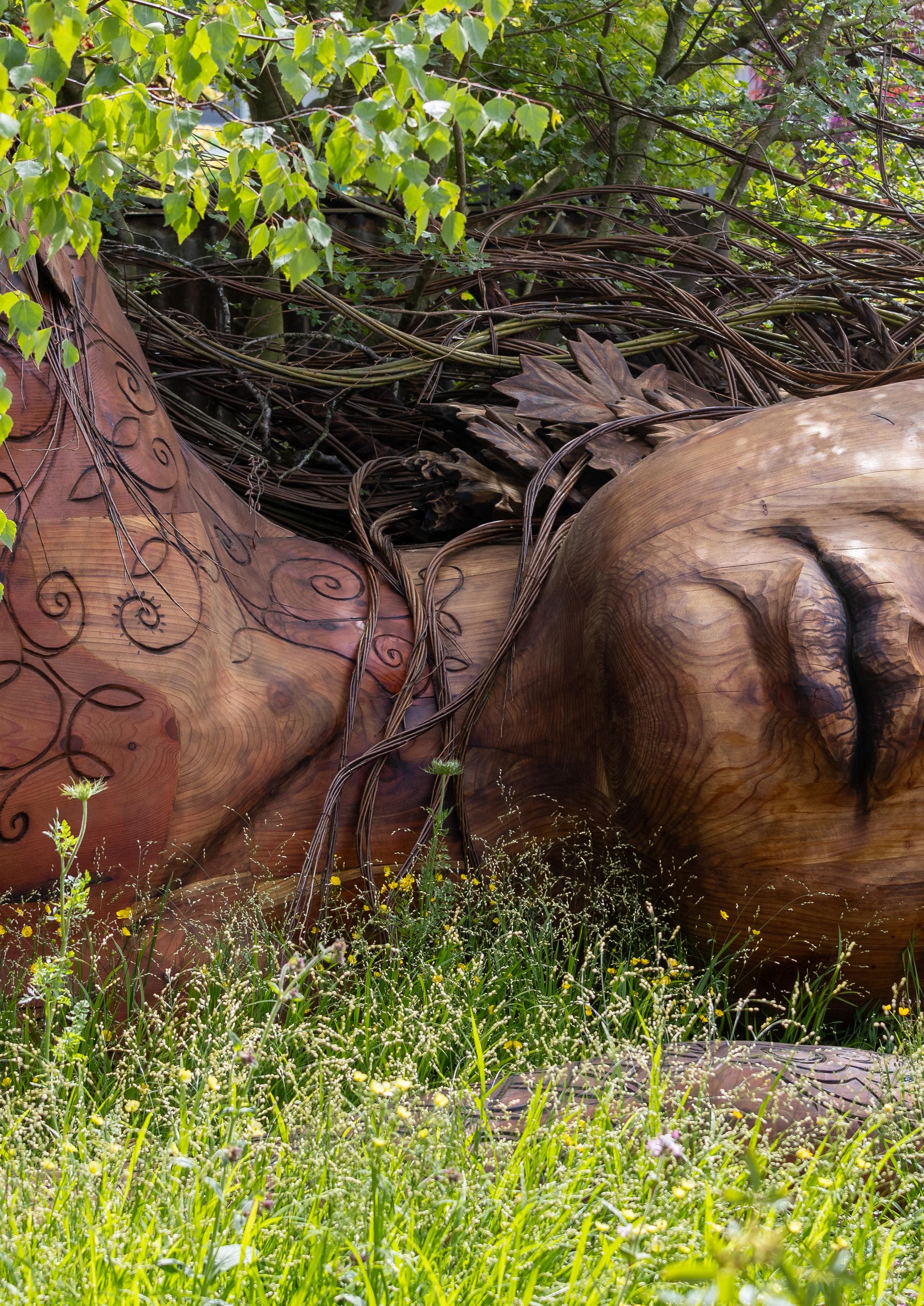
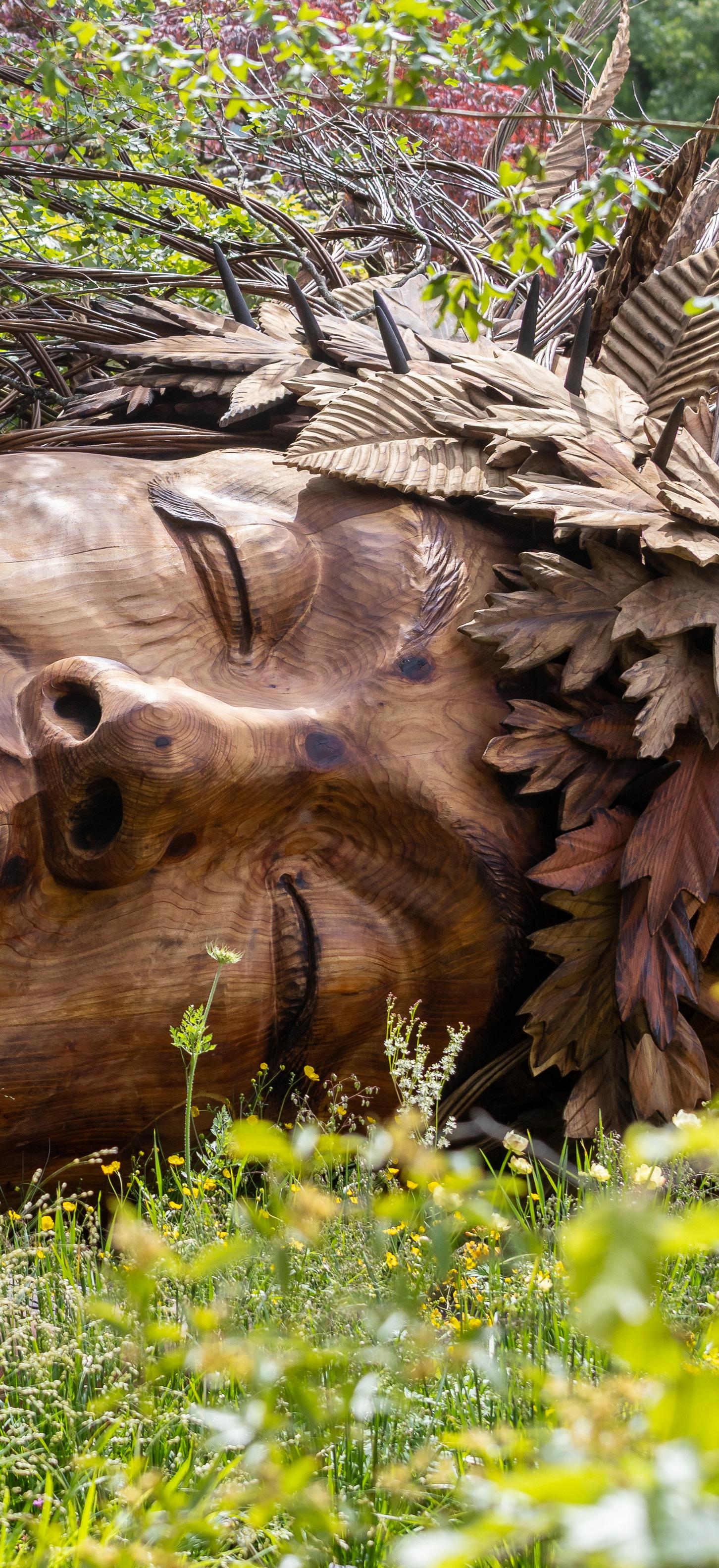
With member gardens scooping an impressive five gold medals, as well as some of the top show awards and various other prestigious medals, the British Association of Landscape Industries (BALI) was proud to celebrate such extraordinary success of its members at the RHS Chelsea Flower Show 2026, where some of the year’s most moving, imaginative and beautifully crafted gardens captured the attention of judges and visitors alike.
From deeply personal stories to powerful environmental messages, BALI members helped bring to life gardens that inspired reflection, sparked conversation and demonstrated the transformative power of landscape design.
Speaking about BALI member involvement in the show, BALI Chief Executive Wayne Grills, said, “The RHS Chelsea Flower Show is always a celebration of the very best in horticulture and landscaping, and this year, yet again, our members have truly excelled. These gardens not only highlighted important issues, making people stop and think, but also displayed incredible craft and workmanship, showcasing the extraordinary talent within our membership and industry as a whole. We are immensely proud of every BALI member involved.”
Given the immense talent within the BALI membership, it was perhaps fitting that The Outdoor Room – winners of the Grand Award at BALI’s National Landscape Awards back in December 2025 – continued to add to their burgeoning trophy cabinet with both the Garden of The Year and the Small Garden of the Year awards. Accompanied by gold medals, they received the former honour for The Campaign to Protect Rural England Garden: ‘On the Edge’, while the latter accolade was presented to them for Addleshaw Goddard: Flourish in the City
“Here at The Outdoor Room we are absolutely thrilled to have played our part in two gardens that have picked up these hugely prestigious awards at the world’s best horticultural event,” said Mark Britton, Managing Director, The Outdoor Room, adding, “It is testament to the hard work and dedication shown by our teams throughout the year, not just at the show, and it’s been a privilege to work on them. Both design teams have been great to work with, all of the talented artisans and plants people were a dream, and we hope that what we've produced gives many people a lot of joy and inspiration for years to come!”
“These gardens not only highlighted important issues, but also displayed incredible craft and workmanship.”
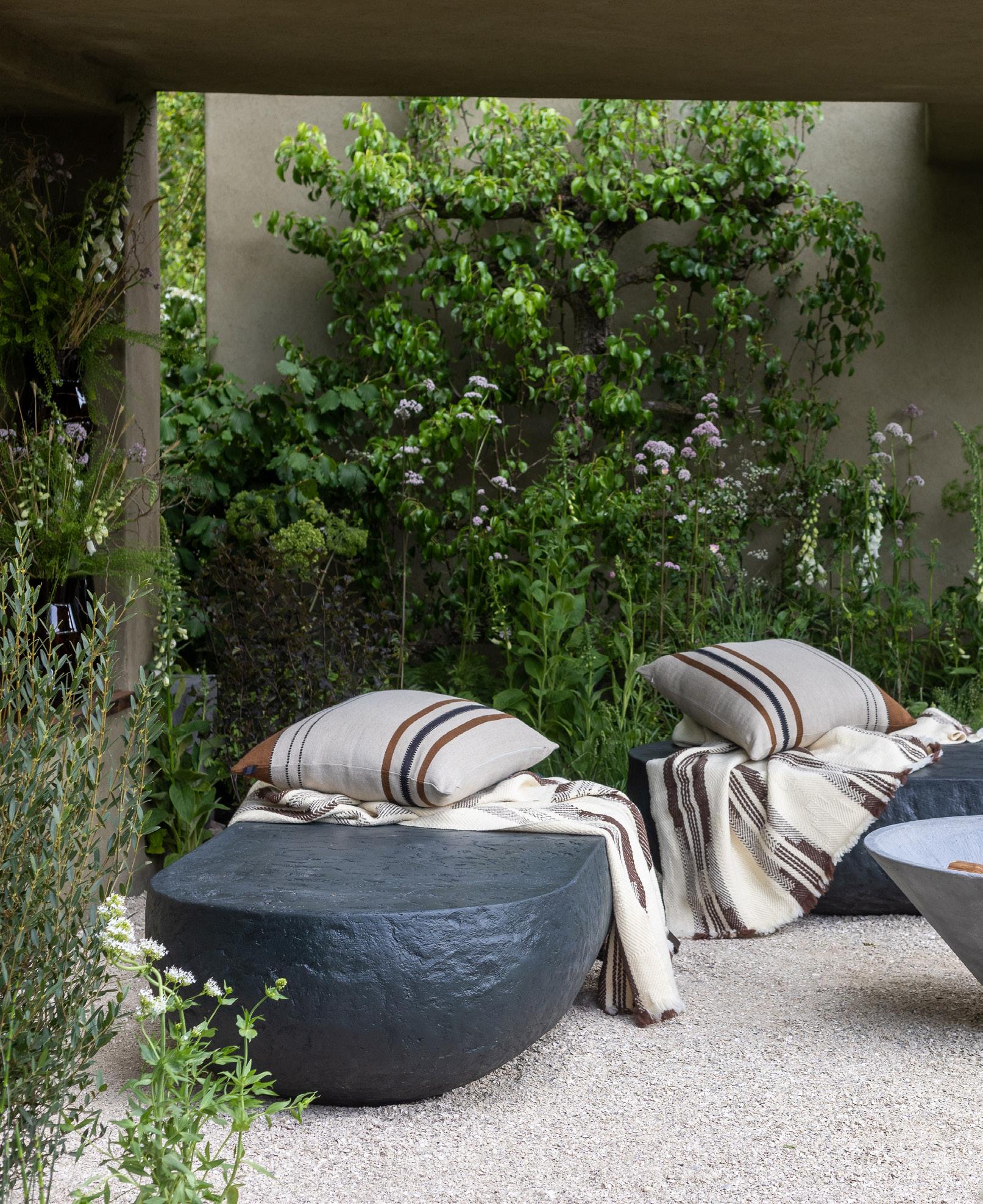
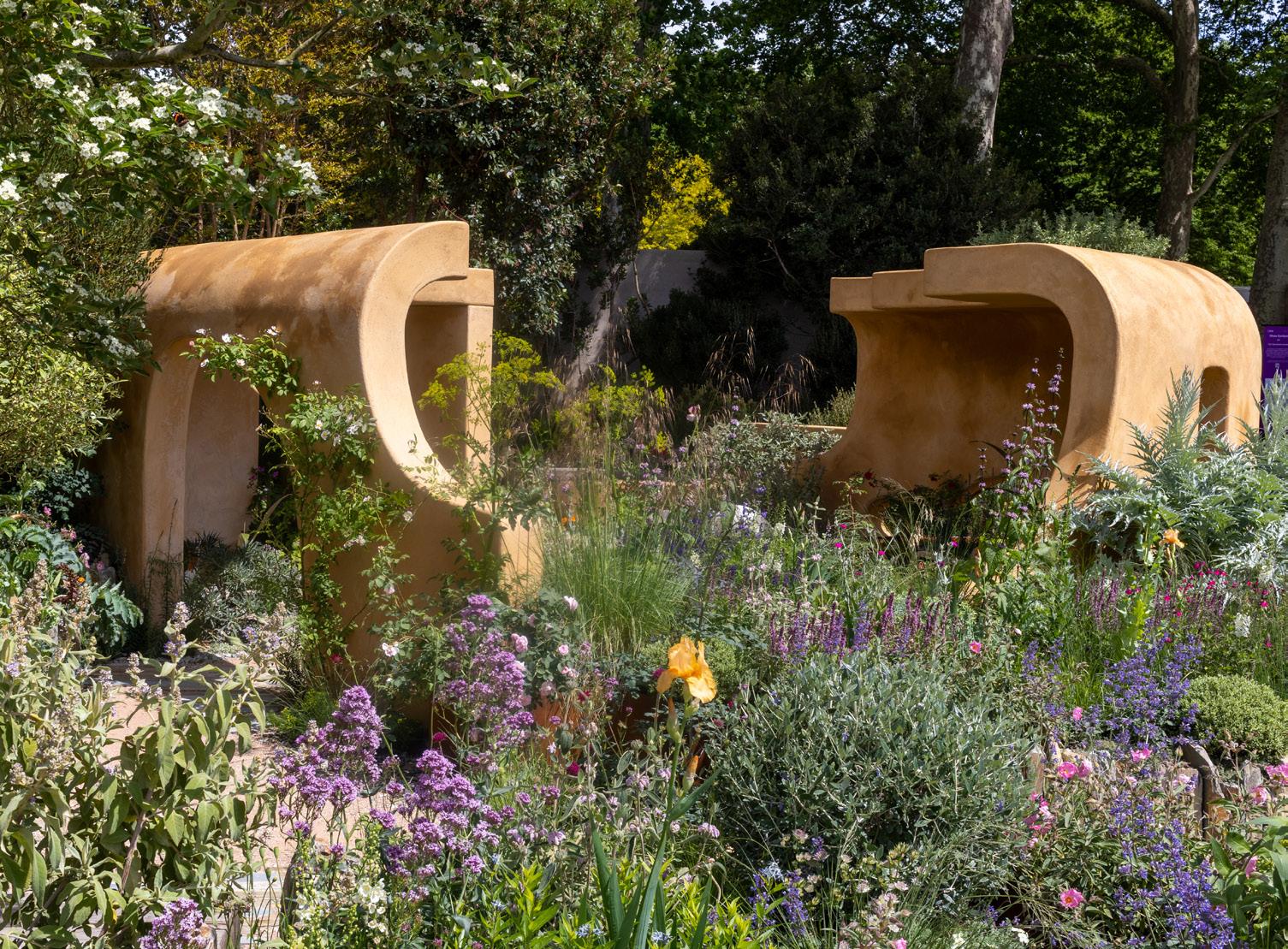
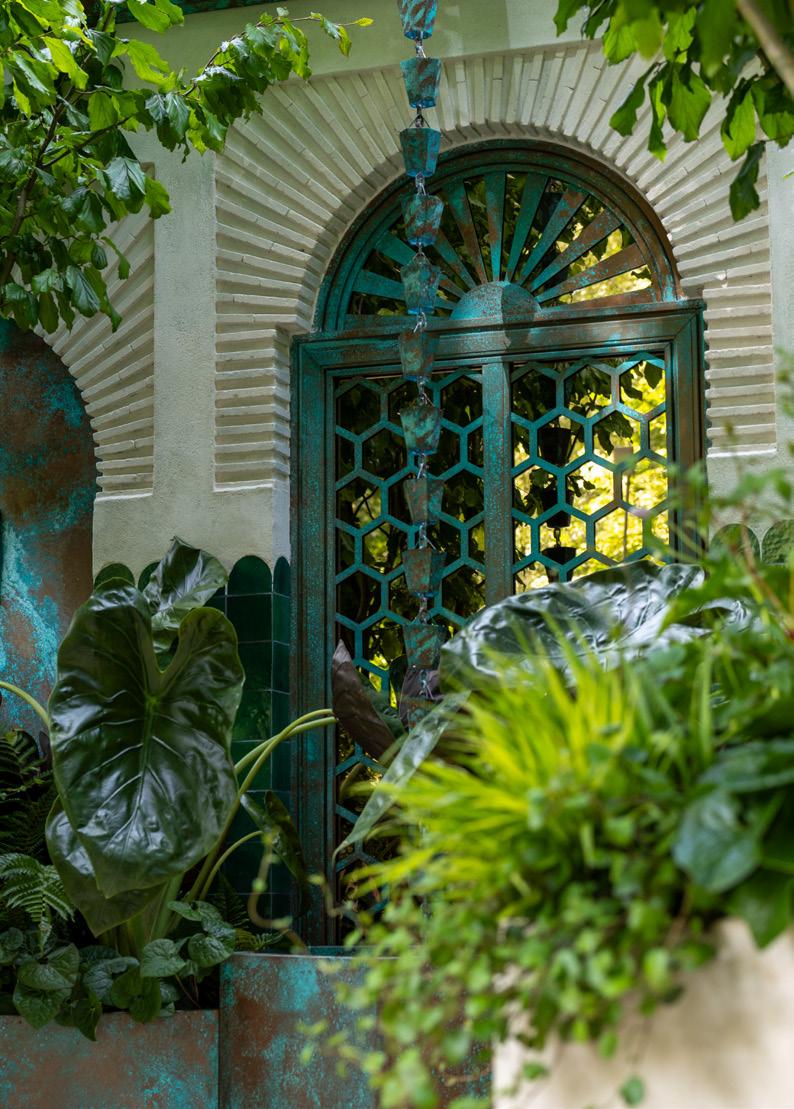
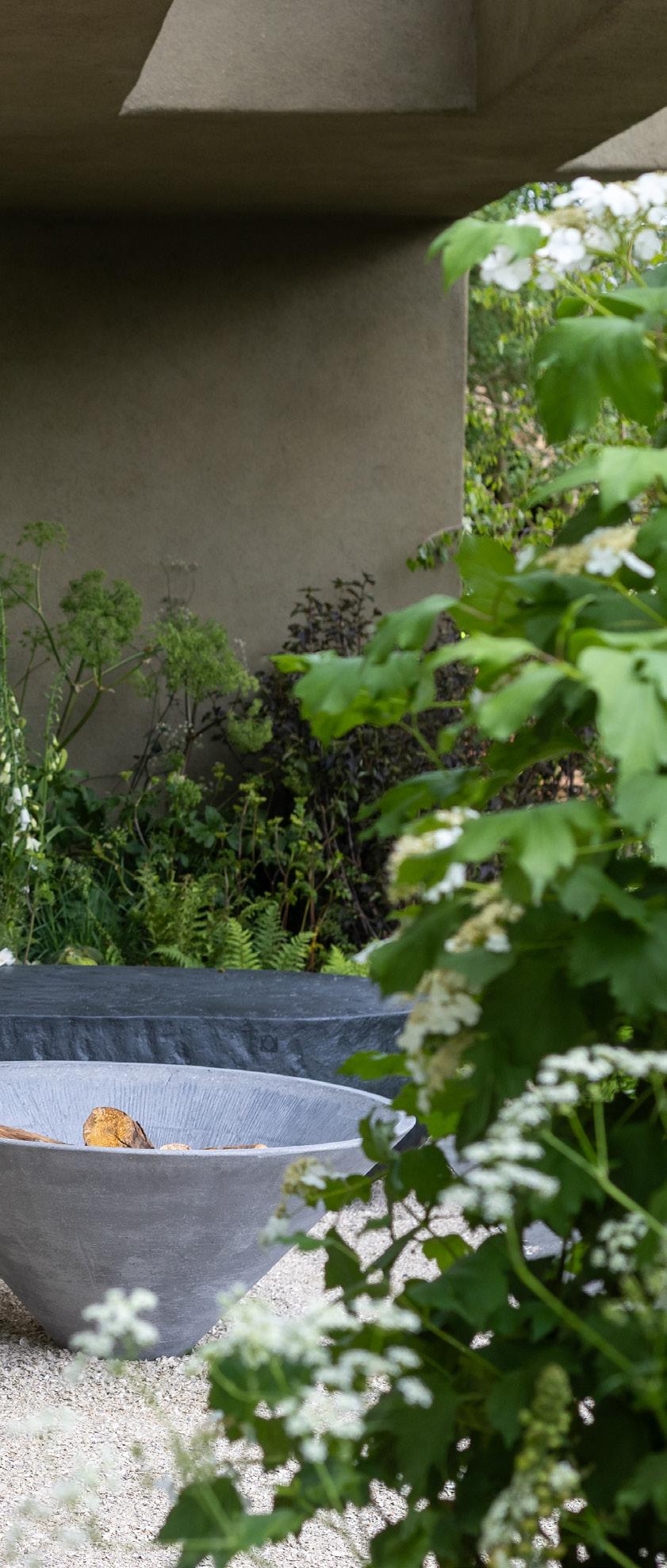
Among the other standout award-winning gardens was the Lady Garden Foundation ‘Silent No More’ garden, built by BALI member Landscape Associates, which not only secured a gold medal, but also picked up the coveted Best Construction (Show Garden) award.
The bumper day didn’t stop there for Landscape Associates either, as they were bestowed with the “Environmental Innovation Award” and a silver-gilt medal for The Eden Project: Bring Me Sunshine Garden, along with a silver medal with for their spectacular efforts on Parkinson’s UK – A Garden for Every Parkinson’s Journey, giving them three medals in total from their three installations.
It was a great day for many other BALI members too, with no less than 11 medalwinning gardens having some level of involvement from BALI members, breaching the double-digits barrier yet again.
A familiar face at the RHS Chelsea Flower Show by now, Landform Consultants – working with their Senior Landscape Designer Baz Grainger – were once again in among the gold medals, this time for The Killik & Co ‘A Seed in Time’ Garden. It is becoming somewhat of a Chelsea dream team, with the pairing having won a gold medal at 2025’s showpiece for Killik & Co Save for a Rainy Day Garden, and a silvergilt medal for their Killik & Co: ‘Money Doesn't Grow On Trees’ Garden back in 2024.
Another member of the Landform Consultants team, Principal Landscape Designer Catherine MacDonald, also tasted success at this year’s show, with her efforts on The Boodles Garden securing a silver-gilt medal.
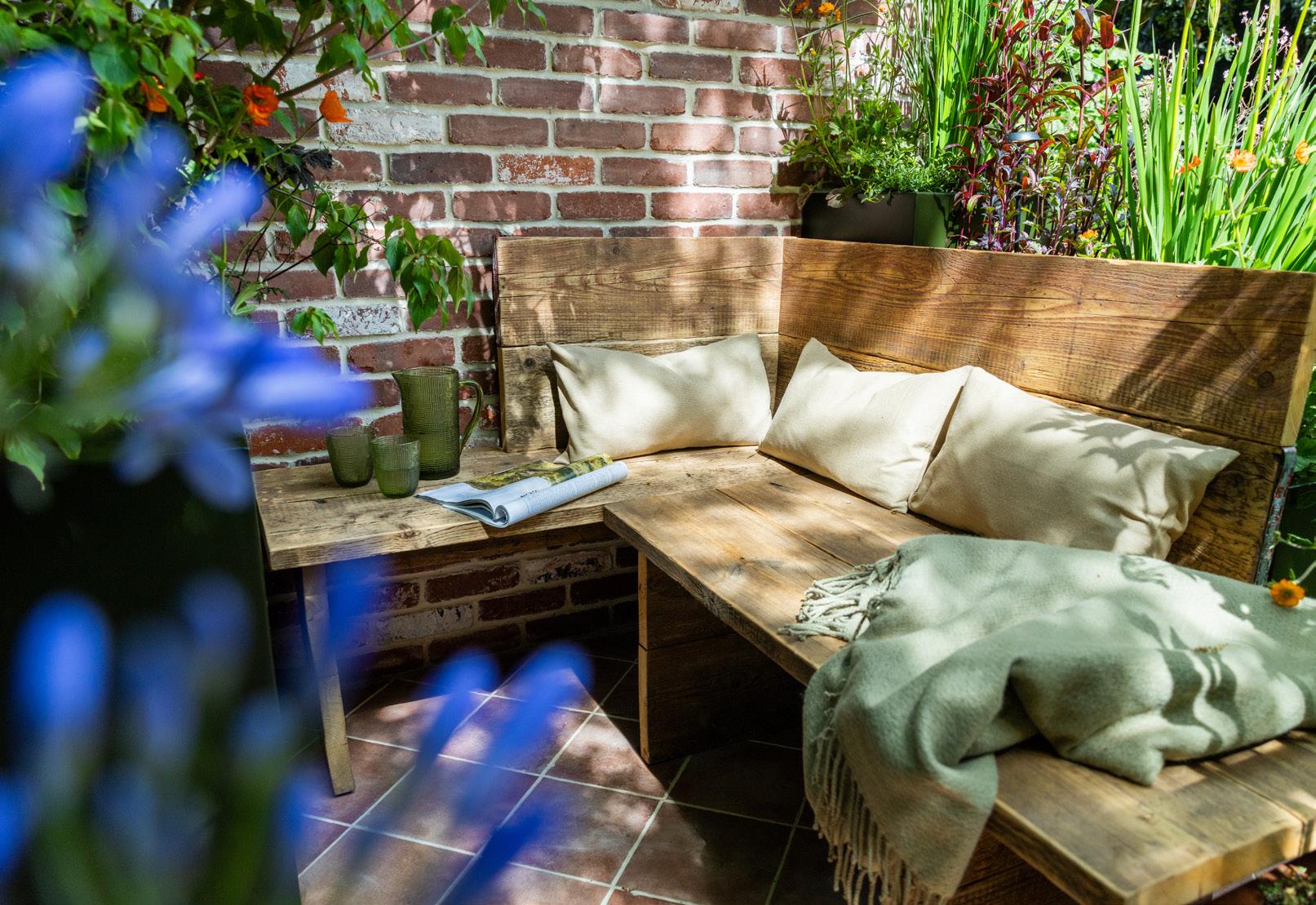
Speaking of members with recent successes at Chelsea, having won a gold medal with his company The Landscaping Consultants last year, one of our BALI Board Directors, Jake Catling, also had the honour of building the prestigious The RHS and The King’s Foundation Curious Garden – one of the show’s “Feature Gardens”, a category in which BALI member JJH Landscapes also presented proudly with RHS x CITI Season of Abundance
Elsewhere, BALI member Acacia Gardens secured a gold medal for their container garden Flood Re: Contain the Rain, while the team at Garden Club London followed up their 2025 success with a silver-gilt medal for The Transient Garden
Rounding off the bumper member medal haul was Castle Landscapes, who achieved a bronze medal for The Sightsavers Garden: We Start With Sight But We Don’t Stop There
“No less than 11 medalwinning gardens had some level of involvement from BALI members.”
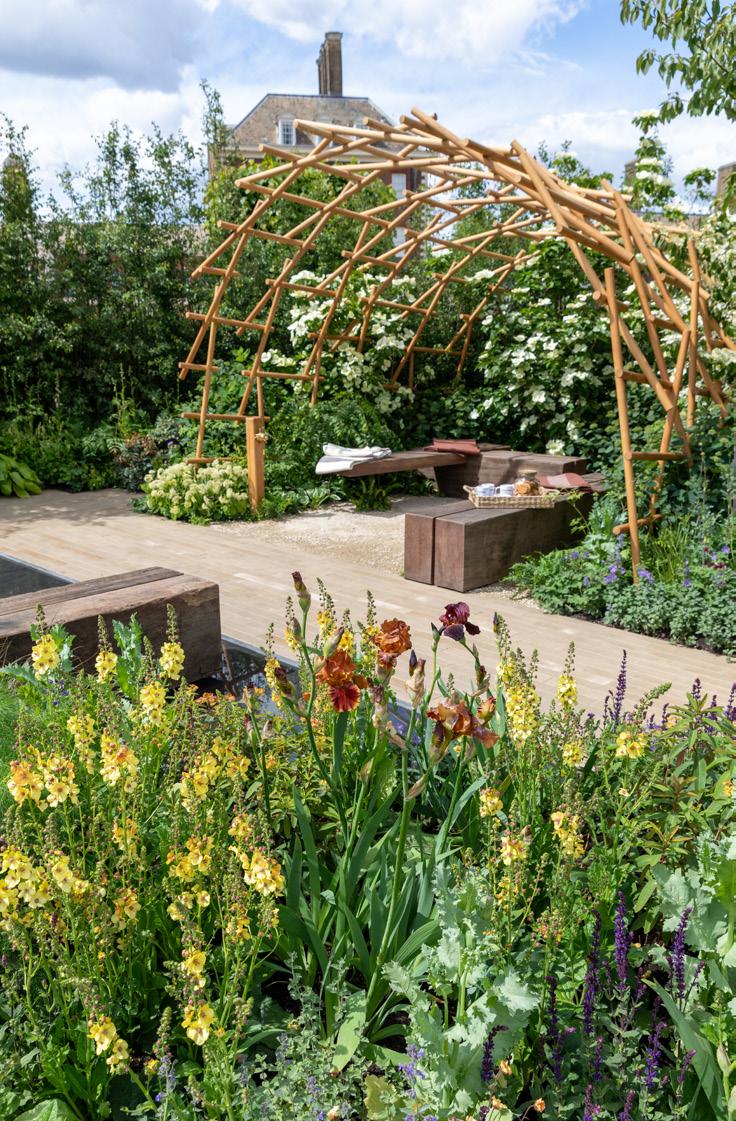
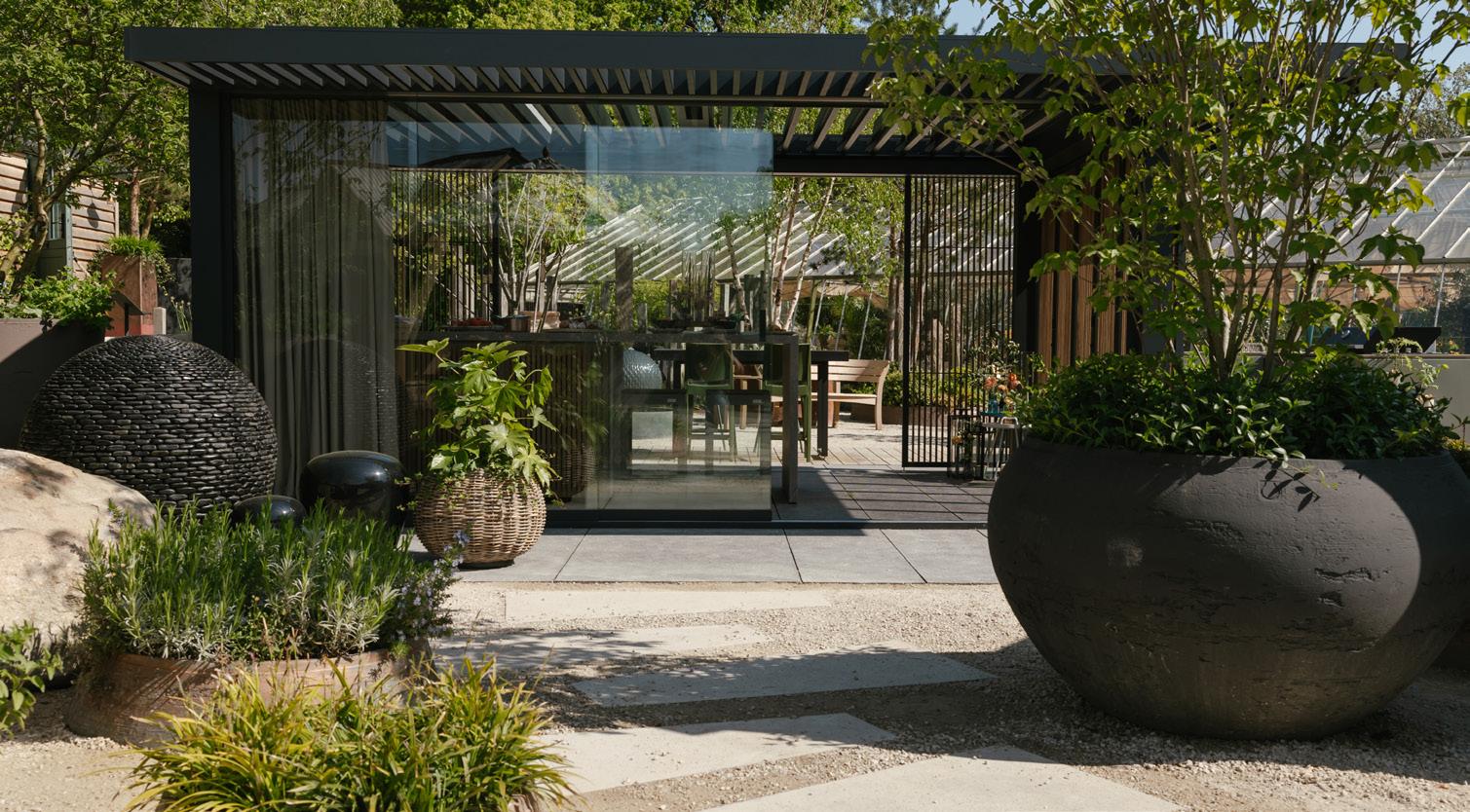
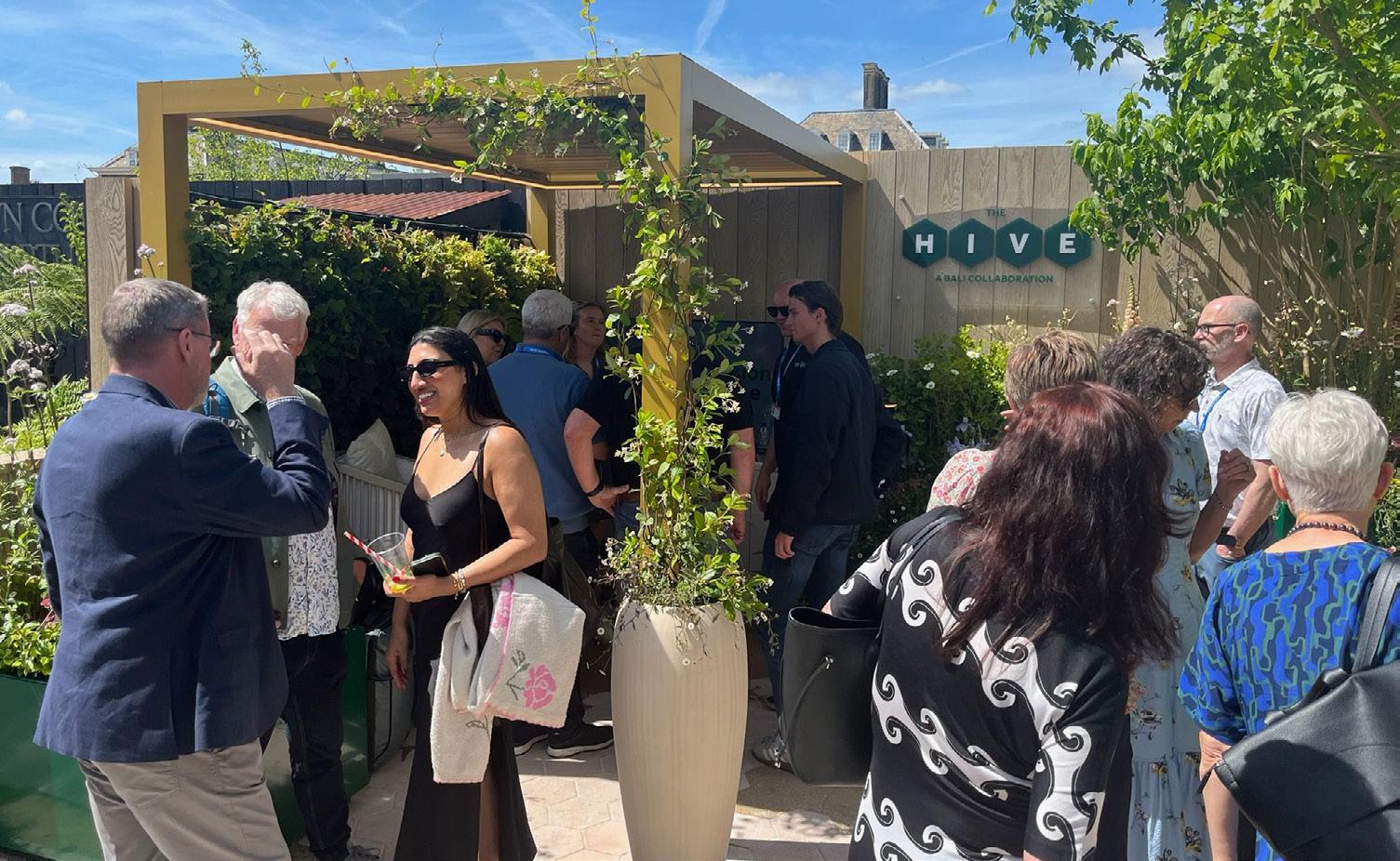
On a personal level, BALI were delighted to achieve wide-ranging plaudits from visitors to the show for their own trade stand garden, The Hive – A BALI Collaboration The stand-cum-garden was the brainchild of BALI’s Rosie Sayers, Head of Marketing and Communications, and Amy Cobbett, Head of Policy and Public Affairs, and it saw more than 15 BALI members join forces to create a collaborative space that showcased the abilities and wares of BALI members while tackling important issues of climate resilience, biodiversity and ethical sourcing.
“It was very important to us that we were able to offer such a special opportunity to as many BALI members as possible that hadn’t the chance to exhibit at RHS Chelsea Flower Show before. To showcase their talents and products on the biggest stage is an incredible opportunity for them that we were delighted to support,” enthused Amy Cobbett.
“We were thrilled by the outcome and all the positive praise and feedback The Hive received – not only for ourselves, but also for the hardworking, talented and generous members that helped make it a reality.”
The success of BALI members at Chelsea 2026 reflects not only technical excellence, but also the passion, dedication and artistry that define the UK landscaping industry. From designers and contractors to growers and suppliers, BALI members once again demonstrated their ability to create spaces that resonate far beyond the showground.
You can view all the installations from the show at rhs.org.uk
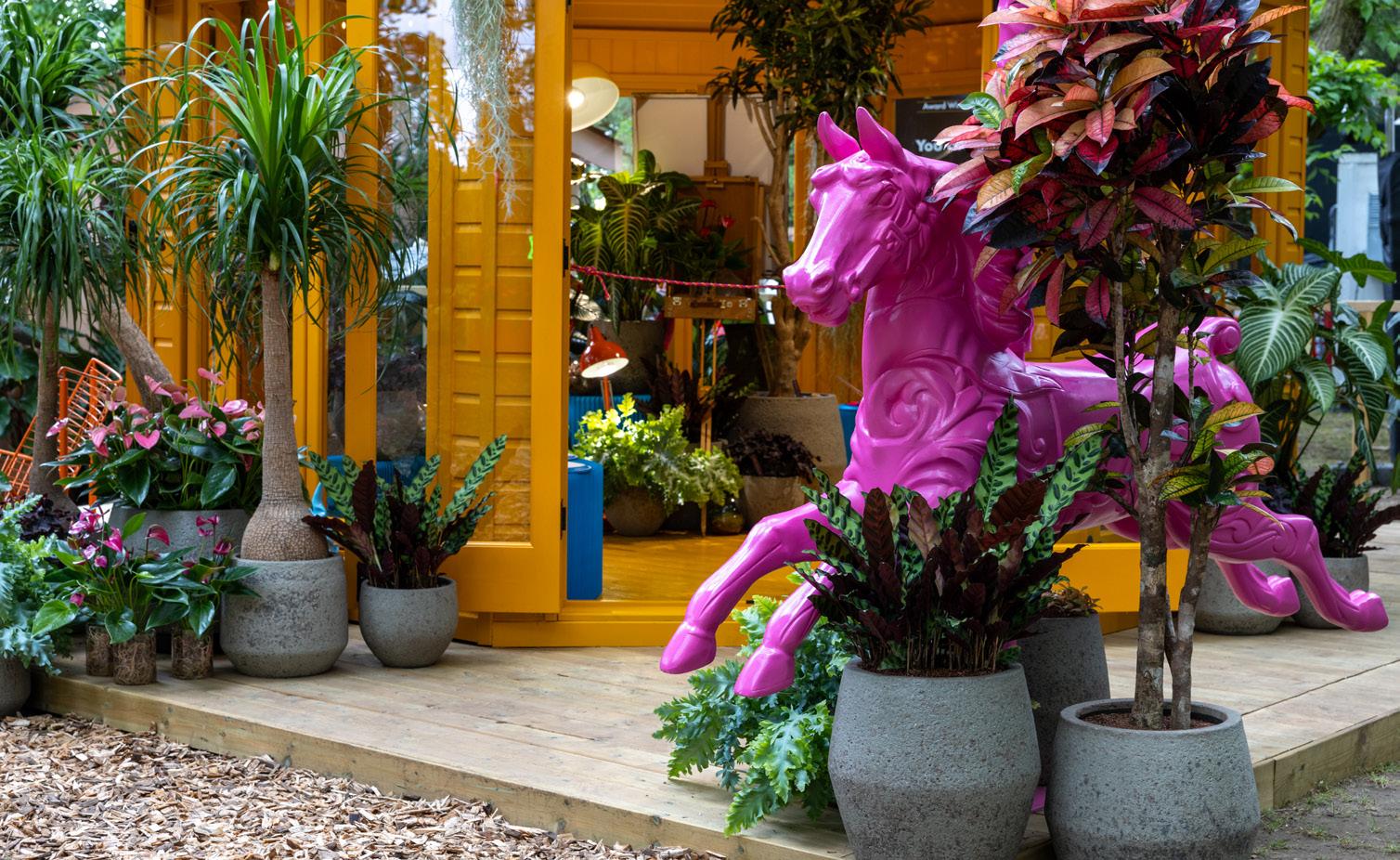
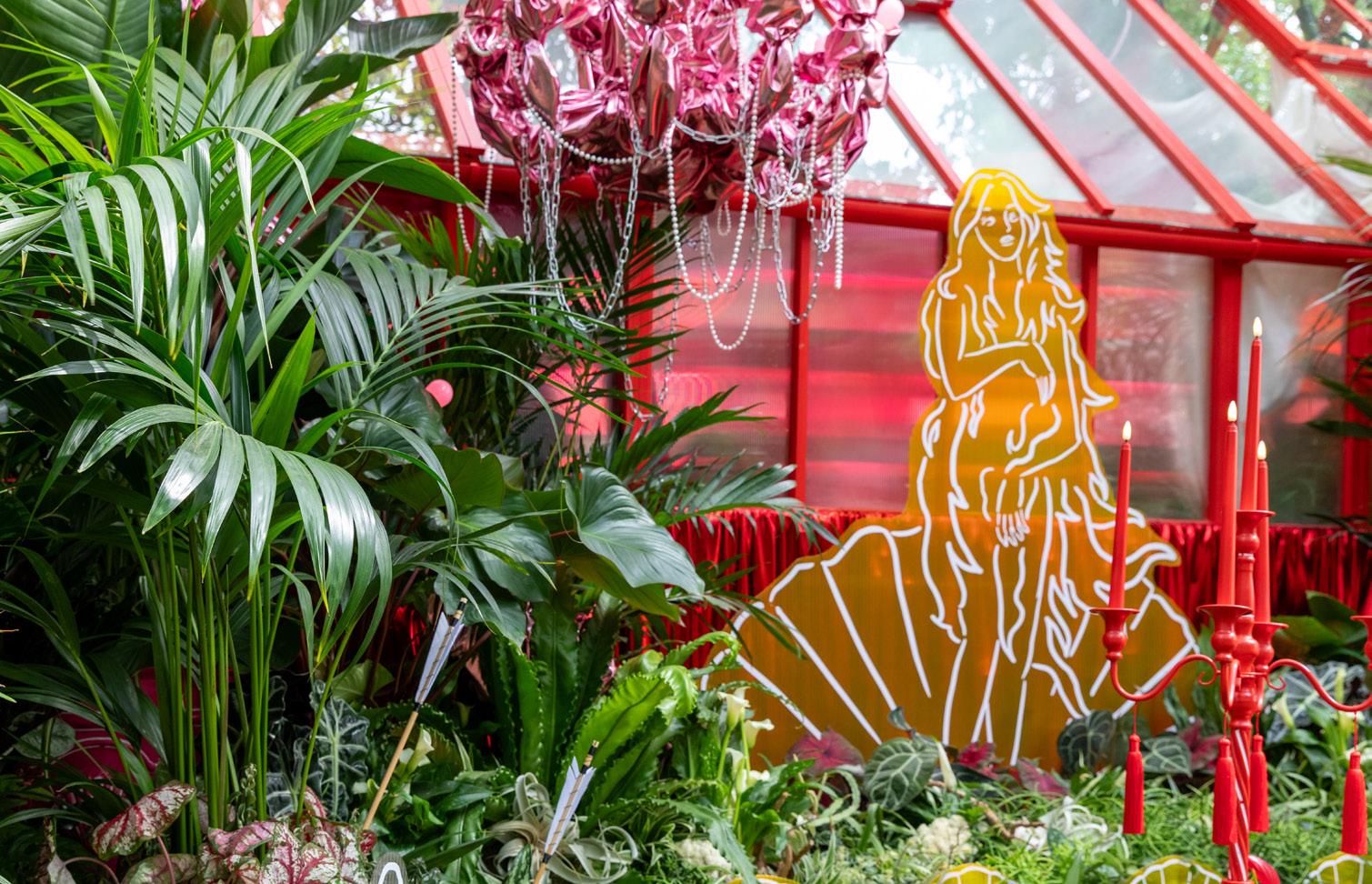
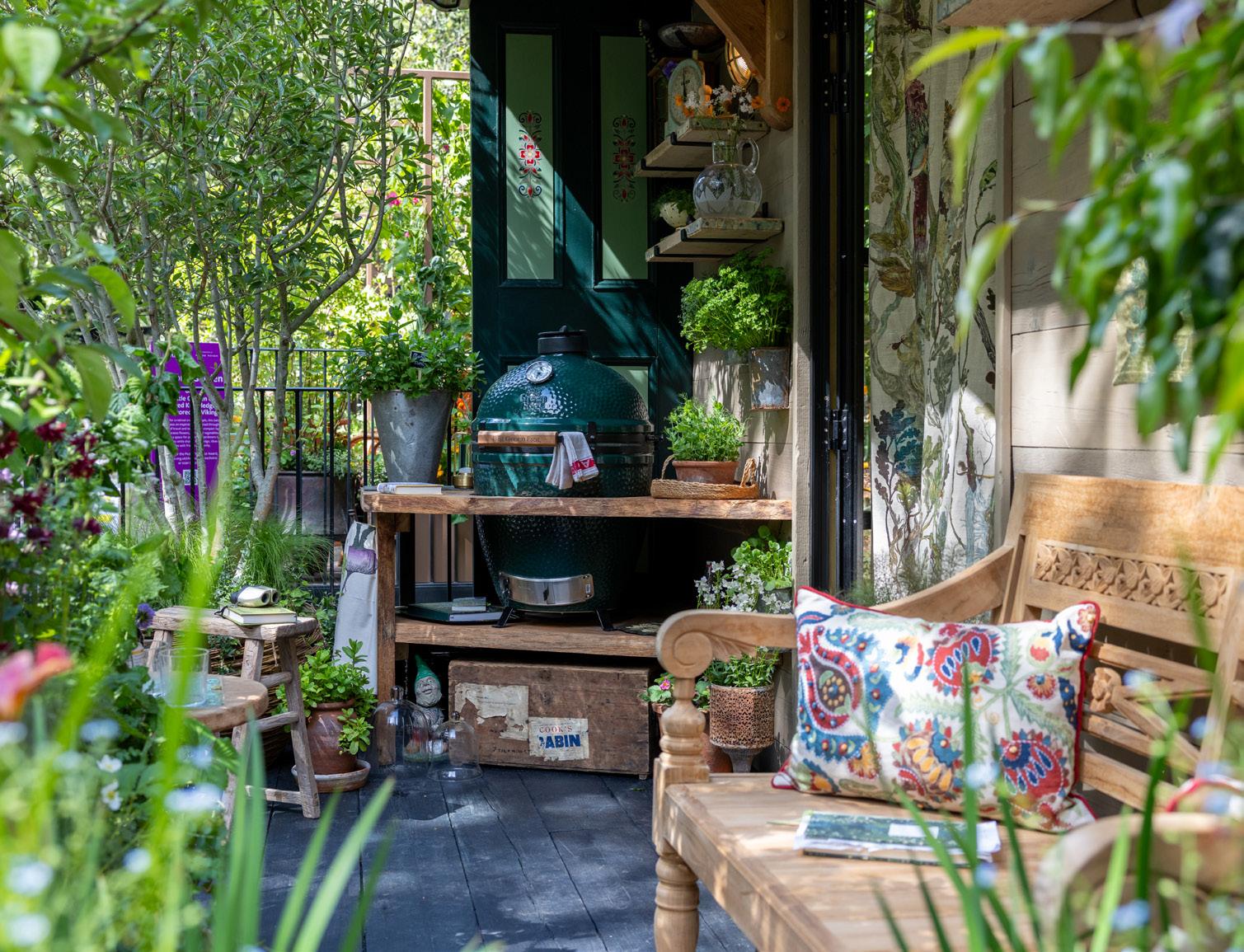
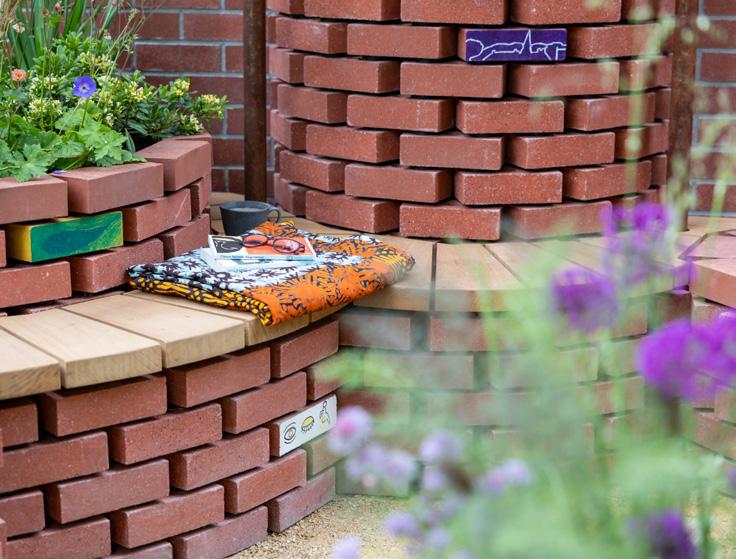
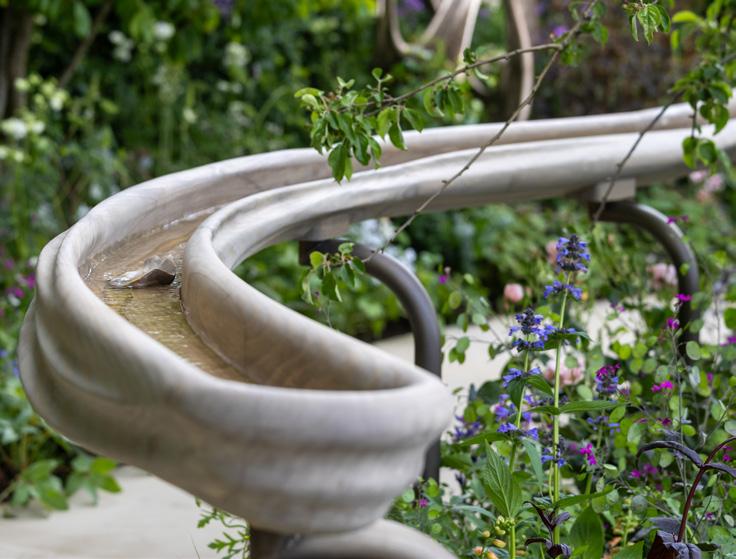









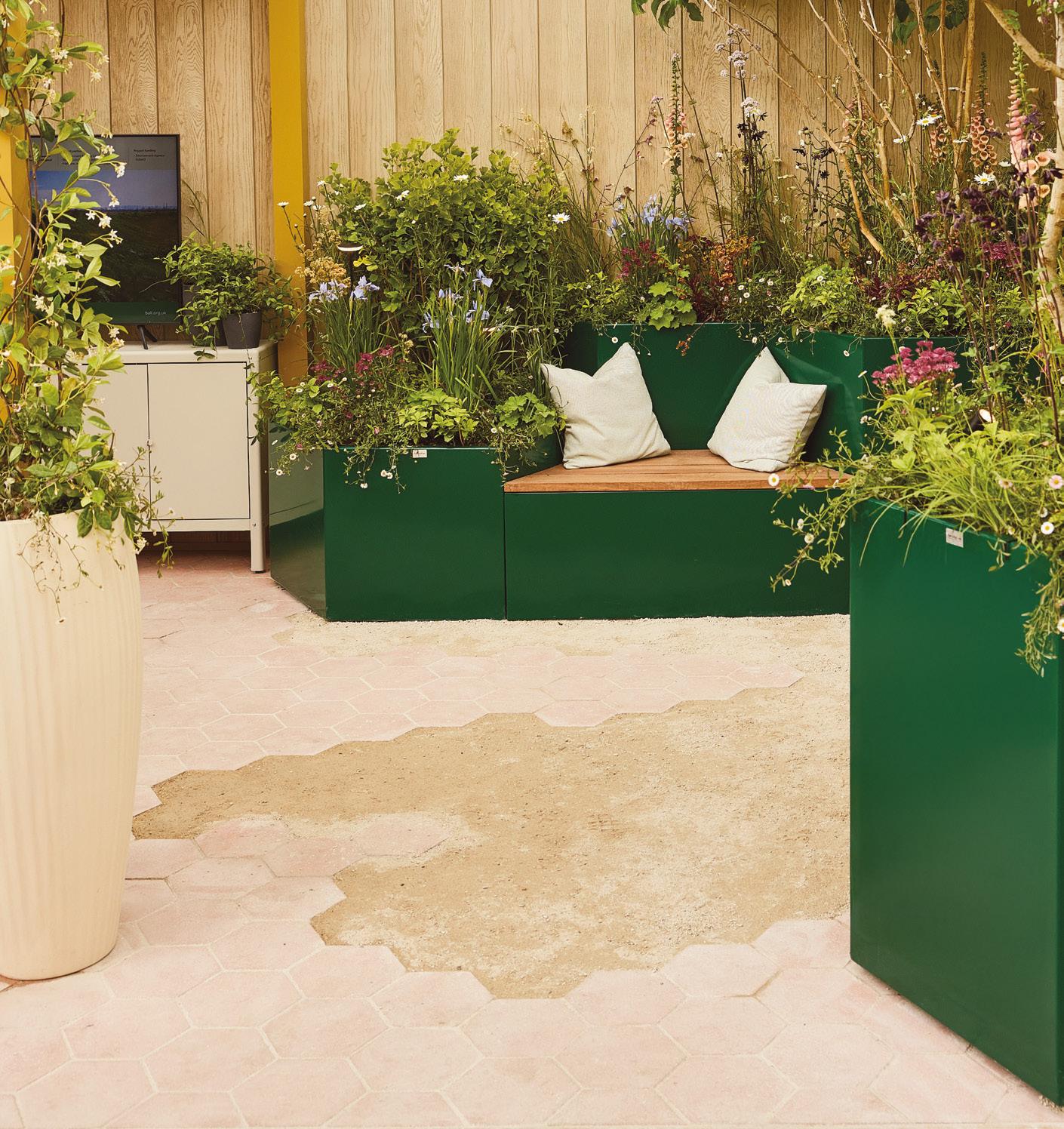
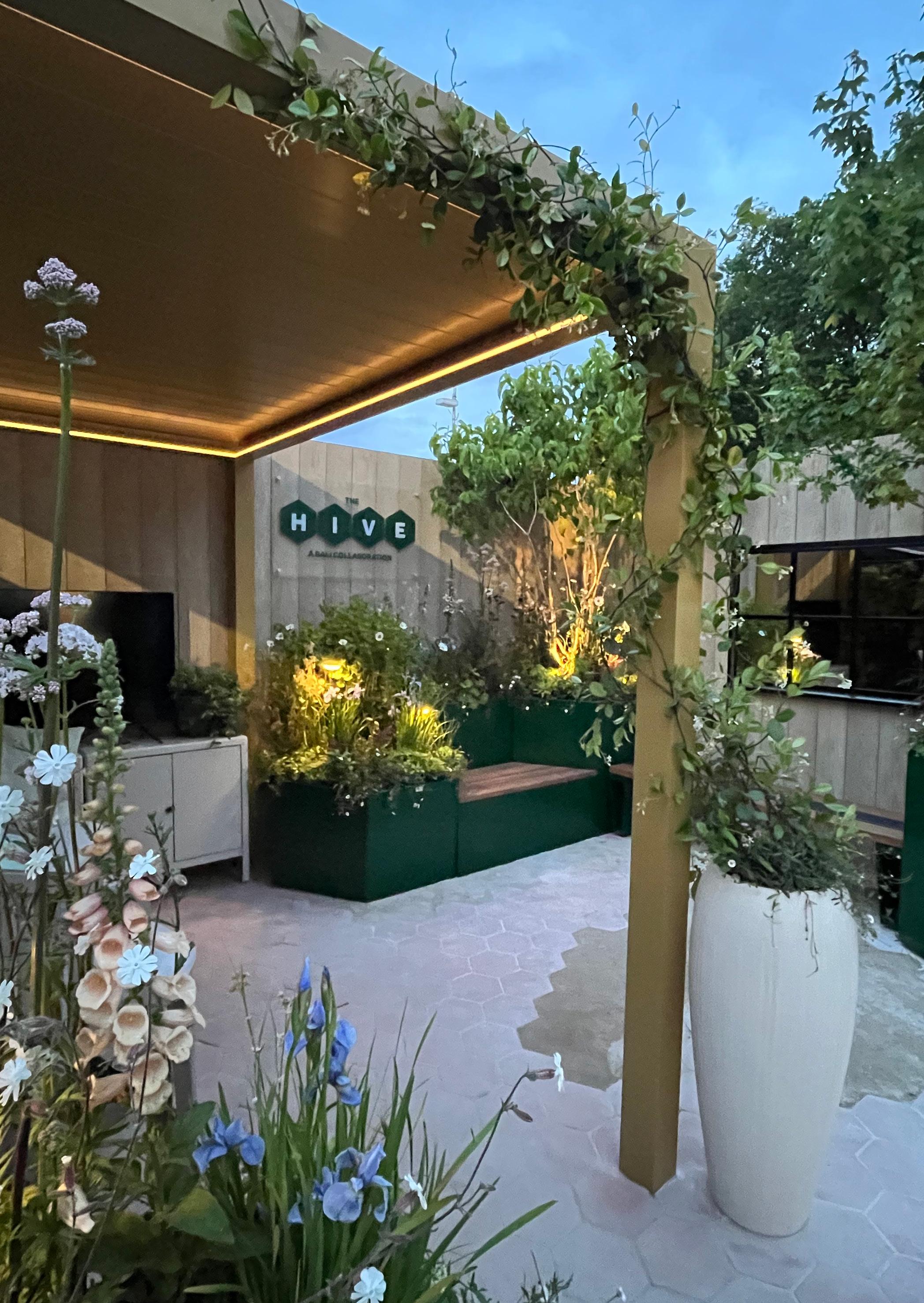
BALI’s trade stand garden at RHS Chelsea Flower Show saw BALI members join forces to create, The Hive – A BALI Collaboration, eventually securing an impressive 3-star award. Discover more about this shining example of landscaping cooperation.
When creating the British Association of Landscape Industries in 1972, there was one main goal in mind – to support landscaping businesses and bring them together for shared benefit and increased prosperity for all. Now, over 50 years later, those goals still ring true to this very day. At RHS Chelsea Flower Show, perhaps the industry’s showpiece event in the calendar, this was on display for all to see. The collective effort of BALI members deservedly achieved a 3-star award for their endeavours, but perhaps more importantly, showed the talent and hard-work that is present across the sector and demonstrated to the public why BALI members are the best in the business.
“The Hive is a brilliant example of what can be achieved when BALI members come together with a shared vision and a commitment to excellence,” enthused BALI Chief Executive Wayne Grills. “This project not only showcased the outstanding craftsmanship, creativity and professionalism that exists across our membership, but also highlights the collaborative spirit that has been at the heart of BALI for more than 50 years. To see businesses of all sizes and specialisms unite on such an iconic stage as RHS Chelsea Flower Show is something we are incredibly proud of, and a powerful demonstration of why BALI members continue to lead the way within the UK landscaping industry.”
“Working on a Chelsea project, no matter the size, requires attention to detail, teamwork and effort.”
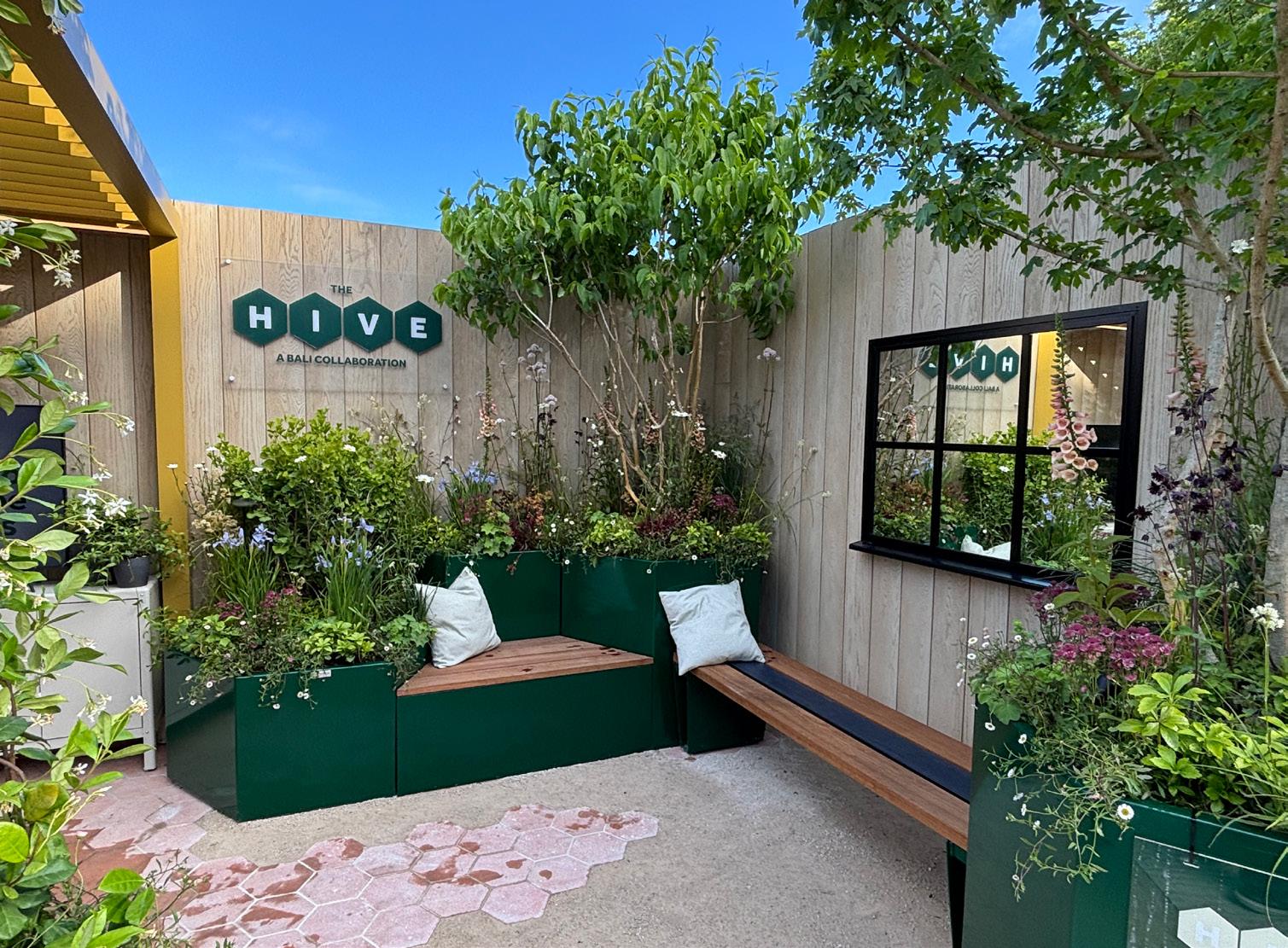
More than 15 BALI members, from suppliers and contractors to designers and technicians, were involved in creating the space, pouring in their technical expertise as well as contributing materials, helping to turn the once barren 5m x 4m space into a thriving vision the Association could be proud to showcase.
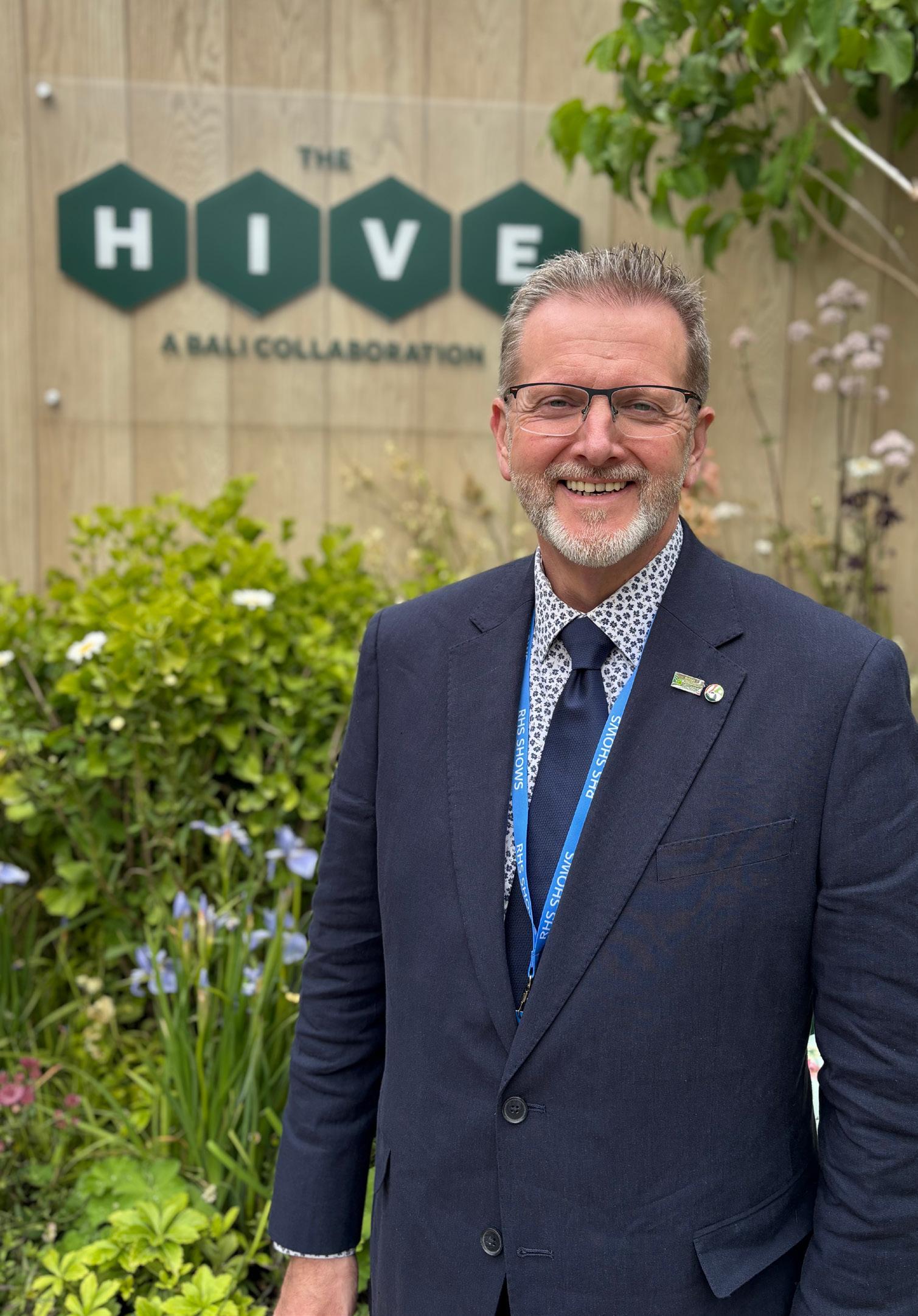
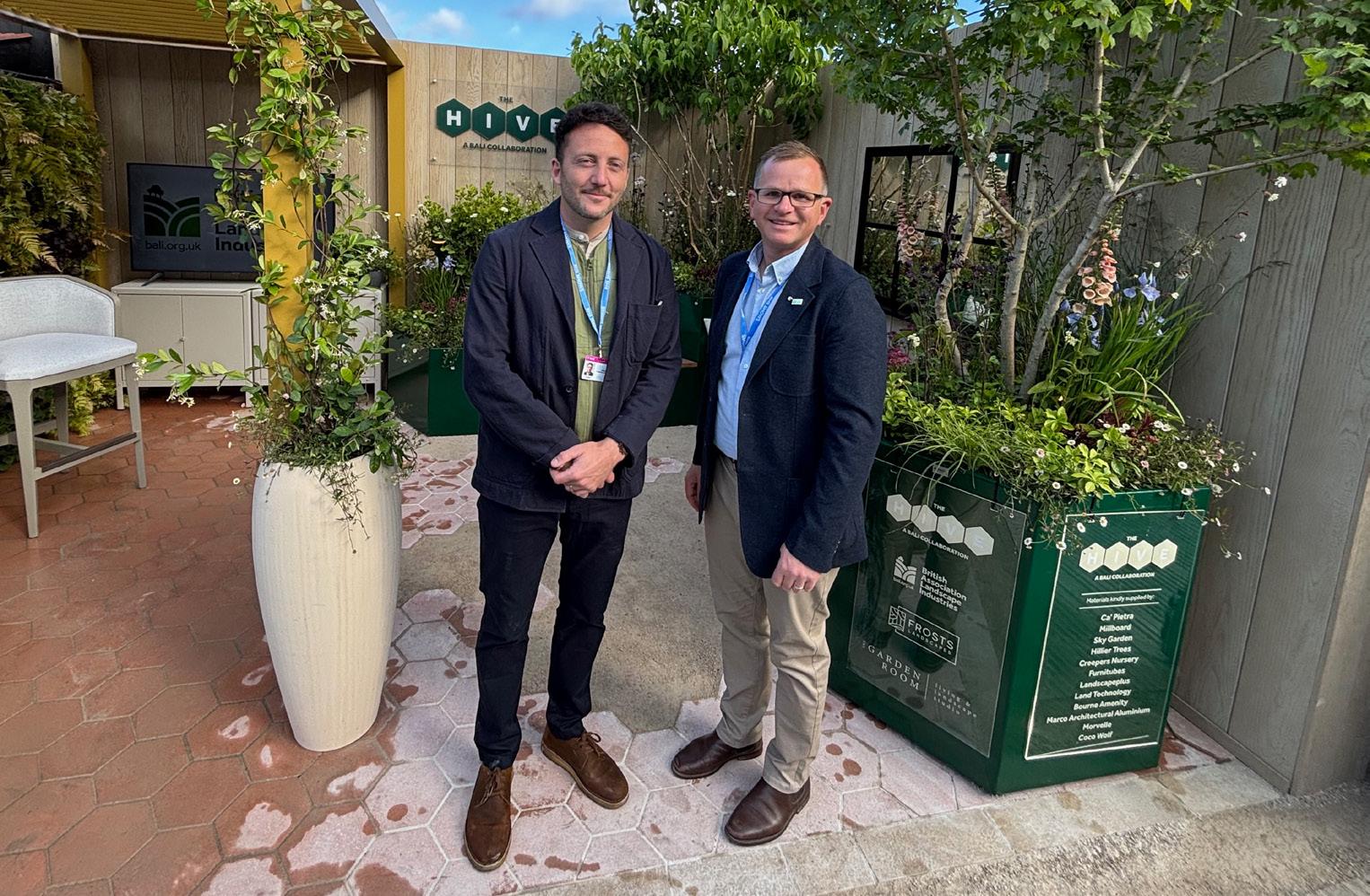
Designed by Matt Evans (pictured below on the left), Managing Director and Principal Designer at The Garden Room Living and Landscapes Studio, and built by Frosts Landscapes under the direction of Alistair Bayford (below, right), it was a carefully coordinated operation involving long hours, tight deadlines and multiple trades working simultaneously onsite.
“A build at RHS Chelsea is unlike anything else in the industry. Every corner of the site is full of designers, landscapers, growers and suppliers, working under pressure to create something exceptional in just a matter of days,” said Rosie Sayers, Head of Marketing and Communications at BALI.
“A key tenet of the scheme was to showcase just how amazing BALI members – and by extension, the landscaping industry in the UK – is and what can be achieved collectively. Working on a Chelsea project, no matter the size, requires attention to detail, teamwork and effort, so I think it was important to use the opportunity to show these attributes that we adopt in our day-to-day work,” said Matt Evans, Lead Designer of The Hive.
It was decided from the outset that the stand wasn’t going to just be aesthetically pleasing, in order to stand the test of RHS Chelsea’s rigorous standards, but also that it would accurately reflect the trends, values, challenges and themes of the industry. In particular, the biodiversity and climate resilience of the scheme was of tantamount importance.
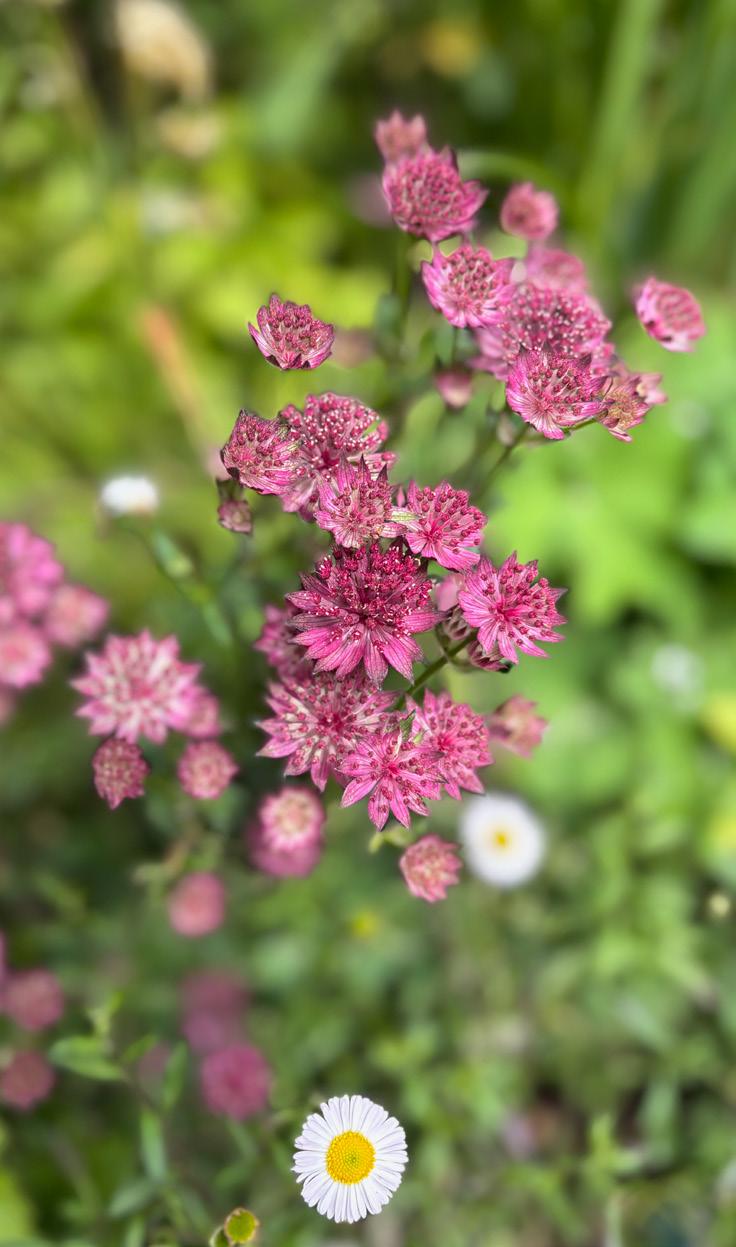
One aspect where this was particularly evident was in the planting. Lead designer Matt Evans carefully selected plants that would not only complement the space, but displayed drought-tolerant characteristics. For example, the trees were a Seven-Son flower (Heptacodium miconioides) and a Field Maple (Acer campestre), while the planters were dappled with a range, including Astrantia ‘Roma’, Dalmatian Peach (Digitalis purpurea), Miners Merlot (Euphorbia x martini), and Lesser Periwinkle (Vinca miner), all of which added biodiversity and attract various pollinators.
“It was key that the space represented all of the BALI membership so the intention was that visually the space was as at home in a commercial or public realm setting as it would be in private residential. The key challenge we’re all facing as an industry is the climate so, in the short time we had to design the stand, we created a narrative around climate resilient materials choices, supplier approach and construction methodology. We then wanted to showcase the work of the membership and highlight the work BALI does in creating opportunities for learning, volunteering and skills development - this was all showcased during the build. The stand was effectively then put together with a curated list of products and donated contributions,” explained Matt.
“They wanted to use BALI members who were new to the Show experience, providing a much-needed foot in the door.”
As part of BALI’s mission, they aim to offer tangible opportunities to members and raise both their skillsets and their profiles wherever possible. As such, they wanted to use suppliers, designers and other BALI members who were new to the RHS Chelsea Flower Show experience, providing a muchneeded foot in the door to an arena that may have otherwise been unattainable for them, whether that be due to business size and age, costs, lack of the right connections, or brand visibility.
“It was very important to us that we were able to offer such a special opportunity to as many companies as possible that hadn’t had such a chance before. To showcase their talents and products on the biggest stage that is RHS Chelsea Flower Show is an incredible opportunity for them that we were delighted to support,” enthused Amy Cobbett, coproject manager and BALI Head of Policy and Public Affairs. “Yet, we also made sure to strike a balance with experience too, with everyone benefitting from the guidance of Frosts Landscapes, who have ample Chelsea history, along with support from BALI board member Jake Catling, who was building a garden of his own at the show and popped in to help and guide. This allowed the more Chelsea-inexperienced companies to learn best practice from stalwarts and respected leaders from previous years.”
Matt Evans agreed, saying: “The project wouldn’t exist without BALI members, but also it wouldn’t be possible without BALI providing us with the platform. Everything from the pergola to the composted bark fines in the planters has been donated, designed or manufactured to showcase the quality and level of detail the British landscape sector delivers. BALI have provided a platform at
the show for businesses to show product in a setting that we hope brings the industry together, but that also reaches consumers and the general public. An important intention of BALI at the show is to discuss policy that betters the industry with decision makers, politicians and representatives from other sectors - the space aimed to facilitate positive debate and discussion and promote the industry that we all champion. Everyone is in it for the same reason, and the members/team have pulled together so well. As experiences go, it doesn’t get any better.”
Michelle Baird, Marcomms & Events Manager at Millboard, added: "The Hive is exactly the kind of project Millboard is proud to put
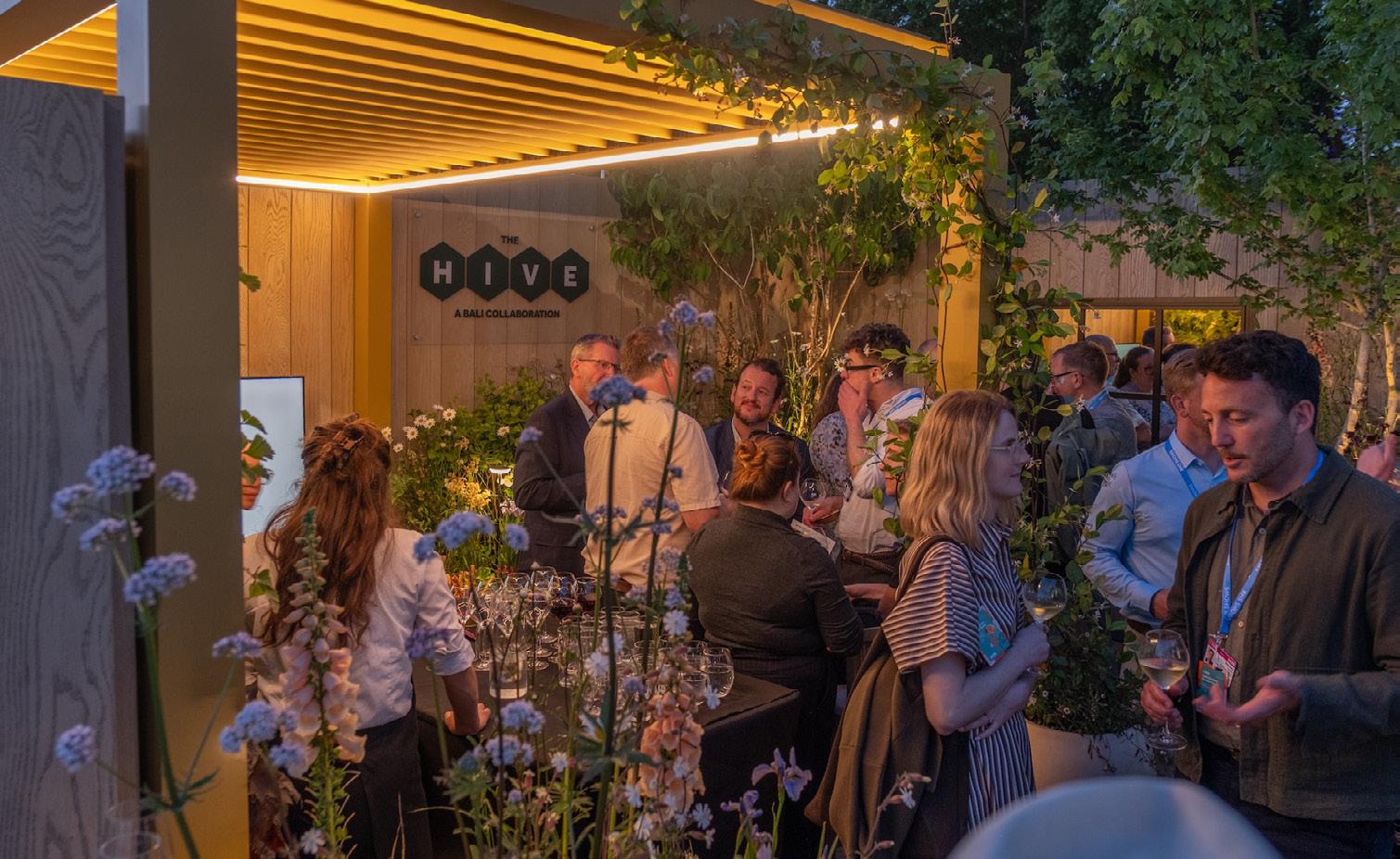
our name to. BALI does vital work in raising standards across the UK landscape industry, and their Chelsea exhibit is a powerful showcase of what its members and partners can achieve together. Matt Evans has brought real skill and intention to this garden, and seeing our Ashwood Shadow Line+ cladding specified within such a cohesive, collaborative scheme means a great deal to us."
Not only were the whole team delighted to be awarded with a 3-star award for their efforts, but the experience they come away with, the knowledge gained, and the boost to their business profile, should have lasting impacts for many years to come.
“The project wouldn’t exist without BALI members, but also it wouldn’t be possible without BALI providing us with the platform.”
Bringing the vision to life: The Hive
BALI would like to extend its sincerest thanks to all those who contributed to the success of The Hive:
• Bourne Amenity (Soil)
• Ca’ Pietra (Paving)
• Coco Wolf (Seating)
• Creepers (Planting)
• Frosts Landscapes (Construction)
• Furnitubes (Seating)
• Hillier Trees (Trees)
• Jake Catling (General support)
• JJH Landscapes (Build support)
• Jonathan Ginger Productions (Photography)
• Land Technology (Grout and aggregate)
• Landscapeplus (Lighting)
• Marco Architectural Aluminium (Architectural window)
• Millboard (Cladding)
• Morvelle (Pergola)
• Sky Garden (Vertical planting)
• The Garden Room Living and Landscape Studio (Design)
• And a special thanks to both Rosie Sayers and Amy Cobbett, BALI, for project management.
In today’s modern world where seemingly everything is expendable and fleeting, British stone supplier and BALI member, Stone UK, is instead embracing conservation, restoration and innovation to create stunning landscapes with a traditional feel. Editor Luke Garner discovers how they’re carving out a path to success in a challenging industry.
At first glance, it is a familiar story to many in the landscape sector: a British stone supplier, rooted in tradition, supplying to heritage projects across the country. But dig a little deeper and a more interesting narrative begins to emerge – one that speaks directly to the challenges, opportunities and responsibilities facing today’s landscape professionals.
Based in Lancashire, Stone UK has spent more than two decades working with natural British stone, supplying material for landscaping, paving, conservation and restoration projects nationwide. What’s notable isn’t just the scale or prestige of its work, but how deliberately the business is responding to shifting industry trends and sentiments, one increasingly shaped by sustainability pressures, skills shortages and scrutiny of supply chains.
Respecting heritage, rethinking materials
Much of its work involves conservation, where understanding historic materials and craftsmanship is essential. But rather than treating this as something fixed, the company has used it as a platform for innovation.
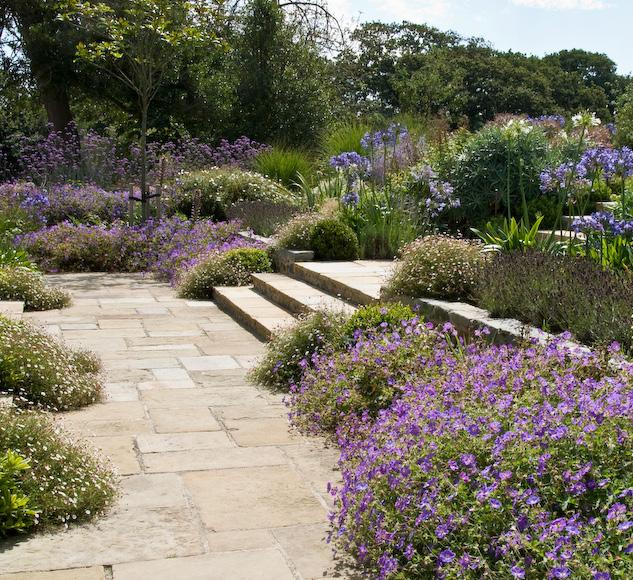
One example is its growing emphasis on reclaimed stone. The process is careful and methodical: reclaimed material is assessed, re-cut, dressed and finished in-house so it can be reused as paving, steps or cladding. For landscape contractors and designers, the appeal is multi-layered, as reclaimed stone brings authentic patina and character that new materials can struggle to replicate, while also offering tangible carbon savings by avoiding fresh quarrying and reducing transport emissions.
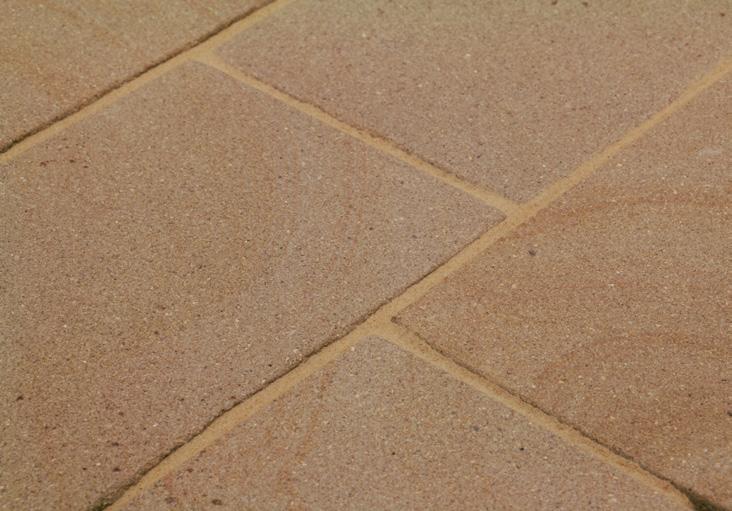
Alongside this, the company produces its cathedral paving, defined by a hand-finished edge with subtle irregularity. This approach reflects traditional finishing methods often found in historic materials, allowing new or reclaimed stone to sit more comfortably within established settings. By focusing on edge detailing rather than uniformity, it supports a more considered use of materials, helping extend the lifecycle and visual compatibility of stone within both conservation and contemporary projects.
This approach aligns neatly with circular economy principles - something increasingly important to clients, particularly on public realm and heritage-led schemes. For contractors, it also demonstrates how sustainability doesn’t have to mean compromising on quality or aesthetics.
Innovation driven by real-world constraints
Like many in the industry, Stone UK hasn’t been immune to rising costs, supply chain disruption and an ongoing shortage of skilled labour. Imported stone, often cheaper at face value, continues to exert pressure on the market, despite growing concerns over its environmental footprint and ethical sourcing.
Rather than competing purely on price, Stone UK has focused on product innovation. The company has developed a refined stone format designed to reduce material use while retaining the strength and durability expected of British Yorkstone. Less material means a lower carbon footprint, but it also means lighter units that are easier to handle and quicker to install – a practical response to labour shortages and rising installation costs.
Indeed, the strategy is clearly paying off, with their shift away from low-cost imported products driving increased sales in Q1 2026 for the company.
“As clients become increasingly values-driven, businesses that can clearly articulate provenance and sustainability will stand out.”
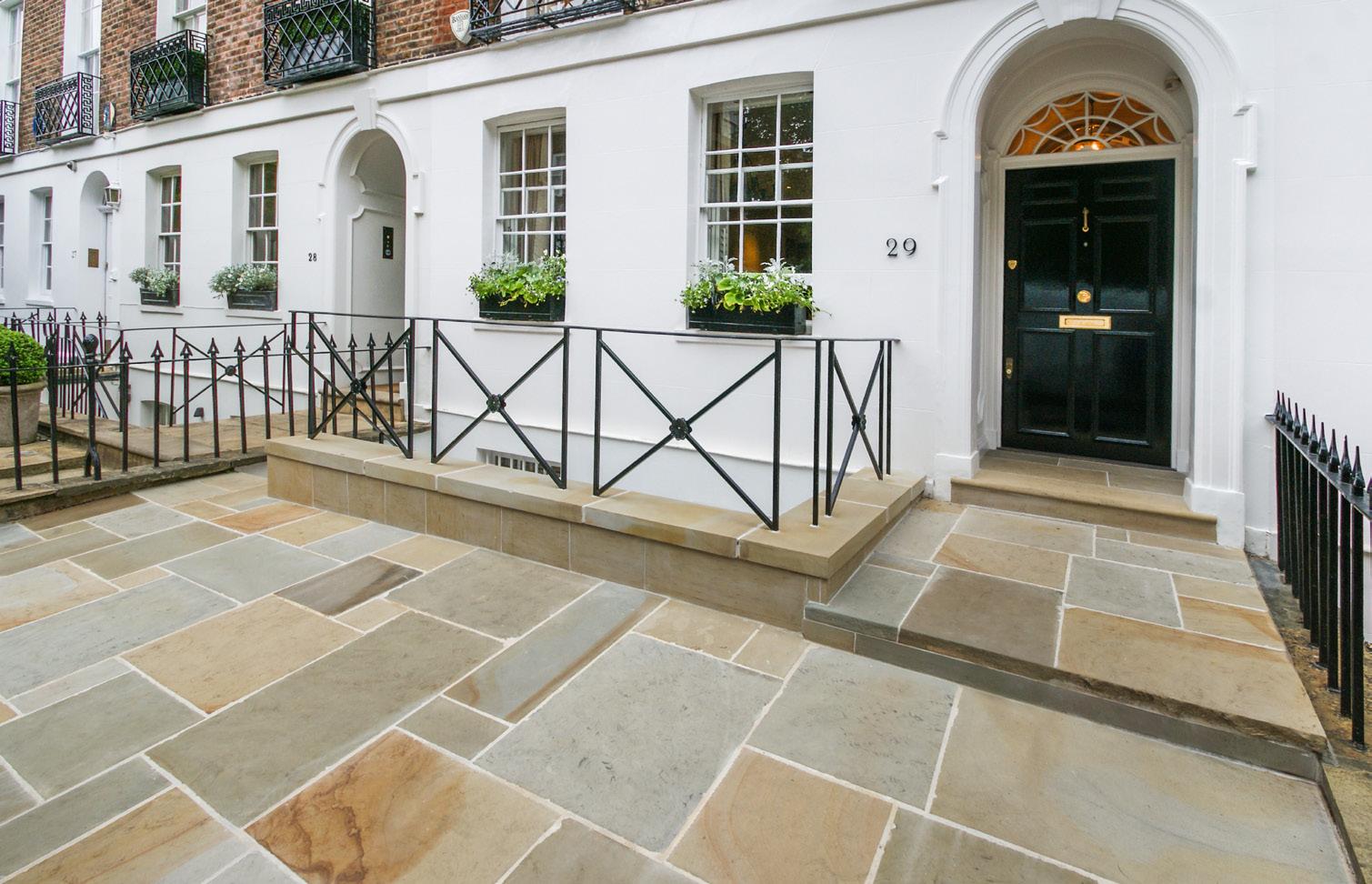
“The project underscores the value of early collaboration between suppliers, designers and contractors to maximise reuse opportunities.”
This highlights an important lesson that innovation doesn’t always mean radical reinvention; sometimes it’s about subtle changes that make projects more efficient, safer and more sustainable without undermining traditional craft.
Of course, though well-respected for their restoration project work, Stone UK primarily focus on supplying materials to the domestic, luxury design and build markets, particularly garden designers and contractors, where they are increasingly seeing these changing attitudes of customers positively impact demand, especially as clients increasingly look beyond mere price.
Few projects illustrate these principles better than at the world-famous Blenheim Palace, where Stone UK were entrusted with supplying reclaimed Yorkstone paving that had to be carefully tailored to meet the specific thickness and coursed width requirements of this prestigious site.
To complement the grandeur of the palace, their bespoke Bronte Cathedral Yorkstone paving was crafted with precision, each flag being calibrated to 50mm and hand-dressed by skilled craftsmen, ensuring a perfect fit and a finish consistent with the estate’s historic character.
Over time, the Yorkstone will continue to mature gracefully, its weathered character integrating seamlessly with the historic surroundings, demonstrating the enduring impact of carefully considered stonework.
One challenge Stone UK readily acknowledges is the shortage of industry skills, particularly traditional stone masonry skills. Installation can be time-consuming and costly when specialist skills are in short supply, making it harder to compete with simpler, lower-cost alternatives.
This is where industry bodies like BALI play a crucial role. Stone UK points to the value

of BALI membership in providing access to networks, training resources and best-practice guidance, particularly around sustainability and craftsmanship. There’s also a call for more industry-wide standards on ethical sourcing and carbon benchmarking for natural stone – something that could help specifiers and contractors make more informed choices.
Equally, greater focus on training and certifying installers in modern stone systems could help bridge the gap between traditional materials and contemporary construction demands.
Asked what advice it would give to other BALI members, they recommend a focus on quality, as well as being transparent about sourcing and carbon impact. And of course, not being afraid to embrace new formats and technologies – as long as they enhance, rather than dilute, craftsmanship and heritage.
It’s advice that resonates beyond stone supply. As clients become increasingly valuesdriven, landscape businesses that can clearly articulate provenance, sustainability and longterm performance are more likely to stand out in an increasingly crowded market.
Stone UK’s future plans include expanding its reclaimed Yorkstone paving offering, continuing to develop refined stone formats, and introducing tools such as carbon calculators to better communicate environmental impact.
The overarching message is that heritage materials, when approached with care and creativity, can sit comfortably alongside modern sustainability goals for an industry balancing tradition with innovation.
Contact: stoneuk.com
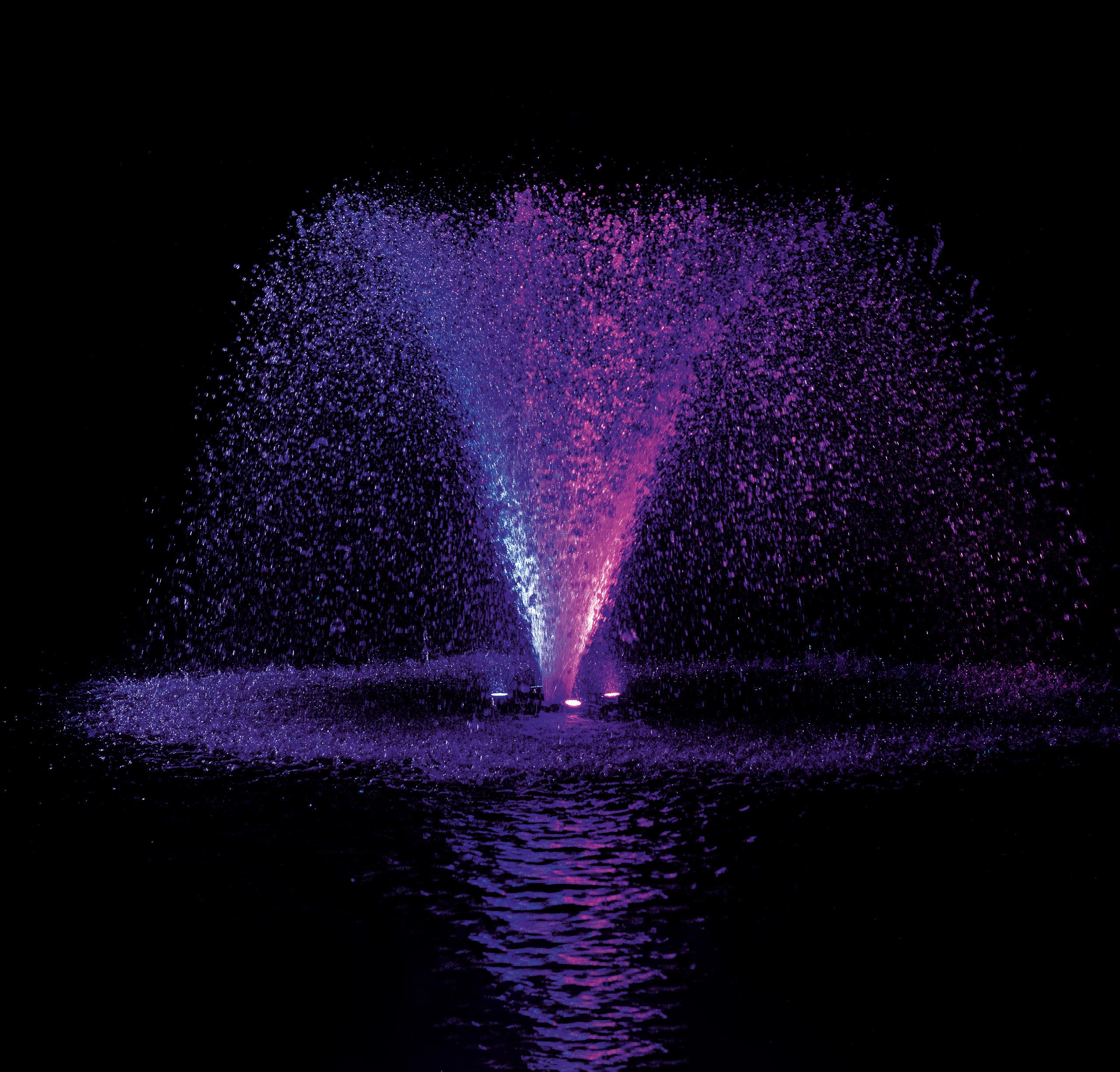

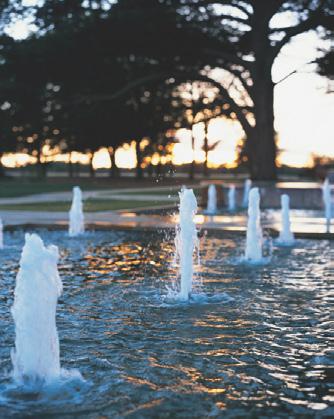
Bring your fountain to life at night with Otterbine’s lighting systems.
Otterbine’s Fountain Glo™ MIDI-RGBW lights offer a cost-effective way to add rich colour to your fountains. These 9-watt light sets pair perfectly with Otterbine’s 1-5hp aerating fountains to give lavish, vibrant light to accentuate any pattern with a variety of coloured displays and sequences. Takes your venue from day to night in style.
reesink-hydroscapes.co.uk




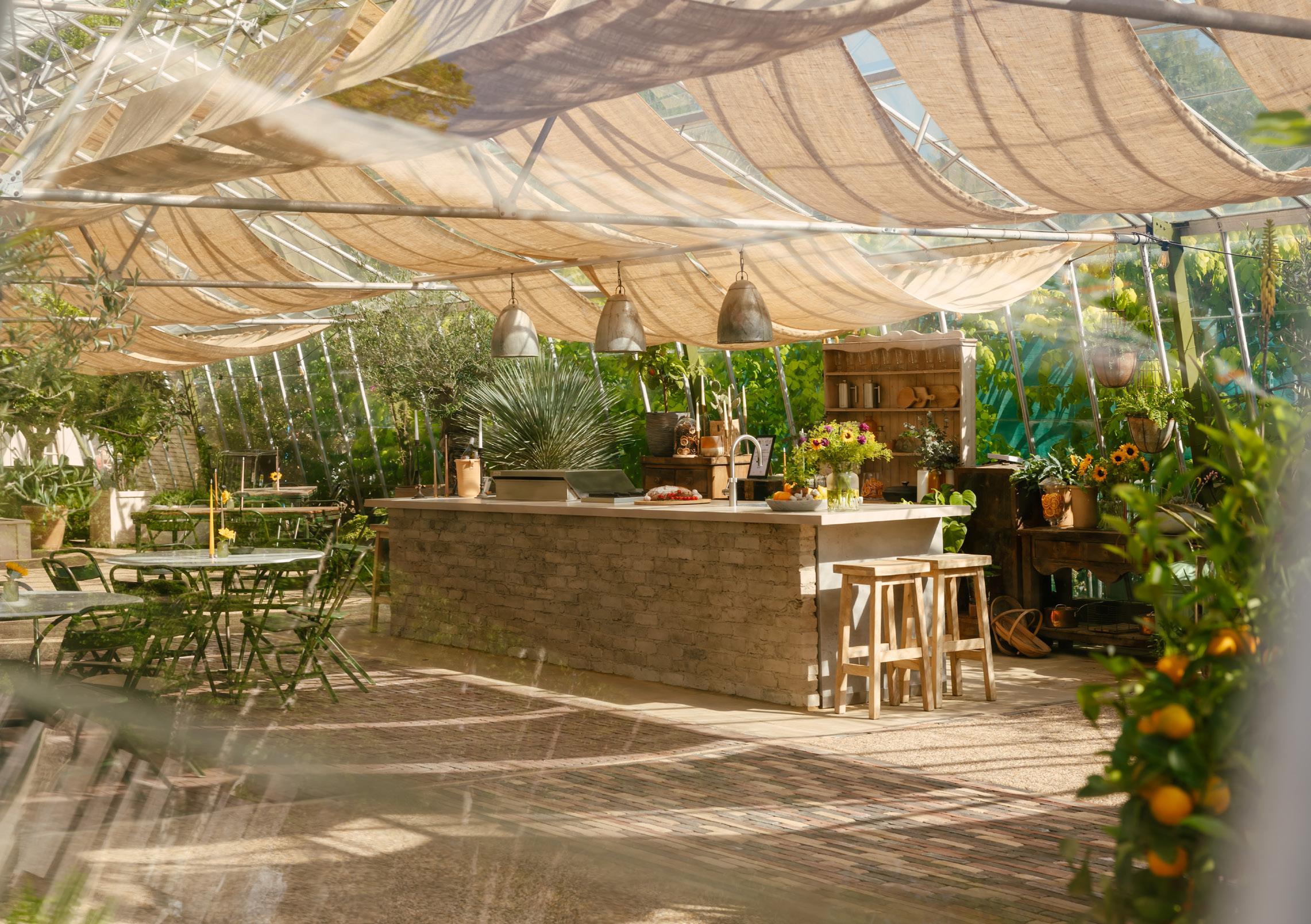
Collaboration and innovation have combined in Surrey to create a different approach to showcasing the talents of the landscape industry. Discover how The Glasshouse Collective is reflecting a changing sector.
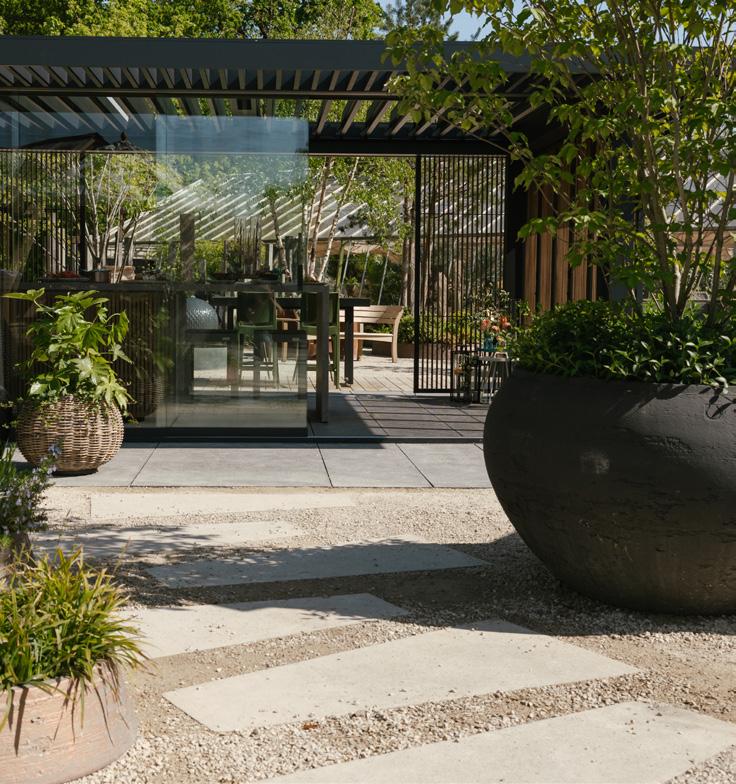
The Glasshouse Collective opened in Chobham, Surrey in April 2025 with an ambitious aim to bring the landscape industry together in one place. Set within a restored glasshouse and surrounding gardens, more than twenty designers, manufacturers, growers and makers now display their work across nine connected outdoor spaces, allowing visitors to experience products working together within real garden settings rather than as isolated displays.
For founder Mark Gregory, Managing Director of Landform Consultants, the idea grew from more than 40 years in the industry, watching projects become increasingly collaborative while clients shifted towards cohesive outdoor environments designed for year-round living.
That ambition became central to the concept. Gregory envisioned "a carefully curated show space that would celebrate the very best in
craftsmanship within the outdoor living sector" – a place where products could be experienced in their natural setting and where collaboration could flourish.
Not everyone immediately understood the scale of the ambition.
“When I first shared this vision, some felt it might be a step too far,” Gregory recalls. “But Alan Williams immediately recognised its potential and took the lead in bringing it to life.”
That partnership between Gregory and Williams, now Curator of The Glasshouse Collective, became central to shaping the project. With a background in floristry, interiors and garden design, Williams brought a strong instinct for composition and how the individual elements of a garden come together as a whole.
“Not everyone immediately understood the scale of the ambition... some felt it might be a step too far.”
Visitors arriving at the site move through a sequence of interconnected outdoor spaces, each designed to show how materials, products and planting come together within a fully realised garden environment.
“Step through our wooden black gates and you discover a hidden garden,” Williams says. “Everything is shown side by side, so you can really see how complementary products work together in a real setting.”
This is where The Glasshouse Collective feels particularly timely. The way people think about gardens has changed significantly over the last decade. Outdoor spaces are increasingly expected to function as extensions of the home: places for entertaining, retreating, working, cooking, gathering and spending time throughout the year.
Social media and interiors culture have also raised expectations, with clients exposed to a constant stream of inspiration but still needing help turning ideas into something coherent and enduring. Gardens are increasingly discussed in terms more often associated with interiors and hospitality: atmosphere, sanctuary, retreat, comfort, texture and experience. Outdoor kitchens, integrated lighting, covered entertaining spaces, considered furniture and complementary planting are no longer seen as decorative
extras, but as part of a more holistic approach to outdoor living.
The Collective reflects that thinking in a very tangible way. Garden House Design, for example, bring an interiors-led understanding of colour, comfort and outdoor entertaining into the space, showing how carefully chosen structures, kitchens and furnishings can help a garden feel genuinely connected to the home. Millboard’s decking and cladding, meanwhile, reflect a clear shift – clients increasingly want materials that work across the whole garden, last well and don’t demand constant upkeep.
Into The Garden Room, meanwhile, reflects the growing demand for outdoor structures that support year-round living, what the brand describes as creating “spaces that support modern routines” and “gardens that feel purposeful”. The repeated presence of Torc Pots throughout the site, with planting that softens the surrounding hard landscaping features, helps create a sense of cohesion across the various spaces.
Lighting is another important part of this changing picture. Landscapeplus shows how lighting is no longer viewed purely as a practical afterthought, but as a way of extending use, shaping atmosphere and allowing gardens to be experienced after dark. Clients increasingly see comfort, function and atmosphere as where the real value of a garden lies.
Other members bring their own distinct character to the Collective. A Place In The Garden displays handcrafted outdoor pieces including planters, water features, decorative objects, lighting, furniture and fire pits, that help blur the line between garden design and outdoor hospitality. Allgreen, natural stone specialists, have a presence across a number of the Collective’s zones, reinforcing the importance of material continuity and the way carefully selected hard landscaping elements can help hold a scheme together.
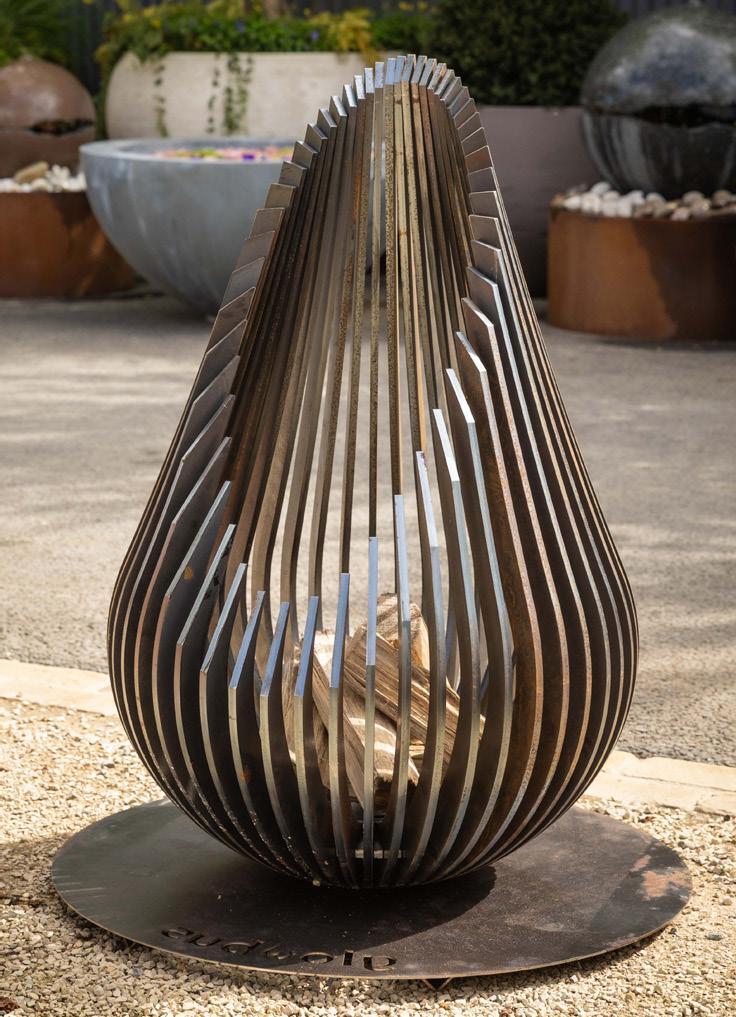
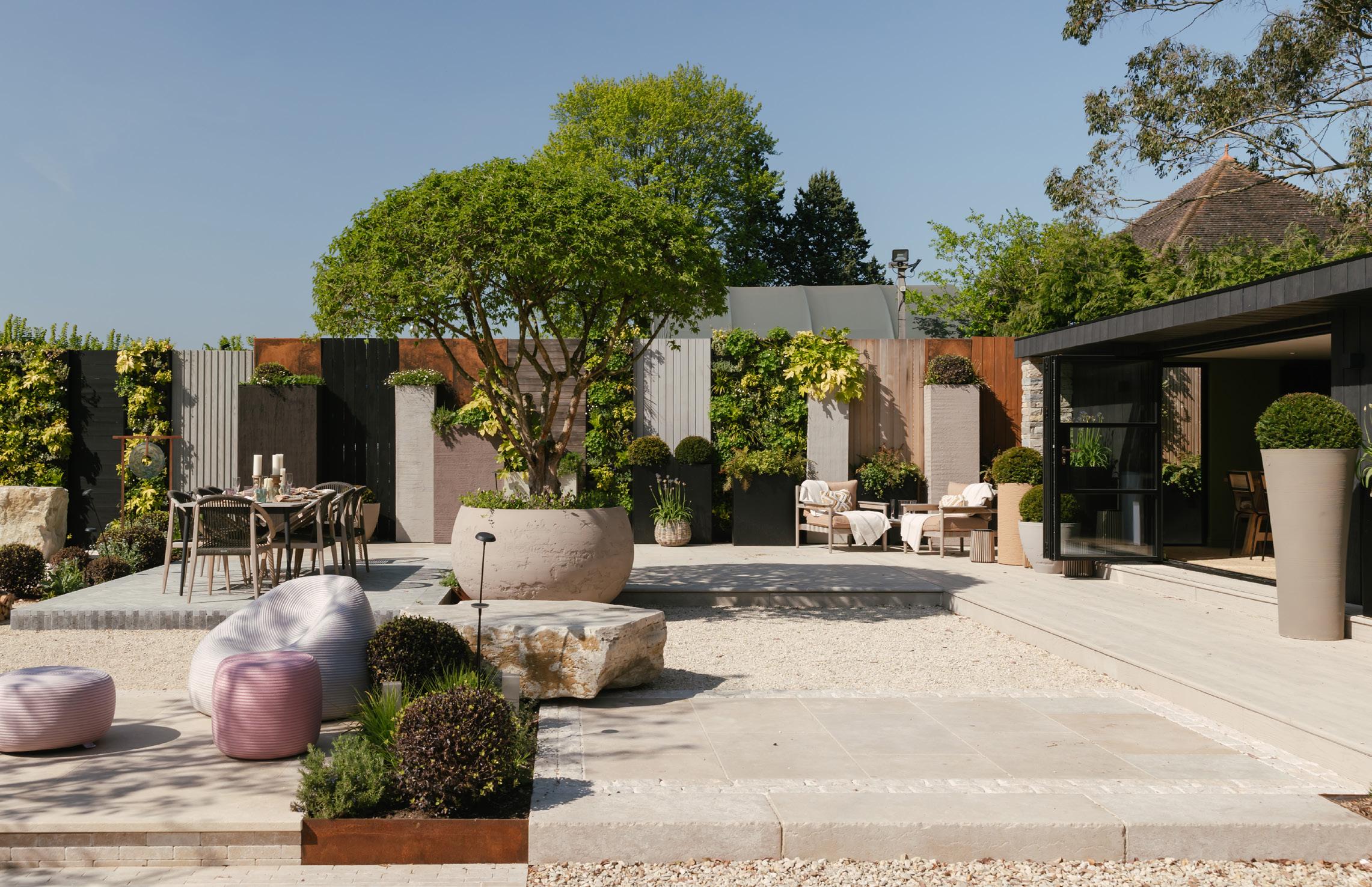
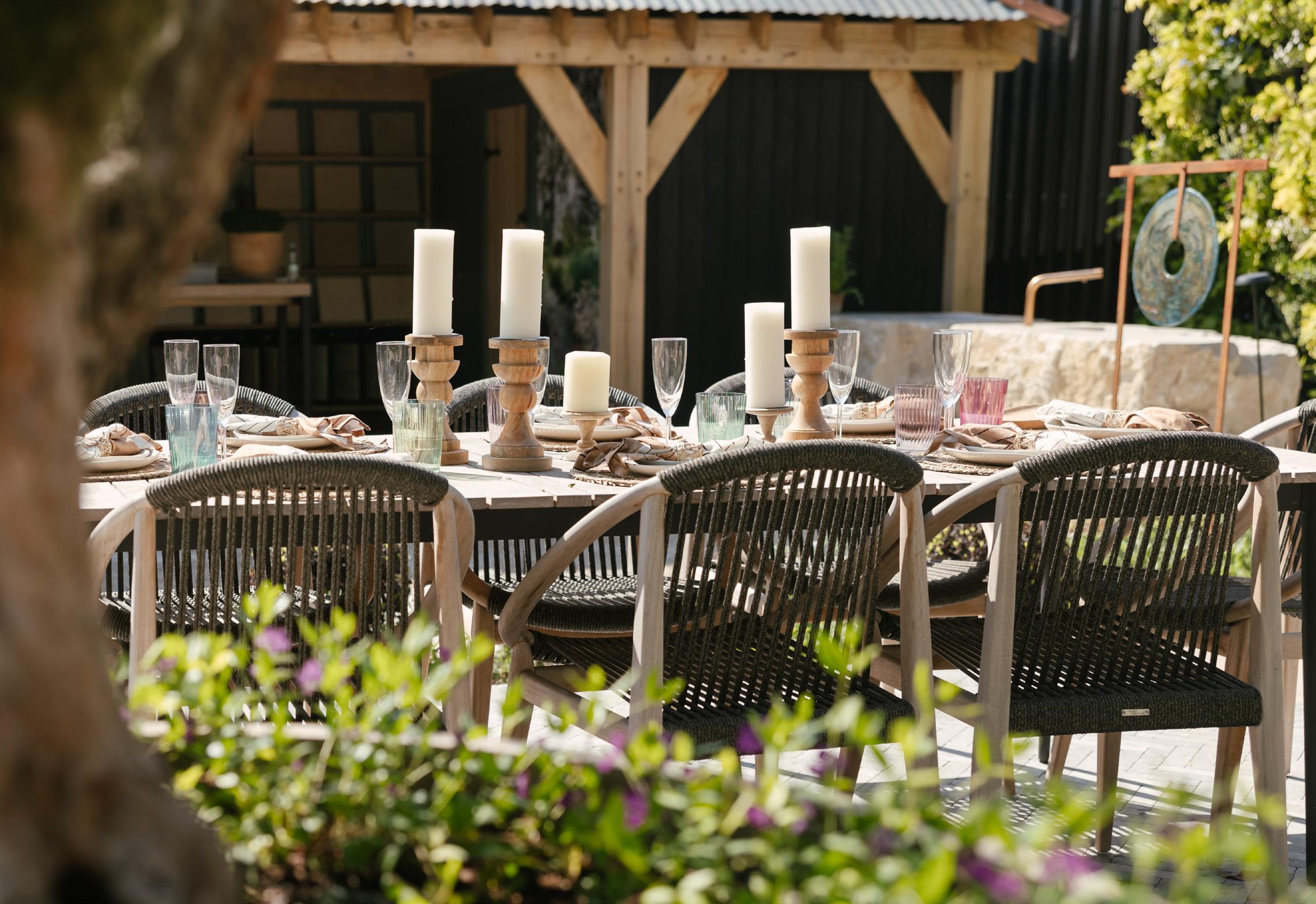
None of these elements exists in isolation. That is perhaps the point. The strength of The Glasshouse Collective lies not simply in the individual brands it brings together, but in the way they are curated to show how gardens are actually experienced; as layered, sensory and functional places.
For clients, this can make the design process far more accessible. Products viewed online or in catalogues only ever tell part of the story. Texture, scale, craftsmanship and how materials look alongside each other are still difficult to judge through a screen alone. A sample may show a finish, but it cannot show how that finish behaves against planting or how it contributes to the feel of a whole space.
For landscape professionals, the Collective also creates opportunities for more meaningful collaboration. Conversations that might otherwise happen separately between supplier, designer, contractor and client can take place within the same environment.
The Collective has quickly become a meeting place for the wider industry. BALI has already held its South Thames AGM at the site, while educational visits, designer days and wider industry gatherings have taken place
throughout its first year. A number of the collective members are themselves BALI Accredited Suppliers, including Garden House Design, Millboard, Schellevis, Vande Moortel, Addagrip and Creepers, reinforcing the natural overlap between the two communities.
Beyond organised events, the space remains an active working environment, with regular open days and appointments allowing designers and landscapers to bring clients in as part of the design process. Membership operates across Gold, Silver and Bronze tiers, offering varying levels of collaboration and involvement. Marking its first anniversary in April 2026, The Glasshouse Collective also opened a ninth space, The Courtyard, featuring members including The Modern Garden Company and Adezz, with plans to continue broadening its programme for both the public and trade.
That collaborative spirit extends to one of the industry’s most important charities. Mark Gregory was named Perennial’s first Ambassador in April 2025 and has used the role to bring fundraising and awareness events to the Collective. Perennial, the UK charity supporting everyone working in or retired from horticulture, has hosted events at the site, including a ‘Meet the Suppliers’ fundraiser, with further fundraisers planned.
In many ways, The Glasshouse Collective represents far more than a show space. It reflects a wider shift taking place across the landscape industry, one where collaboration, craftsmanship and experience are becoming just as important as the products themselves. And in an era increasingly shaped by digital inspiration, perhaps its greatest strength lies simply in the opportunity to experience outdoor design in the real world.
For Gregory, the project’s success ultimately comes back to the people behind it - the members, makers, designers and collaborators who have helped shape the vision from the very beginning.
“As the saying goes, from little acorns grow mighty oak trees,” he reflects. “With the continued dedication of our team and members, I have no doubt that we can support and inspire your own outdoor living projects and bring your visions to life.”
Contact: theglasshousecollective.co.uk
Every project you complete is an opportunity to build your brand, enhance your reputation and entice new customers. So, our marketing expert, Mia Foster, asks “are you doing all you can to showcase your work in the best possible light?”
For many landscaping businesses, marketing is something that happens between jobs. You finish a project, then think about what to post on social media, how to update your website, or when to send out your next email campaign.
But the most successful landscape companies approach things differently. They see every project, whether it is a small maintenance visit to a full landscape transformation, as a built-in marketing opportunity. Every lawn you mow, patio you install, hedge you shape, or irrigation system you repair can help generate your next customer. The key is creating simple processes that allow your team to capture content, collect feedback, and showcase your work consistently without adding hours of extra admin.
Think like a content creator
Landscaping is highly visual, which makes it perfect for marketing on platforms like Facebook, Instagram, LinkedIn, and even Google Business Profile. Yet many businesses miss opportunities simply because nobody remembers to take photos before the job starts.
The easiest solution is to build content capture into your workflow.
Before unloading tools or materials, take a quick “before” photo. Once the project is complete, take matching “after” shots from the same angle. These side-by-side comparisons are some of the most effective marketing assets a landscaping business can create because they instantly demonstrate transformation and value.
Best of all, you don’t need expensive equipment or a professional photographer, as modern smartphones are more than capable of producing high-quality content for web.
A few simple tips can help dramatically improve your photos:
• Take pictures in natural daylight where possible
• Use landscape orientation for website use and portrait orientation for social media stories
• Tidy the site fully before taking final shots
• Capture a mix of wide angles as well as close-up detail shots
• Include photos with your branded vehicles or uniforms in them when appropriate
• Try to take photos from the same position for before-and-after comparisons.
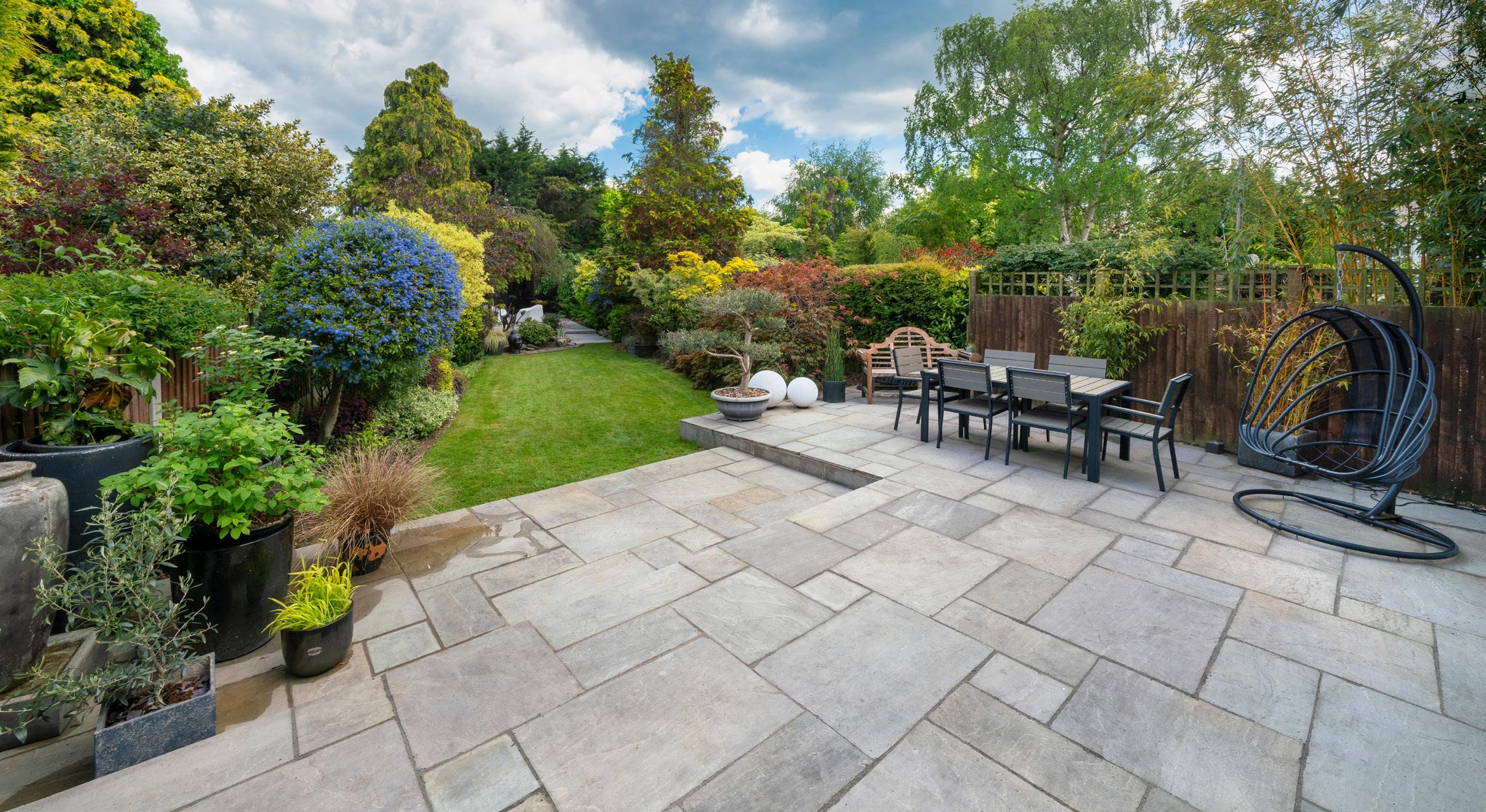
One of the biggest reasons businesses fail to collect marketing content is because responsibility is unclear; if everyone is supposed to take photos, often nobody does.
Instead, assign ownership. This could be the team leader, site supervisor, office administrator, or even rotating crew members – the important thing is having a clear expectation.
Many successful landscaping businesses now include photo capture as part of their standard operating procedures, such as a before photo taken on arrival, progress photos during the job, final completed project photos, and customer testimonials before leaving site.
This process only takes a few minutes but can generate weeks of marketing material.
It also helps to make uploading easy - shared cloud folders, WhatsApp groups, or project management apps allow teams to instantly send content back to the office for posting and archiving.
Let happy customers speak for you
Word-of-mouth remains one of the most powerful marketing channels in landscaping, but too often, businesses rely on informal recommendations instead of actively collecting testimonials they can use repeatedly.
The best time to ask for feedback is immediately after completing the job, when the customer is standing in their newly transformed space and enthusiasm is highest.
To get the most impact, it is important to keep the request simple and natural. So, instead of asking customers to write a review, try asking questions such as:
• “Would you mind sharing a few words about your experience?”
• “What was the biggest difference this project made for you?”
• “What did you enjoy most about working with our team?”
These prompts tend to generate more personal, useful responses that resonate with potential customers.
Remember though, to always ask permission before using customer comments or photos publicly.
Many landscaping companies only post polished final results. While these are important, audiences also enjoy seeing the work behind the scenes.
Progress photos, time-lapse videos, planting stages, hardscape installation, equipment in action, and team members at work help tell the full story of a project, as well as build trust that you know what you’re doing. This type of content not only demonstrates professionalism and expertise and educates potential clients about the work involved, but it also helps to humanises your business and generates significantly more content which you can share.
Customers often underestimate the planning, labour, and technical skill involved in landscaping projects, so showing the process helps justify pricing while reinforcing the value you provide.
Behind-the-scenes content is also highly effective for recruitment marketing. Potential employees want to see what your company culture looks like, how organised your sites are, and what type of projects they could work on.
Build a library of reusable content
Every completed project should become part of a long-term marketing library.
Too many businesses post photos once on social media and never use them again. In reality, a single project can generate content for months, or even years.
For example, one garden transformation could become:
• An Instagram carousel
• A Facebook before-and-after post
• A website gallery update
• A Google Business Profile post
• A printed brochure image
• An email newsletter feature
• A case study article
• A sales presentation example
Organising your content properly makes this much easier. Create folders by project type or service category so photos and testimonials are easier to find later.
“Many successful businesses now include photo capture as part of their standard operating procedures.”
Over time, this creates a powerful portfolio that helps customers visualise what you can achieve for their own properties.
Use every vehicle and site as advertising space
Marketing opportunities don’t only happen online – your vehicles, uniforms, trailers, signage, and active job sites all contribute to brand visibility. A clean, professional presentation builds trust before you even speak to a prospect.
Simple site boards featuring your logo and contact details can generate local enquiries, especially in busy residential areas where neighbours are already interested in the transformation taking place.
Likewise, branded uniforms and wellmaintained vehicles reinforce professionalism and help create a consistent identity across every customer interaction.
Many landscaping businesses delay marketing because they believe content needs to look highly polished or professionally produced, but in reality, consistency matters far more.
Potential customers want to see real projects, real teams, and real results. Authentic content posted regularly builds familiarity and trust over time.
The businesses that generate the most leads from marketing are rarely the ones posting once every few months. They are the companies documenting their work consistently, collecting customer feedback systematically, and treating every completed project as proof of their expertise.
The good news is that the work is already happening - the trick is simply learning to capture it.
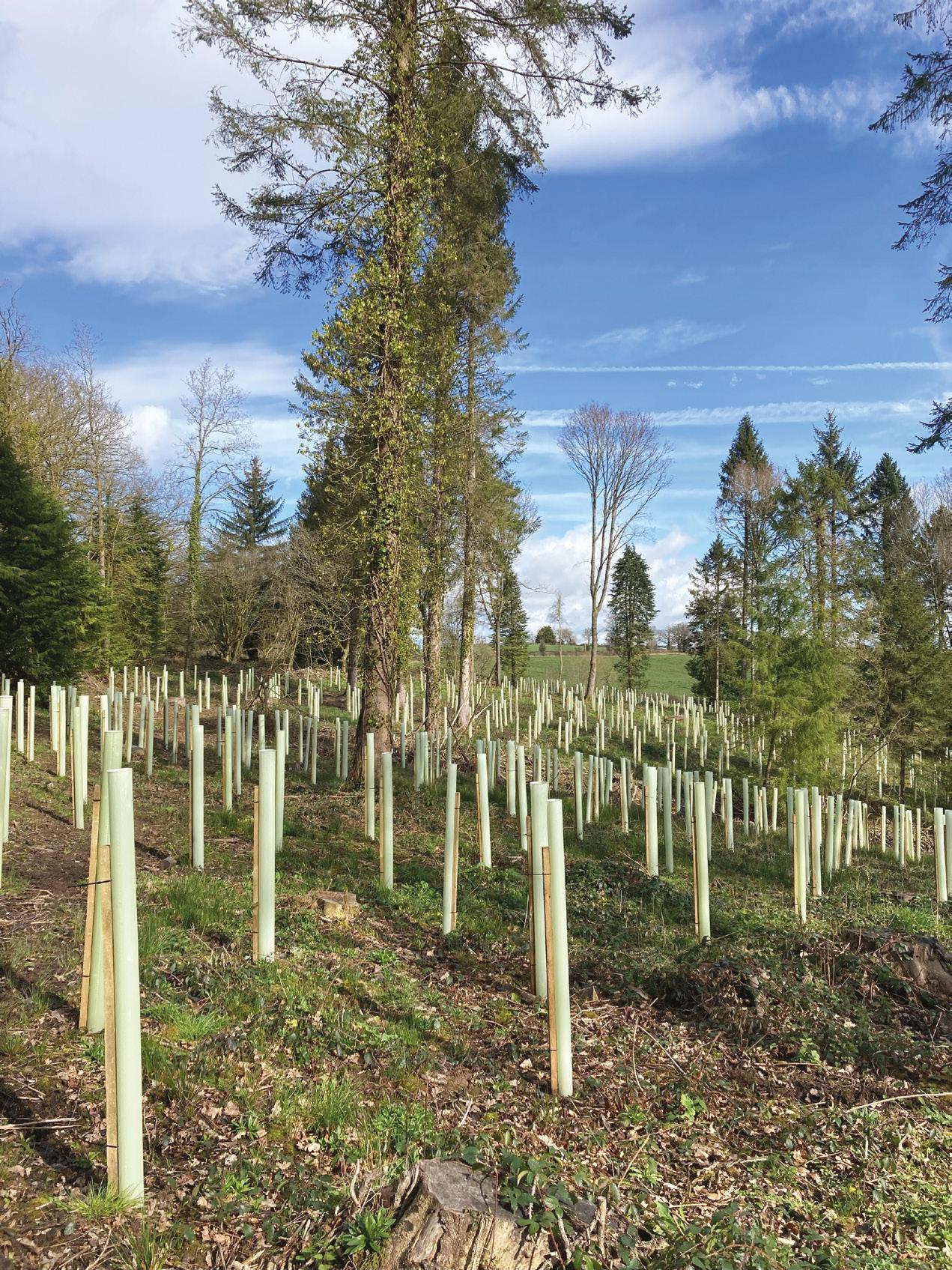
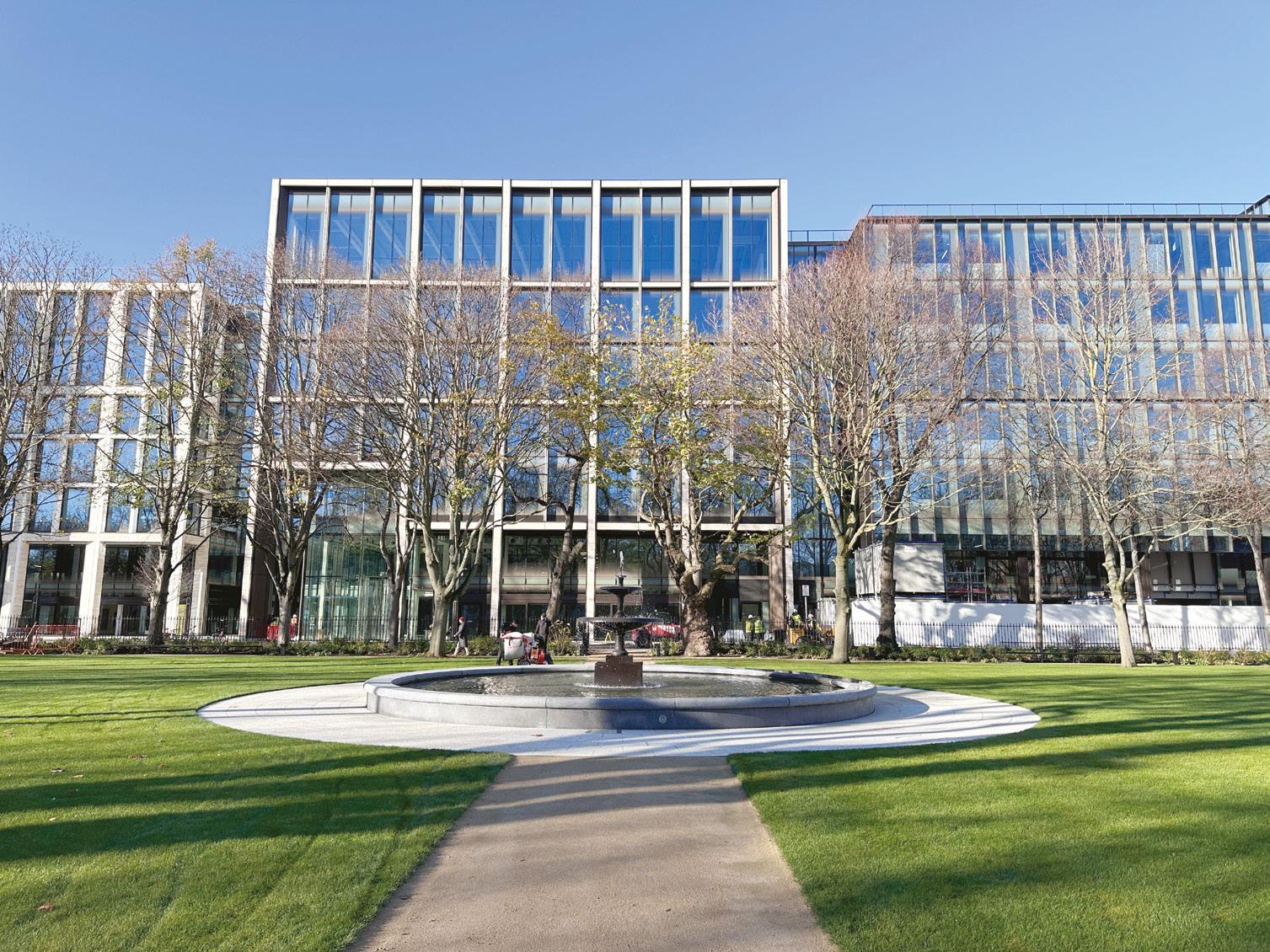
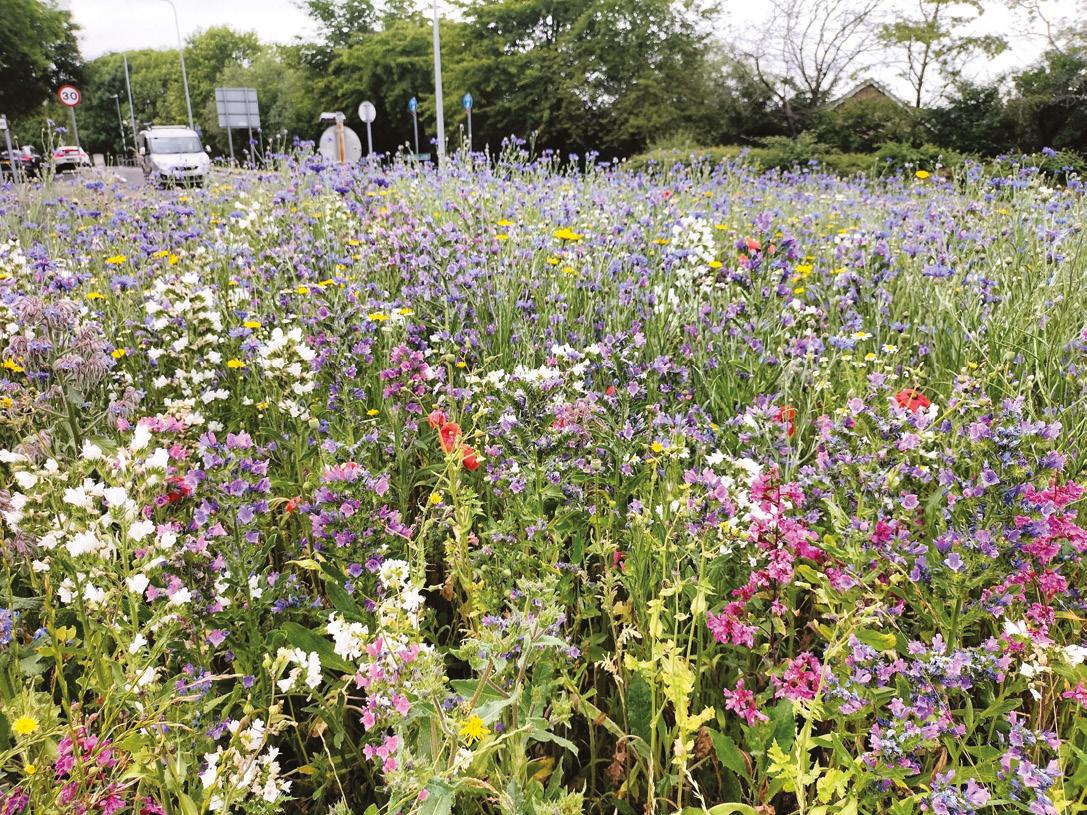
In the quest to create ever more visually stunning landscapes that play well on social media, are we in danger of losing the essence of what truly makes a garden function? Lizzie Tulip – a landscape and garden designer with over 20 years’ experience delivering high-quality public and private landscapes – explores more.
In an age when authenticity is constantly questioned – especially with the rise of AI and social media filters – the search for what is real has never been more relevant. From celebrities embracing natural hair colour and minimal makeup to debates over film and TV covering topics on digital "adjustments", our collective focus has turned toward truth and genuineness. We are becoming more aware of what feels honest and what feels constructed.
Within our own industry, it’s time we ask how this pursuit of authenticity shapes the gardens we create and how we can design real gardens for real people. More importantly, we should consider not just how gardens look at a single moment in time, but how they feel, function, and evolve long after the photograph has been taken.
Authenticity means something real, genuine, or true – not a copy, not a facade. As garden designers and builders, we work with the land’s raw materials: its soil, textures, light, and living elements. Our challenge can be to bring these together in ways that express and build upon the true character of a place, rather than impose something artificial upon it.
But before we can achieve that, it’s worth acknowledging the common pitfalls. Too often, we design against the nature of a site instead of with it – overriding conditions rather than responding to them. True authenticity begins with acceptance: understanding what a space wants to be and working in harmony with that.

“The pressure to be picture-ready risks skewing our creative decisions, leading us toward short-term visual impact rather than long-term success.”
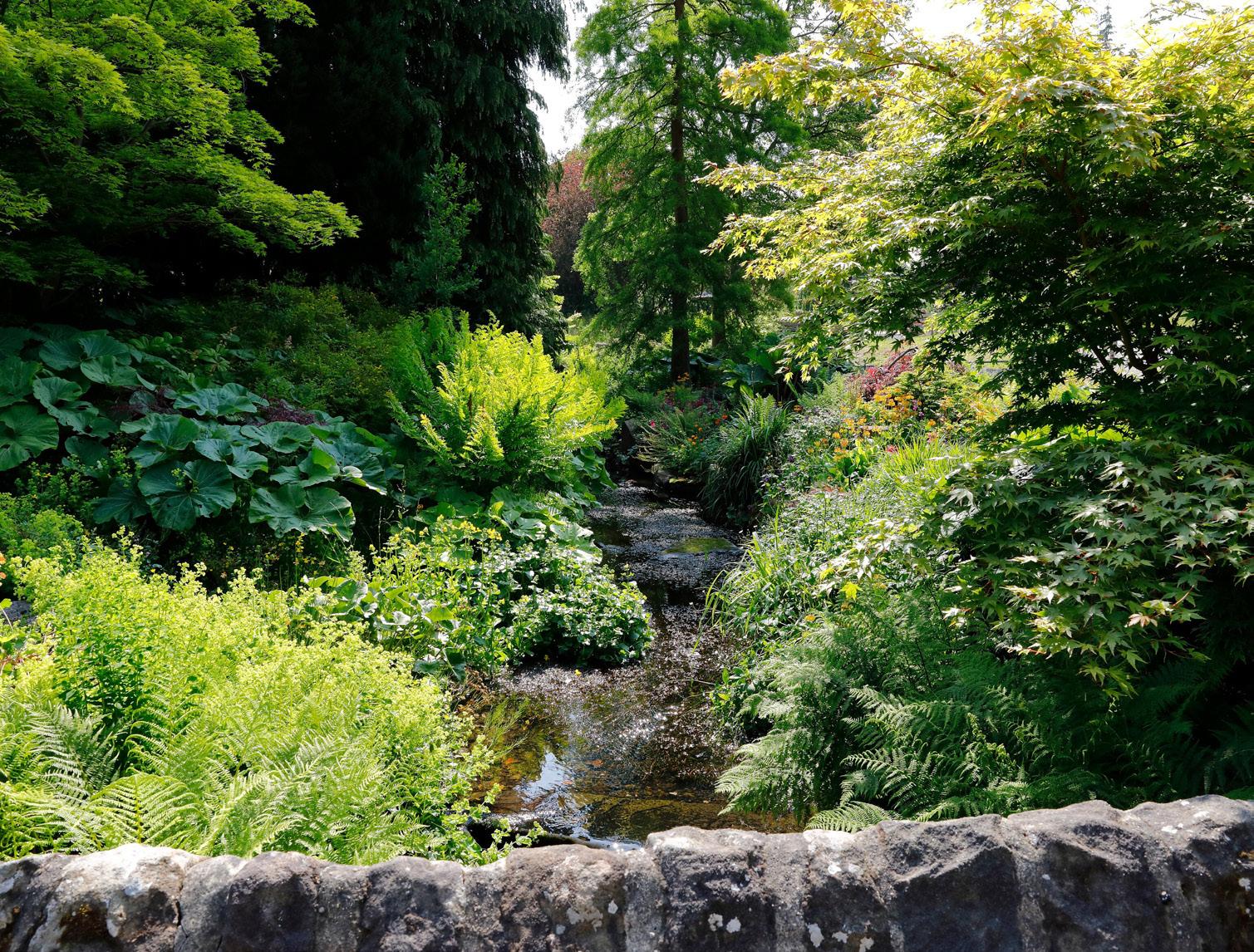
© RHS, Phil Taylor
Too often, our drive for the perfect “Insta shot” shapes the way we design. We all rely on beautiful photography to promote our work, but sometimes the pressure to be pictureready risks skewing our creative decisions and can lead us toward short-term visual impact rather than long-term success.
• Hardscape dominance: It’s easy to favour stone, steel, or decking –elements that look tidy on day one and never wilt or fade. Unlike plants, hard materials don’t droop in heat or suffer from a missed watering, but overuse can leave spaces static and sterile, lacking the softness and unpredictability that bring a garden to life.
• Overuse of evergreens: Formal, evergreen-heavy schemes may suit photoshoots but can lack personality or a sense of place. The comfort of repetition – those familiar clipped spheres and structured shrubs – often produces neat but emotionally flat gardens that fail to engage over time if used without careful thought.
• Emotional emptiness: Emotion, too, is something we can see, even in photos. A wide lawn with a lonely bench might look serene, but without a journey, a sense of enclosure, or curiosity, it lacks spirit. The image tells only half the story; the lived experience often tells another.
“The image tells only half the story; the lived experience often tells another.”
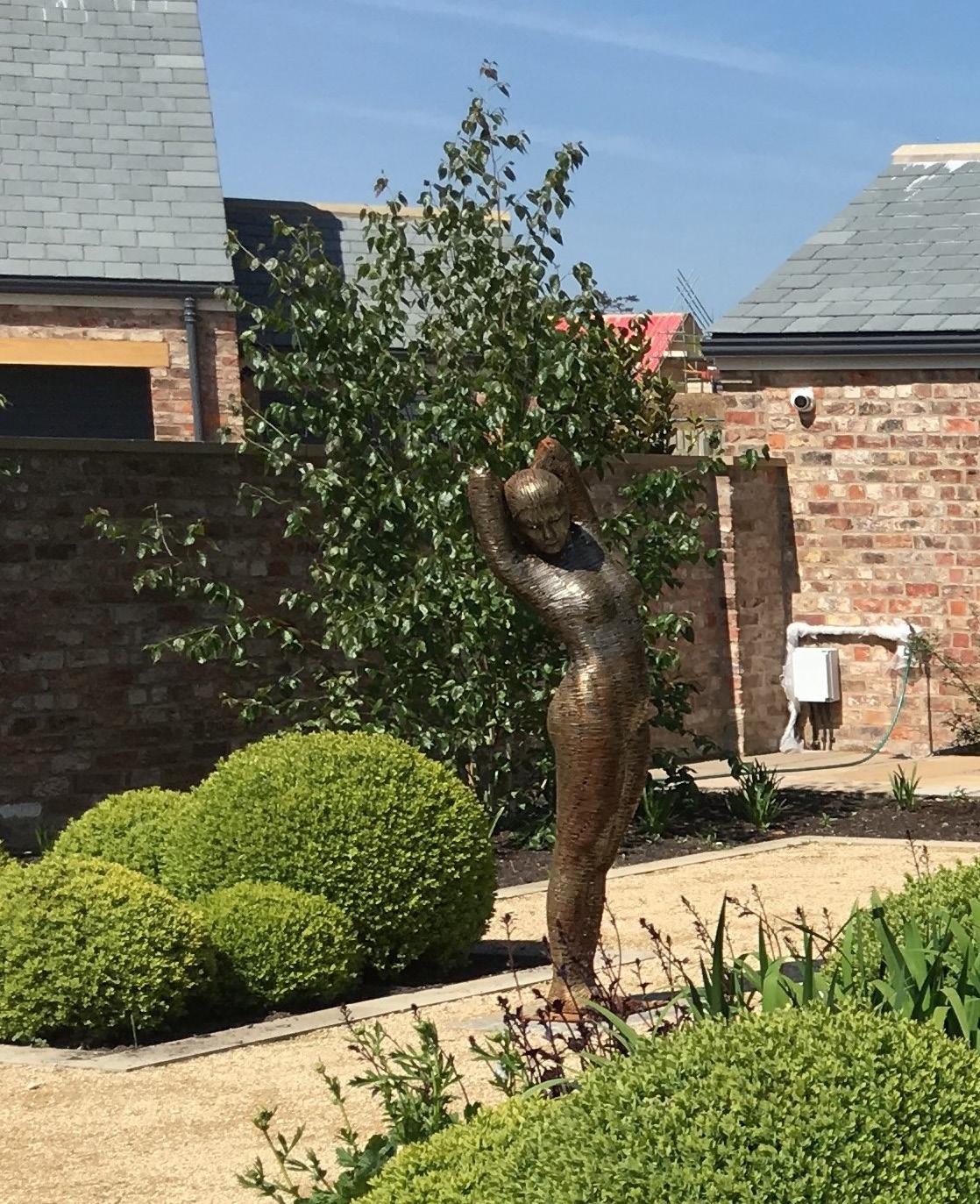
So how do we design gardens that feel truthful to their environment, to our process, and to our clients?
As a Garden Adviser to RHS Harlow Carr in Harrogate, I see these questions arising. Harlow Carr welcomes around half a million visitors a year, so it must remain inspiring in every season while staying true to its reality – heavy clay soil, open winds, and a shifting semi-urban landscape. Authenticity here isn’t a luxury; it’s a necessity that underpins every decision.
At Harlow Carr, biodiversity and resilience lie at the centre of every design choice. The aim is not merely to introduce wildlife-friendly planting but to weave ecological awareness through every layer of the garden. From soil care to planting palettes and habitat
creation, each decision supports the idea that authenticity and biodiversity are inseparable, working together to produce living, dynamic spaces that are both beautiful and enriching.
Authenticity begins with our own design thinking. It’s easy to fall into our comfort zone of scrolling through social media for inspiration, but our most valuable tool is curiosity. Curiosity about the world and what we can take from it into our design work: shapes, colour, textures, and material combinations, and how these can be thoughtfully reinterpreted.
I still remember a tutor’s advice from the early 2000s: “There’s no such thing as a new idea, only borrowed ones.” While partly true, every space, client, and context is different. The skill lies not in copying, but in adapting and
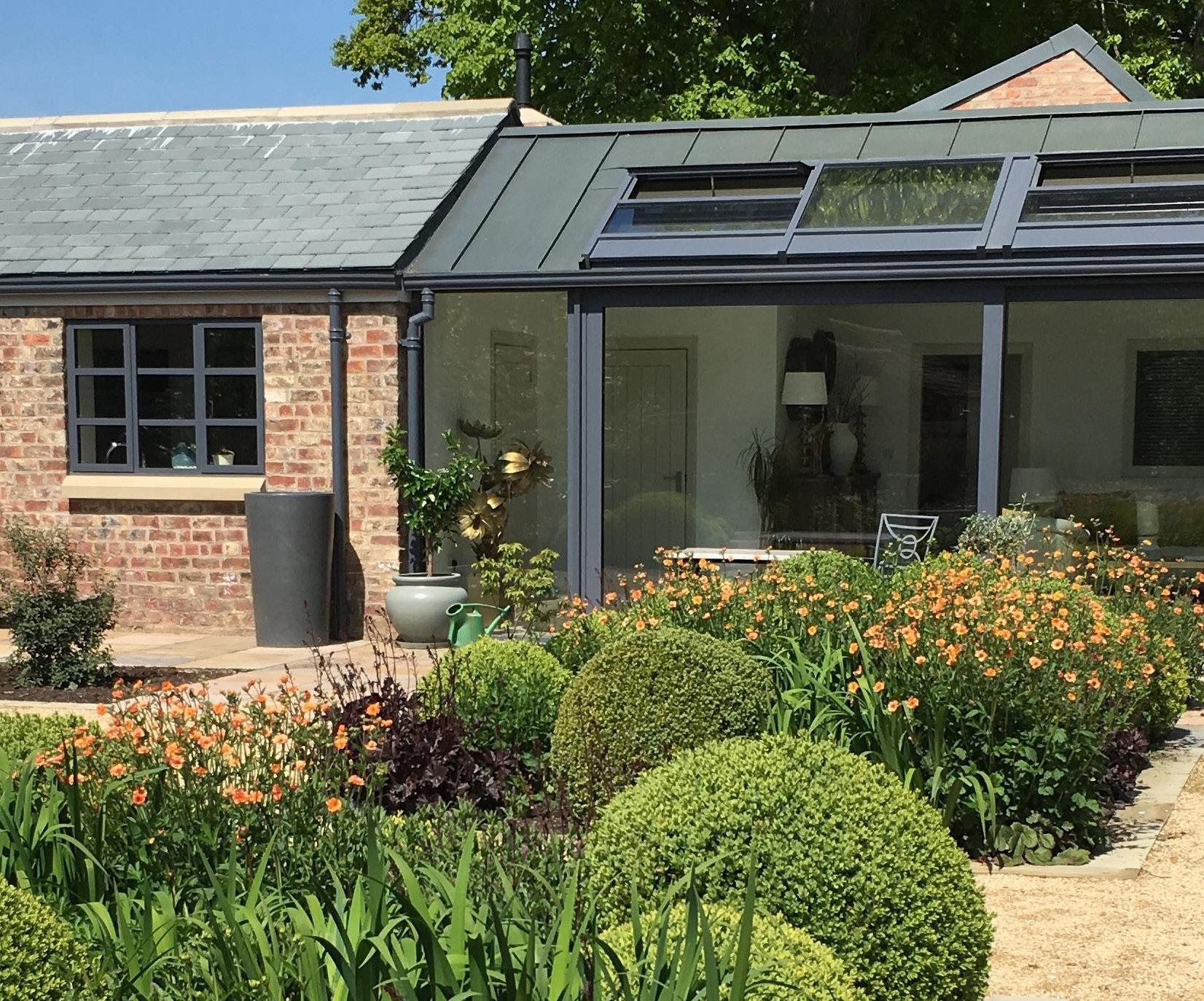
responding. We can borrow thoughtfully, but we must also look beyond the award-winning gardens dominating our feeds and reconnect with everyday landscapes.
Start with the human experience. How do people move, pause, and feel in a space? Consider proportion and scale: wide paths slow us down, while narrow ones excite and create anticipation. Symmetry and formality can bring calm or direction, but too much order can drain vitality – a garden that’s too controlled loses its pulse and sense of discovery.
This then informs our choice of plants and materials. Bold, glossy, and bright elements attract attention and draw people into a space, while softer, paler tones with simpler textures recede and create a sense of depth and distance. By understanding these relationships, we can subtly guide movement
and enhance the character of a garden, layering interest and encouraging people to explore and use every part of it.
Plants anchor authenticity: a scheme that doesn’t move, evolve, or mark the seasons can feel lifeless. Beyond evergreen structure, we should celebrate stems, seed heads, shifting light, and seasonal change. These elements create rhythm and anticipation, reminding us that a garden is never static.
Real gardens grow into themselves over time. They’re imperfect, responsive, and alive, and that’s precisely what makes them meaningful. A garden that changes is a garden that connects with people on a deeper level, offering something new with every visit.
If we continue to expand our knowledge –observing natural systems, learning from failure, and embracing change – we become better equipped to design spaces that feel honest and enduring. Authentic gardens are not about perfection, they are about connection: to place, to people, and to the natural processes that shape them.
Contact: lizzietulip.com
The experts at Meristem Design explore the options available to landscapers when complex underground utility systems pose a challenge to traditional excavationbased SuDS installation.
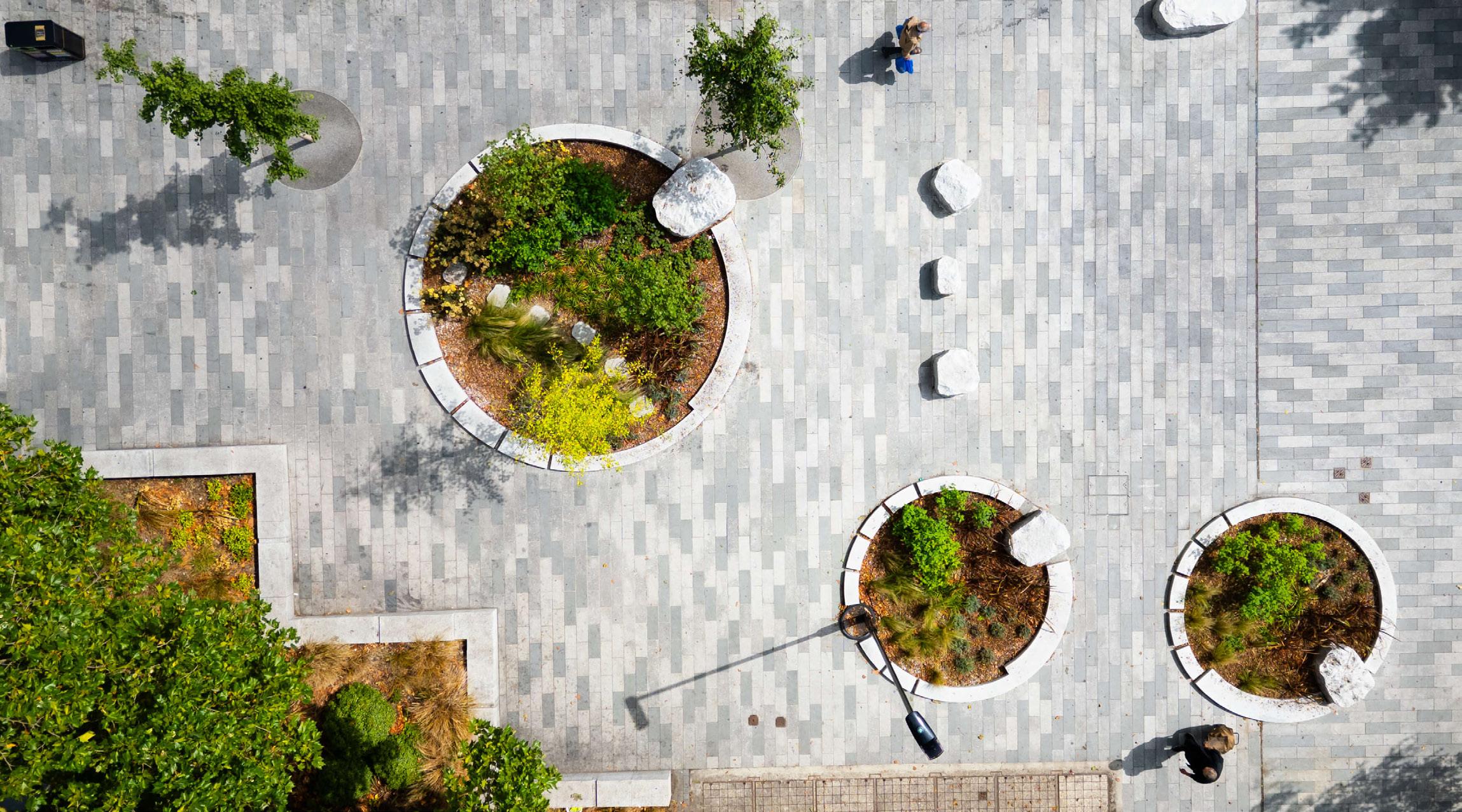
When working within the urban environment, what’s beneath the ground is often just as much of a challenge as what’s above it, especially where towns and cities continue to densify. This can make delivering schemes with Sustainable Drainage Systems (SuDS) particularly complex.
Decades of infrastructure growth have created an increasingly congested underground environment made up of services, telecommunications, transport infrastructure and drainage networks. In the UK alone, there are estimated to be more than four million kilometres of underground utility services such as gas, water, electricity, telecoms, sewers and more. For landscape contractors and designers, this can
significantly limit opportunities for traditional excavation-based SuDS.
However, this does not mean that the pressure on our urban drainage networks is any less. With our national flood risk being higher than ever - combined with extensive hard surfaces and traditional drainage systems that cannot handle frequent intense rainfall events - developers and local authorities are in need of effective climate resilient strategies.
Although rain gardens are widely recognised for their role in reducing flood risk, improving water quality and supporting biodiversity, installing them within heavily serviced streets or public spaces is not always straightforward.
“In the UK alone, there are estimated to be more than four million kilometres of underground utility services.”
Conventional rain gardens often require excavation depths of approximately 800mm which can be difficult to achieve in constrained urban sites with shallow utility services and existing infrastructure. In some cases, excavation can become too disruptive, too costly or simply impractical. This is particularly common in city centres, highways, parks and heavily paved public spaces. In many cases, the challenge is not a lack of willingness to implement SuDS, but finding the right balance between systems that function effectively and the reality of existing infrastructure.
As underground space becomes more congested, there is growing demand for adaptable drainage solutions that can provide attenuation benefits without relying on deep excavation.
At Meristem Design, this challenge led to the development of a Hybrid SuDS Planter system designed specifically for sites where underground constraints limit the feasibility of traditional rain gardens. The aim was to create a system that could still deliver meaningful surface water attenuation and resilient planting while minimising excavation depth and disruption to below-ground infrastructure.
The system uses a shallow, Hydrorock-filled base to capture and temporarily store surface water before gradually releasing it back into the drainage network. Water is also drawn upwards into the planting substrate through capillary action, helping support healthy planting during drier periods. By reducing the depth required for installation, the system offers an alternative approach for locations where traditional excavation-based SuDS may not be possible.
Importantly, the design still retains many of the wider benefits associated with rain gardens and green infrastructure. Alongside surface water management, the systems contribute to biodiversity, urban cooling, placemaking and visual improvement within the public realm.
Redlees Park: applying hybrid SuDS in practice
One project where this approach was successfully implemented was at the entrance to Redlees Park in the London Borough of Hounslow. The project aimed to create a greener and more welcoming entrance to the park while also improving the site’s resilience to surface water flooding.
However, site constraints restricted the depth available for excavation, limiting the potential for a conventional rain garden solution. In response, a series of partially submerged
Hybrid SuDS Planters were designed and installed to provide both drainage attenuation and public realm enhancement within the available conditions.
Each planter was sunk approximately 200mm into the ground and constructed with a Hydrorock attenuation layer at the base. Surface water flows into the system, where it is temporarily stored before gradually dispersing back into the drainage network. This helps reduce pressure on local drainage infrastructure during periods of heavy rainfall while also supporting the planting above.
The project also demonstrated how SuDS infrastructure can contribute positively to the character of public spaces. Powder-coated steel planters in a bright blue finish were used to create a distinctive visual identity at the park entrance, while the planting scheme incorporated drought-tolerant and pollinatorfriendly species including Achillea millefolium, Nepeta ‘Walker’s Low’, Geranium ‘Rozanne’ and Verbena ‘Lollipop’.
The result was a multifunctional landscape feature that combined flood resilience, biodiversity and placemaking within a constrained urban environment.
The Hybrid SuDS Planter is one of several approaches available to landscapers facing depth or utility constraints. The right choice will depend on site-specific conditions, budget and the scale of drainage challenge to be addressed. Other options can include:
• Permeable paving
• Green roofs
• Standard SuDS planters
• Tree pits
“There is growing demand for adaptable drainage solutions that can provide attenuation benefits without relying on deep excavation.”
While traditional rain gardens and infiltration systems remain highly valuable, constrained sites are likely to require more flexible and adaptable approaches. In these situations, innovation becomes essential - not only in design, but also in how SuDS systems are constructed, integrated and maintained within the public realm.
Hybrid approaches that reduce excavation requirements while still delivering attenuation, planting and biodiversity benefits are likely to become an increasingly important part of urban drainage strategies. For landscape contractors, this represents an opportunity to play a greater role in shaping practical and resilient solutions for towns and cities adapting to climate change.
Ultimately, the future of SuDS in urban areas may depend not only on where we can dig, but on how effectively we can design around the constraints beneath our streets.
Contact: meristemdesign.co.uk
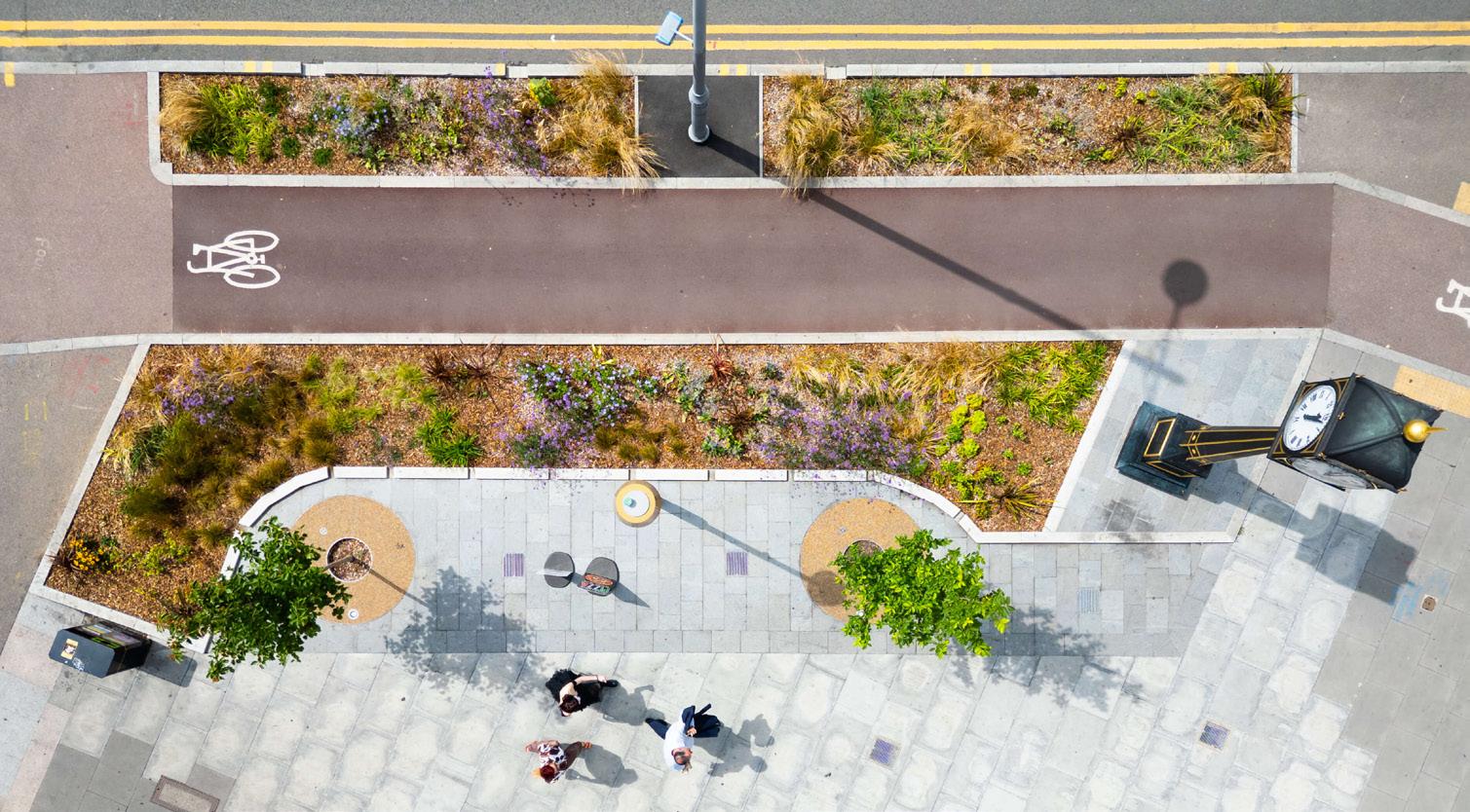


Get inspired, download our brochure and connect with Ryan Burge - our UK account manager.
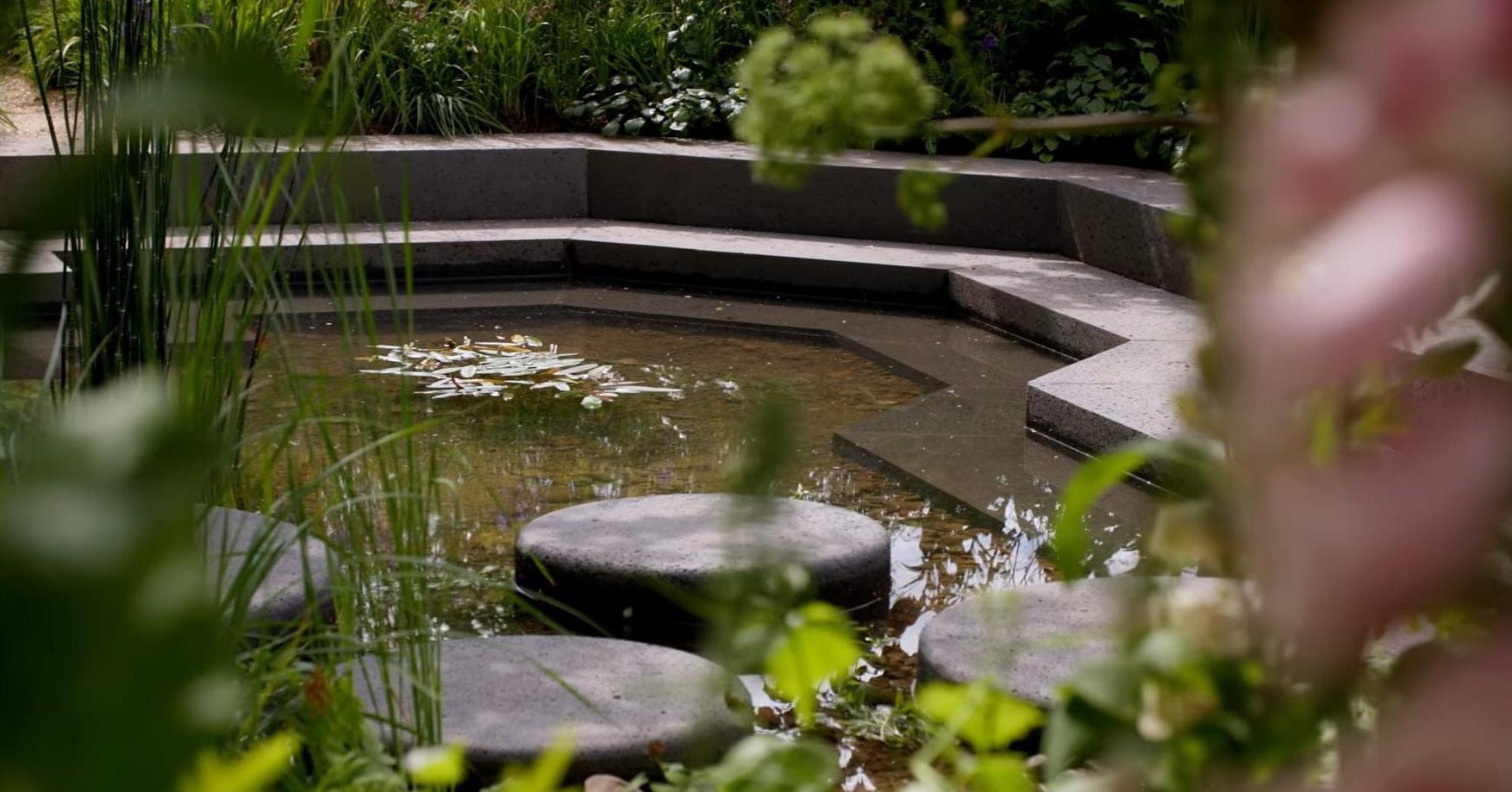
RHS Chelsea Flower Show 2026 once again confirmed its position as one of the world’s most influential events in garden and landscape design. Across Main Avenue, designers presented gardens shaped by biodiversity, sustainability and a stronger connection between people and nature.
For Schellevis®, this year’s edition marked a particularly special milestone. For the first time, Schellevis products featured within a prestigious Main Avenue garden at Chelsea Flower Show — the Killik & Co “A Seed in Time” garden, designed by Baz Grainger of Landform Consultants.
Awarded a Gold medal by the Royal Horticultural Society, the garden attracted international attention with its naturalistic planting, flowing water-inspired layout and climate-conscious approach inspired by the landscapes of East Anglia and the Norfolk Broads.
For Schellevis, being part of the project represented more than simply supplying materials. The collaboration reflected a shared vision in which sustainability, craftsmanship and timeless outdoor design come together naturally.
A bespoke edition developed for Chelsea
In close collaboration with Landform Consultants, Schellevis developed a bespoke material blend specifically for the Killik & Co garden. The aim was to create a product that complemented the soft and natural atmosphere of the design while maintaining the recognisable Schellevis character and texture.
The custom composition included more than 80% recycled materials, minimal lowcarbon cement and natural iron oxide and ash pigments, resulting in a sustainable and durable solution developed especially for Chelsea.
Anthracite steps and stepping stones were integrated throughout the garden, adding rhythm and subtle contrast between the planting areas and pathways.
Designer Baz Grainger commented: “We chose Schellevis® for its natural appearance, strong sustainability credentials and timeless character. The Anthracite steps and stepping stones add warm contrast throughout the garden.”
Throughout the week, Chelsea Flower Show once again highlighted how the landscape industry continues to evolve. Themes such as climate resilience, biodiversity and the use of natural materials were visible throughout the show gardens and conversations across the event.
For Schellevis, Chelsea Flower Show once again underlined the growing importance of thoughtful material choices within high-end garden design and landscape architecture. The Killik & Co garden demonstrated how hard landscaping is not only functional, but also actively contributes to the atmosphere, tranquillity and natural appearance of a design.
For Schellevis UK account manager Ryan Burge, this year’s edition was especially memorable:
“Chelsea Flower Show remains a unique international platform where innovation, design and craftsmanship come together. Seeing Schellevis represented on Main Avenue this year, within a Gold medal-winning garden, was an incredibly proud moment for our team. What made this project particularly special was how naturally the materials became part of the overall design and atmosphere of the garden.”
The atmosphere throughout the week was both inspiring and international, bringing together designers, landscapers, growers and visitors from across the industry. At the same time, the show reinforced the growing demand for materials that combine aesthetics with sustainability and long-term quality.
While Chelsea Flower Show represents an important international stage, the collaboration continues beyond the event itself. Schellevis is also represented within The Glasshouse Collective in Surrey, where visitors can experience a wide range of products in a real garden environment.
From floating steps and paving to eco paving solutions and tumbled pavers, the collection demonstrates how Schellevis products integrate seamlessly into both contemporary and traditional landscapes.
The success of “A Seed in Time” reflects the increasing importance of thoughtful material choices and nature-led design, values that continue to guide Schellevis in projects across Europe and beyond.
schellevis.co.uk


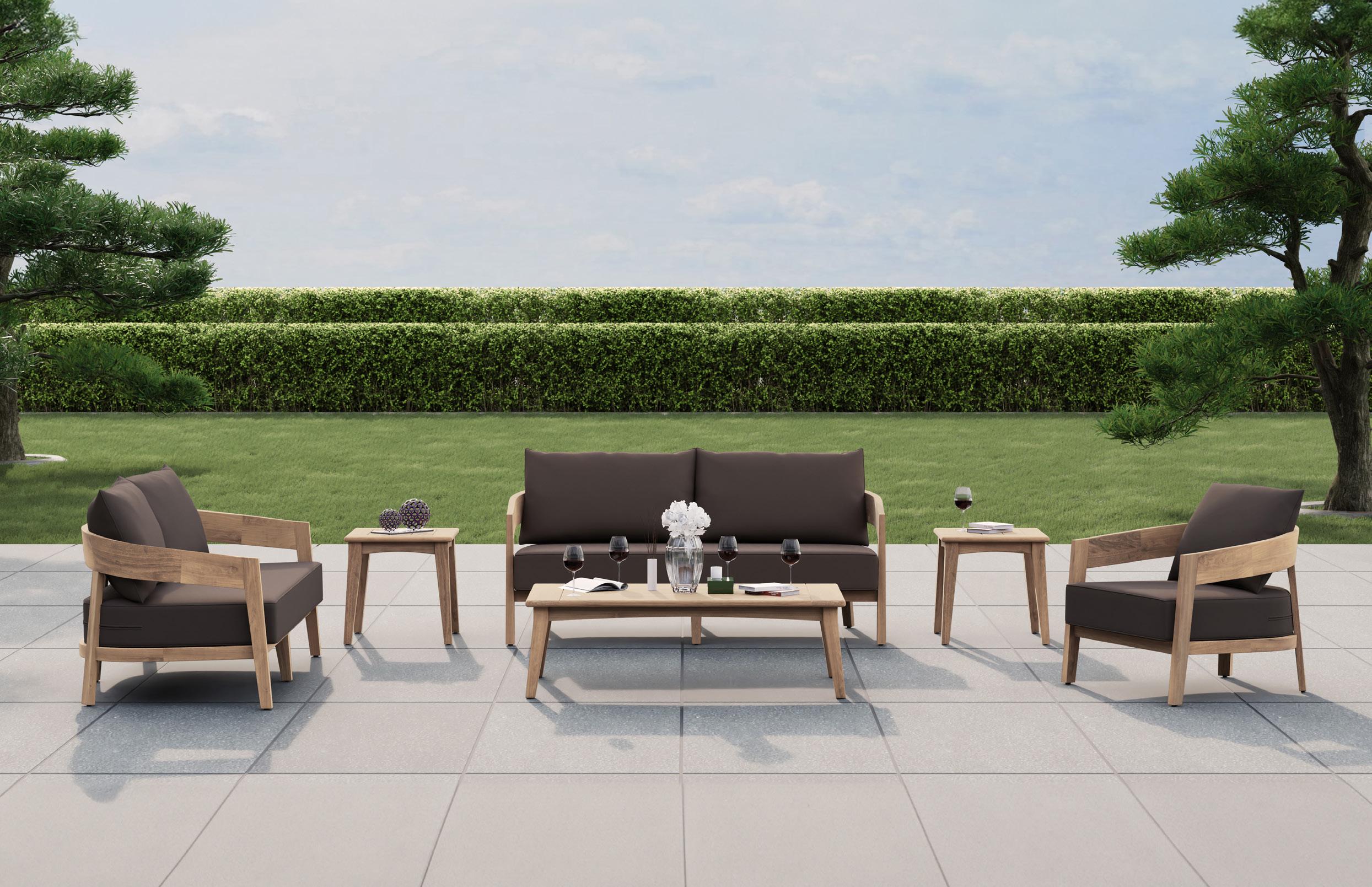



“Many members were simply concerned with managing the immediate impacts, rather than changing business plans to manage longer-term impacts.”



Despite recent news of a framework peace deal, the impacts of the conflict in the Middle East are still being felt in economies across the world. BALI’s Ian Ludgate discusses our recent member survey detailing how our members have been affected and how they've been adjusting.
It has now been over four months since we woke to news of the USA and Israel launching a fresh bombing campaign against Iran on a Saturday morning in late February. These attacks drew in several other Persian Gulf states, with significant attacks on their energy infrastructure, and saw the Strait of Hormuz effectively closed.
At the time of writing, an initial framework peace agreement has been announced, although analysts caution that the durability of the agreement will depend on its implementation and the resolution of several outstanding issues. Nevertheless, the conflict has already made its mark on the rest of the world.
Of course, our first thought is with the innocent civilians caught up in the conflict, noting that thousands of people have lost their lives across the region. However, the conflict still continues to have major impacts on the global economy, which are increasingly being felt in the UK and in our own sector.
The impacts of the Middle East conflict on the global economy mainly stem from a sustained fall in the export of oil from the region. One of the most immediate consequences of less oil
on the global market is higher forecourt prices for petrol and diesel – an impact of which the UK public is all too aware. For landscapers, not only does more expensive petrol and diesel increase the cost of transport to and from site, but it also increases the cost of powering important plant and tools on site. And, given the role of oil in producing other consumables, as well as its close ties to gas and electricity prices, the oil shortage is also likely to push up the prices of products and services across the economy. This situation would almost inevitably lead to higher landscaping job quotes for domestic and commercial clients, who may be reluctant to go ahead in light of a rise in their own cost of living and cost of doing business.
While many of the broad impacts of the Middle East conflict are somewhat apparent – even if their scale and duration are not –the nuanced effects on different kinds of landscaping businesses are less clear. In order to better understand these effects, the BALI policy team conducted a small survey of our members, asking for feedback on current impacts and future concerns, changes to business plans and other short- or long-term reactions, and any asks of government policy. We had a good response to the survey, with many thoughtful and insightful comments on these themes which are summarised in the rest of the article. We would also like to take this opportunity to thank all members who took the time to respond, as this kind of data is incredibly valuable for the policy team and the wider organisation, ultimately allowing us to work better for you where it counts.
“Client confidence and ability to commit to projects feels very low due to so much uncertainty.”
Understandably, nearly all respondents to the survey cited rising fuel costs as an immediate impact of the Middle East conflict, but some also mentioned shipping issues, material costs, and client hesitation. On fuel, members reported the increased cost of transport to site, more expensive red diesel for use on site, and higher energy bills for the office. A number of members noted the widespread use of fuel across their business, highlighting the disproportionate impact on landscaping as a sector, while one member said fuel costs had increased by 40%. Many also told us about the introduction of surcharges by suppliers to account for rising fuel costs, with one member saying:
“We have some suppliers applying fuel surcharging/load (of varying percentages), both of which are costs we cannot pass on to our existing clients as we're 'in contract'.”
Aside from rising fuel costs, members also reported higher shipping costs as well as delays, with uncertainty adding to the challenge:
“Fuel and shipping costs… are [often] unknown until shipments actually arrive in the UK… shipping times and cost of shipping can increase while goods are actually in the water.”
One member pointed to the cumulative impact of the Middle East conflict on the client and their willingness to pay for work:
“I feel it is a cumulative effect… client confidence and ability to commit to projects feels very low due to so much uncertainty and constant doom and gloom on the news.”
In terms of the potential future impacts of the conflict, survey responses expressed concern about the scale and duration of current issues, the cost of fertiliser, and client confidence. Notably, on fuel, a number of members were not only concerned about sustained and even higher prices, but also the possibility of shortages and rationing. One member asked:
“Supply is potentially a threat which means no work can be done and, in turn, where does that leave us with staff? If fuel is rationed, are we part of that rationing?”
At the time of completing the survey, some members had not yet felt the impact of higher fertiliser prices, but several were braced for it in the near future. Another theme of the responses was the potential impact of the conflict on client confidence and demand for landscaping services. For example, one member said that passing on cost increases puts a strain on client relationships, while another feared a market slowdown as “consumers spend less to account for the losses due to fuel increases reducing their ability to spend on luxuries like new homes/ improvements.”
Finally, one response highlighted concern about the cumulative impact of the conflict on the UK economy, following recent government decisions around tax and spend policy.
We also asked members about how they were responding to the impacts of the conflict and planning for any future impacts.. Again, at the time of completing the survey, many members were simply concerned with managing the immediate impacts, rather than changing business plans to manage longer-term impacts. For instance, one member described a few short-term reactions, including surcharges for increased fuel costs, reduced importing of stock materials, reduced credit limits for account customers, and increased use of credit insurance.
Other members said that they would try to avoid replacing plant and tools, buying only battery powered models where absolutely necessary, and make more efficient use of company vehicles. However, a significant number of respondents admitted that they either did not know where to start when it came to adaptation or would be keeping a watching brief and react later.
The final question in our survey asked members about what action they would like to see from the government in response to the conflict and in support of the landscaping sector. Interestingly, we received quite a wide range of views on this matter from members, with some keen on tax and spend measures and others favouring more strategic approaches. The most popular suggestion in the responses was a reduction in fuel duty, even if just temporarily, but members also asked for a windfall tax on energy companies to fund small business support, the reversal of recent national insurance increases, and greater capital investment. However, other members thought greater spending in the short-term would only lead to higher taxes in the long-term, favouring new initiatives around business advice, fostering economic certainty and stability, and reforming planning laws.
Recent events have highlighted the interconnected nature of today's global economy, where conflicts thousands of miles away can have consequences for energy markets, supply chains, material costs and business confidence across the UK. Whether the agreement develops into a durable settlement remains to be seen, but the episode serves as a reminder of how quickly international events can affect businesses far beyond the immediate region. For landscape professionals and the wider construction sector, resilience, adaptability and careful planning remain essential in navigating an increasingly unpredictable global environment.
Contact: ian.ludgate@bali.org.uk


Sponsoring the BALI National Landscape Awards puts your brand centre stage in front of 1,000+ of the industry's most respected landscape professionals.

The National Landscape Awards Ceremony will be held on Friday 4 December 2026, JW Marriott Grosvenor House, Park Lane, London

Visit baliawards.co.uk for full details of the awards, ceremony and sponsorship categories
For general enquiries about the awards, please contact: Izzy Plain
Email: izzy.plain@bali.org.uk
Telephone: 07936 944258
For sponsorship enquiries, please contact: Joanna Pieprzak
Email: joanna.pieprzak@bali.org.uk
Telephone: 07842 436597





















Nobody looks forward to disciplining an employee, but there comes a time for all business owners and leaders when it becomes a necessary part of the job. Perry Johnson, from HR and Health & Safety experts Quest, advises how to tackle underperformance and disciplinary issues in your business.
Dealing with underperformance is one of the more challenging aspects of managing your workforce. Whether it relates to missed deadlines, inconsistent quality of work, or failure to meet agreed standards, it’s important for employers to address performance issues in a structured, fair, and legally compliant way.
When handled correctly, performance management shouldn’t simply be about discipline or termination – it should also provide employees with a genuine opportunity to improve, supported by clear expectations, fair processes, and training where appropriate.
Identifying and addressing underperformance early
The earlier underperformance is identified, the easier it is to solve. In many cases, issues can begin with small gaps in performance – such as slower work rates, inconsistent work, or missed instructions on site. Left unaddressed, these can escalate into more significant concerns.
An informal approach is often appropriate at this stage. A private conversation between the manager and employee can help clarify expectations and identify underlying causes. These may include lack of training, unclear instructions, workload pressures, or personal issues impacting performance. The aim at this point should be supportive rather than just punitive, with a focus on learning the root cause and agreeing immediate improvements.
It is good practice to make a brief note of any informal discussion, even if no formal action is taken.
“Performance management should not be used to address issues that are actually caused by a lack of induction or capability support.”
“It’s important for employers to address performance issues in a structured, fair, and legally compliant way.”
If performance does not improve following informal intervention – or if the issue is more serious – then a formal performance management process should be considered. This is particularly important when underperformance is having a substantial impact on clients, projects, safety, or team productivity.
At this stage, employers should clearly set out their specific concerns, ensuring they are factual, measured, and evidence based. Vague or subjective feedback should be avoided as this can make it difficult for the employee to understand what is required of them, or for the employer to justify any later decisions.
Before moving into a formal process, it is also important to ensure that the employee has received the right training, tools, and support to carry out a role effectively. Performance management should not be used to address issues that are actually caused by a lack of induction or capability support.
A Performance Improvement Plan (PIP) is a structured way of helping an employee meet required standards within a defined timeframe. When used correctly, it provides clarity, support, and a fair opportunity to improve.
A good PIP should set clear performance expectations, specific areas for improvement, and measurable targets. It should also include a realistic timescale, along with details of any support that will be provided, such as additional training, supervision, or frequent check-ins with a manager.
Regular review meetings during the PIP period are essential. These allow progress to be monitored, feedback to be given, and any barriers to improvement to be addressed early. Importantly, the PIP should be seen as a tool for structured improvement rather than as a disciplinary punishment itself.
If performance does not improve despite a PIP and ongoing support, it may be necessary to move into a formal disciplinary process. This typically involves issuing warnings in line with the organisation’s disciplinary procedure.
A first written warning is usually issued where performance remains below acceptable standards. If there is still no improvement, a final written warning may follow. Each stage should clearly outline the performance concerns, the improvements required, and the consequences of failing to improve.
It is essential that employees are given the opportunity to respond at each stage, and that all decisions are made following a fair investigation and hearing process in line with the ACAS Code of Practice. Consistency is also critical – similar cases should be trea ted in a similar way to avoid claims of unfair treatment.
Dismissal for poor performance should be a last resort, used only when all reasonable steps to support improvement are exhausted. Employers must be able to demonstrate that the employee was made aware of the concerns, given sufficient time and support to improve, and warned of the consequences of continued underperformance.
A fair dismissal process will typically involve a formal hearing where evidence is reviewed, and the employee is given the opportunity to respond. The decision must be based upon whether it is reasonable to conclude that the employee is unlikely to meet the standards despite support and warnings.
Clear documentation throughout the process is crucial, as this will form the basis of the employer’s justification if the decision is later challenged.
While it’s important to maintain set performance standards, employers must ensure that processes are fair, transparent, and supportive. In the landscape industry, where work is often physically demanding and site-based, factors such as training, weather conditions, equipment, and work distribution should all be considered when assessing performance.
A fair and well-managed process not only protects the business legally but also helps to retain employees who may simply need additional support to succeed in their role.
Managing underperformance is often complex, particularly when trying to balance legal obligations with operational pressures. As a BALI member, you have unlimited access to Quest’s HR, Health & Safety, Legal, and Tax & VAT Advice Lines on 0116 243 7881, along with a comprehensive library of over 700 policy templates and guidance documents.
Contact: questcover.com




From prison pathways to purposeful careers, discover how one social enterprise is transforming lives through landscaping - offering opportunity, dignity, and a route forward for those ready to rebuild. Tevfick Souleiman, Head of Enterprise at The Forward Trust, reveals more.
In landscaping, transformation is part of the everyday. Barren spaces become thriving environments, and neglected grounds are restored with care and attention. But some of the most powerful transformations happening within the industry today are not just about landscapes – they’re about people.
Through the work of BALI-member company Blue Sky Services, which is a part of national charity The Forward Trust, lives are being rebuilt, futures reshaped, and opportunities created where they might otherwise never have existed. This is not just an inspiring story, but a practical blueprint for how the industry can play a meaningful role in offering second chances, while boosting much-needed skills within the sector too.
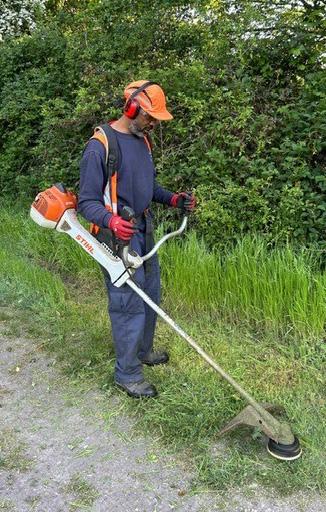
The origins of Blue Sky Services are, in many ways, as striking as the work it does today.
Founded in 2005 by an unlikely partnership –an ex-bank robber and a former UBS banker – the organisation was built on a shared idea: that employment could be a powerful tool for rehabilitation. That early vision, sparked by a chance conversation, led to a charity focused on creating job opportunities for people leaving prison.
Over time, the organisation grew, supporting thousands into employment. But its evolution took a defining turn in 2017, when it merged with The Forward Trust (then RAPt, the Rehabilitation for Addiction Prisoners Trust). Both organisations shared a commitment to long-term recovery, rehabilitation, and the belief that no one should be written off.
Today, Blue Sky Services operates as a social enterprise within The Forward Trust, delivering grounds and car park maintenance and providing employment and training opportunities to people who face significant barriers to work, while proudly being a Real Living Wage employer.
Its employment model has shown to have a proven impact on reducing re-offending –achieving a reduction of up to 23% according to the Ministry of Justice’s Data Lab, one of the highest performing interventions on record. Furthermore, its Employment Services directorate has supported over 800 clients into sustainable employment or self-employment, 1,350 unemployed individuals have received employability and training support, and over the last two years, volunteers across its community services have generated 11,216 hours of support.
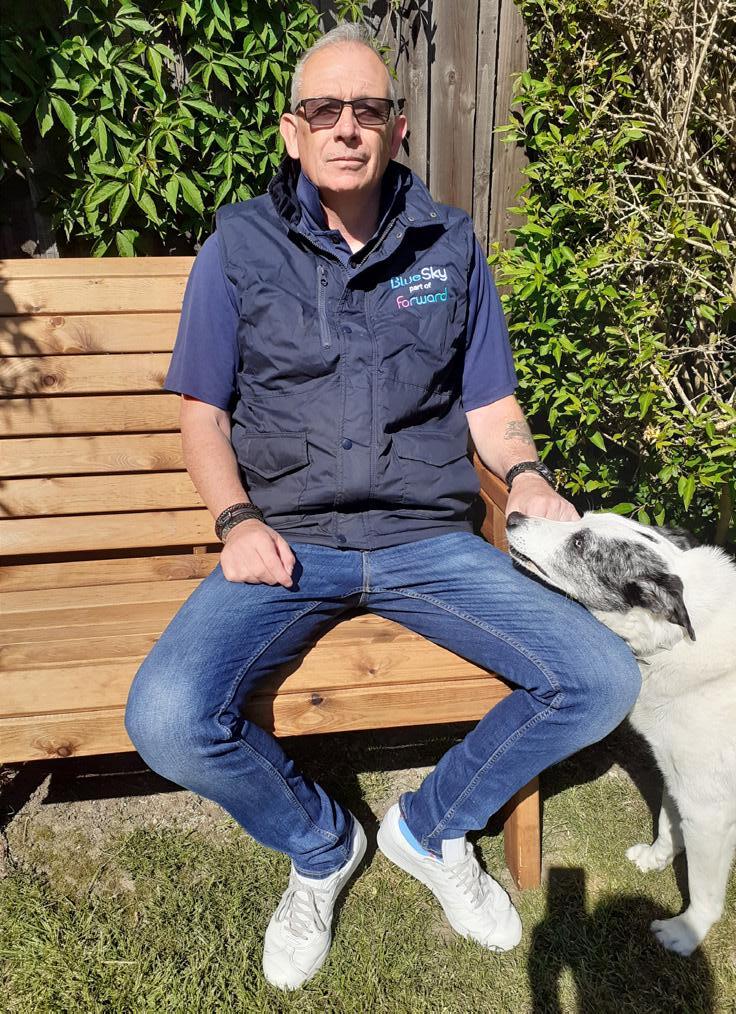
Looking beyond the stereotype
The individuals supported by The Forward Trust are often among the most marginalised in society. Many have experienced addiction, homelessness, poor mental health, long-term unemployment, or a combination of all of the above. For some, their challenges stem from traumatic childhood experiences, such as neglect, abuse, or instability that shaped the course of their lives.
They also face something less visible but equally damaging – stigma.
Too often, people with convictions or histories of addiction are seen as “lost causes”. As Tevfick Souleiman, Head of Enterprise at The Forward Trust, explains, that perception couldn’t be further from the truth.
“Many are willing and able to change,” he says. “What they need is an opportunity and someone to believe in them.”
That belief is at the core of The Forward Trust’s mission. Through its services – which span substance misuse support, mental health care, criminal justice programmes, and employment pathways – it helps individuals rebuild their lives and reconnect with society.
So why landscaping?
“Many prisons offer horticulture training and qualifications, creating a natural pathway into the industry.”
Part of the answer is practical. As Tevfick points out, horticulture and construction are among the more accessible industries for people with complex backgrounds. They often provide a more open route into employment, with fewer barriers to entry than some other sectors.
But there’s also a deeper connection.
Many prisons offer horticulture training and qualifications, creating a natural pathway into the industry. For individuals nearing release, working on prison grounds or gaining landscaping skills can be one of the first steps towards employment outside.
At the same time, Tevfick is clear to challenge a common misconception.
“There’s an assumption that ex-offenders can only do manual jobs – and that’s wrong,” he says. “People bring a wide range of skills, experiences, and potential. Landscaping may be an entry point, but it’s not a limit."
Still, as a starting place, the industry offers something invaluable: a chance to work, to contribute, and to rebuild confidence.
Employment is a cornerstone of rehabilitation, but at Blue Sky Services it’s only part of the story.
What truly sets the organisation apart is the depth of support it provides - a willingness to go beyond the basics and support individuals through the challenges they face.
That might mean flexibility when someone is struggling, or taking the time to understand personal circumstances rather than making quick judgments.
Tevfick recalls one colleague with a history of alcoholism who, after doing well in the role, relapsed. Instead of being dismissed, he was supported, given access to an eight-week rehabilitation programme, helped every step of the way, and welcomed back afterwards. It’s an approach rooted in understanding that recovery is not always linear, and that lasting change requires patience, compassion, and consistency.
The results speak for themselves. Many individuals not only remain in employment but go on to progress within the organisation, moving into supervisory roles or using their experience as a springboard into other careers.
And sometimes, the impact is even more profound.
Tevfick shares the story of one individual whose life had been defined by addiction and criminality. With a DBS record spanning 14 pages, he had never held a formal job.
Through Blue Sky Services he found his first stable employment, stayed for over a year, performed strongly, and eventually moved on to a role in supported housing, where he could give back and help others facing similar challenges.
It’s a powerful example of what can happen when someone is given a genuine opportunity, not just to work, but to rebuild their identity and sense of purpose.
The business case for second chances
For BALI members, this isn’t just a social story – it’s a business opportunity.
The landscaping sector, like many others, faces ongoing skills shortages. Finding reliable, motivated staff can be a challenge, particularly in a competitive labour market shaped by factors such as Brexit.
In this context, people leaving prison or overcoming addiction represent an oftoverlooked talent pool, and they bring distinct advantages. Many arrive with relevant qualifications, particularly in horticulture. More importantly, they often demonstrate exceptional loyalty and work ethic.
“They’re an untapped resource,” Tevfick says. “When they’re given an opportunity, they tend to grab it with both hands, it’s not something they take for granted.”
Concerns around risk are understandable, but, in practice, they are manageable. With appropriate checks, clear processes, and structured support, employing individuals from disadvantaged, checkered backgrounds does not present a particularly greater risk than hiring from any other group. In fact, organisations like Blue Sky Services often carry out more rigorous assessments than
typical employers, meaning they have a deeper understanding of their workforce from the outset.
Blue Sky Services joined BALI to not only strengthen its own operations but to connect with others in the industry – sharing knowledge, building partnerships, and creating more opportunities for the people it supports.
For BALI members, there is a clear opportunity to get involved. That might mean reviewing recruitment practices and considering candidates from non-traditional backgrounds, it could involve partnering with organisations like The Forward Trust to provide placements or employment pathways, or it might simply start with a shift in perspective – recognising the value that people with lived experience can bring.
Importantly, social value is becoming an increasingly significant part of tendering processes. Businesses that can demonstrate meaningful impact in this area are not only contributing to society but strengthening their competitive position.
For an industry rooted in nurturing and renewal, the parallels here are hard to ignore.
Blue Sky Services and The Forward Trust show what’s possible when landscaping is used as a platform for change. They remind us that the spaces we create are only part of the picture, and that the people behind the work matter just as much.
For BALI members the message is both simple and powerful – sometimes, the most important thing you can cultivate isn’t a landscape, it’s a second chance.
Contact: forwardtrust.org.uk/pages/ blue-sky-services
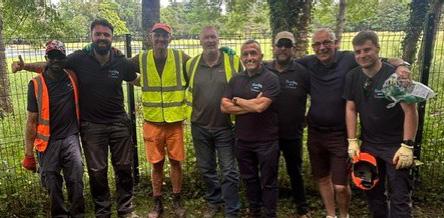
It has been a busy three months for the GoLandscape team while we have continued with our usual visits to member colleges and to careers fairs. However, as the Department for Work and Pensions (DWP) takes on more responsibility for skills finding, and with the growing crisis of youth unemployment, we have reopened discussions with the DWP to see how we can work together to ensure that the landscaping sector plays its part in youth employment initiatives. In addition, we have met with the lead organisations covering five Local Skills Improvement Partnerships as part of our commitment to engage with the bodies which are prioritising skills funding across regions in England.
It was a glorious day at Capel Manor College as GoLandscape attended the Enfield Campus for a day of meeting students. We encouraged them all to sign up for their free BALI membership, as well as gave them support and advice on connecting with BALI members in their area.
After a successful College Forum meeting at GroundsFest in September 2025 the BALI Chalk Fund hosted an online meeting. It was well attended and the colleges got a chance to share their successes and other issues with other FE/HE establishments from across the UK. The next Chalk Fund college forum will be held at GroundsFest in September – check social media for further details.
We were excited to be invited to exhibit at Tottenham Hotspur Football Club by CGI for a sustainability focused careers fair. Over 2,000 young people were invited to talk to industry about career options and pathways. We had a lot of interest from young people about careers in horticulture and landscaping, and it was especially great to talk about how they could enjoy a career working on pitches at major sports stadiums.
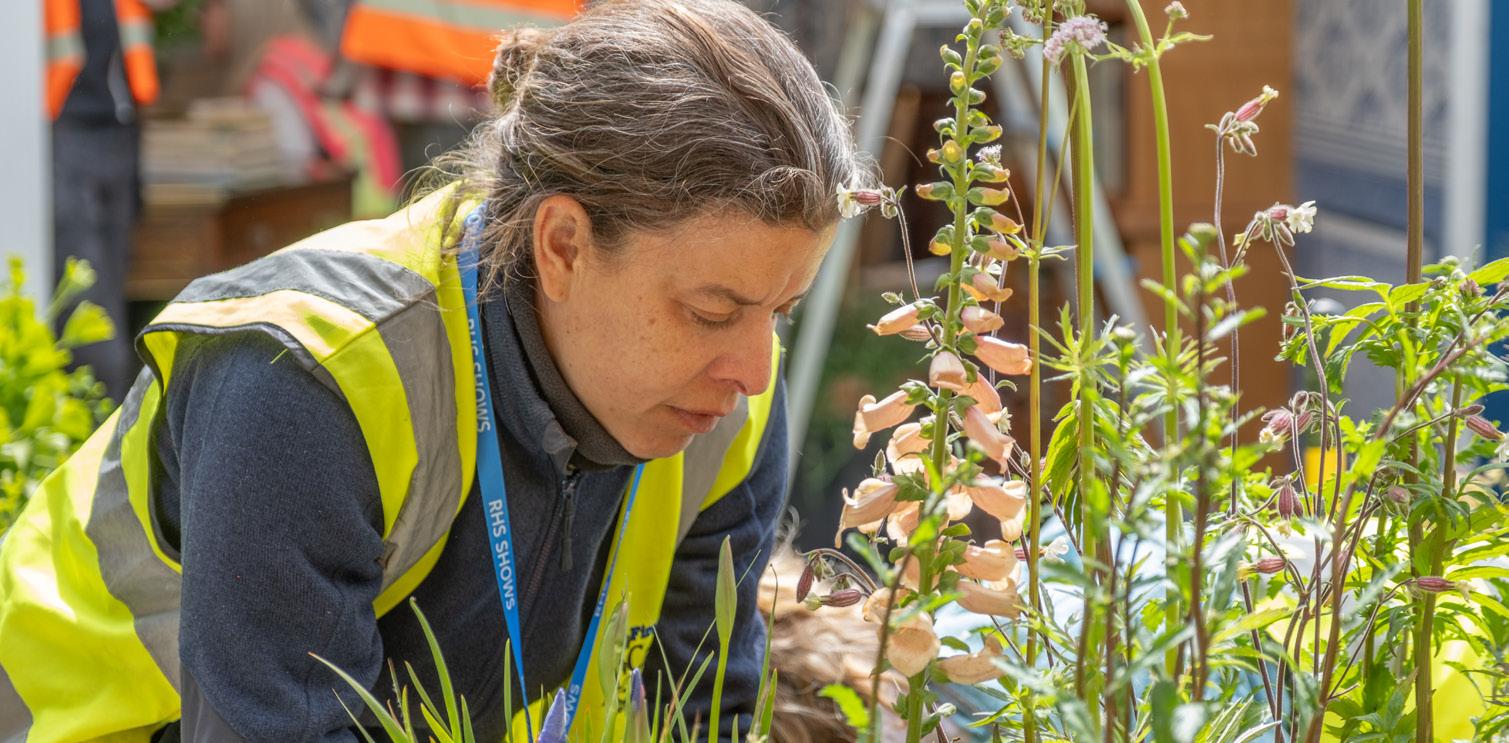
BALI produced a trade stand garden that showcased BALI members' excellence at the Show, and so we asked some students from Capel Manor College to attend to support the planting and other parts of the build to give them a unique experience. We were also able to offer the students a mini tour and talk with some show legends, which gave them a backstage view that many do not get to see.
We had three amazing days at the National Exhibition Centre for the Big Bang STEM Fair in June. Alongside other green sectors we promoted a green skills trail, where students collected stamps and stickers after completing a task on a stand. These completed forms were collected and counted and the school whose students completed the most won a prize.
Over 22,000 young people and teachers attended the fair and on the GoLandscape stand we asked the students to complete one of two tasks. The first was a plant identification task which asked the students to match the living plant to the dried version and the Latin name. We also asked them to guess the uses for the plant, such as for medicine or food. Our second task was a tessellation task in which we asked the students to form patterns using
the tiles provided, thereby encouraging them to consider how paving and brickwork are used to create patterns and interest in the built environment.
Our attendance at the Big Bang STEM was sandwiched between two careers events hosted by RHS New Shoots. Held at Wisley and Bridgewater, the two-day green careers open days were visited by students and career changers who got to explore a variety of routes into plant-based roles, training and volunteering opportunities.
Contact: golandscape.co.uk

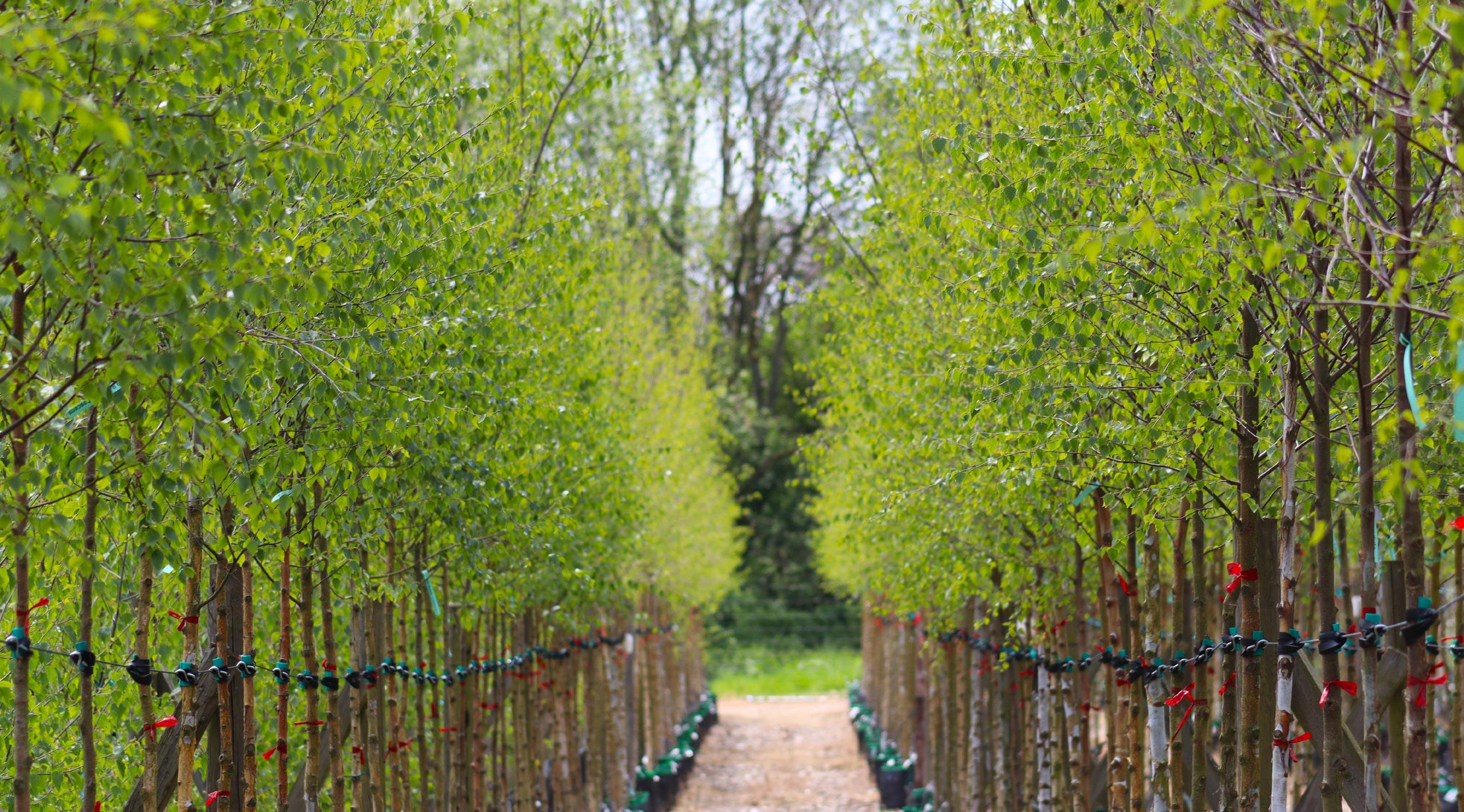



Established 1864
Supplying trees to landscaping projects, local authorities and private estates across the UK.
Ready to make a sustainable choice? Get in touch to discover our British-grown trees for your project!






trees.hillier.co.uk trees@hillier.co.uk 01794 368 733
Download The Hillier Tree Guide
Your guide to our range of trees. Showing their form and size over 15, 25 and 50 years, plus helpful information on suggested usage for a variety of projects and locations.
Scan this QR code to download your copy today!
Hillier Trees: Supplying the landscaping industry for 160 years.

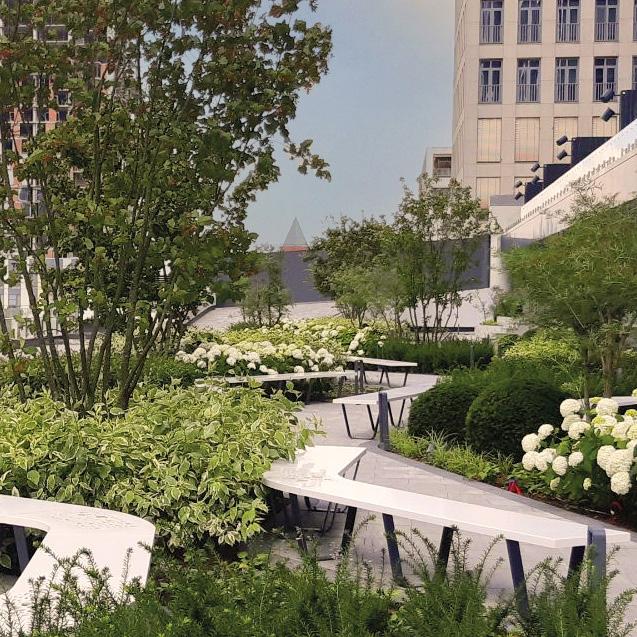
Green roofs and podiums are true architectural highlights. They create usable space, enhance urban living, and deliver both ecological and economic benefits. By improving insulation, managing stormwater, boosting biodiversity, and reducing heat islands, they actively contribute to urban climate resilience.