EXPLORING THE KITÁB-I-AQDAS
THE LAWS AND TEACHINGS OF THE BAHÁ’Í FAITH
Omid Ghaemmaghami and Shahin Vafai

I.B. TAURIS
Bloomsbury Publishing Plc
50 Bedford Square, London, WC1B 3DP, UK
1385 Broadway, New York, NY 10018, USA
29 Earlsfort Terrace, Dublin 2, Ireland
BLOOMSBURY, I.B. TAURIS and the I.B. Tauris logo are trademarks of Bloomsbury Publishing Plc
First published in Great Britain 2025
Copyright © Omid Ghaemmaghami and Shahin Vafai, 2025
Omid Ghaemmaghami and Shahin Vafai have asserted their rights under the Copyright, Designs and Patents Act, 1988, to be identified as Authors of this work.
Cover design: Adriana Brioso
Cover image © Shahin Vafai
All rights reserved. No part of this publication may be reproduced or transmitted in any form or by any means, electronic or mechanical, including photocopying, recording, or any information storage or retrieval system, without prior permission in writing from the publishers.
Bloomsbury Publishing Plc does not have any control over, or responsibility for, any third-party websites referred to or in this book. All internet addresses given in this book were correct at the time of going to press. The authors and publisher regret any inconvenience caused if addresses have changed or sites have ceased to exist, but can accept no responsibility for any such changes.
A catalogue record for this book is available from the British Library.
Library of Congress Cataloging-in-Publication Data
Names: Ghaemmaghami, Omid, author. | Vafai, Shahin, author.
Title: Exploring the Kitáb-i-Aqdas : The Laws and Teachings of the Bahá’í Faith / Omid Ghaemmaghami and Shahin Vafai.
Description: London ; New York : I.B. Tauris, 2025. | Includes bibliographical references and index.
Identifiers: LCCN 2024038257 (print) | LCCN 2024038258 (ebook) | ISBN 9780755606252 (hardback) | ISBN 9780755606276 (epub) | ISBN 9780755606269 (ebook)
Subjects: LCSH: Bahai Faith--Doctrines. | Baháʼuʼlláh, 1817-1892. Kitāb al-aqdas. | Bahai law.
Classification: LCC BP365 .G434 2025 (print) | LCC BP365 (ebook) | DDC 297.9/3--dc23/eng/20240919
LC record available at https://lccn.loc.gov/2024038257
LC ebook record available at https://lccn.loc.gov/2024038258
ISBN: HB: 978-0-7556-0625-2
ePDF: 978-0-7556-0626-9
eBook: 978-0-7556-0627-6
Typeset by Deanta Global Publishing Services, Chennai, India
To find out more about our authors and books, visit www.bloomsbury.com and sign up for our newsletters.
PREFACE
The millions of adherents of the Bahá’í Faith consider the Kitáb-i-Aqdas—the book that sets out the laws and principles that guide Bahá’í individuals, communities, and institutions—to be the most important and sacred text written by Bahá’u’lláh, the founder of their religion. Despite the Kitáb-iAqdas’s significance and influence, to date, few volumes have studied its features, and even fewer of these have been academic in nature.1
1 Saiedi’s Logos and Civilization analyzes the principles and the structure of the Kitáb-i-Aqdas as part of a survey of Bahá’u’lláh’s writings. Walbridge’s Sacred Acts, Sacred Space, Sacred Time and Danesh’s Dimensions of Bahá’í Law consider foundational aspects of Bahá’í law, which principally stems from the Kitáb-i-Aqdas. Hatcher and Hatcher’s collected essays in The Law of Love Enshrined articulate some of the overarching themes of the Kitáb-i-Aqdas. Bushrui’s The Style of the Kitáb-i-Aqdas delves into aspects of the poetic and symbolic language and style of the book. Rouhani Ma‘ani and Ma‘ani Ewing’s Laws of the Kitáb-i-Aqdas offers a comparative study, for a general audience, of select laws of the Kitáb-i-Aqdas and those of Judaism, Christianity, and Islam. Volume 3 of Taherzadeh’s The Revelation of Bahá’u’lláh presents general information about some of the laws and teachings of the Kitáb-i-Aqdas for a Bahá’í readership. The Association for Bahá’í Studies in Australia’s two volumes about the Kitáb-i-Aqdas constitute the proceedings of a conference devoted to the study of the work. And Sharon’s ha-Dāt ha-Bahāʾīt ū-khetāv ha-qodesh shellāh, a work in Hebrew, includes, in addition to an annotated Hebrew translation of the Kitáb-i-Aqdas, a lengthy introduction to the book, its author, and the Bahá’í religion.
Studies of the Kitáb-i-Aqdas or its laws in Persian have been largely descriptive, referential, and written for the Bahá’í community. They include Ishráq-Khávarí’s “Aṭ-Ṭarázu’l-Aṭlas lil-Kitábi’l-Aqdas,” a fivevolume unpublished commentary, sections of which were adapted in his Ganjíniy-i-Ḥudúd va Aḥkám; IshráqKhávarí’s Taqrírát Darbáriy-i-Kitáb-i-Mustaṭáb-i-Aqdas, the edited and lightly annotated transcripts of his classes on the Kitáb-i-Aqdas; Dávúdí’s “Muntakhabátí az Maṭálib-i-Kitáb-i-Mustaṭáb-i-Aqdas,” an essay on some of the major themes of the Kitáb-i-Aqdas; Faríd’s Maqálih’í dar Mu‘arrífíy-i-Kitáb-i-Mustaṭáb-i-Aqdas, an extended introduction to the text; Afnán’s two-volume Majmú‘iy-i-Maqálát, a text containing numerous studies about the Kitáb-i-Aqdas and its relationship to the Bayán; Mohammad Hosseini’s Qámús-i-Kitábi-Aqdas, a comprehensive reference work; and Fáḍil-i-Yazdí’s Manáhiju’l-Aḥkám and Ízadíníyá’s Ríyáḍ-iMa‘ání, both verse-by-verse extended commentaries on the text with selections from the former having
In this volume, we explore the Kitáb-i-Aqdas’s most consequential provisions. Although detailed analysis of its every law, exhortation, and verse is beyond the scope of the current exploration, the pages that follow examine the Kitáb-i-Aqdas’s overarching features and themes—its history and style; theological foundations; institutional, devotional, personal, and community provisions; teachings and perspectives on unity, justice, and law; and messages to political and religious leaders. At the publisher’s recommendation, we have included a brief introduction to the Bahá’í Faith for the benefit of readers unfamiliar with the religion.
Systematic study and analysis of the Kitáb-i-Aqdas require that its history, contents, and relationship to other Bahá’í texts be understood. Our hope is that the current work will make a modest contribution to laying that foundation, which necessarily has to be expository in nature. To the extent space has allowed, analysis has been offered on key issues. In time, many more studies of an analytical nature will surely be carried out on this central Bahá’í text.
The primary focus of this study of the Kitáb-i-Aqdas is textual; it is not an anthropological or sociological examination of how Bahá’ís have traditionally observed or currently observe its laws, though some historical observations are offered. In order to present the laws and teachings of Bahá’u’lláh as accurately as possible and to permit readers to more readily assess our conclusions, we have quoted heavily from primary Bahá’í texts. Given this fact, the transliteration system used in the Bahá’í writings has been employed here as well, except for limited instances in which quoted sources use a different system. The transliteration system the Bahá’í community has employed since 1923 accommodates the orthographic rendering of both Arabic and Persian words, which are frequently intertwined in Bahá’í texts.2 While some anomalies exist, the system effectively represents Arabic and Persian through a single set of characters. It is similar, with few exceptions, to the transliteration system of the International Journal of Middle East Studies. In the Bahá’í system, accents are used (e.g., á) in place of macrons (e.g., ā); digraphs are underlined (e.g., sh); the letter v is used to transliterate the Arabic letter wáw when used as a consonant (e.g., Riḍván); a dash between two names or words indicates that they are inherently related (e.g., Ḥusayn-‘Alí; Kitáb-i-Aqdas); and opening and closing single quotation marks represent ‘ayn and hamzah, respectively. Further, “two or more terms in the construct state are affixed (e.g., baytu’l-‘adl); the definite article al- is
been annotated and published in Rafati’s Yádnámiy-i-Fáḍil-i-Yazdí. See Furqání, “Áthárí az Fuḍaláy-i-Amr Darbáriy-i-Kitáb-i-Aqdas.” Further, in 1973, a century after the completion of the Kitáb-i-Aqdas, the Persian Bahá’í periodical Áhang-i-Badí‘ published studies by Mohammad Hosseini, Ishráq-Khávarí, and Fayḍí about the book. Áhang-i-Badí‘ 28, nos. 1–2 (130 be (1973)). And in 1992, in commemoration of the centenary of the passing of Bahá’u’lláh and in anticipation of the forthcoming publication of the Kitáb-i-Aqdas’s official English translation, the Persian Bahá’í periodical Payám-i-Bahá’í dedicated to the book an issue, featuring articles by Rafati, Rabbani, and others. Payám-i-Bahá’í, no. 150 (1992).
2 See Shoghi Effendi, Bahá’í Administration, 43, 48; Bahá’í Reference Library, The Transliteration System Used in Bahá’í Literature (bahai.org/library/transliteration).
Introduction
I. SIGNIFICANCE OF THE KITÁB-I-AQDAS
Bahá’u’lláh’s self-proclaimed objective was to “build anew the whole world.”1 His vision for doing so appears in the equivalent of one hundred volumes of writings (totaling approximately seven million words)—consisting of ethical, legal, mystical, historical, and philosophical texts—which take the form of books, epistles, letters, homilies, odes, commentaries, prayers, and meditations.2 Of these, the Kitáb-i-Aqdas is Bahá’u’lláh’s most important and influential work, setting out laws and principles that have already affected the lives of millions of his followers.
Written at almost the exact midpoint of Bahá’u’lláh’s forty-year ministry, the Kitáb-i-Aqdas at once culminated the work of the first twenty years of that ministry and served as the precursor of its author’s writings over the succeeding two decades. Its composition was perhaps the most distinguished act of Bahá’u’lláh’s life. Describing the Kitáb-i-Aqdas, Bahá’u’lláh recalled: “While in prison We have revealed a Book which We have entitled ‘The Most Holy Book (bi’l-kitábi’l-
1 Bahá’u’lláh, Gleanings, #45.1.
2 Bahá’u’lláh, Epistle to the Son of the Wolf, 115; ‘Abdu’l-Bahá, The Promulgation of Universal Peace, 213; Shoghi Effendi, God Passes By, 220; Phelps, “The Writings of Bahá’u’lláh,” 51–71. Nearly fifty volumes of Bahá’u’lláh’s writings, containing thousands of works, are accessible on the website of the Afnán Library (afnanlibrary.org/inba/). In recent years, the Bahá’í World Centre has accelerated the publication of Bahá’u’lláh’s writings in the original languages and in English translation. The Universal House of Justice, Messages from the Universal House of Justice, 2001–2022, #240.6. Nearly all of Bahá’u’lláh’s most important works are published, and over one-sixth of the total volume of his writings are, as of 2024, available on the Bahá’í Reference Library website. (bahai.org/library/).
aqdas).’ We have enacted laws therein and adorned it with the commandments of thy Lord, Who exerciseth authority over all that are in the heavens and on the earth.”3
The book’s title is instructive. The noun kitáb denotes writing, book, and scripture.4 The adjective aqdas derives from the Arabic root Q-D-S, which means holy, sanctified, blessed, and sacred.5 Scholars have observed that all occurrences of this root in the Quran are linked to biblical history and geography.6 One source suggests that the root conveys “the numinous, awe-inspiring nature” of God and “the special quality of the Biblical Holy Land, presumably by virtue of being a region particularly associated with salvific divine manifestations and interventions in history.”7
As the superlative form of its root, aqdas signifies “most holy”; this descriptive term conveys how Bahá’u’lláh regarded the status of the book in Bahá’í literature and among all religious works.8
When the Kitáb-i-Aqdas was written, the majority of Bahá’u’lláh’s followers were former Bábís for whom the term aqdas would have evoked the opening invocation of the Bayán (Exposition), the pivotal work of the Báb: “In the Name of God, the Most Exalted, the Most Holy” (bismilláhi’lamna‘i’l-aqdas).9 The Báb chose this invocation to replace the traditional Islamic one, “In the Name of God, the Compassionate, the Merciful” (which appears as the opening phrase of the Quran and at the beginning of some of the Báb’s earlier writings).10 The new invocation signaled the independence of the Báb’s religion from Islam, and according to the Báb, all the mysteries of God were latent in this invocation.11 Bahá’u’lláh’s writings refer to the Kitáb-i-Aqdas, to Bahá’u’lláh’s
3 Tablets of Bahá’u’lláh, #17.109; see ibid., #17.128.
4 Sinai, Key Terms of the Qur’an, 591–601.
5 Cognates of aqdas include muqaddas (meaning something that has been rendered, or is worthy of being declared, holy, pure, or sanctified)—occurring in the phrases al-arḍu’l-muqaddasah (the holy land), the equivalent of the biblical promised land of Canaan, and al-kitábu’l-muqaddas (the holy book), the name Arabic-speaking Christians use to refer to the Bible; quddús (the all-holy one or the holy of holies), one of the names of God in the Quran and in the Bahá’í writings and the title given by the Báb to his most eminent follower; qudus (holy), found in the phrase ruḥu’l-qudus (the holy spirit); qaddasa (meaning to sanctify, extol, and hallow); and quds (meaning holiness or the holy sanctuary), the Arabic name for Jerusalem.
6 Durie, The Qur’an and Its Biblical Reflexes, 180; Sinai, Key Terms of the Qur’an, 567; Jeffrey, The Foreign Vocabulary of the Qurʾān, 232 (suggesting that the Arabic root Q-D-S was borrowed from Jewish or Christian usage). Perhaps due to the connection between the Q-D-S root and the Bible, Bahá’u’lláh called his pronouncement to Christians the Lawḥ-i-Aqdas (the most holy tablet), a work sometimes referred to as the Tablet to the Christians. Tablets of Bahá’u’lláh, #2.
7 Sinai, Key Terms of the Qur’an, 567.
8 The word aqdas occurs in the text of the Kitáb-i-Aqdas to describe Bahá’u’lláh’s shaṭr (direction or presence). K6. Additionally, the Bahá’í writings refer to the land where the Kitáb-i-Aqdas was written, where Bahá’u’lláh spent the last twenty-four years of his life, and where the Shrine of Bahá’u’lláh is located as arḍ-i-aqdas (the most holy land). Bahá’u’lláh, Áthár-i-Qalam-i-A‘lá, vol. 3, #309; ‘Abdu’l-Bahá, Makátíb-i-‘Abdu’l-Bahá, 6:52; cf. ibid., 6:70; Bahá’u’lláh, Bahá’í Reference Library (bahai.org/r/998154401).
9 Bayán-i-Fársí, #1.1; see Bayán-i-‘Arabí, #1.1.
10 Saiedi, Gate of the Heart, 293.
11 Eschraghi, “Undermining the Foundations of Orthodoxy,” 226; Saiedi, Logos and Civilization, 215.
reality, and to the Bahá’í religion with the same combination of superlatives that the Báb employed: the most exalted, the most holy (amna‘-i-aqdas).12
Just as the Quran characterizes itself as the ummu’l-kitáb (the Mother Book),13 Bahá’u’lláh refers to the Kitáb-i-Aqdas as the Bahá’í religion’s Mother Book, implying that it is the progenitor and principal repository of Bahá’u’lláh’s laws and teachings.14 Other statements of Bahá’u’lláh about the Kitáb-i-Aqdas reinforce its import. In the Kitáb-i-Íqán, written before the public declaration of his mission, Bahá’u’lláh alludes to a future holy book and its significance. He writes that “the Word of God” is “revealed in every age and dispensation.” In the time of Moses, it was the Pentateuch; in the time of Jesus, it was the Gospel; in the time of Muḥammad, it was the Quran; in the time of the Báb, it was the Bayán; and in the time of “Him Whom God will make manifest,” “His own Book— the Book unto which all the Books of former Dispensations must needs be referred, the Book which standeth amongst them all transcendent and supreme.”15 Elsewhere, Bahá’u’lláh claims that the Kitáb-i-Aqdas is “My weightiest testimony unto all people, and the proof of the All-Merciful unto all who are in heaven and all who are on earth.”16 He refers to the text as the “Word of God,” “the Book of God,” and “the Law of God.”17 The Kitáb-i-Aqdas has, according to Bahá’u’lláh, been sent down from the divine kingdom, is “the Lamp of the Eternal unto the world,” and is God’s “straight, undeviating Path amidst the peoples of the earth.”18
Although the primary repository of Bahá’u’lláh’s legal ordinances, the Kitáb-i-Aqdas itself rejects any supposition that it is “a mere code of laws.”19 In another work, Bahá’u’lláh avers that the purpose of the Bahá’í religion is not to lay down a set of ordinances and prohibitions; rather, its aim is to develop divine perfections in all human souls so that they can attain their true potential.20 In a similar vein, ‘Abdu’l-Bahá writes:
12 Saiedi, Logos and Civilization, 215; see Bahá’u’lláh, Iqtidárát va Chand Lawḥ-i-Dígar, 184.
13 Quran 43:4. While commonly translated as “the Mother Book,” ummu’l-kitáb literally means the Mother of the Book or the Mother-Scripture, and has been understood by Muslim scholars as connoting “the source of the scripture and its totality.” Sinai, Key Terms of the Qur’an, 591–6. The word umm also means ensign, leader, archetype, and origin. The Study Quran, 130.
14 Bahá’u’lláh, British Library, Or.15734:17 (stating that the laws have been laid down and all things set forth in the book); ‘Abdu’l-Bahá, Muntakhabátí az Makátíb-i-‘Abdu’l-Bahá, 4:152; Shoghi Effendi, God Passes By, 213; Shoghi Effendi, Messages to the Bahá’í World, 42; cf. Bahá’u’lláh, quoted in Ishráq-Khávarí, Má’idiyi-Ásmání, 7:154–5 (stating that what has been revealed in this day is the ummu’l-kitáb, suggesting that all of Bahá’u’lláh’s writings constitute the Mother Book).
15 Bahá’u’lláh, The Kitáb-i-Íqán, #219; see Chapter 1 (I.B).
16 Bahá’u’lláh, quoted in Shoghi Effendi, God Passes By, 216.
17 Bahá’u’lláh, The Kitáb-i-Íqán, #219; Bahá’u’lláh, The Kitáb-i-Aqdas, “Questions and Answers,” #10, 11, 15.
18 Bahá’u’lláh, quoted in Ishráq-Khávarí, Má’idiy-i-Ásmání, 8:121; K186; cf. Quran 1:6; Danesh, Dimensions of Bahá’í Law, 7–8.
19 K5.
20 Bahá’u’lláh, quoted in Ishráq-Khávarí, Má’idiy-i-Ásmání, 4:157; see Eschraghi, “From Bábí Movement to the Bahá’í Faith,” 391–4.
C HAPTER 1
The Kitáb-i-Aqdas History
The history of the Kitáb-i-Aqdas is largely uncharted. This chapter aims to map out some of that history by exploring how Bahá’u’lláh anticipated, wrote, and disseminated it, and what evidence exists of its early manuscripts and the documents supplementing it.
I. ANTICIPATION OF THE KITÁB-I-AQDAS
A. Promotion of the Laws of the Báb
Although Bahá’u’lláh described having received a divine mission while imprisoned in Ṭihrán in 1852, he chose to wait more than twenty years before setting out his religion’s laws in the Kitáb-i-Aqdas. Prior to the Kitáb-i-Aqdas, only a few of Bahá’u’lláh’s thousands of writings dealt principally with laws. These works either exhorted people to observe certain ordinances of the Bayán or presented legal provisions that presaged a new book of laws.
In Baghdad (1853–63), Bahá’u’lláh encouraged observance of the precepts of the Bayán. Perhaps addressing those antinomian Bábís who claimed that all restraints on behavior had been abolished because the promised one had appeared,1 Bahá’u’lláh averred that anyone who failed to abide by the laws of God could not be considered a true believer, for among “the conditions” of God’s “love
1 Cole, Modernity and the Millenium, 27.
is to follow His commandments and observe His prohibitions.”2 The Seven Valleys, Bahá’u’lláh’s greatest mystical work, stressed that, contrary to the view that the mystical path exempts one from observing God’s laws, the pursuit of perpetual union with God demands strict adherence to the law:
[T]he wayfarer must stray not a hair’s breadth from the Law (sharí‘at), for this is indeed the secret of the Path and the fruit of the Tree of Truth. . . . [H]e must cling to the robe of obedience to all that hath been enjoined, and hold fast to the cord of shunning all that is forbidden, that he may partake of the cup of the Law and be informed of the mysteries of Truth.3
Further, Bahá’u’lláh reprimanded the Báb’s followers, including some leading figures, for engaging in reprehensible acts, while enjoining them to observe God’s commandments and to manifest rectitude of conduct.4 He instructed a certain Bábí to write a summary of the laws—presumably of the Bayán, copies of which were limited and not widely accessible—so that the Báb’s followers could learn about and abide by them.5
In Edirne (1863–8), Bahá’u’lláh rejected the allegation that he had abrogated the Bayán, when in fact he had urged the Bábís to observe its laws.6 He continued to counsel the Bábís to “be obedient to the ordinances of God, which have been enjoined in the Bayán,” referring to it as “the Mother Book.”7 Moreover, in epistles addressed to the kings of the earth, he generally advised them to
2 Bahá’u’lláh, The Call of the Divine Beloved, #3.9; cf. Bahá’u’lláh, quoted in Fáḍil-i-Mázindarání, Amr va Khalq, 1:11 (stating that before the laws and commandments had been laid down, any soul who unhesitatingly accepted the claim of Bahá’u’lláh attained unto all good (cf. K1), whereas after the laws were laid down, all have been commanded to observe them).
3 Bahá’u’lláh, The Call of the Divine Beloved, #2.85; see Bahá’u’lláh, quoted in Saiedi, Logos and Civilization, 218 (“[I]n the past, and . . . at present, some people who call themselves dervishes have falsely interpreted all the Divine laws and commandments. If they were told that obligatory prayer is one of the fundamental laws of God, they would reply that obligatory prayer is the same as prayer and inasmuch as we were born in a state of prayer, we have thus already performed the true obligatory prayer. Such hapless people are deprived of the outward meanings let alone inner significances! The vain imaginings of the heedless have been, and continue to be, beyond reckoning.”).
4 Bahá’u’lláh, INBA, 22:155–9; see Bahá’u’lláh, Epistle to the Son of the Wolf, 166; Rouhani Ma‘ani and Ma‘ani Ewing, Laws of the Kitáb-i-Aqdas, 2.
5 Bahá’u’lláh, INBA, 71:105.
6 Bahá’u’lláh, Nafaḥát-i-Faḍl, 5:14, 19; see Bahá’u’lláh, INBA, 49:157; Bahá’u’lláh, British Library, Or.15725:294; Bahá’u’lláh, Bahá’í Reference Library (bahai.org/r/575310404) (warning against dissension in observing the laws of God); Bahá’u’lláh, Bahá’í Reference Library (bahai.org/r/749828841) (stating that he considers lawful and unlawful for himself whatsoever God has decreed to be lawful and unlawful in the Bayán); Bahá’u’lláh, Bahá’í Reference Library (bahai.org/r/944985721) (admonishing—in the Lawḥ-i‘Abdu’r-Razzáq, written, as evidenced in the text, during Bahá’u’lláh’s last months in Edirne—Mírzá Yaḥyá and his supporters who alleged, as part of their attempt to instill doubts about the claims of Bahá’u’lláh, that he had abrogated the Persian Bayán); Bahá’u’lláh, quoted in Afnán, Majmú‘iy-i-Maqálát, 1:887–8.
7 Bahá’u’lláh, Bahá’í Prayers, 308; see Bahá’u’lláh, La’áli’u’l-Ḥikmah, 1:23; Bahá’u’lláh, INBA, 36:151; Prayers and Meditations by Bahá’u’lláh, #56.11.
“enforce the law of God,”8 “transgress not the bounds which the Almighty hath fixed,” and “observe the injunctions . . . in His Book.”9
Many of the laws of the Bayán were designedly severe, rigid, and complex, and most were never enforced.10 The Kitáb-i-Aqdas would later ratify, modify, or abrogate a significant number of these laws. It would also confirm the Báb’s general teachings on, among other virtues, amity, compassion, godliness, truthfulness, refinement, moderation, chastity, fidelity, justice, and purity of heart.11 It would appear, then, that before the Kitáb-i-Aqdas, Bahá’u’lláh counseled people to observe the Bayan’s provisions regarding virtues, in addition perhaps to its injunctions about such matters as fasting, the Nineteen Day Feast, and the new calendar, to the extent to which they could be applied.12
B. Anticipation of New Laws
Beyond encouraging Bábís to follow the ordinances of the Bayán, Bahá’u’lláh’s writings in Baghdad and Istanbul also anticipated or foreshadowed the enactment of a new set of teachings, ordinances, and prohibitions. In Baghdad, Bahá’u’lláh revealed the nature of his mission “to a certain extent”13 yet did not declare himself to be Him Whom God shall make manifest, the prophetic figure foretold by the Báb. Bahá’u’lláh alluded to this period as “the days of concealment” when “the Sun of eternity remaineth hidden beneath the horizon of being.”14 Yet, even during this “set time of concealment,”15 Bahá’u’lláh expected that “the time for the completion of the commandments” would “assuredly
8 Bahá’u’lláh, The Summons of the Lord of Hosts, #5.63; see ibid., #1.237, 5.14; Tablets of Bahá’u’lláh, #3.29; Bahá’u’lláh, Epistle to the Son of the Wolf, 139.
9 Bahá’u’lláh, The Summons of the Lord of Hosts, #5.7; see Chapter 12 (III.E).
10 Shoghi Effendi, God Passes By, xvii, 25; on behalf of Shoghi Effendi, Messages of Shoghi Effendi to the Indian Subcontinent, 179; Afnán and Hatcher, “Western Islamic Scholarship and Bahá’í Origins,” 37–41; Saiedi, Gate of the Heart, 299–343 (arguing that since the Báb anticipated that his religion would soon be superseded by Him Whom God shall make manifest, he did not intend for the severe laws of the Bayán to be enforced literally, so he infused them with a symbolic purpose and function).
11 E.g., the Báb, quoted in Furútan, The Story of My Heart, 199 (“In the Bayán no act of worship is nearer unto His acceptance than bringing joy to the hearts of the believers, and none more remote than inflicting sorrow upon them.”) (Bayán-i-Fársí, #7.18); Selections from the Writings of the Báb, #3.27.1-2, 3.1.1 (“The path to guidance is one of love and compassion, not of force and coercion. This hath been God’s method in the past, and shall continue to be in the future!”) (Bayán-i-Fársí, #2.16); see Saiedi, Gate of the Heart, 306, 314, 322–3, 325; Amanat, Resurrection and Renewal, 114, 243, 374 n12; Afnan, “A Twofold Mission”; Momen, “Perfection and Refinement”; Ghaemmaghami, “‘The Hand of God is Not Chained up,’” 416–17.
12 Cf. Shoghi Effendi, God Passes By, 132 (“The salutary and fundamental truths advocated by the Báb, that had either been obscured, neglected or misrepresented, were . . . elucidated by Bahá’u’lláh, reaffirmed and instilled afresh into the corporate life of the [Bábí] community, and into the souls of the individuals who comprised it.”).
13 ‘Abdu’l-Bahá, Pearls of Bounty, 135.
14 Bahá’u’lláh, The Call of the Divine Beloved, #3.9; see Bahá’u’lláh, Days of Remembrance, #31.4; Shoghi Effendi, God Passes By, 115–16.
15 Bahá’u’lláh, Gleanings, #31.1; see Momen, “Messianic Concealment and Theophanic Disclosure”; Saiedi, “Concealment and Revelation in Bahá’u’lláh’s Book of the River”; Saiedi, Logos and Civilization, 38.
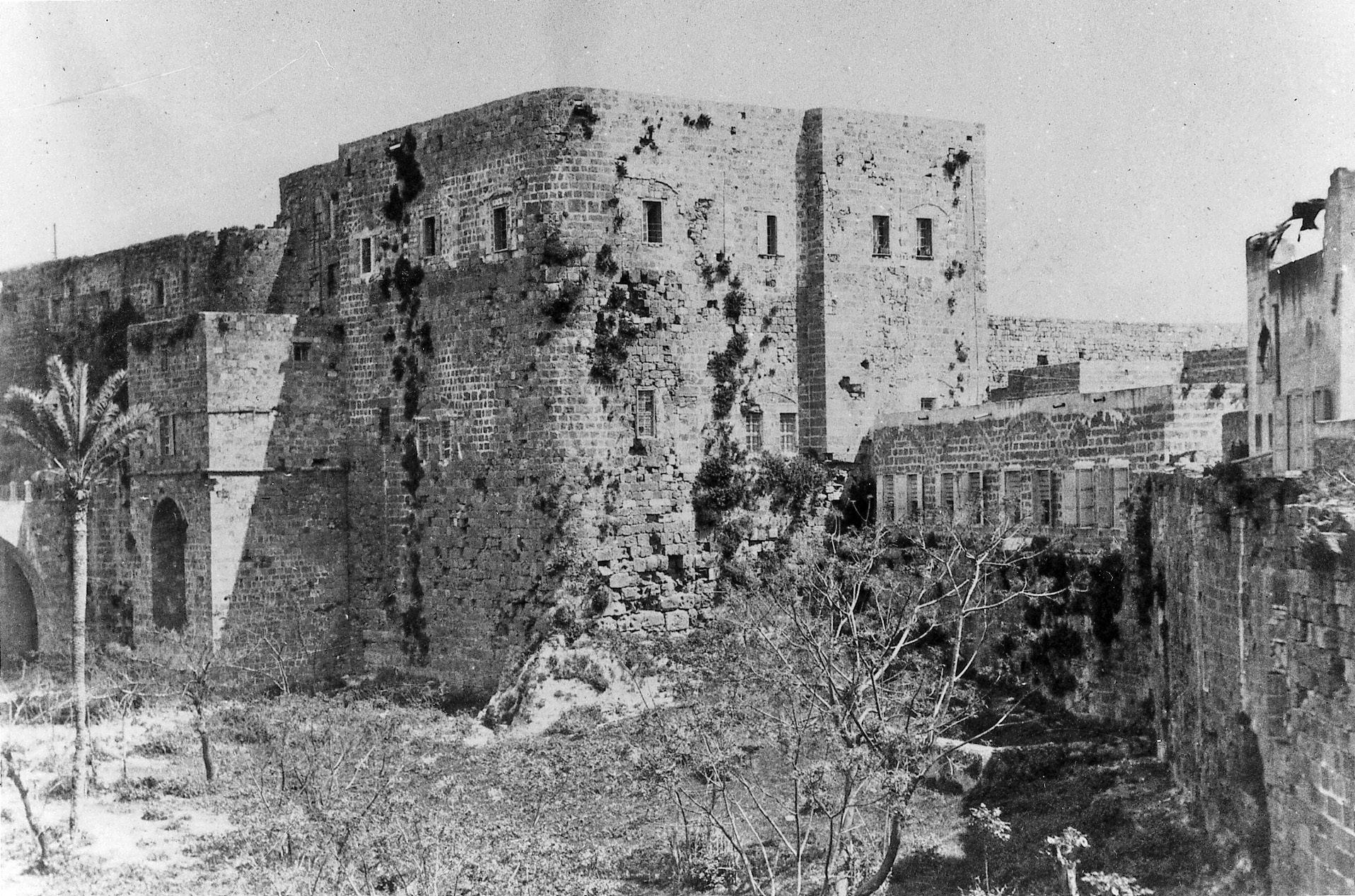
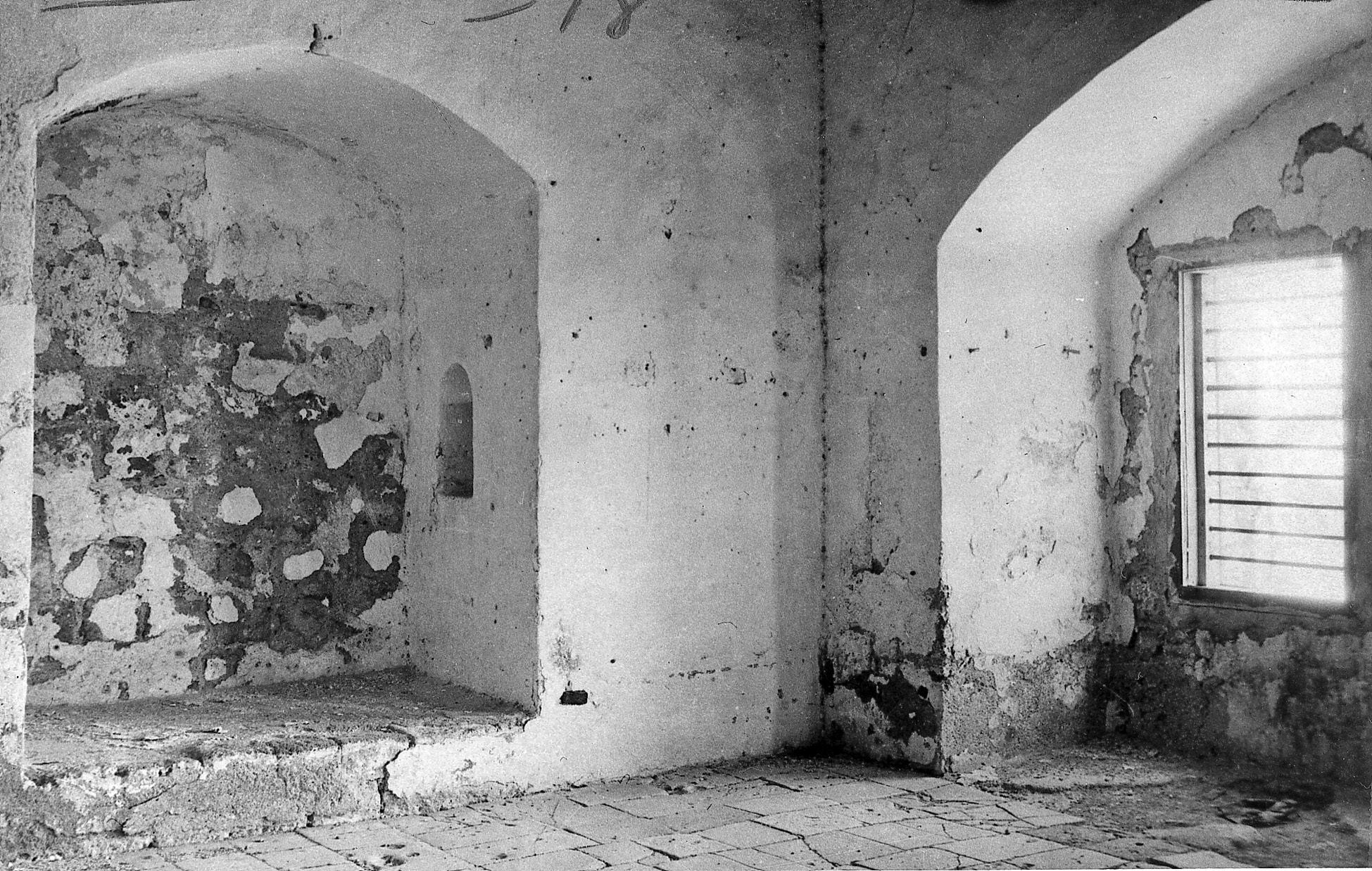
IMAGE 1: The prison complex of ‘Akká where Bahá’u’lláh was confined from 1868 to 1870. The cell of Bahá’u’lláh is upper right. Courtesy of George Ronald Publishers.
IMAGE 2: Interior of the cell of Bahá’u’lláh in the prison complex of ‘Akká. The alcove with windows at the right faces the Mediterranean Sea. Courtesy of George Ronald Publishers.
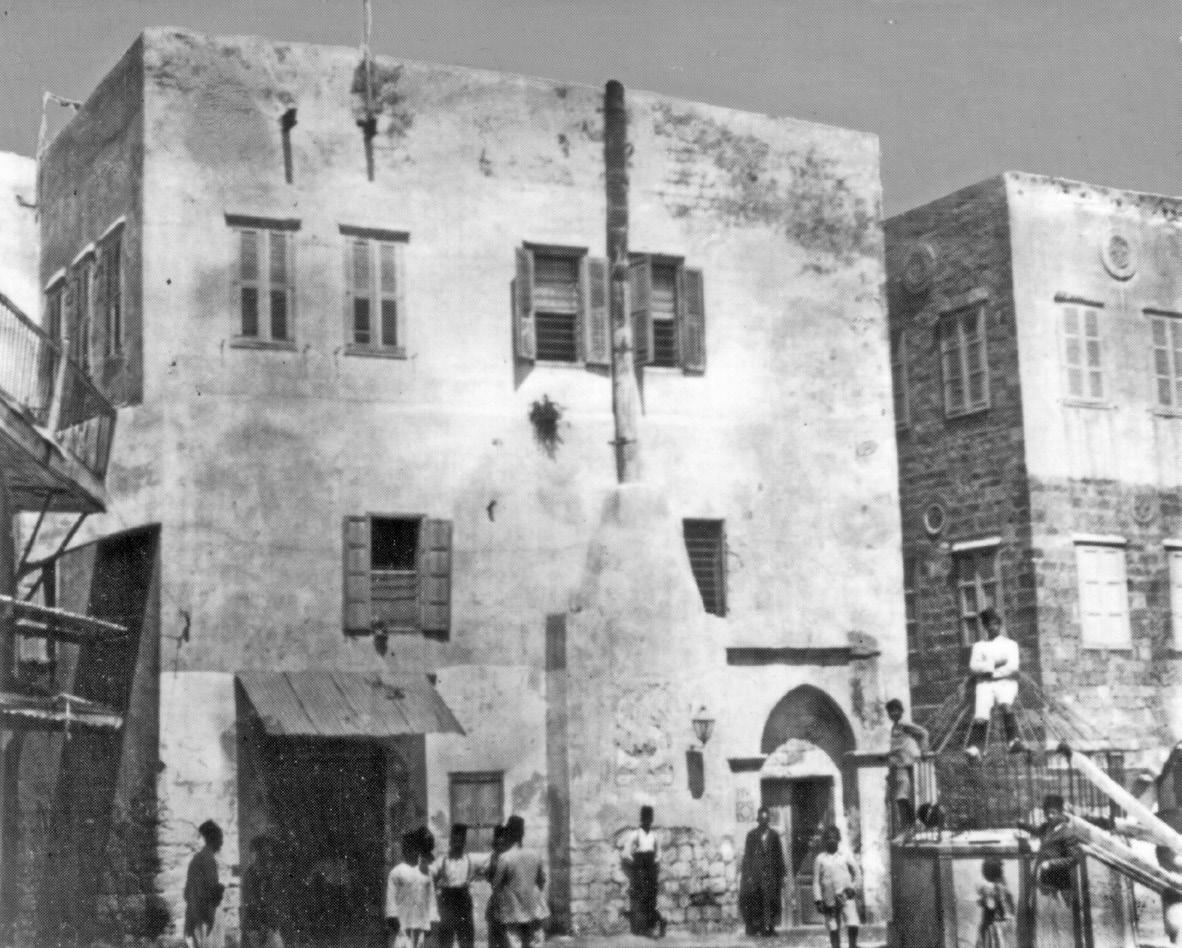
IMAGE 3: House of ‘Údí Khammár, seen from Genoa Square. The windows at the upper left open into the room in the back of the house where the Kitáb-i-Aqdas was composed. Courtesy of George Ronald Publishers.

4: House of ‘Údí Khammár. The room in which Bahá’u’lláh composed the Kitáb-i-Aqdas. Courtesy of George Ronald Publishers.
IMAGE