Keeping Our Heads Above Water | BAGWIS AY 2025-2026 January Issue
K-12 Misalignment, MSU-GenSan admission mechanics, limited slots leave students vulnerable to shifting
JOHN PAUL SIAPEL, DAVE MODINA
Fail. Shift? What if?
In an interview with Bagwis, a student who chose to be named “Weng”, a former Bachelor of Science in Civil Engineering, shared that despite putting effort into studying, she kept on struggling with major subjects, making her decide to shift into another program.
“Over time, I realized that staying in the same program was starting to affect not only my academic performance but also my mental health,” she stated.
For Weng, realizing that surrendering to something important, such as staying in their previous programs, especially as students in Mindanao State University – General Santos (MSU-GenSan), makes them feel empowered, ‘allowing them to start anew and to pursue their strengths, interests, and goals in their newcalled home’.
Weng further shared that the College of Engineering administration was fully supportive in explaining processes and requirements, making the shifting process smooth.
“They assured us that we could approach them anytime if we had questions or concerns about shifting,” she shared.
Weng expressed that after shifting, she felt an overwhelming sense of anxiety because the policies made her realize the seriousness of her academic standing.
“There was also a sense of disappointment, but at the same time, it helped me become more aware of my responsibilities as
a student. Eventually, I accepted the situation and viewed it as an opportunity for growth rather than a failure,” she expressed.
In addition, she noted that academically, shifting programs helped reduce her stress and allowed her to perform better in my subjects due to motivation and confidence in her studies.
“Personally, it was a challenging adjustment because I had to let go of my original plans, but it also taught me resilience, selfawareness, and the importance of making decisions that support my well-being,” she implied
Weng also hoped that the college administration could provide stronger support for students by offering consistent academic advising, mentoring programs, and early help for those who are struggling.
SHS misalignment with chosen programs
In 2010, the Department of Education (DepEd) introduced a new curriculum to the Philippine education system, the K to 12 program, which aims to enhance students’ skills, improve employability, and align the education to international standards.
Based on a study conducted by Enderun College, the addition of Senior High School (SHS) programs aimed to help the incoming college students align their skills with their chosen fields or career goals.
However, due to the weak implementation of the system, a solution became an addition to the problem.
According to an article published in Researchgate, a credible media well-known for providing accurate information, the misalignment of SHS strands in choosing a college program is a significant driver of academic struggle, lower academic performance, and potential dropout among Philippine college students.
Studies show a “mismatch rate” between 31% and 39% in the years 2017–2019, leading to substantial issues in tertiary education.
Behind MSU-GenSan’s shifting narrative
In the university, with the rise of Inclusive, Diverse, and Equal Admissions (IDEA), an approximation of 2800 SHS students vie for a slot in the university.
However, even though the administration instructed aspiring MSUans to select five preferred programs in the institution, numerous students were unable to attain their preferred programs due to demands and limited absorptive capacity.
The Admission Office stated that classroom retrofitting and a lack of new facilities prevented the opening of new programs, further explained that highly subscribed programs such as Biology, Nursing, and Psychology might see slight increases in blocks, making slots limited despite a high turnout rate.
MSU-GSC Admissions Office also confirmed that new policies would introduce cut-off scores, making the students vulnerable to challenges that lead to shifting.
‘A nurturing space for them’: OVCSAS pushes inclusive support for learners with special needs
JIDEAH BACTONG, ZYRELLE EROJO
“If they feel that the world may betray them, at least the university could provide the support they need.”
This was a statement from the Office of the Vice Chancellor for Student Affairs and Services (OVCSAS), through Dr. Norman Ralph Isla, which underscores the university’s commitment to inclusivity as it formalizes support for learners with special needs through the Person With Disability (PWD) priority lane during enrollment week, January 12–16.
The initiative is anchored on national policies, including CHED Memorandum Circular No. 9, Series of 2013, which mandates higher education institutions to accommodate students with special needs, and Republic Act 9442, also known as the Magna Carta for Persons With Disabilities.
Redefining learners with special needs
VCSAS clarified that the university now uses the term Learners with Special Needs (LSNs) instead of “PWDs” to reflect a broader and more inclusive definition.
LSNs cover students with physical disabilities as well as those with psychosocial, socio-emotional, or neurodivergent conditions.
“Many people think PWDs only face mobility challenges, but learners with special needs also include students on the autism spectrum or with
socio-emotional and psychosocial conditions,” Isla stated.
University records show that more than 118 students currently fall under these categories, leading the administration to strengthen its enrollment system and support services.
Institutionalizing a task force for LSNs
As a response to the International Organization for Standardization (ISO) Management Review, the OVCSAS plans to establish a “Force for Learners with Special Needs.
“We will not sugarcoat it. We really don’t have a mechanism to identify our LSNs, so now, we have thought that it’s high time to have one.” Isla reflected.
Through the said task force, the OVCSAS—in partnership with four other offices in the university—plan to develop a monitoring framework and establish inclusive intervention programs to advance inclusive education and uphold learners’ rights.
“From admission, the LSNs will be screened. Then, the registrar will take charge on how to fix their classrooms, in coordination with the OVCAA and the dean,” the VCSAS explained.
Furthermore, Isla added that the Office of Guidance and Counseling will monitor and give support to the LSN’s emotional and psycho-
emotional needs, while the OSDS and Medical Services will check on their activities.
“So that’s what we’re excited about. This mechanism that we’re building, based on our initial discussions, will also have a manual to ensure clear implementation,” Isla appended.
Campus moves toward accessibility
Following the recent ISO audit, OVCSAS shared plans to train faculty on sensitivity and inclusive classroom management, emphasizing that supporting learners with special needs is a shared responsibility across campus.
The office is also considering implementing the mandated 20 percent discount for qualified students under RA 9442, with hopes it could take effect as early as August, pending task force review and required documentation.
Initial reactions to the PWD priority lane have been largely positive, but OVCSAS stressed that the initiative is only the first step toward a fully inclusive environment.
“This is not something to celebrate yet,” VCSAS said, noting that more students still require longterm and comprehensive support.
Learners with special needs are encouraged to seek assistance without hesitation, as the university aims to be a safe and nurturing space where all students have equal opportunities to succeed.
photo by Fisheries Student Organization
cover
by Fayrouz Omar
story and Hezel Ann Sulan
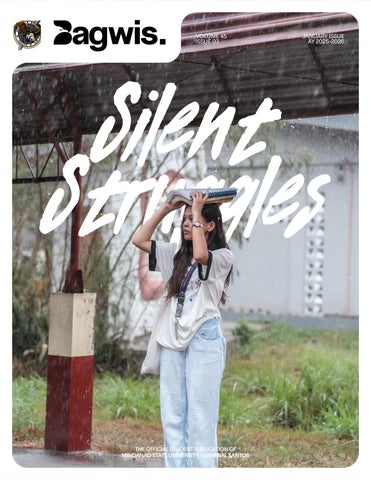
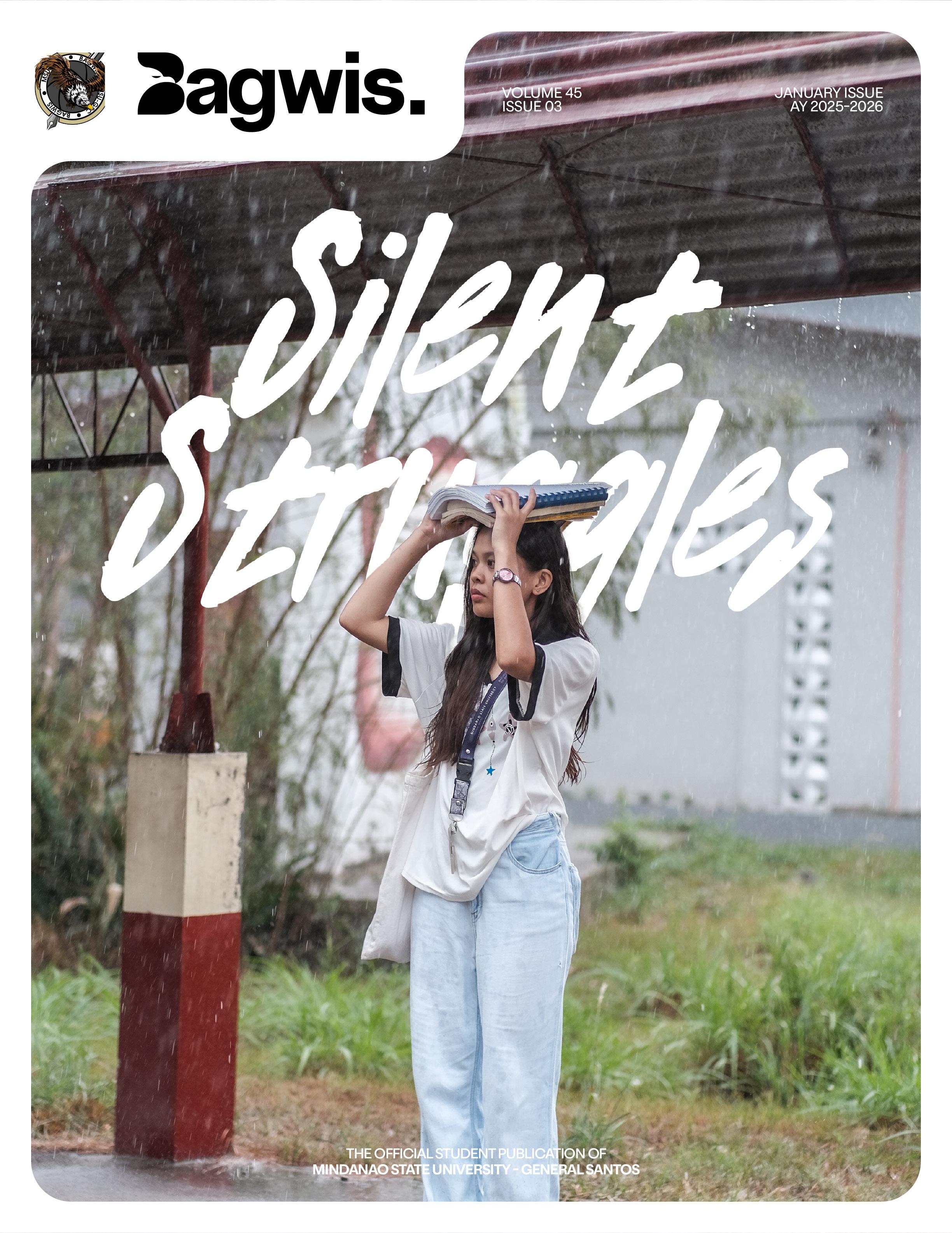
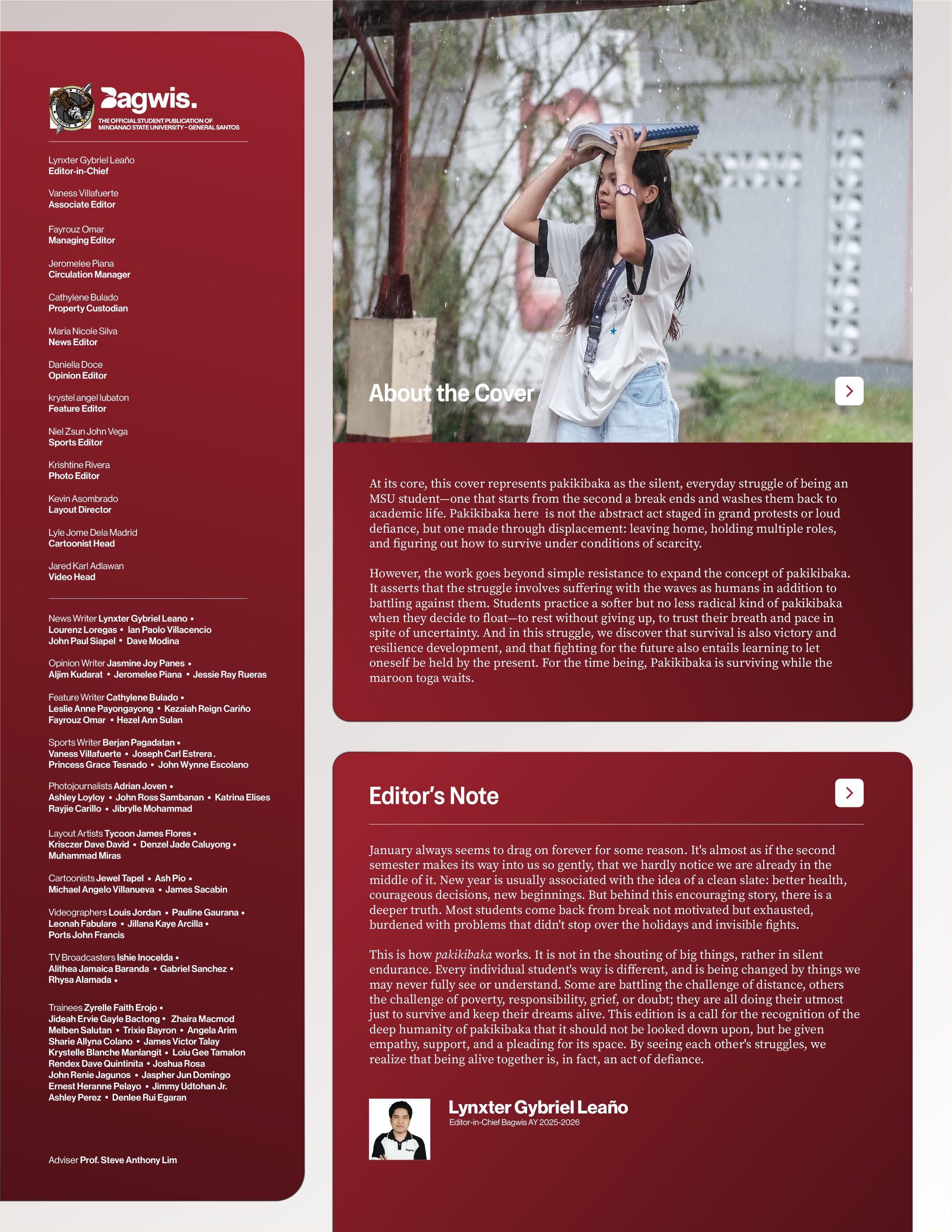
There is a silence that lingers just before a wave breaks—a fragile pause when the world feels light, almost hollow. For a few weeks, the holidays were that silence. We stepped out of the deep end of the first semester, shaking the salt from our hair and the exhaustion from our bones. We stood on the dry, solid ground of home, rediscovering what it felt like to breathe without the crushing weight of a deadline pressing against our ribs.
But at MSU, the shore is never the destination. It is only a place to catch one’s breath before the ocean calls us back.
Now, the water is rising again. We feel it in the frantic heat of enrollment, the cold realization of a failed removal exam, and the heavy pull of the distance between our dormitory beds and our mothers’ kitchens. To be a student here is to exist in a state of constant displacement: to make room for a degree, we must displace our comfort, our peace, and sometimes, our very sense of self.
The struggle isn’t just about surviving the storm but about the physics of the soul: in trying to ensure that the weight of our burdens does not exceed the volume of our will to endure.
The tide has come back in.
For Everyone They’ve Ever Loved
For many MSUans, the struggle begins with the physics of displacement. To move toward a degree, you must move away from home. Leaving home for college often means trading comfort for necessity. For many scholars, there is no familiar place to return to after class—only a rented room in a stranger’s house, paid for month after month because there is nowhere else to stay.
For boarders like Shannie Pagunsan, being away from home makes college life twice as hard. Like almost every boarder in Uhaw, she struggles not only with academics but also with loneliness, homesickness, and the quiet pressure of having to be independent far earlier than she ever imagined.
“Every day nako ma miss among balay. Lisod kaayo mapalayo sa pamilya, labinag nagdako ka nga pag mata nimo pangitaon dayun nimo imong mama ug papa.”
Missing home is not just emotional—it affects everything. Shannie worries about problems she cannot immediately attend to: family matters back home, misunderstandings with landlords, or emergencies she fears she might not be present for. This distance turns small concerns into heavy thoughts.
Simple things also become difficult, especially for someone shy. There are moments when help is needed, but asking feels like an added burden. Away from home, even the smallest problems feel larger when faced alone.
That is why holidays mean so much to her. Shannie made sure to spend her break bonding with family and friends.
“Naligo mi sa sapa, sa dagat, pati pag saka sa bukid gi buhat namo. And isa sa dinako malimtan na
panghitabo kay nag pahubas mi ug sapa sakong kuya and nag kuryente mi sa sapa… memorable siya tungod kay nagka sunburn ko.”
After the break, she returned feeling both happy and uneasy—half-ready, half-hesitant. Going back meant leaving her family again, but she carries the certainty that everything she endures is for them.
And so she keeps going.
For the Dreams They Patiently Held
Many students grow into many roles long before they feel ready. While some struggle with distance, others struggle with depth. The deeper you go, the higher the pressure. For Windy, the pressure is multi-directional. She is a mother, a sister, and a student who has learned how to carry her identity while holding tightly onto her dream of finishing her education.
During the holidays, Windy stayed home to take care of her child. Those days became precious bonding moments, a short but meaningful chapter before her father took her baby to live with him. When January came, her role shifted again. Without her child beside her, she returned to being a sister, managing household responsibilities: laundry, cooking, cleaning, everything.
Before the first semester ended, her baby was also still with her, and balancing motherhood with academics nearly broke her.
“Katong before nag end ang first sem, kauban nako akong baby. Grabe, lisod kaayo to,” Windy admitted. “Halos di nako ma balance ug tarong… naa pa’y pasahunon, limpyo, lutoon. If makita sa akong baby nga naa kog gina-answeran, magmaoy siya. Usahay makasuk-an pa nako siya, tas gahilak ko kay deadline na unya wa pa ko kapasa.”
Sleep was rare. Exhaustion became normal.
For the second semester, her goal is simple: to become better. To conquer every battle she faces, not just as a student, but as a whole person. One thing she hopes to improve is her communication skills. Fear still creeps in—the worry of being contradicted, misunderstood, or judged, especially in speaking and writing—but she is determined to overcome it.
“Basta lisod kaayo, if ginikanan ka tas naga-school. Maayo gani karon nag offer akong papa na kuhaon siya kay siguro mamatay kog sayo.”
Like many students, with all the responsibilities Windy has, she didn’t know how to manage her time properly, just whatever she felt like doing at the time. “Go with the bugso ng damdamin kung unsay pwede unahin. Ikanga ni ate nako ‘one at a time’ ra daw. If mahuman ang isa, isa na pud. Ana pud akong mama para di daw kapuyon or di tamadon, dapat isipon na excited ka buhaton ang isa ka bagay.”
Windy chooses to keep going. To enjoy the journey, even when it’s exhausting.
“I-enjoy nalang jud nato bisan kapoy,” she said softly.
“Kay pag-abot sa panahon lahi na pud ang atong journey. Puhon. Kung maka-graduate lagi”.
For a Maroon Toga Waiting to be Worn
Being a working student means carrying more than just academic pressure. While others focus solely on classes, some students must also think about money, meals, and responsibilities beyond school. Life is lived within limits, especially when prices keep rising.
For Leff Javier, every expense is carefully planned. There is always the fear of running out—of money, of time, of strength. Even before graduation, exhaustion already lives in the body.
“As anak, we have responsibility man sa bahay or if ga bh man may responsibility to be cautious with roommates or mag gawa ng gawaing bahay. Maghanap ng Sidelines na at least maka earn ug coins para mapawi ang gutom sa school,” he stated.
Opportunities to earn do not come often. And when they do, they usually arrive at the worst time, when exams pile up, deadlines close in, and rest becomes a privilege instead of a right. Still, he accepts the work anyway because he has no choice.
Being in their second year of university now, Leff plans to try different ways of studying, holding on to what works, and letting go of what doesn’t. He pointed out how important surrounding yourself with people who bring light instead of heaviness is, because the environment you live in slowly shapes who you become—academically, emotionally, personally.
The goal is the Maroon Toga—the dry land at the end of four (or five, six) years of swimming.
“Bahalag dili highest, basta dili lowest."
The
Art of Floating
The semester is a relentless sea. It brings the waves of enrollment, the whirlpools of failed INCs, and the undertow of self-doubt. We are taught that pakikibaka means fighting—kicking until your legs cramp, splashing wildly to be seen, gasping for air.
But there is a final stage to this struggle.
To keep your head above water is a triumph of the will. But to float is a triumph of the spirit. Floating requires a strange kind of trust; it requires you to stop fighting the water and start letting it carry you. It is the realization that while the university moves forward in the name of progress, you are allowed to move at the pace of your own breath.
So, to the student staring at a failing grade, to the mother missing her child, and to the boarder counting their last coins: Keep your head up. But when the legs grow tired and the shore seems too far, remember that the water that threatens to drown you is the same water that can hold you up.
Relax your shoulders. Breathe deeply.
The Maroon Toga is waiting. But for now, just allow yourself to float.
The books can wait; the trees have been waiting all along
KEZIAH CARIÑO, ANGELA ARIM
In the life of an MSUan, time is often measured in deadlines, heavy readings, and the exhausting college life routine. We move through campus with eyes fixed on the next class, often forgetting that the ground beneath us holds more than just our ambitions.
However, sometimes, the most worthwhile thing you can do is pause. We often walk past these places with our heads down, focused on the goals. But the January air at MSUGenSan carries a quiet lesson: there is beauty in the pause and here is an MSUan guide to the sanctuaries that lets everyone breathe, resting in plain sight:
LAKTANAN PARK
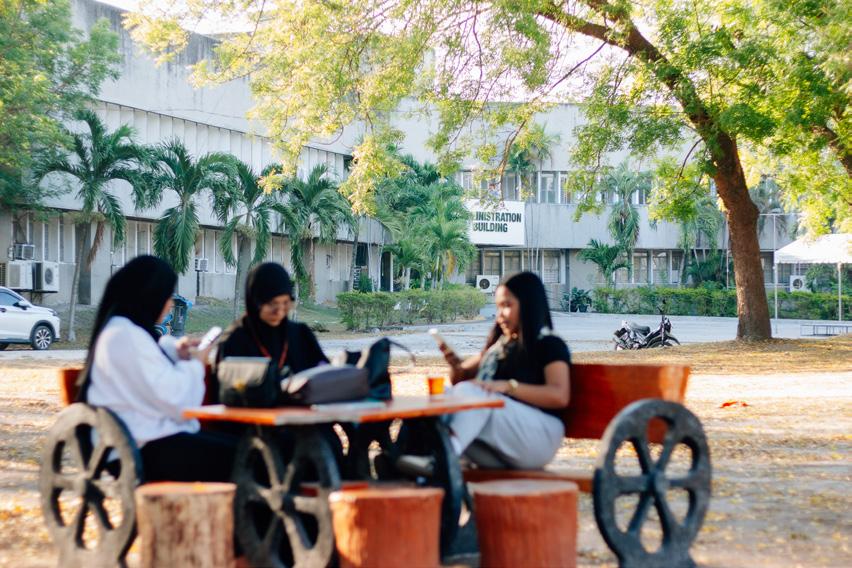
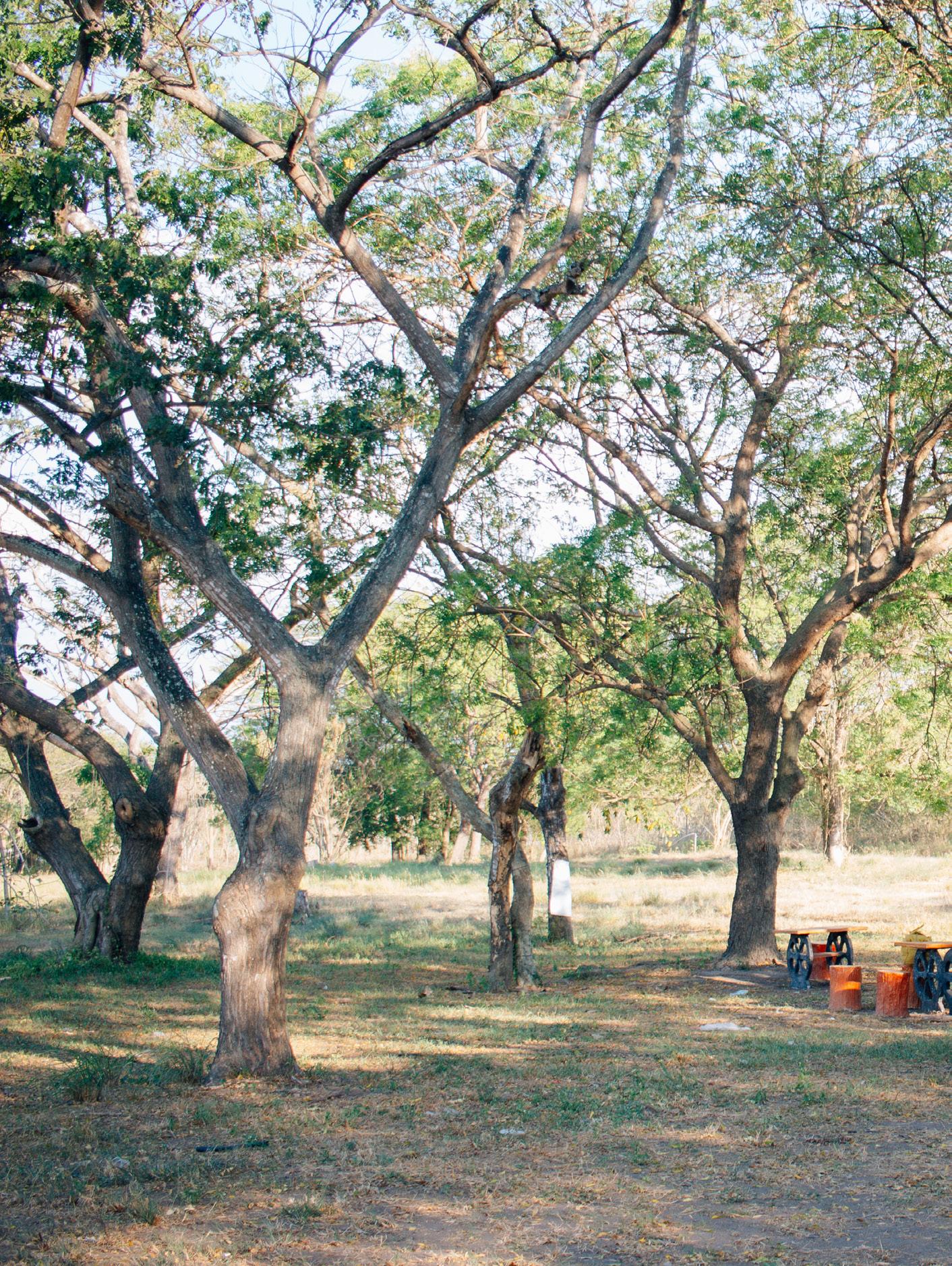
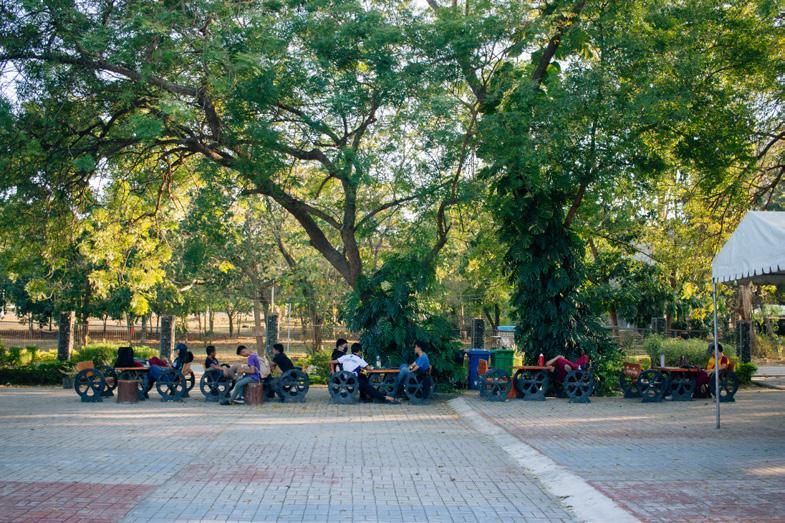
To know Laktanan is to know the heartbeat of student life. It is more than just a tambayan but a sanctuary where the canopy filters the harsh General Santos sun into soft, peeking lights.
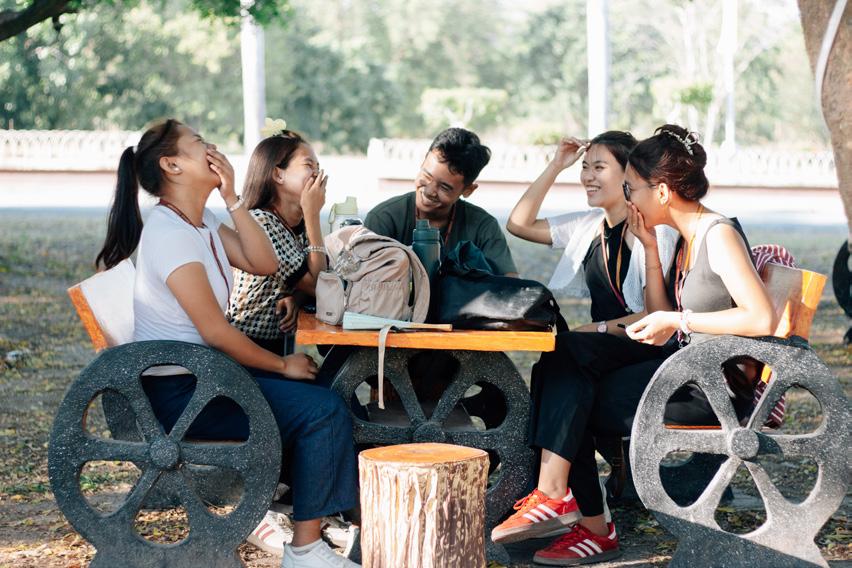
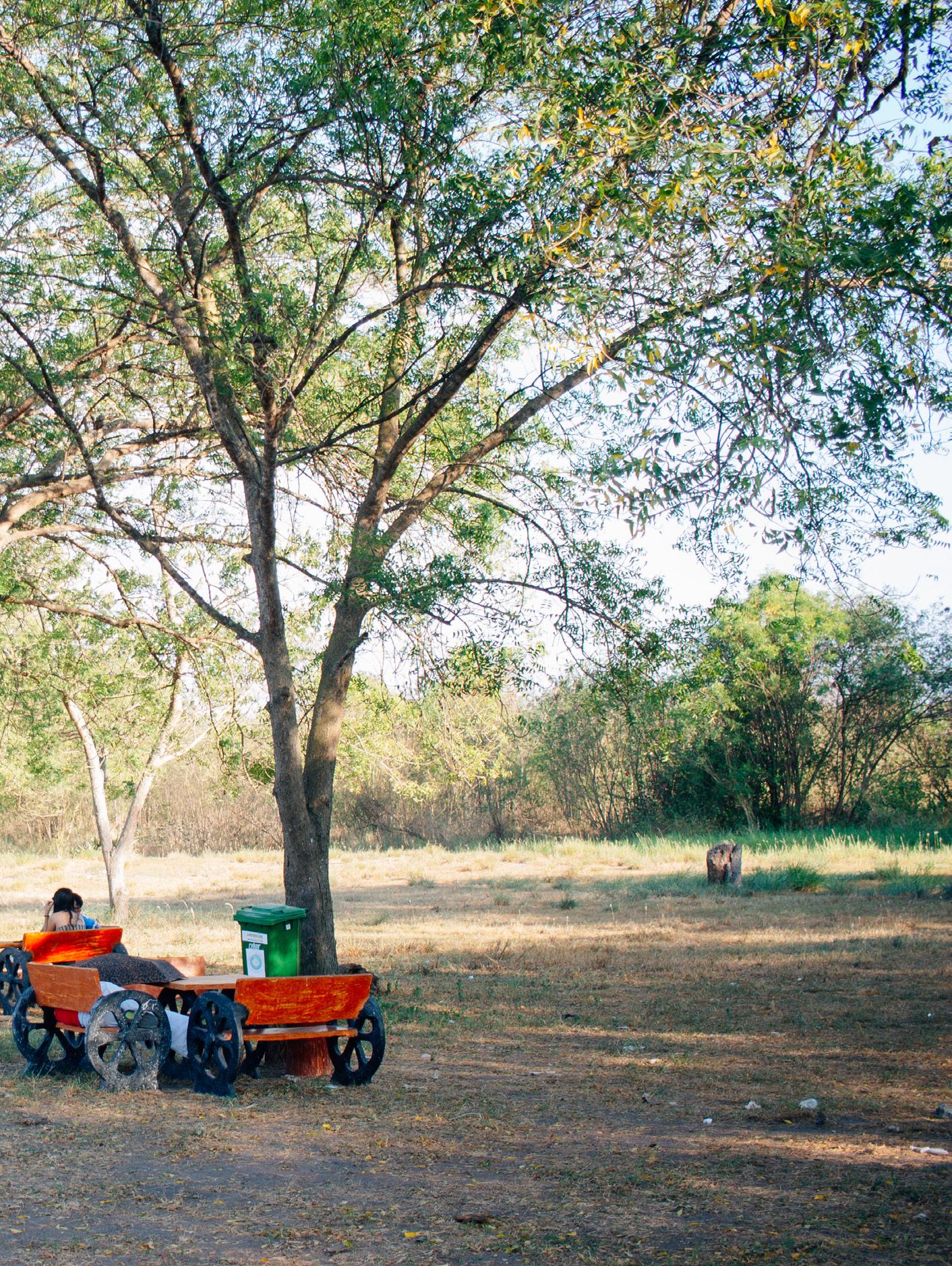
The benches and tables beneath the shade aren’t mere fixtures; they witness shared snacks, candid moments, and quiet sighs of relief. With landmark structures providing a pleasing sight and convenience of the nearby GAD restroom, Laktanan proves that a space can be both practical and poetic. It is where nature greets you at eye level, reminding you that like the trees, you too need deep roots and a moment to be grounded in purpose.
THE UNIVERSITY PAVILION
Just beside Laktanan Park, the University Pavilion stands as a quiet neighbor to the bustle. The pavilion quietly whispers an invitation to exhale. Surrounded by lush greenery, the air here feels a few degrees cooler and the ambiance lighter. Whether you are studying or gathering for a group meeting, the Pavilion offers a unique kind of focus—something made for peace rather than pressure. Here, the wind carries away
the weight of daily pressure, replacing it with the simple, restorative breath of fresh breeze.
The Front Gate & Y-Building Benches
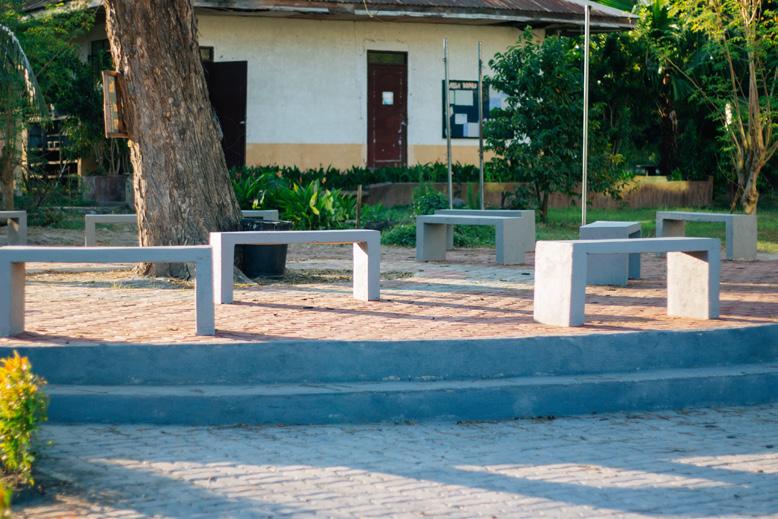
The new benches stretching from the university’s front gate to the Y-building have quickly become the campus’s “front porch.” These spots hold a quiet beauty, offering a front-row seat to real campus life. Here, you see the true MSUan rhythm: friends leaning in close to share a joke, the low hum of life talks, and the occasional student enjoying solitude. These benches remind us that we aren’t alone in our exhaustion or our joy. To sit here is to realize that peace isn’t always found in silence, but sometimes, found in the laughter of a stranger or the comfort of a sturdy seat as the day winds down.
CAMPUS KIOSKS
Next stop: the kiosks scattered across MSU–Gensan. Best time to visit: right after classes, when your energy is low and your heart needs company.
What to bring: nothing but yourself.
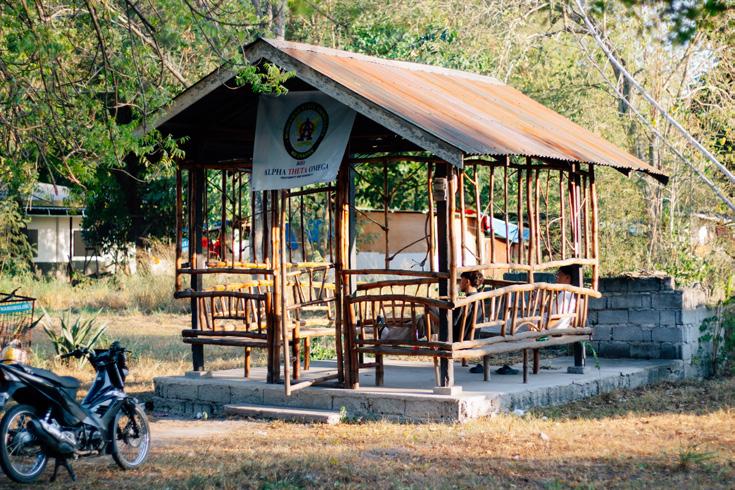
That is the quiet command of the kiosks—simple huts that draw your attention only when energy fades.. They do not need fancy lights or loud music to draw you in; they invite you with something stronger—belonging. Here, students meet after classes, share jokes between lectures, and find comfort in familiar faces. A kiosk becomes a home because it holds the people who stay there, the laughter that echoes after a rough exam, the shoulders that lean on each other after a bad day, and the quiet moments when no one asks you to perform. In these hidden corners, ordinary days turn into memories, and the campus becomes a place where you can finally rest.
SIGAY - KAUYAGAN
From the kiosks, continue your walk toward the College of Agriculture, and you will find SIGAY–Kauyagan—unassuming and almost invisible to hurried feet. But once you step inside, the campus seems to exhale with you. Noise fades, time loosens, and the air feels softer, as if the room itself understands fatigue. SIGAY becomes both a stopover for the weary and a meeting place for friends---a room intended for naps, and a safe haven where laughter rises over board games. Managed by international volunteers and shaped by inclusivity, the space welcomes faith, difference, and vulnerability, offering quiet assurance that you will always be welcome just as you are. Best time to visit: anytime you feel worn out. SIGAY is always open to tired souls. What to bring: an open heart and the courage to rest.
As you walk through MSU–Gensan, you realize that the campus is more than buildings and classrooms—it is a living map of places that quietly hold us when we need to pause. From the shade of Laktanan Park, to the calm breeze of the Pavilion, the front-porch comfort of the benches, and the hidden shelters of kiosks and SIGAY–Kauyagan, each spot offers a different kind of rest. These are not just locations; they are reminders that we do not have to carry our exhaustion alone. Sometimes, the most important part of being an MSUan is learning where to stop, breathe, and simply be. In the end, the campus teaches us not only how to chase our dreams, but also how to come home.
After a month-long semester break filled with late-night scrolling, “one more episode” shenanigans, and entire days spent rotting in bed, waking up to early morning classes feels like punishment. For students, the hardest part of returning to campus is not the comeback of academic demands—it’s sleep. With weeks of relaxed schedules, the body struggles to adjust to sudden rigid routines.
Without classes to think about the next morning, students are no longer bound by the alarms, schedules, or academic pressure. As such, sleep becomes flexible–often delayed–and is dictated by personal preference rather than obligation. While this freedom feels refreshing, it silently reshapes the body’s internal clock when classes return as the mismatch between biological timing and academic schedule increases evidently.
Once we grind our way once again inside the corners of our Pamantasan for that academic comeback and catch up to our org works, we often feel exhausted, unfocused, and mentally foggy. Despite sleeping for long hours, we feel like we are constantly catching up on rest. And while being tired is normalized in an MSUan life, research suggests that this exhaustion has deeper roots—and bigger consequences— than we often realize.
What happens to sleep during school breaks?
When school schedules disappear, sleep timing shifts almost immediately. A study published in the journal SLEEP found that during school breaks, students consistently went to bed and woke up later compared to regular school days, especially when breaks extended beyond a week. Bedtimes were delayed by more than an hour, while wake-up times shifted even later, showing how quickly sleep adapts to unstructured
time.
Interestingly, the study also observed that students slept slightly longer during breaks. With no alarms and fewer obligations, the body takes the opportunity to recover from accumulated sleep debt. However, this extra sleep came with a trade-off: the entire sleep schedule drifted later, pulling the circadian rhythm away from school-day demands.
Without fixed class hours or academic pressure, sleep becomes guided by preference rather than necessity. While this may feel refreshing during the break, it quietly sets the stage for difficulty once classes resume. By the time the semester starts, many students find that falling asleep early is suddenly much harder than expected.
From vacation mode to academic shock
The real challenge begins when students return to campus. A longitudinal study published in Heliyon followed university students before, during, and after time away from school and found that sleepwake rhythms shifted later during the break-like period. Once students returned to in-person classes, early wake-up times shortened total sleep and rapidly increased sleep debt.
Despite sleeping longer while away from campus, students reported increased daytime sleepiness after returning. The study noted that the body does not immediately realign with early schedules, even when students try to sleep earlier. Some participants also experienced worsening insomnia symptoms, including difficulty falling asleep and restless nights.
This mismatch between biological timing and academic schedules is known as social jet lag. Similar to crossing time zones, students returning from breaks
experience internal misalignment, except there is no travel involved. The shock is internal, gradual, and often ignored until exhaustion becomes unavoidable.
Why a proper sleeping pattern matters
Sleep is not simply rest; it is active biological work. During sleep, the brain consolidates memory, regulates hormones, and processes information learned throughout the day. A stable sleep pattern supports attention, emotional regulation, and learning efficiency. When sleep timing becomes irregular, these processes are disrupted.
Studies have linked poor sleep patterns to reduced academic performance, impaired concentration, and slower cognitive processing. Students may struggle to retain lecture material, stay alert during exams, or focus during long classes. Over time, this academic strain compounds stress and burnout in the middle of the semester.
Beyond academics, chronic sleep disruption also affects physical and mental health. Inconsistent sleep has been associated with weakened immune function, mood instability, and increased vulnerability to anxiety and depressive symptoms. For students already navigating academic pressure, sleep disruption quietly amplifies these challenges.
Easing the transition
Sleep researchers emphasize that adjustment should be gradual, not abrupt. Shifting bedtime earlier by 15 to 30 minutes each night before classes resume allows the circadian rhythm to realign more smoothly. Forcing a sudden change in sleep schedule often backfires, resulting in longer periods of lying awake and a growing sense of frustration. This is because the circadian rhythm does not respond well to sudden commands and the body resists the change because it has not yet recalibrated
Bed Rot to All-Nighters: Why ‘Just Sleep Work Afte
JASMINE JOY
All-Nighters:
Earlier ’ Doesn’t er a Break
JOY U. PANES
its internal clock.
Daily habits also play a crucial role in resetting sleep patterns. Morning light exposure, such as walking and jogging around the campus, signals the brain for a reset and promotes earlier sleep onset at night. Despite many MSUans’ reliance on coffee, limiting caffeine intake in the afternoon and evening can also improve sleep quality. While caffeine may temporarily boost alertness, late-night coffee or energy drinks delay sleep and deepen sleep debt.
Reducing screen exposure before bedtime further supports healthier sleep timing. Light from phones and laptops suppresses melatonin, the hormone responsible for signaling sleep, making it harder to fall asleep on time. Simple adjustments by dimming screens, setting device curfews, or unplugging earlier can ease the body back into an academic rhythm.
While individual habits matter, institutional awareness is equally important. Recognizing that sleep disruption is common after long breaks can encourage more mindful academic pacing during the first weeks of the semester. Supporting sleep health benefits not only individual students but the campus learning environment as a whole.
More than just feeling tired
Sleep disruption after school breaks is more than a minor inconvenience—it has real consequences for health, learning, and daily functioning. A study published in the International Journal of Behavioral Nutrition and Physical Activity found that changes in sleep during vacations often persist even after people return to regular schedules. Sleep duration remained elevated for up to two weeks after vacations ended, indicating that the body does not instantly reset.
For us, sleep quality is an essential tool in achieving our full potential as iskolars ng bayan. In a life where deadlines pile up and responsibilities never seem to pause, it is easy to treat rest as optional. But sleep is not the opposite of productivity; it quietly sustains it. When rest is sacrificed too often, the effects ripple outward, blurring focus, draining motivation, and eventually risking both mental and physical health. Over time, this exhaustion builds, turning small struggles into heavier ones. Taking sleep seriously is not giving in to weakness, but choosing to protect ourselves so we can keep learning, creating, and showing up fully.
Understanding sleep disruption as a biological response rather than a personal failure can help shift how
students approach rest. As we move from bed rotting to pulling all-nighters, acknowledging the science behind sleep may help foster healthier habits and more compassionate academic spaces— reminding us that “just sleeping earlier” is not a simple choice, but a process the body must relearn after a break.
Sleep Jargon, Explained
Circadian Rhythm: Your body’s 24-hour internal clock that tells you when to sleep and wake.
Sleep Debt: The sleep you owe your body from past nights of lost rest.
Social Jet Lag: When your sleep schedule clashes with school or social obligations.
Melatonin: The “sleep hormone” that signals your brain it’s time to rest.
Sleep Onset: The moment you actually fall asleep after going to bed.
References:
Ferguson, T., Curtis, R., Fraysse, F., Olds, T., Dumuid, D., Brown, W., Esterman, A., & Maher, C. (2023). How do 24-h movement behaviours change during and after vacation?
A cohort study. International Journal of Behavioral Nutrition and Physical Activity, 20(1). https://doi.org/10.1186/s12966023-01416-2
Kayaba, M., Ishitsuka, M., Ishidate, M., Ueno, K., Kajihara, Y., & Sasai-Sakuma, T. (2023). Delayed sleep-wake rhythm due to staying at home during the COVID-19 pandemic and sleep debt after
returning to campus among Japanese nursing university students: A longitudinal study. Heliyon, 9(4), e14994. https:// doi.org/10.1016/j.heliyon.2023.e14994
Weaver, R. G., Beets, M. W., Perry, M., Hunt, E., Brazendale, K., Decker, L., Turner-McGrievy, G., Pate, R., Youngstedt, S. D., Saelens, B. E., & Maydeu-Olivares, A. (2019). Changes in children’s sleep and physical activity during a 1-week versus a 3-week break from school: a natural experiment. Sleep, 42(1). https://doi.org/10.1093/sleep/zsy205
Revamped leadership, boosted budget fuel MSU-GSC’s quest for historic sixth-straight MSUSAA title belt
NIEL ZSUN JOHN VEGA
Riding a five-year championship streak, Mindanao State University–General Santos City (MSU-GSC) charges into the new season determined to defend its crown at the Mindanao State University System Athletic Association (MSUSAA) Unity Games, driven by a unified pursuit of athletic excellence under refreshed administrative leadership and bigger funding.
Originally planned to be hosted by MSU–Sulu Campus, the highly awaited competition among MSUan varsity athletes will now take place at the main campus in Marawi City, marking its first time hosting since the pandemic. The exact dates remain undecided, with June and August emerging as the leading options for the muchanticipated return of the games.
Concerned about the potential loss of senior players across various teams, University Sports Development Office (USDO) Acting Director Professor Jessel Gay Wacan voiced apprehensions over the delayed scheduling of the games.
“So with that, as we prepare, we have many worries kasi sayang ‘yung mga graduation students namin na cannot play because the games will be on August, if it would be on June then it would be better because our roster of athletes is complete kasi nga we have those graduating students,” she said.
Prof. Wacan then explained that if the games are set for August, coaches would be forced to ‘make significant adjustments’, including conducting additional tryouts
or scouting new athletes to integrate into the teams. She highlighted that changes in the competition timeline pose a challenge to preparation, as shifts in scheduling disrupt established training plans and team composition.
Amid these looming uncertainties, the USDO is now focusing on initial steps to further boost the performance of its varsity athletes through sustained training programs and the provision of sportspecific needs for each team.
“For the training, we have now installed lights here sa tennis, softball, baseball, and football para atleast kahit na mag abot tayo ng alas 7 or 8 ng gabi maliwanag pa rin,” the Interim Director stated.
She added, “Also when it comes to training, we are really giving our coaches the opportunities to lead their teams well. I emphasized to our coaches last January 28 in our meeting na hindi lang tayo puro laro, we need to also condition our athletes, like strength and conditioning training routine should be established 1 to 2 months prior to games.”
Building on a successful campaign in the previous edition, this year’s delegation entered the competition with a notable upgrade, particularly in financial support, compared to when the General Santos City campus hosted the event in 2024. The significant increase was granted under the leadership of newly appointed Chancellor Atty. Shidik Abantas, aimed primarily at strengthening the institution’s sports
development program.
“Last December, after the MASTS, we reported to the Chancellor to discuss plans for the MSUSAA. We had a budget call, and we were fortunate to be promptly approved a PHP 3 million budget for the MSUSAA,” Prof. Wacan shared. She reaffirmed the strong support shown by the Chancellor, noting that the swift approval of the budget reflected the administration’s dedication to athletics.
Powered by winning spirit, last year’s titleholder, MSU-GSC, enters the upcoming games as the hunted after a dominant 341-point finish, with runners-up MSU–Iligan Institute of Technology and host MSU–Marawi Campus leading the chase following their strong showings of 257 and 225 points.
The USDO remains hopeful about the upcoming games, aiming to secure its sixth consecutive ultimate crown at the main campus—an achievement that would also mark Chancellor Abantas’ first victory since his appointment.
What Does it Really Take to be ?
Not every journey begins with a choice. Some begin because someone sees what you couldn’t see in yourself. For Mearylyn Vargas, that moment came at ten years old, when a teacher recognized a spark of strength and potential even she hadn’t yet noticed. It wasn’t just a suggestion—it was a call, the start of a path that would carry her from small-school majorette drills to the national stage of the Palarong Pambansa. That quiet recognition set her on a journey of discipline, courage, and relentless effort, a journey that would demand she prove herself again and again. It makes you ask: what does it truly mean to be her?
Today, Mearylyn is a third-year Bachelor of Arts in Political Science student at Mindanao State University–General Santos and the President of the Sports Development Group. Beyond medals and titles, she is a woman shaped by discipline and persistence; an athlete who understands that true strength is measured not by force alone, but by the courage to stay, to be tested, and to prove that what was once questioned was never by chance at all.
Not a Stroke of Luck
Success is rarely handed to anyone; it is earned through effort and resilience. For Mearylyn, what some might call luck was anything but tenacity.
“Nagsimula ang paglalakbay ko sa isports hindi dahil sa kuryosidad bilang mag-aaral o isang bata na kuryos patungkol sa isports, ngunit dahil sa aking minsang maging guro na si Ginang Tana noong nasa ikaapat na baitang pa lamang ako,” she recalled. At ten years old, a teacher saw a strength and potential she had yet to recognize, setting her on a path that would test her limits and demand every ounce of discipline she could muster.
She did not stop at martial arts. Mearylyn pushed herself across multiple sports, learning new skills and adapting to the physical and mental challenges each field required. Through rigorous training and repeated competitions, she developed patience and humility — traits that shaped her raw ability into earned success. She reached the provincial level in her early competitions, securing a bronze medal, and by fifth grade, she was already competing at the Palarong Pambansa, one of the highest stages of school sports in the country.
Strength in Every Step
Tested across every arena, the 21-year-old competitor threw herself into sport after
H er
JOSEPH CARL T. ESTRERA
sport, from martial arts to various competitions, learning early that growth demands more than talent. What set her apart was not just skill, but an unwavering commitment to show up, even when the weight of responsibility followed her beyond the mat. The hardest balance, she admits, was carrying her role as a daughter alongside her dreams as an athlete. “Para sa akin, ang pinakamahirap na parte nito ay ang tungkulin ko bilang isang anak sa aking mga magulang…,” she recalls, speaking of expectations that never faded even amid training and competition. Through careful planning and quiet determination, she found her rhythm, one that allowed her to honor her family, pursue her studies, and remain steadfast in the sport that shaped her.
asserting them respectfully; an experience that taught her to pair courage with respect and determination.
Through these challenges, she has grown stronger not only as an athlete but as a woman confident in her voice and abilities. She is determined to shift perceptions about women in sports: they are not weaker or secondary; they bring the same dedication and heart as men. Her advocacy extends beyond her own achievements, inspiring the next generation of female athletes to claim their place boldly and without apology.