In a country that aspires for progress, it is alarming that even the most basic form of respect—treating women as human beings—is still not consistently upheld. The Philippines continues to fall short, not merely because of economic or political challenges, but because of a deeply rooted culture that tolerates sexism, even from those in positions of power. What is even worse is when influential figures themselves perpetuate misogyny, it sends a dangerous message: that disrespect toward women is acceptable. In this light, what we call “progress” begins to ring hollow, revealing a society that advances outwardly, yet remains stagnant in its regard for dignity.
One recent event that reflects this troubling reality sparked online discussions was during a House impeachment hearing in March 2026, when Jesus “Bong” Suntay publicly made remarks about his sexual desire for actress Anne Curtis. What makes the situation even more jarring is the irony embedded within it: Suntay used this sexual analogy to defend Vice President Sara Duterte, arguing that private “imaginations” should not be legally actionable. In a space that should have demanded professionalism, restraint, and respect, the moment instead dissolved into laughter—even from some women who were present in the room.
Yet beyond the surface-level controversy lies a deeper contradiction—one that reveals how misogyny often operates in subtle, insidious ways. In defending one woman, another was reduced. In attempting to assert a principle, dignity became collateral. This selective regard exposes a hierarchy, where respect is not inherently given but strategically applied. And perhaps more tellingly, it invites us to question why some women, like VP Duterte, appear to be insulated from such treatment. It is difficult to ignore how power reshapes perception—that respect may be extended not because misogyny has been dismantled, but because certain women embody traits historically aligned with masculine authority, echoing figures like her father, former President Rodrigo Duterte.
If anything, this incident is not an anomaly—it is part of a broader and more troubling pattern. In the days that followed, lawyer Ferdinand Topacio publicly defended Suntay, claiming that men are inherently “wired” for sexual desire, as if biology could serve as justification for disrespect. More concerning was his admission that he himself had entertained similar thoughts toward Gabriela Women’s Party Representative Sarah Elago during a formal hearing. What should have been a professional setting was, once again, reframed through a lens of objectification—further blurring the line between personal impulse and public accountability.
Similarly, this pattern finds its way into other legislative spaces, where professionalism should remain non-negotiable. During a Senate hearing,
Jinggoy Estrada directed remarks toward basketball player Elizabeth Jeanette Means that shifted attention away from her qualifications and into her personal life. By asking whether she had a Filipino boyfriend and jokingly suggesting that another senator “apply,” the moment reduced an athlete’s merit into a casual display of gender insensitivity. The Commission on Human Rights rightfully criticized the remarks, emphasizing how such comments disregard and discriminate against women. Yet, as with many similar incidents, it risks being dismissed as harmless humor—when in reality, it reinforces the idea that women, regardless of their achievements, remain vulnerable to objectification.
Taken together, these incidents reveal a pattern that is neither new nor surprising—only persistently ignored. In fact, such behavior has long been modeled from the highest office in the country. Former President Rodrigo Duterte has repeatedly drawn criticism for remarks that trivialize and even make light of sexual violence. It is deeply disturbing—if not alarming—that his actions were often justified as “Bisaya humor,” when in reality, such reasoning merely served to excuse inappropriate and offensive behavior. How on our mother earth can the statements such as, “Nagalit ako kasi ni-rape? Oo, isa rin ‘yun. Pero napakaganda, dapat ang mayor muna ang nauna. Sayang.” and “Ang pangalawang asawa, parang spare tire ‘yan. ‘Pag na-flat ‘yung isa, may reserba ka.” be dismissed as humor? As the nation’s top leader, joking about rape in public speeches and repeatedly making sexually suggestive remarks about women goes beyond mere shock value—it shapes public behavior and perception, ultimately reinforcing a culture of sexism and misogyny.
Supporters often dismissed these statements as humor or personality, but the implications are far more serious. They contribute to a culture where harassment is downplayed, where accountability is blurred, and where women’s experiences are invalidated. In a country already struggling to enforce laws that protect women, such messaging from leadership weakens the urgency of addressing gender-based violence. If respect is not modeled at the top, it becomes even more difficult to demand it at every level of society.
More importantly, these attitudes do not remain confined to public discourse—they translate into real and lasting consequences. Women’s safety becomes compromised when disrespect is normalized. If those in power can casually objectify women, what prevents ordinary individuals from doing the same—or worse? In academic spaces, where critical thinking and respect should thrive, students inevitably absorb these behaviors, shaping their understanding of gender roles and boundaries. As a result, gender awareness campaigns risk losing their impact, contradicted by the very figures meant to embody
authority and integrity. Even leadership opportunities for women are affected; when women are reduced to objects of desire rather than recognized for their competence, their credibility is unjustly questioned.
na nga
Why is it so easy to disrespect women in the first place? Women are, quite literally, the origin of life—bodies that carry, nurture, and sustain. They are the same figures who feed, raise, and provide the earliest forms of care, guidance, and emotional security. Mothers, sisters, and caregivers shape the very individuals who later learn to speak, to think, and to lead. And yet, despite all this, women are so easily reduced—spoken over, objectified, dismissed as if their humanity were negotiable. In a country that proudly proclaims its devotion to faith—one that elevates a woman as a sacred figure—this reality borders on hypocrisy. How can a society claim to honor womanhood in belief, yet so readily degrade women in practice? Their leadership is questioned, their strength mistaken for weakness, and their emotions labeled as instability. The contradiction is not only stark, it is deeply ingrained. The very foundation upon which society is built is the same one it so casually disrespects, as if the hands that build the world are the easiest ones to erase from it.
The Philippines is not without laws meant to protect women, particularly those addressing harassment and gender-based violence. There are, in fact, sectors within the national government that continue to push for these measures and advocate for stronger safeguards. Yet, despite these efforts, implementation remains inconsistent and often undermined. Part of this stems from a troubling reality: even those who champion these protections are not immune to the very culture they seek to challenge, at times becoming targets of the same misogyny they work against. As a result, meaningful progress is stalled—not for lack of policy, but for lack of genuine accountability. When leaders themselves fail to uphold these standards, the laws meant to protect lose both strength and meaning.
Ultimately, progress cannot be measured solely by infrastructure, economic growth, or global recognition—it is measured by how a nation treats its women. And if that measure is to be taken seriously, then the Philippines must confront an uncomfortable truth: it remains a nation that still fails its women. Not only in the streets or in silence, but in the very halls of power where respect should be non-negotiable. So long as misogyny is excused, repackaged as humor, or wielded without consequence, progress will remain an illusion—visible in numbers, but absent in lived realities. Until respect is upheld not selectively but consistently, the nation will continue to fail the very women it claims to protect.

As conversations on gender equality take center stage this Women’s Month, a quieter reality persists—female cats and dogs are often the ones left behind.
Animal welfare advocates note that female cats and dogs are more often abandoned and are less likely to be adopted.
In an interview with Bagwis, Ronel Dela Cruz, president of the animal welfare group WAGS PH and an MSU-GenSan alumnus, said that in their adoption programs, female rescued cats and dogs are harder to place, as many adopters fear they will reproduce.
“‘Yun talaga ang stigma na ‘pag babae [cat or dog], dadami siya,

[pero] ‘pag lalaki, mas safe. So isa rin siya na factor sa adoption. Bakit ganun din ang mindset ng mga gustong mag-adopt? So pina prioritize [for adoption] ang lalaki,” Dela Cruz shared.
Additionally, Jovilly Francisco, Peace and Development Senator of the MSU-GenSan Supreme Student Council (SSC) and the proponent of SSC’s animalwelfare projects, shared that pregnant or female pets who recently gave birth are more vulnerable to abandonment due to misconceptions about the difficulty of looking after them.
“Lack of awareness on responsible pet ownership remains a primary driver of the issue, as many
owners are unprepared for the long-term commitment, costs, and responsibilities of pet care,” Francisco added.
On the other hand, Rose Marie Delos Reyes, 33, owner of over 20 cats and dogs, said sex is not a factor for her when taking in strays.
“Sa akoa lang, hindi naga matter kung babae o lalaki. Basta mapunit nako, ako gyung ginalagaan,” Delos Reyes said.
To manage reproduction of pets, she actively seeks free or low-cost spaying and neutering services for her animals.
Spaying costs more, takes longer than neutering
While spaying for females and neutering for males addresses concerns about reproduction, a disparity exists in cost and complexity. According to Dela Cruz, neutering is less costly and faster compared to spaying.
This difference often influences the direction of free services, as organizations can accommodate more animals by prioritizing male neutering within limited budgets.
Recently, a community neuter project was collectively organized by WAGS PH, Purpaws, and the Rotary E-Club of Animal Welfare Advocates on March 20 at Robinsons Place General Santos, in partnership with other organizations that provided free services and supplies.
“Actually, last time, ‘yung last na activity, spay siya for babae. Ngayon kasi parang ang priority kasi nakadepende sa resources. Ang medyo makaya muna i-provide, mas mabilis is ‘yung castration, ‘yung sa lalaki, [or] ‘yung neuter,” Dela Cruz stated.
“In terms of priority, we wish na babae talaga. Kasi babae talaga ang naba-bare. Pero kahit papaano, may impact din ‘yung [neutering] sa lalaki. Kaya nga kung meron kang limang hayop, pag ang babae ang sinecure mo, ang babae safe naman yan. Ang problema, ‘yung lalaki pupunta sa ibang bahay,” he added.
Free spay services are also what Dela Cruz sees as a way to encourage people to adopt female pets, assuring them that reproduction will be managed.
“’Yun ang tinitingnan namin—na during adoption programs, pag ni-rescue ito, in-adopt mo, maybe maging priority ka sa mga free spay program,” he emphasized.
During adoption programs, they collect the contact information of adopters, and pets are monitored to prevent unplanned reproduction and cause problems.
“Kasi thankful tayo kasi meron nag-adopt. Hindi po siya simple na mag-adopt tayo ng mga hayop kasi may cost din siya—economically, emotionally, nag-iinvest din yung pamilya o ang tao sa pag-adopt. And through this at least, ito yung magiging support,” he explained.
Barangay-Based Public Neutering Ordinance approved at committee level
At the local level, the General Santos City Council’s Committee on Animal Welfare approved a Barangay-Based Public Neutering Ordinance at the committee level on March 12.
According to a Facebook post by City Councilor Ralph Yumang, the committee’s chairperson, the ordinance seeks to bring neutering services closer to the barangays, with the goal of “reducing stray animal populations, preventing animal cruelty and abandonment, and safeguarding public health.”
Deal Cruz said they welcome the legislation, even at the committee stage, as it could help address persistent challenges such as identifying low-income families to prioritize in free and low-cost spay and neuter programs.
“Mas maganda kasi pag barangay level, si barangay mismo makatulong to identify those families or those beneficiaries na low-income talaga. So kapag ganito kasi citywide [activity], walang makatutok,” Dela Cruz shared.
He added that while a screening committee exists, they cannot fully verify income through BIR records, making accurate targeting difficult.
Furthermore, he mentioned that they are not closing their doors to non-low-income pet owners, especially if they are rescuers.
Other initiatives are also being explored nationally, including House Bill No. 8710 proposed by
Pampanga Rep. Carmelo Lazatin Jr., which seeks to establish no-kill shelters and public veterinary clinics offering adoption services and free or low-cost spay and neuter procedures.
Organization-led activities struggle as demand exceeds resources
Civil society organizations continue to support communitybased spay and neuter programs in coordination with local government units and veterinary offices.
According to Dela Cruz, these initiatives have shown measurable results in helping control the population of stray animals.
However, sustaining these programs remains a challenge, as limited medical supplies, anesthesia, and funding allow each activity to accommodate only around 200 to 250 animals out of the thousands in need.
“Actually, maraming gusto magregister; however, ang resources natin limited. Pero, we’re looking forward to more activities like this,” he said.
In MSU-GenSan, the SSC has launched initiatives focused on stray animals and promoting responsible pet ownership, including seminars, educational campaigns, distribution of food and bowls, and provision of free pet food this academic year.
These efforts have assisted at least 20 stray animals and distributed over 50 food packs, with support from Purpaws, the General Santos City Veterinary Office, the Rotary E-Club of Animal Welfare Advocates, Petland Petsupplies, and A Heart for Paws Gensan.
However, Francisco noted that the council currently faces resource limitations and aims to expand its programs through partnerships with local agencies and animal welfare groups.

JEROMELEE M. PIANA
Old is the saying that when elephants fight, it is the grass that suffers. Empires, one after another, have crimsoned green meadows and spilled blood across deserts and oceans—in territories they fought so hard to control or defend.
Centuries have passed, yet little has changed. Since antiquity, armed conflicts have ended only for another to rise. Today, our history is still being scribbled in blood on pages reserved for the current generation; and with the prevailing political dynamics globally in the status quo, we are only setting a dangerous precedent that might is stronger than international law. That the United Nations is effective insofar as the indomitable whims of unassailable states—such as the United States and its Western allies, Russia, or China—permit it. That those who have less than these major powers are merely actors in a grand political theater meant to pleasure them.
As long as the great powers of our time brandish their formidable militaries to cultivate global hegemony or secure cross-border ambitions, justice will remain a privilege only they can indulge in. With modern military technologies—and, for some, vast networks of alliances—should reason falter, existential threats to global security and dangers humanity would never wish to face will remain a likelihood we do not want to see become reality.
West Asia alone has witnessed numerous armed conflicts, many still unresolved. These include the ongoing illegal occupation of Palestinian lands by Israel and the 2003 invasion of Iraq by the United States under the false pretext that Saddam Hussein was secretly hiding weapons of mass destruction (WMDs), to name a few.
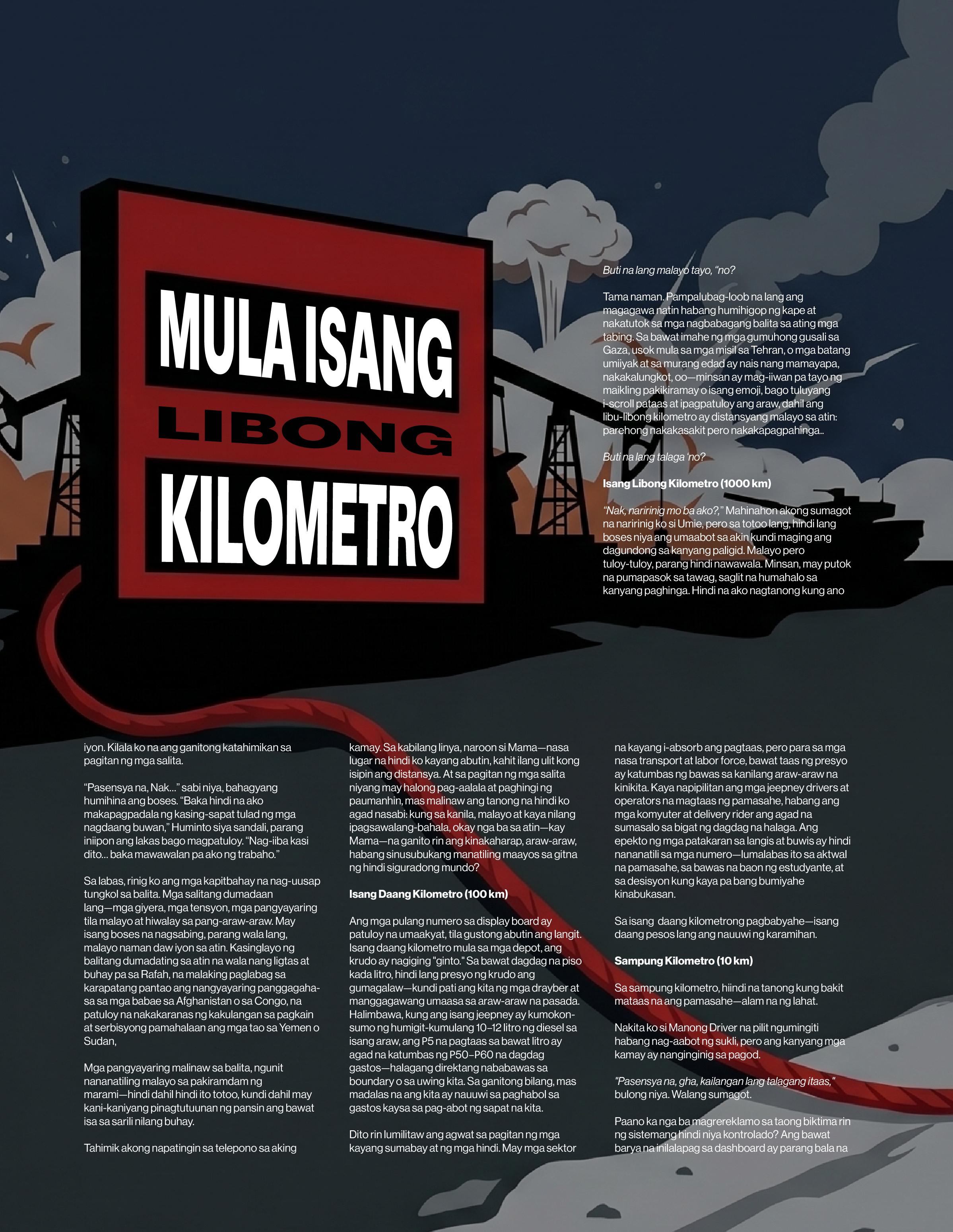
Today, the world is reeling from the ramifications of the American and Israeli aggression against Iran on February 28, which, in retaliation, has effectively closed the Strait of Hormuz—a vital waterway in the Persian Gulf through which around 20% of the global oil supply passes; whereas roughly 90 per cent of Asia’s purchases of crude oil pass. Oil-exporting states in the Gulf have also borne the brunt of the conflict, as Iran—fighting asymmetrically—retaliates against U.S. and allied economic and military assets within their territories following strikes on its own energy infrastructure. Even their oil refineries have not been spared, while American and Israeli forces have likewise targeted Iran’s oil sector, including storage facilities and refining complexes.
Saudi Arabia, Kuwait, Qatar, and the United Arab Emirates, among others in the region, have paid the price for a war they did not seek, as their energy infrastructures sustain damage that may take years to recover from. Even Israelis themselves have awakened to a new reality—far removed from their former sense of security—now living to the sound of sirens day and night and seeking refuge in bunkers.
Yet it is civilians across the region who bear the greatest cost. In Iran alone, over 2,000 have reportedly been killed and more than 26,000 injured, according to Al Jazeera as of April 3. Lebanon follows with over 1,300 dead and 4,000 injured. In contrast, Israel has recorded significantly fewer fatalities, though thousands have been wounded. Across the rest of West Asia, casualties—though smaller in number—continue to mount, each figure a reminder that the human toll of war extends far beyond the battlefield.
The dire consequences of this conflict have rippled across the world, leaving import-dependent countries like the Philippines vulnerable and uncertain—enough to prompt the declaration of a national oil crisis.
The impacts of this war, like any other, are never onedimensional. While the human toll mounts to alarming heights, the global market teeters on the edge. Disruption of maritime traffic in the Strait of Hormuz immediately spiked energy prices, channeling profits to energy-exporting countries while importdependent states bled more money than before the conflict. For poorer nations, the consequences extend beyond mere price hikes: the cost of living, especially for the working class and marginalized, grows increasingly unbearable against an economy that never moves at a pace they can match, tucked under narratives long obscured by statistics of growth that
never trickled down to the grassroots.
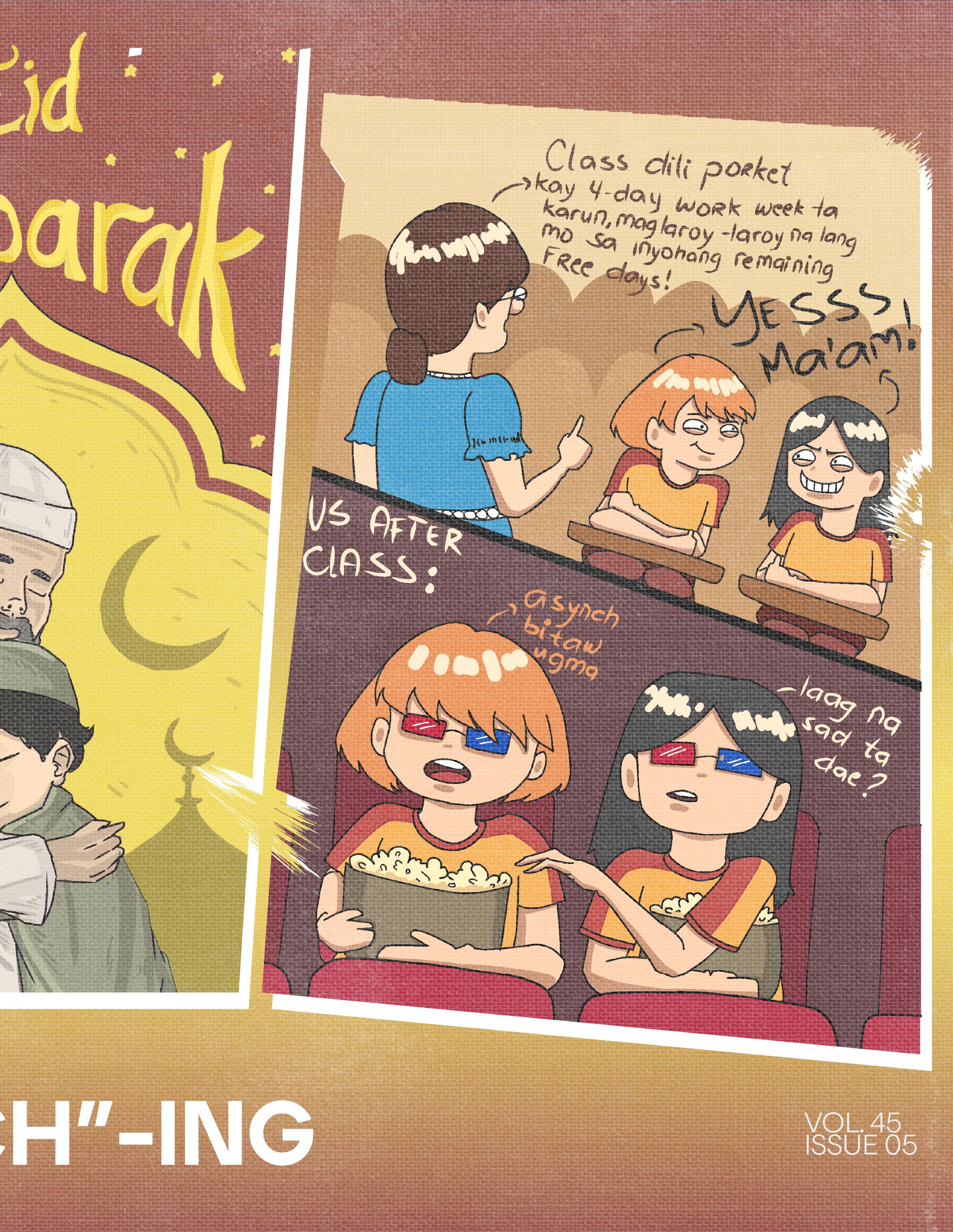
Worse still, this crisis is quietly reshaping energy policies across countries. In Pakistan, some schools and higher education institutions shifted to online classes, while workweeks were shortened to conserve fuel. Bangladesh, a nation of 175 million reliant on imported energy, imposed fuel rationing and closed universities as anxiety mounted over depleted reserves. The Philippines implemented a temporary 4-day workweek for executive branch offices and select local government units starting March 9, with extended 10-hour days Monday through Thursday, ensuring that essential services continued uninterrupted. Sri Lanka followed suit on March 18, mandating a 4-day workweek for public sector employees, schools, and universities—making Wednesdays a public holiday—and urging private companies to adopt similar measures while maintaining critical services. These extraordinary policies underscore the profound and immediate economic and social toll that energy shocks impose on nations far-off from the battlefield, revealing how global conflicts ripple across borders to disrupt everyday life.
In the Philippines, everyday Filipinos endure the brunt of war as fuel prices surge to nearly P150 a liter—leaving the masses exposed to the government’s weak counter measures to the oil crisis even as President Ferdinand Marcos Jr. now has the power to suspend the excise tax on fuel which would lower pump prices and provide direct relief to commuters and workers, implementation remains uncertain.
But how long must we wait—until the elephants have trampled the grass beyond life?
Emergency measures hold only insofar as the war lasts. But what comes after? Apart from temporarily suspending fuel taxes, the government must consider a long-term shift in energy policies. This includes revisiting Republic Act No. 8479, the Downstream Oil Industry Deregulation Act of 1998, which strips government control over importation, pricing, and distribution of petroleum products, leaving market forces to dictate fuel prices. In the worst-case scenario, oil companies can overprice fuel and hike costs at lightning speed—creating a scheme so grand that no one could match: as a motorist, you already pay double taxation (excise tax plus 12% of value-added tax) while companies rush to exploit the crisis for profit, proving that there are simply little safeguards for the people.
Fuel subsidies for transport workers, farmers, and fisherfolk are nothing more than a band-aid on a wound it cannot heal. The problem is not merely the crisis itself, which may one day end, but the system that failed the people while it raged. If that system remains unchanged, hardship will return in another guise, just as cruel and unrelenting. Subsidizing citizens under such conditions—forcing them to struggle for ayuda funded by their own taxes—is nothing short of theft paramount to a betrayal of the people and, indeed, of our nation’s posterity.
This excludes the commuters from the narrative when you cannot divorce them from operators of public transportation in fuel issues.
In a country like the Philippines, power is entrusted to those who are meant to serve the people. Every decision the government makes must place public good at its center, reflecting not only their respect for citizens but also their commitment to uphold the mandate they were given. Otherwise, its integrity collapses. It dishonors the sanctity of public trust. This includes commuters and public transport operators alike, for they are inseparable in bearing the weight of rising fuel prices and navigating the hardships created by policy—or the lack thereof.
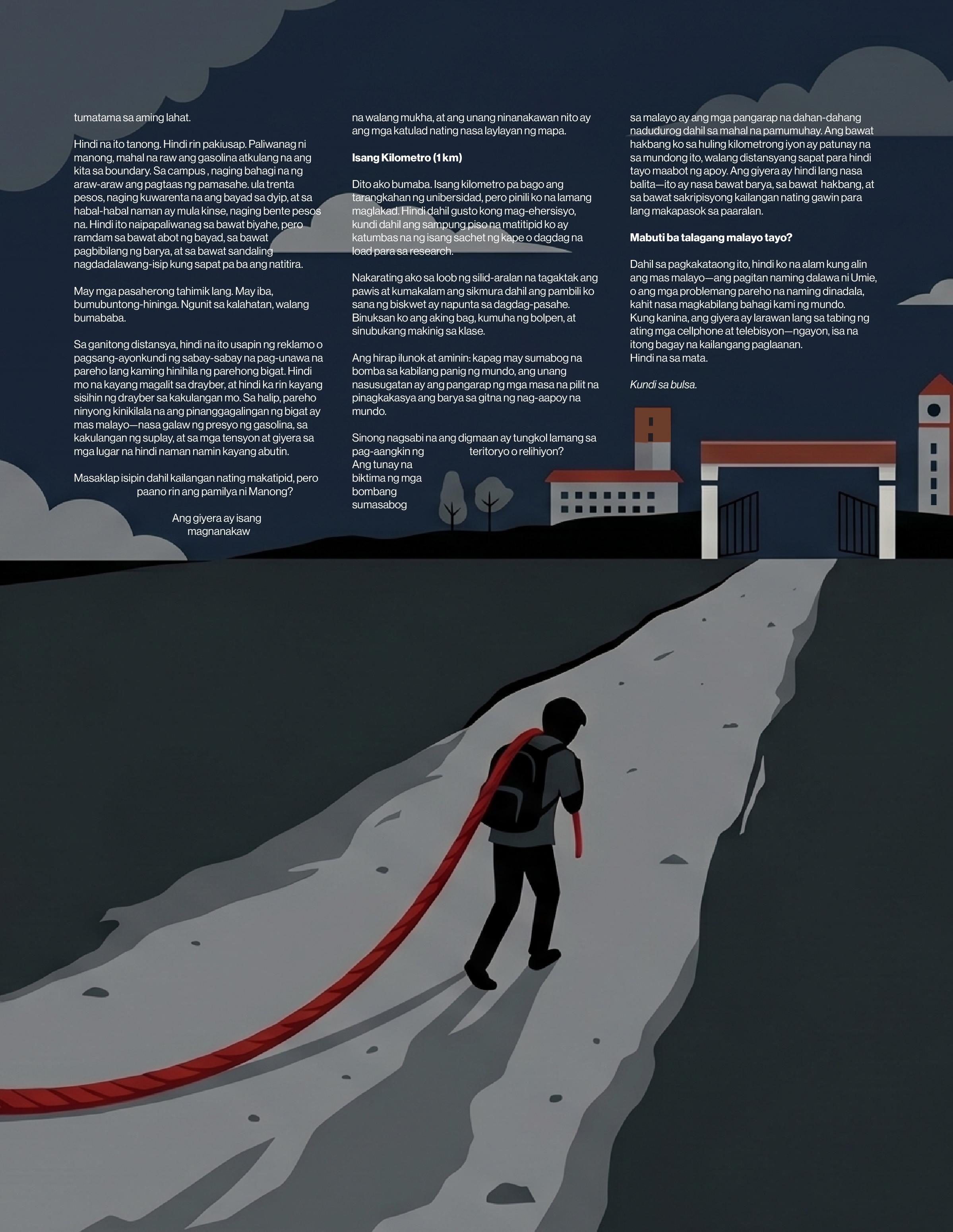
In Mindanao State University–General Santos, students were faced with an announcement from the Barangay Fatima HabalHabal Drivers’ Association (MSU Riders) of a P5.00 fare hike. In-campus rates remain at P10.00, but rides to areas just outside campus rose from P15.00 to P20.00. Longer-distance trips to places such as Calumpang, Tambler, and other farther locations also saw the P5.00 increase applied.
While the fare increase may be reasonable for drivers attempting to keep pace with rising fuel prices, it has nonetheless added to the financial burden of commuters within
the campus—especially students. This crisis, however, must not be exploited. If the struggles of drivers and commuters are indeed inseparable, then one must not come at the disproportionate expense of the other. MSU Riders must prove that their wheels turn in solidarity with the students.
Yet concerns from students have surfaced online, with reports of some riders charging above the approved P10.00 in-campus fare. According to posts circulating within student spaces, certain drivers have allegedly justified the higher rates by citing uniform fuel costs for both on- and off-campus trips, while others have reportedly dismissed existing memoranda or claimed exemption from campus regulations. These accounts raise pressing questions—not only about fare compliance, but about enforcement and accountability within the system.
In times of crisis, the absence of clear enforcement does not merely create space for survival—it opens the door to inconsistency and potential abuse, leaving students to bear uncertainty on top of already rising costs.
The crisis in West Asia reaffirms what we already know. Whether these are students from MSU–GenSan, the poor pleading for relief, or states most vulnerable to the bickering of the world’s great powers—beneath the feet of giants, the weak are still left scrambling for survival.
But how long will the world’s complicity sustain the failures of the status quo? How many more wars like this must break out before we admit they never had to cost thousands of lives—or choke the world through the closure of the Strait of Hormuz?
For the allies of the North Atlantic Treaty Organization in Europe, they may not have joined the American-Israeli war effort against Iran—but restraint alone is no longer enough. The world demands more than distance; it demands accountability and a firm commitment to peace. European allies must reckon with this: there is no incentive in wars that endanger a vital global lifeline like the Strait of Hormuz, only consequences that reverberate far beyond the battlefield.
It must stand in solidarity with the civilians who have paid with their lives for a war they never chose, and call war crimes for what they are—not cloak them in euphemisms that reek of hypocrisy. This is especially true for powers that have long been entangled in military interventions that fall short of international law and moral authority—from Palestine to Syria, Iraq, Iran, and across the region.
The stance is clear: no more unnecessary wars. The world’s collective complicity that allows the United States to obstruct international peace where it did not need to must end. Otherwise, the excesses of an ailing empire long accustomed to silence will only deepen. Silence is complicity; it is the forfeiture of moral integrity.
No longer can we allow the elephants to crush the life from our meadows.

Mahal na Patnugutan ng Bagwis
Bilang mga ‘Iskolar ng Bayan,’ malaki ang aming pasasalamat sa libreng edukasyong ipinagkakaloob ng ating dakilang Pamantasan. Gayunpaman, sa gitna ng laban na ito, hindi maitatanggi na marami sa aming mga mag-aaral ang nalulugmok dahil sa matinding krisis pinansyal.
Bawat araw ay tila isang malaking hamon, lalo na para sa aming mga malalayo sa pamilya. Naging pang-araw-araw na pasanin na kung mayroon pa bang makakain, dahil ang kinikita ng aming mga magulang ay hindi na sapat para matustusan ang lahat ng aming pangangailangan. Marami sa amin ang pumapasok nang kumakalam ang sikmura o kaya naman ay nagkakasakit na dahil sa kakulangan ng nutrisyon at maayos na pagkain.
Dahil dito, nais ko sanang magmungkahi ng isang inisyatibo o programa sa ilalim ng inyong tanyag na organisasyon.
Sa halip na maghintay lamang kami ng himala, mas mainam na magkaroon ng isang plataporma o regular na kolum na nagbibigay sa amin ng mga sumusunod:
• Job Hiring Information: Mga part-time job openings na angkop at bukas para sa mga estudyante na lubos na nangangailangan.
• Student Service Exchange: Isang plataporma kung saan ang mga nangangailangan ng serbisyo ay maaaring makipag-ugnayan sa mga mag-aaral na nagnanais kumita gamit ang kanilang mga talento o kakayahan.
• Financial Literacy at Resources: Impormasyon tungkol sa mga scholarship, grants, o tulong-pinansyal na maaari naming aplayan.
Naniniwala ako na sa pamamagitan ng inyong publikasyon, mabibigyan ng mas malinaw na direksyon at pag-asa ang mga mag-aaral na nagsisikap makatapos sa kabila ng kahirapan. Ang simpleng impormasyon ay maaaring maging simula ng kaginhawaan para sa marami.
Maraming salamat at umaasa ako sa inyong positibong tugon.
Lubos na gumagalang, RUEL GALLANO, Mag-aaral, MSU

Maraming salamat sa pagpapaabot ng iyong hinaing at sa pagboboses sa bigat na dinadala ng bawat iskolar. Sa kasalukuyang estado ng ating ekonomiya, tunay na mas naging mahirap ang reyalidad sa bawat araw na pagpasok sa pamantasan sapagkat patuloy na tumataas ang presyo ng mga bilihin at serbisyo.
Lubos naming nauunawaan ang iyong karanasan at nais din naming makatulong. Gayunpaman, may hangganan ang saklaw ng aming tungkukin bilang publikasyon. Ang aming pangunahing tungkulin ay ang maghatid ng balita at impormasyon hinggil sa mga nagaganap sa pamantasan. Ang direktang paglalathala ng mga anunsyo ukol sa trabaho at iba pang serbisyong maaaring pagkakitaan ay mas mabilis na naipapamahagi sa pamamagitan ng mga umiiral na plataporma tulad ng mismong job postings at mga onlayn na grupo. Kinakailangan din naming umiwas sa mga gawaing maaaring maituring na promosyon para sa mga pribadong tanggapan at establisimyento sapagkat taliwas ito sa aming tungkulin bilang isang organisasyon. Gayundin, ang mga impormasyon hinggil sa tulong-pinansyal at iba pang kaugnay na programa ay karaniwang direktang inilalathala ng mga kinauukulang organisasyon sa kanilang opisyal na mga page sa social media.
Sa kabila nito, Aming kinikilala ang kahalagahan ng iyong mungkahi at aming isasaalang-alang ang pagbibigay ng impormasyon hinggil sa mga scholarship grants na bukas sa loob ng ating institusyon, lalo na kung ito ay makatutulong sa mas maraming iskolar na nangangailangan.
Sa kabuuan, kinikilala namin ang aming papel bilang tagapahatid ng impormasyon. Sa pamamagitan ng paglalahad ng mga artikulo, patuloy naming ibabahagi ang mga impormasyong may kaugnayan sa mga oportunidad at programang makatutulong sa mga iskolar. Sa ganitong paraan, inaasahan naming makatulong sa pagpapalawak ng kaalaman at kamalayan ng mga mag-aaral sa gitna ng mga hamon ng kasalukuyang panahon.
BAGWIS
Sexist remarks persist among MSU-GenSan students despite high awareness of gender law
Despite widespread awareness of laws protecting women, students of Mindanao State University–General Santos (MSU–GenSan) report persistent exposure to Gender-Based Sexual Harassment (GBSH) and sexist remarks, a survey by Bagwis shows.

The survey, conducted among 93 MSU–GenSan students, found that nearly eight in every 10 (78.5%) respondents “very often” or “often” encounter public discussions or statements they consider disrespectful toward women.
Concurrently, awareness of gender-related laws remains high, with about eight in 10 (81.72%) respondents reporting being either “very familiar” or “somewhat familiar” with protections such as the Safe Spaces Act and the Anti-Violence Against Women and Their Children Act.
They identified school discussions, social media, and seminars as the primary sources of their awareness of the said laws.
In terms of institutional efforts, 86.02 percent of respondents “agree” or “strongly agree” that MSU–GenSan promotes awareness of gender equality.
However, while around six in 10 (62.37%) of respondents reported feeling “somewhat safe,” about one in 10 (12.9%) said they feel “very safe,” and others expressed neutral or negative perceptions.
Similar patterns of language and behavior have also been the subject of recent public attention during Women’s Month.
‘Lewd’ remarks made by Quezon City 4th District Rep. Bong Suntay about actress Anne Curtis drew national attention, with the Philippine Commission on Women (PCW) stating that such actions violated several laws, including Republic Act No. 11313 or the Safe Spaces Act.
The other laws that he allegedly violated were RA 9710, or the Magna Carta of Women, and RA 6713, or the Code of Conduct and Ethical Standards for Public Officials and Employees.
GBSH experience among MSUans
Experiences shared by respondents and interviewees indicate that gender-based harassment occurs across various settings, including classrooms, campus spaces, online platforms, and even within peer groups.
In terms of frequency, about eight out of 10 (81.73%) said they encounter sexist remarks at least “sometimes,” including around 2 in 10 (21.51%) who experience them “often.”
The most commonly reported forms include sexist jokes, comments about appearance, unwanted remarks with sexual undertones, and dismissive statements based on gender.
A plurality of respondents reported experiencing multiple forms simultaneously, with interview responses reflecting similar patterns.
Grejie Lou Mercado, a Political Science student, described an experience inside the university library involving repeated unwanted physical contact from another student, prompting her to leave the area.
“I was studying in broad daylight when my friend was talking with a guy I hadn’t met before. However, he did it again,” she recalled.
Mercado alleged that the man intentionally extended his foot to make contact with hers, noting that their diagonal seating arrangement made accidental contact unlikely.
“When I looked at him, waiting for an apology, because usually you would say sorry, he just stared back as if nothing had happened,” Mercado said.
Furthermore, in an interview with Bagwis, a student from the College of Business Administration and Accountancy (CBAA) recounted being harassed by a male classmate.
The victim reported that she was casually standing when his male classmate moved his hand near her chest.
“It was unexpected and I felt like I was being harassed because we aren’t even that close,” she shared.
The CBAA student further noted that the man’s behavior appeared to be a recurring pattern to other women in the class.
“I also noticed how the same man does the same to our other female classmates and how he is inappropriately touchy to us,” she stated.
Moreover, two different interviewees from the College of Social Sciences and Humanities (CSSH) revealed a similar incident involving a university employee who publicly shamed a female student in a class.
“I won’t mention names, but let’s say that the student expressed her interest in joining a particular field. The thought is that the employee discriminated her physical attribute because it did not fit into the standards of that industry,” they explained.
The CSSH students also mentioned that the incident was very systematic.
“It’s subtle, but it’s a very heavy subject,” they expressed. Bar riers in reporting
Despite reported exposure to gender-based remarks, formal reporting remains limited.
Among respondents, 43.01 percent said they did not report the incidents they experienced or witnessed, while 34.41 percent indicated they did not know how or where to report. Only 22.58 percent reported taking formal action.
Among the reasons cited were lack of knowledge of reporting procedures, fear of judgment, lack of trust in reporting systems, and a preference to ignore the incident.
These findings are reflected in interview responses, where students expressed hesitation to report due to concerns about lengthy processes, lack of evidence, and uncertainty about outcomes.
A CBAA student shared an experience wherein she and her friends got harassed, but refused to report it “para wala nay samok.”
Meanwhile, witnesses of gender-based harassment from the CSSH declined to file a formal report, citing a power imbalance between the victim and the alleged perpetrator.
According to data from the Supreme Student Council (SSC) Gender and Development (GAD) Committee, eight cases of gender-based violence have been recorded for the academic year 2025–2026, most of which are classified under Safe Spaces-related concerns.
SSC GAD Committee representative Russell Maniquez said that reports are initially acted upon within 24 hours and are then referred to appropriate offices. Victims are also connected to psychological support services during the process.
Maniquez said the council continues to conduct seminars and orientations on Safe Spaces, sexual harassment, and gender-based violence.
“These initiatives aim to raise awareness, as many individuals are still unaware that certain behaviors they consider normal may already constitute harm or violate existing laws,” he said.
Maniquez also acknowledged that bureaucratic processes can affect case timelines but emphasized that support mechanisms are in place to assist victims while cases are ongoing, including regular check-ins and access to guidance services.

Nawa’y gripo na lamang ang mga mata, na sa isang pihit ay maampat ang mga luhang umaagos.
Paulit-ulit mang palitan ang punda, basa pa rin ang unan at kailangang itong ibilad kinabukasan. Matapos itong mapatuyo, muling hihigaan at magiging pangunahing saksi na naman ng mga pilit na hikbi sa kalagitnaan ng gabi.
Pangkaraniwan lamang itong kalagayan ng nakararami. Subalit, sa mga iilan ito ay pagkakataon upang ipakita ang tunay na kahinaan na nakakubli sa mga matatamis na ngiti. Kagaya na lamang ng mga panganay o unang anak sa pamilya.
Hindi Maaaring maging Mahina
Kung may parangal para sa ‘pinakamagaling magtago ng pagod,’ tiyak na maraming panganay ang magwawagi. Sabi nila, automatic ‘nanay’ o ‘tatay’ ang panganay kahit hindi pa naman siya handa sapagkat siya ang hahalili sa mga ito kung sakaling wala sila.
Inaasahang kaya na nitong tumayo sa sarili nitong mga paa, kahit na musmos pa lamang na nangangailangan ng gabay mula sa mga magulang. Hindi naman iiyak ang mundo para sa iisang tao lamang kung kaya’t kinakailangan niyang harapin ang kapalarang tadhana na mismo ang nagdikta bago pa man siya isilang.
Hilaw pa man sa kaalaman at karanasan, natutunan na nilang pasanin ang mga mabibigat na responsibilidad. Walang ibang pagpipilian, dahil walang ibang aasahan. Kusa na itong inako sapagkat hindi naman matitiis na naghihirap ang pamilya nito. Dahil para sa kanila ang panganay ay hindi lamang isang titulo—isa itong misyon na kailangan ng dedikasyon at puso.
Kahit pagod o gusto nang sumuko ang isang panganay, pinipili pa rin niyang magpakatatag sa harap ng kaniyang
mga mahal sa buhay. Hindi siya basta-basta nagpapakita ng kahinaan dahil pakiramdam niya, siya ang sandalan ng mga kapatid at kaniyang mga magulang. “Hindi nila ako p’wedeng makita na mahina kasi kailangan kong gampanan ‘yung responsibilidad ko bilang ate.” Ayon kay Merry Joy Limboc, 18 taon na bilang panganay, first year mula sa College of Education ng pamantasan.
“Sanay akong ngumiti kahit pagod na pagod na—kasi bilang ate, bawal mapansin ng iba na unti-unti na rin akong sumusuko.” Ani Jonalia Cebuan, 1st year, BSED-Filipino. Ipinapakita nito na natutunang itago ang tunay na nararamdaman sa mga ngiti. Para sa kanya, hindi “pinapayagan” ang magpahinga o magpakita ng kahinaan, sapagkat may imahe na kailangang panindigan bilang ate.
Pagpatak ng Lihim na Luha Pagkalipas ng maghapong pag-aasikaso sa bahay pagkatapos ng eskwela, pag-intindi sa mga bayarin, at pagiging sandigan para sa mga magulang, dumarating ang sandaling ang mundo ay tumitigil sa pag-ikot para sa mga panganay. Sa pagpatay ng huling ilaw sa bahay, doon lamang nagkakaroon ng oras ang panganay para sa kaniyang sarili—dito rin nagsisimula ang pagpatak ng mga lihim na luha.
Hindi ito ang iyak na humihingi ng saklolo; ito ay iyak na pilit ikinukulong sa pagitan ng mga nagtatagong unan. Ang unan ang piping saksi sa bawat hikbi na pilit pinapatahan, sa pangambang ang tunog ay maging alingawngaw sa nakakabinging katahimikan ng gabi.
Ayaw niya lamang maging abala. Ayaw niyang maging dagdag na pasanin sa mga magulang na pagod na rin ang balikat, o maging dahilan ng pag-aalala para sa mga kapatid na tumitingala sa kaniya bilang isang hindi natitinag na babae.
Sa gabi, ang unan ay sumisipsip sa mga luhang kasama ng pangarap na pansamantalang isinantabi, sa pagod na walang salitang sapat, at sa lumbay na kailangang itago. Bawat patak ng luha ay hamog na nagdadala ng kulimlim sa nagliliyab na pangarap ni Ate.
Ang pagiging panganay na babae ay isang akto ng pagbabalanse sa pagitan ng pampamilyang tungkulin at sariling pagkatao. Ang bawat hikbing pasanin sa mapurol na higaan ay hindi tanda ng kahinaan, kundi ang bigat na binabayaran para sa kapakanan ng tahanan.
Alay ng Panganay
Sa pagdating ng umaga, isinasabit niya ang katatagan tulad ng damit na plantsado: maayos, walang kulubot, at handa para sa panibagong pakikipag bakbakan sa mundo.
Wala sa kanila ang nakakakita ng basang unan. Wala ni isa sa kanila ang nakakalam ng gabing inilaan niya para sa sarili niya lamang.
At marahil, iyon na rin ang kanyang piniling handog sa tahanan: ang maging lihim na haligi sa isang tahanan na hindi naman laging nagtatanong kung kumusta na ang mga nagbubuhat. Hindi ito kalunos-lunos, ngunit hindi rin ito dapat ipagdiwang. Ito ang buhay ni Ate—puno, kahit may kulang; ibinibigay, kahit hindi laging naibabalik.
Nawa’y ang bawat luhang puno ng alinlangan ay sumingaw sa liwanag, at ang matitira na lamang ay ang sarili na matagal na niyang gustong makilala.
Nawa’y sa pagdating ng bukang liwayway, ang basang unan ay maibibilad na rin sa init ng araw.
For many women, a new month doesn’t begin with a calendar—it begins with discomfort they are expected to ignore. An unexpected craving for sweets, a wave of fatigue, breast tenderness, or cramps that announce a familiar cycle has begun again. These signals are often brushed off as routine discomforts, yet they are part of a deeper, more intricate biological rhythm. Beneath the surface, the body moves through hormonal shifts and physiological changes that influence nearly every aspect of daily life. What feels random is, in truth, remarkably patterned.
The menstrual cycle, which is often reduced to ‘that time of the month’, is a full-body process that extends far beyond reproductive health. It influences energy levels, mood, appetite, skin condition, and even sleep quality. Each phase reflects a different hormonal landscape, guiding how the body feels and functions. While every woman’s experience is unique, the cycle typically spans 21 to 35 days, averaging 28. Within this period, the brain, ovaries, and uterus work in synchrony, orchestrating a monthly biological orbit.
The cycle begins with menstruation—the shedding of the uterine lining when pregnancy does not occur. Hormone levels, particularly estrogen and progesterone—hormones that regulate the menstrual cycle, with estrogen supporting the buildup of the uterine lining and progesterone preparing the body for possible pregnancy—drop to their lowest, often bringing fatigue, cramps, bloating, and emotional sensitivity. For many, this phase feels like a slowdown, as if the body is asking for stillness in a world that rarely pauses. What may look like physical symptoms are actually more deeply internal than it is.
This is the part many women power through:

2
attending classes, meeting deadlines, showing up as if nothing aches. But the body is, quite literally, in a state of release. Suddenly, there are random urges to cancel plans, the need for a comforting bowl of ice cream or warm soup, and to just lash out to anyone who wishes to talk to you and go near you.
1
As menstruation fades, the body begins again—entering the follicular phase, where estrogen levels start to rise and the ovaries prepare the new follicles. There is a shift here, subtle but noticeable, like the first light after a long night. As the body rebuilds itself after menstruation, motivation rises, concentration sharpens, and physical stamina frequently improves. This is often when productivity peaks.
Deadlines feel more manageable, talking to people becomes easier, and even working out feels less draining. Here, life feels better, with less resistance to getting things


Around the middle of the cycle, ovulation happens. Hormones peak, and for many women, this is when they feel at their best. There’s more confidence, more energy, and a stronger sense of being socially present. Since this is the body’s most fertile time, some experience their own sets of minor symptoms such as slight increase in body temperature, clearer cervical mucus, moderate discomfort in the abdomen, and an increase in libido for some.
During this stage, many women also report feeling more self-assured or socially energized. There’s that glow—no more bloatings, makeup blends more seamlessly into the skin, more expressive, and boost in charm and boldness. This shift reveals that the body is at its peak and primed for connection. In this moment of the orbit, everything feels aligned outward, like a more outward kind of brilliance.

4
After ovulation, the body enters the luteal phase, where progesterone rises to prepare for a possible pregnancy. At first, things may feel steady—but as hormone levels begin to fluctuate, subtle changes emerge. Energy dips, emotions intensify, and the body starts to feel heavier, slower, more sensitive.
This is where many recognize the familiar weight of premenstrual syndrome or PMS—irritability, food cravings, bloating,

acne, and breast tenderness. Now, there are noticeable frustrations over small things, the urge to withdraw and disappear from the world, and intense craving for sweets. Unfortunately, it is often dismissed as overreacting and just ‘mood swings’, but are hormonally driven responses. The body is recalibrating, preparing to reset once more. And while this phase can feel overwhelming, it is also a signal that the cycle is about to begin again.

Beyond internal changes, the menstrual cycle also shapes how the body appears and responds on a daily basis.
These hormonal shifts are frequently reflected in the skin in particular. While hormonal changes before menstruation may increase oil production and cause breakouts, higher estrogen levels earlier in the cycle can make skin appear clearer and brighter. This explains why a lot of women see changes in their skin tone over the course of the month.
Depending on the stage of the cycle, sleep can also be disturbed. It may be more difficult to sleep during or in the days preceding menstruation due to cramps, headaches, hormonal changes, and temperature swings. In the week leading up to their menstruation, some women report having insomnia or getting less sleep.
The menstrual cycle also affects appetite. The body’s metabolic rate somewhat increases during the luteal phase, which frequently results in increased hunger signals and desires for sugary or carbohydrate-rich foods. These alterations have biological roots and are not just the result of a lack of willpower.
Understanding these changes reframes the narrative. What is often dismissed as moodiness, inconsistency, or lack of discipline is, in reality, the body adapting in real time. Recognizing these patterns allows women to work with their bodies rather than against them. It transforms confusion into awareness, and frustration into a form of selfunderstanding.
At the same time, not everyone fully understands what this experience entails—especially those who do not go through it themselves.
The menstrual cycle is often simplified or overlooked, making it easy to misread what women experience on a daily basis. Even among women, these patterns are not universal. While there are common phases, each body responds differently, meaning what one person feels may not be the same for another. Awareness, then, is not just about knowing the cycle—but also about recognizing its differences.
Women’s Month creates space to talk about these realities more openly. The menstrual cycle is not “just a period,” but an ongoing process of regulation, resilience, and renewal. It is an orbit: cyclical, precise, and deeply human. And in learning to understand it, women are not just tracking days, but reclaiming the rhythm of their own bodies.
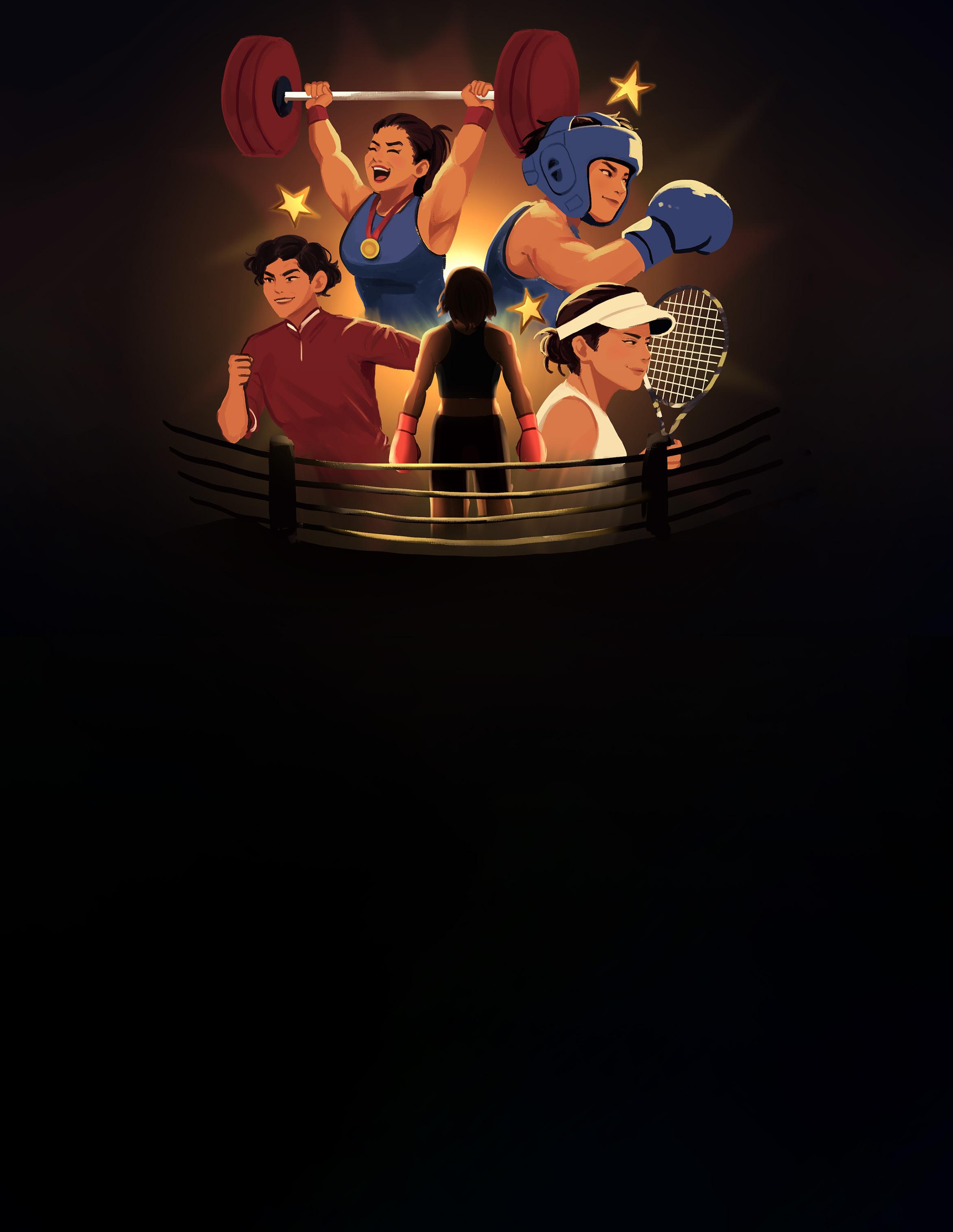
Some fights don’t begin in the ring, they begin with doubt and fear long before the first punch lands.
I am Mira. I am a child of a boxer. Even then, I knew I wanted to walk the same path as my father. Ever since I was a child, I felt my heart race every time I saw a ring, the kind where I could see myself inside, fighting, throwing punches. Yet somehow, I thought I wasn’t meant for this. The laughter of friends and even families echoed that I shouldn’t dream. That for someone as small as me, a “woman,” it was unlikely. Perhaps.
Yet here I am, suspended between breath and silence, hands wrapped inside my gloves. Like a mistake that somehow was allowed to step into the center, because for so long I’d been made to feel this space wasn’t made for me. I was meant to stay on the sidelines, on the bench, behind the shouting, in the spaces between the applause for others. But here I am, not as a spectator, but as proof. And with every toll of the bell, something breaks, not just the silence, but the idea that I was never meant here to belong. All I know, every move I release is a claim. Every punch is a refusal, a rebellion against a world that long ago decided where I was supposed to stay, and that it is no more on the sidelines.
No more on the sidelines
For too long, women have been confined by the belief that they are inherently weak, too fragile for sports that demand strength, power, and force.
Society has drawn invisible lines, telling them which fields are “appropriate” and which are off-limits. This ideology reduces women to limitations, overshadowing their capabilities and potential. Strength, aggression, and endurance are not meant for them. Yet, these notions are not truths, they are constructs that continue to be challenged, one step, one movement, and one victory at a time.
This resistance is never new. Filipino women have long defied expectations in sports, breaking barriers in arenas traditionally dominated by men. In the 1960s, Mona Sulaiman dominated sprinting events in Southeast Asia, proving that Filipino women could compete at the highest levels of athletic performance. More recently, Hidilyn Diaz made history as the country’s first Olympic gold medalist in weightlifting, challenging the notion that strength and endurance are solely male traits. In boxing, athletes like Nesthy Petecio, an Olympic silver medalist, have stepped into the ring to show that women belong in combat sports too. Beyond elite athletes, countless women in grassroots and local competitions have excelled in basketball, football, and weightlifting, sports long considered “too demanding” for them.
Today, the challenge is not that women are barred from sports, they are now stepping into the ring, running the track, and taking the field. The real barrier lies in assumptions that have been normalized over generations. When women excel, it is often seen as remarkable rather than expected, proof that society still struggles to accept female athleticism as
natural. These quietly inherited beliefs shape what is considered “normal,” pressuring women to doubt themselves, question their own abilities, or hesitate to claim space in arenas long dominated by men.
Even the youngest athletes grow up absorbing these ideas, internalizing that certain feats of strength or skill are “unusual” for their gender. Thus, every sprint, punch, and lift becomes more than a display of talent, it is a deliberate act of defiance.
Countless girls have lived stories like Mira’s. Dreams dismissed, potential underestimated, strength questioned simply because of their gender. Yet just as many have stood up, fought back, and shattered the limits imposed by a patriarchal, misogynistic world. Their courage proves that strength, power, and ambition are not defined by gender. No girl should ever be told she is too weak to rise. No dream should ever be silenced again.
This freedom should not be limited to any one path. Women deserve the right to chase any dream they choose, whether it’s wearing a crown, cooking in an apron, stepping into a ring, or walking a path no one else has dared.
Just like Mira, you have the right to always defy. Because battles may begin with doubt and fear, but they end when you take the ring they said wasn’t yours.
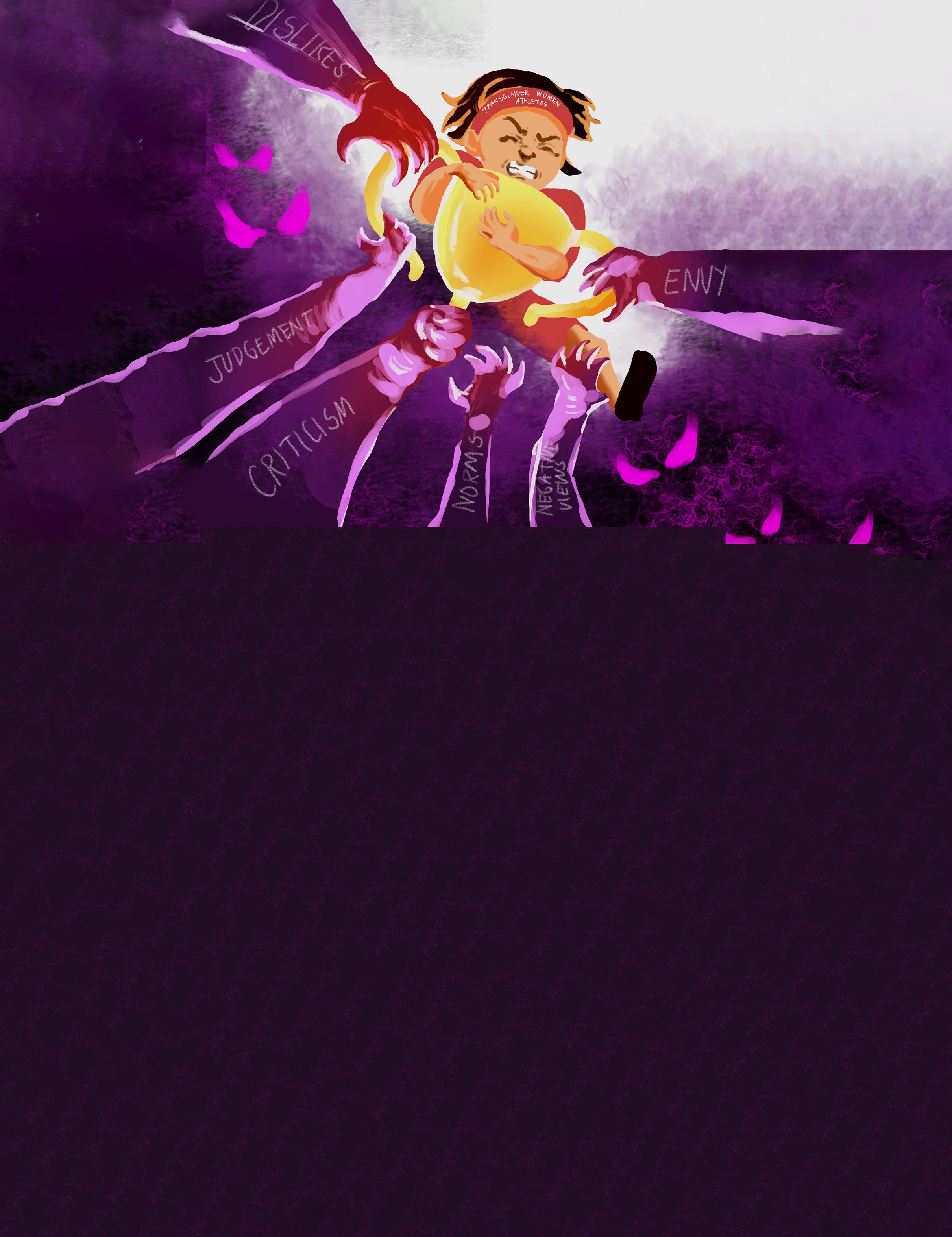
When sports enter the arena of politics and identity, the playing field becomes far more complicated than wins and losses. Across the globe, debates over transgender athletes have intensified, raising questions about fairness, inclusion, and representation. The conversation grew even louder when United States President Donald Trump signed Executive Order 14201 in February 2025, titled “Keeping Men Out of Women’s Sports,” banning transgender women from participating in female athletic competitions.
While the policy reflects a hard stance taken by some governments, it also reopened a global debate: who gets to compete, and under what conditions?
In the Philippines, however, the issue remains far less visible. Unlike in Western countries where policies and controversies frequently dominate headlines, discussions about transgender participation in sports are still developing. The question, then, is not only whether the country is ready to address the participation of transgender athletes in competitive sports, but whether the conversation itself has begun in earnest.
Representation is slowly emerging. Transgender athletes are beginning to gain recognition within Philippine sports circles, offering glimpses of a more inclusive future. One notable example is trans man boxer Hergie Bacyadan, whose participation in international competitions has brought attention to transgender representation in athletics. Such moments of visibility highlight the reality that transgender athletes exist within the sporting community not merely as subjects of debate but as individuals with talent, dedication, and aspirations to represent their country.
Yet visibility alone does not guarantee acceptance. A local study on inclusive sports in Philippine higher education shows that many Filipino student-athletes are more open to transgender participation than often assumed. Several support allowing transgender athletes to compete in categories aligned with their gender
identity, while others suggest separate divisions as a possible compromise. Rather than outright rejection, the responses reflect a generation of athletes willing to engage with the issue and consider ways to make sports more inclusive.
However, the conversation is not without its complexities. Some athletes remain concerned about biological advantages that transgender women might possess in competitions requiring strength and endurance. Others argue that fairness in sports should prioritize biological sex at birth. These perspectives mirror debates occurring worldwide, where balancing competitive equity with gender inclusivity continues to challenge sporting institutions.
At the heart of the issue lies a deeper question: what does fairness truly mean in modern sports?
For supporters of transgender inclusion, participation in sports is about recognition and dignity. Denying transgender athletes the opportunity to compete according to their gender identity, they argue, reinforces discrimination and exclusion that the LGBTQIA+ community has long faced in many sectors of society. Allowing participation, under clear and well-defined regulations, can foster an environment where sports become a platform for equality rather than division.
On the other hand, critics emphasize that sports categories were historically designed to ensure fair competition. Many argue that maintaining the integrity of women’s sports requires strict biological criteria. Without clear guidelines, they warn, female athletes who have fought for decades to gain equal opportunities in sports may find themselves at a disadvantage.
Between these competing concerns lies the challenge for policymakers, sports organizations, and educational institutions: to develop policies that uphold fairness while protecting the dignity of all athletes.
In the Philippine context, the absence of clear national policies on transgender participation in sports reflects
both a gap and an opportunity. Without established guidelines, institutions often rely on informal practices or case-by-case decisions. While this flexibility may allow room for inclusivity, it also risks inconsistency and confusion. Athletes, coaches, and sporting bodies are left navigating an issue that demands thoughtful regulation.
The experiences of transgender individuals outside sports further illustrate the broader context of discrimination. Studies have shown that members of the LGBTQIA+ community in the Philippines still face harassment, workplace discrimination, and social stigma. In such an environment, transgender athletes entering competitive spaces may encounter not only questions about fairness but also prejudice about their identity.
Sports, after all, reflect society.
If discrimination persists beyond the playing field, it is unlikely to disappear within it. Addressing the participation of transgender athletes therefore requires more than rulebooks and eligibility criteria. It calls for education, dialogue, and a broader cultural understanding of gender diversity.
Ultimately, the question should not simply be whether the Philippines is ready for transgender athletes in competitive sports. The more pressing question is whether the country is ready to engage in a mature and informed conversation about fairness, representation, and respect.
As transgender athletes continue to emerge in Philippine sports, the debate will inevitably grow louder. What matters now is how institutions respond whether with silence, exclusion, or thoughtful policies that recognize both the spirit of competition and the dignity of every athlete.
Because in the evolving arena of sports, the goal should not merely be to determine who wins the game, but to ensure that everyone has a fair chance to play it.