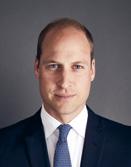
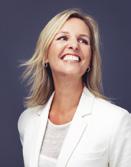
As President of BAFTA, I am delighted to welcome you to the EE BAFTA Film Awards. Tonight, we come together to honour an extraordinary year – one defined by a remarkable range of storytelling and an inspiring depth of talent across our industry.
Moments like this allow us to pause and properly celebrate the creative brilliance that powers film in Britain and around the world.
I am immensely proud of BAFTA’s continuing dedication to the next generation of screen talent. The UK is home to some of the most exciting filmmaking anywhere, and BAFTA plays an essential role in supporting creatives and practitioners – at every level – to grow, take risks and build lasting careers. From bursaries that provide immediate financial assistance for emerging creatives, to peer-to-peer networking and mentorships, as an arts charity BAFTA is focussed on opening doors for people from every background, and at every stage of their journey.
I know that many of you here tonight play a part in making that possible. BAFTA is deeply grateful for that support.
My warmest congratulations to all of this evening’s nominees. Tonight is a well-deserved celebration.
!R!
The Prince of Wales, KG , K% President of BAFTA
A very warm welcome to London and the EE BAFTA Film Awards +0+6 – our ./th year celebrating outstanding achievement in film.
Tonight, we recognise &6 nominated films: an exhilarating mix of genres, voices and visions from the ( K and around the world. Whether intimate, independent films or blockbuster studio releases, this year’s roster shows us how powerful cinema can be, and reminds us that the screen arts community remains fearless, inventive and at the top of its craft.
BAFTA exists to champion screen culture, inspire new talent and open doors for the next generation – a mission that is in large part achieved thanks to our community of members. This year, we reached a significant milestone: more than )&,000 members now call BAFTA home. Our community of exceptional professionals continues to grow, and we remain committed to ensuring BAFTA represents the diversity of talent working in the screen arts today. That commitment is tangible. In +0+,, -6 emerging creatives shared £+..,000 in scholarships and bursaries, helping to accelerate their careers without financial barriers. This evening, as we celebrate excellence across the film industry, we also recognise individuals who have created positive change. As such, we are delighted to honour our new Fellow, Dame Donna Langley, and our Outstanding British Contribution to Cinema recipient, Clare Binns – both of whom have made great storytelling happen where it engages us most: in our cinemas.
Congratulations to all this year’s nominees. We hope you have a fantastic evening.
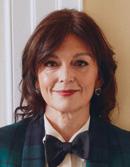
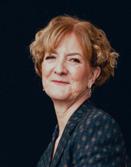
Jane Millichip, BAFTA CEO Sara Putt, BAFTA Chair
As we unite to celebrate the very best in filmmaking at the EE BAFTA Film Awards +0+6, it is impossible not to marvel at the creativity that defined this past year on the big screen.
Spanning everything from horror-musical mashups to Shakespeare-inspired dramas and hectic sports epics, this year’s films tore up the rulebook – and proved that this industry continues to inspire and captivate audiences everywhere.
At EE, we’re proud to play our part in this celebration, including through the EE Rising Star Award. Now in its +)st year, and still the only BAFTA category voted for by the British public, this award shines a spotlight on emerging talent, giving audiences the chance to champion the bold new stars of tomorrow. Good luck to all five of this year’s incredible nominees – your performances have already left an indelible mark.
EE is the ( K ’s best network, connecting millions across the country – something we have brought to life tonight. On your way in, you will have seen our Holobox screen. Beaming the country’s biggest film fans live to the red carpet, it’s yet another way we are using the power of our network to bring the magic of film closer to the nation.
This evening pays tribute to the storytellers who shape culture, spark innovation and connect us to the outer boundaries of imagination. I hope you enjoy every minute.
Cilesta Van Doorn EE Chief Brand and Marketing Officer
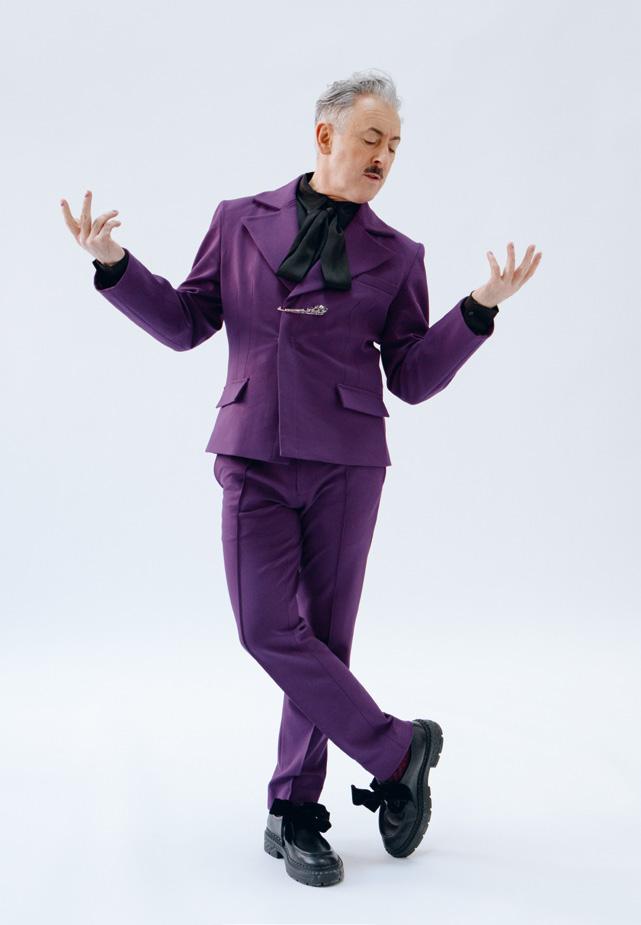
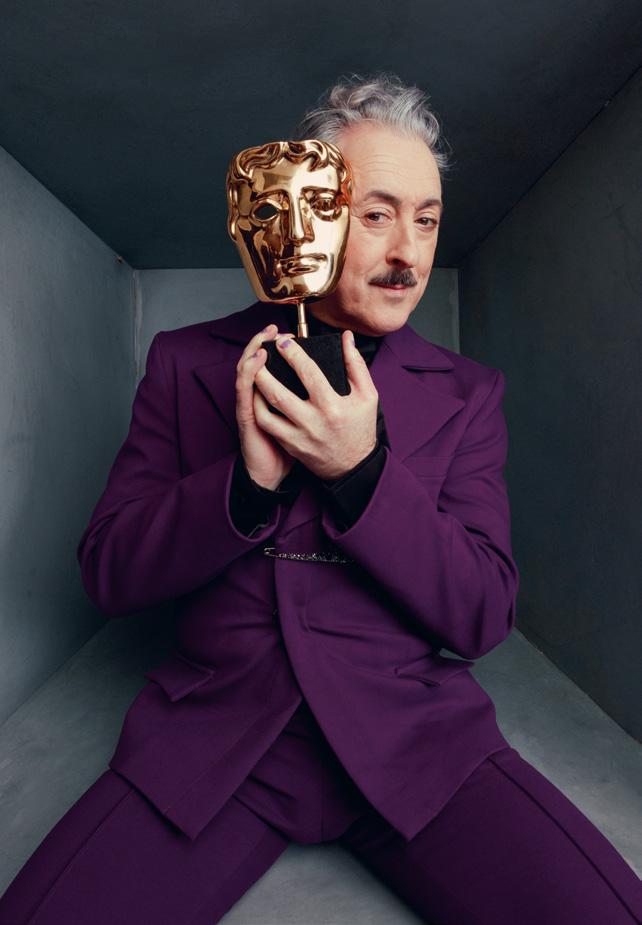
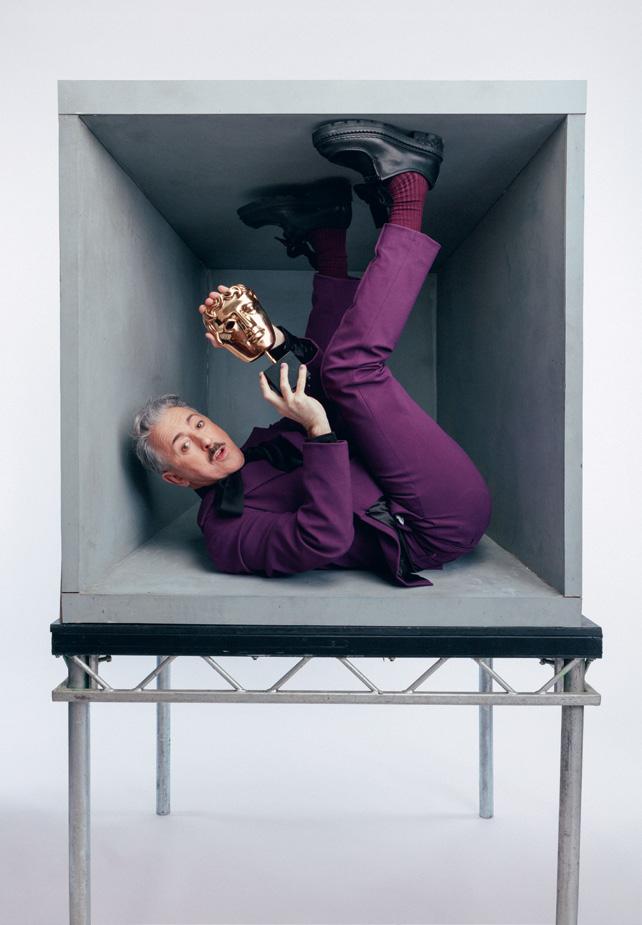
THE HOST Alan Cumming Just Can’t Resist
Sitting in the audience at the Edinburgh International Film Festival in )/-6, Alan Cumming was nervously poised to watch his debut in Passing Glory, the NFTS graduation film of Scottish filmmaker Gillies MacKinnon. The actor was a recent grad himself, fresh out of the Royal Scottish Academy of Music and Drama, and his stomach was knotted with the sheer anticipation of seeing himself on the silver screen. But he was appalled by what he saw when his first scene came up.
“I was in profile, and it felt like my nose entered the frame a good +0 seconds before the rest of my face,” he laughs. “It was like an iceberg, or a ship coming in! The lesson was that if I wanted to be in films, then my face would be scrutinised. A lesser man would have run for the hills and become a plumber.” Thankfully, our bathrooms’ loss was the film world’s gain.
An actor, director, producer, writer and % 0 presenter, Cumming has had one of his generation’s most thrillingly diverse careers. It was a visit from a Theatre in Education group to his hometown of Aberfeldy that first inspired Cumming to tread the boards, before he eventually discovered film and % 0. He vividly remembers sitting in his primary school dinner hall aged eight, mesmerised by a play about the Highland Clearances, performed in the round.
Watching the actors from Dundee Rep pack their costumes and props back into hampers and loading them into the van, he was sold – “I thought, ‘Wow, I want to do that!’” Later, his wish came true when one of the performers, Maureen Beattie, played Lady Macbeth to his Malcolm in his first professional job out of drama school. Four decades on, Beattie is now poised to play King Lear this summer at the Pitlochry Festival Theatre, where Cumming holds the position of artistic director. “She’s someone who changed my life, so to have her in my life again is just incredible.”
“Bruno Ganz taught me to let my authenticity come through, no matter the character… You can let people see into you, you don’t have to completely cover yourself up for a role”
Alan Cumming
For most actors, the steep path to success is grouted with the stickiest treacle. But Cumming admits he enjoyed a straightforward start in the business, against the odds. “I’ve had a bit of a charmed life,” he says. “It’s always been a pretty brutal industry, but I auditioned for drama school without a plan B and I never saw it as an endurance course. I always thought it was much more important to be happy than to be a successful actor.”
Cumming’s first feature-length film was Ian Sellar’s Prague ()//+), which earned him a nomination for Best Actor at the BAFTA Scotland Awards. He played a young man searching for film footage of his grandparents being taken by the Nazis. His co-star was Swiss actor Bruno Ganz, whom Cumming had long admired for his appearance in Wim Wenders’s Wings of Desire ()/-.). “I learned a lot from him,” he recalls. “He taught me to let my authenticity come through, no matter the character you’re playing. You can let people see into you, you don’t have to completely cover yourself up for a role.”
Cumming’s credits are so wide-reaching they read like a wish list. His unforgettable performance as the Emcee in Cabaret is the stu1 of Broadway legend, and devoted % 0 viewers love him as host of the (2 version of The Traitors. His portrayal of spin doctor Eli Gold in The Good Wife also earned him a string of award nominations. But it’s in film where Cumming has achieved the most impressive balance between blockbusters and independent projects. For all the pride he takes in his smaller-scale work (he mentions
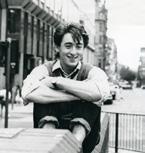
20-year-old Alan after graduating drama school in 1985
Sweet Land (+00,) and Any Day Now (+0)+) as his especial favourites), Cumming doesn’t mind that most people recognise him from films like GoldenEye ()//,) and Spy Kids (+00)). “A lot of people stop me to talk about Mr Floop [Spy Kids],” he smiles. “That film has become part of many people’s childhoods in such a lovely way. Though the most fun I ever had on set was definitely swanning around with the Spice Girls at the height of their success for Spice World ()//.).”
Plus, like any British thespian worth his chops, he has the Marvel universe to contend with. “I’m playing Nightcrawler in Avengers: Doomsday again this year,” he laughs. “I can’t quite believe I’m still a superhero at the age of 60. It’s hilarious.”
Even with his rising success from the )//0 s onwards, Cumming never fully abandoned the British film industry for Hollywood. “We don’t have a studio system, or big networks that churn out loads, so everything has to be a little more considered and special,” he reflects. “The films that cut through are about people telling authentic stories.” He also feels passionately about the legacy of his own country’s storytelling, citing the nuanced approach of fellow Scot Lynne Ramsay, who returned last year with the confrontational Die My Love. “Film is about letting you imagine what someone’s world is like, and we’re really good at that because we have such a great history of oral storytelling.”
0, E - M 0122 E , )-, T . Time once named Alan one of the three most fun people in show business, alongside Cher and Stanley Tucci – sign us up.
Psychodramas aside, if Cumming is always most inspired by films that challenge the audience, he also puts it down to his very earliest viewing experiences. “Dumbo ()/&)) was the first film I ever saw at the cinema, and I remember the shock of thinking the elephant’s mother was going to die, I couldn’t believe you could kill her. It’s like The Hunger Games when you are stunned that kids are killing each other – you want the audience to gasp.”
Cumming may provoke a few gasps himself tonight at the Film Awards, but he plans to do it in the sweetest way possible. “I won’t be too satirical, but
I can get away with more than most people because I’m mischievous and a bit cute,” he twinkles; and having met him in person for this interview, I can only concur. “I might be biting, but I’ll always be kind and never scare anyone away. We are here to celebrate the work and people’s great achievements after all.”
Having sat in the audience of many an awards ceremony himself, Cumming knows he could have a room of slightly anxious stars staring back at him this evening. “Being a nominee, you’re nervous because you want to win, but if you do win, then making a speech in front of millions of people is terrifying!” he sympathises. “It’s always an emotional night, because it’s the pinnacle of a long journey.” Speaking of pinnacles, if anyone wishes to talk to our host after the show, they shouldn’t leave it too long to say hello. There’s a chance the busiest man in show business may pull an Irish (or rather a Scottish) goodbye. “I was so exhausted after hosting last year’s BAFTA Television Awards,” he recalls of the last time he was on presenting duties. “So instead of going to the afterparty, I decided to go back to my hotel room, cuddle my dog and get room service. I can tell you that husband, dog and chips wasn’t too shabby at the end of the night!”
TH, EE 31 LMS T H-T SH- )E0 -L -2
Waiting for Gu!man (1996)
“This Christopher Guest film is an incredibly satirical, hilarious mockumentary but the actors are so committed and grounded in truth, which is really important no matter what you’re doing. It reminds me you can’t be a good comedian without being a great tragedian too.”
I Know Where I’m Going! (1945)
“I love this Powell and Pressburger film because it’s so much about a certain kind of Scottishness, and it has such whimsy. It’s got a special kind of wit and style, but it’s also very much about my country.”
Another Time, Another Place (1983)
“This film is based on a Scottish novel by Jessie Kesson, and was directed by Michael Radford. It starred Phyllis Logan, who is a stunning actor. It’s a lesson in being raw, being vulnerable and being completely open to the camera.”
THE OUTSTANDING BRITISH CONTRIBUTION TO CINEMA
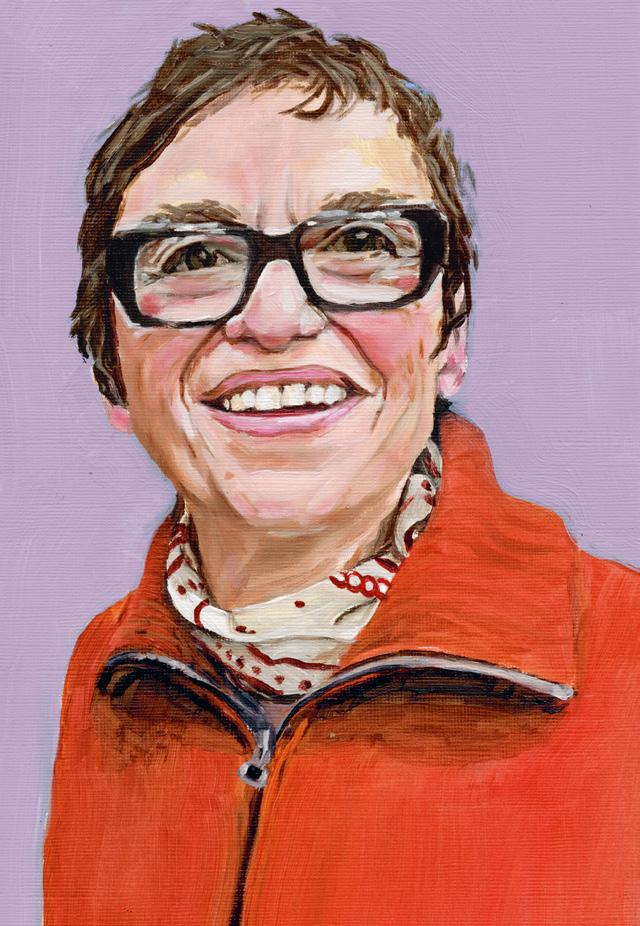
Clare Binns
Still Feels Like an Usher at Heart
As creative director of Picturehouse Cinemas and Picturehouse Entertainment, Clare Binns has come a long way from her first taste of the silver screen as an usher at the Ritzy cinema in Brixton, South London, in the early )/-0s. But in many ways, her role in film has remained much the same: to welcome newcomers into the cinema space and bring films from around the world to the ( K . “It’s all basically the same thing,” she says. “It’s always about trying to get something in front of people’s eyeballs that is going to give them a meaningful experience.”
Distribution is rarely considered a glamorous side of the industry, but without trailblazing influential forces in the field, the diversity of viewing experiences su1ers. Indeed, forward-thinking, daring acquisition and exhibition have always moved the very apparatus of cinema forward: new
Clare’s childhood cinema, Jesmond Picture House
faces, new stories and new genres are all part of the spice and life of cinema. This is what Clare Binns is all about. In fact, if you’ve seen the work of fierce independents like Danny Boyle, Francis Lee, Steve McQueen, Shola Amoo, Charlotte Regan or Alice Winocour over the last four decades, she certainly had a hand in it. From her work operating Zoo Cinemas to her longstanding relationship at Picturehouse she has held since +003, Binns’s countless initiatives have brought new audiences into films and put the cinema itself at the heart of many local communities. Like previous recipients from Andy Serkis to June Givanni, this positive impact on the British film industry is why BAFTA is honouring her work with the Outstanding British Contribution to Cinema award. Ahead of this evening, Binns talked Picturehouse, projectionist tricks and proudest moments for us.
What’s an early special memory of the cinema for you?
From the age of eight to )., my local cinema was about )00 yards down the road. This was in Jesmond, Newcastle, where I grew up, and it is sadly no more. Back then the cinema showed films that were slightly older, but had an amazing range of genres, including many from Bollywood, which I think is extraordinary. I used to see West Side Story ()/6)) over and over and be dancing in the back alley. Having a cinema so close to me – and where I could sneak into films that I shouldn’t have really been seeing – stamped for me just how important film was. Cinema touched me in a way that was so profound. It gave me such joy.
“For many years, every room I walked into was men.
I just thought ‘This isn’t right. I’m changing it’”
Clare Binns
Did you ever think of it as a career?
Well, I got the job as an usher at the Ritzy to see free films! I mean, clearly I needed to pay my rent. But equally I could see everything there, from mainstream horror, art house, to foreign language, experimental cinema. I can remember at the end of a night shift watching Andrei Tarkovsky’s Stalker ()/./) with a few others. Who does that at four in the morning? We did. Once I had become a projectionist, the thrill of turning the light on for Gentlemen Prefer Blondes ()/,3) was astounding – or, trying to get the )6mm projector to work by sticking a cigarette butt in the gate in order to watch Peter Greenaway’s The Falls ()/-0)…
The cinema creates community, but also its own mode of discovery, right? That feels like something that is increasingly important in the isolated age of our phone screens.
It’s very di1erent watching a film with audiences. When we used to show Carrie ()/.6), I used to go into the screen just before she shoots her hand up in the air out of the grave at the end – just to watch the audience’s reaction. Film critics are important, but they can’t quite convey that. At Picturehouse we do a lot of repertory programming, and there are so many young people going to see the kinds of masterpieces now that I take for granted. I think it’s really important to encourage people to discover all of those great films for themselves in a cinema, because it’s the one space where you don’t have the phone ringing, the doorbell is not going to go and you’re not going to make a cup of tea. You can focus and enjoy it in a way that you can never do on the % 0.
Can you tell us how you made the leap into programming?
I had been an usher, I had been a projectionist, I had been a manager, and then I thought, “Well, where is the real action?” It’s actually choosing the films – deciding what goes in, what goes out. Getting it
“If you don’t have empathy for other people, then we might as well all pack up and go home. Cinema is about being moved by what other people have to say”
Clare Binns
right can be hard. It has to be a mixture of experimentation and safety. And just because it’s your favourite film doesn’t mean that people will go and see it.
The OBCC is a huge and deserved honour. But who are some figures you believe deserve more recognition and who helped you get here?
Pat Foster, who opened the Ritzy again, gave me my first job, and was instrumental in bringing a cinema into Brixton. It was a tough place, but a place I think of as my home very much. And I have always admired the late Romaine Hart, who started the Screen on the Green cinema, who was a friend. She always stood up for herself, and she really did so much to bring art house films into the ( K .
What are some projects that you later had a hand in acquiring and distributing that made you especially proud?
I can mention two straight away. Anatomy of a Fall (+0+3) – what a movie. When it won the Palme d’Or, I almost wet my pants. I was hysterical! Foreign language, great film, amazing woman director in the form of Justine Triet, Sandra Hüller, who is one of my favorite actresses. More recently Pillion (+0+,). I remember reading that script and just knowing it was going to be a fantastic film; seeing its success, along with everybody else who took part in it, has been just thrilling.
The Ritzy Picturehouse, where Clare started out as an usher in 1981
If you’ve faced misconceptions as a woman executive in the film industry, how have you worked through those challenges?
For many years, every room I walked into was men. It just was. I just thought, “This isn’t right. I’m changing it. I’m going to have my way. I’m going to say my piece.” I mean, everybody (probably), if you were to ask them, would say I’m very opinionated. It’s true that I don’t pull any punches. Things are changing now. We have a very female-led company at Picturehouse. But it has been di4cult in the past. That’s why Romaine Hart was such a beacon of difference. She was always a great, great person to point towards and say, “well, if she can do it, I can do it”.
And you know, from the age of about 30 to my mid-,0s, I just got my head down. I just didn’t think about anything other than looking at the numbers every morning, looking at how we could get better films for our audiences, looking at how we could knock on people’s doors to say, “why can’t I have this? Why aren’t you giving me this film? Why aren’t you doing this?” It wasn’t for me – it was something I wanted to do for everybody else.
Why is it important to bring global cinema to UK audiences – to experience cinema across barriers? If we don’t understand how other people tick, and how other people see their lives, then we are going to have a very narrow view of the world. And if we cannot open our eyes to how other people experience things, then our life is not going to be very rich or worthwhile, because if you don’t have empathy for other people, then we might as well all pack up and go home. This is all about being moved by seeing what other people have to say. I will fight until my last breath to make sure that cinema is something that speaks to everybody.
Dame Donna Langley
Is Always Future First
THE FELLOW
In terms of firsts, Dame Donna Langley has a pretty major one under her belt: not only one of the most influential executive leaders in modern-day Hollywood, as chairman of NBCUniversal Entertainment, she is the first British woman ever to run a major American film studio.
Tonight, BAFTA recognises her four-decade career with its highest accolade, the BAFTA Fellowship – an honour whose previous recipients have included industry legends like Warwick Davis, Ang Lee, Thelma Schoonmaker, Sir Ridley Scott and Dame Judi Dench. Such company, and such a milestone, feels a long way away from Langley’s childhood home on the Isle of Wight. But, having moved to LA in her early +0s to pursue her love of film, since the )//0s she has called the Universal lot home, where she rose from early marketing and distribution roles up to creative leadership positions. But while the facts of her 50 are certainly
impressive, Langley’s creative intuition is more unique than those mere markers suggest. It’s the executive’s twofold ability to both nurture auteur filmmaking, and steer billion-dollar franchises, that is her key strength. And behind the big screen moments, she has remained a passionate advocate for mentorship as a route for opportunity – something vital for groundbreaking filmmaking to keep prevailing.
One need only look at Langley’s back catalogue of late to see that the film executive has got serious range – and possesses a sixth sense for a smash hit. Instant classics like Get Out ( +0). ) and Oppenheimer (+0+3), as well as major franchises like Wicked, Despicable Me / Minions and Jurassic World, have all come through NBCUniversal in the last decade alone. But as Langley revealed ahead of tonight’s Awards, she didn’t get here without some guidance along the way.
What was one of your earliest memories of experiencing cinema? And what are the feelings that memory conjures up?
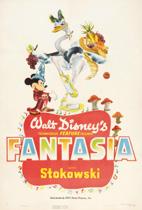
My family and I were more into books than movies, and that is where my love of storytelling first came from. However, my parents did take me to see Fantasia ()/&0) when I was very young. I remember the visuals and score to this day, and the feelings they evoked… mostly of terror!
Once I was older, a close friend and I would take the train to London or travel to Paris, and we saw wonderful films like Diva ()/-)) and Le Grand Bleu ()/--).
“As an industry, we can’t allow the next chapter to be written for us – we must
do that for ourselves”
Dame Donna Langley
Donna’s earliest film memory
Those experiences indelibly shaped my love of cinema forever.
What were some early turning points for you as you began your career in film? Was there an individual or entity that you feel really supported you at that time? I owe a lot of my early experiences in this business to some incredible mentors, some of whom I still call friends and peers to this day. I certainly heard some no’s along the way and had my fair share of people tell me all the reasons why I wouldn’t make it in 6A . But I was fortunate to come across people who saw my potential – long before I knew I had any – and genuinely wanted to help.
Much of my career has been at NBCUniversal, and I am forever grateful for that opportunity. But I’ve gained so much from being a part of the wider filmmaking community, and all the amazing people I have had the chance to work with along the way. I also have to give a nod to my alma mater, New Line Cinema, where I learned many of the fundamentals from the executive perspective with early experiences on films like Austin Powers ()//.) and more.
How have you interacted with BAFTA throughout your career?
BAFTA has always been the gold standard of excellence in the ( K for film and % 0. The organisation recognises the best in their field and celebrates iconic moments in media that stand the test of time. And Universal has been privileged to collaborate with BAFTA on its ( K headquarters, an investment not only in a space, but in the future of the creative community it serves.
As a studio executive, I’ve been fortunate to engage with BAFTA not only through our films and % 0 programmes, but also through meaningful connections with extraordinary emerging creators – particularly British ones – who are actively shaping the future of global entertainment.
“A fulfilling project is one that lingers: when people quote it, argue about it, see themselves in it”
Dame Donna Langley
What does running a modern-day studio actually mean in 2026?
There is no user manual, and you must be able to adapt quickly to changing conditions. This business is incredibly cyclical and complex, and we’ve seen a lot of disruption over the past few years. With further consolidation on the horizon, it’s important to maintain focus in order to stay on mission.
Our leadership has always persevered in the face of challenges by adapting with ingenuity, taking calculated risks, and continuously evolving our own business to future proof it. As an industry, we can’t allow the next chapter to be written for us – we must do that for ourselves, and I am confident we will do just that.
Beyond box o7ce draw, what does ‘success’ feel or look like to you in your role? What other elements make the results of a certain project feel especially fulfilling or triumphant?
The metrics of “success” have changed remarkably for film projects because we’re far past the days of box o4ce and physical home entertainment being the only part of the puzzle. We have licensing agreements and partnerships in ancillary markets that allow us to meet the consumer at di1erent points in a film’s lifecycle. Yes, we aim to make a return on our investment and a big splash theatrically, but sometimes success looks like resonance: it’s when a project taps into the zeitgeist and becomes a larger part of the cultural conversation.
I’m most proud of the films and % 0 series that traveled beyond their initial release, sparking dialogue,
debate, or connection across di1erent audiences and platforms. A fulfilling project is one that lingers: when people quote it, argue about it, see themselves in it, are moved to laughter or tears by it. When they feel seen because of it.
Looking back, what are some achievements you feel especially proud of?
I take great pride in the projects I championed at times when they may not have felt like an obvious choice – whether it was the first globally recognised, all-female led R-rated comedy (Bridesmaids, +0))), a biographical drama about an influential hip-hop group beating the odds (Straight Outta Compton , +0),), or an adaptation of a stage musical resulting in one of the ( K ’s most successful box o4ce hits (Mamma Mia!, +00-). Being in a position to champion projects that help bring universal experiences, cultures and stories to the big screen is a privilege.
To do one of the greatest jobs in the world with some of the greatest creators of all time? You can’t place a value on that. I share every piece of success with our unparalleled creative partners who are defining the next )00 years of cinema and bringing great entertainment to audiences around the world.
Finally: what do you hope the next generation doesn’t have to fight as hard to prove?
I hope more doors continue to open for creatives coming up the ranks, but the threshold to get a film or % 0 show made is a high bar and that is an important challenge to recognise. While new technology and innovation may democratise the making of “content” to a degree, the fight will always be there for art in its truest form. In many ways, the struggle is what makes it great!
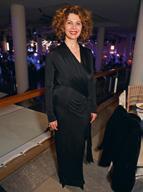
Donna at the EE BAFTA Film Awards 2024
BAFTA ALBERT: ACCELERATE
The UK screen industries’ new playbook for greener productions is here.
ACCELERATE +0+, , produced by BAFTA albert, is a clear guide to cutting production emissions and moving decisively towards net zero.
The report draws on voluntary submissions through the BAFTA albert calculator from +,,00+ productions in
+0+&, putting reported carbon emissions at nearly ).,,000 tonnes – that’s roughly the annual footprint of almost &0,000 ( K citizens.
The report, online now, o1ers )+ recommendations to reduce harmful emissions, promote culture change and improve data for measuring progress –here are just a few to keep in your kit.
89 Reduce air travel and switch to economy class if it’s unavoidable Switching from high class flight travel to economy could save as much as 10% of industry carbon emissions.
8: Adopt electric vehicles for transporting people and kit
Swapping a third of car journeys for EVs would take out 5% of carbon emissions.
83 Switch all mains power to renewables This would save 6% of the overall carbon footprint on productions on average.
84 Eliminate fuel from temporary power on set Replacing diesel with HVO in the short term would save 5% of emissions, as well as set teams on a path to replace it with battery power long-term.
85 Reduce the use of virgin materials Anything from sourcing secondhand costumes, to cutting back on the consumption of red meat and food waste, can make an impact.
86 And soon: use albert’s nextgeneration calculator Launching this year, our new tool improves accuracy when it comes to materials and waste, and can be integrated with existing production accounting processes to enable teams to track sustainability in real time alongside financial budgets.
T E ( T ALEC HOLT )H OTO G,- ) H. HOLLIE FERNANDO
THE BREAK THROUGHS
Now in its )+th year, BAFTA Breakthrough (K, supported by Netflix, showcases and supports the next generation of creatives, helping leverage early success into sustainable careers.
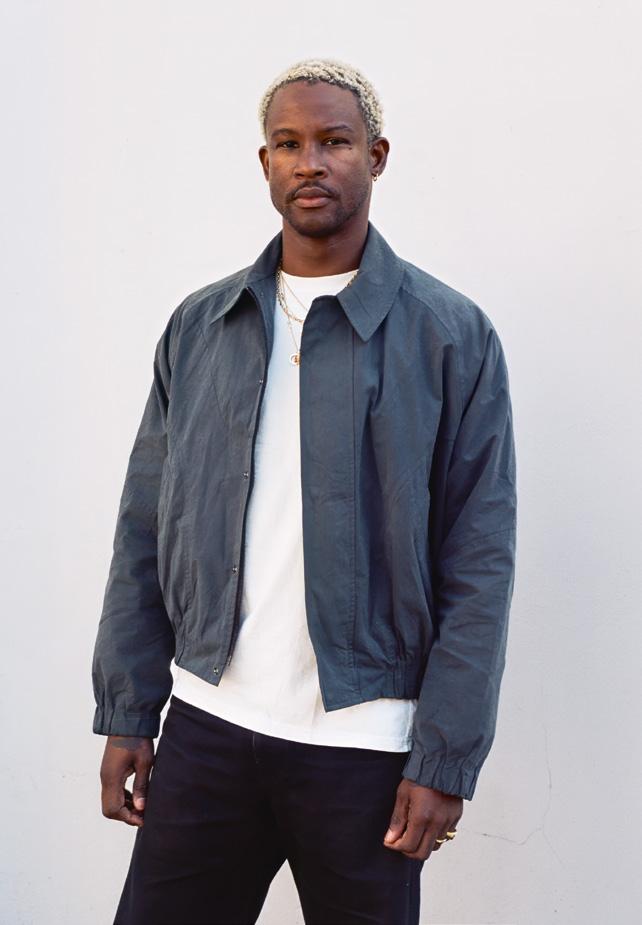
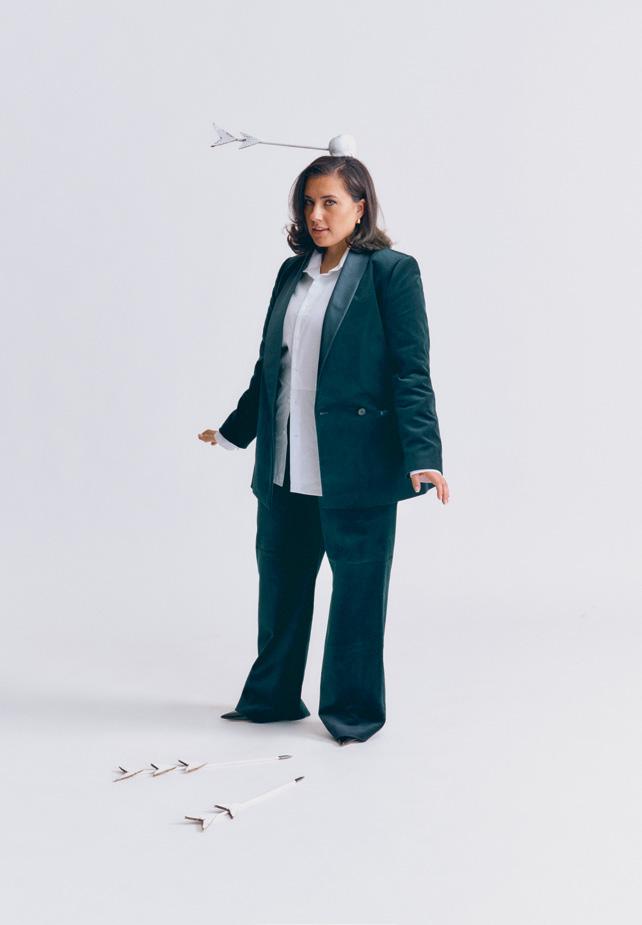
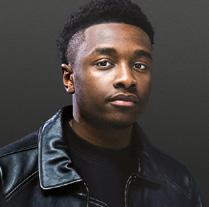
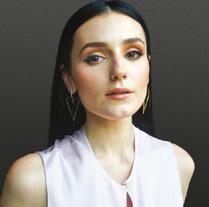
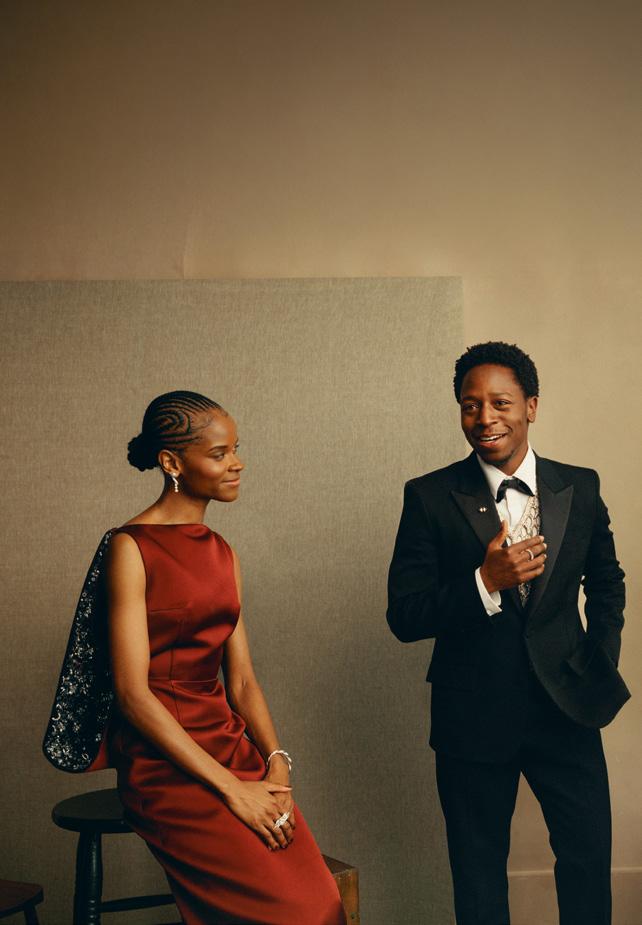
Akinola Davies Jr., Marie-Elena Dyche and Pinny Grylls are just three of the +0 participants in Breakthrough ( K ’s +0+, cohort. Davies Jr’s BAFTA-nominated breakout film, My Father’s Shadow (+0+,), is his debut as a feature director – a moving portrait of upheaval in )//3 Lagos, centred by two young boys who reconnect with their absentee father. From the world of production, meanwhile – and with impressive previous credits on Blue Jean (+0++) and How to Have Sex (+0+3) –Marie-Elena Dyche’s breakthrough project is the dreamlike, imaginative feat Harvest (+0+&), which depicts an isolated Scottish village’s chaotic first encounter with industrialisation. Pinny Grylls’s breakthrough film is feature-length documentary Grand Theft Hamlet (+0+&), which she co-directed with partner Sam Crane. The story of a madcap mission to stage a performance of Hamlet inside video game Grand Theft Auto, it’s like nothing we’d ever seen before – and it marks a triumphant directorial return after the loss of her hearing in +0)6. Coming together ahead of tonight’s Awards, these three unique creatives traded thoughts on being part of this year’s cohort, the value of collaboration and what the future of the industry looks like to them.
Each year, emerging talents from across film, games and TV are selected by leading industry figures to benefit from a year of support in the form of mentoring opportunities and career development. Breakthrough is part of our charity’s vision that people from all backgrounds will have opportunities to thrive in the screen industries.
)122. G ,. LLS It’s a funny thing, saying that you’ve broken through. I’m in my &0s, so there’s been moments in my life where I thought I’ve broken through. But maybe I really have now. I don’t know how you guys feel. It’s like, “Have I?”
M-,1 E - E LE 2- 0.C H E It’s totally the same for me. I did the 8F % 2 producing course )0 years ago. And I feel like I’ve been fighting every day since then, just trying to make films every which way possible. It’s been a ),-year endeavour of trying to break in. But it really is so lovely to have that recognition, especially because BAFTA is such a wonderful organisation. It’s a real stamp of approval.
-?
12 OL - 0-@1 ES A, I think for loads of people, it might be their introduction to us. But for the community of people we’ve been working with, they’ve known us for over a decade. Equally, it’s really wonderful to be acknowledged. My mum knows what BAFTA is; she might not know some of the other things I have done. Maybe it puts you in more of a national conversation, as opposed to a regional one.
M0 You never know what will cross over, but you just keep fighting anyway, because you’re in the pursuit of trying to find greatness within art.
) G Exactly. Grand Theft Hamlet was supposed to be just a little short that I was going to make in lockdown. And
then it ended up winning 2:2; ’s jury prize, all this kind of thing. I didn’t see that coming. I’d be really interested in whether you guys saw it coming?
- 0 I didn’t know My Father’s Shadow would have the year it’s just had. But I knew that the feeling on set was really special, and when we wrapped everyone was crying. Sometimes the process is a determiner of how it might be received. Because I think if people are making from a place of joy – just making for the sake of making in its purest form – there’s something in that [that is going to] resonate.
M0 For Harvest, we were in Oban, which is this tiny place in Scotland that’s quite remote. And everyone was sharing apartments, living on top of each other. I think we all did go mad while we were there. But the feeling at the end was like, “We’ve done something amazing.” I’ve made a few films, and that feeling isn’t always there. There is something special when everyone really does buy into the director’s vision.
) G With Grand Theft Hamlet, I kind of knew it was special because we got to the end and we actually staged Hamlet, and it had all gone wrong, but it kind of went right. And then everyone was [feeling] so high, and we were all just sitting in our rooms on PlayStation controllers.
M0 You feel that, watching it afterwards. The kind of relief of, “We did
it!” It’s still that same feeling, isn’t it, of community and coming together? You connected with di1erent people. You all bought into that same idea enough to get there.
) G I loved both your films as well. So congratulations, guys, because I’m honoured to be with you.
- 0 Likewise. I’m an avid gamer, so watching your film was a no-brainer to me. Even you just speaking about it, I feel a sort of childish enthusiasm. I really love hearing the nuts and bolts to how things happen. Because you always think there’s a “prescribed” way of doing something. And then you speak to someone and they tell you how they did something that sounds really outlandish and maverick. And you’re like, “Oh, you can actually do that?” Especially in the mentoring side of Breakthrough, I’m really interested to speak to people below the lines in departments that I’m obsessed with, and figure out if there’s anything I can borrow from there.
) G Documentary continues to fascinate me, because you are literally thinking on your feet all the time in a real situation. I’m moving into fiction now, and I would like to hear from all the fiction directors that are on the scheme: how do you keep that “Oh my God, I don’t know what’s going to happen next” excitement?
M0 In terms of collaborating, for
me the interest is in storytelling. That’s where I go into each project; I always try to look at it from a human perspective. Can I find a connection with someone? And the story, does that story touch me? And that can happen, as a producer, across any kind of theme or any kind of genre.
) G Yes – I get really bored if I stay with people who only know stu1 that I know. I’m doing an immersive theatre piece, which is Macbeth in Call of Duty. It’s kind of like a gaming-theatre mash-up, but in the real space. And I’m now writing a script called Signs of Life. It’s a rom-com about a failed comedian who loses her hearing, and then falls in love with a deaf man who teaches her sign language. So those are the two big things I’m doing this year. And both of them are a result of entering new worlds that I didn’t know anything about before.
- 0 I think there’s something really interesting about collaborating with people who see what you do a little bit di1erently. It can help you extract something. The editor of My Father’s Shadow [Omar Guzmán Castro] is a Mexican editor. He’d never edited an English-language film before, and my film is maybe ,0% in English. But it’s all about rhythm and instinct and an understanding of the story being told.
) G A lot of people ask me, “How did you edit Grand Theft Hamlet when you have hearing loss?” But as you said, it
“Editing is emotional. It doesn’t matter that one of my senses isn’t quite what it was. I’m still the same person. I’ve still got that rhythm inside me”
Pinny Grylls
“I’m really interested to speak to people below the lines in departments that I’m obsessed with, and figure out if there’s anything I can borrow from there”
Akinola Davies Jr.
doesn’t matter if he’s a Mexican guy editing something that’s not in a language that he understands. Editing is emotional. It doesn’t matter that one of my senses isn’t quite what it was. I’m still the same person. I’ve still got that rhythm inside me.
M0 That’s so beautiful. And I think all of what we do is about the rhythm of coming together. Whoever we choose to collaborate with in this industry, everyone is coming at the film at a particular point in their lives, with all of the experience that they’ve gone through. If you changed your editor, it would be a di1erent film. I just love that. We create something which is so particular to that moment of time, and then once it’s created it lasts as this precious moment that will exist until way after we’re gone.
- 0 Yeah, it’s very much a fingerprint.
M0 This year in particular, there have been some incredible films. But my fear is about the stories that aren’t told – films that never are able to be materialised. It’s getting so much harder to make films. There are all these hoops that you have to jump through. There’s public funded money, which is there if you have x, y and z. But if you don’t meet that criteria, then what do you do? How do you find money in other ways?
) G I’m optimistic because I think whenever there’s disruption, there’s new things. At the moment it’s very
scary for people. There are a lot of people out of work. You can find a creative solution to it, like I did in a crisis when I lost my hearing.
- 0 I do agree that when there’s disruption, new ideas probably resurface. But equally, I think it’s always been difficult for people from my community, or similar communities, to author our own stories. For so many people, there’s never really an entry point.
I’ve always had to think a little bit more industriously or ingeniously about how to wheel and deal. That said, having travelled to America a lot, there is no public funding body in those spaces. There’s no public funding body of Nigeria. I think in the ( K especially, we have something really special there.
) G People are very worried about AI filmmaking and how that’s going to break the industry, that we’re all going to lose our jobs. But I am not feeling that worried. I’m not worried about it because I listen to myself, and I think, “What do I respond to when I’m watching something?” And it is that authenticity, that human storytelling.
- 0 And I think the fact that things have become di4cult is going to make people think a little bit more about the stories – about why they’re telling them, or who they’re telling them with. I believe that things happen in cycles. And hopefully that happens with storytelling and filmmaking: we can return to things that have a lot more heart
and a lot more feeling, and a lot more about understanding each other and where we’re from and the di4culties we face. It’s all about coalescing together and helping each other out, because I think that allows you to move with community when you’re telling stories as well.
) G People have tried to make AI do sign language. It can’t do it, because it’s about human presence. It’s a body thing. It’s a face thing. It’s authentic. So I feel that there’ll be opportunities that people will find within this AI revolution. That’s my soapbox!
M0 I’m in the camp of being terrified of AI. But that’s a really interesting take on it. And not letting it overstep the mark in taking away from the creative integrity of the writers and the directors and the cast – really keeping that as a precious thing, and then using AI to enhance other things. But who knows what will happen, it’s moving so fast.
) G People are going to want to see your films even more, Marie. That’s what I’m trying to say. Because people want that authenticity that you do so well, the humanness. I think that this is going to become so much more precious to people.
M0 I hope so. I think with Harvest in particular, I’m super proud of that film and what we’ve achieved. I think it looks stunning. Sean Price Williams, the cinematographer, did an incredible job. He shot on )6mm film. And what I love about it is that it feels like it’s kind of a genre-bending piece: a beautiful, weird mash-up. I was in awe of Athina [Rachel Tsangari] and her artistry, how she put it together and brought everyone along.
- 0 There’s so many debuts on my film. My cinematographer, Jermaine Edwards, it’s his debut film. My brother as a writer, it’s his debut film. Me as a director, it’s my debut film. My art department, it’s their debut film. Two thirds of my leads, it’s their debut film. My person who made the score, it’s their debut film as well. I remember picking Jermaine, and having some execs ask me, “Are you sure you wouldn’t want to be surrounded with a lot more experience?” But I really think if you don’t take a chance on people from the beginning, it might become less and less likely that you take a chance on people as you move forward.
“I always try to look at it from a human perspective. Can I find a connection with someone? And does that story touch me? That can happen, as a producer, across any kind of theme or genre”
Marie-Elena Dyche
2026 EE BAFTA FILM
SUPPORTING ACTOR
Jacob Elordi
CINEMATOGRAPHY
COSTUME DESIGN
MAKE UP & HAIR
ORIGINAL SCORE
PRODUCTION DESIGN
SPECIAL VISUAL EFFECTS SOUND
DOCUMENTARY
DOCUMENTARY
CONGRATULATES OUR AWARDS NOMINEES
CINEMATOGRAPHY
DOCUMENTARY
OUTSTANDING BRITISH FILM
EDITING
THE BAFTA MEMBER
The art of laugh-out-loud cinema is important to director Raine AllenMiller. “You know, when you’re in pain from laughing, and your cheeks hurt,” she says. And as far as the BAFTA member and nominee has progressed in her filmmaking career, when it comes to the art of comedy, some traditions are simply time-honoured.
“I have a very fond memory of watching Eddie Murphy’s Bowfinger ()///) on the floor of my living room with my mum, and just crying with laughter,” she recalls. “I rewatched it recently on my way to LA for an important work meeting. It felt so weird to imagine myself watching this film in a council flat in Manchester. And then to be on a plane, sat in business class, watching the same movie… Yeah, it’s pretty special.”
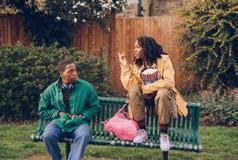
If comedy in British feature filmmaking has needed a “bit more artistic street cred” of late, then Allen-Miller’s debut feature, Rye Lane (+0+3), gave the genre the fresh lease of life audiences had been waiting for. A rom-com set in South East London, it told the story of Yas (Vivian Oparah) and Dom (David Jonsson), two strangers who,
after a chance encounter, spend a day of misadventure together that changes them both. Nominated for Outstanding British Film and Best Leading Actress at the +0+& EE BAFTA Film Awards, the film firmly established Allen-Miller’s playful and pacey visual language on the silver screen. Right now, she’s in edits for her second feature, The Roots Manoeuvre, in which a woman organises a heist to retrieve a stolen artefact from a British museum and bring it back to Jamaica. “There’s a really great dog in it,” Allen-Miller says, but equally namechecks a second collaboration with Oparah, alongside Thomas Turgoose, Jessica Henwick and Lil Simz.
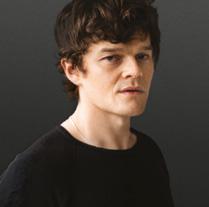
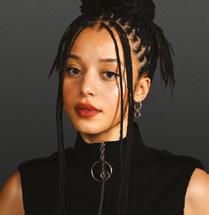
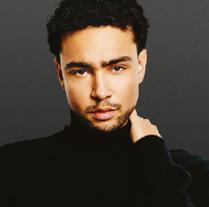
Allen-Miller has interfaced with di1erent facets of BAFTA throughout her career: from being selected for BAFTA Breakthrough ( K in +0+3 to, most recently, being one member of the jury panel for the +0+6 EE Rising Star Award, which selects five nominees for the British public to then vote for. Ahead of tonight’s Awards, she revealed what that process was like, and told us more about what’s next on her agenda for +0+6.
Vivian Oparah and David Jonsson in Rye Lane
“It’s not very sexy to talk about money. But I don’t think people talk about it enough, in terms of doing something creative for a living”
Raine Allen-Miller
What was your route into filmmaking?
It’s hard to say what actually gave me my start. It’s not like I started out making shorts, or skate videos on a 0!2 camera. I’d say my start was survival. Like, “how can I make money in the creative industry?” It felt like a complete impossibility. I got a job as a photographer’s agent, then I was a creative at an ad agency. I remember one day I was on set for a commercial, and I looked at the director and thought, “I could definitely do that.” I started o1 with a few really low-budget music videos, working with a small crew, then got commissioned for a piece of content, and then that content turned into doing commercials. Commercials are really good because you learn to use the fancy tools that you will hopefully get to use making your own film later. It’s not very sexy to talk about money. But I don’t think people talk about it enough, in terms of doing something creative for a living.
How did that specific route shape you, do you think?
Like anything, it’s not always perfect. But you have to present things, you have to talk to people, and you have to collaborate. And knowing how to do that when you’re actually making a feature is really good. It forces you into being a grown-up. But the dream has always been to make a feature film.
And then you did! Tell me about the making of Rye Lane?
I got sent an email from Damian Jones, producer, saying, “Hey, you know, do you want to meet about this film?” And at first, I was like, no, because: one, it was a rom-com, which I wasn’t interested in. And two, I had wanted to write my own first feature. But the writers [Nathan Bryon and Tom Melia] were super collaborative, and I was able to reinvent it a bit. One of the big things for me was to make the woman the funny one: for the male lead to make her shine, but he can also shine as well. Finding Vivian and David
“Being on a jury was interesting because it’s always really nice when you get to do anything that’s linked to filmmaking, but isn’t actually filmmaking. Making films can be quite a lonely thing”
Raine Allen-Miller
was magic because they really did that. I went into it thinking, “I don’t love rom-coms, so how do I make one that I do?”
With Rye Lane, you participated in the BAFTA Breakthrough UK cohort for 2023 along with your star Vivian Oparah. The next year, you were nominated for two BAFTAs. What impact did it have? Breakthrough is pretty amazing to be part of. But also, they are supportive to so many filmmakers and people in the industry that I’ve actually found it useful afterwards. Like when I began making The Roots Manoeuvre, I would look up who was in Breakthrough to see who could be an interesting collaborator. It’s really great for finding new talent, and also new fun stu1 to watch. Also, this year, I got to participate in the judging of who should be nominated for one of the awards categories.
Yes! Can you pull back the curtain on being part of the EE Rising Star jury? That must have been interesting, to see it from the other side. It was really fun. And the funny thing is, you go in and you think, “I’m going to judge this thing. How exciting.” But you soon realise you’re talking about human beings, their career. And you can’t abuse that power: you’ve really got to do your research and make sure everyone has a fair chance. I’d love to do more stu1 like that. I’m terrible at meeting up with my own friends, let alone with fellow filmmakers! So it’s
always really nice when you get to do anything that’s linked to filmmaking, but isn’t actually filmmaking. Because making films can be quite a lonely thing. Certain events you think, “is this just a party to take pictures and say that I was at?” But BAFTA is legit.
What’s next for you?
I’m editing The Roots Manoeuvre, which we just finished filming in Jamaica. Vivian is the lead, and she’s fantastic. It’s a really di1erent film, so it was always going to be a challenge. It’s a heist, but it’s also about a woman who is working out who she is through her heritage. I want to explore that, and also entertain people. In terms of making work, I love the way Steve McQueen is like “okay, this is a piece of video art, this is a blockbuster feature, this is a television series. This thing is important, and here is the medium that best suits that.” I guess I have a similar dream. But for me, creative freedom has come naturally along the way because I listen to people. I don’t think I’m a genius at all. The rule I’m sticking with for my entire career, is to only partner with people that truly believe in what it is that you’re trying to make.
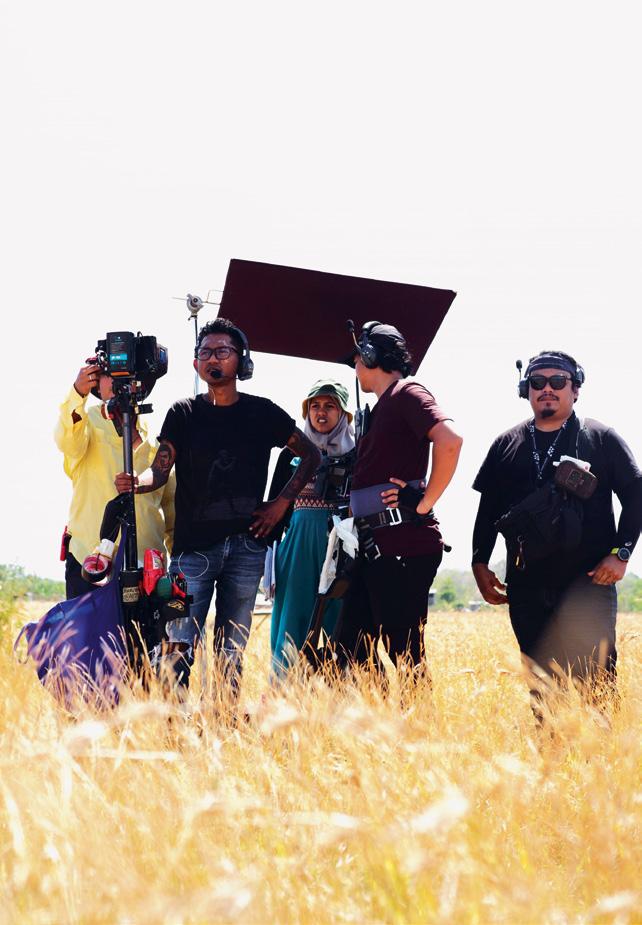
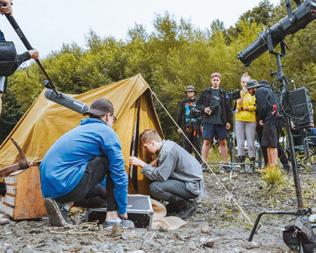
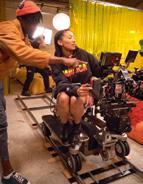
Raine on set in 2021
EE BAFTA FILM AWARDS
THE NOMINATIONS
,3 Adapted Screenplay
,, Animated Film
,6 Best Film
,/ British Short Animation
6) British Short Film
63 Casting
6, Children’s & Family Film
6. Cinematography
6/ Costume Design
.) Director
.3 Documentary
., Editing
.. Film Not in the English Language
./ Leading Actor
-) Leading Actress
-3 Make Up & Hair
-, Original Score
-. Original Screenplay
-- Outstanding British Film
/) Outstanding Debut by a British Writer, Director or Producer
/3 Production Design
/, Sound
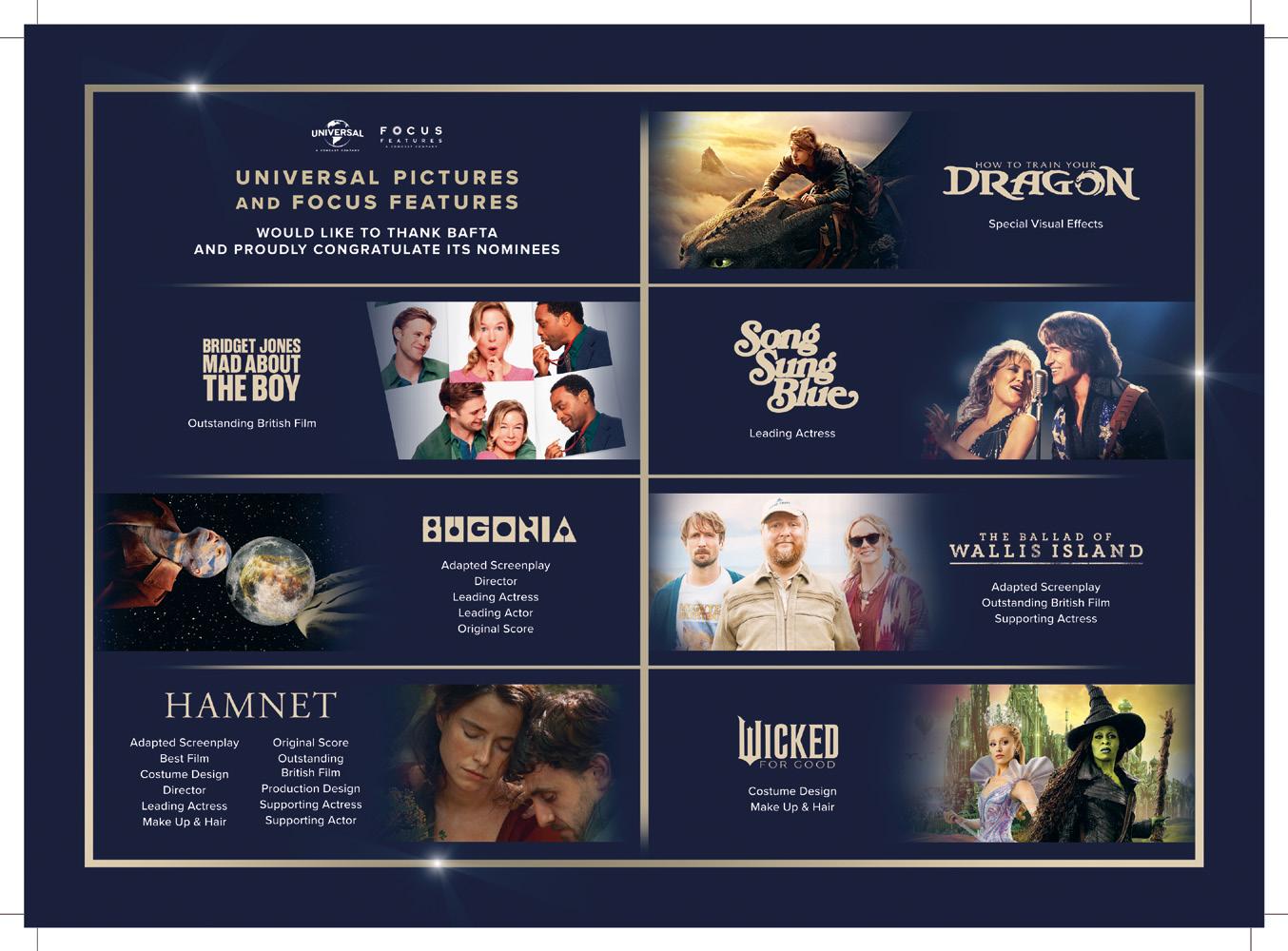
/. Special Visual E1ects
// Supporting Actor
)0) Supporting Actress
)03 EE Rising Star
Adapted Screenplay
THE BALLAD OF WALLIS ISLAND
Tom Basden
Tim Key
BUGONIA
Will Tracy
HAMNET
Chloé Zhao
Maggie O’Farrell
ONE BATTLE AFTER ANOTHER
Paul Thomas Anderson
PILLION
Harry Lighton
WARNER BROS. PICTURES WOULD LIKE TO THANK THE
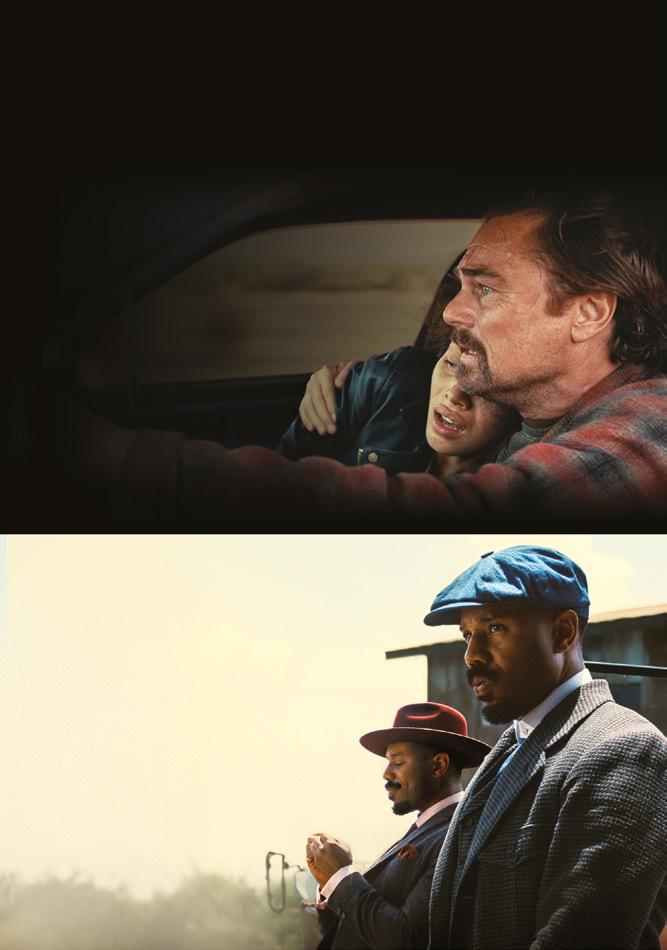
AND PROUDLY CONGRATULATE OUR EE BAFTA FILM AWARD NOMINEES
BEST FILM
ADAM SOMNER SARA MURPHY PAUL THOMAS ANDERSON
DIRECTOR
PAUL THOMAS ANDERSON
ADAPTED SCREENPLAY
PAUL THOMAS ANDERSON
LEADING ACTRESS
CHASE INFINITI
LEADING ACTOR
LEONARDO D ICAPRIO
SUPPORTING ACTRESS
TEYANA TAYLOR
SUPPORTING ACTOR
BENICIO DEL TORO
SEAN PENN
CASTING
CASSANDRA KULUKUNDIS
CINEMATOGRAPHY
MICHAEL BAUMAN
EDITING
ANDY JURGENSEN
ORIGINAL SCORE
JONNY GREENWOOD
PRODUCTION DESIGN
FLORENCIA MARTIN
ANTHONY CARLINO
SOUND
JOSE ANTONIO GARCIA
CHRISTOPHER SCARABOSIO, CAS
TONY VILLAFLOR
EE RISING STAR CHASE INFINITI
BEST FILM
ZINZI COOGLER, p.g.a. SEV OHANIAN, p.g.a. RYAN COOGLER, p.g.a.
DIRECTOR
RYAN COOGLER
ORIGINAL SCREENPLAY
RYAN COOGLER
LEADING ACTOR
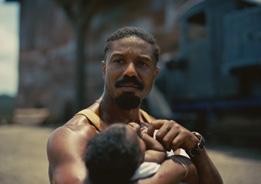
MICHAEL B. JORDAN
SUPPORTING ACTRESS
WUNMI MOSAKU
CASTING
FRANCINE MAISLER
CINEMATOGRAPHY
AUTUMN DURALD ARKAPAW, ASC
COSTUME DESIGN
RUTH E. CARTER
EDITING
MICHAEL P. SHAWVER
MAKE UP & HAIR
MIKE FONTAINE
SHUNIKA TERRY
KEN DIAZ
SIÂN RICHARDS
ORIGINAL SCORE
LUDWIG GÖRANSSON
PRODUCTION DESIGN
HANNAH BEACHLER
MONIQUE CHAMPAGNE
SOUND
CHRIS WELCKER, CAS
BENNY BURTT
BRANDON PROCTOR
STEVE BOEDDEKER
FELIPE PACHECO
EE RISING STAR
MILES CATON
THE NOMINATIONS
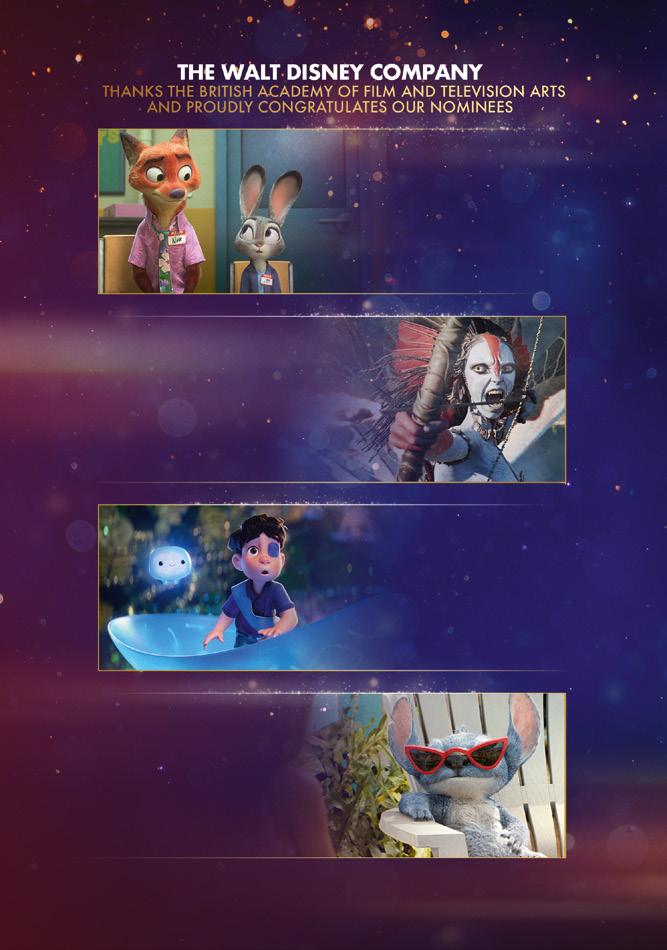
Animated Film
ELIO
Madeline Sharafian
Domee Shi
Adrian Molina
Mary Alice Drumm
LITTLE AMÉLIE
Maïlys Vallade
Liane-Cho Han
Nidia Santiago
Edwina Liard
Claire La Combe
Henri Magalon
ZOOTROPOLIS 2
Jared Bush
Byron Howard
Yvett Merino
THE NOMINATIONS
Best Film
HAMNET
Liza Marshall
Pippa Harris
Nicolas Gonda
Steven Spielberg
Sam Mendes
MARTY SUPREME
Timothée Chalamet
Anthony Katagas
Eli Bush
Ronald Bronstein
Josh Safdie
ONE BATTLE AFTER ANOTHER
Adam Somner
Sara Murphy
Paul Thomas Anderson
SENTIMENTAL VALUE
Maria Ekerhovd
Andrea Berentsen Ottmar SINNERS
Zinzi Coogler
Sev Ohanian
Ryan Coogler
British Short Animation
THE NOMINATIONS CARDBOARD
JP Vine
Michaela Manas Malina
SOLSTICE
Luke Angus
TWO BLACK BOYS IN PARADISE
Baz Sells
Dean Atta
Ben Jackson
THE NOMINATIONS
British Short Film
MAGID / ZAFAR
Luís Hindman
Sufiyaan Salam
Aidan Robert Brooks
NOSTALGIE
Kathryn Ferguson
Stacey Gregg
Marc Robinson
Kath Mattock
TERENCE
Edem Kelman
Noah Reich
THIS IS ENDOMETRIOSIS
Georgie Wileman
Matt Houghton
Harriette Wright
WELCOME HOME
FRECKLES
Huiju Park
Nathan Hendren
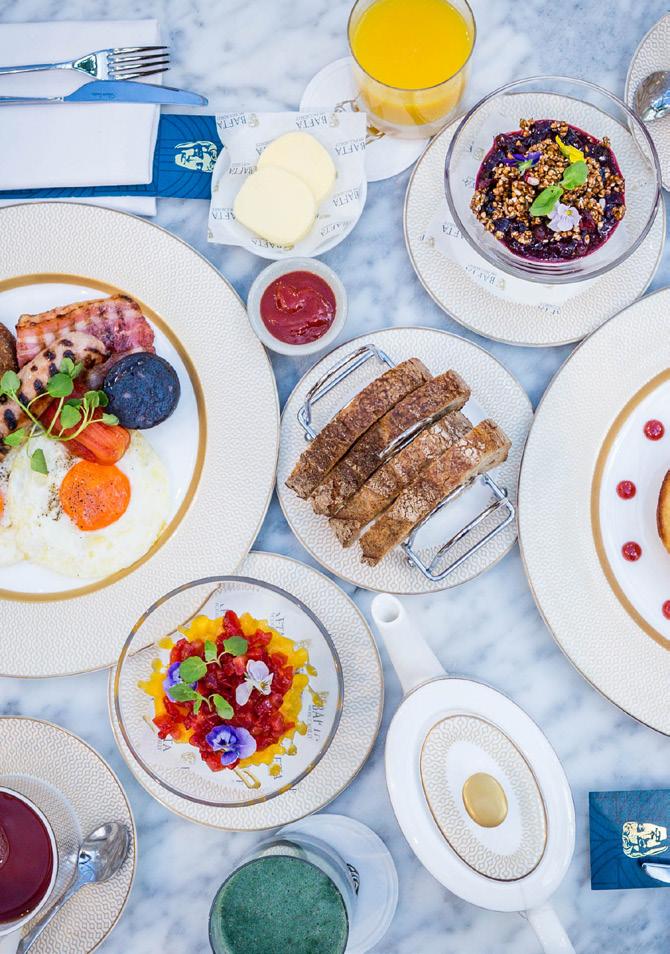
BAFTA 195 Piccadilly’s new breakfast menu — the most delicious way to start your day
Treat yourself and your guests to a range of delightful breakfast classics, healthy options and savoury dishes; each created from seasonal and expertly sourced ingredients by BAFTA’s Executive Chef and impeccably served by the Members Bar and Restaurant team.
Secure your reservation weekdays 8am-10.30am, through OpenTable, (BAFTA:195 Piccadilly), or the member’s area of the BAFTA website, and we look forward to welcoming you soon.
BAFTA 195 Piccadilly, London W1J 9LN
baftapiccadilly@bafta.org @bafta195
THE NOMINATIONS
Casting
I SWEAR
Lauren Evans
MARTY SUPREME
Jennifer Venditti
ONE BATTLE AFTER ANOTHER
Cassandra Kulukundis
SENTIMENTAL VALUE
Yngvill Kolset Haga
Avy Kaufman
SINNERS
Francine Maisler
NOMINATIONS
Children’s & Family Film
ARCO
Ugo Bienvenu
Félix De Givry
Sophie Mas
Natalie Portman BOONG
Lakshmipriya Devi
Ritesh Sidhwani
LILO & STITCH
Dean Fleischer Camp
Jonathan Eirich
ZOOTROPOLIS 2
Jared Bush
Byron Howard
Yvett Merino
THE NOMINATIONS
Cinematography
FRANKENSTEIN
Dan Laustsen
MARTY SUPREME
Darius Khondji
ONE BATTLE AFTER ANOTHER
Michael Bauman SINNERS
Autumn Durald Arkapaw
TRAIN DREAMS
Adolpho Veloso
O cial soft drink partner to BAFTA
THE NOMINATIONS
Costume Design
FRANKENSTEIN
Kate Hawley
HAMNET
Malgosia Turzanska
MARTY SUPREME
Miyako Bellizzi
SINNERS
Ruth E. Carter
WICKED: FOR GOOD
Paul Tazewell
THE NOMINATIONS
Director
PAUL THOMAS ANDERSON
One Battle After Another
RYAN COOGLER
Sinners
YORGOS LANTHIMOS
Bugonia
JOSH SAFDIE
Marty Supreme
JOACHIM TRIER
Sentimental Value
CHLOÉ ZHAO
Hamnet
THE NOMINATIONS
Documentary
2000 METERS TO ANDRIIVKA
Mstyslav Chernov
Michelle Mizner
Raney Aronson-Rath
APOCALYPSE IN THE TROPICS
Petra Costa
Alessandra Orofino COVER-UP
Laura Poitras
Mark Obenhaus
Olivia Streisand
Yoni Golijov
MR. NOBODY AGAINST PUTIN
David Borenstein
Pavel Talankin
Helle Faber
Radovan Síbrt
Al#běta Karásková
THE PERFECT NEIGHBOR
Geeta Gandbhir
Alisa Payne
Nikon Kwantu
Sam Bisbee
THE NOMINATIONS
Editing
F1
Stephen Mirrione
A HOUSE OF DYNAMITE
Kirk Baxter
MARTY SUPREME
Ronald Bronstein
Josh Safdie
ONE BATTLE AFTER ANOTHER
Andy Jurgensen SINNERS
Michael P. Shawver
THE NOMINATIONS
Film Not in the English Language
IT WAS JUST AN ACCIDENT
Jafar Panahi
Philippe Martin
THE SECRET AGENT
Kleber Mendonça Filho
Emilie Lesclaux
SENTIMENTAL VALUE
Joachim Trier
Maria Ekerhovd
Andrea Berentsen Ottmar
SIR ĀT
Oliver Laxe
Domingo Corral
THE VOICE OF HIND RAJAB
Kaouther Ben Hania
Nadim Cheikhrouha
Leading Actor
ROBERT ARAMAYO I Swear
TIMOTHÉE CHALAMET
Marty Supreme
LEONARDO DICAPRIO One Battle After Another
ETHAN HAWKE Blue Moon
MICHAEL B. JORDAN Sinners
JESSE PLEMONS
Bugonia
The future of home cinema Introducing
Proud to be the Ofcial Screen Partner of BAFTA
THE NOMINATIONS
Leading Actress
JESSIE BUCKLEY
Hamnet
ROSE BYRNE
If I Had Legs I’d Kick You
KATE HUDSON
Song Sung Blue
CHASE INFINITI
One Battle After Another RENATE REINSVE
Sentimental Value EMMA STONE Bugonia
MADISIN RIAN WEARS SHADE 14
THE NOMINATIONS
Make Up & Hair
FRANKENSTEIN
Jordan Samuel
Cliona Furey
Mike Hill
Megan Many HAMNET
Nicole Sta%ord
Marie Deehan
Peta Dunstall
Julia Vernon
MARTY SUPREME
Kyra Panchenko
Kay Georgiou
Mike Fontaine
SINNERS
Siân Richards
Shunika Terry
Ken Diaz
Mike Fontaine
WICKED: FOR GOOD
Frances Hannon
Laura Blount
Mark Coulier
Sarah Nuth
THE NOMINATIONS
Original Score
BUGONIA
Jerskin Fendrix
FRANKENSTEIN
Alexandre Desplat
HAMNET
Max Richter
ONE BATTLE AFTER ANOTHER
Jonny Greenwood SINNERS
Ludwig Göransson
WE TURN BRANDS INTO SCREEN ICONS
Digital Cinema Media is proud to support BAFTA as the Official Cinema Media Partner of the EE BAFTA Film Awards.
Congratulations to all the nominees and winners!
THE NOMINATIONS
Original Screenplay
I SWEAR
Kirk Jones
MARTY SUPREME
Ronald Bronstein
Josh Safdie
THE SECRET AGENT
Kleber Mendonça Filho
SENTIMENTAL VALUE
Eskil Vogt
Joachim Trier
SINNERS
Ryan Coogler
THE NOMINATIONS
Outstanding British Film
28 YEARS LATER
Danny Boyle
Andrew Macdonald
Peter Rice
Bernard Bellew
Alex Garland
THE BALLAD OF WALLIS ISLAND
James Griffiths
Rupert Majendie
Tom Basden
Tim Key
BRIDGET JONES:
MAD ABOUT THE BOY
Michael Morris
Tim Bevan
Eric Fellner
Jo Wallett
Helen Fielding
Dan Mazer
Abi Morgan
THE NOMINATIONS
DIE MY LOVE
Lynne Ramsay
Martin Scorsese
Jennifer Lawrence
Justine Ciarrocchi
Andrea Calderwood
Enda Walsh
Alice Birch H IS FOR HAWK
Philippa Lowthorpe
Dede Gardner
Jeremy Kleiner
Emma Donoghue HAMNET
Chloé Zhao
Liza Marshall
Pippa Harris
Nicolas Gonda
Steven Spielberg
Sam Mendes
Maggie O’Farrell
I SWEAR
Kirk Jones
Georgia Bayli%
Piers Tempest
MR. BURTON
Marc Evans
Ed Talfan
Josh Hyams
Hannah Thomas
Trevor Matthews
Tom Bullough PILLION
Harry Lighton
Emma Norton
Lee Groombridge
Ed Guiney
Andrew Lowe
STEVE
Tim Mielants
Alan Moloney
Cillian Murphy
Max Porter
THE NOMINATIONS
Outstanding Debut by a British Writer, Director or Producer
THE CEREMONY
Jack King Director, Writer
Hollie Bryan Producer
Lucy Meer Producer
MY FATHER’S SHADOW
Akinola Davies Jr. Director
Wale Davies Writer
PILLION
Harry Lighton Director, Writer
A WANT IN HER
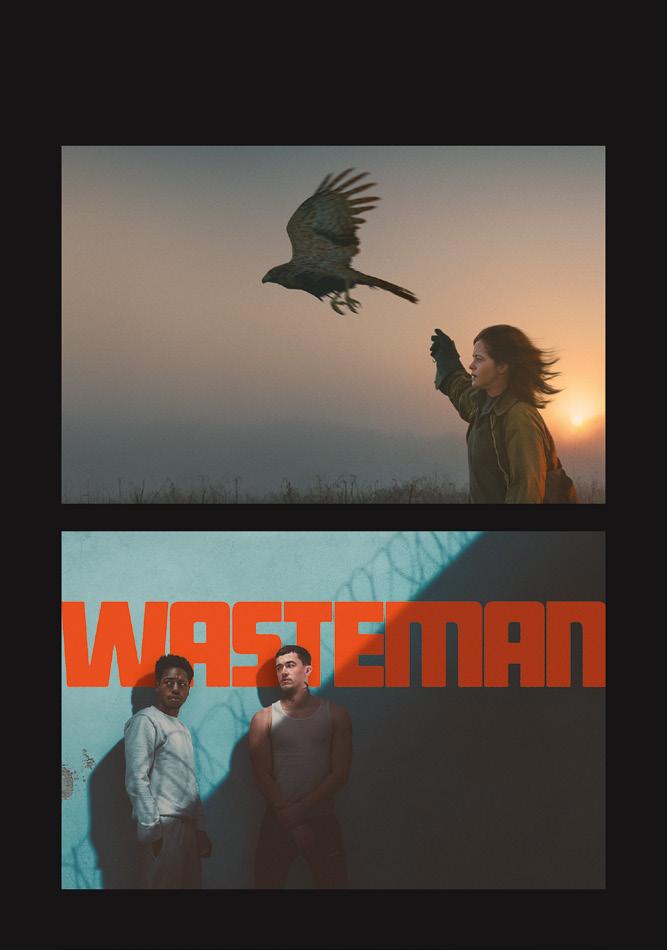
Myrid Carten Director WASTEMAN
Cal McMau Director
Hunter Andrews Writer
Eoin Doran Writer
Production Design
FRANKENSTEIN
Tamara Deverell
Shane Vieau
HAMNET
Fiona Crombie
Alice Felton
MARTY SUPREME
Jack Fisk
Adam Willis
ONE BATTLE AFTER ANOTHER
Florencia Martin
Anthony Carlino
SINNERS
Hannah Beachler
Monique Champagne
THE NOMINATIONS
Sound
F1
Gareth John
Al Nelson
Gwendolyn Yates Whittle
Gary A. Rizzo
Juan Peralta
FRANKENSTEIN
Greg Chapman
Nathan Robitallie
Nelson Ferreira
Christian Cooke
Brad Zoern
ONE BATTLE AFTER ANOTHER
José Antonio García
Christopher Scarabosio
Tony Villaflor
SINNERS
Chris Welcker
Benny Burtt
Brandon Proctor
Steve Boeddeker
Felipe Pacheco
WARFARE
Glenn Freemantle
Mitch Low
Ben Barker
Howard Bargro%
Richard Spooner
THE NOMINATIONS
Special Visual E1ects
AVATAR: FIRE AND ASH
Joe Letteri
Richard Baneham
Daniel Barrett
Eric Saindon
F1
Ryan Tudhope
Keith Alfred Dawson
Nicolas Chevallier
Robert Harrington
FRANKENSTEIN
Dennis Berardi
Ayo Burgess
Ivan Busquets
José Granell
HOW TO TRAIN YOUR DRAGON
Christian Mänz
François Lambert
Glen McIntosh
Terry Palmer
THE LOST BUS
Charlie Noble
Brandon K. McLaughlin
Gavin Round
David Zaretti
SINCE 1889
Offcial Hotel to the EE BAFTA Film Awards for 16 years.
BENICIO DEL TORO
One Battle After Another
JACOB ELORDI
Frankenstein
PAUL MESCAL
Hamnet
PETER MULLAN I Swear SEAN PENN
One Battle After Another
STELLAN SKARSGÅRD
Sentimental Value
THE NOMINATIONS
Supporting Actress
ODESSA A’ZION
Marty Supreme
INGA IBSDOTTER
LILLEAAS
Sentimental Value
WUNMI MOSAKU
Sinners
CAREY MULLIGAN
The Ballad of Wallis Island
TEYANA TAYLOR
One Battle After Another
EMILY WATSON
Hamnet
THE NOMINATIONS
EE Rising Star
ROBERT ARAMAYO
MILES CATON
CHASE INFINITI
ARCHIE MADEKWE
POSY STERLING
We are an industry of storytellers. Stories change lives – they influence how we think and how we behave, and they inspire us. It is crucial that the stories that are being told, and the storytellers, truly reflect the society we live in.
To ensure this the screen industries must be open to talented people from all backgrounds. At BAFTA we work year-round to identify and
tackle barriers to opportunity, ensuring that the next generation of screen arts creatives are supported to fulfil their creative potential.
BAFTA is an independent arts charity and we need to raise all our own income. To support our work we rely on income from individual donations, trusts, foundations, corporate partnerships and membership subscriptions.
Find out more: fundraising@bafta.org
JURIES & CHAPTERS
LO 2G L 1 ST 12G A4,.
Emily Stillman Chair
Iain Canning
Dixie Chassay
Nainita Desai
James Friend
Jessica Henwick
Marianne Jenkins
Pamela Jikiemi
Sonja Klaus
Col Needham
Ray Panthaki
Joyce Pierpoline
Kate Ringsell
Marc Samuelson
Iain Softley
Jason Solomons
5,1 T 1 S H SH O , T
- 21 M -T 1 O 2 A4,.
Andrea Tran Chair
Anuree De Silva
Paul Donnellon
Tomas Gisby
Tejinder Jouhal
Dilpreet Kaur Walia
Hannah Lee Miller
Julian Nott
Frank Owusu
Kate Sullivan
Andrew Wildman
5,1 T 1 S H SH O , T 31 LM
A4,.
Yaw Basoah Chair
Matty Crawford
Laura Howie
Afolabi Kuti
Ashanti Omkar
Georgina Paget
Thomas Pullen
Paix Robinson
Miranda Stern
Lisa-Marie Tonelli MB?
Rob Watson
Elaine Wong
O4 TST-2 0 12G
5,1 T 1 S H 31 LM A4,.
Jason Solomons Chair
Kaleem Aftab
Mark Bonnar
James Erskine
Sandy Lieberson
Nigel Lindsay
Jessica Malik
Darcia Martin
Ray Panthaki
Amanda Posey
C- ST 12G A4,.
Sara Putt Chair
Shakyra Dowling
Kristina Erdely
Nafisa Kaptownwala
Sarah Leung
Destiny Lilly
Tamsyn Manson
Manuel Puro
Lucinda Syson
Matt Western
0 OC 4 ME 2 T-,. A4,.
Rebecca Davies Chair
George Amponsah
Katie Bryer
Dani Carlaw
Georgina Yukiko
Donovan
Franklin Dow
Sam Dwyer
Lizzie Gillett
Gavin Humphries
Michael Nollet
CH1 L0 , E 2 ’ S B
3- M 1 L. 31 LM A4,.
Andrew Miller MB? Chair
Nik Ammar
Nicky Cox
Janet Ellis
Susie Evans
Pui Fan Lee
Kirsten Geekie
Tom Goodman-Hill
Jermain Julien
Jessica Ransom
Adam Tandy
Saskia van Roomen
Rachel Wang
O4 TST-2 0 12G 0 E5 4 T
A4,.
Kristy Matheson Chair
Anna Bogutskaya
Charlotte Cheung
Lourdes Faberes
Brian Hill
Malachi Kirby
Fiona Lamptey
Himesh Patel
Bart Ruspoli
Misan Sagay
Rajesh Thind
EE , 1 S 12G S T-, A4,.
Anna Higgs Chair
Ben Allen
Raine Allen-Miller
Joe Alwyn
Sheila Atim
Helen Bownass
Richie Brave
Aisha Bywaters
Lena de Casparis
Gwilym Mumford
Scarlett Russell
Benedict Wong
With thanks to Charles Gant, Nina Gold, Larushka Ivan-Zadeh and Radhika Seth
CH- )TE , S
C,- 3T CH- )TE , S
Acting
Casting
Cinematography
Costume Design
Directing
Editing
Make Up & Hair
Music
Production Design
Screenplay
Sound
Special Visual E1ects
O )T- 12 CH- )TE , S
Animation
Shorts
Documentary
Film Not in the English Language
Craft chapters consist of Academy members with specialist experience in the relative field. Opt-in chapters are open to all members with direct experience or a keen interest in a relative area. The Documentary chapter is open to members with experience in documentary or non-fiction filmmaking.
For details of the voting process, including any key changes made for 2026, please visit: awards.bafta.org/entry
O 33 1 CE , S
OFFICERS OF THE ACADEMY
!R! The Prince of Wales, KG , K% President
Dame Pippa Harris @B?
Vice-President for Television
5 O-, 0 O3 T,4 STEES
Sara Putt Chair
Hilary Rosen
Deputy Chair of BAFTA & Chair, Television Committee
Co-optee and Chair, Finance & Commercial Committee
Suzi Brennan Chair, Audit & Risk Committee
Co-optees
Sally Habbershaw
Patrick Keegan
Ralph Lee
Rosemary Leith
Andrew Miller MB?
Joyce Pierpoline
Siobhan Reddy
Board Advisors
Medwyn Jones
Marc Samuelson
Shrina Shah Chair of the Governance & Appointments Committee
E( EC 4 T 1@ E
Jane Millichip Chief Executive Officer
M EM5E , S O3 T H E 31 LM
C OMM 1 TTEE
Emily Stillman Chair
Anthony Andrews Deputy Chair
Iain Canning
Rebecca Davies
Nainita Desai
David Garrett
Anna Higgs
Alexa Jago
Molly Manning Walker
Kat Mansoor
Ray Panthaki
Jason Solomons
Barnaby Thompson
FILM AWARDS PARTNERS
With enduring thanks to our title sponsor and o7cial partners to the EE BAFTA Film Awards in CDCE
cial Beauty
Official Cinema Media
Official Soft Drink Official Wine
Official Champagne
Official Scrutineers
cial Hair
Partner
cial Water
cial Hotel
cial Partner
ACKNOWLEDGEMENTS
C E , EMO 2.
BAFTA wishes to thank EE
Our title sponsor
Film companies and distributors for their invaluable assistance
Alan Cumming, Our host
Clara Amfo, Ali Plumb,
Our red carpet hosts
Charlie Clift, Portrait photography
Getty Images, Media partner
All sta1 at BAFTA
BBC
Caper & Berry
Creative Technology
DDA
Ginger Owl
Gravity Media
Holy Water
inGenius Productions
Nibbs Events
Pace Prestige Services
Southbank Centre
Penny Lane Entertainment
Theatre Sign
) 4 5L 1 C-T 1 O 2
Editor: Claire Marie Healy
Design: (studio) Boris Meister
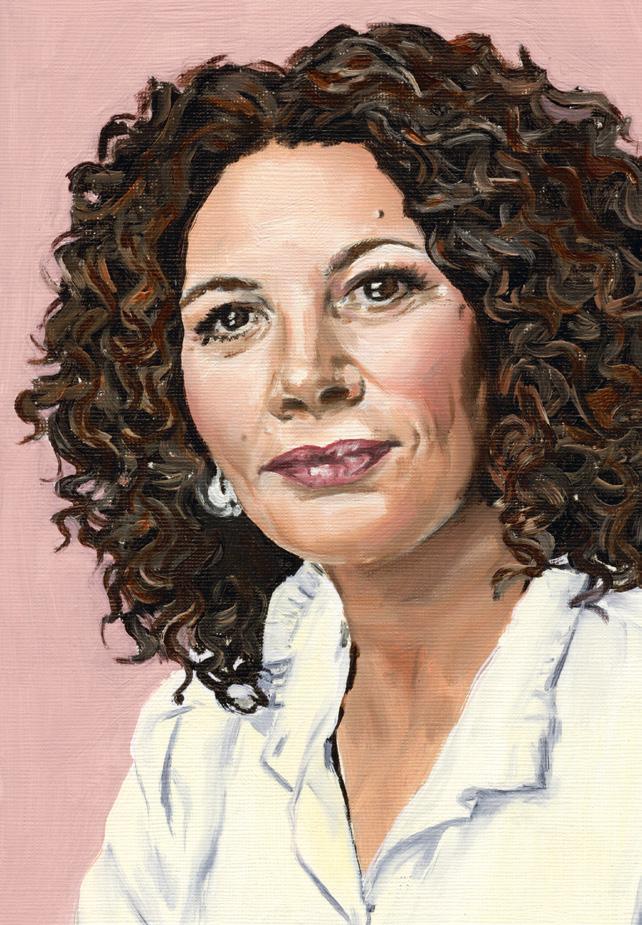
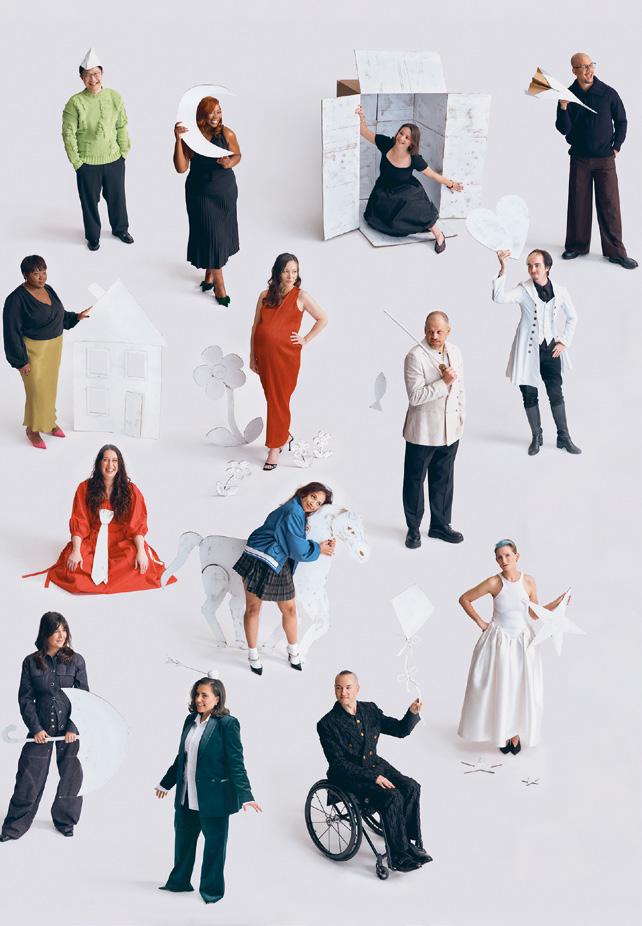
Cover Art: Alice Tye
Sub-Editor: Alec Holt
Photography Director: Claire Rees
Ad Sales: Ellie Mason
Junior Photography Producer:
Rebecca Gray
Printer: Gavin Martin Colournet Ltd
Best Film nominee imagery used with kind permission from the distributors.
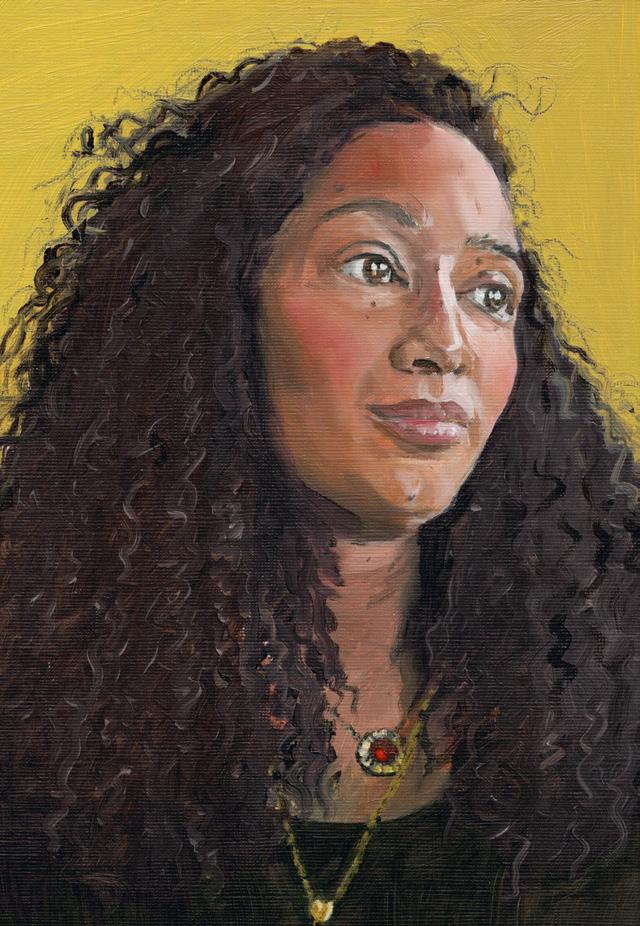
Portrait of Sara Putt: BAFTA/Charlie Clift.
Archive photograph of Alan Cumming: Kenneth Malcolm
Although every e%ort has been made to ensure the accuracy of the information contained in this publication, the Publishers cannot accept liability for errors or omissions. No part of this publication may be reproduced without the written permission of BAFTA.
Published by BAFTA
)/, Piccadilly, London ;)A /68
+&& (0)+0 ..3& 00++ reception@bafta.org bafta.org
The CO2 emissions from this product can be mitigated through the Carbon Capture® programme, directly supporting the work of the Woodland Trust. This paper is recyclable and biodegradable.
What impact will your film have on our planet?
You can make a difference.
Scan to see how you can ACCELERATE action on your productions:
BAFTA albert is grateful to all industry supporters and partners.
With thanks to:
Cutting one in four flights and swapping one in three petrol-driven road journeys for electric vehicles would reduce carbon emissions by 13% by 2030. 13% 34% of an average UK film’s carbon footprint in 2024 came from travel and transport emissions, with flights making up over half of that impact.