ARIZONA GOLF










FAIRWAY MAGNET.


THE NEW STANDARD IN STRAIGHT.
In the new G440 K driver, we’re taking forgiveness farther than ever. Its combined MOI is our highest ever and makes the G440 K our straightest and most forgiving adjustable driver to date. For you, that means longer, straighter drives — and shorter approach shots from the fairway to the green.






CG SHIFTER










A movable, 32-gram back weight dials in ball flight in three positions (Fade, Draw, Neutral).





DUAL CARBONFLY WRAP
Lightweight carbon sole and crown save mass, helping move the CG lower and deeper for more ball speed and distance.





IF CUPID WAS A GOLFER

There is quite a bit of talk about love in the month of February, and as I was thinking about that, I realized that love can have many different meanings depending on the context. “I love my wife” has a different feeling than “I love bacon.” Love can be in the air and love can be a battlefield. You can fall both in and out of love, and the Beatles proclaimed that all you need is love. And as I was thinking about all of these things, I realized one thing … I love golf. I love the feeling of flushing a 3-wood, I love the memories of golfing with my grandfather and the memories I now make golfing with my son. I love the smells of the golf course, and the feeling I get every year as The Masters approaches.
Beyond playing and watching golf, I also love that I get to work in golf and share this game with all of you, the members of AZ GOLF. As you read this issue of Arizona Golf Insider, I encourage you to think about what you love about the game of golf, and be sure to share that love the next time you are on the course. I hope to see you out there.
Jason Knybel jason@azgolf.org
ARIZONA GOLF INSIDER
5555 E Karsten Way, Suite 3, Phoenix, AZ 85008
(602) 944-3035 | azgolf.org
EXECUTIVE COMMITTEE
OFFICERS
John Souza, President
Tim Hulscher, Vice President
Jackie Bertsch, Vice President
Vera Ciancola, Treasurer
COMMITTEE
MEMBERS
Abe Candelaria III
Harry Cavanagh Jr.
Victor Ferreira
Tameka Fox Hartman
Jay Pennypacker
Joe Shershenovich, PGA
Rod Tomita
AZ GOLF STAFF
Catherine Carmignani, Executive Director
STAKEHOLDER RELATIONS
Alex Tsakiris, Assistant Executive Director/Head of Stakeholder Relations
Mike Mason, Director, Handicapping & Course Rating
Peg Tanner, Volunteer Manager
FINANCE & ADMINISTRATION
Daniel Shoup, Head of Finance & Administration
Vivian Kelley, Accounting Administrator
Robyn Noll, Director, Technology
Susan Woods, Senior Manager, Accounting
Chloe Wood, Office Coordinator
MEMBERSHIP
Anj Brown, Head of Membership
Sharon Goldstone, Customer Relations Manager Eric Hickenlooper, Membership Services Manager
Meagan Garber, Senior Manager, Community Relations & Development
Kathy Laux, Club Services Coordinator
MARKETING & COMMUNICATIONS
Jason Knybel, Head of Marketing and Communications
Corey Cavanaugh, Marketing Manager
Tom Skulski, Content & Communications Manager
Tori Schuller, Marketing & Communications Coordinator
CHAMPIONSHIPS
Logan Rasmussen, Head of Championships
Amy Fruhwirth, Championships Manager
Austin Pelias, Championships Manager
Everett Priddy, Championships Manager
Kylie Shoemake, Assistant Director of Competitions
At AZ GOLF, we exist to connect golfers with the greatest game on this green earth. As the governing body of Arizona golf, we continuously strive to elevate the sport and unlock access for all levels of players — embracing beginners’ road to refinement while celebrating competition amongst champions.
ARIZONA GOLF INSIDER
(ISSN 2765-9054) is published four times per year by AZ GOLF. It is supported by member dues, utilizing $5 per member per year. No part of this magazine may be reproduced for use as an advertising, publicity or endorsement item without written approval from AZ GOLF.
Arizona Golf Insider is offered on a subscription basis for $12.95 annually. Individual copies may be obtained by forwarding $5 to the address above.
POSTMASTER: Send address changes to AZ GOLF, 5555 E Karsten Way, Suite 3, Phoenix, AZ 85008
Produced for AZ GOLF by FCP President
George Fuller
george808fuller@gmail.com
Managing Editor
Tom Mackin
Designer
Randi Karabin | Karabin Creative
Contributors
Christina Barrueta
Barry Cronin
Robert Earle Howells
Joe Passov
Ken Van Vechten
Halfway

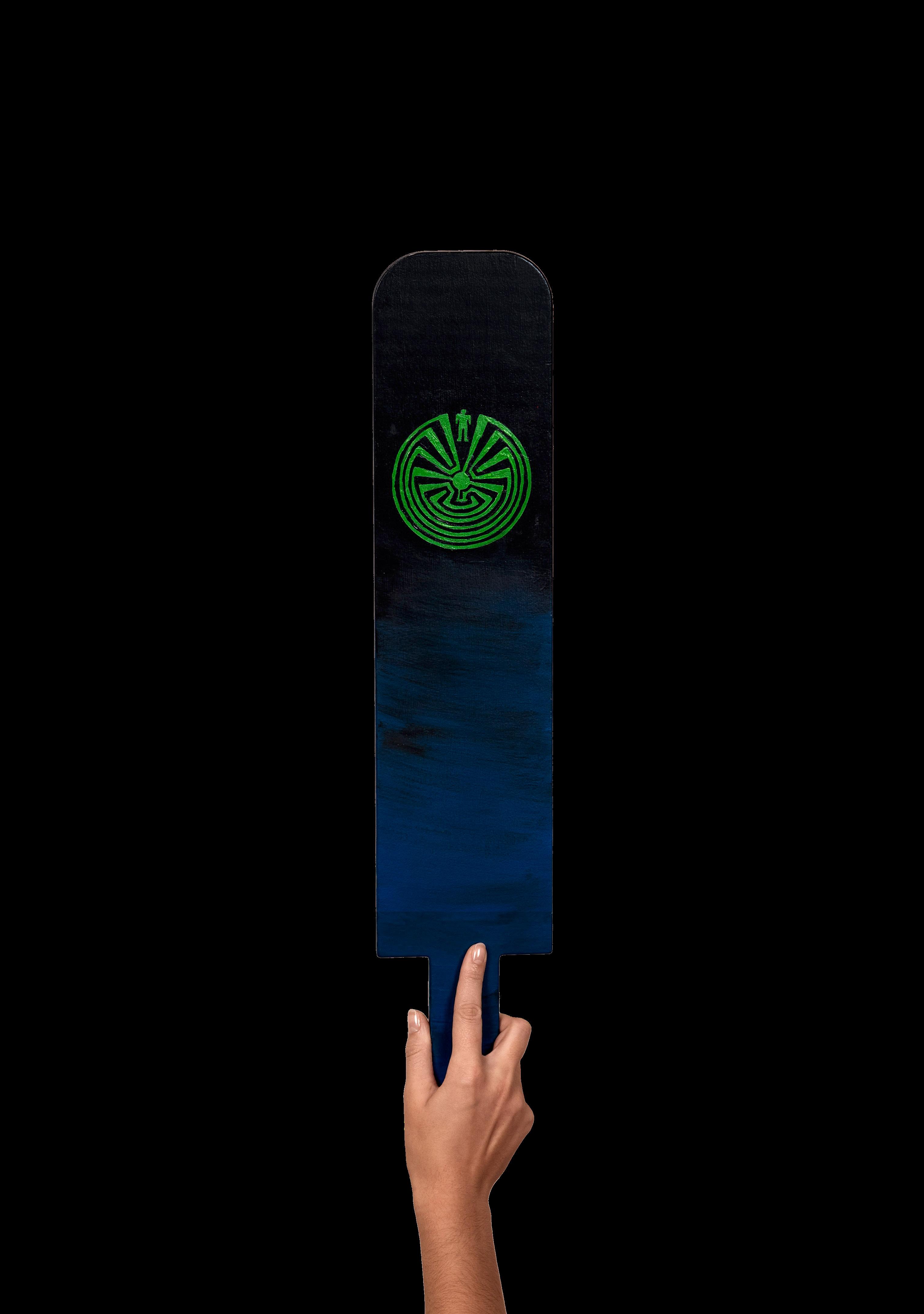
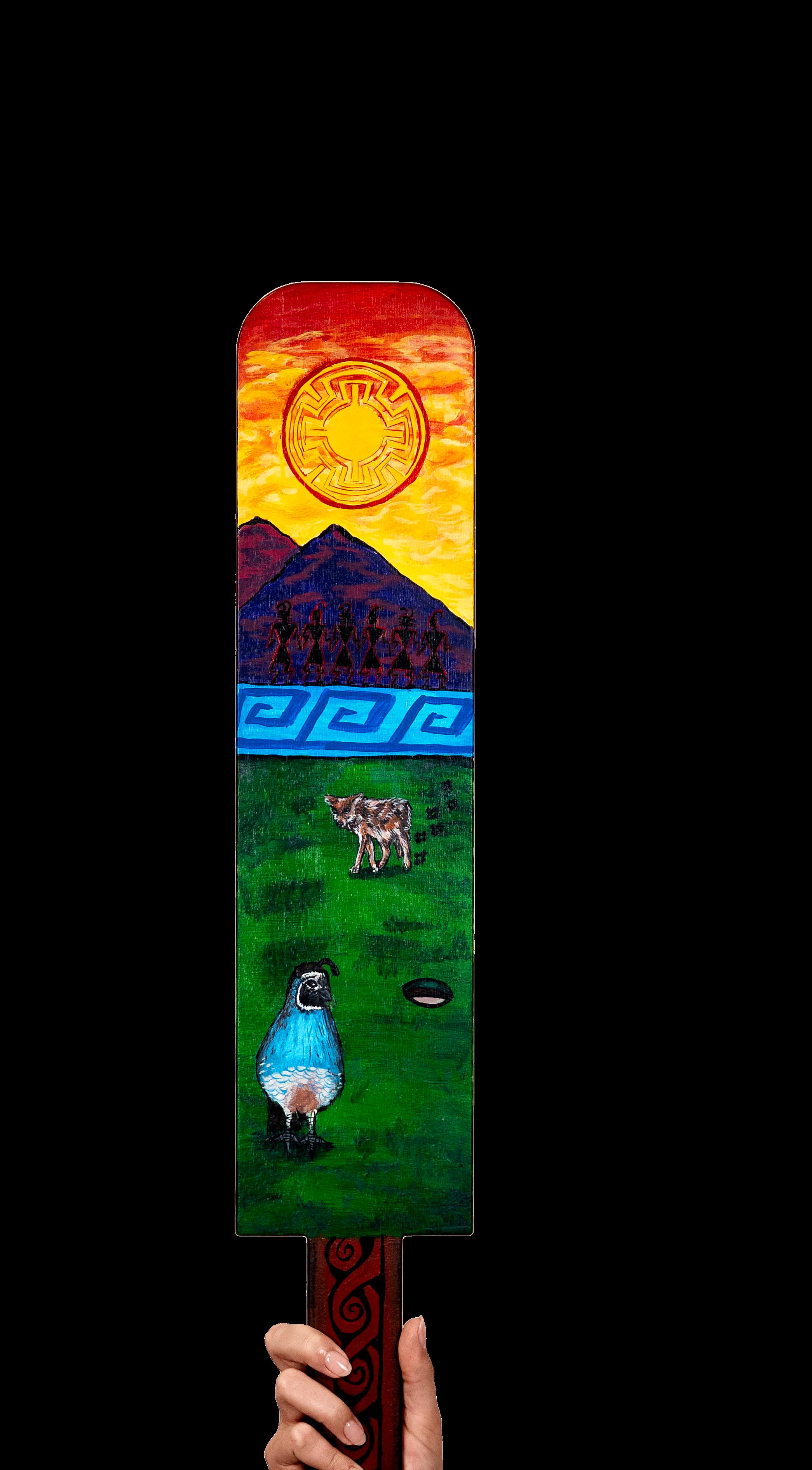
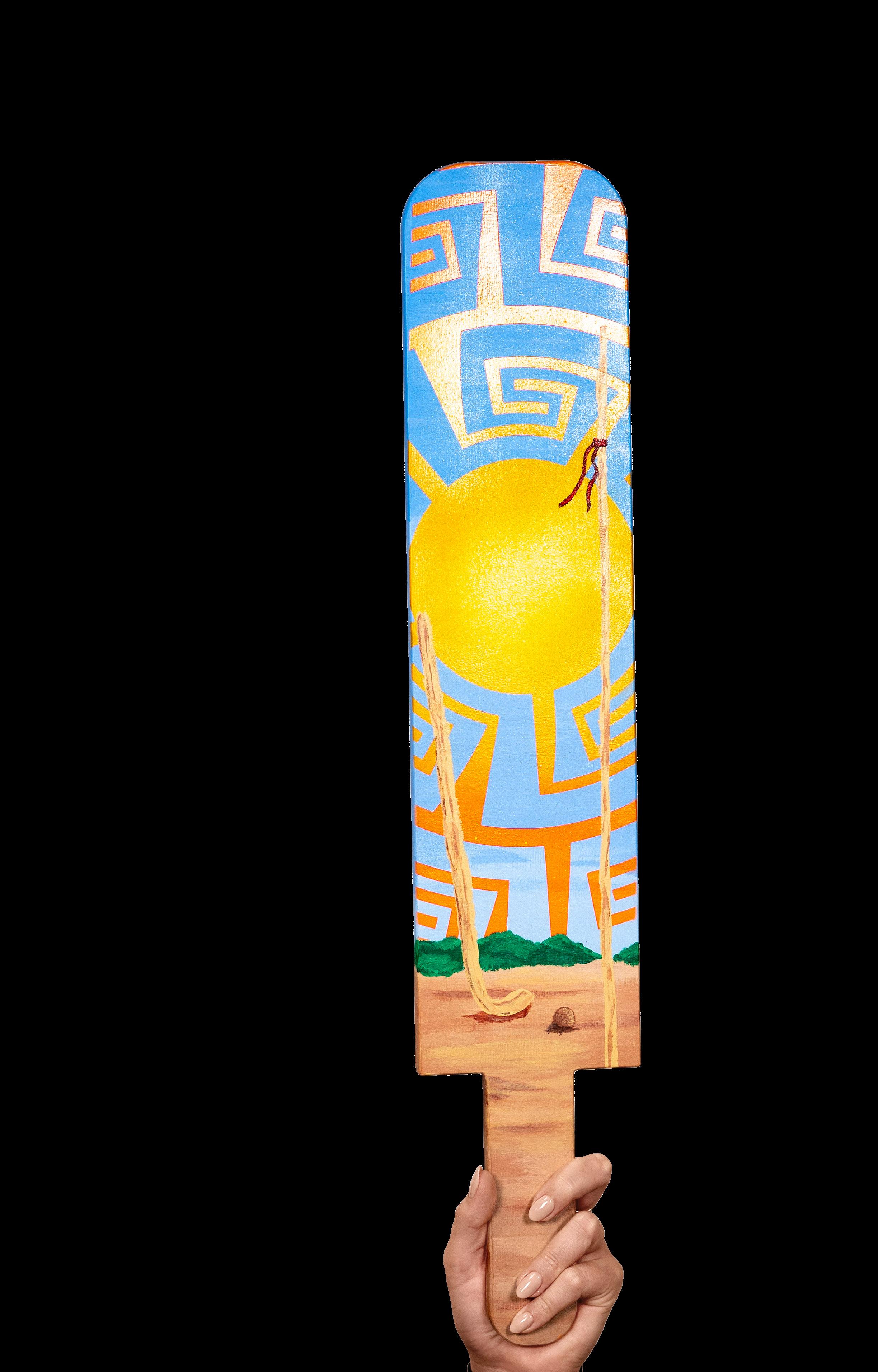
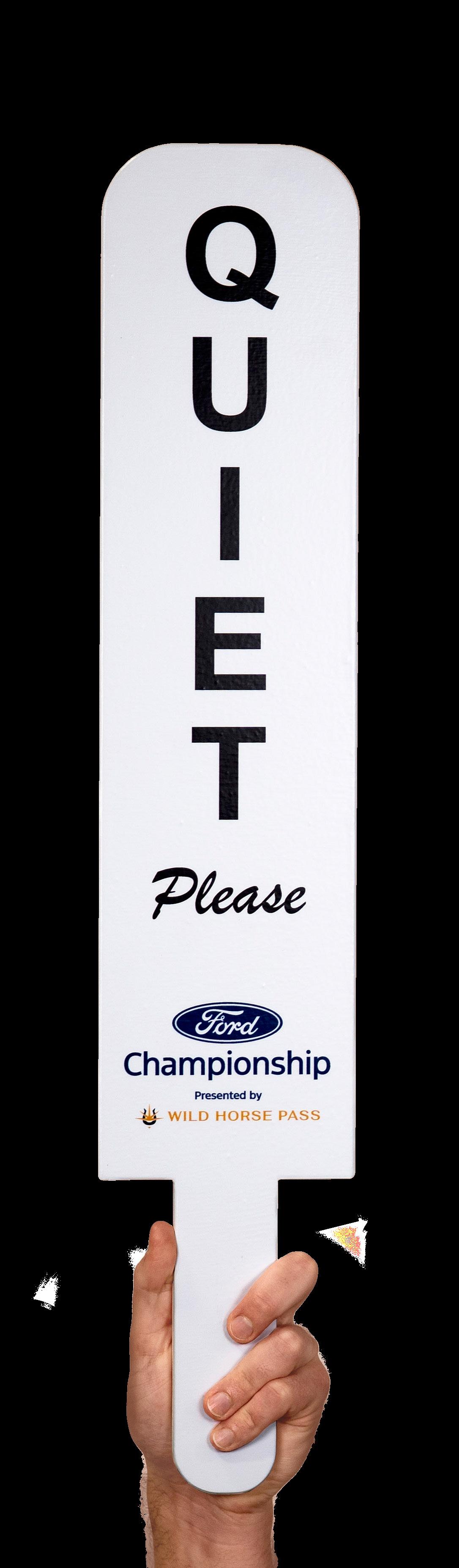
Quiet Sign artwork by artists and Gila River Indian Community members Christopher Murphy (left paddle) and Jaime Jackson (right paddle).
NEW BEGINNINGS
February always feels like a new beginning. The calendar is fresh, the pace of the holidays has settled, and many of us are thinking about what we want to achieve in the year ahead. In golf, that can mean more than just chasing better scores — it’s an opportunity to set intentions for how we want to play, grow and enjoy the game.
Maybe it’s trying something new, challenging yourself in a different way or simply making time to play more often. Whatever your goals, this is the perfect time to focus on bringing them to life.
At AZ GOLF, we’re here to help make that possible. Our work is guided by the belief that golf is at its best when it’s
centered on the people who play it. We want to support you in setting and reaching your goals, and in making the game an enjoyable part of your year.
Most importantly, golf should bring you joy. As you step into the season ahead, I hope your rounds are energizing, rewarding and full of the experiences you’re looking forward to most.
Here’s to a year of great golf.

Catherine Carmignani

2025 Players of the Year
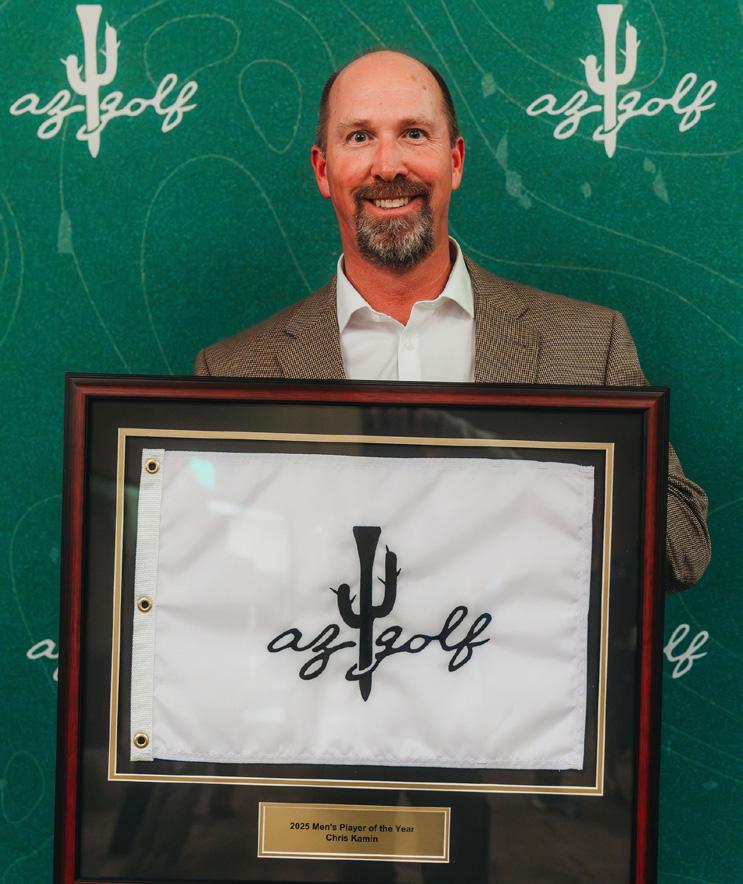
For the fourth year in a row, Chris Kamin took home the Open Division Player of the Year award. Besting the second place finisher by more than 400 points, Kamin’s qualifications included playing in nine AZ GOLF events, winning the Southern Amateur Open Division and finishing second in the Arizona MidAmateur Championship and Roy Tatum Best Ball.
U.S. Amateur Four-Ball comes to AZ
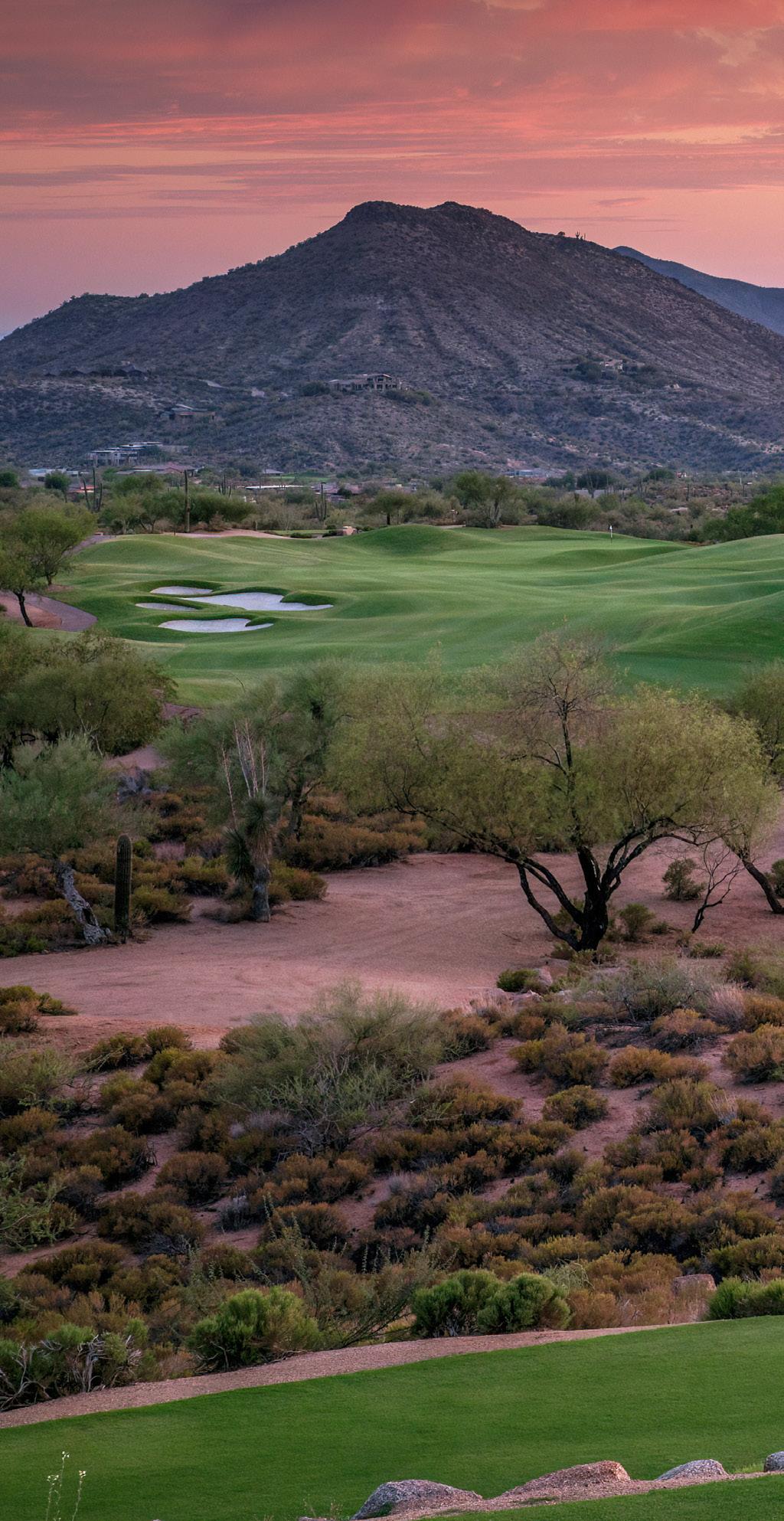
The ninth annual U.S. Amateur Four-Ball Championship is heading to Arizona. The USGA event, which debuted in 2018, will be played at Desert Mountain Club’s Outlaw and Cochise courses
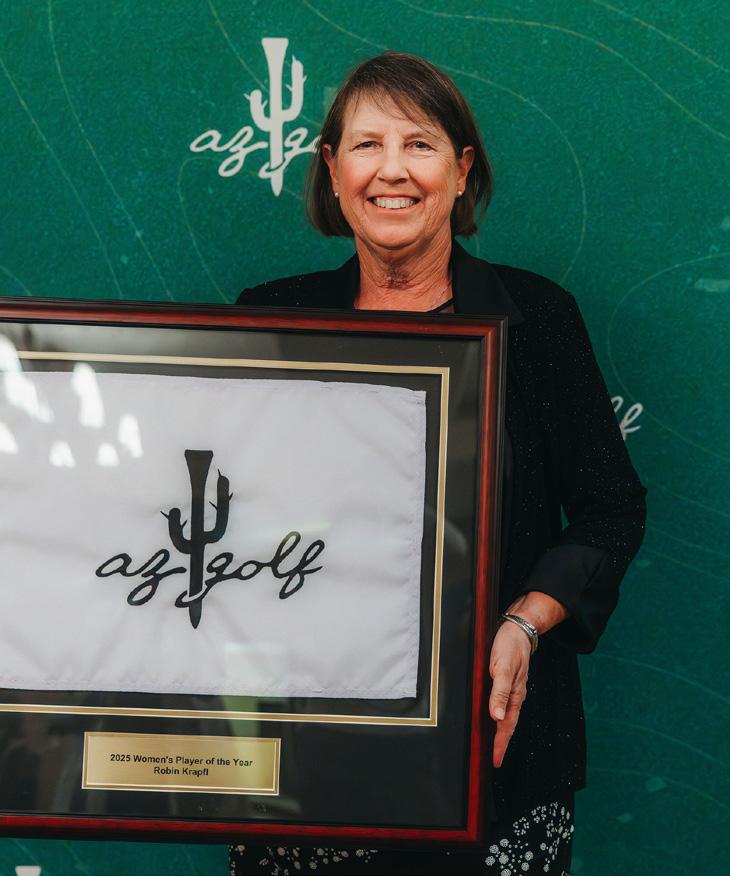
On the women’s side, Robin Krapfl earned her spot at the top of the Women’s and Senior Women’s Divisions with a 2025 Women’s Scotch Play win, and finishing runner-up at the Women’s Mid-Amateur, Women’s Partner Tournament and Women’s Season Opener.
ADDITIONAL PLAYER OF THE YEAR WINNERS:
MEN’S SENIOR | Brad Wayment
MEN’S LEGENDS | Marc Apps
CO-WOMEN’S SENIOR | Leigh Klasse & Robin Krapfl
MAYFAIR AWARD (Lowest Weighted Tournament Scoring Average) | Cody Massa (68.38)
May 16-20 in Scottsdale. The field list features numerous Arizona golfers, including the 2024 U.S. Amateur FourBall Champions, Brain Blanchard and Sam Engel, plus Drew Kittleson and Drew Stoltz, the 2022 and 2023 U.S. Amateur Four-Ball runners-up. Desert Mountain Club previously hosted the 1999 U.S. Senior Women’s Amateur Championship and four Charles Schwab Cup Championships, among other premier events.
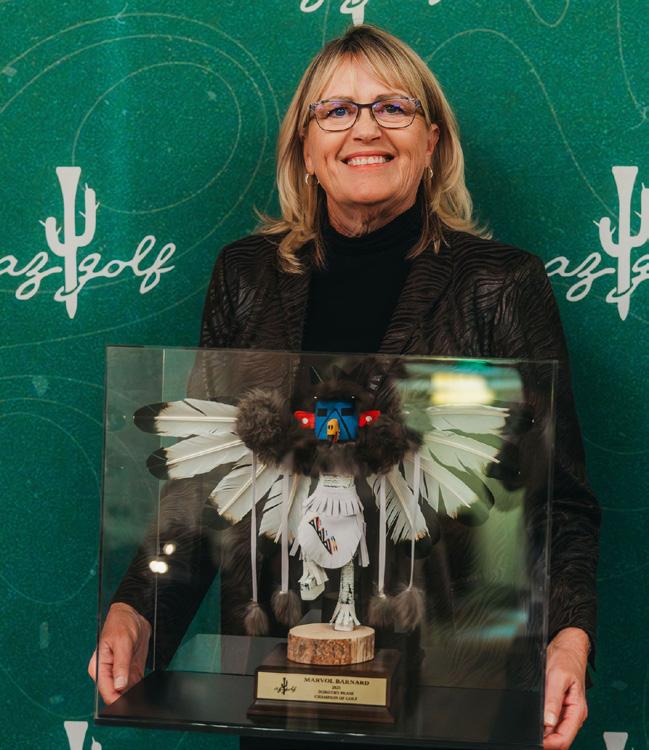
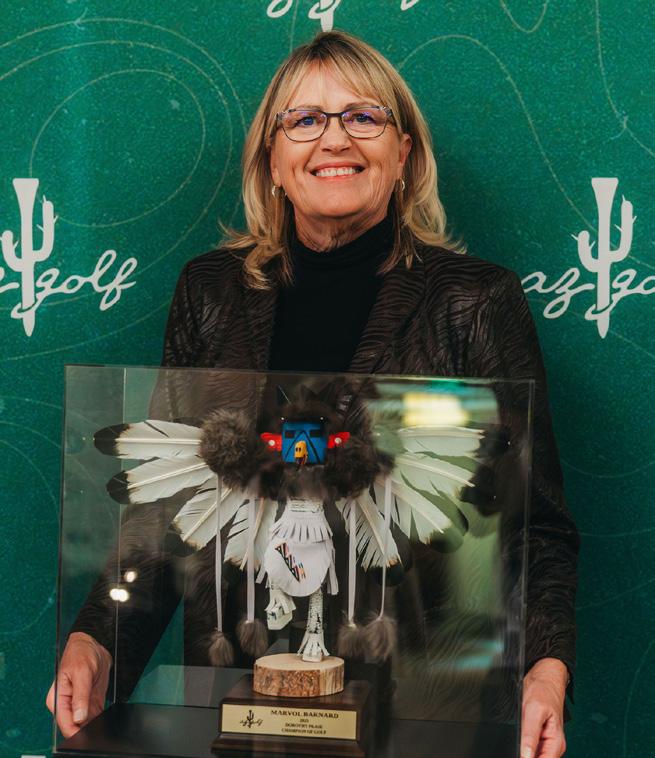
Updegraff and Pease Award Honorees
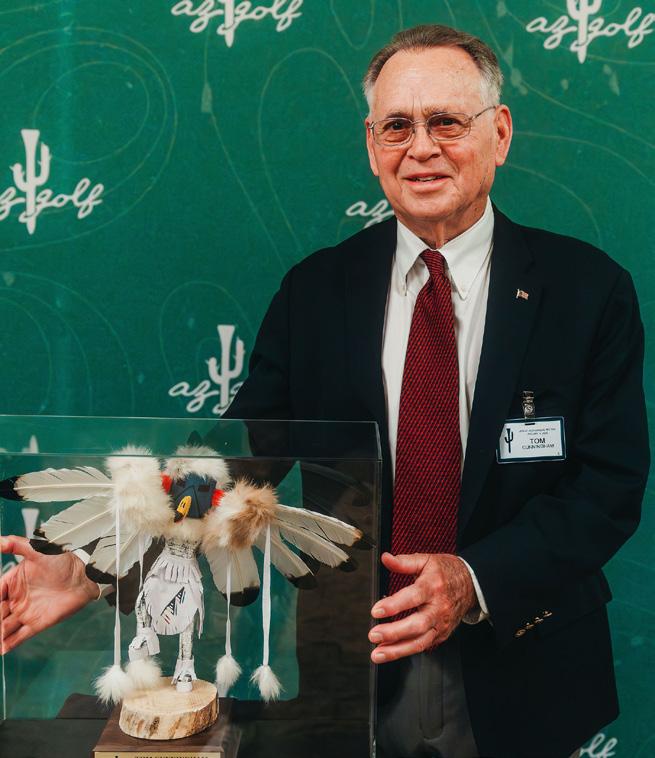
In mid-January, two integral members of the Arizona golf community received the Dr. Ed Updegraff and Dorothy Pease Champion of Golf Awards.
Tom Cunningham, former executive director of the Junior Golf Association of Arizona and a Phoenix Thunderbird, received the Updegraff Award — AZ GOLF’s highest honor — given to individuals who exemplify the “spirit of the game.”
Marvol Barnard, director of instruction at Country Club of Green Valley and dual member of the LPGA and PGA of America, received the Dorothy Pease Champion of Golf Award. The award is given to an individual who has advanced the game of golf for women.
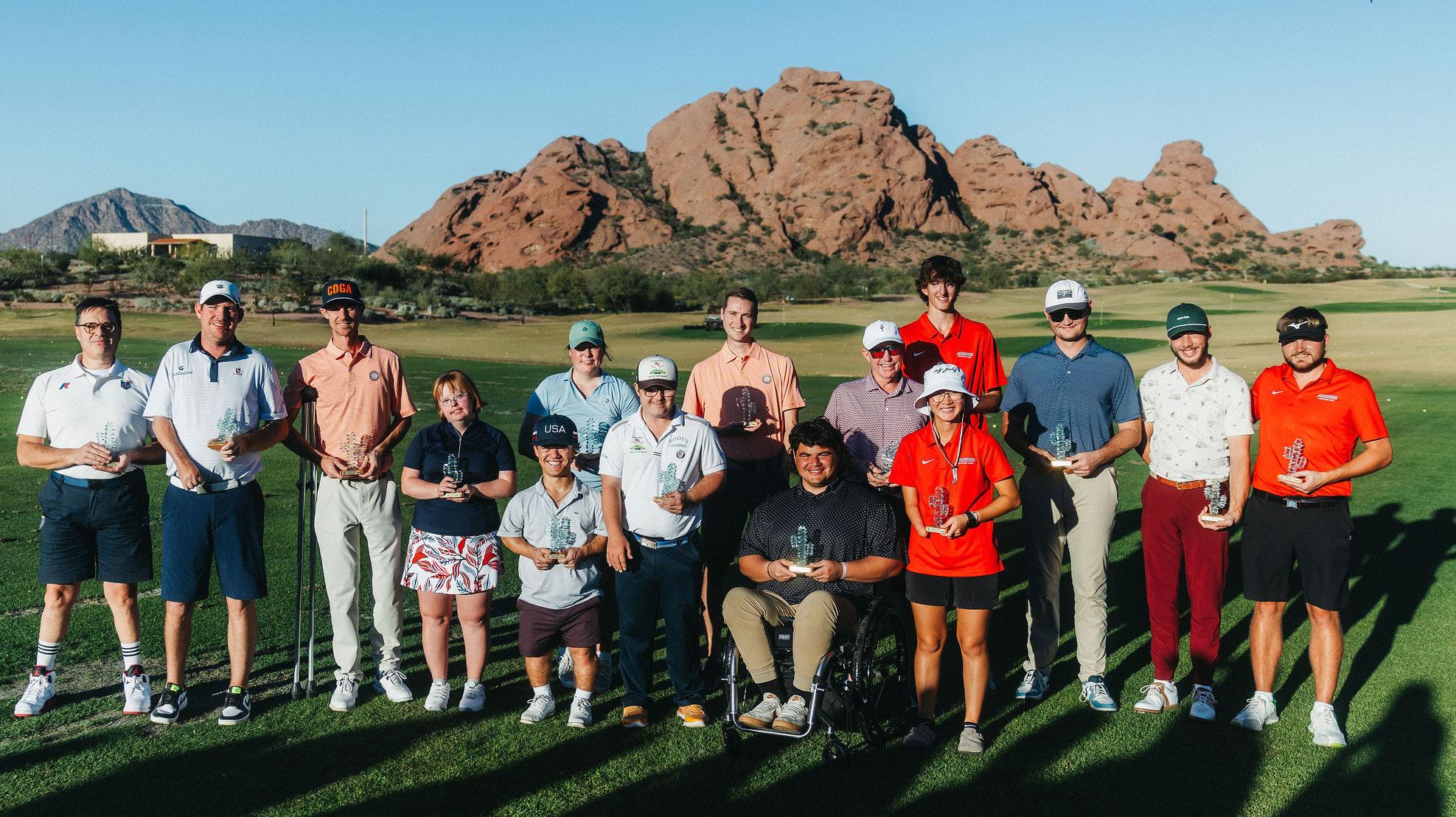
Adaptive Open
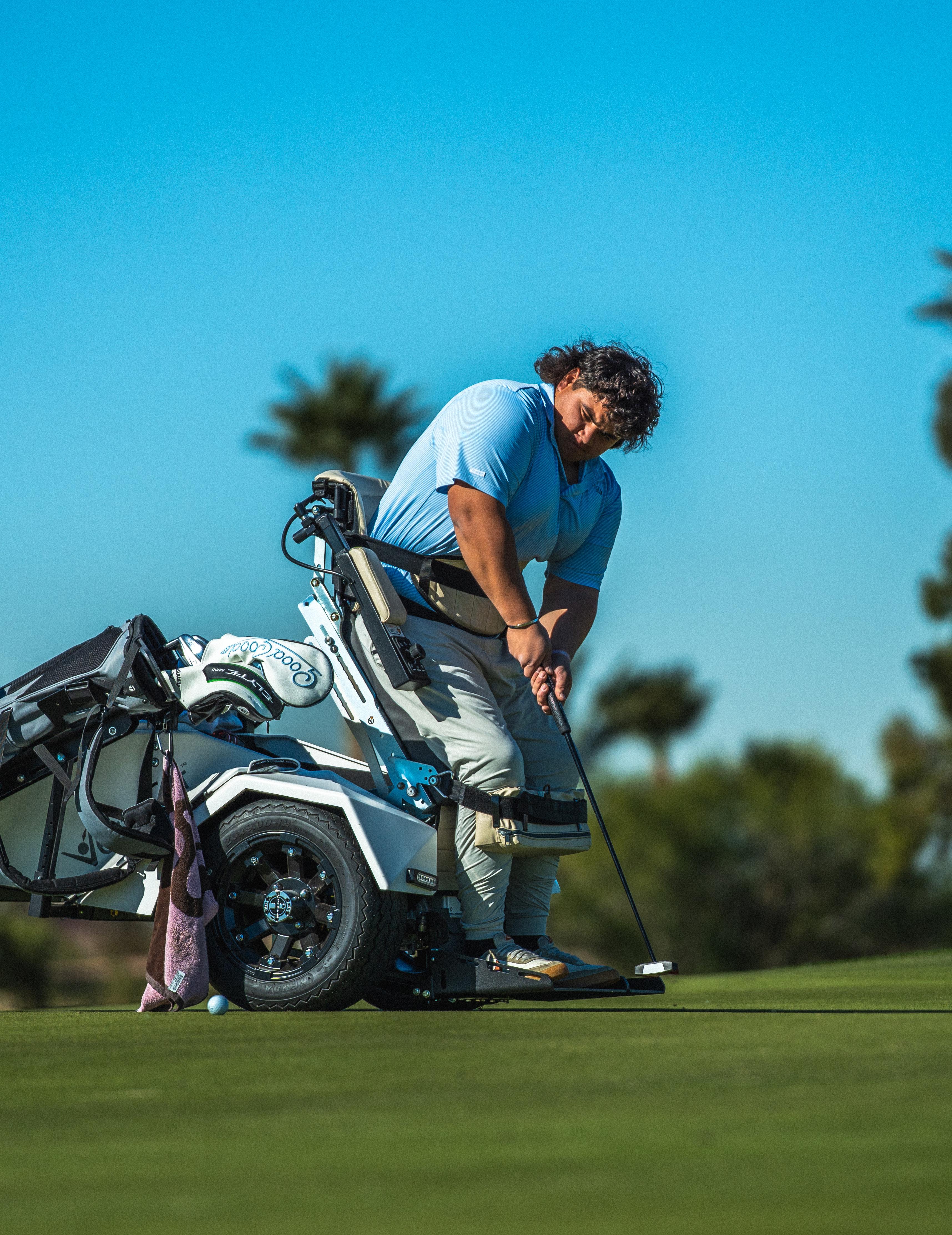
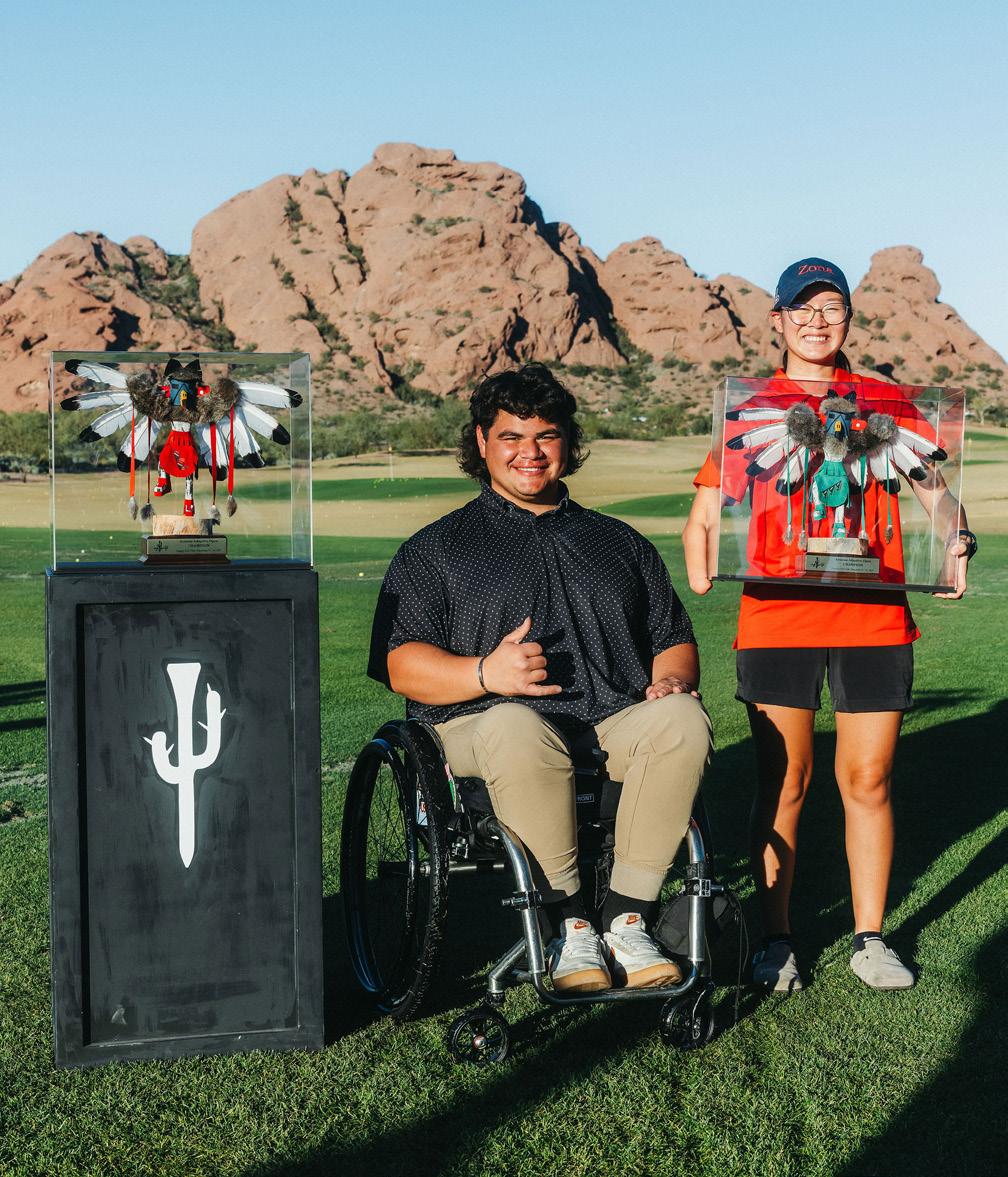
In its second year, the Arizona Adaptive Open proved the adaptive golf world is growing and evolving rapidly. From December 8-10, Papago Golf Club in Phoenix hosted 60 competitors from 23 states and three countries. The players competed in 15 different impairment categories, with Max Togisala (Seated) and Sophia Howard (Arm-Assisted) taking home their own Kachina trophies and the overall Men’s and Women’s titles.
2026 Event Schedule
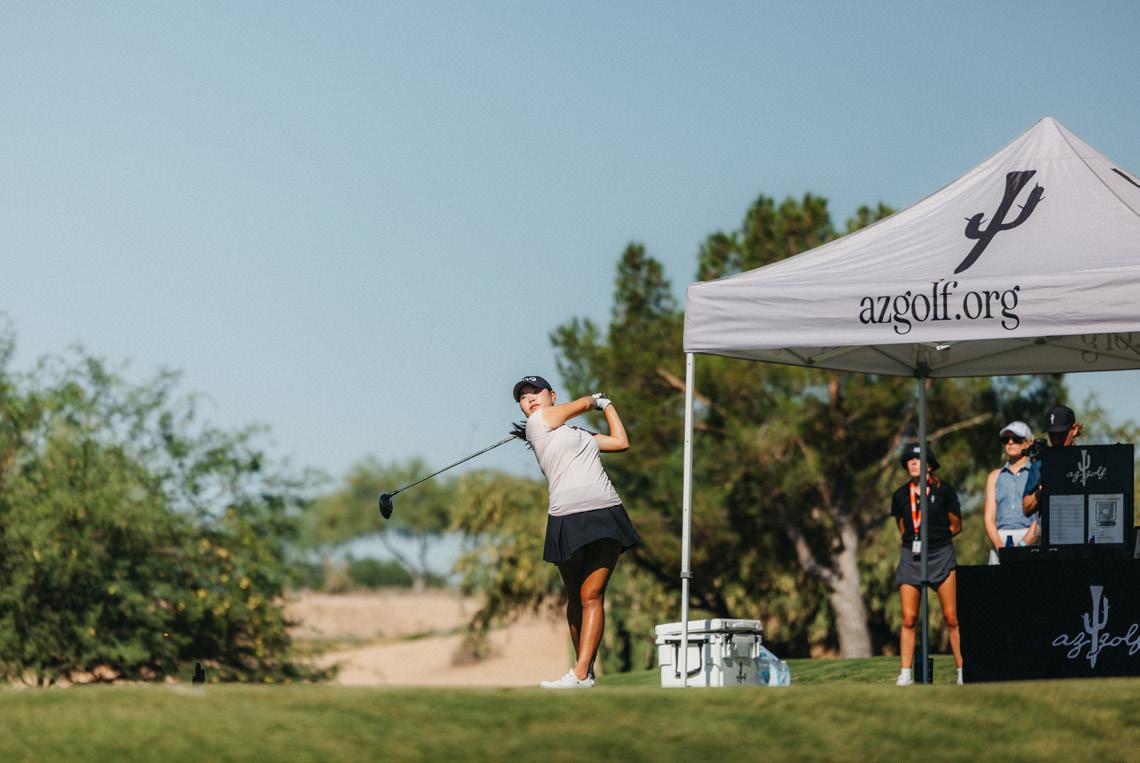
As winter comes to a close, AZ GOLF’s event season is beginning to ramp up with competitive and social events on the horizon. Upcoming championships include the 86th Southern Amateur, 9th AGA Championship and the 2026 Arizona Women’s Mid-Amateur Championship. For the current schedule, including One-Day Series and Scramble Days events, visit azgolf.org/play-golf.
Member Benefits Locker Room
Calling all members! Be sure to familiarize yourself with the AZ GOLF Member Benefits Locker Room. With AZ GOLF Savings, members receive deals on tech, movies, apparel, furniture, beauty products, gym memberships, theme park tickets, hotel stays, car rentals, flights and more! Members also have access to $20 off when spending $100 or more at Van’s Golf Shops.
Log into the Member Benefits Locker Room at azgolf.org/ locker-room to explore the benefits.


Dreams Desert
BY BARRY CRONIN
A native of Chicago’s North Side, Barry Cronin is the editor of Chicago District Golfer magazine.
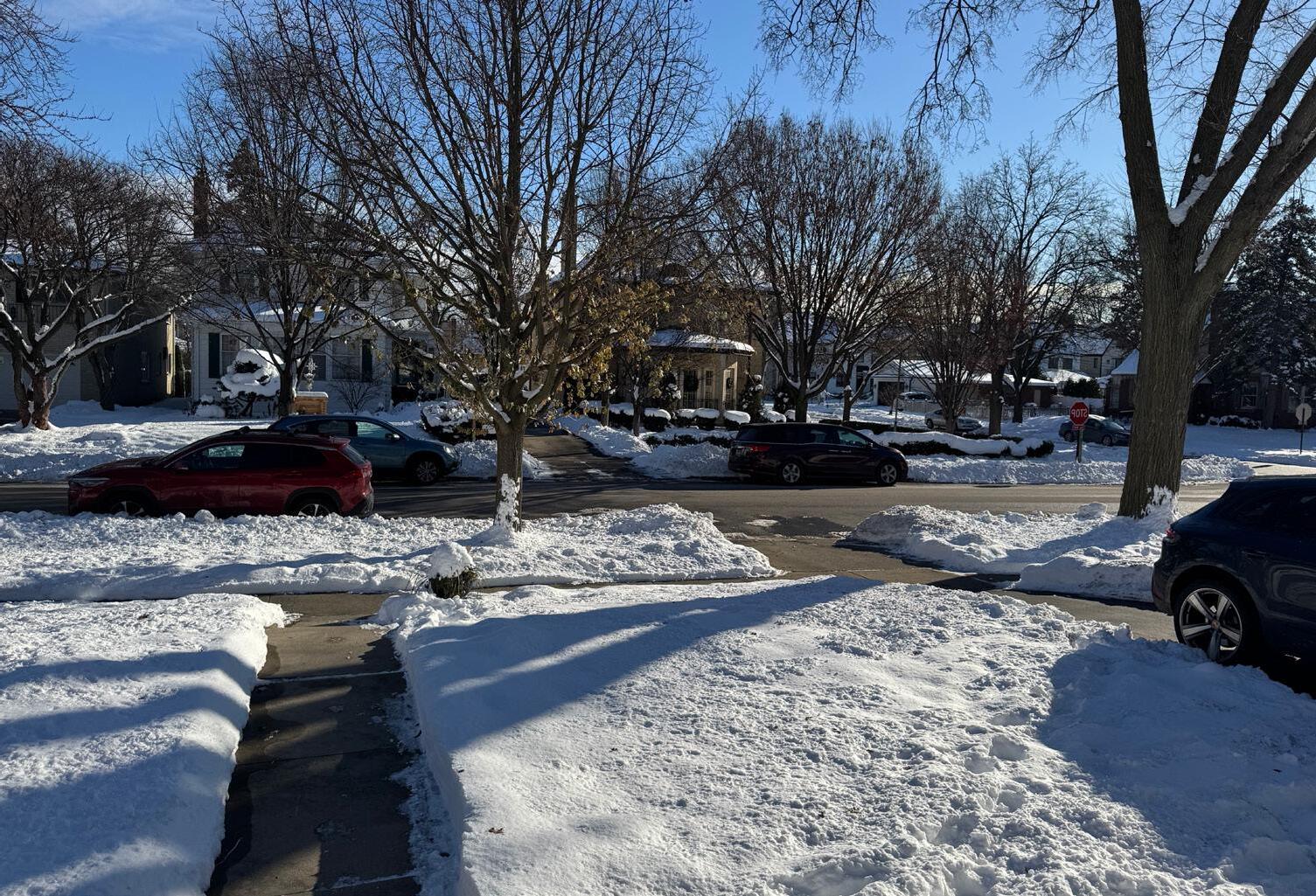
Here I sit in a Chicago suburb staring out the picture window in my living room. A foot of snow has accumulated over the last couple of weeks. It lies out there peacefully, no dirty tire tracks or exhaustbelching vehicles to turn it to slush. I look with pride at the usable driveway and walkable sidewalk out front. Each square foot has been meticulously cleared of snow by me: master snowblower, hand-crafted snow removal barista (i.e. shoveler), Zorro-level broomsman.
I won’t complain about the temperature. Wait. Yes I will! A low of minus 1, a high of 8, with a “real feel” temperature of 6 below thanks to the wind. Fortunately
the vision of warmer climes is never far away. TV and social media blare the joys of Arizona, Florida, Mexico and various islands. My pick? The desert. I love it, and the path there was blazed decades ago by some of my fellow Midwesterners.
TRENDSETTERS
Namely, the Chicago Cubs. Did you know that 20 years after inheriting the team from his dad, chewing gum czar William Wrigley, Jr., Philip K. Wrigley set eyes on Mesa in 1952? The Cubs had previously trained on Catalina Island, a one-hour ferry ride southwest of Los Angeles. A nice place for the owners to hang, but not exactly fan accessible. By the time the dust settled after World War II, P.K. decided to move spring training operations to Arizona, where the Cubs joined the New York Giants and the Bill Veeck-owned Cleveland Guardians
(in 1947, the Guardians were the first team to train in Arizona). Wrigley’s old team still trains in Mesa at Sloan Park. My bottom-feeding Chicago White Sox share a facility in Glendale with two-time defending world champion Dodgers (but little else). Wisconsinites can catch their Brewers in Phoenix, while Ohioans can head to Goodyear where the Reds and Guardians set up shop each spring.
It’s not only baseball that has drawn us to the desert. There were jobs, too. Like at Motorola, the once-great electronics and cell phone giant founded outside Chicago in 1928. In the early ‘50s, searching for low humidity and low labor costs, the company moved various electronics divisions — and people — from Chicago to Phoenix. Employment reached 20,000 at one point. And don’t forget about Waste Management — known as WM since 2022 — the title sponsor of the Phoenix Open. It, too, was founded in Chicago — in 1893 — and followed a circuitous path to expanding its presence in the southwestern Sunbelt.
These days Phoenix, Scottsdale and the surrounding suburbs are booming, filled in part by many of my seasonal snowbirds who took permanent refuge from lousy winter weather. Together, the two cities welcome upwards of 30 million visitors a year, a big chunk from the Midwest; the economic impact is estimated to be $12 billion annually.
SONORAN SWINGS

PGA Tour veteran Kevin Streelman left behind snowy Midwest winters years ago Scottsdale,forwhere he can still get a taste of home at Portillo’s.
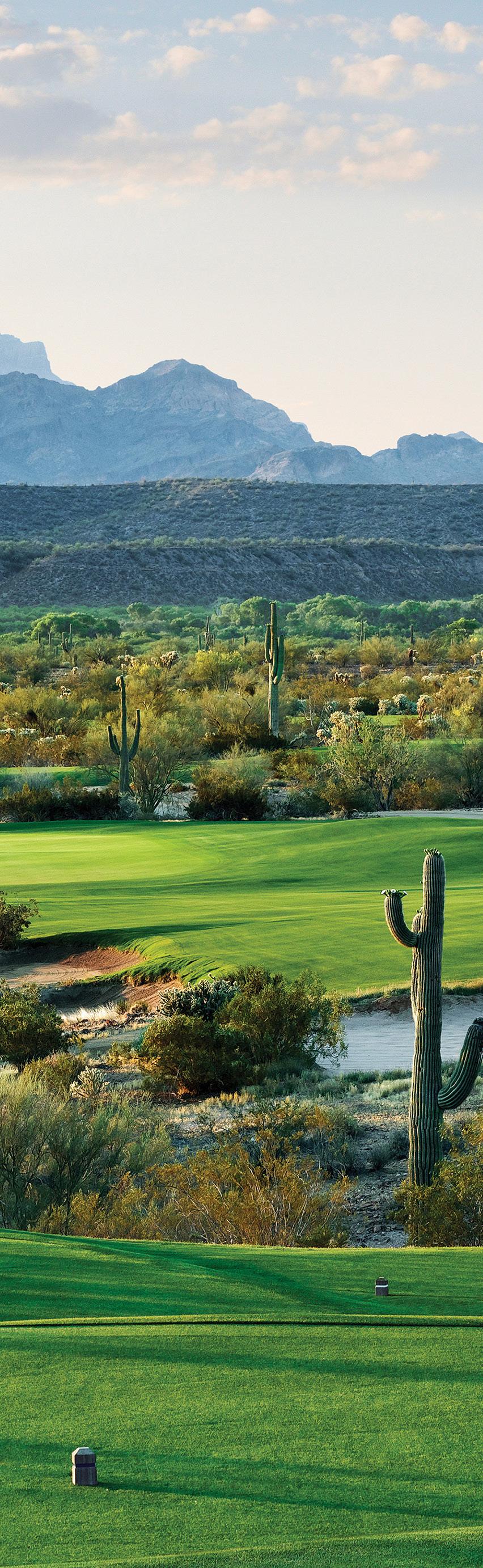
But now as I look at my snowy front yard, my mind drifts to another sport that supplies a good chunk of that impressive number: golf. Over the years, my dance card has included We-Ko-Pa Golf Club, Wickenburg Ranch Golf & Social Club, Troon North Golf Club, Wigwam Golf Club, Papago Golf Club, Talking Stick Golf Club and the very cool Short Course at Mountain Shadows Resort. There were too many bogeys and not enough birdies during my rounds at those unforgettable layouts, but the scenery and sunshine still warm my memories today. There are comforting touches out there, too. One of the fears we Chicagoans have of leaving our hometown is that the food elsewhere just won’t measure up. Fortunately, a couple of major touchstones of Chicago’s culinary superiority have landed in Scottsdale. After golf, I might bump into Wheaton native, longtime PGA Tour pro and Scottsdale resident Kevin Streelman at Portillo’s — a once humble hot dog stand that’s expanded to the desert — or Lou Malnati’s, a deep-dish pizza original that started on the city’s North Side and has followed its Chicago demographic southwest.
Great. Now I’m not only hungry, but I’m also checking my grip and looking for my golf travel bag. Time to research flights and once again follow my fellow Midwesterners to the best medicine in the country for curing the winter blues. Desert dreams, indeed.
USING TECHNOLOGY TO MANAGE WATER USAGE
BY ROBERT EARLE HOWELLS
“Is water a big concern for you?”
Ask an Arizona golf course superintendent that and you’ll likely get a polite chuckle and an answer that amounts to “Duh.”
Case in point: After politely chuckling, Rob Collins, director of greens and grounds at Paradise Valley Country Club in Phoenix, politely says, “Well, it occupies our minds daily.”
That’s a consistent refrain throughout the state, where course superintendents regard every drop of water as precious — and manage accordingly.
EVERY DROP
IS PRECIOUS
You might even say micromanage accordingly. Because an array of sophisticated technologies available to superintendents allows them to deliver exactly the right amount of water to a specific location at a specific time for the precisely appropriate duration.
MEASURING TOOLS
“Volumetric water content,” says Collins. “That’s the big change.”
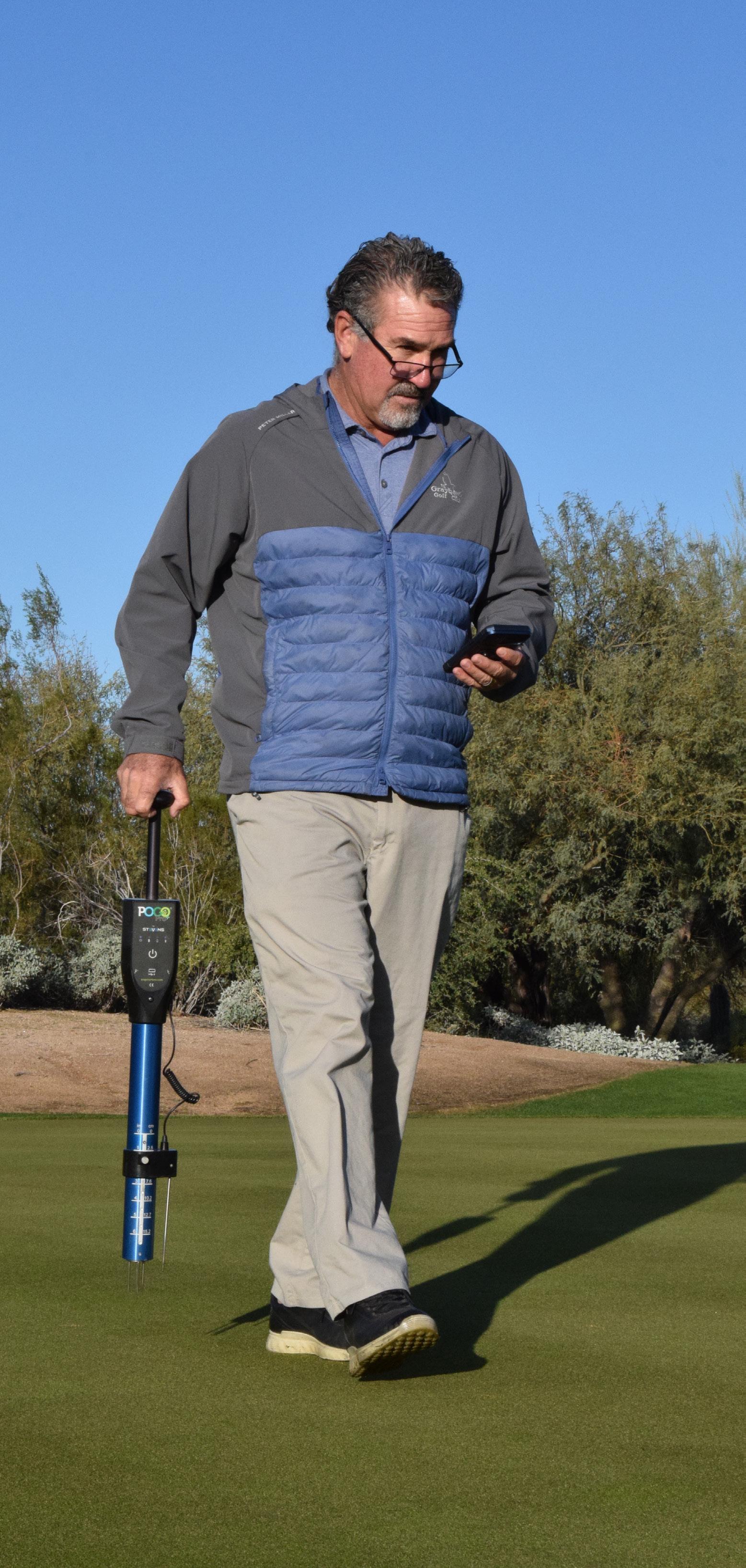
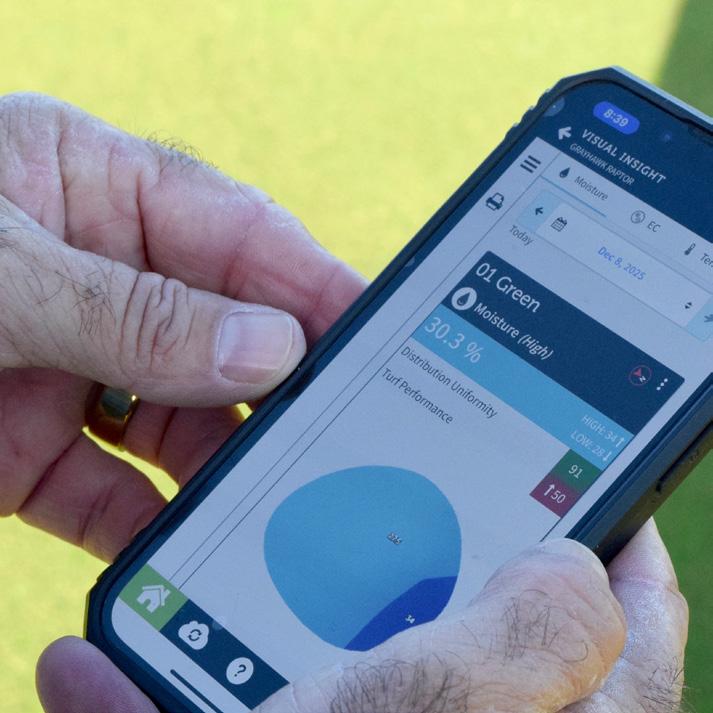
And for that piece of information, virtually every superintendent in the West uses moisture meters — handheld probes that give them instant readings on the precise moisture content of the soil at the root zone of the turf, as well
as salinity and temperature. Each meter utilizes software that then delivers the data to a computer, tablet or phone.
With moisture meters, Collins says, “We can reference moisture points and then manipulate individual stations. Turn off the wet ones, turn up the dry ones.” The pinpointed data “was a big epiphany for me,” he adds, “because it showed how dramatically soil in different locations varies.”
Considering that Paradise Valley CC has 2,500 sprinklers spread out over 94 acres — each head controllable individually — it’s a degree of micromanagement that can save huge amounts of water. “You can’t manage what you can’t measure,” adds Collins.
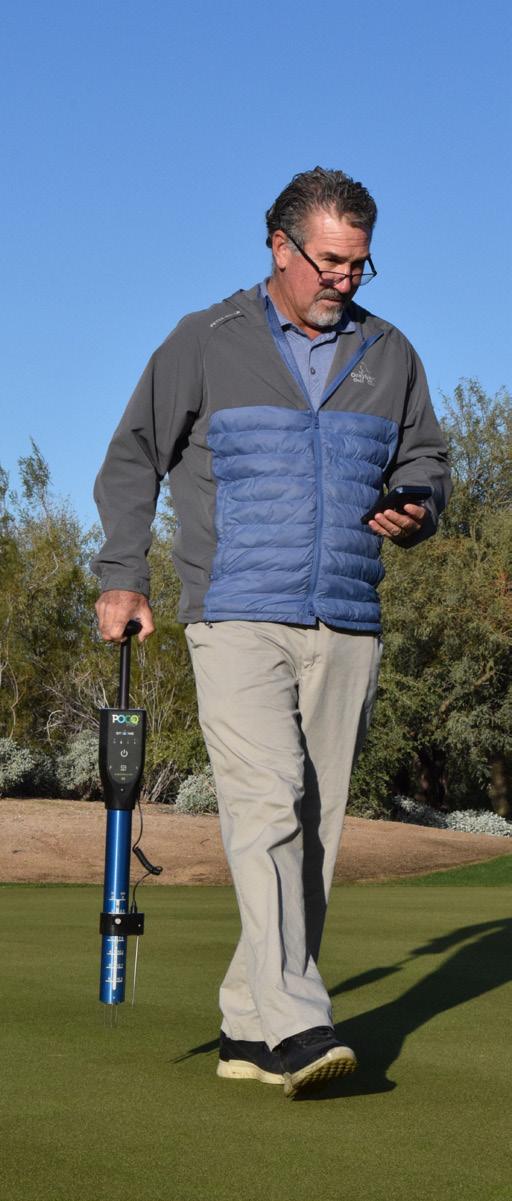
The ability of these meters to read salinity levels is no small feature, either. “At a golf course like ours where we use effluent water, it can be very high in salt,” says Ernie Pock (opposite page), director of agronomy at Grayhawk Golf Club in Scottsdale. “Salinity is the biggest deterrent for how
a plant can use moisture from the soil. We used to send soil samples to a lab and wait for results. Now we can instantly decide how much to water for the coming week or night.”
EVAPOTRANSPIRATION
Weather stations on golf courses are nothing new, but a key data point that they help deliver helps superintendents calculate more-informed irrigation strategies. It’s called “evapotranspiration” (ET) — the movement of water from the soil surface by way of evaporation and from plants through transpiration. ET is calculated by measuring solar radiation, air temperature, humidity, rainfall and wind — data that is run through a formula that, combined with moisture meters for “ground truth,” helps course managers fine-tune their watering schedules.
“ET is a great approach to replacing water lost in the turf over a period of time,” says Seth Miller, director of agronomy at Troon
Country Club in Scottsdale, “especially by irrigating areas with a ‘deep and infrequent’ mentality. Each sprinkler has a precipitation rate that is calculated on many variables and used with ET to crunch irrigation run times down to the second.”
SMARTER SPRINKLERS
None of those strategies are particularly effective without the ability to micro control individual sprinkler heads. Older systems were block systems that controlled several sprinklers at once.
“The flexibility for water management just wasn’t there,” says USGA Green Section consultant Brian Whitlark. “Now we have individual head control by way of software. You can look at an iPad and make adjustments while in the field.”
Miller touts his latest-andgreatest Rain Bird CirrusPRO™ system: “It’s map-based, overlaying our irrigation system on a satellite map with every sprinkler head or station, allowing instant adjustments from a tablet or phone. Making daily
adjustments helps provide great playing conditions and reduce overall water use.”
MICROWAVING FAIRWAYS
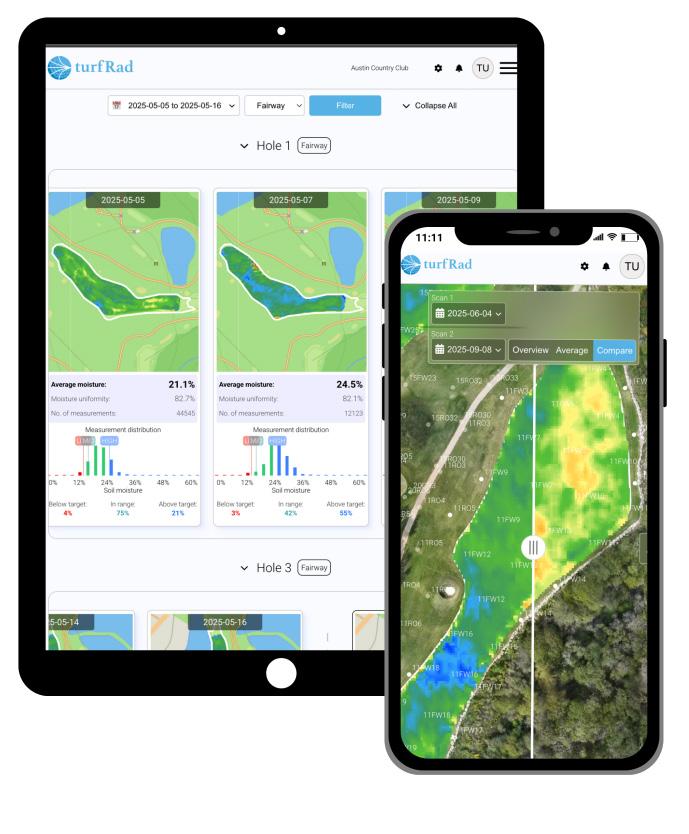
Handheld moisture meters may be a boon for water management but using them across 18 or more holes can be laborious. Enter turfRad, a system that uses sensors mounted to a mower or utility vehicle to measure soil moisture by way of naturally emitted microwaves. It can take seven readings a second and yield 10,000 snapshots on a single fairway. The system integrates with GPS to deliver volumetric water content data by location, which can then be used to generate a moisture map.
Rob Collins is an early adopter. “Where we were sampling three or four holes a day, we now can map the entire course. It definitely correlates to water savings.”
Collins notes that he still uses handheld meters on his greens. In other words, he micromanages every precious drop.

MAGNIFICENTMUNI
BY JOE PASSOV
TUCSON’S RANDOLPH
NORTH OOZES HISTORY AND CHARACTER IN THE HEART OF THE CITY
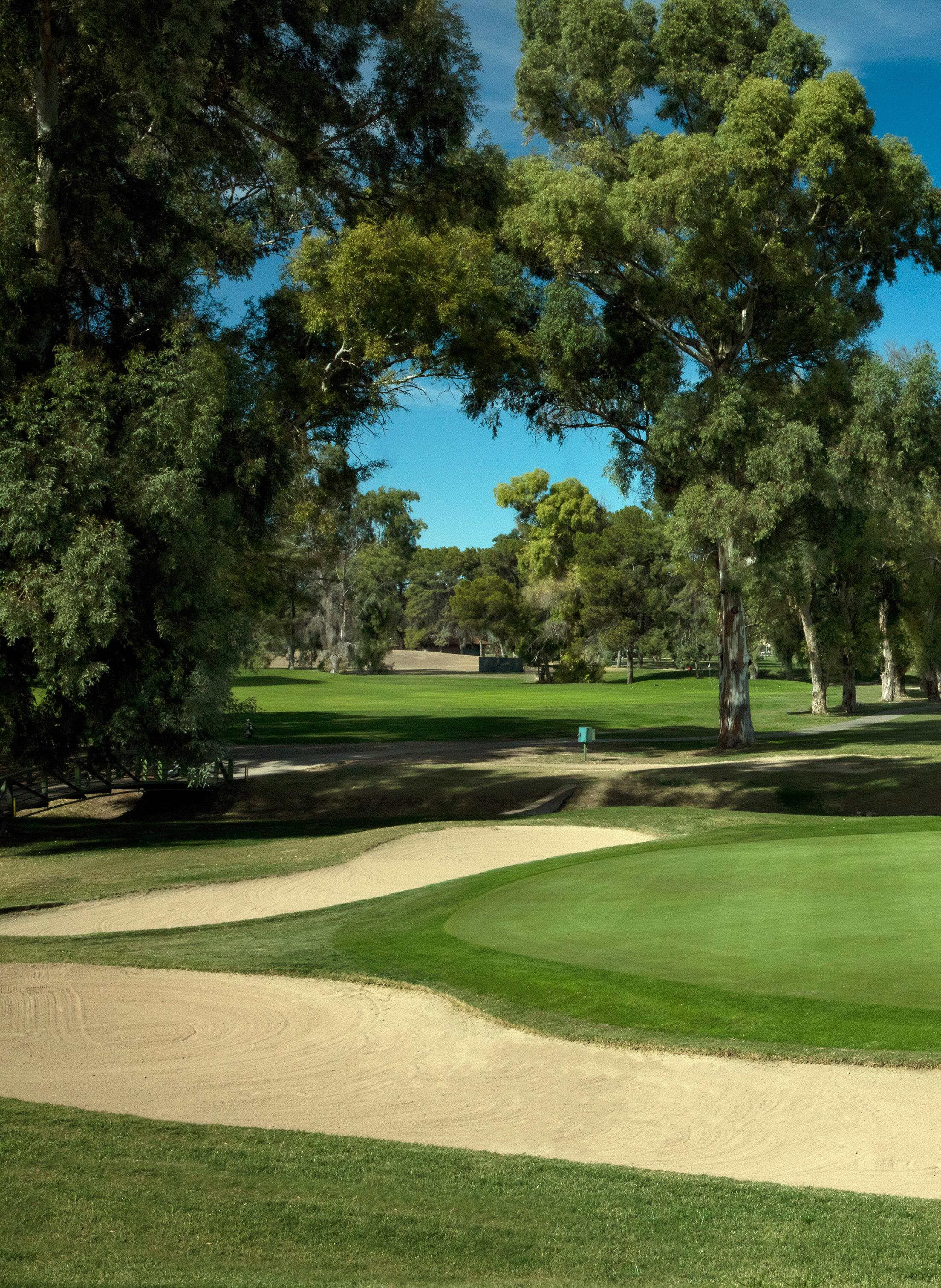
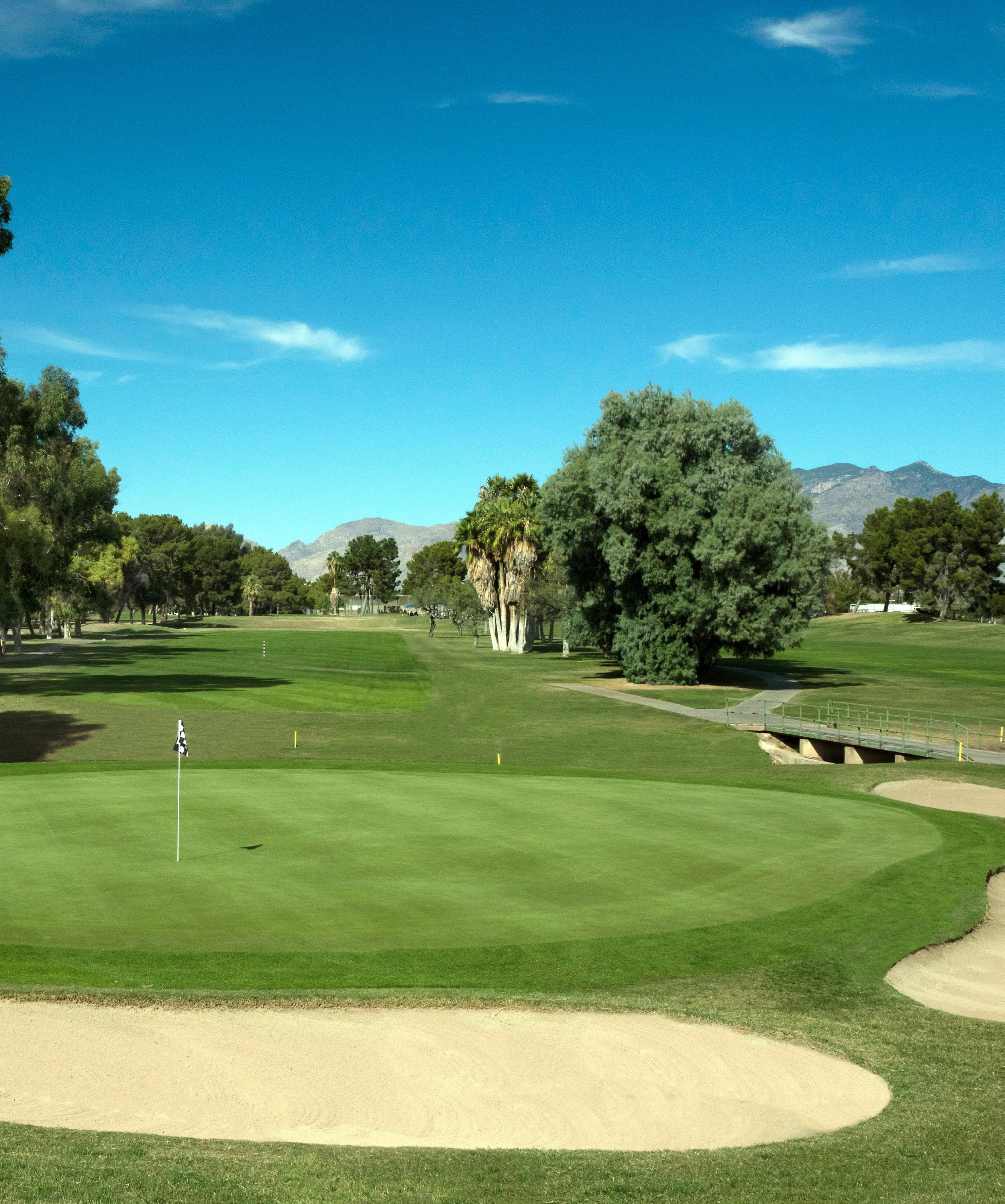
It’s a mystery for the ages: How does Tucson’s oldest golf course — a centrally situated, modestly priced municipal layout that has witnessed winners such as Tom Watson, Nancy Lopez and Johnny Miller — fly so far under the radar? Shake hands with century-old Randolph North, an urban oasis with a remarkable past. As it eases into its second hundred years of existence, the course puts on no airs. It serves the local citizenry and winter tourists with simple, admirable proficiency and consistency. Blessed with a superb architectural pedigree, an ideal location four miles east of downtown Tucson and an easily walkable, tree-lined layout, Randolph North is a low-key classic in every sense.
AN ILLUSTRIOUS PAST
“What’s unique about Randolph Park is that it held the PGA Tour, the LPGA Tour and the Senior Tour, but also hosted high school championships and beginners.”
— MIKE HAYES
Established in 1925, Randolph Park bore the name of local railroad tycoon and civic leader Epes Randolph, who passed away four years earlier. October 1926 saw the opening of an 18-hole golf course, called in its early years Tucson Municipal Golf Course at Randolph Park. Golfers forked over fifty cents to tackle the layout which consisted of a par-35 front nine and a par-37 back nine. What both nines lacked, however, was a single blade of grass.
For its first 10 years, Randolph Muni unfolded atop dirt fairways and oiled sand greens. In the 1920s in Arizona and elsewhere, golf without grass was not
uncommon, due to a lack of access to irrigation water. Such layouts were called “skinned” courses.
On October 31, 1936, golfers reveled in a happy Halloween treat: a fully grassed, redesigned Randolph Park course. Prolific Golden Age architect William P. “Billy” Bell remodeled and turfed the layout, via the expenditure of $41,000 in WPA funds. Green fees soared to 75 cents.
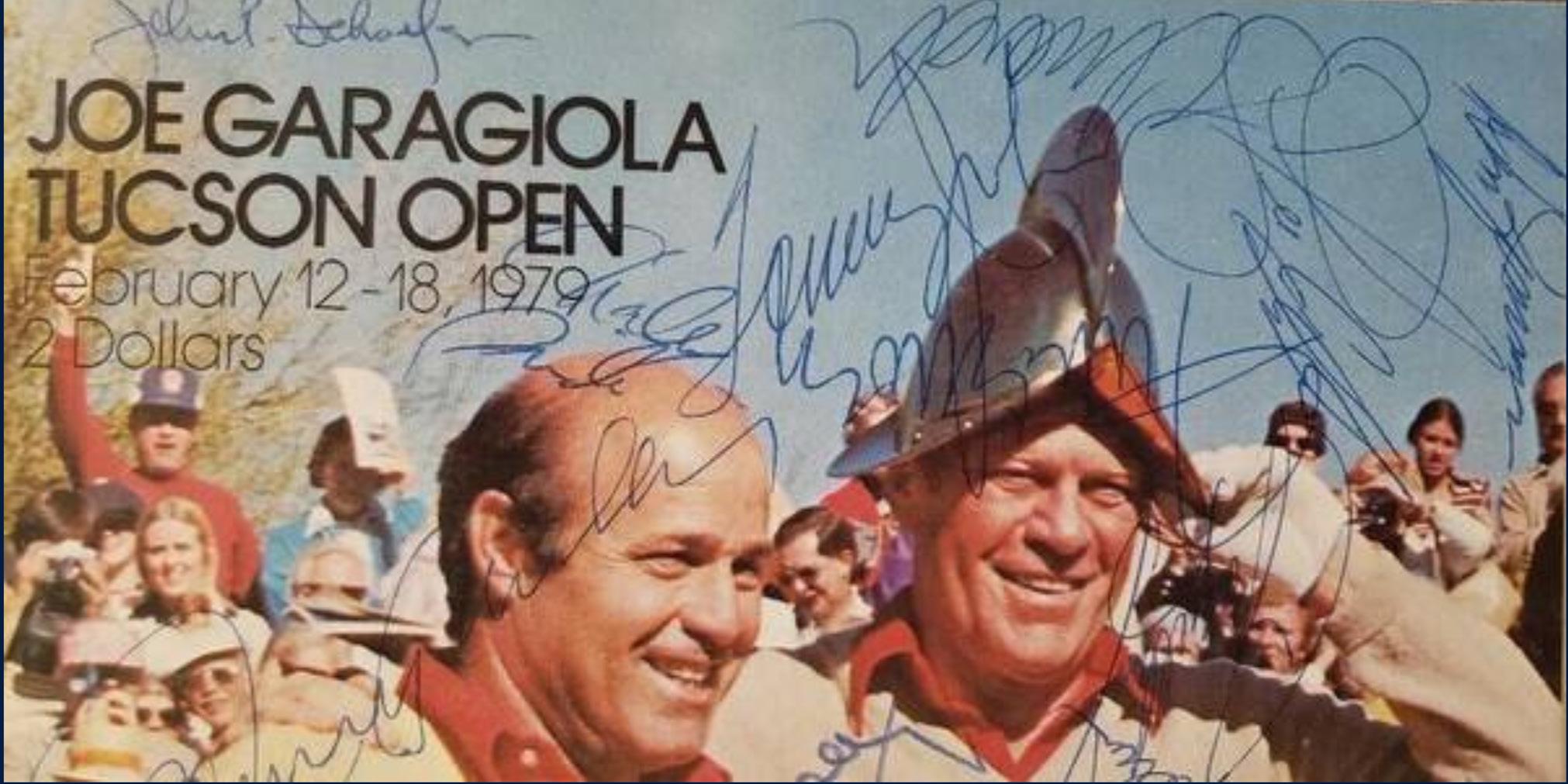
Fast forward 43 years. With Tucson National Golf Club — the Joe Garagiola-Tucson Open’s venue of 14 years —
closed for renovations, bumpy, low-profile muni Randolph North stepped up to host the pros for one year, 1979. Or so folks thought.
Randolph North proved to be a smash hit. An all-star cast gathered and performed. Lee Trevino tied for ninth. Curtis Stange tied for fifth. Defending champ and three-time major winner Tom Watson tied for second. No one could catch Bruce Lietzke, who went wire-
to-wire, posting 63-66-68-68 on the 6,708-yard, par-70 track to win by two. Randolph drew gigantic galleries all week. A star was born.
The tournament returned to Randolph in 1981, after PGA Tour Commissioner Deane Beman had enlisted Pete Dye to tweak four holes, mostly installing interior green contours and adding lakes in front of the ninth and 18th greens. Dye saved his greatest transformation for the 15th where he scrapped a nondescript short par 4 of 339 yards in exchange for a dramatic, water-guarded par 3. He also took the long

Opposite: A portion of the
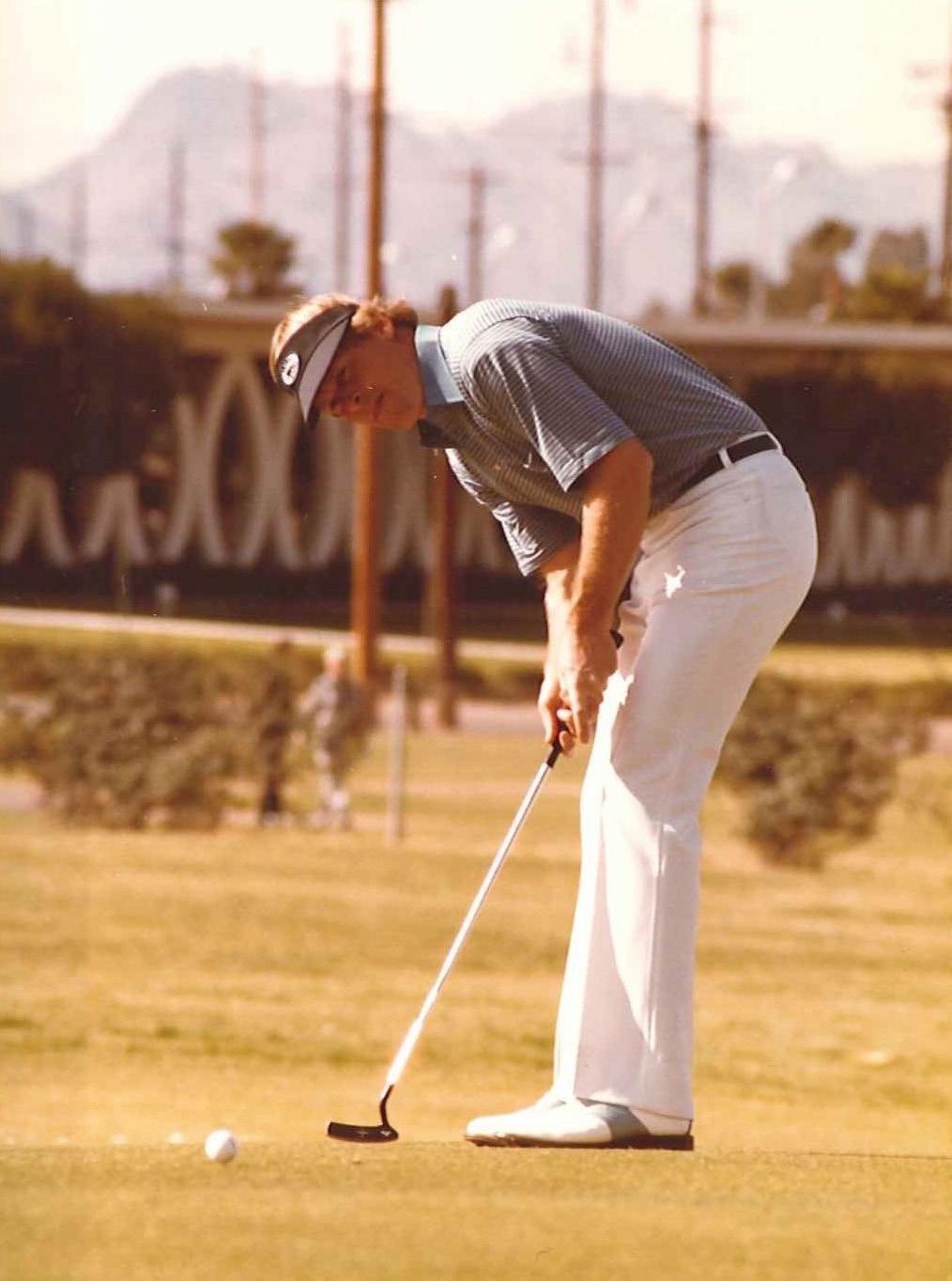
Left and above: Johnny
par-4 16th, extended the hole up the only hill on the course, and created a rugged 574-yard par 5.
Johnny Miller snagged a hugely popular win at Randolph in 1981 — his fourth triumph in Tucson. That same year, Nancy Lopez, the LPGA Tour’s most beloved superstar, took the inaugural Arizona Copper Classic. Other Randolph winners include Tom Watson, Juli Inkster and University of Arizona great Annika Sorenstam. If walking in famous footsteps appeals, you’ve come to the right place.
tournament program cover in 1979 when the PGA Tour first visited Randolph Park.
Miller won the Tucson Open four times, including in 1981 at Randolph Park.
From 1984-1986, Randolph hosted the Seiko-Tucson Match Play Championship, held with a concurrent Senior Tour event. The LPGA competed here from 1981-2002. The final PGA Tour go-around occurred in 1990, when the North shared hosting duties for the Northern Telecom Tucson Open. In the second round, David Frost blistered the par-72 layout with a course record that still stands, a 12-under-par 60.
“What’s unique about Randolph North is that it held the PGA Tour, the LPGA Tour and the Senior Tour, but also hosted high school championships and beginners,” says longtime Tucson Deputy Parks Director Mike Hayes, who also served as director of golf for the five Tucson City courses during that same period, 2000-2014. “It was good for beginners, yet it’s strong enough to hold a Tour event.”
A PARKLAND EXPEDITION
In February 1940, The Arizona Daily Star touted Randolph’s merits: “The course is studded with natural flora — cacti, mesquite, sagebrush, offering the visiting golfer a unique setting and enough natural hazards to test his mettle.” So what happened to that desert golf course? Eventually, the neighborhood expanded with residential and retail and the desert surrounds disappeared. Today, Randolph North is an arboreal oasis.
“This is Tucson’s version of New York’s Central Park,” says golf course architect Ken Kavanaugh, an area resident who redesigned Randolph’s younger South course into Dell Urich in 1996. “The park has every conceivable recreational amenity, including a baseball stadium, a zoo and tennis. What makes Randolph North distinctive is its parkland character. Every fairway is framed with stately eucalyptus, Aleppo pines and mesquites. It really is a getaway from the desert. You can take a walk in the park and golf your ball.”
To be sure, Randolph North isn’t a classic course in the same vein as Winged Foot, Merion or Pinehurst No. 2. Terrain is mostly flat, bunkers aren’t particularly penal and greens are generally ovals that slope back to front and which have shrunk considerably in recent years. Yet, classic
virtues cling to the course. It features easily accessible greento-tee connections, variety and strategic interest in the hole routing and recoverability options for all classes of golfers.
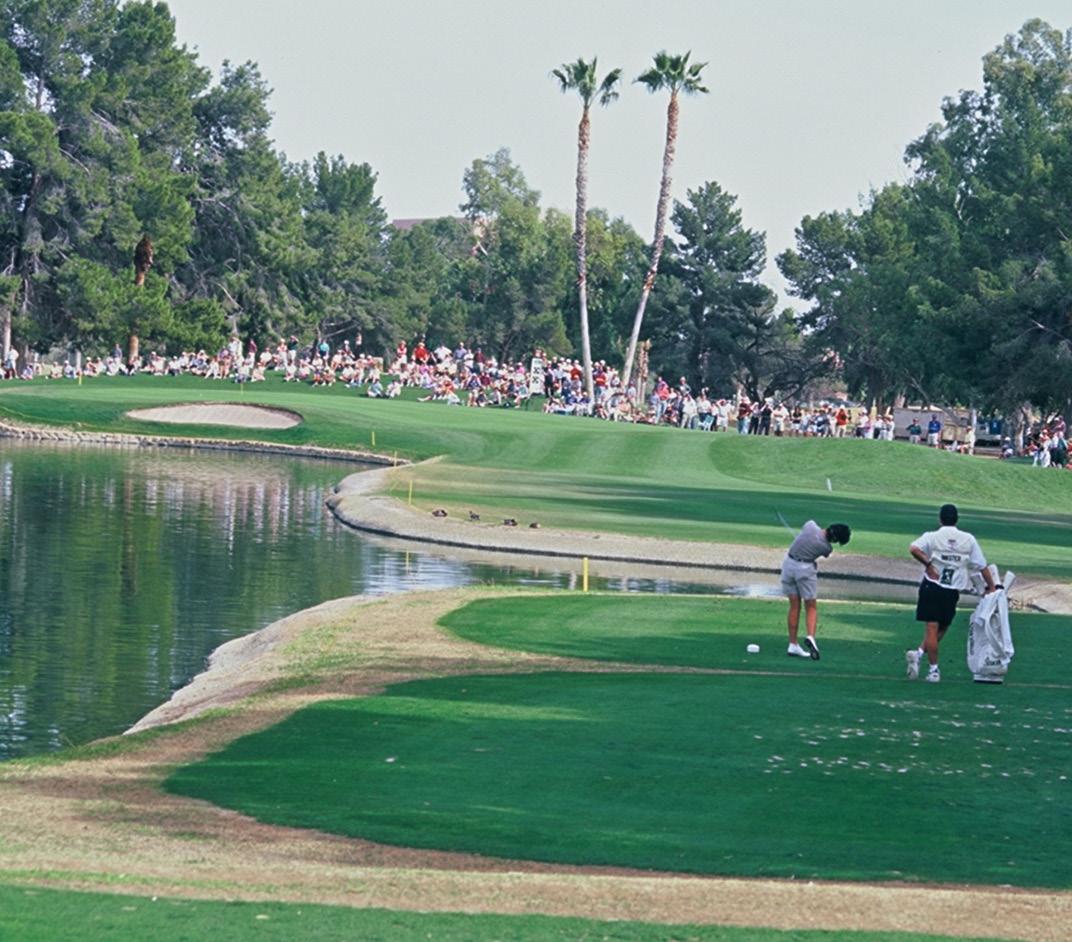
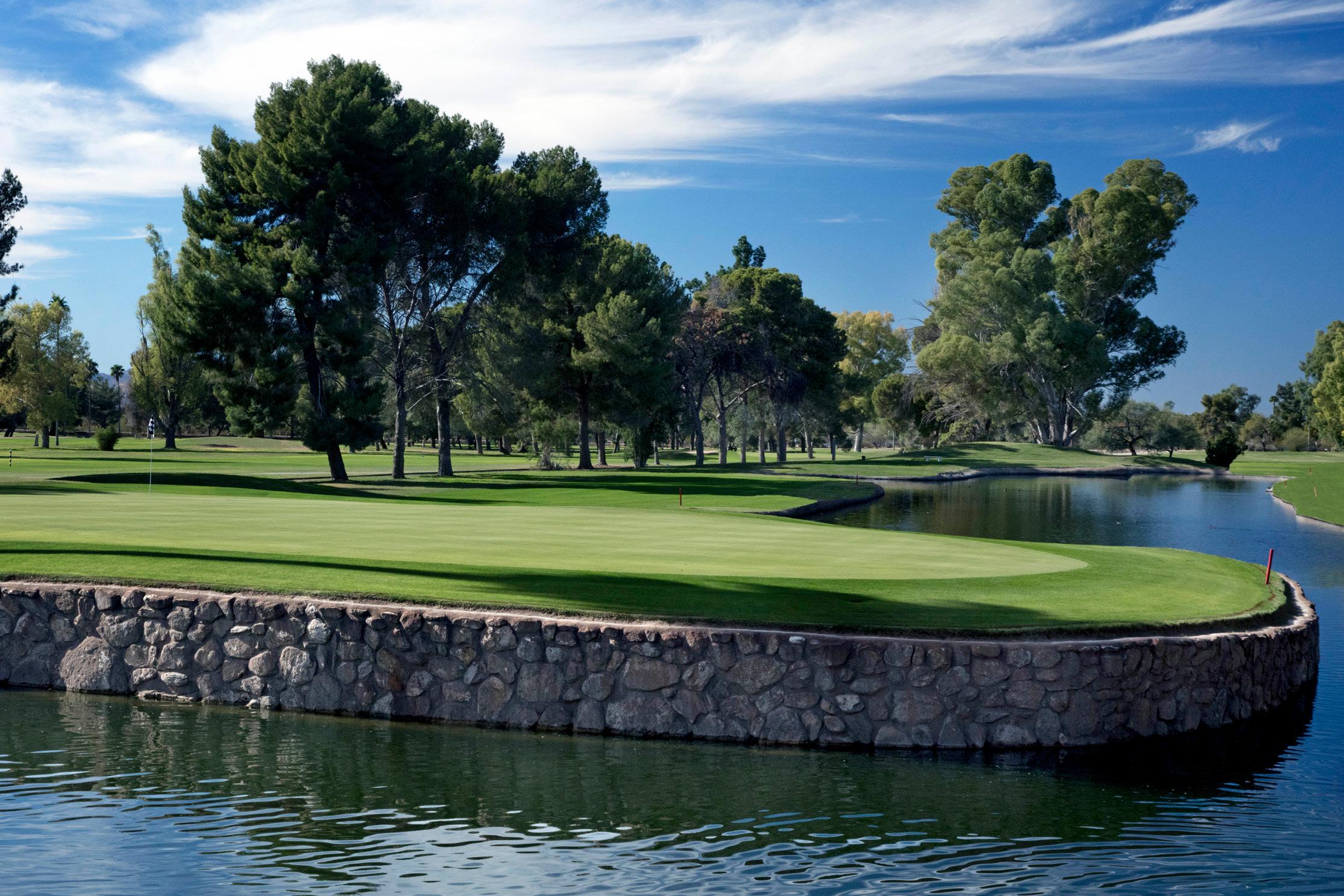
Memorable individual holes and course snapshots abound. Most striking is the Dye-influenced 15th. “From all the way back, it’s a very challenging hole,” says General Manager Brett Gilmore of the 193-yard par 3 that plays to a lake-guarded green. “It’s all carry, over water, with a big bunker in the front. The most challenging hole location is frontleft, because you have to deal with the bunker and the water.”
Kavanaugh, who first toured Randolph North in 1972 and
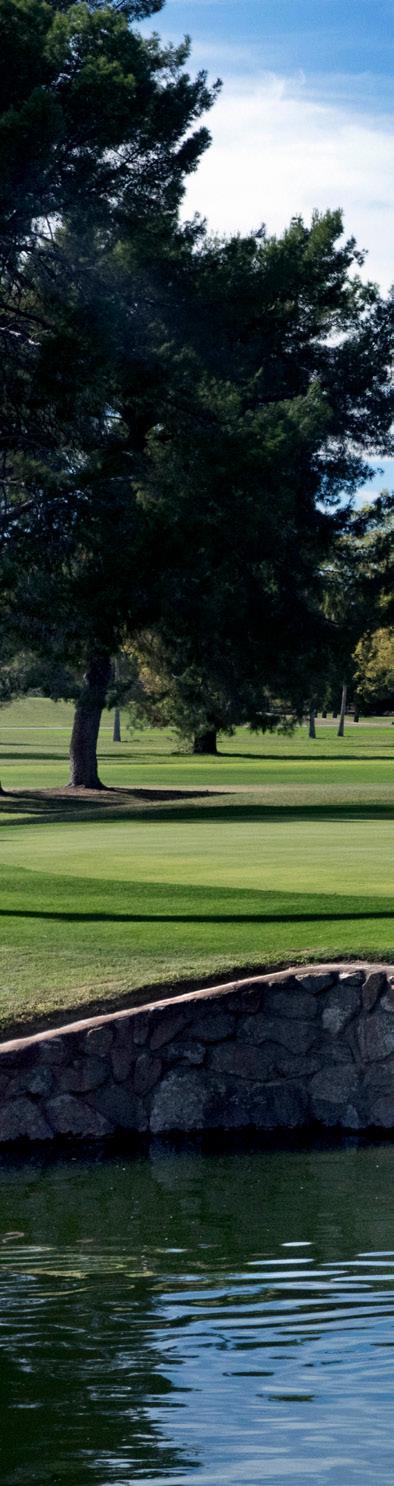
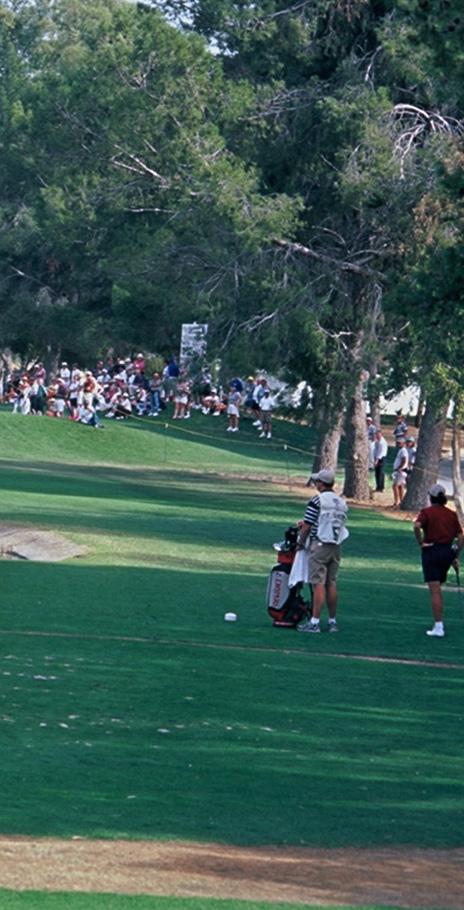
Juli Inkster (top) plays the 15th during an LPGA event almost three decades ago, and the par-3 remains daunting today.
estimates he has played the course more than 2,000 times, concurs with Gilmore’s choice of the 15th as the pick of the par 3s, with the tee shot from the blue tee the hardest shot on the course. Kavanaugh also praises the 423-yard, par-4 10th.
“It’s a slight dogleg left with water on the left side of the driving area,” he says. “Hit it toward the inside elbow and the hole plays shorter, but the approach to the green is all-carry over a bunker. Driving it to the right makes the hole play longer, but you’ll often have an open shot into the green. From either side, you can be blocked by trees on the approach. The geometry of the hole is still relevant for the way the game is played today.”
Hayes is a fan of the 440-yard, par-4 fifth. “It’s long, and tough — uphill, although it doesn’t look uphill,” he says. “You’ve got to carry it to the top. And beyond the green, across the street, is the old El Con Mall water tower — a local landmark.”
Another local landmark — credit nature for this one — is the snowcapped peaks of the Catalina Mountains, which are on display at east-facing holes such as the par-5 third and the par-4 12th. It’s additional eye candy and one more ingredient in the pleasurable stew that is a round at Randolph North.
New Chapters in the
Coachella Valley
BY KEN VAN VECHTEN
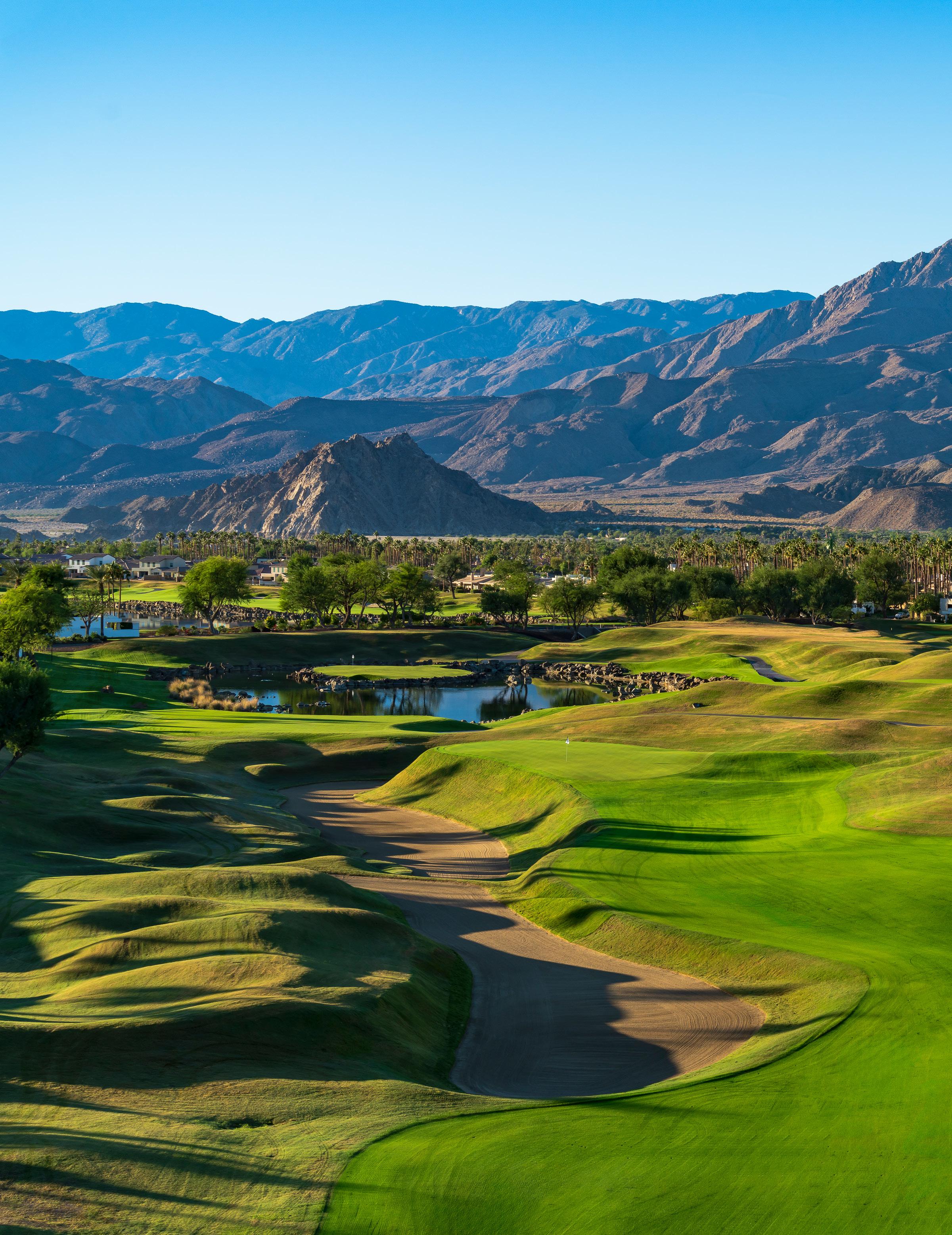
PGA WEST STADIUM COURSE

Relevance, rebirth and reimagination make three Palm Springs courses a worthy journey.
There’s no way around it, unless you are looking down on it from your airplane window seat: the drive along Interstate 10 between the Valley of the Sun and Coachella Valley in Southern California is boring. A snoozer. Some beautiful desert views along the way, but your eyes need to be focused on the road for approximately four hours. Fortunately there are now three courses, each with new looks and energy, that should inspire you to make the trip.
A BEAUTIFUL BEAST
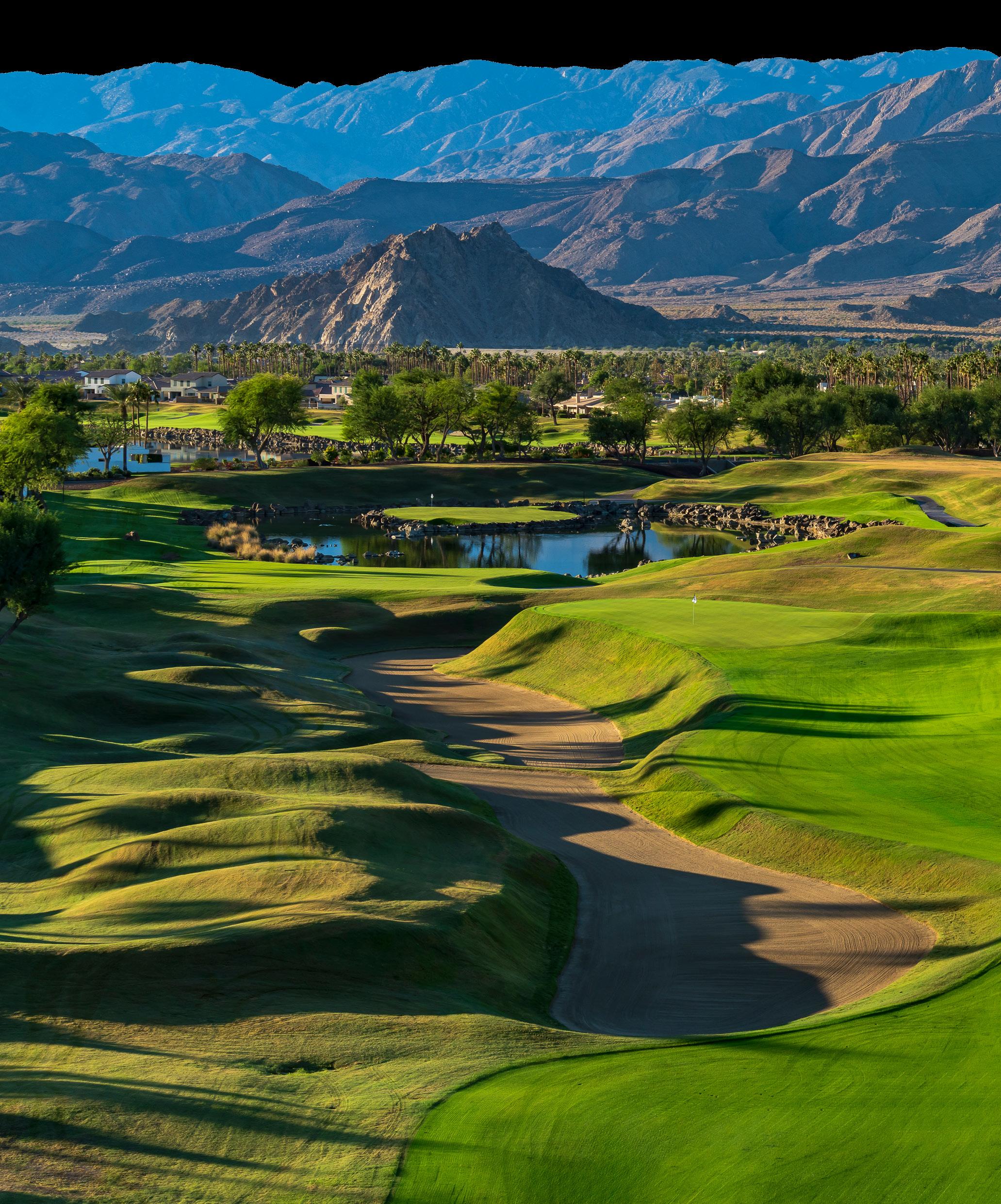
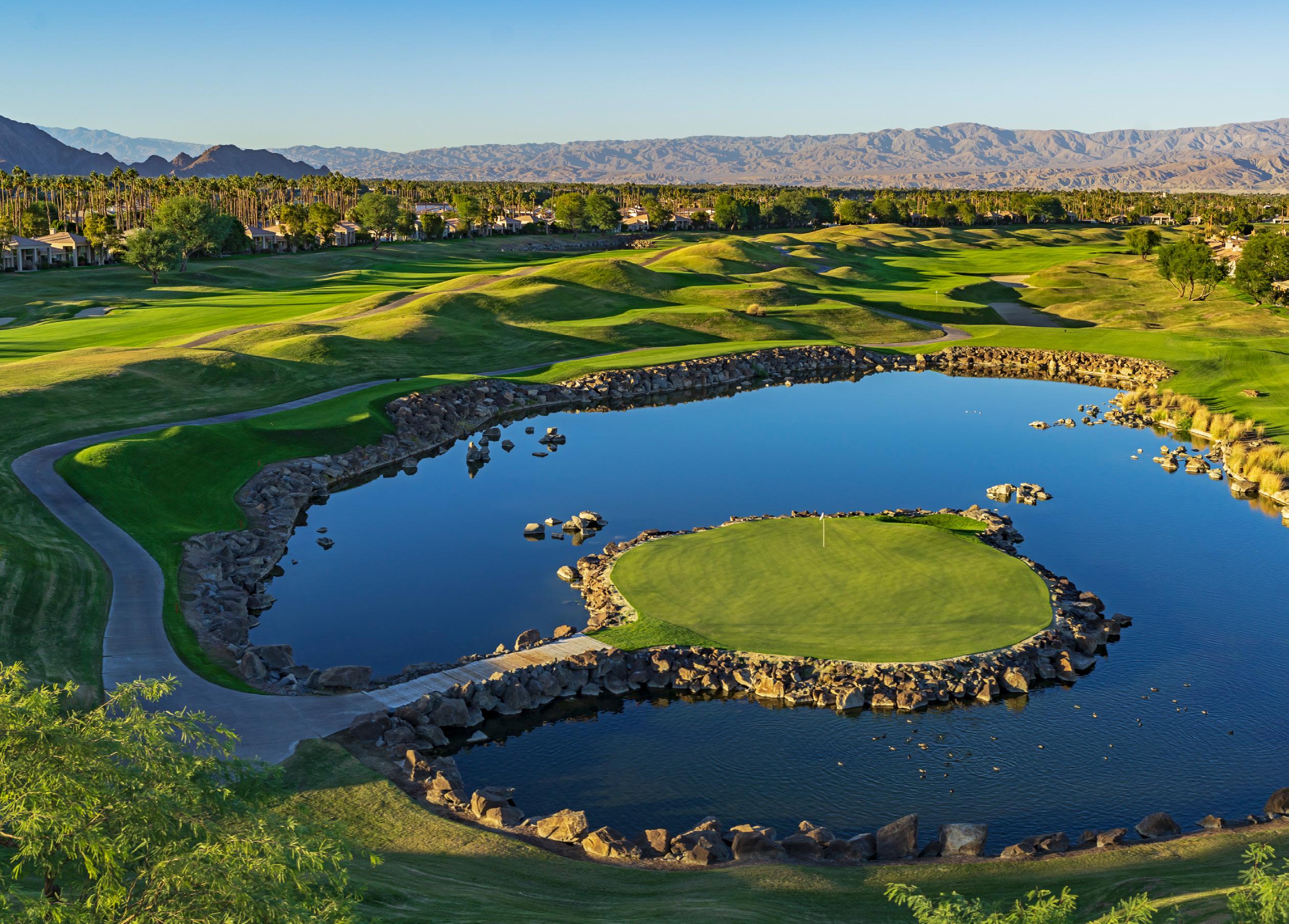
Pete Dye’s reputation as a golf course architect was well established by 1986 when his Stadium Course debuted at PGA West. And man, did that layout live up to his track record of building 18 holes of pure challenge. The Stadium Course was instantly notorious, mostly in a good way. For a once-pancake-flat plot of sand, it features water with Floridian abandon, landing areas that appear thread-theneedle tight, cavernous bunkers and something that is almost de rigueur for a Dye course: an island-green par 3 on No. 17. According to Johnny Pott, a five-time
PGA Tour winner who was part of the team that produced PGA West, Dye wanted such a featureless expanse of desert so “he could move four feet of sand, pile it over there and instantly have eight-feet of topography, and so it went.” He did all of that and more, highlighted by the 20-plus-foot deep incision along and around the approach/rear of the green on No. 16. But over the ensuing four decades constant play took its toll. Enter Tim Liddy, a former Dye colleague. In 2024 he completed a restoration of many Dye features that had softened over the years, bringing a good bit of the bite back to the Stadium setting. Give it your best shot (and strongly consider moving up a tee!).
PGA WEST STADIUM COURSE
TRILOGY TAKEOVER
It’s a respectable number, admit it: 81. If the National Golf Foundation pegs the average score for all American golfers at 94, it’s actually damn good. In the case of Trilogy Golf Club at La Quinta, the number 81.66 represents the percentage of homeowners who in 2024 voted for the community to pony up an unspecified but significant amount of cash to save one of the Valley’s sleeper courses from neglect and third-party-owner abandonment; the water was off, the layout was closed, and the desert was reclaiming the land.
“We had to do something,” recalls Mark Reider, Trilogy at La Quinta Maintenance Association board president. “We needed to establish and then maintain control of our own destiny. We’d been through three third-party owners as a community, and they failed.”
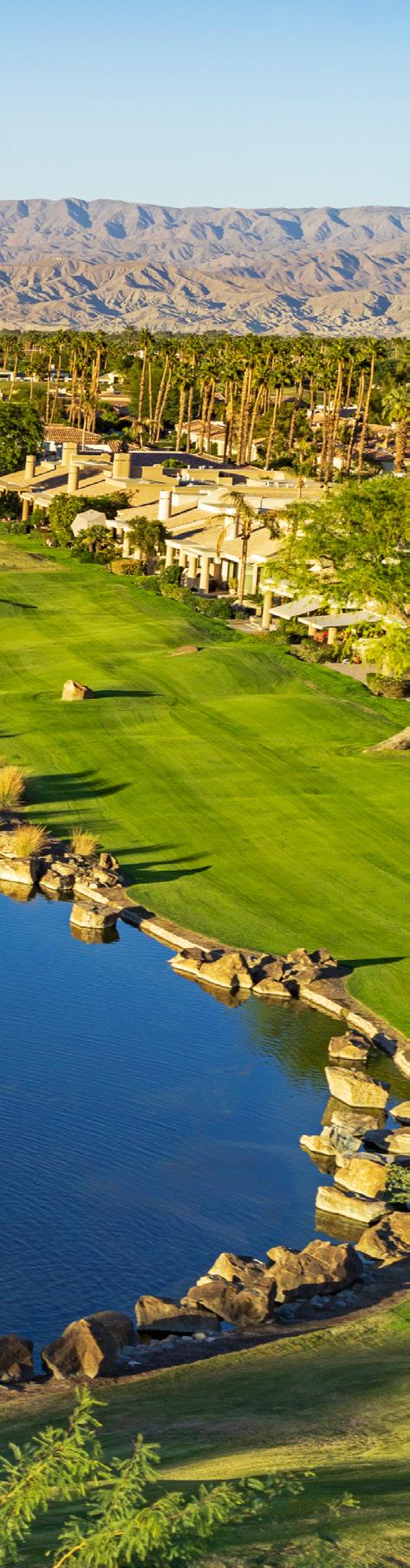
Whether Trilogy resident, desert local or those coming in to tee it up on vacation, having the Gary Panks design back and thriving is a boon. The corridors at Trilogy are broad, a reflection of modern-era residential-golf design running headlong away from the condo-alley effect. The property sits where the valley starts nudging up into the Santa Rosa Mountains so there is subtle climb and bank. And with the community itself plotted around curves and sweeps and not a grid pattern, holes run to all directions on the compass.
“The course is really well framed,” says Reider, “and the overall design is thoughtful. It’s not the kind of course where you play a hole and you think it looks like that hole and that hole and that hole. Every hole is distinct.”
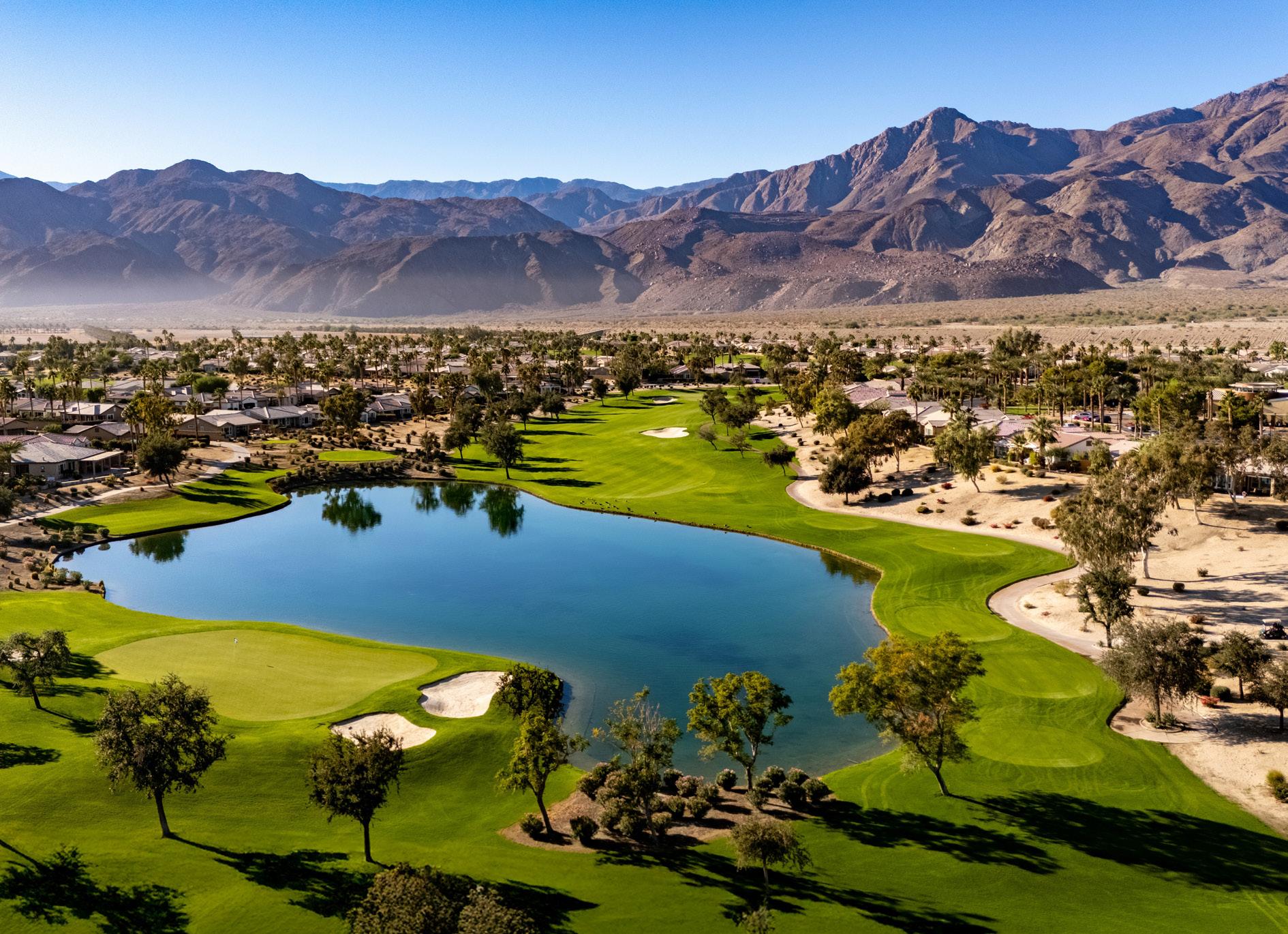
TRILOGY LA QUINTA
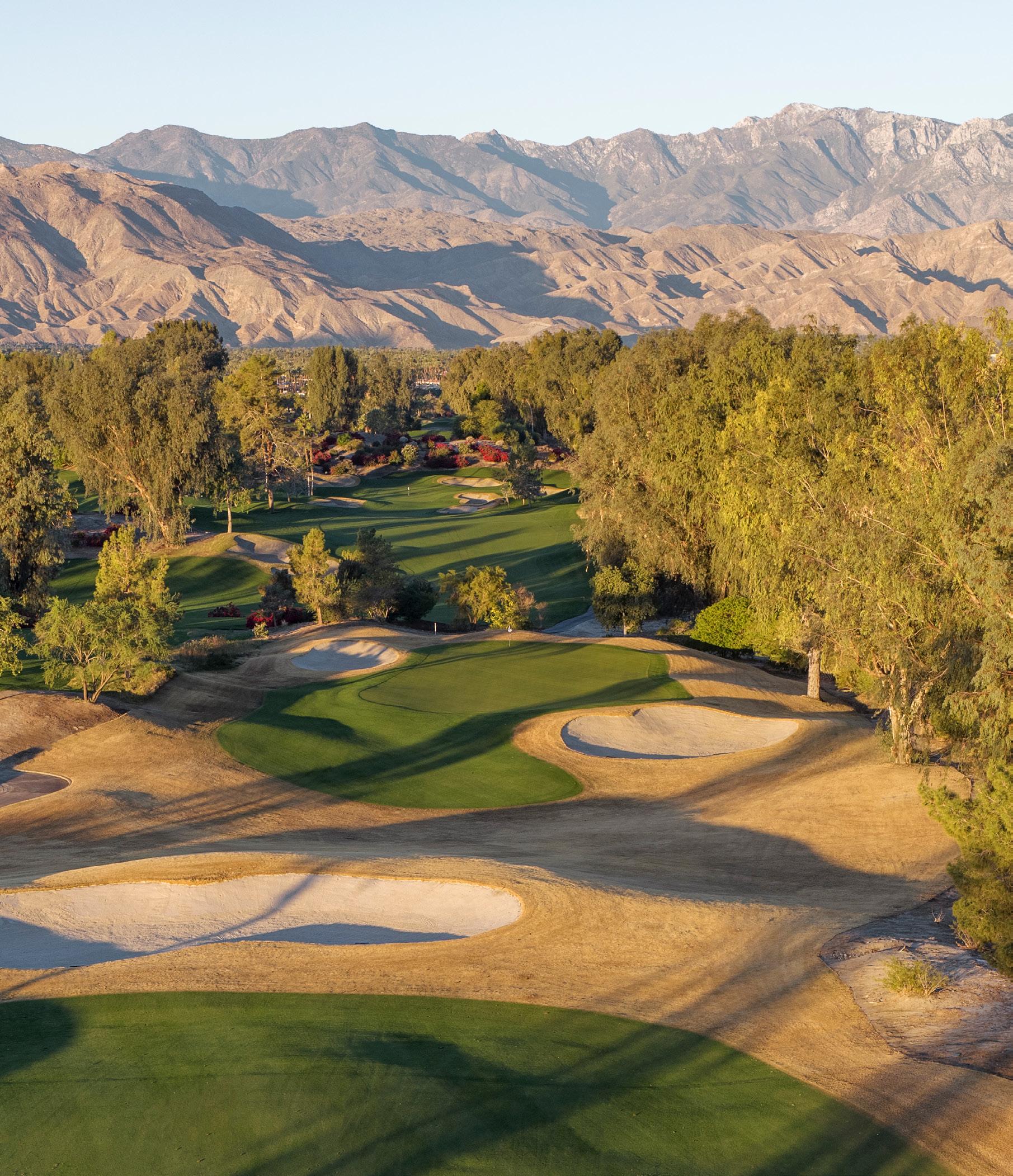
NEW & IMPROVED
Indian Wells Golf Resort is a getaway-for-all, not-justgolfers campus of fun, with four resort hotels, all manner of eateries, pools and water-park amenities, racquet sports and spas. And it has two of the country’s best muni courses (the city of Indian Wells owns the resort).
The original, sporty Ted Robinson, Sr., courses there lasted 20 years before being replaced by much more interesting works authored by Clive Clark (in 2006) and John Fought (in 2007). Late last year though, one of those layouts — the Players by Fought — emerged from another re-imagining
by Fought himself. (Plans are afoot for tucks and tweaks on the Clarkdesigned Celebrity Course in 2027).
The rap on Players was that larger forces originally required Fought to leave the two finishing holes isolated across Whitewater Wash – a giant hydrologic gash cleaving the larger valley and this property; good holes, but jarringly disjointed. Fought found homes for two new finishing holes that are far more connected to the rest of the layout, redirected the order of some, altered the sequencing, added several totally new and killer holes and ensured that both nines loop. Additional work was done on removing superfluous bunkering, improving green surfaces, opening sightlines and making the layout much more walkable.
“Golf courses, when we do them, they become like one of our children,” Fought said. “And I wanted it to be good. I knew we could do better than what we had done, even though it was highly rated. But I still felt it could be better. I can’t tell you the joy I felt when they told me [the two disparate holes could be abandoned]. It flows much better now.”
INDIAN WELLS PLAYERS COURSE
19TH HOLES
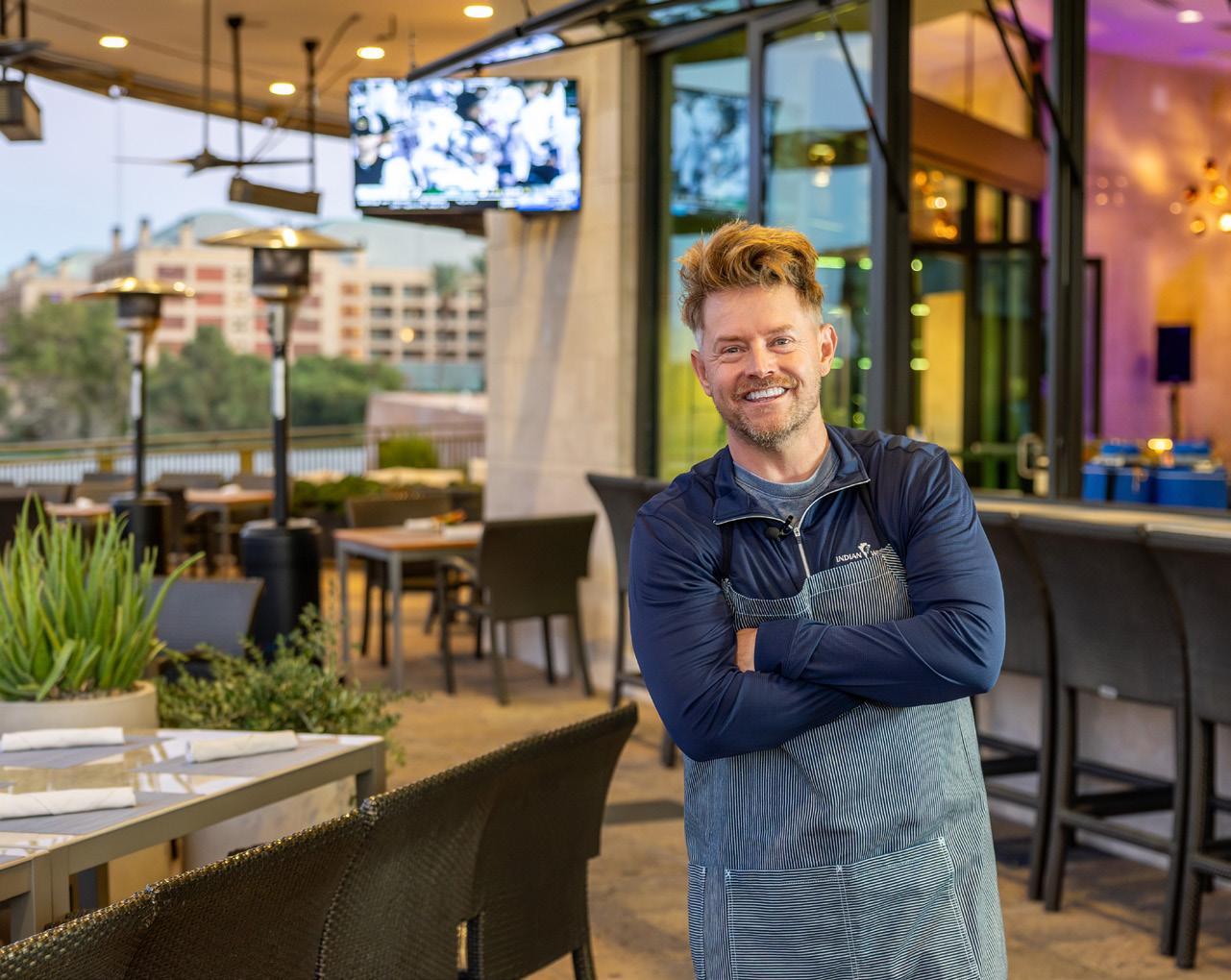
Chef/TV personality Richard Blais opened Kestrel in late 2024 at Indian Wells Golf Resort in the space long occupied by VUE Grill & Bar. Blais rides the dual rails of imaginative fare stressing fusion and fresh inputs, yet he’s not adverse to a club sandwich or a good old hamburger with fries. “It’s classic American fare with a twist toward creativity,” Blaise shares. “But the core of it is really just sound, classic cooking, buying great ingredients and trying to get out of their way.”
TIP | Go heavy on shareables and mix and match: maple bacon deviled eggs, duck confit flatbread, banh mi skewers.
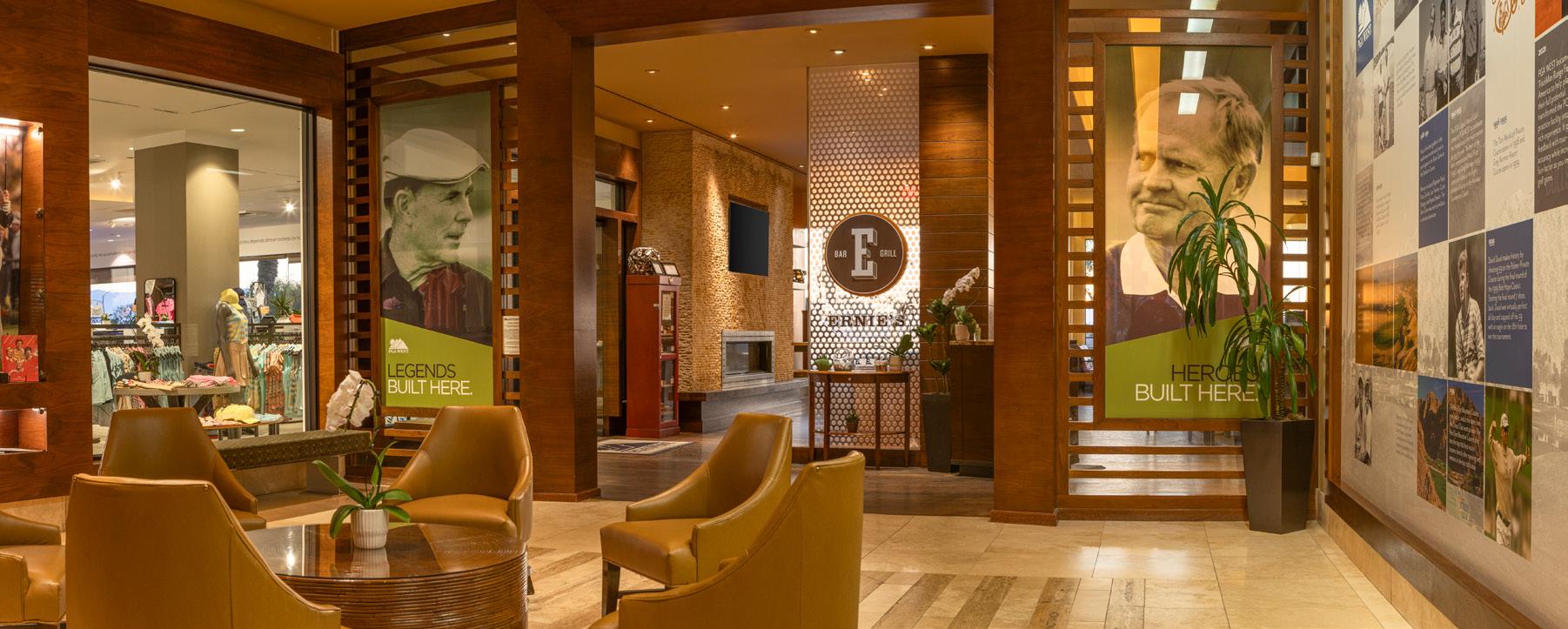
PGA West has been around a long, long time and it is fitting that the public side’s open-to-two-courses eatery at PGA West is named after co-founder and visionary Ernie Vossler. Ernie’s Bar & Grill blends his love of golf with a gastropub vibe. Says his daughter, Judy Vossler, of seeing his name so enshrined: “Dad was a rather quiet, humble man and didn’t draw much attention to himself so it is nice to have him recognized.”
TIP | Home-style meatloaf or the prosciutto pizza.
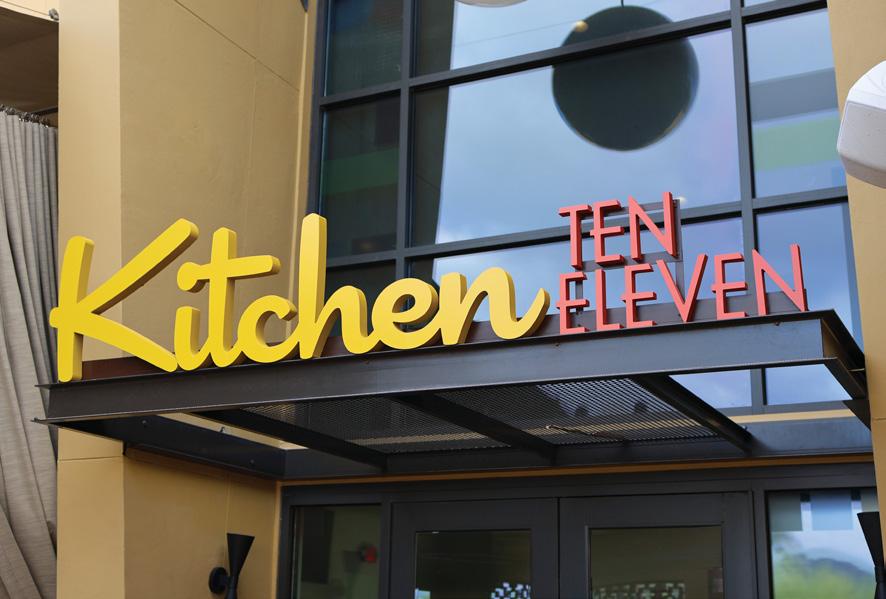
The name Kitchen Ten Eleven honors the 1,011 residential owners at Trilogy, out of 1.238, who voted for their association to purchase the club and course. This is an American bistro with a light touch of sports bar wrapped in a design nod to the Palm Springs mid-century modern look. “Kitchen Ten Eleven has been so well received,” says Mark Reider, Trilogy at La Quinta Maintenance Association board president. “People are looking for a fun dining experience without the white-tablecloth fuss, but with innovative, great food. The number of people we get from outside the community says a lot.”
TIP | Try the market price fish or turkey bolognese.
Kestrel
Ernie’s Bar & Grill
Colt Knost and Drew Stoltz chart new path in golf media.
Off the Course,
BY TOM MACKIN
On the Air
Less than a decade after their professional playing days ended — one due to injury, the other after grinding on various tours without success — Scottsdale residents Colt Knost and Drew Stoltz are now better known for hosting a golf radio show and popular golf podcast. And no one is more surprised about their media success than the two of them.
GETTING BEHIND THE MIC
“It’s wild, I know,” said the 40-year-old Knost. “I still can’t believe anything that goes on in my life, to be totally honest. But, yeah, it’s pretty cool. I mean to start out with just, ‘Let’s just see how it goes and see what happens,’ and now having done over 300 (episodes) is pretty crazy.” Indeed. But before the 2020 debut of the Subpar podcast that he and Stoltz —
who first met while playing golf in college for SMU and TCU, respectively — co-host, there was a satellite radio show.
After a wrist injury ended a PGA Tour career where he made 199 starts, Knost started working as an on-course reporter for CBS Sports in 2019. During his first event in that role at Riviera Country Club, he had lunch with Scott Greenstein, president of SiriusXM.
“Drew and I had talked for the previous six or eight months about trying to do something together, just because I had nothing to do after my injury,” said Knost, the 2007 U.S. Amateur champion. “Everybody told us we should do a show. We both like to hold court on the range and entertain people.” But at that lunch Greenstein shocked Knost with an offer to host his own weekly hour-long show.

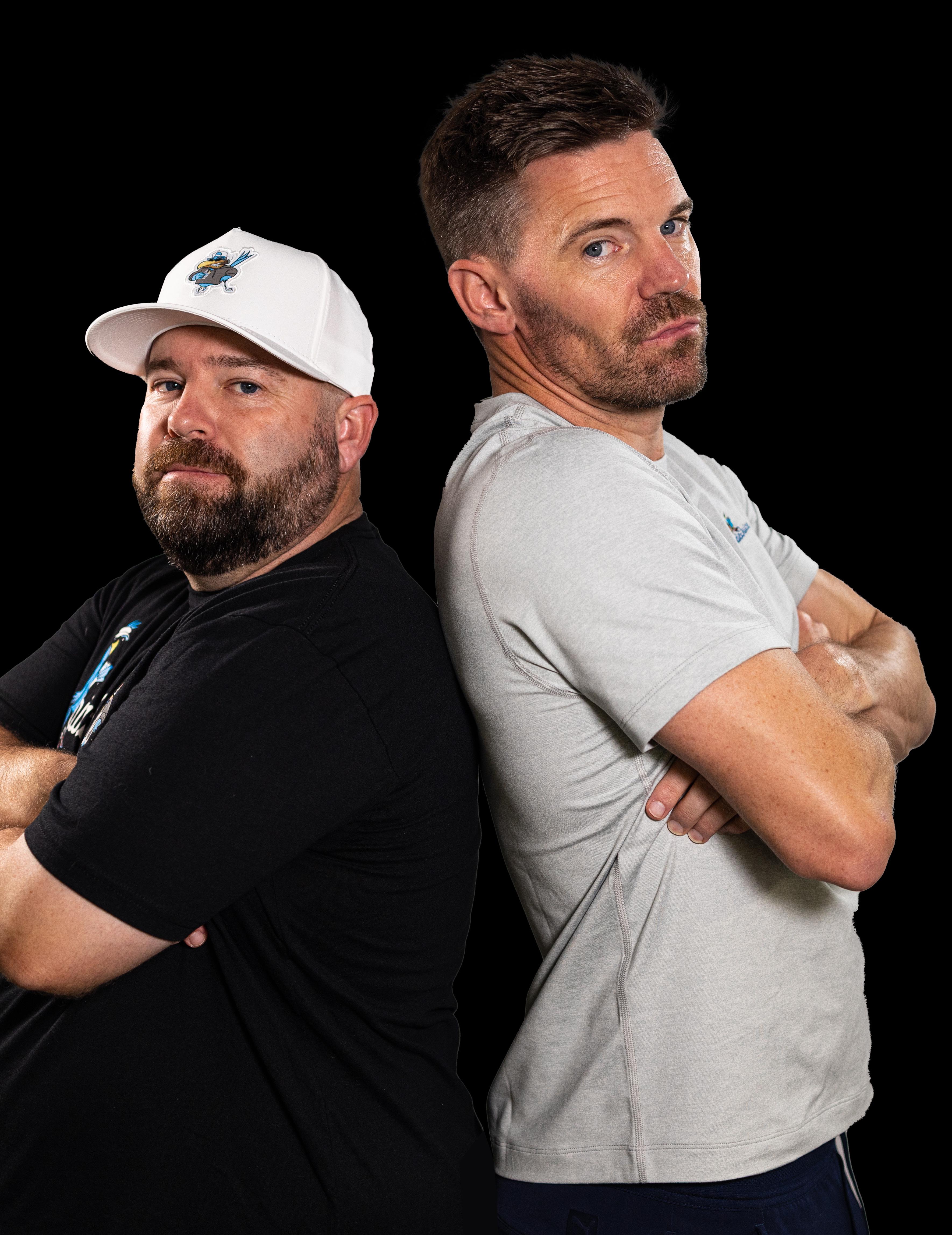
“I was like, Jesus, that kind of came out of nowhere,” he said. “I asked him, ‘Can I bring somebody on with me?’ He said, ‘It’s yours. Do what you want with it.’ I called Drew (who at that the time was doing a golf podcast for Action Network) and said, ‘Dude, I got us a show. Want to give it a go?’ And he was like, ‘Absolutely.’”
The pair now go live on SiriusXM PGA Tour Radio for two hours Monday through Wednesday mornings using a mobile recording unit at Knost’s home in Scottsdale.
PODCAST TEAMMATES
Not long after that show (called “Gravy and The Sleeze” reflecting their nicknames; it’s a long story) started, Stoltz was contacted by Hoyt McGarity, CEO and president at 8AM GOLF, which owns
GOLF Magazine and golf.com. “They wanted to get into the digital space and wanted to do a podcast with me as the host,” the 41-year-old Stoltz recalled. “I called Colt and asked him to come be my co-host on the podcast, and we can kind of have these things both under the same umbrella? We took off from there.”
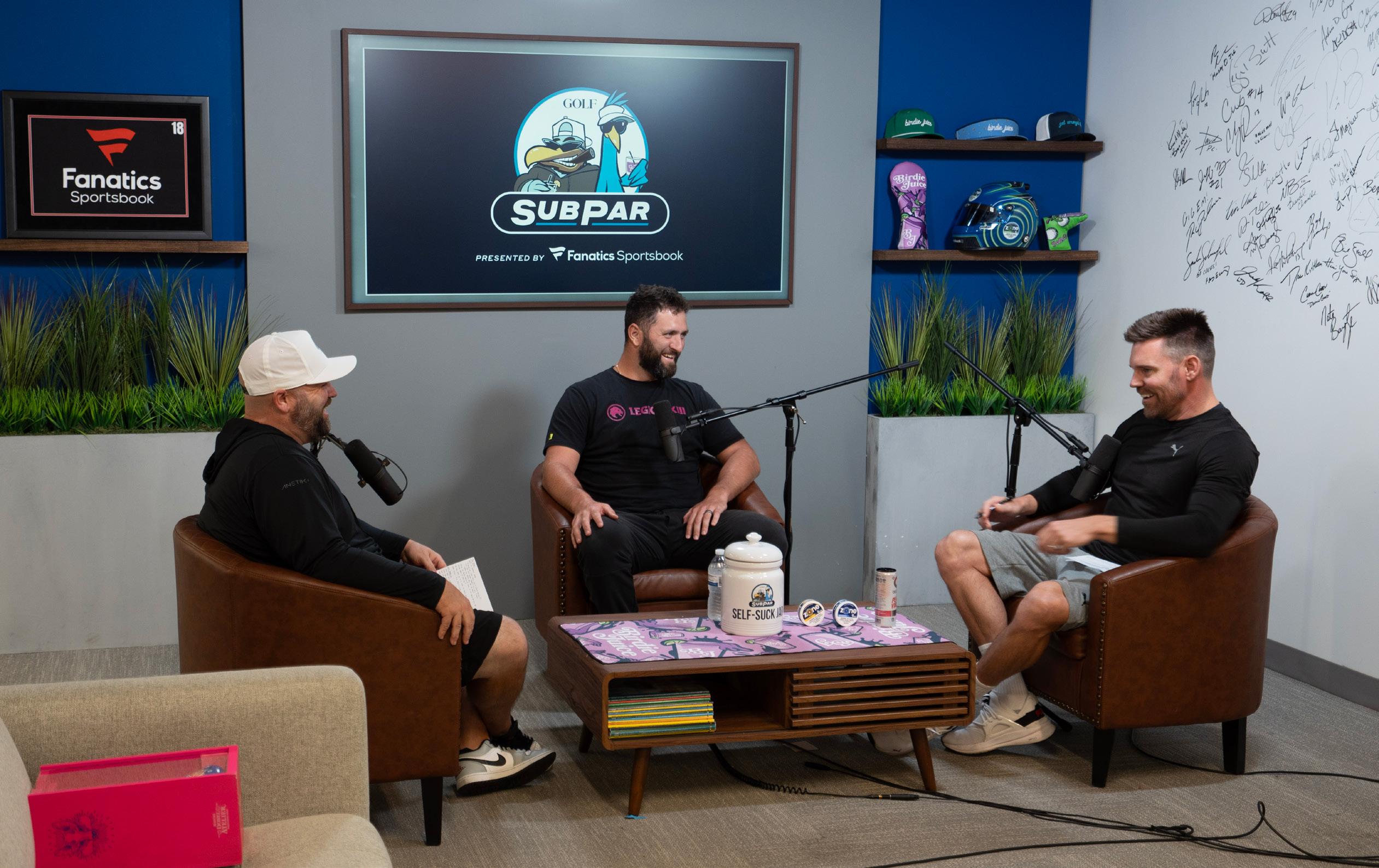
Subpar debuted on golf.com in February 2020 and was an immediate hit. “I think our first episode did like 40,000 downloads in the first week, which was kind of insane,” said Knost. “We had Jon Rahm on, and people saw a side of him they’ve never seen before, which was really cool. That’s kind of been our deal all along. It’s just to show that these guys and girls are normal people that are really good at golf, but they actually do have a personality and we like to show it.”
“I think there’s something there with his credibility in terms of golf and then also the CBS broadcast,” said Stoltz, a reinstated amateur who reached the semifinals of the U.S. Amateur Four-Ball in 2022 and 2023 with Drew Kittleson. “I think that also leads him to be the straight guy and I’m like the color guy. I joke, get goofy and get him in maybe an awkward situation. So I feel like between the two of us, there’s a wide range of the spectrum of things you want in an interview, which makes the best team.”
Knost, who moves off the course and into the booth for CBS Sports in 2026 (replacing the retired Ian Baker Finch), credits his producer there, Sellers Shy, with providing valuable hosting advice. “He told me very early
Above: Knost (left) and Stoltz (right) had Jon Rahm (center) as their guest on the first and 300th episodes of their Subpar podcast.
“… if you just watch their two-minute interviews on Golf Channel, you think they’re dorks. But they’re awesome dudes. We’ve just got to give them a space to be that.”
—DREW STOLTZ
on, ‘Hey, I know you have your list of questions, but just listen to the guest. And you don’t always have to go to your next question. Listen and make it a conversation.’
That was some of the best advice I’d ever gotten.”
Stoltz is a big fan of podcasts where an athlete’s sport isn’t necessarily the entire focus.
“You kind of get to know the person a little bit,” he said.
“I want to do that for golf, because there are so many cool guys in golf. But if you just watch their two-minute interviews on Golf Channel, you think they’re dorks. But they’re awesome dudes. We’ve just got to give them a space to be that. So that’s what I wanted Subpar to be. Colt was all in on it, too. Let’s just let the world get to know these guys the way we know them. Let’s tell stories and just
talk like we’re sitting around the grill after a round.”
Their guest list has included both golfers and non-golfers. “My favorite, if you just want to laugh your ass off for an hour, is Mike Commodore, a former NHL player,” said Knost. “Jordan Speith always comes to mind. It was a fun one we did with him at Royal Oaks Country Club in Dallas. We put it on YouTube and during the podcast Jordan had three beers. People would comment, ‘I can’t believe Jordan Speith is sitting there drinking beer.’ He’s a 24-yearold Texan. This is what they do! It’d be weird if he wasn’t doing that. People think these guys aren’t real humans, so to show that is great.” Stoltz picks Mark Grace, Johnny Manziel and George Brett as some of his favorites. Among their dream guests? Knost wants former president George Bush or Michael Jordan; Stoltz would love to
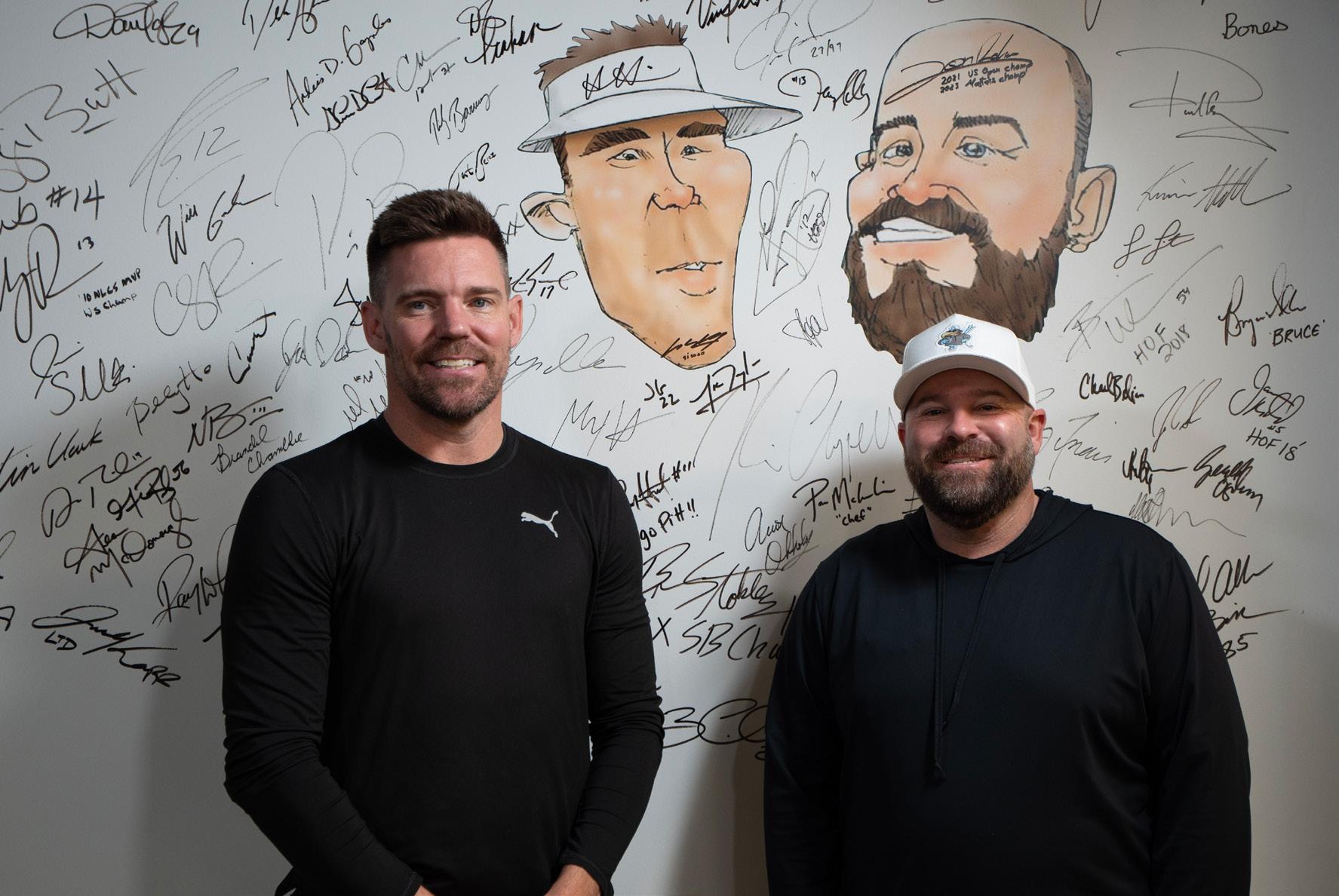
get Anthony Kim, Larry David or actor Charlie Day.
So which of them is more surprised at their success in golf media? Flip a coin. “If you had told me I’d be making a living talking about golf and having conversations with people on the radio and on a podcast back when I was trying to find my way after my playing career ended, I would have signed my soul away at that point if you told me this was an option,” said Stoltz.
“I’m lucky, man,” said Knost. “I have no idea how it all happened. I never planned on being in this world. I say now I think getting hurt when I was playing the best golf of my life on the PGA Tour might be the best thing that ever happened, because it led me to all this and I’ve never been happier. I’ve never had more fun.”
“I say now I think getting hurt when I was playing the best golf of my life on the PGA Tour might be the best thing that ever happened...”
—COLT KNOST
LPGA’s Ford Championship Presented by Wild Horse Pass Returns to the Valley.
Whirlwind A Experience
BY TOM MACKIN
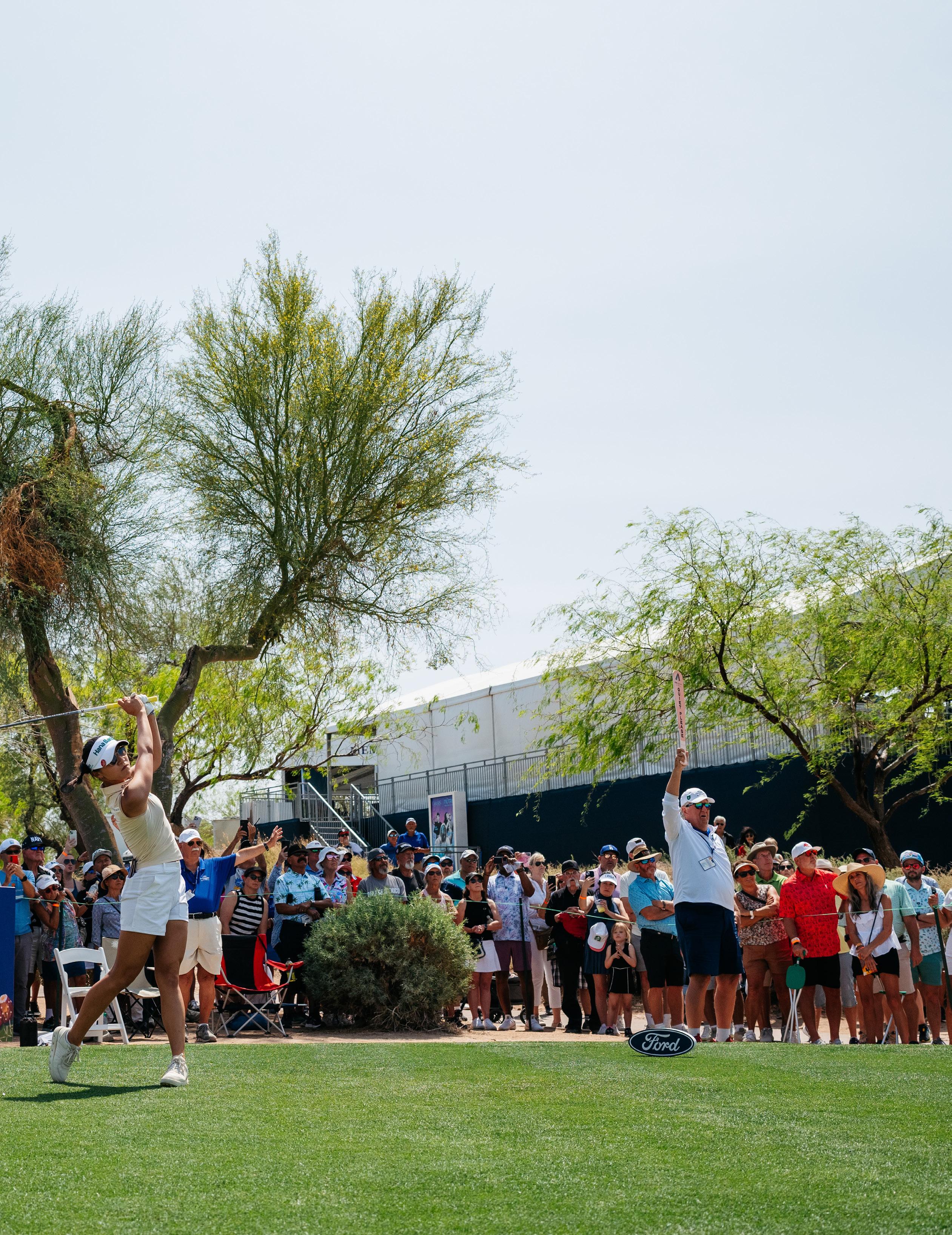
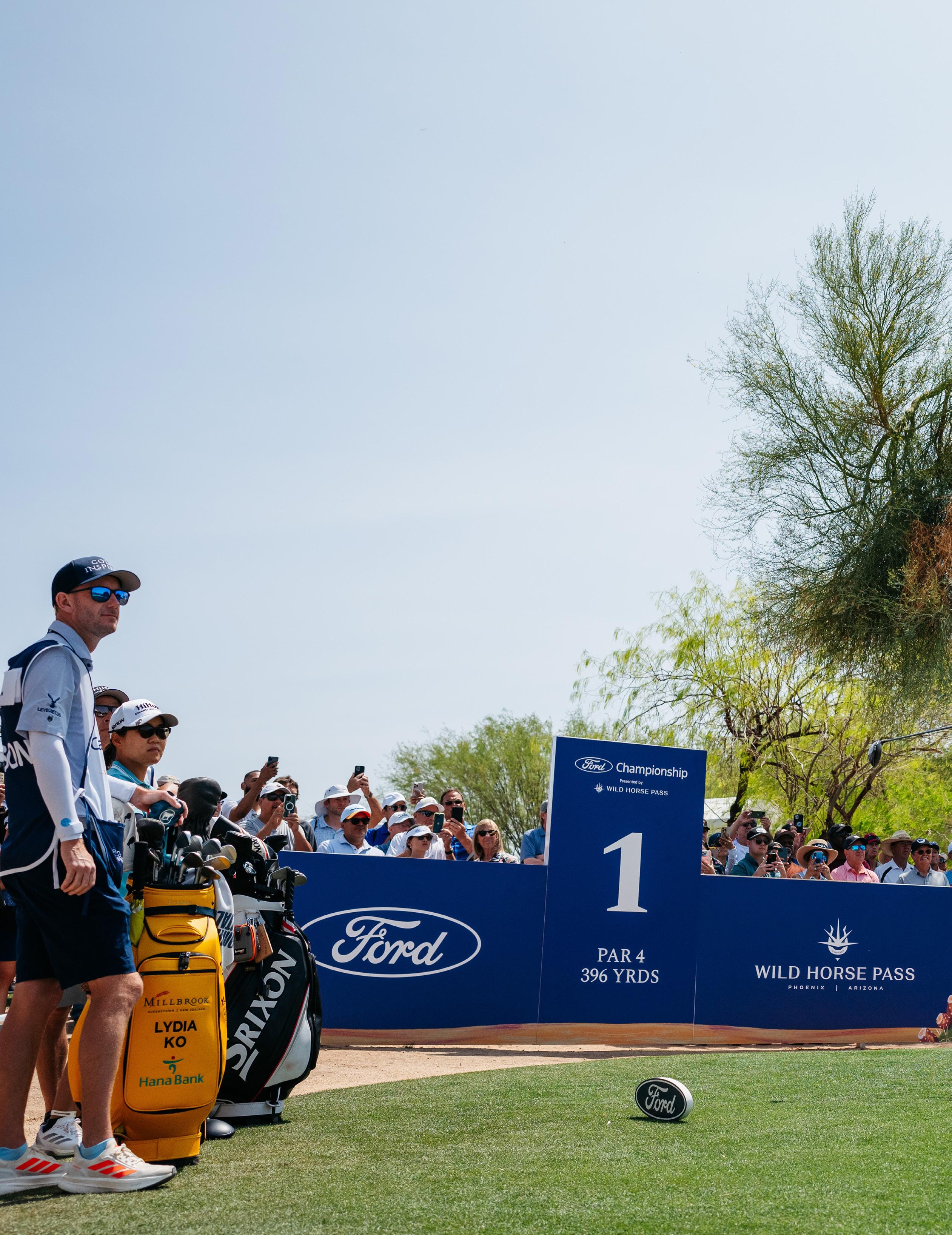
Every LPGA tournament winner receives a trophy. But Hyo Joo Kim got three after winning the 2025 Ford Championship presented by Wild Horse Pass at Whirlwind Golf Club in Chandler. The championship trophy, of course, but also a shell etching and a piece of pottery reflecting the heritage of the two Native American tribes — the Akimel O’otham and PeePosh — who form the Gila River Indian Community, home to the tournament. The Ford Championship returns March 26-29, with plans to make the second edition bigger and better.

PERFECT TOGETHER
“I thought it was beyond my wildest imagination that we could, on such a short runway of time, create this much enthusiasm and energy for this event.”
—TIM HOVIK
The two courses at Whirlwind GC, part of Wild Horse Pass at Gila River Resorts & Casinos, are no strangers to professional golf. The venue hosted the Nationwide Tour multiple times in the early 2000s and also PGA Tour Qualifying School Final Stage, most notably in 2018. That’s when current world No. 1 Scottie Scheffler jumpstarted his pro career with a clutch up-anddown on the 18th hole of the Cattail Course to earn playing status on the Korn Ferry Tour.
By 2024, the Cattail Course was being talked about as a potential venue for the LPGA’s Ford Championship. An agreement was reached that November but details were not finalized until early 2025, giving organizers just 60 days to prepare for the tournament.
“It was a fire drill in every sense,” recalled Louie Unga, general manager, Whirlwind GC. “We had to plan not just the four-day golf tournament, but all of the events that happen in conjunction with it.
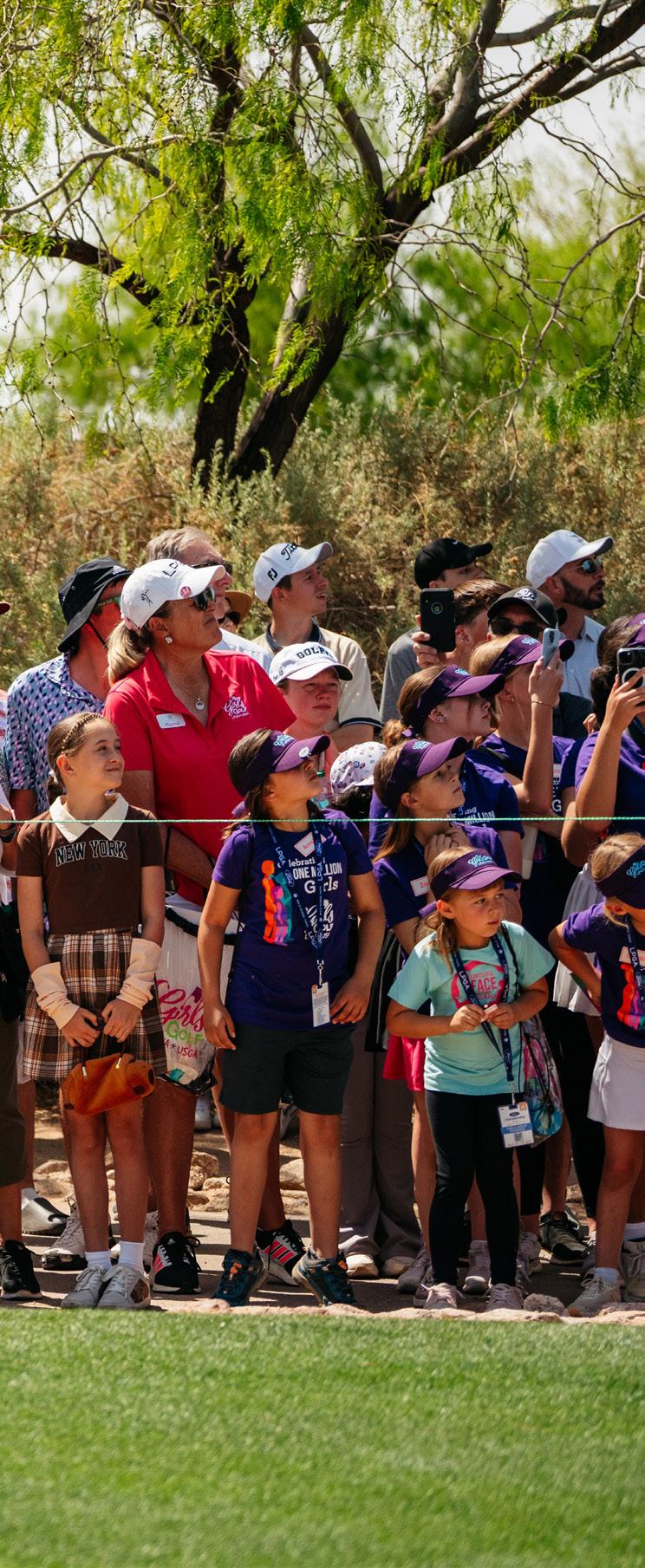
But in the end I was proud of the way everyone came together to make it happen.”
“I thought having the tournament made a lot of sense,” said Duncan Wiston, general manager of Gila River Development. “It took a lot of research and conversations to show our leadership the benefits and prove that we could put it together, and make sure that we put together an event that reflected our properties and the image that we want to maintain
at Wild Horse Pass in a positive way. Fortunately, our board of directors supported it.”
From a logistical standpoint, Whirlwind is a dream location according to Emily Podzielinski, LPGA tournament director. “We can park all fans on site,” she said. “We have total freedom over how we want to utilize the venue and what we want to build. And we have two amazing hotels within the property. Plus we’re 20 minutes south of Phoenix Sky Harbor International Airport,” she said.
Tim Hovik, owner of San Tan Ford in
Gilbert and a key player in the title sponsorship agreement, saw those logistical advantages pay off at last year’s tournament. “I remember on Saturday morning I was having a cup of coffee with some LPGA staff in the clubhouse. I hadn’t been out by the front gate yet, so I wanted to go see how people are coming in. I drove a golf cart over there and it was like an avalanche of people pouring in through the gate. I thought it was beyond my wildest imagination that we could, on such a short runway of time, create this much enthusiasm and energy for this event.”
COMMUNITY CONNECTIONS
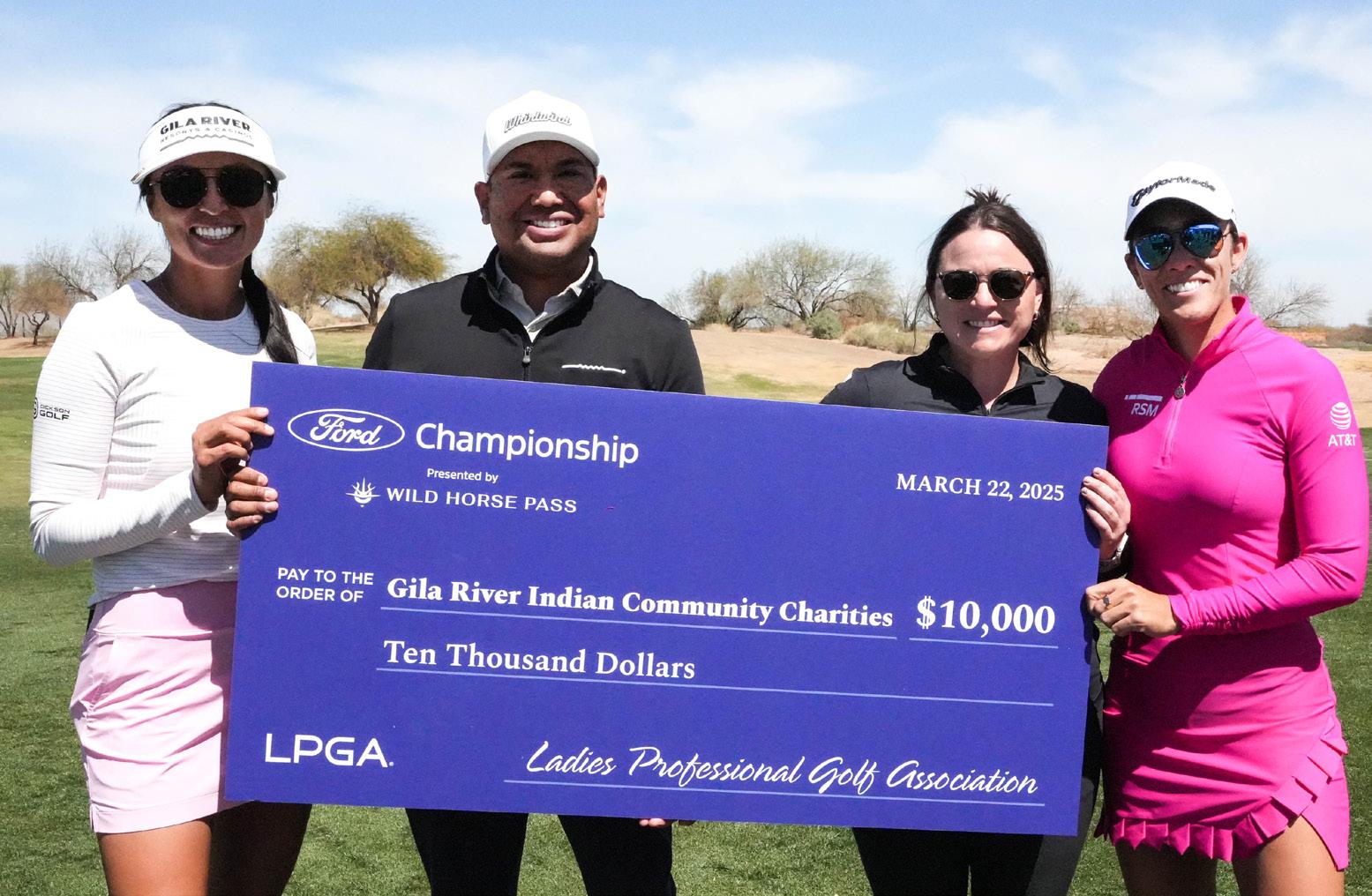
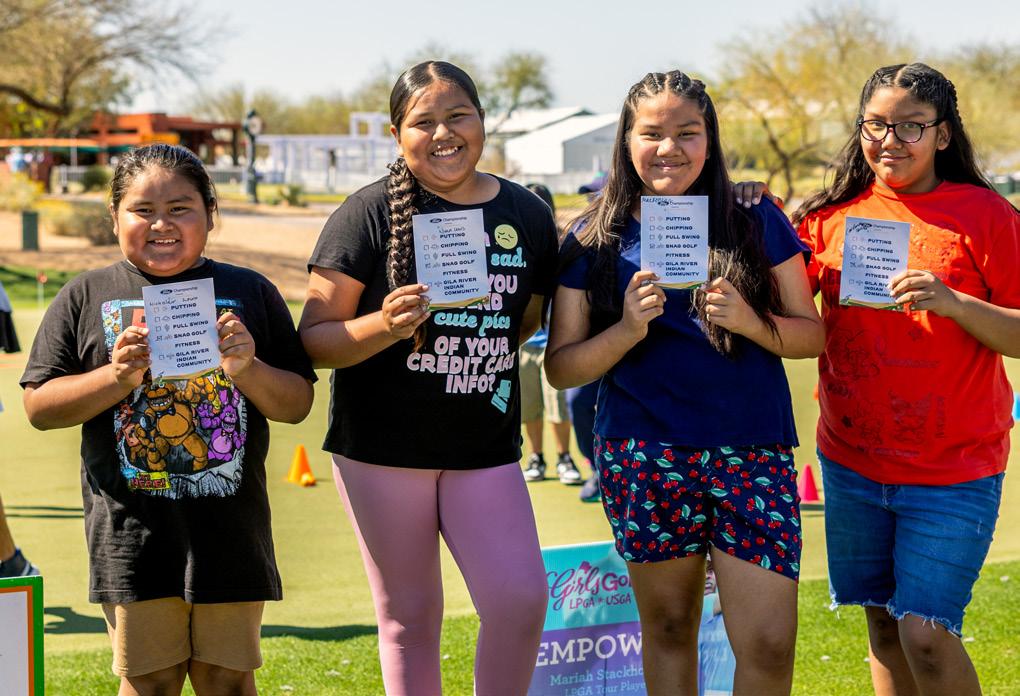
Professional golfers Gabby Lemieux and Maria Fassi, along with tournament director Emily Podzielinski and Myron Sundust of Gila River Resort & Casinos – Vee Quiva, at the Gila River Indian Community Youth Day.

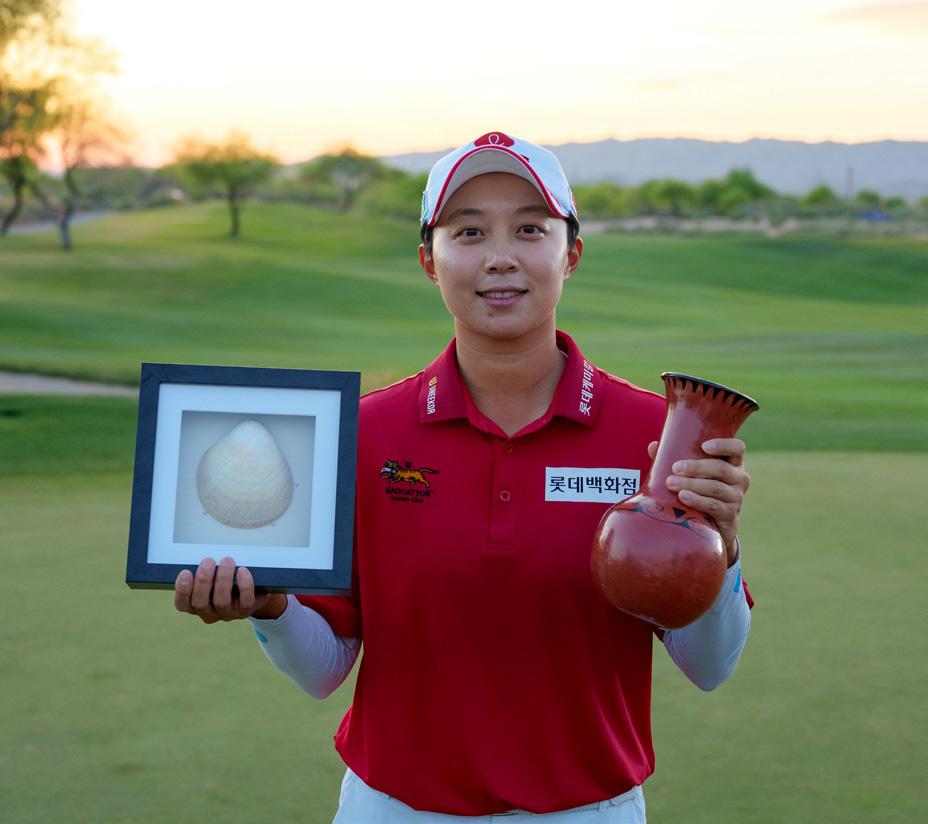
As the lone LPGA tournament played on tribal land in the U.S. in 2025 (and again in 2026), organizers strived to establish a strong relationship with the local community. Most visible were those trophies presented to the winner. “Gila River is comprised of two tribes,” said Wiston. “The Akimel O’otham is really captured in the shell edging. That’s a popular piece of craftsmanship. The other side is the piece of pottery representing the Pee-Posh culture. Those were both one of a kind, and they were presented to the winner by our tribal council members, our governor and our lieutenant governor.”
Last year a Gila River Indian Community Youth Day was also held on the driving range the Saturday before tournament week.
“What Duncan, Louie, myself and other team members worked on was a community golf clinic to get the youth involved, which is very important to all of us,” said Myron Sundust, general manager, Gila River Resort & Casinos – Vee Quiva.
“So that was very exciting to see all the youth come out and hang out with LPGA pros Maria Fassi and Gabby Lemieux (the first Native American women’s professional golfer).”
Also present for the clinic were LPGA*USGA Girls Golf of Phoenix and First Tee – Phoenix. “There were stations for full swings, putting and chipping,” said Podzielinski. “The kids got a passport, and if they visited all the stations they got stamps and received a prize.
Top: 2025 champion Hyo Joo Kim with members of LPGA*USGA Girls Golf of Phoenix.
Above: Kim with her trophies that represent the Akimel O’otham and Pee-Posh tribes of the Gila River Indian Community.
We also had an obstacle course out there. We took all the key elements of playing golf and really made a fun day out of it.”
Many of the participating families and kids had never even been out to Whirlwind GC, let alone held a golf club in their hands. “That was honestly one of the most rewarding parts of the week to watch those young kids come out,” said Podzielinski. “At first they were really, really shy, but by the end it was just the magic of what golf does, bringing people together.”
EVENT ELEVATION
A much longer lead time this year has enabled organizers to plan a number of changes to enhance the spectator experience. Those include a new admissions entrance and an improved shuttle system to shorten walking distances on the expansive property. Also, a Monday Pro-Am during tournament week has been added after the Wednesday Pro-Am sold out, and new hospitality experiences will be created out on the course.
“We’re building an identity around the venue for the players. Last year we had some DJs playing music and created a little bit of a vibe out there,” said Podzielinski. “We’ve got a big build planned this year, especially on holes 14 through 18. You’re going to see a lot of action out there, and that’s exactly what the players want and what they deserve.”

One attention-grabbing highlight will be a floating dock used as a VIP hospitality area that will be anchored in the lake between the fifth and 14th holes. “It is a true one of one,” said Unga. “There’s nothing like it that exists. You’re able to view No. 5 on one side, which is a drivable par four, and then on the other side is No.14, which is one of the hardest holes on the on the golf course. That’s definitely a hole that usually ends up playing a part in deciding the winner of the tournament. When people see this thing, they’re going to go crazy over it.”
“They’ve got great stops on the LPGA Tour,” added Unga. “But we want to create something that’s unlike anything else. Everybody felt the energy (last year), and we want to build it into to one of the most soughtafter entertainment tickets in the Valley.”
“It’s exciting that the build out is going to be significantly bigger this year, and more people will be involved,” added Tim Hovik. “It’s certainly not going to be WM Phoenix Open-level, but my guess is this year, or if not this year I would think in the not very distant future, it will be the biggest LPGA event outside of the majors on their Tour.”
The Gila River Indian Community Youth Day, held just prior to the tournament, gave many youngsters an introduction to golf.
PROFESSIONAL
Following in Famous Footsteps
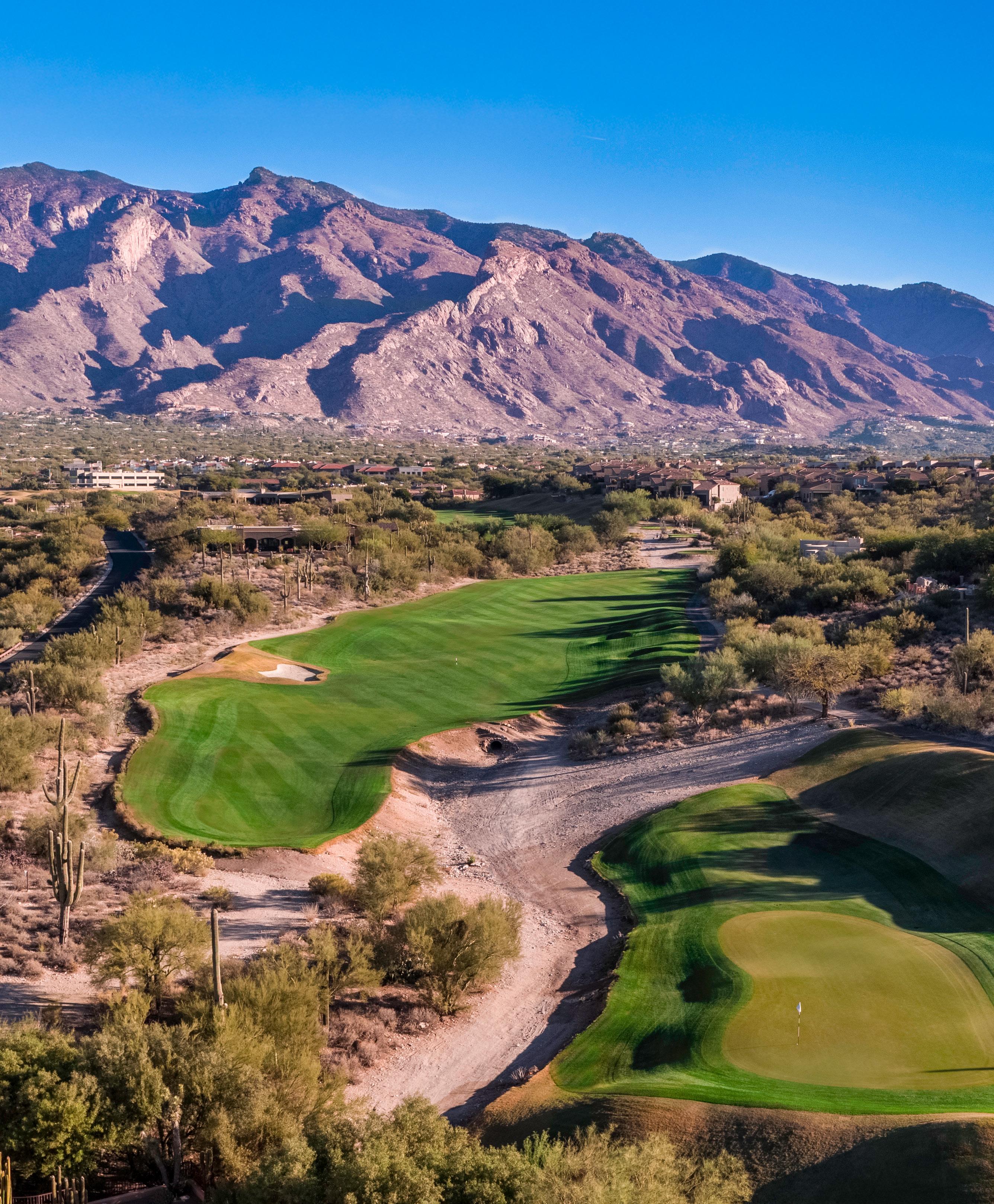
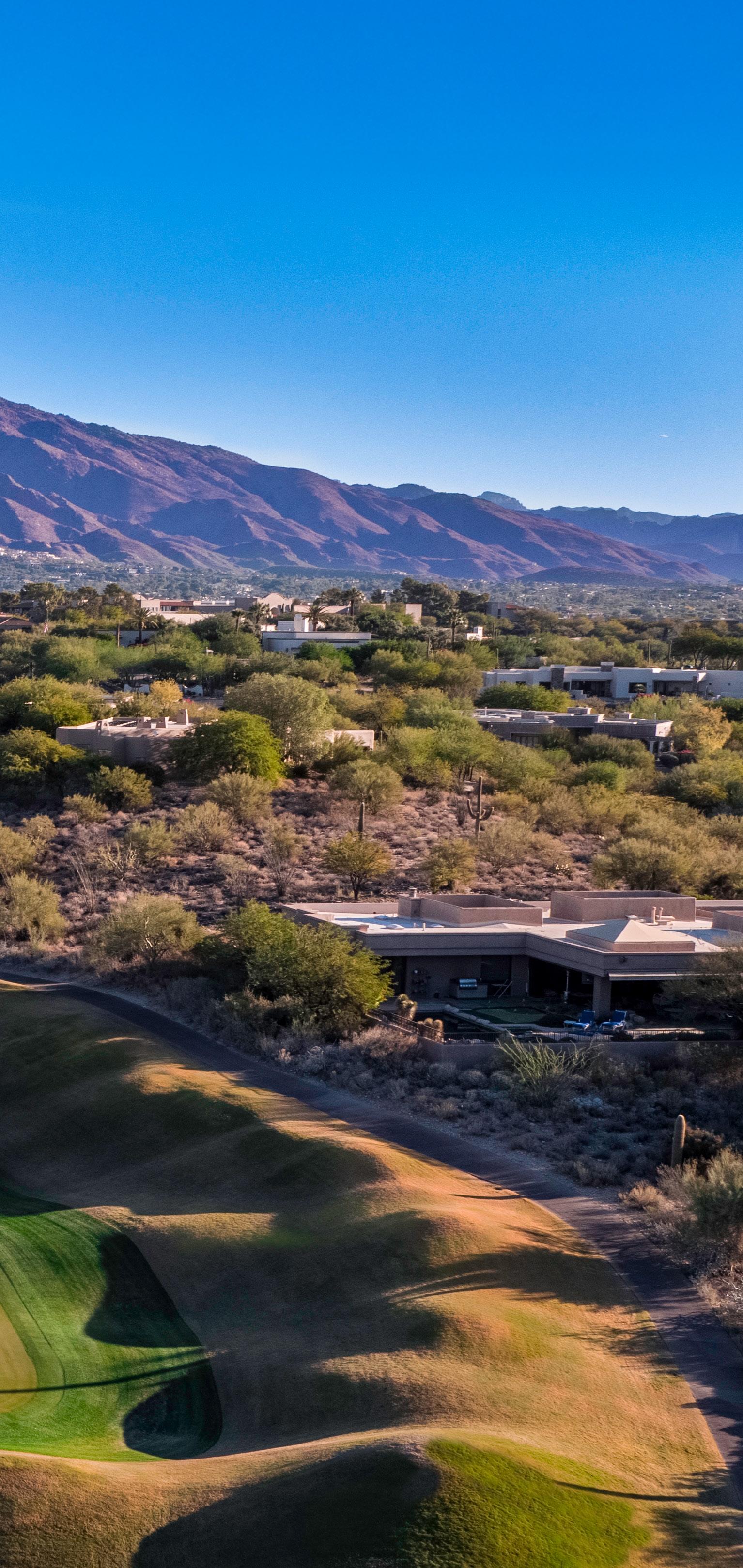
Professional golf has a long history in Arizona, dating back to 1932 when the first Phoenix Open — known today as the WM Phoenix Open — was played at Phoenix Country Club. While many private clubs in the state have hosted the world’s best — we’re looking at you, Desert Mountain, Moon Valley Country Club, Superstition Mountain Golf and Country Club, The Gallery at The Clubs of Dove Mountain and the aforementioned Phoenix CC — so have public and resort courses. Like TPC Scottsdale, which welcomes the PGA Tour every year, and two facilities covered elsewhere in this issue: Whirlwind Golf Club in Chandler, which hosts the LPGA for a second consecutive year March 26-29 (page 32), and Randolph North Golf Course in Tucson (page 16). But there are even more places where you can walk in the footsteps of the pros. Here is a sampling.
LA PALOMA
COUNTRY CLUB
TUCSON
Home to the PGA Tour Champions
Cologuard Classic since 2024, guests at The Westin La Paloma Resort & Spa can play at this 27-hole private club.

The LPGA Founders Cup was played here 2011-2020 on a composite course featuring holes from both the Arnold Palmer and Nick Faldo-designed courses.
WILDFIRE GOLF CLUB PHOENIX

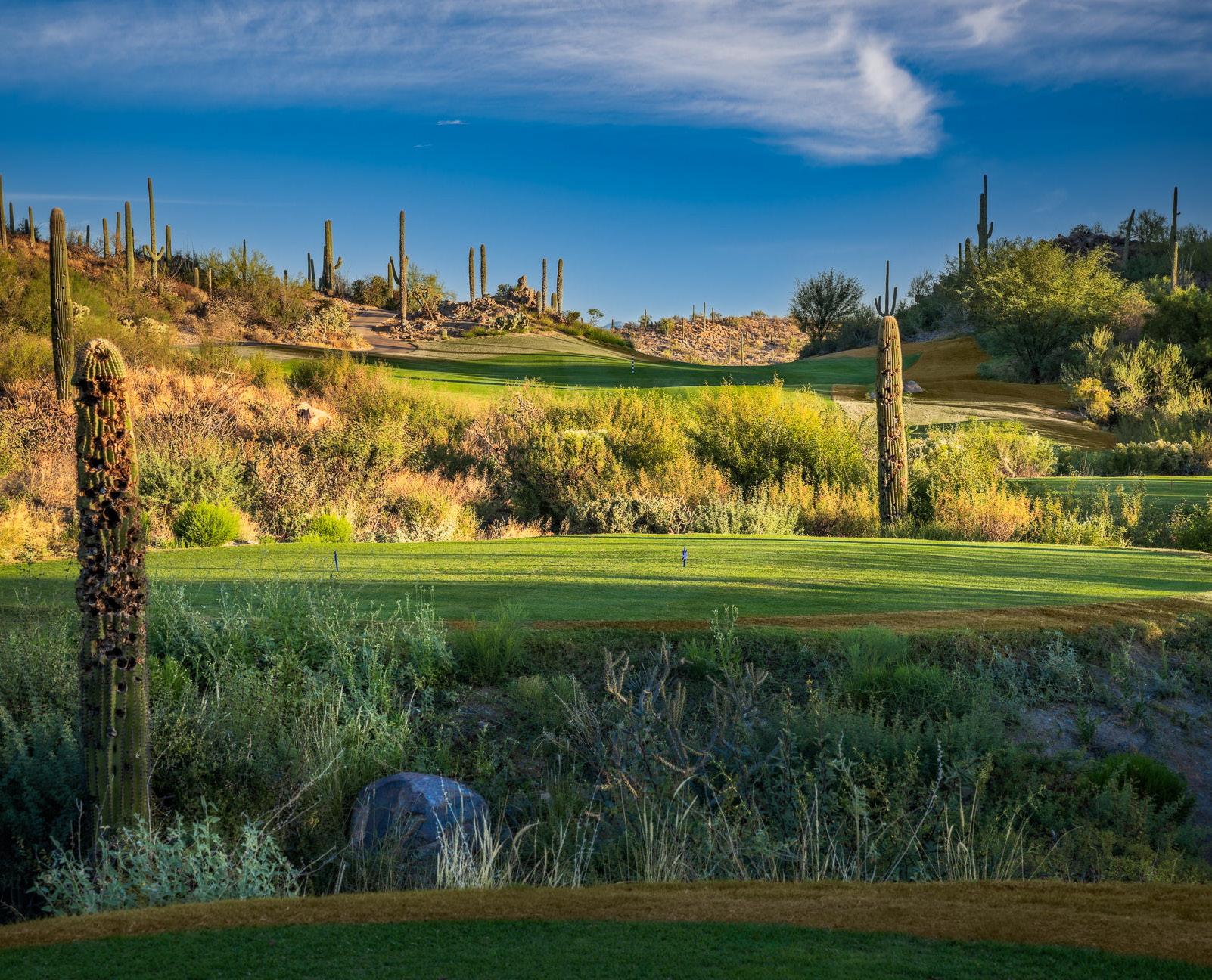
The PGA Tour’s Tucson Open stopped at this recently renovated 27-hole facility in 1987 and 1988, and again from 1990-1996.
THE CLUB AT STARR PASS TUCSON

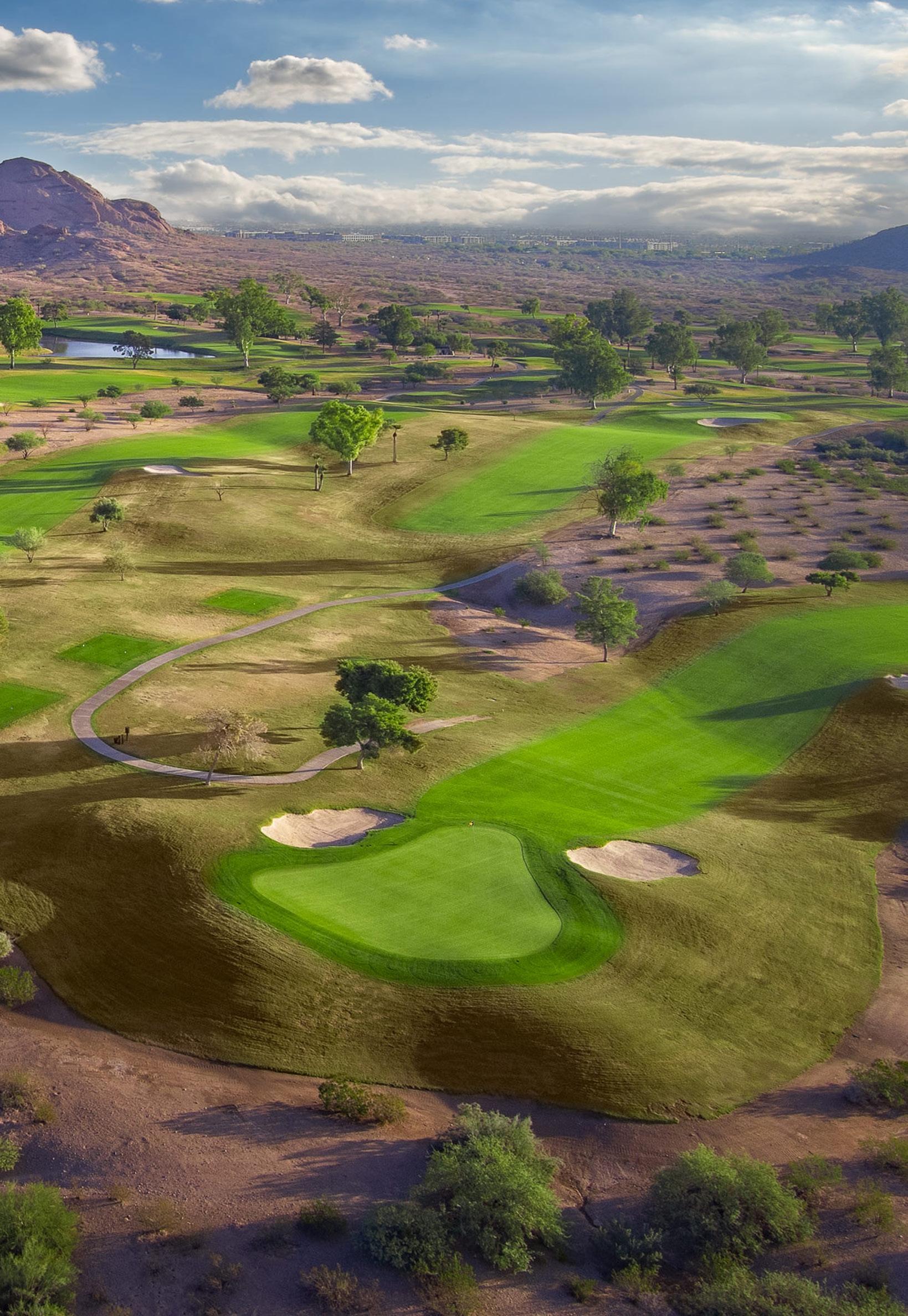
The LPGA Tour stopped at this municipal course, now home to Arizona Golf House, in 2009.
PAPAGO
GOLF CLUB
PHOENIX
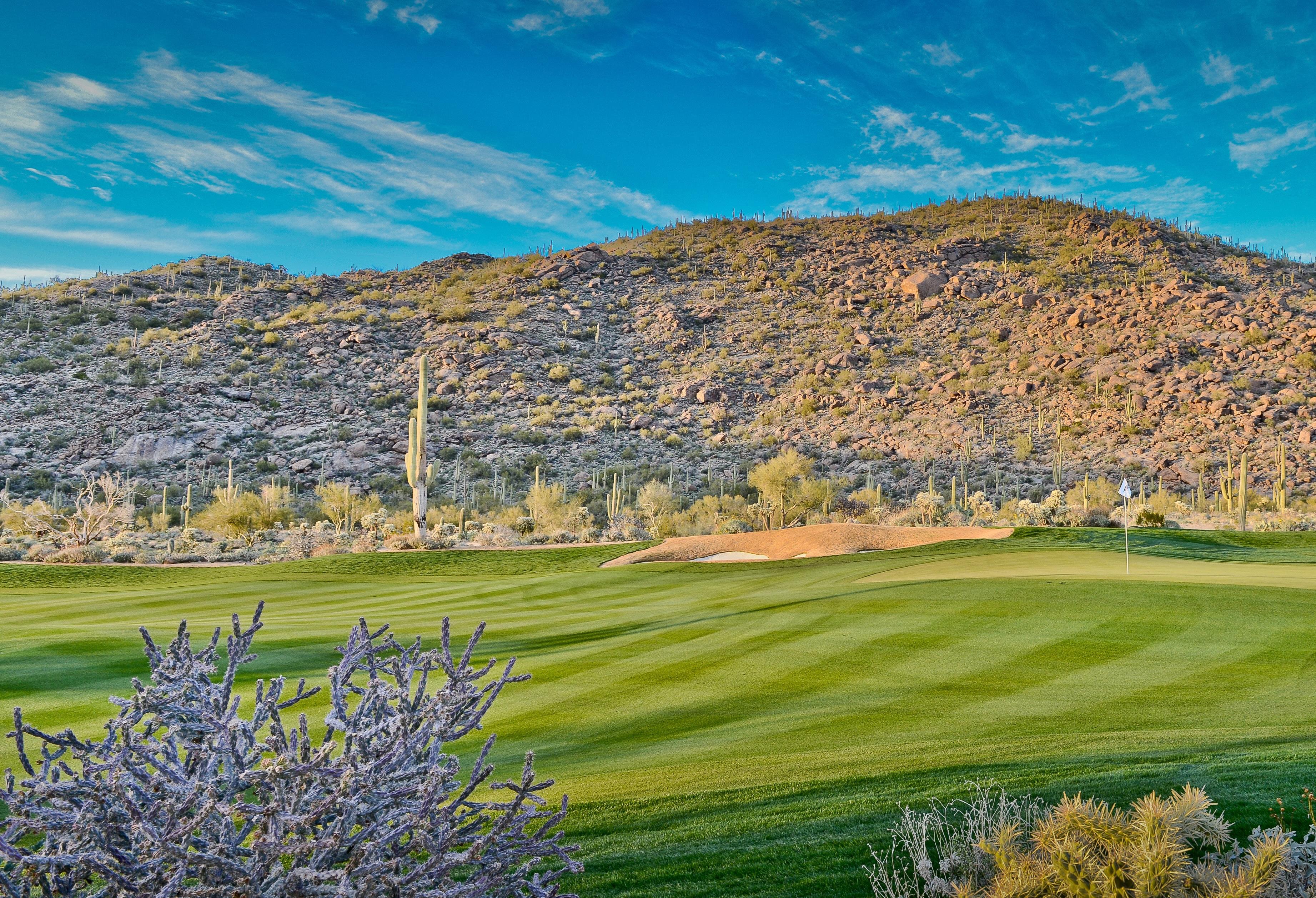
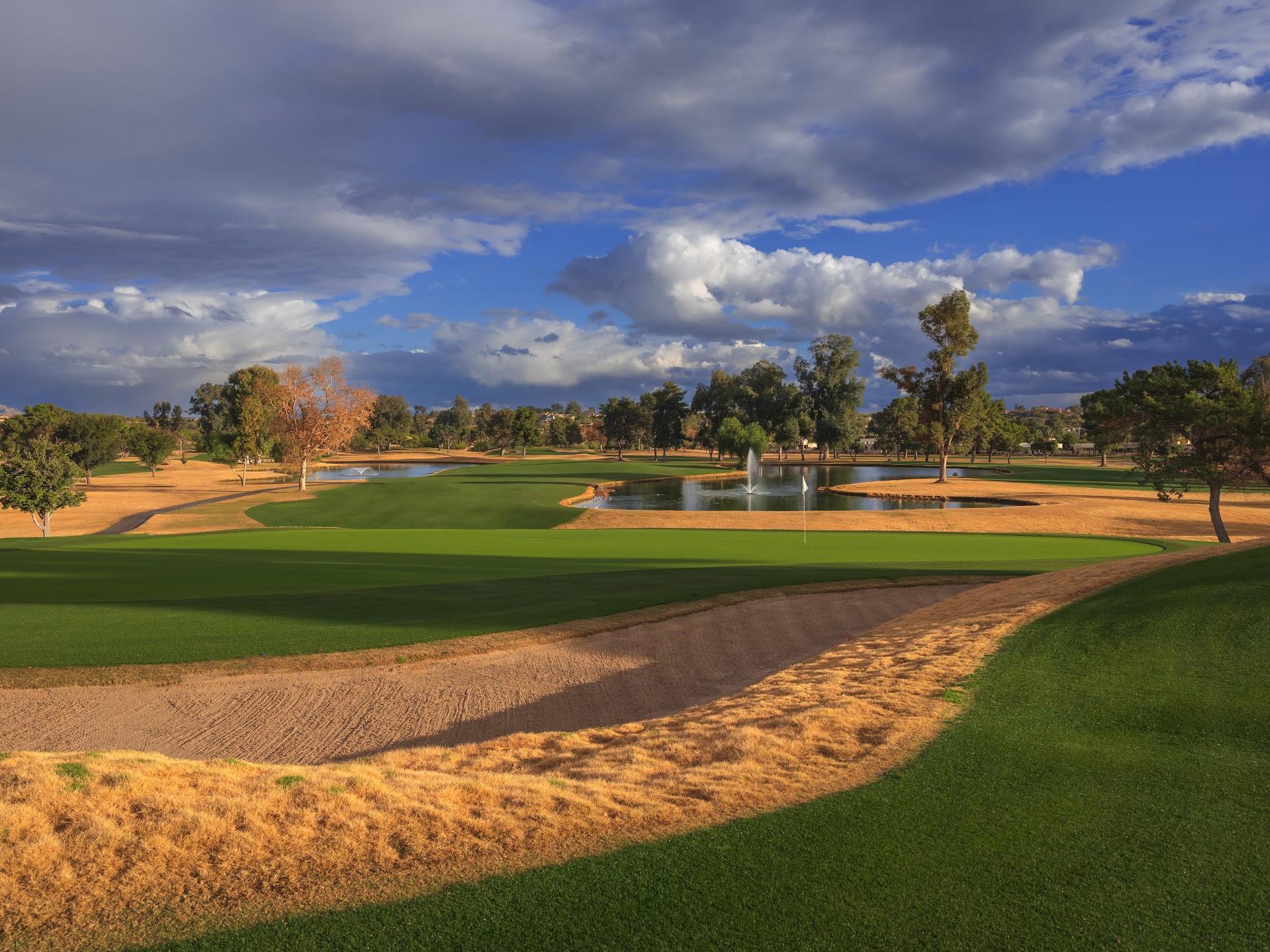
TUCSON NATIONAL TUCSON
The rare venue that has hosted both the PGA Tour (1965-1996) and PGA Tour Champions (2015-2023).
OMNI
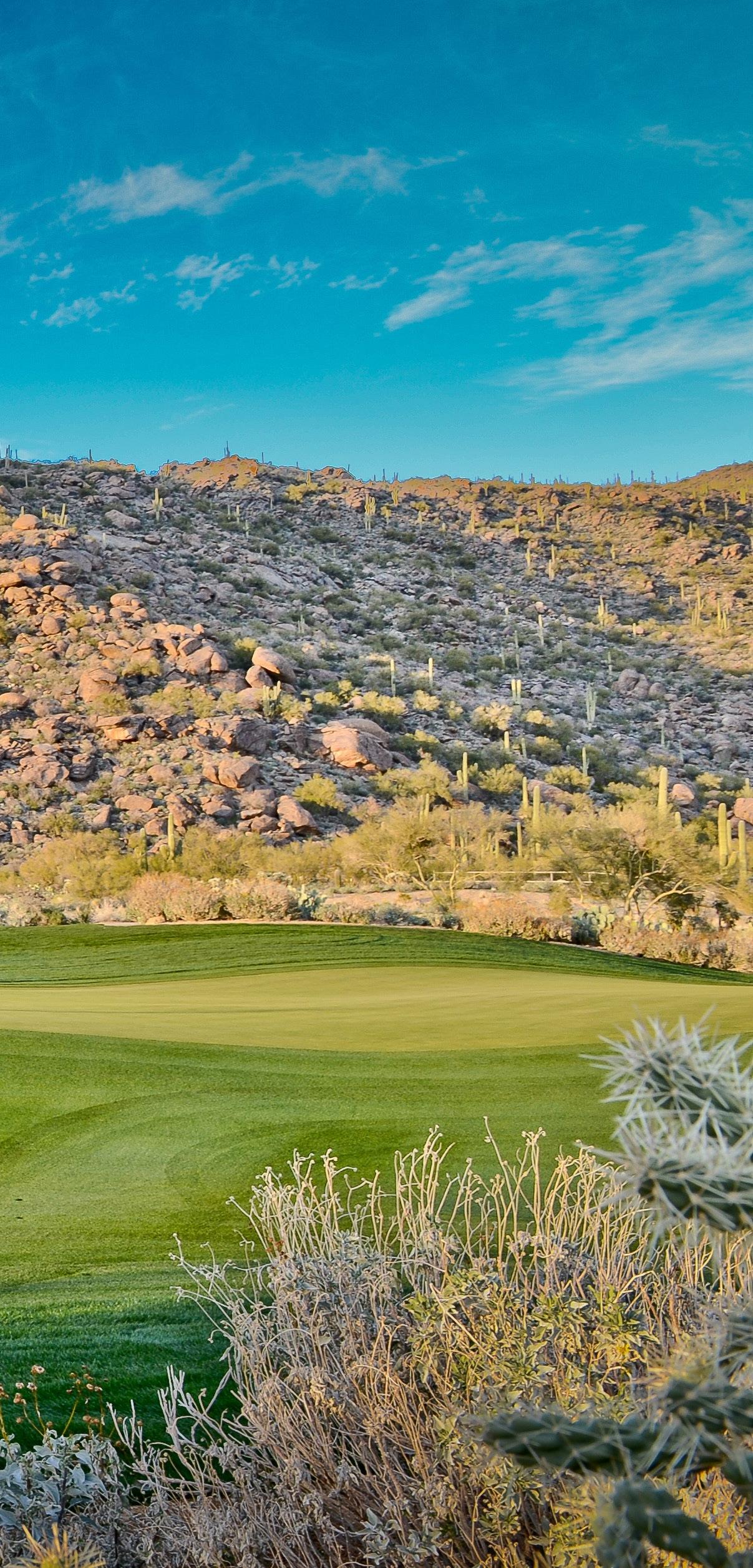
THE GOLF CLUB AT DOVE MOUNTAIN MARANA
The WGC-Accenture Match Play Championship was contested here 2009-2014.
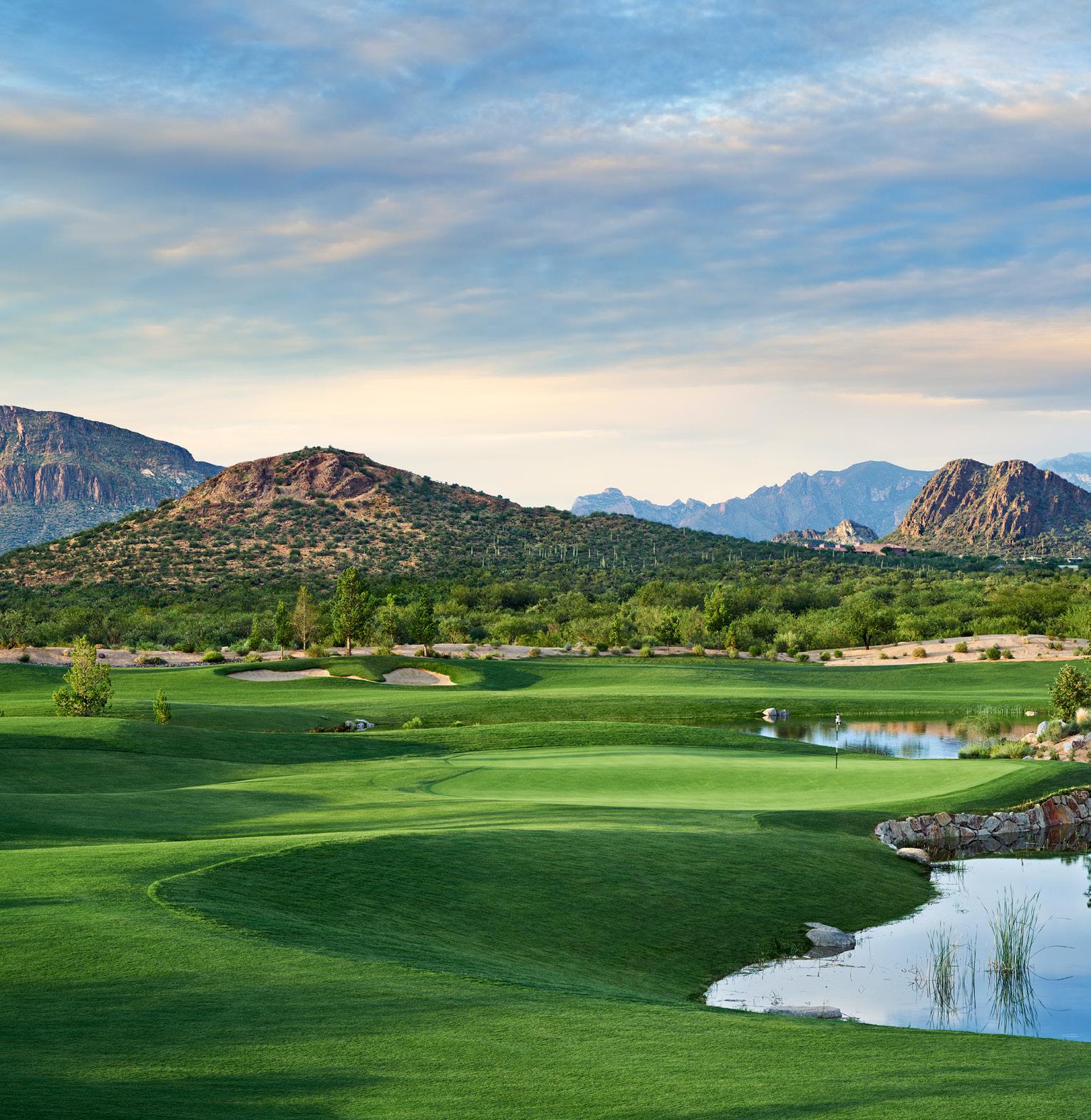
SEWAILO GOLF CLUB
TUCSON
Venue for the Epson Tour’s Casino Del Sol Classic from 2021 through 2024.
Missy Jones
INTERVIEW BY TOM MACKIN
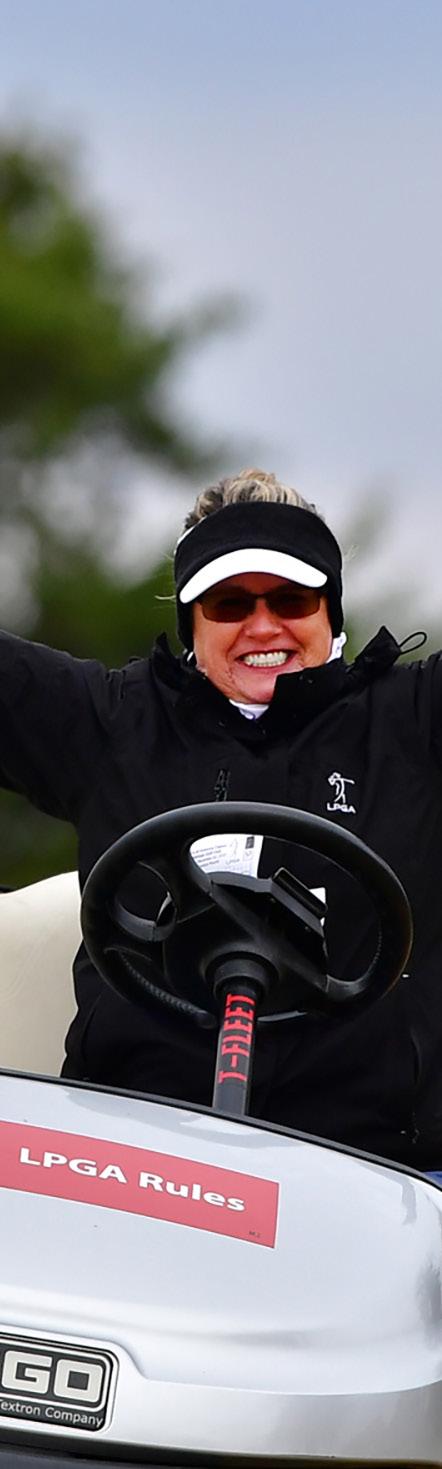
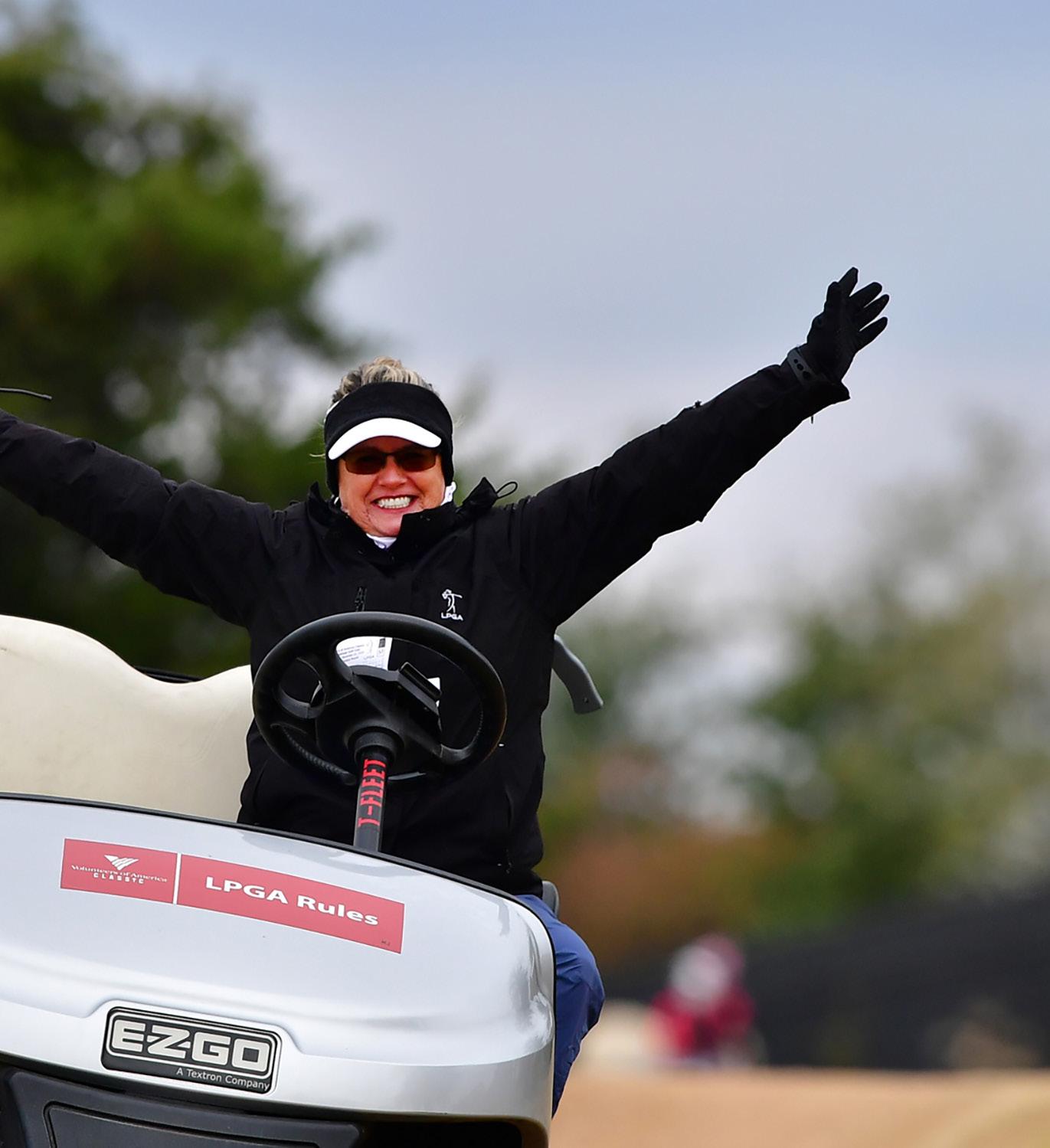
Growing up in Billings, Montana, Missy Jones had no idea she would one day walk around the world’s greatest golf courses as a rules official. But that’s exactly what happened. A graphic designer by trade, she worked at USGA, LPGA, NCAA and state golf associations events before joining the LPGA Tour full-time in 2018. Currently Senior Manager, Rules and Competitions, the 60-year-old returns to Arizona March 26-29 for the 2026 Ford Championship presented by Wild Horse Pass at Whirlwind Golf Club in Chandler.
What rule does the general public really not understand?
ARIZONA GOLF INSIDER: What is it about the rules of golf that drew you in?
MISSY JONES: I was on the executive board for the Montana Golf Association and wanted to learn more about the rules to help run our championships. If you start getting into the rules, you kind of take a deep dive into them or you just don’t go there. You have to really want to get good at them, because it’s a lot of work.
How does one become a rules official?
When I started, the USGA and PGA of America co-sanctioned a class and several workshops about the rules every year. There’s also a 100-question test (which needs to be passed once during every rules revision period). You had to get at least a 95 (now 90) on that to achieve expert status and be able to work at a U.S. Open (Women’s, Men’s and Senior), U.S. Amateur and U.S. Women’s Amateur. It’s stressful.
I think it’s the TIO (Temporary Immovable Obstruction) stuff that we do on TV all the time. That involves some big bleacher, signage or something that’s there only for the tournament. It’s not just an obstruction rule. You can actually get line of sight relief from those, but in a general sense, you don’t get line of sight relief from an obstruction, like an irrigation box or something. But you would for a bleacher. It’s a little more complicated, and the general public doesn’t really deal with it that much, so they always ask questions about those rulings.
Do courses in Arizona present any unique rules situations?
There is some interesting stuff, because when you’re marking a penalty area, generally it needs to have water in it. But a lot of times in the desert you’re looking at a spot that could have water in it after a really bad storm, but it’s

“…If you start getting into the rules, you kind of take a deep dive into them or you just don’t go there. You have to really want to get good at them, because it’s a lot of work.”
really just a dry gully right now. So you have to sit and think through all those marking issues on desert golf courses.
How often are you on the road annually for LPGA tournaments?
It’s about 26 weeks a year. Four or five of those times I work in advance for a tournament (including the 2026 Ford Championship), which means I’m there for two weeks, marking the course, picking the tees and hole locations, having input on where the TV towers go and where the leaderboards go, etc. If I’m just working rules for a tournament, I get there Monday of tournament week and leave the next Monday.
What is your relationship like with the players?
The LPGA is like a circus. We go from town to town, we pop up our tent, we travel together. We end up staying together in the same hotels, or riding on the same flights. We see them all the time. I’m trying to get them out of a tricky situation if I can. I’m not there to ding them.
Can you ever really know all of the rules and their implications?
The better you get at the rules, the more you don’t know. When people act like they know everything about the rules, they don’t. I think when any one of us is like, “Hey guys, make sure I’m thinking right here,” then you get on your radio and get confirmation from your team.
How much longer will you be out there on Tour?
The road is addictive. Two weeks off in a row is a luxury. And when you do get two weeks off, you can feel yourself getting ready to go again. I’ll be out there a few years more. I’m confident of that.


Top left: Jones at an LPGA event in Texas in 2020.
Top: Jones discusses rules situation with Hannah Green during the 2025 CME Group Tour Championship.
Bottom: Jones and former U.S. President Barack Obama at the 2024 Solheim Cup.
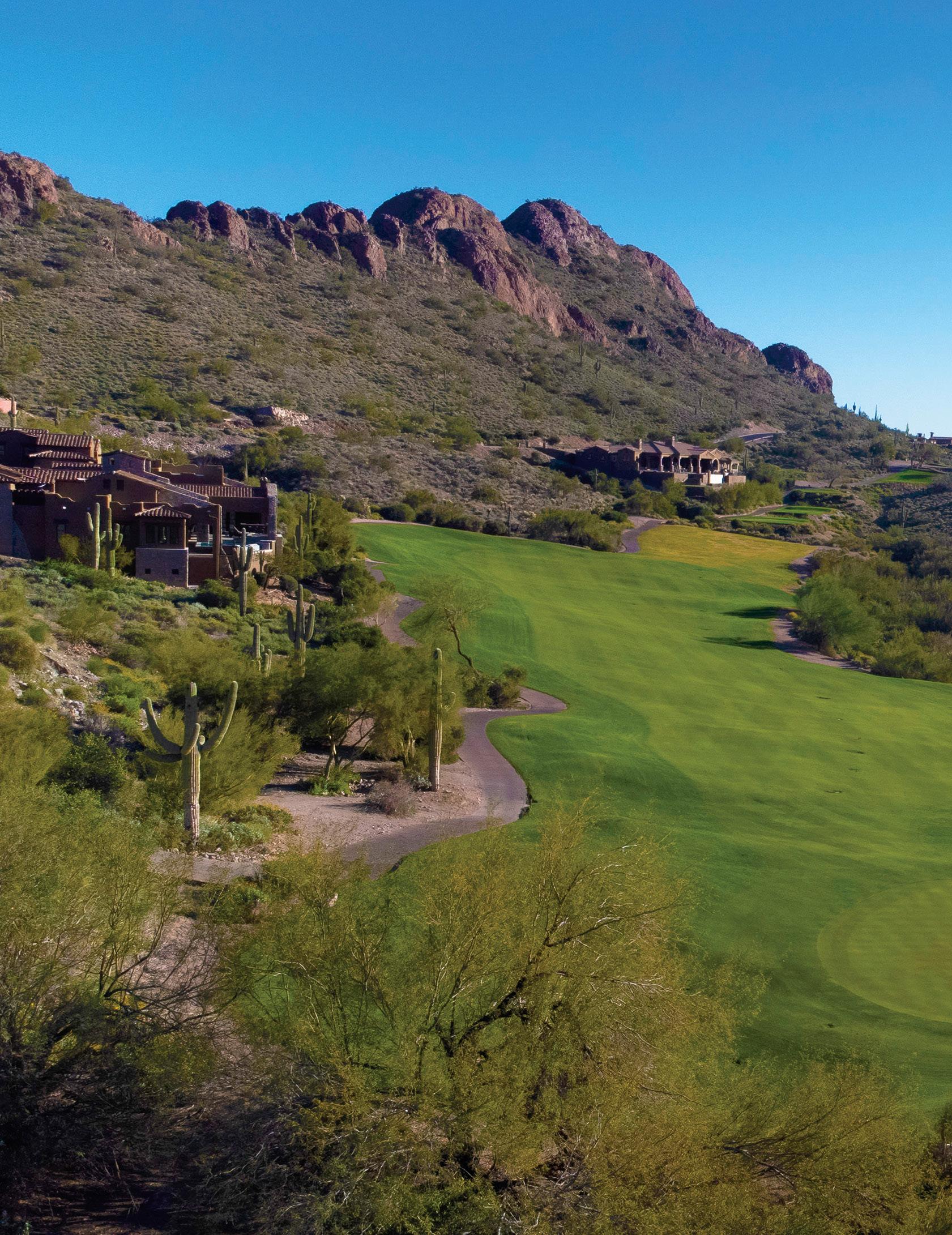
DINOSAUR MOUNTAIN GOLF COURSE
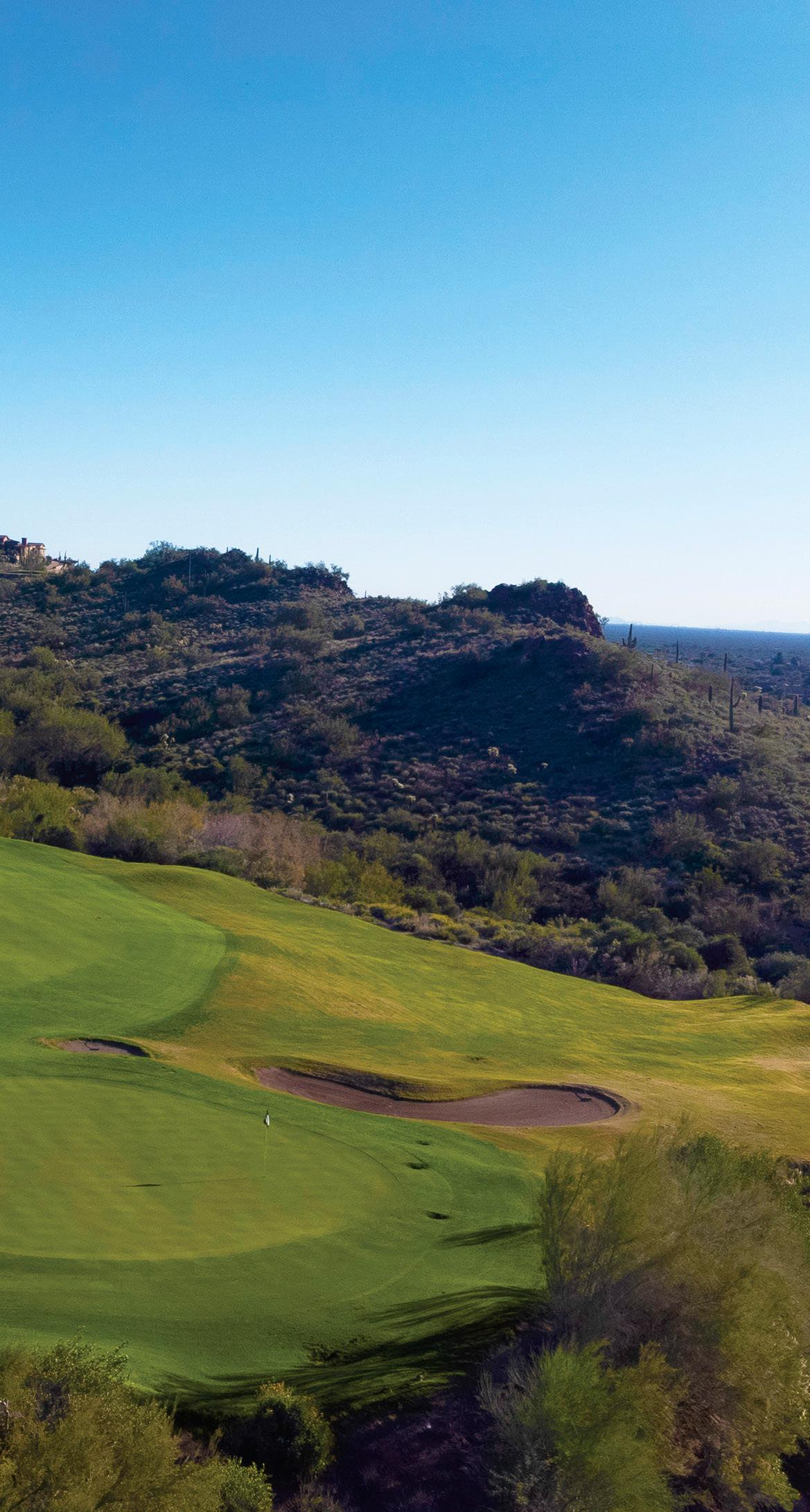
GOLD CANYON GOLF RESORT & SPA
MOUNTAINDINOSAUR
“This dogleg left is the most difficult hole on the course. There’s desert on the lefthand side, so you can’t cut too much off the tee shot, and the fairway slopes sharply from right to left on the other side. The ideal drive is a little draw off that right side to generate more roll and distance when the ball lands. The green also slopes pretty severely from right to left, with two bunkers short left. Good luck if the hole is located on the back right shelf!”
—SCOTT SCHERGER PGA Director of Golf
DID YOU KNOW?
The fourth hole is part of the original layout designed by Arizona golf course architect Ken Kavanaugh in 1986. As for the course name? That comes from the mountain (pictured) shaped like a dinosaur on the resort’s east side.
BY CHRISTINA BARRUETA
A CENTURY OF STORIES
Adobe Bar & Grille’s renovation celebrates its place in Arizona golf history
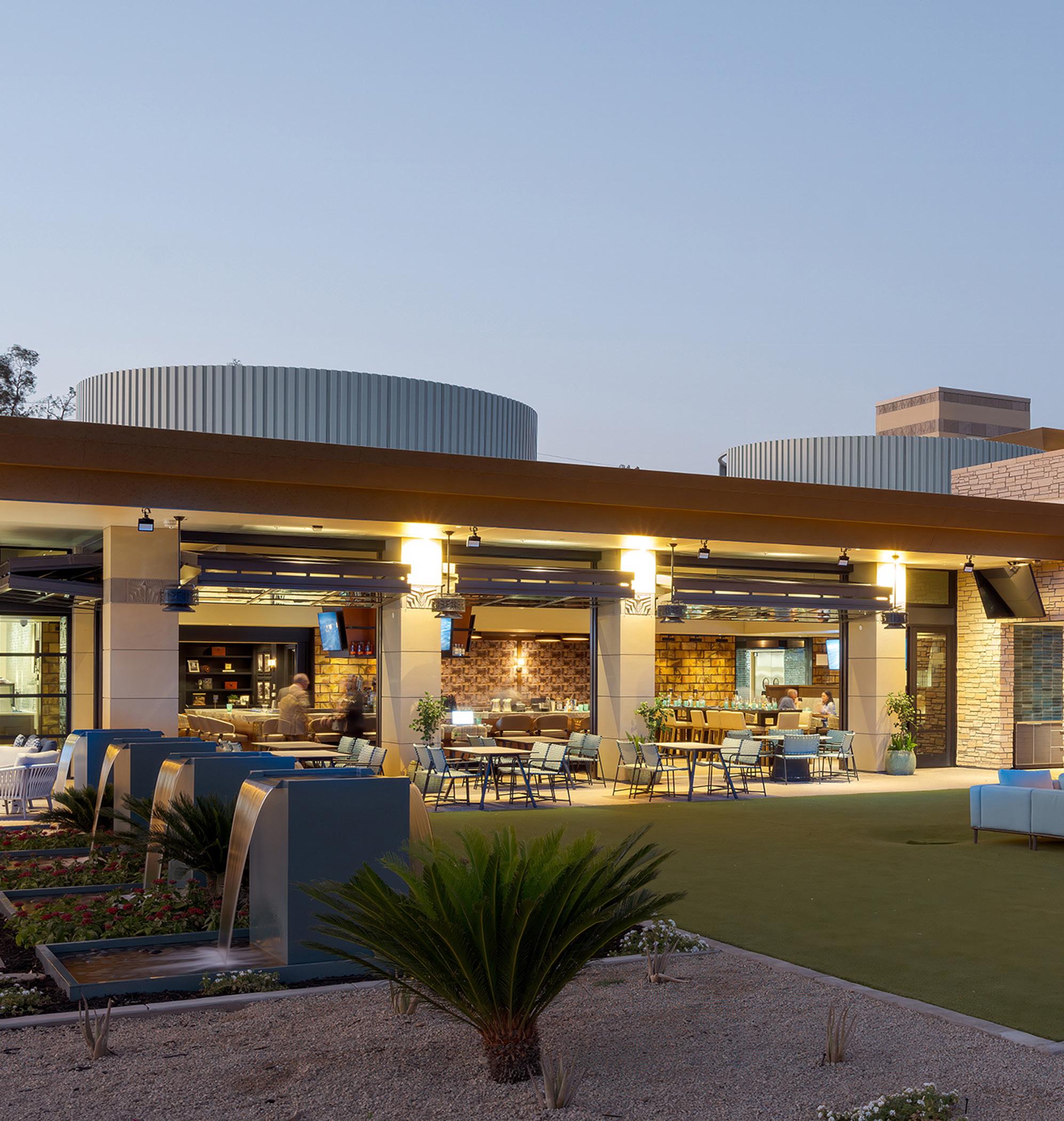
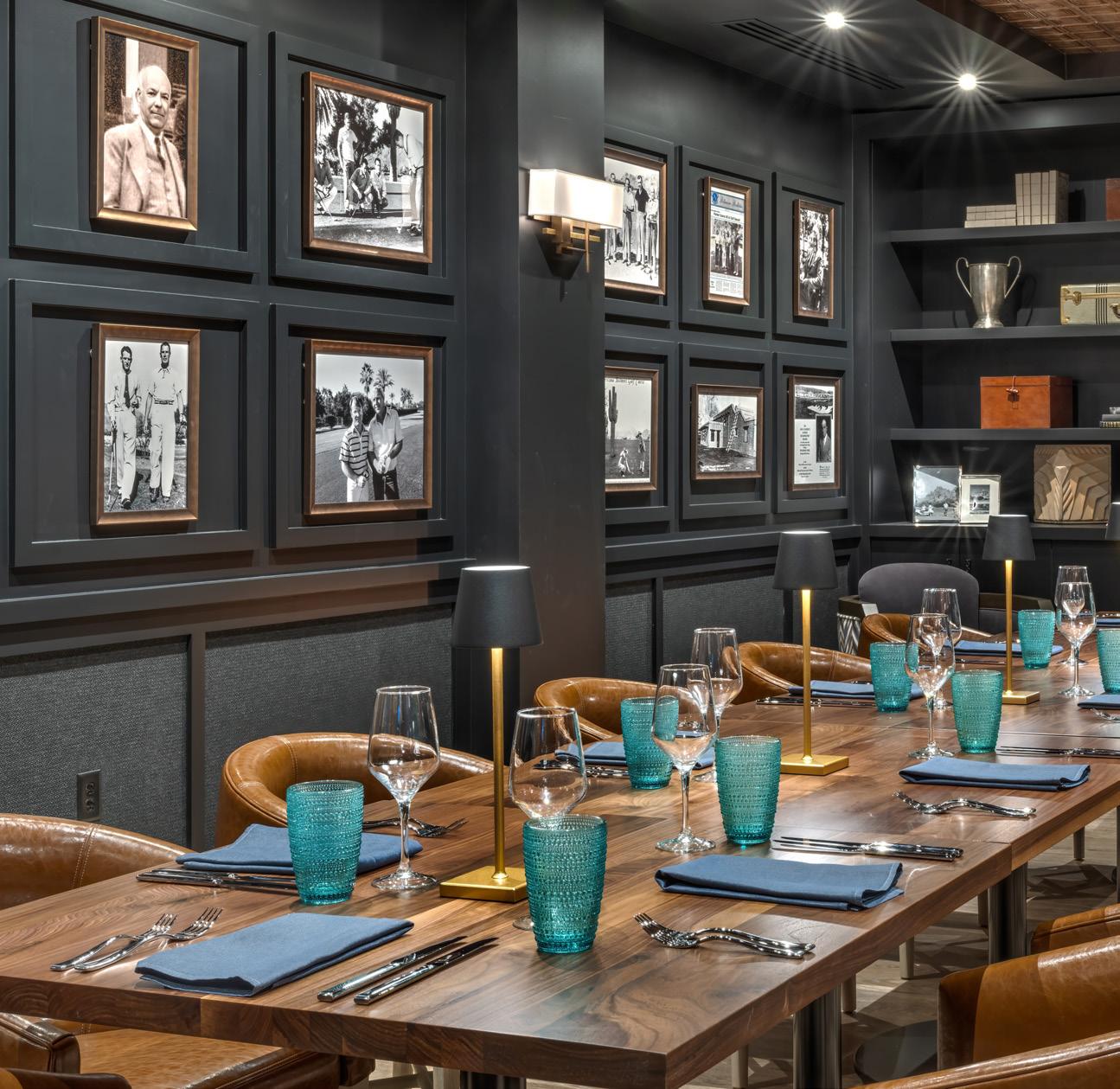
Nick Kim pauses before a glassenclosed case displaying adobe blocks baked hard by the Arizona sun nearly a century ago. “Those are from the original building,” says the general manager of Adobe Bar & Grille in Phoenix. We’re standing in the Legacy Room, a private dining space at Arizona Biltmore Golf Club, where historic photographs of those who once enjoyed the property — John and Jackie Kennedy, Franklin D. Roosevelt and Clark Gable among them — line the walls.
BUILT ON HISTORY
Those blocks tell a story that stretches back to 1928, when the site of the Adobe Restaurant was built alongside the Arizona Biltmore resort. Architect Albert Chase McArthur, a Frank Lloyd Wright apprentice, enlisted his help with a textile block pattern that would become the resort’s signature. It’s one of the historic design elements incorporated into the Adobe Bar & Grille, the centerpiece of the 19,400-square-foot clubhouse renovation completed in 2024.
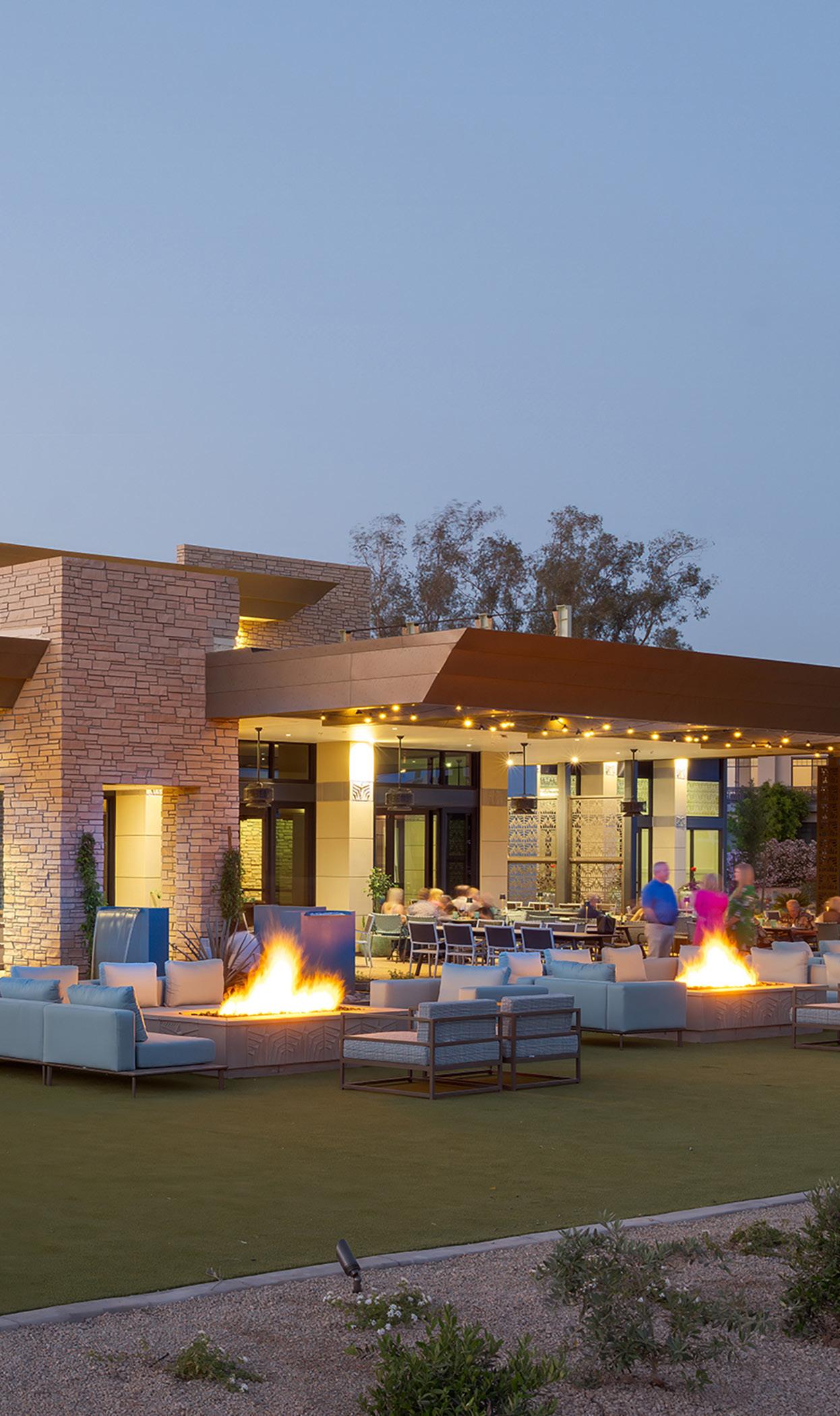
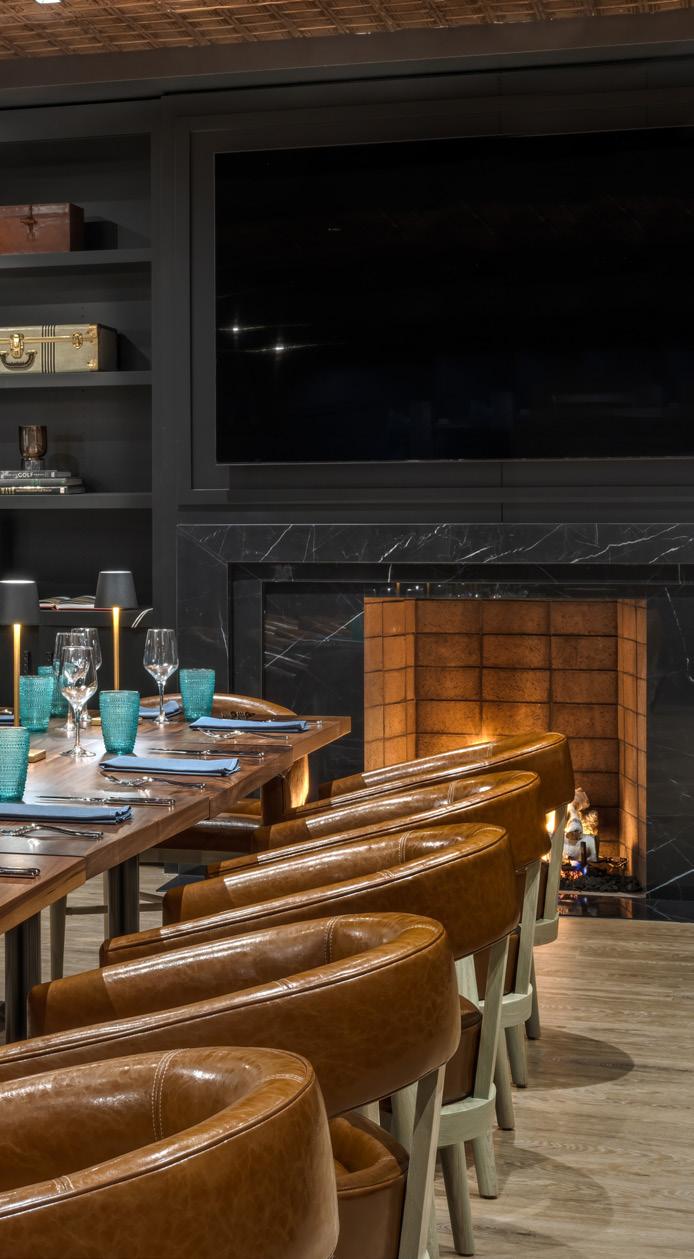
A U-shaped bar anchors the main room adjacent to the dining room, open to the public, where warm wood meets copper accents and pops of sky blue echo the Arizona horizon. But the most striking highlight are the retractable doors that open to the sprawling patio and Estates Golf Course, which replaced the former Adobe Course. “You can see all of South Mountain, especially from the upstairs balcony,

and even downtown Phoenix,” points out Kim. Water features and fire pits punctuate the outdoor space for the ultimate Arizona indoor-outdoor lifestyle. “We have plenty of heaters for when it gets chilly,” he continues, “and during the summer, we have fan misters. It’s beautiful, especially at sunset, and people propose on the lawn because of those views.”
FROM THE KITCHEN
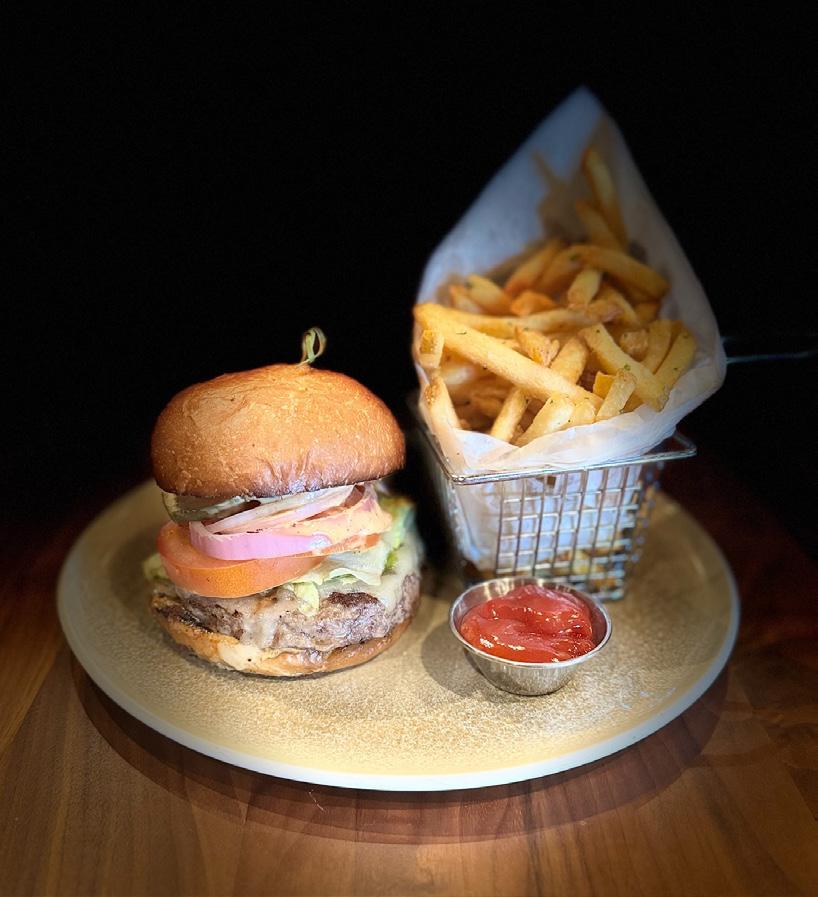
Along with the renovations came a complete menu revamp. “Before, it was more like your typical golf course menu with hot dogs, wings and nachos,” explains Kim. Today, under Executive Chef Luis Malago, Adobe Bar & Grille delivers a more polished take. While those comfort staples remain, you’ll find them alongside flatbreads built on scratch dough and fresh pasta made daily.
The breakfast menu spans comfort classics and Southwestern favorites, from huevos rancheros and chorizo-studded breakfast burritos to fluffy buttermilk pancakes and eggs Benedict, while lunch keeps things relaxed with fan favorites like quesadillas stuffed with smoky chicken tinga, a Reuben layered with ale-braised corned beef and the Adobe Burger made with a chuck, brisket and Angus beef blend.
As the evening approaches, the mood transitions. “At night, we want to give our golfers a nicer experience and attract people from the community,” says Kim, “so we dim the lights for a more upscale dining atmosphere.” The menu similarly steps up with sophisticated additions like charred octopus accented
with red pepper mole and olive aioli, pomegranateglazed salmon topped with jalapeño-spiked chimichurri and a juicy filet mignon partnered with mustard butter and creamy Boursin cheese mashed potatoes.
“We also run different specials because it’s important to keep things new and evolving,” Kim points out. The now-regular Sunday Smoke Out is one example. Smokers fueled with mesquite wood turn out spice-rubbed tri-tip, bourbonhoney glazed spareribs and pulled pork sandwiches with Carolina mustard and crispy onions, while sides like Hatch chile mac and cheese, grilled street corn and drunken cowboy beans studded with bacon keep the crowds coming. Launched in early October last year, it quickly became a success. “Every

week it got busier and busier,” notes Kim. “We have a lot of repeat guests who are bringing their friends back.”
IN THE GLASS
The beverage program gets as much attention, divided into Side Hustles (margaritas with a shaker sidecar), Legends and Icons. The Legendary Margarita ranks among the most-ordered, as does the Smoked Old Fashioned and Espresso Martini. “And our spritzes are more popular than you would expect,” adds Kim with a grin. The bar program also connects with the community, stocking Ball Washer, a
blonde lager collaboration with local Shop Beer Co., and pouring Comisario, a member’s tequila brand.
“We’re trying to develop a whole culture,” says Kim.
“During the day it’s active with golfers coming in and out, families on the patio and people working on their laptops. At night, golfers will go home, pick up their families and come back, and people in the neighborhood will join us out for a nice dinner. We want to be a place where everyone comes to hang out — like Cheers, where everyone knows your name.”
Empowering Kids and Teens Through Golf
First Tee – Tucson
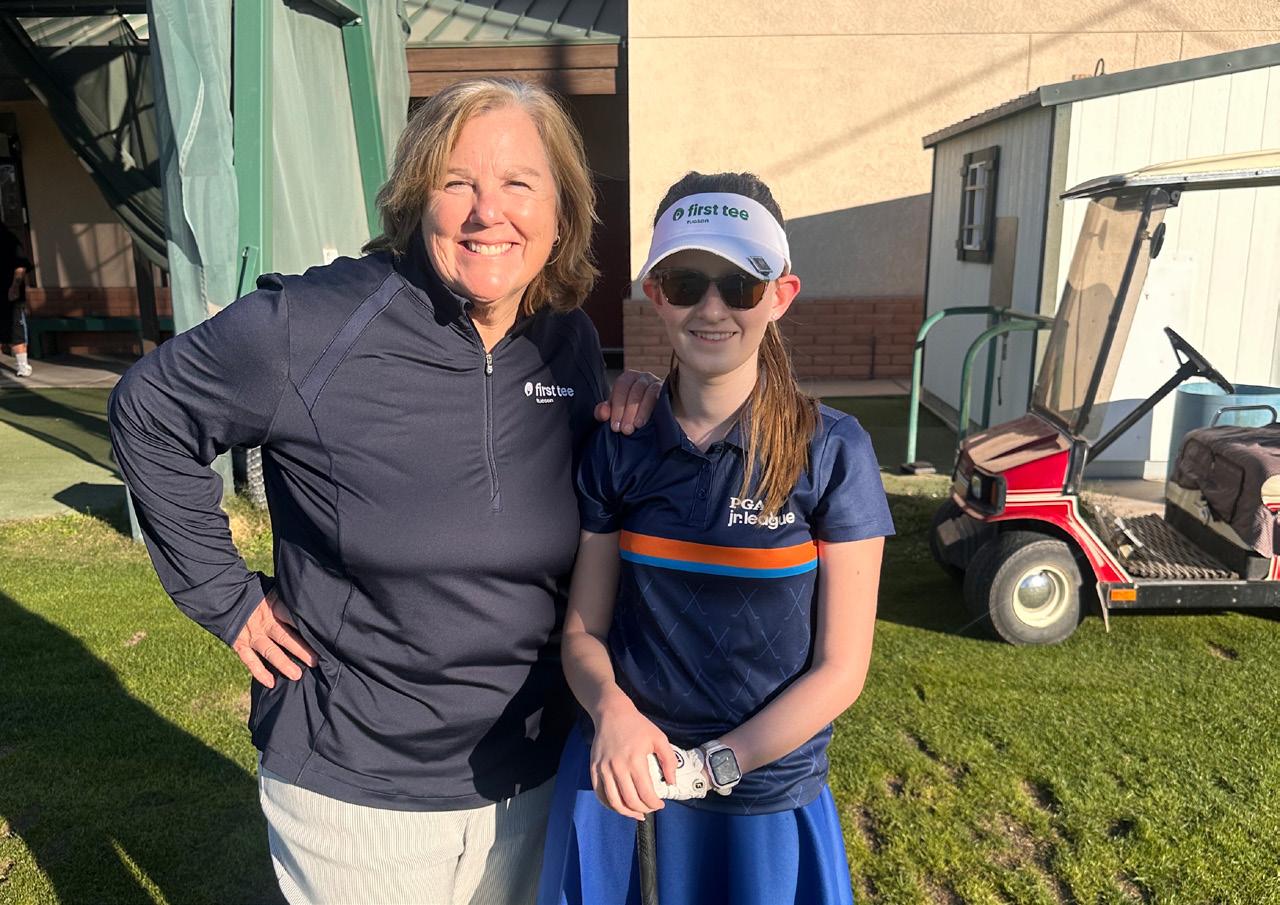
It’s the first stop for junior golf in Southern Arizona. First Tee – Tucson offers something for everyone.
BY TOM SKULSKI
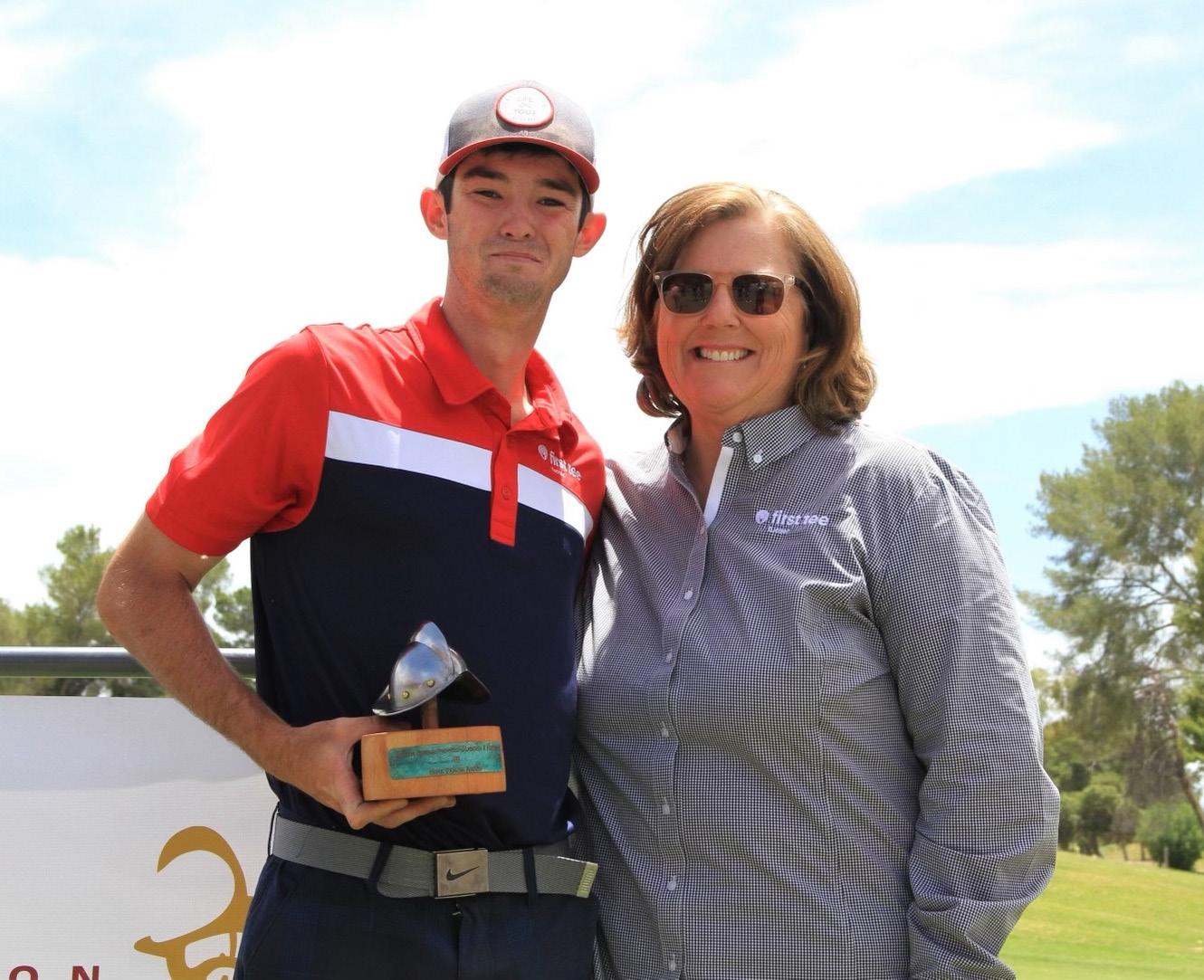
“The best part is we don’t turn anybody away,” said Executive Director Judy McDermott. “If a kid can’t afford to participate, we have financial aid.”
That, in a nutshell, captures the organization’s identity. Children from every corner of the community can be recruited with their needs accommodated.
Founded in 2006, First Tee – Tucson provides golf programming for children of all ages with an emphasis on character development and teaching life skills, all in a fun and inclusive environment.
McDermott takes pride in creating a space that can be as relaxed or as competitive as each participant wants it to be. Young golfers can show up once a week simply to enjoy the game, or they can dive deeper and train as seriously as they would in a golf academy. The organization, which is now quickly approaching 1,000 participants, hosts classes across 10 Southern Arizona locations after school and on weekends.
While the Junior Golf Association of Arizona (JGAA) hosts the state’s most competitive youth events, First Tee – Tucson focuses on developmental tournaments, giving the youngsters a chance to ease into competitive play. The organization also operates the Southern Arizona Junior Golf Association — originally launched by volunteers and supported by Tucson Conquistadores funding — which is designed for intermediate-advanced players age 6-18.
“We model our tournaments similar to how Scott (McNevin) runs his tournaments with JGAA, and we work in great partnership with them,” McDermott said.
First Tee – Tucson also oversees the Ricki Rarick Junior Golf Program, which it adopted about a decade ago.
“Ricki Rarick Junior Golf is a series of golf tournaments that is run every Monday and Tuesday in June and July,” McDermott said. “We are trying to get kids on the golf course, learning how to play tournament golf and just having fun.”
A GOLF LIFE
McDermott often reflects on her own childhood, playing golf at age seven with her father in Southern California. A 2023 inductee in the Arizona Golf Hall of Fame, she had to compete on the boys golf team in high school because no girls program existed.
She later played college golf for the UCLA women’s team before beginning a career in golf tournament operations.
After college, McDermott interned at an LPGA TOUR event in Southern California. In 1992, she was recruited to help with the Tucson Open, a PGA TOUR event. She rose the ladder quickly, first as Tournament Coordinator, then Tournament Director and ultimately Executive Director.
“I only thought I’d be here for a few years, and I’m still here,” she joked. “I really got bit by the bug. The Tucson Conquistadores were great to work for, and it was really fun to give money away to charity.”
The Tucson Open was operated by the Tucson Conquistadores, which for years provided free instruction and course access for young golfers. But as interest grew, so did the need for an organization devoted exclusively to junior development.
20 YEARS OF FIRST TEE IN TUCSON
While the PGA TOUR and thencommissioner Tim Finchem prioritized the First Tee initiative, the Conquistadores began the process of launching a First Tee chapter in Tucson. Paperwork started in 2004 and First Tee – Tucson officially opened two years later with McDermott as its Executive Director, the role she still holds today.
“It was a natural fit for us to start a program here in Tucson,” she said.
First Tee – Tucson is based at El Rio Golf Course, which underwent renovations to better serve youth golfers. The facility now features junior tees on each hole, three training holes at the driving range and a junior practice area. The Conquistadores also built the First Tee – Tucson clubhouse which opened in 2009.
While the Conquistadores helped fund the First Tee program, the
two organizations maintained separate boards. McDermott worked closely with both for many years before transitioning full-time to First Tee about five years ago. Since then, the organization has placed an increased emphasis on scholarships and long-term opportunities for its participants. Its College Scholarship Program currently supports eight alumni pursuing higher education. First Tee – Tucson also helped launch the Evans Scholars Caddie Program at Tucson Country Club. First Tee member James Labukas was named a 2024 Evans Scholar.
For McDermott, stories like Labukas’ illustrate the lasting impact of introducing the game of golf at a young age — something she often hears adults say they wish they had done too.
“(I want to) continue to do what we do, create good citizens and introduce this great game to as many kids as possible,” she said. “It is so important in business. You’re not going to play soccer until you’re 100, but golf is a lifelong sport. There are so many benefits to learning it young versus trying to pick it up later.”

Two is Better than Three

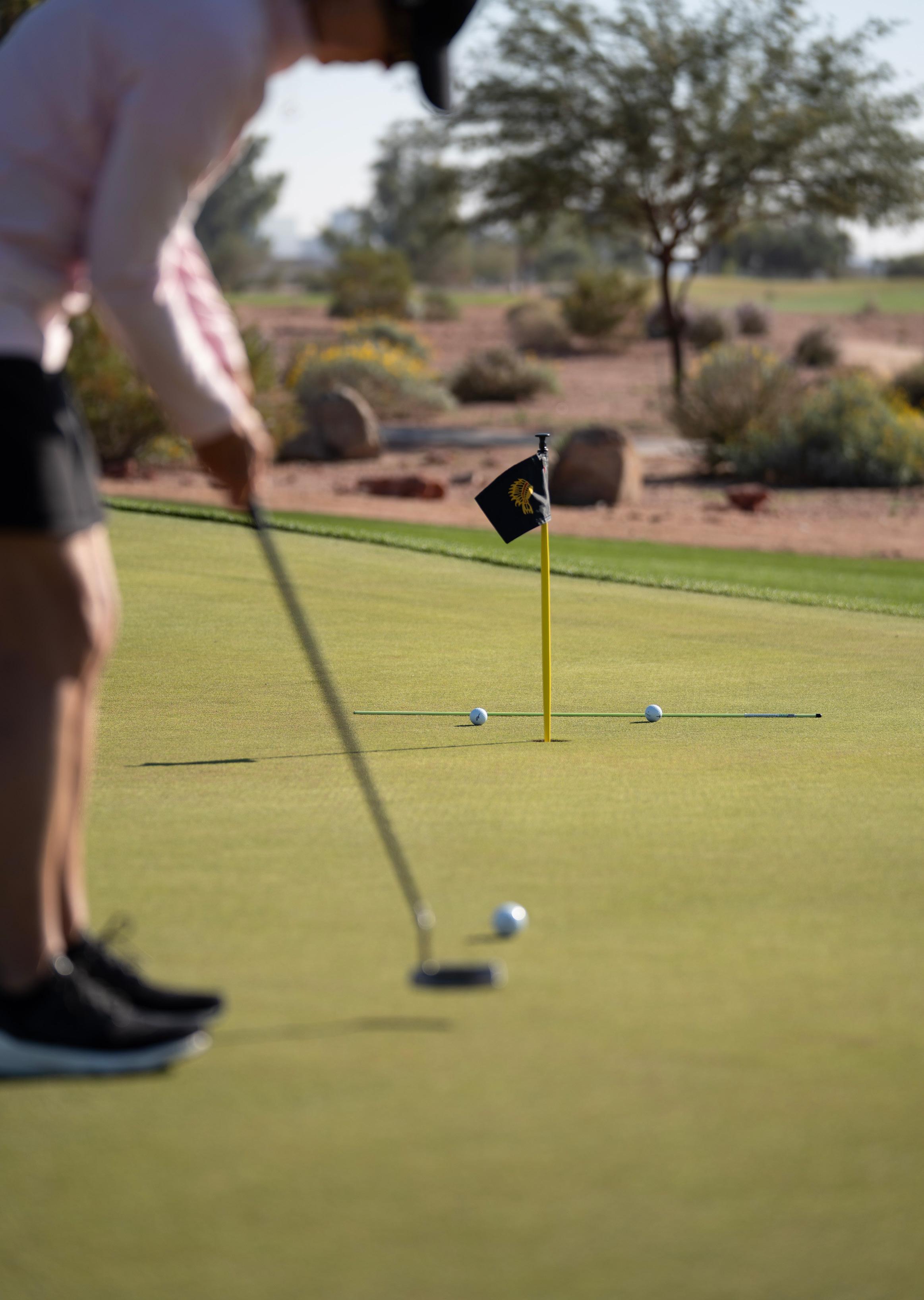
There comes a time in every round where you’re standing over a 20-foot putt for birdie, or maybe to save par. Making the putt is always the goal but not turning it into a three-putt is a close second. This drill will help dial in your distance control and keep your putts-per-round down.
Place an alignment stick two feet behind the hole.
WITH AMY FRUHWIRTH
Amy Fruhwirth, Championships Manager for AZ GOLF, played on the LPGA Tour for 12 years and is a member of the Arizona Golf Hall of Fame.
AZ GOLF Lesson Tee
Presented by
Set up 20 feet from the hole.
Putt balls with the goal of having your missed putts stop beyond the hole but without hitting the alignment stick.
Bonus Tip
If you don’t have an alignment stick, a club or the flagstick work as perfect replacements in this drill.
Looking for a new flatstick to help with your putting? Visit 2nd Swing Golf today.
Presented by

Athleticism ACCESS YOUR
Flexibility of muscles to improve mobility of joints is critical for golfers to unlock more rotation for a complete swing.
Michael Elliott, Senior Director of Banner Sports Medicine’s High Performance Center, shares two specific areas of the body which typically lack mobility but are key within the golf swing — the hips and the lats. The scientific approach Banner takes is to inhibit the muscle, stretch it out and activate it using a foam roller, static stretches and muscle activation exercises.
These stretches are meant to act as initial improvements for mobility, but long-term development can be made by getting a custom evaluation through the High Performance Center for a personal plan.
Start seated, with your feet flat and knees bent toward the sky, resting the back of your right hip on the foam roller. Cross your right foot over your left knee and hold for 60 seconds on the part of your hip that feels most tender. Once done, switch to your left hip with the left foot crossing over your right knee and hold for 60 seconds.
Learn how Banner Sports Medicine can support a healthier golf game
Foam Roll: Piriformis

2a
Lying flat on your back, grab your left ankle with your right hand and left knee with your left hand. Pull your knee toward your right shoulder and hold for 30 seconds. Swap legs and hold again for 30 seconds.
1b
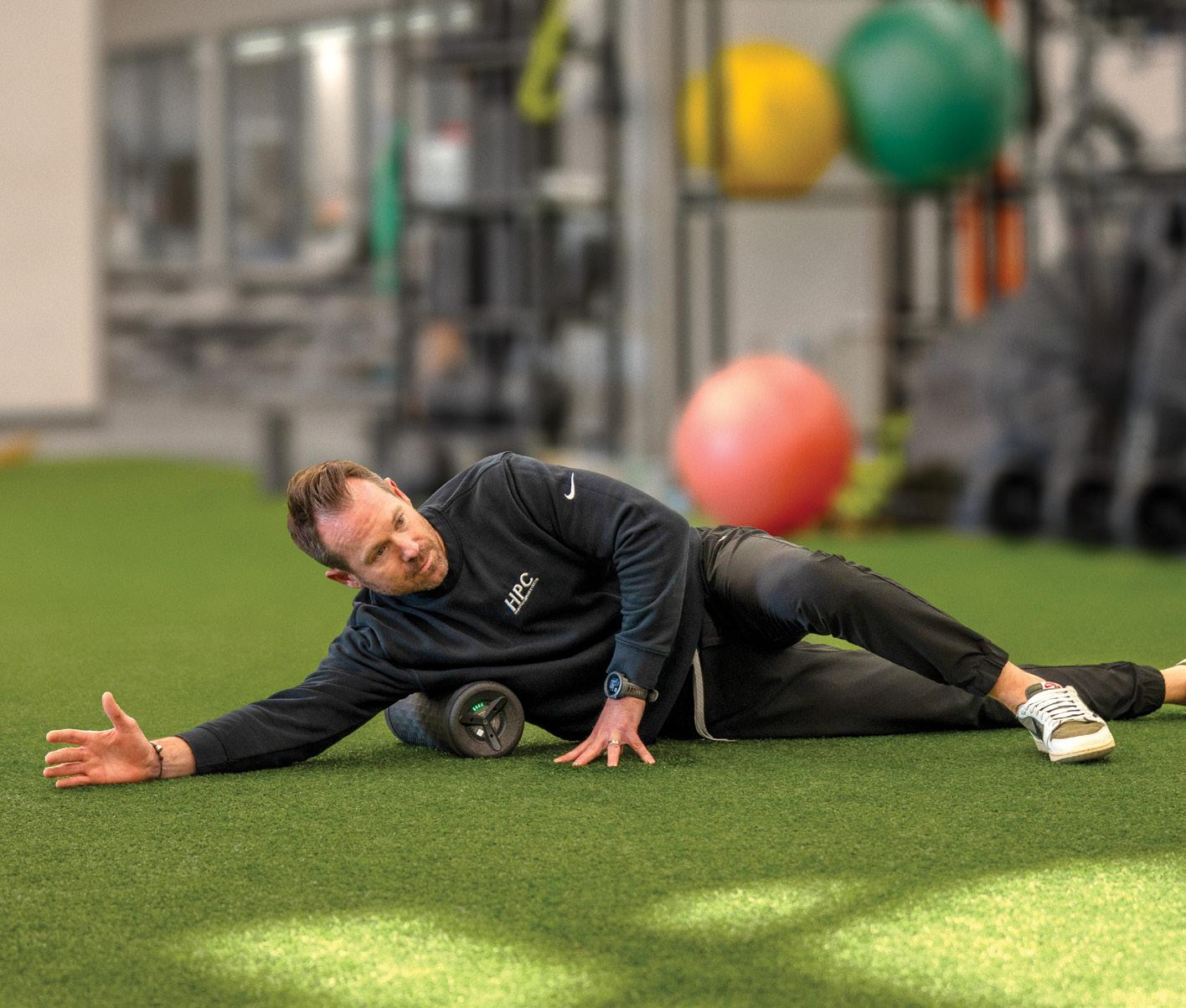
Foam Roll: Lats
Lying on your side, stretch your bottom arm out above your head — thumb up, with your top hand and foot anchoring your body out in front. Rest the roller on the tender spot of your lat for 60 seconds and then switch to the other side of your body.
2b
Static Stretch: Lats
Grabbing onto a stable post for stability, sit back and down into your hips to let the weight of your body stretch your lat. This can be done by holding onto the top of your golf cart. The stretch will loosen your lats, improving shoulder mobility.

Bonus Tip
Walking the course and have nothing to hold on to? Pull a club from your bag and stretch out from your knee with the clubhead as your anchor.

*This content is for informational purposes and should not supersede professional medical advice.
Static Stretch: Piriformis
Fundamental Golf
FINDING FREE RELIEF IN CERTAIN SITUATIONS
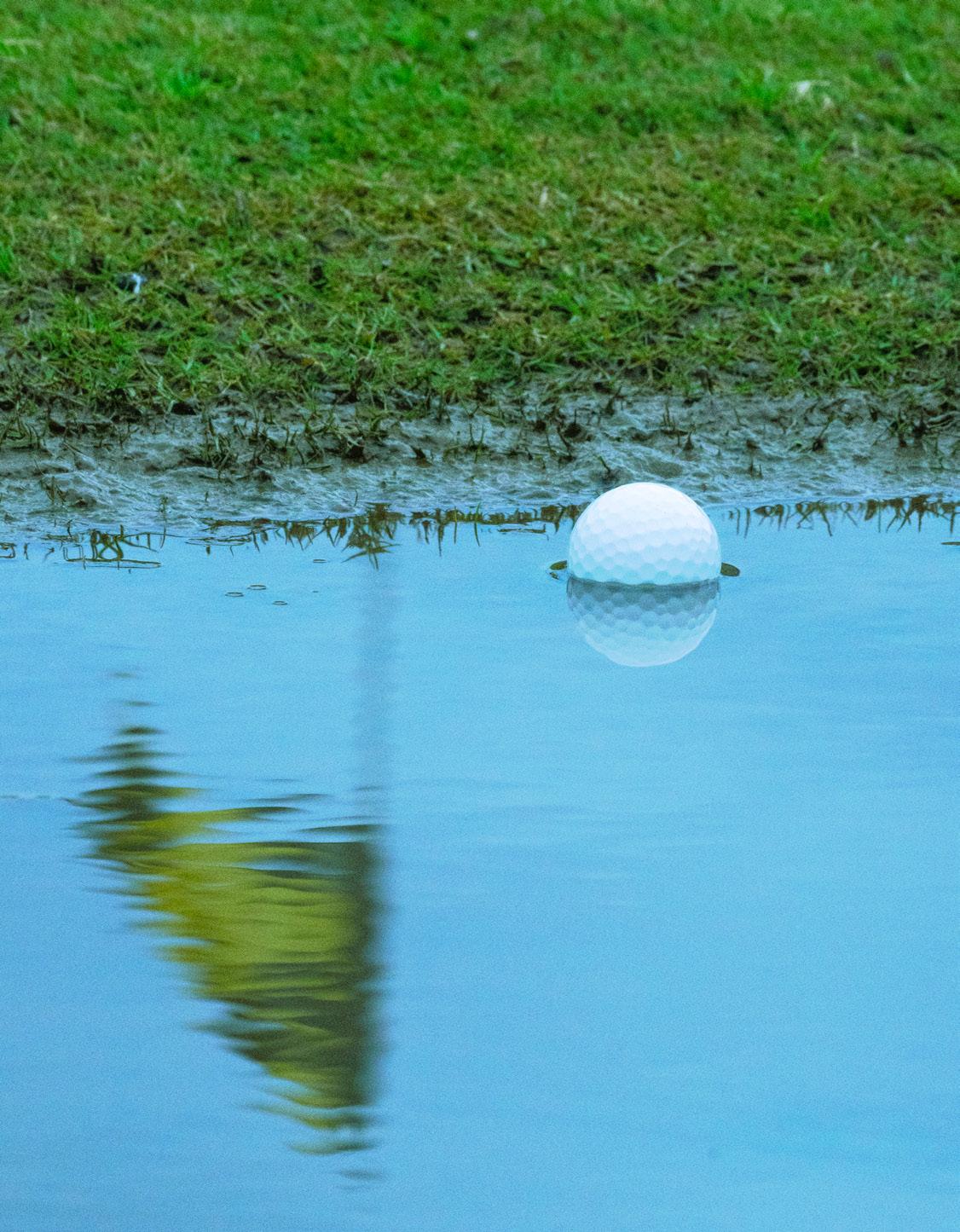
TEMPORARY WATER
Any temporary accumulation of water on the surface of the ground, such as puddles from rain or irrigation or an overflow from a body of water that is not in a penalty area and can be seen before or after the player takes a stance.
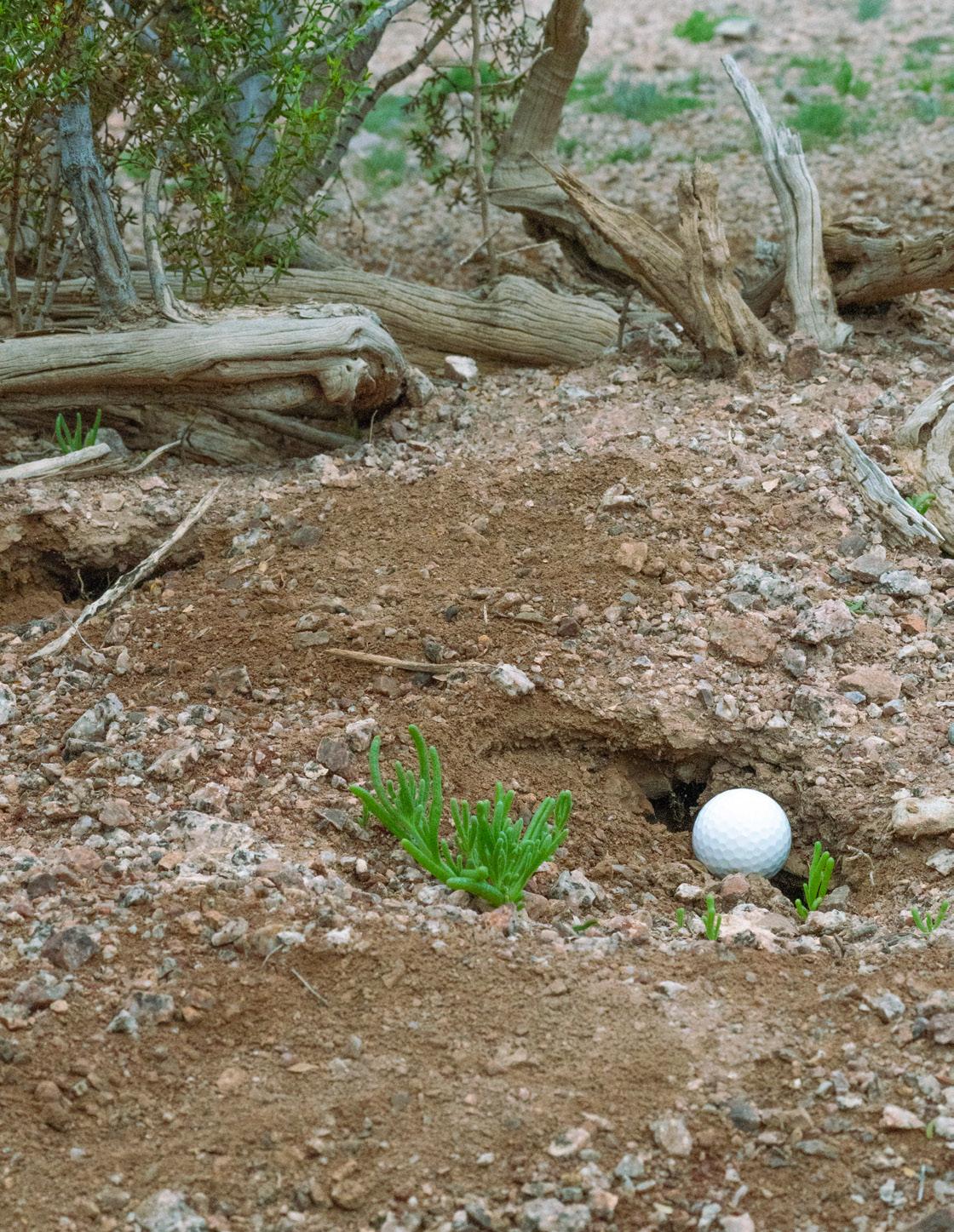
ANIMAL HOLES
Any hole dug in the ground by an animal, except for holes dug by animals that are also defined as loose impediments (such as worms or insects).
The term animal hole includes the loose material the animal dug out of the hole, any worn-down track or trail leading into the hole and any area on the ground pushed up or altered as a result of the animal digging the hole underground.
The current Rules of Golf is 525 pages long and details very specifically how the game should be played and what the penalties are if it is not. There are also two fundamental principles that apply to playing the game in general: play the ball as it lies and play the course as you find it.
Most of the time those principles are easy to follow, but there are four conditions that the Rules do not consider part of the challenge of playing the game. Let’s talk a bit about these Abnormal Course Conditions (illustrated below) which you are typically not required to play from during your round.

If you find yourself in any of these situations, you’re in luck. Rule 16 provides free relief by dropping a ball in a relief area based on the nearest point of complete relief. Check it out in the Rules of Golf for more detailed information.
GROUND UNDER REPAIR IMMOVABLE OBSTRUCTIONS
Any obstruction that cannot be moved without unreasonable effort or without damaging the obstruction or the course otherwise does not meet the definition of a movable obstruction.
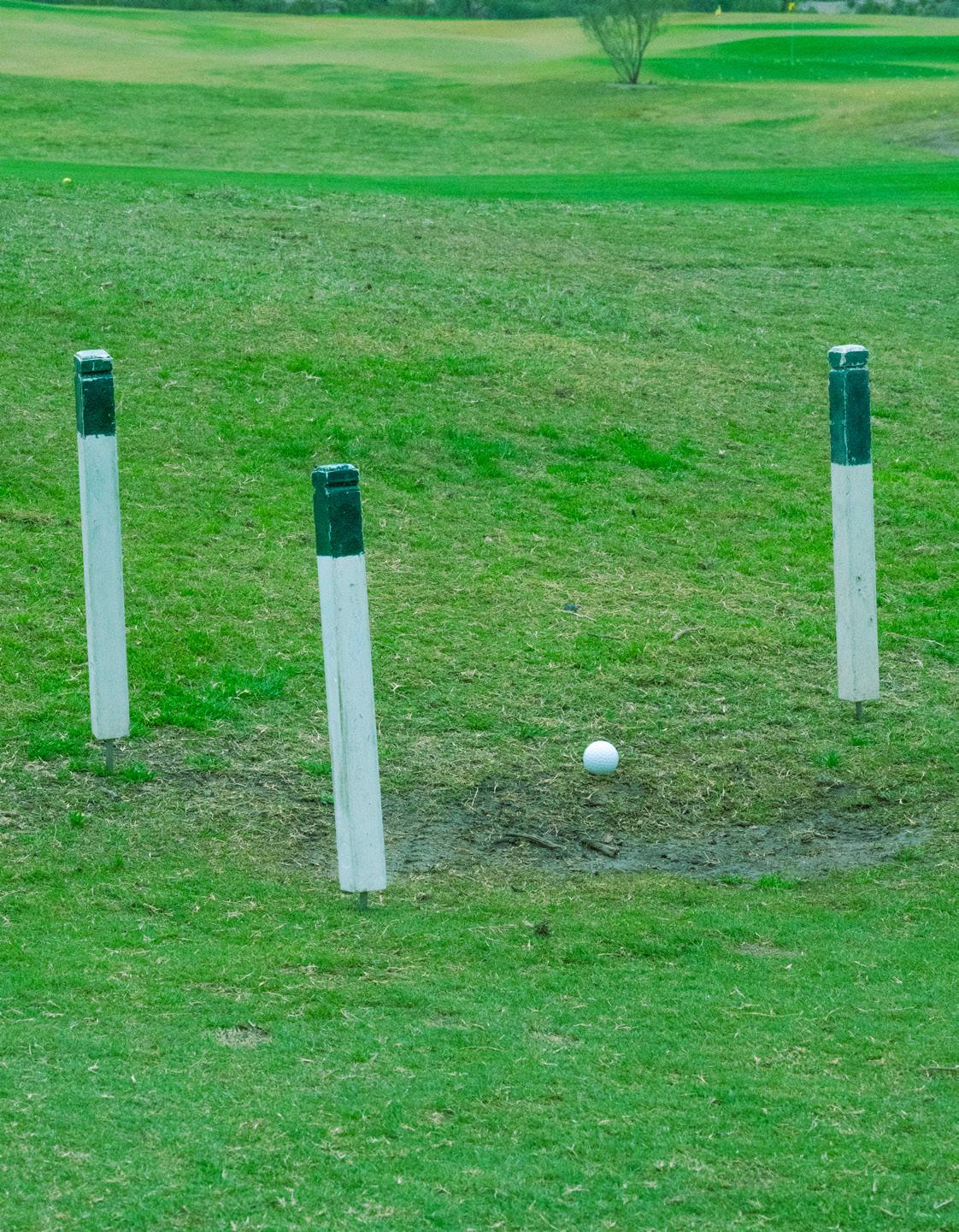
Any part of the course the Committee defines to be ground under repair, as well as additional items not defined by the Committee, including holes made by maintenance staff and natural materials piled on the course such as grass and leaves.
Scoring
Safeguards
ADJUSTING TO THE PLAYING CONDITIONS
We’ve all had days where the course was playing harder than normal due to weather conditions, course conditions or course setup. And on the flip side of that, some days it just feels like it’s playing easier. As part of the development of the World Handicap System, which was launched by the USGA and R&A in 2020, safeguards were put in place to protect the integrity of a golfers Handicap Index®. One of these safeguards is the playing conditions calculation, or PCC.
The PCC evaluates the actual scores made at a particular course each day and compares them to the expected scores of the players who made them. So, if more golfers than expected post scores higher or lower than anticipated, a PCC adjustment is made. These adjustments
can range from -1 to +3 and are made automatically within the Score Differential™ calculation and reflected within the player’s scoring record (but not the scores themselves). Most days, the PCC will be (0) meaning the course played as expected based on the Course Rating™ and Slope Rating™ of the different tees. Keep in mind, PCC calculations take place at the end of each day with only scores posted that day included in the calculations, so be sure to post your score the same day to ensure inclusion in the PCC data.
Curious if any of your recent rounds had a PCC adjustment? Check your scoring history in the GHIN App to find out.

All Smiles
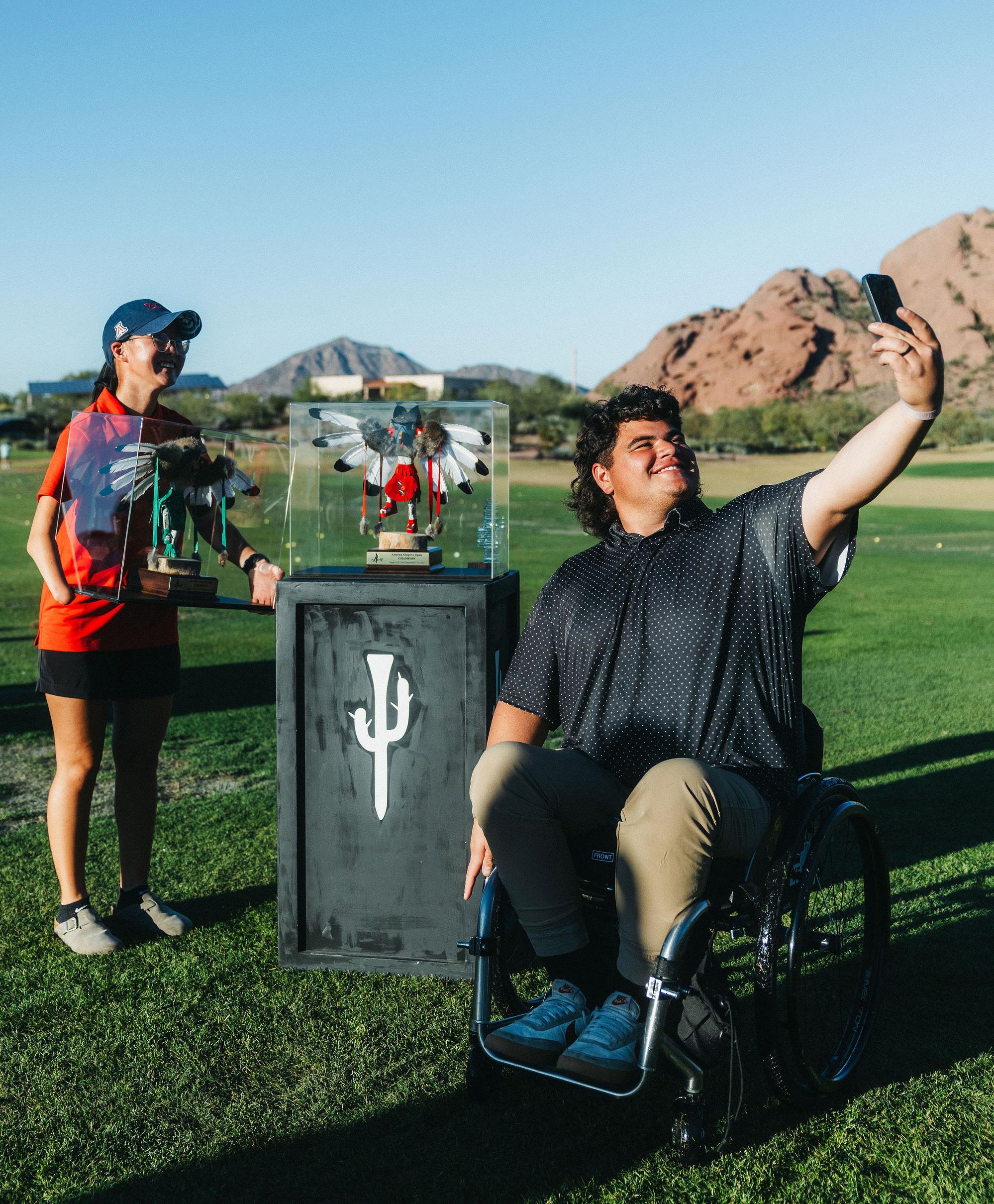
Sophia Howard and Max Togisala celebrate their wins in the 2nd Arizona Adaptive Open last December at Papago Golf Club in Phoenix. Togisala (right) was the only competitor to finish under par in the championship.