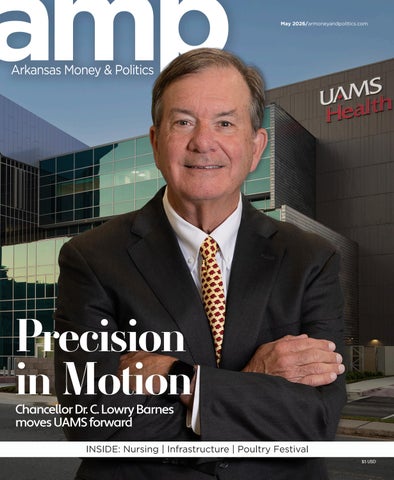
Precision in Motion
Chancellor Dr. C. Lowry Barnes moves UAMS forward

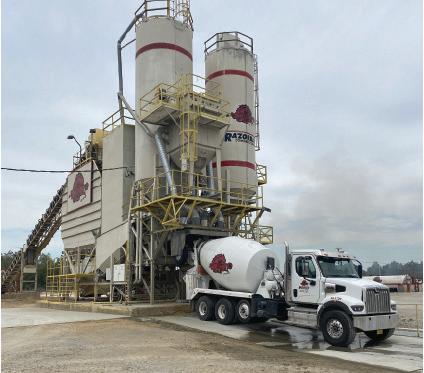
Built From the Ground Up. Engineered for Growth. Built From the Ground Up. Engineered for Growth.
Lauderdale Outdoor Services is a testament to what disciplined growth and relentless work ethic can achieve.
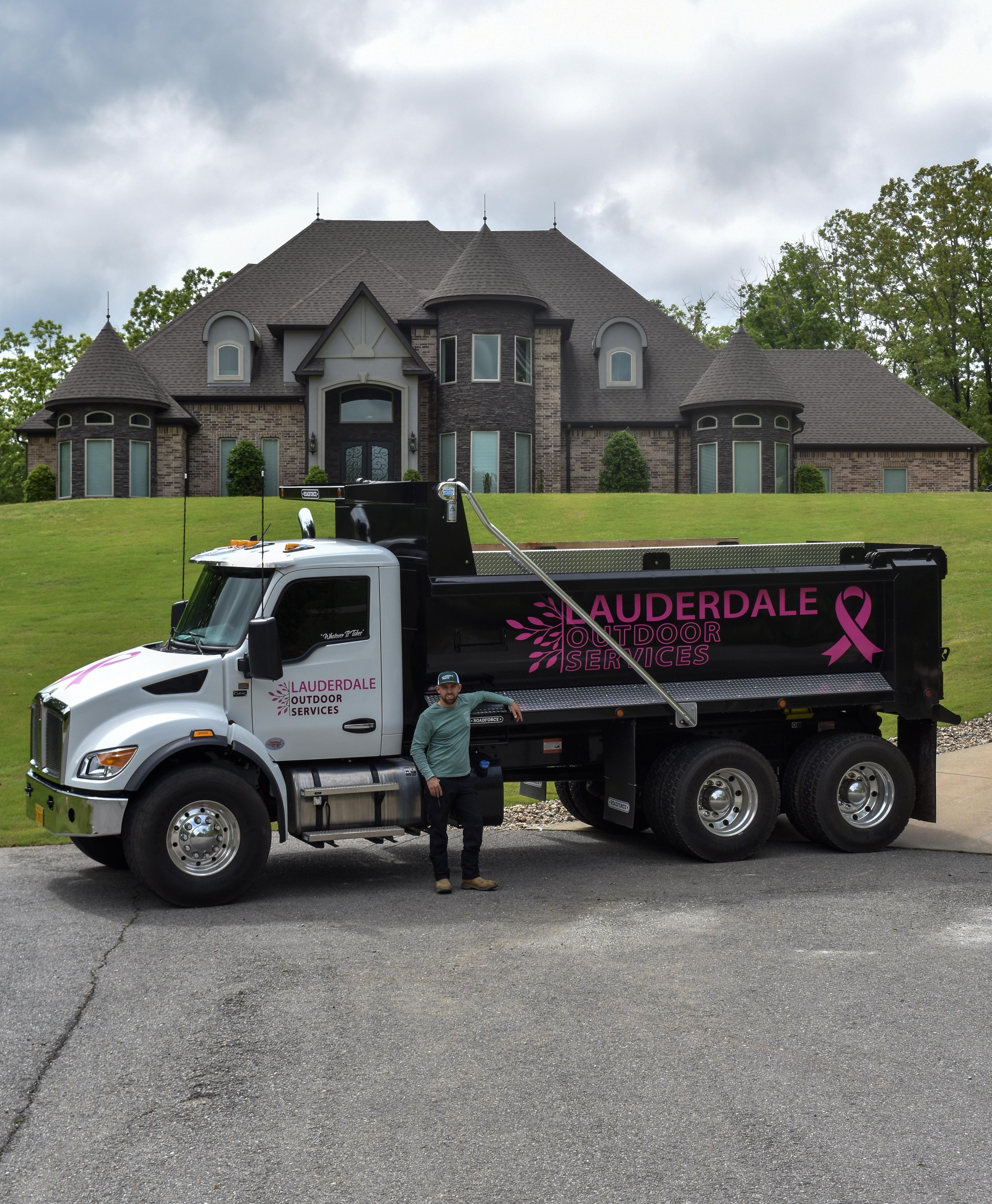
Founded by Hunter Lauderdale at just 17 years old, the company has grown from a single-truck startup into a multi-crew operation serving clients across Arkansas. Through strategic reinvestment in equipment, people and process, Lauderdale Services continues to scale while maintaining the consistency clients depend on.
Today, the company provides:
Custom patios
Landscaping solutions
Sod installation
Concrete work
Dump truck hauling
Retaining wall construction
Every project reflects a commitment to quality, efficiency and long-term value.
A grassroots success story—built right here in Arkansas.



Legacy. It’s what inspires all of us.
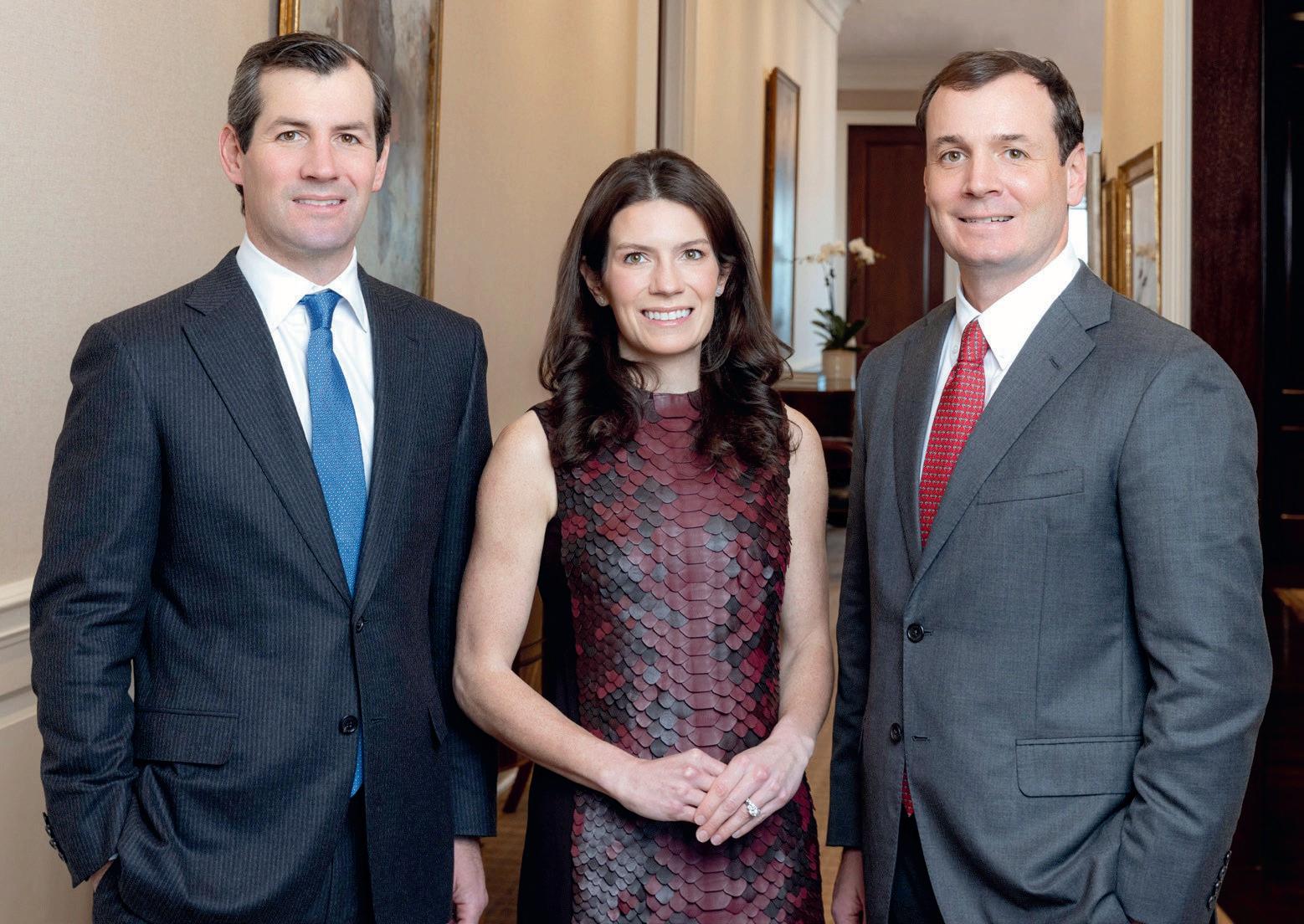
Vice President, Chair of the Executive Committee; Miles Stephens, Co-Chief Executive Officer
As a family-owned and family-led financial services firm for three generations, we understand both the unique challenges and the meaningful rewards of building and preserving a legacy.
Family has shaped everything we know and everything we do — and it’s a key reason Stephens is a trusted partner for families seeking thoughtful guidance for their businesses and wealth. Our independence empowers us to prioritize your goals, focusing on what matters most to you.
Every relationship matters and is built on mutual respect, integrity and a culture that values transparency and trust. We take pride in relationships that span decades, and successive generations.
At Stephens, our commitment is to you, your family, and your legacy — fostering growth for today, tomorrow, and for years to come.

John Stephens, Co-Chief Executive Officer; Laura Brookshire, Senior Executive
FEATURES MAY 2026

Maintaining society’s operating
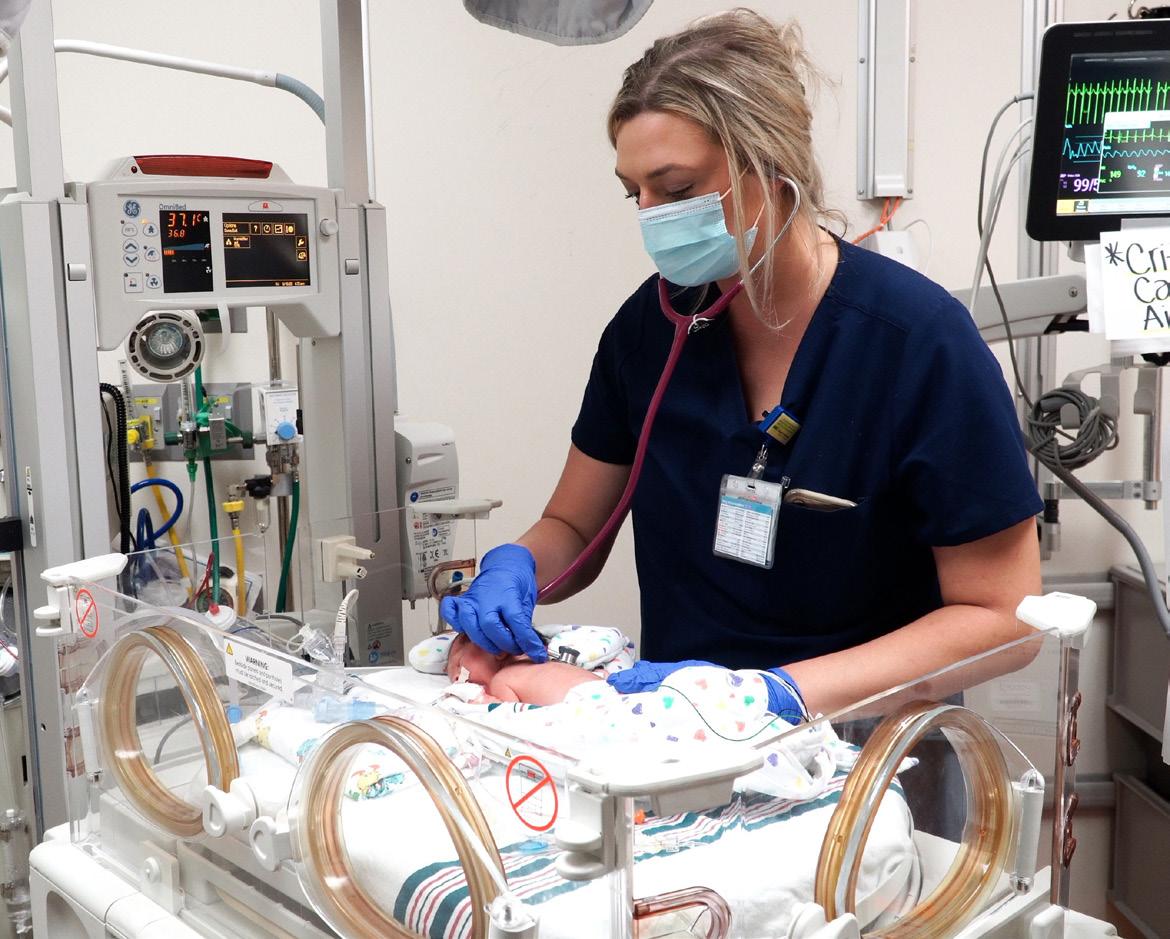
ROADS AND BRIDGES
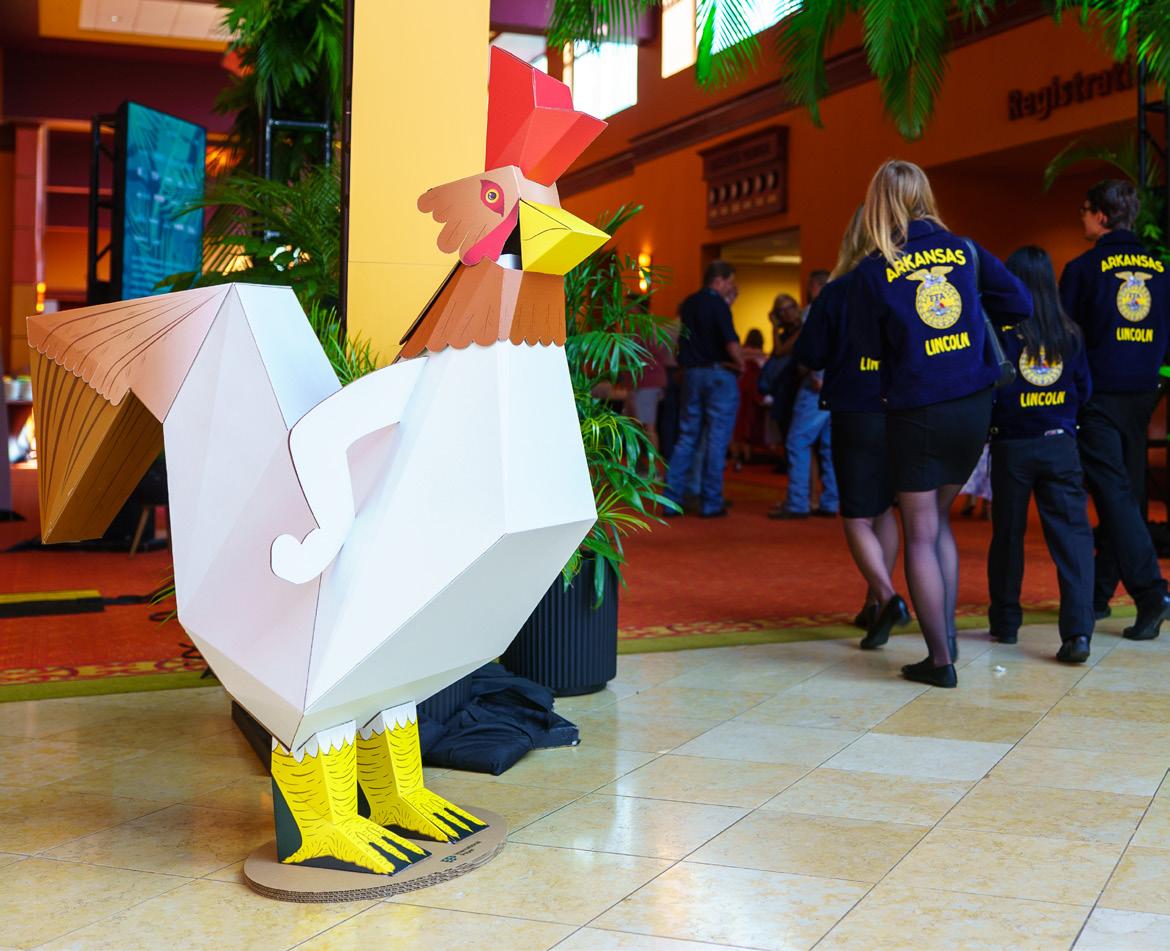
POULTRY PARTY
The Poultry Federation’s annual Poultry Festival in Rogers has grown into the industry’s premier celebration of all things fowl.

May 2026
86 | Arkansas Visionary
126 | Digs of the Deal 128 | The Last Word
Nursing programs at colleges in Arkansas are feeding the nursing field and supplying the state with much-needed talent.
Within the field of nursing are areas of specialization requiring different approaches, different skill sets and different mental hurdles.
Hospitals in Arkansas and across the country are especially attracted to the prestigious Magnet certification recognizing outstanding nursing.
Stacy Dowdy started out as a medical-surgical nurse, advanced to chief nursing officer and now leads Sevier County Medical Center as CEO.
Family is big in Arkansas, and it stands to reason that family businesses are too. They are the backbone of business in the Natural State.
State parks and trails from the Ozarks to the Delta generate an annual economic impact of approximately $35.8 million, serving more than 8 million.
The April dedication of a new water treatment plant in Hot Springs represented much more than a simple smile-and-pose ribbon cutting.
As recently as 2022, the National Telecommunications and Information Administration estimated that 1 in 5 American households remained offline.
In this special sales section, AMP highlights some of the state’s top tag teams, be they spouses, business partners or other combinations.
The entrepreneurship program at Arkansas State brings C-suite expertise to students, aiming to equip them with more than textbook knowledge.
Sen. Tom Cotton is big on Arkansas, and voters of the Natural State feel the same way, having elected him to Congress for nearly 15 years.

For Little Rock AD Frank Cuervo, the hiring of Travis Ford is a carefully considered salvo in his push to reshape the Trojans program. As Arkansans plan their summer getaways, it becomes a sprint to complete the growing, daunting laundry list of tasks, purchases and coordinating.
PRESIDENT & PUBLISHER
Heather Baker | hbaker@armoneyandpolitics.com
EDITOR-IN-CHIEF
Dwain Hebda | dwain@armoneyandpolitics.com
SENIOR EDITOR
Mark Carter | mcarter@armoneyandpolitics.com
ASSOCIATE EDITOR
Mak Millard | mmillard@armoneyandpolitics.com
EDITORIAL COORDINATOR
Darlene Hebda | darlene@armoneyandpolitics.com
COPY EDITOR
Sarah DeClerk | sdeclerk@armoneyandpolitics.com
STAFF WRITERS
Doug Crise | dcrise@armoneyandpolitics.com
Alex Hardgrave | ahardgrave@armoneyandpolitics.com
Mary LeSieur | mlesieur@armoneyandpolitics.com
MANAGING DIGITAL EDITOR
Kellie McAnulty | kmcanulty@armoneyandpolitics.com
ONLINE WRITER
Kilee Hall | khall@armoneyandpolitics.com
PRODUCTION MANAGER
Mike Bedgood | mbedgood@armoneyandpolitics.com
GRAPHIC DESIGNERS
Jerry Cordova | jcordova@armoneyandpolitics.com
Lora Puls | lpuls@armoneyandpolitics.com
Lee Smith | lsmith@armoneyandpolitics.com
SENIOR ACCOUNT EXECUTIVES
Greg Churan | gchuran@armoneyandpolitics.com
Michelle Daugherty | michelle@armoneyandpolitics.com
Mary Funderburg | mary@armoneyandpolitics.com
Karen Holderfield | kholderfield@armoneyandpolitics.com
Ryan Parker | ryan@armoneyandpolitics.com
Carrie Sublett | carrie@armoneyandpolitics.com
EXECUTIVE ASSISTANT
Jessica Everson | jeverson@armoneyandpolitics.com
ADVERTISING ASSISTANT
Katie Beth Smith | ksmith@armoneyandpolitics.com
ADVERTISING OPERATIONS MANAGER Jay Danzy | ads@armoneyandpolitics.com
ADVERTISING OPERATOR
Lara Keck | ads@armoneyandpolitics.com
CIRCULATION
circulation@armoneyandpolitics.com
ADMINISTRATION
Marissa Porter | ayoffice@armoneyandpolitics.com
CEO | Vicki Vowell
TO ADVERTISE call 501-244-9700 email hbaker@armoneyandpolitics.com
TO SUBSCRIBE armoneyandpolitics.com/subscribe
CONTRIBUTORS
Jane Colclasure, Jamie Lee, Lori Sparkman, Matt Brown, Ryan Parker, Zack Marsh
Pickin’ Cotton’s





Powering the next generation of Arkansas

Entergy is committed to the future of Arkansas, and that means investing in cleaner, stronger, smarter infrastructure today. We are accelerating investments in new power generation and routing energy to meet demand throughout Arkansas. We’re maintaining a diverse energy mix and keeping rates below the national average, all while making power more accessible, resilient and sustainable for everyone. To prepare for new industries and economic growth, we’re investing in communities across the state. We’re building something bigger, better and brighter for all Arkansans for generations to come.
Learn more at EntergyArkansas.com/NextGen
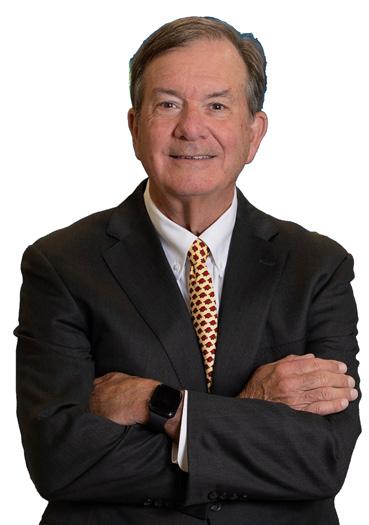
ON THE COVER
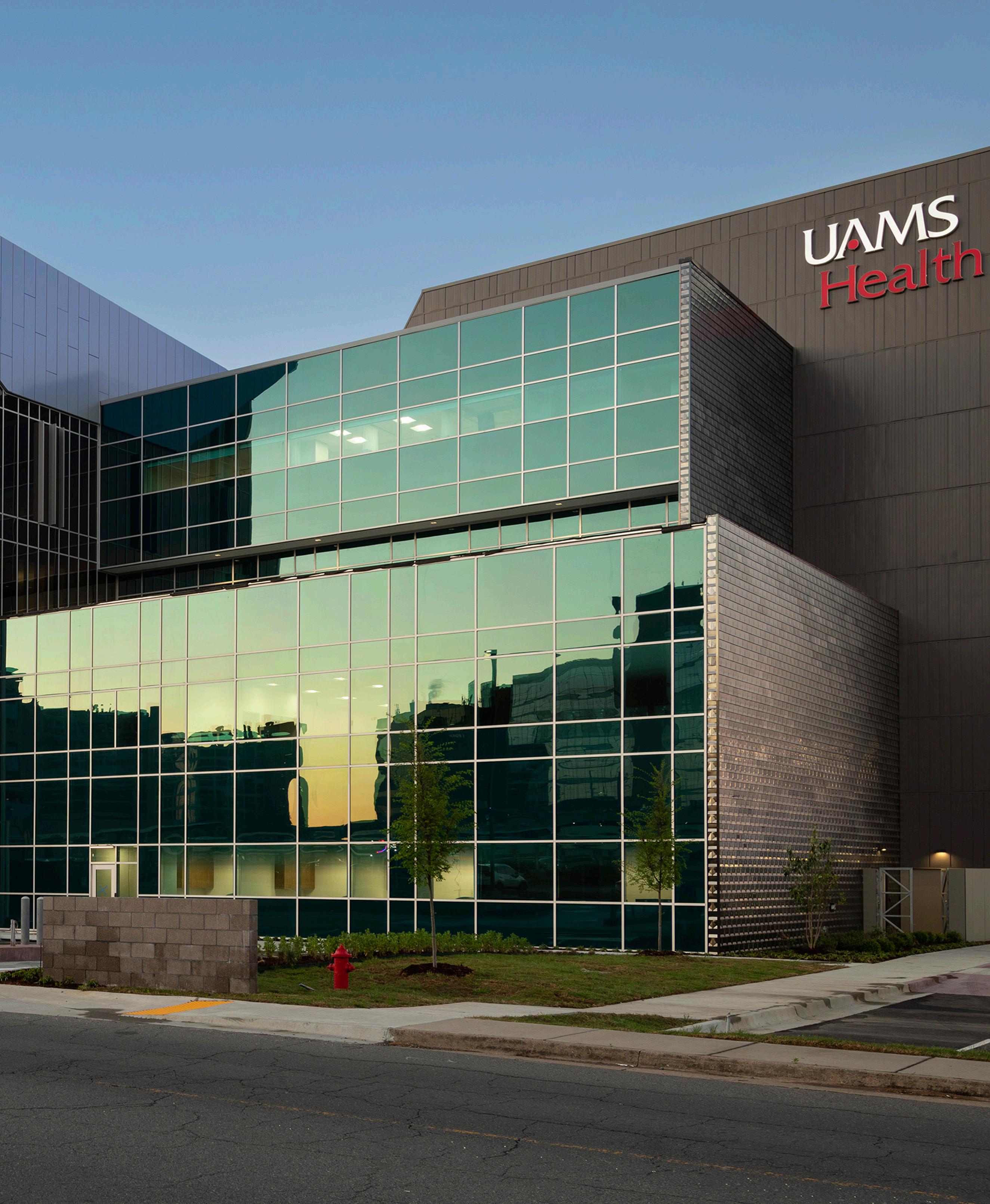
Chancellor C. Lowry Barnes was photographed by Jamie Lee on the campus of UAMS in Little Rock. Barnes took over leading the state’s flagship medical university on a permanent basis in February.
Coverage starts on page 14.
FEEDBACK
I don’t have time for superfluous news, and neither does AMP. Heather has turned this into the premier source for real business insight in Arkansas. It is the only publication I see consistently on the desks of the people actually running things in this state. It’s direct, professional and essential for staying informed on the local economy.
Dave Dunavant
We’re huge fans of AMP! Heather Baker’s leadership and creative vision are truly outstanding, and Ryan is always incredibly responsive, insightful and spot-on with every interaction. The team genuinely understands our company’s vision and consistently delivers fresh ideas that add real, measurable value. Working with them feels like having an extension of our own team — one that not only meets our goals but helps us exceed them every time.
Rachel Batson
SPECIAL OLYMPICS ARKANSAS RECEIVES STATE INTERIOR DESIGN AWARD FOR LEGACY BUILDING
Thank you, AMP, for featuring this project for Special Olympics Arkansas. Also, thanks to Kinco Constructors for a great project delivery!
Chad Young
FACE OF VICTIMS’ RIGHTS: VICTIMS’ RIGHTS ARKANSAS
Laura is an incredible woman and advocate! She deserves every bit of recognition for her strength and determination to improve victim’s rights in Arkansas. Proud to be her friend.
Karyn Davis
THREE LEXICON EMPLOYEES HONORED AS ‘STEEL STRONG WOMEN IN CONSTRUCTION’
Congratulations Drew Crone, Emily Keith and Janell Schmidt!! I cannot think of three more deserving candidates. Magen Holly Schlesier
ARKANSAS BLUE CROSS AND BLUE SHIELD PROMOTES
JASON CARTER TO DIRECTOR OF HRA Congratulations Jason Carter, MHRM, PHR, PRC!!! Excited for you and our company!! GRADY MCCORKLE
TOP ONLINE ARTICLES
April 6 — May 4
1 Despite being third-largest producer, catfish processing has bried up in Arkansas
2 SE Bentonville’s next big thing? A developer betting on quality and connection
3 Melinda Mayo, pioneering Arkansas meteorologist, soon to sign off
4 Painted tree releases statement regarding sudden closures
5 Unity Health to close Jacksonville hospital and reopen as psych facility
6 Woodcrest Capital to reopen 30th floor of former Regions Center as Skyline Event Venue
7 State’s longest runway awaits next chapter
8 Arkansas DoorDasher makes historic delivery to White House
9 OmniTRAX acquires three Arkansas railroads
10 Women-owned law firm Turner & Rasch delivers powerful, trauma-informed representation
DJ Baxendale named Arkansas’ first baseball GM
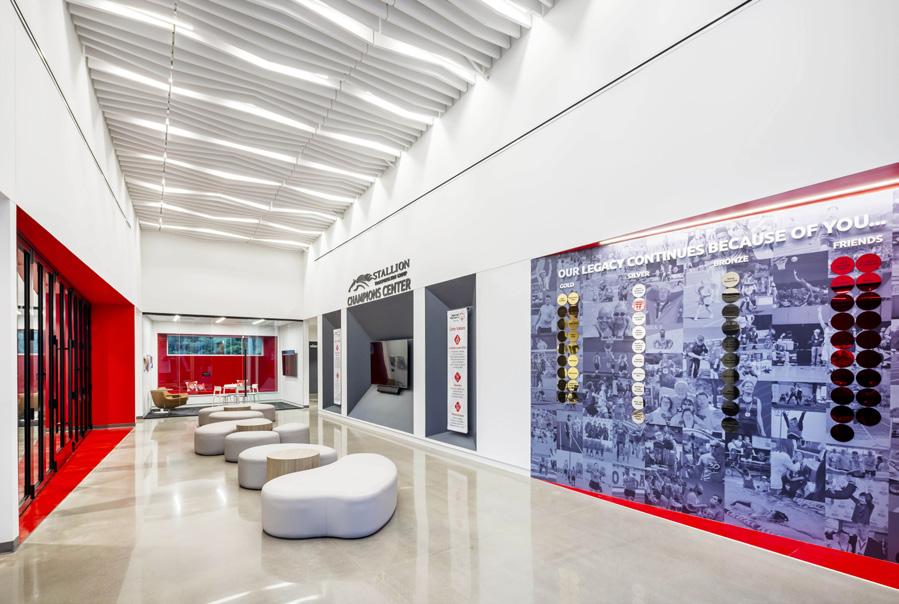
Special Olympics Arkansas receives state interior design award for Legacy Building
Donna Terrell’s Warrior Lodge opens at Jefferson Regional
By Mark Carter
When I was a kid — you know, back in the ancient 1970s — downtown Pine Bluff was a bustling place.
Arguably the state’s No. 2 city in those days (the Bluff even got a mention on the old John Ritter sitcom Three’s Company), it was the de facto capital of southeast Arkansas, marking the Delta’s line of demarcation.
Little Rock’s KATV actually started out in Pine Bluff — its tower in nearby Redfield was once lauded as the tallest of its kind in the world — and Channel 7 billed itself as “KATV Little Rock/Pine Bluff.”
MEMORIES FROM THE BLUFF
The Pine Bluff Convention Center, opened in 1976, was once the state’s premier venue of its kind. My mom took me to see both Bob Hope and the King — Elvis, of course; who else were you expecting? — inside its walls. It had columns and a fountain out front — plenty to impress a 10-year-old.
His Highness was the bloated, drugged-out version of himself by then and within a year or so of his passing on to other kingdoms (or to random Dunkin’ Donuts across the country, depending on who/what one cares to believe), but this was still the King.
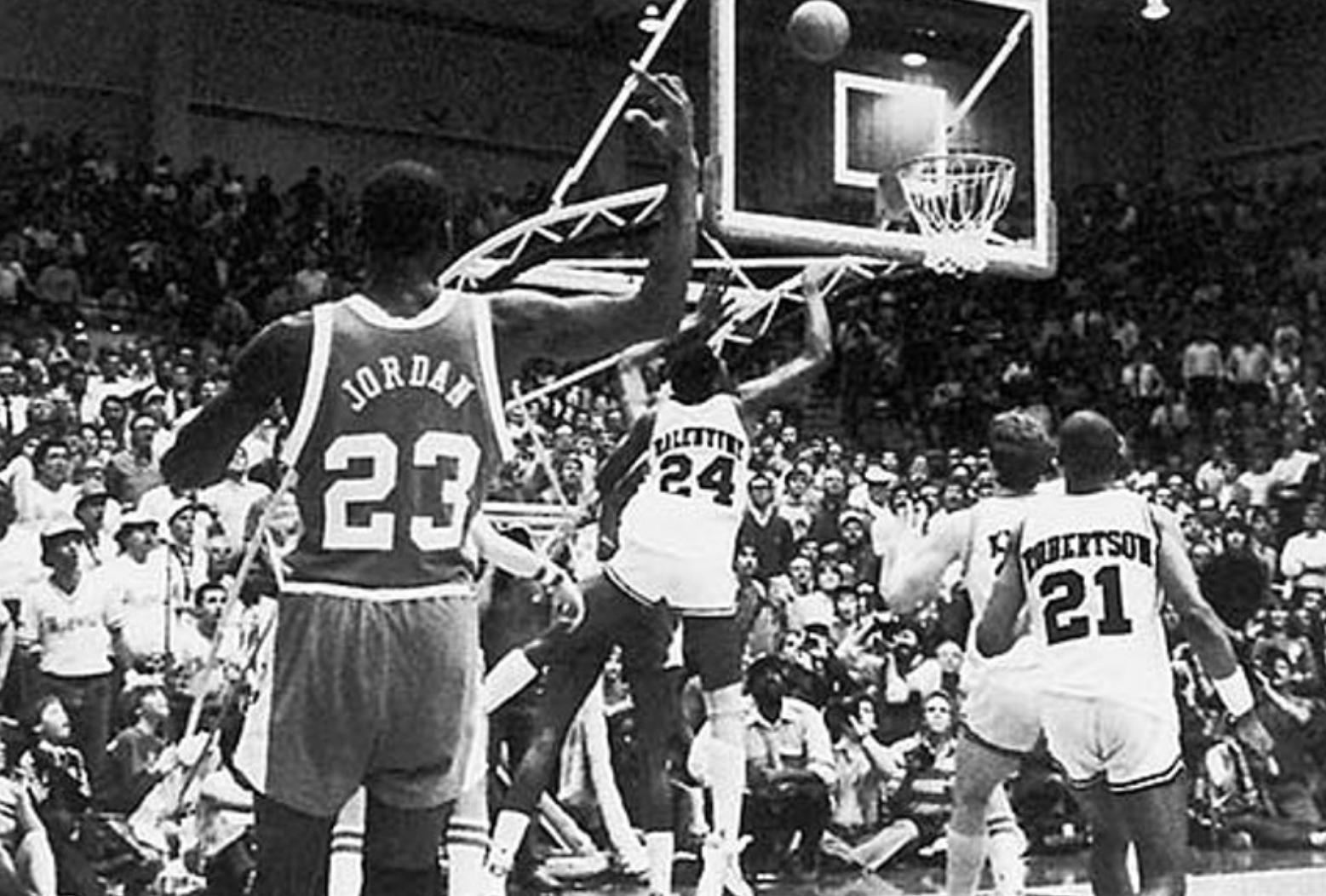
Like the storied old Barton Coliseum in Little Rock, Pine Bluff used to host multiple Razorback basketball games each season. In those archaic days, it truly was important for the Hogs to take their show on the road across the state. The late, great Charles Balentine’s famous floater to beat Dean Smith’s top-ranked Tar Heels, and some freshman phenom named, uh, Jordan, I think it was, took place inside the “mid-South’s premier convention center facility.”
Sorry to have disappointed you that day, Al McGuire. Al called the
PUBLISHER’S LETTER
Time flies when you’re having fun, it is said. Therefore, 2026 must be a fun publishing year. It seems like we were just crawling out of a February ice/snow storm. We’ll look up, and it will be back to school.
Before we get there, however, we have got lots to share in Arkansas Money & Politics. The May issue is stocked full of USDA-choice material. We’ve got nurses, we’ve got roads and bridges, water and Wi-Fi, chicken dances and NICU babies.
And that’s not all.
We’ve got generational businesses, Dynamic Duos, Tom Cotton and, as seen on the cover, truly one of Arkansas’ best in UAMS’ C. Lowry
game with the venerable Dick Enberg for the NBC national telecast. McGuire was then something close to the Dickie V of his day, and his reaction to Balentine’s ultimate gamewinner was second only to Bucky Waters’ half-hearted, “Oh, my,” following U.S. Reed’s halfcourt buzzer beater to topple Louisville in the 1981 NCAA tournament.
Reed’s shot, of course, was part of a wild day in the Dance that year. Bryant Gumbel, the studio host for NBC, which televised the tourney back then, coined the March Madness phrase that now requires no explanation or back story in everyday conversation. Just say “March Madness” to almost anyone anywhere with even a vague familiarity with sports, and the subject is a known quantity.
The PBCC was as loud as any venue in the nation that day against the Heels in 1984, as it generally always was, whether the Hogs were playing North Carolina, Southern Miss or Sisters of the Poor.
And Pine Bluff High was exporting athletes like Basil Shabazz on a regular basis. OK, maybe not quite like Basil, but former Zebras regularly manned starting units on the Hill.
The Razorbacks are never going back to play a game in Pine Bluff, and the A stars probably are not returning to play the convention center, not with Simmons Bank Arena (oh, the irony) just up the road and the Walmart AMP further up the hill.
But it is fun to remember the Bluff in its heyday. Wouldn’t it be something to see a group of investors take a chance on the old Saenger Theatre and Hotel Pines downtown and once again see life reverberating — like a pulse — from downtown, the way it used to?
By Heather Baker
TIME FLIES

Barnes, doctor/surgeon/researcher and now chancellor extraordinaire.
We ain’t done yet. This month, we sit down with new Little Rock Trojans coach Travis Ford and take a look at the important new entrepreneurship program at Arkansas State University in Jonesboro. Teaching the basics never goes out of style.
Our Last Word looks at ADHD, and our Digs of the Deal travels to the glorious old Hotel Pines in downtown Pine Bluff.
As always, thank you for reading. We appreciate your patronage so much. Hit me up with comments or story ideas at hbaker@ armoneyandpolitics.com.
Heather Baker (Photo by Ryan Parker)

The Gangster America museum 0f

for voting us Best Museum! Thank You!
To say Robert Raines is busy is, perhaps, an understatement. The musician turned entrepreneur turned historian and museum founder has had his hands particularly full recently thanks to a surge in interest around the stories he has been telling for upward of two decades now from Hot Springs’ Central Avenue.
“No one really had touched this history much,” Raines told Arkansas Money & Politics. “They just kind of relied on legend. The true story was a lot more fascinating.”
THEGANGSTERMUSEUMOFAMERICA THEGANGSTERMUSEUMOFAMERICA THEGANGSTERMUSEUMOFAMERICA THEGANGSTERMUSEUMOFAMERICA
Raines opened The Gangster Museum of America in 2008 following a deep dive into the sordid past of Hot Springs in the era of gangsters, illegal gambling and bootlegging. Uncovering the city’s latent gangster history became a focal point of Raines’ career, throughout which he has written, directed and produced seven short documentaries and, in addition, released his book, Hot Springs: From Capone to Costello, in 2013.
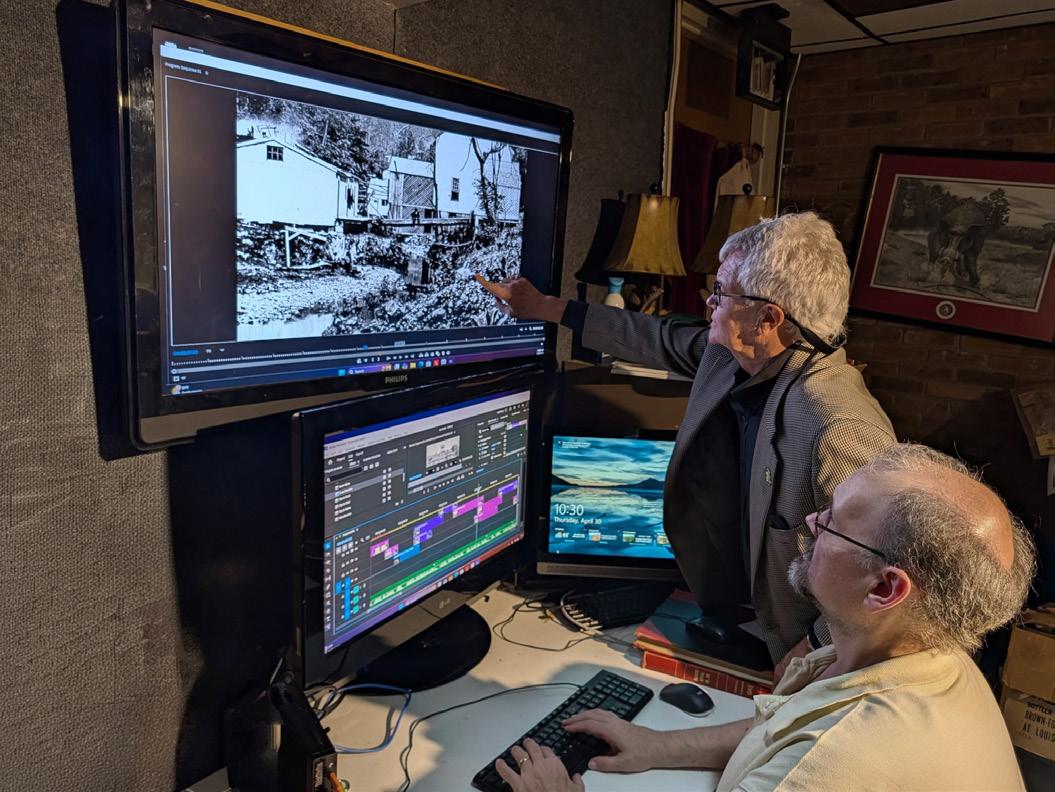
Now in postproduction is the latest of his documentary efforts, a high-profile project focused on Prohibition-era figure Owen “Owney” Madden and his life after moving to Hot Springs in the 1930s.
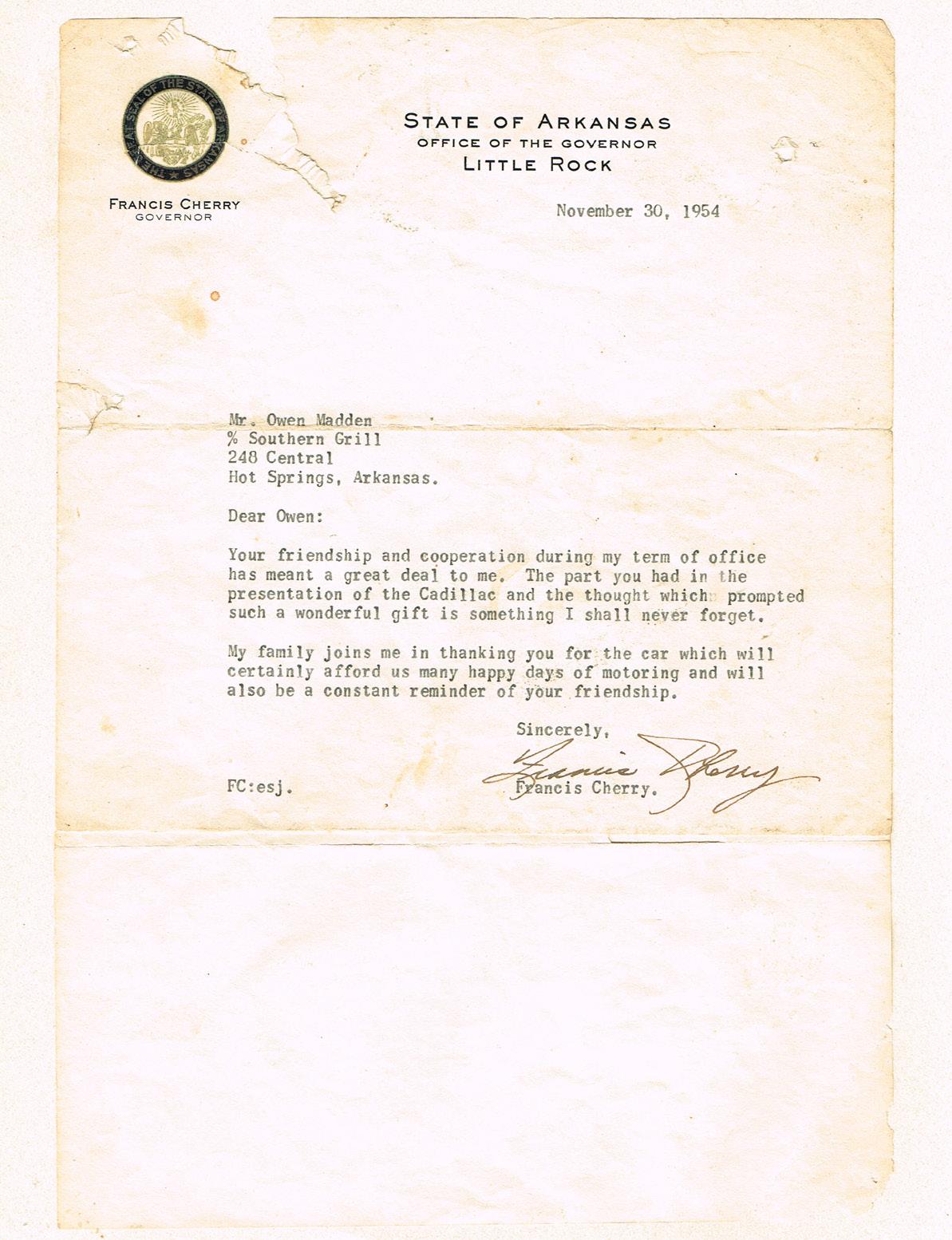
Seen here is a freeze frame from the upcoming documentary. In it, then-Governor Francis Cherry thanks Madden for gifting him a new Cadillac — just one example of the “business model” Madden imported to Arkansas from New York for dealing with politicians.




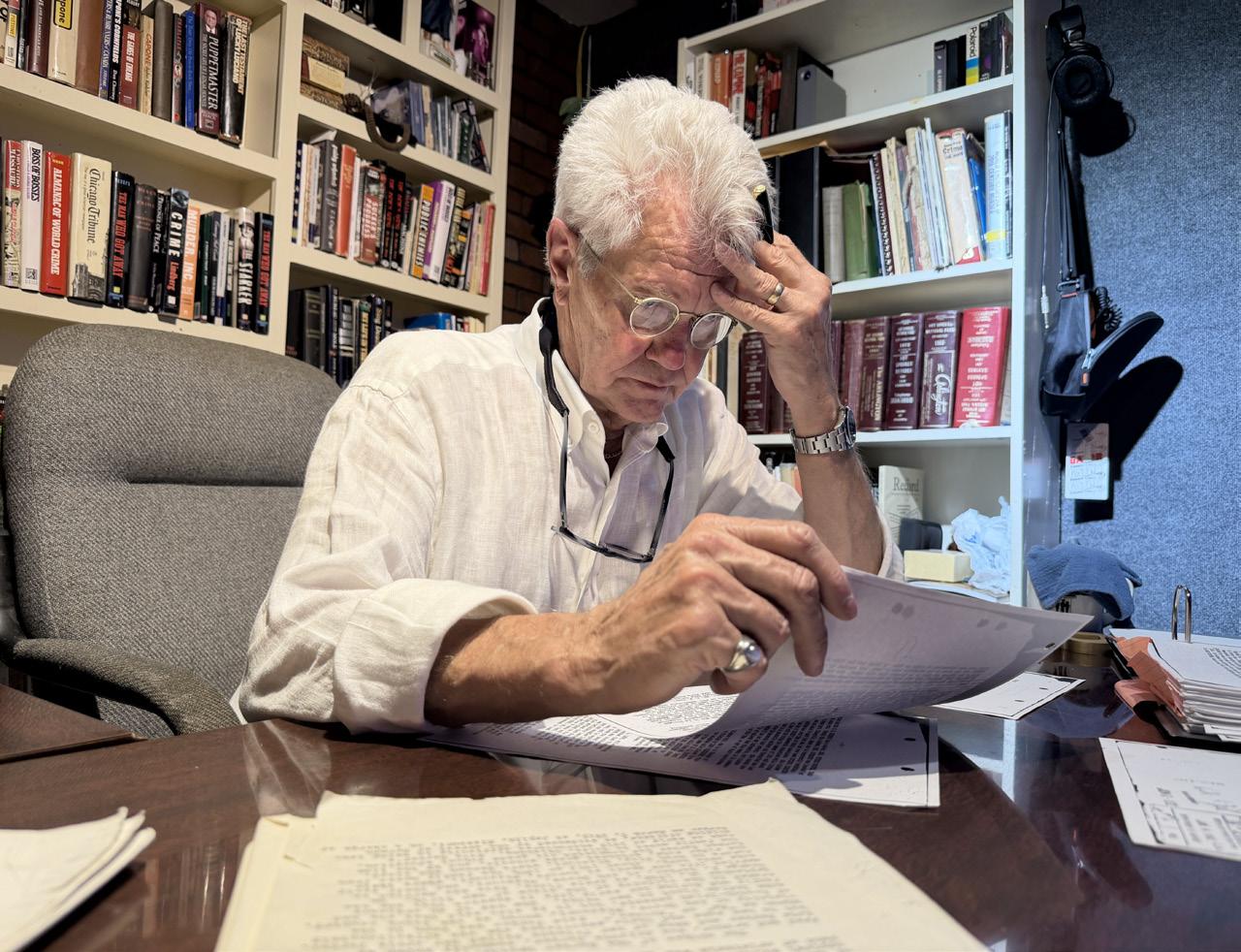
Editor Doug Lackey takes direction from Raines for the upcoming documentary: “Piecing together a person’s life story from birth to death is a daunting task, particularly when it involves location production in Leeds, England, New York City, Sing Sing Prison and Hot Springs,” Raines said. “It is a jigsaw puzzle of who, what, when, where and why.”

Verification is the most important part of researching a story, Raines said: “Most of the eyewitnesses to fact are long gone in Madden’s history. We have to depend on thousands of pages of FBI files, government documents from here and overseas, and his own personal documents. The acquisition of what is left of his estate was the missing link in completing the Madden biography.”

As popular interest is piqued yet again on that not-so-sleepy town in the Ouachitas, Raines and the museum are also set to be featured in the September issue of Smithsonian magazine. Award-winning author Richard Grant, who penned the upcoming piece, spent four days in Spa City taking in the history — and the mysteries — of Hot Springs and its most ardent living chronicler. Grant was fascinated to learn some of the details about what otherwise struck him as a charming Southern town, interested at once by both the hidden-gem of a city and Raines’ own obsession with bringing long-hidden stories to light.
“I didn’t want to tell a tall tale,” Raines said. “People walk in and say, ‘My God, this is the greatest story never told.’ You know it worked when people say, ‘I can’t wait to come back.’”
Even after the film crews have left town and the credits roll, Hot Springs and The Gangster Museum of America will continue drawing intrigued visitors thanks to its unique place in the American story — not to mention the man who has dedicated decades to seeing it told correctly.
“Their memories of those days are now a part of me,” Raines said. “One thing I have learned about Hot Springs’ history is that very few things are black and white. There is always more to the story, and one thing leads to another.”
THE COMPLICATED MATH BEHIND ARKANSAS’ DECISION TO DROP TENNIS
By Matt Brown
Recently, a major SEC program did something that is not super common among Power 4 schools. It dropped a sport. Well, technically, two sports.
Arkansas announced that the school will discontinue their men’s and women’s tennis programs. Via its release:
“The landscape of college athletics continues to evolve, requiring us to make challenging choices as we balance competitive opportunities, resources and the long-term sustainability of our department. Ultimately, we concluded that we are unable to provide the level of support necessary for our tennis programs to consistently compete in the SEC and nationally at the standard our studentathletes, coaches, alumni and supporters deserve. We appreciate the efforts of Coach [Jay] Udwadia and Coach [Tucker] Clary, along with all of our current and former student-athletes.”
Before this news story is used to launch a sea of takes about the “state of college athletics” or whatever, let’s try to look at as much data as we can.
Arkansas reported spending $2,350,667 in total expenses for its men’s and women’s tennis programs in fiscal year 2025.
That is slightly less than reported in FY24 ($2,616,170). The data comes from the school’s FY25 NCAA Membership Financial Reporting System Report, an annual budget report that every Division I program files with the NCAA. I have a copy of that report, along with similar reports for more than 200 other DI institutions.
Based on the data we have in the Extra Points Library, that $2.3 million mark would put Arkansas at 31st among public schools in total tennis program spending, but in the hypercompetitive SEC, it would be second to last among public schools, just ahead of Missouri — and Missouri does not even have a men’s tennis team.
Of course, “total expenses” refers to lots of different categories. The number includes spending on team travel, recruiting expenses, coach salaries, administrative salaries, food, equipment, severance payments and more. So where was Arkansas behind the most?
Our data shows Arkansas was middle of the SEC pack in spending on athletic student aid ($701,030, or ninth), travel and many other operating expenses. Interestingly enough, Arkansas actually led the SEC in spending on athlete food for tennis.
The state was near the bottom in coaching salaries ($545,544, while the league average was slightly above $900,000), support staff/administrative spending ($19,794, while the league average was around $103,000) and recruiting ($54,516, compared to the league average of $103,157).
If the numbers are correct — and more on that later — it looks to me that while on the lower end, the operating budget at Arkansas was not so much lower than its peers that competition would be impossible.
But what about the revenues?
That is where things look a little unusual.
Arkansas reportedly had a paltry $3,284 in total revenues tied to the men’s and women’s tennis programs in FY25 and only $9,556 in FY24. Specifically, the school reported earning $2,000 from game guarantees, $1,200 in “other operating revenue,” and a whopping $164 from royalties, licensing and sponsorships. Combined, that is easily the lowest number in the SEC. The second-lowest program, Mississippi State, reported $118,944 in revenue.
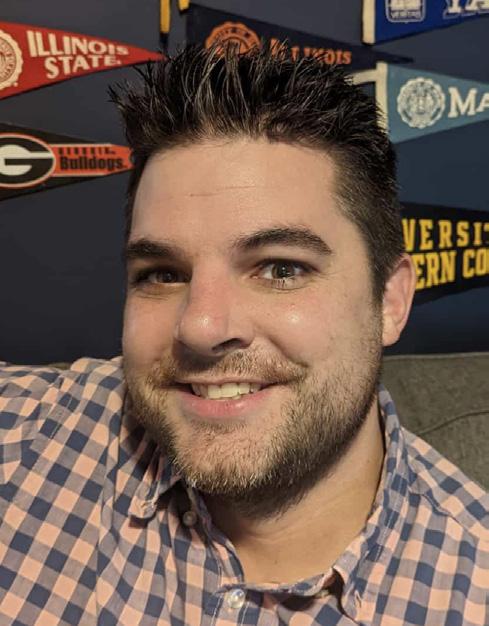
Matt Brown
For context, we have FY25 MFRS data for 184 college tennis programs right now. Arkansas would rank 180th in reported revenue, ahead of only Cal State Fullerton, Kennesaw State, Georgia Southern and Ball State. Central Arkansas reported $336,422 in revenue. Arkansas State reported $219,906.
If we just look at this like a profit-and-loss statement, it seems like cutting tennis would be an easy decision. Arkansas tennis barely produces any sort of revenue whatsoever and costs around $2.5ish million a year to operate. Of course the school should get rid of it, right?
Well, not exactly.
First, we have got to talk about what revenue is.
On the MFRS report, the “total operating revenues” figure is a combination of many other line items. Those lines include not just the sort of income that you would typically associate with revenue (such as ticket sales, NCAA distributions, game guarantees, parking revenue, etc.) but also a few line items that nonindustry folks probably would not consider to be revenue at all.
For example, if a school uses student fees to subsidize the athletic department budget (common among most non-Power 4 public schools but not at Arkansas), those fees count as revenue for a sport. So do specific donations, as well as “direct institutional support” and “indirect institutional support revenue.” Those categories may not automatically mean cash, since spending on, say, security, utilities, accounting services, tuition waivers, etc., would typically fall into those buckets, but I think it is important to flag them, since they are not revenue in the sense that a corporate sponsorship or a ticket sale is revenue.
For Arkansas State, for example, that $219,906 in revenue comes overwhelmingly from student fees.
If we want to look at college tennis revenue figures without stuff like student fees, direct institutional support or interdepartment resource transfers, we need to create a table to look at earned revenues.
What we can learn from this exercise is that the overwhelming majority of college tennis programs do not sell any tickets at all. Selling tickets requires a facility that actually has enough seating capacity to make it worthwhile plus the ability to staff the venue to actually accept tickets. By our numbers, only 14 public schools generated any ticket revenue in FY25, and only one, Texas A&M, generated more than $20,000.
To the extent that tennis programs directly generate revenue, it is most likely to show up via sports camps. Thirty-nine different programs reported sports camp-related revenue via tennis in FY25, 19 of them generating more than $20,000.
So yes, on paper, college tennis basically cannot become “profitable” because it lacks most of the traditional pathways (tickets, concessions, alcohol, television) to generate revenue. Other than camps, fundraising and corporate sponsorships, there are not many levers to pull, but there is one revenue stream that is not on the sheet that we do have to talk about — tuition.
For an institution that opts into the House settlement, the new roster limit for men’s and women’s tennis is 10 full-scholarship athletes per team, so a school could theoretically expand their scholarship spending from the pre-House settlement era (the limits used to be 4.5 scholarships for men and eight for women) or simply expand the roster and not expand scholarships.
The gap between roster size and scholarship spending is critical in understanding the math behind many Olympic sports but especially college tennis. College tennis rosters tend to skew heavily international, even at places like Arkansas. On the current men’s roster, only one athlete is from Arkansas, and only one other athlete is from the United States. The others are all international athletes.
The kind of athlete who is capable of playing DI college tennis is also typically the kind of athlete who is financially capable of paying full tuition. If a school might otherwise struggle to recruit those types of students, an athletic team could be “profitable” without ever selling a single ticket.
Full estimated room and board at Arkansas for a non-Arkansas resident is about $52,879.90 per year, so just four athletes a year across both teams, paying the complete full price would bring in more than $211,000 a year to the university in tuition. That is real revenue, but it does not show up on the MFRS report.
That is a major reason why schools such as Youngstown State, Western Carolina, Grambling and Longwood can afford tennis programs, even as Arkansas has decided it cannot. They are all calculating revenues and expenses differently.
Did Arkansas have to do away with its tennis program in order to stay competitive in other sports? I do not think so.
In FY25, as an athletic department, Arkansas generated about $195 million in total revenues and spent about $184 million. Getting rid of the tennis programs, on paper, does not even shave 2 percent off the total operating budget. It matters, but in the grand scheme
of things, it does not matter that much. It also makes me think that even if Arkansas officials decided that they would need operating spending of $3.5 million in order to compete in the SEC, the school could have done that.
Just based on the spending reports, I would think Arkansas could have maybe done more to lessen the financial burden of the tennis programs on the general budget. There is no reported sports camp income and virtually nothing from donor contributions, sport-specific endowment revenues or corporate engagement. If tennis was really important to the UA community, either it was not showing it, or the school was not letting it.
But even if Arkansas were awesome at all that other stuff, tennis is not going to self-generate enough money to be athletic-revenue neutral. This is not a sport you operate if your goal is to profit from direct athletic revenue.
So if the school decided that funding a sport that is overwhelmingly played by foreign students does not fit the department’s longterm institutional goals, well, that could be defended. If the school decided that it would be better for fans and community members to instead reinvest that cash savings into the school’s golf and volleyball programs, I think that could be defended too. Marginal increases in the operating budgets of those sports may be more likely to lead to better competitive outcomes.
Sport sponsorship is, after all, partly about values. Those are going to be different from school to school.
I do not think there is much evidence to suggest that the school is slashing a program in the hopes that the (tiny) savings will materially improve football or basketball program outcomes, especially since the tennis savings cannot really be directly converted into football payroll. Arkansas is already fully funding its House payments, after all. If that actually is the plan, then I would say that is a dumb plan.
I do not automatically think that Arkansas reaching this decision means another 20 P4 programs are going to drop Olympic programs in the short term. Different schools have different Title IX compliance obligations, different risk and bad-press tolerances, different donor pressures, and different enrollment pressures. Schools can also almost as easily just slash scholarship and operational spending without actually dropping the sport, achieving similar results without bad press or as strong of a threat of lawsuits.
Did Arkansas absolutely have to drop its tennis program? No, I do not think so. Most schools do not have to drop any sports in order to balance the books. Arkansas wanted to do this. Whether it was justified in wanting to do that depends a lot on what leaders are hoping to accomplish.
If anything, this all shows that the math is complicated, and not everything that is important is easily captured on one chart.
Chicago-based Matt Brown is the creator of the sports analysis site Extra Points and the Extra Points daily newsletter, which covers the off-thefield issues in college sports. His analysis and research is available at extrapointsmb.com.

By Dwain Hebda
Medicine Man
Dr. C. Lowry Barnes, UAMS chancellor, is thinking big
Photos by Jamie Lee
Dr. C. Lowry Barnes entered the hallway and paused, pondering making a left or hanging a right. Having been summoned from his sun-soaked but otherwise modest office at The Orthopaedic and Spine Hospital at University of Arkansas for Medical Sciences in Little Rock, he took off in search of an unoccupied conference room in which to meet the press.
Many of the hallways in the 3-year-old building are adorned with striking artwork, which double as landmarks for navigating the labyrinth hallways. Just as many are but an unbroken hive of eggshell walls and copycat doors, which dumbfounds first-time visitors and still crosses the wires of those who report to work daily at the 158,000-square-foot structure. Finding a conference room — and an unoccupied one at that — at the pace with which Barnes moves can result in a couple of forgivable false starts.
Once located, Barnes took a seat at the head of the table, leaned back in an office chair and let out a sigh. He has spent a good chunk of his medical life at UAMS, first as a student and then, after decades in private practice in Little Rock, as professor and chair of the Department of Orthopaedic Surgery starting in 2014.
During that time, he has occupied myriad classrooms, surgical suites, offices and consultation rooms, too many to remember, as he built a reputation as one of the foremost orthopedic medicine minds on the planet. Yet there is something about The Orthopaedic and Spine Hospital at UAMS that hits differently, something more settled, final, and no wonder. It is the House that Barnes Built, of which he was the inaugural director and where he intended to ride out the remainder of his career working on hips and knees of patients both famous and anonymous.
sustained profitability, paving the way for something largely unthinkable just a few years ago — growth.
“I tell people the biggest surprise I had was how incredibly good the senior leadership team is,” Lowry said. “I came straight in as chair of orthopedics when I came here from private practice, and it’s easy to get frustrated at the chair level because you think things aren’t happening fast enough. You don’t realize how hard that group of [senior] leaders is working.
“That team is really dedicated, hardworking and passionate about what they do, and they’ve been incredible throughout the interim process. Some would say we made things happen faster than they usually work in a system. I’d say at the very least, the other 12,000-plus employees have really bought into a new approach.”
“I’ve been in the interim and permanent role a total of nine or 10 months, and we are financially in the black for the first time in a number of years. That tends to make spirits better; people tend to buy into the process more.”
—C.LowryBarnes,UAMSchancellor
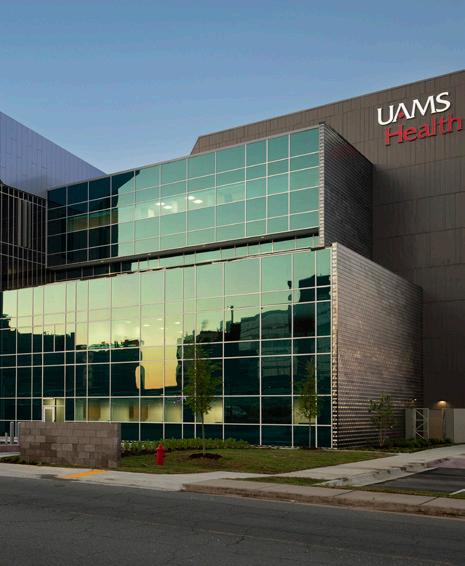
Standing amid the buildings of the UAMS campus, anchored as it is by new builds The Orthopaedic and Spine Hospital on one side and The Proton Center of Arkansas on the other and the older but no less stately Harvey & Bernice Jones Eye Institute and the Winthrop P. Rockefeller Cancer Institute sprouting from its core, it is easy to forget the shaky ground upon which the structures not long ago rested.
That was the plan, at least, until last summer and the sudden departure of Chancellor Cam Patterson for health reasons, a move that pulled Barnes into the chancellor’s role on an interim basis. In February, the University of Arkansas Board of Trustees removed the interim tag, giving the reins of the state’s flagship teaching hospital and a major economic force to a favorite son of the Arkansas Delta and, in so doing, charging him with pulling off a financial turnaround that, while already in motion, is still an uphill grind.
Lowry, for his part, said what he has seen out of UAMS leadership thus far gives him ample confidence it is are more than up to the task of returning the organization to consistent and
For at least the better part of the past decade, UAMS was known as much for financial issues as for new medical technology or attracting top physicians. Patterson began that turnaround in earnest, suffering the pain of job cuts and other cost abatement only to have most conventional financial metrics go out the window amid the madness of the COVID-19 pandemic.
Now Barnes is facing a more stable if no less challenging marketplace as he looks to advance the financial football and further the strides that have been made thus far.
“Everybody understands healthcare is a business, and at the end of the day, you have to have more money in than money out,” he said. “It’s so important to us to manage our finances appropriately, which is why we’ve looked at all of our different service lines. We know that some are not going to do very well finan-
“I believe in leadership from within, and this gives me an opportunity to lead from within.”
—Barnes
cially, and some are going to do better financially. We have to have the right mix so that at the end of the day, we can pay our bills.
“It is not easy in healthcare. This institution lost $100 million in three years, so we are trying to get that mix right — and remember, because we are an academic health center, we only have so many areas for revenue, and by far, the largest one of those is taking care of patients’ clinical care. We also have research and education on the other side of the ledger, but neither one of these can pay for themselves.”
Barnes said the balance that must be struck between cost and customer is an ever-present one. He would like to say that reimbursement models follow technological advancement, but such is not reality. Instead, he and his leadership team must scrutinize the expense versus benefit equation thoroughly to ensure the hospital fulfills its mission of providing care with the real-world imperative to charge enough to keep operating.
“As things are developed in new technologies, there’s a lot of discussion with insurance companies about paying for that and how they’re going to be implemented,” he said. “For example, take robotic surgery for gallbladder — totally revolutionized gallbladder care. When I was an intern, patients stayed in the hospital for 12 days after they had the gallbladder out. Now they go home a couple hours later.
“That’s something where you spend millions of dollars on the robot, and you’re not getting reimbursed significantly for it; however, it’s an investment in patient care that you just have to make.”
Barnes’ businesslike strategies for changing the playing field are not particularly new, but they are often either overlooked in healthcare or executed in a mode adversarial with the front-line caregivers. Not so at UAMS, where December marked four consecutive months of positive financial results, a stretch the organization had not seen since before COVID-19.
What is more, Barnes’ reputation as a world-class physician who earned his spurs in the private sector before joining UAMS has given him some reputational chits to spend while he drives fundamental change.
“I’ve never really been just a surgeon. It’s always been extremely important to me to learn the business of healthcare. Early in my career, I was on the board of directors at [CHI] St. Vincent and also on the finance committee there. That’s where I learned a lot about the finances of healthcare from a hospital perspective.
“Even in private practice, I ran our private practice group for almost 15 years, so I learned about it from a physician perspective, and being able to combine both the physician side and hospital side meant that when I came over [to UAMS] as chair, I understood both issues as the two melded very well.”
Barnes’ assessment of UAMS’ current business model is it is improvable in two important ways — think big, but move as if small, and aggressively push for growth.
“In this role what I have seen is, one, we’re not very nimble. We don’t move quickly enough,” he said. “Two, the common approach, and it’s not just at UAMS but in healthcare generally, is that when you have downtimes financially, the reflex move is to cut expenses. My idea has been we can grow our way out of financial challenges, at least short term, and so far, it’s working.”
According to its most current annual report, net patient service revenue increased 6.6 percent last fiscal year thanks to increased patient discharges and surgical volumes of 3.4 percent and 7.1 percent, respectively. Operating expenses were up nearly 9.5 percent, underscoring the need for continued efficiencies.
“We have some business deals to address, and we’re still addressing some of them,” Barnes said. “I’ve been very transparent; the team gets lots of emails from me sharing our financials each month, things they’re not used to. We’ve really taken a cando attitude, and everybody’s bought into it.
“I’ve been in the interim and permanent role a total of nine or 10 months, and we are financially in the black for the first time in a number of years. That tends to make spirits better; people tend to buy into the process more.”
Barnes’ profitability-through-growth approach requires a combination of increased capacity and better execution at bedside to make UAMS the healthcare provider of choice.
“One element is access. If patients want to be seen, you have to get them seen quickly because if they’re not, they’re going somewhere else,” he said. “For outpatient things, it’s a matter of making that same access available. If the patient needs imaging, they don’t need to wait six weeks to get their MRI. If they’re going to have outpatient surgery, they don’t need to wait two months to have that done.
“For inpatient care, certainly, beds are an issue. We are at capacity almost every day, so that means we have to manage our discharges, try to get those done early in the day so that the beds are available for admissions that come in through the day. Michelle Krause, our CEO of the hospital, and her team have done an incredible job; we accepted a couple thousand more patients this year than last year from referring hospitals.”
Barnes was cagey when it came to the specifics of expanding capacity, be it beds through acquisitions or partnerships that
increase door swings at rural clinics and specialists, saying all of the above options are on the table.
“We know that we have to have a multifaceted approach to bed expansion,” he said. “We’ve even looked at some of the beds that we used to have in our central building. We’re looking at expanding to open some of those beds by remodeling entire floors to open some beds there. We may be able to build more beds on campus at some stage.
“We’re also looking at a number of different existing hospitals, whether they be in central Arkansas, south Arkansas, western Arkansas, southeastern Arkansas, and we’d love to partner in northwest Arkansas, as well. These relationships may be acquisitions, may be partnerships or management contracts, but we know that UAMS has to be much bigger than it is now and have many more facilities than we do now.”
Barnes also noted the growing reputation of the organization in specific areas of medicine can serve as a magnet for patients. He said UAMS has a stellar reputation for organ transplant and trauma care, as well as other areas to build on for the future.
“Cancer care is outstanding at UAMS, and it will continue to get better,” he said. “We are obviously committed to cancer care, cancer research, cancer education, and I think the public knows that.
“Obviously I’m biased, but orthopedics is one of our strong service lines now, and it’s known across the state for being such. We have a subspecialist in every area of orthopedics; nobody has to leave our state for anything, where 12 years ago, we had people that were still leaving the state for certain problems, like hand or finger amputations, because we just didn’t have enough hand surgeons. We now have six, so that’s not a problem.”
more [donor] support. I said, ‘We lost $100 million dollars in three years. How many of you would reinvest in that? Let’s get things fixed and go back to them,” he said.
“The year before I came on board, we raised less than $30 million from a development standpoint. I’ve challenged the development team that we’re going to raise $5 million a month and we are close to hitting that target right now. We’ve had some very wonderful gifts, and we’ve had a whole lot of smaller gifts, and they add up.”
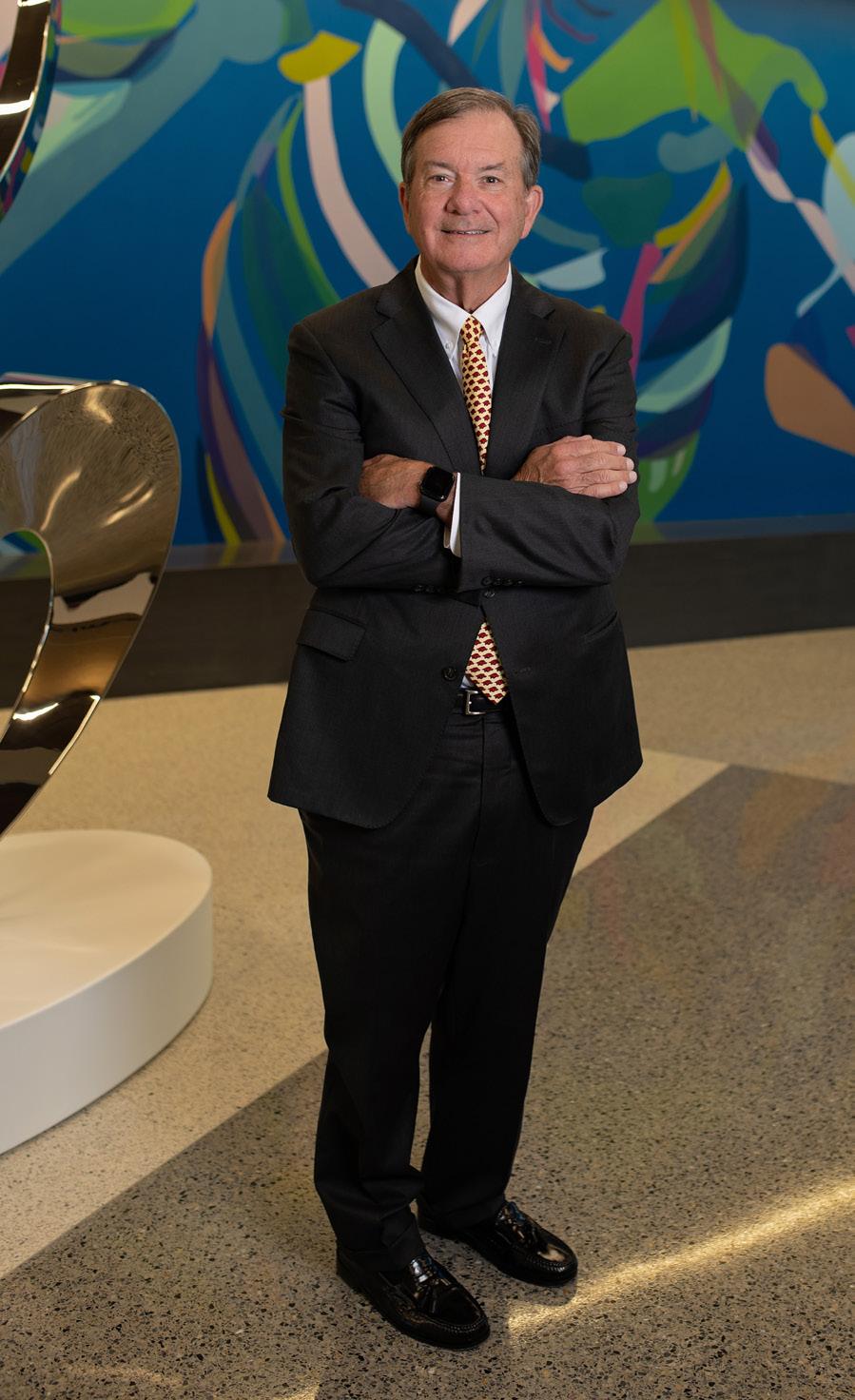
Barnes spoke of the future with a belief in his voice that is more than job description, a tone that can only come from a son of the state whose career has largely revolved around the organization he is now tasked with leading.
“I worked in a hospital and the pharmacy when I was 15 or 16, whenever I could first get a waiver to go to work in a hospital,” he said. “Then I worked on the floor as an orderly and then worked in the operating room all in Pine Bluff at Jefferson Regional.”
It was during that early formation that Barnes crossed paths with his mentor, Dr. Banks Blackwell, the premiere orthopedic surgeon in Pine Bluff, who mentored the teen and eventually picked up the tab on his medical school training at UAMS.
Barnes devoted the rest of his career to honoring that investment in the way he treats his patients and how he educates students. He is so committed to his vocation that he has no intention of leaving the surgical suite, even as he takes on his new role in earnest. After decades in the field
and an international reputation, he is not sure where the surgeon ends and the chancellor begins anyway.
Finally, Barnes insisted there is room for improvement on the fundraising side but only if the other legs of the stool — quality of care and patient satisfaction — are up to snuff. To date, he has been right, and donors have opened their wallets with renewed vigor.
“Early on, I kept getting asked what I was going to do to get
“I’m not doing the same clinical practice I did before. I’ve cut back. I’m just doing total knees and revision total knees now, where I used to do hips, as well,” he said. “Being chancellor is a big role. It takes a lot of time, but I love being a surgeon. I love taking care of patients, and I totally believe that leaders are better when they’re doing the same things that some of their peers are doing. I believe in leadership from within, and this gives me an opportunity to lead from within.”
Fast-Tracked FUTURES
Nursing schools offer chance for students to get head start
Ffreshman and sophomore years before applying to the university’s prelicensure Bachelor of Science in Nursing program.

Over the past decade, the university has created several dualenrollment or concurrent credit opportunities through which students can earn credit for courses taken at UCA and transfer them to other institutions. In the realm of nursing, that means students can not only complete their prerequisites but also fasttrack their degrees.
Courses such as general psychology, history and composition, often offered through partnerships between high schools and universities such as UCA, allow students to get a head start. In some cases, students arrive on campus at nearly junior standing, accelerating their timeline into the nursing program. That acceleration comes with a caveat, however — readiness.
Susan Gatto, professor and director of the UCA School of Nursing, said the emerging pathway has encouraged many UCA students to apply earlier to the nursing program and has also instilled a level of responsibility needed throughout the nursing career.
By Mary LeSieur
or decades, the path to becoming a nurse in Arkansas has followed a familiar route: graduate high school, complete prerequisite coursework, apply to a competitive nursing program and spend years working toward licensure. While the traditional model has produced generations of skilled professionals, it can be time-consuming, costly and difficult to navigate, especially for students who discover their interest in healthcare later or lack early guidance.
Colleges and universities across Arkansas now offer an alternative where students can begin their studies before receiving a high school diploma. High school feeder programs are emerging as an alternative pathway in nursing, giving students a head start through dual-credit classes, hands-on training, and direct connections to local colleges and healthcare employers.
Instead of waiting until after graduation to begin, students can move more seamlessly from high school into nursing programs, saving time, lowering costs and enabling them to enter the workforce sooner.
University of Central Arkansas
Since 1967, the University of Central Arkansas in Conway has educated thousands of nurses who work in hospitals and other healthcare facilities. Through UCA’s traditional pathway, students typically complete 60 credit hours of prerequisite courses during their
“A lot of education is socializing them into the role besides teaching them how to be a nurse,” Gatto said. “We have students who are coming in with almost an associate degree because they can take so many concurrent credits. They haven’t really had a lot of college. They haven’t had a lot of what the kids call ‘adulting.’ When they come into the more demanding or traditionally professional degrees, it makes it difficult because it’s the first time they’ve been away from home, a lot of them.”
Although Gatto said the degree and the field itself require much attention, focus and maturity, the students she has taught have shown dedication and perseverance. The fasttrack option has also offered them a unique look into what their future will look like.
“It affords those students the exploration component of nursing,” Gatto said. “It gives them the opportunity to think, ‘Am I cut out for this?’ It’s not just so much that you memorize. You have to apply. Students have to understand how disease processes affect the body and how the body affects disease processes.
“When you get into the nursing classes, you’re being asked to take care of patients, plan their care, evaluate them, and anticipate complications and contraindications of medication. It’s an applied science, and they have to apply their knowledge.”
After students are enrolled in the nursing program at UCA, Gatto said they receive a comprehensive skill set that prepares them for their postgraduate placements and the National Council Licensure Examination.
“We go into the hospital,” Gatto said. “We go into clinics. We go into home health settings and hospice. Wherever there are patients or people, that’s where we are. Nursing is difficult because we require that they take classes, simulation, laboratory and clinical experiences where they’re actually taking care of patients in real settings.”
Arkansas State University
Arkansas State University in Jonesboro is pursuing a similar path to UCA. The university has created several partnerships with local school districts to offer concurrent enrollment to high school students.
Dual credit and concurrent enrollment courses allow students to begin completing prerequisite coursework required for admission into the Associate of Applied Science in Nursing and Bachelor of Science in Nursing programs.
Through the concurrent credit program, ASU students can engage with nursing-focused coursework and career exploration before receiving a high school diploma.
“They can begin taking prerequisite courses; however, they can’t take designated nursing courses until they are formally admitted to a program,” said Kathryn Flannigan, director of the ASU School of Nursing. “Working as a certified nurse assistant or patient care technician can help with career exploration. At A-State, all incoming freshmen take a First Year Experience Making Connections course, which also assists with career exploration.”
Arkansas State exposes its students to clinical exposure, simulation labs and hands-on learning opportunities early in their academic journey. As well as in-class exposure, students are provided with peer tutors during their first semester.
“Simulation labs and hands-on learning begin in the first semester of the program,” Flannigan said. “Prospective students may participate in camps or events prior to enrollment at A-State, allowing them to interact and learn more about the health professions.
“Students have the opportunity to interact with peer tutors during their first semester. Peer tutors are students who are within two semesters of graduation and assist with skills in the lab setting to provide support and guidance. There is also the opportunity for students to engage with student tutors hired by A-State for general education courses, as well as nursing courses.”
Arkansas Tech University-Ozark Campus
At Arkansas Tech University-Ozark Campus, students are preparing for the medical field in myriad ways. They are offered not only concurrent credit courses but can also be certified through a variety of two-year programs before applying to nursing schools.
Tina Smith, vice chancellor of academic affairs, said the partnerships between local schools and districts have bolstered their classes and courses. Across the Ozark campus and affiliate centers, ATU-Ozark currently educates more than 75 high school students pursuing health science-related degrees.
“We currently have seniors who earned their [Certified Nursing Assistant] as juniors and are already working in the field while finishing high school,” Smith said. “Students gain real-life skills like communication, responsibility and professionalism,
which translates to any career field. We have the opportunity for high school students to earn their CNA certification, along with courses like medical terminology and human anatomical structures. These programs open doors and help students decide early if healthcare is the right path for them.”
Smith said many CNA students are still finishing out their high school studies. By being enrolled in the course, they receive the opportunity to not only apply for nursing school sooner but also become a higher priority pick in the nursing school admissions process.
“From the college perspective, this creates a strong student pipeline,” Smith said. “It’s a competitive program, so this gives students a fair advantage for the work they’ve already done.”
While in high school, students can apply to these programs at no cost, not only cutting financial stress out of the equation but also allowing students to fast-track a degree into a profession with high demands.
“Healthcare employers are actively looking for qualified workers,” said Bill Mizaur, director of the Arkansas Tech Career Center. “The demand is there, and it isn’t going away. It benefits not just students and colleges but also the healthcare industry by creating a younger, qualified workforce.”
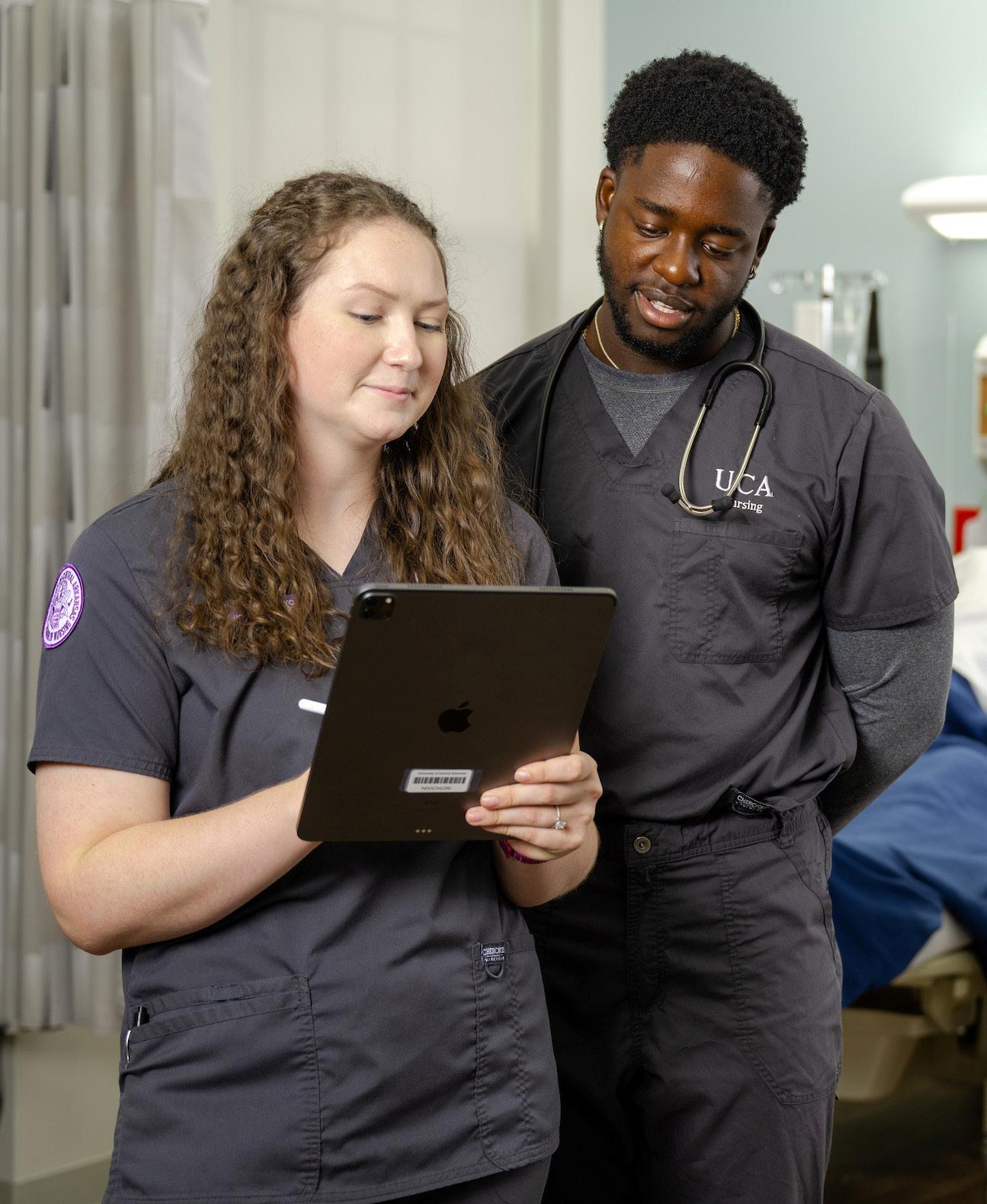
Nursing students Sarah Mayo and Nelson Omolo at the University of Central Arkansas in Conway (Photo courtesy of UCA)
The CNA and practical nursing pathways are among the most popular, he added.
“It allows them to work, gain experience and build a foundation before entering college,” Mizaur said. “We have high school seniors who completed their prerequisites, took the [Test of Essential Academic Skills] exam and were accepted into the practical nursing program before even graduating high school.”
Jefferson Regional School of Nursing
Students at Jefferson Regional School of Nursing in Pine Bluff are prepared for the nursing field through a 17-month pathway designed for those seeking an accelerated timeline. Every student enters as a transfer, having completed prerequisite coursework elsewhere, but once they arrive, the focus shifts quickly from theory to hands-on practice.
That structure is especially appealing to a growing group of students entering the program directly out of high school. With access to concurrent college credit, many graduates can meet prerequisites early and begin nursing training within months of graduating from high school.
“They come in and really just learn our way,” said Michelle Newton, the school’s director. “We seem to have really good success with students coming directly from high school.”
Still, Jefferson Regional’s student population is far from traditional. Classrooms include recent high school graduates alongside working adults, parents and even students with prior bachelor’s degrees in unrelated fields. Ages can range from 17 to 50, Newton said.
The program also maintains a strong connection to the local healthcare system. After completing foundational training, many students begin working as patient care technicians, gaining real-world experience while continuing their studies. Some are already employed in healthcare roles when they enroll, taking advantage of tuition support and flexible work opportunities.
Baptist Health College Little Rock
The nursing pathways at Baptist Health College Little Rock are designed to meet students at different stages of their education and career goals, offering both entry-level and advanced options within the profession.
At A-State, all incoming freshmen take a First Year
Experience Making Connections course, which also assists with career exploration.
The practical nursing program is a prelicensure pathway that prepares graduates to sit for the National Council Licensure Examination for Practical Nurses and become licensed practical nurses through the Arkansas State Board of Nursing. LPNs often begin working in long-term care, acute care, clinics and other patient care environments. For many, it serves as a first step into the nursing profession, some choosing to continue their education later to become registered nurses. In contrast, the Bachelor of Science in Nursing program is a postlicensure pathway designed for already-licensed RNs who want to expand their credentials and strengthen skills in leadership, management and quality improvement.
— Kathryn Flannigan Director, ASU School of Nursing ”
The program’s first semester, known as Foundations, plays a critical role in that transition. Over 16 weeks, students are immersed in the basics of nursing through a blend of lectures, simulation labs and clinical experiences. They learn essential skills, from patient communication to wound care and mobility assistance, while also gaining confidence in a healthcare setting during their early exposure to the field.
“Some of our students have never even been around a sick patient,” Newton said. “They’re learning how to introduce themselves, how to communicate — those foundational skills that really matter.”
Support does not stop in the classroom. Jefferson Regional emphasizes consistent, individualized guidance through biweekly faculty advice. These check-ins allow instructors to monitor progress, provide feedback and intervene if students begin to struggle. Instead of waiting for midterms, faculty work proactively to keep students on track.
“[Students] tell us the individualized attention here is what helped them succeed,” Newton said. “Our culture and environment are structured for student learning.”
For high school students considering the PN route, educators emphasize commitment and perseverance as essential. While the program offers a faster entry into the workforce and the opportunity to earn competitive wages early in a nursing career, students must be prepared to balance academic demands with personal responsibilities and extracurricular activities.
Programs such as those offered through Baptist Health play a broader role in addressing workforce needs across Arkansas. Early exposure to nursing in high school helps build awareness of healthcare careers and creates structured pathways into the field. One example of early exposure is Baptist Health’s summer internship program, offered in partnership with the Metropolitan Career-Technical Center in Little Rock.
The paid internship provides hands-on experience in a healthcare setting while reinforcing skills learned in the classroom. Participants who successfully complete the program may be selected for entry into the PN program. The internship is designed as a structured, supportive bridge into healthcare, helping students stay engaged in their career pathway while avoiding the need for supplemental summer employment.




Wouldn’t Trade It for Anything Wouldn’t Trade It for Anything
No
nursing specialty is easy, but those on the front lines have no regrets
By Doug Crise

Not everybody is after an easy job.
The field of nursing is not for those looking to take it easy. More identity than simple profession, nursing is often associated with the concepts of compassion and care — and those traits are absolutely on the money.
Compassion alone, though, is not enough to carry wouldbe nurses through a rigorous education and testing process, followed by sometimes-harrowing exposure to patients and maladies of all kinds. Flowery language is little relief for nurses sometimes working on their feet for 12 hours or more, many of whom are the first contact for patients and families who may be having the worst day of their lives.
Care
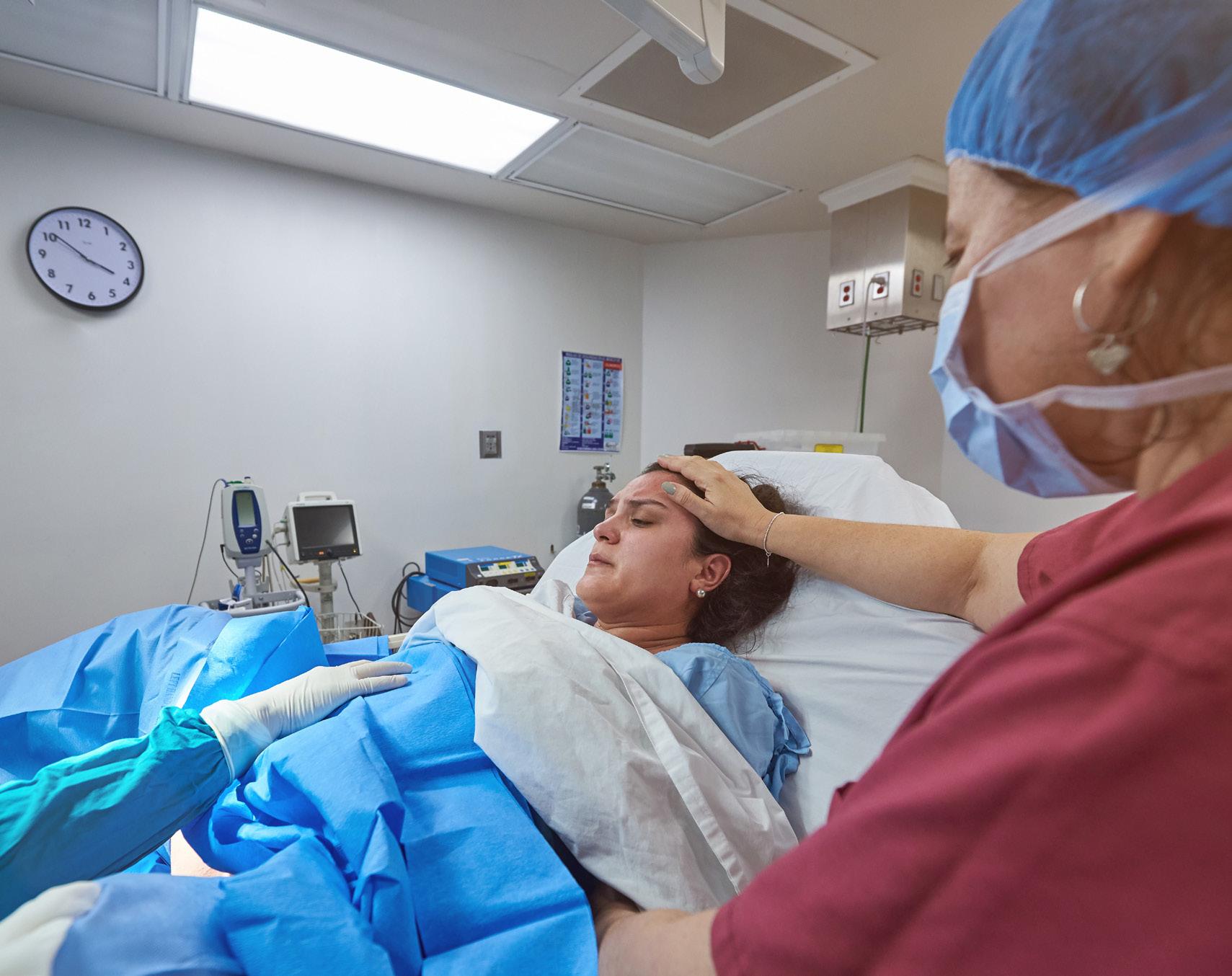
Compassion and patience are celebrated in the nursing field, but grit is nonnegotiable.
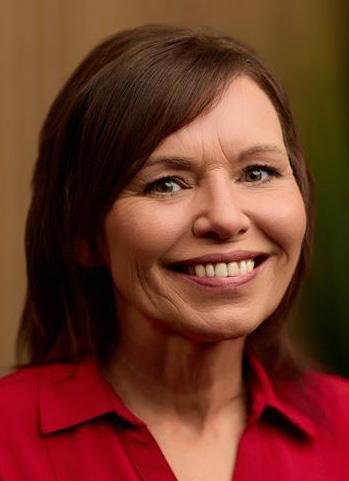
“There are days that you come home, and you feel like you don’t have anything else left to give to the people that you love,” said Melissa Reynolds, clinical director at LifeTouch Health, formerly Arkansas Hospice.
Within the general field of nursing are areas of specialization requiring different approaches, different skill sets and different mental hurdles that a nurse must overcome on a daily basis. That was clear to Reynolds when she entered the field of hospice nursing, but understanding is still miles away from actually experiencing.
Working with patients at the end of their lives and their families is something that cannot be replicated via the classroom, a textbook or even an on-site internship. Like so many other fields in nursing, hospice care calls for an emotional and mental skill set that is only embedded via experience and resilience.
There is simply no other way.
“Sometimes there may not be anything we can do for that family or that patient except to listen and to provide compassionate care to them,” Reynolds said, “and that’s the most important thing.”
Just about anyone who grew up with a television has been exposed to medical drama in some form or fashion. From General Hospital to ER to House, the essential plot is markedly unchanged: Against all odds, with careful thinking and otherworldly poise, the doctors and nurses involved overcome vast hurdles to save a patient’s life week after week.
Melissa Reynolds
Penny Ward
Yet Reynolds and others involved with hospice care live their lives removed from triumphal medical wizardry. They are there for the part that does not make it to prime time, the awful and foreboding space where patients and their families exist after the words, “There is nothing more that we can do.”
At that point, it is no longer about outcomes. Instead, it is about comfort, care, reassurance and composure as patients and families face their final times together.
develops discharge plans for patients whose conditions are improving. Some days, those discharges are to transfer the patient to hospice or palliative care.
Once again, not every day can bring a happy ending.
“You need patience, kindness, understanding,” Hughes said.
That is not exactly a surprise, but what comes next might be.
“You’ve got to let a person say what they want to say without taking offense to it or getting your feelings hurt,” Hughes said,
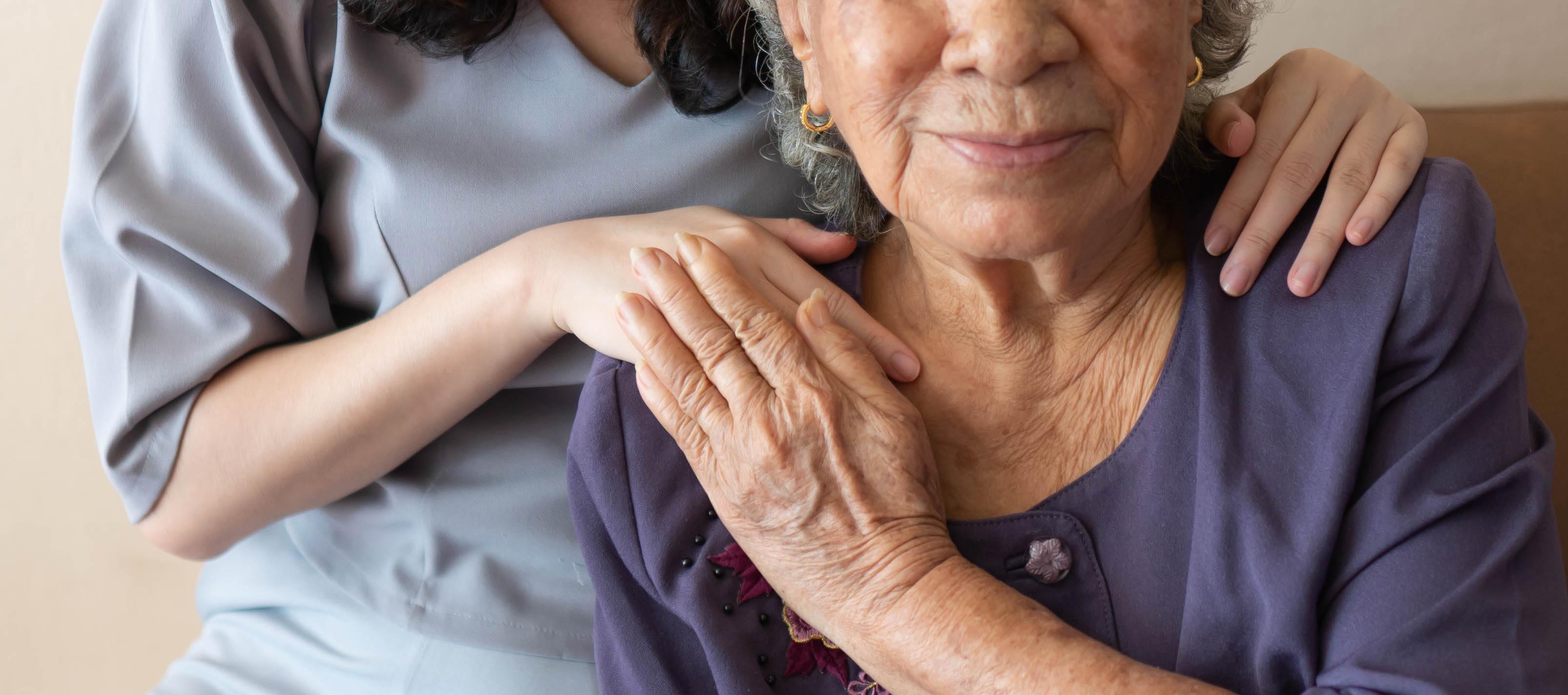
Comfort
“Hospice is probably one of the most emotionally and mentally draining professions that a nurse can do,” Reynolds said. “I tell people when they come to work in hospice that it’s very important to set boundaries because we are a 24/7 service.”
Indeed, Reynolds advocates for letting go when a hospice nurse is not at work while, in the same breath, acknowledging that such a thing is easier said than done when working with patients at the end of their lives.
“It is important that when you’re not working that you make yourself not available,” Reynolds said, “because we have dedicated on-call staff to be able to take care of the patients when you’re not at work. The most important thing you do is to be able to set those boundaries so that you’re able to participate in self-care.”
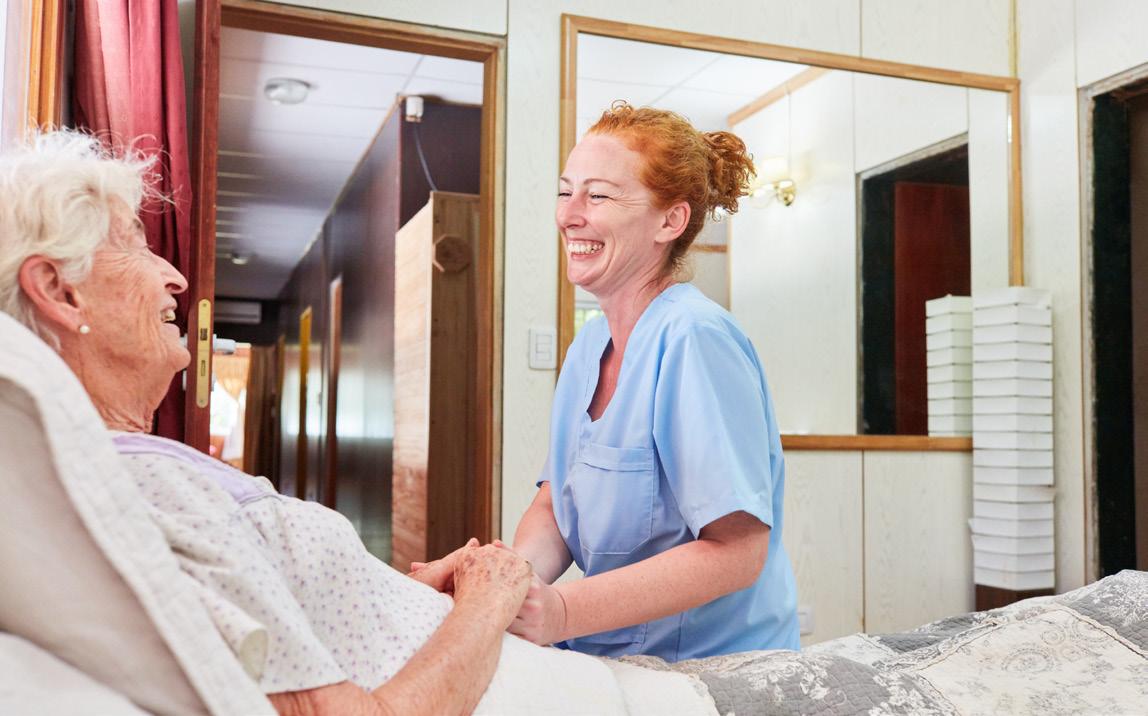
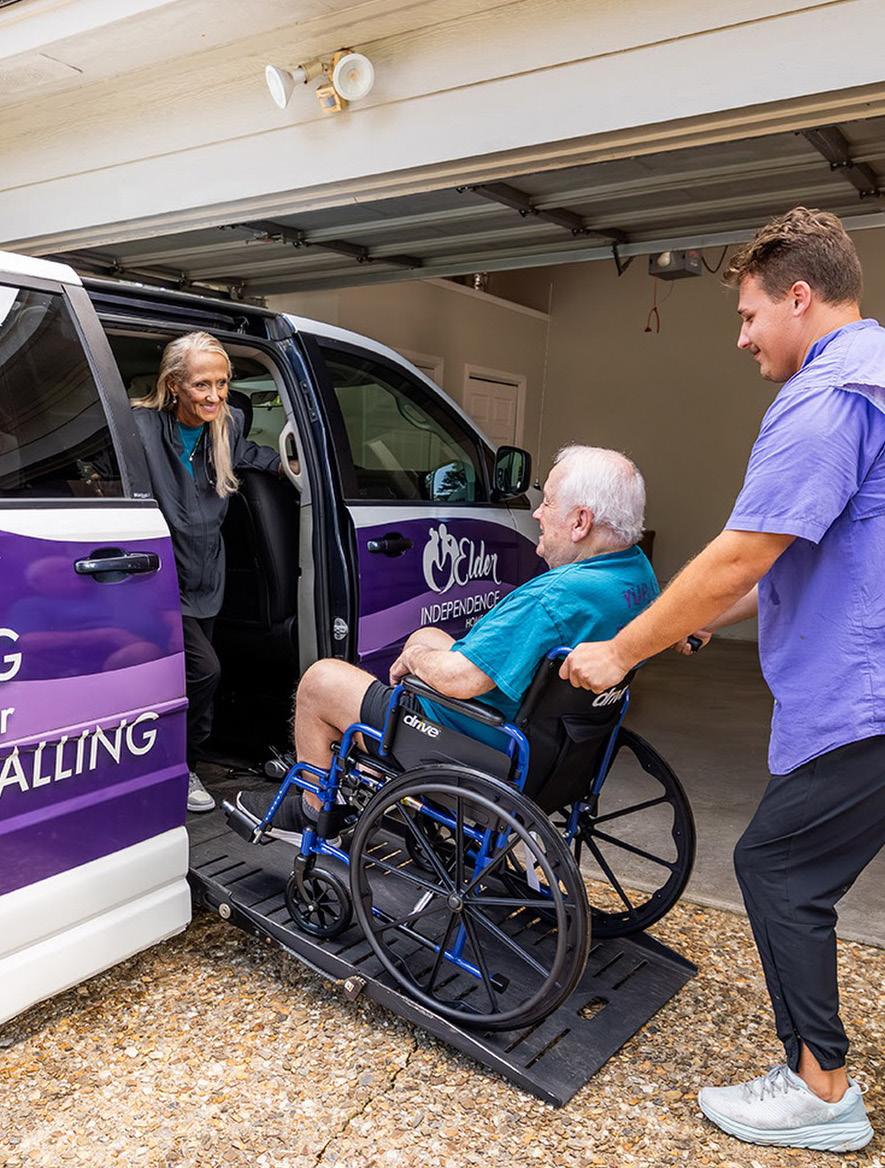
Karen Hughes, care manager at Elder Independence Home Care in Bryant, has been a nurse for nearly three decades, working a number of specialties before settling on elder care. There, too, is the prospect of loss mixed in with the daily work of companionship and care for both the patients and their families.
“We go to several different homes and elderly resorts, and I’m usually there weekly or sometimes twice a week,” Hughes said. “We also have a care home, and I take care of clients there, as well.”
Much like hospice care, Hughes practices in a field that has a definitive end point. Sometimes, on the best days, Hughes
“because they will. They will say stuff they don’t mean.”
That addresses two things that modern medical dramas are often more than happy to skip. Firstly, when an elderly patient is suffering from dementia, not all communication will be positive and lucid, but also, after dealing with the aging of a loved one and the possible decline of their cognitive skills, family members are not always the best versions of themselves. That can be especially true if they are worn down physically and emotionally from the demands of around-the-clock home care.

Reassurance
Grit

Everybody gets unhinged sometimes. It is OK.
“The caregivers that are with them, they’re excellent too,” Hughes said. “They can call me at any time, day or night, if they have a problem If we can’t solve it over the phone, then I will go out and see what’s going on with the client. If they need to go to the hospital, we’ll get them to the hospital.”
Just like the nurse-patient relationship, it is important the nurses themselves feel supported. The Arkansas Health Care Association exists to provide nurses with professional development, career path guidance and advocacy.
“We have just launched a nursing program that is the first of its kind in the nation,” said AHCA Executive Director Rachel Bunch. “The program takes existing staff members that are dedicated to longterm care and creates nursing career pathways for them.”
Those career opportunities are important, and it is important for aspiring nurses to remember that the choosing of a specialty is not a life sentence. Hughes herself has worked in labor and delivery and postpartum care before also working in pediatrics, burn care and forensic psychiatric nursing. Career paths are rarely a straightforward proposition, and each specialty calls for a different skill set, both clinical and interpersonal.
“You’ve got to let a person say what they want to say without taking offense to it or getting your feelings hurt because they will. They will say stuff they don’t mean.”
— Karen Hughes Elder Independence



Composure
“I can teach them the routines and procedures,” said Penny Ward, senior nursing director of the psychiatric research institute at the University of Arkansas for Medical Sciences in Little Rock, “but if someone is not looking for a less machinedriven experience, then they’re probably not going to be for me. I need them to see past the label of the mental illness that the patients are coming to us for and seeing them truly as the person they have the potential to be.”
Ward said it typically takes a year for an aspiring psychiatric nurse to get a handle on patient interaction, especially for an acute inpatient unit. As with any other nursing field, a head full of clinical knowledge only gets a nurse partially close to providing the best care possible. Science and medicine are always changing — a constant evolution. Yet the roads toward comfort and care remain as timeless as ever.
“I mean, it runs the whole gamut,” Ward said. “You have to hone your skills to meet the patient where they’re at.”
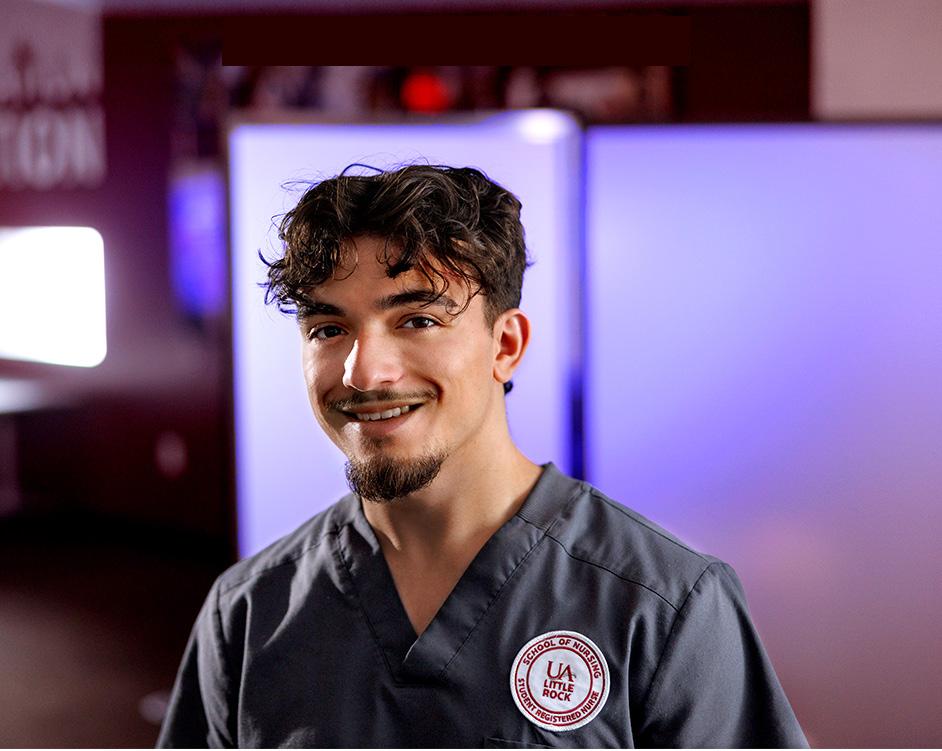
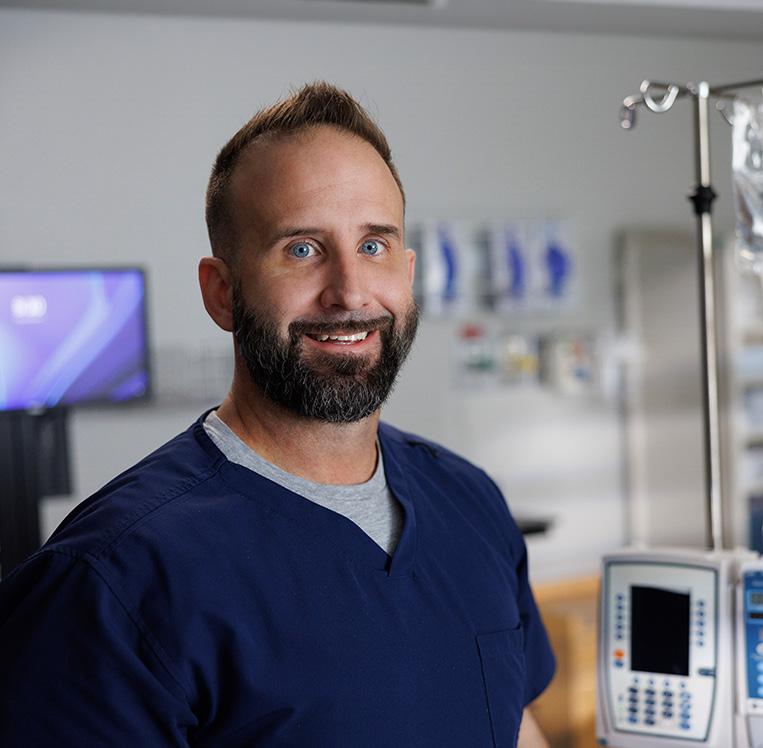
Not mass-produced health care. Curated care.
Conway Regional has a vision. For more than a century, our team has brought together key service lines, providers, and technologies to create patient experiences that are highly intentional and refreshingly personal. It’s about blending access and excellence. Familiarity – and erce commitment. Advocating for patients while providing the services our communities deserve. See what curated care looks like for you.


Magnet Designation Drives Arkansas Nurses Magnet Designation Drives Arkansas Nurses
Prestigious recognition considered the industry ‘gold standard’
By Sarah DeClerk and Mark Carter

Four Arkansas hospitals currently have what is generally considered the most hardest-to-earn certifications available in the healthcare industry.
Magnet certification from the American Nurses Credentialing Center recognizes excellence in nursing practices and quality patient care and is considered the gold standard for nursing.
The Arkansas institutions with Magnet certification are Arkansas Children’s Hospital and UAMS Medical Center, part of the University of Arkansas for Medical Sciences, in Little Rock; Conway Regional Medical Center; and CHI St. Vincent in Hot Springs.
Another Arkansas hospital, Baxter Health in Mountain Home, has previously been awarded Magnet designation but was not recognized in the last cycle. Magnet designation is not given on a regular schedule but is awarded based on an organization’s successful application and assessment process, which can vary in timing, the ANCC states.
An institution can reapply for Magnet designation every four years.
Only about 10 percent of all U.S. hospitals carry Magnet distinction. Currently, there are 663 Magnet-designated hospitals in the U.S.
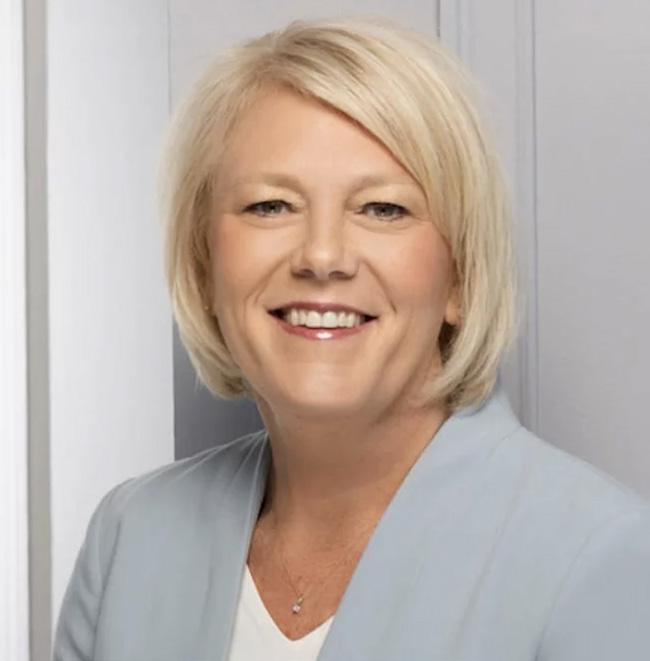
Angie Longing is the chief nursing executive for the CHI St. Vincent Arkansas market, which includes hospitals in Little Rock, Hot Springs, Sherwood and Morrilton, and she also serves as president of CHI St. Vincent Morrilton.
She said the designation does not come easily.
“The Magnet with Distinction recognition for CHI St. Vincent Hot Springs is a testament to the nursing team’s commitment to providing excellent, compassionate care to our patients,” she said. “I couldn’t be prouder of our frontline staff’s hard work and dedication.”
Magnet hospitals are not only recognized for the work of their nurses but for promoting a supportive work environment that attracts and retains top nursing talent. Magnet designation, as almost any nurse can attest, is considered among the most rigorous credentialing processes in all of healthcare.
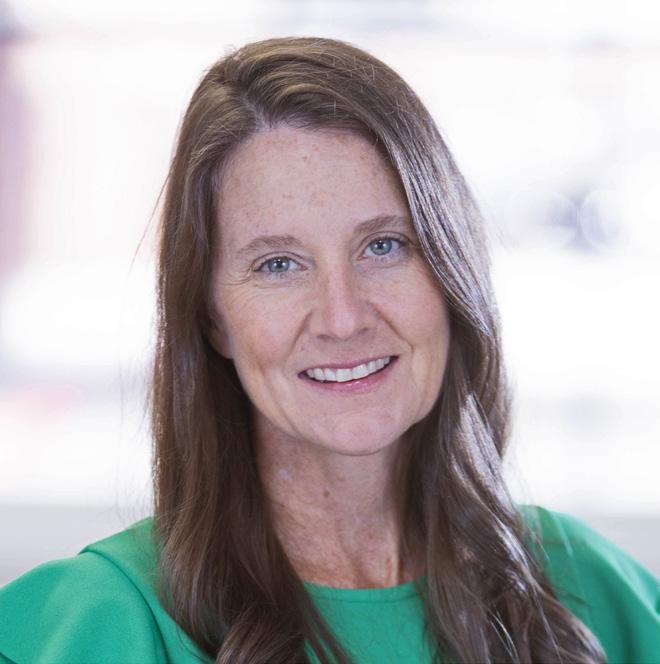
“In order to achieve Magnet designation, an organization must excel in multidisciplinary collaboration, nurse engagement, patient satisfaction and high-quality patient outcomes,” said Tammy King-

Jones, chief nursing officer and associate vice chancellor for patient care services and clinical operations at UAMS. “The journey requires years of sustained commitment, documented evidence of excellence and a culture where every single person, from the welcome desk to environmental services, food services, pharmacy, diagnostic imaging, respiratory therapy, physicians and nurses, is invested in the standard of care this organization delivers.”
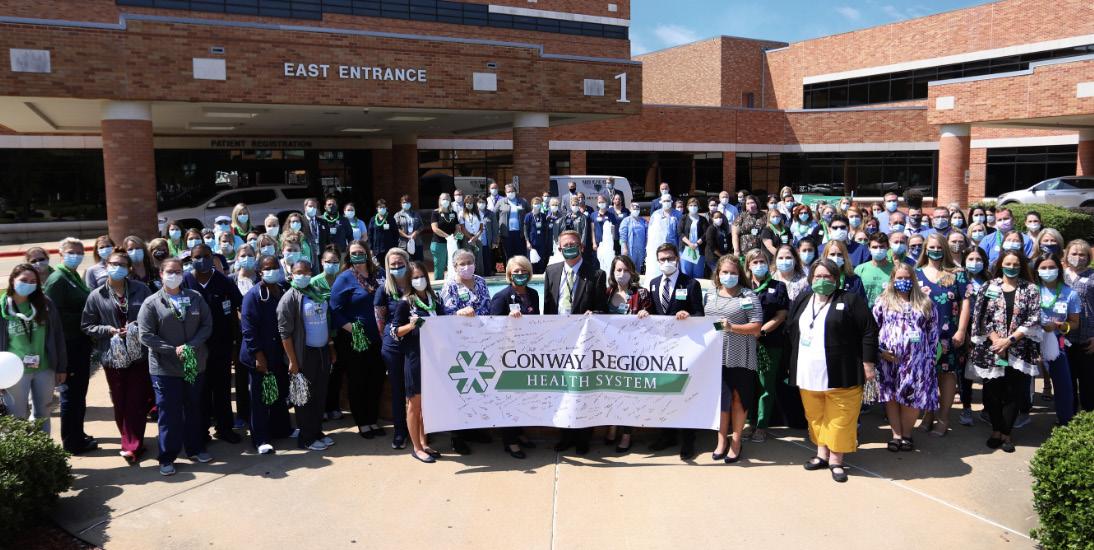
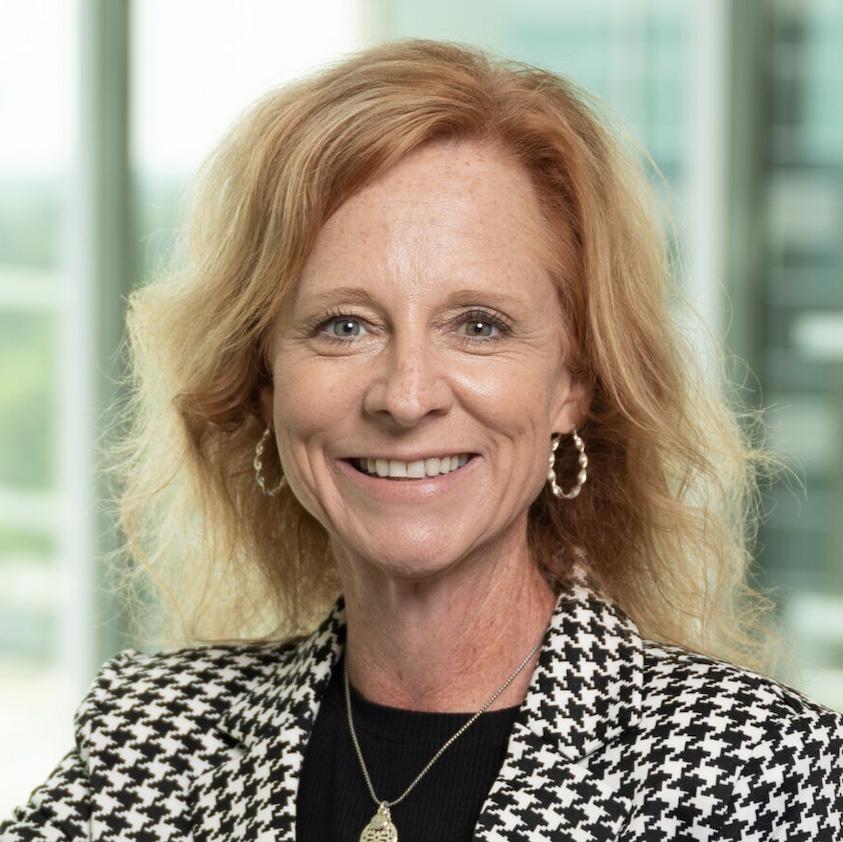
Conway Regional Medical Center received its first Magnet designation in 2020 and its second in 2025. Suzanne Harris, corporate director of clinical excellence, education and professional development, said it is an honor to be among only a small percent of hospitals recognized by the Magnet program. She added that the recognition is a testament to the hospital’s hardworking, dedicated nursing teams.
“Nurses at Conway Regional consistently go above and beyond in their commitment to patient care,” she said. “Their dedication is evident not only at the bedside but across the entire organization. They strive to deliver exceptional, compassionate care every day, ensuring that patients and families feel supported, informed and valued.”
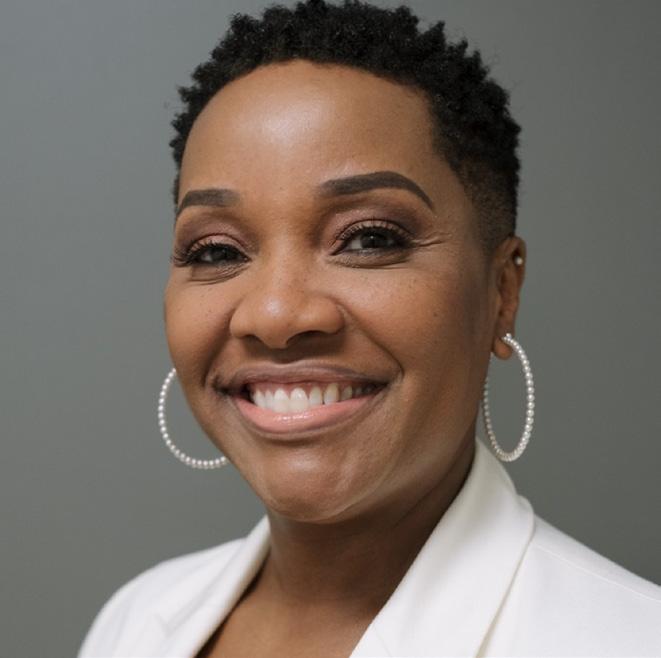
About 50 of the 663 institutions currently holding Magnet designation are pediatric hospitals, said Lametria Wafford, director of nursing excellence and Magnet program director at Arkansas Children’s.
“For Arkansas Children’s Hospital to be one of only a few pediatric hospitals, we are part of an elite community focused on empowering our nurses while creating the best experience for our patients and families,” she said.
The Magnet program provides a road map of what excellence should be for pa-
tients, teams and hospitals. Preparation to become a Magnet-designated hospital begins years in advance, she added.
“The process centers on ‘sources of evidence,’ examples that affirm the enculturation of the Magnet model in your organization,” she said. “There are 102 SOE examples based on the model components of transformational leadership; structural empowerment; exemplary professional practice; new knowledge, innovations and improvements; and empirical outcomes. We also provide in-depth information about our organization’s policies and practices in the organizational overview requirements.”
At the heart of Magnet certification, of course, are patients.
“When you are a Magnet-designated organization, the patient is at the center of everything you do,” Wafford said. “What immediately comes to my mind are what we call the ‘big three’ of exemplary professional practice — nurse engagement, nurse-sensitive indicator and patient satisfaction.
“Engaged nurses impact patient safety and optimal patient outcomes. Decreased hospital-acquired conditions mean better patient care for our patients and families. This is possible due to tracking nurse-sensitive actions that nurses influence and lead. Effective communication, collaboration and patient-centered care create the best patient experience.”
Numerous studies have found that Magnet designation provides benefits beyond simple recognition of nurses, including higher job satisfaction among nurses, higher patient satisfaction and even lower mortality rates.
King-Jones said Magnet designation aligns with the UAMS mission of being
Angie Longing
Tammy King-Jones
Suzanne Harris Lametria Wafford
Nurses at Conway Regional Health System (Photo courtesy of Conway Regional)
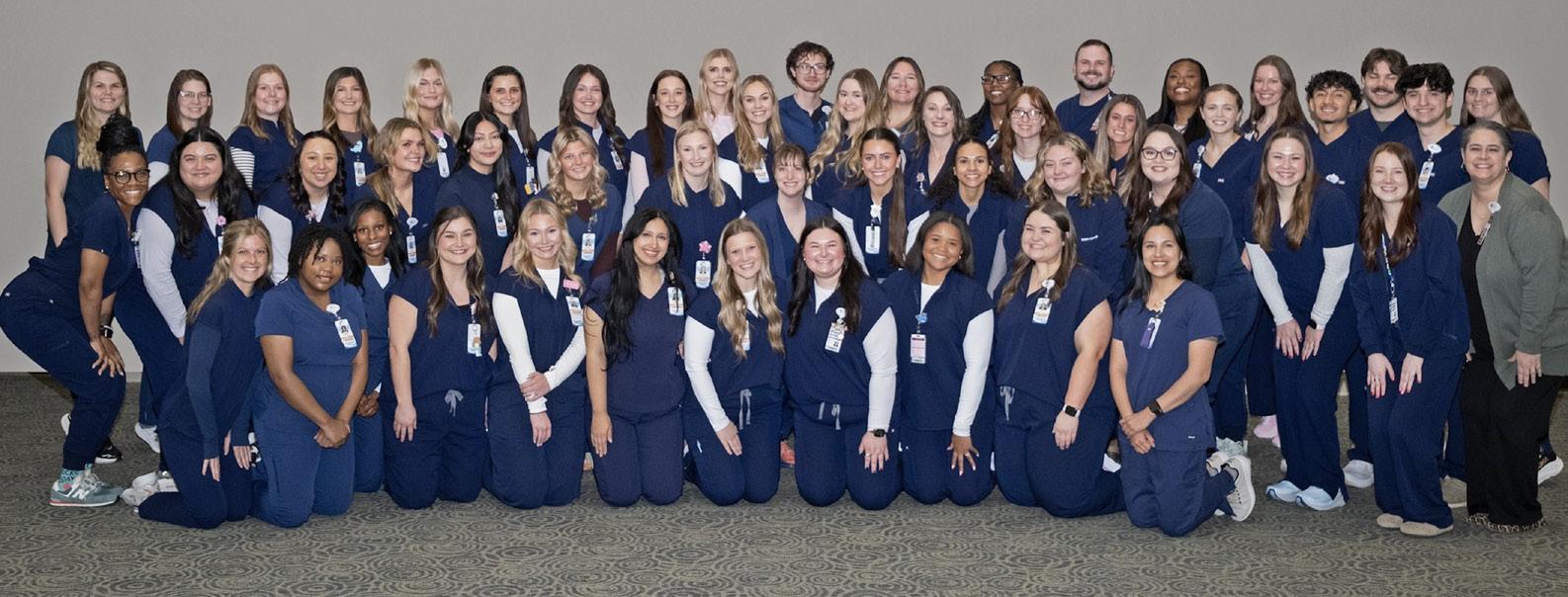
nationally distinguished for care delivery, research advancement, workforce development and community health improvement.
“Magnet certification signals to the healthcare community that excellence at UAMS is not a department or an initiative — it is an identity, and [patients] can expect excellence in any interaction,” she said. “Magnet hospitals consistently demonstrate better patient outcomes, lower complication rates, better patient experience and stronger staff retention.”
Patients who receive care at UAMS can be confident that everyone they encounter is engaged, supported and committed to their care and experience, she added.
“At UAMS, we invest in the people delivering patient care every day. The return on that investment is excellent patient care and a culture where people thrive and want to work,” she said. “The pursuit of excellence in Magnet recognition is a continual, never-ending commitment to raising the bar and working to excel.”
Once an organization achieves Magnet designation, there is no “free pass” moving forward, she added.
“Every four years, Magnet redesignation requires the proof that excellence is not a moment in time but a standard the entire organization continues to raise,” she said. “At UAMS, Magnet is not something we do; it is the heart of who we are, and it shows in every hallway, every interaction and every life we touch. The continued elevation of excellence and pursuit of providing a great patient experience daily at UAMS is how we will achieve this next designation and those to come.”
Nursing education is a part of the process and represents another component of Conway Regional’s success. In 2025, Harris said, 70 percent of Conway Regional’s registered nurses had a bachelor’s degree
or higher in nursing compared to just less than 48 percent for all RNs across Arkansas in 2024, and 25 percent of the hospital’s RNs had a professional board certification in 2025. Harris said Conway Regional helps fund continuing education for its nurses.
Conway Regional is working toward its third Magnet designation and plans to submit a self-study document in 2029. Harris said the hospital hopes to continue growing its transition-to-practice programs and expand support for nurses who are returning to school, seeking professional certifications, or hoping to participate in research and quality improvement projects.
“Nurses are an essential part of Conway Regional,” she said. “Their blend of exceptional clinical expertise and genuine compassion creates the foundation for high-quality care and meaningful patient experiences.”
The journey to Magnet status at Conway Regional began in 2016 with a commitment from senior leaders and the nursing leadership team, Harris said. After compiling a four-year self-study document showing that Conway Regional met or exceeded the criteria, the credentialing organization conducted a site visit virtually amid the COVID-19 pandemic to achieve the first designation. A similar process led to the second designation, she said.
Harris credited the hospital’s interdisciplinary culture
of shared professional governance with helping garner Magnet recognition. The model allows clinical nurses to lead or co-lead initiatives alongside physicians, pharmacists, therapists and others with the goal of improving outcomes for patients.
“Conway Regional has an interprofessional shared decision-making model and a co-management agreement with its physicians,” she said. “The synergy of these two models results in positive outcomes for patients, the organization and the clinical professionals who practice here. Councils led by nurses and other clinical professionals identify opportunities for improvement, then work collaboratively to implement solutions leading to improved outcomes.”
Like her counterpart at UAMS, Wafford knows that achieving and maintaining Magnet status are one and the same.
“You are not done once you achieve the four-year Magnet status,” she said. “There are designation requirements that you must meet each year to maintain your status. It is a continuum that keeps you focused and looking for ways to make things better. It is an intense process, and once you achieve it, you are excited to maintain what you’ve accomplished, especially when you know how much it really means for our patients. Magnet recognition is the highest honor and one every Arkansas Children’s Hospital team member should be proud of.
“When our patients and families see the Magnet logo, we want them to truly feel our mission, vision and values each time they experience us.”
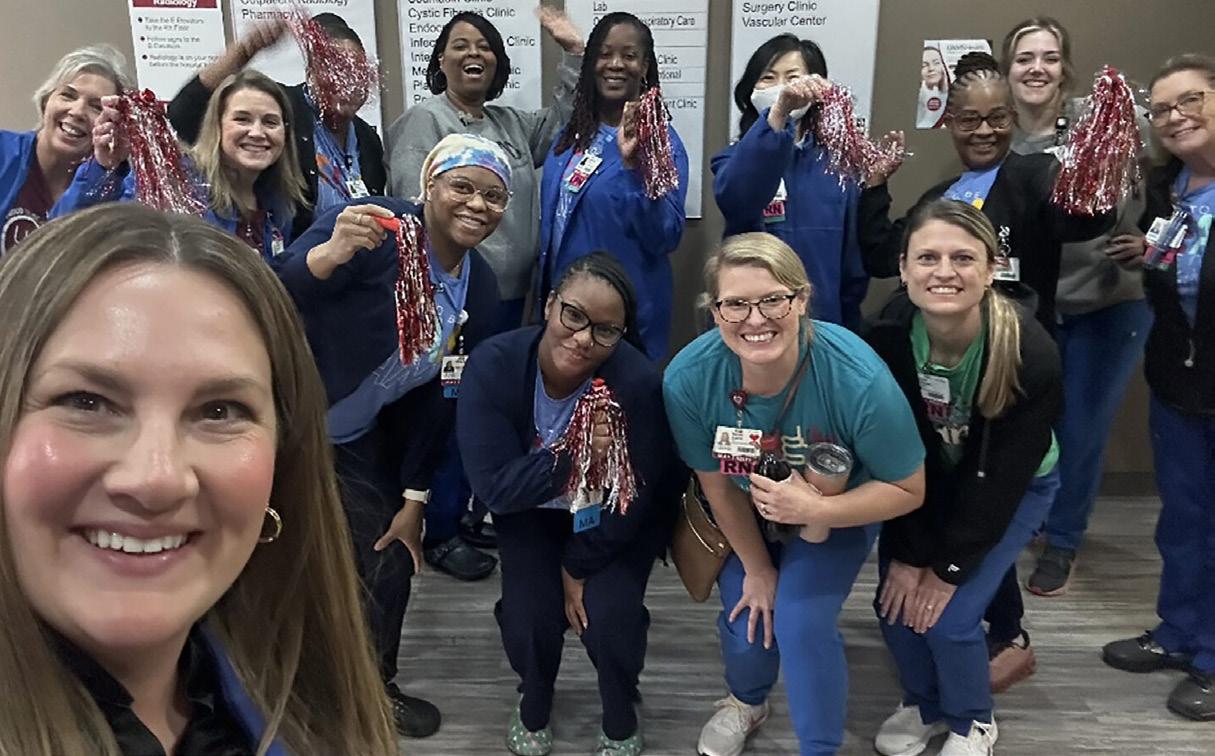
Arkansas Children’s Hospital nurses (Photo courtesy of Arkansas Children’s)
UAMS nurses celebrate Magnet designation. (Photo courtesy of UAMS)





Calling the Shots
From the bedside to the boardroom, nurse leaders are making a difference in their communities
By Sarah DeClerk
A15-bed critical access hospital in the southwest Arkansas town of DeQueen, Sevier County Medical Center is a pint-sized powerhouse, offering an emergency room, radiology suite, lab testing, therapy and swing beds for those returning home from acute care hospitals.
CEO Stacy Dowdy estimated that the medical center, the only hospital in Sevier County, serves a total patient population of 35,000 and said that, despite not having an obstetrics unit, the hospital has successfully delivered a handful of babies at its emergency room.
Before the medical center opened its doors in 2023, Sevier County had been without a hospital since 2019, when the previous hospital closed down. That left patients having to drive 45 minutes in any direction to reach the nearest hospital, Dowdy said. She added that being without a hospital can be devastating to communities in rural Arkansas.
“You have a lot of people who [could otherwise] lose their lives,” she said. “We treat people who are suffering from heart attacks, from strokes, from accidents, motor vehicle accidents. It puts a strain on your local community providers, as well, because they’re only open, typically, Monday through Friday 8 to 5, maybe some extended hours, but they’re not truly available at midnight, when your young child is screaming at the top of their head because their ear hurts or their belly hurts.”
Although she today leads the lifeline hospital, Dowdy joined the medical center as chief nursing officer and began her career at the bedside as a medicalsurgical nurse. Her story is just one example of how nursing leaders are helping improve the medical landscape across Arkansas.
“There are a ton of leadership roles nurses can handle,” said
Judy Staley, director of simulation at the University of Arkansas at Little Rock School of Nursing. “First off, leadership starts in nursing school, and when they become nurses, their leadership’s at the bedside, to be honest with you. They’re leaders in patient care because they are the ones that are right at the bedside, taking care of patients.”
Staley’s path to leadership was far from typical, having entered nursing school in her 30s as a nontraditional student. Once she got to the bedside, however, she said she fell in love with caring for her patients and being their advocate. She also enjoyed mentoring the nursing students who shadowed her at the teaching hospital where she worked.
That led her to earn her master’s degree in nursing education and to join the faculty at UA Little Rock, where she became director of simulation earlier this year.
“I did not think I would ever be in leadership, to be honest with you, but I always say, leadership is about being a foundation,” she said. “It’s the rock, so it’s holding people up and showing them
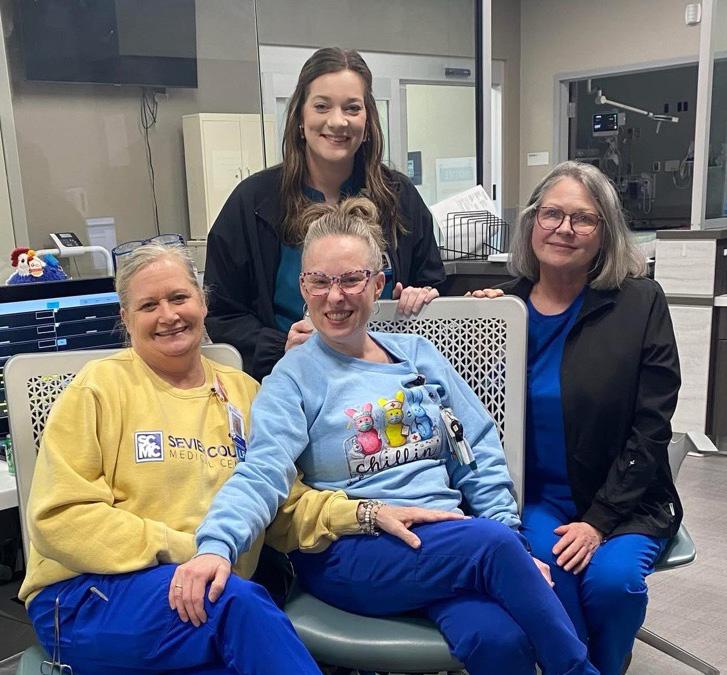
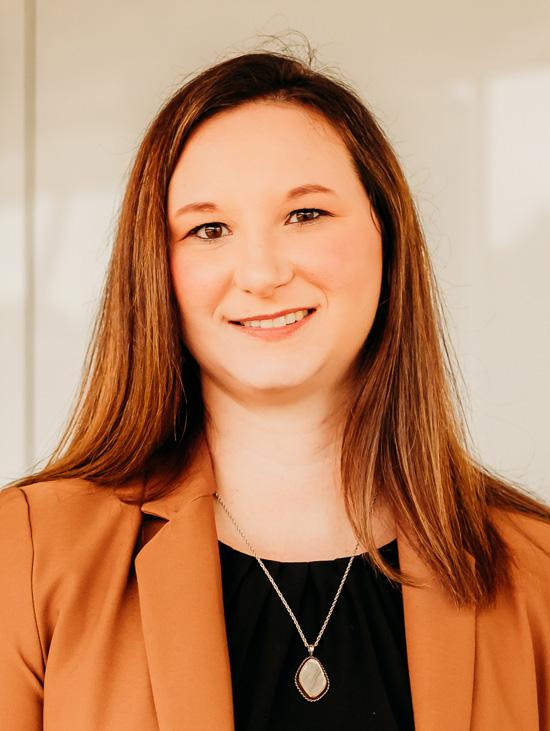
“Everything that we have going on in healthcare from federal and state levels, it’s my job to bring that back to my team and just say, ‘This is what we’re facing. What can we do to help better prepare ourselves for the future?’”
— Stacy Dowdy CEO, Sevier County Medical Center
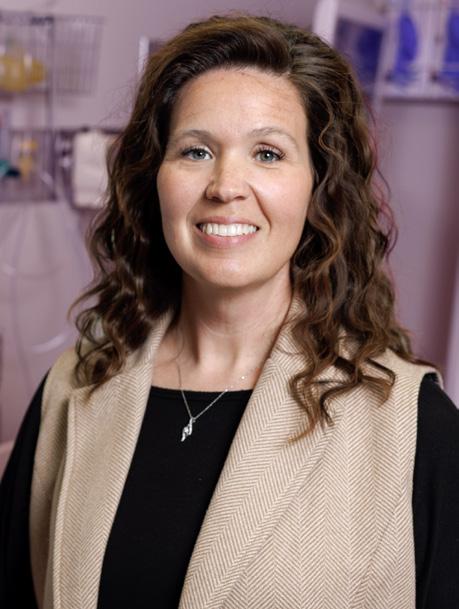
Nursing staff at Sevier County Medical Center includes Megan Mitchell, clockwise from top, Kathy Barnes, Shiloh Copland and Tammy Morris. (Photo provided by SCMC)
Judy Staley

“It’s important to invest in yourself and your leadership skills.”
— Neal Reeves Health policy chair, Arkansas Nurses Association
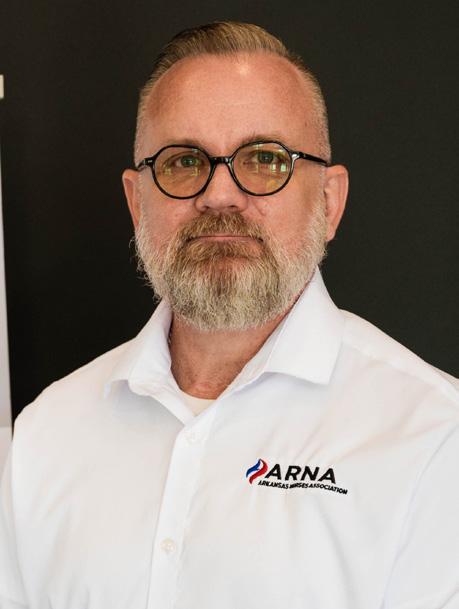
all the things that they can do and all the things that they can achieve and helping them fly.”
Dowdy said her approach to leadership is to trust her team, build complementary skill sets within her organization, provide a support system for her staff and communicate effectively.
“Everything that we have going on in healthcare from federal and state levels, it’s my job to bring that back to my team and just say, ‘This is what we’re facing. What can we do to help better prepare ourselves for the future?’” she said.
Helping lead the charge to shape public policy when it comes to nursing and healthcare in general is Neal Reeves, health policy chair at the Arkansas Nurses Association. Like Dowdy and Staley, he also started his career at the bedside, working in the emergency room and intensive care unit.
Reeves comes from a family of nurses. His mother was a nurse, his wife is a nurse, his two daughters are nurses, and he has two nieces who are nurses. He said his desire to help better the profession of nursing is what led him to pursue public policy.
“I don’t want my daughters or my nieces to have the same experiences I had,” he said. “I want to make it better so they have better experiences, and in turn, whatever experiences they have they want to make better, that they turn and do that, as well,
for the profession because it’s giving back to what’s been given to us. That’s why you do it.”
Among ARNA’s recent policy wins are the passage of workplace violence legislation strengthening protections for healthcare workers. The group advocates for nurses at the state and federal level, regularly traveling to Washington, D.C., to meet with lawmakers. ARNA also hosts Nurses Day at the Arkansas Capitol each year, giving nurses a chance to speak with their representatives face to face.
Reeves said the event provides an excellent opportunity for students and up-andcoming nurses to see how the legislative process works so that they can become more comfortable talking about the policies that affect them. Staley said she takes students to Nurses Day every year.
“We always take our students to Nurses Day at the Capitol because policymaking, you don’t really realize how much of a role that nurses influence policy, and when there are policies, we are the front lines,” she said. “We are the ones that see how those policies affect patients and nursing and just healthcare, and so we can be that change agent.”
As hospital leaders, Dowdy said nurses bring a unique perspective to administration because they understand the realities of what patients and staff experience at the bedside.
“They have worked at the bedside.
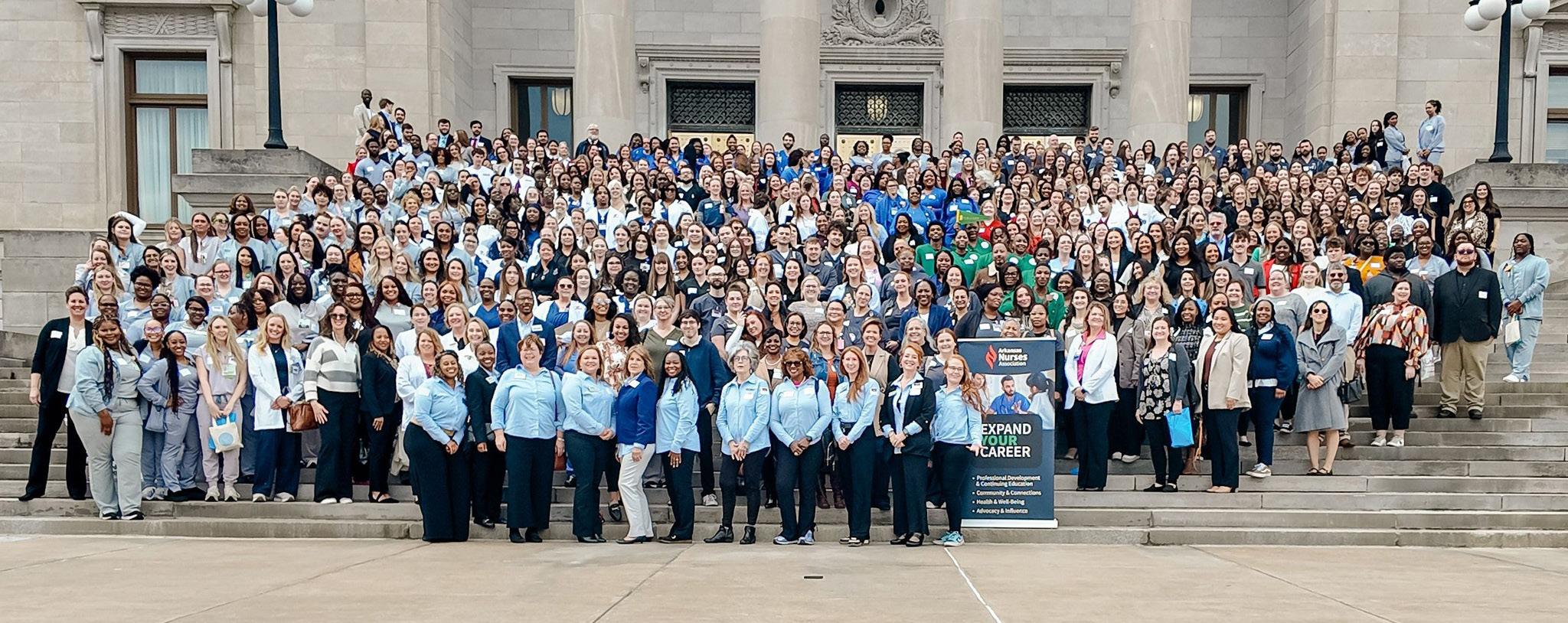
Nurses Day at the Arkansas Capitol (Photo provided by ARNA)
They have been in the trenches. They have worked right beside patients and taken care of not only those patients but also their family members,” she said. ”I think that that is significant when it comes to going from bedside nursing into administration is to understand what your patients are going through and also understanding what they need.”
In rural Arkansas, the healthcare needs are many. Insufficient access to mental healthcare, maternal services and transportation coupled with a limited ability to pay for treatment and medications are some of the greatest challenges, Dowdy said.
The nursing staff at her hospital spend a lot of time assessing patients’ social determinants of health, providing them with health education and connecting them with available resources to facilitate better health. The hospital also partners with various organizations to provide resources and collaborates with other hospitals through the Southwest Arkansas Healthcare Consortium and Arkansas Rural Health Partnership.
While she acknowledged the potential for burnout in nursing, she said it is a beautiful and rewarding profession.
“I find joy in nursing when I know that I’ve helped that patient get the proper care they need, and I see them in our local grocery store, and they say, ‘Thank you for taking care of me,’” she said. “That’s something that I absolutely love about rural healthcare is that you’re taking care of your family, your friends, your neighbors and that you’re more than likely going to continue to see them more than once, and so you just become familiar with those patients.”
Staley said about 10 percent of the nursing students at UA Little Rock are from rural counties, and she hopes they return to practice in their hometowns equipped with the tools they need to boost community health.
“Our goal is to educate them, give them the resources that they need, help them understand what resources they can take back and actually go back to their community to be able to take care of those patients,” she said. “It’s all
about resources. It’s all about education.”
She said nurses have the ability to be leaders at all levels, even if they are just starting out at the bedside or in home health or telehealth. In education especially, she added, nurses have the ability to shape the profession by teaching their students to be leaders.

“It starts with one, and then it just multiplies,” she said. “There’s nothing like being that stepping stone for that nursing student or for that nurse to have the courage to speak up or have the courage to do something that they felt that they couldn’t do.”
Reeves added that it is important to seek out mentors and continue learning throughout one’s career.
“It’s important to invest in yourself and your leadership skills,” he said. “Oftentimes in nursing, if you’ve been around awhile, there’s an assumption that you’re a leader, and while you may have a lot of knowledge, that doesn’t necessarily make you a good leader. You have to invest in those skills.”
He added that voting, getting involved in professional organizations, and talking with family, friends and neighbors about issues that affect them are simple ways nurses can help shape public policy.
“You have a chance to make a difference for nurses. You have a chance to make a difference for patients. You have a chance to make a difference for our communities,” he said. “Listen, we don’t go into nursing because it’s all glamorous and makes all this money. That’s not why any of us went into nursing. We went into nursing to help others. By moving up, we’ve learned something along the way, and we have a duty to pass that on to people who come behind us.”
AMONG ARNA’S RECENT POLICY WINS ARE THE PASSAGE OF WORKPLACE VIOLENCE LEGISLATION STRENGTHENING PROTECTIONS FOR HEALTHCARE WORKERS.
The nursing simulation lab at the University of Arkansas at Little Rock
(Photo provided by UA Little Rock)
Global Standards of Care
Decorated career nurse traveled halfway around the globe to serve the people of Arkansas
By Dwain Hebda
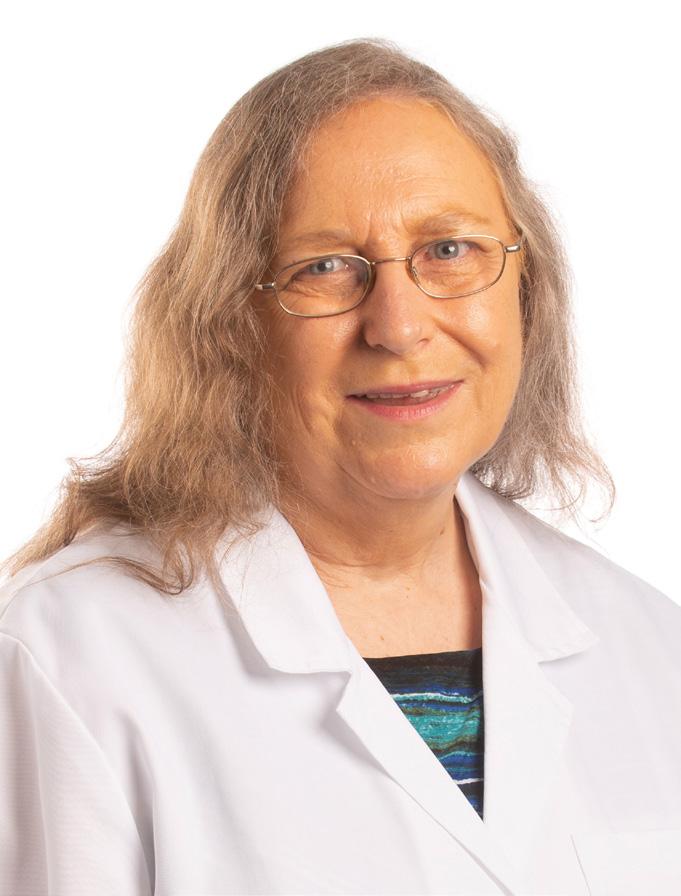
Unless you listen for it, there is very little left of Leonie DeClerk’s New Zealand accent. It creeps in here and there around the edges of her voice, but for the most part, DeClerk sounds just like any other American, even though, in nursing circles particularly, she is anything but.
“My mom told me that from when I was 5, I wanted to be a nurse,” she said. “Later, I kind of toyed a little bit with either speech therapy or being a physician, but they didn’t really fit in with what I wanted to do. I also came from an impoverished family, so it was good for me to be able to start working as soon as I got out of high school and have something that would pay and that would be good employment for the rest of my life.”
Now a professor in the University of Arkansas for Medical Sciences College of Nursing, DeClerk is closing in on 50 years in the profession. She graduated nursing school in New Zealand in the 1970s and landed in Pine Bluff at what is now Jefferson Regional Medical Center at the tender age of 21. The jarring culture shock of being so young and so far from home is still fresh in her mind all these years later.
“It was different. Healthcare in the States is different from healthcare in New Zealand,” she said. “However, I’ll say I loved my time in Pine Bluff. The people in Pine Bluff are the soul of the earth. I learned a lot about how to be a nurse in America while I was living there. Some of the LPNs that I worked with were absolutely amazing, and the RNs and the physicians that I worked with were equally amazing.”
DeClerk quickly embraced her role and became an immediate asset wherever she was assigned over the next nine years,


first on the medical-surgical floor and then intensive care, picking up shift supervisor responsibilities along the way. Her last year there, she was one of a select few nurses to work in the cardiovascular intensive care unit when the hospital started its now bygone open-heart program.
Her time in Pine Bluff was also marked by the onset of HIV and the AIDS epidemic, a cornerstone event in her professional life the likes of which would not be seen again until 2020’s COVID-19 epidemic.
“I was already working as a nurse in Pine Bluff before we really knew about HIV,” she said. “We knew that there was this condition, at that stage being called GRID, that was around, but we didn’t really know much about it. I remember the first patient that I took care of who we found out had HIV. It was an awful feeling of uncertainty where we went from taking care of this patient like they were just another person to wearing masks and gloves and gowns and being in full isolation gear. It seemed almost depersonalizing.
“HIV changed the way we practiced nursing for sure. I mean, before HIV, I would draw blood, start an IV, then go wash my hands. After HIV, it was gloves and, not that I was ever really scared of patients, but being much more cautious around patients, you know, and the whole way we disposed of needles because we knew a whole lot more about how things could be transmitted.”
Leaving Pine Bluff, she moved to Jacksonville, where she worked in home health and settled into married life with an U.S. Air Force airman. Two years after arriving in Jacksonville, she followed her husband on a two-year deployment to Germany, after which she returned to Jacksonville to raise a family and work in


the local hospital’s emergency department. It was there that she decided to pursue additional advanced degrees.
“I was very happy being an RN, but there were a couple of things that really precipitated me working toward a higher degree,” she said. “One of them was just the problems of, by that time, having two kids, having a husband in the military who may or may not be around, and trying to work shift work. I really wanted something that had better hours, and nurse practitioners typically have better hours.
“I also saw that there was a lack of primary care. We kept seeing the same patients over and over again for conditions that were better taken care of by their primary care provider. At that time in Arkansas, the nurse practitioner field was very new; in fact, the legislation that created the certified nurse practitioner role was actually passed after I started back in school to become a nurse practitioner.”
DeClerk, who had completed her bachelor’s degree in nursing at the University of Arkansas at Pine Bluff, finished her master’s degree, making her a family nurse practitioner, in 1998 but soon noticed that additional education would be necessary for her to be as effective as she wanted to be when it came to matters away from the bedside.
“I’d been working as a nurse practitioner for about seven or eight years and decided that I really needed more information on the management administrative part,” she said. “I was talking to my managers, and they were not understanding what I was saying, and they were talking to me, and I wasn’t understanding what they were saying.
“Healthcare is a business, you know? We would love to think it isn’t, but it is, so I went back to get my Doctor of Nursing Practice to better understand the business of healthcare and how we could use good financial business practices, as well as good quality improvement practices to improve healthcare for our patients.”
DeClerk’s career wound through stints at a standalone clinic and CHI St. Vincent in Little Rock before finally settling into the University of Arkansas for Medical Sciences. She said landing at a teaching hospital was not part of a grand career plan but one of several opportunities that felt right at the time.
“I typically didn’t look to change, but things happened,” she said. “I had one of the college of nursing students with me in clinical practice. She was being precepted, so she was learning how to do what I do. Her instructor came in, and she said, ‘Soand-so is leaving, and we’re looking for another faculty member.’ I thought, well, maybe that’d be good.”
With a sterling reputation for clinical and teaching expertise, DeClerk also became known as a fierce advocate for healthcare reform, something she speaks about with zeal even today.
“I think healthcare in Arkansas, in a lot of places, is broken,” she said. “If you look at the state health rankings, we’re No. 49, which is obviously not good. I was testifying in front of one of the legislative committees last year and was told that it was cultural. Well, if you look at racial diversity, rurality, all that kind of thing with some of the best-scoring states and some of the worst-scoring states, it’s actually not based on racial breakdown. Certainly, we’re more rural than a lot of them, but we’re not as rural as some of the best-scoring states.”
The real determinants, DeClerk said, lie in issues that go beyond mere demographics.
“We have restrictions on both nurse practitioners and physician assistants that are not present in every state.” she said. “When you think of 67 percent of Medicare visits in rural counties throughout the U.S. are provided by nurse practitioners and physician assistants, and NPs and physician assistants are not able to provide the same access to care as our other providers, that becomes an issue, which at least delays care.

“If you look at primary care providers in Arkansas, it’s about 50/50 between physicians and nurse practitioners. If you look in rural Arkansas, that division becomes more nurse practitioners and fewer physicians. One of the things that I think we really need to do is to modernize our practice regulations and statutes to be able to let all nurse practitioners, all the physician assistants actually practice to the level that they’ve been educated to and the level that they would be able to practice in other states.”
DeClerk said even for these challenges, as with all others she has faced during her long career, she has never regretted the decision she made to enter the profession, especially the experiences at patients’ bedside.
“I’ve always loved taking care of patients, and I would be doing it today if other things hadn’t come along,” she said. “There’s nothing more fulfilling than taking care of people.”
Hello to healing.
When we share kindness, the goodness that’s released is amazing. This human connection is essential when we’re sick and hurting. Our nurses know that treating every patient with kindness, empathy, and respect is key to their healing. It’s the power of humankindness. Humankindness advances the medical excellence our team has provided to our communities since 1888, and it leads us forward every day.


Highest Level of Care for Arkansas’s Smallest Miracles
Level IIIB NICU at Baptist Health Medical Center-Little Rock
When every second and specialized resource matters, Baptist Health provides the highest level of neonatal care in the state, combining advanced technology with a gentle, family-first approach.

Expertise That Matters
The Baptist Health Level IIIB Neonatal Intensive Care Unit, we care for Arkansas’s most vulnerable newborns. Our team of neonatologists, nurses, and therapists stands ready day and night, bringing skill and compassion to every challenge so families can focus on hope and healing.
Always Connected: Angel Eye™ Cameras
We know how important it is for families to stay close, even when they can’t be at the bedside. With Angel Eye™ technology, you can see your baby’s precious moments in real time, wherever you are.
■ 24/7 Access: View your baby from your phone, tablet, or computer. We want you to have peace of mind, knowing you’re always connected to your newborn, even when you can’t be right there.
■ You can even invite loved ones to share in these first moments, welcoming your newest family member together.
Ready at a Moment’s Notice
When every minute matters, our MedFlight and ground transport teams are ready to bring babies safely to our NICU, day or night. From the moment we arrive, your child is in caring, capable hands.
Family-Centered Care
We believe parents are at the heart of every healing journey. In our NICU, we support your bond with your baby every step of the way.
■ We encourage skin-to-skin time, helping you nurture your baby’s growth and healing through every gentle touch.
■ Before you take your baby home, you can spend the night together in a comfortable, supportive space, building confidence for the journey ahead.
■ Our social workers and chaplains are here to walk alongside your family, offering support and comfort whenever you need it.
Every baby deserves the best possible start. To learn more about our NICU, visit baptist-health.org
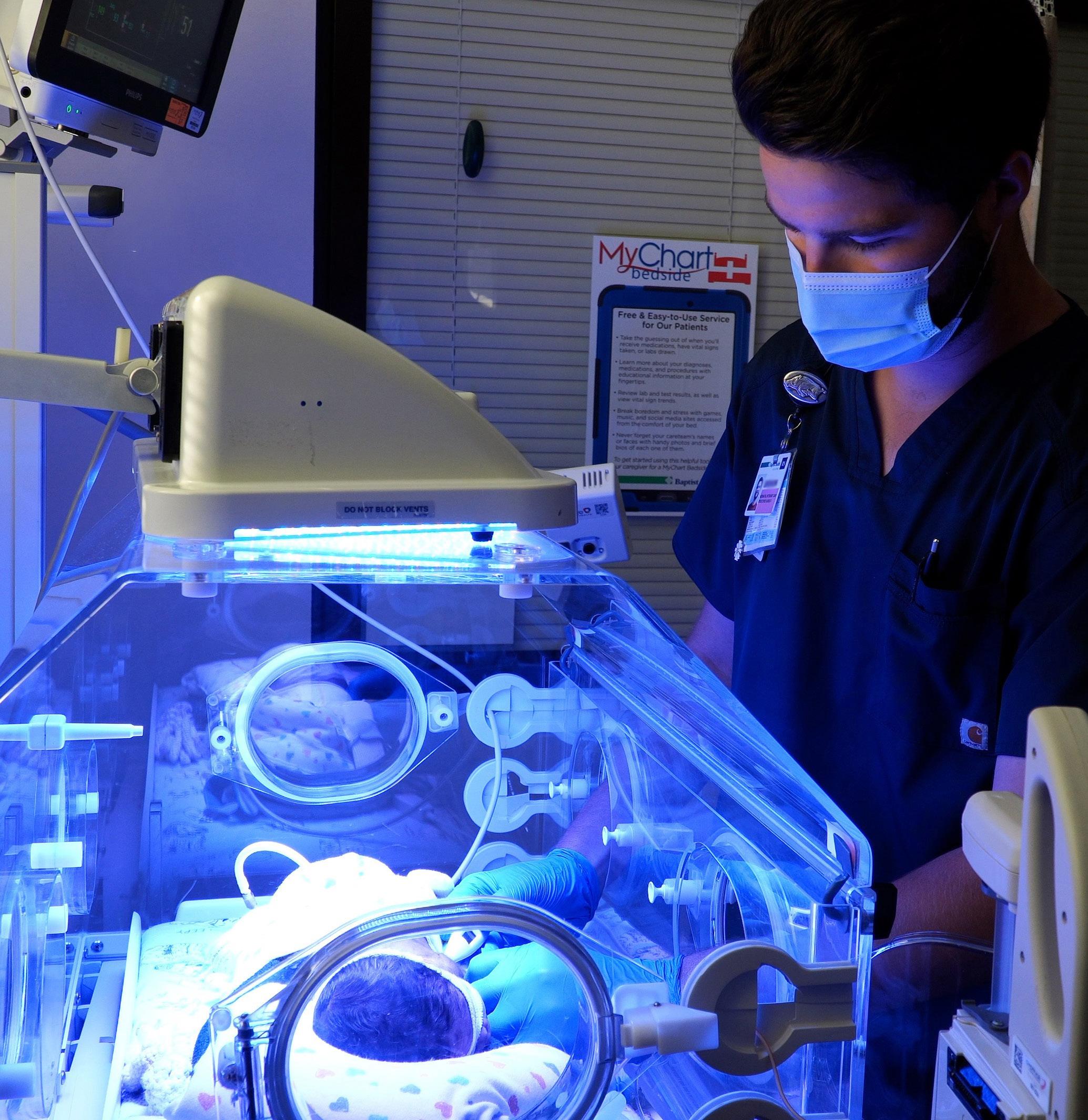
A ‘Special Breed’
By Mark Carter
NICU nurses share special bond with their charges
Whether the time they spend in neonatal intensive care units is measured in weeks or months, parents of premature babies share a special bond.
Few experiences can replicate the intensity of emotion that accompanies premature deliveries, from the joy of birth to the anguish of leaving a newborn behind in an incubator each night.
This bond extends to the NICU nurses who spend their careers as members of multiple extended families. Neonatologists bring their own skills and expertise, of course, but for families of preemies, NICU nurses are the beat cops, the sentries who make sure nothing bad is going to happen on their watch.
Though parents and family members are afforded liberal visiting hours, they cannot stay overnight with their children in the NICU. Even if it were permitted, many families cannot afford to drive back and forth each day from their homes outside of central Arkansas or put their jobs on hold indefinitely. Nurses are there to fill in the gaps, to serve as the true wardens of the watch in the NICU.

Baptist Health Medical Center-Little Rock affords many of these central Arkansas extended kinsmen the opportunity for a family reunion, and that is exactly what the sponsoring Baptist
NICU nurses serve as the ‘angels’ of the unit. (Photos by Zack Marsh)
Health Foundation calls it — the Baptist Health NICU Family Reunion. It brings together current and former preemie families and the nurses and staff who work in the NICU. Many preemie families maintain contact with their NICU nurses for years after their babies are sent home.
The event takes place each year in the lobby and parking lot of the Hickingbotham Outpatient Center on the Baptist Health campus in Little Rock. It was launched in 2019 before pausing for COVID-19 and relaunched in 2023. The reunion has been held every year since. This year’s event will run from 11 a.m. to 1 p.m. June 6 and feature a circus theme with lunch, a photo booth, a petting zoo, live music, and a hands-on station for families to revisit some of the beds and equipment they saw when their children were in the unit.
“We also invite the MedFlight helicopter and ambulance to attend,” said Hannah Verzosa, NICU assistant manager. “Many of our babies are picked up by our NICU transport team, and parents enjoy showing their kids the helicopter or ambulance they got to ride in on their birthday.”
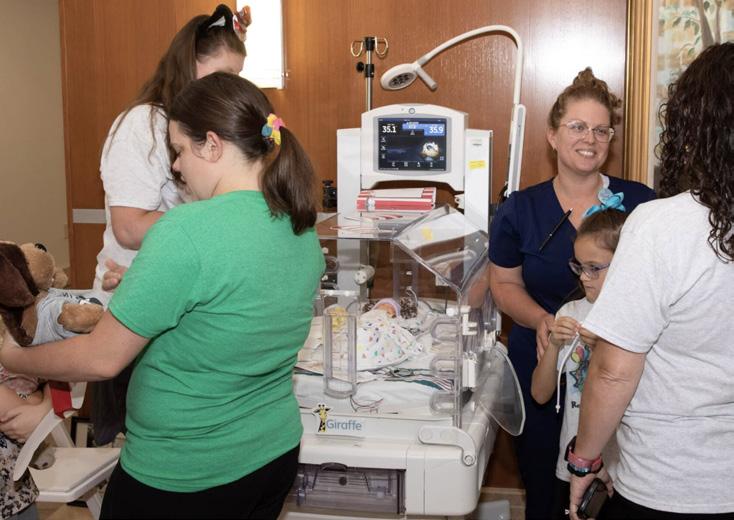

For many parents whose preemies were born at Baptist, the NICU becomes a home away from home. One Little Rock mother, whose first son was born at 28 weeks at Baptist in 1999 and requested anonymity, said her family stayed in touch with its NICU nurses long after leaving the unit. Aside from coming out of the oven a little early, her son experienced no complications and spent about six weeks in the NICU. Doctors had originally told the family to expect a three-month stay.
“They were like part of our family,” she said. “The hardest thing my husband and I ever had to do was leave the unit each night, but the nurses and staff in the Baptist NICU were so comforting and reassuring. It didn’t feel like we were leaving our son in a cold, sterile environment. We were allowed to bring things in to make the area around his incubator feel like home, and the nurses did more than their part to make it feel that way, as well. We remember seeing preemies in the unit who were born at 1 pound whose parents lived two hours away and couldn’t be there as often. The NICU nurses sort of
The NICU Reunion is an event that truly keeps the bonds alive with our staff and families though. We all look forward to it, and it’s amazing to see the staff find ‘their’ babies and families in the crowd.
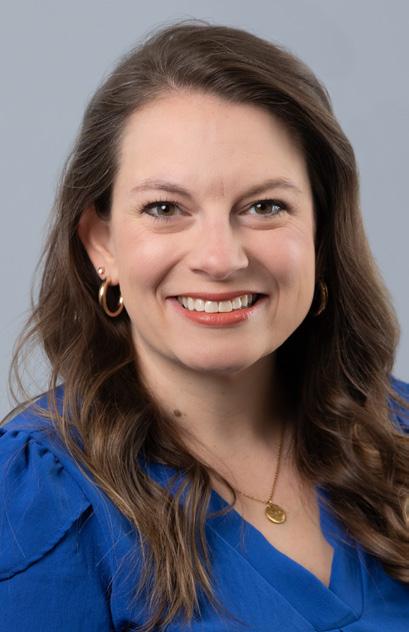
— Hannah Verzosa, NICU assistant manager, Baptist Health
adopted them as their own and showered them with love.
“They went the extra mile. We had left a dark blue blanket patterned after a night sky in the unit. We came in one morning to find that one of the nurses had draped it over our son’s incubator so he could ‘look up at the stars at night.’ The babies in the NICU may be in tough spots and fighting for their lives, but there’s never a month when they’re not showered with love.”
Verzosa said many preemie families join community groups on social media to stay in touch with NICU staff.
“Often, NICU families bring donations to our unit to celebrate their NICU baby’s birthday, which also helps us see them and their child regularly,” she said. “They even send Christmas cards and graduation announcements annually, which is a staff favorite. The NICU Reunion is an event that truly keeps the bonds alive with our staff and families though. We all look forward to it, and it’s amazing to see the staff find ‘their’ babies and families in the crowd.”
A birth is considered premature if it occurs before the gestation period hits a full 37 weeks. According to 2025 data from the National Center for Health Statistics, roughly 1 of every 10 births in the United States is premature. In Arkansas, about 12 percent of births are considered premature.
Preterm births, the most common pregnancy-related complication in the U.S., deliver a host of serious and even potentially fatal complications, including immature lungs. Generally, babies need 36 weeks inside the womb to fully develop the lungs; therefore, many of the complications associated with preterm birth are related to breathing.
The Baptist Health Foundation annually hosts a reunion for preemie families and NICU staff. (Photos courtesy of BHF)
Those include respiratory distress syndrome (harsh, irregular breathing), transient tachypnea (rapid, shallow breathing), bronchopulmonary dysplasia (where immature lungs show signs of deterioration), apnea (absence of breathing), bradycardia (heart rate reduction) and pneumonia.
Other complications can include infection, jaundice, intraventricular hemorrhaging, inability to maintain body heat, anemia, immature gastrointestinal and digestive systems, and a cardiac disorder called patent ductus arteriosus.
That might sound intimidating if not outright terrifying for parents experiencing preterm labor. Fortunately, preterm deliveries no longer represent the risk they once did thanks to evolving technology.
“Technology and medical advances have significantly improved national survival rates in the NICU over the last 30 years,” Verzosa said. “Antenatal steroid use given to mothers in preterm labor has been a large contributing factor to lung maturity and survival. A baby born at 22 weeks’ gestation with active intervention now has a national survival rate of 28 to 30 percent.”
That was not always the case. During the 1980s, survival was rare for preemies born at 22 weeks. Verzosa said a baby born between 24 and 25 weeks of gestation now has a national survival rate of 60 percent to 70 percent. That is up 30 percent across that timeframe.
The national survival rate for babies born at 28 weeks is now more than 90 percent — but complications can follow a preemie for a lifetime.
They went the extra mile. We had left a dark blue blanket patterned after a night sky in the unit. We came in one morning to find that one of the nurses had draped it over our son’s incubator so he could ‘look up at the stars at night.’

“Survival comes at a cost sometimes with developmental delays, disabilities or health problems,” Verzosa said. “Continued research in preventative care for mothers, as well as NICU medical advancements, is crucial to the long-term outcomes of these precious lives.”
Verzosa said the NICU sometimes houses term or late-preterm babies who are admitted for short-term oxygen or IV support.
“They stay a few days and are discharged home without complications,” Verzosa said. “When thinking about survival rates, we often think more of the extremely preterm population or those born with traumatic deliveries or to very critically ill mothers.”
Currently, there are 17 NICU units in the state, eight of them, including Baptist, operating at the highest levels of care. Arkansas Children’s Hospital in Little Rock is the only institution in the state that can perform surgeries on preemies. Baptist has 65 NICU “beds,” second in the state only to ACH’s 112.
The NICU is not spared when it comes to staffing shortages
experienced across the healthcare field. Verzosa said there is always a need for NICU nurses, whose job is one of the more intense in any hospital. Verzosa called them a “special breed.”
“They are critical care nurses whose focus is on life beginnings and life-saving opportunities,” she said. “NICU nurses get the opportunity to care for their patients and families in some of their most vulnerable moments. Advocating for a new life is a special calling, as the nurse must be able to assess and communicate updates to providers for a patient whose symptoms are often very subtle. We are the voices for these babies and fight alongside them as they fight and overcome many challenges.”
The Little Rock mom who experienced the Baptist NICU in ‘99 now has a strapping, 6-1 lad of 27 years. (She also went into labor at 28 weeks with her second son, but doctors put her on bedrest, and No. 2 came into the world at term.)
“With our first son, it was all new, and we didn’t know what to expect,” she said. “We couldn’t have felt more comforted and reassured by the nurses, doctors and staff at Baptist. Nothing is impossible for God, and he had some angels working on our behalf in the Baptist NICU.”
The national survival rate for babies born at 28 weeks is now more than 90 percent.
(Photo by Zack Marsh)
Big Vision,
Big Patience
State’s major road projects require long-term outlook

By Mark Carter
No precise timeline exists for the final unconstructed piece of the Interstate 49 puzzle that one day will be dropped into place parallel to Arkansas’ western boundary, creating an interstate corridor ultimately stretching from Canada to the Gulf of Mexico.
That final piece, roughly 160 miles from Fort Smith to Texarkana, will carry a price tag of $6 billion in today’s dollars, the Arkansas Department of Transportation states.
The impacted stretch of the Natural State’s western flank, of course, consists mostly of rugged Ouachita Mountain wilderness that does not lend itself easily to things like interstate highways.
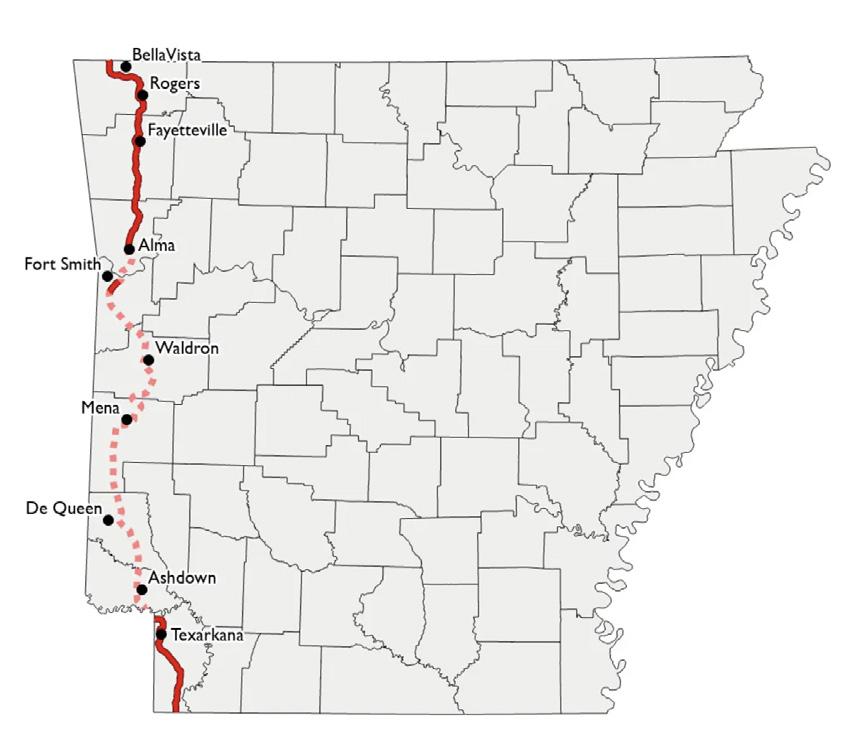
The Arkansas part of the overall I-49 vision — a vision encompassing four-lane, interstate-quality highway from Kansas City ultimately to New Orleans — is in its middle stages and continues to represent the state’s primary infrastructure-related project, funded through a mix of federal highway funds, federal grants and state funds.
The state completed the section of I-49 north of Bentonville in 2021, realizing a continuous stretch from the Missouri state line to Alma, and the 14-mile stretch from I-30 at Texarkana to the Louisiana state line was completed in 2014.
Ground was broken earlier this year on the initial phase of the project’s next stage — connecting I-40 at Alma 14 miles south and over the Arkansas River to Barling south of Fort Smith, where a 6.5-mile interstate spur already carrying the 49 designation connects U.S. 71 and Arkansas 22.
Jared Wiley, executive director of the Arkansas Department of Transportation, said such major transportation projects can reshape a region and unlock large-scale economic development potential, but he added that they also take a long time to complete and are costly to construct.
The 162-mile stretch of I-49’s route through western Arkansas that remains to be filled in

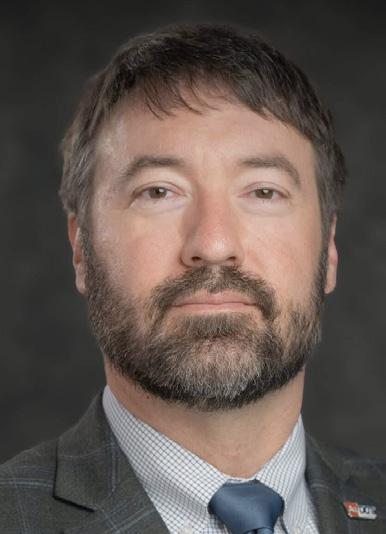
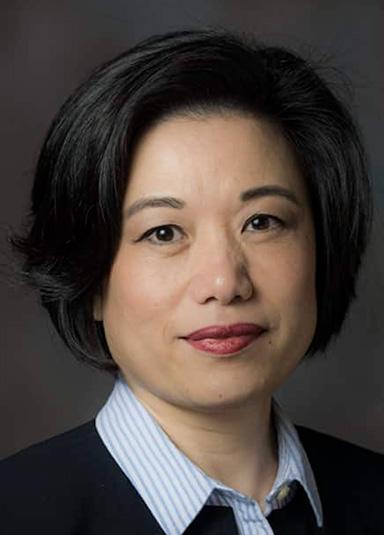
“Based on guidance produced by the Council of Economic Advisers, it is estimated that every $1 billion invested in transportation infrastructure would support 13,000 jobs for one year,” she said. “Construction of the new bridge structure provides for an efficient north-south connector for freight and the traveling public across the Arkansas River. In addition, the benefits of completing the future I-49 corridor include reducing congestion, improving transportation safety and supporting both national security and defense. The future I-49 corridor will ultimately link the Gulf Coast with the central U.S. and Canada, supporting international and domestic commerce and tourism.”
Alma to Barling remains a good way off, but work is already being done on the next phase. Jones said project development is underway on the 44-mile planned segment from Barling south to Y City in Scott County, about halfway between Waldron and Mena.
“Survey work is anticipated to be completed at the end of the year,” she said. “Preliminary design will then begin, which will allow the department to establish the right-of-way limits.”
ARDOT’s current statewide transportation improvement program, which runs through 2028, includes $9 million in state funding for project development.
“Interstate 49 is no different,” he said. “Although considerable progress has been made on the corridor over the past few decades, the funding needed to complete I-49 in Arkansas looms large. The segment between Greenwood and Texarkana will cost over $6 billion to construct in today’s dollars.”
The river bridge alone is not expected to be ready until early 2029. Once Alma to Barling is up and running, the real fun begins — a 162-mile succession of thickly forested ridges running east-west, a North American Darién Gap if you will, that currently exists only on maps and renderings as a dotted line.
Laying down four lanes of north-south, interstate-quality freeway over, through and around the rugged landscape will be challenging, time-consuming and eat up most of that $6 billion price tag.
Federal and state officials are committed to seeing I-49 all the way through, but the latest extension by itself looms large for the Fort Smith metro. About 10,000 vehicles a day are expected to use the new Alma-to-Barling route right off the bat with volume increasing over time, according to ARDOT estimates.
Alma to Barling alone will cost $1.3 billion, but Jessie Jones, ARDOT’s chief engineer for preconstruction, said the project will fuel economic development for local economies and beyond.

Jones warned Arkansans expecting to soon make a smooth, two-hour drive from Fort Smith to Texarkana to pump the brakes, however.
“Given the scale and complexity of constructing the remaining 150 miles of Interstate 49, along with the significant funding required, there is currently no projected timeline for full corridor completion,” she said. “However, work will continue to advance in phases, and individual projects will move forward as funding opportunities arise.”
In other words, that particular scenic drive, which should mimic 49 between Alma and Fayetteville in many respects, is a ways down the road. It is a wait that should be worth it.
After all, many of the state’s baby boomers never expected that they would live to see a four-lane interstate cut through the Boston Mountains of Crawford and Washington counties.
“ARDOT is committed to keeping the momentum moving on the development of the I-49 corridor south of Greenwood,” Wiley said. “Without a considerable increase in federal transportation funding, completion of this segment will be many years down the road.
“We appreciate the additional funding that Sen. [John] Boozman, Congressman [Steve] Womack and Congressman [Bruce] Westerman have secured for Interstate 49 in Arkansas. Their commitment to supporting infrastructure in Arkansas is making a big impact.”
Jessie Jones
Jared Wiley
30 Crossing in downtown Little Rock (Photos provided by ARDOT)
Connecting Arkansas
In 2012, Arkansas voters approved a 10-year, half-cent sales tax — since made permanent — to create ARDOT’s Connecting Arkansas Program. The most prominent of the 31 programs the tax funded was the 30 Crossing project in downtown Little Rock and downtown North Little Rock.
The stretch of I-30 over the Arkansas River through the cities’ downtowns is the busiest stretch of highway in the state — ARDOT estimated 120,000 vehicles a day cross the 30 bridge as of 2020. The project reconstructed 4.7 miles of I-30 from the interchange with I-630 in Little Rock to the 40 interchange on the north side and widened the bridge to 10 lanes.
While other enhancements are still planned, this initial and primary component to the project was wrapped in late 2024 to the tune of $634 million.
North Little Rock-based Garver won the state’s bid to manage the program. The firm’s program management services include managing design consultants, reviewing plan submittals, assisting with environmental permitting, right-of-way acquisition, utility relocations and reimbursements, inspecting work during construction, reviewing pay requests, and serving as an extension of ARDOT’s construction staff.
Garver managed all 31 CAP projects for ARDOT.
“Our job was to manage the eight design consultants that were doing the engineering design of the projects,” said Jerry Holder, director of enterprise services. “We acted in the role of ARDOT for the CAP projects. From day one, ARDOT told us we had to get all of the projects done on time and on budget because they wanted to go back out to the voters in 10 years and get the half-cent sales tax renewed for another 10-years. We did that. Not only did the voters give ARDOT the half-cent sales tax for the next 10-years, they made it permanent. The citizens of Arkansas like how ARDOT is getting things done for the state.”
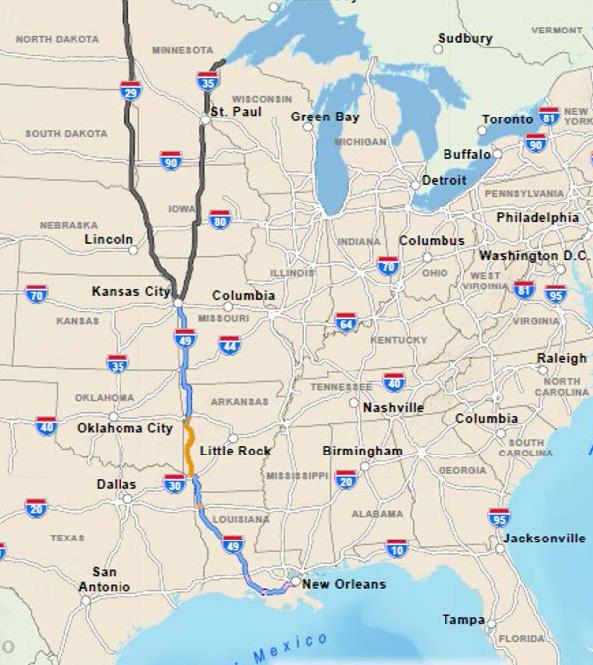
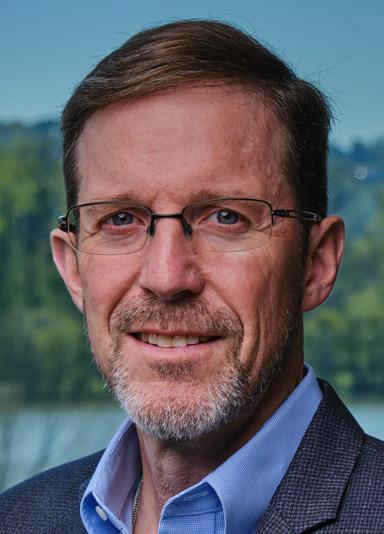
The biggest project ARDOT had ever taken on, 30 Crossing came with more than its share of challenges. It was the agency’s first design-build project through two of the state’s major cities; it crossed the state’s biggest river; it was an existing facility for which traffic flow during construction had to be maintained; and it involved the confluence of two of the highest percentage truck-traffic routes in the country, I-40 and I-30.
“Keeping lanes open for people to get to and from work was critical, and the demolition of a bridge over a navigable river is always a challenge to keep the shipping channel open,” Holder said.
Infrastructure is a major driver to economic development. Companies will not consider a location that does not provide it in spades. Maintaining central Arkansas’ infrastructure will pay dividends not only in the short-term future but for generations, Holder said.
“Transportation projects are economic drivers. If the infrastruc-

ture isn’t there, companies won’t establish their business in the area,” he said. “I often say that ARDOT is one of the state’s best economic development tools. The half-cent sales tax was more of an investment than it was a tax. The jobs created during construction and from the improved mobility will more than pay for itself in the long run.”
Other GAP projects managed by Garver include the $20 million widening of Arkansas 5 in Saline County, the $116 million replacement of two bridges and widening of 3.7 miles of U.S. 67/167 in Lonoke County — scheduled to be completed in mid-2027 — and the $181 million Springdale Western Bypass in Washington and Benton Counties.
The latter project entails 6.9 miles of new roadway and construction of 16 bridge structures. It is expected to be completed this fall.
Community Values
Some infrastructure projects may not reach the scale of a new interstate stretch or a 10-lane bridge, but they impact their communities just as much. Crafton Tull, an engineering, surveying, planning and design firm based in northwest Arkansas, has played a major role in completing roadway projects at the Port of Little Rock and incorporating existing roads into the Central Arkansas Regional Greenway network in Cabot and Maumelle.
Brad Peterson, senior vice president of Crafton Tull’s municipal engineering division, said the firm’s work at the port was a “true necessity given the competitive nature of attracting new employers.”
Jerry Holder
When completed, I-49 will link an interstate corridor connecting Canada and the Gulf.

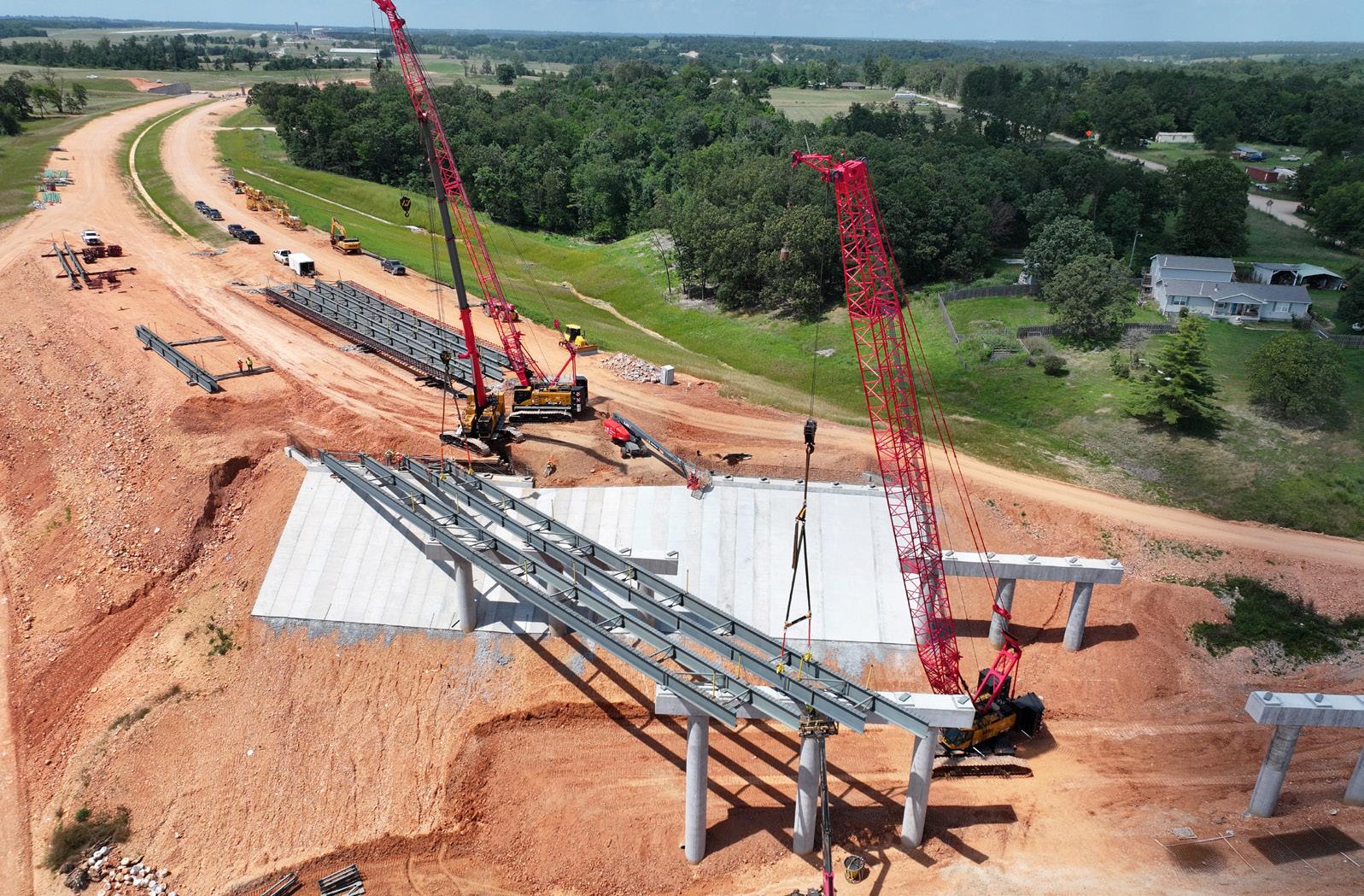
“The economic development success at the port has taken a team effort and wouldn’t have been possible with the brilliant leadership of the port and Little Rock Regional Chamber of Commerce,” he said. “We’re certainly proud to have played a role in the process. These projects became reality through creative grant funding and a dedicated effort to invest in the port’s infrastructure.”
Crafton Tull currently is working to widen Kerr Station Road in Cabot to improve traffic flow around Cabot Middle School South and Cabot Junior High South.
“Primary goals of the project are to improve street crossings and incorporate a section of the Greenway and connector trails that will safely link residential neighborhoods to the schools and commercial areas,” Peterson said.
Another example of the firm’s quality-oflife work is the new Millwood Station Park in Maumelle, opened in March. The park includes a food truck court, pavilion for vendor and farmer markets, and a stage for live music, and it connects to the regional greenway.
Peterson said it has already become a “vibrant hub of activity” for Maumelle residents.
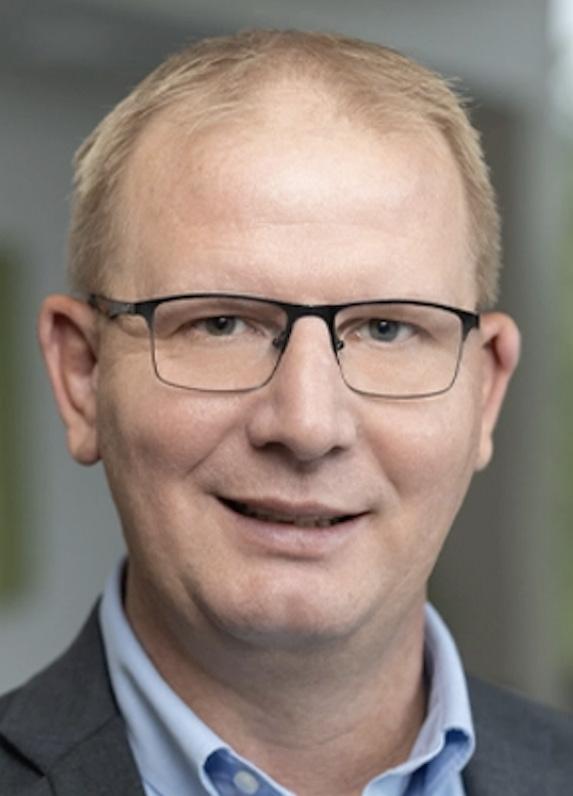
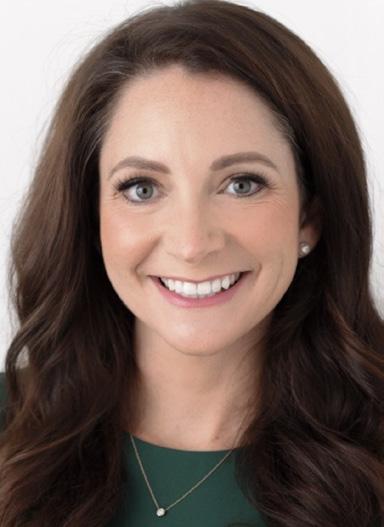
“Our most rewarding work for communities are quality-of-life projects such as trails, parks, sports complexes and community facilities,” he said. “Quality roadways and drainage facilities are a necessity but are often unnoticed and underappreciated. We enjoy infrastructure projects that create a sense of pride and are embraced as the centerpiece of a community.”


You Say Bridges…
W&W | AFCO Steel of Little Rock has become almost synonymous with bridges in Arkansas. The firm has been or is involved in many of the CAP projects, including 30 Crossing, which required more than 97,000 cubic yards of concrete.
Amy Rogers, senior vice president for bridge sales and estimating, said the firm “made 22,000 tons worth of bridge” alone for the project.
“We supplied the White River Bridge in east Arkansas, all of the new bridges in the Hot Springs area, the big bridges you drive over going up I-49 from Alma to Fayetteville, the 430/630 interchange in west Little Rock, the Ouachita River Bridge between Hampton and El Dorado at Calion, and almost every other steel bridge built in Arkansas over the last 25-plus years,” she said.
The firm is also working on the Springdale bypass, as well as the Northwest Arkansas National Airport Connector.
Founded in Little Rock in 1909, AFCO Steel was bought by W&W Steel of Oklahoma City in 2002 and maintains a strong presence in central Arkansas. In 2022, the company invested $18.7 million in a new fabrication facility at the Port of Little Rock.
Today, it employs 515 workers in Arkansas.
“What sets W&W | AFCO Steel apart is an unmatched combination of global scale and relationship-driven business philosophy,” Rogers said. “As the largest structural steel fabricator in North America, the company delivers projects across the country and around the world, bringing extensive experience, resources and technical expertise to every job. We have 20 fabrication facilities in seven states across the country, five here in Arkansas.”
Amy Rogers
Brad Peterson
W&W | AFCO St worked on the new access road to XNA airport in Bentonville, Garver and W&W | AFCO St worked on the 30 Crossing bridge, right (Photos courtesty of ARDOT)
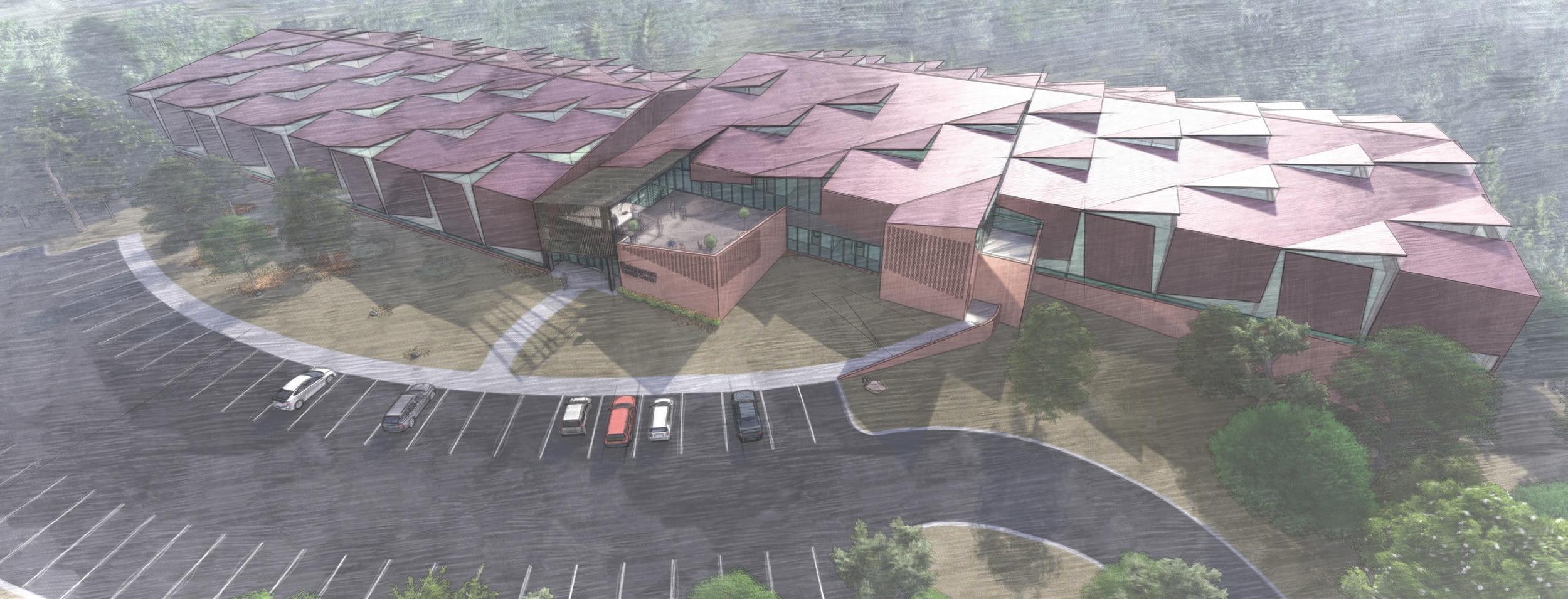
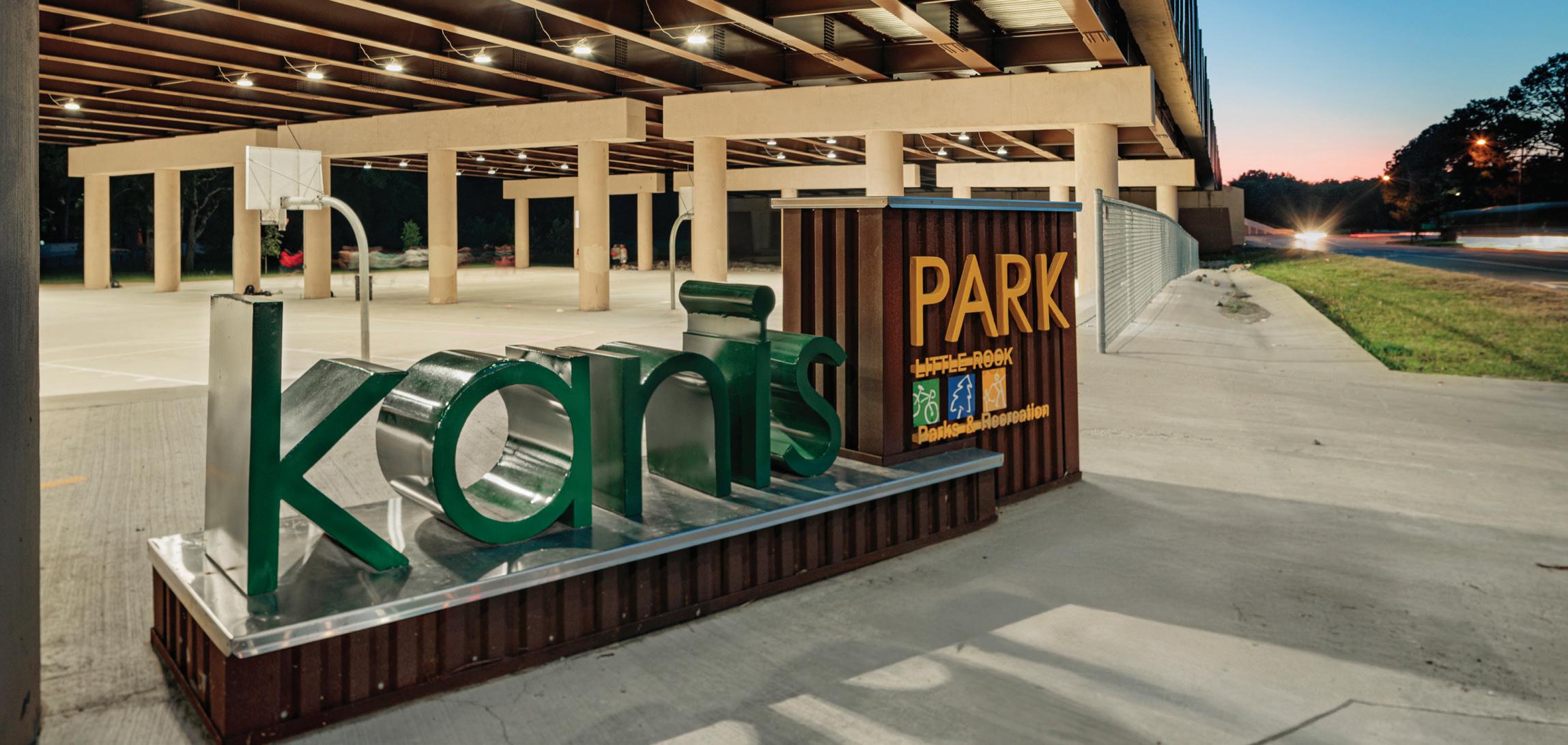
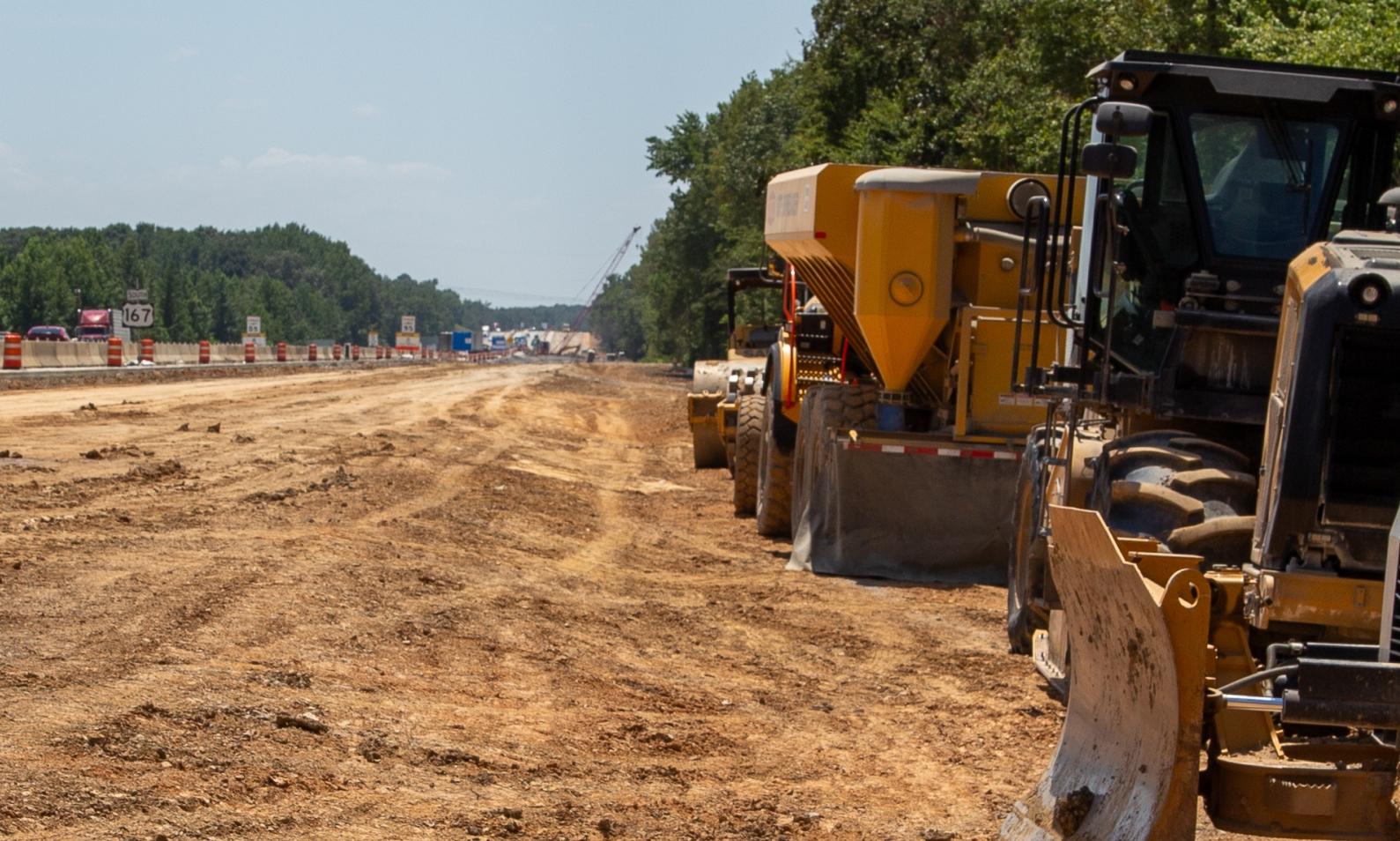





































Parks and trails differentiate the Natural State
By Mary LeSieur
A A Walk THROUGH Through ARKANSAS Arkansas
rkansas’ widely diverse geography has always helped the Natural State stand out.
From the heavily forested terrain of the U.S. Interior Highlands to the rolling fields of the Grand Prairie, Arkansas earned its Natural State nickname. State parks and trails from the Ozarks to the Delta generate an economic impact of about $35.8 million and serve more than 8 million visitors annually.
The booming industry sees continual growth and expansion, and state officials have committed to making Arkansas an environmental benchmark.
Parks and Trails as Economic Drivers
in Bentonville
In addition to serving as home of the Hogs in Fayetteville, northwest Arkansas is
the corporate home to Fortune 500 companies such as Walmart in Bentonville, Tyson Foods in Springdale and J.B. Hunt in Lowell.
Since the early 2000s, however, the region has become renowned for its parks and trails. Northwest Arkansas is a consistent top placer among “most desirable places to live” lists, and Bentonville Parks and Recreation Deputy Director Josh Stacey attributed that to the area’s parks and trails.
“Parks really create the quality of life people want,” he said. “That is what is attracting people to our area. A lot of that revolves around the outdoor recreation amenities that we have.”
From expansive trail networks to thoughtfully designed neighborhood parks, Bentonville has intentionally made green space accessible. Rather than treating trails as simple infrastructure, the city has worked to integrate them into a broader experience. Today, parks are not only community assets for Bentonville but also economic drivers.
“People started moving to Bentonville not because they worked for Walmart,” Stacey said. “They came here, experienced the trails and said, ‘This is where we want to be.’”
The city has also prioritized inclusivity, designing spaces for all ages and abilities. Many of the parks in Bentonville include
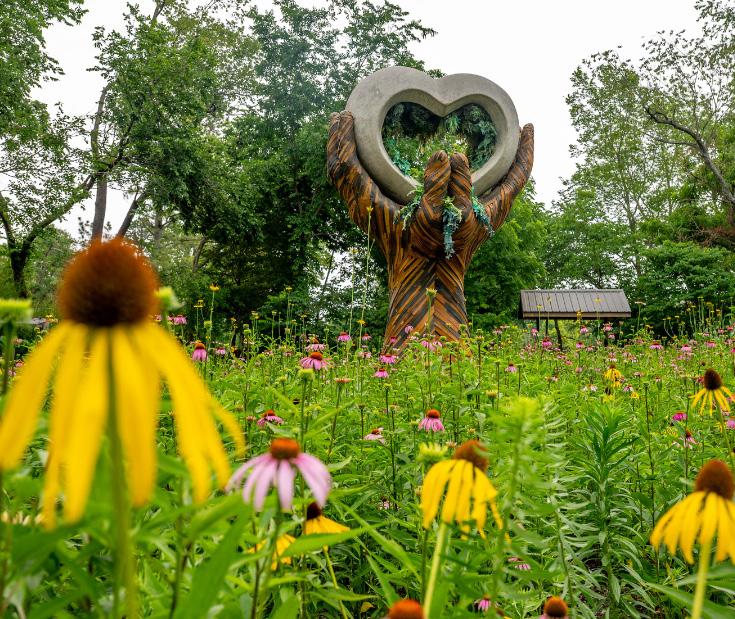

disability-friendly equipment for all ages. Bentonville’s philosophy is simple: Make nature accessible.
“We really try to be a department for your entire life,” Stacey said. “We want everyone to feel like there’s something for them. We say the best trailhead is your front door. We want people to be able to step outside and immediately connect to a park or trail.”
Hitting the Trails
Before Soaking in a Bath
Hot Springs has been charming out-of-state visitors long before noted gangsters such as Al Capone and Lucky Luciano made Hot Springs their home away from home during the early 20th century.
The area was called “Valley of the Vapors” by natives and European settlers, and the hot springs that flow from Hot Springs Mountain — and give the city and national park their name — have been attracting visitors for centuries, travelers yearning to soak up the reported healing properties of the water.
Today, Spa City sees more than 2 million visitors each year. In addition to the springs, local bike trails and parks are pulling in much tourism. The major draw pairs a downtown environment with the great outdoors, a blend that Bill Solleder, director of marketing at Visit Hot Springs, considers integral for the city’s success.
“We’re called the Natural State for a reason,” he said. “You can roll out of bed and be on a trail and feel complete seclusion, and in a matter of minutes, you can find yourself in the hustle and bustle of downtown Hot Springs.”
Solleder has worked at Visit Hot Springs since 2016, promoting the trails and parks that lace the city. The 5,550 acres of Hot Springs National Park are home to mountains, campsites, and
scenic trails for hiking and biking, including more than 26 miles of hiking trails surrounding Bathhouse Row.
Spanning experience levels from beginner to upper intermediate, the trails are well marked and, although relatively short, are interconnected, allowing visitors to walk longer loops and visit multiple trails. The longest trail, Sunset Trail, is about 10 miles long and a fan favorite of visitors — and Solleder himself.
“After a long day of work, I can be on a trail in minutes,” Solleder said. “How
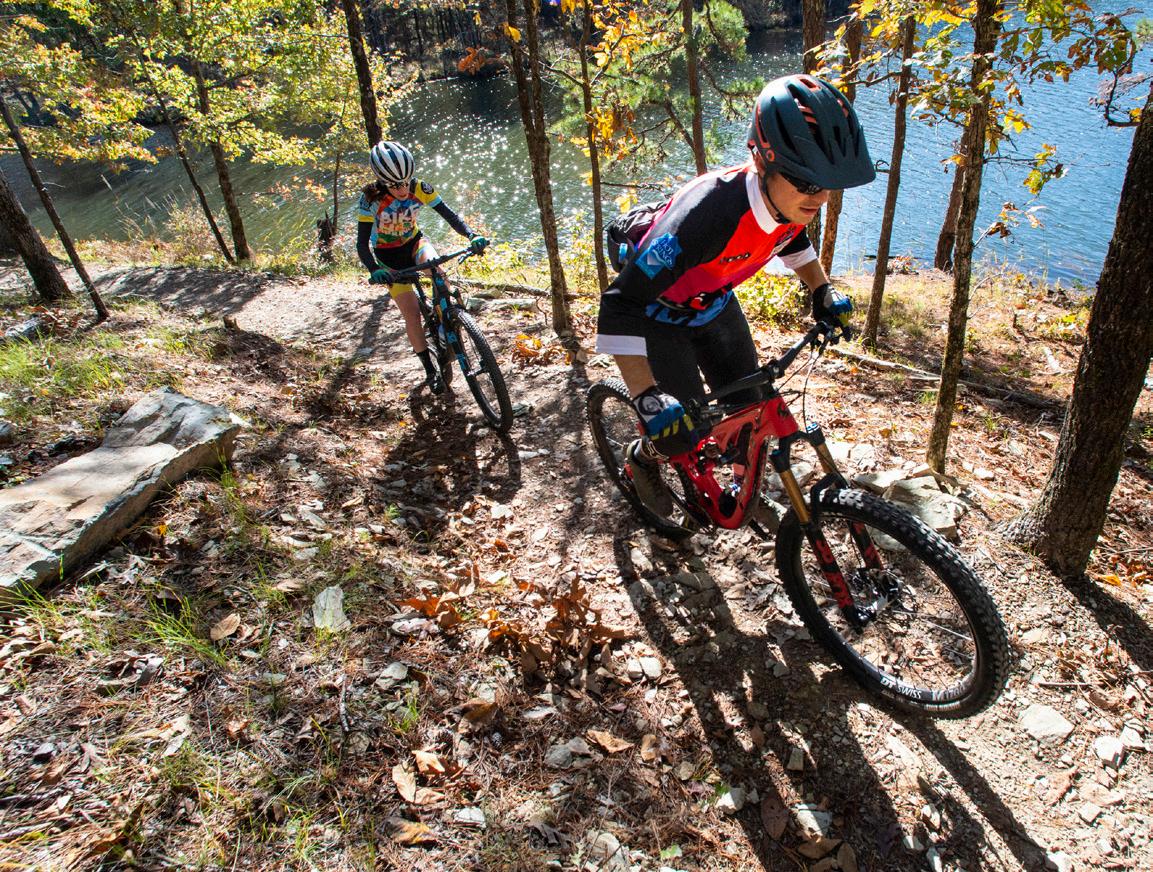
Attractions such as Compton Gardens, left, and the many world-class bike trails have helped spur Bentonville’s growth. (Photos provided by Visit Bentonville)
Sunset Trail in Hot Springs (Photo provided by Visit Hot Springs)
INFRASTRUCTURE

many people can say that they live in a place where that’s possible?”
In Searcy, a Renewed Focus
The city of Searcy is in the midst of a major transformation driven by a renewed focus on quality of life and community input. According to Richard Stafford, the city’s planning and development director, the shift began with a series of community-led master plans.
“The list of projects we’re building came directly from what residents said they wanted and needed,” he said.
The result is a roughly $100 million in-
vestment in parks, trails and recreation. Rather than focusing on a single project, the city chose to spread improvements across multiple areas to bolster a “community feel.”
“We wanted everybody to feel like they had some skin in the game,” he said, “so we tried to touch as many priorities as possible.”
The largest project is a 100,000-square-foot community center featuring basketball and pickleball courts, fitness space, meeting rooms, and direct integration with the city’s trail system.
“The trail will actually go through the building on the second floor and connect back out,” Stafford said. “That’s a pretty unique feature.”
Searcy is also building an outdoor aquatic facility, expanding sports complexes with new turf fields and redesigning parks across the city. At Berryhill Park, a new inclusive playground and splash pad are nearing completion.
“We’re having to ask people not to play on it yet,” Stafford said. “That’s how excited people are.”
One of the most significant long-term investments is at Riverside Park, a 200-acre space along the Little Red River that has remained largely undeveloped.
“It’s really an untapped gem,” Stafford said. “We’re starting with 11 1/2 miles of mountain bike and hiking trails, but that’s just the first phase.”
City leaders see Riverside as a future destination for outdoor recreation with potential for climbing, fishing and camping. Beyond individual projects, connectivity is a major priority. Searcy currently has about 5.5 miles of paved trails and plans to expand and link key destinations.
“When you connect these places with trails instead of vehicles, that’s when they really take off,” Stafford said.

Bill Solleder, director of marketing at Visit Hot Springs
(Photo provided by Visit Hot Springs)
Searcy’s new municipal baseball complex (Photo provided by city of Searcy)
With multiple projects underway and more nearing completion, Stafford says the city is entering a pivotal moment.
“It’s a great time to be in Searcy,” he said. “A year and a half from now, it’s going to look a whole lot different.”
Razorback Greenway Keeps on Giving
The Razorback Greenway is a defining feature of life in northwest Arkansas, serving as both a recreational destination and a vital piece of regional infrastructure.
Managed through the Northwest Arkansas Razorback Regional Greenway Alliance, the 40-mile trail connects seven cities — Fayetteville, Johnson, Springdale, Lowell, Rogers, Bentonville and Bella Vista — under a shared vision.
“The Greenway Alliance’s primary objective is to help standardize everything so that all 40 miles are consistent, no matter which city you’re in,” said Tristan Hill, vice chairman of the Razorback Greenway Alliance.

Since its completion in 2015, the Greenway has become a major driver of tourism. A study from the University of Arkansas Sam M. Walton College of Business in Fayetteville highlights the millions of dollars bicycle tourism brings to the region.
“The Greenway was kind of the catalyst for that,” Hill said. “It’s really become cemented as part of the way of life here in northwest Arkansas.”
Beyond tourism, the trail has helped shape the region’s cultural identity and development patterns. Cities intentionally routed the Greenway through downtown areas to connect users with local businesses and community spaces. Most of these trails either run through downtown or are located in close proximity to downtown.
“Downtowns have really had a good opportunity to thrive,” Hill said. “It’s been huge for local businesses like restaurants and bars.”
While originally envisioned as a recreational amenity, the Greenway has taken on a broader role over time. Serving as a transportation alternative, the path can be used by the community as a conduit to the office, a local coffee shop or even the museums that sit along its route. Residents use the trail not only for leisure but also for commuting, a shift that has inspired cities to expand local spur networks connecting neighborhoods, parks and workplaces.
That impact is especially visible at major employment centers such as Walmart, where its new corporate campus is connected to the Greenway to support alternative transportation.
“Ten or 15 years ago, it was more of a pie-in-the-sky vision — families, strollers, bikes,” Hill said, “but once it opened, we realized it could be an amazing transportation alternative, as well.”
In 2023, the Greenway received national recognition as a designated National Recreation Trail, further elevating its profile and cementing northwest Arkansas as a premier destination.
“To be one of just a handful of trails in the country recognized

The Razorback Greenway is popular among families and riders (Photo provided by Razorback Greenway Alliance)
that year is a pretty incredible feat,” Hill said. “It puts Arkansas on the map in a good way.”
Ultimately, the Greenway’s success reflects the level of regional collaboration in northwest Arkansas.
“It’s been a multifaceted approach across a lot of jurisdictions,” Hill said. “Everyone recognizes the value and has made it happen together.”
INFRASTRUCTURE
Where There’s a Will, There’s WATER
Lake Ouachita project sets up Spa City for decades to come
By Mark Carter
The April dedication of a new water treatment plant in Hot Springs represented much more than a simple grin-and-pose ribbon cutting with local dignitaries, although there was much to smile about for Spa City officials and residents alike.
The event capped off years of work resulting in one of the state’s most extensive water infrastructure projects ever. With the completion of the $155 million Lake Ouachita Water Supply Project, the Spa City grew from exceeding its water threshold capacity to providing 40 million gallons a day of potable water.
“This project not only provides the immediate needs for water supply but positions the city to be an economic driver for years to come,” said City Manager Bill Burrough. “The city now has the capacity to provide 40 million gallons a day of potable water, which will take us through the next several decades. It isn’t often you can take part in a project that will have positive benefits for generations to come. This is one of those.”
Ouachita for water supply, not to mention the work stoppages and supply chain issues caused by the COVID-19 pandemic.
“I’ve said numerous times that history will be kind to the existing and previous boards of directors for having the foresight to move this project forward,” Burrough said. “Working with the Mid-Arkansas Water Alliance, the Lake Ouachita Water Allocation was signed in May of 2017, and the city of Hot Springs received storage capacity of 23 million gallons per day.”

The city exceeded its water threshold of 80-percent capacity in 2010, 2011, 2012 and 2022. In 2012 alone, it exceeded the threshold 56 times. State law dictates that a community is in a water shortage when it hits 80 percent of maximum allocation.
Future growth helped dictate the need for an additional water source. The city itself has a population of just fewer than 40,000, but its water system serves a region of about 98,000.
Burrough said the overall project, for which Crist Engineers in Little Rock served as the engineering-design and projectmanagement firm, required years of planning and working with the U.S. Army Corps of Engineers to reallocate a portion of Lake
The finished project now delivers 15 million gallons a day from Lake Ouachita, added to the 30 million gallons a day from the city’s primary water source, upper Lake Hamilton, and another 6 million from a secondary source, the private Lake Rix.
Gary Troutman, president and CEO of the Greater Hot Springs Chamber of Commerce, said the Natural State’s tourism capital will reap the rewards of this infrastructure investment for years to come.
“It’ll be a huge boon for our economy and growth,” he said. “With this, [there’s] no reason why Hot Springs shouldn’t be the next big growth opportunity in Arkansas.”
The Ouachita project was funded by two bond initiatives approved by local voters, the most recent in 2022 — one for $110 million and another for $45 million. The bonds resulted in a $4 increase in customers’ base water rate, which kept Hot Springs rates among the lowest 25 percent in the state, per the Arkansas Natural Resources Commission.
Burrough said the project boiled down to four components — intake, raw water mains, finished water mains for potable water and the new water treatment plant, the city’s third, which is expected to replace an aging plant in the next few years.
Inside the new water treatment plant in Hot Springs (Photos courtesy of the city of Hot Springs)
Intake
The $19.2 million intake project was easily the most dramatic of the components and draws comparisons on a much smaller scale to the twin-bore Bobby Hopper Tunnel on Interstate 49 in Washington County. Rather than four lanes of interstate highway, the Lake Ouachita bore entailed 60-inch steel casing pipe drilled roughly 2,600 feet through Blakely Mountain. The pipe enters Lake Ouachita at about 40 feet below the surface of the water.
“By using this method, water would gravity flow to the future water treatment plant some 17 miles away without the need for pumping,” Burrough said. “This project will save the city a lifetime of pumping costs.”
The Blakely Mountain bore was the first of its kind completed in North America, he added. It started in August 2022 and reached the lake in July 2023 with “restoration and substantial completion in October of 2023.”
Raw Water Mains
Burrough said the city worked with several contractors to complete the $46 million, 17-mile, raw-water main component. The contractors were Belt Construction Group in Texarkana; McKee Utility Contractors in Prague, Oklahoma; KAJACS Contractors in Little Rock; and Michels Trenchless in Milwaukee.
The main portion includes two crossings of Lake Hamilton, one by boring under the lake in one location and implementing the “float and sink” method in another. The latter method entails sections of pipeline that are floated and sunk by divers who then position and bolt the sections, in this case, to the lake floor.
Burrough said the $5 million contract with Belt was for 48-inch welded steel pipe from the intake location to the existing Ouachita Water Treatment Plant on upper Lake Hamilton. That portion was completed in August 2021.
The second contract for this portion of the project — $9.2 million with Belt — was for a 4-mile section of 42inch welded steel pipe laid from the Ouachita plant to Lake Hamilton in one section and from Mazarn Creek to Airport Road in another. This work was completed in July 2024.
McKee won the $10.5 million contract to lay 5.6 miles of 42-inch welded steel pipe from the Lake Hamilton crossing to Mazarn Creek, which it completed in May 2023.
Michels won the $14 million design-build contract for the two lake crossings. One crossing entailed boring under Mazarn Creek of Lake Hamilton, and the second was for floating and sinking pipeline in the lake’s main channel.
The final component to this portion of the project, which came in at $9.3 million, entailed laying 4.5 miles of 42-inch welded steel pipe from Airport Road to the new water treatment plant.
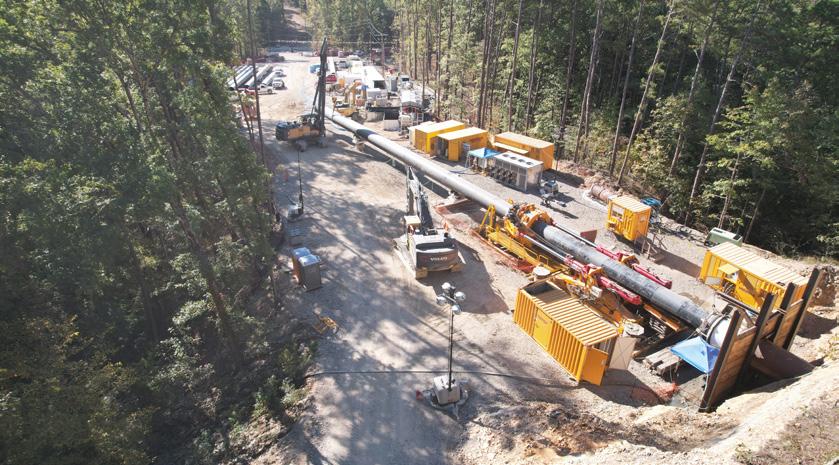
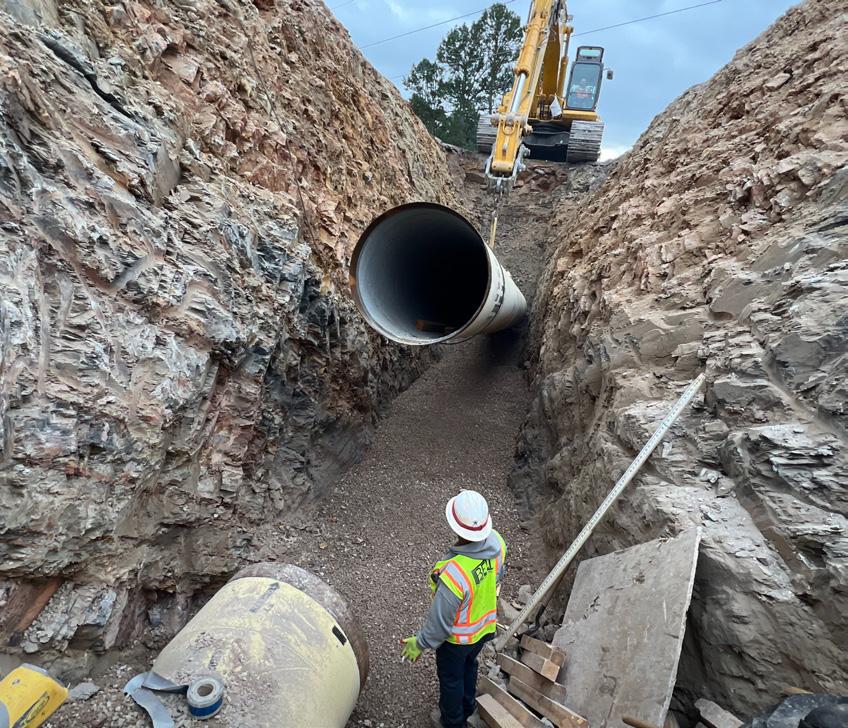
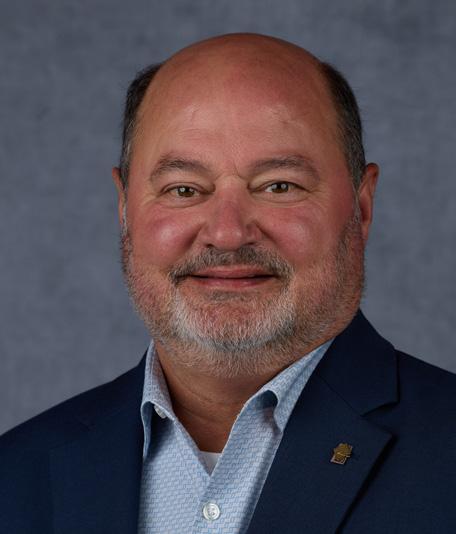
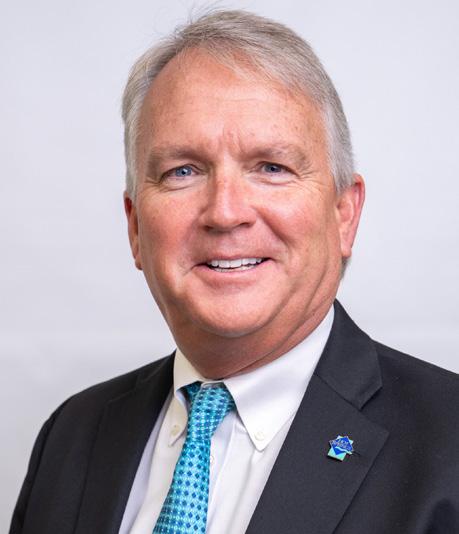
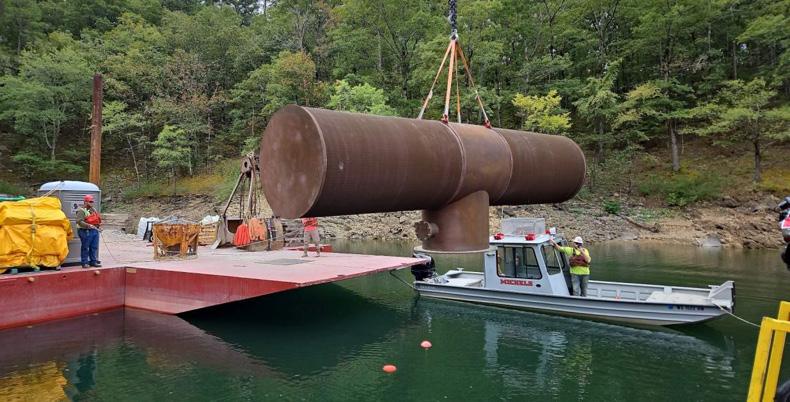
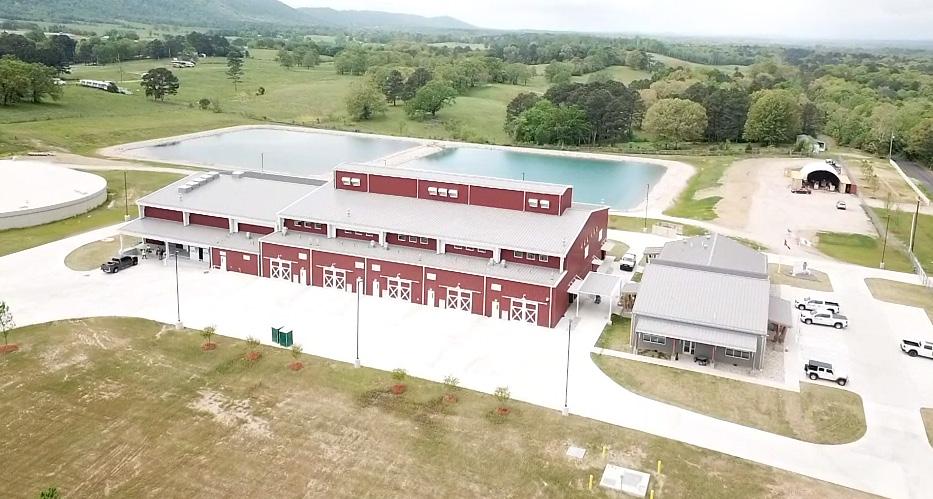
Bill Burrough
Gary Troutman
The Lake Ouachita water project required boring 60-inch steel casing pipe roughly 2,600 feet through Blakely Mountain and through the lake. The new treatment plant was designed with a barn aesthetic to match the surrounding countryside.
“It’ll be a huge boon for our economy and growth. With this, [there’s] no reason why Hot Springs shouldn’t be the next big growth opportunity in Arkansas.”
— Gary Troutman President and CEO, Greater Hot Springs Chamber of Commerce
Finished Water Mains (Potable)
Burrough said there were five contracts totaling $21.7 million for the finished potable water mains connecting the plant to the Cornerstone Water Tank.
The first, with KAJACS for $4.6 million, required laying a 32-inch ductile iron pipe from the new water treatment plant to Arkansas 7 South; the second, with Diamond Construction Co. in North Little Rock for $6.6 million, included laying 24-inch transmission main line from 7 South to Mount Carmel Road. The third, also with Diamond for $5.2 million, entailed extending the transmission main from Mount Carmel to the Lake Catherine Bridge on Carpenter Dam Road.
The last two components were extending the main from Lake Catherine to the MLK Expressway (Diamond, $3.3 million) and the bridge crossing (KAJACS, $1.5 million).
New Water Treatment Plant
The water treatment plant, a megabuild structure where the entire treatment process is housed indoors, consisted of three contracts totaling $46.2 million.
The site prep and grading contract totaling $2 million was with CDI Contractors in Little Rock. A 3-million-gallon Clearwell tank for finished water storage prior to pumping to the system totaling $4.2 million was handled by Natgun in Mansfield, Texas, and TOLM Group in Morrilton won the $40 million contract for construction of the plant.
Burrough said having intake now at both lakes allows for redundancy should an issue ever arise again.
“This is a megabuild structure where the entire treatment process is indoors,” Burrough said. “We chose the exterior for the plant to be reminiscent of a barn to blend in with the current countryside of rolling pastureland.”
Hot Springs residents should not experience water shortages anytime soon, and city officials let out a symbolic sigh of relief in April.
Burrough does not necessarily believe the city provided a playbook on completing such a massive undertaking, though others may disagree.
“Every city has their own unique challenges,” he said. “However, we would be glad to share our experience and how we met our challenges with anyone that would like to inquire. From the passage of the first bond to final completion, the project spanned almost six years. There were several moving parts to this project, with multiple contracts happening at once. I started working on this in 2012 and am very proud of what we were able to accomplish. It took a great team of staff, engineers and contractors throughout the process.”
Water and wastewater sometimes flow under the radar when the subject turns to major infrastructure needs.
Arkansas’ updated water and wastewater needs assessment predicted approximately $20.1 billion in statewide infrastructure needs over the next 20 years, said Chris Colclasure, director of the Arkansas Department of Agriculture Natural Resources Division.
This figure represents an increase from the $9 billion estimated in the 2014 Arkansas Water Plan and is higher than the $13 billion in needs expected in the 2021 U.S. Environmental Protection Agency Drinking Water Needs Assessment and the 2022 Clean Water Needs Assessment for the state.
The 2014 plan also suggested that the Arkansas Natural Resources Commission pursue additional general obligation bond authority, but the existing $300 million authority, approved through general referendum in 2007, is nearly exhausted, Colclasure said. Last year, lawmakers approved increasing the bond authority to $500 million pending voter approval this fall.
“This bond program is one of four state-funded programs supporting future water and wastewater infrastructure needs,” he said, adding that $75 million over three years to support the state’s Water and Sewer Treatment Facilities Grants Program was approved during the 2025 general session.
State officials clearly recognize the importance of adequate water and wastewater infrastructure, and several milestone projects related to water and wastewater needs have recently been completed or are underway in the state.
Earlier this year, the city of Hot Springs completed a $155 million project to add Lake Ouachita as a secondary water source and to build a new wastewater treatment plant.
Work is ready to commence on an
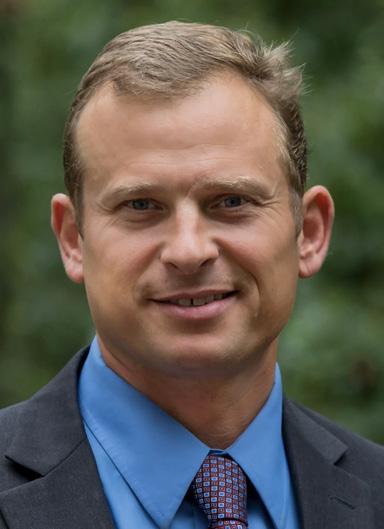
Chris Colclasure
WATER INFRASTRUCTURE NEEDS EXPECTED TO RISE
By Mark Carter
$18 million slackwater harbor at Van Buren. The facility, funded mostly through a U.S. Department of Transportation Maritime Administration grant, will entail a harbor off the Arkansas River’s main channel that includes 2,000 feet of dock frontage and a 50-foot-wide concrete dock for mobile cranes.
The harbor will have the capacity to handle up to eight barges at a time. PND Engineers in Anchorage, Alaska, is the engineering designer with help from Mickle Griffin in Fort Smith.
The project has been in the planning stages for years, and federal funding was announced in 2023. Ashley Garris, assistant executive director at the Western Arkansas Planning and Development District, said groundbreaking will be “tangible and real” after years of planning and discussion.
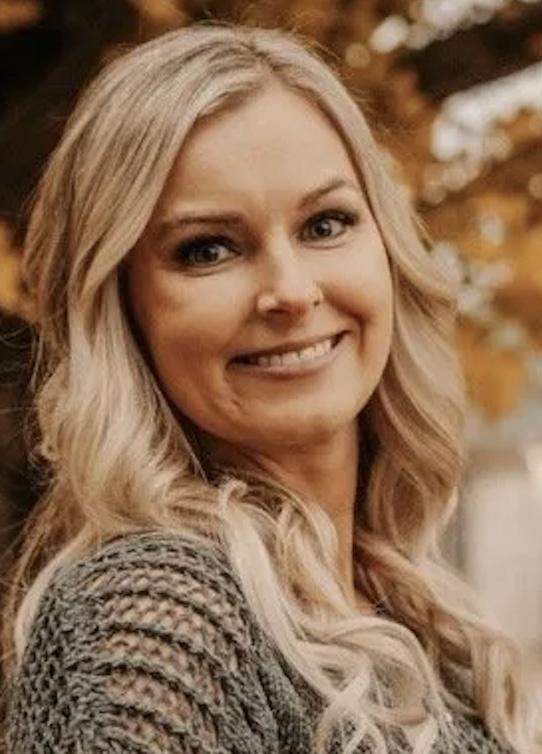
“This project will have a significant impact on both the region and the port once completed,” she said. “It will also create a safer environment by allowing barges to be pulled off the main river, improving conditions for workers loading and unloading cargo.”
Infrastructure expands beyond the gray to the green. The Nature Conservancy works with state officials and farmers to rethink road-stream crossing infrastructure and the way that agricultural ditches are managed and constructed in the Delta to the benefit of people and the environment.
Raven Lawson, who leads the Arkansas office as deputy director of conservation, said many of the organization’s water strategies are closely tied to traditional infrastructure.
“Here in Arkansas, we have big goals tied to upgrading outdated road-stream crossings to reduce erosion and
prevent excess sediment from entering our rivers. The benefits are far-reaching and beyond that of water quality,” she said. “These replacements also help improve flood resilience and make our rural roads safer during high-water events. In Stone County, for example, we worked with local, state and federal partners to replace failing low-water crossings and undersized culverts on the Middle Fork of the Little Red River with new bridges that let water move freely and reconnected more than 200 miles of upstream habitat.”
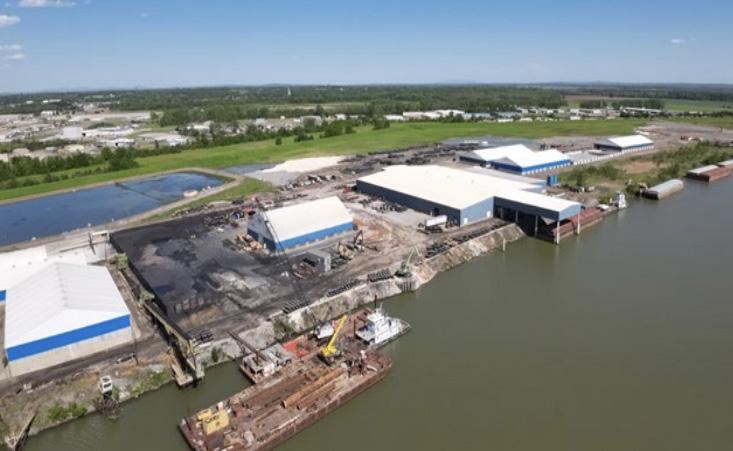
Feltz said new vegetation growth on the lakebed since its drawdown will add nutrients and boost the lake’s food chain.
The reconnections are critical to the aquatic organisms that inhabit the streams while providing more reliable access for local residents, school buses and first responders, as well as reducing county maintenance costs and improving flood resilience for local communities, she added.
Meanwhile, in central Arkansas, a major water “infrastructure” project — visible to tens of thousands of motorists who drive by daily on Interstate 40 — is the Lake Conway renovation. At 6,700 acres, the lake is owned by the Arkansas Game and Fish Commission and, since 2023, has been undergoing a drawdown, dam replacement at Palarm Creek and habitat overhaul.
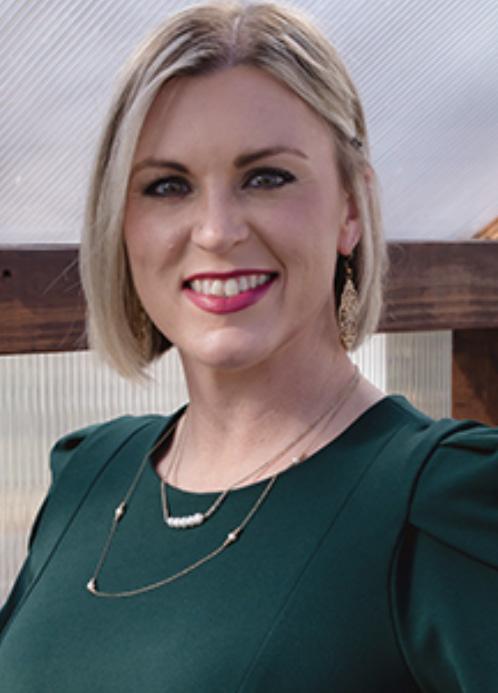
Nick Feltz, fisheries supervisor in central Arkansas, said the project is roughly halfway through the planned five-year job. The project aims to replace outdated infrastructure, improve aquatic habitat, install gravel spawning beds and other forms of artificial cover in key areas of the lakebed, and clear roughly 30 miles of boat lanes in what had been one of the agency’s stumpiest lakes.
In the Delta, Colclasure, a former deputy director for AGFC, said there is some good news regarding the state’s groundwater decline, the key word being “some.”
“Decades of conservation efforts by public-private partnerships and investments from the agricultural sector suggest that some local-level aquifer conditions are improving,” he said. “However, there are still areas where groundwater decline is occurring, and conservation efforts remain essential.”
He noted ongoing efforts such as the Arkansas Groundwater Conservation Tax Credit, the U.S. Department of Agriculture-Natural Resources Conservation Service Environmental Quality Incentives Program, and two state projects — the Bayou Meto Irrigation Project and the White River Irrigation Project.
“Technological advancements through automation are also expected to save water into the future,” he added.
Colclasure cited a preliminary analysis conducted by the U.S. Army Corps of Engineers for the state water plan regarding the impact of planned data centers on the state’s water table.
“Current projections show that industrial water use, including emerging uses such as data centers, remains below the demand levels forecast in the 2014 water plan,” he said.
Ashley Garris
Raven Lawson
The site of the future slackwater harbor at Van Buren. (Photo courtesy of WAPDD)





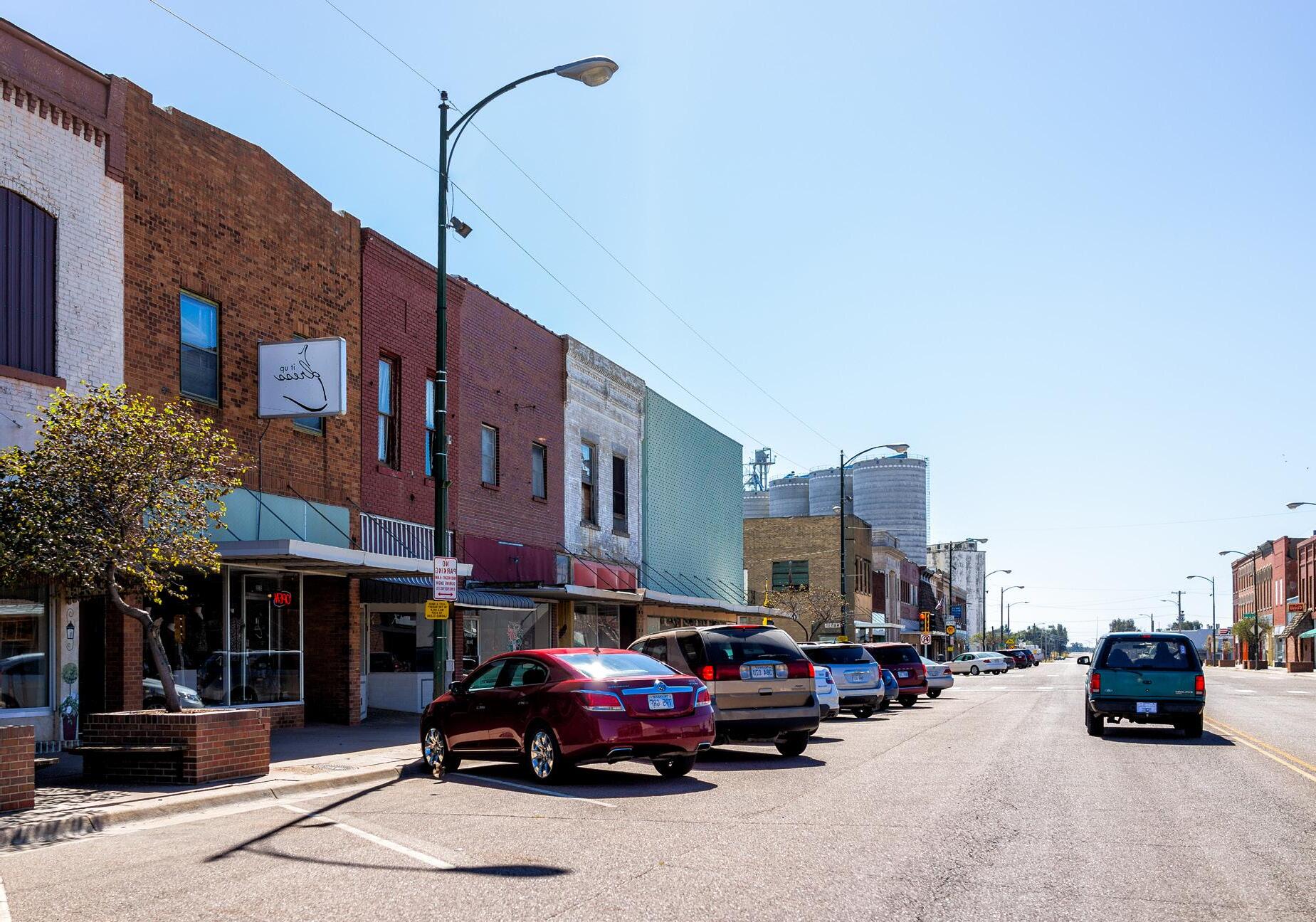
Vote for Issue 3
On the November 2026 Ballot
- Modernizes Arkansas’s economic development toolkit
- Helps communities compete for jobs and investment
- Supports regional collaboration More opportunity. Stronger Arkansas.


State officials want every Arkansan to have internet access — and it just might happen
By Doug Crise
The news came as a bit of a surprise for some — and that highlighted the problem. It was late August 2025 when Gov. Sarah Huckabee Sanders unveiled the Broadband Equity, Access and Deployment Program, a $1 billion push for getting broadband internet access to each and every corner of the state. The end goal, both lofty and alarming, was to ensure each and every business and home in Arkansas would be able to access reliable and fast internet service.
“The BEAD Program is about more than faster Internet — it’s about opportunity,” Sanders said as part of the announcement. “By connecting every community with high-speed access, we’re giving students the tools to succeed, entrepreneurs the ability to grow their businesses and families access to better healthcare close to home. Arkansas is showing the nation how smart, efficient investment can strengthen communities, expand upward mobility and drive lasting economic growth.”
Was it that crucial to expand access to the internet, something so common we essentially carry it in our pockets now, a portal for everything from banking to food reservations to seeing photographs of friends and family, and something, depending on its still-debated origin, that first appeared more than 40 years ago?
Believe it. As recently as 2022, the National Telecommunications and Information Administration estimated that 1 in 5 American households remained offline.
Months after Sanders’ announcement, Glen Howie sits in a top-floor conference room at the Arkansas Department of Commerce and considers all this. As Arkansas state broadband director, it is essentially Howie’s job to push the governor’s billion-dollar initiative into reality. At the same time, he and others at the state broadband office are making it known that lack of internet access is more common than most people think — a situation that was already being examined before Sanders even took office.
“The Arkansas Broadband Program started back in 2019, pre-COVID[-19],” Howie said. “It was an initiative originally of Gov. [Asa] Hutchinson because the administration at the time realized that there was an issue prepandemic.”
Internet coverage has been a burr on the side of the state since, well, the internet. Arkansas is home to smaller, more spread-out communities, many of which are deeply rural. Adding difficulty to the task is just how unique those communities are. Web access in the hilly regions of north Arkansas, for example, is dramatically different to access than in the flatter and more southern Delta region. The cruel irony is that the further afield a resident is, the greater the need for reliable broadband to make up the difference. Web-based delivery such as Amazon is all the more important for those living well beyond city and town centers.
Sanders, Howie and others are hoping BEAD’s billion-dollar bump is the answer Arkansans need after years of working on securing funding.
“Before BEAD, we’ve done three rounds of funding and awarded over $500 million to date,” Howie said, “so we’ve made great progress. Actually, from 2021 to 2024, Arkansas led the nation in increased broadband activity with an increase of 9 percent.”
For all the money and work behind it, BEAD is not a rescue program. Rather, it is a gateway for possible internet service providers looking to make headway in underserved communities — and many are looking. Right at the outset, the Arkansas State Broadband Office was flooded with 730 applications sent in by 33 ISPs, all hoping to get in on the ground floor of a statewide outreach program.
One of those applications came from Little Rock-based ISP Aristotle, whose CEO, Elizabeth Bowles, lauded the state’s efforts to spotlight a lingering and oft-overlooked problem.
“It’s creating an educational and medical di-
vide,” Bowles said. “That is pretty stark when you start looking at rural America in general.”
Bowles sees the role of ISPs as one of almost moral obligation. She said she was affected by the plights of families during the COVID-19 pandemic, families that were left behind as school districts made a go at distance learning — but any ISP is, at its heart, a business, and that creates a problem.
“The economics of fixed wireless are such that if you can get 40 customers on a tower, you can make your money back within 12 months,” Bowles said. “Those are not the economics of fiber. Even if you’re super efficient and own your own construction company, if you have less than 10 people per linear mile on a fiber line, it’s very, very hard to recoup your investment.”
The money and resources coming through the BEAD program will give ISPs such as Aristotle a safe launching pad for doing business where very little business has been done. Both Howie and Bowles know that market principles still rule the day. Without support, an ISP doing brisk work in population centers like Little Rock or Bentonville cannot justify the cost of setting up shop in an underserved area. Even if they did, the pricing points would likely have to be adjusted to reflect the economic reality of the surrounding area.
With the help from BEAD, Bowles sees ways to reach a new customer base with fair and realistic pricing for necessities every Arkansan should have in 2026.
“Most people don’t need that much service,” said Bowles, referencing warpspeed internet hookups made to handle multiple household systems — such as gaming and streaming — in one fell swoop, “so there is a product that will allow people to stream Netflix, work from home, talk to their doctor and do homework all at the same time. That can be offered for $40 a month.”
By connecting every community with highspeed access, we’re giving students the tools to succeed, entrepreneurs the ability to grow their businesses and families access to better healthcare close to home.
— Gov. Sarah Huckabee Sanders
It may not be a deluxe, multigigabit offering, but even just 200- or 100-megabit packages will make for affordable measures to deliver reliable internet access and, most importantly, better the lives of Arkansans.
“There needs to be the understanding on the part of providers that the lower-cost option needs to be made available,” Bowles said. “We are keenly focused on overlooked communities and especially persistent poverty.”
ALL ROADS LEAD HERE
POULTRY FESTIVAL PROMISES MUSIC, FOOD AND FINE-FEATHERED FUN
The 66th annual Poultry Festival is set to return to Rogers June 12 and 13, promising good food, an A-list concert featuring Diamond Rio, multiple activities and fundraising for a good cause, all in celebration of one of the state’s most robust industries.
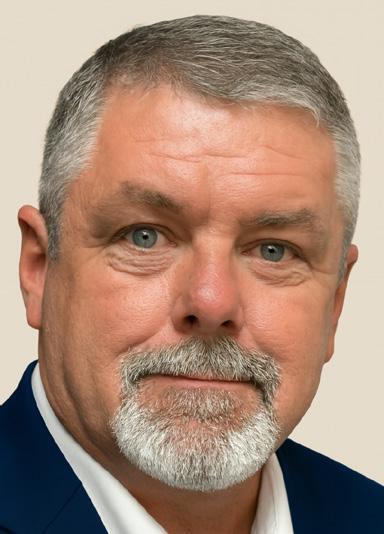


The event, sponsored by The Poultry Federation, is a major undertaking. The festival sold 4,500 tickets last year and generated $4.2 million in economic impact for the host city. Untold numbers of volunteers dedicate a staggering number of hours leading up to the event, to say nothing of work done during the two-day festival itself.
“The festival is like a family get-together in a way,” said Toby Tapp, complex manager at Wayne-Sanderson Farms in Danville and Poultry Federation board member. “The poultry business in Arkansas is pretty tight knit, and we all know a lot of the same people and have worked together, so it’s a chance to catch up, see some folks we haven’t seen for a while, meet some new people and find out what’s going on in our industry across the state.
“The atmosphere is so positive, and there’s always something interesting to learn. We have every aspect of the industry there — breeder and broiler farmers, suppliers, contractors, transportation providers, producers, and production folks. It’s a full representation of poultry production in Arkansas and
the entire region.”
Eddie Halter, complex manager at Pilgrim’s De Queen and Nashville complexes and a current board member, said the camaraderie extends well beyond the two-day festival itself. He pointed to his company’s cooking competition team, which has won multiple Grand Champion awards through the years, as a prime example.
“Well, it’s a lot of work to put on, to do the booth and to do the cooking contest and all that. I think it’s kind a bonding thing for our team,” he said. “The competition is nice, but I know the real enjoyment that we get out of it is on the day we’re having all the people walk around and the number of people that come by and are exposed to Pilgrim’s and all that we do.
“We’ll have whole families come by and look at the booths, and they’re checking all that out and doing the food sampling. Seeing the kids smiling during all of that, that’s what makes it worthwhile right there.”
Arkansas Money & Politics is proud to serve as a title sponsor for the much-beloved celebration of all things chicken, turkey and eggs. In honor of the 2026 installment, we would like to introduce readers to a few of the people who work behind the scenes to make the annual event the major happening it is. Without their tireless contributions at the individual company level or at the festival itself, the beloved summertime event would not be possible.
Toby Tapp
Eddie Halter
By Dwain Hebda | Festival photos by Russell Bloodworth Photography
SPORTING ACTIVITIES
Once again this year, the Poultry Festival will give attendees the chance to network, compete and enjoy some fresh Arkansas air by hosting a golf tournament and trap shoot. The wildly popular events fill up quickly and offer a nice departure from ordinary industry convention activities.
The off-site logistics and high participation related to the events lend an added layer of complexity for people working behind the scenes, but for festival veterans such as Kyle Avey of Huvepharma in Springdale, it’s all in a day’s work. Avey, who, with co-worker Cole Vardeman, is co-organizer for the trap shoot, has been volunteering in various capacities for years, and his connection to the festival itself goes back even farther.
“I grew up on a chicken farm,” he said. “My dad worked for Tyson Foods, so my parents were involved with the Poultry Festival even back when I was a small kid. Professionally, I started in the poultry industry out of college, and I’ve been helping out at the Poultry Festival for, gosh, probably at least six years, probably closer to 10 in some capacity.”
Avey said the sporting competitions are one big reason for the festival’s sustained popularity because it gives participants the chance to interact in ways other than a sales or work setting.
“Man, it’s a great time. It’s a competition. We keep score,” he said. “People can’t stack teams because we make it random teams, and


we give out great prizes. There’s drawings for gift cards, as well as money prizes to the winning teams and the winning shooter. Between that and the number of door prizes that we draw for, just about everybody walks away with something.”
Avey, who was named The Poultry Federation’s Sales Representative of the Year-Live Production in 2024, said the same laid-back, fun-first attitude extends to the rest of the festival activities.
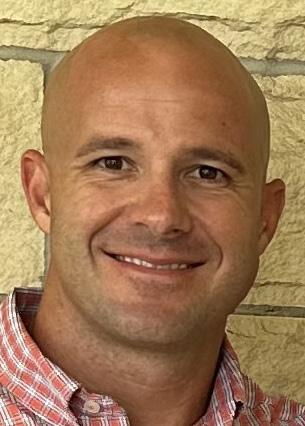
“To me, [the festival] is a celebration of the poultry industry,” he said. “Yeah, ultimately, it’s a fundraiser to help finance all of the other events that The Poultry Federation puts on through the year and to keep The Poultry Federation going, which is very important to our industry, but if I could sum it up, I’d say it’s a celebration that also supports a great cause because the funds raised in the auction go to scholarships for folks interested in poultry careers.
“It’s just a great time for fellowship and to see folks you may not see on a regular basis and celebrate the industry we’re all a part of.”
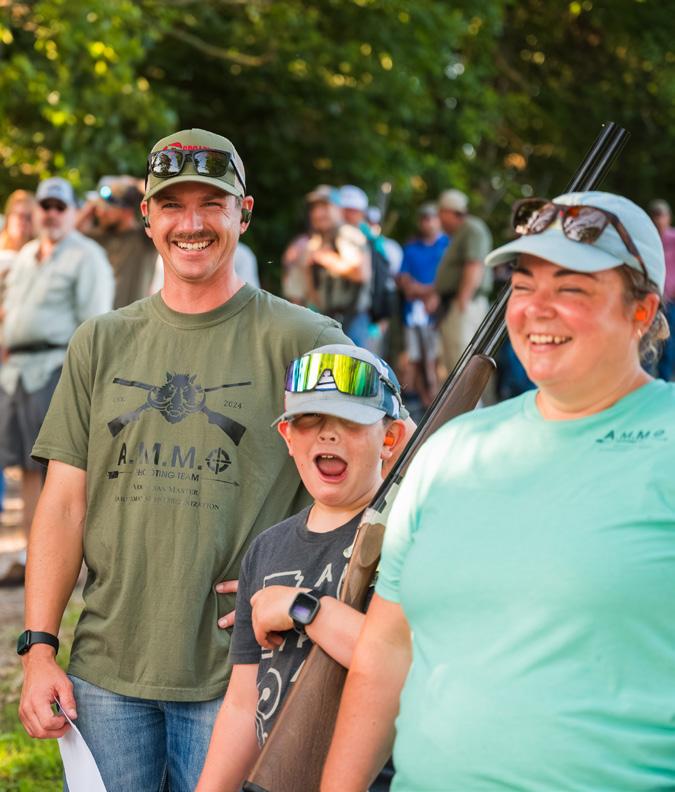
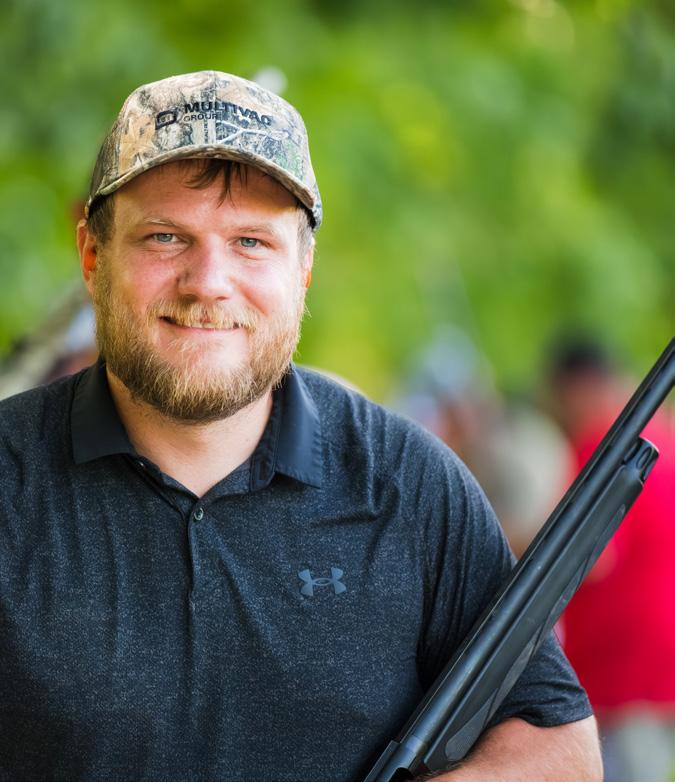
Kyle Avey
Longtime fan of the Poultry Festival cools off cooking competitors.
MR. COOL
Sometimes the simplest suggestion makes the biggest impact. Take the annual All-Member Cooking Competition, a centerpiece of the Poultry Festival that attracts teams from across the industry, which bring their best to be judged and sampled by thousands of festival attendees.
The event is not for the faint hearted. Not only is the competition fierce, contestants vying for awards given out in various food categories, as well as booth décor, but all of that cooking is done on grills in a parking lot under the Arkansas sun in June.
Watching teams wilt in the unrelenting heat gave Bart Smith of Sunbelt Rentals an idea that cemented him and his company in Poultry Festival lore.
“I first attended the festival about 12 years ago,” he said. “The first couple of years, we’d go around, and we were looking at the barbecue teams and what they were having to tolerate as far as being out on the asphalt. It used to be held a week later than it is now, but even holding it earlier, it’s a super hot, humid environment.
“At any rate, I went to the federation and said, ‘Hey, if we could provide cooling units for these barbecue teams to blow cooler air on them, would that be something you’d be interested in?’ They’re like, ‘Oh my gosh, yes.’”
Starting the next year and for the decade that followed, Sunbelt Rent als provided a cooling unit for every teams’ setup, giving them the option of renting a second one. Smith noted that the units, the same kind used on the sidelines of early season college and pro football games, cannot fully mitigate Arkansas in summertime, but competitors are not complaining
“It doesn’t lower the temperature, but it does provide a cooler environment,” he said. “Last year we changed from Power Breezer to Spartan units, which are much easier to transport and much easier to set up while offering the same kind of evaporative cooler. Everybody is just really happy with that.”


Bart Smith
ALL-MEMBER COOKING COMPETITION
Being one of the most widely consumed and healthiest proteins in the world, poultry is prepared and served in myriad ways but nowhere with such zeal and competitive fervor as during the Poultry Festival All-Member Cooking Competition. Teams pull out all the stops in various categories, including booth decoration, for awards, bragging rights and, for the top team, the title of Grand Champion.
Few participants have had as much to crow about in this arena as Wayne-Sanderson Farms, for whom the cooking competition is practically a full-contact sport. The company’s record is dynastic, having scored awards during 19 of the past 20 years, according to Nancy Frick, administrative assistant and undisputed field general for the company cooking team.
“It’s really just become a huge tradition with my coworkers and family for 20 years,” Frick said. “My husband works here, as well. He is the live operations manager here. My kids participate. It’s just a huge family event for us. In fact, in 2011, we had a baby, and she’s called the Festival Baby because I did not miss the competition.”
As someone who birthing could not keep down, it is fair to wonder what, if anything, could keep Frick from designing, planning and ultimately executing a winning entry. A couple of years ago, she got her answer as colorectal cancer forced her to focus on her
attended Friday night because my boss was receiving an award and I did not want to miss that, but I was so sick. I was taking chemo treatment, like, a couple days before, and I remember going to the banquet, and as soon as I visited with everybody, my husband was like, ‘We’re going home.’
“The team tried, bless their hearts. They set up a booth, but they didn’t decorate it, so they didn’t do the booth competition. They did do the chicken competition, but they didn’t place. I don’t think we’d ever come home without a trophy except for that, so everybody was kind of bummed around here.”
Last year, led by their rejuvenated leader, Wayne-Sanderson Farms roared back to form demolishing the competition and took home the Grand Champion trophy, putting the chicken world on notice that things were back to normal.
“I love this place. Wayne-Sanderson Farms is so awesome,” she said. “You know how some people hate going to their jobs? I don’t. When I was gone for a year and a half, almost two years it was just, ugh. The company was so good to me. This is my home.”
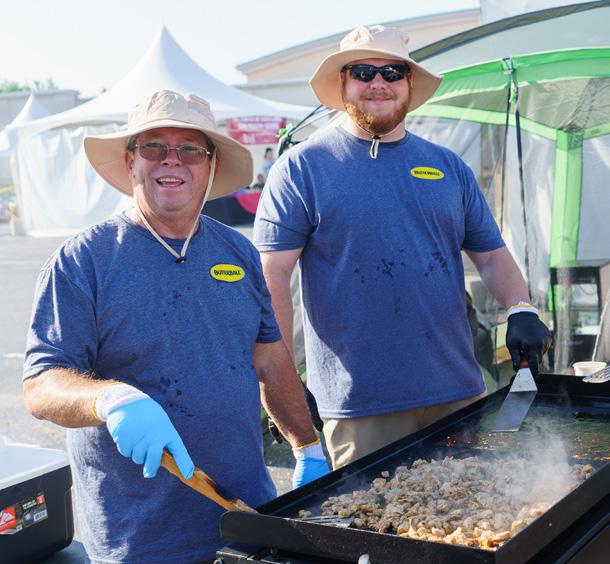
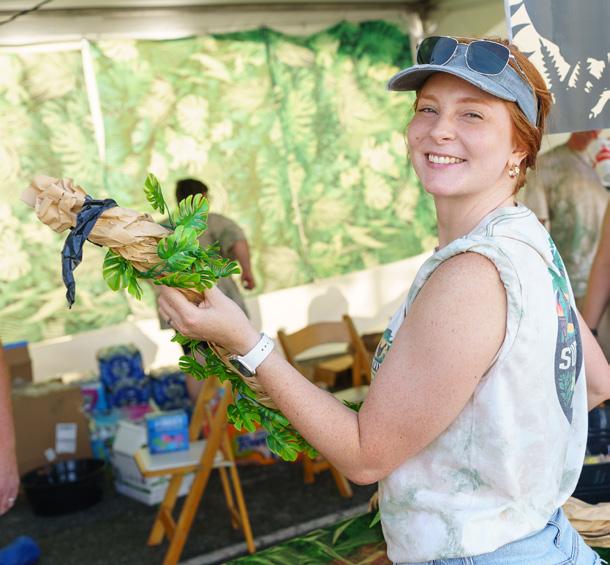
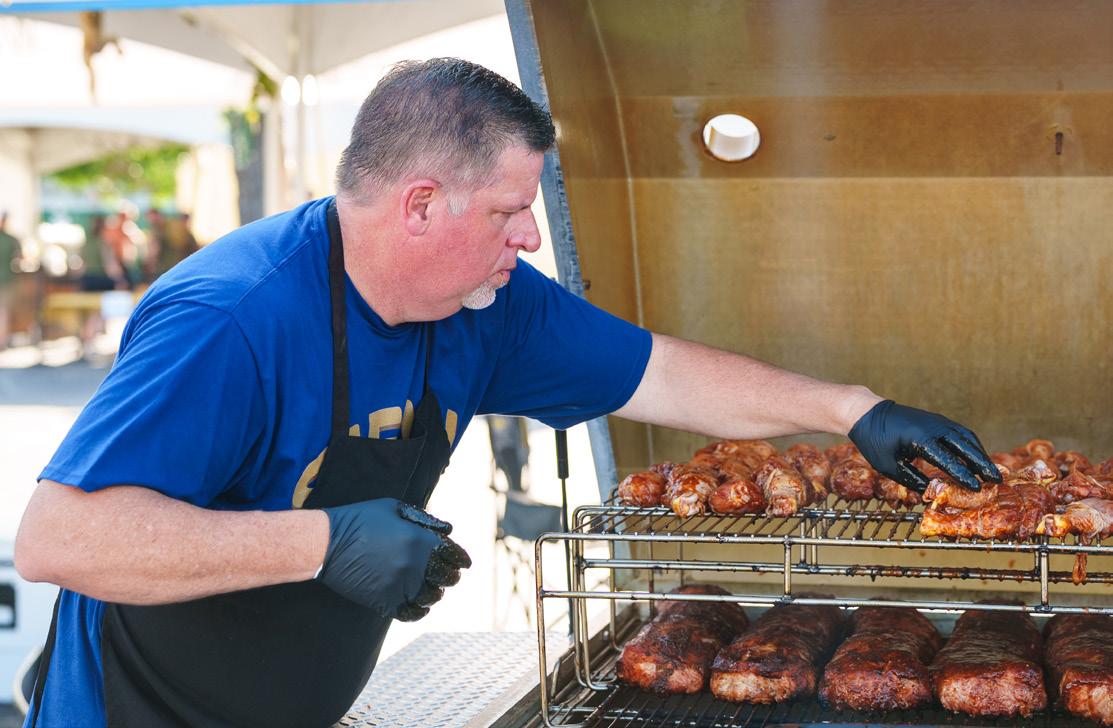
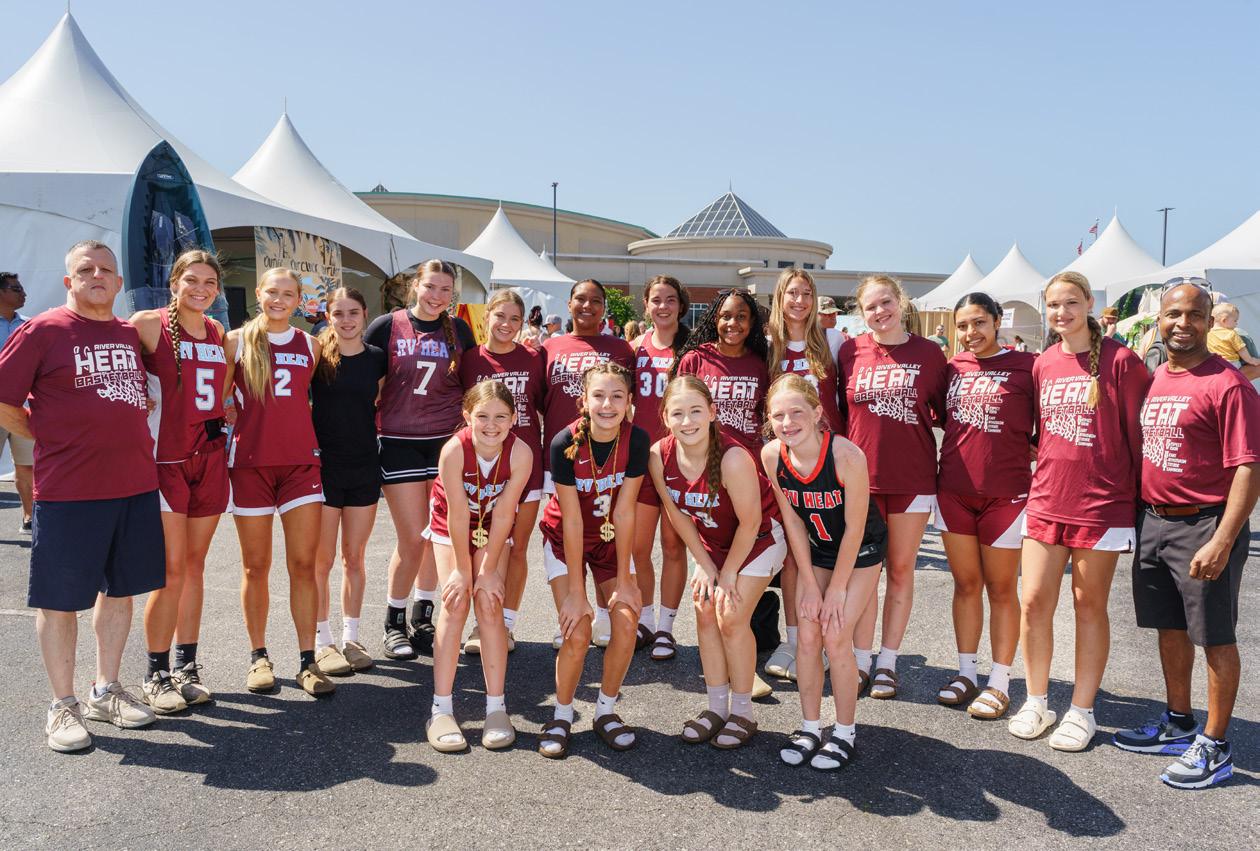


Nancy Frick

SCHOLARSHIP AUCTION
A highlight of the festival, not to mention of the foundation’s work, is its 30-year history of awarding scholarships to deserving college students interested in pursuing a career in the poultry and egg industry. Last year, The Poultry Foundation awarded a total of $143,250 in scholarships for the 2025-2026 academic term to 27 undergraduate and 11 graduate students in Arkansas, Missouri and Oklahoma. Funding the program comes via the Allied Industries Scholarship Auction, which takes place the first night of the festival. Over the years, the event, held in conjunction with the annual industry awards, has grown to epic proportions thanks to the commitment and drive of volunteers such as Jenny Jones, a packaging engineer at Tyson Foods.
Jenny Jones
Jones has participated in the festival as a volunteer for 16 of her 17 years with the company. The past 12 years, her efforts have focused on the scholarship auction, and today, she is a recognized force in the effort to raise as much money as possible to help students complete their education.
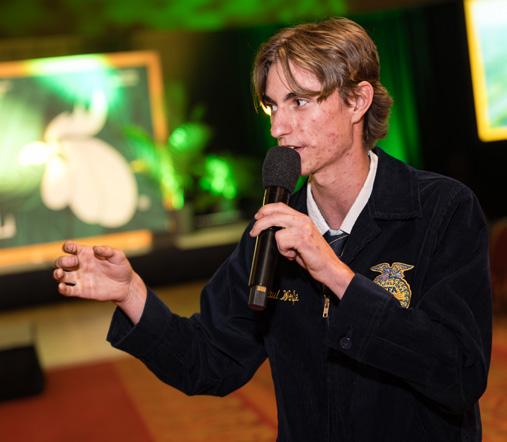

“The scholarship auction just intrigued me because scholarships go back toward the poultry industry,” she said. “It’s amazing to me how many people who received a scholarship in the past are now extremely active in The Poultry Federation.”
For her part, Jones has played a critical role in the auction’s growth and success by recruiting new members — and potential scholarship donors — to join the federation, as well as rounding up support from companies statewide. She said simply informing people of the good the federation does, including through scholarships, is generally enough to win them over.
“I just let them know how important The Poultry Federation is, especially with all the increased legislation that is going on not just with poultry products but also with poultry packaging, which is my background,” she said. “We can give The Poultry Federation a call, and they help out instantly, and it doesn’t even matter if it’s in the three states that they actually represent. Voicing that to other people, they realize the importance of what The Poultry Federation actually does for the industry.”
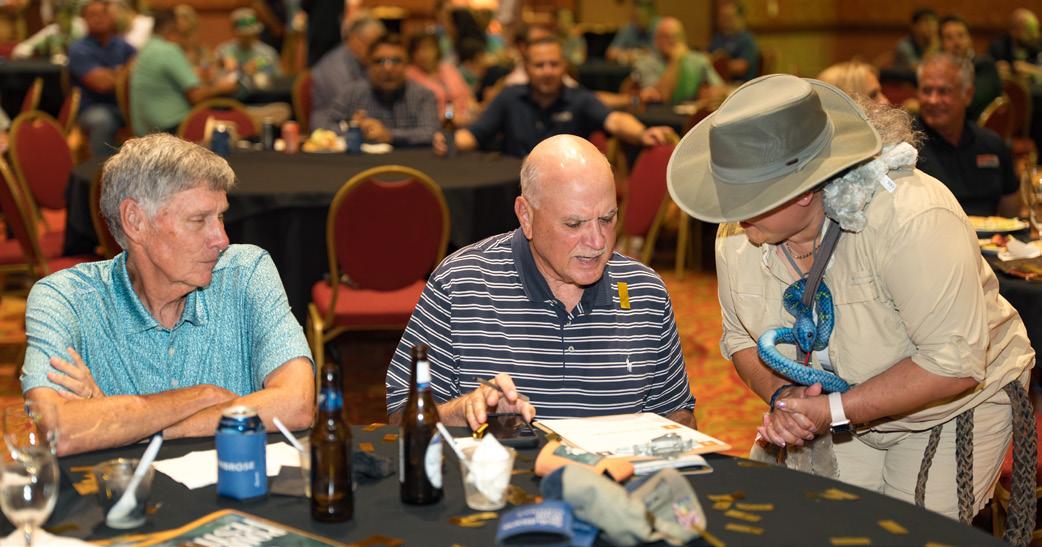
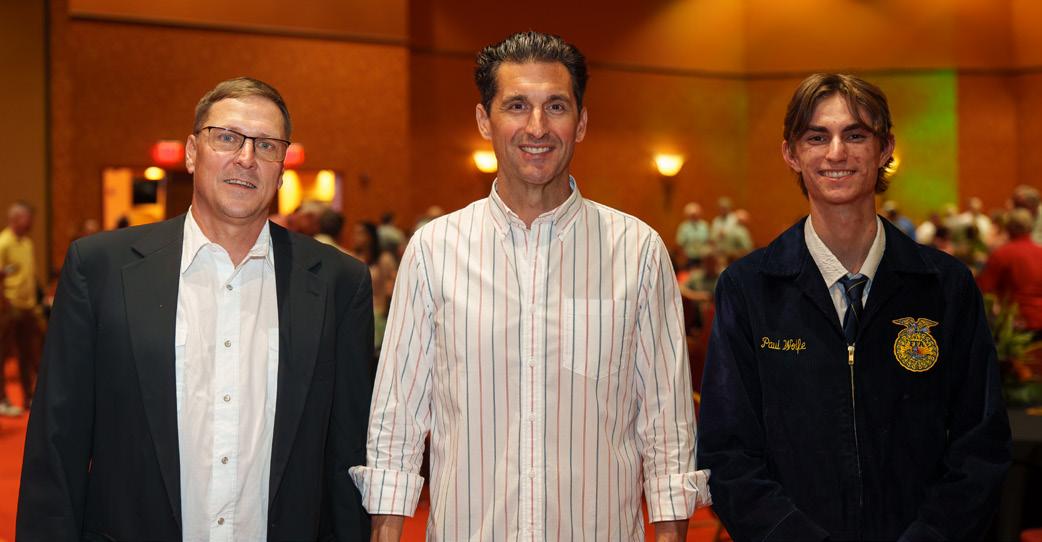
SALES & SERVICE
When it comes to the poultry industry, Preston Stiles is as invested as they come. As vice president sales at Conveyor Technology, he is one of two individuals at the firm to win The Poultry Federation’s coveted Sales Representative of the YearProcessing award.
That fact alone would cause Stiles to stand out, but the 24year veteran of the poultry industry was not content to rest on individual accolades. Instead, he has spent more than two decades giving back to The Poultry Federation, including serving on the board for the federation’s allied member group, as well as the TPF board of directors itself. He is also a familiar sight at the festival, where he invests considerable time to the scholarship auction in whatever capacity he is needed.
Stiles said he took on the governance roles out of wanting to improve the industry

for the membership, but the scholarship program is what grabbed him by the heart and has not let go for more than 20 years.
“What really got me sucked in is what [The Poultry Federation] does for the kids,” he said. “I started working very heavily with them on the auction part that we do because it raises scholarship money for kids here in the state, both those with financial needs and also those that are just worthy of investing money in their future. Every dollar we raise through the auction goes to kids who represent the future of the industry.
“I love that because we’re only as good as what the future is coming down the pike. If you don’t have people coming up behind you that are going to carry that on and go even further, then you’re actually fighting a losing battle. Getting them through school and all can be expensive. Investing in those kids and helping create the difference makers of the future is something that I am really, really passionate about.”
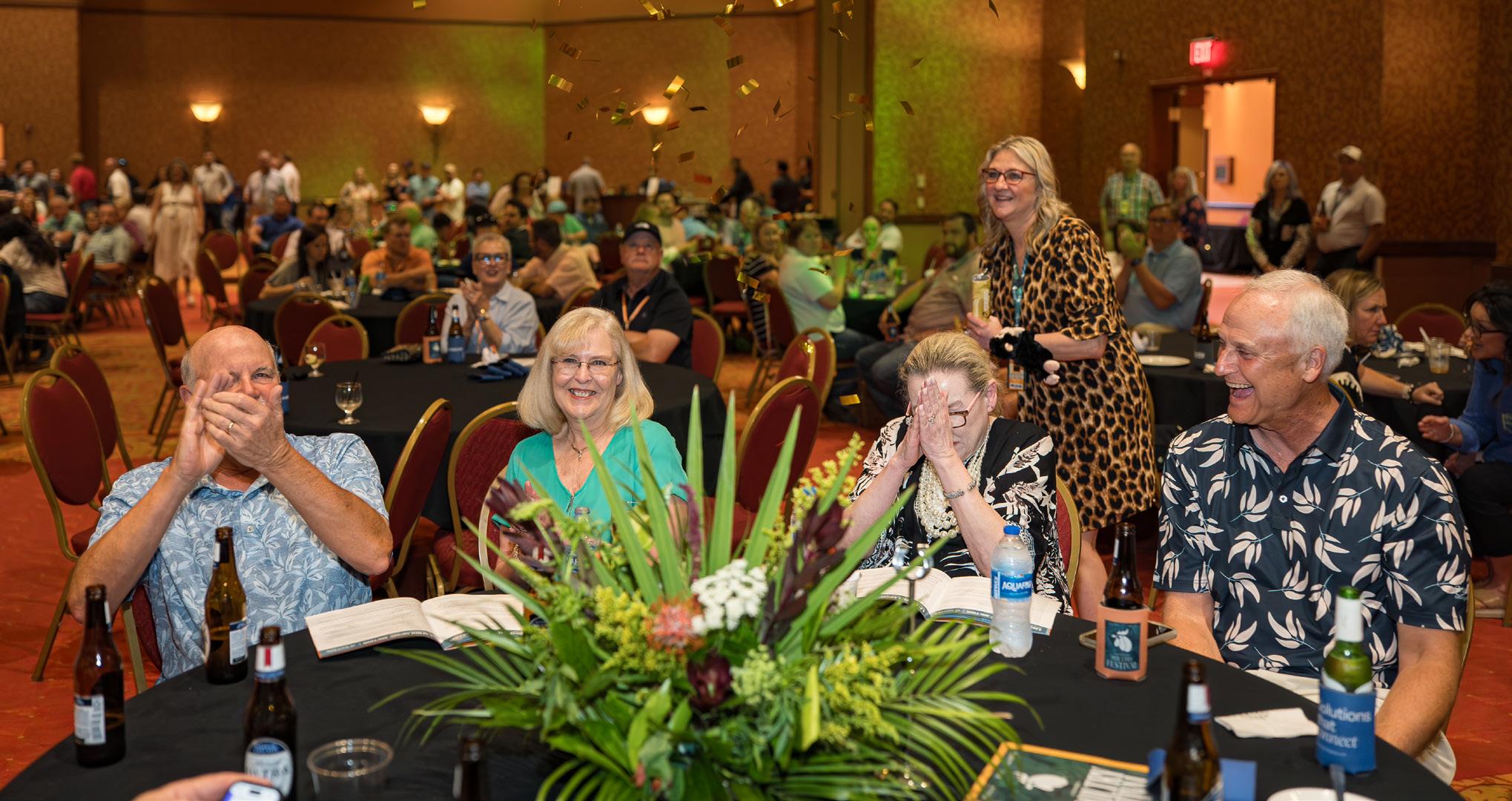
Preston Stiles
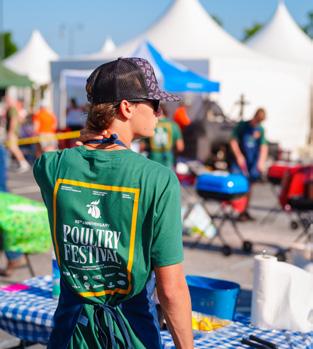

ORGANIZED BY THE POULTRY FEDERATION ROGERS, ARKANSAS
JUNE 12-13, 2026
SCHEDULE OF EVENTS
THURSDAY, JUNE 11
8 a.m. to 5 p.m.
Information Desk Open
Registration
Rogers Convention Center Main Entrance
FRIDAY, JUNE 12
8 a.m. to 6 p.m.
Information Desk Open
Rogers Convention Center Main Entrance
8 a.m. to 2 p.m.
Trap Shoot
Gunsmoke Sporting Clays, 17245 Wendell Jones Road, Garfield
7 a.m. to noon Noon
Golf Tournament Kingswood, 4 Kingsdale Lane, Bella Vista
Sporting events lunch/awards At location of sporting events
1 to 5 p.m.
Silent/live items featured in scholarship auction open for viewing
Ambassador Ballroom B-D, Rogers Convention Center
4 to 9 p.m.
Yarnell’s Ice Cream and photo booth
North Rotunda, Rogers Convention Center
5:30 p.m.
Hors d’oeuvre and cocktail reception Grand Ballroom, Rogers Convention Center
6:30 p.m.
Presentation of industry awards
Grand Ballroom, Rogers Convention Center
7 p.m.
Live auction Grand Ballroom, Rogers Convention Center
Festival photos by Russell Bloodworth Photography
Source: thepoultryfederation.com

Schedule subject to change

SATURDAY, JUNE 13
8 a.m. to 6 p.m.
Information desk open
Rogers Convention Center Main Entrance
Chief cooks meeting
Ambassador Ballroom A
Auction items available for pickup
Information Desk
Arkansas State 4-H Cooking Contest
Rogers Convention Center Parking Lot
Board of directors meeting
Ambassador Ballroom B, Rogers Convention Center
30th Annual All Member Cooking Competition
Rogers Convention Center Parking Lot
30th Annual All Member Cooking Competition
Booth Judging
Rogers Convention Center Parking Lot
Yarnell’s Ice Cream and photo booth
North Rotunda, Rogers Convention Center
Dinner, presentation of All Member Cooking Competition Awards, presentation of Arkansas State 4-H Cooking Contest Awards
Grand Ballroom, Rogers Convention Center
Festival concert gates open Walmart AMP
The Wilder Blue
Diamond Rio

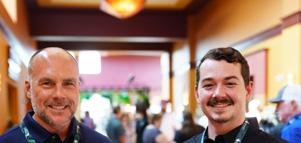





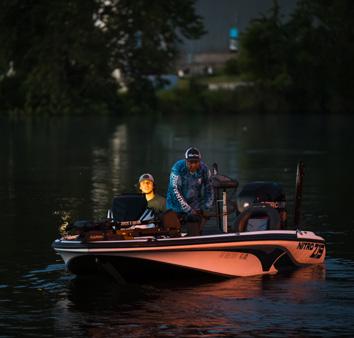




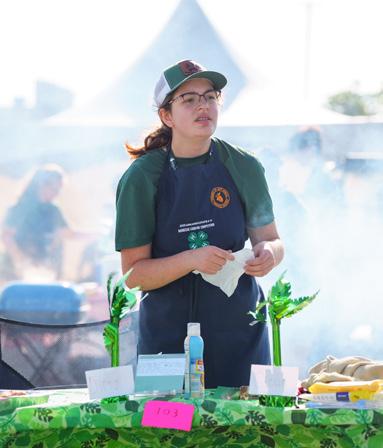






Keith Smith Company is a dedicated broiler hatching egg producer serving the poultry industry with a focus on consistency, quality, and dependable supply.
To meet growing demand, we are launching a new hatchery coming online in early 2027, expanding our ability to serve integrators and producers with forward‑planned chick availability.
NOW SCHEDULING FOR LATE 2026–2027
• Designed for broiler production
• Built to support long‑term relationships
This expansion represents our continued investment in the industry and our customers—delivering dependable supply when it matters most.
For additional information or to discuss future availability, we invite you to contact us directly.
Keith Smith Company, Inc. A partner you can plan with

Growing Rural Arkansas
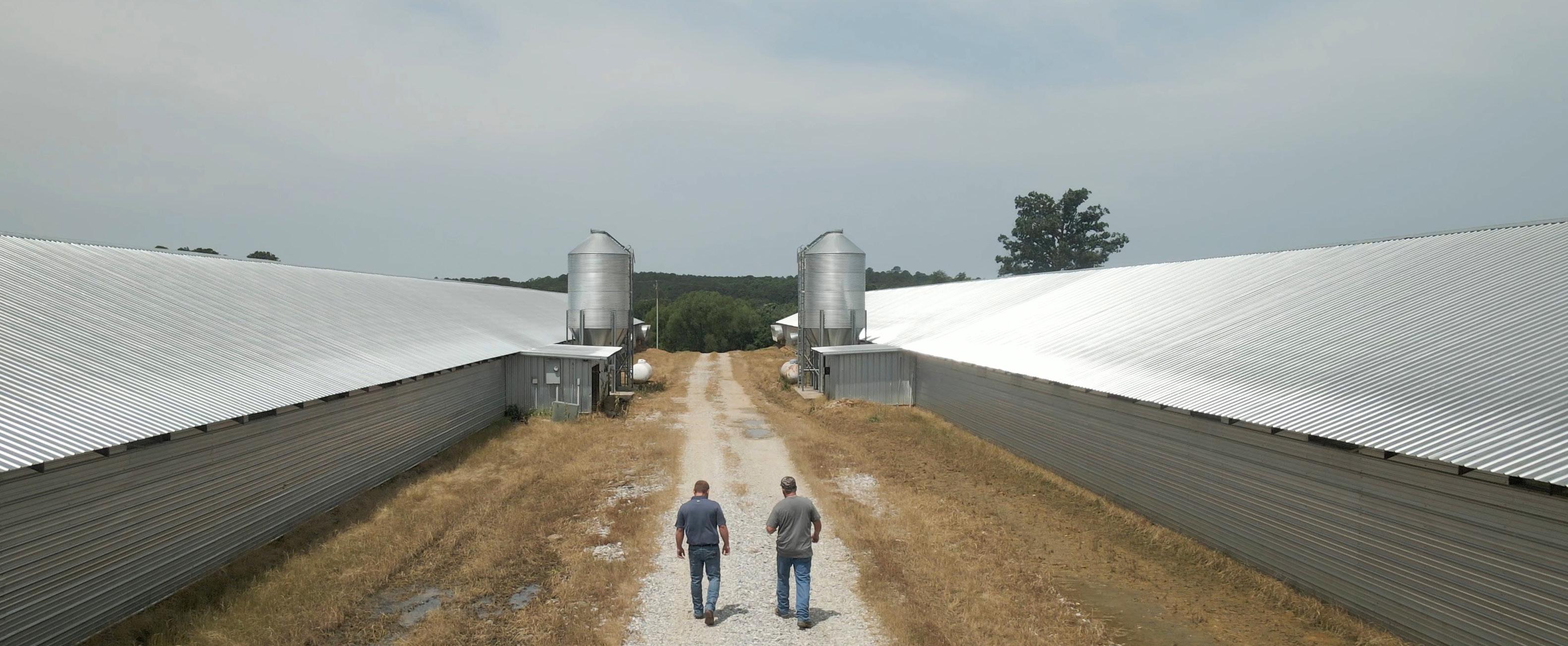



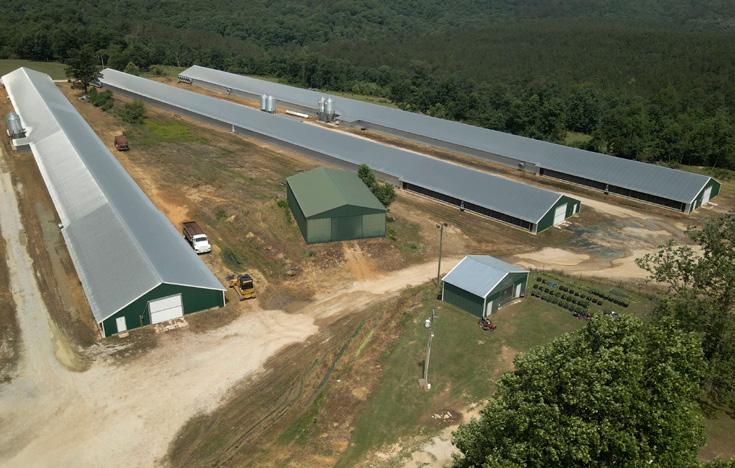


to Crow Something
About
Arkansas’ poultry industry BIGGER , better than ever
By Dwain Hebda

the farm gods have thrown a lot at the U.S. poultry industry over the past six years. Yet despite the effects of a global pandemic, rising input costs, avian flu and, more locally, a freak winter storm, Arkansas’ industry finds itself with a lot to feel good about.
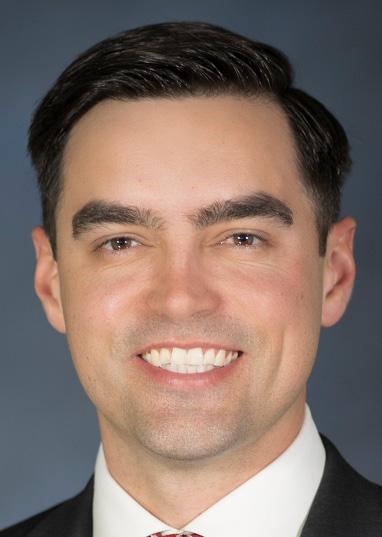

“As you look at Arkansas’s agricultural economy, obviously, agriculture’s the No. 1 industry in the state, and poultry’s the No. 1 commodity in Arkansas,” said Blake Rollins, president of The Poultry Federation. “The way I would think of poultry is we’re an engine of opportunity.”
According to The Poultry Federation’s statistics, Arkansas’ poultry industry, represented by broilers, eggs and turkeys, generated $6.7 billion in agriculture cash receipts in 2024, or 53 percent of all the state’s ag receipts combined. Broilers make up the vast majority of that economic impact, representing 44 percent of the state’s total agricultural cash receipts by themselves.
The figure is the latest chapter in an unqualified success story. In 2017, cash farm receipts for poultry totaled about $4.6 billion, according to statistics compiled by the University of Arkansas Division of Agriculture Research and Extension. In the COVID-19-impacted year of 2020, that number slipped to $3.7 billion.
In 2018, Arkansas ranked second in the nation in broiler production at 7.3 billion pounds, fifth in turkeys at 595 million pounds and 10th in chicken eggs at 3.5 billion. In 2024, both broilers and eggs are up, to 7.6 billion pounds of meat and 3.9 billion eggs, to rank third and eighth in the country, respectively. Turkey production climbed two spots to third nationally thanks to 512 pounds produced.
The impact can also be seen in the number of jobs related to the industry. More than 6,500 Arkansas farms raise some kind of poultry, and the industry supports a total of 175,000 jobs
Keith Smith
Blake Rollins
statewide compared to 151,000 jobs in 2020. Benton County was the No. 1 poultry-producing county in 2024, The Poultry Federation states, followed in rank order by Washington, Howard, Yell, Madison, Sevier, Hempstead, Logan and Carroll counties.
More than that is the ripple impact that the poultry industry has on other segments of the ag industry in Arkansas. Rowcrop growers benefit from the additional need for their grain for chicken feed, and with major food processing companies in the state, headlined by behemoth Tyson Foods, demand for other expertise is also on the rise.
“From a row-crop perspective, about 70 percent of the corn grown in the state goes directly into poultry feed,” said Keith Smith, managing director at Keith Smith Co. in Hot Springs and chairman of The Poultry Federation board of directors. “Poultry production and row-crop agriculture are tightly connected in the overall state economy.”
“I think a hidden piece in that story is how we have a very broad industry in the sense of needing all kinds of different careers,” Rollins said. “It’s a very impactful industry.”
Those ancillary poultry roles include the important work of The Poultry Federation itself. Based in Little Rock, the federation represents the industry in Arkansas, Oklahoma — where poultry represents $1.23 billion worth of agricultural cash receipts — and Missouri, which boasts 95,000 farms and just more than $2 billion of that state’s total ag cash receipts.
The Poultry Federation’s membership runs the gamut of producers to processors of all sizes plus allied members made up of companies serving the industry. The federation’s primary purpose is to serve industry interests through government affairs, producing events that include the forthcoming Poultry Festival in Rogers in June and promoting the industry to new generations through such things as its scholarship program.
“The Poultry Federation plays a key role in building strong relationships with state government that help achieve common goals — that is, Arkansans with good-paying jobs which make for good taxpayers,” said Smith. “State-level policy and investments in education/workforce capability are at the forefront of The Poultry Federation’s broader mission to encourage and support the next generation of our industry.”
The organization not only maintains a healthy working relationship with lawmakers but serves as a unifying element that unites its members in the common cause of growing and promoting the industry. Rollins said The Poultry Federation seeks to serve all members through its programming, from small producers just starting out to large processing companies.
“A great example is our food safety conference,” he said. “Everyone from our larger members to our smaller members are working together on the same goal: to make sure that the food our industry produces is safe and nutritious for Americans. I think you see that shared spirit of working together, sharing insights and lessons learned. We also bring in different regulators, whether that’s [the U.S. Department of Agriculture] or the state, for our members to learn from, as well. There’s a tremendous amount of communication going on with these shared goals.”
The industry is not without its challenges, however, issues shared by the industry nationwide. The highly pathogenic avian
“the way I would thInk of poultry iS we’re an engine of opportunity.”
– Blake Rollins President, The Poultry Federation
influenza, commonly known as bird flu, cropped up last year, and the first case of 2026 was discovered in Clay County in April. However, the impact of the disease has been lighter in Arkansas than in other states, a fact Smith attributes to the attention being paid to it by producers, equipped with information by the federation.
“In recent years, avian influenza has been a major challenge, impacting exports and creating supply chain disruptions,” he said. “The industry has responded by reinforcing biosecurity measures and focusing on efficiencies. Poultry and eggs continue to be one of the most efficient, affordable, healthy protein options available in the marketplace.
“Other challenges include changes in tariff structures that affect global demand and can lead to volatility in commodity prices. On top of that, broader factors like oil prices influence discretionary income at the consumer level, which can impact spending on poultry products.”
Despite the challenges, Rollins said the long-term future looks bright for U.S. poultry thanks to forecasts that hold great potential for Arkansas’ producers and processors.
“The World Economic Forum, which is not traditionally known to support protein production, is estimating that the protein demand is going to double by 2050,” he said. “When you think about the efficiency of the poultry industry, I think there’s tremendous opportunity for growth, and I think that that growth will benefit more than the poultry industry itself. Others in agriculture will also gain a greater domestic level of demand for corn and soybeans. That’s a tremendous opportunity, and we’re interested in figuring out ways to better capture that.”
While much remains to be done on these macroissues, a more immediate focus is being placed on the 66th Poultry Festival, a celebration of the industry that serves as a major fundraiser for the federation and its scholarship program. Both Rollins and Smith said the event is an important rallying point for members from all three states, reinforcing the vital role they play in keeping America fed.
“There’s a tremendous amount of camaraderie and enjoyment of coming together, supporting the industry,” Rollins said. “It’s this great culmination of a lot of hard work as we start the summer to socialize, to celebrate and to team build. There’s not really another event quite like it around the country, and we’re proud of that. It’s a special opportunity for the industry to come together.”
“On the surface, the Poultry Festival looks like a lot of fun, and it is,” Smith said, “but behind the scenes, it’s about building relationships, strengthening partnerships and moving the industry forward.”
FROM OUR PROCESS
to our people. We work together to serve our communities with great care and great chicken. From investing back into the areas we serve to providing a great place to work for our dedicated team of 26,000 employees and 1,900 family farmers, Wayne-Sanderson Farms is committed to delivering a great quality of life that Arkansas can count on for the long haul.





Pilgrim's is a leading global provider of high-quality food products, including well recognized brands, such as Just Bare, and value-added premium products. For more than seven decades, Pilgrim's has provided quality protein products to customers and consumers around the world.
Learn more about Pilgrim’s: www.pilgrims.com
As a proud sponsor of the Poultry Festival and a global leader in the poultry industry, Pilgrim's extends a heartfelt thank you to everyone who makes this important event such an overwhelming success!
From our dedicated team members to our amazing community and partners, we are so grateful for your energy, support and passion that make all the difference.
Together, we celebrate more than just poultry - we celebrate people, progress and the power of coming together.
Thank you for being a part of the Pilgrim's family!

Protecting the poultry industry since 1954.
Your poultry and egg industry partner in Arkansas, Missouri and Oklahoma. Learn more about our initiatives and events by connecting with us on social media or visit us online at thepoultryfederation.com.



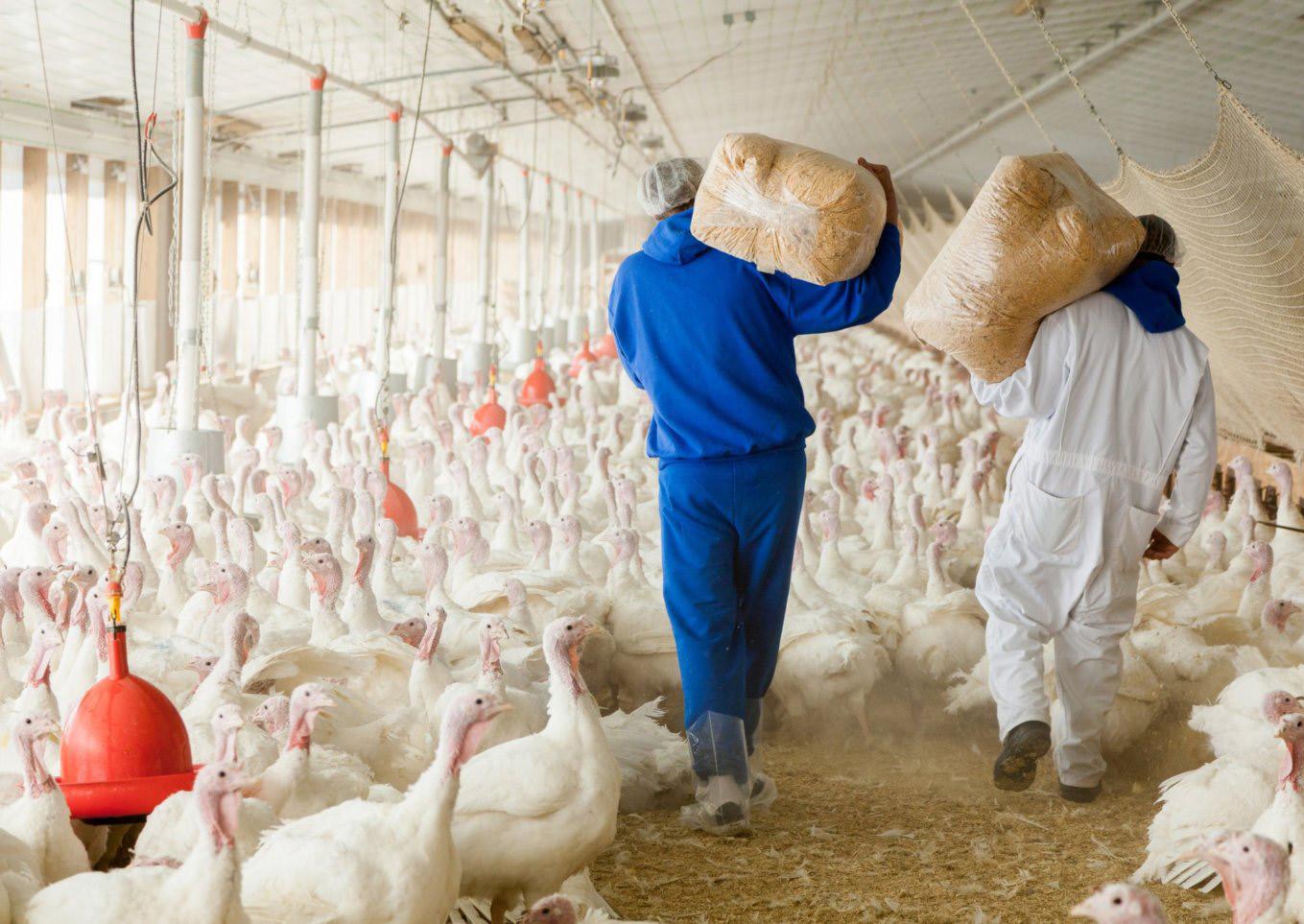
FUNDING THE FUTURE
Poultry professionals in the making benefit from Poultry Federation scholarships
By Dwain Hebda

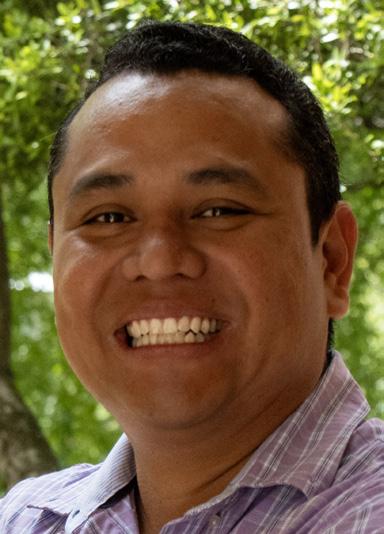
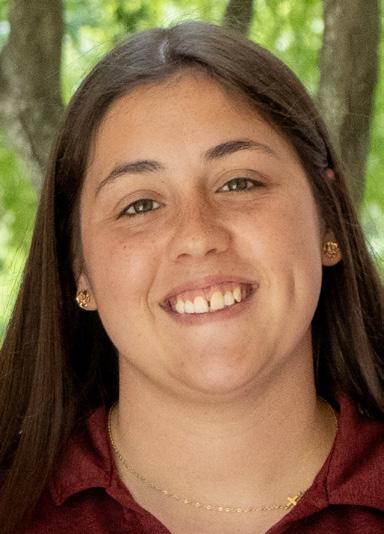
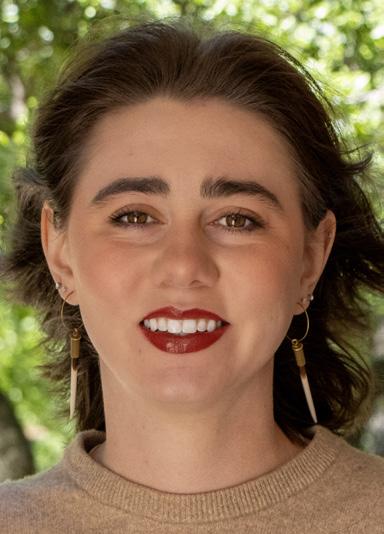
On Friday, June 12, the first day of the twoday Poultry Festival, attendees will gather in the Rogers Convention Center Ambassador Ballroom for one of the most important elements of the annual event. In addition to recognizing the year’s slate of industry award winners, attendees will have the chance to, in live and silent auctions, raise money for the federation’s scholarship program.
The Poultry Federation Allied Industries Scholarship Fund awards deserving college students scholarships between $500 and $15,000 depending on the student’s academic level. Honorees are full-time students attending an Arkansas university or college, at minimum in their sophomore year, who maintain at least a 2.5 grade point average.
The scholarships may be awarded to bachelor through doctoral-level students who are pursuing a degree that may lead them to a career in the poultry industry. Previously awarded students are eligible to reapply for each succeeding year of study en route to their desired degree. Interested applicants can learn more at arcf.org.
Holly Duval, director of marketing and business development at The Poultry Federation, said the program substantially benefits the industry by deepening the talent pool for poultry professionals in the state. It also helps keep top talent in Arkansas, since many companies in the industry offer scholarship recipients internships and, ultimately, jobs following completion of their education.
“Part of our mission statement is to encourage and support youth programs in poultry work,” Duval said. “We believe that by providing financial assistance to students pursuing a career in the poultry industry, we are a part of developing the future leaders of the poultry and egg industry not only in Arkansas, but across the world.”
The following students currently studying at the University of Arkansas Poultry Science Department in Fayetteville are examples of the ambition and achievement shown by scholarship recipients working to complete their education to one day help enrich the poultry industry.
James Higuita
In many ways, James Higuita is just like any other grad-level student, but in just as many other ways, he stands out from his peers.
“To be honest, I’m an old man,” joked Higuita, 43. “I started in the poultry industry, I don’t know, maybe 20 years ago in the processing plant. While I was in that job, I really wanted to learn more. Later, when I started in live production, is when I really
James Higuita
Allie Bowerman
Grace Slick
started to fall in love with the poultry industry.
“This industry offers a really great protein source that’s cheaper, it’s good quality, and it’s raised without a lot of environmental issues. When I got into it, I realized that we spend a lot of time and a lot of money trying to be more efficient. I found that really, really interesting.”
Higuita’s love for agriculture predates his interest in poultry. A native of Colombia, he regularly spent time on his grandfather’s farm, where he gained an appreciation for the agrarian lifestyle. He completed his undergraduate degree in his home country before coming to the United States for his graduate work. He had high praise for the faculty and staff of the University of Arkansas in Fayetteville, as well as his fellow scholars, for helping him overcome the challenges of being a nontraditional international student.
“I’m not a common student, you know? I’ve worked in the industry, and I’m a lot older than a lot of other students,” he said. “I have had to learn English, and I still have some issues with the language, and that sometimes makes things harder, but I found support here from my labmates and from the whole department. I really found a lot of support from them, and I believe I couldn’t do this without that.”
He first received a Poultry Federation scholarship while pursuing his master’s degree and has reapplied to receive additional funding ever since as he earns his Ph.D. He said the scholarship was key to him being able to complete his education and advance his career in the industry.
“That [scholarship] helped me a lot because it helped to cover the expense of attending school and still let me balance my responsibilities of graduate school and family,” he said. “That support has been of incredible value for my career.”
Allie Bowerman
Growing up in Fayetteville, Bowerman was aware of the high concentration of the poultry industry all around her in northwest Arkansas. It was not until college, however, that she was inspired to pursue a degree that would allow her to build a career in the poultry industry.
“Coming into college, I didn’t know what I wanted to do,” she said. “Because I’m a first-generation college student, they took us on a tour around the U of A, just to know a little bit more about academics, and our tour guide was actually a poultry science student. He walked us through what that looked like, and I got plugged in pretty quickly.”
Bowerman, who graduated with her bachelor’s degree this month, will begin work on her master’s degree in the fall. She described the Poultry Federation scholarship as essential for her to attend college and complete her education.
“Coming into college, something that was really important to me was to pay for my college by myself,” she said. “My parents were willing to help, but that was just something that I wanted to do. With this scholarship, I was able to study and do my schoolwork without having to take on multiple jobs. I still work at the university, but this money helped me concentrate more on school. It also opened up doors to get into The Poultry Federation and meet people and network and do all those things, as well.”
She said the job field in poultry is a fertile one for people with the right education.
“At the U of A, we have two different degree programs; we have one that goes preprofessional and then one that goes preindustry, which is what I was in,” she said. “After graduation, I would probably start out as a manager somewhere in a processing plant or go to be a field tech in the industry, working directly with birds. Me personally, I like the live birds, so I would probably go more toward working with my hands and being a field tech.
“I want to help fix how we manage our birds efficiently. It’s constantly changing, and at some point, we’re going to have to switch up how we do that, like with disease outbreaks. As those become more prominent, we’re having to find new ways to mediate those types of things. That’s what I would want to jump into and help fix within the industry.”
Grace Slick
Having just completed her first year of doctoral studies, Grace Slick is approaching the finish line on her education, a journey made easier thanks to The Poultry Federation scholarships she has received over multiple years.
“It’s really an indispensable resource,” she said. “So many of us grad students are on half or full assistantships, and we are paid a stipend, but life is expensive these days. The opportunity to get a scholarship on top of that [stipend] frees up money for rent and groceries and all of that. For me personally, and I know a lot of the other people who received this scholarship, it allows you to really focus on what you’re doing.”
A Hot Springs native, Slick’s exposure to the poultry industry began with her father, whose career included jobs as a hatchery manager and in sales, and she remembers attending the Poultry Festival regularly growing up. At the University of Arkansas, she earned her undergraduate degree in ag business and horticulture before deciding to shift to poultry for her graduate work.
“I am looking to work in anything relating to sustainability. I think there’s a lot of work going on in the industry right now, and I think there’s a lot of good work that will continue to be done,” she said. “If we’re not overfeeding, then it’s cheaper for the producer, which allows them to be more sustainable in their practices. Also, if we’re feeding the correct amount, the birds are not excreting the extra phosphorus and stuff, and that isn’t going into the waste system as litter is spread on fields that we’re growing crops in, so it’s all very circular.”
Slick said one of the benefits of Arkansas’ poultry ecosystem is the ability to easily gather multiple points of view from producers through processors. That helps focus research on what is most relevant to addressing the industry’s real-world issues.
“I think there’s sometimes this thought that we’re doing all this research, so we really understand what’s going on and they need to listen to us,” she said, “but when you talk to people who are actually on the ground doing the work, you see the issues that are actually being faced, not what you think are being faced. I think that’s where I’ve found the most value because at the end of the day, as nutritionists, as academics, we’re here to serve them.”

A Family Foundation A Family Foundation

Family is big in Arkansas, and it stands to reason that family businesses are, as well.
Generational businesses are the backbone of business in the Natural State. In Arkansas, family business can mean many things — from global corporations to small-town institutions. Not only were the world’s largest retailer and world’s largest protein producer each launched as family operations in Arkansas; the largest off-Wall Street investment firm, one of the nation’s preeminent trucking companies and one of the country’s great longstanding department stores were, as well.
Yes, we’re talking Walmart, Tyson Foods, Stephens, J.B. Hunt and Dillard’s, each launched and still headquartered, respectively, in Bentonville, Springdale, Little Rock, Lowell and Little Rock.
Other homegrown national brands originating from and still

based in Arkansas include Xpress Boats in Hot Springs, Lexicon in Little Rock and Petit Jean Meats in Morrilton.
These companies achieved global reach through generations of family leadership, but so have iconic hometown institutions such as Cogswell Motors in Russellville, Stallion Transportation Group in Beebe and Fayetteville’s Underwoods Fine Jewelers.
Generations of Arkansas families have shown the world that the Natural State is a hotbed of entrepreneurship and innovation. While Arkansas Money & Politics does not claim to have a comprehensive list of every family operation in Arkansas, we can nevertheless shine a spotlight on some of the state’s prominent family-run stores, companies and firms.
We are proud to once again recognize generational businesses in Arkansas.
The talented team at Oaklawn Hot Springs takes the hard work out of event planning. Arkansas’ only racing casino resort boasts an unbeatable reputation for hospitality excellence, making it the ideal choice for one’s next business meeting, conference or company retreat.
With 18,000 square feet of event space and state-ofthe-art audio/visual capabilities, there is ample room to entertain attendees. On top of premier fine dining options such as the Forbes-recommended OAK room & bar and The Bugler, Oaklawn’s experienced banquet team offers unmatched service backed by the same top culinary quality.
Further setting Oaklawn apart as a meeting destination is the range of activities available to guests once the day’s business is done. A Forbes-recommended hotel and the state’s only Forbes Four-Star spa for relaxing; casual fun and games at the Mainline Sports Bar; and the singular thrill of a day at the races — it is little wonder why so many state associations and scores of companies from a variety of industries trust Oaklawn with their events year after year.
Whether hosting shareholders, connecting with colleagues or entertaining executives, give them an experience like no other at Oaklawn Hot Springs.
MEETINGS PERFECTED AT OAKLAWN




Located in the heart of beautiful Hot Springs, Arkansas, Oaklawn has been a premier destination for thoroughbred racing since 1904.



Bring your team together at Oaklawn where immaculate meeting spaces make it easy to host, gather and keep everyone engaged from start to finish. Add in the Forbes Recommended hotel and restaurants, along with the only Forbes 4-Star spa in Arkansas, and you’ll experience every detail handled with care so your team can focus on connection, collaboration and results.



RACING / SMOKE-FREE CASINO / HOTEL / SPA / EVENT CENTER / DINING VISIT OAKLAWN.COM FOR MORE INFORMATION.




Sponsored Content
FAMILY FOUNDATIONS
James A. Rogers Excavating
Things have changed quite a bit since James A. Rogers Sr. started an excavating company with $500 borrowed from his father-in-law. It was 1962, and Rogers, who “was born in a bulldozer seat, just about,” was 19 years old and recently married.
“I paid down on a little bulldozer, and I went to work,” he said. “My first little job, I got $10 an hour for the tractor, and I worked two hours, and I made $20. I got enough money to put gas back in the tractor, and I had $10 to go to the next project.”
More than 60 years later, the industry is “100-percent” different, Rogers said, with advances in tractor technology making for faster and easier production than he could have ever imagined. Some of the biggest changes to his namesake company, however, have happened over just the past 10 years.
In 2016, third generation Chris Meyer bought the business from his grandfather to become president and CEO. Over the decade since, Meyer has taken the company from a $4 million operation to a $30 million one, now with a statewide footprint and sister companies rounding out the organization’s capabilities.
“My grandson is one of a kind,” Rogers said. “He is probably one of the most energetic men that I would know even to be kin to me, and I rate him AAA, 100 percent, that he has taken the company where it is. I had no idea that he was going to do what he’s doing.”
James A. Rogers Excavating is truly a family affair with Rogers’ daughter, Sheri Meyer, also working at the company alongside her husband, Ken. Serving as senior project estimator is Meyer’s brother, Bradley, and with six great-grandchildren between the two of them, the elder Rogers said he is “sure that it will be a fifth- or sixth-generation operation.”
“Now I’ve got kids, and I get to show them that, ‘Hey, I built that when I was 17, 18, 19 years old,’” Chris said. “You never really get to feel that type of appreciation for what you’ve done until you start showing your kids or the next generation that you were a part of building something.”
Bradley similarly feels the weight, as well as the privilege, of carrying on his grandfather’s legacy.
“He started this thing from nothing, basically,” Bradley said. “He brought it to what it was back in 2016, when Chris took it over, so to carry it on, to grow it to what it’s become today, it’s been a blessing. It’s been stressful, but it’s also been extremely fun.”
Far from a long-held succession plan, Chris and Bradley’s place as the third generation at James A. Rogers is the result of a shared dedication to excelling in their industry and working to make the most of every opportunity. Neither was sure at first that they would join the family enterprise, but both found themselves drawn to the field and never looked back.
“To me, regardless of whether it’s a family business like James A. Rogers, it’s still earned,” Bradley said. “You still have to get up every day and go to work. You get out what you put in, so I also feel that’s the same motto over here. We will do anything and everything that we can to assist you in reaching your goals, but at the end of the day, it’s your decisions that get you where you want to be.”
Since 2016, James A. Rogers Excavating has expanded from its native Little Rock to offer services in northwest Arkansas, as well as making strategic acquisitions elsewhere to strengthen its place in the market. Hot Springs quarry operation McHenry Companies — now McHenry & Meyer Companies, LLC — and utilities infrastructure outfit NOEC Construction have diversified the James A. Rogers brand and allowed the company to be flexible in serving both commercial and residential clients.
“I was told by my grandfather to stick with what you know and pay the other guys for what they know,” Chris said.
“Generational,” for the team at James A. Rogers, also means more than mere relatives. Operations manager Dusty Burch spends much time thinking about the next generation of construction professionals — today’s young men and women who tomorrow will find themselves leading the industry. Making sure James A. Rogers Excavating is a place people want to work — and that construction is a field they want to enter at all — requires a balance. There is no need to change what the company already does successfully, but one must also keep an eye on the ever-evolving world outside.
“To me, regardless of whether it’s a family business like James A. Rogers, it’s still earned. You still have to get up every day and go to work.”
— Bradley Meyer
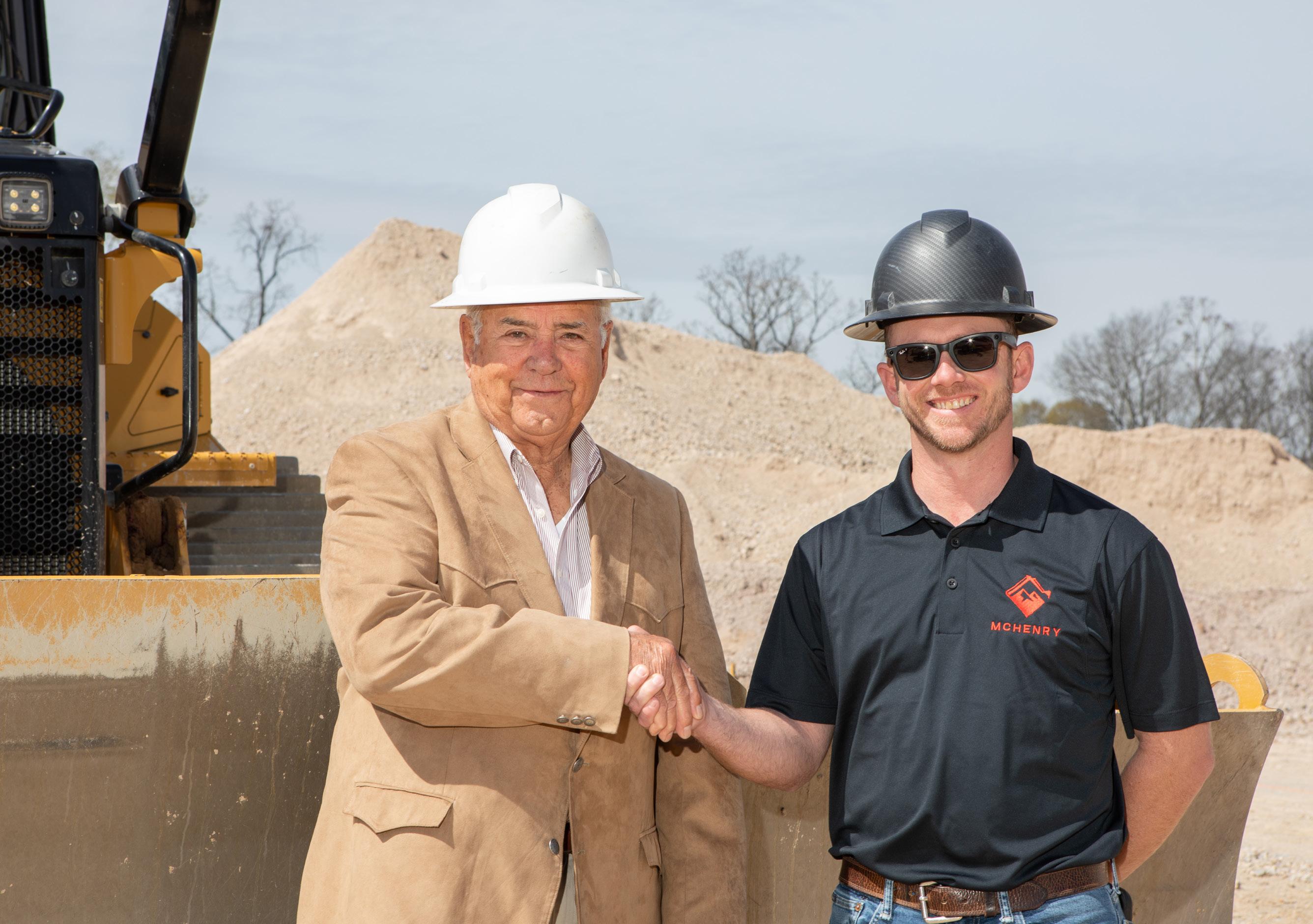
“It does us a lot of pride to have a young man or woman that could work anywhere,” Burch said. “There are so many dirt contractors across the state of Arkansas, and they choose to come to James A., McHenry or NOEC Construction. They want to join a successful team, know that they will be taken care of and that we will promote from within — young men and women wanting a success story that they can be proud of.”
Looking to the years ahead, Chris’s goal for his own legacy is to keep building a family company trusted by clients and employees alike where people are held accountable and keep their word. It is that core set of values that will remain even as the industry evolves and the faces at the helm change.
“Just build off of what we’re doing right now, keep the momentum going, try to get some younger guys in here and get them excited about what we’re doing and how we can build this thing a little bit bigger,” Chris said.
Sponsored Content
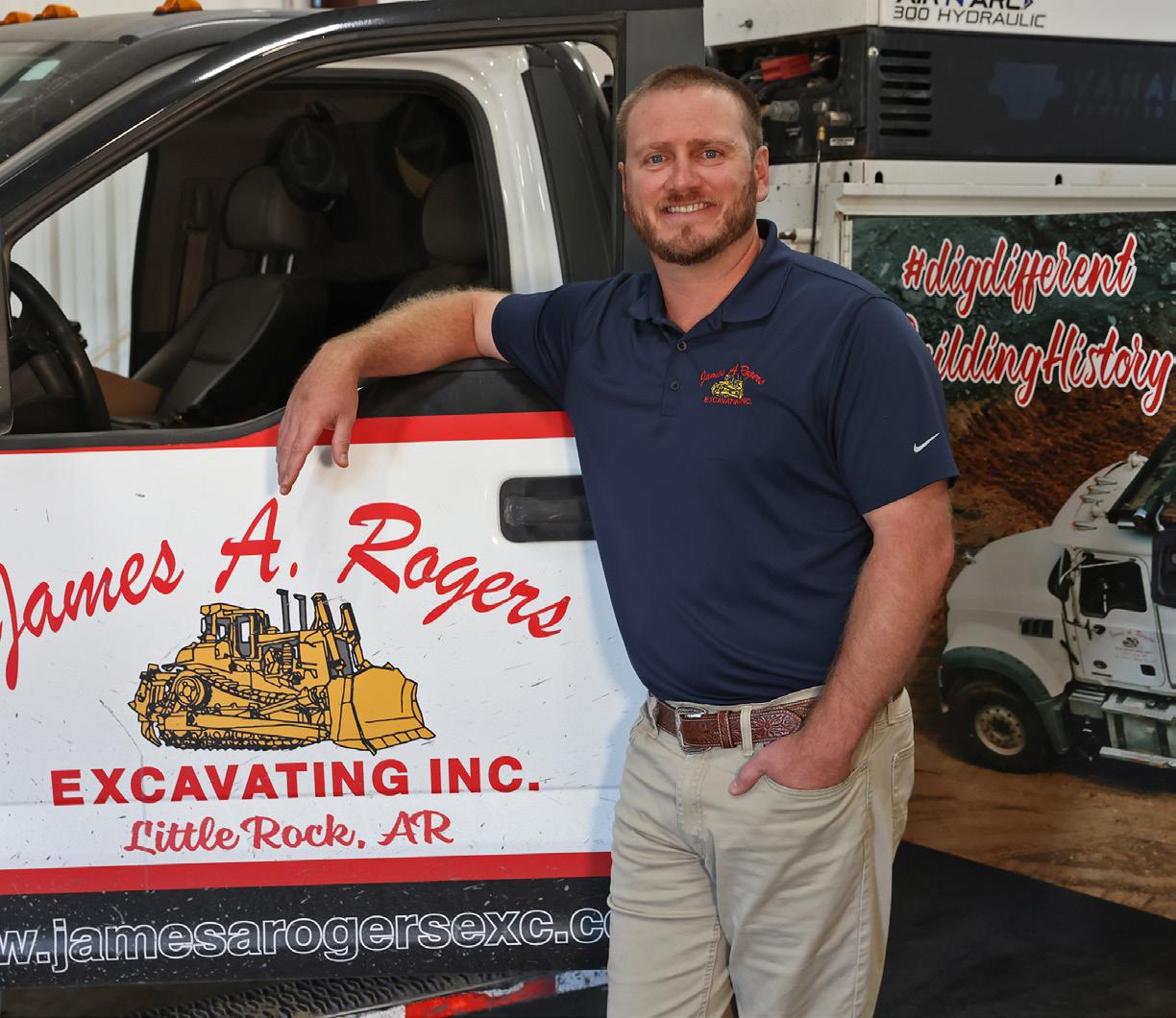
Bradley Meyer
James A. Rogers Sr., left, and Chris Meyer
Arkansas Graphics
Printing, Little Rock
Arkansas Land Co.
Land Brokerage, North Little Rock

Bachoco USA
Poultry, Fort Smith
Founded in the 1930s as OK Foods, Bachoco USA grew from a livestock and poultry feed manufacturer into a fully integrated poultry producer. Since being acquired by Bachoco in 2011, it has continued supplying high-quality chicken products to retail and foodservice customers across the U.S. while continuing its commitment to food safety, quality and continuous improvement.
Bell & Co.
Accounting Firm, North Little Rock
Blackmon Auctions
Auctioneer, Little Rock
Blakeman’s Fine Jewelry
Jewelry, Rogers

Bray Sheet Metal
Sheet Metal, Little Rock
William Bray started his namesake business in 1924 behind his Little Rock home. As the business grew, he purchased the property at 1508 Scott St., where the business remains today. His sons, Carson and Warren Bray, continued to expand the company, turning the backyard sheet metal shop into a large-scale operation. Now run by third-generation owner Mary Bray Kelley and her son Woody Simmons, Bray Sheet Metal continues to serve the paper mill and roofing industries, in addition to manufacturing chairs, tables, chimney caps, flags, countertops and more.

C&C Tree Service
Tree Service, Little Rock
C&C Tree Services of Arkansas in Little Rock is a family-owned and -operated
tree service business that has served homeowners around central Arkansas for 45 years. Much more than just removing unwanted limbs and trees — which they do efficiently and affordably — father-and-son duo Chuck and Chase Shamlin specialize in providing a variety of top-notch services for outdoor spaces.
Capitol
Glass
Auto Glass, Little Rock
Established in 1950, Capitol Glass Co. is the oldest locally owned and operated glass company in the Little Rock area. For more than seven decades, the company has maintained the reputation of quality and safety earned by longtime owner and co-founder Jack Grimes. The company is now owned by Grimes’ son, Glenn, while his grandson, Aaron, runs the day-to-day operations.
First Arkansas Bank & Trust Banking, Jacksonville Flake & Co.
Commercial Real Estate, Little Rock Flake & Co. is a woman-owned commercial real estate firm with roots dating to 1932, bringing generations of experience, integrity and insight. The company invests alongside its partners, treating others’ capital with the same discipline, care and pride as its own.
Fort Thompson Sporting Goods
Sporting Goods, Sherwood

Freyaldenhoven
Heating and Cooling
Crafton Tull
Planning/Design/Surveying, Rogers
Crafton Tull is a 100-percent employeeowned professional engineering, planning, design and surveying firm focused on improving communities. Bob Crafton and Lem Tull founded the company in Rogers in 1963. Bob’s son, Matt Crafton, is president and CEO. Lem’s son, Jim Tull, is chief strategy officer. Today, the firm has more than 300 employees and operates from offices throughout Arkansas, Oklahoma and Texas.
Crews & Associates Banking, Little Rock
Dillard’s Department Store, Little Rock
Doe’s Eat Place Restaurant, Little Rock
Don’s Supply
Restaurant Supply, Little Rock
Edwards Food Giant Grocery, Marianna
Ferstl Valuation Services
Real Estate Appraisal, Little Rock
HVAC, Conway Freyaldenhoven Heating and Cooling in Conway was founded by brothers Bob and Buck Freyaldenhoven in 1970. Led by second-generation owners Scott and John Freyaldenhoven since 1999, the company has expanded its capabilities and become the largest heating and air conditioning operation in Faulkner County.
Fuller and Son Hardware & Lumber Hardware, Little Rock

Garrett Excavating
Construction Services, Benton Established by Irvin Garrett in 1950, Garrett Excavating has seen much innovation over three generations of leadership while remaining committed to hard work and quality results. Led by CEO Grant Garrett, Company President Sean O’Keane and Chief Operating Officer
Ricky Lattin, the company has locations in Benton and Bentonville and can assist with a wide range of excavation needs.
Generations Bank Banking, Fayetteville
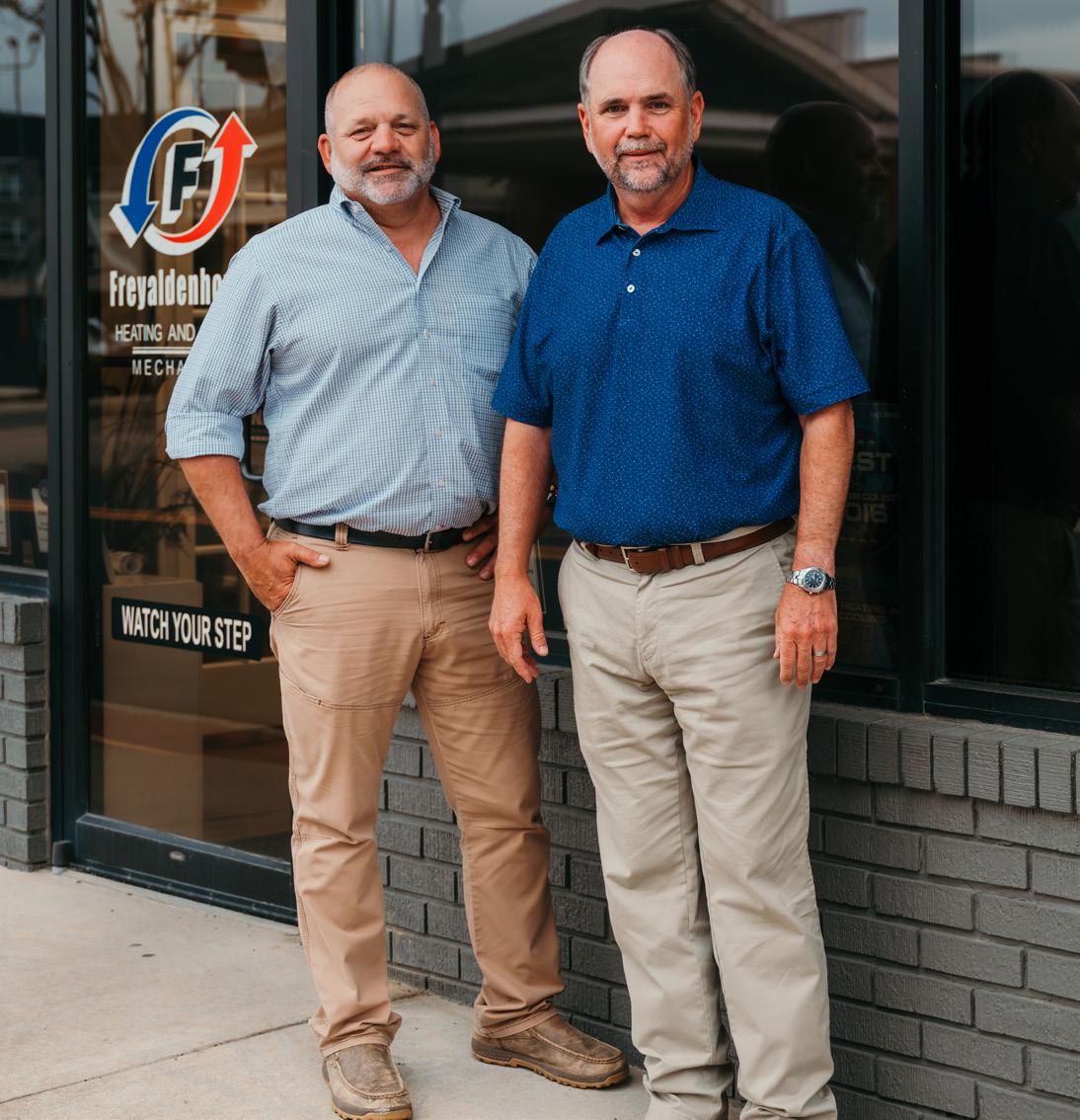

AMP Generational Businesses:
Freyaldenhoven Heating and Cooling
Few heating and air conditioning outfits in central Arkansas — or, really, anywhere — have such a longstanding reputation for excellence as Freyaldenhoven Heating and Cooling in Conway. Just shy of six decades in business have established Freyaldenhoven as a leading name in HVAC products and services, and the addition of a mechanical division in 2006 only bolstered the company’s position as a go-to for scores of clients.
Freyaldenhoven Heating and Cooling got its start in 1970, when brothers Bob and Buck Freyaldenhoven joined forces to fix air conditioners for their friends and family. The company opened the doors to its current location on Front Street in 1989. Growing their family business from the ground up, Bob and Buck retired in 1999, leaving sons Scott and John to follow in their fathers’ footsteps and continue building the company into one of the largest HVAC operations in Faulkner County. Today, Scott’s son, Clay, and John’s son, Drew, are also part of the business, positioning the next generation to carry forward the legacy their grandparents began.
Even in the face of industry evolution and changing times, Freyaldenhoven Heating and Cooling has remained steadfastly committed to its core values —
We put our customers first.
Every aspect of our business reflects our values and has a focus on the people we work for. There are four key values that we hold on to and strive to include in every customer interaction. They are:
Fair Prices
with no hidden fees
Focus on Quality and lasting repairs
Highly-Trained and knowledgeable service technicians
Professional Business Practices with respect and honesty

treating people fairly and providing unparalleled HVAC products and services to residential and light commercial owners in Conway and the surrounding communities. The company’s dedication to being a one-stop shop extends to all a client’s HVAC needs, including after-hours emergency service.
Freyaldenhoven is also a Trane Comfort Specialist — an honor that does not come lightly and must be earned every year — and is one of the largest Trane dealers in the state of Arkansas. The Freyaldenhoven showroom has the latest Trane systems, including air purifiers and other indoor air quality systems so customers can see and hear the difference for themselves.
Today, Freyaldenhoven Heating and Cooling is proud to be the company of choice not only for residents throughout Faulkner County but for many contractors of new commercial buildings, as well. The Freyaldenhoven custom sheet metal shop allows the team to provide fast, custom ductwork service by building fittings and other sheet metal products in-house. A robust warranty system further testifies to the company’s confidence in its work — Freyaldenhoven offers a 100-percent satisfaction guarantee on new Trane systems and a lifetime warranty on installed duct systems. Through decades and generations, Freyaldenhoven Heating and Cooling continues to set the standard for the central Arkansas HVAC industry.
We service all makes and models
Scott and John Freyaldenhoven
(Photo provided by Trane)

James A. Rogers Excavating
Construction Services, Little Rock
Founded in 1962, James A. Rogers Excavating in Little Rock has grown into a respected name in Arkansas construction. Under the tenure of third-generation owner Chris Meyer, who purchased the company from his grandfather in 2016, the business has expanded around the state, acquiring Hot Springs quarry operation McHenry Companies, now McHenry & Meyer Companies, LLC, and utilities infrastructure company NOEC Construction.
technology and an emphasis on safety and superior craftsmanship to complete iconic steel-fabrication, construction, energy, industrial, commercial and public projects. The companies include Lexicon, Prospect Steel, Custom Metals, Steel Fabricators of Monroe, Heritage Links, Universal, Lexicon Energy Services, Lexicon Industrial Constructors, Lexicon Construction Management and Lexicon Industrial Maintenance.
Mountain Harbor Resort & Spa Resort, Mt. Ida
Myers Supply
Janitorial Equipment, Hot Springs
Oaklawn Hot Springs
Racing Casino Resort, Hot Springs
Louis Cella represents the fourth generation of the family behind Oaklawn Hot Springs, the world’s premier thoroughbred racetrack and casino resort. His great-grandfather and great-uncle brought racing to Arkansas in 1904, while his grandfather sought to establish a racetrack that could compete in Spa City’s heyday. Cella himself has overseen a $100 million expansion of Oaklawn that represents one of the largest hospitality investments in state history.
Parrish Delivery Services
Mail/Courier, Little Rock
EG G- CELLENC E
Keith Smith Co.
Broiler Hatching Eggs, Hot Springs
Founded in 1944, Keith Smith Co. is the nation’s largest independent producer of broiler hatching eggs and day-old chicks. With more than 80 years of continuous operation, the company combines deep industry expertise with a strong commitment to innovation and customer service. Guided by third-generation family leadership, Keith Smith Co. takes pride in delivering dependable service, expert support and consistent quality across every aspect of its business.
Lexicon Construction, Little Rock
The late Tom Schueck founded what became Lexicon in his Little Rock garage in 1968 with $200 in the bank and a pregnant wife at home. Thanks to his family’s dedication to building America, Lexicon has grown into one of the nation’s leading fabrication and construction companies and has more than 2,000 employees. On March 3, 2020, Schueck died at age 78. He was chairman of Lexicon.
Today, under the guidance of CEO Patrick Schueck, the Lexicon family of companies combines a commitment to excellence with cutting-edge robotic
Nabholz Construction Corp.
Construction, Conway
Nabholz Construction Corp., started in 1949 as a small, family-owned construction company, has grown into a large, multidiscipline, employee- and family-owned firm still focused on one thing — integrity. The Nabholz name has been synonymous with integrity since R.D. “Bob” Nabholz founded the business more than 75 years ago, and integrity remains the firm’s guiding principle and the foundation of every project the company touches.

Network Services Group
Computer Support and Services, North Little Rock
Network Services Group got its start in 1989 as an outgrowth of a telecommunications consulting firm. From the start, NSG has been committed to delivering quality products and service — a focus that has not changed over more than three decades, even as the technology and systems they work with have evolved at a rapid clip.
Ryan Flynn was named president of Network Services Group in 2013, after 15 years with the company. Over the 12 years since, NSG has grown from 11 employees and a single location in North Little Rock to more than 75 employees and three locations in Arkansas.
Petit Jean Meats
Food Processor, Morrilton
Pettus Workplace Solutions
Office Supplies, Little Rock
R&E Supply
HVACR Supply, Little Rock
Roller Funeral Homes
Funeral Home, Little Rock
Russell Chevrolet & Honda
Automotive, North Little Rock
S-C Seasoning Co.
Culinary, Harrison
Simmons Foods
Manufacturing, Siloam Springs
Sissy’s Log Cabin
Jewelry, Pine Bluff
Smith Family Funeral Homes
Funeral Home, North Little Rock

Southern Interiors
Flooring/Kitchen & Bath, Sherwood Brian Hagewood founded Southern Interiors in Sherwood in 1999 at just 27 years of age. The company has since become a go-to destination for all things home improvement. As part of Flooring America, the store has access to a wide range of resources while retaining the benefits of





Glocal Citizenship: Building Strong Communities
TGenerational Business
he early years of the 21st century reshaped education. As technology accelerated and the world became more interconnected, schools increasingly emphasized “global citizenship.” Organizations such as the U.S. Department of Education, the National Association of Independent Schools and UNESCO encouraged educators to prepare students for an increasingly complex and interdependent future. In 2010, NAIS formalized that effort through its Principles of Good Practice for Educating Global Citizenship.
As a former Marine officer who deployed to Iraq and studied political science at the United States Naval Academy, I understand the importance of global awareness. But I have long questioned whether we have clearly defined what it means to be a “global citizen,” or whether, for many students, it is more aspirational than actionable.
What is not abstract is the community just beyond a school’s gates.
At Episcopal Collegiate School in Little Rock, we believe citizenship begins locally. When students engage with organizations such as Rotary International, Vine & Village at the Mosaic Church of Central Arkansas, and Providence Park, they move beyond theory. They do not simply study issues such as food insecurity; students encounter them directly, wrestle with their complexities and contribute to solutions. In doing so, they develop empathy, responsibility and a keener understanding of the world around them.
These experiences are not isolated moments. They are woven into the fabric of the school. Through our four-year entrepreneurial studies sequence, students collaborate with local organizations to address real challenges. They apply classroom learning in real contexts and see the tangible impact of their work. Our arts distinction program extends this approach into the region’s creative economy, offering internships, leadership roles and collaboration with the local arts community. Similarly, our externship program places students in professional environments across Little Rock where they gain mentorship, perspective and a clearer sense of workplace expectations.
Global awareness still matters, but it is most powerful when it grows from lived experience. Students who understand and invest in their own communities are better prepared to lead, serve and contribute beyond them. That is the promise of “glocal” citizenship: grounded in local engagement, informed by global perspective and lived with purpose.

GLOCAL
Jamie Griffin is the Head of School at Episcopal Collegiate and holds a Doctorate of Education from Vanderbilt University. episcopalcollegiate.org 501.372.1194 Episcopal Collegiate School
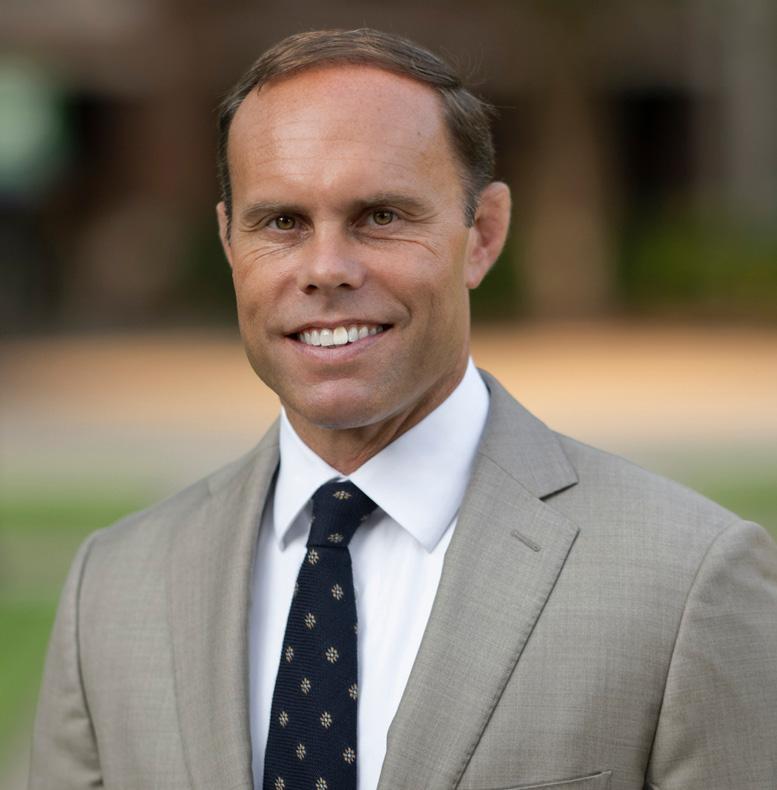
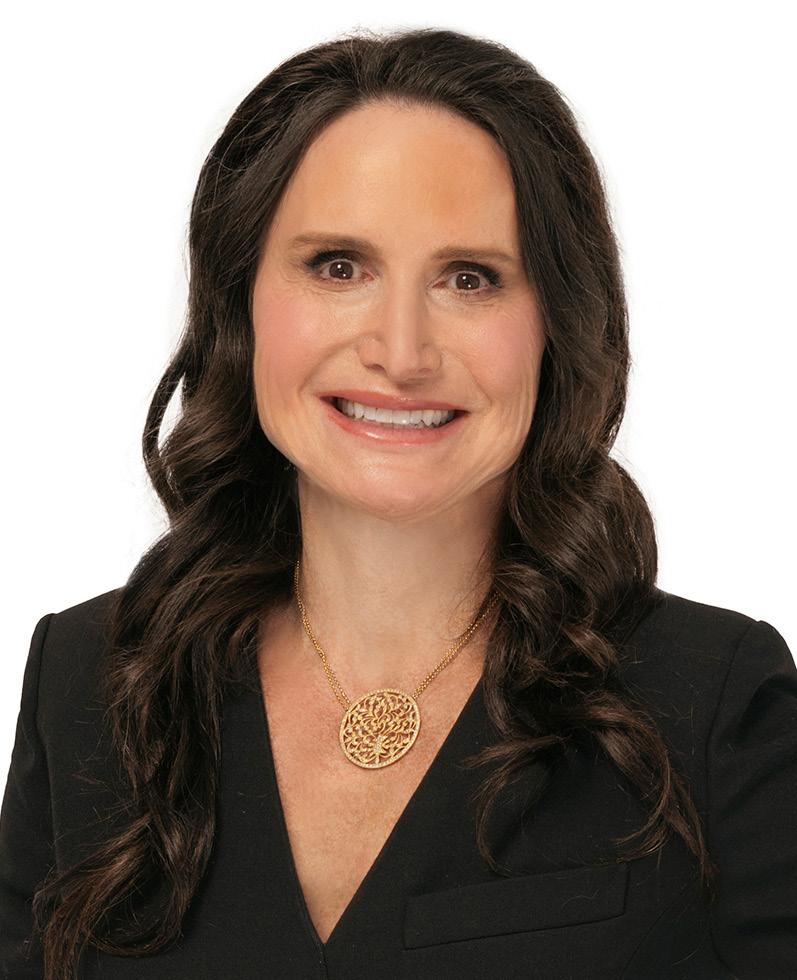



Bray Sheet Metal is a family-owned, 4th generation business located on Scott Street in downtown Little Rock. Founded in 1924, the company is in the care of the original owner’s granddaughter, Mary Bray Kelley, who oversees the operation, as well as her son Woody Simmons, who serves in the role of VP and Manager of the company’s Roofing Division. Today, Bray Sheet Metal serves Central Arkansas with a little bit of everything metal: custom welds, metal repair, original metal stairs, handrails, chimney caps, countertops...if it's metal, we'll work on it!

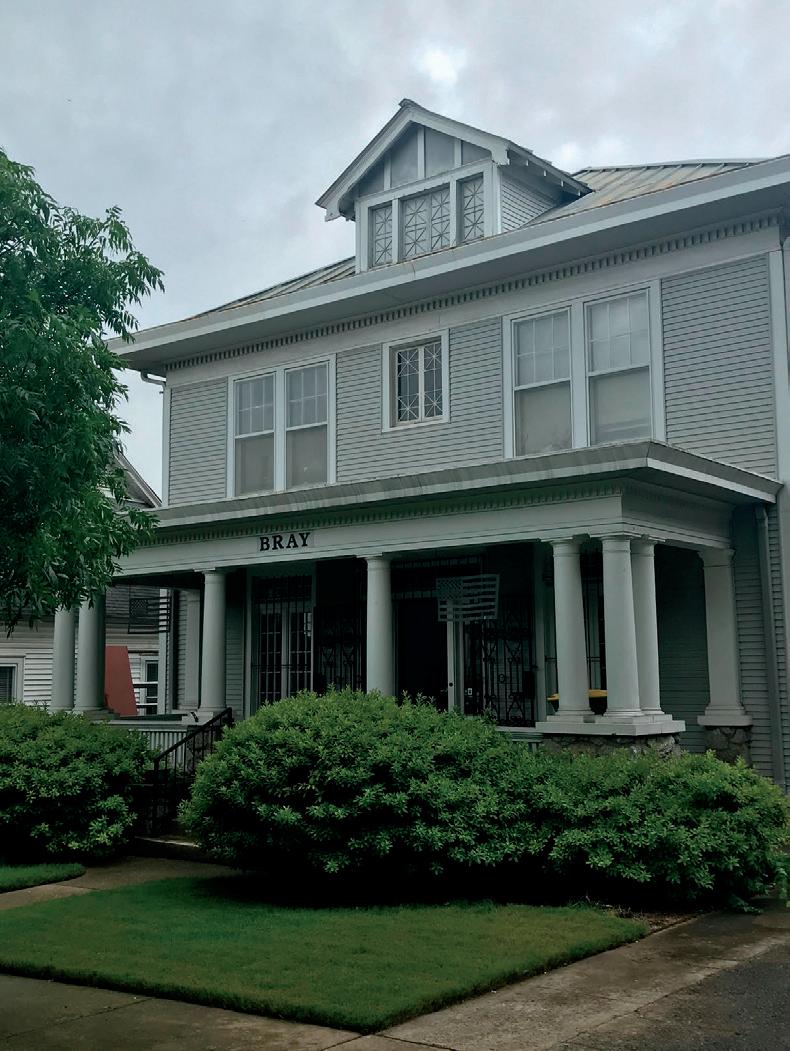
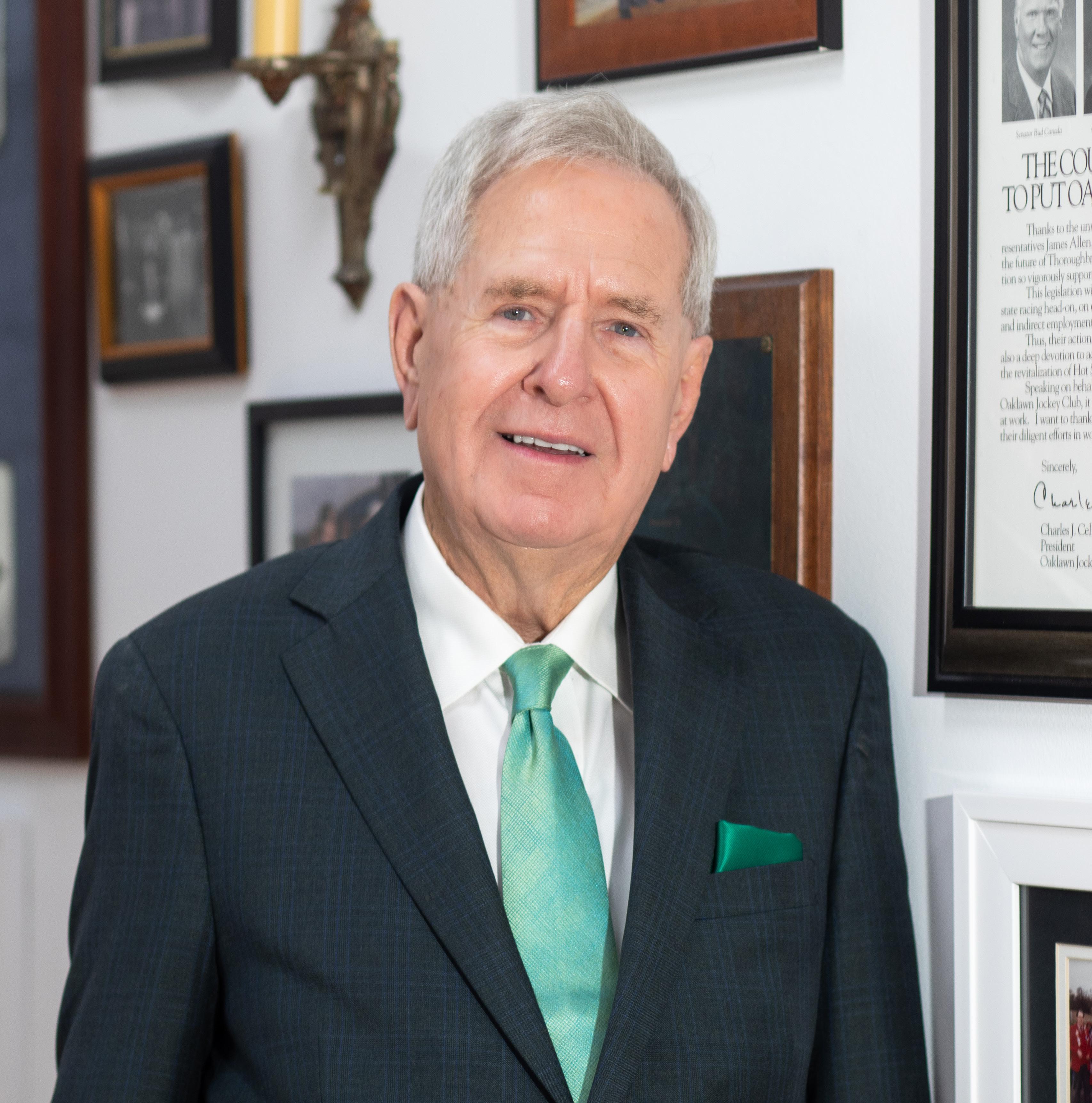
THE ENTERTAINER ARKANSAS VISIONARY
In music or politics, there was never too big a stage for Ted Mullenix
By Dwain Hebda / Photos by Jane Colclasure
HEADER
The places that produce us are the places that shape us, and for Ted Mullenix, that place is Arkansas — Oden, Arkansas, specifically. The community is so small there is hardly room for a pin on a map, but it is also the place that gifted him the small-town values that never left him.
“I wouldn’t trade where I grew up for anything,” said Mullenix, co-founder and president and CEO of Little Rock lobbying firm Mullenix & Associates. “I remember I used to walk down to the edge of town, and the population sign said 99. Somehow, as a young boy, I thought that was going to change one day, but the sign stayed that way forever and ever.”
That the sign remained frozen in time is emblematic of the enduring value of places like Oden, where times come and go more slowly, and change is often held to a standstill. Family and community are sacrosanct there as one generation pours into the next with the expectation that ritual would be repeated.
The Mullenix general store, therefore, was more than merely a place to buy crackers and coffee both for the family that ran it and the local assemblage that adopted it as an important center of community life.
“The atmosphere inside that store, I think, shaped a lot of my personality,” he said. “People would come to town back then on Saturday and buy their groceries. They’d come in out of the woods and from back up in the hills and come to town and do their shopping. My mother was a real people person, and if I have any kind of personality to meet people, it came from my mom. I was in that environment and got to know so many people. The values of that town and the people in it, I think, shaped my life forever.”
those things in three weeks or something like that.”
In addition to his work ethic, Mullenix’s parents also instilled in their youngest a love of and aptitude for music, though not quite to the degree that Ted’s father would have preferred.
“My mom was a great singer, and my dad could read music,” he said. “Two things I regret that I didn’t listen to him about was learning how to read music and, second, not taking piano lessons like he wanted me to.
“I had some friends who were in the same class I was, and their dad was a great, great musician. I used to go and visit him, and we’d end up playing music. He taught me how to play guitar and that kind of thing. I still can’t read music, but I’ve used what they call in Nashville the number system. Half the musicians in Nashville or two-thirds of them can’t read music, but they do a number system that lets you do the different chords.”
Music would begin to play a more fundamental role in Mullenix’s life when, at 17, he and his new bride moved to Hot Springs. There, he lived the life of a gigging musician, playing local bars and clubs while holding assorted day jobs.
TED MULLENIX ON DEDICATION
“I’ve always been a hard worker, whether it was traveling on the road, selling different things, or performing. I remember I got a job at Wonder Bread, which is one of the earlier jobs that I really made any money at, driving a Wonder Bread truck. I had a long route, and I remember many, many times, I’d play music till 3 o’clock in the morning, change into my uniform, go down and load the bread truck up. Music’s been a big part of my life. I love it, but I always had to do what it took to make a living. For me, that meant working hard. I think that’s a must if you’re going to be successful.”
Time is not the only thing accepted as inevitable in places like Oden; so are the facts, frailties and sometimes unfairness of life of the kind that deprives an 11-yearold boy of his beloved mother to cancer. True to form, family stepped in, including his grandmother and aunts, but it fell to father and son to navigate a new normal in life.
“My dad was a strong person, and we just both came to the realization that it was going to be he and I, and we would make it just fine,” he said. “We closed that grocery store, and my dad built a broiler house. We were one of the first in Montgomery County to ever put 500 chickens inside a house.
“He never stressed for me to do anything specific [for a career], really, except work hard if we were working in the chicken house or whatever. As a matter of fact, he had two chicken houses later on, and he took care of one, and I had to take care of mine, and he wanted my chickens to be as big as his.
“Back then, you really had to worry about how much chicken feed you used or wasted or whatever. It took us about eight weeks to raise a 3-pound broiler, maybe 3 1/2. Now they grow
Driving a gravel and sand truck, selling insurance, parking cars at the bygone Vapors nightclub, and selling radio advertising would eventually all crowd for space on his list of onetime occupations.
“I was working wherever I could get a job,” he said. “I went to work at the shoe plant in Hot Springs, and God bless people who make shoes, but it wasn’t for me. I had my application in at a milk company and anywhere else where I could be outside and do my own thing.
“One day, the boss said, ‘You got a phone call,’ and it was place called Carter’s Dairy in Hot Springs. Mr. Carter said, ‘Hey, we got your application in, and we’d like you to drive a milk truck. When could you start?’ That ended my shoe career.”
Splitting time between the dairy and the honky-tonks was about as different as the night and day shifts they occupied. Long known for its roguish nature, the city was still plenty rough around the edges as the young musician started playing around town. He learned to take whatever the gigs gave him in stride.
“First time I started knocking doors to play music in Hot Springs, you’d go into the club — I’ll use the American Legion Club as an example — and the walls were lined with slot machines. It was wide-open gambling when I first started playing,” he said.
“I played dozens of places, and honestly, people would get into fights, you know? A lot of fights broke out. Actually, it wasn’t that bad; people might have one too many drinks and get into a scrap over something. That was the way life was back then.”
Whatever Mullenix saw from the stage was child’s play compared to the next big venture in his career. In 1982, for reasons he cannot quite explain and under circumstances he cannot quite justify, he was elected to the Arkansas legislature in what has to rank among the state’s unlikeliest political victories.
ARKANSAS VISIONARY


“My family, none of them ever had anything to do with [politics]. My dad was as far from politics as anybody ever was. I mean, I think he voted, but I’m not really sure,” Mullenix said. “The closest thing I ever saw in politics growing up was my school superintendent, who served in the legislature for 46 years. Maybe that was what did it; I’d see him come home from the legislature, and he’d come down to our store, and he had the legislator plates on and all that. He probably had some influence on me. He also had the biggest shock of his life when I got elected because of the kind of student I was in school.
TED MULLENIX ON RESILIENCE
“Quick story: I had to file in two counties, so I filed in Garland County and went to Saline County to file,” he said. “I sat down and said, ‘I’m going to run for state representative, and Saline County’s going to be a part of my district,’ so he gave me the papers and all this, and I said, ‘Well, have you got the Republican paperwork?’
“People can accomplish almost anything if they set their head to it. I think people look at someone running for office, and they think you’ve got to be somebody special to do that when what you really have to do is want it badly enough. If you’d have told me as a kid I would be a state representative, no, the idea of that scared me. I’ve learned everyone is special in some way, and everyone faces obstacles. The secret is to not let one obstacle stop you, you know? Pick yourself up and take off.”
“I don’t know, really, how it happened. I used to drive by the state Capitol all the time, and one day I realized I’d never been in the Capitol building, so I just went in, and I sat in the gallery, and I watched. One day, as I got back in my car, I thought, ‘You know, I can do that.’”
Not only did Mullenix know nothing about serving in public office, he had thrown his hat in against a 12-year Democrat incumbent in then-Gov. Bill Clinton’s Arkansas on the Republican ticket during an era when the Natural State ran bluer than Lake Hamilton.
“He said, ‘What?’ I said, ‘Have you got any Republican papers?’ He said, ‘I don’t know how to do that. We’re going to have to find a Republican for you to talk to,’ and that was Doyle Webb, who was later a senator himself and chairman of the party. He came down and got me filed.”
Not knowing what else to do, Mullenix started knocking on doors, a practice candidates had largely abandoned by the 1980s in favor of advertising, yard signs and volunteers making phone calls. Green though he was at campaigning, Mullenix innately understood the value of personal connection. His years in front of audiences and in sales had wrung out all fear of engaging strangers, so it did not faze him to hit the street and meet people in person.
“I enjoyed it,” he said. “It was harder running as a Republican, I’ll assure you of that, but I just told them what I
TED MULLINEX ON STANDING IN THE MINORITY
“Getting elected as a Republican in Arkansas today isn’t as hard as it once was because they’re in such a large majority. When I was in the legislature, that wasn’t the case, and I often found myself the lone voice on one side or the other of an issue. Those experiences taught me how important it is to have the courage and respect for yourself to be honest about what you’re doing and continue working in a forthright fashion. I never have been shy, and I’ve never had a problem meeting people and appreciating them, which also helped.”
wanted to do when I got [to the legislature]. I talked about roads, of course. I talked about needing a bypass around Hot Springs. I told them I wanted to be the people’s voice. I think a lot of people appreciated that personal connection.”
History shows he was right; Mullenix became the first Republican elected from Garland County since Reconstruction, a win that began 16 years in elected office. During that time, he would serve as minority leader and was appointed chairman of the State Parks Subcommittee. During his tenure in office, he also became known as a fierce advocate for the state’s tourism industry.
“Tourism was one of the things that I was very, very interested in, being from Hot Springs. I started talking about tourism as an industry just like agriculture is an industry,” he said. “I helped write and pass the 2-percent tourism initiative under Gov. [Mike] Huckabee. I see that as a real accomplishment.”
Mullenix’s passion for tourism as economic development came honestly. The same year he started in the legislature, he took the boldest step of his professional life, opening a 700-seat live performance theater in Hot Springs. Music Mountain Jamboree offered entertainment to audiences hailing from all over the United States. The venue earned Mullenix a living without being on the road, as with previous jobs, while also filling his time when the legislature was out of session and feeding his love of performing.
“I love music, and I love Branson and the kind of shows that they have,” he said. “I began to think about opening the theater, and I went and found a building. I went to the bank, and they had a little faith in me. Thank goodness I was a state representative because I think if I wasn’t and I’d given them my idea, they would’ve booted me out.”
Money in hand, Mullenix set about refurbishing the building for a show theater, the first of its kind in Spa City. Like all new entrepreneurs, he wore many hats and learned many lessons getting the place open and keeping it operating, even stretching himself into a new form of entertainment for the first time.
“We converted that old building into the theater, and as I was about to open the show, I came to the conclusion that
if you’re going to be a family-oriented show and somewhat like Branson, you’ve got to have a comedian,” he said. “Branson had these good comedians, but when I went up there, I found out I couldn’t afford them. I went to see my banker again, and we were talking, and I said, ‘I don’t know what I’m going to do about a comedian.’ The banker looked at me and said, ‘Ted, you better learn how to be funny.’
“I went home and figured out my character, Homestead, blacked a couple of my teeth out and put my hat on and became a comedian for the show. To this day, I’ll walk down the aisle of the state Capitol and somebody will holler, ‘Hey, Homestead!’ I never ever dreamed of doing the comedy in my show, but it was one of the biggest blessings in my life.”
The theater operated for nearly 25 years, long enough for Mullenix to be joined by several family members on stage and earn him the 2026 Arkansas Honors Arkansas award from the Arkansas Country Music Awards. Today, he puts all of his life skills to work representing clients through his lobbying firm, Mullenix & Associates, where a sense of humor, communication, connections and his long-held work ethic are indispensable tools in his toolbox.
Along with his team, which includes Julie Mullenix, his wife and company-co-founder, he has scored major wins in economic development and job-creation projects for companies such as Big River Steel, Hybar and Zekelman Industries in Osceola and Highland Pellets in Pine Bluff. He has also grown Arkansas’ tourism industry through representation of Arlington Resort Hotel & Spa, Oaklawn Hot Springs, and many others.
“We’re very diverse in the clients that we have now, but we started with one client and worked our way up from that,” he said. “I think they saw our work ethic and said, ‘Hey, these folks are going to be there, and they’re going to work hard to represent us.’ I’ve told every client, always, we’re going to be at the state Capitol for you. If there’s a meeting going on, we’re going to have somebody over there. We’re going to be monitoring and watching so you can run your company. That’s worked out to be a good policy for us.”
TED MULLENIX ON QUALITIES OF LEADERSHIP
“I think what’s most important to a leader is their work ethic and their personality of treating everybody with respect. I don’t care what kind of job you have; you have to learn to appreciate everybody. I don’t care if someone’s coming out here doing some work, dirt work on my property, doing whatever you’re doing. I try to show appreciation for them and respect for them. I think sometimes people don’t give enough respect to people who do certain kinds of work or are in certain kinds of service professions, but I think great leaders do.”
LEADING WITH VISION. DRIVING

TED MULLENIX PRESIDENT & CEO


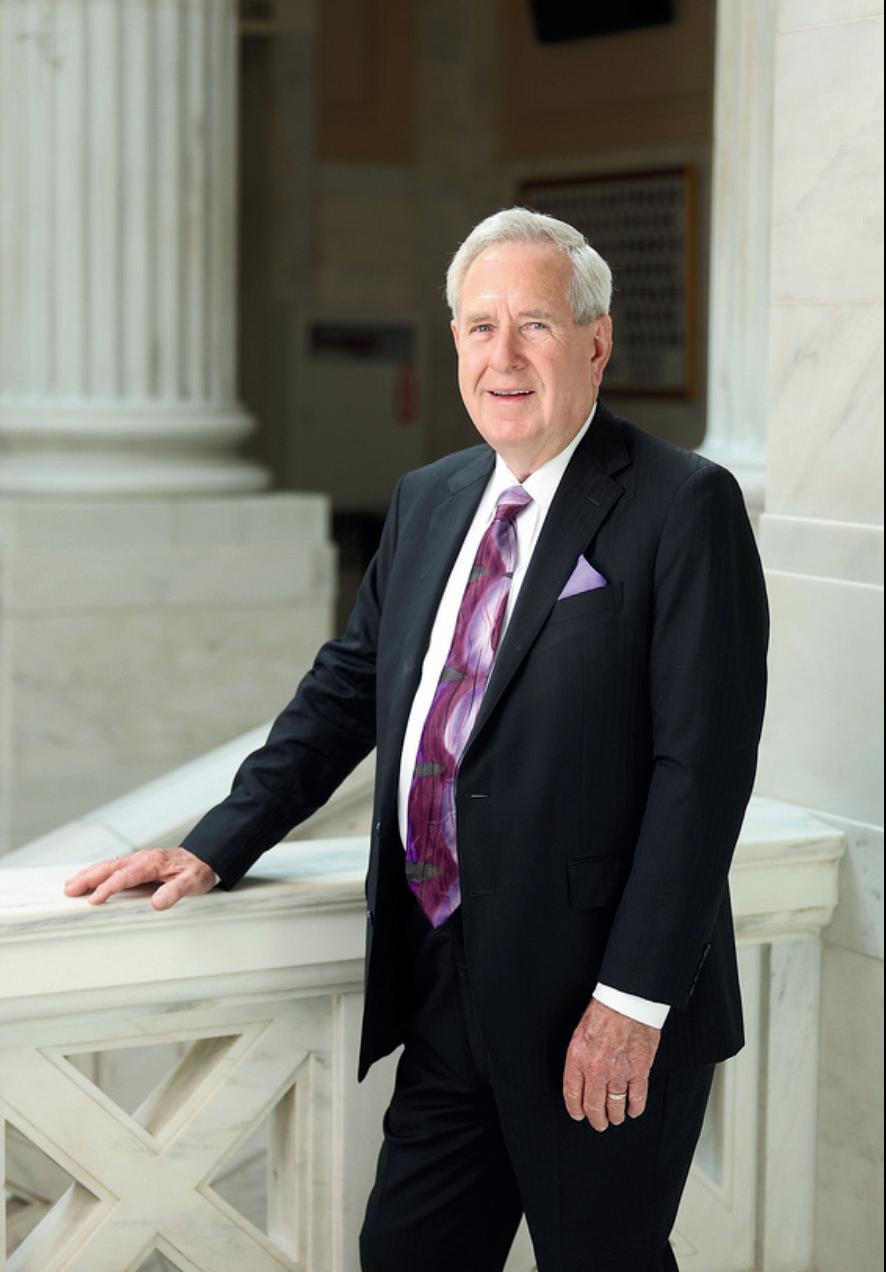
DYNAMIC DUOS


Arkansas is full of dynamic duos, those couples, siblings and partners who have made lasting impacts on their communities. They come in all forms, from local business leaders to Arkansans making waves on a global stage. Here at Arkansas Money & Politics, we want to recognize them.
In this special sales section, Arkansas Money & Politics is proud to recognize these outstanding duos, spotlighting their work and achievement. Through their efforts, our state maintains its high standards of opportunity and quality of life.

Katherine Blackmon Carroll & Sara K. Lingo

Founding Attorney (Katherine), Senior Associate Attorney (Sara) Law Offices of Katherine Blackmon
In family law, success is not measured solely by legal outcomes — it is measured by how clients are guided through some of the most difficult and defining moments of their lives. At the Law Offices of Katherine Blackmon in Little Rock, that guidance is rooted in both unwavering support, formidable advocacy and a strong team mentality. At the center of that approach is the dynamic partnership between Katherine Blackmon Carroll, founding attorney, and Sara K. Lingo, senior associate attorney. Together, they represent a rare combination of experience, alignment and shared purpose — one that elevates both the quality of representation and the client experience.

How did you two start working together?
Katherine: I was looking for an attorney who would truly appreciate the level of work required at this firm – the attention to detail, the preparation and the commitment to doing things the right way. It is incredibly difficult to find someone who brings intelligence, compassion, empathy and a strong work ethic while also being willing to be a team player and operate above and beyond what is expected of the average attorney. Sara is exactly that, and I knew very quickly that I wanted her on my team.
How do your work styles complement each other?
Katherine: We both have a very clear understanding of how we approach our work, and in many ways, that approach is strikingly similar. There is a shared expectation of preparation, responsiveness and professionalism. Sara has a very calming energy that inspires confidence not only in our clients, but in me. As an employer, that is a fabulous feeling. I am a bit more dramatic at times, so Sara gives a nice balance to our relationship. I believe that we as a team embody a dynamic approach to family law that is both strategic and deeply human.
Sara: Where we do have differences, those differences are productive. We listen to one another. We are open to different approaches, and that openness ultimately strengthens the work we do for our clients.
What lessons have you learned from working alongside one another?
Sara: I have never worked at a firm that values and respects collaboration the way we do here. It is genuinely refreshing. I have learned that constructive criticism can be offered in a way that is both direct and respectful – and how much I value that. I have also learned that working as a team and intentionally developing as a trauma-informed group doesn’t just make us better attorneys, it makes us better people. You cannot do this work without empathy.
Katherine: This work requires a level of emotional intelligence that cannot be overlooked. Collaboration allows us to grow not only in our legal skill but in how we support our clients through what they are experiencing.
What is the secret to collaboration and compromise in business?
Katherine: Respect is foundational. You have to respect each other’s perspective and be willing to truly consider it.
Sara: And not just consider it – but be willing to act on it. Being open to new ideas is important, but converting those ideas into action is what actually moves things forward.
Katherine: There is also a level of trust that comes with knowing your team has your back. Whether it is a difficult case or simply navigating the realities of life, that support matters. It allows you to show up fully for your clients.
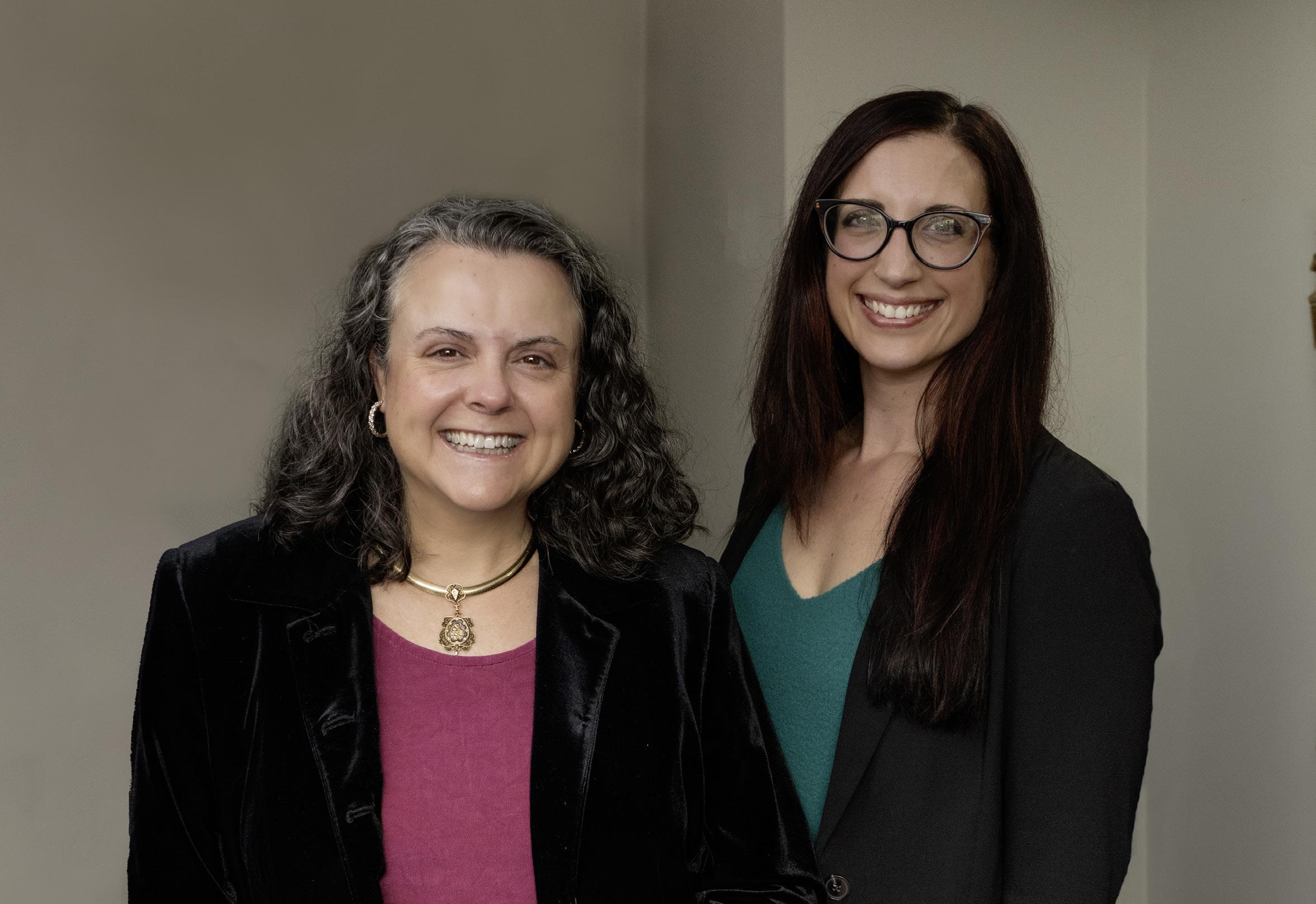
What is the best thing about working as part of a team?
Sara: Working as a team is like having a built-in idea generator. Sometimes simply saying a complex issue out loud to someone who is genuinely listening makes it feel more manageable. Then, when that person engages – asking questions, offering insight – it transforms the process. It becomes more dynamic. It often leads to solutions and perspectives that would not have surfaced otherwise.
Katherine: That collaboration creates a level of depth in our work that is difficult to achieve alone. It ensures that every case is approached from multiple angles, with thoughtful consideration and preparation. I love thinking outside of the box with my team — and Sara offers a mindful and intelligent perspective. What else should readers know?
Sara: This area of law is deeply emotional for our clients. It can be overwhelming, intense and, at times, very dark. Katherine and I have both had personal experiences navigating similar paths, and that perspective matters. It is incredibly difficult to

listen to what our clients are going through — but it also allows us to meet them with both strength and empathy.
As a team, we are uniquely equipped to provide both sound legal guidance and meaningful support. We want our clients to know they are not alone as they move through this process. Perhaps most importantly, in cases involving children, we remain focused on what is in their best interest. Family law is not about winning or losing — it is about reaching an outcome that serves the children and the family as a whole. That sometimes requires difficult conversations, but honesty and clarity are essential to getting there.
Katherine: That shared mindset is what strengthens our partnership. We are aligned not only in how we practice law but in why we do this work. Our priority is always to guide our clients toward a place where they feel steady again – where they can move forward with clarity, strength and confidence. Because both of us are grounded in trust, strengthened by collaboration and dedicated to delivering advocacy, we are able to operate as a Dynamic Duo.


Chris & Bradley Meyer
Brothers
President, CEO (Chris), Senior Estimator (Bradley)
James A. Rogers Excavating
Brothers Chris and Bradley Meyer are carrying forward the legacy of their grandfather, James A. Rogers Sr., and his eponymous excavating company. As senior estimator, Bradley oversees estimating, bidding projects, project management and providing GPS modeling capabilities to the James A. Rogers team. Chris purchased the business from the pair’s grandfather in 2016, the same year Bradley joined the company as a laborer before working his way up as an operator, superintendent and general superintendent. Chris has overseen the rapid expansion of the company’s statewide footprint and capabilities. The addition of Hot Springs quarry operation McHenry Companies — now McHenry & Meyer Companies LLC — and utilities infrastructure outfit NOEC Construction, has given the James A. Rogers brand a well-rounded suite of services to offer both residential and commercial clients.
You both grew up around the family business, but how did you get to where you are now?
Chris: I started working for our grandfather when I was 18 years old. My first day on the job in 2006 put me behind a flag, flagging traffic on Maumelle Boulevard. I was taught how to do the work out in the field, so when I first bought the company, I had no idea how to run a business. I was two months from running the family company into the ground. I buckled down and bought us more time by getting about a million dollars’ worth of small jobs, and that gave me time to change some things internally where I would never let that happen again.
Bradley: I was just getting out of the Air Force and didn’t really know what I wanted to do for the rest of my life careerwise. During a vacation, coming back home, I decided to go to work with my brother for a day and came to the conclusion that it’s something I was really interested in. I got out of the Air Force and came back home in 2016, started going to the University of Arkansas at Little Rock for construction management and started as a labor hand out in the field. I went from labor hand to an operator to a superintendent to the general superintendent position, and now I am the estimator.
Tell us more about the work you do.
Chris: We do all types of demolition, even tearing the buildings down, plus earthwork, storm drain and flat concrete work. We set up road structures as far as gravel or whether it’s a paving, concrete curb and gutter, utility services, water and sewer.
What is one thing you have both learned from your time in the excavation and construction industries?
Bradley: I’ve learned that it takes a team to be successful in this industry.
Chris: The team we have in place is the foundation of our company. The success we are reaping right now is due to their dedication and drive.
In what ways are you involved in the community?
Chris: We are involved in more than 15 nonprofits benefiting a wide range of organizations. We even wrap our dump trucks so that we can help bring awareness to them. One of them is called One More for Brent, a nonprofit named after a friend of mine that was in an elevator accident. It provides lifetime hunting and fishing licenses to kids that would never really have the opportunity to spend time out in the outdoors.

Bradley: I’m also the Arkansas state rep for Valor & Honor Outdoors. It’s a 100-percent nonprofit organization that allows veterans, active-duty service men and women, and first responders opportunities to get out in the great outdoors.
Why is it important to you both to give back?
Bradley: We’re out here every day, building up these communities, so it’s important for us to show our face out there and to let everyone know that we’re not just in this to make a dollar. We’re in this to provide goods and services to the community, to let them know that, also, during times of need, especially whether that’s storm cleanup, snow, anything like that, whatever we can do to help out, just to let them know that we’re here.
What is the most rewarding part of your work?
Bradley: I love getting up every day and coming to work. I enjoy it. It doesn’t seem like a job to me, so I’m thankful for what our grandfather did and what he’s taught us. It’s made us into the people we are today.
Chris: Every project brings new challenges and opportunities, and it’s rewarding to watch our people gain experience and confidence with each job. There’s a lot of pride in knowing you played a part in building something that will serve your own community, and that’s something that never gets old.

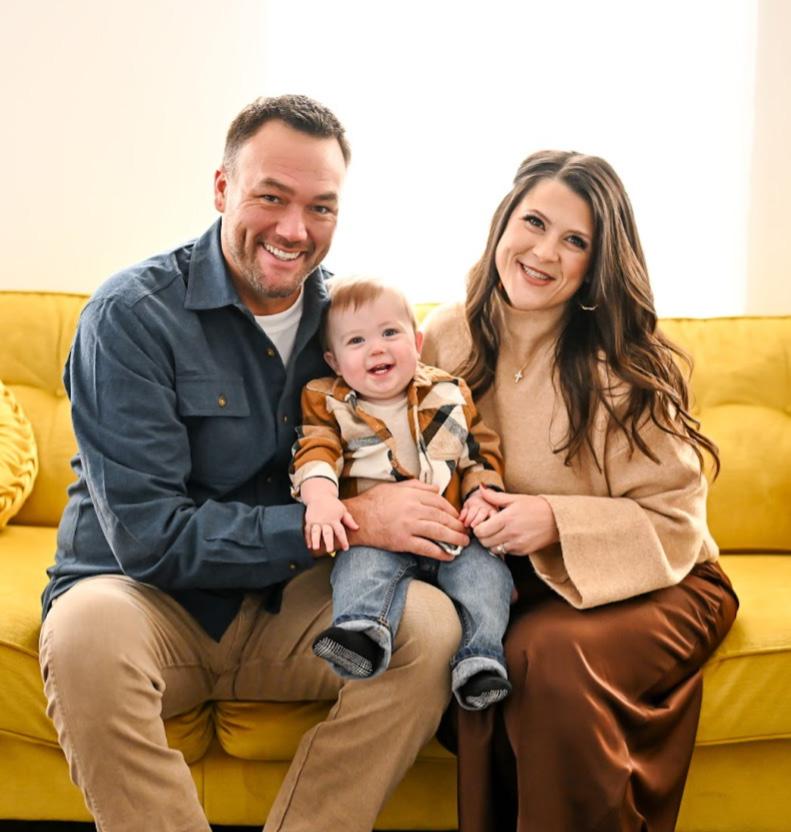
How has your approach to the company changed now that you have the next generation to look toward?
This started as an opportunity to do things my way and be in control of the processes from start to finish. There were things that I couldn’t do when I worked for other people — things I didn’t agree with but couldn’t do anything about because it was someone else’s company. Now I’m looking at this from the standpoint of building a brand that will carry myself, my son, my wife and my team far into the future.
When my son is old enough to carry a conversation and his dad or the company gets brought up, I want him to be proud of what he hears, proud to call me Dad and to know that we’re out here, making a difference in people’s lives around the state.
What lessons have you learned as an entrepreneur that you hope to pass on?
Lead with integrity. It’s not about how you handle situations when everything is going as planned; it’s about the choices you make when nothing is going as planned. Do you take the shortcut in an attempt to get back on track quicker, or do you honor those values that you preach when everything is sunshine and rainbows? You learn significantly more from your losses and the hard times than you do
Hayes Hatfield might be a bit young to retain anything just yet, but visiting job sites with his father, Jeff, has already piqued the 16-month-old’s interest in the work of Arkansas Solar Solutions. The sights and sounds of a busy crew are plenty to keep him occupied for now, but Jeff hopes to see his son become more interested in learning about the business and lending a hand as he grows up. While the company started out primarily in solar systems, it has since grown into a full-exterior operation offering roof install and repair, siding and more for residential customers. As the scope of the work has expanded, so too has Jeff’s perspective. “When I started this company it was all about me,” he said. “Now it’s all about building something that will take care of my son, my wife and my team.”

from the wins. In my experience, your peers, your partners and your team will see that you did exactly what you said you were going to do, and in those moments, a different level of respect is earned — and a different level of confidence is achieved. That’s something that no one can take away from you.
In what ways are you involved in your community outside of work?
We work six to seven days a week depending on what job we’re on, so we don’t have a lot of free time on our hands. I like to be active in sponsoring and working with boxing gyms, specifically the youth programs. Boxing has been a big part of my life and taught me many valuable lessons that apply both in the ring and in life.
What else should readers know?
My son’s middle name is Hayes, and that’s what we call him, but he’s named after my grandpa, James Frank Fisher, and my uncle, James Brent Fisher, both of whom have passed on.
Pictured with wife and mother Katie Pennington Hatfield

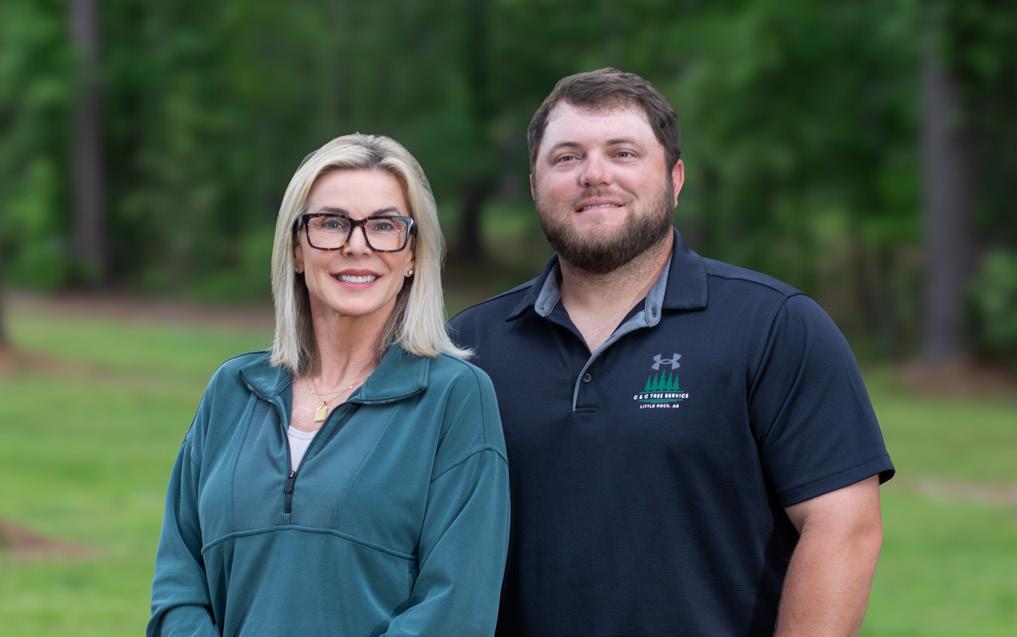
Debbie & Chase Shamlin

How do your working styles complement each other?
Debbie is the coordinator and back-office person. Chase is the backbone, literally, as he is physically on every project, working alongside our team, ensuring we leave each client’s property better than when we started. What lessons have you learned from working alongside one another?
We have learned to communicate better and more efficiently, and we know that sometimes we just need to table work and business for the day, rest and regroup for the next.

Austin Watters & Aaron Grimes
Co-owners, Capitol Glass Co.

2023. Both are proud to carry on their family’s trades and legacies while keeping Capitol Glass Co. the premier auto glass shop in central Arkansas for another generation.
How do your working styles complement each other?
It works perfectly because we each handle different aspects of the company without stepping on each other’s toes. Austin is the one with the mechanic background and technical skills. Aaron has experience in multiple types of companies and handles the office side of the business. Aaron handles the accounting, marketing, sales, human resources and public relations, while Austin keeps up with the ever-changing technical side of auto glass installation and calibration, making sure jobs get completed in a timely manner and with the highest level of craftsmanship.
Is there anything else readers should know?
That we share the same birthday, Aug. 6, just 17 years apart. We can let the readers decide which of us is older.
2026 AMP Dynamic Duos
How did you get into this career?
Johnson: I worked in labor and delivery and really liked the challenges of caring for high-risk patients. That experience led me to pursue a career focused on caring for high-risk pregnancies.
Hughes: During medical school, I fell in love with surgery and caring for women. OB-GYN was the perfect fit. As I moved through residency, I realized that I really enjoyed the challenge and problemsolving that come with high-risk pregnancies.
Tell us more about the work you do.
We specialize in caring for high-risk pregnancies, creating personalized care plans tailored to each mother and baby. Our goal is to guide patients through complex situations with expertise while also offering reassurance, education and compassion every step of the way. We take the medicine seriously, but we also know a calm, supportive presence can make all the difference.
How do your working styles complement each other?
Hughes: We balance each other well. I tend to focus on the big picture, making sure there’s a clear overall plan for the pregnancy, while Stacey is incredible at managing the details and ensuring every step of that plan is carried out seamlessly.
At the Conway Regional Maternal-Fetal Medicine Center of Arkansas, Dr. Dawn Hughes and nurse practitioner Stacey Johnson work to provide high-quality, efficient care to high-risk obstetrics patients. The duo said trust and communication are everything when it comes to teamwork, and having a friendship that extends beyond the office allows them to better support one another in the workplace. Working together provides the strength of more than one perspective, allowing patients to benefit from multiple layers of expertise and insight.
What is the secret to collaboration and compromise in business and everyday life?
Respect. When you truly respect the people you work with, you trust that they’re bringing thoughtful ideas to the table, and that makes it much easier to collaborate, compromise and grow together.
What else should readers know about you?
We take our work very seriously but not always ourselves. We believe you can provide exceptional, high-level care while still creating a warm, approachable environment for patients.
At the end of the day, we’re here to support families through some of the most important — and sometimes most stressful — moments of their lives, and if we can bring a little reassurance and even a few smiles along the way, that’s a win.
What lessons have you learned from working alongside one another?
We’ve learned that trust and communication are everything. When those are strong, everything else tends to fall into place.

Neil Denman & Deron Hamilton

signed to give clients peace of mind whether they are opening a business, growing their operation, or preparing to hand over the reins and enjoy a well-deserved retirement.
How did you two start working together?
Denman: I started my accounting career in 2002. After stints with Deloitte, a smaller firm and several years on my own, I brought on Deron as a partner to form Denman, Hamilton & Associates. We’ve since been able to grow our team and gain clients not only throughout Little Rock

Amy & Marshall Ipsen

including investment management, retirement planning and insurance strategies, all with a focus on something the couple knows a thing or two about — building long-term relationships.
How do your working styles complement each other?
Marshall is very much the big-picture thinker. He enjoys meeting with clients, giving advice, evaluating investments and working with external partners. Amy thrives on the operational side, managing firm finances, systems and processes and making sure everything runs smoothly behind the scenes. It works because neither of us is trying to do the other person’s job. We trust each other’s strengths, and that keeps things efficient and balanced.
What is the secret to collaboration and compromise in business or everyday life? Respect and communication. We don’t always agree, but we’ve learned to listen first and try to assume the best in each other. In both business and life, you have to be willing to compromise but also be clear about what matters most. Having shared values makes those decisions much easier.
Husband and wife
Business partners, Ipsen Advisor Group
2026 AMP Dynamic Duos
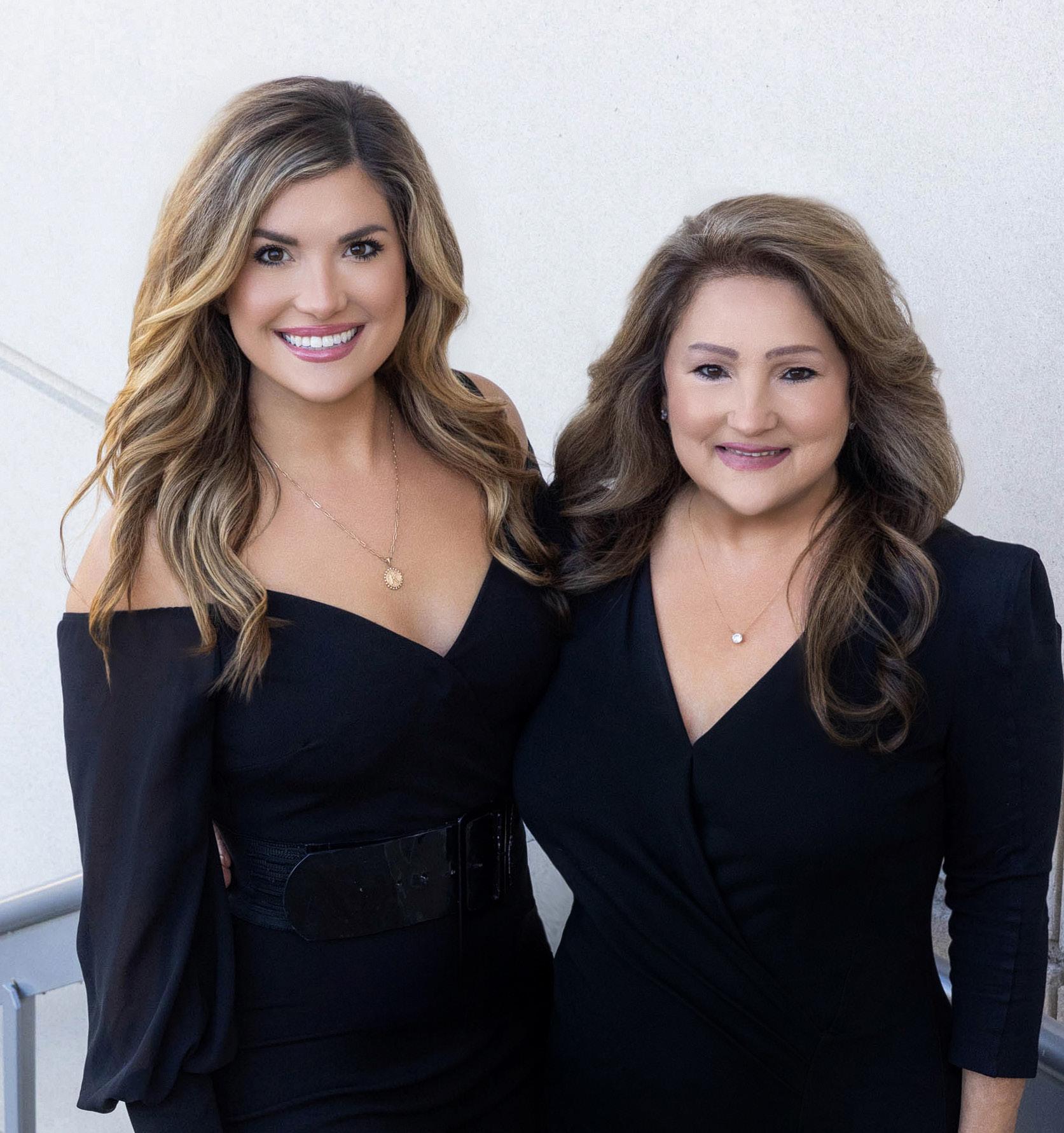
How did you get into your respective careers?
Dana’s career began in the �90s alongside her husband in the home building industry, giving her a strong foundation in construction, development and market cycles. That experience naturally lent itself to real estate, where she has built a respected career spanning over 30 years. Kara grew up immersed in the industry and developed a passion for helping people navigate important life decisions, leading her to follow a similar path.
What lessons have you learned from working alongside one another?
We’ve learned that trust, respect and clear communication are essential not only in business but in maintaining a strong personal relationship. Working together has deepened our appreciation for each other’s strengths and reinforced the value of approaching challenges as a team.
In what ways are you involved in your community outside of work? We are proud to actively support our local community through sponsorships and involvement with the Maumelle Area Chamber of Commerce and the Home Builders Association of Greater Little Rock. Dana also serves on the board of the Home Builders Association of Greater Little Rock, allowing her to stay engaged in the continued growth and development of our region.
Built on a strong family bond, Dana and Kara Kellerman’s relationship naturally grew into a successful business partnership. Their success comes from a perfect balance: Dana brings decades of proven real estate experience, while Kara adds modern strategy, energy and a fresh perspective. For more than a decade, they have helped clients with everything from residential homes and new construction to land development and commercial deals. Whether they are guiding a first-time buyer or managing a complex transaction, their goal never changes. They protect clients with honest communication, careful detail and results built on trust that lasts long after closing.
What is the secret to collaboration and compromise in business or everyday life?
We have a shared commitment to respect, communication and perspective. We prioritize listening to one another and remain focused on the bigger picture, which is serving our clients well while preserving the strength of our partnership.
Do you think it is important to keep your business and personal relationships separate?
We believe in maintaining healthy boundaries but not at the expense of authenticity. Our personal relationship enhances our business because it is built on trust, honesty and shared values. Those qualities naturally extend into how we serve our clients.
What’s the best thing about working as part of a team instead of alone?
There is a level of confidence and consistency that comes from working as a team. We’re able to collaborate, problem-solve and provide a higher level of service, ensuring our clients feel supported at every stage of the process.
Coldwell Banker RPM Group

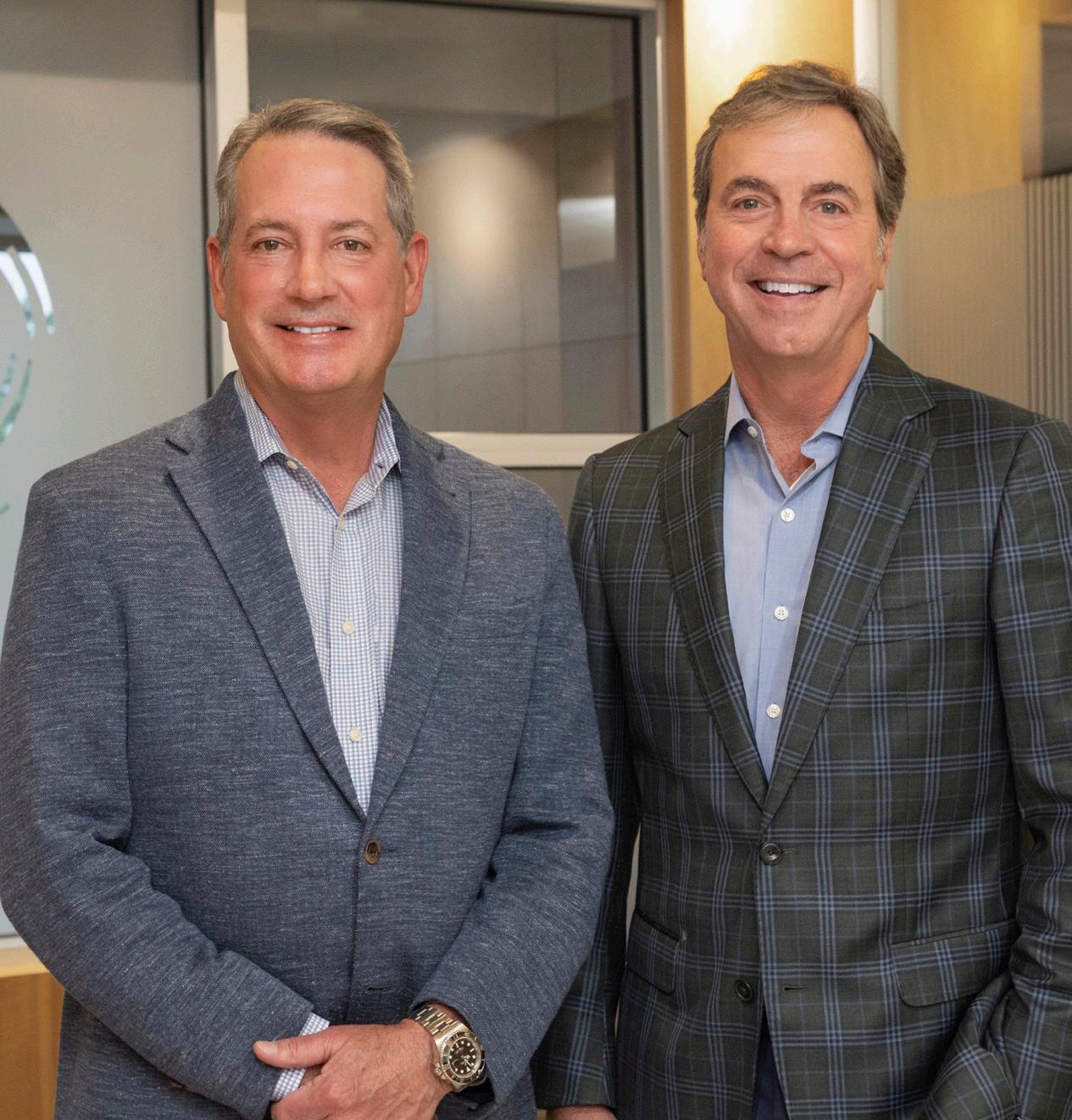
How did you two start working together?
Prather: We started working together after I left my law practice in Fort Worth, Texas, where I was a partner at the Cantey Hanger law firm. I moved back home to Little Rock and joined Legacy Capital in April of 2003. Matt joined Legacy in 1997 after leaving Stephens.
What lessons have you learned from working alongside one another?
Jones: Serving the complex needs of our clients requires a team with diverse skill sets and backgrounds. Most of our clients come to Legacy because of the depth and breadth of the services that we can provide to them, and teamwork is a necessity to serve them.
How do your working styles complement each other?
Prather: Matt has always been more numbers oriented than me. He is a very quick thinker with a take-action attitude. I process information and circumstances more from a structural and legal perspective with a focus on estate and tax planning. These two styles are very complementary to each other and work well.
What is the secret to collaboration and compromise in business or everyday life?
Jones: While there are lines and boundaries we all need to establish in these relationships, there is also significant overlap. Jason and I have
Legacy Capital was founded in Little Rock in 1977 and is now owned by partners Matt Jones and Jason Prather, who joined in 1997 and 2003, respectively. The company focuses on offering holistic wealth management services and has grown into one of Arkansas’ most respected wealth management firms, representing several of the state’s wealthiest families. In 2005, when the pair took the helm as owners, Legacy managed a little more than $75 million in client assets and between $750 and $800 million of inforce life insurance. Today, the company has added a Rogers office, employs a team of 23 and manages in excess of $1.5 billion in client assets, in addition to more than $3 billion of in-force life insurance.

LEGACY CAPITAL
Making the Complex Simple
worked side by side for over 23 years at Legacy. However, we are also friends outside of business and have traveled extensively together, watched each other’s children grow up and attend the same church where we both volunteer. He is not only my business partner but also one of my cherished friends.
In what ways are you involved in your community outside of work?
Prather: Matt and I attend and volunteer in the same church and have for years. We also help sponsor and volunteer with many of the local charities here in Little Rock, including Women & Children First, The 20th Century Club’s Hope Ball and several other functions throughout the year.
What is the best thing about working as part of a team instead of alone?
Jones: In addition to working better together, it is simply more fun and fulfilling being a part of a team, serving our clients together and sharing in the success and growth of our company.
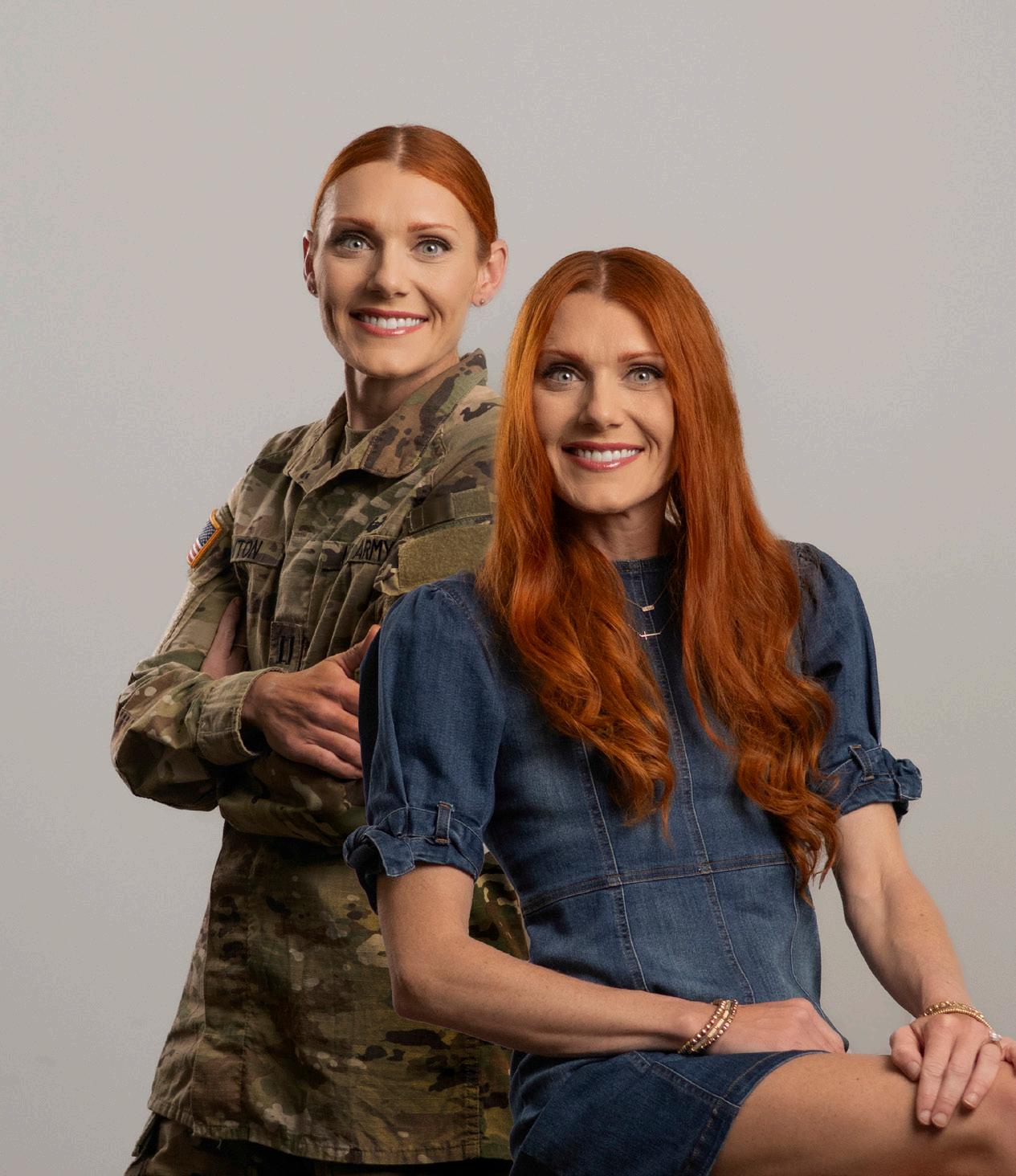
What lessons has the Army National Guard taught you that have helped in a civilian setting, and vice versa?
The Guard has reinforced leadership under pressure, accountability and the importance of clear communication — skills that translate directly into my civilian role. Being able to make decisions with incomplete information and still move forward is something I rely on often. On the flip side, my civilian career has strengthened my ability to manage complex systems, analyze data and communicate across diverse stakeholders. That perspective helps me bring a more strategic and organized approach to military operations and planning.
How do you balance the responsibilities and pressures of both your military and civilian work?
It’s truly a blessing to have the pressure of both careers. It comes down to prioritization, time management and having a strong support system. Both roles require full commitment, so I stay disciplined with my schedule and communicate clearly with both teams. I also rely heavily on the leaders around me — both in uniform and in my civilian organization — to ensure continuity when priorities shift.
Jamie Newton entered the Army National Guard out of a desire to be part of something bigger than herself. That commitment turned into a leadership role as a company commander, where she has had the opportunity to develop soldiers and lead meaningful missions — not to mention becoming the state’s first female infantry officer. In civilian life, Newton has built a career in K-12 food distribution over the past decade. As a senior commodity director at Pilgrim’s Pride, she helps manage U.S. Department of Agriculture programs that directly impact school nutrition across multiple states. The two sides of her work can vary greatly, but in both worlds, success comes down to accomplishing the mission while taking care of people. “Balancing two careers isn’t always easy, but it’s incredibly rewarding,” Newton said. “At the end of the day, whether in uniform or in the civilian sector, my focus is the same: lead well, serve others and make a positive impact wherever I’m placed.”
Do you try to keep a lot of separation between your careers, or do they actually complement each other in ways people might not expect?
While the environments are different, the core principles of leadership, accountability and teamwork are the same. I don’t try to completely separate them because the skills and experiences from one side consistently make me better on the other. Both sides require full dedication, and it is something I don’t take lightly.
What is the most rewarding part of your work overall?
First and foremost, the most rewarding part is the example I am showing my two kids — hard work and dedication. The second most rewarding part is developing people and seeing them succeed. Whether it’s a soldier growing into a leader or a team member in my civilian role taking on more responsibility, being part of that growth and knowing I had a small role in it is what stands out the most.


Arkansas Army National Guard

Joy & Paul Floyd
and offers professional installation services. The space is also home to a variety of original gifts, artisan collectibles and hand-curated gift baskets. What lessons have you learned from working alongside one another?
Paul naturally approaches life from the perspective of an artist. His mind is creative, expansive and often filled with ideas that explore every shade between. Joy tends to see things more clearly defined — more black and white. She naturally looks for the clearest path forward, focusing on what is practical, purposeful and achievable. More often than not, we arrive at the same conclusion, but we often get


Cindy & Scott Lucas

spaces, and as husband and wife, they relish the chance to combine their talents and deliver a more thoughtful, cohesive experience for clients. What is the secret to collaboration and compromise in business or everyday life?
We just have to remember we’re on the same team. We’ve realized our differences actually make us better together because when one of us struggles, the other usually steps up. It’s not always perfect, but the balance is what makes us work.
What else should AMP readers know?
We’re both fitness enthusiasts. Scott is a world record holder in the master’s class of powerlifting, and Cindy has completed multiple half marathons. We love our church family at Central Baptist in Conway. As “Fancy” and “Pawpaw,” we have transitioned into our roles as grandparents. We have three grands with one on the way and spend as much time with them as we can. We have two teenage boys at home, too, so we have the best of both worlds.
2026 AMP Dynamic Duos
2026 AMP Dynamic Duos
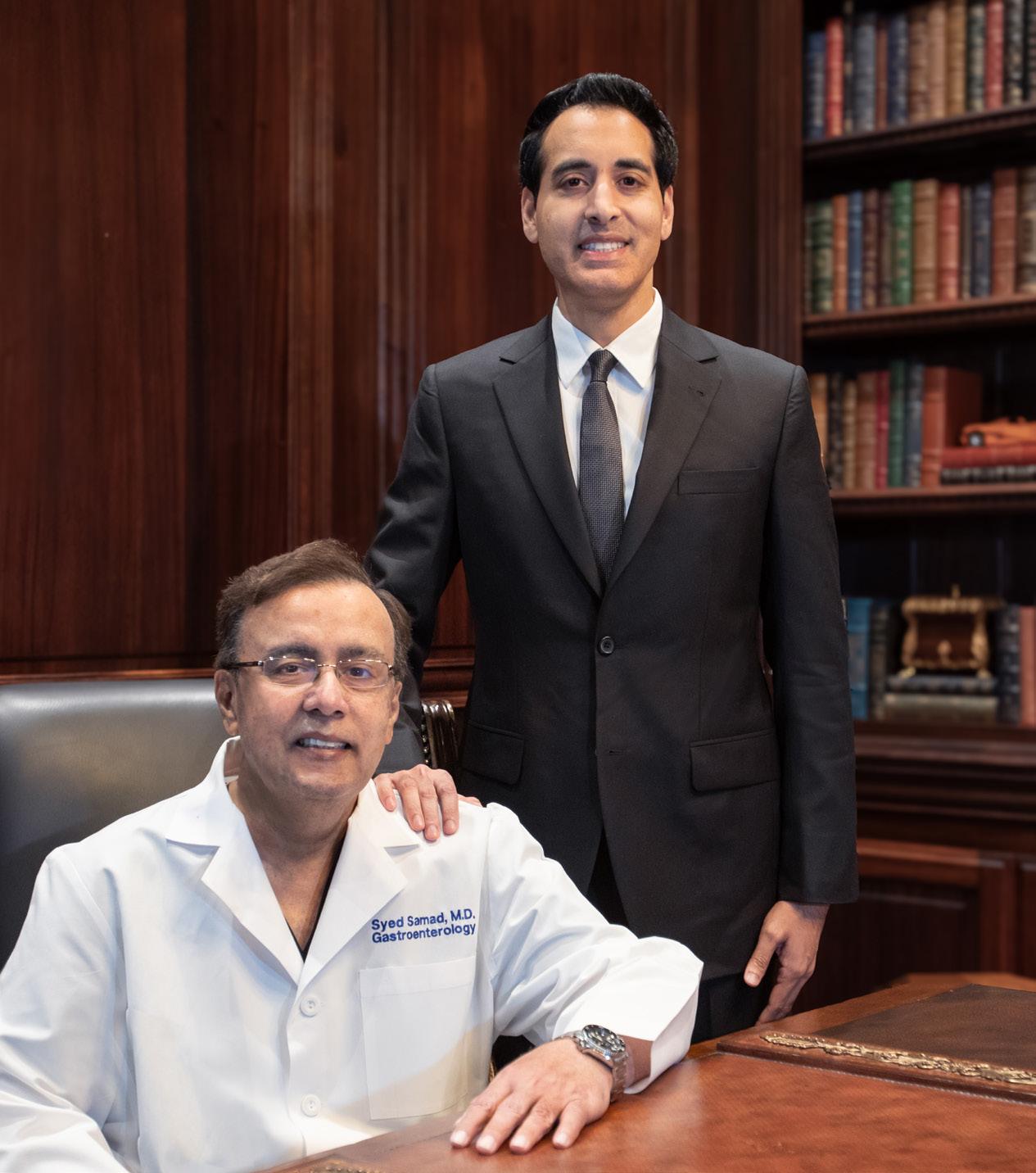
Tell us more about the work you do.
Dr. Samad: As a GI, I specialize in digestive and liver disease. I am triple board certified in internal medicine, gastroenterology and obesity medicine. At Digestive Care, we see patients in clinic and perform procedures such as upper endoscopy and colonoscopy in our licensed outpatient surgery centers. We are focused on patientcentered quality of care. With colon cancer now being the leading cause of cancer-related deaths in Americans under 50, a large part of our practice focuses on prevention and screening.
How do your working styles complement each other?
Ahmed: Dr. Samad handles the clinical side of things, and I deal with the business side as CEO. It allows us both to do what we do best. We are open to listening to each other’s ideas and always have each other’s best interest in mind.
What lessons have you learned from working alongside one another?
Dr. Samad: It is important to believe in your child’s capabilities when they are properly trained and to trust their decisions. There are different styles in managing and running a business. By working together, we have learned what works for us, and we focus on our own areas within the business.
Dr. Syed Samad has full confidence in his son’s understanding of what it takes to keep a successful gastroenterology practice running — Ahmed has been working in his father’s clinic since he was 9 years old, where he learned every position from the inside out. Dr. Samad’s calling towards gastroenterology led him down the path of a physician, while Ahmed discovered a passion for the business side of healthcare management early on. Both father and son have dedicated themselves to growing the practice within their different skill sets, boasting three clinics and a reach spanning Pine Bluff, Little Rock and Russellville. What is more, Dr. Samad’s youngest son, Dr. Ahad Samad, will soon join the practice, further strengthening the family’s legacy.
What is the best thing about working as part of a team instead of alone?
Having a partner you can always count on is helpful and allows you to delegate tasks, have a better control on things and use ones’ strengths in certain areas where they excel. We are very blessed and thankful to have such a great team of committed and highly trained providers and staff members, which contributes to our overall success and patient care experience.
What else should readers know?
Anyone age 45 and above or those with a family history should get a colonoscopy for colon cancer screening. Our goal is to spread colon cancer awareness and make our specialty available to all rural areas in Arkansas. Digestive Care has been serving Arkansans for more than 32 years, and as a small family business, we take pride in having our family serve yours.

Central Arkansas Surgical Center

Brian & Alyssa Hagewood
Alyssa said she would not trade it for anything — the important part, she said, is being able to communicate, respect each other’s ideas and meet in the middle when needed.
Do you think it is important to keep your business and personal relationships separate?
It’s important to have some separation but not completely. Boundaries help keep things professional and prevent work stress from affecting your personal relationship. At the same time, working with someone you’re close to creates a level of trust and understanding that can

Robbie &
Jillian Wilson
Brother and sister Co-managing partners, The Wilson Law Group (Attorney’s Title Group, Wilson & Associates, Foundation Legal)

How did you two start working together?
Collaboration was fuzzy in the days of Nintendo, when Robbie would unplug Jillian’s controller in two-player games. It took a few years for Jillian to realize she was being actively sabotaged, but lessons were learned: for Jillian, trust but verify. For Robbie, be ready to pivot and find a new way to win. Fast forward a few decades, and we couldn’t be a better team — and Jillian is still awful at Mario Kart
What should readers know about you two as a duo?
We don’t take ourselves too seriously, but we take what we’re building very seriously. We’re competitive, we push each other, and we don’t always agree, but at the end of the day, we’re aligned on where we’re going and why it matters. We’re proud of where we come from and very aware that we get to do something special — build, grow and lead together. Also, for the record: Jillian’s controller is definitely plugged in now. Probably.
2026 AMP Dynamic Duos
2026 AMP Dynamic Duos
How did you get into your respective careers?
Presley: I always knew I wanted to be a lawyer or a social worker. Fortunately, having my social work license, and working in family law, I get to use both of those areas every single day.
Sydney: I actually have always wanted to work in law. My uncle is an attorney, and I started clerking at his firm at 16 years old. I went on to be a paralegal there before I went to law school. I am passionate about helping others; I fell into family law and figured out I loved it pretty quickly.
How do your working styles complement each other?
Sydney: We work so well together — very much a “finish each other’s sentences” relationship at times. Presley always has great ideas for the next thing for us, and we tend to have a lot of the same thoughts at the same time. I act as managing partner of the firm, so I try to take those ideas and turn them into action.
What is the secret to collaboration and compromise in business or everyday life?
Presley: I think the secret is communication and compassion. You’re never going to agree on every single decision, but if you can talk about how you feel it helps tremendously.
Sydney Rasch and Presley Turner both had their eyes set on the legal field from a young age. The pair met in law school, graduating together in 2019, and they found their interests and visions aligning even further at a leadership conference the following year. In 2021, they jumped at the chance to go into business together, and the Little Rock family and domestic practice law firm, Turner & Rasch, was born. Since its founding, Turner & Rasch has grown to nine full-time staff members, including four attorneys, three paralegals and two legal secretaries. What is more, thanks to a larger staff, the firm has been able to expand its practice area outside of central Arkansas to encompass all 75 counties in the state.
Do you think it’s important to keep your business and personal relationships separate?
Presley: For us, personally, I think it’s impossible to keep it separate. We love what we do, and our firm is like a family.
In what ways are you involved in your community outside of work?
Nonprofit work is so important to both of us, as well as our staff. We believe that giving back to the community is not just helpful it is necessary. While the firm keeps us busier these days and we are not able to directly volunteer as often, we regularly donate to local legal nonprofits that help provide access to justice for those who cannot afford private attorneys, scholarships for deserving women law students and other support for women in the legal profession because those values are so important to us. We also serve our community through our volunteer work with the Junior League of Little Rock, and we have both served on several nonprofit boards, including the Arkansas Association of Women Lawyers. What else should readers know?
We are a really fun, easy-going group of women, and our office is very homey and cute. We want to break the stereotype of the stark, stuffy lawyer’s office and make people feel as comfortable as possible.
THEARTOF PUTTINGOUTASHINGLE
By Doug Crise

It was a late November morning in Jonesboro, and Dave Stickler, CEO at steelmaking company Hybar, was just wrapping up his comments. The room at the Embassy Suites Red Wolf Convention Center was packed, a mishmosh of civic leaders and businesspeople plus administrators, professors and students from Arkansas State University.
Stickler had spent the better part of an hour trading comments with the three fellow entrepreneurs joining him on stage plus Jim Washam, dean of ASU’s Neil Griffin College of Business, but now it was time to wrap up the panel discussion, and Stickler took a moment to consider his comments.
“Anyone who wants to be an entrepreneur has to understand what drives bottom-line results,” Stickler told the crowd. “You could be passionate, you can have a love for this or that, but unless you put money to the bottom line every day, every week, every month and every year, you’re not going to be successful, and you won’t be able to grow.”
and profitable.
There is no shortage of advice about how to make that happen. Entire shelves in bookstores are dedicated to ideas about how to start and run a business, and the number of online personalities hawking their own paths to success borders on almost uncountable.
Make no mistake, entrepreneurship is the most variable of crafts. It ideally begins with the most kidlike of emotions — enthusiasm — before facing the very grownup concept of how to turn that enthusiasm into something both meaningful
ARKANSAS STATE UNIVERSITY ENTREPRENEURIAL PROGRAM BRINGS C-SUITE EXPERTISE TO STUDENTS
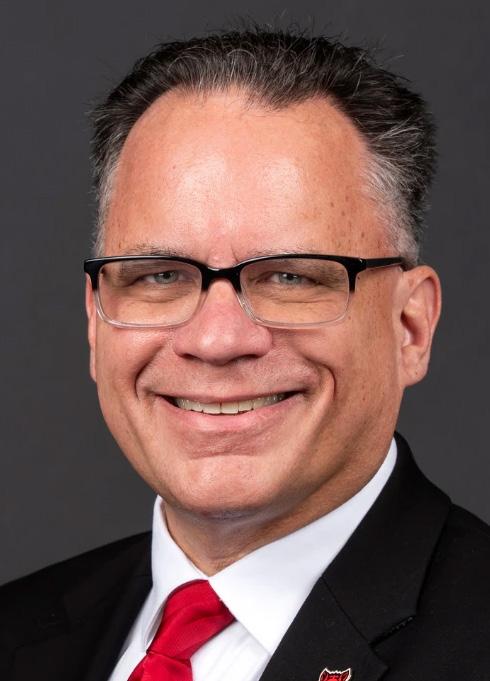
All of the resources and ideas prove, ironically, that there is no straight-line, prescribed path to success. There are, however, nonnegotiable tools required to make the attempt, and it is in that intersection between ideas and mandatory skills that Arkansas State plans to unleash an entrepreneurship program that challenges the conventions of just how students in traditional college settings are prepared for the business world.
“Sometimes we’ll see entrepreneurship programs, and they’ll focus solely on entrepreneurship,” Washam said months after the November symposium, “but all of our students get at least a couple of semesters of accounting, finance, management — a whole business background. Along with that, there’s a social entrepreneurship and an impact-management class, and there’s leadership to go with that.”
Offering a bachelor’s degree in entrepreneurial management and strategic leadership, Arkansas State aims to equip students in the program with more than textbook knowledge. Real-world internships are part of the program, but so is instruction in the foundations of communication and networking.
Heather Nelson, for one, thinks it could not come soon enough. A lifelong entrepreneur, Nelson began working with Arkansas State Chancellor Todd Shields in 2024 to create a lecture series that would bring C-Suite executives to Arkansas State to share knowledge, create ideas and foster connections. Nelson went on to serve as the university’s “executive in residence” and presently works as the university’s vice chancellor for external affairs and strategic initiatives.
Nelson said during the early days, the program was grounded in material from The Start-up J Curve by Howard Love, which remains a key pillar of Arkansas State’s overall platform in business instruction. However, the highlight now is the executives themselves, some of whom work outside northeast Arkansas who have traveled to Jonesboro just for the opportunity to speak to and work with Arkansas State students.
“They’re coming from all corners, and they’re coming to share with the students,”
Jim Washam
Dave Stickler

State students.
“You could be passionate, you can have a love for this or that, but unless you put money to the bottom line every day, every week, every month and every year, you’re not going to be successful, and you won’t be able to grow.”
— Dave Stickler CEO, Hybar
Nelson said. “They share their story and their journey, and then they have connection time.”
Nelson is the face of the program because, well, she is the sort of person one would want as the face of the program. Equal parts enthusiastic, bubbly and knowledgeable, Nelson speaks with passion about the long-term good the entrepreneurial management experience is doing both for students and businesses in the market for college graduates.
That market, simply put, has never been harder to crack, a point driven home when Nelson first began working with Arkansas
“What students tell us is, ‘I love what I’m studying; I’m terrified for what happens after graduation because I don’t know how they marry,’ so what we’re trying to do with this course is we’re trying to marry those things for them,” she said.
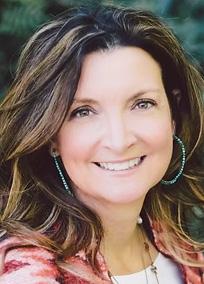
Along with the foreboding numbers facing college grads, fresh questions have emerged about the role of a traditional university education in an accelerated world. Colleges, long considered mandatory destinations, are now finding themselves having to answer for the extent to which they prepare students with real-world, actionable knowledge.
“We’re teaching skills here where people can go out and they can start a business,” Washam said. “We’re also teaching skills that they can use with another company.”
That includes skills that are not found in textbooks. A headful of knowledge means nothing without the ability to connect to others, and as
Heather Nelson
such, going through the entrepreneurial management and strategic leadership program also includes the fine art of introductions, handshakes, eye contact and networking.
As for those who cluck their tongues at a perceived lack of social ability in the younger generation, Nelson will not hear of it.
“The students that are in college right now were in middle school through COVID[-19],” Nelson said. “What

was middle school for you? Guess what? For all of us, it was the hyper-awkward years where you learn how to talk to the opposite sex. Your whole body is changing. You’re learning social skills and all of that, so the students that are in college today were sitting in front of screens during their middle school years, and if we don’t recognize that it’s made an impact, we’re doing them a disservice.”
None of this is happening in a vacuum.
Arkansas State’s goal, from Sheilds on down, is to produce graduates who can reach out and confidently connect with anyone in any sort of professional situation. Knowledge without the ability to express and apply it is simply baggage.
“I think part of our mission is to provide these graduates and these students with the skills they need to go out in their communities and contribute to economic development,” Washam said.
Washam also noted that traditional stereotypes of students studying business skills do not apply at Arkansas State. Sure, there will always be students looking to master the nuances of finance en route to successful white-collar careers, but there
“I think part of our mission is to provide these graduates and these students with the skills they need to go out in their communities and contribute to economic development.”
— Jim Washam Dean, ASU Neil Griffin College of Business
are also students grounded in blue-collar skills who may not at first consider themselves entrepreneurs.
By example, a student looking to inherit the family plumbing business may be inclined to bone up on plumbing, but if their knowledge does not also consist of communication, marketing and promotion, all the plumbing knowledge in the world will not make up the gap.
Those skills could not possibly be more important, especially when considering not just Arkansas State but the region that it serves. Just outside of Jonesboro, cities such as Osceola are benefitting from the
presence of companies such as Hybar and U.S. Steel, some of which offer six-figure salaries to trained workers.
With the entrepreneurial management program, Arkansas State offers students not just a foot in the door but an entire pathway into an emerging local economy and rapidly moving worldwide business landscape.
“What they’re learning is there’s not one way,” Nelson said. “It’s about taking in as much information as you can, of being curious and realizing things are changing all the time — because there’s not just one pathway.”

CHANGING THE TRAJECTORY CHANGING THE TRAJECTORY
Through SILLE, husband-and-wife duo hopes to better prepare students
By Mary LeSieur
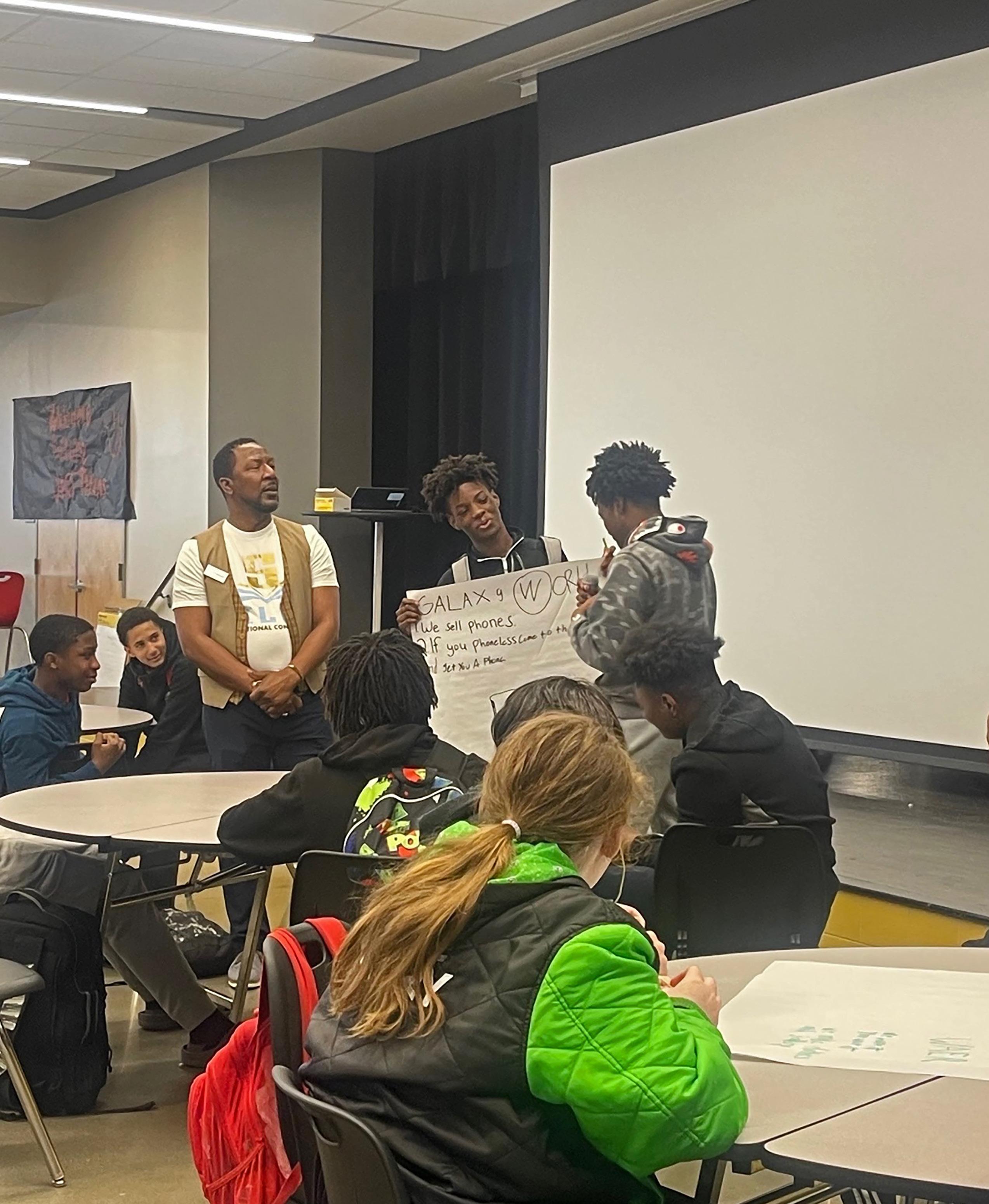
When Jessica and Stanley Ellis of Little Rock determined they had a calling for fostering change in their community, they pursued their passion head-on. Now, after nearly 30 years of education consulting, the husband-and-wife duo is changing the trajectory of Arkansas students’ lives, one day at a time.
Stanley got his start with youth-related mentoring in behavioral centers and soon after was brought on by colleges and universities to promote career services. Through that, he saw a large need for student and youth advocacy, so in 2005, he created a formal LLC.
“I understood and knew about career services, trying to help the young people to learn how to become professionals, give them some type of skills and bring those two worlds together,” he said. “I was under the impression that young people are learning everything earlier, so why can’t they learn how to be professionals earlier?
“I teach them how to develop their resumes, how to improve their interviewing skills, just how to speak and improve themselves so they can be better candidates for scholarships, jobs and be overall better individuals, even in their classrooms.”
Stanley and Jessica founded SILLE Educational Consulting in 1997, leveraging their higher education backgrounds to help at-risk youth achieve their biggest goals through motivation, inspiration and empowerment — MIE.
The MIE effect is one of the many tools Jessica and Stanley use through their SILLE program, which is actively being taught in schools across Arkansas. Through free and low-cost programming, the initiative connects students with resources, builds confidence and introduces possibilities they may have never considered.
“Arkansas is a rural state, and so we have worked with students in a lot of rural areas who may not know that there are
The SILLE program offers 16 courses to youth participants, educators and students. (Photos provided by SILLE)
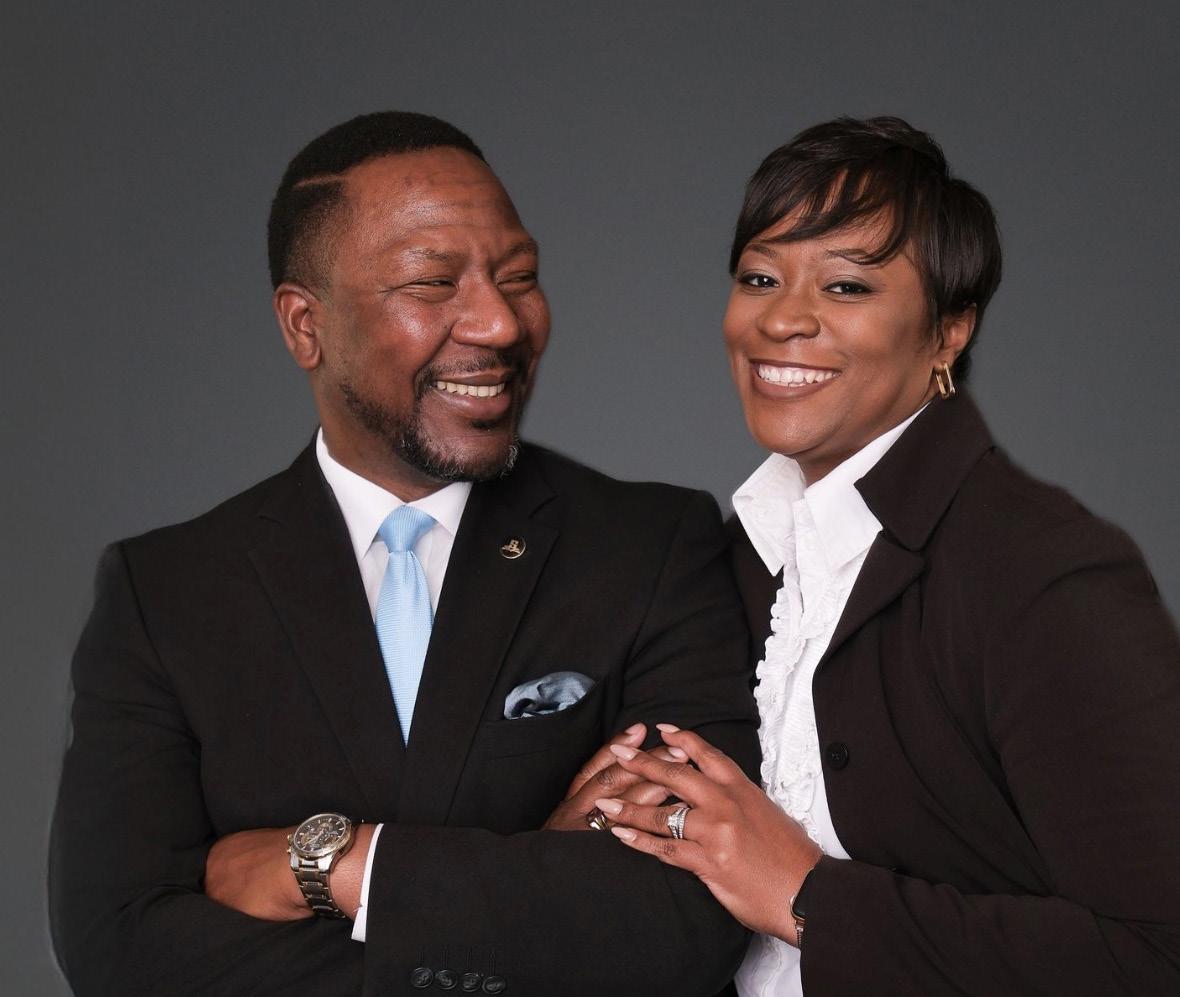
options,” Jessica said. “We try to expose them to the possibilities that exist outside of the norm that they know.”
The Ellises were all too familiar with the trope about growing up in a small town where students are expected to go to work in the local factory once they finish high school, so they asked, “What is the reward for succeeding?”
“Stanley is from Holly Grove, and there was the rice factory there and an air conditioning factory,” Jessica said. “That’s where primarily the people from my town will go to work. Some believe that those are their options. They think, ‘Why do I work hard in school? Why do I stay focused? Why am I concerned about having good behavior when this is my trajectory, this is where I’m going?’ What we try to do is open up that possibility and say, ‘That’s not where you have to go.’”
Stanley added, “We also share our own journeys, the struggles, as well as the successes, so they understand that setbacks are part of the process. It’s about helping them stay resilient and continue moving forward. Success requires change. It won’t always feel good, and it takes effort, but growth comes from pushing through discomfort. I even share my own story. I had a 1.3 GPA at one point. That shows students that where you start doesn’t define where you can go.”
The SILLE program offers 16 courses to youth participants, educators and students spanning topics from active listening and conflict resolution to interview techniques and professional career development. The Ellises also place an immense focus on anti-bullying efforts, a rising phenomenon they actively combat in Arkansas schools. Instead of addressing bullying directly, the Ellises take a prevention-based approach — redirecting students toward purpose, goals and self-worth — which naturally reduces negative behaviors.
“We have worked with a couple of school districts on antibullying, and we don’t go in and talk about bullying,” Jessica
said. “We look at the opposite side, and we give them something else to focus on. If you want to find success, these are the behaviors you need. You don’t have time to focus on bullying someone because they’re focused on goals: grades, behavior and the future. We’re not just correcting behavior. We’re giving them something to aim for. When they have that, everything else starts to fall in line.
“We don’t do this for recognition. We do it because it’s part of why we’re here.”
At the center of the Ellis mission is BELL — Business, Etiquette, Leadership and Life Skills — a nonprofit initiative dedicated to leveling the playing field for young people across the state. It was established to reach students who may lack access to career guidance, mentorship or even basic professional skills training.
“BELL allows us to serve communities that may not have the resources to pay for programming,” Stanley said. “Through it, we can partner with churches, schools, organizations, and we can apply for grants and offer workshops at low or no cost. To see our students go from, ‘I don’t think I can get out of where I am,’ to believing they can go further, we take pride in that. We have some young people that we worked with who now work with us. They come back as mentors, and that’s incredibly rewarding.”
Outside of workshops, scholarship opportunities and courses, Jessica and Stanley have also released three books since opening their consulting business: Winning Is Planned … and Expected, Winning Is Planned: A Guide for Young Ladies and Women, and Winning Is Planned: A Guide For Young Men. Each book is available for purchase online.
To learn more about the SILLE mission, visit mie4success. com for courses and programs, bookings and success resources.
“My phone is full of messages from young men I’ve mentored. That’s how I see the impact, and it doesn’t stop when the workshop ends,” Stanley said.
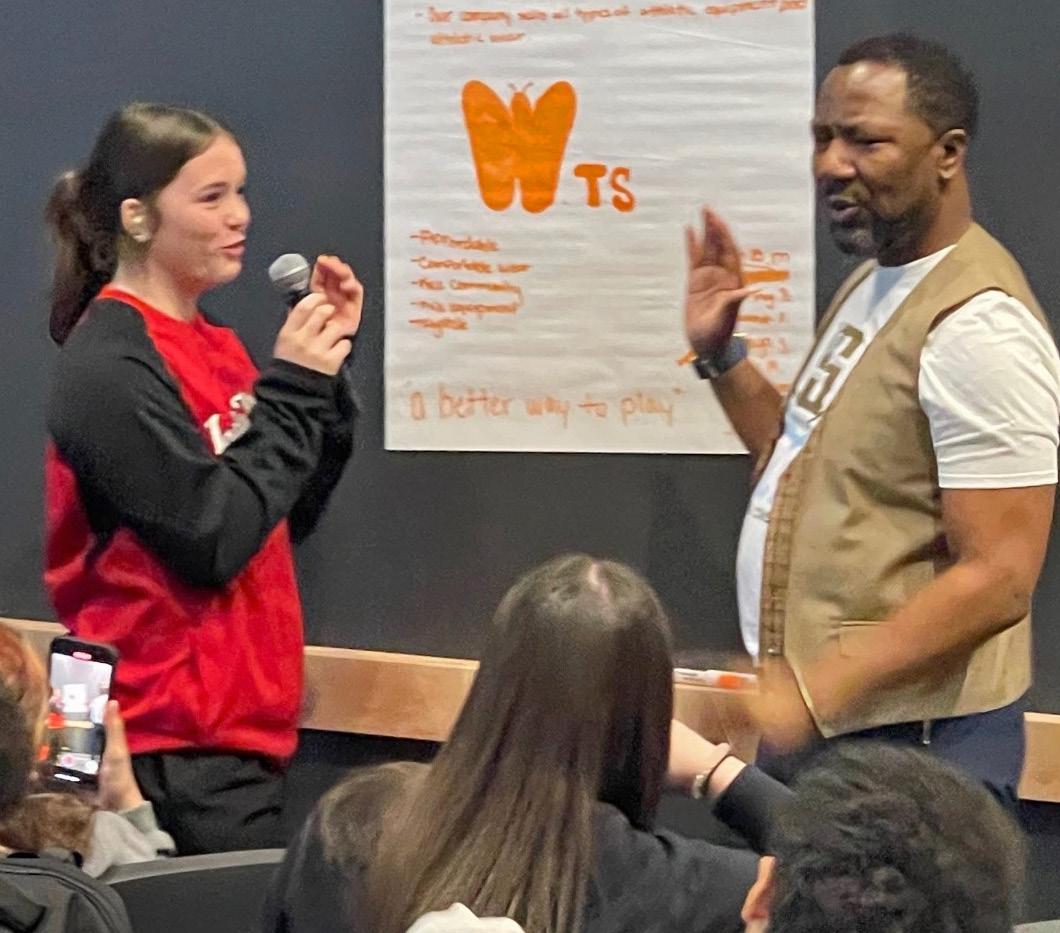
Outside of workshops, SILLE also offers scholarships and life-skill courses.
Stanley and Jessica Ellis
Jeremy Flynn and Elicia Dover of The Flyover Agency in Little Rock (Photos provided by The Flyover Agency)
The Disruptors
THE FLYOVER AGENCY
IS TOO YOUNG, TOO NEW AND TOO DIFFERENT — TO FAIL
By Dwain Hebda
Awell-worn saying goes, “The only constant in life is change,” a slogan equally apt for technology, fashion, music and, in the case of The Flyover Agency in Little Rock, the world of advertising and promotion.
Launched as JF Media+Marketing in 2020 by Jeremy Flynn, who rides herd over the company with his managing partner and wife, Elicia Dover, the company has gone from precocious upstart to major player seemingly overnight and, notably, against convention.
“People want to work with the person, not necessarily the service,” Flynn said. “I think from a competition standpoint, everyone’s offering the same thing; our clients choose us because they feel a great connection in the relationship. That’s always what we strive to do is to be connected and to show that we are genuine and we legitimately care about the client’s success.”
The prototypical big advertising agency still exists, offering services both wide and deep to clients with marketing budgets to match. For decades, such companies held a death grip on the industry, and their long shadow choked out many an upstart that tried to take root.
During more recent eras, however, the big boys have suffered from the same drawbacks as any large corporation — that is, often being slow to notice trends and even slower to pivot to the tools that turn trends into industry standard. Into the breach have come boutique marketing and branding firms that have clawed out toeholds in virtually every market for their ability to stay nimble.
“There’s so many tools and strategies and pieces of marketing that the traditional agencies are still playing catch up with,” Flynn said. “I saw traditional agencies being built on creative and traditional media billing at the typical net rate, and I felt like digital was being left behind and some of the more innovative technologies were being left behind. I felt like we could bring that global level of marketing strategy and execution to local business owners here in the state of Arkansas.”
Whatever Flynn might be labeled in business, “traditional” is probably not it. Nearly everything about Flyover runs upstream to what has always been accepted as the norm, from servicing an international clientele with but a handful of employees to operating 100-percent remotely. Even its liaison with
People want to work with the person, not necessarily the service. I think from a competition standpoint, everyone’s offering the same thing; our clients choose us because they feel a great connection in the relationship.
— Jeremy Flynn
The Flyover Agency
clients is slightly off center: While every agency claims a relationship with customers, most ultimately function as a vendor providing a service. In Flyover’s case, client relations mean forming an actual working partnership.
“The main qualifier that we look for in our ideal client is one who is as invested as we are going to be,” Flynn said. “I think where a lot of companies and agencies fail is they assume that by offloading marketing services to an agency, they can wipe their hands of having any sort of responsibility with that effort. Our view is the only way this works is if both sides are totally invested.
“I always tell our clients, ‘We’re never going to know more about your business than you do.’ We want to be an extension of their business, but they have to be invested, and they have to be communicative and re-
sponsive to some of the things that we need from them, as well, if this is going to maximize our efforts.”
Of course, no marketing firm gets by on looks or slogans alone, at least not over the long haul, and that includes The Flyover Agency. The company builds campaigns for effectiveness, bringing serious market instincts and technical chops to the table. Prior to hanging his shingle, Flynn spent a decade at North Little Rock’s Simmons Bank Arena, where he rubbed shoulders with seasoned event promoters. From there, he was lured to the Professional Bull Riders and then All Elite Wrestling, where he honed his talents for global live event marketing.
Flynn’s skill set is complemented by that of Dover’s, whose career in television news reached the highest level of accomplishment in the most challenging media
market on the planet. The Bryant native worked as a digital journalist at ABC News in New York, where her work included spearheading the network’s coverage from the 2012 presidential campaign trail, the Sandy Hook school shooting, Hurricane Sandy and the Boston Marathon bombing. She earned a Peabody Award, an Edward R. Murrow Award, and four national News & Documentary Emmy Award nominations along the way before returning home to a decade-long stint at KATV, where she was founding co-anchor of Good Afternoon Arkansas.
Dover said one element of the company’s success is the ability to think globally and translate that into marketing strategies malleable enough to fit companies from Main Street to Wall Street without becoming formulaic.
“I think the key is that big thinking,
Flynn and Dover at the Heisman Trophy award presentation
viewing a broader horizon for our clients,” she said. “When we’re looking at a client and garnering them attention, whether it be for marketing, for media, we’re not thinking on a local level. We’re thinking on a larger level that doesn’t have a border, and I think that carries our clients really far.
“We just had a client go super viral online for a post that we did. It was something the entire country connected with, not just folks here in Arkansas. [The client is] a hyperlocal company, but the entire country, millions and millions of people, connected with the content that we put out for them. I’d like to think it was because the way in which we put it out was different.”
The company’s coat is spotted differently even when compared to other boutique firms, many of whom stay in relatively narrow market lanes, billing themselves as experts in a small number of industries. Flyover, by contrast, does not seem to restrict itself, as one glance at
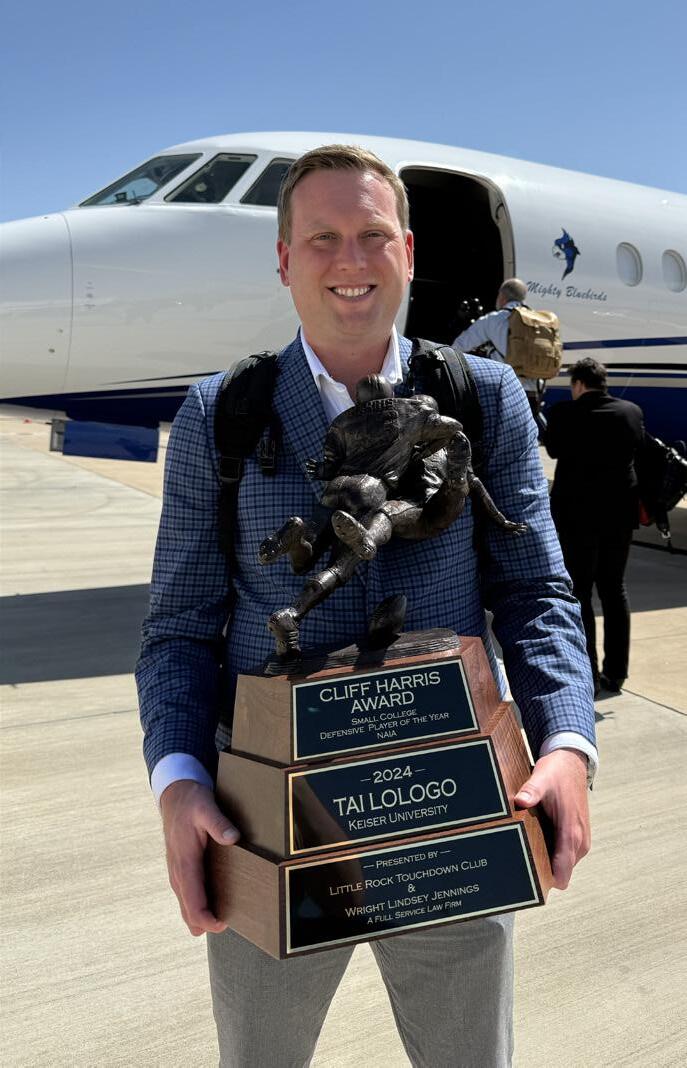
the client list — including retail, banking, automotive, quick-service restaurants, health, and live events to include the Arkansas State Fair, Little Rock Touchdown Club and Broyles Award — attests.
“I’ve been very blessed over a number of years to form some fantastic relationships with some key stakeholders in various areas and different industries,” Flynn said. “I’ve always been very of the mindset that if the client’s winning, we’re winning on our side, as well, so I invest myself fully as an extension of their team and a stakeholder to the point of me feeling like I’m almost a fractional executive. I feel like that resonates not only with building that relationship with the client but also in the results of the product that we’re putting out.”
“For our early clients to trust us with their marketing, that was a big deal for us, of course, because, as they say, all it takes is one yes,” Dover said. “From that point on, I take pride in the fact that we are 100-percent referral based. We have
never prospected a client thus far; every client has come to us and approached us and asked for us to help because one of their colleagues recommended us for doing an exceptional job.”
As impressive as that bit of company trivia is, it is hard to plan future growth around what may or may not come in out of the blue. Even an avowed disruptor like Flynn admits that scaling Flyover is something that must be approached systematically if not entirely conventionally.
“I think scaling is one of the most challenging things any business has to go through, no matter what industry you’re in,” he said. “I think the advantage that we have is we’re not locked into a physical footprint, which gives us the opportunity to be able to scale in ways that are a lot more beneficial to our clients.
“We have a client in Nashville where we scaled and hired somebody in Nashville to be able to do some work there. That gave us the opportunity to put somebody’s boots on the ground. I think having that mentality has allowed us to be very flexible.”

Mostly, Flynn added, the thing that has braced the company for the unknowns ahead is never losing sight of what has been accomplished thus far as a basic blueprint for managing opportunities and challenges to come.
“I think seeing some of the challenges Elicia and I have been tasked with in previous roles has really made us battle ready for very high-pressure and intense situations with clients and demands and results. I think that helps a lot.”
To that, Dover nodded and chuckled.
“I definitely agree with what Jeremy said on that part,” she said. “I mean, I’ve sat in the control room for Good Morning America and World News Tonight for five years. You can’t scare me.”
Flynn holding the Cliff Harris Award; Dover with ESPN’s Holly Rowe at the Little Rock Touchdown Club

Sen. Tom Cotton talks Iran, Farm Bill and more
By Dwain Hebda

Sen. Tom Cotton is big on Arkansas, and voters of the Natural State feel the same way, having elected the native son of Dardanelle to represent them in Congress for nearly 15 years, starting in the U.S. House of Representatives and then, since 2014, the U.S. Senate.
His reelection bid, which cruised through the May primary, is not considered by most pundits to be as tenuous as some brethren Republicans. That allows the third-ranking member of Senate Republican leadership to focus on the work of the Committee on Armed Services and his chairmanship of the Committee on Intelligence, which, suffice to say, have their hands full right now.
Cotton sat down with Arkansas Money & Politics to talk about the war, America’s farmers and the looming midterms.
of schedule on every line of effort, so all credit to our troops for an exceptionally well-planned and -executed campaign that is finally taking the fight to Iran after 47 years of Iran terrorizing the United States and the civilized world, maiming and killing thousands of Americans.

Arkansas Money & Politics: Let’s start with the war in Iran. How satisfied are you with where we are right now in this process?
Sen. Tom Cotton: Our military has made remarkable gains against Iran. When the ceasefire started, the senior leaders in the Pentagon, who briefed me almost every day, said, as they consistently said from the beginning, we are on time or ahead
I’ve always been clear, and the president has always been clear, that we can’t allow Iran to have a nuclear weapon. The airstrikes last summer destroyed all their nuclear infrastructure, but it’s clear that they didn’t abandon their nuclear ambition. It’s also clear that they were trying to build a vast missile arsenal, one that already far exceeded the combined missile defenses of the United States and Israel and our Arab friends, that would become a shield to reconstitute their nuclear weapons. That’s why it was necessary to start this operation now. There’s still matters to be resolved. We can’t allow Iran to retain control of the Strait of Hormuz or believe they can threaten international traffic through there. The blockade is effective because it denies them of up to $500 million of export oil revenue every day. They can’t last very long under those conditions. We need to finish the job and make it clear that we won’t tolerate them threatening free commerce on the high seas.
Sen. Tom Cotton
AMP: I heard a quote the other day saying the war has been won; it’s the peace that is still a question mark. How satisfied are you that we’re moving toward a lasting peace that also achieves our objectives?
Cotton: We can’t predict exactly when or how it will end, but worst case scenario is that we have defanged a revolutionary regime that has been at daggers drawn with the United States for almost 50 years. Best case scenario is that we have created the conditions for a regime collapse, giving the people of Iran the ability to reframe their own destiny and return to the civilized world and become, hopefully, a pro-American country that will contribute to the peace, stability and prosperity that we all hope to enjoy at home in Arkansas and the nation and around the world.
and out of the Strait of Hormuz. Again, that’s not an acceptable situation for the United States or our friends in the region.
President Trump is a different kind of guy, obviously, than conventional politicians, and he always has been. He was not willing to allow this growing danger to continue and pass it off to the next guy as so many former presidents have.
AMP: Were you surprised that some NATO countries basically stood back and washed their hands of helping us in this effort? Cotton: I wasn’t surprised that they declined to participate, as that’s been their pattern for any military effort outside of the NATO treaty territory. I was surprised and deeply dismayed that they took a further step of actively obstructing us by denying us


AMP: As you said, it has been decades of the United States tolerating what Iran felt they could do with impunity. Why is President Donald Trump succeeding where so many presidents of both parties before him failed?
Cotton: I think past presidents didn’t want to face the reality that Iran meant what they said and said what they meant. They chant “Death to America” every week. They’ve done it from the very beginning. The very first action of this revolutionary regime was to seize our embassy and hold our fellow citizens hostage for more than a year. Yet people like Barack Obama and Joe Biden treated them as if they were a normal business partner with whom you can sit down and have a regular negotiation and come to some mutually satisfactory outcome.
As is often the case with our adversaries, [Iran] did not see any mutually satisfactory outcome. The only thing they saw is they win and we lose, and what winning looks like to them is getting nuclear weapons and being able to call shots in the Middle East and dictate whether or not we’re going to support our friends in the region and what traffic is going to go through in
access to our bases in Europe. Frankly, I think most leaders took those actions because their own domestic polling is in the toilet, and they see Mark Carney, the prime minister of Canada, has very high polling and just got a majority in their parliament by being the most vocal anti-Trump politician in Canada. They’re trying that playbook in their own country to save their political hides, which is very, very shortsighted and irresponsible when you’re talking about preserving strong ties between NATO partners.
Not every European nation is like that; I want to commend some of the nations that once again helped us, but I am deeply dismayed that so many of the European nations not only refrained from fighting in this operation but tried to actively obstruct our efforts. This is probably not going to be something the president forgets for some time, nor should he.
AMP: Do you think our time in NATO is drawing to a close? Cotton: I don’t, nor do I think it should be, but I think there are going to be some very frank conversations with those European leaders who interfered with our military campaign, which will go
alongside the frank conversations we’ve been having for years, at least with President Trump in office. European NATO countries really need to start walking the walk and not just talking the talk. It’s not enough to be chesty and boastful about our shared values and interests and spend nothing on our common defense. Fortunately, after years of countries essentially free riding, President Trump and the growing threats to Europe have caused most of our NATO partners to start investing more in defense, but we’re going to have to have some more frank conversations about what it means to be a good partner to the United States and NATO.
AMP: Shifting gears, the One Big Beautiful Bill Act covered about 85 percent of what a new Farm Bill would cover; however, there is more work to be done. What are your thoughts on how Congress finishes the job?
Cotton: First, Sen. John Boozman [R-Ark.] was masterful in crafting a bill that we passed last summer as part of our broader tax cut legislation. It’s been badly needed for years, provides an important safety net for our farmers and also had major reforms for the food stamp program, which
had become riddled with fraud and abuse under the Obama and the Biden administrations. I was pleased to support that bill.
The Farmer Bridge Assistance Program that the president implemented at the encouragement of Sen. Boozman and me and several other senators over the winter provides about $12 billion of temporary aid. The farm bill that we passed last summer doesn’t really take effect until this fall, and this is designed to provide a bridge for farm families to help them plant and harvest their crop this year. That’s a welcome development, but it’s not enough for some farm families, so we’re still looking for other mechanisms to help them, as well.
Because of the special budgetary rules under which we operated last summer, we couldn’t pass all the parts of the Farm Bill. What we passed is most of the Farm Bill that spends any significant amount of money, but there’s other important parts of the Farm Bill that we want to pass. I know Sen. Boozman is working with his counterpart, Sen. [Amy] Klobuchar of Minnesota. I’m working with them closely, as are all the senators who come from farm country, which, frankly, is most of us, at least most Republicans, to try to make sure that gets done this year.
AMP: What might supplemental aid look like?
Cotton: One consequence of the operations in Iran is we’re probably going to have to pass a supplemental spending bill for the military to replenish its stockpiles, to restore equipment from operations and maintenance, and that provides us a good vehicle in which we can perhaps provide more temporary aid to our farmers. In the near term, we hope that helps farmers stay on their land and continue to farm land that, in many cases, has been in their families for over 100 years.
In the medium to longer term, one of the main goals of the president’s tariff policy is to force other markets to open to our products. Oftentimes, it’s portrayed in the national media as just manufacturing products, but for us in Arkansas, it’s as much about agriculture as anything. In most countries I’ve seen, the thing that always comes down to the end of the sticking point on free trade agreements is agriculture. Other countries want to protect their farmers from American farmers, as we are the highest-quality, lowestcost producer in the world.
President Trump gets that, as well; he’s always got our farmers on the top of


his mind and close to his heart. I know that U.S. Trade Representative Jamieson Greer and the Secretary of Treasury Scott Bessent, anytime they’re negotiating with our allies around the world, they make it clear that trade agreements are not going to leave our farmers behind or allow other countries to keep barriers to our farmers’ commodities.
AMP: Much of what you are talking about relies on or at least becomes easier theoretically with Republicans maintaining their narrow majority in Congress. How concerned are you about the midterms upsetting the balance of power?
Cotton: I feel very confident about the midterms, in part for the fact the Democratic party is still very unpopular because their agenda is so unpopular. Just last night on the Senate floor, we had a chance to vote to deny taxpayer dollars going to Planned Parenthood, where they pay not just for abortions but for transgendered surgeries and other medical procedures and medication on minor children. Every single Democrat voted against that. Every single Democrat except one has voted to not just defund immigration enforcement in this country but have slandered and condemned the brave men and women who are enforcing our immigration laws and keeping our country safe. Every single Democrat last year voted against the biggest tax cut in history, meaning they were willing to tolerate the biggest tax hike

in history. You even have Democratic senators who are openly rooting for Iran to win in this war.
Any midterm is different than a presidential election, and it can be a challenge for the party that holds the White House, but what we see is Democrats remain massively unpopular because their agenda of open borders and socialism at home and weakness abroad simply does not sell with Arkansans, and it doesn’t sell with most Americans.
AMP: Is there any initiative or any issue that your office has front and center as you go about your business in the Senate?
Cotton: One thing I’d like to highlight is just how much work Sen. Boozman and I and our congressional delegation have successfully done to turn Arkansas into a new defense industry hub. What I think sometimes goes unnoticed is in Arkansas, we’ve created thousands of high-paying jobs while also contributing to our nation’s security.
Look at Ebbing Air National Guard Base outside of Fort Smith, where Sen. Boozman and Rep. Steve Womack [RArk] and I worked to get foreign military training missions for the new F-35 fighter jet. We now have new modern facilities, runway upgrades and F-35 fighter jets with partner pilots from Finland, Germany, Poland and many other nations to follow, bringing hundreds of millions of dollars of economic
impact to the River Valley by training our allies’ pilots to help provide for our common defense.
In Camden, we have a major defense industrial park where there has been investments to the tune of billions of dollars — not just taxpayer investments but also private industry investments — to expand output of the important missiles and missile defense interceptors that are being made there. This is providing some of the highest average salaries in the state while sending these weapons straight downrange to our friends in the Middle East, as well as our troops in the Middle East.
Early last year, it looked like the Pine Bluff Arsenal, which had been chronically underinvested by the Army for bad reasons, might be on the verge of closure. Sen. Boozman and Rep. Bruce Westerman [R-Ark.] and I were able to make sure it stayed open and put it on the verge of getting more work there, creating more high-paying jobs.
“So I think throughout the state, you’ve seen the work of our congressional delegation to bring billions of dollars of investment and creating thousands of new jobs to make sure America’s military remains second to none, protecting all the brave men and women that we have serving in our military. I’m particularly proud of what Arkansas is doing not just to provide prosperity at home but to bring safety and security to the nation.”
By

What Comes Next
Travis Ford felt broken two years ago. He arrives in Little Rock a different person.
The PE teacher did not know the first thing about basketball, and Pat Ford made that real clear from the beginning.
It was her husband, Eddie, who was the coaching stalwart at Webster County High School in Kentucky; Eddie, the former Murray State Racer who refused to leave basketball behind and was coaching the boys program at Webster County with great success.
But the girls’ team needed a coach, and the school’s administration figured they had their answer. They envisioned a husband-and-wife coaching tandem, a “first family” of small-town Kentucky high school hoops. Pat was already the gym teacher, right? It felt like a perfect fit, so much so that the school officials rode right over the fact that Pat Ford did not really know the game of basketball.
However, the Fords were a family that believed in work and
Travis Ford was introduced as the new head men’s basketball coach for Little Rock on March 26
Doug Crise | Photos by Ben Krain
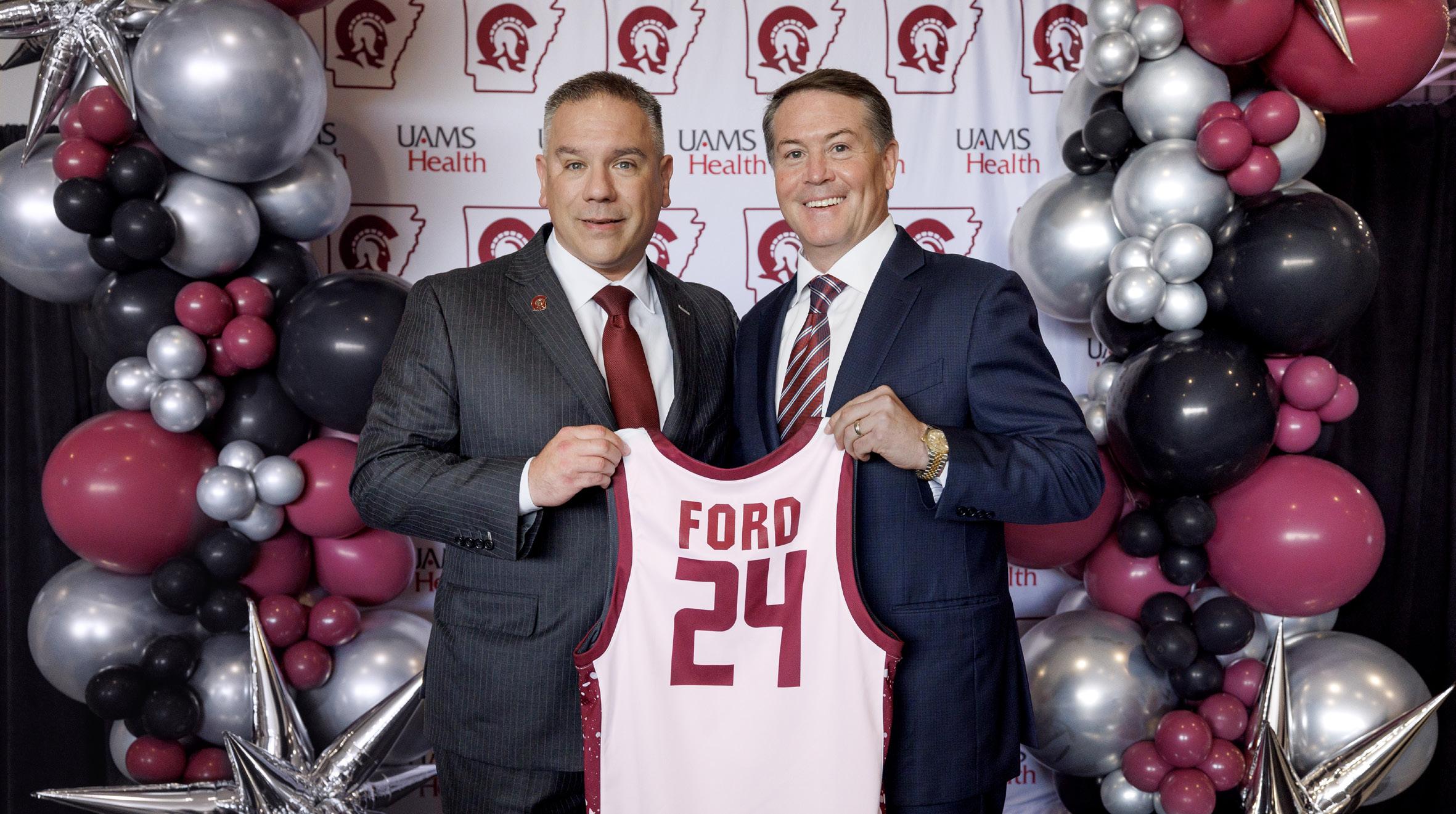
time investment, and turning down a job was not Pat’s thing, so that winter, girls basketball was coached in a way Webster County had never seen before. From a perch in the stands, Eddie would studiously observe the games and, when the time was right, dash off observations and advice on a small slip of paper. He would hand that paper to the small boy who could not have been more than 6, and little Travis Ford would traipse down past the maroon-and-gold-clad fans right onto the sideline to his mother, a personal courier system for basketball intel.
“She became district coach of the year, won all these accolades. Then she said, ‘I’m done,’” Travis Ford said, laughing. “So did she coach? She did. I wouldn’t call her a coach, but she did coach.”
Ford said that as he reclined in a chair just outside the Legends Room of the University of Arkansas at Little Rock’s Jack Stephens Center. His introductory press conference as the Trojans’ new men’s basketball coach had gone well, but he was gently kicking himself for not bringing up the story in his opening remarks. It sums up everything that Ford wants to represent: love for family, zeal for work, absence of fear, the mystique of hoops in Kentucky and an enduring enthusiasm for being in the gym.
For Frank Cuervo, Little Rock’s director of athletics, Ford represents something else — a carefully considered salvo in his push to reshape the Trojans athletic program. Backed by Chancellor Christina Drale, Cuervo has mounted a comprehensive athletics fundraising campaign, pushing for amenities such as a 24/7 golf training center, a basketball operations add-on to the Jack Stephens Center and, even further down the line, a longneeded on-campus baseball stadium.
Little Rock captured the state’s attention last spring with a run through the NCAA baseball tournament and just recently celebrated an Ohio Valley Conference championship for women’s golf. Little Rock is also home to the state’s sole Division I wrestling program, and the Trojans have a rising star in coach Neil Erisman, who has led the program to several conference titles and NCAA qualifiers.
All that said, for all but a handful of nonfootball-playing Division I institutions, Little Rock men’s basketball carries the flag. A healthy basketball program generates media coverage, fan interest, and, when things are rolling, boosters and stakeholders opening their wallets.
“All roads kept coming back to one coach,” Cuervo said.
Even by the standards of Division I basketball, where personalities loom large, Ford’s history puts him in a company of one. He played point guard for Kentucky High School Basketball Hall of Fame Coach Don Parson at North Hopkins High School in Madisonville. He then headed to Missouri, where he played for another hall of famer in Norm Stewart. After a year at Mizzou, Ford returned home to Kentucky to play for the indomitable Rick Pitino, helping the Wildcats to the 1993 Final Four.
“Every game was packed in high school. It was important. It was very important,” Ford said. “Then when you play for Kentucky, it prepares you for a lot. I’ve always said Kentucky basketball is not for everybody. You develop a true mental toughness because you could be 20-1 [and still get criticism]. It prepares you for a lot if you can get through it. Greatest fans in the world — great, great fans — but there is a tremendous amount of pressure.”
The hiring of Ford may define the era of AD Frank Cuervo, left, at Little Rock.
That was the thing with Ford; folks looked at him and saw a young man incapable of succumbing to outside factors. Even after a postcollege attempt at the NBA, Ford was considered so unflappable that his first coaching job was as head coach at Kentucky’s NAIA Campbellsville University. Not even Pitino — or other larger-than-life college hoops coaches such as Dan Hurley, Billy Donovan or John Calipari — started his career as a head coach. Ford did and, from walking onto the Campbellsville campus in 1997 to being fired at St. Louis in 2024, never did anything else.
Once in the job, he radiated composure on the sideline and on the court, but contrary to what the public saw, there was more going on beneath the surface. John Pelphrey, Ford’s roommate at Kentucky and former Arkansas Razorbacks head coach, remembers somebody with a wellspring
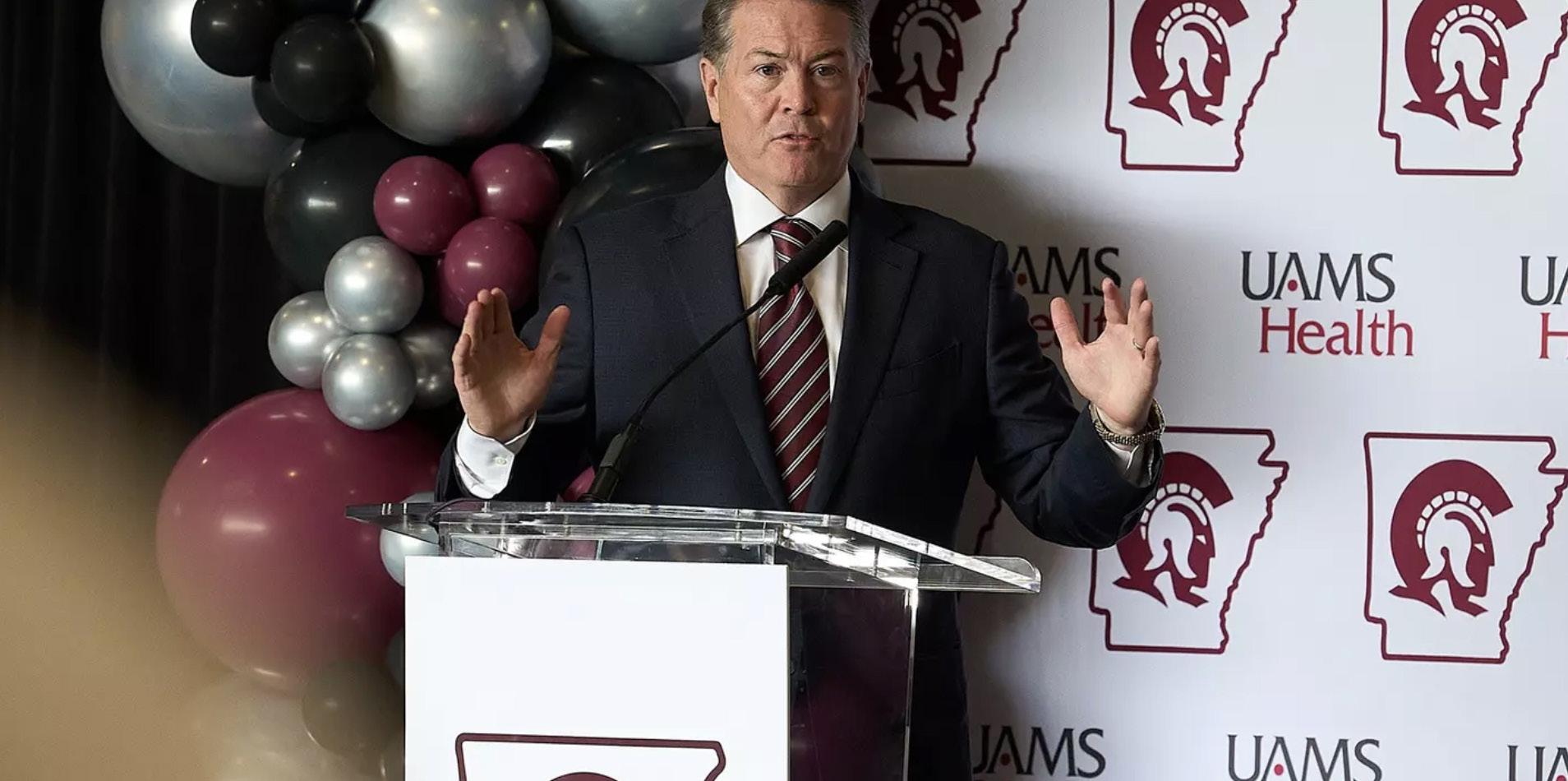
of kindness, somebody who would toss the keys of his red Corvette to Pelphrey without hesitation so his less-privileged teammate could navigate Lexington.
“I did not have a whole lot when I was growing up,” said Pelphrey, who hailed from the eastern Kentucky town of Paintsville. “I was just blown away by it, and I just found it to be incredibly kind and generous.”
Skip McGaw was a sophomore at North Hopkins whose skills were enough to get a call-up to the varsity when he met Ford, a precocious eighth grader who himself had raised eyebrows by making the varsity. McGaw saw the sweat equity his new buddy was pouring into the game, hours of solitary time when Ford would hone skills that so many assumed
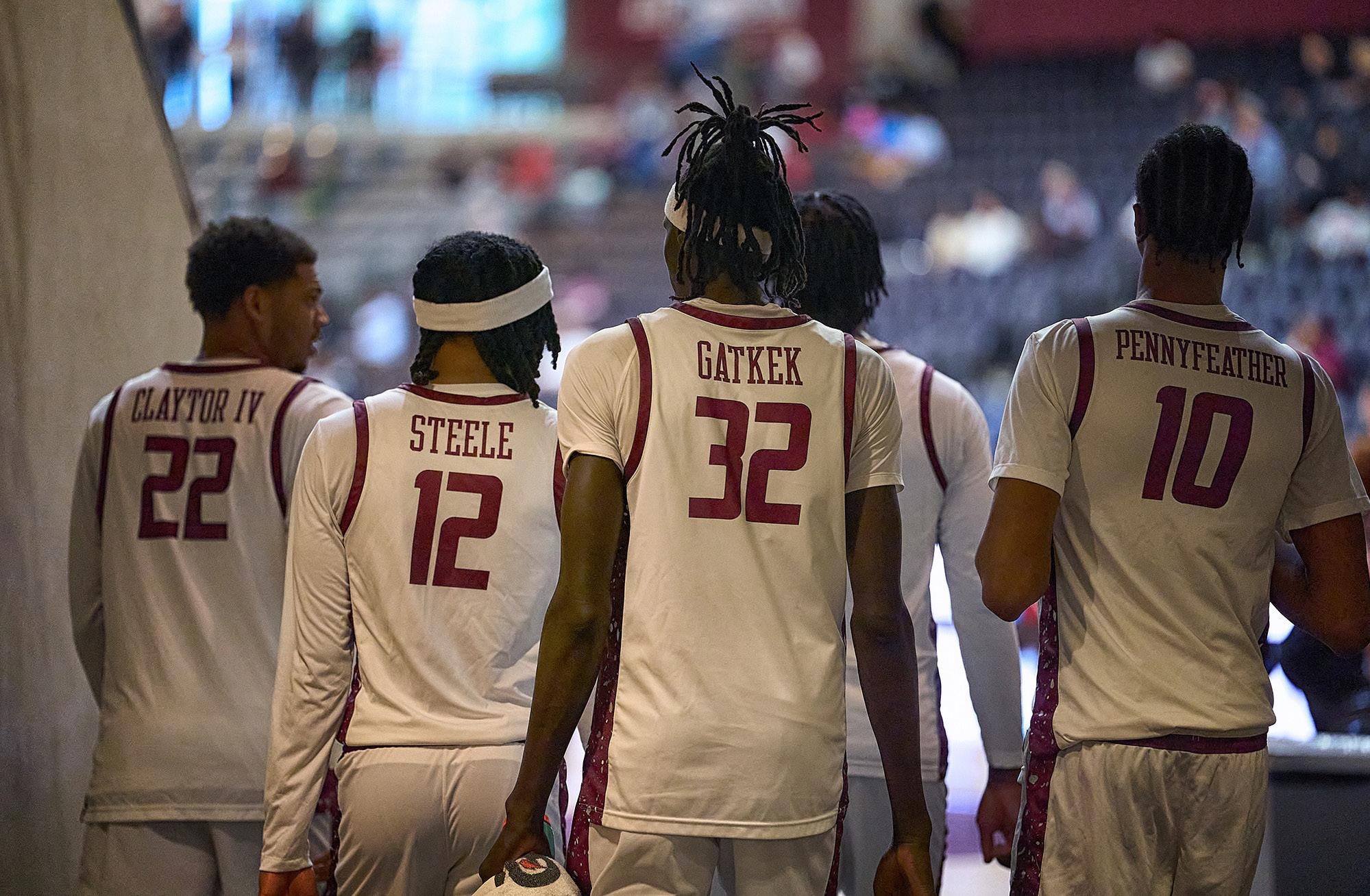
were simple natural talent.
“He just had a whole different gear and a whole different desire than most people had,” said McGaw, who walked on at Kentucky before embarking on a successful career in insurance. “He is a true friend. He’s got a huge heart. He cares about you.”
Here’s the thing about a huge heart: It can be broken. Ford parlayed his stretch at Campbellsville into a Division I coaching career that was peaking with his introduction as head coach at Oklahoma State in 2008. Ford Stuen arrived in Stillwater to play for his uncle as a walk-on and then followed him to St. Louis as a graduate assistant after Ford was fired in 2016.
Steun had spent his 20s walking toward a dream, and he was right at the cusp, being promoted to assistant coach under his uncle in 2020. Not one word was spoken of nepotism; one look at Steun’s frenetic work ethic matched with an enjoyment of being around people showed he was his own man.
The job took its toll — Steun began to develop abdominal pain, which he wrote off to ulcers, certainly not something unheard of in the coaching world. Then, during the Atlantic-10 tournament in March 2021, the pain became too much to bear. He was hospitalized and got the shocking diagnosis of liver failure. Then he was released only to be hospitalized again on Easter Sunday. Three days later, Stuen developed an infection from which he would never recover. He died May 11, 2021. The last photo on his Instagram account was Valentine’s Day that year, standing next to his wife, Courtney,
Ford’s previous head coaching stops include NAIA Campbellsville, Eastern Kentucky, UMass, Oklahoma State and St. Louis.
Injuries decimated the 2025-26 Trojans, who limped to a 12-20 finish.
holding his daughter Lucy in his arms.
Ford could not shake the questions that, naturally, had no answers. How could this happen to a healthy, energetic 29-year-old with no previous history of major medical issues? Why was he released from the hospital to begin with? Did coaching and winning basketball games even matter anymore?
He did what he knew, pressing forward even on days when the grief made him feel like he was walking through wet cement. He was fired at St. Louis at the conclusion of a losing 2024 campaign, and maybe a scar came from that too.
Collegiate head coaches often ride the wave of hirings and firings and know how to put on a brave face amidst the chaos. How does someone go through a decades-long cycle of public welcomes — from Campbellsville to Eastern Kentucky to Massachusetts to Oklahoma State and finally St. Louis — followed by public rejections and not come out of it emotionally unscathed? Ford had always answered the phone after being fired, but for the first time in his life, he was letting it ring.
“After St. Louis, I had some opportunities that I didn’t even entertain,” Ford said. “I knew, in my mind, that after the first year, I’d want to get back.”
The year came and went, and Ford knew he was not ready. He did some television, primarily calling Kentucky games, and was an immediate success. There were certainly pros to having money in the bank and flexible working hours. The pull toward coaching returned, finally, in 2025, but Ford would do it his way. He became what he never could be as an instantaneous head coach: a student of the profession. He called friends and visited other college basketball programs for the first time in his career.
He also sat down with his wife, Heather, a quintessential coach’s wife who always found positives in each and every coaching stop. Now, though, it was time to talk. He and Heather discussed the future and what an ideal place to live would look like. College coaches usually are not ones for local amenities — just point them toward the gym — but Ford was not the same person he once was. The loss of Stuen still ached, and in May 2025, Eddie
Ford passed away at 81, having helped hundreds if not thousands of young men down their basketball paths.
Travis Ford knew his days of using coaching jobs as stepping stones were over.
“I’ve already stepped on stones,” he said.
So it came to be that Ford and Cuervo mutually began checking one another out. Cuervo felt it necessary to start with a new canvas as far as basketball went, parting ways with former coach Darrell Walker after a 12-20 finish. From the start, Cuervo liked Ford’s professionalism and seemingly endless list of contacts in the world of hoops.
find. No explanation could possibly make Stuen’s sudden passing sting any less, and just like many adult children who have lost their parents, Eddie Ford still pops into his son’s mind when he least expects it.
Travis Ford briefly broke down while at the podium during his introductory presser, and it quickly became clear why so many members of the Ford family had made their way to Little Rock, Pat Ford included, still looking like the PE teacher and unexpected coach she once was.
Travis Ford may still be the quintessential head coach, the one who has never been anything other than first in command, but the man who arrived in Little
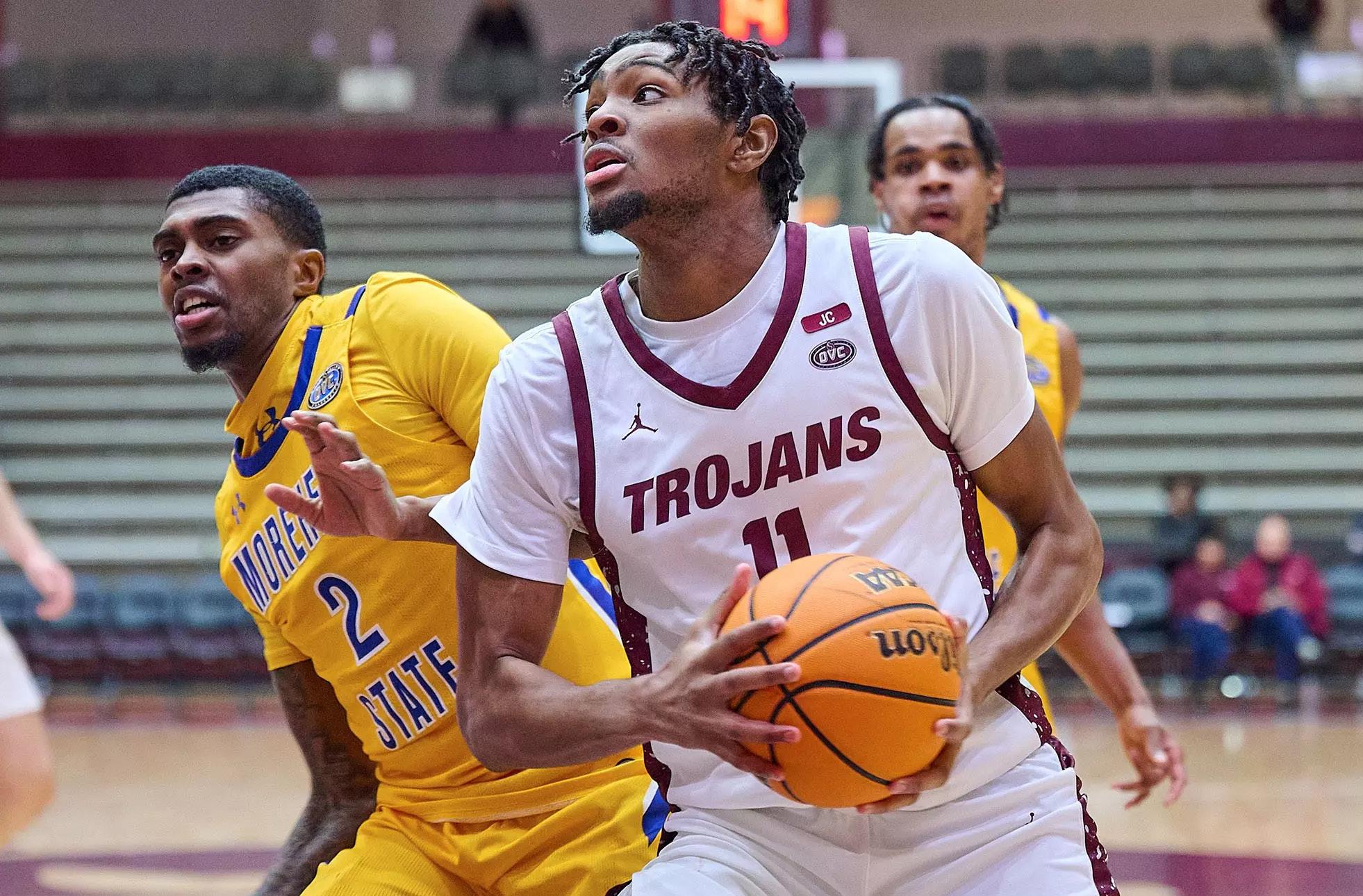
Ford liked the idea of a city of Little Rock’s size, an arena that remains a showpiece after 20 years and a forwardlooking administration. He would eventually reach out to Chris Beard, the coach who led the Trojans to their last NCAA tournament appearance in 2015. Beard, now at Ole Miss, had good things to say, and at long last, Ford was ready.
The new head coach was officially introduced in Little Rock March 26 a different man than the one who left St. Louis in a haze of uncertainty and lingering pain. Dealing with the premature death of a loved one can be a lifetime process because closure and solid answers are difficult to
Rock is one deeply dependent on his support structure, maybe more so than most. He reserves a special place in his heart for those he grew up with — he and Pelphrey remain close, and McGaw recently flew down to Florida to join the Fords for the wedding of their daughter, Kyleigh.
Now comes Ford’s favorite part: the work, the grind, the daily challenge of getting better. Life’s rhythms have returned, and with that comes the feeling that in coming to Little Rock, Ford has regained something that was once lost.
“I like it,” Ford said. “No, I love it. It’s just the way I’m wired, and I’m going to put everything I have into it.”
The Trojans return 6-7 guard Johnathan Lawson, whose 15 points a game led the team in scoring last season.
ARKANSAS’ GREAT OUTDOOR NEEDS
Ozark Outdoor Supply supplies the traveling jones
By Mary LeSieur


Ozark Outdoor Supply has been a Little Rock staple for quality outdoor gear for almost seven decades, and with an inventory that almost never runs dry, the specialty outdoor retailer is the fix for those last-minute needs or wants. Carrying retail lines from Patagonia and The North Face to Dagger and AquaBound, Ozark Outdoor Supply offers premium brands for even the most extensive traveling needs.
Jim Frank, owner of Ozark Outdoor Supply, has been at the store since 1986. What started as his brother bring -
As Arkansans plan their summer getaways, it becomes a sprint to complete the growing, daunting laundry list of tasks, purchases and coordinating. After months of preparation, the week of the trip approaches, and almost certainly, a box is left unmarked. The last-minute buy might be nerve-wracking for most, but for Ozark Outdoor Supply, it is just another day of business.
ing him into the fold during his high school years quickly became Frank’s full-time gig. Since then, he has spent years cultivating a unique retail line and gadget collection ideal for the adventure junkie.
“One day, on a whim, my brother called me and said the store was shorthanded,” Frank said. “I started working at 16 years old, helping out around the store, and just grew to love it.”
After so much time with the brand, Frank said that he learned early in his career that his inventory needs and demands had to

be perfected. Upon joining the Ozark team to run the storefront in 1988, Frank saw the store’s issues and that its goals needed to be restructured.
“At the time, Ozark was not in one of its best times financially, and I had to define what we were going to do and how we were going to do it,” Frank said. “Through the years, it paid off. We worked out our problems and finally got the inventory in here. It coincided with demand; people wanted to get outdoors more, and we just responded to what they were looking for. After 52 years, it’s proven to be a pretty great recipe.”
Ozark Outdoor Supply has seen a variety of these demands over the years, but its approach to having such an assortment of merchandise came from years of what Frank called “digging out of already dug holes.”
“In the ‘80s and ‘90s, I decided that we needed to really bring in inventory and fill this place up,” Frank said. “We overfilled it at times, and through the years, we’ve realized that we can’t be everything, so we have to make decisions based on that.
“It can get out of hand, so I learned that not everyone is going to walk into the store to buy a $300 coat; sometimes they need a hat, water bottles, a pair of socks or accessories. That’s what they expect you to have day in and day out because if they need it tomorrow, they need it now.”
Trial and error taught Frank about his customer base’s everyday needs, but another factor in his success was evaluating his clientele. Frank said his storefront caters to procrastinators, serving as a one-stop shop for travelers with last-minute needs. Frank
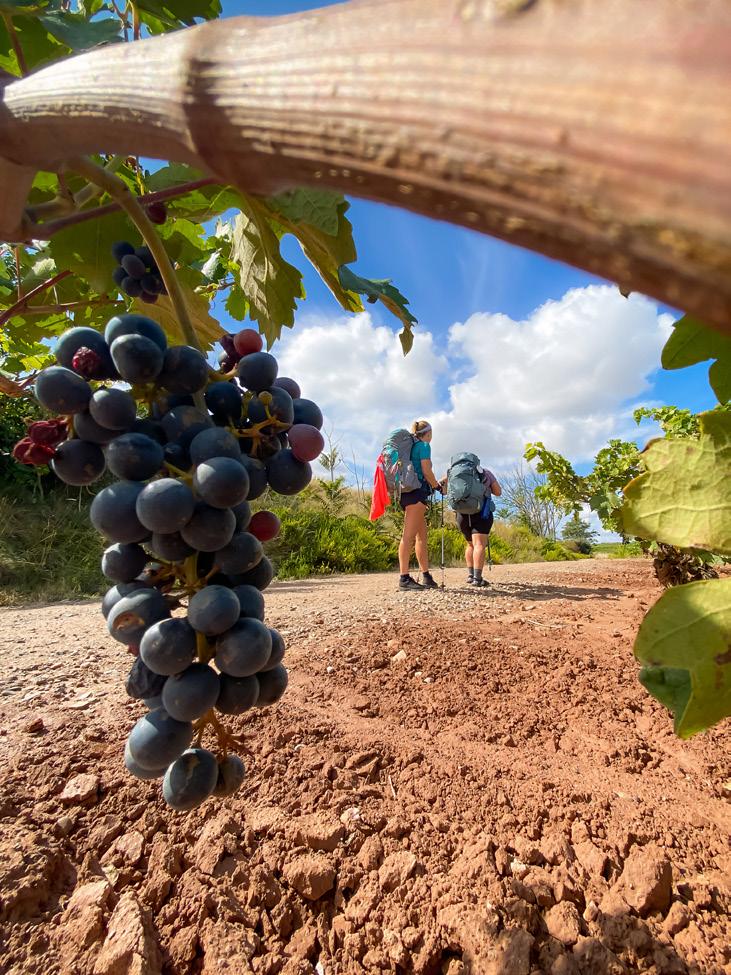
attributed Ozark’s success story to his mix of great customer service and a balanced inventory.
Frank and his team at Ozark are seeing an influx of demand for Camino trip essentials in their current market. Camino trips, also referred to as Camino de Santiago journeys, are a nuanced form of hiking in which travelers hike along the trails that lace through Europe. From young adults graduating from college to senior citizens, Frank said people from all walks of life are seeking a storefront with specific merchandise, and that influx has brought new products and gadgets to Ozark.
“We’ve been seeing a lot of people going on Camino trips,” Frank said. “People are getting back out and going abroad, and I’m amazed at the places people are traveling. The sales for Camino trips are footwear, trekking poles and backpacks, so it’s been something we’ve prepared for in the last three years.”
What differentiates Ozark Outdoor Supply is its widely known motto: “We don’t just sell outdoor gear; we use it.” Before a card is swiped or a card reader chimes, the expert team at Ozark Outdoor Supply extends its own expertise, ensuring a quality customer service experience.
“We try to point people in the right direction,” Frank said. “A lot of times, we have an employee who’s been to where a customer is going. We’ve got employees who’ve gone to most places, and there are things they’re going to run into. It’s our job to make them think about what they need.
“Sometimes they buy those needs, and sometimes they come back and say, ‘I really wish I had that.’”


Hotel Pines Awaits New Bustle
By Mark Carter / Photos courtesy of KUAR
Pine Bluff sits right where the Delta’s lighter shade of farm green meets the darker shade of south Arkansas timberland, where the crops turn from rice and soybeans to loblolly pine and oak.
Both shades of green have resulted in good business for Pine Bluff, long the de facto capital of the Mississippi Delta in Arkansas. The city’s downtown throughout the first half of the 20th century was bustling. Union Station was alive with arrivals and departures, welcoming many passengers in town on business, and the historic Hotel Pines was just a block away, eager to accommodate them.
These days, there are no more visitors to the old train station, and the only ones to the Hotel Pines are architecture buffs.
The grand old hotel, once considered one of the finest in Arkansas if not the South, has been closed since 1970 but was previously the beating heart of a vibrant downtown. Save for a few businesses that operated out of its street front in the 1980s, it has remained vacant ever since.
Designed by George R. Mann, the architect behind the Arkansas State Capitol, the old Marion and Grady Manning hotels, and the Arkansas Gazette building in downtown Little Rock, the Pines was opened in 1913 on the corner of Main and West Fifth streets. The opening even drew then-Gov. George Washington Hays, who gave a speech to commemorate the opening.
The six-story, U-shaped structure is considered architecturally significant with its Classical Revival detailing, a front portico projecting over Main Street, a three-bay portico, a third-floor balcony, and a lobby that featured gray marble columns and a stained-glass skylight.
The Pines quickly became the social center of the city, a hub for business meetings, civic events and society balls. Its location near Union Station afforded travelers an easy walk to an upscale stay as the hotel’s porters carried passengers’ baggage to and from the train station.
When passenger rail service to Pine Bluff stopped in 1968, however, the Pines lost much of its clientele, and its days were numbered, somewhat foreshadowing the slow decline that would eventually envelop the city.
“It was probably one of the finest hotels in Arkansas at the
time, and I think it’s really interesting that you see it kind of tracks with the development patterns of Pine Bluff,” Vanessa McKuin, executive director of Preserve Arkansas, told KUAR.
Over the years, efforts that garnered little momentum were launched to restore the Pines, which was listed on the National Register of Historic Places in 1979. Today, it serves as a reminder of what once was, not only downtown but across a city that has experienced consistent population decline for roughly 40 years. Now owned by a nonprofit, it was at one point owned by the city, which briefly considered razing it.
One local preservationist who has championed the restoration of the nearby Saenger Theatre, Kathy Majewska, still sees a future for downtown Pine Bluff and its iconic properties. She believes if the Saenger can be restored, momentum will build that will envelop the Pines and, eventually, all of downtown Pine Bluff.
“We’re all committed to moving beyond the old image of Pine Bluff,” Majewska said. “I truly believe things are be ginning to shift. There’s a sense that light is breaking through.”
Majewska has even been successful in wrangling small federal grants to keep the old theater standing, and she be lieves the same determination could be applied to the Pines.
City officials have long echoed those sentiments, but so far, the Pines sits alone on Main Street awaiting the day when down town sings again with the bustle of people and commerce.
Information for this article was pro vided by the Encyclopedia of Arkan sas and Explore Pine Bluff.






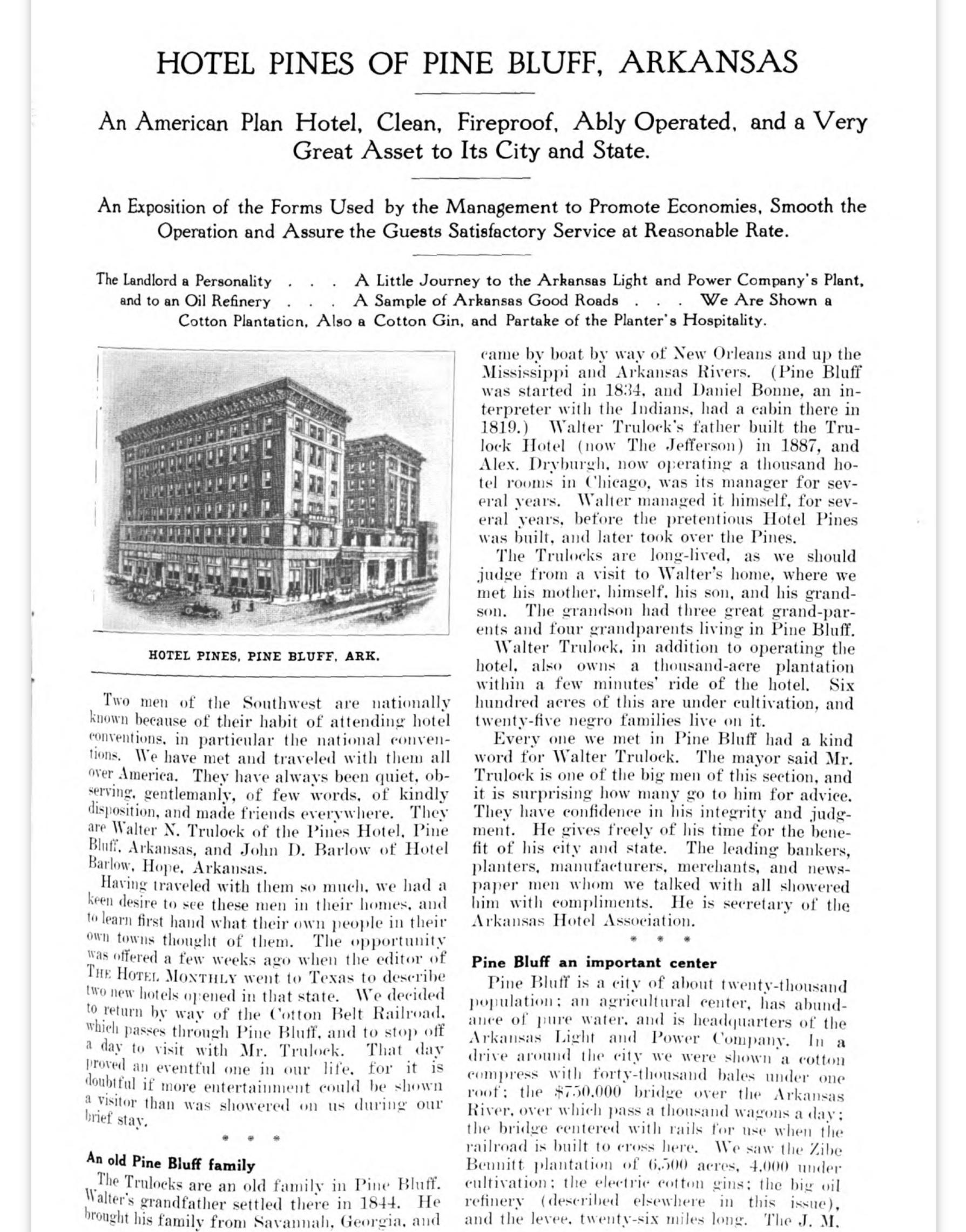

We’re all committed to moving beyond the old image of Pine Bluff. I truly believe things are beginning to shift. There’s a sense that light is breaking through.
— Kathy Majewska local preservationist
OVERREACTING OR OVERDIAGNOSING?
By Mary LeSieur
When you think about childhood friends, how often do you think about fellow classmates who, figuratively and literally, could not stay in their seats? Maybe there was a close friend who commonly needed a stimulus to operate and function. Among young children, hyperactivity and hyperkinesis can be traits that are outgrown, but in recent years, the diagnosis of the neurobiological condition attention-deficit/hyperactivity disorder — better known as ADHD — has seen a consistent rise.
I was diagnosed with ADHD as a preteen before there was concern on a societal level. The only concern I ever heard about was whether or not I was paying attention in algebra class. (Sorry, Mom and Dad. I was not.)
Over the years following my diagnosis, I navigated the ups, downs and realities of being neurodivergent. It did not mean I was handicapped. Instead, my diagnosis meant that I had to jump through extra hoops to function like a neurotypical individual.
Although I have fully come to terms with my neurodivergent mind, it seems that now more than ever, society believes that the rise in ADHD is a product of overdiagnosing and overmedicating. Whether you want to blame COVID-19, a medical provider or big pharma, ADHD diagnoses have grown tremendously in the last several years. But is that something that should actually be concerning?
Data suggest cases of ADHD are up. Kevin Antshel, Syracuse University professor and director of the Ph.D. program in clinical psychology at Syracuse University, cited data from a 2022 university study indicating that 7 million children ages 3 to 17 had been diagnosed with ADHD, an increase of 1 million from 2016. Similarly, the 2021 report from the Journal of Managed Care & Specialty Pharmacy cited that almost 9 million adults in the U.S. have ADHD.
“I believe that ADHD diagnosis rates will continue to increase in the United States,” Antshel writes. “I also worry that this increased identification will amplify some of the existing inequities that we have currently in ADHD diagnosis — lower rates in historically marginalized populations.
The increase in ADHD diagnoses might also communicate that overdiagnosis due to medicalization of everyday symptoms is occurring. Who has not experienced moments of distractibility and a consequent loss of productivity?”
Fast forward to the year 2026 — nearly 25 million people who live in the U.S. have an ADHD diagnosis. A study done by Children and Adults with Attention-Deficit/Hyperactivity Disorder found that 1 in 9 children and 1 in 16 adults has ADHD. CHADD’s study also found that while some do not medicate, there has been an increase in children and adults taking medication.
The numbers from those studies show an increase, and it is undeniable that the prevalence of concern is rapidly increasing. However, the more I research, the more I ponder: Are we overdiagnosing symptoms of attention deficit that, neurologically, everyone has, or do we just know more about neurodevelopmental disorders?
While I cannot directly answer that question due to my substantial lack of any medical knowledge or expertise, what is abundantly clear is the societal stigma that surrounds neurodevelopmental
disorders — the increased categorizing of ADHD as something that “cannot be cured” or a “fake disorder” or sometimes it being labeled as “general laziness.”

Some of our greatest mathematicians, innovators, leaders, artists and geniuses have either been diagnosed with or were deemed highly likely to have a neurodevelopmental disorder or neurobiological condition. Remember the lightbulb? Maybe the equation ‘E = MC2?’ How about an iPhone, iMac or any Apple products? What about Microsoft, IKEA, JetBlue or Charles Schwab? You get the point.
ADHD is not an intellectual disfigurement or an ailment; it is simply norepinephrine neurotransmitters not functioning as they should, which affects dopamine in the brain. Much like any other neurological diagnosis, disorder or behavior, the 21st century has seen an increase in studying and researching neurodevelopment disorders such as ADHD, and since 2023, more than 1,800 academic articles have been published about the topic.
Think about it this way: The 20th century laid the groundwork for what we know about ADHD, and the 21st century expanded on it. Hence, we know more about it. Research has proven time and time again that the link is hereditary, environmental and genetic. (Please note, ADHD is not caused by excess adolescent screen time or an excess consumption of sugar, although those factors may have side effects of their own).
Like it or not, ADHD has been around longer than every human currently on this planet, and rates will not magically dwindle overnight. If you look at it from another angle, consider it a perk of 21st-century medicine and research — we have more studies on how the brain functions, which is tremendously valuable to those with ADHD. With that being said, this is no longer a question of overdiagnosing or overmedicating. It is, instead, a matter of overreaction to what society defines as abnormal.
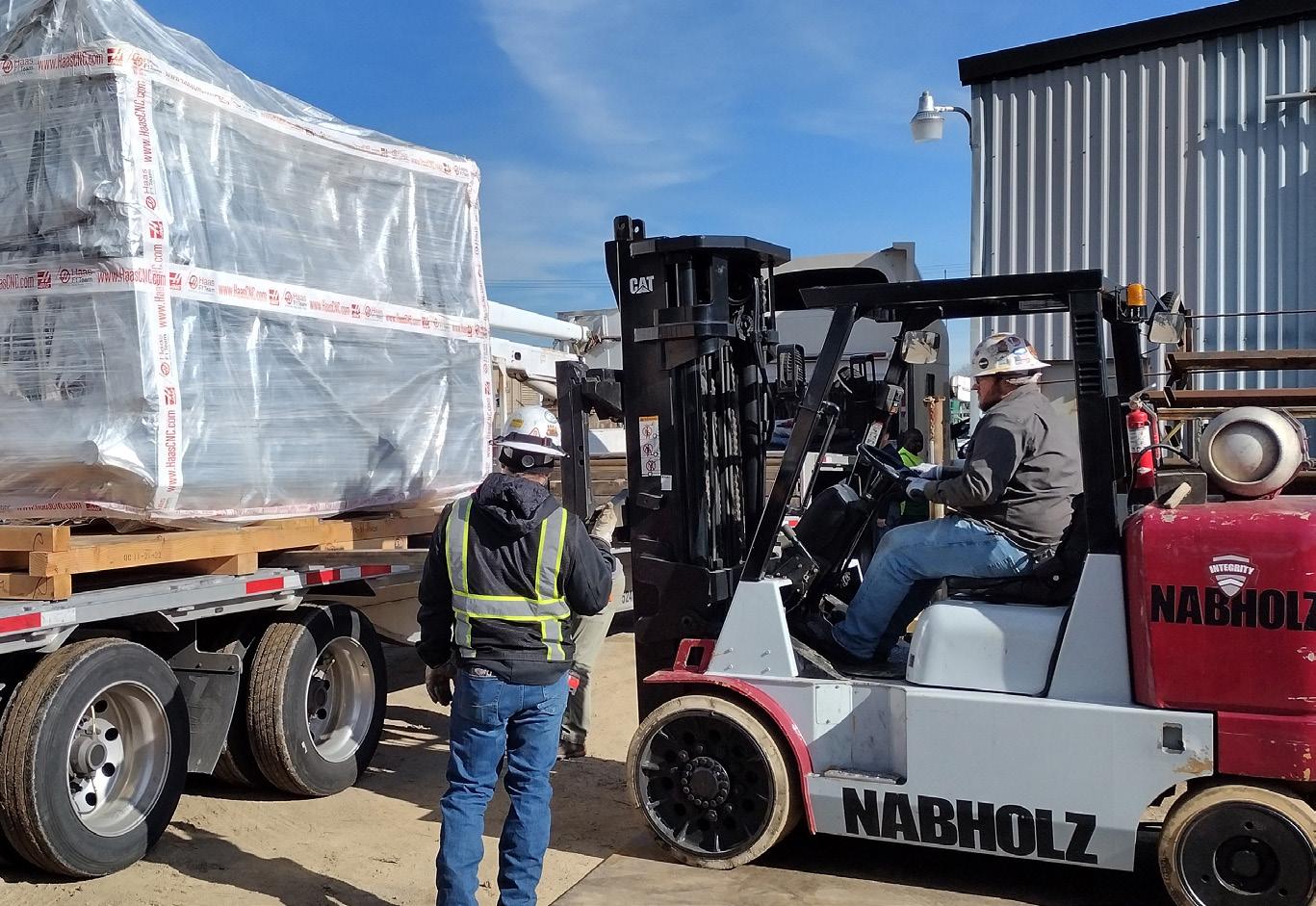

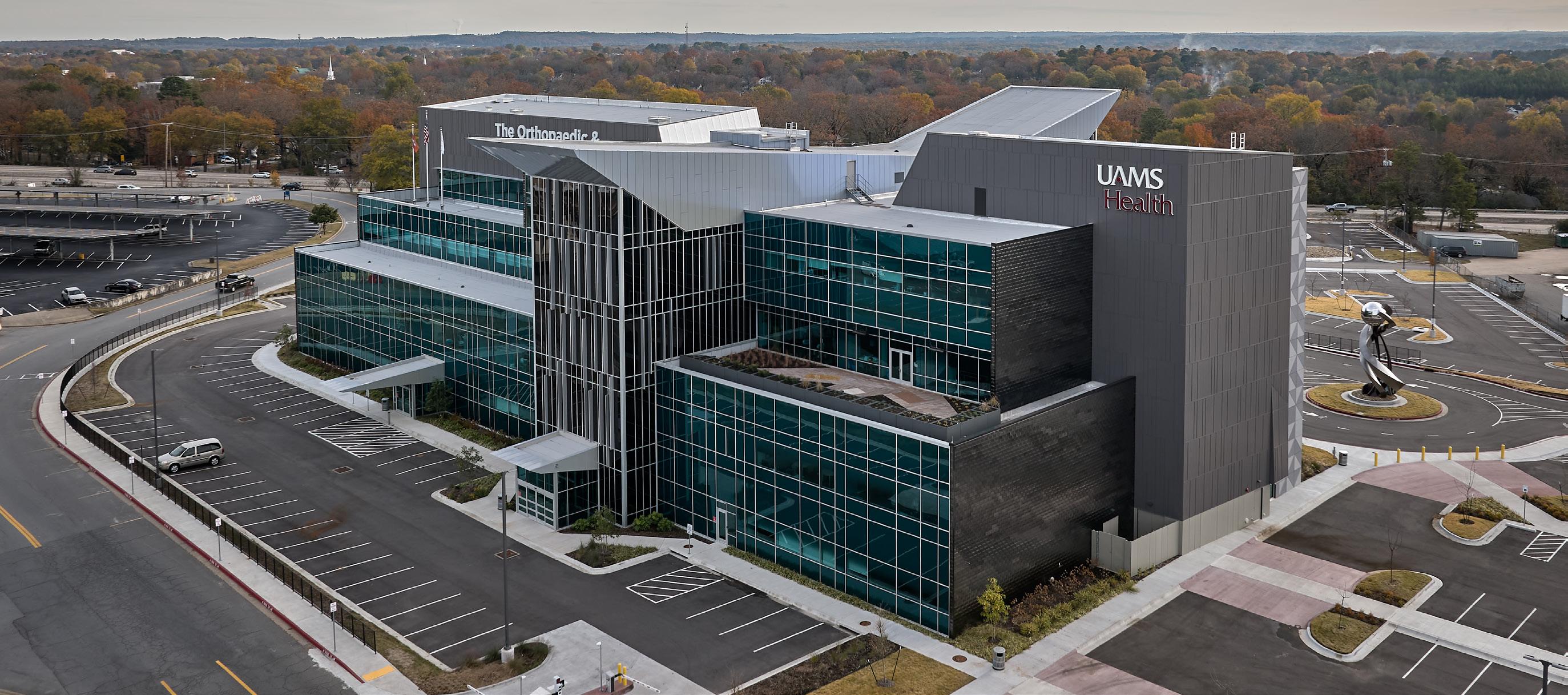
WE BUILD to support our clients & communities
Founded as a small construction company over 75 years ago, Nabholz has grown into a strong team of industry professionals with experience navigating projects of all scopes and sizes. From construction services and facility improvements to machinery installations and complex infrastructure, we help clients maximize every project’s potential.

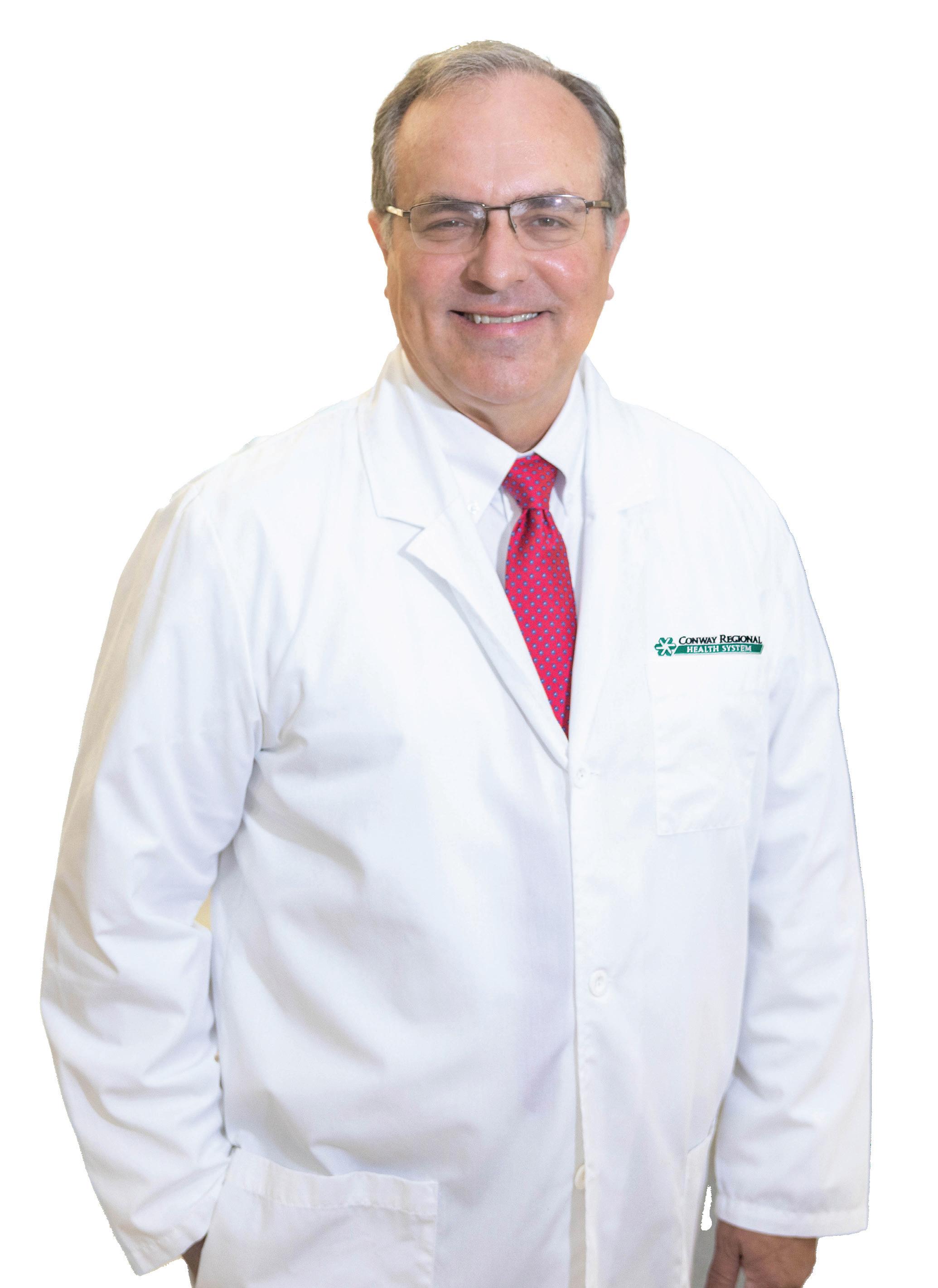

At Conway Regional Ear, Nose, & Throat Clinic, Dr. Scott Ballinger and Lillian Jones, AuD, work together to provide connected care across ENT and audiology, ensuring patients receive comprehensive support for their ear and hearing health. From ear infections, balance disorders, and allergies to hearing concerns and tinnitus, their partnership supports patients from diagnosis through ongoing management. Together, they blend access and excellence to deliver intentional care to each patient.