Visit Hot Springs CEO
Visit Hot Springs CEO
Steve Arrison retiring after nearly 30 years
Steve Arrison retiring after nearly 30 years





Visit Hot Springs CEO
Visit Hot Springs CEO
Steve Arrison retiring after nearly 30 years
Steve Arrison retiring after nearly 30 years


Strong communities are built through thoughtful investment.
Stephens ranked 3rd nationwide* as bond underwriter for negotiated sales and use tax bond transactions in 2025.
Stephens is proud to put that experience to work, helping cities and towns across Arkansas finance transformative projects through sales and use tax bonds — supporting infrastructure, public facilities, economic development, and long-term growth.
*Source: LSEG Securities Data




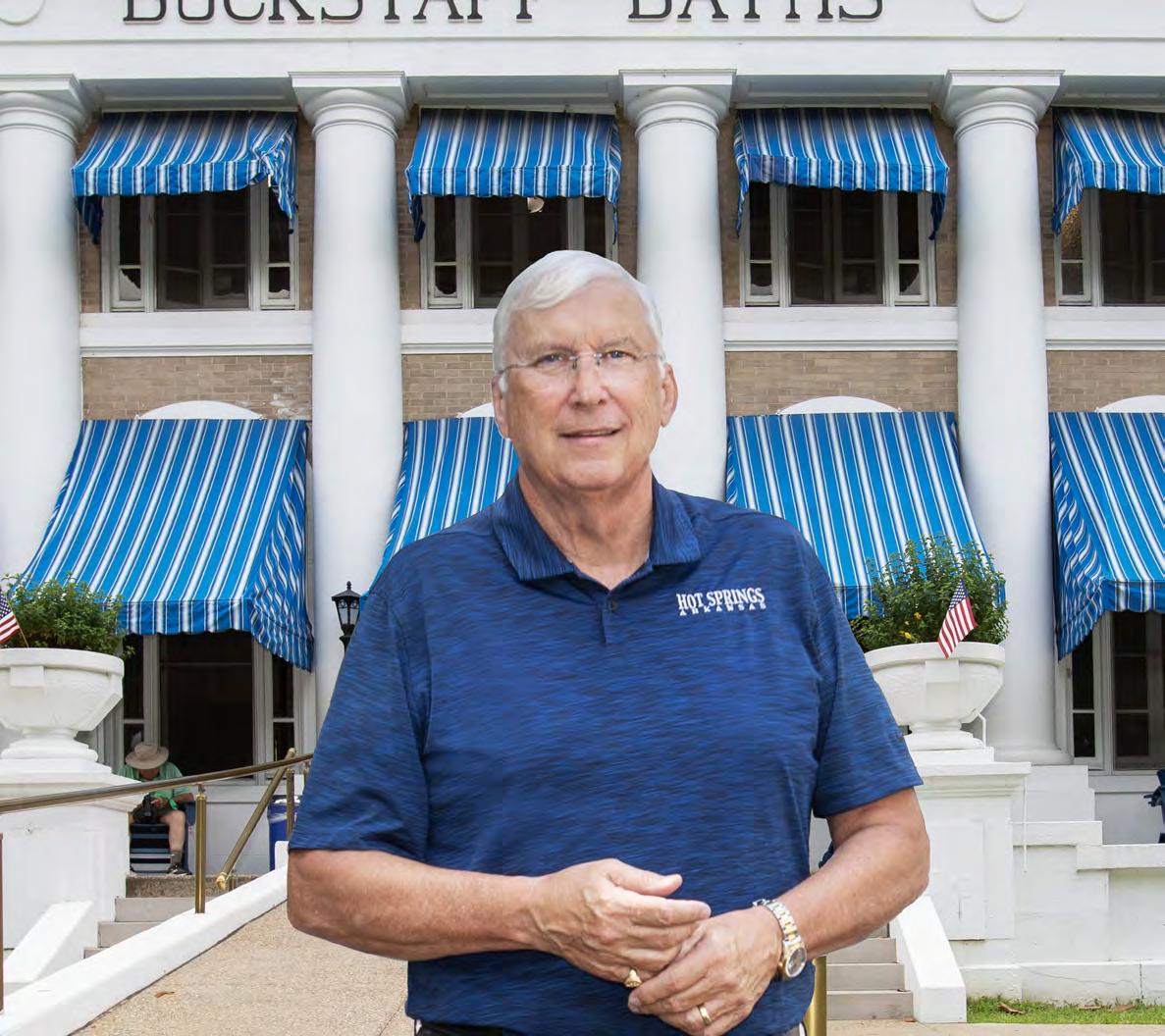
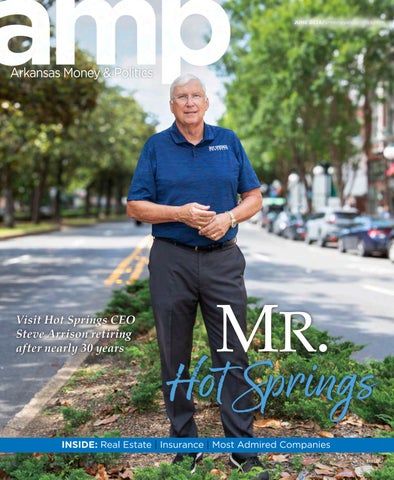
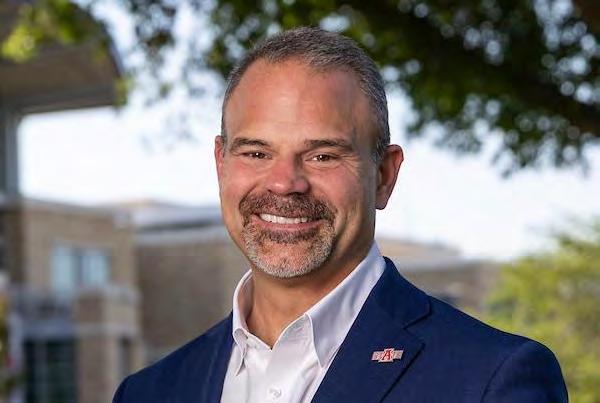
For decades, the soon-to-retire Steve Arrison has been the man behind the scenes promoting Hot Springs and all the tourism draws it has to offer.
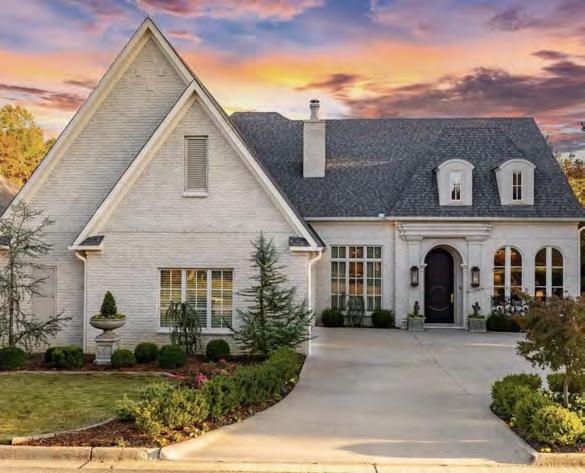

HIDDEN COSTS
Of all the professions in the world, agriculture is arguably the most difficult, dangerous and financially risky career there is.

While northwest and central Arkansas continue to serve as primary hubs of development, there are few places in the state without growth.
Downtown districts across Arkansas are experiencing a renaissance like never before. The Natural State is investing in Main streets.
The U.S. Census reported that Arkansas grew 3.4 percent between 2020 and 2025, and several areas are poised to grow at a much higher rate.
Arkansas is filled with valuable rural real estate, and the market for agricultural and recreational land has stabilized following the COVID-19 pandemic.

AMP readers spoke, and their preferences are included inside on everything from most admired bank to most admired cleaning service.
Alleviant Integrated Mental Health has grown to 150 total employees and 12 locations in multiple states, serving more than 120,000 patients annually.
Business owners need life insurance on two levels — personal coverage that protects their families and professional coverage that protects their businesses.
Healthcare costs continue to rise, and for Arkansas employers, the challenge of providing quality benefits while also managing expenses has become increasingly complex.
Companies are springing up across the country that use advanced projection technology to transform 2D blueprints into life-sized spaces.
Nestled in the artsy SoMa district of Little Rock is AcScents Soap Co., a one-of-a-kind boutique specializing in all-natural beauty products for men.
Those seeking to catch a glimpse of the office environments of the future need only make their way to the north side of the Arkansas River.
PRESIDENT & PUBLISHER
Heather Baker | hbaker@armoneyandpolitics.com
EDITOR-IN-CHIEF
Dwain Hebda | dwain@armoneyandpolitics.com
SENIOR EDITOR
Mark Carter | mcarter@armoneyandpolitics.com
ASSOCIATE EDITOR
Mak Millard | mmillard@armoneyandpolitics.com
EDITORIAL COORDINATOR
Darlene Hebda | darlene@armoneyandpolitics.com
COPY EDITOR
Sarah DeClerk | sdeclerk@armoneyandpolitics.com
STAFF WRITERS
Doug Crise | dcrise@armoneyandpolitics.com
Alex Hardgrave | ahardgrave@armoneyandpolitics.com
Mary LeSieur | mlesieur@armoneyandpolitics.com
MANAGING DIGITAL EDITOR
Kellie McAnulty | kmcanulty@armoneyandpolitics.com
ONLINE WRITER
Kilee Hall | khall@armoneyandpolitics.com
PRODUCTION MANAGER
Mike Bedgood | mbedgood@armoneyandpolitics.com
GRAPHIC DESIGNERS
Jerry Cordova | jcordova@armoneyandpolitics.com
Lora Puls | lpuls@armoneyandpolitics.com
Lee Smith | lsmith@armoneyandpolitics.com
SENIOR ACCOUNT EXECUTIVES
Greg Churan | gchuran@armoneyandpolitics.com
Michelle Daugherty | michelle@armoneyandpolitics.com
Mary Funderburg | mary@armoneyandpolitics.com
Karen Holderfield | kholderfield@armoneyandpolitics.com
Ryan Parker | ryan@armoneyandpolitics.com
Carrie Sublett | carrie@armoneyandpolitics.com
EXECUTIVE ASSISTANT
Jessica Everson | jeverson@armoneyandpolitics.com
ADVERTISING ASSISTANT
Katie Beth Smith | ksmith@armoneyandpolitics.com
ADVERTISING OPERATIONS MANAGER
Jay Danzy | ads@armoneyandpolitics.com
ADVERTISING OPERATOR
Lara Keck | ads@armoneyandpolitics.com
CIRCULATION
circulation@armoneyandpolitics.com
INTERNS
Adison Wayne
ADMINISTRATION
Marissa Porter | ayoffice@armoneyandpolitics.com
CEO | Vicki Vowell
TO ADVERTISE call 501-244-9700
email hbaker@ armoneyandpolitics.com
TO SUBSCRIBE armoneyandpolitics.com/subscribe
CONTRIBUTORS
Jane Colclasure, Jamie Lee, DeWaine Duncan, Ryan Parker, Elon Turner

Employers are choosing to help employees save for education through after-tax direct deposits into their Arkansas Brighter Future 529 account.
So little by little, with each paycheck, employees can build their education savings. Best of all, offering this innovative benefit requires no
added costs, systems or contracts. Bottom line: it’s a win-win for you and your employees.
Look into adding the Arkansas Brighter Future 529 Plan to your benefits package today. It is a great way to show current and potential employees you support their dreams.
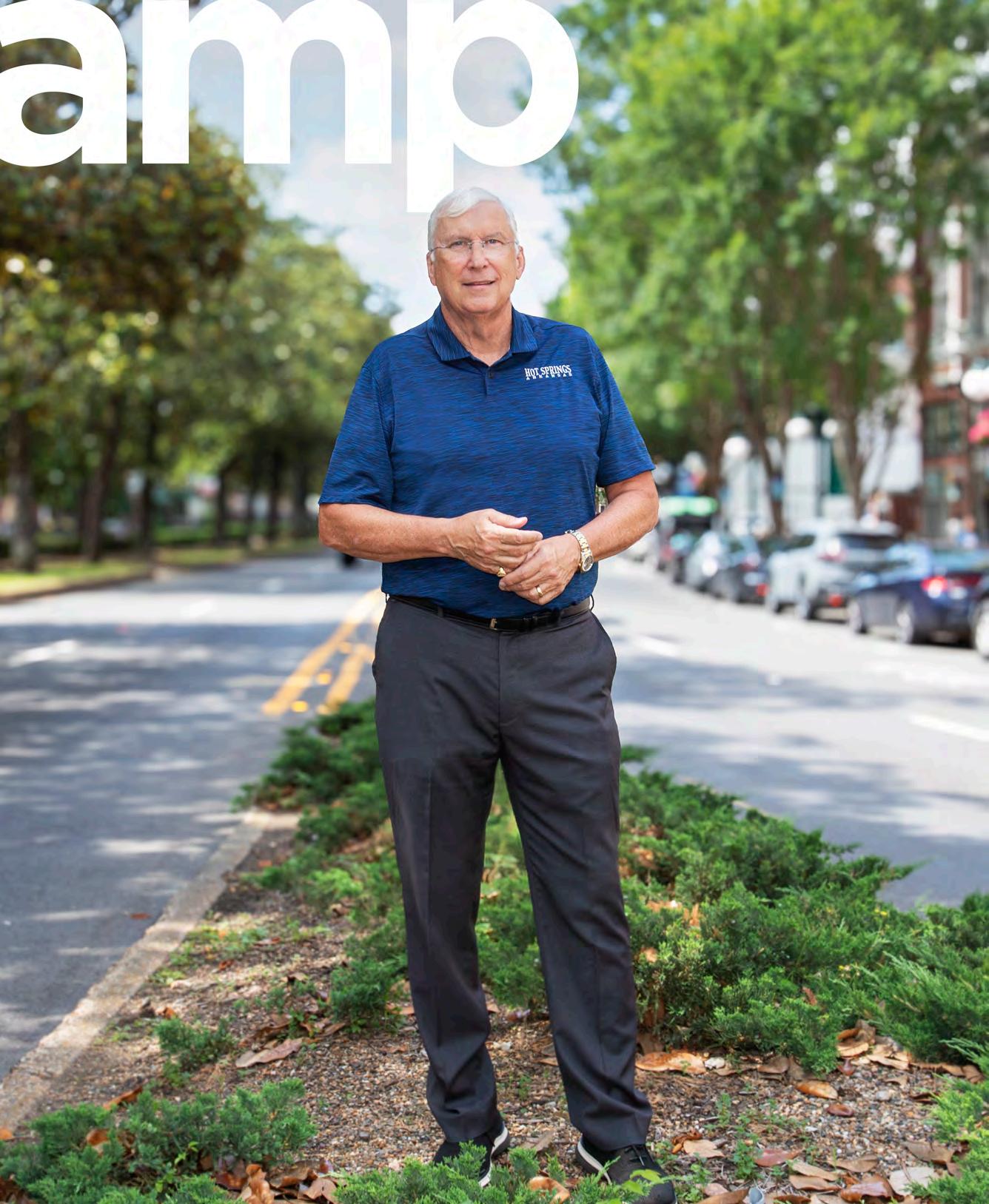
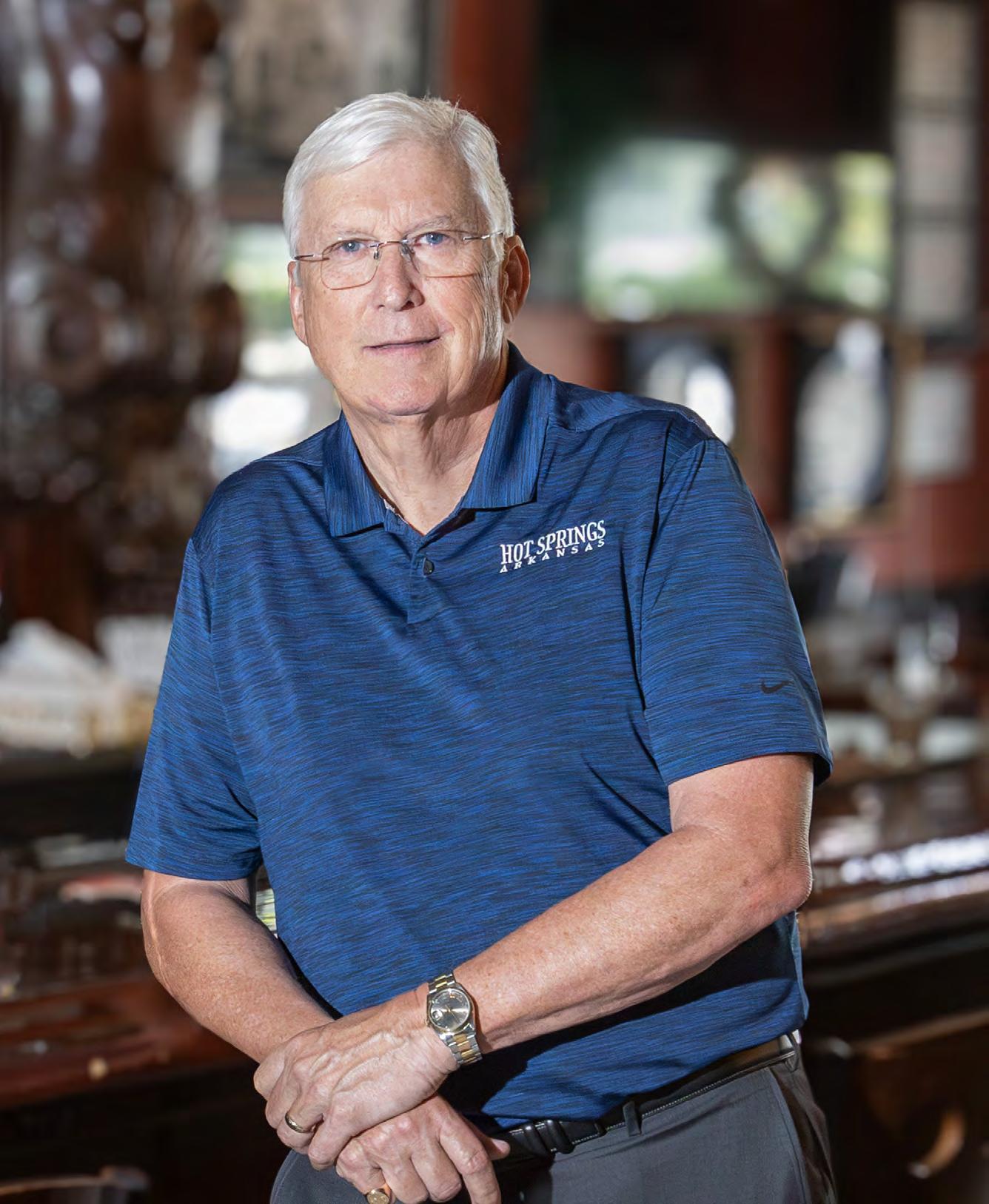
Steve Arrison was photographed by Jane Colclasure on Bathhouse Row in Hot Springs. Arrison is retiring later this year after promoting Spa City tourism for decades.
Coverage starts on page 14
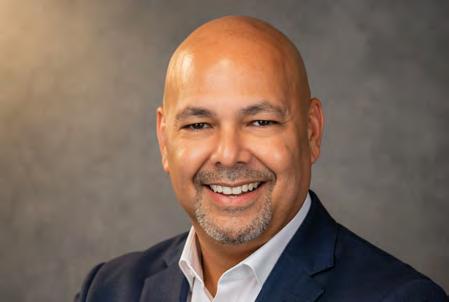
DEVIN HEATH TO SUCCEED STEVE ARRISON AT VISIT HOT SPRINGS Congratulations and welcome!! Exciting times ahead.
Dannet Botkin
MEDICINE MAN: DR. C. LOWRY BARNES, UAMS CHANCELLOR, IS THINKING BIG
Proven leader and excellent physician. We are so blessed to have him in Arkansas. Robyn Lowery Richardson
NEWEST BUILDING AT UA’S WALTON COLLEGE WILL CARRY DILLARD NAME
This will be a fantastic addition to our college. We desperately need it!
Thank you so much, Mandy and Bill Dillard II!
Mark Zweig
WILLIAM JONES PROMOTED TO MARKET PRESIDENT FOR CHI ST. VINCENT NETWORK
Well deserved and an outstanding choice to lead the network forward.
Sherri Duce
A ‘SPECIAL BREED:’ NICU NURSES SHARE SPECIAL BOND WITH THEIR CHARGES NICU nurses are unsung heroes.
Janell Mason
AY MEDIA GROUP CRUSHES APW AWARDS WITH 60 AWARDS Outstanding!!! The awards just keep coming!! Congratulations to Heather Baker and team!!
David Bazzel
PODCASTVIDEOS.COM HELPS ARKANSAS BUSINESSES TELL THEIR STORIES WITH A HUMAN TOUCH
Great facility that is run by great people that actually care about your finished product. Everyone has a story to tell and this is one of the best places in #nwarkansas to tell your story.
Randy Wilburn
May 5 — June 2
1 Conway Regional CEO Matt Troup to step down after more than a decade
2 McCaskill tapped as interim CEO of Hot Springs Chamber, Metro Partnership
3 The Flyover Agency is too young, too new and too different — to fail
4 Dogwood Golf & Social coming to west Little Rock
5 Where there’s a will, there’s water: Lake Ouachita project sets up Spa City for decades to come
6 LR officials mark reopening of downtown Vinson Plaza
7 Illinois firm acquires Little Rock’s Blackmon Auctions
8 State’s longest runway awaits next chapter
9 DJ Baxendale named Arkansas’ first Baseball GM
10 Former Pulaski County attorney Adam Fogleman joins WLJ
By Mark Carter
The 2026 French Open crowned first-time champs on both the men’s and women’s sides but was notable in other interesting ways, as well.
(Readers are going to have to give me a little slack this month. With the Hogs’ 2026 road to Omaha roadblocked in Lawrence, sports, for me, has gone into hibernation mode, at least until fall camp starts the first week of August. Oh, to be young and care about MLB and the NBA again.)
In addition to crowning first-time champs on both sides, the second leg of the tennis Grand Slam made other news this year, as reported by Front Office Sports Paraguayan Adolfo Daniel Vallejo, the world No. 69, was fined $65,000 for comments made about the umpire following a tough five-set tiebreak in the second round to 17-year-old Frenchman Moise Kouame. Vallejo criticized official Ana Carvalho for not “being strong enough” to handle what became a raucous hometown crowd in support of Kouame.
He also accused his opponent of stalling (he may have some legit beef there) and shared a sincedeleted post on X:
“I never spoke about women in general, I spoke about the referee specifically, who didn’t handle the crowd at any point during the match. That said, I also didn’t say that I lost because of her. I congratulated the opponent and it’s normal for the crowd to cheer for the home player.”
Whether Carvalho deserved criticism for her umpiring is open to debate, but one thing is not — even if she did fail to properly rein in the crowd, it had nothing to do with her gender.
We’re guessing Mr. Vallejo learned at least a couple of valuable lessons here.
Vallejo told Clay magazine the match should have been umpired by a man and that it is “very difficult” for a woman to handle such a raucous crowd.
“It has to be refereed by a man because it’s a very demanding crowd, and you need a lot of strength to go against the crowd,” he told the magazine. “It’s not normal for the crowd to be shouting for a full minute without any play.”
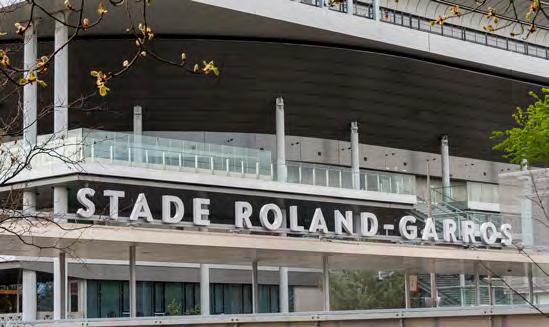
MWe also learned — again, per Front Office Sports — that the French Open is not actually the French Open. Well, it is, but technically, it is named Roland-Garros after the Paris stadium facility at which it is played. The stadium is named for French World War I flying ace Roland Garros.
The event name is hyphenated because that is what French grammar does. Events and places named for people are hyphenated. Therefore, we have Roland Garros, the historical figure, and Roland-Garros, the tennis stadium/tournament.
And here we thought English had quirks.
By Heather Baker
ay ended with a stifling blanket of humidity. Welcome to summer, Natural State.
Despite the brief heat wave, Arkansas is all about summer, which, in my book, would have to be considered the state’s official season. Summer in Arkansas means lakes, rivers, ballparks and the smell of brats on the grill. With outdoor recreation such an integral component of the Natural State experience, it only makes sense.
Speaking of hot, the June issue of Arkansas Money & Politics includes packages devoted to real estate, insurance and our annual “Most Admired Companies” as voted by readers.
On the real estate side, residential agents discuss the homebuying trends they are seeing in Arkansas’ most prominent markets; developers share what they are seeing on the commercial side; we visit Arkansas Main Streets to see how cities and towns in the Natural State have transformed their downtowns; and we look at the next Arkansas “boomtowns.”

We also look at various aspects of the insurance industry in the state, from life insurance and what that entails for business owners to health, farm, and home and auto, as well as where the industry is finding new agents, and we profile several female professionals in the industry.
Our “Most Admired Companies” section features a list of readers’ favorites, from banks to colleges, and in sports, we look into how golf has exploded in the state, from the success of the state’s college teams to the influx of new golf facilites, yet how much is left to do.
Do not miss this month’s installment of “Arkansas Visionaries,” featuring the one-andonly Bill Barnes, owner of Mountain Harbor Resort & Spa, a true American success story.
As always, thanks for reading. Hit me up with story ideas at hbaker@armoneyandpolitics.com.
By AMP Staff
t first glance, it sounds deceptively simple — tell a robot to pick up a mayonnaise bottle.
But according to Chase Rainwater, an industrial engineering researcher at the University of Arkansas in Fayetteville, the seemingly ordinary task represents one of the biggest technological and economic opportunities in modern logistics.
Rainwater and his interdisciplinary research team are developing artificial intelligence systems capable of helping robots navigate the messy unpredictability of the real world — an advancement that could dramatically reshape packaging, warehousing and distribution industries.
In the controlled environment of traditional automation, machines excel when every object is perfectly positioned and every movement is preprogrammed. Modern supply chains, however, are anything but controlled. Products vary in size and shape, packaging changes constantly, and warehouse environments are increasingly dynamic.
“The volumes are very high, and the systems are very complex,” Rainwater said. “In order to produce efficiency in the current world, we have to do a lot to our processes and infrastructure to simplify them enough to make those efficiencies happen.”
That simplification often comes with enormous costs. Traditional robotics systems can require expensive infrastructure modifications and highly customized programming before they can function effectively. Rainwater’s team is attempting something different: using AI and computer vision to create robotic systems capable of adapting to uncertainty without requiring companies to redesign entire facilities.
The implications for Arkansas’ economy are substantial.
Northwest Arkansas sits at the center of one of the world’s largest logistics ecosystems, anchored by Walmart and supported by an enormous network of suppliers, distribution centers, manufacturers and transportation firms. Even marginal improvements in packaging and warehouse efficiency can translate into massive cost savings across global supply chains.
The research itself combines several rapidly evolving technologies — large language models, computer vision, robotics, depth perception and machine learning. Instead of writing rigid code for every possible scenario, the system learns more like a human. A worker might simply instruct the robot to “pick up a mayonnaise bottle,” and the AI interprets the command, identifies the object and determines how to interact with it, even if the bottle is partially obscured, lying sideways or different from anything the system has previously encountered.
“What’s important is that it’s being queried based on a simple statement any human would say,” Rainwater said.
The project is also a case study in the growing importance
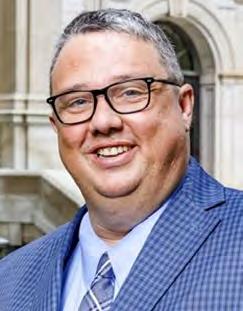
of interdisciplinary collaboration. Rainwater’s expertise in computational optimization merges with the computer vision work of electrical engineering and computer science researcher Ngan Le, the research progression driving of post-doc Khoa Vo, and the robotics hardware development led by mechanical engineering researcher Anthony Gunderman.
Together, the team has built systems that allow robots not only to “see” objects but also to physically interact with them using custom-built hardware and data collection tools.
Industrial partners are paying attention. Walmart personnel have helped provide feedback and direction for the research, giving the team valuable insight into real-world logistics challenges.
Rainwater believes Arkansas is uniquely positioned to compete in the emerging AI and robotics economy precisely because of its concentration of retail and logistics expertise.
“You’ve got some of the largest logistics companies in the world sitting next door,” he said. “Anything you do to contribute to one of those is going to translate across the global landscape.”
He also sees opportunity extending beyond research labs and into entrepreneurship. Rather than building an end-to-end robotics company, Rainwater envisions commercialization opportunities centered on “robotics intelligence,” AI systems that can integrate into existing platforms and improve how current industrial hardware operates.
That distinction matters. Many companies already possess sophisticated machinery. The competitive advantage increasingly lies in the intelligence layer that makes those systems more flexible, adaptive and efficient.
The broader lesson may be that Arkansas’ next economic advantage will not come solely from physical infrastructure but from the ability to merge advanced computing, research universities and industry partnerships into deployable business solutions.
If that happens, the future of robotics may not be built only in Silicon Valley or Shenzhen. Some of it may be engineered in Arkansas.
Discovery Economics is a monthly look at the work of the Arkansas Research Alliance Academy of Scholars and Fellows, a community of leading university researchers who strive to maximize the value of discovery and progress in the state. Learn more at aralliance.org.
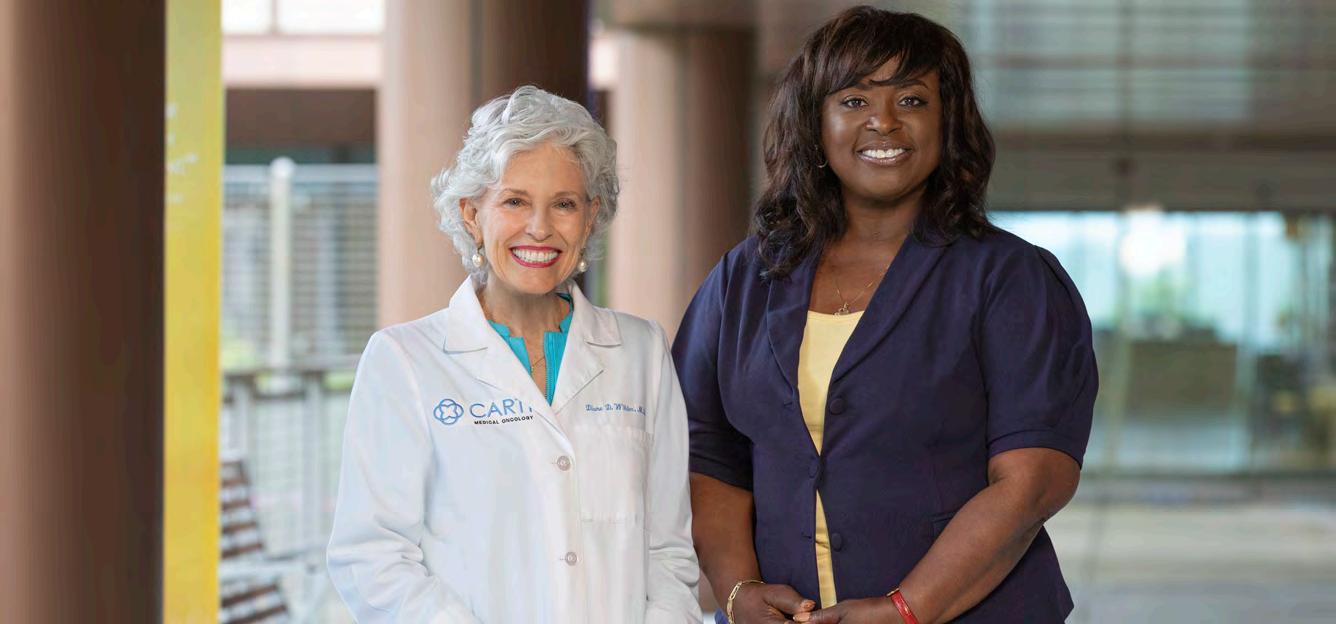
June is National Cancer Survivors Month. Thanks to continued advances in research and screening, more Arkansans are celebrating putting the disease behind them. For the team of oncology-focused physicians, other medical professionals and support staff at CARTI, it is also a reminder of the winding journey that begins every time someone hears those three words, “You have cancer.”
“Survivorship doesn’t start when cancer ends. It actually starts the moment someone’s diagnosed with cancer,” said Diane Wilder, MD, fellowship-trained medical oncologist at CARTI. “It’s really a commitment to live every day, to make the choice to participate in whatever is brought before you, to persevere and to determine to live fully, even in the midst of a difficult situation.”
Sonya Ingram, a breast cancer survivor and one of Dr. Wilder’s patients, said her cancer journey ultimately changed her in a positive way.
“I think that I’m more empathetic now that I’ve walked in someone else’s shoes, that now I understand. You really don’t get it until you’ve been there,” she said. “I feel like I want to be a better person. I want to do more.”
treated her were “unbelievable, kind and thoughtful,” she said, from chemotherapy sessions to conversations with Dr. Wilder.
“It blessed me in a way I can’t even tell you,” Ingram said. “I was so nervous about this whole thing, but Dr. Wilder just calmed me with her confidence, her knowledge and her ability to make me feel like I’m going to get there.”
CARTI offers the resources, team and technology needed to find — and treat — cancer. With 18 locations across the state, the multidisciplinary provider makes unparalleled care accessible to all Arkansans. Since 1976, CARTI has been with patients and families every step of the way.
Dr. Wilder echoed the sentiment of transformation, as well, quoting Catholic priest and writer Henri Nouwen in his reflection that, “Our glory is hidden in our pain if we allow God to bring the gift of himself in our experience of it.”
“When someone’s committed to the journey that’s set before them — they don’t know the answers, but they’re dedicated to the walk — then it’s a vehicle for something deeper to emerge,” she said.
For Ingram, that path was made easier thanks to the compassionate care she received from the CARTI team. The nurses, providers and everyone who
CARTI offers comprehensive support services for patients well after they have passed the milestone of completing treatment, as well. Dr. Wilder pointed out that The Bridge at CARTI offers a wealth of well-being and rehabilitation services ranging from support groups and counseling to yoga, financial advocacy, an appearance center and more, both in person and virtually.
“Cancer touches all of us, and, again, I’ll quote Henri Nouwen when he said that real healing happens not when we solve the problems but when we’re willing to be together where it hurts,” Dr. Wilder said. “At CARTI, you’re never alone.”
Even at the beginning of cancer’s uncertain territory, one enters into the company of survivors at every stage of their own journeys, from treatment to cancer free. For her part, Ingram recommends people “take the time to feel that pain” at the start. Still, she added, it is important not to stay there too long.
“You need to get up, dust yourself off and make up your mind what kind of patient you’re going to be,” she said. “Decide if you’re going to be positive or negative because I am a firm believer that your attitude toward anything makes all the difference in the world on your results. Once you make up your mind, put your gloves on, and get ready to kick cancer.”
By Elon Turner
About a year ago, the Arkansas Research and Education Optical Network achieved an important technical milestone: 400-gigabit network capacity.
In practical terms, that means our member institutions can transmit up to 400 gigabits of data per second across Arkansas’ research and education fiber backbone, roughly 400 times the speed of a standard business internet connection, an extraordinarily high level of speed and capacity typically associated with advanced national research, healthcare and supercomputing networks. That capability has implications well beyond the institutions directly connected to it. For perspective, many home internet connections operate at about 1 gigabit per second.
Naturally, increased capability delivers immediate value to the colleges, universities and healthcare organizations connected to the ARE-ON network, but the more important question is this: What does it mean for Arkansas as a whole? The answer is significant. Building a statewide high-capacity fiber network required years of planning, strategic investment and collaboration.
is pursuing R1 status, and the University of Arkansas in Fayetteville recently eclipsed $253 million in annual research expenditures.
Achieving those milestones requires more than talented faculty and modern laboratories. It requires the ability to move massive scientific datasets securely and efficiently, collaborate with national research partners in real time, and support cuttingedge computational workloads. In today’s environment, world-class research depends upon world-class digital infrastructure.
Arkansans should expect that investment to produce measurable returns — economically, academically, medically and technologically. The reason those returns are achievable is that data infrastructure has become as foundational to economic life as the physical infrastructure that came before it.
We are entering an era in which the exchange of data is as critical to prosperity as highways, railroads and electrical grids once were. Highcapacity networks now support everything from genomic sequencing and advanced medical imaging to artificial intelligence, cybersecurity, cloud computing and large-scale scientific research. Increasingly, AI and data-intensive computing are becoming the digital infrastructure behind many of Arkansas’ most important and emerging industries, including agriculture, logistics, advanced manufacturing, healthcare, nanotechnology and energy innovation. While many states are still racing to modernize their digital infrastructure, Arkansas has already established a strong foundation. In this respect, our state is positioned ahead of many competitors.
Through ARE-ON, Arkansas institutions now possess connectivity capable of supporting cloud and supercomputing workloads at near national-laboratory scale. That capability matters because it strengthens our universities’ ability to compete for federal research grants, national laboratory partnerships, advanced cyberinfrastructure initiatives and AI-driven scientific projects.
This advancement also sends a broader message: Arkansas intends to compete in the innovation economy. The institutions making that case are already at work. The state’s growing role in lithium production, advanced manufacturing and AI-ready hyperscale data centers demonstrates that our ambition is already moving from vision to reality.
We are already seeing institutions set increasingly ambitious goals: The University of Arkansas at Pine Bluff is working to achieve an R2 Carnegie research designation, Arkansas State University in Jonesboro
The broader benefit for Arkansans is already taking shape. Arkansas is positioned to become a national leader in medical research and education, precision agriculture, and advanced manufacturing not as an abstract aspiration but as a direction our institutions are actively moving toward.
ARE-ON exists to support that work. As the network backbone connecting every public university and healthcare organization in Arkansas, we provide the infrastructure that allows researchers, clinicians and educators to move data at the speed their work demands. That research attracts federal investment, produces homegrown talent and builds the kind of knowledge economy that benefits the state broadly. High-tech startups and emerging companies can launch, scale and compete globally without leaving Arkansas, in part because the universities producing their workforce and research partners are well connected.
What is the broader benefit for Arkansans? Imagine Arkansas becoming a national leader in clinical cancer research, precision agriculture or advanced manufacturing. Imagine more Fortune 500 companies locating operations here because our digital infrastructure can support sophisticated industrial and AI-driven workloads. Imagine a state where high-tech startups can launch, scale and compete globally without leaving Arkansas.
Investments in infrastructure rarely make headlines, but they quietly shape the future prosperity of states and nations. Expanding Arkansas’ information highway is one of those investments.
Earlier this year, Arkansas Northeastern College in Blytheville joined the ARE-ON network, completing a long-standing goal of connecting every public institution of higher education in Arkansas. That shared infrastructure is the connective tissue of Arkansas’ innovation economy. Arkansas institutions are not competing in isolation. They are connected, and that connection is the foundation on which the state’s future will be built.
The network we have built is more than fiber and equipment. It is the connective tissue that allows Arkansas institutions to share knowledge, collaborate on solutions, train the next generation workforce and compete together on a national stage. By investing in advanced digital infrastructure today, Arkansas is laying the groundwork for a healthier, more innovative and more prosperous tomorrow.
Elon Turner is executive director of ARE-ON.
There is much to consider about one’s life and future at 17 years old. To go to college or not? To pursue a professional trade, military service or dive straight into the workforce? With endless possibilities and more chances to stumble than not, many individuals just entering adulthood opt for the safety of tried-and-true routes. For those who eschew the regular path and forge their own, however, the rewards are that much sweeter.
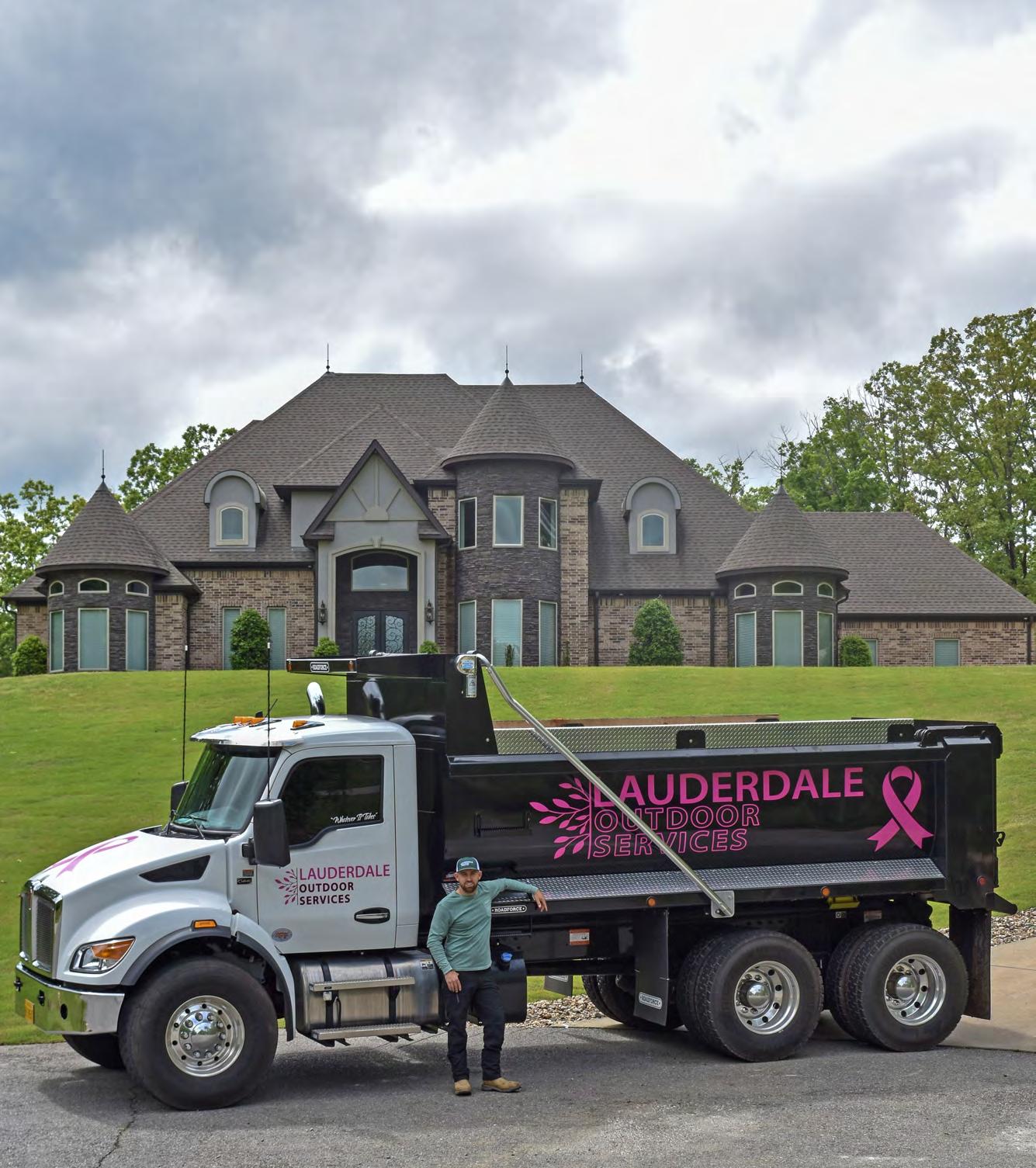
It was at this crossroads Hunter Lauderdale found himself, and with a single pickup truck and an idea, the young entrepreneur founded his one-man outdoor services company and got to work. Scaling up his business over the course of a decade, Lauderdale has since made his name into one synonymous with consistency, quality and customer trust for scores of Arkansas homeowners.
Today, Lauderdale Outdoor Services boasts a fleet of 10 trucks and a 10-person crew performing a range of outdoor solutions all across central Arkansas. Offering consistent, high-quality results in everything from patios and landscaping to sod installation and retaining wall construction, the company has steadily expanded
its footprint by focusing on reliable execution and reinvesting into equipment, personnel and operational growth.
“As a young entrepreneur, I’ve had the opportunity to experience every level of the business, from hands-on labor in the early days to now managing crews, overseeing projects and driving long-term growth strategy,” Lauderdale said. “That progression has shaped a leadership approach centered on accountability, efficiency and delivering measurable value to clients.”
Not every teenage dream comes to fruition, and, in fact, many are destined to fail. Through discipline, a strong work ethic and unrelenting vision, Lauderdale bucked that trend to turn what was once just another startup into an undeniable success story with plenty of chapters still yet to be told.
“Every project reflects a commitment to quality, efficiency and long-term value,” Lauderdale said.
Custom patios
Landscaping solutions
Sod installation
Concrete work
Dump truck hauling
Retaining wall construction

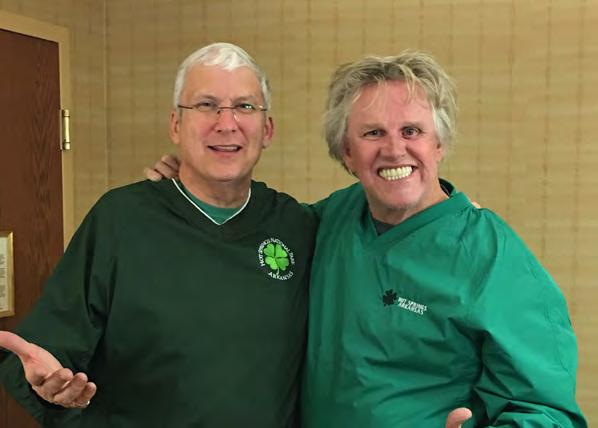
For three decades, Steve Arrison has brought the entertainment
n the history of underdog stories, it is hard to beat Bridge Street in Hot Springs. At just 98 feet long, the swath is only about twice as long as it is wide and, according to one source, did not even start out as an actual city street. According to the Arkansas Roadside Travelogue, the Hot Springs River used to run along Central Avenue, and Bridge Street was a bridge, period. The city paved over it in 1870, and the nub became a tiny artery in the heart of downtown.
At one time tagged “world’s shortest city street” by Guinness World Records and “busiest street in the world for its size” by Ripley’s Believe It or Not!, the tiny thoroughfare earned its spurs as a local oddity — which, truth be told, it may well have remained had it not been for the vision of Steve Arrison, CEO of Visit Hot Springs.
As the story goes, Arrison and his team were out for an after-work beer and brainstorming session at a Bridge Street pub about how to leverage the tiny street to attract visitors. The suggestion was made to use it as the route for a St. Patrick’s Day parade, counterintuitively the shortest in the world. It was an idea too insane to work yet too tantalizingly wacko not to try. The First Ever First Annual World’s Shortest St. Patrick’s Day Parade occurred in 2004, and today, tens of thousands of people descend on Spa City for the annual event, headlined by celebrity grand marshals and bookended by other organized mischief.
It is without a doubt the crowning achievement of Arrison’s career at Visit Hot Springs, a history-making accomplishment that, like all of the organization’s community events and festivals, will have to learn to survive without him as he steps from the helm to the sidelines in retirement.
“St. Patrick’s Day was just a fluke,” Arrison said. “Somebody had sent me a copy of an article calling Bridge Street the shortest street in the world, and then later that day, we’re sitting there, having a drink, and going, ‘Let’s do St. Patrick’s Day.’ It just sort of happened.
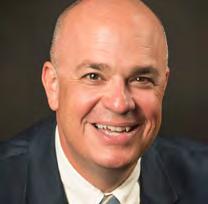
Steve’s leadership has transformed Hot Springs into one of Arkansas’ premier tourism destinations, driving growth with innovative approaches that blend the city’s historic character with its extraordinary natural resources. By elevating trails, outdoor recreation and the unique assets that define Hot Springs, he has strengthened the identity of Arkansas as the Natural State. His efforts have not only boosted tourism but have also enhanced the quality of life for residents, helping make Hot Springs — and Arkansas — a great place to visit, live, work and play. Steve’s dedicated service on the State Parks, Recreation and Travel Commission has further amplified his statewide impact, leaving a lasting legacy on Arkansas’ tourism industry and the communities it supports.
Secretary Arkansas Department of Parks, Heritage and Tourism
“I never thought St. Patrick’s Day would get to be one of the top 10 parades in the United States. I never saw that. I thought it would be a good local event, but I didn’t think it would be what it is today.”
Taking something as benign as a 98-foot stretch of asphalt and turning it

into a mainstage in a town full of distractions perfectly encapsulates Arrison’s career and the marketing ethos he has instilled at Visit Hot Springs since landing there in 1998 — events are fun, but it is the place that matters, so find what is yours and share it with the world.
“You can’t play it safe your whole life,” Arrison told Arkansas Money & Politics in November. “As you look at it now, it’s like, gosh, we used to have all these open weekends. We don’t have open weekends anymore. That’s the unique thing about Hot Springs — about every weekend, there’s something special going on, and a lot of them are at no cost to the consumer. People support that, you know? That’s the reason people live in Hot Springs. That’s part of the reason why they came here, because we’ve got so much stuff going on all the time. It’s fun.”
The range of amenities and events that have come to be standard fare in Hot Springs under Arrison’s watch, both
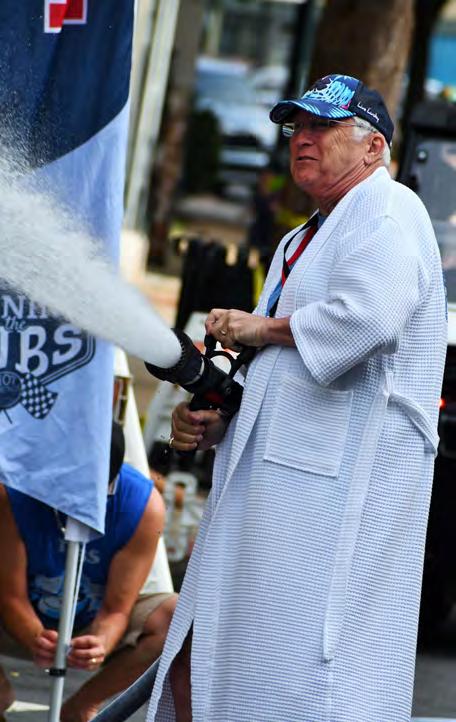
directly and indirectly, would fill volumes. Big-league fishing tournaments, the Majestic Park baseball complex, Spa-Con pop media festival, Stueart Pennington’s World Championship Running of the Tubs and the new Birding Festival of the South merely scratch the surface of what there is for people to see and experience.
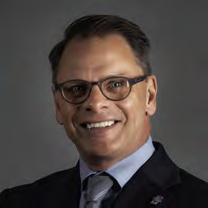
I consider myself one of the luckiest Arkansans to have served under Steve Arrison for the past decade. His mentorship has been priceless, his leadership unmatched and his friendship treasured.
Bill Solleder Director of Marketing Visit Hot Springs
He has also led Visit Hot Springs to become a valued collaborator in promoting local events sponsored by other entities, such as the Hot Springs Documentary Film Festival; helping to repackage the city’s blues festival as Big Steam Blues & Roots Music Festival; promoting the city’s Northwoods trail park via the Güdrun — Northwoods Mountain Bike Festival; and crossmarketing special events at Garvan Woodland Gardens and Oaklawn Hot Springs, among others.
Arrison winces under what he considers an undue amount of credit for the work that has been done — culminating with his 2026 induction into the Arkansas Tourism Hall of Fame and the

Arkansas Outdoor Hall of Fame last year — being quick and generous in his praise of others.
“The key to Visit Hot Springs and the key to my success here have been the people that I work with and work for,” he said. “We’ve got such a good group and always have had that. I’ve been very fortunate since I’ve been here.
“You know, not everything I wanted to do has been a success. We had Buffalo Days, which I thought was a wonderful event, but nobody came. We had Hats and Hot Springs downtown; we tried to gather the most people in one spot wearing a hat. It was a dismal failure. Everybody forgets those oneand-dones.”
Arrison is so effusive in his praise for others, he even finds ways to credit other communities for helping to grow Hot Springs’ offerings. In other words, he cops to stealing good ideas from elsewhere with abandon.
“We were looking for an idea of something to do during COVID-19,” he said. “My wife and I went down to Savannah, Georgia, and saw them doing a street deal with a nice band and locals and tourists standing around, enjoying it. We brought the idea back here and started it up.
his team applied their own special Spa City spin. The two ideas mentioned above, for example, were packaged to get headliner treatment downtown as Bridge Street Live and the World’s Shortest St Patrick’s Day ZERO-K run, respectively. Arrison also pioneered the art of building an event and then giving it away in order to support local charities, which he said lends a deeper meaning to people having a good time.
Steve Arrison’s leadership, vision and dedication have helped shape Hot Springs into one of Arkansas’ premier destinations. His impact on tourism can be seen not only in the growth of that community but in the lasting legacy he’s built for generations to come.
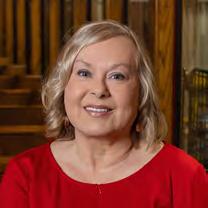
Karen Trevino President and CEO North Little Rock Tourism
“Another time, I’m on vacation in Key West, having a drink in the swimming pool, and the lady next to me was talking about the zero-K run they were in, and we started asking about it. I came back here and said, ‘We’ve got to do that.’ I mean, that’s a no-brainer.”
Wherever such ideas originated, there was some kind of magic that occurred once they got to Hot Springs as Arrison and
“[Visit Hot Springs] doesn’t necessarily want to stay in the event business, and it’s great when charities can take something over,” Arrison said. “The zero-K run, we started that, and then we gave it to Tri-Lakes [Court Appointed Special Advocates] which raised, I believe, more than $20,000 on it this year.
“Everybody has always been on us, saying, ‘Why don’t you do a Mardi Gras event?’ Well, because that’s so close to St. Patrick’s Day, and there’s just so many things going on, and we can only do so many events — but now a local charity has started a Mardi Gras event that’s in its first or second year that we helped promote, and it was very successful, so we think that’s great.”
This month, Arrison took on a new task, that of orienting his replacement, veteran tourism executive Devin Heath, who officially began in the role of president and CEO June 15.
“I visited with Devin for several hours when he was in town to interview with the A&P commission,” Arrison said. “I think he’s going to be great — great for our community and great for Arkansas. I look forward to welcoming him and his wife to Hot Springs.”
As the calendar melts down the remaining chapter of his


professional life to mere months, Arrison said there are several challenges facing Visit Hot Springs going forward, challenges he will not miss losing sleep over.
“Every day is a new day with the world we’re living in right now,” he said. “I think security will become a really big issue for special events. You look at all these bad people taking advantage of large gatherings, and I think that’s something anybody who does events is very concerned with for the future. It’s certainly something we spend a lot of attention on, and thank goodness we have a great, progressive police department here that works with us to ensure our events are safe, but I do think that’s something that everybody has to worry about, the bad actors out there that want to ruin it for everybody.”
Parade photos: The annual World’s Shortest St. Patrick’s Day Parade has welcomed a litany of celebrity grand marshals.
(Photos provided by Visit Hot Springs)
At left: Arrison mingles with Wayne Smith, general manager at Oaklawn Hot Springs, and Heather Baker, president and publisher at AY Media Group, at the Arkansas Derby.
(Photo by Ryan Parker)
Beyond that, he is eager to see what the future brings, a future he laid the groundwork for and that he now will watch unfold as just another citizen and spectator. The road of his career has been long, but like plucky little Bridge Street, the years have been short and packed full of memories.
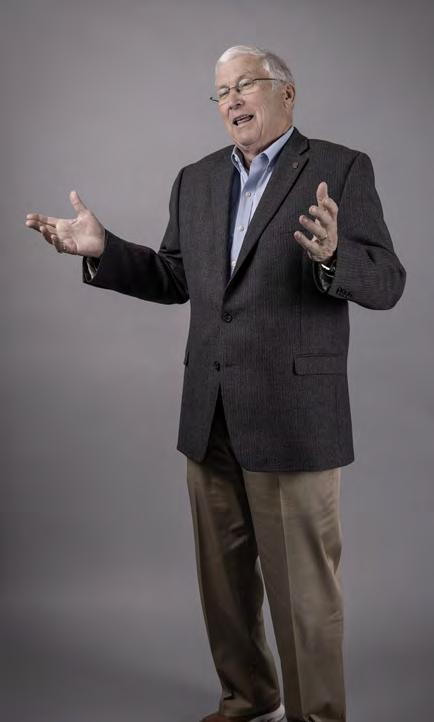
I vividly remember having lunch with Steve and watching his amazing creativity at work. He was brainstorming new opportunities to attract more tourism to Hot Springs. We were at Spencer’s Corner, and he looked out the window toward Bridge Street and remarked, ‘According to the Guiness Book of World Records, that was the shortest fully operating street in America. We should create a tourism event for St. Patrick’s Day and have the world’s shortest parade.’ This is just one great example of his creativity and leadership for Hot Springs and our entire state. His personal and professional impact has been nothing short of amazing. Simply put, Steve Arrison is the best in the business.”
As for himself, Arrison said he looks forward to a slower pace and more family time in retirement, but he does already have one obligation after he clocks out for the last time at year’s end. The architect of Hot Springs’ world-class fishing tournaments has, incredibly, never in his life dropped a hook himself, and some acquaintances have mobilized an excursion to change that.
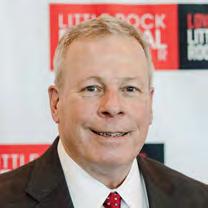
Jay Chesshir President and CEO Little Rock Regional Chamber
“You know, Hot Springs has got a little bit of everything,” he said. “I mean, everybody needs new hotels and new attractions, where we just need to stay current. I think Hot Springs is finally doing that. Things are coming together for Hot Springs, and I think the future’s very bright. When you have all the assets that we have, it’s just, gosh, what do you need next? I’d like to see something on the Majestic [Hotel] site; I think that’s a key to the future for that end of downtown, and I think that will happen.
“The city’s done a great job. We’ve got water for ages now, which not too many communities can say, which is going to be key to future economic development. I think our tourism industry will continue to grow while still maintaining a great quality of life, quality of place. As a community, I just think we’re heading in the right direction. Everything’s rolling along here.”

By Mark Carter
Real estate markets ebb and flow in reaction to world events, and the anxious countenance that seems to envelope virtually everything and everyone these days might suggest a volatile housing market.
But inside Arkansas’ primary residential real-estate markets, the chaos embodied by the supply-chain issues that followed the COVID-19 pandemic has subsided, and the “usual suspects” continue to be in demand, such as Bella Vista and Cave Springs in northwest Arkansas, the Heights and west Little Rock in central Arkansas, and the lakes in Hot Springs.
Meanwhile, Americans are starting to figure out why Arkansas has for so long been considered a hidden gem by natives and return visitors. Nice things can be had in the Natural State — and for a lot less than most other places, and not just in the state’s most prominent markets of Little Rock, northwest Arkansas and Hot Springs, either.
Even in Mississippi County, where the economy has been dominated by agriculture, the emergence of Osceola as a global hub for steel producing has local officials working to attract more workers who become residents.
The county’s Work Here Live Here program, funded by local companies and banks, incentivizes steel workers who commute in for work to build new or purchase an existing home in the county. So far, the program has resulted in more than 100 new homes
being built over its first couple of years of existence.
“People from Arizona, Iowa, from all different states, have called about it,” said Megan Owens, CEO of the Osceola/South Mississippi County Chamber of Commerce. “There’s definitely a different vibe we’re seeing in Osceola and the south end of the county.”
Real-estate agents in Arkansas’ showcase region are seeing signs of a true return to normal after a half decade of volatility.
Northwest Arkansas’ 2024 population of more than 622,000 made it the 98th most populous metro in the United States and, more importantly, the 13th fastest growing. Its population actually doubled between 1990 and 2010. The region has worked hard to keep up with its growth, and during the immediate aftermath of COVID-19, builders were struggling to keep pace with demand.
“As history shows, real estate cycles in every region, not just NWA,” sad Somer Adams, executive broker at Fayetteville-based Lindsey & Associates. “At the moment, I believe we’re transitioning back to what many would consider a more normal market compared to the chaos we experienced in 2020 and the years that followed.”
She said listing inventory has increased significantly and is now higher than it has been in several years.
“As inventory rises, homes are naturally taking longer to sell — often 30, 60 or even 90-plus days in some cases,” Adams said. “When buyers have more options to choose from, the pressure to make rushed decisions declines. We’re seeing a shift away from the highly competitive seller-driven environment and toward a more balanced market overall.”
Lindsey’s Fred Johnson leads a sales team that includes Jennifer Shapley and Jennifer Sims. He said his team is also seeing inventory stay on the market “just a little bit longer than normal” in NWA, even during the springsummer “busy season.”
“Lots of qualified buyers are being influenced by the uncertainty that surrounds us and the increasing prices for basic goods,” he said.
That said, the “usual suspects” are still flourishing.

“Bella Vista is obtainable for many demographics, still being influenced by mountain biking and the new bike park,” Shapley said. “Cave Springs has always been that little hidden gem, as well. Road development that is in the works for that area will by the end of it only increase desirability. Downtown Bentonville is expensive but very attractive to buyers from larger cities who like a walkable environment.”
Bentonville, of course, remains attractive on numerous fronts. Chic restaurants, boutique hotels, upscale shops, museum expansions and other attractions have dotted the downtown Bentonville landscape like spring mushrooms, and people are gravitating to the Rockwell-meets-Warhol vibe.
“A lot of buyers are drawn to the urban and downtown lifestyle because it offers the convenience of living in a self-sustaining community where they can walk to restaurants, shopping, entertainment, community events and more,” Adams said. “In our market, many buyers are willing to pay a premium for that type of convenience and accessibility. In many ways, it’s similar to the appeal of gated golf-course communities, where buyers are willing to spend more for the exclusive lifestyle and amenities those neighborhoods provide.”
Despite infrastructure challenges, perceived or otherwise, the NWA housing market remains strong. Sims attributed that to continued population growth, major employer expansion and available jobs providing a steady demand for new residents.
“Inventory has improved significantly, giving buyers more options and creating a more balanced market compared to the intense seller’s market of the past few years,” she said. “Affordability has become a growing challenge as home prices and interest rates have outpaced local wage growth, especially for first-time buyers.”
Overall, the market still has solid long-term fundamentals, she added, but “success now depends much more on strategic pricing, property condition and location.”
Rapid growth aside, Arkansas’ two most northwestwardly counties retain that special feel that helped set them apart in the first place.
“I believe one of NWA’s greatest strengths is that it still feels like a hidden gem,” Adams said. “So many people who visit — whether for leisure or to work with one of the area’s Fortune 500 companies — are genuinely surprised by everything the region has to offer. The lifestyle and sense of community here are unlike anywhere else. In addition, NWA offers top-rated schools, low crime rates, a relatively low cost of living, and world-class amenities that continue to attract both families and professionals alike.”
For one of the central Arkansas market’s consistently top-selling sellers, Little Rock is a great destination for high-end buyers seeking the more laid-back lifestyle or quiet luxury.
“The upper-end market has been very active,” said Casey Jones of The Janet Jones Compnay “Our inventory is evolving to accommodate those demands, and we still offer exceptional value by comparison.”
When it comes to the housing
market, greater Little Rock has shaken free of the pandemic doldrums, and Jones predicted a strong year.
“The market has certainly picked up momentum as we have moved into 2026,” Jones said. “We have seen almost every demographic increase in volume and demand.”
Cosmetic trends that Jones is seeing in the market include personalized palettes with colorful accents such as custom wallcoverings, a blend of antiques “to bring in warmth and character with a focus always on quality,” and high-end amenities throughout the home, especially outdoor living spaces, and floorplans that accommodate family living and entertaining.
“Location is still paramount and always a consideration,” Jones said. “Little Rock has numerous residential opportunities with various price points, and all are seeing increased demand. Little Rock offers impressive lifestyle choices, and we are seeing strong demand across the board.”
Karen Upton, president of Coldwell Banker RPM Group in Little Rock, sees the central Arkansas market as a healthy one. She said the market is seeing an annual home appreciation of 4 to 6 percent and an 18-percent increase in new-home construction permits from the first quarter of 2025 to the same period this year. As an added bonus, the average median home price in Little Rock is still 37 percent below the national average.
“The pandemic-era frenzy — when homes were gone in a weekend and buyers were waiving everything just to get a contract — has cooled into something more grounded,” she said. “Prices are still growing, around 4 to 6 percent this year, which is solid and sustainable. Inventory is slowly improving. Buyers are negotiating again. Homes are sitting a little longer, which means sellers need a strategy now, not just a sign in the yard. That’s not a problem. That’s where good agents can step in and provide value to their sellers.”
Central Arkansas has its own “usual suspects.” Upton said old reliables like the Heights, Hillcrest and Little Rock’s revitalized downtown corridor are seeing real, sustained interest.
“These aren’t trendy blips. Buyers — especially younger ones — genuinely want walk-
ability, character and a neighborhood that feels alive. Those areas deliver that,” she said. “Not every corner of central Arkansas is moving at the same pace right now, and that’s actually a good thing — it means there’s opportunity at multiple price points and all kinds of buyers.”
Upton said prospective buyers should not sleep on what for years were considered the capital city’s bedroom communities.
“Conway might be the most interesting story in the region right now,” she said. “Thirty miles from Little Rock to the west on the I-40 corridor, three universities, 15,000-plus students, growing at over 2 percent a year, and still priced noticeably below the metro average — that’s a combination that serious buyers and investors tend to find before the rest of the market catches up. If you’re not already paying attention to Conway, now’s the time.”
She said the “outer suburbs” — Maumelle, Greenbrier, Morrilton and communities stretching toward Russellville — are growing and expanding.
“Remote workers discovered them — people who want some land, a little breathing room and a lower cost of living but still need to get to a major hub in 25 minutes,” she said. “Land is moving out there. Where land moves, appreciation tends to follow.”
Upton also noted the line of suburbia stretching southwest of the city, especially Bryant, Benton, Haskell and communities closer to Hot Springs. What her firm of more than 150 agents loves most about the central Arkansas market right now is its affordability, she said. Seeing a big “37 percent below the national median” will grab people’s attention.
“People are moving here from Nashville, Dallas, Denver and the coasts, and when they see what their money buys, they can’t believe it,” Upton said. “That affordability advantage is real, and it’s driving genuine demand. New construction is booming too — permits were up 18 percent in Q1 2026 — especially in that $300,000 to $450,000 sweet spot where a lot of buyers are landing.”
The market’s biggest current challenges are rising interest rates and, for buyers anyway, tight inventory with competitive listings.
“Sellers who get a little too ambitious on price are finding out pretty quickly that today’s buyers are patient,” she said. “Days on the market have stretched from about 52 to 65 days on average — not alarming but a real signal that pricing strategy matters more than it did two years ago. The buyers are there. They just have options now. Interest rates continue to be a challenge, as well, as they have trended back up to 6.5 percent and may not come back down in the foreseeable future.”
Central Arkansas is not northwest Arkansas. There are very few places in the country experiencing such growth, but the Little Rock market is not in trouble, Upton said — not by a long shot.
“It’s a market setting its rhythm — moving from the unusual momentum of the past few years into something more grounded and sustainable,” she said. “That’s actually a great environment to work in if you know what you’re doing.”
The Hot Springs residential real-estate market centers around the lakes that surround the Spa City.
Amber White, principal broker and CEO at White Stone Real Estate, and her team of 23 agents sell many lakefront properties.

“The lakes are one of the greatest assets Hot Springs has, and they continue to be a major driver for both tourism and residential growth,” White said. “Lake Hamilton, in particular, remains highly desirable for primary residences, vacation homes and investment properties. Buyers are drawn not only to the beauty of the water itself, but to the lifestyle that comes with it — boating, dining, recreation and the feeling of being on vacation year-round.”
The lakes — and Lake Hamilton in particular — have long been associated with retirees or vacation homes. White said she believes that perception is soon to change.
“We are seeing younger families and professionals intentionally choosing Hot Springs because they want that balance between nature, community and affordability,” she said.
Spa City is trending toward lifestyle-driven living, since buyers now prioritize quality of life as much as the home itself, she added.
Inventory has improved slightly compared to the frenzy of previous years, which is creating a healthier and more balanced environment for both buyers and sellers,” she said. “Well-priced, move in-ready homes are still moving quickly.”
White said buyers are looking for proximity to the lakes, outdoor recreation and a strong sense of community.
“We’re also seeing more out-of-town buyers entering the market, particularly retirees, remote employees and second-home buyers who are discovering they can enjoy a much higher quality of life here at a more attainable price point than many larger markets,” she said. “Arkansas’ lower cost of living and favorable tax environment are highly attractive to buyers relocating from higher-cost states.”
The state’s emphasis under Gov. Sarah Huckabee Sanders on outdoor recreation as a tourism driver has helped lead to Arkansas being ranked the No. 1 state for inbound movers for consecutive years, and when Arkansas tourism is emphasized, Hot Springs stands to benefit.
“We are absolutely benefiting from increased attention on Arkansas as a whole,” White said. “More people are discovering Hot Springs as not just a vacation destination but a place to build a life.”
The inability to replicate anywhere else what is found in the Spa City makes Hot Springs an easy sell, White said.
“The natural thermal springs, the lakes, the Ouachita Mountains and the incredible beauty of this area create a lifestyle that people are deeply drawn to,” she said. “As someone who was born and raised in Hot Springs, it has been incredibly special to watch others discover what so many of us have always known — that this city offers a rare blend of natural beauty, recreation, history and community.
“There is something truly remarkable about a city built around water that naturally rises from the earth. The thermal springs give Hot Springs a sense of history, wellness and identity that people immediately connect with when they visit. Combined with our outdoor recreation, strong sense of community and growing economy, I believe Hot Springs is uniquely positioned for continued long-term growth.”
White also noted the recent completion of the Lake Ouachita water project, which local officials expect to keep the Spa City water secure for decades if not generations.
“Growth requires infrastructure, and having a reliable longterm water supply gives confidence not only to residents but also to developers, investors and businesses considering expansion in the area,” she said. “It positions Hot Springs to continue growing responsibly while protecting one of the region’s most valuable resources. From a real estate perspective, infrastructure projects like this matter because they create stability and signal forward-thinking leadership. People want to invest in communities that are planning for the future, and this project demonstrated exactly that.”
A look at a few of the noteworthy land deals made in Arkansas over the past year
Arkansas Land Co.
Johnny Cake Ranch
Sebastian County
1,767 surveyed acres
$5.3 million
Krovest Plantation WRP
Pulaski County
2,348 acres
$4.7 million
Marvell Farm
Phillips County
500 acres
$2.8 million
Cadron Creek WRP
Conway County
590 acres
$2.4 million
Garland County Timberlands
410 acres
$1.5 million
Proctor Farm
Crittenden County
232 acres
$1.1 million
Lile Real Estate
Canal 43 Farm
Desha County
2,877 acres
$20.9 million
TLMLAND Farm
Phillips County
2,038 acres
$14.3 million
Delta Wings Farm
Desha County
1,949 acres
$11.3 million
Paraduxx
Lincoln County
2,611 acres
$8.5 million
Goosehead Reserve
Lonoke County
750 acres
$7.97 million
Wellons Land
Buffalo River Farms
Searcy County
4,000 acres
$19 million
Mallard Oaks @ Two Rivers
Lee County
1,500 acres
$15.7 million
The Duck Woods
Prairie County
957 acres
$13.7 million
Mallard Flats on the White River
Arkansas County
1,360 acres
$8.1 million
Farmland Reserve
Phillips County
830 acres
$5.7 million

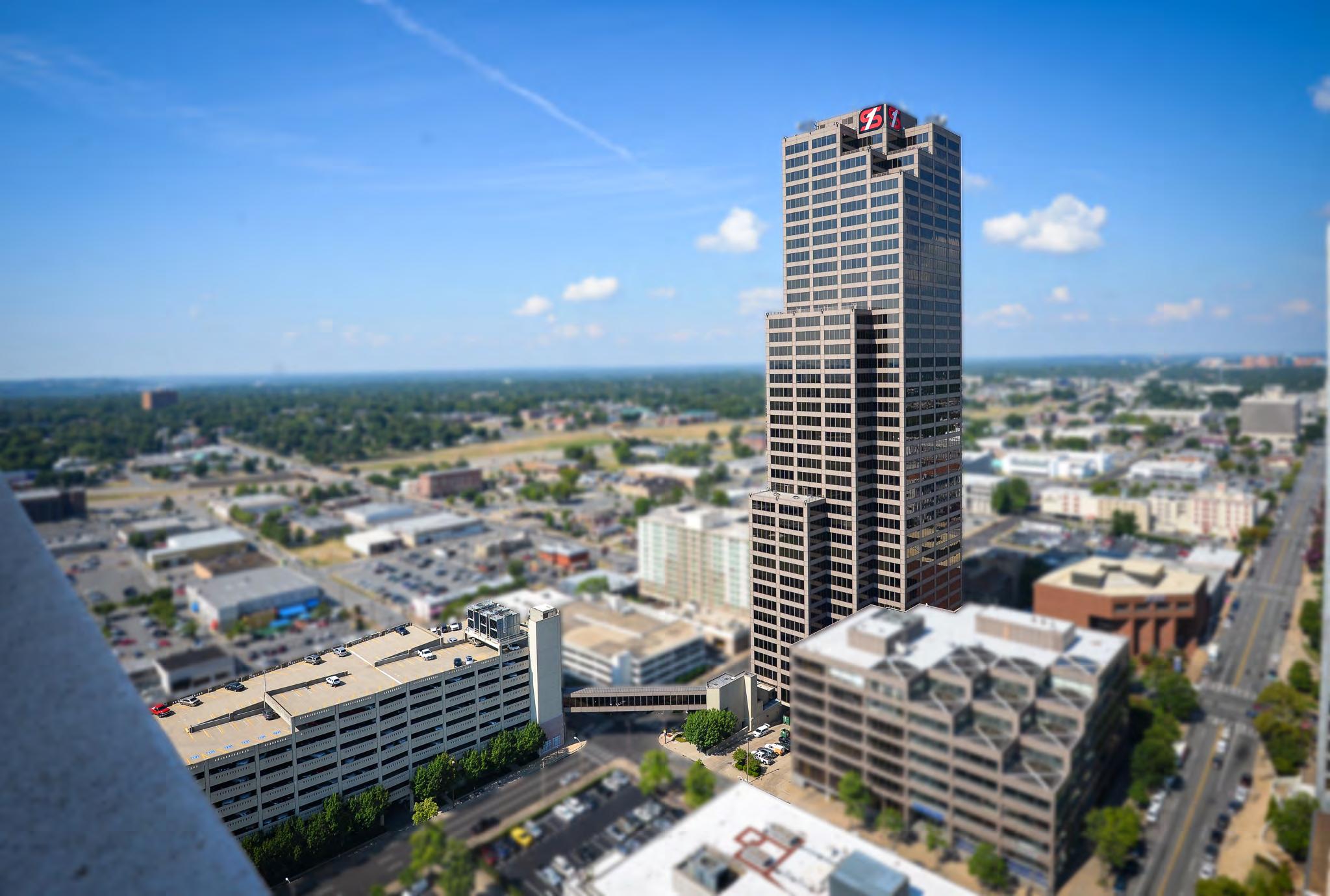


and the best may be to come
EricBoen remembers when it used to be simple.
“The game has changed,” said Boen, a Fayetteville-based agent at Commercial Realty and founder of Boen Kemp Construction. “It went from what used to be Arkansas trying to get a Chik-fil-A to now there’s a lot of different things out there and so many different factors.”
Commercial real estate in Arkansas has become an ever-growing — and ever-changing — endeavor. While northwest and central Arkansas continue to serve as primary hubs of development, there are few places in the state without some form of commercial growth. For those in charge of making those real estate deals happen, 2026 is a mixed bag of positive indicators mixed with strong feelings that things could be even better.
“We’ve never been more optimistic about what’s ahead,” said Jerry Halsey, founder, president and CEO of Halsey Real Estate.
The numbers back that up. While office vacan cies across the country hover right around 20 per cent, vacancies in the northwest Arkansas region are holding at between 4 and 5 percent. Retail va cancies in the same area clock in closer to 3 percent, while similar vacancies in the state’s central region remain at about 5 percent. Industry has enjoyed a
“One thing we lack is governing officials understanding that public infrastructure, and money needs to go into a lot of retail projects because every other state is doing it.”
By Doug Crise
similar run, buoyed in part by the rapid growth of the steel industry in northeast Arkansas.
“The northeast Arkansas commercial market is simply not in the same place it was when I started in this business,” Halsey said. “The Jonesboro metro area has grown more than 28 percent since 2000, and that population growth has been matched — and, in some ways, outpaced — by commercial investment.”
It is not news to say that retail and office space across the country has taken a hit. Offices are still dealing with the fallout of COVID-19 as they face the fairly-recent prospect of employees working remotely. Retail faces its own set of challenges as more and more consumers opt to shop online.
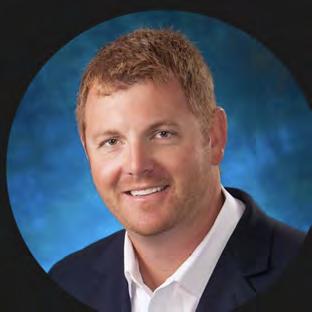
Chris Moses, principal, president and CEO of Moses Tucker Partners, is one figure in the commercial real estate market who will not wave the white flag for retail just yet, pointing to the overall positive numbers for Arkansas.
“I still think residents want community in life, and they’re not going to get community or the human connection online,” Moses said. “The retail centers create an environment for the wife to go to her spot, the husband to go to his spot and the kids to go to theirs. Outdoor centers that have a mix of uses, I think, will dominate.”
Moses’ take on shopping centers doubling as family activity centers represents a new way of looking at a long-static concept. Jessica Flake Dearnley, a principal broker at Flake & Co. in Little Rock, has the same view when it comes to office spaces. While it is true that on-site work versus remote work has been a pitched battle ever since the COVID-19 pan demic, Dearnley sees potential both in how people work and how people live.
Her goal is to take that new thinking and apply it to downtown Little Rock and beyond.
“We’ve got so much to be concerned about in our capital city,” Dearnley said. “I still feel like a state is represented by a state capital, and the state capital is downtown.”
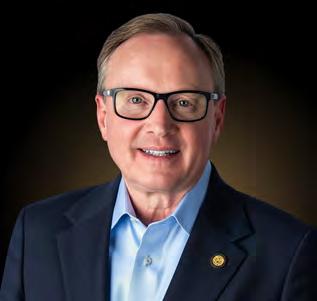
Dearnley sees potential in merging the commercial with the residential. While some former office workers will dig in their feet and push for working remotely no matter what, others are simply looking for everything they need being in a manageable range of travel. That helps explain the boom of apartment living and other facilities popping up near places that used to contain only offices and more offices.
“More office tenants are wanting to be closer to home or have more amenities nearby for their employees,” Dearnley said. “Times have changed since COVID, and getting people to the office, it’s like you’ve got to be doing lunches and have pickleball courts and hybrid workdays, and that’s changed things forever. My daughter works in Charlotte, and it’s pretty incredible what that city’s done. They’ve got all the financial institutions, but there is a whole area of town that is just booming with [apartments]. I mean, literally, no one who lives in all those apartments is over 25.”
Marshall Saviers is CEO and principal at Sage Partners, part of the worldwide commercial real estate firm Cushman & Wakefield. He also has been thinking young, especially as it relates to the continuing warp-speed growth of northwest Arkansas.
“We have a lot of great young people in our company that are between 22 and 35,” Saviers said. “We skew a lot younger now, and I think that’s a testament to our market.”
That market is roaring right along.
“We have 40 people a day moving to northwest Arkansas,” Saviers said. “We used to worry a bit about how do we get 1 million people? Now, as a region, we’re going to get a million people. This is going to happen. It’s going to happen in the 2040s, most likely, so now we’ve got to focus on the infrastructure and how to accommodate
that. The reason people want to move here is the quality of life. It’s here, but if they’re stuck in traffic every day, that quality of life is going to be affected.”
Boen is similarly bullish on the northwest Arkansas market but with a caveat: More can and should be done to spur growth not only in the state’s northwest corner but everywhere.
“Arkansas was way behind — and still really is behind — on the retail scene,” Boen said, “because if you look at all the states around us, one thing we lack is governing officials understanding that public infrastructure, and money needs to go into a lot of retail projects because every other state is doing it.”
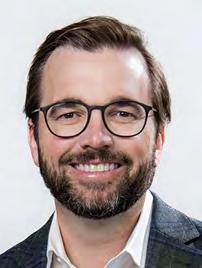
So it is that retail growth in Arkansas could be decided not in a meeting room, but at the ballot box. Arkansans will vote in November on Issue 3, a proposed amendment to the state constitution that would allow for communities to create economic development districts. An economic development district is defined as a geographic area authorized to bring in and reinvest economic growth, growth that can be initiated via both property owners and government officials.
“Every other state around us, if the city of Jackson, Mississippi, or Tulsa, Oklahoma, would like to get a Trader Joe’s or a Whole Foods, they can shell out money to the developer to incentivize those people to get this stuff done,” Boen said. “Right now, it’s not legal in the state of Arkansas. We are so far behind the eight ball that until we get that passed, we are not on a level playing field.”
Dearnley agreed that Issue 3 could be a catalyst for growth.
“Whenever the word ‘incentive’ is used, it might mean or imply that, to incentivize developers, they think the developers are getting more money,” Dearnley said, “and that’s not necessarily the case. One of the examples is getting grocers to small towns, and a small town, they need something to offer.”
Take away the monetary aspect, and commercial real estate boils down to sparking growth — and not just in the biggest cities. With businesses popping up all over the state, progress is not limited to only a lucky handful of areas.
“What we do isn’t transactional at its core,” Halsey said. “It’s all relational. When you’ve watched a region grow for decades, when you’ve been through recessions and tornadoes and a pandemic and come out on the other side with your relationships and your reputation intact, you develop a different connection to the market.”











By Mary LeSieur
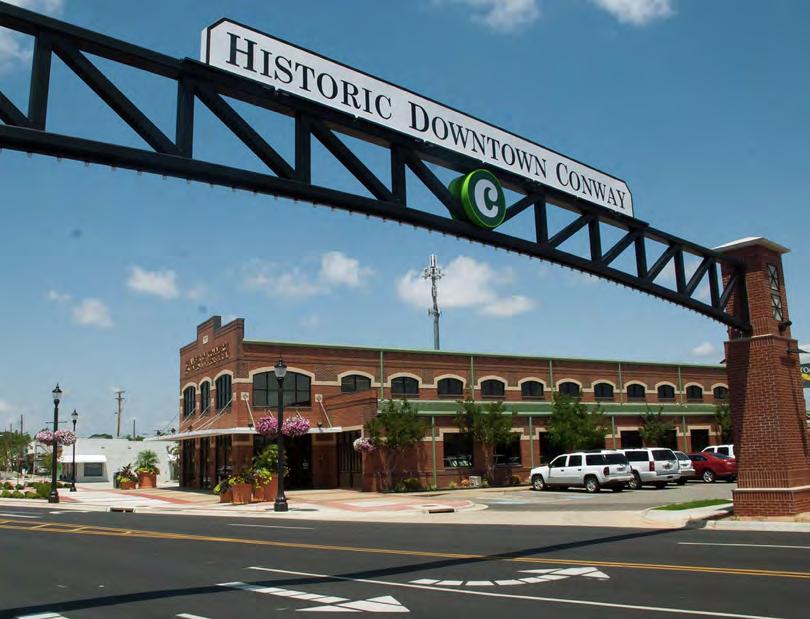
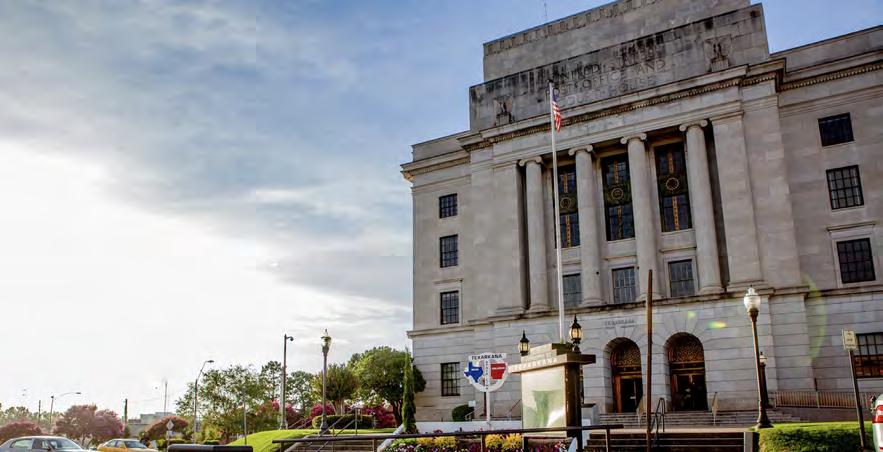
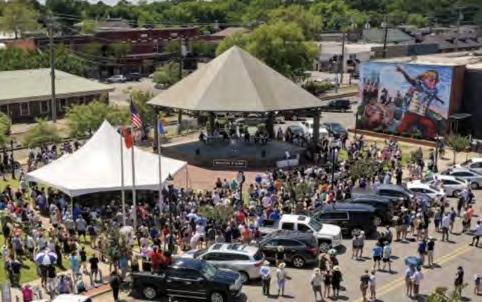
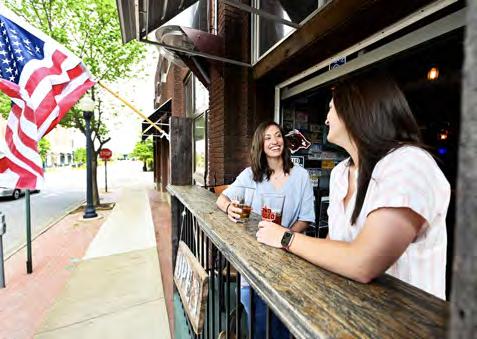
Downtown districts across Arkansas are experiencing a renaissance like never before. From the historic districts of Texarkana to the bustling streets of northwest Arkansas, the Natural State has a natural knack for investing in Main streets.
Functioning as more than centers of commerce, culture and connection, Arkansas’ Main streets serve as multifaceted landmarks and destinations for natives and visitors alike.

Arkansas Money & Politics spoke with local Main Street officials who help bolster more than historic appeal. Representing Texarkana, Little Rock and Conway, the individuals shared their perspectives on the opportunities, communities and future of these vibrant Natural State destinations.
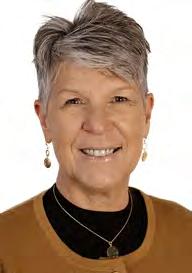
As the executive director of the Conway Downtown Partnership, Kim Williams is always thinking about her community. As one of the first to voice the importance of revitalizing the downtown Conway community, Williams is a key factor in the “shop-small” mentality of Conway.
AMP: How do you define “successful” economic development for a downtown like Conway’s, beyond just new businesses or revenue?
Williams : Successful economic development in downtown Conway is about creating a vibrant, authentic place where people want to gather, invest, live, work and spend time. While new businesses and revenue growth are important, success is also measured through quality of life, preservation of historic character, public-private partnerships, increased walkability, activation of public spaces and the overall sense of community pride. A successful downtown reflects the culture and personality of Conway while remaining economically resilient and welcoming to residents and visitors alike.
AMP: What role does Visit Conway play in shaping the identity and growth of the downtown district?
Williams: Visit Conway plays a major role in promoting downtown Conway as a destination. Through tourism marketing, storytelling, event promotion and visitor engagement, Visit Conway helps showcase the unique assets that make downtown special — from locally owned restaurants and shops to public art, festivals and entertainment. Their efforts support economic growth by increasing visitation and helping reinforce Conway’s identity as a vibrant, connected and welcoming community.
AMP: What are the key factors that make a Main Street district thrive in today’s economy?
Williams: Thriving Main Street districts are adaptable, authentic and community driven. Key factors include strong local partnerships, investment in public spaces, support for small businesses, walkability, consistent programming and events, and preservation of historic character. People are increasingly looking for experiences they cannot find online or in traditional shopping centers, so creating an inviting atmosphere with unique businesses and meaningful community experiences is essential.

AMP: How do you balance preserving local character with encouraging new development and investment?
Williams: Downtown Conway works to ensure that growth complements the historic fabric and character of the district rather than replacing it. Through thoughtful design guidance, collaboration with property owners and developers, and partnerships with Main Street Arkansas, we encourage investment that respects the architectural history and identity of downtown while still allowing for innovation and modernization. Preservation and progress can work together when development is intentional and community focused.
AMP: How does tourism intersect with economic development in downtown Conway?
Williams: Tourism is a significant driver of economic activity for downtown businesses. Visitors support restaurants, retail, lodging, entertainment and local events while also helping elevate Conway’s profile regionally and statewide. Downtown Conway benefits from festivals, arts programming, sporting events and university-


related visitation that bring new audiences into the district. Tourism also encourages continued investment in placemaking and amenities that benefit both visitors and residents.
AMP: What initiatives have been most effective at increasing foot traffic and keeping people downtown longer?
Williams: Events and experiential programming have been extremely effective in downtown Conway. Initiatives such as the Conway Art Walk, Downtown Farmers & Crafts Market, public art installations, seasonal promotions, live music, and festival partnerships create reasons for people to return regularly and spend more time downtown. Continued investments in streetscape improvements, outdoor gathering spaces, light-
ing and walkability have also helped strengthen the downtown experience.
AMP: What upcoming projects or initiatives should residents and visitors be excited about?
Williams: Downtown Conway continues to see exciting momentum through both public and private investment. Ongoing initiatives include streetscape and alley improvements, public art expansion, activation of gathering spaces, enhancement of downtown lighting and beautification efforts, and continued recruitment of unique businesses and experiences. The community should also be excited about the continued focus on downtown living, arts and entertainment, and creating a downtown environment that is vibrant year-round for residents and visitors alike.
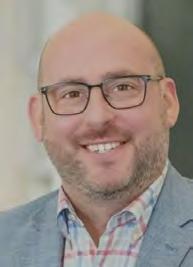
Ryan Callison, vice president of marketing andcommunications at the Little Rock Convention & Visitors Bureau, knows the exact recipe for Little Rock’s downtown success. For example, by focusing on the importance of public art, entertainment and cultural attractions, Callison and his team are making downtown’s South Main district, or SoMa, the first stop for both natives and tourists.
AMP: For those who may not be familiar with Little Rock’s SoMa district, what makes it such a unique part of downtown?
Callison: One of the things I appreciated most when I moved to Little Rock was how vibrant and welcoming downtown felt. My family has visited multiple times since I relocated, and one of the things they always comment on is how clean downtown is and how much activity there is year-round.
When you move through downtown and cross into SoMa, there’s a noticeable sense that you’re entering a distinct district while still remaining connected to the larger downtown experience. The colorful murals, locally owned businesses, restaurants, museums and shops create an atmosphere that encourages exploration.
some of the district’s unique retailers, there is a tremendous amount packed into just a few blocks. Recently, we hosted several travel writers in Little Rock, and they were amazed at how quickly a few hours disappeared simply walking through SoMa and exploring everything it has to offer. That’s a testament to the district’s vitality and continued growth.
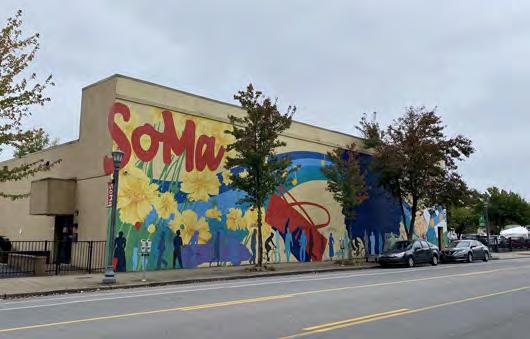
AMP: Why are districts like SoMa so important to a city’s downtown success?
You can spend an entire day in SoMa alone. Whether you’re visiting the ESSE Purse Museum, stopping at Community Bakery, shopping at local boutiques, enjoying lunch at Raduno or exploring
Callison: Successful downtowns are often built around districts that create distinct experiences. Little Rock is unique because it isn’t centered around a single corridor. We have multiple pockets of activity and culture that give visitors different reasons to explore.
From the convention center and River Market area all the way through SoMa, visitors can find entertainment, dining, shopping, public art and cultural attractions. Those districts work together to create a stronger overall downtown experience.
The success of SoMa demonstrates how investing in unique, locally driven experiences can help create a destination that appeals to both residents and visitors.
AMP: What role does LRCVB play in supporting areas like SoMa?
Callison: As a convention and visitors bureau, our primary focus is tourism and destination marketing. Economic development and business recruitment largely fall under the chamber and economic development organizations, but tourism plays an important role in that process.
Everything starts with a visit. When people come to Little Rock for a convention, sporting event, meeting or leisure trip, they’re exposed to the city in a way they may not have expected. Sometimes that visit leads to future business opportunities, investments, relocations or return trips.
One of our biggest responsibilities is generating awareness and interest. We regularly host travel writers from across the United States and around the world, including visitors from Germany, Canada, Sweden and the United Kingdom. By sharing Little Rock’s story with those audiences, we help create interest that benefits the entire community.
AMP: What are some of the major projects underway downtown?
Callison: We have several exciting projects underway. One of the biggest is the reimagining of the River Market Hall and Ottenheimer Market building, which is expected to move into construction in early 2027.
We’re also currently developing a new Experience Center in the River Market District. Construction is underway now, and we’re hoping to open it in August. The space will serve both visitors and residents and will feature unique products created by Little Rock artisans and makers.
In addition, we’re preparing for the 10-year anniversary of the reopening of the Robinson Center following its major renovation. As part of that effort, we’re conducting an economic impact study to highlight the value the facility has brought to the community over the past decade and to demonstrate its importance as a venue for entertainment, conventions and cultural events.

AMP: How important is tourism to Little Rock’s economy?
Callison: Tourism plays a significant role in Little Rock’s economy.
We’re constantly marketing the city to our top visitor markets, including Dallas-Fort Worth, Memphis, St. Louis, Chicago and Atlanta. DallasFort Worth, in particular, has become a major driver of visitation, and we’ve seen growth in both visitor numbers and spending from that market.
The visitor economy generated approximately $2.19 billion for the Little Rock area in 2025, making tourism a critical component of the region’s overall economic health.
AMP: What excites you most about the future of downtown Little Rock?
Callison: There are several projects on the horizon that have tremendous potential.
The planned improvements associated with the 30 Crossing project and the proposed park spaces surrounding it are incredibly exciting. Those developments could create new gathering places and further connect different parts of downtown.



More broadly, I think Little Rock is fortunate to have a downtown that is already active, clean and full of opportunities. There is always something happening, whether it’s a festival, concert, convention, sporting event or community gathering.
The foundation is already here. The opportunity now is to continue building on that momentum.
AMP: What do you hope visitors take away from a trip to Little Rock?
Callison: More than anything, I hope they remember the people. When we survey visitors, one
theme consistently rises to the top: hospitality. People talk about how welcoming, genuine and kind the residents are.
Whether someone is visiting for the first time or returning for another trip, we want them to feel at home. Hospitality is one of Little Rock’s greatest strengths, and it’s something that continues to set us apart.
At the end of the day, attractions, restaurants and events are important, but it’s the people who create memorable experiences. That’s what visitors remember most when they leave Little Rock.
Chloe Wardlaw is a Texarkana native by nature and by heart. The Texarkana USA Regional Chamber of Commerce director of events and communications has never strayed from her hometown identity, and her insights into the revamped downtown are exactly why Texarkana sees more and more tourists every year.
AMP: How would you describe downtown Texarkana and the role it plays in the community?
Wardlaw: I’ve lived in Texarkana my whole life, and ever since I started driving, I’ve been fascinated by downtown. I remember being 16 years old and driving through the area, seeing so many empty buildings and wondering why they weren’t being used.
Now, nearly 10 years later, it’s amazing to see how much has changed. Many of those buildings have been filled, and there’s a tremendous amount of energy downtown. Whether that’s considered rapid growth or not, it certainly feels that way.
A big part of that energy comes from the festivals and events. Just recently, we hosted a Taco Fest celebration, and last year, we held our first-ever Pickle Fest, which drew roughly 10,000 people. The response was incredible, especially considering it was the festival’s first year.
Downtown Texarkana also has a unique historical identity. Our federal courthouse, which doubles as a post office, literally sits on the state line between Arkansas and Texas. Visitors can stand in both states at the same time while in front of one of our most recognizable landmarks. It’s often cited as one of the most photographed federal
courthouses in the country and remains a major attraction for visitors.
Like many great downtown districts, ours is filled with locally owned businesses, restaurants and shops that give it a unique personality and sense of place.
AMP: What makes downtown Texarkana different from other downtown districts across the state?
Wardlaw: The most obvious difference is that we’re literally divided between two states. That’s something very few communities can say.
Another thing that stands out is our commitment to locally owned businesses. In fact, downtown recently announced what will be its first franchise location, a Kilwins, which is pretty remarkable when you consider how long the district has existed.
On a Friday night, downtown is incredibly busy and vibrant. By Monday morning, it can feel much quieter. I think that contrast is unique and also speaks to the opportunities that still exist for growth. We have momentum, but we also have room to continue developing.
AMP: Have you seen economic growth and investment increase in Texarkana in recent years?
Wardlaw: Absolutely. One of the most significant investments has been our new airport on the Arkansas side of Texarkana.
The previous airport had served us for many years, but the new facility was built from the ground up and has become a major asset for the
region. It’s really the front door to Texarkana for many businesses and economic developers.
Since the airport opened, we’ve seen additional state and federal investments, including funding to extend the runway. Those improvements have directly influenced businesses considering relocation or expansion into the area. In some cases, companies that were evaluating Texarkana made commitments after learning about those infrastructure improvements.
Those larger investments have a tremendous impact on a community. We value our small businesses immensely, but when manufacturers or major corporations choose to expand into Texarkana, the economic benefits ripple throughout the community and improve quality of life for residents.
AMP: How do festivals contribute to downtown’s success?
Wardlaw: Festivals introduce people to Texarkana who may never have visited otherwise.
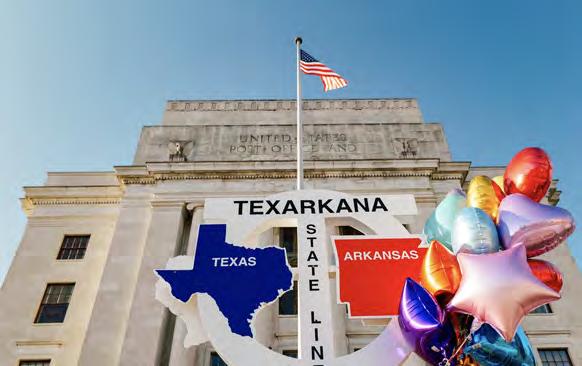

Someone might come for an event like Pickle Fest and then discover downtown’s restaurants, boutiques and nightlife. They experience the sense of community that exists here and see the potential of the district firsthand.
Those events create tourism, and tourism often leads to investment. The more people who visit downtown and see its potential, the more likely we are to see additional renovations, building restorations and new businesses moving in.
Ultimately, the goal is to continue filling vacant spaces and creating a downtown where visitors can walk both sides of the street and find something exciting around every corner.
One thing that’s unique about many of our festivals is that they’re citizen led rather than city led. That says a lot about how much local residents care about downtown and want to see it thrive.
I also expect we’ll continue to attract more locally owned businesses and specialty shops. The festival scene is likely going to be a major driver of that growth. The success of Pickle Fest, for example, demonstrated how quickly a new event can put Texarkana on people’s radar.
As more visitors experience downtown, they discover the restaurants, shops and local businesses that make the district special. They meet people, enjoy the atmosphere and often want to come back.
AMP: What excites you most about the future of downtown Texarkana?
Wardlaw: The momentum. It’s exciting to see buildings being renovated, festivals growing and more people discovering what downtown has to offer. The community is passionate about the area, and that passion is driving real progress.
Downtown Texarkana has a unique identity because of its history, its location on the state line and the people who invest their time and energy into it. I think we’re only beginning to see what’s possible, and I’m excited to watch that growth continue.



By Dwain Hebda
It is a good time to live in Arkansas, as evidenced by how many people want to get there. While not registering the eye-popping numbers of South Carolina or Arizona, the Natural State is firmly in the middle of the pack of states when it comes to adding headcount.
The U.S. Census reported that between April 1, 2020, and July 1, 2025, Arkansas grew 3.4 percent. The state ranked 25th by America’s Dashboard, which assigns a score based on population growth, net migration and unemployment.
South Carolina was ranked first, followed by Idaho, North Carolina, Florida and Arizona. Florida (2 percent), Arizona (1.8 percent) and Texas (1.7 percent) lead the country in raw population growth, respectively.
It is relatively easy from a macro level to see where growth is happening. The Little Rock-North Little Rock-Conway Metropolitan Statistical Area is growing at nearly twice the rate of major cities, including Memphis, Jackson, Mississippi, and Baton Rouge, Louisiana. The Northwest Arkansas MSA is even more robust, with Benton County and Washington County growing at an annual rate of nearly 4 percent and 2.5 percent, respectively, for a decade.
What is often overlooked, however, are smaller areas that are also catching their share of new residents and are poised for big things. Such communities may be absorbing overflow from the state’s MSAs, or they might have developed other ways of attracting more residents. Whatever the case, real estate is playing a major role in the towns’ success stories.
Arkansas Money & Politics caught up to leaders in four such communities to find out how they are dealing with the growth they have and how they plan to sustain that momentum with sufficient housing, commercial spaces and public land devoted to enhancing quality of life.

Anyone who doubts the power of proximity has not been paying much attention to the small towns ringing the northwest Arkansas quadrant anchored by Bentonville, Fayetteville, Rogers and Springdale. Centerton in Benton County is a textbook example of the impact a thriving MSA can have as a spillover for new residents looking for affordable housing and a slower pace of life.
Regina Richardson has had a ringside seat to the community’s growth for the past 20 years in more ways than one. A real estate professional at Springdale-based Elite Realty’s local office, she has witnessed mushrooming housing starts to help catch as many new residents to the area as possible.
“I would say the biggest thing for Centerton was approximately 10 years ago, when they built the new school,” said Richardson, who is also president of the Centerton Area Chamber of Commerce. “The very first year that that was happening, there were 155 new subdivisions that went on our city books.”
Richardson also said directional growth worked in the community’s favor as the most logical place to build was west of the Big Four communities of northwest Arkansas. That put Centerton right in the crosshairs for explosive growth, and that is exactly what happened.
According to U.S. Census data, the town’s population was a little more than 9,500 in 2010 and nearly doubled over the next decade to 17,800 people. A mere five years later, the population was estimated to be more than 27,000.
In fact, according figures published by the Centerton Area Chamber of Commerce, at an estimated 2026 population of 29,500, the city is the fourth fastest growing in Arkansas at 6.8 percent annually, trailing only Tontitown (9.3 percent growth), Highfill (9.2 percent) and Pea Ridge (8 percent).
Demographics also reveal a preponderance of families; average household size is nearly three people, headed by well-paid breadwinners. Median household income in Centerton was reported by the census to be nearly $116,000, which goes a lot farther here than elsewhere in the MSA. Median home value in Centerton was $338,500 in 2024, almost $100,000 less than in nearby Bentonville.
However, as Richardson pointed out, the price gap continues to close fast, especially as the city continues to grapple with growth and preparing the infrastructural backbone developers need before they can build.
“From the city’s city point of view, they’re working with the water. They’re working with sewer and all those things that really affect real estate. If none of that is happening, then building stops,” she said. “Those are the big-city questions we’re dealing with now that have been affecting us.
“I think the city has handled everything that they could possibly handle. Our mayor has landed multiple grants for things like sidewalks, but so many things are happening here. It’s sometimes hard to plan for the future when we don’t have any control over how fast it is growing.”

With a thriving manufacturing base, robust two-year college and nearly 6-percent population growth since 2020, the U.S. Census Bureau states, Harrison is rapidly becoming an address of choice for people looking for a small-town pace and amenities normally found in much larger communities.
“We’ve always had a good manufacturing base here in town, whether it be Westrock or Claridge or Wabash. We’ve always had nice strong, healthy manufacturing in our community,” said Jeffrey Nielsen, president and CEO of the Harrison Chamber of Commerce. “We have also seen the growth of, I guess you’d call it homegrown, entrepreneurial manufacturing. Some diecast places, some fabricators have done well here and expanded up, We’ve got one, Mad Max Welding & Fabrication, that just went from, I think it was 5,000, 7,000 square feet to, I think they’re up to 12,000 or 15,000 square feet now in their new location. They’ve added 10 employees, bought a bunch of equipment to make their jobs run quicker and smoother. We’ve seen several instances of growth like that.”
Nielsen said there were several factors underpinning those success stories that are a testament to what the community has going for it. One is ample ground for expansion and development, and another is the environment that many entrepreneurs find appealing, as well as more cost effective than other parts of the state.
“Honestly, I think we’re benefiting from some of the expansion in northwest Arkansas because it’s making people move farther away from that,” he said. “A lot of people don’t want to live in a big town, and they’re moving to get farther out into rural communities. Harrison is kind of uniquely placed where we’re at the intersection of a couple of major highways, and even though we’re only 15,000 people within city limits, we service, I’d say, closer to about 90,000 people regionally.
“As far as space, we do have an industrial park; however, the majority of it, 95 percent of it, is full. There’s still a couple of spaces left in it, but not a whole lot. The good news is we have plenty of property that’s available here. It’s raw land, and most of it’s got to be rezoned because it’s agricultural land right now, but there’s plenty of land that’s within five minutes’ drive from downtown.”
Speaking of downtown, the city has taken aggressive steps to redevelop and reinvigorate the neighborhood, built around a square, an effort that has completely reimagined the city’s core.
“We’re one of the few small towns that actually still has a full square in place, and like most every other town, business has passed it by over the years,” Nielsen said. “We focused a lot of time trying to revitalize the downtown square, and it has had a definite effect. As of right now, I think we only have one or two spots still available for lease. It’s gone from a near ghost town to being almost completely full.”
Nielsen said the downtown neighborhood has its usual roster of local business owners but also notched a win many small towns would love to have by attracting an outside company that represents both a new face and a new industry to town.
“We have a new company that’s coming in called Provalus that’s going to take up one of the anchor spots on the square,” he said. “We’re really excited about that because they’re bringing in 150 jobs with them. It’s a new industry to Harrison, they do anything from app creation to cybersecurity and everything in between, so we’re really looking forward to them coming here.”
Tucked into the northernmost corner of central Arkansas, an hour from the capital city, Searcy is starting to see the payoff of a growth mindset, one that has expanded the sleepy White County community into a thriving small city.
Stuart Dalrymple, commercial real estate broker and owner of Dalrymple Commercial and Dalco Closing & Title, said even though the city is rarely mentioned in the first breath of Arkansas success stories, it has nonetheless grown steadily thanks to smart development.
“Searcy is one of those towns that we’ve almost been an outer-lane town, almost a stepchild to Little Rock, North Little Rock, even Conway,” he said. “Nonetheless, Searcy has always done well. We’ve attracted businesses that have grown, including Unity Health and First Security Bank, which has its headquarters here. We have a Walmart and Sam’s Club distribution center.”


Dalrymple credited passage of two key ballot initiatives as catalysts for the community’s growth, since they gave city leaders the wherewithal to invest in infrastructure and quality-of-life amenities that have satisfied lifelong residents and new citizens alike.
“What has really tipped us off was we passed a sales tax somewhere around 2019, I believe,” he said. “That really helped us get a leg up on trying to get out in front of people. After that, in 2024, the voters were able to look forward at where Searcy was headed and passed another half-cent sales tax, and with both of those, we were able to dramatically improve quality of life. I give all the credit for that to our mayor, city council, chamber of commerce and our regional economic development commission.”
Anyone who is not able to connect the dots between new ball fields and new business need only look at the Searcy model to see what a powerful draw such quality-oflife investments can be. Dalrymple said it is a classic chicken-and-egg strategy that is paying off big for the city.
“We’re building a community center. We’re building bike trails. We’re connecting all of those through grants that we’ve been able to receive,” Dalrymple said. “We’re building a new outdoor water park. We’re expanding the sports complex where we have lots of ball fields, and we get a lot of tournaments in here. All of that resulted in a tremendous number of people looking at Searcy.
“In fact, as we have become a regional hub, we finally, I believe, have grown enough to where we’ve met the metric that a lot of national and regional retailers are looking for. Six, seven years ago, we had Hobby Lobby, TJ Maxx, Five Below then Old Navy and just started building from that. We landed Academy Sports, then Texas Roadhouse, and we just completed the land purchase for Target, which is expected to open sometime around the first quarter of 2027.”
City leaders are now turning their attention to improving the industrial posture of the community. Dalrymple is on a committee looking at parcels of land to create shovel-ready building sites for industry to further accelerate growth.
“We’ve put together a couple of smaller sites, around 30 acres each, but we’re looking to try to assemble anywhere upward from 100 to 200 acres that we can focus on for continued industrial growth,” he said. “A community has to have land available when companies are ready to pull the trigger. Industrial’s a little bit more challenging in that you have to provide the infrastructure to 100 acres of land that’s probably going to be outside the city limits. I would say finding that ground and building out the infrastructure are easily our biggest goals right now.
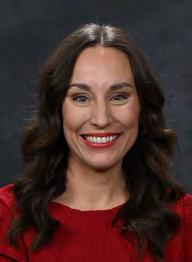

When the announcement was handed down that Buc-ee’s would launch its inaugural Arkansas store in Benton, the rest of the state stood up and took notice. The get was the biggest yet for the little city that could, which is getting good at showing its much bigger neighbors in central Arkansas a thing or two about landing big economic fish.
“I think one of the strengths of this area is the partnership between the Saline County Economic Development, the city of Benton and our chamber,” said Rachel Rivers, director of marketing at the Benton Area Chamber of Commerce. “Leadership among these three organizations work together every day. They have their different lanes and their roles, but they have the same common goal. I think in other communities there could be some conflict, maybe different visions of where to go, but these business leaders have the same goal, and they work very well together. I think that has really contributed to the success of these businesses coming to town while maintaining that strong community feel.”
Seemingly everywhere one looks in Benton, one can see signs of progress, from new commercial spaces to a revitalized downtown right down to the less-sexy elements of expanded roadways and improved sewer systems.
“The largest thing we’ve had to deal with is a 70-, 80-year-old drainage system downtown that was put in in the 1920s or so. It was cast iron and clay, terracotta-type drainage that had cracked, and trees had grown through it. We just got done with a massive overhaul there,” said Matt Thibault, marketing director for the city of Benton. “We have really paid attention to those type of things, and I think it shows in, for example, improving the sidewalks, making sure there are sidewalks, making sure they’re not cracked or in disrepair.
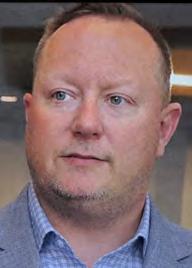
“That’s all part of creating the kind of place where we can have our Third Thursday festivals, we can do our Christmas stuff and people get out, be a part of their community and maybe bring their friends in, and those people will say, ‘I had such a wonderful time in Benton, I want to stay here.’”
Rivers also said community leaders have done a good job of taking advantage of the fact the city is not constrained by lack of land for development, which has allowed Benton developers to keep up with shovelready sites for commercial projects and residential developments to satisfy growth in headcount. She said as a native who left to start her career and then just returned recently, she noticed the differences in real estate development were considerable.
“One thing was the road I grew up on, Spring Hill Road, was gravel when I left,” she said. “I did not imagine raising a family here, but when I came back home, it was just leaps and bounds ahead of where I ever imagined it would be. As I got older, I saw the value of a great public school system and a safe community. That’s kind of drew me back and is keeping us here.
“Benton is very fortunate to be in an area that we have room for growth as a city and into the county. We’re not landlocked. There’s room for us to grow out down [U.S.] Highway 70, and we have some great builders here in this community who are noticing that. There’s multiple subdivisions in several different niches, from first-time homebuyers to people moving into their second home.”
Thibault said while no one element has led to the city’s 11 percent growth rate between 20202 and 2025, per the U.S. Census, the general pro-growth attitude helps each perk and amenity work in tandem with each other.
“I think our willingness to expand led us to the greater vision to have the amenities and to be the place that we want people to come back home to or to move their families here,” he said.

Editor’s note: This is simply a list of a few of the state’s prominent commercial real estate firms listed with owners, principals and/or managing directors, as listed on the firms’ websites.
Colliers | Arkansas is the largest commercial real estate firm in the state at more than 23 million square feet of commercial space leased and managed and more than 130 employees located in offices in Little Rock, Rogers, Fayetteville and Hot Springs.
Leadership
• Isaac Smith, president
Headquartered in downtown Little Rock, Moses Tucker Partners is a fullservice commercial brokerage, property management and development real estate firm. It is one of Arkansas’ largest commercial brokerage and management firms at 11.6 million square feet of commercial space under management and 125 employees.
Leadership
• Chris Moses, principal/president/CEO
Based in Fayetteville, Lindsey & Associates is the leading real estate company in northwest Arkansas, offering 50 years of experience in commercial and residential markets, additional offices in Rogers and Bentonville and more than 200 agents.
Leadership
• John David Lindsey, principal broker
Kelley Commercial Partners, headquartered in Little Rock with an office in Springdale, is an EOS firm and the state’s exclusive ChainLinks member, allowing it to connect with an exclusive network of CRE firms across the country.
Leadership
• Hank Kelley, CEO
Sage Partners was founded in northwest Arkansas in 2005 and became affiliated with Cushman & Wakefield in 2018. With offices in Rogers and Little Rock, Sage manages more than 5 million square feet with an estimated value of more than $750 million and $100 million in annual receipts.
• Marshall Saviers, SIOR, CEO/ principal
Established in 2010, Jonesboro’s Haag Brown Commercial Real Estate and Development has grown to become the largest CRE firm in NEA, specializing in project development, tenant representation and investment advising for commercial properties in Arkansas and surrounding states.
• Greg Haag, CCIM, principal broker
• Joshua Brown, CCIM, co-founder
The RPM Group, based in Little Rock, recently celebrated its 70th anniversary. The firm now employs more than 300 employees operating out of nine sales offices throughout central Arkansas. RPM has closed more real estate transactions and real estate sales volume than any competitor in the state since its inception.
• Kris Upton, owner/president/CEO
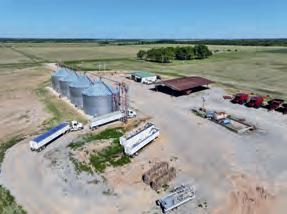
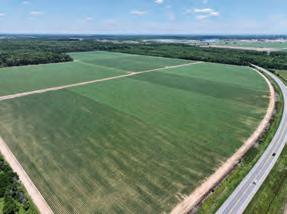
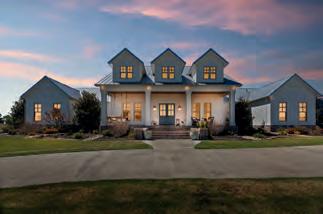
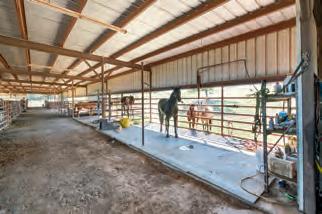
2,224± Acres / $16,159,382.00
2,042.3± cropland acres all precision leveled Headquarters site that includes a shop, equipment shed, and 160,000 bushels of grain bin storage Investment-grade farm with excellent water, soils, and tenant pool 891± Acres / $4,500,000.00
560± acres of pastureland, working cattle ranch
Custom 5,085± square foot main house built in 2020, plus guest quarters and a four-car garage Well-maintained, highly improved Timber and woodlots provide good deer and turkey hunting




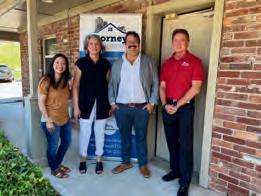
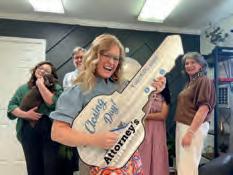

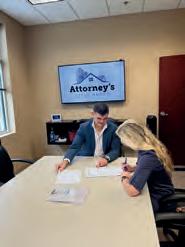




By Mark Carter
Whether or not Louis Glickman, the 20th century New York real-estate mogul, ever stepped foot in Arkansas is unclear. What is clear, however, is that the famous quote so often attributed to him certainly applies to the Natural State.
“The best investment on Earth is earth,” the quote reads.
From Ponca to Parkdale and all the row crops, piney woods, hills, hollers and rivers in between, land brokers would almost certainly agree. Markets may fluctuate; wars, weather and politics may wreak havoc; but land — good ol’ dirt between the toes — will likely be the last investment that loses value.
Arkansas is filled with valuable rural real estate, and the market for agricultural and recreational land has stabilized following a COVID-19 pandemic hiccup that saw low inventory and higher prices.
Jeremiah Moore, who represents District 61 in the Arkansas House of Representatives and launched Moore Land & Farm in Clarendon earlier this year, said he believes the Arkansas land market finds itself in a unique position.
“We’ve gone from historic low inventory and high prices during the post-pandemic era to where there’s now more inventory and prices have seemed to stabilize,” he said. “Overall, the market is still very strong in some areas, particularly in smaller parcels that are 40 to 80 acres.”
Moore cited a study by the University of Arkansas system that looked at farmland values from 1998 through 2018. The study found that Arkansas farmland increased by 5.5 percent on average year over year.
“It’s what you do with it that matters,” he said. “The recreational market hasn’t seen a downturn, but there have been
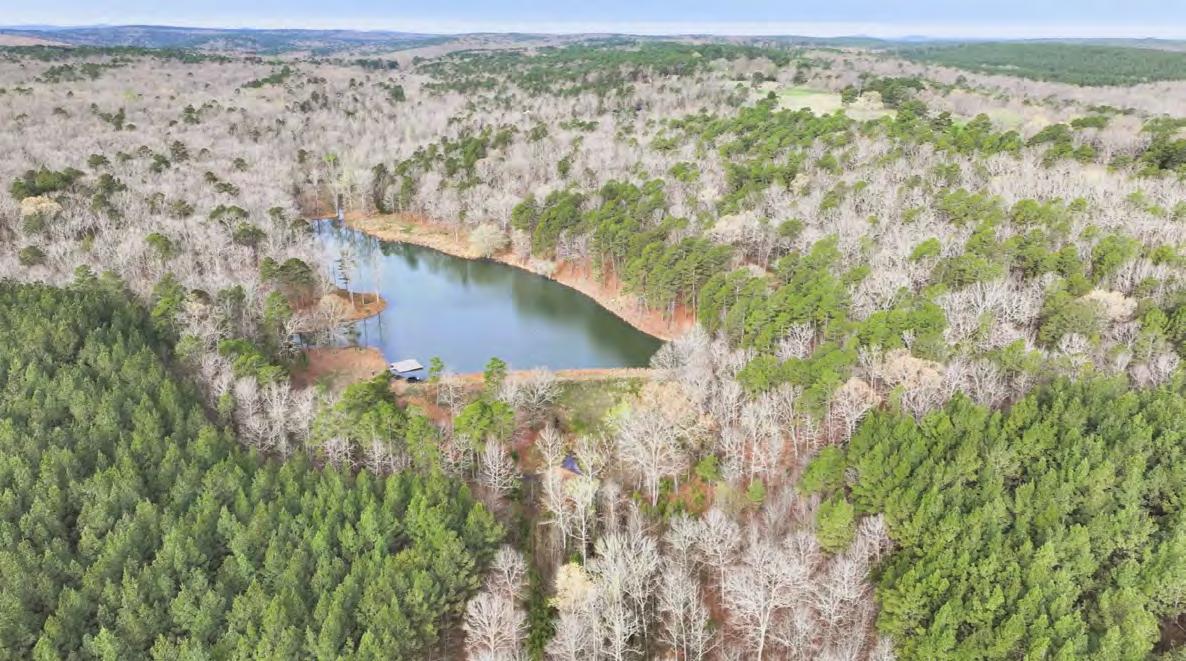
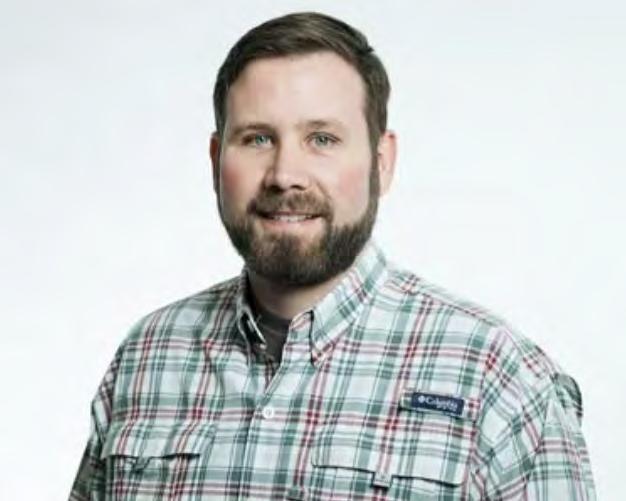
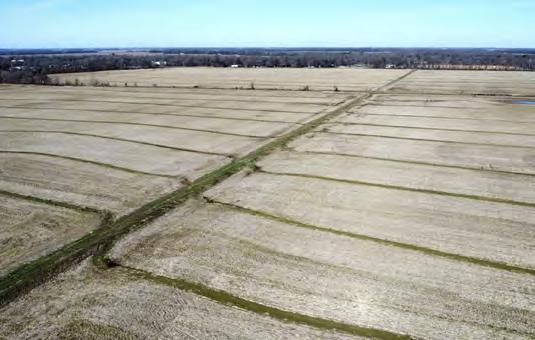
some recent farm auctions that raised some eyebrows. The bottom line is that there will always be a market for land.”
Robert Eason, principal broker and owner of Arkansas Land Co. in North Little Rock, said farmland and recreational properties continue to hold their value and remain a solid long-term investment, but pricing remains the biggest obstacle to those looking to enter the market.
“Most row-crop land values have increased significantly, while returns have fallen below historical averages,” he said. “Investors often have to generate additional income through recreational and energy leases to make properties cash flow. This has priced much of the market out of reach for average buyers simply looking for a place to hunt and enjoy with their families.”
The rates on current U.S. Department of Agriculture Farm Service Agency loans range between 4.75 percent and 5.75 percent, while rates for recreational-use properties are floating between 6 percent and 11 percent.
Gardner Lile, president of Lile Real Estate in Little Rock, said the higher rates combined with the challenges of the current agricultural economy are keeping some prospective first-time buyers out of the market.
“Buyers seem to have slowed down with the uncertainty from the war and talks of potential increase in interest rates,” he said. “The agricultural economy is depressed from downward pressure on commodity prices over the last two to three years, and input costs have stayed elevated or increased.”
Land, whether for ag or recreational use, remains the solid investment it has always been, he said.
“Land remains a great investment for investors looking to allocate funds to hard, tangible assets that produce safe and steady returns,” he said.
Lile said landowners see more ROI if they do not ignore the property. For example, owners of recreational property should always look for ways to improve wildlife habitat, and farmland owners should look to improve the efficiency and irrigation capabilities through land leveling, drainage work and the installation of new re-lifts and wells.
“Improving access and internal road systems benefits both recreational and agricultural properties,” he added.
Curb appeal is not just for residential real estate agents working Chenal Valley or Clear Creek. It can go just as far on the farm or at the duck club as it can in any of the state’s most prized suburbs. That can start with keeping roads, ditches and entryways maintained, Eason said.
“Too often, I’m asked to give an opinion on a property and find myself recommending that the owner clean up debris or bushhog overgrown areas,” he said. “Many investors purchase land instead of homes or improved properties to reduce maintenance responsibilities, but some don’t realize how much value can be lost when an open field turns into a sweetgum thicket. Mowing annually is far less expensive than mulching or bulldozing later on. When discussing hunting properties, keep a detailed log book. Harvest records are a key factor when pricing recreational properties.”
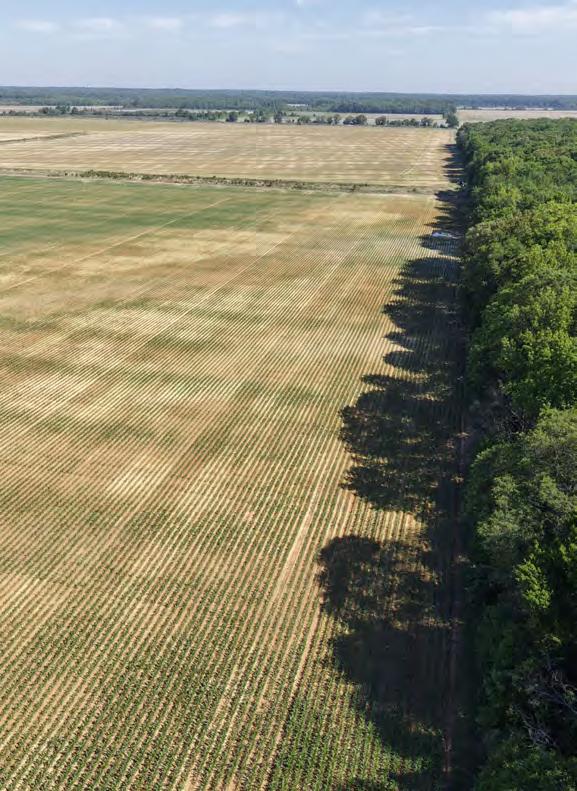
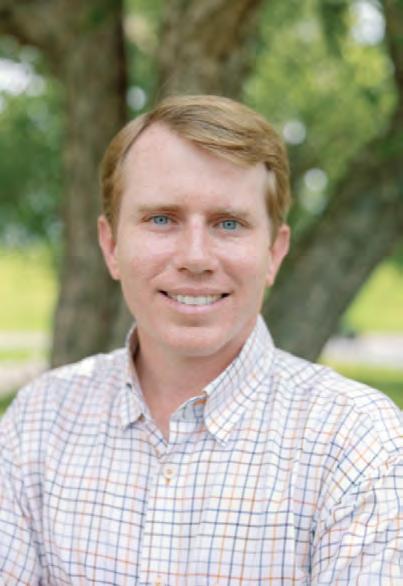
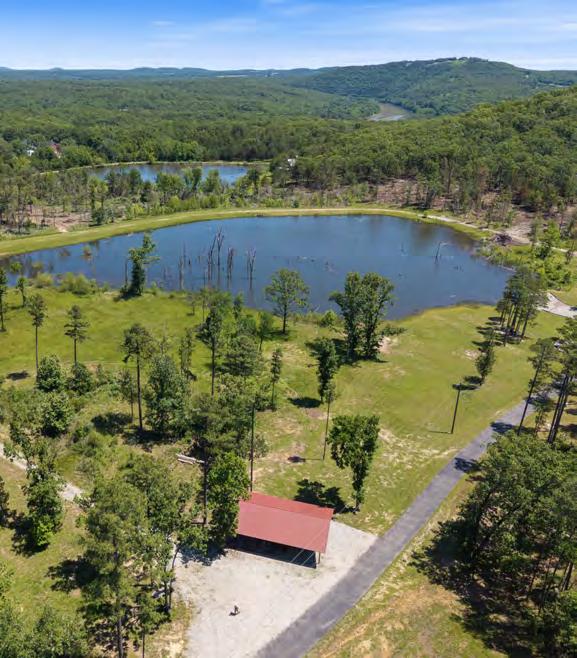
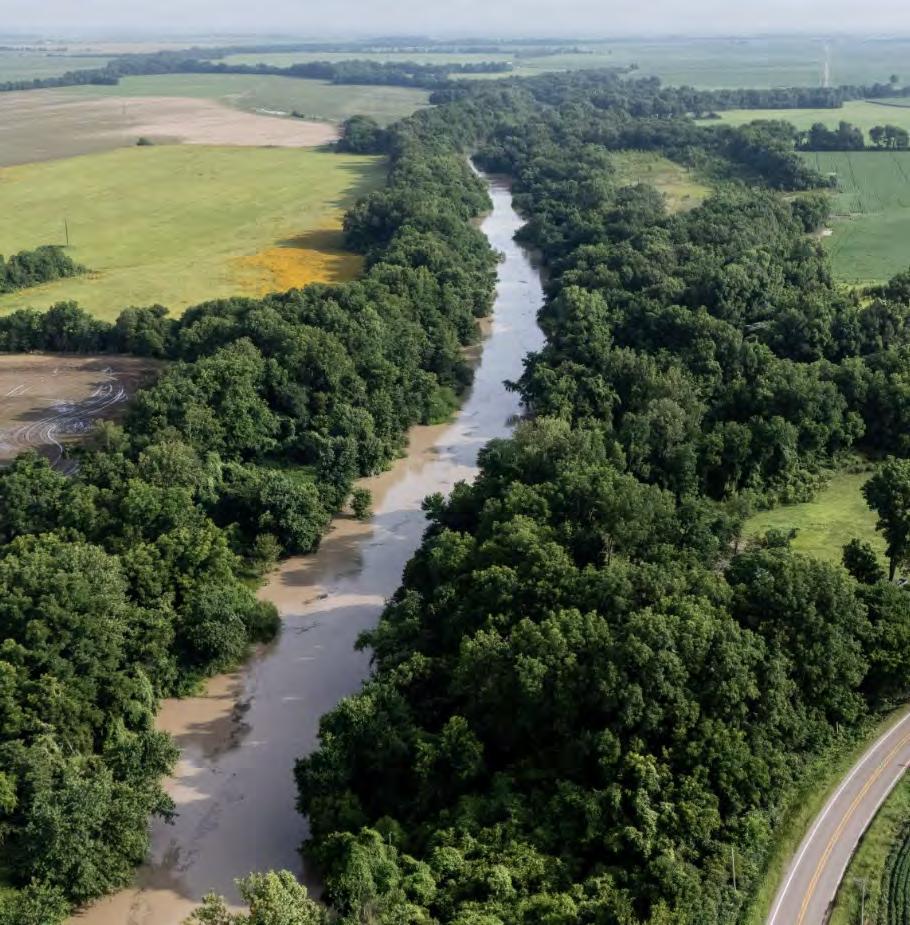
Ben Wellons, president of Little Rock-based Wellons Real Estate, said his firm is seeing more buyers focused on experience-driven properties.
“Buyers today are thinking beyond just acreage; they’re focused on lifestyle, stewardship, privacy and long-term value preservation,” he said. “Arkansas remains incredibly attractive because it offers a rare combination of natural beauty, recreational opportunity and relative value compared to many other markets.”
Moore said the first things he considers when buying a property are the ability to irrigate, the soil type and, of course, location.
“Whether you’re buying or selling, find yourself an honest broker who will shoot you straight,” he said. “For buyers, they can set you up with the right lenders, give unbiased and informed information that might not be on the listing description, and help guide you on how much to offer. For sellers, making sure you have a broker that will put your best interest first can often be much more profitable than doing it on your own.”
Moore added that buyers not paying cash should find a lender that understands their goals. He also noted that the state ranks among the lowest 15 percent in terms of property taxes.
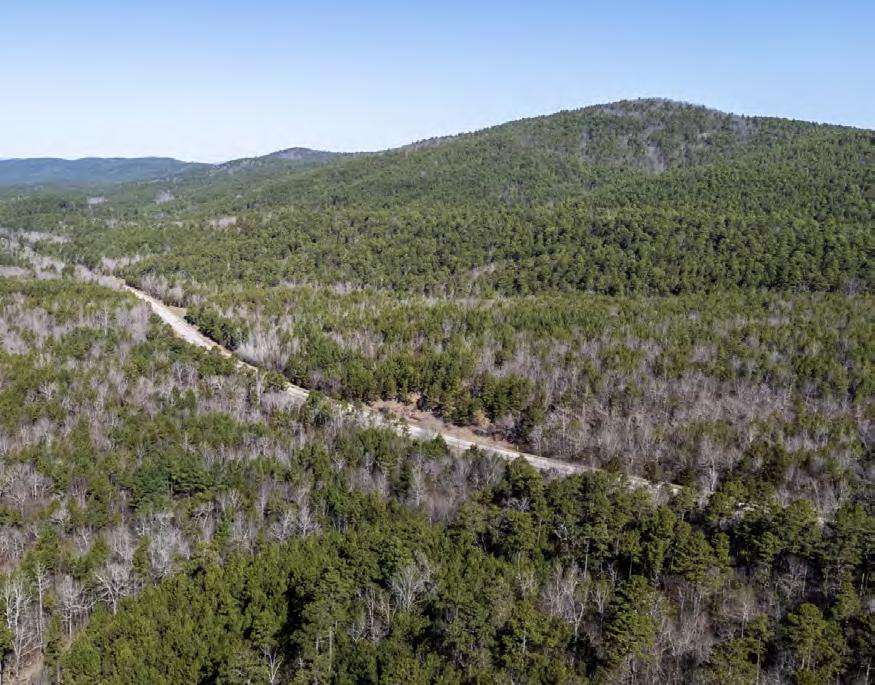
“Some banks focus more on business and home loans. Others are more comfortable with ag and recreational loans. Having a lender that understands your vision is important,” he said.
Property taxes in Arkansas remain among the lowest in the nation. Farmland property taxes are assessed at 20 percent of a property’s use value. Moore said Arkansas property taxes rank among the bottom 15 percent of all states.
“From my information, the only neighboring state with lower property taxes is Louisiana,” he said. “Local millage rates will vary by school district, but for raw land, our taxes are usually more affordable than the surrounding states.”
Eason said he tells first-time buyers to keep an open mind. Many want to buy the land and realize their full vision right away, but he said patience often pays.
“Purchasing a property that is not already 100-percent developed the way
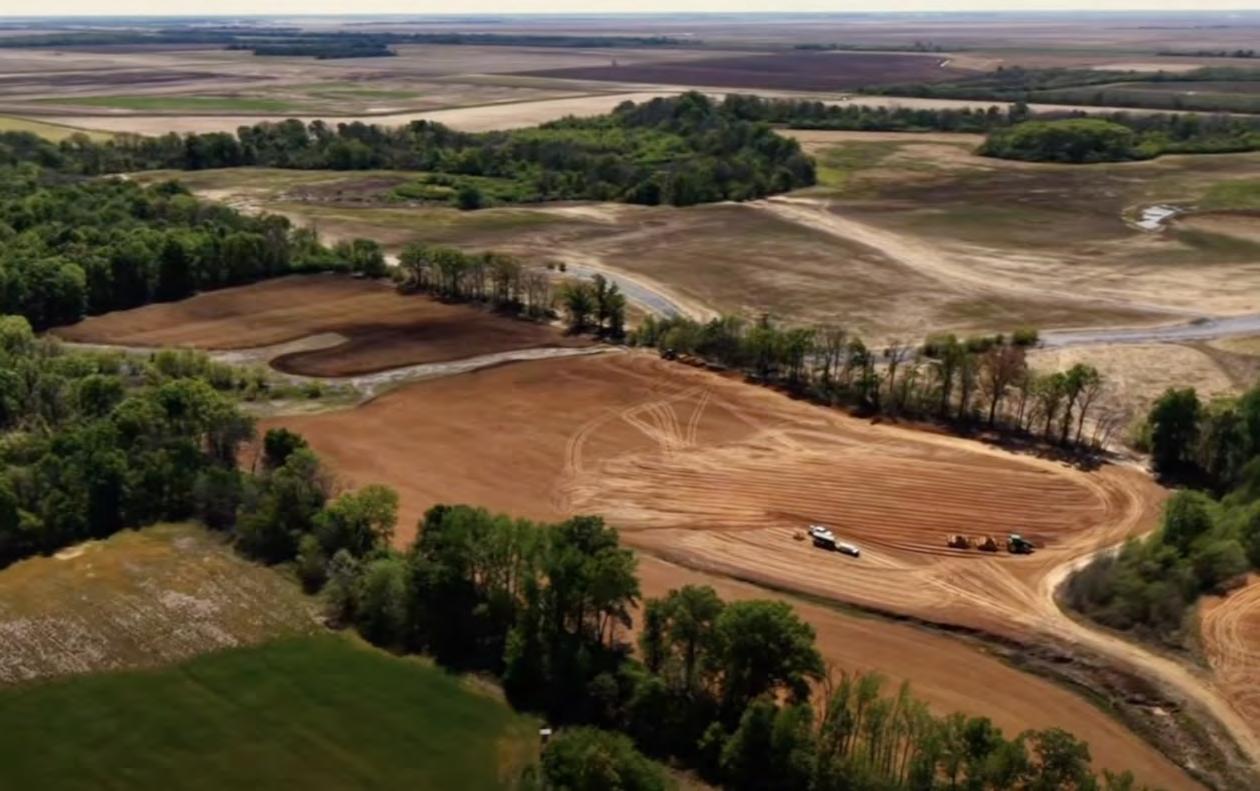
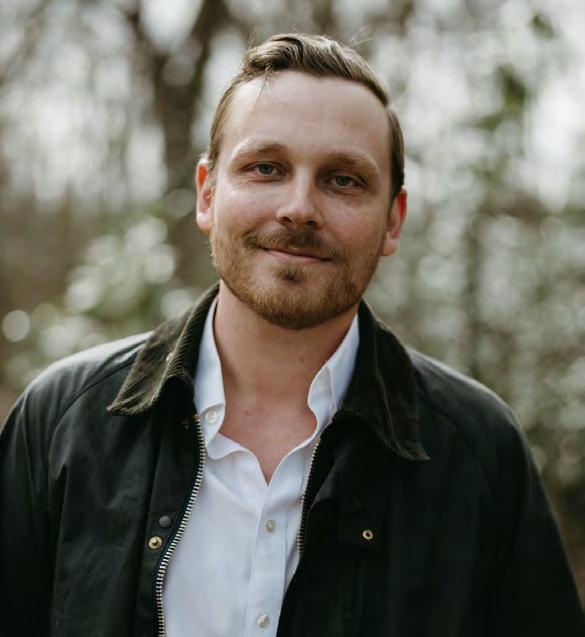
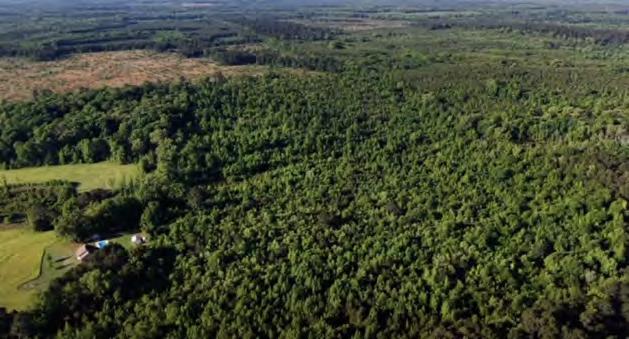
“Land isn’t a static asset. It takes proper management. If your goal is to sell a property within a year or two, I would definitely spend the money now. If your goal is to maximize the productivity of the farm, making sure you have proper irrigation is step No. 1.” — Rep. Jeremiah Moore, Moore Land & Farm
you want can often provide greater re turns than buying something already fully improved,” he said. “Buying a subprime property can offer discounted pricing, and improving it yourself can create significant monetary and personal value over time.”
Farmland makes up most of the Arkansas Land portfolio, and Eason said it is unfortunate to see how the current farm economy is unfolding. Landowners who lease their land for farming should make sure they have current written leases with their tenants, he advised.
“In many cases, landowners are first lienholders on a growing crop, and those leases should be filed at the courthouse in case an unfortunate bankruptcy situation occurs,” he said. “Personally, I have offered concessions to some of our farmers because I value
those relationships. I do not want to lose good farmers or face the possibility of having no farmer at all.”
Despite the depressed ag economy and other global concerns, Arkansas land remains a sound investment and, as Eason noted, the state is “one of the most affordable places in the country to own land from a property tax standpoint.”
Eason added that his firm is seeing an increase in available inventory for the first time since COVID-19.
“Historically, we have maintained an average of around 50 listings throughout the year,” he said. “Currently, our firm has more than 80 properties listed and available for purchase. The availability increase as a whole is due to increased motivation to retire from farming but also because properties are priced higher than market value.”
Though a sound investment, Arkansas land is not the office aloe vera plant that requires very little attention. Nothing worthwhile comes easy, after all, and the ROI many Arkansas landowners extract from their properties is quite worthwhile.
“The saying goes, spend money to make money,” Moore said. “This is true when it comes to land. Land isn’t a static asset. It takes proper management. If your goal is to sell a property within a year or two, I would definitely spend the money now. If your goal is to maximize the productivity of the farm, making sure you have proper irrigation is step No. 1.”
Both farm and recreational properties have sold for upward of $20 million over the past year in Arkansas.
“Farm and recreational properties continue to hold their value and remain a solid long-term investment,” Eason said.
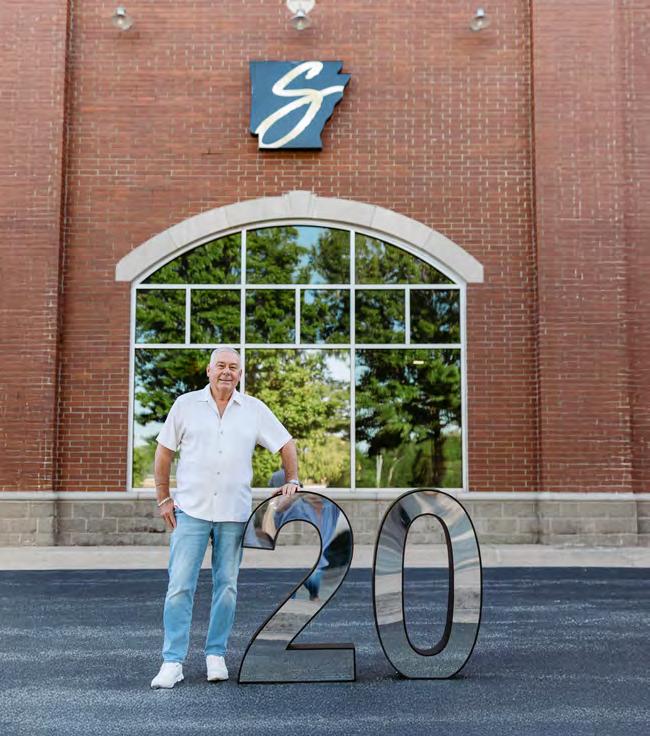

From all of us at Signature Bank, we want to say a big THANK YOU. We’re proud to celebrate 20 years serving Arkansas and grateful to be recognized among the area’s Most Admired Companies. Whether you’ve been our customer for 20 years or 20 minutes, (or you have yet to discover our locally-driven, responsive banking services), we thank you. We’re honored to call Arkansas home, and we look forward to spending many more years investing in the people, businesses, and communities that make this state so special!
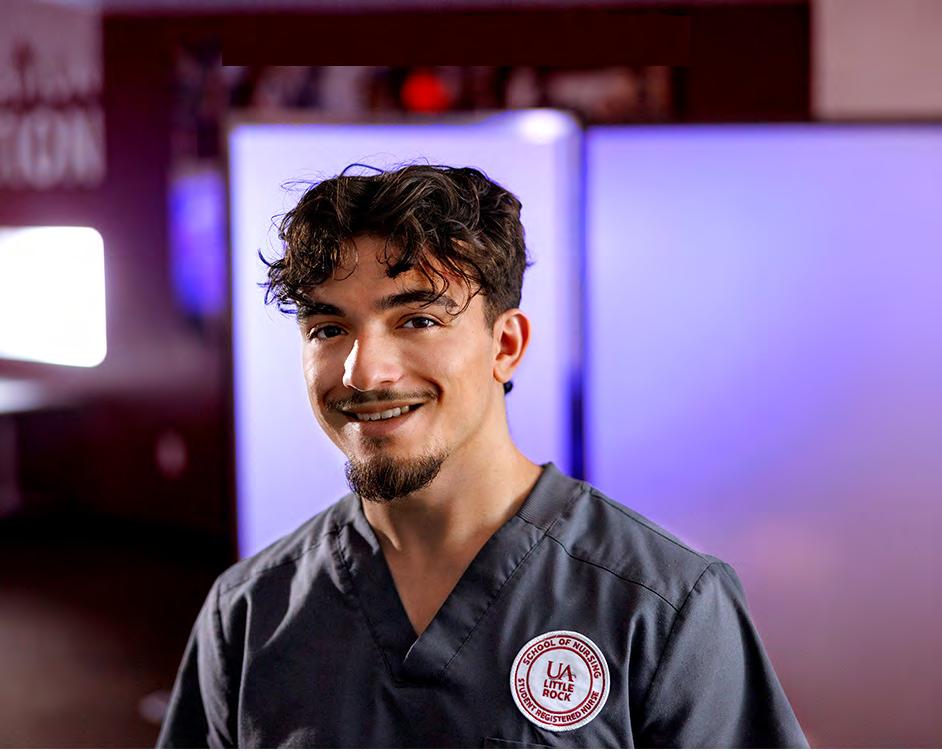
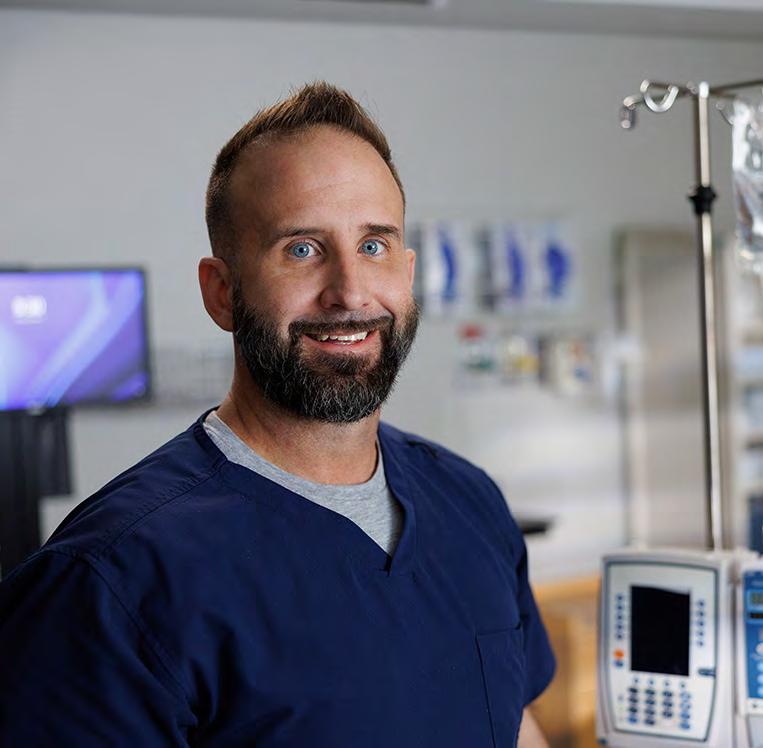
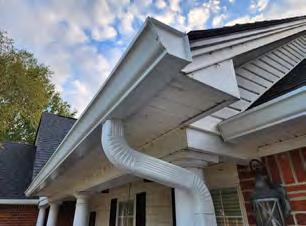
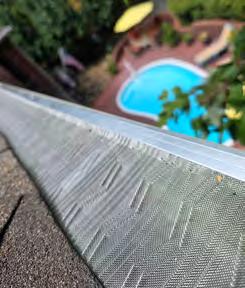


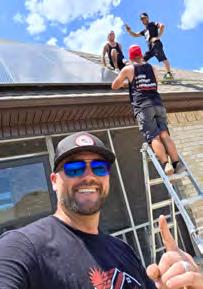
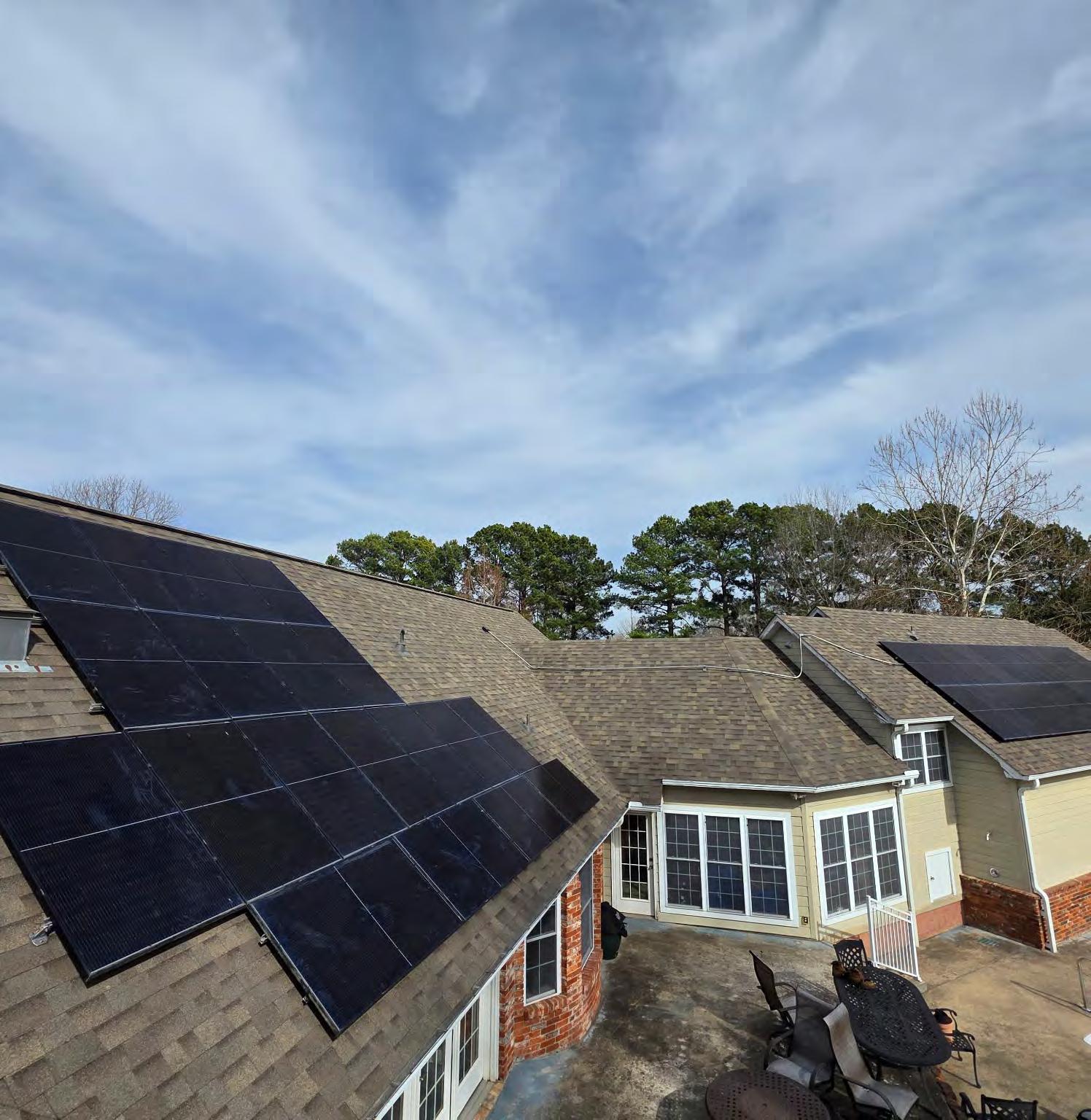

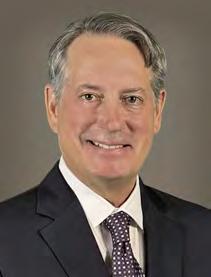
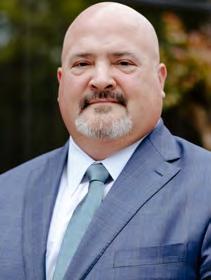
irth, school, work, death is more than the title of a 1988 album by English alt-rock band, The Godfathers.
The last two components to what has become a cynical way to describe modern life — work and death — represent important reasons for business owners to ensure they have the proper life insurance coverage.
Business owners need life insurance on two levels — personal coverage that protects their families and professional coverage that protects their businesses.
They can ensure that surviving family members and employees will avoid headaches and potential lost income by obtaining coverage on three levels — a key person policy, a buy-sell agreement and personal term coverage.
Arkansas Money & Politics visited with two of central Arkansas’ prominent insurance professionals to discuss life insurance from a smallbusiness owner’s perspective.
Jason Prather is partner and managing principal at Little Rock’s Legacy Capital. In addition to having multiple securities and insurance licenses, he is a wealth advisor and attorney. He advises clients in the areas of estate and gift tax, wealth transfer, life insurance planning and tax strategies.
By Mark Carter
Loren Marshall Ipsen, founder of Ipsen Financial Group in Little Rock, is a certified financial planner who advises clients in the areas of holistic financial planning, insurance, generational wealth transfer strategies, business strategy for entrepreneurs, tax planning and business founder transition.
Arkansas Money & Politics: Describe the key differences between personal and business life insurance.
Jason Prather: While the life insurance policies themselves may be fundamentally the same, personal life insurance planning is most commonly designed to protect one’s family, replace lost income, pay off debts, and provide liquidity at death for purposes such as estate equalization and estate taxes. It is typically an integral component of the insured individual’s estate plan, and these policies can be on a single life or structured as survivorship policies covering two lives.
Business insurance planning is typically designed around the needs of the business enterprise, and, if properly structured, it is one of the most versatile and financially efficient tools available for protecting and strengthening the business itself. For many business owners, life insurance is not optional — it is a foundational risk management tool.

Having an appropriately designed life insurance plan can help prevent a long-term business plan from being forced into a short-term emergency plan. Among the many uses of this asset class, life insurance can be used to fund buy-sell agreements between business partners, provide liquidity to maintain operations, support any debt obligations and satisfy lender requirements, among many other strategic uses.
The key distinction is intent. Personal coverage protects a household, while business coverage protects continuity, value and stakeholder interests.
Loren Marshall Ipsen: Personal life insurance is designed to protect an individual’s family and personal financial obligations. It helps replace income, pay off debts, cover final expenses or provide long-term financial security for loved ones if the insured passes away.
Business life insurance, on the other hand, is structured to protect the business itself. It can help fund buy-sell agreements, protect against the loss of a key employee or owner, provide liquidity for business continuity, cover outstanding business debt, or support succession planning. The policy owner, beneficiary and purpose are often very different from a personal policy.
AMP: How important is it for a business owner to have the right coverage?
Ipsen: It’s extremely important. Many small businesses are heavily dependent on one or two individuals for leadership, revenue generation, client relationships or operational expertise. Without the proper coverage, the death of an owner or critical employee can create major financial strain or even threaten the survival of the business.
The right coverage provides stability during a difficult transition period. It can help keep payroll running, reassure lenders and clients, fund ownership transitions, and give surviving partners or family members time to make sound decisions rather than rushed ones.
Prather: Without proper coverage, an unexpected death can create an immediate, chaotic financial strain on the business, its owners and its employees. Death is a certainty, but its timing is unknown and, unfortunately, oftentimes unexpected. Having to raise cash quickly can result in the forced sale of business assets, hurried borrowing under less favorable terms and potential business governance issues all at the most difficult time imaginable.
The death of an owner or key employee can disrupt long-term strategy and planning [and]
‘‘
Personal life insurance is designed to protect an individual’s family and personal financial obligations.
Business life insurance, on the other hand, is structured to protect the business itself.
— Loren Marshall Ipsen, Ipsen Financial Group
Life insurance can also serve as a very powerful recruiting and retention tool. Highly compensated executives increasingly value benefits that provide both protection for their families, as well as a taxadvantaged way for them to accumulate wealth.
— Jason Prather, Legacy Capital
undermine confidence among lenders, vendors and clients while also creating estate and liquidity pressures. Well-structured coverage ensures the business can continue operating as planned, rather than reacting under pressure. A welldesigned plan can be the difference between an orderly transition and a distressed outcome.
AMP: How important is key person coverage?
Prather: Key person insurance is one of the most underutilized but critical forms of business protection and risk management. If a business relies heavily on one or two individuals — an owner, top salesperson or technical expert — the loss can materially impact revenue, relationships and the overall enterprise value.
Key person coverage provides immediate liquidity that can be used to stabilize operations. It provides capital to recruit and train a replacement for the key person and can also be structured to provide a benefit to the key person’s family, an important component of recruiting and retaining top talent. It also provides a financial buffer to reassure lenders, investors and employees while helping preserve business valuation.
In many privately held companies, the value of the business is closely tied to specific individuals. Key person insurance helps to protect that human capital and keep a business moving forward despite the loss of a critical contributor.
Ipsen: Key person insurance can be vital, especially for small and closely held businesses. If a company relies heavily on a founder, top salesperson or specialized employee, losing that person could significantly impact revenue and operations.
Key person coverage helps provide financial breathing room. The benefit can be used to offset lost income, recruit and train a replacement, pay down debt, or stabilize operations while the company adjusts. In many cases, lenders and investors may even require this type of coverage as part of a financing arrangement.
AMP: What are the tax benefits and implications of life insurance when it comes to smallbusiness owners?
Ipsen: Life insurance can offer several strategic advantages for business owners, but the tax treatment depends on how the policy is structured and who owns it.
Generally, death benefits are income tax free to beneficiaries. In certain business arrange-
ments, policies can also help with estate planning, succession planning or funding buy-sell agreements in a tax-efficient way. Some permanent life insurance policies may also accumulate cash value that can be accessed during the insured’s lifetime.
However, premiums are not typically tax deductible when the business is the beneficiary. There are also important rules surrounding ownership structures, transfer-for-value considerations and executive benefit arrangements.
Because of this, business owners should work closely with both a financial professional and tax advisor to ensure the policy aligns with their overall business and tax strategy.
Prather: For business owners, life insurance is one of the only tools that can simultaneously provide protection, tax efficiency, liquidity and long-term strategic flexibility for the business. It is not simply about replacing what is lost but also about enhancing and protecting what is being built.
When viewed properly, it often becomes one of the most efficient and valuable assets on a business owner’s balance sheet.
Life insurance is simply a different type of asset. It performs and produces results in ways that traditional investments cannot replicate. No other financial instrument can offer the combination of tax characteristics found in life insurance. When properly structured, death benefits are received income tax free by the policy beneficiary, and in a permanent life insurance policy, the cash value inside the policy grows income tax free. If needed, policy cash values may be accessed income tax free, which provides the business with tax advantaged access to capital.
This creates a powerful dynamic: the ability to build, access and, ultimately, transfer wealth with significant tax efficiency. For business owners, this can translate into supplemental retirement income not subject to traditional income taxation of qualified plans, a flexible source of liquidity that does not require liquidation of other assets, and a highly flexible mechanism to deliver capital to heirs or business successors in an efficient manner.
Importantly, this asset class is largely uncorrelated to traditional markets, providing stability and diversification for owners whose wealth is often concentrated in their business and market-based investments.
Life insurance can also serve as a very pow-
erful recruiting and retention tool. Highly compensated executives increasingly value benefits that provide both protection for their families, as well as a tax-advantaged way for them to accumulate wealth. It allows employers to enhance compensation in a tax-efficient manner, often without immediate taxable income to the employee.
It provides strong long-term retention incentives, and it can create meaningful supplemental retirement income outside traditional retirement plan limits, making it a compelling differentiator in a competitive talent market.
Businesses also rely on life insurance to structure orderly exits and succession plans. It can be designed to ensure liquidity to acquire an owner’s interest without distress or forced sales. It provides cash to heirs not involved in the business, preserving control for active participants. It helps address estate tax obligations that may arise without forcing liquidation of business assets.
In each case, the tax-free nature of the death benefit enhances efficiency delivering capital exactly when and where they are needed most.
AMP: For business owners, are there certain considerations that matter more than they would for a personal policy?
Prather: While the benefits of life insurance are compelling in both personal and business contexts, age, health and insurability are critical variables in the placement of any type of life insurance. Delays in placing coverage can materially impact both cost and availability. Life insurance is one of the only assets that can be available on one day and unavailable on the next due to a health change. Those who want life insurance the most are oftentimes the ones who can no longer acquire it.
We advise all of our clients to allow our team to help move them as diligently as possible through the acquisition process.
It is equally important that the policy is appropriately designed and structured. Properly structured plans align with business objectives and preserve the intended tax
advantages. Improper structuring can lead to a loss of those benefits and other unintended consequences. When coordinated with the client’s financial, tax and legal advisors, life insurance becomes far more than just a policy; it becomes an integrated component of a comprehensive business strategy.
In that context, life insurance is not just about protection; it is about control. It allows business owners to control outcomes, preserve value and ensure continuity in uncertain circumstances.
Ipsen: Health and age are always major factors in life insurance underwriting, but they can become even more significant for business owners because coverage needs are often larger and more complex.
A younger, healthier business owner will

generally have access to lower premiums and more favorable underwriting options. Waiting too long can increase costs substantially or limit available coverage. Business owners also need to consider how insurability impacts succession planning, business loans, partnership agreements and key employee protection. If a health event occurs unexpectedly, it can affect both the cost and availability of coverage when the business may need it most.
In many business cases, carriers also underwrite beyond the individual’s health alone. Insurance companies often want to review current tax returns, business balance sheets and income statements to evaluate the financial justification for coverage being requested. This is especially common with key person insurance, buy-sell funding and larger business-related policies.
In addition, certain industries, travel schedules, stress levels or income structures common among entrepreneurs can influence underwriting differently than they might for a standard personal policy. The earlier business owners plan, the more flexibility and protection they typically have.

By Dwain Hebda
lthough Summer Austin never expected to find herself at the head of a 20-year career in the insurance industry, where it has ultimately led — to the role of vice president of service experience for USAble Life — could not have fit her better.
“I don’t think that I started my career thinking, ‘Oh gosh, I want to work in insurance,’” she said. “I have a passion for solving problems and helping people. I love improving processes, and I think insurance just kind of fell in my lap as the perfect environment that requires analytical thinking and empathy while also being heavily regulated, meaning you’re really bound by what you can do. It was a challenge, which I liked.”
Even though Austin never spent time as an agent, she also was not just another corporate type who did not understand customer interaction. Her early roles with the firm were foundational to the leadership skills for which she would become known as she scaled the career ladder.
“I started USAble Life as a frontline employee, as an analyst on the operations team,” she said. “That honestly shaped the leader that I became because I could see the day-to-day realities of not only what I was experiencing as a frontline employee but also what we were doing and how that impacted the customer.”
tomer group is slightly different, all of her team members share a balanced skill set of technical and product knowledge delivered with a humanistic touch.
“It’s challenging to help people, some of whom are experiencing the worst day of their lives,” she said. “Having that empathy and really showing up for people, that’s what really moves me in this industry.”
Bringing those skills into action does not just happen but only exists if they are reinforced in a structured and intentional way, the Hot Springs native said.
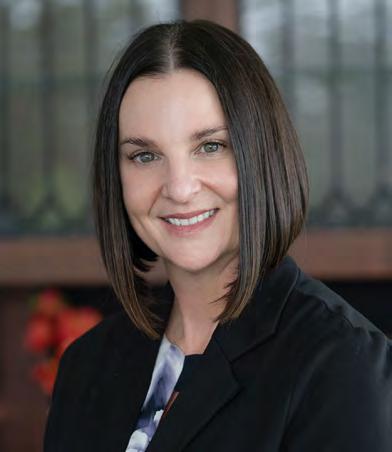
With each promotion, Austin also gained an appreciation for the many audiences and stakeholders her company had to satisfy to be successful.
“When I mentioned ‘customer,’ there’s multiple customers,” she said. “You’ve got the end customer who bought the policy. You’ve got the broker. You’ve got our partners. There’s multiple customers that you can be dealing with. I developed a strong appreciation for each level of customer that we served and doing it with operational excellence.”
In her current role, Austin leads the multifaceted operations team that work with myriad audiences, from installing the customer all the way to the customer service teams. While each cus-
“We start every day as a leadership team listening to calls from our customers from the prior day,” she said. “We even take that to our employee forum so that everybody in the company can hear them. That’s a really good reminder for people because when you hear the emotion coming from someone who has just lost a family member or who’s just been diagnosed with cancer, it connects your people with the mission of the company. It defines your purpose.
“It also is very straining on the employee who’s taking the call, so there’s a psychological safety that I think is really important that you have to create for your teams so that they can really connect with the customer. I think that’s another one of the most important things that really helps individuals grow and develop and allows them to be themselves at work. I think that’s what makes a thriving environment.”
Another important element, mentoring, is something Austin said has been a hallmark of her career from the very beginning.
“We actually have several female executives in our company, and one of those individuals told me one time, ‘You earned your right at the table, but it’s up to you to keep it.’ That really stuck with me, and it resonated — to always voice my perspective and to not be afraid,” she said. “None of this comes with an instruction manual; we’re all just trying to figure it out, you know? We’re all just trying to do our best, so don’t be afraid to speak up.”
Dedicated. Resilient. Focused. Thorough. Relationship builder. Classy. All of these are words one might hear from Julie Marshall’s colleagues when trying to describe the singular mark she has left on the culture and trajectory of insurance company USAble Life. The executive vice president of partner management is set to retire June 30, leaving in her wake countless grateful peers and a track record of service dating back to the organization’s earliest days.
“Working at USAble Life has been a rewarding experience, as I’ve witnessed our transformation from a modest Arkansas business into a prominent company spanning numerous states,” Marshall said. “The connections I’ve made here are truly valuable, and I am leaving with wonderful memories and lasting friendships.”
Marshall got her insurance start in regional sales for Arkansas Blue Cross and Blue Shield before becoming just the 29th employee at USAble Life. A 1976 business graduate of the University of Arkansas in Fayetteville, she entered the professional world and, later, the insurance industry at a time when it was still heavily male dominated. Being one of few women in her field did not deter her, however, and she became an indispensable part of USAble Life’s success in the decades that followed.
Originally a single-state carrier focused on life products, USAble Life went on to build a strong regional presence with more than more than $600 million in revenue, serving all segments with dental, life, disability and supplemental products — with Marshall at the forefront for much of it.
“Julie is known by our partners across the country, and they would all say that she is a tireless leader and a person of great integrity,” one USAble Life colleague said. “She will always be the example and will always work to do it right for everyone she works with. She is, in one word, ‘respected.’”
Marshall’s work as a leader and connector was instrumental in forging partnerships between USAble Life and Blue Cross Blue Shield Plans that shaped the former’s growth for years afterward. Her contributions to expanding the supplemental and ancillary product portfolio further played a key role in positioning the company for sustained success.
“Julie has played a foundational role in shaping USAble Life into the organization it is today,” said another USAble Life peer. “The team is stronger, more connected and better positioned for the future because of her influence. Her legacy of dedication, high standards and commitment to excellence will continue to guide the organization even as she steps away to enjoy well-deserved time with family and friends.”
Her influence can be seen in other ways, as well. Over the course of more than 40 years at USAble Life, she has served as a role model, mentor and manager to dozens of employees, many of whom now have leadership positions at the company. A natural leader, Marshall set the pace of achievement for her team and helped build a blueprint for excellence that employees still strive to follow today.
“She has set high standards for all of us,” said USAble Life President and CEO Richard Macy. “She casts a long, long leadership shadow that we all will benefit from for years to come.”

“SHE IS, IN ONE WORD, ‘ RESPECTED.’”
By Mary LeSieur
Healthcare costs continue to rise, and for Arkansas employers, the challenge of providing quality benefits while also managing expenses has become increasingly complex. From the growing use of specialty medications and GLP-1 drugs to an aging workforce and evolving state regulations, businesses are navigating a healthcare landscape significantly different than that of the past few decades.
For some, the shift might have slowly emerged as a growing concern, but Greg Hatcher, founder and CEO of The Hatcher Agency in Little Rock, has watched every change closely. Hatcher has spent more than four decades helping employers do the exact same thing, and over the course of major transformations in coverage and regulation, he believes today’s environment presents a unique set of challenges.
The Hatcher Agency is not only “The Home of Outrageous Service” but is also a company rooted in taking the extra steps to inform and educate clients about the driving forces behind healthcare costs.
Arkansas Money & Politics sat down with Hatcher to talk insurance.
Arkansas Money & Politics: Are you seeing any shifts in what employers and employees are looking for in health insurance plans right now?
Greg Hatcher: Costs continue to rise, and there are several reasons for that. Prescription drug costs keep increasing at a faster rate than many other healthcare expenses. We’re also seeing more high-cost specialty drugs enter the market. This year alone, several drugs costing over $1 million per treatment were introduced.
Another factor is the widespread use of GLP-1 medications for diabetes and weight loss. Those medications can be very effective, but they also add significant costs to health plans.
Additionally, healthcare transparency laws have had some unintended consequences. Because hospitals and doctors can now see what other providers are being reimbursed, many are seeking higher reimbursement rates. Arkansas historically ranks near the bottom nationally in provider reimbursement
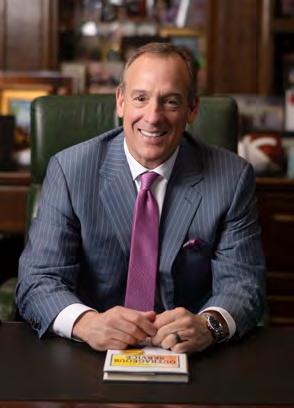
rates, so increased transparency has created pressure for those rates to rise.
AMP: How does Arkansas compare to other states when it comes to healthcare costs?
Hatcher: Arkansas generally has lower healthcare costs than many other states. As a result, insurance companies reimburse doctors and hospitals at lower rates than elsewhere. Before transparency laws, providers didn’t necessarily know how their reimbursement compared to providers in neighboring states. Now that information is public, and it’s prompting providers to seek higher payments.
AMP : What demographic factors are influencing healthcare costs?
Hatcher: One of the biggest challenges is our aging population. Today, there are roughly four workers supporting every retiree
over age 65. In about 10 years, that ratio is expected to drop to two workers per retiree.
Insurance works by spreading risk across a population. As more baby boomers retire and require healthcare services, there are fewer younger workers contributing to the system, which puts upward pressure on costs.
AMP : Are employers requesting more benefits, such as telehealth, mental health coverage, fertility benefits or caregiving support?
Hatcher : Telehealth and telemedicine are definitely becoming more common, especially among self-funded employers. If an employee can consult with a doctor virtually at little or no cost, it can save time and money while still providing quality care.
We’re also seeing increased emphasis on mental health services. Current health plans are required to provide mental health, substance abuse and psychiatric coverage at the same level as physical health benefits. That’s a positive development, but it does add to overall healthcare costs.
As for fertility benefits and similar additions, employers are generally more focused on managing rising costs than adding new benefits. The biggest areas of interest right now are selffunded plans, prescription drug management, GLP-1 medication oversight and claims transparency.
AMP: You mentioned self-funded plans. Why are more employers considering them?
Hatcher: A recent Arkansas law limits the claims information available to employers, even when they’re receiving significant rate increases. The law was intended to protect privacy, but it also makes it harder for employers to understand what’s driving their healthcare costs.
As a result, many larger employers are moving toward selffunded plans because they gain greater access to their claims data. That allows them to better manage conditions like diabetes, cancer and high-cost prescription drug usage.
Self-funded plans also provide additional advantages, including avoiding premium taxes, receiving prescription drug rebates directly, earning interest on reserve funds and designing benefits that better fit employee needs.
AMP: What would you tell someone who is worried about rising insurance costs?
Hatcher: Facts are important because they help people plan and make informed decisions.
One thing I’ve noticed during more than 40 years in this industry is that healthcare is different from almost every other purchase people make. Consumers shop carefully for cars, groceries, clothing and countless other items, but when it comes to healthcare, people almost always ask for the best provider rather than the cheapest one.
That’s understandable because nothing is more important
than your health. The challenge is that high-quality healthcare often comes with higher costs.
We also have to remember that medical advances have dramatically improved quality of life and life expectancy. [Conditions] that once left people disabled or resulted in early death can now be treated successfully. That’s a tremendous benefit, but it does contribute to rising costs.
AMP: Do you think healthcare costs will eventually stabilize?
Hatcher: It’s hard to predict. As the baby boomer generation ages, healthcare expenses will continue to be a challenge. Eventually, demographic shifts may help rebalance the system.
In the meantime, improving overall health is critical. Better nutrition, exercise and preventive care can help reduce costs over time, but as a society, we still have work to do in those areas.
AMP: What should employers and employees look for when evaluating health insurance options?
Hatcher: Healthcare reform standardized many benefits and eliminated concerns about preexisting conditions, so most plans now cover similar core services.
The biggest differences usually come down to deductibles, coinsurance, telemedicine access, health savings accounts and provider networks.
HSAs, in particular, offer significant tax advantages and are becoming increasingly popular. People should also make sure their preferred doctors and hospitals are included in a plan’s network before making a decision.
AMP: The Hatcher Agency’s tagline proclaims its “outrageous service.” What does that mean in practice?
Hatcher: At the end of the day, clients want two things: the best price and the best service.
We shop every client’s coverage every year to make sure they’re receiving the most competitive pricing available. We don’t believe in getting complacent.
From a service standpoint, we answer our phones within three rings 24 hours a day. Clients can reach us directly on our cell phones, and we don’t screen calls.
Perhaps most importantly, every employee in our office is empowered to do whatever it takes to take care of a client without needing management approval. Whether that means solving a problem creatively, responding after hours or advocating for a client with a carrier, we’re committed to helping people get the benefits they deserve.
AMP: Is there anything else you would like readers to know?
Hatcher: Healthcare continues to evolve, and employers are facing more complexity than ever. The key trends right now are cost management, self-funded plans, prescription drug oversight and greater transparency around healthcare spending. Employers who stay informed and proactive will be in the best position to navigate those challenges.

By Mark Carter
For Summer Dacus, president of sales and agent at McGhee Insurance Agency in North Little Rock, there was a time when she never would have envisioned herself selling insurance.
Fortunately, the self-described outdoor adventure enthusiast was ready to roll when life threw her a curve ball and delivered a career in insurance.
“I think I can vouch for a lot of agents when I say I did not choose insurance; insurance chose me,” she said. “I actually had my personal insurance business with McGhee Insurance for about a year. One day, I came in the office to pay my bill, and my boss now — but who was my agent then — asked me if I would like a job.”
Dacus was working “crazy” hours at Walmart at the time, so the set schedule appealed to her.
“I happily accepted the opportunity that turned into a beloved career for me, and I could not imagine myself anywhere else,” she said. “I have developed a love for insurance and all the things I have learned in this industry and for the people I have met throughout my career who have helped me grow so much.”
said she can appreciate what sets McGhee apart in the market — and customer service leads the way.
“It’s personal service, 100 percent,” she said. “As local, small-town agents with tons of heart, we care. Being an independent agent allows me many opportunities to help people with their insurance needs, whether it’s building a policy to meet every aspect of clients’ needs, working on finding discounts and savings to help lower premium to sharing my knowledge as an insurance agent.”

The Lonoke native is going on 16 years at McGhee, which was launched in 1999 and now has offices in North Little Rock, Hot Springs and Fayetteville. A true insurance veteran after answering when opportunity knocked almost two decades ago, Dacus
Dacus specializes in personal lines of insurance protection, specifically home insurance, as well as auto insurance, umbrella insurance, boat and life insurance.
Gaining clients’ trust and succeeding in the insurance industry requires people skills, for one, and Dacus brings them in spades. She said she looks forward to going to work and helping clients and prospective clients with their insurance needs and greeting them with “the biggest smile you can receive.”
“The best part of my job is not only the people I work with but also my clients, with whom I have built relationships where we can talk about the kids, the new and the old, crack jokes and just feel like part of a large family,” she said. “I may get the sideeye when I say this, but I have not had any challenges. I love what I do and love sharing that passion, and there has not been a challenge that didn’t have a solution.”

In challenging markets, your choice of insurance agent matters. Look to Sunstar’s complete team of insurance professionals for exceptional service, boundless knowledge, trusted advice, and a wide selection of competitively priced products to protect your greatest assets. As one of the fastest-growing insurance agencies in the region, that’s the power of local. That’s the power of Sunstar. Learn more at sunstarinsuranceofarkansas.com or call us at 501-225-3454.

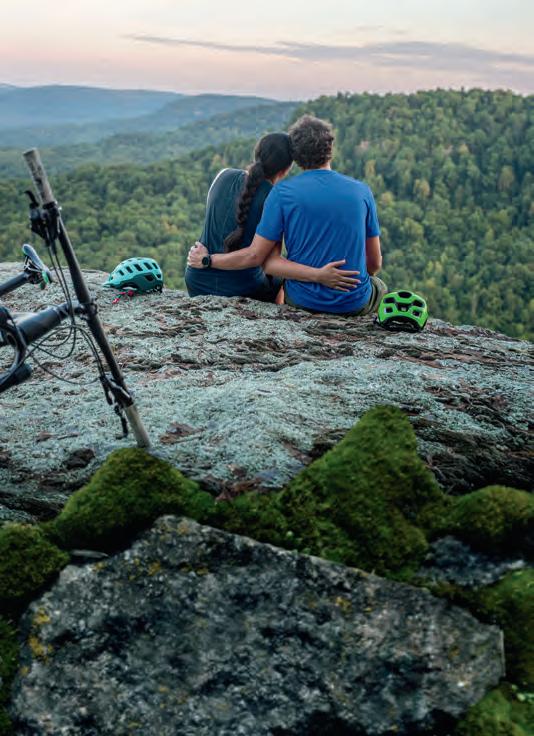

For trusting us for more than 75 years to bring you, your loved ones, your company, your community peace of mind…

It is Arkansas Blue Cross and Blue Shield’s mission to improve the health and financial security of the members and communities we serve. And it’s our privilege to help look out for your physical, emotional and social health, connecting you with resources, and helping you navigate the healthcare system — so you and the ones you love can live your best life, your whole life long. Take good care, Arkansas.

Checkups are not just reserved for the doctor’s office anymore. For those with insurance policies on their homes or autos, regular contact with an agent or specialist assures there will be no unpleasant surprises when disaster strikes.
“It’s incredibly important for customers to have regular check-ins about their insurance,” said Charlotte Potts, owner of a State Farm agency in North Little Rock and another in west Little Rock. “So much can happen in someone’s life in a short amount of time.”
When the topic swings to auto and home insurance, the usual catastrophes come to mind — car accidents, severe storms, flooding — and for sure, Arkansas has had its moments of being clobbered by severe weather. As for auto insurance, well, fender benders or worse are lurking around each and every corner.
That said, so much else can happen — career changes, the loss of a loved one, the arrival of a new child and general liability needs. All that and more can affect somebody’s coverage without so much as a warning.
“There are times where people become underinsured and don’t realise it,” said Potts. “If we are not

Checking in with an insurance agent can save money and provide piece of mind
By Doug Crise
made aware, the customer has unknown exposure, and that is definitely not ideal.”
Of course, life changes are just one reason to give an insurance agent a call. Even with everything seemingly going smoothly, the business itself has changed enough to where it is a good idea for clients to check in.
“The landscape has definitely changed as far as the type of business that we write and what insurance companies are looking at and how they rate people,” said Brooke Brolo, a longtime Allstate agent based in North Little Rock.
Brolo has put 18 years into her agency while simultaneously running a successful personal executive coaching service. She has seen plenty of trends come and go, but one relatively new aspect she expects to stick around is telematics. For those not already using it, telematics is the process of using a cell phone or an onboard plug-in device to monitor driving habits such as speed and braking. Not everyone has warmed to the idea of it, but real savings could be in the offing for those who make it a point to drive safely.
“I think that technology is a big component these days,” Brolo said. “If you’re willing to have the telematics and download them on your phone to
monitor driving habits, if you’re truly a good driver, you can really save a lot of money, but I think that sometimes people are like ‘I don’t really like that. That’s like Big Brother’ — but we have GPS services on all the time anyway. It’s no different.”
It’s not just about money. Parents with a young driver in the family can get some sorely-needed peace of mind through on-board telematics.
“Another piece I love about it is definitely for teen drivers,” Brolo said. “It’s a great way to monitor your kid and make sure they’re doing the things they’re supposed to do because when you add a kid to a policy, you can see a significant rate change. This is a way you can monitor it and be proactive about it and save money.”
Vehicles are not alone in being subject to the introduction of technology. The very nature of communication between insurance producers and clients has changed.
“One of the largest changes is that now everything is electronic,” said Nancy Jackson, president of Benton-based Roberson & Associates. “Years ago, we saw our people every day, all day, every day of the week, and now everything is email and auto draft and auto pay, and the human touch is just a little more removed or a lot removed, I would say.”
Like Potts, Jackson said she appreciates the way technology has made doing business easier for her clients, even if there are times she misses the oneon-one aspect of the job. Insurance agents are almost always “people persons” who enjoy getting out in the community and connecting with customers, she said. Jackson said she still enjoys the moments she gets to work with clients personally, and she stressed that regular communication is essential to ensure clients are properly covered.
One example is roof damage brought on by severe weather. Someone whose home is hit by high winds may figure that replacing a damaged roof is simply a matter of course, but the truth is far more complex.
“With specific regard to home insurance, some of the bigger policy changes I’ve seen industrywide is change of deductibles, replacements, costs, overall coverages and how roofs are covered or not covered,” Potts said. “Some carriers won’t provide any coverage once a roof is a certain age. State Farm doesn’t do that, but there are a lot of customers that have provisions they don’t know about until claim time, which is, unfortunately, too late.”
The simple answer is that homeowner insurance can pay for a roof replacement in the event of storms or other catastrophes. The complicated part
“Years ago, we saw our people every day, all day, every day of the week, and now everything is email and auto draft and auto pay, and the human touch is just a little more removed or a lot removed, I would say.”
— Nancy Jackson, Roberson & Associates

Brandy Misenheimer
is the age of the roof itself. Depending on a person’s coverage, getting repairs done on a roof that has already shown wear and tear may not be a straight line from A to B.
“I think the biggest change that I’ve seen over the last 10 years is the switching of gears from replacement cost on all roofs,” said Brandy Misenheimer, an agent for personal and commercial lines at Roberson & Associates. “Companies kind of trained the customer to wait until there’s a big storm to do normal wear and tear repairs on their roofs. Policy changes since then, probably about five or six years ago, have started transitioning more towards wear and tear being the customer’s responsibility.”
When it comes to keeping a home safe and fully covered during storm season, the time to act is now. The very idea of “storm season” has changed, and all parts of Arkansas have taken hits over the past few years. Talk to an agent, and the general consensus is severe weather knows no season.
“The number of weather events is staggering,” Potts said. “People remember the ‘big ones,’ but way more often are the repeated hail and wind storms over and over. This year alone, there have been more than 100 individual severe weather warnings in Arkansas.”
Customers need to also take care when it comes to selecting an insurance carrier. Cheap insurance is just a click away, especially auto insurance. The looming temptation is to save a couple of bucks, especially in the face of more immediate costs.
Brolo and her fellow agents understand that. What she wants customers to understand is that a large part of her job — or any effective agent’s job — is to find the middle ground between the cost of a policy and the customer’s pocketbook. There are more ways to find affordable and effective coverage than people know, and even with telematics and artificial intelligence poised to change how certain things are done, there is still room for person-toperson communication when it comes to home and auto insurance.
And there likely always will be.
“Things change,” said Brolo. “People change. Rates change. Guidelines change. We leave that open, for sure, and we always circle back. We’re leading with saving them money and giving them better protection, and when you do that, people are happy, and happy customers refer other customers. We’ve built a great reputation on customer service and taking care of people. Then it becomes a cycle where it helps you grow.”

By Doug Crise
Mattie Hatcher-Pruitt’s best life was right in front of her — she just needed to go away for a while to see it.
“I did real estate for a bit,” said Hatcher-Pruitt, an employee benefits consultant at The Hatcher Agency in Little Rock, “but when you leave home, you realize how good home is, so I moved out to Colorado, and then I realized Arkansas is really great.”
Why wouldn’t she? Her father, Greg Hatcher, has run The Hatcher Agency since 1990, turning it into one of the topproducing agencies in the state. Hatcher-Pruitt was already returning to Arkansas, so going into the family business was a no-brainer. The agency itself felt like a home.
“I love being with my family,” Hatcher-Pruitt said. “I love to work with my family, and so I really just decided to come into insurance to hopefully continue my father’s legacy in the insurance business and work alongside my siblings, since I‘m the youngest of five. That’s been super fun. My brother and I have a connecting door in between our offices.”
Hatcher-Pruitt said. “It’s very difficult and impossible to solve where it’s perfect for everyone.”
While the family connection certainly played a big part, Hatcher-Pruitt’s enjoyment of her role is as much due to the challenge of it as it is working alongside familiar faces. While healthcare benefits can come with a towering set of rules and regulations, Hatcher-Pruitt discovered early in her career that she enjoys poking around in the minutiae of it all and finding solutions for clients.
That is not to say Hatcher-Pruitt was simply handed a key to the family business. Working in the area of employee benefits is seldom cut-and-dried, and it is unlikely it will get simpler anytime soon.
“Everyone’s complaining about our healthcare system,”
“Not every person in the world expects to live in a mansion or expects to drive a Cadillac or whatever,” Hatcher-Pruitt said, “but everyone expects to receive the best healthcare, so navigating that in the way that the financial aspect of it works and who pays for what is pretty fascinating to me. It’s like a big puzzle, and we’re just trying to help.”
That analytical bent makes Hatcher-Pruitt a natural for sifting through the maze of employee benefits, but her father did not build his agency on brainpower alone. Personalized attention and support has always been the foundation of The Hatcher Agency, and Hatcher-Pruitt is happy to follow in those footsteps.
“I like the personal connection we get to have with our clients,” Hatcher-Pruitt said. “My passion is helping people navigate a very difficult and sensitive subject of their lives, their medical conditions.”
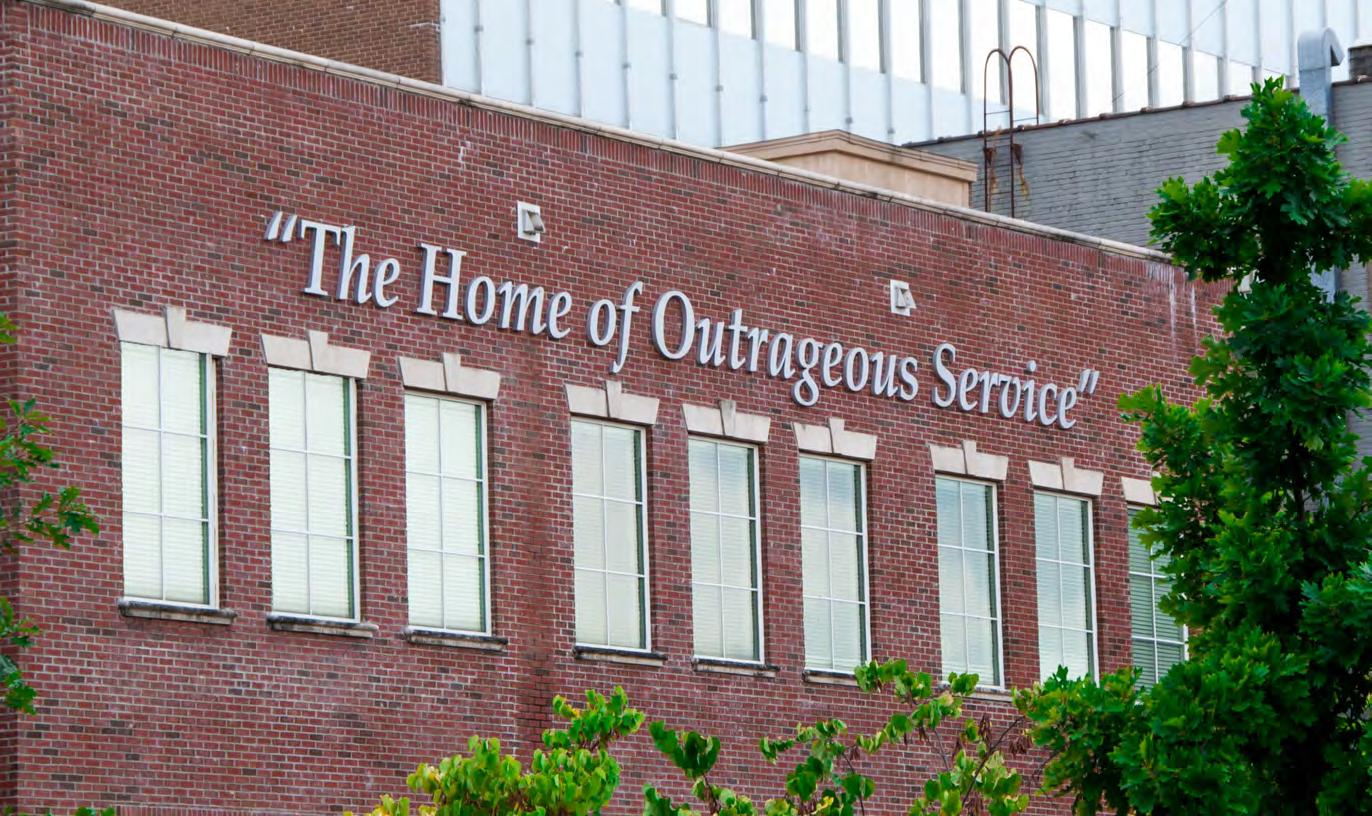

Founded in 1990 by Greg Hatcher, The Hatcher Agency has been Arkansas’ leading employee benefits agency since its inception and has grown to become the largest organically developed agency in the nation. We offer group medical benefits to employers of all sizes, delivering what we call “Outrageous Service.” As the top producer for all major health carriers, we have the relationships to get the best deal for you.

WBy Dwain Hebda
By Dwain Hebda
hile labor shortages in construction and the trades have commanded the lion’s share of headlines in recent years, the fact is virtually no industry is immune to the challenge of replacing the mass labor-force losses brought about by the exodus of retiring baby boomers.
Even white-collar industries are finding it difficult to maintain sufficient numbers to keep up with market demand. Just ask anyone in the insurance business.
Kelley Erstine
“The honest answer is the industry is really not seeing enough new people come in to replace what I would say is the graying population of people that are getting ready to leave,” said Kelley Erstine, CEO of Independent Insurance Agents of Arkansas. “I know that’s the way it is in a lot of industries but especially in insurance. Short answer, the insurance workforce actually shrunk in 2025, and that’s really been the first decline in several years.”
Multiple industry watch groups all report the same thing: Personnel represents the insurance industry’s primary structural challenge for the next decade. The U.S. Chamber of Commerce and Bureau of Labor Statistics reported that about 50 percent of the current insurance work
-
There are some things going on that I think attracts a younger population and provides a better education about getting into the insurance field itself.
– Kelley
Erstine, CEO Independent Insurance Agents of Arkansas
force aged 55 and older will retire by the early 2030s, creating a vacancy glut of about 400,000 insurance industry positions.
Zippia notes the average age of insurance agents currently on the job as 46 years old, four years older than the national average across all workers. Broken down further, agents 20 to 30 years old represent only 11 percent of the agents in business today, and 23 percent are between 30 and 40 years of age.
Of those who do join the profession, the lion’s share are older, often jumping from other fields later in their career. As Accenture notes, over the past decade, the number of insurance professionals aged 55 and older has increased by approximately 74 percent.
“If you poll a lot of insurance agents, they will tell you somewhere in the course of that conversation that they didn’t expect to be in insurance,” Erstine said. “A lot of times, [what attracted them] is they happened to come upon someone who said, ‘Have you considered insurance?’ That still seems to be, to some degree, the way it is.”
At the same time, opportunities within the industry have arguably never been greater. LIMRA reported that only 52 percent of Americans have life insurance, including individual and workplace, meaning there are 102 million uninsured and underinsured Americans who need policies. Fewer professionals mean less competition for those dollars, and there exists additional opportunities for women and minority agents, who may find it easier to establish a sales beachhead among customers who feel more comfortable dealing with someone who looks and talks the way they do.
“Agencies look for folks like that because they represent somewhat of a special niche of business that maybe is not being represented,” Erstine said. “When you look at the general population here in the state of Arkansas, there is a heavy, heavy Hispanic representation, and so we’re seeing more Latinos go into the business just because of that. I would say the same goes in the African American population because a percentage of customers are more comfortable with that person behind the table having some very serious financial discussions.”
With such a good story to tell, Erstine said the Big I and others are redoubling their efforts in Arkansas when it comes to making a case for people to consider a career in insurance earlier in life.
“There are some things going on that I think attracts a younger population and provides a better education about getting into the insurance field itself,” he said. “The normal train of thought way back was, ‘Oh, insurance; I’ve got to sell. I’ve got to cold call, I’ve got to knock on doors.’ That is not the case anymore.
“For example, the University of Central Arkansas [in Conway] has an insurance and risk-management program, the only degree program in the state of Arkansas. The students who come out of that program have 100-percent job placement when they get out. It’s not just deer-in-the-headlights-wide-open when they go into an agency or with a carrier. They’re doing a great job of that.”
Earlier education and formal training, it is hoped, will cut into one of the thorniest issues concerning new people in the industry, that being the current high degree of turnover among
those who do give insurance a go. Currently, 30 percent of new agents leave in their first 90 days, according to Podium, while greater than 90 percent of new agents quit the business within the first year, and more than 95 percent drop out by the five-year mark, Investopedia reported.
Dennis Bost, longtime State Farm agency owner in Little Rock, said those numbers show the culture shock most new people succumb to after getting into the field.
“It’s a really rewarding career, but what a lot of people don’t understand is that it takes time to build up a clientele with insurance,” he said. “It’s not something that you’re going to walk into and you’re making really good money right away. You have to think of it as that eight years that you would’ve been going to med school, that’s about how long it’s going to take you before you really start making good money in insurance.
“You also have to have a really good mentor to help you get through it. When you have [agent dropout] rates that are as high as we have in insurance, if you don’t have a really, really good mentor and a strong base and a good company backing you, it’s just really hard to make it.”
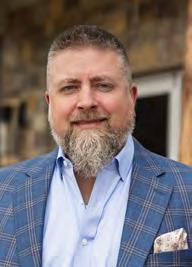
Of course, there is never a good time to see the levels of attrition that are being seen in the insurance ranks these days, but one positive ray is the current situation is playing out during a favorable technological era.
“I don’t personally believe [artificial intelligence] is going to just take over the world like what people think,” Bost said. “What I think it will be able to do is make it easier to check expenses, check and make sure your people are having the conversations that you want them to, and to track where your referrals are coming from,” he said. “The data processing kind of stuff will change, and I also think that actuaries crunching numbers and doing manual calculations, that’s going to change with AI, as well. It should make rates be more competitive moving forward for all insurance companies as they figure that out.”
Bost said emerging technology may allow insurance professionals to become more efficient than in the past, clearing some of the back-office clutter, but people-centric skills are still the real difference between success and failure in the industry.
“The two things that are really hard to teach that are very important to be successful in the long haul are self-awareness and empathy,” he said. “If they, as an adult, haven’t learned those things or don’t have those things built into them, it’s really hard to coach. What we do is not like selling widgets; it’s not like going out and selling a tangible product per se. What we’re doing is listening to people’s background, getting their story and then matching them up with the things that they need.
“If you don’t know how to have in-depth conversations with people, then I don’t think you can be successful in this industry moving forward.”

By Mary LeSieur
For April O’Neal, insurance has never been about claims or coverage. Instead, the way she goes about applying her craft is rooted in the philosophy of helping people navigate difficult moments, ensuring they feel supported when life becomes uncertain.
After more than 20 years in the industry, O’Neal now serves as claims and client-care advocate supervisor and manager at G&G Insurance, where she leads a team focused on helping clients through claims, billing concerns and coverage questions.
Her path into insurance began unexpectedly. A North Carolina native, O’Neal spent years working in retail service in Virginia Beach. In 2004, a friend encouraged her to apply for a position at Chubb Insurance.
“I had a friend tell me, ‘Insurance is hiring, and I think you’d be perfect for it,’” O’Neal said. “I applied, went through the process and really learned the business from the ground up. Chubb became the foundation of everything for me.”
At Chubb, O’Neal handled both personal and commercial claims. Over nearly 12 years, she expanded into special investigations, where she worked on fraud-related cases and deepened her understanding of claims management.
O’Neal said during her time as a claims investigator, she learned the importance of connecting with people.
“Insurance gets a bad reputation sometimes,” O’Neal said. “People think adjusters are there to deny claims or make things harder, but I always wanted people to know I was there to help them. I wanted them to feel supported and know someone was walking through the process with them.”
After relocating to northwest Arkansas in 2011, O’Neal transitioned to Tyson Foods, where she spent five years working in workers’ compensation claims. The experience broadened her expertise, exposing her to complex investigations, litigation and multistate insurance systems.
Still, she missed the personal connection that first drew her to claims work. That desire eventually led her back to property insurance through Travelers, where she worked directly with homeowners and business owners impacted by fire, storm and water damage across northwest Arkansas.
“You’re meeting people on some of the worst days of their lives,” O’Neal said. “Being able to sit down in someone’s home, explain the process and say, ‘We’re here to help you put things back together’ — that was always the most rewarding part of the job for me.”
O’Neal first met G&G founder Jordan Greer in 2015, when the agency was still small. Though family obligations prevented her from joining at the time, she stayed connected to the company and its vision.
“I immediately saw the passion and commitment to delivering exceptional experiences,” O’Neal said. “I remember telling Jordan, ‘Don’t forget about me. I can’t make the move right now, but one day, I want to be part of this.’”
Today, O’Neal oversees a team centered on advocacy and client care, helping employees grow professionally while ensuring customers feel supported during stressful situations. For her, leadership begins with trust.
“I never want to just be the manager who says, ‘My door is open,’” O’Neal said. “I want my team to truly know that I mean it — personally and professionally. We focus on supporting each other because when people feel valued, they do their best work.”
That collaborative mindset, she said, is what makes G&G different. As an independent agency working with more than 50 insurance carriers, the company prioritizes finding the best fit for each client rather than offering a one-size-fits-all solution, but for O’Neal, the difference goes beyond policies.
“It’s not just about selling insurance,” O’Neal said. “It’s about seeing the whole picture — the family, the home, what matters most to someone — and making sure they know they’re cared for.”


“Whether
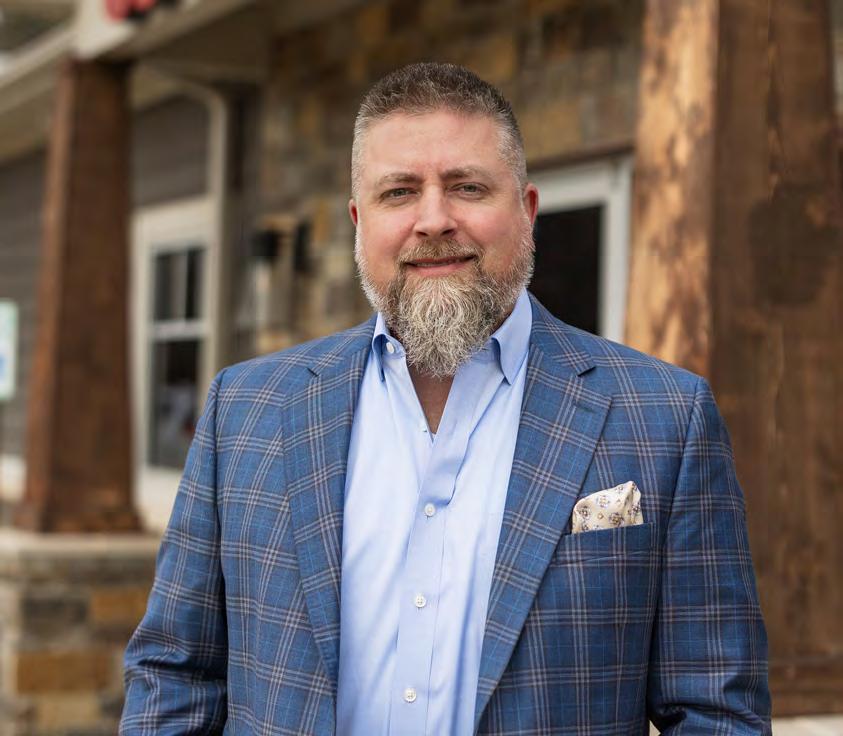

By Dwain Hebda
Amodern proverb tells of a farmer at card play with his buddies, none of whom worked on the land. At one point, one of the players suggested they up the stakes and play for money, at which time the overalls-clad producer got up and headed for the door. When asked why he was leaving, the wise farmer said over his shoulder, “What I do for a living is gamble enough.”
Of all the professions in the world, agriculture is arguably the most difficult, dangerous and financially risky career there is. Data from the U.S. Bureau of Labor Statistics in 2022 showed the ag industry as having the highest death rate in the United States at 23 deaths per 100,000 workers, seven times the national average. Townhall reported that the number of U.S. farms fell by 15,000 year over year and more than 150,000 since 2018, a reflection of the intense financial pressures that producers face. The physical and the financial elements are not unlinked; according to the Pennsylvania State Cooperative Extension, 7 in 10 farms go out of business within a year of a fatal tractor rollover.
The sources of risk do not take a lot of deep research: higher input costs, depressed or restricted markets, and working around heavy machinery,

livestock and chemicals all contribute to the hazards inherent to farming and ranching. To that, add the vagaries of animal health, since certain diseases can quickly spread from one host to a whole herd, and the fact that crops are grown outdoors at the mercy of the weather. It is no wonder, then, that farm and crop insurance are a fact of life for producers, adding an often-unseen cost to doing business.
Crop and farm insurance are generally lumped together as an insurance category but are not, in fact, the same policies. Crop insurance looks to protect the plants out in the field from damaging weather events such as wind, flood or hail. Farm insurance acts more like homeowners or auto insurance, covering ag equipment, outbuildings, grain silos and the like.
As an industry segment, those types of insurance are booming, valued at $14.4 billion in the U.S. alone last year and projected to grow more than 11.25 percent annually through 2033, according to Data Insights Market. .
MarkWide Research reported that crop insurance is driving the category, with policies focused on livestock mortality, specialty crops and para-
metric coverage, which pays out according to weather event metrics rather than actual crop loss, growing fast.
As with other insurance categories, underwriting losses for farm-related policies have been heavy in recent years, resulting in premium costs outpacing other property/casualty lines for six years out of the last decade, the Insurance Information Institute states. That has added further strain to farmers already beset with higher costs for seed, fertilizer and fuel.
Smith & Co. Insurance in Stuttgart has been in the farm insurance business for three generations. The latest member of the family firm, William Smith, said while the company has stayed out of crop insurance, it has seen decades of farm insurance products come and go. In the current climate, he said, availability of policies is not as much of a problem as cost.
“If you’ve had insurance all along, then unless a farmer has a couple years of really bad losses, it’s not hard to find [farm insurance],” he said. “The problems we’re seeing are with the guys that maybe are coming to the table for the first time to look at their farm policies they’ve had with the company for, you know, 20, 30 years, trying to save some costs. For those customers, the issue we’ve been seeing is that the availability for those guys may not be there because of their loss history. Every farm’s going to have a loss. It’s going to have a claim. It’s just part of it.”
Premiums are tied to such things as machinery repair costs and building materials, which have both seen sharp increases, thereby affecting the price of insuring them, not to mention the cost of today’s farm implements.
“It sets up kind of like a manufacturer. The overhead there is big, you know, and the bulk of your premium’s going to come from your property costs, whether that be grain bins or whether that be equipment or any of that,” he said. “A big piece of equipment, those values over time have just skyrocketed on these guys, and the cost to insure has gone up with it. A combine used to cost $200,000.Now a brand new one’s probably close to $1 million.”
Short term, Smith predicts a softening of the market, since rates have lately held steady and policyholders have become
Crop insurance looks to protect the plants out in the field from damaging weather events such as wind, flood or hail.
more selective about what they file claims on. Meanwhile, insurance professionals themselves are starting to integrate more and more sophisticated tools to help keep overhead to a minimum and process clients more efficiently.
Kenneth James, a longtime agent at Farm Bureau with offices in Cabot and Lonoke, said while technology is not everything, it does play a much larger role in agency operations than it used to.
“Technology’s probably been the biggest difference [over the years]. Everything is computer driven anymore — phones, tablets and everything that goes with that,” he said. “I think some of that is the age demographics. If you grew up in the ‘70s and ‘80s, you’d probably prefer that you and I meet face to face just because that’s how you’ve always wanted to do it.
Farm insurance acts more like homeowners or auto insurance, covering ag equipment, outbuildings, grain silos and the like.
“On the other hand, I’ve got a young man who’s 25 who works for me, and he’s grown up where technology is his main source of things. Clients in his age demographic want to do everything through a computer or through a phone call or a text or an email, e-sign documents — everything.”
James said even as his agency has adopted new tools in the name of efficiency and customer expectations, there are still some critical elements of the agent-client relationship that he insists are best accomplished one-on-one and in person.
“I’m kind of still old school where I still, even on a new person, I still want to visit with them, shake their hand, get to know them a little bit,” he said. “I think that’s the way to hold onto a customer for a lot of years compared to the person that just buys stuff online. When you visit with a person, you build rapport. I think it makes that person more comfortable knowing who they’re going to be dealing with on a first-name basis when something happens. That’s been my philosophy over the years, and it seems to have been a recipe that’s worked. I’ve kept customers for 25, 30 years, and today, we’re serving their kids.”

By Mary LeSieur
For many approaching retirement, Medicare can be an overwhelming subject to tackle. Policies, penalties, deadlines and coverage options can often leave new beneficiaries confused. Monica Treat saw these challenges as opportunities to help clients with their Medicare questions.
For nearly two decades, Treat has built her Sherwood-based Treat Insurance Agency around the mission to make Medicare feel less intimidating and far more personal. As the owner and founder, Treat spends her days changing the narrative that surrounds Medicare.
“People are confused. They’ve never been on Medicare before, and it takes patience and understanding to really meet them where they’re at,” Treat said. “We try to take a step back and think, ‘If I were in their shoes right now, what questions would I have? What anxieties would I have?’”
Treat earned her insurance license at 18, right out of high school, after receiving encouragement from her grandfather, a longtime insurance professional who planned to come out of retirement so the two could open an agency together.
Over time, Treat fully leaned into Medicare, a specialty she says aligns with both her personality and her passion.
“I love the people,” she said. “I love their wisdom, I love where they are in life, and I love helping them through something that can feel really intimidating.”
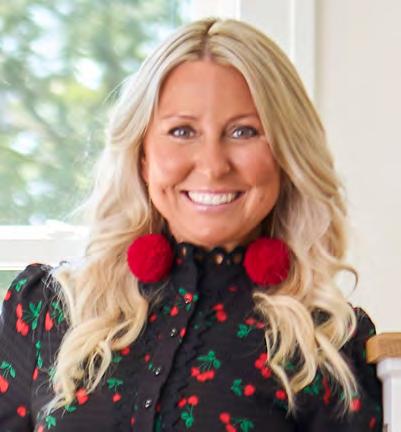
While that plan ultimately changed, the experience introduced Treat to the industry and led to her career.
After working for United American selling supplemental health policies, Treat launched her own agency at age 25. From the beginning, she knew she wanted to be independent rather than tied to a single insurance carrier. That decision, she said, allows her agency to prioritize clients over products.
“If you’re captive to one company, you can only offer what they sell,” Treat said. “Being independent means we can truly look at what’s best for the client. We can compare different carriers and help people find the right fit instead of trying to force one option to work.”
That client-first approach extends throughout the agency, where Medicare consultations go far beyond simply choosing a plan. Treat and her team walk clients through every piece of the process, from Medicare A and B to prescription drug plans, supplemental coverage and even income-related premium adjustments.
Her goal is simple: Treat aims to eliminate surprises.
“When somebody walks out of here, there are no more questions and no more confusion,” Treat said. “They know exactly what to expect because we’ve gone over everything thoroughly.”
Treat credited much of the agency’s success to both expertise and compassion.
Alongside longtime staff members, including a 74-year-old frontdesk employee she describes as a “breath of fresh air,” the office emphasizes both warmth and knowledge.
“We love our clients like family,” Treat said. “When somebody comes in stressed or overwhelmed, we want them to leave feeling peace of mind. The thing we hear most is, ‘I was so worried about this process, and you made it so easy.’ That means everything to us.”
For Treat, insurance has never been about policies or paperwork alone. It is about relationships and helping people feel cared for during life’s major transitions.
“Customer service isn’t what it used to be in a lot of places,” Treat said, “but here, we still believe in treating people like family.”


The word “admire” is derived from the Latin word “admirar,” which means “to wonder at.”
This year’s class of Arkansas Money & Politics’ “Most Admired Companies” truly inspire wonder — wonder at the fact that these companies have grown from the ground up into financially strong businesses and, even more so, wonder that these institutions uphold strong morals every day. These businesses’ leaders think about the good of the community rather than the bottom line — but usually an impressive bottom line follows closely behind their hard work and care.
Whether it is the company’s team treating customers as well as they treat their own family, a firm’s volunteerism and philanthropy, or even the quality of the products, all these businesses leave their customers in awe and wondering how they achieve such remarkable success.
It is never an easy time to be a business owner or entrepreneur. Despite working during a decade marred by the COVID-19 pandemic, international conflicts and economic uncertainty, these companies persevere — never just taking the easy road but taking the road that aligns with their values. This work has paid off and not gone unnoticed by AMP readers, who nominated companies they admire most for this list.
Please enjoy AMP’s “Most Admired Companies” list, as well as a couple feature stories which spotlight some of this year’s inductees.
Congratulations to all the businesses recognized in this section for earning the respect and admiration of the community and state. Thank you for all you do and for helping drive and grow our state’s economy.


Bell & Co’s employee-owned team offers tailored tax planning and comprehensive accounting services for businesses and individuals. Staff members are committed to understanding each client’s unique needs, delivering unmatched service and guidance to help them reach their goals and ensure longterm success. From trucking fleets to family farms, Bell & Co brings industry-specific knowledge that makes a difference.

Stone Ward is an advertising and marketing agency built to help good brands grow. The company pairs clear strategy with creative thinking to help organizations earn attention, build trust and strengthen relationships. The result is work people remember, believe in and choose, driving meaningful growth while “Building Good.”

For more than a century, Riceland has been proudly farmer owned, every grain of rice rooted in dedication, care and tradition. The farmer-owners are the heart of the cooperative, working tirelessly to grow sustainable, high-quality rice that nourishes families across the nation. Their stories demonstrate how generations of commitment make a difference in every harvest.

Apartment Hunters, provided by Tuggle Services, is dedicated to promoting relocation efforts throughout the Little Rock metropolitan area. Apartment Hunters has a comprehensive database of listings that include floor-
plans, videos, maps, photos, and information about amenities, rental costs, deposits and move-in specials. The service is complimentary because the company is compensated by the owners of the properties when Apartment Hunters brings them qualified renters.
TAGGART Architects was established in 1975, quickly earning a reputation for producing high-quality, functionally efficient, budget-conscious architecture that gratifies and inspires the end user. The firm believes that good design is a result of focused listening, interpretation and execution. TAGGART Architects has a broad-based practice focusing on healthcare, education, civic and recreational building types. Services include architectural design, interior design, master planning services and construction administration. Currently, the North Little Rock firm is licensed in 32 states, and its staff of 24 includes 12 licensed architects with more than 275 years of combined experience.

Recently acquired by Ritchie Bros. Auctioneers, Blackmon Auctions conducted its first auction in 1938. Three generations later, Blackmon Auctions remains family owned and operated. The Blackmon Auction team will always be grateful to its founder, Eddie Blackmon Sr., and Tom Blackmon Sr., who took the company from a regional farm auction company to an internationally respected auction company. Blackmon’s full-time employees averaged more than 15 years of service, and some have more than 25 years of service. Blackmon was based in Little Rock and had auction complexes in Lonoke and Godley, Texas.

Whether one is looking for the latest Corvette or a dependable Honda Civic, top-notch service awaits customers at Russell Chevrolet & Honda in Sherwood. Vice President Brett Russell was named Arkansas Dealer of the Year in 2016, and the dealership has earned Chevrolet’s Mark of Excellence Award several times, not to mention being named for numerous “Best Of” honors by readers of Arkansas Money & Politics. Now in its third generation, Russell Chevrolet & Honda started in 1963, when founder John Russell, Brett’s grandfather, bought Critz Chevrolet in North Little Rock, where he worked as a sales manager. After John’s retirement, the business passed to sons Bob Russell and the late Rick Russell. Brett is now joined as the third generation at the business by Rick’s sons, Jarrod and Rory.
Established in 1950, Capitol Glass Co. is the oldest locally owned and operated glass company in the Little Rock area. For the past six decades, it built a reputation of always delivering quality glass work and complete customer satisfaction. All employees are certified and committed to customer safety and getting work done the right way.

DJ’s Auto Repair in North Little Rock is one of central Arkansas’ most trusted sources for automotive needs. The shop combines expert workmanship and genuine care with cuttingedge tools to deliver dependable results. That dedication makes a true difference for both vehicle performance and peace of mind. Employees are certified in Automotive Service Excellence. DJ’s Auto Repair also provides advanced diagnostics, affordable pricing, open and clear updates, fast turnaround and a local shuttle service.









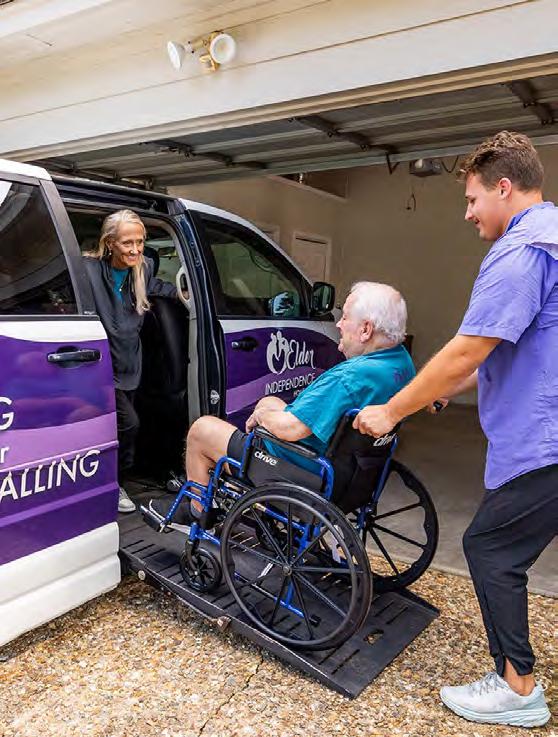
By Mark Carter
The communities served by many Arkansas-based banks have grown well beyond the state’s borders. Depending on what a consumer is looking for in a bank, that could be good or bad.
Customers of Bank of Little Rock, for instance, appreciate that their bank’s physical footprint remains within the actual community they call home. Customers also appreciate not seeing their bank’s name plastered across skyscrapers, multipurpose arenas or mass marketing platforms.
The bank’s under-the-radar, hyperlocal approach has resonated — Bank of Little Rock was voted by Arkansas Money & Politics readers to the “2026 Most Admired Companies” list in the banking category.
“There are more than 30 different banks doing business in our city, and most of our competitors are significantly larger than us and have much larger marketing budgets,” said Kimberly Markland, president and CEO. “Our message is centered around the fact that we are the only community bank dedicated exclusively to our local market. We have around 140 shareholders, and most of them call Little Rock home. All our resources go back into making our hometown a wonderful place to live and work.”
with five locations spread across the city — the downtown main office, along with branches in the Heights, Chenal Valley, on Arkansas 10 and in the heart of “old” west Little Rock on Merrill Drive.
Last year, Little Rock Bancshares, the bank’s holding company, held a capital raise to restructure the bank’s balance sheet.
“One of our main objectives associated with the balance sheet restructure is growing loans, and we are actively working on increasing the size of our loan portfolio,” Markland said. “We like the fact that we are a small community bank because it allows us to be nimble in
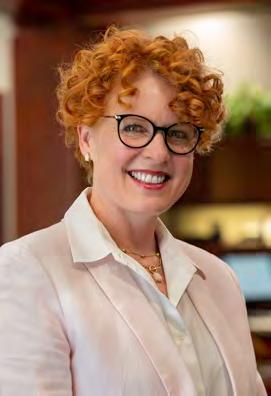
Markland added that a deposit at Bank of Little Rock funds loans and investments close to home, not in places miles away or in another state.
“Very few of our competitors can make this promise,” she said. “Our team members are active in our community and visible at local events. We like to say we are ‘the’ Bank of Little Rock, and we mean it.”
Though its current name was not adopted until 1989, the bank dates back to 1927, when it was founded as Hallmark Loan and Investment Corp. Markland said its initial purpose was geared toward helping industrial workers obtain loans. Then, during the late 1980s, a group of investors led by Pete Maris acquired Hallmark and converted the charter from industrial loan to commercial bank, and BLR was reborn.
In 1998, the bank acquired the assets of U.S. Mortgage and opened Bank of Little Rock Mortgage Corp. as a wholly owned subsidiary, Markland added.
“Additional capital was injected into the bank, and this allowed Bank of Little Rock to grow into a full-service bank serving the community of Little Rock and Pulaski County,” she said. “Bank of Little Rock Mortgage has been a very important part of our organization, providing an important service to our community.”
Bank of Little Rock operates within a “lean and mean” model
“As community bankers, we focus on personal relationships because we are banking our neighbors and friends. By developing personal relationships, we can make faster, more flexible decisions based on our knowledge of our local market rather than rigid formulas.”
— Kimberly Markland, president and CEO
meeting the needs of our customers. We can respond quickly to loan requests, and our customers know they can walk into our bank and immediately talk to someone who can help them.”
BLR likes its position in the market and the niche it serves. Do not expect to see Bank of Little Rock purchase naming rights to football stadiums anytime soon. Markland said the bank cherishes its role as a hometown bank channeling deposits into residential mortgages and serving as a critical funding source for entrepreneurs and small businesses that may be overlooked by larger banks.
“Local community banks have a special connection with the communities they serve that branches of larger institutions just don’t have,” Markland said. “As community bankers, we focus on personal relationships because we are banking our neighbors and friends. By developing personal relationships, we can make faster, more flexible decisions based on our knowledge of our local market rather than rigid formulas. We are accessible. Our team members, from executive management to our newest employees, are out in our community, attending local events and supporting local organizations and businesses.
“Little Rock is our home, and we are specifically focused on strengthening our local economy and helping our community thrive.”


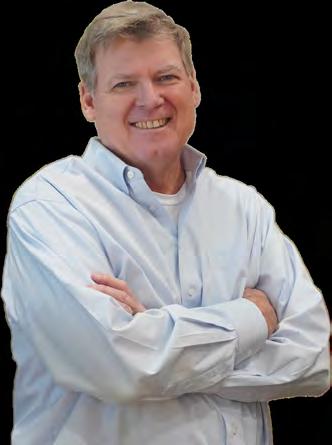



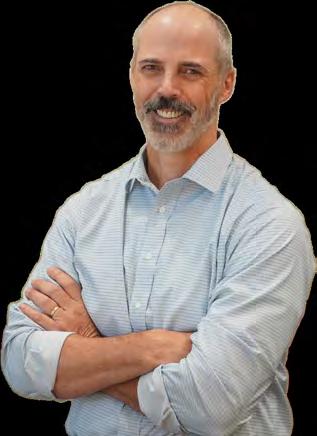
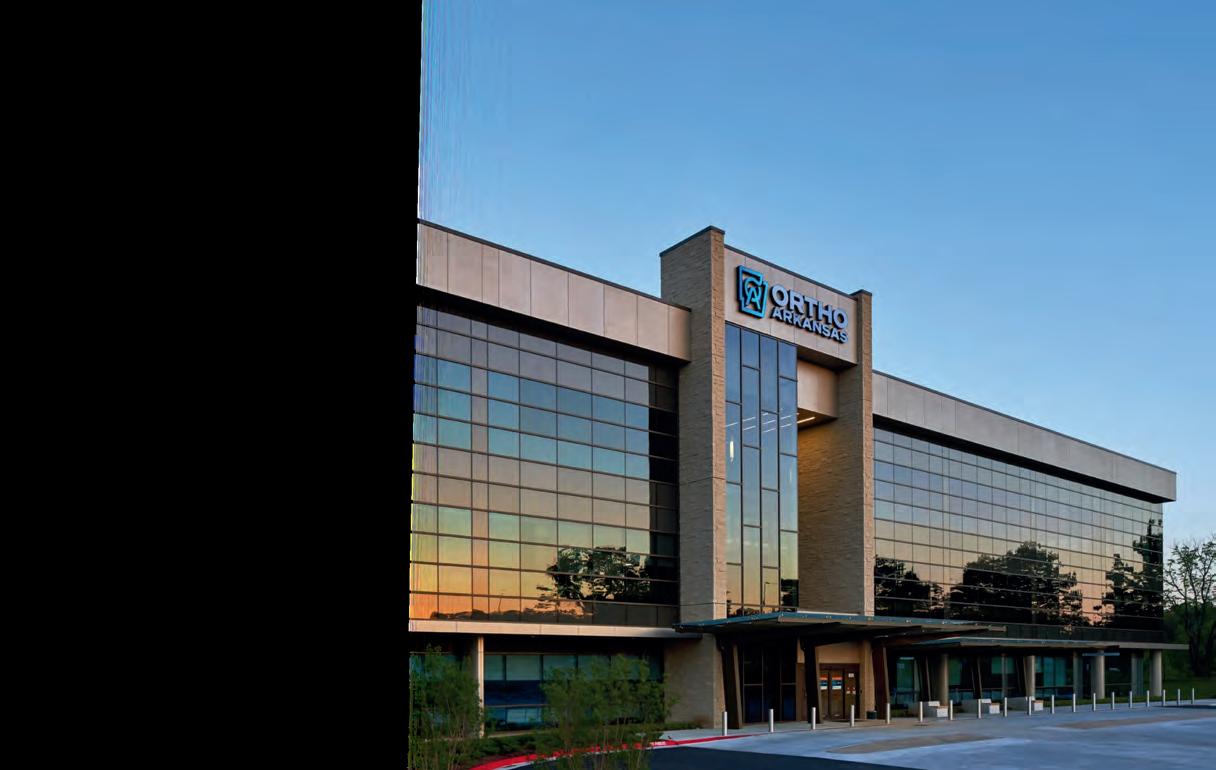


First Community Bank is a locally owned and operated bank with a big heart for the communities it serves. Upon founding First Community Bank in 1997, a pledge was made to put community first in every decision. The slogan “Where Community Comes First” is the bank’s commitment to be good community partners.
its management team and many workers who have worked with each other longer that the company has existed.

gion with innovative cancer care delivered with precision and compassion. With cancer centers in Springdale, Fayetteville, Rogers and Mountain Home, patients have access to the latest therapies and technologies close to home.


At Adebayo Cleaning Services, cleaning is about more than just sweeping; it is about providing comprehensive janitorial services while building client relationships. The company provides commercial cleaning, window cleaning, carpet cleaning, construction cleaning, deep office cleaning and special cleaning services, all with an eye for ensuring the highest standards of hygiene. Owner Sunday Adebayo was born in Nigeria and spent his college years playing basketball in the United States before opening his own business.

Founded by William Clark in 2009, Clark Contractors provides full-service general contracting and construction management. Headquartered in Little Rock, the company also has had offices in Dallas-Fort Worth since 2010 and in northwest Arkansas since 2015. Clark Contractors has a proven history of successful commercial, corporate, cultural, educational, healthcare, hospitality, mid- and high-rise condominiums, industrial, and retail construction projects. Clark Contractors looks for ways that technology can be implemented, such as with drone and building information modeling projects. In addition to its technical expertise and craftsmanship, Clark Contractors is proud of the family-like bond it has created and the camaraderie that is reflected by an average tenure of 22 years in
Since its founding more than 30 years ago, CBI has closed hundreds of successful transactions by providing a proven process, experienced brokers, in-house marketing, and a strong lender network through its Loans4Biz program. CBI’s goal is to make business transitions smooth, secure and successful for all parties involved. The company is committed to integrity, professionalism, and helping entrepreneurs achieve their exit or acquisition goals. CBI serves the entire states of Arkansas, Oklahoma, Tennessee, southwest Missouri and surrounding areas.

Since 1983, Little Rock-based Datamax has been creating raving fans while maintaining a laser focus on providing the absolute best customer service in Arkansas. The company’s commitment to service combined with the best products in the market ensures customers get the right technology at the right price that meets the right business challenge. There are many options to choose from when buying business technology solutions — online, local, direct from the manufacturer and outsourced. The Datamax team believes the advantages of a local dealer, when combined with a fanatical approach to customer loyalty and service, gives Datamax an edge against any other choice in Arkansas.

For nearly three decades, Highlands Oncology has provided northwest Arkansas and the re-
Founded in 1904, Oaklawn Hot Springs is one of the premiere thoroughbred racetracks in the country. The casino features slots, live table games and sports betting year-round. Live racing takes place from November to May, and simulcast racing is available throughout the year. Guests can visit the Forbes Travel Guide-recommended Oaklawn Hotel, the multipurpose event center, Arkansas’ only Forbes four-star spa — the Astral Spa — and several dining options. The resort is also moments away from Hot Springs National Park, historic Bathhouse Row and two of the state’s most scenic lakes, which makes Oaklawn a hub for those looking to explore the Hot Springs area.

Rx Catering is a professional catering company that has served the Little Rock area for more than two decades by providing delicious meals for meetings, conferences and more. The creators and owners of Rx Catering have more than 60 years of catering experience, and the company prides itself on professionalism, punctuality and service. Rx Catering specializes in catering at hospital facilities, private and office parties, professional and corporate functions, and weddings and receptions.

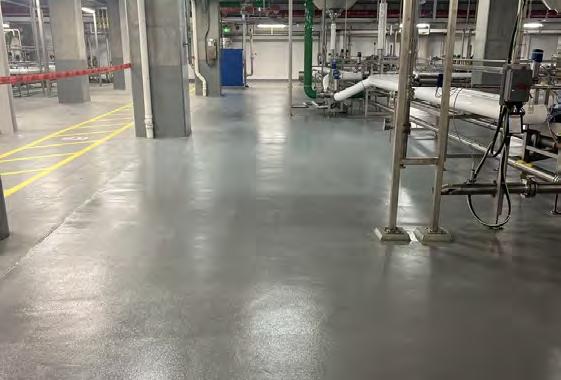
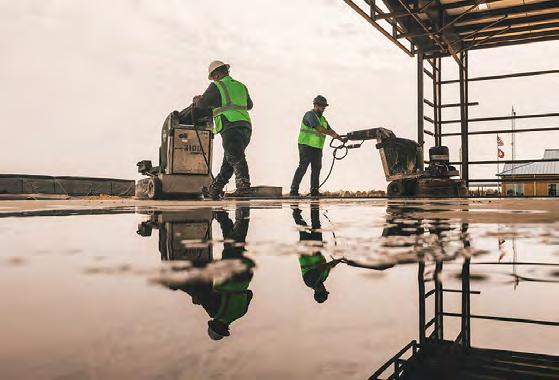

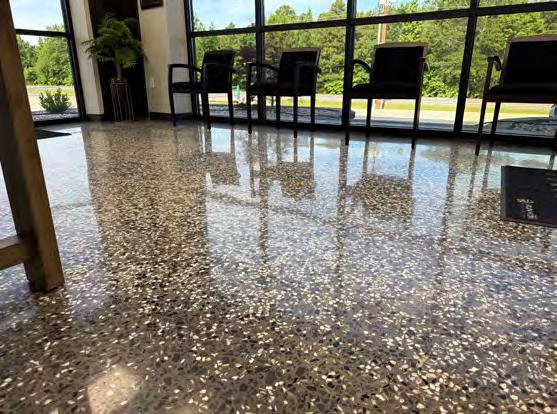
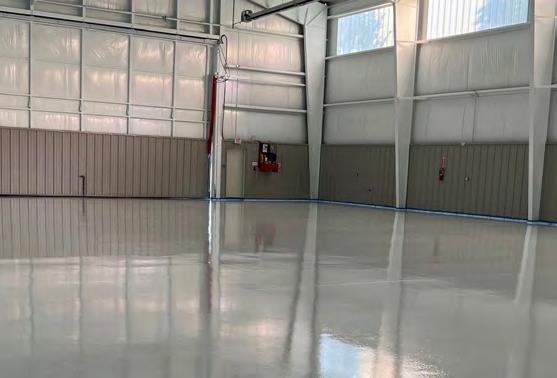

The Arkansas State Chamber of Commerce/ Associated Industries of Arkansas is a private, nonprofit organizations dedicated to improving the business climate in Arkansas. By partnering with state and local leaders, networking with key stakeholders, and actively collaborating with its members, the Arkansas State Chamber advances policies that benefit businesses and industries across the state.

Southern Arkansas University Tech is a twoyear public college in the Southern Arkansas University system noted for its affordable tuition and family-like atmosphere. Founded in 1968, SAU Tech continues to offer handson technical training and pathways to highwage careers. Students experience a wellrounded campus life that includes dorm and apartment-style housing, NJCAA athletics, and student organizations. The SAU Tech faculty and staff are committed to providing a supportive environment that prepares students for the workforce or continuing their education through transfer.
COLLEGE/UNIVERSITY, FOUR-YEAR

Ouachita Baptist University in Arkadelphia is a Christ-centered learning community where students build genuine relationships with professors who invest in their future. That
personal attention drives a 99-percent career and graduate school placement rate. Since 1886, Ouachita has shaped students for ongoing intellectual and spiritual growth, lives of meaningful work, and reasoned engagement with the world

Ideal Construction began its journey in 1948 in Crossett. From the beginning, the company has operated on the principles of quality, diligence and integrity. Over the past 75 years, those core values have guided the team to build strong relationships with clients who share their commitment to excellence in the construction industry.

21st Century Janitorial Services is a fullservice commercial cleaning provider. It is owned and operated out of Little Rock and provides complete and professional janitorial services to more than 3 million square feet of commercial and state office space daily.
COMMERCIAL INSURANCE AGENCY

Sunstar Insurance of Arkansas started 10 years ago and has grown to be one of the largest groups in Arkansas. It is based in Little Rock and has 14 agency locations and 120 insurance professionals around the state. The Sunstar model is working — nine different agency partners have come into SIOA since it came to Arkansas. SIOA features an impressive array of agency leaders
with vast experience, which is key to draw on during today’s very uncertain insurance and weather-pattern times. Sunstar is a trusted advisor for clients across the state and acts as a tour guide through the world of insurance.
For more than 52 years, Arkansas Graphics in Little Rock has helped its customers communicate more effectively by providing highquality print products and commercial printing services. As a leading commercial printer, Arkansas Graphics delivers an unmatched range of products and quality of service. The company has the experience and the equipment to meet most every need.

Proudly serving communities across Arkansas since 1965, Razorback Concrete is the state’s leading supplier for residential, highway and light/heavy commercial building projects and specializes in highly technical concrete applications. From state-of-the-art central and dry batch plants with full computer automation to a fleet of late model booster axle trucks equipped with the latest in GPS guidance systems, the company employs the very latest in industry technology to deliver the most cost-effective and efficient service anywhere. Razorback Concrete strives to operate with excellence, meeting customers’ needs through a quality, low-cost product and courteous, professional service.
First Orion is honored to be named a 2026 Most Admired Company.
For more than 15 years, we have helped businesses, carriers, and consumers gain Transparency In Communications™ through branded voice and messaging, fraud protection, and analytics.
Thank you to our employees, customers, and partners for helping us innovate from Arkansas to the world.


Stronger supply chains start with the right partner. ArcBest combines 100+ years of logistics expertise with leading-edge technology and an extensive capacity network to keep your shipments moving and your business growing.
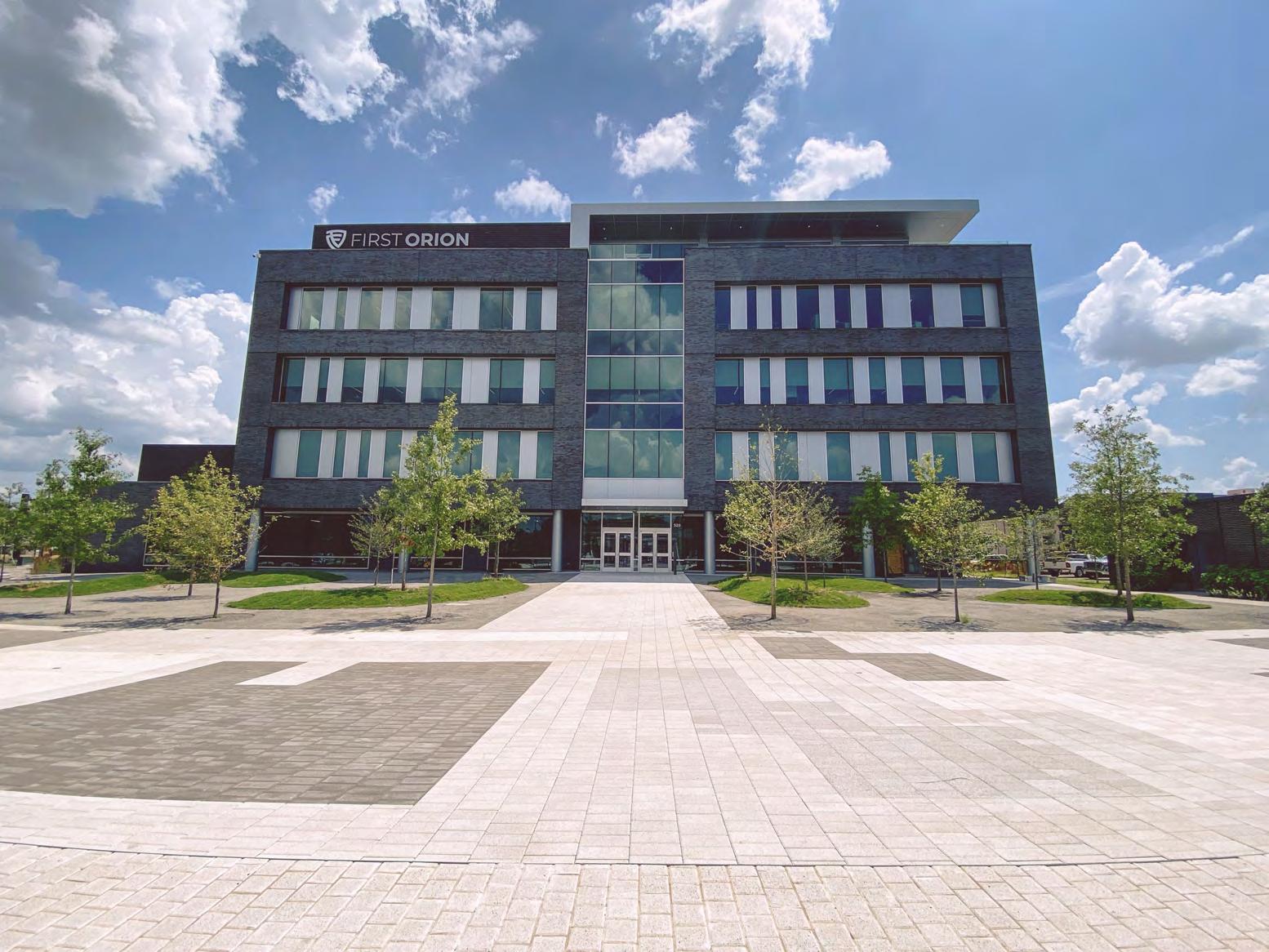
Bold and Creative Solutions for the Built Environment


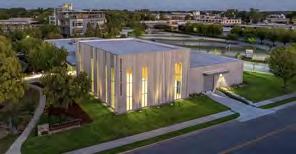
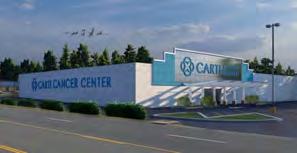

and


By Doug Crise
ince 2008, The Gangster Museum of America has told the story of Hot Springs seen through the eyes of the early 20th century — a city that brought in visitors from the world over, seeking the therapeutic benefits of the town’s mineral water and, quite often, partaking in a vibrant and sometimes dangerous gambling scene.
Yet that story — one of gambling parlors and the organized crime that came with them — is not all there is to the museum. There is also the story of museum founder Robert Raines, a story of persistence and self-belief if there ever was one.
“I call it divine luck that it worked,” Raines said, “because no banker thought it would work. I can tell you that.”
It certainly was not for lack of trying — effort was never an issue for Raines. Before the Gangster Museum, Raines dabbled in music, mixed media, computer networking and marketing. Some ventures were fruitful. Others petered out. The common denominator was Raines’ infectious enthusiasm and general good will, something no amount of business near misses could ever affect.
“A lot of people ask me, ‘How do you get started in business?’” Raines said. “I’m not a great example of that because I

drilled a lot of dry wells. As long as you learn something a little bit from … not failures but nonsuccesses, you just keep going until you get one — and now we’re in the 18th year of doing this, and it has really opened up a lot of doors.”
Today, the museum is a centerpiece of Hot Springs’ Grand Avenue, as much a part of the city’s central lore as the famed water running through it. Over the years, Raines has created something so much more than just a place for people to walk through while learning history. Patrons can get a look at the sights and sounds of Hot Springs from generations ago and explore an antique casino, and the museum’s website is filled with blog posts and historical tidbits for those who want to learn more of the town’s past.
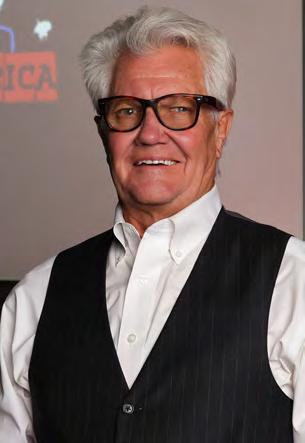

In the process, Raines has become something beyond just a person who runs a museum. He is an active cataloguer of the past but also an active and supportive voice of Hot Springs in the present day.

“Whatever I do is going to have something to do with Hot Springs,” Raines said, “because, as I say in our theater presentation, Hot Springs will always be the main attraction, and it’s the main attraction for me too.”




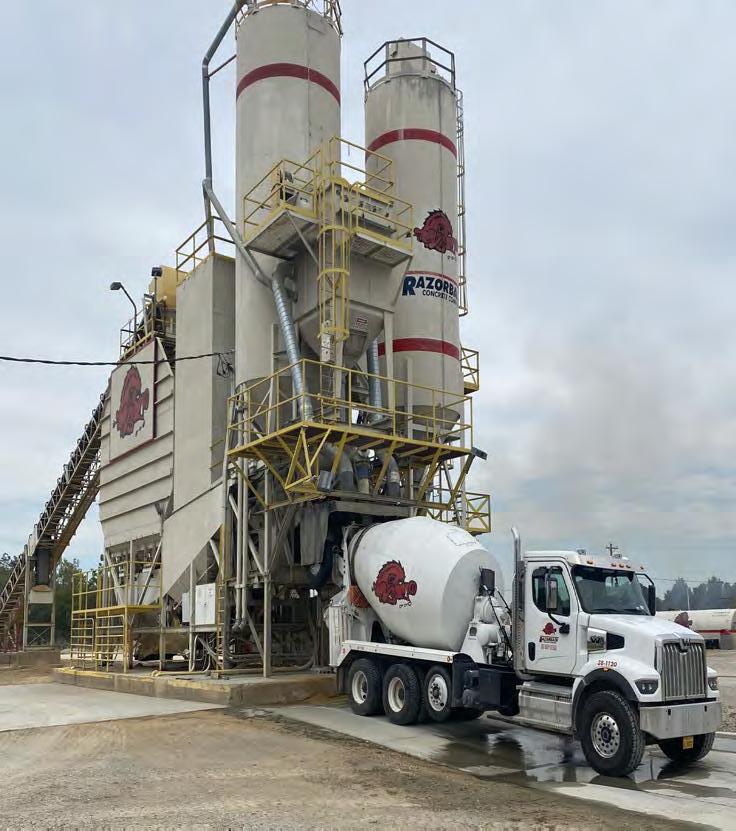


American Concrete Concepts specializes in custom-polished concrete flooring solutions for commercial, industrial, food and retail applications. After 17 years of creating durable, environmentally friendly floors, staff have the experience and expertise to repair most damaged concrete floors and transform them — with outstanding results.
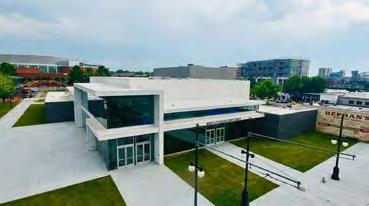
The North Little Rock Event Center spans 31,000 square feet and serves as a premier venue for any occasion. Featuring a grand ballroom, two boardrooms and versatile air walls, it hosts up to 1,000 guests for dinner or 1,500 guests for events.

Part of the James A. Rogers family of companies and under the leadership of President Matt Usery, NOEC Construction is one of the state’s leading, and one of only a few Arkansasbased utilities infrastructure contractors. Setting NOEC apart is its one-stop-shop approach, offering power line construction, both distribution and transmission; right-of-way maintenance; substation construction and maintenance; directional drilling; and storm response under one roof. Ownership remains hands-on, ensuring accountability, responsiveness and consistent quality on every project.
CONVENTION AND VISITORS
BUREAU

Tasked with promoting the many reasons to enjoy Spa City, Visit Hot Springs answers with unbridled enthusiasm, eagerly showcasing attractions ranging from the many outdoor activities at Hot Springs National Park and the three area lakes to premier thoroughbred racing at Oaklawn Hot Springs and the many museums and fun activities the city has to offer. Visit Hot Springs recently won a Platinum Hermes Creative Award from the International Association of Marketing and Communications Professionals and was recognized as Tourism Organization of the Year at the 2025 Arkansas Governor’s Conference on Tourism.

Based in Little Rock, Dr. Suzanne Yee is a triple-board-certified cosmetic surgeon with more than 20 years of experience helping patients achieve natural-looking results through compassionate, personalized care. Since opening Dr. Suzanne Yee Cosmetic & Laser Surgery Center in 2003, she has performed thousands of breast, face and body procedures and earned numerous awards. Yee recently welcomed Dr. Homayoun Pournik to the practice, signaling a new era in patient care.
CREDIT UNION

Arkansas Federal Credit Union has made a difference in the lives of employees, members and the communities it serves since 1956. Both consumers and businesses entrust the credit union to get competitive rates and reduced fees for accounts and loans. Arkansas Federal has branches throughout the state that serves more than 120,000 members.

Arkansas Family Dental’s mission is to treat every patient like family. Guided by professional judgment and years of experience, Arkansas Family Dental strives to provide comprehensive, high-quality dental care in a welcoming, modern environment while also empowering patients through education about their oral health. The team at Arkansas Family Dental stays at the forefront of dental technology to ensure patients receive the most advanced and effective care available. No matter the dental needs, Arkansas Family Dental is available to help every patient achieve a healthier, more confident smile.
Pinnacle Dermatology’s mission is to provide the highest-quality patient care by offering the best in medical, surgical and cosmetic dermatologic services. Its staff advocates for healthy skin through the prevention and treatment of dermatologic conditions and strives to individualize patient treatment plans with the highest level of professionalism in a warm, welcoming environment.
Metro Disaster Specialists is a trusted leader in disaster recovery, recognized for decades of hands-on experience and a professional, client-focused approach. Locally owned and family operated, Metro is based in North Little Rock and serves communities across the region with 24/7 emergency response for residential, commercial and industrial clients. As a fully licensed disaster general contractor, Metro specializes in fire, water, storm and mold damage restoration, offering complete services to stabilize, restore and reconstruct properties while protecting contents from further damage. With more than 30,000 completed projects and more than 280 years of combined team experience, Metro consistently delivers expert results.





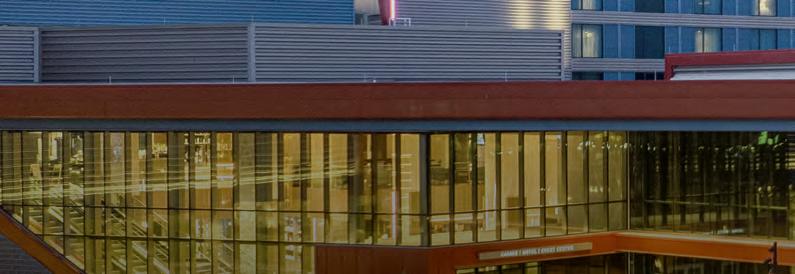

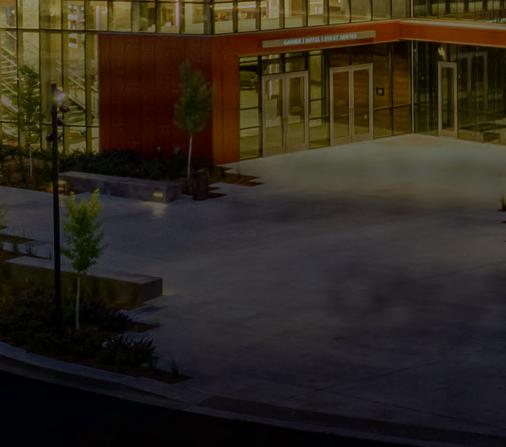


We’re proud to be named one of Arkansas Money & Politics’ Most Admired Companies. From world-class gaming and luxurious accommodations to indulgent spa treatments and exceptional dining, every experience is designed with you in mind.
Thank you, Arkansas, for making Oaklawn your destination for entertainment, relaxation and celebration.
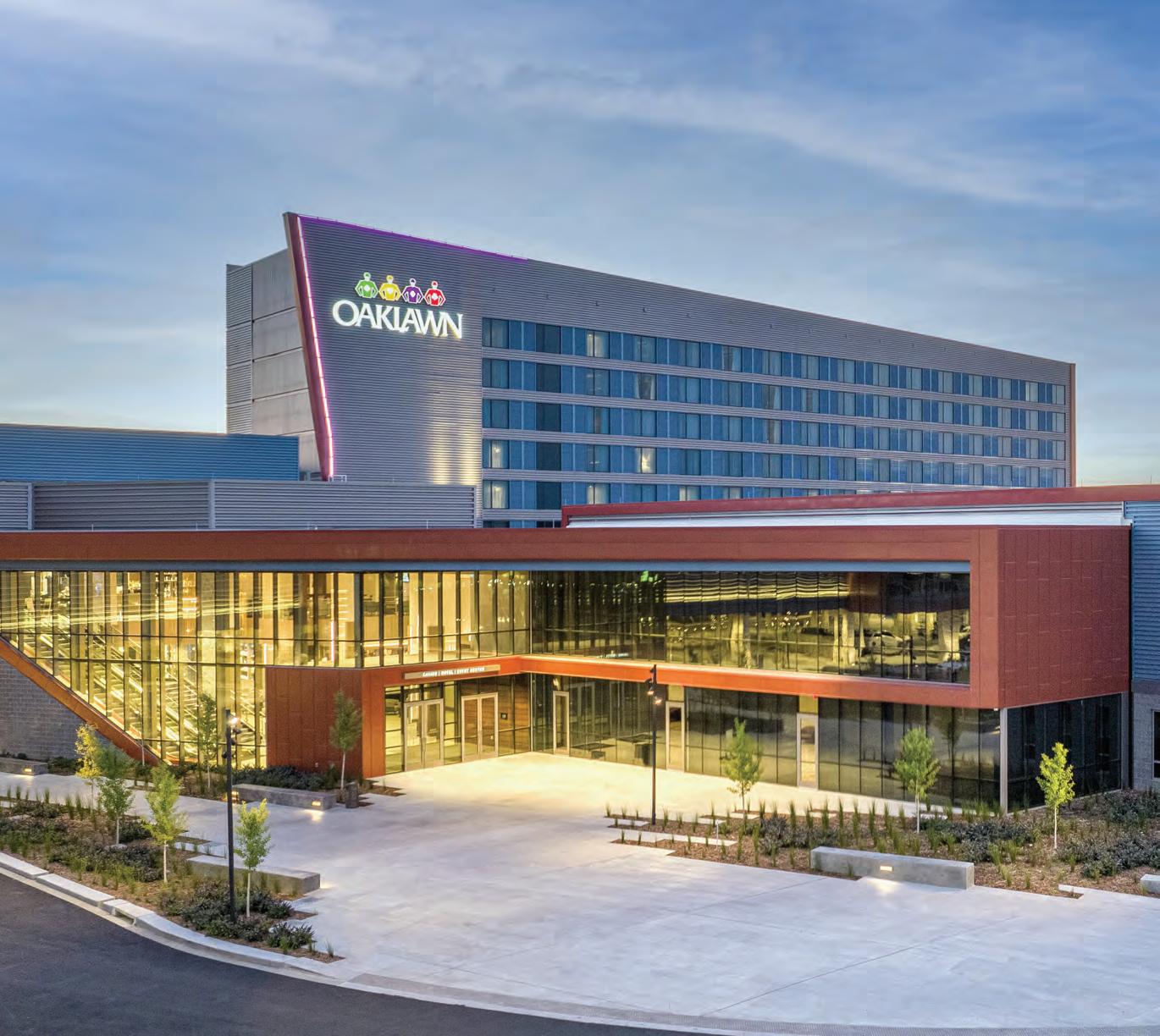



















Myers Supply and Robotics has proudly served Arkansas facilities since 1955, providing innovative janitorial, sanitation, laundry, warewash and facility solutions. By combining trusted local expertise with advanced robotics and automation technology, the company helps schools, healthcare providers, businesses and public institutions enhance cleanliness, operational efficiency, sustainability and overall facility performance throughout the state.

When it comes to meeting regulatory requirements — from drug testing to physicals and even background checks — business owners need the most accurate information possible as quickly as possible in order to make informed hiring decisions. Since opening its doors in 2006, First Choice Drug Testing & Occupational Health Services in Little Rock has garnered a reputation for providing the highest quality service in the most efficient manner, to the benefit of employers and employees alike. President and owner Tim Zimmerman was brought in as a partner in 2010 with the goal of growing the company’s reach. His zeal for the business was evident, and he eventually bought out the original founders, later transforming First Choice Drug Testing into a true family affair by bringing his son, Adam, on board.

Offering full-service electrical contracting, Fleming Electric is a licensed general and electrical contractor whose highly trained
and experienced team handles the work from start to finish. For nearly five decades, the Fleming name has stood for quality work, fair pricing and outstanding customer service and the company is just hitting its stride with a roster of projects that stretch across the country serving all industries. While the range of services has grown and changed substantially over time, the company’s ethics have not: to work with honesty, integrity and accountability, promoting ongoing education to achieve continuous improvement in quality and teamwork.
Since its founding in 2018, Insight Engineering has been delivering an elevated level of service to architects and building owners across Arkansas and the surrounding regions. The premier MEP firm provides creative, effective and simple solutions for building systems tailored precisely to each client’s unique needs. As a Small Business Administrationcertified Woman-Owned Small Business, Insight pairs its love of Arkansas communities with a dedicated team to deliver uplifting projects where Arkansans live, work and play.

Snyder Environmental is now EIS, reflecting a unified national brand that brings together best-in-class environmental consulting, engineering and services firms into one seamless platform across the United States. Over the past several years, EIS has grown into a national organization by integrating missioncritical firms into a single, clear identity in the market. This transition represents the same local team clients know and trust, now backed by a nationwide network of experts with a shared commitment to safety, compliance and operational excellence — united nationally and trusted locally through a seamless, strategically positioned network. At the EIS family of companies, that scale is matched by a focus on exceptional customer service, going beyond expectations through responsive communication, accountability and integrity, and delivering reliable, high-quality solutions across environmental consulting and compliance, surface and subsurface services, and facilities and infrastructure projects.
ENTREPRENEURIAL ECOSYSTEM

Startup Junkie empowers entrepreneurs and small businesses across Arkansas through no-cost consulting, impactful programs and community events. From idea to expansion and through numerous programs and initiatives, Startup Junkie helps innovators overcome obstacles and grow with confidence.

Founded in 1923, Applied Industrial Technologies is a leading value-added distributor and technical solutions provider of industrial motion, fluid power, flow control, automation technologies and related maintenance supplies. Its leading brands, specialized services and comprehensive knowledge serve MRO and OEM end users in virtually all industrial markets through its multichannel capabilities that provide choice, convenience and expertise.




Congratulations to James A. Rogers
Excavating and NOEC Construction for being two of Arkansas
Excavating and NOEC Construction for being two of Arkansas
Money & Politics’ ‘Most Admired Companies’ of 2026
Money & Politics’ Most Admired Companies of 2026 Congratulations to James A. Rogers
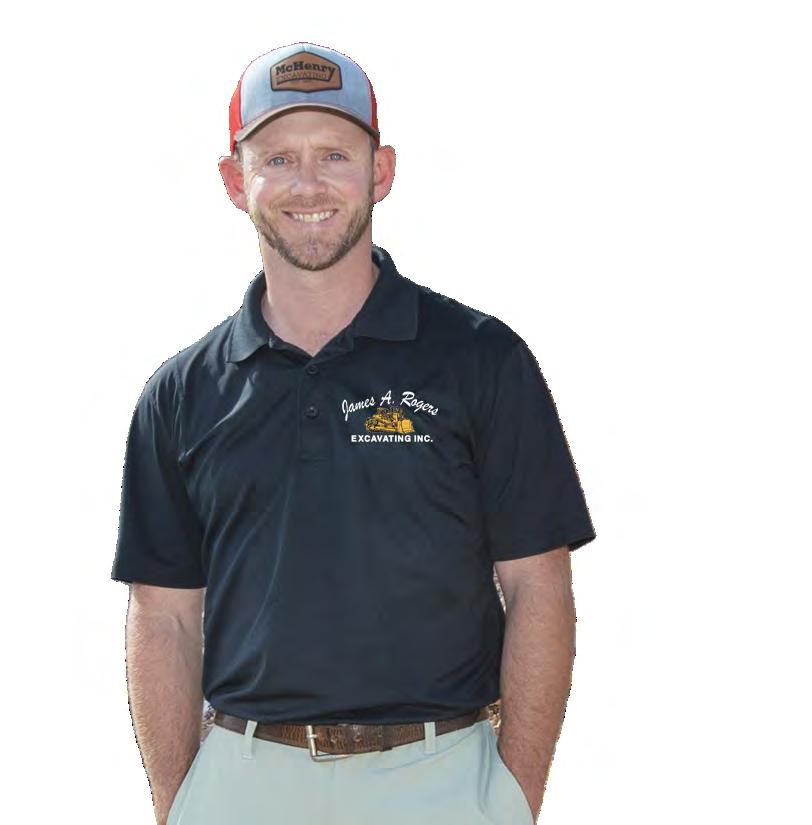
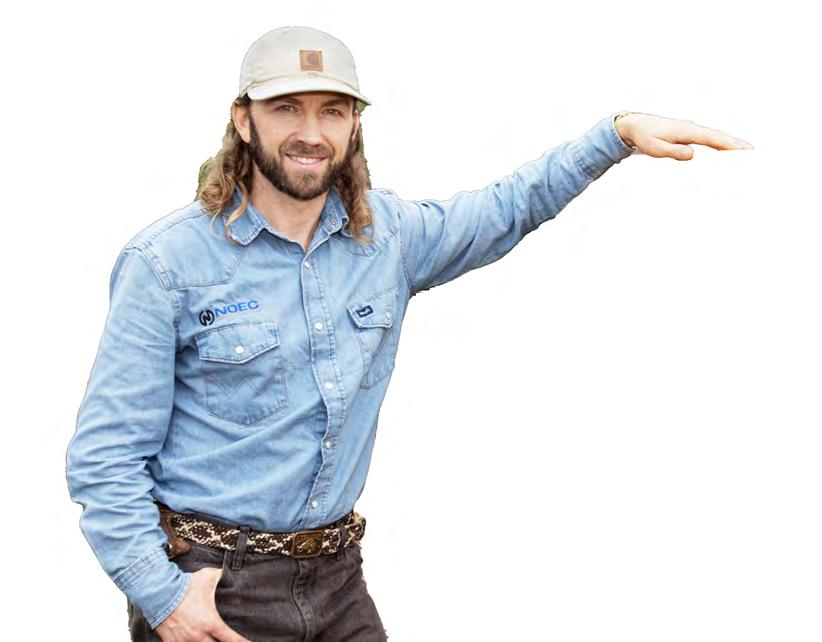


The word “admire” comes from a bit of Latin translating to something along the lines of “regard with wonder.” In today’s dictionaries, admiration evokes the feeling of respect and approval for some object of esteem. Regardless of where one looks, however, it is easy to see how James A. Rogers Excavating and NOEC Construction came to be among Arkansas Money & Politics’ “Most Admired Companies of 2026.”
Consider the growth path James A. Rogers has been on since third-generation owner Chris Meyer took the reins as president and CEO in 2016. Focused in and around Little Rock since eponymous founder James A. Rogers Sr. opened his doors in 1962, Meyer made it his mission to expand the reach and impact of his grandfather’s legacy well beyond central Arkansas, positioning James A. Rogers as a prominent name in Arkansas construction and development efforts.
Soon after taking ownership, Meyer acquired McHenry Excavating and Aggregates, rebranding it as McHenry and Meyer Companies, LLC, allowing him to realize his long-held dream of owning a quarry. Meyer later teamed up with Matt Usery, president of NOEC Construction, to provide utility solutions both below and above ground.
Now operating as far away as Hot Springs and having broken into the northwest Arkansas market, the James A. Rogers family of companies have become the Natural State’s go-to for demolition, earthwork, roadwork, flat concrete work, storm drains, concrete curbs and gutters, and utility services for a wide variety of residential, commercial and municipal applications.
“Our goal is to continue expanding relationships with builders and developers across central Arkansas and statewide,” Meyer said. “Residential growth in Arkansas continues to create opportunities, and we want to be a trusted partner

for site preparation, grading and utility work. By investing in equipment, technology and skilled personnel, we’re positioning ourselves to take on more residential work while maintaining the high standards our company is known for.”
Speaking of entities worthy of respect and esteem, one is remiss not to consider NOEC Construction in its own right — and indeed, the company has been named AMP’s “Most Admired” in not one but two categories, for both construction and general contracting. Usery grew up in the utility and powerline industry, tagging along to jobsites with his father from the time he was old enough to hold a tool. After three deployments and years of service with the Arkansas Army National Guard, Usery returned to the line of work he knew best, bringing back a new level of leadership, discipline, adaptability and technical communications management that he would use to shape NOEC Construction.
“Many don’t realize how much planning, engineering, logistics and responsibility goes into building electrical and fiber networks,” Usery said. “It’s not just physical labor; it’s creating the backbone that communities depend on. Seeing our team proud to work at NOEC makes it all worthwhile.”
NOEC’s work spans both new construction and maintenance, whether that means bringing power and fiber into new developments and neighborhoods or implementing upgrades in established communities. The company also provides storm restoration, emergency response, underground and overhead line installation, and full turnkey utility infrastructure.
“If it involves power, fiber or right of way, we’re equipped to build it, repair it or restore it,” Usery said.
Both Meyer and Usery understand the importance of respect for succeeding in any business arena but especially when it comes to the construction and development work their Arkansas neighbors depend on every day. With a reputation for quality that extends to both clients and industry peers, what better description for James A. Rogers Excavating and NOEC Construction than “Most Admired”?



Founded as a vineyard in 2011 by Sheree and Doug Meyer before opening to events in 2019, Rusty Tractor Vineyards in Little Rock has become one of central Arkansas’ most popular venues. Rusty Tractor can accommodate groups of up to 300 on its covered patio, the Pavilion, and a 100-year-old dairy barn, the Barrel Room, was renovated into an intimate setting of as many as 50 people. In addition to hosting events throughout the year, Rusty Tractor also participates in the University of Arkansas’ Arkansas Quality Wine Program, which sets statewide standards for Arkansas wine.
Smiley Technologies dates to the founding of Systematics, the pioneer of outsourcing data processing for banks. Walter Smiley founded the company in 1968. At its height, it had more than 5,000 employees before being acquired by FIS during the 1990s. Walter’s daughter, Elizabeth Glasbrenner, and son, Vance Smiley, founded Smiley Technologies in 2002.
EXCAVATING COMPANY

James A. Rogers Excavating has been a cornerstone in the Arkansas community since 1962. As a third-generation family-owned business, the company brings a legacy of excellence to every project. Whether a client is working on commercial development, city infrastructure or residential projects, the company’s skilled professionals are dedicated to delivering outstanding excavation services. The company has grown and thrived by staying true to its core values of integrity, hard work, and community support. With a rich history and a forward-thinking approach, the company blends traditional craftsmanship with modern technology to meet every project’s unique excavation needs.

“Investing for a rich life, realizing what you value” is the mantra at Meridian Investment Advisors in Little Rock. Meridian has been in business since 1983 and has more than $850 million in managed assets. The company offers a full suite of wealth management, financial planning and retirement plan services.
Norwood Day Floral Co. was established by Chris Norwood and Christina Day-Essary out of their shared love and passion for flowers, parties and events. Their commitment to providing exceptional service is driven by their dedication to their customers, ensuring that every occasion they help create is special and memorable. With the support of the local community, Norwood-Day opened its flagship Little Rock storefront in 2025. The full-service florist offers flowers and curated gifts at its shop, in addition to floral design for special events.

Roller Funeral Homes, under the leadership of Renata Jenkins Byler, the third-generation owner, continues to build on a legacy of trust and respect. She carries on the vision of her grandfather, Denver Roller, and her parents, Lynn and Sue Roller Jenkins. The familyowned business prides itself on providing personalized and dignified services to every family it serves. The team of compassionate and skilled funeral directors at Roller Funeral Homes is committed to serving each family with the highest level of care and respect.

Part of the James A. Rogers family of companies and under the leadership of President Matt Usery, NOEC Construction is one of the state’s leading, and one of only a few Arkansasbased utilities infrastructure contractors. Setting NOEC apart is its one-stop-shop approach, offering power line construction, both distribution and transmission; right-of-way maintenance; substation construction and maintenance; directional drilling; and storm response under one roof. Ownership remains hands-on, ensuring accountability, responsiveness and consistent quality on every project.

Impact Management Group is a differencemaker. Over 27 years, the firm has built a reputation for responsive service, thoughtful strategy and trusted relationships that deliver results. IMG partners closely with clients to develop innovative, comprehensive solutions, making the firm a market leader in public affairs, public relations, government relations, advocacy and strategic communications across Arkansas and beyond.
HVAC COMPANY

A family-owned and operated business focused on providing high-quality, affordable and innovative heating, cooling and sheet metal services, Arkansas Air Flow provides HVAC commercial services, HVAC residential services and sheet metal fabrication. The highly skilled Arkansas Air Flow team can be found all across the great state of Arkansas, where its work moderates the inside environments in schools, manufacturing facilities, hospitals, restaurants and community centers. Whatever the project, whatever the size, the company brings unmatched product knowledge and customer service to every jobsite. That is why builders rely on Jacksonvillebased Arkansas Air Flow job after job.
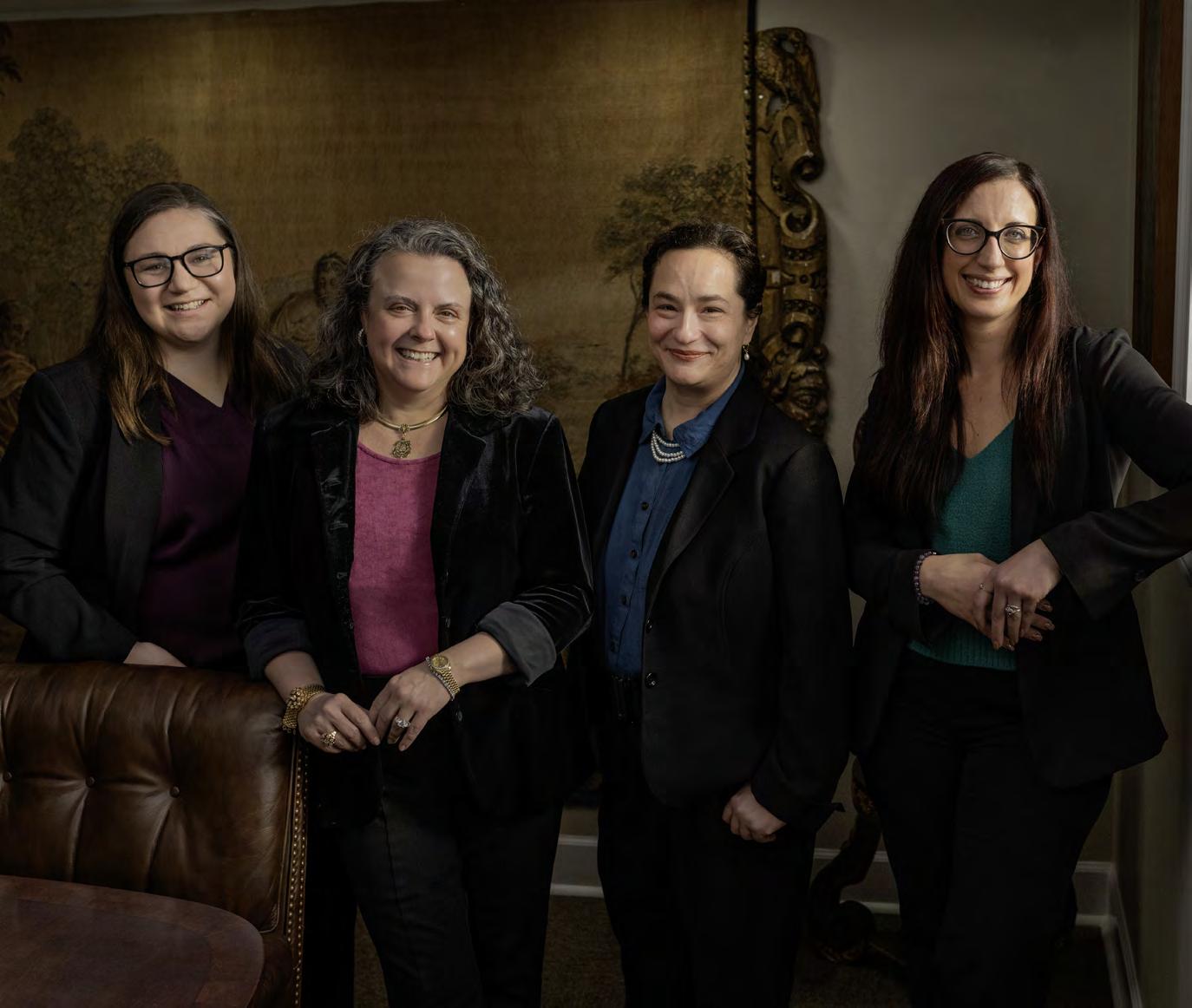

I cannot say enough good things about my experience with everyone at this law firm. They took the time to truly understand my situation. I never felt rushed, dismissed, or like just another case. They explained everything clearly, answered every question patiently, and made sure I felt confident in each decision we made. Katherine’s expertise in family law is obvious. She knows the system inside and out, but what really sets her apart is how much she genuinely cares.
and Aggressive

By Mark Carter
n Arkansas, one would be hard pressed to find a base of alumni and supporters as dedicated to their school as those of Ouachita Baptist University in Arkadelphia.
One of the oldest institutions of higher learning in the state, Ouachita is also one of the state’s most iconic. It has served as a leading voice of faith-based education in Arkansas since its founding almost 150 years ago. This year, it was voted by readers to Arkansas Money & Politics’ annual list of “Most Admired Companies” in the four-year college or university category.
“Ouachita has been part of the fabric of Arkansas since its founding by Arkansas Baptists in 1886 with a vision for Christian higher education,” said Ben Sells, the university’s 16th president. “Two-thirds of our students come from Arkansas, and we’ve graduated generations of teachers, doctors, pastors, business leaders and public servants who have shaped communities across the state.”
Ouachita graduates have excelled across the spectrum of business, politics and sports. Notable alumni include three governors — Sarah Huckabee Sanders (current), Mike Huckabee (1996-2007) and William Holloway of Oklahoma (1929-1931) — as well as former Dallas Cowboy and Pro Football Hall of Fame inductee Cliff Harris, noted Baptist minister and ethicist the Rev. H. Dale Jackson, National Baseball Hall of Famer Travis Jackson (New York baseball Giants, 1922-1936), renowned national legal scholar Leon Green and scores of Arkansas legislators.
Not to mention, of course, the mega-successful Christian pop band, Point of Grace, got its start on campus during the early 1990s, the original lineup composed entirely of Ouachita students.
ta rooted is relationships. Families send their children here because someone they trust came to Ouachita and had a life-changing experience. That cycle of trust and transformation, repeated across 140 years, is what makes Ouachita genuinely Arkansas.”
It is that on-campus experience that helps Ouachita stand out among its peers. Ninety-five percent of Ouachita students live on campus, and Sells said that is central to what the university has always been.
“The four-year residential experience is something we believe in,” he said. “It works best when students aren’t just attending classes but living, growing and being challenged together. The shared experiences of social clubs, our version of Greek life, and chapel and intramurals and late-night conversations in the residence halls — those things shape character in ways that can’t be replicated online or compressed into two years. We’re committed to that model because we’ve seen what it produces.”
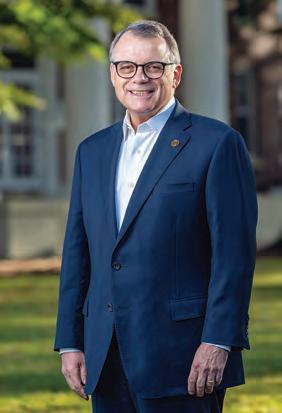
Many from outside the state know Ouachita for its role in The Battle of the Ravine the Tigers’ annual football game with crosstown (actually, cross-highway) rival Henderson State University, played on the final week of the regular season. The rivalry has been featured on ESPN and is considered the most notable among NCAA Division II schools.
Ouachita’s acclaimed campus and its penchant for churning out state leaders makes it an attractive draw for families who want to continue a faith-based education and enjoy the quirks and perks of a four-year traditional, on-campus experience.
“The Battle of the Ravine is one of the oldest rivalries in college sports, and events like Tiger Tunes draw thousands while raising money for scholarships,” Sells said, “but what really keeps Ouachi-
Affiliated with the Arkansas Baptist State Convention, Ouachita also exists to offer a Christianfocused liberal arts education.
“We believe life is lived most fully in response to the love of Jesus Christ,” Sells said. “The most important questions a college student can wrestle with aren’t just career questions but questions of meaning, purpose and character. A Christian liberal arts education gives students the framework to answer those questions well and see how faith shapes every class they take. Students leave Ouachita not only prepared to join the workforce but formed for a lifetime.”
Ouachita currently enrolls about 1,800 students, a number that has served as something of a sweet spot for a university that intentionally remains cozy. In addition to the broad success experienced by Ouachita grads after they leave Arkadelphia, the school boasts high retention and graduation rates.
Plus, the personal attention afforded Ouachita students is intentional and not just a function of the school’s size, Sells added.
“Our high placement rate reflects years of faculty and staff investing in students individually, connecting them to internships, research opportunities and professional networks that open doors,” he said. “We often say Ouachita is a place where professors know your name, but it’s not just professors,” Sells said. “If a student struggles — academically, personally, socially — there’s an advisor who notices, a counselor who reaches out, a residence hall director who follows up. The community of friends they find here invests in each other.”
Choosing a college can be A
Yes, it can be about who you cheer for on Saturdays. And it’s certainly about the degree you come away with. But it can be so much more. It can be where you discover your calling, where you find lifelong friends, where you grow in your faith and where you gain the confidence to pursue your dreams. At Ouachita — even if you don’t know a single person when you arrive — you’ll be invested in personally, academically and spiritually from day one.
WE’RE SAVING A SEAT FOR YOU! COME LET US SHOW YOU WHAT WE MEAN.










As Arkansas’ oldest and largest health insurer, Arkansas Blue Cross and Blue Shield has helped improve the health, financial security and peace of mind of the people of Arkansas for more than 75 years. The company and its family of affiliates are leaders in health insurance innovation and provide a full spectrum of health and dental coverage plans for individuals and groups. Based in Little Rock, the company employs more than 3,300 people, the majority of whom are located throughout the state. The company serves nearly 800,000 people in Arkansas and another 1.2 million through national accounts. As a private, not-for-profit mutual health insurance company, Arkansas Blue Cross is owned by its policyholders.

Superior Senior Care was founded in Hot Springs in 1985 and built from the ground up. Over the past 41 years, Superior Senior Care has grown to include 27 locations and connects thousands of care seekers with professional caregivers every day. SSC is the first licensed and nationally accredited caregiver referral service in the state. SSC has blazed a path by not only providing better care but also pushing for and attaining higher safety and performance standards in the industry. The company’s goal is to serve clients and their families the way they need it — safely, dependably, affordably and in the comfort of their own homes.

than 10 years of experience and a deep passion for home building to every project. With a keen eye for detail and a commitment to excellence, she has built a reputation for delivering custom homes that effortlessly blend functionality, beauty and craftsmanship.


The largest private, not-for-profit hospital in Arkansas, Baptist Health Medical CenterLittle Rock is a nationally recognized, faithbased hospital that serves as the flagship facility of Baptist Health. The Little Rock campus offers a Level II trauma center within its emergency department, as well as a full family of comprehensive medical services. A mere sampling of these includes cancer care, cardiology/cardiovascular surgery, neonatal intensive care unit, orthopedics, stroke, labor and delivery, and many other specialties. The hospital has also been highly decorated for its excellent, patient-centered care, including American Heart Association’s Get with the Guidelines Stroke Gold Plus Award, Leapfrog Hospital Safety Grade A and many others.
Founded in 1904, Oaklawn Hot Springs is one of the premiere thoroughbred racetracks in the country. The casino features slots, live table games and sports betting year-round. Live racing takes place from November to May, and simulcast racing is available throughout the year. Guests can visit the Forbes Travel Guide-recommended Oaklawn Hotel, the multipurpose event center, Arkansas’ only Forbes four-star spa — the Astral Spa — and several dining options. The resort is also moments away from Hot Springs National Park, historic Bathhouse Row and two of the state’s most scenic lakes, which makes Oaklawn a hub for those looking to explore the Hot Springs area.
Network Services Group, headquartered in North Little Rock with offices in Fayetteville, Jonesboro and Lake Village, is built on a client-first philosophy. NSG supports businesses of all sizes with proactive care through information technology services, cybersecurity, data backup and recovery, business continuity planning, compliance, telephone systems, cloud services and artificial intelligence consulting — helping clients operate securely, efficiently and with confidence.
Since 1999, Elder Independence Home Care in Bryant has been committed to the dignity of the elderly. Elder Independence provides high-quality, affordable home care services. It helps clients with nonmedical personal care, companionship, light housekeeping, meal preparation, medication services and more to help them feel respected and cared for.

Arkansas Industrial Roofing in Little Rock was founded in 1977 by the late Corbett Sanders III. His wife, Cathy Smith, now carries on the company’s tradition of excellence alongside general manager and lead roofing consultant Matthew Nicolo. Nicolo has been with the company since 2004, and he takes great pride in being able to continue giving customers the level of service and dedication they have come to expect over the decades. From servicing repairs to production work and prudent consulting, Arkansas Industrial Roofing takes seriously its responsibility to its customers throughout Little Rock and Hot Springs.

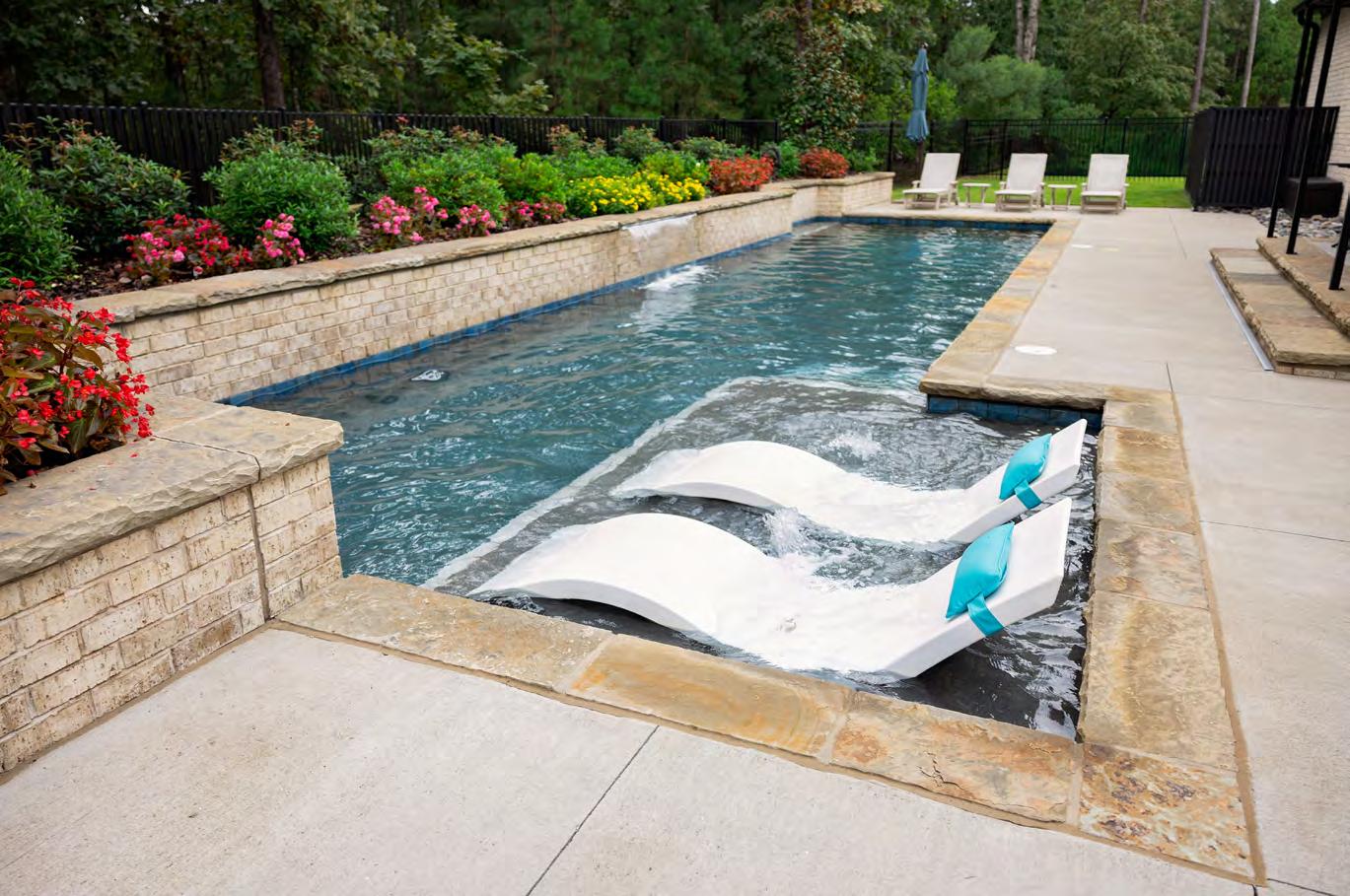








Serving Arkansas for more than 70 years, Arkansas Farm Bureau insurance companies were formed by a group of Farm Bureau Federation leaders across various states. Those leaders shared a vision for providing better service to their members, including lower insurance rates. Arkansas Farm Bureau has been developing new products and services ever since, all to meet the changing needs of Arkansans. Farm Bureau Insurance is administered by an experienced team of local agents. They are ready, willing and able to help their neighbors save money and protect the things they love.

Michael Sills, owner and president, entered the janitorial industry more than 18 years ago. He saw firsthand how clients were underserved — promises made but not kept, inconsistent cleaning quality and lack of accountability. He founded A Sharper Image to be different: to deliver consistent and trustworthy facility services, ensuring expectations are not just met but also exceeded.

Jones & Son Diamond & Bridal Fine Jewelry in Little Rock has provided outstanding value to customers old and new since 1986. The company’s formula is simple and a throwback to days when businesses cared about their customers and tried to mold their operations to the wants and demands of the market.
Founded in 1997, the Law Offices of Katherine Blackmon is one of Arkansas’ most respected family law firms. Known for its trauma-informed, client-centered approach, the firm combines compassionate support with strategic advocacy in divorce, custody, support, property division and high-conflict litigation. The attorneys and staff are committed to helping clients navigate difficult transitions with clarity, strength and hope.

Twenty-six years ago, the beverage industry was forever changed in central Arkansas when Jonathan Looney opened the doors of O’Looney’s Wine & Liquor in Little Rock. The store has grown with west Little Rock and has become a neighborhood staple. Throughout the business, there is a commitment to treating clients with respect and consideration, helping everyone find the right drink for them. Redefining the experience in wine and spirits, the team is committed to championing creativity, originality and excellence.

Lumber1 Home Center is Arkansas’ go-to supplier for all building material and design needs. The team’s commitment to offering the highest quality products at the best prices allows them to compete with anyone — even the big-box stores. Lumber1 has locations in Stuttgart, Mayflower and Little Rock.

Innovative engineering, exceptional performance and a reputation forged over three generations, Xpress Boats in Hot Springs builds the premier watercraft on the water today. Creator of the original all-welded aluminum boat, the company’s reputation for innovation and quality is without peer and boasts the best-selling 20-foot aluminum bay boat in the United States, per latest sales statistics. The company’s groundbreaking Hyper-Lift hull and exclusive partnership with Yamaha Outboards ensures Xpress’ entire line of bass, bay, skiff, crappie, catfish and hunting models provide reliable, durable performance for years to come.

Rock City Digital was born from frustration with how marketing companies operate: treating employees like numbers, clients like money machines and marketing like a checklist. Rock City chose a different path. Being recognized as a most admired company validates everything the team is doing and tells members they are on the right track. The firm thanks voters for your support.

OrthoArkansas provides specialized care for specific orthopedic needs and serves as a primary orthopedic care provider. Offering expert care across the state for all orthopedic injuries, aches and pains, OrthoArkansas currently has 10 locations in Little Rock, North Little Rock, Arkadelphia, Bryant, Conway, Clinton, Heber Springs, Hot Springs, Monticello and Stuttgart. Offering fellowship-trained physicians, OrthoArkansas has a team that uses the latest advances in medicine, rehabilitation, and surgical and nonsurgical options. No matter what stage of injury or recovery, OrthoArkansas has its patients covered and offers urgent care in both Little Rock, North Little Rock and Conway.

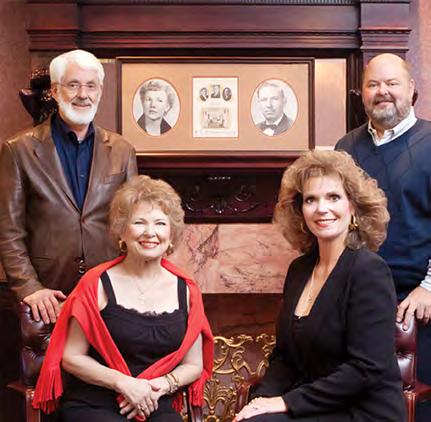



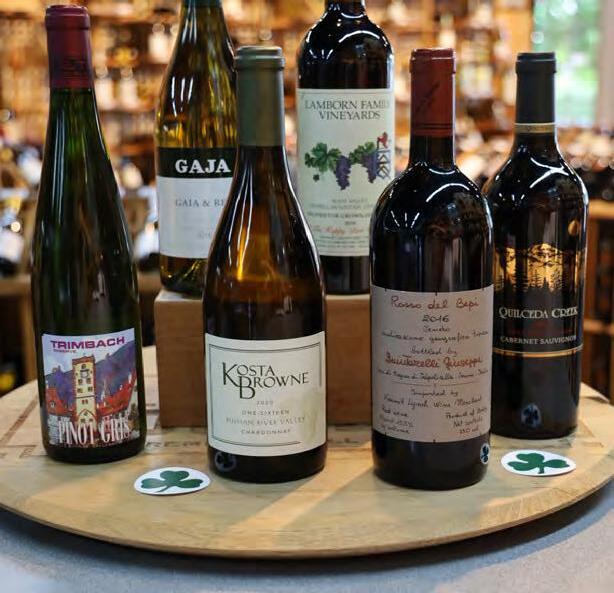







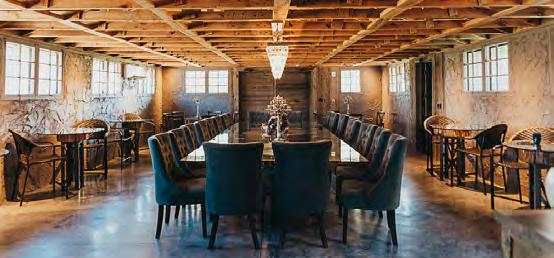


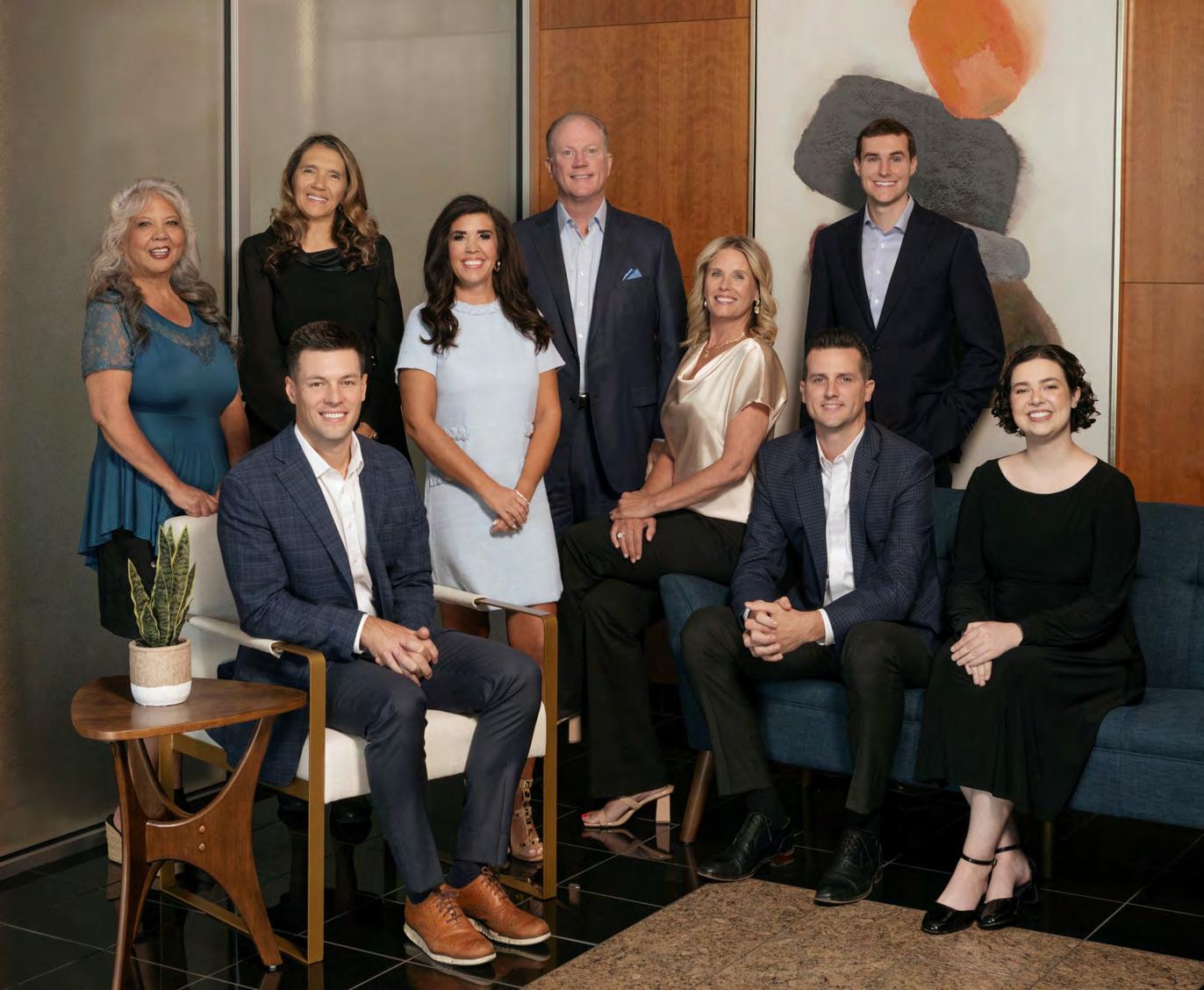

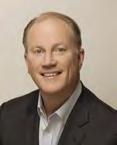


From the way your parents handled money to your plans for retirement—many factors impact the way you view your wealth. We take the time to understand who you are, your vision of your future, and what you need from your financial partner. From there, we develop solutions that are as unique as you are. We make it easy to work with us so your life is less complicated and you can enjoy what you value most.

After 25 years of providing trusted financial guidance, Little Rock’s Small & Associates Financial officially rebranded as Small Wealth Management in April 2025. The change reflects the firm’s growth, modernization and ongoing commitment to strategic, personalized wealth management. The new brand draws inspiration from the knight in chess — an agile and powerful piece that moves uniquely to navigate challenges. That symbolism aligns with the firm’s approach to helping clients manage financial complexities and seize opportunities. With offices in Little Rock, Hot Springs Village and Tulsa, the firm continues to be recognized as a top financial advisory practice.

Bank of Little Rock was founded in 1927. In 1989, the company expanded its services to become a full-service bank. A decade later, it added full-service mortgage solutions by launching Bank of Little Rock Mortgage. The team remains committed to meeting the financial needs of local families and businesses.
NEUROSURGERY PRACTICE

NEUROLOGICAL SPECIALISTS
Proudly continuing a legacy of excellence in spine and neurological care, the team of neurosurgeons, including Dr. Dominic Maggio, Dr. Scott Schlesinger, Dr. Stephen Cathey and Dr. Mykhaylo “Misha” Krushelnytskyy, offers comprehensive treatment options, from conservative care and injections to advanced neurosurgery. Legacy’s Pavilion Imaging Center is open to all, providing MRI and X-ray services with innovative technology arriving soon, reducing 80 percent of radiation exposure.

CareLink is central Arkansas’s area agency on aging, connecting older adults and family caregivers with services that support independence, safety and quality of life. Through Meals on Wheels, in-home care, transportation, caregiver support and wellness programs, CareLink helps seniors remain healthy, connected and supported at home and in the community.

With more than two decades under its belt and a range of financial products and services with which to serve its growing family of customers, Signature Bank of Arkansas is redefining what banking should be. At Signature, bankers take the time to understand their clients, their businesses and the goals they are working toward. Through thoughtful conversations and trusted guidance, the bank’s customer-centric and highly qualified staff connect customers with the right financial tools to help turn goals into progress. That, along with innovations such as remote deposit capture and mobile deposit helping clients save time by banking on their own time, has made Signature Bank an institution of choice in Arkansas.

With locations in Bryant, Little Rock and North Little Rock, each Fox Ridge community creates a unique culture that reflects the lifestyles and preferences of its residents, enhancing the living experience and cultivating connections among residents, team members and families. With signature programming,
a unique approach to wellness and the Fox Ridge team’s passion for serving older adults and families in Arkansas, Fox Ridge creates spaces that empower individuals to live better, stay active and be the best versions of themselves.

A company’s environment communicates a message, whether intended or not. It can validate a customer or prospect’s perception of that business, impact employee commitment, mold corporate culture, and define brand identity. But amazing spaces do not just happen — they are a product of a team effort and intentional design. At Evo Business Environments, the office design professionals understand crafting an office space, classroom or patient room takes time, effort, creativity and expertise. Working with the best architects, interior designers, engineers and contractors around the state, the skilled and customerfriendly staff provides functional and creative environments that inspire excellence.

Established in 1989 by Lynn and Amanda Pettus, Pettus Workplace Solutions set out with a main goal to create a family-run business that offers great products, exceptional value and remarkable customer service. Having grown into the largest independent office supply dealer in Arkansas, Pettus retains the core principles it was founded on and promises that once customers buy from Pettus, they will never need to try another office supply company again. With dedicated, professional sales and furniture design teams, Pettus Workplace Solutions offers custom-tailored furniture sets for offices. As a member of TriMega, an office-products buying group, Pettus Workplace Solutions has buying power of more than $10 billion, allowing it to source bargains directly from major manufacturers and suppliers. Serving large and small businesses, Pettus sells a wide range of products at great prices.
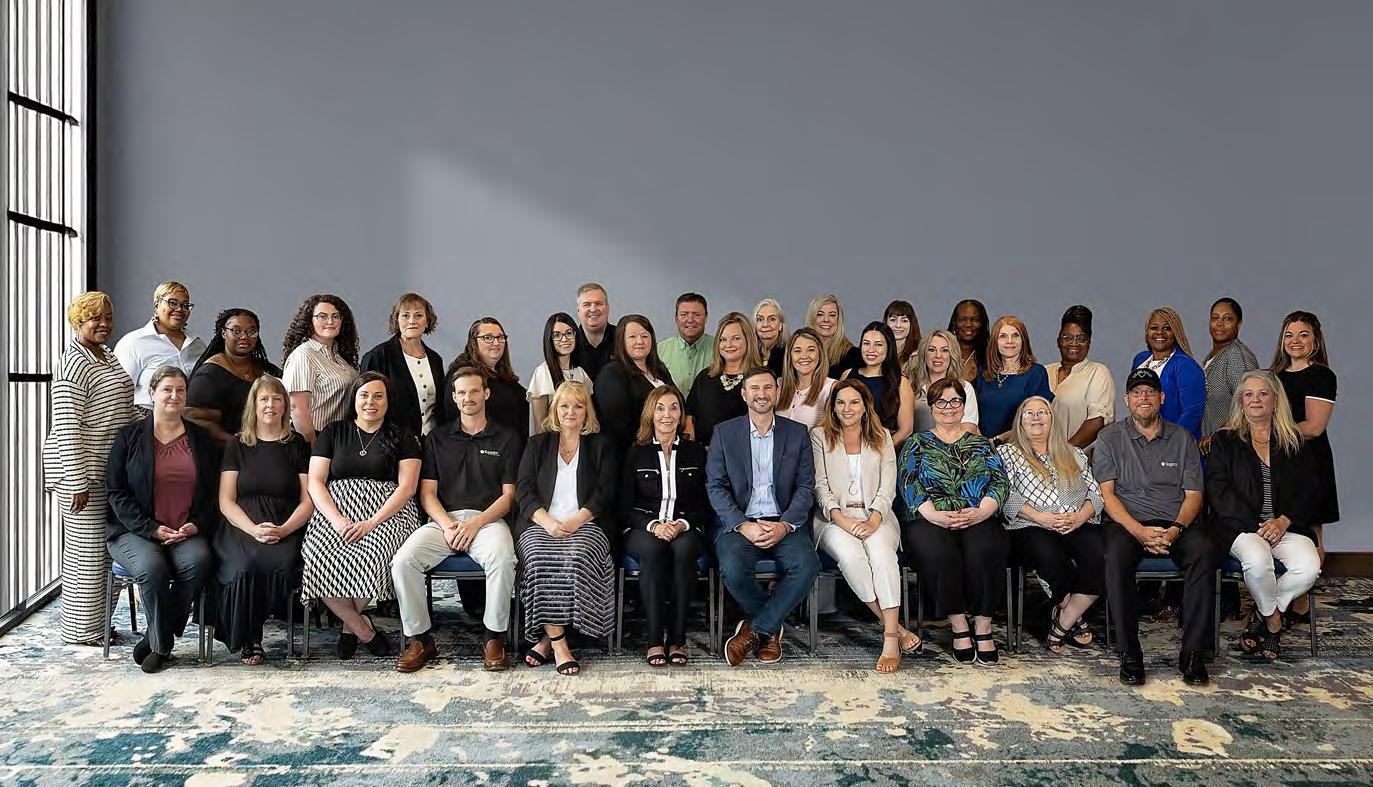



By Doug Crise
ay Ramsey’s career is a study in knowing when the timing is right.
Ramsey, owner of Rx Catering, took his time before expanding his business to northwest Arkansas. He built his name and reputation from a storefront on Little Rock’s Capitol Avenue and, since 2001, has compiled an ever-expanding list of clients and, with that, an ever-expanding menu. The decision to build a new location in Fayetteville came together with the same sense of purpose that brought Ramsey to the food service industry more than two decades ago.
“I graduated from Oklahoma State, and that’s where I worked at New York Bagel,” Ramsey said. “They were franchising at the time, so I got a franchise in Little Rock, and that was the only time I had ever been to Little Rock.”
That was in 1994, and Ramsey was content to learn the ropes of running a casual, walk-up restaurant. He was effective enough to spread New York Bagel to two other locations before deciding to take the jump into catering.

delicious, affordable and capable of being prepared en masse.
“It’s a totally different animal,” Ramsey said. “At first, when people came in, they said, ‘You really need to deliver,’ and I just said, no, you come in and do pickups and stuff. That was probably the biggest thing because then we totally had to retool what we’re doing from people walking in the door to us walking out the door and delivering to people.”

While running a restaurant and running a catering company both fall under the umbrella of food service, many of the similarities end there. As a caterer, Ramsey was suddenly responsible for curating his own menu, ensuring the food would be equal parts
Rx Catering’s first baby steps took place before the explosion of social media, meaning the company’s early growth was based largely on word of mouth. Ramsey made it a point to not just drop off food but listen to his expanding list of clients. Over the years, both the menu and the reach grew as Ramsey added crowd-pleasers such as beef brisket, baked tilapia, pastas, breakfasts and more.
Like everything else he has done, Ramsey’s approach to expanding Rx Catering to a new region was a deliberate one. Ramsey connected with an old friend from Oklahoma State, Glenn Taylor, and Ramsey pitched him on the idea of running a Fayetteville location while the two took in a Billy Idol concert.
“We were sitting around the next day and just kind of bantering back and forth on that,” Ramsey said, “so we started looking at real estate, and next thing you know, we signed the lease.”


Complete Payroll Services is Arkansas’ largest locally owned payroll and HCM provider, proudly serving businesses across the state for more than 25 years. Based in Little Rock, CPS delivers an all-in-one platform covering payroll, HR, timekeeping, benefits administration, onboarding, ACA compliance, and more — built specifically for small to midsized businesses. What sets CPS apart is its commitment to personalized service. Every client receives a dedicated payroll specialist, direct access with no phone trees, and a team that’s fully invested in their success.

Not too often does a business come along where the quality of the service is exceeded only by the conviction of its leadership. That is the case with The Bug Man, Inc., whose founder, the late Bill McCauley, started the business in 1976 with the promise that he would credit God with its ownership and success. Now celebrating five decades in operation, The Bug Man continues to be the No. 1 name in pest management across the state. The Bug Man is recognized by loyal customers and pest professionals alike for its depth of experience, attention to detail and exceptional customer service. The Bug Man is a member of the Arkansas Pest Management Association and the National Pest Management Association. PHARMACY

West Side Pharmacy and Compounding has served central Arkansas since 1953. The phar-
macy has humble roots as an independent community pharmacy and has grown over the last decade to have two locations in Benton and nine pharmacists on staff. West Side offers everything from point-of-care testing to compounding services. Both employees and patients reference “The West Side Way” in dayto-day interactions. To the owners of West Side, serving patients with kindness and professionalism is not just a motto but a requirement.

People throughout Little Rock trust Wright Plastic Surgery & Med Spa for their aesthetic needs due to the team’s exceptional compassion, skill and cosmetic surgery expertise. Dr. Eric Wright is a board-certified plastic surgeon who provides a variety of cosmetic and reconstructive procedures. He specializes in treatments such as breast augmentation, breast implant removal, facelifts and tummy tuck surgery. He is also the only doctor in the state of Arkansas to offer sought-after procedures such as migraine surgery. As an Arkansas native, Wright is proud to help his patients look and feel their best. He works alongside his team of talented professionals to create beautiful, long-lasting results.

As a family-owned business, Luxury Pool & Spa in Russellville and Conway has proudly served Arkansas for five decades across three generations. With a deep commitment to quality and craftsmanship, the team is passionate about bringing customers’ dreams for outdoor living to life. Whether a client is looking to create a relaxing retreat or an everyday getaway, there is no better time to transform the backyard into a personal oasis.

The Arkansas Trucking Association promotes the Arkansas trucking industry on issues that directly impact member companies and the state and national economies. The ATA is owned and governed by more than 300 trucking companies and important industry suppliers. Members range from firms with five or fewer trucks to some of the nation’s largest freight and logistics companies. The ATA’s mission is to advance the trucking industry’s image, efficiency, competitiveness and profitability. ATA’s comprehensive range of services, products and member benefits are designed to help members compete and succeed. The association started in 1932 as the Shippers and Carriers Association of Arkansas.

The Arkansas Trial Lawyers Association has grown into an important, statewide voice for consumers, improving the quality of legal representation for Arkansas families by providing high-quality legal education and keeping abreast of legislative and judicial activities. The ATLA strives to promote a fair and effective justice system and to protect the constitutional rights of all Arkansans, which it accomplishes through education, networking, legislative advocacy and trial practice. The membership is comprised of attorneys dedicated to protecting the health and safety of Arkansas families, enhancing consumer protections, and preserving every citizen’s right to trial by jury and access to the courts.
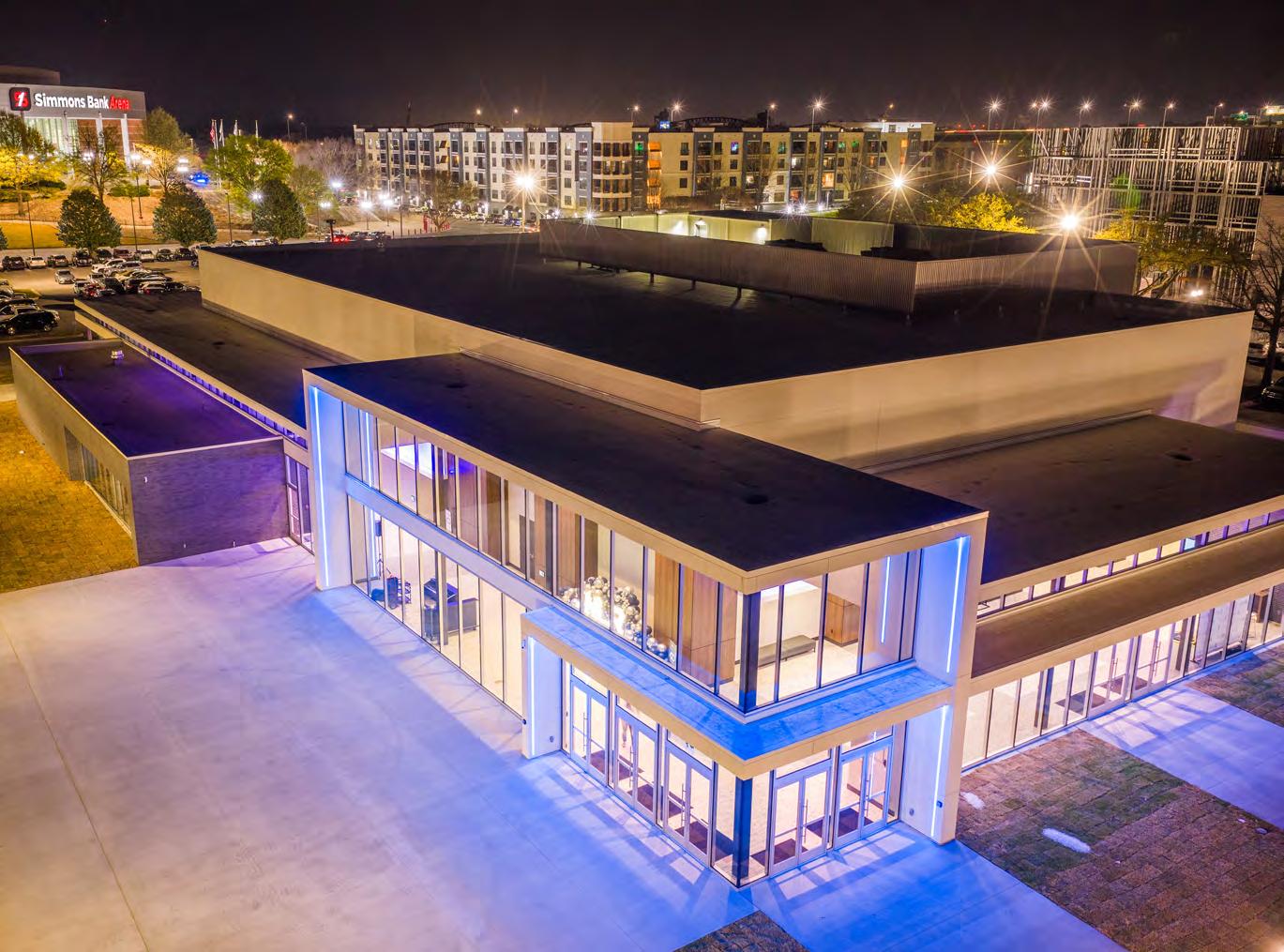

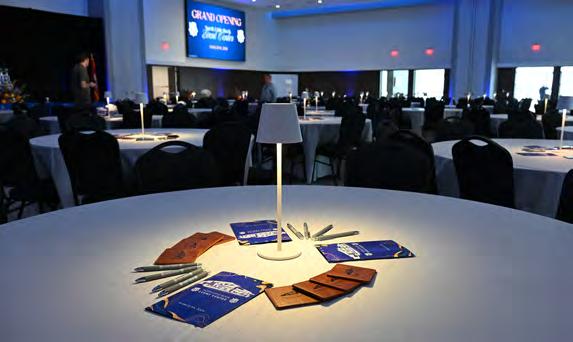
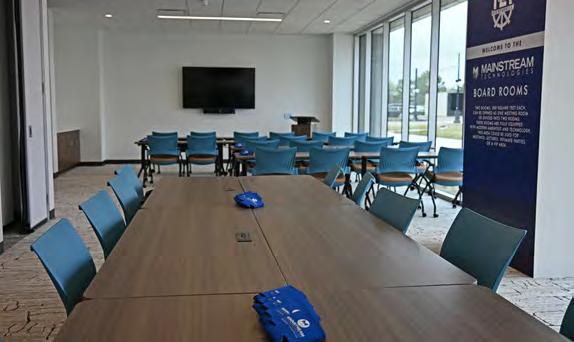
The North Little Rock Event Center is a 31,000‑square‑foot premier venue designed for events of every kind. With adjustable airwalls, a flexible ballroom and boardroom that can be configured into multiple breakout spaces, a full catering kitchen, modern audiovisual equipment, and stunning spaces that make a lasting impression, it’s Central Arkansas’ destination for exceptional events.
Call 501-975-8866 or email nlreventcenter@nlr.ar.gov to book today.


Little Rock’s TRIVIA Marketing is a one-stop shop, starting with personal marketing experts who brainstorm with clients. The onsite graphics department creates a flawless look, and TRIVIA’s in-house screen printing and embroidery production departments bring it all together. Clients can brainstorm with the team in the largest showroom in Arkansas and see what 30-plus years of experience can create.
The mission of State Farm agent Dennis Bost is to help State Farm policyholders manage the risks of everyday life and to be the first choice for insurance and financial service products in central Arkansas. The agency services clients statewide with a focus on relocations and out-of-state transfers to Pulaski County, specializing in auto, home, business, life and health insurance products. With a service footprint covering the Little Rock metro, North Little Rock, Bryant, Benton, Sherwood, Alexander and Arkadelphia, Bost and his team bring more than 60 years of combined experience to serve any client, especially when they are needed most.

Ever since its founding, the focus of Ghidotti Communications has been to deliver the highest in customer service. The agency strives to serve as a true partner to clients, providing effective, efficient counsel on marketing, messaging and branding. A boutique firm in the best sense of the word, Ghidotti is made up of smart, fun, experienced storytellers who live and die by a set of values that underpin the company’s culture. Trusted by multitudes of businesses and professionals to manage their brand reputation and ensure their business
is visible, valued and understood, the agency has a proven track record in public relations, content marketing, influencer marketing and other strategies that deliver results.

Founded in 1903, Simmons Bank provides comprehensive banking, lending, treasury management, wealth management and investment services through a relationshipfocused approach. Operating more than 220 branches across six states, Simmons is the principal subsidiary of Simmons First National Corp., which has paid cash dividends to shareholders for more than 117 consecutive years. As large as it has become, the institution has never forgotten where it calls home, investing millions in charitable and community causes large and small throughout its market area.
Cushman & Wakefield | Sage Partners is Arkansas’ leading commercial real estate firm, pairing local expertise with global resources to deliver exceptional client service. Through a collaborative team approach and decades of market experience, the firm offers a broad range of expertise across brokerage, property management, investment sales, development advisory and tenant representation across the state. The recognized authority in its field, Cushman & Wakefield | Sage Partners strives to exceed client expectations in every way possible.

Lile Real Estate was founded in Little Rock by Gar Lile in 1993. The firm is licensed in Arkansas, Louisiana, Mississippi and Tennessee
and has more Realtor Land Institute Accredited Land Consultants than any other firm in the state. The Lile Real Estate team consists of professional advisors with firsthand knowledge and experience to understand what multigenerational owners look for in an advisor or what a first-time buyer looks for when considering investing in land, whether for recreational use or solely for investment purposes. Over the past five years, the company has placed more than $750 million worth of real estate. Lile Real Estate offers a full range of services for clients: sales and marketing, sealed bids, consulting, acquisitions, exchanges, property development, research, and market analysis.

Moses Tucker Partners is Arkansas’ leading full-service commercial real estate firm. With offices in Little Rock and Bentonville, MTP manages more than 11.6 million square feet, averages $1 billion-plus in annual brokerage volume and has a development portfolio exceeding $2 billion. The powerhouse firm’s data-driven approach delivers exceptional outcomes and long-term value for clients. A longtime recognized leader in the commercial real estate and property management space, Moses Tucker sets the standard for ethical, purpose-driven business dealings in communities throughout Arkansas.

At Coldwell Banker RPM Group, the company’s focus is on the future. Locally owned and globally connected, the company is committed to delivering innovative solutions, elevating the client experience and empowering its agents to serve central Arkansas at the highest possible level. Through trusted relationships and forward-thinking leadership, Coldwell Banker RPM Group’s stellar reputation for unparalleled expertise, years of industry experience and white-glove customer service continues to build opportunities across the communities it serves.


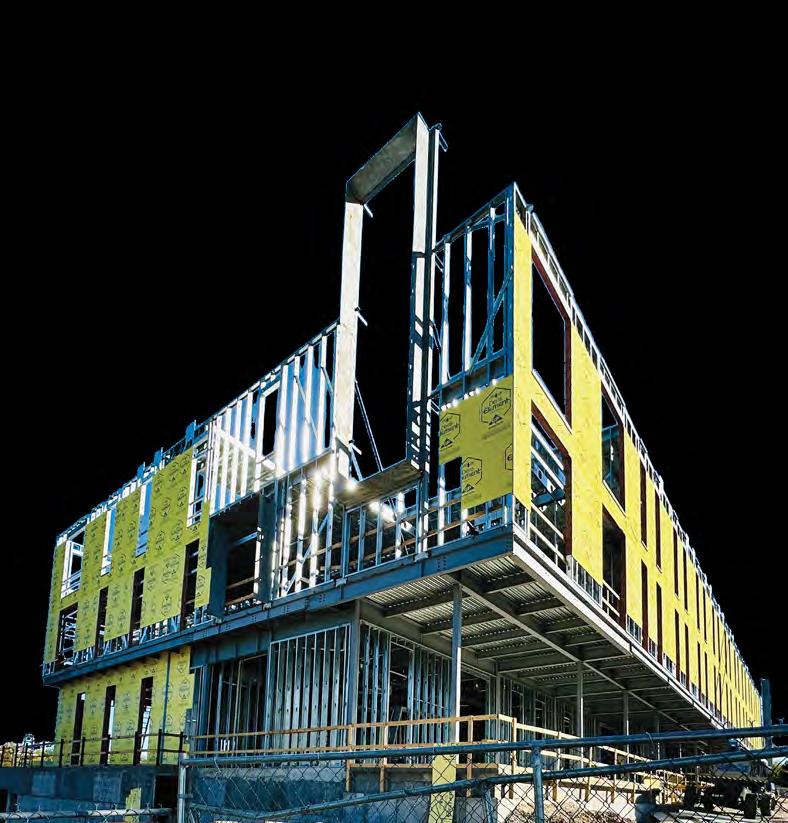






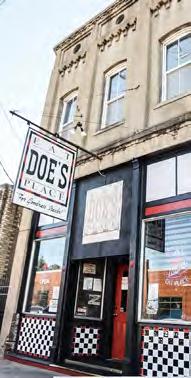



Arkansas Talent Group is a locally owned, Arkansas-based recruitment firm specializing in accounting, finance and human resources, as well as executive level placements in the Csuite. Founded in 2024 by Stephanie Shine and Christopher Chunn and joined by Jennifer Thompson, Bailey Clark, Anna Emerson, Laura Slay and Sam Swensen, ATG’s expert team delivers a consultative, first-class hiring experience. With deep networks and decades of combined experience, Arkansas Talent Group is a trusted partner for top-tier talent
Find luxury senior living in Fayetteville at Grand Village at Clear Creek, which offers many features and amenities other senior living communities do not have. From watching movies at the 100-seat theater to joining a swim class at the indoor pool, residents will find no shortage of experiences to enjoy. The pet-friendly community is also within easy reach of accessible walking trails such as Razorback Greenway. At Grand Village, life is about connectivity and celebrating a wonderful sense of community while offering a convenient starting point to explore the local area attractions.
Alpine Glass & Windows is a premier central Arkansas window and glass company specializing in high-end window replacement and custom frameless shower enclosures. Known for exceptional craftsmanship, premium products and attention to detail, the Alpine team delivers elevated solutions for homeowners and commercial clients seeking quality that stands above the standard.

Doe’s Eat Place in downtown Little Rock is a renowned steakhouse celebrated for its award-winning steaks, including T-bone, porterhouse and sirloin cuts. The restaurant also offers Southern favorites such as hot tamales with chili, broiled shrimp and grilled salmon, all served up in a rustic, no-frills atmosphere that embodies Southern hospitality.

The Cashion Co. in Little Rock is committed to honesty, integrity and excellence. Since its founding in 1975 by Knight Cashion, the company has strived to ensure clients receive the best possible insurance services. The company’s team of professionals offer personalized customer support and advice. Cashion remains a service-oriented, energetic, growthfocused independent insurance agency that builds long-lasting relationships with customers and carriers and maintains a work environment beneficial to employees. Staff members strive to provide customers with the insurance and surety products to protect their assets and meet or exceed their goals.

Stitt Solar in Rogers is a top-rated, award-winning local solar installer in northwest Arkan-
sas offering decades of expertise and premium customer service. Installing solar energy systems since 1978, the team at Stitt Solar is committed to providing clear, honest and reliable information backed by nearly 50 years of real-world experience. The company’s vision is to shift the energy consumption paradigm in the way we live, work and play.
With mini mill leadership, a LEED-certified steel mill and an innovator’s mentality, U.S. Steel’s Big River Steel facility in Osceola strives to achieve its vision of reshaping the industry and becoming the leader in sustainable steelmaking and products. Big River Steel develops the steel customers need today and tomorrow in an environmentally responsible way, reducing the plant’s carbon footprint while doing good for those it serves — customers, communities, employees and, most importantly, the planet. The company’s “Big-Picture Steel” mentality employs the most advanced mini mill technologies to enable the industry’s most talented workers to make products that solve the challenges of tomorrow without sacrificing performance today.
Since its 1968 founding as Schueck Steel in the garage of founder Tom Schueck, Lexicon has grown into one of the largest construction companies in Arkansas and one of the nation’s leading construction and fabrication companies. Headquartered in Little Rock and led by CEO Patrick Schueck, the Lexicon family of companies now includes Custom Metals, Prospect Steel, Steel Fabricators of Monroe, Universal, Lexicon Construction Management, Lexicon Industrial Constructors, Lexicon Industrial Maintenance and Heritage Links. Now more than 3,400 employees strong, Lexicon brings its expertise to a wide variety of projects, from large-scale industrial construction to golf course construction and renovation. Additionally, Lexicon became an employee stock ownership plan at the end of 2025.





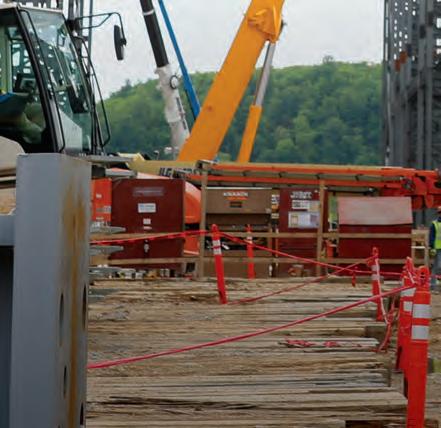










First Orion elevates the phone call and messaging experiences for businesses, carriers and consumers, improving customer engagement, security, transparency and actionable insights. It is a valued partner to Fortune 500 companies and is integrated into the largest U.S. mobile carriers.

A company mission can hardly get more fundamental than helping people achieve the American Dream, and that is exactly what Commerce Title & Closing Services in Little Rock is in the business of doing. Offering a full range of services, including title searches and title insurance, the company makes buying and selling real estate simple so clients can achieve their dreams of homeownership.
ArcBest is a multibillion-dollar integrated logistics company that leverages a full suite of solutions to meet customers’ supply chain needs. Using technology, expertise and power of scale, ArcBest connects shippers with the solutions they need — from ground, air and ocean transportation to fully managed supply chains — serving as a single logistics resource. ArcBest is a trusted advisor that puts itself in customers’ shoes and constantly looks for opportunities to optimize. With innovation as a pillar of its strategy, ArcBest develops intelligent solutions that create operational efficiencies and help move the global supply chain forward.
At First Horizon Bank, trust and estate planning services are designed to help clients protect their assets, reduce tax exposure and ensure their wishes are honored for generations to come. Whether navigating complex family dynamics, business succession or charitable giving, the bank’s experienced professionals provide strategic guidance every step of the way. First Horizon Bank believes effective estate and trust planning goes beyond writing a will; it also demands creating a comprehensive strategy that reflects the customer’s values, safeguards their assets and gives loved ones peace of mind. Its courteous and experienced staff strive to craft solutions to meet the client’s goals and protect their estate.

Entergy Arkansas provides electricity to about 730,000 customers in 63 counties. Entergy Arkansas is a subsidiary of Entergy Corp., a Fortune 500 electric company. Entergy powers life for 3 million customers through operating companies in Arkansas, Louisiana, Mississippi and Texas. Since 2018, Entergy has delivered more than $100 million in economic benefits each year to local communities through philanthropy, volunteerism and advocacy.

In Arkansas, Summit serves more than 410,000 customers and operates nearly 14,000 miles of pipeline. Along with providing safe and reliable natural gas, Summit believes in caring for the communities it serves. Each year, Summit partners with nonprofits in its service area to give back through donations, private grant funding and employee volunteer hours.
Central Arkansas Water is a metropolitan water system that serves almost 500,000 Arkansans in eight counties. The utility has 125,000 residential, commercial, industrial, and master-metered customers in Pulaski, Saline and Grant counties. Central Arkansas Water is currently a core partner in a regional initiative to secure a future source for the entirety of central Arkansas, an urban area with a population of more than 750,000 people.

Beauty Boss Co. Aesthetics & Wellness sets itself apart in its commitment to full-body wellness, recognizing its profound impact on how one looks and feels. Owner Kayla Sanders, a nurse practitioner and aesthetic injector, brings a unique approach to aesthetics by combining her decade-long medical experience with holistic wellness and beauty.
WOMAN-OWNED COMPANY

Led by award-winning attorneys recognized by Arkansas Money & Politics’ “Legal Elite,’ AY About You’s ‘Best Lawyers’ and others as some of the best family, divorce and custody attorneys in the state, Turner & Rasch in Little Rock provides decades of combined legal and community service experience.
From the simplest residential closing to the most complex commercial real estate transactions, Commerce Title is committed to providing unmatched expertise and exceptional customer service.
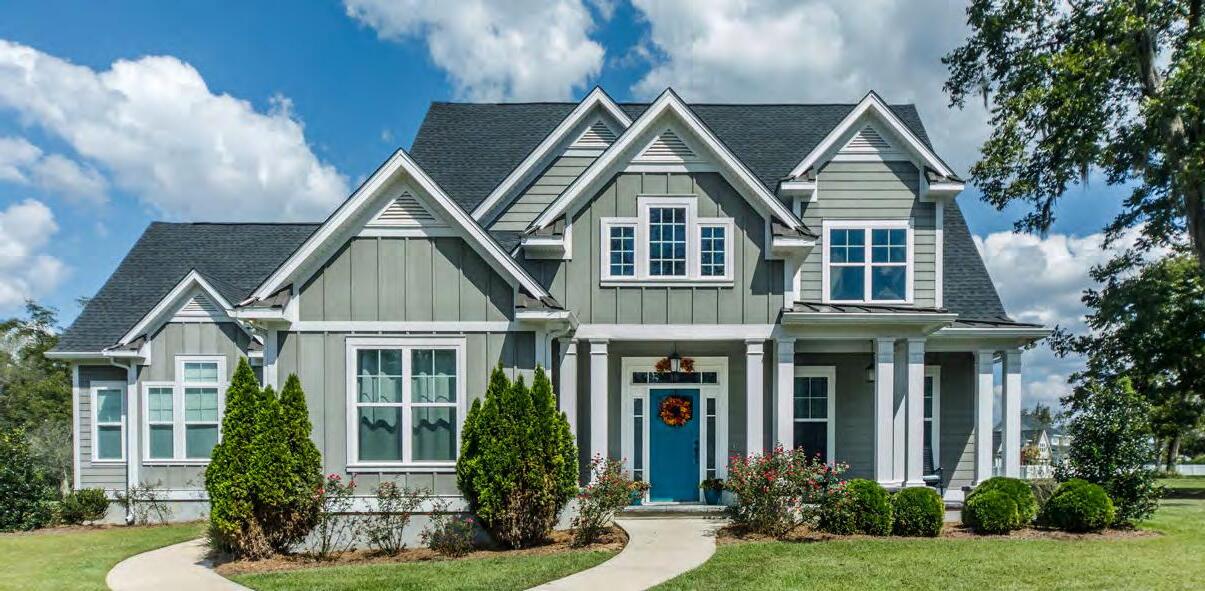
1901 Napa Valley Drive, Suite 10, Little Rock 207 Progress Way, Bryant
To schedule a closing, please contactus directly at 501-588-3980.

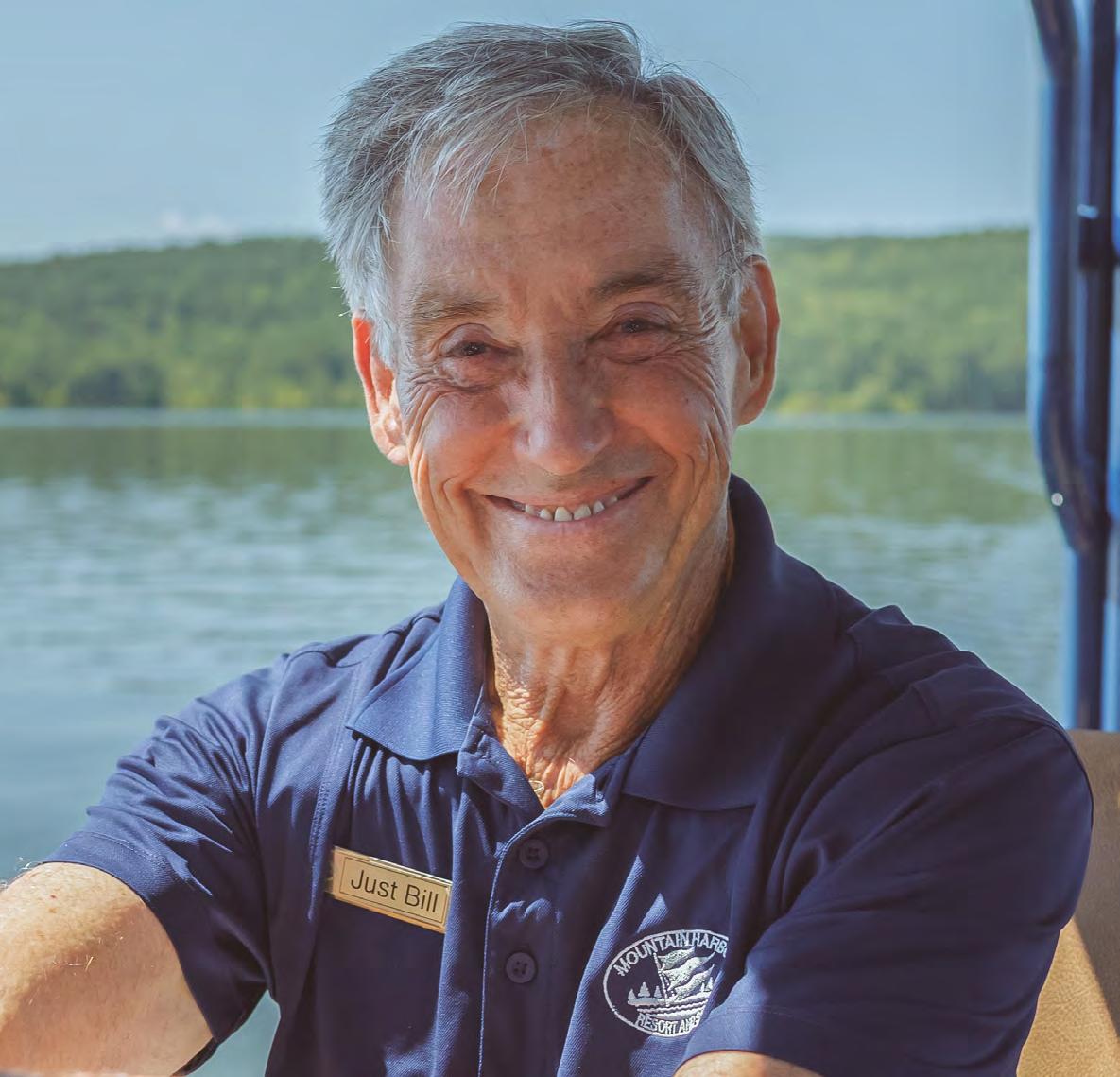
Bill Barnes’ history in business an incredible tale of perseverance
By Dwain Hebda
It takes an awful lot to scare Bill Barnes. The erstwhile owner of Mountain Harbor Resort & Spa in Mount Ida has weathered just about everything the universe has to throw at a person. Over nearly 60 years on the job, he has worked under a roster of unwanted and unwelcome business partners in the form of staggering debt, damaging storms, the Internal Revenue Service and cancer, only to buy them all out in the end.
In fact, about the only thing Barnes fears is inactivity, a slowing of the gears that have meshed and ground during a remarkable life, both personal and professional. He fears it so much that even today, the 78-year-old shows up to work every single day, radiating his trademark servant’s spirit and unrelenting optimism.
“The bottom line is we’ll never be fancy, but we care tremendously for our customers. We are also very, very human. We make mistakes every day, and we are accountable when we screw up. That’s a very, very important part of business. You don’t try to worm out of something you’ve done wrong. You belly up to the bar and say, ‘We did it. We’ll fix it.’ I think one thing our customers love about us is they know if we screw it up, which we do on a regular basis, we will absolutely stand behind everything and fix it.”
“God so blessed me because he wired me to do this, to serve people, and he put me in an environment where I get to do it,” he said. “That was God’s option, and to this day, I love making people smile. I love this job; I mean, I don’t love every minute of every day, you know? I don’t want to sound like everything is just roses all the time, but I just love what I do.”
The tale of Barnes’ family business, started by his father, Hal, during the 1950s, is something few today can comprehend. Just for starters, Lake Ouachita was new, created by Blakely Dam on the Ouachita River, and outdoor recreation as an industry was barely in its infancy in Arkansas, both of which are nearly incomprehensible today.
“Water recreation, as we know it, didn’t exist back then,” he said. “We had a dirt road to four boat stalls, a gas pump, a fish-cleaning house, a little tackle shop and a hundred fishing boats.”
The rustic conditions meant a limited clientele, mainly hardcore fishermen. Initially, the Barnes family was living in Colorado while Hal’s business partner ran the place on-site, but it wasn’t long before they, too, would make their home in central Arkansas.
“Dad’s best friend was running the place, and it just wasn’t working,” Barnes said. “I still remember we lived in a little 8-by-28 trailer, and my mother had multiple sclerosis before I was born, so my brother and I helped her walk out to a log out by the trailer. John and I and Mom sat on the log while Dad met with his friend, who said Dad just had to take it over.
“The Small Business Administration told Dad that they would loan him the money to bail him out, but because he was the one signing the notes and taking over the place, he had to move to Arkansas.”
Barnes was 10 when he first reported for duty washing dishes. By age 12 he was at work before dawn to open the boat dock at 4 a.m. to customers who rented fishing boats for the day. To say things were lean is an understatement as massive as Lake Ouachita itself, and Hal found himself in ever more dire financial straits.
“Dad graduated from the University of Arkansas [in Fayetteville] with a degree in law, and he tried to practice law during the Depression. He ended up selling shoes until the attack at Pearl Harbor,” Barnes said. “After the war, Dad knew he didn’t want to be a lawyer, so he went to Casper, Wyoming, and got a job there as the attorney for a mineral leasing company.
“Dad was a wonderful, wonderful dreamer and real, real smart, and I love him with all my heart, but I would tell him this to his face: He wasn’t real good at operations.”
So it was that when Barnes was just dipping his toes into a college education — alternating fall semesters studying at the University of Arkansas and spring and summer working at the business — he was called back home for good with the news that the Internal Revenue Service was about to seize the property right out from under them.
Largely because he did not know what else to do, Barnes threw the ultimate Hail Mary pass in an attempt to save the family business, packing up and heading to the IRS’ St. Louis office.
“I didn’t have enough sense to not ask,” he said. “I mean, I was 22, 23 years old, scared to death. I had no plan. I didn’t even have any idea where the federal building was. I had no business plan, didn’t have any kind of accounting numbers. I didn’t know what I was going to do.
BILL
“Young people need to hear that success doesn’t happen all at once. The evolution of Mountain Harbor, the little village that we are now, I never thought would evolve into this. It was always a dream to just pay off the note and be out of debt and be able to build a few boat stalls. Just to do that, there were many times when I didn’t get paid. There were times when I couldn’t make payroll and pay the IRS, and I was lucky to have staff who said, ‘Pay us later,’ and that’s how we did it. Mountain Harbor started in 1955, and it wasn’t until 1998, 1999 before I was able to cover all my expenses. I still wasn’t able to put any money in savings, but I was able to operate without sweating every payroll. We did it a little bit at a time.”
“It was a different time in our country. I think people liked the fact that this kid who didn’t know any better just walked in and just told them the truth,” he said. “I also think [creditors] looked at us at that point and thought, ‘What the hell are we going to do with a resort on a brand-new lake that didn’t, at that point, have a paved road to it?’ Whatever it was, many people were very kind to me.”
“I just went in there to the office and sat down with them and said, ‘I am back from college. I am going to be at work every day. I will answer the phone every day, and if you will give me a chance, I will pay you.’”
At that, he went quiet except for a remnant chuckle that underscored his disbelief in what happened next, even to this day.
“They said, ‘What do you need?’ I said, ‘I need seven years,’” he said finally. “They waived the interest and the penalties and set me up on seven years. I don’t think from a regulatory standpoint they could even do that today. That was really all there was to it.”
Barnes did not have time or reason for a victory dance because what the feds had actually given him was a chance to go home and face local creditors who were not only owed money, as well, but were close enough in proximity to have run the place into the ground if they wanted to. Barnes did the only thing he could do, which was screw up his courage and face things head on.
“I don’t remember how many people who were owed, but there were over 100,” he said. “When I got back, I called them all and said, ‘I’m back, and if you’ll give me a chance, I will pay you.’ A couple of them were hateful, but almost to a person they agreed. Some of them, I paid $5 a week, every week. Some said, ‘You know, Bill, just take a year or two, but don’t forget us, and pay us then,’ and I did that.”
Asked what he thought made creditors willing to extend him such leeway instead of taking what they were owed in court, Barnes said he had a couple of factors to thank for his reprieve.
One quirk in his comeback strategy that ran somewhat counterintuitive, given the business’ financial state, was Barnes’ recognition that to boost revenue, he had to expand and improve the property. Thus did he find his way to a local bank to borrow even more money to put the plan in motion.
“I had a banker in Mount Ida who was this old man everybody was afraid of, including me,” he said. “He believed in me, and he would loan me the money to build, but he always said the same thing: ‘Now William, can you fill these 10 boat stalls?’ ‘Yes, sir, I can. I’ve got a list of people right here.’ ‘OK. Don’t come see me again if they’re not full.’ I filled those 10 stalls, and I’d go back and see him, and that’s how we built the marina, 6, 8, 10 stalls at a time.
“I am successful only because a whole bunch of people were patient with me, mentored me, my staff who stuck with me even when I couldn’t make payroll. I have always been so lucky to have folks that guided me and coached me and told me when I was really, really stupid. Now they wouldn’t loan me a bunch of money or do anything like that, but they would encourage me and that made a big difference.”
“Every resort on the lake had a maximum number of trailer spaces they could put in per the Corps of Engineers, and we were way below our limit there, too, so I put in a trailer space or two, and I’d get folks to pay me a couple of years’ rent to pay for the pad and the utilities to go in.”
Barnes was emboldened in his strategy because his investments in expansion were rooted in what he directly heard from customers, such as adding cottages. More often than not, acting on those suggestions resulted in amenities that already had demand built in. He also took notice of what the competition was doing and was never too proud to model after their success.
“I would look at these other places, owned by people who knew what they were doing,” he said. “Some of them became wonderful mentors of mine. They would put up with me and guide me.”
Not all of Barnes’ changes, however necessary, were warmly welcomed. When he took over the operation, he found rates had not been adjusted for more than a decade. Addressing that gave Barnes a taste of the public’s wrath
“We had to have more budgetable, dependable income, and the only demand we had was mobile home spots and boat slips,” he said. “We would rent them only by the year, and I still remember when I came back full time, Dad hadn’t raised slip rents in, like, 11 years and hadn’t raised trailer park rents in seven. I raised everybody $50 a year, and God, I thought I was going to be crucified. I mean, people were so mad at me because Dad just hadn’t done it. A few people left, but I rented their spaces immediately.”
Make no mistake about it – for all of Barnes’ industriousness, courage and good ideas, there was an unrelenting pressure to his work, knowing the existential financial crisis he was under. Life does not always play fair either, as with the ice storm that destroyed much of the marina about five years into his tenure and the non-Hodgkin lymphoma that knocked him for a loop in 2000. Both, he said, took the fight out of him for a moment, but overcoming
“Every time I would just be totally disgusted, ready to give up, what I would make myself do is look back six months and then look back a year. Every time I did that, things were better — maybe not much, but they were better. That really helped me to be able to recognize when it seems like the world is against you and you’ve made the wrong decisions, if you can see where you’ve eked out a little bit more, if you’ve inched ahead a little, that always made a big difference to me.”
BILL BARNES ON OVERCOMING SETBACKS
“The first thing I’d say is don’t let your ego get in the way. I mean, really and truly, so many people get so hardheaded because of egos. I mean, we’re human; we’re not right all the time, even though we think we ought to be. Second, I would say don’t give up — ever. There’s a way to figure it out. Go ask for advice from people that are successful. I spent so much time walking around on Lake Ouachita, talking to other resort owners who were successful, and you know what? They all had failed at something as part of their journey, but they didn’t quit. They plugged into the experience, they listened to people that they trusted, and they learned from it.”
them has only reinforced that he is doing what he was born to do in the way it was meant to be done.
“I was so guilty of this when I was in my 30s, you know, which was my worst decade. I thought I was 10 feet tall, bulletproof and really, really smart,” he said. “I look back on that and think, ‘Barnes, you idiot.’ Fortunately, I didn’t do anything that caused me to lose Mountain Harbor, but I lived in fear of that all the time. That’s why I went to work every day, seven days a week, because I promised everybody I would do that. As my dad used to say, you need to dance with the girl that brung you.”
Last summer, Mountain Harbor, the self-proclaimed “largest family-owned resort in Arkansas” celebrated its 70th year in business, a milestone that hardly seemed possible to the skinny college kid who took the reins and worked and hoped for the best. Generations of villagers, as regulars call themselves, have watched the 900-acre development expand to include a full-service marina with boat storage, lodge guest rooms, cottages and condos for rent, a restaurant, Turtle Cove Spa, houseboat and personal watercraft rentals, a horseback riding stable, and a dive shop.
For all that is new, the one thing all guests look forward to are the things that have not changed: the stunning lake views, the peaceful ambiance, and their sprightly host filling cups of coffee, shaking hands and doing what he does best — serving people.
“We are serving our fourth generation of customers, and to walk into the dining room and see three generations, which I saw several of this weekend, sitting at tables, it makes everything worth it,” he said. “It’s not me; it’s the entire team, most of whom have been together with me for 30 years or longer. They make all the difference in the world.”











Unique journey leads Alleviant Integrated Mental Health to explosive growth
By Dwain Hebda

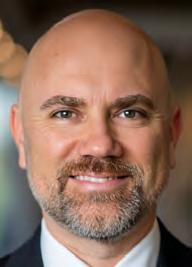
By all conventional metrics, Alleviant Integrated Mental Health is a blockbuster success. The Little Rock-based practice, which opened for business with one location and three employees in 2018, has since grown to 150 total employees, nine Arkansas locations, two locations in Nevada and one in Kansas, serving more than 120,000 patients annually.
“We’ve really expanded our footprint not just beyond the Arkansas locations, but we have grown each of those nine also,” said Brian Mears, founder and CEO. “We started out with relatively small practices and have definitely gained footprint, tripling the size of some of them.”
The growth and expansion would be impressive for someone who set out from the start to build such a business and even more so in the case of Mears, who never planned to go into mental health services until actually doing it. Mears started his most unconventional career right out of high school by founding Tropical Sno shaved ice, growing his snow cone empire from one stand to more than 80 in Arkansas over just a couple of years.
“I loved business, and it gave me the opportunity to do other things I wanted to do,” he said. “I actually joined the military, joined the Army Reserve, and ended up spending a career there, which led me to all of my official training. The military offered me nursing school up front, to which I said yes.”
Mears would train in a medical field miles removed from mental care, eventually earning a doctorate in nurse anesthesia practice. He leveraged that training to the hilt, teaching anesthesia classes, working clinically and even getting involved in the political side of healthcare.
“I was living in Florida at the time, serving as director of simulation and testifying in front of Congress. I was very busy, but I loved my life and my career in anesthesia,” he said. “Then we got a phone call that changed our lives in April of 2012.”
Mears and his wife, Leilani, who had no children of their own, agreed to become parents to seven children between ages 2 and 18 surrendered by a family member. Overnight, the couple came face to face with behavioral health issues and were thrust into the quandary many families faced when trying to navigate the system.
“My introduction to mental health was going from a very structured life where things were very figured out to just overnight having seven children and dealing with things we were not necessarily ready for,” he said. “It was very obvious when these kids showed up that they needed care. I looked for help, and I found out there was very limited help to be given.
“The place I wanted to get them into had a yearlong wait. My friends were really much more knowledgeable about the profession of psychiatry than I was, but when I asked, ‘If you were in this situation, who’d you get help from?’ they all answered with a resounding, ‘I don’t know.’ That was my introduction to psychiatry, and it led me to the question: What is psychiatry if nobody really knows who you can refer to or what type of care you should get or even how to have access to care?”
What started as a quest to get his children the help they needed quickly became Mears’ search for wider answers to more fundamental questions. The more he looked into treatment options, the more he discovered a wobbly, gap-riddled system in which people in need of be-
the type of care because the access wait is so long,” he said. “Even my friends who had needs were getting their antidepressants from primary care. They were getting their anxiety medicines from primary care. The profession itself, even within healthcare, was a big question mark.
“For me, that led to a resounding void where I had to find information — first, because the kids needed it, and then, second, because it was a big question. I’m somebody that when I have a question, I’m going to pursue an answer.”
Over the years that followed, Mears doggedly chased answers, ultimately returning to school, earning additional degrees, becoming dual board certified and completing fellowships in subject matter that included psychology and functional metabolic and nutritional psychiatry. He emerged from academia not only with a better understanding of what was being done in the field but with a vision for new approaches to treatment. Alleviant Integrated Mental Health was born on the backs of those pioneering ideas.
the mind. Psychiatry has historically focused on the mind, not the brain.”
The upshot of this perspective is treatment that resorts to medications to modulate an anxious or depressed mind while failing to consider physical brain ailments that could be under the manic or depressive feelings.
I found most people in the hospital didn’t know where to get care from or even the type of care because the access wait is so long.
– Dr. Brian Mears, founder and CEO, Alleviant Integrated Mental Health
“There’s been a philosophy within psychiatry that medications are largely the solution, and I’m here to argue that medications are not the solution,” he said. “Medications can be an important part of a bridge, but a bridge to where? That’s where we have to do a better job. Our overall healthcare awareness in this country is horrible as far as what people understand about their own ability to maintain wellness. Most people simply give their responsibility off to whoever they’re seeing.
“There’s a misunderstanding of what the brain and the mind are,” he said. “We think of the physical body in terms of illness and dysfunction. If you have a broken bone, you know what to do; you’re going to the emergency room and have a cast put on or have surgery. If you have a really bad illness and you feel terrible, you’re going to seek care at urgent care or primary care.
“When the brain doesn’t feel good, we chalk that up to whatever, but we don’t recognize depression and anxiety and [post-traumatic stress disorder] as an illness within the brain. I like to explain that in terms of hardware and software: the brain is the hardware that drives the software called
“If you’re seeking care for diabetes, you’re giving your decision-making away to whoever’s managing your diabetes. They may give you insulin or a blood sugar pill without talking about what else you need to do, like, if you’re Type 2 diabetic, adjusting your lifestyle so you no longer have to be on that pill. In mental health, it’s the same way; the physical brain itself can become dysfunctional. The problem is when people seek psychiatry or primary care for, say, depression, they’re just put on an antidepressant for life. That’s a travesty.”
By contrast, Alleviant Integrated Mental Health was established at the intersection of the physical and psychological, where clinicians are more interested in discovering a medical explanation for the patient’s state than issuing a pat mental diagnosis. Through the use of objective diagnostic tools such as EEGs and lab work, the staff seeks to isolate any physical malfunction that may exist as a foundation for the next step in treatment.



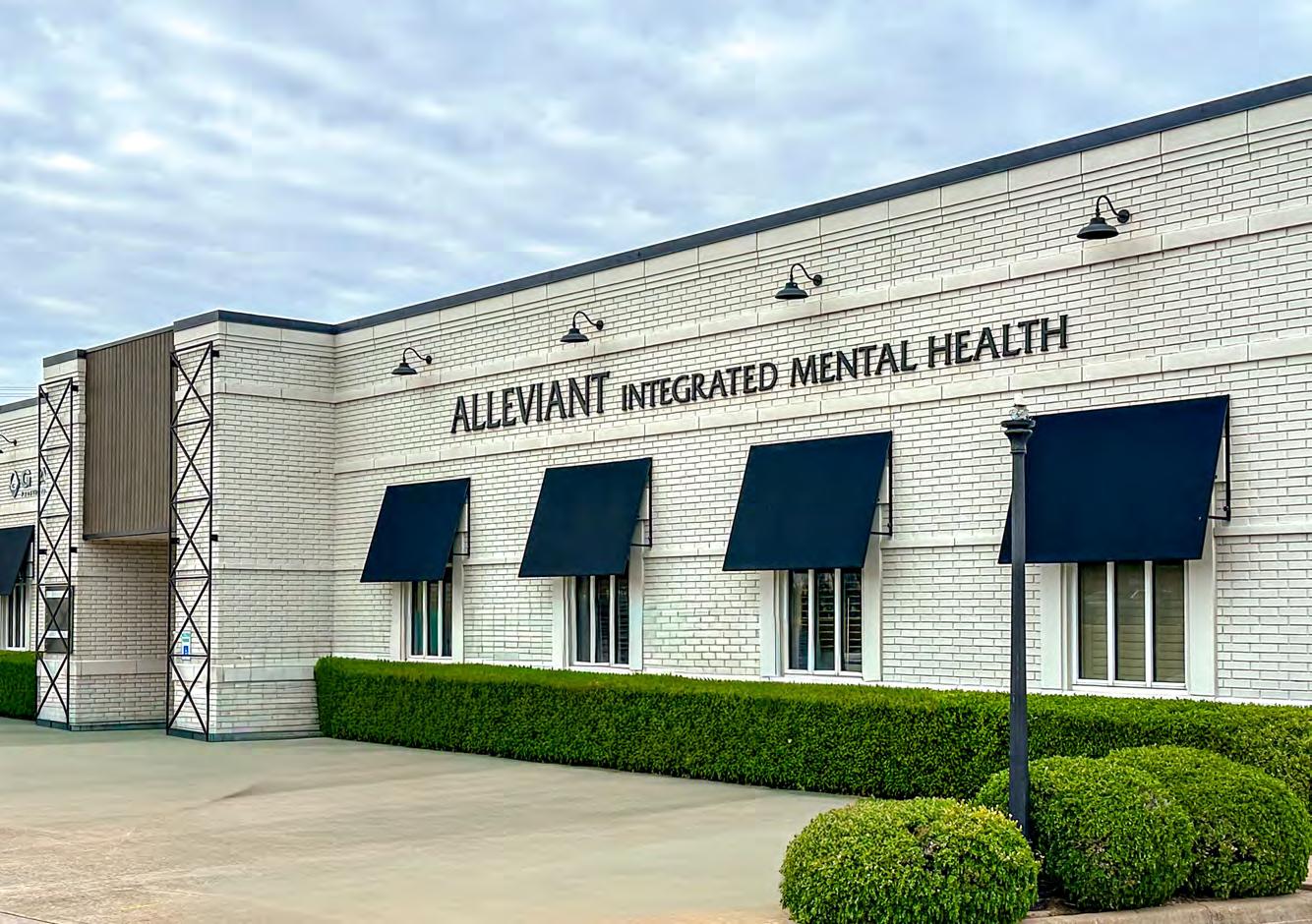
“We can look at [test results] and say, ‘OK, there is a physical dysfunction happening, and that’s why the mind feels this way. Now we can help your mind bridge into a better state,’” Mears said, underscoring that the process does not end there but that the evaluation merely serves as a starting point.
“Ultimately, we have to dig in and figure out why your brain became ill in the first place,” he said. “What led to that dysfunction? Was it adverse childhood events? Was it trauma? Was it grief? Was it a physical illness that led to a biological dysfunction? Once we find that, we can empower you with knowledge and treatment plans that can lead you away from us, which is the whole goal — to help you be well, and you don’t have to see us any longer.”
Just like in its approach to diagnostics,

Alleviant Integrated Mental Health’s approach to treatment is unconventionally broad, going beyond therapy and medications to include services that promote and enhance brain wellness. Everything is meticulously documented and shared with other members of the patient’s healthcare team, such as the referring physician, to help eliminate the gaps in communication that very often exist and hamper a comprehensive approach to care, to say nothing about keeping patients informed.
“Simply medicating a patient for something like depression doesn’t work,” he said. “These drugs have significant side effects. You’re coming back every one to three months to see us for a new prescription, and we’re not doing anything to resolve the depression. The medicine doesn’t work like that, yet we
still promote things as if it does work like that. There is not a single wellness plan for the brain, but there are comprehensive approaches that can help you understand how to maintain wellness and how to become well.
“Lots of referrals come into psychiatry, but, historically, there’s nothing that comes back from psychiatry to the primary care physician. They should get our notes, they should know what’s going on, they should know what medicines we prescribe, yet you don’t usually see that. When we receive a referral, the referral source will get our notes back. That’s very important because it’s a team effort to help you. What led me to start this company was to try to fix at least part of the puzzle. We can’t fix everything, but the big questions, I thought we could make a difference there.”

By Mark Carter
Daniel LeSieur figured he was onto something when he purchased the franchise for Walk Your Plans Northwest Arkansas.
Walk Your Plans is one of many outfits springing up across the country that use advanced projection technology to transform 2D blueprints into life-sized spaces. A similar firm serving the central Arkansas market, Walk Thru Plans, opened in May off Interstate 30 in Bryant. The former was launched out of Cleveland and cur-
rently has 29 franchises across the country. The latter, more recently launched out of Nicholasville, Kentucky, notched its 26th location, the Bryant opening, including a soon-to-beopened NWA outlet.
Both outfits appear to have struck a chord with the public.. Before the first nail is struck or that first beam cut on a new build, clients can see their plans projected in life-sized detail onto a specialized surface. Clients range from prospective custom homeowners to builders, architects and designers.
Plus, the spaces — 2,800 square feet in Bryant (Thru) and 2,500 square feet in Fayetteville (Your) — can be rented out for special events, wedding, watch parties, birthday parties or corporate functions.
Walk Your Plans has been open for about three months, operating out of Rockhill Studios on East Township Street in Fayetteville. Two of LeSieur’s first customers drove more than 100

The spaces at Walk Thru Plans in Bryant, left and below, and Walk Your Plans in Fayetteville. (Photos provided by sources)
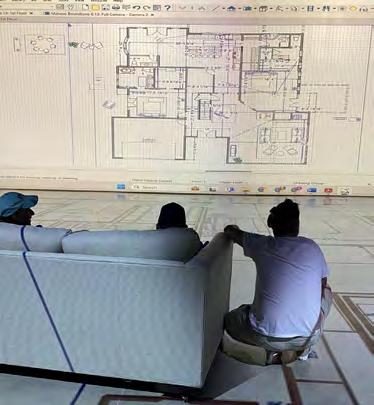

Carter, who has a construction background, co-owns the license for the Little Rock market with his wife, Erica, and their friends Morgan and Hunter Stobaugh, the latter of which came over from building materials sales. The business had been operating under a soft opening for a couple of weeks before the official launch in mid-May. Nick Carter noted one client, who is building a new house, wanted to make sure his SUV would fit comfortably inside the garage. The garage plans were pulled up to exact specs, and the client backed his ride in and parked just like he plans to do one day at his new house.
Walk Thru Plans even has mobile foam walls and furniture supplied by Ferguson’s with which to stage a room on top of a blueprint projected upon the specialized surface. The technology allows users — homeowners, homebuilders, architects, designers, remodelers and event planners — to better understand spacing, flow, design functionality and more.

miles from Kansas to “walk through” plans for a home the married couple wanted to build to kick off retirement and host their slew of grandkids.
“That was literally their mission,” LeSieur said. “They wanted to see if their plans could accommodate their vision.”
The early, life-sized 3D look at floorplans enables clients to catch mistakes before they build. Its reach extends beyond residential new builds to restaurants and offices, as well as renovations and remodels.
“If you can put it on a computer screen, we can put it on a floor or wall,” said Nick Carter, one of four co-owners and licensees of Walk Your Plans in the central Arkansas market.
The Bryant space, located at 22095 Interstate 30 Frontage Road (south side) includes a detailed notetaker, moveable foam walls and furniture for staging provided by Ferguson’s Furniture in Benton.
“Blueprints can only tell part of the story,” Erica Carter said. “We wanted to create a space where people can actually experience their home before it’s built, to walk through it, feel it and make confident decisions before costly changes happen during construction.”
Finding out after the build that those expensive, custom cabinets are four inches too high to easily reach with ease? A thing of the past.
LeSieur said the process is broken down into three steps: Estimate your project (how much time you will need), send your files (simply emailing a PDF of the plans), and finally, of course, “walk your plans.”
At both locations, sessions can be booked by the hour or even as a “premium” walk that can be completed in increments. There are also special rates for events. LeSieur said it generally takes an hour to “walk” 1,500 to 2,000 square feet. Starting out, he plans mostly to focus on commercial clients, while his central Arkansas counterparts expect more residential customers, at least right away.
Walk Your Plans Northwest Arkansas is inside Rockhill Studios at 240 East Township St. in Fayetteville. Visit walkyourplansnwa.com for more information.
Walk Thru Plans is at 22095 I-30 Frontage Road (south side), Suite 800, in Bryant. For more information, visit walkthruplans. com/central-arkansas.com.



By Sarah DeClerk | Photos by Sarah DeClerk
Nestled in the artsy SoMa district of Little Rock is AcScents Soap Co., a one-of-a-kind boutique specializing in all-natural beauty products for men.
Owner Jess Herron said she never set out to work in skincare, let alone start her own beauty company, but after founding AcScents in 2012, she has watched the company grow from a true cottage industry into a thriving business with more to come.
“This right here is a little hub,” Herron said. “It’s a little hidden gem. I would love for more people to know about it, but sometimes I like that we’re so quaint and small because when people come in, we’ve had some really serious conversations.”
Born in Mississippi and raised on the East Coast, Herron said she has been mixing up concoctions since she was a small child in her mother’s kitchen. Crafting came naturally to her, and sales did, as well. When she was 6 or 7, she said, she started making doll clothes and selling them to her friends.
“I grew up extremely poor — extremely poor,” she said. “Poverty was all I knew, so if there was something nice I wanted, I would try to make it myself, and I think that’s where it came from. When I became a teenager, I wanted to get my hair done like my friends. You know, having ethnic hair, it’s some money, and it’s some hair care. My mom couldn’t afford to do it, so I was just like, ‘Maybe I can kind of research and stuff and look some stuff up.’”
time, she continued doing hair and nails at home to help buy necessities for her oldest daughter, Donaya, who she had at 18. Then Herron’s mother, Regina Eden, asked her a question — “What are you doing?”
“She was like, ‘I’m asking what are you doing because do you really love what you’re going for, or do you love this?’” Herron said. “I didn’t have anybody ask me that question before, and when I really kind of sat with it, I said, ‘Do I want to drop biochemistry and do nails?’ No offense, but it just sounded bad.” Ultimately, that is exactly what happened; Herron earned a cosmetology license instead of a biochemistry degree. In many ways, AcScents was born at the same time as her second daughter, Madison Parish, who was diagnosed with eczema as an infant. Unable to find any products effective at soothing her skin, Herron did what she was accustomed to doing — she made something herself. Then she started making it for other parents whose children had skin conditions.
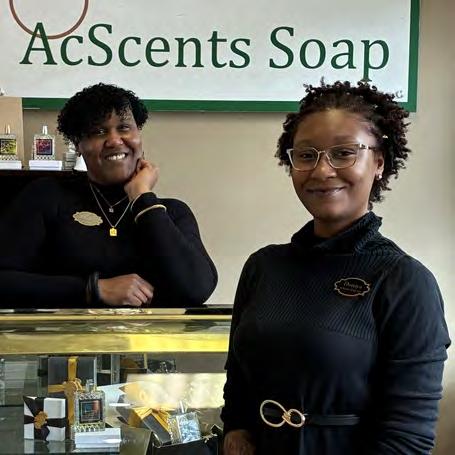
“I just love helping people,” she said. “I real ly, really, really believe if you have something that is good and something that has helped anybody, you can help multiple people. It wasn’t just meant for you to help that one person, and we started selling here in Arkansas.”
More specifically, her mother started selling the products in Arkansas, a place Herron had never been.
Combing through encyclopedias for information, Herron was able to develop her own recipes for hair products. Beauty school was far from her mind, however. Instead, she went to college to pursue biochemistry in hopes of developing vaccines for the Centers for Disease Control and Prevention. At the same
“I was selling in Florida, where we lived at the time, and she said, ‘Jess, I got so many compliments from work. Have you thought about selling and maybe putting up some little stuff?’” Herron said. “I’m an introvert. I’m such an introvert, so I’m like, ‘Mom, I don’t know about that. You’re down there if you want to do it.’ She was like, ‘Yeah, baby girl. Send me your stuff.’”

The soap cakes might as well have been hotcakes. Herron’s mother sold case after case at the local farmers’ market and garnered a dedicated following. Herron said she was floored when she came to visit and realized how popular the products had become.
At the time, she was going through a divorce and looking for a place to start over. With her business gaining traction in Arkansas, she decided to make the move to the Natural State.
“I hit the ground rolling with AcScents Soap,” she said. “I did stop along the way. I had some really great jobs I was good at, to be honest. I was selling cars. It was some money. I kind of put AcScents off to the side for a while, and the more I put it to the side, the worse things were getting on jobs, if that makes sense, and to me, it just told me that this was my purpose. This was what I was supposed to do, and it’s so much more than soap.”
The products are all made in-house at the on-site soap lab using organic and, when possible, local ingredients, including Bluewing, an ale brewed by Flyway Brewing in North Little Rock, used in the beer soap, and spirits from SoMa neighbor Rock Town Distillery, which are used in AcScents’ aftershaves.
Herron said the products are customer driven and can even be customized for each client.
“Our guys are very, very, very spoiled,” she said. “The word ‘no’ really just doesn’t exist for our guests. If they want it, they’re going to get it.”
Also impressive is the one-on-one experience provided by Herron and her daughter Donaya, now store manager, who guides customers through various scents and products, even helping clients develop skincare routines. In the back is a private area for skincare consultations.
“We like to show our guys that you can pamper yourself,” Donaya said. “You can take care of yourself, still be a man, still be masculine, but when you have your best foot forward every day, you have a whole different perspective. You’re able to walk out the door knowing that I’m smelling good, I’m feeling good. It’s a whole different level of confidence whether you’re walking into the office, the boardroom or you’re walking onto a construction site.”
The shop offers a happy hour from 2 to 4 p.m., during which men can sip and shop and receive discounts on alcohol-inspired collections such as Midnight Whiskey. A customer loyalty program allows customers to earn additional discounts through points and rewards.
I really, really, really believe if you have something that is good and something that has helped anybody, you can help multiple people. It wasn’t just meant for you to help that one person.
— Jess Herron, owner
Donaya said the high level of customer service is important because many men do not prioritize themselves and need to be guided when it comes to products that help them relax or take better care of their bodies.
“I have some guys that come in here like, ‘Hey, I don’t know what I like. It’s just always what the missus picks out,’” she said. “I’m like, ‘Well, today we’re going to figure out what you like, what you want,’ because a lot of guys, that’s on the back burner. They’re not thinking about that. ‘I’m trying to get to work. I’m trying to pay bills. I’m trying to take care of my wife and kids.’ It’s the last thing on their minds.”
AcScents was not always focused on men exclusively, however. When the shop opened at its first location on University Avenue in 2019, it sold products for the whole family. After moving to SoMa in 2021, however, Jess Herron realized the women were not coming in like they used to.
“We changed packaging six times inside of one year because the women were like, ‘Can I have this?’ so I did it. ‘Well, we want it to look like this,’ so I did it,” she said. “It felt great; they just wanted it to look different. Meanwhile, the guys weren’t saying anything. They just loved it. They were like, ‘Hey, Jess, I had this rash. It’s gone. Give me more of that cream,’ and the ladies, it was just I couldn’t please them. Nothing I did was enough.”
She ran some numbers and realized that more than 75 percent of the shop’s customers were male, and more than 75 percent of the products sold were male oriented. Finally, she made the decision to focus on men’s products only. However, she said women often come to the shop to buy things for themselves and their partners.
She added that she enjoys the atmosphere of the neighborhood and the way the local businesses collaborate with one another.
“Coming here was one of the best things we could have done because it kind of forced us to grow up, I guess I can say,” she said. “It forced us to grow up.”
Herron said her goal is to open a larger second location in central Arkansas, as well as a location in Mississippi. With growth top of mind, entrepreneurship certainly smells like success for Herron.

By Dwain Hebda
Anyone seeking to catch a glimpse of one appealing interpretation of the office environment of the future needs only make their way to the north side of the Arkansas river, five stories up into Dogtown’s sole skyscraper.
As the visitor steps off the elevator, a yawning wall of glass provides a stunning living mural looking south back to Little Rock. The first impression is so jaw-dropping, ownership here — which includes Chris Cerrato and his sons, Zac and Casey — are accustomed to holding back a moment before greeting, the better to let the vista sink in.

Welcome to Evo Business Environments, a living, breathing, 13,000-square-foot primer of what is next in workspaces. The company sells upscale furnishings and innovative spacemaking
components, from DIRTT modular walls to Tate access floors and in-floor systems that relocate many components traditionally built into static walls.
The modular and highly customizable systems are the latest evolution in office design philosophy, which, over the past 40 years, has engaged in almost manic swings of form seeking best function. As a three-decades-plus veteran of the office interior business, Chris has seen a little bit of everything, from the staid and static hard-built offices to interiors dabbling in avant-garde approaches of no walls and rolling furniture to variations on cubicle farms to landing zones for hybrid employees after COVID-19.
“For a while there, the whole [Leadership in Energy and

Environmental Design] movement is what caused all the open environments to happen,” he said. “Natural daylight for everyone, everyone able to have a view, and that killed a lot of walls and brought the cubicle walls down. It went too far, I think. Then you had a lot of people that put cubicles in with the walls being lower. That came with a lot of distracting noises and not enough meeting spaces, so we got into sound masking with white noise, which helped that situation but, of course, didn’t fix it.”
Evo’s product lines take the best of those flexible design ideas without sacrificing practicality or desired privacy.
Wall panels can be easily moved and reconfigured to meet a space’s unique dimensions or to accommo date a company’s growth without the mess and cost of demo and construction.
“The benefits of the prefab wall are speed of construction, having a better-looking product that’s got a warranty and that’s going to last longer and can be reconfigured versus torn down and thrown in the landfill,” Chris said. “That’s a big driver, you know, having things that are sus tainable and not throwing it away, be ing able to reconfigure it or take it with you if you change locations.”
If a picture is worth a thousand words, then Evo’s marketing approach speaks vol umes, since not only are the company’s offices completely decked out with its modular systems, but so is Workflow by Evo, a coworking space that occupies about half the company’s building footprint.

Available for drop-in use or offering more amenities and privileges for a monthly fee, the space is replete with Evo building products, demonstrating in real-world fash ion a range of offices and workspaces. From booths for taking phone calls to conference rooms, users get to see and feel the company’s upscale seating and architectural finishes while do ing actual work.
“We worked on the Ledger project, which is hundreds of thousands of square feet of coworking in Bentonville,” said Zac Cerrato, explaining the origins of Workflow by Evo. “The experi ence of working with the design team there that came from We Work and designed that building was amazing because we got to see the behind the scenes, the thought process of why they were designing different spaces and how they were designing spaces for coworking.
“Herman Miller and Knoll are our two mainline brands on the furniture side, and they had invested in a coworking space in Las Vegas, which was very similar to Ledger [in Bentonville], a multistory coworking space. We got to hear their thought processes, which was to give their designers a chance to design spaces with more freedom without having to answer to a very particular industry or company’s needs or the vision of some other firm. They really had the freedom to design spaces for

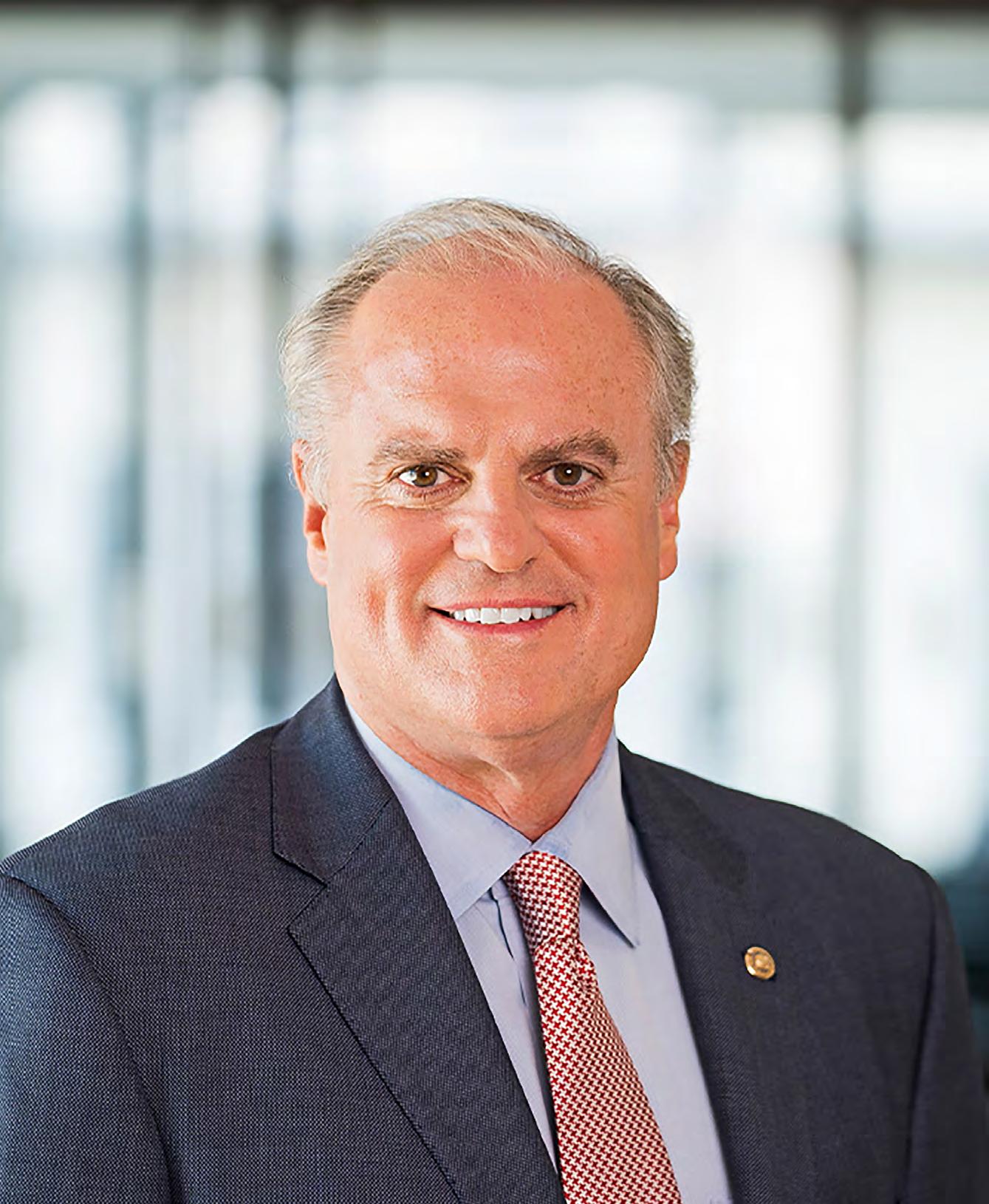
Pryor: Government only works when people get involved
By Dwain Hebda
Mark Pryor never dreamed of holding public office, which is a strange thing to hear from the mouth of a former member of the Arkansas House of Representatives, former state attorney general and former two-term member of the United States Senate. In fact, coming from the son of one of Arkansas’ most prolific and beloved career politicians, the comment is shocking to the point of heresy. Yet as Pryor will tell you, that is precisely the truth of the matter.
“When I was growing up as a small kid, I just grew up around politics, literally,” he said. “It was wonderful, and it was amazing, but I’m not sure that I thought, ‘Hey, I’m going to do politics,’ except how a lot of people just assume they’ll grow up and want to do what their dad does or do what their mom does.
“At some point between college and law school, I came to a realization that, look, I love my dad. I’m so proud of everything he’s accomplished, and I love everything he stands for, but politics is his dream. It’s not my dream.”
Pryor’s decision as a law student to forgo the family business of public service ran even deeper than his famous father, David Pryor. His paternal grandfather and greatgrandfather were both sheriffs, and his grandmother Susan Pryor was the first Arkansas woman to run for elected office.
“I didn’t know my grandfather in Camden, but, certainly, I knew my grandmother down there, and she had that drive in her too,” he said. “Women were given the right to vote in about 1920, and, I think, in 1924, she ran for county clerk down in Ouachita County. She lost, but she lost to a one-armed World War I veteran. Nobody was going to beat that guy.”
David Pryor was as eager to get into the fray of politics as his son was reticent. After being heavily involved in student government at the University of Arkansas in Fayetteville, he came home to launch The Ouachita Citizen newspaper, which became a vocal opponent of then-Gov. Orval Faubus’ administration. Just four years after graduation, 26-year-old David Pryor brought that fight to Faubus as an elected member of the Arkansas House of Representatives and would spend more than three decades in public office, also serving as Arkansas’ 39th governor and in the U.S. House and Senate before retiring from politics in 1996.
were really enriching for us,” he said. “When my friends were out playing baseball, and maybe I wished I was playing baseball, they’d take us to prison or to a nursing home, and we got to see what that life was like.
“We grew up in the governor’s mansion for four years, and we were so fortunate, and I think that was their way of reminding us, ‘Hey, you need to remember not everybody lives this way.’ They always had a way of making us keep our feet on the ground and not letting all that stuff get to our heads.”
Earlier this year, the threads of the family’s long history in elected office and public service came together with the announcement of the David Pryor Scholarship Fund at the Clinton School.
“Well, the dean called several months ago and talked about how we could perhaps honor my father, and, of course, we were honored that they would consider that,” Pryor said. “The idea of the scholarship is to pay for one student’s full tuition to the Clinton School and to give a living stipend while they’re in Little Rock. A lot of people come from around the country, even some from around the world, just to come to the Clinton School and we just want to help students.
“I’m not ashamed to say I had a political career. I think that’s a good thing. I think we need more people in office that really do believe in public service and really want to make a difference for the right reasons.”
— Mark Pryor
From there, Pryor left his mark beyond the political arena, teaching at his alma mater, directing the institute of politics at Harvard University’s John F. Kennedy School of Government, and founding the David and Barbara Pryor Center for Oral and Visual History. He also served as the the inaugural dean of the University of Arkansas Clinton School of Public Service in Little Rock starting in 2004, a gig that just happened to coincide with Mark’s successful U.S. Senate bid, by which he assumed the same seat as his father before him.
Pryor said there were a lot of issues needing to be addressed that ultimately led him to change course from legal practice and go into politics but admitted that the desire to serve was probably an inextricable element of his DNA.
“One thing I really think set us apart as a family is that my father and mother would give us these experiences that, candidly,
“I think one thing everybody understands is that even in grad school, it’s hard to make ends meet. The idea of the scholarship would be to help at least one student go through the Clinton School, and when they graduate, they go out and do great things. I think that’s a really nice legacy for my father because he not only believed that, but he lived that all of his life.”
Talking to Mark today, who since he left office has practiced law, one cannot help but notice the striking physical resemblance he bears to his late father, one that has come into sharper focus with time and age. Philosophically, the two shared a special bond, as well, and Mark said all these years later, he is pleased that he changed his mind about running for office, even if he feels that chapter of his life has closed for good.
“I’m not ashamed to say I had a political career. I think that’s a good thing,” he said. “I think we need more people in office that really do believe in public service and really want to make a difference for the right reasons. I think people today are frustrated with their elected officials because they feel like their elected officials aren’t listening, and if I can be real candid about it, they’re right to feel that way because a lot of them aren’t listening. We’ve allowed money to just take over politics, and money has corrupted our politics and even corrupted our government. That’s really bad.
“Serving in office was wonderful. I loved it, and I hope I was good at it when I was doing it, but now it’s time for other people to take that mantle and lead. We need good people in office because the one thing we all want is to bring out the best in Arkansas, the best in America and the best in every community in the state. It could be something as easy as let’s clean up downtown or build a new park or get the school new playground equipment. Whatever it is, let’s all work together and find ways to get plugged in and make Arkansas better.”

College golf is booming in Arkansas, so why are so few players from the Natural State?
By Doug Crise


Rhett South had made himself into a Division I college golfer — he thought. The Fayetteville native had graduated from Farmington High School in 2022 as the top junior golfer in Arkansas for his age group. All South had done was take individual conference champion honors for three years and an overall state championship in 2021. The year before, he won the Arkansas State Golf Association junior match play championship, and he would go on to become an ASGA Junior Amateur champion and a two-time U.S. Junior Amateur Champion.
All of that, plus a golf scholarship to the University of Arkansas at Little Rock, only for him to find his dream fizzling out or, perhaps put better, running straight into a brick wall. His coach at Little Rock asked him to redshirt, meaning a year of practicing his game but not playing in tournaments, where the fire was live. All but two of his new teammates hailed from Europe, and they attacked their golf with a ferocity South found, no pun intended, to be foreign.
“I think we have more late bloomers because kids don’t start taking it more seriously until high school. You’re not really getting recruited by those top Division I programs because you’re just not ready yet.”
— Austin Pfeiffer, program director at First Tee of Central Arkansas
“Everybody was a lot better than I thought they were,” South said, “and I definitely was not as good as I thought I was.”
South said this on a beautiful chamber-of-commerce afternoon at Little Rock’s Chenal Country Club, standing off to the side of Chenal’s hypermanicured practice putting green, considering his unique path. Counting his redshirt year, South has been on the Trojans’ roster four years. He is the program’s lone Arkansan and lone American. A new coach, Austin Eoff, came aboard in 2023, a native of Benton who had seen and played enough college golf to seriously wonder if South had what it took to hang on to his spot on Little Rock’s roster.
South could and did, winning Ohio Valley Conference Freshman of the Year honors in 2024 and taking the OVC individual title in 2025. On this particular Wednesday, the Trojans were readying themselves for their second trip to NCAA regional championship play in as many years — and they were far from alone. Little Rock’s women’s golf team had already flown to Tallahassee, Florida, to compete in regionals for the second time in three years. Further north, the University of Arkansas in Fayetteville had put both its men’s and women’s golf programs into the postseason, the men enjoying a No. 1 regional seed. In Jonesboro, Arkansas State’s men’s team also punched its ticket to regionals with senior Thomas Schmidt taking Sun Belt Conference Player of the Year honors. Rounding out the field was the University of Arkansas at Pine Bluff,
where the men’s team captured its third conference title under Coach Roger Totten.
Having six Division I teams playing in college golf’s postseason is a reason for celebration in Arkansas’ golfing community, but there is some reserve in that celebration. All five of the golfers representing Little Rock’s women’s team in NCAA regional play hailed from outside the United States. Arkansas State’s men’s program brought Jonesboro’s Cole Kirby to regionals, the lone American on the Red Wolves’ roster. Thomas Curry of Hot Springs was the only Arkansan on the Razorbacks’ regional card, though he was joined by John Daly II, whose father grew up in Dardanelle. Arkansas’ women’s team features two American players — none from Arkansas — and UAPB has had only two Americans on its roster over the last three years.
Why, with golf booming not just instate but nationwide, are so many Arkansans on the outside looking in when it comes to Division I college golf?
“I definitely think the population in Arkansas is one factor,” said Eoff, who grew up in Benton and played college golf at Purdue University in Indiana. “There’s definitely not as many people as there are in a lot of other states. Your overall pull of people is already smaller.”
Eoff took a moment to chew on the question. He said his own path to major college golf was paved via seeking only the best and most competitive junior tournaments, something he readily admitted may be easier said than done. A talented junior golfer in a less populated area must travel to put their skills on display for college coaches and evaluators, and none of that travel is cheap. Depending on the area, players from overseas can get more competitive experience closer to home. The result is golfers who are ready to compete as soon as they arrive on campus without taking a year to develop the way South did.
There is also a difference in sporting culture in the U.S. — where the multisport high school athlete is celebrated — to overseas, where young people are more likely to be earmarked for a single sport. By way of example, Slovenian NBA standout Luka Dončić was 8 when he began playing basketball for a junior team run by professional club Union Olimpija. Norwegian soccer star Erling Haaland began playing for a soccer academy at age 5, and Dutch Formula One champion Max Verstappen was racing professionally by his 15th birthday.
For Eoff, golfers from Europe and elsewhere represent a polished and ready-to-play product. That is no knock against South — Eoff clearly values the lone American’s talent, personality and grit — but if an accomplished, battle-tested and singularly-focused golfer wants to come to America, Eoff’s door is open.
“Obviously, we have a really good program,” Eoff said. “I mean, we’re in the top 50 again this year, so it’s a very tough battle on my part as to where I’m going to go for talent. I think the international angle is interesting because, for one, they primarily care about golf. They’re playing all year around, and it’s their sole focus when they’re here.”
Eoff’s counterpart at Arkansas State, Mike Hagen, has a simpler view on recruiting international players: It is just what works for him. Hagen began his career in the golfing hinterlands of Indian Hills Community College in Ottumwa, Iowa, and the connections he developed overseas helped him capture four junior college national championships. When he arrived at Arkansas State in 2015, he took his international pipeline with him, and the Red Wolves have advanced to four NCAA regionals.
Hagen said he looks at skill sets rather than home addresses when he recruits golfers, and he counts himself as a fan of multisport athletes, but he is not about to turn his back on what has gotten him this far.
“I like good hands,” Hagen said. “They’ve got to have good hands, and they’ve got to be athletes. I like guys who play multiple sports because they’re going to mentally be tougher.”
Hagen points to Kirby, who was a state champion golfer at Brookland High School, as proof that Arkansas talent can be found and cultivated.
“I was lucky,” Hagen said. “Cole Kirby was a local kid, and he did win back-to-back state championships on the golf side of things, but he’s also a heck of a basketball player.”
Austin Pfeiffer reckons finding and cultivating the next Rhett South or Cole Kirby is part of his job. As program director at First Tee of Central Arkansas in Little Rock, Pfeiffer works to provide learning opportunities and support for young golfers throughout Arkansas. It is a gig he comes by honestly — a former standout baseball player at Benton High School and then Little Rock, Pfeiffer turned to golf full time after playing professionally for the Baltimore Orioles organization. He loved how swinging a club was a close kinetic cousin to swinging a bat, and unlike a baseball career — which has its own expiration date — golf could satisfy his competitive jones for the rest of his life.
Pfeiffer helps oversee a verdant and inviting facility operated by the city of Little Rock, one that includes a nine-hole regulation course, a driving range, two put-

ting greens and a chipping area. Plans are in place for creating an indoor practice space equipped with a putting green and Trackman swing-analysis hardware.
“Our mission is to be a place where everybody is welcome to learn the game of golf,” Pfeiffer said, “but they also learn some valuable life skills that you learn on the golf course that you can take with you throughout your life.”
First Tee serves golfers from ages 5 to 18, and anyone in the program gets access to the facilities. The former pro athlete in Pfeiffer likes watching kids develop a competitive approach to the game, but his favorite aspect of the job is knocking down barriers to entry and providing young golfers with a welcoming and encouraging environment.
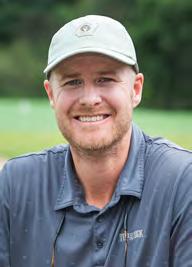
“You definitely want to keep the interest level there and give them success early on in their journey,” Pfeiffer said, “whether it’s a tic-tac-toe putting game or trying to hit a big blow-up target that we’ve put out there, just to give them a little success so that it keeps them coming back.”
Pfeiffer said access at a young age is a key to developing better golfers down the road. Even once young players are well practiced, Arkansas’ spread-out populace keeps them from playing on equal footing. Not every town has a nearby golf course, and not every high school has a golf coach versed in the game.
“It’s not that we don’t have a lot of good golfers,” Pfeiffer said. “I think we have more late bloomers because kids don’t start taking it more seriously until high school. You’re not really getting recruited by those top Division I programs because you’re just not ready yet.”
South, by his own admission, was not ready, and his path from high school to a NCAA regional tee box was an arduous one, but he said he would not trade a thing, and he holds out hope that more young golfers follow his lead.
“I talk to a lot of the Arkansas kids about my experiences at Little Rock,” South said. “I encourage a lot of kids to stay in Arkansas, and I think we have a really good opportunity to not only better ourselves but make the state better.”
Arkansas collegiate golf programs take athletes where they can find them, even if it means recruiting overseas. (Photo by Jane Colclasure)
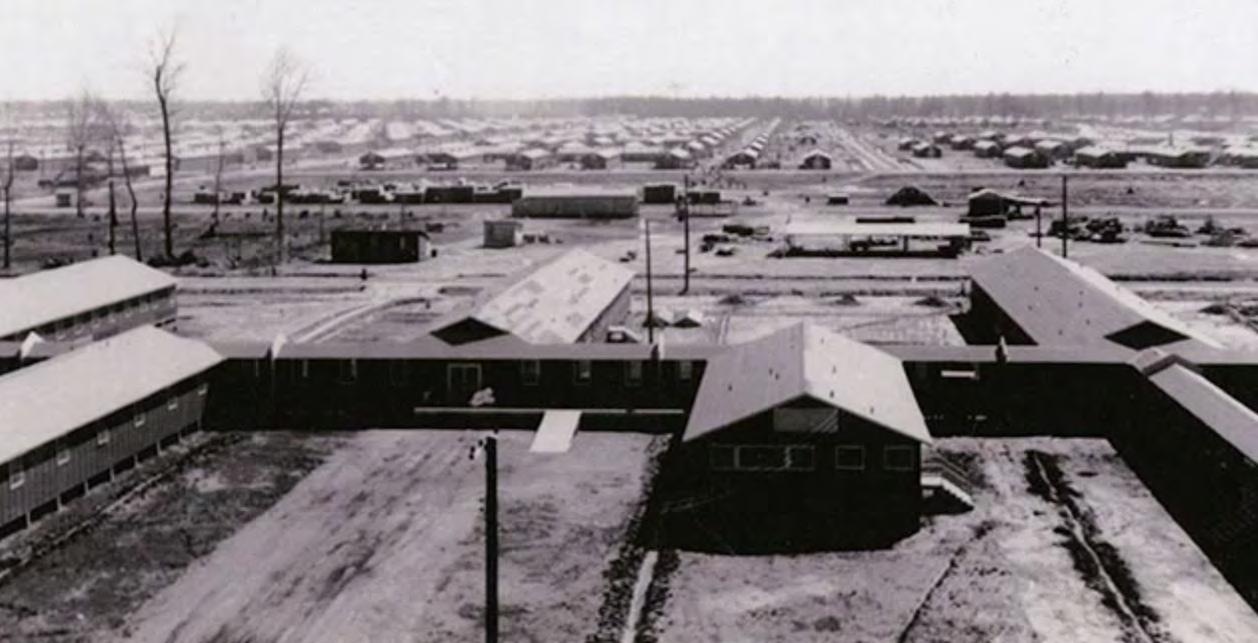
By Mark Carter
The Japanese American internment camps that existed in Arkansas during World War II represent two of 10 such facilities opened during the aftermath of the attack on Pearl Harbor.
Relocation centers were opened at Rohwer (Desha County) and Jerome (Chicot and Drew counties) in 1942 and closed in 1945. The Japanese American Internment Museum in McGehee, an Arkansas State University Heritage Site, commemorates those who were sent to the war relocation centers, as they were then called, at Rohwer and Jerome.
The museum, located inside the old Missouri-Pacific Railroad depot, features exhibits representing the history of internment in the area. The exhibits include a film, oral histories, photos, personal artifacts, internee art and a library.
Over three years, the Arkansas camps served as home to some 16,000 Japanese Americans relocated from the West Coast. Overall, roughly 120,000 Japanese Americans and ethnic Japanese were interned — 64 percent of whom were American citizens — across the 10 camps.
Other camps were located at Tule Lake and Manzanar in California; Poston and the Gila River in Arizona; Minidoka, Idaho; Topaz, Utah; Heart Mountain, Wyoming; and Granada, Colorado. Following the infamous attack on Dec. 7, 1941, that pulled the United States into the war, President Franklin D. Roosevelt’s Executive Order 9066 reflected the nation’s fear that a Japanese invasion was imminent.
Japanese Americans, concentrated on the West Coast, were rounded up and forced to leave everything behind. Among those sent to the Arkansas Delta was George Takei, who would later gain fame as Lt. Hikaru Sulu on Star Trek.

A copy of a civilian evacuation order for Japanese Americans, issued in 1942, housed in the

Born in California to Japanese parents (his dad was born in Japan and his mom in Sacramento), Takei was 5 when the order was signed. His family temporarily lived in converted horse stables at Santa Anita Park before being assigned to Rohwer.
Takei helped dedicate the museum in 2013 and returned to speak at the museum’s five-year anniversary celebration.
“We were all concentrated solely based on race,” he said. “We happened to look like the people that bombed Pearl Harbor and [were] put in prison camps simply because of our race. Places like Rohwer matter more than 70 years later — and so, we remember.”
Each Arkansas camp sat on about 10,000 acres with 500 acres set aside for 36 barrack blocks — each consisting of 12 barracks — as well as a school, administration buildings and a hospital, the Encyclopedia of Arkansas states. The remaining 9,500 acres were farmed and harvested for timber by internees.
Each barrack was furnished with canvas cots and potbellied stoves and home to three to six families. Internees in individual barracks shared a kitchen, dining hall and recreation building, as well as a community bathroom and laundry.
Encyclopedia of Arkansas:
“All were partially surrounded by barbed wire or heavily wooded areas with guard towers situated at strategic areas and guarded by a small military contingent.
Each block was designed to accommodate around 250 people residing in 14 residential barracks with each barrack (20 feet by 120 feet) divided into four to six apartments.
Each block also consisted of a mess hall, a recreational barrack, a laundry building and a building for a communal latrine.
The residential buildings were without plumbing or running water, and the buildings were heated during the winter months by wood stoves.
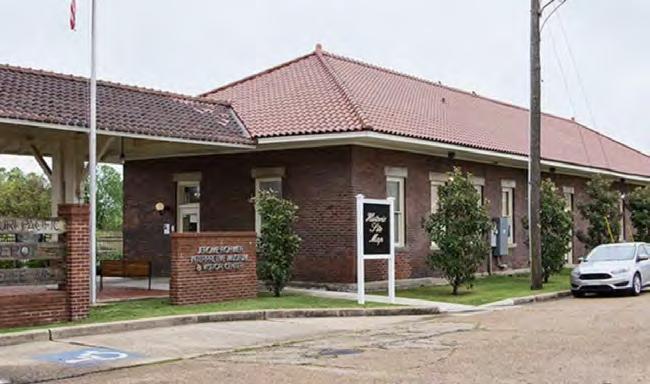
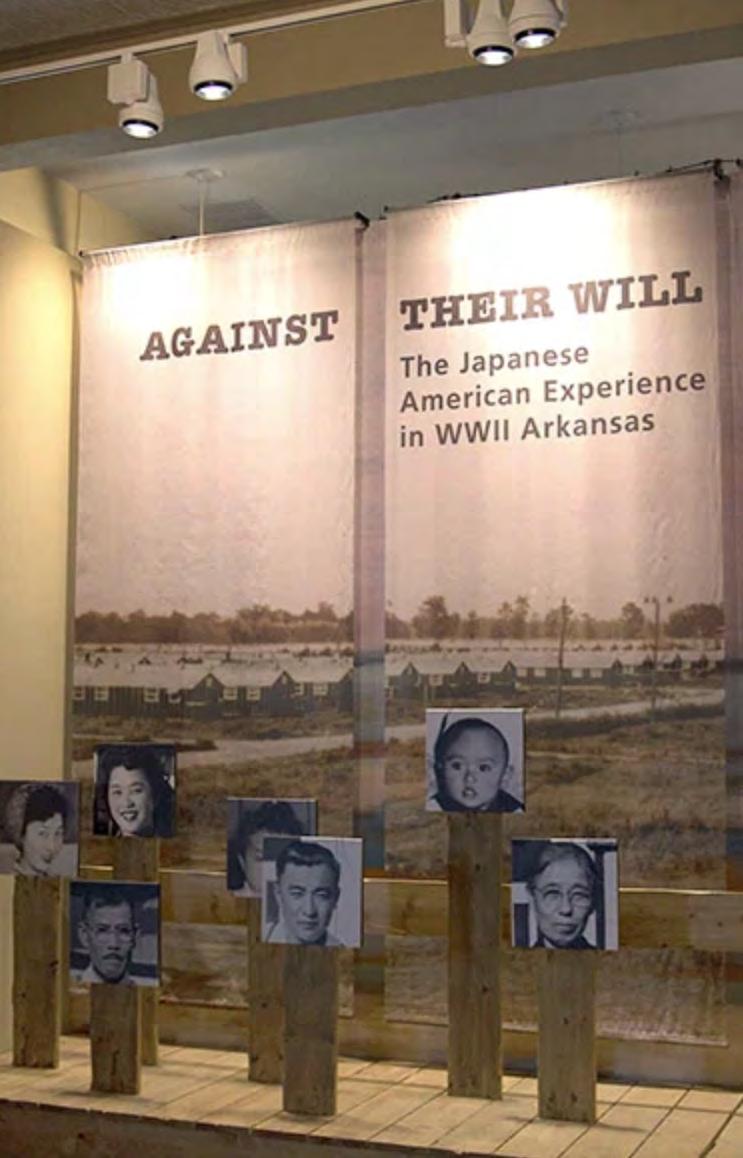
… Both camps were immense, sprawling cities that were two of the largest agricultural communities in Arkansas. …
Arkansas was neither receptive to nor supportive of the Japanese Americans being incarcerated in the state. Local residents were often hostile to those imprisoned in the camps for reasons beyond the race of the internees.
The camps often had amenities that were lacking in the poor, Delta towns that surrounded them: electricity, locally grown food and more.”
The federal government spent $9.5 million — in 1942 dollars — to build the Arkansas camps. More than 5,000 workers were brought in to drain the swamps and drain the land (Rohwer is only 5 miles from the Mississippi River), build more than 1,200 barracks-style buildings and lay miles of gravel roads.
Today, there is not a lot left of the camps. Each is home to memorial markers. The old hospital incinerator smokestack can still be seen at Jerome, and the Rohwer site includes the camp’s old cemetery, which was listed as a National Historic Landmark in 1992.
By Mark Carter
Pine Bluff preservationist Kathy Majewska has momentum and precedent on her side regarding efforts to restore the city’s grand old Saenger Theater. Built in 1924, the Pine Bluff theater was once part of a network of more than 300 Saenger theaters across the country.
Majewska, who performed on the Saenger stage as a child, wants to see it brought back to its former glory and, by extension, light a revitalization spark throughout downtown.
Majewska recently completed a tour of eight remaining Saenger theaters in the South, and she spoke with local leaders about how they restored or renovated their venues. She returned with ideas — and hope.
Precedent was set when the state of Louisiana designated the old Strand Theatre in Shreveport as the official state theater prior to its restoration. Securing a designation for the Pine Bluff Saenger as the “Official Theatre of the State of Arkansas” would be a major step toward building momentum that Majewska is optimistic will one day draw investors to own.
Majewska has written to each of the state’s 135 lawmakers, as well as all members of the Pine Bluff City Council and several local mayors.
She received positive responses from many of them, including state legislators who asked her simply, “What do you need me to do?”
“The response has been encouraging,” Majewska said. “This designation is an important step that will help bring renewed attention, support and funding to restore this grand ‘Showplace of the South’ — Arkansas’ only remaining flagship Saenger Theatre.”
The other Saengers she visited have been fully restored and are thriving today, she said, “standing as powerful reminders of what historic preservation can achieve.”
The Pine Bluff Saenger — Majewska calls it, rightly, an architectural jewel — is one of the oldest in the circuit and the last one standing but still waiting on restoration.
“With the successful examples of its sister theaters in mind, one can imagine our theater returned to its former glory — its historic details repaired and illuminated, the auditorium refreshed and welcoming, and the stage alive again with music, touring shows and community events,” she said.
By the mid-20th century, film was the dominant entertainment venue.
Majewska described the transition from theatre to theater:
“As films became cheaper and more accessible, the era of big touring theatrical companies largely ended. Many Broadway stars headed west to Hollywood, drawn by the glamour and financial opportunities of the silver screen.
“The golden age of American theater — its true heyday — ran roughly from 1913 to around 1927. During that period, dozens of new productions opened each season, and live theater thrived as the dominant form of popular entertainment. Then came talking pictures.
“The Jazz Singer in 1927 marked a turning point, and within a few years, silent-era theaters across the country were retrofitted with movie screens and sound equipment. Live touring shows all but vanished.
“In the 1940s and 1950s, many historic theaters were modernized in the name of progress — ornate plasterwork and marble were stripped away, replaced by linoleum floors and simpler, more ‘contemporary’ interiors. Television delivered another major blow in the 1950s and ’60s, bringing entertainment directly into people’s living rooms.
“Grand palace theaters that once hosted legitimate stage productions often became second-run movie houses. By the 1970s, many had declined even further, turning into venues for burlesque, strip shows and peep shows. Times Square and Broadway itself became notorious — a seedy cesspool of crime, pornography and urban decay.
“It took a major public-private partnership between New York City and the 42nd Street Development Project — later known as New 42 — to reverse the slide. Starting in the 1980s and ’90s, this comprehensive revitalization effort cleaned up the area and led to the restoration of nine historic Broadway theaters, helping to bring legitimate theater back to life. Unfortunately, not every landmark survived — the original Helen Hayes Theatre, along with several others, fell victim to demolition during the redevelopment despite preservation efforts, due in large part to a lack of funding and political support at the time.
“Today, the Great White Way — Broadway as we know it — is thriving once again. Great touring shows are once more visiting wonderful theaters across America, bringing live theater back to audiences nationwide. In 2026, the Great White Way of Broadway is vibrant and full of life.”
Majewska has been able to secure pocketfuls of grant money here and there, but Pine Bluff’s grand old theater, empty for about 50 years now, needs major investment. Majewska said she has seen how the architecture and attention to detail in the old theaters have transformed people and experiences.
The New Orleans Saenger, still open and hosting Broadway shows, is often on her mind. Noted architect Emile Weil designed it and transformed the space into an Italian courtyard filled with twinkling stars.
“The psychological impact of these cathedrals is truly stunning,” Majewska said. “Visually, auditorily and sensorially, these theaters were crafted to elevate moods and promote optimistic thoughts. More than just entertainment centers, they had the power to change lives and impact future generations. They brought people together to celebrate and transported them into a world of beauty where they could, as the saying goes, ‘pack up their troubles, leave them at the door and smile, smile, smile.’”
For more information on the Pine Bluff Saenger or Majewska’s revitalization efforts, email her at kathymajewska@gmail.com.
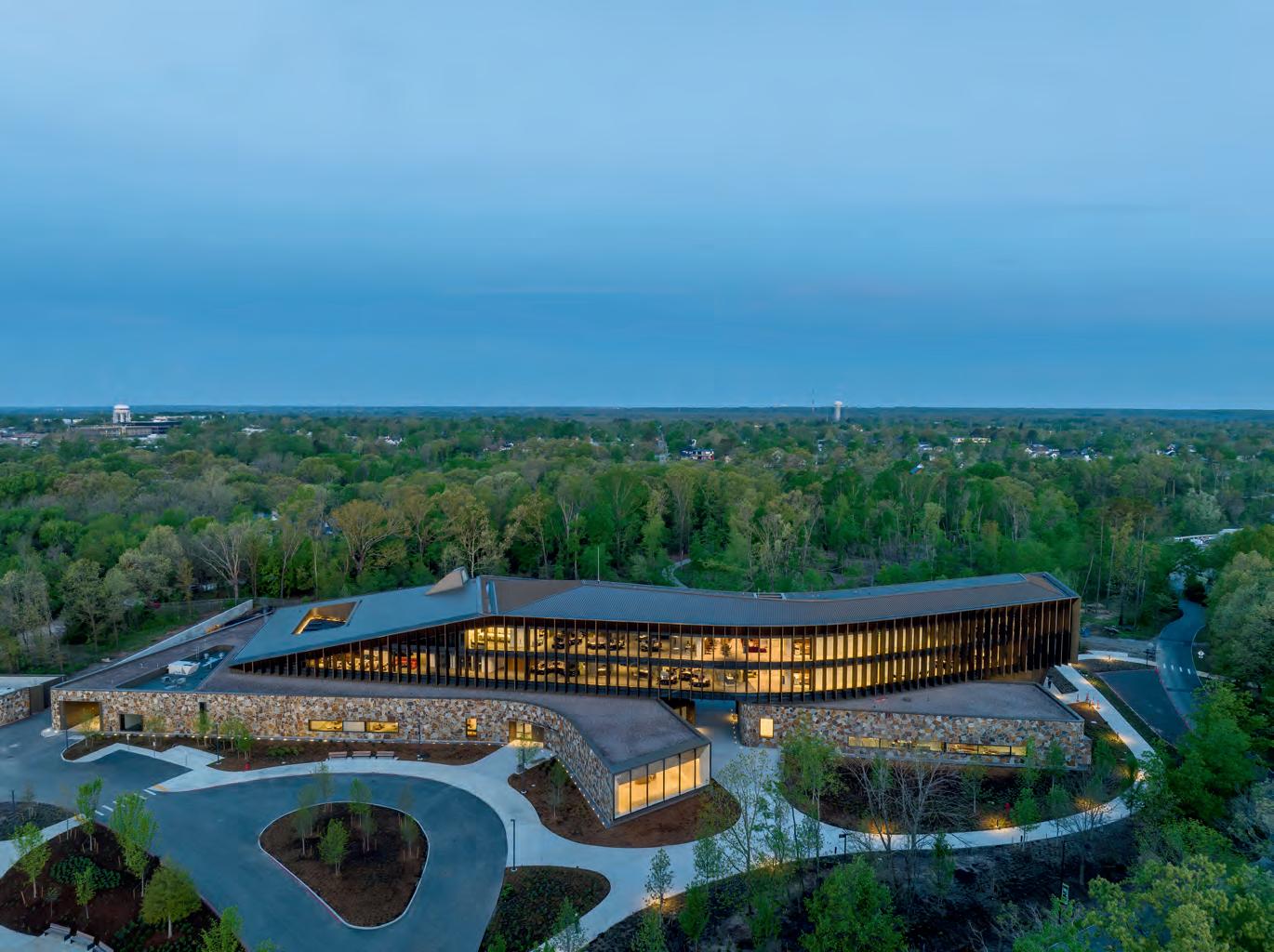
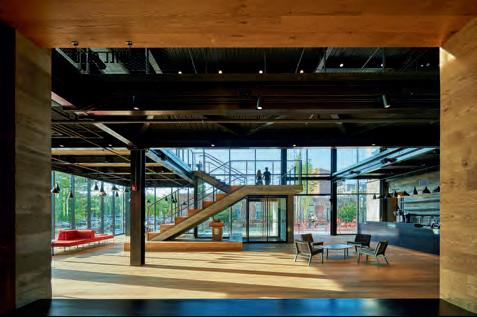
COMPETITIVE
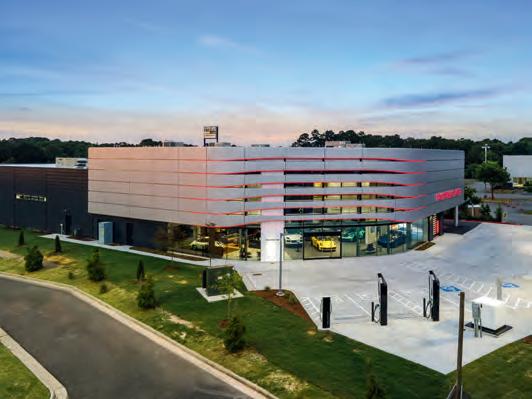
Preconstruction
Construction Management
Design-Build
Self-Perform
Security Assessments
Facility Maintenance
Specialty Services
Industrial and Structural
At Baldwin & Shell, we combine disciplined planning, skilled craftsmanship, and a deep respect for the communities we build in to create spaces that stand the test of time. We focus on what truly matters: delivering work that strengthens communities, supports clients’ goals, and continues to make an impact long after the job is done.

For more than a century, our team has brought together key service lines, providers, and technologies to create patient experiences that are highly intentional and refreshingly personal. As the only hospital in Conway o ering Mako robotic arm-assisted surgeries, we are rede ning joint replacements, combining innovation with compassion to help our patients move forward with con dence. See what curated care looks like for you.