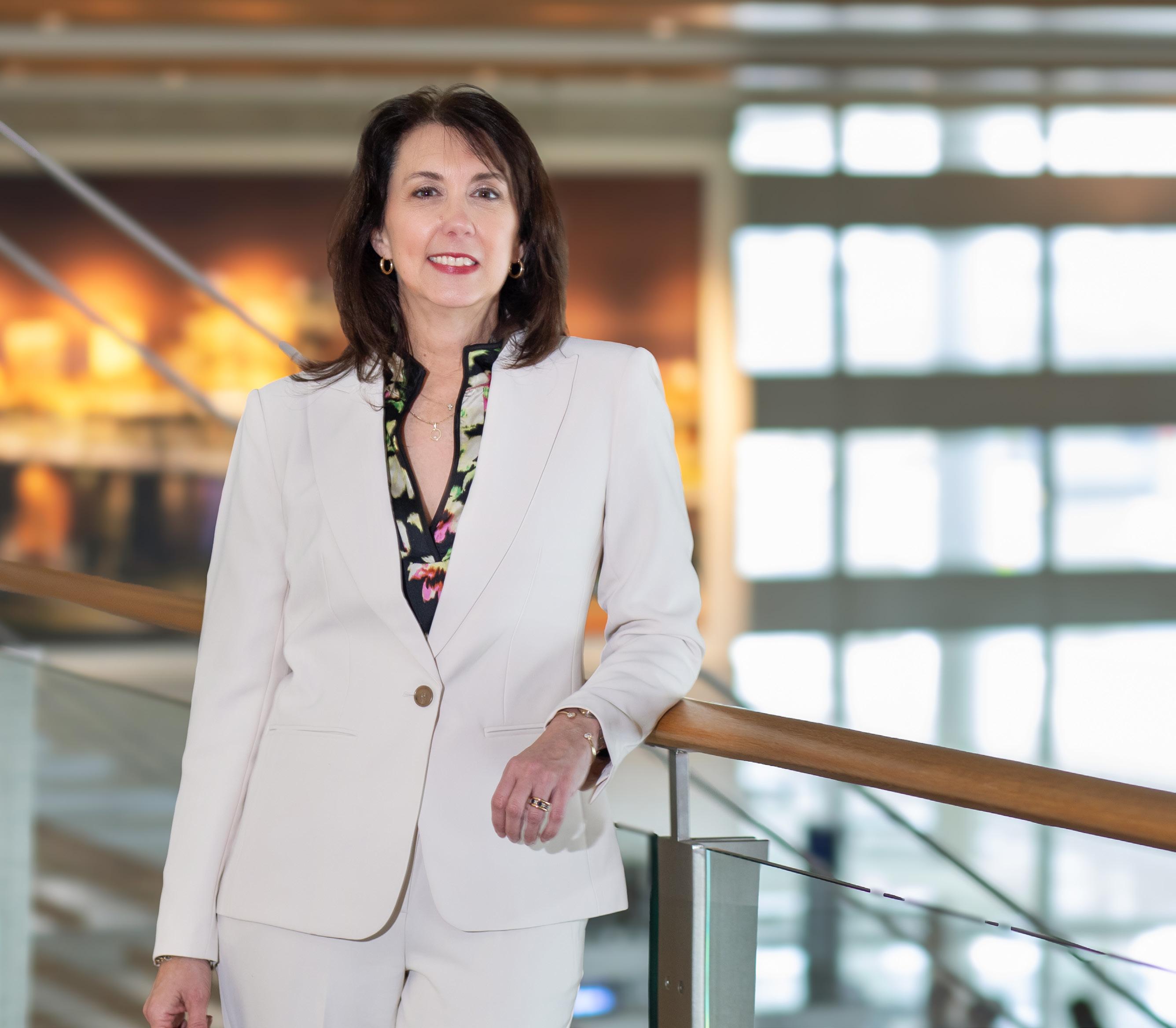
Suzanne Peyton, Executive Director, Clinton National Airport





Supply chains are under pressure, and ArcBest is on a mission to innovate every link.
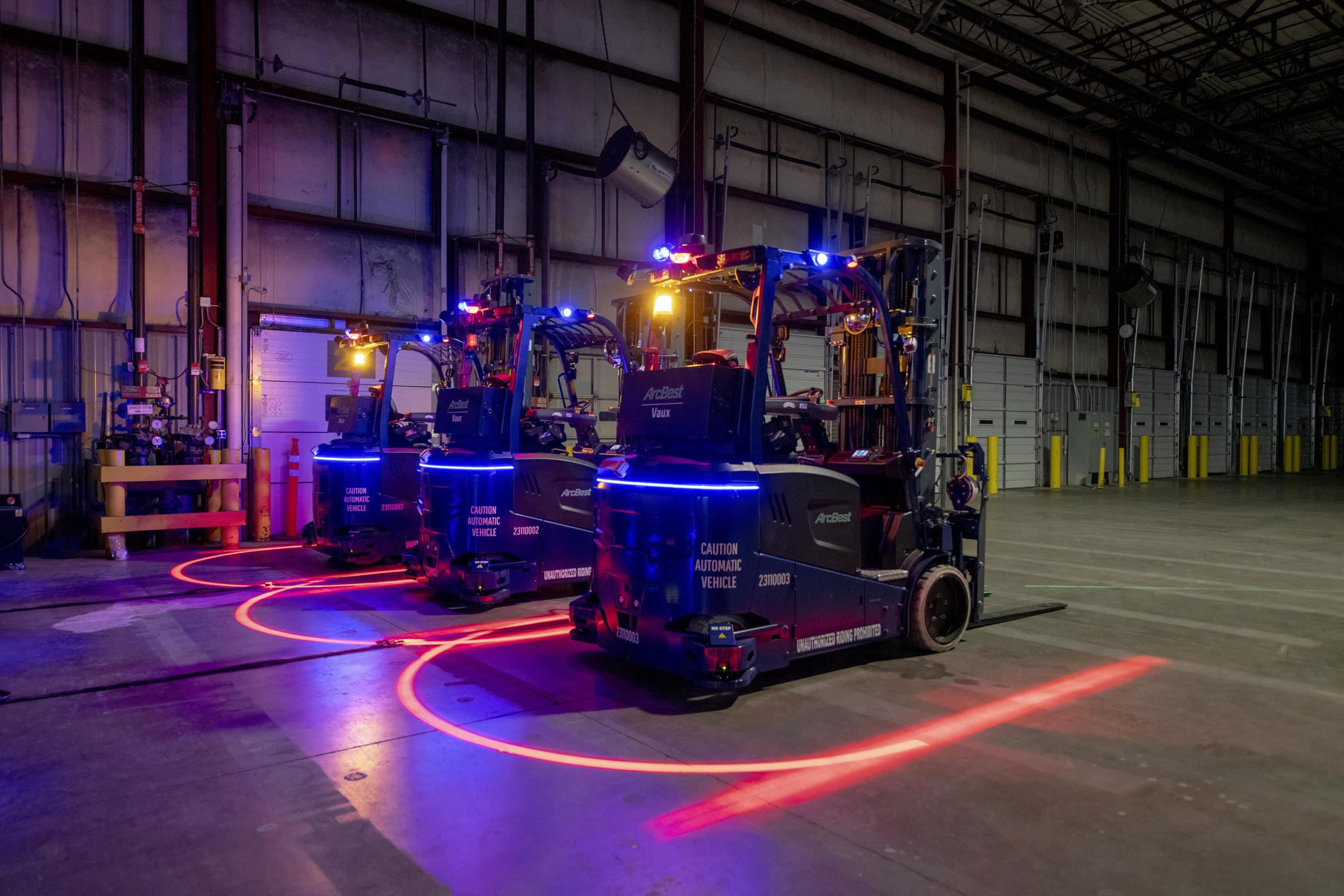
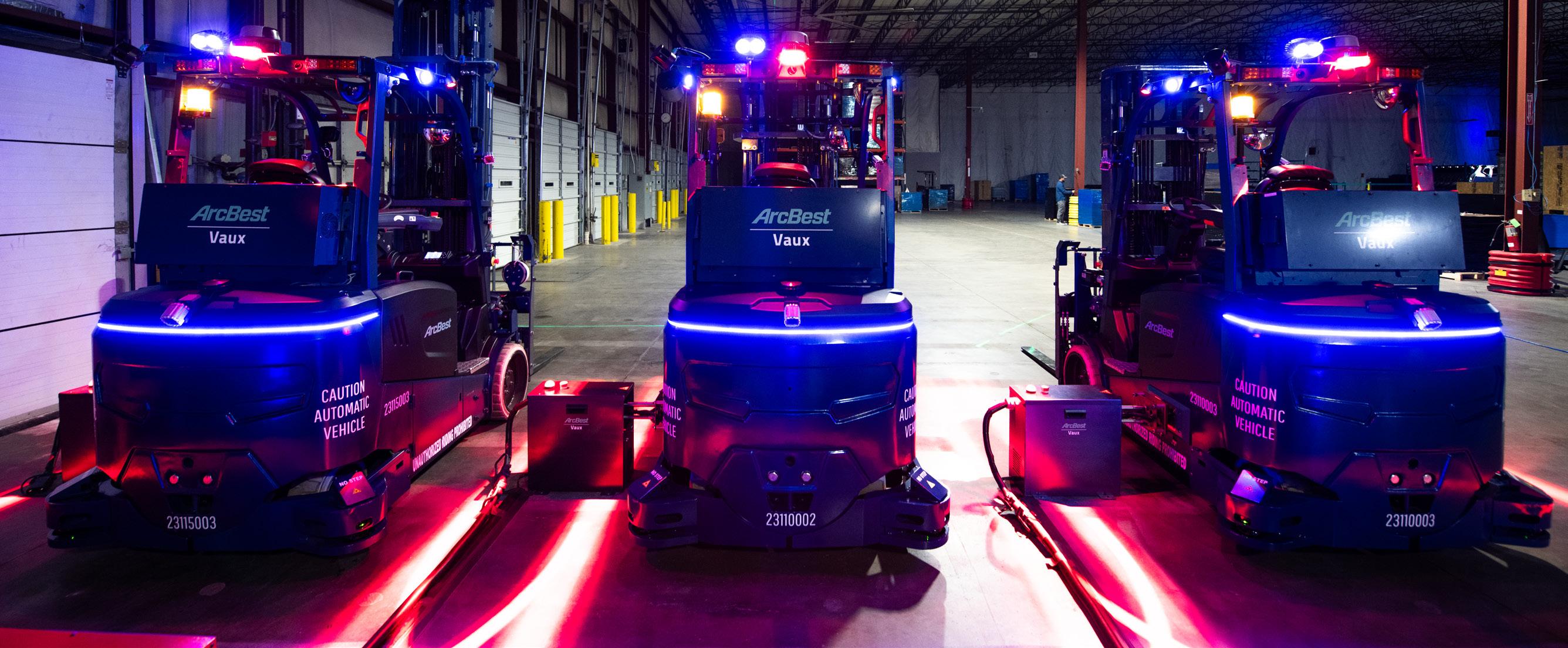
We’re driving innovation that helps businesses stay ahead of disruption and deliver results. From Managed Logistics strategies that turn complexity into a competitive advantage, to breakthrough technology like Vaux that transforms material handling, we’re pushing boundaries to help you move products faster, safer and more efficiently.
Discover what’s next at arcb.com




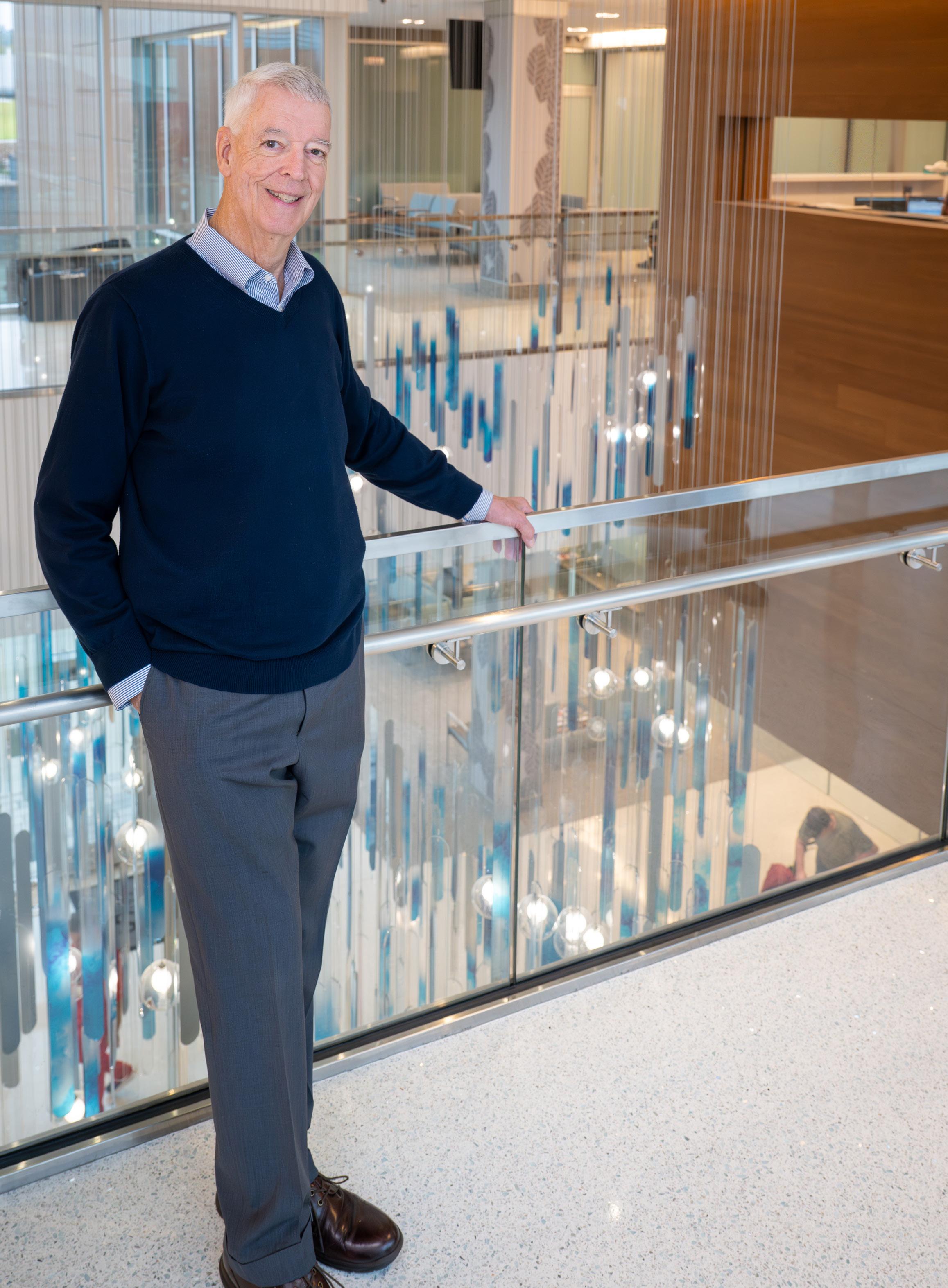
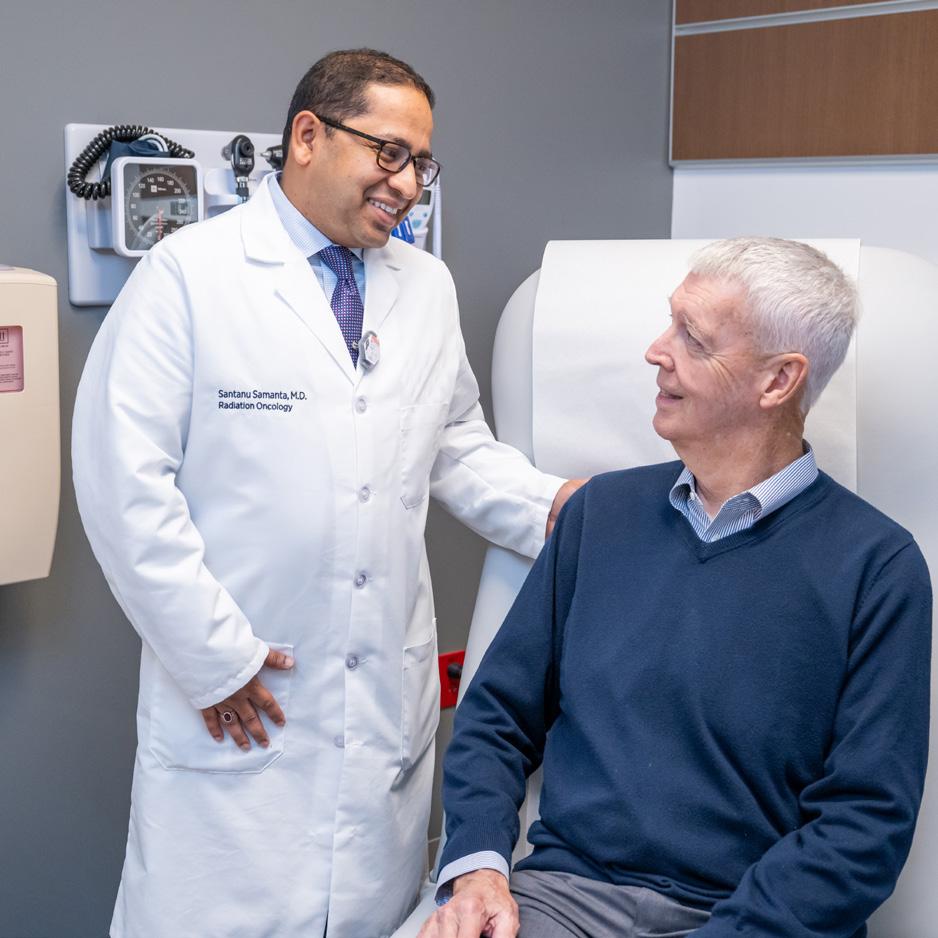
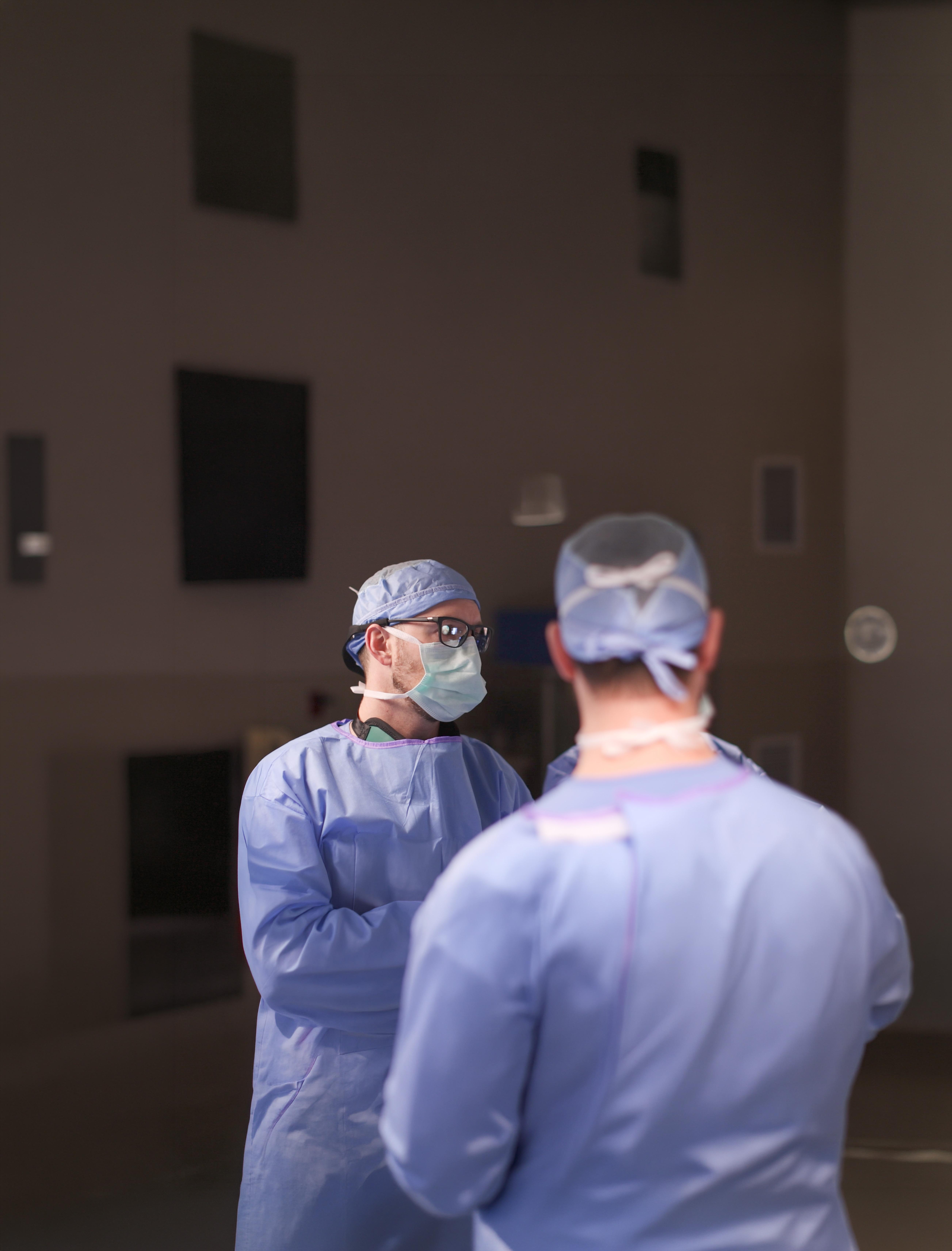
When Dr. Mahlon Maris, a retired family physician, was diagnosed with stage 3 larynx cancer, his treatment options came with serious risks. Surgery would have cost him his voice. Standard X-ray radiation risked permanent nerve damage and difficulty swallowing.
To avoid those risks, Dr. Maris chose the Proton Center of Arkansas, where cutting-edge proton therapy successfully treated his cancer while protecting surrounding critical structures.
The Proton Center of Arkansas is the state’s first and only proton therapy center and a collaboration of UAMS Health, Baptist Health, Arkansas Children’s and Proton International.

THINK
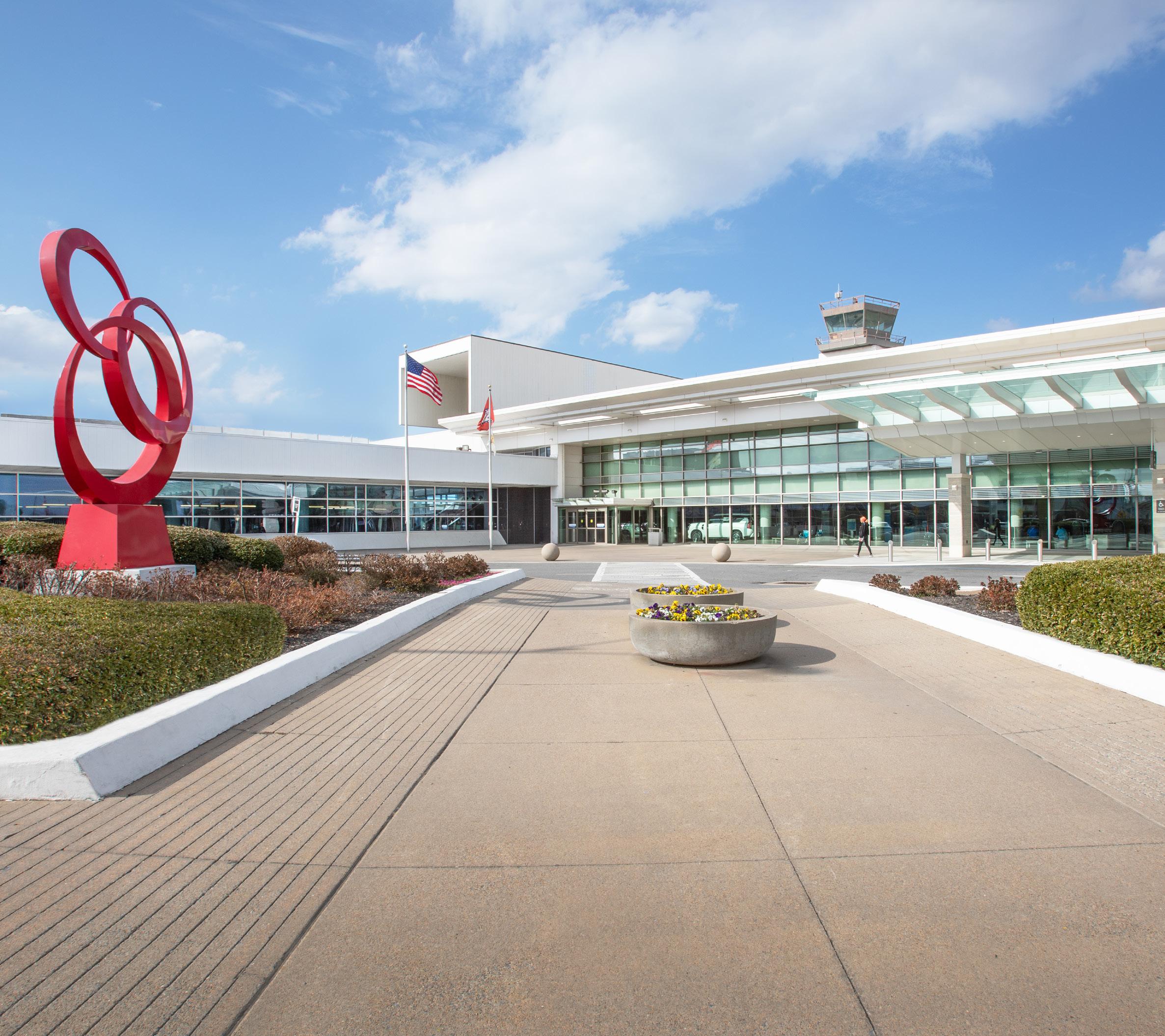
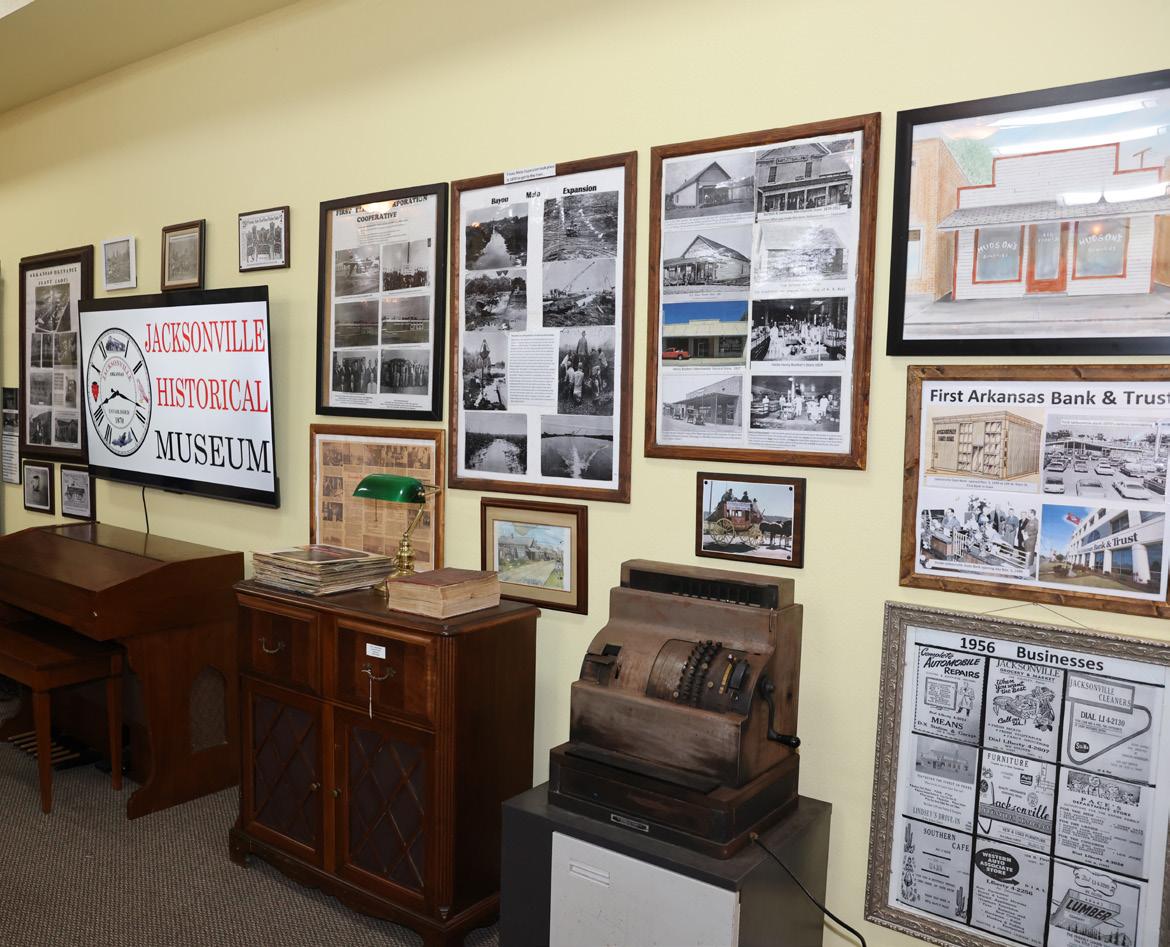
The Jacksonville Historical Museum was reopened in March. The reimagined space chronicles the city’s founding and honors notable natives. AWAY WE GO Arkansas’ primary commercial airports — LIT in Little Rock and XNA in Bentonville — are busy keeping up with growth and the times.

It has been just four years since farmers saw record high crop prices, but the lows that have followed are deeper than seen in four decades.
The Arkansas landscape is the same — an unending sea of green. But of everything green that farms deal in, money has proven the toughest to take root.
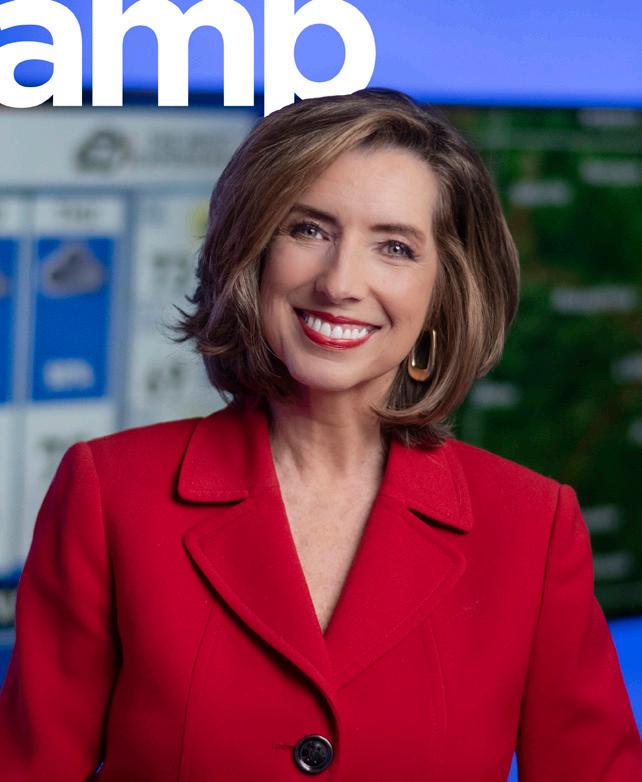
Suzanne Peyton signed on as executive director of the Clinton National Airport in Little Rock, and she brings an engineer’s perspective to the role.
Concerned about the use of driverless trucks on the road? The days of driverless trucks being merely theoretical in nature are not only gone but swiftly so.
In this special sales section, AMP is proud to shine a spotlight on these prominent Arkansas businesses representing a cornucopia of industry.
At ArcBest, any stop along the supply chain — from shipping and warehousing to freight handling — is an opportunity to innovate.
Through Brays, Neighs & Brews in Elkins, couples can book donkeys and ponies to add an unforgettable experience to a wedding.
Drive by most any new car lot these days, and it is less likely that one will see many sedans. As always, Arkansans continue to prefer SUVs.
Sheep Dog Impact Assistance was launched to help veterans and first responders transition to civilian life through outdoor adventures.
There is a place for just about any career path under the umbrella of poultry, and the industry is welcoming newcomers with open arms.
When native Arkansan Eric Ugolini moved back to Arkansas from Seattle several years ago, it did not take him long to figure out what the state was missing.
PRESIDENT & PUBLISHER
Heather Baker | hbaker@armoneyandpolitics.com
EDITOR-IN-CHIEF
Dwain Hebda | dwain@armoneyandpolitics.com
SENIOR EDITOR
Mark Carter | mcarter@armoneyandpolitics.com
ASSOCIATE EDITOR
Mak Millard | mmillard@armoneyandpolitics.com
EDITORIAL COORDINATOR
Darlene Hebda | darlene@armoneyandpolitics.com
COPY EDITOR
Sarah DeClerk | sdeclerk@armoneyandpolitics.com
STAFF WRITERS
Doug Crise | dcrise@armoneyandpolitics.com
Alex Hardgrave | ahardgrave@armoneyandpolitics.com
Mary LeSieur | mlesieur@armoneyandpolitics.com
MANAGING DIGITAL EDITOR
Kellie McAnulty | kmcanulty@armoneyandpolitics.com
ONLINE WRITER
Kilee Hall | khall@armoneyandpolitics.com
PRODUCTION MANAGER
Mike Bedgood | mbedgood@armoneyandpolitics.com
GRAPHIC DESIGNERS
Jerry Cordova | jcordova@armoneyandpolitics.com
Lora Puls | lpuls@armoneyandpolitics.com
Lee Smith | lsmith@armoneyandpolitics.com
SENIOR ACCOUNT EXECUTIVES
Greg Churan | gchuran@armoneyandpolitics.com
Michelle Daugherty | michelle@armoneyandpolitics.com
Mary Funderburg | mary@armoneyandpolitics.com
Karen Holderfield | kholderfield@armoneyandpolitics.com
Ryan Parker | ryan@armoneyandpolitics.com
Carrie Sublett | carrie@armoneyandpolitics.com
EXECUTIVE ASSISTANT
Jessica Everson | jeverson@armoneyandpolitics.com
ADVERTISING ASSISTANT
Katie Beth Smith | ksmith@armoneyandpolitics.com
ADVERTISING OPERATIONS MANAGER Jay Danzy | ads@armoneyandpolitics.com
ADVERTISING OPERATOR
Lara Keck | ads@armoneyandpolitics.com
CIRCULATION
circulation@armoneyandpolitics.com
ADMINISTRATION
Marissa Porter | ayoffice@armoneyandpolitics.com
CEO | Vicki Vowell
TO ADVERTISE call 501-244-9700 email hbaker@armoneyandpolitics.com
TO SUBSCRIBE armoneyandpolitics.com/subscribe
CONTRIBUTORS
Jane Colclasure, Lori Sparkman, Terrance Armstard, DeWaine Duncan, James Norman, Ryan Parker, Chris Wright
(ISSN 2162-7754)
First-generation farmers are taking to the fields in greater numbers, drawn by the siren call of sustainable
and healthier eating.
Coaches from all sports and all levels are embracing vast amounts of
permission of the publisher. Articles in AMP should not be considered specific advice, as individual circumstances vary. Products and services advertised in the magazine are not necessarily endorsed by AMP. Please recycle this magazine.

Employers are choosing to help employees save for education through after-tax direct deposits into their Arkansas Brighter Future 529 account.
So little by little, with each paycheck, employees can build their education savings. Best of all, offering this innovative benefit requires no
added costs, systems or contracts. Bottom line: it’s a win-win for you and your employees.
Look into adding the Arkansas Brighter Future 529 Plan to your benefits package today. It is a great way to show current and potential employees you support their dreams.
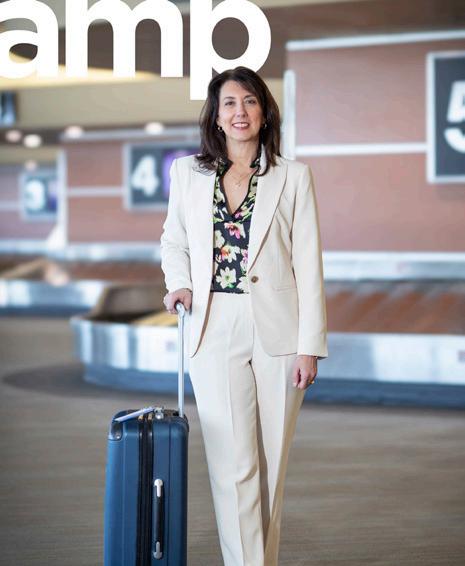
Suzanne Peyton, executive director of Clinton National Airport, headlines AMP’s aviation/ transportation section this month. Photo by Jane Colclasure.
Coverage starts on page 14.
MELINDA MAYO: LONGTIME KATV PERSONALITY FINISHING OFF STORIED CAREER
Congratulations on your great career. Hoping the best for you!
Gary Owens
LITTLE ROCK’S CBM CONSTRUCTION CELEBRATES 50TH ANNIVERSARY
Congratulations Kevin Newton and Matt Gray on celebrating the 50th anniversary of CBM Construction! Glad to have you and your team as a partner with Goodwill Industries of Arkansas in projects across the state.
Brian Marsh
MARVIN CHILDERS NAMED TO BE PRO BE PROUD NATIONAL BOARD
Absolutely Awesome! You picked a proven leader...Congratulations Marvin!!
Eric C. Smith
SUSAN REYNOLDS NAMED PRESIDENT AT JANET JONES CO. Congratulations Susan. So happy for you! What an exciting milestone.
Margaret Bell Hughes
MARGARET BELL HUGHES
I’ve only known you for a few short years but you have made a big impact on the work I do and how I manage. We will definitely miss you in library land.
Lola DeWitt
CABOT JUSTICE CENTER WINS ASID DESIGN AWARD
Congratulations to Chad Young and the amazing team at WDD Architects and to Mayor Ken Kincade and the fabulous team with the City of Cabot on this outstanding honor! Such a beautiful space!
Carol Langston
2026 AMP C-SUITE: LESLIE HIGGINS, U.S. MARSHALS MUSEUM CHIEF PROGRAMS OFFICER
Outstanding! Leslie S. Higgins is a phenomenal representative of the US Marshals Museum and its vitally important mission of education.
Carl Caulk
March 4 — April 5
1 Melinda Mayo, pioneering Arkansas meteorologist, soon to sign off
2 Top Razorback booster already sees key difference between Pittman, Silverfield
3 Need to Know: Pulaski County runoff election
4 Black & Blue: Arkansas Blue Cross and Blue Shield takes punches, keeps fighting
5 ‘Putt Chip Chill’ coming to Northshore Golf this spring
6 Arkansans urged to claim tax credits
7 2026 AMP C-Suite
8 New Way Neurology opens in Hot Springs
9 Aaron Spencer advances through primary
10 Steel Will: Recruitment efforts pay off in Mississippi County
than

By Mark Carter
For Razorback fans, the 20252026 basketball season met expectations.
Lacking proper context, that sounds so pedestrian. Of course, on the surface, “meeting expectations” is not an end goal for the Arkansas basketball program, even before the Chicken Man pulled a hall-of-fame coach out of his fryer.
It does, however, beat the alternative — meeting expectations, that is. Lord knows, Hog fans have a complicated relationship with expectations.
The Sweet 16 is where we should have ended up, on paper anyway. Of course, the dance is not played out on paper — injuries, matchups and a host of other intangibles are part of what make March runs so special. That said, we started out ranked in the top 15 and finished there, as well.
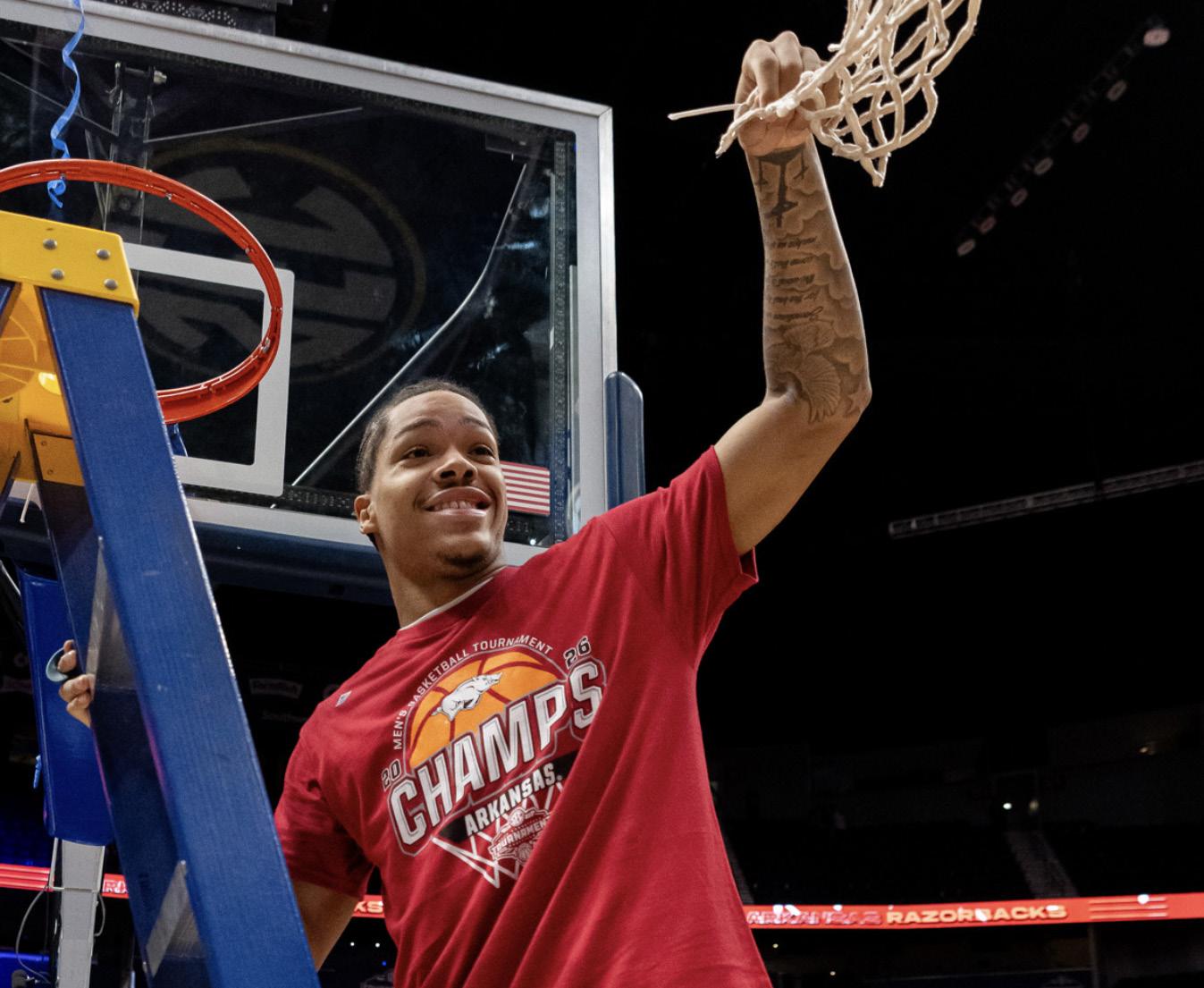
A mere puzzle piece away from more, perhaps much more, but Coach Cal’s second Hog squad continued the rehab started by Eric Musselman seven years ago by solidifying Arkansas as a second-weekend staple come March.
The importance of that cannot be overstated. The brand was strengthened by another NCAA minirun, just as it was with the SEC tournament title that Darius Acuff Jr. willed into existence.
Granted, a peek at what is lining up to be Cal’s ’26-27 roster will raise the ceiling a bit, if not obliterate it all together.
NThis year’s Razorback cagers made up one of the most entertaining Arkansas teams to watch — ever. There likely will never be another person to wear the uniform as talented as Acuff. Well, unless one considers a couple of the incoming freshman Cal has lined up for next season.
The accolades flowing from Acuff and sticking to the program brand like flakes of pure gold were important, for sure, but for me, the best thing that happened with this year’s squad was the tourney title in Nashville against a really good Vanderbilt team on what should have essentially been its home court.
A program with Arkansas’ pedigree was way overdue, but most importantly Acuff got some hardware out of his one year on the Hill, and he and his teammates got to cut down the nets. Once again, Cal was cutting down nets, but this time, he did so in cardinal red. That is where Hog fans expect their hoops heroes to be, at the rim on top of a ladder, and they finally got to see it after a long wait.
Sit back and reflect on how good we had it this year, Hog fans. We all know what held this team back from a national title, but it was a season to remember and one that may serve as the setting for something even bigger in ’27.
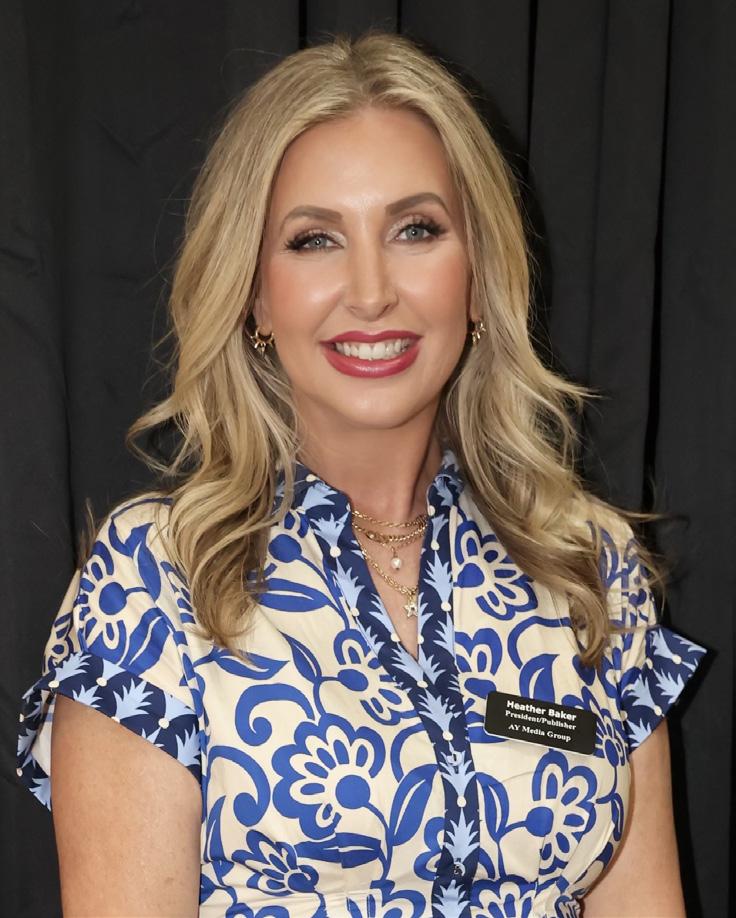
By Heather Baker
othing feels better than Arkansas in springtime, as the weather gently warms, the landscape — and windshields — turn green, and Mother Nature breaks out her fine china in all its glory. We are truly blessed to live in such a place.
This month’s Arkansas Money & Politics captures that springtime vibe with another jam-packed issue of places to be and things to see.
Appropriately enough, this issue of AMP delivers an aviation focus as April offers beautiful, blue skies. Our writer Mary LeSieur sat down with new Clinton National Airport director Suzanne Peyton, this month’s cover girl, to talk airport renovations and plans for the future. Peyton brings a sharp engineer’s mindset to the job.
We will also look at the state’s two primary commercial airports — Clinton National in
Heather Baker
Little Rock and Northwest Arkansas National in Bentonville — to get a feel about how each is serving its market. Keeping with transportation, readers will find inside stories on the growth of driverless trucks and how new cars are starting to evolve more and more into something one would expect to see on The Jetsons Agriculture is another industry focus this month as farmers across the state finish planting. Stories will feature the poultry industry, first-time “boutique” farmers and more.
On the sports side, Doug Crise takes a look at artificial intelligence in sports and how technology could end up having a major impact on the games we love. Plus, our special “Faces of Arkansas” sales section appears this month. In other words, just like spring, there is a lot to absorb.
Happy Spring!
By AMP Staff
In Arkansas, poultry is not just agriculture. It is a cornerstone of the state’s economy. In 2024, Arkansas produced roughly 1.036 billion broilers, and the broiler industry was associated with about $5.62 billion in production value and nearly 141,000 supported jobs statewide. But like any large-scale livestock sector, the poultry industry faces a constant threat from disease.
At the University of Arkansas Division of Agriculture, Aranyak Goswami uses advanced genomics and machine learning to address that challenge.
Goswami, a computational biologist affiliated with the university’s animal science and poultry science programs, is leading research that aims to predict which bacterial genes are responsible for disease outbreaks in poultry. The work focuses on a bacterium called Enterococcus cecorum, a pathogen that can infect chickens and reduce the health and productivity of poultry flocks.
Even relatively limited disease events can create wider economic consequences in an industry operating at such scale. In commercial poultry, losses are not limited to mortality. They also show up in slower growth, poorer feed efficiency, condemnations at processing, added treatment costs and less stable throughput across the supply chain.
“That saves an enormous amount of time and resources for the researchers doing the experimental work.”
For Arkansas poultry producers, the benefits are practical, as well as scientific. By identifying disease-causing genes more quickly, researchers and industry partners can respond faster to emerging pathogens, focus validation efforts more efficiently, and potentially develop new interventions or vaccines to prevent infections. Over time, even partial reductions in disease-related losses could translate into meaningful economic value for producers, processors and the broader poultry supply chain.

“The goal of the project was to provide predictive markers that industry stakeholders can use,” Goswami said. “By analyzing the whole genome, we can identify genes that are likely responsible for disease.”
Rather than focusing on one gene at a time, Goswami’s team analyzed the complete genetic blueprint of the bacterium. Using publicly available genomic data from more than 200 bacterial samples, the researchers built a computational system capable of scanning bacterial DNA and identifying clusters of genes linked to infection.
The process relies heavily on machine learning, a branch of artificial intelligence that allows computers to detect patterns within large datasets. In this case, the technology searches for what microbiologists call pathogenicity islands, or groups of genes that give bacteria the ability to cause disease.
Traditionally, scientists must test each gene individually to determine whether it contributes to infection. That can mean studying hundreds or even thousands of genes in a painstaking laboratory process. Goswami’s system dramatically reduces that burden.
“Instead of testing thousands of genes experimentally, we can narrow the list down to maybe 30 or 40 candidates,” he said.
The research is being conducted in collaboration with Cobb-Vantress, one of the world’s leading poultry genetics companies. That partnership helps connect Goswami’s computational science to real-world industry needs and increases the likelihood that promising findings can be tested, validated and applied in commercial settings.
“This project is directly connected to the poultry industry,” Goswami said. “It started with samples collected from poultry farms in Arkansas, so the work is very much rooted in the state’s agricultural ecosystem.”
While the immediate focus is poultry health, the research may eventually extend far beyond Arkansas farms. Closely related bacteria can infect humans, as well, and Goswami believes the computational pipeline developed in his lab could help scientists identify disease-causing genes in a wide range of pathogens.
“The pipeline we designed is scalable,” he said. “Although we applied it to a poultry pathogen, the same approach can be used to study bacteria that infect humans.”
The project was supported in part by funding from the Arkansas Research Alliance, which provides seed funding for research with potential economic impact. In this case, that support is helping move a research idea toward practical use in an industry that is deeply embedded in Arkansas’ economy. For Goswami, the support helped launch what has become a major milestone for his lab.
“This project helped us accomplish almost everything we originally set out to do,” he said.
In a state where poultry is a major driver of jobs, production and regional economic activity, research that helps identify disease risk earlier and more accurately has value well beyond the lab. It can strengthen producer decision-making, support more stable processing operations, and help position Arkansas as a leader in translating agricultural research into commercial and economic outcomes.









By James Norman
As the year progresses, small and midsized business owners are taking a clear, forward-moving approach to growth. Rather than waiting out uncertainty, they are investing in tools, talent, community engagement and long-term resilience. Bank of America’s 2025 Business Owner Report reflects this momentum, showing nearly 3 in 4 owners expecting revenue increases over the next 12 months and many planning to expand (59 percent), hire (43 percent) and secure financing (83 percent). Those trends point to practical steps entrepreneurs can take now to strengthen their footing and build sustained progress.
Innovation remains a reliable path for efficiency and growth. Nearly all (91 percent) business owners plan to adopt digital tools over the next five years, 52 percent aiming to accept more forms of digital payments and 50 percent planning to implement artificial intelligence.
Many businesses have already made progress: 77 percent integrated AI over the past five years, using it for marketing (50 percent), content production (38 percent), customer service (37 percent) and inventory management (28 percent).
Building on that momentum, owners are modernizing payments to reduce friction at checkout and accelerate cash conversion, adding options such as Zelle, Venmo and Apple Pay to meet customer preferences. Others are testing focused AI use cases such as automating routine customer inquiries and drafting product descriptions.
New tools can also help business owners digitize repetitive workflows such as scheduling, invoicing and inventory alerts, freeing staff time for higher-value contributions. That can be particularly helpful for companies impacted by labor shortages (61 percent). As digital capabilities expand, businesses are also planning to increase cybersecurity measures (30 percent), strengthening authentication and data protection to preserve trust alongside growth.
Community engagement can help businesses grow and attract new customers. More than half of business owners (58 percent) have modified their operations around major events such as sports games, concerts and festivals by introducing targeted promotions, social content, themed campaigns and sponsorships. The approach has paid off; approximately half reported increased sales (51 percent) and saw growth on social media (47 percent). Roughly 4 in 5 plan to repeat their efforts.
Aligning marketing and planning with events such as street fairs, neighborhood theater and regional festivals can also create meaningful ripple effects. Businesses can set measurable goals for event days, coordinating staffing and hours in advance and pairing
in-person activations with digital calls to action to extend reach and impact and connect to the community.
Disciplined cash flow management is critical for business owners, especially when inflation (70 percent) and interest rates (58 percent) are top concerns. Most entrepreneurs (88 percent) report inflation impacting their businesses, prompting many to raise prices (64 percent) and scrutinize cash flow and spending plans (39 percent). Concurrently, 75 percent are facing supply chain pressures, leading to price adjustments (52 percent) and sourcing challenges (32 percent).
In response, business owners are proactively adjusting their financial strategies. That includes reevaluating cash flow projections, optimizing spending and exploring local sourcing options to build more resilient supply chains. Beyond those operational adjustments, a disciplined focus on liquidity is key. Owners should also engage with their bankers to review existing loan structures, ensuring they align with current cash flow profiles and the interest rate environment.
Demand for capital continues to underpin long-term operational health. Eighty-three percent of business owners intend to obtain financing within the next 12 months, business credit cards (53 percent) playing a key role alongside personal savings (41 percent), traditional bank loans (32 percent) and personal credit cards (29 percent). Financing plans are informed by factors that include expected growth, hiring and retaining staff, and ongoing investments in digital tools.
Succession planning remains a critical component of long-term planning, yet 40 percent of business owners have not prepared one. They can begin by identifying potential successors, outlining governance and core processes, and tracking value drivers such as margins and recurring revenue. Advisory teams, including bankers, accountants and attorneys, can help, especially when engaged early in the process.
The findings point to steady, strategic progress. By modernizing operations, managing cash deliberately and planning for the future, business owners are building resilience that will carry into the latter part of 2026 and beyond.
James Norman is a vice president and relationship manager for business banking at Bank of America. He is based in northwest Arkansas.
By Chris Wright
Some days, tackling our to-do lists at work feels like spinning plates.
From 9 a.m. to 5 p.m. — or even longer — we hustle between meetings and tasks to get it all done. Wading through an overflowing inbox, we receive an email from what appears to be a trusted vendor requesting a bank update for an upcoming invoice. We quickly make the change in our billing system to route the next payment to the new financial account. Or, warned by an incoming text message that one of our work passwords will soon expire, we quickly upload sensitive details to a platform to keep our account active.
If these scenarios sound familiar, you are not alone. Digital slipups can — and do — happen in the workplace.
Today, more than half of all security breaches are due to human error, the Computing Technology Industry Association states. While businesses cannot fully eliminate such mistakes, they can empower their team members to mitigate risk to enhance organizational resilience.
How? By building a cybersecurity culture. The Sloan School of Management at the Massachusetts Institute of Technology defines cybersecurity culture as a workplace environment in which every employee embraces attitudes and beliefs that drive secure digital behavior. The National Institute of Standards and Technology frames it more simply: Team members embrace cybersecurity as “good business” and receive the training and tools to make sound decisions.
How can companies achieve that pivotal change in employees’ values, attitudes and beliefs about cybersecurity? It starts with a mindset shift at the top.
Leadership should support employees in becoming a “human firewall” by equipping them with the knowledge and confidence to act wisely. Leaders should be transparent with their team members about digital threats and be open — within reason — about incidents if or when they occur. Just as important, executives and senior management should ensure employees feel safe raising concerns without fear of blame. Silence is often what turns a small issue such as an accidental click into a major security failure. Encouraging team members to flag potential incidents sooner can mitigate the consequences of a breach.
Contrary to popular opinion, a cybersecurity culture does not and cannot emerge from a single annual training. That is why company leadership should focus on making cybersecurity a routine part of workplace conversations. That may look like embedding timely reminders in weekly team meetings, sharing quick updates on collaborative work platforms such as Slack or encouraging informal discussions about emerging cyber threats. The goal of such discussions is not perfection but consistent awareness. When businesses treat cybersecurity as a core corporate value, employees often follow suit.
Leaders must also recognize that investing in technology alone will not foster cybersecurity resilience. Far too often, companies succumb to pressure from third-party vendors to pile on preventive tools, assuming additional purchases equate to more protection. In reality, those investments can slow systems and disrupt operations, ultimately hampering employees’ ability to perform their jobs efficiently. As cybersecurity at MIT Sloan noted, companies end up putting “so many resources into ‘locking up’ using technology that [they] forget about the back doors in the organization” that give cybercriminals a foothold into their systems.
Instead, businesses should work with a knowledgeable partner to pursue high-value solutions. An experienced cybersecurity professional can help companies understand their vulnerabilities and design controls within a comprehensive cybersecurity framework to identify, protect, detect, respond to and recover from threats. They can also outline processes such as multistep, verified guardrails for financial transactions to reduce the likelihood that a single mistake becomes a costly breach.
That said, companies must also view cybersecurity as a shared responsibility. A professional can provide counsel, but only a business’s leadership understands the nuances of company operations and how that may affect the implementation of certain processes. Both sides must be involved in the process from start to finish to ensure the selected controls align with the company’s threat landscape and ultimately embed into workflows.
Finally, businesses must stay adaptable. Cyber threats are constantly changing. Leaders must understand that a control or process that works today may be ineffective tomorrow. Entities must be willing to pivot. Fortunately, a strong foundation makes it far easier and often much cheaper to adjust when needed than to rebuild from scratch if a breach does occur.
In today’s ever-evolving digital landscape, mistakes are bound to happen. As I often say, to build cyber resilience, you do not have to be the fastest person running from the bear. You just don’t want to be the slowest. By taking the time to understand vulnerabilities, partnering with an expert and empowering employees to reduce risk, companies can create a cybersecurity culture that supports more informed decision-making.
Chris Wright is co-founder and partner at Sullivan Wright Technologies, an Arkansas-based firm that provides cybersecurity, information technology and security compliance services.
New executive director at Clinton National talks leadership, rewards and relationships


By Mary LeSieur
Suzanne Peyton was promoted to executive director of the Bill and Hillary Clinton National Airport in Little Rock Jan. 1. A licensed professional engineer, she has worked at the airport since November 2021, having previously served Clinton National as director of properties, planning and development. Her more than 25 years of experience includes work as an aviation project engineer and aviation planning team leader at Garver. In the latter role, she managed planning and development projects for small, medium and large hub airports across the country.
Peyton earned a Bachelor of Science in civil engineering from Louisiana Tech University and is a certified member of the American Association of Airport Executives. She serves on the Baptist Health Board of Trustees, is a board member of Metroplan and is an ex-officio board member of the Little Rock Regional Chamber. She is also a member of the Rotary Club of Little Rock, the immediate past president of WTS Arkansas and a graduate of Leadership Greater Little Rock. Clinton National serves travelers from 62 of Arkansas’s 75 counties and generates $1.7 billion in annual economic impact. Six airlines currently operate more than 140 daily flights through LIT.
Peyton spoke with Arkansas Money & Politics about taking the reins of the state’s flagship airport, how her experience at Garver helped lead to her current job, the challenges that face the airline industry today and what is next for LIT.
Arkansas Money & Politics: What drew a civil engineer to aviation?
Peyton: I never had any awareness of aviation as an opportunity, so I went to civil engineering school because I had some interest in historic preservation. At the time, people were not building. The architecture market was low, and it wasn’t recommended to get a degree in architecture, so I went the engineering route.
I knew I wanted to come back to Little Rock to work, so I started applying at engineering firms. I applied at Garver and was introduced to all of their different departments. I talked to leaders in transportation and in water and in aviation. Mike Griffin, who hired me, had a knack for identifying the people who would be good in the aviation sector and he offered me a job there. I started out working with airports — Little Rock, as well as airports all over the state and then, as the company grew, all over the country. Some of the first projects I got to work on were at this airport. I think I’ve inspected all the pavement out on the airfield at one point or another. These are neat connections for me, to come full circle back around to the place where I started.

AMP: What is the most rewarding part of your job?
Peyton: The thing I like to do in just about every situation I’m in is ask, “How do I add value? What is it that I can do to make it happen, to move this place forward, to help?” That’s really what’s rewarding to me is being able to come into a place, take your unique skills and talents, and add value to the organization, to help encourage folks to then use their own skills and expertise.
That’s what is really rewarding to me, and I think a small hub airport is a really unique environment for doing things like that. You know all the leaders of all the different operational areas. You’re a team that works together, and you’re really able to accomplish the vision.
AMP: What is an integral aspect of your job?
Peyton: Relationships. The relationships that you build throughout the industry, as well as with your governing, compliance and funding bodies, are just so important. It’s the relationships we build throughout our careers, and I think that’s the key to Clinton National Airport’s success.
AMP: The airport has undergone some recent renovations, including expanding parking and the new front canopy to shield loading and unloading passengers from the weather. What is next for the airport?
Peyton: We call it an enabling project. If we build any new terminal redevelopment facilities, we’ll need mechanical and electrical construction. They’re not the architecturally beautiful parts, but they’re necessary. If we can go ahead and make it the size that it needs to be, then we’re set up for the next area of redevelopment.
Our obligation to the community is to provide access to aviation — both commercial and general aviation. That is an economic driver for our community. It offers access for our citizens to opportunities elsewhere. Our mission is to provide an airport. There’s a lot to be done over the next several years.
Parking is a big deal. There have been several times over the last couple of years where we’ve run out and just didn’t have enough spaces to park everyone who’s coming to the airport. Adding that capacity allows us to keep offering passengers access and us to keep achieving our mission.
We are doing quite a few things for the passenger experience. Over the last year, we have improved the flooring in the concourse. We have added exit lane devices. We have built the canopy, and we’ll be adding additional beautification with plant-
ers and benches. We’re also improving the lighting in our ticket lobby and in the concourse. We’re adding seating amenities at the bag claim and replacing some tables and chairs with newer bar-height seats with charging stations, so really thinking about our passengers.
AMP: How is the airport prioritizing sustainability?
Peyton: Many years ago, the [Little Rock Municipal Airport] commission began an energy-savings initiative and set out on the path toward sustainability. That’s especially important for an airport. As demand increases and costs continue to rise, it’s critical that we operate as efficiently as possible and become as energy independent as we can. Doing so helps build resiliency and sustainability into our operations.
With that in mind, for at least the past 10 years, we’ve been working to improve our recycling program and upgrade systems for greater energy efficiency. One example is geothermal HVAC, which is a proven technology that has been around for a long time. It allows us to increase efficiency and reduce utility usage, which becomes even more important as costs continue to climb.
In addition to the geothermal energy plant — essentially the HVAC system — we are installing fully redundant electrical loops. We already have full-generator backup power available, which allows us to switch over and run the entire airport on backup power whenever necessary. We will continue to maintain that capability going forward.
The electrical generators associated with that backup capacity, as well as future expansion, are similar to the systems used by data centers. Because of demand, they currently have lead times of up to three years, which is quite remarkable.
We also participate in an interruptible agreement with Entergy, meaning that during peak demand periods — often in the summer — the utility can request that we temporarily go off the grid and operate on our own generators. That’s something we will continue to do.
As we move forward, our focus will remain on improving efficiency. It benefits our operations by reducing costs while also ensuring that we remain reliable and able to fulfill our mission.
AMP: Aside from the economic aspects, what kind of impact does the airport have on the Arkansans it serves?
Peyton: I care about our airport as part of our community, but we also have a commission that cares about the community and sees the importance of the airport. I’m just really excited about the engagement of our commission and the responsibility that it takes to accomplish our mission and provide airport access for Arkansas.
We’re not just Little Rock, and we’re not just central Arkansas. We pull from 62 counties across the state. What we do is important. It’s bringing business to places all over Arkansas and giving our citizens access to go anywhere in the world.

ByMarkCarter
As more people move into northwest Arkansas, the demands on the region’s infrastructure have grown accordingly.
The region’s growth rate of 38 percent since 2010 makes it one of the fastest growing in the nation, a distinction it has held for decades now. The three counties making up the “479” metro — Washington, Benton and Madison — were home to more than 605,000 residents in 2025, the U.S. Census Bureau states.
Located just outside of Bentonville, Northwest Arkansas National Airport opened in 1998 as the region’s growth began to climb.
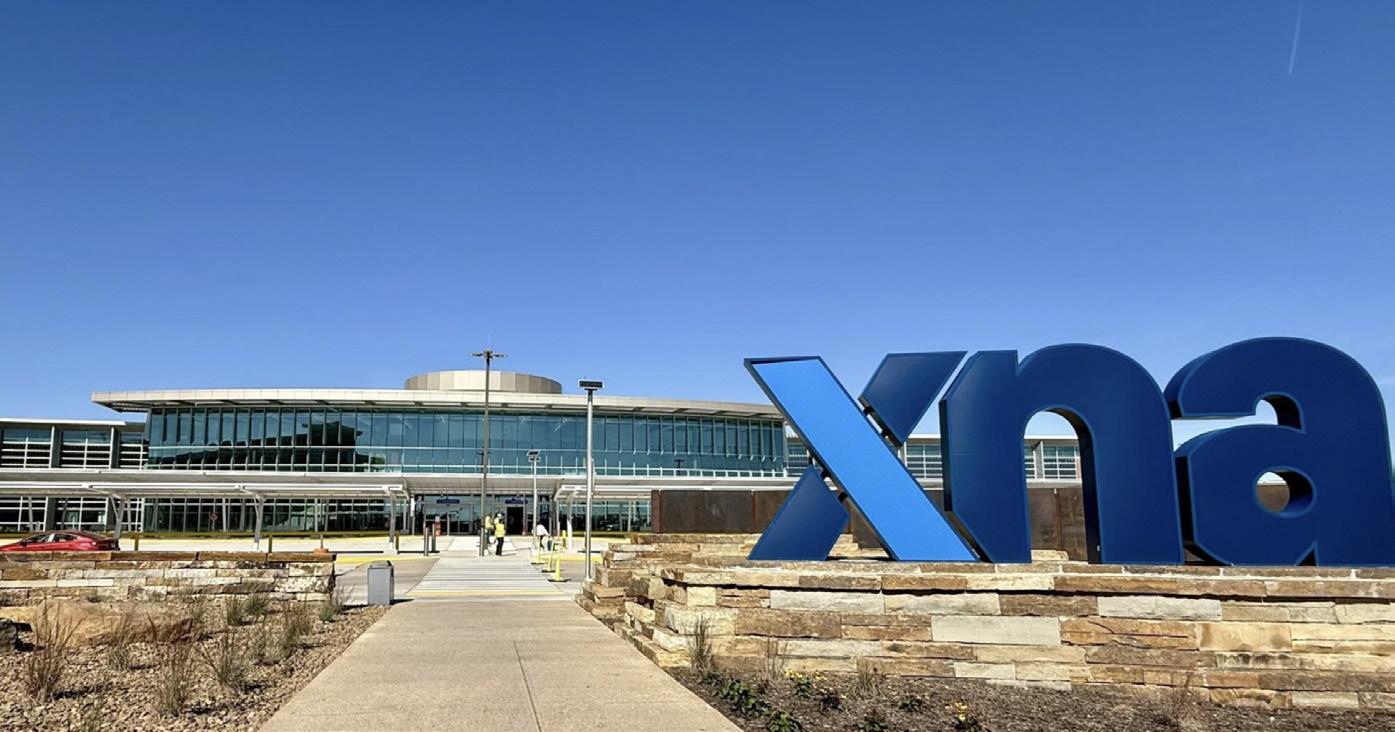
Prior to XNA’s opening, most northwest Arkansas travelers embarked on trips from either Little Rock or Tulsa.
XNA replaced Drake Field in Greenland, which offered commercial service through regional and commuter turboprops but was not equipped to meet the demands of a fast-growing metro, especially one home to several Fortune 500 companies, their vendors and the state’s flagship university.
Known colloquially as XNA, its International Air Transport Association airport code, Northwest Arkansas National was built to meet that demand.
With two 8,800-foot runways, XNA is served by six major carriers that offer nonstop service to 27 U.S. destinations. Last year, XNA overtook Clinton National Airport in Little Rock as the state’s busiest airport by passenger volume six years ahead of projections. (The Census Bureau forecasts NWA topping central Arkansas in actual population by 2050.)
Total enplanements at Clinton fell from roughly 1.17 million in 2024 to 1.16 last year, while XNA saw a 10-percent growth over the same period — from 1.14 million to 1.26 million. Each airport is served by six carriers — Allegiant, American, Delta, Frontier, Southwest and United at LIT and Allegiant,
American, Breeze, Delta, Frontier and United at XNA.
The state is home to six other commercial service airports, though none of them see more than a fraction of the traffic at Clinton or XNA, each of them served by a single carrier. Fort Smith Regional Airport is a distant third behind the big two at 62,369 enplanements in 2025. Other CSAs are located in Texarkana, Harrison, Hot Springs, Jonesboro and El Dorado.
For CEO Aaron Burkes, XNA’s goal should be to make sure that passengers and potential passengers are aware of XNA and the number of direct flights it offers. As is the case with most smaller commercial hubs, flying out of northwest Arkansas offered convenience but little thrift. That, however, is no longer the case.
“We also have to make potential passengers aware of the incredible value proposition at XNA,” Burkes said. “In years past, air fares from XNA were much higher than at some other airports around us. The reality is that average fares from XNA are now almost identical — and in some cases lower — than nearby airports.”
XNA has benefited from simple supply and demand. More passengers flying out of XNA means more seats sold and thus more direct flights offered. The airport is preparing for future growth, as well, having recently purchased 99 adjacent acres for $4.6 million.
“Operating a clean, safe and efficient airport experience makes it more likely that passengers choose XNA,” Burkes said. “More service, more airlines and more routes generally mean lower fares and more value for our customers.”
Suzanne Peyton, who took over as executive director at Clinton National this year after serving as the airport’s director of properties, planning and development for five years, is overseeing the completion of several important renovation projects.
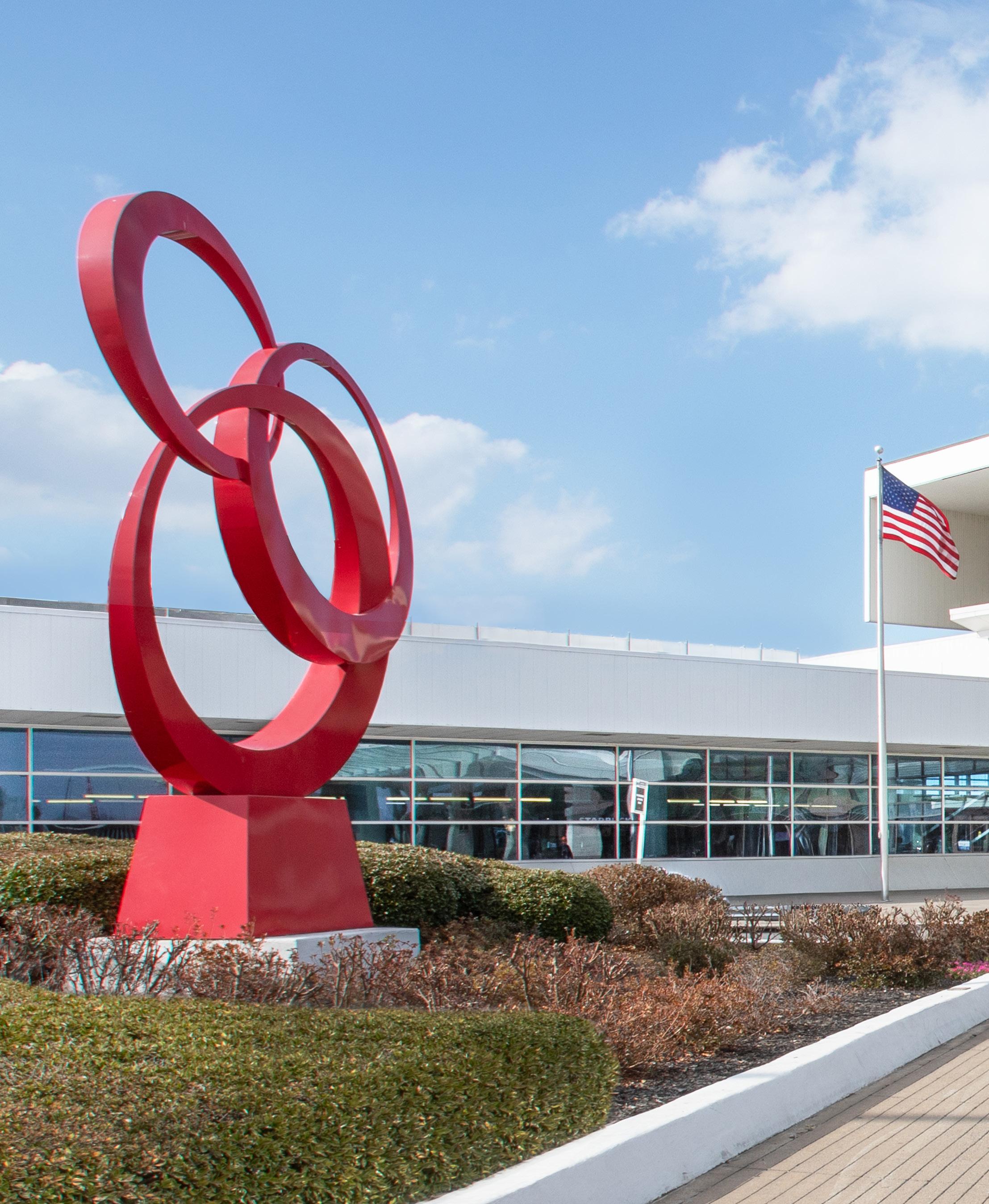
Currently, about $10 million in passenger upgrades and $22 million in parking upgrades are underway at the airport. LIT’s impressive new $5.2 million curbside canopy was completed this year,
as was the installation of new terrazzo flooring throughout the concourse and a new concourse exit lane designed to enhance security and improve traffic flow.
Planned projects include further terminal redevelopment, including a $300 million “arrivals hall” to replace the existing baggage-claim area and curbside amenities such as outdoor seating and landscaping enhancements.
Ongoing projects include improvements to terminal lighting, the addition of more parking, and a new $117 million, 23,000-square-foot central utility plant to replace aging electrical and mechanical systems. Scheduled to be completed in 2028, the CUP is expected to reduce greenhouse gas emissions by as much as 95 percent. The airport recently added 110 passenger parking spots for short- and long-term parking, and roughly 2,000 more parking spaces are planned.
“We have to make sure that we can accommodate all of our passengers who are looking for a spot to park. That seems simple, but it’s very, very important,” Peyton said.
The new mechanical and electrical systems will use 760 drilled geothermal wells to replace existing natural-gas boilers and refrigerant coolers.
The projects are addressing mostly immediate needs, but later this year, LIT will address updates to its master plan.
“With some extra funding that’s been available from Congress over the last five years, we’ve been able to accelerate some of the development that we were doing, so it’s time to look again at what the next 20 years of projects look like,” Peyton said. “We’ll start a master plan this year with the focus on our land-side strategy and the needs there, which would include parking including additional parking deck facilities, rental cars, and then what’s the highest and best use of the rest of our properties, and how do we become sustainable?”
Peyton said diversifying revenue and increasing sustainability will help add to the economic development of the community, a community which for LIT entails a 62-county catchment area.
Operating a clean, safe and efficient airport experience makes it more likely that passengers choose XNA. More service, more airlines and more routes generally mean lower fares and more value for our customers.
— Aaron Burkes, CEO, XNA
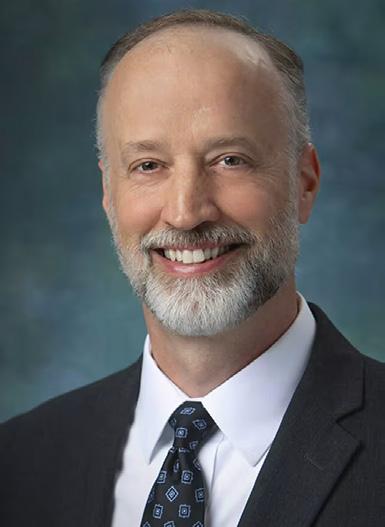
Clinton National remains the symbolic “front porch” of the state for many visitors, and it delivers a $1.7 billion economic impact.
“We have to listen to and understand what the community need is and how we best can be good stewards of the resources,” Peyton said. “We’ll be doing a lot of engagement with the community and our stakeholders as we design our terminal redevelopment.”
Though LIT does not offer international commercial service, it functions as an international airport to a degree with a full-time customs and border patrol station, the only one in the state. Plus, private international flights are coming in and out of LIT often including at least one a week between Dassault Falcon Jet’s completion facility on the LIT footprint and the company’s headquarters in France.

off and landing at XNA, Burks said international service is part of the longterm vision.
We have to listen to and understand what the community need is and how we best can be good stewards of the resources.
— Suzanne Peyton, executive director, Clinton National Airport
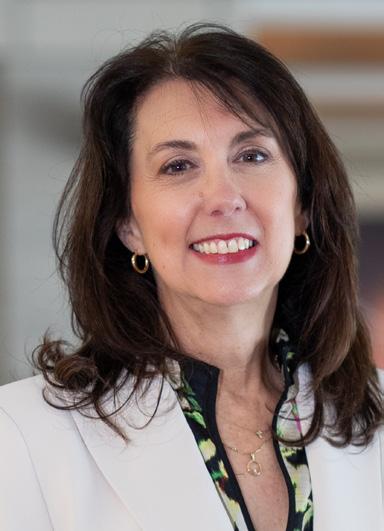
Peyton said it would require international flights of 150 to 200 passengers and additional customs capabilities to justify international commercial flights, and LIT is just not there yet.
“We’re actively engaging airlines on the strength of operating in Little Rock and the demand for both domestic and international travel,” she said. “We’ve invested in additional passenger research to better understand our market and support even more productive conversations.”
As for international flights taking
“The global footprint of the companies headquartered here makes that a logical progression,” he said. “Before that can happen, certain federal requirements must be met, including customs facilities and sustained international demand. As passenger numbers continue to grow and corporate connectivity expands, international service becomes more realistic. It is not something that happens overnight, but it is certainly something we continue to evaluate strategically.”
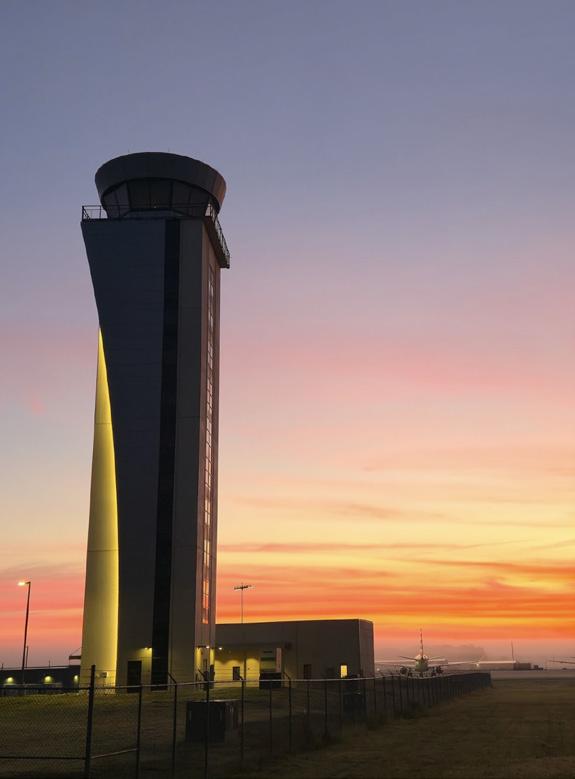
XNA to Heathrow and beyond is a backburner item at the moment, but the airport’s front burners are busy cooking. Burkes said XNA is undergoing a transitional phase and has invested accordingly for the future. There’s a new air traffic control tower, recent terminal renovation, more land to grow — possibly for a new runway — and more gates on the agenda, as well.
“The new air traffic control tower enhances safety and operational capacity, and the terminal modernization project has elevated the look, feel and functionality of the terminal building,” Burkes said. “Looking ahead, we are in the design phase for additional gate capacity through a future western concourse expansion,
which will add seven new gates with large seating areas and new amenities. We are constantly evaluating long-term projects to best fit our passengers’ needs. The goal is to stay ahead of demand rather than react to it.”
Ultimately, the job of airport CEOs such as Peyton and Burkes is to make sure passengers’ trips start out on a good note.
“For many travelers, the airport experience sets the tone for the entire trip,” Burkes said. “Ease of parking, short security wait times, clean facilities, intuitive wayfinding and friendly customer service all matter. When you combine a convenient facility with nonstop service to 27 destinations, that creates a strong value proposition. A positive airport experience builds loyalty and reinforces the strength of the region.”
Burkes said XNA’s biggest strength is the region itself. Keeping up with its growth, however, can be challenging.
“Northwest Arkansas has one of the strongest corporate markets in the country and a rapidly growing population,” he said. “That sustained demand supports air service growth and attracts air service to our market. Our challenges are really just the flip side of our strengths. Rapid growth in passenger demand means there is a need for rapidly expanding facilities. Our goal is to provide a toptier customer experience, which means investing in the facilities necessary to handle increased passenger activity. With strong fiscal management, we are optimistic that we will continue to impress our customers while responsibly managing our finances.”

The state’s longest runway does not reside at Clinton National in Little Rock, nor does it call Northwest Arkansas National in Bentonville home.
Arkansas’ longest stretch of runway, at 11,600 feet, can be found at the Arkansas Aeroplex in Blytheville.
Opened as Arkansas International Airport after the closure of Eaker Air Force Base, formally Blytheville AFB, in 1992, the aeroplex has evolved into an aviation and aerospace industrial hub. Many former Air Force structures on the 100-plus-acre site have been transformed into move-in-ready hangars and industrial sites for a variety of uses, including a jet-repair facility operated by Miamibased Aviation Repair Technologies. Plus, the National Cold War Center is being planned for the site, an ode to the former base, which played such a crucial role in the Cold War.
Aeroplex president Barrett Harrison said he is seeing steady momentum from interested firms.
“Companies are looking for sites that are ready to go, and the aeroplex gives them that,” he said. “Whether it’s aviation, logistics or light manufacturing, we can offer space, infrastructure and the ability to scale, which has made a real difference in attracting new business.”
Harrison said the aeroplex is seeing
interest across the aviation, defense and distribution sectors. The site’s proximity to major rail, Interstate 55 and the Mississippi River, its already established infrastructure, and a business-friendly regulatory environment are strong calling cards, he added.
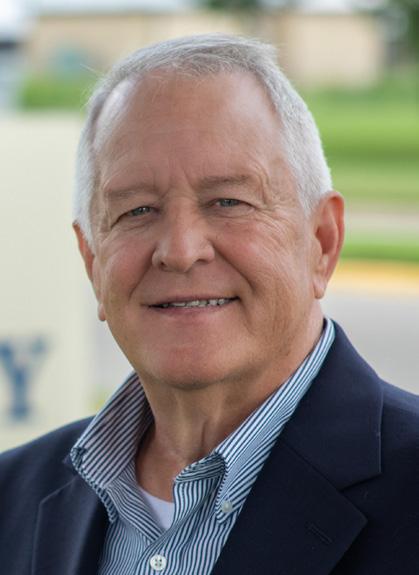
“The runway and location together are what really get people’s attention,” he said. “At 11,600 feet, there’s nothing flying that can’t land here. That puts us on the radar for companies that build aircraft, test them and support them through maintenance and repair. Then you add our proximity to Memphis and FedEx right down I-55, and it reinforces the value of being here from a logistics standpoint.”
Even as Mississippi County established itself as the nation’s steel hub, the aeroplex remains one of the county’s most important assets, said Mississippi County Judge John Alan Nelson.
“It gives us a place to compete for projects we would not have been able to pursue otherwise,” he said. “Between new tenant activity, ongoing site improvements and the amount of interest we’re seeing, it’s helping drive job creation and positioning Mississippi County for longterm growth. We’re continuing to invest in the property to support that interest.
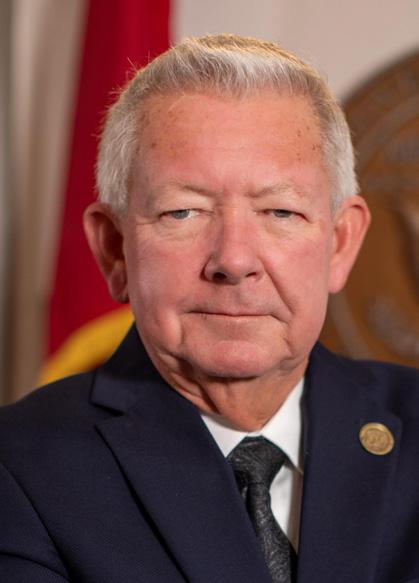
That includes planning work to guide future land use and pursuing additional funding for infrastructure improvements. The focus is making sure we’re ready when opportunities come, and right now, we’re seeing more and more of those opportunities.”
Harrison said he is seeing demand from each of the aviation, defense and distribution sectors, and the focus is on making sure the space and infrastructure are there to support that growth over time.
“The level of interest right now is very strong,” he said. “We’re having a lot of conversations with prospective tenants across aviation and industrial uses. To keep building on that, we’re making upgrades to the property, including improvements to security at entry points and enhanced lighting across the aeroplex.”
— Mark Carter
Atlanta (ATL)
Charlotte (CLT), Chicago (ORD)
Dallas (DFW and DAL)
Denver (DEN), Destin (VPS)
Houston (IAH), Las Vegas (LAS)
Los Angeles (LAX)
Miami (MIA)
New York City (LGA)
Orlando (SFB)
Phoenix (PHX)
St. Louis (STL)
Tampa (PIE)
Washington, D.C. (DCA)
Atlanta (ATL)
Charlotte (CLT), Chicago (ORD)
Dallas (DFW), Denver (DEN)
Destin (VPS)
Fort Lauderdale (FLL)
Gulf Shores (GUF)
Houston (IAH), Las Vegas (LAS)
Los Angeles (LAX)
Miami (MIA)
Minneapolis (MSP)
Nashville (BNA)
New Orleans (MSY)
New York City (LGA)
Orlando (MCO and SFB)
Pensacola (PNS)
Philadelphia (PHL)
Phoenix (PHX and AZA)
St. Petersburg (PIE)
Salt Lake City (SLC)
San Francisco (SFO)
Tampa (TPA and PIE)
Washington, D.C. (DCA)



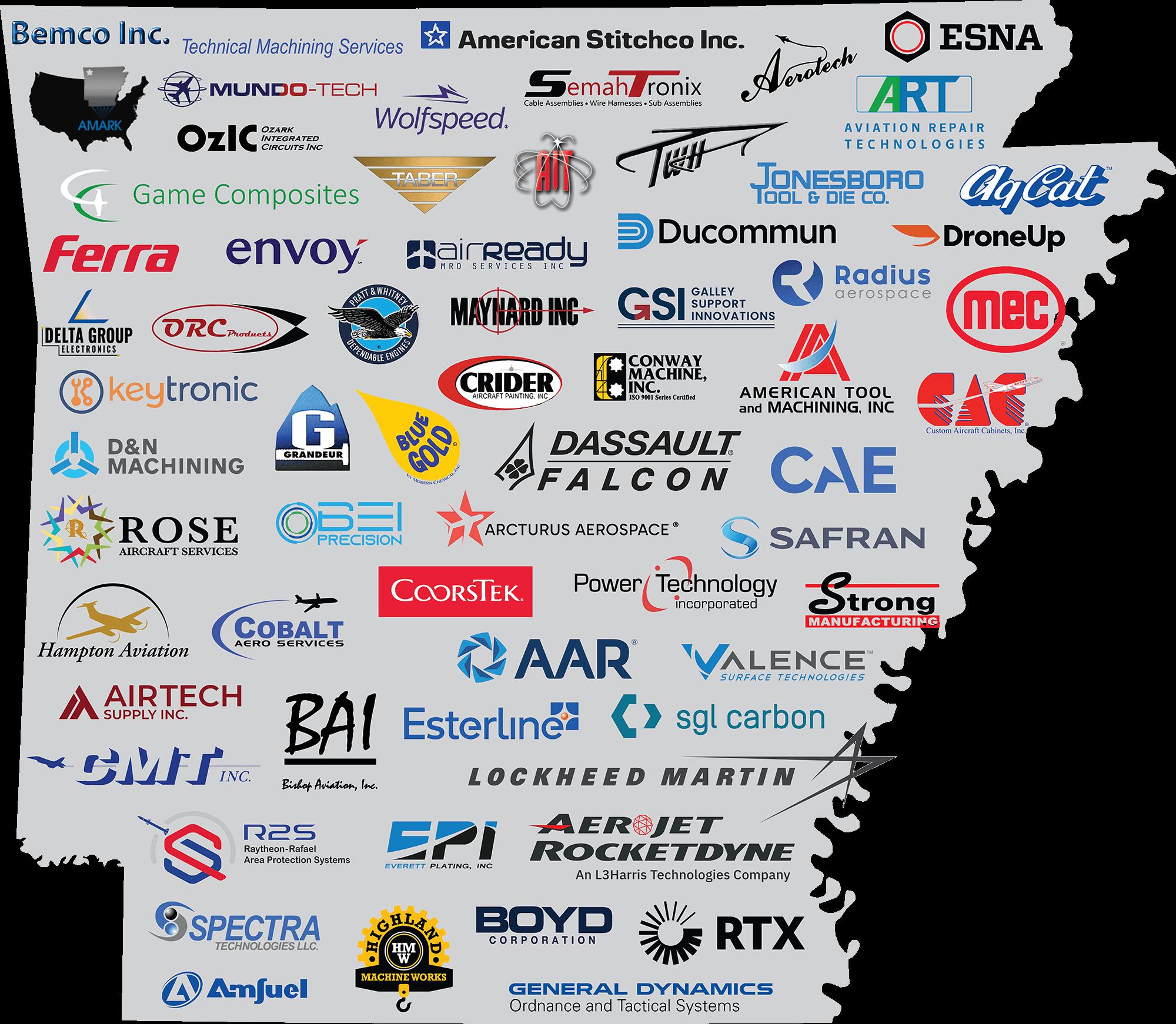
he Natural State is home to almost 200 aerospace and defense companies, including prominent global firms such as Dassault Falcon Jet, which operates its largest facility in Little Rock; Lockheed Martin; Aerojet Rocketdyne; and General Dynamics. As an industry, aerospace and defense represents the state’s top export category at more than $950 million exported annually as of 2024. More than 10,000 Arkansans are employed indirectly in the industry, and another 3,000-plus are directly engaged in manufacturing aerospace products and parts.



By Dwain Hebda
Worried about the introduction of driverless trucks? They’re already here.
Gatik may not have the trucking industry street cred and name recognition of Peterbilt or Kenworth, but that could soon change in a big way.
The California-based company announced in January that it had become “the first company in North America to deploy fully driverless trucks in commercial operations at scale, with $600 million in contracted revenue and daily deliveries for Fortune 50 retailers with no human driver or safety observer behind the wheel.”
“Autonomous trucking is no longer a promise. It’s a
“Autonomous trucking is no longer a promise. It’s a business.”
— Gautam Narang, Gatik


business,” Gautam Narang, CEO and cofounder of Gatik, said in a press release. “Gatik has proved that autonomous trucking is not only possible but commercially viable, and the fierce demand for our solution reflects how quickly this new model will reshape the future of logistics.”
The days of driverless trucks being merely theoretical in nature are not only gone but swiftly so. Over less than a decade of existence, Gatik claims to have deployed autonomous trucks
in four states and Ontario, Canada, boasting 60,000 fully driverless orders fulfilled since mid2025 alone and covering 2,000 hours and 10,000 miles across multiple logistics networks without a single incident.
While such Space Age wizardry generally rolls out on the coasts and makes its way inland, not so this time. The first states to see deployment of the technology include Texas, Arizona, Nebraska and, yes, Arkansas.
None of that is news to Shannon Newton at the Arkansas Trucking Association, of course; as the organization’s president, it is her job to stay up on all things trucking in the Natural State. However, she said it does make for quite the ice breaker in public speaking engagements to tell audiences the future is not only at hand but cruising along in the adjoining lane.
“I do think that people in general are surprised when I say that we have full-blown automation on the road in Arkansas today, and we have for, like, four years now,” she said. “I have said this in front of multiple audiences, and I get a similar reaction from all of them.
“People have such a conservative view of it, or they feel like it’s futuristic or someplace else or some other time that when I hit them with, ‘It is here. It is being utilized. It’s on the road. It’s being deployed in a commercial way today, now,’ I get the shock and awe of that.”
Walmart broke the seal on the use of autonomous trucks in 2019 with models that went fully driverless in 2021. Tyson Foods was close behind, and both companies are clients of Gatik. Application of the technology is fairly narrow at present; smaller rigs (think 26- to 30-foot bread trucks) are deployed on set routes from warehouses to individual stores or processing facilities and back, not unlike an oversized Roomba following a preset route.
The rigs navigate traffic and other structures through the use of next-gen sensors, artificial intelligence and other mapping tools. According to a company statement, Gatik’s safety systems have been vetted by the U.S. Department of Transportation’s Federal Motor Carrier Safety Administration and the National Highway Traffic Safety Administration, as well as state agencies and independent thirdparty audits.
While it may still be jarring for the average motorist to look to their left and see a ghost truck passing them, Newton was quick to challenge the thinking that an autonomous truck is automatically
less safe than human drivers.
“Let me challenge you a little bit. How many times do you look over, and you see someone putting mayonnaise on their sandwich or makeup on their face or scrolling or watching a video behind the wheel? That doesn’t faze you?” she said. “I understand where that [attitude] is coming from, but I also think people have the expectation of perfection when the reality is [the technology] doesn’t have to be perfect; it just has to be better than we are, and we’re not very good at times.
to help move products within their own supply chain in northwest Arkansas.”
The next step in the evolution of autonomous trucks, the ability for full-on big rigs to go coast to coast, remains a monumental lift. Not only are there issues of infrastructure such as charging and fueling, but state laws concerning the technology are all over the map. Arkansas and Texas are more progressive on that spectrum, while California practically bans such rigs outright, and the rest of the states create a hodgepodge of
Sun Belt. However, the firm is planning to add another 200 units this year, which explains its urgency in getting uniform regulations from the feds.
Newton never says never when it comes to the advance of technology but said wholesale use of 18-wheelers going coast to coast is not likely to become common overnight, even once the legislative piece is solved.
“People have the expectation of perfection when the reality is [the technology] doesn’t have to be perfect; it just has to be better than we are, and we’re not very good at times.”
“I think there’s a tendency to judge it as though it must execute flawlessly. Otherwise, it’s a failure, but a normal driver is far from perfect, yet we accept that running 75 miles an hour up and down the interstate all day long.”
On the positive side, the new trucks can run 24 hours a day, never call in sick and can be used to fill delivery gaps that would not equate to the best use of time and resources for live drivers if they could be found, Newton said.
“They’re short routes, very low miles. There’s a lot of downtime on either end of them, and so it’s very inefficient to utilize a person to stand there and man the trailer while they’re waiting on something to come out of cold storage or waiting on the grain to fill,” she said. “Most drivers really don’t want that job, so [companies] have deployed it as an efficiency measure
“When you’re talking about major over-the-road deployment, I don’t know that that’s realistic, or at least, that’s not really part of the conversations that I’ve been engaged in concerning the opportunities and rollout of autonomous vehicles,” she said. “Even on the biggest scale, where the companies have some sort of national footprint, including
— Shannon Newton, Arkansas Trucking Association
regulation in between.
The situation has pushed would-be players in the autonomous truck market to strain at their leashes, demanding federal lawmakers step in to provide some clarity and consistency across state lines. The Trib reported March 31 that a Pennsylvania-based company, Aurora, was pressuring members of Congress to override state rules with a national regulatory framework via the forthcoming highway, transit and rail reappropriation, due this fall.
“You can’t have a patchwork of legislation, particularly when it comes to interstate trucking,” said Gerardo Interiano, senior vice president of government affairs at Aurora. The company only operates 10 tractor trailers equipped with Aurora’s autonomous driving system at this time, primarily running routes in the nation’s
multiple locations in multiple states, the pipe dream application is that those truckload carriers could use it almost like a relay from one yard to another using autonomous technology and then have it manned for what today we call the final mile, but, in this application, would be the final 50 miles or whatever.
“Even that would require a complete reengineering of the way we think about over-the-road truckload freight transportation in general. Something like road construction or even something as basic as road striping, all of those things present real challenges for the technology. If we can’t stripe the highway appropriately, that’s going to make it increasingly difficult for the technology to utilize that striping to stay in its lane, so I think that we’re a long way away from that even happening.”
By Dwain Hebda | Photo provided by ArcBest
echnology for trucking companies usually involves what is found in the cab or back at headquarters, tracking where a big rig is at any given moment of a cross-country haul.
At ArcBest, one of the state’s largest and most successful transit companies, any stop along the supply chain — from shipping and warehousing to freight handling — is an opportunity to innovate. The Fort Smith-based company has met with great acclaim for its technology products that attack inefficiencies in the most pedestrian of settings — the warehouse — which add up to substantially increased efficiencies
“We think about all of this as making a positive operational impact,” said Dennis Anderson, chief innovation officer. “Our products improve safety, improve product throughput but, also, really digitize the warehouse. Being able to bring structure and order to that by automating processes is a big focus of our [technology] product lines.”
The company’s technology debut was its Vaux Freight Movement System, a means for stacking otherwise unstackable freight and allowing trailers to be loaded and unloaded in a fraction of the time. From there, ArcBest rolled out Vaux Smart Autonomy, which created a system of driverless forklifts.
allows more sensing equipment to be put on a forklift to better understand the environment in the warehouse,” Anderson said.
The products may be revolutionary, but the ethos behind them is not. Anderson said ArcBest has a reputation of forward thinking and the current line of tech simply carries that reputation forward into current applications.
“We are a company that has a long history of innovation,” Anderson said. “We’ve been around for 103 years this fall, and we’ve had to think about technology pretty much continuously through that time. That’s our DNA as a company.”
The company’s products have been roundly awarded by the technology industry. Vaux products have been named a Time Magazine Best Invention (2023); winner of Food Logistics and Supply & Demand Chain Executive’s Top Software & Tech awards in the warehouse automation category (2024); and SupplyTech Breakthrough Material Handling Solution of the Year (2025).
Now the firm is in the pilot phase of Vaux Vision, a system that turns forklifts into intelligent mobile dimensioners. The technology uses strategically placed sensors and advanced perception technology to measure freight length, width and height as a forklift operator picks it up. Within seconds, the operator sees dimensions and images, including the piece ID or barcode.
“It doesn’t necessarily require the forklift to be a robot, but it
Anderson also noted the evolution of the company’s products is not precisely linear but that each was designed to dovetail into the other to solve various issues while still integrating seamlessly.
“It wasn’t so much that we got an idea, perfected it and then put it on the shelf and moved to the next thing; it was really about finding ways to containerize freight moving around on the dock and how we might enable more automation in the warehouse,” he said. “That got us to experimenting with how things could move around. We hired some robotics engineers at the time when robotics in the warehouse was very nascent.
“Robotic forklifts directly led us to Vaux Vision, where we were looking at the need for understanding the dimensions of products. We realized we were measuring things as part of the sensing suite that we needed for robotics and that some of those same thought processes could carry over from the robotics discussion to what happens with freight visibilitywise.”
Anderson said artificial intelligence is paving the way for even more innovative thinking in the future.
“I see a long runway in front of us of how AI particularly can fuse with the things that we’re already doing to make us smarter about how we move goods not only in our business but as an industry,” he said. “Making the supply chain smarter, work more efficiently, making it safer — those will really be the themes of the future for the next several years.”
3 Rivers Logistics
AAA Cooper Transportation
ArcBest

Truckload and LTL brokerage services for both refrigerated and dry loads, along with flatbed, hotshot, bulk and intermodal brokerage services. Gillett
Less-than-truckload, truckload, dedicated contract carriage, brokerage and fleet maintenance.
Intermodal and international shipping, less-than-truckoad, trade show shipping, time-critical, flatbed and temperature-controlled services.
Arkansas Freight Solutions Freight transportation services and hauling cargo.
Bowerman Trucking Nationwide dry-van freight transportation. Searcy
Brent Higgins Trucking Refrigerated and frozen products. Mulberry
Brew Crew Transportation Steel transport crew offering flatbed services. Farmington
Bruce Oakley Dry bulk transportation.
C.C. Jones Trucking Heavy hauling and specialty transport; produce. North Little Rock
CCS Transportation
CalArk
Truckload dry van and refrigerated van services. Conway
Dry van trucking services, in addition to temperature-controlled warehouse and distribution.
Carman Freight shipping and trucking. Fort Smith
Celo Transport
Central Hauling Co.
Convoy Logistics
DMT Services
Dedicated Logistics
Expedited hot shot, point-to-point delivery, less-than-truckload, long distance, critical delivery and secure delivery. Springdale
Dry-box, full-truckload carrier.
Mabelvale
Full truckload, less-than-truckload, intermodal, drayage, cross-dock and warehousing. Crossett
Dry-van plate trailers for ground transportation.
Siloam Springs, Van Buren
Nonhazardous freight carrier and trucking brokerage. Crossett
Diamond State Trucking Flatbed, van and conestoga trailer services. Malvern
Distribution Solutions
Full truckload, less-than-truckload, dry van, temperature controlled, long haul and regional shuttle. Harrison
EOS Trucking Transportation services. North Little Rock
FedEx Freight
Less-than-truckoad services for shipments weighing between 150 and 20,000 pounds. Little Rock
Glory Transportation Temperature-controlled carrier with trucking brokerage. Fayetteville
J.B. Hunt
Intermodal, dedicated, final mile, refrigerated, full truckload, less-thantruckload, flatbed, expedited and single-source services. Lowell
JD & Billy Hines Trucking
JM Bozeman Enterprises
Keen Transport
Laubach Freight

Customized services to move wood chips to paper mills, in addition to flatbed trailers. Prescott
Dry-van truckload carrier and logistics. Malvern
Heavy-haul logistics and transportation for the construction, mining and agriculture equipment markets.
North Little Rock
Full truckload, less-than-truckload, intermodal deliveries, hot shot, flatbed, conestoga flatbed and interplant shuttle. Paragould
Lew Thompson & Son Trucking Regional and dedicated truckload services.
Loggins Logistics
Flatbed services in nearly 30 states.
Huntsville
Jonesboro
MAGS Trucking Dry van. Cabot
MC Express Irregular route carrier with trailer leasing and dedicated service. Jonesboro
Marrlin Transit
Long-haul carrier for dry goods. Van Buren
Maverick Transportation Flatbed, dedicated, glass and brokerage services.
McSheer Truck’in
Morris Transportation
Old Dominion Freight Line
PAM Transport
RCX Solutions
Rich Logistics
Truckload transportation, dedicated routes and full-service brokerage.
Long-haul, regional, short-haul and local services.
Less-than-truckload freight leader with air-expedited transportation, brokerage services, warehousing, supply chain consulting and container drayage.
North Little Rock
Rose Bud
Hamburg
North Little Rock, Fort Smith, Jonesboro
PAM Transport offers dry-van truckload, expedited truckload, intermodal and logistics. Tontitown, North Little Rock
Truckload, less-than-truckoad, flatbed, intermodal, temperature control, expedited shipping and international shipping.
Little Rock
Scheduled truckload, expedited freight and door-to-door services. Little Rock
Southland Transport Service Hopper-bottom freight, dry-van freight and temperature-controlled freight.
Specialized Services
Transportation
Stuttgart
Temperature-sensitive freight, dry goods and pharmaceuticals. North Little Rock, Stuttgart
Stallion Transportation Group Long-haul, regional and dedicated trucking services.
Star Transportation Delivers petroleum products to more than 15 states.
Transco Lines
Beebe
Jonesboro
Truckload, less-than-truckload, drayage and specialized services. Russellville, North Little Rock
Tri-City Transport Dry and refrigerated transportation services.
Tri-National Warehouse, truckload and dedicated services.
Twin City Transportation
USA Truck
Rogers
Van Buren
Third-party logistics and trucking brokerage company that offers air-ride dry-van trailers and flatbed services. Little Rock, Prescott
Dedicated, dry van, expedited, flatbed, intermodal, less-than-truckload, overdimensional and temperature-controlled operations.
Wayne Smith Trucking Ground transportation services.
Van Buren
Morrilton
Woodfield Trucking Dry-van truckload services. Camden
Less-than-truckload transportation, truck brokerage, last mile logistics, intermodal, drayage, contract logistics, ground and air expedite, global forwarding, and managed transportation.
Little Rock, Fort Smith, Jonesboro, Springdale

By Doug Crise
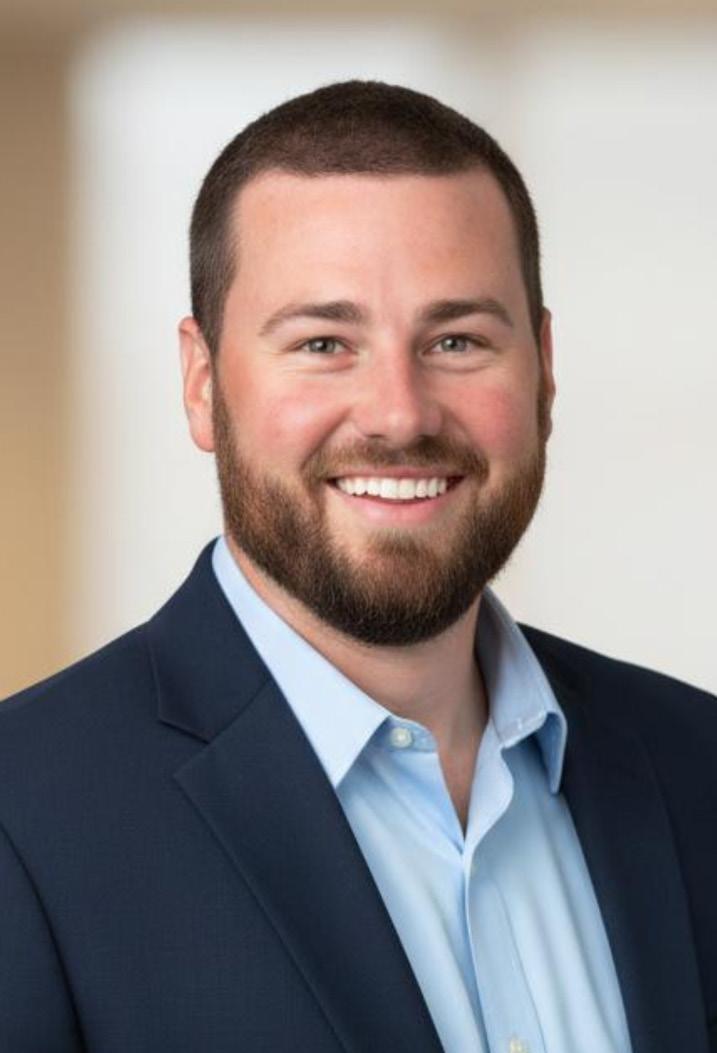
Brett Russell knows it is a bit cliched to mention that the more things change, the more they stay the same, but as vice president of Russell Chevrolet Co., which owns Russell Chevrolet and Honda in North Little Rock, he cannot help it. Waves of change have hit the automotive industry over the past decade, altering ways vehicles are both bought and sold.
Naturally enthusiastic about the business, Russell has devoted a lot of thought to how his line of work is changing, but the more he takes stock of car buying in 2026, the more he uses the past as a guidepost.
“Since 1963, when my grandfather started it, we’ve been a family-oriented business,” Russell said. “We try to impress on our employees that family comes first, and we are low pressure. We don’t want to do high-pressure tactics. We feel that drives customers off, and when they’ve bought from us, we want to take care of them on the back end, as well.”
Automobiles are, well, they’re a lot. Obviously, they are counted on as transportation from Point A to Point B. They are also forms of expression, parts of families, and chief indicators of the economy in Arkansas and nationwide. Unequivocally, they are big purchases, and they are just getting bigger.
“In Arkansas last year, our overall market was actually up to 8.3 percent in 2025,” said Greg Kirkpatrick, president of the Arkansas Automobile Dealers Association.
“That’s compared nationally to 3.3 percent, so, I mean, that’s pretty significant.”
Kirkpatrick looks after 275 auto dealerships across Arkansas, helping support and promote the businesses through advocacy, training and acquiring different resources. Each and every one of those dealerships provides their own wellspring of data that, together, helps suss out just how and what people are looking to buy.
First things first: Arkansans, as ever, prefer big and comfy.
“Obviously, consumers in Arkansas, by and large, are truck and sport utility vehicle buyers,” Kirkpatrick said. “That would be predicted, right? That segment is, by far, the top seller.”
Do not just believe the numbers; drive by a car dealership, and take note of the inventory.
“Smaller sedans are not in the public eye,” Russell said. “[Customers] are now looking at and purchasing the smaller SUVs. Most of your domestic manufacturers have pretty much gotten out of the sedan market. I don’t have a sedan to sell anymore. The Chevrolet Malibu is gone. That was our last one. The imports still make them. Honda still has theirs. Toyota still has theirs. Kia and Hyundai, I think, still have theirs, but they’re not sold in the numbers they used to sell.”
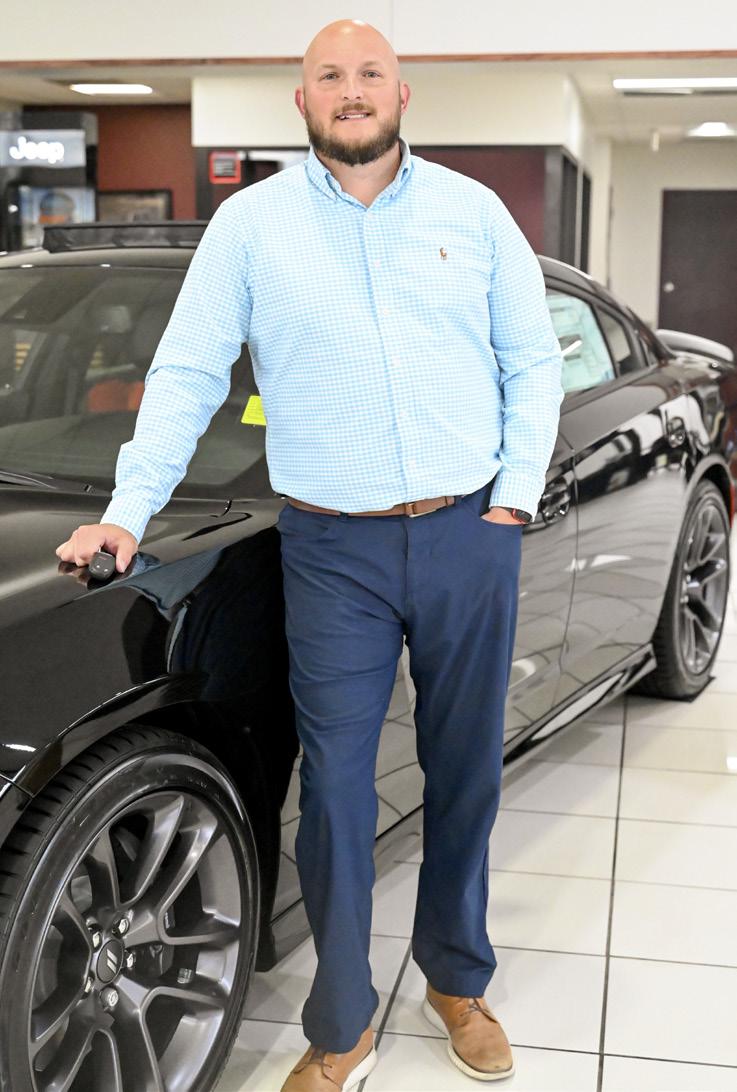
For the past 20 years, Chris “Zippy” Zehender has helped customers at Frank Fletcher Dodge Chrysler Jeep Ram in Sherwood find the right vehicle. What has him interested in 2026 has less to do with future forecasts and more with possible changes in regulations coming down from President Donald Trump’s administration and the federal government as a whole.
“Kind of judging by just in the past, what I’m seeing now is a lot of government regulations getting lifted,” Zehender said.
“In
Arkansas last year, our overall market was actually up to 8.3 percent in 2025. That’s compared nationally to 3.3 percent, so, I mean, that’s pretty significant.”
— Greg Kirkpatrick, president of the Arkansas Automobile Dealers Association
“You’re going to start seeing the big motors come back, the V-8s.”
After an initial wave of curiosity and a corresponding sales bump, Zehender does not see a surge in electric vehicle interest on the horizon, and he is not alone. Talk to in-state auto dealers, and the general consensus is that Arkansas remains far too spread out to enable practical long-distance travel in electric cars — and even if consumers are near recharging stations, waits of 20-plus minutes make a wholesale change to electricity difficult.
“I know a lot of people who, especially during the Biden administration, were like ‘Yeah, I’m really going to look into that,’” Russell said, “and it’s like what do I do if I have to drive to south Arkansas and I’m in the boondocks and everything like that? It just doesn’t fit with how people are.”
That said, recent U.S. military strikes against Iran could re-

Gone
are the days when car dealerships sat on all of the information related to vehicle purchasing and consumers entered into the process not always knowing how to have a say in the transaction. Today, online purchasing via sites such as Carvana and CarMax cut out the confusion and provide direct, straight-ahead information about availability and cost.
shuffle the deck as far as domestic oil and gas prices, a key factor for driving automotive sales.
“I’ve followed that market pretty close,” said dealership owner Steve Landers Jr., who also owns investment firm Interstate Holdings. “I think anytime there’s geopolitical issues in that area of the world, I think it’s always a possibility. I guess it depends on how protracted this conflict is. I think the longer it goes, there’s certainly a risk of fuel prices.”
Landers and Interstate Holdings Vice President Dustin Curtis have made it a point to track present-day gas prices, and Landers said part of his job entails using his 20-plus years of experience in the family automotive business to anticipate whether the oil crunch will be felt at the dealership level.
It has happened before, since the 2008 recession made consumers reconsider their interest in large, fuel-hungry vehicles.
“We’re trying to be ahead of that,” Landers said. “We’re trying to make sure we have preowned vehicles with good fuel economy in case of a major spike in gas prices. We haven’t seen anything like that yet, and from the sound of it, it doesn’t
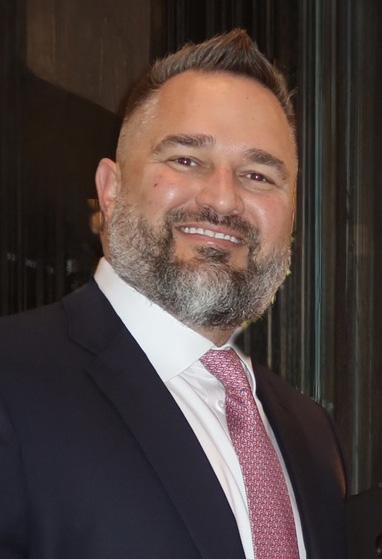
sound like that’s going to happen, but obviously, we want to be ahead of that.”
Russell agreed that global events can change buying habits in a hurry, but he has seen no change in customer demand thus far.
“If gas gets back up to $4 a gallon, we’re going to see Tahoes and Suburbans drop off in sales,” Russell said.
Another substantial change has taken place at the financing level.
“The things that give us concern are really the cost of vehicles,” Kirkpatrick said. “It gives dealers concern. It’s giving consumers concern. They’re having to take out loans on vehicles at a much longer pace. You’re starting to see 84-month loans, loans that are for seven, eight years.”
Domestically, the biggest changes have had less to do with gas and more to do with exactly how people choose to buy a car. Gone are the days when car dealerships sat on all the information related to vehicle purchasing and consumers entered into the process not always knowing how to have a say in the transaction. Today, online purchasing via sites such as Carvana and CarMax cut out the confusion and provide direct, straight-ahead information about availability and cost.
How are traditional automotive dealers taking the sea change in purchasing methodology? Pretty darn well, as a matter of fact. The stereotype of the unctuous car salesman looking to take advantage of customers does not really hold water in 2026.
In fact, dealers who have been around the business a long time — Zehender and Russell among them — embrace the fact that customers can arm themselves with information at the click of a mouse. That way, there is a shorter line between what the customer is after and what the dealership can provide, and customers feel more comfortable throughout the process.
Plus, a customer who drives a vehicle off the lot in a good mood is more likely to return to that dealership for parts and service, as well when it comes time to make another purchase.
“I think the automobile industry has always navigated through every problem they come up with,” Zehender said. “It’s just resilient. People are going to need cars every day for different reasons, and it’s just a resilient industry. Unless something traumatic happens, I think we’ll still keep rocking and rolling.”
U.S.
Sources:

Poultry in Arkansas creates jobs, holds down cost
By Doug Crise

Agriculture welcomes everyone. Behind the traditional elements of farms, livestock and crops lies a booming market for jobs in sectors ranging from technology and marketing to hard science and so much more.
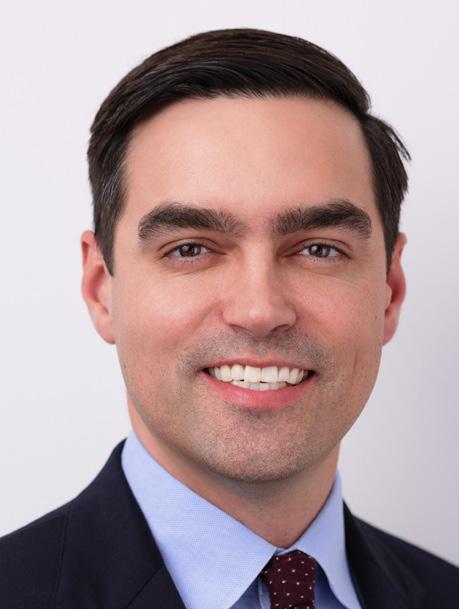
That is something Blake Rollins considers daily. As president of The Poultry Federation, part of Rollins’ job is to promote and advance the interests of the poultry industry in Arkansas, Oklahoma and Missouri. On any given day, Rollins’ to-do list can involve governmental relations, mountains of statistics and reports, and simply representing the industry at conferences.
Part of the job also means educational outreach, from school children all the way up to college students and beyond. Rollins himself did not grow up on a farm — his background is one of law and government, not science — and that is the point. There is a place for just about any career path under the umbrella of poultry, and Rollins wants to ensure the industry is always in a position to welcome newcomers with open arms.
“It’s estimated about 150,000 jobs in Arkansas are tied to the poultry industry,” Rollins said. “When you think about that impact, that’s both direct and indirect. That is enormous for our state and our state’s workforce and our state’s economy.”
According to the University of Arkansas Cooperative Extension Service, Arkansas leads the way in national poultry production. More than 6,000 Arkansas farms are involved in some form of poultry production, and in 2023, Arkansas was No. 3 in the nation for production of broiler chickens, providing more than 7 billion pounds of broiler meat.
“Feeding the future is going to take people who build things,” Rollins said.
To that end, The Poultry Federation has been partnering with Be Pro Be Proud, an initiative of the Arkansas State Chamber of Commerce dedicated to exposing young people to opportunities in several skilled trade industries. Part of that work has involved “Draft Days,” an outreach program on behalf of Be Pro Be Proud that allows students to explore careers within the poultry industry.
“We need to be able to produce food, as well as manufacturing, production, welders, electricians, refrigeration technicians, truck drivers, engineers, robotics experts,” Rollins said, “in addition to leaders, farmers and growers.”
It would be one thing if Rollins were the only one waving the flag for careers in poultry, but thanks to Arkansas’ role as a major domestic poultry producer, some of the largest poultry companies in the world are deeply plugged into the Natural State, and their doors are open.
“The poultry industry offers more careers than people expect,” said Dr. Kabel Robbins, director of live operations and staff veterinarian at Butterball’s Ozark and Huntsville facilities.
Robbins is one of more than 7,000 Butterball team members in fields as far flung as food safety, information technology, human resources, marketing, finance and more.
“It’s a wide-open field with jobs for every interest and skill level,” Robbins said.
Keith Smith may be behind Butterball by a couple thousand employees, but he understands every inch of the Arkansas poultry scene. As managing director of Keith Smith Co., Smith is a third-generation provider of broiler hatching eggs and oversees an operation that leads the nation in broiler egg production.
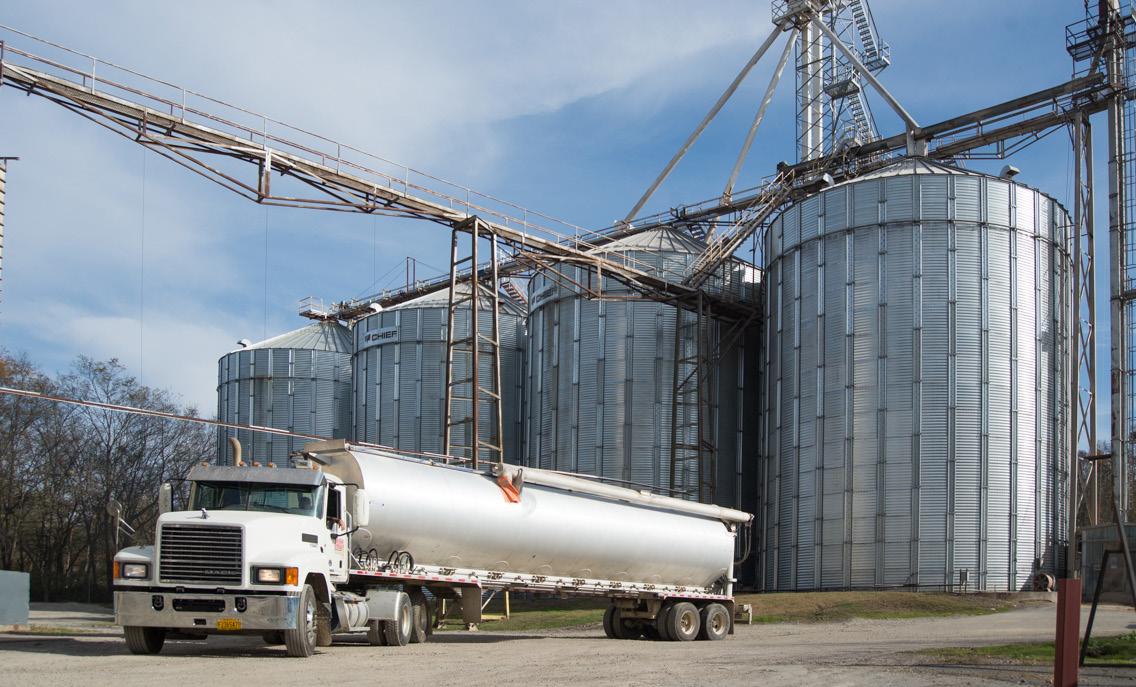
“Feeding the future is going to take people who build things,”
–Blake Rollins, president, The Poultry Federation
The opportunities that exist in poultry are just as varied and rich as when Smith began in the family business, he said, and he does not see that changing. Put simply, almost all agricultural roads in Arkansas eventually lead to poultry.
“In Arkansas, we have approximately 6 million acres of row crops, and roughly 55 percent of that are corn and soybeans that ultimately support the poultry industry through feed,” Smith said. “The ecosystem that has developed for poultry production in Arkansas over the years is unique, and when viewed together with grain production, it’s a massive economic engine in the state. The poultry industry alone supports 174,871 jobs in Arkansas, and the types of jobs needed in the future are changing.”
Whether chicken or turkey, small farm or booming business, technology is shifting the expectations of what it means to work in the poultry industry. It is also leading to job opportunities that have been heretofore unthought of.
“Technology is changing every aspect of our business, including how we manage farms,” Robbins said. “Better sensors now give us real-time data on temperature, airflow and air quality. We’re also improving how we track feed and water use, helping us monitor flock health and respond quickly to early warning signs. It’s all about giving farmers better tools to care for their turkey efficiently and effectively.”
Of course, a good portion of that technology and data go toward biosecurity and keeping flocks safe from diseases. Late 2025 brought a surge of the highly pathogenic avian influenza virus H5N1, most notably to farms in Drew and Cleveland counties in southeast Arkansas.
So far, even with small recent outbreaks, Arkansas poultry producers are holding the line against disease. According to Arkansas Secretary of Agriculture Wes Ward, infection risk remains low. The best indicator of major avian disease remains price, and wholesale composite prices for broilers in 2025 came in at an average of $1.26 per pound, down 2 percent from 2024.
However, there is little room to exhale. A scientific study done in the Czech Republic found that the virulent H5N1 strain may be able to be carried long distances by wind, so security remains vital.
“It’s a worldwide phenomenon,” Rollins said. “Over 100 countries have been hit by it.”
The best defense against the spread of disease remains communication and innovation. To that end, the University of Arkansas Research and Extension Service has been offering free online webinars to assist poultry producers in understanding the H5N1 strain and how to take preventive measures. The webinars are led by Dr. Dustan Clark, extension poultry health veterinarian for the University of Arkansas System Division of Agriculture and director of the Center of Excellence for Poultry Science.
“The reason for offering these is the continuing problem seen in the USA with highly pathogenic avian influenza in both commercial poultry flocks and in backyard or hobby flocks,” Clark said. “There are many aspects as part of biosecurity, such as sanitation and cleaning, disinfection, controlling animal and people movement to and from a farm, controlling vehicle and equipment movement to and from a farm, diagnostic testing, and protocols. Continuing research will allow refinement and potential advances to any and all of these biosecurity aspects.”
While the threat of disease will always hang above poultry producers to some extent, the comparatively low numbers thus far spell good news to consumers. Better news is on the horizon thanks to the U.S. Department of Agriculture’s proposal in February to change the rules of how fast poultry production lines can move, the U.S. Department of Agriculture advocating for a bump from 140 birds per minute to 175.
New rules mean better efficiency and, best yet, lower cost at the grocery store, meaning Arkansans will still be able to enjoy their favorite meat without breaking the bank.
“As our nation celebrates its 250th birthday, it’s just an exciting opportunity to remember the importance of agriculture to our nation and the key ideas that remind our fellow citizens that food security is national security,” Rollins said. “If we can’t feed ourselves, we can’t feed the world.”





By Mark Carter
First-generation farmers are taking to the fields in greater numbers, drawn by the siren call of sustainable living, healthier eating, connecting with nature and responsible land management.
Turns out, these small, family-owned “boutique” farms are good business opportunities, as well. Laura and Tyler Beaudreau bought their Wye Mountain farm, across from the famous daffodil festival, in 2017 so Laura could have a place to keep her horses.
Less than a decade later, they built something special through Double B Farm & Ranch, located just west of Little Rock. The Beaudreaus started out with 25 acres and three horses and now sit on 125 acres, on which they raise cattle, chickens and hogs in low-stress environments. The farm also grows vegetables, which are available for free at a little stand at the farm’s entrance. Demand for their organic beef, eggs and pork grew so high that earlier this year they opened a community market on Arkansas 113 outside nearby Bigelow.
Double B uses rotational grazing for its cattle, and the swine and chicken are free range. Such stewardship is not only better for the environment, but — customers attest — the meat is of a higher quality and tastes better. Responsible stewardship is the cornerstone of Double B and family farms like it.
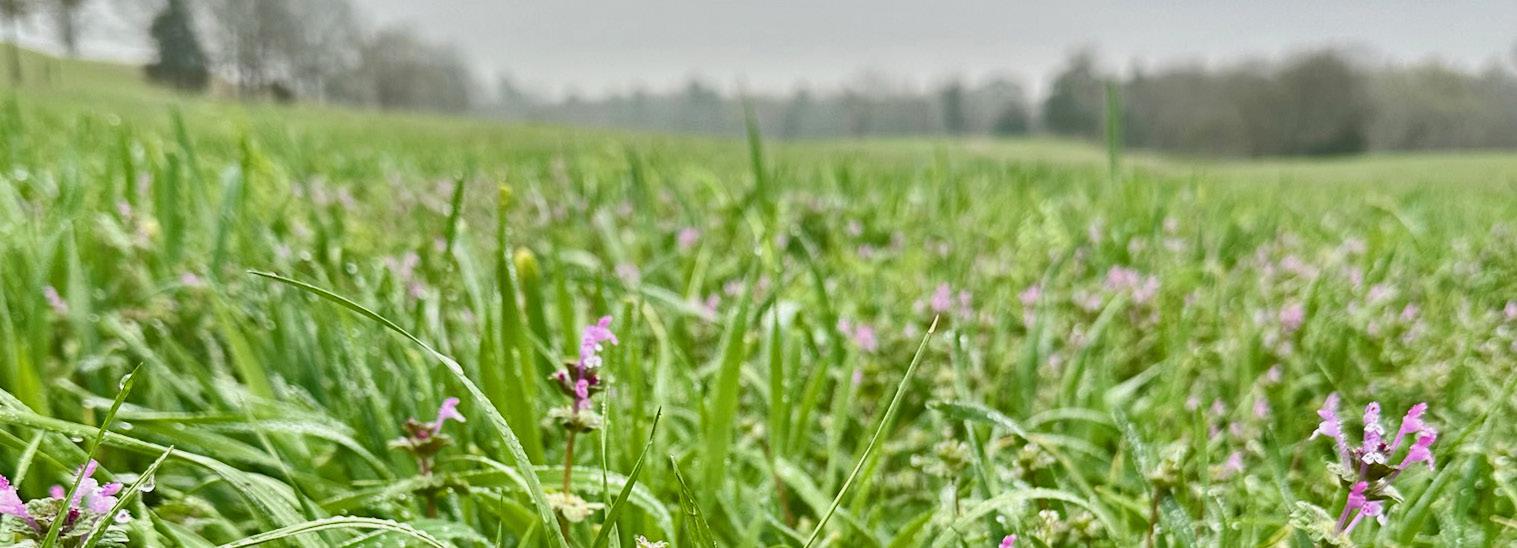
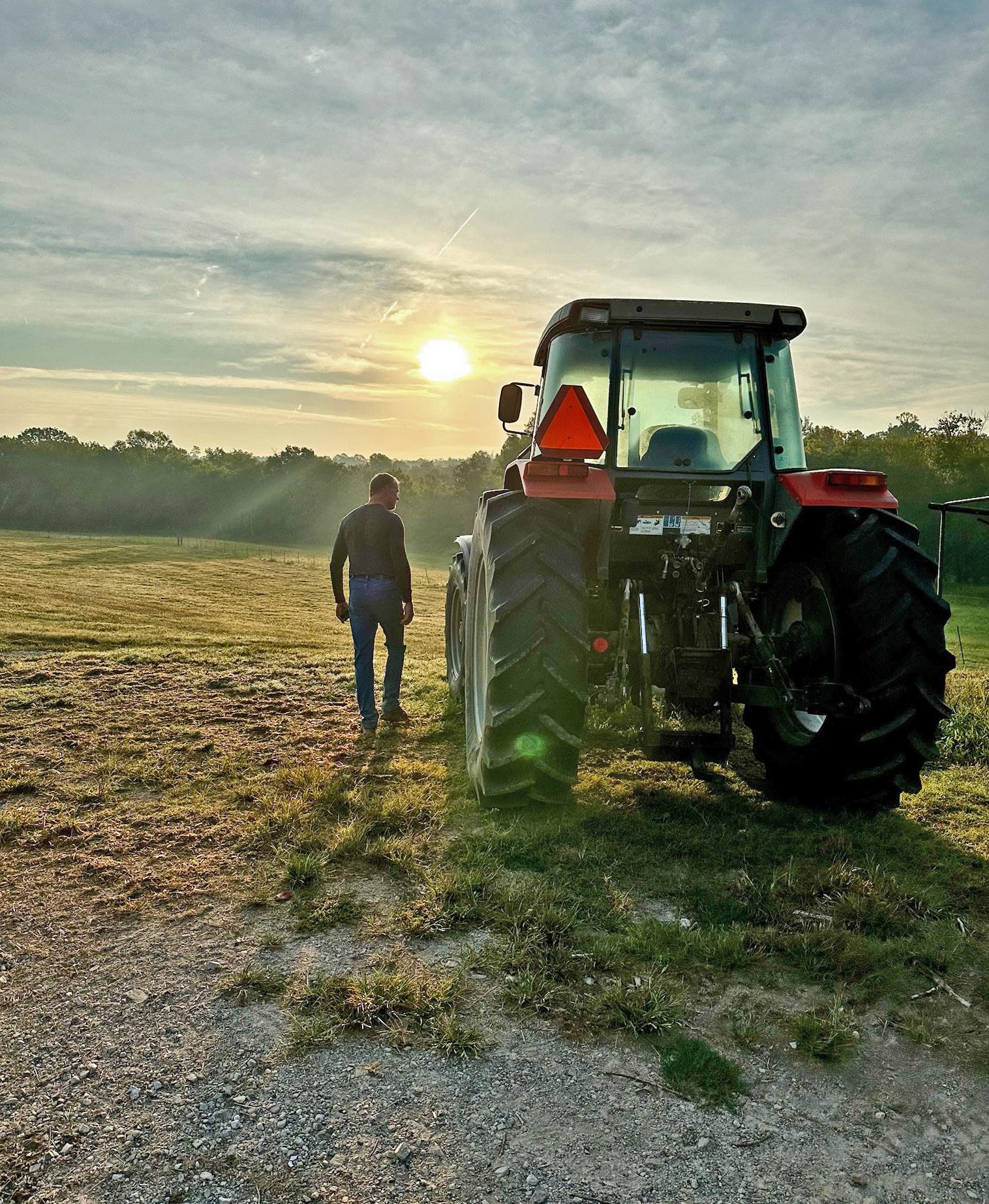
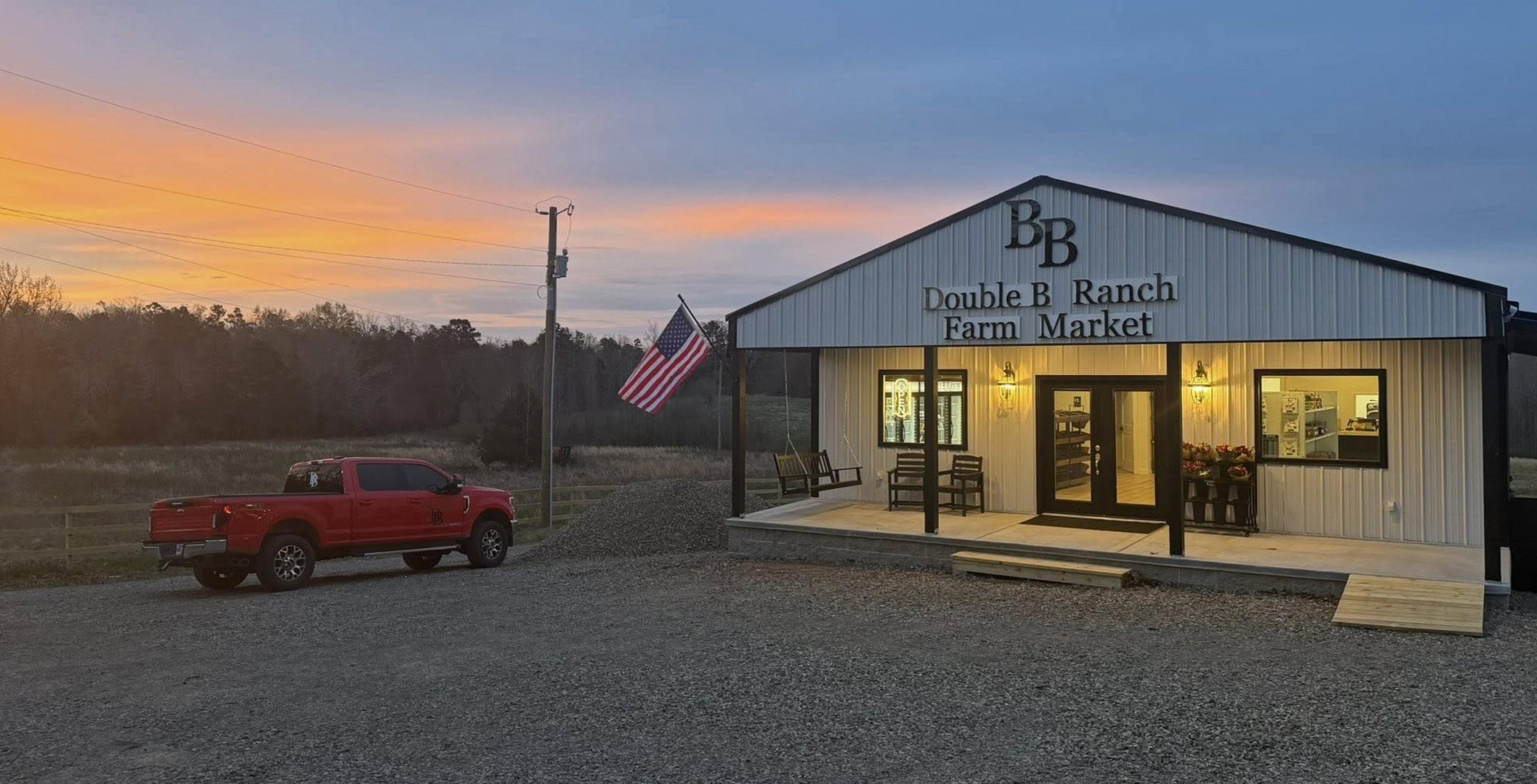

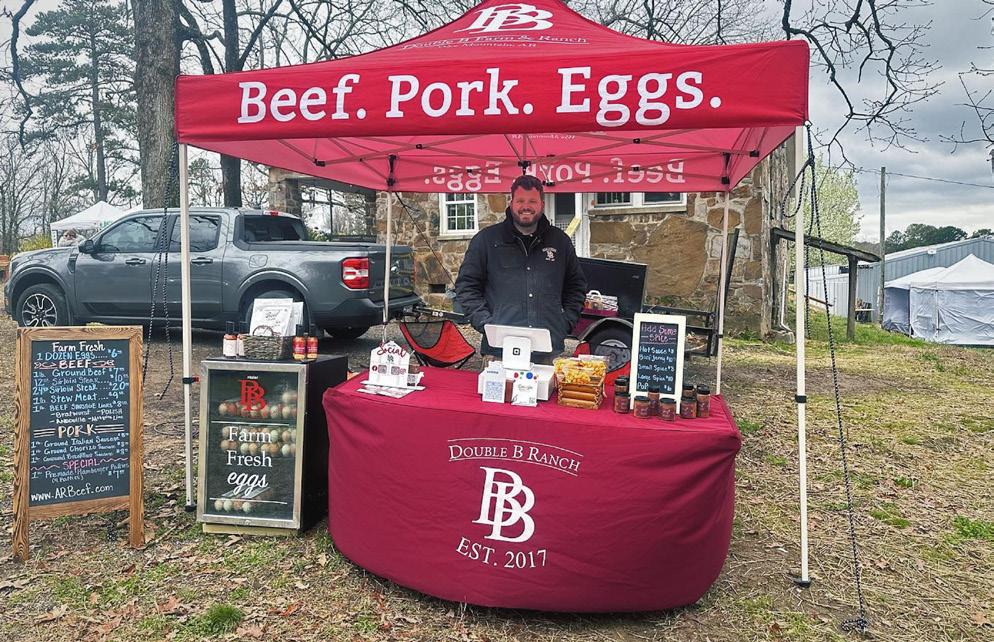
The Beaudreaus were looking for a life rooted in hard work, resilience and a love for the land, Tyler said. The growing popularity of their antibiotic- and vaccine-free products is a bonus.
“Farming is more than just a livelihood for us,” he said. “As a family, we are passionate about giving back to our community, whether by sharing our products, our knowledge or simply the joy of farm life.”
Double B harvests about 100 cows a year now, Tyler said. One thing that sets the farm apart, he noted, is free delivery within 30 miles for orders of $35 or more.
“That’s something no one else does,” he said. “We saw that niche and tried to fill it.”
Tyler was the facilities manager at The Country Club of Little Rock before devoting himself to full-time farming, and Laura worked her way through pharmacy school at the University of Arkansas for Medical Sciences in Little Rock while helping on the farm. The family, which has grown to three since the move to the farm, learns and grows with each season, Tyler said.
Unlike the Beaudreaus, Kristen and Brian Gardner, owners of Driftwood Farms, are not native to Arkansas. They met as civilian contractors in Afghanistan and bought their Bee Branch property sight unseen. Three years later, their operation has become the go-to supplier of mushrooms and microgreens in central Arkansas.
Driftwood now supplies more than 20 prominent central Arkansas restaurants, including Petit & Keet, Brave New Restaurant, and Samantha’s Tap Room & Wood Grill, and the farm’s
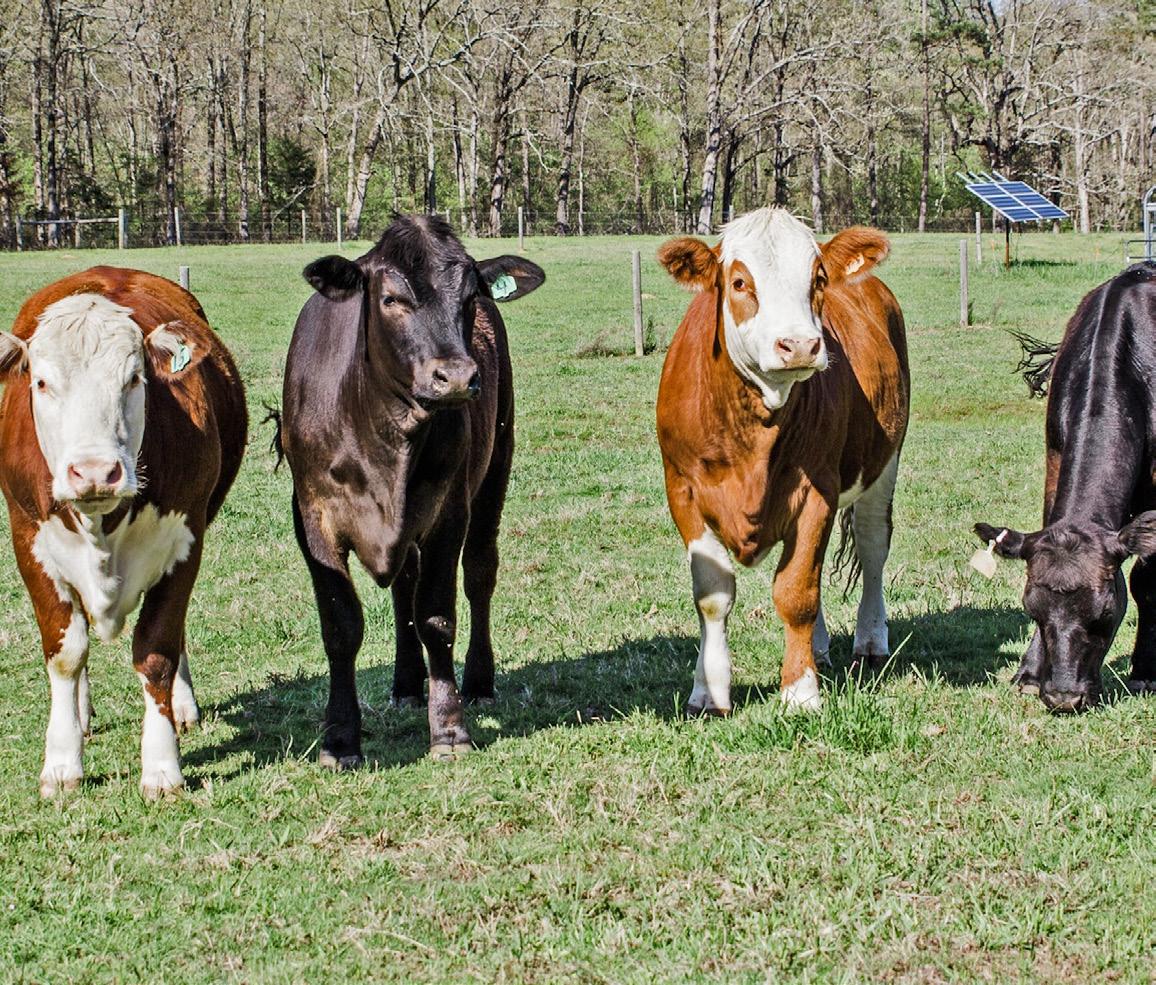

products can also be found at the Hillcrest and west Little Rock farmers markets.
Launching a farming operation, even a “boutique” one such as Driftwood, is one thing. Keeping it going is another.
“Getting established in anything worthwhile is demanding. It takes grit,” Brian Gardner said. “When we first started with microgreens, Kristen and I would cold call and even walk into

restaurants we had researched beforehand. It was nerve-wracking, standing in front of experienced chefs who know good food and trying to deliver your elevator pitch just to get a chance, but we kept showing up, and eventually, the food spoke for itself. When we started growing mushrooms, we went through that same process again.”
Brian noted the path paved for local mushroom farmers by the late Jess Wilkins.
“We were also incredibly fortunate to have some help along the way,” he said. “Jess helped pave the path, and that meant we just had to step up and make sure we didn’t disappoint. There’s a lot of heart that goes into Driftwood Farms — not just ours but the people who’ve supported us along the way. I believe that authenticity, along with the quality of our produce, is why people keep coming back.”
Brian said the medicinal components in mushrooms are something Driftwood may explore further.
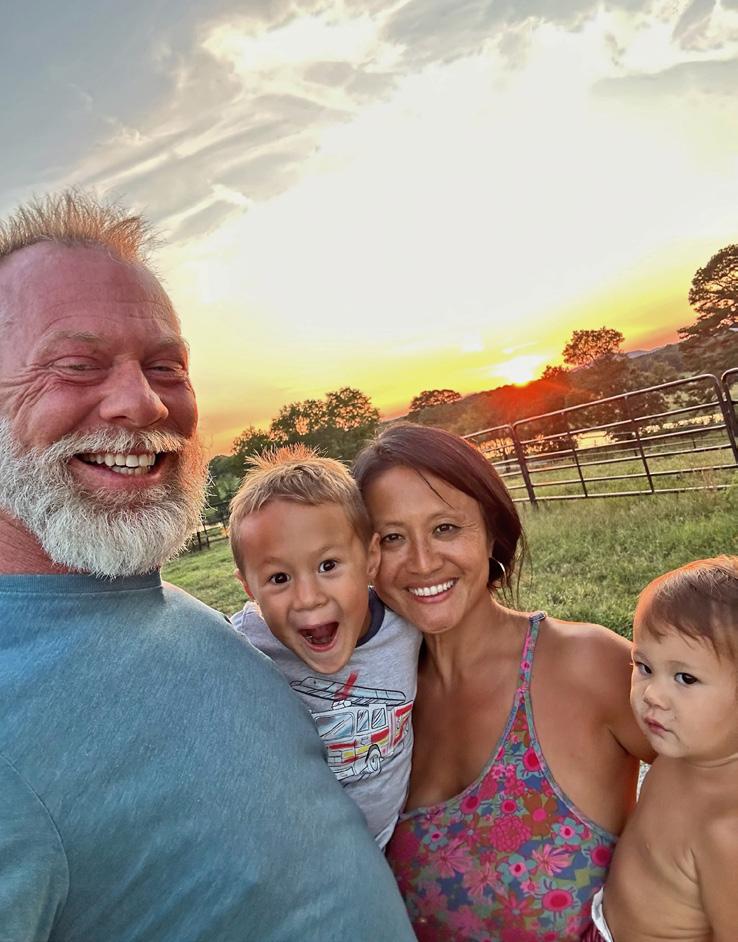
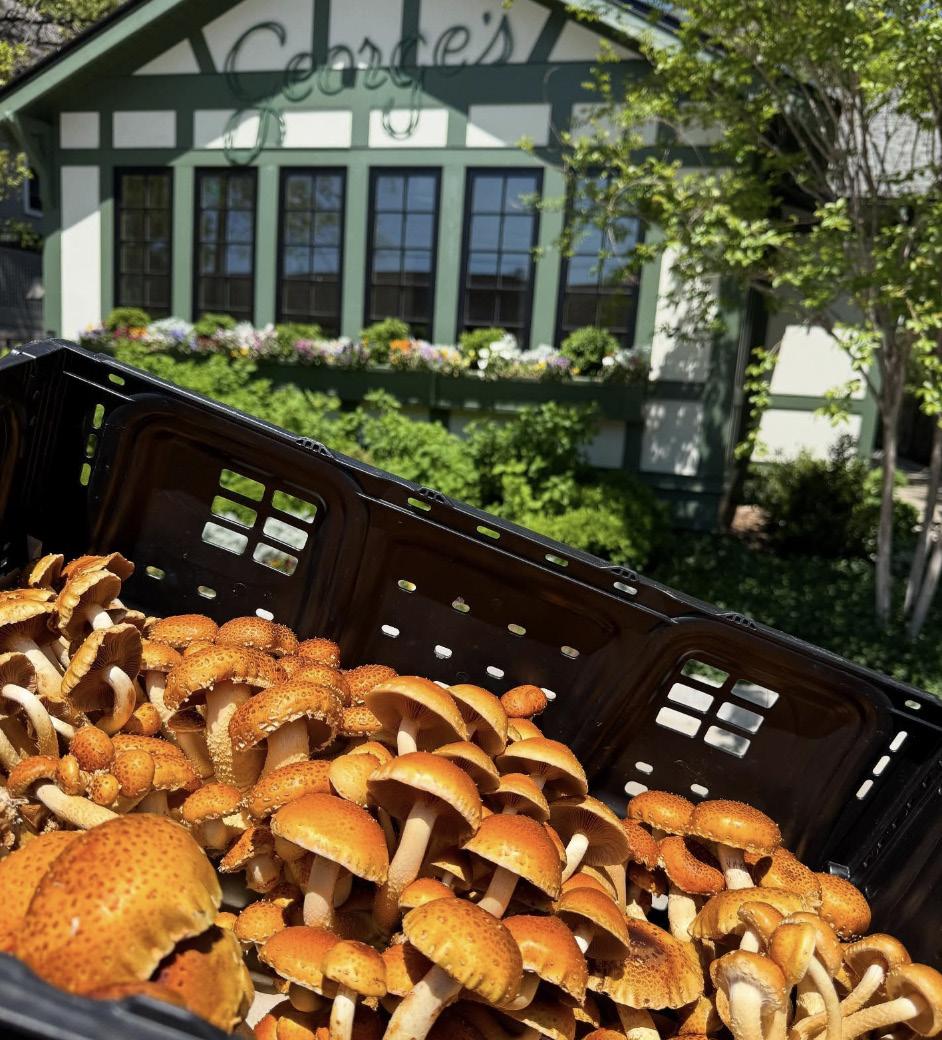
“We’re really excited to see the research being done on the medicinal side of mushrooms,” he said, noting their potential use in cancer treatment. “In many ways, that interest was part of what inspired us to start growing them in the first place. There’s growing attention around mushrooms like lion’s mane for cognitive health and others, like turkey tail, that have been studied for their potential cancer-treating properties. We’re definitely keeping an eye on that side of the industry. If what we grow could help someone in addition to feeding them, we wouldn’t hesitate to explore those opportunities.”
Supporting their community with health benefits in addition to healthy food would be an exciting next step, he added. Meanwhile, the Gardners continue to find satisfaction and justification for all their hard work in how their products can posi-

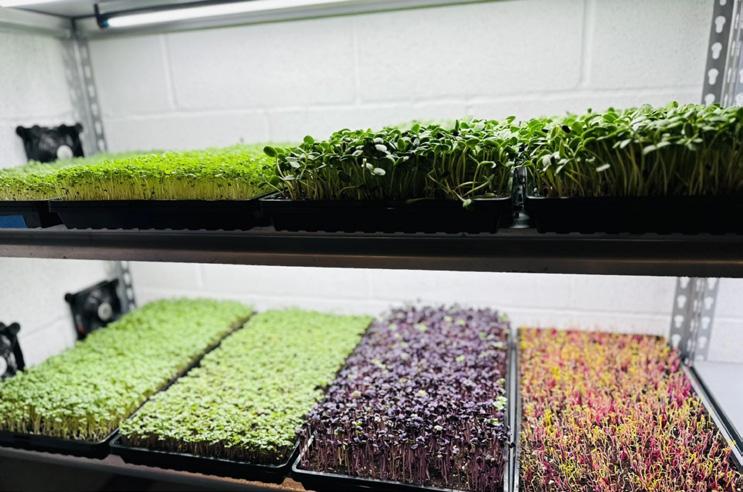

tively influence the lives of others. Brian called it a blessing they cherish and said it is the reason they go to work every day.
“Days are ever changing here, and that’s both the scary and beautiful part of farming,” Brian said. “The ebbs and flows keep things exciting. Over the past year, we’ve been fortunate to grow a bit, adding a few more restaurant clients and continuing to build relationships through our farmers market and our local community. At the end of it all, it’s about our people and our community.”
Like the Gardners, native Texans Betty and John Ballard took a leap of faith when they decided to trade board rooms for pastures. A random search brought

them to Bonnerdale, northeast of Hot Springs, in 2020, and Live Healthy Farms was launched.
Today, the 115-acre farm includes about 100 head of Angus cows, 10 dairy cows, 100 laying hens, an orchard, and even a paddock and greenhouse for growing herbs and veggies — and, as John noted enthusiastically, the farm now has honeybees once again. The bees, a true sign of the land’s health, were absent from the farm when they bought it.
Betty Ballard said starting the farm was a leap of faith.
“We bought the farm not really knowing exactly what we were going to do,” she said. “We just knew that God led us in a direction to look at farming from a holistic and regenerative perspective.”
Like their counterparts on Wye Mountain, the Ballards are intent on good stewardship, motivated by scripture from John 10:10 about living an abundant life and all it entails.
“Our goal is to mimic the ecosystem as it was designed from the beginning of time,” John said. “We look at what nature does to regenerate on its own.”
John, a former wide receiver on the Texas Tech football team in the early 1990s, joked that he and Betty rarely leave the farm anymore — the farm provides all they need. More Arkansans are signing up for that, as well. Not only are products flying off the shelves at the farmstand, but Live Healthy also offers an Airbnb and a spa. John has described the farm as their own little microeconomy.
“People have a desire for this. People feel the void,” Betty said. “They gravitate toward things that are real, not synthetic.”
By Dwain Hebda



It has been just four years since the American farmer was selling his or her products at record-high crop prices, but like a serial dieter whose weight swings in an ever-widening arc, the lows that have followed have plunged deeper than they have across four decades.
According to the U.S. Department of Agriculture Economic Research Service’s December update to Commodity Costs and Returns, average total costs per acre are expected to increase for every one of the nine principal row crops in 2026. Costs for producing these crops, including corn, soybeans, wheat, cotton, rice, barley, oats, peanuts and sorghum, are forecast to be up 2.2 to 3.3 percent in operational costs, which include farmwide expenses such as equipment, land and management.
Cost to produce is also expected to be up on an operational basis, which are the direct expenses of producing a crop, such as seed, fertilizer, chemicals, fuel and labor. The expenses are expected to bump upward from
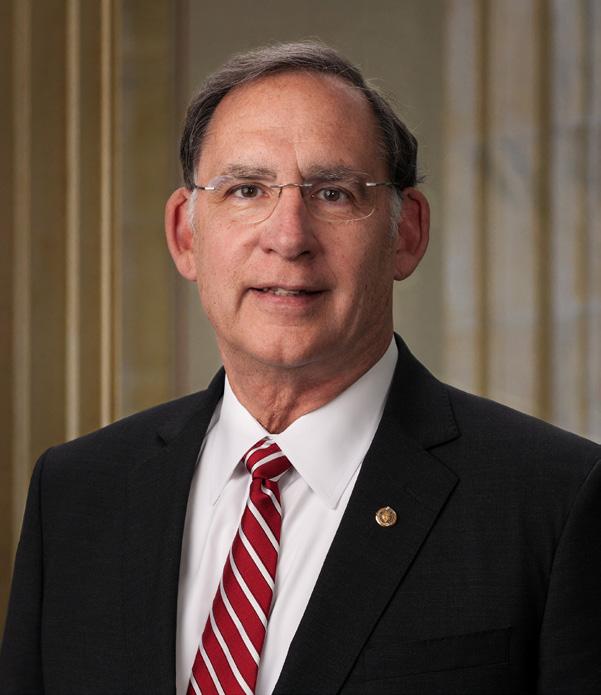
The report noted the drivers of the operational cost increase are led by interest expenses, up 71 percent since 2020; followed by labor, up 47 percent; fertilizer, up 37 percent; fuel and oil, up 32 percent; maintenance, up 27 percent; chemicals, up 25 percent; and seed and marketing costs, which are both up 18 percent.
The subject of President Donald Trump’s trade spats during the first year of his second term did not help matters as rising tariffs impacted farm exports to major trading partners, including China and Mexico. However, sentiment on the measures is not that cut and dried. Purdue University in Indiana found last year that 70 percent of U.S. farmers believe the president’s tariffs will strengthen U.S. agriculture by pressuring China to boost its imports.
Farmers are much quicker to blame the Biden administration for what they perceive as weak leadership and the lack of a comprehensive Farm Bill for aggravating the situation. A multiyear omnibus law Congress typically passes every five years, the Farm Bill includes such things as disaster support, loan and credit programs, and rural development and infrastructure. The Farm Bill has not been renewed since 2018; that measure expired in 2023 and has since been triaged along by extensions that have done nothing to bring the bill to current economic conditions.
It does not take a Harvard MBA to do the math: Rising input costs married to sluggish-at-best commodity prices and a moribund response from Washington is a recipe that is leavening as we speak — to the detriment of ag land. Last year, farm sector debt reached a record $561.8 billion in 2025, a year-over-year increase of 3.7 percent, the USDA states.
to the front of the line. Boozman’s persistence paid off with several key elements of the One Big Beautiful Bill Act and various emergency relief, the latest of which was last December’s announcement of $12 billion in bridge funds headed to the heartland.
Boozman sat down with Arkansas Money & Politics to discuss the work done thus far and the lifting left to do to help America’s farmers and ranchers keep the nation strong and the world fed.
Arkansas Money & Politics: Some of the ag issues were covered in the One Big Beautiful Bill Act, and then in December, the president authorized some emergency funds. How much of that action covers what the Farm Bill would have?
Sen. John Boozman: Well, what we did was essentially about 85 percent of the Farm Bill in the One Big Beautiful Bill. The things that we were able to get done were the things that cost

Arkansas has a ringside seat to the gear grinding in Washington when it comes to ag. As chairman of the Senate Committee on Agriculture, Nutrition and Forestry, Sen. John Boozman has been a key figure in pushing the needs of the farmer and agribusiness to the front of the line.
Researchers at the University of Arkansas Division of Agriculture, meanwhile, reported Chapter 12 bankruptcy filings — specifically for farmers and family fishermen — reached 88 in the first quarter of 2025, nearly doubling the previous year’s figure.
Arkansas has a ringside seat to the gear-grinding in Washington when it comes to ag. As chairman of the Senate Committee on Agriculture, Nutrition and Forestry, Sen. John Boozman has been a key figure in pushing the needs of the farmer and agribusiness
a lot of money, and those are really reinforcing the safety nets that the farmers depend on — the risk management tools that they use, crop insurance, a number of different things that they use so that they can cut their risk as they plant crops, not knowing what they’re going to be able to receive for that crop until it’s harvested.
Because of that, and investing in research, investing in advertising so that we could market the crops that they’re producing,
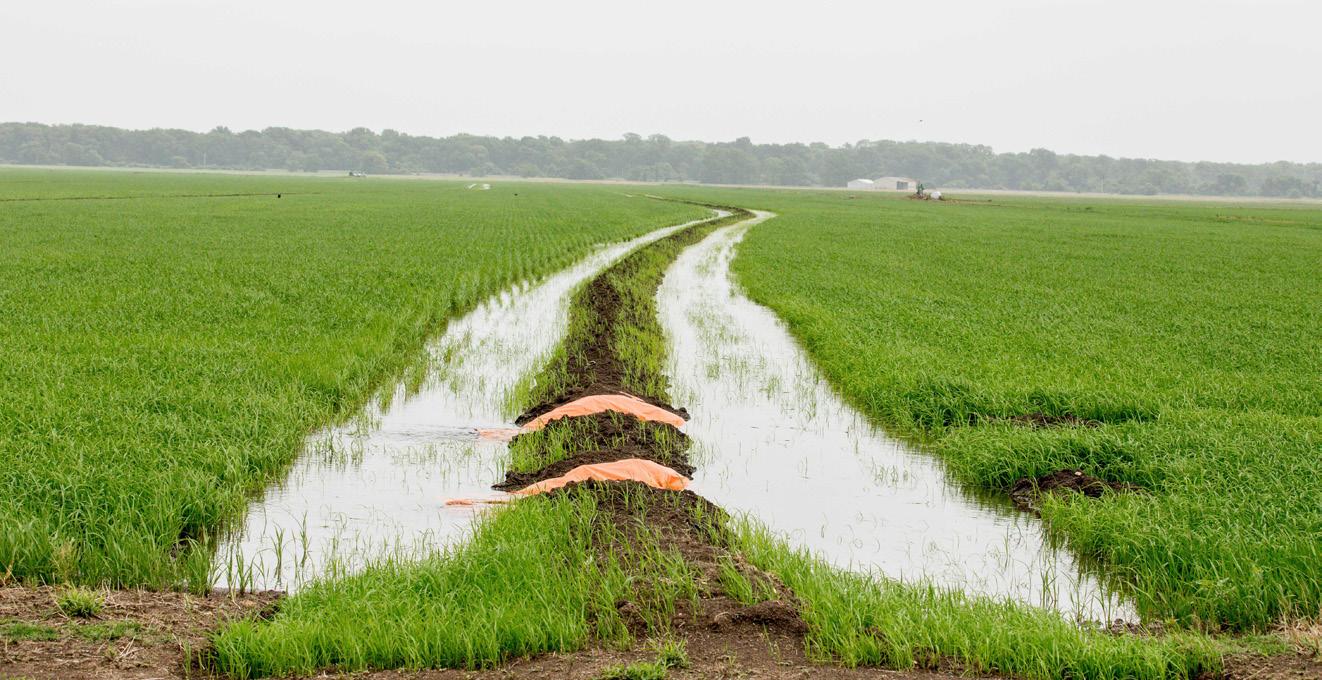
we spent about $68 billion, which is by far a record Farm Bill amount. We can be very pleased with that.
There were some things, though, that we weren’t able to do because the One Big Beautiful Bill was a reconciliation package, and what that means is that there’s certain things, certain policy things, that you can’t get passed using that particular bill. That would include things like the loan limits that people have right now. Those were all done several years ago. Now, with inflation, all of that needs to be adjusted upward, making sure that we’ve got adequate funding for rural America.
We also want to make sure that qualityof-life issues are addressed, such as help for rural hospitals, broadband, just everyday life, that we can plus that up a little bit so that we’re not losing the population that we’re losing in rural America. Those are the things that we’re going to be concentrating on in doing the rest of the Farm Bill, that 15 or 20 percent that we were unable to do in the One Big Beautiful Bill under reconciliation.
Along with that, we listened to our farmers, listened to their lenders, the bankers and how they were going to be in a very difficult position with what they needed to
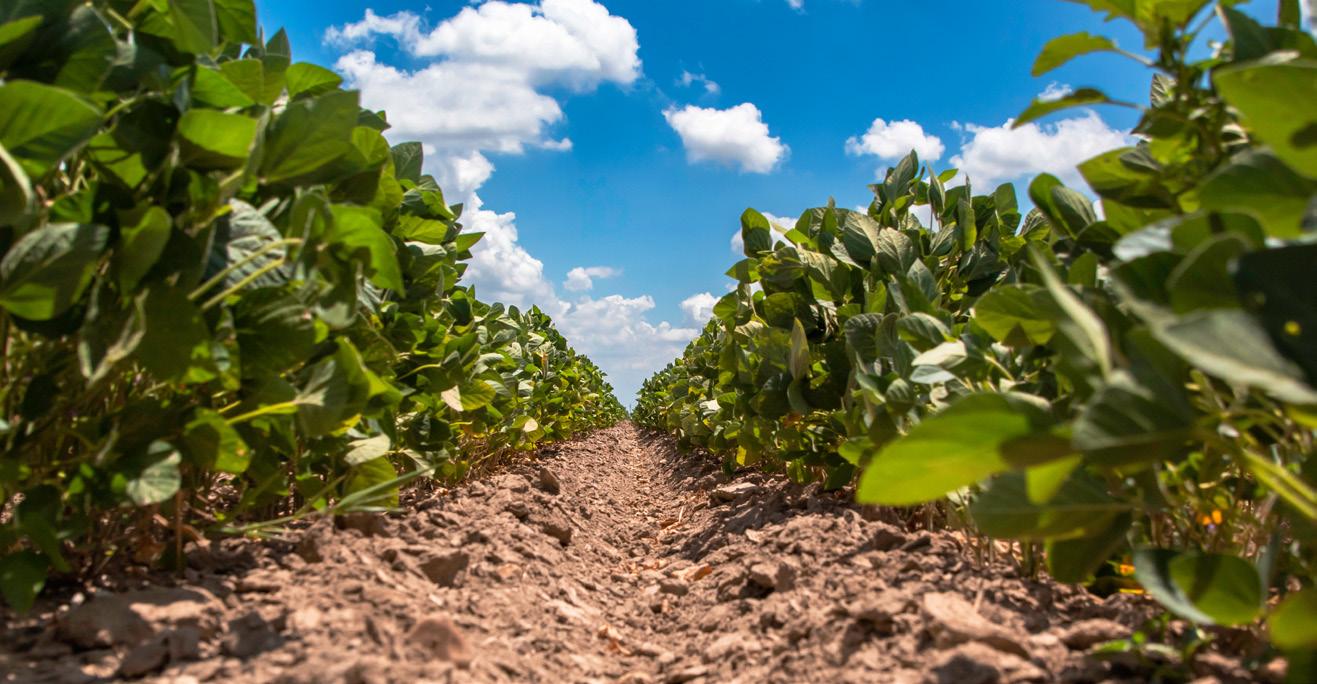
be able to plant this upcoming crop. At the end of this last year, we worked with the president, and we were able to come up with $12 billion — $11 billion for row crops, $1 billion for specialty crops — and that was a big help.
It turns out that things have not gotten any better; in fact, things probably have deteriorated a little bit, and we really feel like that we need additional funding. We’re working hard with the administration, with USDA and Congress, in order to come up with additional dollars, again, to get our farmers through this difficult time. The things that we’ve already done will kick in and help a bunch, but we’ve got to get our farmers through until that period of time so that they’ll be able to continue providing the safest, cheapest food supply of any place in the world.
AMP: Are there other things that previously may not have been part of the Farm Bill but, because we are looking at these extraordinary circumstances, that are being considered or might be considered — things like some sort of credit or rebates on new equipment or farm loan forgiveness or things along that line?

Boozman: Well, what we’ve done so far is essentially give the money to the farmers and let them decide what their most pressing needs are. That might be loan repayments. It might be some other aspect of the farm economy that is unique to their particular circumstance.
What we do know is that right now, when you consider everything — bank loans, loans to the USDA, equipment dealers, seed dealers, all of those kinds of things — we’re really looking at a situation where we’re more in debt as farmers than we were during the 1980s, when it was so difficult. The problem is that we just don’t have the markets that we used to have as countries like Brazil have become much more productive and they’re now in a position where they actually can grow two crops per season.
They also have worked with the Chinese to really make it such that their infrastructure is so much better. Now they can get the crop onto a paved road, to a nice port where they can ship it. Until recently, that hasn’t been the case. That’s not just Brazil. It’s India. It’s Vietnam. The list just goes on and on, so we’ve got to create more markets.
The other thing that we’ve got to do
No, the president used those [tariffs] to create new markets, and we’re really seeing a lot of the new markets that he talked about coming to fruition, whereby the previous administration did not create any new markets.
— Sen. John Boozman “


is work hard to value-add products that we have and not just sell those as regular commodities, giving farmers more and different areas of income. There’s a lot of things we can do now with mechanization, but it’s going to take a different way of thinking. That really is the challenge as we go forward.
AMP: Knowing that these countries were gaining in sophistication — you’ve mentioned specifically Brazil, India, Vietnam, there’s probably others — were the president’s tariffs ill timed? Did that give some of these countries some cover to take, for lack of a better word, market share away from the U.S. that we’re going to struggle to recoup? Boozman: No, the president used those [tariffs] to create new markets, and we’re really seeing a lot of the new markets that he talked about coming to fruition, whereby the previous administration did not create any new markets. Unions don’t like trade, and as a result, they just didn’t create new markets for our producers. Besides that, this has been going on for a long time in the sense that the Chinese have to import about 60 percent of their food, which is a huge amount. Instead of becoming a fair trading partner with the United States over the last several years, the Chinese have turned into an adversary in order to diversify where they’re buying their crops from. Instead of buying it mostly from us, they’ve looked to these other countries, and they’ve spent money supporting their infrastructure. That’s where they’re getting the food they’re counting on, from them rather than us.

But we have to remember that the December before President Trump became president, we came up, and we worked really hard together to come up with a $10 billion economic package for our farmers in distress and $21 billion of disaster relief, a massive amount of money, and that was before President Trump even took office. President Trump didn’t create the inflation that we’re experiencing now. That came in the early part of the Biden presidency, so this is something that there’s just lots of factors going into it.
AMP : For the average citizen, funding agriculture would seem like the closest thing to a slam dunk there is in modern politics. How frustrated are you with how long a Farm Bill has taken, and do you have confidence that the remainder of this is going to happen, particularly heading into midterms? Should the balance of power shift in Congress, is the Farm Bill going to get pushed to the back burner again as it has since 2018? What’s your outlook when you look forward?
Boozman: I’m really encouraged when you look at what we’ve done for farmers in the last year and a half. At the end of the Biden administration, farmers were coming off of a horrible year, and then the year before was really bad also. Since then, $10 billion in economic aid, $21 billion for disaster relief and coming back a year later and providing another $12 billion and then also doing about 85 percent of the Farm Bill to the tune of another $68 billion — these are massive amounts of money that haven’t ever been done
before. Thankfully, Congress really has responded, working together to do whatever we’ve needed to do to support our farming economy.
Most of our states, [ag is] No. 1 in their economy. Just like when you get outside of any town in Arkansas, when you get outside of any town of any size throughout the country, it’s not 25 percent of the economy. It’s 85 or 90 percent, so I think people really do understand how important this is, how important it is to provide aid, and we’ve been able to do that.
The question is how do we get our farmers into this new world order? Where we’ve got so much competition overseas, how do we make them more competitive? How do we give them the tools to be more competitive? You do that through research. You do it through mechanization and then, besides creating farm markets, creating more markets for farmers at home. We want to help them use more of this produce to value-add products but also just for us to consume it in our schools. All those kind of things I think we can do a much better job at.
Overall, it’s been a good story. We’ve got this 15 percent left to do. I’ve got a really good partner with Sen. Amy Klobuchar from Minnesota, and we’re working hard to come up with these last few things that we need to do. The good news is they’re not very expensive. They don’t cost a lot of money. I think that we have a good chance of just knocking out these few things that really would help farmers, make their lives a little bit easier, which is really what it’s all about, in a very bipartisan way.

By Dwain Hebda
On a typical summer’s day in Arkansas’ rural reaches — or that of any other state, actually — the landscape is the same. From the corn belt of the upper Midwest to the squat peanut stands of Georgia to the billowing rice fields of Arkansas’ Grand Prairie, an unending sea of green is all that meets the eye.
But of everything green that a typical farm deals in year in and year out, money has proven the toughest to take root. Higher input costs, sluggish markets and a string of international issues have all put farmers under increasing strain. Farm Aid reported that farmers were expected to break even in 2025, but the inexorable tightening of economic conditions over time is starting to strangle many of the nation’s providers.
In Arkansas, 37,200 farms cover 13.6 million acres, or 41 percent of Arkansas ground, according to 2025 statistics published by the University of Arkansas System Division of Agriculture. Despite its relatively small size, Arkansas punches well above its weight in productivity. In 2024, Arkansas ranked in the top 10 among states in nine categories including rice (first), broilers, catfish, cotton and cottonseed (third), turkeys (fourth), peanuts (seventh), chicken eggs (ninth) and soybeans (10th). The state also ranked in the top half of states in corn for grain, cattle and calves, and hay production, the U.S. Department of Agriculture states.

All of that adds up to make agriculture a major economic force in the state, more so on a percentage basis than peer states throughout the southeastern region of the country. As reported by USDA, the aggregate agriculture sector’s share of Arkansas’ gross domestic product is nearly four times that of Texas, twice that of the southeast region, which also includes Louisiana, Oklahoma, Tennessee, Missouri and Mississippi, and nearly three times that of the nation as a whole.
The industry generates 14.4 percent of the state value added, approximately $25.2 billion worth, a measurement that includes labor income plus indirect taxes and other property-type income generated by agricultural production, processing and
ag-related activities. The USDA ranked the Natural State’s $13.8 billion in total cash receipts 14th in the nation in 2023, including 10th in animal and animal products at $8 billion and 16th in crops at $5.8 billion.
The problems on the farm are at once plain-English simple — higher costs plus lower commodity prices — and maddeningly nuanced in the push-me, pull-you way prices affect different ag products and therefore different sectors of the industry.
“Agriculture in Arkansas is pretty diverse, and it depends on which segment you’re in,” said Greg Cole, president and CEO of AgHeritage Farm Credit Services in Little Rock. “If you look at western Arkansas, you’ve got mostly cattle and poultry. Cattle prices are at an all-time high right now. They’re doing really good. The poultry companies are making money, and the poultry house business is pretty good.
tech bubble or a housing bubble, a more existential crisis played out across America’s heartland, one that brought the nation’s producers to their knees.
After a boom period in the 1970s where grain contracts with the Soviet Union boosted crop and protein prices skyward, producers started gobbling up available land to take advantage of the situation.
“We had much higher corn and soybean prices that led to good returns in agriculture, but mainly what it did, as well, is led farmers to buy a lot of farmland and use debt to buy that farmland,” Gary Schnitkey, University of Illinois Extension farm management specialist, said in a 2022 AgriNews retrospective of the crisis.
“The eastern part of the state is mostly row crops. These are big commercial producers that produce rice, cotton, soybeans and corn predominantly. That’s the area that’s the most stressed. In fact, I just got back from a national meeting, and the two hottest spots in the whole United States where agriculture was the most stressed were in California, in the nut and wine sector, and here in the mid-South, defined as the bootheel of Missouri all the way down the eastern part of Arkansas, western part of Mississippi and eastern part of Louisiana. Farmers there are losing money, and the outlook is not very good.”
Cole, who is approaching 42 years in banking, about half of them at AgHeritage, said the only thing that compares to the current situation is the farm crisis of the 1980s. Decades before there was a
“Farmland prices were going up and going up, and we got some pretty high debt-toasset ratios on these farms because we’d buy farmland, which we always believed was going to keep going up. We had to have it right now, so we bought it and bought it and got some pretty high debt levels. That set this [farm ground bubble] up.”
As history now shows, runaway inflation heading into the 1980s caused Washington to take action in the form of the Federal Reserve raising interest rates. The farmland bubble burst almost overnight as land values bottomed out, and that, combined with the Soviets’ grain embargo in 1979 and subsequent lower exports between 1981 and 1983, drove U.S. farm debt to $215 billion in 1984, double that of just six years prior. The impact was severe; producers quit in wholesale numbers, some foreclosed on and some just beaten into submission to the tune of reducing the number of family farms by about two-thirds compared to the 1930s. Cole said while similar, the circumstances of 1981 are not identical to those
of 2026, allowing many producers more breathing room, starting with land values.
“In the 1980s, farmers were in what I call the negative trifecta. They were eroding the balance sheet through operating losses and equipment depreciation and substantial land depreciation. Back then, we had land base fall as much as 60 percent. Today, our land values are still positive to steady,” he said. “Also, interest rates — even though our interest rates have come up from historical lows, from an historical perspective, they’ve steered more as average. Back then, interest rates were really elevated, with the prime interest rates peaking in 1980 at 21.5 percent.
“There were other factors too. Farmers then didn’t have risk management tools here in eastern Arkansas. A lot of the land wasn’t irrigated, where today the majority of it is irrigated, which reduces production risk. We have crop insurance today, where we didn’t back then, so what I’m seeing now is a pretty severe cycle that’s not as bad as the ‘80s, but it’s the toughest I’ve seen since the ‘80s.”
The ripple effect of the current crisis affects everyone and not just in the ways most people think of, through shortages and sticker shock at the grocery store. A struggling ag economy reverberates throughout all sectors of society, affecting ag-related and ag-supporting businesses such as processors, implement dealers and Main Street businesses of all descriptions found throughout the small towns dotting the nation’s rural areas, banking included.
Todd Wilson, loan manager at Signature Bank in Brinkley, works in the heart of Arkansas farm country. He said he sees this trickle-down effect in play every day in the community.
“In our part of the world, it’s not only affecting the farmers, but everybody in our community is affected by this downward turn,” he said. “The ag pilots, they’re losing money. The truckers are losing money. The beauticians are losing money. Agricultural affects our community 100 percent.

“In our part of the world, it’s not only affecting the farmers, but everybody in our community is affected by this downward turn.”
–Todd Wilson, Loan Manager, Signature Bank

“Riceland Foods made a comment to a meeting a couple weeks ago that they weren’t sure if they were going to be able to keep all their facilities open because of the decline in the rice market, so that would create more people without a job if they close those facilities. Like I said, it’s not just farmers. Agriculture affects everything that we do in eastern Arkansas.”
Wilson said of all the dour news of late, it is hard to pick out the most concerning trend, but the state of rice production comes mighty close.
“Rice has been the main staple in our part of the world, and in this day and age right now, rice is probably the worst crop that you could farm,” he said. “The USDA Farm Service Agency gives us a breakdown every spring of what they project the income is from each and every crop grown. That includes cattle, apples, nuts, fruits, vegetables — everything. Since 2023 to 2026, rice has gone down $2.56 in their projection. For a farmer that is cutting 180 bushels of rice, that’s a $460.80 loss per acre.
“Meanwhile, the input costs for the farmer have gone up. It’s $900 an acre to plant hybrid rice now, and that’s just the seed. Fertilizer has gone up since the beginning of this year, $165 a ton. Diesel fuel has gone up $1.20 in the last 45 days. For a farmer that’s producing rice and they’re having to water that crop and they’re putting fertilizer on it, it is eating into the bottom line every single minute.”
Until recently, financial relief for farmers has been slow in coming from Washington. The lack of an updated Farm Bill, last passed under President Donald Trump in 2018 and which expired under President Joe Biden’s watch in 2023, has limited protections and safety nets targeting farmers. Trump worked hand in glove with Sen. John Boozman of Arkansas, who heads the U.S. Senate’s ag committee, resulting in two emergency aid packages thus far: one at the start of the president’s second term and the other in December.
The biggest accomplishment was incorporating about 85 percent of Farm Bill protections into the One Big Beautiful Bill Act passed last summer, and other creative funding measures are apparently underway in Washington. As first reported by Politico, more than 50 farmer groups have pressed the president to include ag relief in a military funding package currently before Congress. The industry groups and their Republican lawmaker allies are seeking $15 billion in relief on the argument that it would mitigate effects on the nation’s agriculture from the military action against Iran.
Meanwhile, the primary source of funding for many producers is a familiar one — borrowing from local sources. Even that can only go so far, said Cole, whose organization is part of a nationwide co-op that lends to its members.
“Farm credit is very strong. We’re well capitalized, and we have a strong abil-
ity to fulfill our mission of working with producers in not-so-good times like today,” Cole said. “Now, having said that, as we tell people, we loan money; we don’t grant money. The numbers have still got to work. As a cooperative, if I loan you money and you can’t pay me back and I lose money on you, that comes out of your other members’ equity. It’s not like it comes out of some absentee stockholder.
“So though we’re very stable, farmers still have to have a valuable plan, and they have to have equity to borrow money, and they have to be able to pay it back.”
Therein lies one of the long-term issues likely to stretch for years after the current cycle starts to improve, Wilson said. With prolonged conditions being what they are, many farmers’ equity picture looks a lot different than it did just a few years ago, especially as it applies to those looking to retire after a lifetime in the fields.
“I had a farmer make this comment: He said, ‘I am eating up my retirement by keeping farming because I do not have any equity left in my equipment.’ That’s what he was wanting to retire on, his equity and his equipment, and it’s just going away,” Wilson said.
“Most of our farmers have land and equipment and stuff to fall back on, and now they’re eating up their entire equity. That’s the sad part about it. Farming is the only industry in the world that you start making a product, and you do not know what you’re going to get for it at the end.”


Despite being third-largest producer, catfish processing has dried up in Arkansas

By Sarah DeClerk
With six locations across Arkansas, Eat My Catfish could be considered a homegrown success story, having started as a Benton food truck in 2008. Owner Travis Hester said the reason for the chain’s popularity is its focus on fresh, U.S. farm-raised catfish, something that meets consumer appetites for natural, high-quality food produced locally.
With Arkansas being the third-largest producer of catfish in the United States and, according to the Encyclopedia of Arkansas, the birthplace of catfish farming, one might imagine most of the fish he serves were raised in the state. Think again.
“We actually don’t buy any Arkansas catfish, and here’s why: Farmers depend on processors, so if you’re a farmer, you have ponds, you grow catfish, you’ve got to get that catfish out and take it somewhere to actually be processed,” he said. “There’s not a facility in the state of Arkansas that does that.”
a shift in that as the industry consolidated eastward a little bit, so did the processing.”
Since Arkansas catfish farmers ship their product to processors in states such as Mississippi, the nation’s largest catfish producer, it is likely some catfish purchased from those processors were raised in Arkansas. However, there was no way for restaurant owners to guarantee they were serving Arkansas catfish until very recently.

Jeremy Robbins, president of The Catfish Institute, said the last Arkansas processor he knew of closed in 2015. Although he described the industry as stable today, he said there was a steady period of decline following 2001 that caused consolidation in both production and processing.
“Arkansas in 2001 had 31,000 acres of water raising U.S. catfish,” he said. “Today, they only have 3,200 acres of water, so only 10 percent of what they were. As there were fewer farms in Arkansas and more farms in Mississippi and Alabama, you saw
In 2023, two of the state’s largest catfish producers, Brad Graham and Greg Moyers, teamed up with Mississippi catfish farmer Shorty Jones to purchase Freshwater Farms in Belzoni, Mississippi, through which the partners are working to market catfish with the Arkansas Grown label.
“I think the more local you can be, the more excitement you get out of it,” Graham said. “U.S. farm-raised fish means a lot to certain people. They want a domestic product. Arkansas farm-raised fish will mean a lot to Arkansans, just as Mississippi farm-raised fish means something to Mississippi, and Texas, they have Texas Grown.”
He added that even when there were processors in Arkansas, producers shipped their product to both in-state and out-ofstate processors. He said he and Jones had been looking for ways to get into processing for several years before the opportunity to buy Freshwater came along. While it might be possible to get a small, local processing operation up and running in Arkansas, he said opening a large-scale processor would be a challenge.



“I’d been looking at processing for a long time, and being the largest producer in the state, I felt like I had a pretty good grip. If I wanted to go through Arkansas Grown, I could maintain markets,” he said. “The problem is that you start having to buy those markets, and when you’re buying markets and you’re competing with a guy who has his plant paid for, and he doesn’t have the overhead expenses that you have as a beginning operation, then you’re very limited on how much you can spend on that market.”
As for what caused the dearth of Arkansas catfish processors to begin with, Robbins said cheap Asian imports were the main reason for the decline.
“Today, just for reference, the price for a pound of imported, catfish-like species such as pangasius, which is commonly marketed as basa or swai, can be purchased at a port for about $1.65 a pound, and the U.S. farm-raised catfish industry can grow and produce and market that same product for about $5 per pound, and that’s just our cost,” he said. “There’s no way we can compete with that, and so we lost a lot of markets because of that.”
State and federal governments have enacted labeling laws to fight back against the copycats. Congress added a retail-level country-of-origin-labeling requirement for catfish to the Farm Bill in 2002, The National Agricultural Law Center states, and Arkansas requires all catfish products to be labeled as farmraised, river or lake, imported, or ocean catfish.
“The more that we can tell consumers about the origin of the food, the better,” Robbins said. “We’re seeing not only our own country-of-origin-labeling laws for catfish but also seafood labeling laws for all seafood. Individual states have decided enough is enough. There’s too much deception in the marketplace. People want to eat local seafood, but they’re unable to because you can’t tell the difference, and I think that is just a huge win for consumers.”


While the tariffs championed by President Donald Trump are designed to protect U.S. markets from foreign imports, Robbins said the tariffs are not drastic enough to overcome such vast pricing disparities between domestic and imported seafood.
“It would take a 200-percent tariff to really help level the playing field between U.S. catfish and imported pangasius,” he said.
Foreign competitors snatching up markets is not the only concern, however; catfish farmers must also contend with predatory birds snatching up their fish. Robbins said migratory birds such as double-crested cormorants and white pelicans, both protected by federal law, are a major hindrance for farmers.
“If you spend any time in southeast Arkansas, you’ll see both of those by the thousands,” he said. “They will come in and completely empty a farmer’s pond from having catfish. We see it time and time again.”
Some recent legislation passed in the One Big Beautiful Bill Act will provide federal funds to help offset the cost of managing the birds, he added. Graham said the assistance is sorely needed.
“We constantly have guys trying to scare birds off. We’re putting strings up. We’re doing everything we can, taking measures to get rid of the birds just through scare tactics, and it takes a lot. It takes a lot of labor,” he said. “Every one of [the workers] has got to have a pickup truck. Every one of them burns a tank of gas every day, and they get a check every week. We’re limited on what we can do to control the birds, and we need help with that. They’re a huge impact on our bottom line, on our operations.”

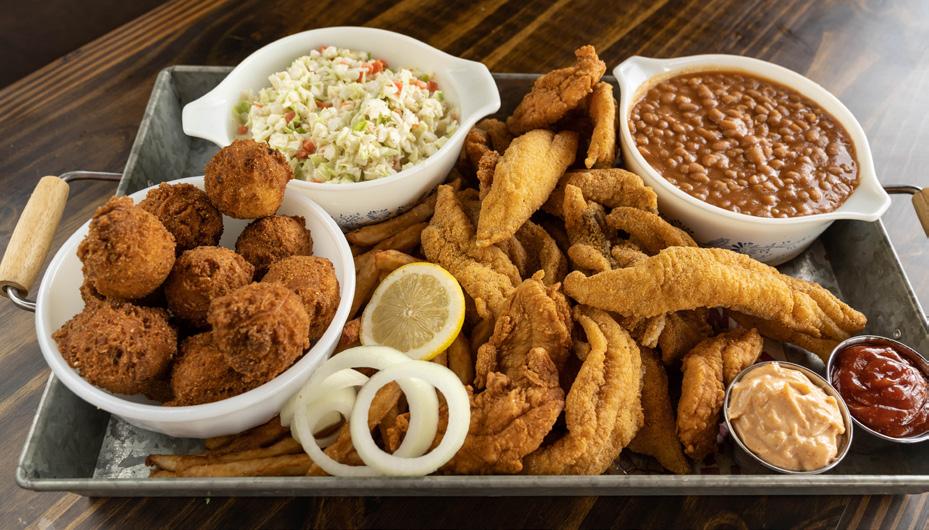
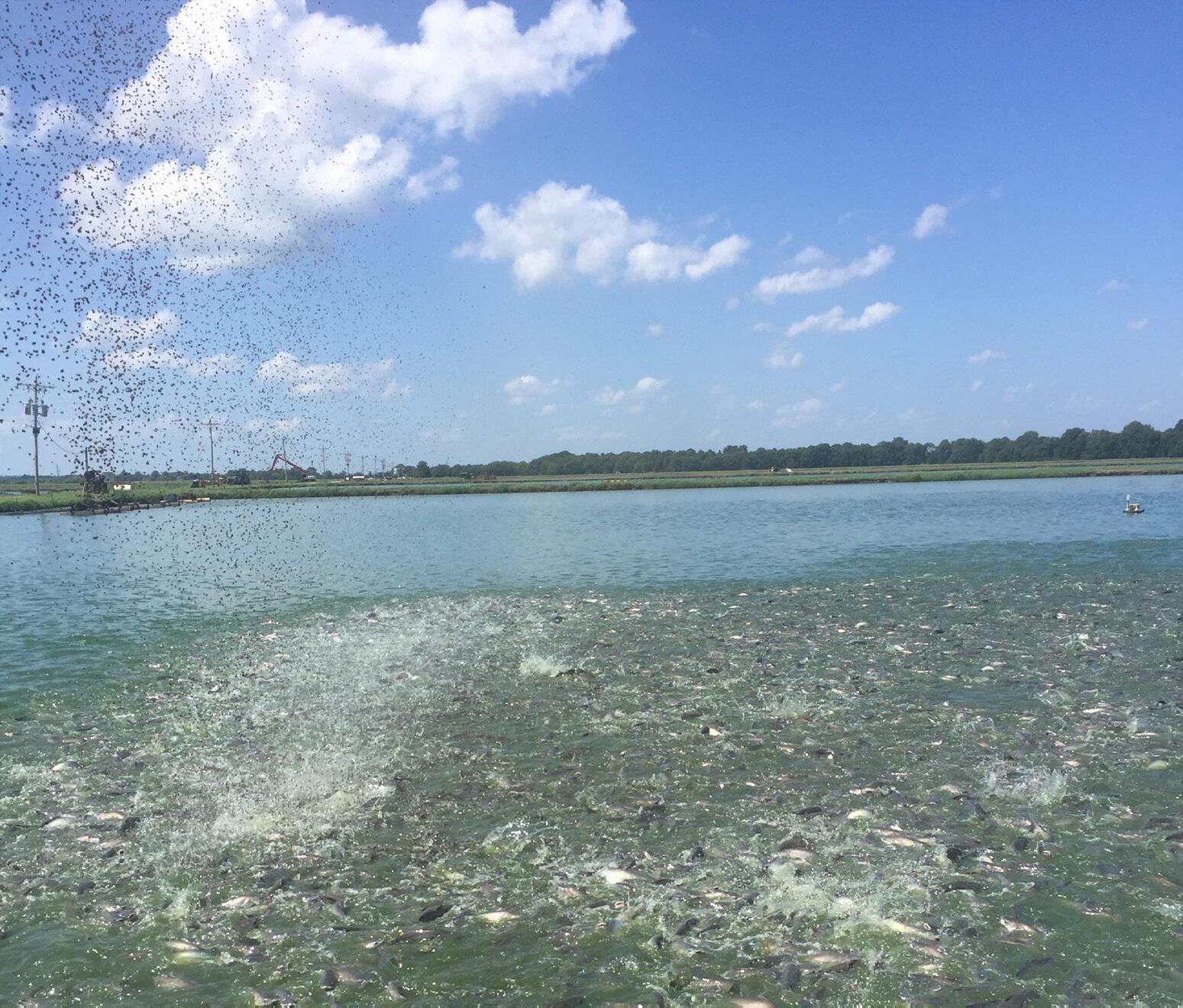

At the same time, catfish farmers are battling similar challenges as other producers. Robbins said rising input costs are making it harder for farmers to continue farming, while Graham said he has a problem finding dependable labor. However, catfish producers are also benefitting from increased efficiency.
“Although our acreage is down, our production is solid and steady, and we see no reason to believe that that would change in the coming years,” Robbins said.
He noted that while the U.S. catfish industry has shrunk to about a third of the acreage it claimed in 2001, the amount of fish processed is down only half thanks to advances in farming techniques.
Graham said one of the most dramatic changes is the use of aerators. While it used to be common to see one 10-horsepower aerator on a 10-acre pond, 10 horsepower per acre is now the standard to ensure fish have adequate levels of oxygen, leading to healthier fish and a better feed conversion ratio, he said.
He has also seen more farms raising hybrid catfish.
“We take a channel female and a male blue, and we cross them in the hatchery,” he said. “We get a more aggressive-feeding fish, a little better feed conversion on that fish, a little more yield in that fish at the plant, a little more disease resistance, a little more tolerant to heavier stocking densities so you don’t have issues with mortalities
near as bad.”
Robbins noted that vaccines have been developed to help improve fish health, as well.
“Our research partners at our land-grant universities have worked really hard to cut down on disease loss, and one of the biggest benefits of that is the advent of a vaccine that can be administered when the fish are still in the egg phase or when they’re being shipped from the hatchery to the farm,” he said. “We can actually vaccinate those fish, and they can enjoy a disease-free lifecycle, which helps the farmers make more money and grow more fish for the consumer to enjoy.”
Arkansas Secretary of Agriculture Wes Ward said increasing domestic consumption of catfish and other Arkansas products is a key area of focus for his office.
“If Arkansas receives $327 million to USDA programs for food and nutrition programs, how do we make sure more of that money is spent on Arkansas products, whether that’s Arkansas rice, Arkansas catfish?” he said. “That is one of our biggest challenges and one of the biggest things we’re working on right now from a Department of Agriculture standpoint.”
He said he hopes consumer education and initiatives such as Arkansas Plate, a program launched by Gov. Sarah Huckabee Sanders to provide locally sourced meals in schools, will encourage processing to resume in the state.
“I think if we can increase that demand for those products and, in particular, Arkansas catfish, I think that would hopefully open the door for a processor or processors in Arkansas,” he said. “It’s definitely market driven, so the demand signals would have to be there, the increased
production would have to be there, but I’m hopeful, with this new initiative we’ve got with Gov. Sanders, that we’ll see an increase in consumption.”
Graham encouraged diners to be vocal about asking whether the catfish they are eating was raised in the United States.
“I think the customer needs to know,” he said. “Most customers don’t know. Most customers won’t ask. I go to a lot of meetings. I go to a lot of meetings in D.C. and have conversations with trade reps, with senators, congressmen, and I ask all of them, when you go sit down at a restaurant to eat catfish, how many times do you ask where the catfish comes from? Most of the time, the answer is, ‘I’ve never asked that,’ and I challenge them to do that.”
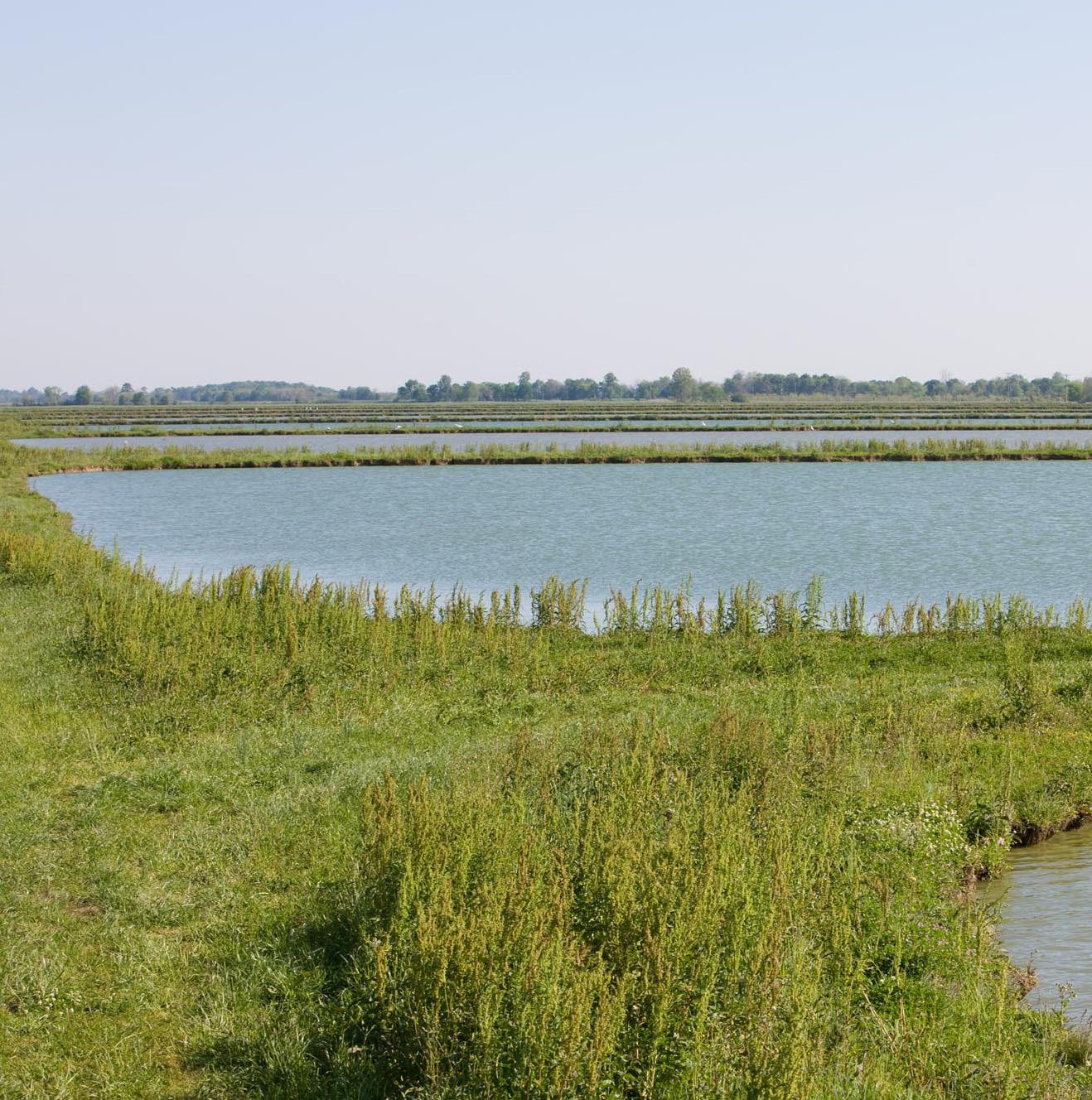

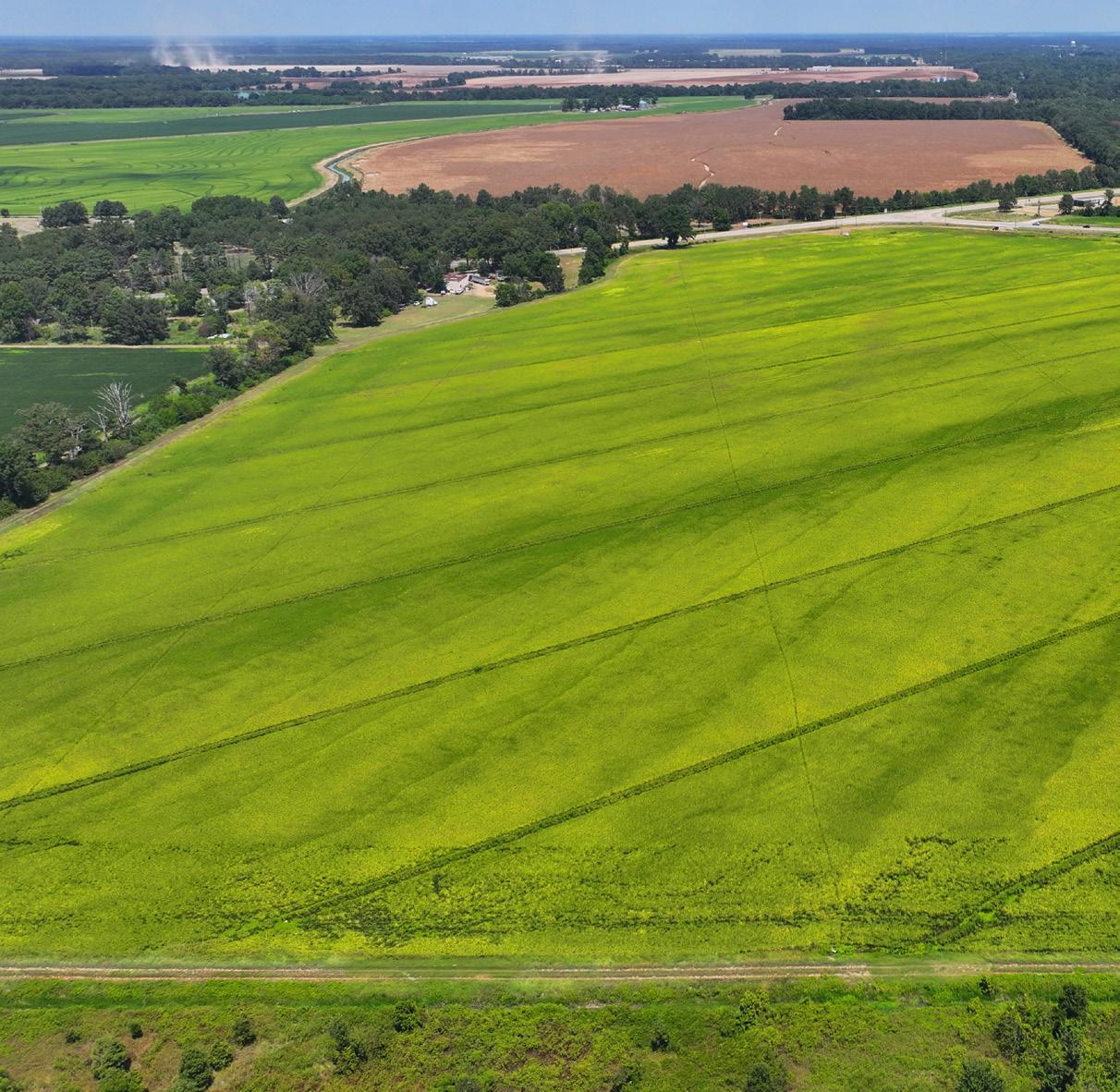
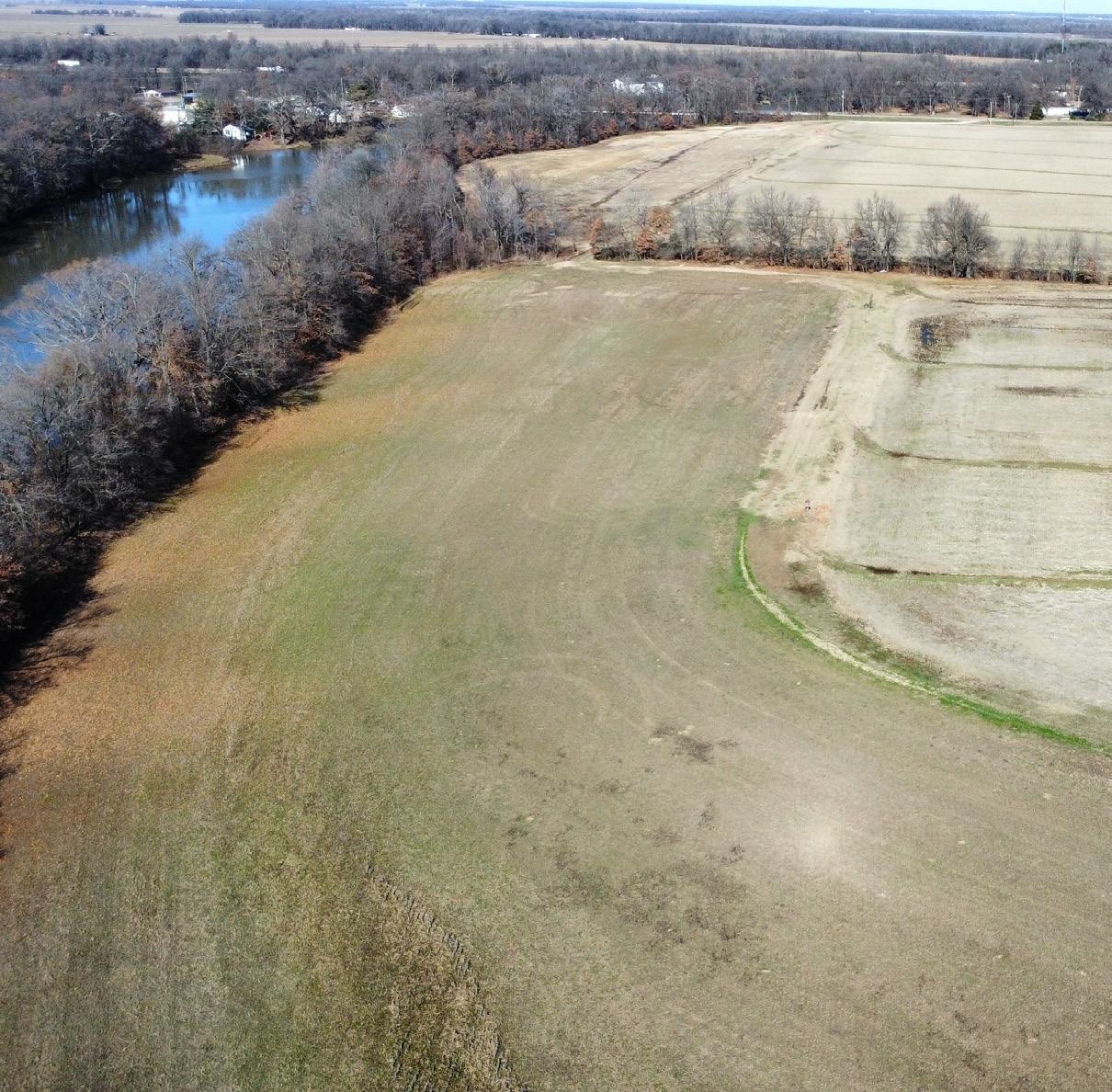
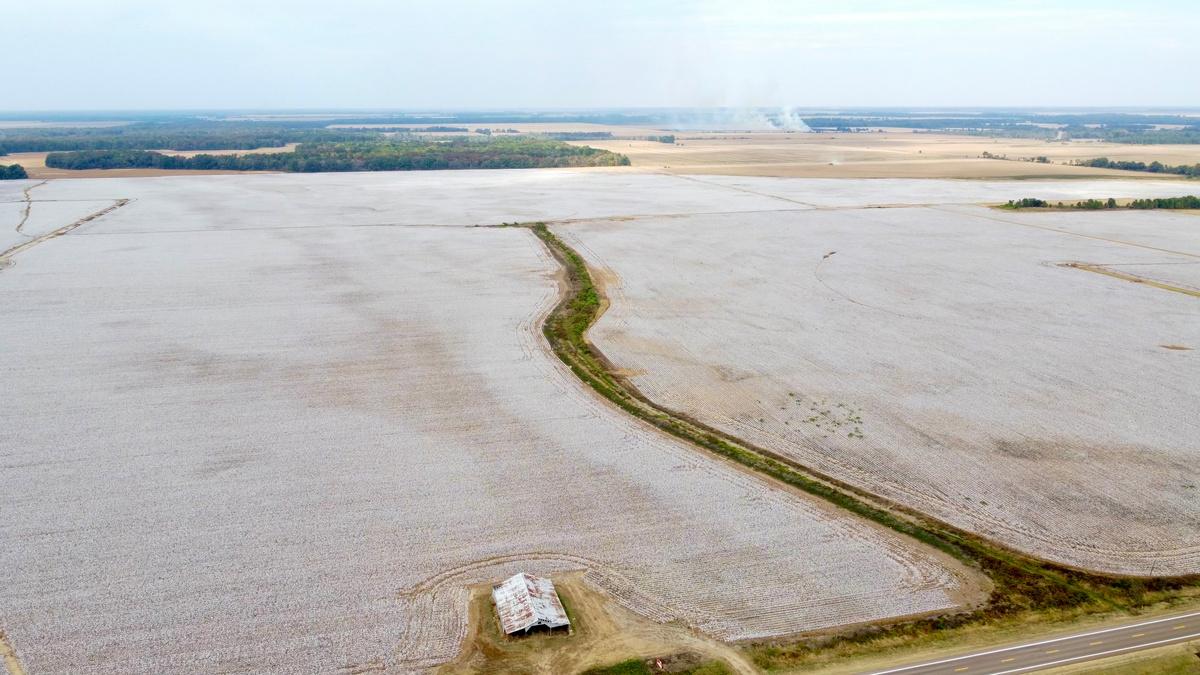









Business in Arkansas is as wide-ranging and diverse as the Natural State’s beautiful landscape. The state’s reputation as an incubator for entrepreneurship and dynamic business leaders is well-earned, from the cluster of Fortune 500 giants in northwest Arkansas and the fintech cradle in central Arkansas to the tens of thousands of small businesses from Bella Vista to Eudora that drive the state’s economic engine.
That engine is purring like a kitten thanks to the state’s homegrown global giants, its midsize firms, clinics and companies, and its small-town mom-and-pops, all of which contribute to the environment that makes Arkansas a great place to do business. From aerospace to retail and lithium to agriculture, Arkansas industry delivers the goods.
In this special sales section, Arkansas Money & Politics recognizes a cross-section of Arkansas’ best businesses and the leaders who make them run, leaders who represent the never-say-die attitude and conviction exemplified by the Founding Fathers of the state and country. From entrepreneurial support and network services to unique storefronts and medical clinics, the Natural State is embedded with leaders influencing businesses and communities beyond their own. Join us on the pages ahead, and get to know these leaders of industry, these Faces of Arkansas.

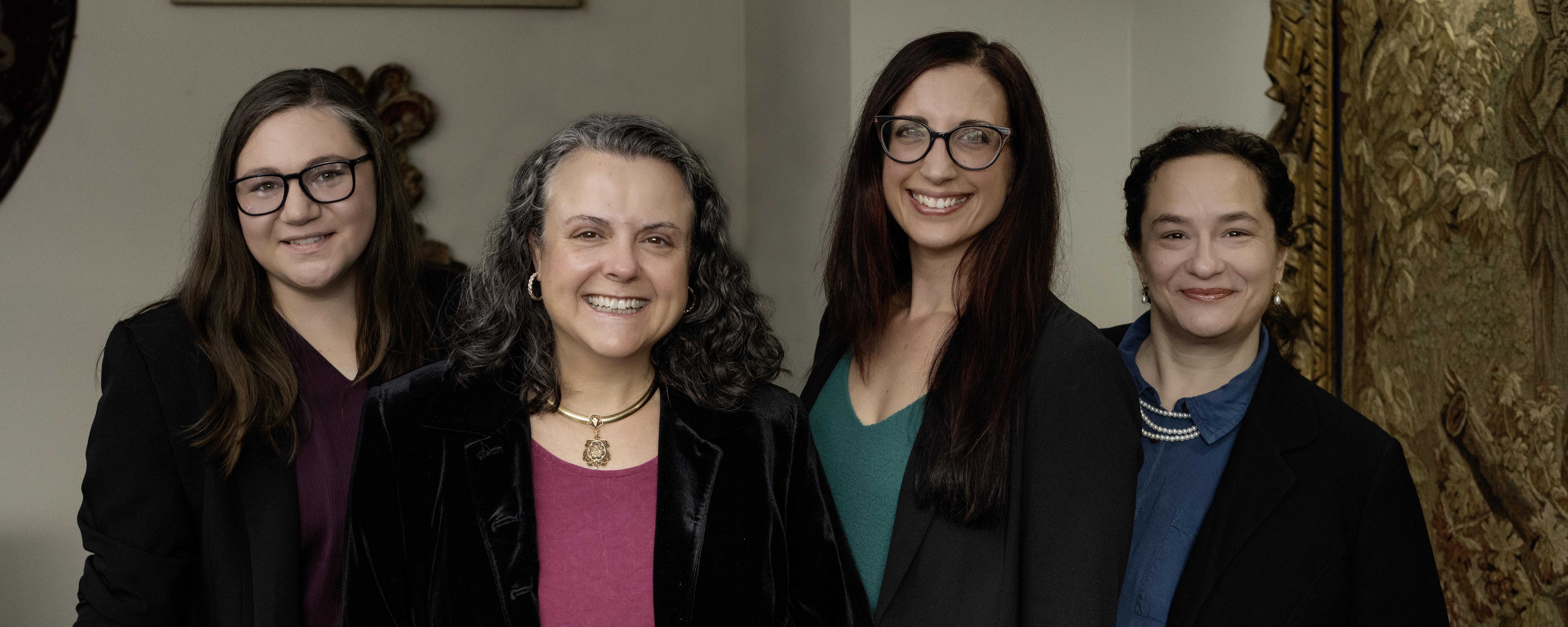
LAUREN MCHENRY, FROM LEFT, KATHERINE BLACKMON CARROLL, SARA K. LINGO AND ELIZABETH LYON
Family law goes much deeper than legal disputes; it is about people navigating some of the most difficult, emotional and life-altering moments they will ever face. At the Law Offices of Katherine Blackmon in Little Rock, the focus has always been to provide unwavering support while delivering formidable legal advocacy when it matters most.
Founded in 1997 by Katherine Blackmon Carroll, the firm has spent nearly three decades guiding individuals and families through divorce, custody disputes, property division and high-conflict litigation. With its trauma-informed, client-centered approach, the practice has grown into one of Arkansas’ most respected family law firms and is known not only for results but for the way clients are treated throughout the process.
“Family law clients are often walking into our office on one of the hardest days of their lives,” Carroll said. “They need more than legal advice. They need clarity, stability and someone who will stand beside them every step of the way.”
At the same time, compassion is only part of the equation. As Carroll often says, “There are great lawyers — and there are great lawyers with compassionate hearts. We strive to be the latter.” That compassion is paired with strength. A balance of fierce advocacy and genuine care is what distinguishes the Law Offices of Katherine Blackmon. Carroll has earned a reputation as a tenacious, courtroom-ready advocate, often described as a “pit bull” when her clients’ rights and children are at
stake. The firm is known for meticulous preparation, strategic thinking and a willingness to litigate aggressively when necessary to achieve the best possible outcomes. The strength of the firm is also reflected in its exceptional legal team. Sara K. Lingo, senior associate attorney, is known for her strategic insight and composed, clientcentered approach. Lauren McHenry, associate attorney, brings thoughtful analysis and a steady dedication to achieving meaningful results. Elizabeth Lyon, associate attorney, distinguishes herself through a rare combination of intellectual rigor and genuine compassion, along with her meticulous stewardship of the firm’s appellate work. Together, they exemplify a commitment to excellence, integrity and deeply attentive client care.
The firm’s success is not built on the attorneys alone, however, but on a unified team of paralegals and support staff working seamlessly together. Collaboration is central to every case, ensuring each client benefits from multiple perspectives, thorough preparation and a shared commitment to excellence. From first consultation to final resolution, clients experience a level of dedication and professionalism that embodies the firm’s core values.
At its core, the Law Offices of Katherine Blackmon remains committed to delivering advocacy that is both fierce and humane, helping clients move forward with strength, clarity and hope with a reminder that there truly is light at the end of the tunnel.
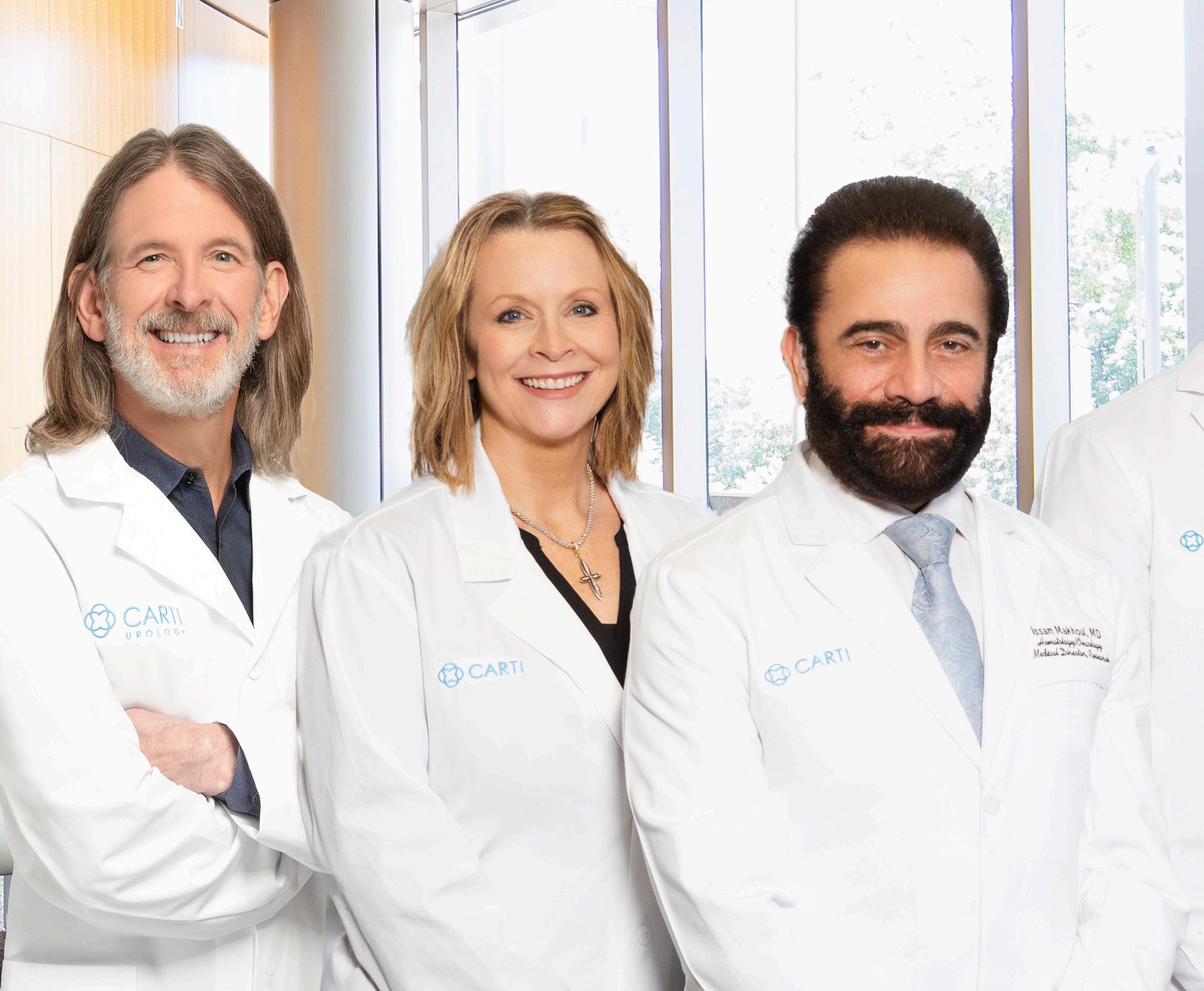
RON KUHN, M.D., FROM LEFT; RHONDA GENTRY, M.D.; SAM MAKHOUL, M.D.; SCOTT STERN, M.D.; YARA ROBERTSON, M.D., F.A.C.S.; MATTHEW HARDEE, M.D., PH.D; AND DONALD B. NORWOOD, M.D.
In 2026, more than 20,000 Arkansans will hear three life-changing words: “You have cancer.” CARTI understands that facing a diagnosis is often accompanied by uncertainty and fear. That is why, for the past 50 years, CARTI has been committed to walking alongside patients and their loved ones throughout their cancer journeys.
Every year, the not-for-profit cancer care provider treats more than 60,000 patients, including in rural and traditionally underserved areas of the state. No matter where they live, CARTI offers access to leading-edge treatments and groundbreaking clinical trials within a single network of coordinated care to improve patients’ long-term outcomes and quality of life.
An unwavering proponent of early detection, CARTI’s team of experts educates, equips and empowers patients to take control of their health even before a diagnosis occurs. CARTI is dedicated to ensuring all Arkansans can benefit from screenings such as 3D mammograms that catch cancers sooner, when treatment is more effective and often less invasive.
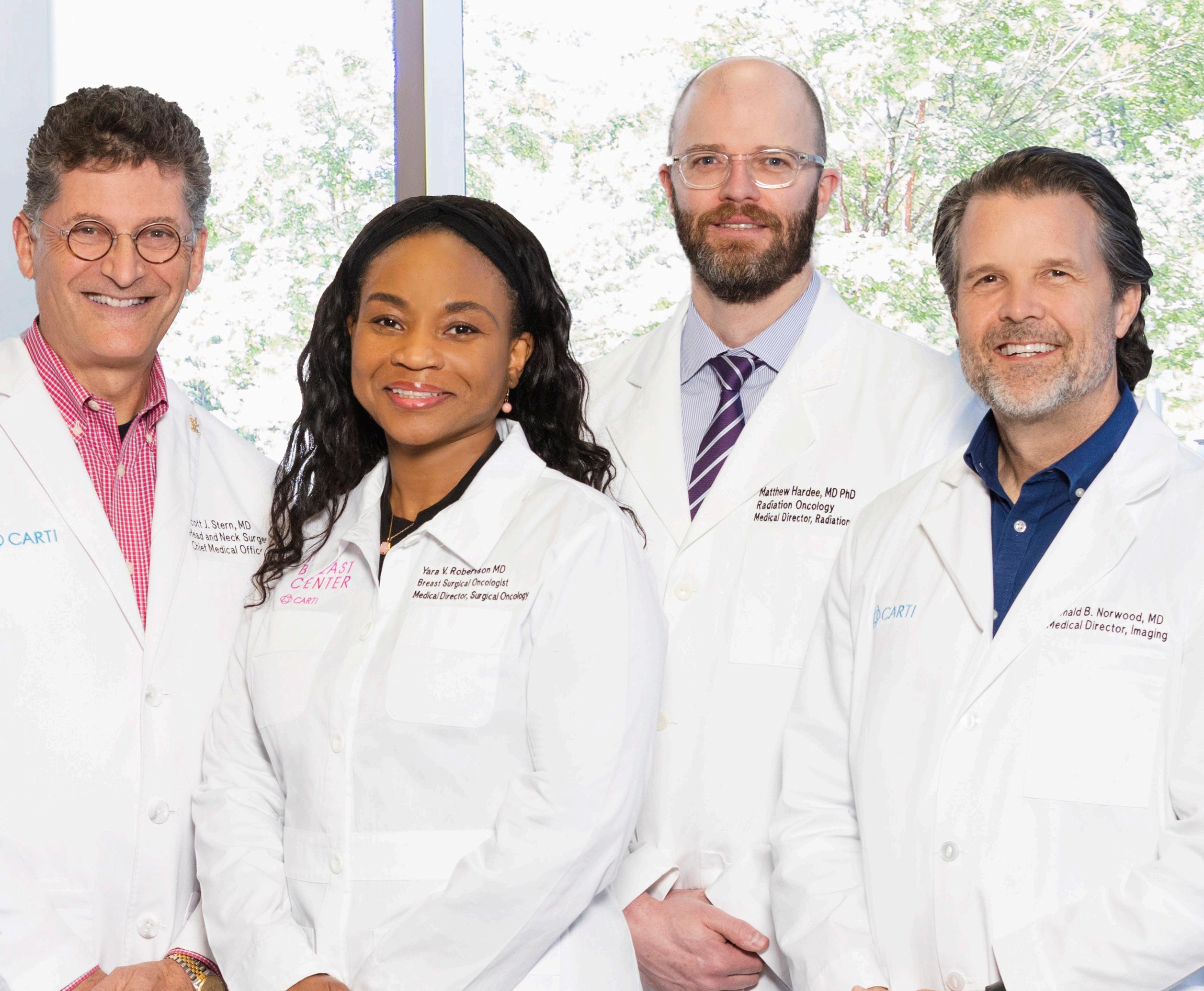
Today, CARTI offers medical, radiation and surgical oncology, interventional radiology, and an array of specialty services, including audiology, breast care, cancer genetics and risk management, dental care, imaging, urology, and more at 18 locations across the state and Arkansas’ first cancerfocused surgery center. With the addition of The Bridge, an on-site support services center, patients and caregivers can now access free virtual and in-person support groups designed to alleviate stress and enhance well-being.
There is no question that much has changed in cancer care since CARTI was established in 1976. However, 50 years later, its commitment to its mission — making trusted cancer care accessible through compassion, innovation and purpose — has never wavered. There is a reason patients ask for CARTI. When it comes to cancer, they know CARTI is with them every step of the way.

RENA WILLIAMS, FROM LEFT, CHARLEY GARDNER, DIANA HINOJOSA, CRYSTAL SWEARINGEN, PAT MOON, JENNIFER GREER, MARSHALL MOON, JEFF MCCOY AND SARAH KING
What kind of competition do you face in this field, and how does your company distinguish itself?
Competition in our space has never been greater. In addition to the wire houses that have a national presence, new technology and niche vendors have made it easier than ever for advisors to launch a practice. Being independent affords us autonomy over investment strategies that are more tailored to the needs of our clients. Most importantly, over half of our team members have been with Meridian for over 25 years. The experience of our staff helps us provide a client experience that is uncommon in our market. This is a service business, and our high client retention is a testament that we’re providing impactful service year after year.
What has been your organization's proudest accomplishment so far?
Our greatest accomplishment is longevity. Meridian was founded in 1983 and is one of the oldest independent and largest registered investment advisors in Arkansas. There have been many fine people at Meridian over the years who have contributed to our success.
What trends are you watching in your industry right now?
An important aspect of our business is a shift to holistic financial planning for the lifespans of families and next generations. In addition to investment management, we’re spending more time than ever with clients on subjects such as estate planning, tax planning and retirement planning. Our team of advisors hold accreditations across multiple domains, such as the Chartered Financial Analyst, which emphasizes investment management, and the Certified Financial Planner, which is geared more toward holistic planning. Over the years, we’ve developed an extensive network of professionals for a team approach
to building well-crafted, holistic financial plans for clients.
What kind of employee culture do you try to cultivate?
We want our workplace to be one where team members look forward to coming every day. We work hard to provide opportunities for personal growth and to form meaningful relationships. We’re in the business of serving people, so taking care of one another helps us do that more effectively. We also want Meridian to be a place where people retire from fulfilling careers. Given that over half of our employees have been with us for over 25 years, we think we’re well on our way to accomplishing this goal.
What is something everyone gets wrong about your industry or business?
Many people overcomplicate the nature of our business. There are plenty of complicated products and strategies in the world of investment management, but many of those are only suitable for a small population of people or in specialized situations. We stick to a set of principles that allow us to provide consistency in a cost-effective manner. We put a lot of effort into client education and communication. The better they understand our core investment principles, the more at ease they are with the ever-changing landscape of financial markets.
What kind of legacy do you hope this organization will leave behind?
We want Meridian to leave a legacy of caring for our clients and our employees. One of our greatest pleasures is to see our clients have so much trust in us that their biggest riches are realized outside of our office. Getting updates from clients about life events like vacations, having grandchildren and the satisfaction they get from making financial gifts is rewarding to us.

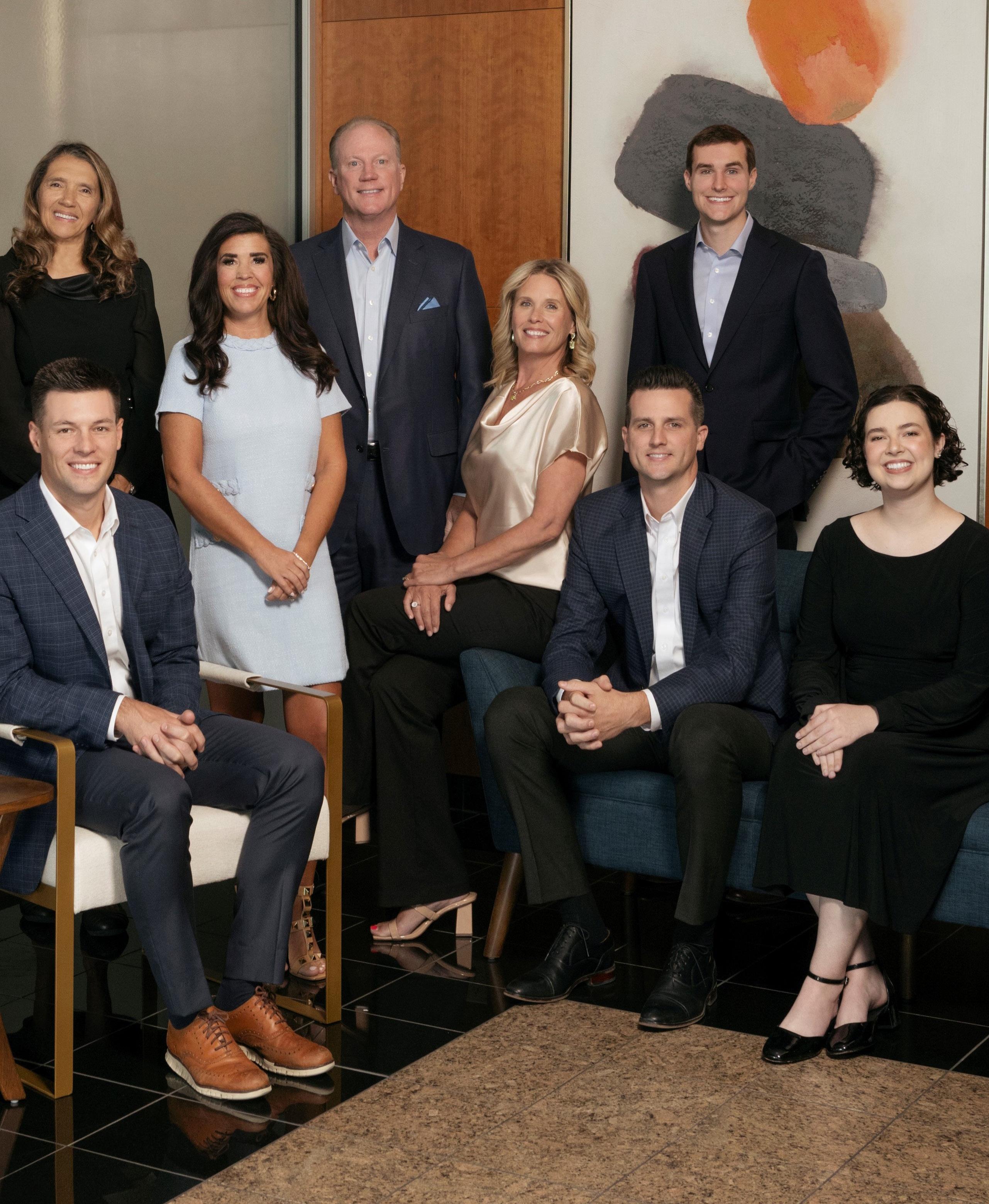
BEN WELLONS, CEO
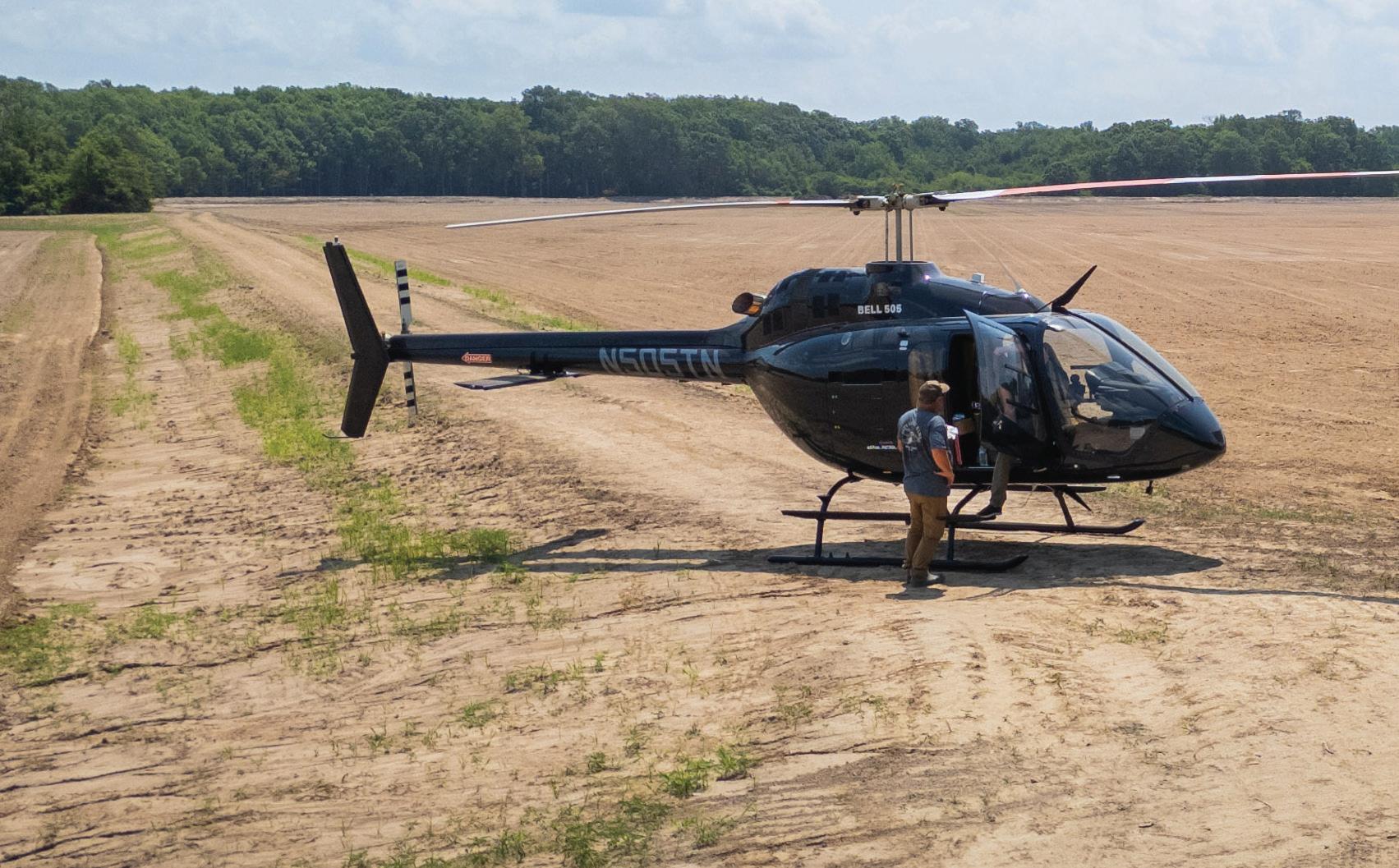
What kind of competition do you face in this field, and how does your company distinguish itself?
In one sense, we don’t have any direct competition. We’ve created a unique business model that combines land development and land real estate under one roof, which sets Wellons Real Estate apart from anyone else in the industry.
What further distinguishes our company is the breadth of our capabilities, from design and engineering to construction and wildlife enhancement, combined with our extensive use of state-of-the-art resources — using helicopters for aerial analysis, for example, or dronebased laser mapping technology.
Taken together, these capabilities and resources put us in a unique position to help clients achieve their goals and unlock their property’s full potential. Everything we do is about adding value in one form or another.
What has been your organization’s proudest moment or accomplishment so far?
What I’m most proud of are the people we’ve brought together. Most have been with the organization for years, and it truly is a blessing to work with them.
Everyone on our team is a god-fearing man of high character who is committed to our core values of integrity, stewardship, trust and confidence. I’m convinced that’s a key reason why clients keep coming back to us again and again.
What kind of employee culture do you try to cultivate?
For us, it’s all about teamwork. Bringing together a wide range of talents — from wildlife biologists to real estate experts to marketing specialists — to create a robust culture built on collaboration.
We operate as a team on nearly every decision the company makes. Our bond is strengthened by the fact that every member of our team is a landowner and experienced in land stewardship.
What is something everyone gets wrong about your industry?
Many people misunderstand what it takes to properly develop and maximize the value of a tract of land. Land is a complex asset that requires knowledge of habitat, water management, infrastructure, conservation, development strategy and longterm stewardship. Our company brings all of these elements together, allowing us to improve properties in ways that many people don’t initially realize are possible.
What qualities are most important for professionals in your field?
Honesty, integrity and a willingness to do the right thing every time — even when people aren’t looking. These qualities are what define all of the professionals at Wellons Real Estate and underscore the loyalty and trust we’ve built with clients across the country.
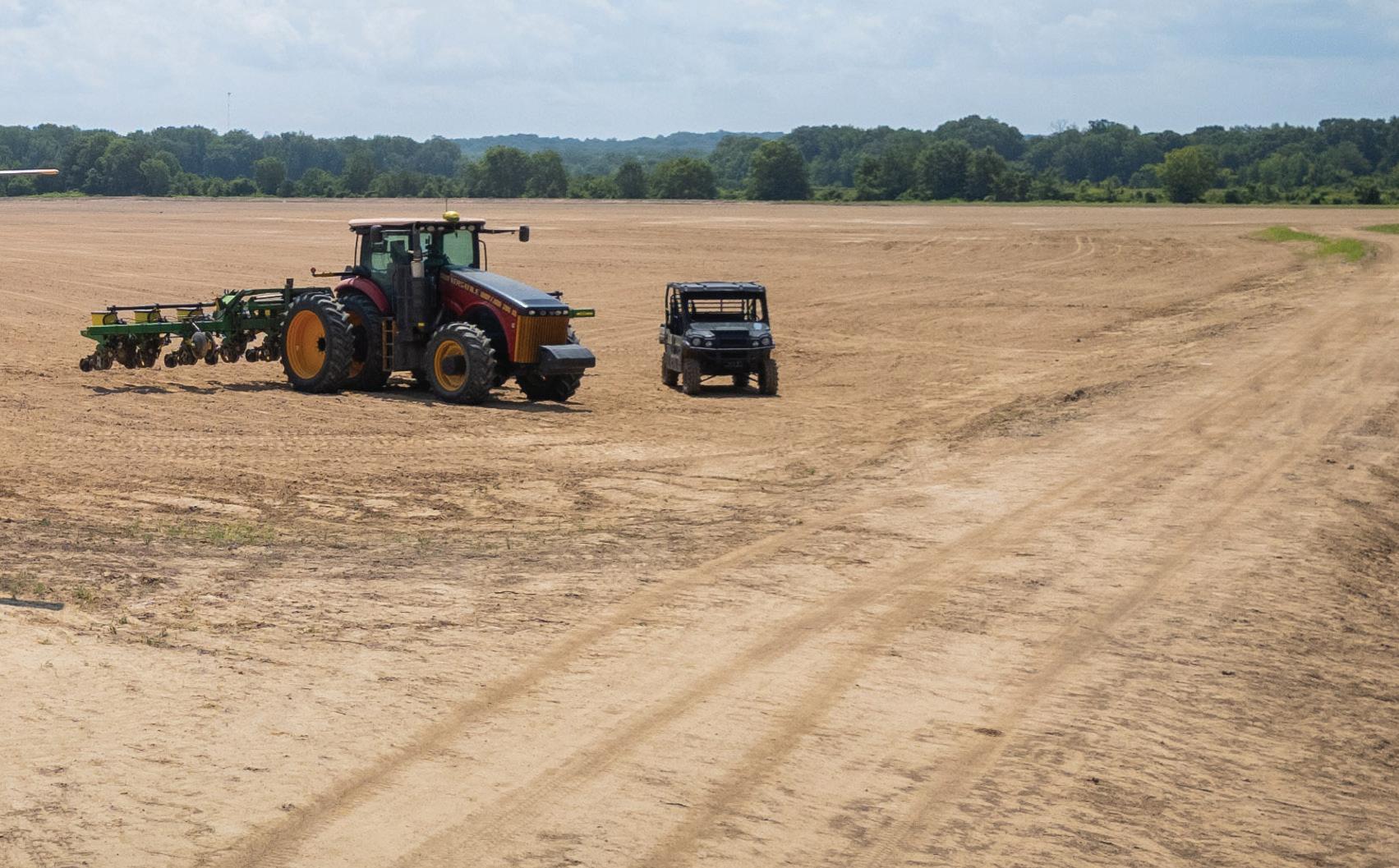
How is your company or team involved in the community?
Our team vigorously supports conservation and environmental efforts, including organizations such as Ducks Unlimited, Delta Waterfowl, and various wildlife and land management events and exhibitions across the state and country. Supporting conservation and stewardship initiatives in the communities where we live and work is an important part of who we are as a company.
What do you want the business to accomplish in 2026?
This year, we have some of the largest development and real estate projects in our company’s history. We’re excited about those opportunities and honored to be able to continue doing what we love. Our goal for 2026 is the same as always: to continue pursuing excellence in everything we do and building lasting relationships with clients — many of which eventually turn into lasting friendships too.
What is your company’s superpower or defining characteristic?
It’s our ability to combine extensive land development expertise with high-level real estate representation, allowing us to partner with clients in ways that few other firms can match. We’ve also built advanced marketing systems, technology platforms and operational processes
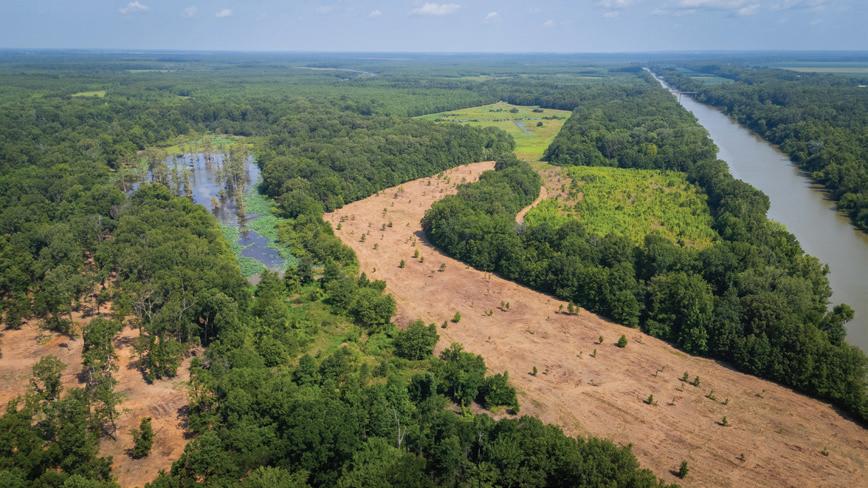
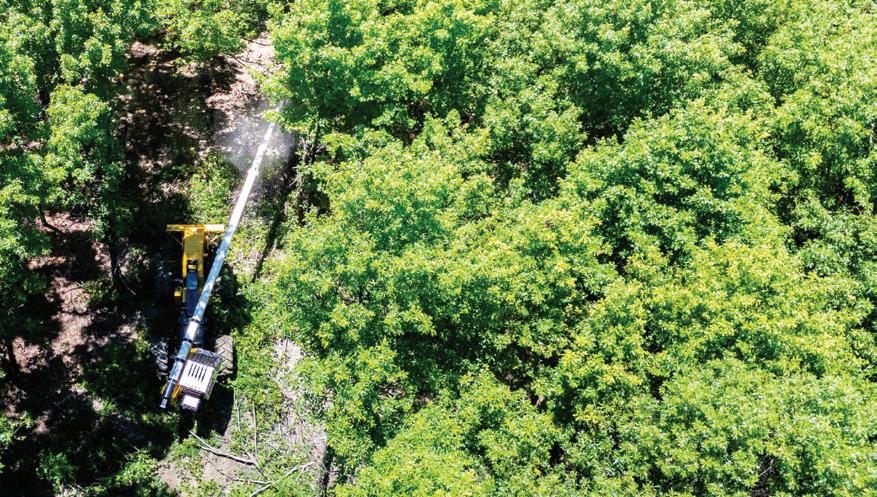
that make it possible for us to work effectively with clients anywhere in the country at a level that is unique within our industry.
What kind of legacy do you hope the organization will leave behind?
I hope our legacy will be that we left the land better than we found it. We try to look at every property through a legacy lens to maximize its long-term value — not just monetarily but recreationally and environmentally, as well.
Many of our clients are thinking multigenerationally. We can help them find the property they’re looking for and then use our development capabilities to transform it into the private legacy retreat they’ve dreamed of.
Is there anything else readers should know about your business?
Our experience is broader than some people realize. While we’re best known for high-end duck hunting properties, our work also includes deer and elk properties and other sporting and recreational landscapes, as well as agricultural farmland.
We’ve worked on world-class fly-fishing properties, built lakes and fishing destinations, constructed lodges, cabins, homes, barns, and worked on large-scale recreational properties across Arkansas, Texas, Oklahoma, Kansas and Tennessee.


What has been your organization's proudest moment or accomplishment so far?
We are celebrating 50 years of building pools in Arkansas this year.
What trends are you watching in your industry right now, and how are you preparing for them?
The biggest trends we are watching in the pool and spa industry are that customers want more automation and monitoring systems for their swimming pools and hot tubs. We are preparing for this by bringing in manufacturers’ reps to do training in our store and in the field with our whole team. We want to ensure we can answer any questions that our clients have and help make their pool or spa ownership as relaxing as possible.
What qualities are most important for professionals in your field?
Integrity and hard work.
What should I look for in the company I choose to build my pool?
The company should have their Arkansas contractors license and all applicable insurance. Find out the number of years they have been in business, and ask for references and referrals. Ask if you can see some of the pools the company built in person. Be sure that they will provide service after the sale and inquire about the warranties. The pool company should provide a written contract that both parties sign, which protects both the homeowner and the contractor.
What do you want to see the business accomplish in 2026?
We want to continue to grow all aspects of our business in 2026, especially our retail side, including the sale of Caldera hot tubs, pool and spa chemicals, POLYWOOD outdoor furniture, Big Green Eggs and Pentair pool equipment.
How do people choose the right pool design?
The style of the pool is very personal and based upon the style of the property. Some clients prefer rustic and freeform, while others prefer a more formal, modern look with a straight-line pool. We highly recommend envisioning how you will use your pool and determining what type of activities, such as water sports or relaxing, you will do.
What kind of employee culture do you try to cultivate?
We like to promote a family atmosphere where we all work together and help one another out. We want all employees to take pride in their work and know they are an integral part of our business.
What is something everyone gets wrong about your industry or business?
The belief that all builders are building pools to the same standards and specs.
How is your company or team involved in the community?
We donate to local schools, churches and youth sports programs.
What kind of legacy do you hope this organization will leave behind?
One of integrity and quality products that bring families together to create lasting memories.
Is there anything else readers should know about you or your business?
Shane and Jeremy Lawson, owners of Luxury Pool & Spa, Inc., are third-generation pool builders, and the fourth generation is currently working in the business. We have been building pools in Arkansas for 50 years.
LAURA ABBOTT, FOUNDER
What drew you to a career in your field?
A near-fatal violent crime I experienced led me to become an ambassador for victims’ rights. Going through the jury trial revealed gaps in the judicial system and the challenges victims face. This experience showed me how critical effective victims’ rights implementation is — not just for justice but for the healing and empowerment of survivors.
What has been your organization’s proudest moment or accomplishment so far?
One of our proudest accomplishments is Laura’s Card, enacted in 2015 with the support of citizens and stakeholders. It provides victims statewide with consistent information about their rights and resources. The Attorney General’s office launched laurascardar.gov, and we created victimsrightsar.com, turning legislation into practical, accessible support for survivors when they need it most.
What trends are you watching in your industry right now, and how are you preparing for them?
The victims’ rights movement is entering its “third wave,” focused on turning rights from principle into consistent practice. Trends include strengthening enforcement, expanding postconviction services, addressing digital victimization, protecting survivor privacy and broadening the definition of crime victims. Restorative justice and cross-agency collaboration are growing. Preparing for this phase requires collaboration, servant leadership and a commitment to ensuring every victim’s rights are enforceable.
How would you describe your leadership style?
Servant leader. I am guided by values, collaboration and action. I lead by example, empowering volunteers, building partnerships and creating systems that turn victims’ rights into practical, meaningful support. My focus is always on making a positive difference for survivors and communities.
What is the most challenging part of your work, and what is the most rewarding?
The most challenging part of this work is the gap between policy and practice. The current unknown in Arkansas is the impact of enforceable victims rights, providing “standing” for victims. The most rewarding part is seeing survivors treated with respect and care, knowing they have access to information and support that helps them navigate difficult experiences.
What is something everyone gets wrong about your industry or business?
One common misconception is that victims are “angry” or adversarial. In reality, survivors have had their lives upended and are navigating a line between the life they knew and the life they must rebuild. Another misconception is that victims’ rights with standing interfere with the justice system. In fact, these rights strengthen accountability, ensure respect and give survivors a voice in the process.
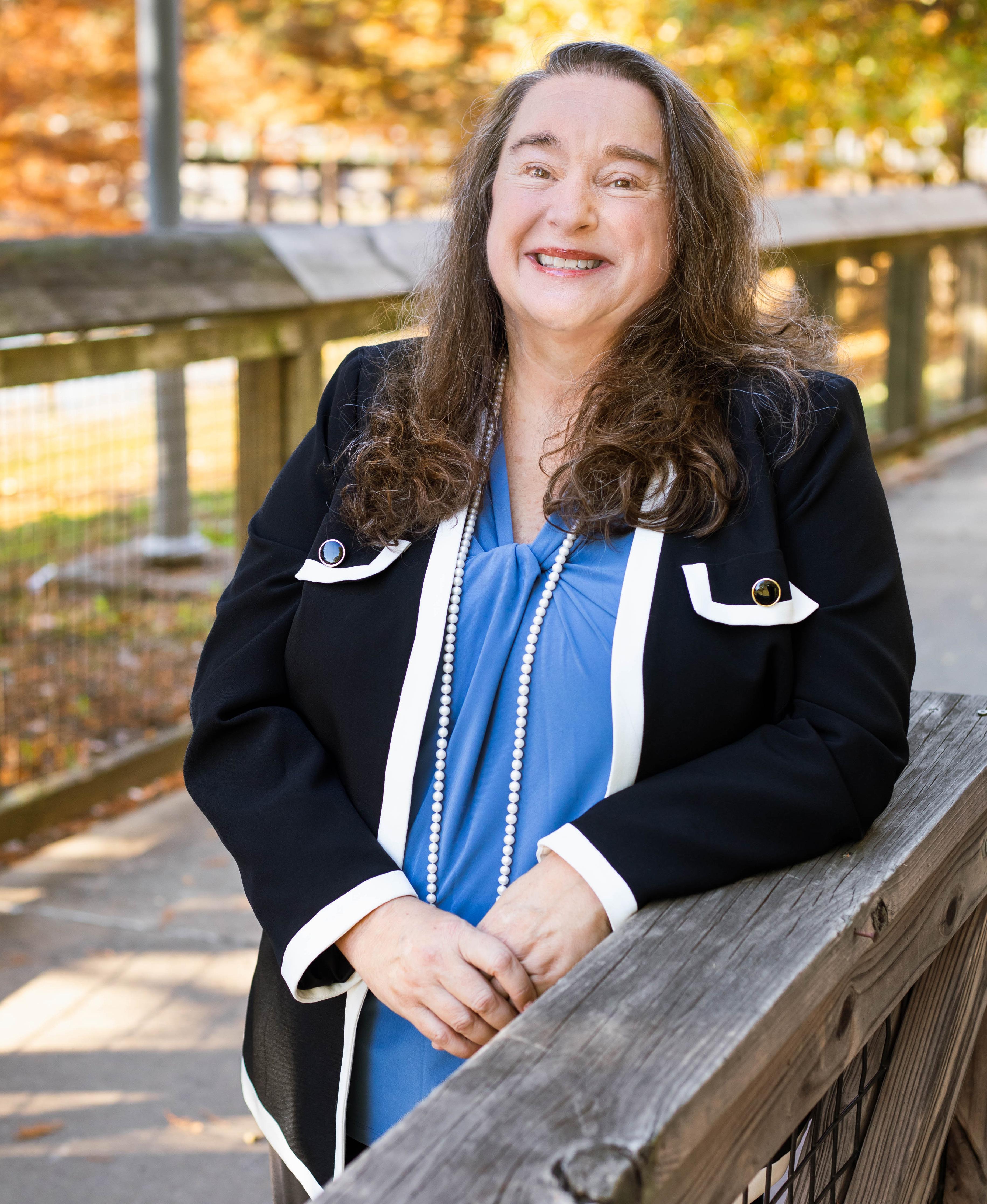
PERMJOT VALIA, BACK ROW, FROM LEFT, CALEB TALLEY AND DANNY DUONG AND, FRONT ROW, FROM LEFT, DIANA MCDANIEL AND GRACE GILL
Fuel Accelerator is a program of Startup Junkie Foundation, a nonprofit that has supported thousands of entrepreneurs across Arkansas. Since launching in 2018, Fuel has accelerated nearly 100 companies from 11 countries, helping them raise upward of $250 million and create more than 180 Arkansas jobs. Through Fuel, the Startup Junkie team serves as a bridge between local talent and global innovation, proving every day that Arkansas is a place where big ideas can take root and grow.
“We’re motivated by the belief that world-changing innovation doesn’t just happen on the coasts, and you don’t have to be in Austin, Texas, or San Francisco to succeed,” said Executive Director Caleb Talley. “Our mission is to help founders scale transformative technologies while strengthening Arkansas’ position as a national leader in emerging industries like artificial intelligence, machine learning, health tech and beyond.”
Fuel’s equity-free, cost-free programming puts accessibility at the forefront. With more resources to put toward growth and access to world-class mentors and corporate partners, Fuel’s startup founders are doing more than building companies — they are helping build Arkansas’ innovation economy. With the continued support of the Arkansas Economic Development Commission and the Walton Family Foundation, Talley said the program hopes to expand on its artificial intelligence/machine learning and HealthTech program successes, deepen partnerships with Arkansas-based enterprises, and develop new components to support early-stage founders and applied research commercialization.
“The best accelerator programs aren’t transactional,” he said. “They’re built on trust, shared goals, and a genuine desire to see founders and communities succeed together. Our goal is to make northwest Arkansas the best place in the country to build and scale a startup.”
STEPHANIE YOUNG APRN, OWNER
What drew you to a career in your field?
I didn’t just fall into this field; I was pulled toward it by a deep frustration with the limitations of traditional health care. I saw too many people being overlooked, underserved and told their symptoms were “normal.” I knew there was a better way. I wanted to be part of a shift, one that prioritizes optimization over survival and empowers people to take control of their health. That drive is what built everything I do today.
How does your care differentiate from your competitors? We’ve built our model around what health care should be, not what it traditionally has been. Instead of reactive, symptom-based care, we focus on proactive optimization. We combine advanced diagnostics, evidence-based treatments and aesthetic medicine to deliver results that not only improve how people look but also how they feel and function. It’s a higher standard of care, and our patients recognize that immediately.
What are you most proud of when it comes to the work you do?
I’m most proud of building something that challenges the status quo. We’ve created a model of care that puts patients first, prioritizes real results, and raises the standard for what wellness and aesthetics can look like. It’s bigger than just a clinic; it’s a movement toward better, more intentional health care.
What is the most challenging part of your work, and what is the most rewarding?
The biggest challenge is going against the grain. When you’re committed to doing things differently, focusing on optimization instead of just symptom management, it requires education, advocacy and sometimes pushing back on outdated norms. The reward is building something that actually works. Seeing patients experience real, lasting results and knowing we’re raising the standard of care makes every challenge worth it.
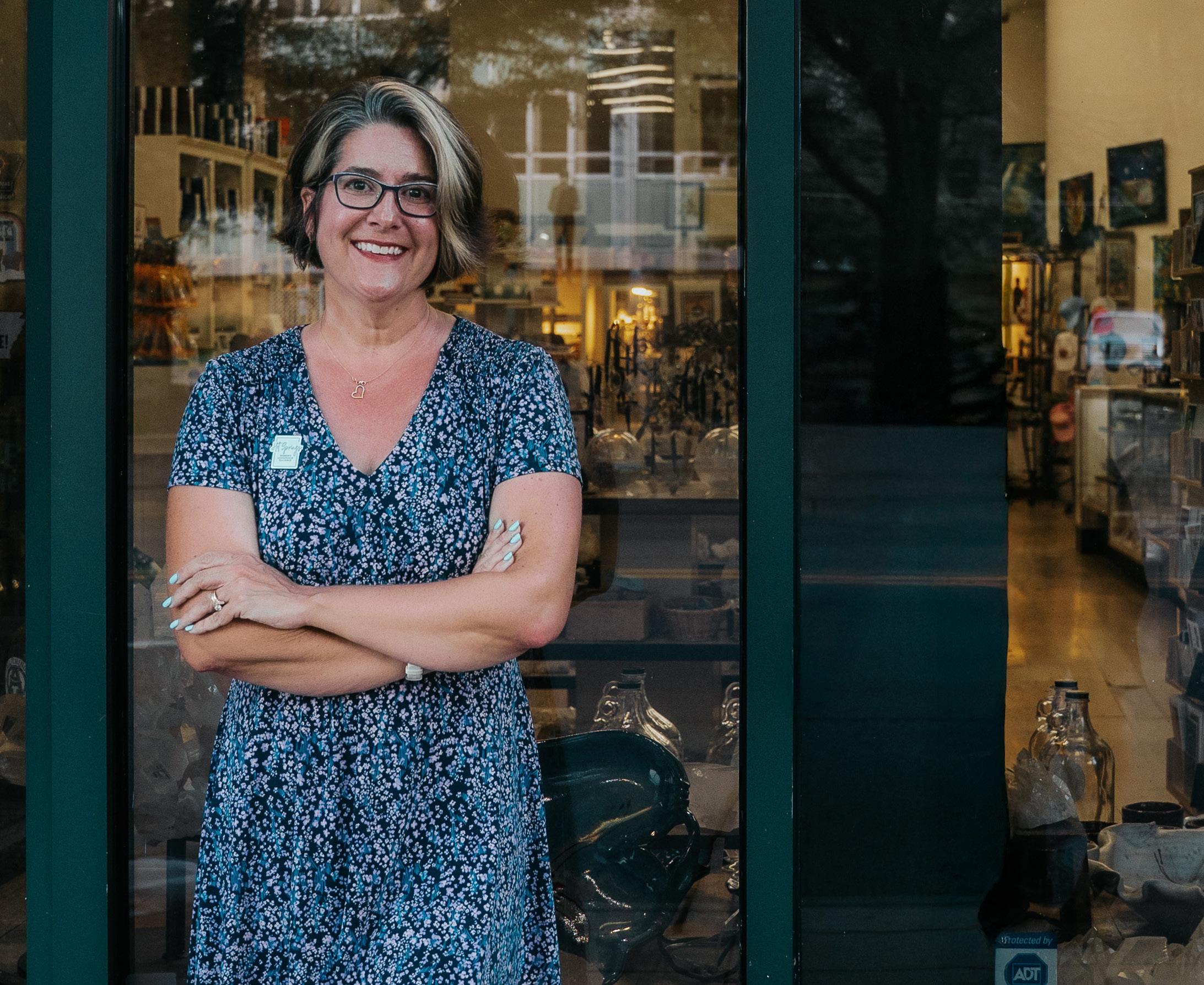
LISA CAREY, OWNER
What drew you to a career in your field?
I grew up in the quartz crystal industry and am in the fifth generation of entrepreneurs in the Coleman family. I love Arkansas and have a particular fondness for Hot Springs National Park. Having these stores helps me share that love and joy with tourists and locals alike. This is exactly where I want to be and the area where I most want to make an impact.
What are you most proud of when it comes to the work you do?
I love sharing Arkansas and quartz crystals with others. The book Quartz in Their Veins: A History of Quartz Crystal in Arkansas’ Ouachita Mountains and the Legacy of the Coleman Brothers should be available for purchase around the time this magazine is published.
What does it mean to be a storefront offering all things Arkansas, and how do you live up to that expectation? It means that tourists — and some locals — seek out the store and that I seek out items they will cherish and pro-
vide an environment where they feel welcome.
What qualities or skills have best prepared you for your current role?
Having Ron Coleman as my father and mentor provided me with a lifetime of entrepreneurial guidance, and graduating from Goldman Sachs 10,000 Small Businesses provided critical assistance in developing plans for continued growth.
When finding new merchandise for your storefront, how do you find new and unique items that customers cannot find anywhere else?
Everywhere I go in Arkansas, I look for items that would fit well. As we’ve been open since 2013, many now come to the store with potential items.
Can you share any of those plans for continued growth?
I am so very close to being able to, but you’ll have to wait just a little longer. Be sure to keep an eye out, though. You won’t want to miss what comes next!.

How do you support your clients while going through a bankruptcy process?
With empathy and open communication.
How would you describe your leadership style?
I’m collaborative in my approach to leadership. My team and I work toward the same goal for our clients — achieving a new start — from the first phone call or email all the way to the courtroom. It takes the entire team to make it happen.
Where do you turn for inspiration or motivation?
The outdoors, spending time with friends, family and especially my children.
What kind of employee culture do you try to cultivate?
One that accepts and encourages individuality and uniqueness but also one that thrives as a team.
As a lawyer, how do you balance a heavy workload while still taking personal time?
I’m always on the go, but I do my best to make space for my family. Whether it’s volleyball or doctors’ appointments, I always make sure I am present for my kids.
What is the most challenging part of your work?
The fast-paced environment can be very challenging. Bankruptcy law is such a nuanced practice and very different from other areas of law. It can be hard for others to understand how it all comes together without the typical “billable hour.”
What is the most rewarding part of your work?
It’s so cliche but true — helping people and businesses navigate the complexities of bankruptcy law during one of the most difficult times and finding the pathway that works best to achieve a new start.
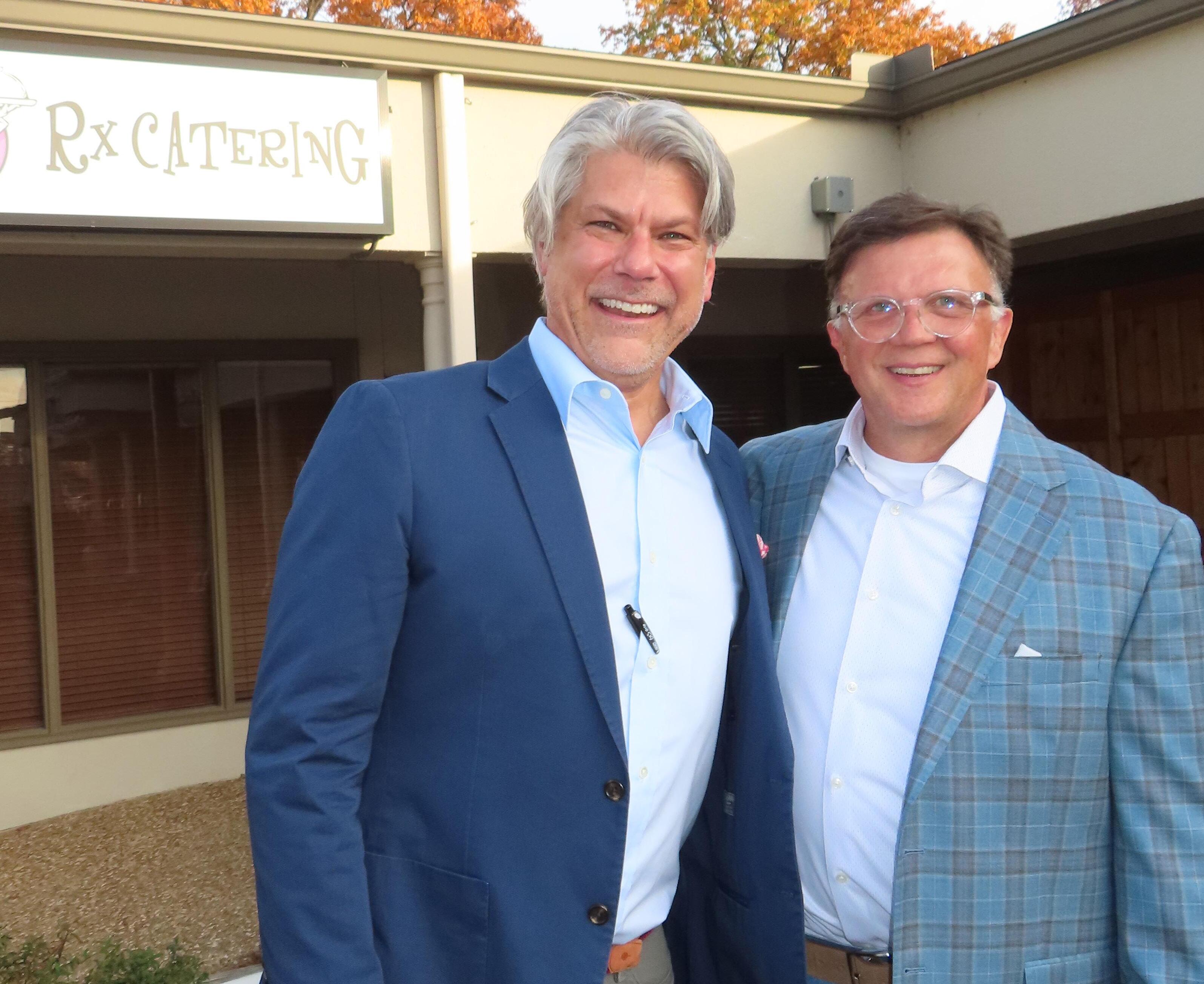
What drew you to entrepreneurship and starting a new business of your own?
Ramsey: I’ve always had a strong work ethic and a desire to build something meaningful. Entrepreneurship gave me the opportunity to create a business that reflects my values — hard work, consistency and taking care of people. I wanted to build something that not only delivered great food but also made a lasting impact on our team and the community we serve.
How would you describe your leadership style?
I lead by example and believe in being hands-on. I set high expectations, but I also make sure my team has the support they need to succeed. I value loyalty, accountability and creating a culture where people feel like they’re part of something bigger than just a job.
I also believe it’s important that people actually enjoy coming to work. When the environment is positive and there’s room to have fun while still staying focused, it boosts morale, strengthens teamwork and leads to better overall performance. My goal is to create a workplace where people feel supported, take pride in their work and genuinely want to be there.
What is the most challenging part of your work, and what is the most rewarding?
The most challenging part is maintaining a high level of consistency in a fast-paced, high-pressure industry. No two events are the same, and expectations are always high. The most rewarding part is seeing everything come together — happy clients, successful events and a team that takes pride in what they’ve accomplished.
What else should readers know about you or your organization?
At the end of the day, we care about people. Our business is built on relationships, trust and delivering on our promises. We’re grateful for the opportunity to serve our community and be part of so many meaningful moments.
What advice would you give to professionals early in their careers?
Be willing to work hard, stay consistent, and don’t be afraid to start at the bottom. Learn everything you can, stay humble, and build strong relationships. Success doesn’t happen overnight, but consistency over time makes a big difference.
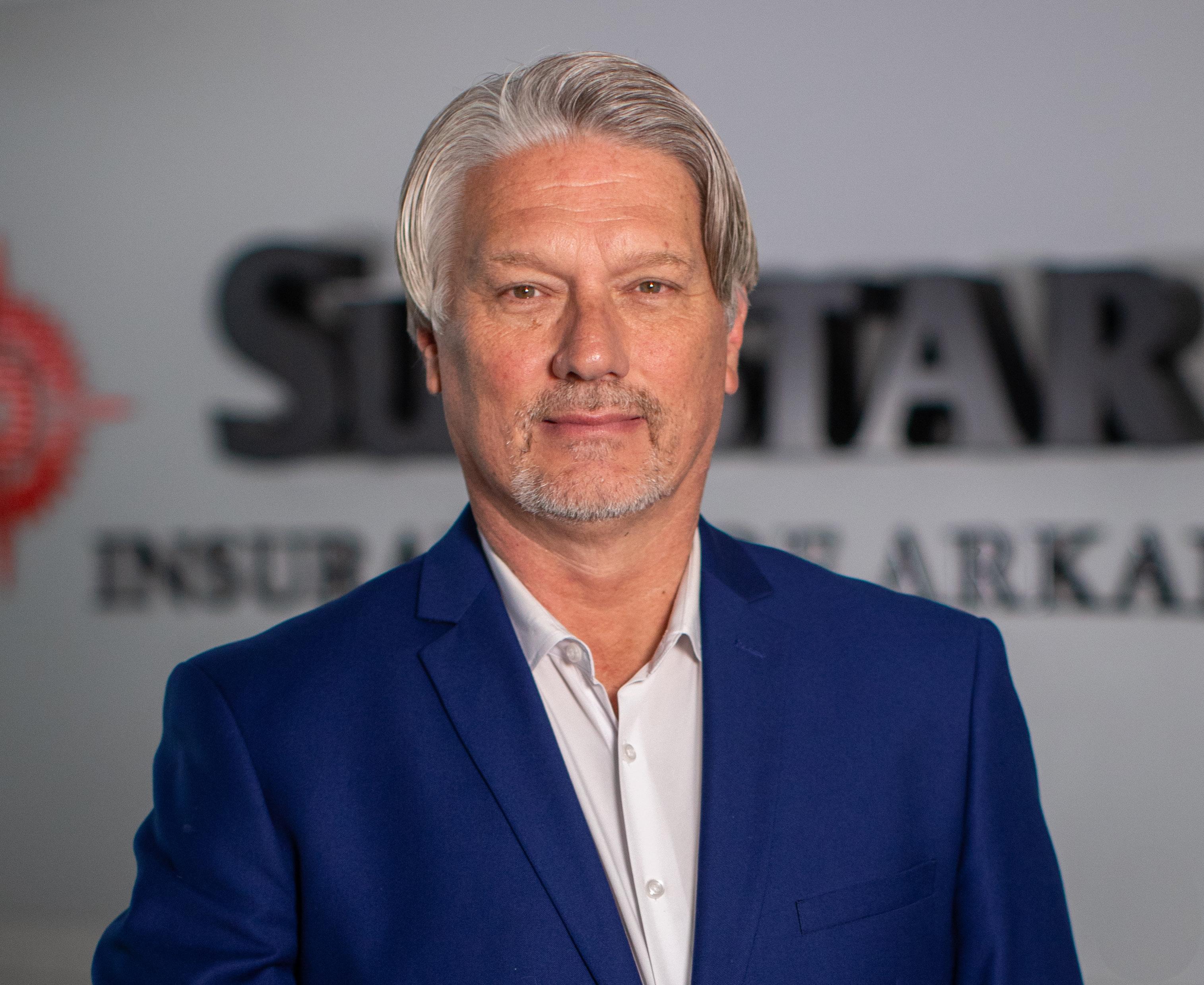
What kind of competition do you face in this field, and how does your company distinguish itself?
The biggest competition right now is the internet and direct consumers buying commercial insurance and even bonds without ever consulting an agent.
What has been your organization’s proudest moment or accomplishment so far?
We have grown to 14 locations and 125 employees in seven years, and we cover more of Arkansas than any other independent agency in the state.
What is one thing you wish everyone knew about commercial insurance?
The value of a good agent.
What kind of culture do you try to cultivate in the office?
The family culture. We are a family here at Sunstar, and our customers are family to us. We welcome all former clients and new clients!
What is something everyone gets wrong about the commercial insurance industry?
That all customers’ businesses are the same. Every single business has different risks and different concerns. Each business needs a policy that is custom-fit for that client.
How is your company or team involved in the community?
We support the communities we serve by being active in chambers of commerce, supporting local schools and getting involved.
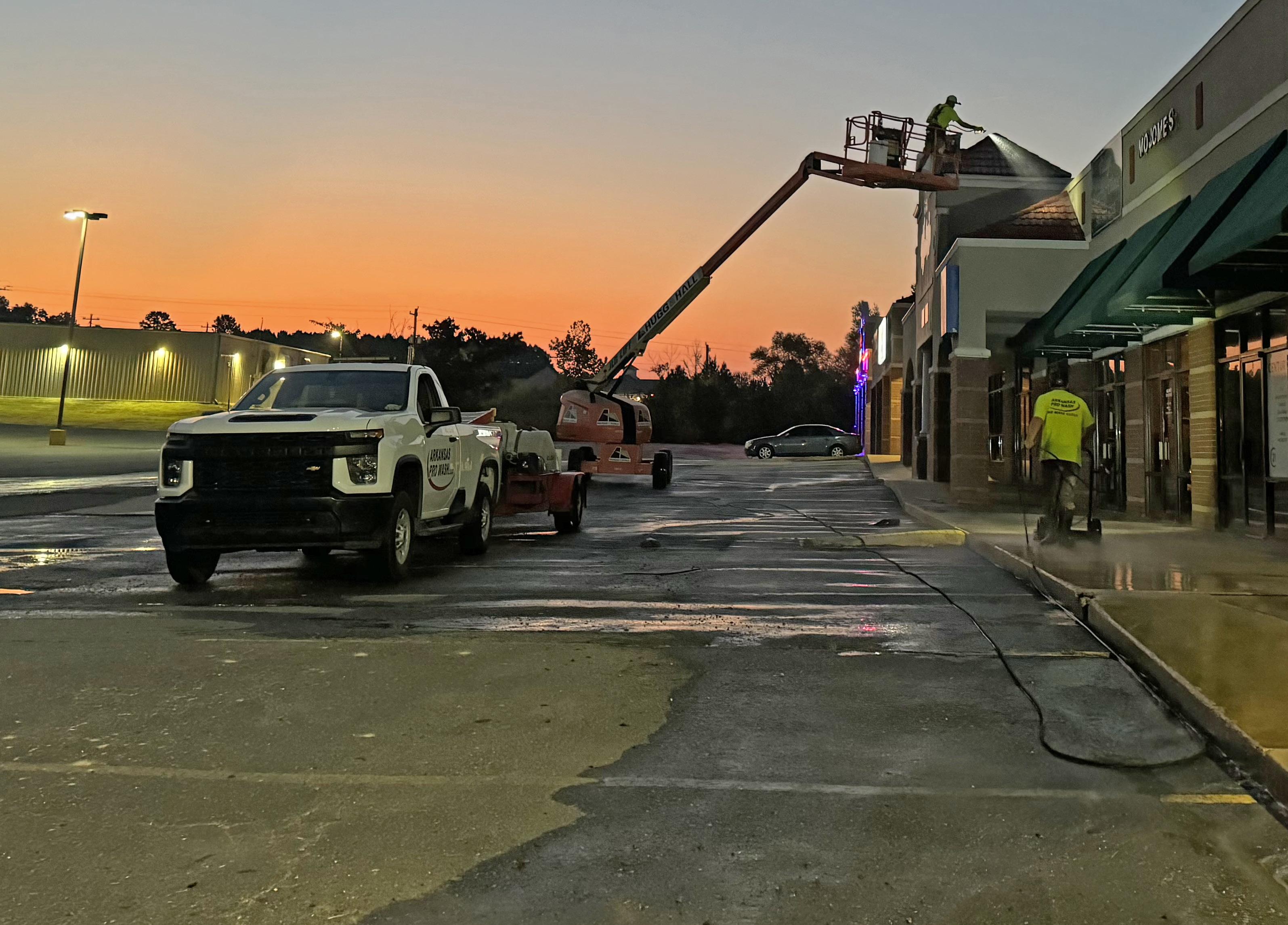
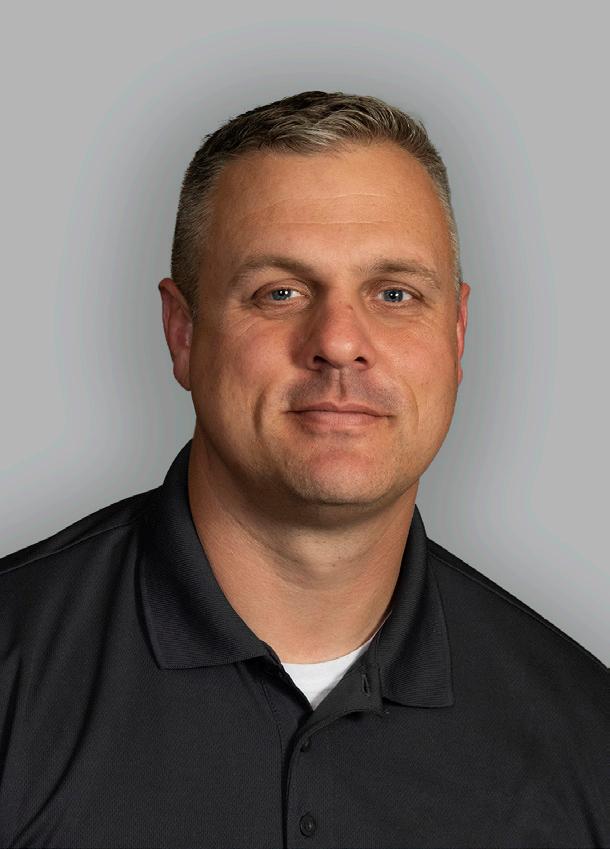
CHRIS APPLE, OWNER
How did your business get its start?
We started Arkansas Pro Wash 17 years ago. Since then, we’ve grown, served commercial clients across the state, and built a reputation for high-quality exterior cleaning and large-scale projects. Over time, we saw a greater need: Clients didn’t just need cleaning services; they needed a reliable partner to consistently maintain their property’s image, leading to the launch of CAM Pro Services.
What is something people often misunderstand about your industry?
Many people see exterior maintenance as just cleaning, painting or repairs, but it plays a much bigger role. A property’s appearance affects how it’s perceived by tenants, customers and ownership. When it’s consistently maintained, it supports smoother operations, stronger tenant experience and overall performance.
What are you most proud of when it comes to your work?
We’re most proud of being a team our clients can count on. When people ask what we do, the simplest answer
is whatever it takes to take care of our clients and their properties. We take pride in being reliable, following through and showing up when it matters.
How is your company involved in the community?
We view our business as a ministry, honoring God in how we serve our clients, our team and our community. It begins with serving our clients and helping them succeed. It extends to our team by creating opportunities for growth and helping them win in life, and it reaches into the community through partnerships that help feed those in need and support youth in foster care.
What do you want to see your business accomplish in the future?
As CAM Pro Services continues to grow, my goal is to build a truly great company that shifts the way people think about property maintenance — from reactive to intentional and consistent. More importantly, I want to create life-changing opportunities for our team and make a lasting impact in the lives of the people we serve.
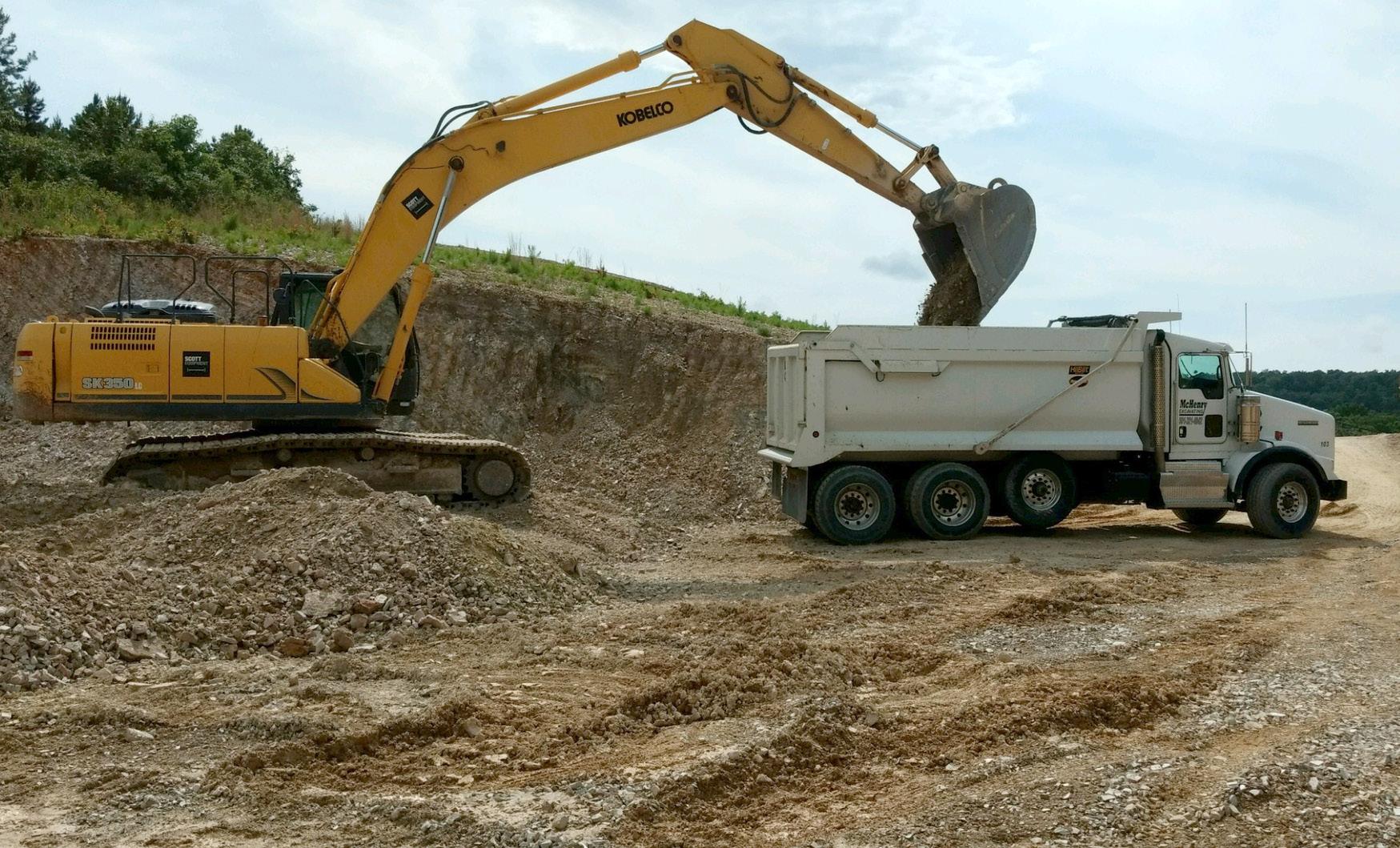
What kind of competition do you face in this field, and how does your company distinguish itself?
We face competition with others who have larger fleets and the new up-and-coming local contractor who decided to go to work for himself. The competition with the larger fleet could get jobs done faster, but faster isn’t always better in this industry. A local contractor doesn’t have the overhead we have, so he can price lower than we do, so they can go in at a lower price than we would. We try to find the happy medium where we are competitive on our pricing, our communication with the customer is topnotch, and we also offer a warranty on our work to make sure the customer is 100 percent satisfied.
What has been your organization’s proudest moment or accomplishment so far?
Being nominated for Large Business of the Year by the Greater Hot Springs Chamber of Commerce in 2026.
What do you want to see the business accomplish in 2026?
As always, strive to grow and be better than we were in 2025. We want to be at the forefront of the continuous infrastructure growth in Hot Springs and Garland County.
What trends are you watching in your industry right now, and how are you preparing for them?
Everyone across the nation, not only in our field of work, is looking at crude oil prices and the cost of goods. We have
our team being very diligent and mindful of idle utilization on trucks and equipment.
What kind of legacy do you hope this organization will leave behind?
We hope the legacy of McHenry & Meyer Companies is that we built more than projects. We helped build communities, created opportunities for the next generation of skilled workers, and set a standard for integrity and hard work in the excavation and aggregate industry.
What kind of employee culture do you try to cultivate?
To have our team respect one another and hold each other accountable in a positive way. We have team members who pray with their crews before each shift, as well.
Our management team strives to conduct wellness checks on employees to ensure they are personally OK and to check on their families, as well. We want everyone to feel like they are the McHenry & Meyer family.
What is something everyone gets wrong about your industry or business?
Our trucking department and the people behind the wheels of these trucks. We are looked at by citizens as an eyesore, big and dirty. We couldn’t ask for better individuals behind the wheels of our trucks; we have THE BEST team in that division. They all carry very positive attitudes, keep their trucks clean, and are always on high alert,

DR. CHRIS EASTBURN, FROM LEFT, DR. SARAH KING, DR. SAMARIA MASCAGNI, DR. KIMBERLY POLLARD AND DR. JOSHUA LUDFORD
What kind of competition do you face in this field, and how does your company distinguish itself?
Dentistry is a highly competitive field, and patients today have many options when choosing a provider. What distinguishes Arkansas Family Dental is our commitment to combining clinical excellence with an exceptional patient experience.
We invest heavily in advanced technology, continuing education and expanding services so patients can receive comprehensive care in one place. Just as importantly, we focus on creating a welcoming environment where patients feel heard, respected and comfortable.
Our goal isn’t just to fix teeth — it’s to build long-term relationships with patients and families across Arkansas.
What has been your organization’s proudest moment or accomplishment so far?
One of our proudest accomplishments has been the growth of our team and the positive impact we’ve had on
the communities we serve. Watching team members grow in their careers while seeing patients regain confidence through healthy smiles is incredibly rewarding.
We are especially proud of launching AFD Gives Back, our nonprofit initiative dedicated to providing free dental care to underserved members of our community. Programs like this remind us why we entered health care in the first place — to make a meaningful difference in people’s lives.
What is one thing you wish every Arkansan knew about their oral health?
Your oral health is directly connected to your overall health. Conditions like gum disease have been linked to heart disease, diabetes and other systemic health issues.
Preventive care — regular exams, cleanings and early treatment — can prevent many serious dental problems before they begin. We want people to know that maintaining a healthy smile is not just cosmetic; it’s a vital part of maintaining a healthy body.

When Dr. Hayden Franks opened Franks Dermatology in Little Rock, his mission was clear: Every Arkansan deserves access to quality skin care. That philosophy did not stop at medical dermatology. It expanded — literally two floors down — into SKN at Franks Dermatology, a med spa built on the same foundation of expertise, trust and patient-first care. Because they share a team, a building and a leader, the care patients receive at one is always connected to the care at the other.
One of the most common referral pathways between the two practices involves acne that is seen in both offices. At Franks Dermatology, patients who have been managing acne with long-term antibiotics sometimes reach a plateau. Rather than continuing the same course indefinitely, they are referred to SKN, where providers can build a treatment plan to wean off medication while using targeted treatments and medical-grade skincare to support and strengthen the skin barrier. When SKN providers treat acne-prone patients with laser or SkinPen microneedling, a short course of antibiotics from the dermatology
team upstairs can be a smart additional measure.
SKN providers also keep an eye out for anything that needs a closer medical look, such as an unusual lesion, a rash or sudden hair changes, and can get patients seen upstairs, often the same day. Patients who come in for cosmetic treatment and receive a same-day skin evaluation consistently say they love the convenience and peace of mind.
Franks leads both teams and keeps providers current through continuing education on the latest developments in dermatology, from new biologics to updated cosmetic protocols. Whether a patient is being seen for a skin cancer check or a HydraFacial, they are in the hands of a team working from the same up-to-date knowledge base.
Whether a patient has been managing a skin condition for years or has simply never had a full skin check, Franks Dermatology and SKN at Franks Dermatology are there to help. Patients do not have to choose between medical care and cosmetic care, and they do not have to navigate it alone thanks to a team dedicated to helping them achieve healthy skin.
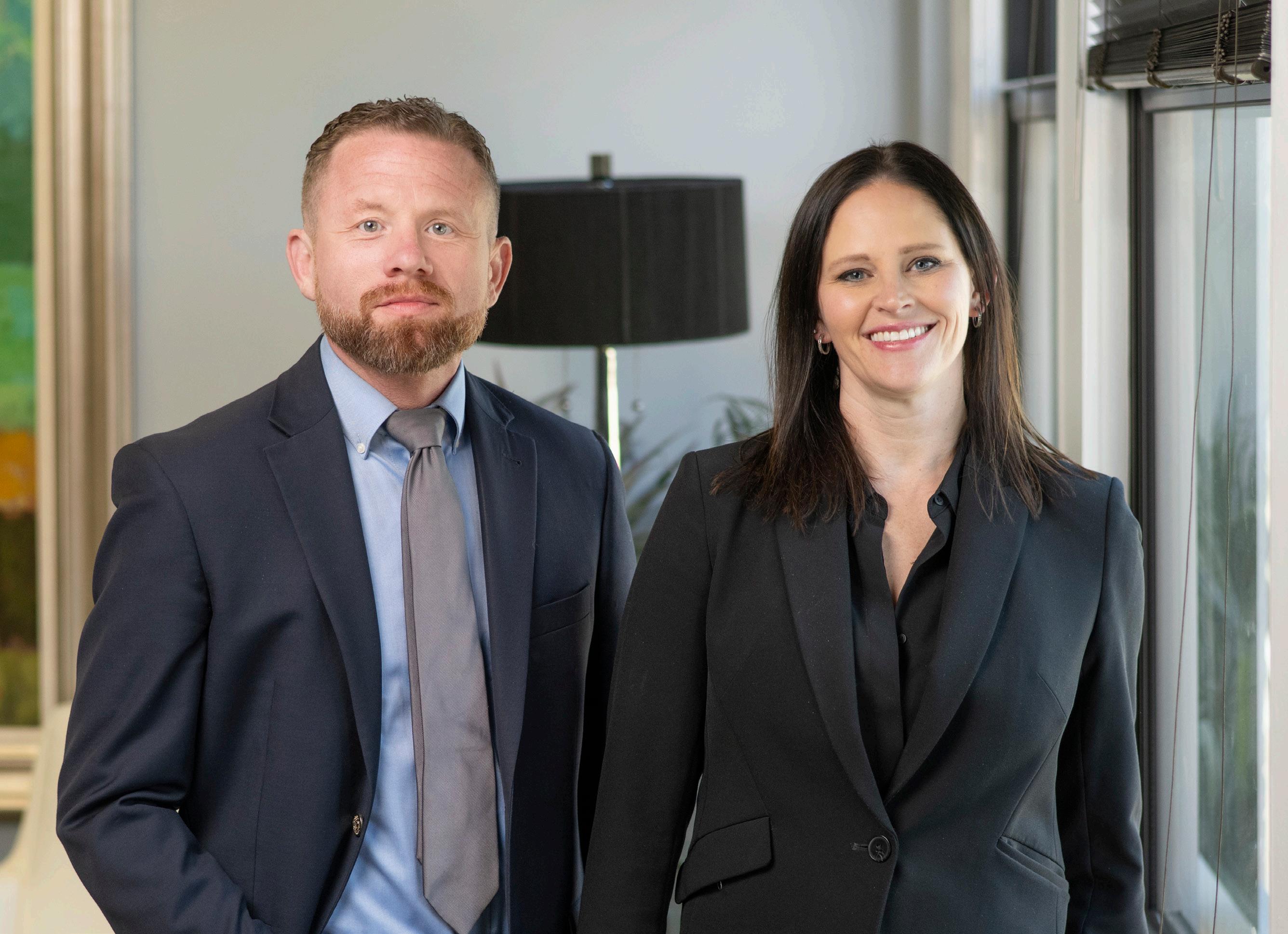
What kind of competition do you face in this field, and how does your company distinguish itself?
Family law is a highly competitive field because it is both deeply personal and legally complex. Every case and every client is different. Clients are not just choosing an attorney — they are choosing someone to guide them through one of the most difficult periods of their lives. We distinguish ourselves through a client-centered, strategy-driven approach. We combine meticulous legal preparation with compassionate representation, ensuring that our clients have an opportunity to achieve the best possible outcome.
What has been your organization’s proudest moment or accomplishment so far?
Our proudest accomplishment is the reputation we have built for ourselves. Since 2017, our respect within the legal community has grown exponentially. Most of our clients today are referrals, which highlights the trust we have established with former clients, other attorneys, judges and professionals in the community. We hope to continue making connections and impacting clients and colleagues positively.
What trends are you watching in your industry right now, and how are you preparing for them?
The accessibility of artificial intelligence has become increasingly apparent in the legal profession, especially in cases with self-represented parties. AI can be a helpful tool, but AI often cites outdated and even completely fake law, which can have an appearance of accuracy. As attorneys, we have a duty to cite to existing and current law or to make a good faith argument for an extension or exception to current law. AI has no such duty. However, we are now faced with parties that rely on AI for legal research and ultimately misstate or misrepresent the law.
What kind of employee culture do you try to cultivate?
We are a small firm, and we likely do not fit the stereotypical law firm environment. Our office is casual, but we work hard and often work late. Every member of our team plays a vital role in client outcomes, and we strive to continue learning from each other to better the firm as a whole and ourselves at the personal level. Our healthy internal relationships allow us to operate as one and better serve our clients and the community.
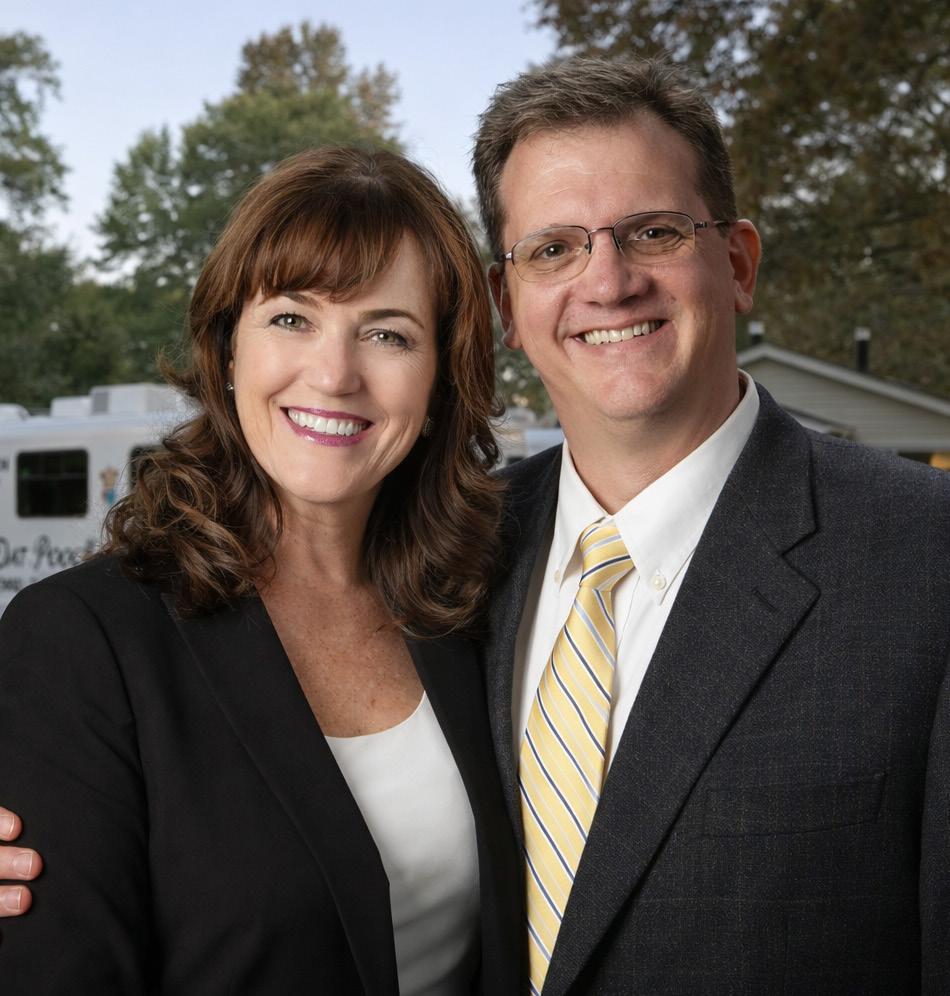
AUSBROOKS, RIGHT, AND TONI BEAVERS, CO-OWNERS
For most families, a dog is a trusted companion and an important part of the household. The team at Maumelle-based Dat Pooch Mobile Dog Grooming understands the responsibility that comes with caring for clients’ furry friends, as well as the duty to treat each pet as if it were one of its own. Every grooming appointment is approached with patience, respect, and a commitment to creating a calm and comfortable experience.
Mobile grooming may appear to be a one-person service, and as far as one’s dog is concerned, it is. For clients, however, the unique model at Dat Pooch has proven that great grooming is always a group effort. While only one groomer may show up at the door, behind the scenes is an entire team of hardworking professionals who understand that each member’s individual efforts, talents and skills all contribute to something much bigger — healthy, happy pets and satisfied customers throughout central Arkansas.
Dat Pooch is redefining what modern mobile pet care
can look like. In addition to providing flexibility, the teambased approach lends consistency and long-term stability to the operation so clients can feel secure in relying on Dat Pooch time and again for their dog’s needs.
Suffusing every aspect of Dat Pooch’s work is the company’s own “Dat Pooch Standard,” called “TeamCare.” The tenets of TeamCare include valuing teamwork over individual recognition; cultivating calm, low-stress grooming environments; utilizing consistent grooming practices across every appointment; and providing professional care for every dog.
As mobile grooming continues to grow in popularity, the team at Dat Pooch remains focused on delivering reliable, professional grooming care for every dog entrusted to it. By combining a calm, one-on-one environment with the shared standards, expertise and support of an entire professional team, Dat Pooch is setting the standard for mobile pet grooming in central Arkansas.
CHRIS MEYER , CEO/PRESIDENT
What drew you to a career in your field?
I grew up around this industry. From a young age, I was around job sites and equipment, and I heard stories about the business my grandfather built. That exposure led to real respect for the work and the people behind it. Over time, I knew this was something I wanted to be part of and continue building.
What is it like to continue a legacy built by your grandfather decades ago?
It’s something I don’t take lightly. There’s a lot of pride in continuing what he started but also a responsibility to keep pushing it forward. The goal is to honor that legacy while continuing to grow, evolve and build something even stronger for the next generation.
What are you most proud of when it comes to the work you do?
I’m most proud of the team we’ve built. From field crews to office staff, everyone is needed to make these projects happen. I’m also proud to be part of an industry that’s constantly evolving — there’s always something new to learn, and you
see people of all ages and backgrounds finding their place in it. Most importantly, seeing the impact our work has on the communities we serve and the role we play in building that infrastructure is what makes it all worth it.
What qualities or skills have best prepared you for your current role?
Starting from the ground up gave me a different perspective. Understanding the work firsthand, staying consistent and being willing to keep learning have all played a big role. Surrounding myself with a strong team has also been just as important.
How would you describe your leadership style?
I’d describe it as collaborative and growth oriented. I focus on investing in our people, prioritizing safety and working through challenges as a team. Early on, I was more hands on in every decision, but over time, I’ve learned the importance of delegation and trusting the people around me. Now, a big part of my role is focused on strategic growth while continuing to build and maintain a strong, family-oriented culture.

EDEN GARRETT, OWNER
What kind of competition do you face in this field, and how does your company distinguish itself?
There are a lot of choices for florists in our area, yet we differentiate ourselves by trying to create an immersive experience. Our flower truck and storefront are not cookie-cutter like a typical florist; we strive to stand out in the crowd. We do not just provide flowers — we provide happiness.
What has been your organization’s proudest moment or accomplishment so far?
We did not just survive COVID-19; we thrived and flourished. We opened our doors only two weeks before the COVID-19 pandemic. While so many local businesses had to shut their doors, we have expanded our storefront twice, won eight awards, and also provided countless clients a wonderful experience in fresh florals, workshops and parties.
What do you want the business to accomplish in 2026?
I would like 2026 to be the year of growth — mostly growth for customer awareness. We offer more than a vase of flowers; we offer happiness in a vase, whether it’s a simple arrangement, a workshop, a private party, a corporate class or a flower truck party.
What qualities are most important for floral designers? I think being able to adapt to new trends, create their own ideas and provide great customer service. Anyone can learn how to make an arrangement, but those who put their clients first are the most successful.
What is something everyone gets wrong about floral design?
It’s not as simple as “playing with flowers” all day; it’s the experience you have, the tools you use and processing flowers to have the most longevity, from having a vision to knowing how to execute it perfectly.
What kind of legacy do you hope Eden’s Flower Truck & Botanicals will leave behind?
Legacy is more than passing ownership; it’s about the trust and faith from the community in receiving the same quality and beauty of the arrangements we provide for many celebratory occasions. We want customers to know they are always at the forefront of our decision-making, and their happiness is the most important thing when designing their florals. From weddings to funerals, everyday flowers, birthdays and celebrations, flowers are always a great way to express how you feel.

BRADLEY-HOLE, DIRECTOR
Nick Bradley-Hole began his hospitality career at 21 as a pub owner before moving into luxury boutique hotel management in London. In 2001, he entered gaming at Harrah’s in Reno. He later relocated to Little Rock as director of operations at The Capital Hotel and now oversees the hotel operations at Saracen Casino Resort, creating an elevated guest experience with exceptional service.
What drew you to a career in your field?
Hospitality has always been part of who I am — it’s quite literally in my blood. My parents ran a pub when I was born, and while they worked, my crib sat on the bar counter. From the very beginning, I was surrounded by the energy of people coming together, sharing stories and enjoying themselves.
I may not have realized it at the time, but I was absorbing something powerful — the way genuine service could create smiles, connection and lasting impressions. That early exposure stayed with me. It instilled a deep appreciation for the impact hospitality can have on people’s lives.
What is a secret about the gaming world that you wish were more well known?
A “secret” I wish more people understood is that success in the gaming industry has far less to do with luck and far more to do with people. While gaming is the centerpiece, the real differentiator is the level of service delivered across every touchpoint.
From valet to housekeeping to the front desk, every interaction matters. At Saracen, we invest heavily in training, culture and consistency because guest loyalty is built on how people feel, not just how they play. Gaming is simply the backdrop to a much larger hospitality experience.
How do you find new ways to draw in new crowds to Saracen?
We are constantly evaluating and refining our operations to ensure we continue delivering an exceptional guest experience. In today’s environment, attracting new audiences isn’t just about marketing — it’s about creating experiences that people want to be part of and share.
By continuously enhancing what we offer and staying focused on quality and innovation, we’re able to attract new guests while giving our existing guests even more reasons to return.
CURTIS BARNETT, FROM LEFT, MALLORY ROGERS, DETRICH WILEY, KAT ARDEMAGNI AND LEON WILLIAMS
Arkansas Blue Cross and Blue Shield has been taking care of Arkansans for more than 77 years, providing affordable, reliable health insurance, connecting members to resources, and helping them navigate the health care system. The company believes in building and maintaining collaborative, long-term relationships with physicians, hospitals and other providers characterized by a mutual interest in members and focused on improving the affordability, delivery and quality of care. A dedicated team of employees conducts operations with the highest degree of integrity, honesty and fairness, never losing sight of the humanity of members amid a fast-paced health care environment.
What has been your organization’s proudest moment or accomplishment so far?
With nearly eight decades of service, it’s difficult to point to a single proudest moment. What stands out most is Arkansas Blue Cross’ consistent role in meeting major challenges facing our state. From becoming the first processor of Medicare claims in Arkansas to opening seven full-service regional offices statewide in 1996 to launching the Blue &
You Foundation for a Healthier Arkansas in 2001, our history is marked by innovation and leadership. We are also proud to have been the only health insurer offering plans in all 75 Arkansas counties during the launch of the Affordable Care Act in 2013. More recently, we have led the charge to elevate behavioral health as a core component of overall well-being — both in Arkansas and nationally — expanding access to care and advancing meaningful conversations around mental health.
What is something everyone gets wrong about the health care insurance industry?
Health insurers are often portrayed as villains in the health care system, particularly as profit-driven “middlemen” who increase costs for consumers. For Arkansas Blue Cross, that perception doesn’t reflect reality. Our role is to help control costs while ensuring people have access to high-quality care and clear, reliable information. Our employees work every day to make health care more affordable, accessible and effective so our members can stay as healthy as possible.
What kind of competition do you face in this field, and how does your company distinguish itself?
We compete with national franchises, but we’re not one of them. Superior Senior Care is Arkansas owned, locally rooted, and built on a client-choice model that gives families more control and transparency than traditional home-care agencies.
What has been your organization’s proudest moment or accomplishment so far?
Our proudest accomplishment is reaching more than 40 years of serving Arkansas families. Staying locally owned and trusted for that long in an industry dominated by national franchises is something we don’t take lightly. The relationships we’ve built with seniors, families and caregivers across the state are the heart of our success.
What is one thing you wish everyone knew about inhome senior care?
That in-home care isn’t a one-size-fits-all service. Superior Senior Care provides flexible, personalized support that helps seniors stay independent whether they need occasional assistance or daily care.
What kind of culture do you try to cultivate in the office?
We cultivate a culture that reflects Arkansas values — genuine, hardworking and community minded. Our office
is a place where people feel supported, appreciated and connected to a mission bigger than themselves.
What is something everyone gets wrong about the home care industry?
Many people think home care is only needed in a crisis, but that’s not true. In-home support can be proactive, flexible and incredibly helpful long before a family reaches a breaking point. Starting early often leads to better outcomes and a much smoother experience for everyone.
How is your company or team involved in the community?
Our team stays deeply involved in the communities we serve. At Superior Senior Care, we created our own Charity Choice program, a unique initiative that allows employees to select causes that are personally meaningful to them and then give back together. It’s a simple but powerful way to support what matters most to our team while strengthening the communities around us.
Is there anything else readers should know about you or your business?
At the end of the day, our work is about people, the seniors who want to stay in their homes and the caregivers who make that possible. We’re proud to support both, and we’re honored to be a trusted resource for families across Arkansas.
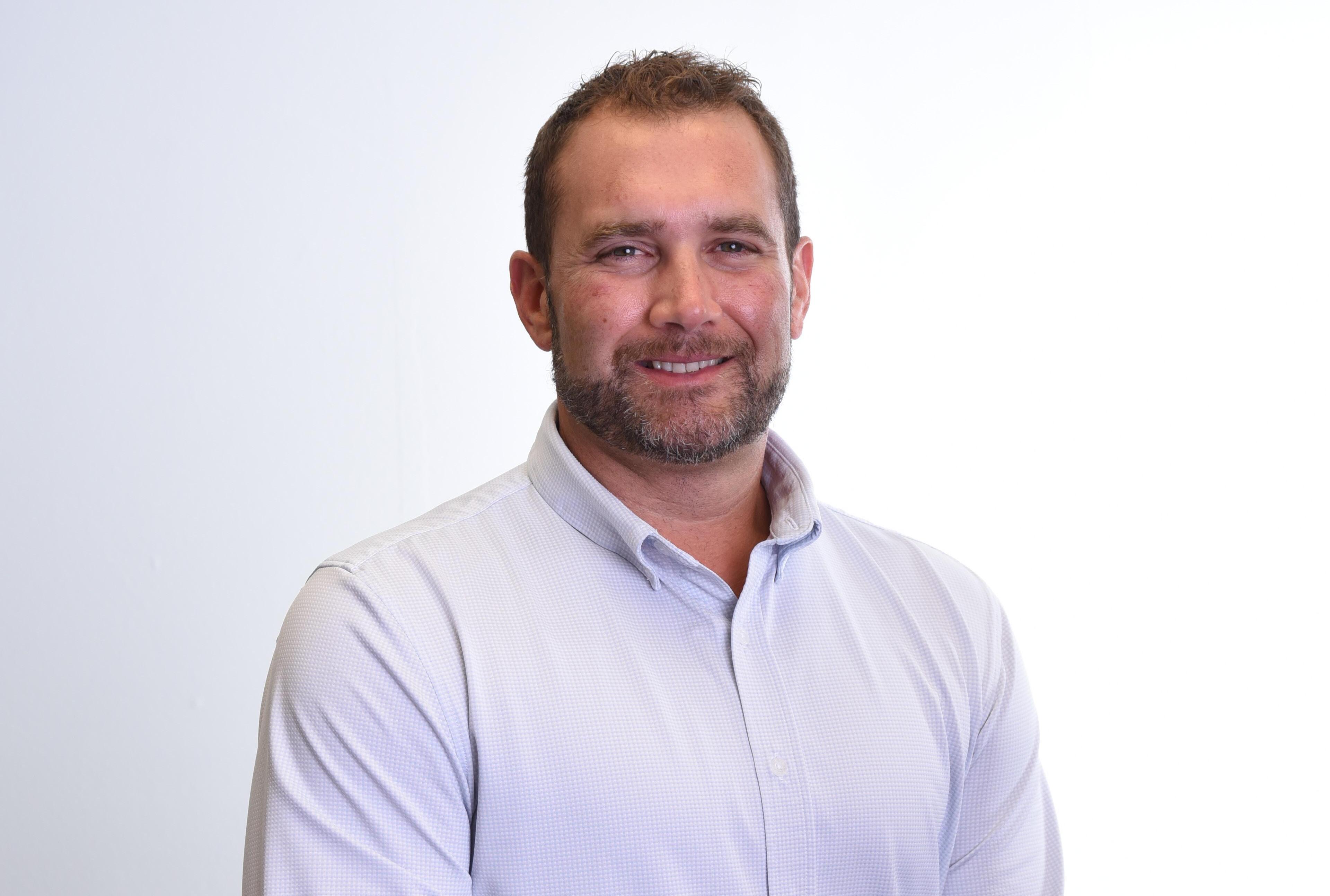
What has been your organization’s proudest moment or accomplishment so far?
Our proudest accomplishment is the enduring trust we’ve built with our clients over the past 36 years. Testimonials like, “I love your team! Everyone is patient and helpful when I need to call. Thanks for being awesome!” reflect the success of our client-centric approach and our dedication to restoring dignity to tech support.
What trends are you watching in your industry right now, and how are you preparing for them?
We are closely monitoring advancements in artificial intelligence, cybersecurity threats and the increasing demand for cloud-based solutions. To prepare, we’ve integrated services like artificial intelligence to enhance productivity and are continually updating our cybersecurity measures to protect our clients’ digital assets.
What kind of employee culture do you try to cultivate?
We foster a family-oriented culture that emphasizes worklife balance, continuous learning and team collaboration. At NSG, we don’t just support our employees — we make sure their families love the fact that they work here. We provide benefits like unlimited paid time off, matching 401(k) from day one, and sponsorship for certifications
and training, all of which reflect our deep commitment to our team’s well-being and professional growth. Our goal is to create an environment where employees feel valued, supported and excited to be part of our mission.
What is something everyone gets wrong about your industry or business?
A common misconception is that IT support is purely transactional and impersonal. In reality, building strong relationships and understanding each client’s unique challenges is crucial for effective IT support. We prioritize these relationships to provide tailored solutions that truly meet our clients’ needs.
How is your company or team involved in the community?
We are incredibly proud of the many organizations our staff supports through volunteer hours — too many to list. NSG directly supports a range of organizations that focus on aiding the developmentally disabled, mental health initiatives, adoption services and various health foundations. Giving back is a core part of our company culture, and we believe in using our resources and time to make a meaningful impact in the community.

RYAN TANEJA, CEO
What kind of culture do you try to cultivate in the office? We try to cultivate a culture that feels like family while still pushing for excellence. We want people to feel seen, supported and empowered while also knowing they are part of something meaningful. Creativity, collaboration, innovation and service are all important to us, but so is heart. We want the people around us to know that their ideas, their work and the businesses we serve matter. At the end of the day, we are not just producing deliverables; we are helping support dreams, livelihoods and futures. That perspective shapes the kind of culture we want to build every day.
What do you want the business to accomplish in 2026? In 2026, our focus is not simply on expansion. It is intentional evolution. We aim to strengthen TMG’s position as a trusted partner in marketing and business strategy while continuing to build LiftOff as a phased, integrated ecosystem that supports modern business owners. This includes expanding the capabilities introduced by LiftOff CRM and
LiftOff POS while laying the foundation for the broader TMG Business Marketing Suite, a system designed to align marketing, communication and operational tools. Our goal is to reduce fragmentation to give business owners more clarity, more control, and fewer barriers between where they are and where they want to go. Growth, for us, is not measured solely by scale. It is measured by usefulness.
What is one thing you wish everyone knew about your industry?
There is no universal formula for a successful business, nor should there be. A major misconception in this industry is that growth can be standardized. Templates, trends and shortcuts are marketed as solutions, but they rarely address the real complexity of business. Every company operates within its own context, market, audience, resources and vision. At TMG, we believe our industry’s role is not to impose a strategy but to help find the right one. That’s why we invest in more adaptive solutions — because businesses need clarity, not more noise.

DR. KEITH SCHLUTERMAN
What is the goal of the Conway Regional Memory Clinic?
The Conway Regional Memory Clinic is bringing the latest advancements in Alzheimer’s diagnosis and treatment to Arkansas, ensuring that patients have access to cutting-edge care. By taking a multidisciplinary approach, the clinic provides more than just medication — it offers a comprehensive support system tailored to individual needs. Patients with early memory concerns or a family history of Alzheimer’s have the opportunity to be screened as early as age 55 using innovative tests. Additionally, the clinic is committed to reducing barriers to access by integrating insurance assistance programs and expanding local diagnostic services. We are pleased to announce that we were recently recognized as the largest memory care clinic in Arkansas.
What trends are you watching in your industry right now? One significant advancement is the development of new medications for treating early onset Alzheimer’s. Antiamyloid drugs work by targeting and removing amyloid plaques in the brain, slowing disease progression when
started early. Another groundbreaking trend is the ability to detect Alzheimer’s much earlier using biomarker testing. The p-tau217 blood test, with a 96 percent specificity rate, allows for diagnosis years before dementia symptoms appear.
What kind of legacy do you hope this organization will leave behind?
Conway Regional is committed to changing the trajectory of Alzheimer’s disease by shifting from symptom management to proactive, disease-altering treatments. The clinic focuses on early diagnosis, ensuring that patients can begin treatments before dementia develops, which significantly improves their long-term quality of life.
A comprehensive, multidisciplinary approach integrates physical therapy, occupational therapy, speech therapy and behavioral health support, addressing both cognitive and functional challenges. The clinic also employs cutting-edge diagnostics, including artificial intelligencesupported MRI scans and neurocognitive testing, to detect Alzheimer’s disease earlier than traditional methods.
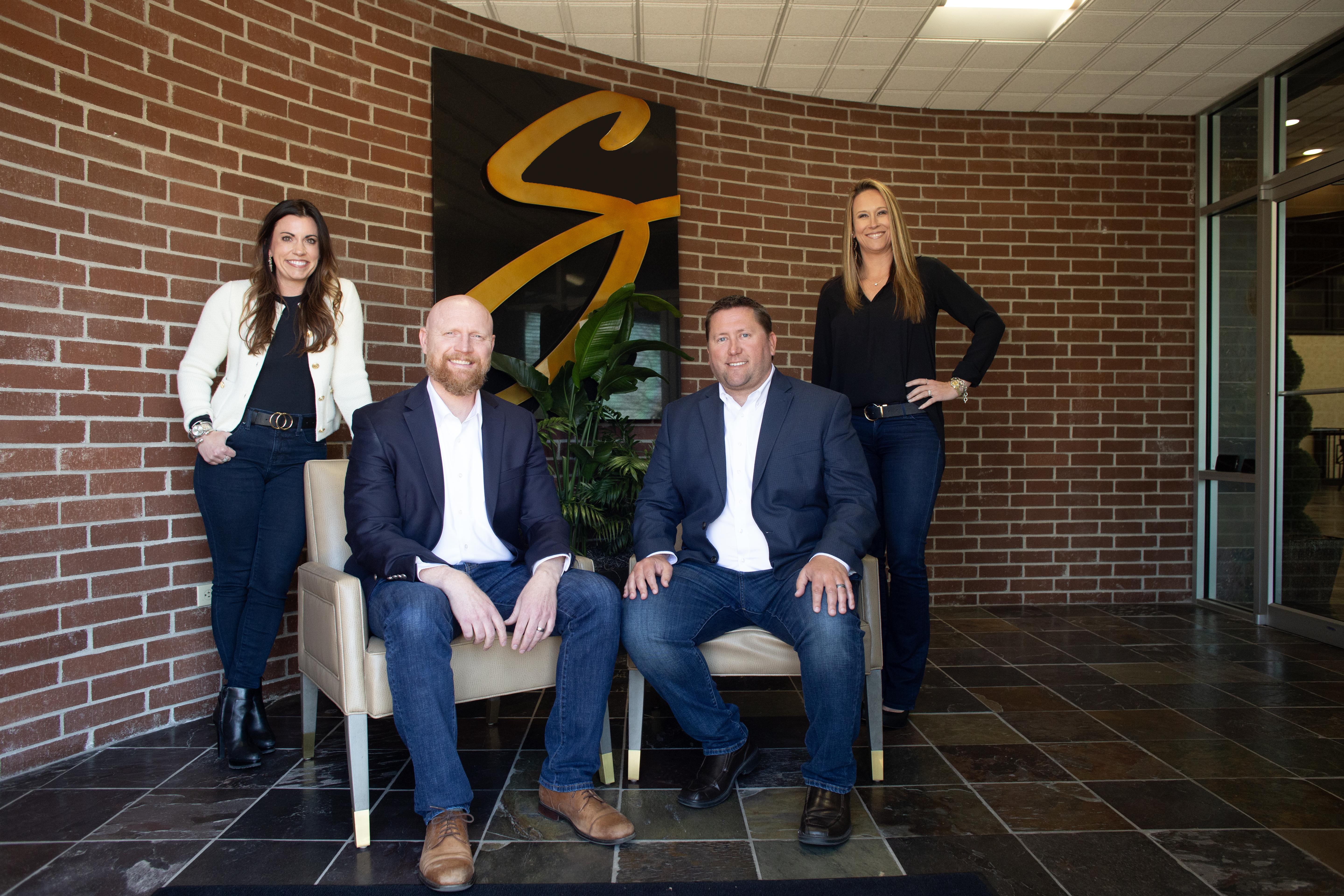
ALEXANDRIA GLADDEN, CHIEF OPERATING OFFICER, FROM LEFT; BRANT WARD, PRESIDENT; JEFF MALAND, CHIEF RISK OFFICER; CRANDALL STREETT, CHIEF ADMINISTRATIVE OFFICER
What is your mission and the key to your success?
We strive to become the premier community bank in the state by delivering exceptional financial services and actively supporting the growth and well-being of the communities we serve. We have created a comfortable place for Arkansans to come for both banking needs and financial advice. We’re a refreshing change from a big, impersonal bank, meeting our customers where they are and growing the relationship from there. At Signature, we bank in blue jeans, creating an atmosphere without the need to feel nervous or intimidated, and they can believe they have a true partner.
What are your organization’s goals for the next few years?
We have recently made significant financial investments across communities in Arkansas, with new locations in Jonesboro and Harrison, as well as Banco Si in downtown Rogers and soon to be in downtown Springdale. We plan to grow our presence in each of these new communities,
as well as the established communities we’ve served for years — Fayetteville, Springdale, Rogers, Bentonville and Brinkley — through our personalized brand of highlevel customer service. We’ve also invested in creating a back-office team at our headquarters that gives us a tremendous opportunity for growth without adding meaningful labor costs.
What has been your organization’s proudest moment or accomplishment?
Like a new parent finds a proud moment in each day of their child’s life, we cannot boil down our pride to a single moment or accomplishment. Every small business our bank has grown with and had the opportunity to witness mature into a thriving, profitable enterprise is an accomplishment for us. The collective faith our customers have in us has built a billion-dollar bank that is poised to continue to enhance the lives of those in our community for years to come.
DR. JORDAN WALTERS

What sets your facilities apart from others in your field?
Conway Regional performs more ultraminimally invasive and endoscopic spine surgeries than any other provider in central Arkansas. We’ve invested in advanced technology that allows our surgeons to treat many spine conditions through smaller incisions, helping patients experience less pain, faster recovery times and more treatment options.
What is something everyone gets wrong about your industry or business?
Spine surgery in general is sometimes viewed with a mixed reputation. Many people know someone who has had a bad experience with back surgery. When properly selected, spine injections and procedures can be very helpful for patients and improve their quality of life.
What trends are you watching in your industry right now?
Of course, computer navigation, robotics and artificial intelligence are in the realm of spine surgery. We are investing in these technologies, as well, and are happy to discuss them with patients.
What has been your proudest accomplishment so far?
Endoscopic patient outcomes have been encouraging. One patient in particular comes to mind. Prior to endoscopic training, I would likely have recommended a lumbar fusion involving three vertebrae with a significant recovery time. With an endoscopic surgery, however, he had one incision roughly 1 centimeter in length, did not receive a fusion surgery, was able to go home the same day with minimal discomfort, and was very pleased at his follow-up appointment.
What qualities are most important for professionals in your field?
While new techniques and technology are helpful, they are no replacement for bedside manner and diagnostic techniques in the clinic. There is also no replacement for nonoperative management, which remains an option for many of our patients. We strive to strike a balance of these factors at Conway Regional.
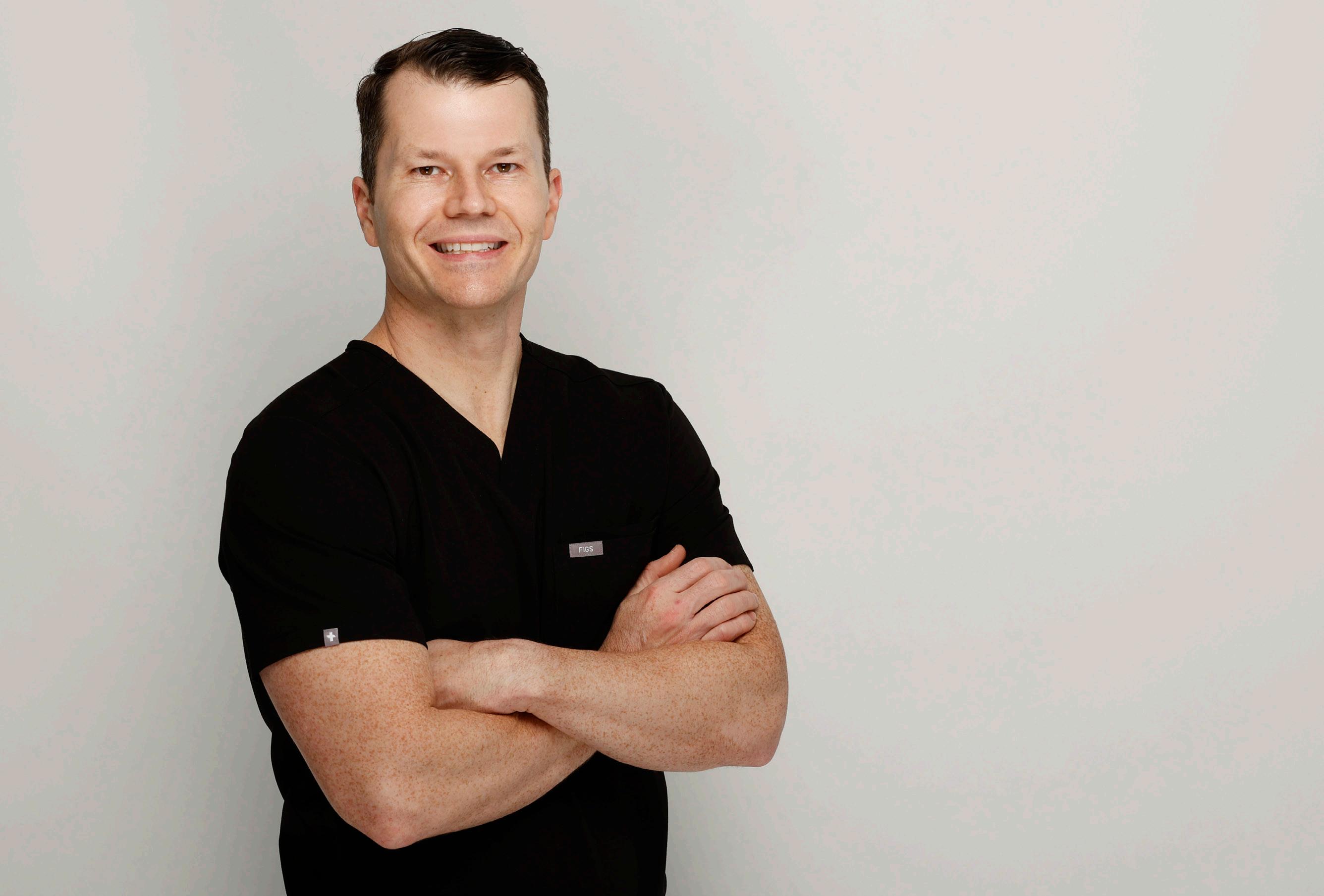
How did your business start?
In 2018, Dr. Eric Wright transitioned from academics to private practice to pursue his interest in providing all aspects of plastic surgery. Wright Plastic Surgery offers aesthetic and reconstructive surgery for patient care, along with a variety of nonsurgical options.
What is the key to your success?
“Your Beauty, Our Expertise” is our motto. We know our patients have many choices, and helping them to make an informed decision about their care is what matters most to us. Dr. Wright is known for his extensive training in aesthetics and reconstructive surgery. Our well-trained staff provide comfort, as well as care, throughout a patient’s journey. Dr. Wright and his team have genuine compassion and interest in listening to their patients’ aesthetic goals.
What is the most important thing you do for Arkansans?
Dr. Wright is committed to bringing the latest advancements in medical technology and surgical expertise to our state. By combining advanced surgical techniques with a patient-first approach, Dr. Wright empowers Arkansans to look and feel their best, improving their overall quality of life. Beyond surgery, Wright Plastic Surgery prioritizes education and safety, ensuring
Arkansans have access to accurate information about plastic surgery and aesthetic treatments. Dr. Wright is committed to ethical practice, guiding patients toward procedures that align with their unique goals while maintaining realistic expectations.
What sets you apart from your competitors?
Creating an experience for our patients while providing exceptional care and customer service. We pride ourselves on being with our patient from the initial phone call to their last appointment and through nonsurgical options, as well.
What are your organization’s goals for the next few years?
We are dedicated to redefining the aesthetic landscape in Arkansas by integrating world-class innovation with deeply personalized patient care. We expanded our laser portfolio with the state’s first HALO TRIBRID laser. This revolutionary laser, featuring an advanced triplewavelength platform, delivers unprecedented results in skin resurfacing and collagen stimulation with less downtime than traditional methods. We offer deep-resurfacing lasers like Contour Turnable Resurfacing Laser for comprehensive skin rejuvenation. Our goal is to empower every patient by providing the world’s best aesthetic devices and transformative results in Arkansas.

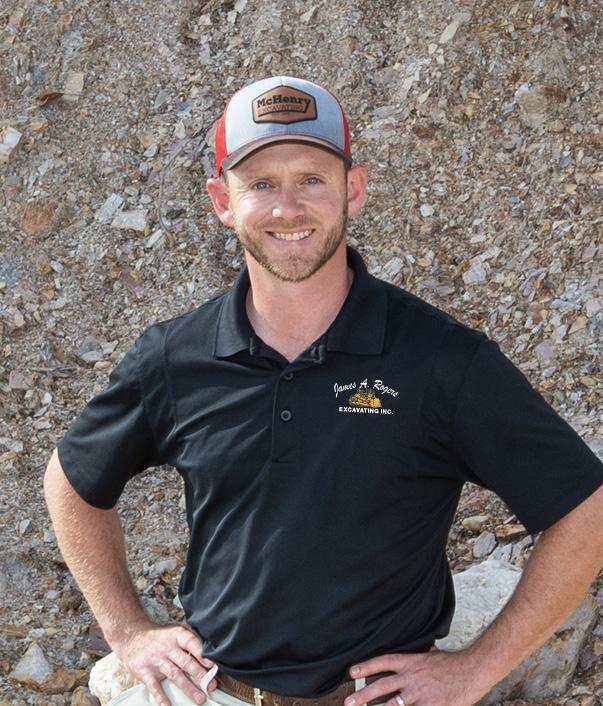
CHRIS MEYER, CEO/PRESIDENT
What has been your organization’s proudest moment or accomplishment so far?
One of the proudest accomplishments for our organization is carrying forward a legacy that has been built over three generations. For more than 65 years, James A. Rogers Excavating has helped shape communities across Arkansas. Some of our proudest moments include being nominated by Equipment World in 2021 as Contractor of the Year, as well as when Chris Meyer was named a “Man of Distinction” by AY About You in 2024.
How do you plan to grow the residential side of James A. Rogers in the next year?
Our goal is to continue expanding relationships with builders and developers across central Arkansas and statewide. Residential growth in Arkansas continues to create opportunities, and we want to be a trusted partner for site preparation, grading and utility work. By investing in equipment, technology and skilled personnel, we’re positioning ourselves to take on more residential work while maintaining the high standards our company is known for.
What kind of culture do you try to cultivate in the office? We strive to cultivate a culture of accountability, respect and teamwork. Construction is a demanding industry, and success depends on every person — from the office to the field — working together toward the same goal. I want our employees to feel proud of the work they do and confident that they’re part of something meaningful. We emphasize safety, professionalism and continuous learning. Ultimately, the culture we strive for is one where people look out for each other and take pride in building Arkansas.
Is there anything else readers should know about you or your business?
James A. Rogers Excavating has always been about more than just construction — it’s about people and community. We’re proud to be an Arkansas-based company that has served this state for decades, and we’re committed to continuing that tradition. Our mission is simple: work hard, do the job right, and leave a positive impact on the communities where we operate.
What kind of competition do you face in this field, and how does your company distinguish itself?
If we care about elevating the arts in Arkansas, competition has to be replaced with collaboration. From the beginning, Stage 13 has put that philosophy into practice. What distinguishes Stage 13 is that we were built as both a semiprofessional production company and a training pipeline. Our students aren’t just learning; they are working alongside industry professionals, Broadway artists and high-level creatives. We lean into bold storytelling, modern branding and a fearless vision for growth, which allows us to reach audiences and young artists in the most exciting ways.
What has been your organization’s proudest moment or accomplishment so far?
In a matter of months, Stage 13 received its official 501(c)(3) status, acquired significant corporate and individual financial supporters, reinvested every dollar back into programming and growth, produced two mainstage musicals, served 600-plus students, opened an academy for the performing arts, and renovated what will become a boutique performance and event center. The real accomplishment is trust — families, donors, business leaders and artists believing in something we are building from the ground up.
What qualities are most important for professionals in your field?
Resilience, vision and business acumen matter just as much as creativity. Theater requires leaders who are passionate about the arts, unafraid to take risks, and able to adapt quickly and to think long term while staying grounded in purpose.
What kind of employee culture do you try to cultivate?
We believe in a culture that is bold, fun, collaborative and people first. Stage 13 is built on trust and transparency. We give artists and educators the space to bring their ideas forward while holding ourselves to a high standard. We celebrate individuality, encourage innovation and create an environment where everyone contributes to the bigger vision.
What is your company’s superpower or overall defining characteristic?
Our superpower as a staff and board of directors is fearless ambition — bold vision paired with real action and work ethic. At Stage 13, we move quickly, dream big and are not afraid to challenge traditional models. We combine modern branding, strong leadership and deep community roots to create something that is forward thinking and set up for long-term success.
A company mission can hardly get more fundamental than helping people achieve the American Dream, and that is exactly what Commerce Title & Closing Services in Little Rock is in the business of doing. Offering a full range of services, including title searches and title insurance, the company makes buying and selling real estate simple so clients can achieve their dreams of homeownership.
“What motivates us is knowing that we are helping people navigate what is normally the largest sale or purchase of their lives and playing a very small role in helping families build homes,” said co-founder Brian Scott.
Commerce Title’s 14-person staff has a combined experience of more than 190 years. In addition to a deep understanding of the industry and market, the team’s problem-solving skills and adaptability in the face of challenges sets the company apart. A lot can go awry during the closing process, making a level-headed approach key to getting across the finish line.
“We are an independent title company and not affiliated with any real estate company or agency,” Scott said. “We put ourselves in our clients’ shoes and view the transaction from their eyes.”
Looking ahead, Scott said the company’s goal is to continue at a steady rate of growth while navigating an ever-changing real estate market. With a client-first mindset and commitment to success, Commerce Title is set to continue helping clients close transactions big and small for years to come.
“We are honored that our clients entrust us with their real estate needs, and we know that we have to earn that trust every day with every transaction,” Scott said.

What kind of competition do you face in this field, and how does your company distinguish itself?
We operate in a highly competitive utility and heavy construction market where experience, safety and reliability matter. What sets NOEC apart is our one-stop-shop approach, offering power line construction, distribution, transmission, right of way, substations, foundations, fiber, directional drilling and storm response under one roof. Ownership remains hands on, ensuring accountability, responsiveness and consistent quality on every project. Specialty trades such as concrete, asphalt, HVAC and fencing are subcontracted to trusted partners.
What has been your organization’s proudest moment or accomplishment so far?
Our proudest accomplishments come from earning repeat business and long-term relationships with cooperatives, municipalities and telecom partners. Building a strong
internal culture where our crews take pride in safety, preparation and teamwork has been just as meaningful as any single project milestone.
What trends are you watching in your industry right now, and how are you preparing for them?
We are closely monitoring grid hardening initiatives, fiber expansion, broadband funding programs and increased demand for storm resiliency. We are preparing by investing in specialized equipment, cross-training our workforce, and staying ahead of regulatory and safety requirements.
How does being veteran owned translate into better service for your clients?
Being veteran owned brings discipline, accountability and a mission-first mindset. We emphasize preparation, clear communication and follow-through, resulting in safer job sites, dependable schedules and consistent execution for our clients.
What kind of competition do you face in this field, and how does your company distinguish itself?
The competition ranges from large national firms to independent advisors to, increasingly, platforms powered by artificial intelligence that promise to manage your wealth for a fraction of the cost. We’re not threatened by any of that — because what we offer can’t be automated. We’ve been in continuous practice since 1999, completed seven successful acquisitions and have clients whose children are now clients. That kind of multigenerational trust is built through real relationships over real time. There’s no technology that replicates a 20-year conversation.
What has been your organization’s proudest moment or accomplishment so far?
Longevity in this business is genuinely rare. The industry often cites that 80 to 90 percent of financial advisors don’t make it past the first few years. We’ve not only survived — we’ve grown, completed seven successful acquisitions and rebranded as Small Wealth Management in 2025 to better reflect the depth of what we do. If you ask our team, the proudest moments are smaller and more personal: a client calling to say the plan we built together 20 years ago just came true. That never gets old.
How does your company implement unique and personalized care to every client?
We treat every client as the CEO of their own life. Our role is to serve as the chief financial officer — presenting the best path forward, laying out honest options and advocating for what we believe is right while ultimately
respecting that the client makes the final call. That philosophy shapes everything from how we build financial plans to how we communicate during market volatility. We do not use a one-size-fits-all approach because no two clients have the same goals, timeline or family situation. Every relationship starts with listening — and it never stops.
What qualities are most important for professionals in your field?
The relationship comes first. Everything else follows from that. Wealth management works best when a client feels genuinely comfortable being honest with their advisor — about their fears, their past financial decisions and their real goals. We don’t judge where someone has been. We meet people where they are and focus on where they want to go. Beyond that, you need the kind of strategic discipline that removes emotion from the equation. Markets go up, markets go down, and a sophisticated advisor’s job is to be the steady, objective voice when everything feels uncertain — the kind of clear-eyed guidance that’s hard to replicate with an algorithm.
Is there anything else readers should know about you or your business?
We’re in our second quarter century — and we’re just getting started. Small Wealth Management has grown significantly, but we’ve worked hard to make sure that growth never dilutes what makes us different. If you’re wondering whether now is the right time to take your financial future seriously, the answer is always yes. We’d love to be part of that conversation.
What kind of competition do you face in this field, and how does your company distinguish itself?
We sit at a unique intersection in health care. On one side, there are traditional medical clinics. On the other side, there are med spas and aesthetic practices. Very few operate comfortably in both spaces. What makes Beyond Wellness different is that we don’t believe patients should have to choose between feeling good and looking good. We combine functional wellness, insurancebased medical care, advanced diagnostics and aesthetics into one cohesive model. In central Arkansas, patients have historically had to piece this kind of care together from multiple providers. We built Beyond Wellness to simplify that — to bring everything under one roof and treat the whole person.
What has been your organization’s proudest moment or accomplishment so far?
Honestly, our proudest moments happen quietly — when a patient tells us they finally feel like themselves again. When someone who struggled for years with fatigue, hormone imbalance or inflammation gets their energy back or when a patient gains confidence after an aesthetic treatment, it positively impacts their life in ways they didn’t expect. From a business standpoint, we’re proud to have built something in Arkansas that
feels progressive and forward thinking while still deeply rooted in our community. We’ve proven that you don’t have to go to a major metro area to receive innovative, comprehensive wellness care.
How does your company find and utilize the newest technologies in medical care?
We stay very active in continuing education and national conferences, but we filter everything through one lens: Does this meaningfully improve patient outcomes?
Whether it’s advanced lab testing, regenerative treatments or energy-based aesthetic devices, we’re thoughtful about what we bring into the practice. We’re not interested in trends — we’re interested in results.
Behind the scenes, we’re also building better systems to support this type of integrated care model. It’s still early, but we’re working toward technology that will allow us to deliver medical and aesthetic care more seamlessly under one roof. One of the biggest challenges in our industry is that there isn’t a true platform that effectively supports both insurance-based medical care and modern aesthetics in the same system. We’re working to help close that gap — not just to improve our own operations but to contribute to a better solution for practices everywhere operating at this intersection. More to come on this!
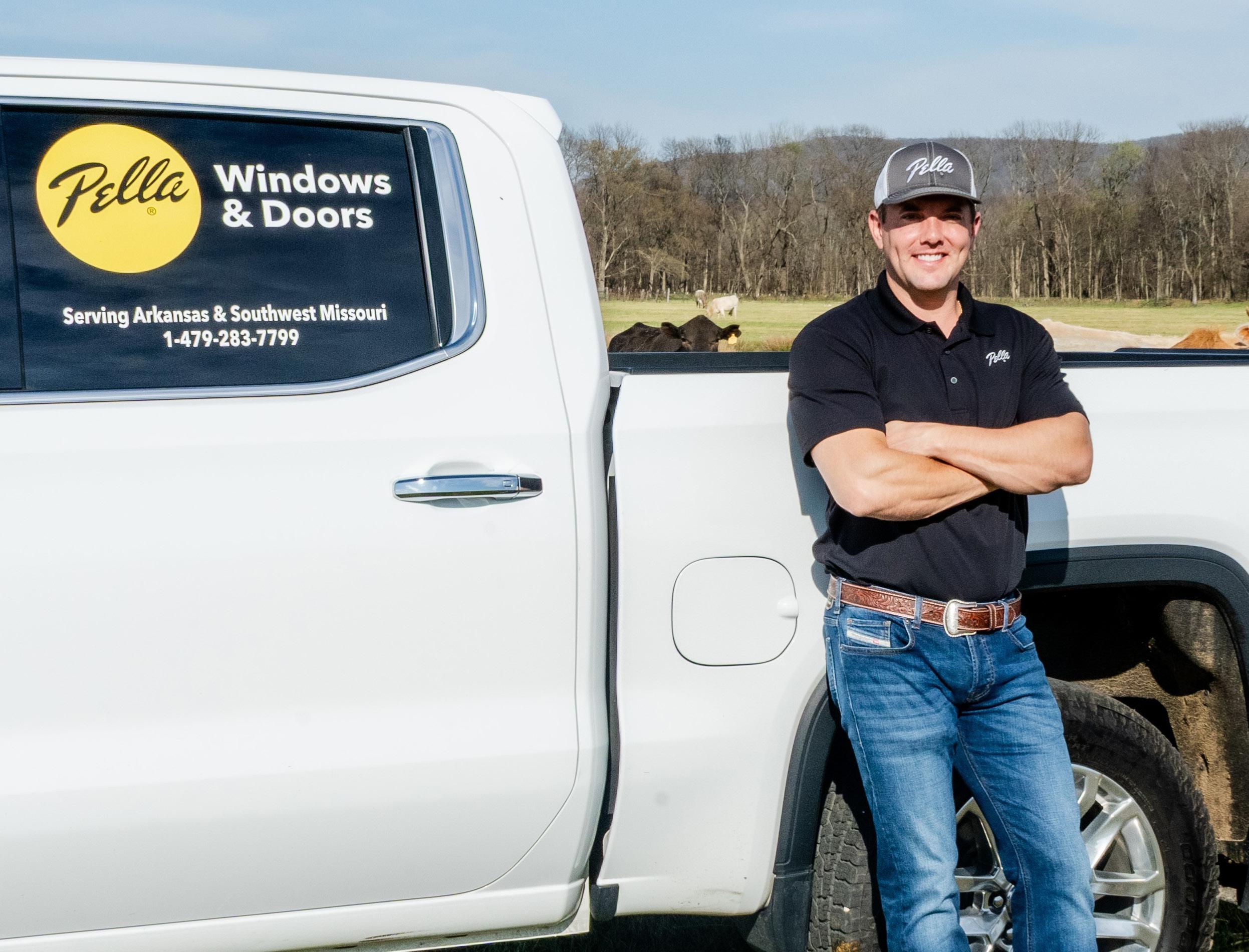
DYLAN BRUTON, PRESIDENT
What drew you to a career in your field?
I was drawn to the opportunity to build something meaningful inside a high-performance environment. Pella offered the combination of a strong national brand and the benefit of a locally owned business. It gave me the ability to grow a business at scale while staying rooted in northwest Arkansas, where I was born and raised and where my family and farm are.
How does your company differentiate itself from its competitors?
We differentiate ourselves through our people, products, our focus on turn-key installation and our commitment to long-term relationships. We don’t just sell windows and doors; we provide a full-service experience backed by accountability, craftsmanship and a team that genuinely cares about the outcome for our customers. We get the opportunity to represent and sell the 101-year-old Pella brand, a company that’s still owned by the same family that founded it in 1925. All of our products are built in plants across the USA, keeping jobs and opportunities at home.
What are you most proud of when it comes to the work you do?
I’m most proud of the culture we’ve built. We’ve created an environment where high performers can grow, win and provide for their families while making a meaningful impact in their communities. That balance between performance and purpose is what drives long-term success.
What qualities or skills have best prepared you for your current role?
Being a problem solver and focusing on building and developing a winning team have been critical. Surrounding yourself with the right people and empowering them to succeed is everything.
What advice would you give to early-career professionals entering your field?
Find the right vehicle. Both Pella Corp. and Pella Products of Arkansas and Missouri are family-owned organizations that are deeply invested in their people and customers. Stay hungry, outwork everyone and remain loyal.
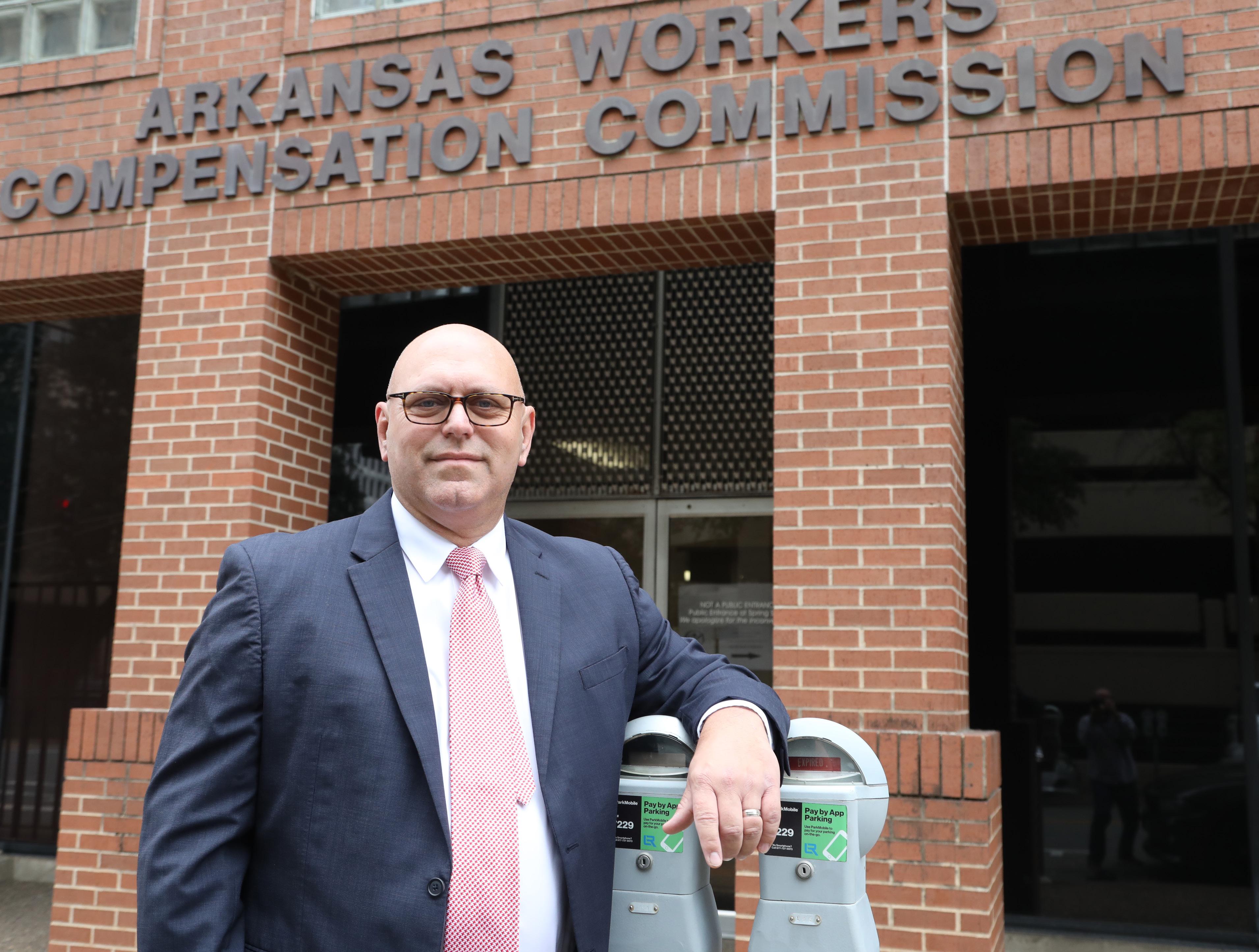
Andy L. Caldwell has been practicing law since 1999. After entering the field of workers’ compensation, Caldwell saw that many individuals were not getting the benefits to which they were entitled, and he set out to change that. Ever since, Caldwell Law Firm in Little Rock has been fighting for the benefits of injured workers, helping them return to work and provide for their families.
Workers’ compensation can be a confusing process, one made even more difficult when dealing with an injury and uncertain income.
The Caldwell Law Firm team works to make the challenging time more manageable by providing clear communication and expert advice.
A detail-oriented problem solver, Caldwell has become a leader in workers’ compensation law. He has lectured to Fortune 500 companies, insurance carriers and members of the bar on topics such as the Family and Medical Leave Act, the Americans with Disabilities Act and legal ethics.
“When injured workers are wrongfully denied workers’ compensation benefits, they cannot work, and they cannot get the necessary medical treatment for their injuries,” Caldwell said. “They are in a real bind and oftentimes have to seek some sort of public assistance. It is my mission to prevent insurance companies from redirecting their liability to the taxpayers of this state.”
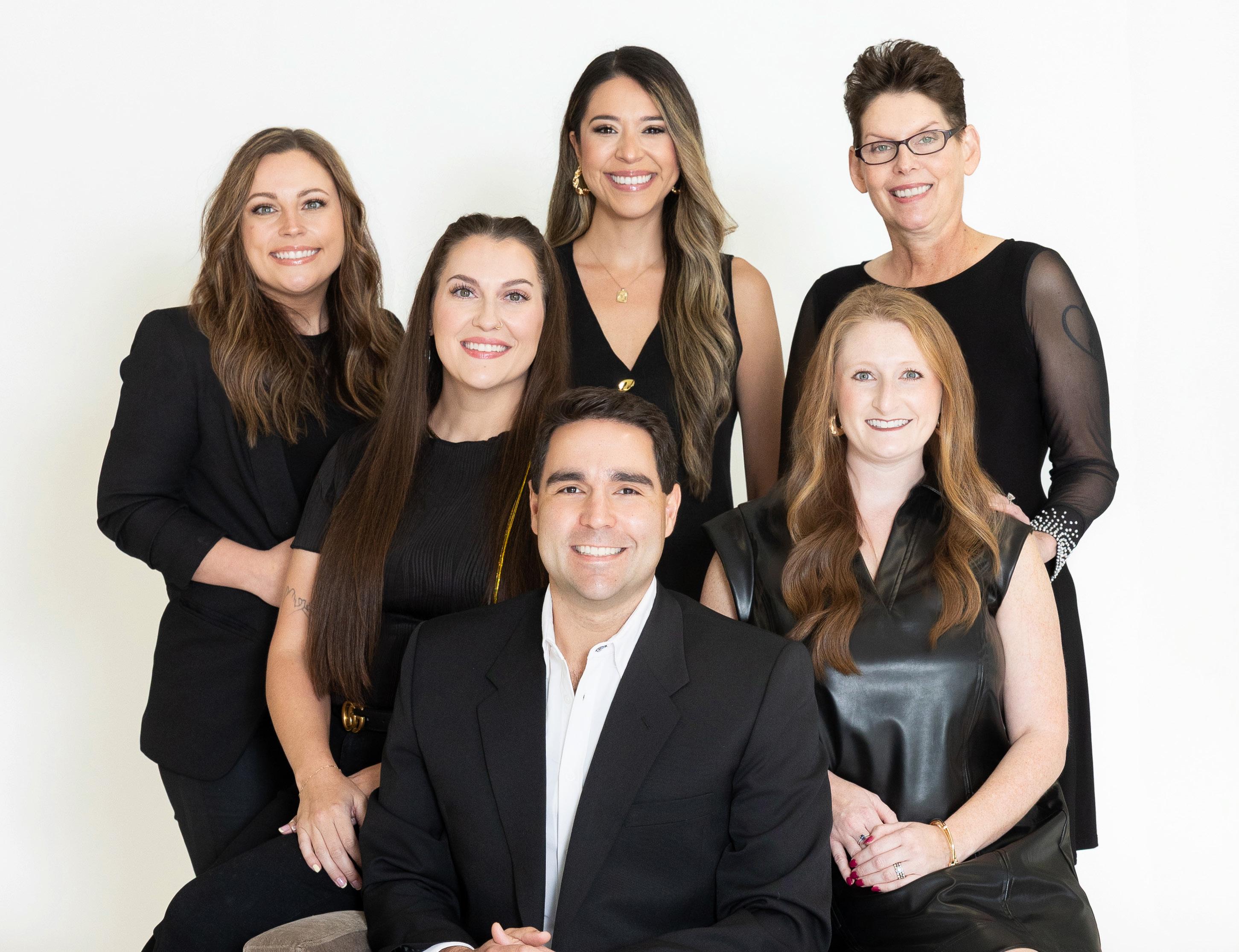
DR. JAHON ZEHTABAN, CLOCKWISE FROM CENTER, BECCA DYCUS, MIRANDA DAVIS, YAHAIRA ESQUIVEL, DEANNE WALLACE AND ERIN WILLIAMS
Led by Dr. Jahon Zehtaban, Smile Arkansas provides state-of-the-art, comprehensive dentistry services to patients in Little Rock and beyond. In addition to general dental care, the practice specializes in cosmetic and restorative procedures designed to give patients their ideal healthy and beautiful smiles. Given the increasing interest in cosmetic dentistry, patients appreciate the combination of convenience and expertise Smile Arkansas offers, allowing them to receive dental and orthodontic care all under one roof.
Veneers have become an even more popular service thanks to the advent of no-prep veneers. Unlike their traditional counterparts, no-prep veneers offer the aesthetic results a patient seeks in as little as two appointments and preserve the surface of one’s natural teeth. After an initial consultation, 3D scans of the upper and lower teeth are taken. At the next visit, the Smile Arkansas team meticulously places the thin, lifelike veneers for a transformed smile in minutes. Traditional veneers
are a wonderful option for those ineligible for noprep veneers. Smile Arkansas places all veneers with unmatched service and quality.
A Little Rock native, Zehtaban returned to practice in his hometown in 2017. “Dr. Z,” as he is known, has studied with the Facial Beauty Institute, the American Academy of Dental Sleep Medicine and the American Academy of Cosmetic Dentistry, in addition to training in advanced cosmetics, temporomandibular disorder therapy, controlled-arch orthodontics, growth guidance and sleep dentistry.
Like the rest of the Smile Arkansas team, Zehtaban understands the huge impact oral health and appearance can make for patients both physically and mentally. The practice prioritizes patient-centered care and strives to keep up with the latest developments in dental technology and techniques, allowing Smile Arkansas to provide world-class dental and orthodontic services for the whole family visit after visit.
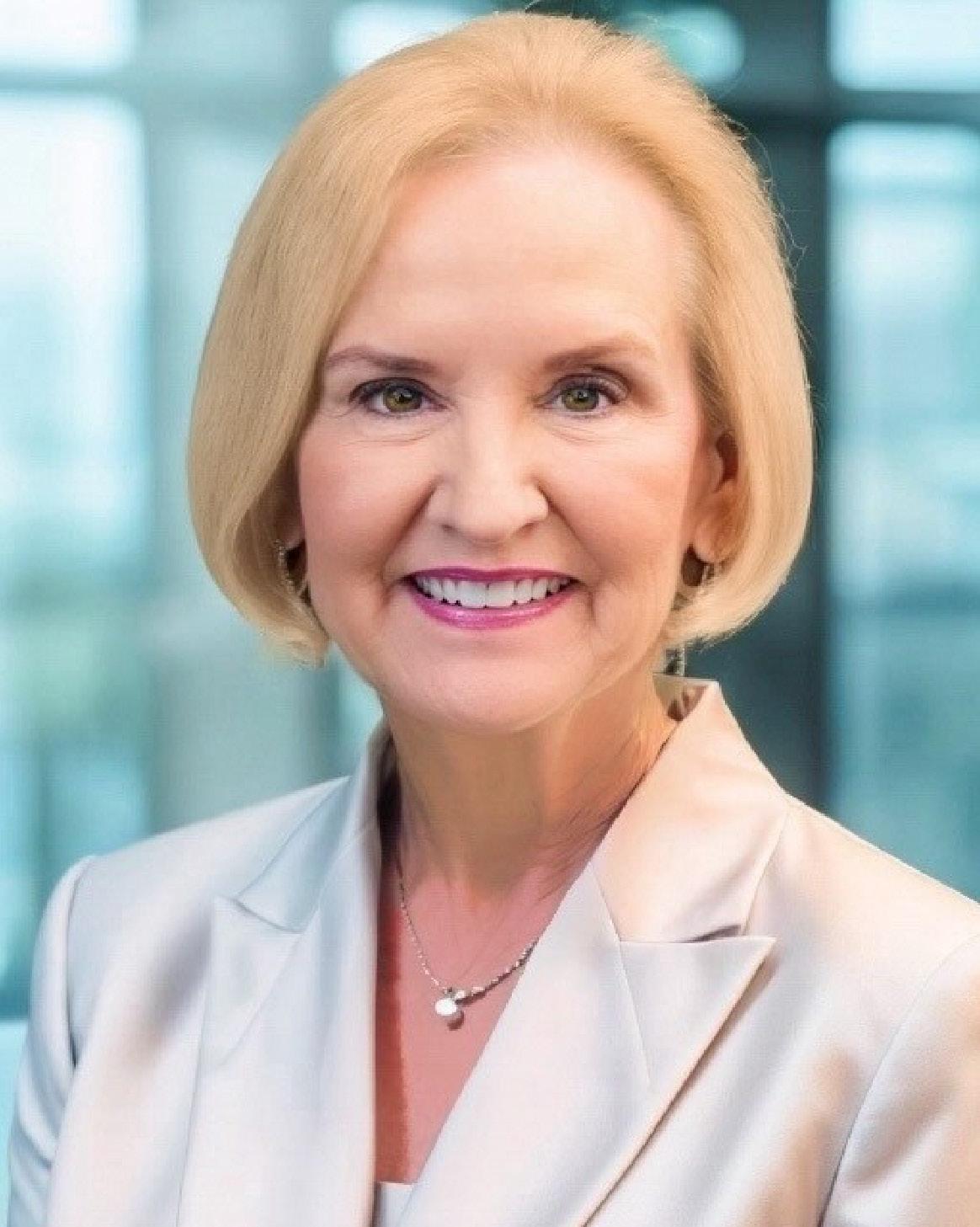
Recruiting expert Sue Burnett built her legacy one career at a time
By
Some industries lend themselves more easily to creating legacies than others. Handlers of commodities and makers of widgets are appreciated in the moment but are not always given credit for the lasting impact of their work compared to those who work with and directly improve the lives of people. For those individuals, the impact of a job well done can stretch for generations.
Sue Burnett is one such individual. The El Dorado native and founder of Burnett Specialists entered two business halls of fame this year alone, but her legacy had been sealed long before then. Over more than 50 years, she built her Houston-based recruitment firm from five employees into the second-largest employee-owned staffing and recruiting agency in the country, helping untold thousands of clients find work, provide for their families and build careers.
For Burnett, who earlier this year was enshrined in both the Arkansas Business Hall of Fame and the American Staffing Association Leadership Hall of Fame, there is a lot to look back on with pride and more than a few grains of vindication. As she turns 80 this year, what she has built is enough to keep her doing what she loves doing.
“There were a lot of times that I would think, ‘Oh my gosh, I just don’t know if I can do this,’” she said, “but I will tell you honestly, even after all these years, I still like to get up and go to work. I enjoy what I do. I think when you love what you do, it’s not a job. I don’t work for money anymore. I don’t need the money. I work because I want to, and when you work because you want to and not because you have to, it’s a whole different world.”
to use, which landed her a spot at KATV as a dictaphone typist for $2 an hour. She was soon promoted to assistant promotions manager, which gained her another 25 cents per hour. Like a lot of young women of her generation, there were other unwritten job expectations to go with her official duties. One day, those came to a head.
“I had several bosses who were promotion directors while I was there, and after I’d been there about a year, one of them, the last one, was sitting down with his feet on his desk and said, ‘Will you get me coffee?’” Burnett said, a sandy grit working into her butter-smooth tone in the retelling. “I was busy typing the daily log — on a manual typewriter, by the way, with five copies of carbon paper — so I said, ‘I’m really busy. I’ve got to get this log out. Can you get your coffee yourself?’
“The next morning, I came in, and there was a girl on the couch, and she said she was there for an interview for the assistant promotion manager’s job. They told me, ‘Well, you know, you didn’t get coffee yesterday,’ and they fired me. Best thing that could have happened to me.”
“One thing people have wrong is they think by having their own company, they’re going to have all of this flexibility when, in reality, you should be working harder than everyone else. I was always the last to leave. Still to this day, I’ll be walking out into the garage, and I’m the last one here. You can’t approach this thing as if it’s going to be really easy. It’s very hard, and a lot of people aren’t willing to give that much to a job. When I first started in the business years ago, you worked till 8 at night, and you didn’t think anything about it. I’m just being very honest when I say the work ethic today is just not that great.”
Burnett’s need to work came immediately after graduating in 1968 from the University of Arkansas in Fayetteville, where she majored in journalism, co-edited the college annual and was an officer at her sorority, Chi Omega. Self-sufficiency was a condition understood between herself and her chemical engineer father and her stay-at-home mother.
“I think one of the problems is parents today are making it too easy for their kids, and their kids don’t know how to succeed on their own without someone helping them,” Burnett said. “My parents said to me, ‘We’ve paid for you to go to college. Now you’re on your own. I was an only child, and my daddy told me later it was very hard for them to say that. Even when he knew I was struggling, he did not give me money. That was the way their generation treated my generation, which was a gift.”
Burnett headed to Little Rock to put her journalism degree
Burnett quickly landed a job with Associated Milk Producers, which provided a substantial bump in pay. A year later, after a random call from a former sorority sister, she made a decision that would put her on a path to success she could hardly have imagined.
“She said, ‘My sister-in-law is graduating from Texas Tech, and she needs a roommate in Houston. I wondered if you would like to live with her,’” Burnett said. “I didn’t know her sister-in-law, but I said sure. Two weeks later, I packed up my car with my clothes. I had $500, and I moved to Houston, moving in with a girl I’d never met.”
Hunting for a job, Burnett visited three personnel agencies and, instead of being placed externally, was hired by one of the firms as a personnel consultant. It was a crash-course education in more ways than one.
“I didn’t get a base [salary]. It was straight commission,” she said. “The very first month, I made $600, so I thought, ‘Wow, this is fantastic. I’m going to make a lot of money.’ Then the second month, I didn’t make anything. I was going to quit, but the manager said, ‘No, no, you can’t quit. You’re going to be great.’
“Six months after I was there, she had a baby, and she quit to stay home, and I became manager at the age of 24, running an agency and managing a lot of employees who were much older than I was and more experienced. That was challenging, but I did very well.”
So well, in fact, that just three years later, on her honey-
moon, her husband, Rusty, saw career writing on the wall that had eluded her.
“He said, ‘I think you ought to start your own company.’ I said ‘I really don’t have any interest in doing that,’” she said. “I was making great money, and we didn’t have any money. I’d married a guy who had two kids and child support, but then, a few months later, he said, ‘No, I really think you should do this.’”
So it happened that, in mid-1974, she took the big-
economy in Houston and Texas as a whole. The situation handed Burnett her first serious challenge as an entrepreneur.
“First of all, choosing the right spouse is the No. 1 thing. I say that very honestly. I chose a husband who always supported me, believed in me, pushed me. He pushed me to start this business when I did not think I should do it. We’ve been married 52 years, and he still is that exact person who is so proud of me and so supportive.”
gest gamble of her life, quitting her job to launch Burnett Personnel Services on a $10,000 loan. She remembered putting up her car for collateral, which was ironic considering “in those days, women could not borrow money,” she said. “My husband had to borrow the money because women were not allowed to get bank loans.”
That aside, Burnett remembers her age — she was 27 at the time — and gender were not particular impediments to her owning her own firm.
“Actually, I think being a woman helped me. I was charming and attractive, and quite frankly, male clients were happy to have me come out and visit,” she said. “I was also very persistent. I would go out and see the clients, which was something very unique. People were calling companies on the phone but not going to see them. I was doing a very unique thing, and I think that’s what made me successful.”
“We were doing really well, and we started adding people and adding offices. Rusty even came into the business with me,” she said. “Then, in 1982, there was a severe recession in Houston, and the big oil companies started laying off thousands of people. In 1986, it was even more serious. We had the worst recessions I’ve ever been through, with unemployment in Houston going to 12.5 percent. Nobody’s hiring. Nobody’s paying fees. Being in the employment business was very tough.”
The company survived through diversification; Burnett formed business units within the company that specialized in professions such as accounting, sales, real estate and engineering. She also said working alongside her husband was a competitive advantage, given their complementary skill sets.
“I was very blessed because my husband was very good at accounting and administrative tasks,” she said. “I was really more the person that hired the staff and managed them and went out and did sales, managed our advertising.”
“You’ve got to approach owning a company and running it as you just simply can’t fail. I don’t care if that’s working till 10 o’clock at night — you’ve got to make it work. Business is like a roller coaster, and you have to have the perseverance and the positive attitude to get through some things. I’ve lost some clients who went bankrupt, and they owed me money, and they were a big part of my business. That’s a real blow. I just said, OK, well, there’s other people out there. We’ll just have to find some more clients. To be honest, failure was never an option. It just never occurred to me to fail.”
Burnett’s initial splash in the industry could not hold back everything that could affect the market, something driven home in a big way during the early 1980s, when a recession gutted the oil business that made up a huge slice of the
That said, Burnett does not profess any magical formula for her success in good times or lean, saying what yielded the most results were the triedand-true elements of hard work, a taste for hustle and sheer refusal to fail.
“I am still very persistent,” she said. “I’m very persistent in sales. I’ll call people over and over, you know? Just because they told me no once doesn’t mean that I’m not going to call them again. I’m also good at sales, and believe me, recruiting is sales. We are selling an applicant to a company, and we are selling that company to the applicant.
“I think people are kind of born with a type of
SUE BURNETT ON THE VALUE OF AGE
“One thing age does for you is the top people in companies are older, and they identify with you. I can go in and call on presidents of companies, and I have no problem going in and talking to someone, whereas people in their 20s can be very intimidated by their position. I think that’s been a big advantage for me. With age comes wisdom, of course; I learned a lot of stuff along the way the hard way, and I’m not going to make those mistakes again. In fact, after all these years, I’ve had so many different problems and experiences that nothing bothers me as much anymore. ‘We had a bad month? Well, we’ll get through that. We’ll have a better month next month.’ That’s really my attitude about things.”
personality for sales. When I was in college and we rushed people for Chi Omega, I was always the person they brought in to close the deal. You know, if she’s trying to decide between us and Tri Delta, I was the one to bring in and say, ‘Here’s why you should pledge with us.’ I think that’s something that you either have or you don’t. I think you’re kind of born with it.”
Burnett broke other ground on her way to the top. Her firm was one of the first in the 1990s to digitize its operations to streamline the matching process between applicants and job openings while still maintaining the human touch.
“The idea is not just to get somebody a job but to match them with a job that they stick with and build a career with,” she said. “A lot of that has to do with personality and motivation and their skill set and everything. It’s more than just, ‘Oh, I think I want to work in law,’ or ‘I think I want to work in manufacturing.’ We take stock of those skill sets and say, ‘OK, where do you really fit in some of these jobs?’ I think that’s always been one of our real strengths, matching an applicant’s wants and skills with what the company was wanting.”
Then, about 15 years ago, she took the extraordinary step of converting the award-winning company, now known as Burnett Specialists, to an employee stock ownership plan.
“We had had an offer for our company in 2009, and I turned it down because I was not ready to retire,” she said. “I had a friend call me and said, ‘You know, you ought to look at an ESOP.’ In our industry, that was
unheard of. In fact, I will say that I am one of the few staffing companies that started doing ESOPs, and not that many do it now, to be honest.
“I remember when I called the staff together. I said, ‘Hey, I’ve got some exciting news. You’re all going to be owners of our company.’ They were just stunned. They didn’t know what that even meant. I will tell you, it took a full two years before anybody on my staff really understood what we were doing. Now most of my staff are fully vested owners in the company and have six figures worth of stock, so they all very much understand it.”
As years turned into decades, the woman who once could not get a loan in her own name has garnered her just due of accolades and recognition, more than any other staffing or placement service in Texas. In 2000, she partnered with the Houston Business Journal to found the Best Places to Work awards program, and her firm is a five-time winner of the Better Business Bureau’s Pinnacle Award of Excellence. Burnett Specialists has also been listed by Forbes as one of the top professional recruitment firms and top temporary staffing agencies in the U.S., as well as one of the best staffing firms to work with in North America by Staffing Industry Analysts.
For all of that, Burnett said the recognition by her alma mater’s school of business stands as a pinnacle achievement, capping an amazing career.
“I will say, being honored by the Arkansas Business Hall of Fame was something I never expected,” she said. “It’s really one of the highlights of my life.”
SUE BURNETT ON FULFILLMENT
“What’s really rewarding to me is helping my staff become owners of the company. That was a huge deal. Seeing these people start out with me at 20 or 21 and work here their entire career is a huge compliment. I would say the bulk of my staff have been with me over 10 years and many over 20, and I have one who has been here for 45 years, started when she was 20. … When I go places, people tell me, ‘You got me my first job 20 years ago,’ or ‘I worked for you as a temporary when I was in college,’ or ‘You helped my company grow.’ It’s so rewarding to meet those people and know you have helped companies grow and helped people’s careers.”
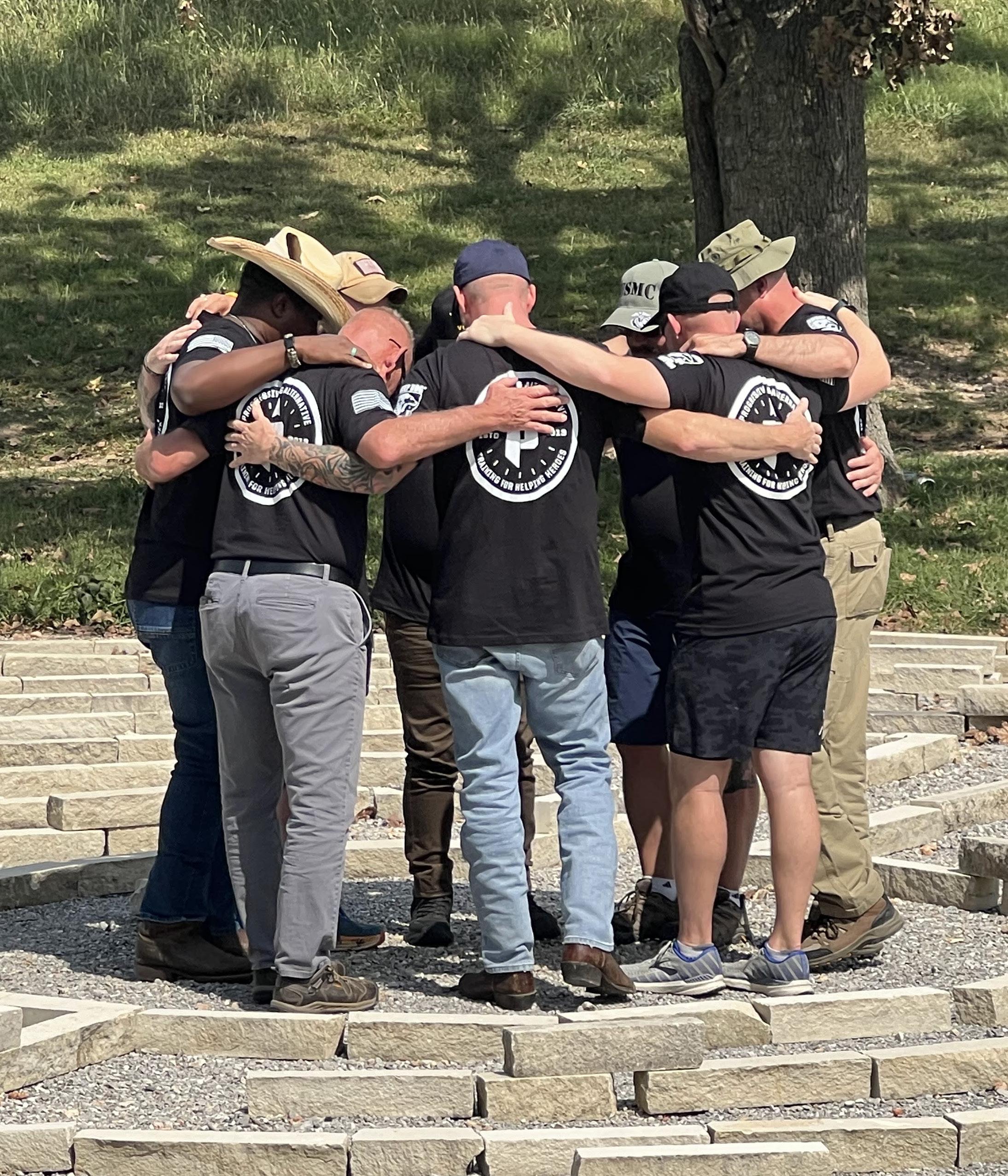
By Dwain Hebda
Along line of hikers trekked through the snow and up the mountainside, clad in matching T-shirts. The caravan trudged on the unrelenting grade, each hiker not wanting to fall back a step to the others, but as the day wore on, the mountain got the better of some in the party, stretching out the line.
Here and there, a hiker finally stopped, hunched over his knees and struggled to catch his breath in the unforgiving altitude. Invariably, two comrades came alongside, each taking an arm around their necks, goading their colleague onward. “None left behind” could have been written in the sky, so apparent was the camaraderie.
Lance Nutt has seen it play out time and time again. As founder of Sheep Dog Impact Assistance, a northwest Arkansas-based nonprofit that seeks to help veterans and first responders as they transition to civilian life, he has orchestrated such outdoor adventures as a way of getting vets out of their homes and back into the field. Invariably, such signs of camaraderie bubble to the surface, a reminder of former lives and past brothers and sisters in arms.
“We created our outdoor adventure program so that we could schedule activities and events for us to get together,” Nutt said. “We’ve been hunting, fishing, camping, hiking, running the Spartan Race, scuba diving, skydiving, traveling to places like Yosemite, Yellowstone — anything that got people off the couch and outdoors.”
The adventures are just a small slice of what Sheepdog offers to military members,
veterans, first responders and their families. The group was built on service, mobilizing individuals into disaster response crews that travel across the country to help in the aftermath of violent storms. It also offers Warrior PATHH mental wellness training to help with post-traumatic stress disorder and other mental health issues.
Both aspects fall under a continuum of programs addressing post-traumatic growth in participants. Last year, the organization expanded to include Sheep Dog University, which trains people to be effective ambassadors for the organization to reach and assist more individuals and their families.
Nutt said the various programs are meant to dovetail into one another, allowing a veteran or first responder to eventually experience the continuum of training and support regardless of where they came in.
“I’m going to get you off the couch with an outdoor adventure, and then I’m going to introduce the idea of post-traumatic growth to you. Then I’m going to try and sell you on the idea that you need to go to Warrior PATHH,” Nutt said. “Currently, we get 70 percent of our outdoor adventure participants to go to Warrior PATHH so that we can teach them how to go home and live a productive, healthy life.”
Denise Sharpe is a typical Sheep Dog story not just for being a veteran and former first responder but for thinking she was doing just fine in civilian life. One conversation with Nutt was all it took for her to get involved, and she threw herself into
I’m going to get you off the couch with an outdoor adventure, and then I’m going to introduce the idea of post-traumatic growth to you. Then I’m going to try and sell you on the idea that you need to go to Warrior PATHH.
— Lance Nutt, founder
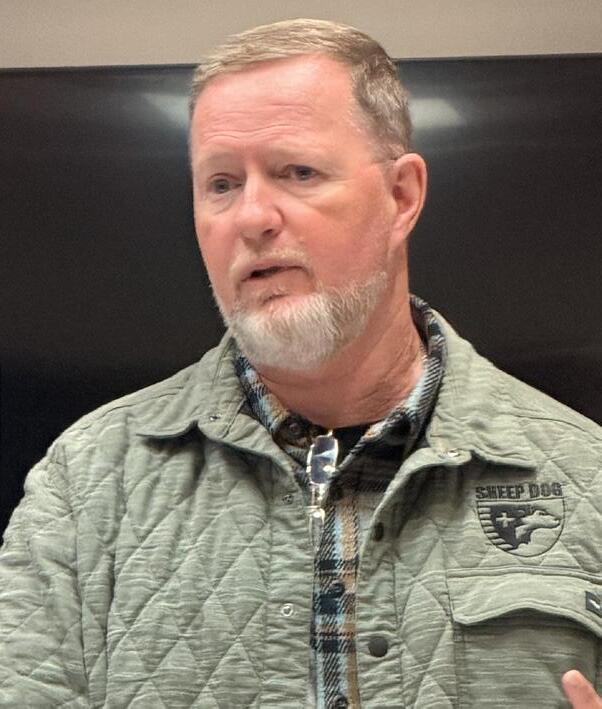
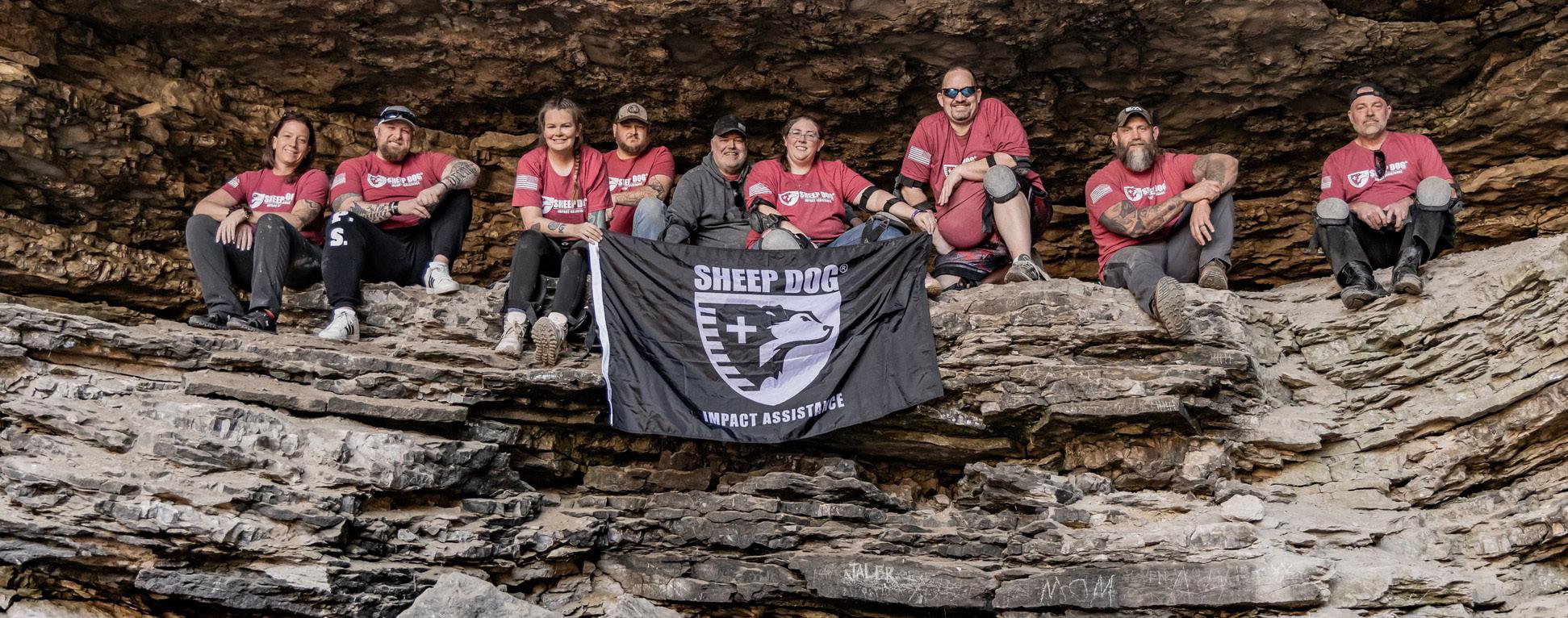
It is common for military veterans to benefit from additional support as they transition to civilian life.
volunteering, helping to spread the word about the organization’s mission and programs. She said she meant it but did not fully understand what Sheep Dog was all about until, finally, she grew tired of Nutt pushing her to fully engage in the program herself.
“Lance kept asking me when I was going to go through Warrior PATHH,” she said. “I kept making up every excuse possible because I claimed I didn’t need it. I was the resilience queen, you know? I actually built resilience programs for the Veterans Administration. I gave talks on resilience. I coached and mentored and everything else.
“Finally, I said I’d go, I thought, just to see what I’m sending everyone else to do. I showed up at the program, and about five minutes into it, it hit me like a ton of bricks. I knew that this was for me, that I’m the one that needed it. I wasn’t there for anybody else. I was there for me, and it changed my life.”
Sharpe, who now works as the organization’s director of growth and development, had become very adept at hiding her demons in an attempt to appear bulletproof and impervious to any situation. Listening to the tales of the people around her, however, lifted the weight of years off her shoulders.
“I was afraid to show that I needed anything, and I didn’t want to admit it anyway,” she said. “I wasn’t going to admit that I had PTSD. I wasn’t going to talk about that. I wasn’t going to allow myself
to do that, but I’ll tell you, once I got in there and I heard the other stories, people talking about what they’d been through and then telling what Warrior PATHH had done for them, man, it cracked my shell big time.”
****

Of everything that enters and exits a life, two things have remained a constant for Nutt: Arkansas and the United State Marine Corps.
“My mother and father were high school sweethearts at Hamburg High School in southeast Arkansas,” he said. “I was born in Crossett, and all of my immediate kin are from that southeast Arkansas area. My dad will tell you my first words were ‘Wooo Pig Sooie.’
“My father joined the Marine Corps when I turned 1, so I spent my growing up living all over the world, everywhere but Arkansas, but I have always claimed Arkansas as home, and I always took pride in the fact I was an Arkansas boy.”
Arkansas may have borne him, but in a very real sense, the Marines raised him. As an aviator for 20 years, his father was as much admired by his son as he was absent in service to the nation. That left Nutt in the care of his mother and the other military families that made up their circle wherever they were.
“My dad was 100 percent dedicated to the Marine Corps and service to our
country,” Nutt said. “The good and bad in that is that as a young man, I admired him. I valued his service. I appreciated what he was doing, but it also meant that he was not around very often.
“I never liked the saying, ‘It takes a village,’ but I appreciated it in the Marine Corps because it was the fellow Marines and their families around us that helped raise me. My Boy Scout leaders, my Sunday school teachers, my coaches and, obviously, my neighbors were all Marines, you know, or the family members of one.”
Given that fact, it is no surprise that just as Nutt never let the intrusion of the Marines sway his ancestral allegiance to the Natural State, nor did he resist the call of the Corps when came his time to serve. Within 18 months of his enlisting, he was deployed to the Gulf War, returning from his first tour to attend the University of Arkansas at Monticello. After that, he rejoined the Marines for what would play out as a 30-year military career, half with the reserves, that included four combat deployments.
It was only when nearing the end of that
long career of service that Nutt actually understood what came with wearing the uniform that long and how strange and foreign the world felt when it came time to hang it up for good, including for the men who had been his heroes growing up. What he witnessed would eventually lead to forming Sheep Dog Impact Assistance.
“It took me many years, until I was actually in the Marine Corps myself, to appreciate the struggle,” he said. “I saw my dad’s friends as all locked-and-cocked solid Marines. They walked the walk, but far too often, when I saw them again after they had gotten out, they had lost that edge. It was painful to watch them becoming so different from what I had always known them to be.
“Then I witnessed my father go through a little bit of the same transition when he retired, watched him kind of fall apart for a little while before he found his way back to himself and my mom. I think the key on that is having a purpose in life, and what happens when you feel like you’ve lost your identity and what you believe is your calling.”
Nutt himself experienced what many if not most of his comrades struggled with after what he calls a “bad deployment” in 2003 and 2004.
“I came home in a really bad place,” he said. “The reality for me is I thrived in combat. I thrived in deployments. I loved the intensity and the black-and-white nature of war, like most Marines, but what we weren’t prepared for, what I was not prepared for, was to come home — and then my Marines around me started killing themselves.
“So I came to this crossroads. I was home on leave in ‘05 when Hurricane Katrina happened. I was sitting on the couch, yelling at the TV, like so many other people, when I stopped and went, ‘Why are you sitting on your ass, yelling at the TV? Why don’t you get up and do something about it?’ I pulled together my dad and another friend of mine who had been a Marine and was a cop at this point, and we went down and spent three days and nights doing everything we could to help people.”
The experience was rejuvenating and led to other missions, attracting more people and forming the foundation of all the programs that would follow. Raffy Morales first came to Sheep Dog as part of one of the disaster missions and today is director
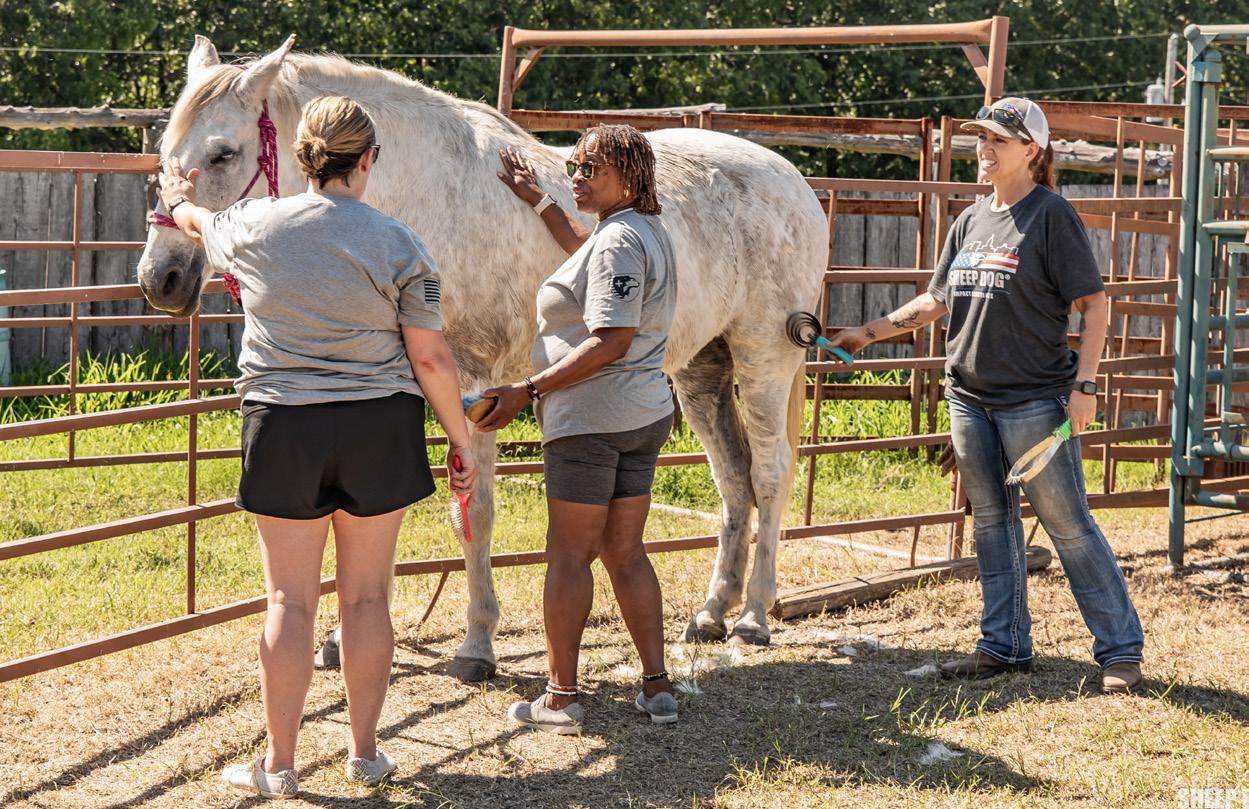
Sheep Dog Impact Assistance in northwest Arkansas helps participants transition into life after military service through community service, outdoor experiences and mental wellness programs.
THE MISSION OF SHEEP DOG IS CLEAR, BUT THE PATH FOR MANY TO FIND THEIR WAY HOME IS NOT.
THE U.S. DEPARTMENT OF VETERANS AFFAIRS REPORTED IN 2023 THAT NEARLY 6,400 VETERANS DIED BY THEIR OWN HANDS.
of the Warrior PATHH program.
“I was in law enforcement for roughly 10, 11 years,” he said. “I got out of law enforcement, got into a bad relationship, and one thing kind of just led to another. I found myself scrolling through Facebook one night, and I found Sheep Dog Impact Assistance and reached out to Lance. He put my heart at ease and let me know I had a home here.
“I did a lot of disaster response missions, which is what drew me to the organization, because I missed the camaraderie. I missed my guys, you know, the guy on my left, the guy on my right, the girl to my left, the girl to my right. Getting back into that level of teamwork and helping a community after a natural disaster, that really did my soul a lot of good.”
In 2026, Sheep Dog is going as strong as ever, in part thanks to the support it has received from the community to help fund its work. The group’s annual Heroes Gala, of which AY Media Group is this year’s media sponsor, will feature a keynote by Rob O’Neill, conservative influencer, podcaster and the former Seal Team Six member who took out Osama bin Laden. Money raised from the event goes directly into programs that give veterans, military personnel and first responders help when they need it most.
The mission of Sheep Dog is clear, but the path for many to find their way to it is not. The U.S. Department of Veterans Affairs reported in 2023 that nearly 6,400 veterans died by their own hands, just fewer than half of them in the southern United States. In Arkansas, 105 veterans ended their own lives, about one-sixth of the state’s total suicide tally that year. The state’s rate of veteran suicide per 100,000 people is twice that of Arkansas’ overall rate and 15 percentage points higher than both the Southern regional average and the national average.
It is impossible to tell how many others attempted self-harm or harbored such thoughts, but Nutt knows it is substantial, and that is why he continues to stand a post on behalf of those who stood watch over others.
“I coined the phrase we use today that goes, ‘Helping is healing,’” he said. “Helping others helps you heal, and I thought if I could start an organization that would give me the ability to continue serving, I thought this would be the perfect place for fellow sheep dogs to land, men and women of service. I needed it, and others needed it, and they still need it today.”
To learn more about SDIA, purchase Heroes Gala tickets or make a donation, please visit sheepdogia.org.
By
Over nearly a decade, Garrett Excavating has grown into one of the biggest homegrown business success stories in Arkansas. Born in the 1950s at the hands of Irvin Garrett, the company is now in its third generation of leadership under Grant Garrett, CEO, and has grown into two locations, Benton and Bentonville, and a roster of services, from earthwork and concrete to trucking and quarrying.
The success of the firm is apparent everywhere one looks today, but that belies the difficult and sometimes painful work that it took to get there, especially when it came to the evolution of the leadership team. As Garrett noted, the challenges of taking the company from good to great were substantial and, in many ways, personal.
“For years, I was somewhere between homicide and suicide every day at work,” he said. “I wanted to grow, but [the company] outgrew my ability to lead it. I mean, it was just rapid fire. We had taken on a lot of debt. That meant we had to perform, and it was just miserable every day at work. The business was running me; I wasn’t really running the business.”
Addressing said issues via adoption of servant-based leadership — crafted internally by trial and error and externally through mentorship — was a journey that not only paid off big for the company’s fortunes but for Garrett and his executive team as individuals. The result has been accelerated growth for the firm and peace and balance away from work sufficient to allow them to enjoy life again, even amid the stress and pace of rapid expansion in a thriving marketplace.
“When I first got exposed to [servant leadership], even though

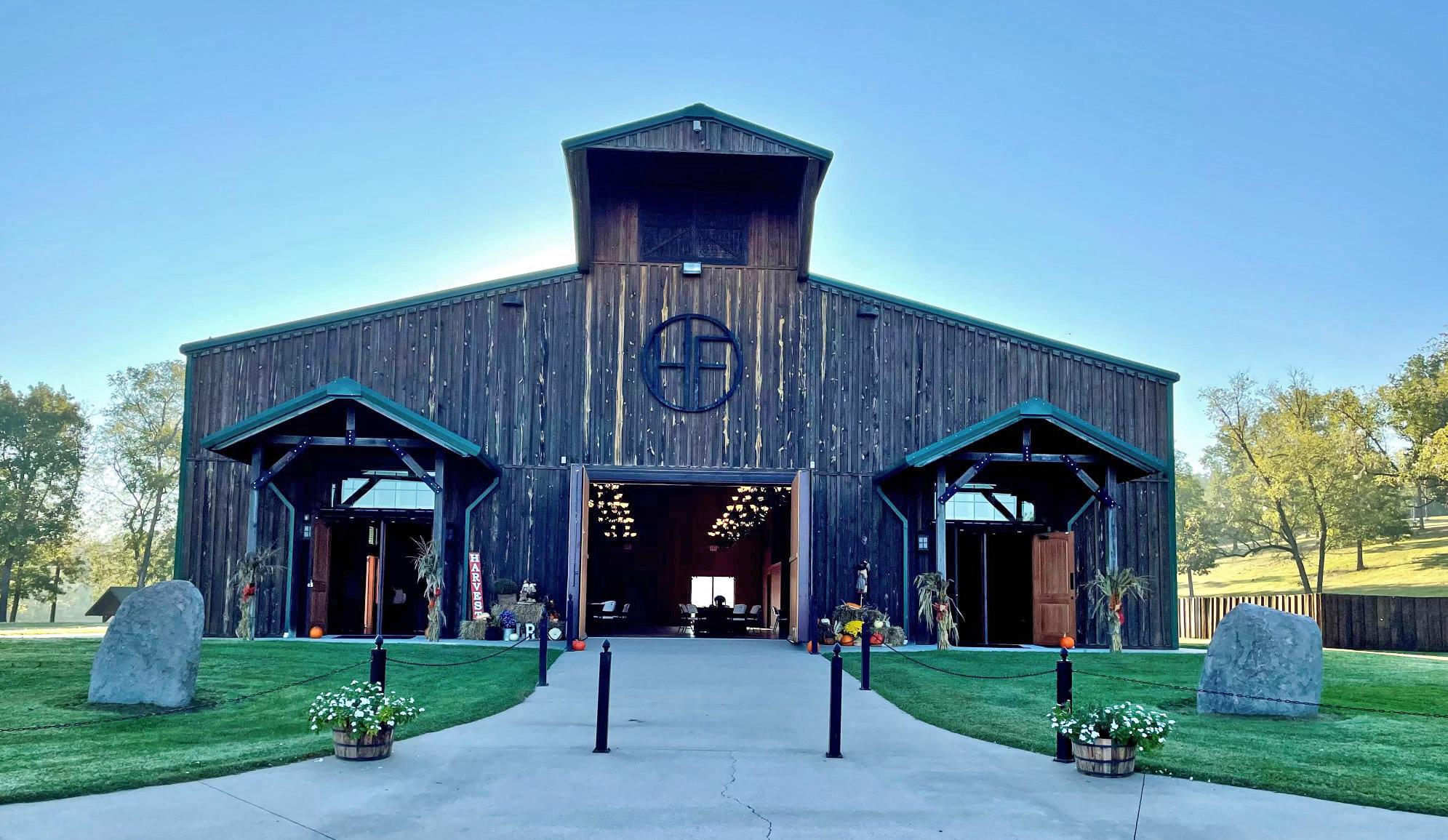
I didn’t really know it or how to implement it, the first thing I saw was there’s a path to get to where I want to go. There’s a path that’ll help me learn how to run my business better. There’s a path that’s going to help me learn how to connect with people versus trying to control them,” Garrett said. “There are tools out there now that I can go get, which will decrease the level of dysfunction within my company, and that hope was so uplifting for me.
“It was rejuvenating because I had spent years in the dysfunctional environment where the way we overcame things was just through blunt force and hard work and extra hours and sweat and sacrifice. When I saw this new way for the first time, I immediately felt like, ‘Man, where has this been my whole life? I have options now. I have a solution.’ It gave me hope for the first time in several years.”
The positive impact on Garrett Excavating would alone be an impressive comeback story, but having seen the leadership development at work also opened Garrett’s eyes to the plight many other owners and C-suite types were likely facing in their own struggles to lead effectively and maintain balance. Rather than keep what they had learned to themselves, company leadership saw an opportunity to share the concepts with others seeking a better way to do business, lead people and live their lives to the fullest.
“We teach this internally at Garrett X, but it’s also about leaving a legacy,” said Sean O’Keane, company president. “The leadership curriculum that we’re teaching, once we started becoming students of it, people saw us changing, and they started asking us to start teaching them. We started out working with

our clients, but today, one of the most fascinating parts that people are always kind of dumbfounded by is we’re working with a lot of different companies, including our competitors.
“We’re moving the hearts and minds of people. It’s one of those situations where the program really changed our lives, and as a result of that, we want to change others’ lives.”
This mission-driven work turned an important corner about five years ago with the purchase of an existing retreat center in Gravette, which the Garrett team dubbed Legacy Ranch at Dry Creek. There, companies large and small report for leadership development in a unique setting that allows them to shut out the demands of the world and focus on learning the concepts contained within the Legacy Leadership curriculum.
Phillip Hernandez, vice president of business development, acknowledged there are many leadership programs out there and said Legacy Leadership seeks to distinguish itself through its focus on leadership as intentional and teachable, not just, “I know it when I see it.”
“Leadership is kind of a weird word that gets thrown around a lot,” he said. “The way a lot of people think about leadership is that it’s behavioral, and the way they become a leader is seeing other leaders and mimicking the behaviors they like in them. What happens with that is leadership becomes more of a performance.
“We believe that leadership is more of a practice, something that you have to be very intentional about and something that you have to continually improve and work on. One of the most complex things about being an intentional leader is self-reflection and developing and adapting to situations and having that self-awareness.”
Hernandez said while the salient elements of the faith-based Legacy Leadership curriculum do not change, it was built to be flexible enough to mold to whatever specific phase of the development process the company is in and needs help to move forward. That can range from strategic executive leadership summits, partnership collaborations and succession planning, especially among family-owned businesses, to CEO coaching and addressing specific problems, such as burnout and poor communication skills.
“With this kind of work, it really depends on what the client’s needs are,” he said. “The real deep piece goes into company architecture, and the next layer would be alignment. In other words, once you have a [leadership] plan, how do you get alignment with the rest of the organization? Another touch point would just be energizing, how to consistently communicate and revisit and update the plan.
“We have different depths depending on where they want to go, and that changes how we customize the curriculum. We can go as deep as a more architecture-based curriculum, or we can go into building a strategy plan for their mission, vision or values — or sometimes they already have that strategic plan, but it’s not something that’s continuously revisited or communicated very well. We can put something together to help them build and implement processes and systems or approach something more behavioral and people based.”
Legacy Ranch combines the academic elements of its lead-
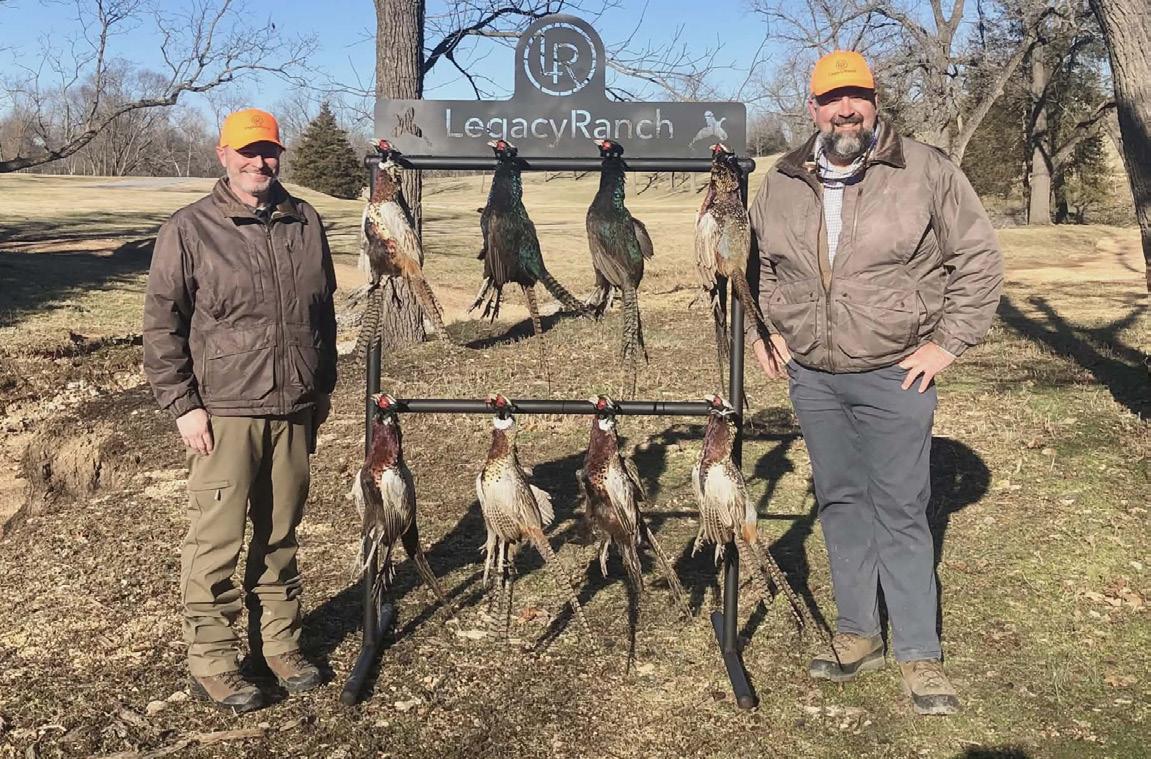
ership retreats with opportunities for attendees to connect via activities other than work. Situated on 600 acres, the campus offers outdoor activities that include clay shooting, field bird hunting and just soaking in the property’s natural beauty. There is even an on-premises chef to handle meals during retreats, which typically range from one to three days.
“We work with companies that are two, three people on up to companies that have several hundred employees,” Hernandez said. “Our leadership curriculum is based upon the individual and the premise of learning to lead yourself so that you can effectively lead others. We’re not just teaching people how to lead people at work; we’re also teaching them how to lead their families and lead their lives as a whole.”
For Garrett, such groups hit very close to home. He said in

most situations, it is not that owners and management do not want to be better leaders; it is that they do not know how, having never been shown.
“If you’re an electrician, you’re given the tools to do your job. You’re given a ladder. You’re given a drill. You’re given wire strippers and cutters and all these tools to accomplish your task,” he said. “Nobody gives you tools on how to communicate with other people or how to manage your emotions. No one gives you the ability to lead yourself and then lead others or even how to be led. Those are the gaps we’re trying to fill.”
The organization augments its teaching staff, which includes Garrett, O’Keane and Hernandez to varying degrees, with guest expertise as needed to address the specific elements attendees want help with.
“Something powerful that we’ve helped leaders understand is you’re either leading by intention or you’re leading by default, but you’re always leading,” O’Keane said. “You can lead somebody to be late. You can lead somebody to be early. You can lead somebody to do great things. You can lead somebody to do horrible things. The question is how are you choosing to lead, and when you get to that, the next question is how do you do that intentionally? That’s where our tools really come into play.”
Hernandez noted the combination of expert instruction and targeted curriculum has made Legacy Leadership extremely effective for companies at all stages of building a culture of servant leadership within their ranks.
“We had a client that came out here with their team, and they were having issues communicating, so much so that they couldn’t even have a civil conversation with each other, with kindness and with harmony and in a psychologically safe space,” he said. “When they came out here, that energy was very real. We could feel it. They could feel it.
“By the end of the second day, we had a bonfire set up, and they were all out there at the bonfire, and we could hear them from across the parking lot, just laughing and having a great time. This is an environment that fosters cohesion. It cultivates growth and connection. I just don’t think there’s any other place that can do that the way we do it at Legacy Ranch.”
Between the leadership development

groups and use of the campus for special events and corporate meetings — including one recent gathering featuring a presentation by Heisman Trophy winner and former NFL quarterback Tim Tebow —
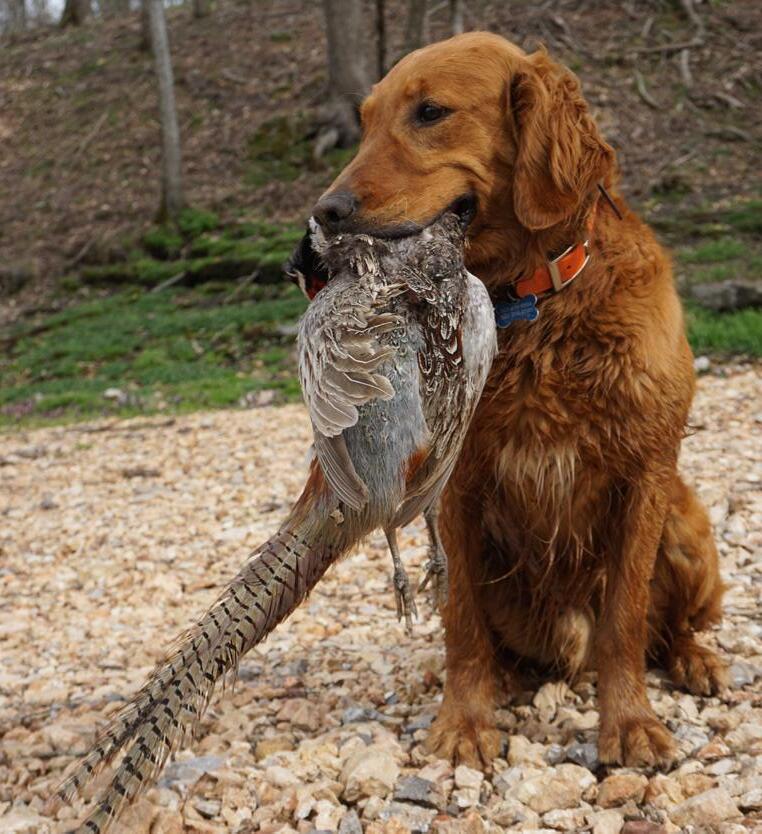
Legacy Ranch is in high demand. O’Keane said that has leadership thinking about future expansion to include building cabins to boost current overnight capacity of 14 in the lodge to about 25 on-site with overflow from that within an easy drive to Bentonville lodging.
However, the team is balancing its desire to grow capacity with the understanding that there is a sweet spot for leadership development that dilutes with too many participants at once, so groups are generally held to about 50 attendees. For Garrett and his team, it is less important how many people pass through the gates than the ability of Legacy Ranch to give each one a meaningful, life-changing experience.
“It’s had a profound impact on all of us,” he said. “The work and the business impact have been awesome, but the family impact, the personal impact, the spiritual impact to us is a greater benefit in our lives. That’s really why we’re on fire with sharing this because there’s so much dysfunction in the world today.
“We have been mentored. People have loved and cared about us enough to share this with us, and our lives are better, we’re more fulfilled, we’re more content, we’re happier, we’re more effective as a result. That’s why this has really become our passion, you know? Anybody that wants a better business, anybody that wants better relationships and connections and a better way of life, we can fill that gap.”
Learn more at legacydrycreek.com.

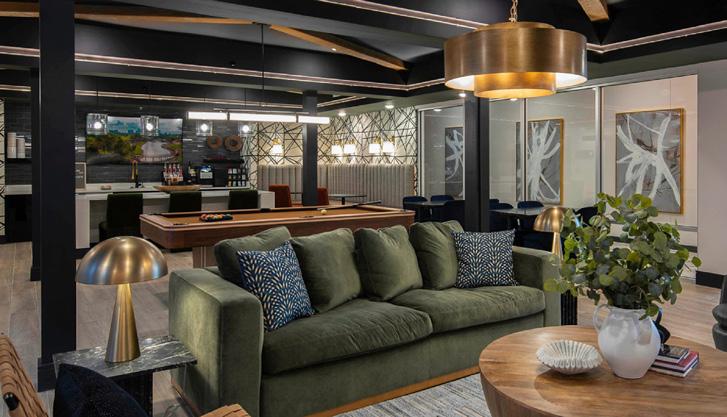



ATG is an Arkansas-based executive search firm focused on leadership roles in Accounting, Finance, and Human Resources
Our team was created to serve Arkansas organizations that need trusted, discreet partners to recruit the senior leaders who will shape their future
Leadership & C‑Suite Search

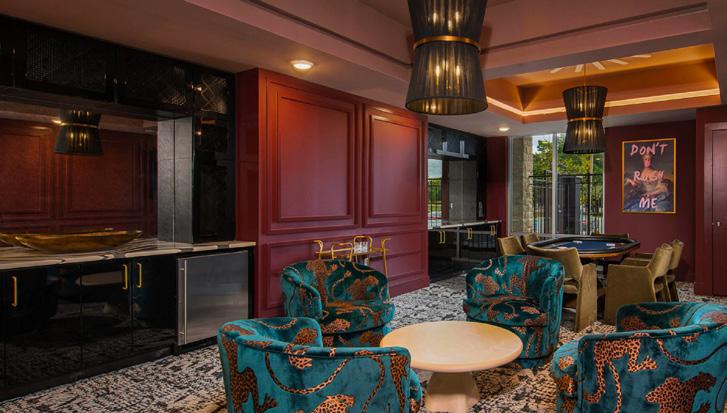



Our consultative, high-touch process is designed for critical leadership hires where alignment on vision, culture, and strategy is essential We conduct targeted outreach, rigorous evaluation, and in-depth referencing to identify executives who not only meet the technical requirements but also fit the unique culture and long-term goals of your organization Arkansas Talent Group connects proven leaders with organizations that drive Arkansas’ economy With more than 60 years of combined recruitment and executive search experience, we leverage our network and market insight to access passive leaders who are not actively on the market
By Alex Hardgrave
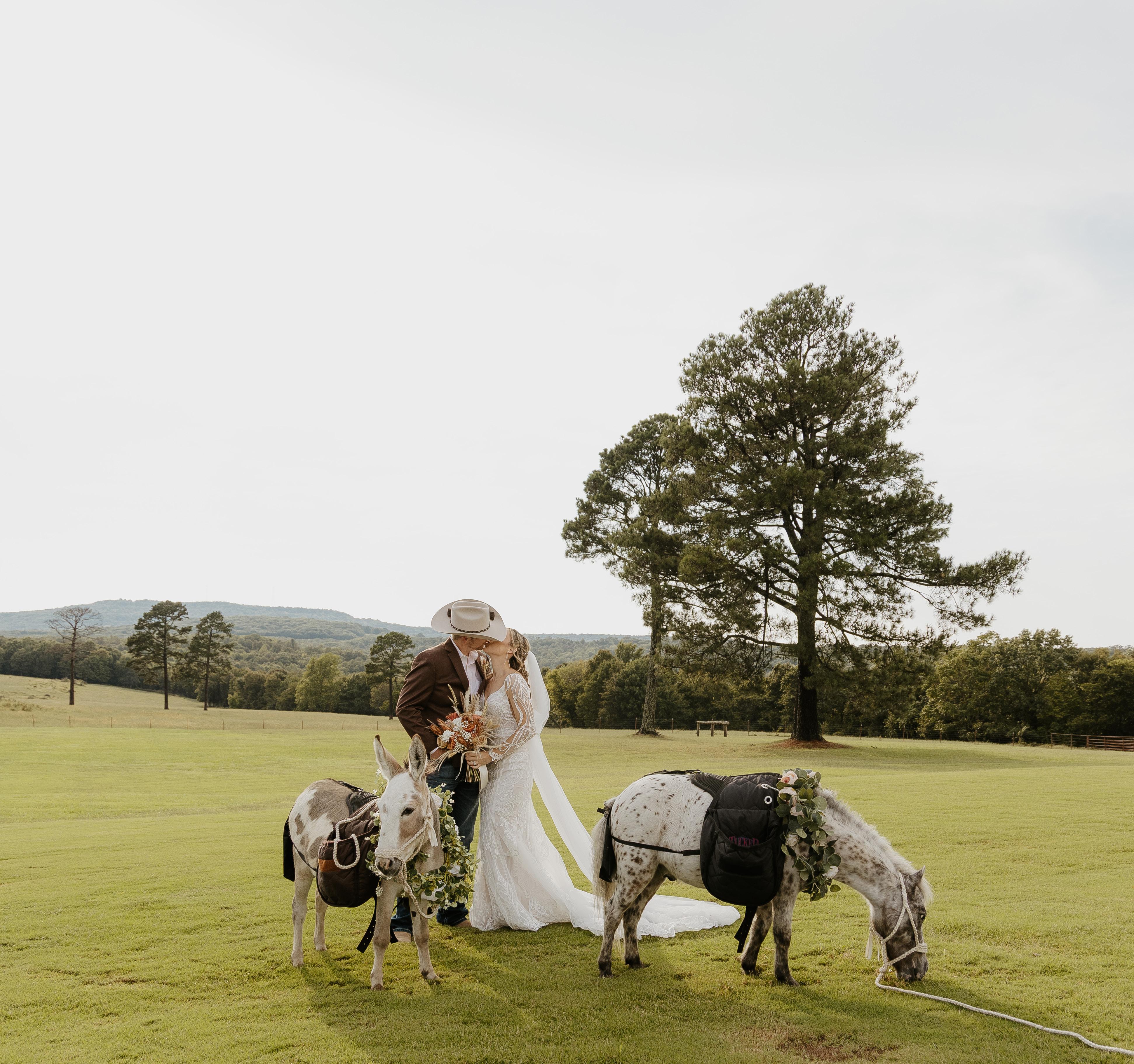
Many women have dreamed about their weddings since they were little. They envision the partner, dress, venue and cake flavor, but something most brides have never thought about for the big day is to have ponies and donkeys there, delivering drinks to guests.
Through Brays, Neighs & Brews in Elkins, couples in northwest Arkansas can book donkeys and ponies to add an unforgettable and unique experience to a wedding’s cocktail hour or reception.
Owner Kara Paul first considered getting a pony when her nephew said he wanted one. However, after she did, the nephew was not as excited by the animals as Paul herself.
“He didn’t like the ponies, and I said, ‘I still like the little horses’, so I needed to find something to do with them,” she said.
Then everything came together to give Paul her “eureka” moment that started the business. Paul’s sister Morgan had come from an event in Arizona and talked about the “beer
“It gives me a reason to have the animals. It’s a lot of fun, and it makes people happy at weddings.”
— Kara Paul,owner
burros” there. Beer burros are donkeys that wear coolers on their back to carry drinks. Then guests come, grab a drink and take pictures with the animals.
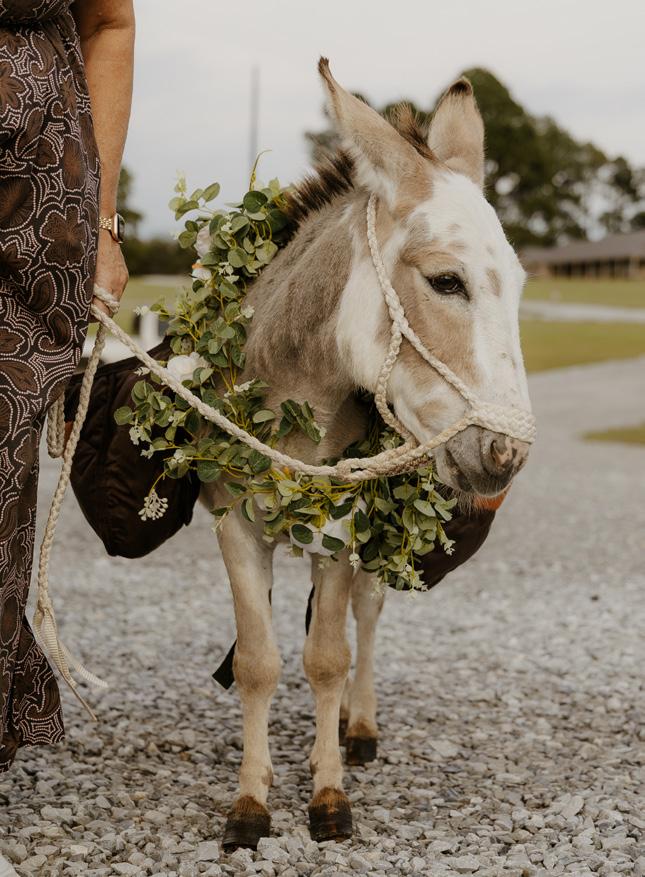
The cool wedding detail coupled with the lucky timing that her family had started construction on a wedding space, Plentywoods Venue in Elkins, gave Paul the idea to bring the animals to the venue and dress them up in saddlebag coolers that can hold beverages.
“The first time we took them out was at my wedding, and it seemed to be a hit,” she said.
However, it was a slow start from there. For the next year, she only did one birthday party.
“Maybe this wasn’t quite as much fun or has as much interest as I thought it would have,” she remembered thinking.
However, the trend took off last year, and this year, the “brew crew” is already slated for about one wedding a month. However, many couples book the little helpers only a few months out from their wedding, so Paul said she expects even more events to come up.
One of the biggest things that has surprised Paul throughout the experience of running Brays, Neighs & Brews is “a lot of people don’t know the difference between a pony and a donkey,” she said.
The pony that started it all is named Buck Buck. He has a long, flowing main and tail and loves to be the center of attention. Since Buck Buck, Paul’s brew crew has grown to include three ponies, which she rotates for events, and a donkey named Swamp.
During a sale where Paul had her eye on a spotted pony, she met a silly donkey and ended up bidding on and winning him instead.
“This donkey comes through and just won’t leave the ring help alone,” she said. “He was following them around and was just really friendly, and I thought, ‘I need this donkey.’ That is how we got Swamp.”
Another pony on the crew is named Princess. She is the largest of the group and loves children.
“Since then, I’ve just acquired more,” Paul said.
Some of the ponies she has acquired were friendly, but she found they did not have the right temperament for working a wedding, so she found them new homes.
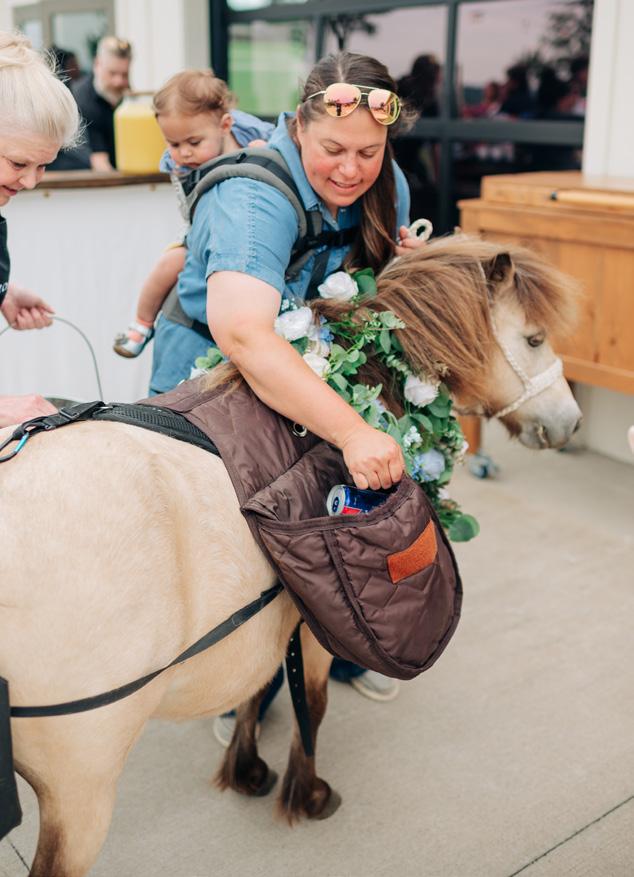
For each wedding, she brings one donkey and one pony from her “brew crew.” One of her good friends helps manage one of the animals at the event, while Paul takes the other.
“It’s really safety first for me,” she said.
She primarily provides the service at Plentywoods Venue but has worked with a few other nearby venues. At Plentywoods, the brew crew typically stands outside right off the patio, but if the weather is bad, the animals are allowed inside because they wear “bun bags” to catch any droppings.
The beverages the animals carry have to be provided by the bar, not by Paul’s team. When someone books the brew crew, Paul tells the client to let the bar vendor know. That way, the bar can plan to bring enough drinks for the crew to carry. The animals can carry beers or sodas based on whatever the couple wants or the bartenders feel comfortable with.
When Paul is not pursuing Brays, Neighs & Brews, she stays busy caring for her young daughter and her family’s farm.
“I help out on the cattle farm a lot,” she said. “Helping out with the venue and the cattle and my job keeps me busy. The ponies and the donkeys are just a fun little bonus.”
Paul said her daughter loves the ponies and donkey.
“The animals live a mile down the road, so when we pull in down there, she gets all excited, and then she has to sit on all their backs,” Paul said.
The reactions to the brew crew are a little bit different with each group, Paul said. Sometimes partygoers are more interested in getting pictures with the animals, and sometimes they are excited to get to the drinks in the animals’ bags.
“The kids get really excited, and then people see that they have beer, and then the guys get excited,” she said.
Paul said she plans to continue Brays, Neighs & Brews because she enjoys it and the joy it brings to guests.
“It gives me a reason to have the animals,” she said. “It’s a lot of fun, and it makes people happy at weddings.”
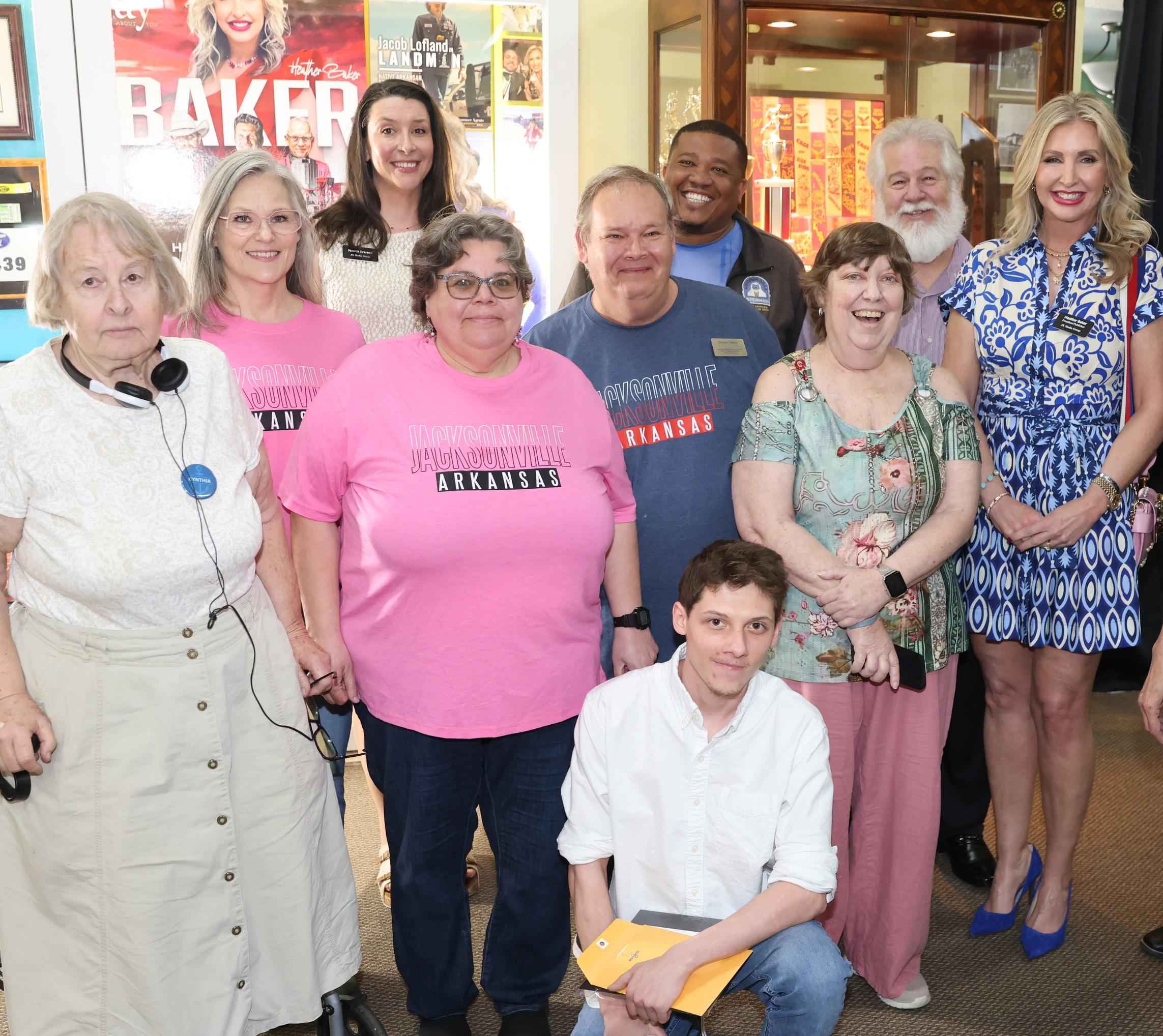
a nod to notable natives
By Mark Carter | Photos by DeWaine Duncan
Jacksonville may not come off as “bright and shiny” as do other communities that help make up the greater Little Rock metro.
The working-class city that brought Arkansas the Little Rock Air Force Base and the forerunner of Arkansas Children’s, however, is as real as it gets. There is no pretension and nothing “cookie cutter” about Jacksonville.
As diverse an Arkansas city as one will find, Jacksonville could be considered the central Arkansas civic family’s no-nonsense kid who worked his way through college, joined the military when his
country called and came back home to launch a successful business.
When school district concerns led Little Rock expatriates to other metro communities just beyond the Pulaski County line beginning in the late 20th century, Jacksonville kept on keepin’ on.
The reborn Jacksonville Historical Museum, rechristened in March at a new
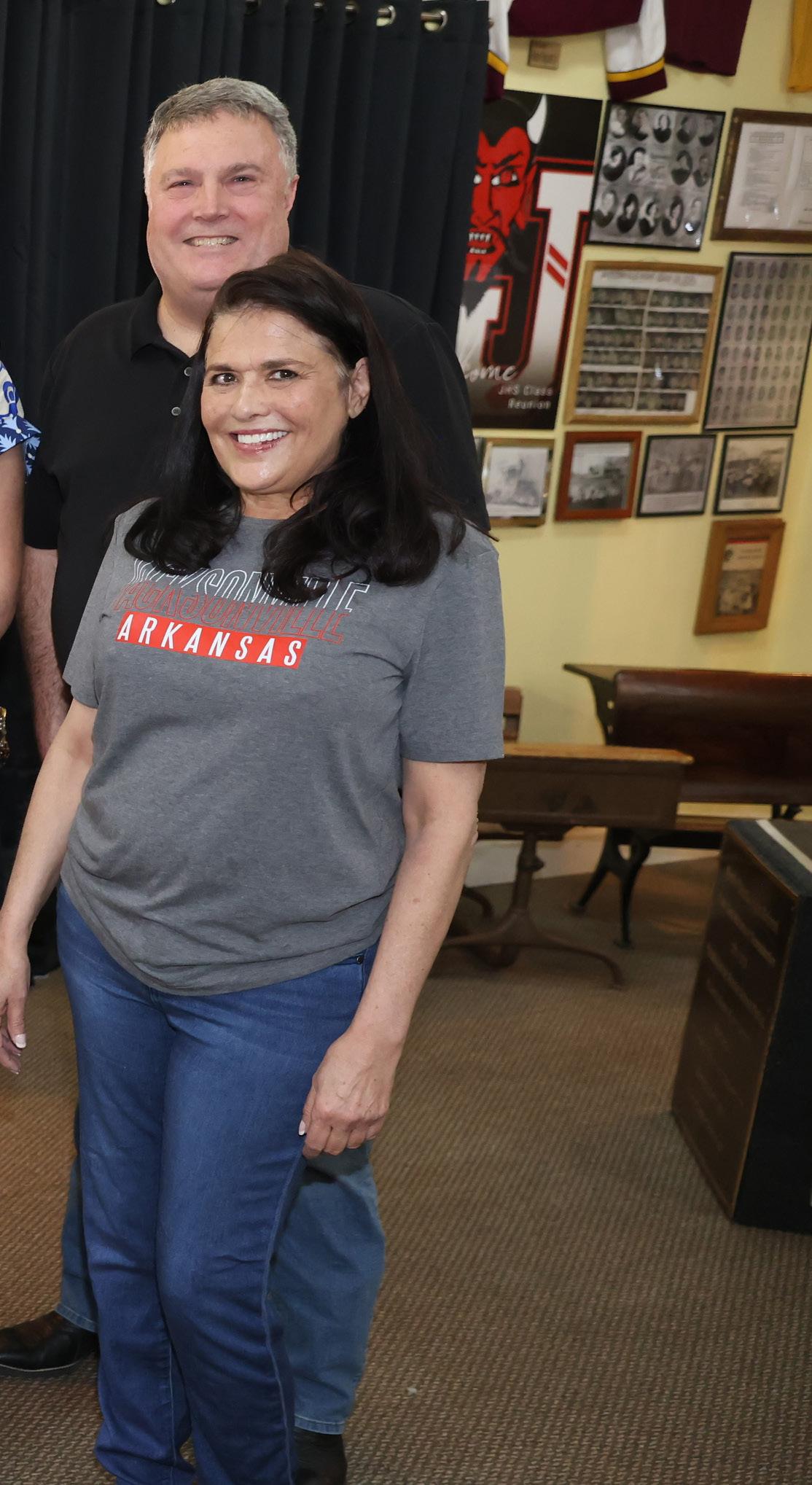
location after having been closed for several years, aims to tell the city’s working-class, all-American story.
On a Saturday afternoon in March, city officials and the local volunteers who worked for months to relaunch the museum held an open house inside the new location at 201 W. Main St. inside the Chopsticks International Center. The museum hours, which could expand in the future, are 2 to 6 p.m. on Fridays and 10 a.m. to 4 p.m. on Saturdays.
Mayor Jeff Elmore called the new museum a fantastic space
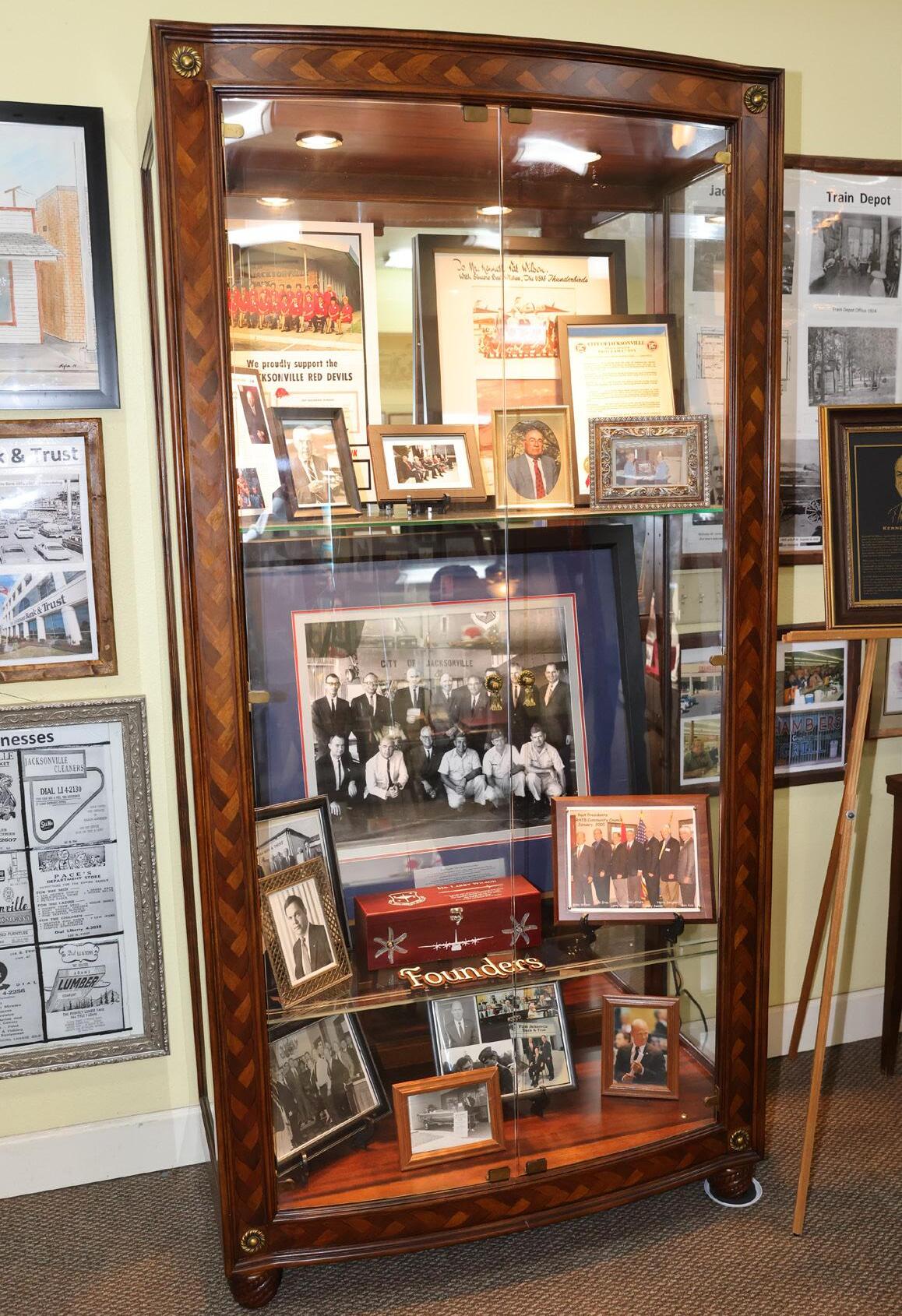
that volunteers “brought to life,” filled with exhibits, photos and knickknacks that represent the city’s colorful history.
“Volunteers really rallied together to get this done,” he said. “That’s one of the strong points of this city — people rallying together. Jacksonville is like a big family — you can talk about the family inside the family, but not outside of it.”
The museum chronicles the careers of many of the notable people the city has produced, and Jacksonville has produced its share of notable people. They include AY Media Group Publisher and President Heather Baker, a 1994 Jacksonville High School graduate, who is featured prominently in the museum.
One of the state’s premier females in publishing, Baker launched the popular publications Arkansas Wild and Arkansas Auto Buyer from scratch at a young age and has grown AY Media Group into an Arkansas media powerhouse with award-winning publications such as AY About You, a monthly lifestyle magazine; Arkansas Money & Politics, a monthly business magazine; and Arkansas Mental Health Guide Magazine, an annual advocate of and voice for mental health awareness.
Baker is also a part of 103.7 The Buzz’s Morning Mayhem radio show each Friday and is a regular on the Little Rock emcee circuit.
Six feet tall and then some — without heels — Baker was a multisport athlete at JHS, where she participated in basketball, volleyball and track. She was coached in all by the iconic Tanya Ganey, who spent almost four decades in Jacksonville schools, molding young athletes.
Baker credited her strong work ethic to growing up in Jacksonville and the guidance she received in city schools.
“I’m truly honored to have an exhibit in the reborn Jacksonville Historical Museum. Growing up in this tight-knit, working-class community shaped who I am today,” Baker said. “The incredible coaches and educators in the Jacksonville school system, especially Coach Tanya Ganey, were like family to us. We spent more time with them than almost anyone else, and they taught us not just sports but the discipline, work ethic and life lessons that have carried me through my career. I owe so much to Coach Ganey and all the dedicated leaders in our school system.”
Ganey said Baker stands right along with other notable hometown heroes.
“A lot of legends came out of Jacksonville High School as far as ball players, band members, cheerleaders, and that includes Heather,” she said. “I mean, there was a young lady that went and was a cheerleader for the Dallas Cowboys, and what Heather has done is so impressive; it’s right there with them.”
Ganey quipped that Baker was a model athlete who she “never had to whip.”
The museum currently features an exhibit honoring another notable figure from Jacksonville — Kris Allen. In 2009, Allen was a praise band member for New Life Church when he was selected to compete on American Idol. He would go on to win the competition and launch his singing and songwriting career.
Now based in Nashville, Allen just released his seventh album, Pole Vaulter. His parents attended the grand opening filled with pride and gratitude.
“This is really special because this is his hometown,” his mother, Kim Allen, said. “To be a part of this museum is awesome.”
The city has produced a respectable list of noteworthy athletes, as well.
They include former Razorback all-American defensive lineman Dan Hampton, who would go on to a Pro Football Hall of Fame career and win a Super Bowl with the Chicago Bears; Clinton McDonald, another defensive linemen who played college ball at Arkansas State University in Jonesboro and went on to earn a Super Bowl ring with the Seattle Seahawks; Demetrius Harris, a standout football and basketball player at JHS in the 2000s who played college hoops at the University of WisconsinMilwaukee but signed as a free agent deal as a tight end with the Kansas City Chiefs and enjoyed a nine-season NFL career; and Robert Thomas, a star linebacker for Henderson State University in Arkadelphia in the mid-’90s who went on to play fullback with the Dallas Cowboys for five seasons.
Other notable athletes with Jacksonville ties include hometown boy Grady Adkins, the “Butcher Boy,” who pitched for the Chicago White Sox in the 1920s; Michigan basketball star and 2000 NBA champion Glen Rice; and San Francisco Giants pitcher Jakob Junis. Rice and Junis were born in Jacksonville.
Plus, the late actress Lisa Blount, known for her role in An
Officer and a Gentleman and for winning an Academy Award for the 2001 short live-action film The Accountant, was a Jacksonville native.
Jerry Sanders, a volunteer who also serves as museum director, said the museum will feature a wide variety of exhibits that are rotated out and, ultimately, a custom-designed model train layout inspired by the city as it looked in the 1950s.
That decade was a good one for the city. The old Arkansas Ordnance Plant in town served as the primary facility for the development of fuses and detonators for World War II and was responsible for many new residents.
Then, during the mid-1950s, city officials led by Kenneth Pat Wilson, founder of Jacksonville State Bank, now First Arkansas Bank & Trust, were at the forefront of a movement to get the air base to town.
During the decade of the ‘50s, Jacksonville’s population increased by 486 percent, according to the U.S. Census Bureau. The city grew from 2,474 residents in 1950 to 14,448 in 1960.
The city finally settled at a population of just less than 30,000, where it remains today.
Sanders said many of the 30,000 helped with the museum, no matter how small the task, including help with the custom-made frames and cases on display in the museum. Many of those frames went to hold the art of Marvin Lemley, a former JHS coach and noted artist.
“We put out a call for wood for the frames and display cases, and people came through,” Sanders said. “The town really takes care of its own.”
Volunteer Lida Feller said her vision is to preserve any and all historical items related to Jacksonville and to help create a historical district
in the city, which would run from Mulberry Street to South First Street and from First to Second Street, the area considered Jacksonville’s original downtown. She said she also wants to create a replica of the city’s old train depot where people “can sit and enjoy beverages and watch trains go by.” Inside the depot would be a visitor’s center.
“This effort has become deeply important to us, and we are dedicated to restoring the museum as a place our community can once again enjoy and be proud of,” she said. “Like everything worthwhile, we continue to grow, improve and make changes along the way.”
Baker said it has been a privilege to watch her hometown continue to “grow and thrive under the strong, steady leadership of Mayor Jeff Elmore.”
“I’m also deeply grateful to the Wilson family. I’ve been a customer of their bank since I was about 5 years old, and their investment in this city has meant a great deal to so many of us,” she said. “Being asked to share a piece of my journey in this museum is a full-circle moment I’ll always cherish.”
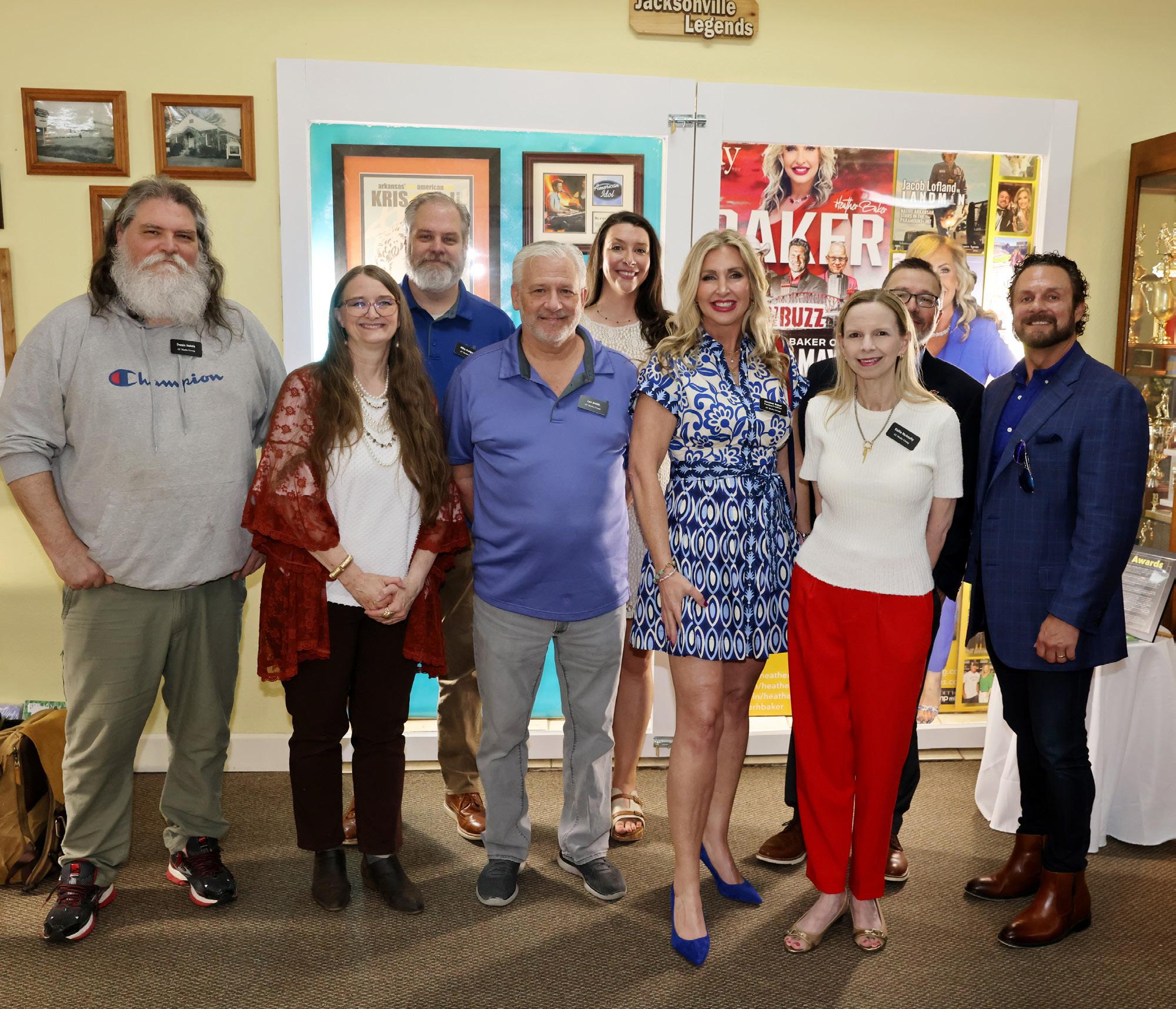
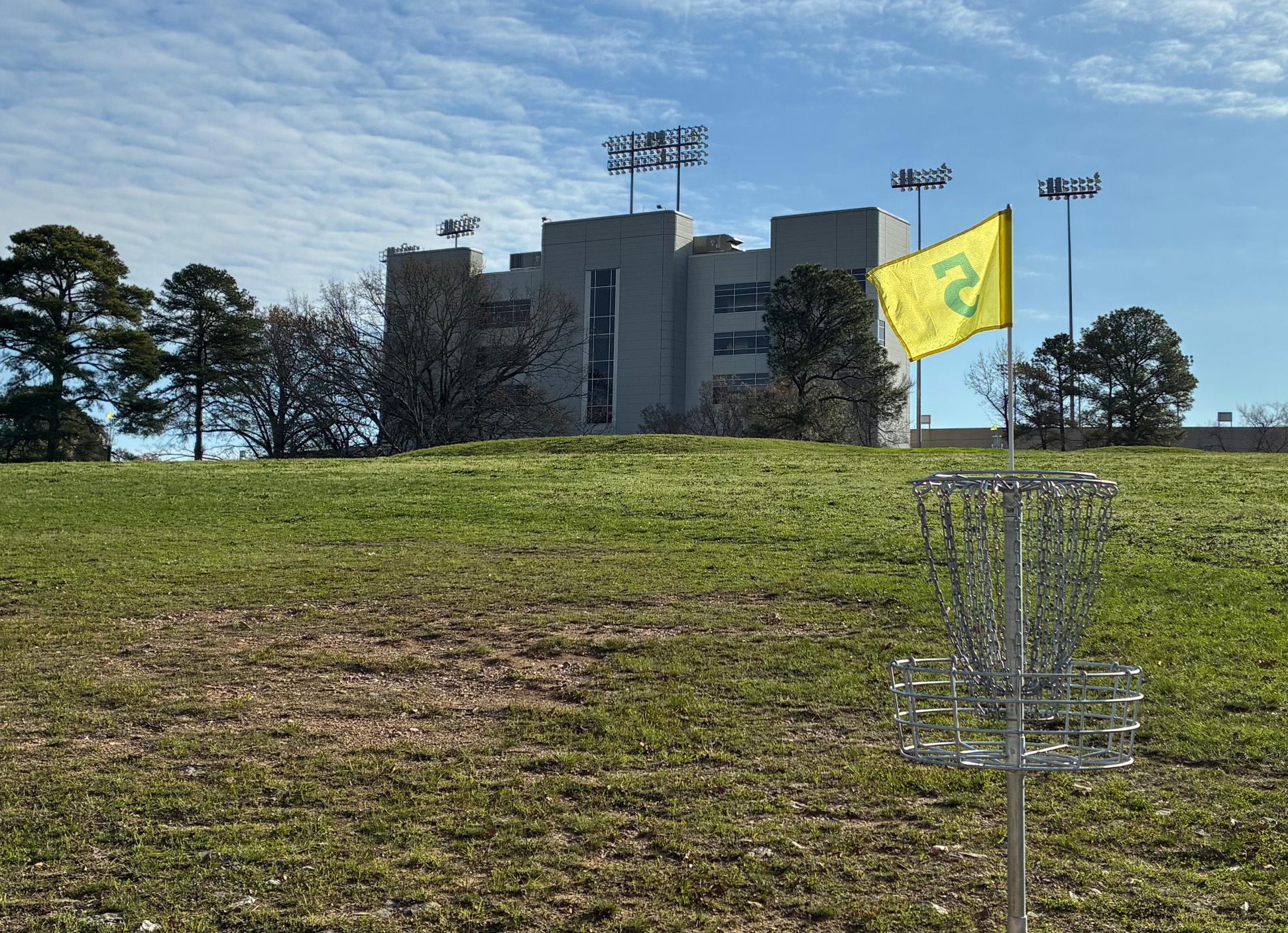
By Mary LeSieur
Re-creation
When native Arkansan Eric Ugolini moved back to Arkansas from Seattle several years ago, it did not take him long to figure out what the state was missing. Created during the mid1970s, disc golf has become a popular recreational sport, yet its prevalence in central Arkansas remained stagnant until Ugolini decided to change things.
“I was dumbfounded to see that Little Rock didn’t have any disc golf courses since I left,” Ugolini said. “That’s really how it all started.”
Using some of his local connections, Ugolini began planning two disc golf courses, which he later donated to the city. Following the donation, Ugolini established Perks and Re-creation in 2019.
Planting the seed was the easiest step, but only months after the business opened, the COVID-19 pandemic hit the nation. Because disc golf is inherently conducive to social distancing, the next step was to offer it during the pandemic while complying with local regulations.
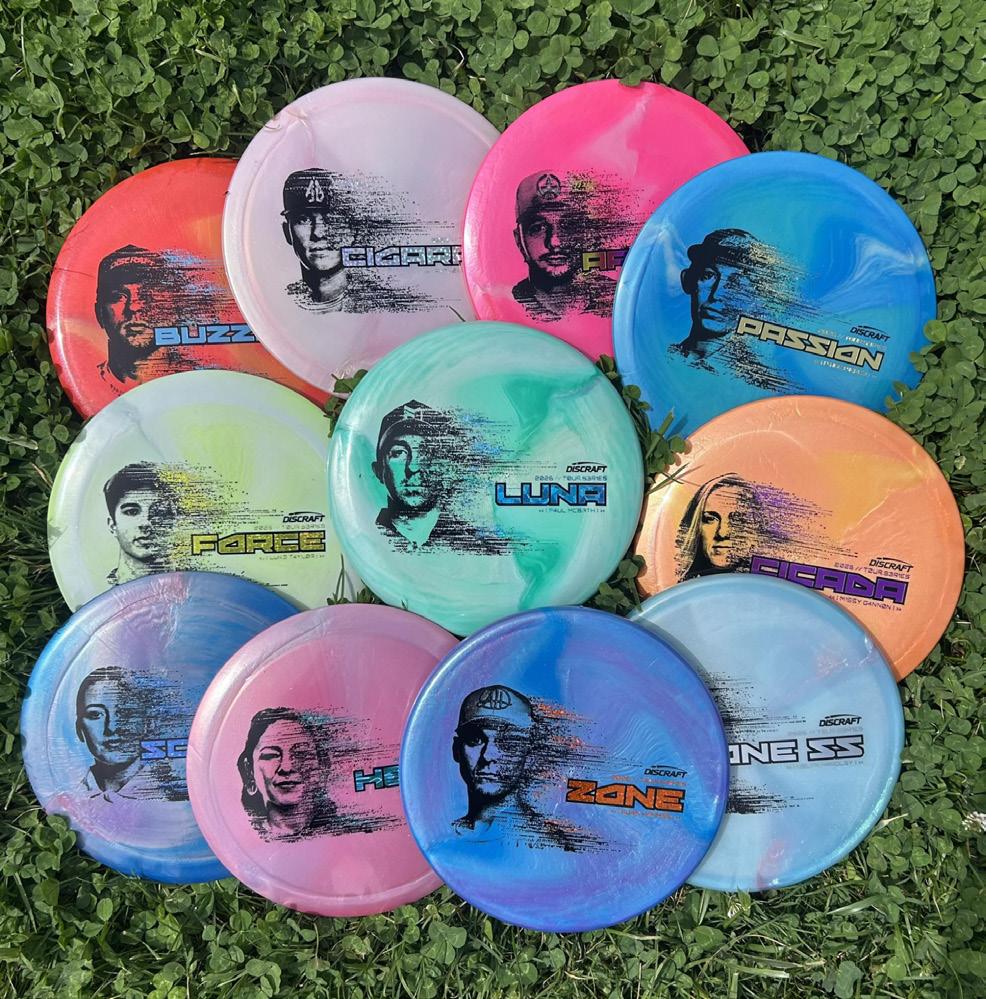
Perks Pop-Up began as an interactive community event in which Ugolini and his team would drop clues to pop-up courses around the city. By providing a GPS link for each day, Ugolini created an outlet for community activity and engagement.
“We’d find spaces that could work for temporary courses and just set it up for the day,” Ugolini said. “This gave people a way to get outside while staying socially distanced. Disc golf fit that model, and it just took off.”
From there, it only evolved. Ugolini opened his flagship storefront in the historic Sterling building in downtown Little Rock in 2021, complete with an indoor disc golf course. The 12,000-squarefoot building had potential for more than just a course, Ugolini said, and he decided to add a speakeasy-style bar to the space.

The shop displays a curated selection of discs and apparel and has thousands more items available both instore and online.
“We built this sort of concept: an indoor disc golf course and bar upstairs with a dedicated disc golf store downstairs,” Ugolini said. “There wasn’t another disc golf store in the city. If you wanted to buy a disc, you had to go into a head shop. That just didn’t make sense to me — especially if you’re trying to get kids into the sport.”
Since Perks and Re-creations’ early beginnings, Ugolini has only seen growth, launching a brand clothing line and a trademarked logo, in addition to creating the first disc made in Arkansas and acquiring another indoor center at J.B. Hunt Park in Springdale.
His newly released disc line is inspired by national parks across the country, and the first disc, named Death after Death Valley, is an innovative take on the average disc design. Ugolini designed his
Not only has the concept grown into a Little Rock storefront with an indoor course and speakeasy, but Perks and Re-creation has also launched its own brands and expanded into northwest Arkansas.
“People travel here just to visit the store and play the indoor course.”
— Eric Ugolini, owner
discs with inner beads, making gripping and handling the discs effortless.
“It’s something no one’s done before,” he said. “Some discs already have a bead on the rim for grip, but we added one on the inside. It’s something no one’s done before, and the feedback so far has been really positive. We’ve heard nothing but positives about the discs we’re making, and that’s very exciting.”
The discs are set to be sold at about 30 retailers across the nation, Ugloini said. The product includes the disc and a reusable “Perk Up” bag, encouraging players to pick up trash on courses.
“It’s part of a larger effort to promote sustainability in outdoor spaces,” Ugolini said. “We’re constantly trying to innovate and give back as much as we can.”
While the product launch is exciting, the local impact is the top priority for Perks and Re-creation. Ugolini’s mission to advocate for disc golf remains his top priority. Today, the response from the state — and beyond — has been overwhelmingly positive.
“We reach people that, normally, the sport wouldn’t reach,” Ugolini said. “We have a lot of people who are traveling and make a point to stop at our store. Our Little Rock store has become a destination.
“People travel here just to visit the store and play the indoor course. We’ve even been recognized by UDisc as one of the top indoor disc golf destinations in the country. At the end of the day, we’re just trying to keep innovating and growing the sport.”

By Doug Crise
For seven years, when wintertime was on its last legs, Chris Curry would report to spring training, and during six seasons as a catcher for the Chicago Cubs’ farm system and one season with the Gary SouthShore RailCats of the independent leagues, Curry would meet the baseball men.
The men were supposed to know everything. Underneath their ubiquitous wraparound shades, their eyes sparkled with experience and knowledge reaped from decades in the game. It was with those eyes that they would decide everything from what pitch to call to the very trajectory of Curry’s playing career. The names on the back of their jerseys may as well have been “ORACLE.”
“The coaches used to be former major leaguers,” said Curry, now in his 12th season as baseball coach at the University of Arkansas at Little Rock. “The only feedback you got was from their eyes and their information.”
Today’s athletic landscape could not be more different. Coaches from all sports and all levels are embracing vast amounts of analytical data in the name of player development and in-game decisions. As the games themselves change, better technology becoming available and artificial intelligence looming, so have the lives of data-minded coaches whose jobs are nothing like what has come before.
“I have always thought of myself as a pure baseball guy,” said DJ Baxendale, director of analytics for the University of Arkansas baseball program. “I kind of ran into analytics by default.”
Baxendale is not exaggerating. He grew up in a baseball family with his father, Greg, heading up the Arkansas Express, one of the state’s premier showcase teams. Younger brother Blake was a Division 1 college player who went on to coach and would be inducted into the Rogers Heritage High School Athletic Hall of Fame. Between the two was DJ, who worked as a conference starter and high-leverage reliever for Dave Van Horn at the University of Arkansas in Fayetteville before embarking on a minor league path similar to Curry’s.
Baxendale joined the Minnesota Twins organization right when analytics were taking off in professional baseball, but he was not prepared for the sea change also taking place at the college and high school levels.
“I mean, it was light years,” Baxendale said.
Baxendale is not the only one carrying the odd sensation of working a job that, until recently, did not exist. Further south, in central Arkansas, Charles Gravett handles the data for Curry’s Trojans program. Gravett’s preparation for a three-game weekend series usually involves analyzing footage of the upcoming opponent’s starting pitchers plus heavy-use relievers, taking note of arm angle, times to the plate and pickoff moves. Then he moves on to the offensive side, logging everything from bunt situations to what teams like to do with runners on first and third.
“It’s like a matchup matrix,” said Gravett, a former pitcher at Xavier University in Cincinnati. “I upload all the players from our team and all the players from their team, and it’s a computer program that spits out what matchup is best for each guy.”
Gravett’s job also has an inherently physical aspect, as well. He trains his eyes on video to find kinetic tidbits such as the position of a pitcher’s landing leg, his spinal alignment during the windup and the amount of energy exerted with every pitch.
All Baxendale and Gravett have to do is make a couple keyboard strokes, hit “print” and hand it over to their players, right? Not exactly. One thing Baxendale quickly learned on the job is that handing over all of the data all of the time is tantamount to trying to get a sip of water from an open fire hydrant.
Choosing what to communicate matters, but so does choosing how to communicate.
“It’s always going to look overwhelming,” Baxendale said. “A typical Trackman [video data feedback equipment] report after a nine-inning baseball game, for us, I think it’s roughly 320 pitches. That’s about a standard, so that’s 320 rows and approximately 120 columns — so it’s going to look like a lot.”
Baseball, with its focus on numbers and trends and percentages, may have been the first to embrace big data, but these days, everyone is invited to the party.
“I used artificial intelligence a lot last year,” said Matt Middleton, head football coach at NAIA Kansas Wesleyan University.
Before taking his first head job, Middleton coordinated record-setting passing offenses at the University of Arkansas at Monticello and University of Central Arkansas in Conway. Yet his biggest coaching moment came while working with Harding University in Searcy’s 2024 national championshipwinning offense, a run-first and run-second scheme centered on traditional option concepts and straight-ahead rushing.
Middleton’s foray into data began with a chance phone call from Tom Woods. Woods was not a football coach. He was an aerospace engineer who saw opportunity in the lack of analytics in the game at the time. Middleton, at the time trying to jump-start his offense at UAM, saw opportunity in being able to think differently than his playcalling peers.
“We played Henderson State [in Arkadelphia], who we had no business being on the field with during that time,” Middleton said. “It was the middle of the game, I want to say Quarter 2. I made up my mind that I was going to do exactly what the data said, and I went full fledged, all in. We made a comeback and made it super close. We didn’t win the game, but I realized the importance of it.”
Not all analytics require high-tech and high-cost video analysis equipment. While at Harding, Middleton found himself hung up on the idea of efficiency and how it relates to field position. Starting on your own 10-yard line, Middleton learned, presents a 1-in-30 chance of scoring. Get to the 50-yard line, and the chance becomes 1 in 5.
“
The NFL is already on that track. They’ve got a GPS sensor in the center of everybody’s shoulder pads and on the ball. They’re tracking.
— Kevin Kelley, Sheridan High School
Chris Curry
After running the numbers of his own offense and the numbers from opposing defenses, Middleton shared his conclusions with Harding’s offensive players. To swing the odds in their favor, the Bisons needed to complete at least 65 percent of their passes for the rare times they did throw or, ideally, pick up at least 4 yards on the ground on first down. Therein lies the beauty of data, since it can reduce an overwhelming task such as winning a football game to a series of attainable goals like getting 4 yards on first down.
To structure the information, Middleton counts on assistant coach Ben Blahauvietz, a spreadsheet whiz with an undergraduate degree in sports analytics (yes, that is a thing now) from Syracuse University in New York. As the use of artificial intelligence continues to rise, though, less time is needed pecking away at a keyboard. In fact, less time may be needed for actual coaching.
“My assistant head coach and I ran all of our stuff through AI,” said Sheridan High School football coach Kevin Kelley. “We drew up some parameters and said, ‘Based on the information, what do you [AI] think?’ and it’s important when you talk to AI to say ‘What do you think?’ Otherwise, it’ll find something out there that somebody else has put on the web and kind of assign it that way.”
Kelley would know. A member of the Arkansas Sports Hall of Fame and nine-time state champion at Pulaski Academy in Little Rock, Kelley is a data-driven early adopter best known for his predilection to never punt on fourth down. Beyond that, Kelley maintains a deep interest in the financial markets and also studies both human kinetics and pedagogical methods, so much so that he helped found and operate Little Rock daycare center Kid Champion.
Data is not one size fits all. Whereas a sizable chunk of baseball analytics is devoted to the science of movement and using software to evaluate swing paths, launch angles, windups, arm angles and more, football tends to lean more toward play tendencies, scenarios and formations. That, too, is changing.
“The NFL is already on that track,” Kelley said. “They’ve got a GPS sensor in the center of everybody’s shoulder pads and on the ball. They’re tracking.”
Examples of tracking movement data in football include obvious data such as speed and acceleration but also subtleties such as whether an offensive lineman continues to dip his hips and strike outward as the offense moves down the field.
As tends to be the case with AI, there remains a sense of foreboding. What is stopping a coach, for example, from standing on the sideline and simply asking ChatGPT for an effective third-and-seven play out of 11 personnel against an odd front and Cover 3 defense?
“Right off the bat, I’ll tell you that you’re not allowed to use AI on the sideline,” Kelley said. “You can use it before, you can use it after, but you can’t use it during.”
That in itself may not be so bad. High school coaches are largely dependent on the influx of students living nearby and whether or not they have been exposed to the game early, the problem being both Arkansas and the rest of the country are three quarts low on qualified youth coaches thanks to the time commitment and verbal — and sometimes physical — abuse from parents.
A well-meaning but inexperienced youth football coach can likely absorb the basics of what is being taught at the local high school and learn how to apply it, all through AI, but that still leaves it to the coach in question to distill what could be a towering amount of numbers into bite-sized, learnable sets of practical data.
Baxendale, Curry, Gravett, Middleton and Kelley all separately maintained that analytics are only as helpful as a coach’s ability to communicate and teach, and while data can now explain an awful lot in sports, the things that cannot be seen or quantified still matter.
“I will retire in 20 years continuing to believe in heart and toughness and guts,” Curry said.
And those baseball men Curry knew, the ones with the ever-active eyes? They still exist, but they are now armed with so much more.
“All good baseball coaches can still see,” Baxendale said. “They know what’s going on, but now I can back that up with cold, hard data.”


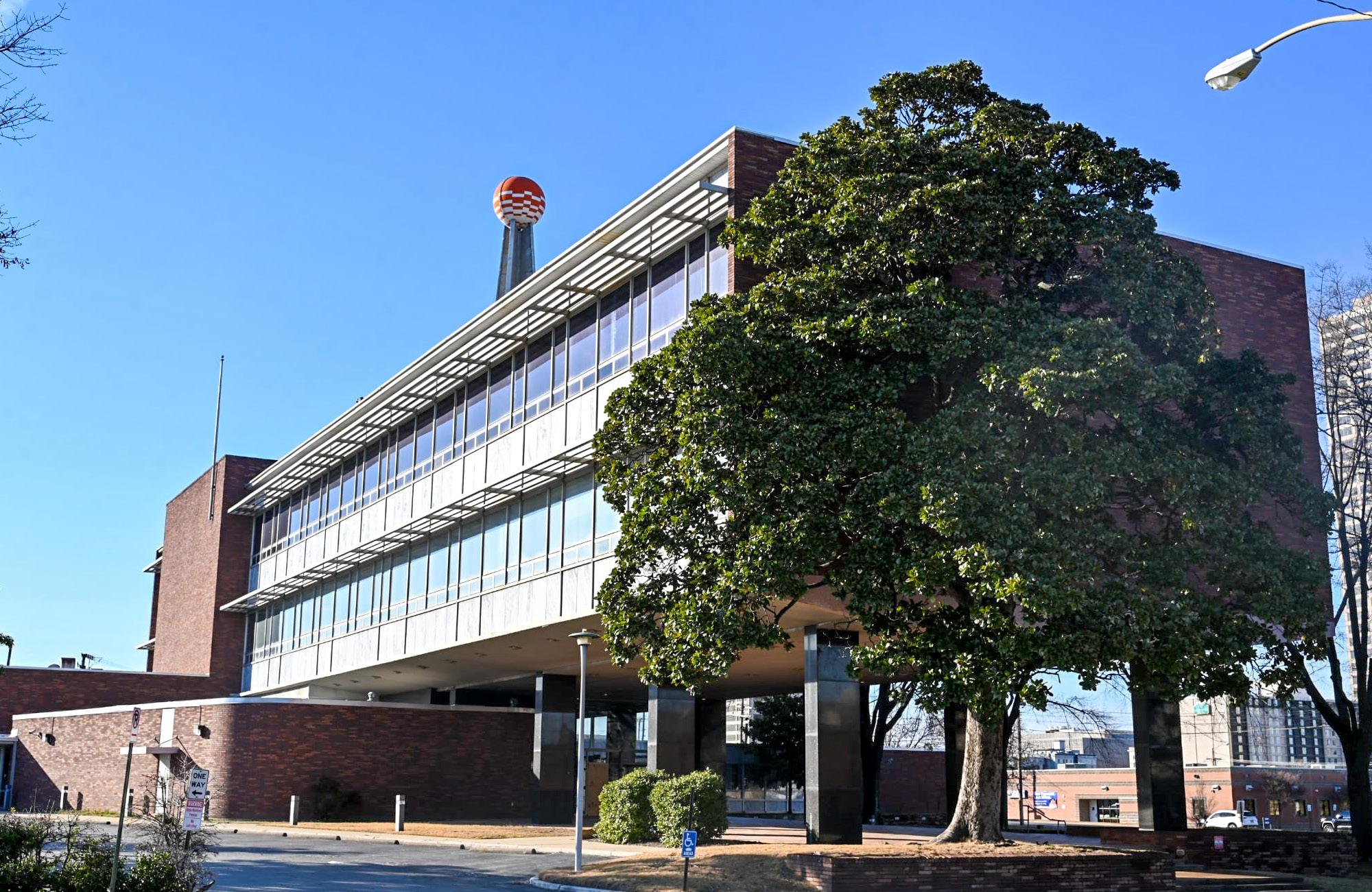
AP&L Building loaded with untapped potential AP&L
By Sarah DeClerk | Photos by Chris Davis
istinguished by its long steel frame and the signature balltopped pedestal adorning its roof, the Arkansas Power and Light Building at Ninth and South Louisiana streets is one of the most recognizable buildings in downtown Little Rock.
Designed in 1953 by architect Fred Arnold at Wittenberg, Deloney and Davidson, now WDD Architects, the AP&L Building was the first structure in Little Rock to be built in the International style that gained popularity after World War II.
According to the National Register of Historic Places, the structure was also one of the first buildings erected after the adoption of the Little Rock 1969 master plan, which helped guide new commercial design and encouraged private-public partnerships to facilitate downtown beautification.
Although the building was designed in 1953, uncertainty about rate increases and the expiration of laborers’ union contracts delayed completion until 1959. Built specifically for the Arkansas Power and Light Co., now Entergy Arkansas, construction cost a total of $2.8 million, or a little more than $31 million today.
According to the National Register, the four-story building includes 70,000 square feet of office space and is surrounded by 8,200 square feet of parking space. Its design is a specific variation of the International style influenced by Frank Lloyd Wright, as evidenced by the large, intersecting geometric forms juxtaposed asymmetrically to create the structure, as well as mixed-
media finishes that include brick, steel, glass and marble.
The two-story steel-and-glass section that makes up the second and third floors dominates the look of the building, while features such as a curving, single-story brick section, a tiled cantilever supported by marble columns and the distinctive glass ball on the roof add visual interest.
The Space Age structure was completely electric; in fact, it was the first office building in the Little Rock area to have an electric heat pump system. The expansive lobby includes a window that peeks into what was then a state-of-the-art mechanical control room. Portraits of company executives adorned one of the walls.
In the Reddy Room, named for cartoon electricity spokesperson Reddy Kilowatt, a stage once hosted demonstrations of electric appliances. Behind the stage, a vintage test kitchen stands as a monument to the wonders of the modern age.
Other highlights of the first floor include a vault, the original 1950s elevator and a set of stairs that was once the building’s escalator. The warren of meeting rooms and offices taking up the first three floors of the building yields no shortage of retro gems, including a full kitchen in what was once a break room.
The fourth floor opens to the rooftop, providing a panoramic view of the downtown area and an up-close look at the iconic ball.
Once counted among the most modern structures in Little


Rock, the lights have been out at the old AP&L Building for the past several years. Flake & Co. in Little Rock purchased the property when Entergy’s lease expired in 2021.
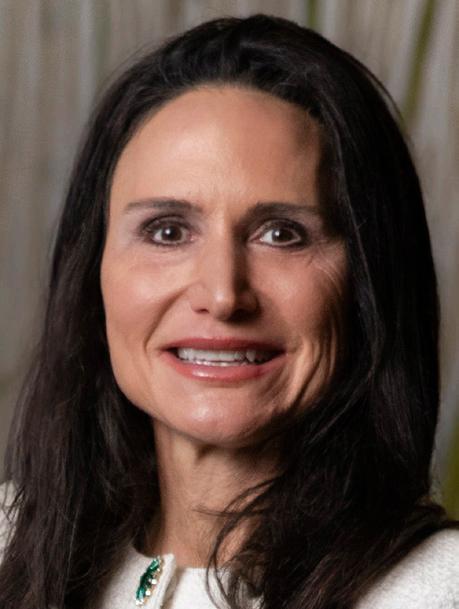
“My dad had always had his eye on it and loved it,” said CEO Jessica Flake Dearnley, daughter of real estate titan John Flake, who built the Simmons Tower for Entergy in 1986. “He was like, ‘It has so much potential.’”
Her father had a tenant in mind for the space, Dearnley added, but the deal fell through, leaving the fate of the building in question.
“Normally, we don’t just buy property and then figure out what you’re going to do with it,” Dearnley said. “We have a plan in place, or you have a tenant that’s coming in.”
The most efficient use of the space would be for another single tenant, she added, but it has been difficult to find a company that checks all the boxes when it comes to the dimensions, layout and location.
“It’s a specific target audience that’s like, ‘I want to be downtown, and I want to be in a cool older building,’” she said, “versus

other people are like, ‘I want to be in something brand new with resort amenities.’”
That has led Dearnley to consider other options, including turning the AP&L Building into multifamily housing, something she said would dovetail nicely with the downtown master plan created in 2024.
“They want more housing to create population density because you need people to put in the retail grocery stores and bring in the density,” she said. “Doing the housing’s what brings in all the density, so that was their goal. Is there a demand for it? I can’t answer that. I’ve not done a market study myself.”
Such a study would help determine whether there is a market for housing in the area, as well as the types of apartments most in demand, be they microunits or one- and two-bedroom units.
Flake & Co. has commissioned local architects to come up with potential redesigns of the building were it to be converted to multifamily housing. In addition to incorporating high-end amenities such as a dog wash, yoga studio and fitness center, ideas include turning part of the building into a restaurant or grocery store; transforming the rooftop into a cafe or bar; and installing a cafe or pool under the cantilever.
In the meantime, Flake & Co. has completed an asbestos abatement and repainted the interior of the building. Additional work could be required depending on whether the building houses one or multiple tenants, Dearnley said, including extending the elevator to the fourth floor. She added that future tenants could also install LED lights on the exterior of the building or renovate the historic ball to display their company colors.
“It’s great access off the interstate for people coming in from Benton, Bryant and Conway,” she said. “It’s right here, and there’s visibility with the Entergy ball on top.”
However, she added that a slow commercial real estate market coupled with the expenses involved in renovating a historic structure — plus a lack of developer incentives aside from historic tax credits — has kept the AP&L Building in a state of limbo.
Despite the obstacles, Dearnley said the prospect of being a part of downtown revitalization efforts was exciting. She pointed to Attorney General Tim Griffin, who transformed the nearby Boyle building into the Bob R. Brooks Jr. Justice Building, and his message that whenever people visit Little Rock, they do not come for the latest strip mall or cookie-cutter housing development. They want to see the structures that make the city unlike anywhere else.
“What’s special about this city, and what’s unique?” Dearnley said. “We have the Clinton Library, we have the Museum of Fine Arts. It’s like, ‘What are the stops to go see?’ I would love for us to be a stop, like, ‘We need to go see this building.’”
For inquiries, contact Dearnley at 479-200-5532 or jdearnley@flakecompany.com.
By Mark Carter
Advance apologies to the late Jimmy Buffett, whose 1974 anthem, “A Pirate Looks at Forty,” became one of his most popular songs — one of the Big 8 he played at virtually every show, actually. It was not an exercise in self-reflection, as many assume — Buffett was 27 when he wrote it — but rather a tribute to a real-life smuggler/“pirate,” Phil Clark, who Buffett got to know after the latter’s move to Key West.
The song’s theme of lament got me thinking about Hog fandom. What a ride it is to live and die with the Razorbacks. Our wins are things of beauty, but our crashes redefine psychological horror. There are hills, there are certainly valleys, and every once in a while, a glorious mountain arises.
In this new era of college sports, the ride is sure to get even bumpier. Anyway, the song came on the radio the other day, and I have not been able to get it out of my head since. Maybe this will help:

Mother mother Hogdom, I have heard your call
Wanted to run through wide-open A gaps
Since I was 3 feet tall
Except I had no talent — like, none at all
Watched the men who played learn there’s no ‘I’ in team
From the inside belly to the Hail Mary
Few have ever completed
Most of ‘em dream, most of ‘em dream
Yes, I am a Hog fan; our football NIL was too late
Bangin’ our noggins against a wall (SEC refs and all)
I’m an over-60 victim of fate
But the Whorns I still hate, oh yes, them Whorns I still hate
I’ve done my share of Hog callin’, I’ve seen Corliss on the glass
We’ve cashed enough TV checks to buy Miami (or at least 30A)
Trying to keep up with the SEC’s cheatin’ cast
Snippets of success — never meant to last?
And I’ve been punch drunk now for over two weeks
Watching DA and Cal and a sharpshooter named Leek
But I’ve got to stop wishin’, dig for loot in the cushions
And help buy us a 5 who’s a freak
Just a Jokic or four, you know, just a few friends
Mother mother Hogdom, after all these years I’ve found
SEC refs can kick rocks in Chernobyl
And one day — one day — we’ll take ‘em all down
One day, yes sir, we’ll take ‘em all down.

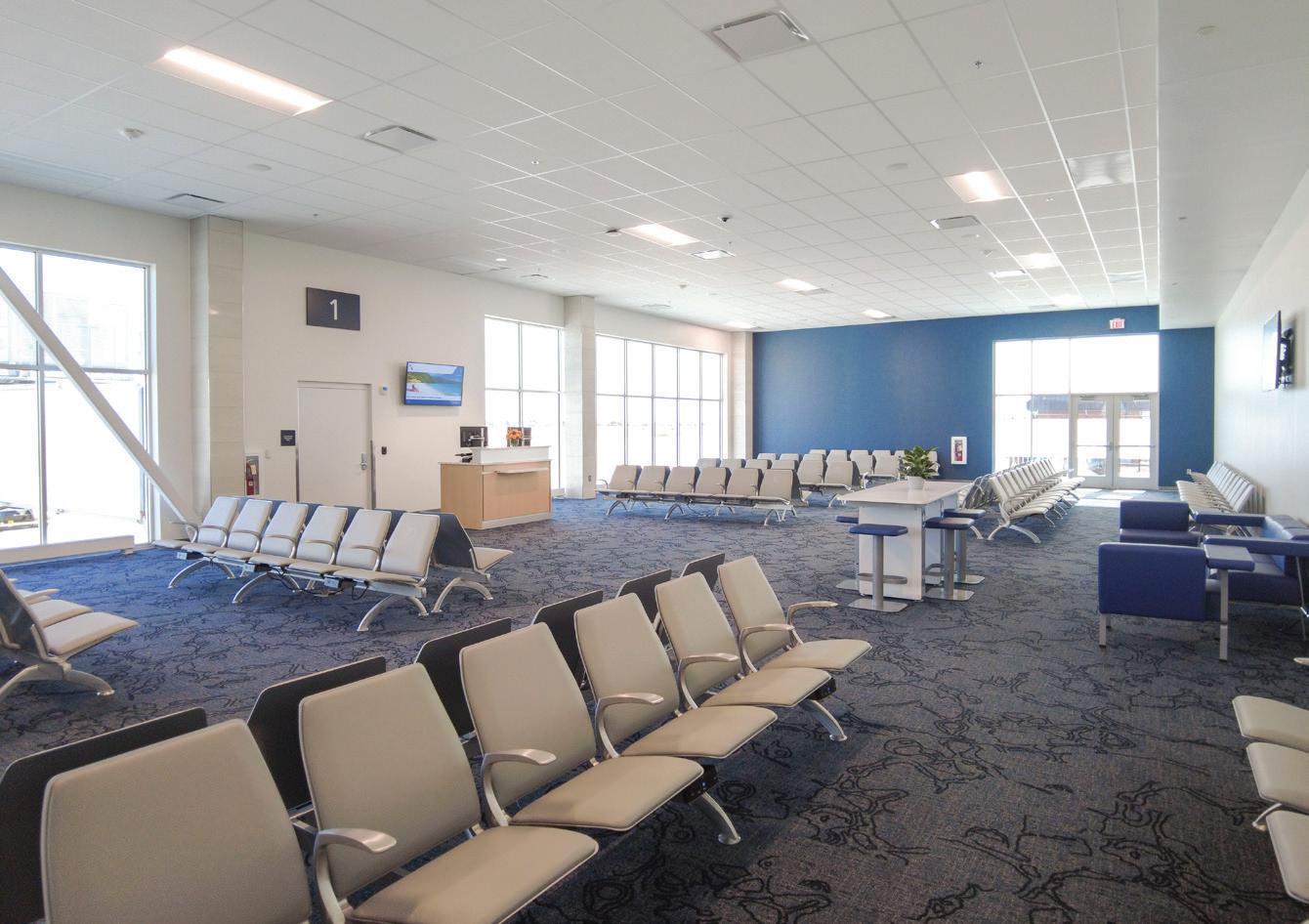
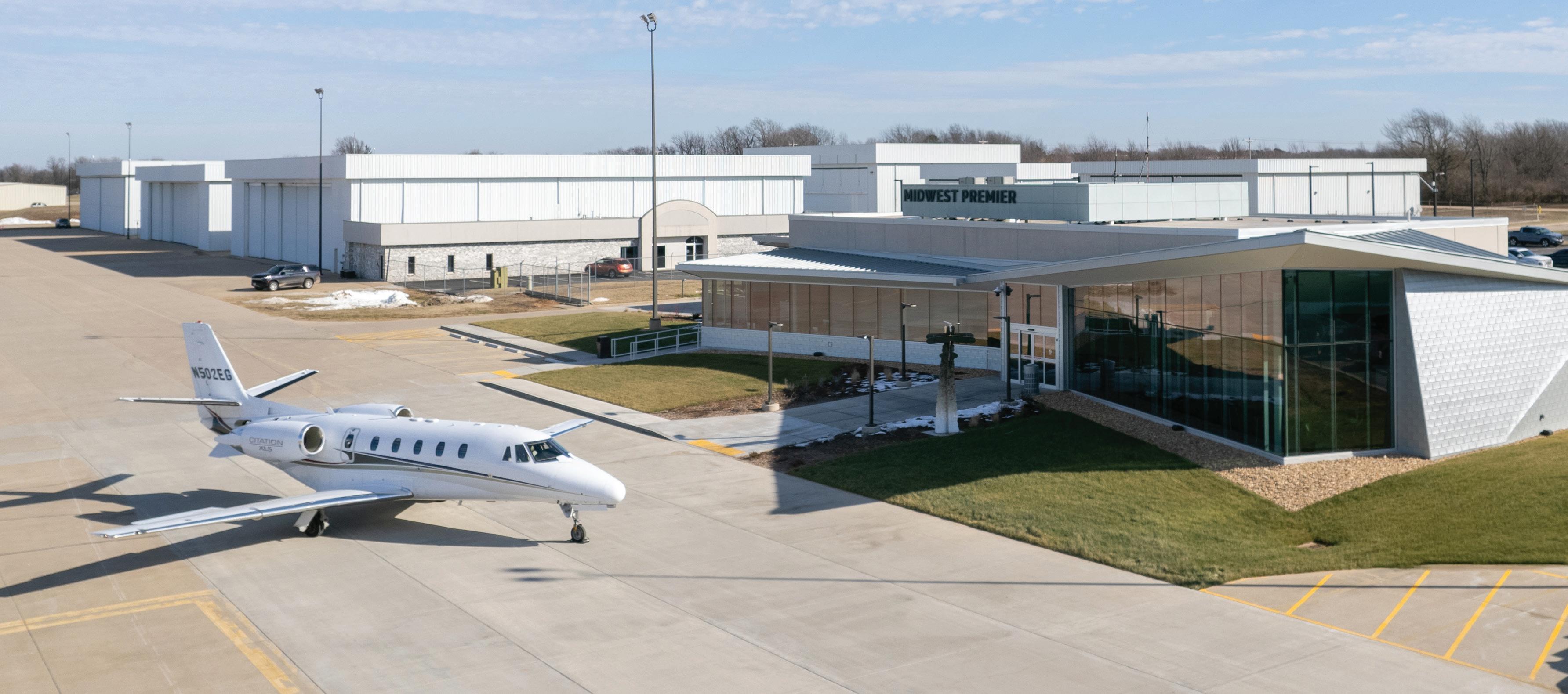
Founded as a small construction company over 75 years ago, Nabholz has grown into a strong team of professionals serving our clients, communities, and each other. With extensive experience performing contractor services for aerospace projects of all sizes — from new construction, to remodels and renovations, to heavy industrial equipment installations.
At Conway Regional, our team brings together key service lines, providers, and technologies to create patient experiences that are highly intentional and refreshingly personal. Dr. Jordan Walters helps patients understand the source of their spine and back conditions and o ers treatment options, including endoscopic spine surgery. Dr.Walters blends access with excellence to deliver high-quality, compassionate care.