Registration - Registrazione N. 7875 of 9/9/2008 Court of Bologna
All coprights belong to Avenue media Srl May not be used without permission Responsibility of the advertisements belongs to the firms
Personal data processing in accordance with Regulation (EU) 2016/679. Privacy Policy is available on Avenue media website www.avenuemedia.eu on “Privacy Policy - Publishing” page: www.avenuemedia.eu/en/privacy-policy-specialist-publishing/
EDITORIAL - EDITORIALE
by/di The editorial staff - La redazione
FEATURES - ARTICOLI FOCUS
by/di Giuseppe Russo, Stefania Masci, Domenico Lafiandra
BEYOND PASTA - STORIE DI PASTA Pasta between the pages
La pasta tra le pagine
by/di The editorial staff - La redazione
DEPARTMENTS - RUBRICHE
Global Food Forum 2026
Without food security, European sovereignty is an illusion
European agriculture has reached a turning point at which one thesis has clearly emerged: without a strong Common Agricultural Policy, the European Union will not be able to build genuine strategic autonomy. This was the key takeaway from the latest Global Food Forum, held in Brussels from 2 to 3 March 2026, which brought together ministers of agriculture, Members of the European Parliament, industry leaders and representatives of farmers to reflect primarily on the future of the CAP.
The past decade - marked by the COVID-19 pandemic, Russia’s war against Ukraine, the energy crisis, inflation and growing social tensions in rural areas - has exposed the fragility of previous assumptions about a stable and predictable geopolitical environment for Europe. In this context, it was emphasised that the CAP is not
Global Food Forum 2026
Senza sicurezza alimentare, la sovranità europea è un’illusione
L’agricoltura comunitaria ha raggiunto un punto di svolta in cui è emersa chiaramente una tesi: senza una forte Politica agricola comune, l’Unione europea non sarà in grado di costruire una vera autonomia strategica. Questo è quanto è emerso dall’ultimo Global Food Forum tenutosi a Bruxelles dal 2 al 3 marzo 2026 che ha visto ministri dell’agricoltura, membri del Parlamento europeo, leader dell’industria e rappresentanti degli agricoltori riflettere principalmente sul futuro della Pac.
L’ultimo decennio, contrassegnato dalla pandemia di Covid-19, dalla guerra della Russia contro l’Ucraina, dalla crisi energetica, dall’inflazione e dalle crescenti tensioni sociali nelle aree rurali, ha messo in luce la fragilità delle precedenti ipotesi su un contesto geopolitico stabile e prevedibile per
by/di The editorial staff / La redazione
merely an instrument for supporting farmers’ incomes, but one of the fundamental pillars of stability for the entire European Union. Thanks to the Common Agricultural Policy, it has been possible to maintain continuity in food production during the unprecedented crises of recent years, stabilise agricultural markets and protect the single market from disintegration. Moreover, repeated warnings were issued against further fragmentation and the effective renationalisation of agricultural policy. Participants pointed out that 27 separate sovereign food systems would mean dismantling one of the EU’s most important shared foundations, undermining the principles of the single market and increasing internal tensions between Member States. The CAP - although in need of simplification and greater flexibility - was identified as an indispensable common instrument
The CAP, one of the fundamental pillars of the stability of the entire European Union
Pac uno dei pilastri fondamentali della stabilità dell’intera Unione europea
l’Europa. In tal senso, è stato rimarcato come la Pac non sia soltanto uno strumento per sostenere il reddito degli agricoltori, ma uno dei pilastri fondamentali della stabilità dell’intera Unione europea. Grazie alla politica agricola comune è stato possibile mantenere la continuità della produzione alimentare durante le crisi senza precedenti degli ultimi anni, stabilizzare i mercati agricoli e proteggere il mercato unico dalla disgregazione. Inoltre, è stato più volte lanciato un monito contro un’ulteriore frammentazione e una effettiva rinazionalizzazione della politica agricola. I partecipanti hanno infatti osservato che 27 sistemi alimentari sovrani separati significherebbero smantellare una delle più importanti basi condivise dell’Ue, minando i principi del mercato unico e aumentando le tensioni interne tra gli Stati membri. La Pac - ancorché necessiti di semplificazione e
to ensure a level playing field, a minimum level of income security for farmers and regulatory coherence across the European Union. In short, the CAP remains central.
During the Forum, attention was also drawn to the need to strengthen Europe’s self-sufficiency in key segments of production - above all plant proteins and fertilisers - as well as the need to invest in
maggiore flessibilità - è stata identificata come uno strumento comune indispensabile per garantire condizioni di parità, un livello minimo di sicurezza del reddito per gli agricoltori e coerenza normativa in tutta l’Unione europea. Insomma, la Pac resta centrale. All’interno del Forum è stata inoltre richiamata l’attenzione sulla necessità di rafforzare
innovation, digitalisation, water resource management, storage infrastructure and transport. Participants therefore agreed that ambitions concerning food sovereignty and the resilience of supply chains must be supported by adequate funding at EU level; otherwise, the new tasks of the Common Agricultural Policy will remain a mere political declaration rather than translating into a real strengthening of Europe’s autonomy.
l’autosufficienza dell’Europa nei segmenti chiave della produzione - su tutti proteine vegetali e fertilizzanti - nonché sulla necessità di investire in innovazione, digitalizzazione, gestione delle risorse idriche, infrastrutture di stoccaggio e trasporto. I partecipanti hanno quindi concordato sul fatto che le ambizioni relative alla sovranità alimentare e alla resilienza delle catene di approvvigionamento devono essere sostenute da finanziamenti adeguati a livello Ue; in caso contrario, i nuovi compiti della Politica agricola comune rimarranno una semplice dichiarazione politica anziché tradursi in un reale rafforzamento dell’autonomia europea.
The editorial staff - La redazione
Granoro accelerates on sustainability, energy efficiency and digitalization
Technological innovation, reduction of energy consumption and optimization of production processes: these are the pillars of the investment plan on which Granoro has focused most of its efforts in recent years, in order to make its industrial model increasingly sustainable and digitalized, and to align it with new demands for efficiency and transparency. From 2022 to today, this renewal process has involved total investments exceeding €8 million, allocated not only to the modernization of production plants, but also to the digital control of processes and the development of solutions for energy selfgeneration and optimization. A plan which, including ongoing and upcoming projects, will exceed €18 million by 2028.
Granoro accelera su sostenibilità, efficienza energetica e digitalizzazione
Innovazione tecnologica, riduzione dei consumi energetici ed efficientamento dei processi produttivi: sono questi i pilastri del piano di investimenti su cui Granoro ha concentrato maggiormente le energie negli ultimi anni per rendere il proprio modello industriale sempre più sostenibile e digitalizzato e orientarlo alle nuove esigenze di efficienza e trasparenza. Dal 2022 a oggi, quindi il percorso di rinnovamento ha comportato investimenti complessivi superiori a 8 milioni di euro, destinati oltre che all’ammodernamento degli impianti produttivi, al controllo digitale dei processi e allo sviluppo di soluzioni per l’autoproduzione e l’ottimizzazione dell’energia. Un piano che fra i progetti in corso e quelli in fase di realizzazione supererà i 18 milioni di euro entro il 2028.
End to U.S. antidumping duties on pasta
The U.S. Department of Commerce has published its final decision regarding the antidumping duties that risked affecting 13 different brands of Italian-made pasta, accused of marketing their products at prices below market value, thereby creating unfair competition for local producers and distorting market balances. Following a lengthy investigation and after the reassurances and documentation provided by Italian companies, the U.S. authorities have withdrawn their initial stance. This was announced by the Ministry of Foreign Affairs, which also noted that Pasta Garofalo saw its antidumping duty reduced to 7% (from the initially threatened 91.7%), while La Molisana’s rate was reduced to 2.65% (from 91.7% in the preliminary decision). The antidumping duty applied to the other 11 companies involved in the procedure will be 5.21%.
Stop ai dazi antidumping degli Usa sulla pasta
Il Dipartimento del Commercio Usa ha pubblicato la decisione conclusiva sulla vicenda dei dazi antiduping che rischiavano di colpire 13 differenti brand della pasta made in Italy accusati di aver messo in commercio i propri prodotti a costi inferiori a quelli di mercato facendo così una concorrenza sleale ai produttori locali e alterando gli equilibri di mercato. Dopo una lunga investigazione e dopo le rassicurazioni e i documenti forniti dalle aziende italiane la decisione delle autorità statunitensi è rientrata. A renderlo noto è stato il Ministero degli Affari Esteri che ha ricordato anche come la Pasta Garofalo si è vista il dazio antidumping ridotto al 7% (dal minacciato 91,7%), mentre La Molisana al 2,65% (rispetto al 91,7% della decisione preliminare). Il dazio antidumping applicato alle altre 11 aziende interessate della procedura sarà del 5,21%.
EU-Mercosur: provisional entry into force from May 1
From May 1, Mercosur will become operational between the EU and the countries that completed ratification by the end of MarchArgentina, Brazil and Uruguay - while Paraguay is expected to follow shortly. For operators, according to a statement released by the European Commission, this marks the beginning of a phase with immediate practical impact: the elimination of tariffs on an initial list of products and a more predictable regulatory framework for trade and investment. The objective is to facilitate market access, competitiveness and the development of new supply chains, with particular attention to critical raw materials and supply chain resilience. At the same time, safeguard clauses remain in place to protect sensitive European sectors, while the agreement strengthens cooperation on environmental standards and labor rights, issues that are increasingly central also to industrial strategies.
Ue-Mercosur: in vigore provvisoriamente dal 1° maggio
Dal 1° maggio, Il Mercosur sarà operativo tra l’Ue e i Paesi che hanno completato la ratifica entro fine marzoArgentina, Brasile e Uruguay - mentre il Paraguay è atteso a breve. Per gli operatori, si legge in una nota diffusa dalla Commissione europea, si apre una fase immediatamente concreta: l’eliminazione dei dazi su una prima lista di prodotti e un quadro normativo più prevedibile per scambi e investimenti. L’obiettivo è favorire accesso ai mercati, competitività e sviluppo di nuove filiere, con particolare attenzione alle materie prime critiche e alla resilienza delle supply chain. Restano al contempo attive clausole di salvaguardia a tutela dei settori sensibili europei, mentre l’accordo rafforza la cooperazione su standard ambientali e diritti del lavoro, temi sempre più centrali anche nelle strategie industriali.
“Pasta di Matera Igp”: official launch of the recognition process
On April 1, a press conference was held in the conference hall of the Chamber of Commerce of Matera to present the official process for the recognition of “Pasta di Matera Igp.” This is a strategic initiative promoted by the Association of Producers Group for the registration of “Pasta di Matera Ipg”, aimed at enhancing and protecting one of the agri-food excellences of the Basilicata region. The event represented a moment of significant institutional and economic importance and also provided an opportunity to outline the objectives of the stakeholders promoting the recognition, as well as the subsequent steps of the process. Furthermore, the project aims to strengthen territorial identity, certified quality and the competitiveness of the cereal and pasta supply chain.
Pasta di Matera Igp: avvio ufficiale del percorso di riconoscimento
Il 1° aprile si è tenuta, nella sala conferenze della Camera di Commercio di Matera, la Conferenza stampa di presentazione del percorso ufficiale per il riconoscimento della “Pasta di Matera Igp”. Si tratta di un’iniziativa strategica, a cura dell’Associazione
Gruppo di Produttori per la registrazione “Pasta di Matera” Igp volta a valorizzare e tutelare una delle eccellenze agroalimentari del territorio lucano. L’evento ha rappresentato un momento di grande rilevanza istituzionale ed economica ed è altresì l’occasione per illustrare gli obiettivi dei soggetti promotori del riconoscimento, nonché le successive fasi del percorso. Inoltre, il progetto mira a rafforzare l’identità territoriale, la qualità certificata e la competitività della filiera cerealicola e pastaria.
Why gluten matters: from early breadmaking to the future of food science
Insights ahead of the International Gluten Workshop
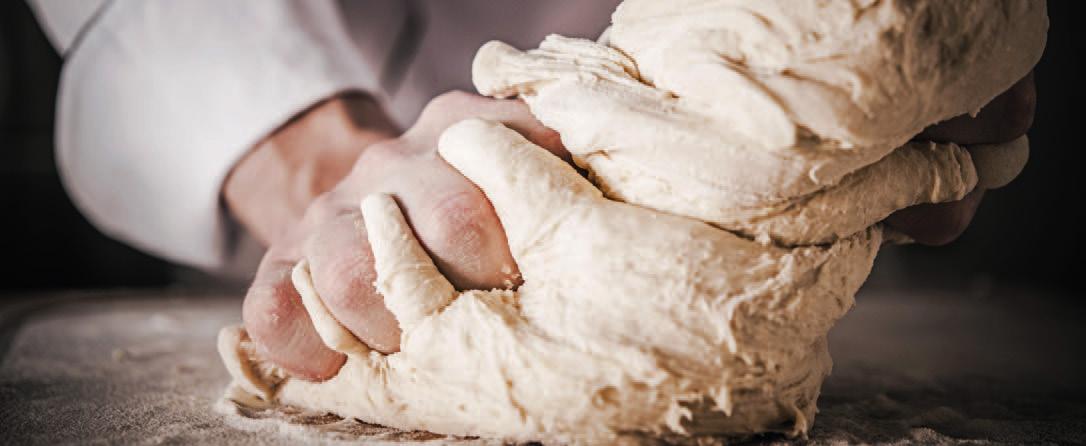
Wheat gluten is deeply intertwined with the history of human food. Gliadins and glutenins, the two protein classes involved in gluten formation, are rich in proline and glutamine, a characteristic feature of wheat proteins (which accounts for their alternative name, prolamines), and together account for about 80% of the proteins in the wheat kernel. Gliadins are monomeric proteins, whereas glutenins are polymeric structures whose subunits are held together by covalent bonds. When water is added and mechanical
Perché il glutine è importante: dagli albori della panificazione al futuro della scienza alimentare
Approfondimenti in vista dell’International Gluten Workshop
Il glutine del frumento è strettamente connesso alla storia alimentare dell’uomo. Frutto dell’interazione chimico fisica delle gliadine e delle glutenine, queste importanti classi di proteine costituiscono l’80% delle proteine totali presenti nella cariosside e, a causa dell’elevato contenuto in prolina e glutammina, sono anche denominate prolammine. Le gliadine sono costituite da proteine monomeriche, mentre le glutenine sono strutture polimeriche le cui subunità costituenti sono tenute insieme da legami covalenti.
by/di Giuseppe Russo1, Stefania Masci1, Domenico Lafiandra1
1 “Gian Pietro Ballatore” Research Consortium, Palermo, 2 DAFNE - University of Tuscia, Viterbo
1Consorzio di Ricerca “Gian Pietro Ballatore”, Palermo, 2DAFNE - Università degli Studi della Tuscia, Viterbo
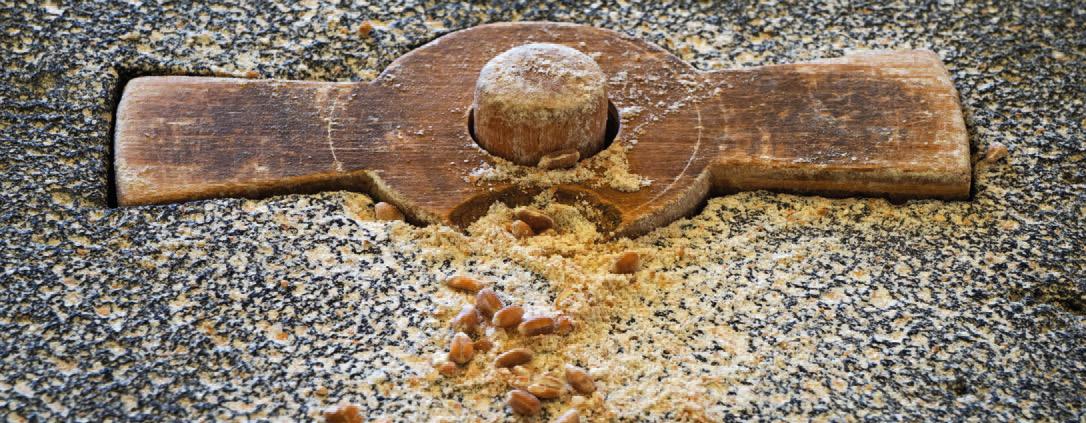
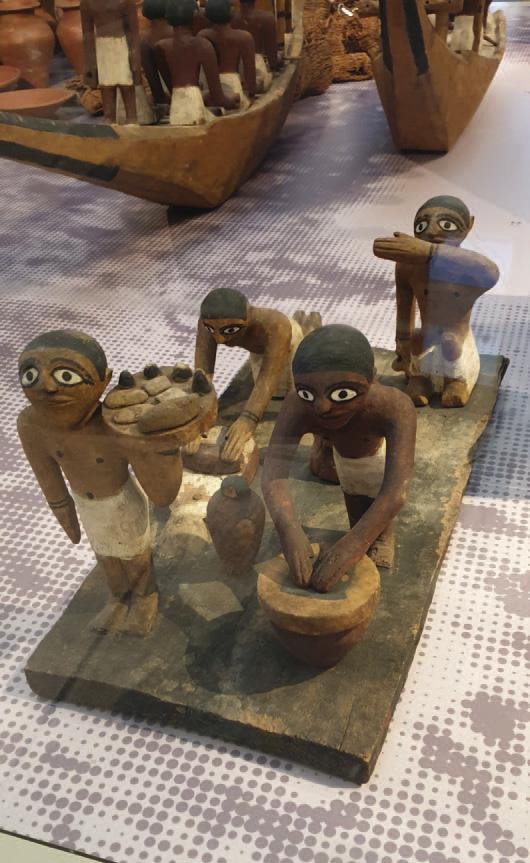
energy is applied during dough mixing, these proteins form the gluten network: a complex structure exhibiting both viscosity and elasticity, which contributes to improved palatability and technological performance in leavened baked goods and to the cooking quality of pasta (providing greater resistance to overcooking). The “activation of gluten,” as this process is commonly called, was probably experienced by humans from the very beginning of agriculture. In the Fertile Crescent, alongside the domestication of cereals and the introduction of early stone mills, people began mixing milled grains with water. Archaeological evidence indicates that even earlier, during the Natufian period around 14,000 years ago, remains of a primitive bread made from ground cereals, mixed with water and baked, were found at the site of Shubayqa in northern Jordan. This discovery shows that our familiarity with gluten has very ancient roots, and that rudimentary breadmaking represented one of humanity’s earliest technological experiments. As is well known, the art of breadmaking gradually became more refined and, by ancient Egypt around 5,000 years ago, had evolved into an organized technological process. Funeral goods intended to accompany the dead into the afterlife, such as those displayed at the Egyptian Museum in Turin, reveal a complex production chain involving skilled labor in wheat cultivation, harvesting, storage, stone milling, and dough preparation. Fermentation, already known to the Sumerians some millennia earlier, made it possible to obtain, after baking in brick ovens, a softer and more aerated bread structure. Even then, different types of bread existed, ranging from simple loaves to more refined products, often enriched with ingredients such as honey or spices. Later, the Romans experimented with cereal doughs and the structural properties of gluten to produce lagane (a sort of ancient “lasagne”), which Apicius (author of the Roman culinary text De re coquinaria) presents as one
Queste proteine sono capaci, per aggiunta di acqua e per azione meccanica, di formare quell’importante struttura reticolare (il glutine per l’appunto) capace di esprimere viscosità ed elasticità e migliorare la palatabilità dei prodotti lievitati da forno e la tenuta di cottura della pasta. L’“attivazione del glutine”, così si indica il processo che genera questo complesso macromolecolare, fu probabilmente sperimentata dall’uomo fin dai primordi dell’agricoltura. Nella mezzaluna fertile, assieme alla domesticazione dei cereali e alla diffusione delle prime macine a pietra, abbiamo cominciato a impastare gli sfarinati con acqua. In realtà gli archeologi ci raccontano che ancora prima, nel periodo Natufiano (circa 14.000 anni fa), nel sito di Shubayqa, nel nord della Giordania, sono stati rinvenuti i resti di una forma primitiva di pane a base di cereali macinati, impastati e cotti, testimonianza come il nostro incontro con il glutine ha radici molto antiche e vede nella panificazione rudimentale i primi esperimenti tecnologici. Come è noto l’arte della panificazione si è via via perfezionata, assurgendo durante l’antico Egitto (circa 5.000 anni fa) a processo tecnologico organizzato, tanto che, ad esempio, i corredi funerari che accompagnavano nell’aldilà i defunti, come quelli esposti nel museo egizio di Torino, evidenziano una filiera produttiva articolata, con maestranze abili alla coltivazione del frumento, alla sua raccolta e stoccaggio, la macinazione con macine in pietra e il successivo impasto. La lievitazione, già nota ai Sumeri alcune migliaia di anni prima, permetteva di produrre, a seguito di cottura in forni di mattoni, un pane più soffice e areato. Già allora esistevano diverse varietà di pane, da quelle più semplici a pani più raffinati, spesso arricchiti con ingredienti come miele o spezie. I Romani hanno cominciato poi a utilizzare gli impasti di cereali e le proprietà del glutine per la produzione delle “lagane”, così Apicio ci presenta nel IV secolo a.C. la prima pasta fresca della storia, un prodotto che
FOCUS
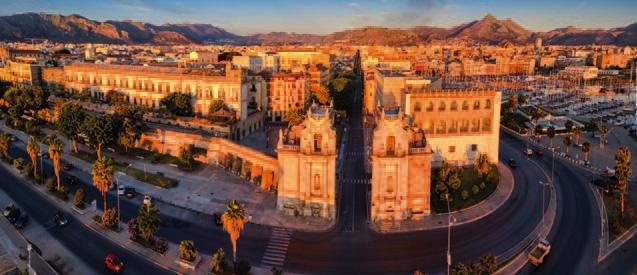
of the earliest forms of fresh pasta in history, a product cooked and served in alternating layers with sauces. In the Middle Ages, another important application of gluten’s properties emerged. Around 1100, the Arab geographer Al-Idrisi, at the court of King Roger II, described in Sicily, near Palermo, what is considered the first dried pasta-making facility in history. The ancestors of spaghetti, known as itrya, an Arabic term referring to thin pasta strands comparable to Italian vermicelliliterally “little worms”- were dried in the heat of the Sicilian climate. This was an early attempt to extend the shelf life of pasta, thereby enabling significant trade across the Mediterranean. With its viscoelastic properties, gluten gives doughs and finished products structure and elasticity, making them extremely versatile in processing, as well as more palatable and pleasant to chew. Gluten’s properties therefore lie at the core of the success of wheat-derived foods such as baked goods and pasta. For this reason, wheat-based foods produced through processes such as mixing, leavening, and baking would not have achieved the same level of consumer acceptance without gluten.
veniva cotto e servito a strati alternati con sughi. Sarà però nel Medioevo che sperimenteremo un ulteriore metodo per sfruttare le caratteristiche del glutine: nel 1100 circa, il geografo arabo El Idrisi, che operava alla corte di Re Ruggero II, descrive in Sicilia, vicino Palermo, il primo stabilimento della storia che produceva pasta secca, un prodotto a lunga conservazione che veniva poi commercializzato nei paesi del Mediterraneo. Il glutine, con le sue proprietà viscoelastiche, conferisce agli impasti e ai prodotti finiti, consistenza ed elasticità, rendendoli molto versatili nella loro trasformazione, nonché più palatabili e gradevoli alla masticazione. Le proprietà del glutine sono quindi alla base del successo dei derivati del frumento, come i prodotti da forno e la pasta. È per questo motivo che processi tecnologici come l’impasto, la lievitazione e la trasformazione in prodotti finiti, non avrebbero potuto garantire lo stesso gradimento presso i consumatori senza la presenza del glutine.
Depiction of a baker in ancient Egypt / Rappresentazione della figura del panificatore dell’antico Egitto
FOCUS
The discovery of gluten
The scientific importance of gluten was fully understood only with the development of food chemistry in the eighteenth century. Its discovery is attributed to one of the most versatile Italian scientists of that period, Jacopo Bartolomeo Beccari, the son of a pharmacist from Bologna, who devoted his life to studies ranging from philosophy and medicine to meteorology, microbiology, chemistry, and physics. In his monograph De Frumento, published in 1728, Beccari based his observations on empirical behaviour of wheat flour in water:
“when dropped into water,” he observed, “it broke up into a fine powder that made the water milky and slowly settled to the bottom; but when the vessel was shaken, it formed a cloud again. Another part sank and remained at the bottom as a tenacious and sticky mass”
(Giovanni Pini, J. B. Beccari, Bologna, Licinio Cappelli Editore, 1940, 80 pp.)
Beccari’s insight went even further. He recognized that this sticky component, which was in fact gluten, behaved similarly to animal substances, tending toward putrefaction rather than fermentation. He observed the same behavior in milk casein, recognizing the similar protein nature of the two substances. Beccari was therefore not only the discoverer of gluten, but also the scientist who initiated the study of its chemical, physical, and biological nature. Nowadays, this knowledge allows us to understand how this molecular complex behaves during processing and product preparation and how different balances of viscosity and elasticity may determine different technological and commercial profiles, enabling the development of foods that meet consumer expectations.
La scoperta del glutine L’importanza del glutine è stata compresa scientificamente con lo sviluppo della chimica alimentare nel XVIII secolo. In particolare, la sua scoperta è da attribuire a uno dei più eclettici e poliedrici scienziati italiani di quel periodo, Jacopo Bartolomeo Beccari, figlio di un farmacista bolognese, che ha dedicato la vita ai propri studi spaziando dalla filosofia alla medicina, dalla meteorologia alla microbiologia, dalla chimica alla fisica. Nella sua monografia De Frumento pubblicata nel 1728, Beccari prende spunto da un’osservazione empirica sul comportamento della farina di frumento:
“lasciata cadere sull’acqua” costatava “essa si suddivideva in pulviscolo che rendeva lattescente l’acqua e lentamente si depositava al fondo, ma scuotendo il recipiente si rifaceva nube. Un’altra parte precipitava e rimaneva al fondo come massa tenace e appiccicaticcia”
(Giovanni Pini, J. B. Beccari, Bologna, Licinio Cappelli Editore, 1940, 80 pp.)
L’intuizione di Beccari si spinse oltre, individuando in quella componente “appiccicaticcia”, che altro non era che glutine, un comportamento simile alle sostanze animali, capaci di dare luogo cioè a putrefazione anziché fermentazione. Lo stesso comportamento che poteva osservare nella caseina del latte, intuendo così la medesima natura proteica delle due componenti. Beccari, quindi non è solo lo scopritore del glutine, ma anche lo scienziato che ha avviato le indagini che avrebbero poi portato a fare luce sulla natura chimico-fisica e biologica del glutine, informazioni che oggi ci permettono di capire come si comporta questo complesso molecolare durante le trasformazioni e la preparazione di prodotti, in modo da incontrare il gradimento dei consumatori.
Gluten and technological quality
Today we know the chemical and physical dynamics through which wheat glutenins and gliadins interact in the presence of water and under mechanical action to form the gluten network. This molecular complex is held together by inter- and intramolecular bonds, within which other biological macromolecules, such as starch, are entrapped. These bonds include not only weak intermolecular interactions, such as hydrogen bonds and van der Waals forces, but also strong covalent bonds, such as disulfide bridges forming between different proteins containing the amino acid cysteine, which further strengthen the gluten network. The study of gluten’s molecular structure has led to the application of rheology, the science of viscoelastic behaviour, which makes it possible to characterize its performance and processing aptitude. Rheological indices such as flour strength, alveographic W, the extensibility/elasticity ratio P/L, as well as farinograph values, Falling Number, and other parameters, all provide useful tools to predict gluten behaviour and therefore flour performance, allowing us to estimate whether a specific flour will provide the desired technological result or what is its better use. Modern mills, whether working with common wheat or durum wheat, are now equipped with the instruments needed to characterize the rheological behavior of gluten and respond more accurately to the needs of processors. In some cases, near-infrared spectroscopy, already widely used for assessing the commercial quality of wheat, can also provide reasonably reliable estimates of the rheological
Il glutine e la qualità tecnologica
Gluten makes dough versatile in its transformation
•••
Il glutine rende versatili gli impasti nella loro trasformazione
Oggi conosciamo la dinamica che porta le glutenine e le gliadine contenute nel frumento a interagire per azione meccanica e in presenza di acqua, fino a formare la “maglia glutinica”, una complessa rete tenuta insieme da legami inter- e intramolecolari, dentro la quale vengono intrappolate le altre macromolecole biologiche, quali l’amido, per esempio. Non si tratta solo di legami deboli intermolecolari (come i cosiddetti ponti a idrogeno o le forze di Wan der Waals) ma anche legami forti, cioè di tipo covalente, come i ponti disolfuro che si instaurano tra proteine diverse contenenti l’amminoacido cisteina e che contribuiscono a strutturare ulteriormente la maglia glutinica. Lo studio della struttura molecolare del glutine ha dato il via all’applicazione delle scienze reologiche, lo studio delle proprietà viscoelastiche, per caratterizzarne il comportamento e l’attitudine alla trasformazione. Gli indici reologici, quali la forza della farina, il W alveografico, il rapporto estensibilità vs elasticità (P/L), così come il farinogramma, il Falling Number ecc., rappresentano tutte metodologie utili per predire il comportamento del glutine, e quindi dello sfarinato e poter così assegnare una classe di impiego che possa garantire o meno un risultato tecnologico durante la trasformazione. I più moderni molini, sia a tenero sia a duro, per rispondere correttamente alle esigenze dei trasformatori, sono oggi attrezzati con la strumentazione utile per la caratterizzazione reologica del glutine. In alcuni casi anche la tecnologia di analisi veloce all’infrarosso, già diffusa per caratterizzare la qualità commerciale del frumento, può restituire
parameters of flours. Research on gluten’s technological properties has advanced significantly in recent decades, highlighting the enormous variability that exists within its two main protein fractions. This variability has made it possible to modify gluten composition and strength according to the specific requirements of the final product to be made.
Gluten and nutritional aspects
The gluten network is not only relevant for predicting the technological behaviour of flour and semolina; it is also the organic matrix in which the other biological molecules present in the grain are embedded. Many of these molecules play fundamental roles in health and metabolism, since flours contain nutritionally relevant components such as dietary fiber and starch. For example, it is well known that differences in gluten strength in certain semolina samples can influence the glycemic response to pasta, as starch hydration and the subsequent action of amylases may be partially hindered by a more tenacious gluten network, resulting in a more gradual release of glucose into the bloodstream. Although gluten represents approximately 80% of the proteins in wheat, its nutritional profile is deficient in some essential amino acids, such as lysine and methionine. However, when combined with other protein sources, such as legumes, its overall protein quality can be improved to a level comparable to that of animal proteins. Gluten may also have unfavorable effects on health, as in the case of celiac disease. This chronic disorder, affecting approximatively 1-2% of the population, is triggered by an autoimmune and inflammatory reaction, the occurrence of which depends on the presence of specific genes, such as HLA-DQ2 and HLA-DQ8. Symptoms do not resolve rapidly when the individual
valutazioni, con un certo grado di attendibilità, dei parametri reologici delle farine. La ricerca sulle proprietà tecnologiche del glutine è stata perfezionata negli ultimi decenni evidenziando l’esistenza di un’enorme variabilità all’interno delle due componenti del glutine e tale caratteristica ha permesso di poter modificare la composizione del glutine e la sua forza (W) a seconda del prodotto finito da realizzare.
Il glutine e gli aspetti nutrizionali
La maglia glutinica non ha solo risvolti nel comportamento tecnologico dello sfarinato, ma è anche la matrice organica nella quale si collocano le altre molecole biologiche presenti nella cariosside e nello sfarinato. Molte di queste molecole svolgono ruoli fondamentali per determinare effetti salutistici o influenzare comunque il nostro metabolismo, visto che all’interno degli sfarinati sono presenti molecole a valenza nutrizionale quali la fibra alimentare e l’amido. Per esempio, è noto come la maggiore o minore forza del glutine di alcune semole possa influenzare la risposta glicemica conseguente all’assunzione e alla digestione della pasta, considerato che l’idratazione dell’amido e il successivo attacco delle amilasi, può essere in una certa misura ostacolata da una maglia glutinica più tenace che quindi comporta un rilascio più graduale del glucosio nel torrente ematico.
Sebbene il glutine rappresenti circa l’80% delle proteine contenute nel frumento, il suo profilo nutrizionale esprime una carenza in alcuni amminoacidi essenziali, quali la lisina o la metionina. Tuttavia, la combinazione con altre fonti proteiche, come i legumi, può elevare il valore qualitativo rendendolo simile a quello delle proteine della carne. Il glutine può esercitare anche aspetti sfavorevoli alla nostra salute, come nel caso della celiachia. Questa patologia cronica, che interessa
stops consuming gluten, because recovery depends on the rebuilding of the intestinal mucosa, which is severely damaged in celiac patients exposed to gluten. Because gluten exposure is associated with the development of celiac disease, the use of wheat varieties containing reduced levels of toxic and immunogenic peptides appears to be a promising avenue. Such materials could be less harmful to individuals who are genetically predisposed to celiac disease but have not yet developed the condition, and they may provide valuable starting material for breeding safer or more tolerable wheat varieties. The case of Non-Celiac Wheat Sensitivity (NCWS), by contrast, is not a true disease but rather a disorder characterized by a broad and variable symptom profile, ranging from gastrointestinal manifestations to neurological complaints, which tends to disappear rapidly when cereals containing gluten are removed from the diet. Based on current knowledge, this condition, a few years ago referred to as “Non Celiac Gluten Sensitivity”, appears to have at least two more possible triggers, beyond gluten. One of this is represented by Alpha-amylase/trypsin inhibitors (ATIs), proteins produced by wheat as a defence mechanism against pests, especially insects, by interfering with their digestion. Both gluten and ATIs may trigger an innate immune response, leading to symptoms often associated with irritable bowel syndrome, including abdominal pain, bloating, migraine, and brain fog. This condition is much more widespread than celiac disease and may affect close to 10% of the population. It should also be emphasized that, alongside gluten and ATIs, fructose-related carbohydrates belonging to the
l’1-2% della popolazione, è scatenata da una reazione autoimmune e infiammatoria, la cui diffusione nella popolazione dipende dalla presenza di specifici geni che ne predispongono l’insorgenza (i più noti sono identificati con HLA-DQ2 e HLA-DQ8). I sintomi della celiachia non scompaiono rapidamente se il soggetto smette di alimentarsi con glutine, in quanto i tempi di recupero dipendono dalla possibilità di ricostruire la mucosa dei villi intestinali, che nei soggetti celiaci che assumono glutine è fortemente danneggiata.
Flour contains molecules with nutritional value, such as fiber and starch
•••
Negli sfarinati ci sono molecole
a valenza nutrizionale come fibra e amido
Poiché l’esposizione al glutine è stata correlata all’incidenza della malattia celiaca, l’uso di varietà di frumento con una ridotta quantità di peptidi tossici e immunogenici sembra essere una soluzione promettente. Tali materiali potrebbero risultare meno dannosi per le persone con una predisposizione genetica alla celiachia, ma che non hanno ancora sviluppato la patologia, e rappresenterebbero un buon materiale per lo sviluppo di varietà di grano più sicure.
Il caso della intolleranza ai cereali di natura non celiaca, invece, non è una vera e propria patologia, bensì un disturbo che si manifesta spesso con sintomatologia varia, cha va dai sintomi legati all’apparato digerente a sintomi neurologici, che scompare rapidamente se nella dieta dell’individuo affetto si eliminano i cereali contenenti glutine. Per quel che sappiamo questo disturbo, noto oggi come Non Celiac Wheat Sensitivity (NCWS), ha almeno tre potenziali agenti scatenanti. Uno di questi è proprio il glutine, un altro è costituito dalle proteine inibitrici delle alfa-amilasi e tripsina (ATI), che il frumento produce per disturbare la digestione dei suoi “predatori” (perlopiù insetti) e “difendersi” dalle infestazioni. Sia glutine sia
FOCUS
broader group of FODMAPs are also considered possible contributors to this condition. In this case, a different mechanism would be involved with fermentation and intestinal gas production. In recent years, growing awareness of gluten-related disorders, such as celiac disease and non-celiac wheat sensitivity, has contributed to a broader shift in consumer habits toward gluten-free products. This trend is not always justified by a real medical need to avoid gluten in the diet since this necessity essentially applies only to people with celiac disease. Gastroenterologists also report that “gluten sensitivity,” or “non-celiac wheat sensitivity”, is often overestimated, with some patients attributing symptoms to cereals for suggestive rather than clinically grounded reasons. For this reason, a correct diagnosis of NCWS should always rely on specialist evaluation by a gastroenterologist, or in some cases a neurologist. Thus, while gluten remains essential for the preparation of many traditional foods and for products that meet consumer expectations, recent decades have also seen the development of technologies and solutions aimed at replacing or mimicking gluten’s functional role in shaping the sensory profile of finished products. Although a gluten-
ATI potrebbero scatenare una risposta immunitaria cosiddetta innata, e determina l’insorgenza di sintomatologia afferente alla sindrome del colon irritabile (mal di pancia, gonfiore allo stomaco, emicrania, mente offuscata ecc.), Questo disturbo è molto più diffuso della celiachia e coinvolge una percentuale della popolazione di poco inferiore a un soggetto su dieci. È bene precisare che insieme al glutine e le ATI, anche gli zuccheri del fruttosio (appartenenti ai cosiddetti FODMAPs), attraverso un meccanismo diverso che coinvolge la fermentazione e lo sviluppo di gas intestinali, sono inclusi tra le cause putative di questa condizione avversa.
Negli ultimi anni, la crescente consapevolezza riguardo ai disturbi legati al glutine, come la celiachia e la sensibilità al frumento non celiaca, ha alimentato una maggiore tendenza dei consumi verso la scelta di prodotti gluten-free.
Questa tendenza non è sempre giustificata dalla reale necessità di evitare il glutine nell’alimentazione (condizione cruciale esclusivamente per i soggetti celiaci).
Peraltro, molto spesso (così ci dicono i gastroenterologi) anche la “sensibilità al glutine”, o “ai cereali”, di natura non celiaca viene spesso sovrastimata, con soggetti che riferiscono durante le visite ambulatoriali una sintomatologia su base “suggestiva” che sarebbe invece afferente a altre ragioni, diverse dal consumo dei cereali. Proprio per questo motivo è sempre bene affidarsi al gastroenterologo (o al neurologo, in alcuni casi) per una corretta diagnosi di NCWS.
Così, mentre il glutine rimane essenziale per la preparazione di molti prodotti tradizionali o che incontrano il gradimento dei consumatori, sono emerse negli ultimi decenni tecnologie e soluzioni che mirano a sostituire o simulare il comportamento del glutine nel definire il profilo sensoriale del prodotto finito. Nonostante la dieta gluten-free definisca benefici per chi soffre di celiachia o sensibilità al glutine, è emersa una certa controversia riguardo all’adozione di questi regimi alimentari in chi non soffre di tali condizioni. Alcuni esperti avvertono che eliminare il glutine senza comprovata necessità potrebbe portare a carenze o rischi nutrizionali, poiché da un lato molti alimenti contenenti glutine, come i derivati dei cereali integrali, sono ricchi di fibre e nutrienti essenziali, dall’altro è noto come i prodotti gluten-free siano spesso caratterizzati da un alto indice glicemico, che a lungo andare sono nocivi per il nostro metabolismo.
Il futuro del glutine
Il glutine è quindi alla base del successo di alcuni alimenti chiave della dieta mediterranea e quindi anche del loro ruolo sociale e culturale. Oggi è al centro di un dibattito vivace: da un lato rimane una componente fondamentale in molte cucine tradizionali, dall’altro, la crescente domanda di opzioni senza glutine continua a influenzare
free diet is clearly beneficial for individuals with celiac disease or gluten sensitivity, some controversy has emerged regarding the adoption of such diets by people without these conditions. Many experts warn that removing gluten from diet (or fueling strictly with gluten-free food) without a strong medical reason may lead to nutritional shortcomings or other risks. On the one hand, many gluten-containing foods, especially those based on whole grains, are rich in fiber and essential nutrients; on the other hand, gluten-free products are often characterized by a high glycaemic index, which may be harmful to long-term metabolic health.
The future of gluten
Gluten lies at the heart of the success of some key foods of the Mediterranean diet, as well as of their social and cultural role. Today it is the subject of an active debate: on the one hand, it remains a fundamental component of many traditional cuisines; on the other, the growing demand for gluten-free options continues to influence modern food choices. Research continues to explore not only the potential benefits and risks of gluten, but also its role within a balanced diet. The future will be increasingly shaped by innovative technologies capable of enabling targeted modifications to the wheat genome in order to improve technological performance, nutritional quality, and health-related properties. Gluten is more than a simple protein complex: it is an element that tells the story of our food, our cultures, and the evolution of consumer choices. As we move into the future, the debate over how and when to consume it is bound to evolve further, keeping scientific interest alive in its quality traits, genetics, technological performance, and nutritional implications. The future of gluten combines science, technology, and health in an integrated way, with the goal of improving the quality of life of individuals with glutenrelated disorders, developing innovative foods with higher health value, and promoting greater sustainability in the food industry. This means addressing both the challenges linked to human health and the opportunities for innovation across the agrifood sector. These topics will be explored in depth during the XV International Gluten Workshop (IGW), to be held in Palermo from 1 to 3 June 2026, immediately following the International Wheat Congress, which will take place in Bologna from 25 to 29 May 2026.
Gluten is currently at the center of a lively debate
Il glutine è oggi al centro di un dibattito vivace
le scelte alimentari moderne. La ricerca continua, con studi che esplorano non solo i potenziali benefici e i rischi del glutine, ma anche il suo ruolo in una dieta equilibrata. Il futuro sarà sempre più influenzato da tecnologie innovative che permetteranno modificazioni mirate del patrimonio genetico del frumento al fine di migliorarne le caratteristiche tecnologiche, nutrizionali e salutistiche. Il glutine pertanto è più di un semplice complesso proteico: è un elemento che racconta la storia della nostra alimentazione, delle nostre culture, accompagnando le scelte dei consumatori. Mentre ci muoviamo verso il futuro, il dibattito su come e quando consumarlo è destinato a evolversi, mantenendo vivo l’interesse per gli aspetti qualitativi, quelli della genetica, così come quelli tecnologici e nutrizionali. Il futuro del glutine combina scienza, tecnologia e salute in modo integrato, con l’obiettivo di migliorare la qualità della vita delle persone intolleranti o sensibili, sviluppare prodotti alimentari innovativi, a elevato valore salutistico e promuovere una maggiore sostenibilità nell’industria alimentare. Il tutto considerando sia le sfide legate alla salute umana sia le opportunità di innovazione nell’industria alimentare. Queste tematiche verranno approfondite durante il XV International Gluten Workshop (IGW), che si svolgerà a Palermo dal 1 al 3 giugno 2026, immediatamente a seguire l’International Wheat Congress che si svolgerà invece a Bologna dal 25 al 29 maggio 2026.
Una breve storia dell’International Gluten Workshop
Questi sono i percorsi che a partire dal 1980 un gruppo di scienziati ha cominciato a tracciare intorno al mondo del glutine. Grazie a due ricercatori francesi, Pierre Feillet e Bernard Godon, nasce in quell’anno il primo
Table 1
Historical locations of the International Gluten Workshop
Edition City CountryYear
I Nantes France 1980
II WageningenThe Netherlands1983
III Budapest Hungary1987
IV Winnipeg Canada 1990
V Detmold Germany1993
VI Sydney Australia1996
VII Bristol United Kingdom2000
VIII Viterbo Italy 2003
IX San FranciscoUnited States2006
XClermont-Ferrand France 2009
XI Beijing China 2012
XII Perth Australia2015
XIII Mexico City Mexico 2018
XIV Madrid Spain 2023
XV Palermo Italy 2026
A brief history of the International Gluten Workshop
A broader and more structured scientific interest in gluten began to emerge in the 1980s. Thanks to two French researchers, Pierre Feillet and Bernard Godon, the first International Gluten Workshop was launched in 1980. In the late 1970s, the two scientists discussed the idea with several colleagues working in the field of wheat gluten proteins and organized the first Workshop in Nantes (France). W. Bushuk of the University of Manitoba (Canada) explained in a note published in 1996, A Brief History of the International Workshop on Gluten Proteins, the original aim was to organize a meeting in the format of a traditional workshop: a limited number of contributions on ongoing research would be presented primarily to stimulate discussion. Each paper would then be followed by debate and open exchange. Although every effort was made to preserve this spirit from the very first meeting, subsequent events gradually moved toward the more standard format of scientific conferences. Already by the second Workshop, held three years later in Wageningen, the Netherlands, scientific interest in the themes of the event had grown considerably, and over time the Workshop expanded to a wide range of locations around the world (Table 1). In 2003, the IGW also came to Italy, in Viterbo. And so, after 46 years of scientific activity and 23 years after the Viterbo edition, the IGW returns to Italy, promoted by the Gian Pietro Ballatore Research Consortium and the University of Tuscia in Viterbo, where we hope to welcome the readers of this article as well.
“International Gluten Workshop”. I due ricercatori alla fine degli anni ‘70, discussero l’idea con diversi colleghi attivi nel campo delle proteine del glutine del frumento e organizzarono il primo Workshop proprio a Nantes. L’obiettivo (ci racconta W. Bushuk dell’Università del Manitoba (Canada) in una sua nota pubblicata nel 1996: A Brief History of the International Workshop on Gluten Proteins) era quello di tenere una conferenza organizzata nel formato di un tradizionale “workshop”: un numero limitato di lavori sulle ricerche in atto che sarebbe stato presentato come spunto di discussione. Ogni lavoro sarebbe stato poi seguito da una discussione e da un dibattito. Sebbene si sia fatto ogni tentativo per mantenere questo formato già dal primo incontro, i successivi incontri si sarebbero gradualmente spostati verso il formato standard delle conferenze scientifiche e a partire già dal secondo workshop, tenutosi tre anni dopo a Wageningen nei Paesi Bassi, si è registrato infatti un sempre maggiore interesse da parte della comunità scientifica in merito ai temi del workshop, coinvolgendo diverse location in giro per il mondo (Tabella 1) nell’organizzazione dell’evento. Tra queste nel 2003 l’IGW arriva anche in Italia, a Viterbo. E così dopo 46 anni di attività scientifica e dopo 23 anni dalla realizzazione a Viterbo, l’IGW ritorna in Italia, su proposta del Consorzio di Ricerca Gian Pietro Ballatore e dell’Università della Tuscia di Viterbo, dove speriamo di accogliere anche i lettori di questo articolo.
Giuseppe Russo, Stefania
Masci, Domenico Lafiandra
Pasta between the pages
When macaroni, lasagna, and tagliatelle enter literature, becoming stories of hunger, abundance, and identity
Pasta is not only a symbol of Italian cuisine, but also a small protagonist of European literature. It almost never appears as a recipe or as a strictly gastronomic object: writers use it instead as a narrative sign. A dish on the table can reveal the social condition of characters, their daily lives, or the dreams of abundance of an era. Following the traces of pasta in literary texts means crossing more than two thousand years of culture: from Roman satire to medieval utopias, from Renaissance macaronic poetry to the accounts of Grand Tour travelers.
Latin poets and the everyday table
In Latin literature, food sometimes appears as a moral or satirical device. Meals described by
La pasta tra le pagine
Quando maccheroni, lasagne e tagliatelle entrano nella letteratura divenendo racconto di fame, abbondanza e identità
La pasta non è solo un simbolo della cucina italiana, ma è anche una piccola protagonista della letteratura europea. Essa non compare quasi mai come ricetta o come oggetto gastronomico in senso stretto: gli scrittori la usano piuttosto come segno narrativo. Un piatto sulla tavola può raccontare la condizione sociale dei personaggi, la loro vita quotidiana o i sogni di abbondanza di un’epoca. Seguendo le tracce della pasta nei testi letterari si attraversano più di duemila anni di cultura: dalle satire romane alle utopie medievali, dalla poesia maccheronica rinascimentale fino ai racconti dei viaggiatori del Grand Tour
I poeti latini e la tavola quotidiana
Nella letteratura latina il cibo talvolta appare anche come strumento morale o satirico. I pasti raccontati da
by/di The editorial staff / La redazione
certain poets are never simple gastronomic depictions; rather, they serve to define an idea of society.
In the Satires of Horace, for example, the poet often celebrates the joy of a simple dinner in the countryside, far from the excesses of Rome. In one passage (Book II, Satire 6), a banquet among friends consists of everyday foods, grain mixtures, and modest dishes. It is a praise of frugality: eating little and well becomes the symbol of a balanced life.
Macaroni cooked in broth and made to roll down the mountain
poeti non sono mai semplici descrizioni gastronomiche, piuttosto servono a definire un’idea di società. Nelle Satire di Orazio, per esempio, il poeta racconta più volte la gioia di una cena semplice in campagna, lontana dagli eccessi di Roma. In un passo (Libro II, Satira 6), il banchetto tra amici è composto da cibi quotidiani, impasti di cereali e pietanze modeste. L’elogio è quello della frugalità: mangiare poco e bene diventa il simbolo di una vita equilibrata.
Maccheroni cotti nel brodo e fatti rotolare lungo la montagna
Conversely, the Satires of Juvenal portray social injustice through the table. In Satire V, during a dinner hosted by the wealthy Virro, guests are treated differently depending on their rank: the best dishes go to the host, while poorer clients are served coarse foods made of flour and dough. The meal thus becomes a representation of Roman hierarchy.
Another important literary source is the cookbook attributed to Marcus Gavius Apicius, De re coquinaria . Here we find layered preparations of sheets and condiments reminiscent of lasagnanot as popular dishes, but as creations of aristocratic cuisine.
Per converso, le Satire di Giovenale mettono in scena l’ingiustizia sociale attraverso la tavola. Nella Satira V, durante la cena offerta dal ricco Virrone, gli ospiti vengono trattati in modo diverso a seconda del loro rango: i migliori piatti vanno al padrone di casa, mentre ai clienti più poveri sono serviti cibi grossolani a base di farine e impasti. Il pasto diventa così una rappresentazione della gerarchia romana.
Un’altra fonte letteraria importante è il ricettario attribuito a Marco Gavio Apicio, De re coquinaria. Qui compaiono preparazioni stratificate di sfoglie e condimenti che ricordano le lasagne. Non sono presentate come piatti popolari ma come elaborazioni della cucina aristocratica.
alcuni
The Middle Ages and the dream of macaroni
In the Middle Ages, food enters narrative more directly. The most famous case is the Land of Plenty (Bengodi) in the Decameron by Giovanni Boccaccio.
In the tale of Maso del Saggio (Day VIII, Novella 3), the protagonist describes to Calandrino a fantastical land: “There was a mountain entirely made of grated Parmesan cheese, on top of which lived people who did nothing but make macaroni and ravioli.”
The macaroni are cooked in capon broth and then left to roll down the mountain. The image is deliberately grotesque and comic. Yet behind the humor lies a historical truth: medieval Europe often knew hunger, and the fantasy of Bengodi represents the dream of a world where food is never lacking.
Folengo and the poetry of macaroni
Il Medioevo e il sogno dei maccheroni
Nel Medioevo il cibo entra più direttamente nella narrazione. Il caso più celebre è quello del Paese di Bengodi nel Decamerone di Giovanni Boccaccio.
Macaronic
poetry mixes Latin and dialect
La poesia maccheronica mescola latino e dialetto
In the Renaissance, pasta even enters poetic language. The central figure here is the monk and writer Teofilo Folengo. In his 1517 poem Baldus, Folengo invents a literary genre called macaronic poetry: a deliberately hybrid language that mixes Latin and dialect, just as macaroni mix different ingredients. Folengo’s culinary references are numerous - almost too many to list - but pasta is mentioned repeatedly and stands as a central element in the wild imaginative landscape of an age when hunger and
Nella novella di Maso del Saggio (VIII giornata, novella 3) il protagonista descrive a Calandrino una terra fantastica: “V’era una montagna tutta di formaggio parmigiano grattugiato, sopra la quale stavano genti che non facevano altro che fare maccheroni e raviuoli.”
I maccheroni vengono quindi cotti nel brodo di cappone e lasciati rotolare lungo la montagna.
L’immagine è volutamente grottesca e comica. Ma dietro la comicità si nasconde una verità storica: l’Europa medievale conosceva spesso la fame, e la fantasia di Bengodi rappresenta il sogno di un mondo dove il cibo non manca mai.
Folengo e la poesia dei maccheroni
Nel Rinascimento la pasta entra addirittura nel linguaggio poetico. Il protagonista di questa storia è il monaco e scrittore Teofilo Folengo. Nel suo poema Baldus del 1517, Folengo inventa un genere letterario chiamato poesia maccheronica: una lingua volutamente ibrida che mescola latino e dialetto, proprio come i maccheroni mescolano ingredienti diversi. I riferimenti culinari del Folengo sono assai numerosi, quasi troppi da menzionare, ma di certo la
famine, rather than abundance, were the norm. The very name of the genre derives from food: in the prologues and comic passages of the poem, macaroni appear as a symbol of a popular, physical, and playful culture, opposed to the seriousness of classical literature.
Rabelais and the epic of abundance
A few years later, in France, the celebration of food reaches gigantic proportions in Gargantua and Pantagruel by François Rabelais.
The tables of the giants Gargantua and Pantagruel are described with an almost encyclopedic taste for gastronomic lists: breads, pies, meats, doughs, and all kinds of pasta. Food becomes narrative material and a tool of satire.
For Rabelais, eating means living, knowing, and enjoying the world. The enormous quantities of food served to the protagonists represent a
pasta viene più volte citata ed è un elemento centrale del folle panorama sognato in un’epoca in cui la fame e la carestia, più che l’abbondanza, erano la norma. Il nome stesso del genere del resto deriva dal cibo: nei prologhi e nei passi comici del poema, i maccheroni compaiono come simbolo di una cultura popolare, carnale e giocosa, contrapposta alla serietà della letteratura classica.
Rabelais e l’epica dell’abbondanza
Pochi anni dopo, in Francia, la celebrazione del cibo raggiunge dimensioni gigantesche nel romanzo Gargantua e Pantagruele di François Rabelais.
Le tavole dei giganti Gargantua e Pantagruele sono descritte con un gusto quasi enciclopedico per gli elenchi gastronomici: pani, torte, carni, impasti e paste di ogni tipo. Il cibo diventa materia narrativa e strumento di satira.
In Rabelais mangiare significa vivere, conoscere e
Renaissance idea of freedom and vitality, opposing medieval austerity.
Through the eyes of Grand Tour travelers
Between the 17th and 18th centuries, pasta also becomes one of the elements that most struck foreign travelers in Italy. In the diaries of the Grand Tour - the long cultural journey undertaken by European aristocrats across the peninsula - macaroni often appear as a local curiosity.
One of the most famous witnesses is Johann Wolfgang von Goethe, who in his Italian Journey describes street scenes in Naples: street vendors, plates of pasta eaten outdoors, and crowds consuming macaroni directly with their hands. For many Northern European travelers, this scene represented the very essence of Neapolitan life: spontaneous, noisy, and popular.
Pasta and realism in modern narrative
With the 19th century, pasta enters literature in a more realistic tone. It is no longer gastronomic fantasy but part of everyday life.
godere del mondo. Le enormi quantità di cibo servite ai protagonisti rappresentano un’idea rinascimentale di libertà e vitalità che si oppone all’austerità medievale.
Gli occhi dei viaggiatori del Grand Tour
Tra ‘600 e ‘700 la pasta diventa anche uno degli elementi che colpiscono di più i viaggiatori stranieri in Italia. Nei diari del Grand Tour - il lungo viaggio culturale che gli aristocratici europei compivano nella penisola - i maccheroni appaiono spesso come curiosità locale.
Uno dei testimoni più noti è Johann Wolfgang von Goethe, che nel suo Viaggio in Italia racconta le scene di strada a Napoli: venditori ambulanti, piatti di pasta mangiati all’aperto e folle che consumano maccheroni direttamente con le mani. Per molti viaggiatori nordeuropei quella scena rappresentava l’essenza stessa della vita napoletana: spontanea, rumorosa e popolare.
Pasta e realismo nella narrativa moderna
Con l’Ottocento la pasta entra nella letteratura con un tono più realistico. Non è più fantasia gastronomica ma parte della vita quotidiana.
Nei romanzi veristi di Giovanni Verga, il cibo diventa un indicatore sociale. I pasti dei pescatori o dei contadini sono semplici e ripetitivi; un piatto di
Statue of Johann Wolfgang von Goethe / Statua di Johann Wolfgang von Goethe
In the verismo novels of Giovanni Verga, food becomes a social indicator. The meals of fishermen or peasants are simple and repetitive; a plate of pasta can represent a small luxury or a moment of celebration.
In the 20th century, pasta increasingly takes on the value of a cultural symbol. In family and autobiographical stories, it becomes domestic memory: the dish that brings the family together, the taste of childhood, the mark of Italian roots.
A detail that tells a civilization
a revealing detail in literature
Pasta, in short, runs through literature almost always in a secondary way: it is not the protagonist, but a revealing detail. In Roman satire it speaks of simplicity or inequality; in the Middle Ages it becomes the dream of a world without hunger; in the Renaissance it even inspires a poetic genre; in travelers’ accounts it becomes a sign of Italian identity; and in modern narrative it turns into memory.
A simple mixture of flour and water thus reveals itself as a narrative tool. From macaroni rolling down mountains of Parmesan to Neapolitan vendors observed by foreign travelers, pasta continues to appear in the pages of books as a small but eloquent fragment of human history.
pasta può rappresentare un piccolo lusso o un momento di festa. Nel Novecento, infine, la pasta assume sempre più spesso il valore di simbolo culturale. Nei racconti familiari e autobiografici diventa memoria domestica: il piatto che riunisce la famiglia, il sapore dell’infanzia, il segno delle radici italiane.
Un dettaglio che racconta la civiltà
La pasta insomma attraversa la letteratura quasi sempre in modo laterale: non è protagonista, ma un dettaglio rivelatore. Nelle satire romane racconta la semplicità o la disuguaglianza; nel Medioevo diventa il sogno di un mondo senza fame; mentre nel Rinascimento ispira persino un genere poetico; infine, sei resoconti dei viaggiatori diventa un segno dell’identità italiana, mentre nella narrativa moderna diventa memoria. Un semplice impasto di farina e acqua, dunque, si rivela anche uno strumento narrativo. Tra maccheroni che rotolano da montagne di parmigiano e venditori napoletani osservati dai viaggiatori stranieri, la pasta continua a comparire nelle pagine dei libri come un piccolo ma eloquente frammento della storia umana.
The editorial staff / La redazione
A new year ahead: AXOR looks to 2026 with ambition and continuity
As 2026 begins, AXOR once again confirms its solid presence in the global pasta industry, building on a path of growth, experience and constant technological development. The start of a new year represents an ideal moment to look ahead, while also reflecting on the achievements that have shaped the company’s recent journey.
AXOR successfully concluded 2025 by completing several important projects in key markets such as Venezuela, Algeria and Italy. These projects once again demonstrated the company’s ability to manage complex installations and deliver reliable, high-performance pasta production lines, tailored to the specific needs of each customer and market.
Un nuovo anno davanti: AXOR guarda al 2026 con ambizione e continuità
Con l’inizio del 2026, AXOR conferma ancora una volta la sua solida presenza nell’industria mondiale della pasta, costruita su un percorso di crescita, esperienza e costante sviluppo tecnologico. L’inizio di un nuovo anno rappresenta il momento ideale per guardare al futuro, riflettendo al tempo stesso sui risultati che hanno segnato il recente percorso dell’azienda.
AXOR ha concluso con successo il 2025 portando a termine diversi progetti importanti in mercati chiave come Venezuela, Algeria e Italia. Questi progetti hanno dimostrato ancora una volta la capacità dell’azienda di gestire installazioni complesse e di fornire linee di produzione di pasta
With decades of experience as a manufacturer of complete pasta production lines, turnkey projects and engineering solutions, AXOR continues to be recognized as one of the leading players in the sector. Continuous research, technological evolution and a strong focus on quality remain the core pillars of the company’s philosophy, guiding every stage from design to installation. Looking ahead, 2026 is expected to be another dynamic year for AXOR. New projects are already in development, and the company is preparing to take part in major international trade fairs and industry events, key opportunities to meet partners, customers and professionals from all over the world.
Driven by innovation and supported by a skilled technical team, AXOR enters 2026 with confidence and determination, ready to face new challenges and continue expanding its global footprint in the pasta production industry.
efficienti e ad alte prestazioni, progettate su misura per le specifiche esigenze di ogni cliente e mercato. Con decenni di esperienza come produttore di linee complete per la produzione di pasta, progetti chiavi in mano e soluzioni ingegneristiche, AXOR continua ad essere riconosciuta come uno dei principali protagonisti del settore. La ricerca continua, l’evoluzione tecnologica e una forte attenzione alla qualità rimangono i pilastri fondamentali della filosofia aziendale, e guidano ogni fase dalla progettazione all’installazione.
Guardando al futuro, il 2026 si preannuncia come un altro anno dinamico per AXOR. Nuovi progetti sono già in fase di sviluppo e l’azienda si prepara a partecipare a importanti fiere internazionali ed eventi di settore, occasioni fondamentali per incontrare partner, clienti e professionisti provenienti da tutto il mondo.
Spinta dall’innovazione e supportata da un team tecnico altamente qualificato, AXOR entra nel 2026 con sicurezza e determinazione, pronta ad affrontare nuove sfide e a continuare ad ampliare la propria presenza globale nell’industria della produzione di pasta.
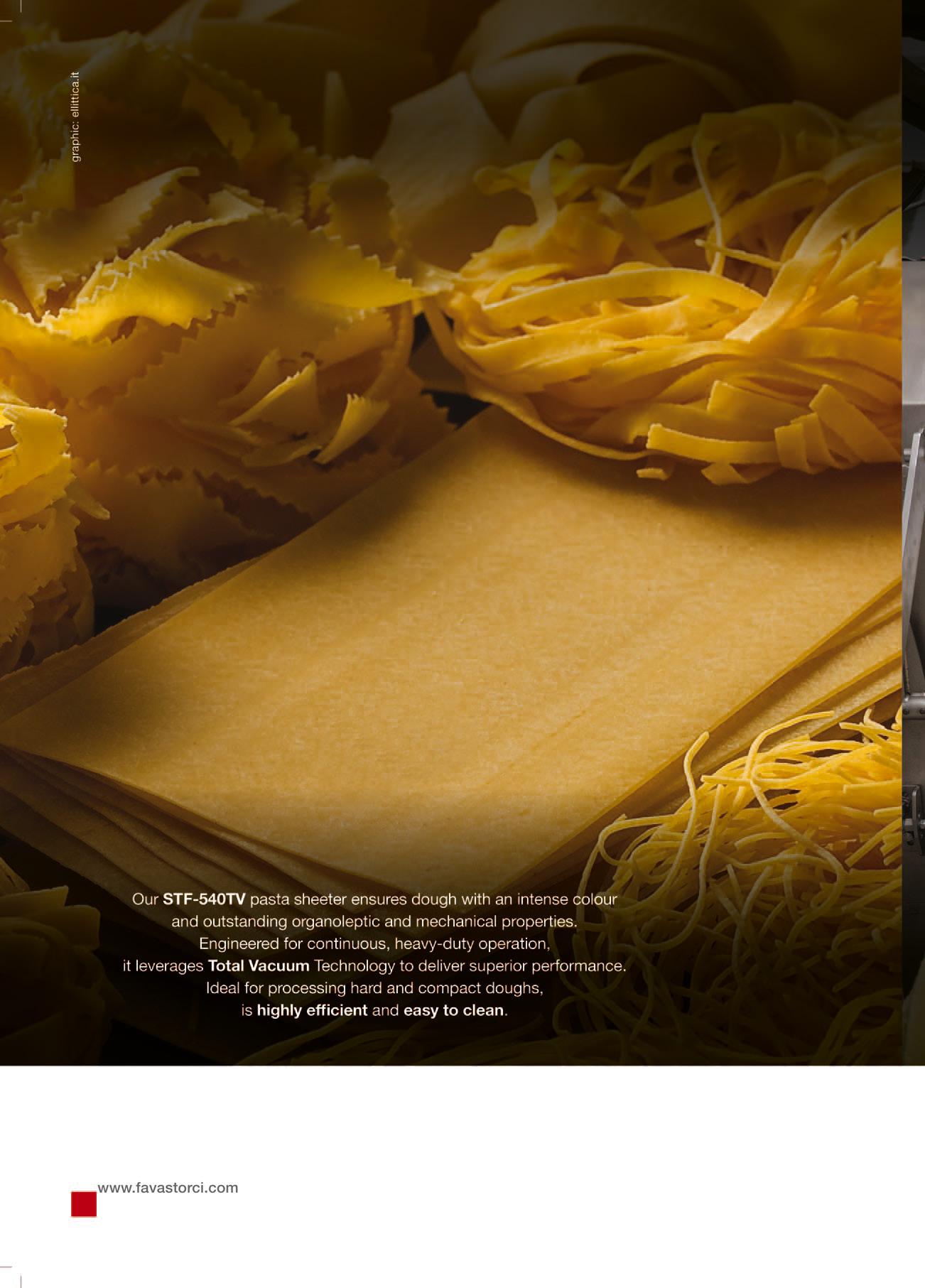
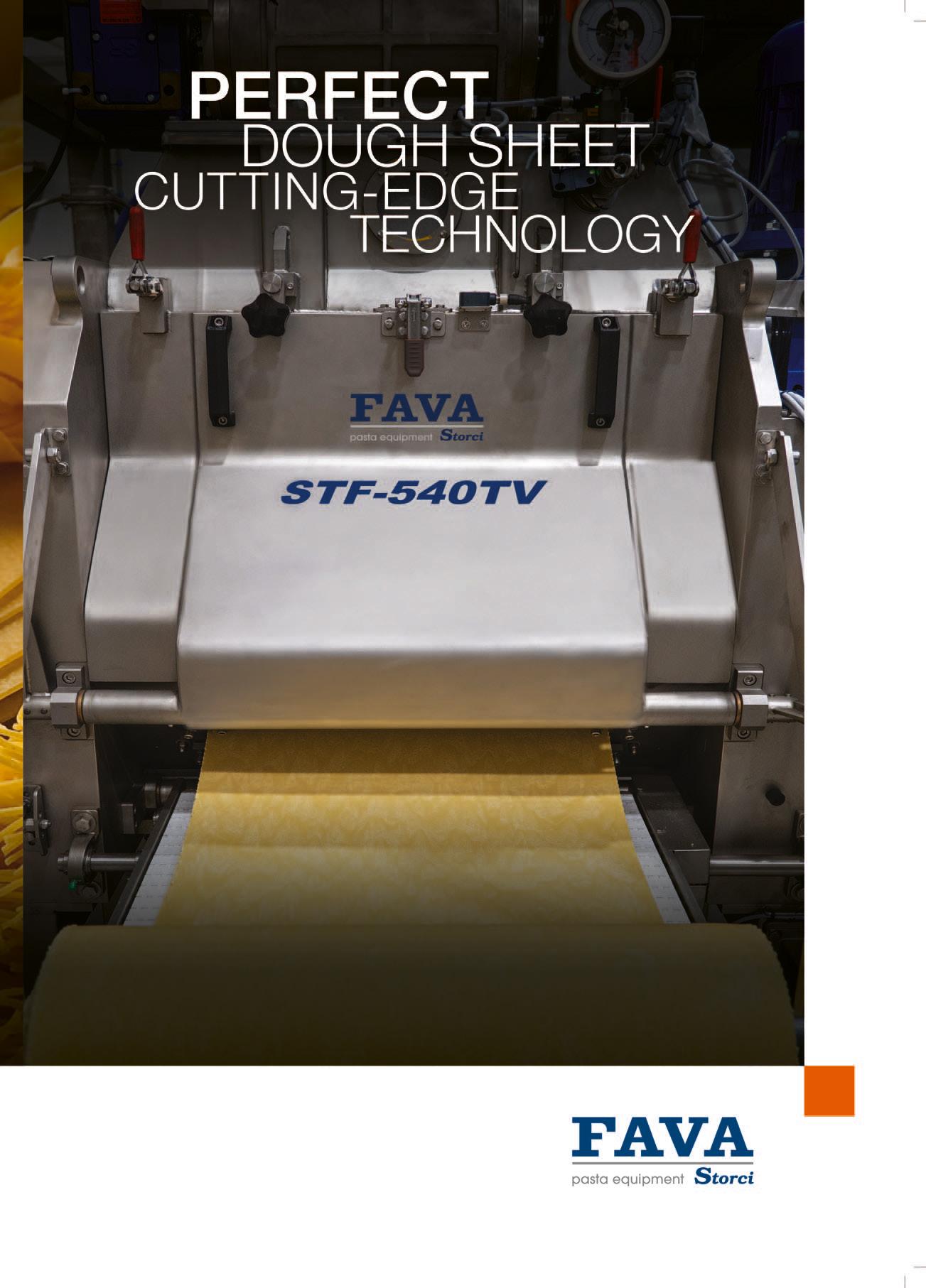
Fava Storci vacuum sheeters
Perfect pasta sheet, cutting-edge technology
Fava Storci offers two solutions for pasta sheets, always with one goal: the highest quality of the final product. Studies conducted in the Fava R&D Laboratory, in collaboration with the University of Parma, highlighted the benefits of the vacuum, advantages shared by both proposed solutions and that set Fava Storci’s pasta sheeters apart from traditional ones.
Fresh pastry produced with vacuum technology shows a higher red and yellow index compared to that obtained with traditional technology ( Chart 1 ). The same samples, after cooking, show higher brightness and yellow index and a reduction in red index ( Chart 2 ).
We know that the human eye is different from measuring instruments: for this reason, we calculated the value of E (used to indicate the color difference perceptible to the human eye) between two samples, STD and TV: the differences between samples are quite distinct (fresh pasta sheets) and distinguishable (cooked pasta sheets) - ( Chart 3 ).
Fava Storci vacuum sheeters
Sfoglia perfetta, tecnologia d’avanguardia
Fava Storci offre due soluzioni per la sfoglia, sempre con un unico obiettivo: la massima qualità del prodotto ottenuto.
Studi effettuati nel Laboratorio R&D Fava, in collaborazione con l’Università di Parma, hanno evidenziato i plus del sottovuoto, vantaggi comuni ad ambedue le soluzioni proposte e che differenziano le sfogliatrici Fava Storci da quelle tradizionali.
La sfoglia fresca prodotta con la tecnologia sottovuoto dimostra un indice di rosso e giallo superiore a quella ottenuta con tecnologia tradizionale (grafico 1). Gli stessi campioni, dopo cottura, dimostrano una luminosità e indice di giallo maggiori ed una riduzione di indice di rosso (grafico 2). Sappiamo che l’occhio umano è differente dagli strumenti di misura: abbiamo, per questo motivo, calcolato il valore di ΔE (utilizzato per indicare la differenza di colore percepibile dall’occhio umano) tra due campioni STD e TV: le differenze tra campioni sono ben differenti (sfoglie fresche) e distinguibili (sfoglie cotte) - (grafico 3).
COLORIMETRIC ANALYSIS / ANALISI COLORIMETRICHE
Fresh pre-lamination sheet: the vacuum increases the red index and the brightness index is lower/ Sfoglia pre-laminazione fresca: il vuoto incrementa l’indice di rosso e l’indice di giallo, la luminosità è inferiore
CHART 1 GRAFICO 1
L* (lightness/luminosità) a* (red index/indice di rosso) b* (yellow index/indice di giallo)
Fresh sample compression test: the samples with vacuum exhibit significantly greater toughness and extensibility compared to traditionally laminated samples (Chart 4). The vacuum level during kneading and laminating can be adjusted, altering the dough characteristics according to production needs. The results obtained are highly significant and demonstrate the important features of the Total Vacuum TV series rollers, characteristics that have led many pasta factories in Italy and abroad to prefer them over traditional ones. Total reliability, excellent results, and extreme ease of cleaning are common elements between the two types in the range. The STF TV HD (Heavy Duty) vacuum laminator is now a wellestablished reality, already installed for some time in several important pasta factories in Italy and abroad, top of the range in terms of construction and product quality.
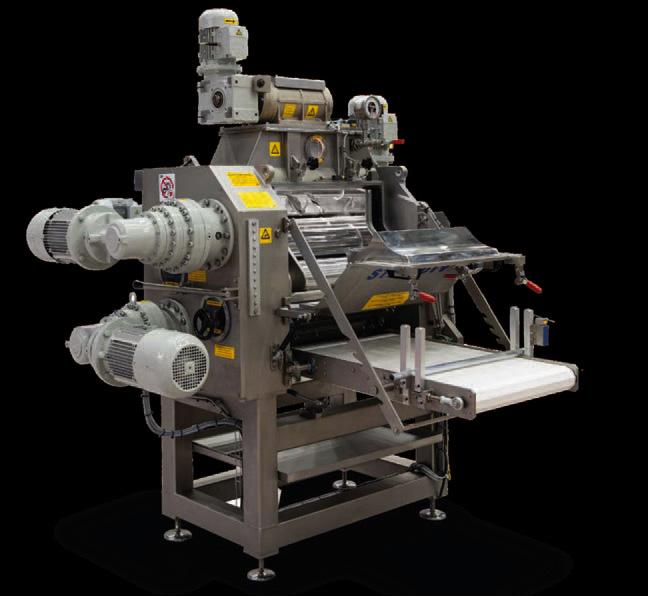
It is a robust, well-constructed machine with a high output capacity. It was designed for intensive use and heavy duty and is ideal for producing long sheeted pasta (tagliatelle), filled pasta, and for working with hard and compact doughs. Designed
Test di compressione campioni freschi: i campioni con vuoto hanno una tenacità e una estensibilità significativamente maggiori rispetto ai campioni laminati in modo tradizionale ( grafico 4 ). Il grado di vuoto durante la gramolatura e la laminazione può essere modulato, cambiando le caratteristiche della pasta a seconda delle esigenze di produzione. I risultati ottenuti sono molto significativi e documentano le importanti caratteristiche delle sfogliatrici della serie Total Vacuum TV, peculiarità che hanno portato molti pastifici in Italia e all’estero a preferirle a quelle tradizionali. Totale affidabilità, eccellenza del risultato ed estrema facilità di pulizia sono gli elementi in comune tra le due tipologie della gamma. La sfogliatrice a vuoto totale STF TV HD (Heavy Duty), è una realtà ormai consolidata, già installata da tempo in diversi ed importanti pastifici in Italia e all’estero, top della gamma da un punto di vista costruttivo e di qualità del prodotto.
È una macchina robusta, ben strutturata, con alta capacità di output. È stata progettata per un utilizzo intensivo e carichi gravosi ed è l’ideale sia per la produzione di paste lunghe da sfoglie
Post-lamination cooked pasta sheets: the vacuum increases brightness and the yellow index, while the red index is lower/Sfoglia post-laminazione cotta: il vuoto incrementa la luminosità e l’indice di giallo, l’indice di rosso è inferiore
CHART 2 GRAFICO 2
Post-lamination sheet STDC vs post-lamination sheet TVC
L* (lightness/luminosità) a* (red index/indice di rosso) b* (yellow index/indice di giallo)
The perception of the human eye - results of ΔE values/La percezione dell’occhio umano - risultati dei valori di ΔE
Fresh pasta sheets samples: the colors are “strongly different”/Campioni sfoglia pasta fresca: i colori sono “fortemente differenti”
Cooked pasta sheets samples: there is a “noticeable” color variation/Campioni sfoglia pasta cotta: esiste una variazione di colore “distinguibile”
Sample/Campione
Pre-lamination sheet TVF (vs STDF) FRESH:
Sfoglia pre-laminazione TVF (vs STDF) FRESCA:
Post-lamination sheet TVF (vs STDF) FRESH:
Sfoglia post-laminazione TVF (vs STDF) FRESCA:
Post-lamination sheet TVC (vs STDC) COOKED:
Sfoglia post-laminazione TVC (vs STDC) COTTA:
for large-scale industrial use, it allows for automatic production without the constant presence of an operator. Dough sheet width from 540 to 1200 mm.
Fresh production capacity: from about 200 to about 1,400 kg/h. For softer sheets used for filled pasta production, the dough sheeter VSF applies vacuum to a kneading system and is particularly suitable for the production of tortellini or ravioli. Like the STF TV HD, the VSF dough sheeter also allows automatic production without the constant presence of an operator. Excellent cost-performance ratio. Dough width from 250 to 540 mm. Fresh production capacity: 250-500 kg/h.
CUSTOMIZED SOLUTIONS FOR ALL NEEDS
ΔE/ΔE
(tagliatelle), paste ripiene e per la lavorazione di impasti duri e compatti. Specifica per la grande industria, consente di produrre in automatico senza la presenza fissa di un operatore. Larghezza sfoglia da 540 a 1200 mm. Capacità produttiva al fresco: da circa 200 a circa 1.400 kg/h. Per sfoglie più morbide destinate alle paste ripiene, la sfogliatrice VSF applica il sottovuoto ad un sistema di gramolazione ed è particolarmente adatta alla produzione di tortellini o ravioli.
Come la STF TV HD, anche la sfogliatrice VSF consente di produrre in automatico senza la presenza fissa di un operatore. Ottimo rapporto costi-prestazioni. Larghezza sfoglia da 250 a 540 mm. Capacità produttiva al fresco: 250-500 kg/h.
SOLUZIONI PERSONALIZZATE PER TUTTE LE ESIGENZE
CONSISTENCY ANALYSIS / ANALISI DELLA CONSISTENZA
Compression test on fresh samples/Test di compressione campioni freschi
The laminated sample with vacuum has a significantly higher force at rupture and extensibility compared to the laminated sample/Campione laminato con vuoto ha una siniicatia maggiore force at rupture e estensibility rispetto al campione laminato in modo tradizionale (in accordance with Carini et al., 2009/in accordo con Carini et al., 2009)
Macaroni Crates
The macaroni crate may look rustic at first glance, but upon deeper examination, one could see it was filled with purpose. An essential ingredient of any crate was to deliver a specific amount of finished product to the customer in good condition at an economical cost. To accomplish this, a company must have a well-
Macaroni Crates
La Macaroni crate può sembrare rustica a prima vista, ma a un esame più approfondito si capisce che era progettata con uno scopo preciso. Un elemento essenziale di qualsiasi Macaroni crate era consegnare al cliente una quantità specifica di prodotto finito in buone condizioni e a un costo economico. Per raggiungere questo obiettivo, un’azienda doveva disporre di una cassa ben progettata e costruita, facile da assemblare. Inoltre, per distinguersi davvero in un mercato affollato, un’azienda doveva avere una cassa memorabile, capace di attirare i clienti verso il prodotto. Le aziende ottenevano questo risultato attraverso la grafica, una componente fondamentale per costruire un marchio e fidelizzare i clienti.
All’inizio del XX secolo, l’imballaggio era una delle fasi più laboriose in una fabbrica di maccheroni. Le fabbriche ricevevano casse di legno in pezzi prefabbricati e non assemblati, raggruppati in ciò che veniva chiamato “shooks”. Gli operai assemblavano le casse a mano oppure utilizzando una “box machine”, una macchina in grado di piantare automaticamente più chiodi nella cassa contemporaneamente1
La pasta veniva generalmente confezionata in pacchi individuali da una libbra (circa 450 grammi), di cui
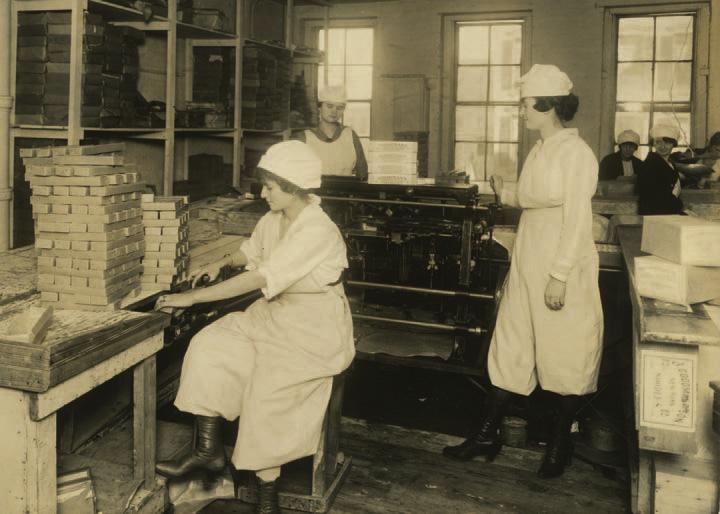
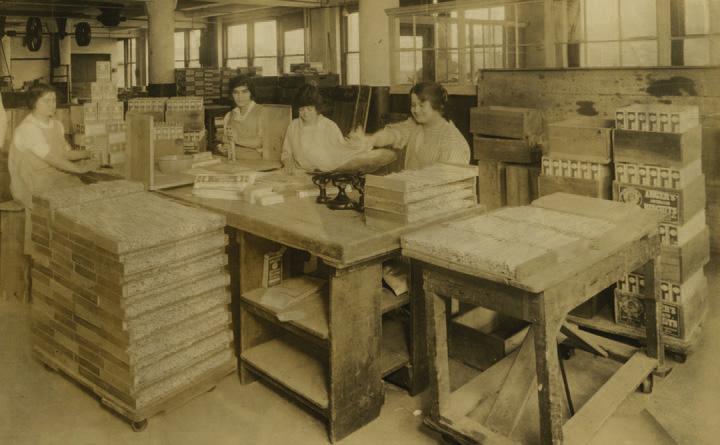
designed and constructed crate that assembles easily. Additionally, to really stand out in a crowded field, a company must have a crate that was memorable and could attract customers to the product. Companies accomplished this through graphics, a key part to building a brand and earning repeat customers. In the early 20 th century, packaging was one of the more labor-intensive parts of a macaroni factory. Factories received wooden crates in unassembled, pre-made pieces, bundled in what were called “shooks”. Workers would assemble the crates by hand or using a “box machine” that could drive several nails into the box automatically at one time. 1 Pasta was typically wrapped in one-pound individual packages, about two dozen
Wrapping noodles in individual packages before placing them in crates, circa 19155/Confezionamento dei noodles in pacchetti individuali prima di inserirli nelle casse, circa 19155
Weighing and wrapping macaroni in individual packages before placing them in crates, circa 19155/Pesatura e confezionamento dei maccheroni in pacchetti individuali prima di inserirli nelle casse, circa 19155
circa due dozzine venivano collocate in una Macaroni crate.
Un articolo del 1918 pubblicato sulla rivista Barrel and Box affermava che il legno era abbondante e che l’offerta era più che sufficiente a soddisfare le esigenze dei produttori di casse2. Il legno presentava numerosi vantaggi per questo utilizzo: era resistente, durevole e rigido, capace di sostenere il carico e proteggere il contenuto dai danni, inclusi gli urti dovuti a manipolazioni brusche.3 I commercianti potevano impilare facilmente le casse di legno per lo stoccaggio e il trasporto. Esse offrivano
of which were placed in a crate.
A 1918 article in Barrel and Box magazine stated wood was plentiful and there was more than
anche una certa protezione contro l’acqua e l’umidità, e i tipi di legno più adatti non trasmettevano odori, macchie o sapori indesiderati.4
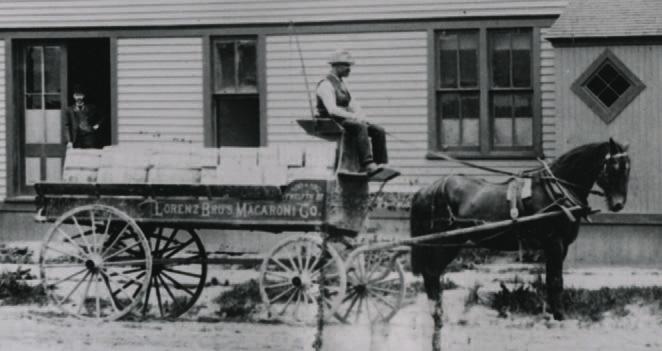
Delivery carriage full of macaroni crates and “hogsheads” (barrels), circa 1890s6/Carro di consegna pieno di casse di maccheroni e “hogshead” (barili), circa anni 18906
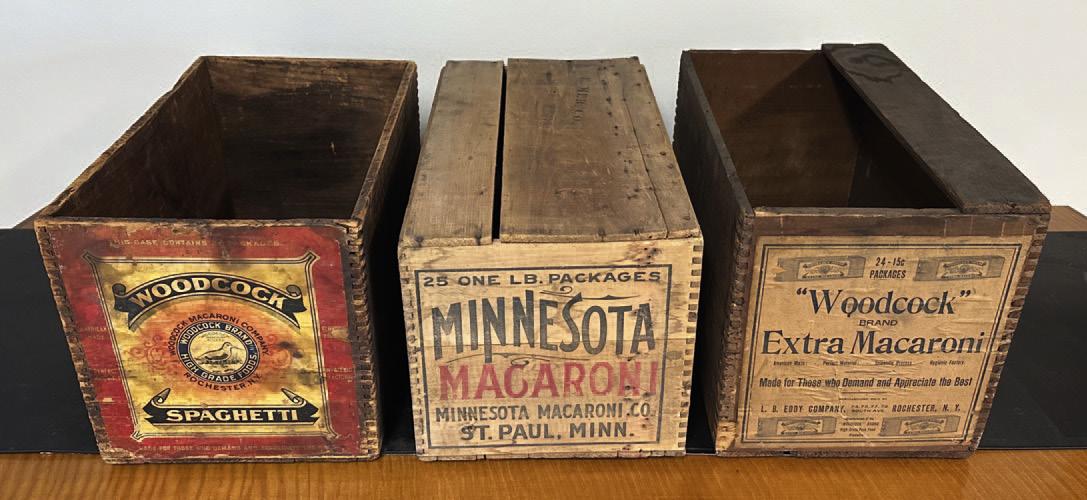
Macaroni crates for 24 or 25 packages7/Macaroni crates per 24 o 25 confezioni7
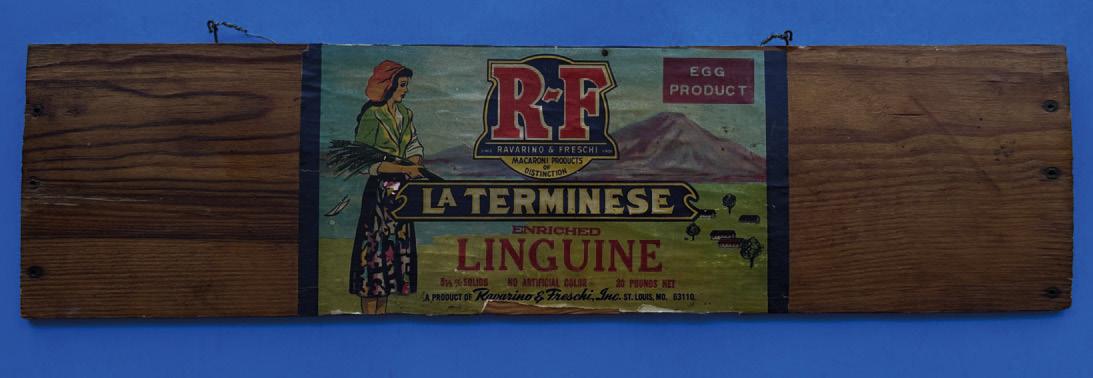
Side of crate with Ravarino & Freschi (R&F) label attached7/Lato della cassa con etichetta Ravarino & Freschi (R&F)7
enough supply to meet the requirements of crate makers. 2 Wood had many advantages for use in making crates. It was strong, durable and stiff, able to support the load and protect the contents from damage, including impacts from rough handling. 3 Merchants could easily stack wood crates for storage and transport. Wood crates provided some protection against water and dampness, and the right types of wood did not impart any objectionable odors, stains or tastes. 4 They also provided a good medium for marking and labeling with graphics. Additionally, after serving their purpose, wood crates could be reused for storing items, or broken down for use as firewood. However, pasta makers were quickly changing to cardboard as the material of choice for packaging as this option became more economical. Wood crates had all but disappeared by 1925 as corrugated cardboard become mainstream, which provided added strength and protection over non-corrugated versions. Companies that used distinctive labels on wood crates gained a marketing edge through better brand recognition. Many labels were truly “eyegrabbing” works of art, creating what was now considered an art genre in the United States known as “Crate Label Art”, also known as “Orange Crate Art” due to the prominence of these artistic labels on fruit crates. The labels were lithographs with vibrant colors and stunning graphics. Pasta companies used them as a way to standout and draw customers to their products. Art done well evoked an emotional response, such as a memory of the old country for Italian immigrants, who were the main target audience for pasta products at the time. Another
Inoltre, costituivano un ottimo supporto per marcature ed etichette grafiche. Dopo aver svolto la loro funzione, le casse potevano essere riutilizzate per conservare oggetti oppure smontate e usate come legna da ardere. Tuttavia, i produttori di pasta passarono rapidamente al cartone come materiale preferito per l’imballaggio, man mano che questa opzione diventava più economica. Entro il 1925, le casse di legno erano quasi scomparse, sostituite dal cartone ondulato, che offriva maggiore resistenza e protezione rispetto a quello non ondulato. Le aziende che utilizzavano etichette distintive
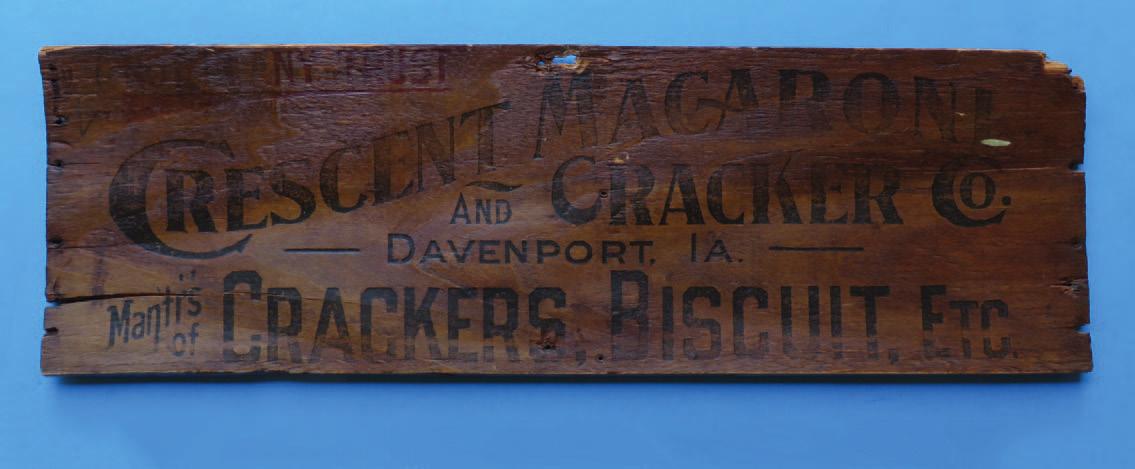
Side of crate from Crescent Macaroni and Cracker Company7/Lato della cassa della Crescent Macaroni and Cracker Company7
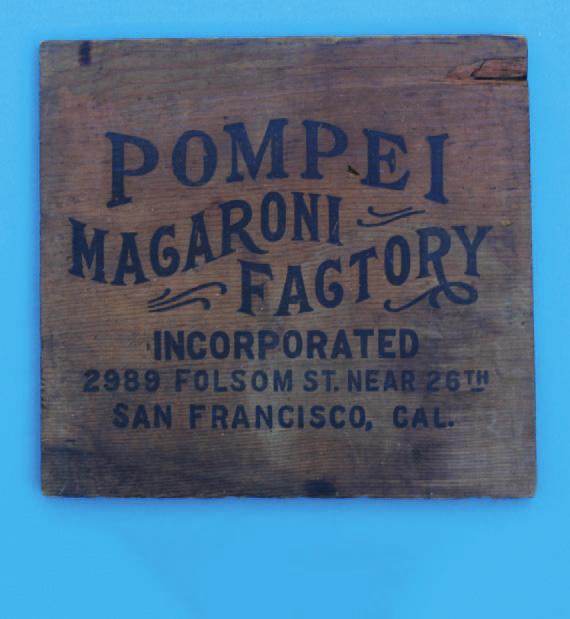
End of crate from Pompei Macaroni Factory7/Estremità della cassa della Pompei Macaroni Factory7
Example of Crate Label Art, circa 19238/Esempio di Crate Label Art, circa 19238
powerful visual for immigrants was the Statue of Liberty, which symbolized the hope and freedom of America. Indeed, although wood crates were from a bygone era, the legacy of them still burns bright in the Crate Label Art left behind for people to enjoy to this day.
Notes - Note
1. "Morgan Machine Co." (Rochester, New York) advertisement, Barrel and Box, Chicago, Illinois, volume XXIII, number 9 (November 1918), pages 30–31. Featured several types of "box machines".
2. "Certain Angles of Package Problem", Barrel and Box, volume XXIII, number 9 (November 1918), page 42.
3. Ibid.
sulle casse di legno ottennero un vantaggio di marketing grazie a un migliore riconoscimento del marchio. Molte etichette erano vere e proprie opere d’arte “accattivanti”, dando origine a quello che negli Stati Uniti è oggi considerato un genere artistico noto come “Crate Label Art”, chiamato anche “Orange Crate Art” per la diffusione di queste etichette artistiche sulle casse di frutta. Le etichette erano litografie dai colori vivaci e dalle grafiche sorprendenti. Le aziende produttrici di pasta le utilizzavano per distinguersi e attirare i clienti. Un’arte ben realizzata suscitava una risposta emotiva, come il ricordo del paese d’origine per gli immigrati italiani, che all’epoca costituivano il principale pubblico dei prodotti a base di pasta. Un altro potente simbolo visivo per gli immigrati era la Statua della Libertà, che rappresentava la speranza e la libertà dell’America. In effetti, anche se le casse di legno appartengono ormai a un’epoca passata, la loro eredità continua a vivere nell’arte delle etichette che ancora oggi possiamo ammirare.
Leonard J. DeFrancisci Pasta Institute of Technology
Chief Historian, National Pasta Association
Capo storico della National Pasta Association
4. Ibid.
5. Photo by/Foto di Brown Brothers, New York, digitized by/Digitalizzata da Leonard J. DeFrancisci
6. Digitized by/Digitalizzata da Leonard J. DeFrancisci
7. Photo by/Foto di Leonard J. DeFrancisci
8. Traung Label Co., Los Angeles, California, digitized by/Digitalizzata da Leonard J. DeFrancisci