

![]()


South Africa’s energy security demands speed and certainty. The Energy One Stop Shop (EOSS), supported by BUSA, is designed to cut through bureaucratic complexities, giving you coordinated information on the permitting process and facilitating approvals.
The Energy One Stop Shop (EOSS) serves several critical functions in the renewable energy sector:
• Facilitating Authorisation: Acts as the centralised conduit or interface between renewable energy developers/Independent Power Producers (IPPs) and the relevant competent authorisation authorities.
• Streamlining Processes: Aims to signi cantly reduce administrative challenges developers face during the permitting and authorisation process.
• Expediting Timelines: Works to shorten timeframes for obtaining renewable energy project authorisations by fast-tracking the process and proactively removing bureaucratic blockages.
Visit our website to register your project, check regulatory requirements, and access our full suite of tools.
www.energyoss.gov.za


The MAN XHD TGS 33.520 is purpose built for the realities of mining and quarry operations. Whether operating as a high output production vehicle or hauling bulk commodities over long distances, the TGS 33.520 delivers unwavering reliability.
Driven by the new D26 efficiency engine delivering 2600 Nm, the truck is equipped for maximum productivity with wider steer tyres for enhanced stability on uneven terrain, long range double fuel tanks, and heavy duty hypoid axles designed for demanding, continuous workloads. Built strong. Built smart. Built for your mine.


Functions effectively in challenging environments due to the wide range of features and technologies it incorporates.

Steinmüller Africa is a B-BBEE level 1 contributor.
Built-in Visual
Add-Ons: UT, Surveying,
LiDAR-based Stabilisation
Live Situational Awareness
Location-Tagged Data
Collision-Resilient
Confined Space Access
GPS-Denied Flights
4K Camera (Built-In)


Providing clean and renewable energy sources within South Africa and abroad, and improve the quality of infrastructure through the technological advancements of engineering.


• Power transmission
• Power distribution
• System control
• Substation design
• Protection system design and Commissioning
• Network analysis
• Transmission lines
• High, medium and low voltage electrification
• High, medium and low voltage reticulation
• Power factor correction design and installation
• Specialized cable installation, testing, fault finding and repairs
• Maintenance work on High Voltage and Medium Voltage equipment
• Emergency HV,MV and LV assistance and repairs
• Authorized switching, isolation, and earthing
• Residential installations and repairs
• Solar Renewable energy design, installation, and testing
We also offer a range of Site Maintenance Services. Contact us today and start a reliable partnership with trusted professionals in engineering.
Contact 082 534 2121
Email adk@rpbservices.co.za
Head Office 131 The Paddock, Woodmead, Sandton
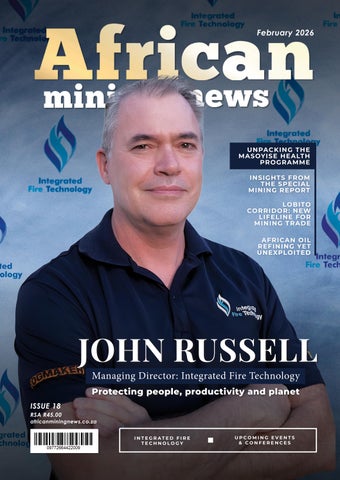
In an industry where risk is inherent, downtime is costly and safety is non-negotiable, Integrated Fire Technology has positioned itself as a trusted specialist at the intersection of safety technology, compliance and operational reliability. “At the heart of everything we do is reliability,” says John Russell, managing director.


Did you know Bell Equipment’s range of Articulated Dump Trucks and Motor Graders are designed by South African engineers and locally manufactured in Richards Bay, KwaZulu-Natal?


As a homegrown, South African family company, we understand the critical importance of growing local business, contributing to our local economy and creating employment for South African people.
Ashley Bell, Group CEO


Tel: +27 (0)11 928 9700
Did you know our B40E ADT moves more tonnes using less fuel?


WITH LOCAL CONTENT OF OVER 70% , THEY CREATE SIGNIFICANT JOB OPPORTUNITIES AT BELL AND THE OVER 1 000 SOUTH AFRICAN SUPPLIERS FEEDING INTO THE BELL FACTORY DAILY. PERHAPS MORE IMPORTANTLY FOR CUSTOMERS, THESE MACHINES COMPETE GLOBALLY AND ARE WORLD CLASS FROM A PERFORMANCE, ERGONOMICS, DURABILITY, AND QUALITY PERSPECTIVE.
E-mail: sales@bellequipment.com www.bellequipment.com

34 OUTLOOK
From critical minerals and green energy integration to new regulatory regimes and logistics upgrades, 2026 marks a decisive turning point for Africa’s mining future
40 ECONOMICS
How geopolitics, technology, workforce shifts and ESG pressures are redefining competitiveness across the continent’s mineral sector
48 REGULATORY
Angola’s Digital Cadastre ushers in a new era of transparent, investorready mining regulation
54 SUSTAINABILITY/ESG
Southern Africa’s ESG year in review: Momentum, markets and the hard work ahead
60 CLEAN ENERGY
Geothermal energy has huge potential to generate clean power— including from used oil and gas wells
66 CRITICAL MINERALS
A new Zambian geological guide reveals vast reserves of cobalt, lithium, graphite and other strategic minerals—positioning the country as a key supplier for the world’s clean energy transition


72 OIL
African refining: A promising yet unexploited investment opportunity
78 GAS
How Nigeria’s Decade of Gas, expanding pipeline networks and LNG megaprojects are positioning natural gas as the engine of continental energy security, industrialisation and long-term economic growth
82 TRANSPORT
How the Lobito Corridor will unlock a new lifeline for southern Africa’s mining trade
88 TECHNOLOGY
The role of big data and analytics in modern mining
92 WATER
How Namibia and South Africa can turn an appetite for desalinated water into energy and mineral security, without draining coastal ecosystems or local communities
98 WOMEN
Top South African businesswomen in the mining and energy industries, advocating for female empowerment, gender equality and mentorship
102 SOCIAL DEVELOPMENT
How a cobalt mining town in the DRC is reclaiming childhood and rebuilding hope
110 HEALTH
How the Masoyise Health Programme Strategy is ensuring mines are not just productive but places where every worker can thrive—physically, mentally and socially
114 SAFETY
Why mining safety demands a shift from compliance to information ecology to achieve zero harm goals


For us it’s no problem.


From large stones to the smallest grains: Bulk solids come in all types, shapes and sizes, but choosing the right measurement technology is surprisingly easy. With our level and pressure sensors, you can effortlessly keep an eye on all your important process values – and still have time to crack the really hard rocks.
Everything is possible. With VEGA


Southern Africa’s mining sector has always been about more than what lies beneath the ground. It’s about people, infrastructure, skills, capital, policy—and, increasingly, the quality of collaboration between all of these moving parts.
In an era defined by energy transition pressures, capital constraints, infrastructure bottlenecks and rising community expectations, no single company, government or supplier can build a resilient mining value chain alone.
The future of mining in the region depends on partnerships that stretch beyond traditional transactional relationships. Producers need to work more closely with equipment suppliers, logistics providers, power developers, financiers, research institutions and host communities to unlock shared value. Governments, in turn, must collaborate with industry to align policy, permitting and infrastructure development with long-term national and regional priorities.
When these pieces move in isolation, the value chain fragments. When they move together, the entire system becomes stronger, more competitive and more investable.
This is particularly true as southern Africa positions itself as a supplier of critical minerals for global decarbonisation. From exploration to beneficiation, energy supply to water security, the scale and complexity of the challenge demands co-ordinated action. Partnerships can reduce risk, accelerate project timelines, enable technology transfer and ensure benefits are more broadly distributed—helping mining retain its social licence to operate.
This is where platforms such as Investing in African Mining Indaba play a vital role. Beyond deal-making, Mining Indaba creates a rare convening space where miners, governments, investors, service providers and development institutions can engage as equals. Conversations that begin in conference halls often translate into joint ventures, public-private partnerships, infrastructure corridors and cross-border initiatives that strengthen the entire value chain.
This year’s theme, “Stronger together: Progress through partnerships”, is more than a slogan. It’s a recognition that collaboration is no longer optional—it is the industry’s most strategic asset.
If southern African mining is to grow sustainably, competitively and inclusively, it will be built not by individual players but by partnerships that understand that shared progress is the only progress that lasts.

mining news
PUBLISHER: Donovan Abrahams
MANAGING EDITOR: Tania Griffin
DESIGN: Erin Esau
EDITORIAL SOURCES: TheConversation.com, African Energy Chamber, African Development Bank, Merel van der Lei, Gaby Paton-Thomas
STAFF WRITER: Matthew van Schalkwyk
IMAGES: iStockPhoto, WIkimedia Commons
PROJECT MANAGER: Viwe Ncapai
ADVERTISING EXECUTIVES: Viwe Ncapai, Lunga Ziwele, James Stone, Brian Mckelvie
ONLINE CO-ORDINATOR: Tania Griffin
CLIENT LIAISON: Majdah Rogers
ACCOUNTS: Benita Abrahams, Bianca Alfos
HUMAN RESOURCES MANAGER: Colin Samuels
PRINTER: Novus Print
DISTRIBUTION: www.africanminingnews.co.za, www.issuu.com
DIRECTORS: Donovan Abrahams, Colin Samuels
PUBLISHED BY: Aveng Media

Boland Bank Building, 5th Floor 18 Lower Burg Street Cape Town, 8000

Tel: 021 418 3090
Fax: 021 418 3064
Email: reception@avengmedia.co.za
Website: www.avengmedia.co.za
DISCLAIMER:
© 2026 African Mining News magazine is published by Aveng Media (Pty) Ltd. The Publisher and Editor are not responsible for any unsolicited material. All information correct at time of print.


Rub shoulders and conduct business with the high-flyers in the African mining industry
Investing in African Mining Indaba 2026
9 to 12 February
Cape Town International Convention Centre, South Africa miningindaba.com
Mining Indaba 2026 is your gateway to the most powerful connections in the African mining industry. Whether you’re building partnerships, exploring new opportunities or getting ahead of market and policy shifts, this is where it happens. With the continent’s most influential mining companies, governments and global investors all under one roof, Mining Indaba is where conversations turn into deals, and ideas become action.
2026 Conference
3 & 4 March
Indaba Hotel, Spa & Conference Centre, Johannesburg, South Africa www.saimm.co.za
Despite recent achievements in the field, tailings dam failures persist— signalling there is still much work to be done and lessons to learn. As we look to the future, the 2026 Tailings Conference will ask: Where to now? What opportunities lie ahead? What residual risks need addressing? How can we further reduce, reclaim or reuse tailings? How can we accelerate the adoption of new technologies and set a new benchmark for the industry? Explore these critical questions and engage in meaningful discussions with key role-players in the tailings industry.
Africa Energy Indaba 2026
3 to 5 March
Cape Town International Convention Centre, South Africa africaenergyindaba.com
The continent’s flagship event dedicated to the energy sector. Through the conference, side events, exhibition
and networking forums, delegates exchange knowledge and collaborate on solutions driving sustainable growth. As a world-class platform for innovation and partnership, the event unites CEOs, ministers, investors and experts to share insights and shape Africa’s energy future.
Africa Gas Forum
5 March
Cape Town International Convention Centre, South Africa africaenergyindaba.com
Aligned as an official side event to the Africa Energy Indaba, this forum serves as a crucial platform for industry leaders to discuss and contribute to the continent’s growing energy sector. The event addresses country-specific opportunities and regional challenges, covering exploration, licensing, gas transition, tax changes, infrastructure and security.
Zambia International Mining & Energy Conference 2026
25 & 26 March
Garden Court Hotel, Kitwe, Zambia zimeczambia.com
ZIMEC remains dedicated to providing the audience with the latest information on developments within the mining and energy sectors, highlighting new opportunities and providing a platform for public and private sector players to network. The 13th edition will be held under the theme: “Promoting responsible investment and partnerships to sustainably grow Zambia’s Mining and Energy sectors”.
Congress
14 to 17 April
DoubleTree by Hilton Cape Town, South Africa
www.fpsonetwork.com/events-fpsoafrica-congress
Organised by the FPSO Network—the world’s longest established community for floating production systems— this congress is the continent’s most influential gathering dedicated to floating production, storage and offloading vessels (FPSOs). It brings together national and international oil companies, FPSO operators, financiers, technology providers among others— creating a platform to shape offshore industry, drive innovation and unlock FPSO opportunities across Africa.
Mozambique Mining and Energy Conference and Exhibition 2026
6 & 7 May
Joaquim Chissano International Conference Centre, Maputo, Mozambique mmec-moz.com
MMEC is the country’s most established premier platform for mining, oil & gas and energy. The theme of the 12th edition is, “Mozambique: Open for Business – Unlocking Natural Resources for Industrialisation, Diversification and Inclusive Growth”. The event aims to deepen collaboration among policymakers, state-owned enterprises and private sector leaders.


In an industry where risk is inherent, downtime is costly and safety is non-negotiable, Integrated Fire Technology (IFT) has positioned itself as a trusted specialist at the intersection of safety technology, compliance and operational reliability. From mobile mining equipment operating deep underground to fixed fire suppression solutions protecting surface infrastructure, IFT’s offering has evolved into a comprehensive, end-to-end fire protection ecosys-


tem tailored to the realities of African mining. With a growing footprint across southern, central, East and West Africa, IFT has earned its reputation by delivering globally certified fire detection and suppression systems that perform in the harshest conditions. Its product and service offering spans mobile and fixed applications across mining, forestry, harbour operations and heavy industry: sectors where fire incidents can result in catastrophic asset loss, prolonged production stoppages and serious safety consequences.
“At the heart of everything we do is reliability,” says John Russell, managing director of IFT. “Each fire prevention system we design and install must meet the specific requirements of the customer and adhere to required global standards, while delivering the highest possible level of certainty.”
Mining remains a cornerstone of IFT’s business. The company’s deep engagement with the sector reflects both regulatory momentum and heightened awareness around risk management, driven by insurance requirements and high-profile fire incidents.
“It’s one of the industries that adheres to the requirements to put fire suppression on
both their mining equipment and, more recently, on fixed applications,” Russell explains. “That’s been driven by very high-profile fire incidents, as well as increased insistence by insurance companies that high-risk assets be protected.”
The shift is particularly evident in conveyor belt systems, electrical cabinets, transformers, gensets (generator sets) and diesel storage areas: assets that were historically underprotected, but are now recognised as critical fire risks. “Whereas before, global players would have taken this approach from the onset, there’s now been a large drive to retrofit fire suppression on these high-risk items,” says Russell. “The mining segment is, firstly and by large, an important segment for us.”
This dual focus on mobile and fixed fire protection has defined IFT’s evolution over the past several years.
Expanding beyond mobile fire suppression
IFT is widely recognised for its strength in mobile fire suppression—particularly on heavy-duty mining machinery and yellow equipment. However, the company’s strategic expansion into fixed fire suppression applications has significantly broadened its value proposition.
“As we’ve expanded our footprint and our customer base, we’ve focused on fire applications outside of the mobile space, which we term as fixed fire,” Russell notes. “Our expanded product and solution offering over the last two years has been in this area.”
This has included the introduction of aerosol-based solutions such as AF-X for electrical cabinets, as well as gas suppression and fixed-system installations across processing plants and infrastructure. These technologies are designed for early detection and rapid suppression in enclosed or high-risk environments, where conventional methods may be ineffective or environmentally problematic.
One of IFT’s strongest differentiators is its emphasis on certification and compliance. In mining environments, where equipment operates continuously under extreme vibration, dust and temperature fluctuations, certifications are not optional—they are essential.
Fogmaker—IFT’s premium solution for mobile equipment—has secured FM Approvals Standard 5970:2022 for fire suppression systems on heavy-duty mobile equipment, a globally recognised benchmark that tests systems for fire performance, vibration resistance and environmental durability. In addition, the company holds SPCR 199 certification: a Swedish third-party standard for fire suppression in engine compartments of heavy vehicles.
“These certifications confirm Fogmaker’s efficacy and reliability for use in the mining industry,” says Russell. “Fogmaker International in Sweden is very proactive in ensuring systems are designed and certified globally to ensure the system is accepted by mining houses with operations from the Americas to Australia.”
For mining houses and insurers alike, this provides confidence that installed systems will perform as intended, even under the most demanding operating conditions. “These standards are a key component for customers


and end users, who have found comfort in the fact that our systems meet these stringent global requirements,” Russell adds.
As global regulations tighten around environmentally harmful fire suppression chemicals, Fogmaker and IFT have taken a proactive stance on sustainability. The fire industry has historically relied on fluorinated compounds (PFAS, see sidebar), particularly in foams and suppressants—substances now facing bans in multiple jurisdictions.
“So as an environmentally conscious organisation, we have introduced our ECO 1 suppressant into the market last year,” sales manager Dave Coates explains. “The new suppressant has been tested and certified to meet the stringent requirements in the industry.”
Coates notes the transition is already well underway. “Integrated Fire Technology has been rolling out Fogmaker’s new environmentally friendly suppressant, ECO 1, from early 2025. This suppressant is 100% fluorine-free (PFAS-free). All new Fogmaker installations are pre-charged with ECO 1, and there is a retrofit programme underway for existing customers.”
For mining companies under increasing ESG (environmental, social & governance) scrutiny, this shift offers both compliance and reputational benefits.
Regional growth and on-the-ground suppor t
IFT’s expansion strategy is firmly rooted in proximity to customers. In 2017, IFT’s Zambian company was established and the office opened in Solwezi in the North-Western Province of the country. This office supports the growing customer base operating on Kanshanshi, Kalumbila and Lumwana mines in the area.
“In South Africa, we opened branch offices in Steelpoort and Durban during 2025 – and with our expan-


sion in the Rustenburg and Brits area, we intend to open branches there this year to support our key customers in these critical areas,” Russell says.
This expansion aligns closely with Africa’s continued investment in energy transition minerals such as copper, nickel, cobalt and lithium: commodities that are driving new mine developments across the continent.
Durban and the forestry legacy
Regional manager Shantelle Alberts highlights IFT’s growing KwaZulu-Natal operations, anchored by the new Durban branch established at the end of 2025.
“For over 10 years, we’ve had a strong footprint in the forestry sector across KwaZulu-Natal, the Western Cape and the Eastern Cape,” she says. “We are now expanding our offering with a key focus on strengthening our fixed fire suppression systems.”
The expansion includes team growth to ensure fast response times and dedicated local support—a critical factor in high-risk industries.
As battery energy storage systems become more common across mining and industrial sites, IFT is responding with specialised solutions for lithium-ion fire risks.
“Lithium-ion battery fire risk stems from their high energy density and flammable electrolytes, leading to thermal runaway,” notes Coates. “This can cause toxic gas release, overheating and potential explosions.”
IFT’s aerosol-based suppression systems manufactured by AF-X offer an effective alternative. “They are completely non-toxic, safe for humans and do not reduce oxygen levels during deployment,” Coates explains. “Neither do they require room integrity testing, resulting in a lower total cost of ownership.”
In a move that underscores its systems-based thinking, IFT has recently added automated lubrication solutions to its portfolio through a partnership with SKF Lincoln.
“Integrated Fire Technology has commenced supply and installation of automatic lubrication systems for all types of mobile machinery,” Coates says. “Automated greasing delivers reduced wear and tear, fewer unplanned breakdowns, and increased operational safety.”

As global regulations tighten around environmentally harmful fire suppression chemicals, IFT has taken a proactive stance on sustainability.

The strategy is to install lubrication systems alongside fire suppression, sharing components to lower total cost of ownership while enhancing reliability.
Engineering confidence into the future
As mining operations become larger, more mechanised and more scrutinised, the role of fire protection continues to evolve. For IFT, the future lies in integrated, certified and environmentally responsible solutions that protect people, assets and productivity.
“We’re protecting machines worth millions of rands and ensuring limited downtime for these assets,” Russell concludes. “That’s what ultimately matters to our customers.”
By combining global technology with local expertise and African reach, Integrated Fire Technology is not only responding to risk—it is redefining how fire protection is engineered into modern mining operations.
For further information, visit ift.africa
Matthew van Schalkwyk
As global legislation tightens around fluorinated compounds used in fire suppression, Integrated Fire Technology has taken a proactive lead with the rollout of ECO 1, a next-generation environmentally responsible suppressant.
Why ECO 1 matters:
• 100% fluorine-free (PFAS-free).
• Fully certified to international mining standards.
• Reduced environmental and longterm liability risk.
• Supplied as standard on all new Fogmaker installations.
• Retrofit programme underway for existing customers.
PFAS (per- and polyfluoroalkyl substances) are synthetic chemicals commonly used in firefighting foams and industrial applications. Known as ‘forever chemicals’, they do not break down in the environment, can contaminate water sources and pose long-term environmental and health risks—prompting global moves toward PFAS-free fire suppression alternatives

As the Fourth Industrial Revolution (Industry 4.0) reshapes southern Africa’s mining sector, Cranefield College—led by pioneering academic and engineer Professor Pieter Steyn—is preparing a new generation of leaders capable of driving organisational transformation, digital integration and sustainable competitiveness across the region.
A LEADERSHIP INSTITUTION BUILT FOR THE NEW INDUSTRIAL ERA
Southern Africa’s mining industry stands on the brink of an economic reordering. From the boom in critical minerals to rising ESG (environmental, social & governance) expectations and the pressures of decarbonisation, mining companies must navigate unprecedented technological and organisational change. Many of the constraints facing the sector—declining ore grades, complex stakeholder environments, infrastructure bottlenecks and skills shortages—are compounded by rapid digitalisation driven by Industry 4.0.
Two decades before these pressures intensified, Cranefield College had already begun developing an academic model that fused leadership, value chain management, project and programme governance, organisational behaviour and emerging technologies. Founded in 1998 by Prof. Steyn, Cranefield positioned itself early as a specialist institution dedicated to improving leadership, management and governance excellence across the private and public sectors. Its approach has centred on equipping working professionals— many of them engineers, project managers and executives—with the ability to immediately apply new learning in their organisational contexts.
From the outset, Prof. Steyn emphasised that education must be job-relevant. Employers, he argued, invest in skills development only when their
staff are able to translate classroom principles into measurable productivity and performance improvement. Cranefield has therefore structured its programmes to ensure practical application is embedded in every lecture, assignment and case analysis.
To understand Cranefield College’s trajectory, one must look to its founder. Prof. Steyn is not only a veteran academic but also a registered professional engineer with a long record in senior consulting and public sector transformation work. His early experience includes major infrastructure projects such as the First National Bank and Standard Bank head offices, Mandela Square and multiple commercial developments across South Africa, and later, his leadership roles in government transformation programmes.
He was also one of the first academics in South Africa to pioneer project management as a postgraduate university subject in the late 1970s. Over the years, he has served on global research bodies such as the International Project Management Association, contributed to international operations management handbooks, and published extensively in leading journals. His longstanding network of academic collaborators—from Europe to India, the United Kingdom, the United States and the Middle East—forms the intellectual backbone of Cranefield’s internationally benchmarked curriculum.
Practical application is embedded in every lecture, assignment and case analysis


This global academic footprint is not merely symbolic. Quarterly knowledge exchanges with international partners ensure Cranefield’s programmes remain responsive to shifts in management science, digital transformation and organisational design. The college’s annual Knowledge Management Festival, now in its 22nd year, brings together global academics, industry leaders, alumni and postgraduate researchers to test new ideas and present research aligned with Industry 4.0 realities. Cranefield students and alumni attend these events free of charge, ensuring lifelong learning beyond formal qualifications.
MINING LEADERSHIP THROUGH INTEGRATED, DIGITAL-AGE
Mining houses across South Africa, Namibia, Botswana, Zambia and Zimbabwe are wrestling with systemic constraints that go far beyond the technical domain. Reports such as PwC’s SA Mine 2025 (tinyurl.com/3hwcp6uk) and BDO’s Annual Mining Report 2025 (tinyurl.com/2t3y8698) outline the industry’s pressing organisational weaknesses: ranging from siloed structures and ageing assets to supply chain disruptions and misaligned stakeholder management. Many mines are still managed through vertical hierarchies unsuited to the digital era, with fragmented operational departments and limited cross-functional collaboration.
Cranefield addresses these challenges by teaching leaders how to design and manage Industry 4.0 virtual dynamic learning organisations (VDLOs): structures built around agile, horizontal value chains rather than outdated silos. The concept is grounded in the understanding that competitiveness
in the Fourth Industrial Revolution no longer depends on optimising individual functions, but on integrating entire organisational ecosystems, including suppliers, communities, logistics partners and regulators.
Cranefield’s VDLO framework is supported by the college’s Balanced Scorecard–Programme Management (BS-PM) system, which trains professionals to oversee interconnected processes, manage transformation portfolios and embed continuous improvement. For mining organisations transitioning into digital, data-rich operations—whether through automation, advanced analytics, robotics or remote operations—this approach provides a powerful foundation for organisational redesign.
FROM CLASSROOM TO MINE SITE: PRACTICAL LEARNING THAT DELIVERS IMMEDIATE IMPACT
The college’s teaching method is as modern as the concepts it teaches. Cranefield uses a technology-enhanced distance learning model designed around the needs of working professionals. Live virtual classes are held once every three weeks, with recordings available for later review. Case studies, group discussions and problem-solving sessions allow geographically dispersed students—from Johannesburg to Windhoek to Perth—to apply concepts directly to their work environments.
Cranefield’s learning platforms, including Blackboard Learn and Collaborate, enable interactive lectures, seamless access to course material, and paperless assignment submission.
Importantly, students typically view their studies not as an academic detour but as an extension of their professional roles. Steyn notes that many employers sponsor employees precisely because the three-week lecture cycle and applied learning model minimise downtime while maximising return on learning investment.
The proof of this approach is visible in the career progression of Cranefield alumni. Many now hold senior positions in mining, government, financial services and multinational engineering environments. One is a member of South Africa’s Government of National Unity Cabinet. Another, Dr Martin Tjipita—now an ex -
CRANEFIELD COLLEGE


ecutive at Rössing Uranium in Namibia—completed PhD research aligned with Cranefield’s Industry 4.0 methodologies, identifying systemic gaps in uranium mine asset lifecycle management and offering digitally driven solutions that have shaped ongoing transformation efforts at mine level.
LEADERSHIP: THE CORE OF CRANEFIELD’S RELEVANCE TO MINING
What sets Cranefield apart is its holistic view of organisational performance. Mining is an inherently complex value chain: Exploration, project development, operations, logistics, marketing, community relations and environmental stewardship all intersect. Failures at any point— whether delayed capital projects, poor stakeholder engagement, procurement inefficiencies or order fulfilment breakdowns—can undermine competitiveness.
Cranefield’s curriculum reflects the interconnected nature of these processes. Rather than treating project management, supply chains, digital transformation and leadership as isolated disciplines, the college teaches them as interdependent components of an integrated organisational system. This philosophy aligns closely with the structural and operational reforms urgently needed across Africa’s mining sector, particularly in environments where regulatory pressure, infrastructure challenges and ESG
Cranefield has structured its programmes to ensure practical application is embedded in every lecture, assignment and case analysis. “

expectations are tightening simultaneously.
Mining executives across the region increasingly identify infrastructural asset management as a critical capability gap. Ageing equipment fleets, electricity instability, water scarcity, illegal mining impacts and global supply chain tensions have placed immense strain on asset reliability and operational continuity. Companies are also under pressure to improve environmental compliance, reduce carbon emissions and strengthen their ESG reporting frameworks.
Cranefield’s Infrastructural Asset Management module (see sidebar), also offered as a CPD short course, addresses these challenges directly. The module aligns with ISO 55000 and teaches asset lifecycle strategy, risk-based decision-making, predictive maintenance, information management systems and cross-functional logistics co-ordination. Students learn to evaluate the economic, envi -
ronmental and human implications of asset decisions: skills that translate immediately into improved safety, reduced downtime and enhanced ESG performance at mine sites.
With an average student age of 38, Cranefield’s programmes appeal strongly to mid-career professionals seeking to advance into senior management roles. These learners are often production managers, project leads, engineers, supply chain specialists or supervisors ready to move into organisational leadership. For mining employers, sponsoring such staff is a strategic investment: Cranefield-trained leaders are taught to think systemically, collaborate across functions and design transformation initiatives grounded in real organisational data. Whether students choose a postgraduate diploma, the MCom or a CPD-certified short course, the emphasis remains on building competence that is immediately deployable within their work environments.
The principal reflects on leadership, Industry 4.0 and Cranefield’s impact on the mining industry:
You’ve spent decades shaping leadership and management education. What motivated you to establish Cranefield College?
Steyn: When I founded Cranefield in 1998, industry after industry—especially engineering and mining—was struggling with leadership and organisational challenges that traditional academic programmes weren’t addressing. Companies needed practical, value chain–oriented management education. Our mission has always been to bridge that gap by providing qualifications that deliver immediate workplace impact.
Cranefield is known for its international collaborations. Why is this so important?
Steyn: Leadership and programme management are global disciplines. Through partnerships with institutions and academics in Europe, India,

the UK and the US, we continuously benchmark our programmes internationally. This global engagement enriches our content and ensures our graduates can operate confidently across borders.
What do mining companies misunderstand most about Industry 4.0?
Steyn: Many still view Industry 4.0 as a technological add-on—automation, artificial intelligence, robotics—rather than an organisational transformation. The real challenge is redesigning structures and processes to allow these technologies to deliver value. Without leadership transformation, digital transformation stalls. That’s where Cranefield’s VDLO and programme management systems become essential.
What keeps your academic work exciting?
Steyn: Seeing graduates— whether in mining houses, government or multinationals—use Cranefield’s teachings to transform organisations. That, and the continuous innovation that comes from collaborating with global academic partners.

Infrastructural Asset Management (NQF 8)
Mining operations depend on asset reliability, lifecycle optimisation and predictive maintenance. This module provides a comprehensive grounding in ISO 55000–aligned asset strategy, information systems, risk management and decision frameworks. It is particularly relevant to mines dealing with ageing equipment, energy instability, safety compliance and ESG expectations. (Also offered as a CPD short course.)
Digital Transformation Management (NQF 9)
Focused on Industry 4.0 technologies and organisational change, this module teaches leaders how to integrate digital systems—into mine value chains. It emphasises structural redesign, leadership behaviour and cross-functional collaboration needed to achieve digital maturity.
Managing Virtual Dynamic Learning Organisations (NQF 9)
Mining operations often struggle with silos and fragmented communication. This module provides a framework for designing agile, horizontal, collaborative organisations where information flows freely and teams operate as integrated networks rather than isolated departments. The VDLO approach is central to Cranefield’s leadership philosophy.
Strategic Manufacturing Management (NQF 8)
For mines engaged in processing and beneficiation, this module strengthens understanding of production flow, system efficiency, quality management and operational optimisation. It is especially valuable for organisations seeking to modernise processing plants or transition to predictive and data-driven operational control.
Leadership for the mines of the future
As southern Africa’s mining industry navigates rapid technological shifts, rising ESG expectations and deep organisational complexity, the need for agile, systems-thinking leadership has never been greater. Cranefield College’s approach—rooted in value chain integration, digital readiness and transformational leadership—offers exactly the kind of capability uplift the sector now requires.
Under Prof. Pieter Steyn’s guidance, the institution continues to shape mining leaders who can bridge silos, drive innovation and build learning cultures able to withstand the pressures of the Fourth Industrial Revolution.
In his own words, a reminder that transformation is no longer optional but essential: “In today’s economic environment, organisations that fail to move away from bureaucratic practices toward a learning culture, strongly supported by transformational leaders, will not survive.”
For further information, visit www.cranefield.ac.za.

From the outset, Prof. Steyn emphasised that education must be jobrelevant
Leader in manufacturing of respiratory and filtering products
Hazmat Protective Systems (Hazmat), a subsidiary of Armscor under the leadership of Advocate Solomzi Mbada, is a major manufacturer and supplier of purpose-designed quality respiratory and filtering products to the commercial and defence industries.
Activated carbon is impregnated in Hazmat's purpose-designed advanced carbon impregnation plant for use in a comprehensive range of commercial and military respirator filter canisters and cartridges. Hazmat is one of only a few companies capable of impregnating activated carbon in respiratory and filtering products, and is a sole manufacturer of canisters in South Africa.


With a 30 year history of excellence, Hazmat is one of only a few companies capable of impregnating activated carbon for use in their comprehensive range of commercial and military respirator filter canisters and cartridges. As an ISO 9001:2015 certified facility, Hazmat is customer-centric, with processes in place to ensure that clients consistently receive high quality safe products at competitive prices.
Hazmat utilises in-house testing facilities and internal technical support from Protechnik Laboratories (an Armscor subsidiary). All canister and cartridge batches are compliance tested on site against the applicable South African Bureau of Standards (SABS) respiratory specifications.
Hazmat offers a wide range of services to various industries, including mining, pharmaceutical and health services, agriculture, pulp and paper, textiles, beverages, engineering; and chemical, including petrochemical commodities, pesticide chemicals, organic/inorganic chemicals, explosives, paint adhesives, sealants and cleaning chemicals, amongst others.
Hazmat’s product range consists of the following cat egories:
• Full Face Mask Respirators
• Double and single half mask
• Respirator filter canisters
• Respirator filter cartridges


From critical minerals and green energy integration to new regulatory regimes and logistics upgrades, 2026 marks a decisive turning point for Africa’s mining future

Africa enters 2026 with unprecedented strategic relevance in the global minerals landscape. As demand for copper, cobalt, lithium, manganese, platinum group metals (PGMs) and graphite accelerates under the clean energy transition, the continent is rapidly shifting from a repository of raw materials to an emerging hub for integrated value chains, green industrialisation and energy-secure mining.
The African Special Mining Report 2025 (by Energy Capital & Power and global accounting, audit and advisory network Moore Global) outlines a sector undergoing profound reinvention: shaped by geopolitical realignments, ESG-linked investment, new regulatory architectures and the race to build resilient mineral supply corridors. Together, these forces position 2026 as a pivotal year for African mining.
1. Critical minerals: Africa moves up the battery value chain
Africa’s mineral endowment remains unmatched: 30% of the world’s known reserves and an outsized share of the minerals essential for electric vehicle batteries, grid technologies and clean-tech manufacturing.
Countries such as the Democratic Republic of the Congo (70% of global cobalt supply), Zimbabwe (lithium), South Africa (PGMs), Gabon (manganese) and Mozambique (graphite) are
attracting intensified attention from original equipment manufacturers and governments seeking to diversify away from China’s dominance in refining and processing.
Offtake agreements signed in 2023–25—including Glencore-Premier African Minerals (Zimbabwe), Marula-Fujax (South Africa) and Black Rock Mining’s Tanzanian graphite supply—signal aggressive positioning by buyers ahead of looming European Union and United States supply chain regulations. The report emphasises that these deals increasingly demand beneficiation, logistics investment and transparent supply chains, signalling that African countries are gaining leverage in negotiations.
By 2026, the continent’s competitive edge will lie not in extraction alone but in localisation. Gigafactory plans in Morocco, cobalt refining in Zambia and battery precursor initiatives under the DRC–Zambia–US partnership reflect a decisive shift toward industrialisation. If scaled, such downstream hubs could capture 12% of global mineral revenues and significantly expand gross domestic product.
2. Copper’s resurgence redefines the Copperbelt
Copper demand is projected to grow more than 40% by 2040, yet supply bottlenecks outside Africa have positioned Zambia and the DRC as cen-
tral to global energy system build-out. China retains first-mover advantage through multi-decade offtake agreements and integrated supply chains, but Western governments are now competing aggressively through new infrastructure investment and security partnerships.
The Lobito Corridor—upgraded and re-concessioned to a US/EU–backed consortium—is expected to be transformative in 2026, reducing transit times by over 60% and offering the first credible Atlantic export alternative to China-dominated routes. This infrastructure shift, combined with high-grade deposits at Kamoa-Kakula and new developments such as Zambia’s Mingomba project, positions the

The report positions ESG not as compliance but as a strategic value driver reshaping investment flows.
Copperbelt for continued production growth.
For 2026, the key trend will be convergence: rising Chinese consolidation on one side, and Western-backed transparent supply chains on the other—pushing African governments to strengthen governance, contract stability and local participation.
3. Logistics corridors: The continent’s make-or-break constraint
While mineral demand surges, logistics remains Africa’s most persistent bottleneck. The report highlights
Trusted technology. Proven performance. Africa-wide support.
CONTACT US
Michel Harel
Export Sales Lead (External)
WhatsApp / Mobile: +27 82 744 8774
michel.harel@esabsa.co.za

• Full and comprehensive welding and cutting solutions
• Gas equipment and accessories
• Guaranteed availability of wear parts and spare parts for all equipment and accessories
• echnical support for all welding automation solutions
• Project-specific application solutions tailored to customer needs
Kegan Maduraimuthu
Export CSC (Head Office)
WhatsApp / Mobile: +27 72 241 2483
kegan.maduraimuthu@esabsa.co.za
• Technical support for equipment setup post-purchase (Available across Sub-Saharan Africa)
• Ongoing technical support and welder training
• (Available across Sub-Saharan Africa)
• Welding Procedure Specification (WPS) write-up and welder qualification
• Facilitation of welder qualification training in:

For every process and application:
• Stick (MMA)
• MIG / TIG
• Gouging
• Multi-Process Systems
• Automation Solutions
• Engine Drives
• Laser Welding Welding Solutions
Cutting Solutions
• Gas Cutting
• Plasma Cutting
• Handheld & Automated Systems
Personal Protective Equipment (PPE)
• Welding-specific PPE
• Quality and safety approved

A comprehensive network of authorised ESAB distributors and resellers, supported by ESAB South Africa (Pty) Ltd, operating in:
Botswana | Eswatini | DR Congo | Kenya | Mozambique | Namibia | Tanzania | Zambia | Zimbabwe

chronic congestion, outdated rail networks, customs delays and fragmented infrastructure as major impediments to competitiveness. Strategic corridors—Lobito, North-South, Central, Beira/Nacala and the Trans-Sahelian—require accelerated investment to meet 2026 export pressures.
For mining companies, reliability is becoming a core ESG (environmental, social & governance) and commercial metric. Investors no longer consider logistics peripheral; in 2026, a mine’s viability will increasingly hinge on corridor integration, port efficiency and resilience to climate and security risks.
4. ESG and green mining become core to profitability
The report positions ESG not as compliance but as a strategic value driver reshaping investment flows. Private equity is returning to African mining—but with strict ESG conditions, a preference for critical minerals and increasing use of green bonds, carbon-linked financing and blended capital.
A continental shift toward renewable-powered mining is under way. Solar, wind and hydro projects across Mali, the DRC, Zambia, Morocco and South Africa are cutting fuel reliance, lowering operating costs and enabling mines to meet global emissions standards. Examples include B2Gold’s 52MW solar plant at Fekola, First Quantum’s 430MW renewables project in Zambia, and Tronox’s 400MW programme in South Africa.
Meanwhile, carbon markets are emerging as a high-value frontier, with methane abatement, reforestation and renewable energy offsets
enabling up to $6 billion–$9 billion in potential annual revenue for the sector. Yet, integrity concerns and community share deficits remain significant risks. By 2026, transparency and third-party verification will be non-negotiable for credit-generating mines.
5. Policy shifts: From licensing reform to resource sovereignty
African governments are entering a new regulatory era, streamlining licensing systems while pushing harder for local value capture. Zambia’s Integrated Mining Information System, Angola’s Digital Cadastre and Rwanda’s Inkomane Digital platform exemplify a drive toward transparency to attract investment in 2026.
Simultaneously, beneficiation mandates are expanding across Zimbabwe, Namibia and the DRC. The trend is not outright nationalisation, but recalibrated sovereignty—with rising state equity, stricter export controls and stronger community expectations. Contract stability remains largely intact, but investors must adjust models to incorporate downstream infrastructure, shared value mechanisms and political risk insurance.
6. The capital crunch for juniors
Early-stage exploration companies face the harshest conditions entering 2026. Global risk aversion, geopolitical uncertainty and tightening financing flows have pushed juniors toward joint ventures with majors, development finance institution–backed blended finance, and alternative capital models.
This consolidation will likely con-
tinue, favouring projects aligned with critical minerals, transparent governance and ESG-ready operational plans.
Conclusion: 2026 as a defining year
Africa’s mining sector stands at a rare inflection point. In 2026, success will hinge on three imperatives: logistics modernisation; ESG-centred value creation; and policy environments that balance investor certainty with national development goals.
The continent has the resources, the geopolitical relevance and growing industrial ambition—and with co-ordinated strategy, it can shift from global supplier to global architect of mineral value chains.
The African Special Mining Report 2025 can be downloaded at tinyurl. com/24984mex

By 2026, the continent’s competitive edge will lie not in extraction alone but in localisation.


How geopolitics, technology, workforce shifts and ESG pressures are redefining competitiveness across the continent’s mineral sector

Together, these forces are not simply influencing strategy; they are reshaping the economics of mining itself
Africa’s mining industry stands at the centre of a profound realignment of global economic, geopolitical and sustainability priorities. As the African Mining Trends Report 2025 highlights, mining companies across the continent are operating in a landscape defined by uncertainty, competition for critical minerals, supply chain fragmentation, rising ESG (environmental, social & governance) scrutiny and rapidly evolving expectations of leadership and workforce capability.
Together, these forces are not simply influencing strategy; they are reshaping the economics of mining itself, determining where capital flows, how value is created and what it takes to remain competitive in a high-risk, high-opportunity environment.
1. Geopolitical realignment and the new economics of critical minerals
The first major macrotrend—geopolitical realignment—is fundamentally altering the economics of mineral demand, trade routes and investment flows. As detailed in the report, governments in the United States, European Union and China are accelerating policies to secure cobalt, lithium, copper, graphite and rare earths. Chi-
na’s Belt and Road Initiative (tinyurl. com/48867jr7) alone represents US$21.7 billion in African investment, with up to half aimed at critical minerals projects.
At the same time, African governments are asserting resource nationalism. Guinea’s cancellation of 46 mining licences in 2025 (tinyurl. com/mwz43zrs) underscores the rising emphasis on local beneficition and state oversight. Export bans and domestic processing mandates in Namibia, Zimbabwe and others are shifting project economics by linking mineral extraction to national development priorities.
For miners, these shifts mean that capital planning, trade flows and stakeholder engagement now hinge on navigating volatile regulatory and geopolitical environments. Agility— both in project sequencing and supply chain planning—has become a strategic asset rather than a technical consideration.
2. Safety plateaus and the rising cost of operational risk
Despite technological advancement, safety performance across the global sector has begun to stagnate. International Council on Mining and Metals member companies recorded 36 fatalities in 2023, up from 33 the previous year (tinyurl.com/mr7hvfxd).
The report stresses that the industry continues to see severe incidents among contractors and during periods of organisational change—often exacerbated by unevenly understood or inconsistently applied safety systems.
For mineral producers in Africa, where complex, labour-intensive operations intersect with infrastructure constraints, the economic implications are significant. High-potential incidents disrupt production, increase insurance and compliance costs and can lead to community conflict or regulatory sanctions.
The report argues that reducing serious injury and fatality exposure— through critical control management, contractor integration and leadership visibility—is now a core requirement for cost control and investor confidence.
3. The talent imperative and longterm productivity
A third macrotrend shaping the sector is talent scarcity. As the report outlines, African mining faces acute skills shortages, rising labour costs, digital literacy gaps and an ageing workforce. Contractors—essential to production—remain statistically twice as likely to suffer accidents in African mines.
Economically, these workforce gaps erode productivity, weaken safety performance and increase turnover costs. They also threaten the continent’s competitiveness in a mining world trending toward automation, AI-driven processes and increasingly complex regulatory demands.
Mining companies are now expected to build inclusive, psychologically safe, digitally capable workforces that can adapt to rapid organisational and technological change. Diversity and inclusion are evolving from social goals into economic levers that


strengthen decision-making, innovation and workforce stability.
4. The challenge of operationalising technology at scale Digitalisation continues to hold vast economic promise across the mining value chain: from automation and remote operations to predictive analytics and real-time risk monitoring. But as the report stresses, technology is not the constraint. Organisational readiness is.
Poor integration between digital tools, safety systems and operational governance often results in stalled adoption, inconsistent behaviours and new unintended risks. Without leadership alignment, updated risk controls and large-scale workforce upskilling, even the most advanced digital investments may fail to deliver cost, productivity or safety gains.
For mining houses increasingly pressured to do more with less— particularly in ore bodies with declining grades—digital readiness has become a key determinant of future competitiveness.
5. Structural supply chain disruption and the end of ‘just-in-time’ mining
Mining companies across Africa are experiencing unprecedented supply chain volatility. As the report notes, Red Sea shipping disruptions, export restrictions in Asia and tariff escalations in the US are driving up input costs and destabilising planning cycles. The US tariff of 25% on steel and aluminium, effective March 2025 (tinyurl. com/37dfjeav), has significantly increased equipment costs. Meanwhile, China’s new licensing rules for seven rare earths (tinyurl.com/ ysy79u9r) have disrupted downstream electric vehicle and defence supply chains.
Climate shocks compound these pressures. Drought-related hydropower disruptions in southern Africa and flood-damaged transport routes in Mozambique and Madagascar demonstrate the fragility of African mining infrastructure un-

der climate change.
The economic result is clear: Operational resilience now hinges on supply chain resilience. Inventory strategies, sourcing diversification, logistical redundancy and regional infrastructure partnerships are becoming central components of mining competitiveness.
6. ESG as a determinant of capital access and licence to operate
The sixth and increasingly dominant trend is the shift from ESG compliance to ESG competitiveness. According to the report, more than 80% of institutional investors now consider ESG performance a decisive factor in long-term capital allocation.
Governments are tying permits, incentives and expansion approvals to sustainability outcomes, while communities demand transparent value-sharing and responsible environmental stewardship. At the same time, artisanal and smallscale mining has become a material factor in social licence strategy, particularly where informal mining co-exists with formal concessions.
For mining companies, the economic imperative is to embed ESG into core governance, investment decisions and operational key performance indicators. Those that treat ESG as a parallel reporting exercise risk losing competitiveness, facing permit delays or being ex-

cluded from increasingly stringent global supply chains.
The bottom line
The six macrotrends outlined in the African Mining Trends Report 2025 point to a mining industry undergoing systemic transformation: one in which execution, adaptability and leadership discipline define economic success as much as geology or capital.
Africa’s mining companies must now operate as resilient, integrated systems capable of aligning safety, governance, digital innovation, workforce capability and ESG delivery under volatile conditions. Those that can make this shift will not only secure competitiveness in global markets but position themselves as leaders in the future of sustainable mineral development.
Download the report at tinyurl.com/33vrnhxj


Angola’s Digital Cadastre ushers in a new era of transparent, investor-ready mining regulation

Last year, during the Angola International Mining Conference (AIMC, angolaimc. com) in Luanda, the country’s government unveiled a landmark reform: the Angola Digital Mining Cadastre. More than a technical upgrade, the Cadastre represents a conscious pivot toward transparency, regulatory efficiency and investor-friendliness— signalling that Angola aims to recast itself as a competitive destination for mining investment in the 21st-century global commodities market.
The Angolan Digital Mining Cadastre is a cloud-based platform that consolidates previously disparate and paper-heavy processes into a unified digital system. From licence applications and registrations to demarcation, inspection, geological and spatial data, the Cadastre brings everything onto a single portal managed under the oversight of the Ministry of Mineral Resources, Petroleum & Gas.
The software platform, known as Landfolio eSuite, was developed with partners OceanGeo and Spatial Dimension.
At AIMC 2025—attended by more than 1 000 delegates including government officials, mining operators and foreign investors—the Cadastre was formally launched. In his keynote address, Minister of Mineral Resources, Petroleum & Gas Diamantino Pedro Azevedo described the system as a “landmark step in modernising our mining sector” and vital in “ensuring Angola remains a competitive
player on the global stage.”
According to the published rollout plan, the digital platform integrates not only licensing and permit processes but also traceability and certification mechanisms—a critical consideration especially for export-oriented commodities such as diamonds.
One of the key promises of the new Cadastre is increased transparency. By creating an auditable, public record of all seismic, geological, licensing and compliance data, Angola seeks to reduce the discretionary power historically held by different agencies—a perennial concern for investors and a barrier to timely approvals.
As noted by industry observers in coverage by Mining Review Africa, this move is expected to “unlock Angola’s mining potential” by creating a regulatory framework where rights allocation is predictable, legible and fair.
More efficient regulation equates to reduced processing times. In previous years, mining licences in Angola—especially for exploration permits—were often delayed by layers of bureaucracy, sometimes taking 18 to 36 months to clear. According to proponents of the Cadastre, these timelines could now shrink significantly, with some licences being approved in 6 to 12 months.
In doing so, Angola aligns itself with global best practice, and with international transparency efforts such as those advocated by the Extractive Industries Transparency Initiative.
The timing and ambition of the Digital Mining Cadastre coincide with a broader strategy to diversify Angola’s economy. Historically dependent on oil and diamonds, the country is now actively promoting mining of a wider spectrum of minerals including copper, rare earths, gold, iron ore and more.
Indeed, at AIMC, Angola’s first planned underground copper mine—a
From licence applications and registrations to demarcation, inspection, geological and spatial data, the Cadastre brings everything onto a single portal
partnership between Angolan and Chinese interests—was announced. Industry insiders say this new copper venture, and others under discussion, stand to benefit immediately from the improved regulatory clarity and faster approval cycle the Cadastre promises.
Moreover, by embedding traceability and certification capabilities into the Cadastre, Angola signals its intention to support responsible mining practices, and ultimately to add value locally: for example, through processing, beneficiation and possibly downstream manufacturing of minerals rather than purely raw commodity exports.
This has knock-on benefits for employment, local industrial development and reinvestment into communities and infrastructure, making the Cadastre not only a governance reform but a tool for shared economic development.


Angola signals its intention to support responsible mining practices, and ultimately to add value locally
While the Digital Mining Cadastre holds much promise, its success will depend on several variables. Firstly, the technical infrastructure: Internet connectivity, data security, interoperability of multiple datasets (geological, environmental, compliance) across remote and often under-equipped regions.
Implementation will require training, support and possibly phased deployment to ensure all stakeholders—from large international mining houses to smaller domestic operators—can use the system effectively. Institutional buy-in will be equally critical. Transitioning from long-established paper-based procedures to a digital system may meet resistance within agencies accustomed to legacy workflows. Ensuring transparency in decision-making, and avoiding informal practices slipping back under new guises, will require strong oversight – and perhaps, most of all, a genuine political commitment.
Finally, the system must be built to evolve. As mineral exploration intensifies—and as interest grows in critical minerals like rare earths—the Cadastre needs to integrate environmental impact assessments, community consent tracking and compliance monitoring.
Angola’s commitment to sustainable mining and local content development gives cause for optimism; but it remains to be seen how well these ambitions translate into durable practice.
For mining companies and investors in southern Africa—including neighbours such as South Africa, Namibia, Botswana and others—Angola’s Digital Mining Cadastre sets a potential benchmark. A transparent, efficient regulatory system reduces entry barriers, lowers risk and enables better project planning. For those already operating regionally, Angola now emerges as a more predictable and administratively credible destination for new investments.
For downstream stakeholders— refiners, fabrication plants and value-addition players—the new Cadastre may herald a growing supply of minerals, delivered under transparent and traceable regimes. That


could support regional mineral supply chains beyond borders, boost local beneficiation and potentially encourage co-operative regional infrastructure (transport corridors, energy, beneficiation hubs).
Lastly, from a governance perspective, Angola’s reform could inspire similar digital transformations elsewhere: a shift away from ad hoc concessions and opaque processes, toward systems that support accountability, community interests and longterm sustainable development.
The launch of the Angola Digital Mining Cadastre represents a pivotal moment in Angola’s mining history. Far more than a bureaucratic upgrade, it is a bold bid to reposition the country: not merely as a supplier of raw minerals but as a modern, investment-ready mining hub committed to transparency, sustainability and value addition.
If the platform is implemented with technical rigor, institutional integrity and real stakeholder engagement, it could mark the beginning of a new chapter—not only for Angola but for the broader southern African mining landscape.
Now, the promise is on the table; what remains is disciplined execution and committed follow-through.

Safety-ready vehicles and proactive fleet management for zero-downtime mining.
Mining is precision work. Every vehicle, every movement and every shift has to work in perfect rhythm to keep people safe and production on track. Avis Fleet Solutions provides mine-spec bakkies and heavy-duty vehicles that are maintained, monitored and managed to the highest safety standards. We handle everything from procurement to servicing and replacement, so your teams can focus on the work underground and on site. Visit avisfleet.co.za for details.


Responsible mining in southern Africa: 2025 progress and the road to 2026
Last year, the mining sector in the Southern African Development Community (SADC) operated under an increasingly public spotlight. Governments, financiers and communities are no longer content with output and jobs alone; they demand real, measurable progress on environmental stewardship, social benefit and accountable governance.
In 2025, several of the region’s leading miners moved beyond glossy pledges to tangible programmes: cutting emissions where feasible, expanding community education and livelihoods initiatives, and strengthening disclosure.
At the same time, global commodity shifts—falling prices for some precious metals and rising demand for battery- and grid-related minerals—are reshaping strategic priorities.
FROM COMMITMENTS TO DELIVERY: WHAT CHANGED IN 2025
Across South Africa and the wider SADC region, major producers sharpened their sustainability architecture. Anglo American, Sibanye-Stillwater and Harmony, among others, published fresh reporting and rolled out local projects that show a shift from
professionalisation of social investment. Instead of one-off donations, companies are designing multi-year partnerships that target measurable outcomes: early childhood education, vocational training tied to mine-adjacent supply chains, and small enterprise incubation.
Sibanye’s reported initiatives (school Wi-Fi, teacher training and enterprise support) and Anglo’s “thriving communities” programmes are examples of investments that explicitly aim to increase local employability and diversify local economies beyond mining. These programmes also reflect a pragmatic governance shift: Social investment is being tied to measurable key performance indicators and external stakeholder forums.
That said, civil society watchdogs
compliance to integrated sustainability planning.
Anglo’s 2024/25 reporting cycle reiterated its Sustainable Mining Plan pillars, with a renewed focus on “thriving communities” through health, education and livelihoods programmes, and clear public targets for community impact and biodiversity.
Sibanye-Stillwater’s public materials emphasise a four-pillar sustainability approach (Planet, People, Prosperity, Governance) backed by concrete community inputs: skills training, school upgrades and civic infrastructure projects that purportedly reached hundreds of thousands of beneficiaries in recent years. The company also made operational adjustments in 2025 as it navigated weaker palladium markets and restructuring challenges, highlighting a trend: ESG (environmental, social & governance) programmes are increasingly being designed to be resilient to commodity cycles.
Harmony continued to foreground water management and local development in its sustainability framing, updating its sustainable development framework to link operational water stewardship and community health with long-term social licence to operate. That emphasis on resource
remain sceptical. Activist groups and local constituencies continue to demand stronger evidence that benefits accrue equitably, that land and water rights are protected, and that grievance mechanisms actually resolve disputes rather than papering over conflict. In short, community engagement is maturing—but verification and trust building remain unfinished work.
Technological and managerial measures to reduce environmental footprints gathered pace in 2025. Companies are reporting targeted emissions reductions, more rigorous tailings management practices, and pilots for circular-economy approaches—both

stewardship is consistent across the region: water and biodiversity management moved from peripheral reporting items to central operational considerations in 2025.
There are SADC mining companies outside South Africa that are getting closer to being exemplary in responsible mining. But being exemplary implies consistency at scale, transparent accountability, robust environmental and social safeguards, and resilience to external shocks.
First Quantum Minerals Zambia— through its subsidiaries including Kansanshi and Trident mines—and Vulcan International (operator of the Moatize Coal Mine in Mozambique) are perhaps the closest so far. They have measurable, certified practices, public reporting and relatively mature community engagement.
A recurring theme in 2025 was the
to reduce waste and to retain more value locally.
Regional policy signals also intensified: SADC’s strategic planning documents and a nascent regional circular economy strategy are nudging miners and policymakers toward integrated resource management that supports socio-economic development while limiting environmental harm. These policy frameworks, when implemented, will provide important leverage for consistent environmental standards across borders.
In 2025, several of the region’s leading miners moved beyond glossy pledges to tangible programmes

2025 saw a stronger appetite for auditability and credible reporting. Leading firms are aligning disclosure with international frameworks, and local regulators are increasingly signalling a willingness to scrutinise environmental licences, labour practices and benefit-sharing arrangements.
That trend matters: Investors and downstream technology firms (which now source battery minerals) require traceability and verified ESG performance as a precondition for contracts and capital. Companies that fail to provide transparent, independently verifiable data risk losing access to premium markets and capital.
Global commodity dynamics in 2025 altered strategic calculations. Prices for some platinum group metals and palladium have remained volatile after 2022 peaks and subsequent corrections, and that pressure affected company profitability and asset valuations (Sibanye’s impairments being a high-profile example).
At the same time, demand for copper, lithium and other battery-relevant minerals continued to climb as the energy transition accelerated, prompting producers to prioritise deposits that feed electrification and renewable technology supply chains. The upshot: Miners are redeploying capital toward critical minerals while using sustainability credentials as a differentiator in a competitive global market.
What should business leaders and policymakers expect in 2026?
1. A sharper split between legacy and transition metals. Expect capital and policy attention to concentrate on copper, lithium and cobalt projects that can be proved up quickly and mined with decent ESG practices. Projects perceived as high-risk on social or environmental grounds will struggle to attract finance.
2. Tighter reporting expectations and conditional capital. Lenders and offtakers will increasingly condition access to capital on credible, audited ESG performance and community-benefit metrics. Firms that can show independent verification will win lower financing costs and better commercial terms.
3. Regional policy co-ordination. SADC’s policy frameworks for sustainable environment management and circularity provide a platform for harmonised standards; 2026 should see more cross-border initiatives (resource corridors, shared water management projects) that reduce regulatory arbitrage and encourage investment flows.
4. Community expectations will harden. Communities will expect long-term economic diversification plans, not only temporary jobs. Companies that co-design enterprise development and education programmes with local stakeholders will have a clearer social licence to operate.
5. Operational resilience to price swings. Given the volatility of some metal prices, miners will continue to rationalise portfolios, divest non-core or underperforming
assets, and prioritise operational efficiencies that reduce costs without undercutting environmental or safety standards. Recent restructuring moves by major players illustrate this necessary realism.
Responsible mining in SADC is no longer a moral addon; it is a commercial imperative. In 2025, leading companies demonstrated that credible ESG practices, when embedded into core strategy, reduce operational, reputational and financing risk—and open doors to critical markets tied to the energy transition.
The challenge for 2026 will be to translate improved reporting and pilot projects into system-wide practice: enforceable community agreements, verified environmental performance, and capital allocation aligned with the global shift toward electrification.
For regional policymakers and industry leaders, the task is clear: Keep raising the bar on transparency and stakeholder inclusion; align incentives so that sustainable, community-oriented projects attract capital; and support cross-border policy frameworks that lower regulatory uncertainty.
Done well, responsible mining will not only preserve ecosystems and livelihoods—it will also unlock the region’s strategic role in a greener global economy.


Geothermal energy has huge potential to generate clean power— including from used oil and gas wells
Moones Alamooti
Assistant Professor: Energy and Petroleum Engineering
University of North Dakota
How do places like Africa get what they want without erasing progress toward net zero?

As energy use rises and the planet warms, you might have dreamt of an energy source that works 24/7, rain or shine, quietly powering homes, industries and even entire cities without the ups and downs of solar or wind — and with little contribution to climate change.
The promise of new engineering techniques for geothermal energy—heat from the Earth itself—has attracted rising levels of investment to this reliable, low-emission power source that can provide continuous electricity almost anywhere on the planet. That includes ways to harness geothermal energy from idle or abandoned oil and gas wells.
In the first quarter of 2025, North American geothermal installations attracted US$1.7 billion in public funding, compared with $2 billion for all of 2024, which itself was a significant increase from previous years, according to an industry analysis from consulting firm, Wood Mackenzie (tinyurl.com/3ndpdpuh).
As an exploration geophysicist and energy engineer, I have studied geothermal systems’ resource potential and operational trade-offs firsthand. From the investment and technological advances I am seeing, I believe geothermal energy is poised to become a significant contributor to the energy mix around the world, especially when integrated with oth-
er renewable sources. The International Energy Agency (IEA) estimates that, by 2050, geothermal energy could provide as much as 15% of the world’s electricity needs (tinyurl. com/bpadsxmv).
Geothermal energy taps into heat beneath the Earth’s surface to generate electricity or provide direct heating. Unlike solar or wind, it never stops. It runs around the clock, providing consistent, reliable power with closed-loop water systems and few emissions.
Geothermal is capable of providing significant quantities of energy. Fervo Energy’s Cape Station project in Utah (tinyurl.com/4xjn7t97), the world’s largest geothermal power station under construction, is reportedly on track to deliver 100 megawatts of baseload, carbon-free geothermal power by 2026. That is less than the amount of power generated by the average coal plant in the US, but more than the average natural gas plant produces.
And it is becoming economically competitive. By 2035, according to the IEA, technical advances could mean energy from enhanced geothermal systems could cost as little as $50 per megawatt-hour—a price competitive with other renewable sources (tinyurl.com/48mjcsde).
There are several ways to get energy from deep within the Earth:
Hydrothermal systems tap into underground hot water and steam to generate electricity. These resources are concentrated in geologically active areas where heat, water and permeable rock naturally coincide. Internationally, most hydrothermal energy is in Iceland and the Philippines. Some hydrothermal facilities, such as Larderello in Italy (tinyurl. com/382xejhy), have operated for over a century, proving the technology’s long-term viability. Others in New Zealand (tinyurl.com/42e28ura) and the US (tinyurl.com/48wfw8bz) have been running since the late 1950s and early 1960s.
Enhanced geothermal systems effectively create electricity-generating hydrothermal processes just about anywhere on the planet. In places where there is not enough water in the ground or where the rock is too dense to move heat naturally, these installations drill deep holes and inject fluid into the hot rocks, creating new fractures and opening existing ones, much like hydraulic fracturing for oil and gas production.
A system like this uses more than one well. In one, it pumps cold water down, which collects heat from the rocks and then is pumped back up through another well, where the heat drives turbines. In recent years, academic and corporate research has dramatically improved drilling speed and lowered costs.
Ground-source heat pumps do not require drilling holes as deep, but instead take advantage of the fact that the Earth’s temperature is relatively stable just below the surface, even just 1.8m to 2.4m down—and it is hotter hundreds of feet lower.
These systems do not generate electricity, but rather circulate fluid in underground pipes, exchanging heat with the soil, extracting warmth from the ground in winter and transferring warmth to the ground in summer.


infrastructure development company delivering integrated engineering solutions across rail, electrical, telecommunications and rehabilitation infrastructure.
Guided by safety, integrity, innovation and excellence, the company supports clients operating in complex, asset-intensive environments where reliability, safety and long-term performance are critical.
With more than two decades of project delivery experience across the continent, Maziya has built a strong track record in large-scale rail and industrial infrastructure. These capabilities translate seamlessly to the mining sector, as well as to logistics, energy and public infrastructure, where dependable enabling infrastructure underpins operational success.
Mining operations depend on robust systems to move materials, power facilities, maintain communications and meet environmental obligations. Maziya’s expertise in heavy-haul rail, electrical networks and digital communications positions the company as a strategic partner for mining-related infrastructure: from internal logistics and processing connections to regional transport corridors.
The company’s rail capabilities span the full asset lifecycle, including permanent way construction, mechanised maintenance, signalling, electrification and modern communication systems. These services
are well suited to mine haul rail, sidings, branch lines and port connections, where availability, safety and throughput are essential.
Maziya offers an integrated, multidisciplinary capability set across mining, rail and industrial environments. This includes rail construction, maintenance and rehabilitation; mechanised rail plant for efficient permanent way works; electrical transmission lines, substations and reticulation for industrial and remote operations; overhead track equipment and traction power systems; and railway signalling and train control systems, including ETCS Level 2.


The company also delivers advanced digital communication systems such as GSM-R, LTE and future railway mobile communication systems, alongside infrastructure rehabilitation and integrated physical and electronic security solutions for critical assets.
Maziya has delivered complex, safety-critical projects for major public and industrial clients including Transnet Freight Rail, Prasa and Mintek, with work extending into mining environments such as Kumba and Exxaro operations. Supported by a skilled workforce and specialised equipment fleet, the company enables rapid mobilisation, disciplined execution and long-term asset support.
As Africa’s mining and infrastructure sectors evolve, Maziya continues to deliver safe, reliable and future-ready engineering solutions—wherever performance matters most.

The no-carbon approach may not be fully feasible, but a low-carbon approach most certainly is.
These systems are similar but more efficient than air-source heat pumps, sometimes called minisplits, which are becoming widespread across the US for heating and cooling. Geothermal heat pump systems can serve individual homes, commercial buildings and even neighbourhood or business developments.
Direct-use applications also do not generate electricity, but rather use the geothermal heat directly. Farmers heat greenhouses and dry crops; aquaculture facilities maintain optimal water temperatures; industrial operations use the heat to dehydrate food, cure concrete or other energy-intensive processes. Worldwide, these applications now deliver over 100 000MW of thermal capacity.
Some geothermal fluids contain valuable minerals; lithium concentrations in the groundwater of California’s Salton Sea region could potentially supply battery manufacturers (tinyurl.com/3dr46ybe)
Researchers are finding new ways
to use geothermal resources, too. Some are using underground rock formations to store energy as heat when consumer demand is low and use it to produce electricity when demand rises.
Some geothermal power stations can adjust their output to meet demand, rather than running continuously at maximum capacity.
Geothermal sources are also making other renewable-energy projects more effective. Pairing geothermal energy with solar and wind resources and battery storage are increasing the reliability of above-ground renewable power.
And geothermal energy can power clean hydrogen production as well as energy-intensive efforts to physically remove carbon dioxide from the atmosphere, as is happening in Iceland (tinyurl.com/5ywu4s7z).
Geothermal energy is not without technical, environmental and economic hurdles:
Drilling is expensive, and conventional systems need specific geological conditions. Enhanced systems, using hydraulic fracturing, risk causing earthquakes.
Overall emissions are low from geothermal systems, though the systems can release hydrogen sulfide, a corrosive gas that is toxic to humans and can contribute to respiratory irritation. But modern geothermal plants use abatement systems that can capture up to 99.9% of hydrogen sulphide before it enters the atmosphere.
And the systems do use water, though closed-loop systems can minimise consumption.
Building geothermal power stations does require significant investment, but its ability to deliver energy over the long term can offset many of these costs.
Despite its challenges, geothermal energy’s reliability, low emissions and scalability make it a vital complement to solar and wind—and a cornerstone of a stable, low-carbon energy future.


A new geological guide reveals vast reserves of cobalt, lithium, graphite and other strategic minerals— positioning the country as a key supplier for the world’s clean energy transition

Zambia is rapidly emerging as one of the world’s most strategically important destinations for critical minerals exploration and development. Long known for copper, the country is now charting a broader path—one anchored in the minerals that underpin the global shift to clean energy technologies.
The recently published “Critical Minerals Potential of Zambia” guide, jointly produced by the Geological Survey Department (tinyurl. com/2vyy8v7w) and the British Geological Survey (www.bgs.ac.uk), provides the first comprehensive mapping of Zambia’s resources across 11 critical minerals—offering investors and policymakers an unprecedented level of clarity and confidence.
Published as part of a United Kingdom–Zambia collaboration funded by the UK Government’s Foreign, Commonwealth & Development Office, the guide positions Zambia as a future global supplier of key minerals required for electric vehicles (EVs), battery storage, renewables and advanced manufacturing.
“This first edition marks a significant milestone in our nation’s pursuit of sustainable economic development and global collaboration,” said Gerald Mwila, director of the Geological Survey Department. “Zambia stands ready to play a vital role by responsibly developing our critical mineral resources.”
The BGS echoed this confidence: Karen Hanghøj, director of BGS, emphasised that the guide “will help inform policy, attract responsible investment and contribute to the global transition to a sustainable, low-carbon future.”
Copper remains Zambia’s backbone: The country contributes roughly 3% of global supply and is Africa’s second-largest producer after the Democratic Republic of the Congo. Demand is forecast to grow more than 25% by 2040 as electrification accelerates.
The Copperbelt and North-Western Province continue to yield impressive

projects, including First Quantum Minerals’ (FQM) Sentinel mine (tinyurl.com/ycwkh767)—the country’s top producer in 2023—and the high-grade Mingomba project (koboldmetals.com/mingomba), which could become Zambia’s largest underground copper mine.
But copper’s importance is increasingly intertwined with the co-production of other critical minerals: cobalt and nickel, in particular.
Zambia’s cobalt deposits form part of the Central African Copperbelt’s world-class stratiform copper-cobalt systems. While production has declined over the past decade—partly due to reduced copper output—momentum is turning. A landmark development now underway is Africa’s first cobalt sulphate refinery, led by Kobaloni Energy (www.kobaloni.com) and backed by Vision Blue
Copper remains
Zambia’s backbone— the country contributes roughly 3% of global supply
(tinyurl.com/4kueybrp), with planned investment from the Africa Finance Corporation. Once operational, it will be among only a handful of refineries outside China capable of producing battery-grade cobalt sulphate.
This follows growing activity on the mining side, including Terra Metals’ recommissioning of a copper-cobalt leach plant with integrated solar facilities (tinyurl.com/rmmv54d6). Together, these developments position Zambia to command a far more significant share of the battery supply chain.
How Ivan Marè and his team at Westcliff Mining are redefining the industry through innovation, precision and eco-conscious practices

In an industry often defined by tradition, Westcliff Mining has built a reputation for combining deep expertise with forwardthinking innovation. With more than two decades of operational excellence and a team boasting over 150 years of combined experience, the company has become a respected name in mineral processing and mining solutions across Africa and beyond.
At the centre of this growth is director Ivan Marè, whose vision has helped position Westcliff as a trusted partner to mining operations seeking efficient, cost-effective and sustainable plant solutions.
Founded as a mining contractor, Westcliff Mining evolved by learning to think like a miner while refining its plant manufacturing expertise. Today, the company is recognised internationally for its advanced dense medium separation (DMS) washplants and a suite of smart solutions that support the entire mining cycle. From extraction to mineral separation, efficiency, quality and sustainability are embedded in every process.
“Westcliff Mining started out as

a mining contractor, and through this experience we have learnt to think like a miner with a unique understanding of the mineral process,” explains Marè. This practical insight has shaped the company’s approach to plant design, which prioritises cost-effectiveness, energy efficiency and minimal staffing requirements.
Having worked in more than 23 African countries and across a wide range of commodities—including diamonds, gold, iron ore, lithium and coal—the Westcliff team brings a depth of experience few competitors can match.
DMS washplants remain the backbone of the business. These systems offer precise mineral separation while maintaining ecofriendly processes. “DMS technology is the most consistent and cost-effective density recovery method of all the different density recovery methods,” says Marè.
Complementary offerings include gravity concentration plants, CIP and CIL processes, diamond recovery systems and subsurface mineral evaluation solutions—allowing clients to maximise recovery while limiting environmental impact.
Westcliff Mining operates according to four guiding pillars: price, time, quality and environment. Sustainability, Marè notes, is not an add-on but a core business principle. “We have designed and developed strategies to make our plants flexible enough to accommodate more
environmentally friendly power sources. We are constantly looking for new and better ways to help save the environment.”
This approach is evident in the company’s use of smaller tank farms for precious metal recovery, reducing both operational costs and environmental footprints, while plant designs are increasingly adaptable to renewable energy inputs.
Currently, Westcliff is constructing 500tph and 350tph coal DMS washplants in South Africa and designing a 250tph manganese DMS plant in West Africa. Alongside specialist equipment supply, these projects highlight the company’s ability to deliver integrated, largescale solutions.
Looking ahead, Westcliff Mining is well positioned for a mining future defined by sustainability, innovation and efficiency—proving that modern mining success depends as much on responsibility and vision as it does on resource recovery.

Nickel production in Zambia has risen steadily from 2 500 tonnes in 2019 to almost 8 000 tonnes in 2023. This is largely driven by FQM’s Enterprise Nickel Project, which shares processing infrastructure with the Sentinel copper mine and contains more than 430kt of nickel within 40Mt of ore.
With nickel demand projected to grow nearly 70% by 2040, Zambia’s high-quality deposits and established mining expertise give it a competitive advantage in supplying the electric vehicle (EV) battery sector.
Lithium exploration is accelerating across the Choma Belt, one of Zambia’s most prospective new mineral provinces. The Misika Project, led by First Africa Metals (firstafricametals.com/misika), has confirmed high-grade lithium oxide values of up to 10% from pegmatite sampling— grades considered globally significant. ASTER surveys have identified more than 180 pegmatite targets across this zone.
Maamba Collieries (maambaenergy.com) has also secured large-scale lithium exploration licences, while illegal artisanal extraction has prompted calls for faster formalisation. No commercial production has begun yet, but the exploration momentum is strong and growing.
Graphite—critical in lithium-ion battery anodes—is abundant in Zambia’s Eastern and Central provinces, with occurrences in Petauke, Lundazi and Kapiri Mposhi. Historically reported grades reach up to 17% graphitic carbon, with recent studies confirming large to super-jumbo flake graphite at Mvuvye—a specification highly prized for EV batteries and specialty applications.
Although Zambia has no active graphite production, the guide notes a “strong likelihood” that these deposits could support major future
operations, similar to Mozambique’s Balama mine.
Zambia is Africa’s fifth-largest manganese producer, with output rising sharply since 2019. Luapula Province—particularly the Mansa area— hosts extensive high-grade deposits, including Musamu Resources’ Luongo Mine (tinyurl.com/46d47a4v), which contains a 40Mt resource averaging 43% manganese. Production is forecast to reach 1Mt annually by 2027.
ZCCM Investment Holdings also operates Kabundi Resources (tinyurl. com/4tn97p8f), which is expanding manganese ore processing in Serenje. With manganese demand for battery cathodes expected to increase nearly 1500% by 2040, Zambia is extremely well-positioned.
Zambia’s rare earth mineralisation— particularly at Kesya (Southern Province) and Nkombwa Hill (Northern Province)—includes monazite and bastnäsite, with ongoing exploration showing promising grades.
Tin occurrences across the Choma Belt, Northern and Eastern provinces point to strong potential for future hard-rock and placer tin mining, while columbite-tantalite (coltan)
prospects in Kalomo, Choma and Lundazi remain largely unexplored.
A recent discovery of sugilite—a rare purple gemstone—within Luapula Province’s manganese deposits has sparked investor interest. Although at an early stage, government and GSDled research is underway to evaluate its economic potential.
The BGS-GSD guide arrives as Zambia implements its National Critical Minerals Strategy 2024–2028 (tinyurl. com/4b89e59f), which identifies cobalt, copper, lithium, graphite, manganese, nickel, rare earths, coltan, tin, uranium and sugilite as priority minerals for value addition and export diversification.
With global demand for these minerals rising dramatically, Zambia’s well-mapped geology, existing mining expertise and reform-oriented leadership make it one of the most promising critical minerals investment destinations in Africa.
As Mwila noted, the new guide reflects “our commitment to harnessing Zambia’s rich geological endowment to meet the growing global demand for critical minerals”—and to do so in a way that supports both national development and the world’s clean-energy ambitions.
The guide can be downloaded at tinyurl.com/2zp5u3k4
A landmark development now underway is Africa’s first cobalt sulphate refinery, led by Kobaloni Energy and backed by Vision Blue


African refining: A promising yet unexploited investment opportunity

The priority of developing domestic energy sovereignty should be to attract downstream investments to meet domestic demand
In recent years, the African continent has been characterised by the active commissioning of new refining capacities. Despite this, however, there is a problem with the energy infrastructure on the continent, which leads to unavailability of refined products. This unavailability is both a blessing and a curse for the African continent, its people and its quest to make energy poverty history. While insufficient refining capacity creates serious challenges for domestic consumers and industry, it presents an attractive opportunity for foreign investors, many of whom have yet to fully grasp the continent’s unique advantages.
In 2026, the upward trend of hydrocarbon production is expected to remain positive, with the African Energy Chamber’s “The State of African
Energy 2026 Outlook” (tinyurl.com/ bdskv8sw) showing that petroleum production will level at about 11.4 million barrels per day (MMboe/d), rising to about 13.6 MMboe/d by 2030.
An increase in petroleum production should correspond with a rise in refining; however, ongoing capacity constraints continue to impact Africa’s refining market, leading to a reliance on imported petroleum. This impacts countries as they strive to build local industries, create jobs and develop technical expertise in the downstream sector.
Importing refined products costs African countries significantly more than processing crude oil at home, as imports involve added expenses such as shipping, insurance and other costs. With much of the continent’s refining infrastructure either obsolete or idle, there lies a critical investment opportunity for financiers and project developers.
Beyond the current challenge of importing refined products, rapidly growing domestic demand must also be considered, as it could increase Af-
rica’s dependence on external energy supplies. Although Africa is home to 18% of the global population, it consumes less than 5% of the world’s oil products. Sub-Saharan Africa, in particular, has the lowest per capita usage, underscoring the region’s significant potential for future demand growth. The expanding African market, driven by population growth and improving living standards, will provoke an increase in consumption.
Anticipated demand growth offers strong prospects for new refining facilities. Investment in more advanced processing technologies can deliver higher returns for foreign investors while simultaneously meeting Africa’s urgent and growing demand for refined petroleum products.
Market size and resource availability does not necessarily guarantee sufficient refining capacity.
Take the Dangote Petroleum Refinery (www.dangote.com), for example. Even with its massive scale, this refinery will have only a limited effect on reducing Africa’s fast-rising import reliance. The continent will continue to face shortages of gasoline, diesel and jet fuel over the forecast peri-


od. In the short term, the capacity of Dangote refinery (617 000 barrels per day) could partially substitute foreign sources of refined products, but the prioritisation of exports is more attractive for foreign investors, which is why commissioning of new refinery plants does not address fuel accessibility challenges on the ground. However, net imports for gasoline and gasoil will widen over the long term against the backdrop of strong growth in demand and limited additions to refining capacity.
Furthermore, the commissioning of the Dangote Refinery is hugely significant for the Atlantic Basin’s oil trade due to export promotion, but it barely makes a dent in Africa’s growing requirement for imported refined products.
As stated in the African Energy Chamber’s Outlook 2026, gasoil net imports are projected to reach just under 1.8 million bpd by 2050, whereas gasoline net imports are forecast to exceed 1.5 million bpd. Relying on refined imports leaves countries vulnerable to global supply chain disruptions, shipping bottlenecks and sharp price swing risks that become even more severe during times of crisis. Therefore, the priority of developing domestic energy sovereignty should be to attract downstream investments to meet domestic demand.
So, we need to answer the questions: What can attract investors, and what should we do? Foreign investments can be attracted if preferential financing conditions, a stable political environment, confidence in profitability and transparency of the terms of the agreements are provided. When these conditions are partially or fully met, large projects such as the Cabinda Oil Refinery or the Dangote Refinery are born.
Given the scale of refining projects, mobilising external financing is vital. There are several prerequisites to attract investment. Specifically, the availability of crude oil and access to a local domestic market.
But countries need to look beyond

An increase in petroleum production should correspond with a rise in refining; however, ongoing capacity constraints continue to impact Africa’s refining market


this to strengthen regulatory frameworks; leverage public-private partnerships; simplify processes and reduce red tape; demonstrate openness to foreign investors; and be ready to meet companies halfway.
With political stabilisation, the resolution of internal challenges and the establishment of a stable regulatory framework, the African refining market emerges as one of the most undervalued—and therefore potentially highly profitable— investment opportunity for global companies. An able workforce, a well-developed oil production system and growing demand are presented as outstanding incentives to attract investors to the continent.
Strengthening the trust of external shareholders and investors can lead to an explosive development of the African oil refining industry. This can become one of the engines that drives African industrialisation.
Daniil Moskalev
International Fellow
African
Energy Chamber


How Nigeria’s Decade of Gas, expanding pipeline networks and LNG megaprojects are positioning natural gas as the engine of continental energy security, industrialisation and long-term economic growth


At the African Energy Chamber’s Gas Investment Forum (gasinvestmentforum. com) held in October last year in Lagos, board advisory member Dr Grace Orife made a bold declaration: “Gas is not merely a transition fuel; it is the cornerstone of Africa’s industrial renaissance.” She argued that natural gas—properly developed, transported and utilised—could power factories, supply feedstock for fertiliser and petrochemicals, fuel power generation and create jobs across the value chain.
That vision lies at the heart of the trajectory being carved out by Nigeria through a slate of bold projects and policy initiatives, and provides a template for other African nations seeking reliable energy security and industrial growth.
Launched in 2021, the Decade of Gas initiative (decadeofgas.com.ng) commits Nigeria to transform into a gas-powered economy by 2030. The aim: to leverage the country’s vast gas reserves—estimated at over 200 trillion cubic feet (tcf)—by accelerating infrastructure buildout, stimulating domestic gas consumption (power, cooking, transport) and attracting investment through regulatory reforms.
Under this initiative, the government and private sector are working to unlock associated and non-associated gas reserves, reduce flaring and build midstream and downstream capacity: from pipelines to liquefied natural gas (LNG), power plants, fertiliser and petrochemical complexes. As Dr Orife said at the forum, these resources are central to achieving universal energy access and inclusive development across Africa.
Ajaokuta–Kaduna–Kano Natural Gas Pipeline (AKK) & Obiafu–Obrikom–Oben Gas Pipeline (OB3)
Two of the flagship pipeline projects in this gas strategy are AKK (tinyurl. com/2pff2xjh) and OB3. The AKK—part of the broader Trans-Nigeria Gas Pipeline network—will transport gas from Ajaokuta (in the south) through Abuja, Kaduna, up to Kano in the north. Its 40-inch, roughly 614-kilometre length network is designed to deliver gas to northern Nigeria, stimulating industrial growth, enabling power generation and significantly curbing gas flaring in the Niger Delta.
OB3, meanwhile, links southern gas fields to domestic commercial and industrial demand centres, enabling greenfield projects like the Assa North–Ohaji South Gas Project to feed domestic power plants and industries. As of Q2 2025, the pipeline was already partially operational and delivering gas to the national grid.
On the export and global market side, the NLNG Train 7 (tinyurl.com/2zdjsex2) expansion is adding a seventh LNG train at the core LNG facility on Bonny Island. The expansion will increase capacity by around 35%, lifting annual throughput from around 22 million tonnes per annum (mtpa) to 30mtpa.
This expansion underpins Nigeria’s strategy to monetise gas not only for domestic industrialisation but for global LNG markets, strengthening its foreign-exchange earnings, attracting foreign direct investment and signalling its reliability as a supplier.
UTM Offshore’s floating LNG (FLNG) facility
In a landmark move, Nigeria is also embracing offshore and modular LNG infrastructure. UTM Offshore—in partnership with Nigerian National Petroleum Corporation (NNPC) and state authorities—is developing the country’s first indigenous FLNG plant (utmoffshore.com/flng), aimed at converting associated gas (otherwise flared) into commercial LNG for export and domestic use.
The FLNG project represents a paradigm shift: monetising gas that would otherwise be wasted, reducing environmental damage from flaring and unlocking revenue and jobs. As industry sources note, the project is being built to international standards, with engineering studies completed and regulatory licence already issued.
Natural gas and renewables complement each other to form a balanced and resilient energy mix.
State-owned infrastructure is only half the story. Private-sector ventures are proving the critical role of gas in driving actual industrial output and energy access.
The Assa North–Ohaji South project—a joint venture between NNPC Gas Infrastructure Company and Seplat Energy (tinyurl.com/yzef-
fctw)—is a greenfield gas-condensate development. OB3 will supply its output, supporting domestic demand and enabling potential 2.4GW electricity generation capacity.
The Ubeta Gas Development Project (tinyurl.com/mr296cpy), led by NNPC and TotalEnergies, is another example of leveraging natural gas for industrial and domestic supply under the Decade of Gas roadmap.
These projects demonstrate that
the gas value chain—upstream production, midstream transport, downstream utilisation—can deliver concrete industrial growth, energy security and long-term employment.
The strategic ambition goes well beyond gas supply. Gas is being positioned as the feedstock for heavy industrial development. At the Lagos Forum, Dr Orife pointed in particular to three downstream ambitions: the Brass Fertilizer & Petrochemical Co. Project (tinyurl.com/2aeufmse), broader petrochemical buildout and industrial power generation.
The Brass project (in the Niger Delta) is expected to supply fertiliser to Nigerian agriculture, reduce dependence on imports, create jobs and build industrial capacity. The combination of reliable pipeline supply (via AKK/OB3), FLNG supply and export-oriented LNG (via NLNG) creates a diversified and resilient gas-driven industrial base.
Moreover, gas-fired power plants— including planned thermal plants along pipeline corridors—will help close Nigeria’s persistent supply-demand power gap, reliably fuelling industry and supporting urban/economic growth.
Nigeria’s vision does not stop at its borders. The gas roadmap outlined at the forum includes ambitious pipeline and export corridors designed to drive regional industrialisation across West, North and West–Central Africa.
Projects referenced by Dr Orife include the West African Gas Pipeline (WAGP, www.wagpco.com), the proposed Nigeria–Morocco Gas Pipeline, and the long-envisaged Trans-Saharan Gas Pipeline.
WAGP—already operational—supplies gas from Nigeria’s Escravos region to Benin, Togo and Ghana, fuelling industries and electricity generation in those countries and enabling cross-border trade.
The proposed Nigeria–Morocco and
Trans-Saharan pipelines would, if realised, integrate African gas markets from west to north, catalysing industrial corridors, boosting energy security and deepening regional economic integration. According to the AEC, such inter-African gas infrastructure could be transformational.
Such ambition underscores the potential for gas to serve not only national interests but continental industrial renaissance.
While the prospects are vast, turning the gas potential into industrial reality will demand consistent commitment on several fronts. As outlined in analysis of the Decade of Gas so far: funding gaps, security concerns (pipeline vandalism or instability) and under-development of downstream infrastructure remain serious headwinds.
Yet, the signals are encouraging. For example, under the framework of the Nigerian Midstream and Downstream Petroleum Regulatory Authority (www.nmdpra.gov.ng), recent months have seen over N287 billion invested into more than 60 gas infrastructure projects including pipelines, FLNG/LNG and distribution networks—suggesting momentum is building.
As Dr Orife emphasised, realising the gas-driven industrial renaissance will require “bold investment and deliberate execution: from unlocking reserves and expanding infrastructure to integrating midstream and downstream value chains and creating financing frameworks that attract global capital.”
For southern African economies—including mining-dependent ones like South Africa—Nigeria’s gas strategy provides a compelling blueprint. Gasfired power, LNG/LPG supply, downstream petrochemical and fertiliser capacity, and regional gas trade could collectively reshape energy security, reduce reliance on coal or import-
ed fuels and lower industry’s energy costs.
For mining specifically, reliable, affordable power and energy feedstock are critical. Gas-powered thermal plants and gas-driven industrial infrastructure could provide not only lower carbon energy but stable baseload supply. Downstream capacity—fertilisers, chemicals—could feed mining-related industries (e.g. explosives, processing reagents, industrial chemicals) with local supply, reducing import dependency and strengthening supply chains across southern Africa.
Moreover, as regional interconnectivity (via pipelines) improves, there may be opportunities for cross-border gas trade: a game-changer for energy-importing African economies.
Nigeria’s Decade of Gas—backed by major pipeline projects, indigenous FLNG ambition and private sector–driven downstream ventures— is more than an energy plan. It is a blueprint for a gas-driven industrial renaissance.
As Dr Orife told delegates at the AEC Gas Investment Forum last year: Gas is not just a transition fuel; it is the foundation upon which Africa can build modern factories, power cities, process materials and create jobs across the value chain.
For southern Africa—and for the continent at large—that is a vision worth paying attention to.


How the Lobito Corridor will unlock a new lifeline for southern Africa’s mining trade

For mining operators, the benefit is straightforward: lower logistics cost and improved certainty.
The Lobito Corridor is fast moving from blueprint to business reality—and for mining companies across the Democratic Republic of Congo (DRC), Zambia and neighbouring states, it promises to be transformational.
By linking the copper- and cobalt-rich hinterlands of central Africa to the Angolan Atlantic port of Lobito by rail, the corridor offers faster, cheaper and more predictable access to global markets. That matters for miners operating on thin margins and for governments trying to turn resource wealth into sustainable development rather than rent extraction.
At its core, the project is a multimodal trade route built around rehabilitation and expansion of the historic Benguela Railway plus new links into Zambia and the DRC. A private consortium (Lobito Atlantic Railway, LAR), led by commodity trader Trafigura with partners including Mota-Engil and Vecturis, has a long-term concession to operate and upgrade the Angolan sections while plans for branch lines and cross-border connections are advancing with public and multilateral backing. The commercial spine—efficient rail to a deepwater Atlantic port—can cut transit times dramatically compared with longer or congestion-prone corridors to the Indian Ocean.
For mining operators, the benefit is straightforward: lower logistics cost and improved certainty. Moving copper and cobalt by rail in unit trains reduces per-tonne freight rates compared with road transport and fragmented multi-leg journeys, and it reduces cargo dwell time, damage and theft—all real cost items in African supply chains. Operators who can

reliably export larger, more frequent shipments can plan investment and offtake with more confidence, improving mine cashflows and project bankability. LAR itself has publicly targeted significant uplifts in throughput over the next few years, signalling the corridor’s ability to scale export volumes.
The corridor’s economic case has attracted serious financing commitments—a necessary condition for impact. In 2024–25, the project secured major support from development finance and donor initiatives under the Partnership for Global Infrastructure and Investment and related vehicles, and the United States International Development Finance Corporation approved sizeable lending to support rail upgrades and port works. Regional financiers such as the Africa Finance Corporation have also mobilised sums and line-of-credit arrangements aimed at bridging funding gaps for both hard infrastructure and ancillary services such as customs modernisation, power and workforce training. Those commitments help de-risk the corridor and draw private capital into ancillary investments (terminals, logistics parks, factories)
that create local jobs.
Beyond mining, the Lobito Corridor is being promoted as a tool for inclusive and sustainable development. Backers emphasise so-called ‘soft’ interventions: streamlined transit rules, customs harmonisation, TVET (technical and vocational education and training), renewable energy access and local content requirements, which can multiply benefits for agriculture, industry and services in corridor towns. If implemented, these measures could convert the Lobito route from a single-commodity conduit into a diversified trade artery serving multiple sectors and stimulating industrialisation along the corridor.
The European Union and other partners have framed the project within their broader Global Gateway and development agendas, signalling an appetite to link infrastructure with climate, social and governance safeguards.
But the promise comes with real risks that mining businesses and policymakers must factor into their planning.
First, political and sovereign risk: Cross-border corridors depend on sus-

tained co-operation among Angola, the DRC, Zambia and others. Political changes, border disputes or shifting procurement priorities can slow or fragment implementation.
Second, financing and cost risk: While headline loans and pledges are substantial, the corridor requires continuous capital for maintenance, signalling, rolling stock and terminal capacity; underinvestment here would erase the efficiency gains.
Third, commercial and tariff risk: Freight tariffs, prioritisation of passenger versus mineral services, and commercial terms set by concessionaires will determine whether smaller miners can viably use the route or whether benefits concentrate among larger players who can negotiate discounts. Recent reporting and commentary have already flagged concerns about transparency of concession terms and potential access inequalities which, if unaddressed, could generate social and political pushback.
Operational bottlenecks also matter. Port capacity at Lobito, last-mile road links, customs processing and availability of rolling stock and locomotives must scale in lockstep with mine output. Otherwise congestion will simply shift from road to rail and port, eroding time and cost savings.
Equally, social and environmental safeguards must be enforced during construction and operation: Rail upgrades intersect with communities, farmland and biodiversity—mis-
managed impacts could provoke litigation or protests that interrupt services.
For southern Africa’s mining sector, the practical takeaway is this: The Lobito Corridor materially improves the region’s attractiveness to export-oriented mining investment—but only if corridor actors align commercial pricing, capacity investments and governance safeguards.
Miners should engage early with corridor operators and governments to secure realistic freight assumptions in feasibility studies, insist on transparent tariff schedules and local content commitments, and factor corridor ramp-up timelines into capital planning.
Governments, meanwhile, must sustain co-operation, strengthen customs and logistics facilitation, and ensure financing is matched by clear performance and social environmental standards.
If those elements come together, the Lobito Corridor could rewire southern Africa’s trade map: turning erstwhile landlocked, mineral-rich regions into competitive, export-oriented hubs connected to global value chains. If they do not, it risks becoming an expensive rail line that privileges a handful of players while leaving the wider region waiting for promised development gains.
The corridor’s value will be proven not by the ribbon-cutting but by the daily cadence of loaded wagons and the towns that begin to thrive alongside them.
Governments must sustain co-operation, strengthen customs and logistics facilitation


Real Time 24/7 online access to:
• Multi language.


• Quote effective Certification Cost Calculator.
• Application submission with REAL TIME status updates on certification progress.
• DATA captured once - is thereafter selected by means of a drop down menu for future applications.
• Globally consolidate, manage, maintain and retain your live record of all your Certified Imports & Exports with a Validated Certification history from Day 1.


The role of big data and analytics in modern mining
The mining industry is producing more data than ever: telemetry from fleets, sensor streams from processing plants, geospatial survey grids, inspection checklists and compliance records. When effectively collected and analysed, this operational information becomes a decisive advantage—turning patchy hindsight into continuous foresight.
Big data and analytics are no longer experimental add-ons; they should be central to safer, more productive and more sustainable mining.
In practice, big data in mining refers to high-volume, high-velocity and high-variety datasets generated across the value chain: equipment condition sensors, GPS and fleet telemetry, drill and blast logs, laboratory assay results, survey point clouds, environmental monitors and workforce safety inputs. Converting these streams into usable insight requires effective input pipelines, time-synchronised storage and analytics engines that can deliver meaningful signals in real time.
Industry leaders describe this setup as a combination of smart sensors (Internet of Things), secure data transfer, cloud or on-site storage, and analytics tools that use machine learning for prediction and automation.
Three technology families power modern mining analytics:
1. Sensor and IoT (SCADA) networks
Edge devices and industrial sensors capture condition and position data at the source, enabling continuous visibility rather than ad-hoc sampling. These networks reduce latency and support early detection of errors.
2. Data platforms & cloud/edge processing
Centralised data lakes and edge computing allow mines to store, pre-process and secure large datasets while supporting near real-time analytics in areas where connectivity is constrained. Edge computing is increasingly important for accurate decisions in remote operations.
3. Advanced analytics and artificial intelligence
Machine learning and statistical models enable predictive maintenance, anomaly detection, short-interval control and scenario simulation (digital twins), turning raw measurements into recommended actions.


Big data and analytics are no longer experimental add-ons; they should be central to safer, more productive and more sustainable mining.
CORE BENEFITS FOR OPERATIONS
Applied well, big data and analytics deliver measurable outcomes across three areas:
• Operational reliability and uptime: Predictive maintenance models (tinyurl.com/ysw34cwc) can substantially reduce unplanned downtime by identifying failing components before they break.
• Productivity and throughput: Real-time analytics support short-interval control (tinyurl.com/y7sa4nky), dynamic dispatch adjustments and haulage optimisation—protecting tonnes within the shift rather than discovering losses after the fact. McKinsey and others note that analytics adoption, when combined with change management, drives significant productivity gains in mining operations.
• Safety and compliance: Data correlation across safety, equipment and environmental streams enables faster, evidence-based interventions. Digital approaches (tinyurl.com/5n8f7fzs) reduce paperwork, shorten follow-up cycles and create auditable trails for regulators.
Mineware Consulting’s Syncromine (tinyurl.com/ym89hsdn) platform embodies the practical end of the analytics stack for mid-to-large operations.
By replacing legacy data in silos, Syncromine integrates multiple operational domains so data flows directly from the field to the decision-maker as follows:
• Production management: Short-interval control dashboards, cycle-time and tonnage capture, and real-time variance alerts give supervisors the tools to act effectively within the shift.
• Planned maintenance and predictive readiness: Asset registers, scheduled servicing workflows and data feeds prepared for downstream analytics support proactive maintenance.
• Safety and risk model integration: Digitised task assessments and mapped risk triggers align safety checks with operational activity, ensuring safety is part of the same data loop as production.
• Ore accounting and traceability: From source to plant, traceability and variance tools help protect grade and financial reporting.
Syncromine’s value lies in turning isolated datasets— survey points, dispatch logs, safety forms and sensor streams—into a single operational truth so decisions are faster, less disputed and more auditable.
While big data offers clear advantages, challenges remain. Many mines still face data quality issues, limited connectivity and slow adoption. Overcoming these barriers requires a structured approach: one that combines strong governance, the right tools and practical training for users on site.
Big data and analytics are not just a nice-to-have; these days they are a pragmatic response to the mining industry’s twin pressures of scale and scrutiny. For mines seeking predictable tonnes, safer workplaces and auditable compliance, the path forward is clear: Ensure instrumentation at the operation site, organise the data and apply analytics with a strong governance and adoption plan.
Platforms such as Syncromine show how integrated software can weld operational domains together—making data an operational asset rather than an administrative burden.
Ensure instrumentation at the operation site, organise the data and apply analytics with a strong governance and adoption plan.


Water, mining and the green hydrogen push in southern Africa

Green hydrogen is being touted across southern Africa as an industrial lifeline: large renewable resources, export markets in Europe and Asia, and the promise of new jobs and downstream industries.
But the molecule itself is made from water—and at the scale proposed by megaprojects that promise gigawatts of electrolysis and export-grade ammonia, water becomes a strategic input with both risk and opportunity.
Electrolytic production of hydrogen consumes fresh, demineralised water at rates that vary with technology and plant configuration. Modern proton-exchange membrane electrolysers typically use in the order of 15–25 litres of purified water for every kilogramme of hydrogen produced (roughly equivalent to 15kg–25kg water/kg H), once losses and demineralisation are included.
That sounds modest until scaled: Gigawatt-scale plants producing tens of thousands of tonnes per year will require millions of cubic metres of potable water, unless seawater desalination or alternative sources are used.
Namibia’s flagship projects (for example, the Hyphen development around Lüderitz; hyphenafrica.com) plan to rely on seawater desalination to supply demineralised water for electrolysis and ammonia synthesis.
Feasibility studies indicate a single large green hydrogen/ammonia complex could demand several million cubic metres of demineralised water annually—equivalent to roughly 10–11 million m³ of seawater abstracted and millions of cubic metres of brine returned as concentrated effluent each year in one project scenario. That creates clear marine-environment and permitting challenges.
Risks in Namibia are therefore concentrated around desalination impacts: intake entrainment of plankton and fish larvae, elevated salinity plumes where brine is dis-
charged, and cumulative impacts if multiple plants cluster along limited coastal stretches.
Land-use conflicts and unresolved access to key coastal leases have already slowed planning in places and can intensify if community concerns about marine livelihoods are not addressed.
Western and Northern Cape and on dedicated renewable energy zones. Policy and donor support—including European Union grants and multilateral technical programmes—are mobilising planning capacity, transmission, ports and logistics, but they also highlight the need for integrated water-energy planning to avoid competition with municipal and mining water needs.
Desalination can insulate hydrogen plants from freshwater scarcity, but it shifts environmental pressure to the marine environment and demands energy and grid resilience.
Mining operations remain large freshwater consumers in the region. If green hydrogen projects draw municipal or groundwater supplies, mines and communities could face heightened stress—particularly in water-stressed catchments.
The risk is not only quantity: Combined industrial abstraction, reduced recharge under climate change and contamination risks from brine or chemical handling can degrade water quality for downstream users and ecosystems. Transparent cumulative impact assessments and enforceable water-use plans are essential to avoid competing claims.
Gigawatt-scale plants producing tens of thousands of tonnes per year will require millions of cubic metres of potable water


Green hydrogen projects also offer opportunities for water security and circular industrial development:
Co-investment in desalination and shared infrastructure
Developers planning common user infrastructure (desalination plants, pipelines, brine management) can build capacity that serves coastal towns and mines as anchor tenants, if allocation and pricing agreements are fair and enforceable.
Energy-water integration
Coupling variable renewables with smart water management (storage, partial reuse, low-loss demineralisation) reduces overall resource intensity and improves reliability for both industry and communities.
Brine valorisation (‘mining from brine’)
Reject brine from desalination or natural saline resources can be a feedstock for extracting salts, magnesium, lithium and other critical minerals using emerging brine-mining technologies—turning a pollutant into a revenue stream and reducing disposal volumes. Pilot projects and technology providers are already marketing brine valorisation solutions for industrial brines, geothermal fluids and seawater reverse osmosis rejects (the concentrated brine waste stream produced after seawater desalination). For mining companies and governments, that creates a chance to co-develop mineral recovery projects alongside hydrogen infrastructure.
For southern Africa to harvest the economic promise of green hydrogen without compromising water security, planning must be joined-up and project proponents must accept stringent conditions:
• Integrated water-energy impact assessments that model cumulative abstraction, brine dispersion, ecological thresholds and downstream users.
• Mandatory desalination best practices and brine management standards including diffuser design, monitoring and, where possible, brine recovery for mineral extraction.
• Shared infrastructure frameworks that prioritise local water needs and industrial symbiosis—with clear benefit-sharing mechanisms for host communities.
• Regulatory and financing incentives (grants, concessional loans, green off-takers) that require social and environmental safeguards as a condition of support.
Green hydrogen can be a strategic industrial lever for Namibia, South Africa and their mining sectors—but it is not water-neutral. The region must treat desalination, brine management and water allocation as core components of project design rather than afterthoughts.
If mining houses, hydrogen developers and governments co-invest in desalination best practice, brine valorisation pilots and integrated water-energy planning, green hydrogen could deliver not only low-carbon fuel but also new pathways to water and mineral security.
If they don’t, blue growth risks becoming blue scarcity.


Top South African businesswomen in the mining and energy industries, advocating for female empowerment, gender equality and mentorship

In an industry historically dominated by men, Nkomo and Milanzi, co-founders of Tshepa Basadi Group, are proving that women can not only participate but lead with purpose and impact. Founded in 2018, Tshepa Basadi—meaning “Trust Women” in Setswana—is a 100% black female-owned engineering, procurement and technical services company that has become a symbol of empowerment and excellence in South Africa’s mining and construction sectors.
Milanzi, a supply chain strategist by training, has been vocal about the power of procurement to drive gender equality. In her essay, “Women in Mining: Project Procurement as a Strategic Lever for Women Empowerment,” she argues that every procurement decision represents an opportunity to uplift women-owned enterprises and shape a more inclusive economy.
Nkomo, an experienced project management specialist, focuses on visibility and representation, ensuring women occupy spaces traditionally reserved for men.
Tshepa Basadi continues to model a future where women are not tokens of transformation but architects of industry.
As CEO of Kumba Iron Ore, Zikalala stands at the forefront of South Africa’s mining leadership—not only as a seasoned executive but as a passionate advocate for women’s empowerment and gender equality in one of the country’s most male-dominated sectors.
In 2023, she served as the campaign ambassador for the International Day of Women in Mining, amplifying global conversations about advancing women and youth in the mining sector. Under her influence, Kumba Iron Ore has continued to strengthen its diversity and inclusion agenda, investing in programmes that develop female talent and improve workplace equity.
As a member of the International Women’s Forum South Africa, she uses her platform to mentor emerging women leaders and advocate for structural inclusivity across industries.
By combining operational excellence with purpose-driven leadership, Zikalala has redefined what it means to lead in mining—proving that empowerment and performance can, and must, co-exist for sustainable growth.


Naidoo, CEO of The Particle Group and chairperson of Women in Mining South Africa (WiMSA), is a prominent advocate for gender equality and structural inclusion in South Africa’s mining sector. Through her dual leadership roles, she advances both business growth and transformation, using her platform to push for meaningful change in a traditionally maledominated industry. Under her leadership at WiMSA, Naidoo has championed mentorship programmes, STEM skills development, career pathway visibility and supplier diversity initiatives for women. She exemplifies a new generation of industry leaders who view diversity as both a moral imperative and a driver of sustainable growth.
Moosajee is a South African civil engineer turned serial social entrepreneur focused on advancing women and girls in STEM, technology and entrepreneurship across Africa. She co-founded WomEng and later WomHub, an innovation and incubation platform for female founders in STEM, technology, mining and manufacturing, reaching over 150 000 women and girls in 30+ countries. Her latest venture, CybHERfence, addresses cybersecurity risks faced by women entrepreneurs. Moosajee also serves on global platforms including the World Economic Forum and B20 task forces, championing gender equality and the future of work.


In South Africa’s energy sector—still largely male-dominated—Mahlanyane is proving what determination, skill and purpose-driven leadership can achieve. As Coal & Civil Maintenance line manager at Eskom Holdings SOC Ltd, she has risen through the ranks from apprentice technician at Hendrina Power Station to one of the utility’s respected technical leaders. Beyond her engineering responsibilities, Mahlanyane is a passionate advocate for gender equity and community empowerment. She is an active champion of Eskom’s Women Advancement Programme, which supports the professional growth of women across the organisation’s technical fields. Her advocacy extends beyond the power station gates. Mahlanyane spearheaded a sanitary towel donation drive for local schools—an initiative that has improved attendance and dignity for girls in underserved communities. Featured among Africa’s 20 Under 40 Energy Women Rising Stars in 2025, Mahlanyane continues to inspire a new generation of women entering science and engineering. Her example demonstrates that leadership in energy is no longer defined by gender but by commitment, competence and community-minded purpose.


Hudson brings more than 18 years of experience in energy and finance to her role as head of Project Finance at Scatec South Africa, where she leads the structuring and execution of complex renewable energy deals across the region. She uses her position not only to deliver commercial outcomes but also to champion inclusivity and mentorship. She has helped create informal ‘coffee sessions’ and a women’s forum where female professionals in renewable energy finance and project development share challenges, progress and strategies.
Hudson is particularly passionate about facilitating mentorship, networking and honest dialogue so that women feel empowered to claim technical finance roles. Her message to the next generation: “Trust your intuition, prepare your voice and remember that you bring multidimensional talent to the table.”
Her blend of technical finance mastery and advocacy for gender-balanced leadership is reshaping how renewable energy deals are financed in southern Africa—and who gets to sit in those rooms.
Mabhena-Olagunju, founder and CEO of DLO Energy Resources Group, stands among South Africa’s most influential business leaders driving both the energy transition and gender transformation in industry. For her, ownership is power—and ensuring women have a stake in renewable energy projects is essential to changing the narrative of who leads Africa’s green future.
Through the DLO African Women in Leadership Summit and targeted mentorship initiatives, she has created spaces for women to connect, learn and access opportunities across STEM and infrastructure industries. The company also provides bursaries and training for female engineering students, helping build the next generation of energy professionals. Mabhena-Olagunju speaks passionately about representation and inclusion, noting that women must “see themselves in spaces where they don’t normally see people who look like them.” Her advocacy blends purpose with performance—proving that transformation and excellence are not competing ideals but complementary drivers of sustainable progress.


How a cobalt mining town is reclaiming childhood and rebuilding hope
The PABEA-COBALT project aims to eliminate child labour in the cobalt sector—an industry vital to the global tech economy, yet plagued by poverty, informally and exploitation.
Thirteen-year-old Beni Cial Yumba Musoya used to spend her days scavenging for cobalt under the scorching sun in the artisanal mines of Kolwezi. Today, she dreams of donning a white coat and saving lives.
“I want to be a doctor,” she says, smiling shyly from her wooden desk at Kasanda Primary School in Kasulo, a neighbourhood nestled in Congo’s mining heartland of southeastern Democratic Republic of Congo. “I will build schools and health centres to help people, just as I was helped before.”
Beni is one of thousands of Congolese children whose lives have been transformed by the Support Project for Alternative Welfare of Children and Young People Involved in the Cobalt Supply Chain [PABEA-COBALT] (tinyurl. com/2n3e8f23), a bold $82-million initiative funded by the African Development Bank.
The project aims to eliminate child labour in the cobalt sector—an industry vital to the global tech economy, yet plagued by poverty, informally and exploitation.
The atmosphere here has changed dramatically. Just a few years ago, the soundscape of Kasulo was dominated by the roar of rudimentary mining machinery and the shuffle of children burdened by sacks of ore. Today, those echoes have been replaced by the buzz of classrooms, the chatter of pupils at recess, and the laughter of children rediscovering play and learning.
In early 2022, PABEA-COBALT identified more than 16 800 Congolese children working in arti-

sanal cobalt mines in the provinces of Haut-Katanga and Lualaba. Since then, 13 587 of them—including Beni—have been enrolled in schools. Many attend newly constructed or rehabilitated facilities like Kasanda Primary School, where education, healthcare, psychological support and civil registry services are provided at no cost.
“Before, I used to collect minerals in artisanal mines. That was all I knew,” recalls Beni, her expression briefly clouded by painful memories.
A few steps away, Marie Samba tends to her hens and quails, her hand dusted with feed rather than cobalt residue. A former mine worker, Marie once spent her days sorting and washing cobalt to survive. Today, she is a trained poultry farmer. “I used to collect and wash minerals to sell them,” she sighs.
Marie is one of over 10 500 parents and guardians supported by the project—well above the initial target of 6 250. They have received training in agriculture and livestock farming, as well


as materials to startup kits to launch small businesses. Additionally, 8 200 young people formerly working in the mines are being supported to integrate into school, vocational training or income-generating activities.
“We have been educated and trained in livestock farming and agriculture. We have also been given supplies to start our activities. I didn’t think I could change my life like this,” says Marie, who is delighted with the excellent results she is achieving with her poultry farm.
PABEA-COBALT has also helped establish two entrepreneurship centres in Haut-Katanga and Lualaba, equipped with modern equipment for agriculture, livestock farming and food processing. These centres serve as anchors for change, empowering young people and parents to build livelihoods away from the mines.
“One of the project’s greatest suc-
cesses is that it has anchored change from within the communities,” says project co-ordinator, Alice Mirimo Kabetsi. “Solutions don’t just come from outside—they are now driven by parents, teachers and young people themselves. This model proves that by focusing on education and local entrepreneurship, we can break the cycle of child labour in the mines for good.”
Across the region, this shift is tangible. Nearly 1 000 agricultural co-operatives have been reorganised, strengthening local agricultural and livestock value chains and offering new economic opportunities.
The transformation has drawn international attention. A recent report from the DRC’s National Human Rights Commission titled “Child labour in artisanal cobalt mining sites” (tinyurl.com/4zsun4dp), produced in collaboration with the United Na-
tions Human Rights Council, commended the project’s “tangible results” and urged replication in other mining-affected region across the Great Lakes.
Back in Kasulo, children like Beni are rediscovering their childhood dreams and the power of innocence. Mothers like Marie are holding their heads high, proud to be building a future free from the cobalt mines.
For partners such as the African Development Bank, this project has not only changed lives. It has paved the way for a whole generation growing up far from the mines—and building, day after day, a stronger, fairer and resolutely forward-looking society. African Development Bank www.afdb.org


How the Masoyise Health Programme Strategy is ensuring mines are not just productive but places where every worker can thrive—physically, mentally and socially


In South Africa’s mining heartlands, where the hum of activity never ceases, a quiet but powerful transformation is underway—one that is reshaping the way the industry views health and well-being. Led by the Minerals Council South Africa (MCSA), the Masoyise Health Programme (www.mineralscouncil.org.za/work/masoyise) has evolved into a cornerstone of the sector’s commitment to safeguarding the lives of mineworkers.
Now entering its fourth strategic term, running to 2030, Masoyise is broadening its reach and deepening its impact—moving from wellness to true well-being.
Launched in 2015 as Masoyise iTB (“Let’s Beat TB”), the initiative began as a response to South Africa’s high tuberculosis and HIV prevalence among mineworkers: diseases historically linked to mining’s challenging working and living conditions. Over time, its scope expanded to address occupational lung diseases, non-communicable diseases (NCDs) and mental health. This evolution reflects both the sector’s growing understanding of health as a holistic concept and the global shift toward integrating physical, mental and occupational wellbeing.
Today, Masoyise stands as a collaborative force. It brings together government, labour unions, mining companies, public health bodies and international partners such as the World Health Organization (WHO), the International Labour Organiza-
tion and UNAIDS. The United Nations family in South Africa has officially endorsed the new Masoyise Health Programme Strategy (2025–2030), hailing it as “a model of multi-stakeholder collaboration, grounded in evidence and aligned with the highest global standards.”
The essence of Masoyise is partnership. As MCSA chief operating officer Dr Richard Stewart noted in his reflection on the new strategy, “We must continue to be responsive to the evolving health needs of our workforce—physical, emotional and psychological. This strategy reflects a renewed commitment to protecting lives and championing leading practices across the mining sector.”
This commitment is not simply about compliance or reputation. For the mining sector, where productivity, safety and human dignity are deeply intertwined, health is a business imperative and a moral obligation. A healthy workforce is more resilient, more productive and better able to contribute meaningfully to families and communities. The programme thus functions as both a social compact and a performance driver—one that ensures the sector remains sustainable and people-focused.

Masoyise’s fourth term strategy introduces several key refinements designed to enhance its reach and relevance. At its heart lies a whole-person approach to health: recognising that physical and mental wellness cannot be separated. Mental health and NCDs such as diabetes, hypertension and obesity have now been elevated as core priorities, alongside longstanding efforts to eliminate HIV, TB and occupational lung diseases.
The strategy’s expanded focus acknowledges that the health challenges faced by miners are as much psychological and social as they are biological. Long hours, isolation the pressures of high-risk work and separation from family can all take a toll. Substance abuse, poor nutrition and stress-related conditions often compound the problem. Masoyise responds by addressing these root causes through education, prevention and access to integrated care.
A significant innovation in the 2025–2030 strategy is its gender-responsive design.
A key milestone for 2030 is achieving sector-wide screening and access to mental health services, with at least 95% of employees undergoing annual assessments and all identified cases being linked to care. The same screening targets apply to TB, HIV and NCDs—ensuring no mineworker is left behind.
A significant innovation in the 2025–2030 strategy is its gender-responsive design. Women now make up an increasing share of the mining workforce, yet their health needs have often been overlooked in an industry built around male-dominated environments. Masoyise seeks to change that.
In alignment with Sustainable Development Goal 5 (gender equality), the programme requires all mines to conduct a Women’s Health Needs Analysis and implement the necessary workplace health services: from reproductive healthcare to improved sanitation and lactation facilities. This focus on inclusion is not only about equity; it is about enabling every worker to thrive in a safe, supportive environment.
Masoyise’s impact lies in its evidence-based design. Every year, participating mines submit health data through the Department of Mineral & Petroleum Resources’ reporting tools. These are aggregated, analysed and shared to identify trends and benchmark performance across the industry. The programme tracks indicators such as TB incidence, HIV counselling and testing uptake, viral suppression rates, and screening for hypertension, diabetes and mental health.
In 2024, for instance, 83.9% of mineworkers were screened for TB and over 75% tested for HIV—figures expected to rise as the 95% target approaches. Mental health screenings, which stood at 61.7% in 2024, are among the fastest growing areas of progress, reflecting a changing mindset about psychological well-being in the workplace. This data-centric approach not only informs company
policy but also strengthens national public health outcomes. By aligning its indicators with the WHO, UNAIDS and the South African National AIDS Council, Masoyise ensures its progress contributes directly to global and national health targets.
The mining environment remains uniquely demanding—both physically and emotionally. The Masoyise strategy identifies six root causes of ill health in the sector: physical strain, remote living conditions, stress and anxiety, risky sexual behaviour, poor nutrition, and substance abuse. Each of these has measurable links to the programme’s priority diseases. By targeting these root causes through health education, improved living conditions and wellness campaigns, Masoyise aims to create lasting behavioural change.
As the programme moves into its next phase, the vision is clear: a mining industry where every worker can access safe, healthy and dignified work. The Masoyise Health Programme embodies the idea that protecting health is not a cost but an investment: in people, in productivity, and in the long-term sustainability of one of South Africa’s most vital economic sectors.
By 2030, the goal is ambitious yet achievable: to end HIV and TB as industry health threats, eliminate occupational lung disease among new entrants, achieve universal NCD and mental health screening, and ensure every woman in mining has access to appropriate healthcare. As Dr Stewart put it, “Healthy, well workers are more productive, make fewer mistakes and enjoy better quality of life during and beyond their careers.”
Masoyise is proving that when the mining sector takes care of its people, it is not only improving lives—it is building the foundations of a stronger, more sustainable future.
“We must continue to be responsive to the evolving health needs of our workforce—physical, emotional and psychological.”


Not

Why mining safety demands a shift from compliance to information ecology to achieve zero harm goals
Safety at South Africa’s mines is at a critical and bewildering point. Despite a record-low 42 fatalities in 2024, more than 1 841 occupational injuries (many repeat incidents) indicate the current safety paradigm is reaching its limits.
This is not a failure of compliance, nor simply a need for faster alerts; it is a crisis of information ecology and human factors, demanding a re-evaluation of how knowledge is truly understood, assimilated and acted upon within the complex, high-risk environment of our mines.
The ‘why’ of the mining safety plateau—where nearly 2 000 are consistently injured—lies not in a lack of data but in a deeper disconnect between information, learning and behaviour.
The reduction in fatalities is a testament to the industry’s commitment, yet the stubborn persistence of repeat injuries means it is more of a systemic vulnerability that is at play.
This plateau, in my view, is often a direct consequence of the ‘normalisation of deviance’. What begins as minor, seemingly innocuous deviations from established safety procedures— perhaps to save a few minutes—gradually becomes accepted practice. This insidious erosion of safety margins, over time, transforms shortcuts into
standard operating procedure.
In an industry that contributed a substantial R451 billion to the country’s gross domestic product in 2024, sustaining 6% of the national economy and employing nearly half a million mineworkers, the economic imperative for safety is as critical as the moral one.
Each incident, each injury, rep-
resents both a human tragedy as well as a tangible drain on productivity, resources and, ultimately, the sector’s long-term viability.
We cannot afford to be complacent, as the Minerals Council South Africa (MCSA) rightly cautions; the aspiration of ‘zero harm’ demands a more rigorous self-examination.
It is far too simplistic, and frankly unhelpful, to attribute mining accidents to ‘human error’ callously and by default in many circles. Such ‘errors’ are frequently symptoms of deeper systemic conditions within the South African mining environment.
Research into human factors consistently reveals a multitude of underlying pressures that compel individuals toward unsafe acts:
• Organisational pressures: Chronic labour shortages, inadequate resources, relentless time pressure and excessively high workloads create a fertile ground for shortcuts.
• Supervisory and procedural gaps: Weak supervision, a failure to consistently enforce procedures, and insufficient or outdated training leave critical gaps in the safety net.
• Cognitive and psychological elements: The insidious creep of complacency, a genuine lack of foundational knowledge, pervasive distractions, and the debilitating effects of fatigue and stress all compromise a worker’s ability to operate safely.
These interwoven factors create an environment where even the most experienced and well-intentioned individuals struggle to adhere to safety protocols.
Critical safety information may be theoretically available, but if workers are fatigued, under immense pressure or lack the nuanced understanding to interpret it correctly within a dynamic, high-risk context, its effectiveness is severely diminished.

The South African mining industry must unequivocally shift from a reactive, compliance-driven mindset to a proactive safety intelligence culture
Real-time communication is often seen as the ultimate solution. While the speed of information transfer is undeniably vital, a truly effective safety paradigm demands a more layered understanding of the entire ‘information ecology’ within an organisation. This encompasses not just how quickly information is delivered but how it is generated, meticulously disseminated, genuinely understood and, crucially, how robust feedback loops ensure continuous, adaptive learning.
The challenges to this ecology extend beyond (unfortunately, rife) technological limitations.
Research on knowledge management in similar high-risk environments highlights pervasive cultural and structural impedi-


ments: silo mentality, organisational red tape, the perception of ‘knowledge as a power source’, a lack of recognition and rewards for sharing insights, and even ‘knowledge hoarding’. These deeply ingrained cultural and structural barriers can severely restrict the free flow of critical safety information, even when advanced digital tools are readily available.
A pivotal study from Wits University on the impact of digital wearables in South African mining safety powerfully underscored this point: “technology will improve information efficiency, but organisations lack holistic and proactive approaches in balancing the adoption of technology and industrial social sustainability”.
This, in my opinion, is the absolute crux of the matter. Simply deploying technology is insufficient. The true breakthrough will only occur when these tools are seamlessly integrated into a holistic approach that actively addresses human behaviour, fosters deep trust and cultivates a genuine culture of continuous learning.
It is about ensuring verifiable comprehension and accountability in information dissemination, not just the mechanical act of delivery.
The reduction in fatalities is a testament to the industry›s commitment, yet
the stubborn persistence of repeat injuries means it is more of a systemic vulnerability that is at play.
To decisively break through this safety plateau, the South African mining industry must unequivocally shift from a reactive, compliance-driven mindset to a proactive ‘safety intelligence’ culture.
This demands a multifaceted and integrated approach:
• Unwavering leadership and accountability: As articulated in the MCSA’s Khumbul’ekhaya version two strategy, critical enhancements to leadership, innovation and accountability are not just desirable—they are paramount. Leaders must visibly champion safety as an unshakeable core value.
• Cultivating psychological safety: It is fundamental to create an environment where workers feel genuinely safe to report near-misses, identify hazards and even admit their own mistakes without fear of reprisal. This unfiltered feedback is an invaluable, indeed irreplaceable, source for identifying systemic weaknesses before they escalate into serious incidents.
• Investing in organisational learning: Robust mechanisms must be established to ensure insights gleaned from every incident and near-miss are not just documented but actively analysed, widely shared and systematically integrated into revised policies, training programmes and operational procedures.
• Holistic integration of technology: Technology must serve as a true enabler for this safety intelligence, not merely a compliance tool. This means strategically adopting solutions that facilitate effective knowledge transfer, ensure verifiable comprehension and provide actionable insights—all while being profoundly mindful of the human context and actively preventing the creation of new information silos.
• A relentless focus on leading indicators: Instead of solely tracking fatalities and injuries (which are lagging indicators, telling us what has happened), the industry must identify and rigorously monitor leading indicators. These are proactive measures that predict future safety performance, such as the frequency of hazard reporting, active participation in safety discussions or the timely resolution of identified risks.
The South African mining industry has unequivocally demonstrated its capacity for significant safety improvements. However, the persistent challenge of injuries demands a deeper, more nuanced and, ultimately, more courageous approach.
The next frontier is not just about faster communication or more stringent compliance; it is about cultivating a dynamic information ecology, addressing the complex interplay of human factors and fostering a relentless, embedded commitment to continuous organisational learning.
Only then can the industry truly push beyond the plateau and achieve its aspirational—yet entirely attainable—goal of zero harm.
Merel van der Lei CEO: Wyzetalk
This article first appeared on BizCommunity.com.


