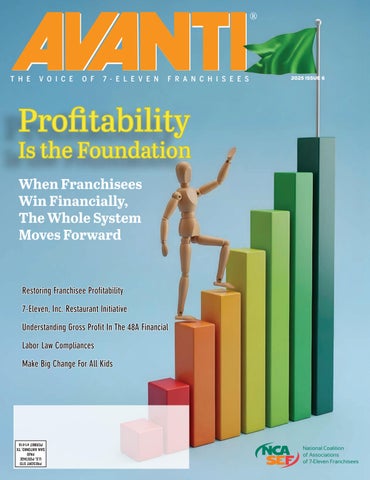

Profitability Is the Foundation
When Franchisees Win Financially, The Whole System Moves
Forward

Restoring Franchisee Profitability
7-Eleven, Inc. Restaurant Initiative
Understanding Gross Profit In The 48A Financial Labor Law Compliances
Make Big Change For All Kids




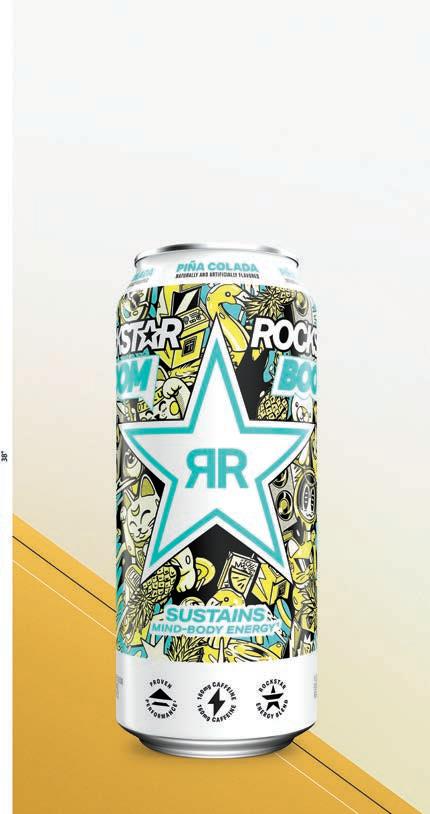
ROCKSTAR 16OZ - IN-STORE














Member News
7-Eleven Is America’s
Most Trusted C-Store
7-Eleven was named the No. 1 Most Trusted Brand in the convenience store category of BrandSpark and Newsweek’s annual Most Trusted Awards. The rankings were based on a national consumer survey of 35,215 U.S. shoppers, covering 182,000 brand evaluations across 359 categories, with Circle K taking the No. 2 spot. Newsweek noted that trust has become a major differentiator in retail because it gives consumers confidence they will receive a consistent, reliable experience. BrandSpark said the study is designed to be a rigorous independent measure of brand trust, and that being ranked No. 1 gives retailers a unique marketing advantage compared to broader claims competitors can also make. The overall awards list included winners across multiple retail sectors such as Dollar Tree, Walmart, CVS, and UPS.
“7-Eleven was named the No. 1 Most Trusted Brand in the convenience store category of BrandSpark and Newsweek’s annual Most Trusted Awards.”
Seven & i Doubles Down On Convenience Stores
Seven & i Holdings says fiscal 2026 will be its first full year operating as a “pure conveniencestore group,” following the completion of its $5.5 billion divestiture of York Holdings’ supermarket and specialty retail business to Bain Capital, reported CSP Daily News. The Tokyo-based 7-Eleven parent told investors the move sharpens its focus on convenience retail at a time when its North American business is showing improvement, with CFO Yoshimichi Maruyama saying, “Challenges remain, but our direction is clear.”
Maruyama said the company entered the fourth quarter facing a tough consumer environment, pointing to disruption tied to last fall’s government shutdown, which temporarily halted some government benefit payments and, in some cases, government employee pay. Even with those pressures, Maruyama said same-store sales recovered, and December sales were positive year over year, continuing an improving trend that began in the third quarter. Executives were also questioned about leadership and strategic direction following the retirement of longtime 7-Eleven, Inc. CEO Joe DePinto at the end of
The National Coalition Office
The strength of an independent trade association lies in its ability to promote, protect and advance the best interests of its members, something no single member or advisory group can achieve. The independent trade association can create a better understanding between its members and those with whom it deals. National Coalition offices are located in Ceres, California.
3645 Mitchell Road Suite B Ceres, CA 95307 855-444-7711 nationaloffice@ncasef.com
NATIONAL COALITION OF ASSOCIATIONS OF 7-ELEVEN FRANCHISEES
NATIONAL OFFICERS & STAFF
Sukhi Sandhu NATIONAL CHAIRMAN 855-444-7711 sukhi.sandhu@ncasef.com
Nick Bhullar EXECUTIVE VICE CHAIR 626-255-8555 bhullar711@yahoo.com
Teeto Shirajee VICE CHAIR 954-242-8595 teeto.shirajee@yahoo.com
Michelle Niccoli VICE CHAIR 719-661-1048 nicco711@yahoo.com
Khalid Asad VICE CHAIR 913-488-3014 Khalid.asad@aol.com
Rajneesh Singh TREASURER 214-208-6116 rjn_singh@yahoo.com
Shawn Howard OFFICE & VENDOR RELATIONS MANAGER 855-444-7711 shawnh@ncasef.com
Eric H. Karp, Esq. GENERAL COUNSEL 617-512-9004 ekarp@wfrllp.com
John Riggio MEETING/TRADE SHOW COORDINATOR 262-394-5518 johnr@jrplanners.com
John Santiago MANAGING EDITOR 267-994-4144 avantimag@ncasef.com
April J. Key GRAPHIC DESIGNER lirpayek@gmail.com
The Voice of 7-Eleven Franchisees 2025 ISSUE 6 ©2025 National Coalition of Associations of 7-Eleven Franchisees
Avanti Magazine is the registered trademark of The National Coalition of Associations of 7-Eleven Franchisees.
2025, with the company saying it is weighing both internal and external candidates and wants a leader who can accelerate its transformation and unlock more value.
U.S. C-Store Count Dips Slightly
The U.S. convenience store industry ended 2025 with 151,975 stores in operation, down 280 locations (0.2 percent) from the prior year, according to the 2026 NACS/NIQ TDLinx Convenience Industry Store Count. Even with the small decline in total stores, the number of convenience stores selling fuel moved in the opposite direction, rising by 768 stores (0.6 percent) to 122,620—the highest total in eight years. NACS also noted that convenience stores continue to dominate the fuel channel, selling an estimated 80 percent of the fuel purchased by U.S. consumers, with 80.7 percent of all convenience stores now offering fuel.
The report also reinforced how heavily the channel still leans toward small operators, with 95,672 stores owned by companies operating 10 or fewer locations— representing 63 percent of the total store count. At the other end of the spectrum, companies operating 500 or more stores account for 33,810 locations, or 22.2 percent of the national total. Texas once again led the nation with 16,504 stores, followed by California (12,143) and Florida (9,730), while Alaska had the fewest at 185. Store counts increased in 22 states, led by Texas (+88), Georgia (+39) and Ohio (+38), while New York posted the largest decline (-143), followed
by Massachusetts (-77) and New Jersey (-61).
8 Trends That Will Define Convenience Retailing In 2026
Convenience retailers will head into 2026 under continued economic pressure, with rising expenses, soft trip counts, and shoppers pulling back on basket size, reported C-Store Dive. Even with those headwinds, retailers will keep stretching what a c-store can be, with 2026 likely bringing more aggressive moves in foodservice, technology, and store experience. One major trend is c-stores evolving into “third places,” with operators adding seating, fireplaces, sports bars, and other amenities that encourage customers to stay longer and spend more.
Another is the growing possibility of c-store chains buying QSR brands after RaceTrac’s $566 million acquisition of Potbelly in 2025, with Pizza Hut even floated as a potential target for a major operator. The article also points to beverage innovation as a key battleground, with customization expanding beyond soda fountains into packaged and frozen options, while more c-store-specific AI tools emerge for tasks like foodservice monitoring and equipment uptime. Other trends expected to shape 2026 include retailers pivoting away from hemp and CBD as federal definitions shift, the continued impact of GLP-1 medications on snacking and protein demand, and meal deals evolving into more flexible bundles that combine customization, value, and cross-category choice.
Amazon Closes Amazon
Go & Amazon Fresh Stores
Amazon is shutting down its remaining Amazon Go cashierless convenience stores and Amazon Fresh grocery locations in the U.S., marking a major pullback from its standalone brick-and-mortar retail formats, reported the Associated Press. The company said the closures will roll out quickly, with most stores expected to be closed by early February, although some locations may remain open slightly longer depending on state labor requirements. Amazon launched Go stores as a high-profile test of “just walk out” technology, but the company ultimately decided the formats were not delivering a model it could scale profitably. Amazon will continue focusing its grocery efforts through Whole Foods Market, as well as online grocery and same-day delivery, rather than operating separate Go and Fresh store chains.
“Amazon is shutting down its remaining Amazon Go cashierless convenience stores and Amazon Fresh grocery locations.”
Couche-Tard Targets
750 New Circle K Stores
Alimentation Couche-Tard plans to add 750 company-operated Circle K convenience stores over the next five years, with most of the growth expected in North America and the first 100 new-to-industry builds scheduled to be completed in 2026, reported C-Store Dive. Executives said the expansion will combine
Member News
from page 9
new builds with small acquisitions, with President and CEO Alex Miller describing the move as part of the company’s “Core + More” strategy focused on strengthening key platforms while making targeted investments for profitable growth.
Couche-Tard leaders said the push reflects strong performance from newer locations, which they said are significantly outperforming legacy stores, particularly in core categories like food, nicotine, and fuel. Senior Vice President Aaron Brooks said the company currently has a pipeline of about 1,000 stores in different phases of development, but is keeping its five-year goal at 750 to “remain disciplined,” while still accelerating growth compared to prior plans to open 500 stores by 2028.


In addition to new builds, Brooks said the retailer will continue pursuing small deals, especially targeting operators with 10 stores or fewer, and expects to complete more small acquisitions this year than ever before. While the 750-store goal covers companyoperated growth, Brooks said Couche-Tard will also remain open to larger M&A outside that target, particularly acquisitions of regional chains that the company believes still offer meaningful upside.
New State Waivers Restrict SNAP
Food Purchases
Five states have launched a firstof-its-kind program to prohibit the
purchase of soda, candy, and other “junk foods” using federal food assistance, reported CNN Health. Indiana, Iowa, Nebraska, Utah, and West Virginia are the first to enact these waivers to reduce the prevalence of chronic diseases like obesity and diabetes among the 42 million Americans served by the Supplemental Nutrition Assistance Program (SNAP). Health and Human Services


Secretary Robert F. Kennedy Jr. defended the initiative, stating that the government cannot continue a system that “forces taxpayers to fund programs that make people sick” and then pays a second time to treat the resulting illnesses. While the administration views this as a vital step toward public health, retail experts warn of significant operational hurdles for franchisees and other grocers. The National Retail Federation predicts longer checkout lines and increased customer friction, as stores currently lack a standardized, comprehensive list of affected items across different state jurisdictions. Furthermore, industry trade groups estimate that implementing these point-of-sale technical changes will cost U.S.
retailers roughly $1.6 billion in the first year alone. At least 13 additional states are expected to roll out similar restrictions throughout 2026.
Private Label Sales Hit Record
U.S. private label sales climbed to a record $282.8 billion in 2025, rising more than $9 billion from the prior year, according to the Private Label Manufacturers Association (PLMA). Store brand dollar sales grew 3.3 percent for the 52 weeks ending December 28, 2025, nearly triple the 1.2 percent growth posted by national brands, while unit volume increased by 434.3 million to a record 68.7 billion units as national brand units slipped 0.6 percent.
PLMA President Peggy Davies said store brands are “outperforming national brands across the U.S., growing faster, expanding share, and delivering record-setting sales results,” pointing to consumer demand for value, quality, health, and sustainability. Pet Care led store brand unit growth at 5.4 percent, followed by Liquor (4.4 percent), Beverages (2.3 percent), Frozen (0.9 percent), Refrigerated (0.7 percent), and General Food (0.2 percent), while Refrigerated posted the biggest dollar gain at 6.1
“U.S. private label sales climbed to a record $282.8 billion in 2025”
continued on page 40
Optimized our entire service team to continue serving you better. Introduced location-based policies for seamless service everywhere you go and grow.
Launched our digital wallet to continue serving you better with the latest technology. Stores wont be cancelled due to losses We have additional Loss prevention, Employee retention and compliance tools MARKED 20 YEARS AS YOUR OFFICIAL WORKERS’ COMP INSURANCE AND EPLI BROKER!
simple. It’s reliable. It’s Aon. Contact us for any insurance questions: (847) 629-4711 support.7eleven@aondigital.com www.aondigital.com/en-us/7eleven
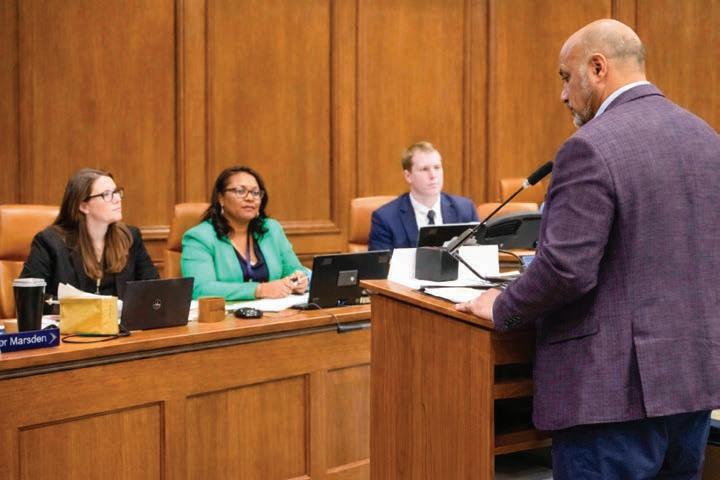
NCASEF Chairman Sukhi Sandhu recently presented before the Virginia Senate Gaming Subcommittee in support of regulating skill games—an issue with real impact on convenience stores across the Commonwealth.
“Our franchises want to operate in full compliance with the law,” Sandhu said. “Skill games provide meaningful supplemental revenue that helps sustain jobs and community investment for many immigrantowned small businesses.”
The proposed legislation would establish a regulated framework for skill games, including limits on the total number of machines statewide, a monthly licensing fee per machine, and caps on wagers per play. Supporters say the bill would replace today’s inconsistent enforcement with clear rules, oversight, and accountability as the measure advances to the full Committee on General Laws and Technology.



NCASEF Chairman Testifies In Support Of Skilled Gaming Regulation





Change Kids’ Health Change the Future®
Jaxon was born with a rare, complex genetic condition called CDK13 that requires ongoing specialized care. Thanks to the support of Children’s Miracle Network Hospitals®® , Jaxon and other kids like him have access to the care they need to have a healthier future. Jaxon’s story proves that even the toughest obstacles can be overcome with the right help.





Thanks to donations, Nicklaus Children’s Hospital provides kids like Jaxon access to life-changing surgery and therapies that help improve their movement, speech, and learning.

BY CHILDREN’S MIRACLE NETWORK
Make Big Change For All Kids: Celebrating
the Impact of NCASEF and Children’s Miracle Network
As the new year begins, we reflect on the extraordinary impact NCASEF members have made for children and families. Your partnership with Children’s Miracle Network® continues to transform lives—one gift at a time.
Our New Look: Same Mission
You might notice that our brand has a fresh look and feel! We want to ensure that you are aware that nothing is changing regarding your support for local hospitals.
• We’ve simplified our name to Children’s Miracle Network®.
• It is still the same charity; we bring people together to raise money for children’s healthcare in local communities.
• We believe in the power of community, collaboration, and hope.
Why NCASEF Members Support Children’s Miracle Network
Many of you have shared personal stories about why you support Children’s Miracle Network. Your “why” is what inspires us every day.
“It’s one way for us to give back to the community,” FOAC President Jaimin Pandya shared. “More importantly, it’s about helping kids who are fighting illnesses and supporting their families. Lurie Children’s, a Children’s Miracle Network hospital, does a great job, and we’re proud to be part of that.”
On behalf of the children and families whose lives you’ve touched, thank you. Your generosity has helped provide lifesaving equipment, fund critical research, and deliver hope to millions of kids.
“We attended golf events connected to these meetings, gave presentations about our organization, and together you raised over $70,000 through these special gatherings.”
2025: A Year of Incredible Impact!
You and your fellow NCASEF members and affiliate vendors gave kids the gift of health in so many amazing ways
this year. All together, for all kids!
• Events and Presentations: We were invited to over 30 events last year, including three quarterly meetings! We attended golf events connected to these meetings, gave presentations about our organization, and together you raised over $70,000 through these special gatherings.
• National Convention Success: At the incredible National Convention & Trade Show in July, we hosted a booth and held a fun “Play Yellow” tournament. Thanks to the generous FOAs, NCASEF members, and affiliate vendors, you raised over $250,000!
• Support at the Register: In addition to all this, you also enhanced kids’ health at the register by offering your customers the opportunity to donate to Children’s Miracle Network at the point of purchase.
Funds in Action: Making Big Change For All Kids
Your commitment is making the impossible possible every day. One hundred percent of every donation supports local children’s hospitals.
Your contributions strengthen our local children’s hospitals, enabling them to allocate funds toward their greatest needs. This includes:
• Specialized Equipment: Providing state-of-the-art facilities and equipment.
• Essential Care: Funding life-saving treatments, new programming, and advancements in child life services.
• Family-Centered Care: Providing programs and resources that keep families comfortable and together during their child’s hospital journey.
How to Get Involved
Looking to make your next FOA event even more impactful? Reach out to your local Children’s Miracle Network representative to explore partnership opportunities, patient family speakers, and more.
As we kick off 2026, know that your compassion is lighting the way for children and families. Thank you for supporting Children’s Miracle Network and for helping make big change for all kids.
For questions, campaign information, or to share your own story, please contact Kate Burgess at kburgess@ cmnhospitals.org.
Restoring Franchisee Profitability: The Urgent Path Forward
For the past three years, franchisee net income has continued to decline. That reality is becoming harder to ignore—especially at a time when inflation, labor costs, and everyday operating expenses continue to rise. Whether you are a business owner or a working family, income must move forward, not backward. Yet today, too many franchisees are doing everything possible just to keep their heads above water.
“As stores are added, overhead rises quickly—additional managers are required, labor costs increase, and administrative complexity grows.”
This challenge is particularly difficult for single-store and small multi-store operators. The current model increasingly pushes franchisees toward owning more stores as a path to stability. But growth is not as simple as adding locations. As stores are added, overhead rises quickly—additional managers are required, labor costs increase, and administrative complexity grows. What was once a hands-on small business can quickly begin operating like a corporation, complete with office staff and HR personnel. Meanwhile, the ability for a franchisee to personally work the front line— historically one of the ways to offset labor costs— diminishes. The result is often thinner margins per store, not stronger returns.
Compounding this issue is the growing practice of bundling high-performing stores with weaker locations. While this may serve broader strategic objectives, it can dilute the profitability of strong units. A store that once stood successfully on its own now carries the weight of another, reducing overall return for the franchisee. These pressures did not emerge overnight. Since the 2019 franchise agreement, more expenses have steadily shifted to the franchise side. Programs and subsidies that once helped offset operational costs—such as

BY SUKHI SANDHU NCASEF Chairman
support for 7NOW, equipment maintenance, and credit card fees—have been reduced or eliminated. Each change individually may appear manageable, but together they have significantly eroded franchisee profitability over time.
At the same time, SEI continues to invest in important long-term growth strategies. Programs such as 7NOW, expanded food service, and future restaurant concepts represent meaningful opportunities. I support these initiatives. They reflect evolving customer expectations and are essential to keeping the brand competitive. However, these programs are labor-intensive. They require accuracy, fresh food, clean facilities, wellmaintained restrooms, and strong customer service. None of that happens without people. As these initiatives expand, operating costs expand with them— often faster than the incremental income they generate at the store level.
Fuel operations present similar concerns. New stores are larger, with expanded lots and additional pumps. That means higher landscaping expenses, more trash removal, snow clearing, lighting, and ongoing maintenance. Yet the fuel commission has remained at one and a half cents for more than 15 years. Inflation alone has significantly reduced its value, making it increasingly difficult to sustain these expanded operations.
“Food service and potential restaurant concepts must also be evaluated through the lens of franchisee net income.”
Food service and potential restaurant concepts must also be evaluated through the lens of franchisee net income. These categories can be powerful growth drivers, but they must add to profitability—not consume what little margin remains after rising operational costs. Growth cannot come at the expense of sustainability.
























To be clear, conversations with SEI leadership have been healthy and constructive. With new leadership in place following Joe DePinto’s departure, there has been openness and a willingness to engage. That is appreciated. There is a shared understanding that adjustments are necessary.
“Dialogue is important, but solutions must move with urgency.”
But franchisees are approaching a breaking point. Net income has declined year after year, and many are asking a simple question: where does this stop? Dialogue is important, but solutions must move with urgency. A model that once provided stability and opportunity no longer delivers the same results for many operators.
Franchisees are actively seeking solutions at the store level— identifying higher-margin products, negotiating stronger vendor programs, and introducing new services to improve profitability. Through local FOAs and NCASEF, franchise leaders are also engaging with state and local lawmakers to advocate for clear, consistent regulations that allow compliant small business owners to compete fairly. This includes efforts around skill games and regulated adult-use categories such as vape and CBD-infused products, where inconsistent enforcement creates competitive disadvantages. In many markets, customers are shifting to competitors who openly sell products that fall into legal gray areas or operate without proper oversight. When customers leave a 7-Eleven for those purchases, they often complete their entire shopping trip elsewhere. The loss extends beyond
“Every new initiative should be evaluated not only by top-line growth or systemwide expansion, but by one fundamental question: does it increase franchisee net income at the store level?”
a single item—it affects beverages, food service, fuel, and the full market basket.
While I value the ongoing conversations with SEI leadership, dialogue must now translate into measurable action. Every new initiative should be evaluated not only by top-line growth or systemwide expansion, but by one fundamental question: does it increase franchisee net income at the store level?
A sustainable franchise system must reward the operators who carry the daily operational responsibility and financial risk. Without healthy store-level economics, no longterm strategy—no matter how innovative—can succeed. Profitability is not a secondary outcome of growth; it is the foundation that makes growth possible.
Franchisees want to grow with the brand. We believe in the system, and we believe deeply in the long-term strength of 7-Eleven. But for that future to remain viable, profitability must be restored and protected at the store level. When franchisees are financially strong, the entire ecosystem benefits. The brand becomes more resilient. Vendor partnerships become more productive. Customers receive better service. Communities remain supported.
Store-level profitability is not simply a franchise issue—it is a systemwide imperative.














































































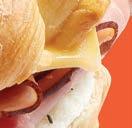





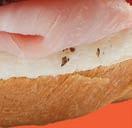









































































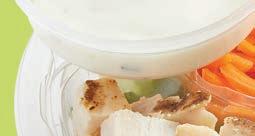






















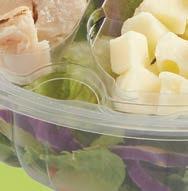






































































7-Eleven, Inc. Restaurant Initiative: A Good Investment? For
Whom?
Faced with headwinds from a number of directions, the parent company of 7-Eleven, Inc. has publicly announced plans to transform the company (but not the store level economics for franchisees) in a number of ways. Those initiatives have been described in my previous columns and at National Coalition Board meetings with frequency. In my most recent column, I asked SEI 20 specific questions about those initiatives and offered to give up my space in Avanti® in return for detailed and supported answers. That offer was not accepted and therefore in this column I’d like to focus on the Restaurant Initiative.
“SEI’s parent company has informed investors that one of the primary drivers of growth will be investing in restaurants.”
The presentations from SEI’s parent company are focused on convincing the investment community they have a solution to the challenges that have faced the company for a number of years. Their position is that these initiatives will increase the profitability of 7-Eleven, Inc. and by extension the parent company, which will, in turn, enhance shareholder value, not to mention elevate the likelihood of an IPO of SEI in 2026.
Many of the multiple initiatives announced involve enhanced and distinctive fresh food offerings. SEI’s parent company has informed investors that one of the primary drivers of growth will be investing in restaurants. This will be done, they say, with three different brands: Laredo Taco, Raise the Roost Chicken and Biscuits, and Speedy Café. These presentations indicate that there will be 50 such restaurants by the end of 2025 and 1,100 such restaurants by the end of 2030, five years hence. That means on average more than 200 such restaurants are to be opened each year.
For the franchisee community, the central issue is whether the restaurant initiative will add to or subtract from the revenue, profitability and value of their franchised businesses. It should go without saying that

BY ERIC H. KARP General Counsel to NCASEF
“For the franchisee community, the central issue is whether the restaurant initiative will add to or subtract from the revenue, profitability and value of their franchised businesses.”
the burden of demonstrating the benefit or even the viability of the restaurant initiative to the franchisees rests with 7-Eleven, Inc. And whatever business case analysis is furnished must be marked with complete transparency and accompanied by widely distributed and specific and supportable historical and pro forma written data.
SEI’s parent company published statistics indicating that their existing restaurants, when paired with convenience stores, drive higher sales and traffic to the convenience stores. More specifically they state that in those circumstances, average daily sales of merchandise increased 34 percent, food sales increased 146 percent, traffic increased 42 percent, and gross margin increased by 50 basis points. This data is apparently derived from the less than 50 restaurant locations that were open for the month of September 2025.
Other than the fact that at least some of these small sample of restaurants are paired with convenience stores, we have no data on where these convenience stores are located, how long they have been open, their gross sales and merchandise gross margin, the condition of the stores or how much competition they have. What are their sales? What percentage of revenue is devoted to food cost, employees, insurance, and other elements of overhead? As just one example KFC reported that in 2024 average franchisee product cost was 32 percent and labor 35.8 percent. By the time this article is published, SEI will have data on all of its company owned restaurant locations for all of 2025. A full, complete and detailed presentation of the characteristics and financial performance of all SEI restaurants is certainly in order. The restaurant initiative presents an unusual form of co-branding. Co-branding refers to the practice of
collaborative marketing of two or more distinct brands, such as Dunkin’ Donuts and Baskin-Robbins. Here the brands may be distinctive, but the product assortment is not. Given the company’s push towards fresh food and daily food for its convenience stores, a restaurant linked to a 7-Eleven convenience store will have side-by-side businesses selling some of the same products and/or products that will be competing with each other for the same consumer dollar.
“SEI needs to be clear on how many franchised locations are candidates for the restaurant initiative and whether there is an alternative for those that cannot accommodate the additional square footage required.”
If the restaurant initiative is proved out to be at least part of the solution for franchisees, is it not clear that the initiative could not and cannot be made available to all franchisees? There are thousands of locations in the system where the stores are too small and the land area inadequate to add a restaurant facility to an existing convenience store. SEI needs to be clear on how many franchised locations are candidates for the restaurant initiative and whether there is an alternative for those that cannot accommodate the additional square footage required. And if the restaurant initiative proves to be advantageous, will those franchisees left behind be at a competitive disadvantage?
And then there is the issue of the costs that would be paid by franchisees that are not currently being paid by the corporate restaurants that are open. If we assume that restaurant franchisees will pay a royalty on the gross sales of the restaurant component, how much will that royalty be and will it be commercially reasonable under the circumstances? One way of looking at this is to compare what the typical QSR franchisee pays. For example, McDonald’s franchisees pay a royalty of 4-5 percent of gross revenue and KFC franchisees the same. But these comparisons can be misleading, because the gross sales of these restaurants are expected to be but a fraction of what a typical QSR restaurant grosses. This means that even a 4-5 percent royalty might not make sense because of the fixed costs involved.
If SEI decides to charge an initial franchise fee, it should consider that both McDonald’s and KFC charge an initial franchise fee of $45,000. But that’s for a business that’s going to create revenue that is a multiple of what this restaurant initiative has produced in the 7-Eleven corporate stores so far. For example, according to QSR Magazine, the average annual sales of McDonald’s locations in the United States in 2024 was $4 million.
In addition, if the advertising contribution required of restaurant franchisees remains at the 1 percent fixed in the current 7-Eleven franchise agreement, one could argue that this is less than the typical QSR franchisee pays because marketing and advertising is crucial to the business. In most systems the advertising contribution is split between a national advertising fund controlled by the franchisor and local or regional cooperatives controlled by the stores in that region. And in most franchise systems the franchisor is contractually bound to make the same advertising commitment as its franchisees make. Not so in the 7-Eleven system. That would need to change in a restaurant initiative.
“Finally,
if there is to be a separate franchise agreement for the restaurant initiative or an addendum to the existing franchise agreement, SEI will be required to amend or issue a new Franchise Disclosure Document which describes this proposed investment in fulsome detail.”
Finally, if there is to be a separate franchise agreement for the restaurant initiative or an addendum to the existing franchise agreement, SEI will be required to amend or issue a new Franchise Disclosure Document which describes this proposed investment in fulsome detail. It is my hope that before any such document is published, the National Coalition and its General Counsel will be given an opportunity to review and comment well prior to dissemination.
Some of you may know that I am a very enthusiastic tennis player. So, I say to 7-Eleven: the ball is in your court. Send us the business case and then let’s roll up our sleeves and sharpen our pencils.


Understanding Gross Profit In The 48A Financial

BY TEETO SHIRAJEE NCASEF Vice Chair
Gross profit is the difference between total sales and cost of goods sold (COGS). On the Financial 48A, this is calculated by:
• Tracking sales revenue across all categories.
• Subtracting COGS, which is based on beginning inventory + purchases – ending inventory.
• Expressing the result as both a dollar amount and a margin percentage.
“This margin is the lifeblood of your store— it determines franchise charges and ultimately your net income.”
This margin is the lifeblood of your store—it determines franchise charges and ultimately your net income.
Practical Tips To Improve Gross Profit Margins
1. OPTIMIZE PRODUCT MIX
• Focus on high-margin items like hot foods, coffee, fountain drinks, non-carb vault, and private-label snacks.
• Use the 48A trend reports to identify which categories consistently deliver stronger margins.
2. CONTROL SHRINKAGE
• Shrinkage (losses from theft, spoilage, or errors) directly reduces gross profit.
• Implement tighter inventory controls and regular cycle counts.
• Train staff to spot and prevent common sources of loss.
3. MANAGE INVENTORY SMARTLY
• Avoid overstocking items with short shelf lives (sandwiches, dairy, etc.).
• Use the Supplemental Schedule in the 48A to monitor ending inventory levels.
• Leaner inventory reduces waste and improves cash flow.
4. LEVERAGE PROMOTIONS STRATEGICALLY
• Pair loss leaders (low-margin items) with highmargin upsells
• Track promo (bill backs) effectiveness in the 48A to see if sales volume offsets margin dilution.
5. NEGOTIATE VENDOR DEALS
• Work with suppliers to secure better pricing or rebates.
• Even small reductions in purchase costs improve gross profit when multiplied across thousands of units.
6.
MONITOR CATEGORY TRENDS
• The rolling six-month trend in the 48A highlights shifts in customer demand.
• Adjust your product mix quickly to ride seasonal trends (e.g., Slurpee in summer, coffee in winter).
7. TRAIN STAFF ON SUGGESTIVE SELLING
• Encourage employees to upsell high-margin items at checkout.
• Example: “Would you like a hot dog with that drink?”—simple prompts can lift gross profit.
Example: Turning Numbers Into Action
Imagine your 48A shows a Gross Profit Margin of 37 percent and Shrinkage of 3 percent of sales. By reducing shrinkage to 1 percent through better controls, you could add thousands of dollars back into gross profit annually—without increasing sales.
“By
analyzing gross profit margins and acting on the insights gained (through inventory control, product mix optimization, and shrinkage reduction), franchisees can significantly improve their bottom line.”
Key Takeaway
The Financial 48A is more than a report—it’s a profit playbook. By analyzing gross profit margins and acting on the insights gained (through inventory control, product mix optimization, and shrinkage reduction), franchisees can significantly improve their bottom line.
“Morning
ritual—Review
gross profit percentage like it’s your horoscope.”
Franchise Survival Card
DAILY HUSTLE HACKS
• Push the Perks: Coffee, fountain drinks, hot food, and non-carb vault = margin magic.
• Shrinkage Sleuth: Count it, track it, crush it. Every percentage saved = $$$ in your pocket.
• DMR CheckIn: Morning ritual—Review gross profit percentage like it’s your horoscope.
WEEKLY WINS
Spot the Slackers: Which category is dragging? Swap low-margin SKUs for high-margin heroes.
Staff Pep Talks: Train the team on upselling—“Hot dog with that drink, etc.?” is pure profit poetry.
“Don’t let discounts eat your margin. Pair loss leaders with tasty upsells.”
Promo Patrol: Don’t let discounts eat your margin. Pair loss leaders with tasty upsells.
MONTHLY MASTERY (48A TIME)
• Margin MatchUp: Compare your numbers to GGPS. If you’re above target, you’re winning.
• Inventory Reality Check: Ending inventory + shrinkage adjustments = the truth behind the numbers.
• Celebrate the Overachievers: Categories beating benchmarks deserve a victory lap.
SURVIVAL MANTRAS
• “Shrinkage is the silent thief—catch it daily.”
• “Highmargin items are your best friends—treat them well.”
• “DMR is the daily pulse, 48A is the monthly heartbeat.”
Get On The Avanti Mailing List! Are you a franchisee and would like to receive your own copy of Avanti—The Voice of 7-Eleven Franchisees? You can get on our mailing list by sending a request to avantimag@ncasef.com with your name and store address, and we’ll be sure to include you in future mailings.


















Reach Gold for







































































ITEM#SLIN: 103848

ITEM#SLIN: 103851

ITEM#SLIN: 106860




RedVolution
Cabernet Sauvignon
Pinot Grigio
Labor Law Compliances, Forms, And Keeping Forms For Audits Or Other Verification Purposes
Understanding Form I-9 Requirements
When hiring or rehiring employees in the United States, every employer—regardless of company size or industry— must comply with federal employment eligibility verification laws. The cornerstone of this process is Form I-9, issued by the U.S. Citizenship and Immigration Services (USCIS). Properly completing, maintaining, and retaining this form is not just good practice, it’s a legal requirement.
“Form I-9 ensures that employers only hire people who are legally permitted to work.”
What Is Form I-9?
Form I-9, officially titled Employment Eligibility Verification, is used to verify the identity and work authorization of individuals hired to work in the U.S. The form ensures that employers only hire people who are legally permitted to work—U.S. citizens, permanent residents, or individuals authorized to work under specific visa categories.
Who Must Complete Form I-9
Every new hire, regardless of citizenship or immigration status, must complete Form I-9. This also applies to rehired employees if:
• The previous I-9 is more than three years old, or
• The employee’s work authorization or documentation has expired.
Where To Find Form I-9
The most current version of Form I-9 and its detailed instructions are available for free on the USCIS website: https://www.uscis.gov/i-9.
Employers should always download the latest version directly from USCIS to ensure compliance with current rules and document lists.
How To Complete Form I-9
• Section 1—Employee Information and Attestation: The employee must complete and sign this section no later than their first day of work.
• Section 2—Employer Review and Verification: The

BY RAJ SINGH NCASEF TREASURER
employer must review the employee’s identity and work authorization documents and complete this section within three business days of the employee’s start date.
• Section 3—Reverification and Rehires: Used when an employee’s work authorization expires or when rehiring within three years of the original I-9.
Employers must examine the original documents (not copies) and ensure they appear genuine and relate to the employee presenting them.
How Long To Keep Form I-9
Employers are required to retain each Form I-9 for a specific period, whichever is later:
• Three years after the date of hire, or
• One year after the date employment ends. Forms may be stored on paper, microfilm, microfiche, or electronically, but they must be accessible for inspection by authorized government officials such as the Department of Homeland Security (DHS), Department of Labor (DOL), or Immigration and Customs Enforcement (ICE).
“Failing to properly complete or maintain I-9 forms can lead to serious penalties.”
Consequences Of Incorrect Or Missing I-9 Forms
Failing to properly complete or maintain I-9 forms can lead to serious penalties. Common violations include missing forms, incomplete sections, use of outdated versions, or accepting invalid documents. Consequences may include:
• Civil Fines: Fines range from hundreds to several thousand dollars per violation, depending on the severity and frequency of the errors.
• Criminal Penalties: Knowingly hiring or continuing to employ unauthorized workers can lead to criminal charges and higher fines.
• Loss of Business Licenses or Contracts: Repeated or willful noncompliance may lead to the suspension or loss of federal or state contracts and business licenses.
• Reputation and Compliance Risk: A poor record in immigration compliance can trigger audits and damage a company’s credibility with regulators and partners.
Best Practices For Compliance
• Always use the latest USCIS Form I-9.
• Train hiring managers and HR staff on proper I-9 completion.
• Conduct periodic internal audits.
• Store I-9s separately from personnel files for easier access during inspections.
• Never discriminate based on citizenship or national origin when completing the form.
Final Thoughts
Form I-9 compliance may seem routine, but it’s a critical part of responsible hiring. Accurate completion, timely verification, and proper recordkeeping protect your business from costly penalties and help maintain a lawful workforce. Staying informed and organized ensures that your hiring process remains compliant, efficient, and audit ready.
Understanding W-4 Requirements For New Hires & Rehires
The IRS Form W-4 (Employee’s Withholding Certificate) is a mandatory document that every employer must collect from each new hire (and rehire) before processing payroll. It ensures the correct amount of federal income tax is withheld from an employee’s paycheck.
Where To Find The W-4 Form
• The current version of Form W-4 is available directly from the IRS website at irs.gov/w4.
• Employers can also provide the form as part of their new hire onboarding packet, either in paper or electronic format.
• Payroll and HR software platforms often include the W-4 as part of their employee setup workflow.
When & How Employees Should Complete The W-4
• A new hire must complete Form W-4 before their first paycheck is processed.
• A rehire should complete a new W-4 if any personal or financial circumstances have changed since their previous employment (e.g., marital status, dependents, or other income).
• Employees can update their W-4 at any time during employment if their tax situation changes.
“Employers are required to retain each employee’s W-4 for at least four years after the date of the last tax return filed using that form or four years after the employee leaves the company, whichever is later.”
How Long Employers Must Keep W-4 Forms
Employers are required to retain each employee’s W-4 for at least four years after the date of the last tax return filed using that form or four years after the employee leaves the company, whichever is later.
• Forms may be stored electronically or on paper, as long as they are easily accessible for IRS inspection.
Consequences Of Incorrect Or Missing W-4 Forms
1. For Employers:
• Penalties and Fines: The IRS may impose fines for failing to maintain or produce a W-4 during an audit.
• Incorrect Tax Withholding: Employers may be held liable for unpaid taxes if they fail to withhold the correct amounts due to missing or incorrect W-4 data.
• Backup Withholding: If a valid W-4 is not on file, employers must withhold taxes as if the employee is single with no adjustments, which can cause employee dissatisfaction.
2. For Employees:
• Incorrect Tax Withholding: Underpayment can result in a tax bill and penalties at year-end.
• Over-withholding: May lead to a smaller paycheck and a large refund later, reducing take-home pay unnecessarily.
Best Practices For Employers
• Always ensure a completed and signed W-4 is on file before processing the first payroll.
• Encourage employees to review and update their W-4 annually or after major life events.
• Store all W-4s securely and ensure easy retrieval for IRS or state audits.
In Summary
The W-4 form is not just a formality—it directly affects tax compliance and employee satisfaction. Keeping accurate, upto-date W-4s for every employee protects both the employer and the worker from unnecessary tax issues and penalties.
Labor Compliance Audits
Preparing for a labor compliance audit is essential for avoiding penalties, ensuring smooth operations, and demonstrating that your business follows federal and state employment laws. Here’s a clear, step-by-step guide to help you get ready.
1. Understand What’s Being Audited
Labor compliance audits typically review:
• Employee records (hiring documents, payroll, time sheets)
• Wage and hour compliance (minimum wage, overtime,
Labor Law Compliances
“Preparing for a labor compliance audit is essential for avoiding penalties, ensuring smooth operations, and demonstrating that your business follows federal and state employment laws.”
breaks)
• Work eligibility verification (Form I-9, E-Verify)
• Tax and withholding documentation (Form W-4, payroll taxes)
• Workplace policies (anti-discrimination, harassment prevention, safety)
• Posters and notices (mandatory federal and state postings)
2. Review Employment Records
Make sure all employee files are complete, organized, and up-to-date:
• Form I-9: Verify that forms are completed correctly and stored separately from personnel files.
• Form W-4: Ensure current versions are on file for all employees.
• Pay Records: Keep detailed records of wages, hours worked, and deductions.
• Employee Classification: Verify that employees are correctly classified as exempt/non-exempt and employee/ independent contractor.
Retention Tip: Keep payroll and employment records for at least 3 years, and I-9 forms for 1 year after termination or 3 years after hire (whichever is later).
3. Audit Your Payroll Practices
• Check that employees receive at least minimum wage and overtime as required.
• Ensure all deductions are legal and authorized.
• Verify that payroll taxes (FICA, federal and state withholding, unemployment) are filed and paid correctly
4. Verify Required Workplace Posters
Post updated federal and state labor law posters in visible areas (break room, near time clocks, etc.). These include:
• Fair Labor Standards Act (FLSA)
• OSHA Job Safety and Health
• Equal Employment Opportunity (EEO)
• Family and Medical Leave Act (FMLA)
• State-specific wage and hour notices
5. Check Policies & Training
Confirm that your company’s written policies and employee handbook cover:
• Non-discrimination and harassment prevention
• Leave policies (sick, family, medical)
• Workplace safety (OSHA compliance)
• Complaint and reporting procedures
Also ensure employees have received any required trainings (e.g., harassment prevention, safety training).
6. Conduct An Internal Self-Audit
Before the official audit:
• Assign HR or a compliance officer to perform a mock audit.
• Identify gaps and correct errors proactively.
• Document all corrective actions taken.
Tip: Keep a checklist of all required compliance items for future audits.
7. Organize Documentation For Easy Access
Prepare a well-labeled binder or secure digital folder with:
• Hiring documents (I-9s, W-4s, applications)
• Payroll and tax records
• Employee handbook and policy acknowledgments
• Posters and training certificates
• Any correspondence with labor agencies
8. Train Supervisors & Managers
Supervisors should understand:
• Employee rights and company obligations.
• What to do during an audit.
• How to handle auditor requests professionally and accurately.
9. During The Audit
• Be cooperative but only provide what is requested.
• Designate one spokesperson to interact with the auditor.
• Keep copies of all documents you provide.
10. After The Audit
• Review the audit findings carefully.
• Address any violations or corrective recommendations immediately.
• Document your response and maintain a record for future reference.


NCASEF Hosts Affiliate Member & Board
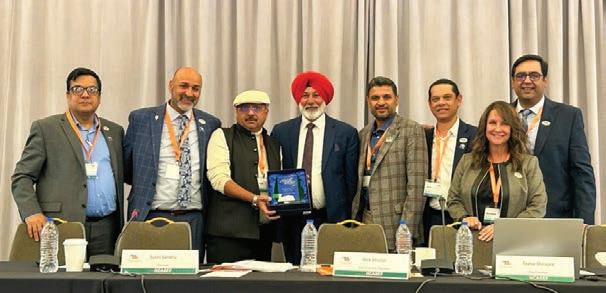
Franchise leaders, vendors, and SEI representatives gathered in sunny Miami, Florida, for NCASEF’s Fourth Quarter Affiliate Member and Board of Directors meetings, held November 11–14, 2025. Over the course of several days, attendees reviewed current business conditions, received updates from SEI leadership, and participated in breakout discussions on item execution, service provider performance, and traffic-driving opportunities. The meetings also included conversations around governance, FOA membership, and proposed bylaw changes, as well as presentations from vendor partners and committee updates focused on improving store-level profitability and systemwide collaboration.
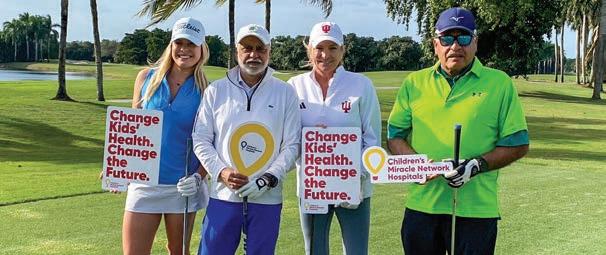
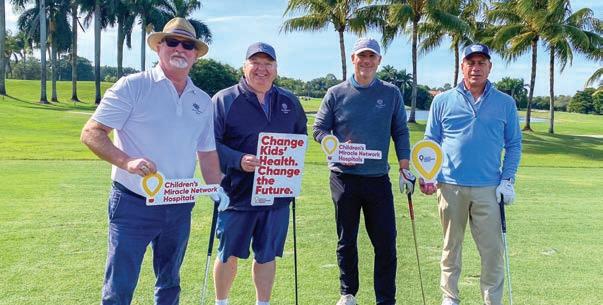
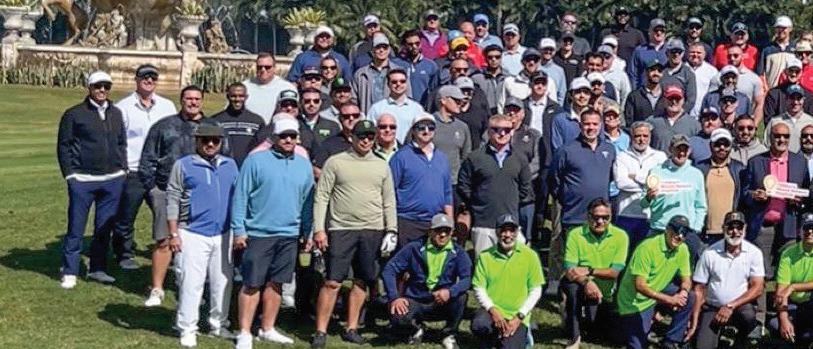
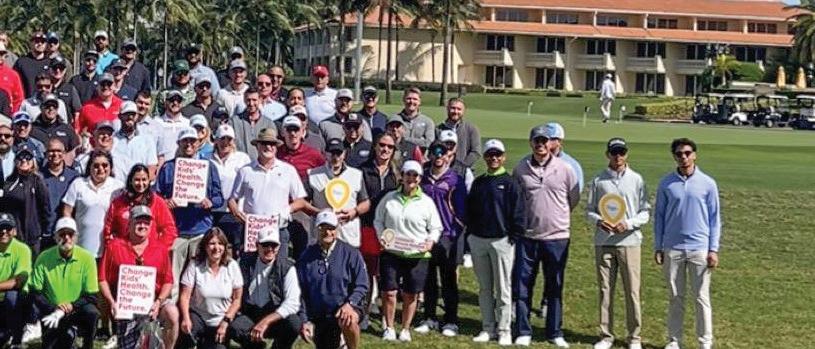
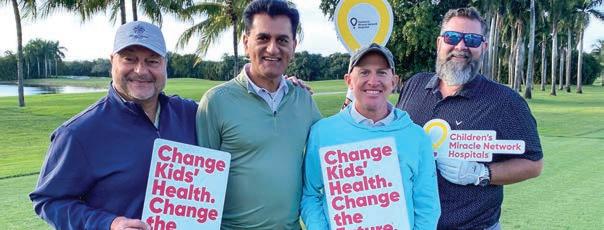
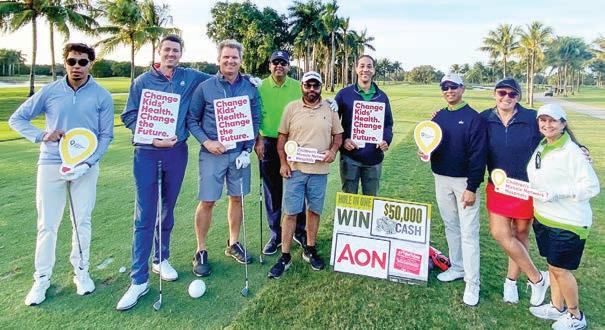
The week began with NCASEF’s charity golf tournament on November 11 at Trump National Doral, benefitting Children’s Miracle Network Hospitals. Franchisees, vendors, and sponsors came together for a day of fundraising, followed by an evening reception, dinner, awards presentation, and check ceremony.
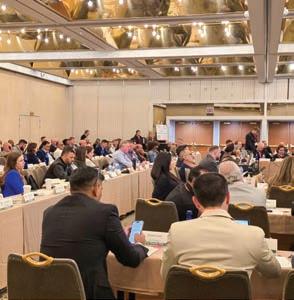
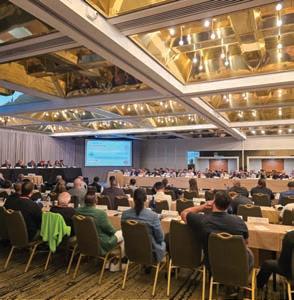
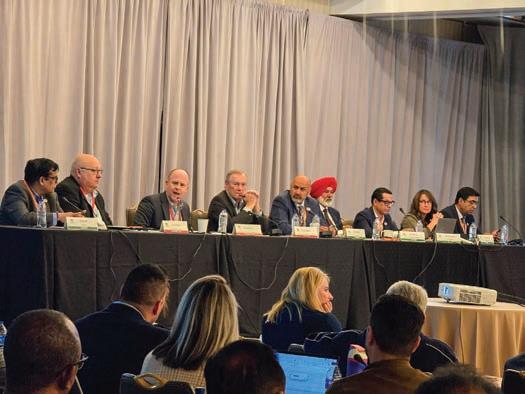
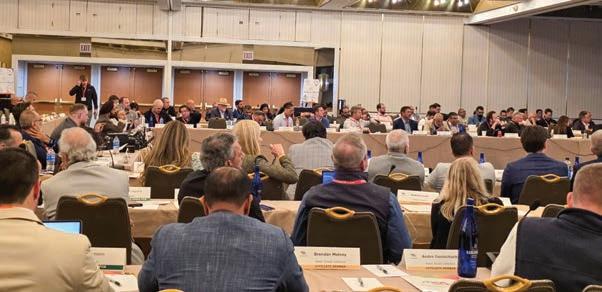
The following day, franchisees and vendor partners packed the Hyatt Regency’s huge ballroom space for the Affiliate Member Meeting. Leadership reviewed the continued growth of the Affiliate Member program, which now includes more than 130 companies. Updates were also provided on NCASEF’s organizational structure, committee work, and the expanding franchise system.
Children’s Miracle Network Hospitals delivered a detailed update on fundraising results and hospital impact, including a presentation from representatives of Nicklaus Children’s Hospital. Speakers shared patient stories, reviewed national and local fundraising performance, and highlighted the role franchisees and FOAs play in supporting pediatric care across the country.
The meeting featured breakout workshops focused on item introduction, execution, verification, and service providers. Franchisees and vendors participated in open discussions centered on foot traffic challenges, operational execution, communication gaps, and opportunities to improve profitability through collaboration. Following the
Fourth Quarter Board Meetings In Miami
workshops, attendees heard extended presentations from 7-Eleven, Inc. leadership.
Senior executives from 7-Eleven discussed merchandising priorities, execution fundamentals, and evolving consumer behavior. Presentations covered assortment simplification, pricing discipline, fill-rate improvement, pre-book strategies, and the growing influence of social-mediadriven trends. The SEI representatives also reviewed reset strategies, data-driven merchandising, and the importance of balancing innovation with operational simplicity to support store-level performance.
The Affiliate Member Meeting concluded with yearend recognition awards and a tabletop trade show, which allowed vendors to engage directly with franchise leadership during informal networking sessions.
The Board of Directors meetings were held Thursday and Friday, November 13–14. During the sessions, Board members heard presentations from national vendor partners and received operational updates from 7-Eleven executives addressing traffic trends, cost pressures, field support, and store execution challenge.
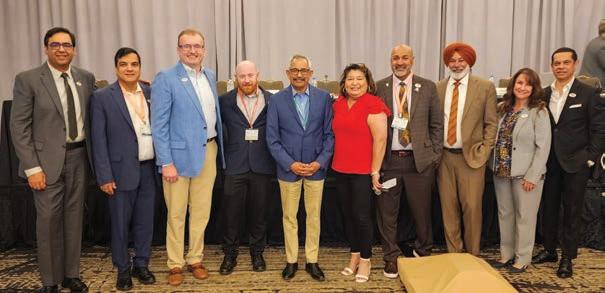
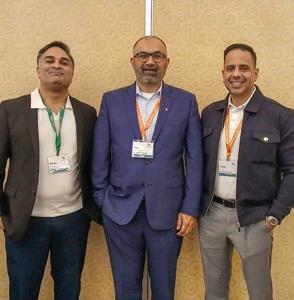
A significant portion of the Board meetings focused on governance and bylaws. Directors engaged in detailed discussion regarding FOA membership standards, application procedures, and interpretation of existing bylaws, including the review and approval of the Empire State FOA’s admission into NCASEF. Additional discussion centered on election procedures, voting structure, and proposed amendments designed to improve transparency and process clarity. The Membership and Bylaws Committee reported on ongoing work, with formal proposals scheduled for further review at a future meeting.
The meetings concluded with committee reports, general counsel updates, and open discussion focused on franchisee profitability, regulatory pressures, and the importance of continued unity and engagement across the system. Chairman Sukhi Sandhu closed by thanking franchise leaders, vendors, and families for their continued commitment and participation throughout the week.
DIRECTORY
Connect Directly With 7-Eleven Franchise Leaders
Vendors looking to strengthen relationships with 7-Eleven franchisees can do so by becoming Affiliate Members of the National Coalition of Associations of 7-Eleven Franchisees (NCASEF). The program offers a direct line to franchisee leadership and creates meaningful opportunities to build long-term partnerships within the 7-Eleven system.
Affiliate Members participate in three in-person meetings each year, held in late winter, spring, and fall. These meetings bring together NCASEF’s national Board of Directors, made up of leaders from 40 Franchise Owners Associations (FOAs) representing more than 7,300 stores nationwide. Each meeting includes presentations, focused discussions, and networking events designed
to encourage open dialogue and face-to-face interaction with franchise decision-makers. Members also receive updated contact lists for NCASEF officers and FOA leadership.
Additional benefits include a complimentary listing in the Avanti Magazine Affiliate Member Directory, opportunities to sponsor or speak at Board meetings, and the ability to present products and services directly to franchisee leaders. Whether introducing a new item or expanding an existing partnership, the NCASEF Affiliate Member Program provides consistent access and meaningful engagement. To learn more or join, visit www.NCASEF.com.
THE AFFILIATE MEMBER DIRECTORY
Call or email the representatives below if you have questions or want to speak to a representative from their company.
1440 Foods
Julie Crow 500 7th Avenue
New York NY 70018
303-921-4580
julie.crow@1440foods.com
1st Phorm
Megan Wade
2091 Fenton Logistics Pk Blvd Fenton MO 63026
214-477-0504
mwade@1stphorm.com
2 Towns Ciderhouse
Amity Worden
33930 SE Eastgate Cir. Suite E Corvallis OR 97333
503-298-3306
a.worden@2townsciderhouse.com
Aaron Choate Consulting, LLC
Aaron Choate
403 Wellington Court Southlake TX 76092
817-404-7600
aaronchoate@proton.me
Accel Entertainment
Teresa Radtke PO Box 1218
Boilingbrook IL 60440 630-280-6119
teresar@accelentertainment.com
Acosta
Dan Leichman
926 Vista Lane Desoto TX 75115 214-770-9719
dleichman@acosta.com
Acrisure/Barbot Insurance
John Barbot
9001 Grossmont Blvd #711 La Mesa CA 91941
619-337-0290
619-609-1882
619-337-2703
JCBarbot@Acrisure.com
Advantage Solutions
Matthew Ledoux
15310 Barranca Parkway, Suite 100 Irvine CA 92618
707-302-9404
matthew.ledoux@youradv.com dan.drake@youradv.com
ALP
Hinsta Kifle
3692 Grand Ave, Unit 537
Miami FL 33133
909-528-4228
hinsta@alppouch.com
Altria Group Distribution
Ryan Woods 6601 W Broad St Richmond VA 23230 559-213-1867
ryan.a.woods@altria.com
Anheuser-Busch
John Crerand
225 E. John Carpenter Fwy Irving TX 75062
908-930-9674
john.crerand@anheuser- busch.com
Aon Risk Services
John Wales
5005 LBJ Freeway, Suite 1400 Dallas TX 75244
847-629-4711 315-226-3182 760-221-8656
John.Wales@aon.com
AriZona Beverages
Dan Wells
60 Crossways Park Drive West, Ste 400 Woodbury NY 11797 830-515-0981 dwells@drinkarizona.com
AT&T
Janine Vaughn
208 S Akard St Dallas TX 75202 425-286-3457
jv4281@att.com
Awake Chocolate
Meredith Blackburn 2795 Peachtree Road Northeast Atlanta GA 30305 404-680-1740
meredith.blackburn@ awakechocolate.com
Bad Mermaid
Dan Dixon 943 White Cloud Drive
Morgan Hill CA 95037
408-427-2043
dan@badmermaid.com
Bazooka Candy Brands
Shauna Crusa
200 Vesey Street, 25th Floor New York NY 10281 570-335-1744
scrusa@bazooka-inc.com
BBI Team
Lori Davis 5851 Johnson Street Hollywood FL 33021 337-326-1114
ldavis@bbiteam.com
Beam Suntory
Jay Hornback 1104 Keighly Crossing Dardenne Prairie MO 63368 314-368-7429
jay.hornback@beamsuntory.com
BeatBox Beverages
Craig Ritcheson
1023 Springdale Rd #14 Austin TX 78721
805-823-5959
craig@beatboxbeverages.com
BIC USA
Ryan Gallimore
One Bic Way, Suite 1 Shelton CT 06484
513-340-2568
Ryan.Gallimore@bicworld.com
Big Ideas Marketing
Marc Segal
2235 Sisson St Baltimore MD 21211
410-654-8786
443-277-0223
410-654-8792
marc@bigideasmarketing.com
Bimbo Bakeries
Ryan Barrios
11407 N. Weidner Rd San Antonio TX 78233
210-452-6258
Ryan.Barrios@grupobimbo.com
Body Armor
Sports Nutrition
Bryce Yancey 1611 Hennington Terrace Henrico VA 23228
804-573-8084
byancey@drinkbodyarmor.com
Bon Appetit
Mike Kawas
4820 E 50th Street Vernon CA 90058
913-708-5526
m.kawas@bonappetitbakery.com
Bota Box
Delicato Family Wines
Christie Roberts
12001 South Highway 99 Manteca CA 95336
832-532-7541
281-546-0170
christie.roberts@delicato.com
Bridgford Foods
Richard Mueller 1415 W 44th Street Chicago IL 60609
312-733-0300
312-520-8311
rmueller@bridgford.com
Bug Juice International
Greg Meyerott
9836 Richmond Calvry Dr St Louis MO 63123 314-660-4907 gregm@bugjuice.com
CAB Ent. - Electrolit
Kaitlin Pierce
2700 Post Oak Blvd. Floor 21 Houston TX 77056 817-333-4196 kaitlinopierce@outlook.com
Calico Brands
Aristeo Acosta
2055 S. Haven Avenue Ontario CA 91761
909-930-5000 909-214-1961 aacosta@calicobrands.com
Campbell Snacks
Frank Rodrigues
Frank_Rodrigues@campbells. com
Campbell Soup Company
Mike Ventimiglia
1 Campbell Place Camden NJ 08103 720-869-4834
mike_ventimiglia@campbells. com
Caravella
Tim Turner
600 N. Brand Blvd., Suite 530 Glendale CA 91203 turneradultbeverageconsulting@gmail
Celsius
Meaghan Smith
2424 N. Federal Hwy. Suite 208 Boca Raton FL 33431 954-621-8739 msmith@celsius.com
Chobani
Aaron Steinbach 669 County Road 25 New Berlin NY 13411 402-250-9985 aaron.steinbach@chobani.com
CIB Security
Peter Chen 1190 Miraloma Way Sunnyvale CA 94085 408-219-7382 sales@cibsecurity.com
Coca-Cola
Myrna Hawkins 5800 Granite Pkwy, Suite #900 Plano TX 75024 214-244-9485 mbarronhawkins@coca-cola.com
Coca-Cola Consolidated
Keven Elledge 4100 Coca-Cola Plaza Charlotte NC 28211 803-429-6923 keven.x.elledge@cokeconsolidated.com
Congo Brands
Dan Zacka 7003 Brunswick Circle Boynton Beach FL 33472 561-351-7171 dzacka@congobrands.com
Constellation Brands
Evan Wasser
131 S Dearborn St Ste 100 Chicago IL 60603 214-310-7448 evan.wasser@cbrands.com
Core-Mark
Chris Ladesich
1500 Solana Blvd Suite 3200 Westlake TX 76262 972-750-6190
chris.ladesich@pfgc.com
CROSSMARK
Convenience
Robert Hayes 1921 E State Hwy 121, Ste 100 Lewisville TX 75056 214-952-0320
robert.hayes@crossmark.com
Danone North America
Rachel Federico 12002 Airport Way Broomfield CO 80021 303-550-7815
rachel.federico@danone.com
Diageo Beer Company
Brittany Palmer
4034 Rawlins St. #202 Dallas TX 75219 714-414-2527 972-922-3882 brittany.palmer@diageo.com
Dippin Dots
Matthew Stark
5101 Charter Oak Dr Peducah KY 42001 270-443-8994
615-584-9477
matsta@dippindots.com
DMF Bait
Connor Beaudoin 1130 Sylvertis Drive Waterford MI 48328
248-599-5093
ConnorB@dmfbait.com
AFFILIATE MEMBERS
Ecolab
Jennifer Green
2750 Blue Water Road, Ste 225 Eagan MN 55121
612-366-6836
jennifer.greene@ecolab.com
Energizer
Robert Elkes
8235 Forsyth Blvd, Suite 100 Clayton MO 63105
630-803-8358
robert.elkes@energizer.com
Fairlife
Jason Tomlinson
1001 W. Adams Street Chicago IL 60607
740-403-0885
jasont@fairlife.com
Ferrara Candy
Stacey Depoy
404 W. Harrison St., Suite 650 Chicago IL 60607
301-848-9774
stacey.depoy@ferrara.com
Ferrero
Erin King
7 Sylvan Way Parsippany NJ 07054
732-639-3479
erin.king@Ferrero.com
Fiji Water
Patrick Haas
11444 W. Olympic Blvd. Suite 210 Los Angeles CA 90064
856-426-2775
patrick.haas@fijiwater.com
Firestone Walker Brewing Co.
Patrick Butler
1400 Ramada Drive Paso Robles CA 93446
631-965-1939
patrick.butler@ firestonewalker.com
Geloso
Beverage Group
Sydni Vaught 1662 Manitou Road Rochester NY 14626
817-492-1200
svaught@gelosobev.com
Gondola Skate
Shawn McCoy
9941 Prospect Avenue Santee CA 92071
619-222-6487
817-929-8597
619-222-6413
smccoy@gondolaskate.com
good2grow
Elaine Rodriquez
400 Galleria Parkway, Suite 1700 Atlanta GA 30339
678-718-2000
646-457-7549
elaine.rodriquez@ good2grow.com
Gorilla Mind
Chuck Karnes
5008 Randolph Ave NE Otsego MN 55374
859-492-4455
chuck.karnes@gorillaenergy.com
Green Monkey
Patrick Gleason
500 Capitol Mall, Suite 2350 Sacramento CA 95814
647-297-6400 pat@greenmonkey.com
Haleon
Ed Baker
520 NE Doran Drive
Lee MO 64086
816-914-8632
ed.d.baker@haleon.com
Haribo
Ryan Newhart
9500 Bryn Mawr Ave Ste 700 Rosemont IL 60018 224-229-7581
Ryan.Newhart@Haribo.com
Harmred Inc
Stephen DeCesare 2640 Rich Flavor Pl Henderson NV 89052 702-241-5498 Stephen@Harmred.com
Hershey Company
Tim Jeffreys 19 East Chocolate Ave Hershey PA 17033 tjeffreys@hersheys.com
Hestia Tobacco
Justin Finn
12600 Hill Country Blvd., Suite R- 275 Bee Hive TX 78738 609-903-3678 justin@hestiatobacco.com
Hostess Brands
Jackie Lawing 9030 County Road 2432 Terrell TX 75160 940-368-4413 972-638-7523 jlawing@hostessbrands.com
Jenji Boba Tea
Kane Diamond 377 Swift Ave South San Francisco CA 94080 650-616-7777 #222 734-747-1983 kanediamond@alodrink.com
Joey Op Co.
Brad Jones 3510 Matisse Dr St Charles IL 60175 630-202-3152 bjones@shelfpartners.com
Johnsonville Sausage
Christopher Stewart
N6928 Johnsonville Way Sheboygan Falls WI 53085 920-400-9660
cstewart@johnsonville.com
JUUL Labs
Lisa Lee 560 20th Street San Francisco CA 94123 908-399-3061
lisa.lee@juul.com
Kellanova
Joseph Cross One Kellogg Square Battle Creek MI 49016 832-771-3556
joseph.cross@kellanova.com
Keurig Dr Pepper
Todd Doan 5301 Legacy Drive Plano TX 75024 972-822-7270
todd.doan@kdrp.com
Lindt & Sprungli
Emma Henry One Fine Chocolate Stratham NH 03885 929-790-3745
ehenry@lindt.com
Liquid Death
Alex Rountree 3898 Van Ness Lane Dallas TX 75220 214-293-0276
a.rountree@liquiddeath.com
Lucky Energy
Christopher Schwalen
704 Auburn Way Morgan Hill CA 95037 408-835-8580
cschwalen@luckybevco.com
Lucy Goods
TJ Signa
110 New York Avenue, Apt 2D Halesite NY 11743
516-319-9824
tj@lucy.com
Mark Anthony Brands
Hector Mayer
167 N. Green Street, Suite 600A
Chicago IL 60607
619-955-4911
hmayer@markanthony.com
Mars Wrigley
George Dugan 11404 Maggiore Drive Austin TX 78739 713-299-1235
george.dugan@effem.com
Marsh
Kalli Hoben
12421 Meredith Drive Urbandale IA 50323 319-899-4349 kalli.hoben01@marsh.com
McLane Company
Nick Bullard 4747 McLane Parkway Temple TX 76504 414-704-9392 nick.bullard@mclaneco.com
MegaMex Foods/
Hormel-Don Miguel
Todd Ginley
333 S Anita Dr, Suite 1000 Orange TX 92868
972-670-8875
twginley@mmxfoods.com
Mela Water
Marisa Mancuso
217 Hampton Drive, Office B Venice CA 90291
631-767-7064
marisa@melawater.com
Mini Melts Ice Cream
William Allison
2540 Metropolitan Drive Trevose PA 19053
860-889-7300
267-975-0262
860-887-1033
bill@minimelts.com
Molson Coors
Ben Vallowe
7800 North Dallas Parkway, Ste 400 Plano TX 75024
504-920-9114
ben.vallowe@molsoncoors.com
Mondelez International
Christopher Arns 1711 St. James Place Placentia CA 92870
714-924-0316
christopher.arns@mdlz.com
MONSTER Brewing Co.
Kathryn Kelley
1 Monster Way Corona CA 92879
667-304-1510
kathryn.kelley@monsterbrewing.com
MONSTER Energy Co.
Michael Pineiro
1 Monster Way Corona CA 92879
951-316-8635
michael.pineiro@monsterenergy.com
More Labs
Alexander Lawson
3435 Wilshire Blvd, 14th Floor Los Angeles CA 90010 310-259-2516
alex@morelabs.com
Muddy Bites
500 West Madison Street, Suite 100 Chicago IL 60661
Nature’s Way
Adrian Sherrod
100 N. 6th St. Minneapolis MN 55403
619-820-1365 adrian.sherrod@naturesway.com
Nepa Wholesale
Zahid Anwar
8445 NW 62nd Place Parkland FL 33367 954-465-6896
zahid711@gmail.com
Noka
Linnea Fohlbrook 5190 Shaw Lane Denton TX 76208 214-843-7012
linnea@nokaorganics.com
Nowadays
Chris Wheatley 150 Progress, Suite 220 Irvine CA 92618
812-598-9210 cwheatley@trynowadays.com
Olipop
Doug Cierniak 953 Countess Drive Yardley PA 19067 215-208-0173
Pabst Brewing Co.
Diego Ayala
110 E. Houston St. San Antonio TX 78205 210-868-4629 832-397-7652 dayala@pabst.com
Paradox
Tori Lasiter 6330 E Thomas Rd #200 Scottsdale AZ 85251 406-459-6743 404-368-6742 tori.lasiter@paradox.ai
Payality Powered By Payroll People
Morgan Bunker 2152 E Copper Ave, #105 Fresno CA 93730 702-807-5267 mbunker@payrollpeople.com
AFFILIATE MEMBERS DIRECTORY
PepsiCo, Inc.
Chris Quinn 7701 Legacy Drive Plano TX 75024 479-616-0636
chris.m.quinn@pepsico.com
Perfetti Van Melle
Scott Swanson 3645 Turfway Road Erlanger KY 41018 918-231-0119
scott.swanson@perfettivanmelle.com
Poppi
Scott Linke 31 Navasota St Austin TX 78702 815-341-4845
scott.linke@drinkpoppi.com
Primo Brands
Rene Chumbley 1322 Crestside Drive, Ste 100 Coppel TX 75109 817-475-4710
rene.chumbley@ primobrands.com
Procter & Gamble
Breanna Thompson 464 Lincoln Street Coopersville MI 49404 thompson.b.7@pg.com
Ranch Fuel
Carly Barrick 133 Dylan Drive Prosper TX 75078 760-851-5513
carly@ranchfuel.com
AFFILIATE MEMBERS
Real American Beer
DeeDon Bates
1365 SR 209 Clovis NM 88101 806-433-1352 deedon@therealamerican.com
Red Bull North America
Chris Nielsen 18560 Michaels Run Montgomery TX 77316 951-346-6253 chris.nielsen@redbull.com
Redline Distribution
8075 NW 68th Street Miami FL 33166
Republic Amusements
Jerry Marfut
868 Sandbox Dr Aubrey TX 76227 214-980-6308 214-970-8350 jerry@republicamusements.com
Republic Brands
Steve Wegert 2301 Ravine Way Glenview IL 60025 224-374-6239 swegert@republicbrands.com
Republic National
Distributing
Edwin Pierce
8045 Northcut Road Houston TX 77040 713-875-9358 edwin.piece@rndc-usa.com
RJ Reynolds
Tom Bunting
401 N Main Street Winston Salem NC 27101
630-310-4028 buntint@rjrt.com
Shankman & Associates
Jenny Shriver
1840 Airport Exchange Blvd, Ste 240
Erlanger KY 41018
630-730-9410
jshriver@shankmanandassociates.com
SRP Companies
Todd Fujinami 85 Rio Grande Dr Castle Rock CO 80104 539-204-8255
todd.fujinami@srpcompanies. com
Storck USA
Tony Harper
325 North LaSalle St., Ste 400 Chicago IL 60654
312-494-5912
312-256-3745
tony.harper@us.storck.com
Suntory RTD
Kristie Adamson
11 Madison Ave New York NY 10010 917-691-9406
kristie.adamson@ beamsuntory.com
Swedish Match
North America
Candice Burgess 1021 E. Cary Street, Suite 1600 Richmond VA 23219 469-380-3317
candice.burgess@smpmi.com
Swisher International
Travis Zikias
4354 E. Kentbrook Dr. Springfield MO 65802
904-402-9221
tzikias@swisher.com
T-Mobile
Farouk Latif
3560 Dallas Parkway Frisco TX 75034
469-345-0037
farouk.latif1@t-mobile.com
Tootsie Roll Industries
Colt Bearden 6375 Lansdale Rd Fort Worth TX 76116 817-538-8693
michael.bearden@tootsie-roll.com
Trinchero Family Estates
Chris Ray
100 South Main Street St. Helena OR 94574
503-866-4726
Tropicana
Kelly Smalley
525 W Van Buren St., Ste 1100 Chicago IL 60607
312-533-0535
kell.smalley@tropicana.com
Turning Point Brands
George Cooper
610 Tall Oaks Court Centerton AR 72719 479-224-9763 gcooper@tpbi.com
Tweaker Energy Drink
Haider Khan 13757 North Stemmons Freeway Farmers Branch TX 75234 469-878-8805 hr@tweakershot.com
Ultimate Sales & Services
Tyler Coates 2611 Salcedo Ave Savannah GA 31406 513-889-7323 tcoates@ultimate-sales.com
Utz Quality Foods
Jack Claiborne 900 High Street Hanover PA 17331 407-412-8563 jclaiborne@utzsnacks.com
Veesion
Richard Mortimer
121 West 36th Street #237 New York NY 10018 929-357-1552
richard.mortimer@veesion.com
Vita Coco
Tom Puntoompoti
250 Park Ave South, 7th Floor, at 20th St New York NY 10003 718-614-8592
tpuntoompoti@vitacoco.com
Vixxo Corporation
Regina Coleman 7000 E Shea Blvd Ste H1970 Scottsdale AZ 85254 925-756-7075
916-217-5130
regina.coleman@vixxo.com
VNM
Stephanie Ritcheson 1602 Westmeadow Trl Round Rock TX 78665 805-416-6764
ritchesonenterprises@gmail.com
Water Street Collective
Brendan Mulvey 401 North Main Street Winston-Salem NC 27101 424-212-3146
brendan_mulvey@thewaterstreetcollective.com
WEI - Blue Bunny
Laura Sprague
1 Blue Bunny Drive Le Mars IA 51031 712-251-6549
llsprague@bluebunny.com
Wicked Cutz
Scott James
275 Commerce St., Suite 100 Southlake TX 76092 561-293-3515 561-350-8739
scott@knightsky.com
Todd Keech
1585 Heartwood Drive, Suite F
McKinnleyville CA 95519
516-443-3853
tkeech@wildplanetfoods.com
Wip Energy
Mike Sweeney
165 Avenue Road, 6th Floor
Toronto ON M5R3S4
416-720-0803
479-586-5200
mike.sweeney@wip.com
Holly Hines
1063 Enchanted Rock Drive
Allen TX 75013
214-701-5282
holly.hines@wonderful.com



Adam
5172 Le Tourneau Circle Tampa FL 33610
609-234-2778
adam@zeouniverse.com





Another Successful Year Of Donated Pizza
Food
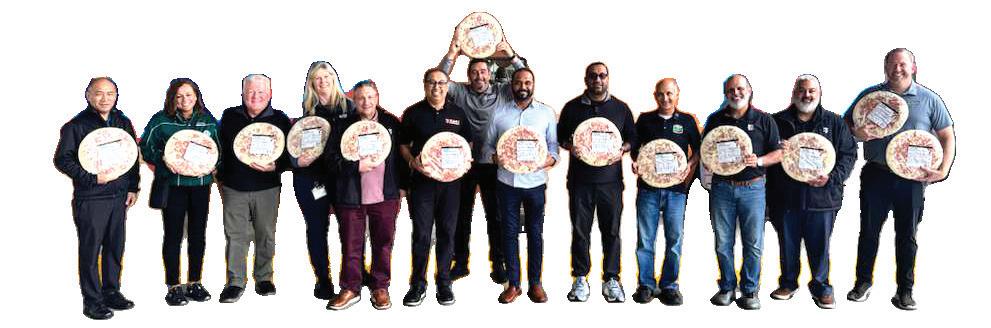
The Northern California FOA is proud to announce another successful year of giving back to our community through our annual pizza donation to the Sacramento Food Bank. This year, our collective efforts resulted in 131 boxes of pizza donated — the equivalent of 1,572 whole pizzas, representing a retail value of over $17,000.
While this year’s donation was slightly lower than last year’s contribution of 185 boxes (2,220 whole pizzas), the impact is just as meaningful. With ongoing cuts to EBT programs, the need for community support is greater than ever. Our donation helps ensure that families facing food insecurity can
warm, comforting meal during difficult times.
A heartfelt thank you to the entire Northern California FOA team, whose dedication and generosity made this possible. Special appreciation goes to Nalesh Aman Rai for his leadership and coordination in making this initiative a success.
Our annual pizza donation is just one way we reaffirm our commitment to the communities we serve. Together, we continue to make a meaningful difference — one meal, one family, and one act of kindness at a time.
— Manish Garg,
Member News
continued from page 11
percent, followed by Beverages (4.8 percent), Pet Care (3.7 percent), Beauty (2.8 percent), Frozen (2.4 percent), General Food (1.6 percent), and General Merchandise (0.9 percent).
Over the past five years, store brand dollar sales jumped $64.8 billion, or 30 percent, and dollar share rose from 19.1 percent to 21.3 percent, while unit share climbed to a record 23.5 percent, according to PLMA/Circana Unify+ data.
C-Store Operators Split on 2026 Outlook
U.S. convenience store retailers are heading into 2026 with a noticeably more divided view of the economy, reported Convenience
Store News. In the publication’s 2026 Forecast Study, the share of operators with a neutral outlook climbed 11 points year over year to 37 percent, while the share with a positive outlook dropped 9 points to 28 percent. Slightly fewer retailers described their outlook as outright negative (35 percent) compared to last year, but many respondents still pointed to a turbulent political climate, cautious consumer spending, and the continued effects of tariffs and inflation.
Even with that uncertainty, many operators still see a solid year ahead for their businesses. Nearly half of surveyed retailers (49 percent) rated their expectations for 2026 as a 4 or 5 on a five-point scale, while only 5 percent selected a 1 or 2. About
six in 10 operators expect positive total sales growth, though optimism is cooling, with the share projecting sales increases down 7 points and the share expecting a decrease jumping 10 points to 13 percent.
Retailers were less confident on profits, with 44 percent expecting profits to stay the same and 16 percent expecting a decline, while only 40 percent forecast profit growth. Inflation and broader economic issues remained the top concern, followed by rising operating costs, tobacco and e-cigarette regulations, motor fuel prices, and labor turnover, while many operators also identified dollar stores as their biggest competitive threat and said they plan to invest in technology, mobile




Amazon recently submitted plans for a 229,000-square-foot big-box retail store in Orland Park, Illinois—larger than a typical Walmart Supercenter— that would sell groceries, household essentials, and general merchandise, reported CNBC. The proposal includes a limited warehouse component and space for delivery drivers to pick up orders. • Albertsons is expanding an 80-store pilot that uses beacon trackers on shopping carts and baskets to measure how long customers dwell near in-store retail media displays, reported Grocery Dive The company said the data is anonymous and not tied to loyalty accounts, and it plans to scale the test to about 800 stores this year as it works to prove whether “dwell time” can reliably translate into incremental sales and stronger cross-merchandising opportunities. • Ford Motor is partnering
continued on page 49
ordering, delivery, and expanded foodservice programs.
Suppliers Feel Better About 2026 Than Retailers
Convenience-store suppliers and distributors are entering 2026 with a slightly more upbeat outlook than they had a year ago, and they’re also more optimistic than retailers about what’s ahead, reported Convenience Store News. In the 2026 CSNews Forecast Study, 51 percent of suppliers and distributors rated their outlook positively on a five-point scale, while 36 percent were neutral and just 13 percent were negative.
Even so, the group remains wary of the same economic pressures that have been hanging over the industry for several years, including volatile fuel prices, tariffs, and
Avanti Is Your Magazine
Avanti Magazine was created in 1981 by franchisees, for franchisees. It represents your voice within the 7-Eleven universe and requires your participation to remain relevant to the ideas, information, and knowledge floating about the franchisee community. You can contribute to the success of Avanti Magazine by submitting any of the following:
> Articles on any 7-Eleven topic that may be of interest to other franchisees.
> Your FOA events and Board meeting calendars.
> FOA event photos with a short description (who, what, where, when, and why).
> Store or community event photos with captions.
> Any combination of the above.
Please send your submissions to avantimag@ncasef.com.
As former National Coalition Chairman Bill Schuessler famously said, “None of us is as great as all of us together, so let’s stay tightly knit together.”
uncertainty around interest rates and the Federal Reserve. When asked specifically about the U.S. economy, 46 percent said they feel very or slightly positive about 2026, down six points from the previous year, while 32 percent said they feel negative, a jump of more than 10 points. Suppliers and distributors were also less confident about their own product categories than they were in last year’s study, with 56 percent still feeling positive but representing a 14-point drop year over year.
Despite the mixed outlook, nearly two-thirds of suppliers and distributors who work across multiple channels said business conditions in convenience remain positive (64 percent), ahead of grocery (56 percent), mass merchandise (55 percent), and restaurants (46 percent). Looking ahead, the biggest concerns
continued on page 43

WARNING: This product contains nicotine. Nicotine is an addictive chemical.
they expect to impact sales and profitability include tariffs and trade policies, consumer spending declines, inflation, new product development, and rising operational costs, while e-commerce ranked near the bottom as a major threat.
Consumer Confidence Slides As Price Pressures Linger
U.S. consumer confidence fell again in December as Americans stayed worried about high prices and the impact of sweeping tariffs, reported the Associated Press. The Conference Board’s Consumer Confidence Index dropped 3.8 points to 89.1, marking the fifth straight monthly decline and bringing confidence close to where it stood in April when tariffs were first rolled out. While short-term expectations for income, business conditions, and the job market held steady at 70.7, that reading remained well below 80—a level that can signal recession risk—and has now stayed under that mark for 11 straight months. Consumers also grew more negative about their current situation, with the index measuring present conditions tumbling 9.5 points to 116.8.
Survey responses showed that inflation remained the top concern, with tariffs also weighing on how consumers view the months ahead. Job market confidence weakened as well, with 26.7 percent of respondents saying jobs were “plentiful,” down from 28.2 percent in November, while 20.8 percent said jobs were “hard to get,” up from 20.1 percent. The article noted that the labor market has been stuck
in a “low hire, low fire” pattern as businesses hold back amid tariff uncertainty and the lingering effects of higher interest rates.
Aldi Pushes Deeper Into the U.S. Market
Aldi plans to open more than 180 new U.S. stores in 2026 as shoppers across income levels continue hunting for lower grocery prices, reported CNBC. The German discounter said the expansion will include new locations in areas traditionally dominated by major supermarkets and big-box retailers, as it builds on what was already its biggest growth year since entering the U.S. in 1976. Aldi opened nearly 200 stores in 2025 and ended the year with 2,614 locations, making it the third-largest grocer in the country by store count behind only Walmart and Kroger. Along with the store growth, Aldi said it will relaunch its website and expand into Maine, which will become its 40th state, and it plans to add new distribution centers in Florida, Arizona, and Colorado over the next five years.
“Aldi plans to open more than 180 new U.S. stores in 2026 as shoppers across income levels continue hunting for lower grocery prices.”
BP Plans to Sell Some Company-Operated Stores
BP is moving ahead with a plan to sell about 10 percent of its
company-operated convenience stores as part of a broader effort to cut $2 billion in expenses by 2026, reported C-Store Dive. The company’s CEO said 60 percent of the affected stores are already in the contractual stage, though he did not specify which markets will see sales. The company has also shed thousands of corporate jobs this year, with many of the reductions coming from its customers and products division, which includes its global convenience retail business.
While BP didn’t confirm whether its U.S. brands—TravelCenters of America, ampm, and Thorntons— would be part of the divestiture, the U.S. remains one of the company’s strongest retail markets. BP also stated that it is rolling out a “targeted business improvement plan” at TA to offset margin pressure and strengthen cash flow.
Layoffs Hit Highest January Level
Since 2009
U.S. employers announced 108,435 layoffs in January—up 118 percent from a year earlier and 205 percent from December—marking the highest January total since 2009, reported CNBC. At the same time, companies announced just 5,306 new hires, also the lowest January figure since 2009, when Challenger, Gray & Christmas began tracking the data. Challenger workplace expert Andy Challenger said the surge suggests many of the cuts were planned late in 2025, signaling that employers are “lessthan-optimistic about the outlook for 2026.” While the current labor market narrative has centered on
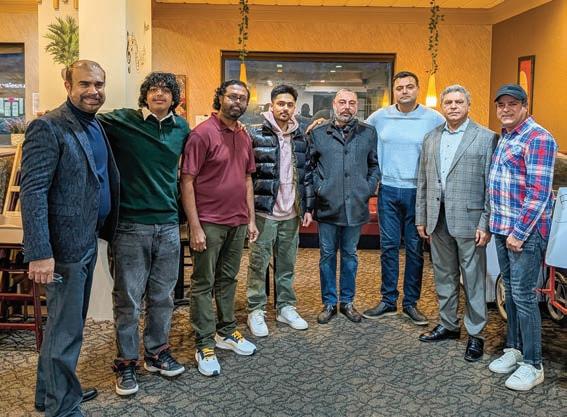

Detroit FOA Holiday Dinner Brings Members Together
The Detroit FOA hosted its Holiday Dinner on December 13, 2025. The event was very well attended by a large number of franchisees. We were honored to have Area Leader Adrian Poulisse and his wife join us for the evening. The event was thoroughly enjoyed by all, featuring great company and an excellent dinner, making it a truly memorable and successful gathering.
The Detroit FOA Board sincerely thanks all who attended and extends warm wishes for continued success in 2026.
— Abid Jamil, Detroit FOA Executive Vice President
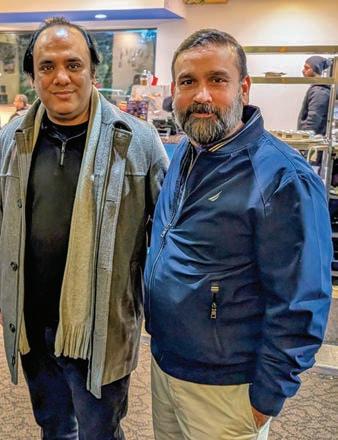

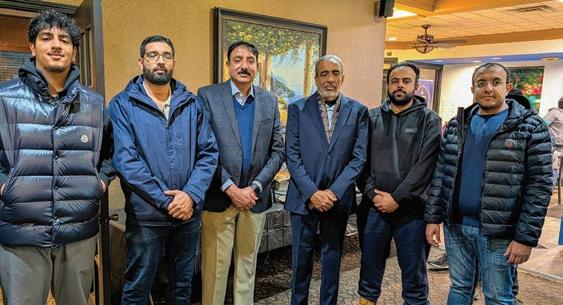

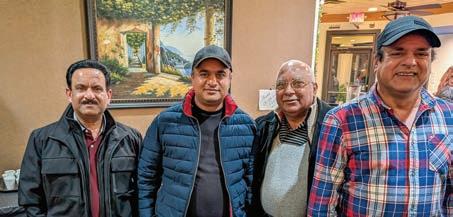
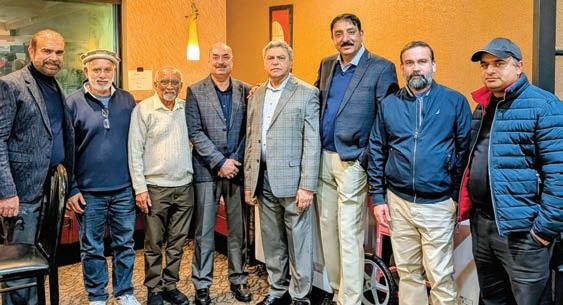

“no-hire, no-fire,” the Challenger report points to a growing layoff trend heading into the first quarter. The report comes alongside other signs of a cooling job market, even if the official data has not yet shown a major breakdown. High-profile job cut announcements from companies like Amazon, UPS, and Dow have fueled concerns, with transportation posting the highest sector total in January due largely to UPS plans to cut more than 30,000 workers, while technology ranked second after Amazon said it would shed 16,000 mostly corporate jobs.
Separately, the Bureau of Labor Statistics reported that job openings fell to 6.54 million in December, down 386,000 from the prior month and more than 900,000 since October, pushing the ratio of available jobs to unemployed workers down to 0.87-to-1. The slowdown also showed up in private-sector hiring, with ADP reporting that employers added just 22,000 jobs in January.
Adult Beverage Sales Shift At C-Stores
Adult beverage sales in convenience stores are moving beyond traditional beer promotions and into a more premium, choicedriven category, reported CStore Decisions. New NRS same-store sales data from late 2025 shows growth coming less from sheer volume and more from shoppers seeking specific formats and higher-value options, especially ready-to-drink (RTD) cocktails. RTDs have “moved from novelty to core,” with strong dollar growth even as overall same-store sales growth moderates seasonally.
What’s especially notable is that these products are holding premium price points without losing velocity, suggesting consumers are intentionally choosing c-stores as a destination for elevated adult beverages—not just grabbing something cheap and convenient. For operators, that shift changes the category playbook, with RTDs increasingly functioning as anchor items that justify more facings, seasonal rotations, and a more curated assortment.
At the same time, non-alcoholic beer is gaining real traction, and the data suggests it is bringing new shoppers into the category rather than simply stealing sales from traditional beer. NRS data from November 2025 indicates non-alcoholic beer is generating incremental sales, with consumers often purchasing it as a deliberate lifestyle choice tied to moderation and wellness.
“Adult beverage sales in c-stores are moving beyond traditional beer promotions and into a more premium, choicedriven category.”
Crackdown On HempDerived THC Drinks
U.S. lawmakers recently voted to shut down a loophole that allowed companies to sell hemp-derived THC beverages, a move that could reshape a fast-growing category, reported C-Store Dive. The new rules cap THC at 0.4 milligrams per container starting November 13, 2026, a limit the U.S. Hemp
Roundtable says would eliminate roughly 95 percent of today’s hemp products. Brands like Cann, Wynk, and Tilray had leaned on the 2018 Farm Bill’s unclear definition of “dry weight” to legally sell drinks with stronger psychoactive effects, and those products have quickly eaten into traditional alcohol sales as more customers shift away from drinking.
The tighter rules arrive just as the category was gaining traction in retail. Target recently began carrying THC drinks, and Tilray reported record quarterly revenue while claiming a 60 percent share of the North American hemp-derived THC market. Beverage alcohol groups, worried about shrinking sales, pushed aggressively for regulation and told Congress they were ready to support rules that “ensure a safe, orderly marketplace.” Brands like Tilray argue that harsh limits will only drive customers to unregulated sellers and said, “overly restrictive measures do not work.”
Walmart Joins The $1 Trillion Club
Walmart recently became the first retailer to reach a $1 trillion market valuation as its stock climbed on a year-long rally that has pushed shares up nearly 26 percent, reported Reuters. The milestone reflects Walmart’s ability to pull in higher-income shoppers looking for value and convenience while still holding onto its core base of lowerincome customers—an approach that has helped it outperform many competitors over time.
Over the past decade, Walmart’s stock has surged 468 percent, beating the S&P 500’s 264 percent gain, as the company expanded its
SLIN#
online marketplace to more than half a billion items, rolled out onehour delivery, launched Walmart+ to compete with Amazon Prime, and built a $4 billion advertising business that has boosted margins. Walmart’s early, aggressive investments in AI—especially in supply-chain automation, inventory forecasting, and search—have helped it beat U.S. same-store sales estimates for 15 straight quarters, based on LSEG data.
The company now accounts for about $1 of every $4 spent on groceries in the U.S., and investors have continued rewarding its steady performance as inflation pressures, tariffs, and economic uncertainty keep value-focused retailers in demand. Walmart was added to the Nasdaq-100 in January, replacing AstraZeneca.
Japan Tightens Stance On Unsolicited Takeover Bids
Japanese companies are not required to accept unsolicited takeover bids—even when the offer includes a large premium—amid growing government concern that aggressive acquisitions could put critical technology at risk, reported Reuters. The Ministry of Economy, Trade and Industry (METI) plans to update its merger and acquisition guidelines in May to more clearly affirm a board’s right to reject bids if it believes current management can better increase corporate value or if a buyer could later strip assets or extract technology.
The move comes after Japan’s 2023 M&A code helped spark a wave of unsolicited offers by discouraging excessive
Member News
defensive tactics and encouraging consolidation, but the new emphasis may frustrate investors who want boards to prioritize shareholder returns and worry that “corporate value” can be used as a vague excuse to block legitimate interest. METI official Hiroyuki Sameshima said the update is not intended to promote takeover defenses and noted that shareholders still hold the ultimate decision based on disclosures from both the board and the bidder. M&A activity involving Japanese firms reached a record 35.7 trillion yen ($228 billion) last year, according to Recof Data, and eight unsolicited bids were launched, with half succeeding.
Murphy USA Reports Store Growth
Murphy USA opened 29 new stores in the fourth quarter of 2025 and said it had two more locations open year-to-date with 18 additional sites currently under construction, reported NACS Daily. The retailer posted net income of $141.9 million for Q4 2025, essentially flat with $142.5 million in Q4 2024, while full-year net income totaled $470.6 million, down from $502.5 million in 2024. Murphy USA said it increased merchandise contribution dollars 2.1 percent in the quarter to $213.2 million, with average unit margins at 19.6 percent, and grew full-year merchandise contribution dollars 4.2 percent to $869.0 million as unit margins rose to 20.2 percent in 2025.
Fuel performance also improved, with total fuel contribution reaching 34.3 cents per gallon in Q4 2025 compared to 32.5 CPG a year earlier, while total retail
gallons increased 3.1 percent even as same-store gallon volumes dipped 0.6 percent. Murphy USA said higher operating expenses reflected the costs of net new stores along with higher employeerelated expenses and maintenance at existing locations, and the company noted it is prioritizing new-to-industry construction while keeping flexibility for small bolt-on acquisitions in target markets.
Gen Z Fuels
A Boom in Iced Coffee
Gen Z is turning cold coffee into an everyday habit, pushing convenience stores to rethink how they market and merchandise iced beverages, reported CStore Decisions. Gen Z (born 1997–2012) now represents one of the most influential groups of coffee drinkers, and data from the National Coffee Association’s “Fall 2025 National Coffee Data Trends” shows just how strong that demand has become. Nearly half of 18- to 24-year-olds drank a specialty coffee in the past day, and 40 percent of that younger group had a cold or iced coffee beverage in the past 24 hours—more than any other demographic. Gen Z also leads in frozen blended coffee drinks, with 17 percent reporting they had one in the past day. The NCA summed up the momentum by pointing to the rapid rise of ready-to-drink coffee, noting that 19 percent of past-day coffee drinkers now prepare coffee this way, representing a jump of nearly 19 percent since 2024.





































































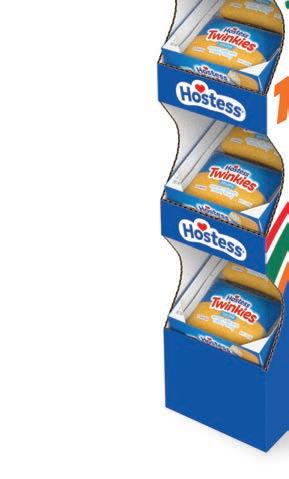


with Amazon to let its franchised dealers sell certified pre-owned vehicles through Amazon’s platform, allowing customers to secure financing, begin paperwork, and schedule pickup at participating dealerships, reported CNBC. More than 160 of Ford’s roughly 2,900 U.S. dealers have begun the onboarding process, with vehicles currently available in Los Angeles, Seattle, and Dallas and additional markets planned in the coming months. • Seven-Eleven Japan has partnered with luggage-storage platform Ecbo Cloak to let travelers store bags at more than 370 stores across Japan, reported MobilityPlaza. Customers can reserve space through the Ecbo Cloak app or website, pay online, and drop off luggage around the clock at participating locations, helping address the shortage of coin lockers near busy stations and tourist areas. • Keurig Dr Pepper is carving out its coffee business after acquiring JDE Peet’s and expects the newly separated unit to generate about $200 million in supply-chain savings over three years, reported Food Dive. The company plans to boost sourcing resiliency, consolidate manufacturing, and streamline logistics as it weathers rising tariffs, higher bean prices, and climate-driven harvest declines. • The U.S. Mint pressed the final batch of pennies in Philadelphia on November 12 as the government ended production to save money, noting that each 1-cent coin was costing nearly four cents to make, reported the Associated Press. Retailers are already adjusting to the abrupt phase-out, with some rounding prices, others asking for exact change, and banks rationing supplies as billions of pennies remain in circulation but won’t be replaced. • Dollar General is expanding its proprietary myDG Delivery same-day service to more than 17,000 stores—many in rural communities—positioning its dense store network as a direct competitor to Amazon for fast delivery, reported Chain Store Age. The retailer said about 75 percent of the U.S. population lives within five miles of a Dollar General. • Target recently
New Year Brings Minimum Wage Hikes
Nearly 20 states raised their minimum wage on January 1, 2026, increasing pay for millions of workers and adding an estimated $5 billion in wages over the course of the year, reported ABC News. The increases impacts about 8.3 million workers and reflect a mix of inflationlinked adjustments and scheduled wage hikes that take effect at the start of each calendar year, according to the Economic Policy Institute. After the new rates took effect, Washington has the highest statewide minimum wage in the country at $17.13 per hour, while New York moves to $17 per hour for workers in New York City, Long Island, and Westchester, and $16 per hour for the rest of the state.
The 19 states that increased their wage floors include Arizona, California, Colorado, Connecticut, Hawaii, Maine, Michigan, Minnesota, Missouri, Montana, Nebraska, New Jersey, New York, Ohio, Rhode Island, South Dakota, Vermont, Virginia, and Washington. The article also states that nearly 50 cities and other localities implemented their own minimum wage hikes, including West Hollywood, California, which moved to $20.25 per hour, and Tukwila, Washington, which reached $21.65 per hour— described as the highest local wage floor in the country. Meanwhile, 20 states concentrated largely in the South saw no change because they either have no state minimum
wage or their minimum wage does not exceed the federal $7.25 rate, which has not been raised since 2009 and has lost more than 30 percent of its value due to inflation.
Credit-Card Fee Deal Sparks Pushback
Visa and Mastercard agreed to a revised $38 billion settlement that would lower swipe fees for five years and give merchants more flexibility in which types of cards they accept, reported Reuters. The deal, meant to resolve two decades of antitrust litigation, would slightly reduce fees that averaged 2.35 percent in 2024, cap standard consumer rates at 1.25 percent for eight years, and allow surcharges of up to 3 percent.
However, major retail groups— including the National Retail Federation and the Merchants Payments Coalition—say the agreement still leaves businesses paying too much, especially for high-cost rewards cards, and does not create meaningful pressure on banks to bring rates down. Some groups argue the proposed reforms fail to fix long-standing problems like the “Honor All Cards” rule and limits on steering customers to cheaper payment options, while supporters like the Electronic Payments Coalition claim the settlement outperforms proposals in Congress. Visa and Mastercard denied wrongdoing, and experts for the merchant plaintiffs say the new rules could save merchants up to $224 billion over time.

Introducing Bear Naked® To-Go Packs! They’re made from the finest, Non-GMO Project Verified ingredients in the most craveable flavors, your customers won’t be able to keep their paws off them!
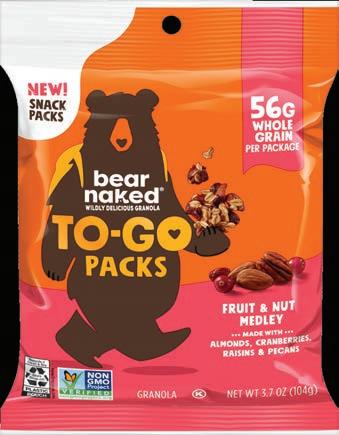

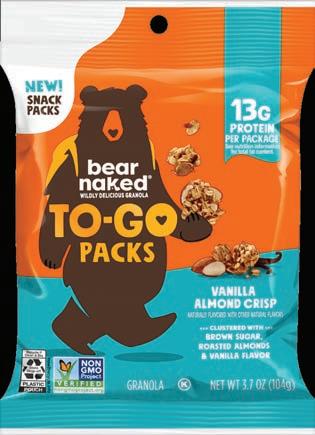








Bear Naked® Fruit & Nut Medley
Bear Naked® Vanilla Almond Crisp
DePinto Retires As CEO
Longtime SEI CEO Joe DePinto retired at the end of December, marking a major leadership change as the company’s parent, Seven & i Holdings, continues a broader overhaul of its business, reported Bloomberg. DePinto, who led 7-Eleven for roughly two decades, played a central role in expanding the chain’s North American footprint through major acquisitions, including the $3.1 billion purchase of Sunoco LP gasoline stations in 2018 and the $21 billion acquisition of Speedway from Marathon Petroleum in 2021.
Seven & i said DePinto was replaced on an interim basis by U.S. President Stan Reynolds and Chief Operating Officer Doug Rosencrans, while the company conducts a formal search for a permanent successor.
The leadership transition came as Seven & i undergoes a restructuring that includes broader changes at the top of the organization. Seven & i CEO Stephen Dacus said the

“Longtime SEI CEO Joe DePinto retired at the end of December, marking a major leadership change as Seven & i Holdings continues a broader overhaul of its business.”
company was pushing ahead with “transformational leadership, capital, and business initiatives to enhance our performance,” and reiterated that the retailer was at a “turning point,” with plans to add more than 2,000 new stores to drive growth. At the same time, Seven & i faces inflation-driven consumer pressure in both Japan and the U.S., and lowered its operating profit forecast for the fiscal year ending in February to ¥404 billion on revenue of ¥10.6 trillion.
Seven & i Doubles Down On Marketing & Cost Control
Seven & i Holdings is leaning into a tighter, more coordinated merchandising and marketing strategy in Japan while continuing to push value and cost control in North America, reported Convenience Store News . In Japan, the company said it is already seeing gains from its “Co-Creation” marketing approach, which brings together merchandising, operations, marketing, and communications teams to align strategy and messaging using outside expert insights.
CFO Yoshimichi Maruyama said the company is strengthening “daily merchandise” by focusing on categories instead of individual SKUs, while also rolling out TV commercials built around a new concept. To reach younger consumers, Seven & i is also using short-form social media videos and more interactive communication tied to merchandising initiatives.

The company said those efforts are helping boost daily merchandise sales and increasing store visit frequency, with younger generations driving much of the improvement.
In North America, Seven & i said fuel market volatility hurt 7-Eleven Inc.’s operating income during the third quarter, after gains in the first half of the year, as more stable retail gasoline prices limited margin expansion opportunities. Still, the company said 7-Eleven strengthened its value-focused offers and continued executing transformation initiatives, which contributed to a $13 million increase in merchandise profit during the quarter.
Maruyama said the company’s “Cost Leadership” work has also produced results, including a cumulative cost reduction of $119 million year-over-year through productivity improvements and insourcing store maintenance. Same-store sales improved during Q3 as foot traffic increased and shoppers built larger baskets, and while the U.S. government shutdown from Oct. 1 to Nov. 12 created challenges, Seven & i said sales recovered afterward and were positive in December. Looking ahead, the company said it will keep pushing fresh food and beverage growth, while some restaurant openings and private brand launches have been delayed into the next year due to permitting, licensing, and tariffrelated headwinds.














SEI NEWS
$14 Million Raised For Children’s Miracle Network
SEI recently announced that it raised more than $14 million in 2025 for Children’s Miracle Network to support 113 local children’s hospitals across the country. The total was driven by in-store donation campaigns across 7-Eleven, Speedway, and Stripes stores, with Speedway locations fundraising yearround and select 7-Eleven and Stripes stores running seasonal campaigns during the summer and holiday periods. The 34th Miracle Tournament and Celebration Dinner in Enon, Ohio also played a major role, contributing more than $3 million in June 2025.
Treasa Bowers, SEI executive vice president and chief people and sustainability officer, said the
dropped prices on 3,000 food, beverage, and household essentials to keep budget-conscious shoppers from drifting to Walmart, Aldi, and other discount rivals, reported Axios. The retailer also brought back its under-$20 Thanksgiving meal bundle and pushed value messaging as families struggle with rising costs, tighter budgets, and growing food insecurity. • Coca-Cola said it will push harder on product innovation in 2026 after fourth-quarter revenue rose 2 percent to $11.8 billion but came in below Wall Street’s $12.05 billion forecast, reported NACS Daily The company plans to stick with its current pricing strategy by offering more
company plans to expand in-store fundraising in 2026 by offering year-round campaigns across all 7-Eleven, Speedway, and Stripes locations. Since 1991, SEI has raised more than $200 million for Children’s Miracle Network, with the company noting that every dollar raised stays in the community and benefits the store’s local children’s hospital.
26 Brands Selected For 2026
“Brands with Heart” Showcase
SEI has recently selected 26 emerging brands to participate in its 2026 Brands with Heart showcase. Now in its seventh year, the program is designed to connect early-stage consumer brands with potential retail opportunities and expanded distribution across 7-Eleven, Speedway, and Stripes stores

nationwide. This year’s participants were chosen from more than 700 applicants through a competitive review led by the company’s 7-Ventures & Emerging Brands team.
The company said the selected brands took part in virtual preparation sessions before traveling to the company’s Store Support Center in Irving, Texas, where founders participated in product sampling, one-on-one pitch meetings with category teams, and discussions on merchandising strategy and scaling in the convenience channel. Following the showcase, select participants will be invited to launch regional in-store tests during the first half of the year to evaluate performance and consumer response.
sizes and price points, including its 7.5-ounce mini cans priced under $2 in U.S. convenience stores. • Fresh-format grocers posted the strongest yearover-year increase in store visits in 2025, with traffic up 7.1 percent, 9.8 percent, 10.5 percent and 10.9 percent in each quarter, while discount retailers and wholesale clubs also outpaced traditional grocery, which rose 2 percent, reported Progressive Grocer. • Pizza Hut will close 250 underperforming U.S. restaurants in the first half of 2026 as Yum Brands continues a formal review of options for the chain, reported ABC News. Yum said Pizza Hut’s U.S. samestore sales fell 5 percent last year, even
as international same-store sales rose 1 percent and the brand ended 2025 with 19,974 stores worldwide. • The U.S. Postal Service recently clarified that a postmark date represents when a mail piece is first processed at a facility rather than when it is deposited in a mailbox, reported the National Society of Tax Professionals. This distinction is expected to result in more frequent dating discrepancies as the agency centralizes operations into fewer regional hubs, meaning time-sensitive documents like tax filings or bill payments could be marked late even if mailed on time.
Vendor FOCUS
Big Bubbles, Bigger Sales
Tootsie Roll Industries, the renowned Chicagobased confectionery leader with a legacy spanning over a century, is at the forefront of innovation in the bubble gum sector. Known for timeless brands such as Dubble Bubble and Charms Blow Pop, the company consistently delivers products that blend nostalgia with fresh appeal, driving category growth and consumer loyalty in convenience stores nationwide. Now, Tootsie Roll is thrilled to introduce the Dubble Bubble 12 Gum-Ball Tube, a premium offering featuring 12 assorted fruit-flavored gum balls engineered for superior bubble-blowing performance and delightful fun. This product exemplifies Tootsie Roll’s commitment to quality, with its vibrant packaging and mouthwatering flavors that captivate both young and adult consumers. Recent data underscores its market impact: Convenience store dollar sales for the Dubble Bubble 12 Gum-Ball tubes have surged by 26.1 percent year-over-year, significantly outperforming the total bubble gum category’s 0.9 percent growth (Circana Data, 52 weeks ending 10/02/25). Retailers are encouraged to position these eye-catching tubes at the counter to capitalize on impulse purchases and maximize sales potential.
Limited-Edition Phorm Energy Cherry Slush Debuts Exclusively At 7-Eleven
Phorm Energy is turning heads with a bold new Cherry Slush flavor that shoppers can find only at 7-Eleven, Speedway, and Stripes stores. This limited-edition release gives franchisees a fresh traffic-driver with a story customers love—every can sold from October 27, 2025 through February 1, 2026 unlocked a donation of $0.33 (or $3.98 per 12-pack) to Folds of Honor, supporting families of fallen or disabled military members and first responders.
Produced by Anheuser-Busch with the backing of 1st Phorm and Ultimate Fighting Championship CEO Dana White, this exclusive flavor builds on Phorm Energy’s explosive momentum, arriving just months after the brand became the #1 best-selling 7-Eleven Dollar Deals energy drink of all time.
Phorm Energy Cherry Slush is a 7-Eleven exclusive flavor.
Cheez-It Goes Mega Crunch
Introducing Cheez-It Crunch, a new innovation that combines 100 percent real cheese with intense flavor, a bigger, more satisfying crunch and an unexpected shape designed to deliver bold taste in every bite.

Building on this momentum, the success of Tootsie Roll’s Charms Blow Pop Inside Out peg bag highlights the transformative power of playful innovation in gum. This clever inversion— featuring gum on the outside and a lollipop center crushed lollipop on the inside, has bubble gum lovers buzzing and asking for more! By reimagining classic treats, Tootsie Roll empowers retailers to offer unique, high-margin items that stand out on shelves.
As showcased in Tootsie Roll’s dynamic 7-Eleven ad campaign, “Big Bubbles, Bigger Smiles!”, adding both products today can elevate your confectionery assortment. These offerings not only drive foot traffic but also foster repeat visits through their fun, shareable nature. With proven sales uplift and broad appeal, Tootsie Roll continues to support partners in achieving stronger performance in a competitive market.
Snackers are seeking multi-sensorial snacking experiences that deliver a big bite, intense flavor and unique texture. Using social trends as one of many inputs in food development, Kellanova’s innovation teams found that there has been a 55 percent increase in crunchy snack social videos over the past year (1), including growing demand for new and adventurous food experiences. Cheez-It Crunch delivers on this demand, offering bold flavor, satisfying crunch and exciting new texture.
Cheez-It Crunch delivers the signature cheesy flavor fans know and love, but shakes up snack time with a new crave-worthy taste and a mega crunch in every bite. Its bold new shape— twisted, layered and packed with visible seasoning—creates a flavor-forward snacking experience designed to satisfy cravings. Cheez-It®Crunch comes in two deliciously daring flavors, all made with 100 percent real cheese:
Cheez-It Crunch is available in single-serve bags and featured in a 2/$5 promo.
• Cheez-It Crunch Kick’n Nacho Cheese: Imagine the taste of tangy nacho cheese, now in one crunchy, cheesy bite. Classic cheddar cheese is layered with a kick of nacho spice, for a satisfyingly spicy and savory flavor.
• Cheez-It Crunch Zesty Jalapeno Cheddar: Combines the iconic CheezIt cheddar taste with a bold kick of spicy jalapeno. The initial cheesy flavor is followed by a zesty heat that builds with each bite.
• Fans can get their hands on CheezIt Crunch Kick’n Nacho Cheese and Cheez-It Crunch Zesty Jalapeno Cheddar in single-serve bags at 7-Eleven stores, which will also be featured in P2’s in-store promo of 2/$5.00 from March 4, 2026 – April 28, 2026.
(1) According to social data from Tubular for “Crunchy snack/chip,” 55 percent increase in video upload count over the past 12 months.
Vendor FOCUS
Hostess’ new Frosted Sugar Cookie Cupcake Single Serve is an easy add-on for impulse shoppers.
Hostess Unveils New Frosted Sugar Cookie Cupcake
Hostess is expanding its single-serve lineup with the new Frosted Sugar Cookie Cupcake, a sweet, comfort-driven treat designed for today’s on-the-go snacker. Frosted Sugar Cookie tested as the #2 vanilla flavor overall, with 81 percent of Millennial families saying they’re interested, and within the core Hostess cupcake lineup, the Frosted Sugar Cookie Cupcake already ranks #1 in units sold per store per week. That kind of performance matters in convenience stores, where snacks remain the top impulse department and eight in 10 shoppers pick up an impulse item.
The new Frosted Sugar Cookie Cupcake taps directly into what consumers are craving right now—nostalgia, comfort, and indulgence. With 33 percent of consumers eating more comfort foods and 23 percent eating more treat-style foods, Hostess is backing the launch with a strong marketing push, including digital advertising designed to stay top-of-mind with high-value c-store shoppers. The item also fits naturally into common c-store baskets, pairing well with coffee, energy drinks, fountain beverages, and cold dispensed drinks— already included in 17 percent of Hostess baskets.
Mondelēz Introduces New Twists On Snack-Time Favorites
New innovations are set to wow your customers with their favorite snacks delivered in new ways.
First up, convenience shoppers LOVE RITZ Bits—with a strong repeat rate of 40.5 percent (1)—but just wait until they get a taste of the new RITZ Bits Flavor Charged Cheese Pizza! These delicious snacks deliver an overload of pizza flavor in every bite and are a sure delight for any RITZ Bits fan!
But the delicious fun is just getting started. CHIPS AHOY! is set to wow crowds with their new CHIPS AHOY! Mini Candy Blast. These mini-size treats pack mega flavor into every crunchy, candypacked bite. Consumers can’t wait—82 percent of consumers said they’d buy! (2)
RITZ Bits Cheese Pizza, CHIPS AHOY! Mini Candy Blast, and SOUR PATCH KIDS Strips and Chews give shoppers exciting new ways to enjoy the brands they already love.
Last, but not least: SOUR PATCH KIDS are at it again with TWO totally new ways to get your sour then sweet on: SOUR PATCH KIDS Strips and Chews! SOUR PATCH KIDS Strips beat competitors by +15 points for the “Has Great Flavor” attribute (3) AND 81 percent of consumers expect SPK Strips to be different than existing strips due to their unique combination of format, flavor, and brand. (4) Stock up now and watch your customers chow down later!
(1) Nielsen FY 2024 % 2+ Buyers in Convenience
(2) Suzy Minis Flavors Test 2024
(3) US Brands Tracking, NCC Sept 2024
(4) NIQ Bases 240435 SPRK Strips

Columbia Pacific FOA
Trade Show
Sheraton Portland Airport Hotel
Portland, Oregon
April 14, 2026
Phone: 360-513-0289
Greater Northwest FOA
Annual Trade Show
Meydenbaur Center
Bellevue, Washington
April 15, 2026
Phone: 206-276-0226
FOA Of Greater Los Angeles Trade Show
Ontario Convention Center
Ontario, California
May 6, 2026
Phone: 562-567-1660
Annual Golf Tournament
Black Gold Golf Club
Yorba Linda, California
May 7, 2026
Phone: 562-567-1660
Chicagoland FOA
Charity Golf Outing
St. Andrews Golf & Country Club
West Chicago, Illinois
May 12, 2026
Phone: 847-595-1596
Summer Expo
Holiday Inn & Suites
Chicago North Shore (Skokie)
Skokie, Illinois
May 13, 2026
Phone: 847-595-1596
UFOLINY FOA Trade Show
Hilton Long Island/Huntington
Melville, New York
May 21, 2026
Phone: 630-886-6342
FOA EVENTS
Midwest FOA
Golf Outing
Venue TBD
May 27, 2026
Phone: 847-999-5558
Trade Show
Venue TBD
May 28, 2026
Phone: 847-999-5558
Eastern Virginia FOA
Annual Trade Show
Venue TBD
June 3, 2026
Phone: 757-971-2828
Golf Tournament
Venue TBD
June 4, 2026
Phone: 757-971-2828
South Texas FOA Trade Show
Canyon Golf Course
San Antonio, Texas
June 8, 2026
Phone: 623-533-2485
Charity Golf Tournament
Canyon Golf Course
San Antonio, Texas
June 9, 2026
Phone: 623-533-2485
San Diego FOA
Annual Charity
Golf Tournament
Rancho Bernardo Inn
San Diego, California
June 10, 2026
Phone: 619-713-2411
Chesapeake Division FOA Trade Show
Hotel Belvoir Springfield (Hilton)
Springfield, Virgina
June 11, 2026
Phone: 571-344-2781
San Fran/Monterey Bay FOA
Golf Tournament
Cinnabar Hills Golf Club
San Jose, California
June 16, 2026
Phone: 510-289-4948
Trade Show
Paradise Ballrooms: Banquet
Hall & Event Center
Fremont, California
June 17, 2026
Phone: 510-289-4948
Rocky Mountain FOA
Golf Tournament
Venue TBD
June 23, 2026
Phone: 719-661-1048
Trade Show
Venue TBD
June 24, 2026
Phone: 719-661-1048
Delaware Valley FOA
Trade Show
Venue TBD
July 1, 2026
Phone: 215-852-4738
Baltimore FOA
TriState Vendor
Appreciation Day
Restaurante Tio Pepe
Baltimore, Maryland
July 7, 2026
Phone: 443-506-8380
TriState Trade Show
Venue TBD
July 8, 2026
Phone: 443-506-8380
Chicagoland FOA
Annual Picnic
Venue TBD
July 19, 2026
Phone: 847-595-1596
Keystone FOA
Annual Trade Show
Venue TBD
Philadelphia, Pennsylvania
August 4, 2026
Phone: 609-353-7872
Greater Oregon FOA
Annual Golf Tournament
Pumpkin Ridge Golf Club
North Plains, Oregon
August 17, 2026
Phone: 503-516-3483
Annual Trade Show
Pumpkin Ridge Golf Club
North Plains, Oregon August 18, 2026
Phone: 503-516-3483
Baltimore FOA
TriState Trade Show
Venue TBD
September 10, 2026
Phone: 443-506-8380
Florida West Coast FOA Trade Show
Venue TBD
September 23, 2026
Phone: 727-415-2771
Metro New Jersey FOA
Vendor’s Golf Outing
Venue TBD
September 23, 2026
Phone: 732-910-8854
Annual Tradeshow Expo
Royal Albert’s Palace
Fords, New Jersey
September 24, 2026
Phone: 732-910-8854
San Diego FOA
Trade Show & Vendor
Party
AleSmith Brewing Company
San Diego, California
October 8, 2026
Phone: 619-672-1376
NCASEF BOARD MEETINGS
National Coalition Affiliate Meeting
Fairmont Olympic Hotel
Seattle, Washington April 28-29, 2026
National Coalition Board of Directors Meeting
Fairmont Olympic Hotel
Seattle, Washington April 30-May 1, 2026
NCASEF Board meetings are scheduled one per quarter. For information on Board Meeting sponsorship opportunities, please contact the National Office at 855-444-7711 or nationaloffice@ncasef.com
MARK YOUR CALENDAR!
NCASEF 50th Annual Convention & Trade Show
The Javits Center
New York, New York
July 21-24, 2026
National Coalition Affiliate Meeting
Omni Frisco Hotel At The Star Frisco, Texas
November 9-10, 2026
FOA EVENTS
Northern California
FOA NorCal United (Central Valley FOA/ Greater Bay FOA/ Northern California FOA/ Sacramento Valley FOA) Trade Show
Sunrise Banquet Hall and Event Center
Vacaville, California
March 11, 2026
Phone: 707-344-6287
Charity Golf
Chardonnay Golf Club
American Canyon, California
March 12, 2026
Phone: 707-344-6287
West Coast FOA Annual Trade Show
Knott’s Berry Farm Hotel
Buena Park, California
March 19, 2026
Phone: 213-344-7494
Central Florida FOA
Golf Tournament
Eaglebrooke Golf Club
Lakeland Florida
March 24, 2026
Phone: 407-791-7629
Tradeshow
RP Funding Center Lakeland, Florida
March 25, 2026
Phone: 407-791-7629
National Coalition Board of Directors Meeting
Omni Frisco Hotel At The Star Frisco, Texas
November 11-12, 2026

South Nev/Las Vegas FOA Trade Show
Alexis Park
Las Vegas, Nevada
March 25, 2026
Phone: 714-569-9755
Golf Tournament
Revere Golf Club
Henderson, Nevada
March 26, 2026
Phone: 714-569-9755
Southern California FOA Trade Show
Pasadena Convention Center
Pasadena, California
March 31, 2026
Phone: 818-357-5985
Golf Tournament
Pacific Palms Resort
City of Industry, California
April 1, 2026
Phone: 818-357-5985
Joe Saraceno FOA
3rd Annual Golf
Tournament
Brookside Golf Club
Pasadena, California
April 8, 2026
Phone: 619-726-9016
4th Annual Trade Show
Santa Anita Park
Arcadia, California
April 9, 2026
Phone: 619-726-9016