






Solve your toughest packaging challenges with our automated solutions
















Scan For Video and Learn More
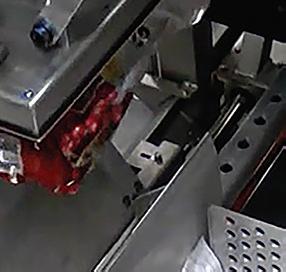
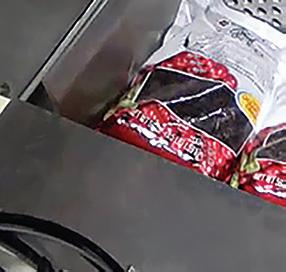
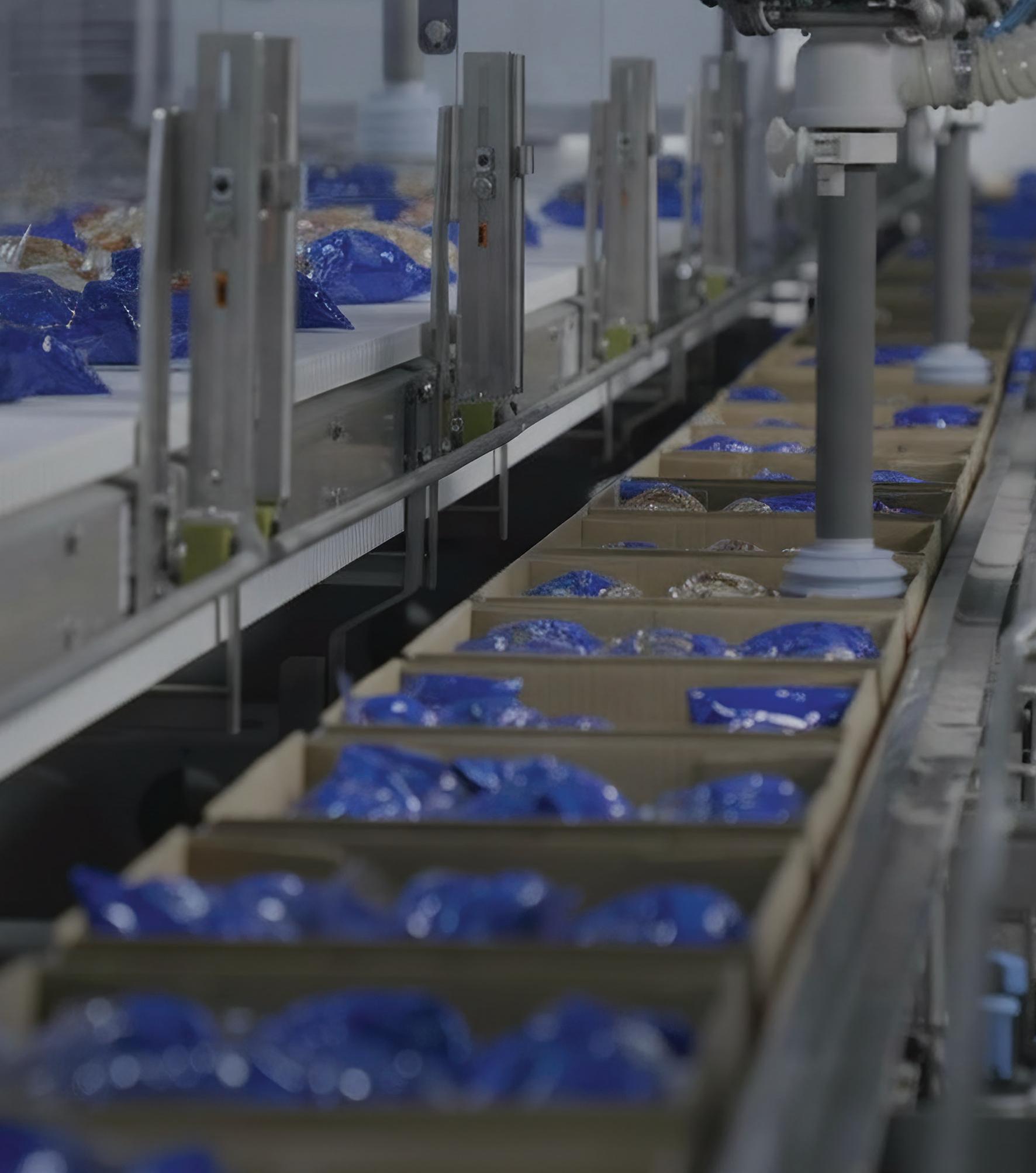
Secondary packaging solutions for the bakery, snack and tortilla industries. BPA loads your packaged and naked products into cases and various secondary containers including your hffs machines, wrapper chain in-feeds and indexing thermoform machines.













www.intralox.com



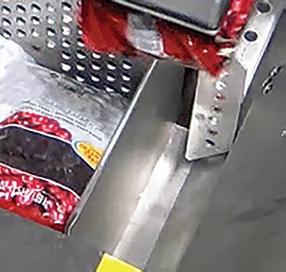
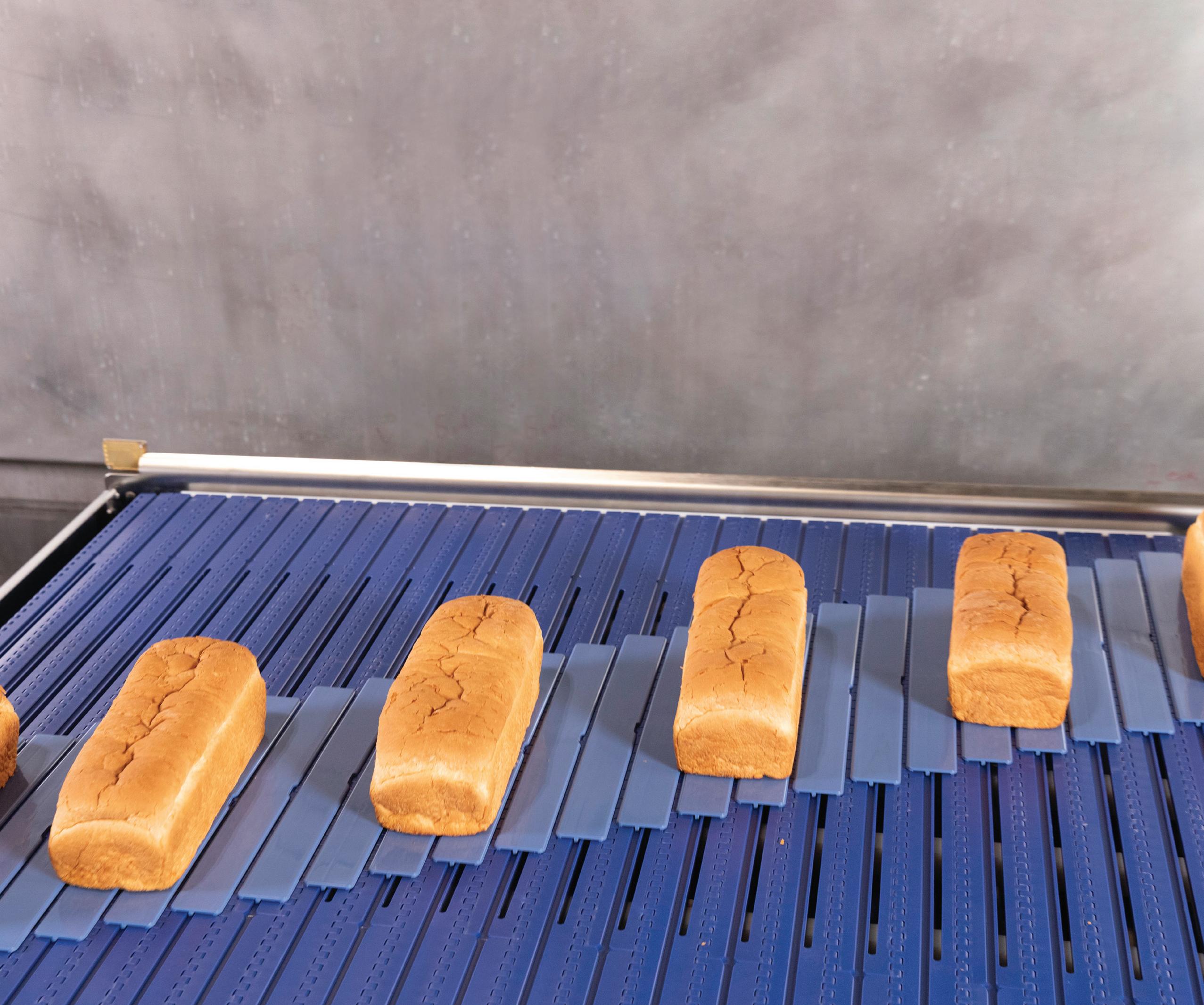
Intralox’s new Active Integrated Motion (AIM) Glide™ is a gentle, hygienic automation solution. It eliminates unscheduled downtime and jams while requiring 75% less maintenance and 50% less cleaning time than metal slat switches.


Gentle product handling while maintaining orientation
75% less maintenance
Reliable zero-jam automation
50% less cleaning time
Zero lubrication required
Paul Lattan
President - Principal
Steve Berne
Executive Vice President - Principal
Joanie Spencer
Vice President - Partner
Paul Lattan
Publisher | paul@avantfoodmedia.com
816.585.5030
Steve Berne
Director of Sales | steve@avantfoodmedia.com
816.605.5037
Erin Zielsdorf
Account Executive | erin@avantfoodmedia.com
937.418.5557
Joanie Spencer
Editor-in-Chief | joanie@avantfoodmedia.com
913.777.8874
Mari Rydings
Senior Editorial Director | mari@avantfoodmedia.com
Jordan Winter
Creative Director | jordan@avantfoodmedia.com
Olivia Siddall
Multimedia Director | olivia@avantfoodmedia.com
Annie Hollon
Digital Editor | annie@avantfoodmedia.com
Maddie Lambert
Associate Editor | maddie@avantfoodmedia.com
Lily Cota
Associate Editor | lily@avantfoodmedia.com
Beth Day | Maggie Glisan
Contributors | info@commercialbaking.com






Commercial Baking is published by Avant Food Media, 1703 Wyandotte St., Suite 300, Kansas City, MO 64108. Commercial Baking considers its sources reliable and verifies as much data as possible, although reporting inaccuracies can occur. Consequently, readers using this information do so at their own risk. Commercial Baking is distributed with the understanding that the publisher is not liable for errors and omissions. Although persons and companies mentioned herein are believed to be reputable, neither Avant Food Media nor any of its employees accept any responsibility whatsoever for their activities. Commercial Baking magazine is printed in the USA and all rights are reserved.
No part of this magazine may be reproduced or transmitted in any form or by any means without written permission of the publisher. All contributed content and advertiser supplied information will be treated as unconditionally assigned for publication, copyright purposes and use in any publication or digital product and are subject to Commercial Baking ’s right to edit.
Commercial Baking ISSN 2767-5319, / USPS Publication Number: 25350 is published in February, April, June, August, October and December, in print and digital formats by Avant Food Media, 1703 Wyandotte St., Suite 300, Kansas City, MO 64108. Periodicals Postage Paid at Kansas City, MO, POSTMASTER: Send address changes to Commercial Baking, c/o Avant Food Media, 1703 Wyandotte St., Suite 300, Kansas City, MO 64108.
Circulation is tightly controlled, with print issues sent only to hand-verified industry decision makers and influencers. To apply for a free subscription, please visit www.commercialbaking.com/subscription








JOANIE SPENCER Editor-in-Chief | joanie@avantfoodmedia.com
There are certain food trends I can’t talk about without aging myself. As a 54-year-old woman with an Instagram account, I can’t go a day without hearing about the importance of protein and fiber. How much cottage cheese does one girl need?
All jokes aside, protein — the most common theme in this year’s New Products Annual — is a trend not likely to wane anytime soon, even with fiber hot on its heels.
As we showcase protein-rich everything from pastries to pretzels, consider the “why” behind it all. Of course, the industry is challenged by the prevalence of GLP-1 drugs and the MAHA movement, but it’s also important to remember the challenge that’s been facing American consumers for decades: finding balance between the need to indulge and the battle of the bulge.
While many consumer groups and legislators are quick to blame food manufacturers for what they consider a health crisis, the fact remains that makers of CPG baked goods are focused on giving people what they want while incorporating elements of what they need. The product launches in this issue clearly reflect these efforts. But this goes way deeper than slapping “protein” on a package claim. For a protein-centered product to have staying power, development has to start with not only needs assessment but also an evaluation of how ingredients work together for function and flavor, as well as with the machines on which they’re made.
Bringing together every aspect — followed by the “stickiness” factor from a marketing perspective — we discover the true determinants of post-launch longevity. Will a new protein-rich product still be in the portfolio in one, three or five years? And can a limited-time offer make it into permanent rotation? It all boils down to a difficult-to-define algorithm … and the current court of public opinion.
The future may be hard to predict, but my hope is that in the pages ahead, our trend reports and New Product Showcase will provide you with a sense of where we’re heading and some inspiration on how to get there.








































































































































Commercial Baking checks in on the categories covered so far this year.
The $11.10 billion cracker category is holding steady. As reported in Q1, All Other still accounts for nearly three-quarters of the dollar share. Total US - Multi Outlet w/ C-Store (Grocery, Drug, Mass Market, Convenience, Military and Select Club & Dollar Retailers) | Latest 52 Weeks Ending April 19, 2026
Source: Circana OmniMarket Integrated Fresh, a Chicago-based Market Research Firm (@WeAreCircana) *Percentage rounded to the nearest tenth Crackers
Perimeter Cakes Dollar Sales
Layer cakes maintains its lead in dollar sales. Loaf/pound cakes are on the rise, with a 6.9% increase in sales vs. a year ago. Total US - Multi Outlet w/ C-Store (Grocery, Drug, Mass Market, Convenience, Military and Select Club & Dollar Retailers) | Latest 52 Weeks Ending April 19, 2026
Source: Circana OmniMarket Integrated Fresh, a Chicago-based Market Research Firm (@WeAreCircana)
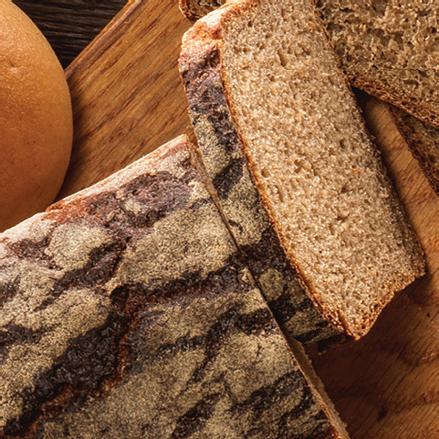
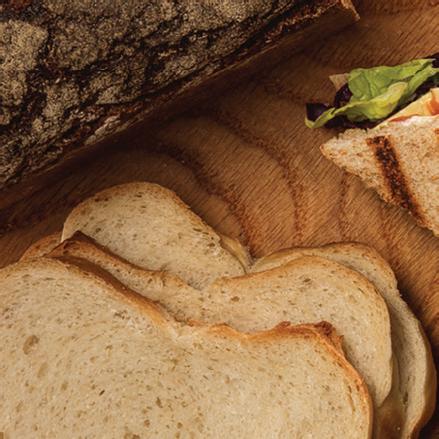
In the perimeter, bread sales are slightly higher than reported in Q1. Sweet breads is seeing notable momentum, up 22.0% vs. a year ago in dollar sales, just slightly behind the All Other subsegment.
Total US - Multi Outlet w/ C-Store (Grocery, Drug, Mass Market, Convenience, Military and Select Club & Dollar Retailers) |
Latest 52 Weeks Ending April 19, 2026
Source: Circana OmniMarket Integrated Fresh, a Chicago-based Market Research Firm (@WeAreCircana)
Perimeter Bread Dollar Sales
CRUSTY | MEAL
SANDWICH
While individual/snack pies still holds the lead over whole pies in center store, it saw a decrease from the $397.82 million in dollar sales reported in Q2.
Total US - Multi Outlet w/ C-Store (Grocery, Drug, Mass Market, Convenience, Military and Select Club & Dollar Retailers) | Latest 52 Weeks Ending April 19, 2026
Source: Circana OmniMarket Integrated Fresh, a Chicagobased Market Research Firm (@WeAreCircana)
Capway Automation offers a complete line of custom designed bakery conveyor systems to get your product where it needs to be. On time. Every time.
Capway Automation offers a complete line of custom designed bakery conveyor systems to get your product where it needs to be. On time. Every time.
Capway Automation offers a complete line of custom designed bakery conveyor systems to get your product where it needs to be. On time. Every time.
Capway Automation offers a complete line of custom designed bakery conveyor systems to get your product where it needs to be. On time. Every time.
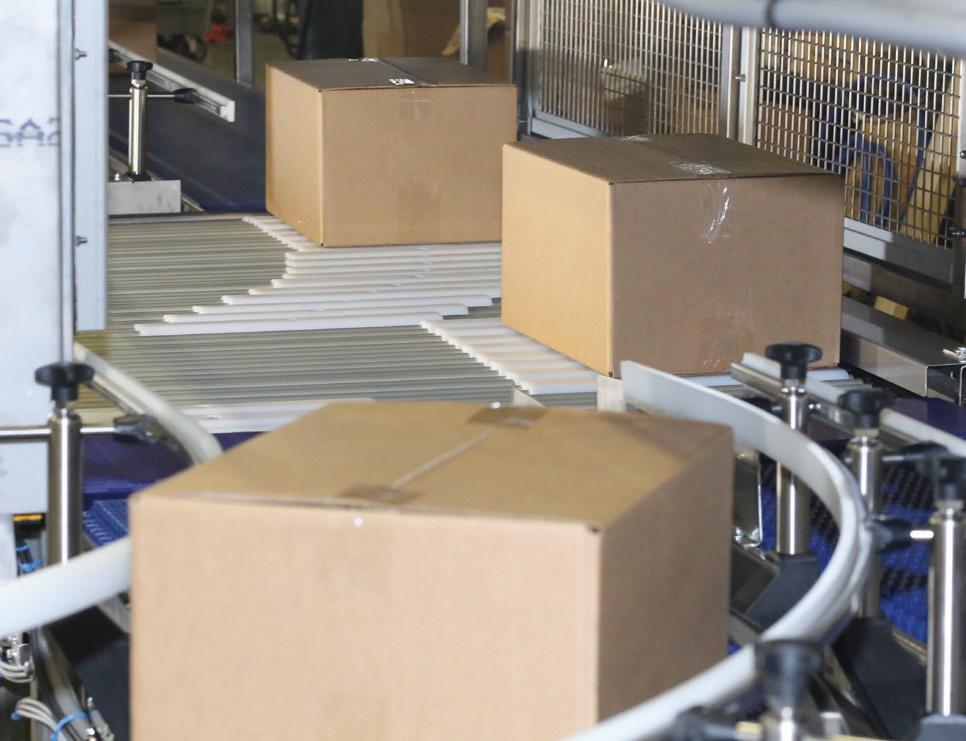
And our highly engineered Hortizontal Switch offers on-the-fly lane changing to direct different products exactly where you want them. Built using sanitary polycarbonate rollers and a unique track-style diverting mechanism, our Switch allows direct food contact, smooth product transfers, and maintains product pitch during movement. The Capway Switch also offers multiple custom infeed and discharge designs.
And our highly engineered Hortizontal Switch offers on-the-fly lane changing to direct different products exactly where you want them. Built using sanitary polycarbonate rollers and a unique track-style diverting mechanism, our Switch allows direct food contact, smooth product transfers, and maintains product pitch during movement. The Capway Switch also offers multiple custom infeed and discharge designs.
And our highly engineered Hortizontal Switch offers on-the-fly lane changing to direct different products exactly where you want them. Built using sanitary polycarbonate rollers and a unique track-style diverting mechanism, our Switch allows direct food contact, smooth product transfers, and maintains product pitch during movement. The Capway Switch also offers multiple custom infeed and discharge designs.
And our highly engineered Hortizontal Switch offers on-the-fly lane changing to direct different products exactly where you want them. Built using sanitary polycarbonate rollers and a unique track-style diverting mechanism, our Switch allows direct food contact, smooth product transfers, and maintains product pitch during movement. The Capway Switch also offers multiple custom infeed and discharge designs.
Use the Capway Horizontal Switch for sorting and merging of products, pans, baskets, trays, and cartons. It can also be used as part of a rejection system for vision or detection systems. It is washdown ready.
Use the Capway Horizontal Switch for sorting and merging of products, pans, baskets, trays, and cartons. It can also be used as part of a rejection system for vision or detection systems. It is washdown ready.
Use the Capway Horizontal Switch for sorting and merging of products, pans, baskets, trays, and cartons. It can also be used as part of a rejection system for vision or detection systems. It is washdown ready.
Use the Capway Horizontal Switch for sorting and merging of products, pans, baskets, trays, and cartons. It can also be used as part of a rejection system for vision or detection systems. It is washdown ready.
Call us today at 1.877.222.7929. We’ll help you see how easy it is to switch to Capway conveyor systems.
Call us today at 1.877.222.7929. We’ll help you see how easy it is to switch to Capway conveyor systems.
Call us today at 1.877.222.7929. We’ll help you see how easy it is to switch to Capway conveyor systems.
Call us today at 1.877.222.7929. We’ll help you see how easy it is to switch to Capway conveyor systems. Capway Horizontal
systems.
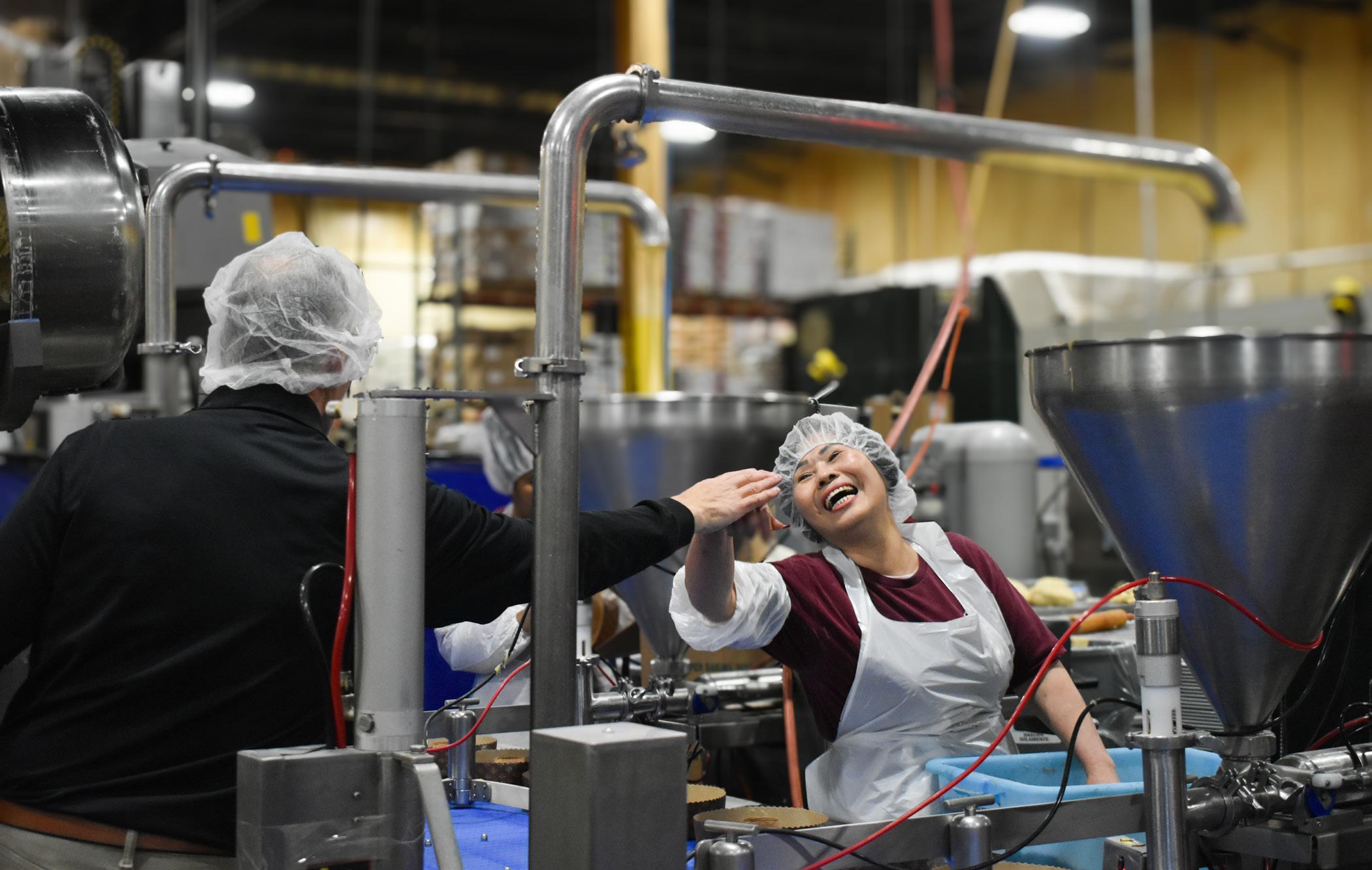
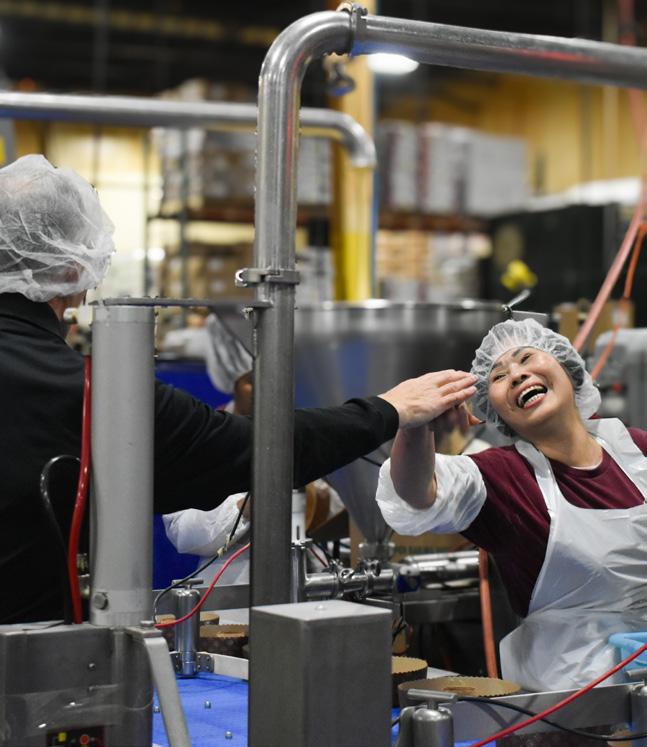
With a boisterous whoop, Bob Boschetto, CEO and founder of Boston Baking, makes his presence known on the production floor. Every team member within earshot echoes the call, eagerly awaiting the handshake, hug or pat on the back that’s guaranteed to follow as he makes his way around to personally greet every person.
This call and response epitomizes the Boston-based company’s culture and reflects a business model that’s been in place since the bakery opened its doors more than 48 years ago. It’s also indicative of how the bakery will handle the growth that’s on the horizon. When customers, consumers, trends and technology call, Boston Baking responds.
Boston Baking balances tradition, trends and technology.
BY MARI RYDINGS
“Our objective is to make everyone’s day a little better,” Boschetto said. “What drives us is making sure people enjoy the Boston Baking experience on every possible level.”
It’s a philosophy that fourth-generation baker Kristen Boschetto, owner and GM, grew up with and embraces as she leads
the company’s next growth phase. It’s already underway, happening physically with a new 10,000-square-foot expansion, operationally with the ramping up of technology investments and culturally as the team balances artisan with automation.
“We have always believed in a slow, incremental growth strategy,” Kristen said. “The fact that we’re not fully automated allows us the flexibility and versatility to give each one of our customers something different. That’s what sets us apart from our competitors.”
On any given day, the production floor churns out pastries, coffee cakes, brownies, pull-apart frozen cookie pucks, pie shells in various sizes, whoopie pies and blanks, fruit squares and more. Some products are for the Boston Baking brand, which goes to grocery chains, distributors, restaurants and institutions; others are comanufactured for production partners.
Even with a wide range of SKUs — 150 and counting — the bakery is committed to preserving many of the hands-on techniques that deliver the texture, character and authenticity its customers expect, integrating automation where it makes sense.
“The balance between hands-on and automation is what attracted me to Boston Baking,” said Carla DePina, director of operations. “We are very careful with adding automation. We don’t automate to replace people; it’s to give them an opportunity to grow. That’s our culture. That’s our mission.”
At the same time, the Boschettos recognize that if they want to grow the business, automation must be part of the equation. In 2025, Boston Baking
“We know the future is AI, and we know that robotics is being used more and more in the bakery industry. We asked, ‘What can we jump into that’s not so scary?’”
John Fisher | R&D pastry chef | Boston Baking
doubled the amount of capital it typically invests in equipment each year, adding an Empire spiral mixer for pie dough, two ProBAKE mixers, a Reiser HP depositor and break-and-bake cookie system, and a RONDO sheeter.
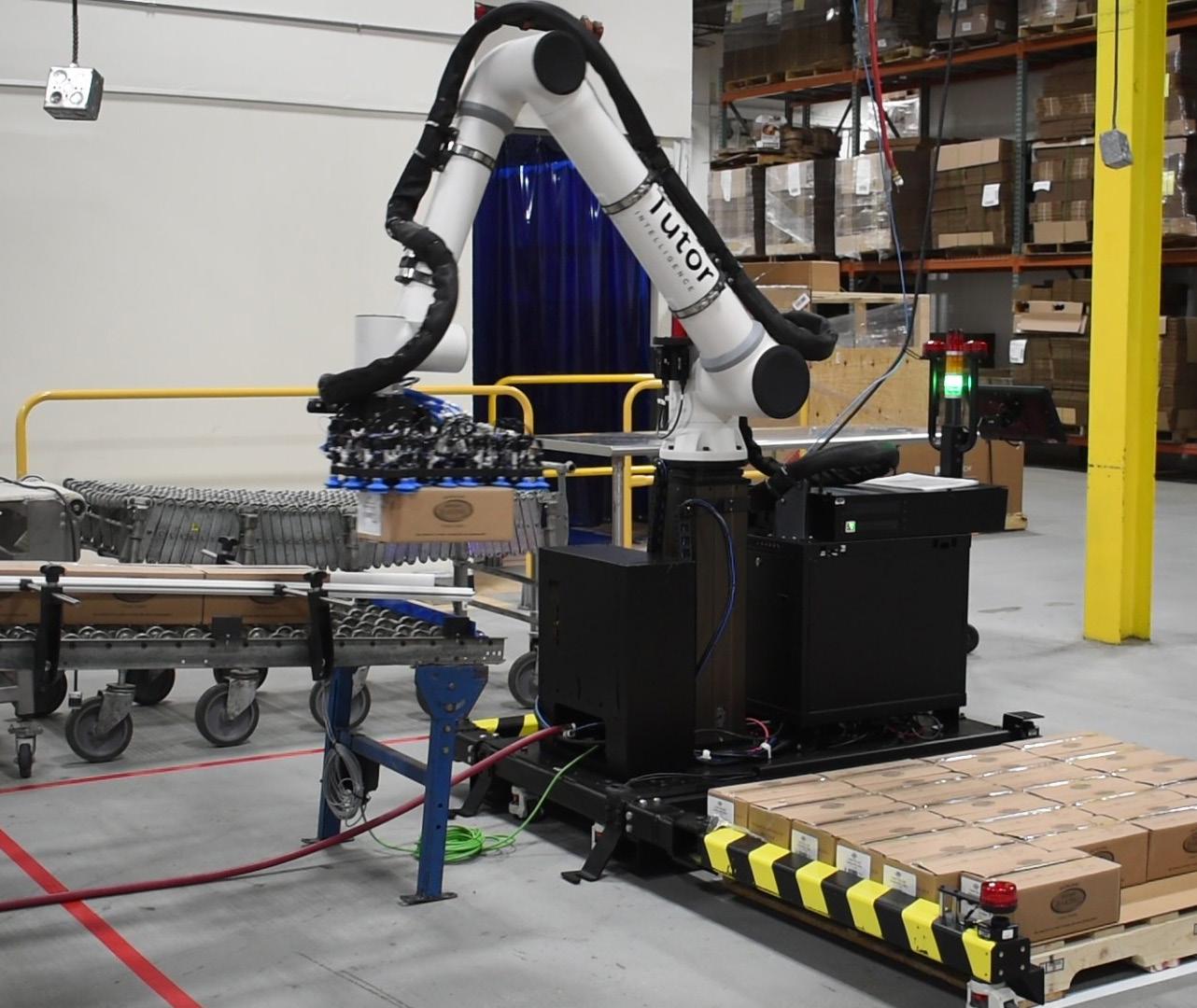
In the first quarter of this year, the company added a Wexxar tray former and ID Technology C-wrap and label print system from ProMach. And it took its first foray into AI with a Tutor Intelligence palletizing robot named Vega.
“We’re at that level of baking where we’re going to explode and grow,” said John Fisher, Boston Baking’s R&D pastry chef and the lead for identifying areas in need of automated solutions. “We know the future is AI, and we know that robotics is being used more and more in the bakery industry. We asked, ‘What can we jump into that’s not so scary?’”
Vega is one of the first AI-driven — vs. program-driven — robots in the industry. Tutor Intelligence’s rental program offers a low barrier of entry, allowing customers to get accustomed to AI palletizing technology without having to make a significant capital investment. Fisher said the team uploaded a picture of a preferred pallet configuration to Vega, and the robot immediately started to build it, learning how to correct its mistakes along the way.

WATCH NOW:
John Fisher talks about how adding an AI robot leveled up the bakery’s palletizing capabilities.
“One of the reasons for bringing AI into the company is to help integrate the future of the bakery,” Fisher said. “It also improves the work lives of our team
members. We want to make sure they still have positions and still feel like they are part of the company. We can move them from a simple job, such as stacking, into another position — like baker or line lead — where they can grow and help support our objectives.”
Recently, the company hired consultants to help the team identify ways to take the business to the next level.
“They referred to Boston Baking as an ‘oversized mom and pop,’” Bob shared. “This motivated us to move toward more automation and innovation while still maintaining the right balance and staying true to our roots.”
Part of that process involved transitioning from an organizational chart into a functional accountability chart that shows all 108 team members and their roles. The bakery is also working toward automating and streamlining its production inventory control to better align with where the company is today and where it needs to be in the next few years.
“With the reorg and restructure, the way we work together now is so different,” Kristen said. “It’s truly a cross-functional team. Bob is the visionary, giving us more structure, more direction, but also empowering each team.”
With the recent expansion, the bakery expects to add more automation, which will bring opportunities for team members. Discussions are ongoing about how the space will be utilized. One possibility is to move production of items such as cookie dough and pie shells, which are unbaked or frozen, to the climate-controlled space.
“This would allow us to expand capacity in the current space, where the ovens

are, for bakeable products,” DePina said. “You have to see what’s in the pipeline, what’s coming and what will come. You can’t just plan for today. You have to keep that window open and integrate everything into the forecast.”
Any operational changes and forecasting must take into account current and anticipated new product development initiatives. Currently, Fisher is tinkering with Latin-inspired flavors and a line of better-for-you baked goods.
“New product development is a part of our ideation sessions,” Kristen said. “We focus on items we can go to market with that support current trends. R&D collaborates with sales and marketing to identify bestsellers and items with the highest profitability for our partners and the Boston Baking brand.”
The Boschettos are quick to credit everyone responsible for bringing ideas to life and revenue to the bakery.
“We are nothing without our team,” Bob said. “Profits will come if you take care of people. For many of our team members, this is their first job in the United States. They may not know how to open a bank account, borrow money or buy a car. We want to make our team members’ lives better outside of work, too.”
That’s the goal of the BB Community, an initiative led by Samantha Schermerhorn, continuous improvement and training project manager. In her role, she creates interactive training and professional development opportunities around communication and leadership, as well as the skills people need in their personal lives.
Keep your pack line moving with palletizing automation built for the way your bakery works.
No contracts, no CapEx, no disruption, and simple scalability for when your business needs it.

“The robotic palletizer has been a true game changer for our operation, significantly improving eiciency and streamlining our workflow.”
- John Fisher, R&D Pastry Chef, Boston Baking










“I not only train team members on what they need to do their jobs, but also on the skills they need to grow as individuals,” Schermerhorn said. “We all learn from each other through team building and bonding.”

Kristen Boschetto shares more of her perspective in Season 19 of the Troubleshooting Innovation podcast. Sponsored by Tutor Intelligence
The internal program expands upon Boston Baking’s community-based philanthropic efforts, which include participating in the local ALS walk and partnering with the Greg Hill Foundation and Community Servings, the latter for which the company bakes 15,000 pies in three days around the winter holidays.
“Just being nice and humble and good to people goes a long way,” Kristen said.
Call and response. It’s how Boston Baking got to where it is today, and it’s how it will manage the growth headed its way. CB
Boston Baking produces baked goods under its own brand name and co-manufactures products for multiple CPG brands. Below is a list of supplier innovations that can be found on the bakery’s production floor.
Angel rotary pie press system
BakTek dough chunker system, divider system
Barrington HFFS
Comtec single and dual pie press systems
DBE mixer
Doboy HFFS
Empire mixers
FME depositor
Hobart mixers
Lafer HFFS
Loma metal detectors, X-ray system
Peerless mixers
Polin multi-drop depositors
ProBAKE 320 mixers, mixer lift system
ProMach Wexxar tray former, ID Technology C-wrap and label print system
Reiser/Vemag robot 500 depositor, HP depositor, shuttle conveyor system, break-andbake cookie system
Revent double-rack ovens
RONDO dough sheeter
Tutor Intelligence robotic palletizer
Unifiller multi-station systems, Cake-O-Matic, dual cake line, depositors, hopper topper pumps
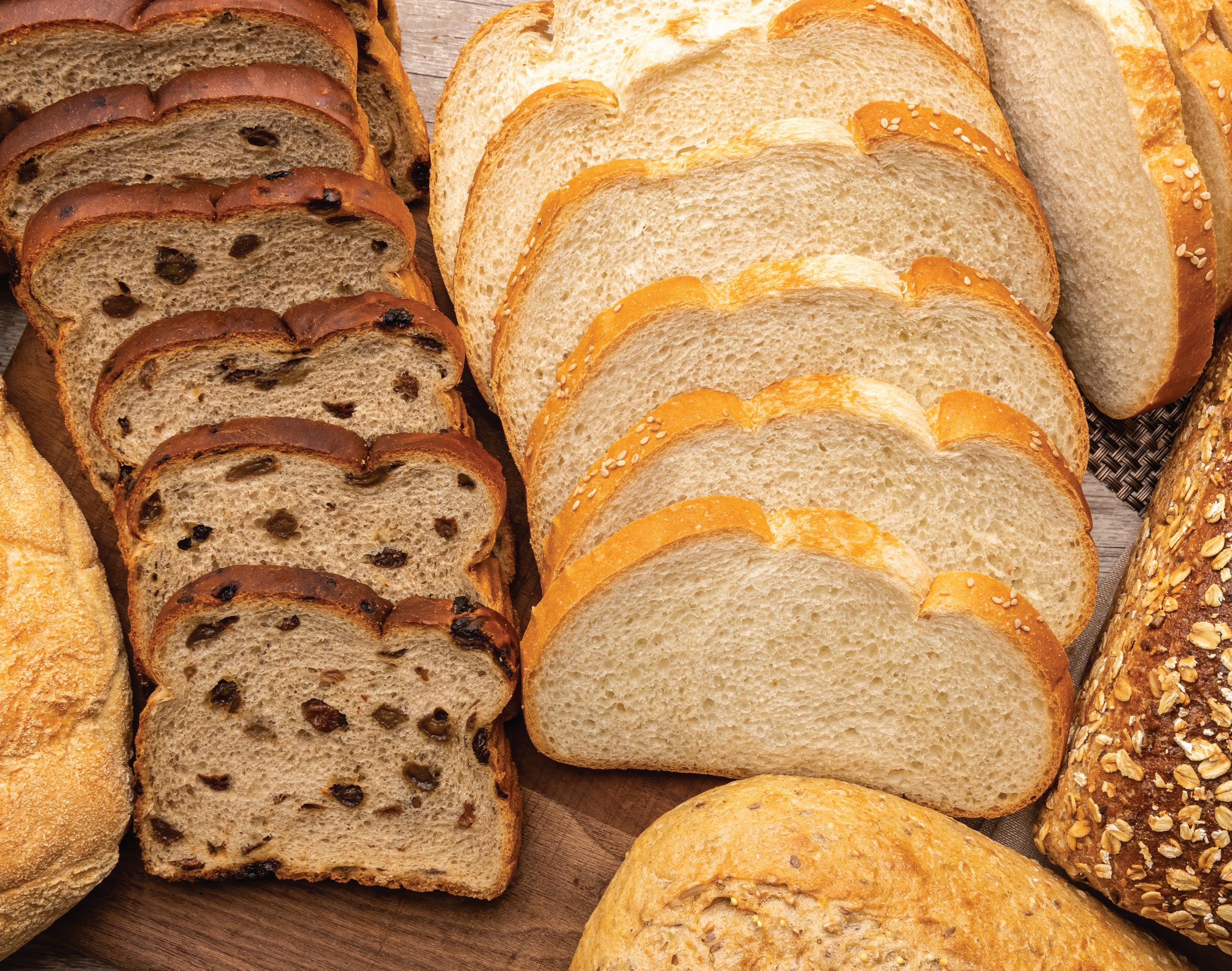
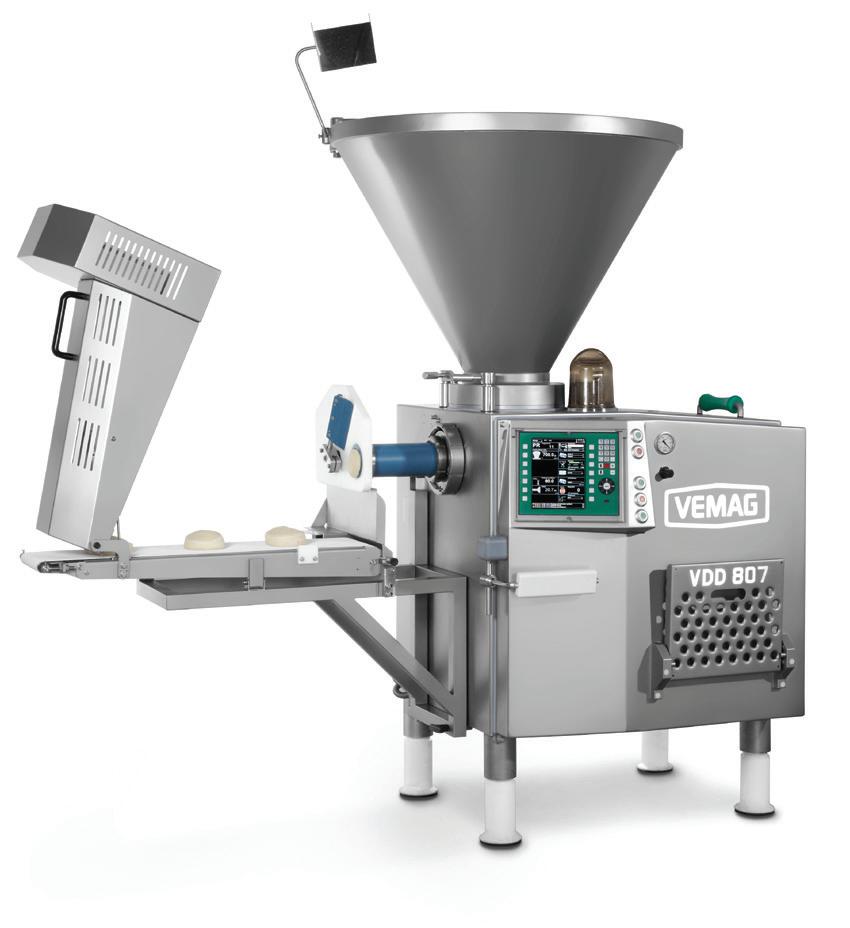
Produce your entire bread line with a single, versatile Vemag Dough Divider
n Gently handles dough
n Unmatched scaling accuracy
n Precisely scales a wide range of dough portions
n Produces a variety of crumb structures
n Handles absorption rates from 45% to 95%
n No divider oil needed
n Fast, easy changeovers
n Come run your product with us at the Reiser Customer Center.


www.reiser.com
Reiser • Canton, MA • (781) 821-1290
Reiser Canada • Dundas, ON • (905) 631-6611
Reiser UK • Milton Keynes, Bucks • (01908) 585300
Consumer shopping and eating expectations have shifted, and relevance is at the top of the list.
BY MAGGIE GLISAN
What does a consumer want when they reach for a cookie? The answer used to be simple. It needs to look appealing. The price needs to be reasonable. And it’s got to taste good, especially if a baker wants a repeat purchase. But now, there’s more to the story. Today’s consumer is looking at that cookie through a different lens. One with filters for health and wellness goals, ingredient transparency and flavor experience. It’s a lens for value, but not value as in “cheap.” Value as in, “Does this matter to me?”
“Consumers do not equate value with the lowest price,” said Shelley Balanko, senior VP at Hartman Group. “In fact, if something seems too cheap, it can undermine the sense of value. They’re thinking about relevance: ‘Is this something my family will actually use? Is it good quality? Does it contribute to waste?’ In the current economy, people are being intentional, but that doesn’t necessarily mean cheap.”
Value is never just a price-to-benefit calculation; it is deeply subjective, based on what consumers care about most. According to Hartman Group, 35% of consumers say they choose the bestquality items regardless of price. Sixtytwo percent will pay more for a product that saves time, effort or mess. Thirtyone percent are willing to spend more just to shop somewhere more pleasant.
This is the challenge and the opportunity. Grocery prices remain roughly 40% above 2019 levels. A dozen eggs that cost $1.55 that year can now run close to $4, and the “post- inflation hangover,” as Hartman Group describes it, is very much still being felt. But consumers aren’t simply cutting back. Instead, they’re making sure every dollar counts in terms of health, experience, flavor and quality.
Anne-Marie Roerink, president of 210 Analytics, noted that shoppers have returned to meal planning behaviors, sticking more closely to lists and purchasing only what they need. Lower-income households are absorbing the greatest financial strain and trading down from mainstream brands to private label and smaller pack sizes (even though unit purchases have actually ticked upward). They’re spending more carefully, not necessarily spending less.
Bakery has always thrived on impulse purchases, but that’s taken a hit as well.
“Being planned and included on the pre-trip list has become far more critical,” Roerink said.
The Tuesday morning donut grab or the “These cookies just looked so good, so I tossed them in my cart” moments may take more work to earn.


Since the pandemic, private label’s rise has been well-documented.
“Private brands have innovated,” Balanko said. “They built out tiered offerings and raised their quality standards. Now, the experience for many shoppers is genuinely on par with — and sometimes better than — the national brand equivalent. The quality is what’s keeping them there.”

Walmart’s Bettergoods launch offers a clear illustration of this evolution. Unlike the retailer’s Great Value line, which competes on price by mimicking national brands, Bettergoods is positioned as a premium private label brand, with innovative flavors, plant-based options and “free from” offerings priced slightly above Great Value. The results are worth noting: Low-income households were 34% more likely to purchase Bettergoods compared to Great Value shoppers, and high-income households were 20% more likely.
Roerink sees the same dynamic playing out more broadly. In fresh bakery, brand loyalty tends to align more closely with retailer loyalty, creating significant opportunity for grocers who invest in their own programs. In some segments like pretzels, manufacturer brands are still driving the biggest growth. But in others, private label is outperforming. For commercial bakers, the message isn’t to worry; it’s to up their game.
Amid the backdrop of inflation and unsteady economic conditions runs what Balanko describes as a structural change in consumer consciousness that predates the pandemic and the GLP-1 boom. Hartman Group research found that anxiety had already overtaken weight management as the top health condition consumers were actively managing back in 2019. The events of the past several years have only intensified that underlying unease, and food has become one of the primary ways in which people try to regain a sense of control.
“Consumers are vastly more aware of their choices when it comes to food,” Balanko said. “And they understand the impact it has not just on their health but also in every aspect of their lives.”
This shift is being accelerated by the rise of GLP-1 medications. When every calorie has to count, the emphasis on nutrient density intensifies. Users of GLP-1 drugs are simultaneously more skeptical of highly processed foods and more attentive to protein and fiber claims. The catch, Balanko noted, is that consumers are quickest to trust claims that feel grounded in real ingredients.
“The more it feels like marketing,” she said, “the more it gets filtered out.”
Some are calling it nutrient “maxxing.” It’s the idea that every bite should work harder — deliver more protein, more fiber, more functional benefit — and it has moved beyond wellness circles and into the mainstream.
Protein’s reach reflects that concept, spanning every gender, age, income and ethnicity. According to Circana, one-third of consumers are actively seeking new high-protein foods, up six percentage points since 2021.
Tastewise data puts more specificity on the demand in bakery: Proteinand fiber-rich baked goods requests grew 30% year-over-year, with highprotein appearing in roughly one in four occasions. Specific ingredients include dark chocolate (up 11%), cottage cheese (up 9%), almond flour (up 8%) and blueberries (up 31%). Emerging interest in protein-enriched bread and buns is extending this demand into more everyday bakery formats.
Fiber, though seemingly on the tip of everyone’s tongue, is a different story. Balanko described it as a continuum, in that mainstream consumers understand gut health in basic, practical terms, but the more sophisticated language of prebiotics, the microbiome and the
gut-brain connection hasn’t broadly broken through yet.
“The current conversation around fiber is honestly less mature than the one around protein,” she said, “but there’s a lot of energy building.”
Data from 210 Analytics reflects that immaturity. Categories typically associated with fiber are down year-over-year, and high-fiber baked goods have not shown notable outperformance. That gap between cultural noise and actual purchase behavior is worth watching.
That said, Balanko expects fiber to move along the adoption curve meaningfully over the next few years, particularly as consumer interest in ingredient purity extends beyond protein.
The chatter around ultra-processed foods (UPFs) is gaining momentum quickly, fueled in part by MAHA messaging and broader consumer skepticism of the food industry as a whole. While “clean eating” as a practice is actually down 20% year-over-year according
to Tastewise data, the numbers around specific preferences tell a different story. The term “few ingredients” is growing 80% year-over-year in food occasions, with “refined sugar free” at 82%, and “clean label” at 84%.
Baked goods, though, present a special case when it comes to UPFs.
“Baking — flour, butter, eggs, sugar — of all categories has such an intuitive connection to homemade,” Balanko said. “Consumers understand what goes into it. So, when they look at a label and see a long list of additives and stabilizers, that’s a real disconnect. The ultra-processed stigma lands especially hard in baking for that reason.”
For all the scrutiny consumers are applying to what goes into their food, that doesn’t mean they’re steering clear from all things indulgent. In fact, they may be enjoying those occasions more.
“Americans strongly believe it is perfectly okay to occasionally enjoy baked treats or desserts,” Roerink said.
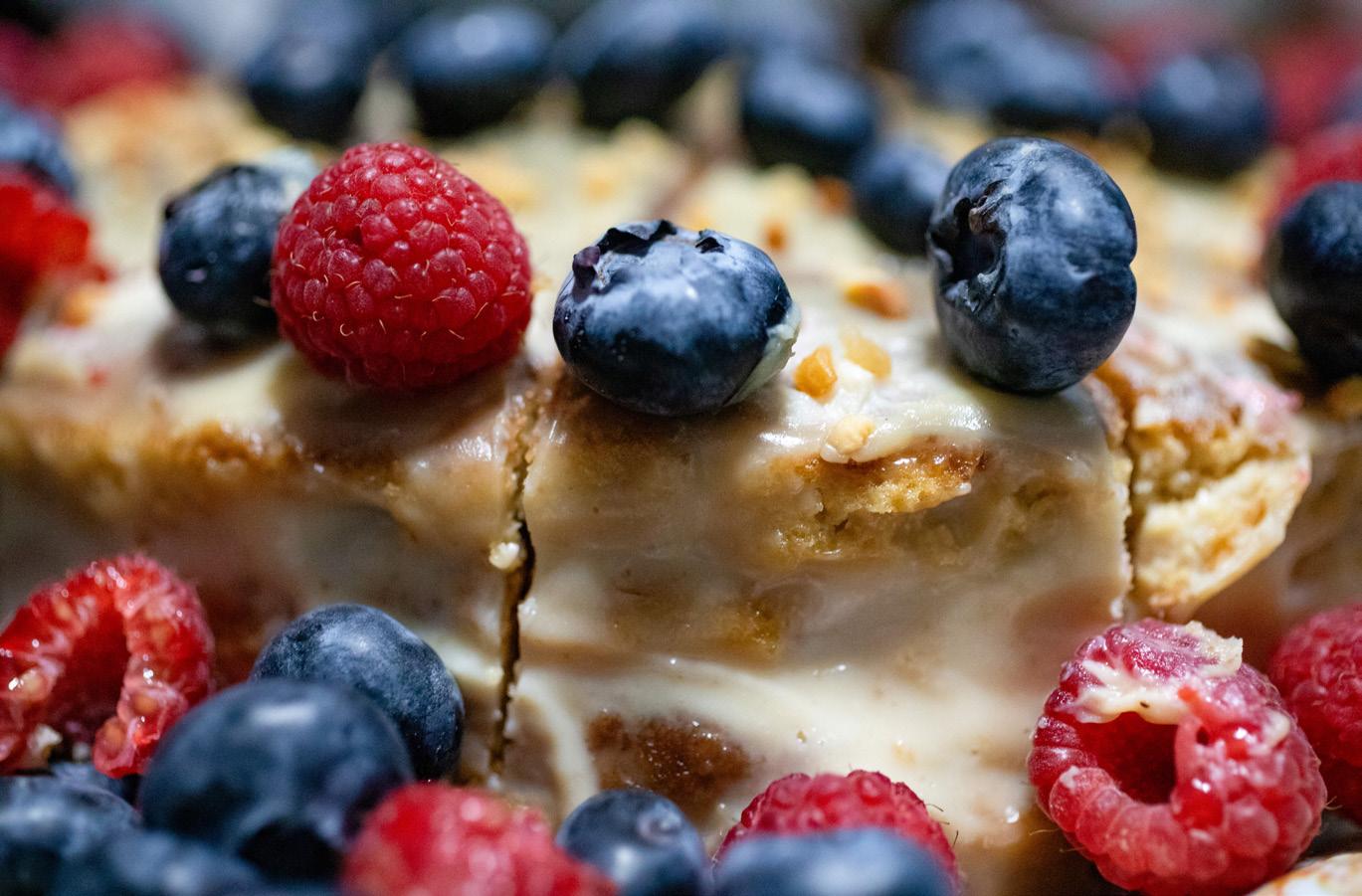

Get a USA-made donut system that’s scalable and built around your goals. Add our new Turnkey Integration Services and you’ll have one hands-on partner to plan the line, coordinate the details, and integrate the complete production flow for a smooth, efficient run.


SCAN TO EXPLORE MOLINE
DONUT SYSTEMS + TURNKEY
INTEGRATION SERVICES
For some GLP-1 medication users, the drug actually gives them a sense of permission to enjoy a baked good from time to time without guilt.
Tastewise data gives some insight as to why this might be the case. “Craving” as a signal appears in about one in three indulgent baked goods occasions and is growing 147% year-over-year, while “comfort” in indulgent baked goods is up 99% and “cozy” up 87%. When consumers eat on fewer occasions overall, the moments when they choose to indulge carry more weight and, therefore, more purchase value.
Even so, consumers maintain a strong appetite for novelty, particularly around flavor.
Tastewise data points to several flavors with strong momentum. Middle Eastern profiles like pistachio-filled pastries, cardamom-scented cookies and tahinibased brownies appear in roughly one in 12 baked goods occasions and are growing 33% year-over-year. Sourdough-influenced baked goods are appearing 35% faster than a year ago. And curry as a flavor in global confectioneries is growing 55% yearover-year, reflecting a consumer appetite for warming spice complexity in sweet goods applications.
Cody Masters, executive chef and EVP of culinary and industrial sales at Everson Spice Co., sees global flavors not as a trend cycle but as an ongoing normalization, particularly as Gen Z, whose buying power is set to peak over the next several years, shapes the mainstream.
“The only real region that matters now is social media,” he said, noting that Gen Z’s influence is pushing complex heat, mashups and “Sweet+” profiles into the
mainstream faster than the industry anticipated. Spicy-sweet flavor pairings like hot honey caramel apple, ghost pepper vanilla ice cream and habanero cherry cola — combinations Masters said wouldn’t have moved the needle just a few years ago — have found real commercial traction.
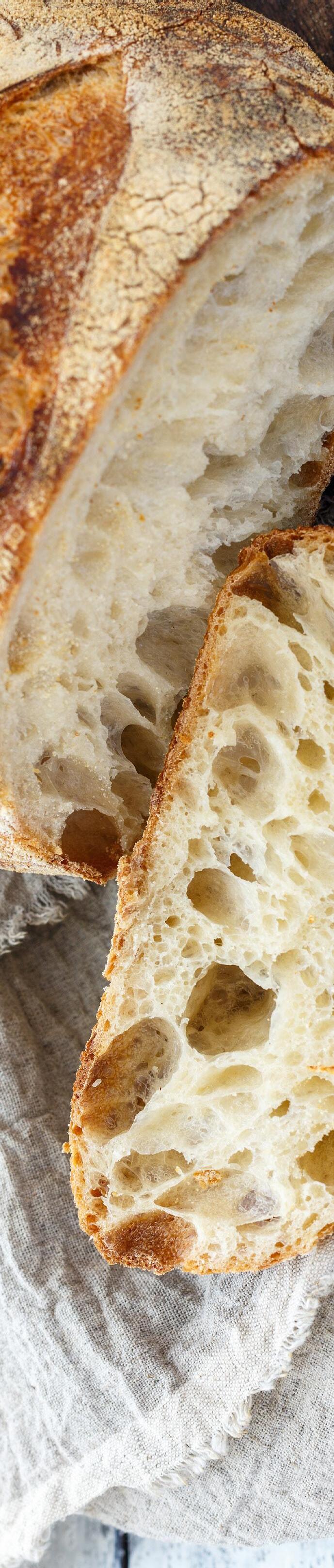
Sourdoughinfluenced baked goods are appearing 35% faster than a year ago.
Source: Tastewise
The reason behind the faster adoption, he said, is “newstalgia,” the idea of giving a familiar, comfort-driven flavor an unexpected twist. A Hot Honey Apple Fritter. A Mexican Mocha Churro. Nostalgia makes it approachable, and the novelty creates the social moment.
“Applying global flavors into mainstream domestic analogs has become the new norm,” Masters said. “There is a fine line between educating a consumer versus exploiting what already works.”
The picture that emerges is one of intention. Consumers are being more deliberate with their spending, but that doesn’t mean they’re pulling back. Health consciousness is creating a broader demand for products that deliver on nutrition, transparency and relevance. Indulgence remains strong, and the stakes of each splurge are higher than ever. Flavor innovation is generating curiosity and excitement.
Balanko sees all of it — the nutrientmaxxing, the ultra-processed skepticism, the premium on indulgence — as expressions of the same underlying shift.
“Consumers today have a much greater understanding of the strong connection between what they eat and how they feel in terms of their energy, mood and long-term quality of life,” she said. “That consciousness underlies all of it. It’s not a trend. It’s a fundamental shift in how people relate to food.” CB
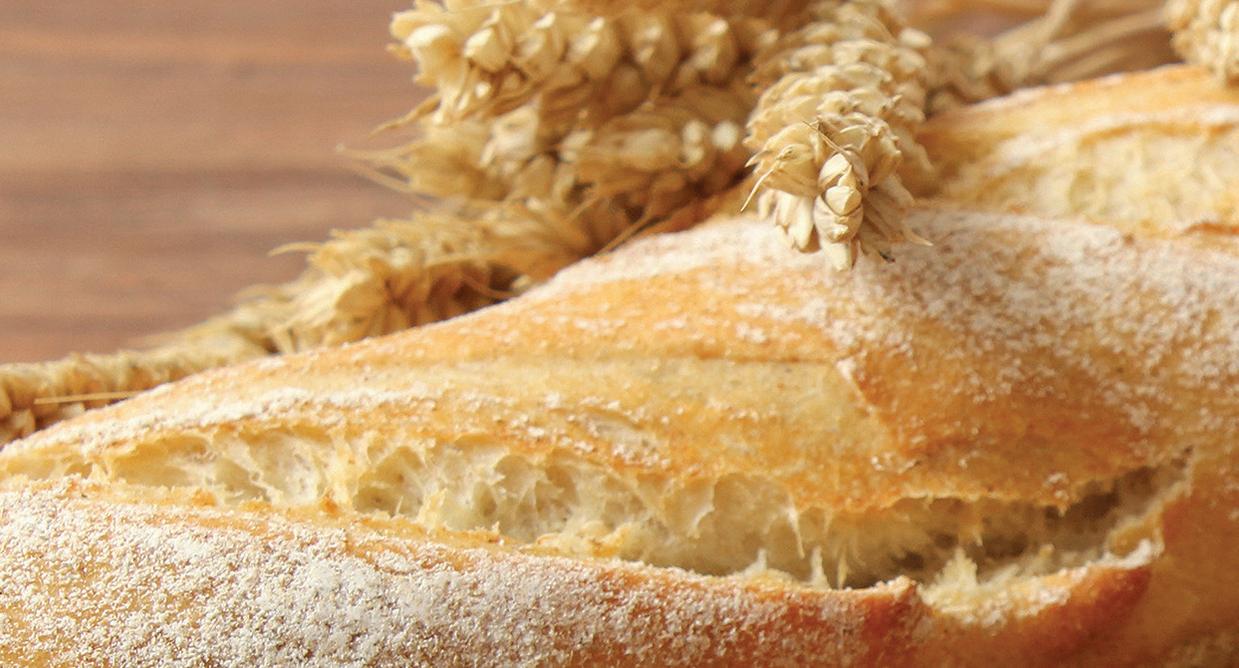
Developed for consistent, reliable results, TEMPEST supports gluten development, keeps dough stable through every stage, and delivers steady, dependable volume across applications — giving bakers the control they need over quality and output.
✓ Controlled dough development
✓ Enhanced tolerance for automation
✓ Reliable structure & volume
✓ Proven across diverse flour systems
✓ Consistent batch-to-batch results
✓ Backed by BreadPartners expertise
Put TEMPEST to the test. Contact us today to request samples! info@breadpartners.com | www.BreadPartners.com
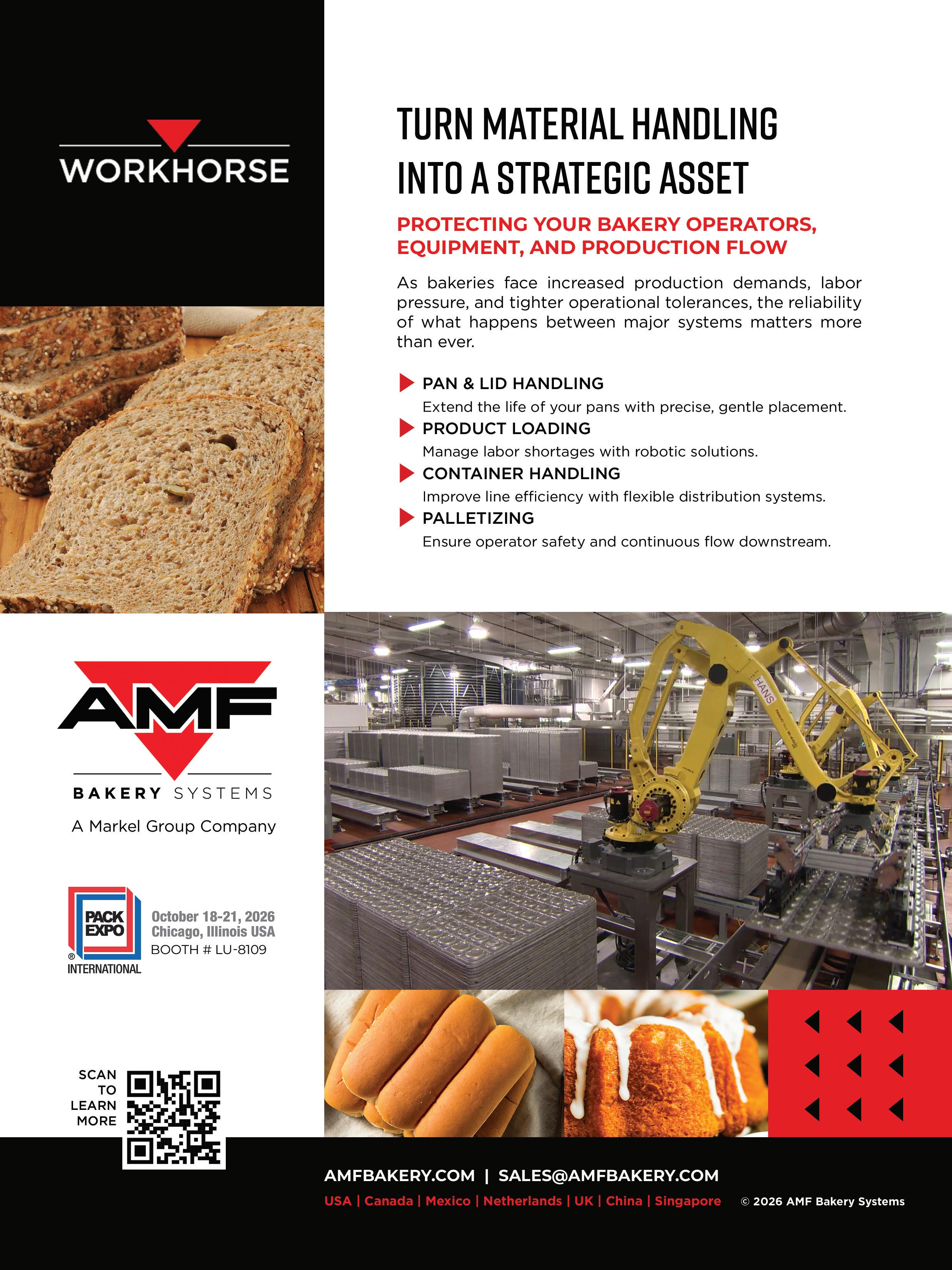
For years, bakery automation investments focused primarily on mixing, baking, and packaging systems. But as labor shortages, production demands, and operational complexity continue increasing, commercial bakeries are taking a closer look at a once-overlooked part of production: material handling.
For years, bakery automation investments focused primarily on mixing, baking, and packaging systems. But as labor shortages, production demands, and operational complexity continue increasing, commercial bakeries are taking a closer look at a once-overlooked part of production: material handling.
From pan movement and storage retrieval to post-packaging flow, handling systems increasingly influence operational reliability across the bakery. A single interruption in flow can create ripple e ects throughout production — impacting proofing schedules, oven throughput, product consistency, labor utilization, and waste.
From pan movement and storage retrieval to post-packaging flow, handling systems increasingly influence operational reliability across the bakery. A single interruption in flow can create ripple e ects throughout production — impacting proofing schedules, oven throughput, product consistency, labor utilization, and waste.
As bakeries continue prioritizing operational e ciency and long-term flexibility, handling automation is becoming less of a supporting function and more of a strategic operational investment.
As bakeries continue prioritizing operational e ciency and long-term flexibility, handling automation is becoming less of a supporting function and more of a strategic operational investment.
Source:

Today’s bakery operations are managing more complexity than ever before. Increased SKU variation, tighter production timing, labor challenges, and growing expectations around freshness and consistency are placing additional pressure on production environments.
Workflow Disruptions Accumulate
Many operational challenges occur between major systems — during repetitive handling, pan transfer, product movement, and downstream transitions that quietly impact production flow.
Manual handling processes can introduce bottlenecks, inconsistent movement, damaged pans, and unnecessary downtime across the line.
Small Delays Can Create Bigger Problems
Delayed pan movement can disrupt proofing schedules. Downstream interruptions can create oven backups or packaging delays. Even small handling ine ciencies can a ect throughput, labor utilization, consistency, and product waste throughout the bakery.
As production demands continue to evolve, bakeries need handling systems that deliver greater flexibility, enable smoother movement between processes, and support scalable workflows that can adapt over time. Integrated material handling solutions help bakeries:
• Reduce repetitive manual movements
• Synchronize the production flow
• Eliminate bottlenecks or downtime
• Extend the life of pans and equipment
• Support operational consistency across shifts
• Enhance workforce utilization and safety
As bakeries continue investing in operational improvements, integration between upstream and downstream systems becomes increasingly important.
Bakeries need a supplier that delivers bakeryfocused pan handling and post-packaging solutions designed to support connected production flows across the facility. Backed by a team of system integration specialists, AMF Workhorse helps bakeries improve movement between processes, reduce operational fragmentation, and support more e cient production flow throughout the bakery.

key priorities for modern bakery operations
• OPERATIONAL CONTINUITY
Support synchronized production flow across the bakery
• WORKFORCE OPTIMIZATION
Reduce repetitive manual handling and improve operator e ciency
• FLEXIBLE INTEGRATION
Modernize existing production environments without major disruption
• BAKERY-FOCUSED EXPERTISE
Designed specifically for the realities of commercial bakery operations

As more states adopt EPR laws, it’s time for all bakers to take note because …
BY MARI RYDINGS
Food manufacturers familiar with the 1993 movie Dazed and Confused may feel the same about Extended Producer Responsibility (EPR) regulations, the state-created environmental policies that shift financial responsibility for the lifecycle of consumer packaging, including paper, from taxpayers and local governments to producers.
At press time, seven states — California, Colorado, Maine, Maryland, Minnesota, Oregon and Washington — had enacted EPR laws that hold manufacturers, including commercial bakeries, accountable for costs associated with recycling, namely program management, collection and disposal. The goal behind EPR is to reduce landfill waste, boost recycling rates, and encourage the development and use of more sustainable packaging materials.
EPR laws aren’t new, but the focus on paper and packaging is. CPG companies must report the type, amount and weight-by-pound of packaging material they contribute to each state via a thirdparty Producer Responsibility Organization (PRO) that monitors compliance. Fees are then assessed based on weight of the packaging material, material type,
level of recyclability or compostability, and ease of processing within existing systems.
The only consistent thread among the states is that they all use the same PRO: the Circular Action Alliance (CAA), a non-profit founded by 20 representatives from the food, beverage, consumer goods and retail industries. The exception is Maine, which, as of press time, had not yet selected a PRO. Beyond that, each state has its own definition of producers, weight requirements, material types/categories and fee structure.
May 31 was the first compliance deadline. That’s when producers that distribute packaged products to EPR states were required to submit their CY 2025 Annual Supply Reports to the CAA. That task involved gathering data from several different sources and compiling it into seven different reports to meet seven different sets of compliance regulations.
The lack of a standard definition and consistent framework is perhaps the biggest hurdle to EPR compliance.
“It’s a huge puzzle,” said Rasma Zvaners, VP of government relations for the
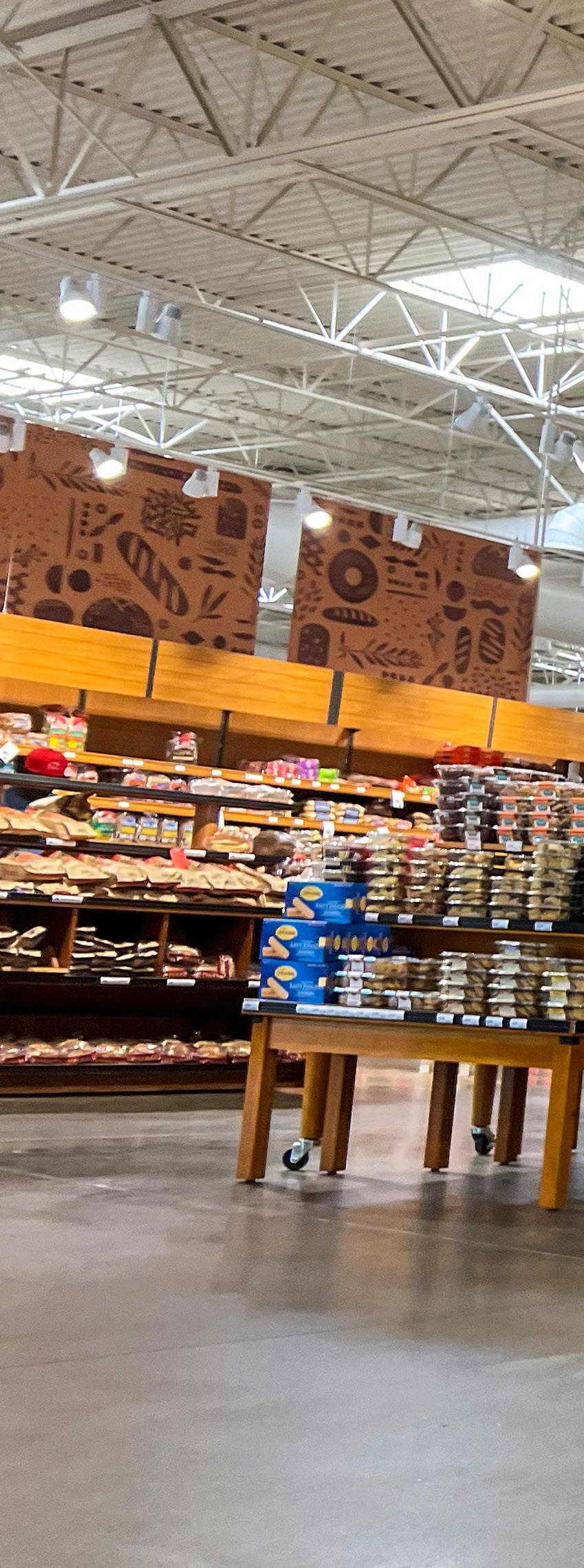
Complying with Extended Producer Responsibility laws requires bakers to report on every packaging component that reaches consumers.
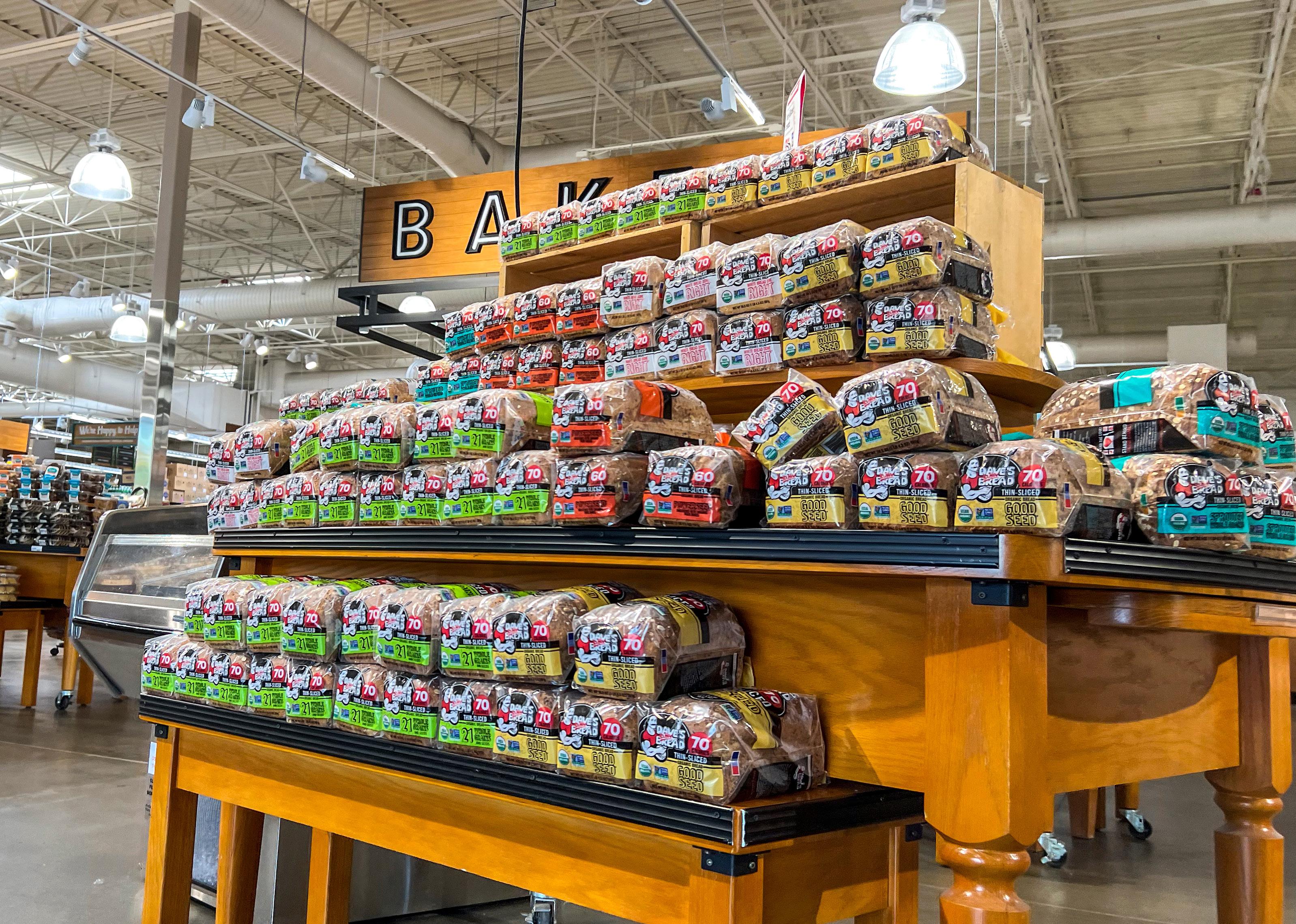
American Bakers Association (ABA). “Our members ship nationally, and the impacted states define ‘producer’ differently. A baker may know where they specifically send their product, but if they send it to a distributor that then sends it to four or five other locations, tracking the covered materials data becomes more complicated. Producers need to report this information, which is then used to set fees or dues that are paid into the state’s PRO.”
For example, when a bakery ships bread loaves to a grocery store in a state with active EPR laws, it must report on every
packaging component that reaches consumers, including the bread bag and its closure.
“They must report on anything that enters the residential disposal stream,” said Veronica Ataya, director of marketing and innovation at St. Johns Packaging.
“It becomes very complex for companies to do this, especially if they produce multiple items. They have to do it for every single package. It’s challenging for larger bakeries that have a data collection system in place, but for smaller companies that may not have those types of systems, it becomes really difficult.”
EPR isn’t just a challenge for packaging teams to solve. Nearly every department — sales, finance, R&D, procurement, operations, IT — has a part to play in ensuring accurate reporting and compliance. Building internal awareness is a key first step.
“Companies should understand their packaging footprint, track data such as material procurement and monitor how requirements are developing across states,” advised Matthew Grill, VP of advocacy for SNAC International, the leading non-profit international trade association for the snack industry.
“As programs move forward, companies need to understand how fees will evolve and how requirements align with real-world packaging, food safety and supply chains.”
For bakers wondering where to start, Ataya recommends taking a holistic view of the portfolio and examining all SKUs to determine what type of packaging material each product, or product family, uses. The thicker the film, she said, the higher the fee because producers pay per pound.
“Every pound counts,” Ataya said. “Start with what you have today. Is there room for optimization? Work with your packaging supplier to see if there are other options — a smaller size, thinner film — that can run on your existing packaging line, give you the same efficiencies and reduce your EPR fees. Optimize everything you can.”
Bakeries that may not have the resources to manage EPR requirements in-house have a few options, including CAA, which can help them calculate material weight, identify material types and guide them through each state’s requirements.
“There are several companies that can manage EPR data collection, sales tracking and reporting on a producer’s behalf, and handle the legal and regulatory aspects,” said Mark Bescher, founder of packaging consultancy Legacy Public Policy. “There are also consultants that help companies get set up so they can eventually collect and report data on their own.”
As bakers dig into the implications of EPR compliance, they can also turn to industry organizations such as ABA and SNAC International for education, the latest regulatory information and government advocacy. Both groups collaborate with Ameripen, a coalition of branded companies and associations working with individual states to find legislative solutions that work for everyone.
1. Map every packaging component, including sub-parts and functions.
2. Capture material types, quantities/ weights, and percentage composition for each component.
3. Centralize packaging data in a structured, searchable system that can run calculations across geographies.
4. Maintain supplier specs, certifications and evidence to easily trace and verify data.
5. Collect sales data across all channels or use population-based apportionment estimates where data is missing.
6. Classify and tag claims and certifications using state-specific definitions (e.g., compostable, reusable, recyclable).
7. Monitor the biggest contributors to material footprint and EPR fees to focus redesign costs where it matters most.
Source: rePurpose Global









“ABA relies on Ameripen to be the main advocate in this space,” Zvaners said. “This year, they have introduced legislation at the federal level that could help streamline the state patchwork and offer some clarity.”
Zvaners encourages ABA members to get involved with the association’s State Affairs Group to stay on top of what’s happening at the state level, both legislative and regulatory. The association can also connect companies to state resources and other member bakers that are further along in the compliance process and able to offer general guidance on best practices in accordance with antitrust laws. The association also works with HB Strategies, a national advocacy firm, to track packaging bills and legislation and provide bi-weekly member updates.
SNAC International is also at the ready to help its members traverse the EPR landscape.
“SNAC has been engaged throughout the policy process, working with policymakers, regulators and program operators to help ensure requirements are clear, practical and reflective of the realities of food packaging,” Grill said. “We provide our members with regular policy updates, state-by-state summaries, and broad guidance on key deadlines and requirements, along with opportunities to engage directly with experts and peers.”
After years-long anticipation, on May 1, California published its permanent EPR and packaging source reduction law, along with the fee structure. Under SB 54, by 2032, producers must reduce their use of covered materials by 25%; ensure a 65% recycling rate; and achieve 100% recyclability or compostability for all single-use packaging and service ware.
“Ameripen has introduced legislation at the federal level that could help streamline the state patchwork and offer some clarity.”
Rasma Zvaners | VP of government relations | American Bakers Association
With at least eight additional states expected to move EPR bills forward in 2026, and two to three states anticipated to announce regulations each year following, there’s no better time than the present for producers to start talking with their packaging material suppliers and raising awareness with their teams.
For the short term, many food and beverage manufacturers may feel dazed and confused over how to approach EPR compliance until more structure and details emerge. In the long run, states that enact these regulations do so with the hope of encouraging producers to move to more recyclable packaging to reduce their fees. Will it work? Only time will tell. CB












AmberPro® Vital Wheat Gluten begins as HRW wheat, grown right here in the heartland, and is processed in our state-of-the-art facility before being delivered to bakeries across the country. Let us be your trusted, domestic partner.
Contact: sales@amberwaveusa.com sales@amberwaveusa com
Enzymes have been an asset in a baker’s toolbox for generations. They’re shaping the way the baking industry innovates, representing the future of food.
As a global supplier of baker’s yeast and baking ingredient solutions, Lallemand Baking is dedicated to delivering quality products and services to its customers. With a team of experts focused on industrial baking processes, the company provides customer-specific ingredient solutions based on fermentation and enzyme technologies that are driven by consumer insights and application know-how.
Lallemand Baking’s enzyme solutions are tailored to specific baking challenges, including cleanlabel reformulation, dough strengthening, process efficiency and shelf-life capabilities. The enzymes help maintain quality and freshness across a wide range of bakery applications.
Health-and-wellness remains a hot topic in the food and beverage space among shoppers and manufacturers alike. Consumers today are paying attention to labels, looking for natural sugar substitutes or unsweetened products.
However, sugar is not easy to replace, especially in baked goods. From crust coloration and boosted shelf life to masking bitterness and supporting yeast fermentation, it plays many important functions.
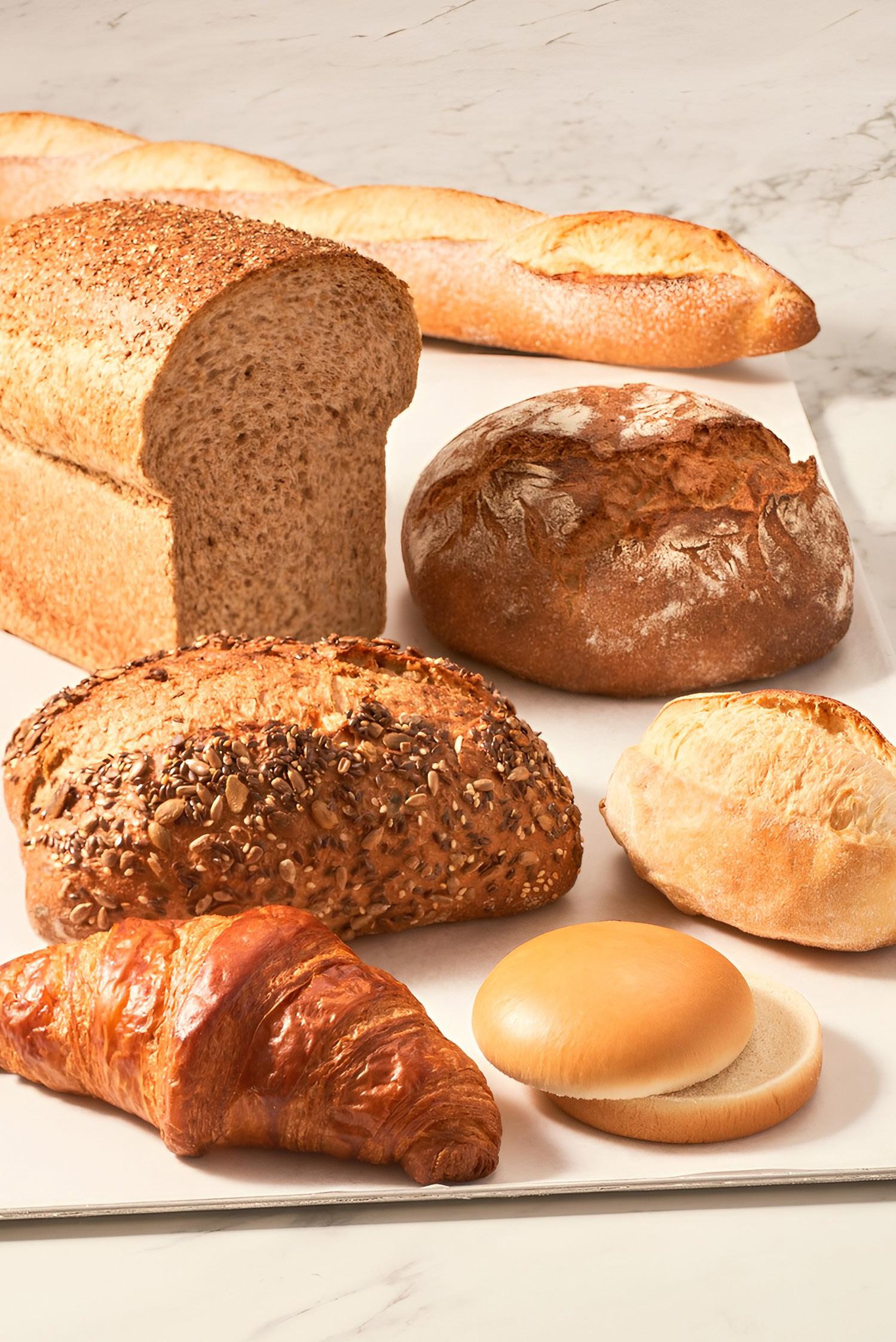
Enter Essential FSA, Lallemand Baking’s sugar reduction solution. This clean-label approach produces sugar in-situ from damaged starch in wheat flour. This provides sufficient sugar to support yeast activity and browning.
In high-sugar baked goods, yeast activity is inhibited by the osmotic stress that sugar exerts. Essential FSA allows for a reduction of sugar in the mixer bowl to alleviate this osmotic pressure and progressively generate sugar in the dough. This optimizes the fermentation activity of the yeast and delivers superior process tolerance, reducing the sugar content by 12%. The dough conditioner accelerates fermentation and proofing time while stabilizing — and maximizing — gas production. Bakers can use Essential FSA on an as-needed basis to achieve the desired final flavor.
Lallemand Baking’s sugar reduction solution gives commercial bakers a competitive advantage, helping them formulate superior bakery products with less or no added sugar.
To increase operational flexibility and boost throughput, especially for bakers affected by limited oven capacity, Lallemand Baking developed Essential BTR Prime, a proprietary enzymatic approach designed for commercial operations.
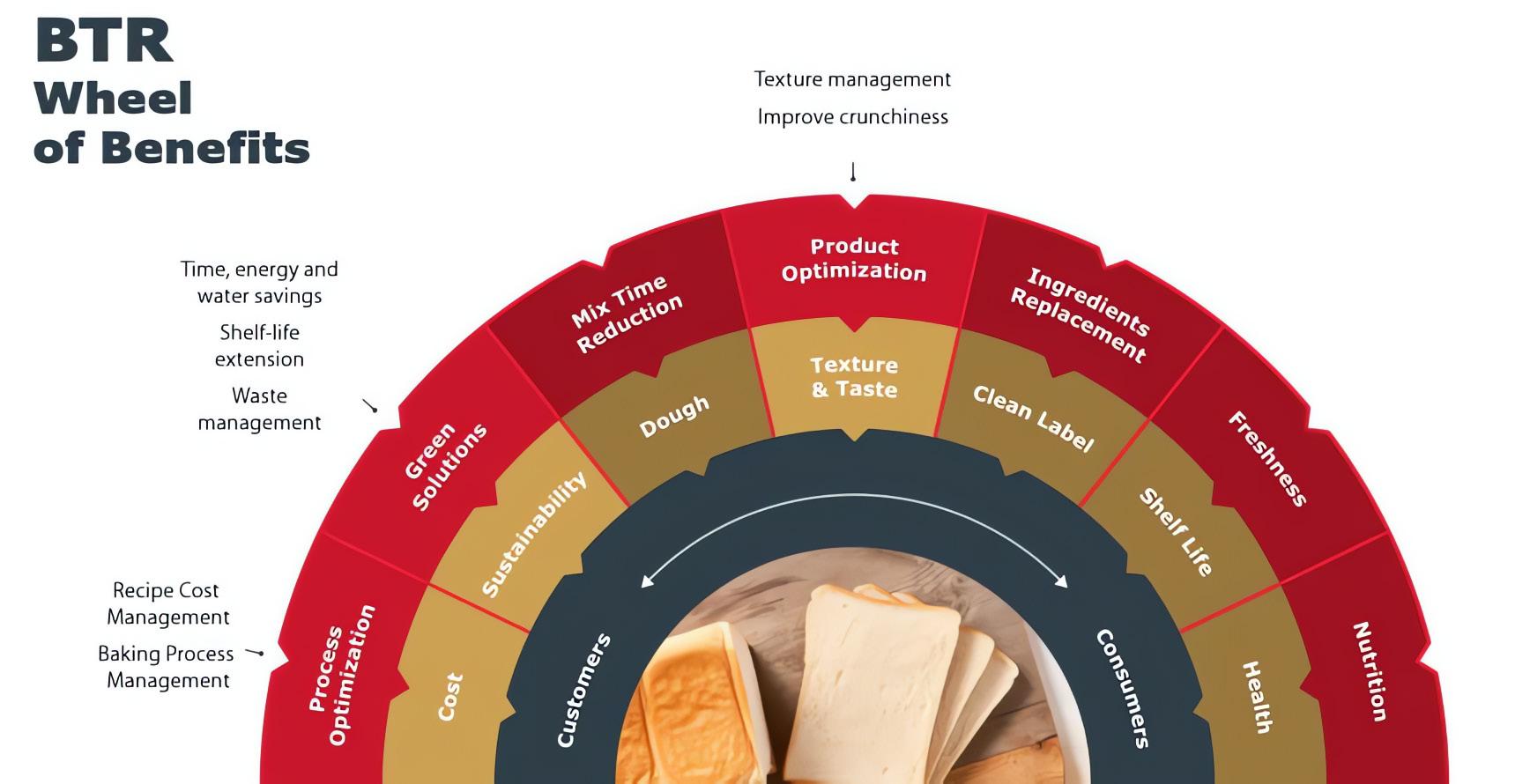
Essential BTR Prime can be used in various products, including crusty rolls, pan breads, high-top sandwich breads and artisan baguettes. This customized solution helps bakers achieve a more cost-effective and sustainable baking system.
This enzymatic solution delivers a reduction in bake time by minimizing competition for water within the dough system. As this water is less tightly bound, bakers can achieve their target bake with less energy. This also allows for more effective hydration and functionalization of gluten proteins, making it an excellent choice for high-protein and high-fiber formulations.
Essential BTR Prime reduces baking times by up to 33%, acting as a clean-label solution that enables a reduction of scaling weight to achieve the same finished product weight. The solution enhances energy efficiency and increases production without compromising on quality. By boosting energy savings and providing an alternative to traditional emulsifiers, Essential BTR Prime supports bakers’ green initiatives.
Lallemand Baking’s experts collaborate with bakeries to test process conditions that reduce carbon footprint without affecting productivity or product quality, identifying the enzyme-based solution bakers need for sustainable baking.
With value-added baking solutions and a dedicated technical support team, Lallemand Baking can play a crucial role in bringing bakery projects to life.


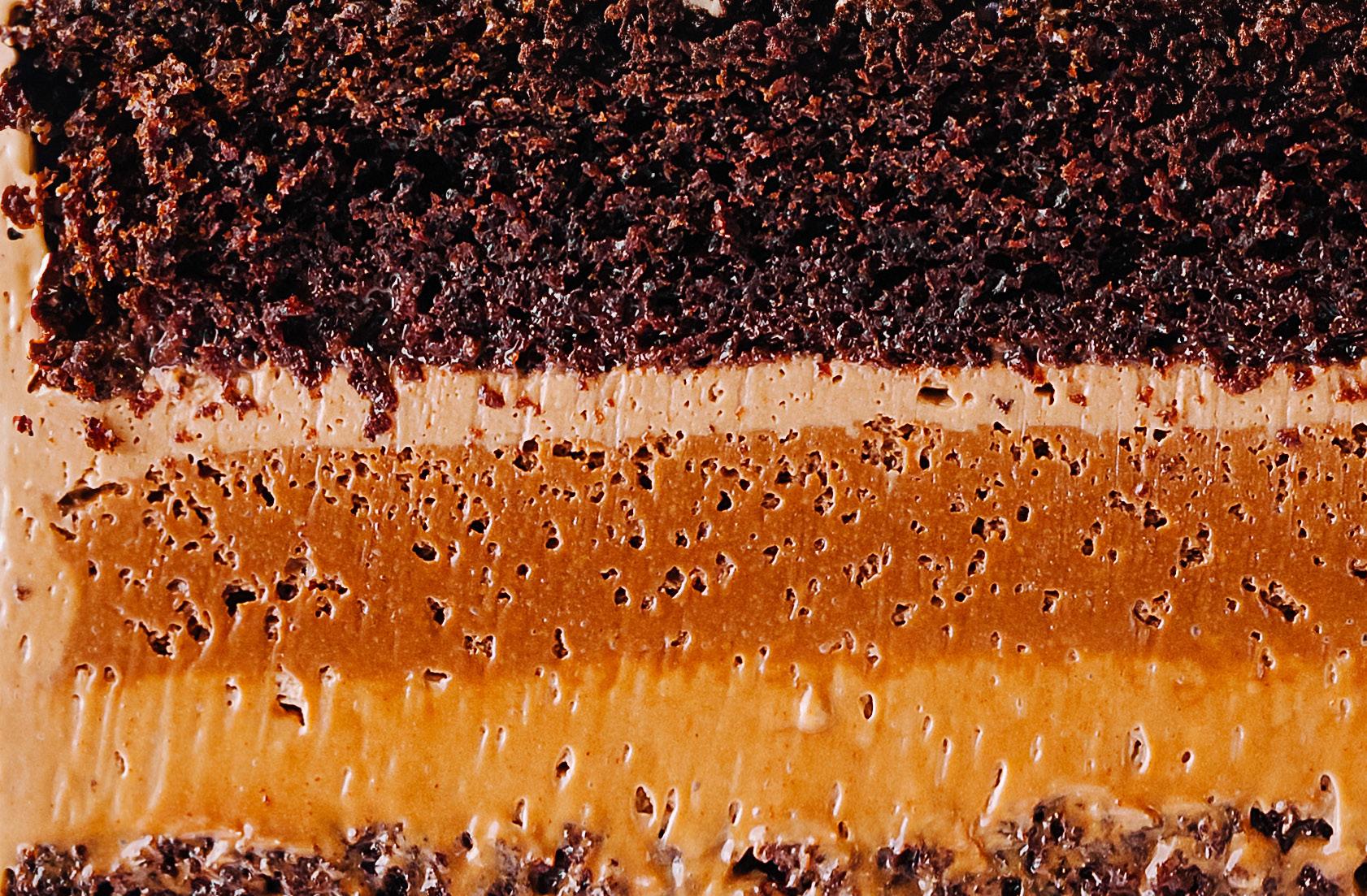
Consumers know what they want … but brands can give them what they need.
BY LILY COTA
The wave of consumer perception rises and falls, forcing brands to tread water until the next trend comes crashing in. Staying above the surface isn’t easy, but it’s not impossible, either, as consumers drop hints left and right. Here’s how shoppers are driving innovation in the baking industry through demand for heightened nutrition, authentic experiences and all-or-nothing flavor.
Amid this bona fide “health-and-wellness revolution,” consumers have made their
priorities clear: clean-label protein and fiber in everything
Protein is no longer just an added feature; it’s a minimum requirement. From Kodiak’s Trail Bars to Dave’s Killer Bread’s Organic Snack Bites, it’s been a common thread in traditional wellness categories over the past few years. More recently, it’s become the primary focus of indulgent, better-for-you products such as Yumkies’ bite-sized cookies and Lexington Bakes’ pumped-up brownies.
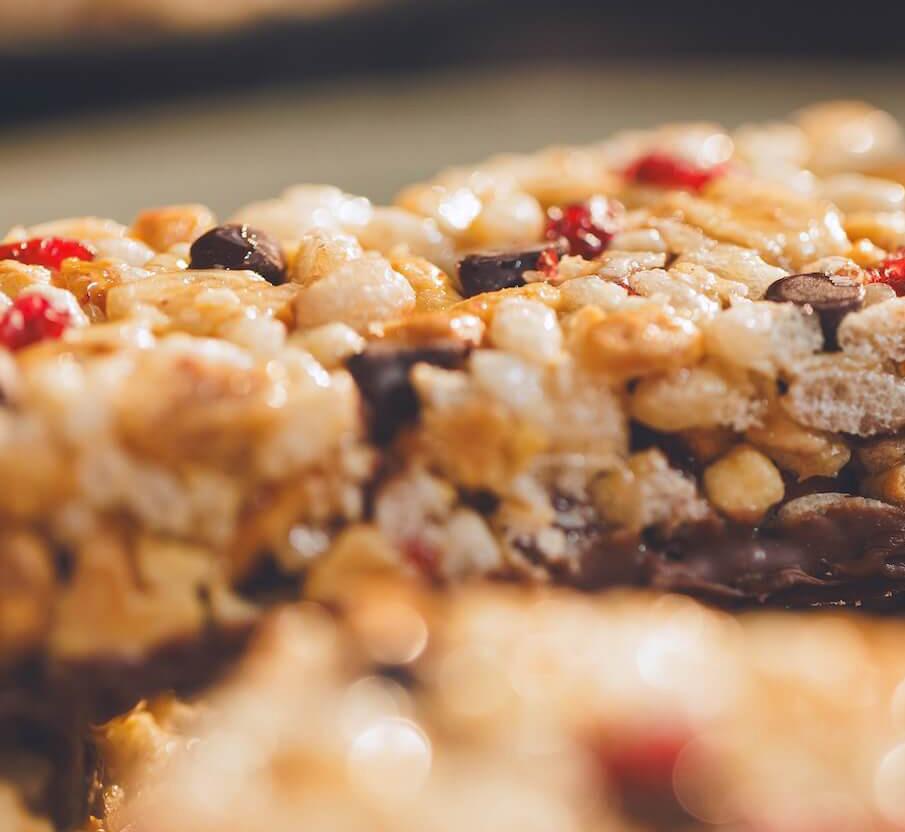
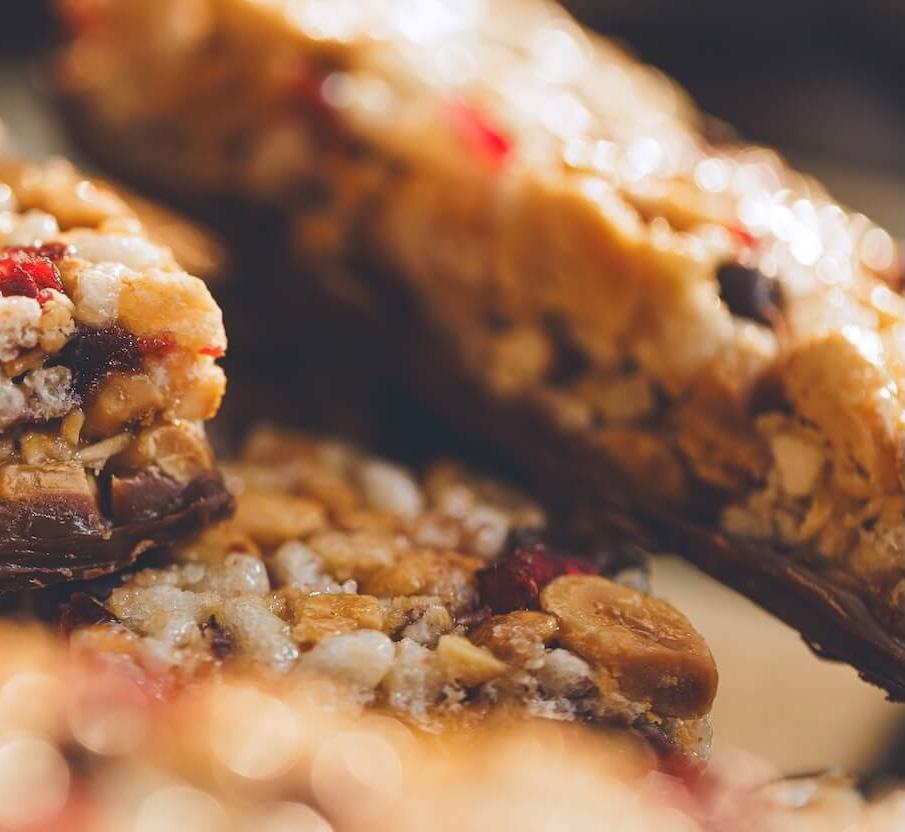

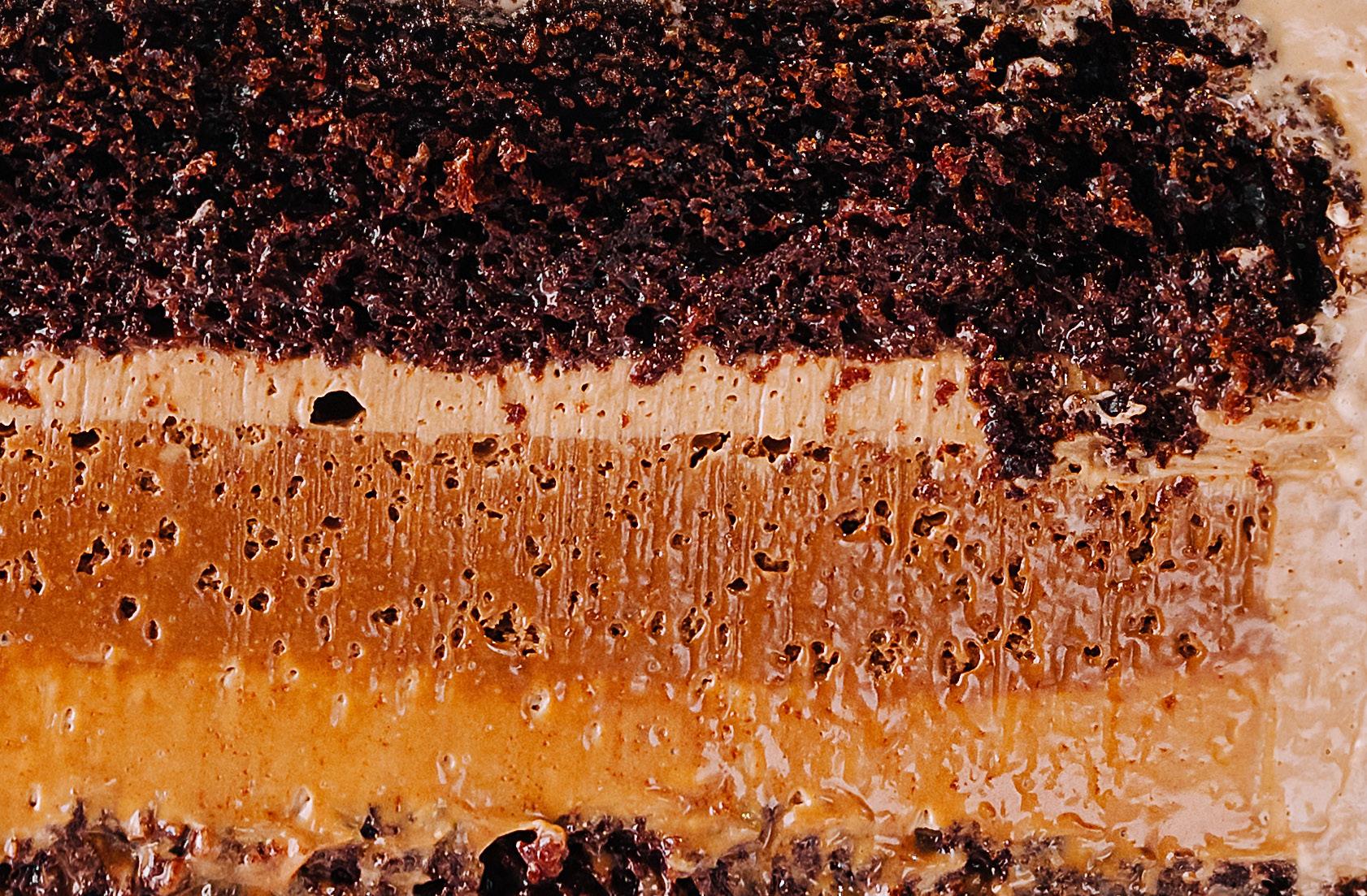
Brands are prioritizing functional singleserve treats and nutrient-packed bites while maintaining taste ... because consumers don’t want more protein if the tradeoff is less flavor.
“How do we still deliver extraordinary taste and hide in the protein that everybody wants?” said Lex Evan, founder of Los Angeles-based Lexington Bakes, in an exclusive interview with Commercial Baking regarding the brand’s Protein Oat Bars and Protein Cookies. “We’re catering to the modern consumer, but delicious dessert is still a needed addition to protein.”
On the heels of higher demand for more protein, fiber is making headway in the gut health realm and beyond, led by an enticing buzzword: fibermaxxing.
“Fibermaxxing is essentially attempting to eat a ton of fiber to max out your daily
fiber intake so you at least meet, but more likely exceed, the recommendation for daily fiber intake,” said Tara Schmidt, RDN, LD, a lead registered dietitian at Mayo Clinic.
By intentionally maximizing daily fiber intake, consumers can improve gut health, satiety and heart health, and bakers can seize the opportunity by adding fiber-dense ingredients such as oats, flax and chia seeds to their products.
Multi-textured baked goods — chewy bases with crunchy elements, crispy shells with soft centers, and flaky wafers with smooth fillings — are the ones landing in shopping carts. That includes those without added nutritional attributes.
Orrville, OH-based Hostess Brands kicked off this trend in 2023 with the launch of Kazbars, candy bar-inspired
snack cakes featuring layers of alternating textures, from spongy chocolate cake to brittle caramel pieces. The movement has evolved, infiltrating every category from indulgent layered brownies to crunchy cheese-based snacks, but the main factor at the source of the innovation remains: a unique eating experience.
With a range of innovative, inclusionfocused cookies that incorporate multiple textures to provide a distinctive indulgent moment, Eagle River, AK-based Molly Bz Cookies is a leader in this ring. The brand’s line includes never-beforeseen flavor and texture mashups, such as the award-winning Boba doodles, which feature pops of mini strawberry boba between bites of shortbread.
Founder Molly Blakeley keeps up to date with the tastes consumers are craving via online buzz and trends reporting, making sure her cookies always hit the mark.
“I typically Google the top 10 flavors or tastes of the year that are popular in the food industry, and I noticed boba was getting really popular,” Blakeley said during Season 15 of Trouble shooting Innovation, a Commercial Baking podcast. “Bobadoodles are taking the world by storm. All of a sudden, I went from pitching, pitching, pitching, to stores calling me saying, ‘We want to carry your cookies.’”
The chewiness of the boba combined with the crumbly, melt-in-your-mouth texture of shortbread goes beyond textural stereotypes. While many consider chewiness to be a sweet treat characteristic, and crunchiness to be a snacking feature, bakery brands can excite consumers by creating chewy, savory snacks and crunchy, indulgent treats. Creative combinations such as spicy frosted donuts or chocolate-
51%
of global consumers are seeking cuisines from other countries.
Source: Innova Market Insights | Global Flavor Trends 2026
covered crackers help products differentiate themselves.
Flavor is a key factor when it comes to crafting memorable eating experiences and standing out amongst the crowd, and inspiration comes from every corner of the globe. New bold profiles entice consumers and broaden their palates, generating a rising interest in global tastes.
According to Innova Market Insights’ Global Flavor Trends 2026 report, 51% of global consumers are seeking cuisines from other countries, with a majority being open to trying traditional foods with a modern or familiar twist. “Swicy” flavor combinations, authentic Asian and Latin cuisine, and functional ingredients are driving consumers toward fermented foods, complex spices and “newstalgic” goodies.
“Hot and spicy is gaining traction,” said Sally Lyons Wyatt, global EVP and chief advisor, CPG and foodservice for Circana, during a keynote session at SNX 2026. “Global and fruit flavor profiles are still winning — think mango or Mexican-inspired cuisine — as well as cultural partnerships.”
Through co-licensing, brands can quickly combine their core flavors or products with something new, or typically unattainable, to add dimension to their portfolio.
For example, Cheez-It’s collaboration with Ortega resulted in Cheez-It flavored taco shells. The new product combines the loyalty behind the Kellanova brand with Ortega’s global influence to reach new consumers.
The prominence of social media and travel has Gen Z and millennial
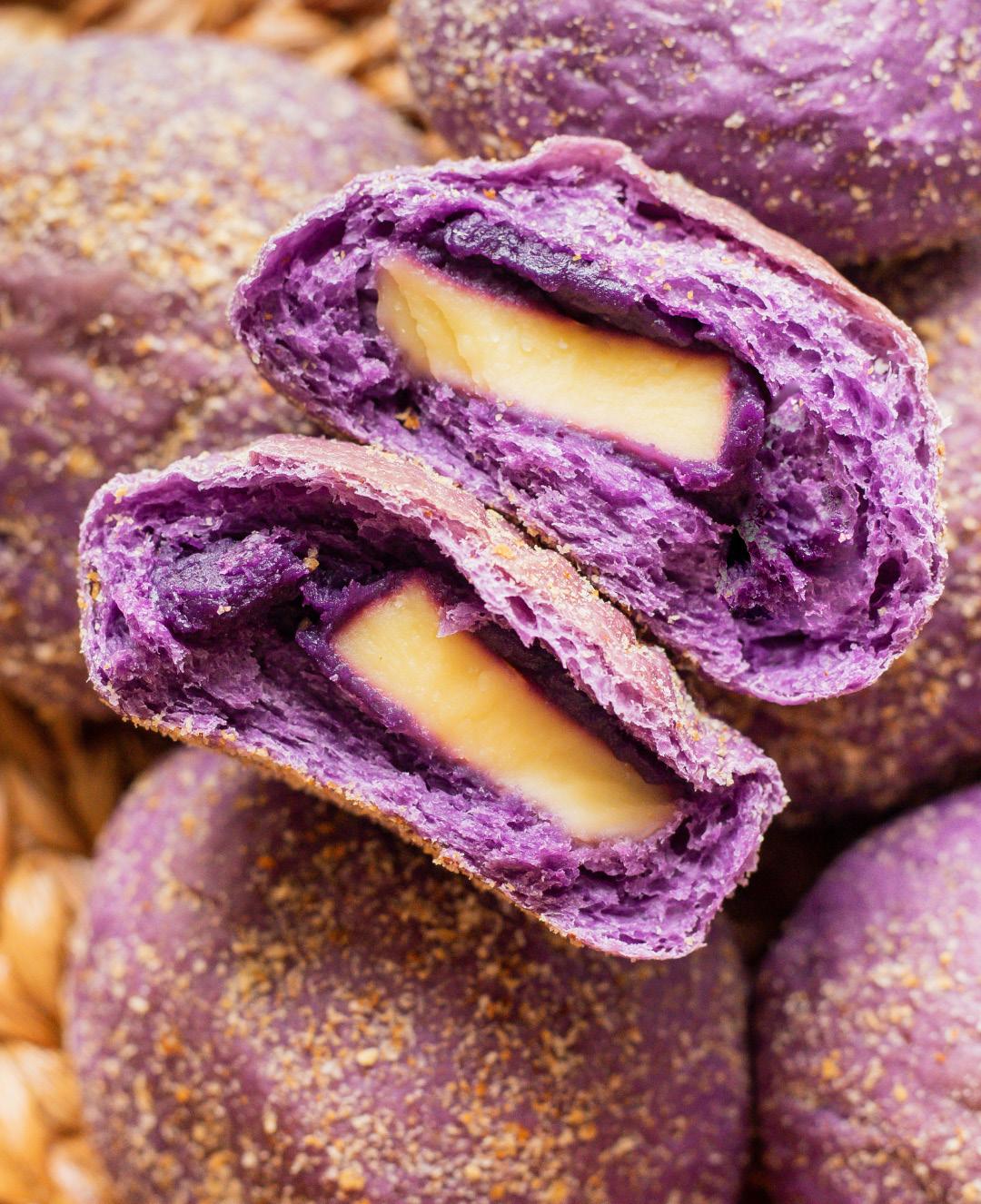
consumers embracing the merge of international and local flavors faster than ever before. From Red Baron’s limited-edition Korean BBQ-Style Classic Crust Pizza to King’s Hawaiian’s Ube Coconut Sweet Rolls, baking brands on both ends of the spectrum are hopping on this trend.
For the Gen Z consumer, trying global foods isn’t just about taste; it’s also about exploring identity, community and creativity. Grocers, regional markets and delivery services have made this exploration easier, removing barriers to experimentation. Travel is no longer a necessity. To keep pace with ever-evolving trends, brands can tap into different outlets and stretch beyond their traditional capabilities to appeal to new and adventurous consumers on any continent.
“Today’s brands need to think beyond any single channel,” Lyons Wyatt said. “Online, club, brick-and-mortar, and social commerce each play a role in giving consumers much easier access and in unlocking new, sometimes global, demand pockets.”
As consumers push boundaries (and borders) with flavor, format and function, another powerful lens is shaping their choices: gut health. But what, exactly, does that mean for bakers?
Consumers say they want a healthy microbiome, but they may not be totally sure what they’re willing to give up to get one. According to Datassential’s “2026 Food and Beverage Trends” report, more than half of respondents said that when thinking about their health in 2026, consuming more foods and beverages for gut health will be important to them.
This presents an opportunity for commercial bakers who are wellpositioned to meet consumers at the point between food science and social concept. Brands can set themselves apart by offering whole foods, fermented bread products and decipherable ingredient labels. A proper digital and packaging presence with clear, intuitive language helps consumers easily decipher important nutrition info so they can enjoy the product without fuss.
Brands like Los Angeles-based La Brea Bakery keep things simple and build trust through transparency.
“Consumers are becoming more ingredient-literate and increasingly seeking brands with authenticity,” said Christine Prociv, chief commercial officer at La Brea Bakery. “The sourdough phenomenon validated what our consumers have increasingly been seeking: transparency, ingredient simplicity and foods that make them feel good.”
There’s room in the market for more — fiber, texture, protein and even pizzazz — and baking companies are eagerly filling that gap with clarity for consumers in mind. CB



Sure, the highest quality ingredients matter. We’re pretty good at that. We’re also known for partnering with our customers to provide next-generation ingredient solutions to support their big ideas. With dedicated experts and a full innovation lab, we’d love to share our secret of success with you. Let’s get started.

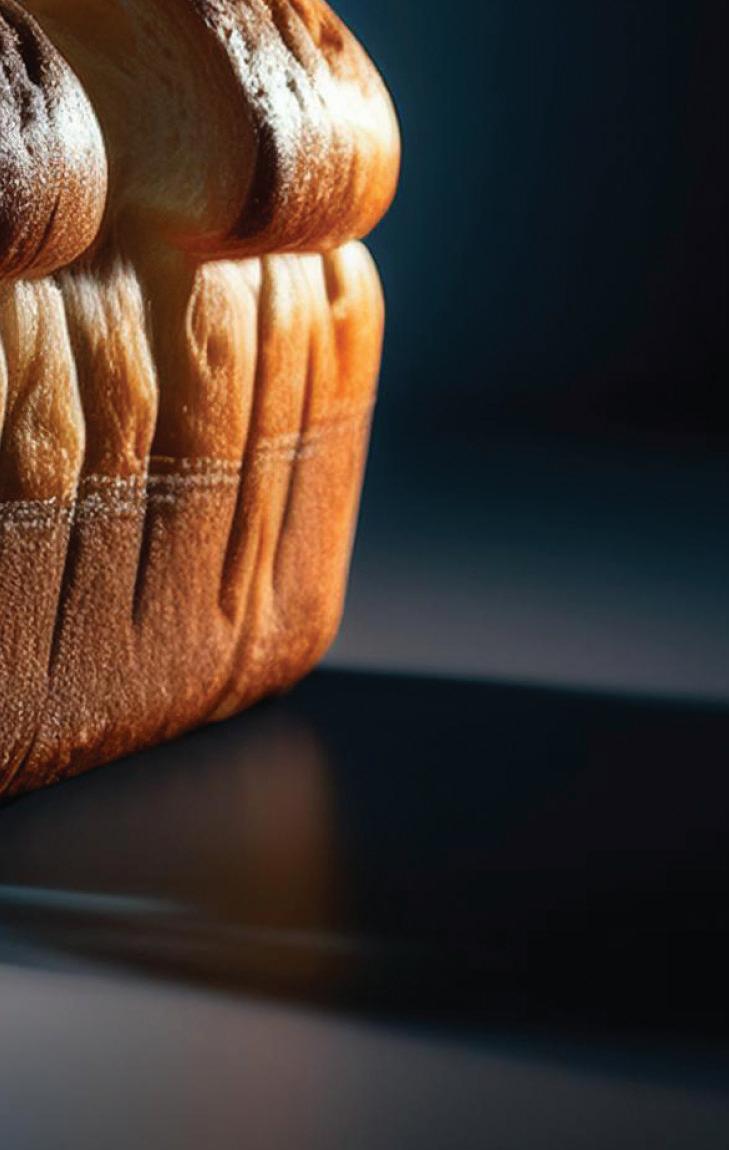


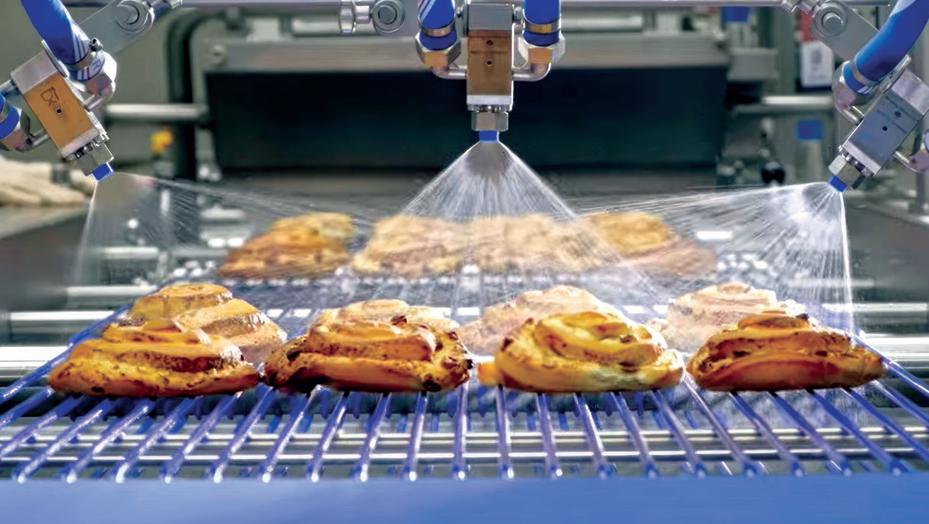
A smooth baking process requires more than just great pans. That’s why Bundy Baking Solutions, historically known as the premier supplier of reliable baking pans, expanded its capabilities to include solutions from Synova release agents in 2019 and, most recently, AccuSpray spraying technology in 2025.
Release agent function is simple: Release the product easily.
Proper baked good release helps production move smoothly and efficiently while maintaining quality standards. Beyond that, it also extends the life of the pan coating, which, in turn, prolongs the lifespan of the pan.
Getting the most out of a release agent begins with the applicator, which must control not only the amount of oil going into the pan but also how it’s distributed.
The AccuSpray Pan Oiler was designed with recipe-driven programming for precise control over volume, rate and pattern of the release agent, while also providing real-time spray verification.
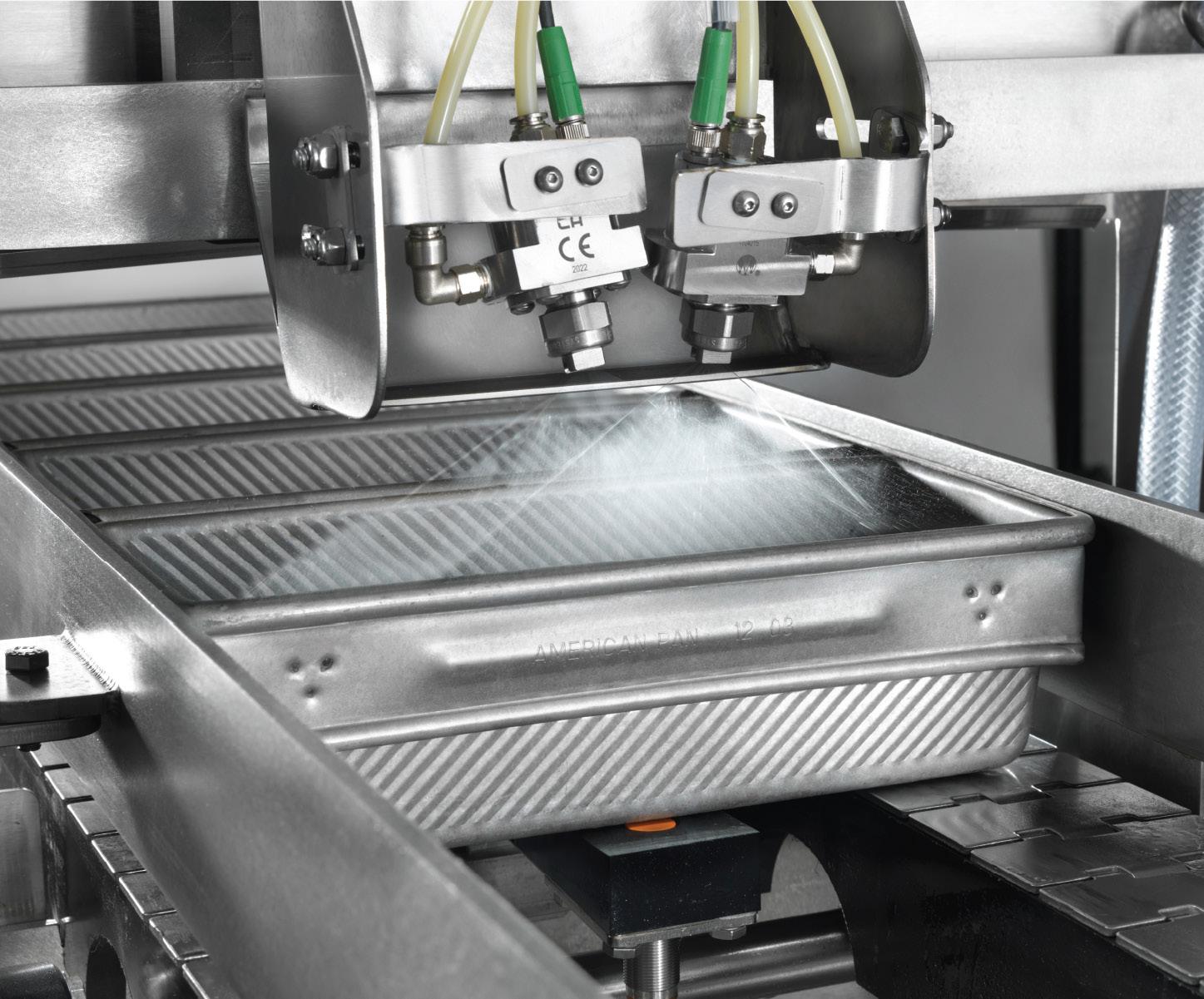
As part of Bundy’s comprehensive pan solutions, the applicator can be programmed to align with pan conditions. Freshly cleaned and glazed pans might not need a large application of release agent, but over time, they may need more. Operators can program the AccuSpray Pan Oiler to recognize which pans are on the line; thus, the machine can track the pan cycles and adjust the oil dispersion accordingly.
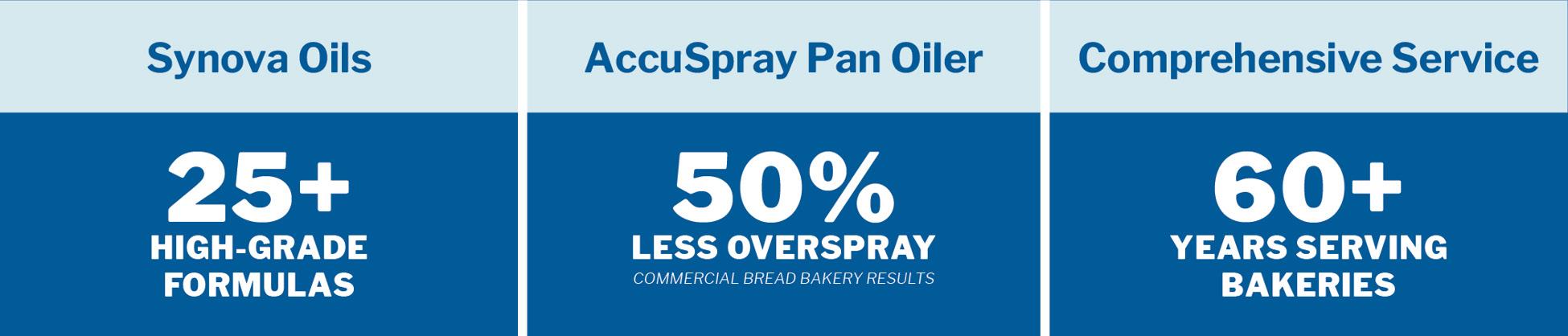
With generations of experience manufacturing pans and coatings, Bundy’s foray into pan release was the logical next step to offer commercial bakers a complete life-cycle solution — one that can significantly reduce operating costs over time.
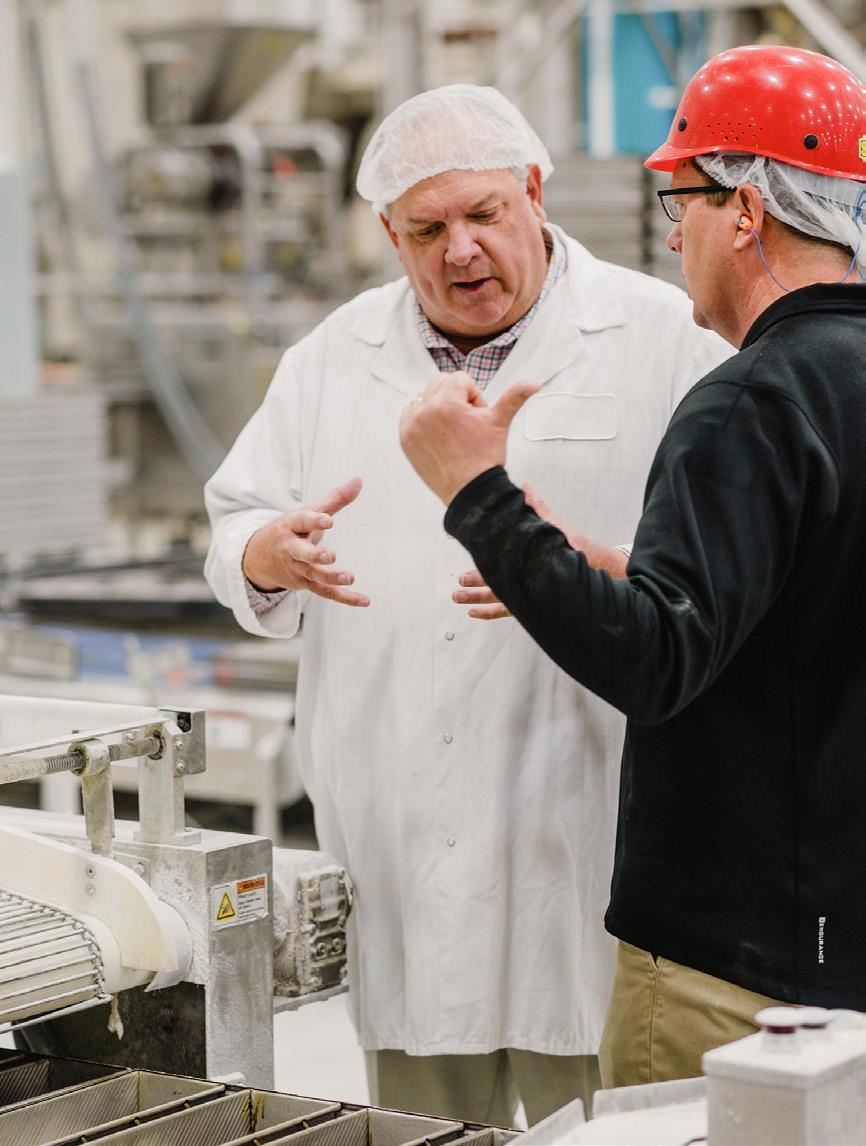
The process begins with pan design, release agent selection and application, and pan cycle tracking, but total solutions are built on the foundation of Bundy’s standards for excellent service. Bundy sales representatives keep close to their customers, investing time and energy to be in the plants, working side-by-side with the operators running the bakery lines.
Bundy sales representatives are industry veterans with deep experience beyond pans, coatings and release agents. They understand both the baking process and the nuances of individual production lines and products.
Combining industry experience with modern technology, the Synova development team recently launched Integra, a new cost-effective line of release agents that will change how commercial bakers invest in the longevity of their pans while maintaining the quality of their products.
Integra is a functional formula at a competitive price point.
With a proprietary blend of high-performance vegetable oil that won’t brown in the oven, Integra enhances the efficiency of the baking process and contributes to better product quality and consistency. Integra not only keeps pans cleaner longer, but it also comes with an affordable entry point.

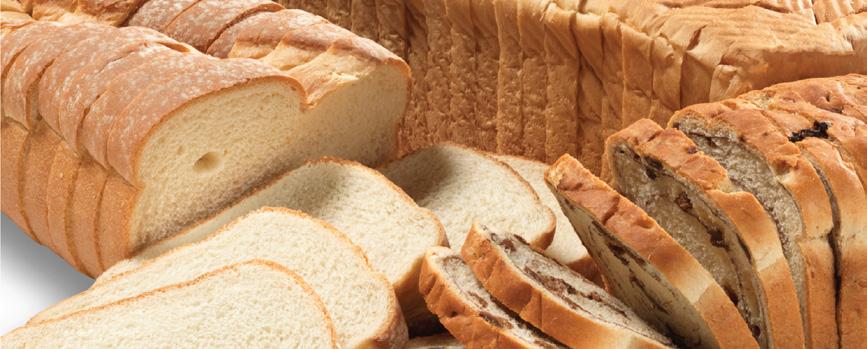


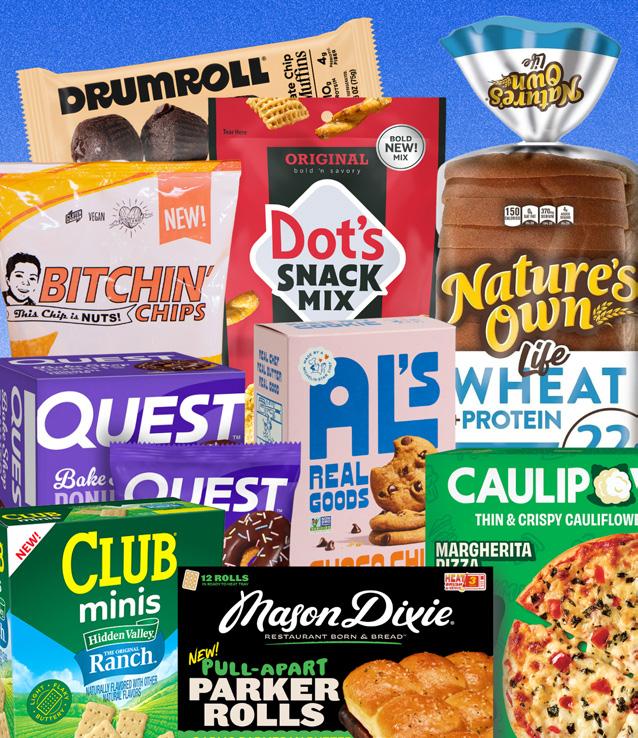
This year, new product launches shared a similar goal: Bridge the gap between what consumers know they want and what will surprise them. Nutrition-forward snacks and multi-textural experiences coexisted on shelves, creating launches that spanned everything from protein bread loaves to filled pretzel sticks.
In the 2026 New Product Showcase, the Commercial Baking staff sifted through these debuts to curate a list of brands, both emerging and established, that are hitting the mark on the top trends guiding the baking industry. Dive into the pages ahead to explore what’s currently boosting the bottom line.



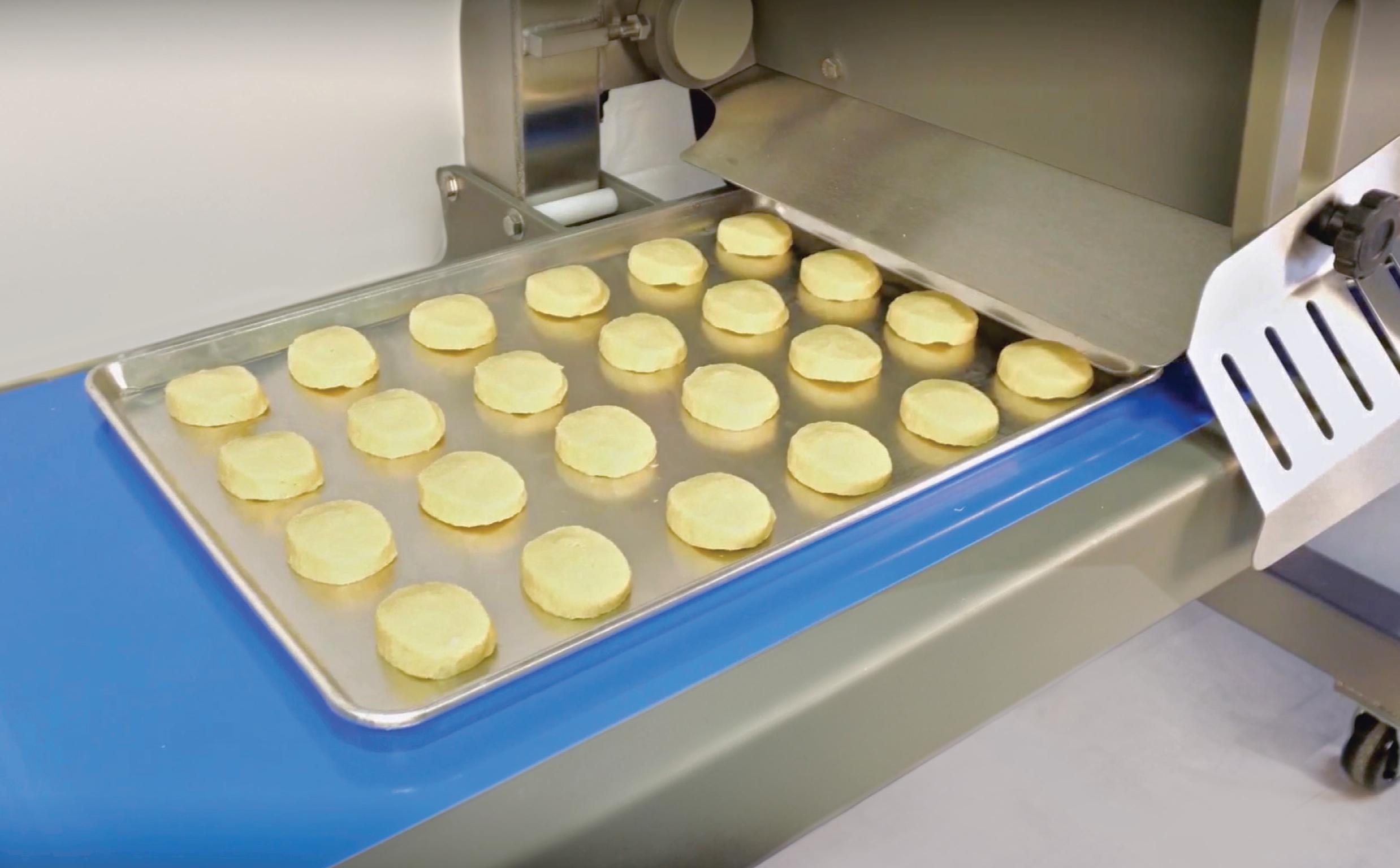


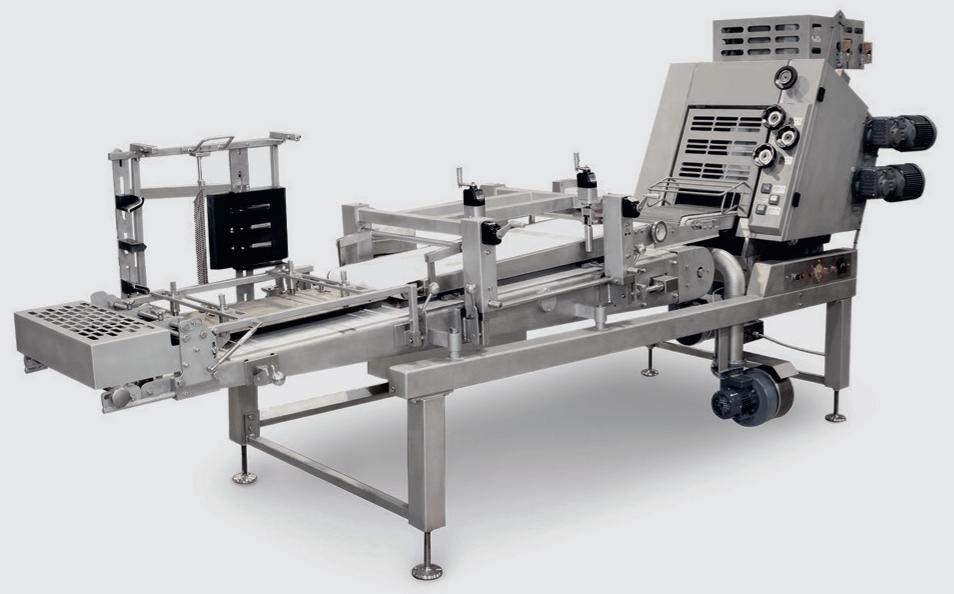
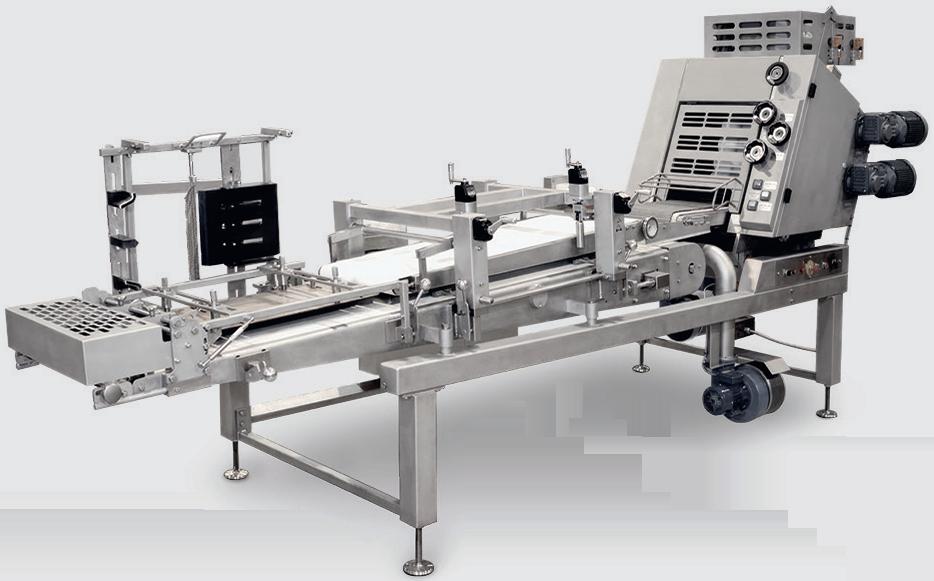
Brownies: Portions: 250 p/min onto a tray. Sheets: 15 - 20 full sheet pans p/min.
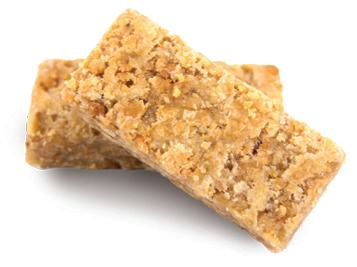
Protein/Energy Bars: High-quality protein & energy bars 300 - 900 p/min.

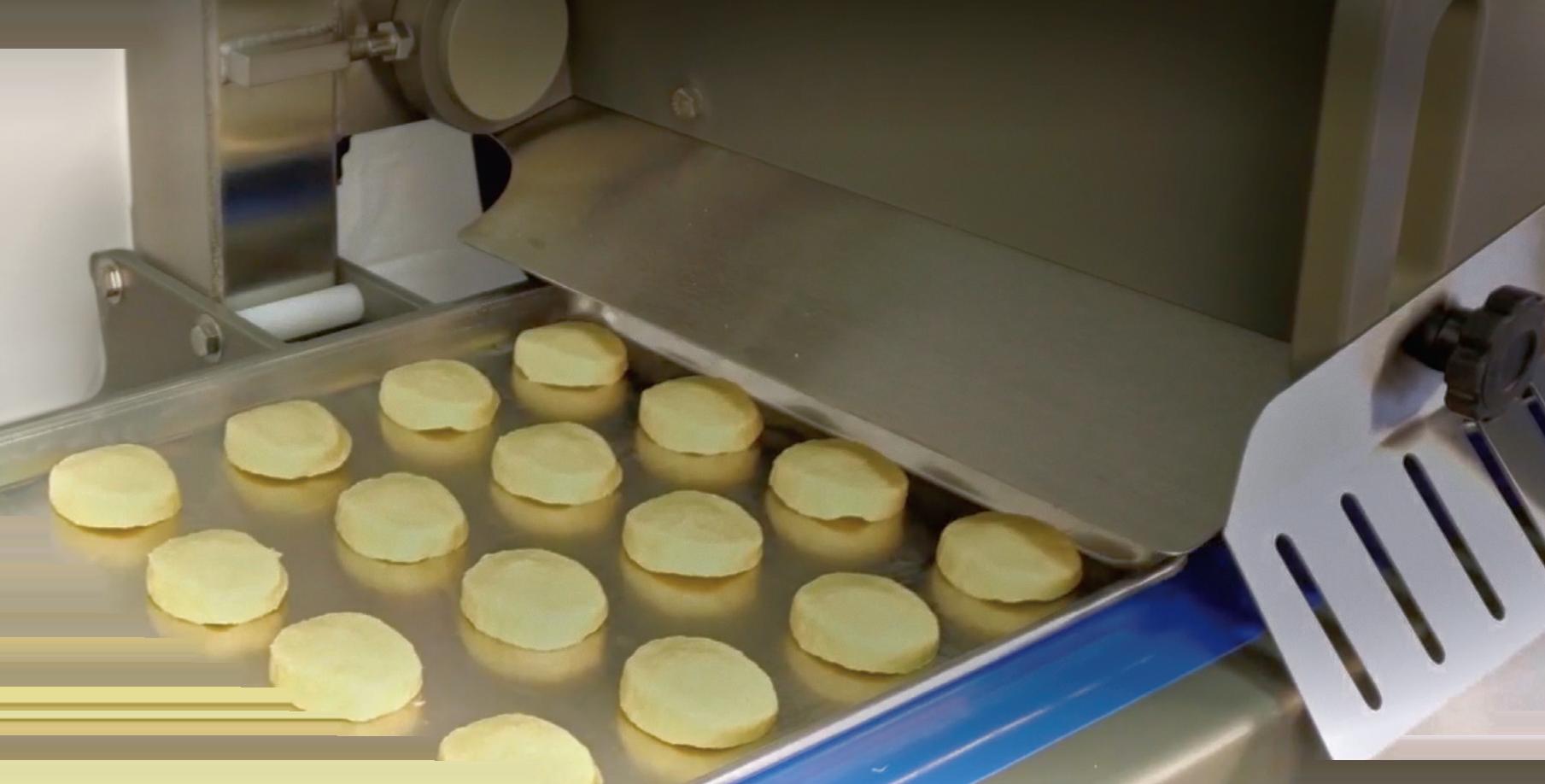
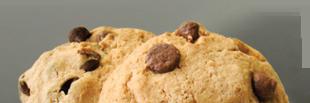
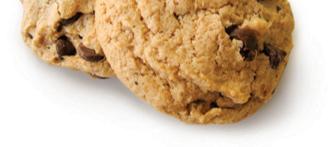
Cookies: Accurate placement, uniform weight, no smearing 200 - 800 p/min.

Gingerbread: Sheeting and shaped cookies 200 - 400 p/min.
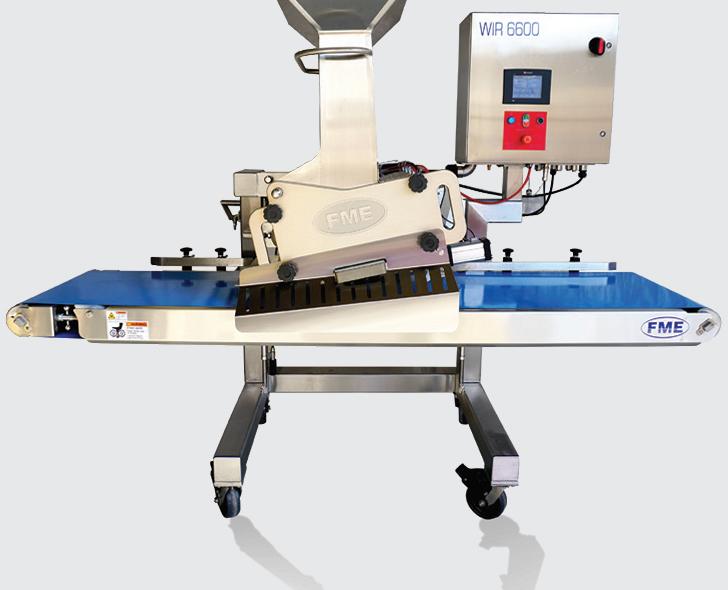


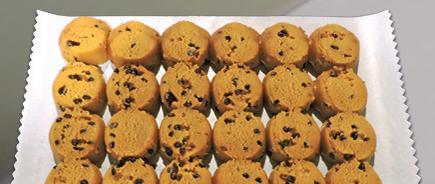

Frozen Dough Production: Placed break n’ bake or individuals 600 - 1500 p/min.
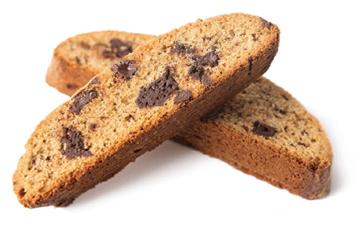
Biscotti: Biscotti formed to pan length 1 to 4 rows 10 - 40 p/min.
High production
Small foot print
2 minute die change over
Large inclusion operation
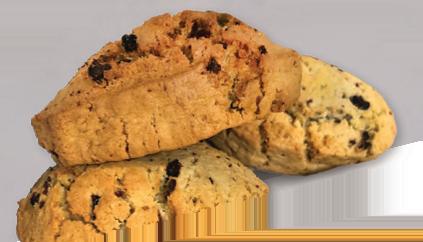
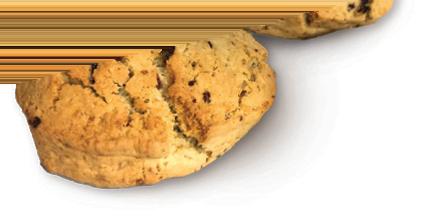
Scones: Artisan scones, all shapes and sizes 150 - 400 p/min.

Full access toolless sanitation
Remote access/monitoring
Intuitive operation and maintenance
Challenging products
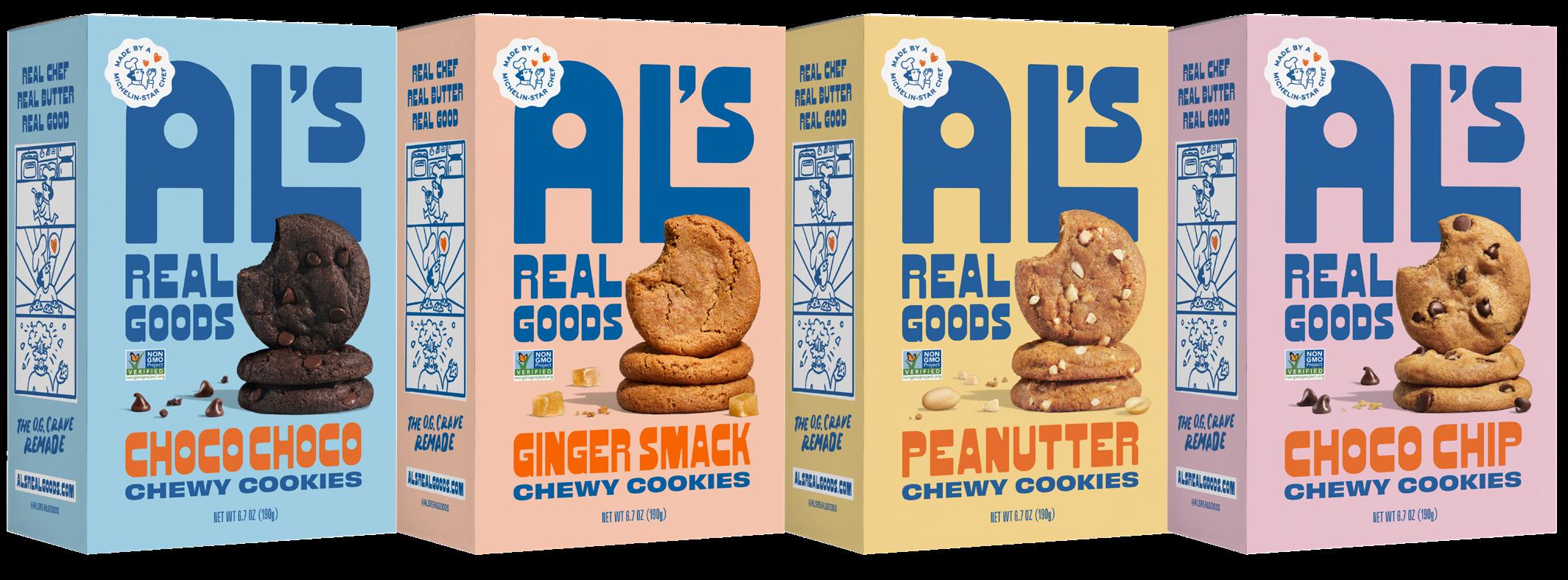
AL’s Real Goods brought a premium chewy cookie experience to the center store. The new CPG line was founded by Aaron London, a Michelin-star chef and restaurateur, after he was inspired to create a baked good that shared the quality and characteristics of cookies made by hand.
With this in mind, London got to work, leveraging his culinary prowess to craft a cookie that met these parameters. At first, he intended to make a gluten-free variety and spent more than a year on R&D in his home kitchen. Finding the gluten-free market too small, AL’s Real Goods opted to launch with a wheatbased variety. With a year of R&D already complete, the pivot to this type
of baked good took an additional four to five months.
“The R&D was all done by me, in my home kitchen,” London said. “I worked with two food science consultants and my food science advisor for technical questions and advice. The R&D process went through a number of cycles. A lot of this was based on co-packer and scale production constraints.”
From a formulation standpoint, ingredients include Non-GMO Project verified, organic, fair trade and sustainably sourced ingredients. This includes cane sugar, free-range eggs and butter made from grass-fed cows. While London was able to lean on his expertise to create
AL’s Real Goods, collaboration was key when scaling up for the market.
“It took a long time to crack the code on a cookie I would be really proud of, that the market needed and was commercially viable to produce at scale,” London said.
The cookies come in 12-count packs and are packaged with recycled plastic trays. Available in flavors including Choco Chip, Choco Choco and Ginger Smack, AL’s Real Goods cookies have an SRP of $9.99. Distribution includes direct-toconsumer via the brand’s website, Faire and Good Eggs, as well as retailers on the West Coast and select stores in Chicago, Austin and Washington, DC. www.alsrealgoods.com
Antonina’s Gluten-Free Bakery added individually wrapped brownies and muffins to its portfolio to meet consumer and retailer demand for portioned, high- quality and gluten-free baked goods. With a push for on-the-go treats safe from cross-contamination and single-serve products that reduce the need for multiple SKUs, Antonina’s has found a clear avenue for growth.
Finding the right packaging without losing the taste and texture the brand had cultivated a reputation for was challenging. Antonina’s marketing and R&D teams worked in tandem to create a transparent, yet eye-catching format that protected the delicate structure and moisture levels of the baked goods.
“We tested different films, seal strengths and barrier properties to keep the product moist, protect its structure and maintain a premium feel,” said Kay Conley, director of R&D at Antonina’s Gluten-Free Bakery. “We also stayed committed to baking with our proprietary gluten-free flour blend. Stability and sensory tests helped us select the stron gest performers for this format.”
The brand’s Lemon Poppy Seed, Cinnamon Chip, Chocolate Chip and Triple Chocolate muffin flavors and Double Chocolate brownies delivered the best results for this format. Antonina’s had been exploring single-serve and two-pack formats for several years prior, running tests on different packaging concepts and product builds, finding success with a flowwrapper.
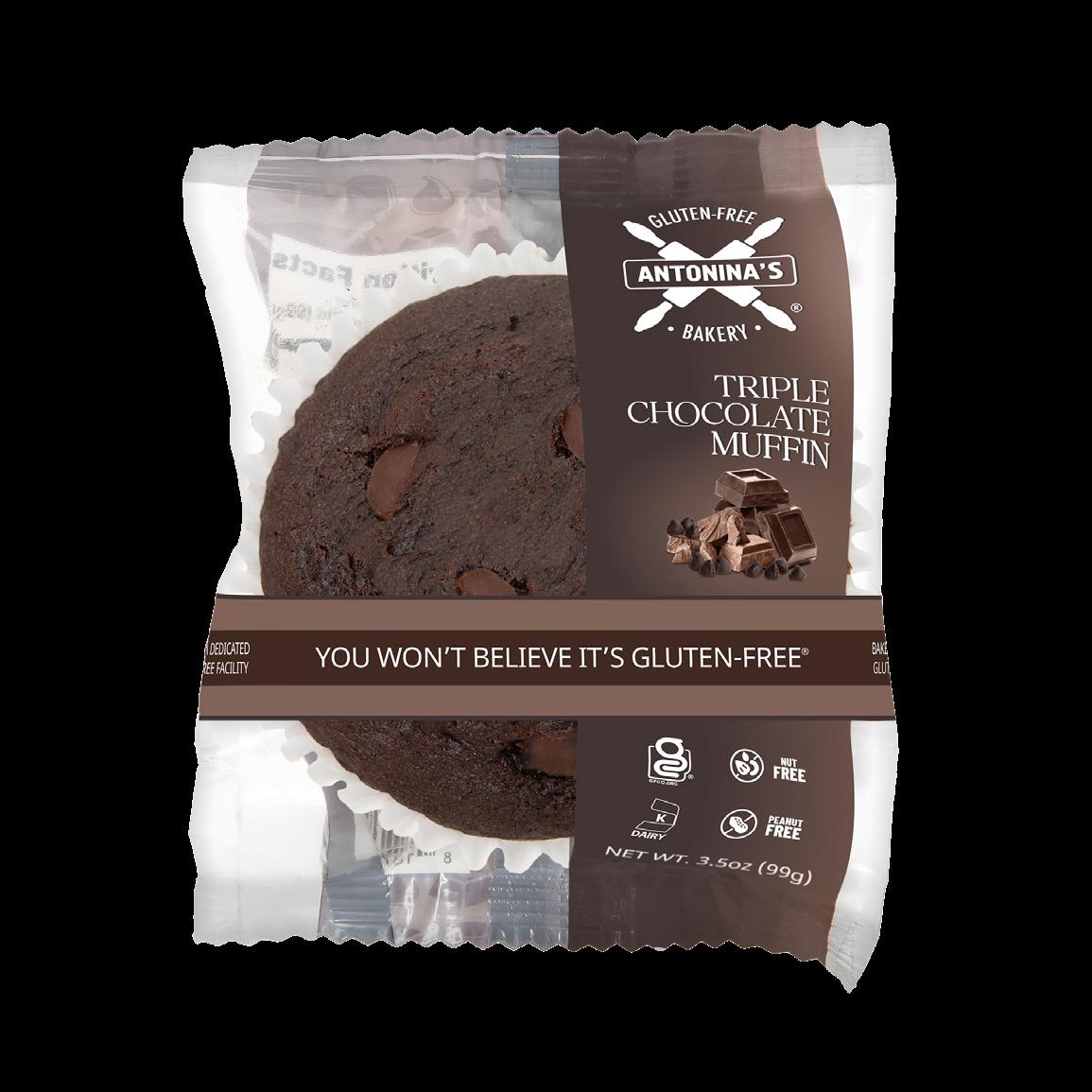
“Once the flowwrapping machine was installed, the project moved quickly,” Conley said. “It took about six months to complete packaging design, supplier testing, recipe adjustments, and final validation for shelf life and texture. Close collaboration between R&D and production made that timeline possible. Weekly meetings kept both teams aligned
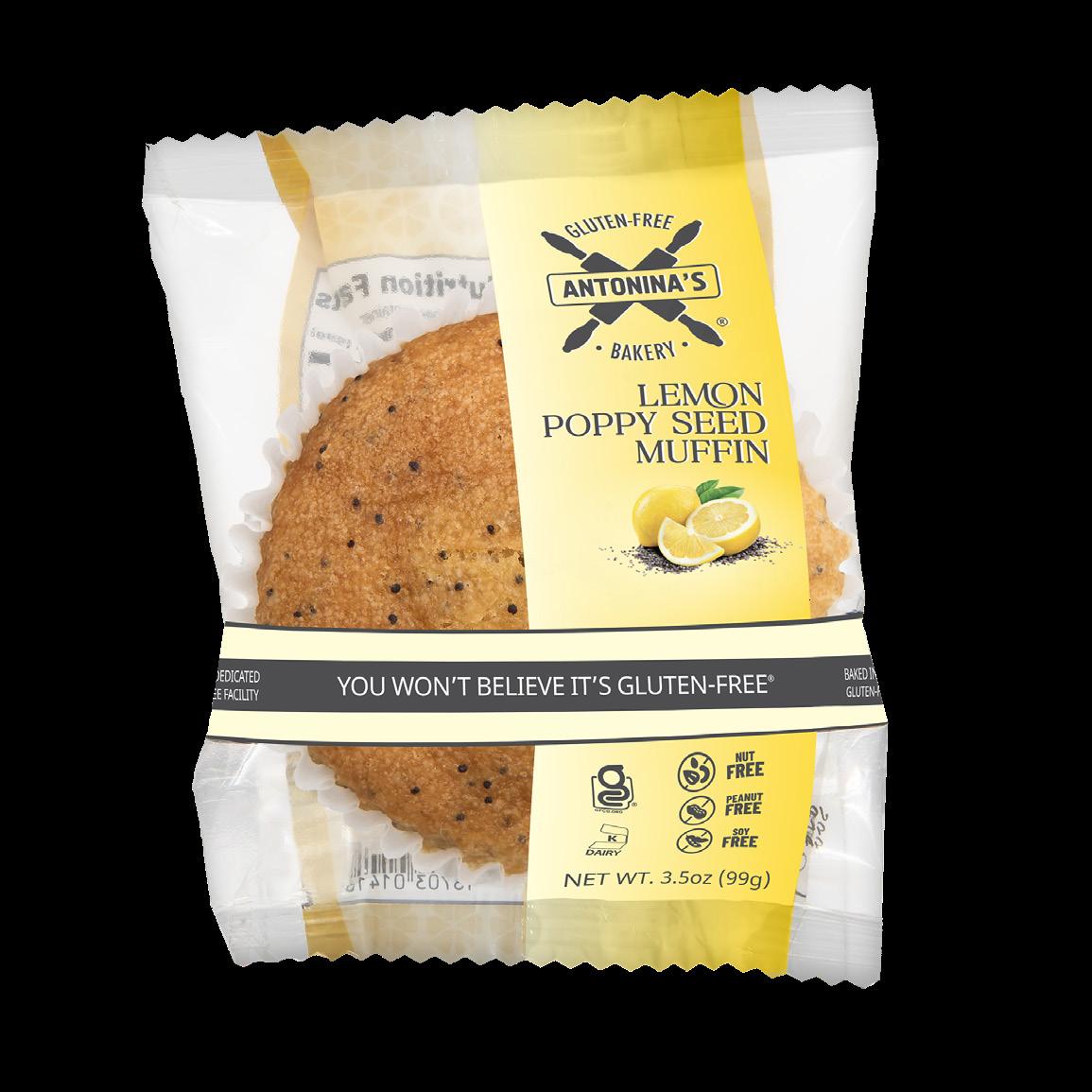
on ingredient needs, timing and scale-up planning, which helped us anticipate challenges early and move efficiently from concept to commercialization.”
Antonina’s Gluten-Free Bakery’s individually wrapped muffins and brownies are available in 3.5-ounce portions for an SRP of $2.99. The muffins are packed 24 per case with four 6-count display-ready caddies, and the brownies are packed 48 per case with four 12-count display-ready caddies. www.antoninasglutenfreebakery.com
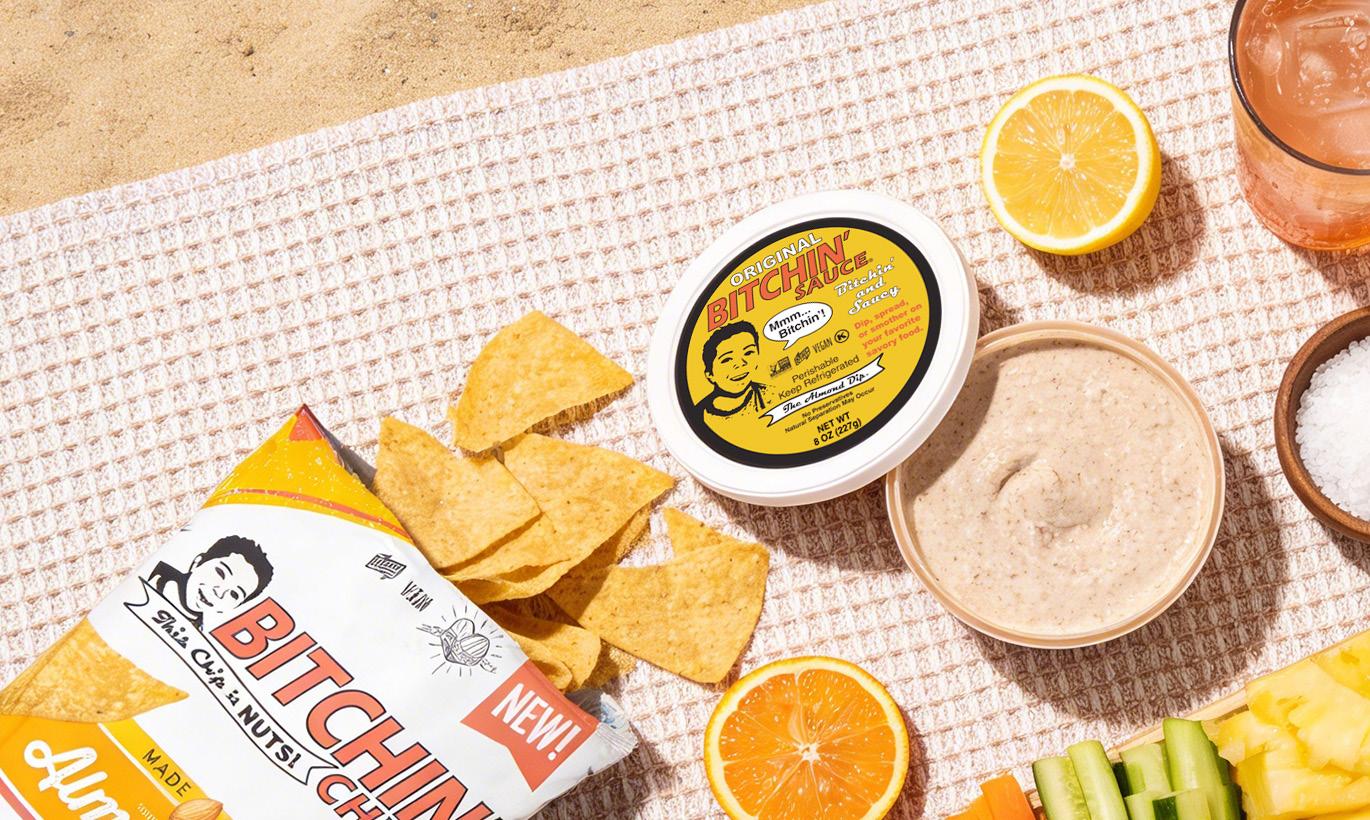
Bitchin’ Sauce broke away from its main product offering to create a chip up to par with its line of almond-based dips and sauces. The Bitchin’ Chips portfolio was created to fill the gap for a premium, clean-label tortilla chip.
“Bitchin’ Chips represent an entirely new capability for Bitchin’ Sauce: ambient and solid, the opposite of our core sauce expertise,” said Gus Smith, the company’s senior director of operations. “The product was developed to create a chip worthy of our sauces; one that could stand up structurally to thick dips without breaking.”
In terms of R&D, the company began from the ground up, breaking down the chip-making process and prototyping in-house. The key ingredient that makes this product stand out is its use of California almond oil, aligning with the brand’s ingredient ethos.
“To our knowledge, no other almond oil chip currently exists at retail,” Smith said. “California almond oil is a premium, intentional choice consistent across all our products and oil choices.”
Once Bitchin’ Sauce settled on this ingredient, it took two months to formulate the chip recipe. From there, it was a matter of finding a co-manufacturer and building out a supply chain and sales infrastructure. Overall, it took about a year.
Since its release, Bitchin’ Chips has received positive feedback from both consumers and retail partners.
“Consumer feedback has highlighted flavor, chip strength and structural integrity, crunch and seasoning level,” said Sara Hale, director of communications marketing for Bitchin’ Sauce. “From a retail perspective, we are seeing a consistent uptick in retailer adoption.”
Bitchin’ Chips come in 10-ounce bags and are available for retailers in 8-count cases, at Costco in a 2-pack configuration, or in 32-count floor shippers. Consumers can find this snack at Kroger stores nationwide, select natural retailers in southern California and Northwest Costco locations for an SRP of $6.99 per bag. www.bitchinsauce.com
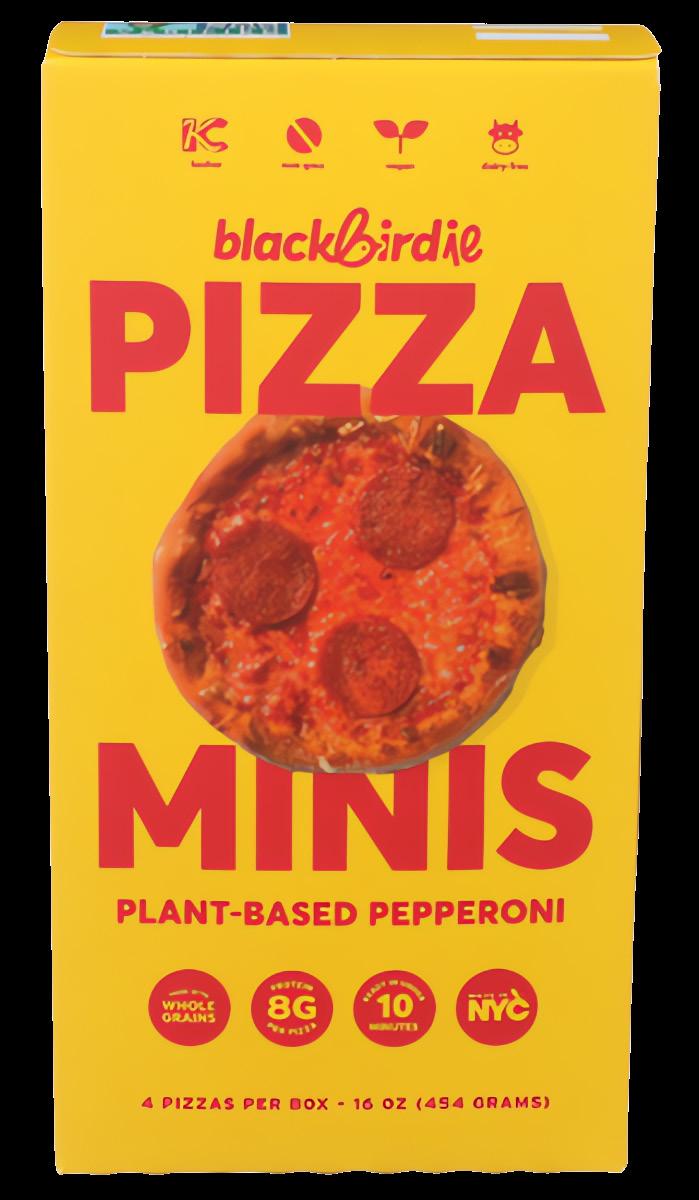
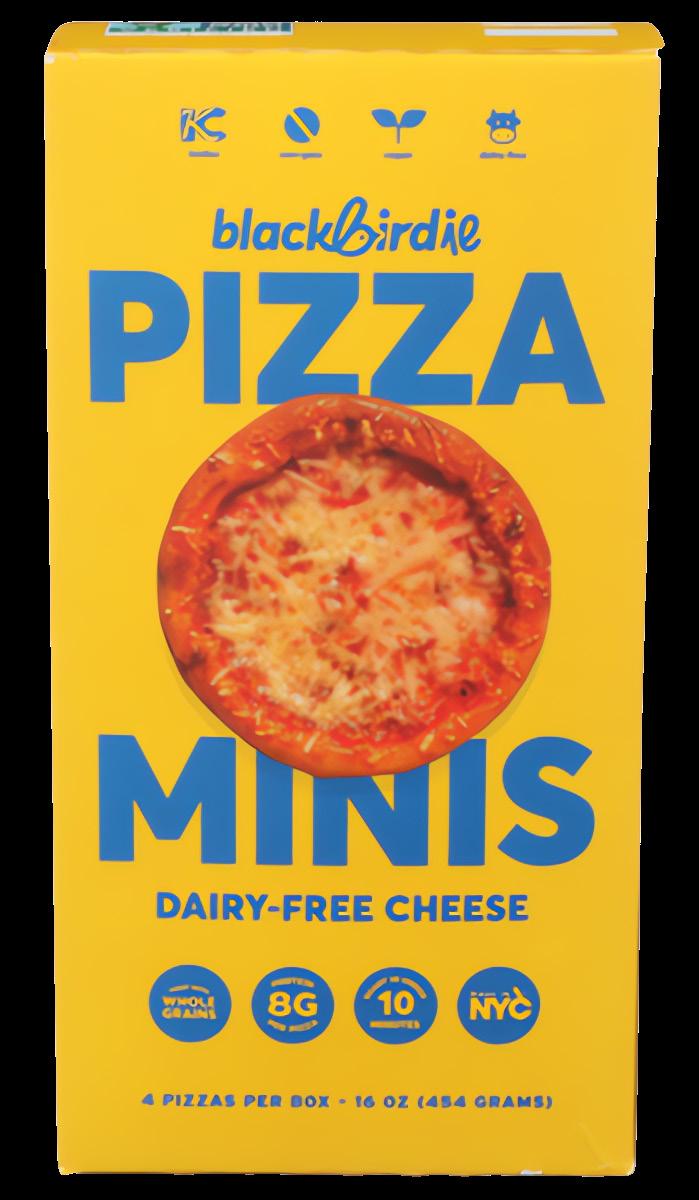
Blackbird Foods, a plant-based foods brand, narrowed the gap in the betterfor-you frozen pizza market with its new Blackbirdie Pizza Minis. The personal pizzas were developed as a familyfriendly alternative to the company’s fullsize pizzas.
“Parents told us they were looking for smaller, snackable and lunchbox-ready options made with recognizable ingredients and a better crust their kids would love,” said Blackbird co-founder Emanuel Storch. “Our Pizza Minis deliver on that with a whole grain crust and kid-friendly flavors, making them a true win-win.”
From concept to shelf, R&D took about a year. A key aspect was developing a process that could scale while maintaining the handmade quality Blackbird’s pizzas are known for.
“Our pizzas are hand-tossed and crafted in our own manufacturing facility, which brings both flexibility and complexity,” Storch shared. “One of the biggest challenges was perfecting the ratio of crust, sauce and cheese on a 5-inch pizza. Early versions leaned too doughheavy, so we refined the formulation to create a better balance, resulting in a mini pizza that feels satisfying and complete, not overly bready.”
The personal pizzas come in two flavors, Cheese and Pepperoni, and are made
with dairy-free cheese and plant-based pepperoni. Market response has been positive, with adoption across a wide range of consumers.
“While we initially designed Pizza Minis with families in mind, since launching, we’ve also seen them becoming a go-to for college students, office lunches and easy dinners, thanks to their convenience and quick cook time in the microwave or air fryer,” Storch said.
Blackbirdie Pizza Minis are available nationwide at Whole Foods Market and Sprouts Farmers Market. A 16-ounce box with four 5-inch personal pizzas has an SRP of $9.99. The brand is actively expanding retail distribution this year and exploring opportunities in foodservice. www.blackbirdfoods.com





























































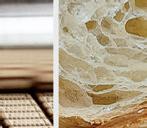











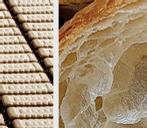




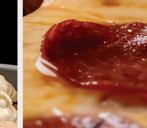
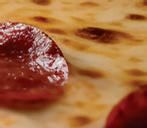






















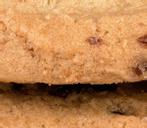



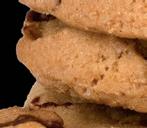
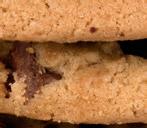







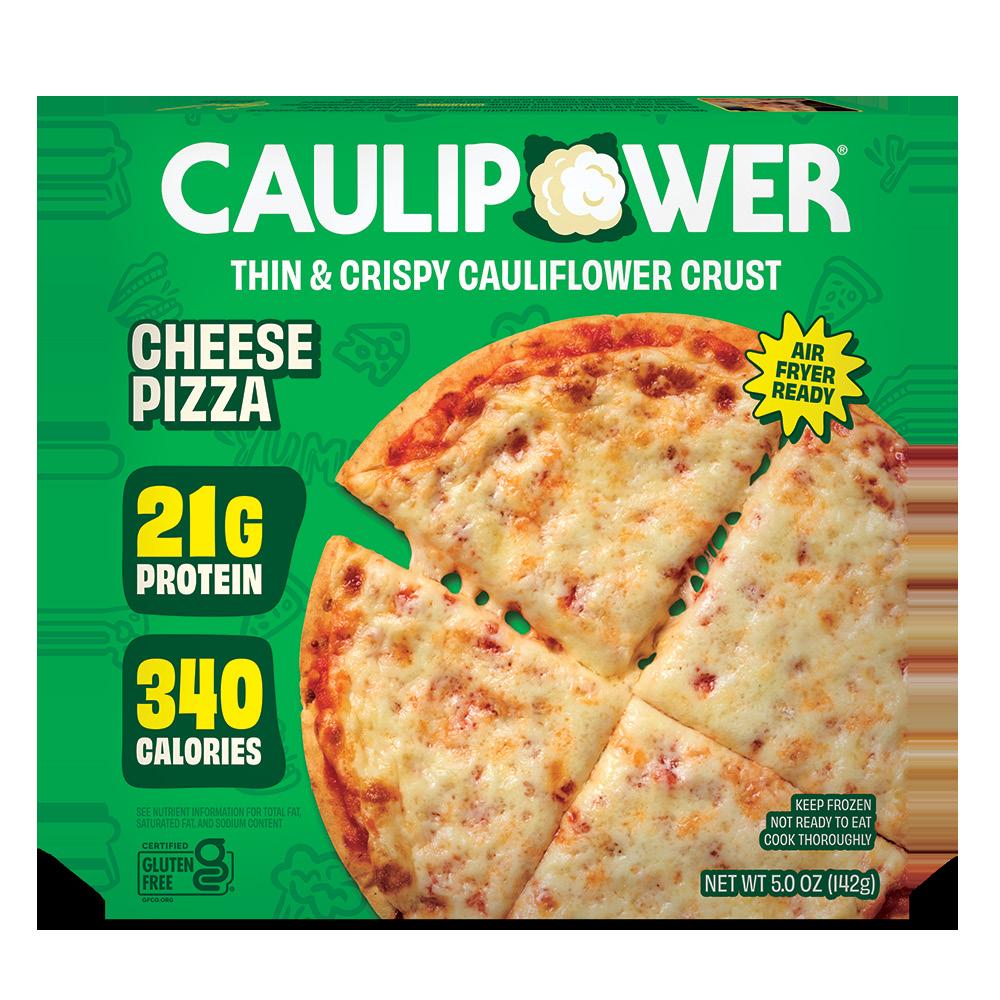
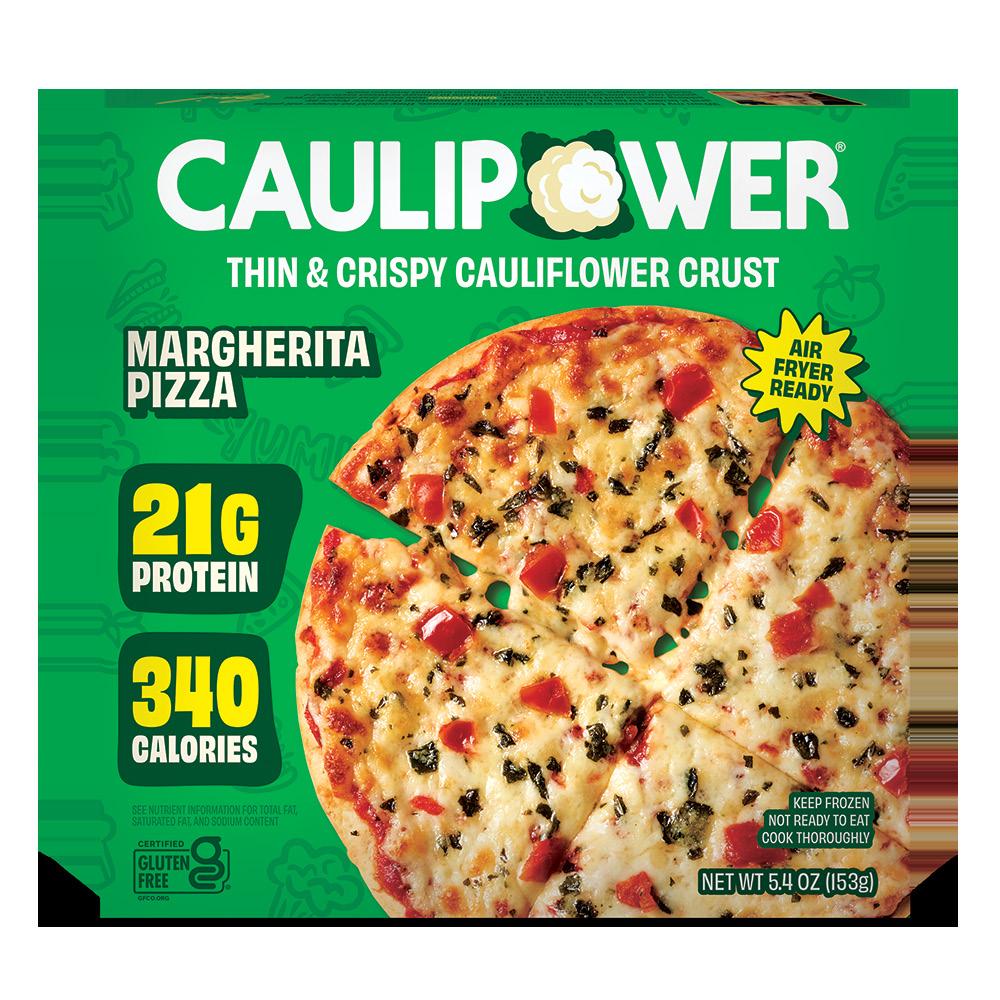
Caulipower disrupted the frozen pizza aisle with its launch of full-sized cauliflower crust pizzas in 2017. The brand recently took the product one step further by introducing a high-protein, single-serve variety.
According to Gail Becker, founder of Caulipower, there was a clear space in the market between individual-sized pizzas and health-forward options, paving the way for the brand to bridge the gap by offering a portion-controlled, nutritionally balanced pizza.
“It would have been easy to just take our iconic cauliflower crust and make it smaller, but we wanted something more, something that was going to offer consumers the protein they’re seeking today,” she said. “During the R&D process, we focused heavily on achieving the right balance between nutrition and taste. We wanted to ensure that the texture and flavor still delivered on what people expect from pizza.”
It took multiple iterations to get an optimized crust. R&D took approximately 9-12 months between early product ideation, formulation, testing, consumer feedback rounds, packaging and distribution finalization. The gluten- and preservative-free pizzas have 21 grams of protein and 4 grams of fiber with a 340-calorie label.
“Consumers appreciate the convenience and portion size, as well as the ability to enjoy pizza that delivers on the protein they’re seeking without being a calorie-bomb,” Becker said. “Early reads on repeat purchases are a positive indicator that the product is providing both taste and functionality.”
Caulipower’s Single-Serve Pizzas are currently available in two flavors — Cheese and Margherita — and are distributed through grocery retailers, such as Meijer and Hy-Vee, at an SRP between $5.99-$6.99. The brand shared that it has additional national retailer rollouts planned throughout the year. www.eatcaulipower.com
Chabaso Bakery, a family-owned baking company and Certified B Corp, found inspiration for its latest innovation at IDDBA 2025.
Noting the dominant presence of protein at the annual event and customer requests for a bread with said attribute,
the company decided to create its own protein-packed ciabatta. From idea to execution, it took about six months for the Chabaso R&D team to land on just the right formula that offers 7 grams of plant-based protein per 2-ounce serving while meeting the baking company’s brand standard.
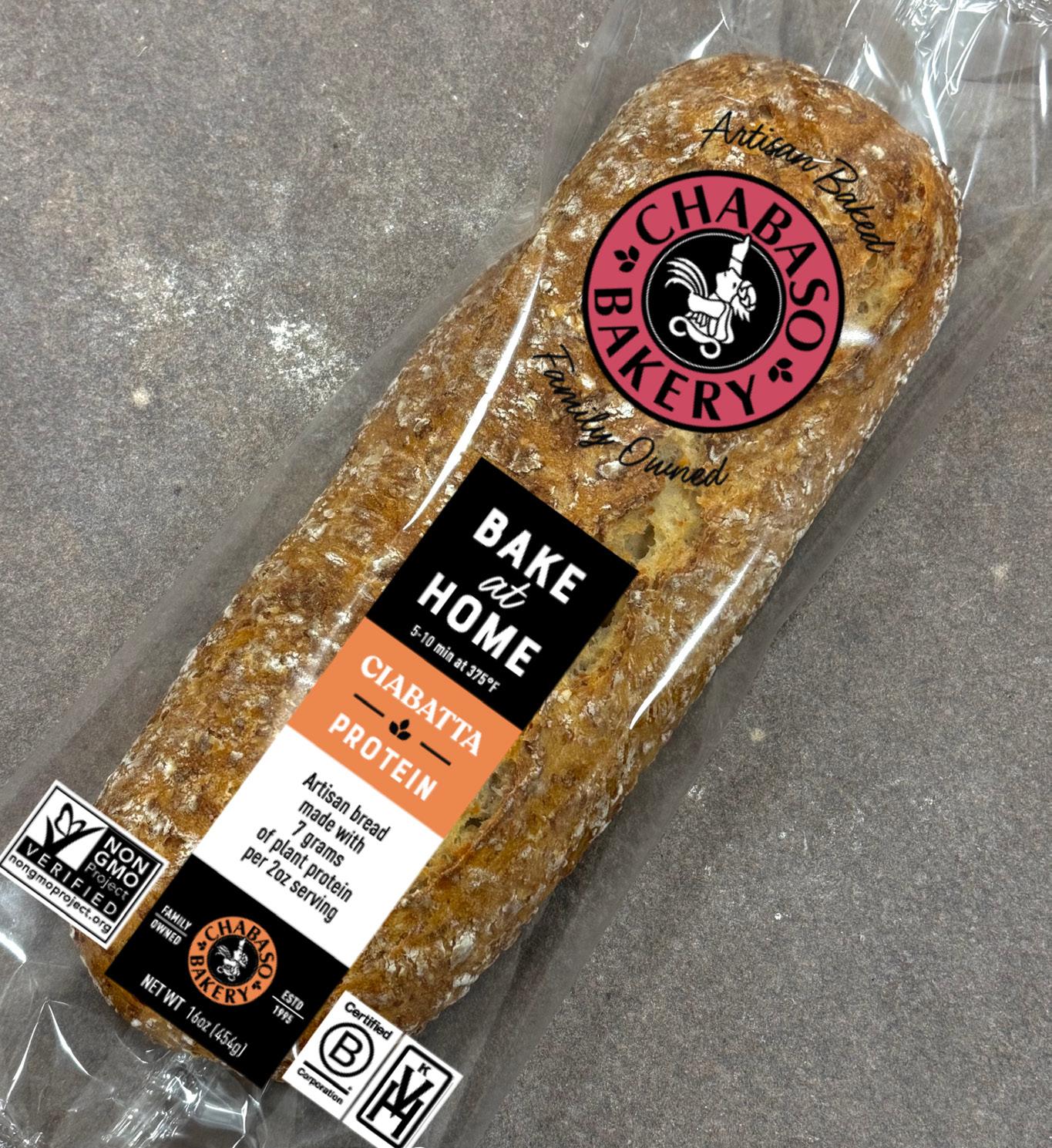
“There was a lot of back and forth deciding, ‘Is this meeting our standard of bread and the claim we want to go after?’” said Charles “Charlie” Negaro Jr., CEO of Chabaso.
The Plant-Based Protein Ciabatta comes in two par-baked formats: a bake-at-home version sealed in a flowwrapped package and another designed for in-store baking. The former grants consumers an elevated fresh-bread experience, whereas the latter provides a low-labor way to capitalize on the rolling protein wave.
“Sometimes, when an on-trend product like this comes in, there might be some folks who really want to sell it in their stores, but they’re limited in footprint and unable to bake multiple times a day,” said Reed Immer, director of sales and marketing at Chabaso. “We wanted to make sure we had a solution that met the benchmark of being an amazing high-protein artisan bread that can work in multiple grocery formats.”
Both versions of Chabaso Bakery’s Plant-Based Protein Ciabatta come in a 16-ounce size, with an SRP of $6.49. The baked good’s availability spans retailers such as The Giant Co., Price Chopper and Big Y, in addition to C&S and Bozzuto’s distribution networks and several independent grocery stores in the Northeast. www.chabaso.com
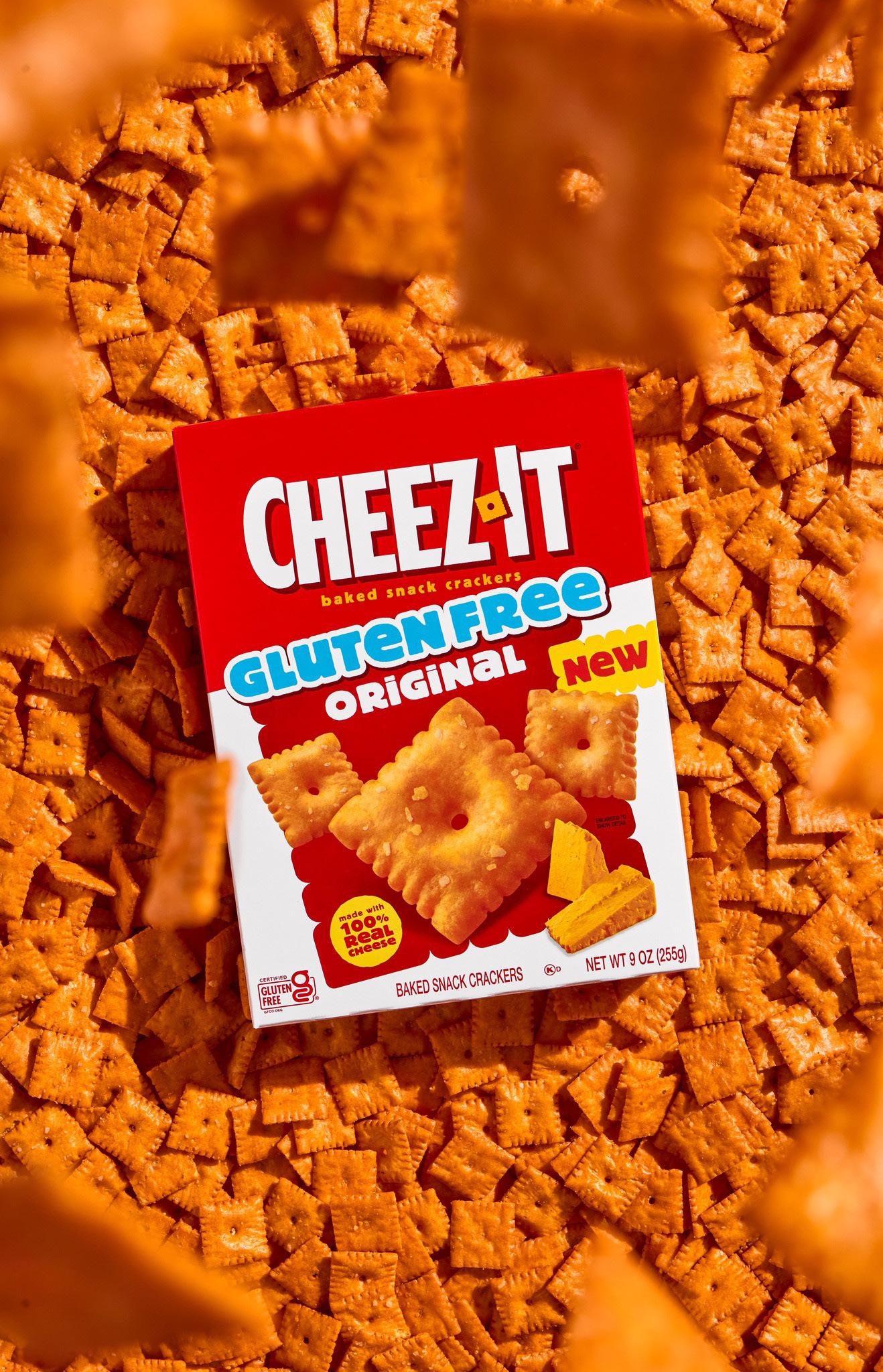
Cheez-It elated gluten-free consumers when it released a celiac-friendly version of its classic snack cracker.
The innovation was a long time coming, with the Mars brand teasing it on social media six months from its initial release. The preview of the SKU spurred on consumer enthusiasm leading up to its debut.
Cara Tragseiler, senior brand director of Cheez-It, shared that shoppers had been requesting a gluten-free version of the snack for a long time. More specifically, these requests stemmed primarily from consumers who had shifted their eating habits to accommodate a gluten-free lifestyle or individuals who had never had a chance to eat the crackers in general.
Similar to the flagship version of the snack cracker, Cheez-It Original Gluten-Free is made with 100% real cheese and offers the same tangy, salty eating experience consumers associate with the product. The gluten-free version blends rice, sorghum and degerminated yellow corn flour.
“We took the time to get it right, working carefully on the recipe and process to ensure gluten-free snackers can enjoy the same cheesy flavor and satisfying crunch without compromise,” she said.
Cheez-It Original Gluten-Free baked snack crackers are available in 9-ounce boxes at major retailers nationwide for an SRP of $4.49. www.cheezit.com


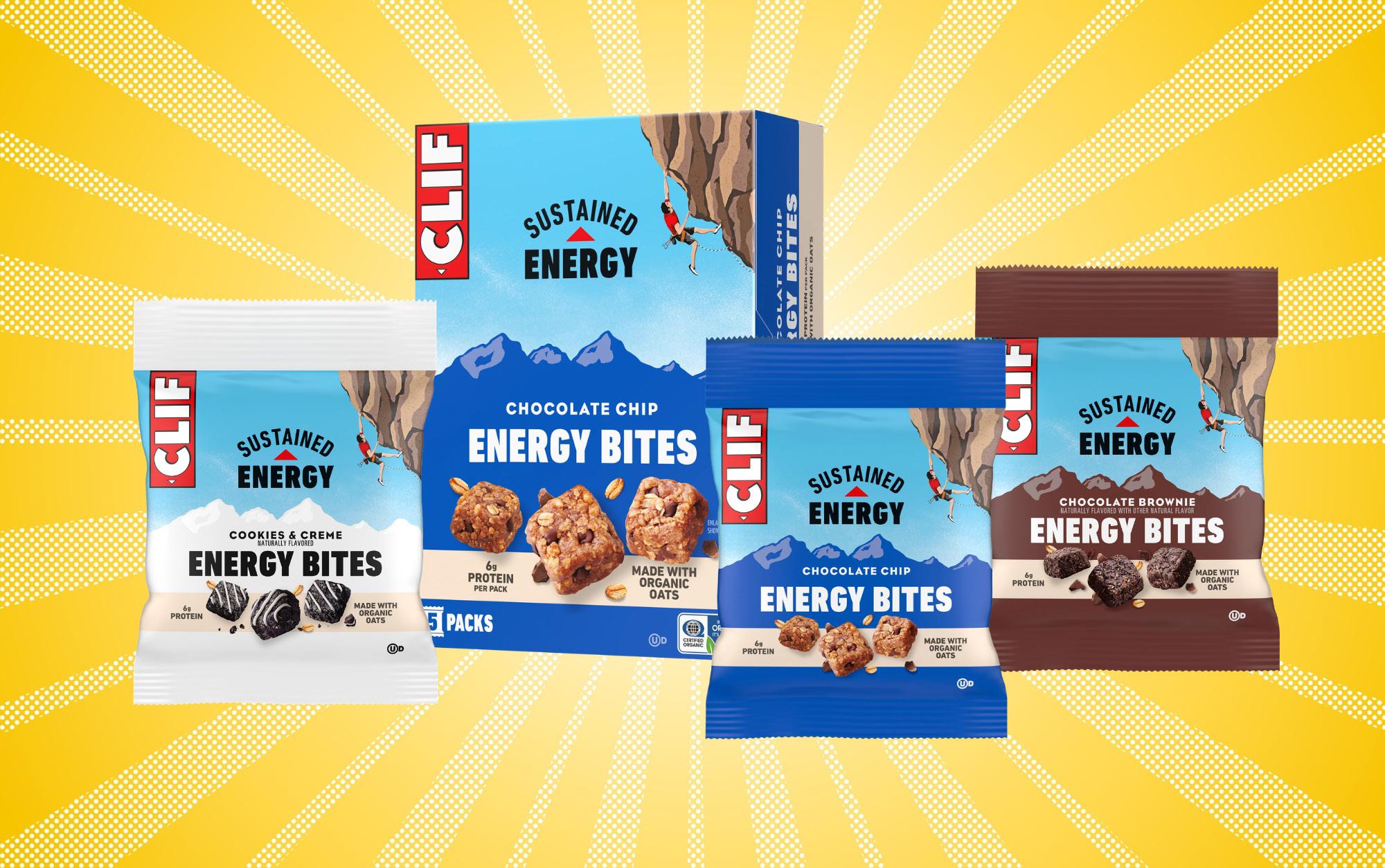
CLIF Bar’s latest snack launch, Energy Bites, taps into the consumer trend around protein-rich, better-for-you, on-the-go snacking.
“We were seeing growth in snacking frequency and bite-sized formats in bars, signaling a shift toward more flexible formats,” said Jami Levin, senior brand innovation manager for the Mondelez International brand. “Bite-sized formats have broad consumer appeal, offering convenience and greater versatility across occasions. By delivering CLIF’s signature sustained energy benefit in a bite-sized format, we’re extending our core brand benefit into a more snackable and accessible format.”
One of the biggest challenges the R&D team faced when developing the bites was figuring out how to keep the structural
integrity of the product without losing the soft texture consumers love about CLIF Bars.
“In direct result of our team’s diligence, we were able to achieve this,” said Ritu Garg, CLIF brand steward and product developer of CLIF Energy Bites.
The new snack hit the shelves after a year of development. The Energy Bites have 6 grams of protein and 4 grams of fiber per serving and are non-GMO and kosher.
Available in three varieties — Chocolate Chip, Chocolate Brownie and Cookies & Creme — CLIF Bar Energy Bites are available at retailers nationwide for an SRP of $7.49 per 5-pouch pack. www.clifbar.com
Club Crackers introduced a tangy new spin on its cracker line: Club Minis Hidden Valley Ranch. The new product, created in collaboration with Hidden Valley Ranch, offers a bite-sized snack that merges the popular condiment flavor with the cracker brand’s signature flaky offering.
In recent years, ranch has expanded beyond just a salad dressing, becoming an influential flavor in the eyes of today’s consumer. According to Datassential’s 2025 “Year in Review,” 28% of consumers who eat ranch dressing are eating more of it in the past year. That includes different formats beyond sauces and dips, with the flavor making its way into cracker aisles and pizza freezers.
“Ranch is one of those flavors people reach for again and again, especially when it comes to everyday snacking,” said Carrie Foose, director of brand marketing for Club Crackers. “Partnering with Hidden Valley Ranch allowed us to bring that familiar, beloved flavor into our Minis format in a way that feels distinctly Club.”
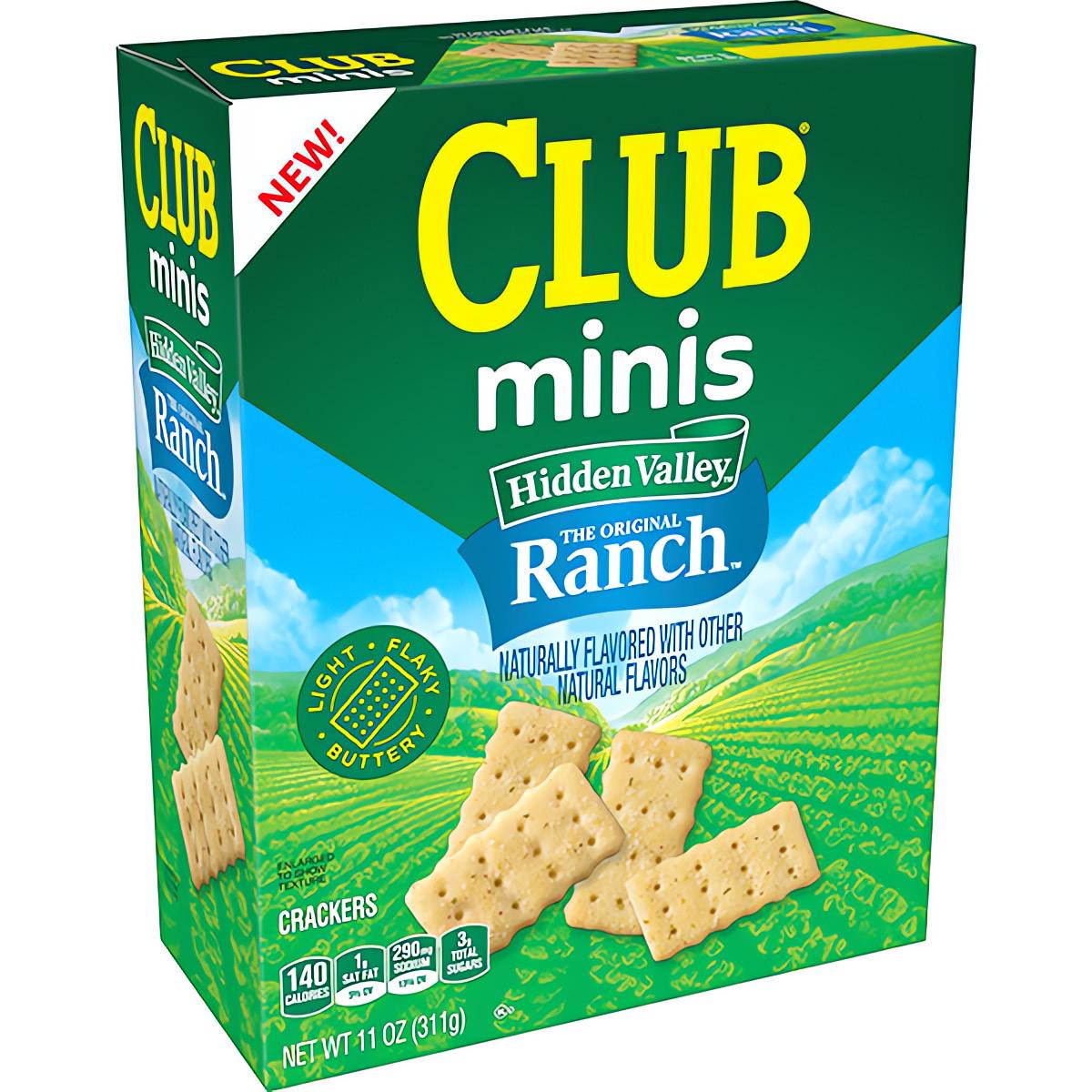
With ranch on the rise and crackers holding an unwavering position as a pantry staple, the salty snack meets consumer demand in more than one category. In terms of health attributes, the crackers are made without high fructose corn syrup and boast the use of kosher dairy.
This isn’t Hidden Valley Ranch’s first foray into baking. Over the last few years, the brand has lent its flavor profile to other snacks and frozen pizza, creating cross-market opportunities to draw in more consumers. While Club Minis Hidden Valley Ranch started hitting store shelves in select markets, the product has since expanded its distribution. Consumers can find the tiny, zesty crackers in 11-ounce boxes at retailers nationwide for an SRP of $4.19. www.clubcrackers.com
Dave’s Killer Bread, a Flowers Foods brand, introduced an artisan sourdough variety to its portfolio of better-for-you (BFY) breads and snacks. Sourdough is gaining momentum in the eyes of the consumer, with many choosing the fermented, tangy loaf for its gut-health properties.
“Sourdough is currently one of the most popular varieties of bread, gaining popularity with both home bakers and grocery shoppers alike,” said Cristina Watson, senior director of brand management at Dave’s Killer Bread. “It’s also one of the flavor segments within the fresh packaged bread category that’s increasing in sales year over year.”
The BFY brand kept a keen eye on consumer trends as they shifted toward fermentation, guaranteeing a positive reception when its Supreme Sourdough officially launched.
“We knew Dave’s Killer Bread needed a sourdough in our portfolio, and that it would need to be different from what exists in stores today, while delivering on the sensory experience that sourdough lovers have come to expect,” Watson said. “An organic sourdough loaf, rolled in our signature seed blend, and made with whole grains was the mission, and our Supreme Sourdough delivers.”
While sourdough has hit its stride over the last year or so, R&D for Supreme Sourdough was in motion for four years, evolving through different formats and flavor elements.
“Supreme Sourdough is a culmination of many years of R&D and consumer research to ensure our product meets aspects of the Dave’s Killer Bread brand promise and the unique sensory attributes that sourdough bread is known for,” Watson said.
The brand’s sourdough bread is available in select retailers on the West Coast in a 25-ounce loaf at an SRP of $7.49. www.daveskillerbread.com
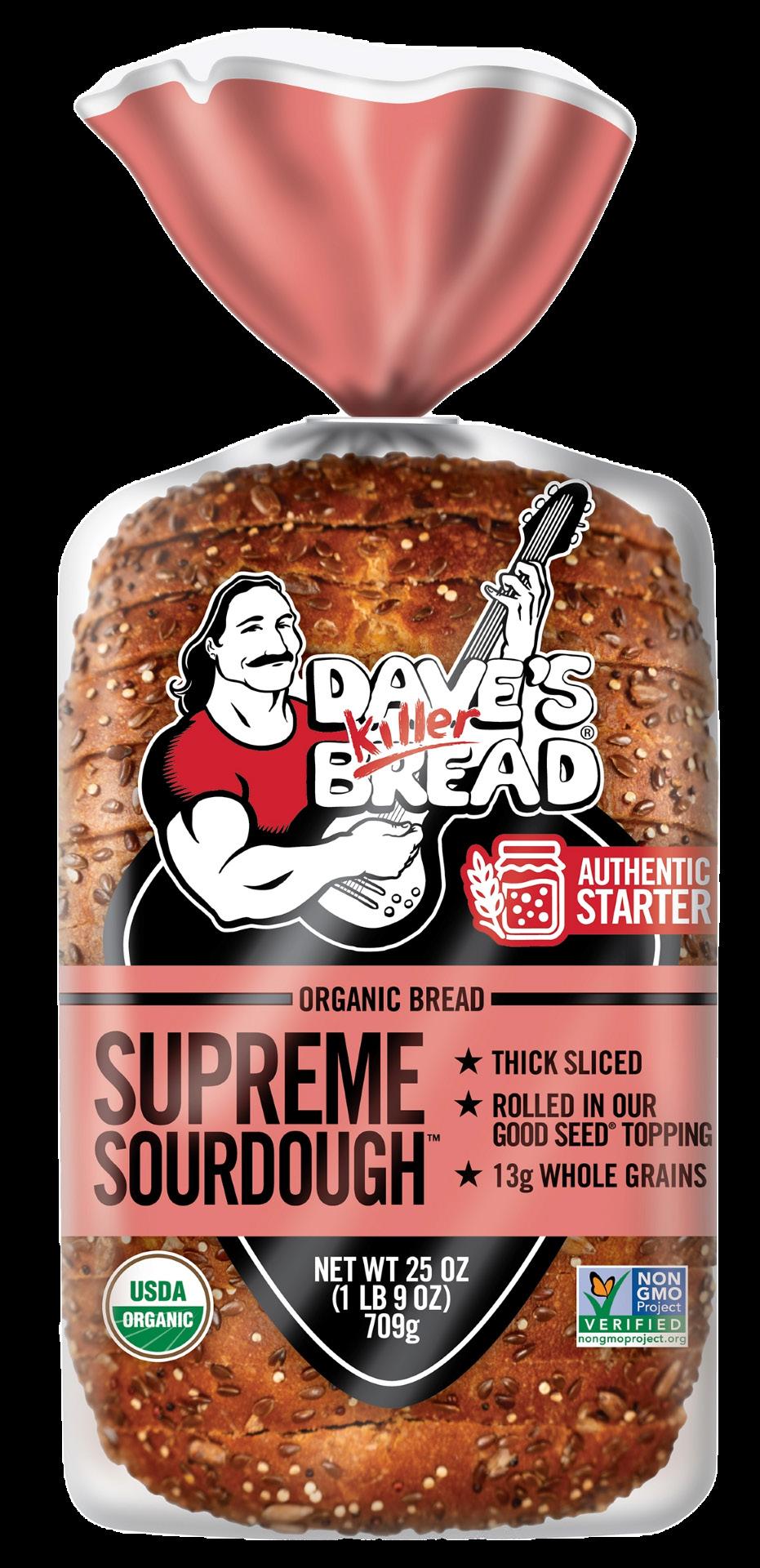
Dot’s Homestyle Pretzels, the Hershey Co. brand best known for its iconic seasoned pretzel pieces, expanded its snack portfolio with Original Snack Mix.
“Dot’s has never been about blending in,” said Eric Bowers, VP of salty marketing for The Hershey Co. “We believe snacks should feel crafted, surprising and worth reaching for.”
The product shakes up the brand’s standard fare, offering consumers a mix of Dot’s original seasoned mini pretzels, corn cereal, cheese-seasoned pita chips and garlic rye chips. Together, the blend creates a multitextural, dynamic snacking experience, an increasingly popular ask of today’s shoppers.
“Dot’s Original Snack Mix brings that same bold mindset to every handful: no filler, no letdowns,” Bowers added. “It’s a bold combination of snacks.”
The resealable pack also offers consumers a convenient way to share the snack mix or take it on the go.
This release aligns with Hershey’s efforts to bolster its salty snack business. Since acquiring Dot’s in 2021, the CPG giant has restructured to integrate its diverse portfolio of offerings under one operational model. The move positions its umbrella of brands, including Dot’s, for greater scaling and commercial execution.
Dot’s Original Snack Mix comes in a variety of resealable pack sizes: a c-store friendly 4.4ounce, the standard 14-ounce and a family-sized 31-ounce. Pricing varies by size and retailer, with the classic 14-ounce bag retailing between $5.99 and $6.19. The snack mix is available at retailers nationwide. www.hersheyland.com/dots-pretzels
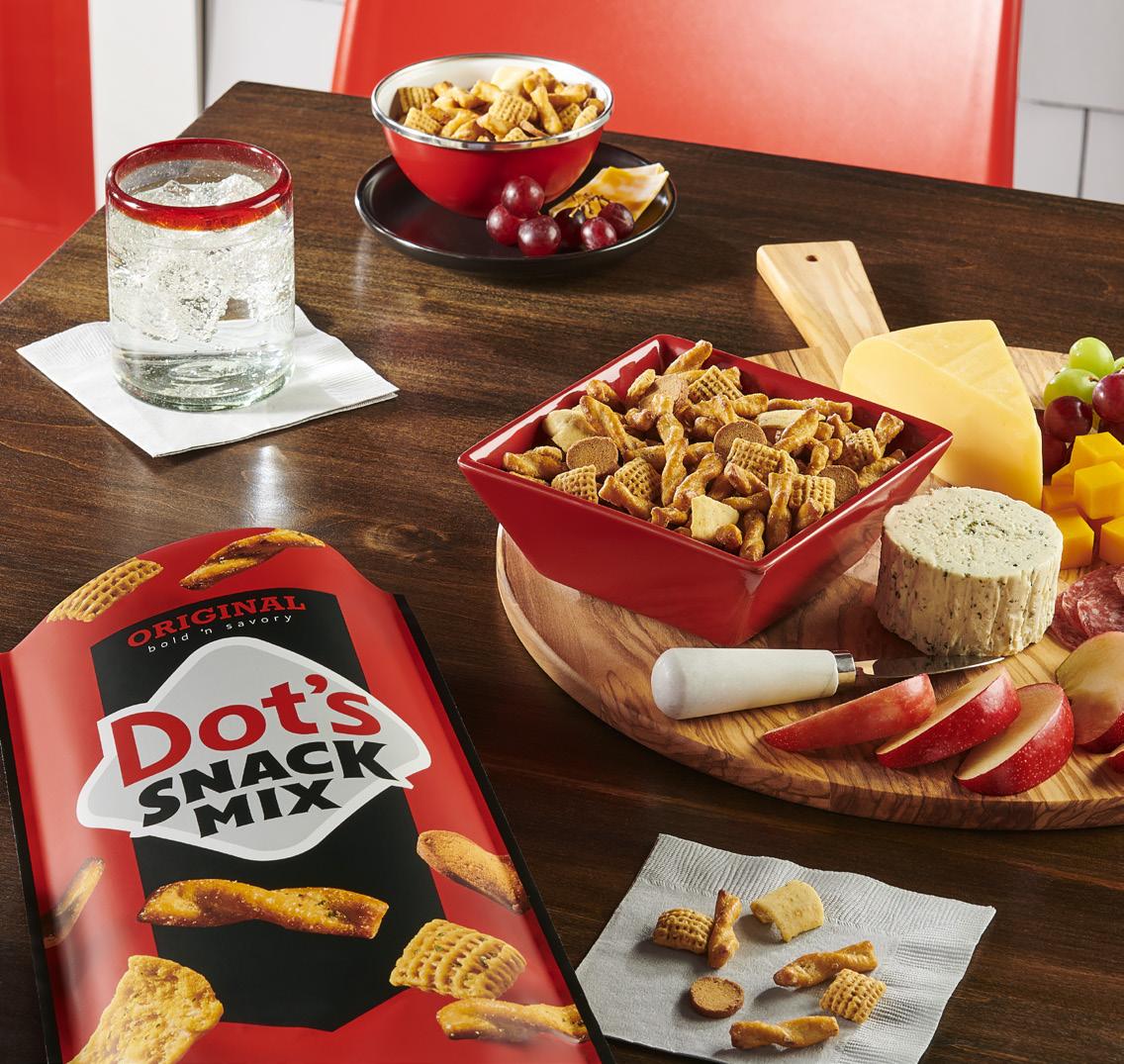
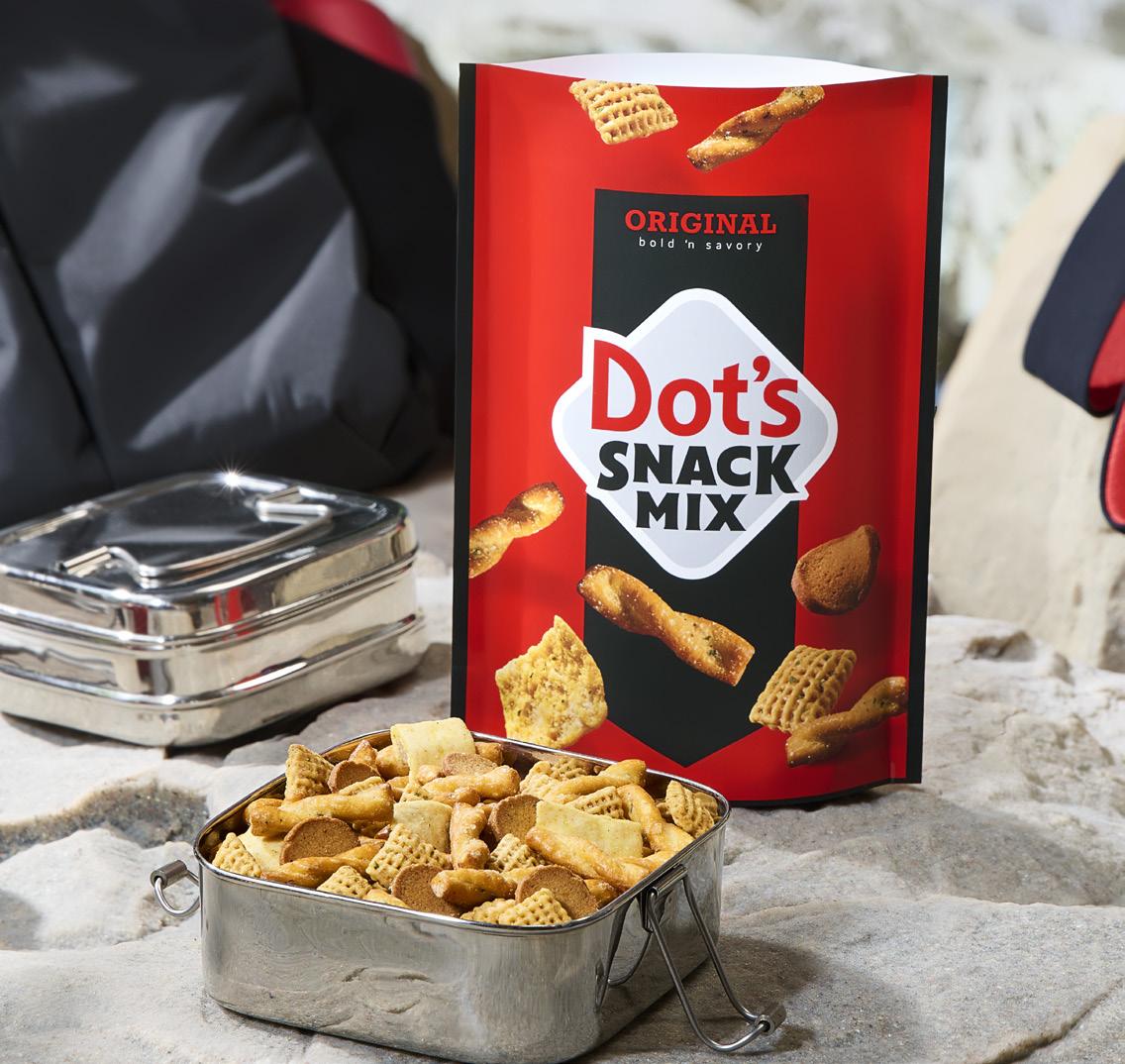
Doughlicious, a London-based dessert brand best known for indulgent cookie dough snacks, brought its popular cookie skillet to consumers in the US, finding success in the premium frozen dessert category on more than one continent.
“We’ve masterfully combined two beloved desserts — irresistible gooey cookie dough and crunchy crumble — into one epic creation,” said Kathryn
Bricken, founder of Doughlicious. “At Doughlicious, we’re passionate about revolutionizing dessert while staying true to our commitment to better-for-you ingredients and the convenience today’s families crave.”
The brand celebrated the nationwide launch of its signature Chocolate Chip flavor before extending the well-received lineup to include Cookies & Cream.
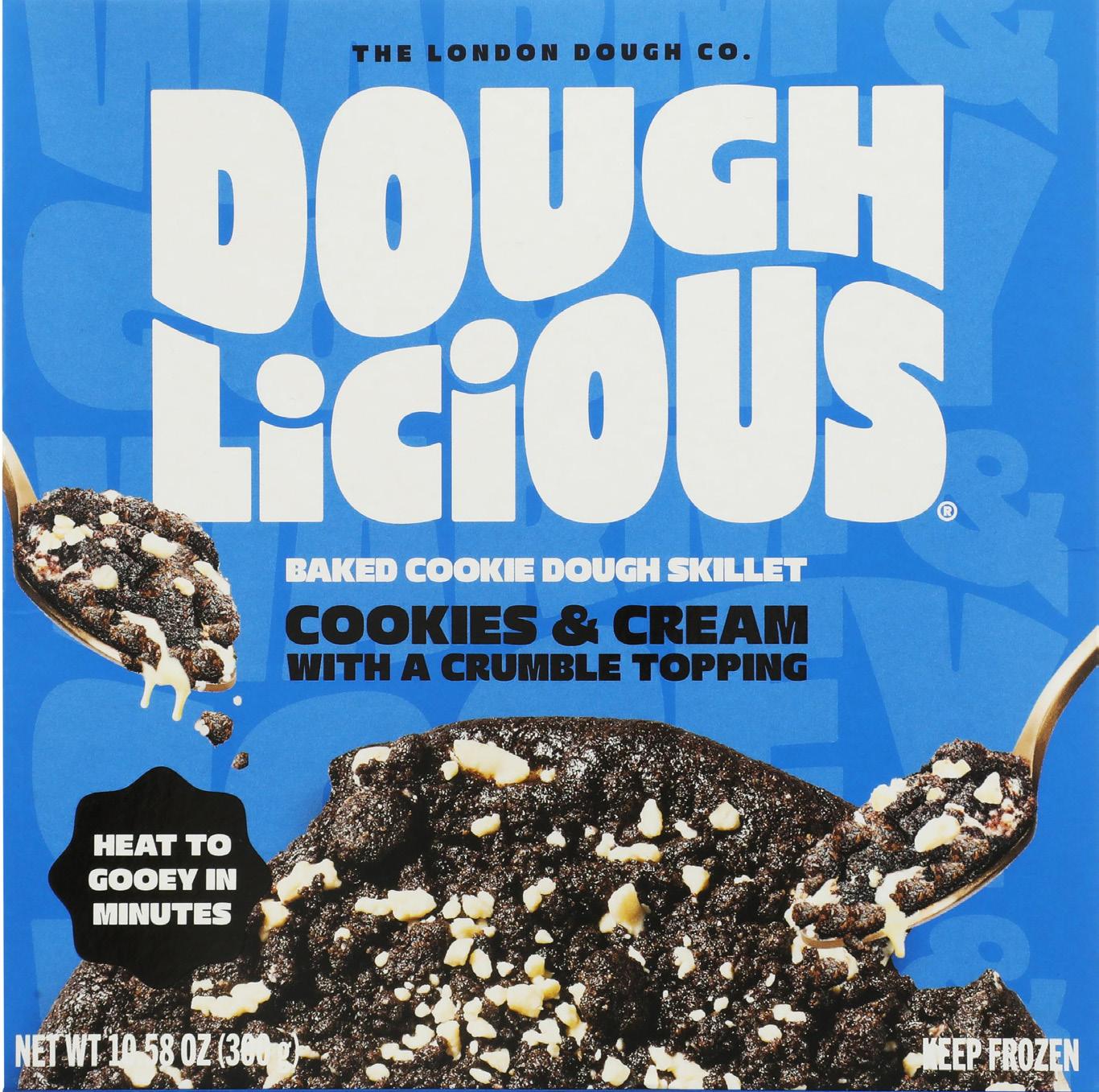
“After the incredible response to our Chocolate Chip Skillet, we knew fans were ready for something more,” Bricken said. “The Cookies & Cream Skillet combines two fan-favorite flavors into one irresistible, convenient dessert. It’s part of our ongoing mission to expand the Doughlicious line with innovative, great-tasting and better-foryou options.”
In a world of emerging health- andwellness trends and fads, dessert is holding its ground, especially when it’s crafted with premium, gluten-free ingredients and no artificial additives. The cookie skillet dessert from Doughlicious fits this indulgent box, featuring a cookie dough base with crunchy elements that vary by flavor, such as a chocolate chip cookie crumble topping and chocolate cookie pieces.
The frozen dessert combines the classic cookies and cream flavor with Doughlicious’ signature skillet format and goes from freezer to oven (or microwave) in mere minutes. This helps the sweet good deliver a retail bakery-style dessert experience for consumers via convenient at-home preparation.
Doughlicious’ Cookies & Cream Skillet is available in the frozen desserts and novelties section at Whole Foods Market locations nationwide for an SRP of $7.99. www.doughlicious.co.uk
Drumroll Snacks, known for its plantbased and high-protein mini glazed donuts, expanded its snack line with Protein Mini Muffins.
“The donuts reminded people of ‘sweeter times,’ and now the muffins let us expand that joy into a new format, something you can grab for breakfast, on the go or just because,” said Ryan Brothers, co-founder of Drumroll.
The nutritional profile of the gluten-free, bite-sized treats mirrors that of their donut counterpart, with 10 grams of protein from a blend of almond flour, watermelon seed, pea and pumpkin
protein. Each serving has 4 grams of prebiotic fiber and 3 grams of sugar. The mini muffins launched in two flavors that scream nostalgia: Blueberry and Double Chocolate Chip.
The new product release aligns with Drumroll’s mission to reimagine and recreate snacks consumers grew up with, mixing classic flavors and products with today’s emphasis on health and wellness.
“Everything we do starts with nostalgia and wanting to make people smile,” said Maile Minardi, creative director at Drumroll. “Mini Muffins are one of those
simple pleasures that instantly take you back, but this time, they’re reimagined with modern ingredients, design and storytelling. We wanted to make something that feels like a childhood favorite, grown up.”
Drumroll’s lineup of snacks satisfy consumer demand for healthy indulgence, functional ingredients, portion control and convenience.
The muffins debuted exclusively at Sprouts Farmers Market stores nationwide and are now available at most major retailers. A 3-count pack has an SRP of $3.29. www.eatdrumroll.com
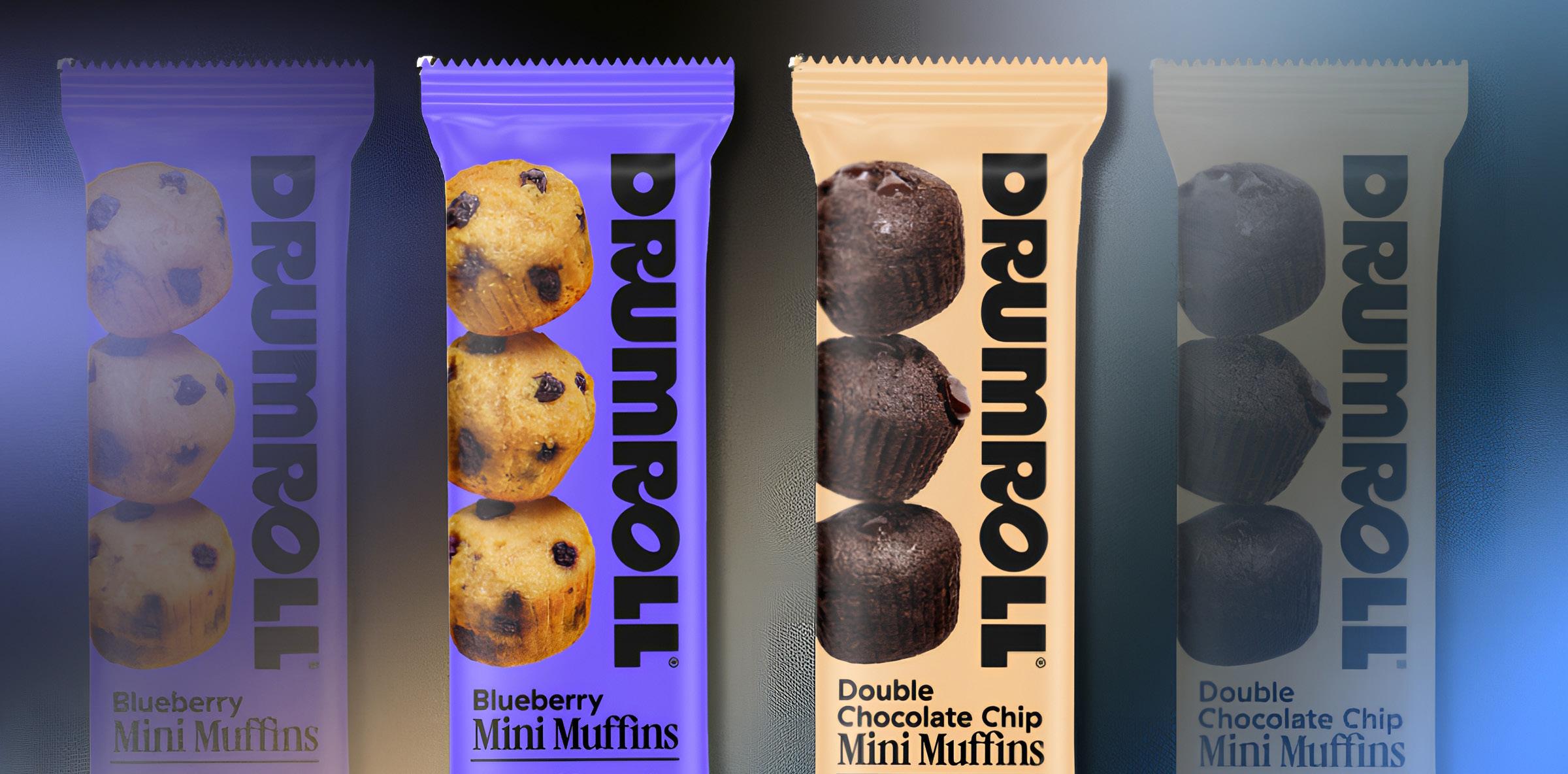
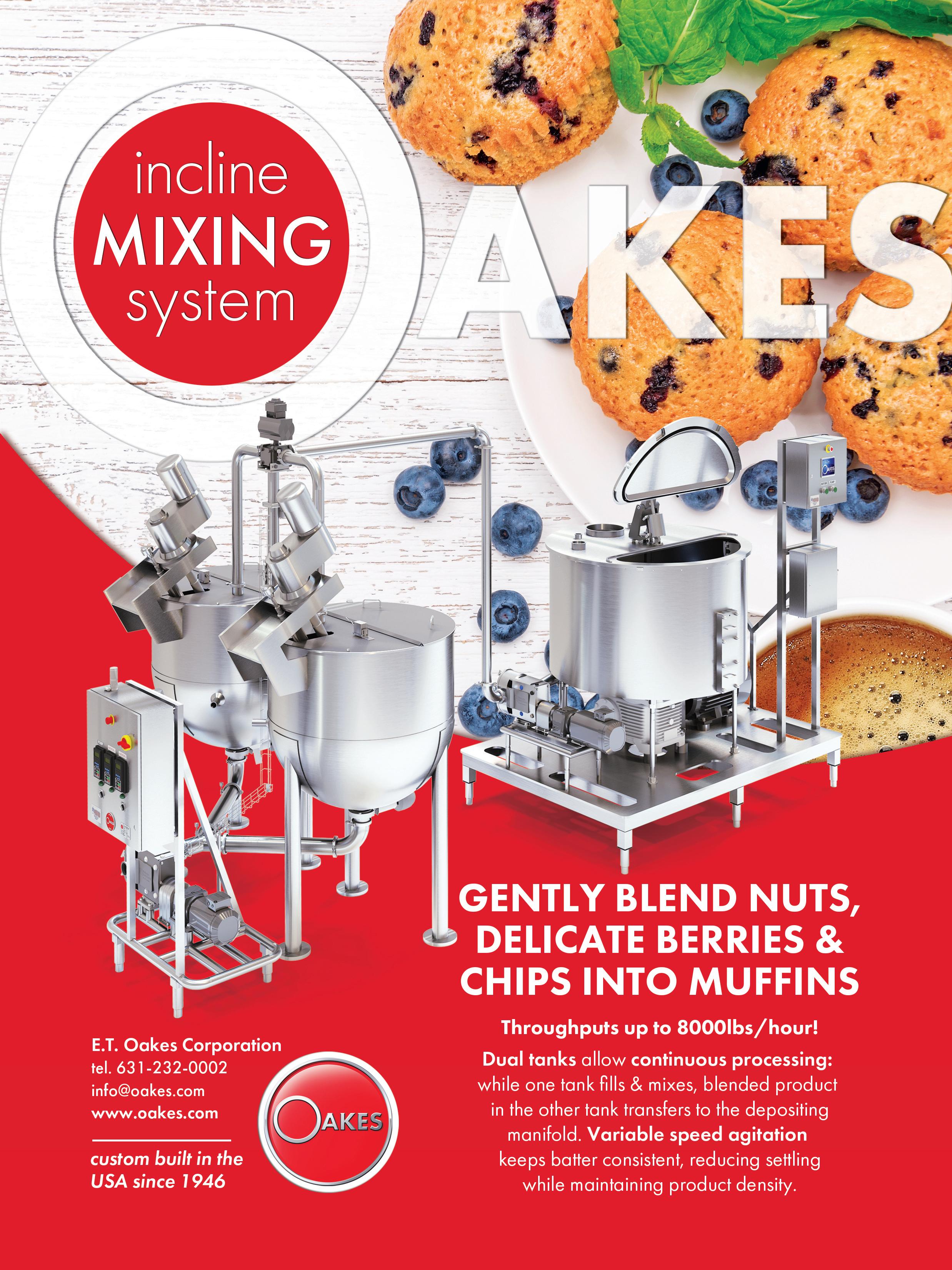
Famous Amos, the Ferrero North America brand known for its 50 years of bite-sized cookie making, debuted Oatmeal Chocolate Chip Cookies.
“Oatmeal and chocolate chip are two classic flavors that simply belong together, and we’re excited to bring them to fans in our famous bite-sized format,” said Kim Thomas, senior brand manager for Famous Amos. “Each cookie blends the wholesome texture of oats with our signature chocolate chips for a flavor that feels both new and familiar.”
The new cookie flavor arrives as the brand’s Ingredients for Success (IFS) Entrepreneurs Initiative enters its sixth year. The program supports Black entrepreneurs across various industries with $750,000 in capital awards, along with mentorship,
networking and educational resources. IFS launched in 2020 to honor founder Wally Amos.
“Entrepreneurship is at the heart of Famous Amos,” Thomas said. “Introducing a new flavor along with the next chapter of Ingredients for Success celebrates that spirit. We’re always evolving, always creating and we’re committed to opening doors for others to do the same.”
Famous Amos Oatmeal Chocolate Chip Cookies are sold in resealable 9-ounce packages for an SPR of $3.99-$4.49 and in 10-count, 1-ounce multi-packs for an SRP of $5.62. During the initial rollout, the cookies were made available in select stores. Nationwide distribution to major retailers began this spring. www.famousamos.com
Flour + Water Foods broadened its portfolio with the launch of its restaurant-quality frozen pizza line. Known for its family of restaurants in San Francisco and Italian-inspired CPG products, the brand sought to bring the craftsmanship behind Flour + Water Hospitality Group’s award-winning pizzeria to commercial production.
Developed by restaurant chefs Thomas McNaughton and Ryan Pollnow, in partnership with the pizzeria’s culinary team and Flour + Water Foods’ CEO Dan Nestojko, the line includes three of the brand’s best-selling flavors: Margherita, Pepperoni and Cacio e Pepe.
Influenced by McNaughton and Pollnow’s shared goal of reinventing the classics, the pies reflect a modern West Coast style characterized by ingredient sourcing, fermented dough and lower bake temperatures.
Each 13-inch round pie features a slow-fermented dough that’s formed throughout a multi-day process using North American wheat and fior di latte cheese. The final touch is a thin layer of dried mozzarella, applied directly to the dough to ensure the crust retains the desired crispness. To translate the fresh-from-the-oven experience into a more convenient CPG format, the pizza is par-baked in an electric deck oven and flash-frozen. From there, the frozen
pizzas are delivered to local markets and retailers.
The team partnered with Office, a San Francisco-based agency, on the packaging design, which is structured similarly to a to-go pizza box. The brands worked to develop a terracottatoned cardboard wrapping, customized to protect the product’s integrity
and showcase the individual pizzas. The box is constructed for upright display using a complementary cardboard case, a retail innovation that ensures the pizzas stand out in the freezer section.
The 15-ounce Flour + Water frozen pizzas can be purchased at select Bay Area retailers at an SRP of $14.99. www.flourandwaterfoods.com
Hero Bread heeded the demand that followed the successful launch of its 8-inch tortilla as consumers requested an even larger size that could withstand various builds while still delivering on taste and nutrition. After roughly six months of R&D and trial runs across more than 200 foodservice locations, the company created its Burrito Tortilla, a 10.50-inch offering developed specifically for direct-to-consumer channels and retail distributors.
While the launch timeline may seem comparatively truncated, it had its share of R&D hurdles. Hero Bread experimented with various formulations to perfect the soft texture and pliability consumers associate with the brand’s portfolio.
“A chicken Caesar wrap that cracks or a loaded burrito that tears undermines the whole eating experience, so getting the texture right with the larger size while maintaining the nutritional profile Hero is known for was the core R&D challenge the team had to solve,” said YuChiang Cheng, CEO of Hero Bread. “The combination of a familiar experience and a nutritional profile that doesn’t ask consumers to compromise is resonating, and the larger format unlocked a versatility that even we didn’t fully anticipate.”
Market feedback to the oversized tortilla has been positive, and Cheng notes that consumers are responding to the product’s versatility as it’s used for burritos, pizza shells, breakfast wraps, gyros, fajitas and more.
The nutritional profile for each tortilla includes 2 grams of net carbs, 0 grams of sugar, 26 grams of fiber and 11 grams of protein.
“We’re seeing unprompted references to GLP-1 support, which speaks to how well the macro profile maps to the way consumers are thinking about food right now,” Cheng said. “Each tortilla is made with resistant wheat starch, flax seed, fava bean protein and heart-healthy olive oil.”
Hero Bread’s Burrito Tortilla is available at select retailers in a 4-count package with an SRP of $8.99. www.hero.co

Izzio Artisan Bakery responded to consumer demand for cleanlabel breads by launching Organic Artisan Sandwich Breads, a new line made with living sourdough cultures and Izzio’s three foundational ingredients: freshly milled custom unbleached flour, water from the Rocky Mountains and salt.
Over the past year, Izzio has been a fast-growing and top-selling national sourdough brand. This success created a new opportunity for the brand in the center store bread aisle.
“We saw a void in the market when it came to real sourdough sandwich bread,” said Sara Kafadar, chief commercial officer at Izzio Artisan Bakery. “With izzio Organic Artisan Sandwich Breads, consumers now have access to a clean-label sandwich bread that uses slow sourdough fermentation to create a better bread.”
The new loaves are available in a 24-ounce format in six flavor varieties: Sourdough, Classic White, Whole Wheat, Ancient Grains, Sprouted Seeds and Lucky 7 Multigrain.
“The [24-ounce] loaf was chosen to align with consumer expectations for the size in this category, balancing everyday usability with Izzio’s standards for real sourdough quality,” Kafadar said. “It offers enough slices for family sandwiches and weekly use, while maintaining the structure, texture and flavor that comes from proper fermentation. The size also reflects how consumers shop for value and versatility without sacrificing ingredient integrity or taste.”
R&D for the Organic Artisan Sandwich Breads line took less than a year, and the team prioritized recipe development and testing to ensure the breads delivered the ideal texture, flavor and fermentation. Each variety is free from artificial flavors, preservatives, seed oils and vital wheat gluten.
The new Izzio Artisan Bakery breads can be found in natural food and major retailers across the US at an SRP of $6.49. www.izziobakery.com
JAMBAR, an organic energy bar brand, expanded its portfolio with JAMBAR Minis, a 1-ounce version of its full-size bars that doesn’t compromise texture, flavor or nutritional integrity.
As consumer eating habits evolve, the mini line gives retailers a way to increase trial purchases and meet the growing demand for flexible snacking options. Consistent with the original product line, JAMBAR Minis are certified organic and contain ancient gluten-free grains, authentic natural sweeteners, and dried fruit or premium chocolate. Each mini bar also has 5 grams of protein and contains 120 calories.
“JAMBAR Minis were developed in response to consistent feedback from both consumers and retail partners,” said Jennifer Maxwell, JAMBAR’s founder and CEO. “Families were looking for smaller portions for kids, athletes wanted more flexible fueling options, and retailers saw an opportunity to expand usage occasions and drive trial. The mini format fills a gap in the market for a clean energy option that supports more frequent, on-the-go snacking.”
The development timeline was 12 to 18 months from concept to shelf to create JAMBAR Minis, with market response showing positive feedback surrounding the product’s versatility.
“Early response has been strong, with retailers and consumers embracing the format for its convenience and accessibility,” Maxwell said.
JAMBAR Minis are available now for retail and foodservice distribution and are sold in 6-count boxes in all five of the brand’s signature flavors: Musical Mango, Chocolate Cha Cha, Tropical Trio, Peanut Butter Malt Melody and Jammin’ Jazzleberry. www.jambar.com
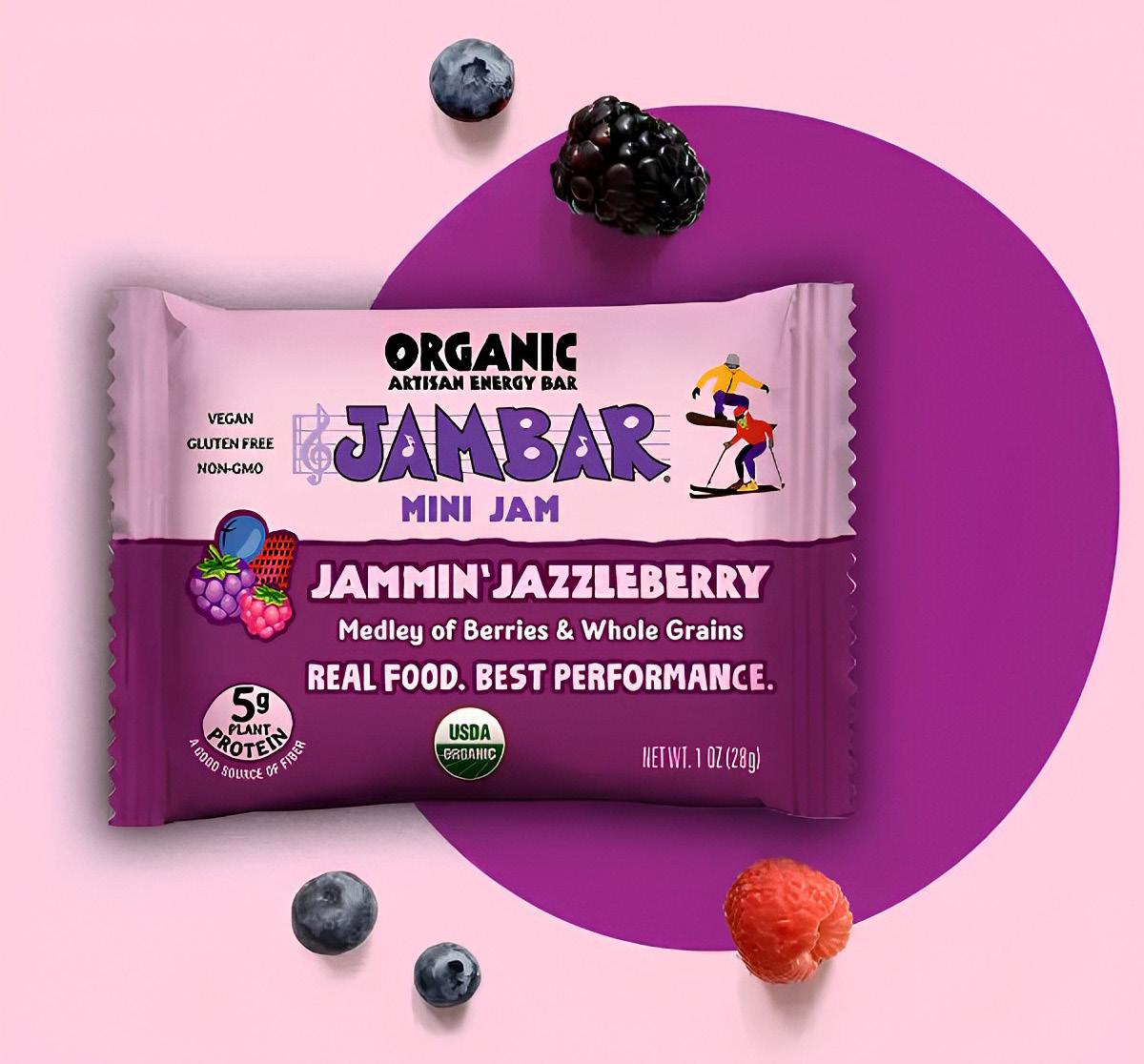
Lewis Brothers Bakeries has sustained its baking heritage for a century, understanding that to meet the needs of its consumers, it must evolve. The latest innovation for its Lewis Bake Shop brand, Better Way Protein Bread, aligns with this ethos.
“For a hundred years, we’ve focused on baking bread that people feel good about bringing into their homes,” said Karsten Short, senior VP of marketing, innovation and commercialization for Lewis Brothers Bakeries. “The Better Way line, which includes our popular Keto Breads and Buns and now the new Protein Bread, carries that same tradition of care and quality that has guided us since 1925 while meeting people where they live today.”
The new offering prioritizes a health attribute consumers are increasingly seeking: protein. Better Way Protein Bread offers 11 grams of plant-based protein per 60-calorie slice. Each serving also boasts 1 gram of net carbs, 9 grams of fiber and 0 grams of sugar. This ketofriendly bread is also high in vitamin D. All these nutrition traits combine to offer a solution for shoppers seeking better-foryou options.
“Consumers today expect more from their food,” Short said. “They want options that support their goals without compromising their enjoyment of the
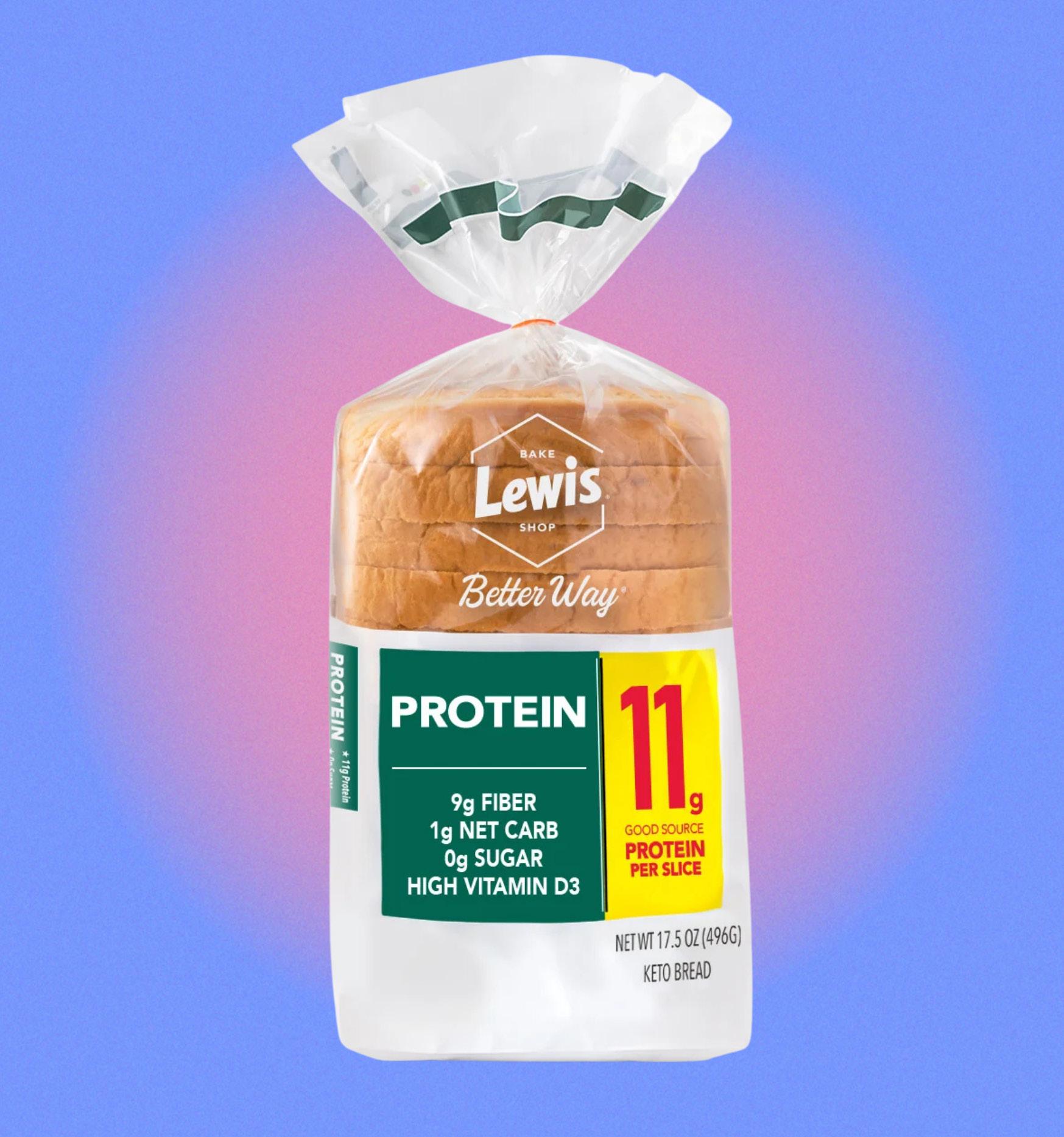
breads and recipes they love, and Better Way Protein Bread allows that flexibility.”
Lewis Bake Shop Better Way Protein Bread comes in a 17.5-ounce bag. Distribution spans retailers nationwide at an SRP of $6.99. Shoppers can also buy six loaves directly from the brand for $29.70. www.lewisbakeshop.com






































































Magic Spoon, a better-for-you breakfast food company, expanded its product portfolio with Protein Pastries.
The soft-baked, frosted toaster pastries have 11 grams of protein, 6 grams of fiber and 2 grams of sugar and were introduced to consumers as a direct competitor to traditional options.
“Consumers love classics but increasingly expect better nutrition than those products have traditionally offered,” said Gabi Lewis, co-founder and CEO of Magic Spoon. “We’ve shown that fun and function don’t have to be mutually exclusive. These launches give consumers the flavors they grew up loving, now built for the way they eat today.”
Magic Spoon first burst into the better-for-you market with cereals that combine childhood nostalgia with modern innovation, and its latest release follows that same path. The reimagined childhood classic gives consumers a low-sugar, high-protein alternative to a breakfast staple. The brand also manufactures granola and cereal treats. All Magic Spoon products are high in protein, low in carbs, and free from gluten, grains, soy, and artificial flavors and colors.
Protein Pastries are available in three familiar flavors: Frosted Strawberry, Cinnamon Brown Sugar and S’mores. A 4-count box carries an SRP of $9.99 at major retailers nationwide, including Walmart, Target, Albertsons, Kroger, Publix, Whole Foods Market, Sprouts Farmers Market, Costco, CVS, and select c-stores. They are also available direct-to-consumer on the company’s website. www.magicspoon.com
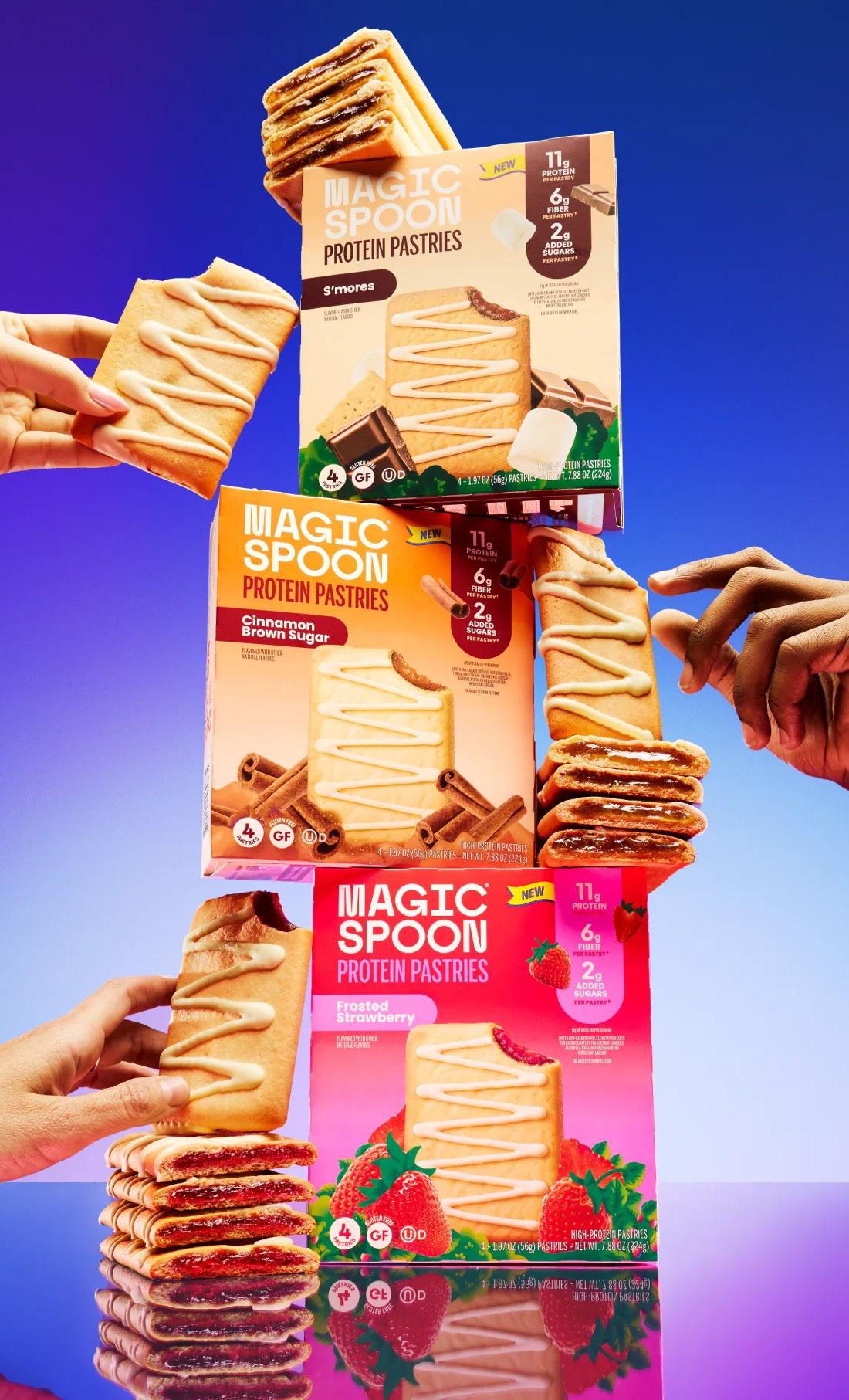
Mason Dixie Foods, a company known for its clean-label, convenient comfort food, added heat-and-eat Pull-Apart Parker Rolls to its frozen handhelds and baked goods portfolio.
The rolls were developed to meet growing consumer demand for an at-home artisan bakery experience along with restaurant-quality foods across the frozen aisle.
“At the same time, consumers are still highly focused on clean labels and ingredient transparency,” said Denise Huynh, senior director of product at Mason Dixie Foods. “The best way to deliver that high-quality experience at their fingertips is with frozen bread that goes back to traditional recipes that do not require preservatives, texture enhancers or shelf life stabilizers.”
One of the primary R&D challenges was formulating a bread that adhered to Mason Dixie’s clean-label standards while maintaining quality and texture after microwave heating.
“Convenience was also a key consideration in product development, like everything in our brand,” Huynh said. “We wanted to have a tray that could be used for heating and serving, as well as pre-apply the butter directly onto the rolls, eliminating extra preparation steps for the consumer. Our goal was microwave to table in under three minutes.”
The brand had the concept of frozen Parker rolls in its product pipeline for
a while. Once all the pieces were in place, it was a quick journey to the freezer aisle.
“We developed and commercialized the whole product in under nine months,” Huynh shared. “It was a true testament to the collaboration and dedication across all teams.”
Initially, the Parker Rolls launched as a limited-time offering at Whole Foods
Market. Consumer response was so positive that the rolls will be in the market as an everyday product starting in July, first at Whole Foods, with distribution to other retailers throughout the remainder of the year.
Mason Dixie Parker Rolls are available in two varieties: Sweet Honey Butter and Garlic Parmesan Butter. A 12-count box has an SRP of $12.99. www.masondixiefoods.com
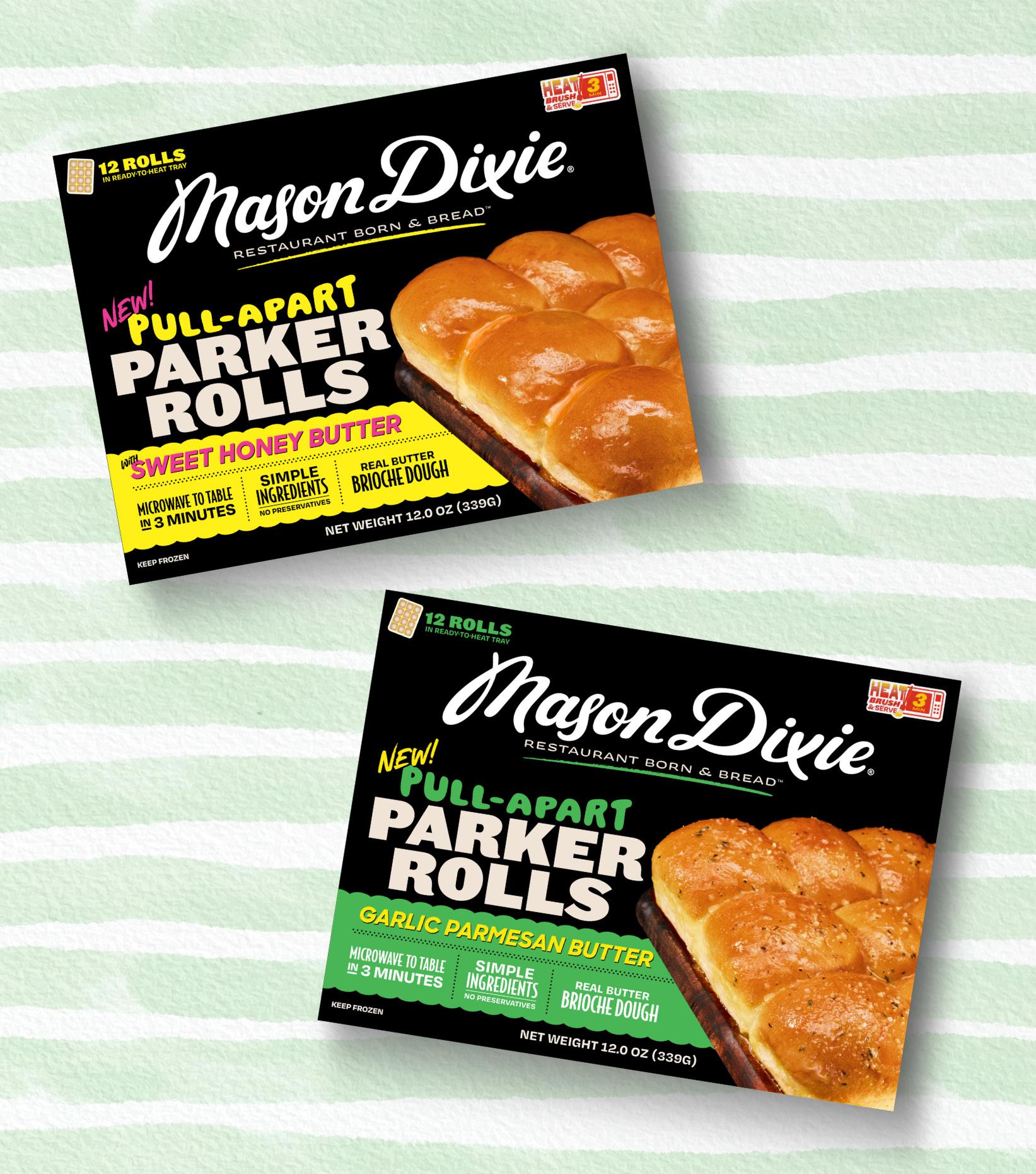
Mission Foods, a Gruma brand known for its portfolio of tortillas and wraps, introduced Gluten-Free Chickpea Tortillas, a fiber-forward and plant-based alternative to traditional tortillas.
According to the Dietary Guidelines for Americans 2025–2030, most Americans consume less than half the recommended daily fiber intake. Mission’s Gluten-Free Chickpea Tortillas are crafted with roasted chickpea flour, which ups the nutritional value to 7 grams of fiber, 4 grams of protein and 0 grams of added sugar per tortilla.
According to Garret Adrian, senior brand manager for Mission Foods, one of the defining traits that sets the brand’s Chickpea Tortillas apart is the velvety-soft texture.
“We’re always listening to our customers and looking for ways to meet their needs, tastes and lifestyles,” he said. “With our new Chickpea Tortillas, we’re giving people the bold flavor and nutrition they want, while staying true to the quality they expect from a Mission Foods tortilla.”
The new certified gluten-free and vegan-friendly tortillas are made without artificial colors, providing a vehicle for veggie-heavy wraps, tacos, burritos and more. The launch caters to the growing demand for allergen-friendly, better-foryou alternatives that omit synthetic dyes,
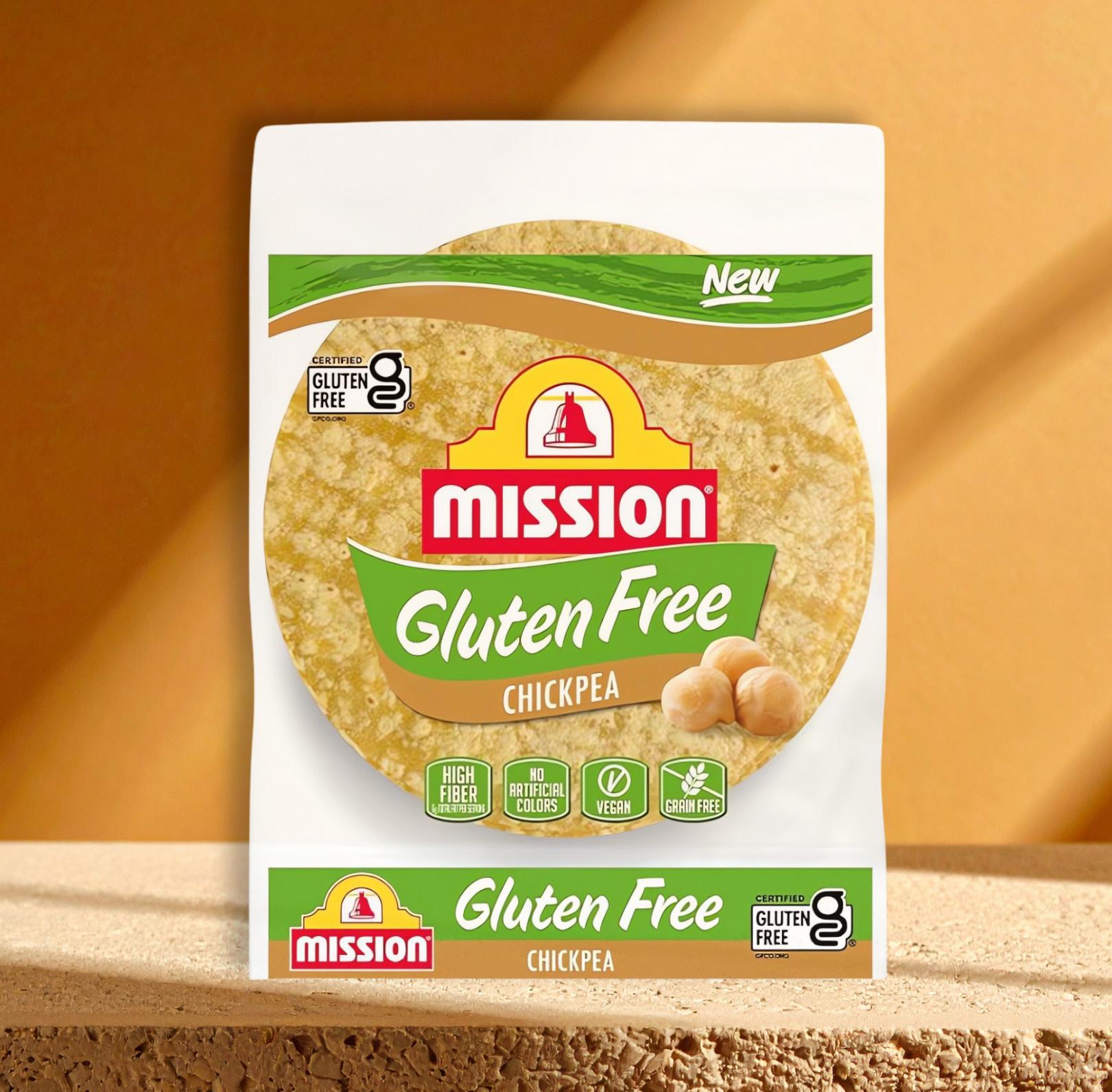
a distinction the FDA is pushing per the updated regulations regarding artificial food coloring.
Mission’s Gluten-Free Chickpea Tortillas are available in a 6-count, 10.5-ounce bag at retailers nationwide. The new offering joins the brand’s growing lineup of gluten-free tortillas, including Original, Spinach Herb and Sweet Potato. www.missionfoods.com
Nature’s Bakery debuted a new line of soft-baked protein bars under the Hearty Bars name. Made with whole grains, real fruit and Rainforest Alliance Certified chocolate chips, the new product packs 9 grams of plant-based protein and supports the brand’s expansion into the on-the-go snacking segment.
The brand first identified white space in the high-protein snacks category in 2023.
“It felt like a natural evolution for the brand and an opportunity to offer something that fit even more seamlessly into our consumers’ everyday lives,” said Alice Kim, director of brand marketing and portfolio strategy at Nature’s Bakery. “Over the course of 18 months, the R&D team conducted extensive testing and refinement to perfect the recipe, which incorporates a blend of plant-based proteins such as fava bean and sunflower sources along with ingredients like oats, whole grains, real blueberries and Rainforest Alliance Certified chocolate chips.”
Developing a recipe that balanced taste, soft-baked texture and plant-based nutrition while delivering protein without using nuts, soy or whey was a key focus and a challenge.
“Our brand guardrails — nut-free, vegan and non-GMO — really tested our ability to create a one-of-a-kind product that balances taste and texture,” Kim added.
The initial launch campaign included targeted sampling events in selected markets.
“We brought Hearty Bars directly to consumers to sample in key markets and offered direct-to-home sampling through SmartBox,” Kim said. “This allowed us to get real insights on how the bars would be received in the market
and created great momentum as Hearty Bars became available for purchase online and hit shelves in retailers nationwide.”
Hearty Bars are available in Blueberry and Chocolate Chip flavors on the Nature’s Bakery website and at Target, Kroger, Amazon and Walmart Marketplace for an SRP of $6.20 per 5-count box. www.naturesbakery.com
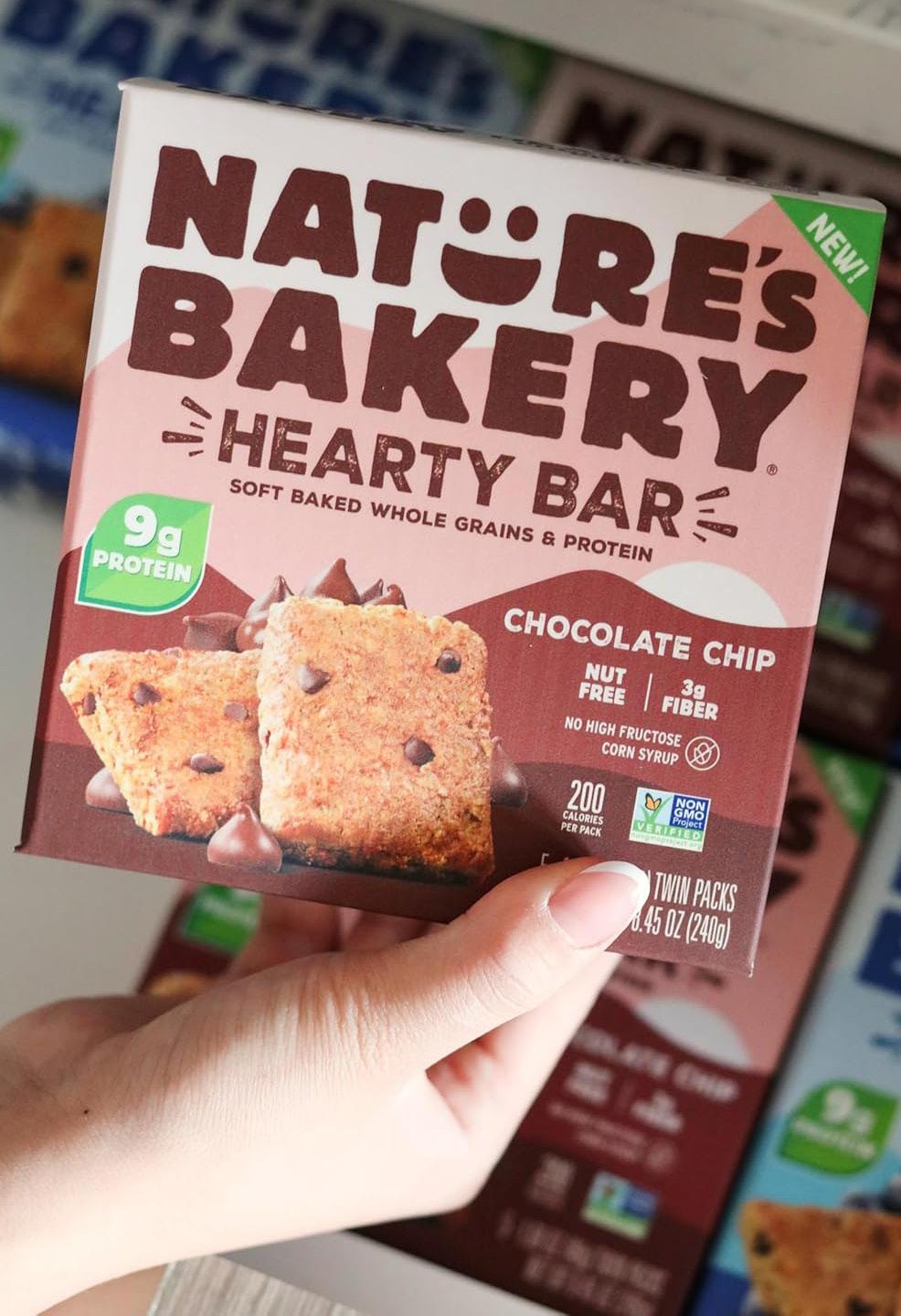
Nature’s Own, a Flowers Foods brand, expanded its Life product line with the debut of a keto-friendly, protein-packed bread.
Consumers are increasingly asking for fiber and protein in accessible formats, and Nature’s Own listened. By focusing on these attributes in the R&D process, the bread brand is placing them front and center across its portfolio.
“Nature’s Own Life Wheat + Protein was developed to meet the growing consumer demand for good sources of protein,” said Kyrstle Farlow, senior director of brand management at Nature’s Own. “We have been researching and experimenting with protein for some time, but this recipe was advanced through our R&D process beginning in early 2025.”
With 22 grams of protein and 9 grams of carbs per two-slice serving, consumers can integrate this baked good into their diets to satisfy their craving for comforting food while meeting their health and wellness goals.
“We have received a lot of great feedback from consumers and customers,” Farlow said. “We’re excited to grow our portfolio with unique items.”
The Wheat + Protein bread maintains the brand’s promise of no artificial flavors, colors or preservatives, and furthers its commitment to quality. The new SKU debuted in January alongside Perfectly Crafted Thick Sliced Italian Herb Loaf, which appeals to consumers looking for a more artisan bread type.
Nature’s Own Life Wheat + Protein is available in a 16-ounce loaf at major retailers such as Walmart, Target and Kroger for an SRP of $7.49. www.naturesown bread.com
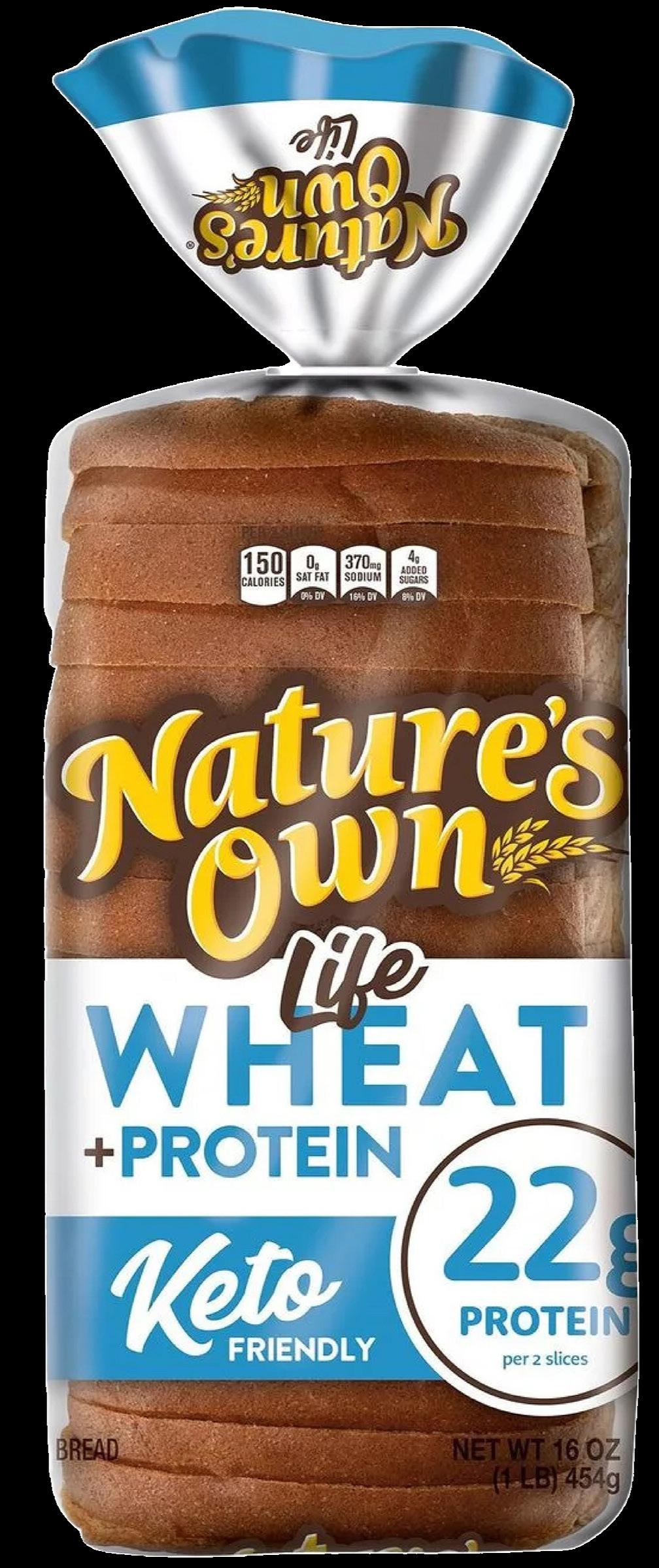
Nutri-Grain is best known for its soft-baked products, but the Mars Snacking brand made a major pivot with the all-new Crunchy bar.
“People are looking for snacks that taste great, feel satisfying and deliver something purposeful — particularly when it comes to whole grains and fiber,” said Eileen Flaherty-Yao, senior director of brand marketing at Mars.
It took the Nutri-Grain R&D team roughly 10 months to bring this product to fruition. It focused on achieving a crisp texture with ingredients that align with the brand’s Whole Grains + promise.
“That meant carefully layering grains like oats, barley, buckwheat, rye and quinoa to deliver both nutrition and crunch, without sacrificing flavor or approachability,” she said.
As noted across the baking industry, there’s been an uptick in shoppers seeking products with functional ingredients and health-forward attributes. Nutri-Grain Crunchy answers the call.
“We’re also seeing consumers actively seek out ingredients like quinoa and talk more openly about fiber as part of daily wellness,” Flaherty-Yao said. “Nutri-Grain Crunchy brings 23-25 grams of whole grains and a good source of fiber to a familiar, mess-free format. It’s an innovation rooted in what people are asking for.”
Early consumer feedback affirmed the product’s success in providing the ideal texture, taste and attributes in one bar.
Nutri-Grain Crunchy comes in two flavors — Chocolate Chip Chia and Honey Oat Flax — in 10-count packs at an SRP of $4.49. Distribution of the bars began at retailers such as Albertsons, Meijer, ShopRite and Ahold Delhaize, the Mars brand broadened its distribution to include Kroger locations nationwide in April. www.nutrigrain.com
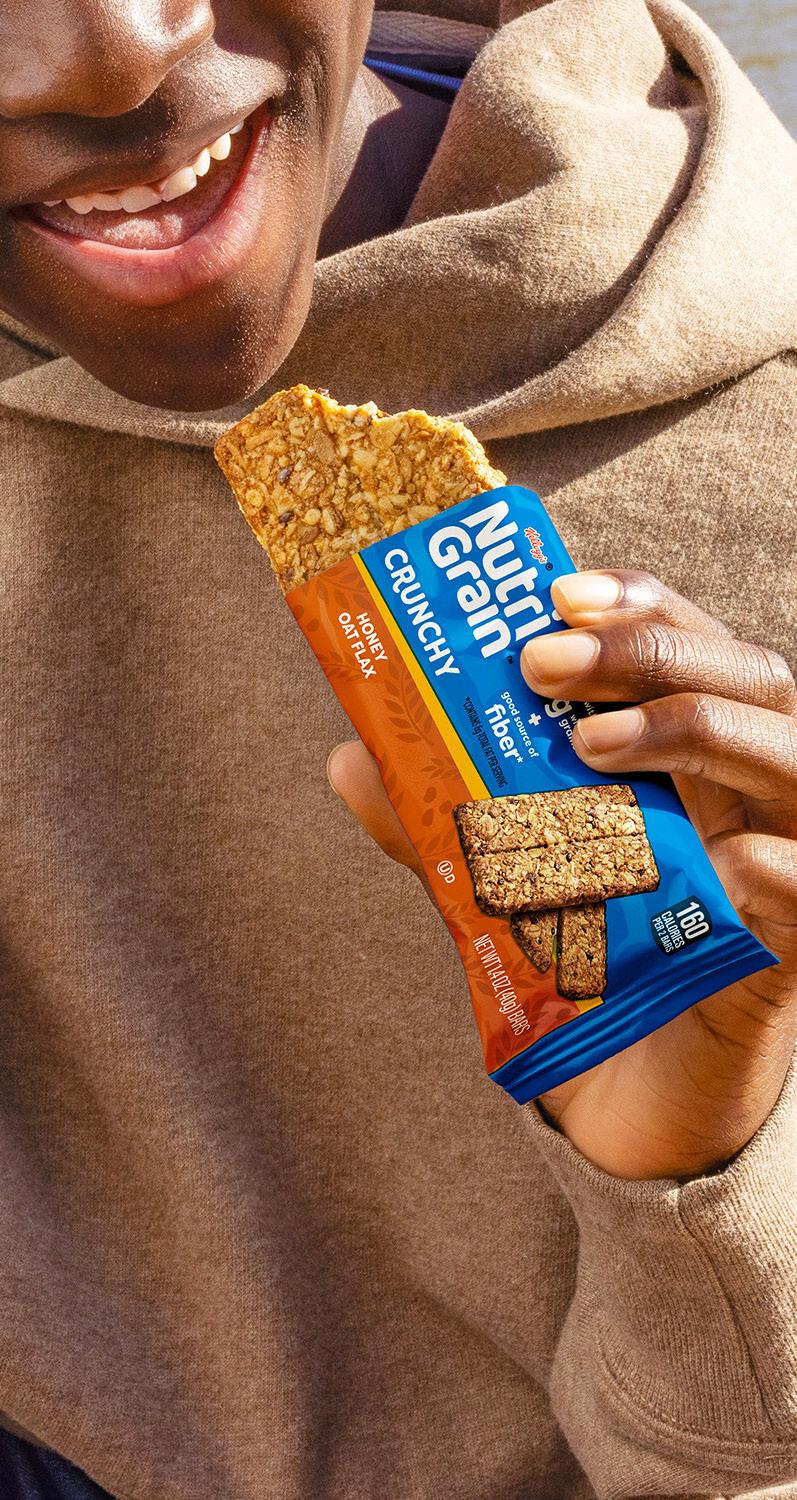

Every ingredient plays by its own rules.
That’s why the FlexWall® is engineered with the nuances of baking in mind. It supports a wide range of challenging materials and keeps production flowing.
Gentle agitation keeps movement consistent without stressing or damaging sensitive ingredients.

With built-in features to boost accuracy, prevent degradation, and speed up cleaning, the FlexWall® delivers results you can count on.



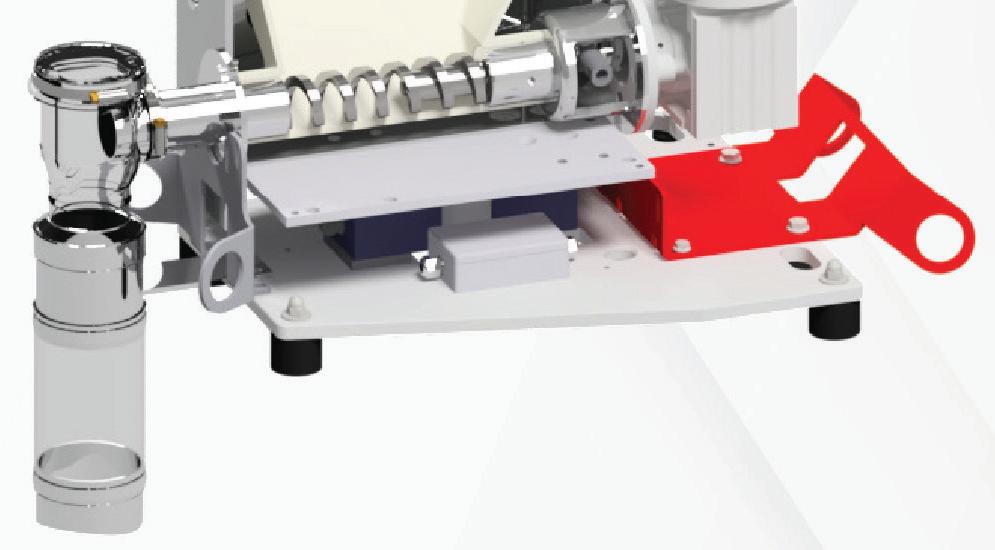
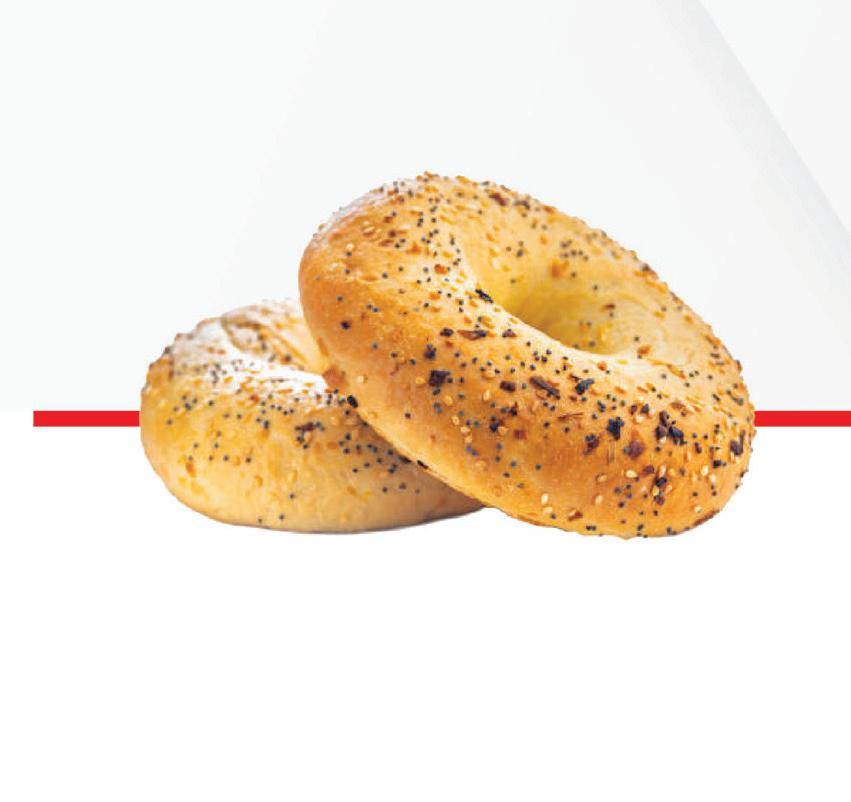
OREO, a Mondelez International brand, stepped out of the cookie category and into the sweet goods aisle with OREO Muffins. As consumers increasingly seek options for graband-go mornings and midday snacks, brands are meeting their needs by crossing markets and venturing into new categories.
“Our strategy around how we’re innovating is in response to a clear shift in consumer behavior,” said Kristen Braun, director, cakes and pastries at Mondelez International. “Our research shows a significant white space for high-quality, convenient baked goods that fit into the fluid schedules of today’s consumer, especially for that mid-morning or mid-afternoon moment.”
Made with real cocoa and baked with the flavor of OREO cookies, the muffins offer a novel way to indulge in a familiar brand. Consumers have welcomed this new addition and its impact on traditional mealtimes.
“Overall, the response to OREO Muffins has been extremely positive,” Braun said. “We set out to disrupt the muffin category. Traditionally, muffins are seen as breakfast-only treats. Our OREO flavor gives consumers permission to enjoy a muffin as a snack throughout the day, opening a new occasion for the category as a whole.”
The brand structured R&D around the idea of rewriting the muffin narrative, not simply adding a new flavor to a loaded lane of options.
“Our move into packaged bakery isn’t about launching something that already exists; it’s about leveraging the deep consumer love and trust in brands like OREO to create and own a new space,” Braun said.
OREO Muffins are a permanent addition to the brand’s portfolio and are available at convenience stores nationwide in 2-count packs for an SRP of $2.99. www.oreo.com
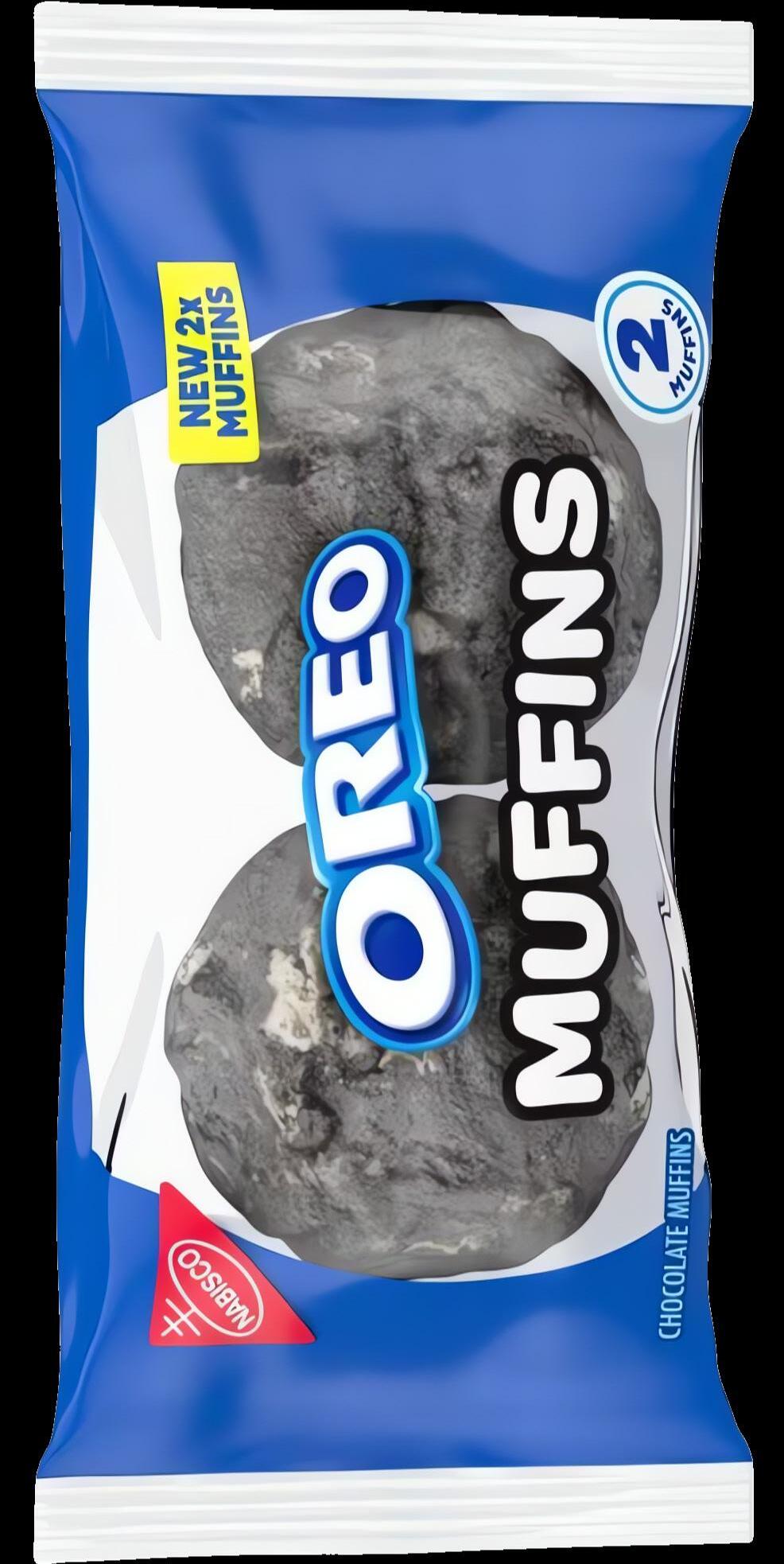
Otis Spunkmeyer, a sweet baked goods provider in the foodservice and retail in-store bakery sectors, introduced the Snickerdoodle Pizza Cookie, a shareable dessert that gives foodservice operators the ability to expand their dessert menus without requiring intensive labor.
The 8-inch skillet-style pizza cookie from the Aspire Bakeries brand was developed to help foodservice operators increase foot traffic and boost the average amount of a dining tab.
The thaw, heat and serve cinnamon-sugar cookie features dough with cheesecake inclusions. It can be customized in-house with simple toppings such as fruit, ice cream, crumbles or chocolate drizzle. It can also serve as the base for elaborate after-dinner desserts.
The emergence of pizza-style cookies underscores a growing trend of combining classic sweet treats with elevated formats. Otis Spunkmeyer’s pizza cookies also offer operators a way to tap into consumer cravings for shareable, large-format desserts that offer comfort and familiarity. The Otis Spunkmeyer Pizza Cookies are available in two nostalgic, tried-and-true flavors: Snickerdoodle and Chocolate Chunk.
Earlier this year, Otis Spunkmeyer announced it had completed its initiative to remove all FD&C colors from its portfolio. This means 100% of Otis Spunkmeyer-branded foods produced after Jan. 1 and sold in the US are free from artificial food-grade dyes. The brand is also participating in the American Bakers Association (ABA)’s “Baked Goods in Schools Pledge,” a voluntary commitment by ABA member companies to eliminate the use of FD&C colors in all baked goods provided to K-12 schools through the National School Breakfast, Lunch and Competitive Food Programs by the start of the 2026-27 school year.
Both varieties of Otis Spunkmeyer’s Pizza Cookies are available in 24-count cases. www.otisspunkmeyer.com
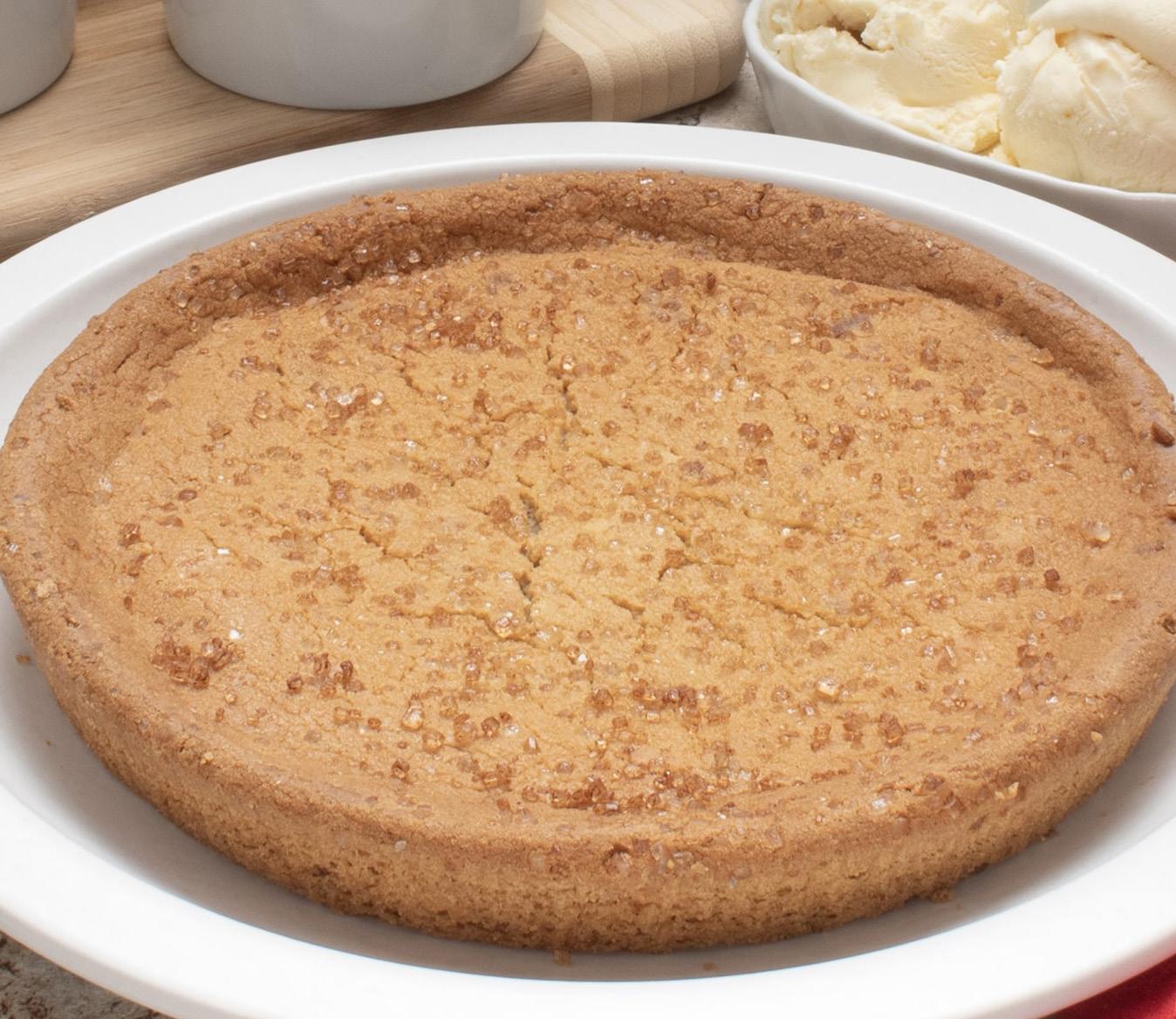
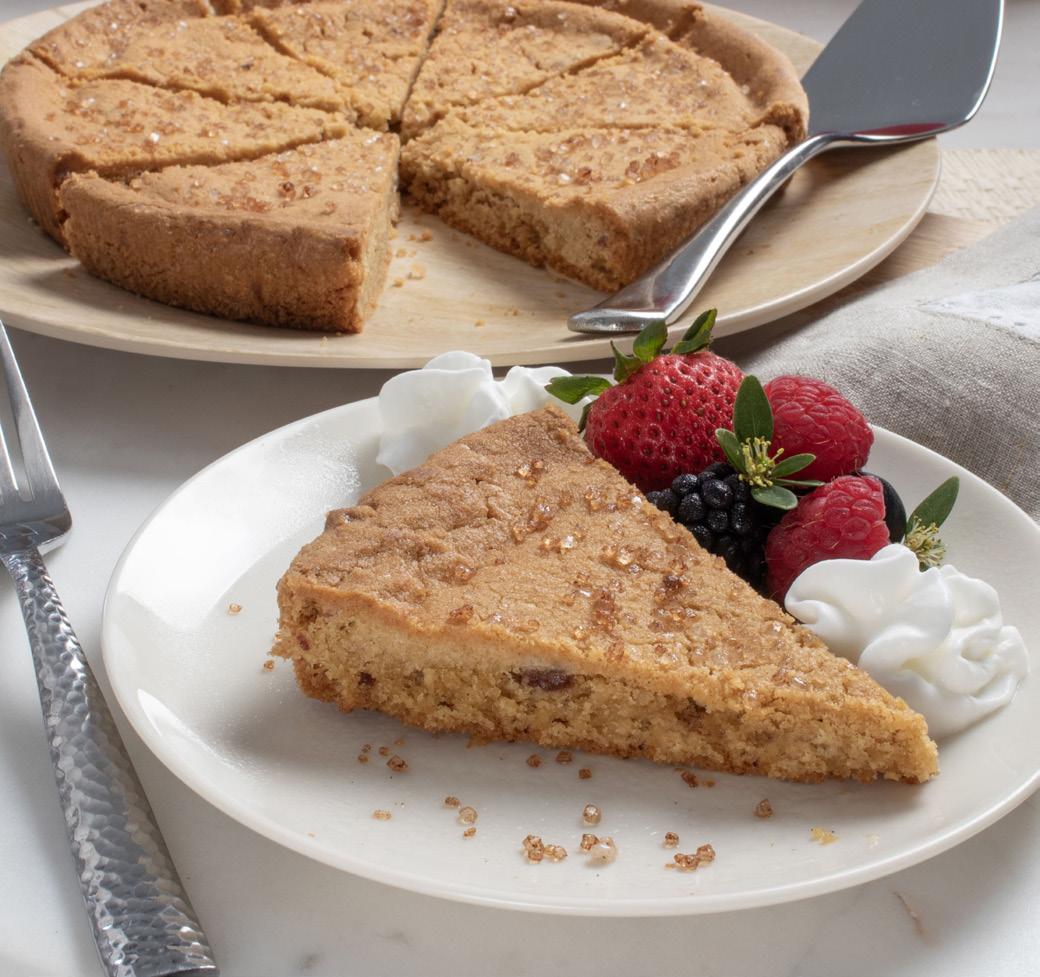
Pepperidge Farm, a brand under The Campbell’s Co. portfolio, kicked things up a notch with a new savory Goldfish SKU.
The brand broadened its portfolio with Goldfish Seasoned Pretzels, an innovation driven by the success of Goldfish Pretzels in the market and consumer interest in bold snack flavors.
“Our R&D team focused on perfecting seasoning coverage and flavor intensity while maintaining the light, crunchy, baked texture Goldfish fans expect,” said Mike Fanelli, senior director of marketing for Goldfish.
The pretzels rolled out in two distinct, sauce-inspired flavors: Honey Mustard and Hot Buffalo.
“The result is a playful, flavor-forward twist that brings excitement to the cracker aisle,” he said.
Fanelli noted that since the brand began nationwide distribution of the savory snack, Goldfish has received positive feedback from shoppers, especially on social media.
Both flavors come in 8-ounce bags in a sharing-friendly format that emphasizes the distinct spices and notes of each respective variety. This release also laid the foundation for the brand to release
more flavor-forward innovations, such as Zesty Ranch-Flavored Crackers.
Beyond the cracker aisle, distribution for the salty snack includes major retailers such as Amazon, Target and Walmart. Goldfish Seasoned Pretzels have an SRP of $3.69 for an 8-ounce bag. www.pepperidgefarm.com
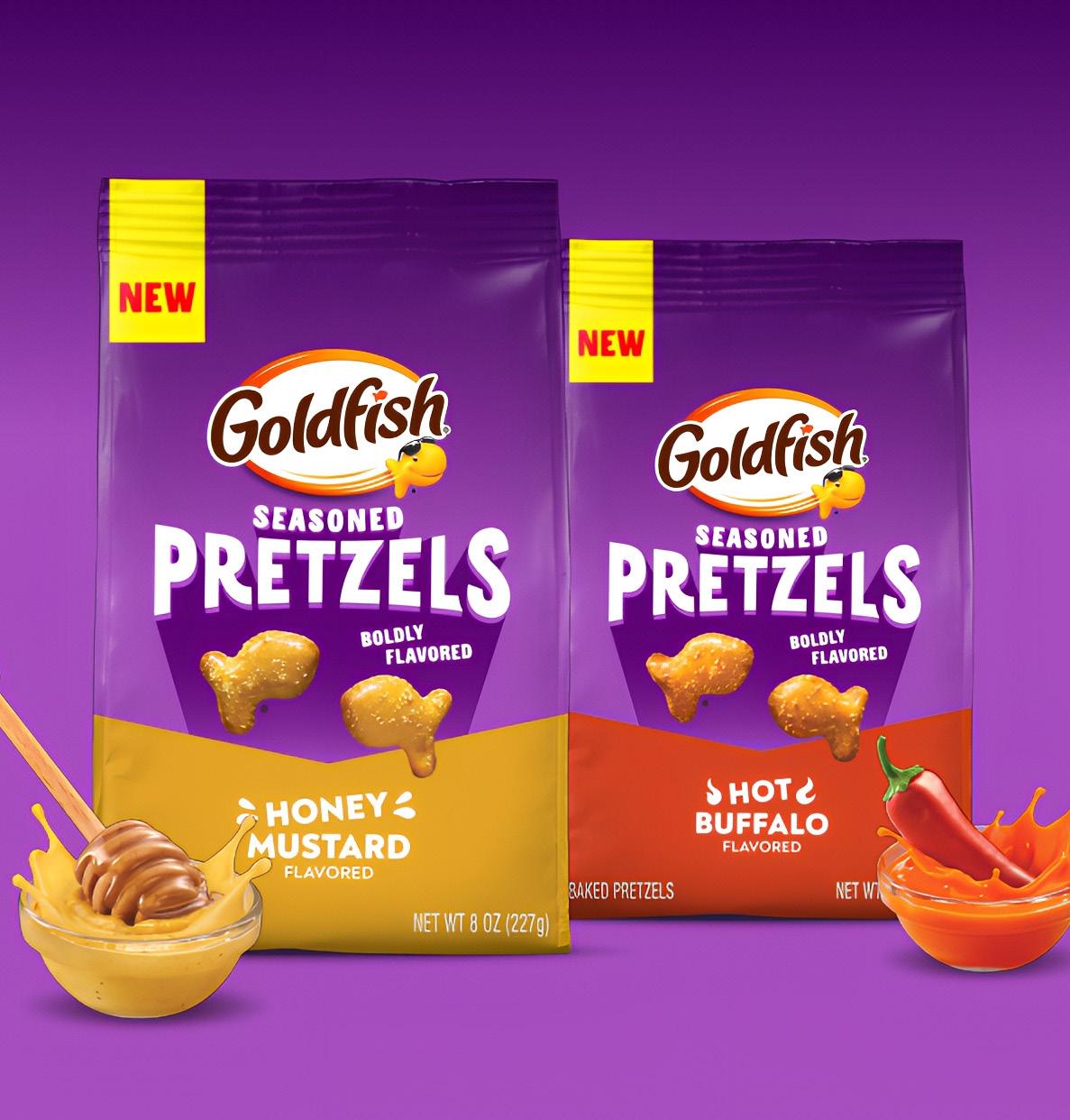


















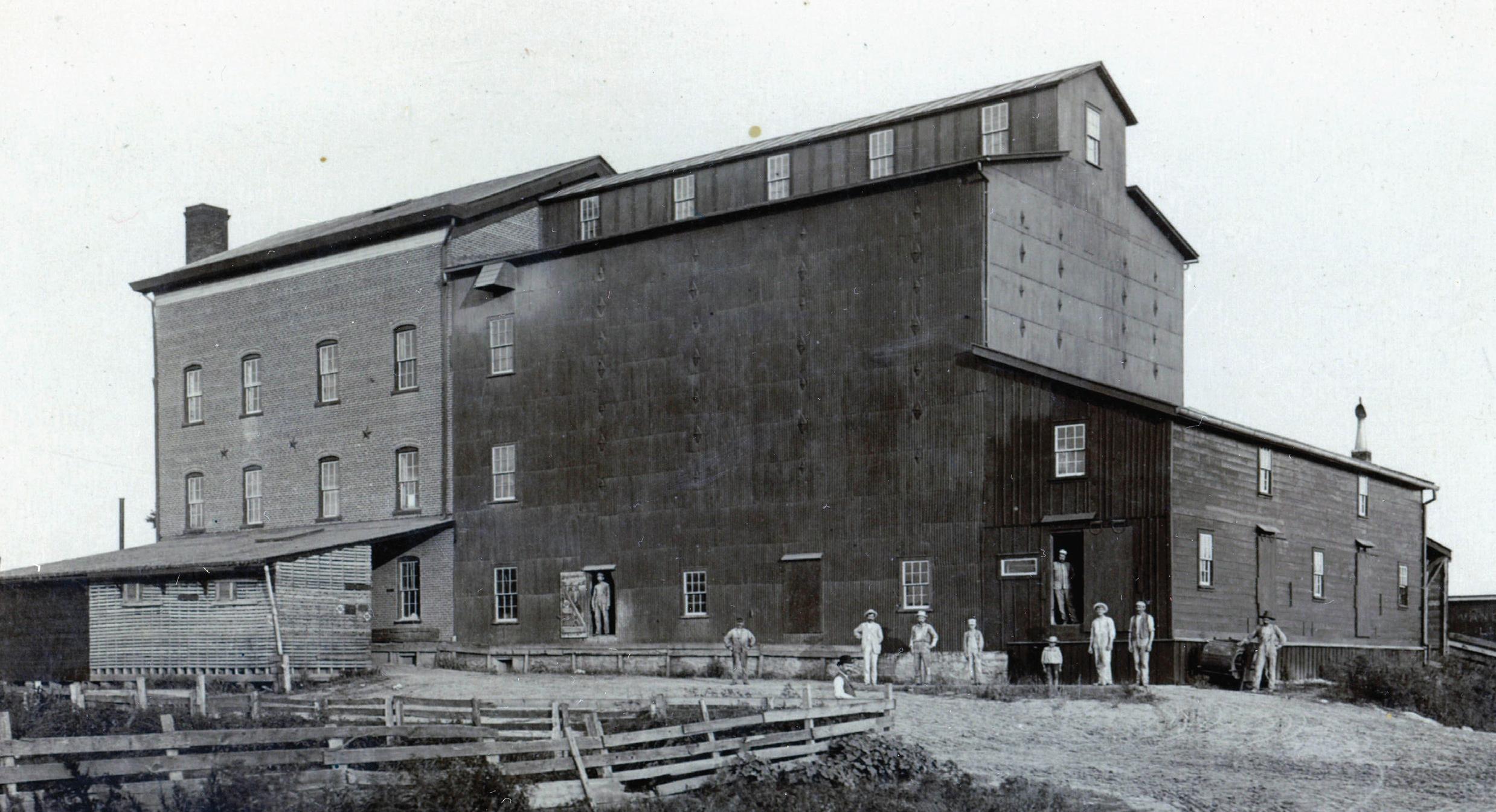


















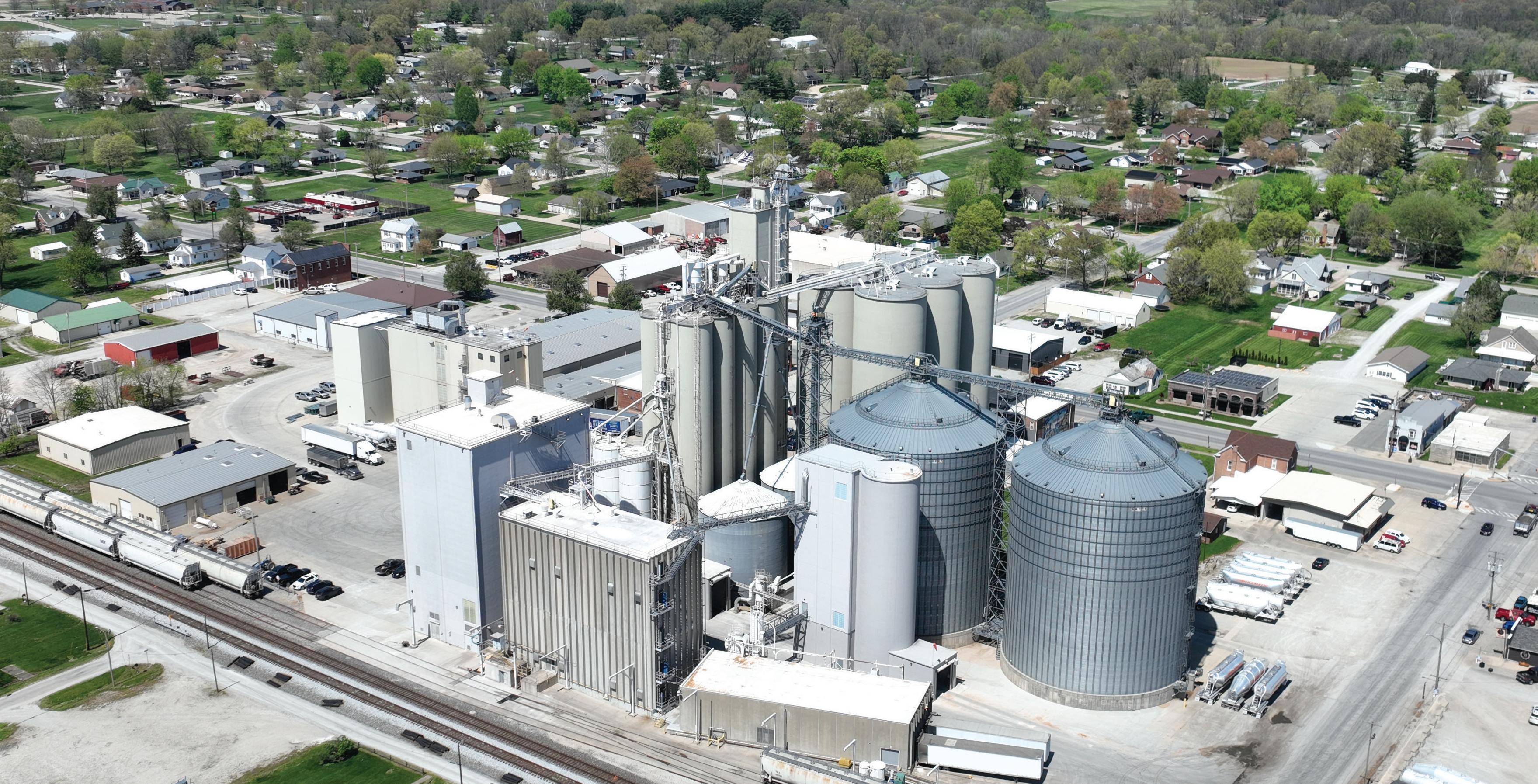


Quest Nutrition, a brand under the Simply Good Foods Co. portfolio that’s known for its lineup of protein-forward snacks and meal replacement bars, launched its first donut product: Quest Bake Shop Chocolate Frosted Donuts. By balancing indulgence and nutrition, the brand stepped beyond the traditional bar category to reimagine the function of a sweet treat.
“This launch represents a major milestone for Quest as we expand into new snacking moments,” said Stuart Heflin, the company’s senior VP and GM. “We’ve taken everything people love about donuts and reimagined them through our protein-first lens. Consumers will get the flavor and texture they crave with the macros expected from Quest.”
Packed with 14 grams of protein, 13 grams of fiber, 2 grams of net carbs and less than 1 gram of sugar per serving, the donuts feature a vanilla-flavored cake center topped with chocolate frosting and rainbow sprinkles. The indulgent taste profile lends well to consumer desire — particularly among Gen Z and millennials — for nutritional benefits in a sweet format.
The donuts expand Quest’s Bake Shop product line, which includes other health-forward desserts, such as frosted cookies, brownies and muffins.
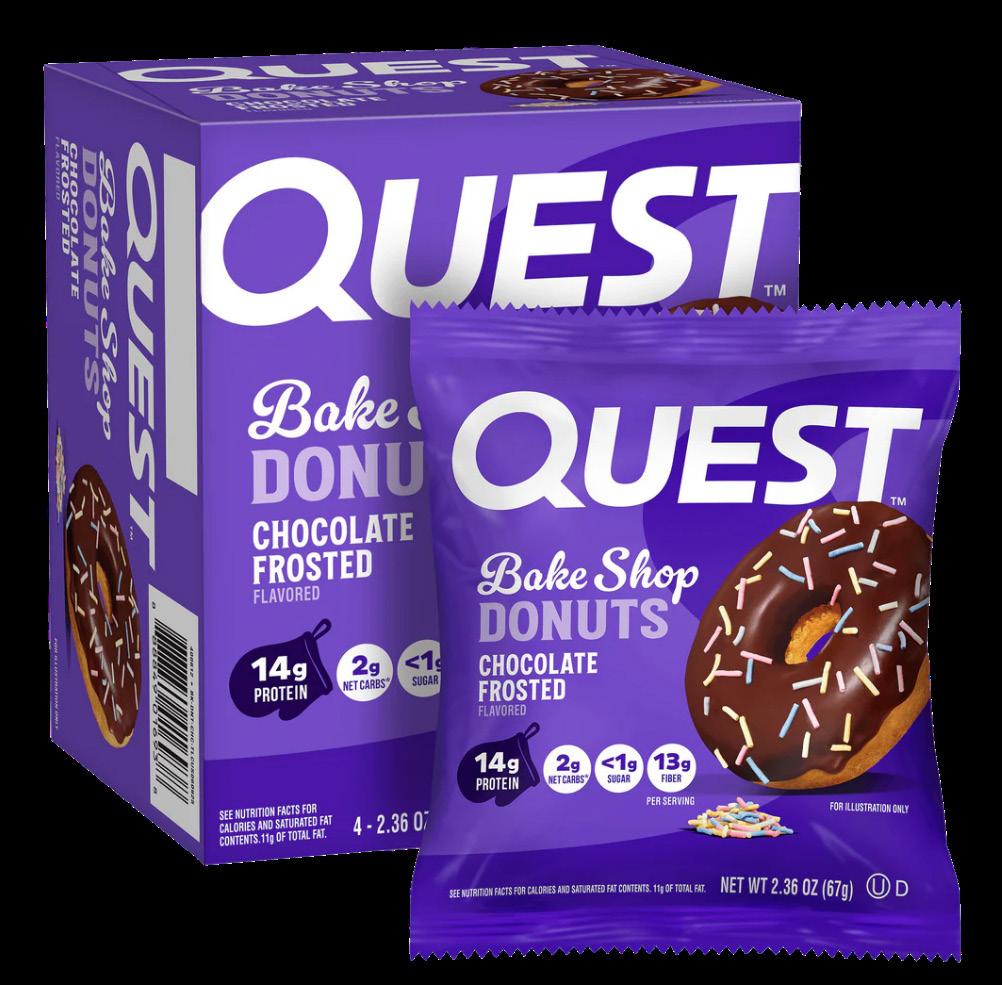
According to Puratos’ Taste Tomorrow consumer survey, 68% of consumers select foods based on health benefits. With protein thought of as one of the top attributes to make a product “extra healthy,” more than 60% of consumers believe protein enhances both the taste and healthiness of chocolate.
Quest Bake Shop Chocolate Frosted Donuts are available on Amazon and at retailers nationwide in 4- and 9-count packs starting at $10.99. www.questnutrition.com
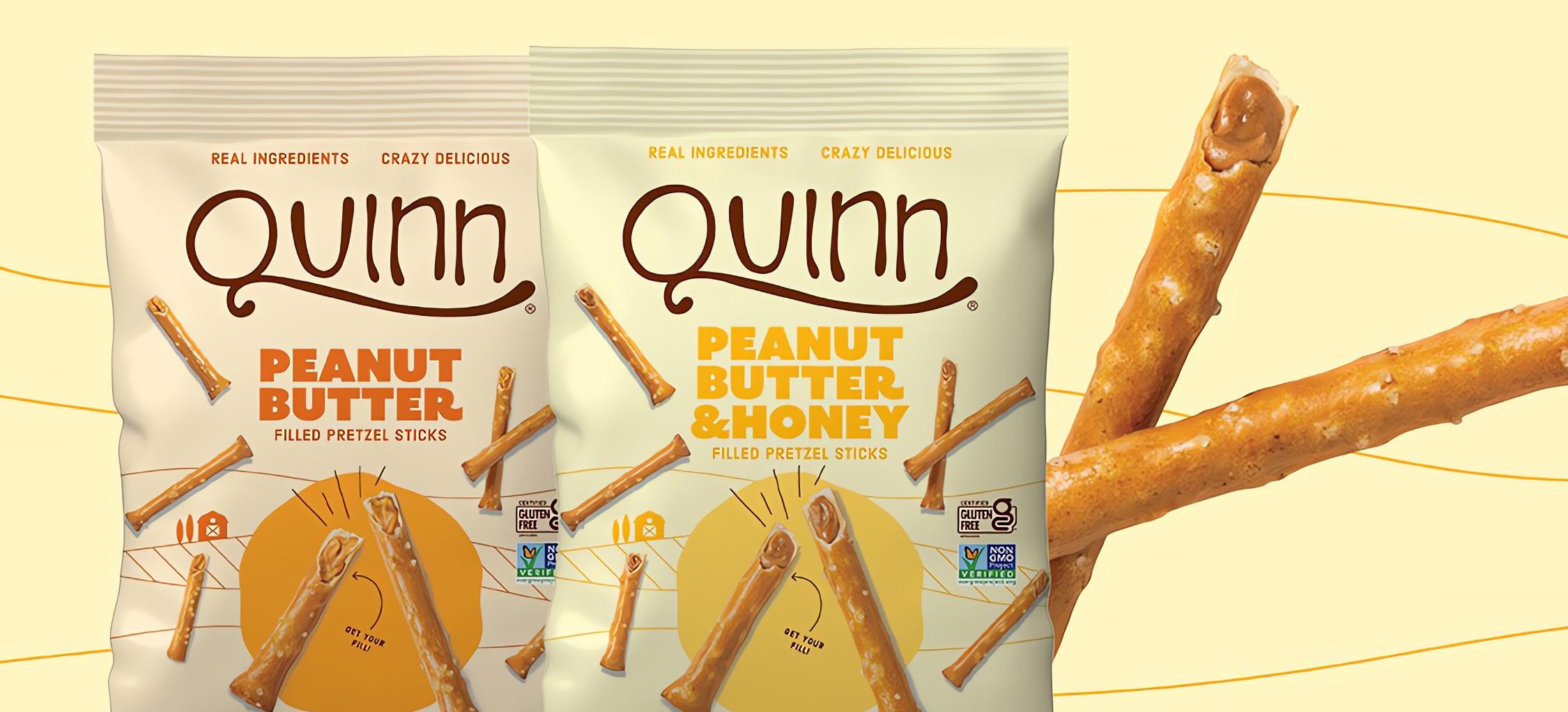
Quinn Snacks, a Certified B Corp brand best known for its lineup of pretzel products, turned the snack aisle on its head with the launch of Filled Pretzel Sticks. Similar to its Filled Pretzel Nuggets, the gluten-free innovation offers a new format for consumers to enjoy a multi-textural snacking experience.
“Quinn’s Filled Pretzel Sticks were developed to meet a clear consumer need: more satisfying, portable snacks made with real ingredients without sacrificing taste or texture,” said Kristy Lewis, founder and chief visionary officer of Quinn. “While filled pretzel nuggets exist, no brand had successfully created a
gluten-free filled pretzel in stick form, largely due to the technical challenges of maintaining structure, crunch and a creamy center in a gluten-free format.”
In the year between when R&D first began to when the snack hit the market, the Quinn team focused on crafting a gluten-free pretzel shell that could withstand a filling without breaking; developing a smooth peanut butter filling that distributed evenly throughout the snack; and balancing the protein, fat and carbs.
“By staying focused, collaborative and ingredient-obsessed, Quinn delivered a breakthrough innovation to market in just over a year, proving that small teams
with clear priorities can execute big ideas fast, without compromising on quality or values,” Lewis said.
The product debuted in two flavors — Peanut Butter and Peanut Butter & Honey — with strong market response across channels and regions, including early buy-in from retailers such as Whole Foods Market and Sprouts Farmers Market.
Quinn Filled Pretzel Snacks come in 6-ounce bags and are available at natural channel and retailers such as Walmart, Whole Foods Market, Misfits Market, Wegmans and Meijer for an SRP of $5.99. www.quinnsnacks.com
Real Good Foods, known for its low-carb meal solutions, expanded beyond the frozen and refrigerated aisles and into the shelf-stable pantry category with the debut of its high-protein Flour Tortillas.
Designed for the modern health-conscious consumer, Real Good Foods’ burrito-size tortillas deliver 10 grams of protein and 13 grams of fiber.
“Tortillas are one of those foundational items people eat constantly, but the category hadn’t really evolved to keep up with how people are eating now,” said Christina Zwicky, chief marketing officer at Real Good Foods. “We developed these Flour Tortillas to fill that gap: a soft flour tortilla with high protein, low net carbs and no seed oils, aligned with what shoppers are looking for around clean ingredients and balanced macros.”
Zwicky shared that when developing the flour tortilla, the R&D team prioritized a culinary-first approach to avoid a dense or chewy texture.
“What’s unique is that we got there without relying on the high levels of gums or pea proteins you typically see in low-carb tortillas,” she said. “The biggest challenge was replicating the pliability and bite of a conventional tortilla while hitting those nutritional benchmarks and keeping it free of seed oils.”
Real Good Foods’ high-protein Flour Tortillas are available at select club retailers in the southeast and across California in a 12-count package. www.realgoodfoods.com
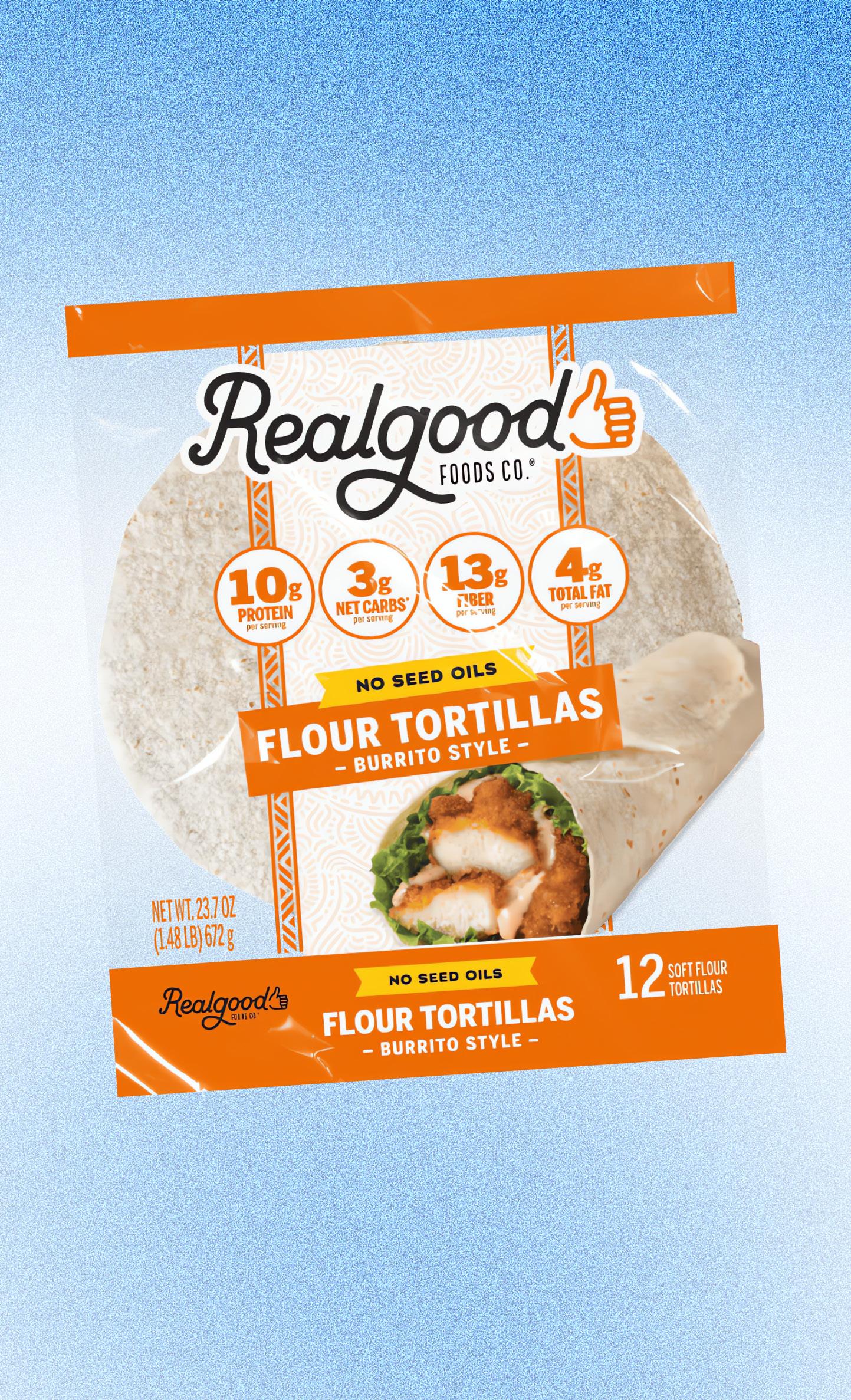

Rich Products offers an array of finished goods to ease labor and offer convenience for in-store bakery workers. Its recent innovations keep this momentum going.
Rich’s Fully Finished Mini Cakes were created with smaller portions in mind. Emma Kelchlin, director of finished desserts for the company, noted that Rich’s was seeing an upward tick in demand for a small, more convenient everyday treat.
“The team began by identifying a clear opportunity in the market: Consumers are increasingly seeking bakery items that feel special and high quality, but in formats that fit smaller moments of indulgence rather than large, sharable occasions,” Kelchlin said.
R&D for the cakes centered on three key characteristics: flavor, texture and overall eating experience. Once this end goal was determined, the Rich’s team locked in on creating distinct layered flavors for the baked good. This includes varieties such as vanilla bean, lemon blueberry and coconut with pineapple filling.
“From concept to store shelf, the timeline was intentionally rapid,” Kelchlin said. “We acted quickly to leverage timely consumer trends while maintaining a focus on flavor quality and performance.”
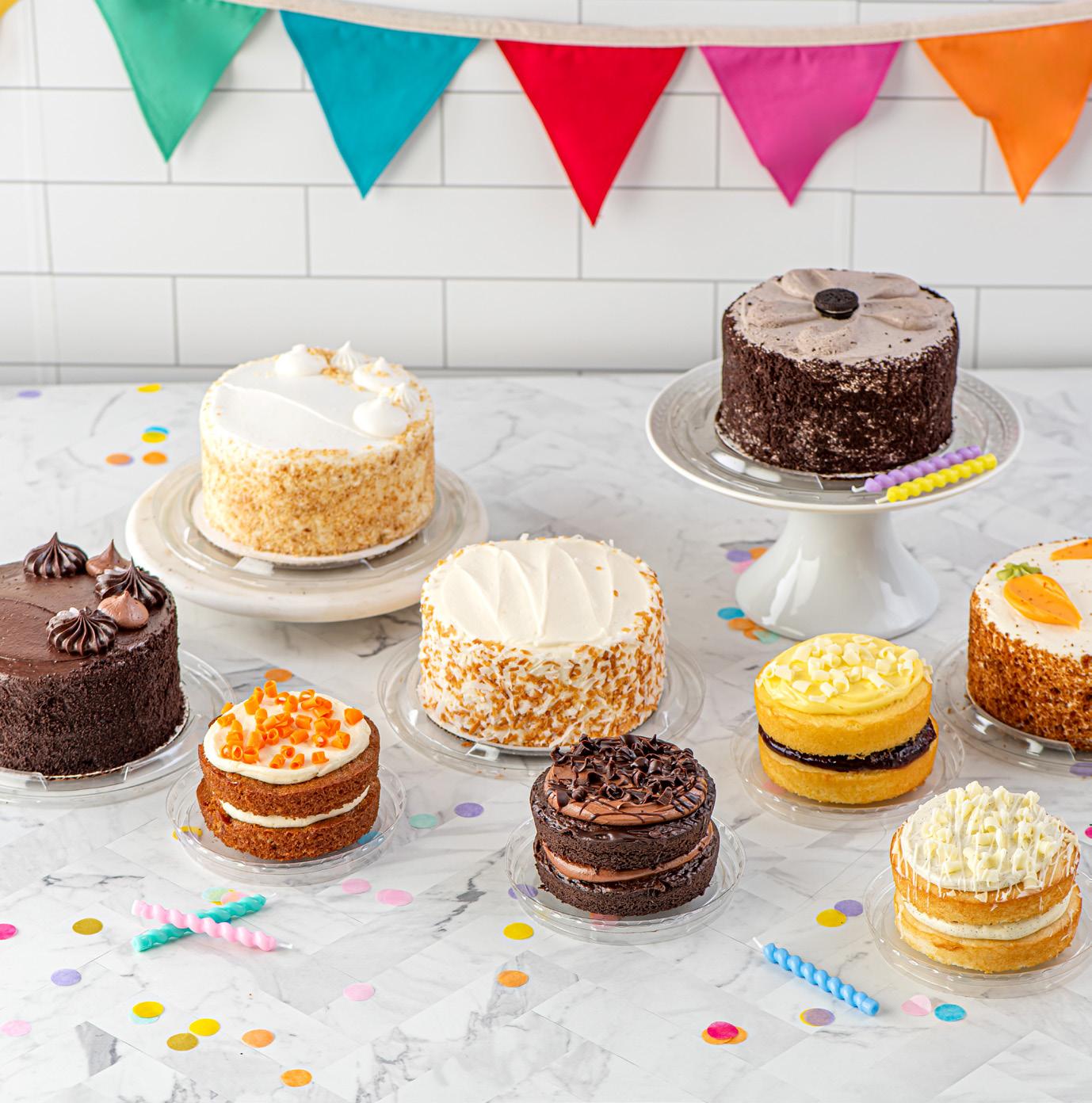
With these considerations, Rich’s Mini Cakes fill the gap between indulgence and convenience for consumers. The ready-to-serve format also helps in-store bakers deliver the desserts consumers seek faster and with higher consistency.
Consumers have received the cakes well, showing enthusiasm surrounding
the desserts’ portion size and fit with daily indulgence habits.
Rich Products Fully Finished Mini Cakes are available in 4- and 5-inch sizes, p ackaged in base-and-dome configurations. SRP for the cakes sits at around $4.99 for the 4-inch cakes and between $8.99 and $9.99 for the 5-inch option. www.richs.com
Rise Baking Co.’s mini Bundt cakes address two trends with one solution: They satisfy the consumer shift toward personal indulgence and they give foodservice operators a flexible, easy-to-execute dessert.
“Mini Bundts offer a versatile base that can be finished in-store and easily adapted to different flavors, formats and occasions while still delivering the kind of indulgent experiences consumers expect,” said Mike Docherty, EVP, marketing, R&D and innovation for Rise Baking.
Docherty said R&D focused on creating a formula with the right texture and moisture that could hold up across flavors and give operators a product that is easy to customize and finish off in-store. The team put a strong emphasis on testing, ensuring the mini Bundt cakes performed consistently across freezing, thawing and in-store finishing, while also making sure they fit seamlessly into existing bakery operations.
“One of our biggest challenges was making sure the product travels well without compromising quality,” he added. “Getting the packaging and product structure right was key so that when the mini Bundt thaws, it maintains the fresh, bakery-style look and feel.”
Rise Baking’s 2.3-ounce mini Bundt cakes are available for nationwide distribution to grocery retailers, foodservice establishments, in-store bakeries and grab-and-go programs. They come in classic flavors such as vanilla,
chocolate, strawberry and lemon as well as seasonal favorites, including pumpkin and gingerbread. The cakes are bulkpacked to give retailers the flexibility to create their own pack sizes and price points. www.risebakingcompany.com
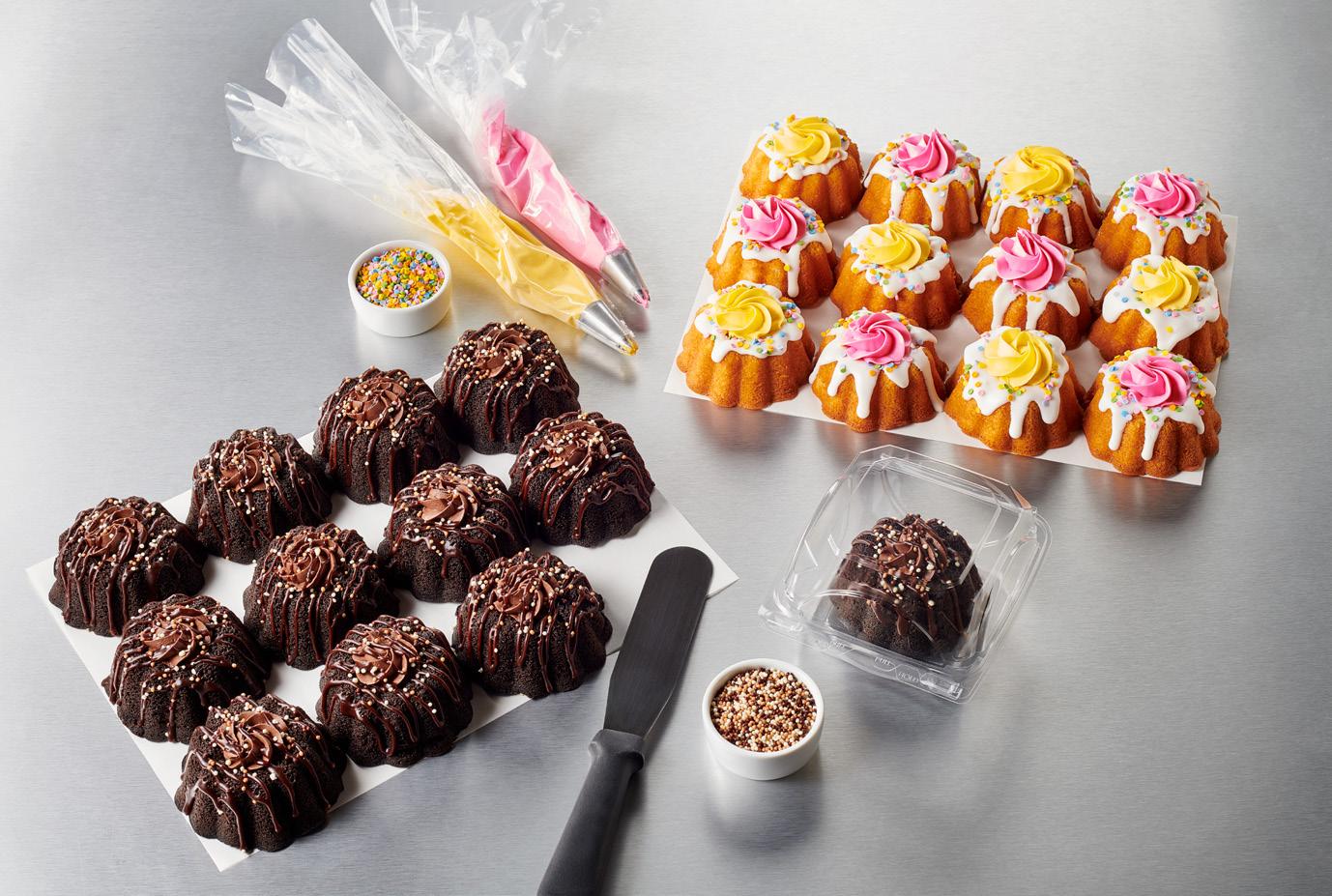

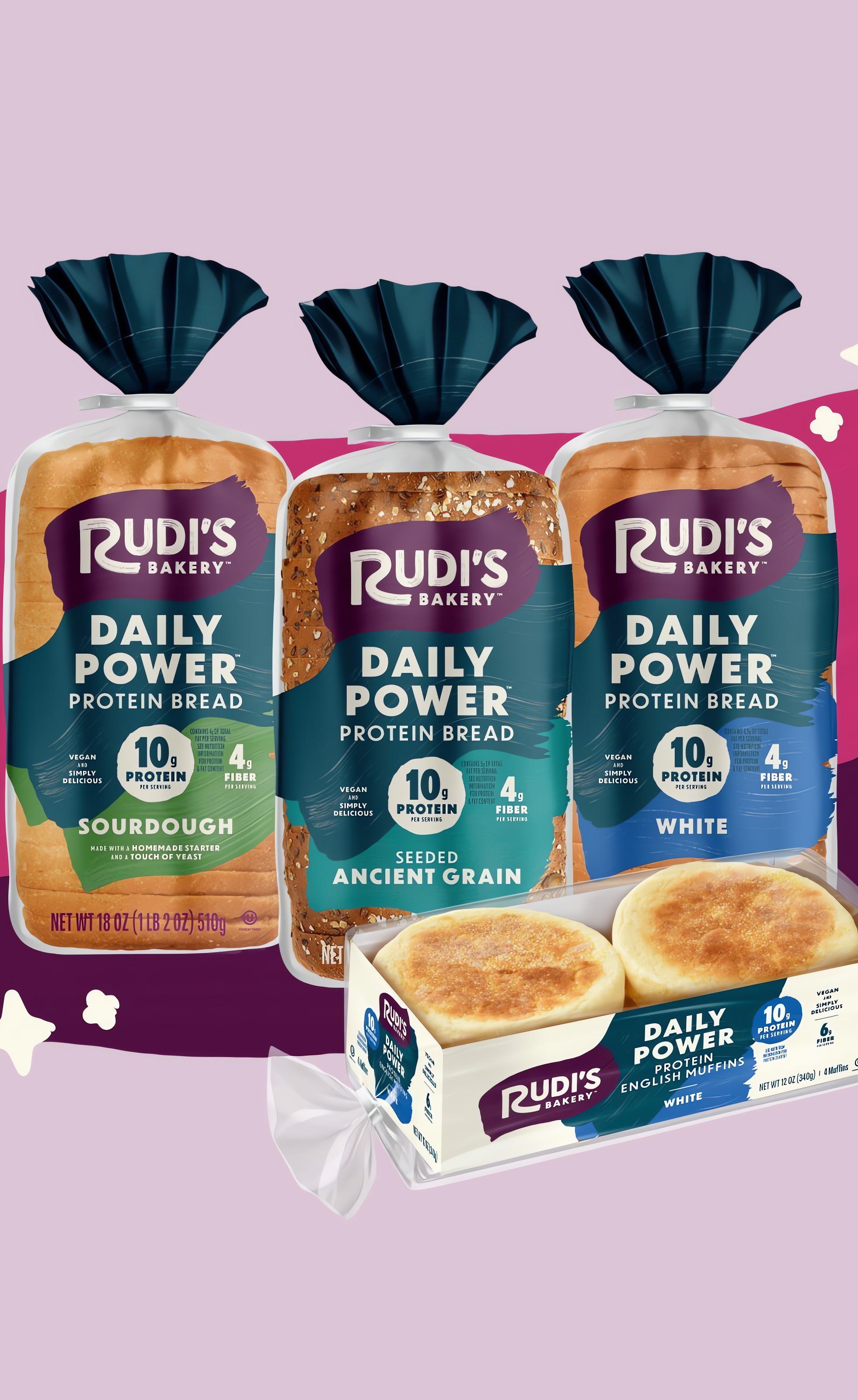
Rudi’s Bakery, known as a trailblazer in the organic, gluten-free baked foods category, introduced its Daily Power line, featuring four products made with plant-based protein and fiber.
From concept to store shelf, the process took a little over year, with product development driven by the significant increase in GLP-1 usage among consumers.
“We were seeing the impact of GLP-1 medications on the whole bread category, and we wanted to provide consumers a way to have balanced nutrition with protein and fiber without having to give up bread and carbs,” said Jane Miller, CEO of Rudi’s. “The biggest challenge was packing in extra protein while keeping the taste great and the texture true to Rudi’s products.”
The new line includes sourdough, white and ancient grain bread varieties, as well as English muffins. Each product has 10 grams of protein and 4 grams of fiber.
“We named the new product line Daily Power to create a sub-brand that captures evolving consumer trends, not just those focused on protein,” Miller added. “We have two gluten-free SKU’s coming out in September that have 10 grams of protein and 3 grams of fiber.”
Daily Power Protein Bread and English Muffins are available at King Soopers locations in Colorado and Whole Foods Market stores nationwide. The three bread SKUs have an SRP of $7.99, and the English muffins have an SRP of $6.29. www.rudisbakery.com

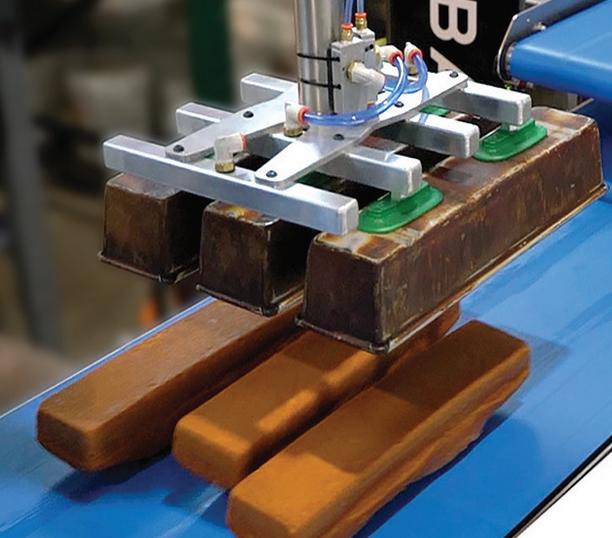
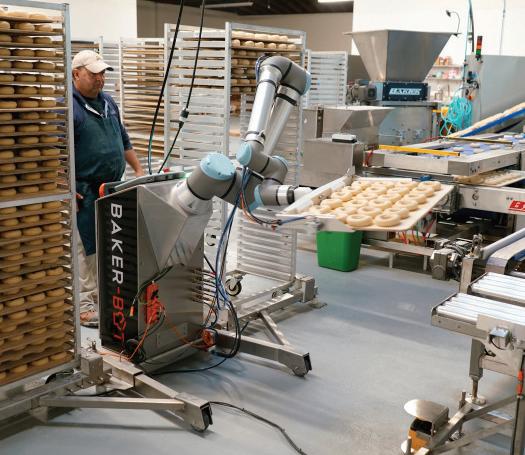
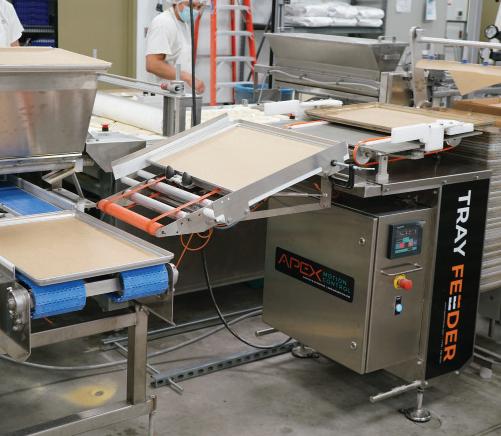
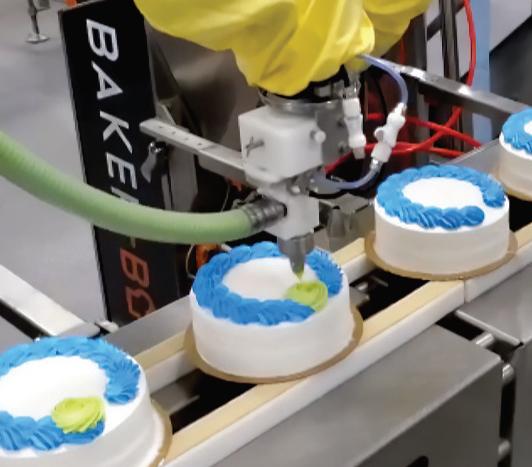
• TrayRacking&Feeding
• Depanning
• DecoratingandFinishing
• Packaging&Palletizing
For over 25 years Apex Motion Control has beenthetrustedleaderforroboticautomati been the trusted leader for robotic automation.
Proven Benefits:
• Higherthroughput
• Reducedlabordependency
• Optimizedproductconsistency
• Aclearreturnoninvestment
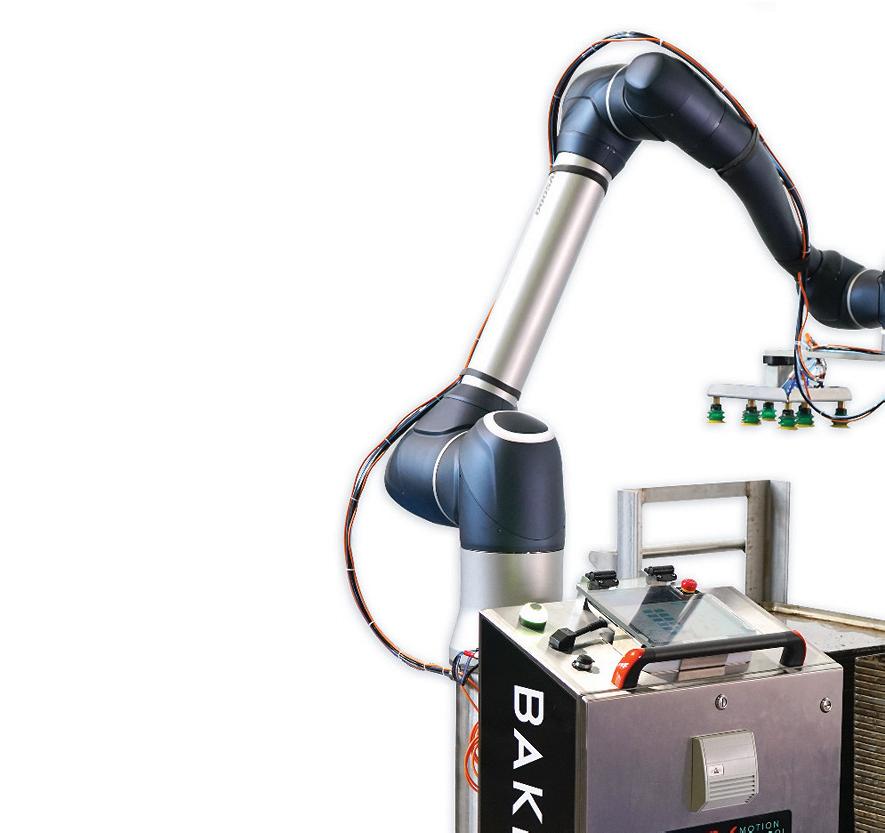
industrial and collaborative robotics for and food
Purpose-built industrial and collaborative robotics for bakery and food manufacturing.
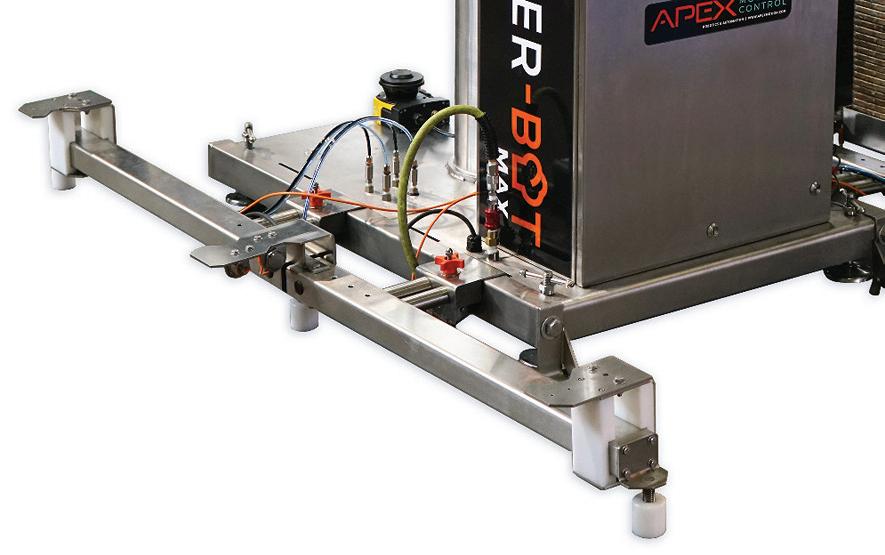

Pan & tray racking & deracking Tray feeding (with/without paper)

Base icing . Bordering, drizzle & draw Rosettes . Cakes, cupcakes & cookies


EOL
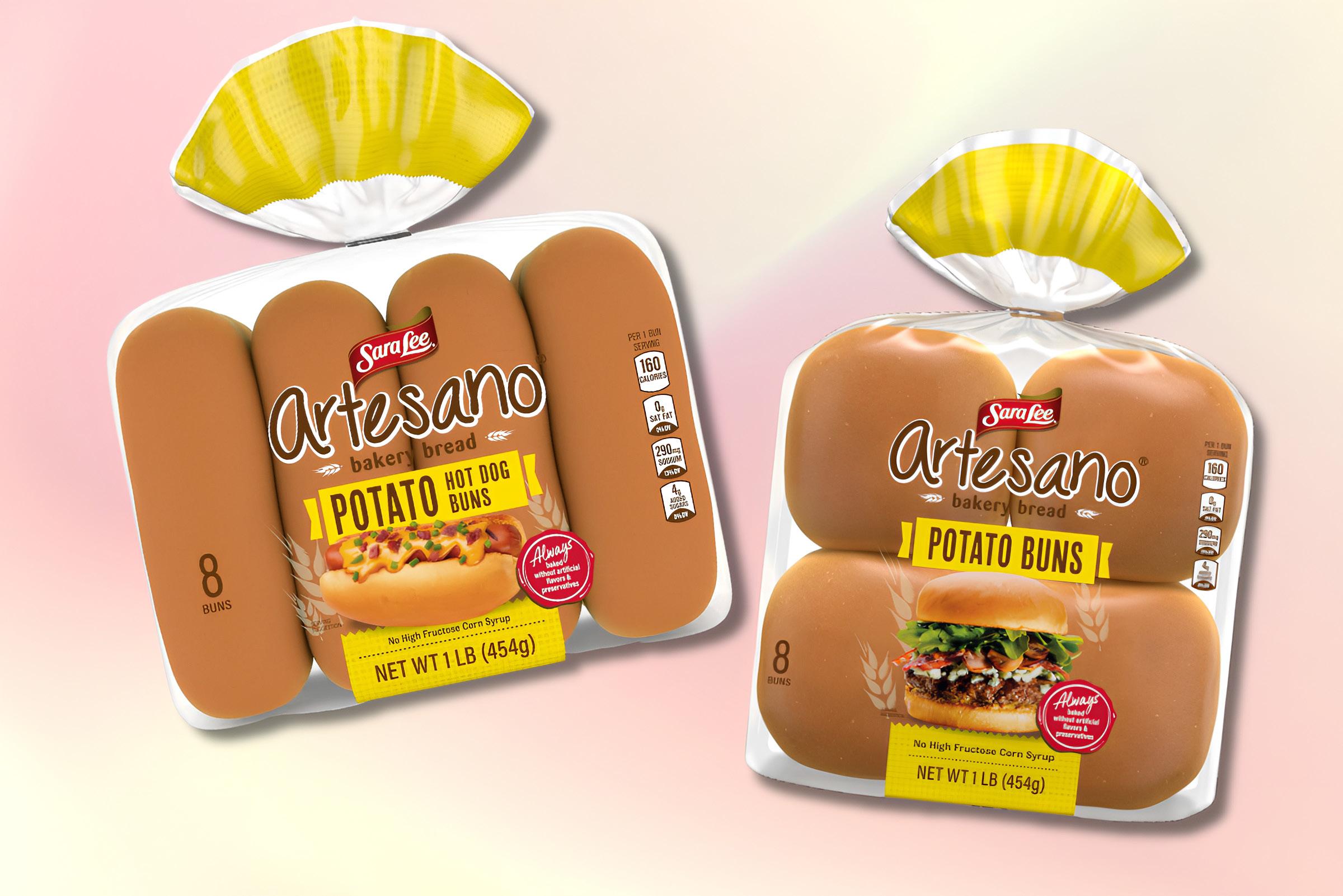
Sara Lee, a Bimbo Bakeries USA brand known for its established range of bread products, introduced a new line of buns to its Artesano portfolio. Designed to elevate summer cookouts, tailgates and everyday meals, the brand’s new Potato Hot Dog Buns and Potato Hamburger Buns serve as vessels to enhance meats and toppings with an authentic potato flavor and Artesano’s signature pillowy texture.
Baked without artificial flavors, preservatives or high fructose corn syrup,
the new lineup offers consumers a nutrition-forward option for their pantries at a time when demand for clean labels and ingredient transparency is at an all-time high. Each single-bun serving totals 150 calories and boasts 5 grams of protein.
“We know our customers are always looking for ways to elevate their culinary creations and make mealtimes feel a bit more special,” said Catherine Danielowich, senior brand manager of Artesano. “With our new Potato Hot Dog
and Hamburger Buns, we’re helping to elevate daily mealtimes with the soft, indulgent texture and quality consumers expect from Artesano, without compromising convenience.”
Artesano Potato Hot Dog Buns and Potato Hamburger Buns are packaged in clear, branded bags for quick consumer familiarity. Both SKUs can be found at retailers nationwide in 8-count packs for an SRP of $3.82 and 16-count packs for an SRP of $5.69. www.saraleebread.com
Cyrus O’Leary’s, a Sara Lee Frozen Bakery brand, debuted its Mini Cheesecakes, building off its decades-long reputation of crafting indulgent pies.
According to data from Puratos’ Taste Tomorrow research, 65% of consumers prefer not to compromise on taste and would rather consume less or opt for smaller portions. Cyrus O’Leary’s Mini Cheesecakes fill this space in the market for small treats that offer big value.
When bringing this product to life, the R&D team started by translating Cyrus O’Leary’s full-sized desserts into a single-serve format. One of the biggest challenges the team faced was transforming a homemade-style formula into a commercial product that maintains its shelf life and visual appeal.
“To achieve the smooth, creamy texture consumers expect — using real cream cheese, milk and eggs — R&D worked to balance texture, stability and flavor while ensuring the crust and toppings maintained their integrity in a refrigerated, ready-to-eat format,” said Kari Manze, director of marketing, in-store bakery, Sara Lee Frozen Bakery. “Preserving that fresh-made eating experience required multiple rounds of refinement to get every component just right.”
The R&D team also collaborated closely with ingredient suppliers to develop custom toppings for each mini cheesecake variety, and the engineering department partnered with an equipment manufacturer to design custom depositing technology to achieve the
necessary precision and consistency. Once the bench formulas were finalized, it took approximately nine to 12 months to commercialize.
“Delivering this level of quality at scale required multiple rounds of refinement, cross-functional coordination and a sustained commitment to innovation,” Manze said. “We’re bringing a fresh, modern approach to cheesecake that aligns with today’s consumer demand for
high-quality, single-serve indulgences. This launch strengthens our position in the mini dessert category and creates new growth opportunities within the in-store bakery.”
Cyrus O’Leary’s Mini Cheesecakes are available in single-serve cups for an SRP of $3.99, with weights ranging from 6.7 to 8.25 ounces, depending on flavor and channel. www.saraleefrozenbakery.com
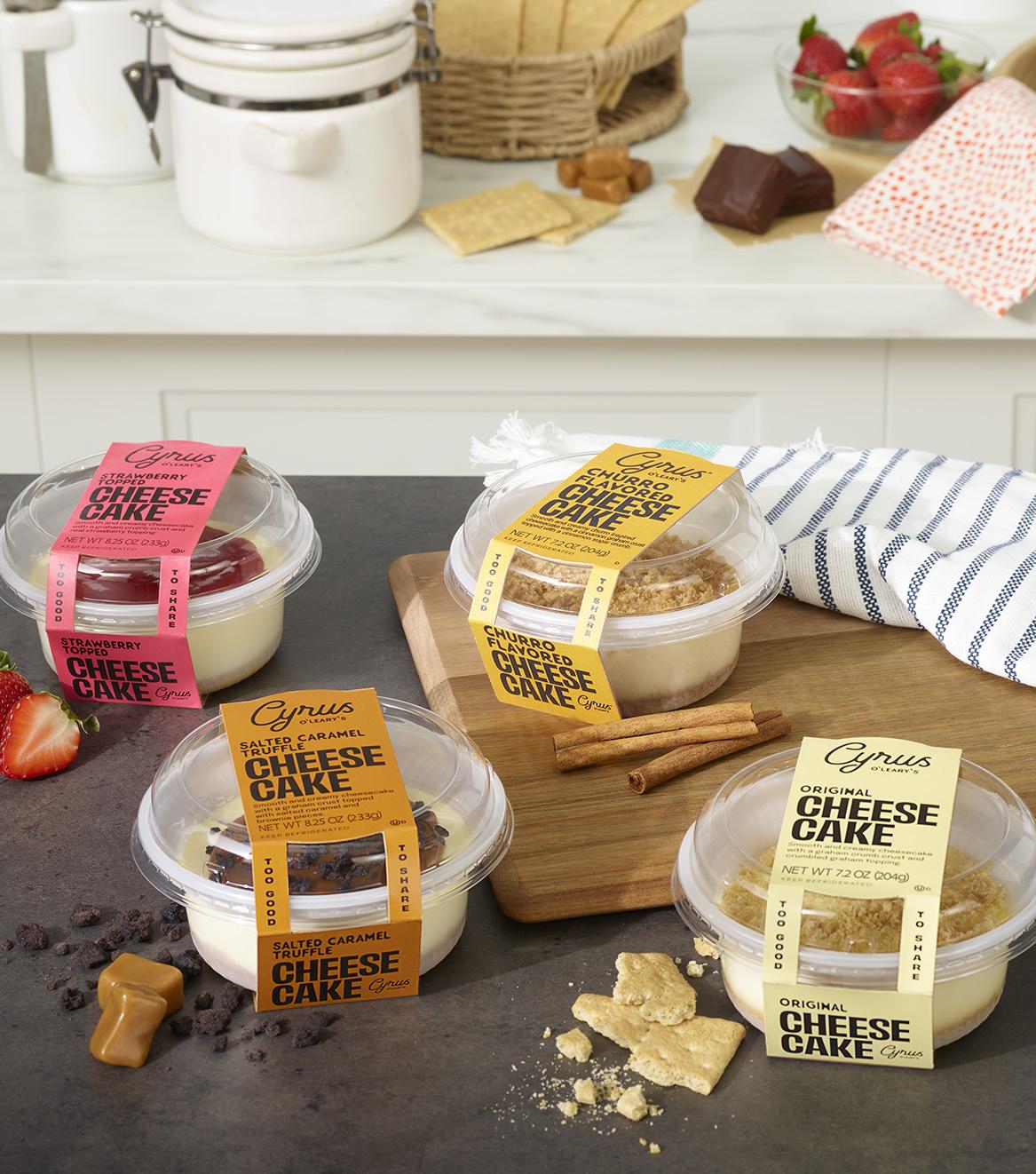
Strictly From Scratch is accustomed to incorporating distinct flavor combos in its classic baked goods, and one of its newest innovations is no exception. The bakery unveiled an Ube Danish, leveraging the distinct hue and flavor of the Southeast Asian yam, which has been gaining favor with bakers of all scales.
Rudy DePaola, president and CEO of Strictly From Scratch, shared that the product first came to fruition at the behest of a local customer interested in unlocking ube’s potential.
“From there, development and acceptance from the retailer took about three to four weeks,” he said.
In addition to the eye-catching purple hue, DePaola noted that positive feedback about the product also stems from the unique nutty and vanilla flavor combination of the ube and cream cheese.
Each Ube Danish measures in at 4.25 ounces raw — 1.5 ounces of which are just the ube cream cheese topping — and bakes down to 3.5 ounces. The Strictly From Scratch creation also has a 14-day ambient and 270-day frozen shelf life.
This initial foray into incorporating ube at scale is just the beginning for Strictly From Scratch. In addition to launching Ube Cream Cheesecake Muffins in tandem with the Danish, DePaola shared that the baking company is also experimenting with incorporating ube into its bread offerings and other desserts such as flan.
“Part of the longevity and the fun of our business is trying out new products and evolving with the desires of our clients,” said Thomas DePaola, senior VP of Strictly From Scratch. “We love working with new, trending ingredients and elevating classic flavors.”
Available in 2- and 4-count clamshell containers, the pastry is available for club stores at an estimated SRP of $4. www.sfscratch.com
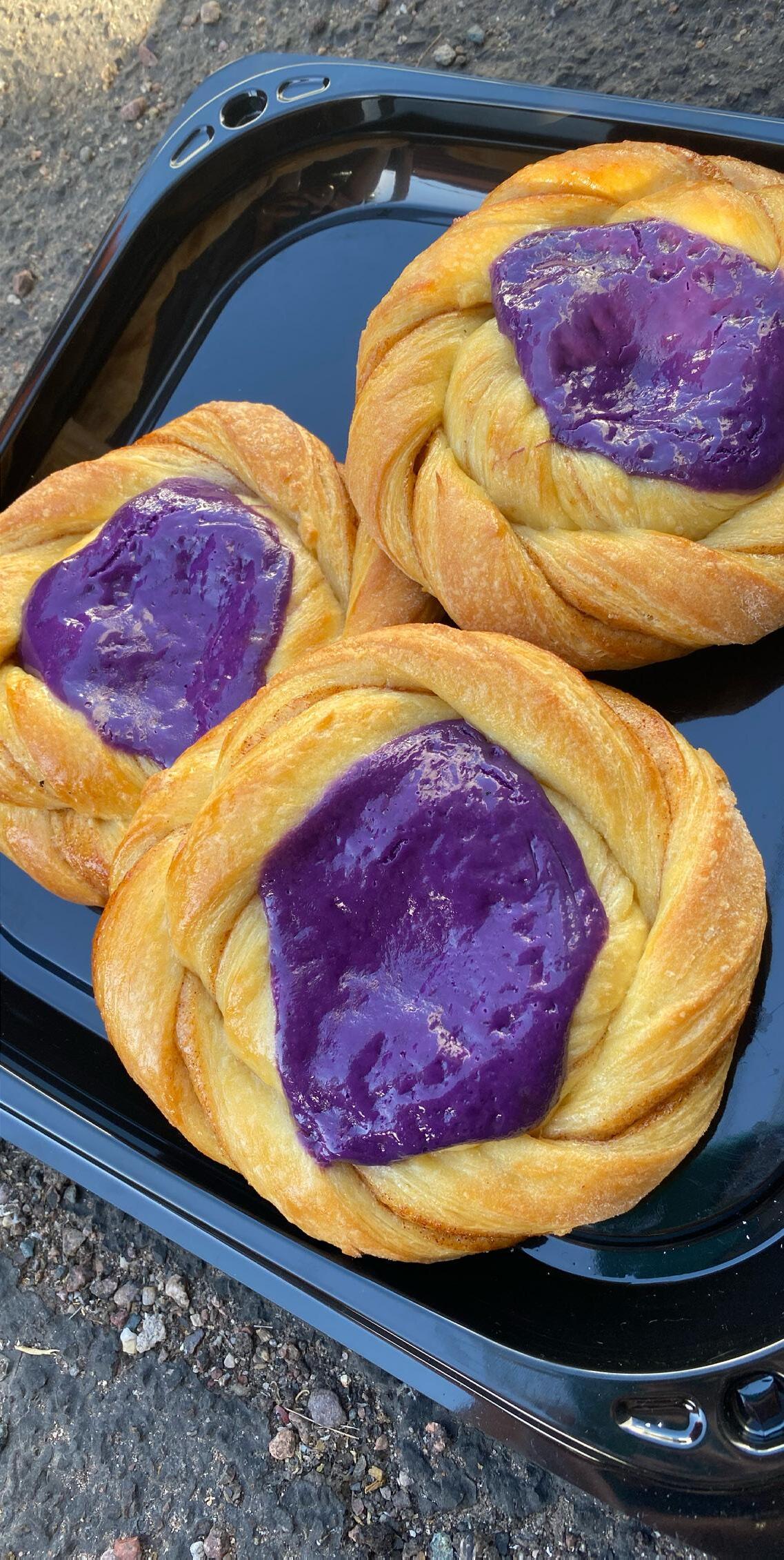



















































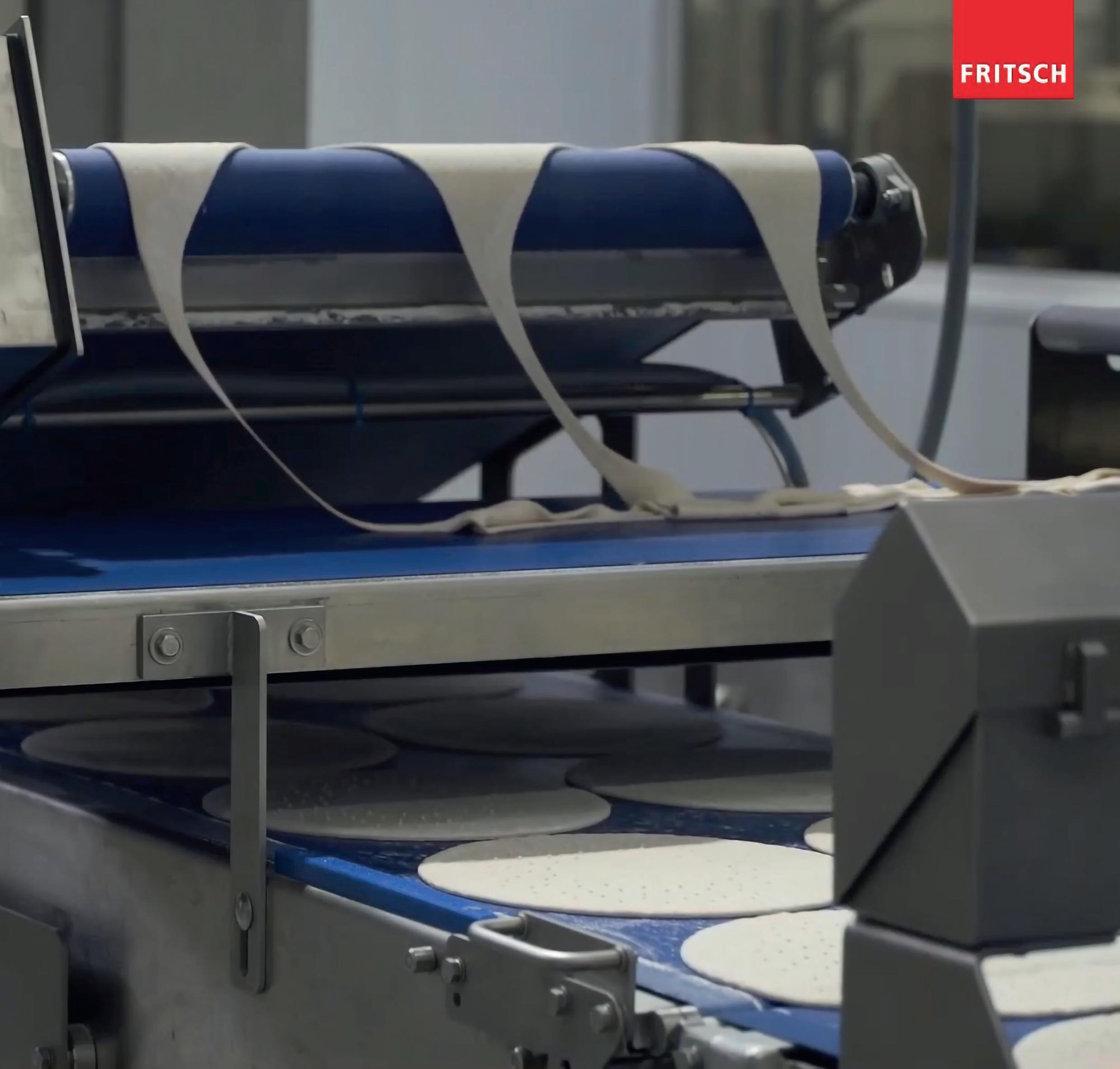
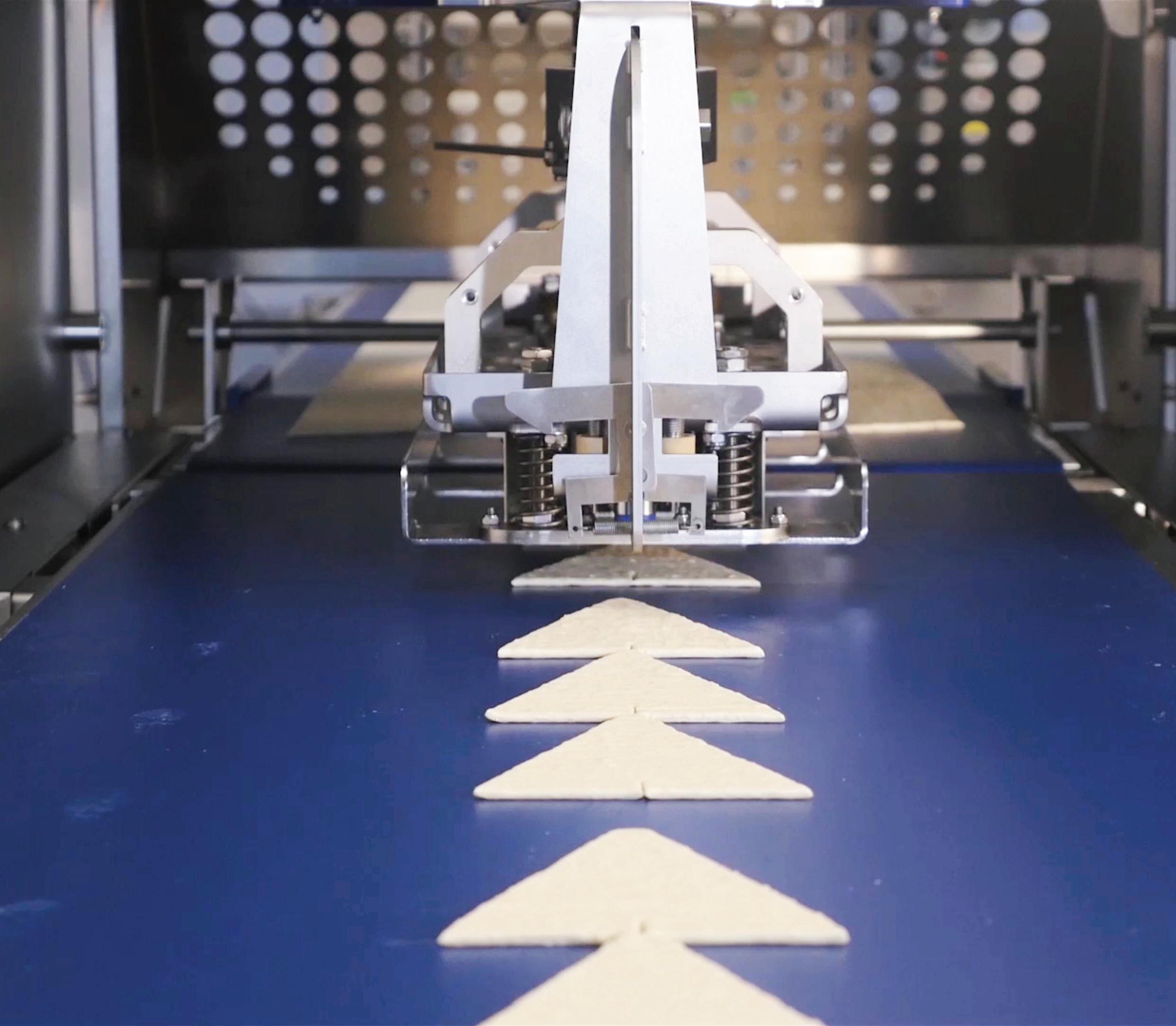


SuperPretzel, a J&J Snack Foods brand, is well known in the freezer aisle. The brand recently introduced a fresh twist to its product line: Protein Soft Pretzels and Mini Soft Protein Pretzels.
According to J&J Snack Foods, 60% of frozen snack consumers now prioritize protein in their purchase decisions. The two new Bavarian-style SKUs are designed to meet that consumer demand, with each serving delivering 7 to 10 grams. Both varieties are easy to prepare in the microwave, oven or air fryer and are positioned for convenient, modern snacking. Made with whole grains and plant-based protein, they’re also vegan, low-fat and dairy-free.
“Protein has become part of everyday eating for many families,” said Lynwood Mallard, chief marketing officer at J&J Snack Foods. “We wanted to add the benefit of protein to a pretzel that people already know and love, without changing what makes it a SuperPretzel.”
The Mini Soft Protein Pretzels are available in a resealable, 10.5-ounce stand-up bag, while the larger size comes in a 4-count box. The SRP ranges between $4.29 and $5.99, depending on the variety.
SuperPretzel’s new products are among the first protein-forward soft pretzels in the freezer section. The launch also broadens the brand’s market presence in the functional food space, where there is growing demand for better-for-you snacks that merge convenience and nutrition. www.superpretzel.com
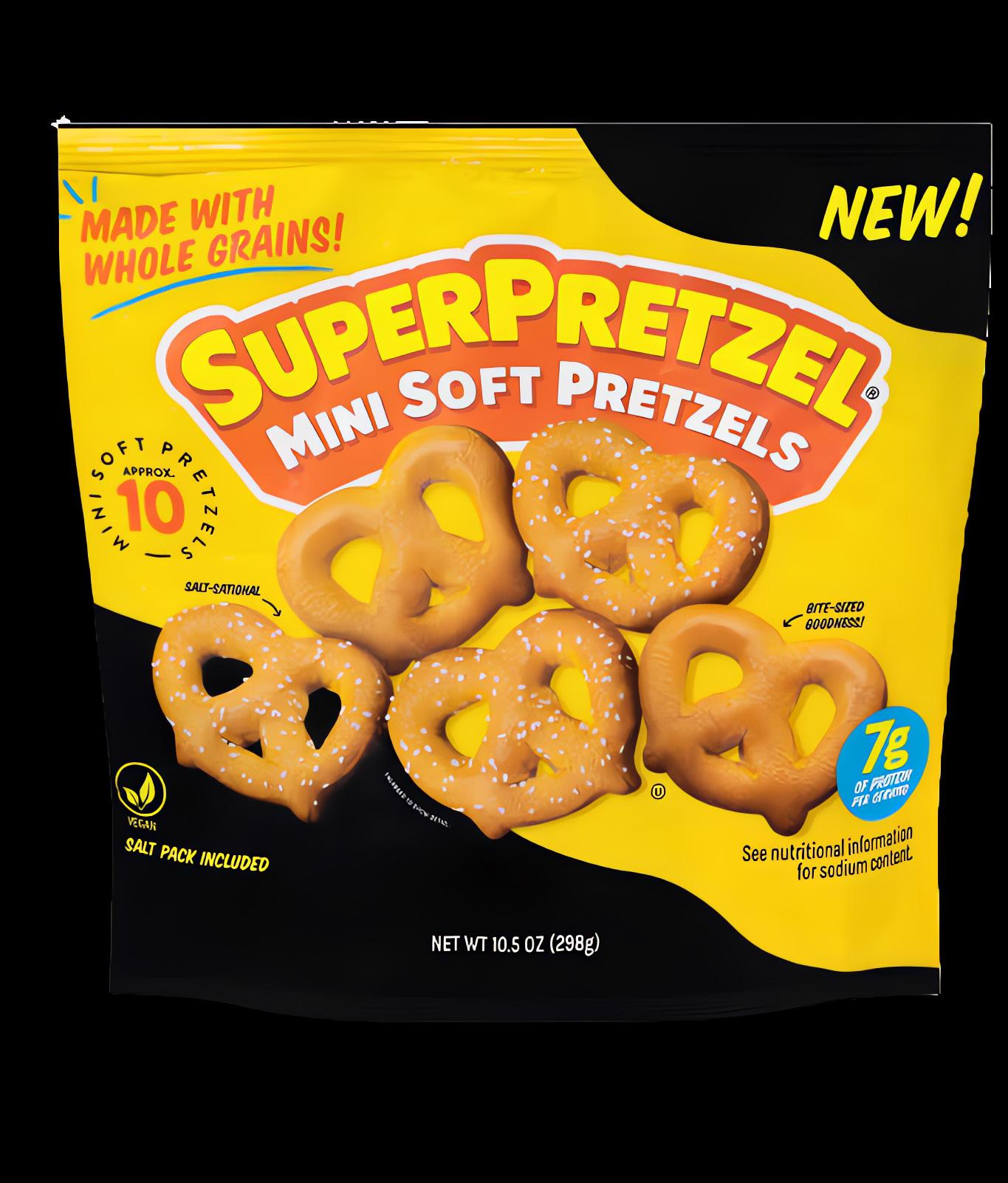
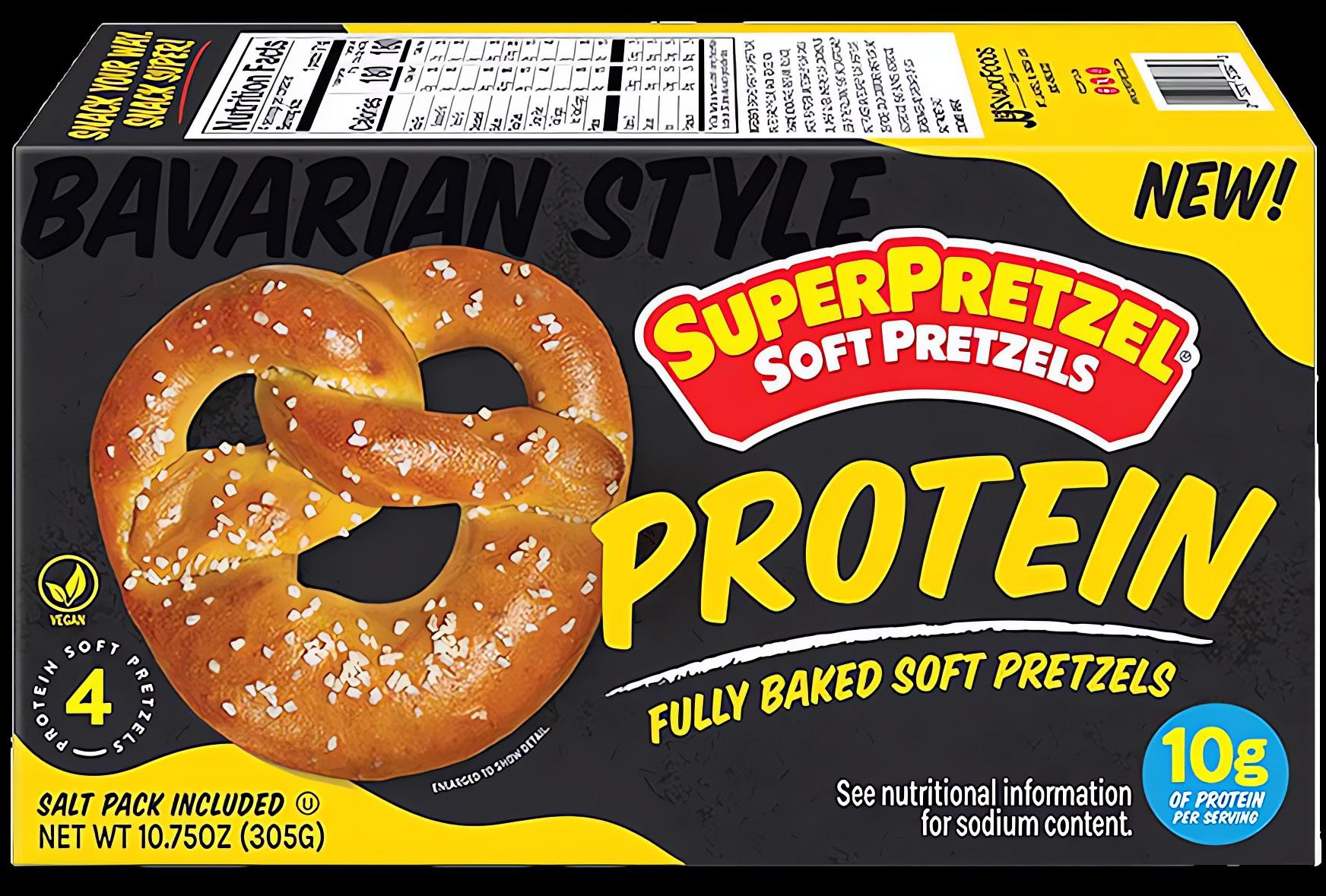
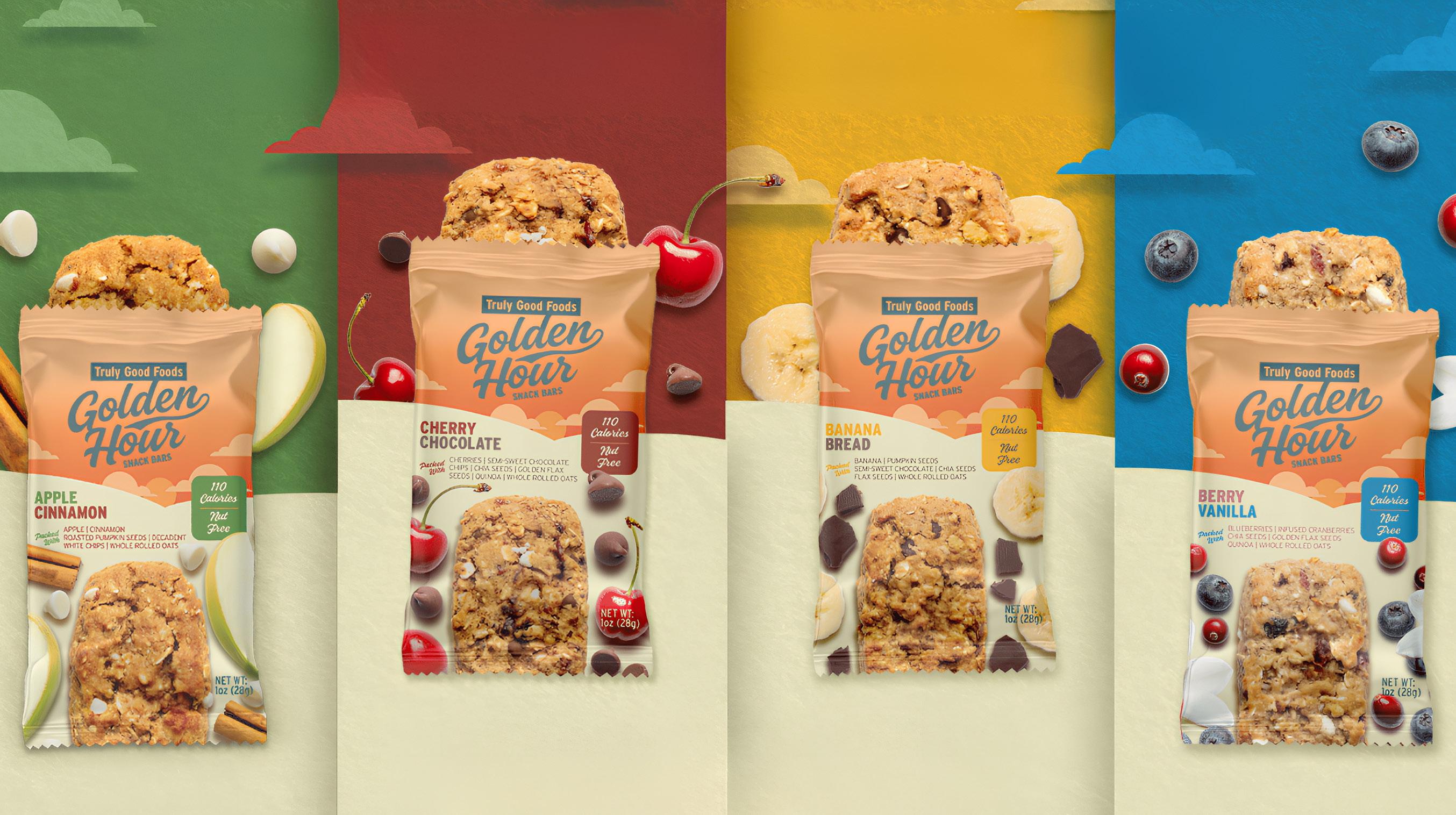
Truly Good Foods, a women-owned and family-operated company that has upheld its reputation as a quality snacks producer for 40 years, has been strategically expanding its portfolio with better-for-you packaged snacks. This includes its latest launch: Golden Hour Snack Bars.
The line of allergen-conscious, 1-ounce bars debuted in four flavors: Berry Vanilla, Banana Bread, Cherry Chocolate and Apple Cinnamon. All flavors are peanut-, tree nut-, dairy- and soy-free, and contain 110 calories per bar. Each bar is crafted with a granola blend of whole rolled oats, buckwheat, golden flax seeds, chia seeds and quinoa.
“Golden Hour is about creating a snack moment people can feel good about,” said Lisa Smith, VP of sales and marketing. “It’s a reminder to slow down, find the joy in everyday moments, and make every hour your ‘Golden Hour.’”
Over the past few years, Truly Good Foods has accelerated its branded growth strategy, strengthening its position as a partner across foodservice, retail and B2B channels through innovative product development that matches speed with consumer preferences. Rising awareness of health and fitness among consumers has led to a greater preference for nutrient-dense snack options.
Growing at a CAGR of 7.0% from 2025 to 2030, according to data from Grand View Research, the snack bar category is on the come-up in the eyes of consumers. The Golden Hour launch meets the demand not only for allergen-friendly, betterfor-you snacks with functional ingredients but also for convenient formats and classic flavors.
Truly Good Food’s Golden Hour snack bars are available online in a 48-count bulk box for $60. www.trulygoodfoods.com
Wonder, the century-old Flowers Foods brand known for its array of bread and bun products, innovated beyond the traditional category with the debut of a fresh lineup of baked goods spanning several markets. Among the revamped product line lies the brand’s new Wonder English Muffins, designed to become a staple in all dayparts.
Available in Classic and Sourdough, Wonder English Muffins feature 130 and 140 calories per muffin, respectively. The partially sliced product offers a convenient way for consumers to add toppings. Both varieties are also made with no high fructose corn syrup.
“Consumers already trust Wonder for dependable staples,” said Ashley Hornsby, senior director of brand management at Wonder. “Now, they can reach for us throughout the day with new flavors, new formats and the same quality they’ve loved for generations.”
With the Sourdough variety specifically, Wonder is appealing to the rise in demand for gut-healthy bread options. According to Tastewise, social conversations about sourdough bread have increased by 31% year-over-year, proving the trend’s staying power. Blending the bakery brand’s signature nostalgic feel with sourdough’s modern momentum, the baked good provides consumers with more
ways to enjoy bread products at any time of day.
Alongside the muffin launch, Wonder also reframed its portfolio with a new line of bagels and five sweet SKUs, including cakes, donuts and pastries.
“Breakfast and snacking are important eating occasions for today’s consumers, and Wonder is perfectly positioned to bring something special to both,” Hornsby said.
Both varieties of Wonder English Muffins can be purchased at retailers nationwide in a 6-count, 12-ounce bag for an SRP of $3.29. www.wonderbread.com

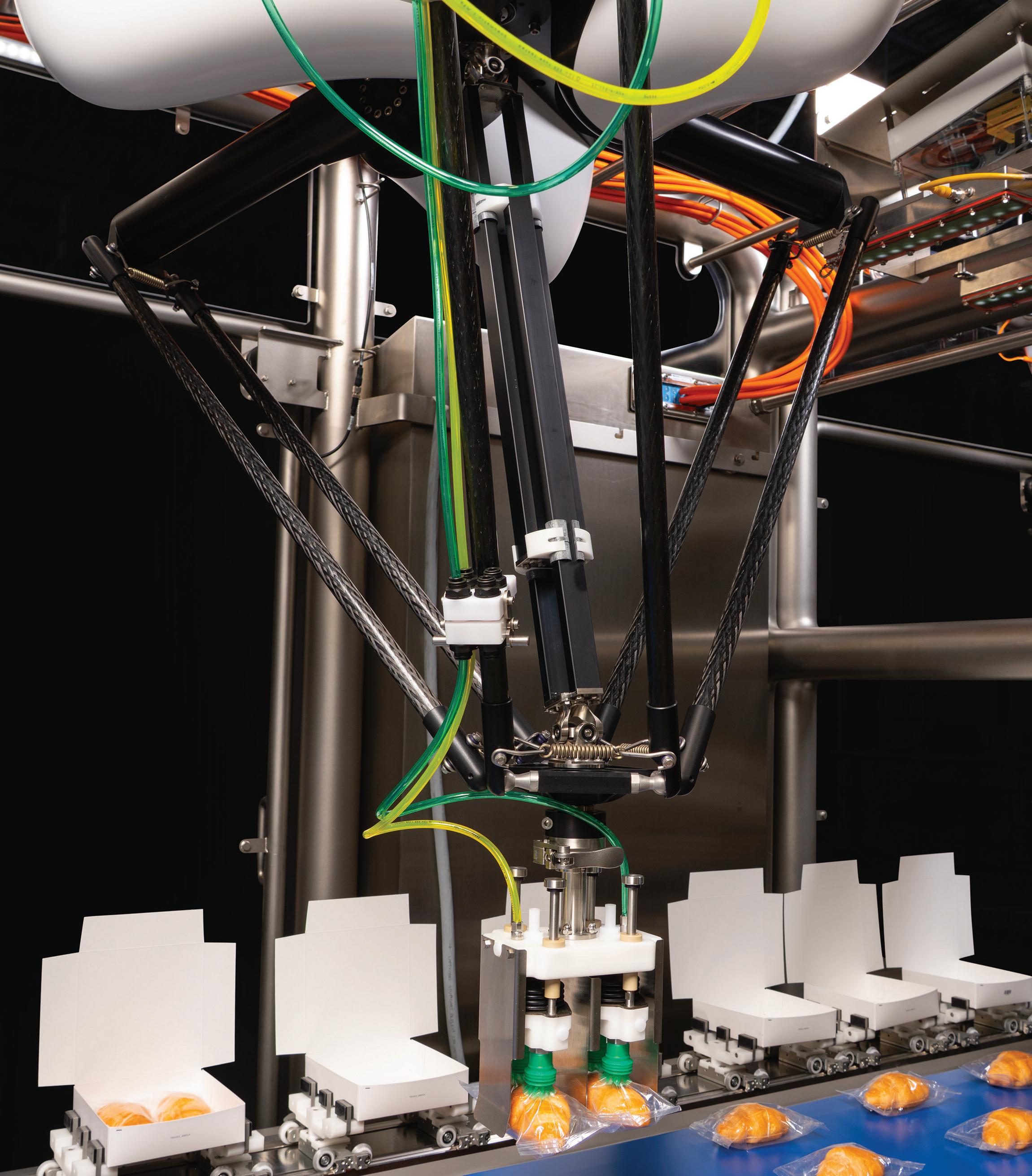
INTEGRATED, MONOBLOCK ROBOTIC CARTONER IN THE INDUSTRY’S SMALLEST FOOTPRINT



While many new products land on store shelves for good, some only make an appearance for a brief instance. From stand-out flavors to pop culture-inspired treats, here are some limited-time offers that earned MVP status this year.
3
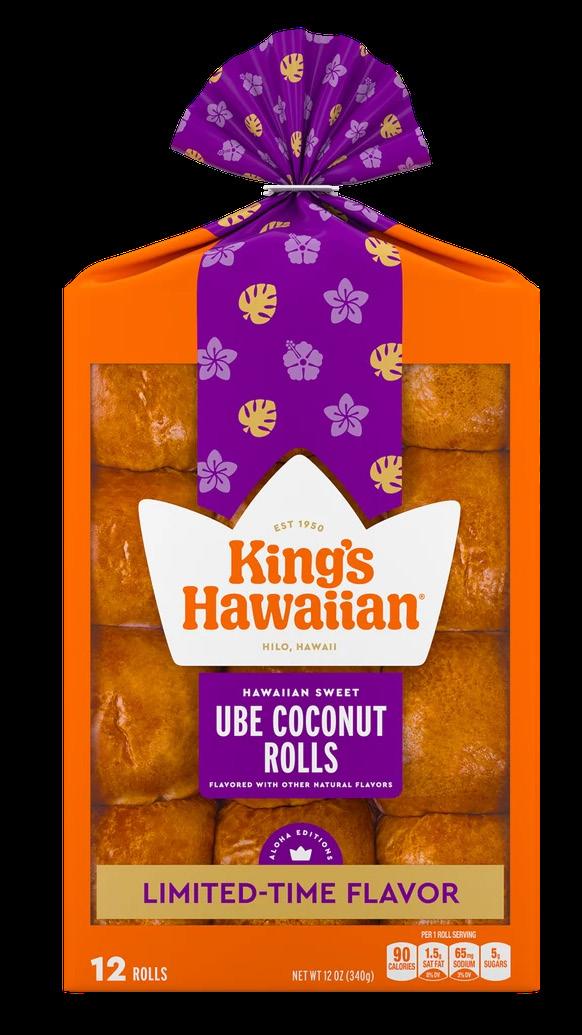


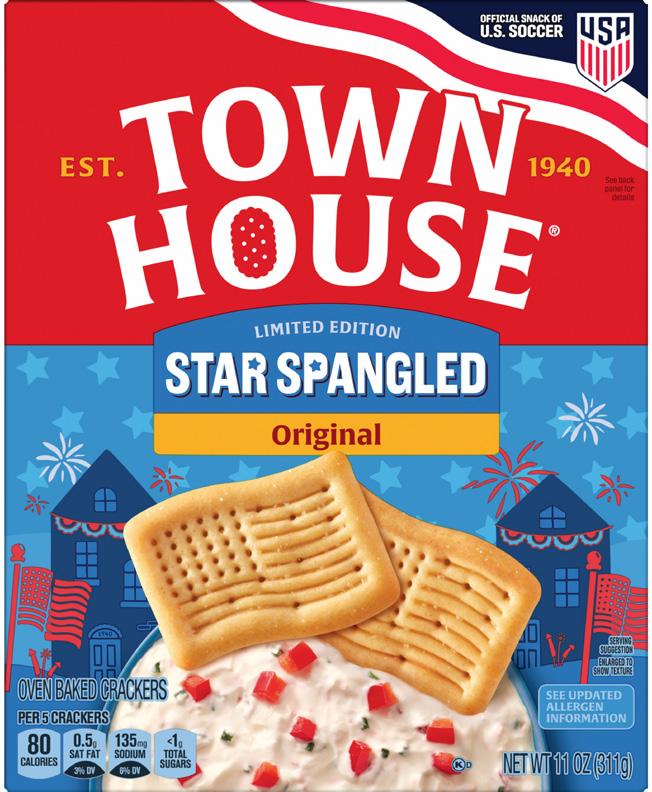
Available April –June 2026 1 2 3 4 1
Available spring 2026, while supplies last
2
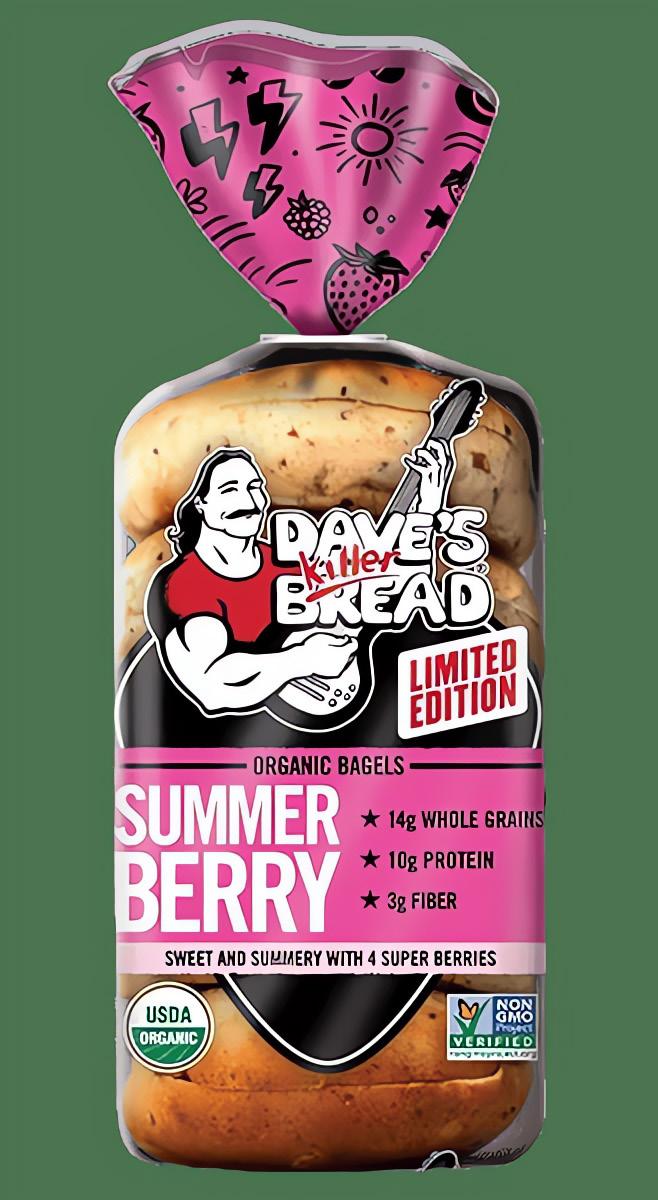
4
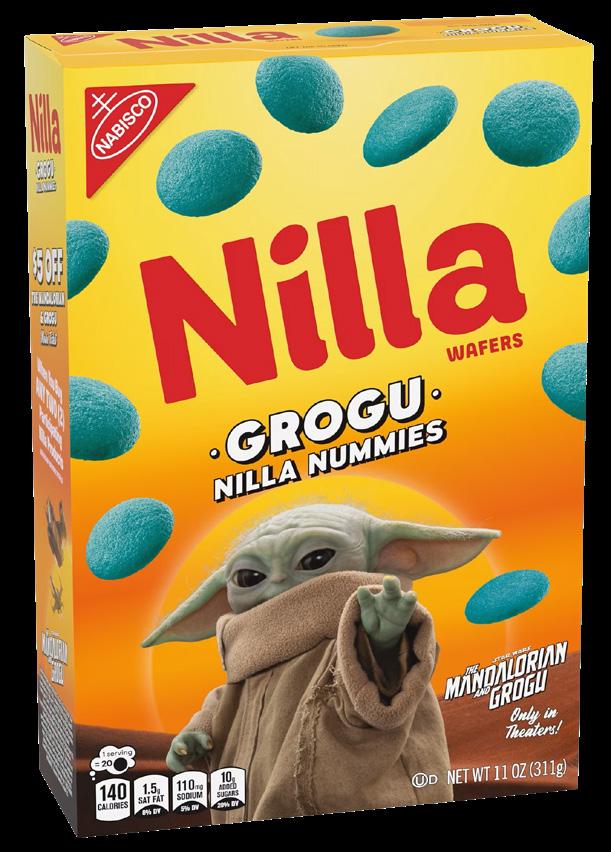
Available May –July 2026
Available May –July 2026

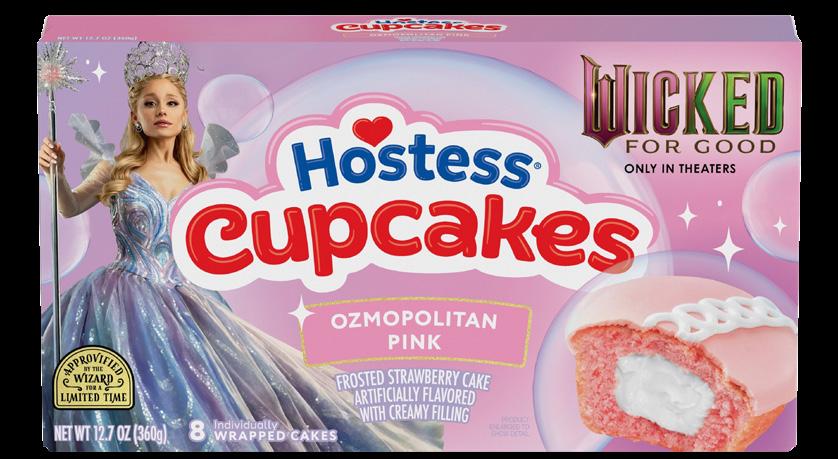

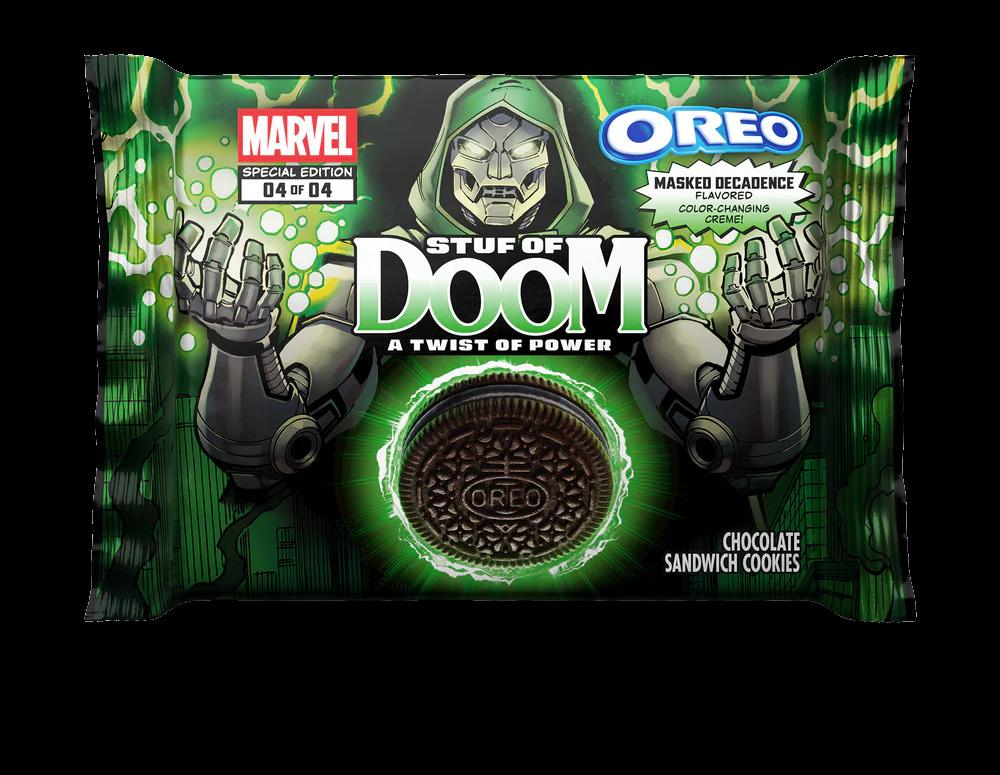

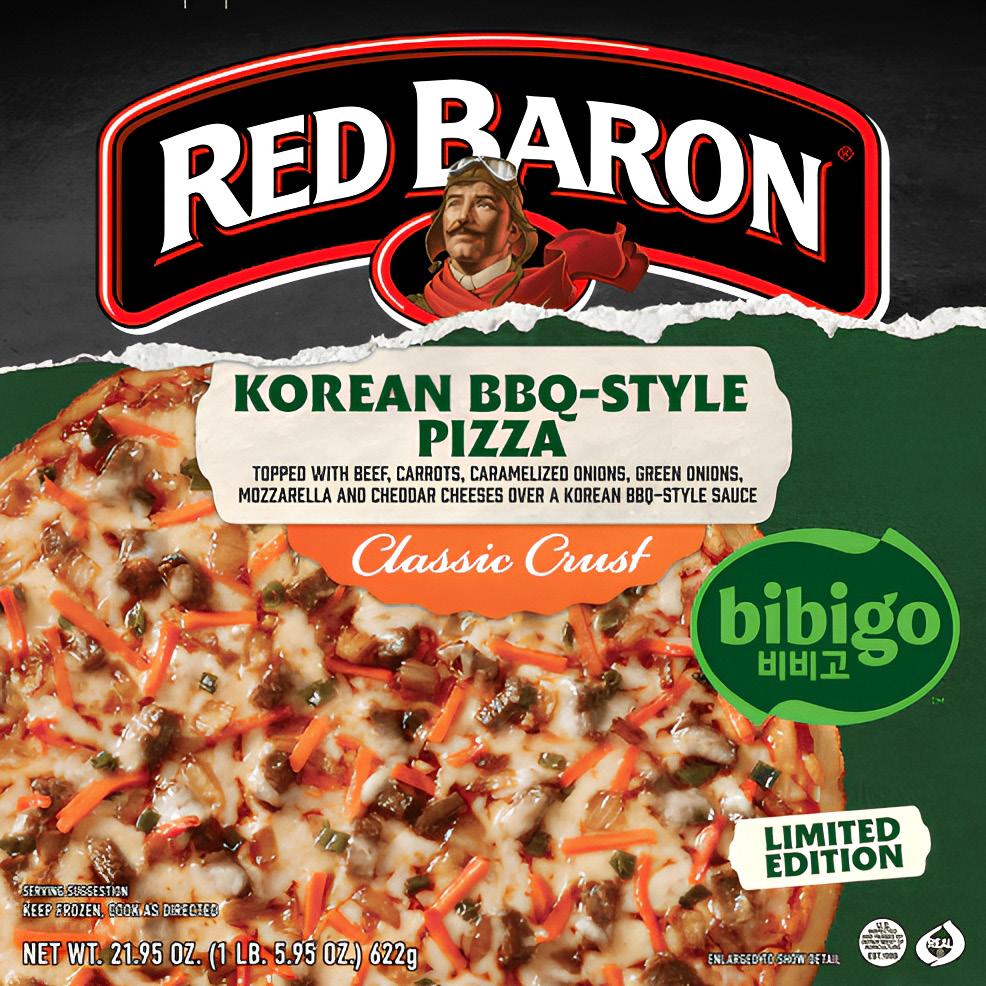

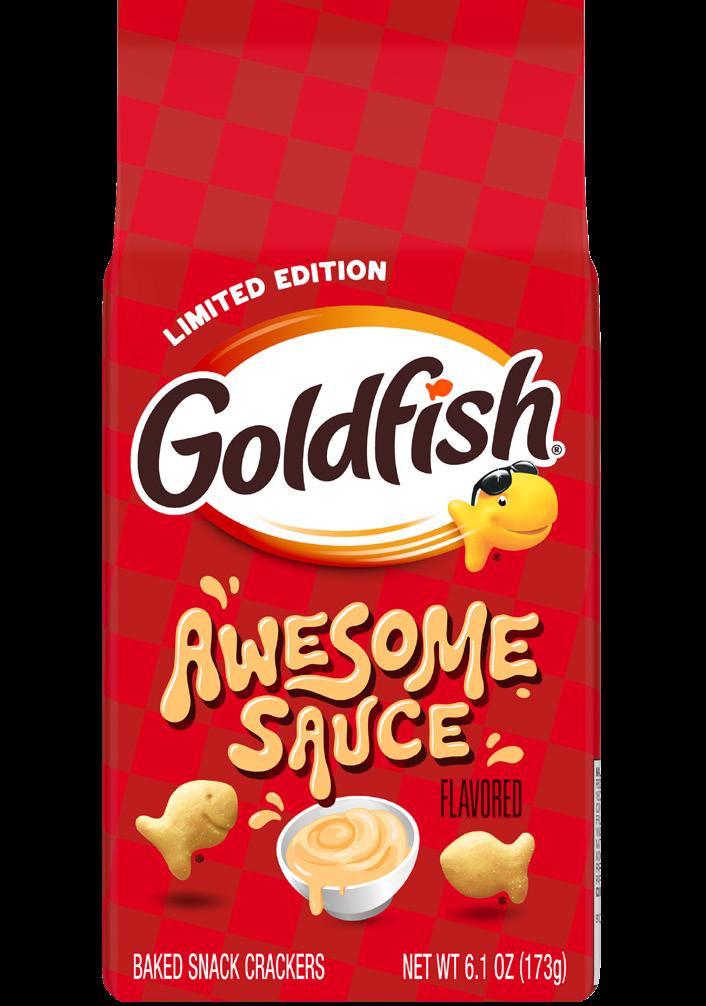
Available March –July 2026 5 6 7 8 9 5 6 7

Our multimedia collection is full of videos, podcast episodes and more, where you can get a deep look — and listen — into the exciting shifts happening in the baking industry.



TechTalk with Bundy Baking Solutions | Pan Release Solutions by Synova

Scott Bieker, EVP of sales, North America and president of PanGlo, gives an overview of the full range of Synova pan release solutions. www.bundybakingsolutions.com
TechTalk with Lallemand Baking | Enzyme Solutions for Modern Baking

Jonathan Khouzam, product application specialist, and Siva Pattathil, director of baking applications, R&D, illustrate how enzyme solutions help bakers with formulation challenges. www.lallemandbaking.com
TechTalk with AMF Bakery Systems | Aftermarket Customer Care

Shari Litow, director of customer care, for the Americas, discusses how aftermarket support tools, such as a parts identifier portal, can help extend the life of bakery equipment. www.amfbakery.com
As more states introduce Extended Producer Responsibility (EPR) programs, bakeries are facing new obstacles tied directly to the packaging they place in the market.
EPR is moving from a watch list topic to an operational reality. While it is still relatively new in the US, Canada and Europe have used similar frameworks for years. Those markets have shown that the biggest challenges often lie in data management, reporting accuracy and upstream packaging design decisions.
The immediate concern is administrative: identifying which packaging components are in scope, gathering accurate placedon-market data, and coordinating internally across procurement, operations, finance and sustainability teams. Simplifying packaging structures, reducing unnecessary material, and standardizing formats can significantly ease reporting burdens while helping manage long-term cost exposure.
Because EPR obligations are closely tied to the amount and type of packaging introduced to the market, rightsizing and downgauging remain some
of the most effective levers available. Modern extrusion and resin technologies allow bakeries to reduce material usage while maintaining machinability and performance. Downgauging delivers multiple benefits at once: lower material consumption, reduced waste and a smaller footprint to manage under EPR programs.
Beyond weight alone, EPR frameworks are evolving to encourage better packaging design. While program details vary by jurisdiction, the direction is consistent: Packaging designed with recovery in mind is better positioned for the future.
For bakeries, this reinforces the value of simpler, mono-material structures that align with established recycling pathways and avoid unnecessary complexity. Materials that are easier to recycle often carry lower fees.
EPR compliance depends on accurate data, and many companies discover that packaging information is fragmented across SKUs, suppliers and legacy specifications. Working with a packaging partner that understands both materials science and regulatory expectations can help streamline documentation, reduce SKU complexity and support more efficient internal reporting processes.
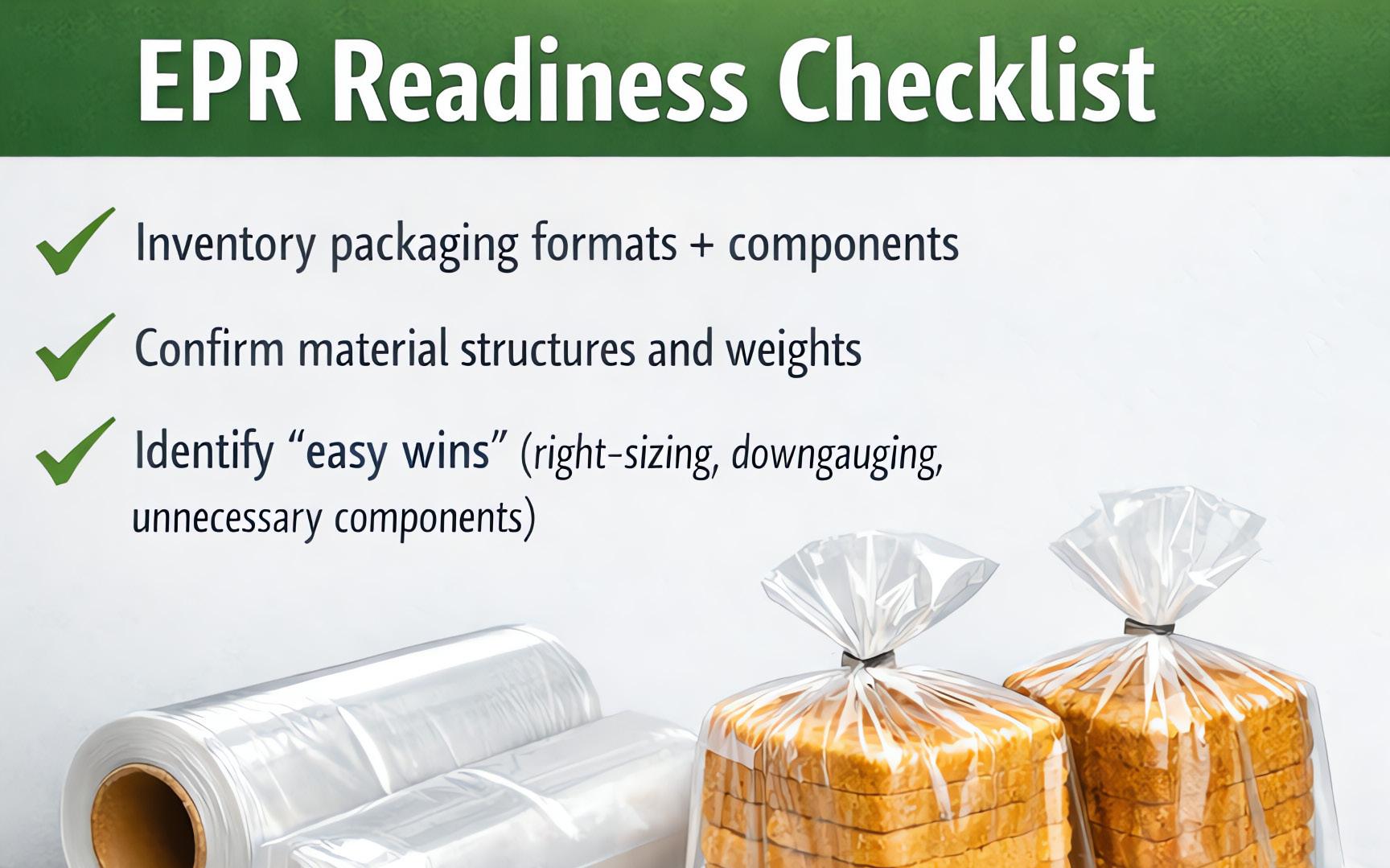






Bill Humphrys, senior technical support specialist, and Grant Olmes, strategic account manager, share the benefits of automated batching systems for operations of all scales. www.kubota-bt.com

Joanie Spencer, editor-in-chief of Commercial Baking , walks the show floor and shares her biggest takeaways from interpack 2026.
Catching Up with Commercial Baking : Brian LeComte at ABA Convention 2026

Brian LeComte, president of Gold Medal Bakery, discusses industry challenges and what he’s most looking forward to as the 2026-28 American Bakers Association’s board chair.
Catching Up with Commercial Baking : NextGenBaker at ABA Convention 2026

Jill Stang, VP of sales at Lesaffre, and Josh Bickford, president of Clyde’s Donuts, talk about what they are excited about achieving as the new co-chairs of the American Bakers Association NextGenBaker.
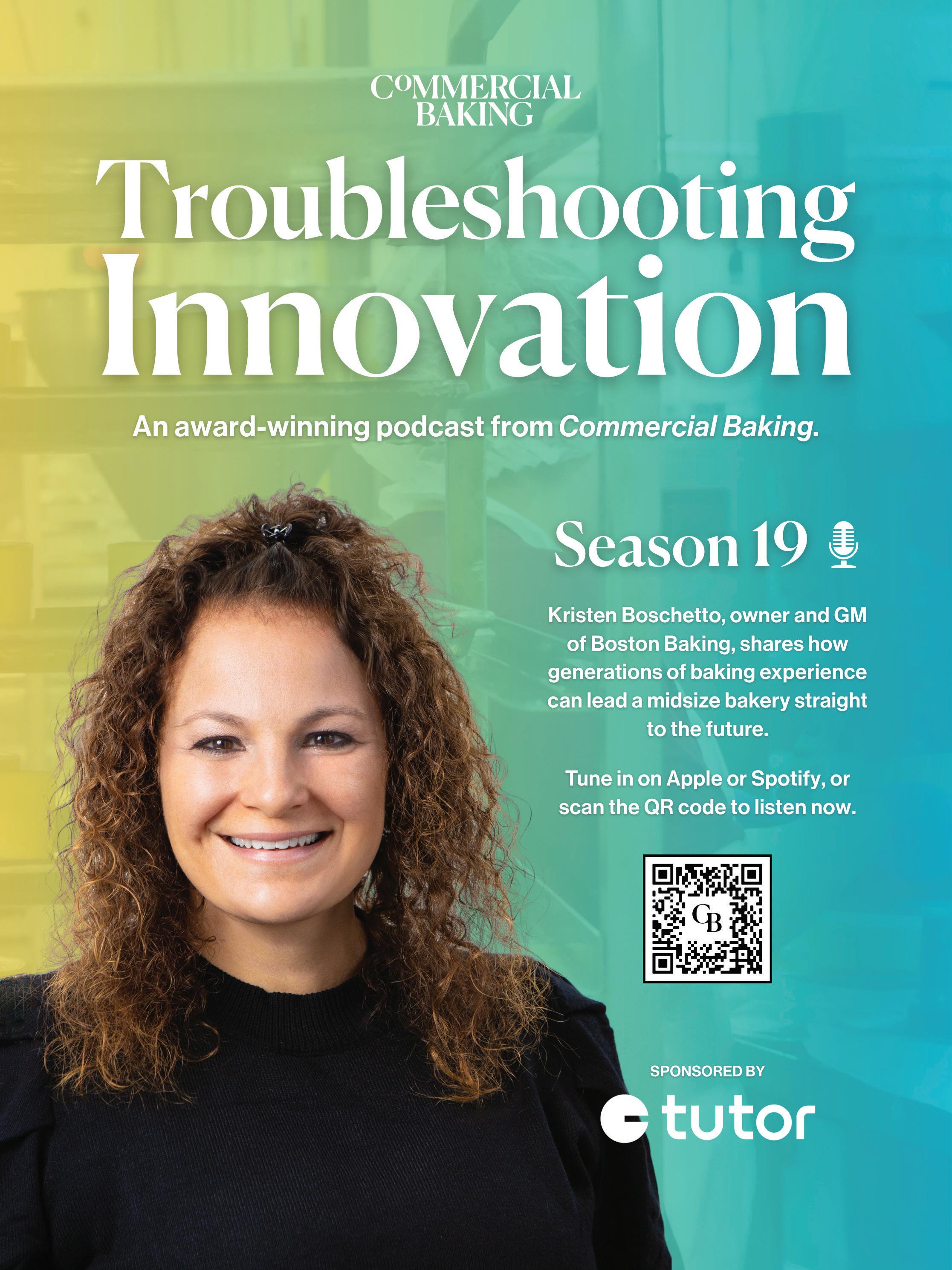
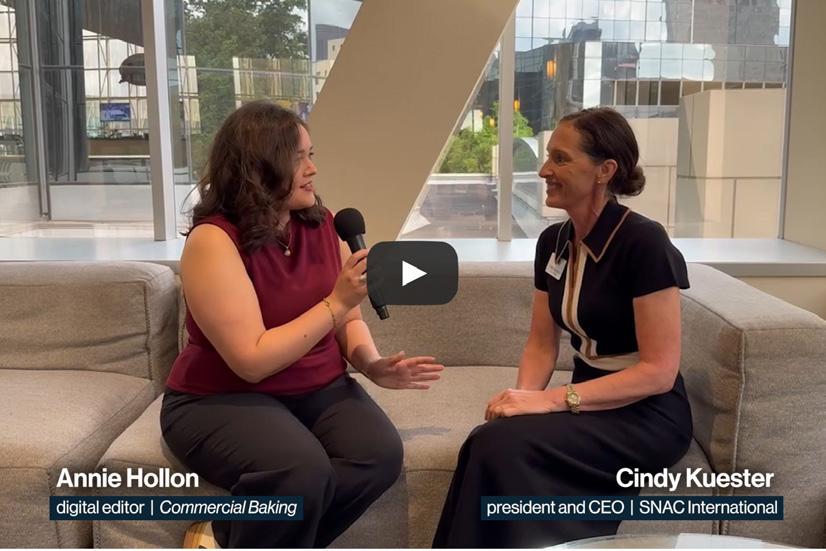



Cindy Kuester, president and CEO of SNAC International, discusses the significance of the event and what she hopes to accomplish with the organization.

Buddy Valastro, also known as the Cake Boss, shares the importance of maintaining product quality across operations at the grand opening of Unifiller’s Richmond, British Columbia, facility.

Matt Bowers, senior director of R&D at New Horizons Baking Co., chats about his proudest takeaways and key learnings from his time as the American Society of Baking’s 2025-26 board chair.

Get a behind the scenes look at healthy snacks co-manufacturer Fresca Foods and see how its two facilities support some of the largest CPG brands. Sponsored by Gemini Bakery Equipment.

Get a look inside Lone Star Bakery, a frozen baked goods manufacturer investing in automation and R&D to support its business diversification strategy.
From Puratos: Win the Bakery Innovation Race. Launch With Confidence

From concept to commercialization, Puratos supports bakers every step of the way by bringing consumer-validated, line-tested ideas to market faster. Sponsored by Puratos. www.puratos.us
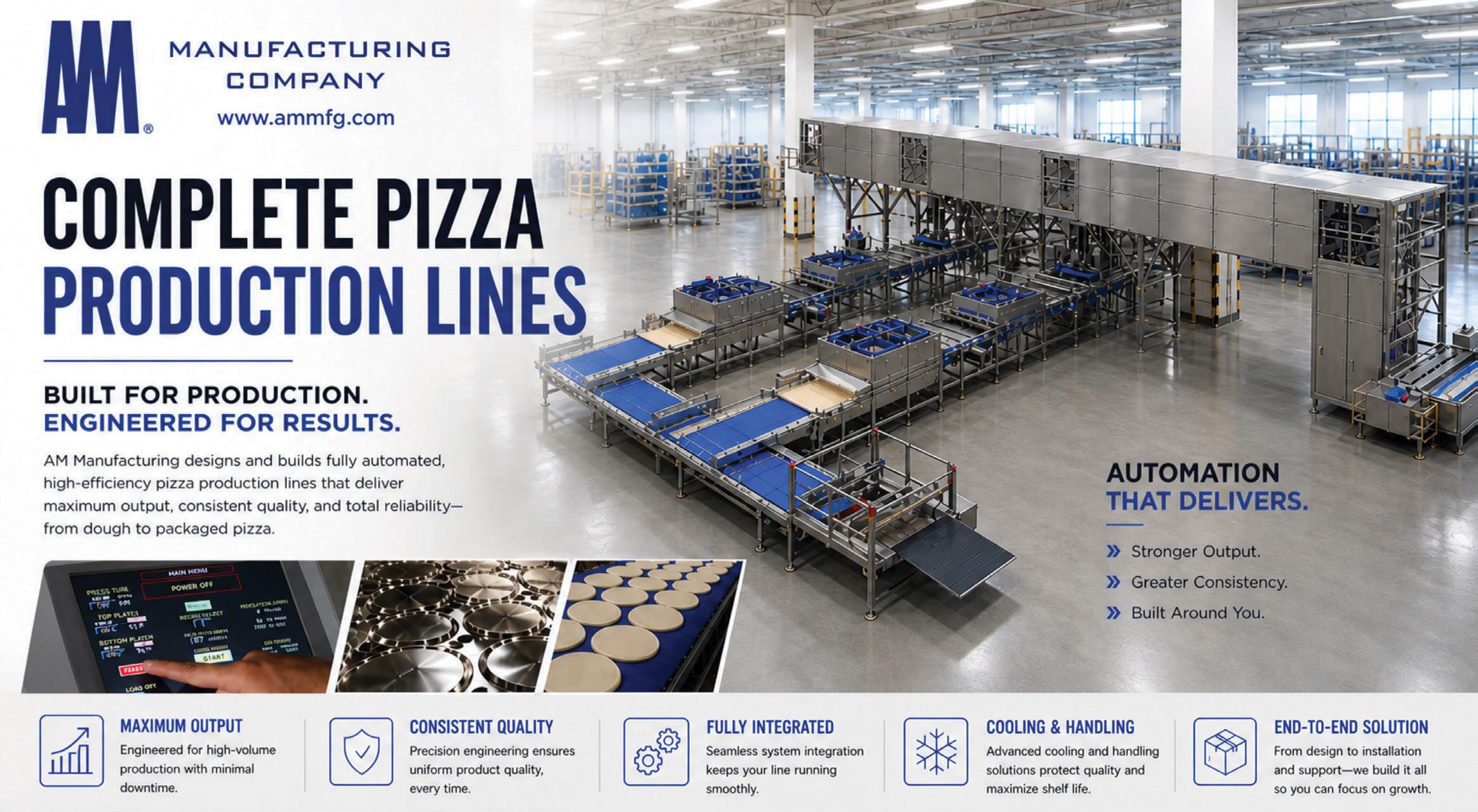

following advertisers appear in this issue. We encourage readers to reach out to these companies through the listed website or email for further information. This index is provided as a service to readers and advertisers, but Commercial Baking does not assume any liability for errors or omissions. Please send any updates or corrections to info@commercialbaking.com
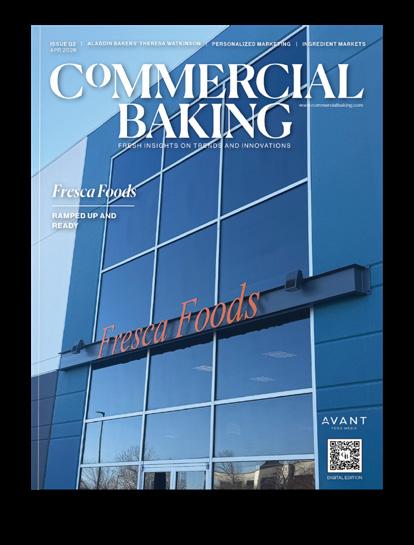
www.commercialbaking.com/subscription
www.amfbakery.com sales@amfbakery.com
www.apexmotion.com info@apexmotion.com
foodus@corbion.com

Harpak-Ulma
www.harpak-ulma.com info@harpak-ulma.com
Henry & Sons
www.dhenryandsons.com info@dhenryandsons.com
Intralox
www.intralox.com customerservice.bakery@intralox.com
J&K Ingredients
www.jkingredients.com sales@jkingredients.net
www.jlsautomation.com sales@jlsautomation.com
Kubota Brabender Technologie 83 www.kubota-bt.com/ca golmes@kubota-btca.com
Lallemand Baking 38-39 www.lallemandbaking.com baking@lallemand.com
Lesaffre 75 www.lesaffrebaking.com b.hanes@lesaffre.com
Manildra Group USA
www.manildrausa.com info@manildrausa.com
Middleby Bakery Group
www.middprocessing.com marketing@middlebybakery.com
www.moline.com sales@moline.com
Multivac/Fritsch
www.fritsch-group.com cecily.pickering@multivac.com
www.oakes.com info@oakes.com
Bakery Systems
www.readingbakery.com info@readingbakery.com
Reiser
www.reiser.com sales@reiser.com
www.repcoworld.com/bakery info@repcoworld.com
Senius
www.senius-inc.com mail@senius-inc.com
Siemer Milling Co.
www.siemermilling.com jay.wallace@siemermilling.com
St. Johns Packaging
www.sjpack.com info@sjpack.com
Tutor Intelligence
www.tutorintelligence.com sales@tutorintelligence.com
www.commercialbaking.com/adv ertise

paul@avantfoodmedia.com 816.585.5030

816.605.5037


Humans are about to have a moment.
For the last decade, we have been quietly drifting apart. Technology promised connection and delivered convenience. Social media gave us reach and sorted us into silos based on scroll speed and clicks. And now, AI is accelerating dysfunction and automating the friction out of our daily lives, including the productive kind that used to pull us into contact with other people.
AI is changing not just how we interact, but why we interact. In a world where algorithms know our preferences, chatbots mirror our emotions and virtual assistants anticipate our needs, there is a growing premium on human attention, showing up and being present, and feeling connected to something larger.
For food brands, this is an opportunity hiding in plain sight.
Food is the original communal object. Since the start of humanity, it has been shared, passed and placed at the center of the gathering. Food is present in moments of celebration, grief and everything in between. No other object carries that kind of cultural weight so consistently.
As we think about marketing in the autonomous age, the industry has an opportunity to lean into our humanity and create conditions for community. There is measurable value in the impressions and placements, but it’s the shared identity that produces belonging and loyalty. Looking outside the food industry, Harley-Davidson, REI and Mini Cooper have
done two things exceptionally well: They know exactly who they are, and they serve the people who love them without apology or dilution.
Our industry has the same opportunity and, arguably, more inherent potential. The product gives consumers a reason to show up. The human connection, the ritual, the memory, the moment of warmth ... that gives them a reason to stay.
The question for every brand leader in this industry is the same: What is your brand’s reason to show up? What is your consumer’s reason to engage? And how do you bring those together in the real world in a way that creates a lasting connection?
The brands that answer these questions clearly will be the ones that hang in for the long term.
Speaking literally, the table is not a metaphor, but rather the strategy. CB
Laura Davis Gross is a brand and marketing executive specializing in emerging consumer brands. She currently serves on the leadership team at Partake, a natural food company, where she has spent nearly eight years building and scaling the company’s brand presence. Gross is also the co-founder of Family Meal, a marketing and creative cooperative that helps emerging brands find their voice, build an audience and grow their business. Previously, she held senior marketing leadership roles at Wanderlust, Coach and Peanuts Worldwide, spanning brand management, digital marketing and business development.
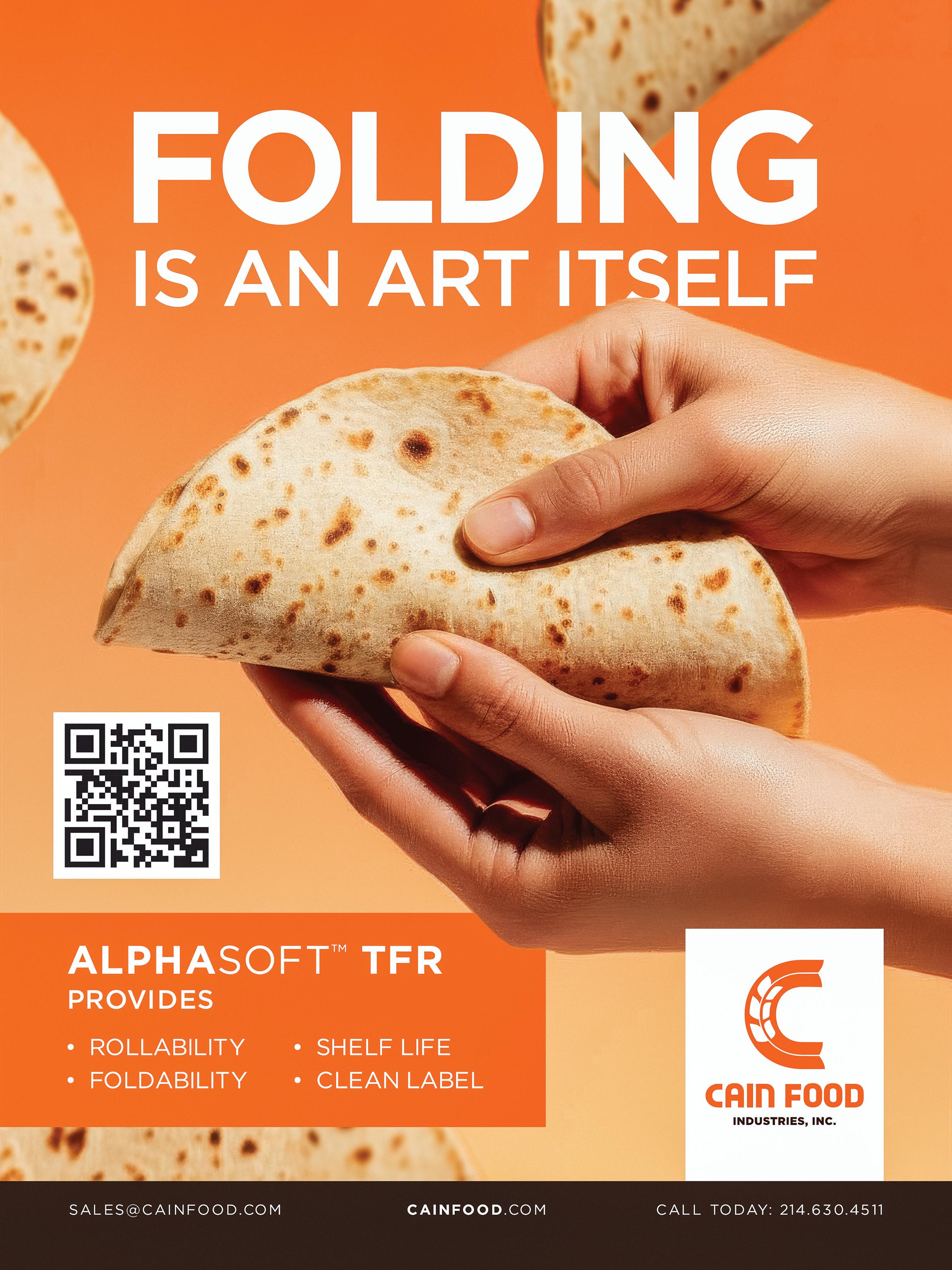
Preservation solutions that protect shelf life, quality, and production performance.
Ingredient changes create pressure to move quickly without compromising product quality or line performance. Corbion’s cultured wheat mold inhibitors and acidification solutions help you maintain consistency as you reformulate. Keep formulations on track with solutions designed to ensure consistent shelf life and reliable performance across real-world production environments.


Explore Solutions