Industry warns of ‘false positives’ but agency claims shift reflects proper monitoring of compliance issues
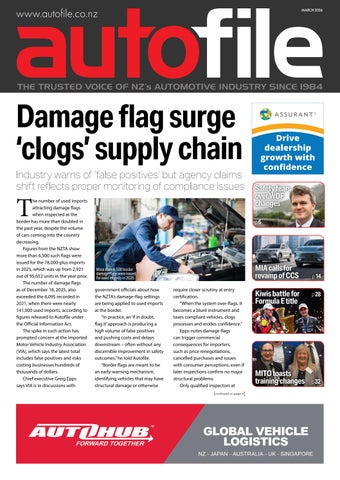
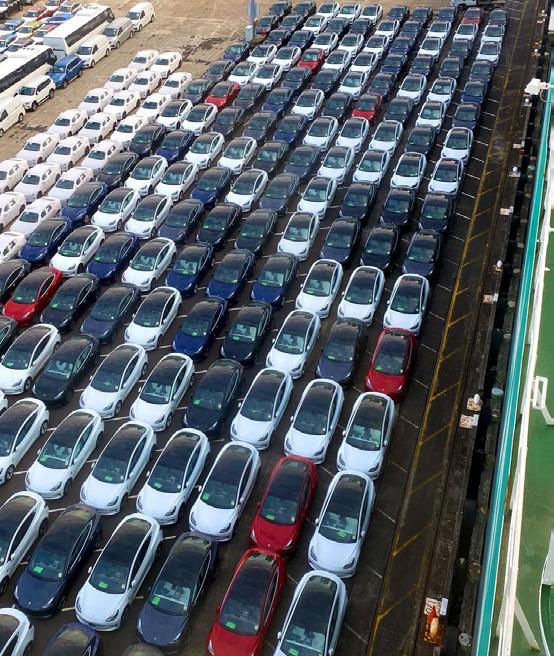
The number of used imports attracting damage flags when inspected at the border has more than doubled in the past year, despite the volume of cars coming into the country decreasing.
Figures from the NZTA show more than 6,500 such flags were issued for the 78,000-plus imports in 2025, which was up from 2,921 out of 95,652 units in the year prior.
The number of damage flags as of December 18, 2025, also exceeded the 6,095 recorded in 2021, when there were nearly 141,000 used imports, according to figures released to Autofile under the Official Information Act.
The spike in such action has prompted concern at the Imported Motor Vehicle Industry Association (VIA), which says the latest total includes false positives and risks costing businesses hundreds of thousands of dollars.
Chief executive Greig Epps says VIA is in discussions with
government officials about how the NZTA’s damage-flag settings are being applied to used imports at the border.
“In practice, an ‘if in doubt, flag it’ approach is producing a high volume of false positives and pushing costs and delays downstream – often without any discernible improvement in safety outcomes,” he told Autofile.
“Border flags are meant to be an early-warning mechanism, identifying vehicles that may have structural damage or otherwise
require closer scrutiny at entry certification.
“When the system over-flags, it becomes a blunt instrument and taxes compliant vehicles, clogs processes and erodes confidence.”
Epps notes damage flags can trigger commercial consequences for importers, such as price renegotiations, cancelled purchases and issues with consumer perceptions, even if later inspections confirm no major structural problems.
Only qualified inspectors at
[continued on page 4]
More than 6,500 border damage flags were issued for used imports in 2025
LOAD IT SHIP IT TRACK IT CLEAR IT DELIVER IT !
BIGGER IS BETTER
move to new, much larger premises means we are to offer even more services to our dealer clients
to door ro-ro vehicle shipping from Japan and Australia
Containerised vehicle shipping from anywhere in the world
Vehicle tracking
VEHICLE SHIPPING
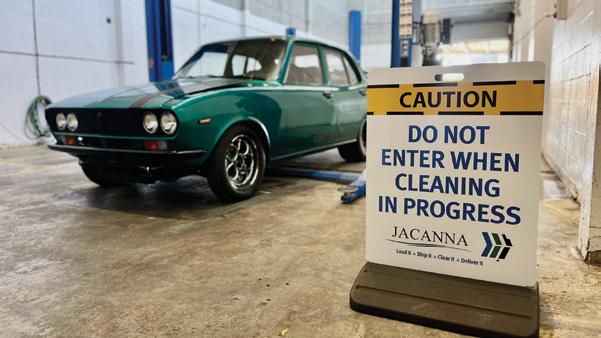
Approved MPI transitional facilities and cleaning services
GENERAL FREIGHT
VEHICLE TRACKING
SHIPPING SCHEDULE
We are specialists in transporting and exporting all types of Vehicles, Commercial trucks, vehicles of Special Interest and other RORO Heavy Cargo & Machinery.
it all off is Jacanna’s SmartTrade Rewards Programme, you can earn points for almost any reward you choose
We have developed a worldwide network of Agents who understand the commitment required to service our demanding market.
www.jacanna.co.nz
Tel: +64 9 825 0888
Finding out where your vehicle is at any one time of the process, gives you the ability to manage the collection and processing of documents and payment on time.
TRS and shipping services from Japan to New Zealand. www.jacanna.co.nz
info@jacanna.co.nz
Tel: +64 9 825 0888
Steering the charge towards inclusion
Women need pathways to lead in industry and not just fit in, says Carolyn McMahon
As we step further into 2026, I’m reminded daily of how quickly our sector continues to evolve.
For example, January saw registrations climbing above the same period of last year, driven largely by strong growth in light passenger vehicles.
Driven, alongside an experienced board of independent directors.
I champion Women in Automotive NZ’s mission wholeheartedly. As one of the few female CEOs in this sector, I see every day how urgently this work is needed.
DIRECTORS
Darren Wiltshire dazzz@autofile.co.nz ph. 021 0284 7428
Brian McCutcheon brian@autofile.co.nz ph. 021 455 775
DESIGNER
Adrian Payne arpayne@gmail.com
Demand from rental and business channels remained robust even as private sales softened, signalling a market that’s stabilising rather than accelerating into a new growth cycle.
At the same time, electrified vehicles are reshaping the landscape with BEV registrations up nearly 29 per cent year-on-year and plug-in hybrids rising more than 54 per cent. Our industry’s resilience and adaptability are being tested in real-time.
Amid all the conversations about technology, infrastructure and regulation, one challenge stands out. We’re still not drawing from the full spectrum of talent available to us.
Women in Automotive NZ, founded in 2023, is a not-for-profit, sector-wide collective focused on increasing female participation and representation in senior leadership.
At launch, women made up just 17 per cent of the automotive workforce and only six per cent of apprenticeships, reflecting an industry unintentionally sidelining half its potential.
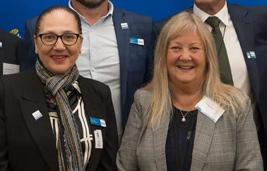
The organisation’s work is strengthened by partners including the Motor Industry Association, Motor Trade Association, Collision Repair Association, MITO and
Our industry is in a time of profound change. Skill shortages persist. EVs, digital diagnostics and advanced systems are redefining the capabilities required of today’s workforce. Customers’ expectations are rising sharply.
Yet we’re still not engaging women at the rate we must. Females represent half our consumers, but far fewer are shaping business decisions.
Attracting women is only the first step because retaining and advancing them is when real transformation occurs. That requires environments where under-represented groups can thrive through inclusive cultures, visible development pathways, supportive policies and workplaces where females can see themselves as not just fitting in, but leading.
This is why the Women in Automotive Accord is so important. It unites organisations behind seven clear principles and provides practical support to help signatories build action plans, learn from peers and implement meaningful, measurable change.
Many leading automotive businesses have committed. More need to. If you’re ready to help reshape our industry, reach out directly or email info@ womeninautomotive.nz.
EDITOR
Darren Risby ris@autofile.co.nz
JOURNALISTS
Matthew Lowe matthew@autofile.co.nz
Sue Brebner-Fox sue@autofile.co.nz
MOTORSPORT
Mark Baker veritas.nz@xtra.co.nz
Visit www.autofile.co.nz to subscribe to Autofile magazine and have it delivered monthly in print. The subscription rate is $78 plus GST for 12 issues per year.
Autofile magazine is also available online as a readable file or downloadable as a PDF.
Back copies dating to 2017 can be found on the website where you can subscribe to our Insight email alerts.
Copyright: Published monthly by 4Media Ltd
All statements made, although based on information believed to be accurate and reliable, cannot be guaranteed, and no liability can be accepted for any errors or omissions. Reproduction of Autofile in print or digital format in whole or part without written permission, whether by copying or any other means, is strictly forbidden.
All rights reserved. ISSN 0112-3475 (print) ISSN 2350-3181 (online)
CAROLYN McMAHON Managing director, Honda New Zealand
entry certification are trained to determine compliance and whether damage is considered structural or cosmetic.
The NZTA’s website explains that if a car is reported as structurally damaged, a damage or safety flag will be added to the motor-vehicle register and a special windscreen sticker attached by a border inspector.
Such flags can also be recorded against imports if inspectors find corrosion, previous repairs or the vehicle is subject to an airbag recall.
While the flag is recorded against the car, it cannot be awarded a warrant or certificate of fitness. It can be removed once the vehicle is remedied and inspected again, verifying that it’s within safe tolerance of the manufacturer’s specifications. Entry certifiers can also request the removal of a damage flag if they determine repairs are only cosmetic.
The NZTA’s figures show about 8.4 per cent of all used imports
attracted flags in 2025, but Epps says an industry participant has provided VIA with estimates the current rate is closer to 15 per cent or about 900 vehicles a month. Of that total, they claim only 26 per cent of flags are removed for free. They estimate a further 24 per cent are removed via
Our strength comes from knowing our customers’ needs, understanding and fulfilling them
the LT307 process, which costs $287.50 each time and would amount to importers paying about $62,000 a month.
The industry member’s analysis also suggests border flags have an accuracy rate of 39 per cent.
As a result, about 110 vehicles per month have such flags removed only after a full repair certification, which costs more than $500 and applies when an LT307 is not issued.
“In total, repair certifiers are charging about $120,000 per month to clear border flags that could well be false positives,” adds Epps. “New Zealand dealers are increasingly demanding discounts on flagged vehicles or cancelling deals to hedge risk.
“Overall, the NZTA’s ‘if in doubt, flag it’ approach could be costing the industry up to $4.7 million per annum in direct and indirect combined costs.”
Epps stresses the financial impact for businesses ultimately means higher prices for consumers and reduced supply certainty.
VIA is also concerned the number of false positives appear to be increasing faster than proven safety issues.
“If more vehicles are flagged but structural findings do not increase, the process isn’t calibrated correctly. There’s no clear improvement in safety outcomes.
“Costs and delays are also being shifted downstream to entry certifiers,
and retailers even when damage is later confirmed to be cosmetic.
“There’s also market distortion because flagged vehicles attract price discounts or transaction cancellations, regardless of whether the flag is ultimately upheld.”
The issue has led VIA to ask the NZTA to recalibrate its border-flag threshold so such action is reserved for clear structural-risk indicators and not cosmetic damage.
It also wants a faster pathway for removing cosmetic flags without forcing unnecessary repair certification, and changes to training for inspectors to improve consistency and accuracy.
“The NZTA has confirmed it is considering VIA’s points and engaging with VIA on the issue,” continues Epps.
“A recent memo issued by the NZTA is a constructive step. It has updated its guidance for inspectors on when an ‘acid wash’ concern should, and should not, trigger a border damage flag.
“It shows the agency has been willing to review an aspect of the process, test assumptions and then give border inspectors clearer, photograph-based guidance on what does and does not justify a flag.
“We’d like to see more of this approach across the wider damage-flag settings: solid evidence, clear thresholds, and practical visual guidance so decisions are consistent and defensible.”
ISSUES WITH COMPLIANCE
The NZTA says the purpose of its inspections is to identify and catch a range of potential compliance problems with used imports at the border.
“The fact more flags are being issued is a sign these compliance issues are being properly monitored and that vehicles are being inspected appropriately in line with vehicle inspection requirements manual [VIRM] guidance,” an agency spokesman told Autofile.
“It also shows entry-compliance inspectors are managing issues appropriately, as well as other entry requirements, as part of borderinspection processes when used vehicles come into the country.
“It ensures vehicles entering New Zealand’s used-car fleet are compliant.”
Japan has been the leading source of damage-flagged vehicles over the past five years, with more than 4,250 issued in 2025 alone.
In the three years prior, its annual total was close to the 2,000mark and 3,522 flags were handed out in 2021.
Australia was second on the list, although its numbers have dropped from 1,519 in 2021 to 639 as of December 18 last year.
As for marques, Toyota had the most damage flags over the same five-year spell with 5,294 units affected. Its numbers peaked last year when the total topped 1,796.
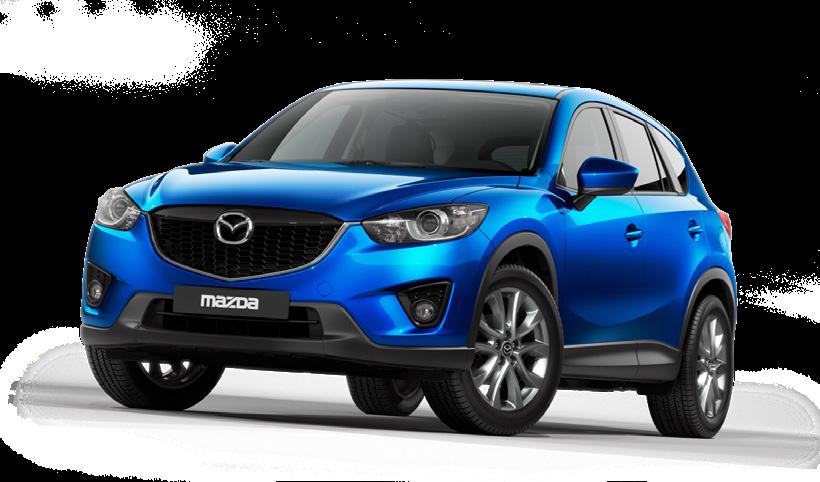
Mazda was next on 3,749 over the past five years with Nissan third on 2,099. The numbers for the top five marques were higher in 2025 than for previous years, with Honda making the biggest jump from 248 in 2021 to 744 last year.
The transport agency says the overall increase in flags covers all damage types, but it has been particularly noticeable for acid wash and corrosion damage.
It also notes that after regulatory monitoring in Japan was aligned with such work in New Zealand, the increase in flags has been across all models and there’s no evidence to suggest the shift is specific to any vehicle type.
“The NZTA continues to monitor the situation and will adjust settings as appropriate in line with
as they identify potential issues across a range of areas, including mandatory safety systems, open Takata airbag recalls, structural issues and prohibited systems, such as ITS Connect. This work gives those in the industry the ability to make informed decisions on imports and their business.”
The spokesman adds the system means consumers can be assured the agency has strong oversight across inspections and they can feel confident about what’s being imported for use on our roads.
“The NZTA and industry are working together to ensure the VIRM guidance is fit for purpose. If importers avoided damaged vehicles, they would also avoid flags and associated problems.
regulatory responsibilities,” the spokesman adds.
“All vehicles damage-flagged at border inspections in Japan and New Zealand are assessed at entry compliance and appropriate action is taken to manage the issue.
“Management can include the removal of flags if the damage doesn’t meet the guidelines or referral to a repair certifier for specialist vehicle inspection.”
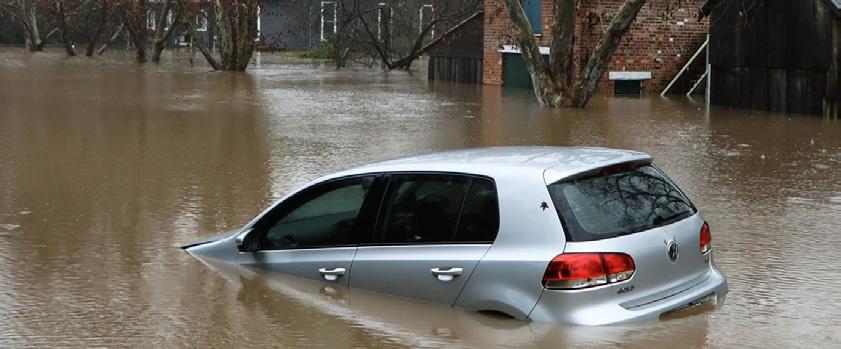
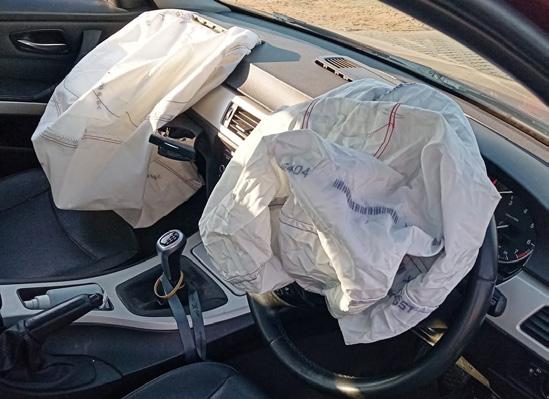
Some types of repairs are ineligible for damage-flag removal. These include multiple panel fixes and or replacement, corrosion damage in structural areas where the metal has holes, water or fire damage, and if a supplemental restraint system, such as an airbag, has been deployed.
Meanwhile, issues identified on vehicles for which removing flags may be permitted include single-panel structural repairs and corrosion damage where there are no signs of major pitting.
The NZTA says it has worked with Repair Certification NZ to ensure certifiers can advise the removal of damage flags when guidelines are met.
“We are working with industry on acid wash and corrosion requirements. We’ve noticed the shift in flagging, and are working with the sector to ensure our
advice on both these issues is fit for purpose and sector participants understand their obligations.
“Border inspections are critical
“Damage flags are an important regulatory tool. They identify specific issues for attention by entrycompliance inspectors. Knowing these issues helps consumers and importers as it allows them to make informed decisions on importing and purchasing vehicles.”
EASY APPLICATION
Submit two downloadable forms and simply send to us for review.
COMPETITIVE INTEREST RATES & FEES
Our partnerships give us the ability to offer superb lending rates.
EFFICIENT SERVICE
Hear back from our team about finance in as little as 24 hours.
NZ BASED Autobridge is New Zealand based and covers the country, so we are never far away when you need us.
www.autobridge.co.nz 09 320 5646
Changes threaten fleet safety
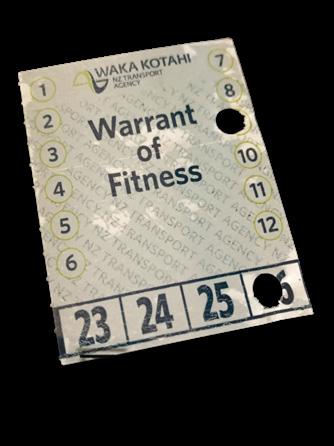
The Motor Trade Association (MTA) is calling on the government to adopt a “pragmatic middle ground” for the warrant of fitness (WOF) regime. It fears proposals suggested by the coalition will delay the detection of common safety-related defects on cars and weaken how the system protects consumers.
Key elements of the plans include extending the first WOF for new light vehicles from three years to four years, introducing biennial checks for those aged four to 10 and retaining annual inspections for older models.
Officials are also considering removing six-monthly tests for cars first registered before January 1, 2000, and bringing in basic checks of advanced driver-assistance systems (ADAS) alongside enforcement and education measures.
Any changes after the review of the frequency and requirements for light-vehicle inspections are expected to be signed off by James Meager, the Associate Minister of Transport, in May.
presented for their first post-onroad checks.
The MTA supports easing cost-of-living pressures but warns the proposals are likely to lead to higher repair bills, increased inspection costs and shift too much risk for identifying
James McDowall, head of advocacy, has provided feedback to the government about the association’s concerns and some alternative recommendations.
He suggests keeping the first WOF at three years because vehicles in the three-to-four-year band show a 14 per cent rate of safety-related issues when
The MTA also urges biennial inspections only apply to cars aged three to seven years, and annual checks be performed after that as the risk of wear and defects increases.
“To avoid unintended ‘gaming’ of timing, the government should consider explicitly limiting vehicles to a maximum of two
Joint venture launches
CarExpert has linked up with Trade Me to launch in New Zealand for its first expansion overseas.
The site’s news, local reviews and digital tools, which aim to help buyers make informed decisions, are now live at CarExpert.co.nz.
The platform had more than 25 in-depth reviews of key new models when it launched last month with extra content being published daily.
Hall, head of Trade Me Motors.
It builds on CarExpert’s established position across the Tasman where it operates as an independent content platform.
The joint venture here provides scale, local-market integration and strategic distribution across the country’s largest online automotive audience.
“We identified a gap in the market for a new-car research destination,” says Brendan
“By combining our audience strength with CarExpert’s editorial expertise, we are creating a highvalue destination for consumers and the industry. For our OEM partners and franchise dealerships, this partnership provides a powerful way to engage with high-intent buyers early in their journey.”
Damon Rielly, CarExpert’s chief executive, adds: “Our focus is to provide structured, independent information that helps buyers make confident decisions.”
With the number of brands, powertrains and variants expanding, choice has become more complex so CarExpert’s model simplifies that process through structured research.
New-car specialists conduct hands-on testing across segments with assessments complemented by comparison tools.
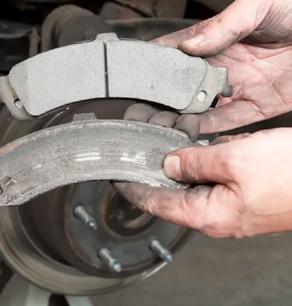
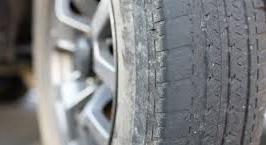
A two-year WOF interval increases the “risk window” in which borderline but safety-critical items, such as worn brakes or tyres nearing minimum tread, can deteriorate into failures
Brendan Hall
consecutive two-year WOFs before reverting to annual inspections, irrespective of when those two-year WOFs are taken,” says McDowall.
The reason for this is to prevent owners from getting a third two-year WOF at six years and 11 months, for example.
Basic inspections for ADAS, “if fitted”, are welcome but officials should make clear these aren’t a substitute for core roadworthiness tests of items such as tyres, brakes, steering and suspension, and shouldn’t be used to justify materially longer intervals for those checks.
“We recognise an annual WOF is a direct and identifiable cost to motorists,” adds McDowall. “But the modest inspection saving is likely to be swallowed up by the real-world cost of faults being caught later after they’ve had longer to worsen.
“In practice, the proposal risks turning small, early repairs into bigger, more expensive ones.
“This may be compounded as many motorists treat WOF timing as a de-facto reminder to service their vehicle.
“Annual inspections provide a regular ‘safety reset’, particularly for motorists who don’t have the capability, equipment or knowledge to reliably self-check mechanical condition.
“A two-year interval increases the ‘risk window’ in which
The proposal risks turning small, early repairs into bigger, more expensive ones
– James McDowall
borderline but safety-critical items – for example, tyres nearing minimum tread, brake components approaching wear limits or steering and suspension play – can deteriorate into outright failures before the next independent inspection. It also means vehicles operate for longer in marginal condition.”
The MTA is concerned the 13-16 per cent of vehicles driven on the
road without a WOF, which is about 500,000, may increase as “higher repair costs could worsen noncompliance over time as defects become too expensive to repair”.
McDowall notes a regulatory impact statement prepared by government officials on changing the regime appears too confident about safety outcomes and ambitious consumer savings, while also acknowledging low confidence in key assumptions and limitations in modelling.
“We are concerned about near-exclusive reliance on crashattribution data, which likely understates the role of vehicle condition.
“Driver impairment and behaviour are typically treated as primary causes, and mechanical condition is, therefore, less consistently examined or recorded as a contributing factor. This makes crash data a weak foundation for decisions that materially reduce inspection touchpoints.”
[continued on page 8]
The coalition’s proposals place weight on education, higher penalties and expanded enforcement.
But the MTA highlights there’s no “detailed operational plan” showing how enforcement will be resourced, trained and delivered at the scale required.
That means those measures aren’t yet considered by the association to be a credible offset for materially longer inspection intervals.
If the government proceeds with its original plans, McDowall recommends it should, at a minimum, introduce a staged implementation with a formal review point before full rollout to help manage annual inspection volume swings and system impacts.
There should also be clear, consistent public education.
As for other matters, the MTA backs shifting the frequency of certificates of fitness for light rentals under five years old from six-monthly to annual because rental fleets are “typically maintained to a high standard with additional pre-hire checks”.
“We also do not oppose removing six-monthly WOFs for vehicles first registered before January 1, 2000 – to keep the system simpler and because they only make up approximately seven per cent of the fleet – provided
the wider settings remain safetyfocused and implementation includes credible compliance measures.”
BUSINESS IMPACT
The MTA estimates its members carry out about 80 per cent of vehicle inspections, as well as performing work to maintain and repair the fleet.
McDowall says overhauling the system may affect workforce stability and lead to market consolidation and higher prices.
“Abrupt changes to inspection frequency can create large swings in demand, making it harder to maintain staffing and invest in equipment.
“A staged implementation with clear review points is needed to
avoid inspection destabilising the network.
“Fewer inspections per vehicle can also reduce revenue for smaller providers and may precipitate industry consolidation. Reduced competition could lead to higher inspection prices and poorer access, especially in smaller regions.”
WOF providers face fixed costs for the likes of premises and equipment. If work volumes fall, inspection prices are likely to rise to recover those expenses and headline consumer “savings” from fewer inspections may be overstated.
Then there’s concern about how car owners will be affected because faults found early tend to be cheaper to fix, while those
identified later can become more expensive.
For instance, brake pads left too long can damage rotors and tyres that pass close to the minimum tread depth can become unsafe well before the next inspection point.
“Delayed detection increases the chance drivers discover faults only once they become dangerous or fail unexpectedly,” McDowall explains.
“Savings from fewer inspections are not necessarily durable for households. They may only defer costs and are likely to raise downstream costs through higherrisk operation.
“This includes potential insurance premium impacts when risk increases and possible increases in ACC-related costs in aggregate.”
A long-term consideration highlighted by the MTA is to explore the possibility of basing inspection intervals on mileage.
McDowall says: “As New Zealand improves odometer capture and distance-based charging, including the planned move to electronic road-user charges, the government should explore mileage-based inspections as a more risk-aligned approach than age-based intervals.
“This is not a primary recommendation in our feedback but should be recognised as a future pathway once system prerequisites exist.”
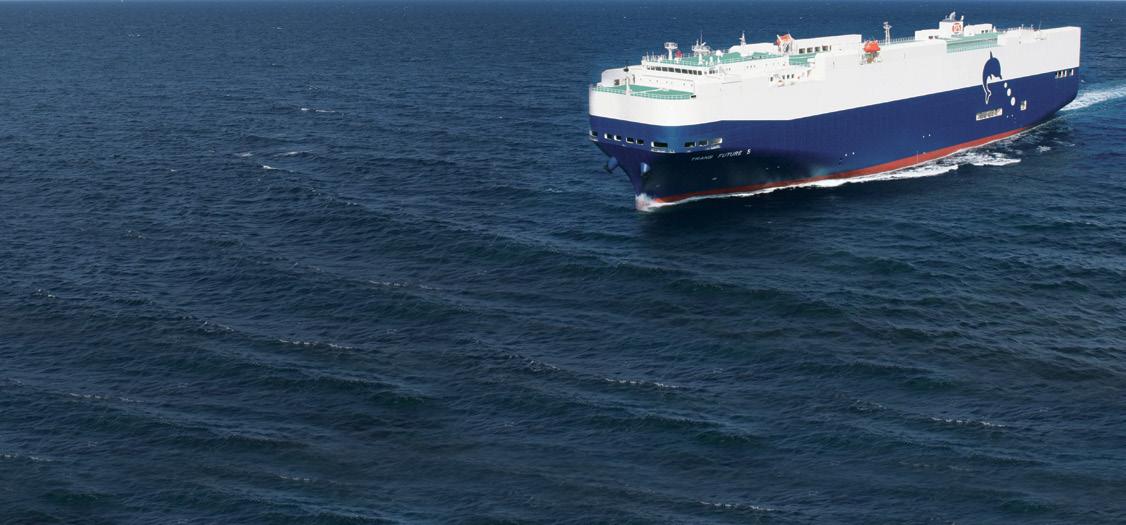
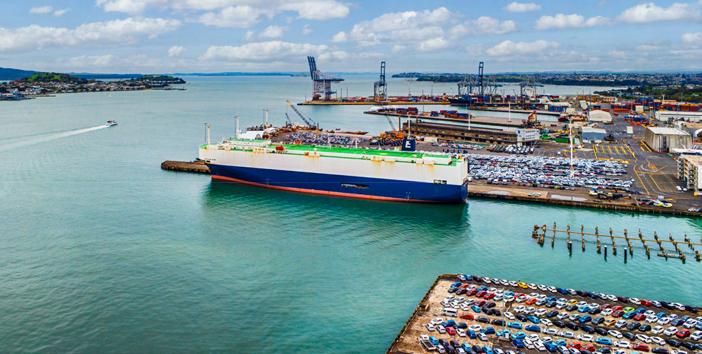
Toyofuji vessels Voyage
The MTA estimates its members carry out about 80 per cent of vehicle inspections
BUY SMARTER. SELL FASTER. STAY AHEAD.
Hundreds of vehicles auctioned every week and nearly 1,500 users ready to trade.
Auction Online gives you real-time access to the true used-vehicle market, nationwide. Buy, sell and manage stock from anywhere – fast, transparent and competitive.
Whether you’re clearing trade-ins, moving aged stock or filling your yard, our streamlined auction platform simplifies every step.
• Nationwide dealer network
Almost 1,500 users actively buying and selling.
• Real-time pricing transparency
Live bidding ensures you always hit true market value.
• High stock turnover
Hundreds of vehicles auctioned every week across NZ.
• Purpose-built dealer platform
Designed specifically for franchise & independent dealers.
• Fast, simple, secure Seamless listings, bidding and purchasing from one platform.
Join Auction Online today and start trading smarter
Buyers supersizing new fleet
Consumers in New Zealand are increasingly choosing medium-sized SUVs over small and medium passenger cars, an analysis of new-vehicle sales data shows.
Some 30,015 medium SUVs were sold in 2021 and accounted for 26.9 per cent of the lightvehicle market, but last year the segment’s numbers jumped to 34,955 and 34.1 per cent respectively.
Sales of small cars dropped from 9,401 and a market share of 8.4 per cent to 5,051 and 5.1 per cent over the same period.
Meanwhile, demand for medium-sized cars led to 5,385 sales in 2021 but this slumped to 1,775 last year as the category’s proportion of trade fell from 4.8 per cent to 1.6 per cent.
The Motor Industry Association (MIA) also reports large SUVs had a 15 per cent share of sales after a 2.5 per cent increase during the past five years, while small SUVs have gone from 33.7 per cent to 32 per cent.
The shift in buying trends comes as MIA figures show the new light-vehicle market enjoyed
NEW LIGHT-VEHICLE SALES AND MARKET SHARE: 2021-25
However, the numbers were well down on what was achieved from 2021-23 when the annual totals all topped 110,000, including a peak of 115,985 in 2022 as the sector bounced back from the impact of Covid-19.
Medium-sized SUVs have been the most popular segment for the past four years, after relegating small SUVs to second place in 2022.
Large SUVs remained the third most-popular category in 2025 and extended their advantage over the fourth-placed small-car segment.
The gap in market share between the two was just over four per cent in 2021 but increased to nearly 10 per cent last year after large SUVs sold 14,550 units and small vehicles came in at 5,051.
As for new light commercials, there were 34,136 sold last year for an annual rise of 1.3 per cent from 33,712.
A further breakdown of the numbers for that sector shows registrations of models in the pick-up/chassis cab four-by-two segment tumbled from 6,770 to 5,140, or by 24.1 per cent. Those in the four-by-four category fared better with a 7.5 per cent increase from 22,301 to 23,968.
Sales of new vans rose by 4.7 per cent from 3,763 in 2024 to 3,938 in 2025, while the heavy commercial vehicle market dropped by 24.7 per cent from 7,676 to 5,779 units.
SURGE IN ELECTRIC
Battery EVs (BEVs) accounted for more than one-in-20 sales of new vehicles last year and finished with a 5.6 per cent share of the market, which was broadly stable when compared with 2024.
Sales of such models peaked in June when they made up nine per cent of trade and their second-best result was in December when the proportion was 6.8 per cent. October marked the low point for BEVs
when they took out 4.1 per cent of sales.
As for plug-in hybrids (PHEVs), they snared five per cent of the annual market after fluctuating from 3.6 per cent in April to 7.7 per cent in June. They also finished the year strongly and grabbed a seven per cent slice of new-vehicle business in December.
The growing selection of petrol hybrids for consumers led to that sector ending the year with 27.2 per cent of the market, achieving a high of 33.3 per cent – or onein-three registrations – in October. Diesel hybrids ended the year with a 4.8 per cent chunk of the action.
When it came to internal combustion-engined vehicles, petrol models accounted for 29 per cent of the market and diesel variants 28.3 per cent.
Petrol-only cars started the year by taking out 34.7 per cent of sales, but failed to reach those heights again and only claimed 24.9 per cent in the final month of 2025.
In contrast, diesel cars recorded their lowest monthly share of 24.4 per cent in January, hit a high of 31.9 per cent in May and finished the year with 30.2 per cent of December’s sales.
Source: MIA
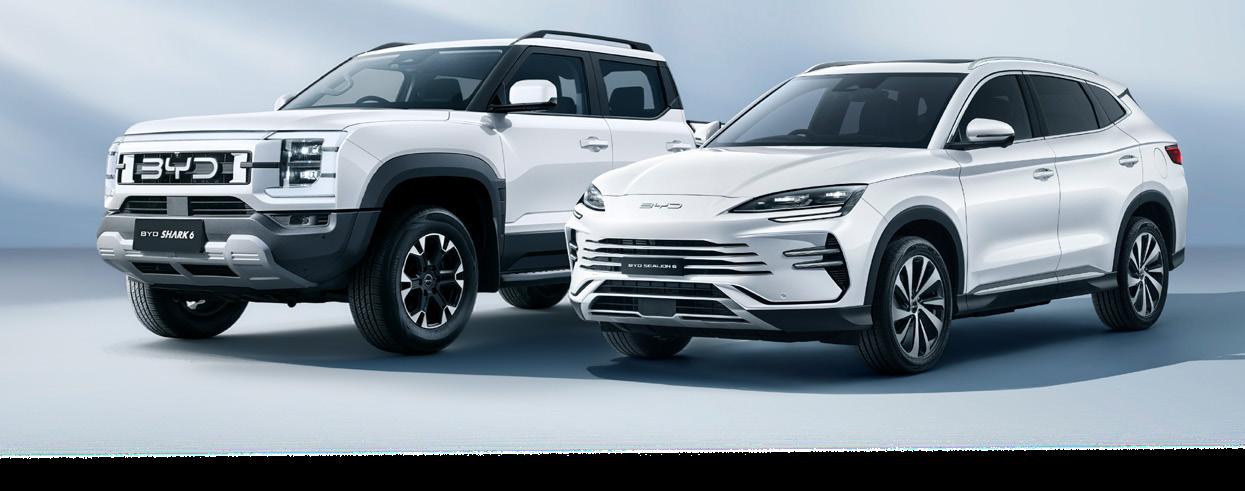
The BYD Shark 6 and Sealion 6 came first and second on the PHEV models’ ladder in 2025
TOP NAMEPLATES
Tesla’s Model Y, a medium-sized SUV, was the top-selling BEV last year. It accounted for 1,286 of the 7,706 zeroemissions units registered.
Next was the BYD Atto 3 on 556, Polestar 2 with 353, BYD Sealion 7 on 338 and Tesla Model 3 with 310.
When it came to fully electric light commercials, LDV’s eDeliver 3 topped the ladder with 182 units. It was followed by the Ford Transit on 83.
Some 6,884 PHEVs were sold last year. BYD’s Shark 6 led the charge after the ute secured 1,885 registrations and its Sealion 6 was next with 715.
The top five was completed by the Mitsubishi Outlander on 606, GWM’s Haval H6 with 379 and the MG HS on 368.
Ford’s Ranger was second behind the Shark in the lightcommercial sector for PHEVs with 247 sales last year.
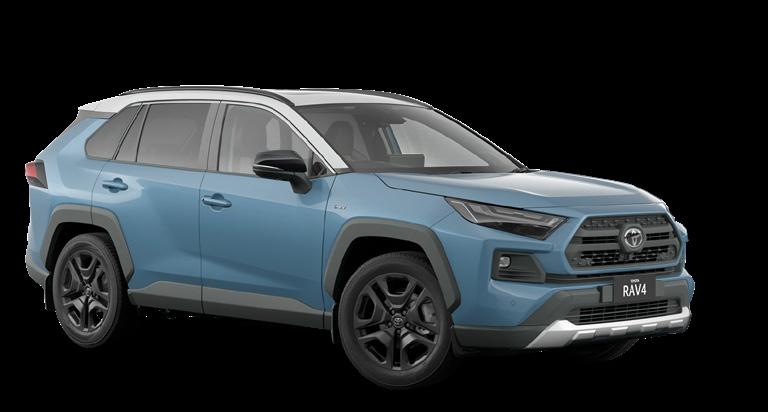
Toyota dominated the models’ ladder for hybrids with its RAV4 claiming 11,298 sales from a total of 36,467. Its Yaris Cross was next with 2,018 followed by the Corolla on 1,954. The Corolla Cross claimed fourth with 1,476 units and the GWM Haval H6 rounded out the top five on 1,328.
BUYER CATEGORIES
Buyer types for light passenger vehicles, including SUVs, have remained broadly similar for the past two years even as the overall number of sales increased.
Some 38,712 units went to private buyers last year for 39.5 per cent of the market.
40,138 units in 2025, up by 8.5 per cent from a year earlier. However, the category’s market share slipped from 42.3 per cent to 41 per cent over the same timescale.
Government purchases came in at 1,673 last year – for an increase of 2.4 per cent and shifting their slice of the action from 1.9 per cent to 1.7 per cent.
The rental sector was the only one to increase its share, rising from 16.2 per cent to 17.8 per cent, after the annual number of light passenger vehicles it snapped up jumped from 14,180 to 17,462.
account for the responsible for
year, giving them a market share of
commercial sector, up from 17.8 per cent in 2024, while the proportion going to rental companies dropped from 5.8 per cent to 4.4 per cent.
As for the new-vehicle market overall, business buyers accounted for exactly half of the 137,900 units sold last year. That was down from 52.5 per cent in 2024.
Private buyers’ share rose from 32 per cent to 33.6 per cent, rentals went from 13.4 per cent to 14.4 per cent and government buying remained unchanged at 2.1 per cent.
“With deep experience and a genuine enthusiasm for the auto industry, I see myself as an extension of your business –here to help you grow, one loan at a time.”
Specialist Lending Requires Specialists
Annie
Wild Relationship Manager - Lower North Island
LDV’s eDeliver 3, right, was the country’s number-one fully electric van in 2025. Ford’s E-Transit finished in second place
Used-car sales boost profit
Focusing on sales of used vehicles has helped to lift the latest financial results posted by the Colonial Motor Company.
Its trading profit after tax for the first half of 2025/26 rose “significantly” to $10.4 million to notch up a year-on-year jump of 50 per cent.
Chairman Ash Waugh describes the results as “appreciably better” than what was anticipated at the company’s annual general meeting in November.
He notes December can be fickle to predict and the last month of 2025 was no exception after strong new and used-car sales.
Alongside the economy in general, the new light-vehicle market continued its gradual recovery with Colonial’s six-month result reflecting that.
Waugh says: “Despite this trend,
somewhat erratic supply and demand was an ongoing hurdle, something that could be further compounded by several model changes expected during 2026.”
Management across the group has continued its refreshed attention on used vehicles at dealerships and this was a “significant factor in the betterthan-expected half-year result”.
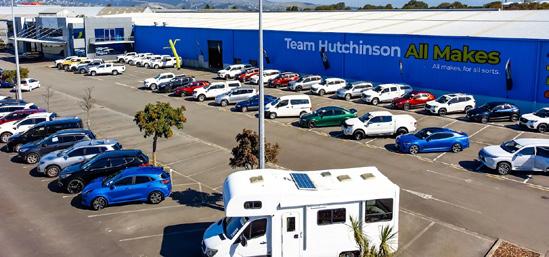
The focus on second-hand stock was also seen with Hutchinson Motors opening a leased facility in
Business Development Manager
If you love the automotive industry, are inspired by technology and are results-driven, this is the job for you!
• Join our growing company that’s well-respected within the automotive industry
• Collaborate with industry experts and an experienced leadership team
• Take complete ownership of the end-to-end sales process and revenue growth objectives
• Work from home (located in Auckland) with flexible work arrangements
• Competitive salary package
Detroit Place, Christchurch, which has replaced its previous inner-city site on St Asaph Street.
It trades as Team Hutchinson
All Makes, and provides a “muchneeded capacity boost” for used cars and new-vehicle preparation support functions.
The heavy-commercial truck sectors that Southpac Trucks operates in remained subdued with national volumes well down on 2024/25 and no marked momentum is anticipated in the
short term. Despite current tough conditions, the truck business has been performing well with growth opportunities for its parts and service network.
Improved outcomes in farming – driven by a positive dairy outlook and its related strong returns along with better demand in the redmeat sector – have contributed to a solid recovery in Colonial’s tractor business, a sector that remains “fiercely competitive”.
Looking ahead, Waugh says maintaining Colonial’s first-half trajectory may be unrealistic. But the objective is to hold onto, if not build on, gains being made in 2025/26. If there’s confidence the economy will continue a growth trend, this should reflect positively on new-car sales. At the same time, disruption from new-vehicle model changes and a weak New Zealand dollar may impact trading results.
New branch to cost $4.5m
Turners Cars is aiming to open a dealership in Whanganui, which will offer its full suite of services, by April next year.
There will be a wide selection of used cars available, including ex-lease and Japanese imports, in addition to on-site finance and insurance.
The location will also host a weekly auction and the company is looking to buy “more vehicles than ever locally” for the business in Liffiton Street.
Plymouth have had great success.”
The company says it has a proven track record of successfully establishing branches in regional New Zealand. These include recent expansions into Nelson and Timaru with the latter similar to what’s being planned for Whanganui at a cost of $4.5 million.
“We’re confident the new site will allow us to buy even more cars locally and a wide range,” adds Hedgepeth.
Greg Hedgepeth, chief executive officer of Turners Auto Retail, says: “It’s something we’ve been considering for a while and we’re happy to be able to expand into Whanganui.
“It meets our criteria and it’s great to invest in an important area. Our nearby branches in Palmerston North and New
“There’s still plenty of water to go under the bridge as we develop the site. Our team is working hard to hit the open date so we can welcome the local community in.
“I know our Whanganui team will continue our track record of delivering excellent value to the region, supported by a wider network dedicated to exceeding customer expectations.”
Greg Hedgepeth
Team Hutchinson All Makes in Christchurch
Calls to overhaul import rules
The Motor Industry Association (MIA) is calling for the clean car standard (CCS) to be retained, but with the scheme’s emissions trajectory “recalibrated” to reflect domestic affordability and realistic demand and supply.
Chief executive Aimee Wiley says her organisation’s view is the framework for the CCS should be strengthened so it’s credible, stable and workable in New Zealand’s small, importdependent market.
Her comments come amid a media frenzy at the start of the month with headlines saying the government is considering abolishing the CCS in the wake of slashing the charges payable on imported light vehicles by 80 per cent in November.
The MIA is among the industry organisations to have submitted its views on the way forward to the Ministry of Transport (MoT).
That was done through a first-principles review, which the MoT says will enable the cabinet to decide on whether to abolish or retain the standard and provide indications on the best approach for the future.
Wiley says overhauling the CCS “is not about reducing ambition”. Instead, “it’s about ensuring the settings work for importers and distributors, as well as consumers”.
The scheme needs to be durable over the long term and aligned with market realities, including affordability, supply and demand conditions. That’s because stability and clarity are important in a market reliant on global production systems.
“We support practical alignment with Australia when it reduces regulatory friction, while ensuring New Zealand’s pathway reflects our own market conditions,” says Wiley in a statement to Autofile.
“It is also important the framework remains coherent and fair across the whole market.
“We remain committed to constructive engagement with
the ministry to ensure the scheme continues to support steady, measurable emissions reduction in a way that provides certainty for industry and consumers.”
ADVICE BEING PREPARED
Chris Bishop, the Minister of Transport, says the option to scrap the CCS is “obviously” on the table because that’s included in the firstprinciples review.
When the scheme’s penalties were slashed in November, he stated supply constraints meant importers were unable to source sufficient numbers of lowemissions models.
His decision was also based on thousands of extra dollars being passed on to consumers via higher sticker prices on cars and back then he added that a full review of the standard would follow this year.
its campaign to have the scheme scrapped.
The targeted consultation carried out for Bishop’s review has just ended and it included asking submitters whether the CCS should be axed.
The consultation included the automotive industry, overseas organisations, government agencies, some advocacy groups and experts on the subject. It wasn’t open to the public.
We support practical alignment with Australia when it reduces regulatory friction
Bishop has also pointed out that if the CCS was abolished, that would mean only two OECD countries would have no form of fuelefficiency standard – New Zealand and Russia – adding it was unlikely the standard would be removed entirely.
– Aimee Wiley
That said, National’s coalition partner Act has been outspoken in
In a letter seeking submissions, the MoT stated the review was being carried out in two stages.
The first was “a firstprinciples review… to enable cabinet to decide to either retain the standard or abolish it”, according to RNZ. Submitters were asked if they supported retaining a fuel-efficiency standard and what the risks would be if the CCS was removed.
Bishop says he has yet to receive advice on the review, but will have more to say once the government has considered it and made decisions. If legislative change is required, he expects there will be a select committee process and public submissions.
A spokesman for the MoT told Autofile on March 5: “The ministry
is in the early stages of preparing advice so we’re not able to make detailed comment at the moment.
“However, we can say that when the government made changes to the clean vehicle standard at the end of 2025, it became clear the standard wasn’t working under current market conditions. It risked driving up costs for importers – costs that would potentially pass through to New Zealanders as higher vehicle prices.
“As we signalled at the time, the government has launched a full review of the standard. A full policy review should consider and compare all options so that the Transport Minister can make an informed decision.
“In conducting the first stage of this review, the Ministry of Transport is engaging with the motor-vehicle industry, international bodies, other government agencies including the Parliamentary Commissioner for the Environment and Climate Change Commission, key advocacy groups and subject matter experts.
“The review is required to be reported back to the cabinet’s economic policy committee by June 30, 2026.”
NEED TO ‘REFLECT REALITY’
The Imported Motor Vehicle Industry Association (VIA) wants to see a credible scheme in place when it comes to reducing the fleet’s carbon dioxide (CO2) emissions.
The MIA says overhauling the CCS “is about ensuring the settings work for importers and distributors, as well as consumers”
“The ‘scrap it’ question was one of several scenario questions in the first-principles review,” says chief executive Greig Epps. “No decisions have been made and the minister has indicated he hasn’t yet received the advice.
A CO2at-import mechanism is a blunt instrument for used imports
– Greig Epps
advocacy, says any recalibration of the scheme needs to take heed of lessons from how the programme has unfolded since its introduction in January 2023 and changes that have already been made.
“From our perspective, we
CCS credits because they don’t know how these will be processed or what value they will have if the standard is abolished.
“If the standard was slowly phased out that would create different incentives for the programme,” McDowall told Autofile. “If the government continues with it, then the industry will have to understand what different incentives and disincentives that will create.
“We also need to accept that a first-principles review means abolition is, in theory, an option and that may or may not be what the government does. We don’t know the answer to that and they probably don’t know yet either.”
He adds the review of the CCS is a big topic for an election year and suggests ministers will likely consider options such as revising emissions targets for new and used imports, timeframes for changes and weight-adjustment calculations, as well as scrapping it entirely.
“There are strong feelings on this topic from all sides of the equation and our role is to suggest a middle ground that keeps the agenda alive in terms of improving and renewing the fleet,” says McDowall.
“There has been criticism about New Zealand becoming a dumping ground if it decides to reduce the standard or abolish it.
“However, I think there are other policy levers to mitigate that. I would encourage people to look at the importation consultation the government is doing around requirements for advanced driverassistance systems.
“If they go ahead with those changes, it would essentially put an age cap on cars of around 2018-19 and as that’s rolled out you wouldn’t be able to import older, used cars. Emissions will effectively decrease and cars will be more efficient.
“I think levers like that will prevent New Zealand from becoming a dumping ground even if the standard is softened.”
Industry group Drive Electric has been among those to suggest that if the CCS was scrapped,
Kiwis could be sold “high-emitting leftovers” that carmakers can no longer sell across the Tasman.
Chair Kirsten Corson says:
“We’re really alarmed there’s the potential of removing the standard completely because the rest of the world is going in the other direction.”
She adds Australia has just reported the first six months of data since its newvehicle efficiency standard became mandatory.
“Their overall emissions are dropping and two-thirds of carmakers there could meet 2025 emissions targets.”
back, potentially targeting the 70 per cent of new-car sales made by businesses.
EV SALES MILESTONE
The MIA says the country has reached an important fleet breakthrough with more than 100,000 New Zealand-new plug-in hybrids (PHEVs) and battery electric vehicles (BEVs) being registered across the fleet.
Key facts
100,323
NZ-new BEV/PHEV registrations recorded. 69.6%
Share of all BEV/PHEV registrations represented by NZ-new vehicles. Vehicle types included: light vehicles, motorcycles and heavy vehicles.
The government’s claim that buyers would have been charged thousands of dollars more if the CCS penalties had not been cut late last year was “a false economy” because while some high-emitting vehicles are cheaper to buy than the likes of EVs, they cost more to own and operate, citing – for example –what’s happening with global oil prices.
In addition, a slump in demand for EVs had been driven directly by the coalition’s decision in 2023 to scrap the clean car discount, opines Corson. She wants to see a revised version of that brought
Source: MIA
Latest data from the association shows 100,323 new BEVs and PHEVs are now on our roads. And that result reflects the steady expansion of lower-emissions model options in our newvehicle market and the growing role these technologies are playing in the fleet over time.
Importantly, the milestone also highlights the contribution of the NZ-new sector to the renewal of the light-vehicle fleet.
MIA data shows BEVs and PHEVs now make up 69.6 per cent of all NZ-new registrations recorded in New Zealand, meaning the majority of electrified vehicles entering the fleet have come through this channel.
Aimee Wiley, the MIA’s chief executive, describes the milestone
as an “encouraging sign of progress”, while also reinforcing the need for a practical and stable transition pathway.
“This is a significant milestone for New Zealand’s fleet, and for the distributors and brands bringing lower-emissions technology to market.
“It shows the NZ-new market is continuing to introduce a growing number of battery electric and plug-in hybrid vehicles across a range of classes.
“At the same time, fleet transition is complex. Consumer uptake remains closely linked to affordability, infrastructure, product suitability and confidence in the policy environment.
“That is why it’s important New Zealand has a stable, evidencebased regulatory framework that supports continued progress while reflecting the realities of our market.”
The MIA says the milestone should be seen as part of a broader transition already under way, rather than an endpoint. Lower-emissions technologies are expanding across the market, but fleet change takes time as vehicles are replaced progressively over many years.
For that reason, policy settings need to support steady fleet renewal, ongoing consumer choice and a workable pace of transition.
The MIA says a durable and well-calibrated approach is important for a small, importdependent market such as New Zealand where vehicle supply, pricing and model availability are shaped by global production systems and international regulatory settings.
Wiley adds the milestone is worth recognising because it reflects real progress without losing sight of the work still ahead.
“Crossing 100,000 NZ-new BEV and PHEV registrations is a meaningful achievement,” she says. “It demonstrates that loweremissions vehicles are now an established and growing part of the NZ-new fleet.
“The next challenge is ensuring the broader transition remains credible, affordable and sustainable over the long term.”
The MIA’s Aimee Wiley says 100,323 NZ-new BEV and PHEVs now being registered in this country is an “encouraging sign of progress”
Drive Forward
Reliable finance support for everyday dealership needs.
At better finance™, we know that running a dealership isn't just about selling vehicles it's about juggling customer demands, keeping costs in check, managing margins and handling curveballs as they come in
Give us a call today and see how simple finance can be for your dealership.
When a customer needs finance, you need an expert partner who understands every minute counts.
We handle the details and sort finance fast, so you can focus on what you do best keeping your dealership running smoothly and serving your customers. No fuss, just real help when you need it.
Do extra costs mean more value?
With 2025 well-behind us and motor-vehicle sales on the increase, what will the rest of 2026 have in store?
Most traders who I spoke to last year admitted servicing and repairs were the real heroes by proving to be steady and dependable, and keeping the lights on when newvehicles sales went absent without leave for a few months.
Cars need regular servicing to perform at their best. Every owner knows the universal truth in motoring life, and that’s sooner or later something’s going to need sorting out. It’s not a matter of if, but when.
A question, which keeps popping up like a can of beer at a backyard barbecue, is whether the cost of servicing and repairs under factory warranty is really worth every last hard-earned dollar?
This continues to be a driver that keeps the right-to-repair discussion resurfacing with the regularity of a parking warden issuing fines in central Auckland on a sunny weekend evening.
The conversation suddenly gets a whole lot louder in an election year especially off the back of a cost-of-living squeeze and with Kiwis being increasingly shrewd about where their money goes.
No one can say for certain what will make it onto the government’s to-do list. Prime Minister
Christopher Luxon has already signalled a tight budget year, which suggests the lolly jar is firmly closed, but a few publicly popular legislative items may be sweeteners.
Here’s a real-world scenario that got this article started. Take two vehicles with the same job of a routine service, along with front and rear brake pads and rotors.
Sector manager – dealers, Motor Trade Association
Car one was a trusty Japanese workhorse, eight years old with 160,000km on the clock. The work was done by a reputable local independent using quality aftermarket parts.
Vehicle two was a shiny entrylevel European number, just 18 months old and on 60,000km. Same job, same components replaced, but this time the consumer went to a dealership. The bill? Nearly double for the second car.
What makes it even more interesting is both workshops looked flash enough to feature in
a lifestyle magazine. Think barista-grade coffee machines, comfy waiting areas, polished concrete floors and workshop lighting bright enough to use as a landing strip.
Both businesses sent polite texts asking for approval before turning a spanner and both finished on time. So why the price gap big enough to drive a ute through?
Franchised dealerships carry costs independent companies simply don’t with their factory-trained technicians, mandatory use of genuine parts, marque -specific diagnostic gear and proprietary tools that seem to arrive unannounced along with an invoice probably costing more than your first car.
There’s also a mountain of compliance and branding standards that aren’t exactly cheap.
For the customer, is there a
perceived difference? Is it the golden ticket keeping that factory warranty intact?
Or is it that warm, fuzzy feeling of peace of mind that comes with their pride and joy being handled by specialists who know every nut and bolt?
This all leads us to some thousand-dollar questions. Does that peace of mind come at too steep a price? If right-to-repair proposals become law, what happens then?
Why do customers stick with dealerships? Is it loyalty or the fear of losing their warranty? Maybe it’s friendly faces behind the counter. Or is it just the free coffee and sense of “this is what I do”?
How is your dealership selling your service sizzle? Is it reliable, familiar and does the job like a tin of Tui? Or is it more like a chilled bottle of Daniel Le Brun Méthode Traditionnelle – polished, premium and better, but not priced like Moët & Chandon? Or are you positioning yourself as full of Dom Pérignon?
Whatever perception you want your customers to have of your business in 2026, you need to “own it” because peace of mind is sometimes priceless. At other times, it feels a bit like buying an expensive bottle of spring water when there’s perfectly good H20 coming out of the tap. If you don’t own your image, it will feel like the latter.
LARRY FALLOWFIELD
Repairs and servicing provide a reliable income stream
The month that was... March
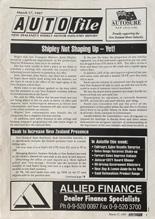
March 17, 1997
Saab to increase New Zealand presence
New Zealand’s Saab distributor, Saab Automobile Australia, was set to significantly increase the brand’s presence here to counter falling sales.
Registrations of its new cars in 1996 fell by 17 per cent, from 241 units in 1995 to 199, with managing director Stephen Nicholls blaming the rise of used-imported vehicles for the slide.
Describing the influx of used imports as a “short-sighted policy” and “very strange”, Nicholls said the increase in used Saabs being sold here was a major factor for the decline in the marque’s numbers.
In 1996, 146 used Saabs were registered in New Zealand, which was up by 156 per cent from 57 units in the previous year, while three new models had been added to the 900 range with four deleted.
Success on the racetrack at Talladega in the US had inspired a special edition made by the marque. The 900 Talladega would come in three variants priced from $54,900.
A sportier appearance and extensive equipment, plus previously unavailable engine and body combinations, were on offer with it. Saab’s coupes had been confined to two-litre fuel-injected and turbocharged variants, but the Telladega coupe had a 2.3-litre motor.
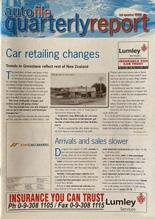
First quarter, 2006 Car retailing changes
Predictions of doom and gloom in the face of changing dealers and vacant lots on the Boulevard of Cars weren’t worrying David Burke-Kennedy, marketing manager of the Greenlane Dealers Association (GDA).
Burke-Kennedy, who had been involved in the GDA for the past 16 years, said the changes were just part of another progression. “The area continually changes, evolves and is still going strong. The way people buy cars has changed and, as such, the industry and Greenlane changes too.”
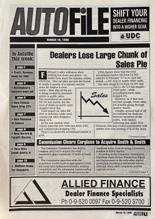
March 16, 1998
Carglass to acquire Smith & Smith
The Commerce Commission approved Carglass (NZ) Ltd to take over the retail automotive glass business of Smith & Smith.
The regulator said while the deal would result in aggregating the repair and replacement sectors, existing competition and the substantial countervailing power of major customers would prevent the combined entity from securing dominance in either market.
Franchise chain Novus Windscreen Repair and Replacement was the only other market participant providing a nationwide service, although many other companies had regional services.
In the retail repair market, the Carglass and Smith & Smith venture would have a smaller market share than Novus, and would be within the regulator’s “safe harbour” of less than 40 per cent market share.
In the replacement sector, the combined entity would have a considerably larger share. The commission said it would be outside the safe harbour of less than 60 per cent market share with at least one competitor having 15 per cent or more.
However, the major replacement market’s customers – insurance companies – had big buying power and would constrain the combined business to prevent it acquiring a dominant position.
March 2007 AutoBase expands its marketplace
Trade Me’s automotive supply partner, AutoBase, had developed an online marketplace for used-car dealers to buy their stock.
Operating with more than 6,500 wholesale vehicles from seven of the top New Zealand-based importers, AutoBase Wholesale offered a simple, searchable database where registered traders could find what they needed before negotiating promptly with the wholesaler.
He had watched his area of Auckland evolving and had seen the addition of office blocks as well as the shift from smaller used-car yards to big franchises.
“Customers shop differently for cars now. They research on the internet, get an idea of what they want and then find who has it. This means, like other dealership areas, we don’t have as much weekend foot traffic.
“People have more leisure options these days. In the past, shops weren’t open and there weren’t as many things people could do on the weekend so they went browsing in Greenlane.”
Autobase insisted its suppliers only listed vehicles that were in this country or in transit, and cars were listed with a price, photos and all details needed to make a purchasing decision.
“This isn’t just a repackaged stock list from some mega-warehouse in Japan,” said Dan Angland, AutoBase’s marketing manager. “These guys are respected New Zealand wholesalers and you can negotiate your conditions of purchase with them.”
Operating since August 2006, the wholesale marketplace had been used by AutoBase clients exclusively, but it was now being opened up to all registered motor-vehicle traders.
Brand voice needs to be heard
Blending brand and retail campaigns into one seamless digital funnel is best practice, as we covered off in February’s article.
But in a crowded marketplace, especially across Meta, YouTube and Google Display, just being present won’t carry your campaign. Your brand voice needs to stand out, resonate and evolve over time. This is where many dealers fall short.
Buyers aren’t just comparing cars. They are comparing customer experiences. If adverts still look and use the same language as those from 2022, chances are you’re being tuned out in 2026.
Signs your brand voice has become tired include rising costs per thousand impressions, fewer shares, falling click-through rates and stagnant engagement.
You might even ask, “why does every ad feel the same?”, or customers may comment, “I didn’t even realise that’s your dealership”.
In today’s market, attention is won through relevance. That doesn’t mean canning your brand, it means refreshing how it shows up. Strong dealership marketers treat their brand like a music playlist in that the theme stays consistent but new tracks keep it fresh.
A refreshed brand voice doesn’t
require a rebrand or big creative agency engagement. It’s about small, consistent updates that keep your message aligned with current buyer behaviour. Here are three fast, high-impact ways Kiwi dealers are already doing this.
1 Regularly
JAMES HENDRY Director, sales and operations
AdTorque Edge NZ
updating your unique selling points. If your “family-owned for 30 years” message hasn’t changed in five years, revisit what truly matters to today’s buyers, such as EV servicing expertise, transparent finance offers or flexible pick-up and drop-off.
2
Introducing rotation cycles. Change out your ad creative every six to eight weeks. Use testimonials, recent deliveries or customer spotlight videos. Several Kiwi dealers saw higher advert recall when they shifted to regular creative updates using seasonal messaging in 2025’s third quarter.
3 Evolving tone, not your logos.
You don’t need a full rebrand, just shift how your brand speaks. Chatty headlines, highlighting local sponsorship engagement, community-first messaging and “why buy here” storytelling can
elevate standard adverts into scrollstoppers.
Tools such as ALICE and GA4 give us a clear view of who is engaging with your campaigns and website.
As an example, a regional dealer who wants to increase engagement among 25 to 34-year-olds could change campaign copy to focus less on cars’ features and more on lifestyle aspirations, such as images of road trips.
In this scenario, the same business could run a quarterly content rotation with customer interviews and behind-the-scenes videos with its service team.
Insights from platforms such as Meta and Google show your branded search volume could rise by more than 20 per cent within six weeks without increasing media spend. It’s a simple shift with measurable impact.
Platforms such as Meta reward freshness. If your current creative set is more than two months old, you’re likely paying more for less.
A good idea is to build a quarterly strategic plan and it
EVERY DAY WITHOUT ALICE COSTS YOU LEADS, SALES AND CLARITY
doesn’t need to be complex. Think along the lines of one new video every quarter, two or three new static images per month, and copy and creative refreshes tied to seasonality or offers. Planning a regular refresh helps prevent burnout for your audience, and your marketing and sales teams.
At the start of customer journeys, buyers might not be ready to click “book a test drive”. But if your messaging lands, it sticks early. The job of a strong brand voice is to be remembered when the client is ready to act and such campaigns done right don’t just improve awareness, they lower acquisition costs down the funnel.
For instance, a fruitful strategy for a metro dealership is to run concurrent brand and retail activity across Google and Meta, rotating creative refreshes regularly.
By structuring campaigns to support early-buyer interest and ready-to-buy customers, dealers see a more stable stock turnover rate and stronger return on investment compared to periods when only one tactic was previously in market.
While exact results can vary, the strategy of dual-layered messaging with regular creative refreshes is a reliable performance booster.
Expanding technical leadership
The regulatory environment facing New Zealand’s vehicle industry is shifting rapidly, bringing a level of complexity and consequence the sector cannot afford to underestimate.
The pace of reform is increasing, the issues are becoming more technical, and the consequences of getting it wrong are significant for industry, regulators and consumers alike.
This year, in particular, there’s a substantial amount of reform coming our way.
For our members, that means navigating change across multiple fronts at once, while continuing to deliver for customers, invest in new products and respond to a rapidly evolving global vehicle landscape. The future depends on us getting this right.
At the MIA, we see it as our responsibility to rise to that challenge. Our role is to help ensure regulatory change is understood, workable in practice and informed by market realities.
All of that requires strong technical leadership, clear thinking and the ability to connect what is happening worldwide with what needs to happen here in New Zealand.
That is why the association is recruiting for a new senior technical role. This reflects the increasing breadth of expertise needed to support the industry well and the scale of the work now in front of us.
As part of this, Lloyd Robinson – the MIA’s current technical adviser – is stepping into a
position with a stronger focus on global developments and emerging technologies.
That’s an important shift because our industry is being shaped not only by what is happening in this country, but by what’s happening internationally across technology, regulation and vehicle development.
AIMEE WILEY Chief executive officer, Motor Industry Association
At the same time, we know there’s a clear need for dedicated focus on the here and now – the reforms, regulatory settings and compliance issues affecting our members in New Zealand today.
This new role will help ensure the MIA has that capability with leadership focused on the domestic landscape while also working closely alongside Lloyd. Together, it creates the right balance of future-focused insight and practical oversight, which is a strong combination for the challenges ahead.
And they benefit from having an industry body that’s equipped to engage constructively with government and regulators while supporting members through change with confidence and clarity.
This is ultimately about making sure the MIA is fit for the future.
It’s about strengthening our ability to support members through increasing complexity, ensuring we have the right capability around the table and continuing to provide the technical leadership our industry needs.
The challenges ahead are real, but so is the opportunity
That matters because our members benefit when the association can bring together both perspectives. They benefit from global insight being translated into local relevance.
They also benefit from strong oversight of current reforms and compliance expectations here in New Zealand.
The challenges ahead are real, but so is the opportunity.
With the right focus and expertise, we can help ensure New Zealand’s regulatory settings keep pace with change, support innovation and remain grounded in what works in practice. That is the standard the MIA is committed to meeting.
OVERVIEW OF MARKET
Registrations of new vehicles came in at 10,193 units last month for a year-on-year increase of 4.1 per cent. It means 21,970 units have been registered so far in 2026, which is up by 6.5 per cent compared with the same period in 2025.
Growth was recorded across all major segments in February led by gains in light and heavy commercials, while light passenger registrations continued to represent the majority of the market.
Light passenger and lightcommercial vehicles have recorded year-to-date growth, while heavy commercials are sitting marginally below the prioryear period.
Overall, the market has started 2026 on a firmer footing relative to last year and February’s result reflects steady underlying demand.
Last month’s lift is encouraging and the industry continues to respond to stable but competitive trading conditions.
Looking at the broader picture, economic forecasts point to gradual improvement in 2026 after a subdued period last year.
Interest rates and business confidence indicators have shown signs of stabilisation, supporting purchasing activity across household and business segments.
Conditions remain measured, and vehicle demand continues to reflect underlying replacement cycles and business investment decisions rather than accelerated expansion.
February’s moderate growth in registrations was supported by gains across all primary vehicle segments. It all indicates a steady start to the year.
The market is showing orderly expansion rather than sharp acceleration.
Finance expert to run world’s top car brand Award-winning NZ Roadside Assistance
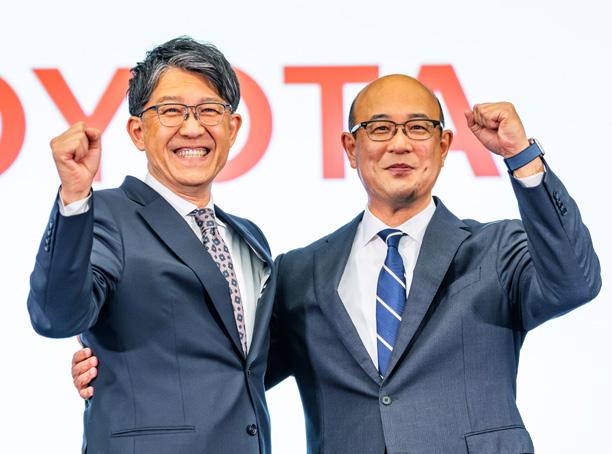
Kenta Kon will start as Toyota Motor Corporation’s new chief executive next month when he takes over from Koji Sato.
Kon, who is being promoted from chief financial officer, is viewed as one of the main players in making the company’s profits.
Current CEO Koji Sato, who became Akio Toyoda’s successor in January 2023, will become vicechairman and will also take on the new position of chief industry officer. Executive vice-president Yoichi Miyazaki will replace Kon as finance boss.
The company describes the management shuffle as relieving the workload on Sato, who became chairman of the Japan Automobile Manufacturers Association in January. Since May 2025, he has also served as vice-chairman of Keidanren, Japan’s most powerful business association.
“Under this new structure, Sato will focus on the broader industry, including Toyota, as vicechairman and chief information officer, while Kon will focus on internal company management as president and CEO,” according to a statement issued by Toyota last month.
“My role will be establishing a good profit structure so our people can take on courageous challenges,” says 57-year-old Kon, who is a longtime confidant of Toyoda, current chairman.
Toyota appointed its new CEO
on the same day it announced a year-on-year 1.9 per cent decline in operating profit to ¥1.2 trillion – or about NZ$12.64 billion –for its financial quarter ending December 31.
On the flipside, global sales rose by three per cent to 2.5 million vehicles in the same period.
The company now expects operating profit to finish at ¥3.8tn, or NZ$38.74b, in the 12 months ending March 31 or down by 21 per cent from the year before.
Kon was first appointed as chief financial officer in 2020 during the Covid-19 pandemic and global semiconductor shortage. Miyazaki took over that role in 2023 before Kon was reappointed as CFO last year.
In addition, Kon is a director at Toyota Fudosan, a Toyota Group real-estate company, and he helped develop a new trajectory of profit generation from selling services and add-ons to owners of its 150 million vehicles already on the road.
This approach has relieved Toyota from simply relying on selling cars, and has created huge revenue through ongoing business in parts, accessories, used vehicles, connected services and finance.
Sato, meanwhile, rose through the ranks at Lexus. The 56-yearold developed some of its most prominent vehicles, such as the LC 500 sports coupe, and led the marque through a period of growth.
We’ve got you covered
▪ 100% NZ-owned and operated
▪ Low-cost alternative
▪ 24/7 roadside assistance
▪ Nationwide accredited network
▪ MTA approved
Kenta Kon, right, with Koji Sato
Industry movers
MIKE HARTLEY has become the chief executive of MotorSport NZ with “deep commercial expertise, governance experience and a lifelong passion” for the sport.
With more than 25 years’ experience in senior leadership, consultancy and governance roles, he has worked in marketing, data and strategy.
Hartley’s past roles have included general manager and managing director in Asia-Pacific, and as founder of an international company. His governance experience stems from leadership and board roles with high-performing rugby, netball, golf and charitable organisations.
Deborah Day, president of MotorSport NZ, says: “Mike brings the acumen, leadership and sporting understanding we need to modernise and grow. He understands what it takes to run a complex, member-driven organisation.”
Hartley is “thrilled” to join the team and “excited to be a champion for all in our motorsport community”. He has replaced Wayne Scott, who was interim CEO for 18 months.
FADI MAWAL has been promoted to become president and chief executive officer of Ford Australia and New Zealand.
A 31-year blue-oval veteran, he joined the company in the early 1990s as a forklift driver in a parts warehouse in Melbourne. He then moved into finance for 15 years before joining the Asia-Pacific strategy team.
From 2016, Mawal spent four years as the chief financial officer for Ford Australia and NZ, and was then sales director from 2020-22. In May 2022, he took up his most recent role as CFO for Ford International Markets Group (FIMG) in Bangkok.
Mawal has replaced Andrew Birkic, who spent five years in the position. The latter has become vice-president of sales and service of FIMG, and is responsible for driving sales and service strategies across the region.
STEVE COUGHLAN has joined Nissan Oceania as head of communications overseeing media campaigns on both sides of the Tasman.
He started his career with Toyota Australia in 2003. He held roles across sales planning, accessory planning, product planning and product communications before leaving in late 2017.
Coughlan then joined Infiniti in Hong Kong. In 2020, he relocated to Japan, to work for Nissan. Between 2020 and 2023, he supported Infiniti’s global communications before becoming its deputy director.
PAUL ELLIS has joined BYD Australia as manager of public relations. He is overseeing all PR activity for BYD across the Tasman and Denza on both sides of the ditch.
Ellis’ career includes being head of PR for OEMs including Saab and Porsche, retail marketing and PR with Zagame Automotive, and, most recently, group account director at an agency working with Lexus.
Chief executive aims to extend presence
SAIC Motor International has appointed Qing Zhang as its chief executive officer for New Zealand and Australia, which includes leading the MG brand.
Zhang, who retains his role as vice-president at SAIC Motor International, has led diverse teams, driven business growth and supported markets during transformation.
His association with SAIC Motor started in 1998 when he worked in vehicle sales in Shanghai, China, for four years. After different industry roles, he rejoined the group in 2012 and was chief executive at SAIC Motor Italy from 2020-25.
in the market and focus on elevating dealer partnerships as it expands.
Zhang has replaced Peter Ciao, who has assumed an advisory role to ensure a smooth transition for staff, dealers, partners and customers.
“SAIC Motor has established an excellent footing in ANZ over the past decade,” says Zhang. “We look forward to fuelling our next phase of growth by introducing innovative products that resonate with and meet local demands.
Zhang now works closely with the leadership team for Australia and New Zealand, spending regular time in the region providing direction and support as the MG brand grows.
To further strengthen the team, Felix Jiang has become senior vicepresident for ANZ as MG enters its 10th year in the region. He is driving co-ordination and day-today delivery.
SAIC Motor says the appointments reflect its confidence
“I’d like to express thanks to Peter for his leadership over the past eight years. He has played a significant role in establishing and growing our presence, notably through the development of our excellent local team, a strong dealer network and investment in the brand.”
Ciao adds: “The ANZ MG owner family is around 300,000 strong and growing every day, showing how our dealers and customers have placed their trust in the brand. Our local team has been committed to our growth ambitions.”
Saliva tests for drugs
Roadside drug testing by NZ Police will start nationally next month having already been rolled out across the Wellington region.
Devices are being used to screen saliva for cannabis, methamphetamine, MDMA and cocaine.
If the first test when pulled over is positive, the driver must provide another sample for analysis and do a second roadside test. Two positive roadside tests mean the motorist is ordered off the road for 12 hours.
Laboratory analysis will test for 25 drugs with 21 being
prescription medicines. Those that qualify for lab testing are listed in schedule five of the Land Transport (Drug Driving) Amendment Act.
A positive lab test results in a penalty of $200 for one drug and 50 demerit points, and double that for two or more drugs and 75 demerits. Refusal to accompany police for a test is a $400 fine and 75 demerits.
Drivers with prescriptions who have taken their medicines as prescribed are unlikely to break the law and a defence is available to such people who want to dispute infringements.
Qing Zhang
Andrew Birkic
Fadi Mawal
Mike Hartley
Age and what issue we’re solving
The proposal by the Motor Trade Association (MTA) for a rolling 10-year age limit on used imports landed heavily across the independent import sector.
The average used vehicle entering New Zealand today is already more than 10 years old, so such a cap would reshape the market. Once my initial reaction cooled, I carefully considered what the MTA is suggesting and realised – with some tweaks – I didn’t disagree as much as I thought I did.
The government is consulting on mandating advanced driverassistance systems (ADAS), such as automatic emergency braking (AEB) and lane support. The MTA’s concern isn’t if these systems are desirable, it’s more about verification.
On used imports, confirming ADAS presence and border integrity can be inconsistent. The MTA favours simplicity, so use age as a practical proxy.
That position rests on newer vehicles are more likely to have modern crash-avoidance systems. Another is a staged age threshold is easier to administer than trimby-trim verification. The third is if compliance settings become too complex, turnover slows and the fleet can age unintentionally.
There’s logic in that. It also helps to separate two different issues that often get conflated. The first is factory fitment and if AEB or lane support was installed.
The second is lifecycle integrity. Has the system been affected by crash repairs, are sensors aligned and has calibration been correctly
performed after parts were replaced? Those are different issues.
On factory fitment, the uncertainty window is narrower than it might appear. There was a period in the mid-2010s when AEB was optional on many models and that window is closing. AEB became mandatory in Japan in the early 2020s and, as they enter our market, fitment becomes more obvious from the date alone.
KIT WILKERSON Head of policy and strategy kit@via.org.nz
Lane keep has never been universally mandated, but when fitted it’s typically standard for defined trims. Model data is not unknown and we think we can source it.
Lifecycle integrity is harder. Sensors can be disturbed, windscreens replaced and frontend repairs can affect radar or lidar alignment. That risk is real, but age doesn’t directly solve it.
An eight-year-old car with poor repairs presents risk. An 11-year-old vehicle with clean history and correct calibration isn’t automatically more dangerous. Targeted inspection triggers and in-service settings are relevant tools if the concern is repair history and system integrity, not simply a calendar threshold.
It’s also worth noting used imports don’t come in unchecked. They undergo structural inspection and compliance screening. If there’s evidence of significant structural compromise or deviation from OEM tolerances, the vehicle doesn’t enter the fleet. Age on its own doesn’t capture condition.
Where the MTA proposal carries real weight is on workability. It clearly contains the implicit presumption of compliance being assumed below the threshold.
A formal assumption models less than decade old meet relevant ADAS rules would cut compliance burdens for independent importers. It would simplify the regime and create certainty.
Under today’s framework, compliance is demonstrated. But if the government chose to adopt a presumption for sub-10-year imports, that would represent fuller harmonisation with Japanese standards for that cohort.
It wouldn’t remove entry certification or condition checks. Used imports would still undergo structural inspection and verification that they remain within OEM tolerances. The presumption would relate to standards alignment, not to vehicle condition.
That’s a framework I can entertain. If the government considers formalising that approach, it would simplify the regime and align with real-world supply.
My only reservation is the MTA’s proposal is narrow. If a vehicle is under 10 years of age, presume compliance. I can agree on this. If it is over 10 years, the MTA says “no” but I don’t see any logic in not allowing the chance to demonstrate compliance.
If evidence cannot be provided, the vehicle doesn’t come in.
In that case, the practical outcome converges on the MTA’s proposed age threshold and would prove it is correct. But if compliance can be demonstrated, excluding those cars purely because of age doesn’t improve safety.
There’s also a broader effect worth considering. If sub-10-year vehicles were treated as fully aligned with Japanese standards, not just ADAS – and if New Zealand-specific overlays that don’t exist in the Japanese domestic market were reduced for those cars – the economics would shift.
Lower compliance friction and lower landed costs would likely make younger models more viable. The average age of used imports could fall without a hard ban simply because barriers were removed.
Age can be a useful administrative tool. It shouldn’t become a substitute for identifying the actual risk. If the issue is factory fitment, that’s increasingly knowable. If the issue is lifecycle integrity, that’s best addressed through inspection triggers and in-service settings.
The MTA has some good points focusing on workability and the regime must be practical.
If the government wishes to pursue an age-based presumption, there’s a coherent way to do so while preserving standards and maintaining the ability to demonstrate compliance when possible.
If the objective is a safer fleet, the focus should remain on system integrity and real-world outcomes, not simply a calendar.
Evolution ‘what Kiwis need’
Nissan says it’s raising the bar in the one-tonne segment with its nextgeneration Navara.
Since December 1986, the marque has sold some 500,000 units of its ute across the trans-Tasman markets.
The latest iteration is built on a “robust platform that blends global engineering excellence with distinctive styling and locally tuned handling”.
“The new Navara represents what Kiwi and Aussie drivers need from their pick-up in this region,” says Andrew Humberstone, managing director of Nissan Oceania.
“This isn’t just evolution. It’s built on four decades of experience with a unique suspension calibration for our arduous conditions.”
He adds the nameplate’s boundaries have been pushed by offering more power and torque, improved efficiency, and enhanced safety and advanced technology features.
With most buyers of the outgoing D23 Navara opting for a double-cab paired with an automatic transmission, Nissan has simplified its line-up to offer the new model exclusively in this body style from launch.
VEHICLES
The new Navara, which arrived at dealerships in March, benefits from a locally tuned and tested suspension by Melbourne-based Premcar, which is available on some variants, and offers a 3,500kg braked-towing capacity.
losses that affect economy and enhances driving dynamics.
Humberstone says: “The suspension development programme represents one of the most comprehensive engineering projects undertaken by Nissan here. Premcar has invested countless man hours driving the Navara over 18,000km of testing across every conceivable surface and condition.”
All variants have a 2.4-litre turbodiesel engine delivering 150kW of power and 470Nm of torque matched to a wide-ratio sixspeed automatic transmission. Fuel consumption is 7.7l/100km on the combined cycle.
The newly adopted electric power steering reduces parasitic
Automotive excellence since 1993.
There will be two advanced four-wheel-drive (4WD) systems available that adapt to changing conditions to maximise efficiency and performance.
On applicable grades, an “easy 4WD” system automatically switches between 2WD for highway cruising and 4WD when extra traction is needed. An electronic rear-differential lock comes as standard to provide more traction in demanding off-road scenarios.
With the ST-X and PRO-4X, the new “super 4WD” offers a full-time high-range mode with an open centre differential. A limited-slip differential enhances cornering stability by optimising torque distribution. These grades also feature seven modes – normal, eco, gravel, snow, mud, sand and rock.
STYLE AND SAFETY
The Navara’s new exterior draws inspiration from Nissan’s pick-up heritage, integrating signature elements that connect it to previous generations while pushing into more advanced territory. For decades, the v-strut grille has been a hallmark of its utilties and SUVs.
Members of the company’s global design team travelled to Australia and were inspired by modified utes. This led to the bull bar-inspired v-strut shield for presence at the front.
The three-slot design atop the
grille pays homage to the D21, while the c-shaped headlamps interlock with the grille. Additionally, the grille features a pattern of smaller v-strut motifs in the mesh.
The flagship PRO-4X grade showcases unique styling. On the outside, it features a black finish on exterior design elements and lava-red accents. Black 17-inch wheels with 265/65R17 all-terrains complete the look.
The Navara’s nine-inch advanced infotainment system features DAB digital radio, and Android Auto and wireless Apple CarPlay connectivity for smartphone integration without cables.
The ST-X and PRO-4X grades have wireless phone charging in the lower instrument panel, while a seven-inch colour dashboard display provides clear vehicle information for the driver.
The ute boasts eight airbags while its advanced driverassistance systems include pedal misapplication, lane-departure warning with emergency lane assist, blind-spot warning with lane-change assist, and front and rear-cross traffic alert.
Others are LED headlamps and tail-lights from the base grade, high-beam assist, intelligent speed, driver monitoring system and available adaptive cruise control.
The entry-grade SL starts at $54,690 plus on-road costs. The ST is $57,690, the ST-X starts at $62,690 and the PRO-4X is $67,690.
The new Navara PRO-4X and what it’s got inside
‘Fine-tuned’ for driving pleasure
Mazda will be launching its 6e, which boasts an all-electric range of 484km, in New Zealand during the second half of 2026.
The model was first unveiled at Brussels Motor Show in early 2025 before being released in major European markets last year.
The SUV’s 78kWh lithium iron phosphate battery powers a rearmounted motor that develops 190kW and 290Nm of instantly accessible torque.
Its dynamics have been finetuned “to inspire confidence and offer lasting driving pleasure”, while the driver-focused layout and ergonomically designed seats
“ensure comfort and control, even on longer journeys”.
The smart cockpit has a 26-inch touchscreen with a customisable dual-split layout that provides passengers with access to information without distracting who’s behind the wheel. It’s complemented by a large head-up display that overlays navigation guidance.
David Hodge, managing director of Mazda NZ, says the 6e continues the “proud heritage” of one of the marque’s nameplates.
enjoyment. The 6e continues this theme while offering new levels of technology and a dynamic EV powertrain.”
“All generations of the Mazda6 have been held in high regard here,” he adds. “The model is known for its design, comfort and driving
Ready to time warp
Suzuki’s first fully electric model, the e Vitara, is slated to arrive here during 2026’s second quarter.
The SUV has a bevelled body shape for aerodynamics and quiet driving, 18-inch black alloys and a black grille, which opens to assist battery cooling.
It will come with two 61kWh options – two-wheel drive with an estimated WLTP range of up to 430km and all-wheel drive for up to 396km.
Safety systems include autonomous emergency braking, rear cross-traffic alert, traffic-sign recognition and parking sensors, while the alert sound pedestrians hear is of a “jet taking off”.
Inside, the EV “feels like a spaceship about to time warp” when the door is opened. Its sleek digital-first cabin has intuitive controls and is spacious.
There are heated front seats and steering wheel, wireless charging, and customisable ambient lighting on the front-door panels and centre console. Its smart climate-control system recycles heat efficiently to warm the cabin while conserving the battery.
“This outstanding SUV will appeal to Kiwis and their sense of adventure,” says Aaron Wales, national sales manager of Suzuki NZ. “It will be an excellent addition to our range.”
Final specifications for our shores are yet to be confirmed.
The 6e rolls out the next evolution of the marque’s design philosophy of “kodo: soul of motion”. Its exterior boasts flowing lines and bold features, while the low roofline and short-deck
coupé silhouette offer a sporty look while keeping the functionality of a five-door hatchback.
The EV’s details include a bold lighting signature, frameless doors and integrated handles for a seamless appearance. At the rear, there’s a four-cylinder light design and an electric spoiler. Its extended 2,90mm wheelbase and short overhangs disguise its load-carrying capabilities with luggage space coming in at 468 litres with all seats upright.
More details on technical information and pricing will be revealed closer to its local launch.
WANTED TO BUY
Contact: Paul Curin
Kiwis battle it out in Formula E
Two New Zealanders are heading upwards in the international FIA Formula E Championship.
Nick Cassidy has grabbed the points lead, racing for his new Citroen team, with a win and a podium to edge out Porsche’s Pascal Wehrlein with the UK’s Jake Dennis third.
Cassidy switched this year from Jaguar where he was part of an allKiwi line-up with Mitch Evans.
After coming third in the first race of the season in Brazil, Cassidy then started 13th before winning the second round in Mexico City.
He put in a calculated, pitchperfect drive to head home from Edoardo Mortara, of Mahindra Racing, and reigning champion, Nissan’s Oliver Rowland.
“This is unbelievable,” enthuses Cassidy. “In front of all these amazing fans, the atmosphere is second to none in Formula E. To get a win there with Citroen, what a dream start we’ve had.
“I’m just so happy for my team and thanks to them for believing in me and bringing me in to be part of this project. I think there are some really cool times ahead.”
Cassidy’s pit lane was keen for him to secure points with a fourth or podium, but his engineer PierrePaul Frey encouraged him to go for the victory.
“I didn’t think until the last lap that we were okay. I was happy with the P4, starting P13, and on my radio it was very much like, ‘let’s secure a good result’.
“My engineer has always been making the right calls. This one is very much for him as it is for me and the whole team. It’s the team, the vehicle, package and strategy that enabled us to win that race. You can’t win with a bad car.”
Evans, in turn, won the third race held in Miami at the end of January. He started ninth and produced a storming switchback to
drive away to victory. He also set the fastest lap in the process and stood sixth on the points ladder after that round.
“It’s special to have this record for the most wins of 15,” says Evans. “I’m still missing the big one – the championship – but these stats are great. It’s a huge testament to the team. Hopefully this is a good restart to our season and we can continue from 15.”
The championship then moved to Saudi Arabia for a double-header round with races four and five.
At the Jeddah Corniche Circuit in the first night races of the series, Cassidy’s team planned a strong push to maximise the pace and results achieved in the opening round.
The event opened with a win for Wehrlein, who finished two seconds clear of Edoardo Mortara with Evans third. Cassidy slumped to sixth place.
The next day it was Evans’ team-mate Antonio Felix da
and claiming 27 podium finishes. He came second in the 2025 championship.
Evans has taken part in 127 races, making him one of the most experienced in the current field. He has had 15 wins and 34 podiums.
Having qualified third, Da Costa bided his time in the opening phases of the race and timed his first attack mode to perfection, ending a victory drought stretching back to the 2024 Portland E-Prix.
Evans was seventh and Cassidy, starting from eighth, endured his second non-score in five races after finishing 14th.
Wehrlein now leads the championship from Mortara and British driver Oliver Rowland, with Cassidy fourth and Evans fifth.
With five rounds complete, it’s too early to pick winners, but the two New Zealanders have shown strong form so far as they have done in previous seasons.
Cassidy has contested a total
Formula E, officially the ABB FIA Formula E World Championship for sponsorship reasons, is the premier open-wheel single-seater series for electric cars.
Its inaugural race was held in Beijing in September 2014. Since 2020, it has had FIA world championship status.
The current Gen 3 cars can make the 0-100kph dash in 1.8 seconds and are all-wheel drive. They are made of recycled carbon fibre and natural materials, such as linen, and use sustainable batterycell minerals.
The upcoming Gen 4 vehicles will be able to make 596kW of power with regenerative braking, which restores energy to the battery, and are capable of a top
Costa who took first blood at Jeddah, the Portuguese leading Sebastien Buemi home with reigning champion Oliver Rowland rounding out the podium.
Nick Cassidy celebrates his win in Mexico
Mitch Evans in action in Miami
Muscle cars meet head on
It was a north versus south grudge match, and it featured the best of American and Australian V8 muscle cars driven by top Kiwis.
The vehicles were up and roaring at the annual Skope Classic meeting. Among a bewildering array of other classes from thoroughbreds to classics, the Central Muscle Cars and Mainland Muscle Car series came together for a 31-strong grid with lots of action.
Christchurch racer Andy Knight took his Chevrolet Camaro to pole ahead of Angus Fogg in the iconic
Teenager aims for top
Auckland’s Marco Manson has leapt up the leaderboard from fifth to first to take control of this year’s NAPA New Zealand Formula Ford Championship after its second round at Timaru International Raceway.
A recent graduate from kart sport, he has caused a sensation in Formula Ford in the South Island and national championship stakes.
The diminutive teenager has only ever had one ambition.
“My goal ever since I started karting at five was Formula One,”
he says. “That’s really all I’ve wanted to. I’m going to stick by my word and not give up.”
“Watching Liam Lawson and Louis Sharp has given Kiwis and me a lot more hope of progressing towards F1.”
Second for last month’s weekender and moving up from eighth to third overall was Maxim Kirwan.
Dropping to number two was Australian rookie Seb EskandariMarandi, who had a third, two fourths and an eighth.
“The weekend was a bit up and
the start and holding on to take the third spot on the podium.
With a handicap set-up to race two, Knight and Fogg started more than one minute behind the pole vehicle and had driver cars to pass on their way to the front.
Steve Noyer ultimately took victory by more than five seconds ahead of Grant Crosby. Knight and Fogg put in a monumental effort, but were only able to climb up to fifth and eighth overall.
black and gold Mustang. Nick Ross in his all-white Dodge Challenger was third.
Knight got a perfect start and drove away from the field to take a three-second victory over Fogg, with Craig Boote jumping Ross at
In the third race, Fogg jumped Knight at the start but couldn’t keep Knight’s spectacularly fast Camaro behind. The Christchurch driver made his move on lap five to take victory by just over a second. Noyer also enjoyed victory again in the fourth and fifth races of the weekend at Ruapuna last month, while Fogg’s Mustang set fastest lap of the final race.
down,” says the latter. “We didn’t qualify too well but got some good results. We’ve struggled a little bit initially. The points are always good.”
Campbell Owens continued to collect points and is holding
fourth place ahead of Dylan Petch. The final two rounds are in the North Island with four races at Hampton Downs Motorsport Park from March 14-15 and four at the Taupo International Raceway from March 27-29.
Marco Manson. Photo: Great South Photography
Nick Ross
Angus Fogg
Craig Boote
Grant Crosby
Buyer claimed electric car subject to recall still unsafe after remedial work being completed
Background
Chiropractic Perfection Ltd purchased a 2023 Kia EV6 from West City Auto Group on September 27, 2023, for $79,990.
It went into limp mode on August 25, 2025, while being driven by director Jeena Yoo. As a result, she wanted to reject the car under the CGA alleging the fault made it unsafe and the defect wasn’t properly fixed.
The trader opposed the rejection, arguing the Kia had performed reliably for nearly two years and more than 29,000km, and the problem had been promptly diagnosed and repaired under warranty. It added the issue wasn’t a substantial failure.
The case
After almost two years of fault-free driving, the Kia went into limp mode on the motorway. Yoo safely stopped the car and had it towed to the trader’s yard. Three days later, she rejected it.
The dealer replied it would repair it instead. It diagnosed a problem with the integrated charging control unit (ICCU), a critical component responsible for managing EV charging operations.
Craig Buckley, Kia NZ’s service manager, said a recall relating to the ICCU was initiated in New Zealand during late 2024. Although this car had been inspected, no diagnostic trouble code was detected but its software was updated.
The ICCU fault that later manifested was consistent with the call-back. The dealer ordered a replacement and the car was fixed seven days later.
Despite the work, the buyer advanced two arguments as to why she was entitled to reject the Kia. First, although the unit was replaced, that didn’t mean its fault had been remedied. Second, it was unsafe due to its
programming, which caused it to enter limp mode.
Yoo said the EV hadn’t been properly repaired and provided documents to support her claim. These were based on reports from consumers in South Korea and the US who had experienced issues with replacement units.
ICCUs bearing the prefix 36400 shared the same design architecture, which the buyer argued contained a vulnerability. As such, she argued the new parts were susceptible to the same failure, indicating a systemic flaw.
The new part installed in her car was also a 36400 unit. Accordingly, Yoo believed it hadn’t been genuinely fixed and the risk of failure remained.
She presented documents concerning ICCU failures in America that showed an estimated defect rate of only one per cent. No injuries or deaths were linked to the component. Some owners reported issues even after receiving replacements, which Yoo said suggested the new units might also be affected.
The buyer also provided links to online reports from South Korea. She told the hearing those described ongoing problems with replacement ICCUs.
Buckley said the number “36400” represented the first five digits of the part number and remained constant regardless of updates. He added much of the documentation submitted by the
Buckley explained a component-related call-back might be triggered by issues with the part itself or with the assembly process at specific manufacturing facilities.
Kia NZ had contacted all affected owners in early 2025. Buckley said of the 1,760 vehicles in New Zealand requiring remedial action, 1,644 had been repaired by the time of the hearing with the majority only requiring a software update due to no diagnostic trouble code being present.
A total of 272 ICCU replacements had been recorded since the model was first sold in this country, but not all were related to the same fault as experienced by Yoo’s Kia.
The case: Almost two years after it was supplied, the buyer wanted to reject her 2023 Kia EV6 because it went into limp mode on the motorway and its integrated charging control needed to be replaced. The trader said the buyer couldn’t reject the car because it had performed reliably for almost two years and it had quickly repaired the control unit.
The decision: The purchaser’s application under the Consumer Guarantees Act (CGA) to reject her vehicle was dismissed.
At: The Motor Vehicle Disputes Tribunal, Auckland.
CGA, so the buyer might have been able to reject the EV6 if that problem was of a substantial character.
Notably, Buckley said Kia NZ’s warranty system showed no instances of vehicles requiring a second replacement of the part.
The buyer also argued that when the car entered limp mode, it could lead to a complete loss of power or a significant reduction in speed and said both scenarios carried serious safety implications.
In response, Buckley said her Kia’s transition into limp mode was consistent with modern vehicles when a fault was detected to allow the driver to bring the car to a stop safely.
The finding
The tribunal ruled the Kia’s ICCU issue was a failure of acceptable quality under section six of the
However, the adjudicator didn’t accept the problem amounted to a safety issue because limp mode is a common feature in modern vehicles.
Also, the tribunal didn’t accept reasonable consumers would have decided not to buy the car had they known of the ICCU fault or how it operated in limp mode.
Recalls aren’t uncommon and the fault was fixed promptly under warranty, so the adjudicator ruled the problem didn’t amount to a failure of substantial character and the buyer was unable to reject the Kia.
In addition, the tribunal didn’t accept the purchaser’s argument the fault might not have been genuinely remedied.
It found the buyer’s concerns were speculative and unsupported by evidence of any repeat failure in
Also, Buckley’s evidence confirmed that no vehicles in New Zealand had required a second ICCU replacement to date was accepted by the
The application to reject the Kia
Tribunal rules pre-existing fault led to head gasket blowing eleven days post-purchase
Background
Monique Brain purchased a 2012 Mazda CX-5 from Eastcoast Automotive Ltd for $8,990 on July 8, 2025.
She also obtained a mechanical warranty, and said she bought it with assurances it had a fresh warrant of fitness and it was in sound condition.
Soon after purchase and while driving to Kaikoura, the car suffered a blown head gasket. Brain claimed this constituted a failure of substantial character under the CGA and justified her decision to reject it on July 19.
The trader submitted the failure wasn’t due to any pre-existing defect but resulted from Brain continuing to drive the vehicle after a coolant leak developed.
It added had Brain stopped the CX-5 immediately, repairs would have cost about $500. But because she continued to drive the SUV, it overheated causing the headgasket failure and increasing the remedial work to about $5,000.
The dealer relied on reports from its in-house mechanic and an independent assessor. Both concluded the damage was caused by prolonged driving without coolant and ignoring dashboard warning indicators.
The trader noted the warranty provider confirmed the purchaser requested the cancellation of her policy, which resulted in it declining to cover the repairs.
It offered a loan vehicle on multiple occasions and proposed contributing $2,000 towards the repair costs, which Brain declined.
The trader maintained it shouldn’t bear full responsibility for damage caused by the buyer’s conduct and wanted an outcome that reflected their shared responsibility for the defect.
Brain denied cancelling the warranty and disputed any suggestion her actions contributed to the damage.
A 2012 CX-5
The case
While being driven from Christchurch to Kaikoura 11 days after purchase, the CX-5 started to lose power. At first, Brain said this was only noticeable on some hills.
She stopped the car, opened the bonnet and discovered coolant spray covering the engine cover. She texted the trader to say the vehicle had broken down and rejected it.
The dealer towed the CX-5 to Christchurch and mechanics concluded it had suffered a headgasket failure.
It appeared the trader started fixing it under Brain’s warranty policy. During the work, the warranty provider contacted Brain who declined permission for the policy to be used before cancelling it.
She disputed she had cancelled the policy, although an email from the provider corroborated the trader’s statement that this had been done at her request.
In this case, the dispute was over what caused the blown head gasket. Brain argued the CX-5 had a pre-existing fault at purchase which caused the coolant leak and, ultimately, the gasket to fail.
The trader contended the problem was created by Brain continuing to drive the car after the leak developed, leading to severe overheating and the gasket failure.
The trader’s in-house mechanic, Bradley van Brucken, reported the CX-5 exhibited signs of severe overheating consistent
with continued operation while depleted of coolant.
Another mechanic, Shane Thompson of Motorvation, similarly concluded the car had been “run longer than what it should have been”, which transformed what might have been a relatively minor repair into an expensive undertaking. Brain was adamant there were no warning signs or a coolant leak noticed by her while driving the car.
The tribunal’s assessor reviewed the evidence and said it was highly likely the radiator header tank had been leaking for some time before her journey to Kaikoura.
He added such leaks tended to develop over time, starting with coolant seepage and crusting before getting to the point of catastrophic failure. It was highly probable the condition connected to the eventual failure of the radiator was present well before purchase.
Brain’s evidence was the CX-5 was slow and hard to start before and immediately after purchase.
This can be a symptom of headgasket failure when coolant leaks into the combustion chamber, reducing the volumetric efficiency of the engine. In advanced cases, the coolant increases back pressure on the piston leading to hydrolocking, which is uncompressible liquid in the combustion chamber.
This can also cause extreme pressures in the cooling system,
The case: Eleven days after it was supplied, the buyer’s 2012 Mazda CX-5 suffered a blown head gasket so she then rejected it. The trader said the part wouldn’t have failed if the purchaser had stopped the car after a coolant leak developed.
The decision: The tribunal ruled that the vehicle had a pre-existing defect. This caused the leak to develop and, ultimately, the head gasket to fail. The application to reject it under the Consumer Guarantees Act (CGA) was upheld.
At: The Motor Vehicle Disputes Tribunal via video link.
which often results in cooling component failures and leaks, such as split radiator header tanks.
The trader confirmed during the hearing that it didn’t conduct a Tee-Kay test to detect the presence of combustion gas in the coolant as a part of its pre-sale checks.
The tribunal noted this was a common procedure most dealers get completed prior to selling a car.
The finding
The adjudicator was satisfied the evidence showed the split radiator header tank and blown head gasket breached the CGA’s guarantee of acceptable quality.
The buyer of a 13-year-old Mazda CX-5 that has travelled nearly 185,000km should have realistic expectations as to its durability.
The tribunal was satisfied a reasonable consumer wouldn’t expect such a vehicle to be sold with a pre-existing fault that would cause it to fail in the way identified in this case and which was estimated at more than $5,000 to fix. It also found the split radiator header tank and blown head gasket were substantial failures, so Brain was entitled to reject the vehicle.
Orders
Brain’s rejection of her CX-5 was upheld. The collateral credit agreement between her and her finance company was transferred to the trader.
Toasting changes to training
MITO has celebrated its return to industry ownership with a function at parliament attended by its board members, staff, MPs and stakeholders.
The event was hosted by Stuart Smith, the chief government whip and member for Kaikoura, with Penny Simmonds, Minister of Vocational Education, also attending.
The shift back to industry represents a major milestone for implementing government reforms to the vocational education and training system.
For more than half a decade, MITO has supported apprentices, learners and employers in the automotive, commercial road transport, mining, quarrying, drilling, gas and logistics industries.
These sectors, which represent six per cent of GDP, are committed to education and high-quality training to ensure their resilience and provide career pathways.
“MITO supports apprentices and learners across some of New Zealand’s most critical industries,” said Simmons at the function on March 3. “Together, these sectors underpin our supply chains, infrastructure, primary sector and everyday functioning of our economy.
“This evening is about recognising a significant moment of change, acknowledging the work that made it possible, and looking ahead to what comes next for vocational education and training.
“At its heart, this moment reflects the government’s focus on fixing the basics and building the future by removing what wasn’t working and putting in place settings to deliver long-term value.”
Smith added: “Strong industry partnerships driving fit-forpurpose training to better support employers are key for business success and economic growth.
“It’s great to see MITO again delivering training in a ‘by industry, for industry’ model.”
board, chief executive and MPs.
Warwick
David Boyce, chief executive of the NZ Trucking Association; Lee Marshall, CEO of the MTA; Dom Kalasih, CEO of Ia Ara Aotearoa Transporting NZ; James McDowall, MITO shareholder convenor; Stewart Gibb, general manager of the Collision Repair Association; Gary Geeves, CRA life member and CEO of AMI Motorhub; Jonathan Bhana-Thomson, CEO of the NZ Heavy Haulage Association; and Chris Murphy, executive member of the Log Transport Safety Council
Verna Niao, MITO’s chief executive, highlighted the need to support the investment of employers in nurturing new talent and meeting future workforce demand.
“Our coverage will remain nationwide, reaching regional and remote communities as well as larger centres. All our current qualifications and micro-credentials will remain available. We’re looking forward to working with industry to support development goals.”
Sturrock Saunders, who chairs MITO’s board, told those attending that industry had stepped up to lead the way as part of the government’s reforms.
“Our associations were united in their view that industry must
lead its own vocational education and training to ensure agility, responsiveness and futurefocused development,” he said.
“I’m thrilled we can now begin shaping training in line with industry requirements.”
MITO’s
From left:
Wilshier, Iain Haycock, Dean Eggers, Kim Milne, James McDowall, CEO Verna Niao, Warren Flowerday, Minister Penny Simmonds, Sturrock Saunders, Jason Land and Stuart Smith MP
MP Stuart Smith, front left, hosted the party. He’s pictured with Penny Simmonds and other guests
Kim Milne, MITO board director and chief people officer at AB Equipment
Wayne Scott, CEO of MinEx – a MITO shareholding association, and Iain Haycock, MITO board director
7,138
Imported Passenger Vehicle Sales by Make - February
2026
Imported Passenger Vehicle Sales by Model - February 2026
Record for lots under hammer
Online platform Collecting Cars has notched up a sales record in New Zealand and Australia after more than 1,100 auctions raked in some A$80 million, or about NZ$93m, last year.
The company, which specialises in classic, performance and collectible vehicles, reports 2025’s clearance rate as being 30 per cent higher than in 2024.
It ended the year with nearly A$7m in sales from 107 lots in December, 43 per cent more than during the same period in the previous year.
Sales rise
There were 6,956 used-imported cars registered last month for a 2.5 per cent increase from 6,785 in February 2025.
The top three marques were Toyota with 2,361 units, Nissan with 1,066 and Mazda on 968, while the Aqua was the top model with 622 for a market share of 8.9 per cent.
The Toyota Prius was second on 430 and Nissan’s Note came third with 348. Next up were the Corolla with 320 and Subaru’s Impreza on 249.
and Australia by volume was Porsche with 129 units. It was followed by Mercedes-Benz on 91, BMW with 74, Holden with 43 and Ford on 39. Porsche was also the top brand by value with A$16m and MercedesBenz came second on A$5.9m.
Next up were Ferrari with A$4m, BMW on A$3.6m and Holden with A$3.5m.
CHANGES AT AGENCY
That month’s highlights included a 2008 Lamborghini Murcielago LP640, which fetched NZ$280,000. A 2001 Subaru Impreza – one of Possum Bourne’s old rally cars – sold for A$130,000.
May was Collecting Cars’ biggest month in Asia-Pacific after it sold more than A$9m worth of vehicles. Globally, it sold more than
4,500 consignments during 2025.
Its top five sales down under were a 2022 McLaren 765LT Spider, which went for A$795,000, a 2024 Porsche 911 (992) GT3 RS Weissach Pack “PTS” at A$724,500 and a 2024 Porsche 911 (992) GT3 RS Weissach Pack for A$707,000.
Next up were a 2022 RollsRoyce Cullinan for A$633,000 and a 2006 Ferrari 575 Superamerica F1 at A$545,000.
The top marque in New Zealand
Used Imported Passenger Registrations - 2022– 2026
The NZTA is rolling out a new operating model aimed at strengthening how it delivers regulatory outcomes across the land-transport system.
The model, which involves recruiting for a number of jobs, provides a “clear framework for aligning people, processes and systems to our purpose of ensuring safety and integrity across the regulatory system”.
A spokesman adds: “To embed this effectively, we are refining our organisational structure to ensure
the right roles and capabilities are in place. The changes will enhance collaboration, and position us to deliver regulation that’s responsive, efficient and future-focused.”
GETTING CERTIFIED
Providing Kiwis with good, affordable vehicles was “critical” in expanding the Toyota Certified used-car brand and launching Toyota Service Protect in 2025.
From November, almost all used Toyotas sold via its dealerships became “certified”, which applies to those aged less than 10 with up to 150,000km on the clock.
It also means every Toyota Certified car comes with a one-year or 15,000km mechanical warranty and one-year of AA Roadservice.
Tatsuya Ishikawa, chief executive, says: “With Toyota Service Protect, customers can extend their warranty coverage on eligible vehicles for up to 10 yearsor 150,000km by servicing their vehicle at a Toyota Store.”
Bid to outlaw used imports
Second-hand car dealers in Kenya are opposing plans to cut the age of used imports before banning them.
The government there wants to lower the limit from eight years to five by 2027, which would result in more Japanese stock becoming available for New Zealand. A further cut to three years is proposed by 2029 before a total ban in 2030.
The Car Importers Association of Kenya (CIAK) has objected to the proposals because annual demand for light vehicles tops 100,000 units and assembly plants only provide about 30 per cent.
It adds a zero limit by 2030 will
create a “captive market” in which a few manufacturers could dictate prices without competition from high-quality used imports. In turn, this would make cars too expensive for millions of Kenyans.
The country also has a lack of technological readiness for Euro 4 standards, which were introduced in 2005-26. This contradicts a “new only” policy based on environmental protection. The stricter Euro 5 regime came in from 2009-11, reports Nairobi-based The Star newspaper.
“Importing a five-year-old vehicle from a tier-one market, such as Japan, often results in
lower emissions than a new locally assembled vehicle that may not meet global stringent standards,” says Peter Otieno, chairman of the CIAK. He adds a more effective approach would be mandatory emissions testing.
Used vehicles make up more than 85 per cent of Kenya’s fleet with about 130,000 units imported annually. Key markets are Japan with 80 per cent, the UAE, UK, Singapore and South Africa.
The government published its automotive policy late last year with the aim of revitalising the industry by promoting local assembly and manufacturing.
It says the plans have been tailored to gradually cut Kenya’s over-reliance on used imports.
The CIAK wants the 2027-30 timelines suspended and eight-year rule kept until local production hits 70 per cent of demand.
JUMP IN ARRIVALS
Some 6,177 used cars crossed the border last month, which was up by 20.2 per cent from 5,139 during January.
The total included 5,968 from Japan and 165 from Australia. There were also 14 arrivals from the US and the UK, and eight from Singapore.
Campaign for driver-equity fund
Acollective of road-safety and education advocates is lobbying for a national driver-equity fund to be set up.
The Driving Change Network, which has more than 900 stakeholders, wants to see a more effective licensing system.
Wendy Robertson, national director, says: “A driver-equity fund would be a game-changer by helping raise the skill levels of drivers and saving lives. We can achieve this by redirecting proceeds of fines from traffic-safety cameras into the fund, enabling sustainable funding for accessible education, training and licensing.
“A driver’s licence is a key practical tool that helps connect New Zealanders to work, education and social participation. A fund will remove barriers for people ineligible for limited government support and reduce the pressure to drive unlicensed by paying for what they need.”
At present, traffic-safety camera revenue goes into the government’s consolidated fund to be spent as it sees fit. By redirecting a percentage to a driver-equity fund, it could be used in a variety of ways.
Robertson explains: “Ringfencing could enable people to get
SECONDHAND CAR SALES - February 2026
practical support to help them get and keep a licence.
“This could include learnerstudy help, supervised practice hours, hazard perception training, driver-licence test prep, and access to a legal car and mentor through community programmes.
“It’s an investment that pays back in fewer crashes and victims, and more people safely licensed and employable.”
The approach has proven to be effective across the Tasman where various states have had considerable success.
In New South Wales, revenue from camera offences goes into
a community road-safety fund, which has helped save more than 1,400 lives, West Australia has a road-trauma account and Queensland directs fines to roadsafety initiatives.
PRIVATE DEALS DROP
There were 15,598 second-hand passenger vehicles sold to the public by dealers last month for a 3.2 per cent rise from 15,118 in February 2025.
Trade-ins came in at 13,526 for a 3.1 per cent jump from 13,122 while private sales totalled 39,385, which was down by 5.7 per cent from 41,786.
new cars
New
Passenger Vehicle Sales by Make - February 2026
New Passenger Vehicle Sales by Model - February 2026
Chinese car options increase
Three new models from Dongfeng are now available at Armstrong’s franchises nationwide.
The Box, a small city car, is available for $29,990 until the end of April.
It has frameless doors, a “floating” two-tone roof, hidden door handles, LED headlamps and soft-touch cabin materials.
The 007 is available in long range rear-wheel drive with 520km on the WLTP. It’s priced from $54,990. Its all-wheel-drive 400kW performance variant, with a 0-100kph time of 3.9 seconds, is available from $59,990.
The Vigo is “renowned as the best value EV SUV” for sale here. Standard kit includes level-two advanced driver-assistance systems, a double-split tailgate with 150kg load capacity and vehicle-to-load capability.
It costs from $37,990 until the end of April. The Vigo and Box’s prices will increase by $2,000 when the launch offer ends.
The Dongfeng network has also expanded. Four retail and servicing dealerships opened at the end of last month at Takanini Auto Group in south Auckland, Auckland Auto Group in Albany, Waikato Auto Group in Hamilton and Tauranga Motor Group. These complement Armstrong’s other locations in Auckland, Wellington and Christchurch.
Meanwhile, Guangzhou Automobile Group Motor Company (GAC) has launched with a three-model range featuring petrol, fully electric and plug-in hybrid (PHEV) powertrains.
Its line-up starts with the GS3 Emzoom from $31,990.
Tucson top
Registrations of new cars totalled 7,138 in February for a rise of 2.1 per cent from 6,991 in the same month of 2025. Hyundai’s Tucson was the best-selling model with 418 units for a market share of 5.9 per cent. Next up were Toyota’s RAV4 with 369 and Mitsubishi’s ASX with 308. Ford’s Everest was fourth with 275 with MG’s ZS on 243.
The compact SUV has a turbocharged 1.5-litre engine producing 125kW of power and 270Nm of torque via a seven-speed dual-clutch automatic transmission.
The Aion V starts at $49,990 for the Premium and $51,990 for the Luxury. These mid-sized SUVs have a front-mounted electric motor powered by a 75kWh lithium iron phosphate battery for 150kW and 210Nm, and a WLTP driving range of up to 510km.
The range-topping M8 PHEV starts at $85,990 for the standard and $89,990 for the luxury variant. The seven-seater combines a twolitre turbocharged petrol engine with an electric-drive system for 274kW and 630Nm.
GAC, China’s fifth-largest car maker, has its Kiwi headquarters in Takapuna on Auckland’s North Shore, and is offering a $2,000 range-wide launch discount.
The marque has dealerships in Takapuna and East Tamaki in Auckland, Hamilton, Mount Maunganui and Christchurch, and plans to add three models to its range this year.
New Passenger Registrations - 2022– 2026
Last month’s top marque was Toyota with 946 units. Second spot was claimed by Kia on 673 with Mitsubishi third on 646.
All listed prices exclude on-road costs. Visit autofile.co.nz for more details on the models.
HISTORIC ELECTION
The Liberal Democratic Party (LDP) secured 316 out of 465 seats in Japan’s election, the first time a single party has won a two-thirds majority in the lower house since its parliament was set up in its current form in 1947.
The Japan Innovation Party, which is the LDP’s coalition partner, won in 36 more constituencies on February 8 to take their combined total to 352 seats.
Prime Minister Sanae Takaichi now faces the challenge of addressing the country’s economic and cost-of-living issues.
The LDP’s victory will help Takaichi advance her pro-business policies without having to negotiate extensively with opposition parties.
The country’s first female PM called the snap election in January, a few months after taking office in October. Under her two predecessors, the LDP lost its majority, battled corruption scandals and struggled to curb rising costs.
Historically low inflation has made the country sensitive to rising living costs. The economy is also under pressure from an ageing population, which has resulted in social-care costs spiking and a diminishing workforce.
Takaichi has pledged to cut taxes and boost the economy through more spending, but there are concerns about where that money will come from given high government debt.
GLOBAL EXPANSION
Nio aims to launch on both sides of the Tasman in the second half of this year after entering the Thai market in March with its Fireflybranded models.
Chris Chen, head of global business, says: “We started expanding our business globally towards the end of 2024 with a focus on entering more markets beyond Europe.”
Nio’s first right-hand-drive model was launched under its Firefly brand, which offers small, high-end EVs, at the Singapore Motor Show in January.
New Passenger Vehicle Sales by Motive Power - February 2026
High court makes loans ruling
Australian lender Solvar has failed in its bid to be removed from a Commerce Commission case over alleged illegal activity by its New Zealand subsidiary.
The regulator claims Go Car Finance broke the Credit Contracts and Consumer Finance Act (CCCFA) after insufficiently assessing if clients could afford loans issued between 2019 and 2022.
It wants the hight court to order the finance provider to pay statutory damages to borrowers and waive outstanding amounts owed by people whose vehicles have been repossessed.
Go Car Finance was withdrawn from the Kiwi market by Solvar in
2024 after the latter announced it sold its New Zealand loan book for about $9.3 million.
Solvar asked to be removed from the commission’s case at a hearing in June 2025. It argued Go
Car Finance as a subsidiary didn’t establish the relationship required for the CCCFA to apply “extraterritorially” to it in Australia.
The company claimed the regulator had to prove it
New Commercial Sales - 2022– 2026
intentionally directed, agreed or consented to Go Car Finance’s alleged failures to abide by responsible lending rules.
The watchdog told the court Solvar was directly involved in many aspects of Go Car Finance’s operations, and was “entirely” responsible for its credit and risk functions.
Justice Paul Cogswell ruled in December that Solvar might be liable for its finance company’s conduct here “if found to have directed, consented or agreed to that conduct”.
NETWORK EXPANDING
Fiat Professional has boosted its dealer network by adding regional
New Commercial Sales by Make
New Commercial Sales by Model - February 2026
centres to its existing footprint.
The marque now has 11 dedicated sales showrooms with Nelson, Palmerston North and Hastings joining Tauranga, Hamilton, Wellington, Dunedin, Christchurch and three sites in Auckland.
The growth coincides with the Scudo’s reintroduction to New Zealand and renewed options for the Ducato platform, which comes in retail, converter and cab chassis options.
Fiat Professional also has 15 parts and service centres with most facilities featuring hoist capacity for motorhomes.
Todd Groves, general sales manager, says the marque isn’t just selling vans. It’s becoming a “more integrated partner” in the success of businesses wherever they are based.
EXTRA DEALERSHIPS
JAC has expanded with full ute dealerships at Tristram Northland in Whangarei, Alan Berry Motors in Gisborne, Palmfeild Motors in Palmerston North, HMC Levin and Dunedin’s Gilmour Motors. It also has a service-only facility at Saxton Autos, Wellington.
“We’re excited to welcome
JAC to our community,” says Todd Isaacs, operations manager of HMC Levin. “The T9 two-litre turbocharged four-wheel-drive diesel ute is creating a stir.”
The marque, which made its New Zealand debut last year with the launch of its T9, now has 11 sales locations nationwide.
Its expansion coincides with
used commercials
strengthened support from Southpac Trucks, JAC’s “sister” organisation, which has been providing servicing for JAC Trucks. It’s also now handing North and South Island sales.
FORD CLAIMS DOUBLE
Some 3,052 new commercials were registered in February for a yearon-year monthly increase of 9.4 per cent from 2,789.
The top three marques were Ford with 907 sales for market share of 29.7 per cent, Toyota with 569 and Nissan on 411.
Ford’s Ranger was the numberone model with 761, Nissan’s Navara was second with 411 and Toyota’s Hilux was third with 297. There were 353 used commercials registered last month, down by three per cent. Toyota’s Hiace led the way with 145 units.
Used Commercial Sales by Make - February 2026
Used Commercial Sales by Model - February 2026
Commercial Sales - 2022– 2026
Stronger results across group
Imports increase
There were 7,116 new cars imported in February and 7,138 units sold. The daily sales average comes in at 271 over the past 12 months – the same as in January and up from 242 in February 2025.
Imports of new cars rose by 10.7 per cent compared to January and by 25.2 per cent on February last year, while sales declined by 20.8 per cent versus January but were up by 2.1 per cent on 12 months ago.
As for used cars, 6,177 crossed the border last month for a 20.2 per cent increase on January but down by 6.4 per cent on 6,602 in February last year.
There were 6,956 units registered. That total was down by 8.5 per cent on January and up by 2.5 per cent on February 2025. It means the 12-month average daily sales total for used-imported cars stands at 234.
Geneva Finance Group has reported an unaudited pre-tax profit of $8.6 million for a jump of $2.9m compared to the same period in the prior year.
The company says the increase for its nine months up to December 31 reflects stronger group performance “underpinned by disciplined execution and operational progress”.
It has highlighted its Kiwi lending operation, which was previously impacted by elevated loan delinquencies, as now showing a marked improvement in loan-book health.
The company says this highlights the effectiveness of remediation measures it has rolled out, and underscores its operational turnaround.
The lending operations
Imports vs sales – new passenger vehicles
reported a net loss before tax of about $500,000 for the nine-month period, up by $1.8m on the same period of 2024/25.
That was primarily driven by a $1.2m reduction in costs reflecting lower funding rates following cuts to the official cash rate over the past 12 months.
Gross receivables declined to $102.9m, down by $18.7m or 15 per cent, compared with the previous corresponding period with a focus on improved credit quality lending.
Looking ahead, the strategy is to drive sustainable growth by targeted re-engagement with introducers, increased relationship manager presence, and ensuring its pricing approach remains competitive while balancing risk and returns.
Meanwhile, net premium
income at Quest Insurance continued to be strong, up to $45.6m for a 24 per cent jump from $36.7m in the nine months ending December 2024. The underwriting result strengthened to $11.1m, up 18 per cent from $9.4m.
Strong operating cash flows increased Quest’s cash holdings by seven per cent, or $3m, to $44.3m despite a 28 per cent decline in investment income to $1.1m reflecting lower interest rates.
The Tonga lending operation is performing strongly with net profit before tax of $1.9m, up by 31 per cent. Its loan book grew steadily to $12m for 22 per cent growth.
Overall, Geneva Finance Group says it remains focused on maintaining momentum across all divisions during 2025/26’s final quarter.
In lending, a targeted re-
Imports vs sales – used passenger vehicles
engagement programme with key introducers is rebuilding origination volumes. Insurance operations continue to benefit from strong policyholder growth and improved claims management.
In addition, the group’s balance sheet is “well positioned” to support lending growth, while “ongoing system enhancements are delivering measurable improvements in scalability and cost efficiency”.
ELECTRIC MODELS OUT
Telsa will end production of its Model S and Model X this quarter, and use the factory space in California to build robots.
Canning its first volume models is part of its shift from being a car company to a physical-AI provider focused on autonomous vehicles, robotaxis and humanoid robots.
The Model S was launched in 2012 as Tesla’s first volume model. It put the EV start-up on the map for its styling, range and
acceleration. The X came along three years later with falcon-wing rear doors. The marque’s first model, the Roadster, was built in small numbers from 2008-12.
Combined global sales of the S, X and Cybertruck tumbled by 40 per cent to 50,850 last year. The Model 3 and Model Y fell by seven per cent to almost 1.6 million.
Elon Musk, chief executive, says the long-term goal is to produce one million units a year of Optimus robots with “significant” numbers made by the end of 2026.
He predicts five per cent of driving in the future will be done by humans with most coming from autonomous cars although he has yet to give a timeline for when that might happen.
BOOST FOR CHARGERS
The Federal Chamber of Automotive Industries has welcomed the NSW government investing an extra A$5.9m, or about NZ$6.74m, in EV charging for regional communities.
The programme will deliver 159 new chargers at 48 locations with A$3.2m in private co-funding.
Tony Weber, chief executive, says: “Manufacturers are bringing an increasing range of low and zero-emissions vehicles to market.
“Continued expansion of the charging network will help ensure these can be used confidently in all parts of the country.”
IMPORT VALUES UP
The value of imported vehicles, parts and accessories totalled $699m in January for an increase of $97m, or 16 per cent, compared to the same month of last year with those from China rising by $69m.
The automotive sector also recorded a rise in import values for the three months ended January 2026, rising 13.4 per cent from the same period a year earlier to hit $2.25 billion.
The tally for the 12 months to the end of January was up 4.1 per cent from $8.62b to $8.98b.
Market positives
The daily sales average over the past 12 months for new commercial vehicles is now 110. That’s up by one compared to January and from 106 in February 2025. There were 2,129 units imported last month. That was down by 9.9 per cent from January, but up by 2.7 per cent from February last year. Some 3,052 new commercials were registered in February, which was 9.3 per cent more than during the same month of 2025. It also meant sales rose by 10.5 per cent last month when compared to the first month of this year.
February saw 254 used commercials cross the border for a jump of 34.4 per cent from 189 in January and an increase of 26.4 per cent from 12 months ago. As for registrations, these totalled 353 in February for two decreases – by 3.3 per cent in the same month of 2025 and 9.3 per cent in January.
Imports vs sales – used commercials
BE SEEN WHERE THE INDUSTRY LOOKS FIRST
Autofile connects your business with the people who matter most in the New Zealand motor industry
From our widely read magazine to our high-traffic website and directories, your message gets seen by the right audience at the right time