EV advocates seek higher emissions targets and policies to bolster corporate fleet-to-used pipeline
New Zealand risks being left increasingly “isolated” from the global supply of EVs unless there are consistent policy signals and a shared political commitment across electoral cycles, according to an industry group.
Drive Electric has released its 2026/27 manifesto in the build-up to November’s general election and says action is needed to show the market that regulations here will support the transition to low and zero-emissions models.
The document was finalised late last month and highlights strategic priorities on the industry’s supply and demand sides, and recommendations to boost EV infrastructure that the group says will accelerate the uptake of such vehicles.
One of its main calls is to retain the clean vehicle standard (CVS) and restore penalty settings to align the scheme’s carbon dioxide (CO2) targets with Australia’s new-
vehicle efficiency standard (NVES).
“Without regulatory signals, manufacturers have no commercial incentive to prioritise New Zealand as a destination for their most efficient and capable electric models,” the manifesto says.
“The CVS is the single most important tool available to ensure New Zealand receives the same quality and variety of EV technology as comparable markets.
“Weakening the CVS – as occurred through the 2025/26 penalty reductions – directly reduces original equipment manufacturer [OEM] incentives
to offer competitive EVs here, and risks New Zealand becoming a destination for inefficient internal combustion engine [ICE] technology.
“New Zealand is now among only a handful of countries, alongside Russia and a small number of developing nations, without an effective emissions standard, leaving us isolated from the trajectory of global automotive supply.”
Drive Electric recommends politicians reinstate and strengthen the CVS settings, with targets of 141gCO2/km for passenger
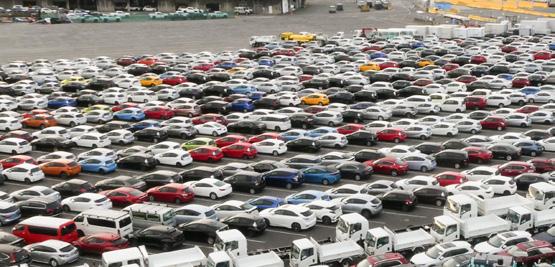
Drive Electric wants the clean vehicle standard realigned with Australia’s import targets
LOAD IT SHIP IT TRACK IT CLEAR IT DELIVER IT !
BIGGER IS BETTER
move to new, much larger premises means we are to offer even more services to our dealer clients
to door ro-ro vehicle shipping from Japan and Australia
Containerised vehicle shipping from anywhere in the world
Vehicle tracking
VEHICLE SHIPPING
Approved MPI transitional facilities and cleaning services
GENERAL FREIGHT
VEHICLE TRACKING
SHIPPING SCHEDULE
We are specialists in transporting and exporting all types of Vehicles, Commercial trucks, vehicles of Special Interest and other RORO Heavy Cargo & Machinery.
it all off is Jacanna’s SmartTrade Rewards Programme, you can earn points for almost any reward you choose
We have developed a worldwide network of Agents who understand the commitment required to service our demanding market.
www.jacanna.co.nz
Tel: +64 9 825 0888
Finding out where your vehicle is at any one time of the process, gives you the ability to manage the collection and processing of documents and payment on time.
TRS and shipping services from Japan to New Zealand. www.jacanna.co.nz
info@jacanna.co.nz
Tel: +64 9 825 0888
Buyers are changing faster than industry
Getting to grips with changes in consumer trends is essential, says Steve Vermeulen
There is sometimes a temptation to talk about change as something happening on the supply side, whether that’s new makes, models, tech or shifts in monthly registrations.
But the more interesting shift I see is one happening with buyers.
than automatic. For the newer manufacturers, that creates opportunity. For established brands, it removes some protection once provided by heritage alone.
DIRECTORS
Darren Wiltshire dazzz@autofile.co.nz ph. 021 0284 7428
Brian McCutcheon brian@autofile.co.nz ph. 021 455 775
DESIGNER
Adrian Payne arpayne@gmail.com
Consumers have more choice than ever. Through simple purchasing behaviour, we’re seeing them research more, switch more easily and become less tolerant of friction. Registration data will tell you what sold last month, not why buyers are gravitating towards certain models and marques.
To understand that, you need robust data from qualified New Zealand car shoppers. That’s what we set out to deliver with our automotive consumer insights survey – a 43-page study based on feedback from nearly 2,000 people who have recently bought a vehicle or are actively in the market.
One of the clearest signs of changing behaviour is the rapid rise in consideration for Chinese cars. Among new-vehicle buyers, 33 per cent said they would now consider a Chinese brand, more than the 28 per cent who would consider European.
Japanese consideration remains high at 75 per cent. However, value, specification and technology of emerging brands are pulling consumers beyond marques they may once have defaulted to.
Some 71 per cent purchased a different make from their previous car, suggesting loyalty is increasingly conditional rather
The research also challenges the idea that every online enquiry represents someone at the start of their journey. Only around one-infive buyers contact a dealer after less than a week of research. Most are looking online longer, with 40 per cent of new-vehicle buyers and 36 per cent of used-car purchasers researching for between one and four weeks before making contact.
By the time buyers ask detailed questions, assume they have compared specifications, watched reviews, checked ownership costs, read forums and ruled out alternatives. The enquiry is often not the start of the sales process, but the point at which they decide if a dealership can add value or make the purchase simple.
Geography is shifting too, with 77 per cent searching beyond their local area and nearly half of newcar buyers going nationwide. You’re no longer competing only with the business down the road, but with every dealer holding the same vehicle anywhere in the country.
Taken together, these findings point to a more open-minded, better researched and less geographically constrained buyer. Combine market sales and supply data with a richer understanding of purchaser behaviour, and you have a much better chance of positioning your dealership for today’s informed consumer.
EDITOR
Darren Risby ris@autofile.co.nz
JOURNALISTS
Matthew Lowe matthew@autofile.co.nz
Sue Brebner-Fox sue@autofile.co.nz
MOTORSPORT
Mark Baker veritas.nz@xtra.co.nz
Visit www.autofile.co.nz to subscribe to Autofile magazine and have it delivered monthly in print. The subscription rate is $78 plus GST for 12 issues per year.
Autofile magazine is also available online as a readable file or downloadable as a PDF. Back copies dating to 2017 can be found on the website where you can subscribe to our Insight email alerts.
Copyright: Published monthly by 4Media Ltd
All statements made, although based on information believed to be accurate and reliable, cannot be guaranteed, and no liability can be accepted for any errors or omissions. Reproduction of Autofile in print or digital format in whole or part without written permission, whether by copying or any other means, is strictly forbidden.
All rights reserved. ISSN 0112-3475 (print) ISSN 2350-3181 (online)
W We of fer a full range of ser vices
• Entry Certification for imported cars
• Vehicle Appraisals
• WoF/CoF Inspections
• Road User Charges
• Registration & Relicensing
• Exhaust Emission Testing
www.vinz.co.nz
by the NZ Transport Agency
STEVE VERMEULEN Industry relations manager, Trade Me Motors
vehicles in 2025 tightening to 58gCO2/km by 2029 to match those in Australia. At the moment, New Zealand’s targets are 112.6g from 2025 and 65g for 2029.
It says this will ensure access to the latest EV technology and prevent New Zealand from importing vehicles no longer acceptable in other markets.
It also suggests improving the credit framework of the CVS to ensure credits retain their value and are tradeable across new and used segments, “preventing market distortions that incentivise older, less efficient imports”.
The manifesto plea has been backed up by an open letter from Kirsten Corson, Drive Electric’s chair, to Chris Bishop, Minister of Transport, calling on the government to commit to strengthening the CVS.
The policy was introduced in January 2023 and has recently been the subject of a targeted consultation that included the car industry, overseas organisations,
government agencies and advocacy groups.
Officials have provided their advice to Bishop and cabinet was expected to decide the fate of the CVS in June, but an announcement still hadn’t been made when
Autofile went to press.
Corson notes in her July 24 letter that Drive Electric’s members reviewed the CVS consultation responses and “were heartened to see the clear majority were in support of keeping the standard”.
“The Strait of Hormuz crisis added significantly to what Kiwi families and businesses pay for fuel, with petrol up by 18.6 per cent and diesel up 42.6 per cent in March 2026 alone – the largest monthly increases since Stats NZ began recording this data in 2011,” she writes.
“The CVS is our one policy lever for shifting the fleet onto our 88 per cent renewable electricity. The standard could be aligned with Australia’s NVES, which the Australian government has confirmed is delivering results.”
She points out how clean-car
policies helped drive New Zealand’s combined market share of EVs to more than 20 per cent in 2023. After the clean car discount was repealed, the CVS was weakened twice and road-user charges (RUC) were applied to EVs, the share fell below 10 per cent by 2025.
In 2024, the government also said changes to the CVS aimed to align the scheme with Australia’s regulations.
“Since then, we have further weakened the standard so now the carbon-dioxide penalty here is just $15 per gram against Australia’s AU$50-$100 [about NZ$60-120] per gram,” says Corson.
“Weaker EV supply was a consequence of weaker demand policy, not its cause, and removing the standard further will only deepen it.”
SUPPORTING TRANSITION
On the demand side, Drive Electric wants policies implemented that make EVs a financially rational choice for business, fleets and freight operators.
“Supply alone doesn’t drive uptake. Even when EVs are
Key points from manifesto
Some of Drive Electric’s policy recommendations cover light-vehicle supply, demand stimulation and the corporate fleet-to-used pipeline.
Supply side: Reinstate and strengthen the CVS, restore penalty settings to align with Australia, and improve the framework so credits retain their value and are tradeable across the new and used-vehicle segments.
Align CO2 targets with international leaders to ensure access to the latest EV technology and prevent New Zealand from importing vehicles no longer acceptable elsewhere.
Demand side: Roll out targeted FBT exemptions or reduced rates for zero-emissions light commercials and establish a framework supporting pre-tax EV benefit programmes for zero-emitters so employees can
access EVs from pre-tax income. Introduce a 12-month RUC exemption for new light EVs from the date of first registration, and reform RUC to include an emissions-based component so per-kilometre charges reflect vehicles’ emissions profiles.
Infrastructure: Introduce rightto-charge legislation to prevent landlords from unreasonably withholding consent for tenants to install EV charging equipment.
Update the Building Code to require 100 per cent of new residential parking spaces and 20 per cent of commercial spaces, where there are 10 or more, to be EV ready, and require new dedicated charging installations to be smart-ready.
Inspections: Introduce mandatory WOF testing of light vehicles to identify highemitters already in the fleet.
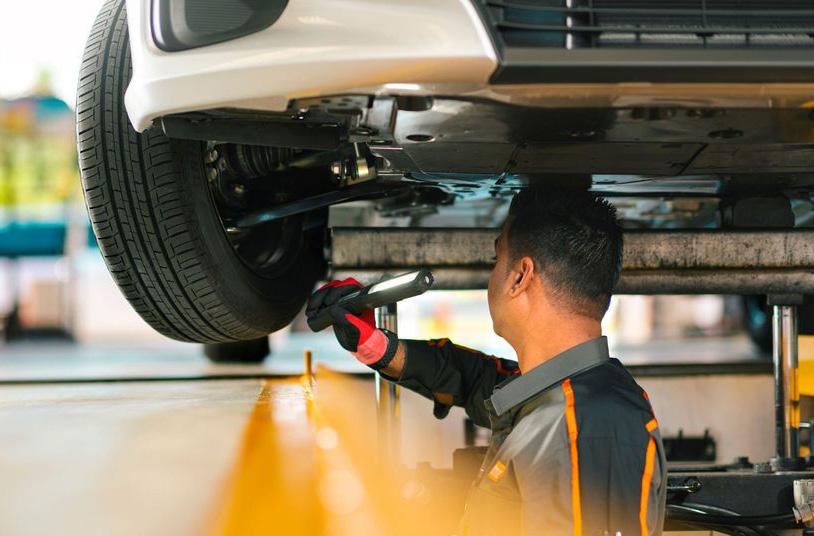
Politicians are being urged to make emissions testing part of the WOF regime
available, the purchase and operating cost calculation must be right,” its manifesto states.
“With business fleets buying more than 60 per cent of new cars, they are the primary pathway through which affordable secondhand EVs enter the New Zealand market but only if the right policy signals are in place to drive corporate uptake in the first place.”
Recommendations include implementing targeted fringebenefit tax (FBT) exemptions or reduced rates for zero-emissions light commercials and establishing a support framework for pre-tax EV benefit programmes. The latter would enable employees to access EVs from pre-tax income and support uptake beyond the corporate fleet.
Citing “compelling” evidence from Australia, it notes an FBT exemption for eligible EVs was introduced across the Tasman in July 2022. It led to the market share of zero and low-emissions vehicles rising from less than two per cent to more than eight per cent within two years.
“A pre-tax EV benefit programme went from facilitating around two per cent of all EV purchases in early 2022 to approximately 40 per cent by mid2023, a 20-fold increase in roughly 18 months,” adds Drive Electric.
“The cost impact is material. The annual cost of a typical EV on a pre-tax EV benefit programme fell by more than $5,000 once the FBT exemption was applied.
“Australia’s experience demonstrates that demand-side fiscal settings don’t just make EVs marginally cheaper, they structurally reshape how and by whom new vehicles are purchased.”
The manifesto continues by noting New Zealand’s used-vehicle market has a characteristic making the corporate fleet pathway even more important here than in comparable markets.
About 41 per cent of our country’s light-vehicle fleet arrives as second-hand imports with an average age of 10 years, predominantly from Japan.
“This dependency means New Zealand families are largely
Weaker EV supply was a consequence of weaker demand policy, not its cause
– Kirsten Corson
reliant on overseas fleet cycles, and the policy decisions of overseas governments, for access to affordable used vehicles,” it explains.
“Building a domestic fleetto-used pipeline through the corporate uptake of EVs locally reduces this dependency, and gives families access to latemodel, locally serviced used EVs on a predictable and growing timeline.”
As for new light-commercial vehicles, the report notes GSTregistered buyers account for about 80 per cent of all such purchases in New Zealand.
“With typical fleet replacement cycles of 36-60 months, the corporate sector has the potential to generate a steady, predictable pipeline of late-model used EVs accessible to everyday families, but only if fiscal settings make EVs the rational choice at the point of corporate purchase.”
CHANGES TO CHARGES
Drive Electric also wants the government to change the RUC system and recommends introducing a 12-month exemption for new light EVs, applicable from the date of first registration.
Since the RUC exemption for light EVs ended in April 2024, the manifesto highlights that buyers of new electric cars have faced charges of $76 per 1,000km from the moment of registration, “a cost previously avoided that removes exactly the demand-side signal needed to close the residual price gap with ICEs at purchase”.
An exemption for the first year of ownership would lower total
ownership costs without creating an open-ended subsidy or longterm erosion of the RUC revenue base as EV market share grows.
“At New Zealand’s average annual travel distance of roughly 12,000km, the exemption is worth about $900 in year one to a new EV owner, a material saving delivered precisely when it can influence the purchase decision.”
A pitch is also made to extend RUC exemptions for commercial EVs, including electric trailers, until
2032 or until they reach two per cent of the commercial fleet.
Drive Electric notes commercial fleet investments are long-lived capital decisions, and operators need a clear and stable cost environment during the market development phase to commit with confidence.
“A time-bound exemption tied to fleet penetration provides that certainty while remaining proportionate. It expires when the market no longer needs the signal.
“RUC exemptions directly reduce the operating cost of commercial EVs during the critical market development phase, making them commercially competitive with diesel alternatives. The exemption should remain in place until the commercial EV market reaches sufficient scale to sustain itself without fiscal support.”
The manifesto goes on to suggest introducing an emissions component to RUC so charges reflect the environmental cost
[continued on page 6]
EASY APPLICATION
Submit two downloadable forms and simply send to us for review.
COMPETITIVE INTEREST RATES & FEES
Our partnerships give us the ability to offer superb lending rates.
EFFICIENT SERVICE
Hear back from our team about finance in as little as 24 hours.
NZ BASED
Autobridge is New Zealand based and covers the country, so we are never far away when you need us.
www.autobridge.co.nz 09 320 5646
of the vehicle and not only the distance it covers.
It says the current approach creates inequity because a clean EV and a high-emitting diesel are treated identically on a perkilometre basis, “removing any price signal that would otherwise incentivise operators to choose lower-emissions alternatives”.
There is also a call to make emissions testing a component of the warrant of fitness (WOF) regime because it would provide a practical, low-cost mechanism to identify and address the most polluting vehicles in the fleet, independent of what new models are being imported.
“The WOF regime is a wellestablished, mandatory touchpoint for every light vehicle on New Zealand roads,” says Drive Electric.
“It currently assesses safety –brakes, lights, tyres and structural integrity – but doesn’t assess what the vehicle is emitting into the air we breathe. Emissions testing at WOF is consistent with approaches
taken in the UK and across much of Europe. It would complement supply-side standards, such as the CVS, by addressing the tail of the existing fleet.”
INFRASTRUCTURE GOALS
Drive Electric’s wish list addresses the need for physical and digital infrastructure to support more EVs on our roads.
“Supply and demand signals are necessary but not sufficient,” it explains. “Without the infrastructure to charge reliably, the rational consumer or fleet operator will not make the switch.
“International markets show that infrastructure deployment stalls without clear standards and regulatory frameworks. Not
Our strength comes from knowing our customers’ needs, understanding and fulfilling them
because the appetite isn’t there, but because inconsistent processes and upfront cost barriers erode the case for investment.
“Regulatory mandates and digital standards are required to ensure charging infrastructure delivers its full potential value to operators and customers alike.”
It says reaching the national goal of 10,000 public chargers by 2030 requires learning from other markets as two structural inefficiencies risk undermining deployment.
These are early charge-point operators bearing connection costs before demand materialises and the variability of network connection processes across different electricity distribution businesses, “both of which erode the value of infrastructure investment before it has a chance to perform”.
“The Electricity Authority’s distribution connection pricing reform and pioneer scheme rules represent progress on both fronts.
“But implementation must be monitored and gaps addressed where high upfront costs remain prohibitive, particularly for highcapacity DC charging in public and business locations.”
The manifesto recommends implementing a mandatory national digital tool providing realtime visibility of network capacity, reducing site assessment costs and accelerating deployment.
As for charging vehicles at home, work and private facilities, it calls for right-to-charge legislation that prevents landlords from unreasonably withholding consent for tenants to install EV charging equipment.
It also wants the Building Code updated to include a requirement that all new residential parking spaces be EV-ready with a wired conduit and sufficient electrical capacity, and for all new
commercial buildings with more than 10 parking spaces to make at least 20 per cent of them EV ready.
ENERGY SECURITY
Drive Electric argues its recommendations can also provide energy security, noting New Zealand imports 100 per cent of its transport fuel. This leaves the country exposed to global fossilfuel markets, shipping routes and exchange rates.
“At the same time, New Zealand has a renewable electricity grid exceeding 88 per cent of national consumption, one of the highest in the OECD. In 2026, that’s not just an environmental asset. It’s a rare, underused competitive advantage sitting right in front of us.
“Shifting transport energy from volatile imported fossil fuels to locally generated electricity protects households from price shocks and keeps billions of dollars circulating in the domestic economy instead of leaving the country. This is energy security by reducing dependency on supply chains New Zealand doesn’t control and converting an existing renewable asset into national resilience.”
Other parts of the manifesto make recommendations to encourage the transition of heavy vehicles to electric powertrains, and address issues around micromobility and product safety.
Overall, the document proposes a renewed partnership between industry and government, structured around the logic that combining supply, demand-side and infrastructure initiatives will equal an accelerated uptake of EVs.
“Realising this opportunity requires long-term, bipartisan commitment. Market confidence depends on consistent policy signals across electoral cycles because investors, fleet managers and households make decisions on multi-year horizons.
“A shared political commitment to EV transition sends the signal our market needs. Equally, the benefits of lower running costs must be accessible to all New Zealanders, not just those who can afford the upfront purchase.”
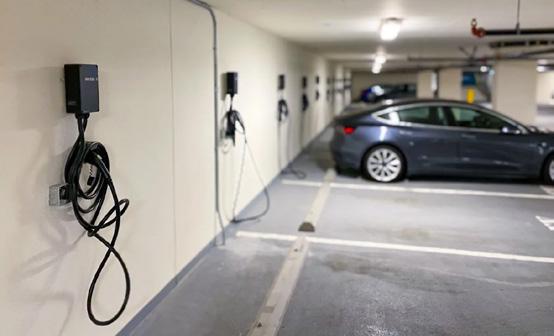
Making all new residential parking spaces EV ready is on the manifesto wish list
A ROADSIDE PARTNER YOUR CUSTOMERS CAN RELY ON
Enhance your insurance offering with proven, nationwide support
▪ 24/7 roadside assistance across New Zealand
▪ High-performing, accredited provider network
▪ Cost-effective without compromising quality
▪ Seamless integration with claims and assistance workflows
Group boss seeks total control
The chief executive officer of 2 Cheap Cars says the company will realise its “full potential” by being delisted from the NZX and privately owned.
Sena & Co, which David Sena owns, has launched a bid for shares it doesn’t already hold and has outlined its reasons in an offer document issued on July 27 under the Takeovers Code.
It is offering $0.80 cash per share with the offer closing at 11.59pm on August 24, although the deadline can be extended.
Sena & Co owned 75.92 per cent of 2 Cheap Cars (2CC) when he tabled the deal. That came in at 34,586,927 shares with about 11 million in the hands of 222 other holders.
In the offer document, Sena explains he has launched the takeover bid to “consolidate ownership and streamline” its structure.
“Having steered 2CC through its years as a listed company, David is now of the view the business is best positioned to realise its full potential as a private entity,” states the document. “David’s commitment to 2CC is long term and unconditional.
“As the company’s founder and largest shareholder, he is uniquely
positioned to lead 2CC into its next phase – one characterised by focused, founder-led decisionmaking.
“The offer provides minority shareholders with a favourable and clear opportunity to realise their investment at an attractive premium, in circumstances when the shares have been thinly traded and secondary market liquidity has been limited.’”
Sena’s “compelling” offer also provides shareholders with certainty of value in a single transaction. The offer of $0.80 per share exceeds the company’s recent share-price trading, including a premium of:
21 per cent on the last closing price on the NZX of $0.66 on July 9, the final trading day before the takeover notice was lodged.
20 per cent on the one-month volume-weighted average price (VWAP) of $0.66 per share, 24 per cent to the six-month VWAP of $0.64 and 39 per cent to the 12-month VWAP of $0.58.
The offer represents 5.2 times the earnings before interest, taxes, depreciation and amortisation for 2 Cheap Cars’ fiscal year ending March 31, 2026, of $8.1 million, and it also follows payment of the
$0.04 per share dividend declared in June.
If the offer succeeds at or above the 90 per cent acceptance threshold, Sena & Co intends to compulsorily acquire all remaining equity securities and apply for 2 Cheap Cars to be delisted from the NZX’s main board, at which point any remaining shares will be acquired at the offer price.
If the 90 per cent threshold isn’t met but the minimum acceptance condition is waived, 2CC would be expected to remain listed on the NZX, with Sena & Co continuing to hold its majority position and maintaining its board representation.
The statement adds: “In that scenario, minority shareholders would remain in a majoritycontrolled company with reduced trading liquidity and no near-term prospect of a liquidity event.
“We believe the offer represents a compelling opportunity to unlock significant value and deliver a positive outcome for all 2CC minority shareholders. It enables you to sell your shares at a significant premium to recent share prices and we encourage you to accept the offer.”
Sena’s shareholding in the company reached 75.92 per cent
Toyofuji vessels Voyage
David Sena, chief executive of 2 Cheap Cars
in 2023 when the Sena Family Trust acquired the shares of fellow co-founder Eugene Williams. The trust transferred those shares to Sena & Co, the vehicle through which Sena holds his investment in 2 Cheap Cars.
The offer document adds: “Sena co-founded 2CC with a straightforward conviction that New Zealanders deserve access to quality used vehicles at genuinely affordable prices, without compromise on reliability or service.
“From a single yard, 2CC grew into one of New Zealand’s most recognised used-vehicle retailers, building a loyal customer base and a reputation for value that larger, more expensive competitors struggled to replicate.
“The decision to list 2CC on the NZX was made at a particular moment in the company’s development to access capital markets, broaden the shareholder base and fund the expansion that transformed 2CC into the national business it is today.
“That chapter of 2CC’s story has been a success and David is proud of what the company has achieved as a listed entity.”
SHARES ‘THINLY TRADED’
An independent adviser’s report on the takeover bid, published by Simmons Corporate Finance, analyses the rationale Sena & Co provides in its offer document.
It says: “The offer provides minority shareholders with an opportunity to realise their investment at a premium to 2CC’s current trading prices, in
circumstances where the shares have been thinly traded and secondary market liquidity has been limited.
“We consider the rationale for the Sena offer to be sound. Other than enhanced visibility and profile, there appears to be little benefit to 2CC being a listed company. It is relatively small in size and trading of its shares on the NZX’s main board is extremely thin.
“The costs the company incurs associated with being listed most likely outweigh the benefits derived from 2CC’s profile as a listed company.
“We assess the fair market value of 100 per cent of the ordinary shares in 2CC to be in the range of $32.3m to $41m as at the present date. This equates to a value of $0.71 to $0.90 per share, with a midpoint of $0.81.
“The valuation represents the full underlying standalone value of 2CC based on its current strategic and operational initiatives. The value range exceeds the prices at which we would expect minority interests in 2CC to trade at the present time in the absence of a takeover offer.”
DIRECTORS BACK PROPOSAL
2 Cheap Cars’ independent directors have recommended shareholders accept the takeover offer.
Michael Stiassny, chairman, says Sena & Co’s offer comes after engagement with the company’s directors following receipt of a confidential nonbinding indicative offer (NBIO).
He adds: “The price per share in the NBIO was initially $0.75.
“After negotiations, Sena & Co submitted an amended NBIO, offering $0.75 per share if the 90 per cent minimum acceptance condition was waived and $0.80 per share if the 90 per cent minimum acceptance condition was satisfied.
The offer represents a compelling opportunity to unlock significant value
“Following further negotiations, Sena & Co increased the offer price to $0.80 per share in all cases.
“Despite numerous discussions, the independent directors were unable to get Sena & Co to increase the offer price beyond $0.80. However, the independent directors are not confirming Sena & Co will not increase the offer price.”
The board’s consideration of the offer has been delegated to
Report tackles sector trends
The adviser’s report produced by Simmons Corporate Finance identifies some market trends in New Zealand’s used-vehicle industry.
These include the legacy of the government’s clean-car policies. Despite the end of the clean car discount (CCD) on December 31, 2023, there is “continued demand” for EVs and hybrids.
It adds there’s an increasing
supply of budget models from Japan with the flow of electrified imports raising consumer exposure to their ownership.
The report states: “The usedvehicle market remains resilient and is poised for continued evolution, driven by technological advancements and changing consumer preferences.
“As digital platforms become more prevalent, the purchasing
and managed by its takeover committee, which comprises Stiassny and fellow independent director Gordon Shaw.
The key reasons why Shaw and Stiassny recommend accepting the offer include $0.80 per share being within the independent adviser’s valuation range of $0.71 to $0.90 and representing a premium to the company’s pre-announcement trading price.
Other reasons given by the takeover committee are that 2CC is substantively under the control of Sena & Co, trading in 2CC’s shares is illiquid, the offer presents a certain opportunity to sell and no competing proposal has emerged.
Stiassny, who has an interest in 102,139 shares, and Shaw, who has 10,181 shares, intend to accept the offer.
The takeover offer will remain open for acceptances until 11.59pm on August 24. If Sena & Co wishes to do so, it may extend the offer – in one or more extensions –beyond this date to the same time on October 19.
If Sena & Co extends the offer, the new closing date will be announced through the NZX and it must give at least 10 working days’ notice of an extension of the offer period.
Shareholders have been advised: “If you validly accept the offer, you will be paid the offer price for your shares by Sena & Co within five working days after the latest of the date on which the offer becomes unconditional, the date on which your acceptance is received, and August 24.”
adapt to evolving policy settings,” says Simmons Corporate Finance.
process will likely become increasingly streamlined.”
According to market-research company Mordor Intelligence, New Zealand’s used-vehicle sector is expected to grow from $527 million in 2025 to $556m in 2026 and is forecast to reach $722m by 2031.
“Demand remained resilient despite the end of the CCD and introduction of road-user charges for EVs on April 1, 2024, as buyers
“Consumer appetite for versatile SUVs stays strong, while a steady influx of competitively priced Japanese HEV and EV imports supported by a weak yen broadens low-emissions choices.
“These conditions create opportunities for dealers that blend omnichannel retailing, emissions-compliant inventory and transparent vehicle histories to serve an expanding, tech-savvy customer base.”
Michael Stiassny, top, and Gordon Shaw, 2 Cheap Cars’ independent directors
Call to fix outdated legislation
Vehicle depreciation needs to be formally considered by the Motor Vehicle Disputes Tribunal (MVDT) when rulings go in favour of buyers to help create a “fairer playing field” between dealers and consumers.
That’s the view of the Motor Trade Association (MTA), which is calling on political parties to consider fixes to a number of problems and challenges facing the automotive industry.
Among its list of suggested reforms is changing the Consumer Guarantees Act (CGA) to allow for reasonable depreciation in longuse cases.
It says the current law provides important protections, but its remedy rules do not meaningfully account for depreciation when matters go before the MVDT.
“Buyers can reject a vehicle after two or three years and travelling tens of thousands of kilometres and recover the full purchase price, while traders receive a materially depreciated asset,” it explains.
“This disproportionate and arguably unbalanced outcome creates open-ended exposure for traders, inflates business costs and encourages rejection over earlier negotiated remedies.”
To address the problem, the MTA recommends amending the CGA’s motor-vehicle settings to allow tribunals to make a principled allowance for depreciation when a vehicle is rejected after significant time and use, while preserving full-refund protections for serious, concealed or safety-critical faults.
It proposes achieving this through a statutory mechanism to make deductions for reasonable depreciation when ordering a refund that considers the vehicle’s age and condition at the time of sale, kilometres driven, fault type, repair history and whether the defect was concealed or safetycritical.
The recommendations made by the MTA are outlined in its preelection manifesto titled The Road
to Prosperity. The policy document adds politicians should consider a schedule or formula approach that gives parties and tribunals a clear, predictable starting value point that can be adjusted for the circumstances of each case.
A band system with guidelines setting limits as to when the CGA applies based on vehicle age is also flagged as worth introducing.
For example, says the MTA, a new vehicle might have five years, and a 15-year-old vehicle with 200,000km on the clock might have three months.
The report highlights expected impacts of the proposed changes, including “fairer, more proportionate outcomes for consumers and traders with rejection remedies that better reflect the actual position of both parties”.
Such reforms may also reduce the incentive for frivolous disputes that waste the time and resources of businesses and the MVDT,
The law has simply not kept pace with how quickly vehicle technology has evolved
MTA
encourage earlier negotiated remedies with parties more willing to settle under a predictable framework, and preserve consumer protection for quality failures while closing the gap between purchase price and value-on-return in longuse cases.
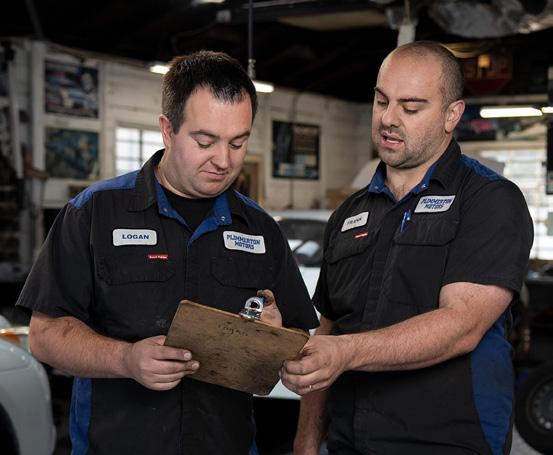
Logan Drysdale, owneroperator of Plimmerton Motors in Porirua along with Frank Anderton, is backing the MTA’s manifesto, and says it’s now time to consider improving the CGA rules and tribunal outcomes.
“The Disputes Tribunal looks for a solution that’s a compromise for both parties, rather than getting to the truth of the matter,” he adds.
“The problem with that is they aim to make everyone happy, but you end up with a situation where neither side wins.
“The whole process takes a long time and if you want to take
it further, it’s even longer and gets expensive.
“Many automotive businesses will tell you the tribunal will just look for an outcome that’s good for both parties, rather than saying ‘you’re wrong and you’re right’, which really it should be.
“It’s good the Disputes Tribunal is basically a cheap service but if it’s not working for either party, it’s time to have a look at making it better.”
The MTA continues on the “fair playing field” theme by noting that vehicle disputes often involve technical issues and can be costly and slow when the tribunal or courts are the default pathway.
It is calling for the MVDT’s role to be expanded beyond sales complaints so it can also hear repair, workmanship and other motor-trade disputes, including diagnostic and scope disagreements.
The tribunal’s decision-making should be supported with technical assessors where appropriate and its settings modernised so it operates as a “specialist, accessible, one-stop shop”.
The MTA says such changes will deliver faster, lower-cost resolution of disputes and more consistent, technically informed decisions. This would also lead to greater confidence for consumers and traders, and improved use of court time and access to justice.
RIGHT TO REPAIR
Right-to-repair issues are also in the spotlight, with calls for a legislated tiered-access framework that considers the needs of consumers, vehicle importers and the repair sector in a “fair, balanced, and reasonable way”.
The MTA warns a consumer’s right under the CGA to choose where their car is serviced is becoming “increasingly theoretical when skilled repairers cannot access the diagnostic tools, software and repair data needed to service modern vehicles”.
Logan Drysdale, left, and Frank Anderton of Plimmerton Motors. Photo: MTA
Spanning entry-level through to advanced and specialist training, these programmes are designed to support learners at every stage of their career. Find out more at mito.nz
Training. By industry. For industry.
At the same time, automotive manufacturers have legitimate interests in ensuring safety-critical software is applied correctly, cyber security is maintained and brand standards are upheld.
“The current lack of a framework acknowledges neither reality adequately with consumers being caught in the middle,” it says. “The law has simply not kept pace with how quickly vehicle technology has evolved.”
It notes the Australian Motor Vehicle Service and Repair Information Sharing Scheme shows fair access and appropriate safeguards can co-exist, and provides a sensible start point for discussion in this country.
However, “this needs adapting to ensure consumer rights are equally considered for used imports, which is a unique aspect of the New Zealand market”.
Officials and politicians are encouraged to engage with the MTA on right to repair because it has convened a cross-industry workforce to broker a solution that caters to domestic consumer and industry needs.
Beyond looking at Australia’s approach, it also suggests picking up on parts of the EU Block Exemption Regulations and US state-level right-to-repair laws for adoption in New Zealand.
It proposes any reforms should address technical issues, including data access, cyber security, EV high-voltage and advanced driver-assistance systems tooling, IP protection, dispute resolution and cost recovery, head-on rather than legislating around them.
As part of this, it suggests ensuring select committee processes set aside time for technically informed industry submissions.
We need, like all industries, legislation that enables rather than disables
– Lee Marshall
legitimate IP, brand standards, cyber security and investment recovery.
Other benefits include a “crossindustry settlement that doesn’t need to be relitigated every parliament”, and consumers having “choice and the confidence their vehicles can be repaired at a wide variety of repair workshops”.
Lee Marshall, the MTA’s chief executive, says these calls, along with others in the manifesto released in early July, have been formulated with input from industry members and propose solutions to issues that stymie
a competitive industry where businesses openly compete on price and quality is one that ultimately drives the growth and productivity of the nation.”
BARGAINING REGIME
Other problems identified by the MTA include small and mediumsized enterprises (SMEs) facing competition-law uncertainty and high legal costs when negotiating baseline terms with powerful buyers in concentrated markets. It recommends creating a simple, notification-based safe harbour for eligible SME collective bargaining arrangements with eligibility thresholds and public-
“Australia has addressed this gap through a small business collective bargaining regime under the Competition and Consumer Act and New Zealand has not,” it
“Unfair contract terms protections exist in the Fair Trading Act, but enforcement has been modest and little has been done around terms which are inherently unfair.”
When it comes to business investments, the MTA says the drive by banks to decarbonise lending portfolios has meant automotive companies are increasingly locked out of services or unable to finance necessary improvements.
“This is perpetuating a consolidation of small Kiwi-owned businesses into large externally financed corporates – moving profits offshore, reducing local business ownership, reducing competition and blocking local investment,” it adds.
It wants basic monitoring of debanking activity so regulators, government and affected sectors have visibility of the issue. “This is a transparency and data ask, not a new regulatory regime on bank exit decisions.”
VIEWS FROM THE TOP
Marshall explains The Road to Prosperity was produced in collaboration with members and targets key issues because if the automotive industry does well, it helps the whole country.
“And if we don’t – if needless bureaucracy or the unintended consequences of well-meaning but out-of-date or ineffective legislation gets in the way – then on the flip side it hurts, constrains and slows all of us down.
Such actions will deliver “legislation that works in New Zealand workshops on the vehicles New Zealanders drive”.
It will also provide qualified repairers with access to the data, parts and tooling they need, while manufacturers, distributors and dealers retain protection for
franchising law, fair trading and consumer guarantees. It’s no small thing that we now also get behind right to repair and the need for a legislated, fair and balanced solution for our industry – a conversation that has been brewing for some 20 years.
“With the growing dependence of modern vehicles on proprietary technology, the time has now come.
“These are important because
The manifesto also proposes a mandatory franchising regime and actively enforcing existing unfair contract terms protections, so smaller parties are better informed at the outset and better protected if things go wrong.
“Small businesses, including franchises and SME suppliers, routinely contract with much larger parties under standard terms with little ability to negotiate,” the MTA explains.
“New Zealand has no franchisespecific regulation, so franchisees are exposed if relationships deteriorate or brands restructure.
“We need, like all industries, legislation that enables rather than disables. But we also need stability and this point can’t be emphasised enough,” he adds.
“Just as damaging as poor legislation is legislation that endlessly changes. Clean-car policy runs the real risk of becoming a political football. It’s important we work together on large issues and, as much as possible, try to achieve cross-party support.”
Marshall adds that when “huge policy swings” occur, they hurt industry by creating reluctance to invest locally and businesses prioritising other global markets because New Zealand may seem
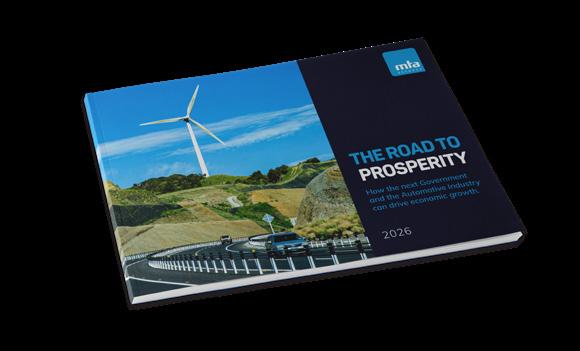
The cover of the MTA’s pre-election manifesto
t like a small and risky bet. “We kept this thinking front and centre when creating our new manifesto of calls to government. We knew we needed calls on the big issues that are capable of standing the test of time – calls capable of broad support, or at the very least acceptance, from multiple political viewpoints.”
Some of the MTA’s key focus areas were covered in the July issue of Autofile. These include creating a training fund to increase financial support for businesses taking on apprentices and setting up a scrappage scheme for vehicles aged 20 years or older.
Marshall told Autofile the manifesto is designed to address the main concerns of its 4,000 members, which it engages with mostly through eight expert advisory groups that serve subsectors of the industry.
“We have one dedicated to repairers, to collision, to new and used-vehicle dealerships, motorbikes, recyclers and
Officials
automotive dismantlers. The list goes on. Our manifesto was formed in collaboration with them first and foremost.
“Then it was taken through our national panel, where we got the member-elected heads of each expert advisory group together for a day to work with the MTA’s senior team and board members to refine those calls.
“And finally it went through our industry leaders’ forum in April where we had the 30-something leaders of the largest automotive businesses in New Zealand in a
room to run it by them. It’s very much the product of our members and the feedback they’ve given us about what’s important and what they need to see change in order to do better.”
Marshall acknowledges some calls are more ambitious than others but the intention is for most of them to be pragmatic, actionable and broadly supportable by politicians irrespective of where they sit on the political spectrum.
He notes this is the second manifesto the MTA has put out
after it completed a similar exercise before the 2023 general election, when its headline calls targeted clean-car policies and introducing tax depreciation rules to encourage businesses to buy EVs and other low-emissions vehicles.
“I’m proud of the process we’ve followed this time to create it in terms of it being almost totally member-led. Before, it was more led by us with members ratifying it,” says Marshall.
“I’m pleased it touches on everything from commerce to transport, immigration, education and crime. It’s as comprehensive as the issues our member businesses face. Many calls we make, if enacted, would create a more favourable legislative environment that would make it easier for our industry to thrive.
“If our aim is to represent the industry and try to create a favourable policy environment, then I hope the industry can agree we’re putting our best foot forward. That’s what we’re here for.”
Dealers must report dodgy sales
Motor-vehicle traders need to get to grips with updated guidance issued by the Department of Internal Affairs (DIA) on how to identify and report suspicious activity linked to financing terrorism and money laundering.
The government is reminding businesses across the country selling high-value goods, including car dealers, that they have a key role to play under legislation.
Section 67a of the Anti-Money Laundering and Countering Financing of Terrorism (AML/CFT) Act prohibits any person in trade from buying or selling certain goods via a cash transaction, or a series of related deals, if the total value is equal or above the $10,000 threshold.
Specified high-value goods include motor vehicles, ships, jewellery, watches, gold, silver, other precious metals, and diamonds, sapphires or other precious stones because these allow large amounts of money to be moved or hidden more easily than cash.
“In some cases, these goods act like a substitute for money,” says Laura Olsen, AML/CFT director at the department. “They are bought with illegal funds, stored and later sold to make money look legitimate.”
The latest suspicious activity reporting guidance for high-value dealers issued by the DIA gives practical examples of what to look out for when handling expensive items.
It outlines when and how to submit an activity report, common indicators of dodgy activity in highvalue transactions, and money laundering and terrorism financing risks associated with trading specified high-value goods.
Olsen adds: “High-value dealers are an important line of defence against money laundering and terrorism financing. This guidance provides practical support to help businesses understand what suspicious activity looks like and when they need to report it.
“Spotting and reporting activity help protect businesses and the wider system from criminal misuse, keeping our communities safer. If something doesn’t seem right, like buyers who don’t seem concerned about price or unusual or complicated transaction patterns, businesses should act.”
It is important conditions on related transactions are followed. They are “anti-avoidance” provisions aimed at mitigating the risk of people structuring deals to bypass the $10,000 threshold.
“To detect any related transactions, you should take a riskbased approach to implement appropriate procedures, policies and controls,” states the guidance.
High-value car deals can be used to clean criminals’ cash
their value subjective and potentially volatile.
Collusion between buyers and sellers is another giveaway. For example, a launderer may list an item for auction that’s then purchased by an accomplice using dirty money.
The launderer then receives a transfer from the auctioneer to their account for the sale, successfully placing the illicit funds in the financial system.
For more information about the suspicious activity reporting process using the Financial Intelligence Unit’s goAML system. Visit fiu.police.govt.nz/home.
criminal activity, then a suspicious activity report must be filed. To do this, the DIA recommends such companies register with goAML and copies of reports filed must be kept.
High-value goods can be vulnerable to money laundering by virtue of their nature and potential to hold or represent significant value so they serve as a substitute for value that can be used to transfer or conceal criminal proceeds while evading or obscuring detection.
You must take adequate steps to identify whether transactions appear to be related or linked – DIA
“You must take adequate steps to identify whether transactions appear related or linked. It will not be sufficient to say they didn’t appear to be related if you have made no, or inadequate, attempts to identify any related transactions.”
If a high-value dealer has reasonable grounds to believe a transaction or activity by someone seeking to conduct or complete a sale or purchase is related to
Dealers in such goods can be vulnerable to misusing cash in transactions because buying expensive goods may be a way to legitimise illicit money by converting it to an asset that retains value to later onsell.
Other tell-tale signs are:
The misuse of intermediaries, legal persons or arrangements to conceal the beneficiary of the transaction, disguising their identity and further obscuring the source of funds.
Under or over-pricing to conceal value or legitimise ill-gotten gains. High-value goods can be unique, making
EXTRA GUIDANCE ISSUED
The DIA released a plethora of advice updates at the start of last month when it assumed responsibility as New Zealand’s sole AML/CFT regulator.
The material includes 23 pieces of guidance and is one of the largest resource of releases on the subject in recent years.
Caroline BridglandHill, acting director, says it shows the DIA’s commitment to giving better support to new and existing reporting entities.
“Bringing supervision under one agency provides an opportunity for greater consistency, clearer expectations and a more streamlined experience for regulated entities,” she explains.
“This is a significant change for many businesses. That’s why we are releasing one of the largest suites of AML/CFT guidance and educational resources in recent years to help entities understand their obligations and apply them with confidence.”
The DIA will publish more guidelines in coming months. It will continue to work with reporting entities to support understanding and implementation of the act, including through webinars, industry outreach and targeted engagement. Visit dia.govt.nz to find out more.
BUY SMARTER. SELL FASTER. STAY AHEAD.
Hundreds of vehicles auctioned every week and nearly 1,500 users ready to trade.
Auction Online gives you real-time access to the true used-vehicle market, nationwide. Buy, sell and manage stock from anywhere – fast, transparent and competitive.
Whether you’re clearing trade-ins, moving aged stock or filling your yard, our streamlined auction platform simplifies every step.
• Nationwide dealer network
Almost 1,500 users actively buying and selling.
• Real-time pricing transparency
Live bidding ensures you always hit true market value.
• High stock turnover
Hundreds of vehicles auctioned every week across NZ.
• Purpose-built dealer platform
Designed specifically for franchise & independent dealers.
• Fast, simple, secure Seamless listings, bidding and purchasing from one platform.
Join Auction Online today and start trading smarter
Car sales driving group’s growth
Selling cars remains the biggest driver of Turners Automotive Group’s performance. So much so, it delivers most of the company’s revenue and a strong share of profit even amid New Zealand’s economic slowdown.
As reported in the July issue of Autofile, Turners Cars’ revenue climbed by 10 per cent year-onyear to $315.3 million in 2025/26 and its profit of $32.6m went up by 12 per cent.
Looking behind those headline figures, the company puts its success down to its business model, which “keeps moving and improving”.
“Strength comes from scale and a simple but powerful idea – more good cars in, more customers through the system, and more value captured across finance, insurance and services,” it says.
“Auto retail demonstrates exactly the resilience and discipline we believe distinguishes Turners from the broader used-vehicle market.”
The first half of the past financial year was “characterised by subdued consumer demand and constrained sourcing”.
That was before “a significantly stronger second half in which proactive stock management and pricing optimisation delivered the margin expansion we had been positioning for”, according to the company’s annual report.
While overall volumes were flat, Turners Cars’ total owned units sold lifted by nine per cent from the previous 12-month period. It focused on the lower-priced vehicle segment where demand proved most resilient and was a “key commercial lever”.
By maintaining tight control over acquisition costs and stock turn, it protected margin without volumes declining.
Four new retail branches, and two replacements, are slated to open in 2027/28 with the current fiscal year serving as preparation for that.
The commercial division was a “standout performer” in 2025/26.
Damaged and end-of-life revenues grew by 10 per cent, while the trucks and machinery segment expanded by eight per cent. Both benefitted from stronger liquidation activity and improved sourcing of inventory.
The company emphasises this segment provides useful “countercyclicality to the broader retail business as commercial-fleet activity tends to be less sensitive to consumer sentiment”.
Focus areas to position Turners Cars for the next phase of growth in addition to network expansion include brand investment and commercial diversification.
Finance is a key component of every car dealer’s business and Turners Automotive Group delivered a 27 per cent jump in its loan book to $566m in 2025/26. This was a major contributor to the division’s profit rising by 19 per cent to $19.2m.
The loan-book expansion was headed up by a 50 per cent-plus increase in consumer lending volumes achieved as Oxford Finance’s credit policy was tightened.
“That combination isn’t a coincidence. It reflects sustained investment made in our proprietary origination platform and the compounding benefits of our integrated automotive ecosystem.”
Credit-quality metrics remained
“exceptional” and were among the strongest in the consumer finance market.
“Arrears stood at 2.5 per cent at March 31 compared with an industry average of 5.6 per cent – a gap that has widened over the past two years.
“Premium-tier lending accounts for 59 per cent of the ledger, up from 56 per cent a year earlier. The loan book continues to season well.”
Oxford Finance’s net-interest margin improved to 5.7 per cent supported by stabilising cost of funds and continued loan-book repricing. Its hedged borrowing ratio was increased to about 85 per cent, which reduced earnings volatility and provided a more predictable cost environment.
Unsecured lending is a new product area and is limited to higher-quality premium and tierone risk clients.
“This has been performing well. Risk-adjusted returns are being achieved over and above the secured lending, which is helpful in stabilising our overall margin profile.”
That said, the “single most significant capital management milestone” of financial year 2026 was the term-out of a $200m public securitisation warehouse in October 2025. This lowered its funding costs, reduced capital commitment and demonstrated capital-market access.
“Operating leverage was
a defining feature of the year. Lending volumes rose materially while headcount grew at a slower rate, producing strong incremental margin on new business.
“With a materially larger loan book and stable margins, finance is positioned to be a key earnings driver towards our financial year 2031 targets.”
As for insurance, Autosure’s profits rose by seven per cent to $17.3m, with revenue increasing by six per cent to $50.2m, as it built on its “track record of steady, compounding growth”.
The group says: “The business benefits from deep integration into our platform. When a customer buys a vehicle from Turners and finances it through our finance division, insurance is a next step.
“Our conversion rates reflect that. Core dealer and financebroker partnerships remained the primary driver of premium growth.”
Autosure added new distribution partners during the financial year, such as VTNZ, Gaspy and Quashed, which extended its digital footprint.
“We continued to invest in digital distribution capability with the launch of mechanical breakdown insurance [MBI] targeting the private-to-private market.
“This is an exciting development. The private-sale market represents a significant and historically underserved opportunity for MBI. Early activity
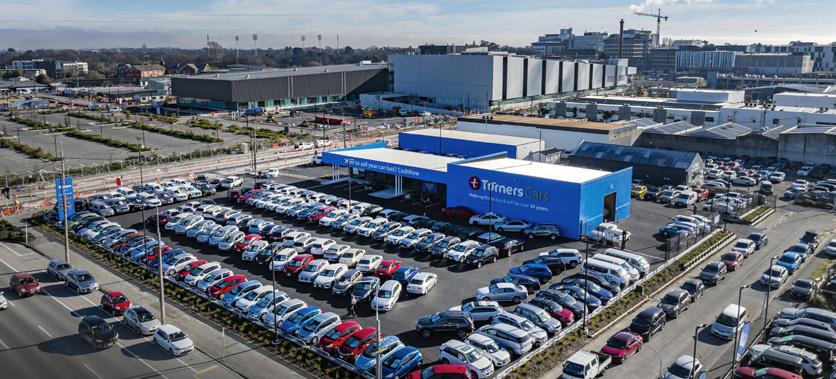
Turners Cars new site in Moorhouse Avenue, Christchurch opened during 2025. The company aims to expand its national retail work in coming years
has been encouraging and we see this channel as a growth opportunity with minimal capital requirement.
“Our direct-to-consumer comprehensive vehicle offering also adds a useful diversified
an example of the integration we’re building across the group.
“The expansion of our mobile mechanic
per cent of consumer businesses globally.
“Importantly, we continue to promote from inside. Our culture is the result of investment in
As for Tina from Turners’ Road Trip, the song came second on ZM’s public playlist for New Zealand’s unofficial national anthem with more than 14,000 plays on Spotify, which is “remarkable for any track and almost unheard of for a radio
the importance of maintaining a flexible sourcing model, and a product mix that reflects buyer affordability, fuel-efficiency preferences and impacts of the clean vehicle standard (CVS).
“2 Cheap Cars’ core business continues to support the transition to lower-emissions transport through the sourcing, promotion and sale of hybrids and EVs, alongside the company’s own environmentally responsible operational practices,” states its annual report.
“As a recognised participant in the low-emissions market, 2 Cheap Cars continues to sell significant volumes of electric and hybrid vehicles.”
The company retailed 4,410 EVs and hybrids in the past fiscal year compared to 3,873 in 2024/25. Overall vehicle sales reached 7,239 versus 7,675.
Momentum gathered “significantly” in the second half, “driven by stronger margins, improved procurement conditions, and outstanding finance and insurance [F&I] performance”.
Michael Stiassny, chairman, and chief executive officer David Sena say the 2026 financial year featured a “demanding landscape” for the used-car sector marked by rising regulatory costs and economic headwinds.
Despite these issues, 2 Cheap Cars delivered a “robust” performance by posting net profit after tax (NPAT) of $3.2 million.
“This result underscores the strength of our vertically integrated operating model and impact of key operational initiatives implemented,” explain Sena and Stiassny.
“Revenue and income remained steady at $81.7m, a slight decline of 0.3 per cent from financial year 2025 even as vehicle volumes softened and industry-wide pricing pressures persisted.”
Higher carbon-credit costs under the CVS reduced yearon-year NPAT by about $1.7m. However, adjustments to credit settings in the final quarter provided some relief with reduced costs and the company maintained its “strong footing” by generating
$4.2m in net operating cash inflow.
2 Cheap Cars previously recognised carbon credits under the CVS as intangible assets.
These were generated under the fleet-average scheme based on the group’s fleet-wide emissions performance relative to regulatory thresholds.
Carbon credits were initially recognised at cost, representing their attributed value when they were earned. The credits were carried at cost less any accumulated impairment losses.
During the financial year, the group fully utilised its remaining carbon-credit balance to offset charges incurred on imported vehicles under the CVS.
The carrying value of the credits was recognised through cost of goods sold. Accordingly, no carbon-credit intangible asset remained recognised at its 2025/26 balance date.
to invest in initiatives to enhance long-term capability and buyer engagement.
Its main efforts in 2025/26 included more investment in direct-to-consumer marketing channels to build stronger relationships and reduce dependence on third-party platforms.
In addition, it strengthened “brand capability” to reinforce its market position and differentiate its offering, “improved online experiences and streamlined the carbuying process”.
The company is exploring network opportunities to support future volume growth
The company’s accounts state: “The carbon credits were not amortised as they are consumed in the ordinary course of business and effectively form part of inventory when applied to offset charges on imported vehicles.
“At the point of utilisation, their cost will be reclassified through cost of goods sold.”
2 Cheap Cars has continued
This location sold 849 cars in the last fiscal year, which rose to more than 1,000 cars by the end of May to make it the company’s “consistently highest-volume branch”.
Its opening followed the launch of Greenlane at 620 Great South Road in the 2025 financial year and reinforced the group’s shift towards larger format and higher-capacity retail locations.
“This expansion was balanced by the rationalisation of some smaller sites. New Lynn was closed following the expiry of its lease, Westgate was subleased from September 2025 and Botany volumes were absorbed into Sylvia Park following the earlier temporary relocation of the Botany yard.
“Palmerston North was also closed with its volumes absorbed into a new, larger Wellington site in Petone, which opened in December 2025.”
Stiassny and Sena say: “By focusing on bigger, better-located car yards and digital innovation, we’re confident in our ability to drive improved sales efficiency, customer satisfaction and long-term profitability.
Looking ahead, 2 Cheap Cars reports it’s well-positioned to benefit from investments made in 2025/26, such as continuing “to refine its retail footprint by consolidating smaller or under-performing yards and reallocating volume into larger, more strategically located sites”.
Its new site at Sylvia Park, Auckland, located next to IKEA, opened in August 2025 and “quickly became a meaningful contributor to group sales volumes”.
2 Cheap Cars now operates 10 yards, reflecting a deliberate strategy to improve network efficiency, reduce exposure to smaller under-performing sites and drive stronger volumes through higher-quality retail locations.
“We are also strengthening our operating platform with an increased focus on Christchurch, including the establishment of dedicated refurbishment capacity and additional operational leadership in the region.
“In Auckland, we are rebalancing internal and external compliance and refurbishment activity through the hub [in Onehunga] to improve efficiency, control and speed to market.
“Further opportunities exist through digital capability, increased own-channel lead generation, continued F&I contributions and disciplined inventory management. The company is also exploring network opportunities to support future volume growth and reach.”
2 Cheap Cars has started the 2027 financial year “with strong early trading momentum and a continued focus on disciplined execution, operational efficiency, direct-to-consumer marketing and balance-sheet strength”.
2 Cheap Cars’ branch in Greenlane, Auckland
Fined for winding back odo
Acar dealer in the Bay of Plenty has been ordered to pay reparation and his company fined $5,000 after selling a vehicle with a tampered odometer.
Sachinthaka Nagasinghe, the sole director of Sachis Holdings Ltd, trading as Carporium in Tauranga, has also purchased back the SUV at the centre of the case.
Prosecution action was taken by the Ministry of Business, Innovation and Employment (MBIE), which says Carporium bought a Toyota RAV4 at an Auckland car auction in December 2023 before selling it the following February.
When its new owner took it for a scheduled service in May 2025, technicians noticed the odometer reading didn’t match the vehicle’s recorded service history.
The odometer read 150,031km when it was bought at the auction, but when it was sold three months later, it was on 119,244km for a difference of more than 30,000km.
The matter was referred to the registrar of motorvehicle traders through the NZTA.
This case sends a clear message deceptive practices will not be tolerated
– Bevan Yee, MBIE
An investigation by MBIE then confirmed the odometer had been tampered with.
Before sentencing last month, Nagasinghe agreed to buy back the vehicle for its original sale price of $24,000.
The case involved two charges under the Motor Vehicle Sales Act (MVSA) for tampering with
an odometer without reasonable excuse, and for aiding and abetting the company in the offending.
Nagasinghe was ordered by Tauranga District Court to pay $1,000 reparation for emotional harm and his company was fined $5,000.
Bevan Yee, national manager of occupational regulation, a business unit in MBIE, says the successful prosecution demonstrates the department’s commitment to upholding the law and maintaining fair standards in the motor-vehicle sales sector.
“This case sends a clear message
that odometer tampering and other deceptive practices will not be tolerated,” he adds.
“Accurate vehicle information is fundamental to fair trading. When odometer readings are altered, consumers can end up paying more for a vehicle than it is worth and may be misled about its safety, reliability and maintenance needs.
“Most traders do the right thing and deserve to operate in a marketplace where unlawful behaviour is identified and addressed. MBIE will continue to take enforcement action when conduct undermines consumer confidence.”
The MVSA aims to promote and protect the interests of consumers.
Penalties of up to $200,000 for a company and $50,000 for an individual may apply if a dealer commits an offence under the legislation.
Industry movers
DEREK BENNETT has joined Lexus of Auckland City as chief executive officer. He has more than 25 years of premium and luxury automotive leadership experience here and in the UK.
Bennett, pictured, has held senior leadership roles with BMW, Mini, Bentley and Bugatti, including 10 years leading the Jack Barclay Bentley dealership in London’s Mayfair district and six years as brand manager of Bentley Auckland.
During his time with the latter, it was Bentley Motors Asia-Pacific’s retailer of the year.
Andrew Davis, vice-president of Lexus NZ, adds: “Lexus of Auckland City has represented the brand since its launch in New Zealand.”
Bennett adds: “I admire the way Lexus approaches its vehicles and customers. There’s a real confidence in the brand and willingness to focus on the long term rather than chasing every trend.”
MARIO LOURENCO has become chief executive officer of BMW Group Financial Services Australia and New Zealand.
Lourenco, pictured, has more than 25 years’ experience in finance, and has a strong track record across digitalisation, business transformation and leadership. He started his career with BMW Group Financial Services Portugal in 2006. He has since held senior leadership roles in Brazil, Spain and China where he served as chief operating officer of BMW AFC China.
‘Proven operator’ with commercial mindset
Inchcape Australasia has appointed Paul Mallard as general manager of its operations in New Zealand.
Mallard, who has more than 20 years of senior operational and commercial leadership experience, has joined the company from Synlait Milk Ltd. He worked there for three years. He most recently served as chief operating officer, leading an end-to-end value chain driving performance, transformation and operational excellence.
motorsport. He spent five years as general manager of Rally NZ at the time when it was one of country’s largest annual sporting events.
“Inchcape has built a strong platform in New Zealand, supported by great partners, brands and people,” says Mallard, who is based in Auckland.
“I’m looking forward to getting close to the business quickly, understanding what’s working well, and building on that to drive improved performance and better outcomes for customers.”
Most recently, in May 2025, Lourenco became CEO of BMW Financial Services Mexico and Importer Markets.
He has succeeded May Wong, who is now chief financial officer of BMW Financial Services in the UK.
Since joining BMW Group Financial Services in 2001, her senior roles have included CFO in South Korea, chief operating officer in Australia, and chief executive officer of BMW Financial Services Australia and New Zealand.
HUGO RICHARDS has joined 2 Cheap Cars as chief operating officer from Ingham Great Lake in Taupo where he was dealer principal for about three years.
During his time there, he took the business from two marques in an ageing facility to an eight-brand operation at a new purpose-built site.
Before that, Richards spent nearly two years as national after-sales manager for Nissan NZ and was after-sales director for BB Motor Group, where he was responsible for 30-plus business units covering 16 franchises, from April 2013 to January 2020. Earlier roles included senior business analyst and after-sales performance manager during three years with Nissan South Africa, and analyst positions with Vector in New Zealand and UD Trucks South Africa.
NIGEL ACKERS has joined North Western Toyota in Henderson, west Auckland, as general manager of after-sales. He started his automotive career as a technician before moving into after-sales management in the mid-1990s.
Ackers has worked with several marques at retail dealership level and spent six years with Peugeot New Zealand. More recently, he returned to the retail sector with extensive industry knowledge and leadership experience.
Mallard also has commercial and channel expertise from previous roles at Fonterra, including sales and marketing, distributor strategy, franchising, route-to-market management, customer partnerships and global capability.
One of Mallard’s passions is
Blair Read, managing director of Inchcape Australasia, adds: “Paul is a proven operator and brings a sharp commercial mindset along with a pragmatic, executionfocused approach. His automotive background and passion make him a perfect fit as we strengthen and grow our operations.”
Mega ministry in place
The Ministry for Cities, Environment, Regions and Transport (MCERT) is now up and running.
It has been formed by merging transport, environment, housing and urban development, and taking on local-government functions from the Department of Internal Affairs.
MCERT’s secretary and chief executive is Jeremy Lightfoot, who started about three months ago and has been appointed for five years.
Lightfoot was previously secretary and chief executive of Corrections from early 2020. In the decade prior, he held senior roles in that department covering operations, finance, commercial and technology.
The mega ministry had led to some concerns in the car industry.
Greig Epps, chief executive of the Imported Motor Vehicle Industry Association (VIA), told Autofile Online in January that while it shows surface-level logic, it risks embedding narrow assumptions and undermining delivery.
“On the face of it, bringing related functions closer together can help fix weaknesses in government of fragmented advice, duplicated effort and portfolios that trip over each other.”
Epps adds VIA sees merit in stronger co-ordination, but “there’s a tendency to treat transport as the main lever for meeting environmental obligations”.
However, Epps points out crossovers do exist, such as how waste and environmental regulation relate to end-of-life vehicle processes and fleetemissions policies.
Paul Mallard
TikTok reshaping buying journey
Mention TikTok in a room full of car traders and you’ll still get a few raised eyebrows. “Isn’t that for teenagers doing dances?”
That’s a fair assumption or it once was. The reality in 2026 is very different and dealers getting there first are quietly gaining a significant edge.
New Zealand now has 2.4 million monthly TikTok users, which is 39 per cent of the adult population, and it’s the fastestgrowing social platform in the country with 11.5 per cent year-onyear growth.
That expansion is being driven squarely by the core vehiclebuying demographic. Fifty-seven per cent of Kiwi TikTok users are aged 25-44 and 70 per cent are 25plus. This isn’t a platform populated by children, but working adults making major financial decisions.
Critically, it’s not just duplicating people who dealers already reach on Meta and Google. Research shows 55 per cent of TikTok’s automotive users cannot be accessed via other platforms. For traders trying to extend their reach, that’s not a nice-to-have but a genuine incremental audience.
Reach only matters if people are actually paying attention and, on
that measure, TikTok is in a league of its own. Users in New Zealand spend an average of one hour and 36 minutes on it daily.
That’s 19 per cent longer than Instagram and YouTube, and 59 per cent longer than Facebook. And with an average of 10.5 sessions daily, there are multiple opportunities to reach the same consumer across one day.
JAMES HENDRY Director, sales and operations
The purchase influence is already measurable. Seven-in-10 vehicle buyers research on TikTok before making a decision and one-in-10 has purchased a car after discovering it on the platform.
TikTok is no longer just entertainment. It’s a research channel, a discovery engine and a shortlist-builder. By the time a consumer walks into a showroom, TikTok has often already shaped what they’re considering.
WINDOW IS STILL OPEN
Here’s the strategic reality that makes this moment unusual and that’s TikTok remains largely untapped by car advertisers in New Zealand.
Some dealers have already
found success organically but as a paid advertising channel, automotive competition on TikTok on our shores is still relatively low.
That said, this situation won’t last. Meta and Google are mature, crowded channels where motor-vehicle advertisers compete hard for every impression. TikTok is where those channels were a decade ago, which is high attention, lower competition and lower cost.
Overseas case studies illustrate what’s achievable. Toyota Germany achieved a 38 per cent lower cost per acquisition overall and it was 65 per cent lower for the Corolla.
Jeep Canada saw an 81 per cent drop in cost per-click versus industry benchmarks. Nissan Canada recorded a three-and-ahalf times jump in click-through rates versus its benchmark.
These results reflect what happens when you commit to a channel before it gets saturated.
EASY TO GET GOING
Video production is one of the most common objections from dealers,
but it’s increasingly a non-issue. TikTok’s formats accommodate everything from brand videos through to live-inventory adverts that pull car images, pricing and specs directly from dealers’ stock feeds. They then update automatically as inventory changes.
Existing content can be repurposed while AI-powered video-creation tools now make producing TikTok-ready video accessible without a production crew. The real barrier isn’t creative, it’s inertia.
TikTok is no longer an emerging platform from a consumer perspective. With 2.4 million monthly users, 96 minutes of daily engagement and proven influence across the purchasing journey, it has earned its place alongside established channels.
However, from an automotive perspective in New Zealand, it remains early stage with the gap between consumer and advertiser adoption being the opportunity.
For dealers prepared to move now, TikTok offers something that’s increasingly rare in digital advertising, and that’s the chance to reach a large, relevant and highly engaged audience before the competition. The window won’t stay open indefinitely.
Having seat at table for policies
Good policy is rarely developed by the government working in isolation.
That’s because the strongest outcomes are generally achieved when policymakers combine their understanding of the public interest with the practical, technical and commercial knowledge held by people who will ultimately implement the change.
That’s why clearly developed industry positions matter.
The Motor Industry Association (MIA) represents the official New Zealand importers and distributors of overseas vehicle manufacturers.
Collectively, our members account for more than 98 per cent of new vehicles entering our market across passenger vehicles, SUVs, light and heavy commercial vehicles, and motorcycles.
That breadth of representation gives the MIA a valuable perspective when transport, environmental, safety and regulatory changes are being considered.
Our positions aren’t based on the interests or experience of one company. They are developed by bringing together the views of many brands operating across different parts of the market, supported by technical, product, compliance and policy expertise from this country and overseas.
Reaching an industry position doesn’t always mean every member begins with the same view. Our role is to identify where there’s common ground, test the evidence, understand the practical implications, and provide policymakers with a
clear and credible representation of the industry’s perspective.
That process is important because even well-intentioned policy can create unintended consequences when the realities of implementation are not fully understood.
AIMEE WILEY Chief executive officer, Motor Industry Association
This year, the MIA has contributed to consultations covering the clean-vehicle standard (CVS) – stage one, roaduser charges (RUC), time-of-use charging, lane use, heavy-vehicle productivity, truck loading, persistent organic pollutants, lithium-ion batteries and safe farmvehicle operation.
The subjects are varied, but several consistent principles run through our responses.
We support policy and regulation that’s practical, evidence-based and focused on clearly defined outcomes. We advocate for alignment with the international standards and manufacturing systems on which the New Zealand market depends.
Our submissions aren’t simply a choice between supporting or opposing a proposal. They are put forward, based on majority consensus, what industry will support.
In many cases, the MIA supports the policy objective but identifies changes that would make the proposal safer, more workable or more effective.
Our submission on the stageone review of the CVS is a good example. The MIA supports retaining a regulated framework to reduce fleet emissions, but we have called for the standard to be recalibrated to reflect New Zealand’s position as a small, importdependent market, alongside realistic vehicle availability, consumer affordability and the importance of continued fleet renewal.
The MIA supports retaining a regulated framework to reduce fleet emissions
We have also advocated for fair treatment across new and used-vehicle imports, alignment with recognised international certification systems, and a more transparent, evidence-based approach to future target setting.
Our lane-use submission similarly supported several proposals, but raised practical questions about how a minimum passing distance could operate safely across the country’s varied road network.
That practical contribution is one of the most important functions an industry association can perform.
Officials cannot reasonably be expected to hold detailed knowledge of every vehicle technology, international production system, importer and distributor strategy and commercial model, retail and after-sales or operational process affected or impacted by a proposal.
Industry input helps identify when policy assumptions may not reflect market realities and where apparently minor regulatory wording could have significant consequences. This is particularly important for a globally connected industry.
New Zealand is a comparatively small market. The vehicles and parts supplied here are developed through international manufacturing programmes and complex global supply chains, often over product cycles lasting many years.
We also seek equitable treatment across the market and reasonable implementation periods when businesses need to alter products, systems or compliance processes.
Leading
Our heavy-vehicle productivity submission supported most of the proposed reforms, while recommending some be strengthened or delivered differently to achieve the intended result.
Our submission on persistent organic pollutants supported the objective of removing harmful substances from use. It also explained that manufacturers currently lack an effective international mechanism for tracing those substances through every level of a complex automotive supply chain.
First foray into South Island
Eagers Automotive has expanded its used-car operation, easyauto123, by opening a branch in Christchurch.
The showroom on Halswell Junction Road, Hornby, features a 3,617sqm warehouse with capacity for 150-plus vehicles.
The facility is designed to deliver what the company calls a more engaging and customer-friendly experience.
It features a dedicated fun zone kitted out with games with the aim of creating a “relaxed and welcoming atmosphere for customers and their families”.
The company says people can expect a no-pressure sales environment, streamlined purchasing processes and a “best car price guarantee”.
After launching in Manukau, south Auckland, about six years ago, easyauto123 now has four stores in New Zealand and the
Moving ahead of international implementation could affect the continued supply of vehicles and replacement parts into New Zealand.
Our work on end-of-life lithiumion batteries supported safer and more consistent management, while calling for a risk-based framework that recognises different battery types and conditions, New Zealand’s available infrastructure, and the recycling and reuse pathways already established by the automotive sector.
Industry positions also matter when major system changes are being developed. The proposed reform of the RUC system has implications for owners of light vehicles and motorbikes, car technologies, privacy, service providers and the future operation of the transport system.
The MIA’s submission called for greater clarity about the overall
Hornby site marks its first branch in the South Island.
Mike Critchley, general manager of New Zealand operations at Eagers Automotive, says the expansion aligns with wider group strategy.
“The opening of our Christchurch store represents
architecture before individual elements are locked in, while supporting technology-neutral and outcome-focused solutions.
Similarly, our time-of-use charging position was clear that the objective should be improved network productivity, not simply the collection of additional revenue.
Charging arrangements need to reflect local conditions, remain understandable for motorists and demonstrably contribute to reducing congestion.
another important step in expanding easyauto123’s international footprint,” he adds.
“We’re committed to growing in key regions and delivering a consistent, high-quality experience for our customers. Our new store makes the best way to buy and sell used cars even more accessible for the South Island.”
Chris Churchward, general manager of easyauto123’s operations in New Zealand, notes the new location reflects demand and the brand’s continued growth.
“Christchurch is an important
restrictions and selecting the correct vehicle for the task.
On farm-vehicle safety, the MIA has backed proven interventions, including helmets, training, age
But we opposed mandatory crush-protection devices because current globally available data and evidence doesn’t support or justify a mandatory requirement. These examples demonstrate that meaningful industry engagement isn’t about resisting or unduly influencing regulation and policy. It’s about helping ensure any policy change achieves its objective without creating unintended outcomes, technical problems, unnecessary red tape or extra and unavoidable costs.
The MIA has always made
market for us,” he says. “This new facility allows us to bring the easyauto123 experience to more customers.
“We’ve created a space that not only showcases a large range of vehicles, but also makes the buying process simple and enjoyable.”
The opening of the Christchurch branch is part of easyauto123’s ongoing investment in expanding its footprint across Australasia. The company now has 19 stores and further growth is planned.
its formal submissions publicly available through our website. We also see value in sharing our positions more widely and explaining the thinking, data and evidence behind them.
Doing so provides greater visibility for our members, helps policymakers and stakeholders understand the industry’s priorities, and contributes to a more informed public-policy discussion.
Our role isn’t to speak for government or to comment on every political debate. It is to provide a clear, evidence-based voice for the new-vehicle industry in the areas where our members hold genuine expertise.
When industry positions are well-researched, broadly representative and constructively presented, they are not simply another opinion in the consultation process. They are an essential input into better policy, achieving durable outcomes.
The dealership has a fun zone for families to use
Inside easyauto123’s branch in Christchurch
The MIA’s policy work has included recycling and reuse pathways for EV batteries
The month that was... August
August 16, 1999
Sex now tax deductible?
Visits to sex workers paid for by dealers was a legal tax deduction, it seemed, although it probably didn’t sit too well with Motor Vehicle Dealers Institute (MVDI) ethics.
It had been widely reported the Inland Revenue Department (IRD) had accepted a claim for a $2,000 deduction by a trader-auctioneer who footed the bill for buyers to visit massage parlours.
While the IRD originally threw out the claim, which was listed as an entertainment expense, it changed its mind prior to the case being heard by the Taxation Review Authority whose judge Paul Barber questioned whether it was deductible.
He said: “Presumably only a small number of buyers received that perceived benefit from sex-industry workers at the particular parlour. Unless the services needed to be provided as an inducement to purchase at car auction, one wonders about the deductibility.”
The dealer-auctioneer’s name had been suppressed, but the MVDI’s executive director, Steve Downes, was unsure if he was even licensed.
August 14, 2009
Quarterly report
The second quarter of 2009 continued to demonstrate financiers’ firmer lending criteria and the limited availability of such facilities for dealerships, which was highlighted in reduced penetration rates.
In contrast to that, loan protection insurance showed good growth through consumer demand in uncertain economic times and traders were actively starting to educate their customers as to its availability to stimulate vehicle sales.
“It’s great to see some dealerships trying new strategies to increase sales and realise opportunities instead of sitting around wondering what’s happening,” said Mark Greenfield, sales manager for Autosure and Vero Insurance warranties.
“The remainder of 2009 will continue to have its challenges. But through commitment, effort and effective utilisation of systems available for dealers, results will continue to improve and opportunities will be maximised.
“There are positive signs scattered throughout the industry which provide encouragement and optimism as to what lies ahead. Dealers just need to be great at the basics while adapting to the ever-changing environment that surrounds us. Finance and insurance continue to play important parts in dealership sustainability.”
August 24, 2007 Emissions rule update
The automotive industry was continuing its consultation with the government on proposed vehicle-emissions standards that week, with development of the rule and briefing of ministers progressing at a steady pace.
The Independent Motor Vehicle Dealers Association (IMVDA) and Motor Trade Association had continued negotiations with officials. They had also met with Judith Tizard, the Associate Minister of Transport. After consultation with the sector, she would have the draft rule ready by that November.
The Ministry of Transport had briefed ministers on the general sentiment in the 85 submissions received, and was working with Land Transport NZ to fully analyse and review information provided.
A report containing recommendations to the cabinet was due in November, with ministers then expected to consider the suggestions and make a decision. The rule would be effective from January 2008.
David Vinsen, the IMVDA’s chief executive officer, said: “The government has stated the rule will be legally in force from January 2008, but that doesn’t necessarily mean the standards will be implemented then.”
August 2019 ‘Soviet-style control’ opposed by industry
Organisations in the car industry heaped scorn on proposals to place controls on what vehicles could be imported. Julie Anne Genter, the Associate Minister of Transport, unveiled two plans to reduce the country’s greenhouse gas emissions.
On the demand side, she said a feebate scheme –with high-polluting vehicles being hit with charges and lower polluters attracting rebates when registered for the first time in this country – would impact on consumer choices.
Dubbed the clean-car discount, buyers of imported vehicles could be charged up to $3,000, or given a discount of up to $8,000, from 2021 to incentivise a more environmentally friendly light fleet.
However, it was the supply-side element of the government’s plans that had raised the hackles of industry associations. Genter’s clean-car standard (CCS) would require importers to reduce average emissions of imports to meet annual targets.
It would be phased in with suppliers having to reduce their average CO2 per kilometre emissions from the current level of 180 grams to 161g by 2022. David Vinsen, of VIA, compared the CCS to “Soviet-style control”.
Regulation needs analysis first
In my view, one of the most persistent failures in vehicle policy is that our government regulates individual model characteristics without adequately analysing the markets those rules collectively create.
For imports, this requires recognising two distinct markets serving different customers and purposes. The supply of new vehicles provides new technology and models to our fleet, and it can adapt to meet shifting requirements.
Used cars, however, can only be selected from existing stock and this sector should be seen as optimising the existing fleet because they deliver affordable replacements for everyday Kiwis.
Then there are the rules. The clean vehicle standard (CVS) addresses carbon dioxide (CO2). Tailpipe-pollution requirements tackle noxious emissions. Proposed advanced driver-assistance system (ADAS) rules focus on road safety.
They all act on the same finite pool of vehicles, through the same supply chain and against the same household budgets.
Government assessments generally identify the cars directly affected by whatever the latest proposal is, but these are less reliable at determining what remains commercially available after it impacts on existing regulations.
A proper market-impact analysis would ask what vehicles will be available in Japan, at what prices and in which specifications, how importers will substitute and what Kiwis will do when affordable models are removed.
The forthcoming emissions requirement illustrates the problem. The apparent assumption is because the relevant Japanese standard started to apply enough years ago, compliant cars should be available at around the age New Zealand normally imports at.
KIT WILKERSON Head of policy and strategy kit@via.org.nz
Japanese implementation has been progressive across manufacturers, models and variants. The average age of imports tells us little about affordability. If the threshold begins around the existing average, a substantial part of current supply is exposed from the outset.
The CVS is already filtering the market according to CO2 performance and commercial cost. The emissions requirement will remove much of the older but still relatively modern supply that remains.
ADAS proposals will apply a further filter. Safety technologies are introduced progressively across model generations, trim levels and options. A vehicle containing the required technology may, therefore, also be newer, higher specification or substantially more expensive.
The relevant cost isn’t the factory cost of a sensor. It’s the difference between what’s currently bought and the vehicle that remains available after the rule is applied.
Independent importers have three principal levers for keeping vehicles within price points our
households can afford – age, specification and quality. When costs rise, we can look for an older vehicle, move to a lower trim, or accept higher mileage, poorer condition or more maintenance.
Those levers have a commercial limit. Independent imports compete with used vehicles already here. To attract a buyer at the same price, the import must offer some advantage, such as being newer, better specified or in better condition.
The domestic fleet limits how much importers can adjust age or quality to absorb cost. Independent imports normally offer something better than domestic alternatives at the same price.
The emissions rule limits age, the ADAS proposals constrain specification and the CVS alters the viability of what remains.
That leaves quality, but only until the import loses its advantage over comparable domestic vehicles. At that point, the import is no longer commercially viable and volume falls.
New Zealand’s price point is largely inelastic. A household with $12,000 to spend doesn’t become a $40,000 buyer because regulation removes what was previously available at $12,000. Some will delay replacement or shift into other old domestic cars, which limits fleet turnover.
We may also see increased demand for vehicles around 20 years old when they remain
outside newer requirements. The relatively modern, affordable middle is what disappears.
None of this means safety or environmental policies should never proceed.
The government may conclude one form of harm must be accepted to avoid a greater one. That’s a political choice, but it should be made using informed analysis.
When VIA or another expert body presents a transparent, reproducible model predicting reduced supply, lower quality, higher prices or slower turnover, officials should refute it with better evidence or incorporate those effects into policy assessment. The outcome must be measured across the whole fleet, not just vehicles that remain eligible for import. A law may ensure all imports meet a standard while still leaving us with a worse fleet. If a regulation reduces affordable replacement supply, slows turnover, increases reliance on older in-fleet vehicles or redirects demand towards older imports, then safety, emissions and mobility outcomes may deteriorate despite improved compliance among fewer vehicles coming in.
Rules set years before they start should include a formal condition check. The government should publish an updated market-impact analysis, invite submissions, respond to material evidence and explain why implementation remains justified.
Policies should be directed towards a coherent future-fleet outcome.
‘Most capable’ model to date
Smart is expanding its presence in New Zealand with its medium-to-large #5 now available.
The brand says the allelectric SUV combines longrange capability and advanced technology with five-star safety.
The #5 sits alongside the #1 and #3 through its expanded network. Auckland has two dealerships, in Albany and Botany, with others located in Hamilton, Tauranga and Christchurch.
The new SUV’s three variants are the Pro+, the highly specified Premium and the performancefocused Brabus.
As the marque’s largest and “most capable” model to date, the #5 enters the market “with a focus on quality, innovation and everyday usability”.
Entry to the range, at $79,990 plus on-road costs, is via the
The #5 Brabus
rear-wheel-drive Pro+. It has five Euro NCAP stars and has been recognised as Euro NCAP’s safest large SUV of 2025. The rating applies to all #5 variants.
The Pro+ features a panoramic glass roof with powered sunroof blind, smartphone wireless charging, automated and remote parking, over-the-air updates, Apple CarPlay and Android Auto, and adaptive cruise control with stop and go. It boasts a 100kWh lithium iron
phosphate battery, vehicle-to-load capability and a WLTP range of 540km.
The #5 Premium, costing from $89,990, is the family-focused offering in the line-up. It combines long-distance usability with its battery to deliver up to 590km when fully charged.
Occupants benefit from dual 13-inch OLED displays, a head-up display and 20-speaker Sennheiser sound system with Dolby Atmos audio. There’s “generous” cabin
space and storage solutions. It has a towing capability of up to 1,600kg.
Advanced driver-assistance systems include smart pilot assist, a 360-degree camera system and 12 parking sensors.
For customers seeking greater performance, the #5 Brabus is the halo model at $99,990.
With the dual-motor all-wheel drive producing up to 475kW of power, it can accelerate from 0-100kph in 3.8 seconds to place it among the highest-performing electric SUVs in its segment.
It offers distinctive styling and premium finishes while retaining the range’s “advanced technology and everyday practicality”.
Across the range, the #5’s advanced 800-volt battery architecture enables ultra-fast charging capability from 10-80 per cent in about 18 minutes under optimal DC conditions.
‘Precise’ torque control Electric drive ‘at core’
Suzuki’s all-electric offering, the e Vitara, comes with a “rare choice” in its class of two and all-wheel drive (AWD) siblings.
It’s built on the marque’s newly developed Heartect-e platform, which utilises separate front and rear electric motors to deliver torque control that’s “precise”, and improved traction and stability.
The e Vitara’s 61kWh powertrain incorporates a lithium iron phosphate battery, electric drive axles and an integrated heat pump.
The 2WD variant has a WLTP range of 426km while the AWD is rated at 395km.
The e Vitara
Getting from 20-80 per cent via DC rapid charging takes about 34 minutes, while a full charge requires around seven hours with a 7kW AC wall box.
Aaron Wales, automobile sales manager of Suzuki NZ, says: “The e Vitara combines our highly regarded compact SUV heritage with advanced electric technology. It’s an excellent addition to our range of affordable and fun small cars and SUVs.”
The 2WD variant starts at $54,990 plus on-road costs while the AllGrip-e is priced from $62,990. Add $1,000 for a twotone exterior.
Leapmotor’s B10 Ultra Hybrid EV has touched down to strengthen the marque’s expanding line-up on these shores.
It comes in two trim levels with the Life starting at $39,990 plus on-road costs and Design priced from $44,990.
Unlike traditional plug-in hybrids when the engine often contributes to propulsion, the car’s wheels are powered solely by the electric motor. The compact range extender 1.5-litre petrol engine engages to produce electricity and recharge the battery when needed.
“Key to its success is the commitment to delivering cutting-
edge technology and value,” says Brian Carr, general manager of Leapmotor NZ.
“Customers benefit from experiencing the pure-electric drive feel plus lack of range anxiety with an 18.8kWh battery offering 86km and a combined range of 900km on the WLTP.”
Depending on driving needs or terrain, owners can choose between four energy modes to optimise efficiency and or performance.
Globally, Leapmotor has passed 1.5 million cumulative deliveries.
In April 2026 alone, it sold 71,387 units for a 73.9 per cent year-onyear monthly increase.
When reliability matters most
New Zealand runs largely on older cars. We have one of the oldest lightvehicle fleets in the developed world with the average age of a car on our roads now sitting at around 15 years and climbing.
In fact, at last count more than one-third of our national fleet of approximately 4.3 million cars was older than 12 years. For hundreds of thousands of households, the family vehicle is well past its 10th birthday and shows no sign of being replaced any time soon.
That reality sits behind the questions many New Zealanders quietly ask themselves. Is my 12-year-old Corolla still safe? Is it worth spending money to maintain? And at what point do I stop taking it to a main dealer and just find someone local?
These are questions Toyota New Zealand has been thinking about carefully, and ones it believes the industry has a responsibility to answer honestly and find solutions to
“New Zealanders hold onto their cars for a long time and that’s something we respect,” says Michelle Povey, Toyota New Zealand’s Assistant Vice President of After-Sales Operations. “A car that’s 10 or 15 years old is still an important part of a family, and for many it is a necessity they want to keep running as long as possible. Our job is to help keep it safe and reliable, not to tell people it is time to walk away from it.”
The stakes are more significant than you might think. An older fleet can carry implications for safety, emissions and household budgets, particularly as cost-of-living pressures lead more people to postpone their upgrade and hold onto their car for longer.
A well-maintained older car can remain safe and dependable for many years. A neglected one becomes a growing risk, both to its owner and to everyone else on the road.
introduced for vehicles 10 years and older. It keeps the core inspections and safety checks of a standard Toyota service, carried out by Toyota-trained technicians using genuine parts. Owners can direct their spend to what matters most and choose when to address other scheduled replacement items.
Povey stresses that Toyota has approached the development of Service 10+ from the customer’s point of view.
She explains: “Someone with an older Toyota Corolla doesn’t need to be sold the same service as someone driving a brand-
The challenge is that maintenance priorities change as vehicles age. In a vehicle’s early years, servicing is partly about protecting resale value and preserving a warranty. Once a car is well out of warranty, the calculation shifts. The focus moves to servicing by Toyota experts who keep the vehicle safe and running reliably at a cost that makes sense for its age and value.
This is the thinking behind Service 10+, a servicing option Toyota has recently
Ownership
the
ones too. That is where trust is really earned.”
Part of the aim is to also welcome back owners who drifted away from Toyota servicing as their cars aged and may assume that servicing through a Toyota Store would be too expensive.
Service 10+ is available to any eligible Toyota 10 years or older, regardless of where it was bought or serviced, and no Toyota service history is required.
It is a deliberately practical response to a very New Zealand problem. With the fleet ageing rather than renewing, the question of
does not end when someone drives out of the
showroom – Michelle Povey
new car. They need honest advice, a fair price and confidence that the important things have been checked properly. That is what Service 10+ is about.”
For Povey, the initiative reflects something she sees as central to the Toyota name in New Zealand. The brand’s reputation for reliability, she argues, cannot stop at the factory gate.
“Reliability is not only about how we build a car,” she says. “It is about how we look after it for the whole of its life. If we say we stand behind our vehicles, then we have to stand
how to keep older cars safe and on the road is only going to grow more pressing.
“These vehicles are going to be with us for many years yet,” Povey says. “The responsible thing, and the thing our customers want, is to help them keep those cars running well and safely for as long as they can. That is how we think about ownership. It does not end when someone drives out of the showroom.”
For the owner of that 12-year-old Corolla, the message is a simple one. The car is worth looking after and looking after it properly need not mean walking away from the people who know it best.
behind
older
Service 10+ is available to any eligible Toyota 10 years or older
Dixon’s Arrow McLaren move tough
Breaking an IndyCar partnership almost a quarter of a century long was no easy decision, but now he’s aged 45, Sir Scott Dixon says it’s time to try something different.
The announcement he will switch from Chip Ganassi Racing (CGR) to the Arrow McLaren team in 2027 severs one of the most enduring driver-team relationships in global motorsport.
The move has been a six-month process surrounded by rumour and speculation that Dixon recognises was expected but hardly helpful.
He has struggled for pace this season, often finishing well behind Alex Palou, one of his team-mates.
The switch to a new outfit may bring about a reset for Dixon and gives Arrow McLaren access to a wealth of experience he has amassed in his career.
In the wake of Dixon’s announcement, Arrow McLaren’s management has confirmed the Kiwi’s team-mates for 2027 will be Indianapolis 500 winner Felix Rosenqvist, who will return after a three-year stint at Meyer Shank Racing, and incumbent Pato O’Ward. Christian Lundgaard and Nolan Siegel have been released to make room for the new pair.
The change hasn’t been welcomed by Lundgaard, who is the best-performing driver in Arrow McLaren’s stable and was third in the championship in midJuly after the Indy 200.
Dixon’s relationship with CGR is one of the longest continuous pairings in American motorsport history. It has netted six championship titles, 58 race wins and an Indianapolis 500 victory.
“It was a hard decision to make,” says the New Zealander. “After so long and so much success with the team members, they’re like family to me. There were times when I spent more time with them than with my own family.
“You get to a point where I was kind of second-guessing myself whether if I left the sport, would I regret it more than not trying
Dixon’s 24-year run at CGR brought him six championships and 58 IndyCar victories
something different or going with another team. I obviously spent 24 years at the same team and feel like we’d kind of plateaued a bit as a group. I think it was just time for a change.”
The decision, he explains, wasn’t about one thing or one person.
“There was no ‘situation’ and that’s why it was so hard to sit down with Chip and say, ‘hi, I think I’m going to do something different, it’s not because of anything, it’s just I want to try something new’. It was quite emotional with Chip and Mike Hull, chief race strategist.”
Indy drivers are somewhat more durable than those in Formula 1, where few can continue beyond 30 years old. At 45, this is likely to be Dixon’s last move in the IndyCar Series, meaning he will end his career in a team with a strong link back in Aotearoa.
“There were a couple of other teams we talked with, but when it came down to it McLaren was the best fit. With all the Kiwi history it just made sense.
“It was McLaren that sort of ticked most of the boxes.
“There’s a lot in the name and team. Obviously, founder Bruce
McLaren was a Kiwi and there’s so much heritage as well.”
Dixon says the move to Arrow McLaren almost happened in 2019. “Honestly, it nearly came to pass then. It was just the timing was a little bit off. I was on a weird contract year at that time.”
But in the end, the time to shift has come. “Every driver, team and career eventually reaches a point where a new challenge calls. I’ve been fortunate enough to work with some of the most talented people in motorsport.
“As a New Zealander, being part of Bruce McLaren’s legacy will be special. His spirit and grit are still very much rooted in that team, and I’m excited to carry that on.”
ALL ABOUT PLACINGS
Sir Scott Dixon’s new team has shown increasingly strong form this year. At the Honda Indy 200 Mid-Ohio Sports Car Course in early July, Arrow McLaren drivers Pato O’Ward and Christian Lundgaard finished one-two.
In the Indy 200, Marcus Armstrong was the fastest Kiwi in 14th. Scott McLaughlin came home two places back followed by Dixon. Zak Brown, who oversees McLaren’s F1 and IndyCar entries, is looking to build on the team’s positive momentum with the Dixon signing.
“Our drivers bring a wealth of experience as well as great chemistry, and will no doubt have a positive impact across our entire team,” says Brown.
“We’ve got our eyes firmly set on the championship and winning the Indianapolis 500 to secure the Triple Crown in the Papaya era.”
The solitary Indianapolis 500 victory came in 2008
Dixon’s relationship with CGR is one of the longest continuous pairings in global motorsport
Dixon won his first championship with CGR in his debut full year in 2003
Pilcher rules Taranaki tarmac
The third round of the 2026 North Island Rally Series led to a shake-up in the top 10 overall standings with Mitch Pilcher and his navigator Darryn Todd winning outright.
The pair and their Subaru Impreza were the first team home in the one-day, nine-stage Taranaki Tarmac Rally sponsored by Hawkeswood Mining.
They took top spot ahead of Phillip Broadbent and Sam Broadbent, who were driving a Toyota Starlet, and Tony Differ and Jayson Stringer’s Mitsubishi Lancer EX Turbo.
“I wasn’t expecting that,” says Pilcher, who was competing in his second rally. “I wanted to finish and do so with a good result.
“It went really well. We took the first stage quite easy and then on the fourth we spun twice with a slippery road. Otherwise, we were very pleased with the day.”
The 20-year-old benefitted
from the early retirements of Carlin Leong and Nathan Roa in their Impreza, and Charlie Evans and Tania Cresswell’s Mazda RX-7.
Leong, aiming to take over the series lead, suffered clutch problems while Evans had a mechanical issue.
The win has moved Pilcher up to sixth while Differ jumped from seventh to second overall.
Gavin Feast finished sixth in his Impreza and climbed from ninth
Two podiums in Belgium
Brendon Leitch and Don Yount claimed back-to-back Lamborghini Super Trofeo Europe class podiums at SpaFrancorchamps.
Driving their Leipert Motorsport Lamborghini Huracan in hot conditions, Leitch narrowly missed out on pole position.
In race one, Leitch immediately swept into second after one of the front-row starters failed to start when the lights went out. That made it a Leipert Motorsport one-two with the Kiwi trailing the
team’s sister car, number 24.
On the seventh lap, Leitch passed his stablemate and set about establishing a gap of more than four seconds before the pit stops.
He handed Yount the vehicle with 20 minutes to go. The American enjoyed a spell as leader before being swallowed up by the fast professionals.
Two interventions late in the race neutralised the field and there were bizarre scenes on the last lap when the leader mistakenly followed the safety vehicle into
to fourth. Shaun Wade, who was driving a Mitsubishi Mirage 4WD, sits one point further back. Quentin Palmer leads the series.
Meanwhile, in the New Zealand Rally Championship (NZRC), South Islander Jack Stokes was defending a two-point lead from North Islander Jack Hawkeswood in Invercargill.
Stokes was on 68 points to Hawkeswood’s 66, with Palmer third on 49 and Ari Pettigrew fourth
in his spectacular Porsche 911. Hayden Paddon had committed to the event as had Ben Hunt, both former NZRC champions. The former was running his Rally2 Hyundai i20, refreshed for the new season.
Hunt’s retirement from the sport at the end of 2025 had only lasted a matter of months, and the former Subaru and Skoda pilot was back in a new Toyota Yaris GR.
The GR is the basis for a new “cup within a series” aimed at giving drivers a one-make opportunity to show their skills at championship level without having to commit to the complexity of a Rally2 or AP4+ car.
Two rising stars, Southland’s Carter Strang and Tararua’s William Menzies, have bought vehicles ahead of a full 2027 NZRC campaign. Strang steps into the GR Yaris from a Mitsubishi Lancer EVO 10, while Menzies is shifting from an EVO 6.
the pits under the yellow. That promoted Leitch and Yount one position to fifth overall and second in the pro-am field.
In the second race, Yount started from the rear of the field in 30th and stayed out of trouble
during his stint to hold 27th when he handed over to his team-mate.
Leitch returned to the contest more than one minute behind the leaders but pushed through to 18th. He then surged to sixth overall and third in the pro-am.
Brendon Leitch in action at the Spa-Francorchamps circuit
Mitch Pilcher won the Taranaki Tarmac Rally. Photo: Chelsea Karl
Clause in sales agreement to contract out of act’s consumer provisions ruled to be invalid
Background
We Fly Ltd bought a 2023 BMW X7 with an odometer reading of 43,926km from Auckland City BMW for $129,999 on April 24, 2025.
Staff at We Fly noticed it made a noise when braking and carried out maintenance to fix the issue, but the sound persisted.
The trader denied liability because the parties had contracted out of the CGA and put the brakes issues down to wear and tear.
The case
The agreement for the sale and purchase of the vehicle stated: “If the purchaser is acquiring goods and services from the dealer for the purposes of a business in any way, the purchaser agrees to the following terms. Guarantees set out in the Sale of Goods Act and Consumer Guarantees Act will not apply and are excluded from this agreement.”
Yuzhong Ma, We Fly’s director, didn’t take note of that provision and the contracting-out clause wasn’t separately signed by him.
A few days after purchase, We Fly returned the X7 to Auckland City BMW for minor repairs under warranty.
Ma complained about the braking noise at this time, but the parties differed on that timeframe.
In July, Ma returned it with the noise most noticeable at low speed. By this time, the X7 had
The trader didn’t detect any fault. It checked the brakes again on September 22 and didn’t find any issues, but tried deglazing.
Ma said the noise continued after that work, but he didn’t return the X7 to the trader until November 6 for a scheduled brake service and the dealer had no record of the noise being raised then.
On December 4, the rear-brake warning light came on, which indicated the pads had reached their midpoint in terms of wear.
Ma returned the X7 to the trader and it changed the pads. The work wasn’t covered by warranty because it was “wear and tear”.
The car had now travelled about 10,000km since purchase and We Fly maintained the vehicle had an unremedied, serious fault with the brakes.
The tribunal was told by Auckland City BMW’s service manager the X7 was heavy, weighing about 2.7 tonnes.
Its brake bias, namely the dynamic front-braking percentage, was between 60 and 70 per cent under standard braking conditions and shifted up to 80 per cent during heavy deceleration. Therefore, it was highly prone to glazing and lowspeed squealing noises.
On average, the front-brake pads on an X7 last between 48,000km and 64,000km while
replacing every 48,000km to 128,000km depending on application and driving styles.
In short, the front brakes did most of the work and the nature of the vehicle was such there was a lot of that work done.
The finding
There was no dispute We Fly purchased the X7 and used it for business purposes. Even so, because it was ordinarily acquired for personal use, We Fly, as purchaser from a trader, was classed as a consumer entitled to recourse under the CGA.
Parties can contract out of the act’s provisions if:
Their agreement is in writing.
The goods or services are supplied and acquired in trade.
All parties are in trade and agree to contract out.
It’s fair and reasonable the parties are bound by the provision in their agreement.
On the face of it, the first three were met.
In determining whether it was fair and reasonable the parties be bound by their agreement, the tribunal must have regard to all the circumstances including, when relevant, the subject matter of the agreement and value of the goods.
Also to be considered is the respective bargaining power of the parties including the extent to which one can negotiate the terms of the agreement, and whether a party is required to either accept or reject the agreement on the terms and conditions presented by another party. Then there’s whether any of the parties received advice from a lawyer at the time of the negotiations leading to the agreement or at any other relevant time.
The case: The buyer wanted the trader to resolve a noise issue made by the brakes on his 2023 BMW X7. The trader denied liability for the issue because the parties had contracted out of the Consumer Guarantees Act (CGA) and said any problem with the brakes was due to wear and tear.
The trader explained the X7 was a heavy car and prone to brake glazing.
The decision: The purchaser’s application was dismissed.
At: The Motor Vehicle Disputes Tribunal at Auckland via video link.
Overall, the tribunal found this was a transaction when the provisions of the CGA should apply.
That tended to suggest there should be some explanation as to why the purchaser would agree to the provisions of the CGA being excluded.
There was no suggestion the purchase price was discounted for that reason. There was no evidence of any imbalance in bargaining power, but nor was there any evidence either party took legal advice.
In the absence of any evidence that attention was given to the contracting-out provision, or that Ma was aware of it, the tribunal didn’t consider it fair and reasonable the parties should be bound by it.
The evidence pointed to issues arising from the inevitable frontbrake loading to be expected in vehicles of this kind.
It was ruled a reasonable consumer was taken to know that, despite the X7’s high value when it was supplied, the BMW was approaching the stage when the brakes would start to show symptoms due to the pressure constantly exerted on the front brakes.
Order
The application was dismissed because the tribunal found the car was of acceptable quality when it was sold.
Car trader ordered to pay compensation after cancelling agreement to sell electric vehicle
Background
Claudette McMaster agreed to buy a 2015 Nissan Leaf from Auto Legend Ltd on March 16, 2026, for $6,000.
She claimed the trader wrongly cancelled the transaction and wanted $5,000 by way of losses because she said that was the extra she needed to pay for a similar car.
The tribunal had to consider if the dealer validly cancelled the transaction under the Contract and Commercial Law Act (CCLA) and if the buyer should be granted any relief.
The case
McMaster lived in Hawera and saw the Leaf advertised online and, because of the advert’s wording, she assumed it was in Auckland.
The listing continued: “Your dream car, delivered right to your doorstep, same-day delivery in the North Island and 12-day coverage for most areas. Delivery charges apply.”
The vehicle was advertised for $4,995 plus $995 for on-road costs (ORC) and had travelled 107,034km. It had a 24kW battery and its state of health (SoH) was 68 per cent.
McMaster assumed delivery would be up to five days because she believed the car was in Auckland, but she didn’t ask about the timeframe pre-purchase.
On March 13, the trader provided a delivery cost to Hawera of around $700 plus GST.
Three days later, she signed the documents and requested the earliest delivery to Taranaki. The trader replied it would book this when the finance was approved, and the sticker price and transport costs were paid.
On March 18, the buyer emailed the dealer with an alternative transport quote of $620 with an estimated delivery of five to 10 working days.
The dealer told her it had
secured a preferred rate from its Christchurch warehouse, which was when she realised the vehicle was in the South Island. She panicked because of possible delays.
On March 26, the trader advised it would provide tracking details and McMaster assumed delivery would be one to five days.
Six days later, the dealer told her the transport company would update her when the Leaf was ready for delivery. She paid $500 for the cost of this.
On March 29, McMaster emailed the trader saying if the vehicle wasn’t there by the following day that she would take things further and she had been in contact with the tribunal.
The next day, the dealer again provided details of the transport company. McMaster responded: “Sort it or I will continue with legal proceedings.”
consider it appropriate to proceed with the sale and would refund the transport charges.
McMaster didn’t accept that. She wanted the difference in value between what she had bought and what she had to pay to get a comparable Leaf.
Other cars advertised for sale, which she claimed were comparable, included two 2016 models.
The case: After the trader cancelled the vehicle and sale agreement for a 2015 Nissan Leaf, the buyer sought $5,000 in losses. She claimed the dealer wrongly reversed the transaction and she couldn’t afford to buy a similar car. The trader said it believed the buyer wanted to cancel the deal because of the time it was taking to deliver it from Christchurch to Hawera.
The decision: The dealer was ordered to pay the consumer $1,990.
At: The Motor Vehicle Disputes Tribunal via video link.
One had 97,028km on the clock, was 30kW, had 60 per cent SoH and was priced at $8,880 including ORC. The other was 30kW, 102,000km, SoH unknown and $8,900 excluding ORC.
The trader said the car was in Wellington and was scheduled for delivery on March 31. McMaster replied being given the wrong location for the Leaf was a major factor and the dealer could be liable for costs or cancellation. This was the first reference to voiding the contract, but she didn’t say she was cancelling it.
The trader replied it had always advised the car was in Christchurch, and it was prepared to cancel the sale and refund delivery costs. McMaster asked for evidence of that.
At that stage, the dealer became concerned the agreement could be cancelled and didn’t want to carry that risk with the car in transit.
On March 30, it advised via email that due to a “breakdown in mutual confidence”, it didn’t
The trader said McMaster’s demand for immediate delivery wasn’t agreed to, and reference to the tribunal and her possibly cancelling the deal indicated an intention to void the agreement, so it decided to terminate the agreement.
The dealer added the buyer’s examples of comparable cars were for superior vehicles. The trader resold the Leaf for $7,990.
The finding
Pursuant to the CCLA’s section 36, a party to a contract may cancel it if another party repudiates it. Repudiation occurs when a party makes it clear it doesn’t intend to complete its contractual obligations.
In this case, the trader only had the right to cancel the sale agreement if there was a
repudiation on McMaster’s part.
The issue was whether she withdrew from the agreement and whether her emails were evidence of an intention to no longer perform her obligations.
The adjudicator found McMaster was alluding to tribunal action and cancellation in a way which could objectively be seen as threatening, but her conduct didn’t reach repudiation. It followed the trader had no right to cancel the deal, so McMaster had the right to claim damages.
The tribunal agreed with the dealer that most of the listings McMaster referred to were for superior Leafs, so it considered the best evidence of the value of a comparable vehicle was the sale price of her car when it was on-sold.
Order
The trader was ordered to pay McMaster $1,990, which was the difference between the amount she paid for her vehicle and it being sold on for $7,990.
A model-year 2015 Nissan Leaf
Experts choose country’s best
BMW was the big winner in the inaugural CarExpert Choice Awards with five of its models taking out category honours.
The aim of the awards is to recognise brands supplying the “most compelling” new vehicles to New Zealand’s market.
Contenders for the 21 categories were evaluated by CarExpert’s editorial team against criteria such as safety, value for money, practicality, comfort, technology, efficiency, driving dynamics and overall ownership appeal.
The iX1 was voted the best small electric SUV and the German marque also took out the luxury small SUV crown with its X1.
BMW’s other wins were with the X3, X5 and 3 Series, while Chery, Ford, Honda, Volvo and Zeekr each claimed two titles.
This is the first time the awards have been held on this side of the Tasman.
But they are well-established in Australia so consumers can be provided with in-depth and independent information over consecutive years.
“Competition across virtually every segment has never been stronger,” says Damon Rielly, chief executive officer of CarExpert.
technology and increasingly strong value propositions.”
recognised this year should be proud. Their success reflects a commitment to delivering products that resonate with Kiwis while raising standards.”
In the section for affordable models, the winners were the Chery Tiggo 4 for small SUV, Honda’s CR-V for mid-size SUV, Hyundai’s Santa Fe for large SUV and PHEV, BYD’s Sealion for PHEV SUV and Skoda’s Octavia for midsize car.
The luxury-class winners were small car: the Honda Civic, mid-size car: the BMW 3 Series, sports car: Chevrolet’s Corvette, small SUV: BMW’s X1, mid-size SUV: BMW’s X3, large SUV: BMW’s X5 and PHEV SUV: the Volvo XC90.
The introduction of the awards here is part of CarExpert’s drive to provide marques, distributors and industry stakeholders with an independent benchmark tailored to the local market.
Mat McNay, country manager of CarExpert NZ, adds: “The brands
Pioneer remembered
Tributes have been paid to automotive industry pioneer Mike Nelson, whose career spanned more than five decades and stretched from the Hutt Valley to the markets of South America.
He started his career in 1970 at Manthel Motors, Wellington’s Holden dealership, before moving to Avery Ford two years later.
By 1973 and aged 26, he had his own company Bellvue Auto Court, which expanded to three branches across Lower Hutt, Upper Hutt and Wainuiomata.
Nelson traded through the golden years of Kiwi muscle cars, and his family remembers new Holden Monaros and Ford GT-HO Shaker Falcons coming home from
“This year’s winners showcased a diverse mix of established manufacturers and emerging brands that continue to reshape the competitive landscape through innovation, advanced the yard. His eldest son, Gregg, notes: “If only he had kept a few of them.”
Besides selling cars, Bellvue Auto Court proved to be a training ground for others in the industry.
Numerous dealers in and around the Hutt region made their start as salesmen under him before opening their own vehicleretailing businesses.
Away from the car sector, Nelson owned and raced MunLee, winner of the 1978 Marlborough Filly of the Year. In the early 1980s he founded PC Power to sell IBMcompatible hardware and software.
His digital fluency proved vital in 1987 when he established Trafalgar Cars Wholesale and became one of the early pioneers
of the Japanese used-import wave, managing large fleets digitally and wholesaling nationwide for 15 years.
The import trade took him to places such as Ireland and Czechoslovakia, where a first consignment of 50 vehicles sent by
As for EVs, the BMW’s iX1 was best small SUV. The best mid-size EV SUV was the Zeekr X7, the luxury EV was Volvo’s EX90 and the top electrified ute was GWM’s Cannon Alpha. The other winners were van – the Ford Transit Custom, ute – Ford’s Ranger, people mover – Zeekr’s 009 and off-road SUV – the Land Rover Defender. Chery’s Stockman took out the design award.
train across Russia arrived largely stolen.
In 2002, he moved to Chile and established Trafalgar’s exportimport operation through the Zona Franca duty-free port at Iquique, supplying Japanese imports across South America until 2005 when he returned to New Zealand for semi-retirement and property investment.
Nelson also took an equity stake in LemonCheck, a digital vehicle-history venture founded by Gregg, in 2002.
He was in his final weeks when he heard of Gregg’s latest venture in the automotive industry. “He smiled and gave it the thumbs up.”
Nelson, who was aged 78, passed away on July 1 and was laid to rest at Featherston Cemetery on July 6. He is survived by his children Gregg, Mark and Tania.
The iX1 was among five BMWs to win CarExpert Choice Awards
Chevrolet’s Corvette GWM’s Cannon Alpha
Mike Nelson
8,736
Total imported used cars
8,085
2026
Imported Passenger Vehicle Sales by Make - July 2026
Imported Passenger Vehicle Sales by Model - July 2026
Provider updates training options
MITO has released a suite of new and refreshed training programmes for the collision repair and refinishing sectors after consultation with the industry.
They have been designed to support learners at every stage of their careers from entry to advanced level.
Updates include splitting the existing level-three collision repair and refinishing programme into two, one for each sector, making it easier for participants to gather training evidence.
Elective standards have been introduced for the collision-repair programme at level four, including structural repair, which was previously at level five. It means learners have more choice and a tailored experience relevant to their work environment.
Shifting structural repair to level four clears the path for the new level-five qualification of advanced industry specialist.
MITO says industry partners played a key role in shaping the programmes by providing advice and guidance on the design of the content and range of elective options now available, as well as contributing to the development of the wider suite of programmes.
Rick Lunn, operations manager at I-CAR NZ, was among those involved in processes to ensure the programmes will be relevant to the sectors involved.
“These updated programmes reflect what the industry has been asking for, and that’s clearer pathways, greater flexibility and training that aligns closely with workshop practices,” he says.
Steady in used
There were 8,085 used-imported cars registered during July for a year-on-year rise of 0.3 per cent from 8,063. The top two bestselling models were Toyotas. The Aqua notched up 696 registrations and it was followed by the Prius with 502. The Nissan Note claimed third with 438 units, Toyota’s Corolla was fourth on 396 and Subaru’s Impreza was fifth with 276. Nissan’s Leaf came sixth on 264.
MITO is offering a limited number of scholarships for its first enrolments into the level-five programme, and combined apprenticeship programmes at levels three and four for collision repair or refinishing.
ACTION ON FUEL COSTS
“By separating collision repair and refinishing at level three and introducing more tailored options at level four, learners can build evidence and skills directly relevant to their roles.”
Used Imported Passenger Registrations - 2022– 2026
Verna Niao, MITO’s chief executive, adds the refreshed programmes will help ensure the industry remains resilient, skilled, and up to date with recent changes and innovation. She says. “These refreshed programmes have been designed alongside industry to ensure learners build the relevant skills needed to support a strong, adaptable collision-repair sector now and into the future.”
The Commerce Commission is filing charges against BP Oil NZ Ltd under the Fair Trading Act for allegations it failed to give discounts and charged incorrect prices at BP Connect service stations.
Deputy chair Anne Callinan says: “Consumers should be able to trust information they receive when buying goods and services.” The commission opened its investigation into BP in April after receiving complaints from people saying they bought fuel at several BP Connects and scanned their Everyday Rewards cards, but didn’t receive discounts as advertised.
Increase in import charges
The Federal Board of Revenue (FBR) in Pakistan has imposed an extra 30 per cent regulatory duty on commercial importers of used vehicles.
The higher tax, which was rolled out in July, is expected to cut the price advantage for used imports there, particularly Japanese models that are popular among consumers because of their affordability and reliability.
With such second-hand models becoming costlier, demand may increasingly shift towards locally assembled vehicles produced by companies based in Pakistan.
Industry experts view the FBR’s
decision as clear policy aimed at protecting domestic assemblers and the broader supply chain.
Pakistan’s motor-vehicle sector, which supports thousands of jobs and an extensive network of parts manufacturers and vendors, has faced growing pressure in recent years from rising volumes of used imports.
The government is expected to improve production volumes, factory utilisation and sales for local carmakers while boosting confidence across manufacturing during the 2026/27 fiscal year, reports the Daily Pakistan.
The newspaper adds it also
shows the government’s broader tariff strategy. Although it has committed to gradually lowering import duties under wider economic and tariff reforms, it continues to provide temporary protection to strategic industries.
Similar regulatory duties were introduced on used-vehicle imports in late 2025 with a longterm roadmap envisaging a phased reduction in tariffs over the coming years as the market moves towards greater liberalisation.
For consumers, the immediate impact is likely to be higher prices and fewer affordable options in the segment, and the possibility of
more used stock being available at auction houses in Japan for the likes of New Zealand importers.
In the long run, the gradual easing of tariff barriers could increase competition, encouraging local marques to introduce newer models, improve “quality standards” and expand localisation.
Popular used exports from Japan to Pakistan include Toyota’s Raize and Hiace, Honda’s Vezel and Daihatsu’s Mita.
BOOST FOR MARKET
Some 10,582 used cars crossed New Zealand’s border in July to boost the year-to-date total to 56,969.
Data-matching for compliance
Sales information is being used by the Ministry of Business Innovation and Employment (MBIE) to catch unregistered motor-vehicle dealers, and to ensure businesses and individuals comply with the law.
A key part of its approach is a data-matching process it has developed with the NZTA, which provides monthly statistics.
“This helps the investigations team to identify activity that may indicate a person is required to be registered,” says a spokesperson for MBIE. “Each month, investigators review the data and identify individuals whose sales activity
may exceed what the act allows.”
MBIE takes an education-first response by contacting people to outline their obligations under the Motor Vehicle Sales Act, such as the requirement to be registered if they sell more than six units in any 12-month period. They are given a chance to explain their circumstances or clarify activities.
“In many cases, early engagement resolves the issue. Most individuals choose to register once they understand the requirements. Others provide information that explains why registration may not be required.
“When appropriate,
SECONDHAND CAR SALES - July 2026
investigators issue education letters to reinforce their obligations and support compliance. When individuals don’t respond, provide no explanation or continue selling without registering, matters may be escalated. Since the data-matching initiative began, several cases have progressed to early enforcement.”
MBIE’s investigations team is continuing to refine its approach internally and with the transport agency, and there’s a focus on “early education, proportionate responses and effective compliance outcomes”.
The ministry advises dealers
that keeping up to date with the law helps avoid non-compliance, complaints and legal action.
“Taking a proactive approach helps to run your business confidently and lawfully,” says MBIE. “Successful traders treat compliance as an ongoing responsibility, not a one-off task.”
DECLINE IN TRADING
Some 17,275 second-hand passenger vehicles were sold by dealers to the public in July for a 3.8 per cent drop from 17,959 in the same month of last year.
Trade-ins came in at 14,059 for a 5.6 per cent dip from 14,889.
new cars
New Passenger Vehicle Sales by Make - July 2026
New Passenger Vehicle Sales by Model - July 2026
Group launches finance division
Armstrong’s has launched its own finance brokerage to help consumers find lending solutions.
The company says it is designed to make finding the right loan simpler, faster and more transparent.
Armstrong’s Finance provides access to different solutions through one application so people can compare options from more than 18 providers in New Zealand.
Its offerings include car, motorbike, marine and boat finance, personal and business loans, and comprehensive vehicle insurance.
It adds Armstrong’s Finance has been created to “provide greater choice, clearer advice and a more personalised experience”.
By working with a broad panel of lenders, multiple options can be compared for consumers to help them make informed decisions.
“Our goal isn’t simply to help customers get approved for finance,” says Troy Kennedy, Armstrong’s chief executive officer. “It’s to help them find the solution that genuinely works for their circumstances, today and into the future.”
Krystal Petty, managing director, says clients are looking for more support than they were before.
“People are taking more time
to understand their financial options and that’s a positive shift,” she adds. “We’re here to make that process easier by providing expert advice, greater visibility of available lenders and a straightforward experience from start to finish.”
FRENCH REMAIN HERE
Auto Distributors NZ (ADNZ), the local agent for Peugeot, has reconfirmed its behind the marque following changes to the brand’s distributor arrangement in Australia.
Brian Carr, general manager of ADNZ, says his company and the French marque are “100 per cent committed” to the Kiwi market, dealer partners and customers.
“The situation in New Zealand remains business as usual. Peugeot customers can have certainty all their sales and servicing needs, and
Climb of 15%
Some 8,736 new cars were registered last month, up by 14.9 per cent from 7,605 during July 2025 to take the year-todate total to 60,116.
Toyota’s RAV4 topped the ladder with 699 units and a market share of eight per cent. Tesla’s Model Y came second with 403 and 4.6 per cent.
The top five was rounded off with Toyota’s Corolla Cross on 302, Kia’s Sportage on 271 and GWM’s Haval H6 on 252.
New Passenger Registrations - 2022– 2026
requirements, will continue to be met by the dealer network working in conjunction with ADNZ.
“We remain focused on delivering the best product Peugeot. We want existing and new customers to have the best possible driving and ownership experience.”
To this end, Peugeot NZ is increasing its network by four more dealers. It’s also introducing the 3008 GT with its latest specification level, and rolling out complimentary three-year servicing as standard across all new cars and SUVs.
Carr adds: “As one of Stellantis’ four key brands, ADNZ wants to emulate the success Peugeot has achieved across many other countries.”
BRAND EXTENDS NETWORK
Forthing NZ has boosted its sales and service network by teaming up with two dealerships. The Chinese marque’s models are now available at Ebbett Tauranga in the Bay of Plenty and Winger Motors North Shore on Wairau Road, Auckland. Forthing Tauranga can be found in Cameron Road, Tauranga, but is due to move to a dedicated showroom on Third Avenue this month.
Since launching in this country in April, the brand had already
established franchises in central Auckland, Hamilton, Wellington and Christchurch.
“We always said the initial four locations were just the beginning,” says Todd Groves, general sales manager of Forthing NZ.
“Adding Winger North Shore and Ebbett Tauranga is a clear signal we’re here for the long term, and serious about making our vehicles accessible to Kiwis wherever they live and work.”
ELECTRIC SEGMENT BLOW
Honda has reported a net loss of ¥424 billion, or about NZ$4.57b, for 2025/26 after taking a ¥1.58 trillion hit on its electric-car division.
Market shifts and changes in US policy towards EV subsidies left it overextended.
“In response to drastic shifts in the environment, we’ve reorganised our EV operations and investments,” says Toshihiro Mibe, chief executive officer.
“Honda has never recorded a loss before. But booking a largescale loss intends to avoid leaving future liabilities and ensure we get back on a solid growth track.”
The company has launched a turnaround plan.
It focuses on boosting vehicle margins, redistributing research and development and production resources to hybrids, and aiming for record operating profit in three years.
New Passenger Vehicle Sales by Motive Power -
Microscope on safety of vans
ANCAP has issued gradings for five models so buyers can weigh up safety alongside load capacity.
It has given platinum awards to the Kia PV5 Cargo and Volkswagen Transporter, and gold to Peugeot’s Boxer and two Fiats – the Ducato and Scudo, under its commercial van safety comparison.
The system runs alongside ANCAP’s traditional star ratings so consumers and fleet managers can compare the availability and performance of advanced driverassistance systems (ADAS) for NA and NB category vehicles.
The PV5 Cargo had an overall performance score of 91 per cent. The seventh-generation
Transporter topped that with 93 per cent, which aligns it with Ford’s Transit Custom. Both have “the same, well-rounded ADAS system”.
The Scudo has secured an ANCAP safety grading for the first
time with 67 per cent. As with other vans in this assessment batch, it comes with autonomous braking, emergency lane keeping, blindspot monitoring, speed assistance and a driver-monitoring system. Its performance across these systems, however, was “mixed, offering reduced overall capability to that of the Cargo and Transporter”.
New Commercial Sales - 2022– 2026
Model twins the Boxer and Ducato, which are larger NB category vans, scored 77 per cent.
ANCAP says four of the five vans lack reverse emergency braking, which is designed to help reduce the risk of reversing incidents in built-up areas.
MAJOR DEAL FOR UNION
LDV NZ has become a partner of the Northland Rugby Union (NRU), providing a powerful vote of confidence in the sport’s future across Te Tai Tokerau.
New Commercial Sales by Model - July 2026
From this season, the company takes pride of place on the front of the Northland Taniwha and Northland Kauri jerseys to make it a central part of the identity of the men’s and women’s teams.
The marque’s presence will extend across Semenoff Stadium in Whangarei through prominent branding, enhanced match-day experiences and fan engagement.
Building on an existing relationship, LDV has elevated its commitment to the region in a move that “reflects a deep belief in the people, game and role rugby plays in connecting communities”.
Paul Lennane, chief executive of the NRU, says: “This partnership represents a level of investment and belief in our region that’s genuinely significant. LDV has already been an important supporter of our organisation, but
this step demonstrates a deeper
CHARGING TO MILESTONE
Meridian has reached a landmark with more than 500 of its EV charging facilities now available nationwide.
Richard Sandford, head of
energy, says: “It’s an exciting step in our commitment to roll out a further 900 public charge points through to 2030.”
Meridian has opened 120 since November 1, such as in Cromwell, and 18 in May at locations including Roxburgh, Haast, Mossburn, Dunedin South, Oamaru, Culverden, Rakaia,
used commercials
Rangiora, Punakaiki and Tokoroa.
“We want to build New Zealand’s largest EV charging network and we’re well on the way,” adds Sandford.
“We’ve been focused on filling network gaps and have made massive improvements in the South Island.
“We’re now looking towards the central and upper North Island as we continue to build a connected and cohesive network.”
REGISTRATIONS DOWN
There were 2,927 new commercials sold in July for a year-on-year drop of 27.2 per cent from 4,019.
Ford’s Ranger was the top model with 738 sales. Toyota’s Hilux was second on 608 and Mitsubishi’s Triton was third with 335.
BYD’s Shark was fourth on 207 with Toyota’s Hiace fifth with 199.
Used Commercial Sales by Make - July 2026
Used Commercial Sales by Model - July 2026
Company sheds second partner
Inchcape NZ has announced further changes to its portfolio by ending its distribution partnership for LDV, with the final date to be confirmed after a transition period.
Last month’s announcement came about three weeks after the company revealed it was parting ways with KGM in Aotearoa.
Inchcape says it continuously reviews its partnerships “to ensure we have the right portfolio of brands for our business aligned with our strategic growth objectives”.
A spokesman adds: “As a result, the decision has been made to end distribution for LDV in New Zealand.
“The OEM will communicate its future arrangements in due course. We are working with LDV to ensure a smooth transition with a focus on supporting customers, dealers and partners.”
LDVs are available at nine dealers nationwide. Inchcape says service support remains unchanged during the transition and customers are encouraged to contact local dealerships for stock availability. Current orders are being delivered as planned.
The company repeated comments made at the time of the KGM announcement, saying it’s committed to the New Zealand and Australian markets with its brand portfolio offering a range of models to meet consumers’ needs.
Inchcape secured LDV as a brand partner in New Zealand three years ago when it acquired the distribution, retail and vehicleleasing operations of Great Lake Motor Distributors Group. The deal also included SsangYong, which rebranded as KGM in 2024.
Imports vs sales – new passenger vehicles
BOOST FOR NETWORK
BYD Auto NZ is expanding its authorised dealer network with six more franchises slated to open in coming months.
The marque has 19 established showrooms and added another on July 1 by opening BYD Pukekohe.
This was followed a week later by BYD South Auckland on Great South Road, Manukau, which is operated by the Andrew Simms Group and boasts a 10,000sqm site.
Next up was BYD Wellington CBD on Featherston Street, and this location is being followed by Adventure Motors Wairarapa, BYD Hornby in Christchurch and BYD Invercargill.
“The expansion reflects the confidence that the market has shown in the brand,” says Warren Willmot, general manager of BYD Auto NZ.
“We are committed to ensuring every New Zealander, whether in a major city or regional centre, has access to a dealership with worldclass customer experience and after-sales support.”
Two of the new dealerships follow a deal with the Colonial Motor Company, which will represent BYD through its subsidiary Adventure Motor Group Ltd.
“This wider representation will initially be in south Christchurch and the Wairarapa, with additional locations coming online in due course,” says Ash Waugh, Colonial’s chairman.
The newly established dealerships will operate from company-owned properties. The company’s subsidiary, Energy Motors Ltd, already represents BYD in the Taranaki region.
Imports vs sales – used passenger vehicles
“We look forward to these new dealerships further developing the lasting and successful partnership with Ateco Group and BYD.”
FIRM INVESTS IN CITY
MTF Finance is strengthening its commitment to Dunedin, where the company has been based for more than five decades, by taking naming rights to a corporate space at Forsyth Barr Stadium.
The company has entered a partnership with Dunedin Venues that includes in-stadium signage and naming rights to the members’ corporate east lounge.
A spokesman for MTF Finance says: “We’re proud to be strengthening our commitment to the city we’ve called home for more than 56 years.
“This partnership is about more than our name on a lounge. It’s about investing in the city that helped shape MTF Finance and supporting an iconic venue.”
BEYOND SHOWROOMS
Ford NZ has launched a “comprehensive” customer care package designed to offer predictability, convenience and cost assurance.
Headlining the initiative is its standard roadside assistance extending from three to five years for every new vehicle purchased, and pre-paid service plans for the 2026.5 Ranger and Everest.
The services integrate with the marque’s existing five-year warranty, and Ford’s genuine and licensed accessory portfolio.
“We think far beyond the initial sale,” says Annaliese Atina, managing director of Ford NZ. “We want to take the stress and unpredictability out of ownership.”
Buyers of a new 2026.5 Ranger or Everest can now lock in scheduled costs upfront.
The programme allows owners to secure up to four services at a launch price of $499 each to provide cost assurance for up to
five years or 60,000km, whichever comes first. Complementing this, boosting standard roadside assistance to five years comes with all new Fords purchased.
‘DEVASTATING’ CLOSURE
The Honda dealership in Whangarei is no longer part of Honda NZ’s authorised network.
“The closure affects not only our valued customers, but our dedicated team members and us as young business owners who invested everything,” states the dealership’s Facebook page.
Owners Deep and Jyoti Purohit say the closure had been “emotionally and financially devastating”, adding they had worked hard to try to save the business.
Honda NZ has advised owners of its vehicles requiring assistance to contact its customer care team while support arrangements for those in Northland remain in place.
Influx of new cars
There were 13,136 new passenger vehicles imported in July, the highest monthly tally of the past year and 21.4 per cent more than the 10,822 units recorded in July 2025.
The year-to-date total is now 59,141 units, while 60,116 new cars have been sold in the same period.
Daily sales, averaged over the past year, have increased for five consecutive months to now stand at 290 units.
As for used-imported cars, there were 8,085 registrations last month and 10,582 units came into New Zealand. Average sales per day were 261 in July and the 12-monthly average was 239 per day.
The 3,755 new commercial vehicles imported last month was up 40.5 per cent on the previous July and 3,052 sales were completed. Registrations per day, as averaged over the past year, are 110.
As for used commercials, 353 were registered for the first time last month compared to 437 being imported. Year to date, 2,049 have crossed the border.
Imports vs sales – used commercials
BE SEEN WHERE THE INDUSTRY LOOKS FIRST
Since 1984, Autofile has been the heartbeat of New Zealand’s motor industry news. By advertising with us, you’re not just gaining exposure — you’re joining a trusted network that informs, connects and drives the industry forward.