12 From Toyota to CAMPI: Jing Atienza on the Future of the Philippine Car Market
COVERSTORY
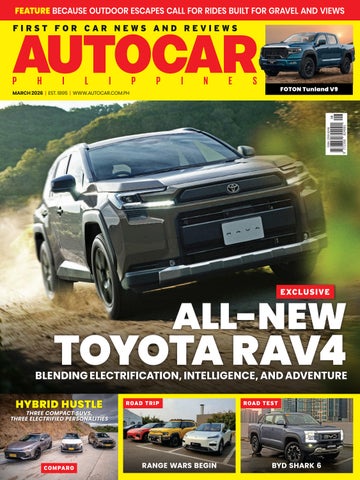
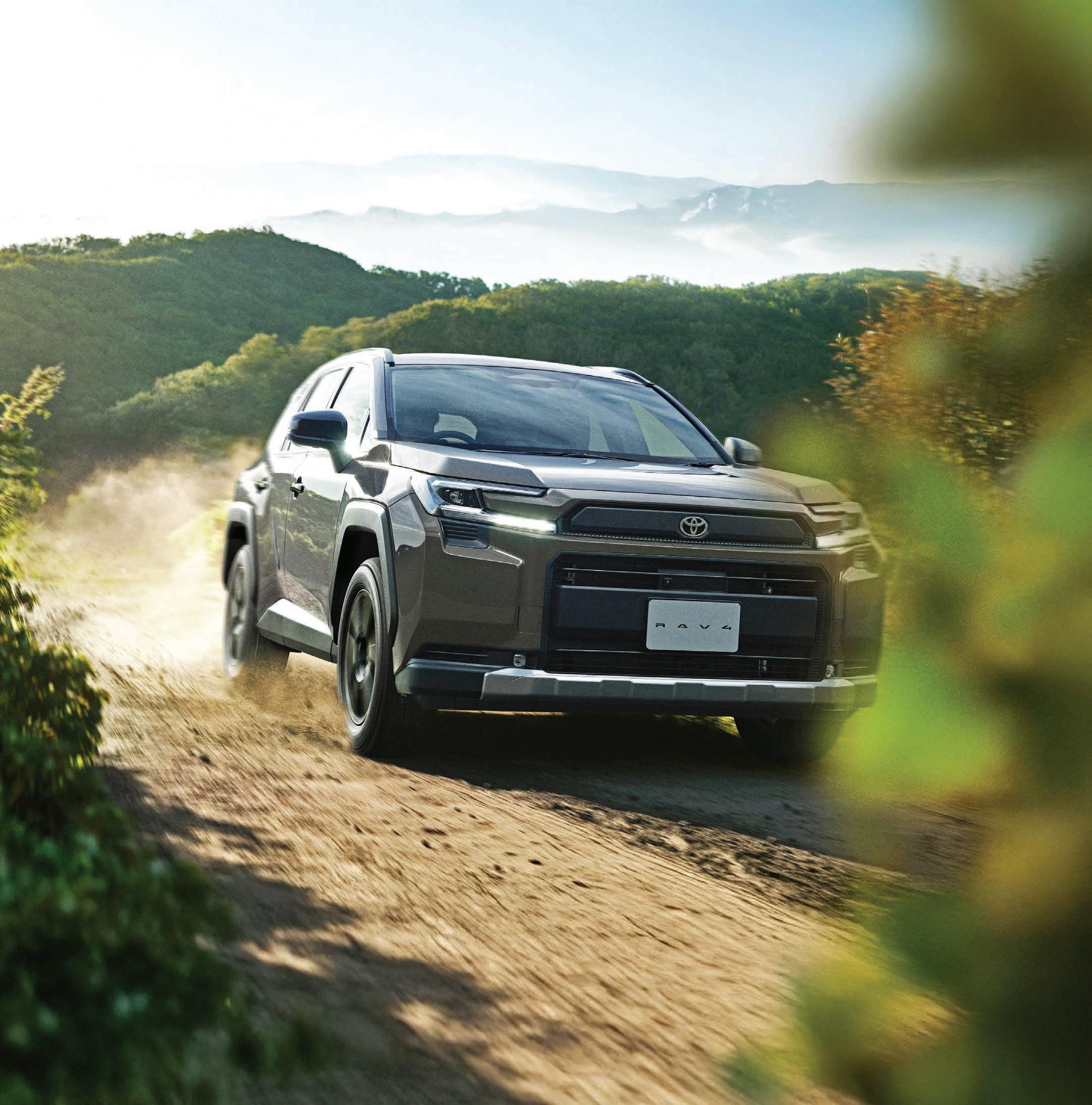
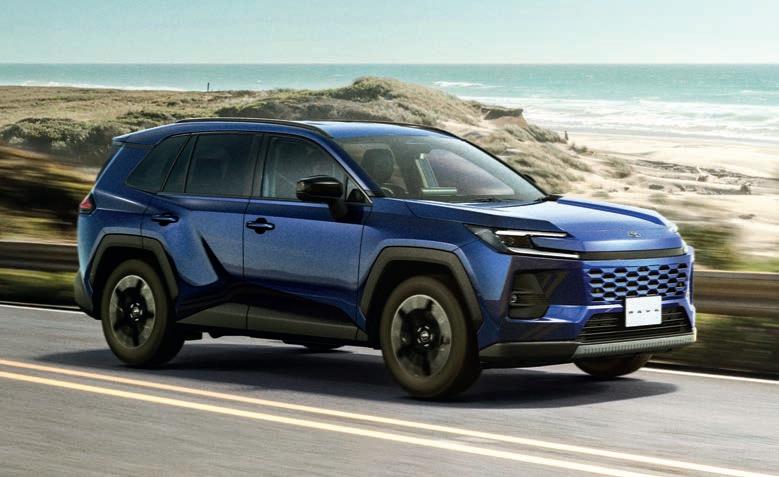
28 Toyota Unveils All-New RAV4, Blending Electrification, Intelligence, and Adventure
COMPARO
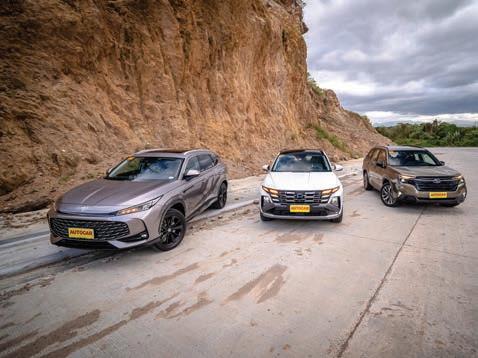
34 Hybrid Hustle: Three Compact SUVs, Three Electrified Personalities
ROAD TEST
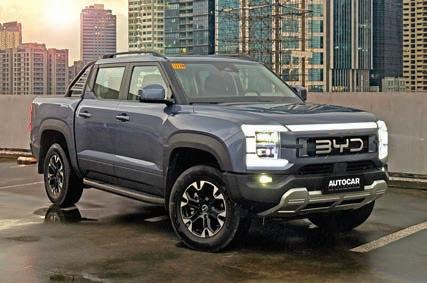
16 BYD Shark 6: Rewriting the Pickup Playbook
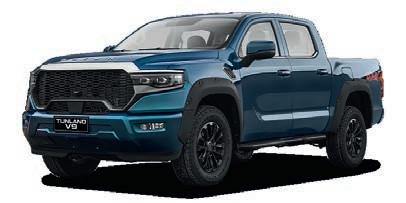
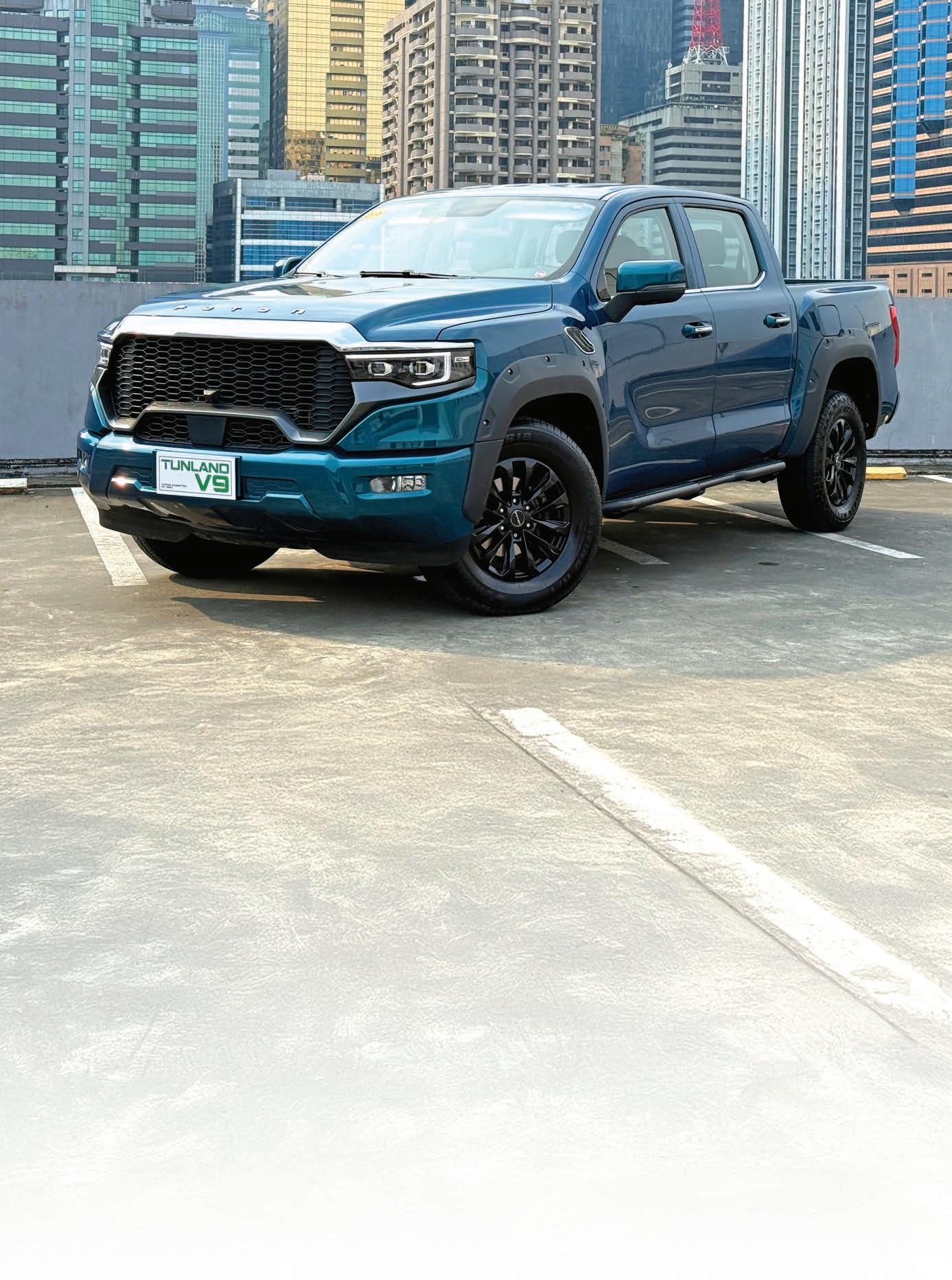
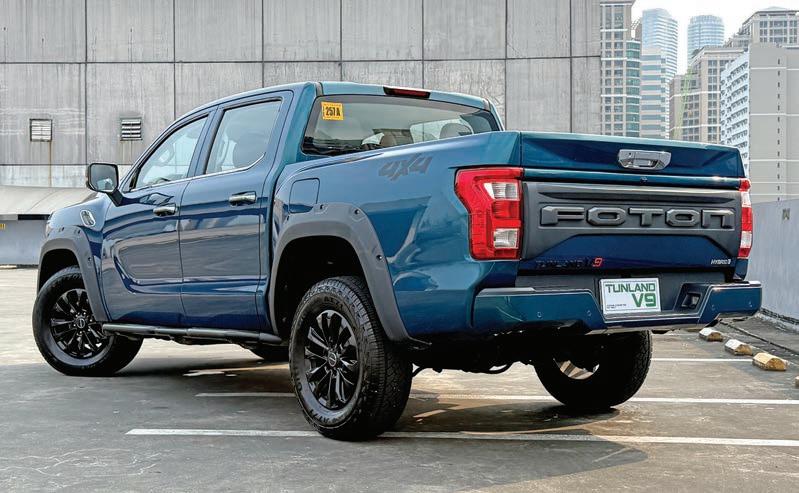
18 FOTON Tunland V9: The Gentle Giant Pickup
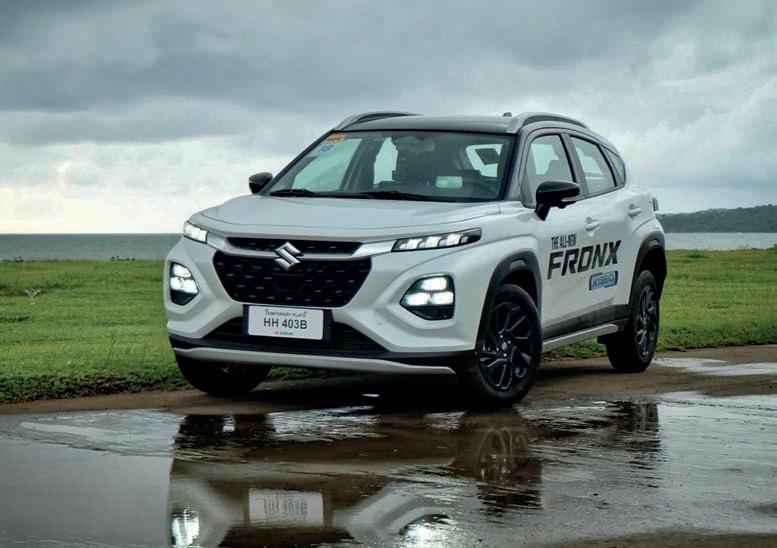
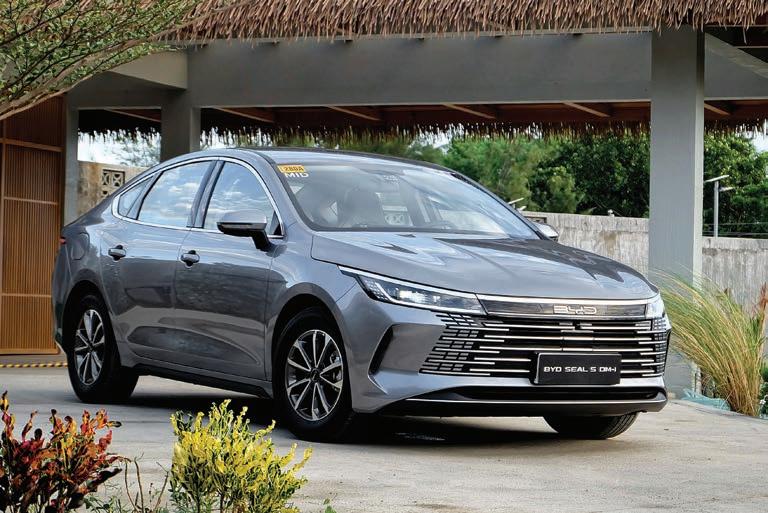
26 Mild Hybrid, Major Savings: Suzuki Fronx Hybrid Proves Efficiency Can Still Be Engaging
ROAD TRIP
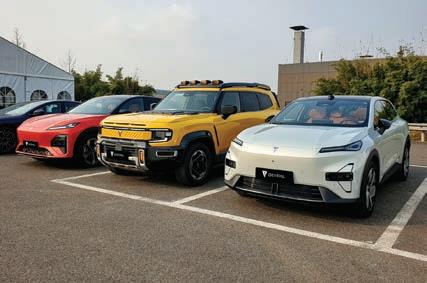
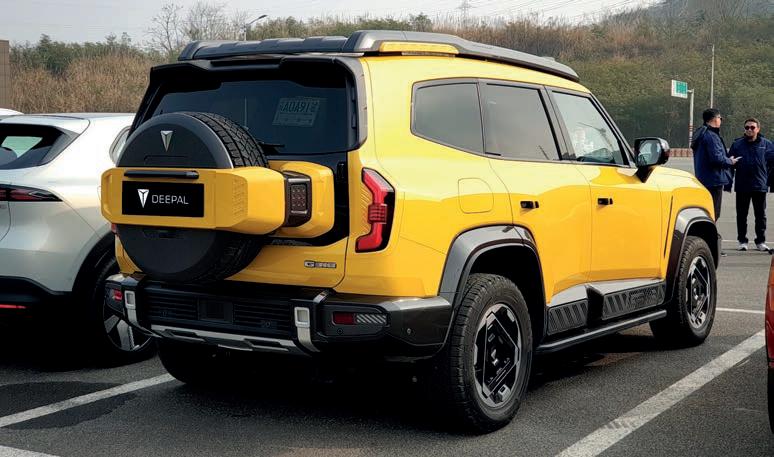
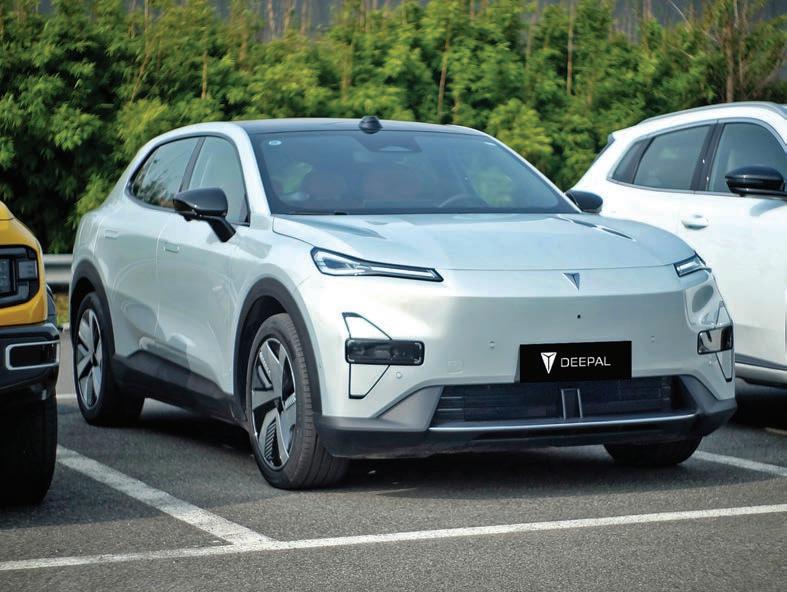
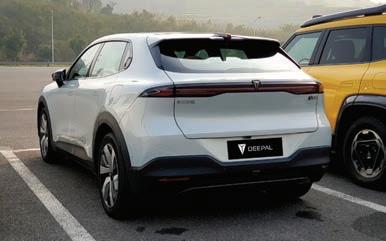
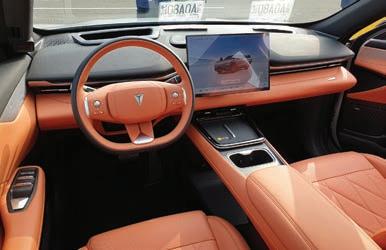
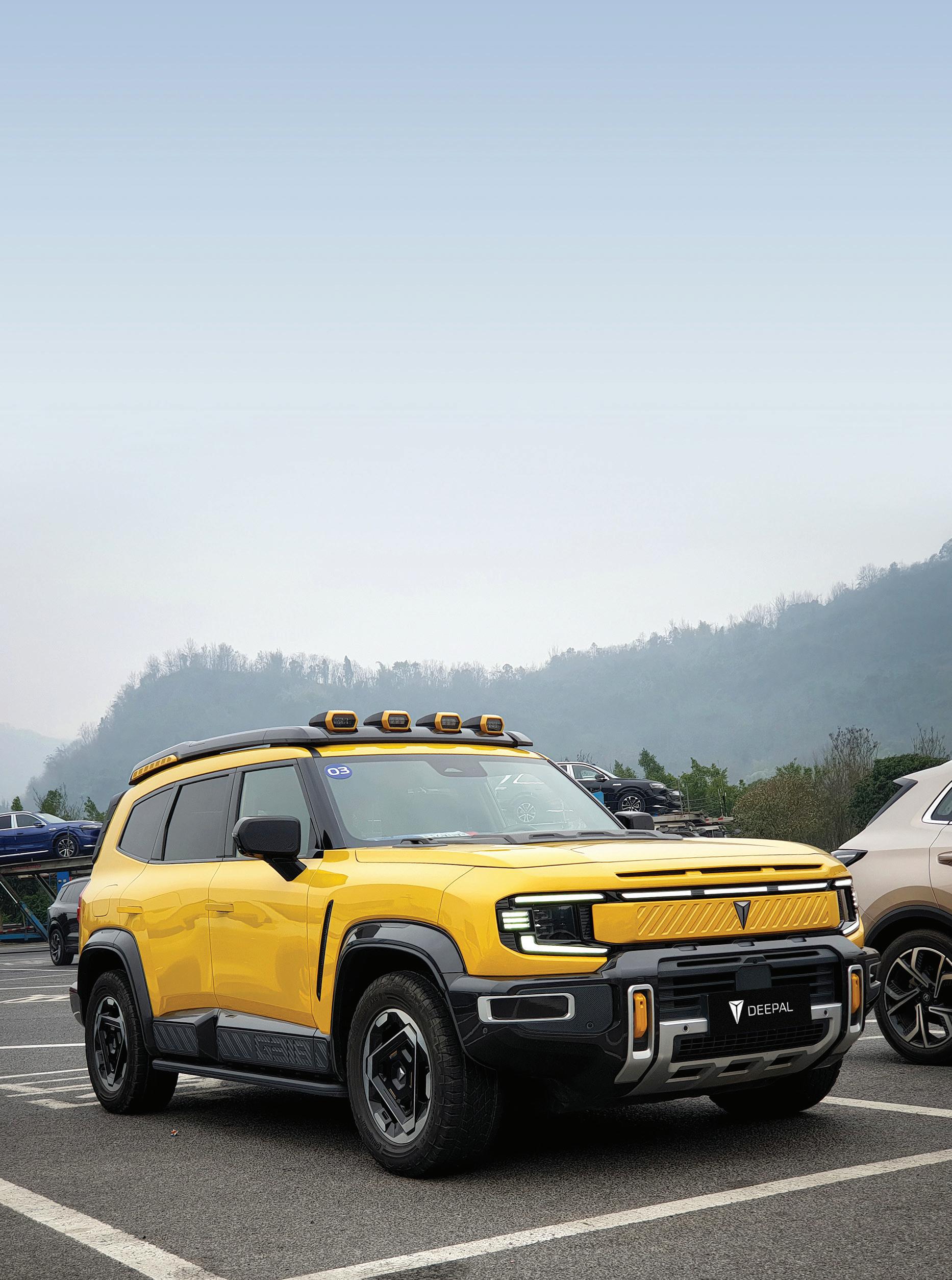
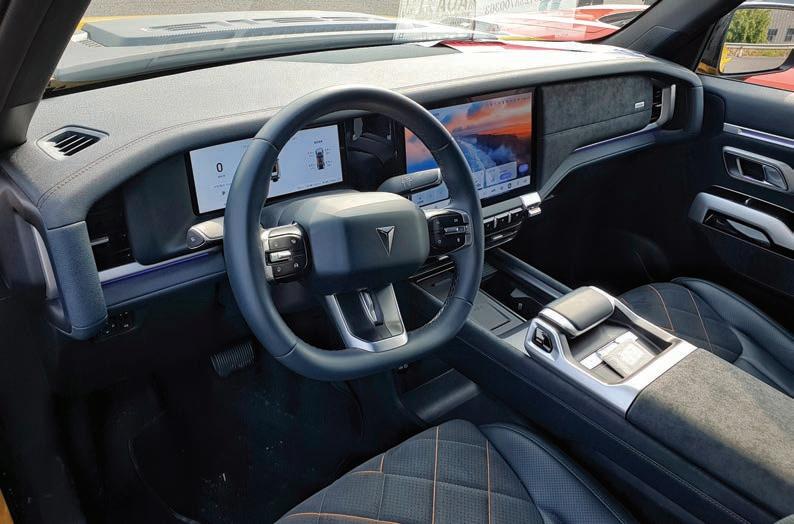
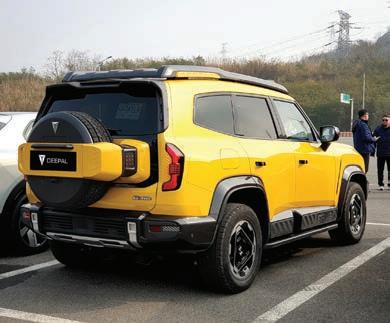
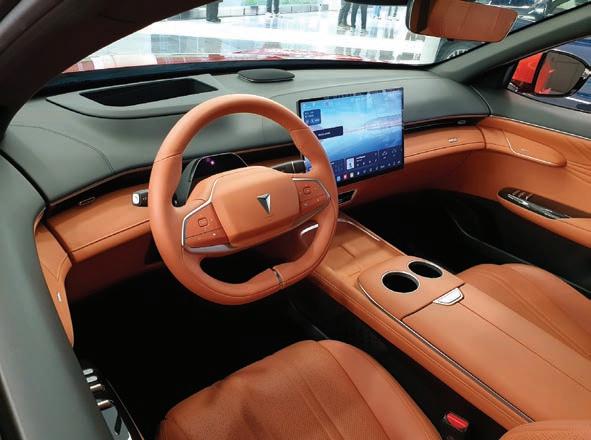
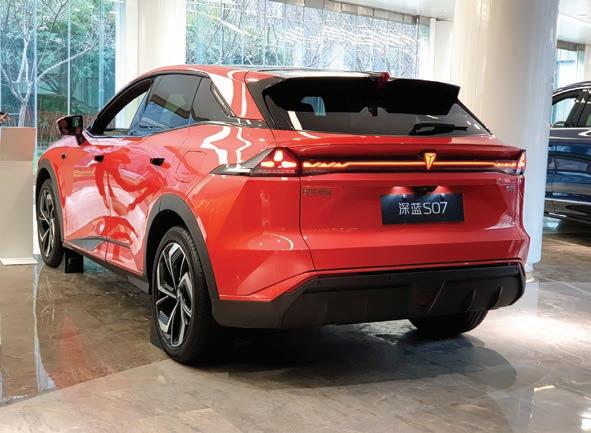
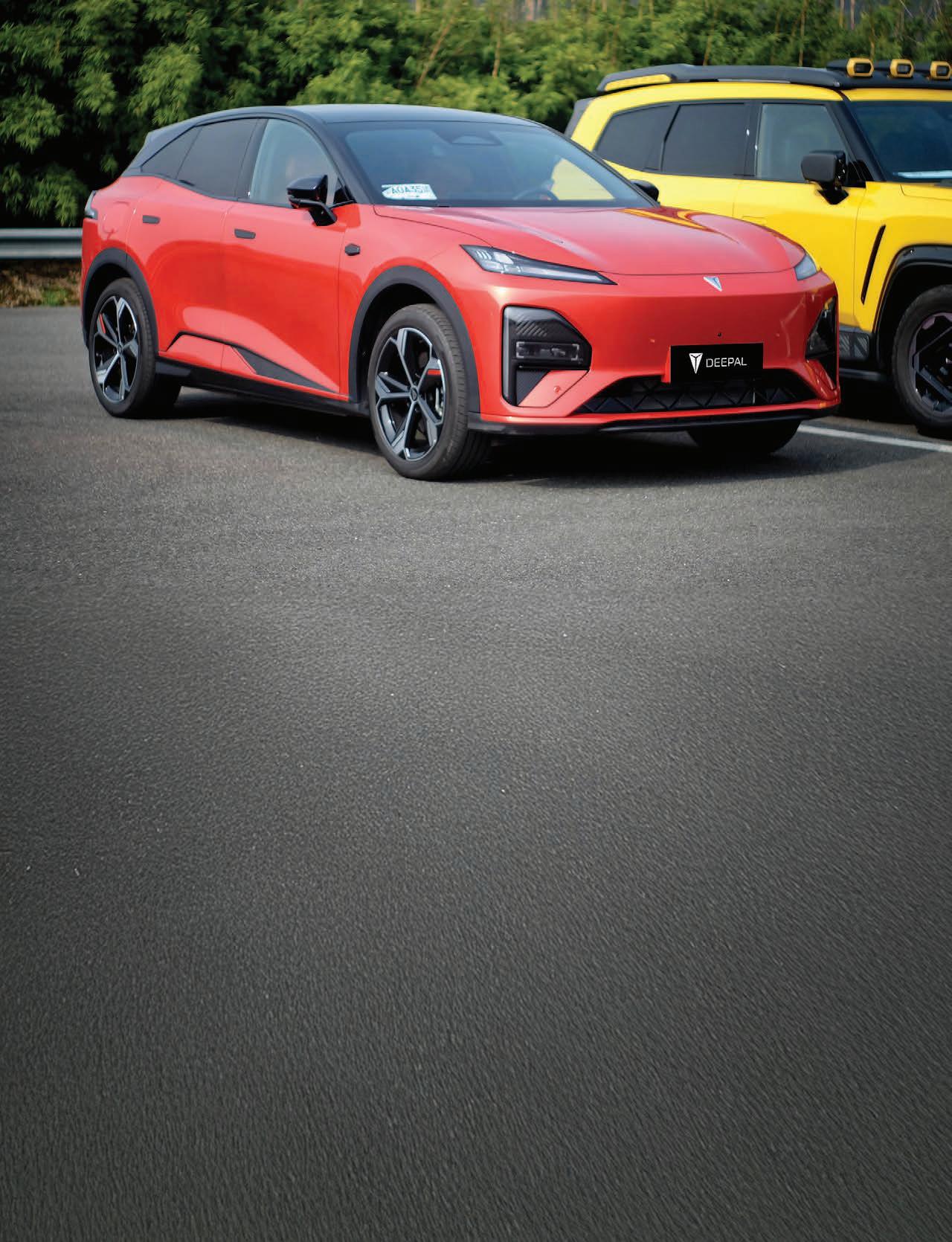
44 Range Wars Begin: Deepal’s Upcoming REEV Trio Targets the Heart of the Electrified SUV Market
48 Where the Road Becomes the Destination
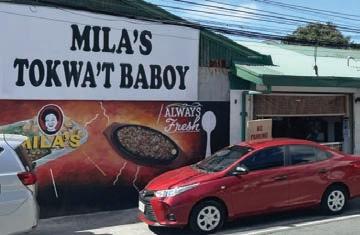
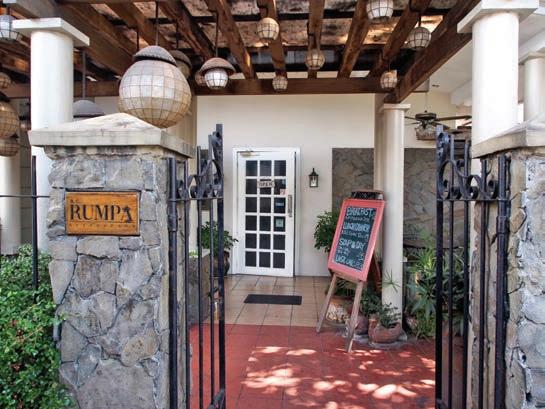
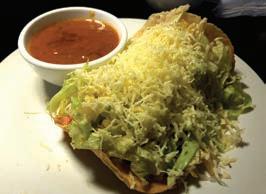
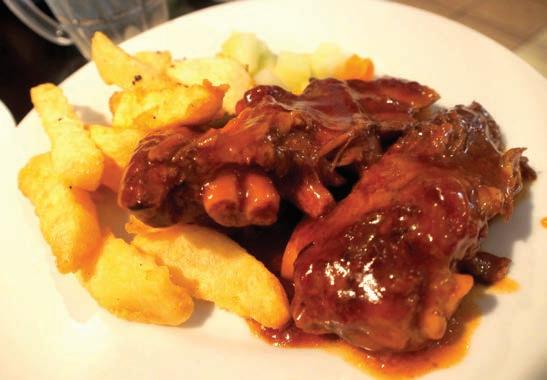
50 Exit Here for Flavor
FEATURE
10 Press Play Before You Press Start
20 How to Make Your Summer Drive Hassle-Free
22 Gear, Gravel, and Getaways
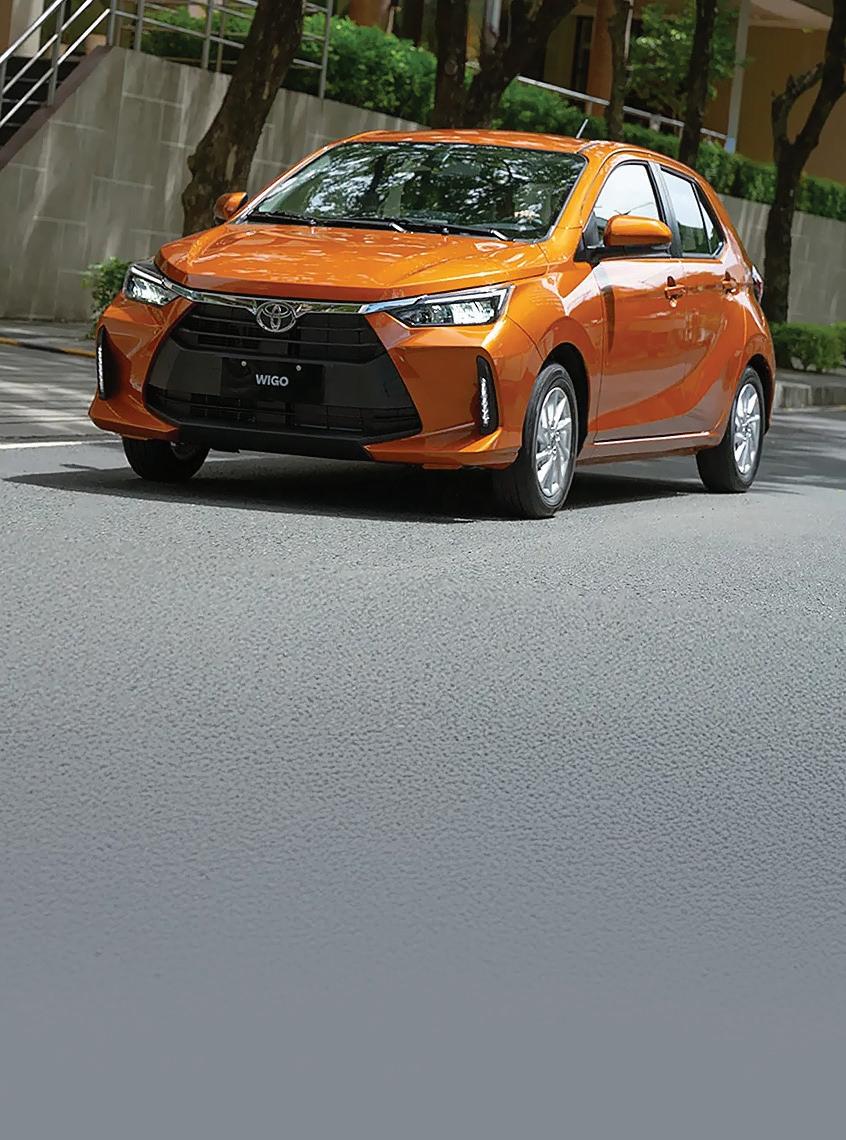
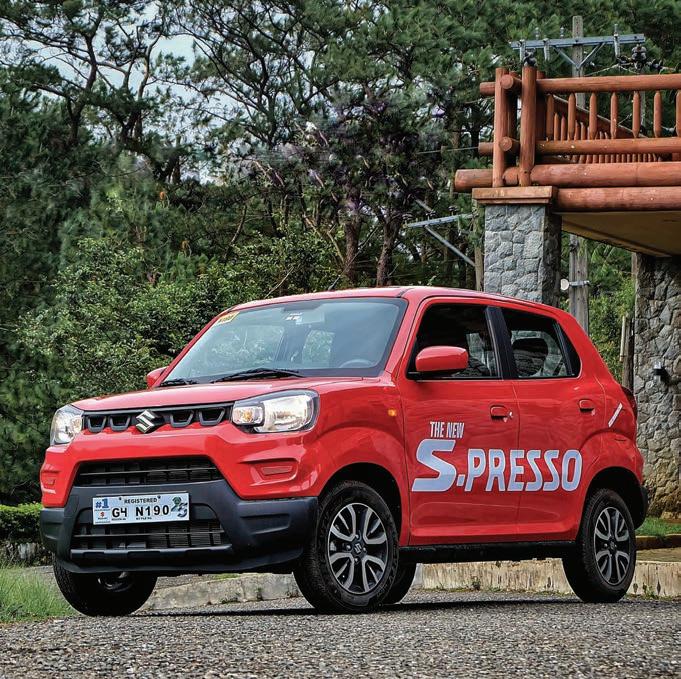
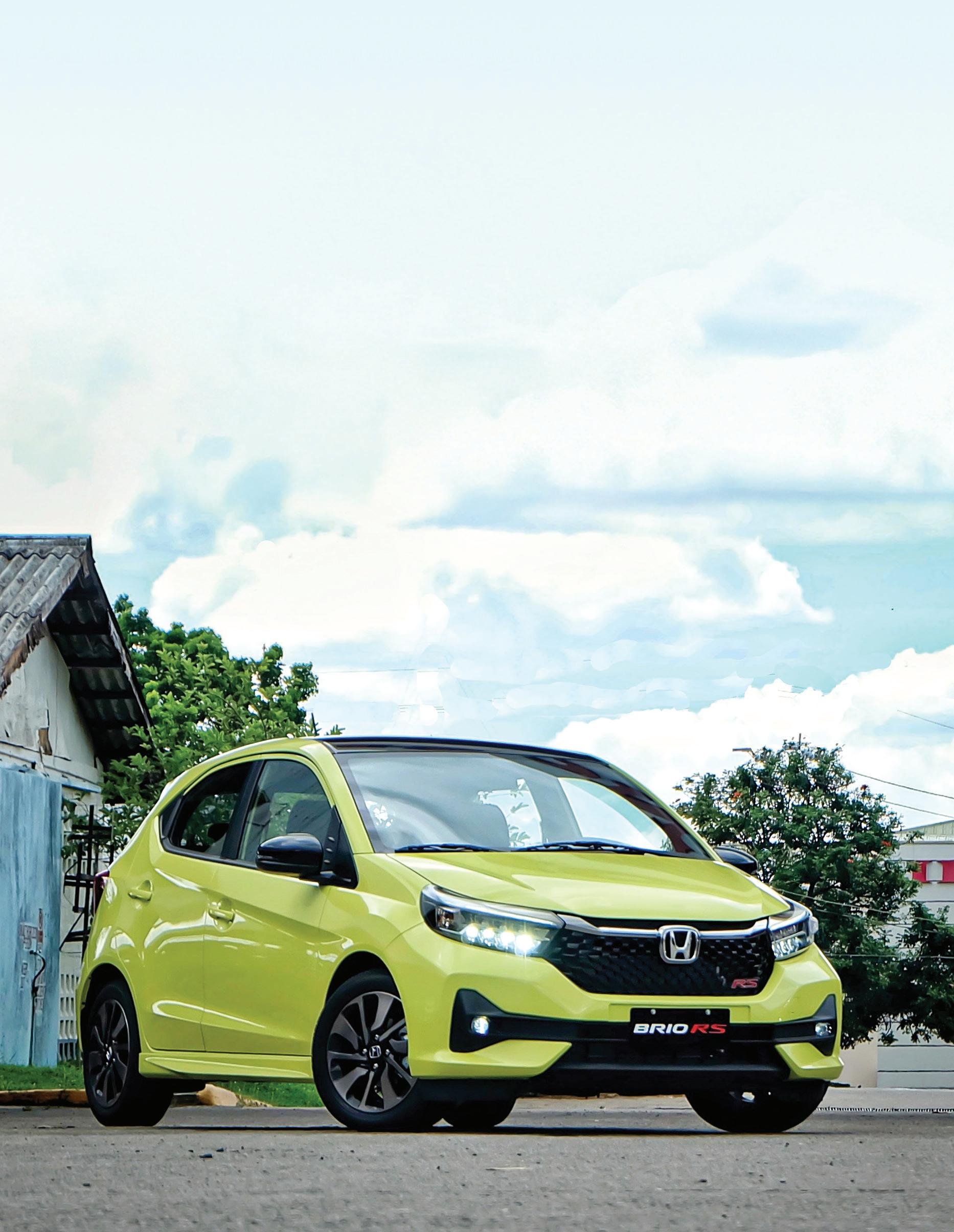
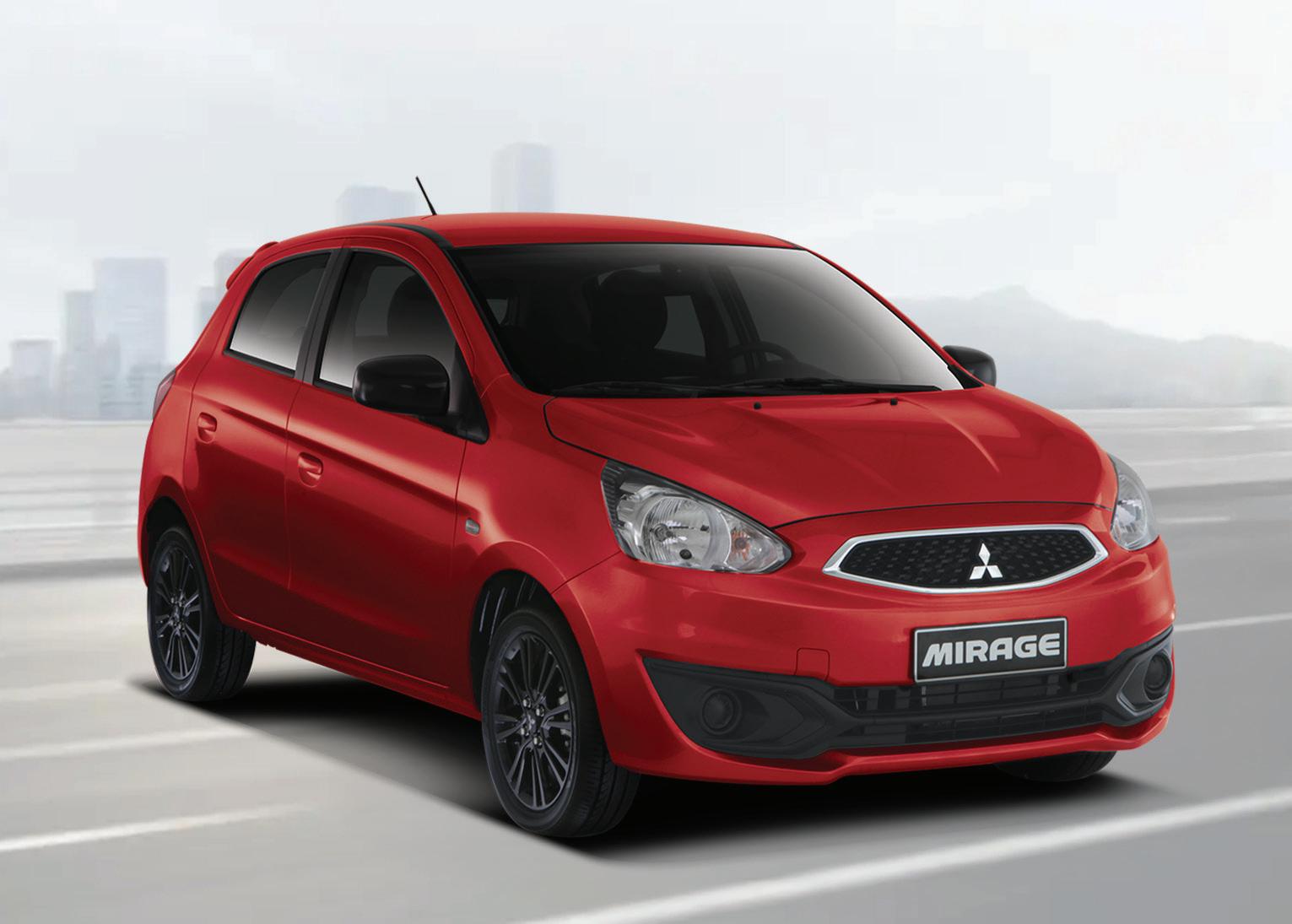
40 Under P1M: First-Car Picks for Young Professionals
52 Dealer Power
COVERSTORY
28
ROAD TEST 26
Editor’s Note
The first quarter of 2026 is about to wrap up, and we can already feel the summer heat. The sun shines a little warmer, and with it the open road beckons. In this issue, we help you prepare for your summer road trips.
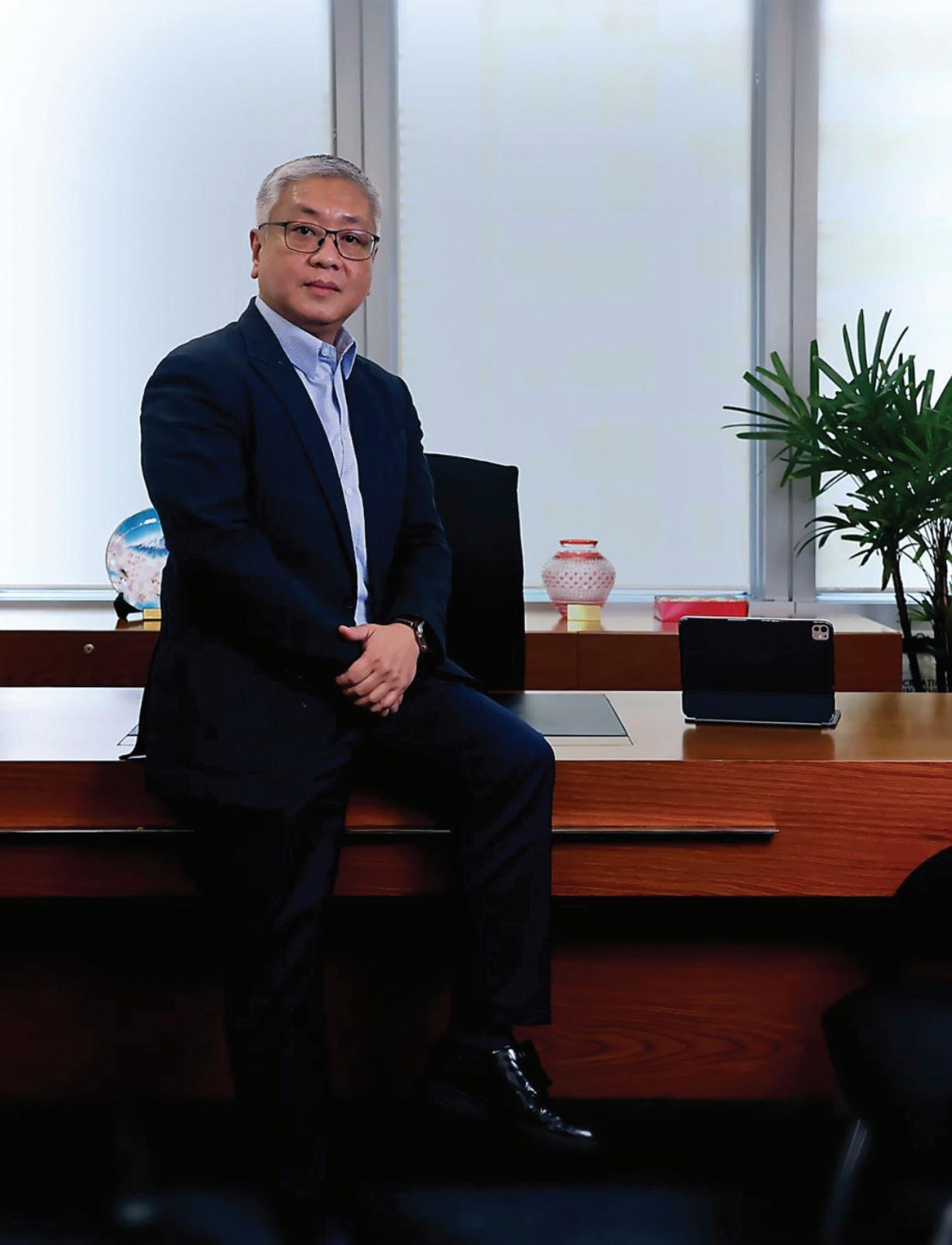
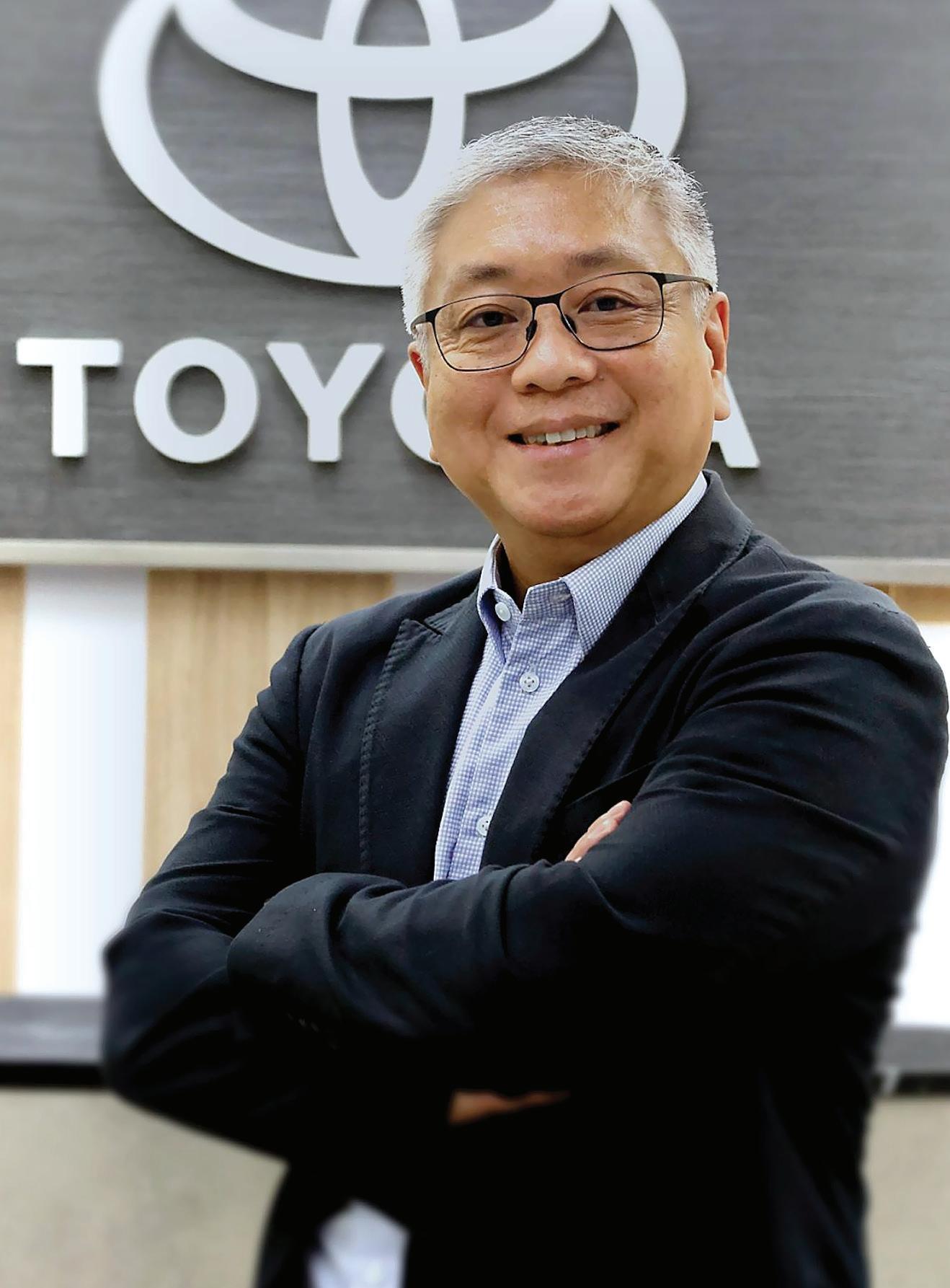
In Executive Drive this month, our Editor-in-Chief Ira Panganiban sits down with newly minted Chamber of Automotive Manufacturers of the Philippines, Inc. (CAMPI) President Jose Maria “Jing” Atienza.
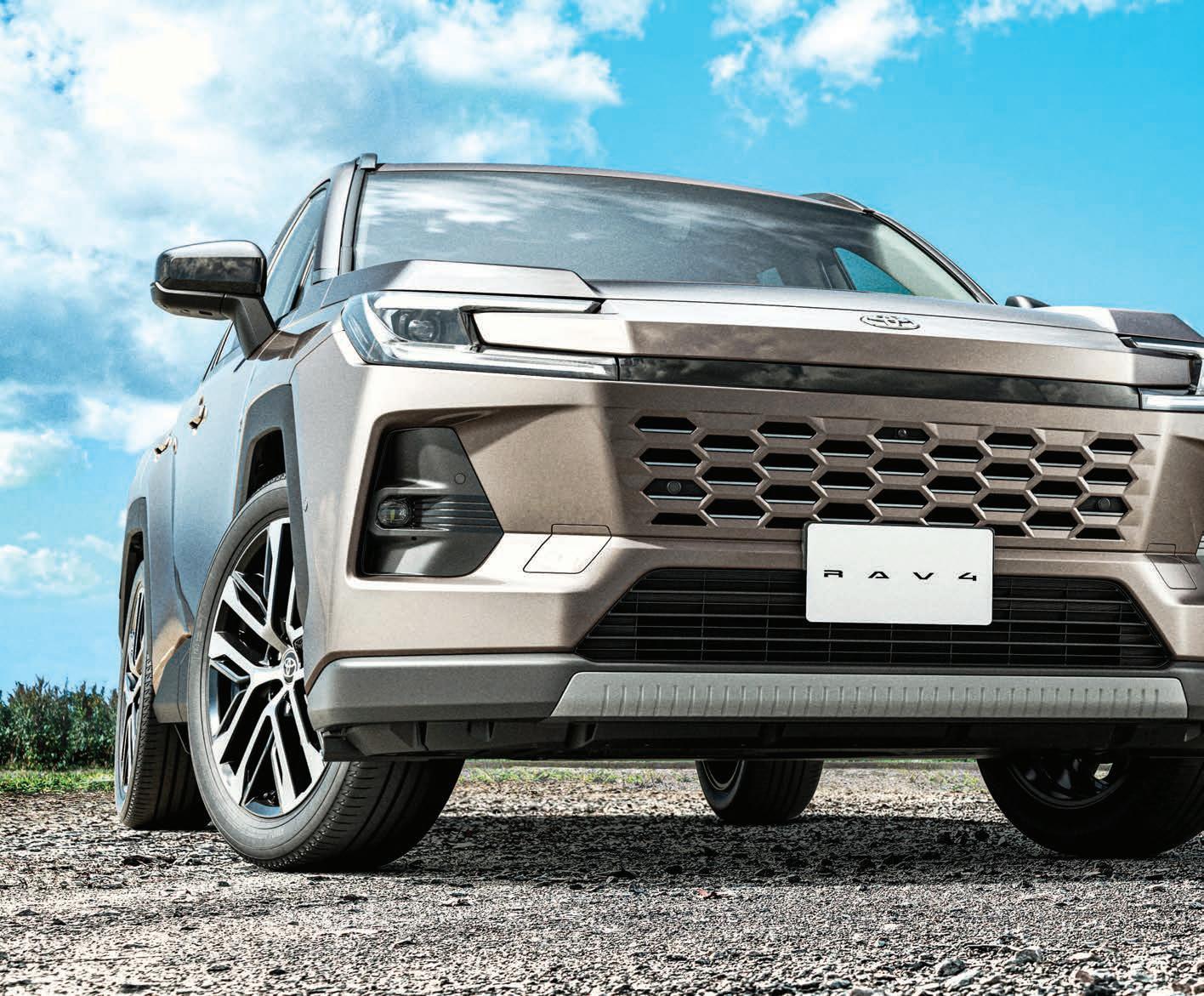
On the cover is the all-new Toyota RAV4, which officially goes on sale at Toyota dealerships as this issue hits the shelves. Our Executive Editor Anjo Perez gives us a deep dive into what makes this model so exciting.
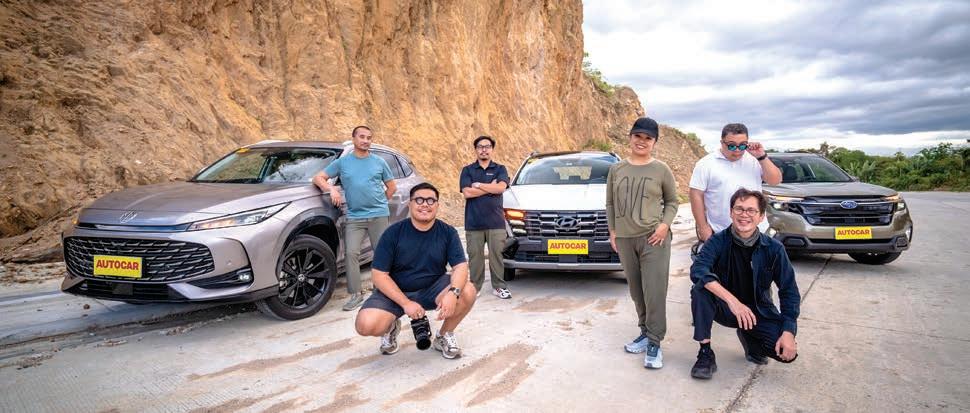
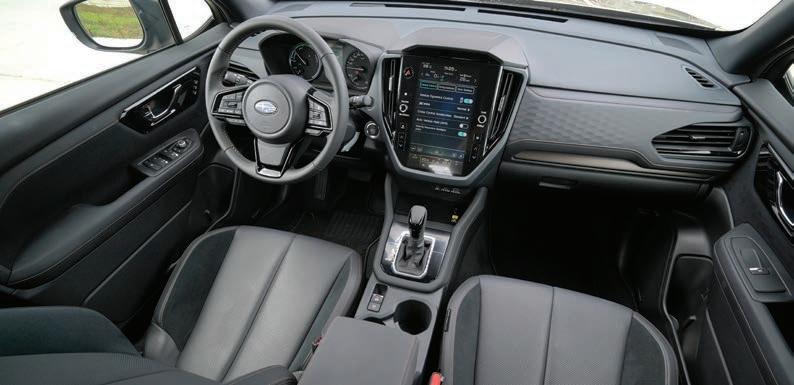
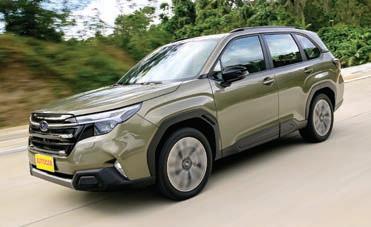
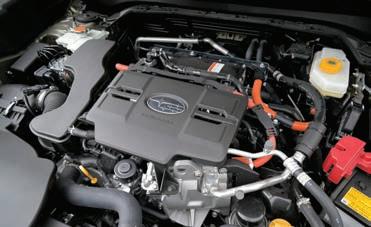
Are you in the market for an electrified compact SUV? Well, you’re in luck. John Rey San Diego, Jacob Oliva, and Randy Peregrino happen to have done a side-by-side comparison of the MG HS Hybrid+, the Hyundai Tucson Hybrid, and the Subaru Forester e-Boxer Hybrid—and they’re all pretty good, to be honest.
We also feature two hybrid pickups in Road Test: the BYD Shark 6 DMO and the Foton Tunland V9. Featuring two hybrid pickups in one issue was unintentional—promise. John Rey San Diego also reminds us of some important things to consider
before heading out on a road trip. We likewise take a look at some ideal vehicles for outdoor adventures.
Randy Peregrino shows us just how fuel-efficient the Suzuki Fronx can be. After returning from China, he also gives us the lowdown on a new brand entering the country—Deepal—and the models it could bring to the Philippine market. Randy also highlights some scenic destinations that might just inspire your next drive.
Martin Aguilar picks out some excellent valuefor-money “first car” choices, while Randolph De Leon lists the top SUVs and MPVs for longdistance drives.
Of course, a good meal can be the highlight of any trip. In this issue, we feature some well-known places to eat—spots many of you may have already visited or at least heard about from friends. We’ve included Google Maps directions so you can easily find them for yourself. Bringing friends or family is highly recommended.
Here at Autocar, we never hit the road without our favorite tunes blasting through the speakers. Music makes every drive better, so we’re sharing our curated playlists—ones that can easily last longer than a drive to Ilocos or Bicol. Just scan the Spotify codes before you hit the road.
Windshield Watcher
BYD’s Overnight Rise: Boom or Bubble?
There’s fast growth… and then there’s BYD fast.
In barely two years, BYD Cars Philippines has gone from a curiosity brand—“Oh, they sell EVs?”—to a fullblown retail presence you now see in major cities and provincial hubs alike. From a modest footprint in 2024, the network ballooned to roughly 77 to 79 dealerships nationwide by the end of 2025. Sales surged to 26,122 units—up an eye-popping 446 percent year-on-year. On the industry leaderboard, that volume would already place the brand comfortably in third.
That’s not just momentum. That’s an overnight rise.
But here’s where the conversation gets more layered. Industry sources say BYD’s ambition isn’t limited to incremental growth—it’s targeting scale. Specifically, the goal is to capture at least 50 percent of Toyota Motor Philippines’ 2025 sales volume. Toyota moved 229,447 units last year. Half of that is the mountain BYD eventually wants to climb.
Ambitious? Absolutely. Impossible? Not quite. But it’s also not as simple as opening more showrooms.
The size of the hill to climb
The Philippine auto industry closed 2025 with 491,395 units sold. Toyota alone accounted for nearly half of CAMPI-TMA volume. Mitsubishi, firmly in second place, delivered 86,808 units—still nowhere near Toyota scale.
BYD’s 26,122 units are impressive—especially for a brand built heavily around electrification. But reaching even half of Toyota’s volume would require multiplying sales several times over, in a market that still leans strongly toward combustion vehicles and hybrids.
Dealer expansion builds presence. But scale at that level demands deeper structural foundations.
The dealership gold rush era
Part of BYD’s rapid rise comes down to who they partnered with.
Instead of relying solely on legacy dealer groups, the brand opened doors to first-time automotive investors. The pitch was compelling: higher margins per vehicle, strong early demand, and a chance to get in early on the EV wave.
For newcomers, it felt like buying into a fast-rising startup. For BYD, it enabled rapid retail rollout without the slower negotiations typical of entrenched dealer conglomerates.
But speed sometimes exposes gaps in long-term business modeling.
Why legacy dealers stayed cautious
Established dealer groups didn’t hesitate because they doubted electrification. They hesitated because they understand where dealership profitability really comes from.
Selling brand-new cars has never been the primary earnings engine. Margins are thin—often just enough to cover operating costs.
The real money begins after the sale: periodic maintenance service, repair work, replacement parts, accessories, and insurance commissions. Aftersales
is the subscription model of the automotive retail business. Remove that, and the revenue equation changes dramatically.
EVs rewrite the service playbook
Battery electric vehicles require significantly less maintenance. No oil changes. No traditional transmission servicing. Fewer wear components. Even brake usage is reduced thanks to regenerative systems.
Translated to dealership economics, fewer workshop visits mean less recurring income.
Legacy dealer groups saw this early, which explains why many leaned heavily into hybrids first. Hybrids electrify the lineup while preserving service revenue streams. It’s a transitional technology that keeps the lights on in the service bay.
The reliability clock hasn’t fully ticked
There’s another dimension that still sits in the background: time.
Most EVs currently on Philippine roads are young— many still within their first ownership cycle. Largescale reliability data hasn’t fully matured.
With combustion vehicles, decades of field data have mapped out failure patterns: engine wear, transmission fatigue, cooling system failures, fuel delivery issues. The industry knows what breaks and when.
With EVs—particularly newer platforms—it often takes years before real-world durability narratives emerge. Battery degradation, software bugs, thermal management stresses, charging hardware wear, and electronic component failures don’t always surface early.
Right now, ownership remains in the honeymoon phase.
When vehicles begin hitting five- to seven-year marks, that’s when the deeper reliability conversation starts—along with questions on resale value, battery replacement cost, and long-term service economics. Dealers are watching closely because reliability affects warranty exposure, workshop activity, and ultimately customer retention.
The investment recovery question
For many first-time BYD dealers, today’s business case is volume-driven. As long as EV demand rises, unit sales generate returns.
But dealerships are capital-heavy investments. A single facility can exceed P100 million once land, construction, tooling, and inventory are factored in.
Without strong aftersales revenue, recovery timelines stretch. Service bays generate less work. Technician staffing becomes harder to justify. Insurance and parts income remain limited compared to ICE-heavy dealerships.
The discussion shifts from immediate sales to lifetime customer value.
Hybrids still anchor the transition Market data reinforces this balancing act.
Of the 32,489 electrified vehicles sold in 2025,
the majority were hybrids. Full EVs accounted for a smaller share, with plug-in hybrids smaller still.
Hybrids continue to require oil changes, fluid service, and mechanical upkeep—keeping dealership service ecosystems viable while easing consumers into electrification.
BYD does offer plug-in hybrids, but much of its brand momentum remains centered on full battery electric vehicles.
Can BYD dent Toyota’s armor?
Short answer: yes.
Long answer: not overnight.
BYD’s pricing strategy, technology appeal, and aggressive dealer rollout will inevitably chip into market share. But reaching even half of Toyota’s 2025 volume requires structural shifts—charging infrastructure expansion, fleet adoption, resale value stability, and a dealership model that remains profitable long after the initial sale.
Toyota’s dominance isn’t built on product alone. It rests on financing reach, service footprint, parts logistics, and decades of embedded customer trust. Ecosystems like that don’t get disrupted quickly.
Toyota isn’t standing still
It’s also worth noting that Toyota Motor Philippines isn’t watching from the sidelines. If anything, BYD’s overnight rise has accelerated Toyota’s own electrification cadence. The company has been expanding its hybrid lineup, rolling out more HEV variants across key nameplates, and positioning electrified models closer to mainstream price points.
Toyota understands the challenge. Electrification is no longer fringe—it’s inevitable. The strategy now is to protect core volume while easing customers into the transition without dismantling its service ecosystem.
In other words, the market leader is taking the threat seriously.
Bottom line
BYD will keep growing. It will continue carving out market share and accelerating EV awareness faster than any brand locally has managed.
But reaching even half of Toyota’s 2025 sales volume isn’t just about selling more electric vehicles. It requires proving that an EV-heavy dealership network can remain profitable, that long-term reliability holds up under Philippine conditions, and that the ownership ecosystem can mature in a market where servicing—not selling—has always paid the bills.
And it has to do all that while the industry’s biggest player actively defends its ground.
Rally America Back!
The most logical reason to book a flight to the US this early for local rally fanatics.
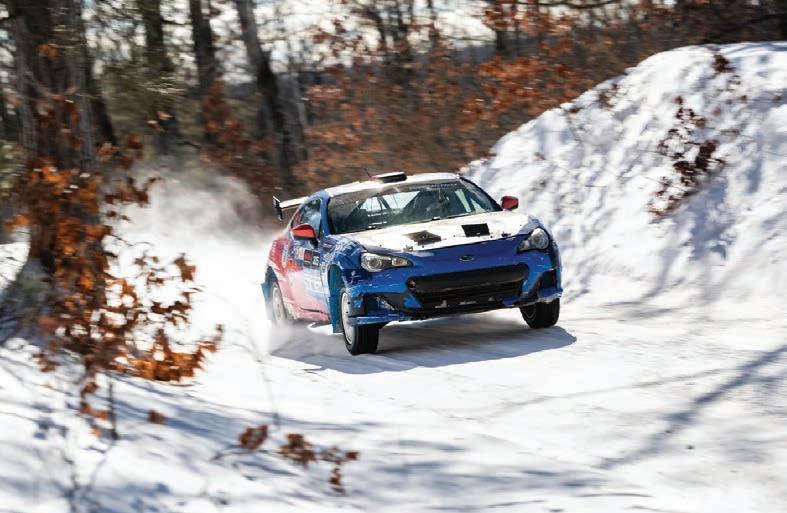
The Fédération Internationale de l’Automobile (FIA) recently announced a major step toward bringing the World Rally Championship (WRC) back to the United States, scheduling a candidate event for June 11–17, 2026.
To be featured in this candidate event are evaluated stages in the trial event along the borders of Tennessee and Kentucky, organized with ACCUS and Podium Event Partners, are to be appraised in contrast to strict WRC standards to pave the way for a full championship round in 2027, marking the first U.S. WRC event since 1988.
Key Details of the 2026 U.S. Candidate
Event Primary goal is to assess logistical, safety, and operational standards required for the 2027 WRC calendar. The event is backed by the American Rally Association (ARA) and Podium Event Partners, who are aiming for a Chattanooga-based service park.
This initiative responds to the growing popularity of motorsport in the U.S. and the desire for a WRC presence in North America, something similar to F1’s success.
This move represents the closest the WRC would come to a U.S. return in nearly four decades.
In a ARA statement “The FIA’s announcement of a WRC candidate event in the United States is a significant step toward the WRC returning to America, and we congratulate Podium Event Partners on achieving this milestone in the process,” said Lance Smith, founder of Rally Forward, and President & CEO of Vermont SportsCar.
“The American Rally Association’s mission is to preserve, protect and promote the sport of stage rally in America. As the organizer and promoter of the ARA
National Championship, Rally Forward sees this moment in time as an opportunity to accelerate the growth and expansion of rally in this country, so we are supportive of the planned WRC return and are looking forward to collaborating with the parties involved to help make it a reality.”
American Rally is sanctioned by USAC and promoted by Rally Forward LLC, which was founded in 2024 by rally legend Lance Smith and is dedicated to advancing the sport of stage rally in America. Smith is the founder and CEO of Vermont SportsCar.
Founded in 2016, The American Rally Association is a member-driven organization dedicated to the sport of Stage Rally. Provides a transparent, inclusive, and growing sanctioning body to competitors throughout the United States.
A wholly owned subsidiary of the United States Auto Club (USAC) and promoted by Rally Forward, ARA is led by seasoned Stage Rally professionals who work hand in
hand with an experienced group to deliver a framework for safety, competition, promotion, and education for all aspects of the sport. The common goal of members, volunteers, and organization is a thriving Stage Rally program in America.
The US Rally Series sanctions many of the country’s premier stage rally events - Sno*Drift Rally, Rally in the 100 Acre Wood, Olympus Rally, Southern Ohio Forest Rally, Rally Colorado, Ojibwe Forest Rally, Overmountain Rally, and Lake Superior Performance Rally. The ARA National Series also sees participation by the country’s leading rally teams, such as Subaru Motorsports USA.
ARA has run a full national series of rally events since 2017.
Make sure your US Visa hasn’t expired.
Photo courtesy of Jacob Halfman/ARA
FEATURE
Press Play Before You Press Start
Why agoodplaylistisagoodidea
Ihave a rule: if I’m driving, I choose the music.
Back in the day— before streaming, before smartphones mounted on dashboards—you had to be a human CD changer. Before CD-Rs became common (and when most factory head units wouldn’t even read them), long drives meant juggling jewel cases in the center console. Mix tapes were easier, but filling a full C90 cassette took patience. I always went for CrO₂ tapes—they had clearer highs than standard bias cassettes.
Today, life is simpler. Music is on demand through streaming platforms like Spotify, Apple Music, YouTube Music, Tidal, and Amazon Music. Thousands of songs, instantly accessible, no rewinding required.
But convenience isn’t the real story. The real value of a playlist reveals itself once the road stretches beyond city limits.
Why playlists matter on long drives
Before any road trip, the checklist is predictable: tire pressure, fuel level, route planning, and weather forecasts. Logical. Necessary. Responsible.
But there’s one element that rarely appears on that list—yet shapes the journey just as much.
The playlist.
A thoughtfully curated driving playlist becomes more than background noise. It becomes a companion. Sometimes, the difference between a stressful drive and a memorable one is as simple as what’s coming through the speakers.
Driving is a sensory experience
Road trips engage all the senses. The changing scenery. The hum of tires on asphalt. The gradual shift from dawn to sunrise, or afternoon into sunset.
Music amplifies those moments. Cruising along SCTEX or TPLEX feels entirely different with the right
soundtrack. Good driving music doesn’t distract—it complements. It can energize the driver, steady the mood, and make long highway stretches feel lighter. Without music, a trip can feel incomplete. With it, moments turn cinematic. Sunsets appear warmer. The open road feels expansive in a good way. Even traffic feels less suffocating.
Music doesn’t change the road—it changes how we experience it.
Shared memories on four wheels
Road trips aren’t just about distance—
they’re shared experiences.
Music has a way of bonding passengers. A song played on a particular stretch of highway becomes tied to that memory forever. Years later, hearing that same track brings back roadside stops, random food trips, missed exits, and laughter inside the cabin.
Everyone sings along. Conversations flow easier. The atmosphere stays light
The playlist becomes the soundtrack of that collective memory.
Stress management, Philippine edition
Let’s be realistic—long drives in the Philippines will involve traffic at some point.
And traffic without music tests patience. A good playlist softens the frustration. Instead of watching the clock, you find yourself immersed in familiar songs. Time feels less wasted. Singing along helps fight boredom, sleepiness, and even road rage.
It’s hard to imagine someone midchorus of their favorite song suddenly stepping out of the car to start an argument. Music has a calming effect that keeps both driver and passengers levelheaded—and safer.
Press play before you roll out
So before your next long drive—before checking tire pressure or topping up fuel— spend time curating your music.
Because when highways stretch endlessly ahead and scenery blurs into motion, the right playlist doesn’t just fill silence. It defines the journey and preserves the memories that come with it.
To get you started, we’ve selected several Spotify playlist: New Wave, Senti Mixtape, Senti Mixtape 2, 80’s Road Trip, Rock Roadtrip and Hip Hop and RNB Flow—each suited to different driving moods and passenger mixes.
Consider them templates for your own road-trip soundtrack.
NEIL PAGULAYAN
Unforgettable Adventures and Epic Scenic Escapes
SCAN THE SPOTIFY CODE TO INSTANTLY LISTEN TO THE ALBUM ON SPOTIFY.
HIP HOP & RNB FLOW
80’s ROAD TRIP
SENTI MIXTAPE 2
SENTI MIXTAPE NEW WAVE
ROCK ROADTRIP
EDITORIAL TEAM
IRA V. PANGANIBAN Editor-in-Chief
ANJO PEREZ Executive Editor
NEIL PAGULAYAN Managing Editor - Print
JACOB OLIVA Managing Editor - Digital
EGGAY QUESADA Editor-at-Large
OLSON CAMACHO Technical Editor
RONNIE TRINIDAD Visual Technical Director
ADRIAN RAYNES IT and Digital Consultant
MATT PRIOR | KRIS LIM | BINKY SIDDAYAO Columnists
JOHN REY SAN DIEGO Staff Writer
WILLIAM HERRERA | LUIS GERONA | RANDY PEREGRINO Contributors
BONG BOADO | KEITH MARK DADOR | LOUIE CAMACHO
MARK QUESADA | RANDOLPH DE LEON
ARNOLD RIODEQUE | BOBS JEROME | MEMERT MONTELOYOLA
Photographers
RAYMUND RAVANERA Graphic Design
EDITORIAL TEAM
ANJO PEREZ Editor-in-Chief
RICA SISON, JOSEPH BAUTISTA, LARA CAMACHO Contributors
WILLIAM HERRERA, NEIL PAGULAYAN
MARK QUESADA Photographer
JOHN REY SAN DIEGO Staff Writer
RAYMUND RAVANERA Graphic Designer
Contact us at info@wheelsph.com
Wheels Magazine is published monthly, a registered trademark of Asian Media Ventures, Inc. in cooperation with Gulf News. Copyright 2015.
IN MEMORIAM
Alan Ranch Sevilla • Earl Manalansan • Dino Ray Directo III • Edward Dangan II
The views and opinions expressed within Autocar PH magazine are not necessarily those of Haymarket Media Group Limited or those of its contributors.
Autocar magazine is published in China, Greece, India, Indonesia, Malaysia, Philippines, Poland, Singapore, Thailand, and United Kingdom. www.haymarket.com
Chairman of the Board of Directors GEORGE APACIBLE
President/CEO IRA V. PANGANIBAN Vice President Publication ANJO PEREZ Vice President RONNIE TRINIDAD
Secretary OLSON CAMACHO
Treasurer EGGAY QUESADA
Director for Sales & Marketing CAROL “DANG” B. DORIA
Business Administrator KAITE S. BELGICA
The views and opinions expressed within Autocar Magazine are not necessarily those of Asian Media Ventures, Inc. or those of its contributors. While every care has been taken in the preparation of this magazine, the publishers cannot be held responsible for the accuracy of the information herein, or any consequences arising from it. In case of all product reviews, judgements have been made in the context of the product based on Philippines prices at the time of review, which are subject to fluctuation and only applicable to the Philippines market.
Jing Atienza on the Future of the Philippine Car Market From Toyota to CAMPI
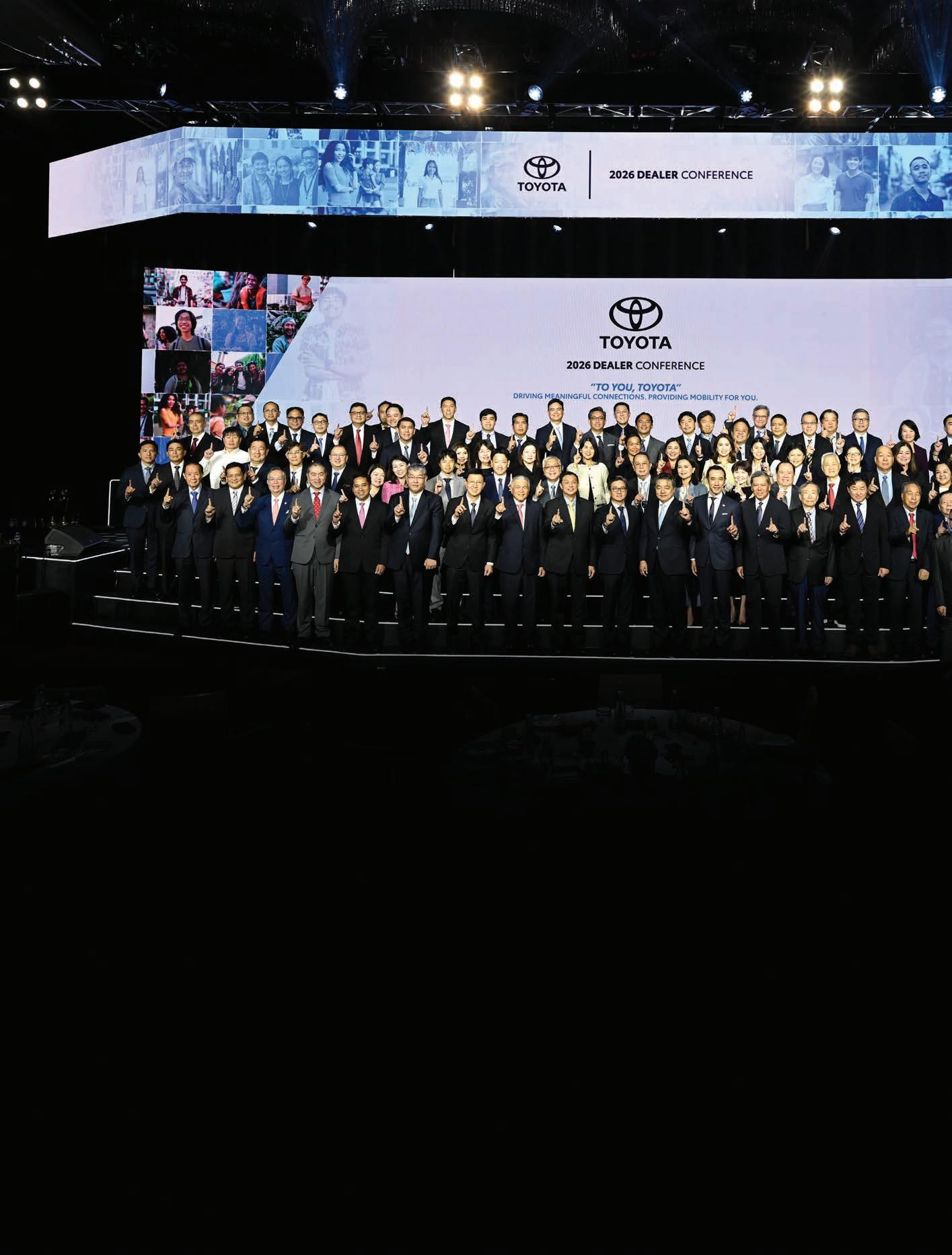
There are executives who run car companies, and then there are those who have been raised within the industry itself. Jing Atienza clearly belongs in the latter group. Today he carries two of the most influential titles in the Philippine automotive sector. He is Executive Vice President for Marketing at Toyota Motor Philippines and, more recently, the president of the Chamber of Automotive Manufacturers of the Philippines Inc. (CAMPI) — the industry group that represents nearly 30 automotive brands operating in the country.
It’s a powerful combination of roles, but Atienza’s journey into the business wasn’t exactly the result of a childhood obsession with horsepower.
In fact, it started rather simply.
Growing up in Parañaque, cars were always around him. The Toyota manufacturing plant was nearby, and a relative ran a Toyota dealership. So when graduation came and the question of where to apply for his first job arose, the answer seemed obvious.
Toyota was close to home.
That decision, made more out of practicality than passion, turned into a career that has now stretched more than three decades.
Learning the Customer First
Atienza’s early years in Toyota were spent in product planning — a department where decisions are driven less by personal taste and more by deep market understanding.
It was there that he learned one of the most important lessons in the business.
“You actually have to forget what you personally want,” he says. “If you put too much of your own preference into a vehicle, it may not be what customers want.”
For years, his job was to study the Philippine market and determine which specifications would best suit Filipino buyers — from equipment levels to pricing and positioning.
It was a discipline that shaped the way he views the industry even today: the market always comes first.
Growing Up the Toyota Way
Like many of Toyota’s senior leaders in the Philippines, Atienza’s career has unfolded almost entirely inside the company. He joined in 1991, and many of the executives leading the organization today began their careers around the same time.
They started young, learned the systems together, and built their careers under what the company calls the Toyota Way — a management philosophy built on continuous improvement, structure, and teamwork.
“We grew up together,” Atienza recalls. “Many of us started straight out of college.”
That sense of continuity has helped shape Toyota’s corporate culture locally, where long tenures are the norm rather than the exception.
A Bigger Role Beyond Toyota
Now, with his election as CAMPI president, Atienza’s responsibilities extend beyond a single brand.
CAMPI represents nearly the entire organized automotive industry in the Philippines — from long-established Japanese manufacturers to newer entrants rapidly reshaping the market.
For someone who has spent most of his professional life representing Toyota, the shift requires a broader perspective.
“The first thing I need to do is listen,” he says.
“ When there ’s more competition, you have to make sure you ’re doing things right.”
Running an industry organization means understanding the needs and positions of many different brands, each with its own strategy and priorities.
With 29 member companies under CAMPI, consensus does not always come easily.
But according to Atienza, that diversity is also a sign of a healthy industry.
A Market Full of New Players
The Philippine automotive landscape has changed dramatically in recent years. New brands — particularly from China — have arrived in large numbers, offering everything from affordable compact cars to advanced electrified vehicles.
Some observers have described the influx as a disruptive wave.
Atienza sees it differently.
“Competition is good,” he says simply.
The global automotive industry has seen this pattern before. Decades ago, Japanese manufacturers disrupted Western dominance. Later, Korean brands emerged as major players. Today, Chinese automakers are making their move.
“This kind of shift happens in many industries,” he says.
For established brands like Toyota, the growing number of competitors simply reinforces the need to stay sharp.
“When there’s more competition, you have to make sure you’re doing things right,” he adds.
The Long Road to 500,000
For years, the Philippine automotive industry has had its eye on one milestone — the half-million annual sales mark.
The country has flirted with that figure several times but has yet to firmly break through it.
Despite occasional slowdowns, Atienza believes the long-term fundamentals remain strong.
The Philippines continues to have a young and growing population, an expanding workforce, and steady economic development — all factors that traditionally support vehicle demand.
Historically, the market’s growth has followed a familiar rhythm.
“It rises, dips slightly, then rises again,” he explains.
Recent fluctuations, including those
caused by tax reforms and the pandemic, have not changed the overall upward trajectory.
If current trends continue, the industry may soon reach that long-awaited milestone.
Affordability and Policy
One of the biggest issues affecting car buyers today is affordability.
Vehicles have become more technologically advanced — and inevitably more expensive. Taxes and logistics costs also play a role.
For Atienza, responsible purchasing remains the key message for first-time buyers.
“Buy what you can afford,” he says. “There are many options in the market.”
He also acknowledges the importance of government policy in shaping the industry’s future.
Programs such as the previous
“There ’s still a transition happening. There isn’ t just one solution yet.”
CARS manufacturing initiative helped encourage local production and supplier development. Similar initiatives, he believes, could further strengthen the local automotive ecosystem.
But he emphasizes that cooperation between industry and government must remain balanced.
“The government needs taxes,” he says. “It’s always about finding the right balance.”
Electrification and the Transition Ahead
The global shift toward electrification is another major issue shaping the industry.
Toyota has taken a broader approach than many manufacturers, promoting multiple technologies aimed at reducing carbon emissions — including hybrids, plug-in hybrids, and hydrogen fuel cells.
In the Philippines, hybrid vehicles have gained noticeable traction. From almost negligible numbers several years ago, electrified vehicles now represent a growing share of Toyota’s local sales, with hybrids accounting for the majority.
Fully electric vehicles remain limited, largely due to infrastructure challenges.
“There’s still a transition happening,” Atienza says. “There isn’t just one solution yet.”
Still a Driver at Heart
After decades in the automotive business, does Atienza still consider himself a “car guy”?
He pauses before answering.
“I like cars,” he says with a smile.
His personal favorite is a nine-yearold Toyota FJ Cruiser that he still drives today. He isn’t particularly interested in tinkering under the hood, but he enjoys the act of driving — especially long weekend runs with friends.
Sometimes those drives take them to Batangas, where hours on the road become part of the experience.
“You’re alone in the car, but it’s a good time to really feel the drive,” he says.
For someone helping steer one of the world’s largest car brands — and now the broader Philippine automotive industry — that simple connection to the road may be the most fitting reminder of what the business is ultimately about.
IRA V. PANGANIBAN
“ Buy what you can afford. There are many options in the market.”
ROAD TEST
Rewriting the Pickup Playbook BYD Shark 6
From campsite power supply to 5.7-second acceleration, the Shark 6 DMO challenges diesel dominance.
When BYD Cars Philippines introduced the Shark 6 DMO, it signaled more than just the arrival of another pickup—it marked the entry of electrified performance into a segment long dominated by diesel workhorses.
Built on an all-wheel-drive plug-in hybrid architecture, the Shark aims to merge daily usability with legitimate off-road readiness, while pushing the limits of what electrified vehicles can deliver in both power and practicality.
Exterior
Pickups tend to follow a familiar visual formula, but BYD made a conscious effort to set the Shark apart.
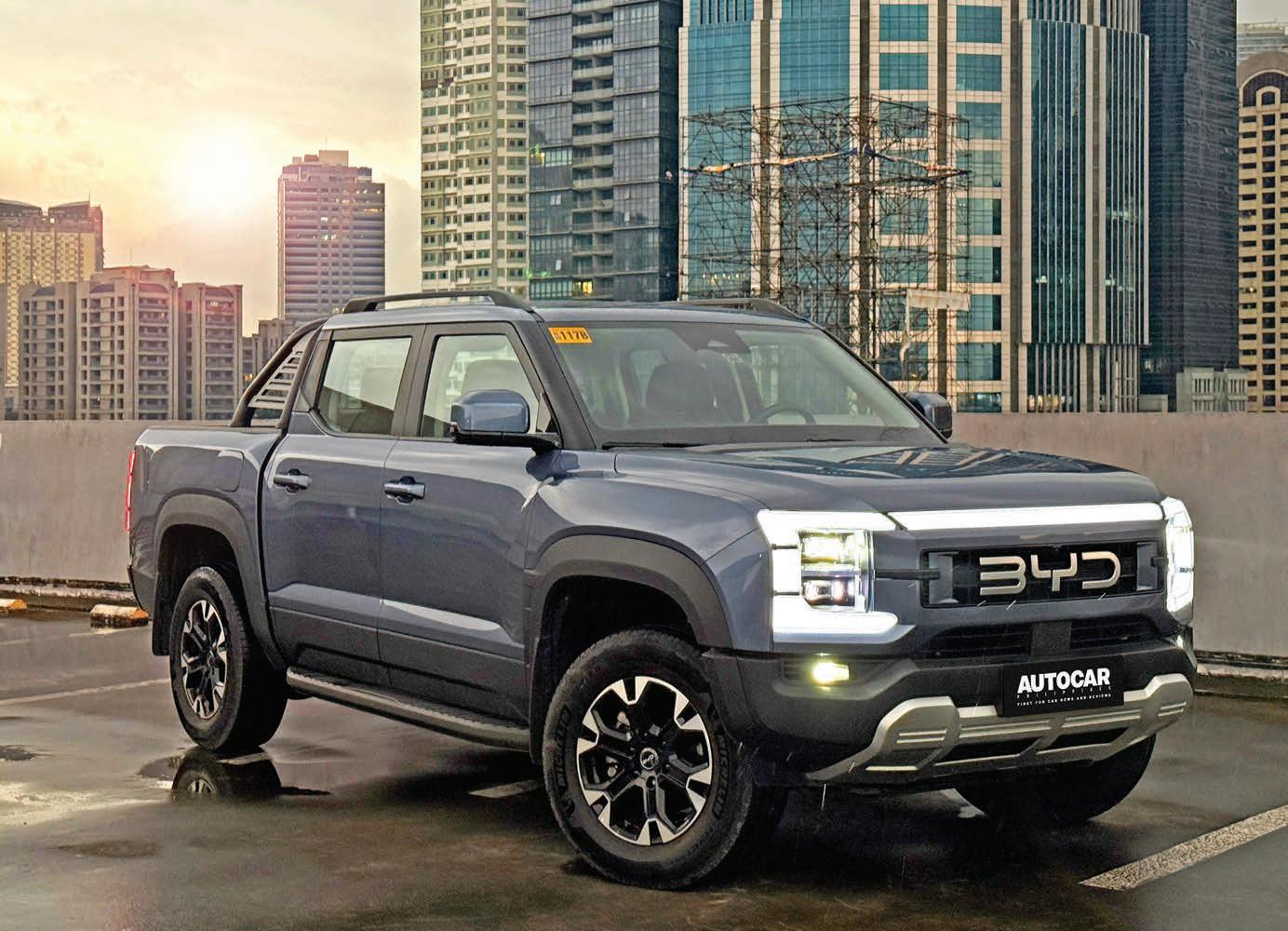
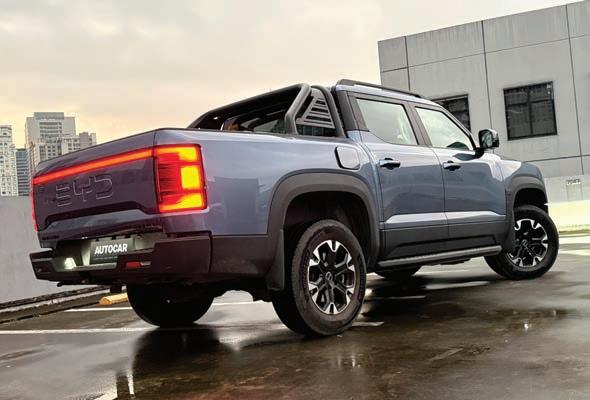
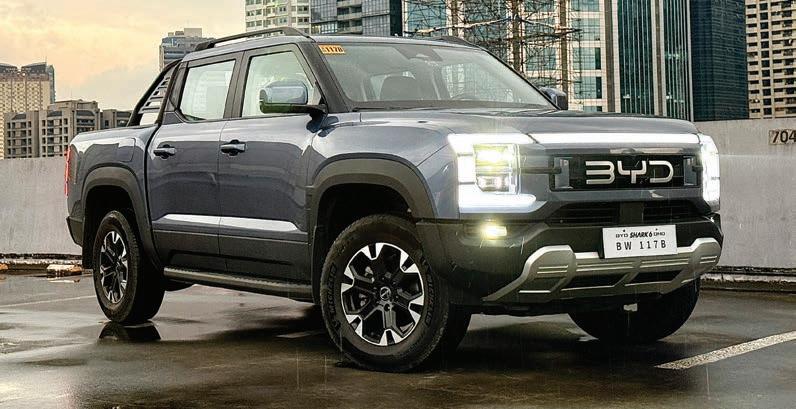
The front fascia is dominated by an oversized illuminated BYD badge flanked by LED headlamps and full-width lighting signatures. Even the daytime running lights integrate into a front-end illumination pattern that makes the truck instantly recognizable at night.
Muscular body lines, pronounced fender flares, and two-tone 18-inch alloy wheels wrapped in 265/65 rubber reinforce its stance. Ground clearance stands at 230 mm, complemented by a wading depth of 700 mm— figures that position it squarely within lifestyle off-road territory.
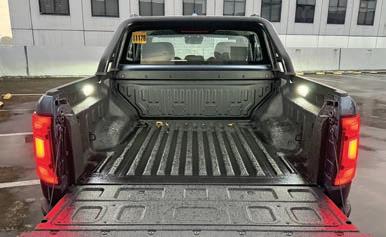
A 1,200-liter bed keeps the Shark grounded in pickup practicality.
Electrified aggression defines the Shark 6’s illuminated fascia.
Around the back, the cargo bed offers 1,200 liters of load capacity, making it practical for both work gear and outdoor equipment.
Interior
Step inside and the Shark quickly distances itself from traditional pickup cabins.
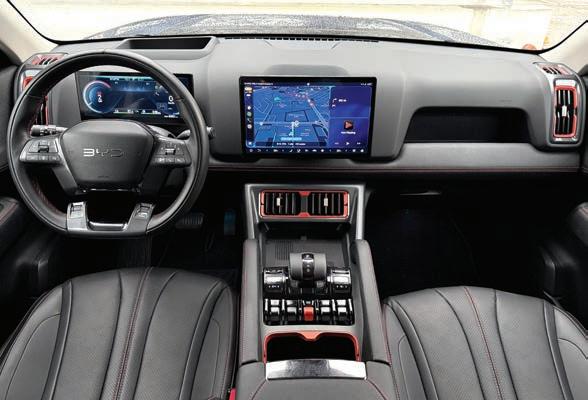
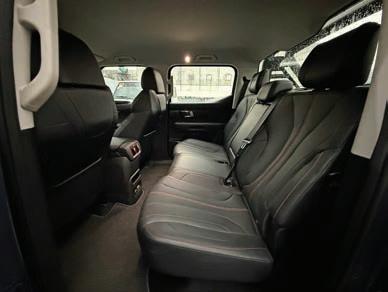
While the layout remains familiar, material quality and tech execution lean more SUV than utility vehicle. The Premium variant we drove came equipped with leather seats featuring both heating and ventilation, along with power adjustability for the driver.
Dominating the dashboard is a 12.8-inch rotating touchscreen infotainment system with wireless Apple CarPlay and Android Auto integration. The interface is responsive, the audio system is respectably tuned, and storage solutions throughout the cabin are thoughtfully executed for daily usability.
It’s a space designed as much for commuting comfort as it is for weekend adventure.
Powertrain
Under the hood sits the Shark’s defining technology.
A 1.5-liter turbocharged gasoline engine functions primarily as a generator, working alongside dual electric motors. The front motor produces 227 horsepower and 310 Nm of torque, while the rear motor contributes 201 horsepower and 340 Nm.
Combined output stands at an imposing 429 horsepower and 640 Nm, all fed by a 29.6-kWh BYD Blade battery.
In full electric mode, the Shark can travel up to 100 kilometers on a single charge under NEDC standards. When the battery depletes, the gasoline generator extends total driving range to approximately 800 kilometers on a full tank and charge.
Selectable drive modes include Eco, Normal, and Sport, complemented by terrain settings for Mud and Sand. While it lacks a traditional low-range transfer case or locking differentials, the intelligent all-wheel-drive system proved capable on light to moderate off-road terrain.
Performance and Handling
On the move, the Shark’s electrified torque delivery defines the experience.
Instant acceleration gives it a responsiveness no diesel pickup can match, launching from zero to 100 km/h in a claimed 5.7 seconds—
remarkably quick for a vehicle of its size and purpose.
Despite its dimensions, it never feels unwieldy. Steering is composed, body control is well managed, and the truck handles more like a large SUV than a ladder-frame utility vehicle.
A front and rear double-wishbone suspension setup plays a major role here, delivering stability on highways and comfort over broken provincial roads.
Utility and Lifestyle Capability
Beyond performance, the Shark retains core pickup functionality.
Towing capacity is rated at 2,500 kilograms, while payload capacity stands at 835 kilograms— figures that keep it relevant for both recreational hauling and light commercial duties.
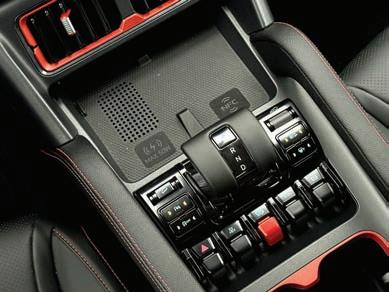
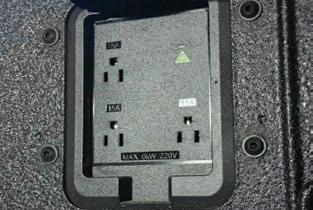
Its 220-volt, 6-kilowatt Vehicle-to-Load capability adds a lifestyle dimension, allowing owners to power appliances, tools, or campsite equipment directly from the truck’s battery system.
For outdoor users, that feature alone expands its appeal beyond traditional pickups.
Safety and Driver Assistance
The Premium variant we drove came comprehensively equipped with active and passive safety systems.
Six airbags, stability systems, traction control, hill-hold and descent control, and rollover mitigation form the passive safety backbone. Complementing these is BYD’s DiPilot advanced driver assistance suite, which integrates adaptive cruise control, predictive collision warning, autonomous emergency braking, lanekeeping assist, blind-spot detection, rear crosstraffic alert, and a 360-degree camera system
with see-through mode.
It’s among the most tech-loaded safety packages currently offered in the pickup segment.
Pricing and Ownership
The Shark 6 DMO Premium carries a sticker price of P2,298,000.
While that places it toward the upper end of the pickup spectrum, its competitors remain diesel-powered. The hybrid powertrain, electrified performance, and V2L functionality introduce value propositions not typically found in the segment.
Warranty coverage includes an eight-year or 160,000-kilometer guarantee on the Blade battery, backed by BYD’s expanding dealership network—an ownership reassurance factor for early adopters.
First Drive Impressions
The Shark 6 DMO delivers a compelling blend of performance, efficiency, and modern hybrid engineering.
It drives with the urgency of a performance SUV while retaining the practicality expected of a pickup. NVH levels are impressively subdued for the segment, making long drives more comfortable than traditional diesel counterparts.
It may not immediately replace diesel pickups in heavy-duty commercial roles, but as a lifestyle truck—capable of daily commuting, weekend trail driving, towing, and powering outdoor setups—it presents a convincing alternative.
Electrification, it seems, has finally reached the pickup frontier with serious intent.
NEIL PAGULAYAN
Rotating infotainment tech brings SUV-level sophistication to the cabin.
230 mm clearance and AWD traction expand its lifestyle reach.
The Gentle Giant Pickup FOTON Tunland V9
A full-size pickup with mild-hybrid assist challenges diesel norms.
The first time I saw the Foton Tunland V9 in the metal, the reaction was immediate: this thing is huge.
In a market dominated by midsize pickups, full-size trucks remain rare territory in the Philippines, occupied mostly by the likes of the Ford F-150 and RAM 1500. The Tunland V9 steps into that visual space with unmistakable presence— but instead of a thirsty V8, it arrives with a mild-hybrid diesel powertrain and modern utility ambitions.
Naturally, the question followed: does something this big really need big-block muscle to feel capable?
Exterior
Even at a standstill, the Tunland V9 commands attention.
Stretching 5.6 meters long, just over two meters wide, and nearly two meters tall, it towers over conventional pickups. The front end is unapologetically bold, dominated by a massive mesh grille flanked by sharp LED Matrix headlamps. A sculpted bonnet, pronounced fender flares, and 18-inch alloy wheels wrapped in all-terrain tires reinforce its heavy-duty stance.
Beyond aesthetics, the hardware supports its size. Ground clearance stands at 240 mm, while water-wading capability reaches 700 mm— figures that place it comfortably within serious lifestyle and utility territory.
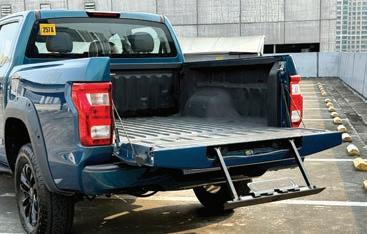
The cargo bed offers around 1,370 liters of volume with an 875-kilogram payload rating. A factory spray-on liner and integrated tie-down points emphasize real-world usability rather than showroom polish.
Underneath, the suspension setup departs from the traditional leaf-spring formula. Double wishbones up front and a multi-link rear configuration deliver a more composed and
A 1,370-liter bed balances workhorse function with lifestyle utility.
Full-size proportions give the Tunland V9 undeniable road presence.
comfortable ride—particularly noticeable on long highway stretches and broken provincial roads.
Interior
Climb inside and the V9’s character shifts dramatically.
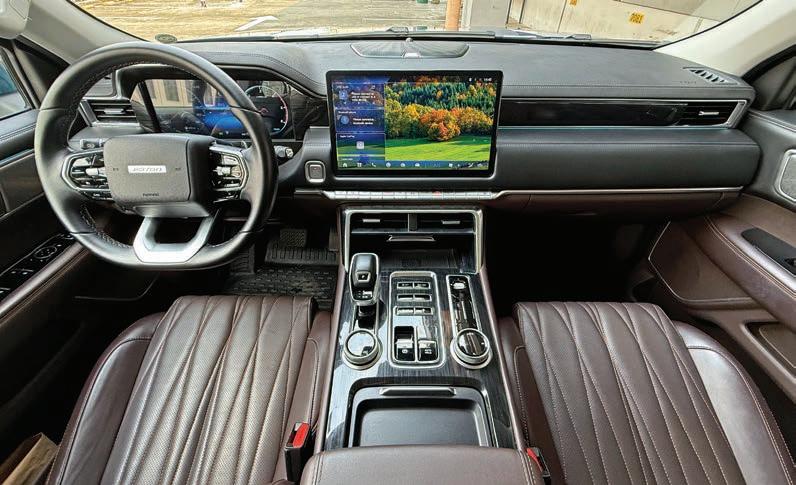
The cabin leans closer to SUV luxury than utilitarian pickup. Leather seats come standard, with eight-way electronic adjustment for the driver and four-way adjustability for the front passenger. Cabin space is generous, with legroom and shoulder room befitting its fullsize footprint.
The instrument cluster is a 12.3-inch fully digital display, paired with a 14.6-inch infotainment touchscreen supporting Apple CarPlay, Carbit Link, Bluetooth connectivity, and radio functions. Physical buttons and rotary controls remain integrated around the center console—an ergonomic advantage when driving on uneven terrain.
Convenience features include cruise control, keyless entry with remote window operation, power-folding mirrors, wireless charging, and multiple storage compartments scattered throughout the cabin.
It’s an environment designed as much for long drives as it is for daily commuting.
Powertrain
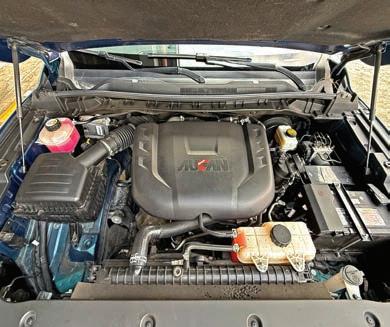
Under the hood sits a Euro 5-compliant AUCAN 2.0-liter turbocharged diesel engine paired with a 48-volt mild-hybrid assist system.
Output stands at 161 horsepower and 450 Nm of torque, delivered through an eight-speed automatic transmission. While those numbers may appear modest relative to its size, realworld drivability tells a more balanced story.
The BorgWarner four-wheel-drive system allows drivers to select between 2H, 4H, 4L, and an automatic mode capable of shifting between rear- and all-wheel drive when slip is detected. Terrain response modes include Snow, Sand, and Mountain settings, while Eco and Sport modes adjust on-road throttle behavior.
A center differential lock further enhances traction when conditions turn challenging.
On the move, torque delivery feels strong in the mid-range—ideal for highway overtakes or hauling loads. The mild-hybrid assist doesn’t enable electric-only driving, but it improves throttle response and fuel efficiency, particularly in stop-and-go urban traffic. The eight-speed gearbox shifts smoothly, keeping revs low and highway cruising relaxed.
Safety and Driver Assistance
The Tunland V9 arrives with a comprehensive safety package expected of modern pickups.
Six airbags, electronic stability systems, traction control, hill-start assist, and hill descent control form the passive safety foundation. Electronic brakeforce distribution, hydraulic brake assist, tire pressure monitoring, fatigue driving alerts, and adjustable speed limit control add further layers of protection and driver awareness.
A reverse camera and radar system assist maneuvering—a welcome inclusion given the truck’s substantial dimensions.
Pricing and Market Positioning
The Tunland V9 4×4 automatic is priced at P1,998,000.
That places it near the upper end of the pickup spectrum, though still below the pricing of imported full-size trucks. Within that bracket, it offers a unique proposition: fullsize dimensions, mild-hybrid efficiency, and premium cabin features competing against wellequipped midsize rivals.
It also stands as one of the largest pickups available locally at this price point.
First Drive Impressions
The Tunland V9 leaves a strong first impression. It proves that a truck of this scale doesn’t necessarily require a large-displacement gasoline engine to feel capable. The dieselhybrid pairing delivers sufficient torque, while the suspension setup keeps ride comfort impressively composed for its class.
On-road refinement is a highlight, particularly in NVH suppression and highway stability. Off pavement, its size, clearance, and drivetrain hardware give it genuine lifestyle capability. That size, however, cuts both ways.
Maneuvering through tight urban streets or parking in dense commercial areas requires adjustment—and patience.
But for buyers who value road presence, interior space, and full-size utility without stepping into V8 fuel consumption territory, the Tunland V9 presents a compelling alternative. Big in stature, modern in execution, and unexpectedly efficient for something this substantial.
NEIL PAGULAYAN
At 5.6 meters long, the V9 towers over midsize rivals.
Luxury-grade finishes elevate the pickup cabin experience.
How to Make Your Summer Drive Hassle-Free
A little preparation goes a long way—because the best summer drives should be remembered for the views, not the breakdowns.
And just like that, it’s March—the final stretch of the first quarter and the unofficial start of the Philippine summer season.
For many Filipinos, that means one thing: road trips. They remain one of the most practical and spontaneous ways to travel. No advance flight bookings, no baggage restrictions—just a full tank, an open highway, and the freedom to bring along a partner, the family, or the entire barkada.
But as carefree as road trips sound, the difference between a memorable getaway and a roadside headache often comes down to preparation.
Road trip readiness
Pre-drive reminders tend to surface every Holy Week or Undas, and while they may sound repetitive, they remain essential. Mechanical failure on a long summer drive isn’t just inconvenient—it can be dangerous.
That’s where the familiar BLOWBAGETS checklist comes in, a tried-and-tested acronym that covers the critical systems worth inspecting before any long haul.
Battery condition remains foundational. A weak battery can turn a scenic drive into a stranded afternoon. Voltage readings should hover around 12.5 volts with the engine off and rise to roughly 13.5 to 14.5 volts when running. Anything significantly lower warrants inspection—or replacement.
Lighting comes next. Functioning headlights, brake lamps, indicators, and fog lamps are both safety requirements and legal obligations. A faulty bulb isn’t just risky—it’s ticket-worthy.
Oil levels and quality should also be inspected, alongside transmission and brake fluids where applicable. Cooling systems deserve equal attention. Radiator coolant levels, hose integrity, and potential leaks must be checked, especially with summer heat placing extra stress on engines.
Brake system inspections should go beyond pedal feel. Pad thickness, fluid levels, and line integrity all contribute to stopping confidence.
Tire pressure—often overlooked— directly affects stability, fuel efficiency, and ride comfort. Even pressure across axles reduces steering strain and rolling resistance.
Fuel planning is equally crucial. For combustion vehicles, that means mapping refueling stops. For EVs, it means plotting charging points well in advance.
Engine bay spot checks help identify leaks, loose wiring, or unusual noises before they escalate into roadside failures.
Tools and emergency gear should always be onboard, including a jack, tire wrench, early warning device, and basic hand tools.
And finally, the most overlooked factor: the driver. Fatigue, stress, or lack of focus can compromise safety more than any mechanical issue. Valid documents, RFID balance, and physical readiness all fall under this final but critical check.
Packing smart for the long haul
Once the vehicle is sorted, attention shifts to cargo.
If traveling in a single vehicle, packing discipline becomes essential. Overloading not only reduces cabin comfort but also affects handling and braking.
Cargo should be organized by category. Food items must be stored separately from clothing, ideally in insulated coolers to preserve freshness. Loose bags should never occupy passenger laps, as unsecured items become hazards during sudden stops.
Efficient cargo loading maximizes trunk space while keeping cabin movement unobstructed. A simple packing checklist also prevents that nagging “Did we forget something?” anxiety halfway through the drive.
Expressway survival strategies
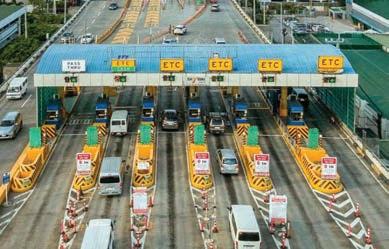
Most summer drives inevitably pass through expressways, making tollway preparation just as important as vehicle readiness.
RFID systems should be checked days— not minutes—before departure. Insufficient balance at toll gates creates unnecessary congestion and delays not just for you, but for everyone behind.
Timing also matters. Weekend northbound traffic on NLEX, particularly from Balintawak to Bocaue, tends to build by afternoon. Southbound congestion on Skyway Stage 3 often intensifies late in the day. Planning departure windows around these choke points can save hours.
Lane discipline plays a role too. The overtaking lane exists for overtaking—not cruising. Maintaining awareness of faster
traffic contributes to smoother flow and safer expressway driving.
What to avoid on the road
Preparation doesn’t end once the trip begins.
Excessive stopovers can dilute the road trip experience, stretching travel time and disrupting momentum. Strategic rest stops—planned in advance—balance comfort with travel rhythm.
During breaks, especially after long highway runs, allowing turbocharged engines to idle briefly before shutdown helps regulate temperature and protect internal components.
Driving behavior also shapes the journey. Road trips are meant for relaxation, not competition. Aggressive driving, sudden overtakes, and unnecessary speeding undermine both safety and enjoyment.
When traveling with passengers, the driver carries the responsibility of every occupant. That awareness naturally encourages calmer, more deliberate driving decisions.
Road rage, meanwhile, remains one of the most avoidable risks. Encounters with impatient motorists are inevitable, but escalation is optional. A calm response—or simple disengagement—keeps the journey intact.
After all, no vacation memory should involve flashing hazard lights on the shoulder.
The road ahead
Summer road trips are defined by freedom—the freedom to detour, explore, and travel at your own pace.
But that freedom is best enjoyed when preparation removes uncertainty from the equation. A well-checked vehicle, properly packed cargo, and a composed driver ensure the journey remains focused on scenery, not setbacks.
Because the goal isn’t just to reach the destination.
It’s to enjoy every kilometer getting there.
JOHN REY SAN DIEGO
" The best road trips begin with preparation, not ignition."
Cashless tollways keep summer traffic moving.
Gear, Gravel, and Getaways
Because outdoor escapes deserve rides built for gear, gravel, and good views
The pandemic didn’t just change how Filipinos worked—it reshaped how they escaped.
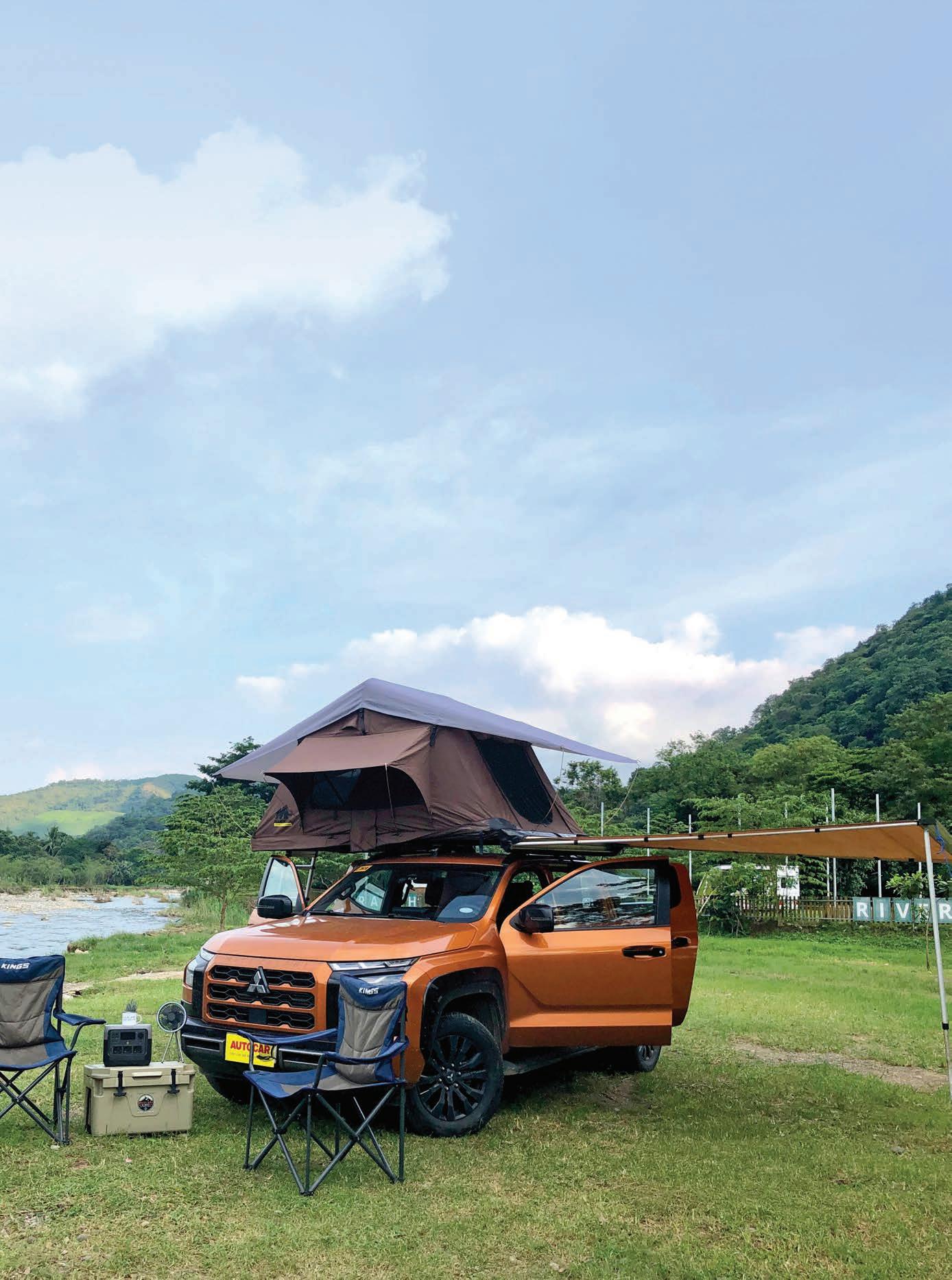
As lockdowns eased, the outdoors became the country’s collective reset button. Campsites filled up, beach coves reappeared on travel feeds, and mountain viewpoints turned into weekend destinations. Alongside this renewed appetite for open spaces came a lifestyle evolution: glamping.
So what separates glamping from traditional camping? Camping is about stripping things down—back to basics, back to survival simplicity. Glamping, on the other hand,
acknowledges a very Filipino truth: we love the outdoors, but we enjoy experiencing it comfortably. It’s a tongue-incheek blend of camping and glamour—less about roughing it out, more about elevating the experience.
It’s not hardcore rock crawling. It’s not simply parking by the beach either.
It’s driving to a scenic destination, unfolding camp chairs, setting up tables, brewing fresh coffee from the tailgate, and maybe staying the night under the stars— with creature comforts intact.
And like any lifestyle pursuit, it begins with the right vehicle.
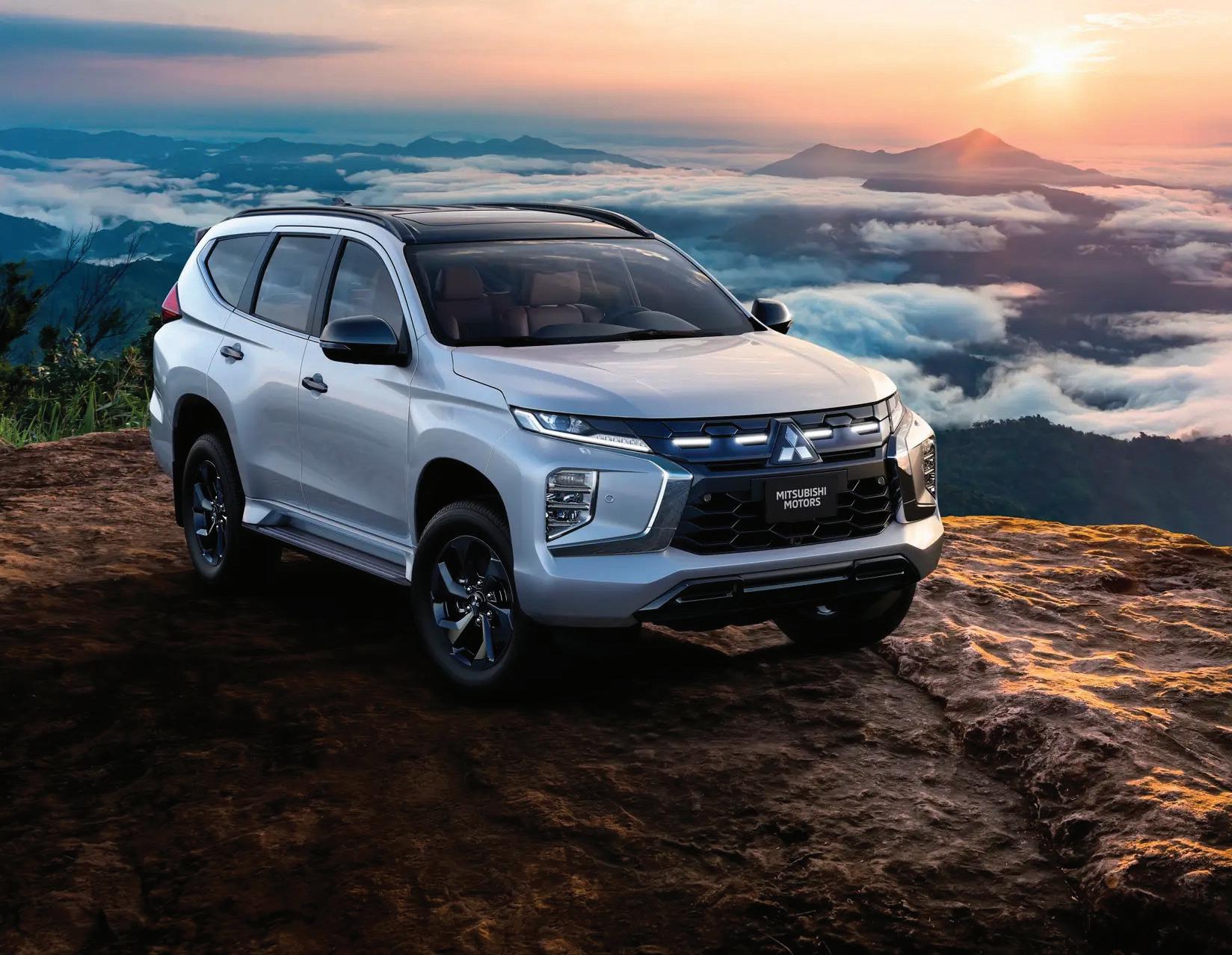
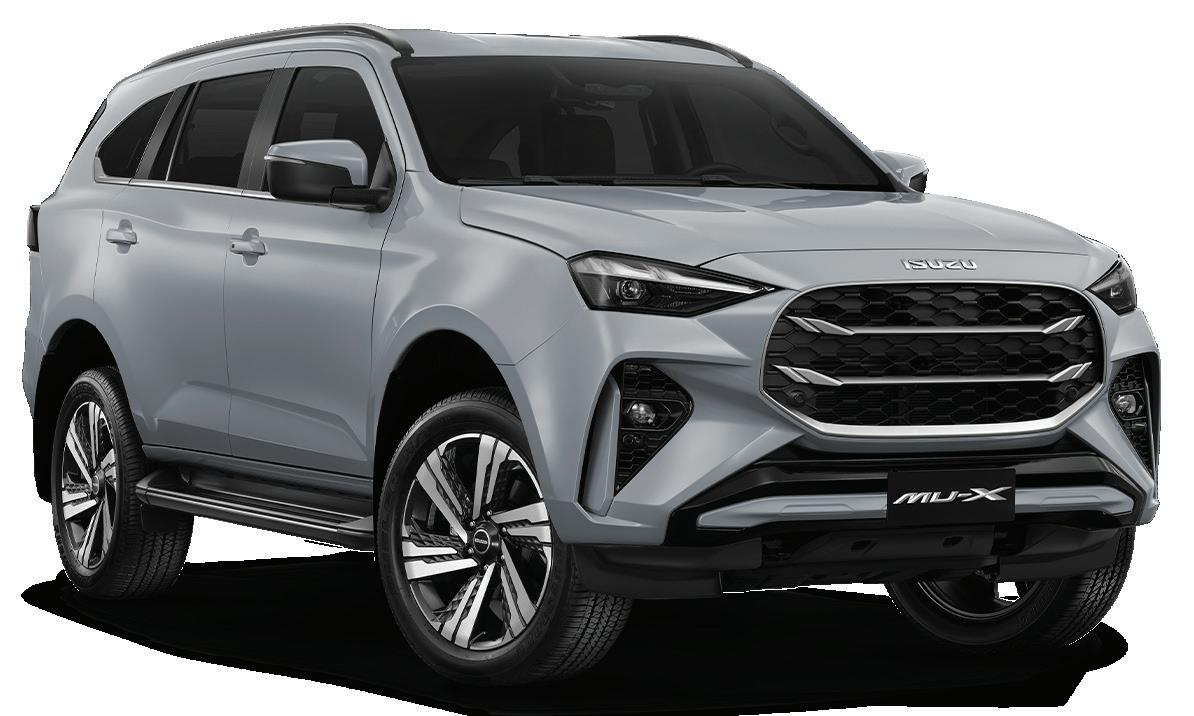
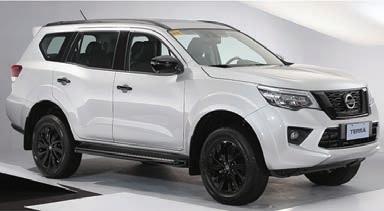
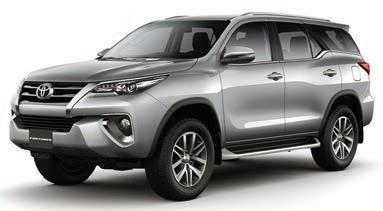
Seven-Seat SUVs: The Family Expedition Crew - Mitsubishi Montero Sport · Toyota Fortuner · Nissan Terra · Isuzu mu-X
For families or barkada groups, body-on-frame diesel SUVs remain the default outdoor workhorses.
Models like the Montero Sport and Fortuner bring sevenseat flexibility, durable ladderframe construction, and diesel torque suited for hauling both passengers and gear. Fold the third row flat and cargo capacity expands dramatically—enough for tents, coolers, folding tables, and overnight supplies.
Their elevated driving position builds confidence over rough provincial roads, while suspension setups are tuned to absorb long-distance travel punishment.
Modern iterations may not qualify as luxury SUVs, but leather seats, large infotainment systems, smartphone connectivity, and strong climate control make the post-outdoor cooldown far more enjoyable.
Because after a day in the sun, a cold cabin matters.
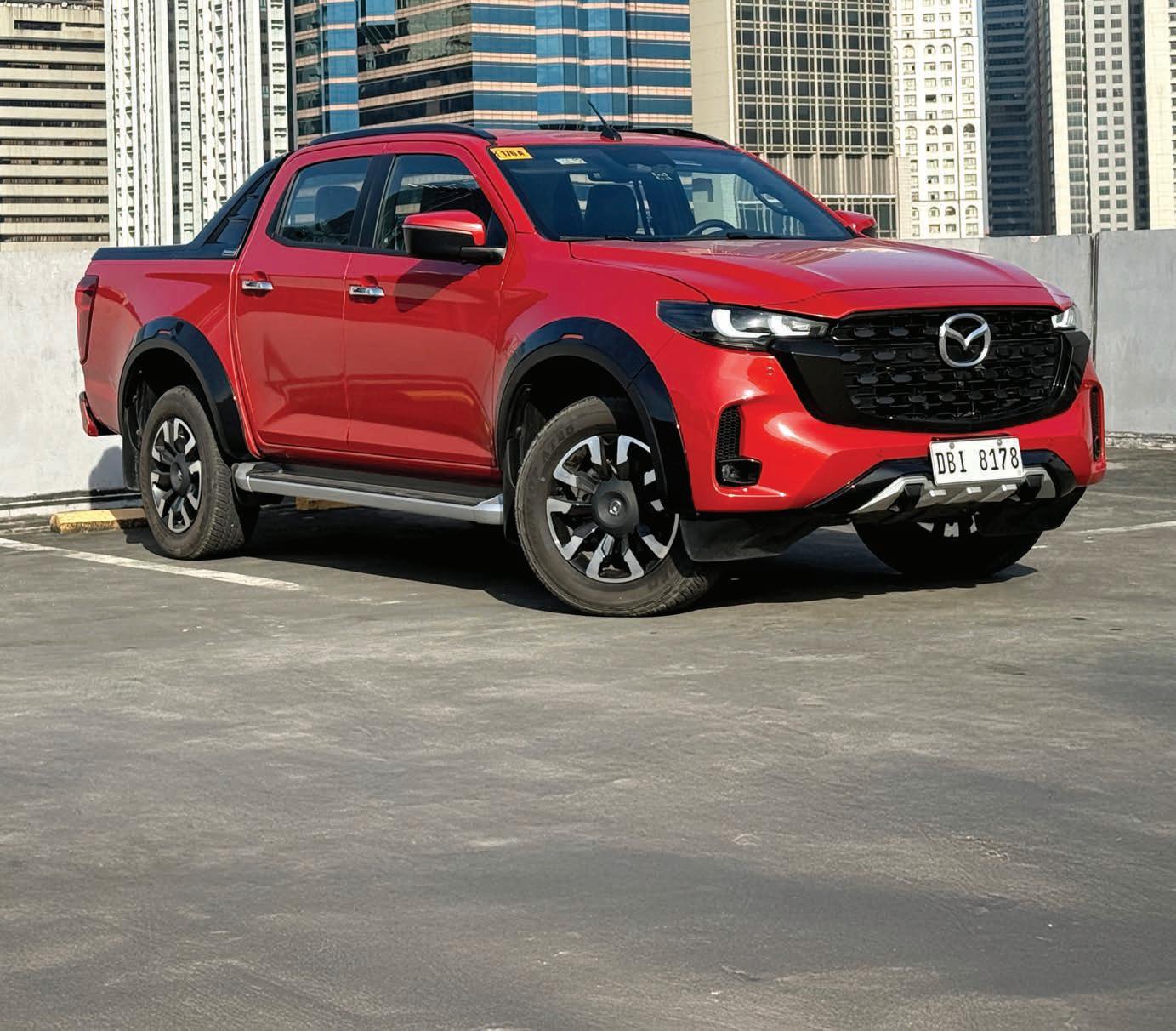
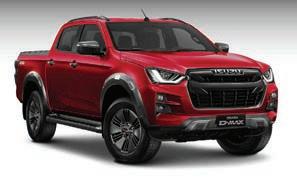
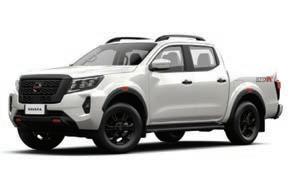
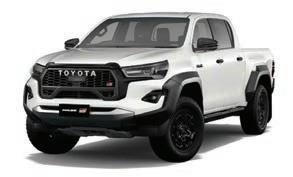
Pickup Trucks: The Lifestyle Backbone - Mazda BT-50 · Mitsubishi Triton · Toyota Hilux · Nissan Navara · Isuzu D-Max If SUVs carry people, pickups carry the lifestyle itself.
The midsize pickup has become the backbone of the Filipino outdoor scene, balancing weekday usability with weekend capability. The open bed invites customization—rooftop tents, camper shells, awnings, drawer systems, or even simple inflatable mattress setups.
Ground clearance and 4WD systems make beach approaches and upland trails manageable, but what makes pickups truly versatile is highway composure. Most outdoor drives begin with long expressway runs before terrain gets interesting—and modern pickups handle both environments well.
Diesel torque helps when fully loaded, and even stock suspension setups are built to tolerate rough provincial roads without punishing occupants.
For frequent adventurers, nothing matches pickup flexibility.
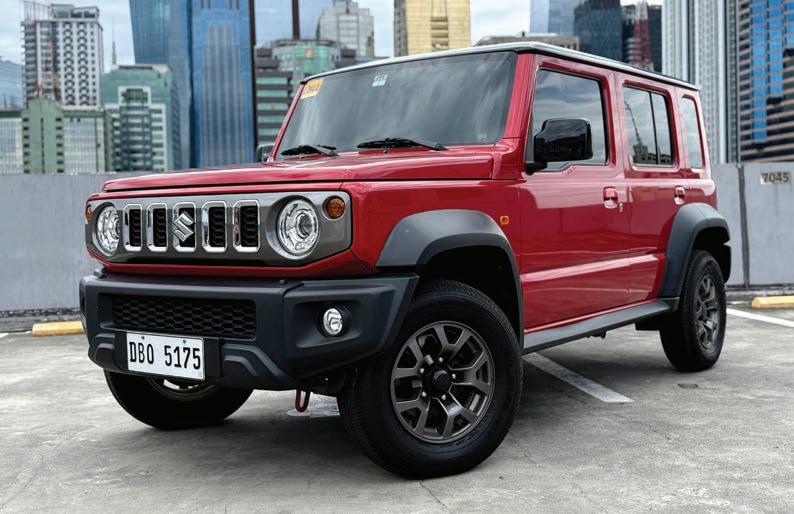
Few vehicles embody spontaneous adventure like the Jimny.
Compact, boxy, and mechanically honest, it thrives where paved roads give way to dirt paths. Its ladder-frame chassis and part-time 4WD system make it ideal for beach trails, mountain approaches, and uneven terrain common across the provinces.
The three-door variant suits solo travelers or couples—rear seats folded, the cargo area accommodates compact camping gear. The newer five-door Jimny expands practicality significantly, offering improved ride comfort, more storage, and better sleeping or loading flexibility.
It’s not luxurious—but that’s never been the point.
Suzuki Jimny: Compact Adventure Icon
Subaru Forester: Refined Trail Companion
Subaru has long built its reputation around outdoor lifestyles, and locally, the Forester fits that mold seamlessly.
Standard symmetrical all-wheel drive provides grip over gravel, wet grass, and slippery inclines, while its boxy proportions translate to usable cargo volume.
Visibility is a Forester hallmark—large glass areas and an upright seating position make navigating tight trails less stressful. Ride quality leans toward comfort, making long drives to remote campsites less fatiguing.
It’s less rugged than a ladder-frame SUV— but more refined where it counts.
" Glamping begins with the destination — but it ’s defined by the vehicle that gets you there."
Hybrid & Electrified Glamping
Electrified vehicles add a new dimension to outdoor escapes.
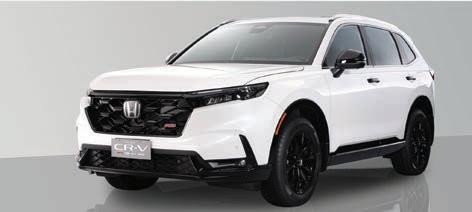
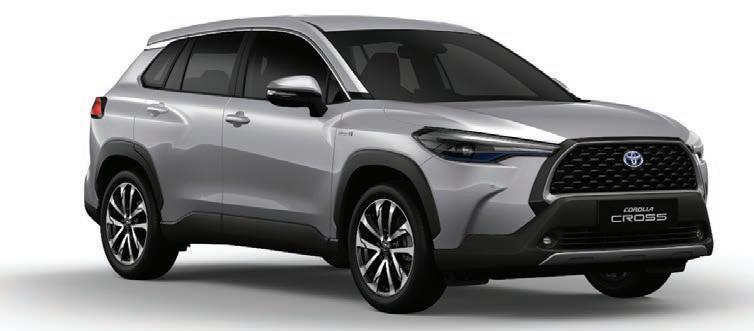
Models like the Toyota Corolla Cross Hybrid, Honda CR-V e:HEV, and BYD Shark 6 DMO combine fuel efficiency with nearsilent operation—arriving at campsites without diesel clatter enhances the experience.
The BYD Shark’s Vehicle-to-Load (V2L) capability takes things further, allowing the vehicle itself to power lights, coffee makers, speakers, or cooking equipment.
In glamping terms, that’s a gamechanger—turning the vehicle into a mobile energy hub.
What makes the ideal outdoor lifestyle vehicle?
It isn’t defined purely by horsepower or ground clearance.
The ideal glamping vehicle balances durability with comfort—capable of carrying gear without sacrificing ride quality. It must offer cargo flexibility for both essentials and indulgences, refinement for long highway drives, and enough toughness for the occasional rough patch.
In the Philippine context, most scenic destinations don’t require extreme off-road capability. What matters more is balance: enough ruggedness to reach the campsite, enough comfort to enjoy staying there.
Because the vehicle isn’t just transport— it becomes part of the outdoor experience itself.
NEIL PAGULAYAN
BYD Shark 6 DMO V2L 220V AC panel
Mild Hybrid, Major Savings: Suzuki Fronx Hybrid Proves Efficiency Can Still Be Engaging
No hypermiling, no tricks—just real driving and real fuel savings.
Suzuki Philippines has long understood the local obsession with fuel economy. Even before electrification entered the conversation, the brand’s smalldisplacement engines had already built a reputation for stretching every liter.
So when the Suzuki Fronx Hybrid joined the company’s growing mildhybrid lineup, the obvious question
wasn’t whether it would be efficient— but how much more efficient it could be.
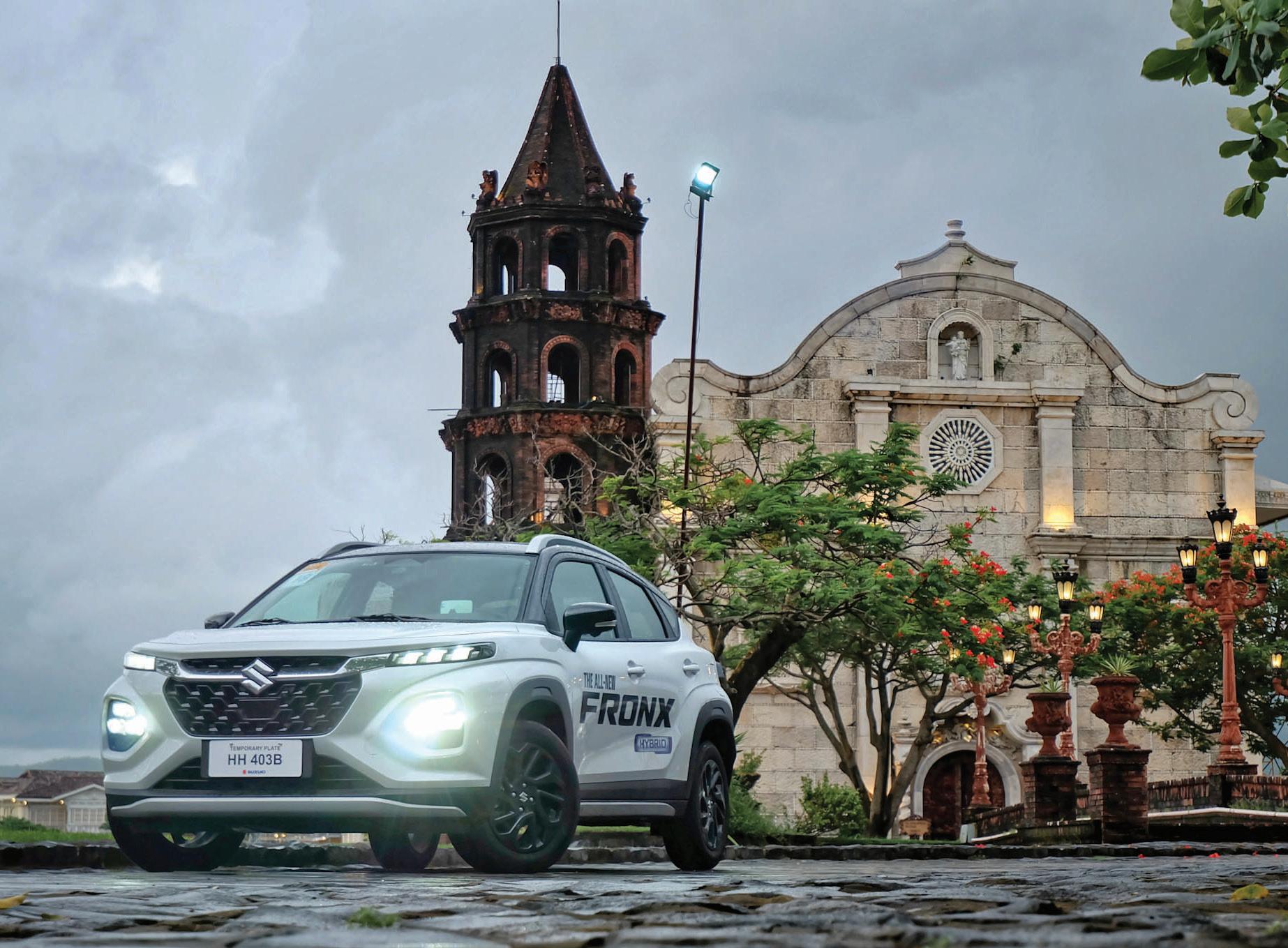
To answer that, Suzuki organized a controlled fuel economy drive using the top-spec Fronx SGX AT Hybrid. The route covered 161 kilometers from Metro Manila to Las Casas Filipinas de Acuzar in Bagac, Bataan, running on a sealed, untampered full tank, with only scheduled break stops along the way.
Coupe lines, crossover stance
Before the drive even began, the Fronx’s styling already hinted that this wasn’t a purely utilitarian eco-runner.
Suzuki describes the design as inspired by the strength and elegance of a thoroughbred horse—a blend of coupe sophistication and SUV ruggedness. The upright front fascia, double-fender treatment, and strong shoulder lines give it visual width, while the flowing character lines soften the crossover silhouette.
Lighting plays a major role in its identity. High-mounted segmented DRLs double as turn signals, while splittype headlamps sit lower on the fascia, eliminating the need for separate fog
Hybrid energy flow appears directly in the driver’s line of sight.
lamps. Chrome-accented grille detailing, roof rails, skid plates, and a rear spoiler round out the urban-adventure look.
Rolling on 16-inch polished alloys wrapped in 195/65 rubber, the Fronx measures just under four meters long, with 170 mm of ground clearance—compact enough for city maneuvering but tall enough for provincial road confidence.
Cabin tech and comfort
Inside, the SGX variant leans toward premium compact crossover territory.
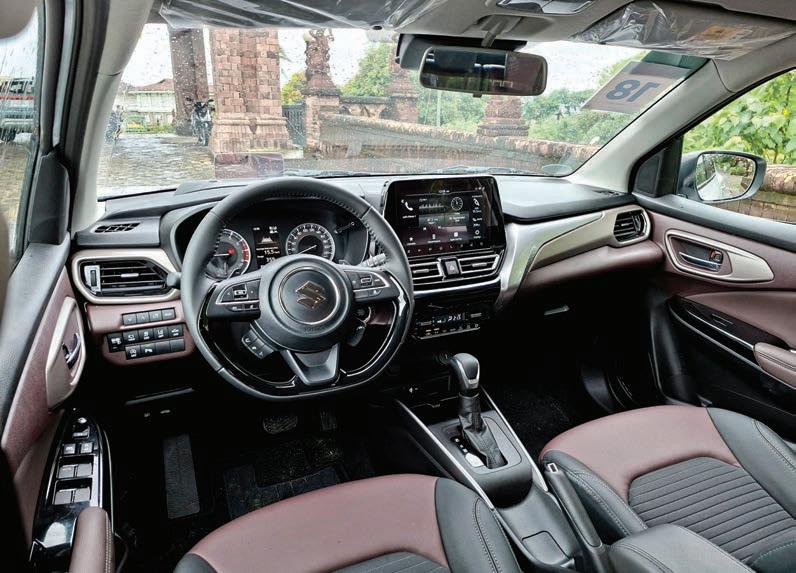
A dual-tone Black and Burgundy cabin theme sets the visual tone, complemented by leather-trimmed sporty seats and a driver-centric dashboard layout. At the center sits a nine-inch HD touchscreen infotainment system with Apple CarPlay, Android Auto, and Bluetooth connectivity, paired to a six-speaker audio system.
One of the Fronx’s standout features is its head-up display, which projects driving data and hybrid energy flow information directly into the driver’s line of sight. It’s a rare inclusion at this price point and reinforces the tech-forward positioning of the mild-hybrid system.
Wireless charging, automatic climate control, rear air vents, ambient footwell lighting, and multiple storage compartments round out the cabin’s daily usability.
Understanding SHVS mild-hybrid tech
Powering the Fronx Hybrid is Suzuki’s Smart Hybrid Vehicle by Suzuki system, or SHVS.
Unlike full hybrids, the SHVS setup is lightweight and compact. It pairs a 1.5-liter K15C gasoline engine with an Integrated Starter Generator powered by a small 12volt lithium-ion battery.
On paper, the gasoline engine produces 99 horsepower and 134 Nm of torque. The ISG contributes an additional torque assist of up to 50 Nm during acceleration. This belt-driven motor also functions as an alternator, regenerative braking unit, and engine starter.
When accelerating, the ISG draws stored energy from the battery to assist propulsion. During cruising, the system powers vehicle accessories, reducing engine load. It also harvests braking energy and supports the engine auto stop-start system, which shuts the engine off at standstill and restarts it seamlessly when moving off.
It’s a subtle electrification layer—but one that works continuously in the background.
On the road to Bataan
Rather than hypermile, we opted to drive normally.
Acceleration was brisk enough for everyday traffic, with the torque assist function noticeable during stoplight launches. It delivered the sensation of a slightly larger engine without the fuel penalty.
On highways, the Fronx felt planted and stable even at speed. Steering feedback was communicative, and body control remained composed through expressway sweepers and provincial zigzags. Ride quality struck a comfortable balance—firm enough to control roll, yet supple enough to absorb road imperfections.
Manual downshifting proved useful during climbs and overtakes, keeping the engine within its mid-range torque band. Regenerative braking quietly replenished battery reserves on descents.
The stop-start function operated smoothly, though—as with most systems of this type—the air-conditioning compressor pauses when the engine shuts off. Thankfully, the system can be manually disabled when needed.
The numbers that matter
After 161 kilometers of mixed driving— spirited when conditions allowed—we arrived at the fuel top-up station.
Total fuel consumed: 7.61 liters.
That translated to 21.16 km/L.
At an average gasoline price of P56.10 per liter, the total fuel cost came to just P426.92, or roughly P2.65 per kilometer.
For a real-world drive that wasn’t optimized for economy runs, the result was undeniably impressive.
Supportive seats, good legroom, and subdued NVH levels reduced fatigue throughout the trip. The cabin remained quiet at highway speeds, and the suspension tuning minimized bounce even over uneven surfaces.
By the time we reached Las Casas, the drive felt far shorter than its distance suggested—always a strong indicator of long-haul usability.
Verdict
The Suzuki Fronx Hybrid doesn’t reinvent fuel economy—it refines it.
By layering mild-hybrid assist onto an already efficient platform, it delivers tangible savings without sacrificing drivability. It remains light on fuel, responsive in traffic, and comfortable over distance.
For buyers who want electrification benefits without stepping into full-hybrid pricing or EV infrastructure concerns, the Fronx Hybrid presents a practical middle ground.
Efficient when you need it, engaging when you want it—and proof that economy drives don’t have to feel like endurance tests.
RANDY PEREGRINO
Dual-tone trim elevates the compact crossover cabin.
TOYOTA UNVEILS ALL-NEW RAV4, BLENDING ELECTRIFICATION, INTELLIGENCE, AND ADVENTURE
With hybrid power, a coming PHEV variant, and Toyota’s Arene software platform, the next RAV4 feels less like a new model and more like Toyota’s future strategy made real.
BY ANJO PEREZ
The all-new Toyota RAV4 is here—and it’s basically Toyota’s future in SUV form.
There are cars you buy because you love them, and cars you buy because they make sense. The RAV4, for most of its existence, has lived in the second category—sometimes unfairly.
Because while it’s never been the loudest compact SUV in the room, the RAV4 has quietly built a reputation as the kind of vehicle that you can trust with literally everything: daily commutes, long drives, family responsibilities, weekend hobbies, provincial getaways, even the occasional “I’m going to start hiking now” phase.
That’s what makes the sixth-generation Toyota RAV4 such a big deal.
Officially unveiled globally on December 17, 2025, the all-new RAV4 isn’t just “next model, next year.” It feels more like Toyota saying, “Alright. This is what our mainstream future looks like.” It’s a vehicle designed not only to stay competitive, but to carry Toyota’s big transition toward electrification and software-defined mobility into a segment Toyota knows it can dominate: the compact SUV market.
Toyota built the new RAV4 around the theme “Life is an Adventure.” It’s a tagline that can sound like marketing—until you realize the RAV4 has always been Toyota’s lifestyle vehicle. It helped
normalize the idea that an SUV doesn’t need to be huge or hardcore to be useful. It just needs to match how people actually live.
For this generation, Toyota says the new RAV4 is shaped around three pillars: Diversification, Electrification, and Intelligence. In non-corporate terms, that means: more versions to fit different lifestyles, electrified power as the core, and a much smarter, more software-centered cabin and safety experience.
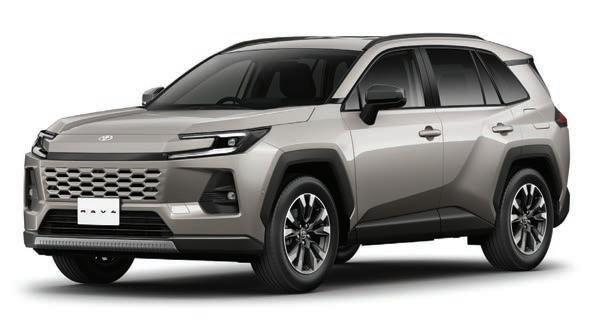
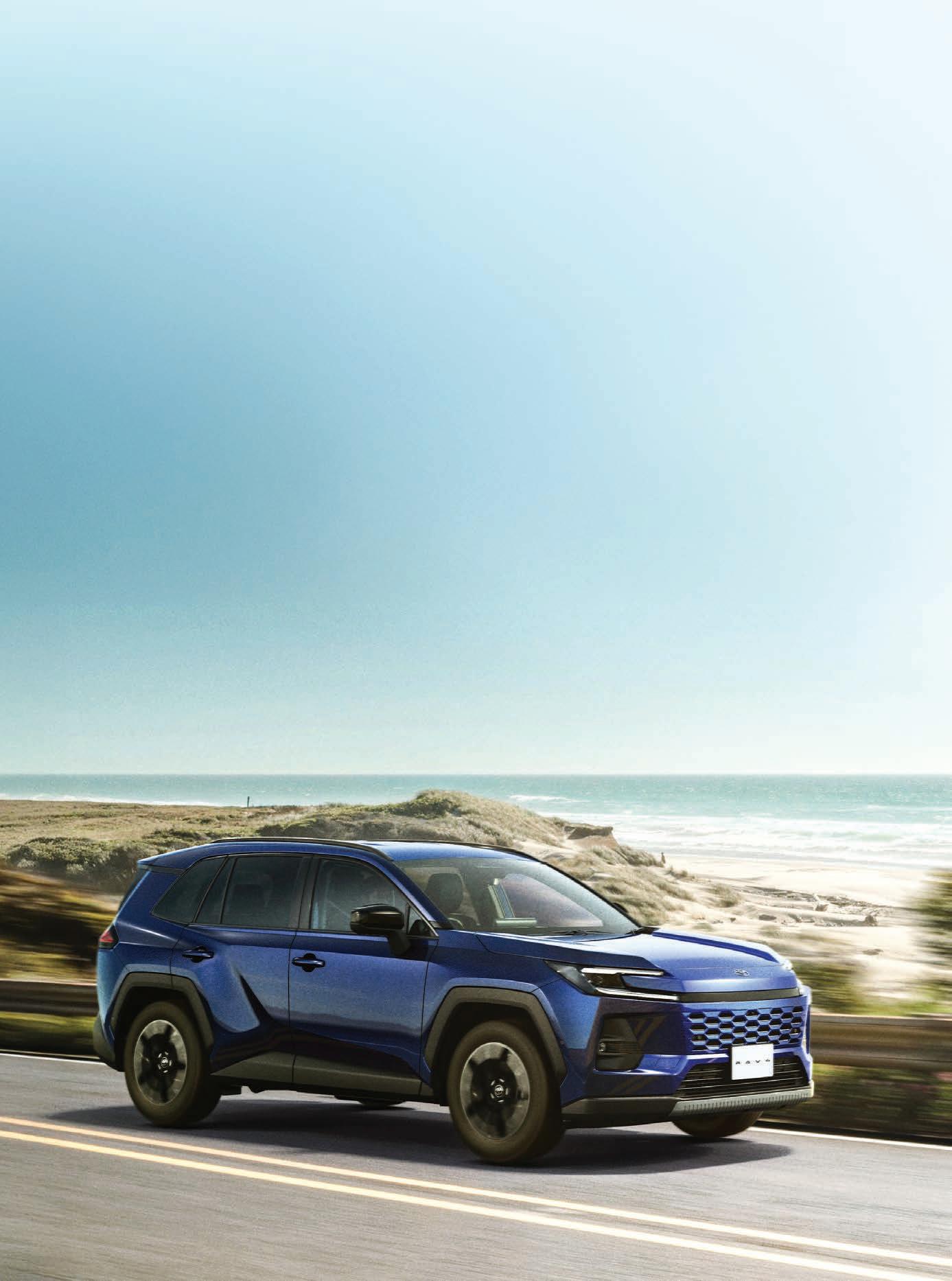
The new sixth-generation RAV4 keeps its familiar SUV proportions but sharpens the stance with Toyota’s “Big Foot” design philosophy and a more confident front-end.
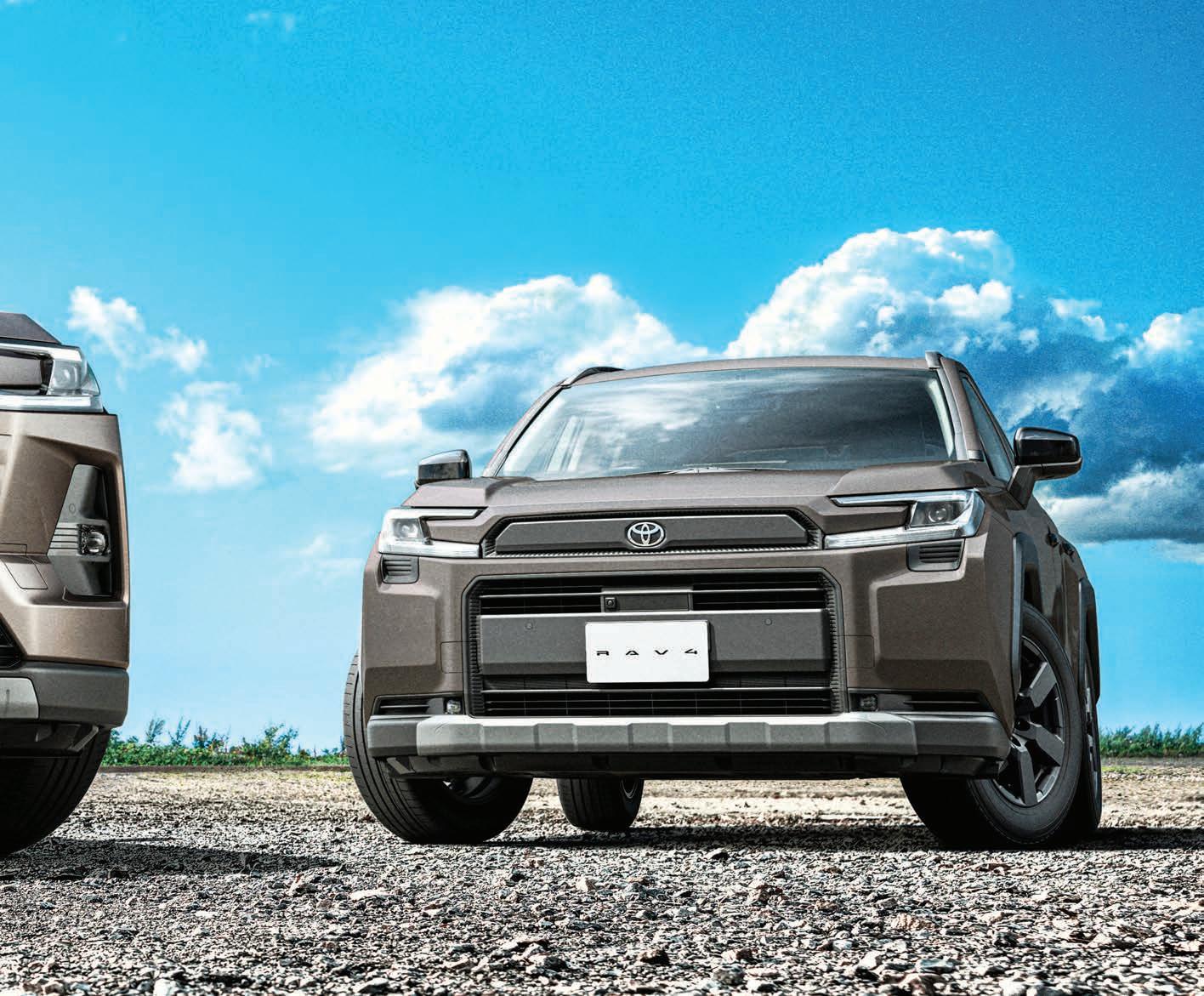
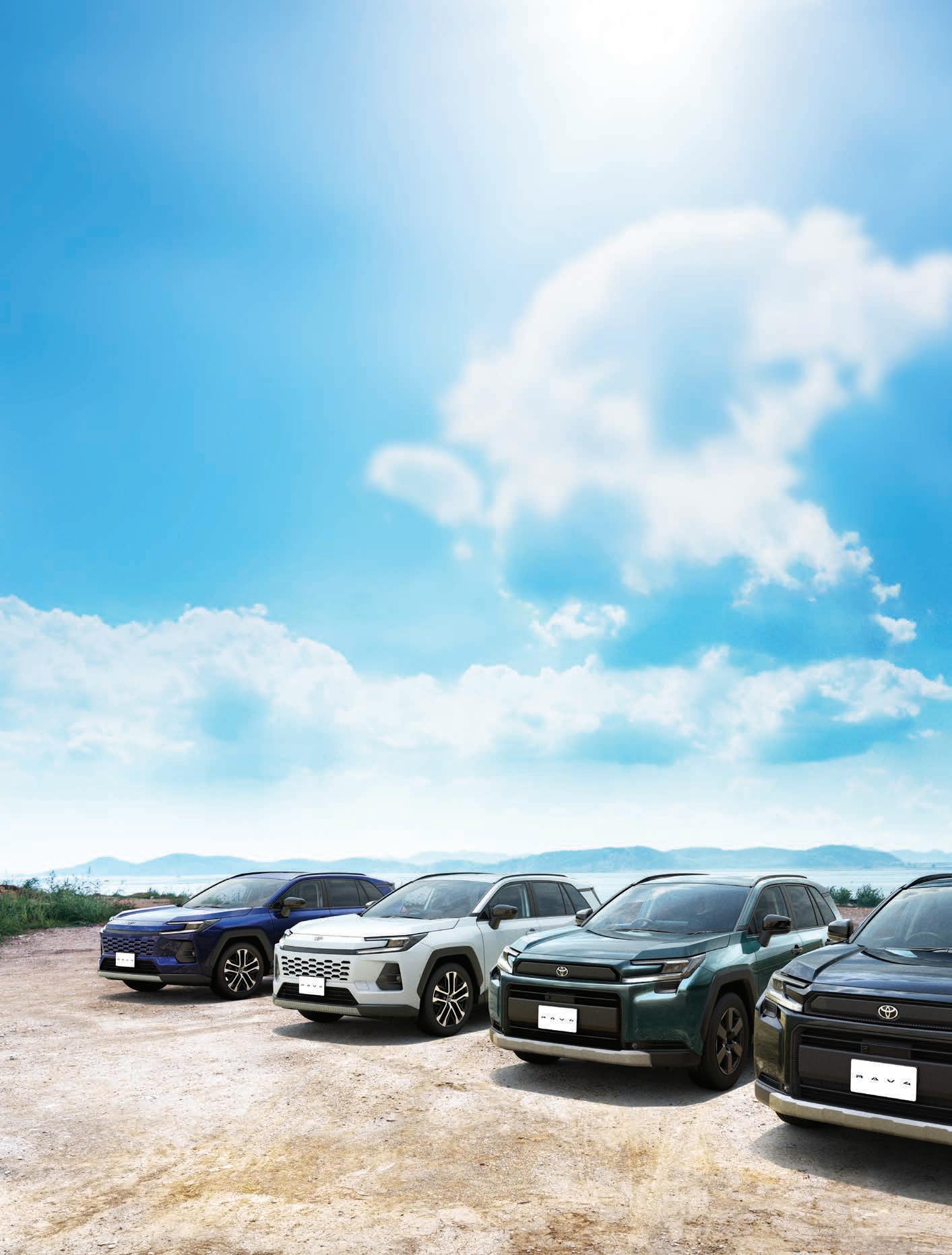
THE BIG SHIFT: RAV4 IS NOW A “CHOOSE YOUR PERSONALITY” SUV
Toyota is doing something very intentional with the new RAV4 lineup: it’s no longer trying to build one single SUV that appeals to everyone equally. Instead, it’s building three RAV4 identities.
That’s the Diversification pillar, and it’s honestly one of the smartest moves Toyota could make.
Some buyers want a crossover because it’s practical. Others want it to feel rugged. And there are people who want SUV utility but still want something sporty enough to keep the daily drive interesting. Toyota is responding to all three groups.
The Z grade is the clean, refined, “fits in the city without trying too hard” variant. It’s for people who want the RAV4 as their daily and don’t need it to look like it just came off a dirt trail.
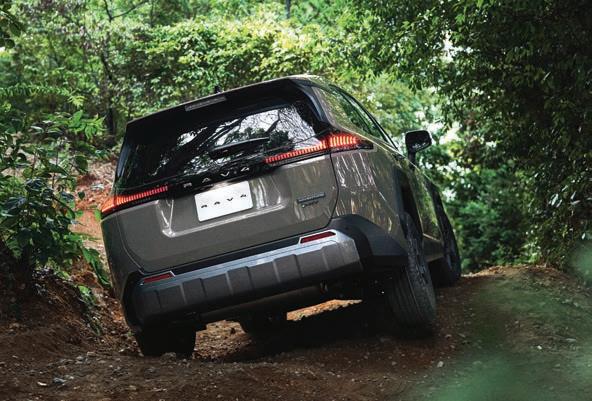
The Adventure variant leans heavily into tougher visuals and off-road-inspired presence. Toyota’s basically acknowledging the obvious: even if you’re not doing hardcore off-roading, a lot of buyers want the SUV vibe to feel authentic. Adventure is for the people who do road trips, hit the provinces, chase nature spots, and want their crossover to match that lifestyle.
Then there’s the GR SPORT, Toyota’s performance-flavored version set for release this March. If you want an SUV with sharper attitude and more dynamic intent, this is the grade Toyota is building the excitement around.
It’s worth highlighting what Toyota isn’t doing here: it’s not just slapping badges and slightly different bumpers. It’s committing to clear buyer segmentation, which is exactly
what millennials and Gen Z respond to. People want products that reflect identity. Toyota knows this.
ELECTRIFICATION ISN’T A “FEATURE” ANYMORE—IT’S THE WHOLE PLATFORM PHILOSOPHY
The new RAV4 is built in an era where electrification has moved past being novelty. Toyota is no longer positioning hybrid tech as “the efficient alternative.” It’s positioning electrification as the default core of the vehicle. That’s the Electrification pillar, and it’s the heart of the sixth-gen RAV4.
At launch, the RAV4 comes as a hybrid electric vehicle (HEV), and Toyota confirms a newly developed plug-in hybrid (PHEV)
Toyota’s new “island architecture” groups key controls into defined zones, aiming to reduce distraction and make the cabin feel more intuitive.
will follow within the same fiscal year.
The HEV setup pairs a 2.5-liter inline four-cylinder engine with upgraded electric motors, producing a maximum system output of 177 kW, or about 240 horsepower. That’s real performance for a compact SUV, and it’s exactly the kind of number that makes hybrids feel like the “smart upgrade” rather than the “slow eco option.”
Power is managed through Toyota’s E-Four electric all-wheel drive, which continuously adjusts front-to-rear torque distribution between 100:0 and 20:80. Meaning, it can behave like a frontwheel-drive crossover when it wants to be efficient, but it can quickly send power rearward when traction and stability matter.
Toyota also adds TRAIL and SNOW
driving modes. These modes work by applying braking force to spinning wheels and redirecting torque as needed. For most markets, this might sound like a snowy forest fantasy—but in our region, this is also about wet roads, slippery surfaces, loose gravel climbs, and uneven backroads. Think of rainy season provincial drives, not WRC stages.
Toyota also claims improved ride comfort through platform refinements and newly adopted shock absorbers—an underrated point, because compact SUVs now have to feel premium. Buyers want comfort, not just ground clearance.
Design: more confident SUV stance, still everyday usable
The RAV4 design has always had muscle. Toyota didn’t abandon that. It sharpened it. Toyota says the new exterior revolves around three ideas: Big Foot, Lift-up, and Utility.
“Big Foot” means large-diameter tires and a planted SUV stance. “Lift-up” reinforces the raised body and off-road readiness. “Utility” is Toyota saying: yes, we care about cargo and real-world use, not just styling.
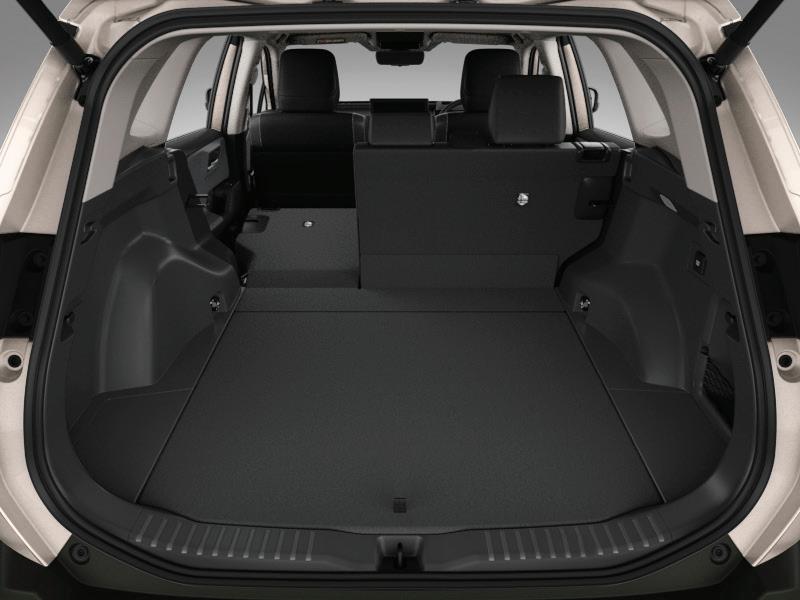
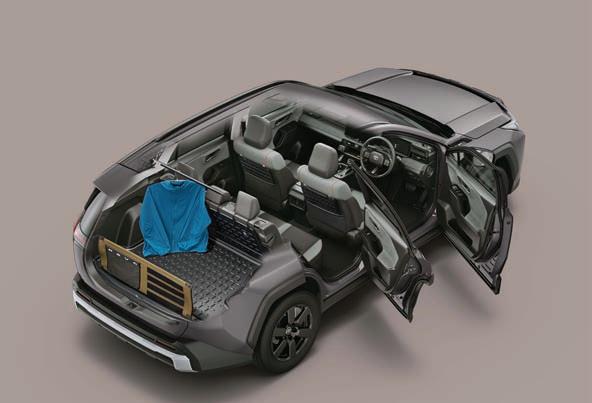
And here’s the number that matters: the luggage compartment is now up to 749
liters (VDA measurement). Toyota also says the load floor is flatter when the rear seats are folded, making it easier to carry long or bulky items.
This is the kind of practical upgrade that fits modern SUV ownership. People don’t just buy SUVs for the driving position—they buy them for flexibility. That’s what Toyota is leaning into.
Toyota also kept overall dimensions largely unchanged to preserve usability. The Z grade measures 4,600 mm long, 1,855 mm wide, and 1,680 mm tall, while the Adventure is slightly longer and wider. Toyota knows the moment you oversize a compact SUV, it stops being compact— and you lose buyers who want city maneuverability.
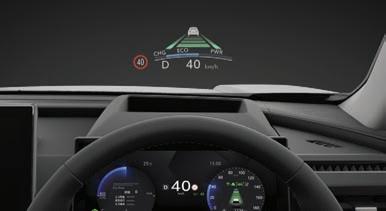
color head-up
with perspective-enhanced
information
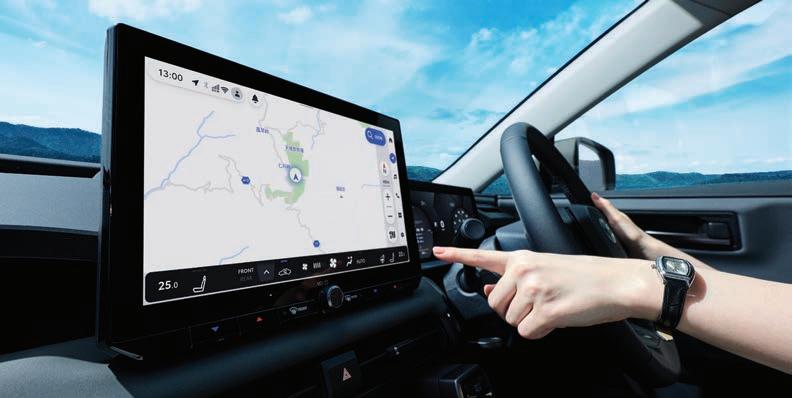
A 12.9-inch display audio system is standard across the lineup, with Toyota claiming faster voice recognition response times of around one second.
A
display debuts
layout, designed to make
easier to recognize at a glance.
Cabin: Toyota’s new “island architecture” finally feels like modern design thinking
Toyota interiors have always been functional. Nobody argues that. But Toyota interiors have also historically been… safe. Sometimes too safe.
That changes here.
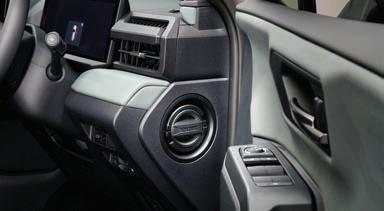
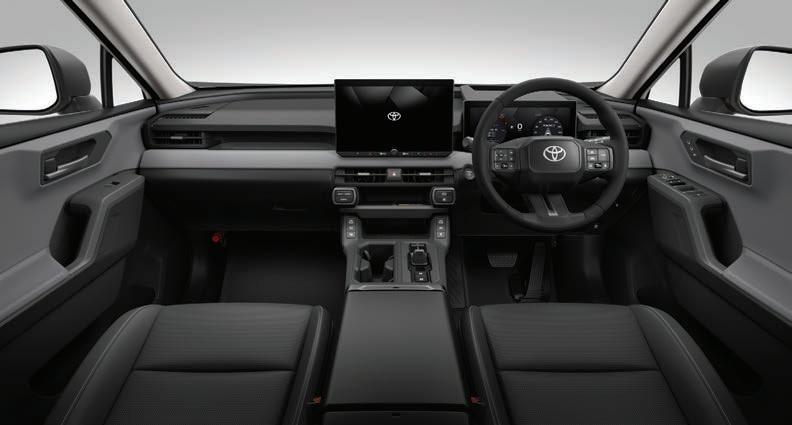
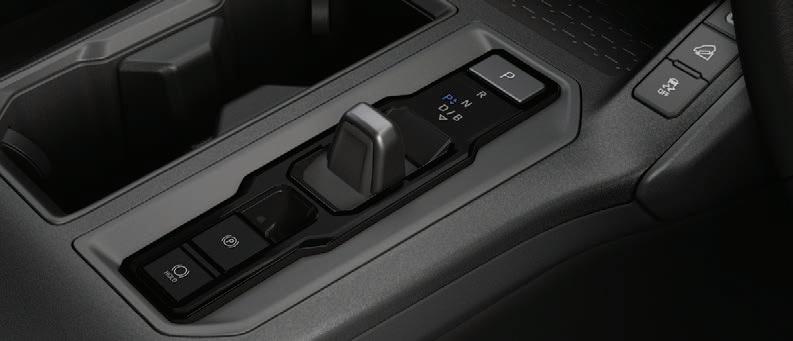
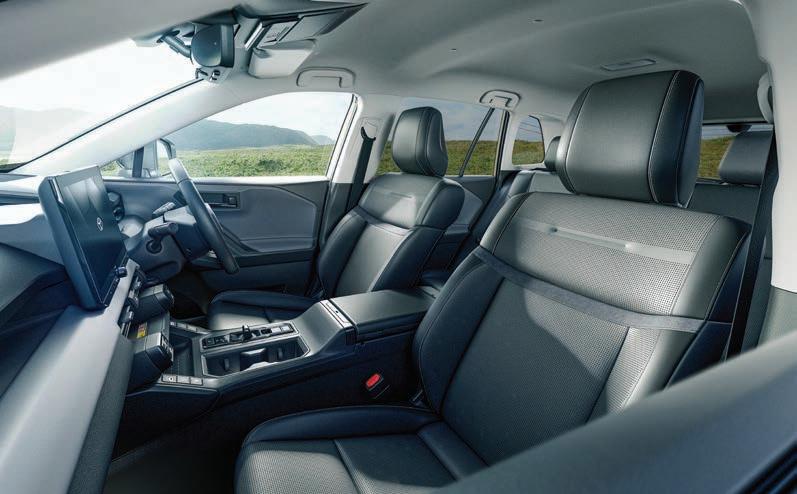
The new RAV4 introduces an interior layout Toyota calls island architecture, grouping key controls—displays, shift functions, and essential switches—into defined zones. The whole idea is to keep the cabin visually clean but also intuitive.
There’s also a wide horizontal instrument panel meant to reinforce the SUV’s stance from the driver’s seat, and Toyota says the layout reduces eye movement by keeping key info closer to the driver’s line of sight. That’s a fancy way of saying: less distraction.
And Toyota debuts some important techfirsts here.
One is a color head-up display with perspective-enhanced layout—basically presenting key info in a way that’s faster to recognize.
The second is Electro-Shiftmatic, a single-action gear selection system that integrates the shifter, electric parking brake, and brake-hold switch into one functional cluster. Less clutter, less reaching around, less “Where’s that button again?”
This is Toyota designing cabins for how people actually use cars in 2026: phones connected, navigation running, traffic intense, attention limited. The easier the cabin is, the better.
The real headline: RAV4 becomes Toyota’s software platform showcase
This is where things get bigger than the RAV4 itself.
Toyota confirms that the new RAV4 is the first production vehicle to use Arene, Toyota’s new software development platform. If that sounds abstract, here’s why it matters:
For decades, car development was mostly hardware-driven. You build the platform, you build the engine, you add features. Updates happen at refresh cycles.
But the new automotive era is softwaredriven. Cars are expected to improve through updates. Interfaces evolve. Safety features expand. Systems learn. That’s how Tesla reset expectations, and how Chinese automakers accelerated the digital race.
Toyota has been slower here compared to some competitors, but Arene signals a serious pivot. Toyota is now building the RAV4 with the idea that core systems—UI, safety, cockpit software—can develop faster and potentially update in the future.
This isn’t Toyota chasing a trend. It’s Toyota protecting its dominance in a world where software matters as much as horsepower.
Toyota Safety Sense gets smarter where it counts
Safety tech is no longer about having features. It’s about whether those features are actually good.
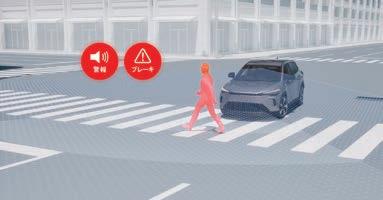
Toyota says the newest Toyota Safety Sense benefits from improved camera and radar performance, expanding detection range and improving response times. Precollision systems can detect decelerating vehicles more quickly and can identify vehicles emerging from behind others at intersections—one of the most difficult realworld scenarios for ADAS.
Toyota also expanded its low-speed acceleration suppression function so it works even while turning, not just in straight-line motion. That’s a subtle change, but it targets exactly the kind of mishaps
Utility remains central to the RAV4 identity, now with up to 749 liters of luggage capacity (VDA) and a flatter load floor when the rear seats are folded.
that happen in parking lots and tight spaces.
Radar Cruise Control also improves recognition of surrounding vehicles, especially in low-speed merging situations. Toyota adds a new shoulder stop function to the driver emergency response system: if the system detects a medical emergency, the vehicle can slow down, activate hazards, and stop in lane or on the shoulder.
This is less about flashy autonomy and more about real-world safety. Toyota is aiming for useful tech, not gimmicks.
New 12.9-inch screen and 3D panoramic view: faster matters more than bigger
Toyota fits a 12.9-inch display audio system as standard across the range. Bigger is fine, but the more important part is speed.
Toyota says voice recognition response time is down to about one second, which is huge because modern infotainment lives or dies by responsiveness. Laggy systems feel outdated instantly.
The RAV4 also introduces a panoramic view monitor with a new 3D viewing function, allowing drivers to check surroundings from adjustable angles via the central screen. For daily city driving, tight parking, and maneuvering in cramped spaces, this is the kind of feature that genuinely helps.
Why the 6th-gen RAV4 matters more than ever
The RAV4 isn’t Toyota’s flagship. It’s more powerful than that.
It’s Toyota’s mainstream benchmark. It’s the SUV Toyota sells in huge volume. It’s the global lifestyle crossover. When Toyota updates the RAV4, it’s not a niche play—it’s Toyota signaling where the industry is heading.
With this generation, Toyota is packaging its future strategy into something familiar: electrification-first powertrains, a more segmented lineup, and a software backbone designed for faster evolution.
So yes, the RAV4 still promises
adventure. But the real shift is deeper. Toyota is building the new RAV4 not just to keep winning the compact SUV segment— but to stay relevant in the next decade, where buyers expect their vehicles to be smarter, cleaner, and more connected without sacrificing the practical reliability Toyota is known for.
And if there’s one model Toyota would choose to carry that future, it makes perfect sense that it’s the RAV4.
Toyota Safety Sense is updated with improved camera and radar performance, expanding detection and sharpening response in complex scenarios like intersections.
Toyota retained compact SUV-friendly dimensions to preserve daily usability, while emphasizing a lifted profile and planted proportions.
ROAD TEST
Hybrid Hustle Three Compact SUVs, Three Electrified Personalities
By Jacob Oliva, Randy Peregrino, and John Rey San Diego
Let’s be honest—hybrids have fully crossed over into the mainstream. Not too long ago, choosing one meant explaining to people why your car went silent in traffic. Today, hybrid powertrains sit right at the heart of the compact crossover segment, where Filipino buyers want practicality, coding flexibility, and fuel efficiency—without giving up performance or long-drive capability.
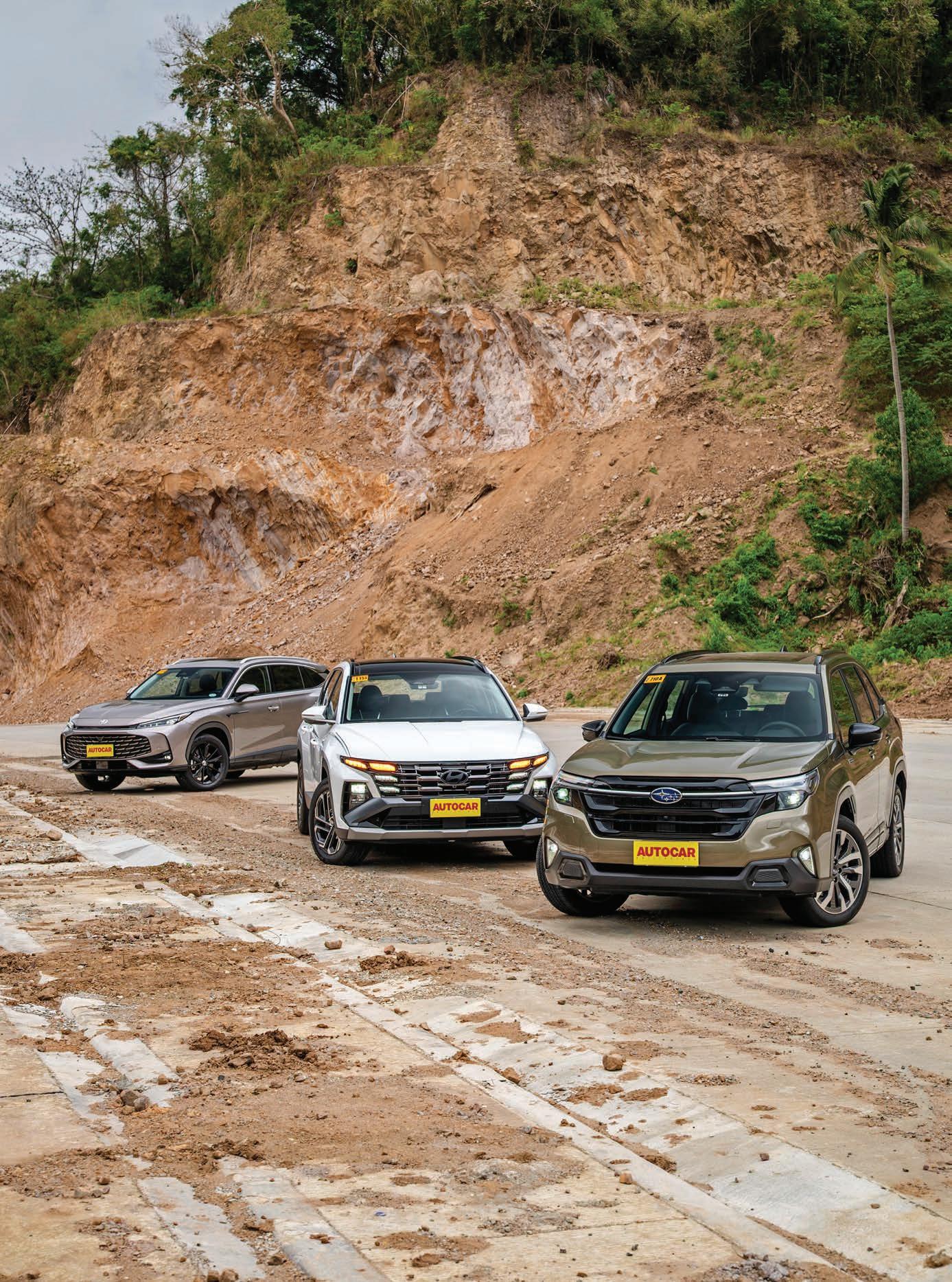
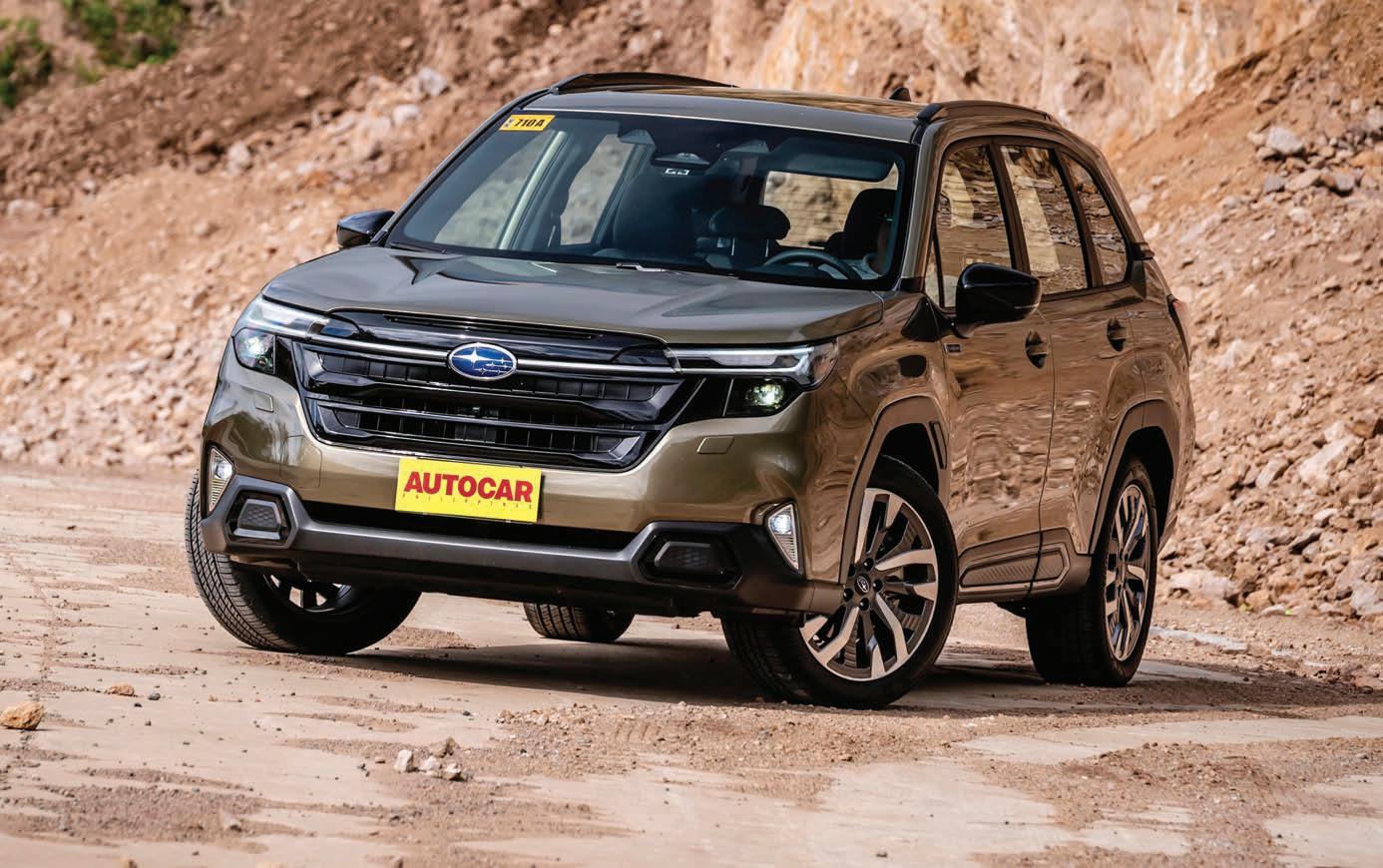
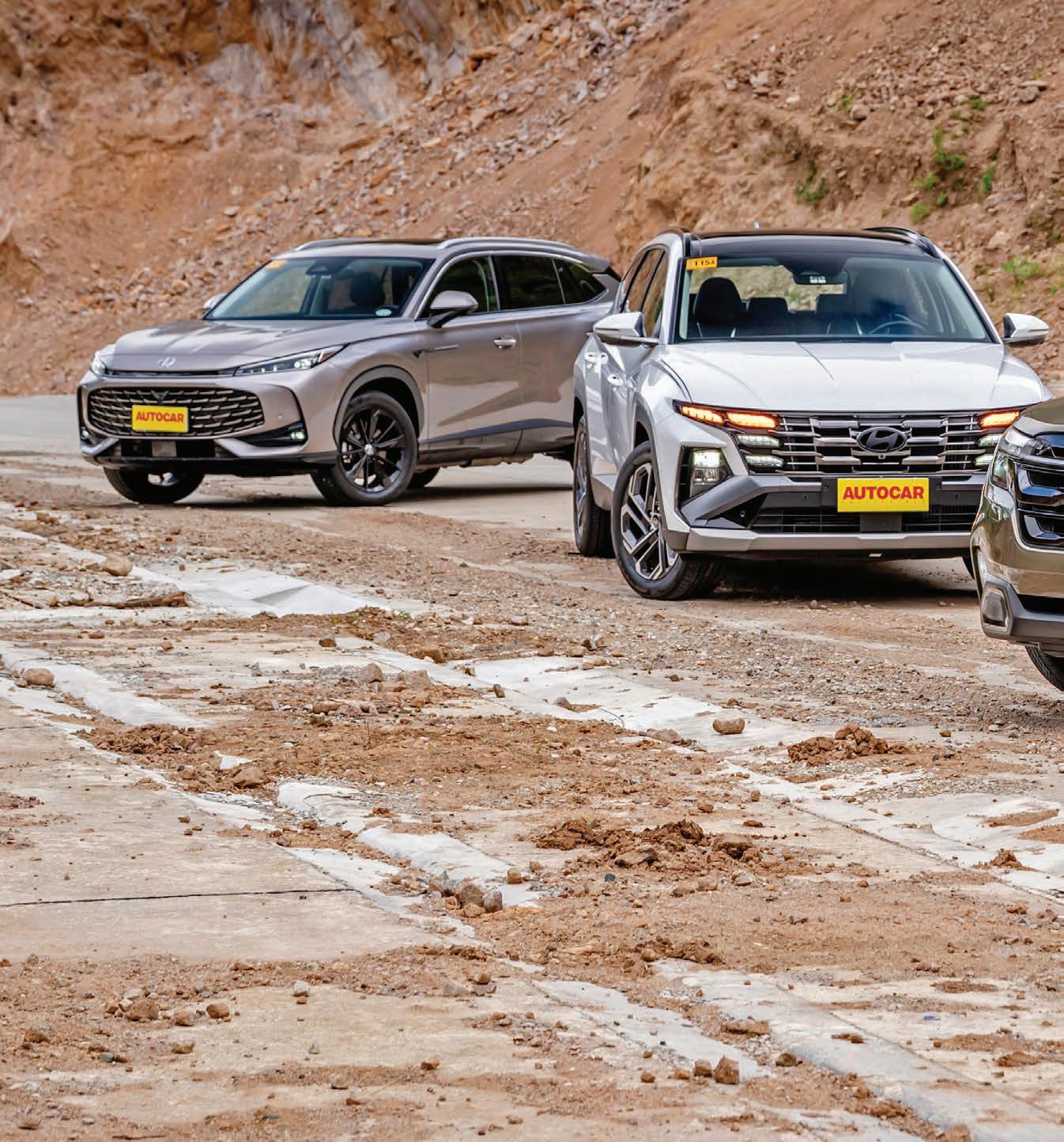
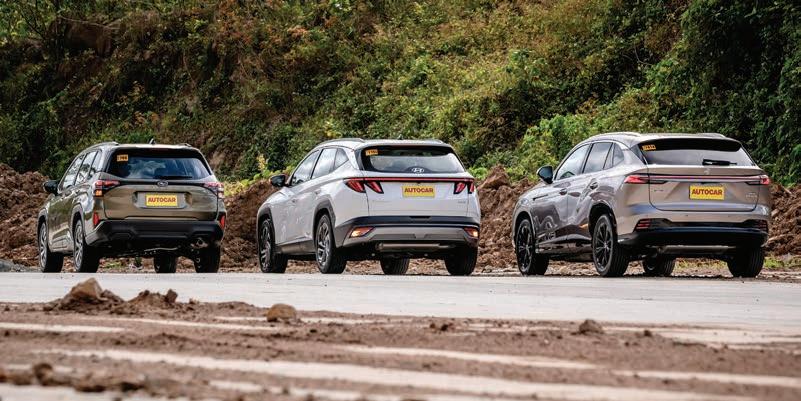
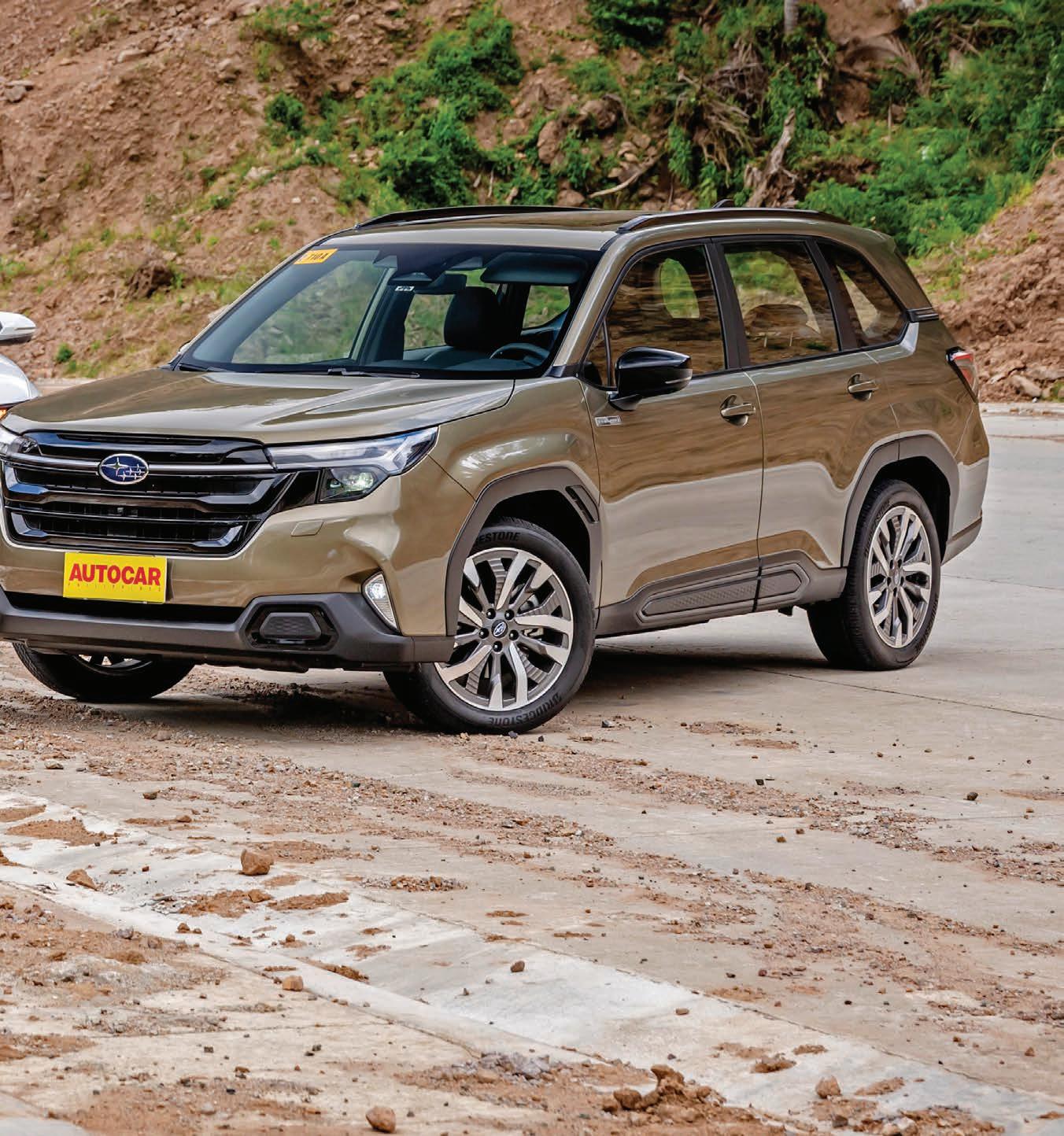
Right in the middle of this shift are three strong players doing electrification their own way: the Subaru Forester e-Boxer Hybrid, the MG HS Hybrid+, and the Hyundai Tucson Hybrid.
All three deliver electrified mobility without requiring lifestyle adjustments. No charging anxiety, no infrastructure dependency—just smarter propulsion layered into familiar SUV formats. But what makes this comparo compelling is how differently each brand approaches the hybrid conversation.
Unforgettable Adventures and Epic Scenic Escapes
Design Presence: Electrified, But Still On-Brand
Electrification hasn’t diluted design identity—it has sharpened it.
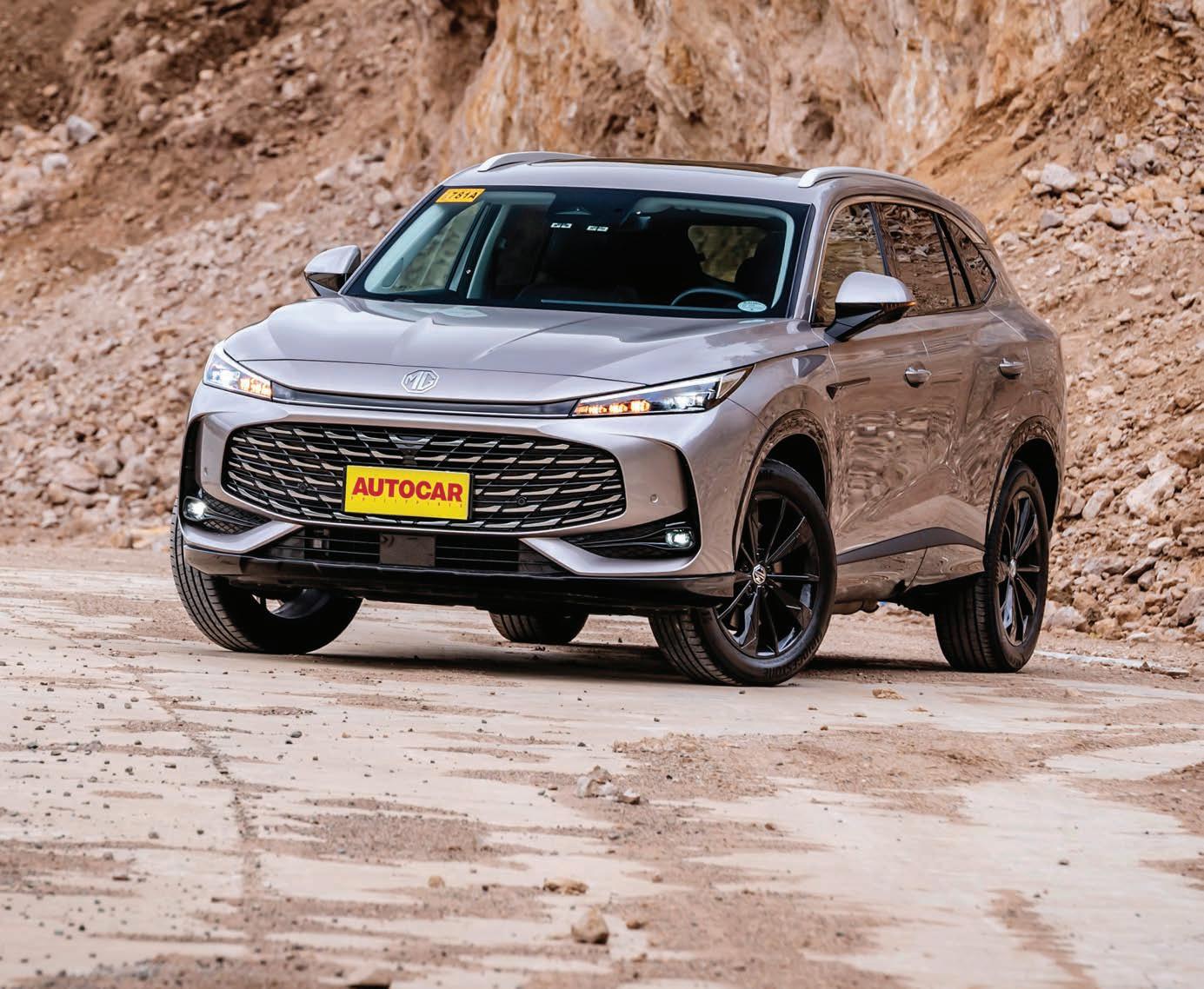
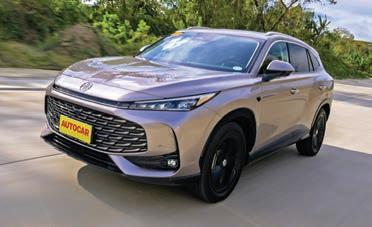
The MG HS Hybrid+ arrives as what the brand itself positions as a bold stride into the future of mobility in the Philippines. Now in its second generation, the HS emerges with a thoroughly reimagined design inside and out—an unmistakable departure from its predecessor. MG underscores the Hybrid+ as a unique proposition where every material, technology, and design element is purposefully crafted to deliver a smooth, quiet, and genuinely premium driving experience that remains distinctly MG.
Size wise, the HS Hybrid+ measures 4,670 mm long, 1,890 mm wide, and 1,665 mm tall, riding on a 2,765 mm wheelbase. Up front, the standout feature is the new wide black grille with chrome detailing, complemented by sleeker Digital Matrix LED headlamps equipped with Intelligent Headlight Control, Auto High/Low Beam, and Follow-Me-Home lighting.
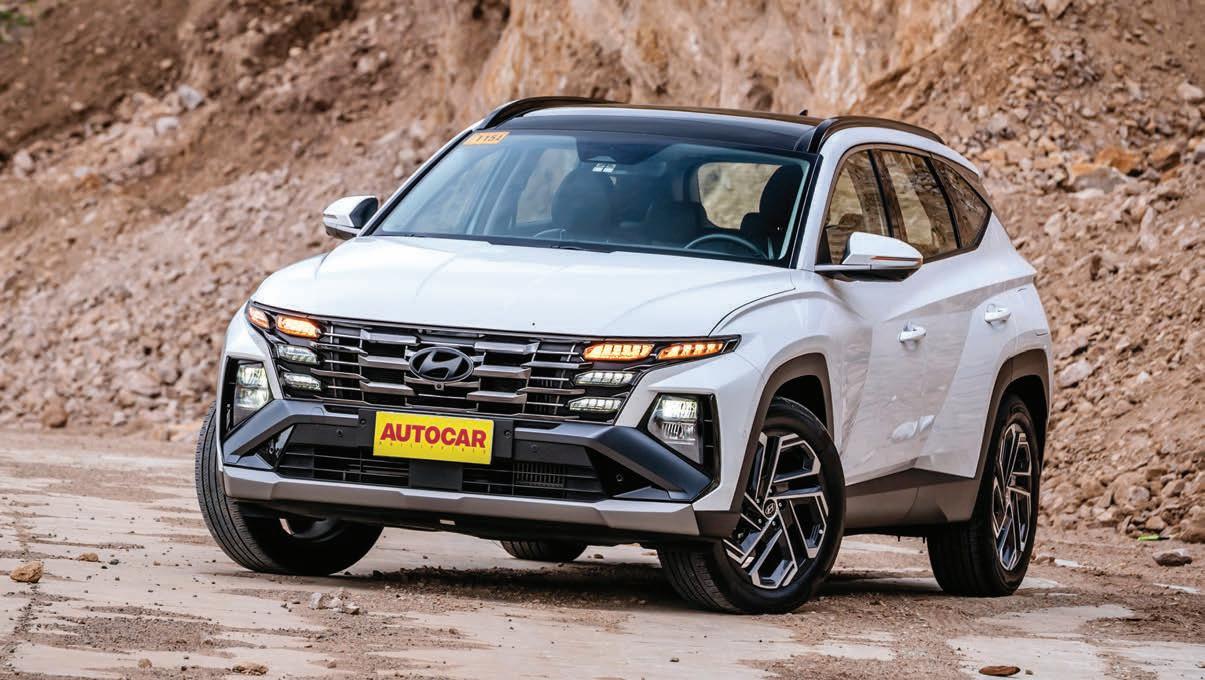
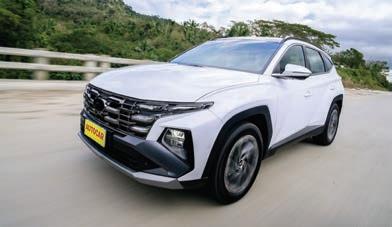
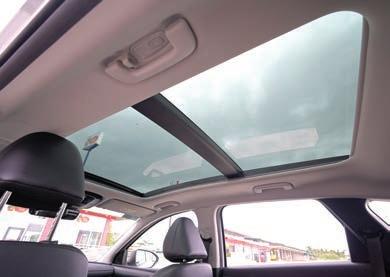
Hyundai’s Tucson Hybrid takes a more futuristic route. The latest iteration of the nameplate oozes a dynamic yet sporty appeal that commands presence on the road. Its parametric grille integrates the daytime running lights into the fascia itself, creating a clean, almost concept-car look. Sculpted fenders flow through the body sides, while 19-inch alloy wheels wrapped in 235/55 tires reinforce its athletic stance. The panoramic sunroof adds visual contrast, especially in lighter finishes.
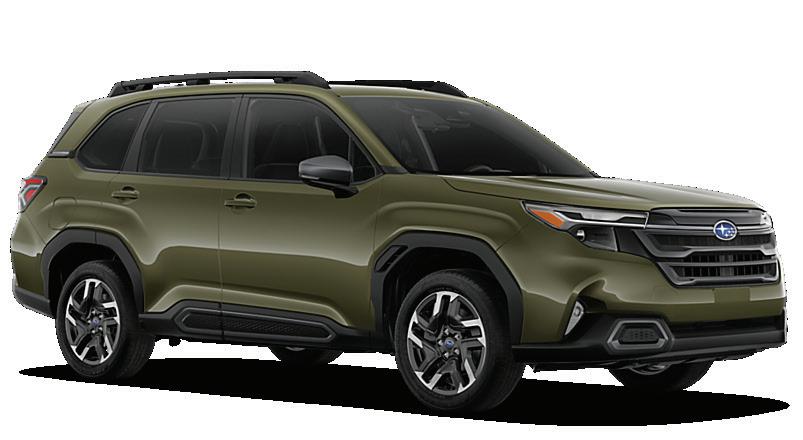
Subaru’s Forester e-Boxer Hybrid stays true to its functional DNA. The hybrid Forester doesn’t shout about being electrified—and that’s intentional. The updated grille, C-shaped LED headlights, and chunkier wheel arches give it added presence while retaining the slightly boxy silhouette Forester buyers appreciate. It remains clean, purposeful, and ready for varied terrain.
Three hybrids. Three visual philosophies: sleek premium, futuristic sporty, and rugged functional.
Parametric grille lighting gives the Tucson Hybrid one of the most distinctive front fascias in the segment.
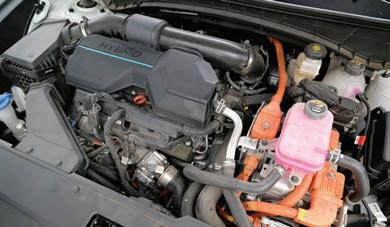
The 1.6-liter turbo hybrid system produces strong combined output while maintaining refined drivability.
The Tucson Hybrid balances responsive acceleration with composed ride comfort for everyday usability.
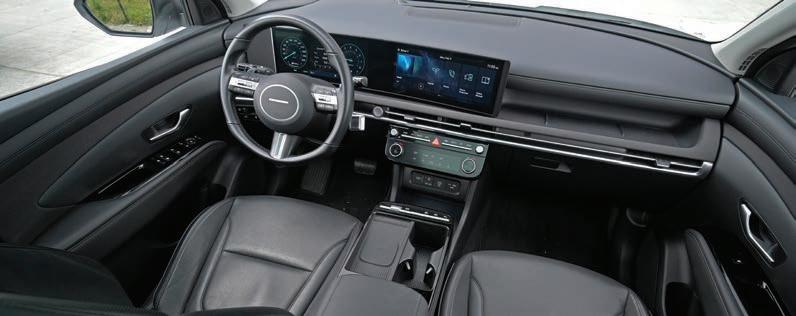
A panoramic curved display integrates instrumentation and infotainment into a single futuristic cockpit layout.
“ Every material, technology, and design element is purposefully crafted to deliver a smooth, quiet, and genuinely premium driving experience.” — Randy Peregrino
Cabin Execution: Three Interpretations of Comfort Step inside and the contrast becomes even more defined.
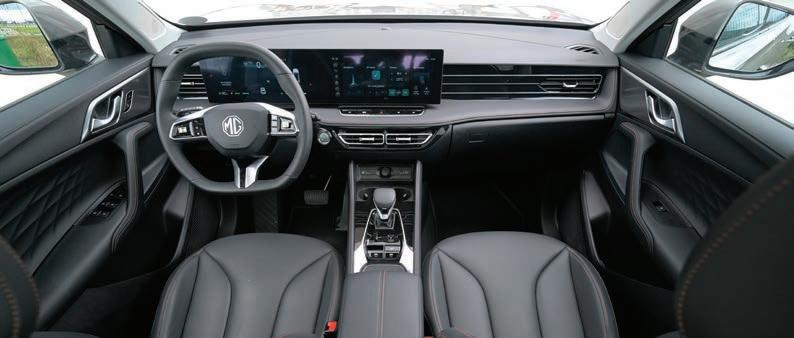
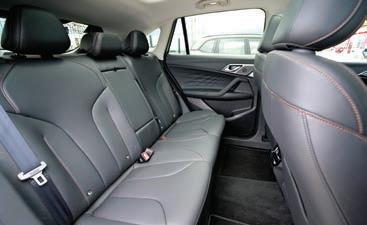
The MG HS Hybrid+ leans heavily into premium immersion. With its larger dimensions, the cabin feels spacious and refined, enhanced not only by generous room but also by superior sound insulation courtesy of 42 strategically placed materials that keep the interior remarkably quiet— save for the subtle hum when HEV mode engages.
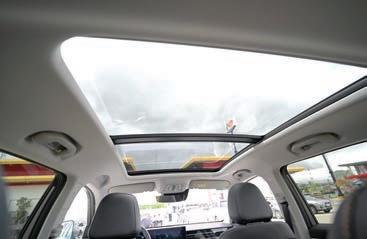
The dashboard is anchored by a vivid 12.3-inch digital cluster paired with a 12.3-inch HD infotainment display supporting Apple CarPlay and Android Auto. Leather seats, metallic accents, red contrast stitching, and a panoramic sunroof complete the upscale atmosphere.
Hyundai answers with a cockpit that feels clean yet high-tech. Occupants are welcomed by a panoramic layout integrating a 12.3-inch TFT LCD instrument panel with a 12.3-inch infotainment display. A floating armrest console houses drive controls and a wireless charger, reinforcing the futuristic feel. Leather seats and ambient lighting elevate cabin ambiance further.
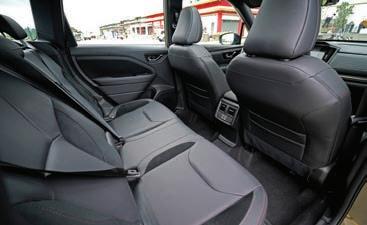
Subaru’s approach is more ergonomic than flashy—and that works in its favor. Visibility remains one of the Forester’s strongest traits, with the cabin feeling open and roomy. The new seats, designed with help from a Japanese medical center, hold up well on long drives. The 11.6-inch infotainment display sits prominently, while hybrid-specific readouts are easy to read without distraction.
Different executions, same result: comfortable electrified daily spaces.
1 .5-liter turbocharged engine paired with an electric traction motor mated to a smooth 2-speed dedicated hybrid transmission (DHT)
MG’s extensive sound insulation makes for a quiet interior
Panoramic sunroof
Premium, refined, spacious interior
Hybrid Engineering: Three Technical Philosophies
Under the skin is where philosophies truly diverge.
MG equips the HS Hybrid+ with a 1.5-liter turbocharged engine producing 143 PS and 230 Nm paired with an electric traction motor generating 196 PS and 250 Nm. Combined output reaches 224 PS and 340 Nm, managed by a two-speed Dedicated Hybrid Transmission driving the front wheels.
MG highlights how the Hybrid+ system transitions seamlessly between all-electric, hybrid, and gasoline modes. Acceleration feels instantaneous, making overtaking effortless, while high-speed runs remain swift and smooth. With a 55-liter fuel tank
supporting the hybrid system, total range stretches beyond 1,000 kilometers.
Hyundai’s Tucson Hybrid runs a 1.6-liter Smartstream turbocharged engine paired with an electric motor producing a combined 235 PS and 367 Nm. Power flows through a 6-speed automatic transmission. The e-Motion Drive system electronically controls braking, torque input, and vibration to enhance ride quality and drivetrain smoothness.
Subaru’s Forester e-Boxer Hybrid pairs a 2.5-liter boxer engine with an electric motor integrated into the CVT. As a selfcharging system, it manages power delivery independently. Electric torque improves lowspeed response, making city acceleration smoother and more eager—especially in stop-and-go traffic.
“ The hybrid Forester keeps everything owners love while making it smoother, quieter, and more efficient.” —
Jacob Oliva
Symmetrical All-Wheel Drive ensures consistent traction across varied road conditions.
Subaru’s e-Boxer system enhances low-speed smoothness while preserving mechanical balance.
C-shaped LED headlights and revised front styling modernize the Forester without losing its rugged character.
Inside, the cabin emphasizes openness, ergonomics, and long-distance seating comfort.
Driving Character: Where Personalities Emerge Seat time reveals the biggest distinctions.
The MG HS Hybrid+ delivers what can best be described as balance—combining smooth hybrid transitions with confident performance. The system shifts seamlessly between electric and combustion power, making acceleration feel instant and overtaking effortless. Highway cruising feels relaxed, supported by a hushed cabin.
The Tucson Hybrid lives up to its reputation for versatility. It offers the best of both worlds. It can be the reserved, efficient daily driver while also delivering exhilarating performance when needed. On highway drives, its combined electrified and turbocharged output brings the crossover up to speed with ease, while maintaining composed ride comfort.
The Forester e-Boxer Hybrid builds on what already works. The hybrid system makes the SUV smoother, quieter, and more efficient while preserving the practicality
that defines the nameplate. Electric assist enhances responsiveness in traffic, while Subaru’s Symmetrical AWD keeps traction consistent across varied road conditions.
Ride
Comfort and NVH
Refinement is a shared strength.
MG’s extensive sound insulation keeps the cabin library-quiet. Hyundai’s electronic drivetrain calibration minimizes vibration and harshness. Subaru’s boxer layout naturally reduces engine vibration, complemented by added insulation.
Long drives benefit across all three.
Safety and Driver Assistance
Each crossover integrates comprehensive driver-assist systems.
MG Pilot includes adaptive cruise control, traffic jam assist, lane keeping technologies, and blind spot monitoring functions designed for urban and highway use.
Hyundai SmartSense bundles collision avoidance assist, lane following systems, and blind spot intervention calibrated for daily
driving.
Subaru’s EyeSight 4.0 integrates adaptive cruise control, predictive braking, and lane centering assist calibrated to operate smoothly and naturally.
Space and Practicality
Utility remains central to crossover appeal.
The MG offers 441 liters of cargo capacity expanding to 1,291 liters. The Tucson balances passenger comfort with luggage flexibility. The Forester’s upright architecture maximizes cargo height and rear headroom.
Each remains family-ready and road-trip capable.
Hybrid Ownership in Philippine Conditions
In local driving realities, hybrids deliver tangible advantages. Traffic efficiency
improves fuel consumption. Quiet operation enhances daily commutes. Long provincial drives benefit from extended range without charging dependence.
Hybrids slot seamlessly into Filipino mobility patterns.
Autocar PH Road Test Team Closing Take
Rather than converging into a single formula, Subaru, MG, and Hyundai demonstrate how varied hybrid crossovers can be.
MG pushes digital luxury, strong hybrid output, and long-range touring capability. Hyundai blends electrified performance with executive refinement. Subaru integrates hybrid efficiency with all-weather mechanical confidence.
Three compact SUVs. Three electrified personalities. One clear direction for where the segment is headed.
Under P1M: First-Car Picks for Young Professionals
Top First-Car Picks for Filipino Graduates Under P1 Million
raduation isn’t just a ceremony—it’s a transition.
For many young Filipinos stepping into their first jobs, their first business ventures, or their first taste of financial independence, mobility becomes part of that next chapter. And increasingly, that journey begins behind the wheel of a first car.
The good news? The sub-P1-million space has never been more diverse. From budget hatchbacks and entry sedans to plug-in hybrids and compact EVs, fresh graduates now have access to mobility that balances practicality, tech, and personality without overwhelming early-career finances.
Here are some of the strongest first-car contenders for young professionals ready to drive into working life.
Toyota Wigo - The sensible, stress-free starter
Internal combustion cars remain the most accessible entry point to car ownership, and the Wigo continues to define that space.
At P615,000, it sits comfortably within reach of entry-level salaries while keeping monthly amortization and ownership costs manageable. Its compact footprint makes it tailor-fit for Metro Manila congestion, while 180 mm of ground clearance adds confidence over uneven roads and flooded streets.
Power comes from a 1.0-liter three-cylinder engine paired to either a manual or CVT—modest on paper, but delivering excellent efficiency at around 20 km/L. For daily commutes, that translates to real savings.
Inside, the Wigo keeps things simple but functional, with touchscreen infotainment, smartphone connectivity, and practical storage.
For graduates prioritizing reliability, affordability, and low stress ownership, the Wigo remains one of the safest first-car bets.
Honda Brio - The stylish urban achiever
Where the Wigo leans practical, the Brio adds flair.
Priced at P827,000, Honda’s entry hatch appeals to graduates who want everyday usability wrapped in youthful styling. Compact dimensions make it cityfriendly, but the cabin packaging delivers surprising interior space.
Its 1.2-liter engine produces 89 hp—noticeably livelier than most entry hatchbacks—while still returning fuel economy around the 20 km/L mark.
The RS Blacktop variant adds visual attitude, giving younger buyers something that feels less like a starter appliance and more like a personal statement.
It’s practical—but never boring.
Suzuki S-Presso - The budget rebel
If affordability sits at the top of the checklist, the S-Presso makes a strong case.
Priced between P634,000 and P674,000, it undercuts much of the segment while offering SUV-inspired styling and 180 mm ground clearance—useful for Philippine road realities.
Its upright seating and tall roofline create surprising interior room despite compact exterior dimensions, while the 1.0-liter engine delivers excellent efficiency of up to 22 km/L.
The character is youthful, quirky, and city-playful— perfect for graduates who want mobility without financial strain.
Mitsubishi Mirage - The all-rounder hatch
Positioned between budget and refinement, the Mirage offers balanced first-car credentials.
Starting at P720,000, it blends hatchback versatility with city practicality. Its lightweight platform and 1.2-liter engine deliver responsive handling and fuel economy hovering near 20 km/L.
The hatch layout adds cargo flexibility—ideal for young professionals juggling work gear, gym bags, and weekend travel.
It’s simple, efficient, and quietly dependable.
BYD Seal 5 DM-i (PHEV) - The tech-forward upgrader
For graduates thinking long-term, plug-in hybrids offer a compelling middle ground between gasoline familiarity and EV efficiency.
At P948,000, the Seal 5 DM-i slips just under the P1-million ceiling while delivering midsize sedan space and advanced hybrid tech.
Its Super DM-i system pairs a 1.5-liter generator engine with an electric motor producing 179 PS and 316 Nm. Pure EV driving range reaches 50 km, while total range stretches beyond 1,100 km—ideal for balancing fuel savings and long drives.
Inside, the rotating 12.8-inch screen and connected tech elevate the cabin beyond entry-level expectations.
For young professionals wanting executive-class feel without executive pricing, it’s a standout disruptor.
“The best first car isn’ t the flashiest — it ’s the one that makes independence sustainable.”
VinFast VF3 - The future-ready city EV
For graduates ready to skip combustion entirely, the VF3 represents one of the most accessible EV entry points today.
Priced from P745,000, it undercuts many gasoline sedans while delivering zero-emission driving and low operating costs.
Its compact footprint is tailor-made for dense city environments, while 191 mm ground clearance handles flooding better than most hatchbacks.
Powered by a 43-hp motor and 18.64-kWh battery, it delivers around 210 km of range—more than enough for daily commutes. Fast charging from 10–70% takes just 36 minutes.
VinFast’s battery subscription program also addresses long-term battery health—one of the biggest EV ownership concerns.
It’s urban mobility with a generational shift built in.
New vs. Used: Another Graduate Crossroad
The used-car market opens alternative paths.
Lightly used sedans like the Vios or City can deliver more space and features under P700,000—but come with trade-offs: shorter warranty coverage, possible wear, and the need for careful inspection.
Brand-new cars offer peace of mind and modern tech. Preowned cars offer segment upgrades at the same budget.
The choice depends on whether the graduate values security—or stretch.
Rolling into the next chapter
First cars are rarely just transportation. They represent independence, responsibility, and forward motion.
Whether powered by gasoline, hybrid systems, or full electric drive, today’s starter cars ensure Filipino graduates can enter working life with mobility that matches both ambition and budget.
Because the first set of wheels isn’t just about getting to work—it’s about driving into adulthood.
RANDY PEREGRINO
ROAD TRIP
RANGE WARS BEGIN
Deepal’s Upcoming REEV
Trio Targets the Heart of the Electrified SUV Market
Three range-extended EVs, three SUV segments, and one clear objective: challenge both plug-in hybrids and diesel strongholds in one coordinated assault.
Unforgettable Adventures and Epic Scenic Escapes
Deepal Philippines isn’t easing into the electrified vehicle space—it’s arriving in formation.
Backed by the Autohub Group, the premium new energy vehicle brand is preparing to launch three Range-Extended Electric Vehicles locally within the year. The compact crossover S05 and the off-roadleaning G318 are scheduled to arrive by summer, with the coupe-profiled S07 set to follow toward year’s end. Taken together, the rollout signals a deliberate and coordinated push into multiple SUV segments rather than a cautious single-model entry.
To preview what lies ahead, Autohub flew us to Chongqing, China, where Deepal’s electrified portfolio and engineering direction were placed front and center. While Philippine specifications remain subject to final market calibration, what we saw abroad makes one thing clear: Deepal intends to position range-extended EVs as a practical bridge between combustion familiarity and full electrification.
Slated for its Philippine debut this summer, the S05 enters the competitive compact crossover space with styling and technology that lean far beyond entry expectations.
Finished in Moonlight White during our preview, the S05 adopts a futuristic design language highlighted by the brand’s “Smart Wing” LED headlights and sharply creased body surfacing. At the rear, arrow-style “Star Wing” taillights converge toward the center, reinforcing the spacecraft-inspired theme.
Dimensionally, it measures 4,620 mm long and 1,900 mm wide, riding on a generous 2,880-mm wheelbase—placing it among the broadest C-segment electrified crossovers. Frameless doors and twotone 18-inch wheels add to its premium positioning.
Inside, the cabin is conceived as a “flight capsule cockpit.” The standout feature is the Zero Gravity co-pilot seat, complete with leg rest extension and deep recline functionality. A 15.4-inch Sunflower touchscreen anchors the dashboard, complemented by an augmented-reality head-up display projecting navigation and vehicle data directly onto the windshield. Powering the interface is a Qualcomm Snapdragon 8155 automotive chipset paired with 16 GB of RAM and 128 GB of storage, bringing smartphone-level responsiveness to in-car operations.
Motivation comes from Deepal’s RangeExtender Technology 2.0. A 1.5-liter gasoline engine functions purely as a generator, feeding a rear-mounted electric motor producing 215 hp and 320 Nm. A 27.28-kWh battery enables up to 170 kilometers of pure EV driving, while total combined range exceeds 1,000 kilometers. Vehicle-to-Load capability further allows the S05 to power external appliances—useful for lifestyle or emergency applications alike.
Positioned correctly, it has the makings of a direct challenger to the segment’s current PHEV leaders.
Deepal G318 REEV - Electrified armor for the outdoors
Where the S05 focuses on urban crossover buyers, the G318 pivots hard toward adventure and off-road capability.
Its design language, dubbed “Pioneer Armor Aesthetics,” leans deliberately rugged. A broad fascia integrates penetrating light bands and C-shaped split headlamps, while the bumper incorporates mechanicalinspired detailing and tow hardware. Roofmounted auxiliary lighting and integrated camping lamps reinforce its expedition persona.
Physically, it’s imposing. Stretching over five meters in length and more than two meters in width, the G318 occupies the same visual and dimensional territory as traditional pickup-based SUVs. Ground clearance ranges between 210 and 240 mm, supported by air suspension and terrain management systems.
Inside, the cabin blends outdoor durability with premium execution. Dual digital displays dominate the dashboard, while suede-like materials, leather upholstery, and red contrast stitching elevate tactile quality. Second-row occupants benefit from heated, ventilated, and massage seating, reinforcing the vehicle’s dual role as both adventure tool and long-distance tourer.
Its powertrain setup is among the most
potent in the REEV category. A turbocharged 1.5-liter generator works with dual electric motors to deliver a combined 424 hp and 572 Nm. Pure electric driving range reaches 174 kilometers, while total combined range exceeds 900 kilometers. Differential locking, multiple terrain modes, off-road creep assist, and tank-turn capability round out its trail credentials.
Autohub is targeting pricing that places it directly within reach of mainstream diesel 4x4 SUVs—only now with electrified torque delivery.
Deepal S07 REEV - Coupe crossover meets range-extended luxury Arriving later in the year, the S07 shifts focus from ruggedness to lifestyle-driven design.
Its silhouette leans coupe-like, with a flowing roofline, hidden door handles, and Deepal’s “Moon String” lighting signature defining the front fascia. Full-width LED light bands anchor the rear, reinforcing its futuristic identity.
Measuring 4,750 mm long and riding a 2,900-mm wheelbase, the S07 sits between compact and midsize SUV segments, blending road presence with aerodynamic elegance.
Inside, the design theme draws inspiration from luxury yachts. Layered materials, quilted textures, and ambient lighting create a lounge-like atmosphere. A rotating 15.6-inch infotainment display anchors the cockpit, supported by augmented-reality HUD projection and a 14-speaker high-fidelity audio system.
Its Super Range Extension 2.0 system pairs a 1.5-liter generator engine with a 235-hp electric motor. A 31.74-kWh battery enables up to 175 kilometers of EV driving, while total range approaches the 1,000-kilometer mark.
Among the trio, it stands as the design-forward flagship.
A three-front market offensive
Individually, each model targets a distinct buyer profile. The S05 aims at compact crossover adopters transitioning into electrification. The G318 speaks to adventure buyers and diesel SUV loyalists. The S07 targets lifestyle-oriented premium crossover shoppers.
Collectively, they represent a calculated push into the Philippine REEV space—one that addresses range anxiety, charging infrastructure limitations, and lifestyle versatility in a single product wave.
Deepal isn’t entering quietly.
It’s stepping into the market with three vehicles designed to challenge three different strongholds at once.
RANDY PEREGRINO
Where the Road Becomes the Destination
A driver’s guide to the country’s most rewarding scenic highways
In the Philippines, the road is rarely just a means to an end.
It’s part of the adventure itself.
From mountain switchbacks carved into the Cordilleras to coastal highways that run parallel to crashing waves, the country’s most memorable drives aren’t measured purely in distance— but in the landscapes, cultures, and stories revealed along the way.
So if the plan is to chase horizons rather than just destinations, these routes offer some of the most rewarding seat time in the archipelago.
Ilocos: Heritage Roads and Coastal Horizons
Few regions reward motorists quite like Ilocos.
The northbound run begins with the familiar rhythm of NLEX and TPLEX before the scenery gradually shifts to heritage towns and open coastlines approaching Vigan City. Roughly 400 kilometers from Manila, the UNESCO World Heritage Site is a natural first major stop—its cobblestone streets, ancestral homes, and Calle Crisologo instantly slowing the pace.
A quick 10-kilometer detour leads to Bantay Bell Tower and the sweeping arc of Quirino Bridge—perfect photo breaks before pushing farther north.
From there, the road flows toward Laoag City, about 80 kilometers away, where Ilocano cuisine and Spanish-era landmarks provide both cultural and culinary pause points. Continue another 50 kilometers and
Cape Bojeador Lighthouse rises along the Burgos coastline, followed by the windswept spectacle of Bangui’s iconic turbines. The final leg toward Pagudpud delivers one of Luzon’s most dramatic coastal drives, culminating at Blue Lagoon and the engineering marvel that is Patapat Viaduct. This is a route where heritage and horizon share equal billing.
Punta Fuego sunset in Batangas
Lopez Heritage House in Iloilo
La Union: Surf Roads and Sunset Highways
La Union may be known for waves, but its approach roads are equally rewarding.
The 270-kilometer drive from Manila via NLEX–SCTEX–TPLEX flows directly into San Juan, the province’s surfing heartland. Beach cafés, board racks, and salt-air breezes greet motorists arriving off long expressway runs.
From San Juan, the drive north becomes more exploratory. Bauang’s grape farms and wineries sit about 20 kilometers away, while San Fernando—another 30 kilometers—offers cultural landmarks like Ma-Cho Temple and the hilltop Poro Point Lighthouse overlooking the West Philippine Sea.
Continue toward Luna and its historic Baluarte Watchtower, where pebble beaches and quieter coastlines create natural decompression zones.
Short town-to-town distances make La Union an easy, flowing coastal cruise rather than a long-haul expedition.
Mountain Province: High-Altitude Driving at Its Finest
For motorists who prefer elevation over shoreline, the Cordilleras deliver drama in every gear.
The 150-kilometer drive from Baguio to Bontoc via Halsema Highway is among the most technically engaging roads in the country. Zigzags, cliff edges, and cloud-level viewpoints define the route, with Atok’s “Highest Point” serving as the literal summit of Philippine highway driving.
From Bontoc, Sagada lies just 20 kilometers away—its hanging coffins, Echo Valley, and cave systems offering cultural depth beyond the scenery.
Push farther to Besao and the traffic thins even more, revealing rice terraces and mountain communities largely untouched by mass tourism.
This is a driver’s road—equal parts focus and awe.
Tagaytay to Batangas: Weekend Drives Done Right
Closer to Manila but no less scenic, the
Tagaytay–Batangas corridor remains the country’s most accessible leisure drive.
A 60-kilometer run via SLEX and Aguinaldo Highway brings motorists to Tagaytay’s ridge line, where Taal Volcano views, roadside cafés, and cool air create instant contrast from the lowlands.
Descending toward Taal Town introduces heritage architecture and the massive Taal Basilica, while Batangas City opens routes to Anilao’s dive waters and San Juan’s beach resorts.
Short distances, varied scenery, and food culture make this a perpetual weekend classic.
Bicol: Volcano Views and Long-Haul Rewards
Bicol driving is defined by distance—but also payoff.
The 380-kilometer journey to Naga City via SLEX and Maharlika Highway is the gateway leg, leading to Mount Isarog landscapes and regional cuisine.
Another 100 kilometers south rises the region’s visual anchor: Mayon Volcano. Legazpi’s vantage points—from Cagsawa Ruins to Ligñon Hill—frame the volcano’s
near-perfect cone from multiple driving angles.
Continue toward Sorsogon and the road transitions to coastal serenity, with Donsol’s whale shark waters and Matnog’s pink-sand islands capping the mainland run.
It’s one of the few drives where volcanoes and beaches share the same windshield view.
Batangas–Mindoro–Panay: The InterIsland Overland
For motorists willing to combine asphalt with sea crossings, the Batangas–Mindoro–Panay chain is the ultimate multi-stage drive.
It begins at Batangas Port—110 kilometers from Manila—where vehicles board RORO ferries to Calapan. From there, Mindoro unfolds through coastal highways toward Puerto Galera’s dive enclaves, then farther south to Roxas for the next sea crossing to Caticlan.
Panay opens with Boracay’s gateway before extending inland to Kalibo and Iloilo—each leg blending highways, ferry decks, and provincial landscapes.
It’s less a single drive and more an expedition stitched together by roads and roll-on vessels.
RANDY PEREGRINO
RORO Port in Mindoro
Mount Mayon Volcano in Albay
Paoay Church in Ilocos Norte
Exit Here for Flavor
Four legendary food stops that turn a northbound run into a culinary road trip
Aling Lucing — Angeles City
If authentic Kapampangan sisig is on your road-trip agenda, this is non-negotiable.
Aling Lucing’s is no longer a secret—social media has long since done its job—but that hasn’t diluted its reputation. Pilgrims still make the stop, whether dining in or packing takeout for the onward drive.
It’s conveniently accessible for those heading to Subic or La Union. Take the Dau exit and you’ll find a branch just across S&R. Prefer the original? Exit via Angeles and head toward the main restaurant where the sisig legacy began.
Ordering strategy is simple: one sisig per person, minimum. Rice is never enough, and diets are temporarily suspended.
Long drives have always been about the destination—but seasoned road trippers know the real highlights often happen somewhere between toll gates.
The food stops along a northbound run—whether you’re pushing toward Subic, Baguio, La Union, or Ilocos—can turn an ordinary drive into something far more memorable. Yes, the expressways are lined with familiar fast-food brands that get the job done when hunger hits fast. But venture just a few minutes off the main route and you’ll find culinary landmarks that have quietly become part of the Luzon road-trip ritual.
These are the stops that reward the detour.
Mila’s Tokwa’t Baboy — San Fernando / Angeles Boundary
Traveling with a full car? Mila’s is where you go when everyone’s hungry and nobody wants fast food.
Located near the San Fernando–Angeles boundary in San Joaquin, the place announces itself not with signage—but with volume. Parked cars, takeaway queues, and packed tables are the real landmarks.
The menu reads like a greatest hits album of Filipino comfort food: tokwa’t baboy, lechon kawali, crispy pata, crispy ulo, beef caldereta, paco salad, BBQ tocino, chicharon bulaklak, tenga—and that’s just scratching the surface.
It’s hearty, affordable, and built for group feasting before the next leg of the drive.
If you suddenly find yourself craving American comfort food instead of rice meals, RUMPA delivers a time-capsule detour.
Short for Retired US Military Philippines Association, the restaurant sits just outside the former Clark Air Base and has long been a favorite among expats, balikbayans, and locals who grew up around the base culture.
Operating out of what was once a residential home in Balibago, RUMPA leans heavily into generous serving sizes and old-school diner staples. Pancakes, chili, tacos, burritos, BBQ ribs, tuna salad, beef stew, and chicken cordon bleu fill the menu.
It’s been around since the mid-’90s—and for many regulars, the flavors haven’t changed. Saturday dinners and Sunday lunches still pack the house.
The road trip within the road trip
Skip Angeles altogether and push straight to Subic, and you’ll find one of the most atmospheric food stops on this list.
Vasco’s sits within the former US Naval Base, owned by expat salvage divers who’ve turned maritime history into restaurant décor. Much of what you see inside has been recovered from the ocean floor—ship artifacts, diving relics, and nautical memorabilia that double as conversation starters.
The menu straddles Filipino and Western comfort food: kare-kare, pinakbet, pork sinigang, fish and chips, tacos, burritos, Philly cheesesteaks, burgers, pancakes, and bar chow staples.
The real payoff, however, is the seaside view. Time your arrival close to sunset and the stop becomes less about refueling—and more about decompressing before the drive home.
Food stops like these remind us that expressway driving isn’t just about efficiency—it’s about experience.
Anyone can blast through NLEX, SCTEX, and TPLEX on cruise control. But the drivers who exit, explore, and eat well know that the best road trips aren’t measured in kilometers covered—but in meals remembered.
Vasco’s — Subic Bay
RUMPA — Clark / Balibago
Dealer Power
Toyota Honors Top Performers at 2026 Dealer Conference
very year, Toyota Motor Philippines gathers its nationwide dealer network for what is essentially the brand’s annual report card. It is where numbers are reviewed, milestones are acknowledged, and the people behind Toyota’s market leadership are recognized.
The 2026 Toyota Dealer Conference and Toyota Outstanding Performers in Sales and Service (TOPS) Awards served exactly that purpose. Dealer principals, senior managers, and key executives from across the country came together to look back at the company’s performance in 2025 and recognize the dealerships and individuals who delivered standout results.
For a brand that consistently leads the Philippine automotive market by a wide margin, Toyota’s dealer network remains one of its strongest assets. The conference
highlighted how that network continues to support the company’s presence nationwide, from vehicle sales to after-sales service and customer care.
The night’s most coveted recognition, the President’s Award of Excellence, honors dealerships that demonstrated strong overall performance across all aspects of the business—from sales and service to customer satisfaction and operational standards. The award is divided into categories based on dealership size.
In the Large Business Division, Toyota Marilao, Bulacan Inc. emerged as the overall champion. The dealership has steadily built a reputation for strong sales performance and consistent customer service, earning the highest overall evaluation in its category.
Taking the first runner-up position was Toyota San Fernando, Pampanga Inc., another high-performing dealership that
has long been one of Toyota’s strongest operations in Central Luzon.
Completing the podium in the category was Toyota Otis Inc., which secured the second runner-up position.
In the Medium Business Division, Toyota Nueva Ecija Inc. claimed the championship title, demonstrating strong results across its sales operations and service performance.
The first runner-up position went to Toyota Isabela Inc., while Toyota Dagupan City Inc. finished as second runner-up, rounding out the top performers in the division.
Meanwhile, the Small Business Division saw Toyota Subic Inc. take the top spot, recognized for its balanced performance in sales, service and customer engagement.
The first runner-up award went to Toyota Plaridel, Bulacan, while Toyota Tarlac City secured the second runner-up position.
Toyota Motor Philippines executives, dealer principals, award recipients and members of the nationwide dealer network gather onstage following the 2026 Toyota Dealer Conference and TOPS Awards to celebrate the year’s top-performing dealerships and individuals.
Beyond overall dealership performance, Toyota also recognized dealerships that excelled in specific aspects of the customer ownership journey.
The President’s Customer Satisfaction Cup of Excellence was awarded to Toyota Batangas City Inc., recognizing the dealership’s consistently strong customer satisfaction scores and commitment to delivering a positive ownership experience.
Another special recognition, the President’s Value Chain Award, went to Toyota Tarlac City, highlighting the dealership’s ability to deliver a seamless experience that integrates vehicle sales, after-sales service, and customer engagement throughout the ownership lifecycle.
Addressing the dealer network during the conference, Toyota Motor Philippines Chairman Alfred V. Ty emphasized the importance of unity within the organization as the brand continues to grow.
“Let us continue to create happiness and mobility for all,” Ty said. “As one Toyota, let us continue to be the number one in the hearts, minds, and homes of every Filipino.”
President’s Award of Excellence – Large Business Division Toyota Motor Philippines executives present the President’s Award of Excellence to Toyota Marilao, Bulacan Inc. (Champion), with Toyota San Fernando, Pampanga Inc. (1st Runner-up) and Toyota Otis Inc. (2nd Runner-up) recognized as the top-performing dealerships in the Large Business Division.
President’s Award of Excellence – Medium Business Division Representatives from Toyota Nueva Ecija Inc. receive the President’s Award of Excellence as Champion in the Medium Business Division, joined by Toyota Isabela Inc. (1st Runner-up) and Toyota Dagupan City Inc. (2nd Runner-up).
President’s Award of Excellence – Small Business Division Toyota Motor Philippines honors Toyota Subic Inc. as Champion of the Small Business Division, alongside Toyota Plaridel, Bulacan (1st Runner-up) and Toyota Tarlac City (2nd Runner-up).
President’s Customer Satisfaction Cup of Excellence Executives and dealership leaders celebrate Toyota Batangas City Inc., recipient of the President’s Customer Satisfaction Cup of Excellence for delivering outstanding customer service throughout the ownership journey.
" Behind every Toyota sold in the Philippines is a dealership team responsible for making the ownership experience work."
While dealership awards are the highlight of the conference, the event also celebrates the individuals who interact with customers every day.
Through the Toyota Outstanding Performers in Sales and Service (TOPS) program, Toyota recognizes the marketing professionals and service advisors whose work directly shapes the customer experience.
For 2025, the TOPS Finest Marketing Professional of the Year title was awarded to Joan R. Barcia of Toyota North EDSA, recognizing her sales performance and contribution to the dealership’s results.
In after-sales service, Arnold R. Agbay of Toyota Shaw Inc. was named TOPS Finest General Job Service Advisor of the Year, honoring his expertise and service performance in handling customer vehicle concerns and maintenance requirements.
Meanwhile, Gemibert E. Dimaunahan of Toyota Batangas City Inc. received the TOPS Finest Body and Paint Service Advisor of the Year award, highlighting his work in managing repair and body restoration services for customers.
Toyota Motor Philippines President Masando Hashimoto noted that the brand’s strength lies not only in the vehicles it produces but also in the people who support customers throughout the ownership experience.
“Creating ever better cars is our DNA,” Hashimoto said. “But our mission goes beyond that: to evolve Toyota’s role in the lives of our customers.”
Hashimoto also referenced Toyota’s broader vision of mobility, pointing to the company’s ongoing efforts to adapt to changing customer expectations and industry shifts.
The challenges facing the automotive industry were also acknowledged during the conference by Toyota Dealers Association of the Philippines (TDAP) President Jimmy Yaokasin, who described the business as a long journey filled with constant change.
“We are in a long-distance race,” Yaokasin said. “One marked by market shifts, digital disruption, economic cycles, EV transitions, supply chain challenges, and ever-rising customer expectations.”
Despite those challenges, the annual conference underscored the strong partnership between Toyota Motor Philippines and its dealer network—a relationship that continues to play a central role in the company’s ability to reach customers across the country.
As the industry moves into a period of transformation driven by electrification, new technologies, and shifting consumer preferences, Toyota’s extensive dealership system remains a key pillar in delivering vehicles, services, and mobility solutions to Filipino motorists.
ANJO PEREZ
TOPS Finest Body and Paint Service Advisor of the Year
Gemibert E. Dimaunahan of Toyota Batangas City Inc. is awarded TOPS Finest Body and Paint Service Advisor of the Year for his work in managing repair and restoration services.
TOPS Finest General Job Service Advisor of the Year
Arnold R. Agbay of Toyota Shaw Inc. receives the TOPS Finest General Job Service Advisor of the Year award for excellence in after-sales service.
2025 Marketing Professional of the Year Joan R. Barcia (5th from left) of Toyota North EDSA is joined by Toyota Motor Philippines executives and Toyota North EDSA officers during the recognition ceremony.
Jose B. Tan Jr. (5th from left), president of Toyota Tarlac, receives the Value Chain Award from Toyota Motor Philippines executives during the 2026 Dealer Conference and TOPS Awards.