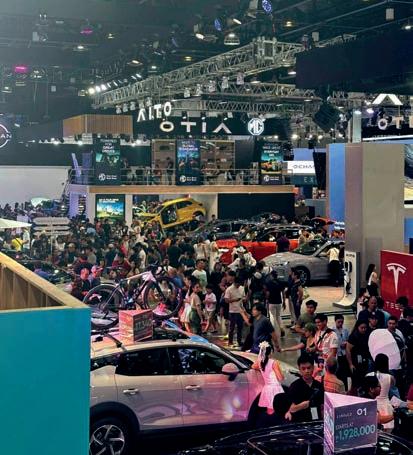
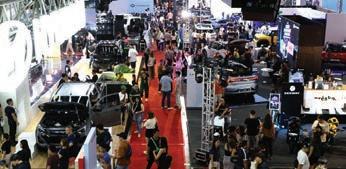
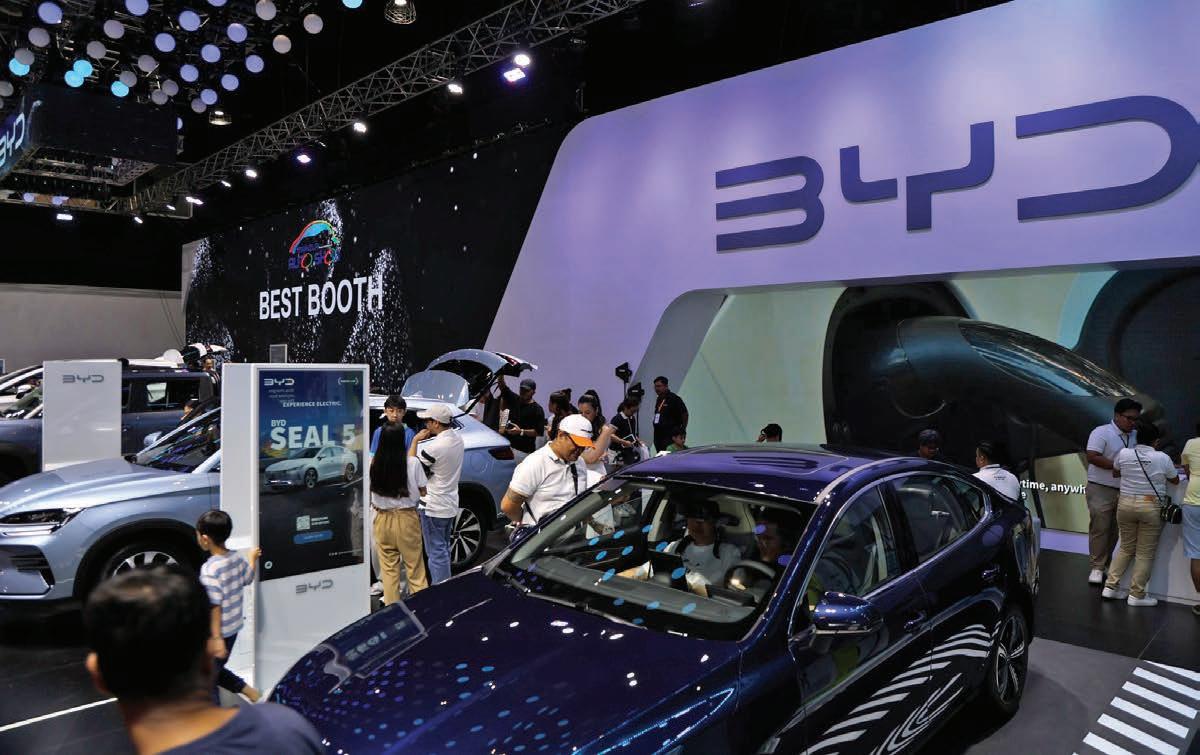
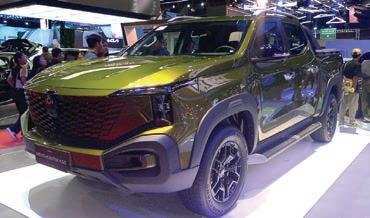
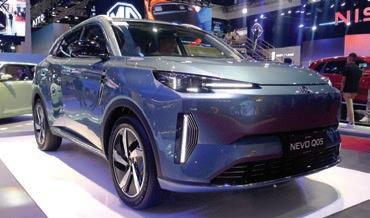
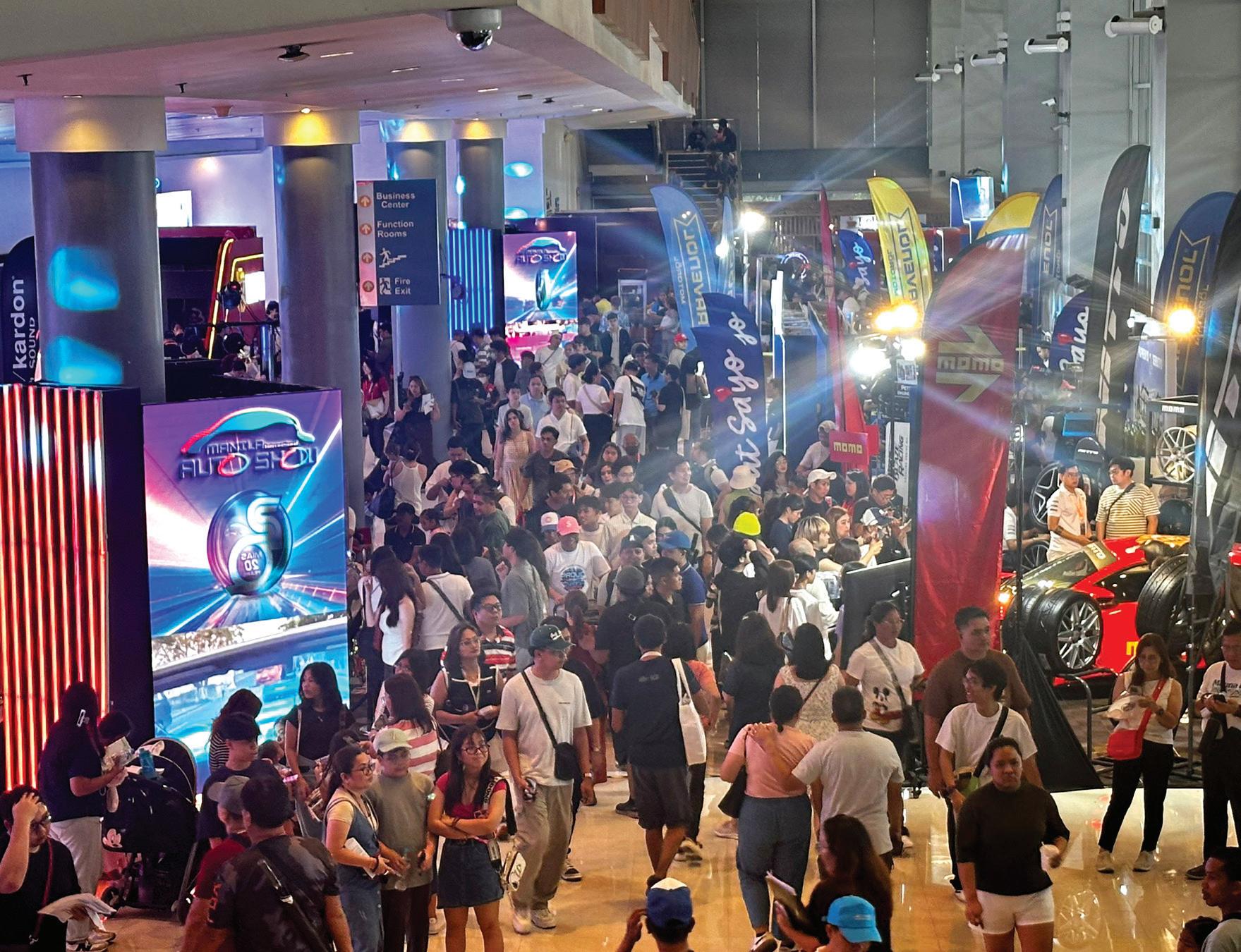
As you read this, you’re either at the Manila International Auto Show (MIAS) or planning to go. In either case, you’ve picked the right reading material. MIAS is one of the most anticipated annual industry events, where automotive brands launch new vehicles or tease what they’re planning to bring into the country.
This year is no different. Brands set to be showcased include 212, AITO, BAIC, Bestune, BYD, Changan, Chery, Denza, Deepal, DFSK, Foton, GAC Motor, Geely, GWM, Jetour, Kia, Lotus, Lynk & Co, MINI, MG, Omoda Jaecoo, Radar, ROX, JAC Motors, and Tata Motors Commercial Vehicles.
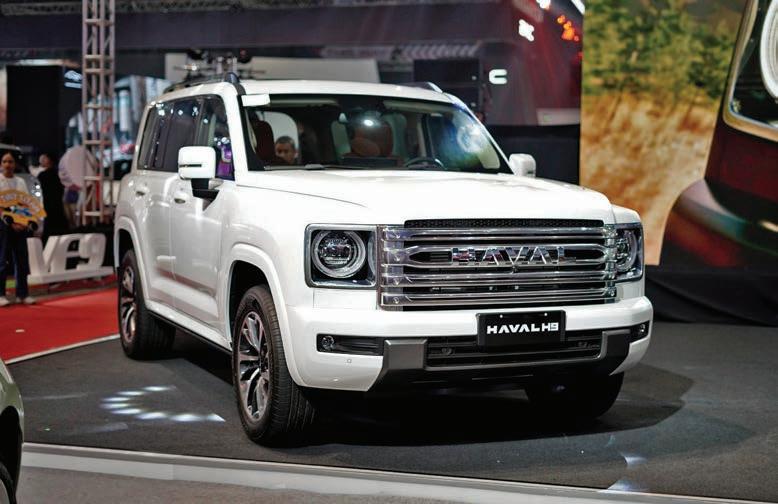
We’ve put together this issue to be your companion at MIAS. Randolph De Leon gives you a quick “what to expect” from the motor show as a whole, along with a rundown of the Best Family Cars at MIAS. Randy Peregrino offers an overview of what to expect from the many Chinese brands on display and, in a timely piece, shares insights into why electrification has suddenly become a household term. He also talks about his time driving the recently launched Haval H9 in China.
We know some of you might be in the market for a new vehicle—or still on the fence until you find a good deal. That’s why in this issue, we shed light on in-house versus bank financing, and examine whether digital insurance is all it’s cracked up to be. We also look into whether EV batteries are covered by insurance even after the warranty expires.
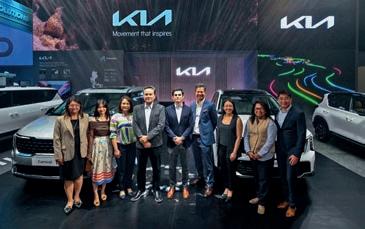
In this month’s Executive Drive, our Editor in Chief, Ira Panganiban, sits down with Kia Philippines’ new President and Managing Director, Mr. Jay Lopez. Unlike many automotive executives who rise through the ranks within the industry or move across brands, Jay comes from a completely different field. It makes for an interesting interview.
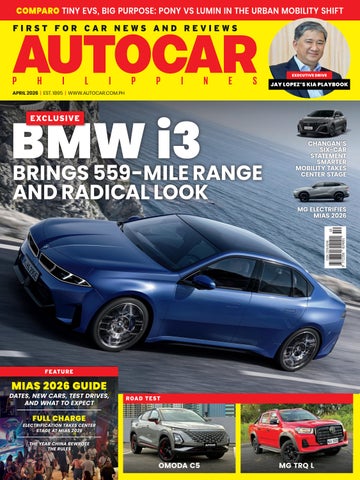
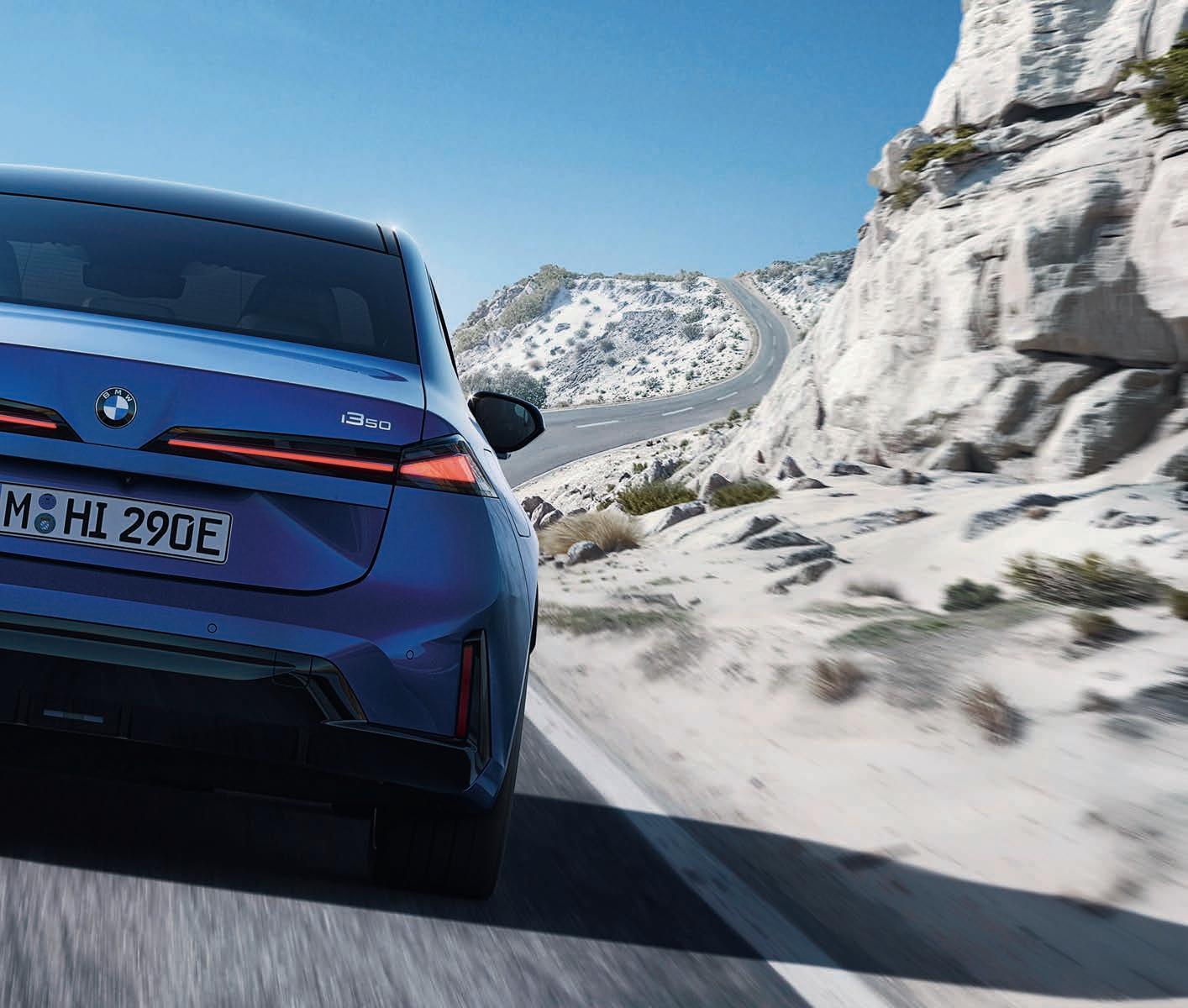
Our cover story features the BMW 3 Series—now electric. We take an in-depth look at this desirable compact sedan, which strikes the right balance between practicality and sportiness, while offering impressive range as an EV.
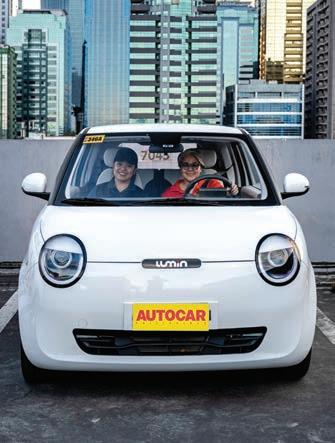
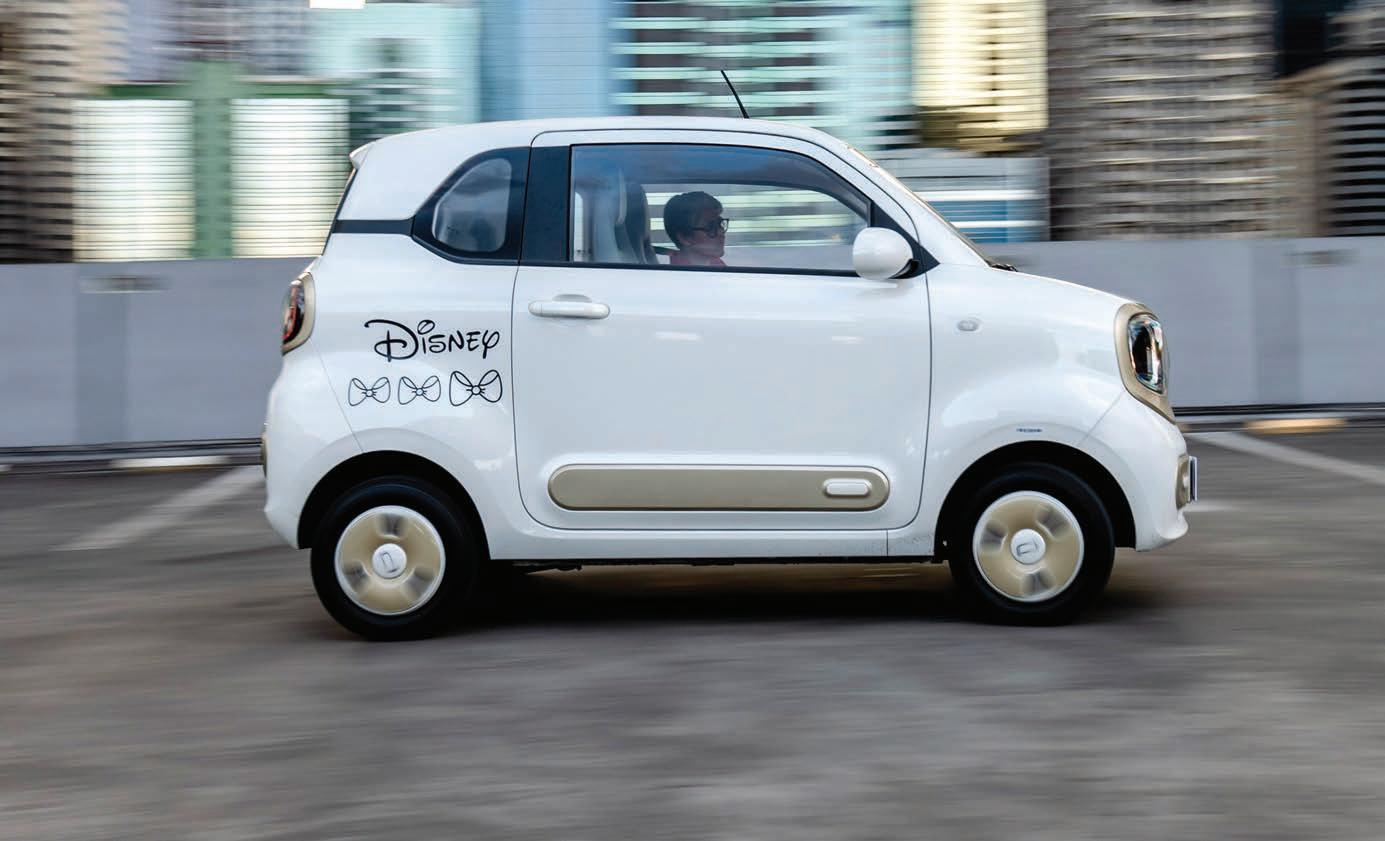
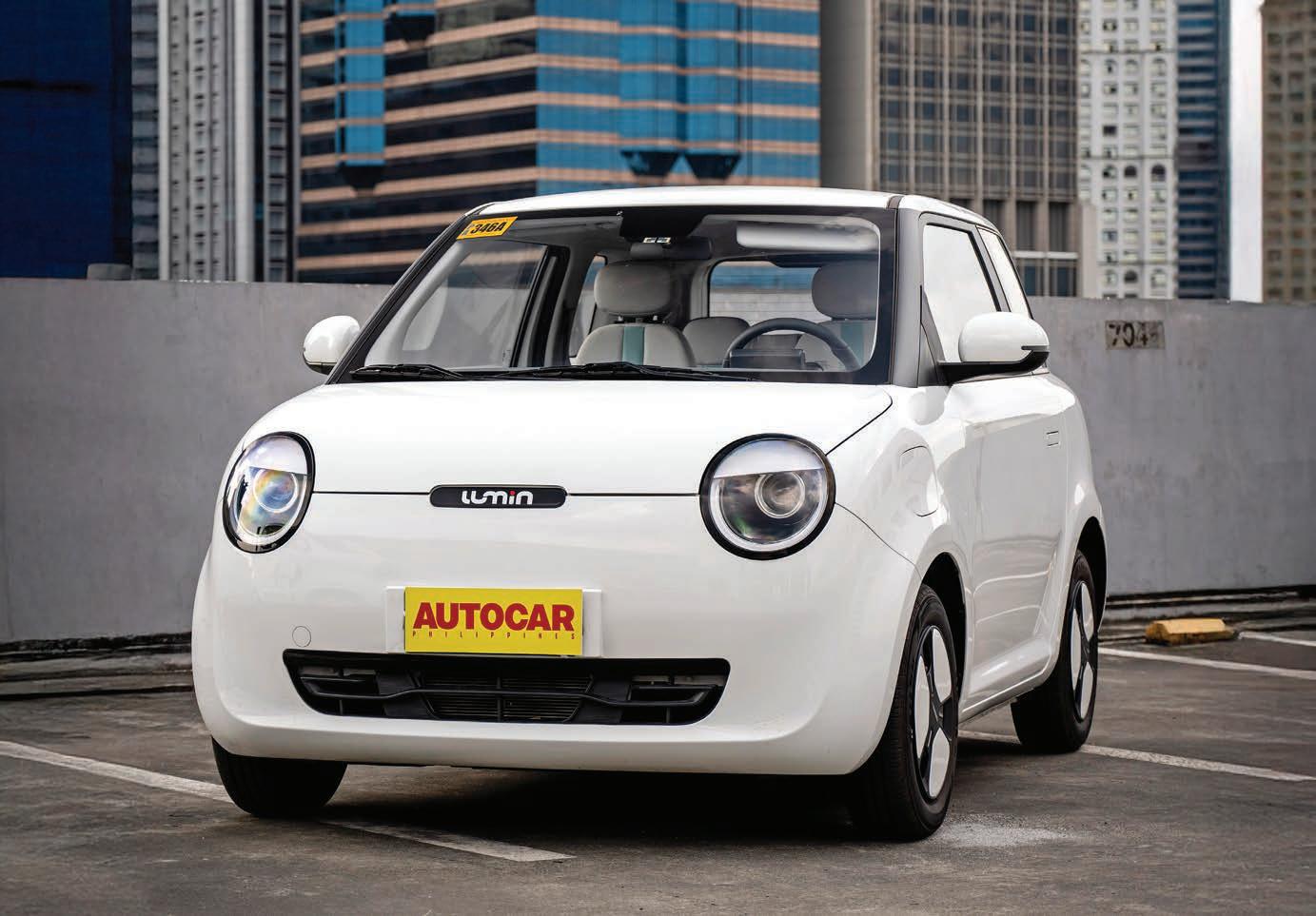
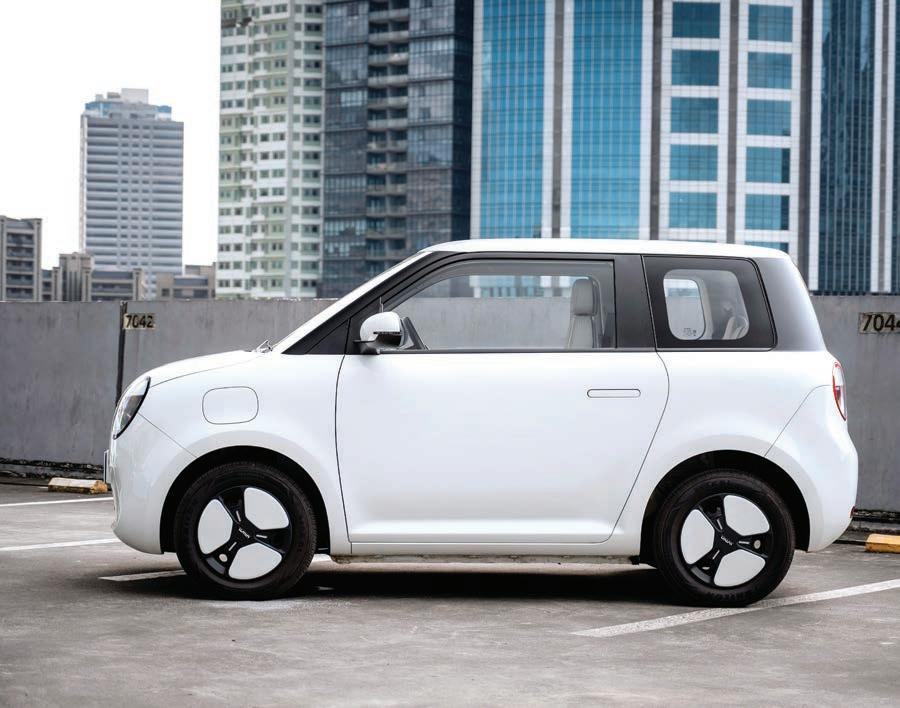
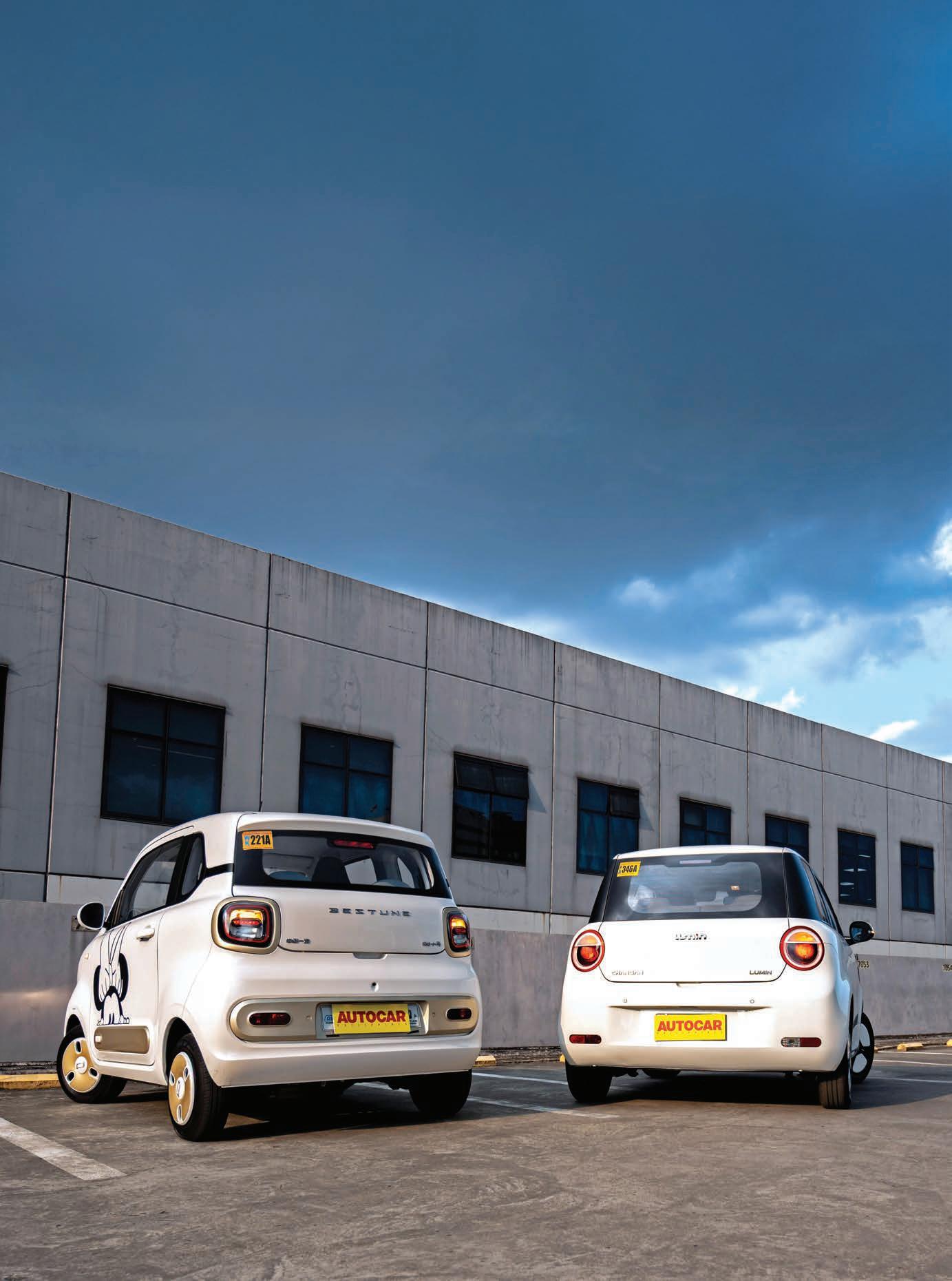
In our monthly comparo, we put the Bestune Pony alongside the Changan Lumin—two affordable small EVs that might just be what you need amid the ongoing energy challenges in the country.
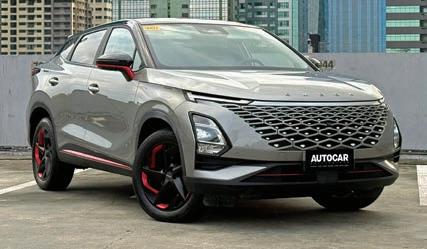
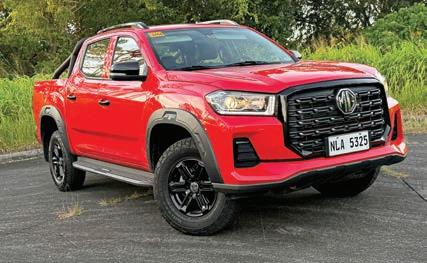
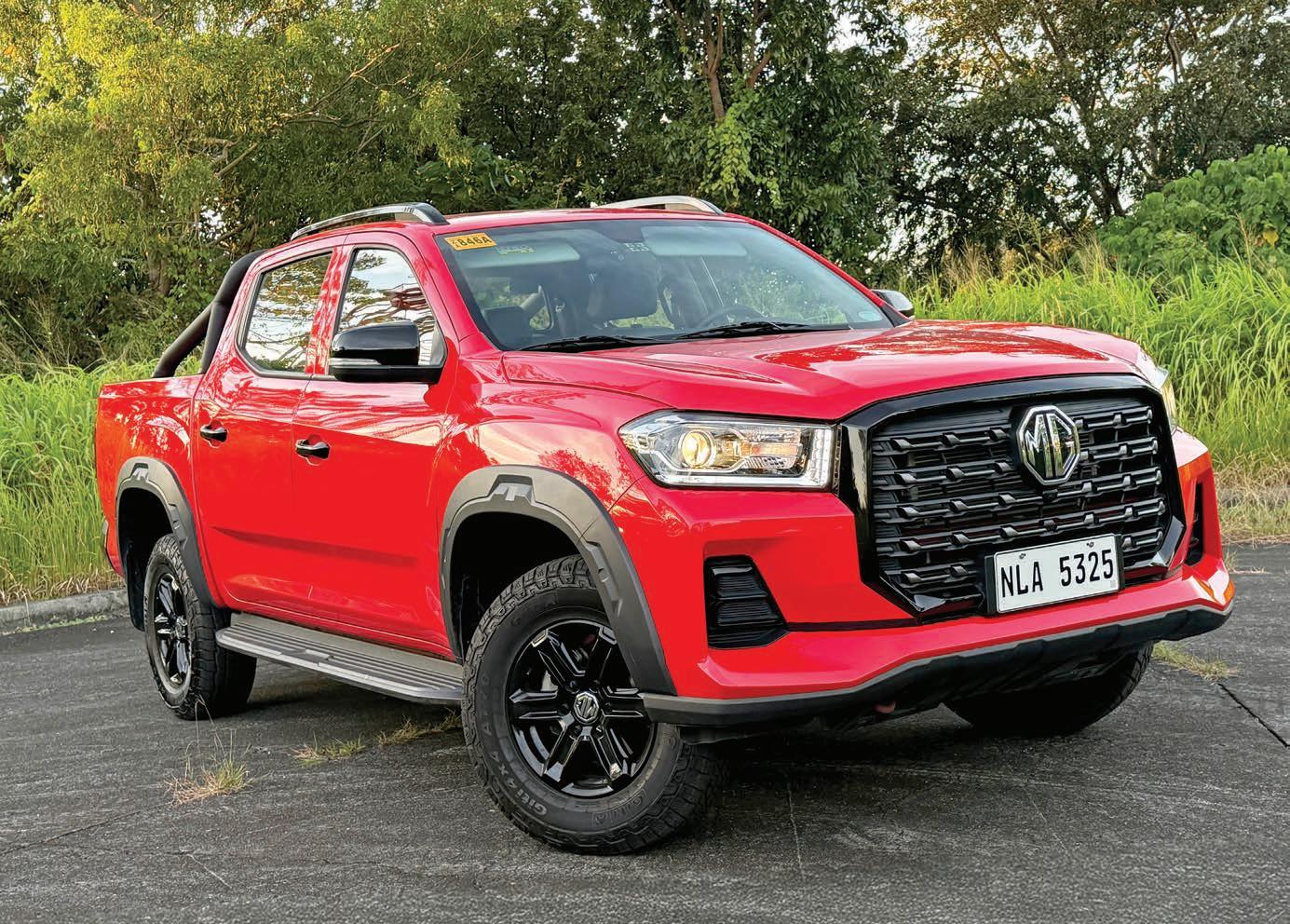
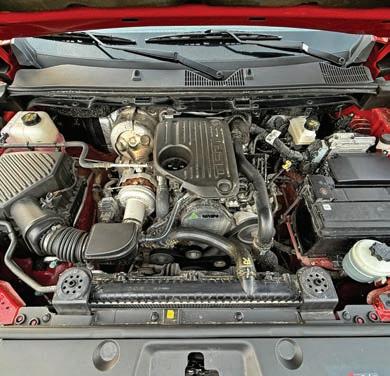
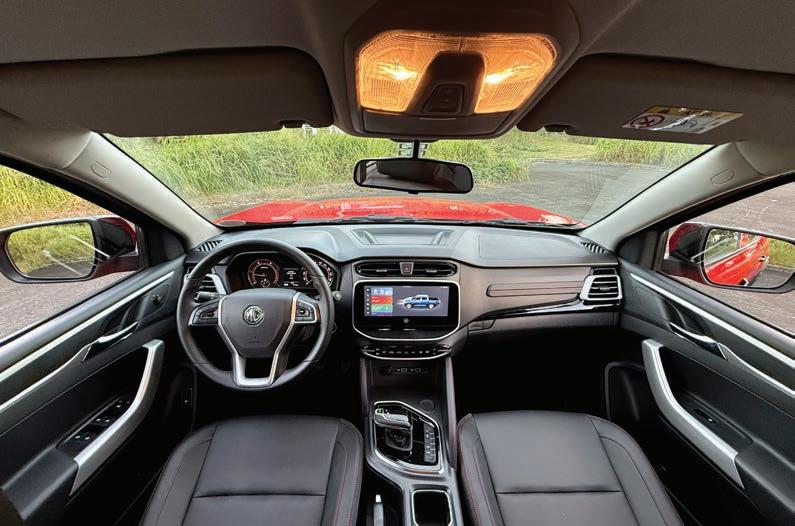
Our road test features two brands present at MIAS, but this time, they’re not electrified. We put the MG TRQ L diesel pickup and the Omoda C5 crossover SUV under the spotlight.
We also have regular opinion pieces from our columnist, Binky Siddayao, and our Executive Editor, Anjo Perez.
It’s shaping up to be a busy month. The auto industry is gaining momentum despite the challenges we face. Here at Autocar, we remain hopeful that things will soon return to normal— and that we can all get back to taking those long summer drives, instead of just thinking about them.
Fingers—and legs—crossed.
Windshield Watcher
P200 Fuel: Jump Ship or Stay the Course?
Fifty kilometers a day doesn’t sound like much—until it suddenly costs you a thousand pesos to do it.
That’s the new reality when fuel hits P200 per liter. The same routine drive—home to office, a quick detour for errands, then back again—quietly transforms into one of the biggest monthly expenses you carry.
Because at that level, driving stops being background noise. You start noticing every kilometer.
Run the numbers and it hits hard.
A typical gasoline SUV returning 8 to 10 km/L will need about five to six liters to cover that daily 50-kilometer grind. At P200 per liter, that’s P1,000 to P1,200 a day. Over a standard 22-day work month, you’re staring at P22,000 to P26,000—burned, quite literally, just to keep moving.
That’s not pocket change anymore. That’s already flirting with monthly amortization.
Now flip the equation.
An EV doing that same 50 kilometers at roughly P2 to P3 per kilometer brings your daily spend down to about P100 to P150. Stretch that over a month and you’re at P2,200 to P3,300.
The difference isn’t subtle. It’s a gap wide enough to make anyone pause— nearly P20,000 in potential monthly savings.
On paper, it feels like a no-brainer. Case closed. Go electric.
But real life rarely works that cleanly.
Because the P200 fuel scenario— no matter how dramatic—is almost never permanent. Oil prices spike fast, driven by conflict, supply shocks, and speculation. But history shows they also settle, sometimes just as quickly.
So the smarter question isn’t “How much can I save today?” but “How long
will this pain actually last?”
If fuel stays at that level for three to six months, the extra damage lands somewhere between P60,000 to P150,000 compared to more normal pricing. It stings, no doubt—but it’s still a long way from the seven-digit cost of jumping into a brand-new EV.
Even stretch that scenario to a full year, and the math still struggles to fully justify a sudden switch—especially if your current car is already fully paid.
That’s where the conversation often goes sideways.
Daily savings look seductive. But they only make sense when they’re sustained over time. If the spike fades, the financial advantage of going electric stretches further down the road.
So if you already own your car outright, the more grounded move might be to ride it out.
Drive smarter. Ease into the throttle. Plan your routes. Combine trips. Even small habits start to matter when every liter feels expensive.
But if you’re already in the market— if that 50-kilometer daily grind is your reality and you’re about to sign for a new vehicle anyway—then the story changes.
Because at that point, going electric isn’t a reaction. It’s a hedge.
It’s protection against exactly this kind of volatility—the kind that turns ordinary driving into a financial conversation overnight.
And maybe that’s the real shift happening here.
Not just from fuel to electricity, but from routine to awareness. From passive driving to calculated mobility.
At P200 per liter, the numbers finally force the issue.
But the decision still comes down to one thing.
Not how much you spend today—but how long you expect to keep spending it.
Carrying Out Car Chores in a “Crisis”
Aside from driving in “ECO Mode” to save on fuel, one may eventually opt to take a bicycle to work or use public transport.
In this time of a “national (fuel) crisis” and other impasses, are there special maintenance steps you can take to care for your car— whether or not you keep it idle? There is a very noticeable rise in car owners, either by choice or because they have been forced to do so, staying home and settling in. And their cars are staying put as well.
Your car still needs attention, even in the midst of a global fuel crisis. It needs to be driven occasionally. And it needs to be maintained.
If work-from-home orders are forcibly enacted in the country, a good number of vehicle owners may simply stop driving their vehicles due to the high cost of fuel and other factors. In most cases, families may choose to stay home almost entirely, with kids on hybrid schooling. In other cases, people go out only for necessary trips—to the bank, grocery, or market.
Like during the pandemic, first responders and others working in essential services may eventually be the only ones remaining on the road for their daily commute if the situation worsens.
Those who have been told to work from home—or, hopefully not, have been laid off— are otherwise stuck at home and find their cars, trucks, and SUVs sitting idle. If you fall into this group and own multiple vehicles, it would be best to trim down usage to only one vehicle during the crisis.
These tips are for keeping your sidelined vehicles, if any, in solid shape while they are out of commission.
Start and drive them occasionally. If possible, start the engine of your stationary vehicle once every other week (or even every three days) and move it up and down the driveway or around the block. This helps prevent several problems. Letting the engine run for a short while allows fluids to circulate, reduces condensation in the engine, prevents the brake system from locking up due to corrosion, and keeps tires from developing flat spots. A short 5–10 minute drive can also help
the battery maintain its charge.
Another easy and inexpensive way to prevent a dead battery is to install a trickle charger or battery tender. An automotive battery will lose its charge over time if it is not replenished. A trickle charger is a lowamperage device that keeps your battery at full voltage. Just make sure the unit you select can shut off automatically or switch to “float mode” when the battery is fully charged to avoid overcharging.
With summer heat and the coming rains, along with other environmental factors—bird droppings, sap, leaves, dirt, and abrasive sand—your vehicle’s paint, glass, trim, and rubber can suffer if left outside and unmoved for long periods. Cover your car. A quality wax job (and good exercise, too) can go a long way in protecting your paint from UV rays and hard water spots. If you are unable to park in a garage or sheltered area, consider investing in a proper car cover—not a cheap tarp that traps moisture and scratches paint, but a soft, breathable cover designed to protect the finish. Working from home is like a prescription for finally getting your house in order. It’s also an opportunity to clean your car. You might take the time to vacuum the interior, use a carpet and upholstery cleaner on cloth seats, or condition your leather seats. You can also treat the exterior—with a wash and wax, or even light paint correction using a clay bar. Just be careful; improper handwashing can cause more harm than good.
Whether you are mechanically inclined or not, there are simple preventive maintenance
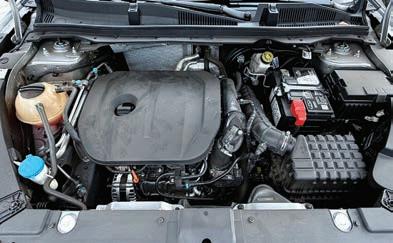
procedures you can do while your car sits at home. For instance, replacing the engine air filter and cabin air filter is often easier than expected—and they help both your engine and passengers breathe better. You can also check your oil, refill washer fluid, top up coolant, and inspect belts and hoses.
It may also be prudent to stock up on engine oil, transmission fluid (ATF for automatics), gear oil, and filters (air, oil, fuel). Likewise, consider stocking power steering and brake fluid while prices are still manageable and supplies are available.
Tires will wear out over time—that is a given. But they will last longer if kept properly inflated and regularly rotated and aligned.
When a car sits for long periods, corrosion can develop on brake pads or shoes, rotors, calipers, and other brake components. The parking brake may also seize. If you are storing your vehicle, leave the handbrake off. Put the transmission in first gear (or PARK) and use wheel chocks all around.
Avoid aggressive driving. Brake steadily and avoid rapid acceleration to reduce wear on brakes, tires, and the engine. Frequent short trips prevent the engine from reaching proper operating temperature, which can accelerate wear. Letting the car idle for long periods wastes fuel and contributes to engine wear— these are not advisable fuel-saving practices.
You can also start a “secret” sinking fund, setting aside a small fixed amount each month specifically for car-related emergencies. And maybe—just maybe—you can use it later for those special “goodies” you’ve long wanted once the “crisis” passes.
Whether you are out on the road during this time of “crisis” or staying safely at home for the long haul, there are things you can do to maintain your physical and mental wellbeing—for yourself, your family, your car, and even your finances.
It might also be a good time to bring out your tools and break a sweat.
Please be mindful out there.
Photo by PB Swiss Tools on Unsplash
FEATURE
When the Warranty Ends: Will Insurance Cover Your EV Battery ?
Mobility Explained | Insurance & Ownership
Electric vehicles are steadily finding their place on Philippine roads. What felt like a distant reality just five years ago has quietly merged into everyday traffic. Today, it’s not unusual to see mall charging stations fully occupied, while hybrid and full EV fleets are increasingly entering corporate service.
With more electrified vehicles on the road comes a pressing question: once the manufacturer’s warranty expires, is the EV battery still covered under comprehensive insurance? After all, the battery isn’t a minor component. It is the heart of the electric vehicle—and often its most expensive part.
To understand this, it’s important to separate two things: manufacturer warranty and comprehensive insurance coverage.
Most EV brands offer battery warranties of around eight years or a specified mileage limit, whichever comes first. These warranties typically cover manufacturing defects, abnormal degradation, and internal failures not caused by external damage. During this period, owners can drive with confidence knowing that battery-related defects are handled under factory terms.
When that warranty expires, responsibility shifts.
Comprehensive car insurance generally covers accidental or self-damage, theft, and Acts of Nature, depending on the policy. In principle, the EV battery is treated as part of the insured vehicle. This means that if the battery is damaged due to a covered incident—such as a collision, flood, fire, or
vandalism—it may be included in a claim, provided it is not explicitly excluded.
This is where many owners get confused: insurance is not the same as an extended warranty.
Insurance does not cover normal wear, gradual battery degradation, capacity loss over time, or internal failure unrelated to an insurable event. If an EV battery simply loses efficiency after years of use, that falls under wear and tear—something insurance policies traditionally exclude. What insurance protects against is sudden and accidental damage.
In the Philippine setting, this distinction matters even more. Typhoons and monsoon rains regularly bring flooding, making water intrusion a real concern for EV owners. If a battery is damaged due to flooding and the policy includes Acts of Nature coverage, insurance may cover replacement—subject to policy limits, deductibles, and proper documentation. Without this specific coverage, however, flood-related damage may fall outside the scope of a claim.
Policy details matter. Not all insurers treat EVs the same way. Some may include specific clauses for high-voltage components, while others require additional underwriting due to the high cost of battery replacement. Since EV batteries carry significant value, premiums may be higher to reflect the increased risk.
For owners of out-of-warranty EVs, this highlights the importance of proper declared value and adequate coverage. Underinsuring a vehicle to save on premiums can lead to serious gaps when filing a claim—especially if the battery is involved.
Another practical consideration is repair capability. EV battery diagnostics and replacement require specialized tools and certified technicians. Insurers typically coordinate with accredited repair facilities, but as EV adoption grows, the availability of qualified service centers becomes critical to efficient claims processing.
There is also a common misconception that EV batteries are automatically excluded from insurance once the warranty expires. This is not inherently true. Insurance does not depend on warranty status—it evaluates the cause of damage. If the cause is covered, the claim may proceed.
The market is beginning to respond. Some local insurers now offer EV-specific policies designed around the unique requirements of electrified vehicles.
For owners shopping for coverage, a few practical steps can help avoid surprises. Review policy documents carefully, paying attention to clauses involving electrical systems, battery packs, and Acts of Nature. Consider comprehensive coverage that includes natural disaster protection— especially in a country regularly exposed to flooding and typhoons. And maintain proper service records to help distinguish between accidental damage and long-term wear.
Owning an EV in the Philippines isn’t just about going electric—it’s about understanding risk. Insurance protects against the unexpected. Warranty protects against defects. Knowing the difference determines how well you’re covered when it matters most.
NEIL PAGULAYAN
EDITORIAL TEAM
IRA V. PANGANIBAN Editor-in-Chief
ANJO PEREZ Executive Editor
NEIL PAGULAYAN Managing Editor - Print
JACOB OLIVA Managing Editor - Digital
EGGAY QUESADA Editor-at-Large
OLSON CAMACHO Technical Editor
RONNIE TRINIDAD Visual Technical Director
ADRIAN RAYNES IT and Digital Consultant
MATT PRIOR | KRIS LIM | BINKY SIDDAYAO Columnists
JOHN REY SAN DIEGO Staff Writer
WILLIAM HERRERA | LUIS GERONA | RANDY PEREGRINO Contributors
BONG BOADO | KEITH MARK DADOR | LOUIE CAMACHO
MARK QUESADA | RANDOLPH DE LEON
ARNOLD RIODEQUE | BOBS JEROME | MEMERT MONTELOYOLA
Photographers
RAYMUND RAVANERA Graphic Design
EDITORIAL TEAM
ANJO PEREZ Editor-in-Chief
RICA SISON, JOSEPH BAUTISTA, LARA CAMACHO Contributors
WILLIAM HERRERA, NEIL PAGULAYAN
MARK QUESADA Photographer
JOHN REY SAN DIEGO Staff Writer
RAYMUND RAVANERA Graphic Designer
Contact us at info@wheelsph.com
Wheels Magazine is published monthly, a registered trademark of Asian Media Ventures, Inc. in cooperation with Gulf News. Copyright 2015.
IN MEMORIAM
Alan Ranch Sevilla • Earl Manalansan • Dino Ray Directo III • Edward Dangan II
The views and opinions expressed within Autocar PH magazine are not necessarily those of Haymarket Media Group Limited or those of its contributors.
Autocar magazine is published in China, Greece, India, Indonesia, Malaysia, Philippines, Poland, Singapore, Thailand, and United Kingdom. www.haymarket.com
Chairman of the Board of Directors GEORGE APACIBLE
President/CEO IRA V. PANGANIBAN Vice President Publication ANJO PEREZ Vice President RONNIE TRINIDAD
Secretary OLSON CAMACHO
Treasurer EGGAY QUESADA
Director for Sales & Marketing CAROL “DANG” B. DORIA
Business Administrator KAITE S. BELGICA
The views and opinions expressed within Autocar Magazine are not necessarily those of Asian Media Ventures, Inc. or those of its contributors. While every care has been taken in the preparation of this magazine, the publishers cannot be held responsible for the accuracy of the information herein, or any consequences arising from it. In case of all product reviews, judgements have been made in the context of the product based on Philippines prices at the time of review, which are subject to fluctuation and only applicable to the Philippines market.
From Pharma to Powertrains
Jay Lopez’s Kia Playbook
In an industry often defined by horsepower and hardware, leadership remains very much a human equation. For Jay Lopez, President and Managing Director of Kia Philippines, the approach is straightforward: people, strategy, and an unwavering focus on improving the customer’s quality of life.
Lopez may not come from a traditional automotive background, but spend a few minutes with him and it becomes clear—he’s a genuine car guy.
“Of course,” he says with a smile when asked about his passion. “I’ve been driving since I had my student license. And I’ve had the privilege of experiencing some of the best cars throughout my career.”
For Lopez, cars are about more than speed or style. They’re about how they make you feel.
“There are cars that instantly make you feel good when you step into them,” he explains. “Those are the ones you remember—the ones you want to be seen in.”
That connection goes back to his youth. Growing up in Bacolod, far removed from Metro Manila’s street racing culture, he was already drawn to cars.
“Like most young guys, you dream of owning your own car someday,” he says. “That’s where it starts.”
From Pharmaceuticals to Powertrains
Lopez’s move from pharmaceuticals to the automotive industry may seem like a leap, but he sees a clear throughline.
“At the end of the day, it’s all about management,” he says. “Whether it’s coffee, medicine, or cars— the fundamentals are the same. It’s about people, strategy, and understanding your customer.”
In fact, he sees both industries serving a similar purpose.
“Both are about improving quality of life,” Lopez explains. “In pharma, you help people live healthier lives. In mobility, you help them move better, work more efficiently, and connect with opportunities.”
That perspective shapes how he approaches the Kia brand locally—grounded in consumer insight
rather than assumptions.
“I’m very insight-driven,” he says. “You have to understand your market—what they need, what their pain points are, and how your brand can respond.”
Repositioning Kia for a Younger Market
When Lopez took the helm, Kia Philippines was at a crossroads. Long known for practical, budgetfriendly models like the Kia Pride, the brand needed to reconnect with a younger, more dynamic audience.
“The Philippines is a young market,” Lopez says. “So we asked ourselves—how do we make Kia relevant to that audience?”
The response was a deliberate shift in both product and brand direction. Under his leadership, Kia’s lineup has become more design-led, techforward, and youthful—while keeping its core value proposition intact.
“At the end of the day, it ’s all about people, strategy, and understanding your customer.”
Jay Lopez is steering Kia Philippines toward a more design-led, tech-forward future.
“There’s a nostalgic connection with Kia,” he adds, recalling his own experience owning a Pride. “But now, we’re building on that with style, innovation, and technology.”
Electrification and the Road Ahead
Like every global automaker, Kia is navigating the industry’s shift toward electrification. Lopez believes the brand is well-positioned.
“We have a strong pipeline,” he says. “From internal combustion engines to hybrids and full EVs—we’re giving Filipinos real choices.”
Rather than going all-in too quickly, Kia Philippines is taking a measured approach.
“Not everyone is ready for a full EV,” Lopez explains. “Hybrids provide that middle ground.”
That strategy also reflects current market realities, especially with fluctuating fuel prices and evolving consumer sentiment.
“Situations like this can accelerate
interest in electrification,” he says. “But there will always be demand for traditional engines—especially in the provinces.”
Competition as Catalyst
The influx of Chinese automotive brands has intensified competition in the local market, but Lopez doesn’t see it as a threat.
“More competition is always good,” he says. “It pushes everyone to improve and gives consumers more options.”
He also sees new players as contributors to the broader shift toward electrified mobility.
“It helps accelerate the adoption of new technologies,” he adds.
A Clear, Confident Trajectory
Kia Philippines’ recent performance reflects this renewed direction. The brand has entered the top 10 and continues to show steady growth, supported by AC Mobility and its global network.
Our EIC Ira Panganiban interviewing Mr. Jay Lopez, Managing Director and President of Kia Philippines
“ We don ’ t launch cars for the sake of it —we launch what matters.”
that fit the Filipino lifestyle, budget, and aspirations.”
Growth, he stresses, has to be sustainable.
“We don’t launch cars just for the sake of it,” he says. “We make sure they’re relevant and supported long-term.”
That includes strengthening ownership fundamentals—after-sales, reliability, and parts availability—all of which play a major role in shaping brand perception.
Driving Toward the Future
So where does Lopez see Kia in the coming years?
“I want to see a Kia on the road every five minutes,” he says with a grin.
It’s an ambitious goal—but one that feels increasingly within reach.
From an afterthought to a serious contender, Kia’s trajectory in the Philippines is no longer about catching up.
It’s about staying in the conversation— and pushing forward.
IRA V. PANGANIBAN
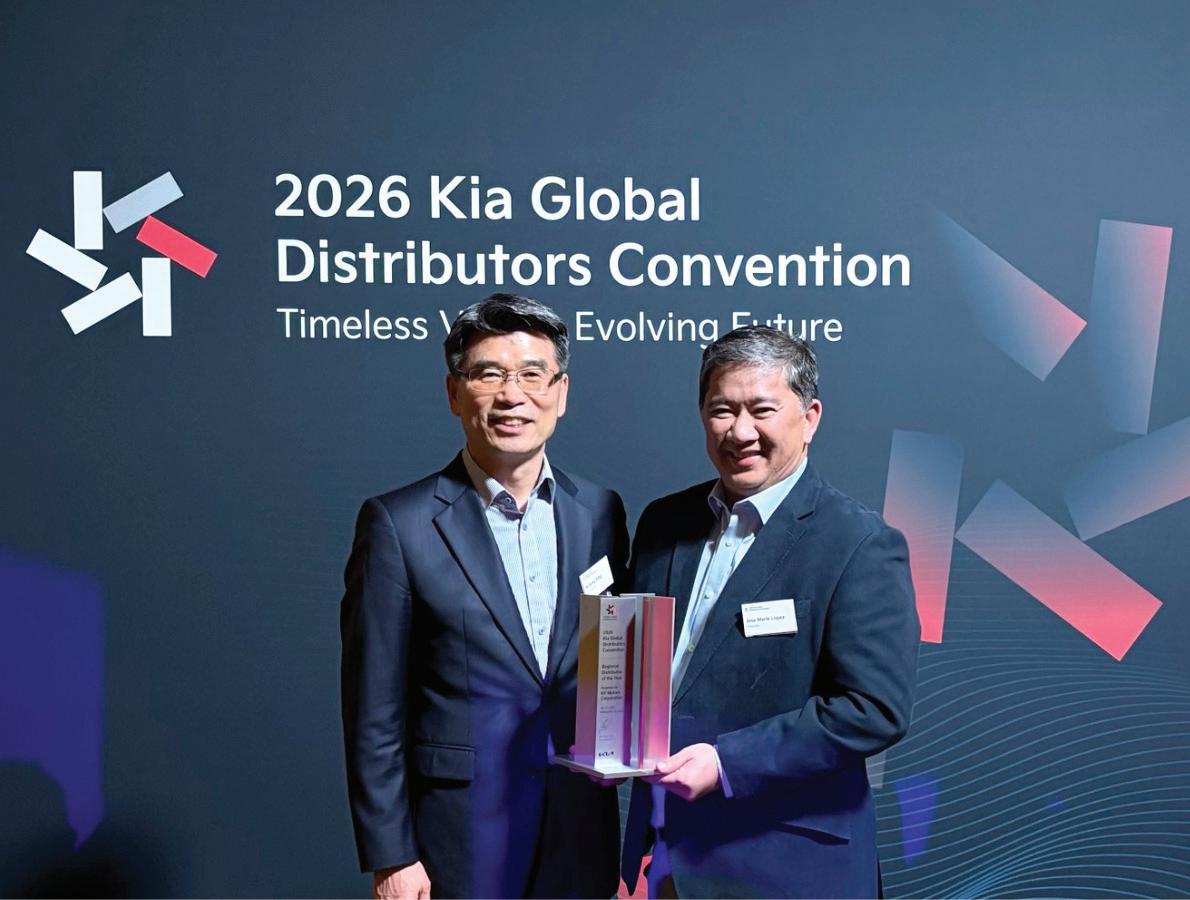
Kia President and CEO Ho Sung Song (left) with Kia Philippines Managing Director Jay Lopez (right) at the 2026 Kia Global Distributors Convention
Under Lopez, Kia is repositioning itself to connect with a younger generation of Filipino drivers.
Road Trip Ready: The Best Family Cars at MIAS 2026
Best Family Cars for Philippine Road Trips
Family road trips remain one of the most enduring traditions for Filipino households.
Whether it’s a quick weekend escape to Batangas, a sunrise drive to Tagaytay, or a long haul to Baguio, Ilocos, or Bicol, the right vehicle can make the difference between a tiring trip and a memorable one.
Because in the Philippines, road trips aren’t just about distance—they’re about conditions. Traffic leaving Metro Manila, steep climbs like Kennon Road, unpredictable weather along SLEX or TPLEX, and long provincial stretches where comfort matters more than speed.
At the 2026 Manila International Auto Show (MIAS), several manufacturers are showcasing vehicles designed with exactly these realities in mind. Beyond power figures and tech features, the most compelling models are those built around real family needs—space, comfort, cooling, flexibility, and endurance.
Here are some of the standout road tripready vehicles from MIAS 2026.
MPVs: Comfort for Long, Unbroken Drives For routes like Manila to Bicol or Ilocos—where you’re in the car for six to ten hours—comfort becomes everything. This is where MPVs shine.
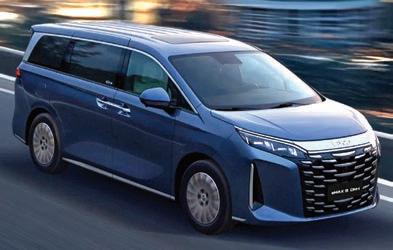
BYD eMax 9 DM-i
On a long drive down the Pan-Philippine Highway toward Bicol, rear-seat comfort isn’t a luxury—it’s survival. The BYD eMax 9 DM-i addresses this with a genuinely usable third row, offering more legroom than most crossovers.
Second-row adjustability allows you to
balance passenger comfort with cargo— important when packing everything from overnight bags to food coolers. Rear AC vents reaching the third row help keep temperatures consistent, especially during humid highway stretches.
For families heading to Batangas beaches or even further south, it’s the kind of layout that reduces fatigue across all rows.
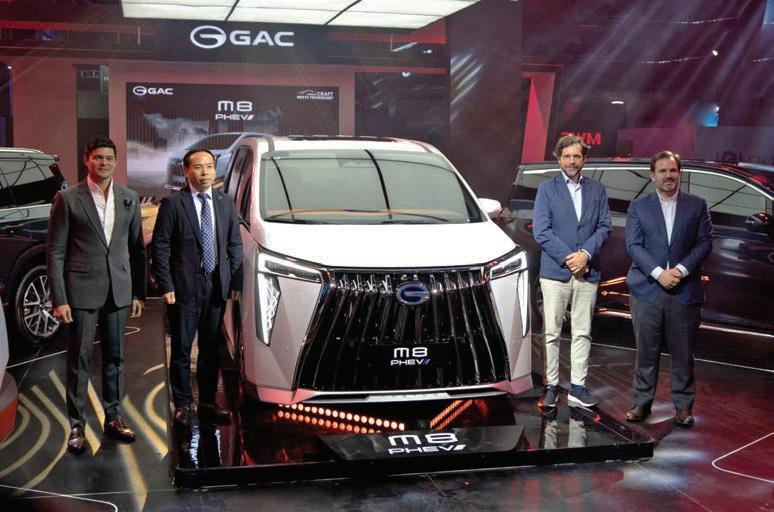
GAC M8 PHEV
BYD eMax 9 DM-i
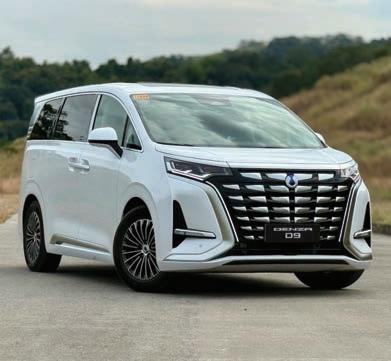
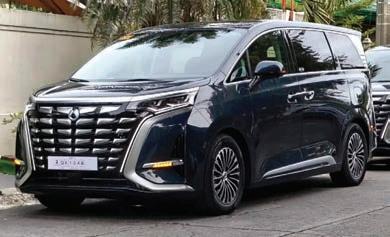
Denza D9
Denza D9
Think of the Denza D9 as the kind of vehicle you’d want for a Manila-toIlocos run—long, steady cruising with minimal discomfort.
Its strength lies in how passengers can move within the cabin. On multi-hour drives, being able to shift positions, reach items, or adjust seating without hassle matters more than raw performance.
The refined ride and consistent cabin cooling also help when crossing mixed conditions—from expressways to provincial roads—where heat and vibration can wear passengers down.
GAC M8 PHEV
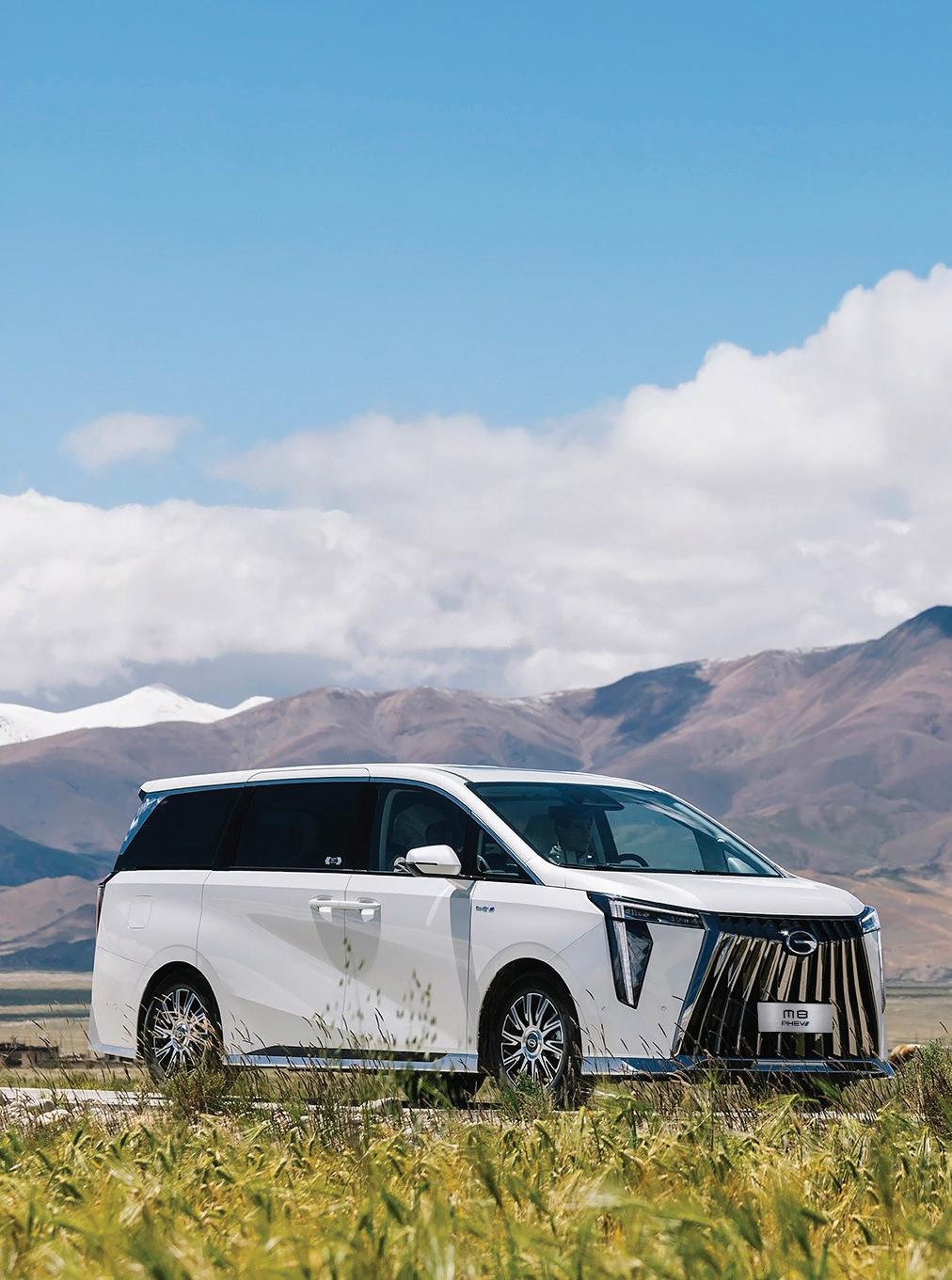
For extended family trips—like a convoy to Baguio or La Union—the GAC M8 PHEV’s spacious third row makes a difference.
The climb up Marcos Highway or Kennon Road puts added stress on both vehicle and passengers. Having proper seating support and airflow to the rear rows keeps everyone comfortable even as the terrain changes.
With the third row folded, there’s enough space for luggage, pasalubong boxes, or even camping gear for destinations like Zambales.
Hybrid Family Haulers: Efficient for Long Distances
Fuel efficiency becomes a real concern on longer drives—especially with unpredictable fuel prices and extended highway runs.
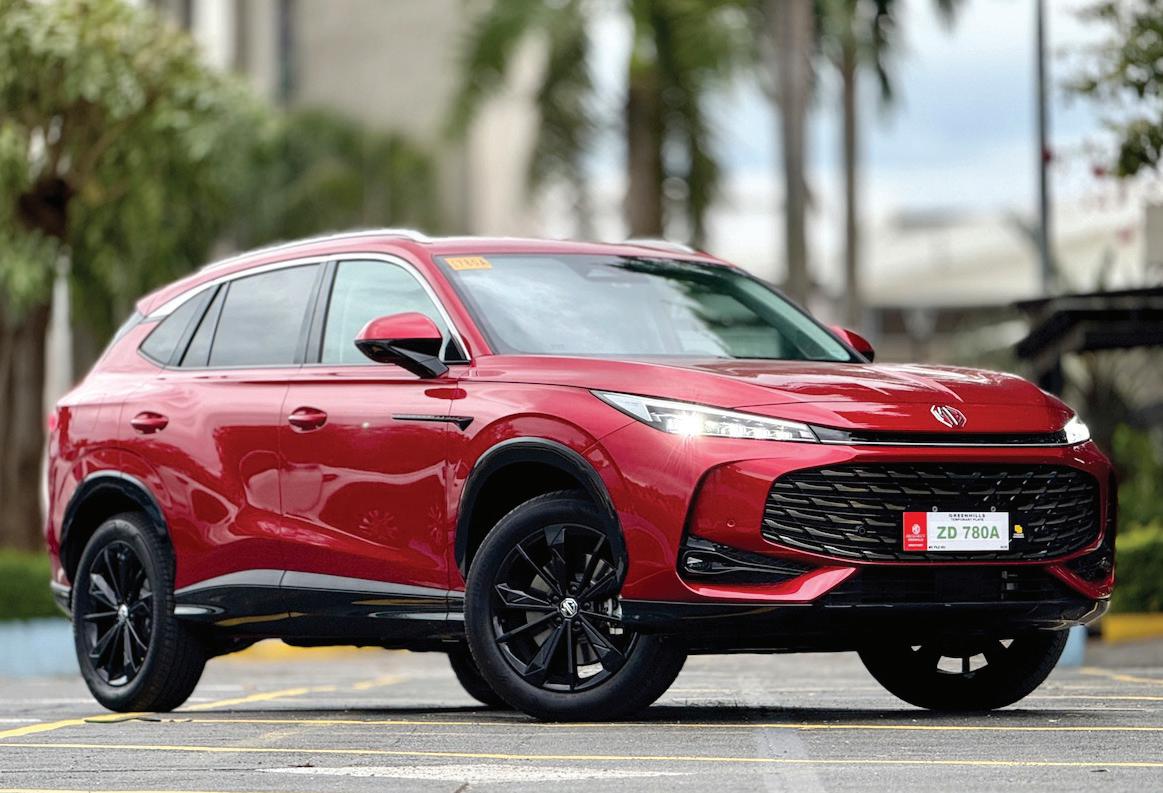
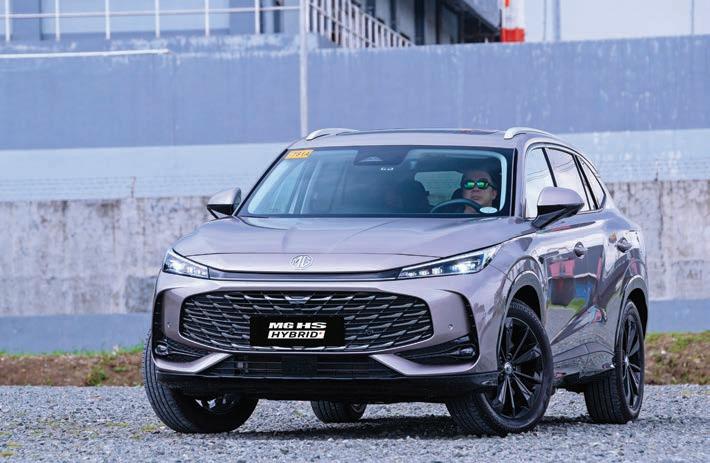
MG HS Hybrid+
For a Manila-to-La Union or Clark trip, the MG
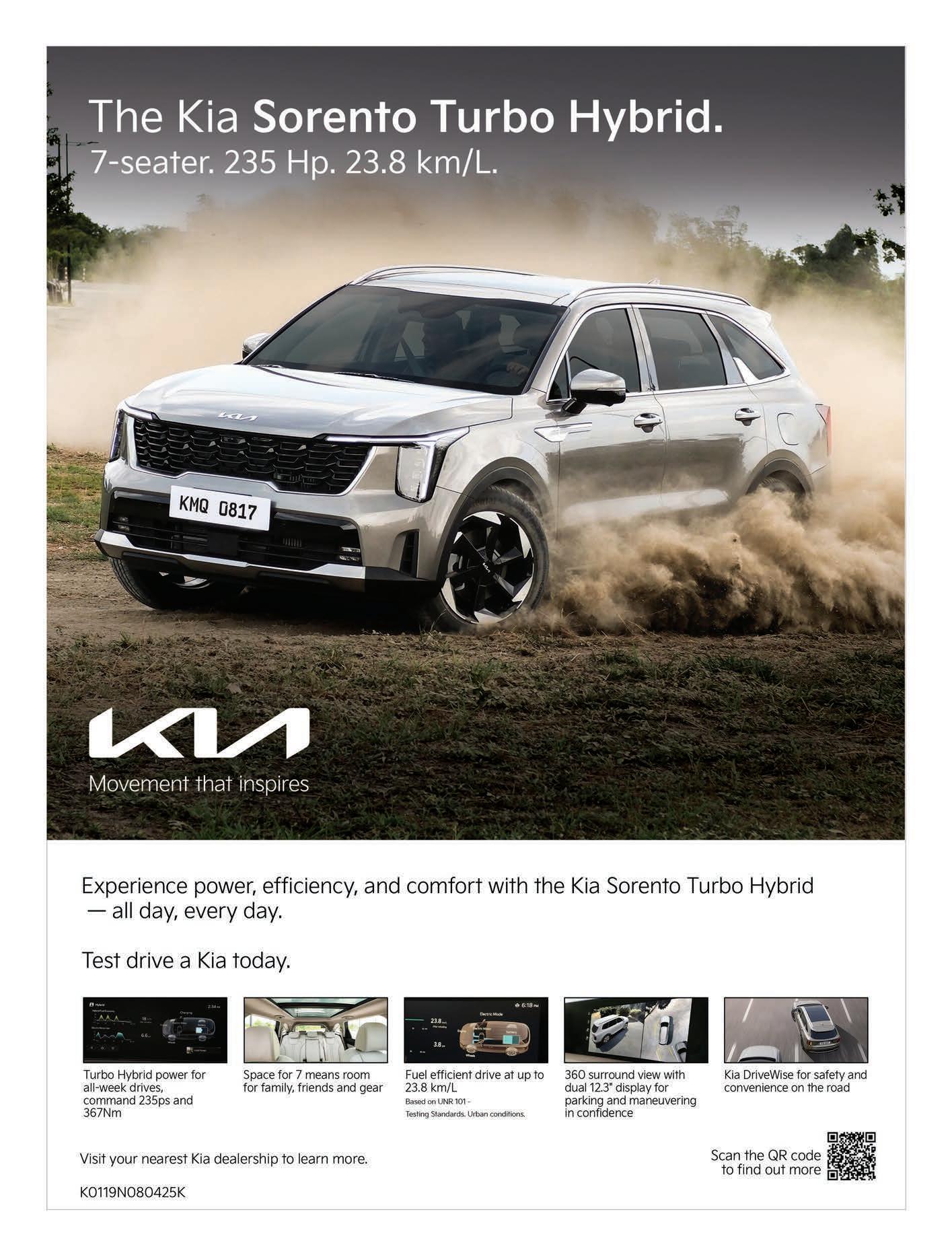
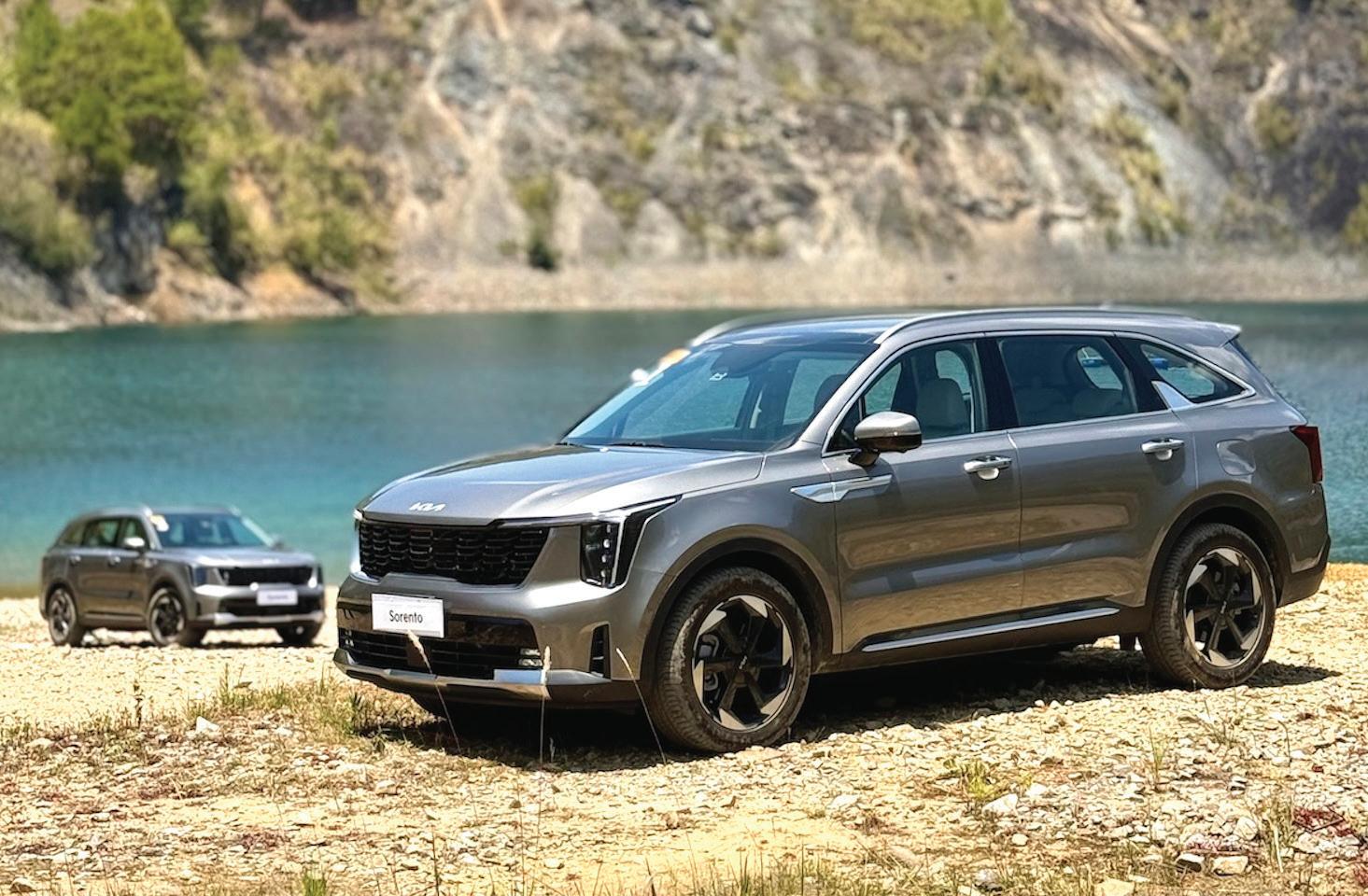
Kia Sorento Turbo Hybrid
HS Hybrid+ offers a balance between efficiency and comfort.
It may not have a third row, but its cargo space makes it ideal for smaller families carrying more gear. Rear AC vents and a well-insulated cabin help reduce fatigue, especially in long expressway drives.
The Sorento feels tailored for classic Philippine long drives—Manila to Baguio, Ilocos, or even Mindoro via RORO. Its three-row setup allows flexibility depending on passenger count. Fold seats down for cargo-heavy trips, or keep them up for full-family travel. Cooling across all rows is especially important when climbing warmer lowland areas before reaching cooler destinations.
The right vehicle doesn’t just get you there—it makes the journey easier.
MG HS Hybrid+
“The best cars aren’ t felt at the start — they ’re appreciated at the halfway point.”
7-Seat SUVs: Built for Mixed Terrain Adventures Some Philippine trips don’t stop at paved roads. Think Tanay backroads, Sagada detours, or coastal routes in Quezon. This is where SUVs come in.
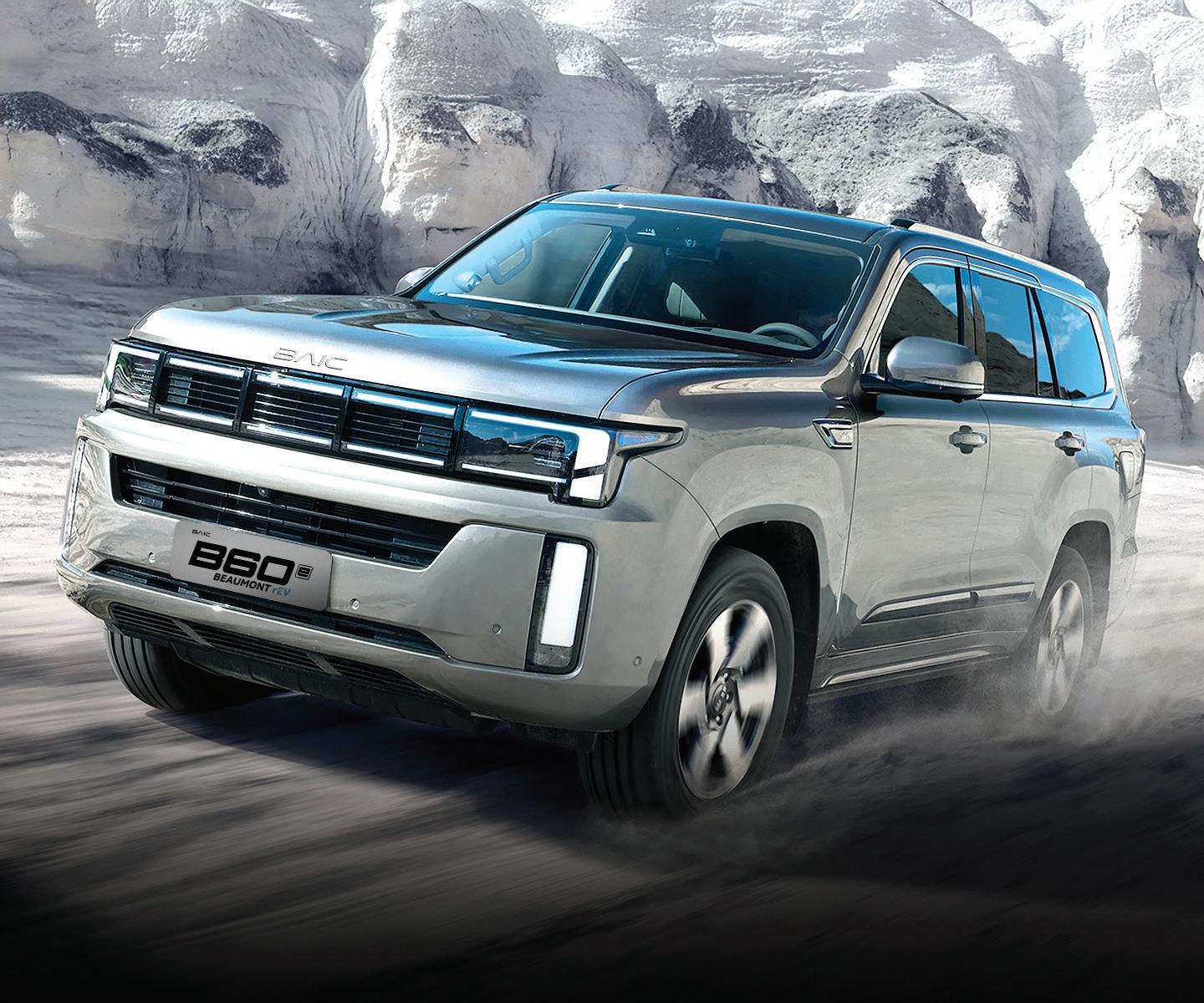
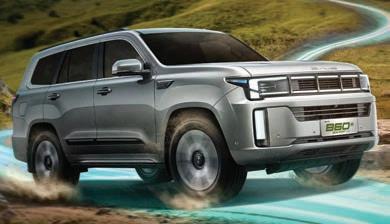
BAIC B60e Beaumont rEV
For routes that mix highways with rougher provincial roads—like heading into Rizal’s mountain areas—the B60e Beaumont rEV offers flexibility.
Its third row may be best for kids, but folding it opens up space for gear—useful for camping setups or outdoor trips. The electrified system also helps in stop-and-go traffic, like crawling out of Metro Manila before hitting open roads.
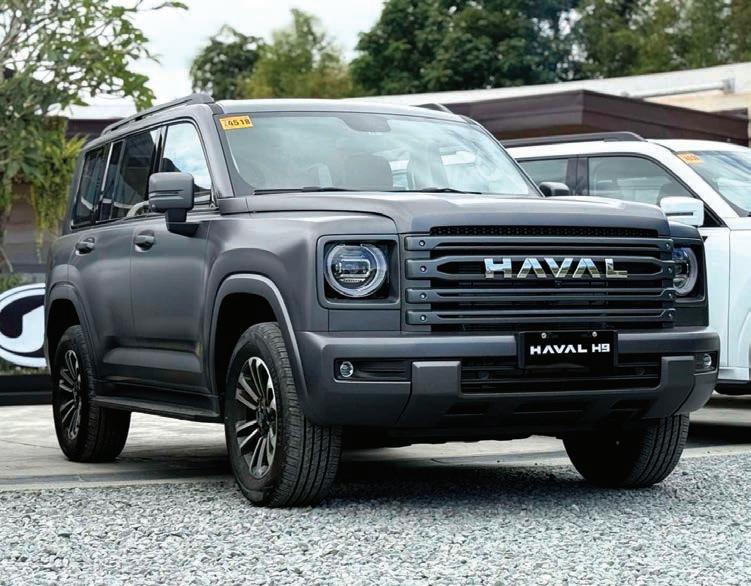
GWM Haval H9 4x4
If your road trip includes unpaved sections—say, heading toward Dingalan or exploring inland routes—the Haval H9 feels right at home.
It’s the kind of SUV that doesn’t mind bad roads, steep inclines, or uneven terrain. While the third row is better for short distances, the payoff comes in durability and cargo space.
For families that treat road trips as miniadventures, not just drives, this matters.
BAIC B60e Beaumont rEV
GWM Haval H9 4x4
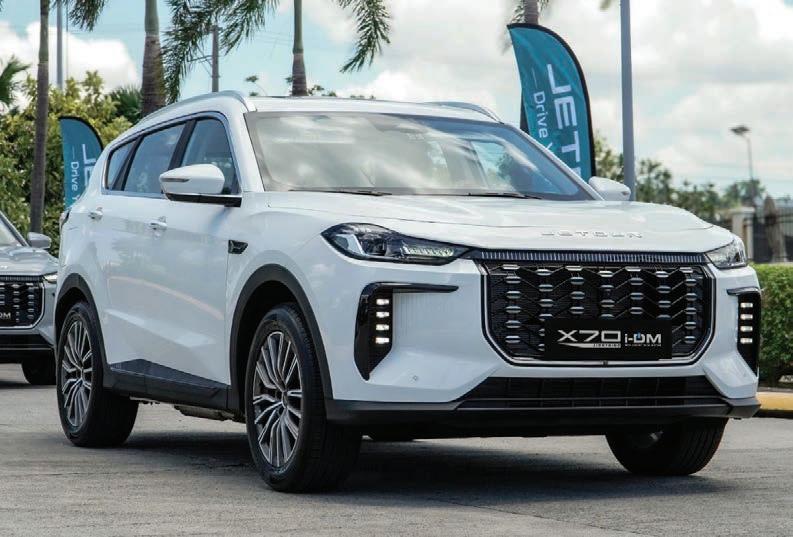
Jetour X70 Lightning i-DM
For mixed-use travel—city driving during the week, road trips on weekends—the Jetour X70 Lightning i-DM fits well.
A trip to Tagaytay or Subic, for example, benefits from hybrid efficiency in traffic and flexibility once you reach open roads. Fold the third row, and you’ve got enough space for luggage, bikes, or picnic gear.
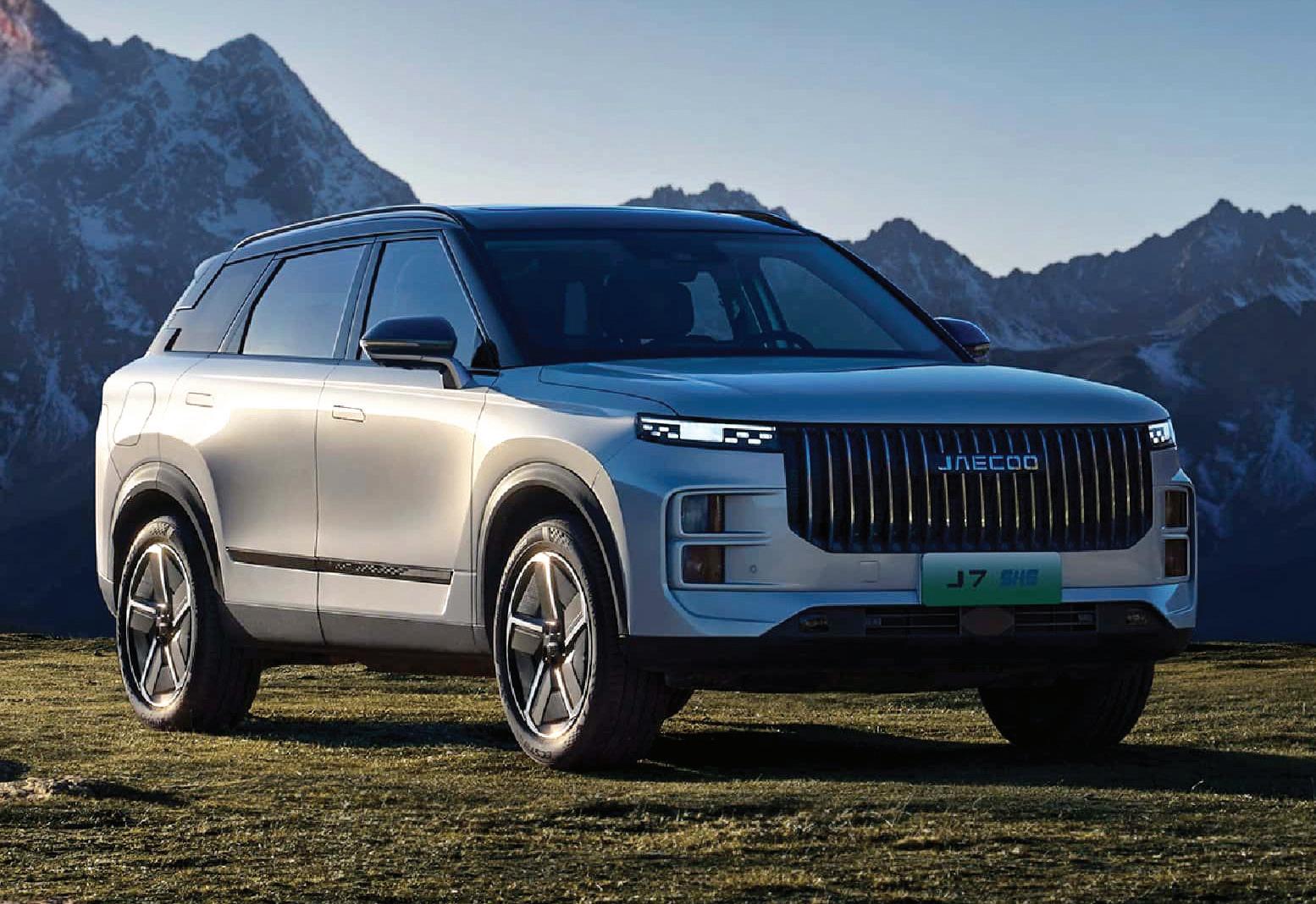
Jaecoo J7 SHS
For shorter but frequent trips—Tagaytay, Batangas, Laguna—the Jaecoo J7 SHS works well as a practical hybrid SUV.
It focuses on usable space rather than maximum seating. That makes it ideal for families that prioritize comfort and cargo over carrying seven passengers.
The Reality of Philippine Road Trips
Driving in the Philippines isn’t predictable.
You deal with traffic leaving the city, sudden rain along expressways, narrow provincial roads, steep climbs, and long stretches with limited stops. A vehicle that works in all these conditions isn’t defined by horsepower—it’s defined by how well it handles real use.
Cooling matters when stuck in traffic.
Seating matters when the drive stretches beyond four hours.
Cargo space matters when traveling with kids.
And ride comfort matters when the roads stop being perfect.
The Real Measure of a Family Car Vehicles designed for families need to go beyond spec sheets.
They need to work for real trips—whether it’s a quick Batangas escape, a weekend in
Tagaytay, or a full Luzon loop.
MIAS 2026 shows that manufacturers are starting to understand that.
Because in the end, the best family vehicle isn’t the one with the most features.
It’s the one that still feels comfortable halfway to your destination.
RANDOLPH DE LEON
Jaecoo J7 SHS
Jetour X70 Lightning i-DM
MIAS 2026 Guide: Dates, New Cars, Test Drives, and What to Expect
The Ultimate Car Weekend
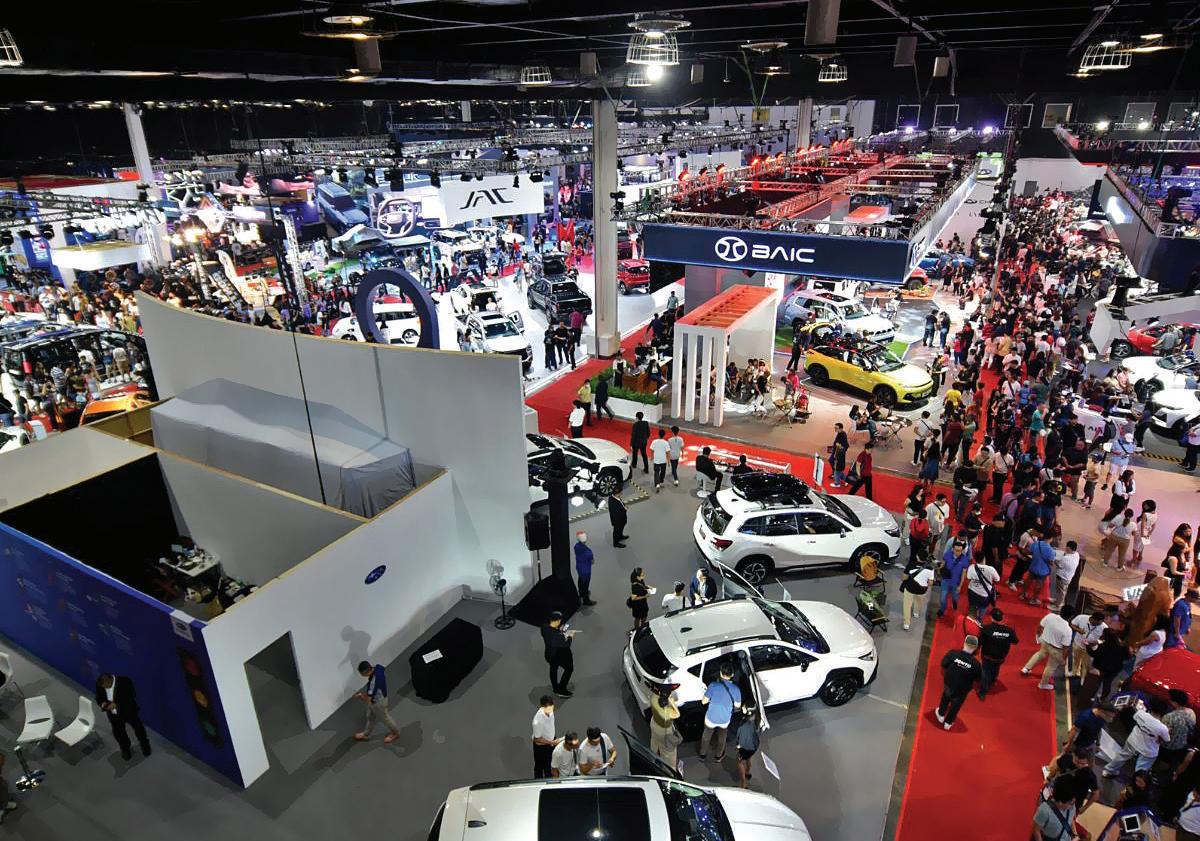
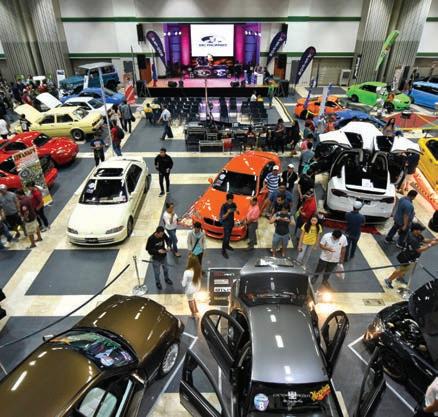
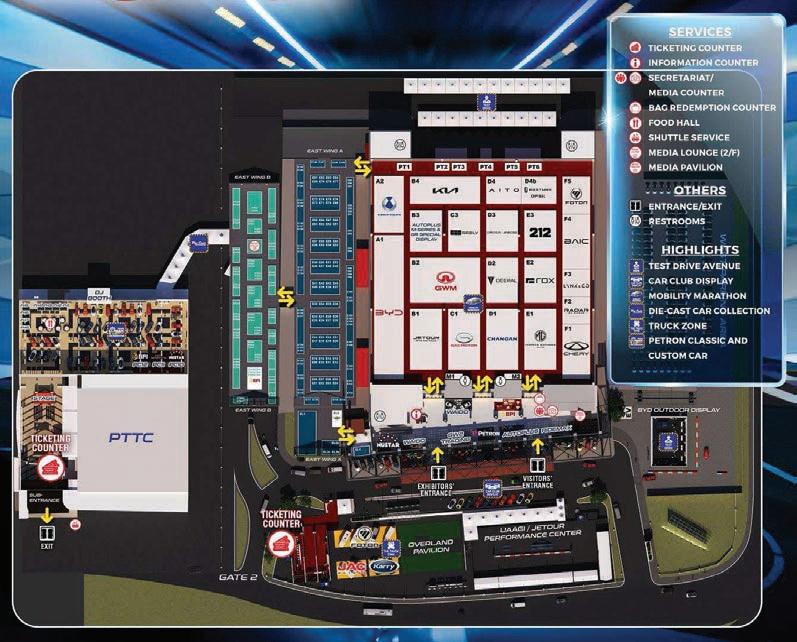
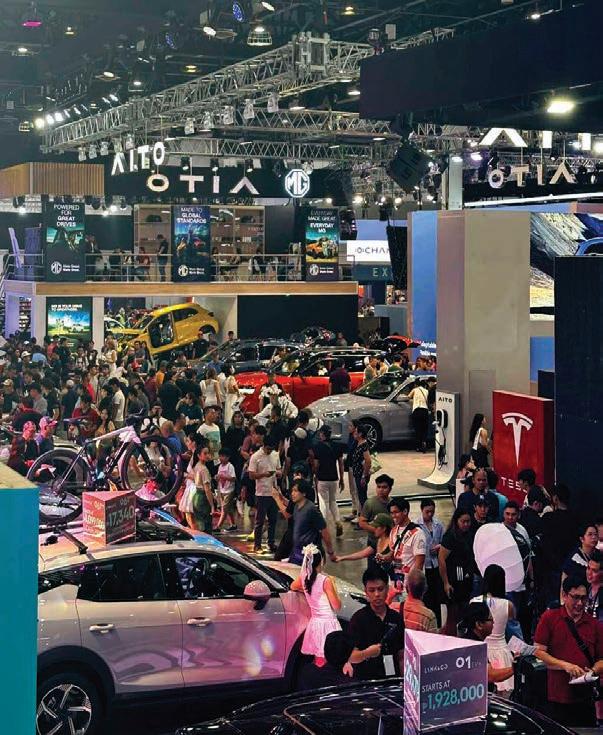
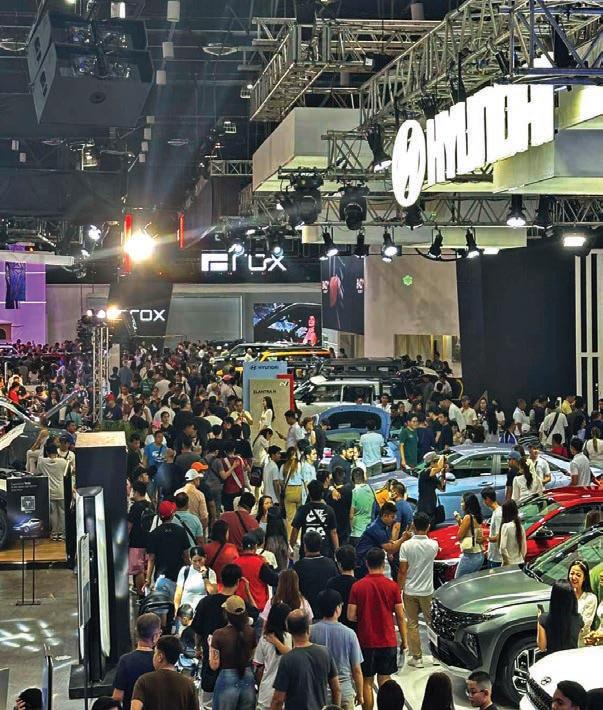
or Filipino car enthusiasts, April means one thing: the return of the Manila International Auto Show (MIAS). Now in its 21st edition and carrying the theme “Powering Mobility,” the 2026 staging is shaping up to be one of the biggest yet—bringing together new vehicles, emerging mobility technologies, and a wide range of automotive experiences under one roof. Set to run from April 9 to 12, the show once again takes over the halls of the World Trade Center Metro Manila. This year, however, it expands further with the return of the nearby Philippine Trade Training Center (PTTC) as a secondary venue.
MIAS Show Floor Wide Shot
MIAS 2026 expands in scale, filling multiple halls with new vehicles and exhibits.
The addition of the PTTC significantly increases the scale of the event. The extra space adds more than 3,000 square meters of display area, allowing nearly 100 additional vehicles to be showcased over the four-day run. With both venues active, MIAS 2026 will span approximately 22,500 square meters of indoor and outdoor exhibition space—making it one of the largest automotive events in the Philippines.
New Cars and Big Launches
At the heart of MIAS is the Mobility Marathon, a multi-day program where participating manufacturers unveil their latest models and technologies.
This has become one of the most anticipated parts of the show, offering visitors a first look at vehicles set to enter the Philippine market. From electrified crossovers to nextgeneration SUVs, the lineup reflects how quickly the mobility landscape is evolving.
Expect new models and displays from Aito, BAIC, Bestune, BMW, BYD, Changan, Chery, Denza, DFSK, Foton, GAC, Geely, GWM, Jetour, Kia, Lotus, Lynk & Co, MG, MINI, Omoda, Jaecoo, Radar, ROX, Zeekr, and 212.
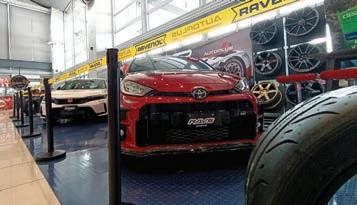
Beyond the vehicles themselves, the show floor will also feature aftermarket brands, accessory companies, and technology providers that support the broader automotive ecosystem.
More Than Just a Car Display
MIAS has always been more than a static car show, and 2026 continues that tradition.
One of the most popular attractions is Test Drive Avenue, where visitors can get behind the wheel of select models within a controlled environment. It’s one thing to see a car on display—it’s another to experience how it actually drives.
For collectors and hobbyists, the Die-Cast Car Collection returns with highly detailed scale models that celebrate automotive history
and design.
The MIAS Petron Custom and Classic Car Competition will once again gather some of the country’s best restored classics and creatively modified builds, showcasing craftsmanship and passion across generations of enthusiasts.
Meanwhile, the Car Club Display brings together enthusiast communities, featuring everything from performance builds to rare collector vehicles.
The Truck Zone adds another dimension, highlighting commercial vehicles and pickups designed for both work and adventure.
And, as in past editions, the Ms. MIAS pageant returns, blending automotive culture with lifestyle entertainment and adding a familiar touch of showmanship to the event.
A Bigger Show Experience
With two venues operating simultaneously, organizers have also introduced improvements to make navigation easier.
A fully air-conditioned linkway will connect the World Trade Center and the PTTC, allowing visitors to move between halls comfortably. A free shuttle service will also run between key access points and nearby parking areas.
For visitors, this means more ground to cover—but also a more complete experience.
Whether you’re there to see the latest EVs, compare new SUVs, or simply spend time around cars, MIAS 2026 offers enough to fill an entire day—if not the whole weekend.
RANDOLPH DE LEON
HOW TO PLAN YOUR MIAS VISIT
Planning ahead can make a big difference when visiting MIAS 2026.
The show runs from April 9 to 12 at the World Trade Center Metro Manila, with additional exhibits at the nearby Philippine Trade Training Center. It is open daily from 10:00 a.m. to 9:00 p.m., giving visitors ample time to explore.
If you want to avoid the biggest crowds, consider attending on Thursday or Friday. Weekend dates typically draw higher attendance, especially in the afternoon and evening, when families and enthusiasts have more time to visit.
With past editions attracting more than 170,000 visitors, peak hours can become crowded— particularly between 3:00 p.m. and 7:00 p.m.
Arriving early is one of the best strategies. Entering shortly after opening time allows you to explore displays, take photos, and register for test drives before queues build up. It also makes it easier to map out which booths and vehicles you want to prioritize.
Buying tickets online in advance through the official website (https://manilaautoshow.com/) is also recommended. This helps avoid long lines at the venue and ensures smoother entry on the day of your visit.
Ms. MIAS
MIAS 2026: The Year China
Rewrote the Rules
Chinese EVs, Hybrids, and New Models Transform the Philippine Auto Market
The Manila International Auto Show (MIAS) has always been a reflection of where the Philippine automotive industry is headed. Some years, it’s about incremental updates— facelifts, new variants, incremental tech. Other years, it marks something bigger.
MIAS 2026 falls into the latter.
Carrying the theme “Powering Mobility,” this year’s show doesn’t just highlight electrification— it confirms that the shift is already underway. And leading that charge, decisively, are Chinese automakers.
Across the show floor, the pattern is impossible to ignore. Booth after booth presents electrified lineups—battery electric vehicles (BEVs), plug-in hybrids (PHEVs), range-extenders, and hybrid systems that blur the line between traditional and future mobility. More importantly, these aren’t niche models tucked into corners. They are front and center, positioned as the main products, not alternatives.
For the Philippine market, this represents a turning point.
Because for years, electrification was framed as “what’s next.” At MIAS 2026, it feels like what’s now.
BYD: Scaling Electrification for Every Buyer
Among the brands making the strongest statement is BYD, whose Philippine lineup has grown into one of the most comprehensive electrified portfolios in the market.
What sets BYD apart isn’t just technology— it’s range. Not driving range, but product range.
On the plug-in hybrid front, the Seal 5 DM-i stands as a compact sedan that blends performance and efficiency. Its 1.5-liter turbocharged engine works alongside an electric motor to produce 197 hp and 325 Nm, with battery options delivering between 115 and 160 kilometers of pure electric driving. For daily commutes, that’s already enough to function as an EV most of the time.
Step up to the Sealion 5 and 6 DM-i SUVs, and output climbs to as much as 300 hp, while still maintaining EV ranges of up to
150 kilometers. These are not compromise vehicles—they’re built to perform whether running on electricity or hybrid mode.
At the top sits the Tang DM-i, pushing beyond 1,000 kilometers of combined range. It’s the kind of number that directly addresses one of the biggest concerns about electrification: distance anxiety.
Then there’s the Shark 6 DMO pickup, a signal that electrification is no longer confined to city cars. With 429 hp and 650 Nm, it shows that utility vehicles can go electric without losing capability.
On the BEV side, BYD’s lineup stretches from the accessible Seagull and Dolphin to the more premium Atto 3, Han, and Seal. The latter, with up to 522 hp and a 580-kilometer range, demonstrates that performance is no longer exclusive to internal combustion.
What BYD is doing at MIAS 2026 is simple: removing excuses. There’s now an electrified option for nearly every type of buyer.
Changan: Bridging Today and Tomorrow
While some brands go all-in on electrification, Changan takes a more balanced approach.
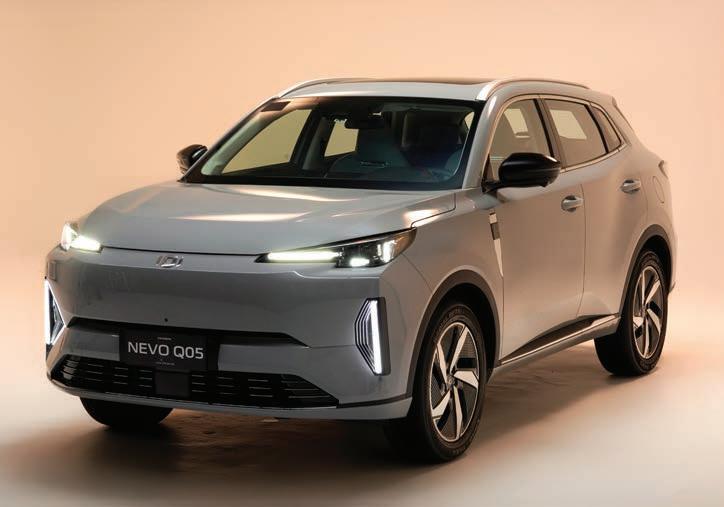
Its presence at MIAS reflects a transitional strategy—continuing to offer internal combustion vehicles while gradually integrating electrified solutions through its Nevo lineup.
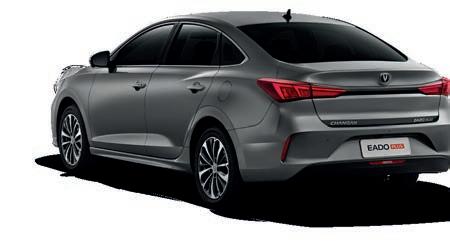
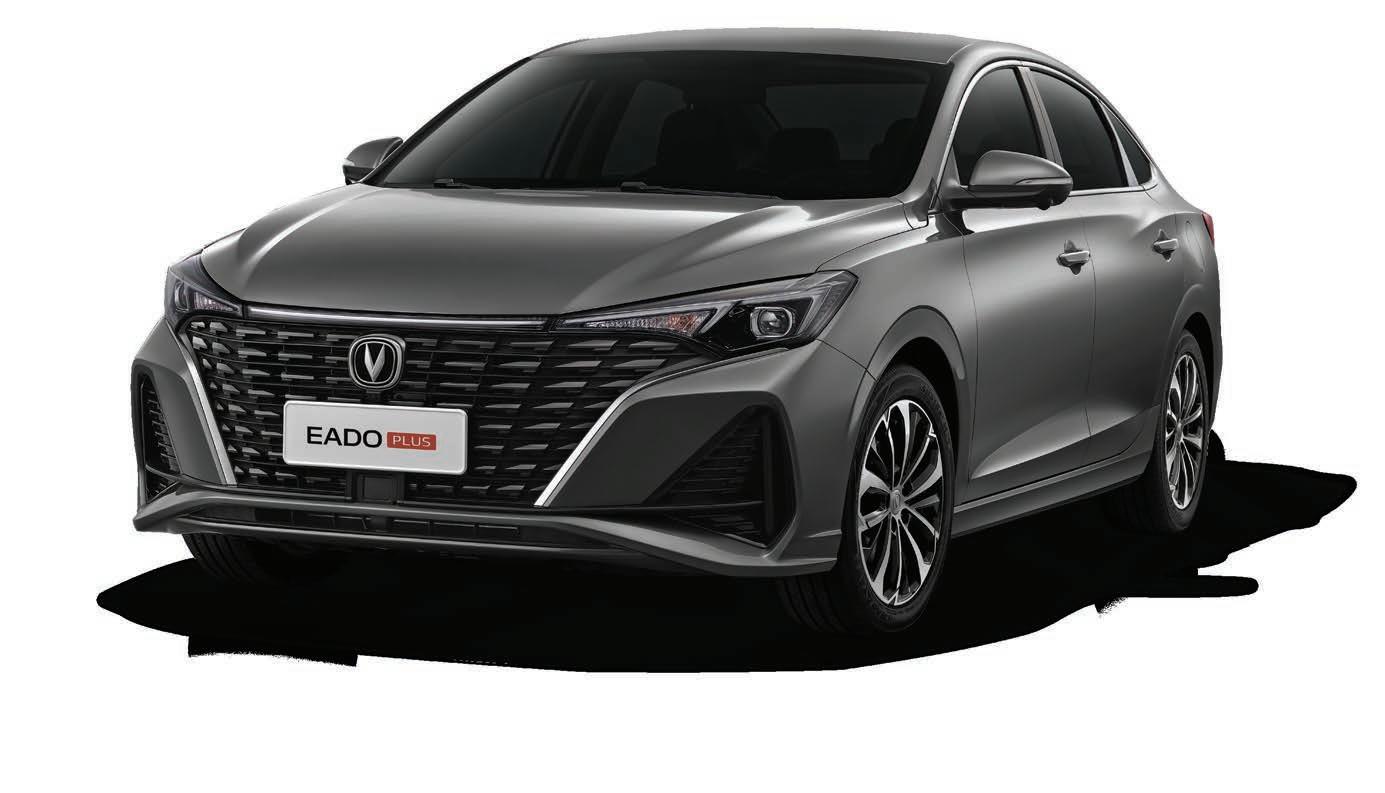
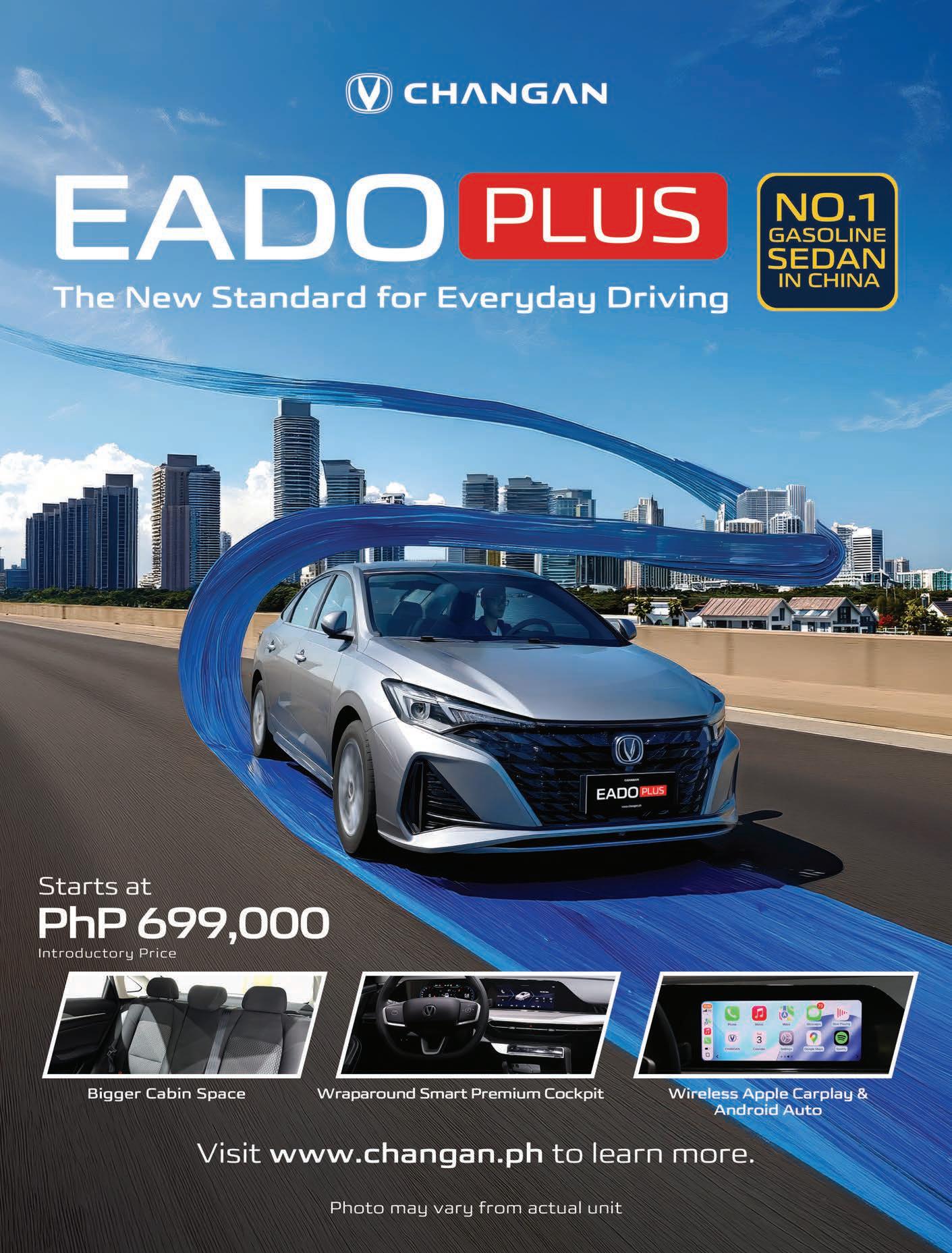
The Eado Plus, replacing the long-running Alsvin, signals a reset for Changan’s sedan offering. With sharper design, improved interiors, and updated technology, it positions
itself directly against value-driven competitors like the MG 5 and Geely Emgrand.
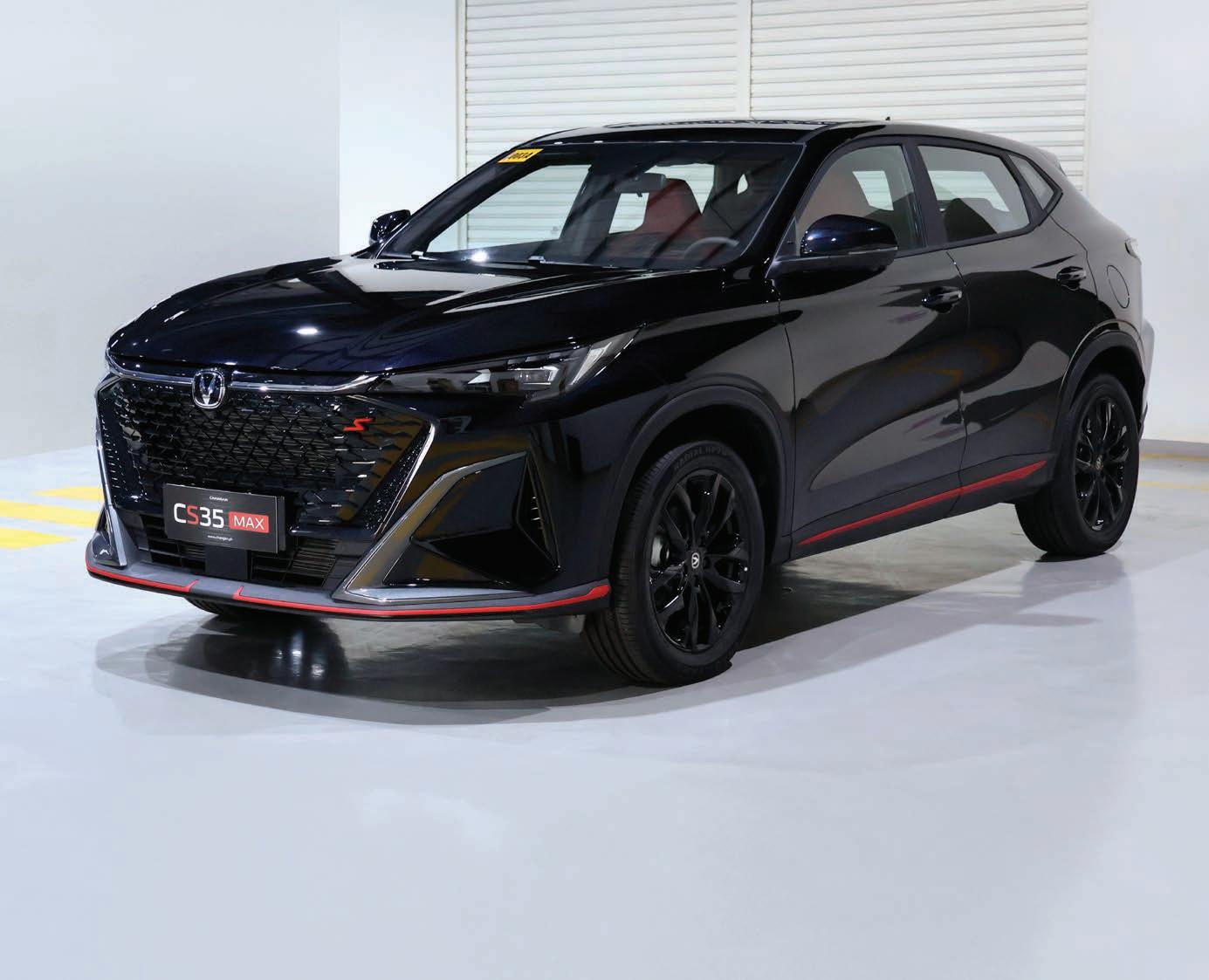
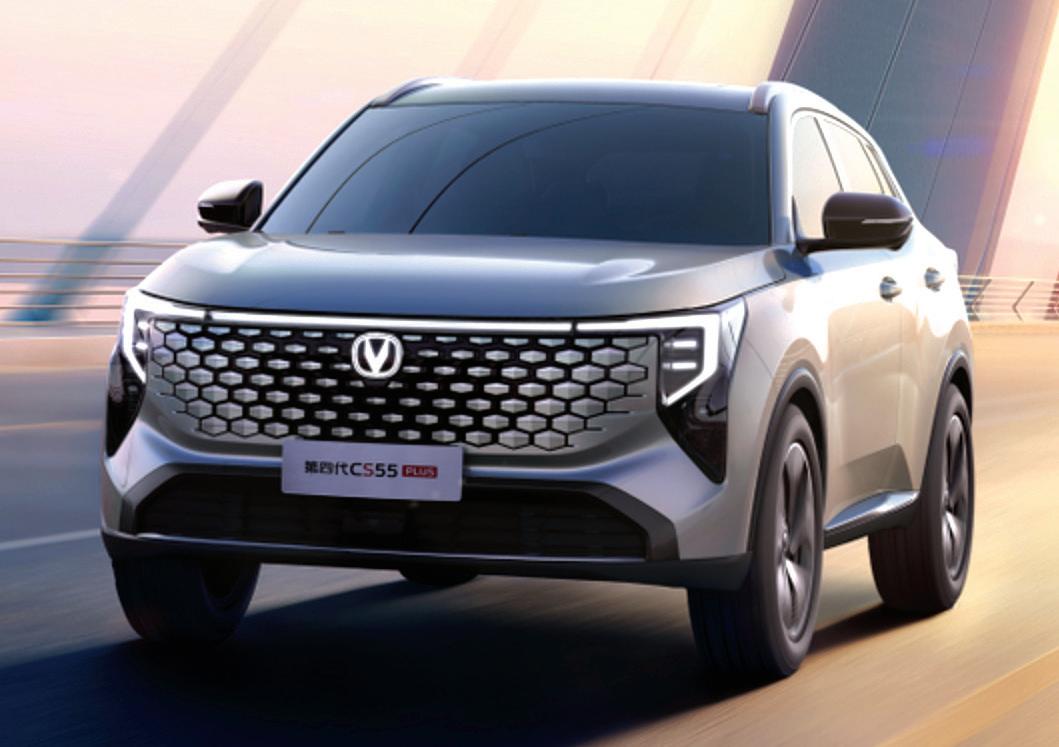
Its crossover lineup—the CS15, CS35 Max, and CS55—targets urban buyers who prioritize practicality and affordability. These are not headline-grabbing EVs, but they serve an important role: keeping the entrylevel and mid-market segments active while electrification continues to scale.
Changan’s approach reflects a reality many brands face—electrification is growing, but internal combustion still holds ground. The challenge is managing both.
BYD’s expansive lineup shows how electrification now covers every segment.
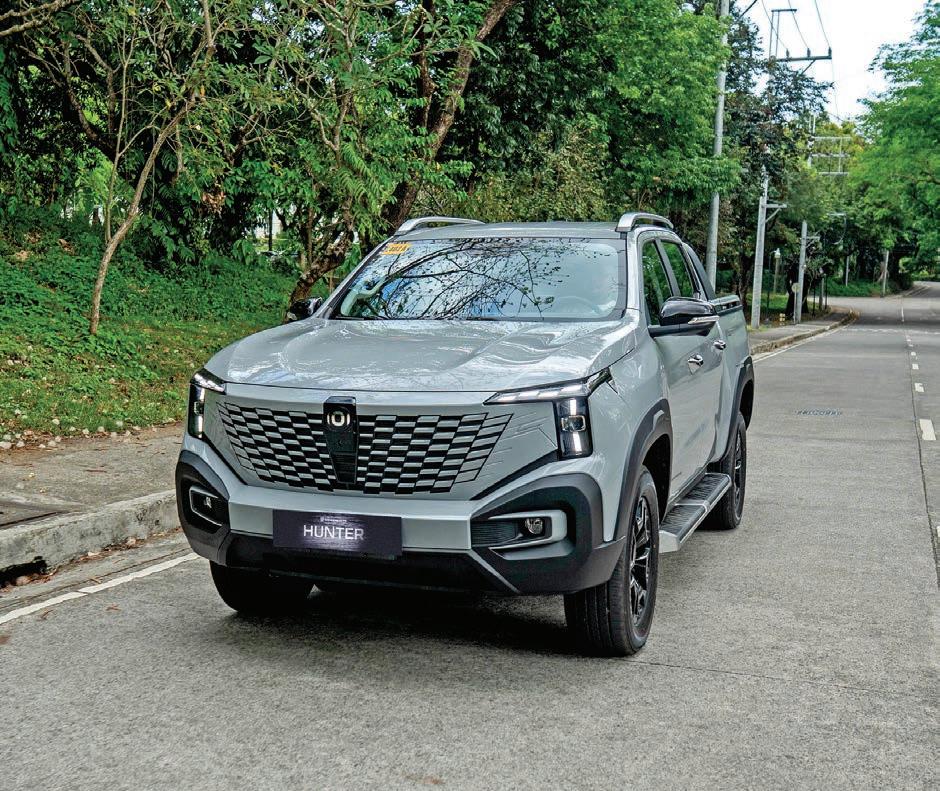
Changan Nevo Hunter K50 Range-Extended EV
Changan Nevo Q05 Plug-In Hybrid EV
Deepal: Range-Extender Technology Comes Into Focus
If there’s one technology that feels particularly relevant to the Philippine market, it’s range-extender EVs—and Deepal is betting on it.
Making its MIAS debut, the brand introduces the S05 and G318, both built around systems that combine electric propulsion with a gasoline-powered generator.
The S05 delivers 215 hp and 320 Nm, with up to 170 kilometers of pure EV range. Combined range exceeds 1,000 kilometers, effectively eliminating range anxiety while still offering an electric driving experience.
The G318 pushes further, combining dual motors with off-road capability. With 424 hp, differential locks, terrain modes, and air suspension, it’s positioned as an electrified SUV that doesn’t sacrifice adventure.
For markets where charging infrastructure is still developing, range-extender systems may prove to be the most practical bridge between ICE and full EV adoption.
Denza: Electrification Goes Premium
Electrification is no longer limited to practicality—and Denza makes that clear.
As a premium sub-brand under BYD,
Denza enters the Philippine market with a focus on luxury electrified mobility.
The D9 MPV stands out immediately. It combines a high-end cabin with a hybrid system producing 401 hp and 570 Nm, while delivering over 1,000 kilometers of range. It’s a vehicle designed for executives and families alike—comfortable, capable, and longdistance ready.
The B5 and B8 SUVs expand the lineup into more rugged and performance-oriented territory, with outputs reaching up to 436 hp. Denza’s role is clear: show that electrification can be aspirational, not just practical.
UAAGI: Diversity as Strategy
Few exhibitors match the sheer variety presented by United Asia Automotive Group Inc. (UAAGI).
Rather than focusing on a single brand identity, UAAGI brings together multiple marques—each targeting a different segment of the market.
BAIC’s B60e Beaumont rEV blends executive SUV comfort with electrified performance, while the B30e DUNE targets more adventurous buyers. Chery continues to push its Tiggo rEV lineup, focusing on family-friendly electrified mobility.
Meanwhile, Lynk & Co’s 08 EM-P demonstrates how hybrid technology can deliver both performance and efficiency, while Foton’s Traveller Sierra EV brings electrification into the commercial space.
Even the Radar RD6 EM-P pickup highlights how utility vehicles are evolving.
UAAGI’s approach reflects a broader industry truth: electrification isn’t one-sizefits-all. It’s a spectrum.
Range-extender EVs offer a practical solution for markets still building charging networks.
Electrification has moved into the premium space with confidence.
GAC: Building an Ecosystem
GAC’s presence at MIAS 2026 isn’t just about vehicles—it’s about structure.
Through its “ONE GAC” strategy, the brand unifies its offerings under a single retail and service network, covering ICE, hybrid, PHEV, and EV models.
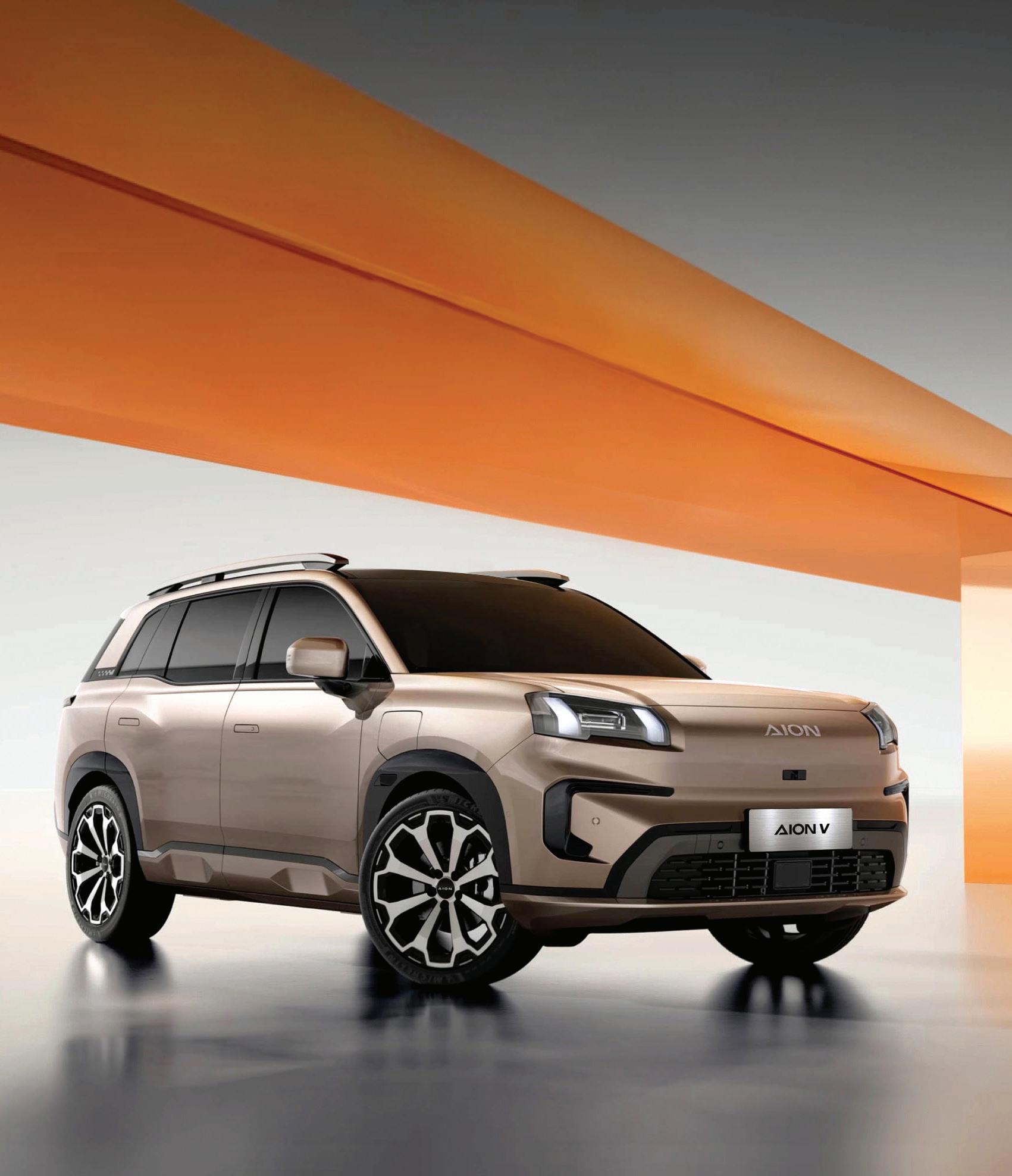
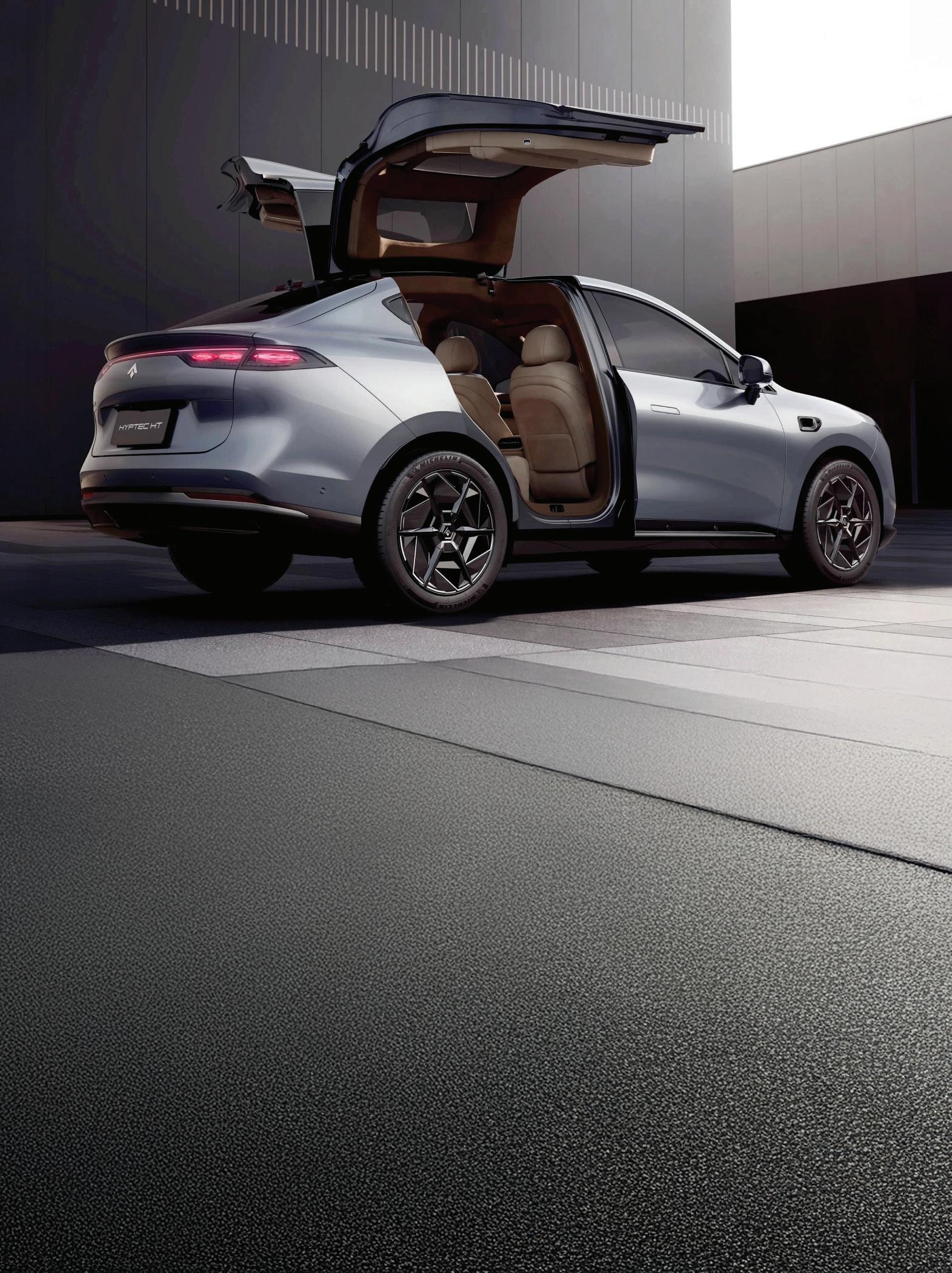
The Aion V and Hyptec HT lead its electrified lineup, delivering over 600 kilometers of range with fast-charging capability. These models balance futuristic design with everyday usability, making them strong contenders in the crossover and SUV segments.
More importantly, GAC emphasizes aftersales and support—an area that often determines long-term success more than the product itself.
Geely: Quiet but Strategic
Geely’s approach at MIAS is less about volume and more about positioning.
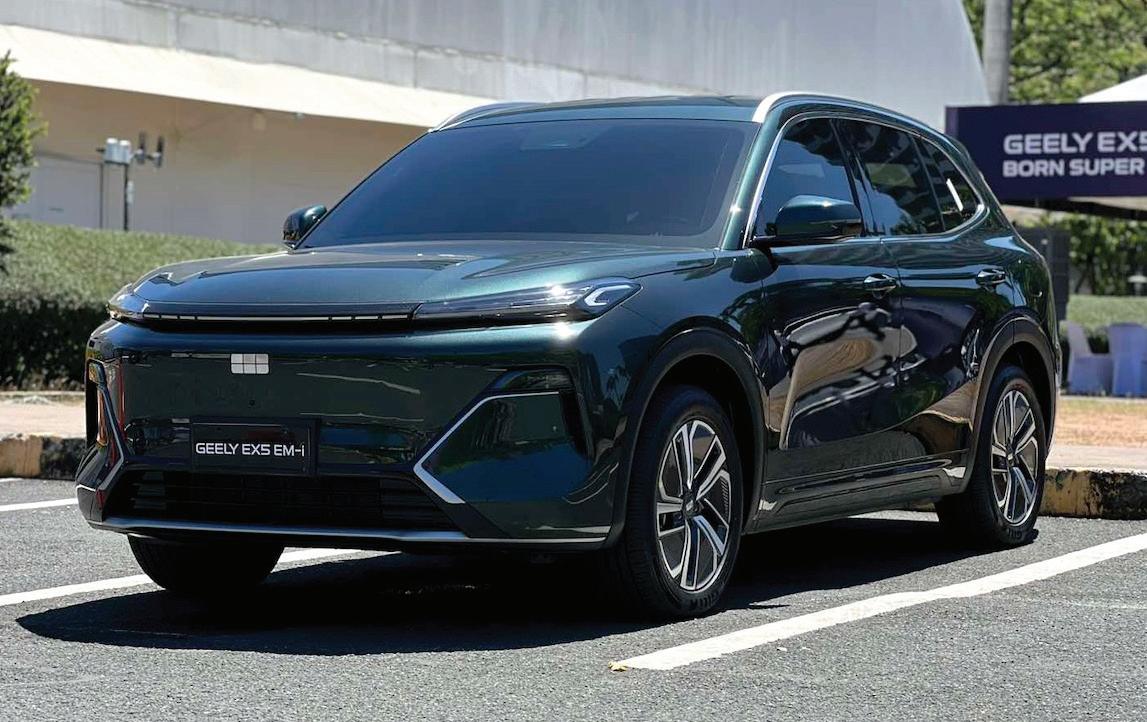
The EX5 EM-i plug-in hybrid SUV reflects a strategy built around practicality. Its system uses a 1.5-liter engine as a generator, supporting an electric motor that produces 215 hp.
It’s not the most aggressive setup on paper, but it’s tailored for real-world use— balancing efficiency, range, and usability.
Geely’s strength has always been in measured expansion, and MIAS 2026 suggests that approach continues.
GWM: The ICE Holdout
In a show dominated by electrification, Great Wall Motor’s Haval H9 stands out for a different reason—it isn’t electrified.
Powered by a 2.4-liter turbodiesel engine producing 183 hp and 480 Nm, it represents a segment that still matters: buyers who prioritize durability, towing capacity, and traditional SUV capability.
Its presence is a reminder that the transition to electrification isn’t uniform. Some segments will take longer to shift.
" Chinese brands are no longer catching up — they ’re setting the pace."
GAC M8 PHEV
GEELY EX5 EM-i
HAVAL H9
MG: Balancing Performance and Accessibility
MG continues to occupy a unique space— bridging affordability and electrification.
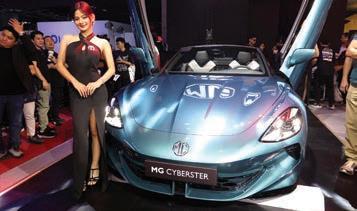
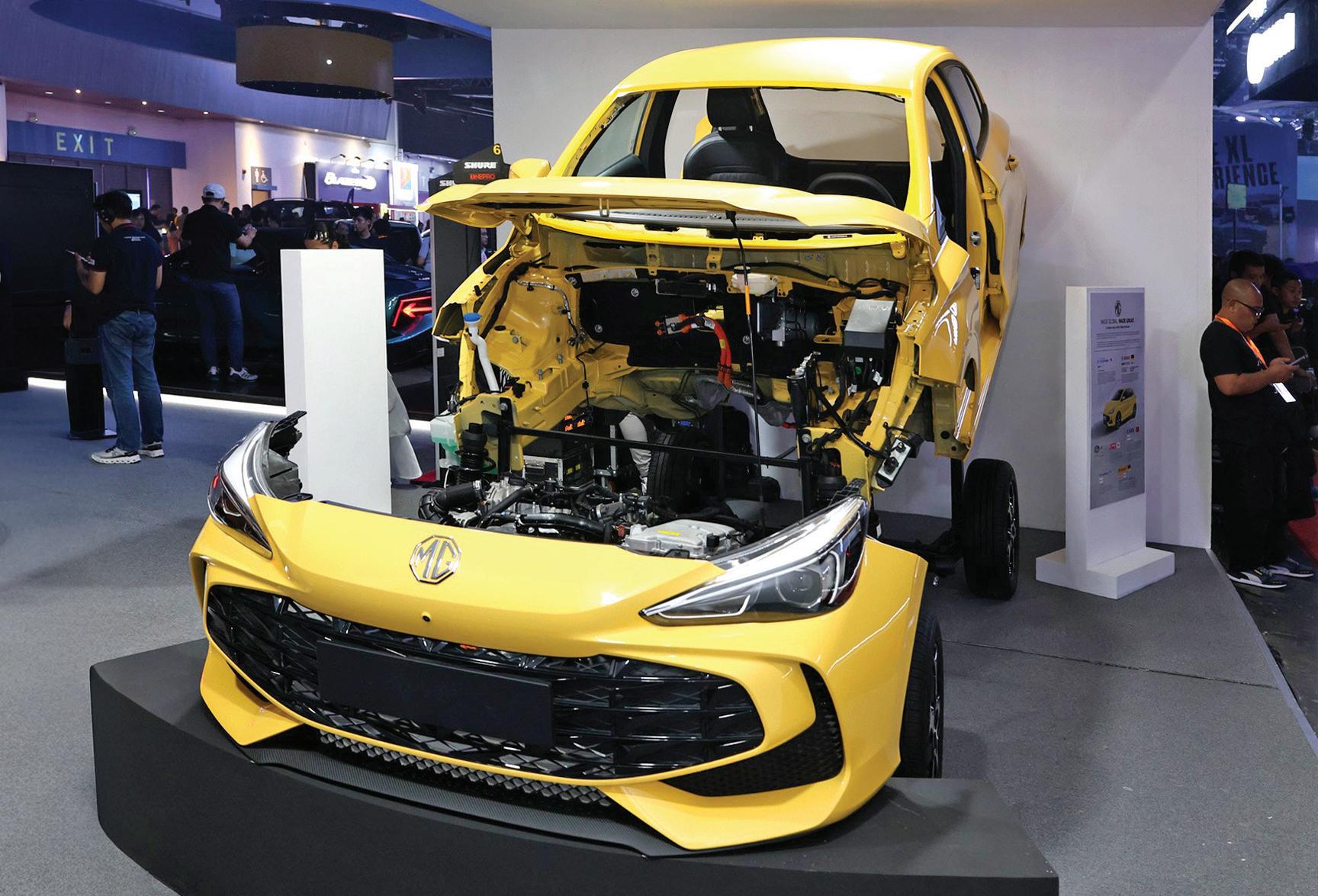
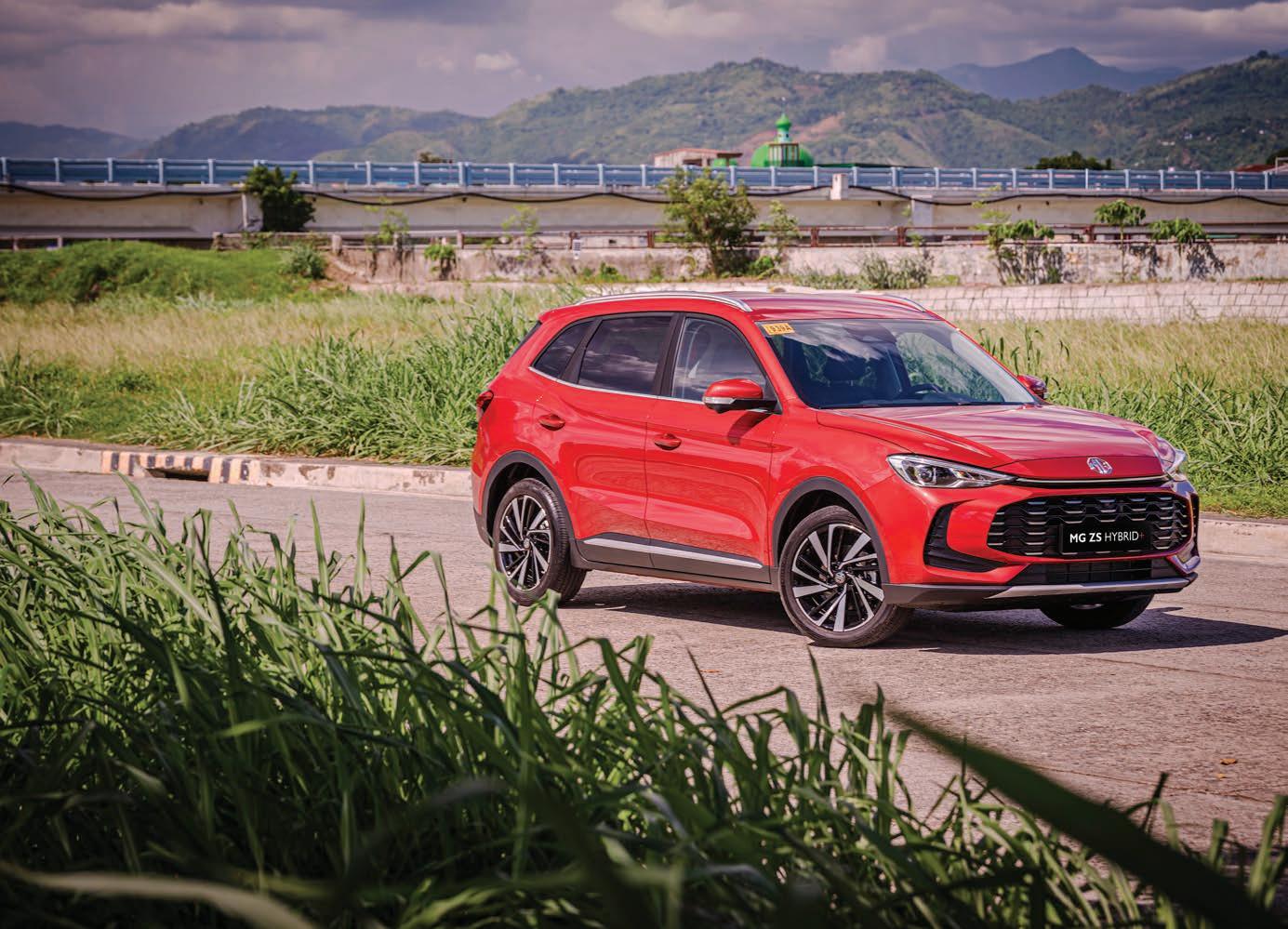
The Cyberster remains one of the most visually striking EVs on display, while the ZS EV and Hybrid+ models target more practical buyers.
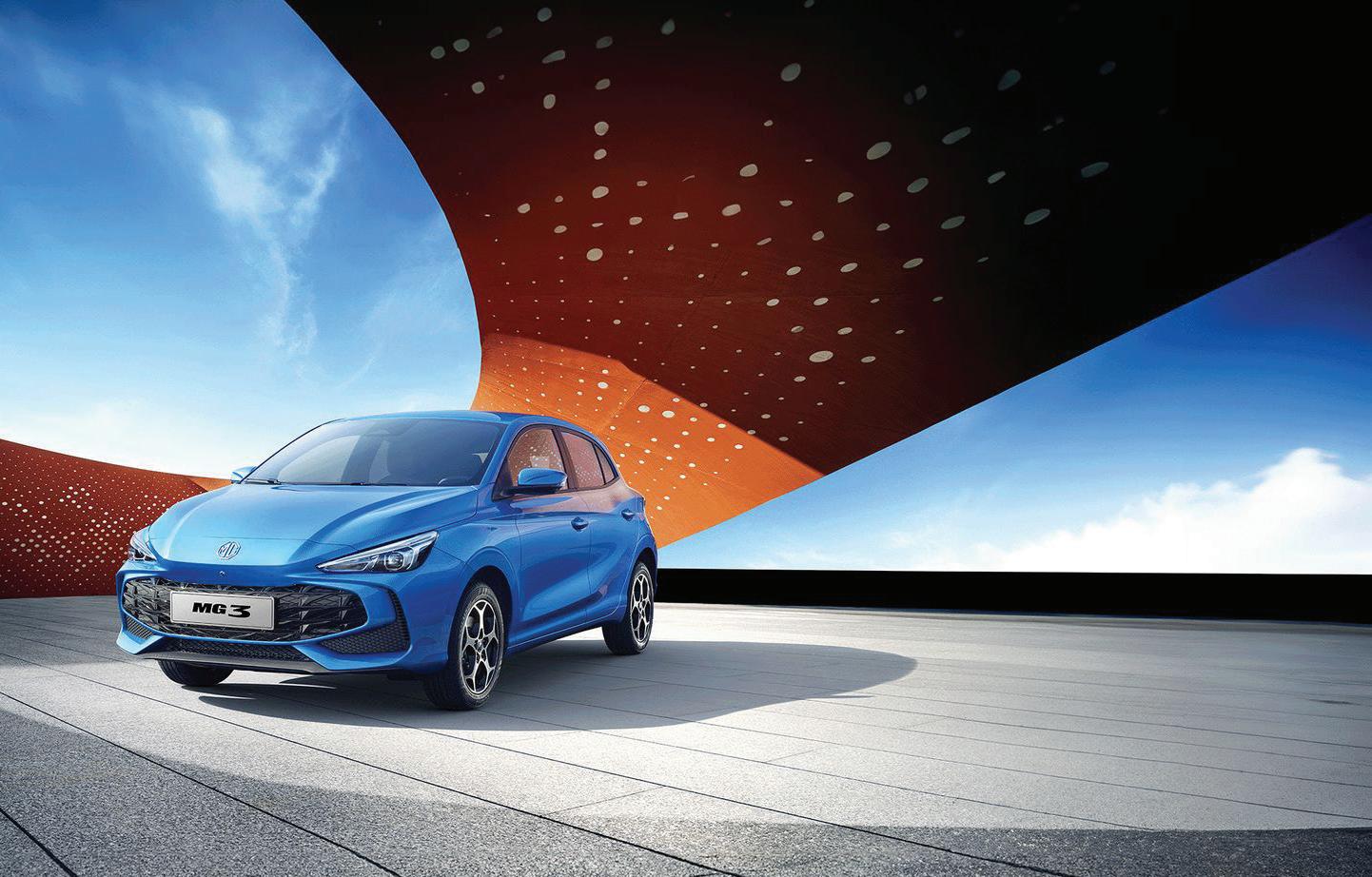
The MG3 HEV and HS Hybrid+ expand the brand’s hybrid lineup, offering outputs that rival traditional gasoline vehicles while improving efficiency.
MG’s strategy is clear: make electrification approachable.
Omoda and Jaecoo: New Names, Big Ambitions
Omoda and Jaecoo bring a mix of hybrid and electric SUVs under their “J” series.
The J5 HEV emphasizes efficiency and
range, while the J7 SHS pushes hybrid technology further with nearly 1,500 kilometers of combined range.
The EJ6 EV adds performance into the mix, with dual-motor AWD and strong acceleration figures.
For relatively new brands, the message is bold: they’re not here to ease in—they’re here to compete.
Kia: The Lone Counterpoint
In a show heavily dominated by Chinese brands, Kia serves as a counterbalance.
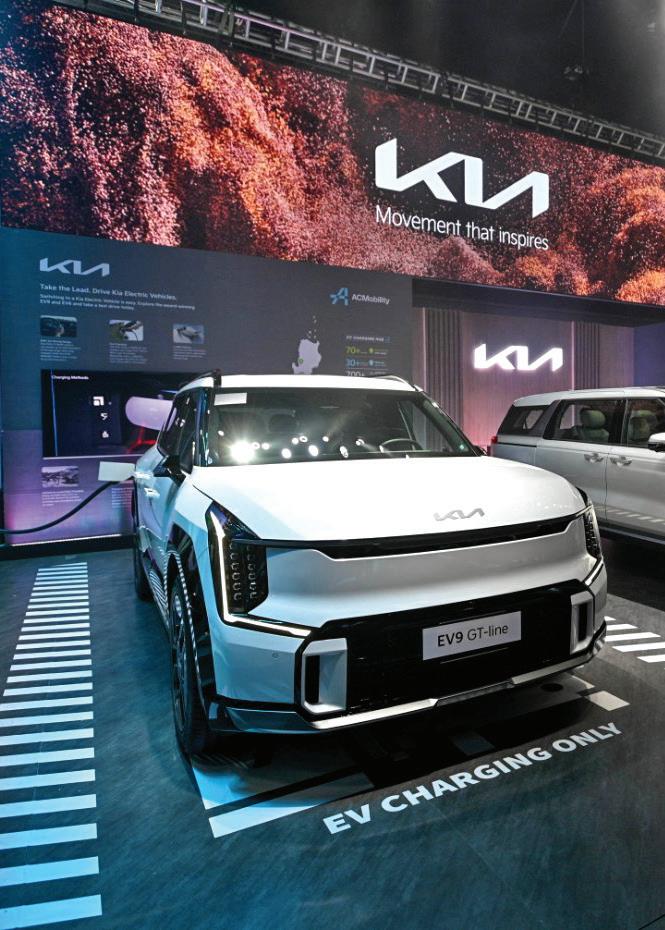
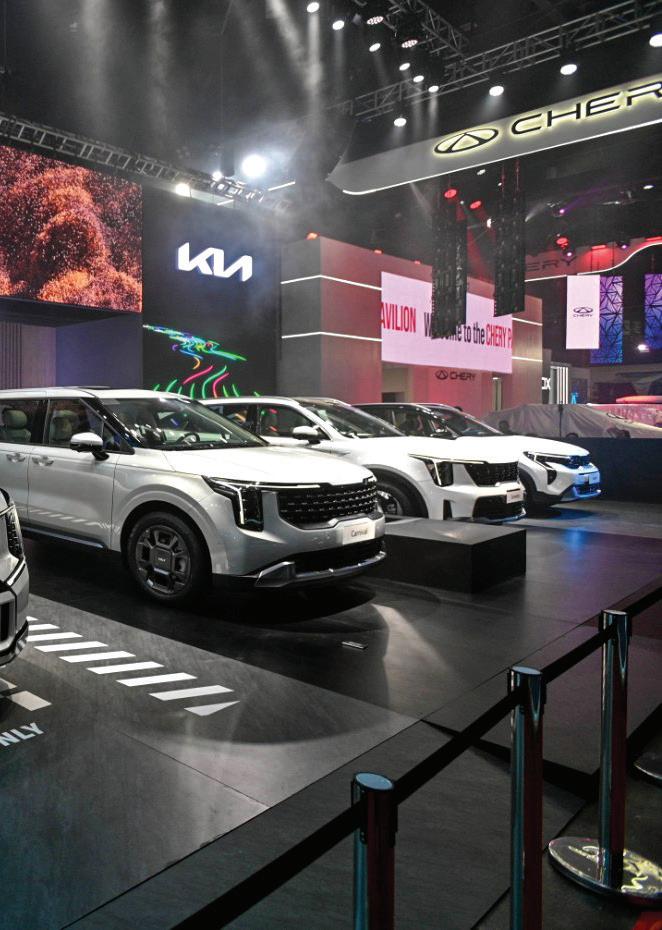
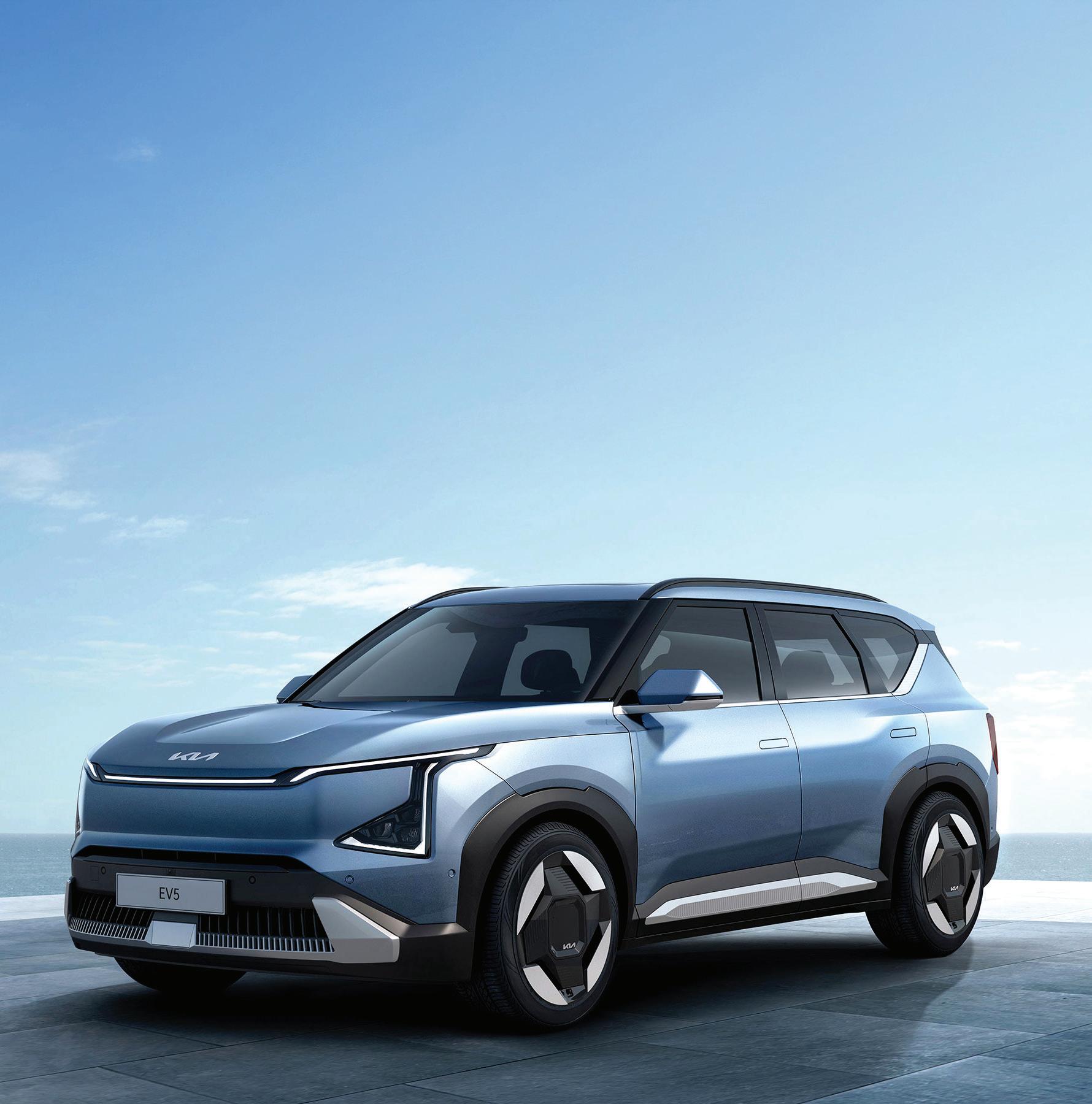
Its electrified lineup—Sorento HEV, Carnival HEV, EV9, and the upcoming EV5— shows that established global players are still very much in the game.
The EV5, in particular, stands out as a
more accessible EV option, offering up to 550 kilometers of range.
Kia’s presence reinforces a key point: electrification isn’t exclusive to one region—but right now, one region is moving faster than the rest.
QSJ Motors and ROX: Expanding the Field
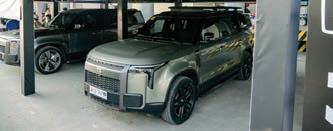
Newer entrants like QSJ Motors and ROX add even more variety to the show.
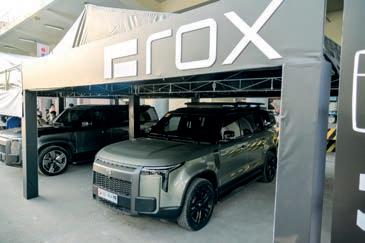
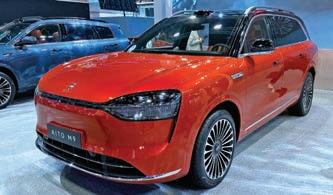
From the high-performance Aito M9 to the compact Bestune Pony, QSJ’s lineup spans multiple segments. Meanwhile, the ROX 01 delivers premium plug-in hybrid performance with 469 hp and over 1,100 kilometers of range.
These brands highlight how quickly the market is expanding—and how many players are now competing for attention.
JAECOO J7 SHS
A Market in Transition
What MIAS 2026 ultimately reveals is not just a product shift—but a market shift.
Electrification is no longer confined to early adopters. It is moving into the mainstream, across price points and vehicle types.
Chinese automakers are not just participating in that shift—they are accelerating it.
They bring scale, aggressive pricing, rapid development cycles, and a willingness to challenge established norms.
For Filipino buyers, this creates more choice—but also more questions. Which technologies will last? Which brands will sustain long-term support? And how quickly will infrastructure catch up?
MIAS 2026 doesn’t answer all those questions.
But it makes one thing clear:
The future of mobility in the Philippines is no longer being introduced.
It’s already on display.
RANDY S. PEREGRINO
NEW i3 BRINGS 559-MILE RANGE AND RADICAL LOOK
Saloon EV sets design template for future BMWs and paves way for quad-motor M3
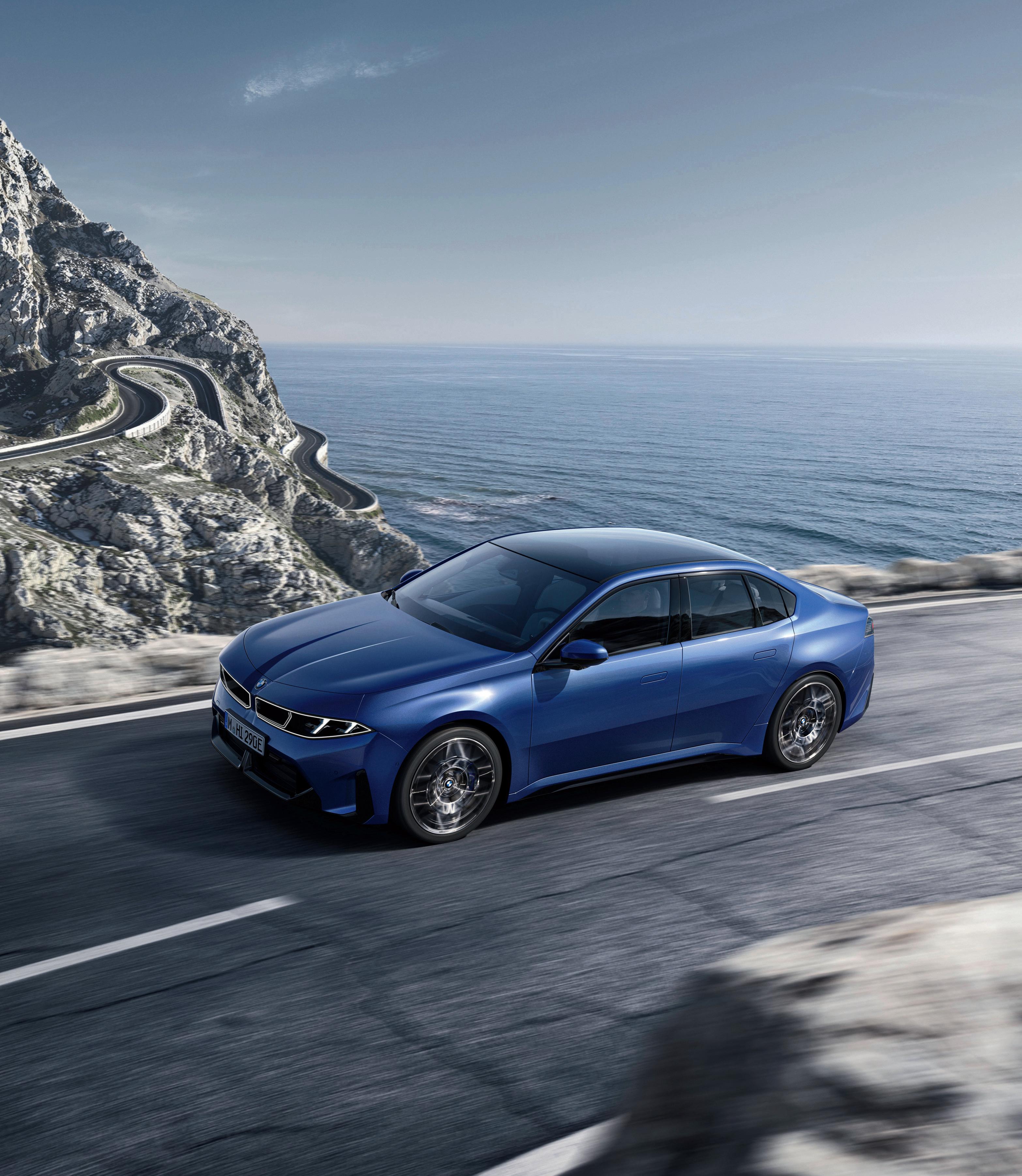
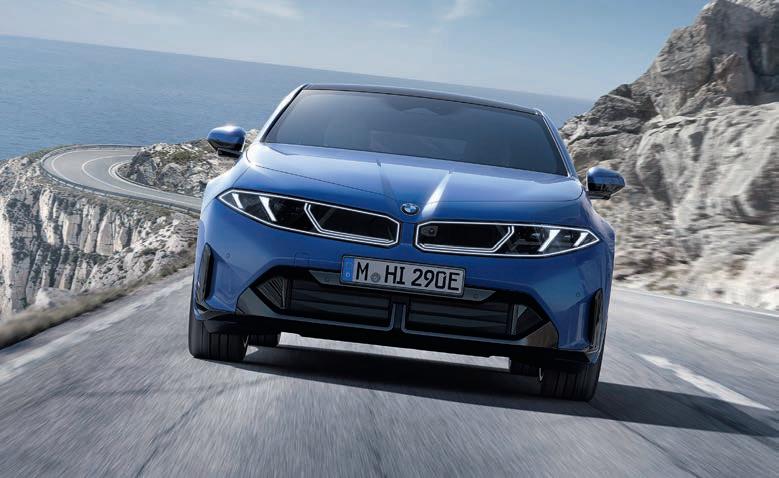
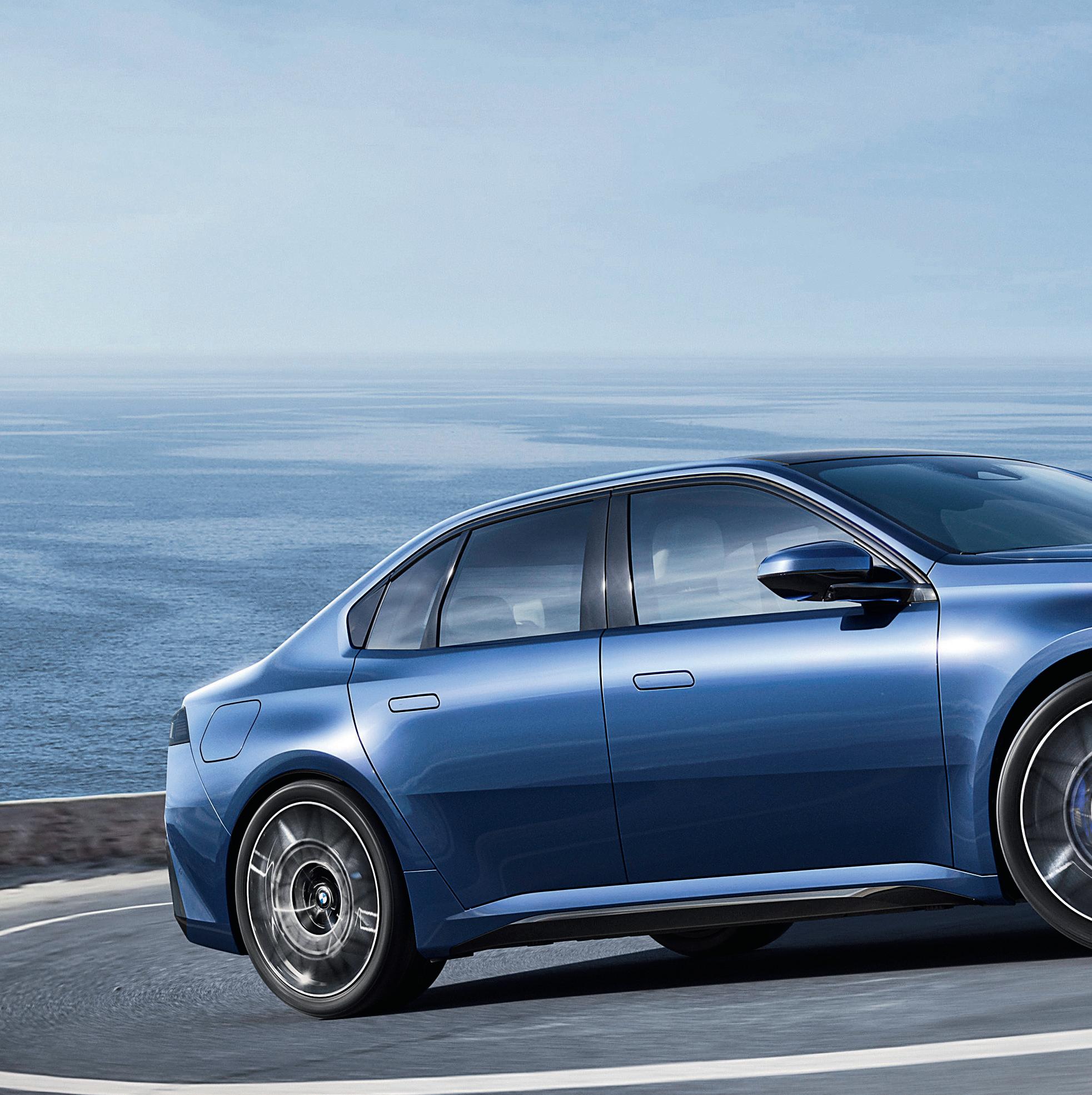
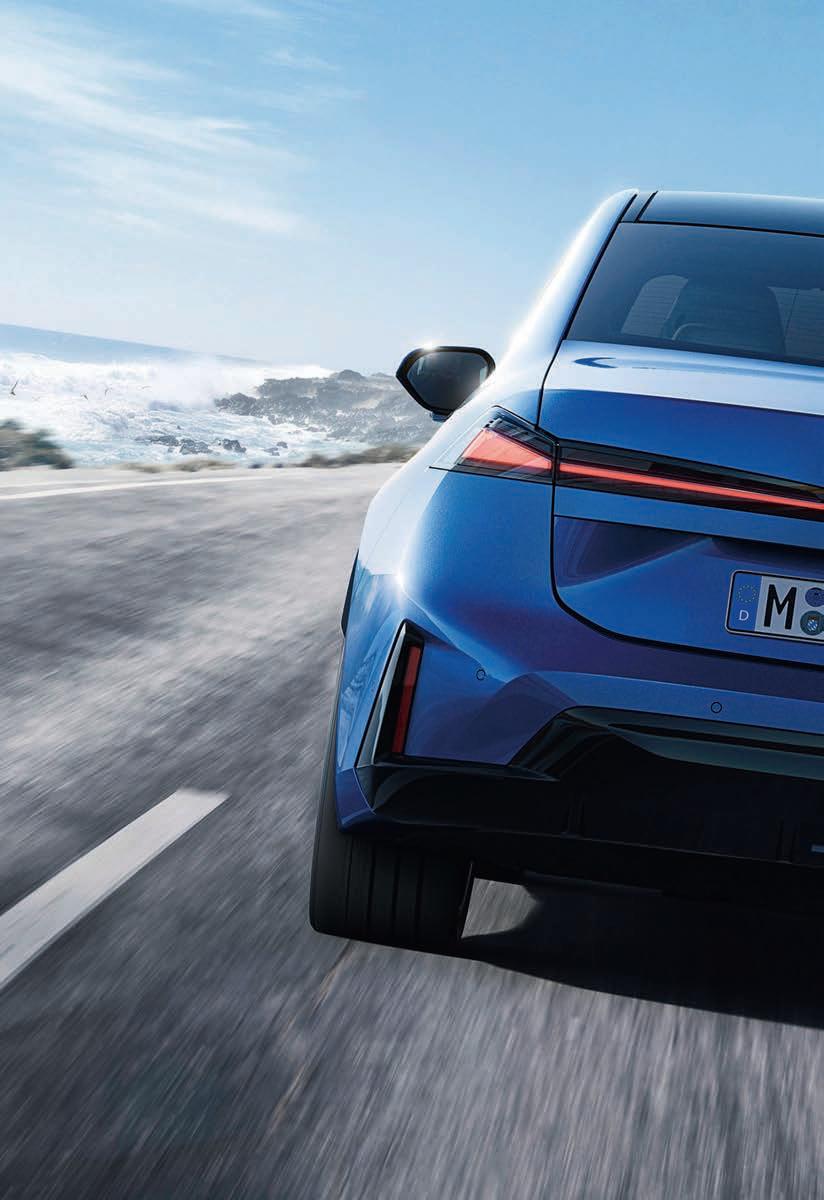
BMW has brought electric power to the 3 Series for the first time, giving the compact executive saloon a radical look and the longest range of any EV currently on sale. The second model of the Neue Klasse era, the i3 has been revealed six months after the first – the larger iX3 SUV, with which it shares most of its technical makeup, including the ‘EV-first’ 800V Gen6 platform.
The i3 is the smallest EV in the BMW line-up and inherits its name from the seminal electric hatchback that went out of production in 2022. It will go up against an electric version of the Mercedes C-Class, due imminently, and the pair will be joined later in the decade by an electric Audi A4 E-tron. Despite offering the similarly sized and
OFFICIAL PICTURES
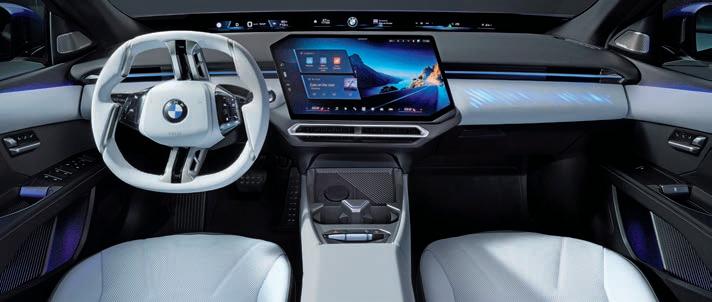
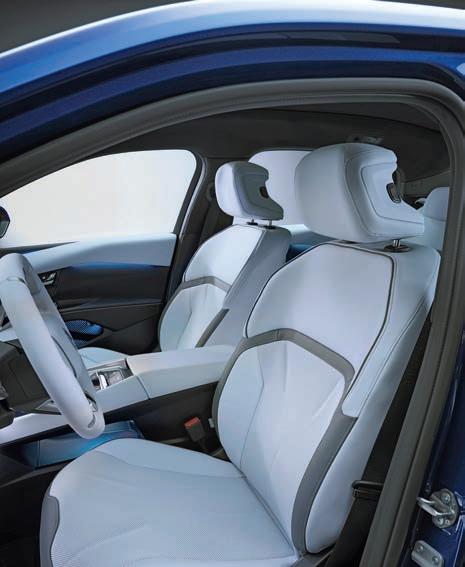
Cabin architecture and steering wheel mirror that of the iX3
“BMW will soon heavily update the combustion 3 Series to bring it in line with the Neue Klasse car”
shaped i4 since 2021, BMW delayed introducing an electric 3 Series until EV technology allowed it to match the performance of its combustion-engined equivalent.
BMW will continue to sell the current, ICE-powered 3 Series alongside the EV, and will soon heavily update it to bring it in line with the eighth-generation, Neue Klasse car both in terms of design and technology,
meaning it “is basically a new car”, BMW engineers told Autocar.
Initially sold as a saloon, the i3 will later be available as a Touring estate version, the company has confirmed.
A hot M3 EV is due in 2028 and promises to “set new standards” for electric performance (see separate story, p7).
The i3 will be offered exclusively in dual-motor 50
xDrive form at launch, with other variants to follow.
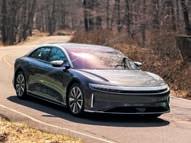
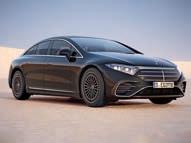
It is powered by a 109kWh nickel-manganese-cobalt battery that helps it to achieve a range of 559 miles – the most offered by any EV in the world after the Lucid Air Grand Touring (see above right), notably beating the Mercedes-Benz EQS (although the 511-mile variant of that car isn’t sold in the UK). Despite using the same
battery as the iX3, the i3’s range is 59 miles longer. Engineers said the increase is primarily due to the saloon’s more rakish profile.
The Gen6 platform allows for a car’s front seats to be bolted directly onto the battery pack, meaning the roofline can be kept as low as possible, which improves the aerodynamics. Another key attribute of the saloon is that it has a completely closed, smooth underbody
that aids efficient management of airflow. Once its range is depleted, the i3 can complete a 249-mile top-up in just 10 minutes at its 400kW maximum DC charging speed. Power is sent to a 322bhp separately excited synchronous motor at the rear and a 165bhp asynchronous motor at the front. These combine for 463bhp and 476lb ft. ▶
“BMW said the i3 will be around the same price as the hybrid 3 Series”
BMW has yet to disclose a 0-62mph time, but it’s expected to be around 4.0sec, despite the car weighing 2.3 tonnes.
Although the i3 shares its platform with the iX3, there are significant technical differences. For example, the i3’s springs are softer, the stiffness of the top mount bushings has been reduced and it’s fitted with different anti-roll bars, resulting in less yaw and roll inertia.
“It’s easier to get good rolling behaviour and comfort” from the i3 than the iX3, BMW engineers told Autocar, adding that a quicker steering ratio and a focus on improved aerodynamics at higher speeds create a “distinctive character of the new 3 Series”.
The i3 also achieves the same 50:50 front-to-rear weight distribution as the electric SUV.
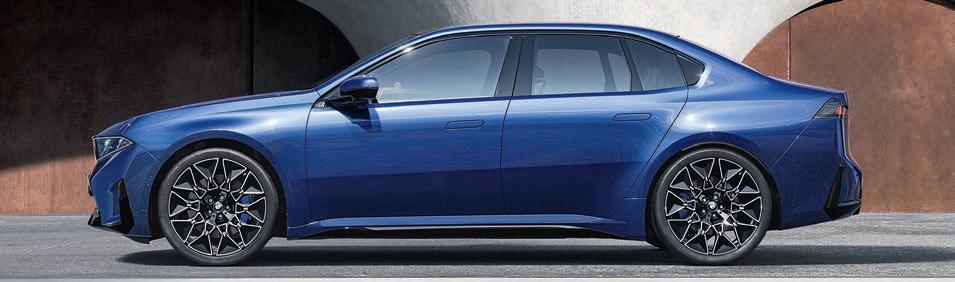
At 4.76m long, 1.87m wide and 1.48m tall, the i3 is a bigger car than the current ICE 3 Series in every dimension, but it still offers “typical BMW sedan proportions”, with a long body and short overhangs, BMW compact car design chief Oliver Heilmer told Autocar.
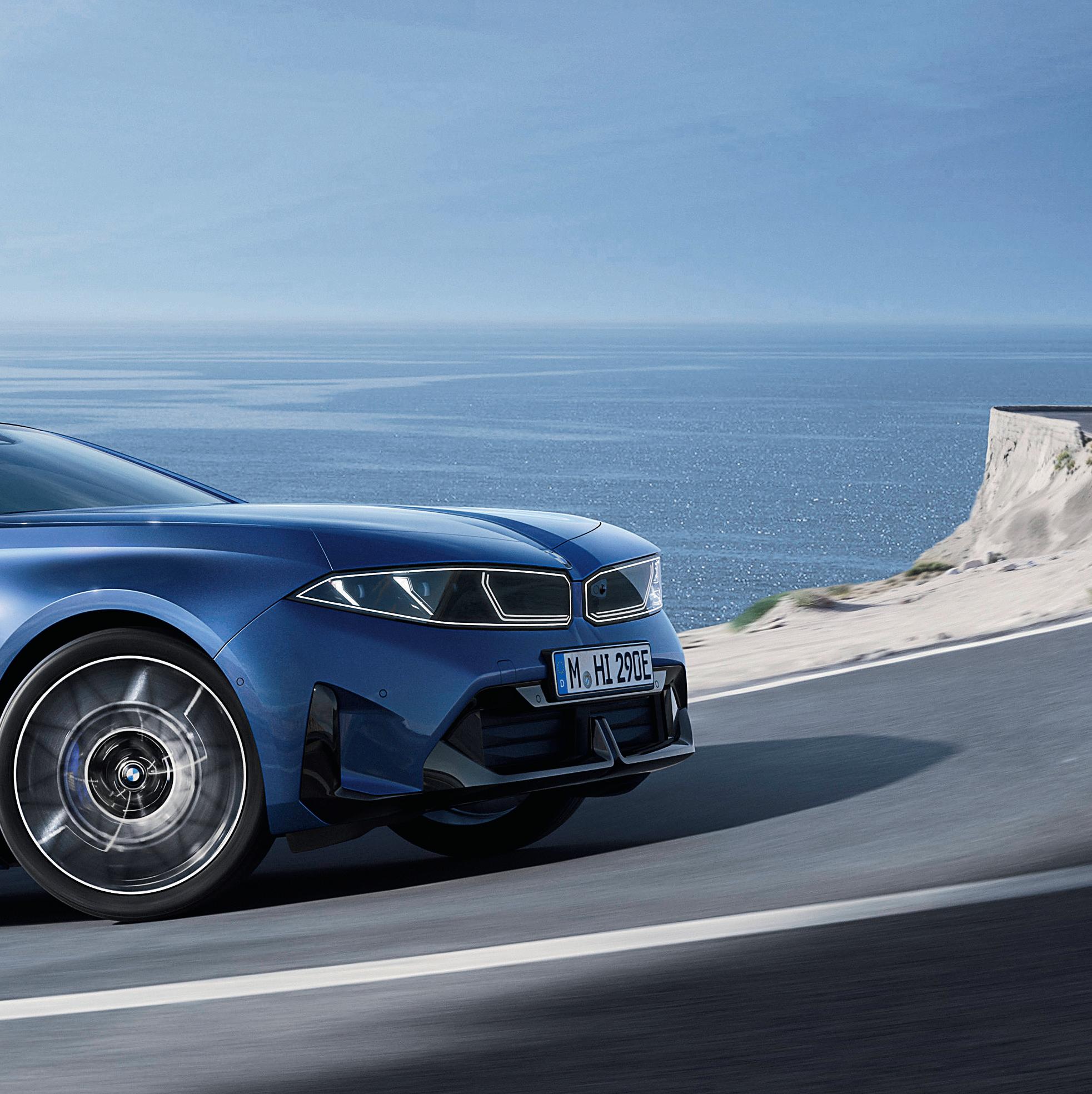
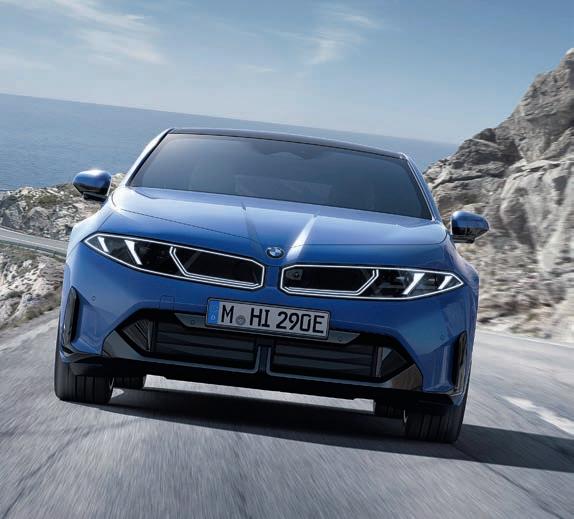
One of the eye-catching changes is the new-look front end, which is a “fresh interpretation of the 3 Series’ face”, said Heilmer. Significantly different from the current car’s, the design follows the same Neue Klasse philosophy as the iX3, combining the
headlights and kidney grilles into a single element. However, whereas the SUV’s grilles are tall and narrow to emphasise the car’s height, the i3’s are set wider to draw attention to its width.
Designer Felix Staudacher told Autocar that the i3 brings “a whole new design language” to the 3 Series for its eighth generation because the designers “are allowed to play with our icons”. Despite the car’s radical new look, BMW said it’s still “immediately recognisable as a 3 Series”.
Staudacher added that it sets “the standard for a whole new generation of BMWs” because the 3 Series is the “original measure of what defines BMW”. The interior has also
THE CHANGING FACE OF THE 3 SERIES
Front seats are bolted to the battery to make them lower
New i3 is longer, wider and taller than today’s ICE 3 Series
Flat underfloor and detailed aero work at the rear boost range
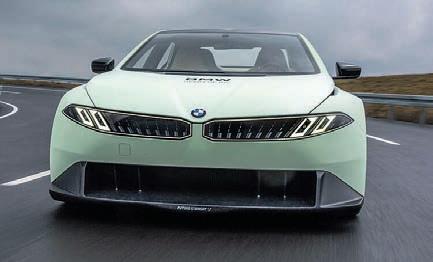
The next M3 will arrive in 2028 as BMW’s first electric M car. Previewed by the Vision Driving Experience concept (below) and M HP BEV test mule, it will be fitted with an advanced quadmotor set-up that delivers more than 1000bhp.
As with the standard i3, the electric M3 will be sold alongside an updated variant of today’s ICE model, powered by a turbocharged straightsix petrol engine.
But while the EV will offer tremendous power, there is recognition in Munich that M division will need to create a car in keeping with its ambition to offer the most engaging driver’s cars in their segments.
Dominik Suckart, BMW’s high-voltage battery
been overhauled and mirrors that of the iX3. It’s centred on a slanted, 17.9in infotainment touchscreen that houses the controls for most of the car’s functions and runs BMW’s latest iDrive operating software.
There is no instrument cluster, with a 43.3in-long ‘Panoramic iDrive’ display fitted in its place. As in the iX3, this spans the length of the dashboard just under
the driver’s eyeline and displays key details such as the vehicle’s speed and its state of charge.
The absence of an instrument panel “gives us the possibility to rethink steering architecture”, so the steering wheel offers “the best ergonomics” available in any BMW, said Staudacher. Indeed, it’s much thicker than before and, for the first time,
adopts haptic controls.
The updated ICE 3 Series will mirror these changes.
The i3 will be built at BMW’s main Munich plant. Prices have yet to be announced, but the company said the i3 will cost about the same as the plug-in hybrid 3 Series, which starts at £47,185.
WILL RIMELL
n BMW iX3 ROAD TEST, P34
chief, previously told Autocar the EV’s brief is “to be the driver’s dynamic benchmark with this [Neue Klasse] platform” while delivering “a familiar M driving experience”.
To do this, the M3 will have a specific software stack called M Dynamic Performance Control, which will give “neverseen-before handling and traction control”, according to Suckart. To maximise engagement further, it will get synthetic gearshifts and sounds “for an emotional M-like drive”, said Suckart.
Car makers are continuing to monitor how well electric performance cars are being received by buyers, but Suckart said: “We’re excited about it and I think you can be excited too.”
Integration of lights and grilles aims to emphasise width
Full Charge Electrification Takes Center Stage at MIAS 2026
or years, electrification in the Philippine automotive market has been framed as something just over the horizon—an inevitability, but not yet a reality. That framing feels increasingly outdated.
At the 2026 Manila International Auto Show (MIAS), the shift is no longer subtle. It is visible, tangible, and difficult to ignore.
From the moment you step onto the show floor, the message is clear: electric vehicles are no longer supporting acts. They are the main attraction.
Across multiple halls, automakers— particularly Chinese brands, alongside a few key global players—are presenting battery electric vehicles (BEVs) not as experimental technology, but as complete, ready-for-market products. The variety alone signals how far
things have progressed. There are compact EVs, family crossovers, premium SUVs, and even performance-oriented models, all competing for attention.
More importantly, they are competing on terms Filipino buyers understand: range, practicality, comfort, and cost.
The question that once dominated conversations—“Why go electric?”—is now being replaced with a more immediate one: “Which EV makes the most sense?”
MIAS 2026 captures that moment of transition.
Why the Timing Feels Different
The growing EV presence at MIAS 2026 is not happening in isolation. It reflects broader changes in the local landscape.
Fuel prices remain unpredictable,
often creeping into territory that forces households to rethink daily driving costs. At the same time, government incentives supporting electrified mobility continue to build awareness, even if implementation still varies.
Then there’s infrastructure. While far from complete, the charging network in Metro Manila and key provincial corridors has expanded enough to make EV ownership more feasible than it was even three years ago.
Routes like Metro Manila to Clark, Subic, or Batangas are now well within the comfort zone of modern EVs. Even longer drives— such as Manila to Baguio—are becoming manageable with proper planning.
In other words, the conditions that once made EV ownership difficult are slowly easing.
GAC Aion V: Practical Electrification for Everyday Use
Among the EVs on display, the GAC Aion V stands out for how grounded it feels.
This is not a concept car dressed up for attention. It’s a crossover designed with everyday use in mind—something that could realistically replace a traditional family SUV.
Visually, the Aion V leans into modern design without becoming overly aggressive. Clean lines, sharp LED signatures, and a balanced silhouette give it a contemporary presence that fits both urban and suburban settings.
Inside, the focus shifts to usability. The cabin is spacious, with enough legroom for rear passengers and a cargo area that can handle the demands of a typical family trip. Whether it’s groceries, weekend bags, or a full load for a Batangas getaway, the space is there.
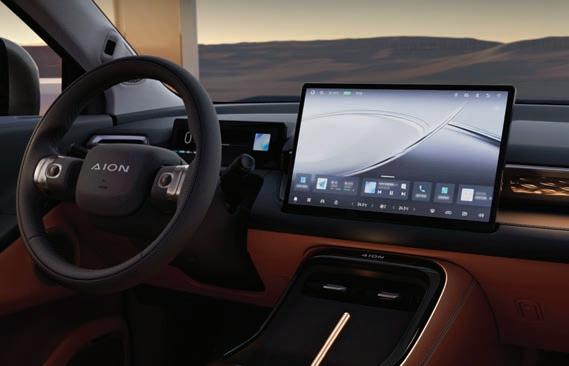
The dashboard follows a minimalist layout, anchored by an 8.88inch digital instrument cluster and a 14.6-inch central touchscreen. The interface is clean, with fewer physical controls—something that reflects the broader shift toward digital-first interiors.
Underneath, the Aion V runs on GAC’s GEP 2.0 platform, offering battery options of 64.5 kWh and 75.3 kWh. With a maximum range of up to 602 kilometers, it comfortably covers most real-world use cases.
For context, a round trip from Manila to Tagaytay or even Subic would barely dent that range. Even longer drives, such as Manila to
La Union, become feasible with minimal planning.
Its motor produces 221 hp and 240 Nm of torque—figures that translate into smooth, immediate acceleration, especially in city driving where EVs excel.
Charging is where the Aion V starts to address long-standing concerns. With DC fast charging capable of replenishing the battery in as little as 16 minutes under ideal conditions, the gap between refueling and recharging begins to narrow.
Priced starting at around P1.498 million, it also challenges the assumption that long-range EVs must sit at premium price points.
Aion V brings long-range EV capability into a more accessible price range.
GAC Hyptec HT: When Electrification Meets Aspiration
If the Aion V represents practicality, the Hyptec HT leans toward aspiration.
This is a vehicle designed to make a statement—not just about electrification, but about where design and technology are heading.
Its coupe-inspired profile immediately sets it apart. The fastback silhouette, combined with sharp character lines and distinctive lighting, gives it a strong visual identity. Then there are the gullwing doors—arguably one of the most striking features on the show floor.
Inside, the experience continues to push into premium territory. Materials feel more refined, the layout more deliberate. The same dual-display setup remains, but the overall execution is more polished, more upscale.
The cabin is also more spacious than its exterior might suggest, offering enough room for both passengers and cargo without compromising comfort.
Powering the Hyptec HT is an 83 kWh LFP battery paired with a rear-drive motor producing 335 hp and 380 Nm. These figures place it firmly in performance territory, but without sacrificing usability.
Its driving range—up to 620 kilometers—positions it as a longdistance EV, capable of handling extended trips across Luzon with
fewer stops.
Charging performance is another highlight. With fast-charging capability bringing the battery back up in around 15 minutes, it aligns more closely with real-world expectations.
At around P2.26 million, the Hyptec HT sits in the premium bracket—but it also redefines what buyers can expect at that level.
Design takes center stage as EVs push into premium territory.
Kia EV5: A Familiar Path Into Electrification
Amid the strong presence of Chinese brands, Kia’s EV5 offers a different perspective.
It represents a more familiar transition into electrification—one that builds on an established brand identity rather than redefining it entirely.
Styled under Kia’s “Opposites United” design philosophy, the EV5 strikes a balance between futuristic and approachable. It looks modern, but not alien. That matters for buyers who want something new, but not too unfamiliar.
Its proportions place it squarely in the compact SUV category, making it practical for both city driving and longer trips.
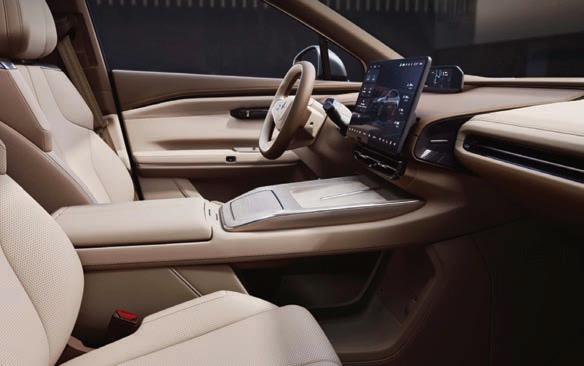
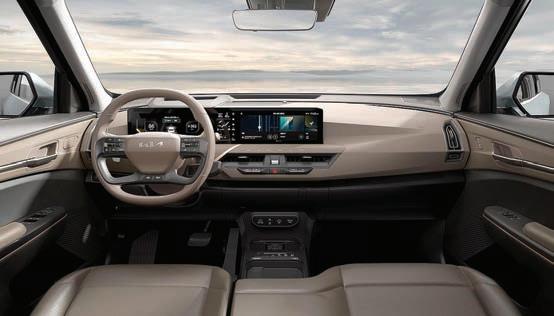
Inside, the cabin reflects Kia’s evolving design language. Dual 12.3-inch displays sit within a clean, horizontal layout, emphasizing clarity and ease of use. Materials feel premium, but not excessive.
Functionality is a clear priority.
There’s generous cargo space, a flat floor that improves rear passenger comfort, and features like vehicle-to-load (V2L), which allows the car to power external devices. For Filipino users, that opens up possibilities—from powering appliances during outings to serving as a backup during outages.
Under the hood—so to speak—the EV5 runs on a permanent magnet synchronous motor producing 214 hp and 310 Nm, paired
The Bigger Picture: A Market in Transition
What MIAS 2026 ultimately reveals is not just a product shift, but a mindset shift.
Electric vehicles are no longer being introduced as alternatives. They are being presented as replacements.
Range figures now exceed what most drivers need on a weekly basis. Charging times, while still not equal to refueling, are improving to the point where they can be managed within daily routines. At the same time, the variety of options—across price points and
with an 88.1 kWh battery.
Range is rated at up to 550 kilometers, making it more than capable of handling daily driving and weekend trips without range anxiety.
For routes like Manila to Baguio, it’s within reach with proper planning—something that would have been difficult for EVs just a few years ago.
Its expected pricing, above P4 million, places it in the premium category—but it brings with it the reassurance of a brand many Filipino buyers already trust.
segments—means buyers are no longer forced into a single type of EV.
But challenges remain.
Charging infrastructure, while improving, is still uneven. Consumer education is ongoing. And long-term questions—battery longevity, resale value, servicing—are still part of the equation.
Yet, the direction is clear.
MIAS 2026 doesn’t feel like a preview of what’s coming next.
It feels like a snapshot of what’s already here.
RANDY S. PEREGRINO
A familiar yet modern cabin eases buyers into electrification.
ROAD TEST
More Than Just Another Crossover
The OMODA C5 Luxury Steps Forward
The compact crossover segment in the Philippines has become one of the most competitive spaces in the market. It’s where practicality meets aspiration, where buyers want something easy to live with but still rewarding to look at and drive. Nearly every major brand has a contender here, and the influx of newer Chinese manufacturers has only intensified the fight.
That’s exactly the environment the OMODA C5 walks into.
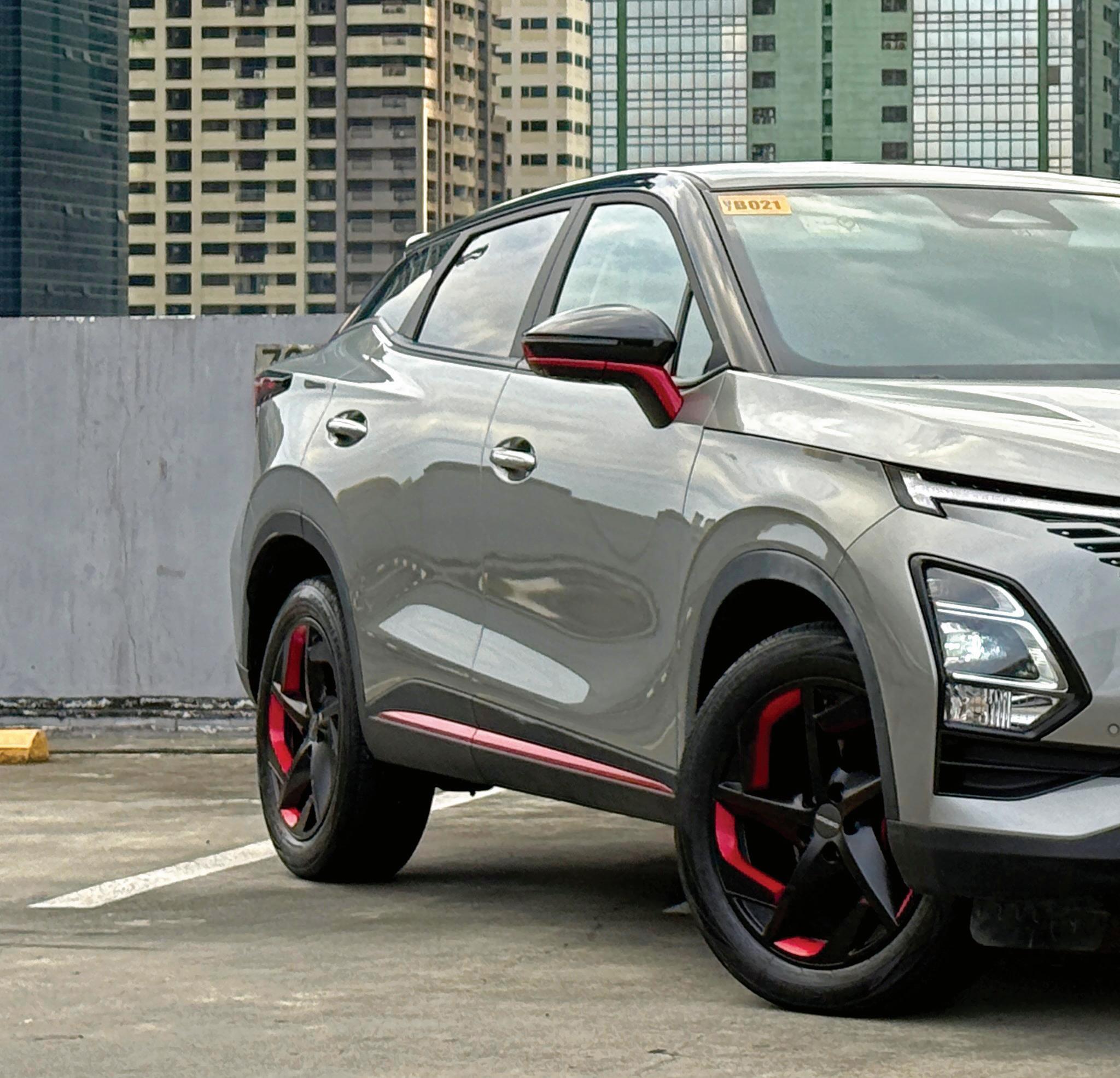
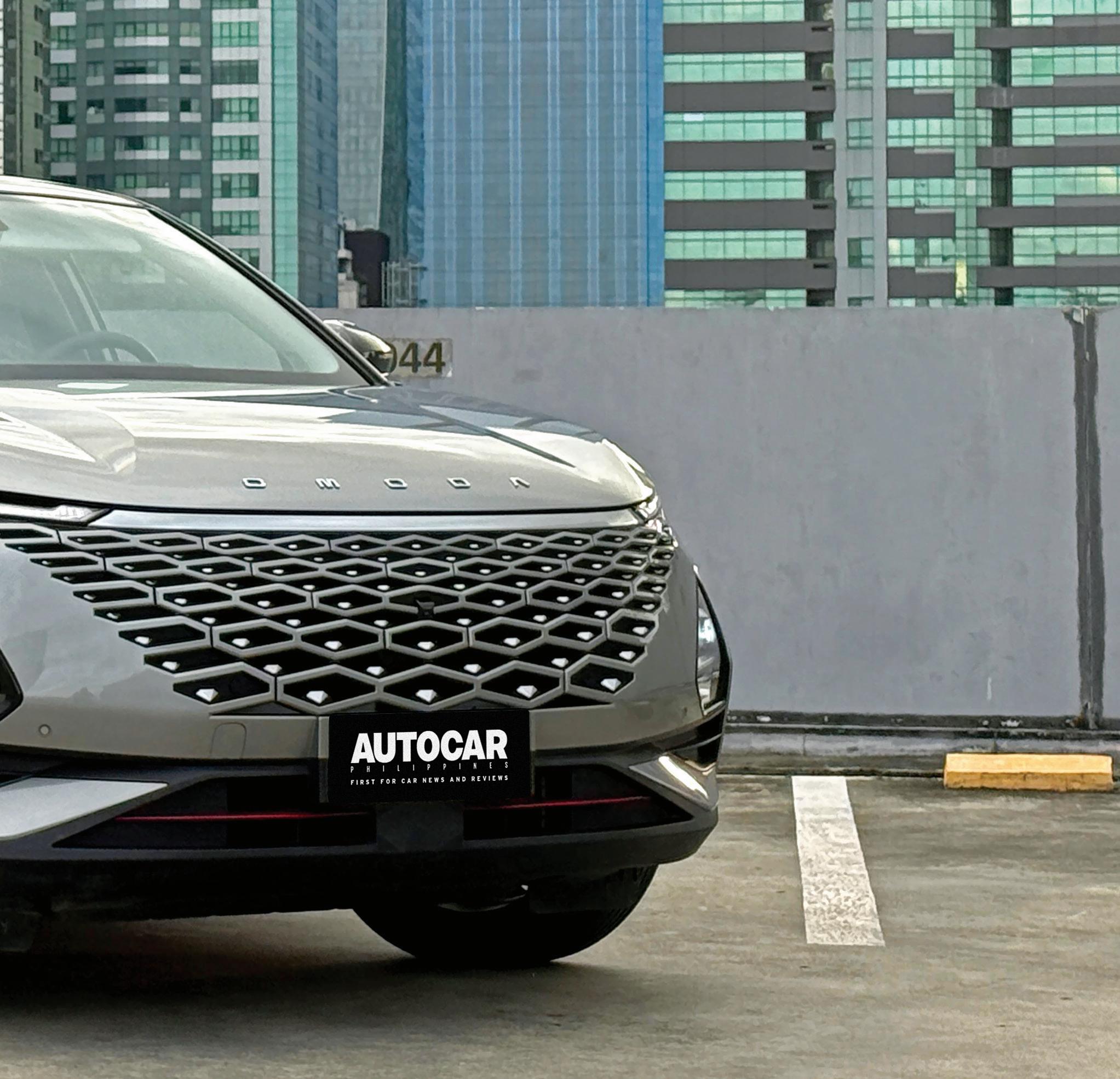
The Star Diamond grille and split lighting design give the C5 a striking, concept-like presence.
At first glance, it fits the category. The size is familiar. The proportions are expected. But the moment you spend time around it, it becomes clear that OMODA isn’t trying to blend in—it’s trying to be noticed.
Exterior
The C5 is built around what OMODA calls its “Art in Motion” design philosophy, and whether you agree with the name or not, the execution is hard to ignore.
The front end is where the design makes its strongest statement. The Star Diamond grille dominates the fascia, stretching wide and visually merging with the headlight assembly. It creates a clean, uninterrupted face that feels more like a concept car than something you’d typically see in a mall parking lot.
Lighting plays a big role here. The slim daytime running lights sit high, almost at the edge of the hood, giving the C5 a sharp, alert expression. Meanwhile, the main LED headlights are positioned lower on the bumper in a vertically stacked layout, adding depth and a layered look to the front.
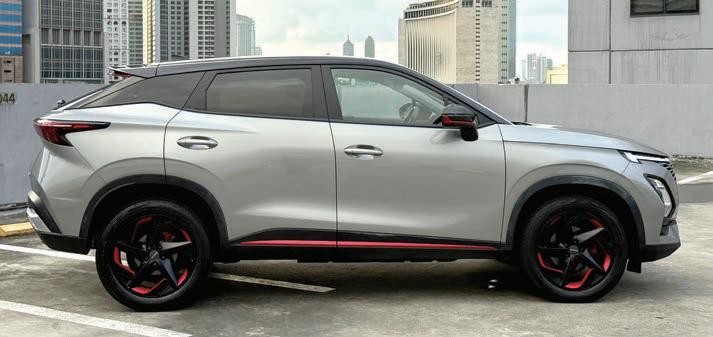
From the side, the C5 carries a fastbackinspired silhouette—something that’s becoming more common in the segment but is still
effective when done right. The roofline gently slopes toward the rear, meeting a subtle spoiler that completes the profile. The floating roof design enhances that sense of motion, even when the vehicle is standing still.
Details matter, and OMODA leans into them. Black cladding along the lower sections of the body adds contrast, while red accents inject a bit of visual energy. These are echoed in the gloss black and red two-tone 18-inch alloy wheels, wrapped in 215/55 Giti Comfort F56 tires.
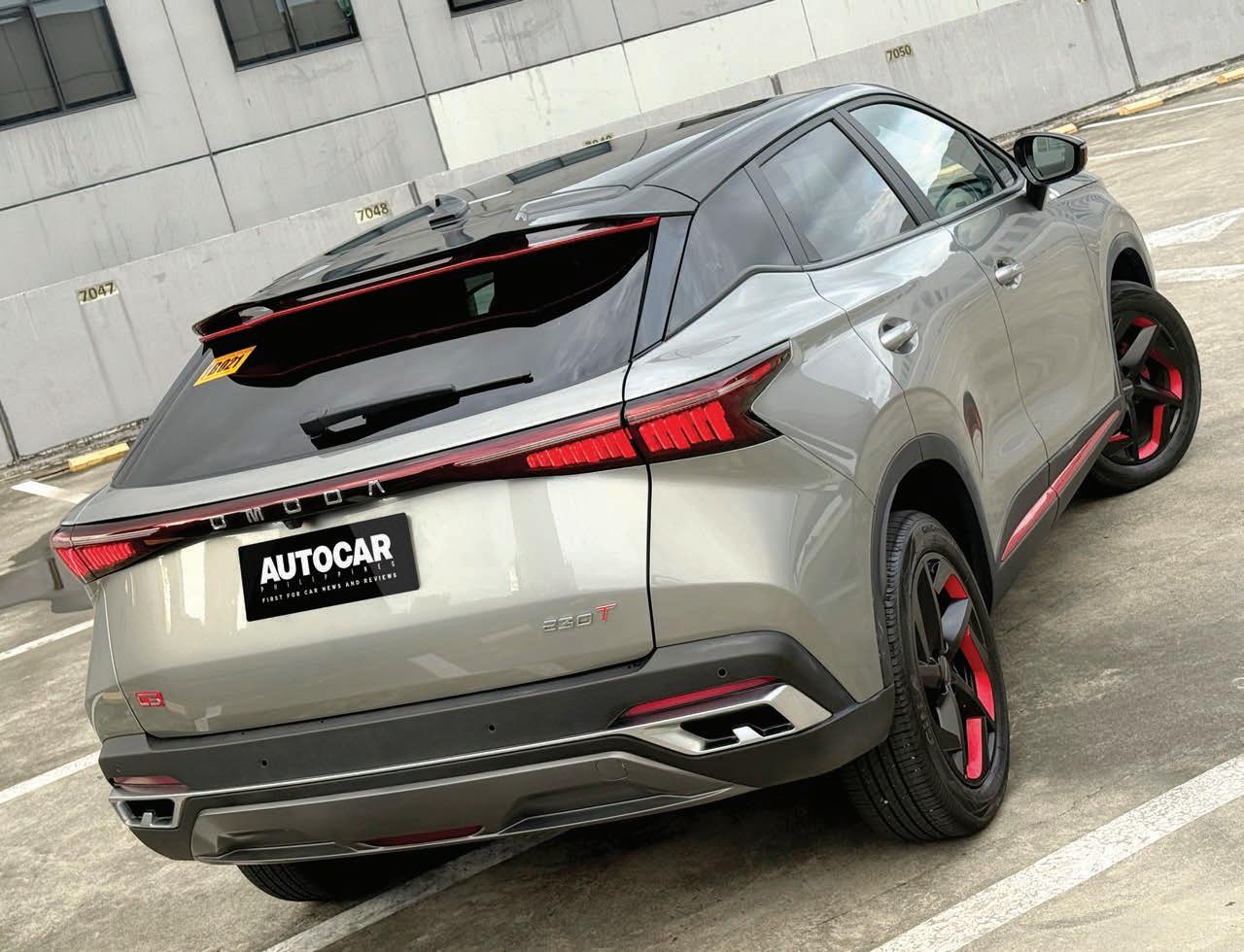
At the rear, the LED Matrix-style taillights carry a clean, modern signature, with dynamic turn signals adding a premium touch. It’s a cohesive
design from front to back, and more importantly, it gives the C5 an identity—something not all crossovers in this class can claim.
A power tailgate rounds out the exterior package, adding everyday convenience to the visual appeal.
Interior
Step inside, and the C5 shifts its focus from design to experience.
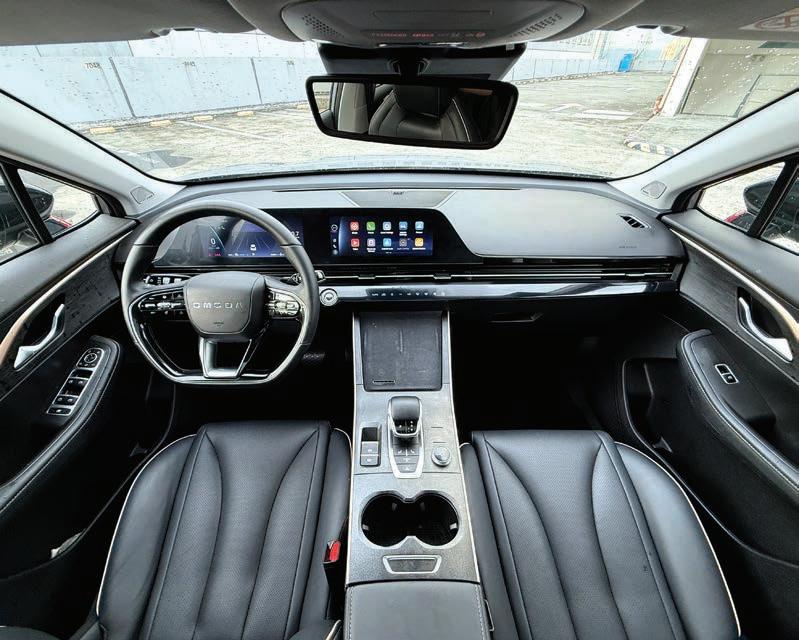
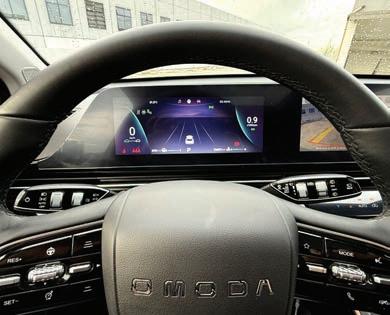
The first thing that catches your attention is the wide, dual-screen setup. Two 12.25-inch LCD displays sit side by side, forming what appears to be a single continuous panel across
LED Matrix-style taillights deliver a clean, modern lighting signature.
Practical space expands to over 1,100 liters with the rear seats folded.
the dashboard. It’s a layout that has become increasingly common among newer Chinese vehicles, but it remains effective in delivering a clean, high-tech look.
The interface is straightforward, and more importantly, it places key information within easy view. It’s functional without feeling cluttered.
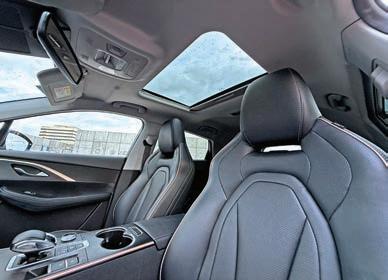
Material choice plays a big role in how the cabin comes together. Leather upholstery, soft-touch surfaces, and metallic accents give the interior a polished feel. It’s not trying to overwhelm—it’s aiming to feel complete.
Comfort is well considered. The front seats are power-adjustable, allowing drivers to find a good driving position with ease. Automatic climate control keeps cabin conditions consistent, while the sunroof adds a sense of openness, especially during daytime drives.
For connectivity, the C5 keeps things current. Wireless Apple CarPlay and Android Auto remove the need for cables, while a wireless charging pad ensures devices stay powered on the go. The eight-speaker Sony sound system provides clear, well-balanced audio, making daily commutes or longer drives more enjoyable.
Space is where compact crossovers often get tested, and the C5 holds its ground. Rear
passengers get decent legroom, making it usable for small families or group trips without feeling cramped.
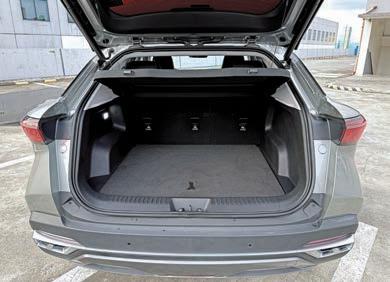
Cargo capacity starts at 442 liters—enough for everyday needs—and expands to 1,149 liters with the rear seats folded down. It’s practical space, delivered without complication.
Powertrain
Under the hood, the OMODA C5 keeps things straightforward.
It runs on a turbocharged 1.5-liter gasoline engine producing 154 horsepower and 230 Nm of torque. Power is sent to the front wheels through a continuously variable transmission (CVT), a setup that prioritizes
smoothness and efficiency.
For daily driving, that combination works well. The CVT delivers seamless acceleration, particularly in stop-and-go traffic where abrupt gear changes can become tiring. It’s tuned more for comfort than aggression, which aligns with the vehicle’s intended use.
Drivers can switch between Eco and Sport modes, allowing some flexibility depending on driving conditions. Eco mode leans toward efficiency, while Sport mode sharpens throttle response slightly for a more engaged feel.
OMODA lists a top speed of 181 km/h, though in real-world use, the focus here is clearly on urban and highway driving rather than outright performance.
Safety
Safety is an area where the C5 comes in fully equipped.
It features a comprehensive Advanced Driver Assistance System (ADAS), including Adaptive Cruise Control, Automatic Emergency Braking, and Forward Collision Warning. These systems work together to reduce driver workload, especially during longer drives or heavy traffic.
Lane Keep Assist and Lane Departure Warning help maintain positioning on the road, while Blind Spot Detection and Rear Cross Traffic Alert add an extra layer of awareness when changing lanes or reversing.
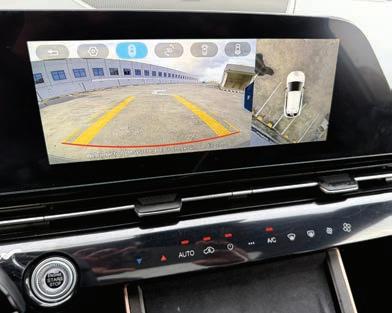
Automatic High Beam adjusts lighting conditions as needed, and the 360-degree panoramic camera provides a full view around the vehicle—particularly useful in tight parking situations.
Additional features such as tire pressure monitoring and intelligent voice control further support convenience and safety in daily use.
Impressions
The OMODA C5 Luxury builds its identity around design, but it doesn’t stop there.
It combines bold styling with a strong set of features, making it more than just a visual statement. It’s comfortable, easy to drive, and practical enough for everyday use.
The light steering makes it well-suited for city driving, where tight spaces and constant maneuvering are part of the routine. It doesn’t demand effort—it works with the driver, not against them.
At P1.279 million, it sits right in the middle of the compact crossover segment. What it brings to the table is a different perspective—one that prioritizes design, integrates modern tech, and delivers the essentials without overcomplicating the experience.
NEIL PAGULAYAN
Leather trim, wireless connectivity, and a Sony sound system elevate the cabin experience.
Dual 12.25-inch displays create a wide, high-tech cockpit layout.
ITINY EVS, BIG PURPOSE : PONY VS LUMIN IN THE URBAN MOBILITY SHIFT
Small Cars, Smart Moves: Bestune Pony vs Changan Lumin
By John Rey San Diego and Randy Peregrino
n the Philippines, the idea of a “good car” has long been tied to size.
Bigger meant better. Taller meant tougher. Longer meant more premium.
But spend enough time driving through Metro Manila—through tight parking slots in Makati, narrow side streets in Quezon City, or bumper-tobumper traffic along EDSA—and that logic begins to unravel.
Because in the city, space is not something you have.
It’s something you fight for.
And that’s where a new kind of vehicle is quietly gaining ground. Not large, not powerful in the traditional sense, and certainly not designed to impress in the usual way—but built with a very clear purpose: to make everyday driving easier.
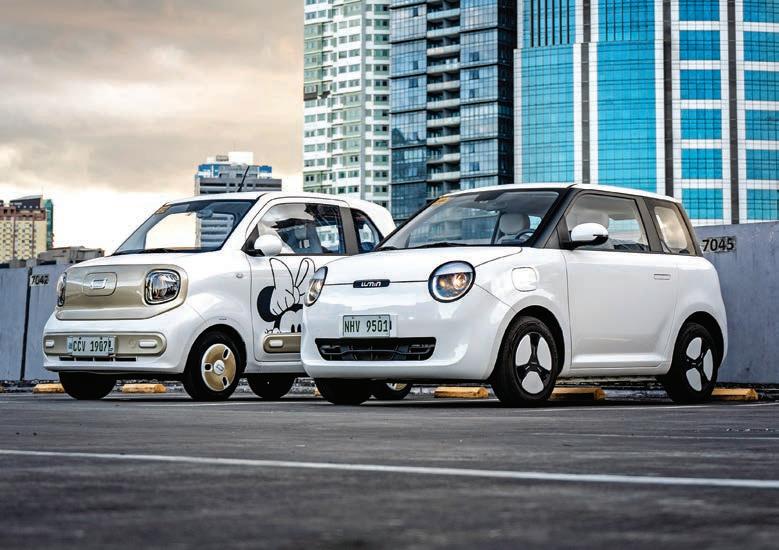
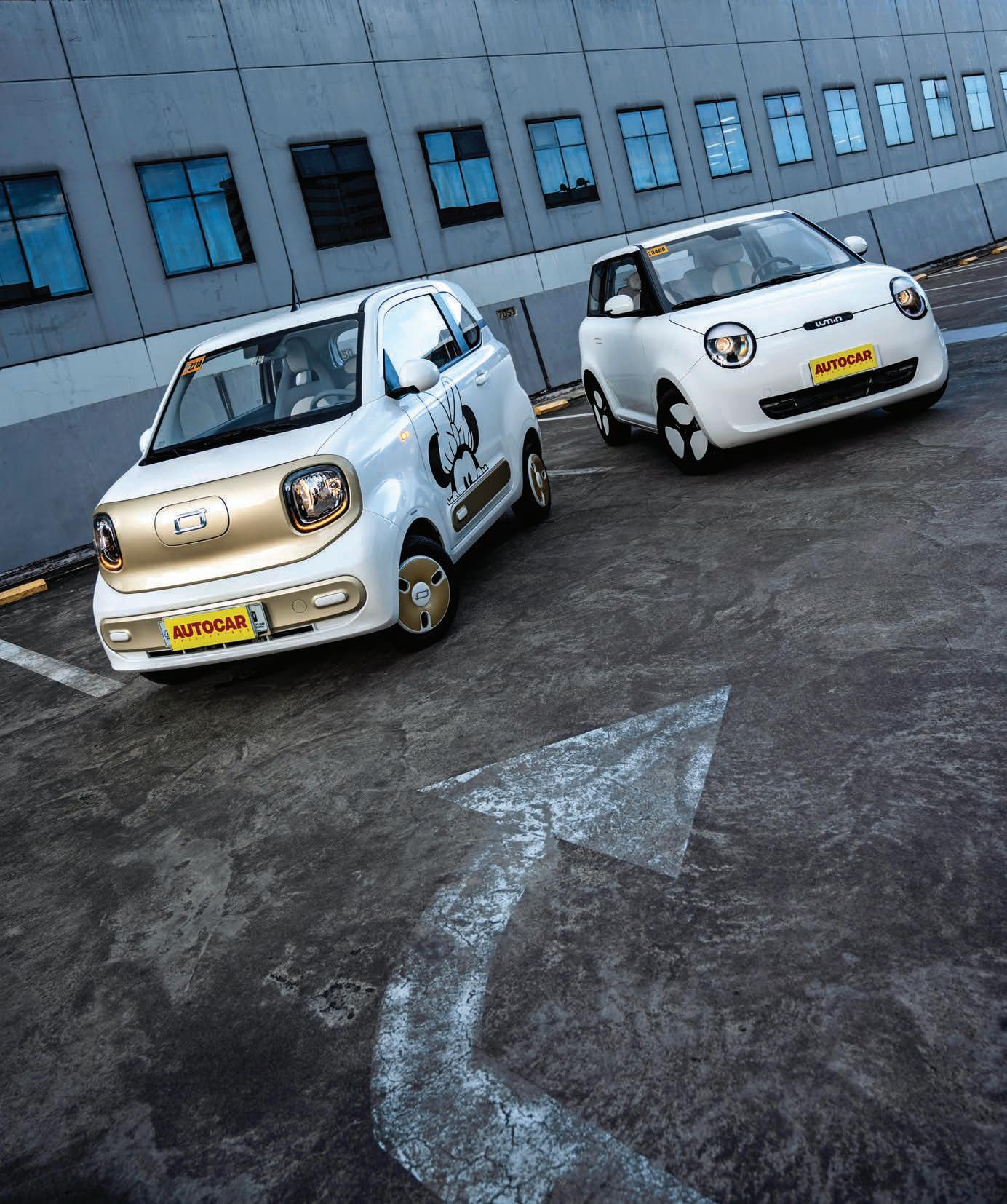
Enter the Bestune Pony and the Changan Lumin.
Two compact, fully electric vehicles that challenge the idea that bigger is always better—and instead focus on what actually matters in daily use: efficiency, maneuverability, and practicality.
They are small. Intentionally so.
And in the right environment, that makes them incredibly capable.
Unforgettable Adventures and Epic Scenic Escapes
Design: Character in Compact Form
The first thing that stands out about both the Pony and the Lumin is how unapologetically compact they are.
They don’t try to look bigger than they are. Instead, they embrace their size—and build personality around it.
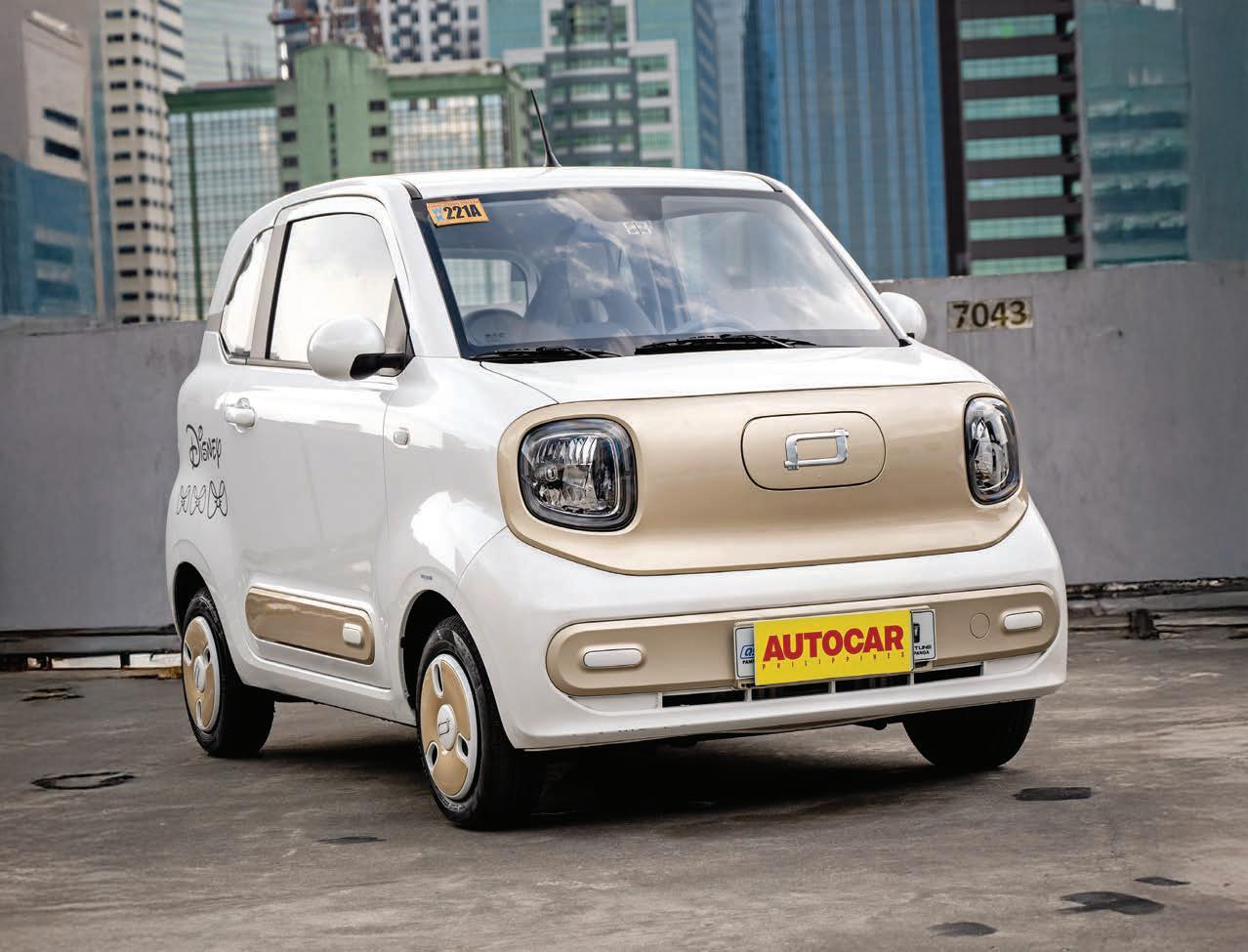
The Bestune Pony carries a clean, upright hatchback design with a playful edge. Its short overhangs, simple lines, and compact proportions give it a confident stance, while subtle creases along the sides add just enough detail without overwhelming the design.
There’s a sense of balance to it. It doesn’t shout for attention—but it doesn’t disappear in traffic either.
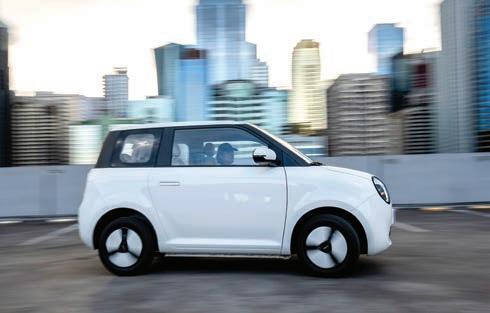
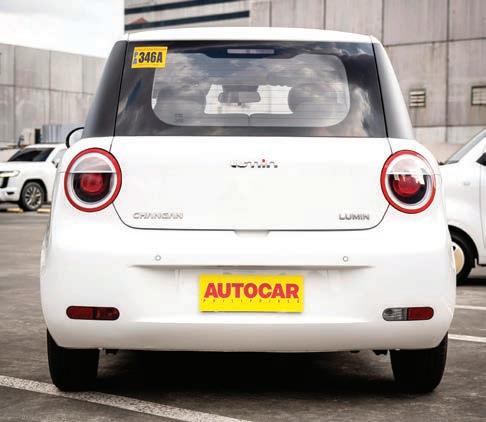
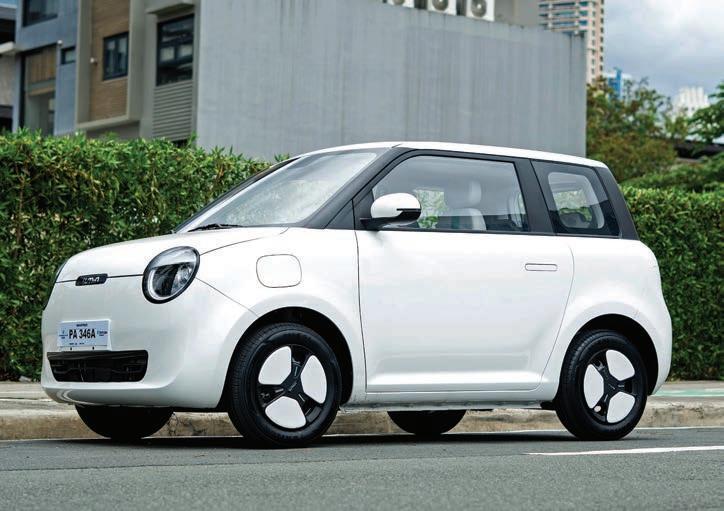
The Changan Lumin, on the other hand, leans more toward expression. Its rounded headlamps, soft edges, and boxy profile give it a cheerful, almost animated look. It feels friendly, approachable, and instantly recognizable—qualities that matter in a segment where personality plays a big role. Both vehicles succeed in creating identity without excess.
And more importantly, both designs make sense for where they’ll spend most of their time: the city.
Size and City Driving: Where They Truly Shine
This is where the Pony and Lumin stop being interesting—and start being genuinely useful.
The Bestune Pony, at just 3,000 mm in length and 1,510 mm in width, feels almost tailor-made for Metro Manila. Tight parking slots that would normally require multiple adjustments suddenly become straightforward. Narrow streets feel less intimidating. Even heavy traffic becomes easier to navigate.
The Changan Lumin delivers the same advantage.
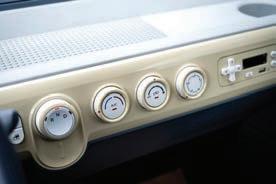
Simple layouts focus on usability and everyday comfort.
Compact dimensions turn limited space into an advantage.
7-inch digital display
Its compact footprint and light weight translate into effortless maneuverability. Whether you’re making a tight U-turn, slipping into a small parking space, or navigating crowded commercial areas, the car feels like it’s working with you, not against you.
This is something that’s hard to quantify on paper—but immediately obvious in practice.
In cities where every inch matters, smaller becomes smarter.
Interior: Simple, Functional, and Surprisingly Comfortable
Step inside either car, and the philosophy remains consistent: keep things simple, but make them work.
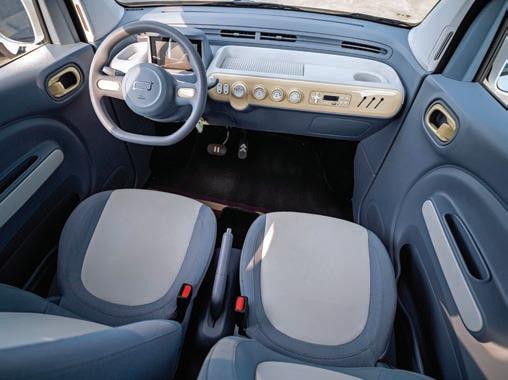
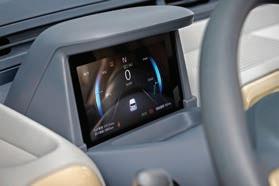
The Bestune Pony offers a cabin that feels light and playful. The dashboard design carries a slightly videogameinspired aesthetic, anchored by a 7-inch LCD instrument cluster that displays
essential information clearly. Bluetooth and USB connectivity keep things functional, while the light-colored interior adds a sense of openness.
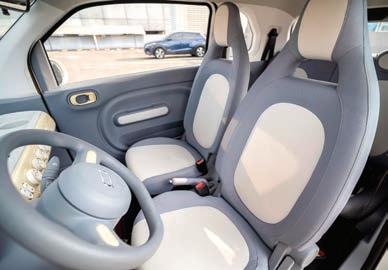
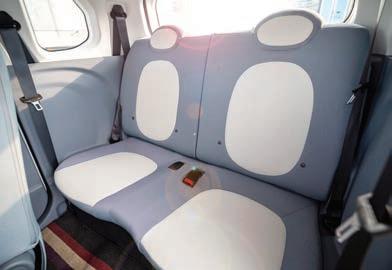
Despite its size, the Pony manages space well. Four passengers can fit comfortably with a bit of adjustment, and the rear bench even offers a slight recline—something you wouldn’t expect in a car this compact.
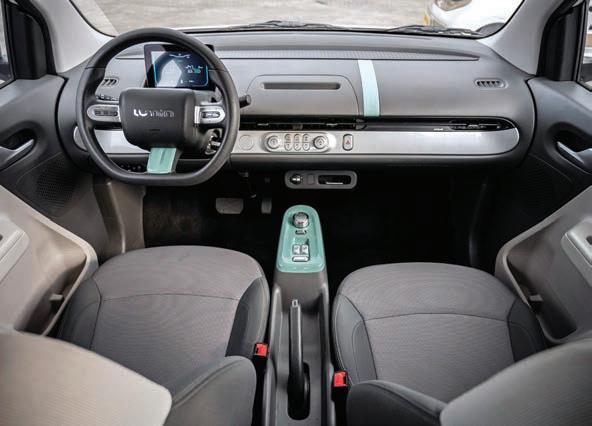
The Changan Lumin takes a slightly different approach, focusing on clarity and ease of use.
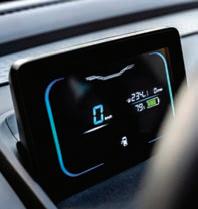
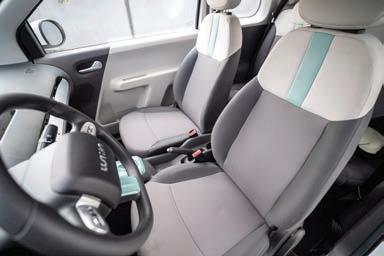
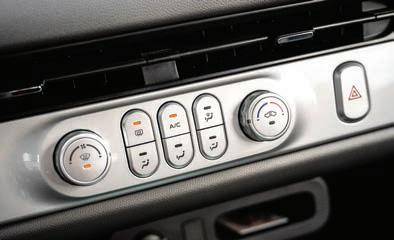
Its interior is straightforward, with a clean dashboard layout and a strong forward line of sight. The 7-inch digital display provides key driving information, while Bluetooth connectivity ensures seamless pairing with mobile devices.
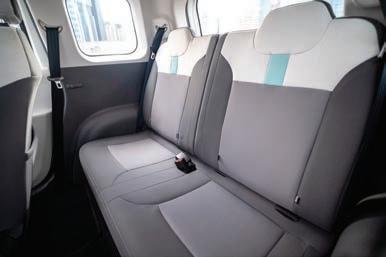
Seating for four is comfortably accommodated, and the cabin layout prioritizes usability over complexity.
In both vehicles, the goal is clear: remove unnecessary distractions and focus on what drivers actually need.
Built for real conditions, both EVs thrive in urban environments.
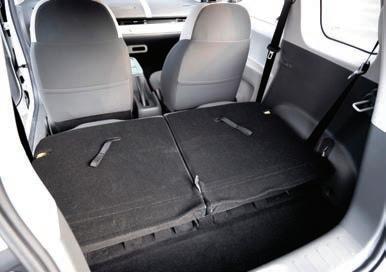
Foldable rear seats for more cargo space
Foldable rear seats for more cargo space
Powertrain: Electric Performance That Makes Sense
Underneath their compact exteriors, both the Pony and the Lumin embrace electric mobility in its most practical form.
The Bestune Pony features a rearmounted permanent magnet synchronous motor paired with a 13.9 kWh battery, delivering up to 170 kilometers of range. Its rear-wheel-drive layout is a standout in this
segment, offering a slightly more engaging driving feel compared to typical frontwheel-drive city cars.
On paper, 27 hp and 85 Nm may seem modest. But in real-world city driving, where speeds are low and acceleration happens in short bursts, it feels more than adequate.
Electric torque delivers immediate response—something that becomes especially noticeable in stop-and-go traffic.
The Changan Lumin builds on that with more power and range flexibility.
Its motor produces 47 hp, driving the front wheels, and is paired with either a 17.65 kWh or 28.08 kWh battery. The latter delivers up to 301 kilometers of range— one of the more impressive figures in this segment.
Like the Pony, the Lumin benefits from instant torque delivery, making acceleration feel quick and responsive in urban conditions.
Both cars are capable of reaching speeds just over 100 km/h, making them viable not only for city streets but also for occasional expressway use.
Range and Efficiency: Practical Electrification
Range anxiety has long been one of the biggest concerns for EV buyers.
But with cars like the Pony and Lumin, the conversation shifts from anxiety to practicality.
The Bestune Pony’s 170-kilometer range comfortably covers several days of typical city driving. For most users, that means fewer charging cycles and more convenience.
The Changan Lumin takes it further, offering up to 301 kilometers of range in its higher variant. That opens up possibilities beyond daily commutes—allowing for longer trips without immediate concern.
Think Manila to Tagaytay and back, or extended drives within nearby provinces.
More importantly, both cars highlight the cost advantage of electric mobility.
Real-world usage shows just how affordable EV driving can be. A short drive across Metro Manila can cost less than a fast-food meal in electricity—something that fundamentally changes the economics of daily driving.
Driving Experience: Effortless and Engaging
Driving the Pony and Lumin reveals what makes small EVs so compelling.
They remove friction.
The Bestune Pony’s rear-wheel-drive setup adds a subtle layer of character. It feels stable, composed, and slightly playful when accelerating, especially from a standstill.
The Changan Lumin, meanwhile,
focuses on ease. Steering is light, visibility is excellent, and the car feels intuitive from the moment you get behind the wheel.
Both cars are quiet, smooth, and easy to control—qualities that reduce fatigue during daily use.
And in traffic-heavy environments, that makes a difference.
Features and Safety: Essentials That Matter
Both vehicles focus on delivering what’s essential—without overcomplicating the experience.
The Bestune Pony comes equipped with dual airbags, ABS with EBD, reverse camera, parking sensors, and even tire pressure monitoring in higher trims. These features provide confidence without adding unnecessary complexity.
The Changan Lumin offers a similarly practical approach, with key safety and convenience features that support everyday driving.
In both cases, the emphasis is on usability—systems that are easy to understand, easy to maintain, and effective in real-world conditions.
“The easiest car to live with is the one that fits your daily life.”
Value: Bringing EV Ownership Within Reach
Perhaps the most important role these vehicles play is accessibility.
The Bestune Pony, priced at around ₱588,000, brings electric mobility into a space traditionally occupied by entry-level gasoline cars. It strips the idea of EV ownership down to its essentials—affordable, practical, and easy to live with on a daily basis.
The Changan Lumin builds on that accessibility while offering more flexibility. It is priced at ₱699,000 for the base S variant and ₱799,000 for the higher-spec L variant, the latter delivering an extended range of up to 301 kilometers. This tiered approach allows buyers to choose based on their needs—whether it’s a straightforward city commuter or a slightly more versatile daily EV with added range.
What stands out is how both vehicles position electric mobility within reach of a much wider audience. These are no longer
aspirational purchases reserved for early adopters or premium buyers. They sit within the same conversation as traditional entrylevel hatchbacks—just with a different kind of running cost and ownership experience.
Together, the Pony and the Lumin represent a shift in how EVs are being introduced to Filipino drivers.
A New Way to Move
The Bestune Pony and Changan Lumin aren’t trying to be everything to everyone. They don’t set out to replace SUVs, pickups, or long-distance cruisers. Instead, they focus on something far more specific—and arguably more relevant: daily driving. These are vehicles built for traffic, for tight urban spaces, and for the short, frequent trips that make up most of our time on the road. In doing so, they present a different perspective on mobility—one that prioritizes efficiency over excess, simplicity over complexity, and practicality above all else.
Two compact EVs redefining what city driving can be.
MG ELECTRIFIES MIAS 2026
From entry-level sedans to electrified SUVs and MPVs, MG leans into Hybrid+ technology
at MIAS
ybrid icons HS Hybrid+, ZS Hybrid+, and MG3 Hybrid+ headline the electrified lineup, joined by the stylish MG5 Prestige sedan, the family-mover G50 Plus, and an exclusive preview of the G50 Plug-in Hybrid.
MG stood out last year with a sweeping full-lineup showcase—twelve models in all, five of them fully electric. This time, the brand shifted gears, spotlighting its latest Hybrid+ (HEV) lineup, its family-mover MPV, the debuting MG5 Prestige sedan, and a special preview of the G50 Plug-in Hybrid (PHEV).
MG5 Prestige: Prestige Without the Price Tag
In a segment long ruled by Japanese and Korean brands, the MG5 Prestige has emerged as a refreshing contender. More than just another entry-level sedan, it’s a stylish starter car that dares to look premium while remaining accessible to young professionals and fresh graduates eager to take the wheel.
The Prestige carries a commanding front fascia, highlighted by Automatic Projector LED headlamps with Follow-Me-Home function and LED DRLs that lend a modern edge. Its clean side profile and balanced proportions echo
MG’s sporty heritage, while generous dimensions—4,607 mm long, 1,818 mm wide, and 1,489 mm tall, with a 2,680 mm wheelbase—give it undeniable road presence.
Inside, the cabin surprises with space and refinement. The five-seater layout offers ample legroom, complemented by a wide center console. At the dash, a 10.25-inch touchscreen infotainment system anchors connectivity, with Bluetooth, Apple CarPlay, and Android Auto. Comfort is enhanced by speed-sensitive electric power steering with tilt adjustment, electronic control air-conditioning with a PM2.5 filter, and rear AC vents.
Under the hood, a 1.5-liter 4-cylinder DVVT gasoline engine delivers 108 hp and 142 Nm of torque, paired with a CVT with manual mode. Tuned for reliability and efficiency, it’s perfectly suited to Metro Manila’s traffic and provincial escapes.
Safety is comprehensive, with airbags, ABS, EBD, Brake Assist, and ESP, plus rear parking sensors, a rearview camera with dynamic guidelines, hill-start assist, and tire pressure monitoring. The MG5 Prestige proves that entry-level doesn’t mean ordinary—it’s MG’s bold statement of style, practicality, and value.
The MG5 Prestige blends entry-level pricing with premium design cues.
MG ZS 1.5 Hybrid+: Sleek, Smart,
and Electrified
The ZS Hybrid+ arrives with a stronger, sleeker, and more refined presence, built from the ground up to showcase MG’s latest global design language. Dimension-wise, it measures 4,430 mm long, 1,818 mm wide, and 1,635 mm tall, riding on a 2,610 mm wheelbase. The highlight is its bold new grille, replacing the familiar hexagonal shape with a wider, more contemporary look. Flanking it are MG’s signature “Connected Hunter Eyes” LED headlamps, now sleeker and sharper, equipped with Intelligent Headlight Control and Auto High/Low Beam. A metallic trim above the grille visually unites the lamps, giving the ZS Hybrid+ a distinct identity.
Inside, the cabin reflects refinement and functionality. Increased dimensions translate to more space, legroom, and cargo flexibility. Drivers face a 7-inch digital cluster with vivid displays, while the center dash houses a 12.3-inch HD infotainment screen with Bluetooth, Apple CarPlay, and Android Auto, paired with a six-speaker audio system. Convenience is further enhanced by a 360-degree camera and clustered controls for the automatic single-zone air conditioning.
Power comes from a hybrid system combining a 1.5-liter gasoline engine (101 hp, 128 Nm) with an electric motor (134 hp, 250 Nm). Together, they deliver a robust 194 hp and 343 Nm, managed by MG’s unique three-speed hybrid transmission. A 1.83-kWh battery provides the electric boost, ensuring efficiency without sacrificing performance.
Safety is comprehensive, with standard features supported by MG’s ADAS suite: Adaptive Cruise Control, Active Emergency Brake with pedestrian and bicycle detection, Traffic Jam Assist, Lane Keeping Assist, Forward Collision Warning, and more.
Priced at P1,328,888, the ZS Hybrid+ comes in
MG3 Hybrid+: Electrified Hatchback for the B-Segment
The MG3 Hybrid+ marks the brand’s bold entry into the electrified B-segment, redefining standards as the first HEV in its class. Compact yet stylish, this five-door hatchback blends sleek exterior cues with practical sophistication. A pronounced grille, LED/halogen headlamps, 16-inch alloys, and power-folding mirrors give it a modern edge.
Inside, the cabin leans toward premium, with leather-styled finishes, a leather-wrapped steering wheel, and supportive seats. At the center, a 10.25-inch infotainment screen anchors connectivity, offering Bluetooth, Apple CarPlay, and Android Auto.
Performance comes from a 1.5-liter naturally aspirated engine paired with MG’s HWV hybrid system. Together, the electrified powertrain delivers 187 hp and 250 Nm of torque, managed by a dedicated three-speed hybrid transmission. The result is spirited yet efficient driving, ideal for city commutes and weekend runs.
Safety and convenience are equally emphasized. Standard features include push-button ignition, reverse parking sensors, an electric parking brake, four-wheel disc brakes, and a 360-degree camera for maneuverability in tight spaces. MG’s Pilot Advanced Driver Assist System further enhances confidence with adaptive cruise control, lane keep assist, pre-collision warning, and more.
Priced at P1,088,888, the MG3 Hybrid+ offers youthful appeal with electrified practicality. Color options include Andes Gray, St. Moritz Blue, Extreme Speed Red, Morning Yellow, Moon White, and Pearl Black.
Sloan Silver, Emerald Green, Lunar Gray, Black Pearl, Dover White, and Diamond Red. MG3
The ZS Hybrid+ adopts MG’s latest global design language.
All-New MG HS Hybrid+: Premium Power, Electrified MG presents the HS Hybrid+ as a showcase of contemporary elegance, blending power, efficiency, and world-class safety. Built on the brand’s latest global design language, the SUV stretches 4,670 mm long, 1,890 mm wide, and 1,665 mm tall, riding on a 2,765 mm wheelbase. Up front, a wide black grille with chrome detailing replaces the familiar hexagonal design, flanked by sleeker Digital Matrix LED headlamps with Intelligent Headlight Control, Auto High/Low Beam, Auto On/Off, and Follow-MeHome functions. A trim line above the grille visually ties the headlamps together, completing the cohesive look.
Inside, the larger dimensions translate to a spacious, dark-themed cabin. The sporty, leather-wrapped steering wheel offers tilt-and-telescopic adjustment with multifunction controls, while the dashboard blends leather, gloss, and metallic accents for a monochromatic ambiance. Red stitching adds flair, complemented by a panoramic sunroof. At the center, a vivid 12.3-inch digital cluster pairs with a 12.3-inch HD infotainment screen supporting Bluetooth, Apple CarPlay, and Android Auto. Below, neatly arranged controls include automatic air conditioning.
Power comes from a hybrid system combining a 1.5-liter turbocharged engine (141 hp, 230 Nm) with an electric motor (193 hp, 250 Nm). Together, they deliver a robust 221 hp and 340 Nm, managed by the new two-speed Dedicated Hybrid Transmission (EDU Gen 3), driving the front wheels.
Safety is comprehensive, with MG Pilot’s full suite of ADAS: Adaptive Cruise Control, Intelligent Cruise Assist, Active Emergency Brake, Traffic Jam Assist, Lane Departure Warning, Lane Keeping Assist, Forward Collision Warning, plus Blind Spot Detection, Door Open
MG G50 PHEV: “MG’s family MPV goes hybrid”
Presented as MG’s main event, the G50 PHEV asserts itself with sleek new styling and modern LED headlights, projecting a confident, premium silhouette.
Warning, Rear Collision Warning, and Cross Traffic Alerts. Priced at P1,398,888, the HS Hybrid+ comes in Champagne Silver, Lunar Gray, Black Pearl, Pearl White, and Diamond Red.
MG G50 Plus: Practical MPV with Premium Touches
The G50 Plus is MG’s contender in the highly competitive MPV market, offering three rows of versatility and features often reserved for higherend models—all at a surprisingly competitive price. Its elegant front grille blends seamlessly with the LED/halogen headlamp combination, while alloy wheels distinguish each variant: 16-inch for STD and COM, and 17inch with roof rails for the top-spec LUX.
Inside, the STD and COM models feature an eight-seater (2+3+3) layout, while the LUX variant upgrades to a seven-seater with captain’s chairs in the second row and a full leather-style interior. Entertainment is anchored by a 12.3-inch touchscreen infotainment display with Apple CarPlay, Android Auto, and a six-speaker sound system.
Under the hood, a 1.5-liter turbocharged gasoline engine delivers 178 hp and 280 Nm of torque, paired with either a six-speed automatic or a seven-speed wet-type dual-clutch transmission.
Safety is comprehensive, with airbags, ABS with EBD, electronic stability program, hill-hold control, parking sensors, a reverse camera, cruise control, EPB with auto brake hold, and push-button ignition. These features ensure confidence whether navigating city streets or provincial highways.
Pricing starts at P1,048,888 for the STD M/T, P1,198,888 for the COM DCT, and P1,288,888 for the LUX DCT. Available colors include Moon White, Meteorite Black, Blade Silver, Andes Gray, and Water Blue.
Differentiated from its ICE siblings, it features a bold “Galaxy Wing” grille, thin LED DRLs, low-slung headlights, and fresh alloy wheels. Practicality meets sophistication through its power tailgate, offering handsfree convenience. Dimensionally, it measures 4,825 mm long, 1,825 mm wide, and 1,778 mm tall, with a 2,800 mm wheelbase.
Building on its Maxus roots, the G50 PHEV features a 1.5-liter plug-in hybrid powertrain with an electric motor and an 18.65-kWh battery pack. Combined output reaches 214 hp and 280 Nm, with a claimed range of up to 1,400 km on a full tank and charge (CLTC cycle). On pure battery power, it can travel 85 km without fuel, while acceleration from 0–100 km/h takes less than eight seconds.
Flexibility defines the cabin, with seating layouts available in five-seater (2+3), six-seater (2+2+2), or sevenseater (2+3+2) configurations. This versatility ensures the G50 PHEV adapts to family needs, whether for urban commutes or long provincial drives.
Once officially launched, the MG G50 PHEV will stand as the first electrified MPV in its class. Positioned at the intersection of style, utility, and innovation, MG is well positioned amid the growing preference for plug-in hybrids in the Philippine market.
RANDY S. PEREGRINO
HS Hybrid+ brings power and refinement to the compact SUV class.
G50 PHEV previews MG’s electrified future in the MPV segment.
G50 Plus delivers practical space for growing families.
MG TRQ L : The Value Workhorse Enters the Fight
MG Takes on the Pickup
Segment
The pickup market in the Philippines has long been dominated by familiar names. Think of the segment, and the usual suspects come to mind—the Toyota Hilux, Ford Ranger, Mitsubishi Triton, and Nissan Navara. These trucks have built their reputations over decades, becoming the default choice for buyers looking for durability, practicality, and a bit of weekend capability.
Every now and then, a new contender arrives to challenge that status quo.
The recently launched MG TRQ L diesel pickup is one such entry, marking MG Motor Philippines’ move into the highly competitive pickup segment.
At first glance, the TRQ L doesn’t position itself as a lifestyle truck or a hardcore off-
roader. Instead, it leans toward something more straightforward—a value-driven workhorse that aims to balance capability with everyday usability.
Exterior
The TRQ L carries a bold, purposeful look.
Up front, a large grille dominates the fascia, paired with manually leveled halogen projector headlamps. It rides on 16-inch five-spoke alloy wheels wrapped in 245/70 allterrain tires, while gloss black door handles add a slight visual contrast.
In terms of size, it measures 5,365 mm in length, 1,960 mm in width, and 1,857 mm in height, with a ground clearance of 215 mm. Payload capacity is rated at 1,055 kg—figures that put it squarely within the expectations of a working pickup.
Suspension setup follows a traditional layout: double wishbones up front and leaf springs at the rear, supported by disc brakes on both ends. The roll bar adds to its visual presence, while the automatic variant gets additional touches such as roof rails, side steps, and fender flares.
Interior
Inside, the TRQ L makes an effort to move beyond the barebones feel of traditional work trucks.
It seats five, and in the automatic variant, leather upholstery and a six-way poweradjustable driver’s seat add a layer of comfort. Rear passengers benefit from dedicated airconditioning vents—an often overlooked but essential feature in the Philippine climate.
At the center of the dashboard is a 10.25inch touchscreen infotainment system with Apple CarPlay and Android Auto, standard across both variants. Two USB-A ports are provided up front for connectivity and charging.
Overall, the cabin strikes a balance between function and comfort—enough refinement for daily driving without losing its utilitarian character.
Powertrain
Under the hood, the TRQ L is powered by a 2.0-liter direct-injection turbo diesel engine producing 158 hp at 4,000 rpm and 400 Nm of torque between 1,500 and 2,400 rpm.
Transmission options include a sixspeed manual or a ZF-sourced eight-speed automatic.
Three selectable drive modes—Power, Normal, and Eco—allow drivers to tailor the truck’s behavior depending on load, terrain, or driving conditions.
Convenience and Safety
The TRQ L comes equipped with Smart Entry and a One Push Start system, along with standard keyless entry for both manual and automatic variants.
Safety features include dual front airbags, cruise control, Hill Descent Control (HDC), and an Electronic Stability Program (ESP). A reverse camera with dynamic guidelines is also included.
While it may not match the advanced driver-assist systems found in higher-end pickups, the TRQ L covers the essentials for everyday use.
Fuel tank capacity is rated at 73 liters, supporting longer trips between refueling stops—important for both business use and provincial drives.
Impressions
The TRQ L is currently offered in rear-wheel drive (4x2) configuration only.
For urban users, delivery work, and lightduty hauling, that won’t be a dealbreaker. But for those regularly navigating muddy job sites or off-road trails, the absence of a 4x4 option is something to consider.
On the road, it behaves like a traditional ladder-frame pickup. Steering uses a hydraulic system rather than electric assist, which can
feel heavier at low speeds but more consistent when carrying load.
Where the TRQ L makes its strongest case is value.
Priced at ₱1,248,888 for the manual variant and ₱1,338,888 for the automatic, it enters the market at the lower end of the pickup price range while still offering modern features.
For entrepreneurs, small business owners, or first-time pickup buyers, it presents a straightforward proposition: a capable diesel truck with usable features, without the premium price tag.
NEIL PAGULAYAN
A large touchscreen and cleaner layout bring modern touches into a work-focused cabin.
Rear air vents add real-world comfort for passengers in a tropical climate.
With over a ton of payload capacity, the TRQ L is built with work in mind.
From turbocharged crossovers to range-extended pickups and city EVs, Changan brings a full-spectrum mobility strategy to MIAS 2026
“With its newest campaign, Changan underscores reliability, safety, and forward-thinking innovation—empowering Filipino drivers to embrace smarter, more practical, and future-ready journeys.”
Inchcape Philippines made a bold return to the Manila International Auto Show 2026, showcasing six distinct models under the brand’s newest campaign, “Drive Smart, Drive Changan.” Leading the lineup are the All-New CS35 Max, redefining innovative mobility, and the All-New Eado Plus, elevating everyday driving. Electrification took center stage with the Nevo Hunter REEV (4x2 variant), Nevo Q05 PHEV (iD variant), and the all-electric Lumin BEV, while the New C55 Plus previewed future possibilities. Together, these models embody Changan’s renewed commitment to intelligent, low-carbon, and sustainable mobility—signaling a transformative vision for Filipino motorists ready to embrace smarter journeys.
All-New Changan CS35 Max: Drive into Discovery
The All-New Changan CS35 Max arrives as a bolder, sportier, and more driver-centric crossover, designed for professionals seeking a feature-packed companion for their active lifestyle. With larger dimensions and a 115-mm longer wheelbase, it delivers improved space and comfort while projecting a stronger, more dynamic presence.
Up front, the CS35 Max impresses with aggressive styling, highlighted by signature red accents, reshaped LED headlights with automatic on/off, daytime running lights, and a follow-me-home function. Along the sides, sharp body lines emphasize its sporty character, complemented by 18-inch alloy wheels standard on both Lite and Luxe variants. At the rear, newly designed LED taillights, fog
lamps, and a high-mounted brake light complete the modern look. Luxe models add power-folding mirrors, rain-sensing wipers, and an electric tailgate.
Inside, the cabin is more advanced and spacious, with improved ergonomics and premium materials. The Lite variant offers fabric seats with six-way manual adjustment, while the Luxe upgrades to leather upholstery and a four-way power driver’s seat. Instrumentation ranges from a 7-inch digital cluster in the Lite to a 12.3-inch display in the Luxe. Both variants feature a 10.25-inch touchscreen with wireless Apple CarPlay, Android Auto, and Bluetooth. Luxe models enhance the experience with a six-speaker Sony system, wireless charger, LED reading lights, and a panoramic moonroof.
Power comes from a 1.5-liter turbocharged gasoline engine producing 180 hp and 300 Nm, paired with a seven-speed wet dual-clutch transmission. Drive modes include Normal, Sport, and Eco.
Safety is comprehensive, with ABS, EBD, ESP, traction control, hill-hold assist, hill descent control, rollover mitigation, a rear camera, parking sensors, and ISOFIX anchors. Luxe variants add a 540-degree virtual-view camera, adaptive cruise control, a driving recorder, and full airbag coverage.
Priced at P1,109,999 for the Lite and P1,199,999 for the Luxe, the All-New CS35 Max is available in White, Interstellar Gray, and Black—embodying Changan’s promise of intelligent, low-carbon, and sustainable mobility for Filipino drivers ready to “Drive into Discovery.”
Changan Eado Plus: The New Standard for Everyday Driving Recently launched, the All-New Changan Eado Plus arrives with the tagline “The New Standard for Everyday Driving.” Already recognized as China’s top-selling gasoline sedan in 2025, with 168,900 units sold, it now targets Filipino motorists.
Exterior-wise, the Eado Plus presents a bold, modern design highlighted by a three-dimensional grille, projector headlights with LED DRLs, and winged LED taillamps. Smooth body lines, body-colored handles, and heated power mirrors with integrated turn signals add both style and safety. The Luxe variant rides on 16-inch alloy wheels, while the Lite uses steel wheels.
Inside, the cabin emphasizes space and ergonomics. Fabric seats offer manual adjustment; the Luxe adds automatic climate control, rear vents, voice-enabled controls, and foldable rear seats. Infotainment ranges from a 7-inch touchscreen with two speakers in the Lite to a 10-inch system with wireless Apple CarPlay, Android Auto, and four speakers in the Luxe. Both variants have USB-C ports, a 12V socket, and a PM2.5 air filter.
Powered by a 1.5-liter Bluecore engine with 105 hp and 145 Nm, paired with a seven-speed wet dual-clutch transmission, the Eado Plus balances efficiency and control. The Luxe adds side airbags, a reverse camera, and smart entry for added safety.
The Eado Plus comes in two variants: 1.5 Luxe DCT (P799,999) and 1.5 Lite DCT (P750,000). Introductory prices, valid until April 30, 2026, are reduced to P749,999 and P699,000. Colors include White, Black, Andean Gray, and, by special order, Titanium Silver Gray.
range-extended electric pickup and the country’s first 4WD EV pickup. With a commanding presence, it strikes a balance between urban practicality and rugged off-road capability.
At its core is a 2.0-liter turbocharged BlueCore range extender powering dual electric motors and a 31.18-kWh battery, generating 268 hp and 470 Nm of torque (4x4 variant). Pure EV range reaches 131 km, while total range extends up to 1,031 km (NEDC)—among the longest in the market today. Drivers can select from multiple modes, including Eco, Comfort, Sport, Traction, Snow, Mud, Sand, and Off-road, and can operate in PHEV, BEV, or iEM modes.
Performance is reinforced by electronic differential locks on both axles, advanced chassis tuning, and extensive safety systems, including lateral stability control, emergency brake warning, collision auto-unlock, and fuel cut-off.
Priced at P1,699,000 for the 4x2 and P1,970,000 for the 4x4, the Nevo Hunter K50 is available in Starmoon Gray, Mecha Gray, Feather White, Olive Green, and Elegant Black.
The Eado Plus positions itself as a practical, tech-forward sedan for modern drivers.
The Nevo Hunter K50 introduces rangeextended electric power to the pickup segment.
Nevo Q05 PHEV: Sustainability, Electrified
The Changan Nevo Q05 Plug-in Hybrid Range-Extended EV is more than a crossover—it’s a bold statement of the brand’s electrified future. With flowing lines, chrome accents, and full LED lighting, it exudes minimalist sophistication. Sporty 19-inch two-tone alloys, rectangular LED taillamps, and a sleek spoiler complete its aerodynamic silhouette.
Inside, the cabin blends comfort and technology. Two-tone leather seats with power adjustment, a 10.25inch digital cluster, and a 12.3-inch infotainment system with Apple CarPlay and Android Auto define the premium experience. A Pioneer audio system, wireless charging, ambient lighting, panoramic sunroof, and power tailgate elevate convenience and luxury.
Safety is comprehensive, with advanced driver assistance systems including adaptive cruise control, lane departure warning, forward collision warning, traffic jam assist, autonomous emergency braking, surround-view cameras, and automatic parking.
Under the hood, a 1.5-liter BlueCore range extender pairs with an electric motor and an 18.4-kWh battery, producing 212 hp and 330 Nm. Pure EV range reaches 125 km, while total range extends to 1,215 km. Modes include BEV, Hybrid, and Range-Extended, optimized by Changan’s Intelligent Energy Management system.
Priced at P1,259,000 (SE) and P1,499,000 (ID), the Nevo Q05 is available in Dazzle Gray, Astral Diamond Black, Putty Gray, and White.
“ Efficiency, technology, and accessibility— Changan hits all three.”
Changan
Lumin: Smart, Compact, and All-Electric
The Changan Lumin makes a bold entrance as an allelectric mini hatchback, crafted for city drivers who want a fun, affordable, and practical ride. With clean lines and minimalist styling, it projects a refreshing modern vibe, while its compact dimensions ensure easy maneuverability in tight urban spaces. Compact yet capable, the Lumin embodies Changan’s vision of smart, sustainable mobility tailored for Filipino city living.
Inside, the cabin focuses on essentials for daily driving, blending simplicity with smart functionality. Performance comes from a front-mounted motor paired with a fixed-gear transmission, producing 48 hp and 83 Nm of torque. Two battery options are available: a 17.65-kWh pack with a 190km range for the S variant, and a larger 28.4-kWh pack with a 301-km range for the L variant. Drive modes include Eco for efficiency and Sport for sharper response. Notably, the Lumin boasts one of the highest battery capacities and longest dimensions in the micro-EV segment, reinforcing its edge in practicality and range. Priced at P699,000 for the S and P799,000 for the L, it comes in vibrant colors such as Magpie Gray, Foggie White, Sakura Pink, Wheat Yellow, and Moss Green.
Changan CS55 Plus: Electrified Preview
Inchcape Philippines gave MIAS 2026 an exclusive glimpse of the upcoming New Changan CS55 Plus, set for launch in the second half of the year. With refreshed styling, an upgraded cabin, and enhanced performance, this crossover signals Changan’s bold step into electrification. Poised to become the brand’s primary PHEV offering, the CS55 Plus promises intelligent, sustainable mobility—delivering a future-ready drive for Filipino motorists eager to embrace change.
RANDY S. PEREGRINO
The Lumin brings compact, all-electric mobility into an affordable and city-friendly package.
The upcoming CS55 Plus hints at Changan’s next wave of electrified crossovers.
The Nevo Q05 PHEV showcases Changan’s vision of premium electrified mobility.