The Autism Society of North Carolina improves the lives of individuals with autism, supports their families, and educates communities.
The Spectrum (ISSN 1044-1925) is published annually by the Autism Society of North Carolina, Inc. Copyright 2026. All rights reserved. Viewpoints expressed are not necessarily those of the Autism Society of North Carolina, Inc. or its Board of Directors.
Editors: Laura Novia & David Laxton Graphic Designer: Tessa Muzzy
The Autism Society of North Carolina (ASNC) is always looking for qualified candidates who are passionate about helping individuals on the autism spectrum and their families. ASNC has offices in Asheville, Davidson, Fayetteville, Greensboro, Greenville, Raleigh, Newport, Wilmington, and Winterville.
A variety of part- and full-time positions are available. Please visit autismsociety-nc.org/ careers to learn more about current ASNC career opportunities. We appreciate referrals; please help us recruit the best talent by sharing the above link.
The Autism Society of North Carolina respects the privacy of its members and those who receive our publications. We do not sell or otherwise share our mailing list, email notification list, or any personal information with other businesses or organizations.

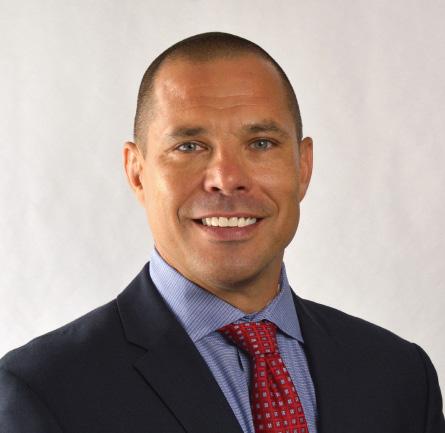
This has been a year unlike any other for the disability services community. As always, we want to be transparent with you: the pressures are real, and we do not take them lightly. The work of protecting access to care for autistic individuals and their families has never demanded more of us.
The passage of HR1 leads to uncertainty about possible Medicaid reductions that may affect many of the individuals and families we serve who depend on these vital services. Across our field there is heightened anxiety.
At the Autism Society of North Carolina, we have never allowed the difficulty of the moment to define the direction of our mission. This year, our team, our volunteers, our donors, and our community have demonstrated extraordinary resilience, and I am proud to share with you just a glimpse of what we have accomplished together.
Perhaps most gratifying is, that in the midst of challenges, we have served more people this year than ever before. Both directly through our programs and professional training initiatives, and indirectly through the ripple effect of equipping educators, clinicians, and caregivers with the knowledge they need to make a difference. Our training programs continue to expand their reach, strengthening the broader ecosystem of support available to the autism community across North Carolina.
Executive Committee
Chair: Kristin Selby
Vice Chair: Scott Taylor
2nd Vice Chair: Doug Brown
Secretary: Ralph DiLeone, Atty.
Treasurer: Craig Seman
Immediate Past Chair: Ron Howrigon
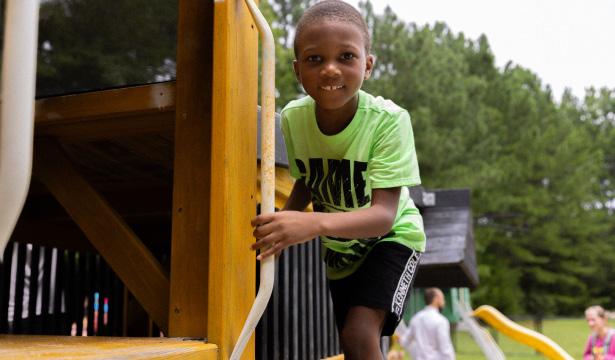
Our crown jewel, Camp Royall, is in the process of receiving meaningful facility improvements this year that will benefit campers for generations to come. These enhancements reflect our commitment to providing a world-class, safe, and joyful environment where autistic individuals of all ages can learn, grow, and simply be themselves. Investing in Camp Royall is investing in possibility and the smiles on the faces of our campers remind us exactly why that investment matters.
Closer to home, our local Support Groups have never been more active or more needed. Families navigating the complexities of autism compounded now by the uncertainties of a shifting policy landscape have found connection, guidance, and hope through these gatherings. We have expanded our reach to help more families locally, and the relationships formed in these groups are a powerful reminder that community is one of the most essential services we provide.
Our community showed up in force at this year’s fundraising and awareness events. We hosted six Run/ Walks for Autism across the state, which brought thousands of participants together in celebration of our mission; a spirited golf tournament drew generous support from North Carolina golfers near and far, and two memorable galas reminded all of us why this work inspires such deep and lasting loyalty. Beyond the funds raised, these events are a testament to the vibrant, passionate community that stands behind every person we serve.
As you read through this edition of our magazine, Spectrum, I hope you feel the same sense of pride and gratitude that I carry every single day. The pages that follow are a reflection of your support, your trust, and your shared belief that every autistic person deserves a full and meaningful life. The headwinds are real, but so is the extraordinary work we do together. Thank you for being part of this family.
With gratitude and determination,
Tracey Sheriff, CEO
Directors
Janet Breeding
Dr. Rob Christian
Fredrick A. Davis, II
Meredith McCumbee
Dr. Kristi Milowic
Richard Thompson
Chris Voss
TSafety is about more than just avoiding accidents—it’s about ensuring people feel secure as they navigate their lives. For people with autism, that sense of security can be elusive. Things like loud noises, changes in routine, or trouble communicating in a crisis can lead to anxiety and potentially dangerous situations.
hat’s why the Autism Society of North Carolina (ASNC) offers a variety of tools and resources to help autistic individuals create a “safety net” that supports them as they navigate the world.
There are many components to building a safety net, including helping people on the spectrum develop self-advocacy skills, educating communities about autism, and providing materials and resources to help protect autistic persons in a crisis.
The ASNC Family Supports team works closely with autistic individuals and their families, as well as community organizations like local police and fire departments, to help develop safety nets in communities across the state. We asked ASNC Family Supports Director Kim Tizzard to share her insights about this work and what some of the challenges and opportunities are in helping autistic people feel and be safe and secure.

Kim Tizzard (KT): People on the autism spectrum can face unique safety challenges as a result of differences in communication, social understanding, sensory processing, and decision-making. When an autistic person also has a mental health condition, safety concerns can be harder to recognize.
Without understanding autism, others, including first responders, may mistake these differences in behavior for aggression, defiance, or substance use, especially during times of stress or crisis. Helping people understand these differences promotes safer interactions and supports more effective responses during emergencies and in everyday situations.
Some autistic individuals are non-speaking and use alternative forms of communication. Others may speak fluently but have difficulty understanding questions or expressing what they mean. They may repeat words or phrases, answer “yes” or “no” without fully understanding the question or appear not to be listening when they are actually processing information differently. Many also have difficulty reading facial expressions, interpreting social cues, or knowing how to ask for help in an emergency.
and behavioral responses
Many autistic people experience sensory sensitivities and may be either over- or under-responsive to sounds, lights, smells, touch, or verbal instructions. When overwhelmed, they may engage in repetitive behaviors such as pacing, rocking, hand flapping, or repeating words and phrases. Some individuals may have unusual responses to pain or may not react to pain at all. During periods of stress or sensory overload, they may become impulsive, aggressive, or suddenly run from a situation without recognizing the dangers around them.
and emotional challenges
Autistic individuals may sometimes be misunderstood as rude, argumentative, or uncooperative when they are actually struggling to understand expectations or social situations. They may have difficulty recognizing authority figures, interpreting others’ intentions, or judging appropriate personal space. At the same time, neurotypical individuals may also have difficulty understanding autistic communication styles, behaviors, and ways of experiencing the world. Differences in communication and social interpretation can make it challenging for both autistic and non-autistic people to accurately understand one another. These challenges can increase the risk of conflict or misunderstanding with community members, service providers, or first responders.
and learning differences
Autistic individuals may process information differently and can be very literal or rigid in their thinking. They may have difficulty determining what information is most important in a situation or adapting quickly when routines change. For
example, they may struggle to understand exceptions to rules or adjust their behavior when unexpected events occur. One of the most significant challenges can be identifying potential dangers in real time. An autistic person may focus on an area of interest without recognizing surrounding risks. For example, they may approach a body of water to watch rocks splash without noticing a steep drop-off or slippery bank. If a situation requires first responders to intervene, then these differences can be heightened, making it more challenging to de-escalate, which is why it is so imperative for first responders to receive autism-informed training.
How does the Autism Society of North Carolina help individuals address these challenges?
(KT): ASNC provides a range of programming and services to give autistic individuals and their families the tools and training they need to support safety as they navigate their daily lives.
ASNC’s autistic adult day programs help people develop important life and safety skills. Each person works on goals outlined in an Individualized Support Plan, which is designed specifically for them and includes goals like learning how to recognize trusted community helpers, understanding safe and unsafe situations, knowing how to ask for help, and building awareness of personal safety. These skills are practiced in the program setting and then reinforced through real-life experiences in the community. More about ASNC’s adult day programs can be found on Page 22.
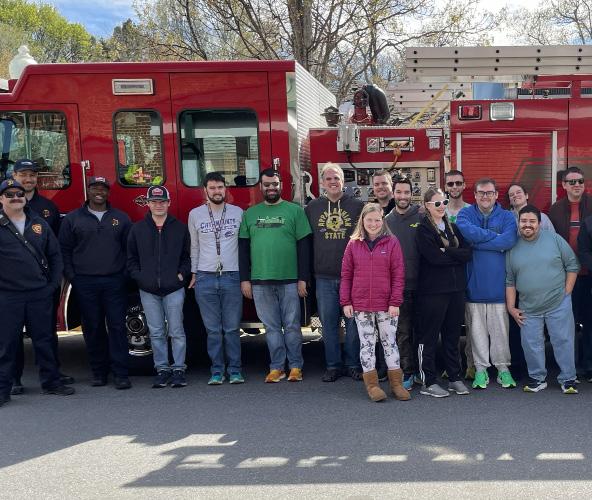
Other ASNC programming around the state, like IGNITE and Social Recreation, also provide safety education and skill building as part of their activities, including onsite visits from police officers and firefighters and field trips to first responder facilities.
IGNITE, ASNC’s peer-to-peer community centers for autistic adults, share established relationships with local police departments and other first responders. Through classes, presentations, and community interactions, IGNITE members meet police officers and learn about public safety in a supportive environment. These experiences build familiarity, trust, and confidence while teaching participants what to expect and how to seek assistance when needed. They are also an opportunity for first responders to learn more about autism and how to address the needs of an autistic person in an emergency or crisis. More about IGNITE can be found on Page 24.
Autism Resource Specialists (ARS) at the Autism Society of North Carolina help individuals and caregivers access a variety of safety supports and resources. They are trained professionals and parents of autistic children themselves who can provide information about local and national programs, including safety tools like tracking devices, medical alert bracelets, and the Big Red Safety Box (nationalautismassociation.org/bigred-safety-box/). They can also connect families with local first responders to enroll in special needs registries, which allow emergency personnel to access important information about an individual's communication style, behaviors, and support needs during emergencies. Autism Resource Specialists are available statewide and provide assistance at no charge.
Visit autismsociety-nc.org/talk-with-a-specialist to find an ARS near you.
ASNC offers additional resources to help individuals stay safe at home and in the community. These include emergency contact cards, social narratives, safety planning materials, and educational webinars such as "Staying Safe in the Community." As new programs and opportunities emerge, ASNC continues to explore innovative ways to support independence, confidence, and community safety for autistic individuals and their families.
Visit autismsociety-nc.org/staying-safe for safety materials and more information including safety tips on internet use, “stranger danger,” and bullying.
Visit autismsociety-nc.org/social-narratives/ for a series of social narratives on safety.
(KT): ASNC is committed to improving understanding of autism and promoting safety through community education initiatives across the state. We participate in several collaborative initiatives, partnering with local, state, and national organizations, to provide training and resources that support autistic individuals, families, caregivers, and community professionals. These efforts strengthen relationships and increase community awareness and understanding. Here are some highlights from this year.
Collaborating to improve outcomes for individuals with autism
In partnership with Working for Inclusive and Transformative Healthcare (WITH) and Project Unlock PEACE, ASNC codelivered in-person training to health and behavioral health specialists from correctional institutions in Wake County. The training was part of a pilot project in North Carolina focused on giving correctional officers and staff the tools and knowledge needed to better serve those with intellectual and developmental disabilities, including autism. More about this partnership can be found on Page 17.
Providing safety training
Earlier this year, ASNC partnered with Dustin Chandler, CoFounder and Lead Trainer of the Interaction Advisory Group, and the North Carolina Council on Developmental Disabilities (NCCDD) to offer statewide Stay Safe Program sessions for caregivers and autistic adults. These trainings focused on practical safety topics, including emergency preparedness, safe interactions with law enforcement, wandering prevention, family crisis planning, fire safety, and other important community safety considerations. The sessions were part of NCCDD’s Autism and Intellectual and Developmental Disabilities Safety Training for First Responders initiative.
As part of its partnership with the North Carolina Department of Health and Human Services (NCDHHS), ASNC provides the Understanding Autism component of Crisis Intervention
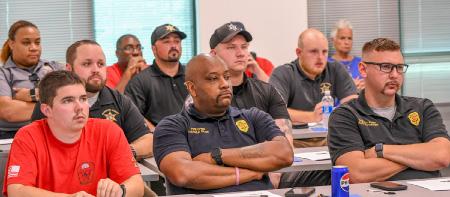
Training (CIT) programs for the state's Managed Care Organizations (MCOs). These trainings help first responders better understand autism and improve their interactions with autistic individuals during emergencies and crisis situations.
In addition to CIT programs, ASNC provides free, autism-specific training upon request to organizations across North Carolina. Participants have included 911 dispatchers, emergency medical personnel, fire departments, sheriff’s offices, police departments, the American Red Cross, and search-andrescue teams. These trainings help build awareness, reduce misunderstandings, and promote safer, more effective responses when working with autistic individuals.
ASNC provides these educational opportunities at no cost to participants and organizations. Through ongoing partnerships and outreach, ASNC continues to expand opportunities for communities to learn about autism, improve safety, and create more supportive environments for autistic individuals and their families.
Are you or your organization interested in autism-informed training?
Scan the the QR code for more information.
How does educating the wider community about autism help make autistic people safer?
(KT): Educating the wider community about autism significantly improves safety for autistic individuals by reducing the likelihood of misunderstandings with law enforcement and preventing wandering-related tragedies through community awareness events and training. Educated communities and neighbors are more likely to recognize the signs, act quickly, and alert authorities.
We encourage first responders to ask, what is known as the “Fifth Question,” which asks, “What is different today for this individual?” This encourages first responders to consider that a person’s behavior could be related to an intellectual developmental disability like autism.
Widespread understanding prevents well-meaning but harmful interventions during meltdowns or sensory overloads. Educated bystanders know how to provide space, reduce sensory inputs (like noise and bright lights), and remain calm rather than react with confusion or hostility.

As many as 1 in 31 people in the U.S. may have an autism diagnosis. More than 5.4 million adults in the U.S. have Autism Spectrum Disorder (ASD). Over 65,000 individuals and their families in North Carolina receive direct autism services each year from the Autism Society of North Carolina (ASNC).
These statistics reflect a growing need for additional services and programming to support those impacted by autism. ASNC understands the challenges people face in accessing programs to fit their needs and continues to expand its services across the state.
The Centers for Disease Control and Prevention (CDC) estimates that approximately two percent of adults in the U.S. are on the autism spectrum. Adults with autism often struggle to find the resources, supports, and community they need to thrive.
That's why ASNC continues to expand its programs and resources for autistic adults. With programs currently available at locations around North Carolina, including Asheville, Davidson, Fayetteville, Greensboro, Moncure, Raleigh, Wilmington, and Greenville, ASNC is now expanding its autistic adult offerings in Newport with new group-focused activities designed to build relationships and skills.
Like other autistic-adult programs offered by ASNC, these adult groups are open to individuals 18 years or older, with a diagnosis of autism or Asperger’s Syndrome. In a structured learning environment, the program focuses on helping participants gain greater self-sufficiency and become more involved in their community as they transition from school life to young adulthood. Through individualized goals and structured activities, participants develop skills in areas such as financial literacy, social interaction, employment readiness, volunteerism, and daily living while building relationships and gaining new experiences.
For more about ASNC’s new adult programming in Newport, email Holly Aiken at haiken@autismsociety-nc.org or visit our Autistic Adult Programs webpage at: autismsociety-nc.org/adult-program-info.
Use this QR Code to watch a short video about ASNC's autistic adult programming.
The Applied Behavior Analysis (ABA) in-home services currently available in the Asheville area will be expanding this fall to include clinic-based ABA services.
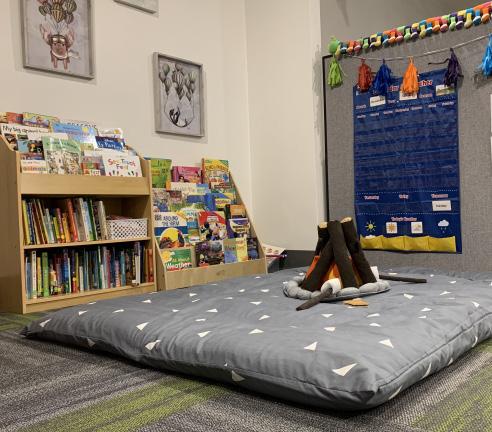
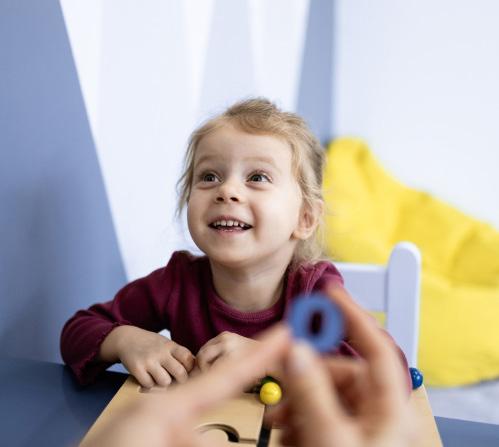
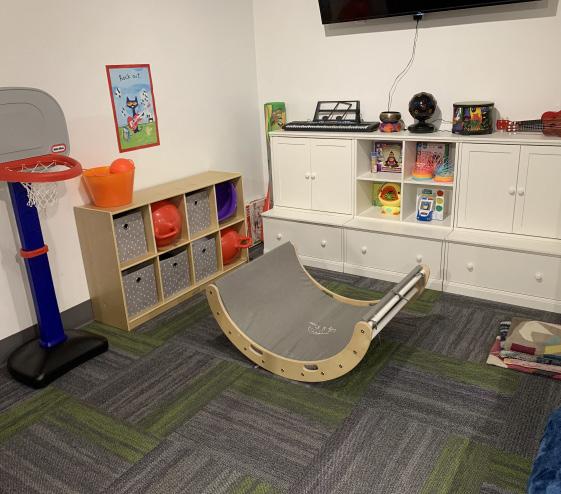
The new clinic will follow in the footsteps of ASNC’s Wilmington and Raleigh ABA clinics and serve children ages seven and younger with an established autism diagnosis. A team of highly skilled ABA therapists will provide evidence-based instruction using proven strategies to meet each child’s unique needs. In the clinic setting, children prepare for school and academic success, reduce unsafe behavior, improve communication skills, and provide daily activities to help each child build a happy, empowered life. To learn more about our ABA services in Asheville visit: autismsociety-nc.org/ ABAclinicAsheville.
Applied Behavior Analysis (ABA) represents a range of systematically implemented teaching strategies developed from the science of learning and behavior. At its heart, the science of behavior analysis is used to enhance an individual’s quality of life. ABA helps someone increase communication, independence, and social skills and reduce behaviors that interfere with learning and/or being successful. ABA has been around for almost 100 years and like any practice has evolved with knowledge and experience.
Today, effective ABA programs prioritize the values and goals of the individual and emphasize meaningful skill development, close collaboration with the individual and their family, and the use of a variety of evidence-based approaches.

Building social bridges
The clinic offers a small group environment that fosters opportunities for children to socialize with peers, develop friendships, and learn valuable social and self-advocacy skills.
Preparing for the future
The clinic experience helps prepare children for future success in daycare, school, or other environments by focusing on essential skills including communication, transitioning between activities, and social interaction.
Consistency is key
The clinic setting provides a structured and consistent learning experience crucial for progress in ABA therapy.
Peace of mind for parents
The clinic allows parents to focus on work or other commitments during their child’s therapy sessions, confident that their child is in a safe and engaging environment.
Intentional design
A fully accessible, state-of-the-art facility designed for safety and equipped with learning materials provides dedicated workspaces and sensory stations mean children have the tools and spaces they need to grow and learn.
For more information about our ABA services and ABA clinics, visit autismsociety-nc.org/aba.

The Autism Society of North Carolina (ASNC) advocates for the needs of individuals and families impacted by autism by working with policymakers and other organizations.
We believe North Carolina and our federal government must continue investing to ensure quality, accountable service and support systems that focus on community settings and ensure that people with Autism Spectrum Disorder (ASD) achieve a good quality of life.

1 in 31
people in the U.S. may have an Autism Diagnosis
5.4 million+ adults in the U.S. have Autism Spectrum Disorder (ASD)
For the past year, Medicaid funding has been central in budget conversations at the North Carolina General Assembly (NCGA). During this time, ASNC staff focused its efforts on advocating for the needs of individuals with autism and their families by participating in legislative hearings and meeting with representatives from the Governor’s office, the NC Department of Health and Human Services (NCDHHS), health plan representatives, elected officials, people on the spectrum and their families, and services providers.
After months of budget negotiations, NCGA voted “yes” on Governor Stein’s bill to fund Medicaid with dollars from the Medicaid reserve fund through the end of the 2025-2026 fiscal year. That bill was signed into law in April 2026 as non-recurring funding, setting the stage for the current conversation about

65,000+ individuals and families in North Carolina recieve autism services each year from ASNC
Your voice shapes the policies that affect our community
Medicaid funding in 2026-2027. North Carolina’s new state fiscal years begins July 1. As of this writing, a full budget for the SFY 26-27 is close to completion. ASNC will post on our blog page once the final version is published and highlight items of interest to our community. ASNC remains fully engaged in these conversations and continues to advocate for funding that makes quality autism services accessible to the people who need them.
In April NCGA’s IDD Legislative Caucus, led by Representative Zach Hawkins and Senator Michael Lee, held a day filled with testimonies from members of the NCGA themselves, people with IDD, their families and medical professionals. The focus of the testimonies ranged from the importance of direct support professionals, their wages, accessing supplies and medications, and of course the waitlist for Innovations services and other barriers to access.
As the data shows and as the families we serve know firsthand, ABA therapy is not a luxury. It is a clinically proven, medically necessary treatment that gives children and adults with autism the tools to communicate, learn, and participate in the world around them.
That is why ASNC continues to educate elected officials about the critical importance of access to ABA and other services for people on the spectrum and their families. In the spring, ASNC, alongside health plans, the NCDHHS, and other ABA providers, presented to the NC Joint Legislative Oversight Committee (LOC) to make clear the difference it makes in the lives of autistic individuals when they receive the services they need when they need them. The end result of HB 696 led to several changes being made to ABA therapy funded via Medicaid in NC. The Division of Health Benefits is promulgating those changes and more in their coverage policies. Once approved by CMS (federal oversight) they will be effective in North Carolina.
ABA is not the only service deserving attention. ASNC continues to advocate for the full range of supportive services including respite care, Community Living and Supports, employment, and residential options that allow people with autism to live full, meaningful lives in their communities.
In times of uncertainty around Medicaid funding, it is especially important that these needs remain visible to decision-makers and ASNC continues working with NCDHHS and elected officials on the Innovations Waiver waitlist, 1915i services, and other critical supports.
In North Carolina, Medicaid funds ABA and other evidencebased treatment services through the state’s ResearchBased Behavioral Health Treatment (RBBHT). Last fall, with recommendations from ASNC and other stakeholders, NCDHHS issued a white paper on RBBHT aimed at managing both the cost and quality of these services in response to the rapid growth of Medicaid expenditures.


Medicaid spending on ABA services in North Carolina and elsewhere has been of particular concern, drawing scrutiny from the federal government, the Department of Justice (DOJ), and the Office of Inspector General (OIG), which have launched reviews in multiple states.
This rise in spending has not always been driven by need alone. It reflects a national trend as dishonest providers bill for services not delivered, pad hours, and prioritize revenue over results. These actions have put the entire system at risk and are draining Medicaid dollars that fund legitimate services.

Continued state and federal attention to this issue is expected as health plans and funders add additional guardrails around service delivery.
NC Medicaid’s Office of Compliance and Program Integrity (OCPI) works diligently to stop fraud, waste, and abuse in Medicaid. North Carolina has a robust program-integrity infrastructure that providers, plans, and state agencies take seriously. Additional bills introduced this summer will give stronger authority to strengthen oversight. Efforts of the Managed Care Plans and OCPI, will continue to make service providers accountable for making quality services available to people with autism and their families in our state.
Families, providers, and advocates also play a role by receiving only services that are needed and appropriate, ensuring documentation reflects what is actually delivered, and reporting concerns when something doesn’t seem right. For more information on NC Medicaid’s program integrity work, visit medicaid.ncdhhs.gov/meetingsnotices/officecompliance-program-integrity-ocpi.
For more updates on ASNC’s advocacy and policy work, visit autismsociety-nc.org/public-policy-priorities.
As North Carolina considers how to handle the ever-growing waitlist for Innovations Waiver services. NCDHHS offers a new initiative, Inclusion Connects. It connects people with intellectual and developmental disabilities with services and supports that help them live, work, and participate in their communities. It focuses on housing access, waitlist and service data, the DSP workforce shortage, and competitive integrated employment.
Your vote is your voice!
Don’t miss the 2026 midterms! To confirm your voter registration information, find your polling place, or request an absentee ballot, visit the NC State Board of Elections at www. ncsbe.gov.
Learn more at: ncdhhs.gov/about/ department-initiatives/inclusionconnects.
The Innovations Waiver Waitlist
Dashboard, found on the Inclusions Connects page, provides publicly accessible, transparent data about the current waitlist. We encourage families, providers, and advocates to explore these resources and sign up for updates. In the coming years, we know work will be done to find more information about the needs of people on the waitlist.
North Carolina’s managed care (MCO) landscape has seen significant consolidation over the past year, and two major mergers (Vaya with Partners, and Carolina Complete Health with WellCare) directly affect families and providers in our community. These mergers reflect a broader trend as managed care organizations (MCOs) consolidate to reduce administrative overhead and strengthen long-term system stability. ASNC continues to monitor the impact these mergers may have on service access for people with autism and their families. If you have questions about how either merger may affect your services, contact your plan directly or reach out to ASNC.
ASNC continues monitoring the impact of HR 1 on NC Medicaid, particularly the potential effects on individual eligibility for Medicaid and the HCBS services and supports on which our community depends. This will be the biggest change in Medicaid eligibility in years. Recipients of Medicaid need to pay close attention to any needed updates and documentation changes. For the most up-to-date information directly from NC Medicaid, visit medicaid.ncdhhs.gov/beneficiaries/impact-hr1-and-federal-changes-medicaid.
Every two years, ASNC establishes policy targets to align with the NC legislative and budget cycles. We are beginning to work on our 2026-2027 targets, and we want to hear from you. Your input directly shapes where we focus our advocacy energy, what we bring to legislators, and how we show up for the autism community across North Carolina. Look for a survey in your inbox and on our website where you can share your input.
Scan the QR Code for ASNC's current Policy Priorities.
More public policy and advocacy information and resources:
- ASNC Blog: autismsociety-nc.org/blog
- Inclusion Connects: ncdhhs.gov/about/department-initiative/inclusion-connects
- HR 1 and NC Medicaid: medicaid.ncdhhs.gov/beneficiaries/impact-hr-1-and-federal-changes-medicaid
- NC Medicaid Program Integrity: medicaid.ncdhhs.gov/meetingsnotices/office-compliance-program-integrity-ocpi
- Vaya/Partners Merger: vayahealth.com/news-and-stories/vaya-health-and-partners-health-management-merger/
- Carolina Complete Health/WellCare Merger: carolinacompletehealth.com/merger-landing.html
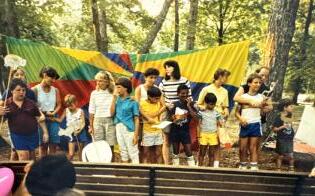
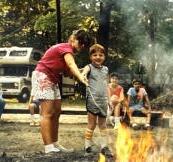
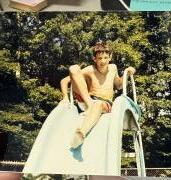
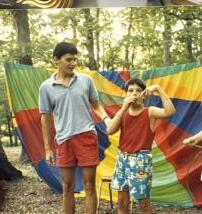
Camp Royall has been described by many campers as their “happy place.” As the nation’s largest and oldest autism camp, Camp Royall is a hub of year-round activity from overnight summer camp sessions to teen and adult retreat weekends, and more. While the Autism Society of North Carolina’s Summer Camp program was officially established in 1972, the beautiful 133-acre Camp Royall facility in Moncure, opened its doors in 1997 making this its 30th anniversary year.
Camp Royall has become an integral part of Autism Society of North Carolina (ASNC) programming for children and adults alike, offering campers transformational experiences and providing their families with time for rest and respite. Many campers first experience Camp Royall as youngsters, enjoying cookouts, pool time, boating, and other traditional camp experiences; and many continue coming to camp to build important life skills, social connections, and more as they transition to adulthood. No matter a person’s age or stage, Camp Royall allows every camper to explore who they are and who they want to become in a safe and accepting community.
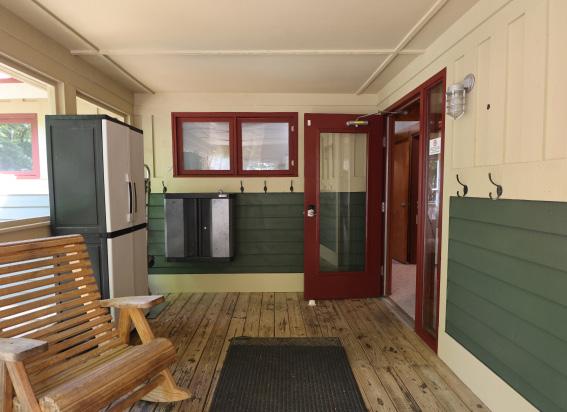
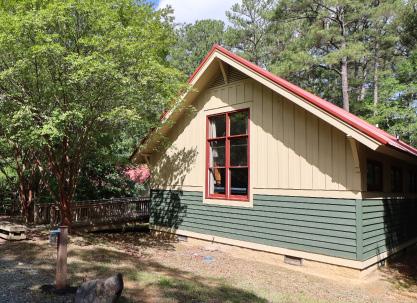
Each year Camp Royall serves thousands of campers, so it is no surprise that camp facilities get a lot of use. Thanks to a very generous gift from an anonymous donor, facility improvements and enhancements were undertaken this spring. From new floors in every cabin and fresh exterior paint on all the buildings, to new windows for the Arts and Crafts building, new flooring and windows in the Dining Hall, and other projects, Camp Royall enjoyed a first-class makeover just in time for the start of summer camp on May 31.
When campers arrived anticipating another week at their “happy place,” they found Camp Royall to be an even happier place than it was before.
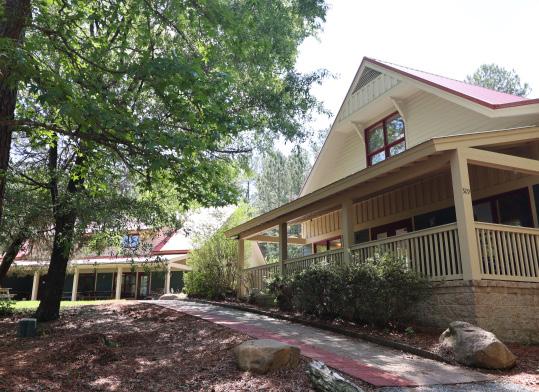
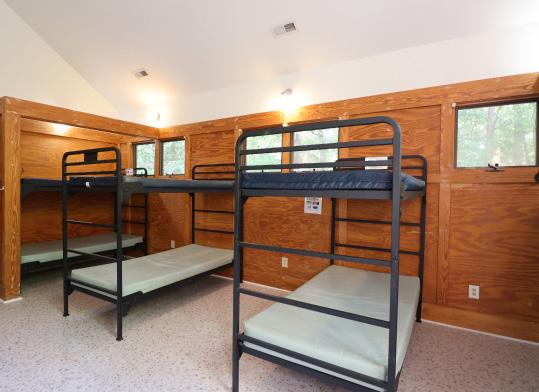
• New floors in every cabin
• Fresh exterior paint on all buildings
• New windows for the Arts and Crafts building
• New flooring and windows in the Dining Hall
• Plus other facility enhancements!

"Camp Royall is his thing."
- Tatiana, Vincent's Mom
That flash of happy energy you just saw whiz by was Vincent Bhulabhai, a six-year-old camper making the most of his Camp Royall experience. Vincent loves staying in a cabin, being out in nature, participating in group activities, and like so many other campers he says pool time is his favorite. “All the things he does here,” says his mom, Tatiana, “he just loves. Camp Royall is his thing.”
Camp Royall has been a blessing for Vincent and his mom. In 2022, the same year Vincent was diagnosed with autism, his father passed away leaving Tatiana to navigate the next steps for their child. Fortunately, she heard about Camp Royall from another parent of an autistic child and has never looked back. “At first I wasn’t sure if I felt comfortable leaving my son for a whole week,” says Tatiana, “but I wanted what was best for him, so I took a
May 31 – Aug. 7, 2026 → Summer Camp August 22 & 23, 2026 → Family Fun Day & Family Overnight Camping
Applications for Summer Camp 2027
Available → Nov. 1, 2026
Application deadline → Jan. 31, 2027
Applications for Spring 2027 Programs
Available → Nov. 1, 2026
Application deadline → Dec. 31, 2026
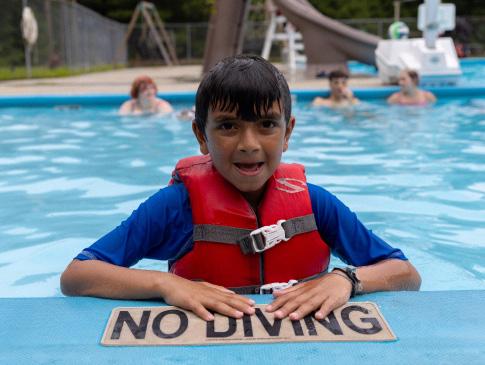
leap of faith and I applied. We were lucky enough to be selected through the lottery system.”
Like many Camp Royall families, Tatiania depends on a scholarship to make camp a reality for Vincent. “I am so grateful for the scholarship Vincent gets to go to camp. Without it, Camp Royall would not be possible for us. It means a week of fun and growth for Vincent, and it gives me some important time for myself. Camp Royall has just been an amazing experience for Vincent and me.”
Scan the QR Code for a video about Vincent and life at Camp Royall.
Scan the QR Code for Camp Royall progams and calendar.
The Family Supports team at the Autism Society of North Carolina (ASNC) plays a critical role in ASNC’s mission to improve the lives of individuals with autism, support their families, and educate communities. The team includes Autism Resource Specialists, support groups and training for caregivers and professionals.
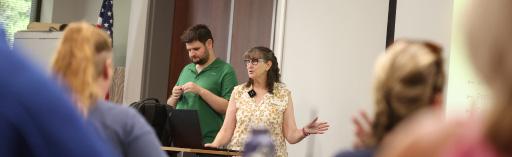

Autism Resource Specialists are available in every county in North Carolina.
Welcoming, inclusive communities for individuals and families across NC. 80+ Counties Served
Autism Resource Specialists who are available in every county of North Carolina to help individuals and families navigate their journey with autism. As trained professionals who are also parents of autistic children, Autism Resource Specialists provide free guidance and information on autism services, accessing supports in school and at home, navigating Medicaid, and other helpful resources and programming.

Trained professionals and parents providing free guidance and information.

Programs and resources used to educate, empower, and create opportunities.
Support Groups provide those impacted by autism with welcoming, inclusive and accepting communities where group members and volunteer leaders can share their experiences, learn from one another, and have fun. Support Groups are established in 80 counties across North Carolina and include Hispanic groups as well as groups for autistic adults and autistic parents.
The Autism Society of America (ASA) received a grant from Working for Inclusive and Transformative Healthcare (WITH). ASA's Project Unlock PEACE (Providing Equitable Autistic Care Everywhere) partnered with ASNC to launch a pilot project in North Carolina focused on giving correctional healthcare professionals, administrators, and corrections officers the tools and knowledge needed to better serve those with IDD, including autism, in correctional settings. ASNC helped deliver in-person training to 65 health and behavioral health specialists from correctional institutions in Wake County. That training curriculum has been refined with input from participants and other stakeholders and recorded, allowing the NC Department of Adult Corrections to distribute the training across facilities statewide.

Together with Arc of North Carolina, ASNC offers an online learning and guided practice model to provide professional development for those working in IDD and family support in local communities. The program, NC Family Support ECHOTM , brings together interdisciplinary teams of providers and partners to address relevant IDD topics with learners. Over seven weeks, learners participate in Zoom sessions consisting of a 30-minute presentation by a topic expert followed by a presentation by a learner about a situation they are navigating. The session includes time for questions and a discussion of potential options and recommendations for support.


ASNC is working with researchers at UNC TEACCH Autism program who have partnered with a Community Advisory Board of autistic adults, caregivers, and clinicians to develop the THRIVEAutism Toolkit: Therapeutic Resources for Implementing Valuable Evidence-based Practices with Autistic Youth. THRIVE is an accessible, virtual toolkit designed to train community-based mental health clinicians in using evidence-based practices to support autistic youth in North Carolina. Funding for this project is provided by UNC Chapel Hill’s NC TraCS Institute and the Organization for Autism Research. Development and pilot trial of the THRIVE toolkit is ongoing through February 2028 and will be available on the TEACCH website once it is completed.

ASNC provides content to help participants understand autism as part of the curriculum covered during a week-long Crisis Intervention Training. The training is organized statewide each year by lead representatives from each of North Carolina’s four MCOs for first responders, sheriffs, police and fire departments. See more about safety and autism on Page 4.

ASNC received a grant from the State Library of North Carolina to share basic strategies for interacting with individuals with autism. The Family Supports team delivered two in-person workshops and two online webinars to library staff across the state, reaching more than 200 participants who now have the tools they need to better understand and support those on the spectrum in a library setting.

Through a partnership with FACES for Autism, ASNC offers a five-week training course to improve knowledge, advocacy, and empowerment among underrepresented parents of children with autism. The FACES framework is family-centered care with a focus on Fostering Advocacy, Communication, Empowerment, and Support (FACES) to improve a child’s outcomes and a family’s quality of life. Email Felicia Williams Brown at fwilliams@autismsociety-nc.org for more information.
Free workshops are offered regularly both online and in-person to individuals and families impacted by autism. Workshops include topics like what steps to take after an autism diagnosis and how grandparents of autistic children can support their grandchild. Most recently new workshops include “Building, Encouraging, and Valuing Self-Advocacy in Children and Adults with Autism,” “Successor Guardianship,” and others.

Health Matters is a 12-week virtual course for autistic adults designed to improve health, nutrition, exercise, self-advocacy skills, and self-confidence. The participants meet weekly online to support building friendships and community. For more information, about Health Matters, email Felicia Williams Brown at fwilliams@autismsociety-nc.org.
ASNC’s Campus Network is a virtual program for postsecondary students across North Carolina. The network brings together autistic and non-autistic students to build connections, share experiences, and learn about ASNC programs and resources. The ASNC Campus Network also supports autistic students in college and those preparing for college, provides information for siblings and others interested in supporting people on the spectrum, explores careers with ASNC and in the autism field, and helps students connect with others who share similar interests.
For more information about Campus Network, contact Peer Event Host Dani White at dwhite@autismsociety-nc.org.
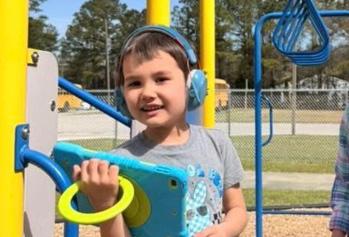
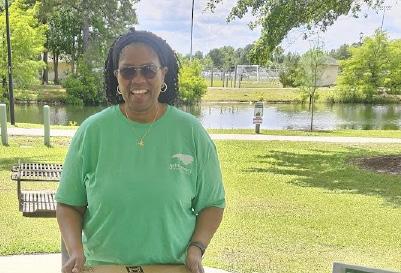
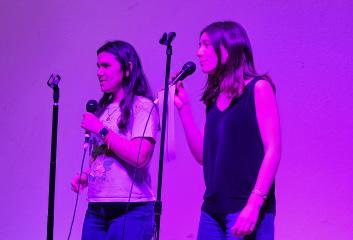
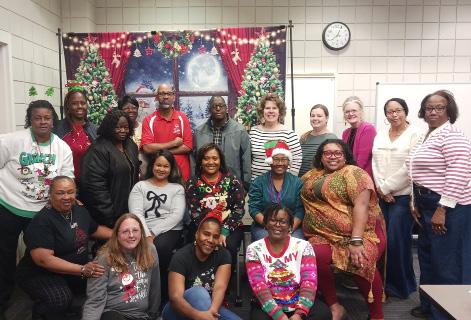
The Autism Society of North Carolina (ASNC) Support Groups promote and extend the mission, vision, and values, of ASNC. They provide welcoming communities for autistic individuals and their families across North Carolina. With more than 80 groups statewide, including autistic adult and Hispanic Support Groups, volunteer leaders help connect people, share resources, raise awareness, and build community partnerships. Here are just a few examples of their impact:
Alamance County Support Group enjoys great support from its local community. Area venues like Zia’s Tap Room, Mission House Café, and Impact Alamance offer spaces for the group to meet free of charge, while Alamance Community College (ACC) frequently invites the group to host a table at their events and the ACC Otter Cup Training Grounds coffee shop donates a percentage of coffee sales to the group annually.
Cumberland County Support Group enjoys a Pig Pickin' each year at Fort Bragg Harley Davidson in Fayetteville where they “cook up a feast of mouthwatering BBQ.” A great event for the whole family with music, vendors, and more, it supports ASNC in Cumberland County.
Durham County Support Group has partnered with the Durham Main Library to co-host sensory-friendly craft events. The library provides materials and advertises the events, making it fun for group members. It is a great way to encourage new members and educate people about the library, which includes a sensory room for calming.
Gaston County Support Group celebrated the opening of a local FirstWatch by hosting a table at the opening day celebration. In turn, FirstWatch donated a portion of the funds raised at the celebration to Gaston County Support Group.
Guilford County Support Group is honored to host Coffee Chats at A Special Blend in Greensboro, a local coffee shop employing people of all abilities. A Special Blend provides a non-profit discount for the Guilford County Support Group to reserve a room each month.
Jackson Swain Qualla Boundary Support Group together with Early Head Start, FSN, and Eastern Band of Cherokee Indians, co-hosts a large annual awareness celebration event. Local shop, Qualla Arts and Crafts Mutual, Inc., sells the group’s specially designed t-shirts with the message “I/We Support Special People,” honoring a culture with no word for “autism” or “disabilities.” Other partnerships include Harrah’s Casino and the Eastern Band of Cherokee Indians which provide funding for the group’s activities.
Pamlico County Support Group has a wonderful relationship with the Pamlico County Library which provides space for the group’s monthly events and advertises the events to the wider community.
Pender County Support Group partners with the Pender school system to use outdoor spaces for free, allowing the group to host craft events for Halloween and an Easter egg hunt in the spring.
Person County Support Group has some great community connections including the local Senior Center which provides space for the group to meet each month. Local businesses host fundraisers to support the group including T-Rays Barnyard Grillin’ and Bullpen Fitness Gym. Palace Pointe, a local recreational venue, helps with group discounts for movie theater rentals, roller-skating rink access for events, and more.
Surry County Support Group received a donation of $3,208.67 from The Country Road Miata’s group! Support Group Coleader Brooke shared, “Donations like these help fund our monthly events and support families in our community. We are so grateful for their support!”
Wake County Support Group connected with the Raleigh Police Department for a Pancakes with Police event welcoming individuals with autism and their families to enjoy a pancake breakfast, learn more about law enforcement, meet officers in a comfortable setting, and explore autism resources.
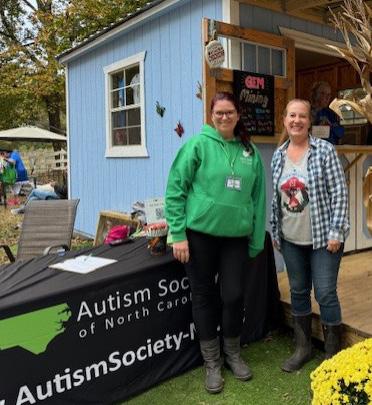

Understanding that adults with autism often struggle to find the support and community they need to thrive, the Autism Society of North Carolina is pleased to announce the establishment of two autistic adult peer-to-peer support groups.
The Adults with Autism Support Group provides opportunities for social engagement and community building in an inclusive and accepting environment. The Parents with Autism Support Group offers a supportive space specifically for autistic parents to share lived experiences and discuss the unique opportunities and challenges they navigate.
Both groups offer monthly meet-ups that take place online through Zoom, making them accessible to autistic adults statewide.
For more information about these autistic adult support groups, contact Peer Event Host Dani White at dwhite@ autismsociety-nc.org and visit our calendar at autismsociety-nc.org/calendar to register for an upcoming event.

Visit our online calendar at: autismsociety-nc.org/ calendar, for upcoming dates for all our Support Group events across the state.
Interested in starting a Support Group near you or becoming a Support Groups volunteer?
Reach out to Lauren Buhrmaster at lbuhrmaster@autismsociety-nc.org or use the QR code on the left to learn more about these opportunities.
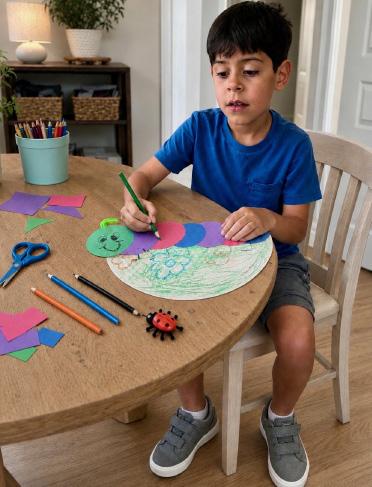
Nuestro agradecimiento a los Facilitadoras Hispanos y Lideres de los Grupos de Apoyo pororganizar reuniones y eventosen cada grupo de Apoyo. Ofrecemos varias oportunidades de aprendizaje y actividades divertidas en los próximos meses.
Actividades con la Familia Durante Días de Descanso
Antes de cada actividad verifique que los lugares sean seguros y comparta su ubicacion con sus familiares. Lleve su celular, medicinas, agua, bocadillos y un adulto si es necesario.
Cosas para hacer
• Dar paseos y tomar fotos
• Búsqueda del tesoro en casa y en los parques
• Bailar, karaoke, yoga
• Visitar museos y zoológicos
• Jugar a juegos de mesa y rompecabezas
• Imitar sonidos de animales
• Equilibrarse con pelotas
• Crear historias con figuras y dibujos
Encontrando servicios y programas para mi hijo
Próximos eventos y
Seminarios web en español
A continuación, vea las próximas capacitaciones centradas en temas de comportamiento, explicando el impacto del autismo en nuestros hijos y cómo solicitar servicios y terapias en casa.
• 21 de julio| Comportamiento difícil
• 5 de agosto| Comoayudar a mi hijo
• 11 de agosto | Hablando obre sexualidad
• 27 de agosto | Navegando en el sistema
• 24 de septiembre | El impacto del autismo en la familia
• 7 de octubre| Como ayudar a mi hijo
• 13 de octubre| La familia y el diagnostico
• 22 de octubre |El futuro de mi hijo
• 2 de noviembre | La tutela legal
• 2 de diciembre| Como ayudar a mi hijo
• 15 de diciembre | Reportando el bullying
• 17 de diciembre | Seguridad y peligro.
Celebraciones culturales en los Grupos de Apoyo Hispano Estas son algunas de las celebraciones que esperamos con entusiasmo:
• Verano: Picnics Hispanos
Si necesita ayuda o tiene preguntas sobre servicios o programas, la Autism Society of North Carolina (ASNC) tiene una línea telefónica en español a la que puede llamar al 919-865-5066. Visite la página web de recursos en español aquí: autismsociety-nc.org/recursos-en-espanol. Póngase en contacto con un Especialista en Recursos en Español para obtener información sobre el MCO de su condado, un Administrador de Cuidados, 1915i, la Exención de Innovaciones de Respiro, la transición a la adultez, programas de trabajo de verano y más.
Si está interesado enorganizar un eventoenvíe un correo electrónico a la Coordinadora Senior de Alcance y Apoyo Hispano, Mariela Maldonado a: mmaldonado@autismsocietync.org.
Para más información sobre eventos hispanos y Grupos de Apoyo Hispano, por favor visite este enlace de Recursos en Español en autismsociety-nc.org/recursos-en-espanol o el calendario de Eventos Próximos en autismsociety-nc.org/ calendar.
• Septiembre/Octubre: Mes de la Hispanidad
• Noviembre: Celebración de Acción de Gracias
• Diciembre: Navidad
• Enero: Desfile de Los Tres Reyes Magos
• Febrero: Mes de la Amistad
• Marzo: Conferencia Anual de Autismo
• Abril: Mes del Autismo
• Mayo: Mes de la Madre
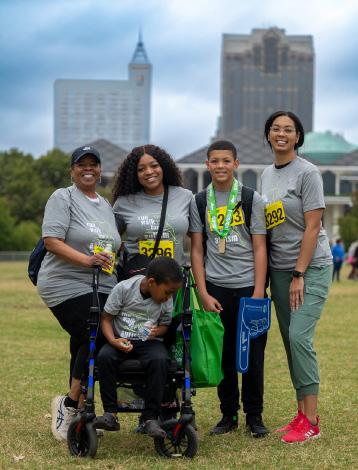
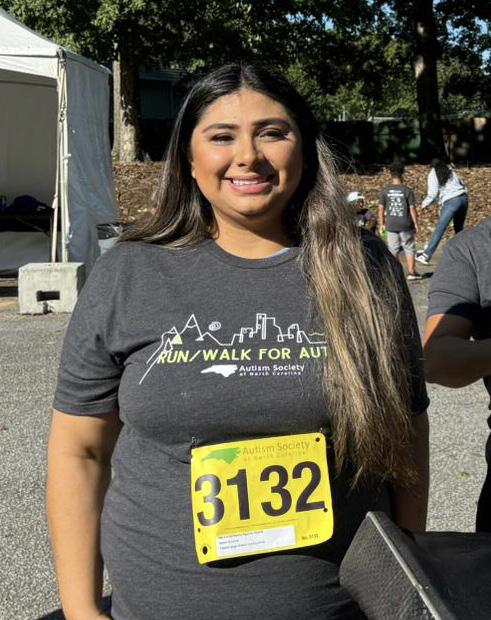
Participante en una Carrera/Caminata de otoño por el Autismo para recaudar fondos para mejorar la vida de niños y adultos con autismo, apoyar a sus familias y educar a la comunidad de Carolina del Norte. Usa el código QR (izquierda/derecha) para obtener detalles y registrarte.
The Autism Society of North Carolina (ASNC) operates licensed day programs in Asheville, Greensboro, Raleigh, and Fayetteville. Day programs provide a structured learning environment where autistic adults receive the necessary support to develop greater self-sufficiency and more involvement with their community. Day programs offer many activities and opportunities that allow adults to choose what is meaningful for them. Individualized learning tracks are designed for each participant based on their interests and skills.
Out west, Ascend participants in Asheville take part in lots of different activities that help them explore their creative side, build social and independent-living skills, and get involved in their community. A trip to a rock-climbing gym hosted by Asheville Parks and Recreation got participants reaching new heights, while regular classes provided by Bloom Fitness help teach the importance of healthy habits and gets everyone moving.
Art projects abound at Ascend with participants exploring all kinds of mediums from paint to clay and everything in between. A regular feature of the Ascend experience includes visits from therapy dog Chula, who celebrated her birthday at a party with Ascend participants!
Another highlight of this year was a trip to the Buncombe County Special Olympics Spring Games at T.C. Roberson High School. More than 300 athletes gathered for the games, including 15 Ascend participants.
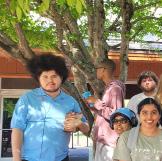
Participants with Fayetteville Thrive have been busy this year with regular activities, skill-building work, and special outings like Tuesdays at Thrive. A weekly gathering full of laughs, creativity, and teamwork, one Tuesday project was building 3D creations out of marshmallows and toothpicks. The project gave everyone the chance to exercise their imagination and problem-solving skills.
A special outing made possible by a generous Autism Awareness Month donation allowed participants to strike up the fun while bowling. Everyone took part and enjoyed some friendly competition, teamwork, and lots of cheering.
Regular cooking classes have participants working alongside staff to create simple, budget-friendly dishes while building confidence, gaining independent-living skills, and learning how to be safe in the kitchen. Field trips and outings like a trip to the Fayetteville History Museum for a scavenger hunt and a spring egg hunt at Seabrook Park rounded out this year’s Thrive experience.
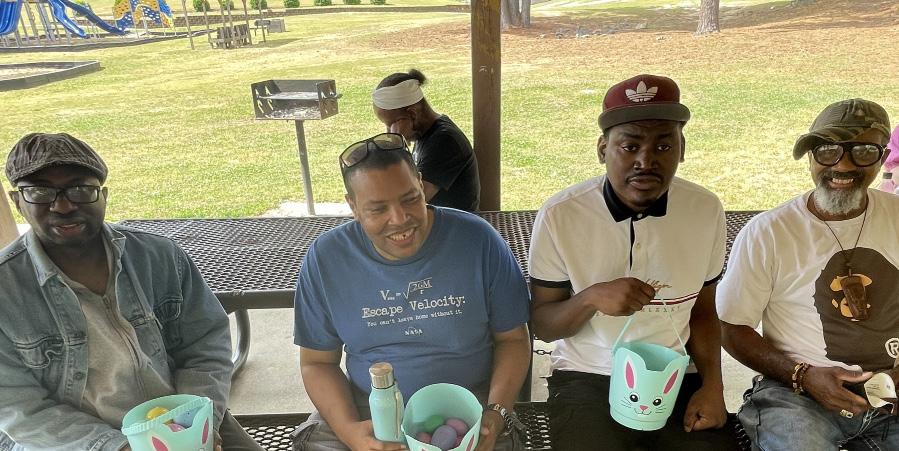
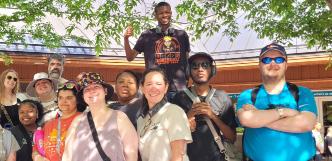
In Greensboro, Autism Center for Life Enrichment (ACLE) participants enjoyed a wide range of activities that support skill-building, socialization, and community. This year, participants learned about gardening from a local botanist, took a trip to Home Depot and the farmer’s market to purchase gardening supplies and then used what they learned to replant the ACLE garden with sunflowers, lettuce, cucumbers, basil, watermelons, tomatoes, and more! Now they are reaping what they sowed making salads, pickles, zucchini fritters, strawberry shortcakes, tomato soup, and other tasty dishes using their homegrown ingredients in their regular cooking classes.
Monthly trips to the local library saw participants engaging in activities organized by librarians including scavenger hunts, crafts, and games, and checking out books and movies to bring back to the program and share with their peers.
Other highlights of the year included a trip to A Special Blend coffee shop for coffee, a tour, and a look at the job responsibilities of each employee; a visit from the Greensboro Eco Bus complete with an assortment of animals and animal skins/furs for everyone to learn about; and a fishing trip to a local pond where participants who had never been fishing before got a chance to try it while others simply enjoyed the scenery and hanging out together.
The Triad Prom, complete with photo booths, a red carpet, dancing, and a meal, was put together and hosted by the hardworking ACLE staff. Everyone was dressed to impress as 25 participants, together with a big turnout of direct care support professionals, made the prom a truly memorable evening.
The Evolve day program in Raleigh enjoyed an exciting and engaging year, welcoming many new friends into the program, and continuing to build a fun, inclusive community. Participants enjoyed a special visit from the Traveling Tortoise Lady, giving everyone the chance to learn about and interact with tortoises and different reptiles.
Regular Friday outings have meant exploring new and familiar things from trips to Goodberry’s for a frozen treat to discovering more about our world at the North Carolina Museum of Natural Sciences. A visit to Dorothea Dix Park to see the giant troll installation was a big hit with participants using their map skills to navigate to the site. A trip to the New Hope Valley railway for a train ride around New Hope made for a great day, complete with snacks.
Weekly bowling outings were another favorite activity, providing opportunities for recreation, physical activity, and social connection. And speaking of physical activity, regular trips to the Garner YMCA got participants moving at an adaptive fitness class on Fridays.
Volunteering is an important part of Evolve’s activities, and this year participants wrapped 23,000 diapers for a local diaper bank and volunteered with Meal on Wheels.
On the education front, regular cooking classes continued to be a big part of the Evolve experience as participants strengthened independent-living skills while exploring new recipes together. Participants also learned about fire safety from local firefighters and even got to sit inside a fire truck and use a hose—full throttle!
IGNITE are unique peer-to-peer community centers located in Davidson and Raleigh. Designed to empower young adults with autism to achieve greater independence in their lives and build community, programming focuses on four key areas of growth: health and wellness, social skills, employment, and independent living.
IGNITE Davidson members participated in monthly visits with Davidson police and fire departments to increase safety awareness, build community, and educate first responders about autism.
With a black belt in Karate, IGNITE member Allie, led a self-defense course at IGNITE for fellow members. Exemplifying the peer-to-peer program model adopted by IGNITE, the course helped participants learn self-regulation, increase confidence, and better understand boundaries while practicing hands-on safety skills. For Allie, the course allowed her to exercise her leadership skills and build her resume for future employment.
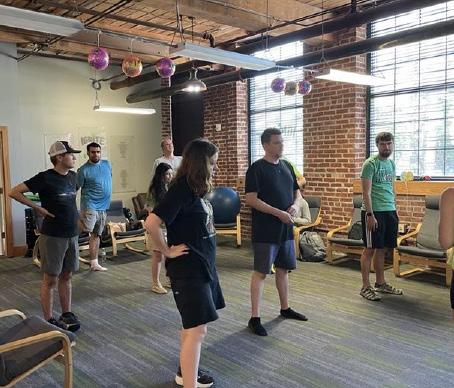
Most recently, “L.I.F.E. in Practice” groups (a.k.a. Lifestyles, Investments, Food, and Exercise) have focused on safety and awareness. Weekly safety classes at both IGNITE Davidson and IGNITE Raleigh are designed to improve independence, decision making, anxiety, and awareness in real world scenarios. Topics include personal identification and disclosure to emergency personnel, behaviors for staying safe, connecting with police and fire departments, internet and cyber safety, cyberbullying, and more! In addition, both groups connect weekly via Think Smart to collaborate on safety and discuss what they are learning.
MemberAbilia Con, “a space to share your favorite collectibles,” was a fun opportunity for members to showcase their special interests and beloved items. Members brought everything from comics and trading cards to figurines, rocks, and other treasures to share with the group. The activity helped members discover common interests, build connections, and develop friendships that often continued beyond IGNITE.
Inspired by the event's success, IGNITE Raleigh members hosted their own MemberAbility Con.
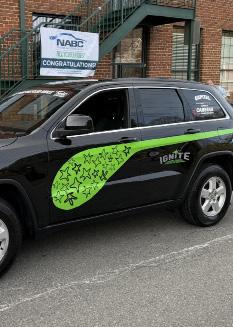
Members of IGNITE Davidson worked together to design artwork for a new Jeep for their center. Donated by the National Autobody Council and Allstate Insurance, the vehicle will be used to transport members to various events and activities in their area as well as assist members in building driving skills.
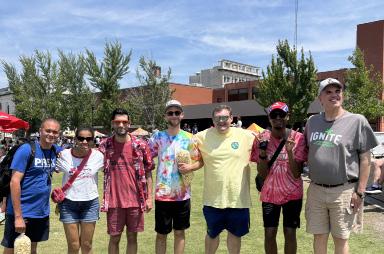
In addition to learning practical skills, IGNITE offers members a place to come together to share ideas, build friendships, and feel comfortable being themselves. This year, members from both IGNITE Davidson and IGNITE Raleigh gathered for their annual retreat at Camp Royall. An opportunity for members to connect with new people and have new experiences, the weekend was full of traditional camp fun like sleeping in cabins, roasting marshmallows around a campfire, taking hikes, doing arts and crafts, boating, and more.
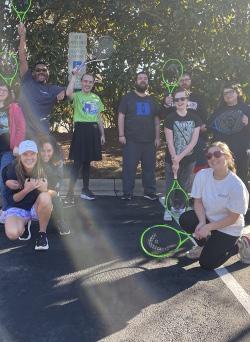
A standout highlight for IGNITE Raleigh members was Tennis@IGNITE, a partnership with Kristin Gruber of Abilities OnSite. Through fun tennisbased activities, members improved balance, coordination, concentration, and confidence while staying active. The program also helped participants build skills they can carry into community activities beyond IGNITE, making it a winning experience for all involved.
Cooking group has always been a staple at both IGNITE Raleigh and Davidson, helping members build important skills for greater independence. Participants practice everything from knife safety and making pasta to using kitchen appliances and preparing more advanced recipes while trying new foods. A favorite among members, the group offers the rewarding experience of creating and enjoying meals they made themselves.
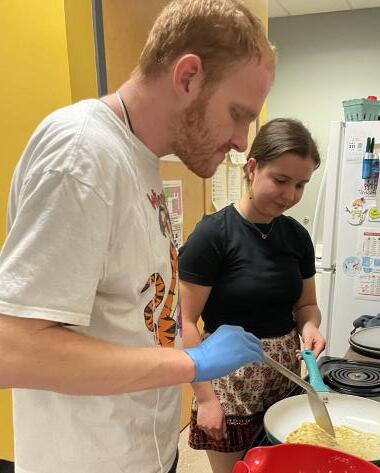
IGNITE Raleigh also offers the Over 30 Club for autistic adults. Combining social connection with practical skill development, members strengthen independence, form genuine friendships, and have a lot of fun!
Members enjoy weekly outings like bowling, exploring local parks, visiting museums, and sharing group dinners. These adventures give everyone the chance to practice real-world skills in a supportive environment while discovering new places around town with friends. Members work on building and maintaining friendships, executive functioning, cooking and meal planning, as they navigate living more independently.
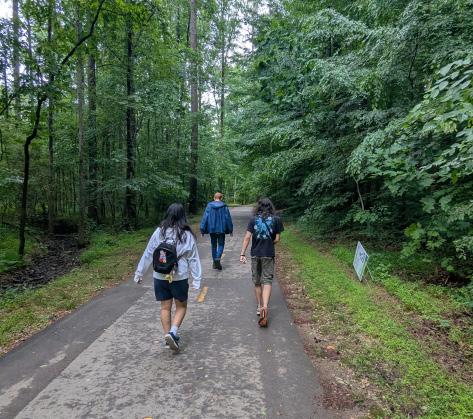
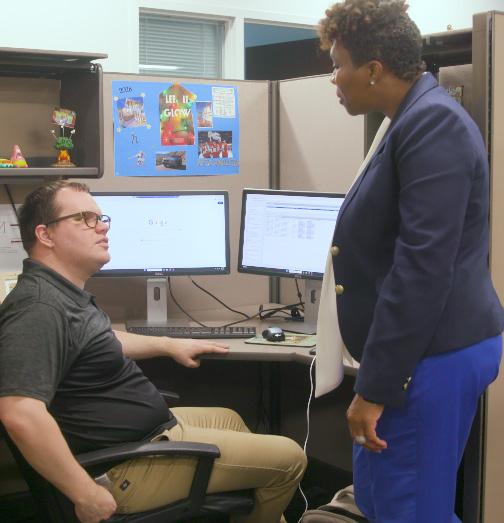
In conjunction with IGNITE and autistic adult day programs, the Autism Society of North Carolina (ASNC) provides employment services to adults with autism seeking to find or maintain a job in some areas of the state.
Employment Supports through EIPD (formerly known as vocational rehabilitation services) offers programming to individuals in the Triangle, Triad, Charlotte, and surrounding areas to help individuals achieve their employment goals through job coaching, skills assessments, resume and interview preparation, networking support, and on-the-job training.
Limited Employment services through the Medicaid waiver are offered in Asheville and Wilmington. ASNC offers a free 12-week Get Ready to Work online program each spring and fall to help participants statewide to build workplace skills and prepare for employment.
When a client, referred to here as “Bob,” found his hours working at Publix were consistently decreasing, it became clear he needed more support than the store could provide. That’s when ASNC Employment Supports jumped into action. Connecting with other Publix stores in the area, Bob found a job with another Publix where store staff were committed to providing him with the support he needed.
Throughout Bob’s transition to a new job and through getting him established with Long Term Support Services (LTSS) for individuals who need ongoing support on the job, Employment Relations Specialists worked with Bob, his guardian, and Publix staff to ensure Bob had what he needed to be successful. They also worked with Publix staff to ensure they were equipped with the training they needed to help Bob be an effective part of their team. Today, Bob is thriving at Publix and working all the hours he wants.
Scan here for a video showing the impact of our Employment Supports team.
Relocating from Washington state to Charlotte, NC meant “Bill” had to leave behind a full-time janitorial job at an army medical center and a life of independence where he lived on his own and traveled by public transportation. Fortunately, Bill and his family came to ASNC for help. Employment Services staff assisted Bill in securing employment as a custodian in a government building. He is now living in his own apartment and has mastered Charlotte's public transportation system.
Bill received about three months of training through Employment Supports to help him better understand the responsibilities of his new job and the expectations associated with it. After the training period, Bill was able to execute his duties without his employer having to prompt or instruct him. Employment Supports provided LTSS for three additional months after training, and Bill continued once-a-month visits for about six months, at which time he communicated his readiness for discharge from LTSS. Congratulations to Bill on his successful transition to an independent life in North Carolina.
With a bachelor’s degree in biology, “John” was working part-time at Harris Teeter dreaming of a job where he could gain more professional work experience. Enter the Mint Museum of Art in Charlotte, where John applied for a front desk position. With assistance from the Employment Supports staff, John got an interview and was hired.
John worked hard to adapt to his role in a new workplace environment. Throughout that process, his supervisor connected with Employment Supports to share that John was exhibiting some behaviors, having some struggles with deciphering what is and is not appropriate and with navigating misunderstandings arising out of his literal understanding and perspectives.
Museum management and staff worked patiently with Employment Supports to learn and implement interventions and supports to ensure John’s growth and success at the museum. And John has grown significantly, increasing his professionalism, improving his performance of all work tasks, and gaining new perspectives. Dreams do come true.
If you are a business owner or manager who would like to know more about how to employ individuals with autism, please visit our Employ Adults with Autism page: autismsociety-nc.org/for-employers
Employment resources:
• ASNC Autism Employment Supports: autismsociety-nc.org/employment-supports
• Employment and Independence for People with Disabilities (EIPD) website: ncdhhs.gov/eipd
- Includes a listing of local EIPD offices, EIPD Frequently Asked Questions, and more
• Inclusion Works | NC Department of Health and Human Services: ncdhhs.gov/about/department-initiatives/inclusion-works
• Work Together NC Employment Toolkits: worktogethernc.com/toolkits/
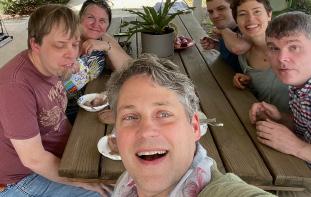
Each September, the Autism Society of North Carolina (ASNC) recognizes national Direct Support Professional Recognition Week. During that week, ASNC highlights and celebrates the many direct support professionals (DSPs) who work to improve the lives of individuals with autism through social media, blogs, and the conferring of two special awards: The Roman Direct Service Award and the McCrimmon Award.

Stayed through the storm during severe road closures
Kept residents safe, fed, and occupied all day and night
Stayed calm in a exceptionally long day of uncertainty
Reassured the men that their parents would be there as soon as possible
Worked with no cell or internet service in Asheville
The John and Claudia Roman Direct Service Award honors an ASNC DSP who has demonstrated outstanding dedication to autistic individuals and their families. The extra efforts of this DSP have had a significant positive impact on the individual, family, and community.
“Lyon is our nominee for this honor, and he is also our hero,” says Katie Wills, Chris Reagan, and Gale Hoyt, mothers of the autistic adults residing at Marlowe Place, an ASNC supported living home in Asheville. DSP Lyon Bergh has worked with the families’ sons at Marlowe Place for just over two years.
The moms describe Lyon as an “exceptionally intuitive person who has a genuine connection with our sons. He understands autism and is adept at interpreting their verbal and nonverbal wishes. His insight into their intentions is invaluable.” Lyon serves as a job coach for each of the residents, and “he is able to look at a task from our sons’ points of view, which is a unique talent. His patience is infinite as he tries to understand what our sons need in each situation.”
"Lyon is our nominee for this honor, and he is also our hero."
Lyon went from super DSP to superhero during Hurricane Helene. Despite road closures and no cell or internet service in Asheville, Lyon arrived at Marlowe Place for his regular overnight shift. Once there he encouraged other staff members to head home due to the worsening road conditions. With no way to contact the parents or staff leaders, Lyon kept the residents safe, fed, and occupied throughout the storm. Parents were expected to pick up their sons the next morning, but Lyon knew the storm’s impact would make that difficult. He kept everyone calm throughout an exceptionally long day and reassured the men that their parents would be there as soon as they could. “What could have been a total nightmare was managed beautifully by Lyon,” noted the moms.
Work with us!
Join the Autism Society of North Carolina and help individuals with autism live their best lives. We offer rewarding opportunities for behavior technicians, direct support professionals, licensed clinicians, and other professionals across North Carolina. Scan the QR Code for more!
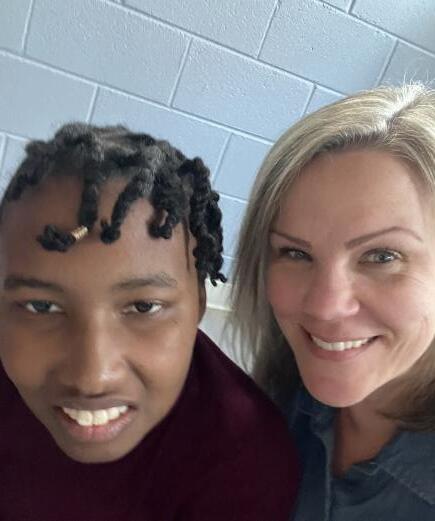
12 years with ASNC
Sponsored by Rob and Jennifer Christian, the McCrimmon Award is named for Ed McCrimmon, a longtime ASNC staff member who died tragically in 2017. Known for his outstanding dedication and service to individuals with autism, the award recognizes other DSPs, who like Ed, give their heart and soul to supporting autistic individuals.
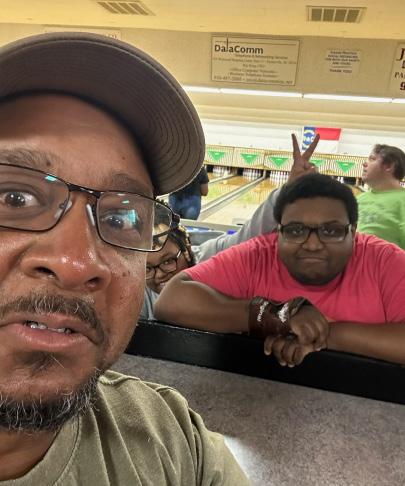
11 years with ASNC
Leigh Ann Harris has been with ASNC for 12 years beginning her tenure as a DSP in ASNC’s Asheville office. She is now the Program Lead for the Ascend adult day program. “She is phenomenal to say the least,” says Katie Goodman, ASNC Autism Services Coordinator. “She is able to manage and coordinate all the staff in addition to the participants and their families and regularly engages them in new activities.”
Prior to this position, Leigh Ann got to shine as Community Lead ASP. “She was a relied-upon support to many of our families and clients,” says Megan Halperin, ASNC Senior Autism Services Coordinator. Described as organized, reliable, kind, patient, compassionate, and able to handle anything that comes her way, Asheville program participants look to Leigh Ann each morning to know they are safe and that the day ahead will be a great one. “She is irreplaceable, for real,” says Megan.
"She is irreplaceable, for real."
Harold Shelton has worked with Luciana Yarborough’s son for 11 years at ASNC’s Fayetteville programs. “I trust Mr. Harold’s integrity and trust him with the safety of my child and his services dog,” says Luciana.
Over the years, Harold has become more than a DSP. Not only does Harold do an extraordinary job working with Luciana’s son at work, in the home, and in the community, he is also her son’s “male role model, friend, uncle, and worker all in one.” Luciana is grateful to have Harold in her son’s life noting “My son knows that Harold is part of his team. Harold makes sure in any situation that my son has a voice regarding his life, and he empowers him as a young man.”
"Harold makes sure in any situation that my son has a voice and empowers him as a young man."
Recognize your favorite Direct Support Professional
Know an ASNC direct support professional who regularly goes above and beyond? Have they had a significant impact on you, your loved one, your family, and community? Nominiate them for the Roman Award by August 17, 2026. Scan the QR code for to nominiate them!
The Autism Society of North Carolina (ASNC) strives to be a trusted partner for autistic individuals, their families and caregivers, professionals who serve the autism community, and the public. To ensure those we serve and the broader North Carolina community have easy access to information, resources, and support, ASNC communicates in a variety of ways.



Featuring organizational updates, programs, services, events, and resources.
Focus Newsletter
A monthly topical newsletter providing in-depth information on subjects relvant to the autism community
Social media is where we share autism news, advocacy updates, educational content, success stories, events, and more.





Our website is your hub for helpful information and resources, including:
• Informative blogs
• Access to Autism Resource Specialists
• Summer camp and after-school programs
• Webinar library
• Toolkits on a wide range of topics
• Support Group information
• Events calendar
Where do you look for information about what’s happening at the Autism Society of North Carolina? Do you follow us on social media? How do you connect with others in our autism community? We want to know!
That’s why we are asking you to take a few minutes to complete our survey. When you do, you’ll be providing us with important information about how we can better connect with you. Use this QR code to take the survey.
The "Building a Blueprint for Success" conference was hosted by the Autism Society of North Carolina (ASNC) on March 20, 2026 at McKimmon Conference Center on the NC State University campus in Raleigh. Hundreds of professionals, caregivers, self-advocates, and other stakeholders gathered together to connect with one another and learn more about autism.
With presentations by accomplished professionals in the field of autism, attendees gained valuable insights about current research findings and learned more about the resources available to guide and support individuals with autism.
For a list of speakers and presentation topics, you can visit our conference webpage at autismsociety-nc.org/gainknowledge-annual-autism-conference.
Thank you to everyone for their participation and contribution to the success of ASNC’s 2026 Annual Autism Conference.
The 2027 Annual Autism Conference will be held March 19, 2027, at the McKimmon Conference Center in Raleigh. Speaker, topic, and sponsorship details coming later this year.
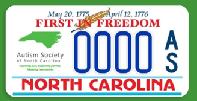
Simply updating your license plate with the Autism Society of North Carolina’s name and logo is a powerful way to initiate conversations and raise awareness about autism. Each time someone sees your plate, they are reminded of the importance of understanding and acceptance. It’s more than just a design; it’s support for families and individuals living with autism.
Scan the QR code to show your support!
Our online store includes a variety of year-round wearable items, drinkware, and more. There’s something for everyone, even your pet!
Scan the QR code to get your gear!
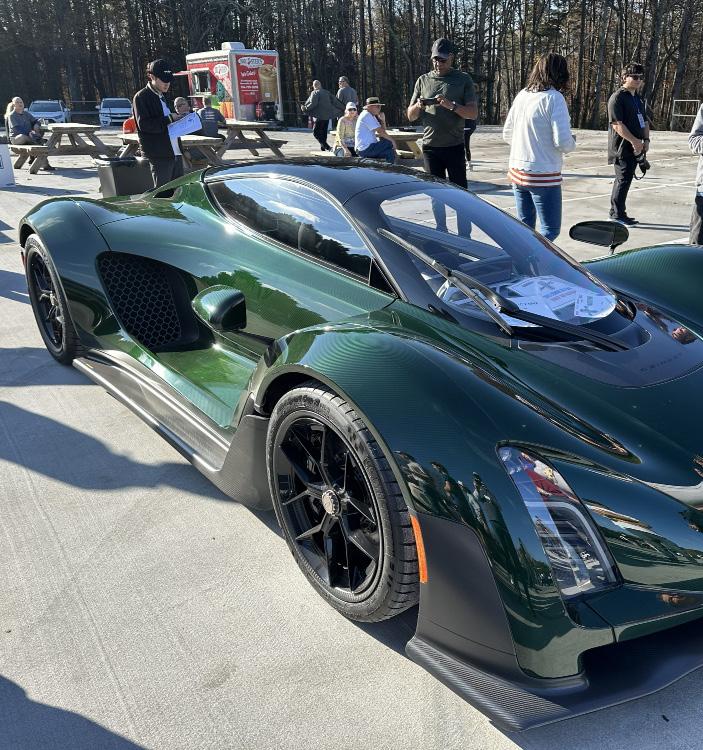
Thousands of car lovers attended the 13th annual AmeriCarna LIVE Car Show in Davidson, NC, hosted by Ray Evernham of NASCAR’s Hall of Fame and founder of IGNITE. IGNITE is a community center designed to help young autistic adults transition from high school to adulthood. IGNITE members participate in activities and educational experiences to build social, financial, educational, and employment independence. The November event benefitted the Autism Society of North Carolina’s IGNITE program in Davidson.
Save the date: AmeriCarna LIVE Car Show | Nov. 21, 2026
Watch IGNITE members talk about what IGNITE means to them by clicking on the QR Code (left).
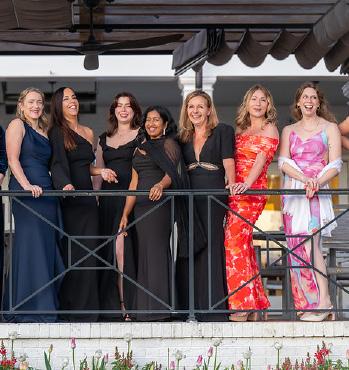
It was a lively evening as guests gathered for the annual Wilmington Gala at the Country Club of Landfall on March 12, 2026. Guest speaker Sarah Pennachi Becton shared her autistic son Nicco’s story, and the important role the Autism Society of North Carolina has played in that story. A live auction and delicious meal rounded out the evening. More than $150,000 was raised in support of ASNC’s Wilmington-area services and programs.
Save the date: Wilmington Gala | May 6, 2027
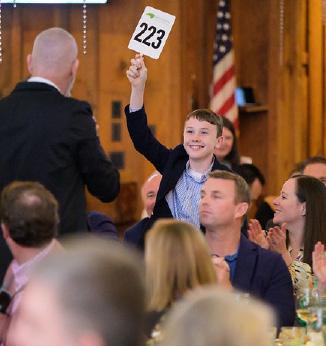
On April 9, 2026, the Autism Society of North Carolina (ASNC) hosted its annual Catwalk to Camp at the Angus Barn Pavilion in Raleigh. The event benefits ASNC’s Camp Royall, the nation’s oldest and largest camp for people with autism. The evening featured impressive performances by Camp Royall campers, an inspiring real-life success story from Coach Jim Johnson, an exciting live auction, and a gourmet dinner. Thanks to the generosity of our Catwalk guests and sponsors, the event raised more than $325,000, making it possible for more campers to enjoy a transformational summer of fun and friendship at Camp Royall this year.
Click on the QR Code (left) to hear camper Ethan share his Camp Royall story as part of the Catwalk to Camp talent show.
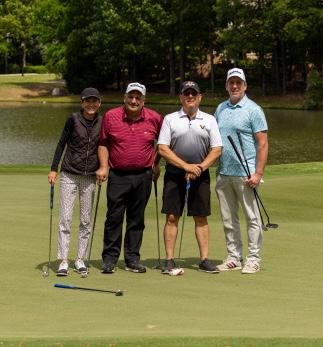
It was a perfect North Carolina spring day as golfers took to the course at the Governors Club in Chapel Hill on April 20 for the annual Camp Royall Classic. Players enjoyed a round of golf on the renowned Jack Niclaus Signature course, a picnicstyle lunch, and a sweet post-play dessert social sponsored by Nothing Bundt Cakes. The event raised $30,000 to benefit the Autism Society of North Carolina’s Camp Royall, making it a hole-inone for all the campers who will now have an amazing summer at camp.
Save the date: Camp Royall Classic | April 19, 2027

Make a gift by credit card or check.
Choose how you'd like your gift to be designated.
Employer matching can double the impact of your donation.
Remember ASNC in your estate planning or make a gift of stock.
You can make a difference in the lives of individuals with autism and their families. Whether giving of your time, talent, or treasure, the Autism Society of North Carolina is grateful for your support. There are many ways you can contribute from making a tax-deductible gift to volunteering, to becoming a sponsor, or hosting your own fundraiser. Use the links below to learn more about how you can make a difference for North Carolina’s autism community.

Volunteer at an ASNC event like our annual Run/Walks for Autism.
Help as a Camp Royall volunteer.

Plan your own special event to raise funds for ASNC.
From golf tournaments to 5K races to school events and more - your creativity makes a difference.

Become an event sponsor or corporate sponsor.
For more information about donating, scan the QR code or email Kristy White at kwhite@ autismsociety-nc.org
For more information about volunteering, scan the QR code or email Heather Hargrave at hhargrave@autismsociety-nc.org
For more information about fundraising, scan the QR code or email Heather Hargrave at hhargrave@autismsociety-nc.org
For more information about sponsorship, scan the QR code or email Heather Hargrave at hhargrave@autismsociety-nc.org
Each year volunteers around the state invite family, friends, and colleagues to participate in fun and unique fundraising efforts—from donating proceeds from the sale of various items to organizing golf events, 5K races, school dress down days and more. ASNC is grateful to the following individuals and businesses for sponsoring fundraisers this year. Thank you!
AJ Henderson Lodge
Alston & Bird Law
Firm - Cary
B&K's Studio
Bad Blood Winnings
Beau Rivage Golf and Resort, Marc Luyben
Charity Golf Tournament
Beta Delta Chapter of Alpha Delta Kappa
Big Dave's family seafood
Books For Good, Inc.
Brandon Bussi collaboration with Buddy Hockey Club
Building People and Communities
Carteret County Association of Realtors
Charity On Top Foundation, Inc.
Citrus The Diner
Cobb Road Christmas on the Farm
Flour Power
Franklin's Farm
Give Lively Foundation, Inc.
Grace Bible Church of Whiteville NC
Grayson Park Neighborhood
Green Level High School’s Autism Awareness Club
Greenville Kids Dental, Caring4Community
Holly Springs Salamanders
Househeads United, Inc.
Huckleberry Trail Farm
Jonkheer Jewelry, Inc., "Heart Art" Fundraiser
Kellie and Chris Morgan
Kendra Scott Cary Fenton
Kennedy Kreations
LAMB Foundation of North Carolina, Tootsie Roll Fundraiser
Meta
Nightingale Rooftop Restaurant & Bar
Paypal Giving Fund
Pledgeling Foundation
Providence Country Club
PRP Wine International
R City Rocks LLC
Rock The Spectrum at Brunswick Beer XChange Rockism For Autism, Inc.
Rolesville Police REC Day Fundraiser
RPG Mashup for Charity
Seven Lakes Golf Club
Sharkey's Cuts for Kids
Sunny the Fun Fairy Tobacco Road Marathon
WAC Cares
Wakefield UMC, Inc.
WillowWik Candles
Zaxby's - Apex, Garner & Holly Springs
Zia Taproom LLC, Chicken Bingo Fundraiser
We thank the following sponsors of our fall 2025 and spring 2026 events; these events would not be possible without them. Please support these businesses and thank them for helping to improve the lives of individuals with autism and their families.
Platinum Level


Gold Level







Behavioral Consulting for Autism










Visionary Level




Champion Level


















Autism Centers of North Carolina
Awaken Coffee
Bearning Insurance
Biscuitville
Brighter Strides ABA Therapy
Caymus Vineyard
Cornerstone Physical Therapy
Cross River Therapy
Culligan
Disabled American Veterans, Chapter 26, Havelock, NC
Eagle Point Golf Club
Eaton
Elise and Joel Wilson
Airlie Pointe Yacht Charters
Already Autism Health
Anne and Alex Murchison
Bagelman Bagels
Baileys Fine Jewlery
Beyond Limits Marketing
Biggers Market
Borgwarner Turbo Systems, Inc.
Bradford Products, LLC
Carolina Data Systems, Emily and Chris Whitford
Carolina Pediatrics of the Triad
ENC ABA
Fleet Feet - Asheville
Fleet Feet - Greenville
Fleet Feet - Wilmington
Frank Door Company
Gina McKim
Goodwill, Northwest North Carolina
Grady-White Boats
Heartlinks ABA Therapy Solutions
Hewlett and Skaggs Family
Hiester Automotive
Highlights Healthcare
Kimberly- Clark
Langdon & Company
Lotus Infusion and Wellness
Luxury Oaks Custom Builders
Maxim Healthcare
McCambley Consulting HR & Payroll
Oowee Products
Parks Hospitality Group
Pirate Radio
Pitt County Group Homes Foundation
Pops ABA
REEDS Jewelers
Spyglass Promotions
Carolina Therapy Connection
Caroline Cameron
CopyPro
Dunkin' Morehead City
East Coast Contracting, Inc.
Ecolab
Environmental Chemists, Inc.
Guy C. Lee Building Materials
Higher Ground Pediatric Therapy
Illuminate ABA Therapy
Karen Boden
Aces ABA
Asheville Children's Medical Center, P.A.
Bloom Fitness
Blue-J Cleaning Business in a Box
Bruegger's Bagels
Starbucks, Mayfaire
Supportive Care ABA
The English Garden
Todd Carignan
Trader Joe's
Triangle Family Magazine
Triangle Wealth Management
Tropical Smoothie Café
Walmart
We Rock the Spectrum Kids Gym - Triad
Weikle's Hometown Heating & Air
Kelly Office Solutions
Legs Financial
McKinney Immigration Law
Off The Hook Yachts, Josh Watkins
Over-Brook Property Management
Pepsi
Physicians East, PA
Proud Moments ABA
Retro Coffee
Sawyer's Fun Park
Chick-fil - A - Battleground
Chick-fil-A - Airport Road
Fleet Feet - Greensboro
Greensboro Jaycees
Lansing Foundation
Mike Toler -Chrysler, Dodge, Jeep, Ram, Fiat
Porter House Burger Company
Raleigh Neurology Associates
Raleigh Pediatric Dentistry
ShoeboxTasks
Southern Bank, Will Barnes
Sunbelt Rentals
Seaside Bagels
The Hop Ice Cream
Triad Moms on Main
Turn Key Lifestyles
United Bank
Wright Psychological Assessment & Counseling Services
Zachary and Cathryn Piech
Triad Coordinated Services
Wake Orthodontics and Pediatric Dentistry
Wawa
Wegmans
Wirth Chiropractic
YMCA - Greensboro




