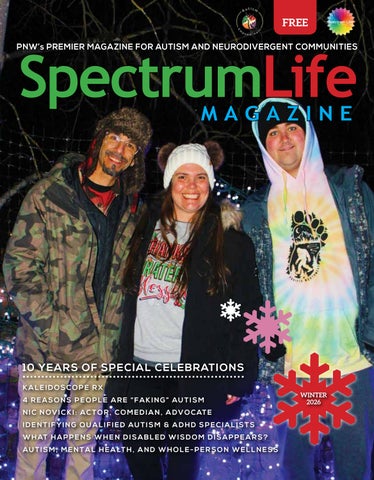
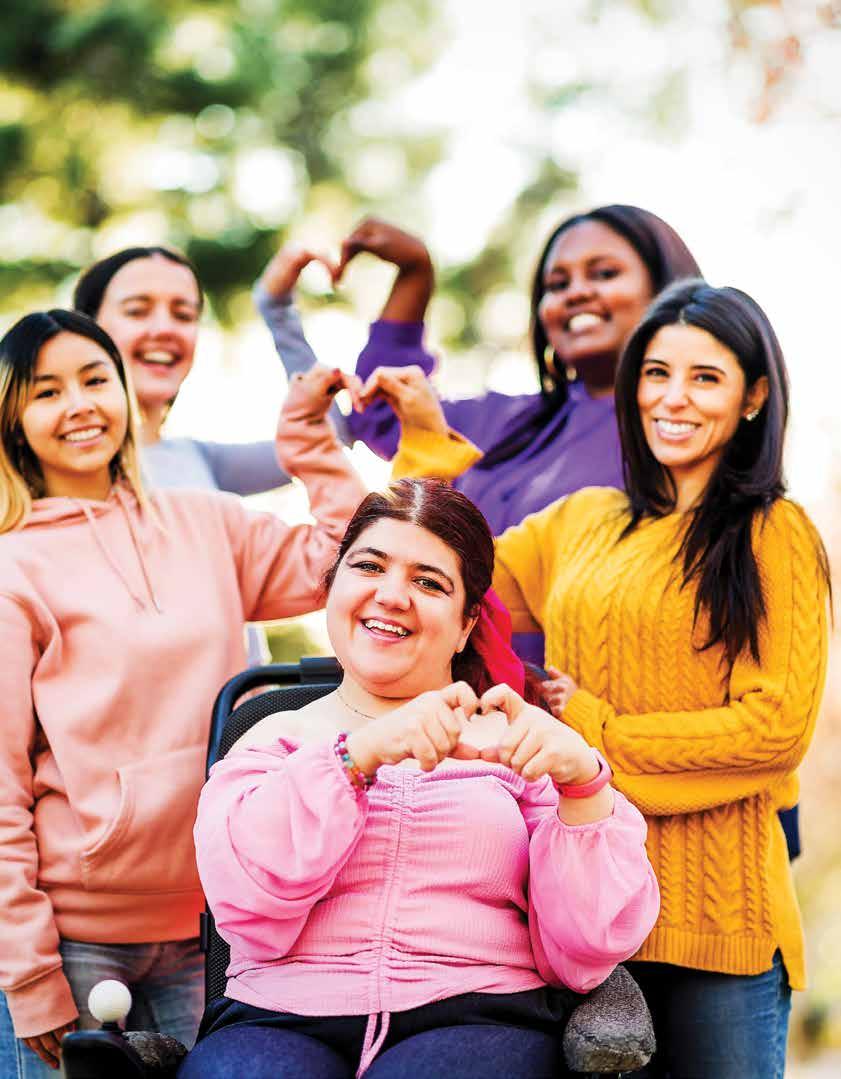
Spectrum Life Magazine from Autism Empowerment Winter 2026
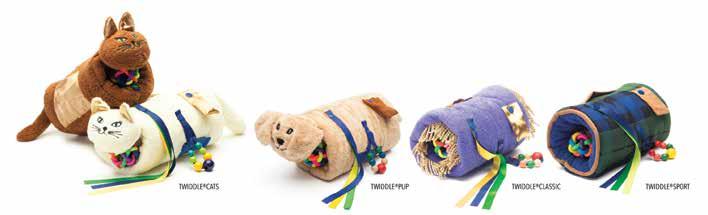
L ightly-weighted for an extra sense of security and stability, the TwiddleNathan helps youngsters find that “just-right zone” for maintaining attention and appropriate behavior for tasks and activities. Crafted from cozy, durable fabrics and plush fleece, the Nathan features high-grade fidgets attached with ribbon loops that snap, to enable switching around and personalizing fidgets for variety’s sake, training purposes, or the child’s own preferences.
Ideal for home, therapy clinics, and ”safe spaces” at school and other group settings.
TWIDDLE®NATHAN
FEATURED SECTIONS
From the Publisher
A welcome, a reflection, and an invitation.
Connections for our Community Walking together into 2026 with hope, purpose, and belonging. 4 5
ADVOCACy
The AE-NCC Creators Corner Updates and opportunities from AE’s Neurodivergent Creators Collective. 8
What Happens When Disabled Wisdom Disappears? Preserving disability stories, learning from disabled elders.
Conexiones en la Comunidad con Tanya Qué Hacer Cuando tiene Preocupaciones del Desarrollo de su Hijo(a).
LIFESpAN
10 Years of Special Celebrations
Celebrating an inclusive community built on belonging.
Foundations of a Neuroaffirming Workplace How neuroinclusive design helps everyone thrive.
RECREATION
Nic Novicki: Actor, Comedian, Disability Advocate A look inside the Easterseals Disability Film Challenge.
39
EDUCATION
Upcoming Autism Empowerment Activities
Promoting a culture of acceptance, enrichment, inspiration and empowerment through connection, education, and community.
IDEA at 50 Years: The Law That Opened Doors
What did IDEA make possible? Where do we go from here?
HEALTH + WELLNESS
Four Reasons People Are “Faking” Autism And why this is a TERRIBLE idea.
Autism, Mental Health, and Whole-Person Wellness
Supporting body, mind, heart, and spirit together.
THERApy
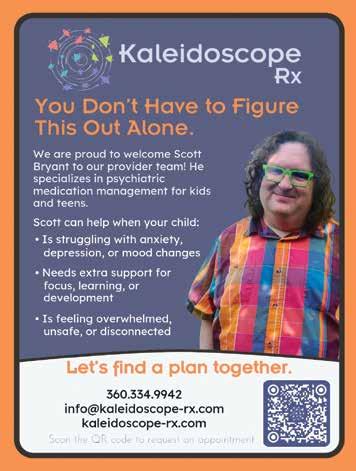
Kaleidoscope Rx
Where mental health care meets dignity, autonomy, and understanding.
The Neurodivergent Doctor’s Guide to Identifying Qualified Autism & ADHD Specialists
How to evaluate a clinician’s expertise.
Welcome to the Winter 2026 edition of Spectrum Life Magazine!
Whether you are opening these pages with a sense of hope, uncertainty, exhaustion, or curiosity, we’re glad you’re here. We hope to remind you that you matter, and that connection is possible.
This issue brings together voices and stories that center dignity, lived experience, and community across the lifespan. We begin with Connections for our Community (page 5), reflecting on meaningful milestones for Autism Empowerment and Spectrum Life and the future ahead.
In Advocacy, What Happens When Disabled Wisdom Disappears? (page 8) explores what we risk losing when disability stories and elders’ lived experiences are not preserved. We continue our Spanishspeaking outreach with Conexiones en la Comunidad con Tanya (page 10).
In Lifespan, our cover story 10 Years of Special Celebrations (page 13), celebrates a decade of the Special Celebrations community—an inclusive, volunteer-led group rooted in belonging, joy, and connection for individuals with disabilities and their families. This is followed by Foundations of a Neuroaffirming Workplace (page 20), which explores how neuroinclusive design can help everyone thrive.
In Recreation, Nic Novicki: Actor, Comedian, Disability Advocate (page 25) offers a look at Nic’s journey and advocacy for representation in entertainment. We also share updates and opportunities from the AE Neurodivergent Creators Collective in The AE-NCC Creators Corner (page 32).
In Education, IDEA at 50 Years (page 36) reflects on the law that opened doors and where we need to go from here. In Health and Wellness, we examine misconceptions in Four Reasons People Are “Faking” Autism (page 39), and take a whole-person approach in Autism, Mental Health, and Whole-Person Wellness (page 42).
In Therapy, Kaleidoscope Rx (page 48) highlights a psychiatric care practice focused on medication management grounded in dignity, autonomy, and understanding. We then follow with The Neurodivergent Doctor’s Guide to Identifying Qualified Autism & ADHD Specialists (page 52), offering practical evaluation advice.
As you spend time with this issue, we hope you feel accepted, enriched, inspired, and empowered. You are always welcome here.
With grace and gratitude,
Karen Krejcha
Executive Director & Co-Founder: Autism Empowerment™
Editor: Spectrum Life Magazine™
www. spectrumlife.org
WINTER 2026 | VOLUME 16, ISSUE 1
SPECTRUM LIFE MAGAZINE TM
A program of Autism Empowerment TM
Karen Krejcha, Autism Empowerment, Publisher
Dave Born, Graphic Designer
Editorial Advisory Board:
Aaron Blackwelder
Amy Donaldson, Ph.D, CCC-SLP
Tanya English
John Krejcha
Ryan Krejcha
Anson Service, Psy.D, LMHC
Brian Tashima
Mailing address: Autism Empowerment P. O. Box 871676 Vancouver, WA 98687 (360) 852-8369 www.AutismEmpowerment.org spectrumlife@autismempowerment.org
Autism Empowerment is a 501(c)3 nonprofit devoted to promoting a culture of acceptance and empowerment for children, teens, adults and families within Autism and Neurodivergent communities.
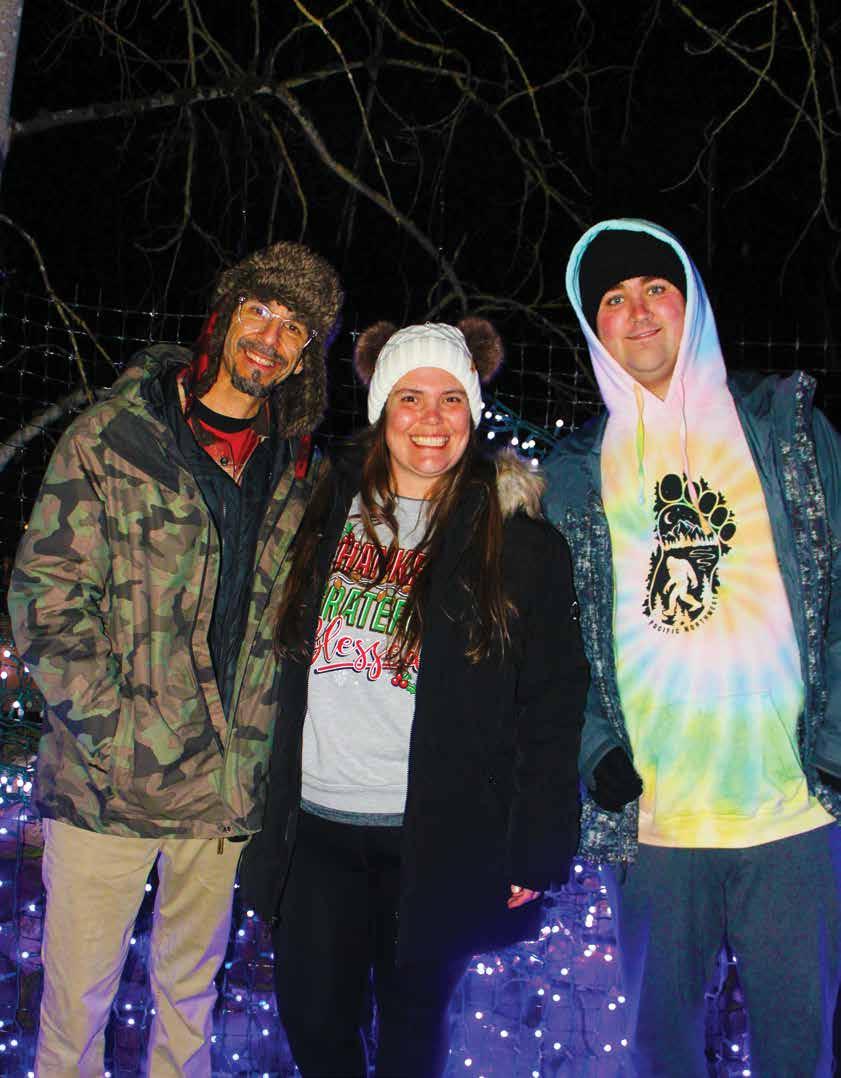
The Van Pelt family rings in 10 Years of Special Celebrations. See our cover story on page 13.
Photo courtesy of: Theresa Van Pelt
Connections for our Community
By John Krejcha
Happy New Year ! As we step into 2026, we want to begin by acknowledging you, our heart , our readers, community members, families, and individuals across the human spectrum who walk alongside us. A new year often brings a mix of hope, uncertainty, reflection, and resolve. Wherever you find yourself right now, please know that you matter and that you are not alone.
This year also marks meaningful milestones within our shared autism and neurodivergent community. On June 3rd, Autism Empowerment will celebrate 15 years of serving individuals and families, and this summer we’ll also mark 10 years of Spectrum Life Magazine. These milestones reflect not just time passed, but the relationships, connections, stories, and resilience that have shaped our journey together.
As this new year begins, we are taking time not only to reflect on the experiences of 2025 but also to look ahead with intention, considering how we can continue to support, uplift, and walk alongside you with acceptance, enrichment, inspiration, empowerment, compassion and understanding in the year ahead.
First, on behalf of all of us at Autism Empowerment, thank you. This past year was challenging in many ways, especially as funding for nonprofit organizations became increasingly difficult. Your continued support, whether through donations, volunteering, sharing our work, or simply believing in our mission, is truly appreciated.
Your faith in Autism Empowerment helps us do what we are called to do: positively change lives within our community and help build a culture that is more inclusive, accepting, and understanding. Each of us plays a role in that work. Thank you for actively choosing to be Ambassadors for Acceptance of All Abilities
As a small grassroots organization that values diverse learning styles and access needs, we are continually exploring better ways to share information and resources so they are meaningful, practical, and accessible to as many people as possible.
Reflecting on 2025: Building on What We’ve Grown Together
Accept – The launch of the Neurodivergent Creators Collective, creating space for creative people to be seen, heard, and accepted as they learn, grow, and share their stories.
Enrich – Expanded Spanish-language outreach and culturally responsive content, helping more individuals and families access information and feel included.
Inspire – The continued growth and expanded reach of Spectrum Life Magazine across the Pacific Northwest and nationwide, helping elevate authentic stories and perspectives.
Empower – The evolution of Autism Serves – Helping Hands, promoting teen and young adult leadership, kindness, and meaningful connection through community service.
As we honor these milestones, we are also listening closely to our community and looking ahead with intention to how we can build on this foundation in the year to come.
Looking Ahead to 2026: Strengthening Support Across the Spectrum
Accept – Developing more educational resources for all ages and stages, including downloadable PDFs and articles that people can access anytime, at their own pace.
Enrich – Creating more video-based content to support visual learners and provide additional ways to engage with information.
Inspire – The return of the Autism Empowerment Podcast, offering conversations and stories that encourage reflection, learning, and connection.
Empower – Continued strengthening of the Spectrum Life website and exploration of additional multicultural access points so more voices are represented and supported.
We value your voices and remain committed to transparency in how we serve our community. It matters to us that people can access information in ways that work best for them.
Please remember this: You are not alone. You are seen. You deserve happiness. You are worthy of living your best possible life. Autism Empowerment will continue to stand alongside you as an ally, offering encouragement, connection, and hope.
So as we move forward into 2026, Come as you are.
Let your light shine!
John Krejcha
Easy and Meaningful Ways to Support Autism Empowerment
Other Ways
To Make an IMPACT!
Financial Gifts (including cash, stock, crypto, DAFs, etc.) support Autism Empowerment’s programs and structure. This is an impactful way to help us build capacity and support nonprofit programs like Spectrum Life Magazine. Thank you for your support! www.autismempowerment.org/donate
Honorarium, Memorial Giving & Endowments - Autism Empowerment offers the option for you to make a tax-deductible gift in honor or in memory of a loved one This is a wonderful and respectful way to honor someone special in your life We also have the capacity to accept endowments Please inquire
Start a Facebook Fundraiser for your birthday or another occasion Ask your friends and family to support Autism Empowerment in an easy and feel-good way Win-win! Set up a fundraiser: www.facebook.com/fund/autismempowerment
Employee Matching Gifts - Thousands of employers match charitable donations made to our organization at NO cost to you (other than your donation) Please check with your Human Resources Department for details
eBay Giving Works & PayPal Giving Fund - Support Autism Empowerment anytime you shop or sell at eBay See our listings Visit: ebay.to/1lCaFKm or givingworks.ebay.com/charity-auctions/charity/autism-empowerment/50668
Humble Bundle - Humble Bundle sells games, books, software, and more at discounted prices where EVERY purchase supports charity! Choose Autism Empowerment at www.humblebundle.com
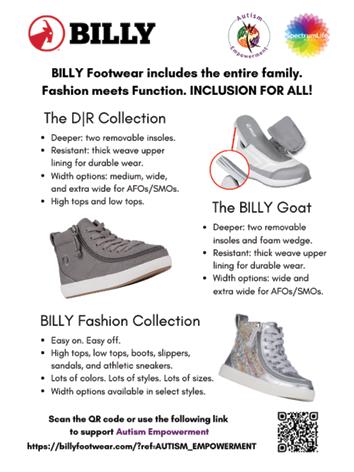
Billy Footwear offers fashionable, adaptive, easy-to-wear shoes with a universal design When you order through our link, we earn a percentage of every purchase https://billyfootwear.com/?ref=AUTISM EMPOWERMENT
AE Amazon Wish List - Help fulfill our list! https://bit.ly/AEAmazonwishlist Amazon Shopping - Autism Empowerment receives affiliate income when you shop through our link: https://amzn.to/429XLgO
Fred Meyer Rewards Card - Support AE every time you shop at Fred Meyer This doesn’t cost anything Just sign up and shop Autism Empowerment’s number is WA330 www fredmeyer com/i/community/community-rewards
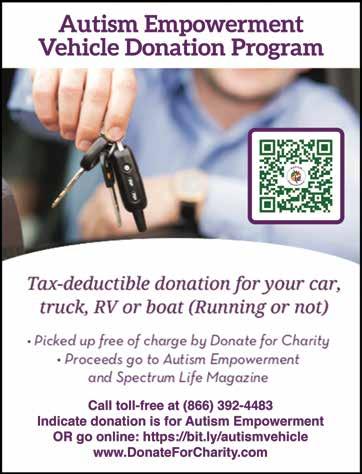
Vehicle Donation - Support Autism Empowerment with your donation of a vehicle (running or not) bit ly/autismvehicle or get more information on our website: www autismempowerment org/get-involved/ways-give/donate-vehicle
Volunteer! Be a Social Media Ambassador and share our content Join our fundraising or thank you committee www.spectrumlife.org/impact
Please visit AutismEmpowerment org to learn more We are a 501(c)3 nonprofit #45-2455219
www.AutismEmpowerment.org/get-involved/ways-give
Email: Donations@AutismEmpowerment.org or call (360) 852-8369 with any questions.
What Happens When Disabled Wisdom Disappears?
Preserving Disability Stories, Learning from Disabled Elders Disappears?
By Niko Boskovic
Navigating withNik
There has been considerable attention in the press about Alice Wong’s passing in November 2025. If you aren’t familiar with her or her work, there are several books she edited and wrote, described in my Summer 2025 Spectrum Life column about disabled authors, Disability Justice and the Books That Inspire1
One theme that has come up repeatedly in the many tributes I read about her is her role as a disabled elder ancestor
It’s not a new term in our community; I think I read about it after Stacey Milbern died and again when Judy Heumann was gone—but this time I felt the loss in a visceral way. When Alice became weaker and could no longer use mouthwords, she joined CommunicationFirst’s Advisory Board (on which I also serve) and used her new status as an Augmentative and Alternative Communication (AAC) user to make “good trouble.” Alice was also a member of many disability projects and was very active in collecting our community’s stories.
With my deep interest in disabled history, it’s evident that the need for our stories to be recorded grows stronger with each passing month. We have seen this administration roll back the historical importance of special education, gut the Office for Civil Rights, and promote the disproven link between autism and vaccines.
The president himself uses the R-word and regularly denigrates people whom he calls “low IQ.” There is a hostility that flows like a current quickening to a stream that threatens us all. Many of us who are highly empathetic feel ourselves starting to drown.
There are so many of us who are at risk of losing our healthcare, our special education services, our ability to live in our chosen homes, and our caregivers who provide supports that help us thrive. All of these are the bare minimum threshold of what disabled people need to be alongside their neighbors and friends.
But as many of you know, the systems that intersect our lives don’t pretend to view the disabled life through anything but an ableist lens. There has never been a fully funded Individuals with Disabilities Education Act (IDEA) program funded by the Federal government.
There are so few Direct Support Professionals (DSPs) to hire, and that’s due to the low pay and lack of respect for carework. The same dynamic is replicated in special education classrooms regarding paraeducators.
Nothing will change until caregiving is properly compensated. This is evident in nursing homes, hospitals, and other rehabilitation centers too, and when you consider that most of us will become disabled throughout our lives and especially in old age, the lack of prioritization of attracting people to care work is incredibly self-defeating.
Why are Americans so short-sighted and ableist towards disabled persons? There are so many places where one can learn new ideas about disability. For example, there are volumes of books dedicated to the history of D/deaf people and how their shared attributes connected them and created a positive self-identity.
Their histories are hard to read sometimes because, like many autistics who were forced to do therapies as children, D/deaf people were subject to the whims of non-disabled authorities who stopped American Sign Language (ASL) from being taught. Instead, children were forced to lip-read and speak orally for generations.
The fact of the matter is that most people have no understanding of what it means to have a disability, and they fear it.
Time and time again, we see this fear attached to a social group, like gay people in the 1970s through the 1990s AIDS epidemic. Today’s demonized population is trans people, of whom a significant percentage is autistic.
Having autistic people vilified by the head of the Centers for Disease Control and Prevention (CDC) and Department of Health and Human Services (HHS) puts our community in line for misinterpretation and public scrutiny by people who aren’t even autistic. Everyone should be watching how autistics are being treated in the press because the media is a huge influence on public topics.
Regulating the temperature of public opinion is overwhelming, to say the least. I mean, how does one go about changing perceptions of disability? Especially when there is no one way to be autistic, deaf, intellectually disabled, or have Cerebal Palsy; i.e., being disabled.
When I was a kid, I never saw any adults who were autistic. I had no role models; I only saw other autistic children at therapy. I thought I was alone in a strange world where I was loved, but something was wrong with me.
That continued until I learned to letterboard, which allowed me passage to thrive in this ableist world. Letterboarding in public might not seem like a big deal, but I have seen firsthand how differently someone treats me when they first meet me compared to after I use my letterboard to share a thought.
My loneliness as a teenager made me a big believer in smoothing the pathways where I can for younger spellers; writing about what it’s like being a nonspeaking autistic with high support needs; and learning as much as I can about how other people experience their disabilities.
There is so much we can learn from each other, especially those disabled elders who have not yet passed into the realm of ancestry.
They have invaluable insight and wisdom as to how disabled lives can be improved. I read an interview with disability rights leader Keith Jones2 in which he was asked what makes someone an elder:
“I think the term elder is almost getting to the point like DEI where people want to [say] like, “You’re an elder, you’re an elder!” ... You really have to keep these things in place, because elder means you have the respect and the wisdom, and you are willing to share it. It doesn’t mean that you’re old and that you have the experience. That’s the distinction.
It’s I can’t be better by not making you better. I can’t be safe by hoarding how to keep myself safe while you are out there unsafe.
An elder is somebody who can say, ‘Look, yeah. This is really trash right now, but you have a blueprint as to how to respond first emotionally to yourself.’ You have an anchor point in the, you know, now, that we didn’t have 60 years ago, 40 years ago.”
His words made me think back to when I was little and doing all that therapy. What if choices had been made on the basis of autistic advice rather than what was ascribed as the “right path forward?”
Many parents now know that all that therapy was harmful or traumatic for previous generations of autistic children thanks to the growth of autistic elders sharing their stories, conducting research, and being involved in the disability justice movement.
There has to be more that we can do.
With this in mind, I’d like to invite anyone who spells or types to communicate to join me this summer for the Spellers and Typers Advocacy Summit, a speller conference led by spellers, for spellers, hosted by Autism Mustang Alliance in Mulino, OR, on August 15th, 2026.
It’s a chance for us to come together to identify what we’d like to see in our futures so that our younger disabled peers can join when advocating for themselves becomes important. I hope we are a crowd of pointing, spelling, stimming autistics simply looking to change the world. Information will be coming shortly at https://autismmustangalliance.org/retreaters/
Stay tuned.
References:
1. Boskovic, N., Disability Justice and the Books That Inspire. Spectrum Life Magazine (Summer 2025) https://www.spectrumlife.org/blog/disability-justice-and-the-books-that-inspire
2. Green, A. (2025). Disability Elders: An Interview with Keith Jones. Substack.com; (Un)Hidden: Disability Histories and Our World. https://unhidden.substack.com/p/disability-elders-an-interview-with
Navigating with Niko is part of a regular series at Autism Empowerment and Spectrum Life Magazine by Niko Boskovic. To read columns in the series, please visit: www.spectrumlife.org/navigatingwithniko
Niko Boskovic is a 24-year-old autistic adult from North Portland, Oregon who uses a letterboard to communicate, advocate and share his passions and ideas. He graduated in 2019 with an Oregon high school diploma and currently takes classes at Portland Community College. Niko is passionate about poetry, nature, family, and disability justice and is very pleased to be able to share his thoughts and experiences with youth, adults and families in autism communities through his regular blog at Autism Empowerment and Spectrum Life, Navigating with Niko. Connect with Niko on Facebook: NikoBoskovicPDX
Photos courtesy of: Loreta Skucas
Qué Hacer Cuando tiene Preocupaciones del Desarrollo de su Hijo(a)
por Tanya English
Cuando mi hija mediana tenía 2 años, empecé a preocuparme por su desarrollo. Había tenido una regresión en el poco lenguaje que comenzaba a usar, lloraba mucho y yo no entendía por qué.
Eran muchos detalles pequeños que me inquietaban, y cada vez que compartía mis preocupaciones con su pediatra, ella me respondía: “se le va a pasar”, “eso es normal”.
Al cumplir los 3 años, la pediatra finalmente me refirió a un programa de intervención temprana en California. Pero cuando llamé, me dijeron que no podían ayudarme porque mi hija ya había cumplido los 3 años. No sabía a dónde acudir, y las personas de quienes esperaba apoyo parecían no escucharme... o quizá yo no sabía cómo explicarles lo que estaba pasando.
Al no saber qué hacer, le compartí mis inquietudes a otra mamá, y ella me aconsejó acudir al distrito escolar para pedir ayuda. Les llamé y evaluaron a mi hija; encontraron que calificaba para recibir educación especial, lo que aquí se conoce como un Plan de Educación Individualizado o IEP.
Gracias a eso, recibió apoyo en un preescolar durante dos años antes de entrar a kínder. Con ese IEP también tuve, por primera vez, una razón concreta que mi doctora ya no podía ignorar. Eso permitió que se hiciera una referencia para una evaluación de autismo, y a los 4 años mi hija recibió su diagnóstico.
Nunca olvidaré el poder de una madre guiando a otra madre. Por eso desde entonces me he dedicado a acompañar y apoyar a otras familias.
Quise compartirles esta historia porque sé que aún hay familias que, igual que yo hace 13 años, no saben por dónde empezar ni a quién acudir. No existe una guía exacta para ser padre, y mucho menos para ser padre de un hijo que necesita apoyos adicionales en su desarrollo.
Por eso quiero ofrecerles esta pequeña guía sobre qué hacer si tienen preocupaciones acerca del desarrollo de su hijo(a).
Si su hijo tiene menos de 3 años:
Complete cuestionarios de desarrollo y compártalo con el pediatra.
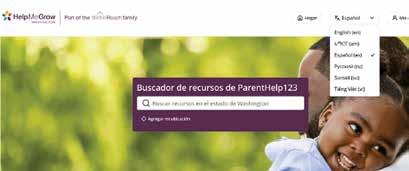
En este enlace encontrará cuestionarios gratuitos en español para evaluar el desarrollo de su hijo(a): https://helpmegrowwa.org/developmental-screenings
Además de hablar con el pediatra sobre sus preocupaciones, comuníquese con el programa local de Intervención Temprana.
Puede encontrar su programa local visitando: https://resources.helpmegrowwa.org/es
Su programa de educación temprana lo puede conectar a recursos y determinar qué tipo de apoyo hay para su hijo(a).
Si su hijo es mayor de 3 años:
Comente sus preocupaciones con el pediatra. Además, a partir de los 3 años usted puede acudir a su distrito escolar local para pedir una evaluación educativa. Puede encontrar qué distrito le corresponde usando este enlace o llamando al 211: https://www.greatschools.org/school-district-boundaries-map/?lang=es
Los distritos escolares no dan diagnósticos médicos, pero sí realizan evaluaciones para determinar si los niños califican para recibir servicios de educación especial.
Mi niña en su primer día de preescolar
Continúa en la página siguiente
Si sospecha que su hijo pudiera tener autismo, su pediatra puede hacer una referencia para una evaluación especializada. También puede llamar directamente al Servicio de Referencia de Salud Mental de Washington para niños y adolescentes (hasta 17 años) al 833-303-5437 para encontrar un proveedor.
Por último...
La pregunta que más recibo es: “Si mi hijo ya tiene un IEP, ¿para qué necesito una evaluación médica?”
El IEP brinda únicamente los servicios y apoyos que el distrito escolar está obligado a ofrecer para asegurar que su hijo tenga acceso a una educación pública, apropiada y gratuita. Sin embargo, estos apoyos son limitados y se enfocan exclusivamente en el entorno escolar.
Un diagnóstico médico abre otras puertas importantes, como:
• Acceso a terapias adicionales fuera de la escuela.
• Servicios médicos específicos según el diagnóstico.
• Documentación oficial de discapacidad, necesaria para algunos apoyos sociales y programas para personas con discapacidades del desarrollo.
Es importante saber que el proceso para obtener una evaluación médica, y posteriormente acceder a servicios sociales o terapias, suele ser lento. En ocasiones, las listas de espera pueden ser de más de 12 meses, por eso recomiendo empezar cuanto antes.
Espero que esta guía, aunque sea básica, le ayude a dar los primeros pasos en la búsqueda de apoyos disponibles para su hijo. Si tiene alguna pregunta, no dude en escribirme a tanya@autismempowerment.org
¡Hasta la próxima!
Tanya English nació en Los Angeles, California, pero creció en Tijuana, México. Reside en Vancouver, Washington desde el 2014. Es una persona bilingüe y bicultural con autismo y con un fuerte sentido de justicia. Como coordinadora de la Coalición de Padres del Condado de Clark en PEACE NW y miembro de la junta directiva de Autism Empowerment, Tanya trabaja estrechamente con familias e individuos, ayudándolos a conectarse con recursos en la comunidad y a navegar sistemas complejos. Cree que las comunidades sólidas y solidarias fomentan familias saludables y así, las familias saludables pueden empoderar a los demás a prosperar.
Photo courtesy of Special Celebrations
10 Years of Special Celebrations An Inclusive Community Built on Belonging
By Karen Krejcha
Just over ten years ago, Spectrum Life Magazine first shared the story of Special Celebrations, a grassroots effort born from a mother’s compassion and a family’s determination to ensure that no child or adult ever felt invisible or forgotten.
At the center of that story was Theresa Van Pelt, whose son Tristan’s experiences with social isolation inspired a powerful vision: a community where individuals with disabilities and special health care needs are welcomed, included, and truly celebrated.
What began in a craft room with a handful of parents has since grown into a vibrant, volunteer-led network serving hundreds of families across Southwest Washington and the greater Portland metro area. Through sensory-friendly holidays, inclusive social events, and meaningful partnerships, Special Celebrations has become more than a group hosting inclusive events; it has become a chosen family for many who once felt alone on their journey.
As Special Celebrations celebrates their tenth year, we reached out again to Theresa to reflect on how the group has grown, what has stayed the same at its core, and what she envisions for the future. This follow-up conversation is both a celebration of how far Special Celebrations has come and a reminder of why this work matters now more than ever.
Hello Theresa! For readers who may be meeting you for the first time, please introduce yourself and your family
My name is Theresa Van Pelt, and I am a social worker, caregiver, and advocate for individuals with intellectual and developmental disabilities (I/DD). In 2015, my husband Jeremy and I founded Special Celebrations out of love for our son, Tristan, who has I/DD. What began as a deeply personal journey grew into a mission to ensure that people of all abilities are celebrated, included, and supported at every stage of life.
Professionally, my background in social work has shaped how I approach advocacy, community building, and systems of care. Personally, my most important role is being Tristan’s mom as he navigates life after school and into adulthood—a transition filled with both challenges and incredible growth. Jeremy, a middle school science teacher, brings curiosity and creativity into our family, and together we work to model resilience, joy, and possibility.
Outside of our professional lives, we are a family of explorers and celebrators. We love gardening, hiking, and taking our dogs out to discover new trails. We’re currently learning a new hobby together—refurbishing a travel trailer—which has become another way to build connection and adventure into our lives. I love to cook, and for us, food, milestones, and everyday moments are all reasons to celebrate.
At the heart of everything I do is a passion for honoring the dignity, joy, and potential of individuals with disabilities and the families who love them.
Special Celebrations reflects our belief that everyone deserves to be seen, valued, and celebrated—not just for what they achieve, but for who they are.
For readers new to your story, please share the personal experiences that inspired you to create Special Celebrations.
Special Celebrations is a volunteer, parent-led group for families with a loved one who has a disability or special health care needs, to find connection, build community, and—most importantly—be celebrated!
The idea for this group came after my son, Tristan, didn’t have any friends come to his birthday party. When I shared this at a moms group I started attending, Amazing Moms, to get support with the grief and loneliness parenting a child with special needs can have, I started hearing other moms share similar experiences of isolation and being left out.
The goal of Special Celebrations was to build a community where we could find other families with similar interests and to create a full, meaningful life that included friends, recognition, and celebration of our loved ones with disabilities or special health care needs. We are creating community for our families with social opportunities, sharing resources, and celebrating our loved ones, so no parent ever feels like they are alone on their parenting journey.
We started with about five moms in my craft room, a Facebook group to share our activities, and a dream for our kiddos. We now have over 780 families in our online group.
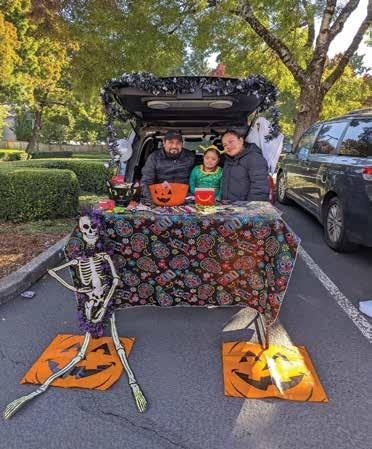
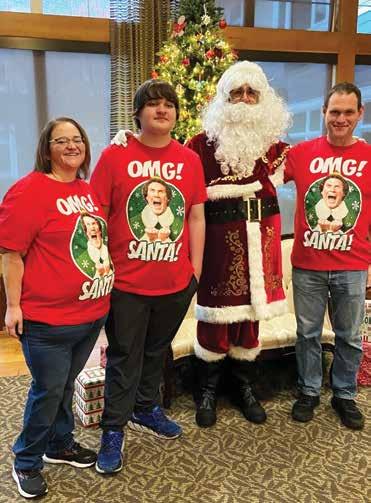
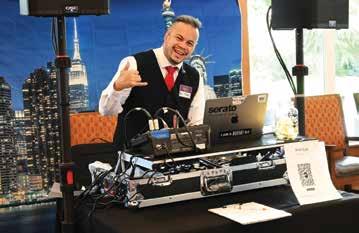
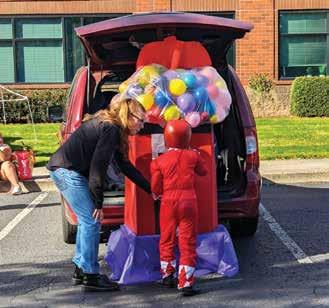
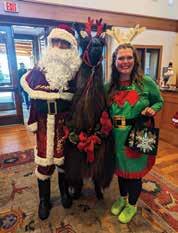
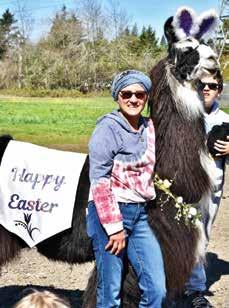
Over the years, the group has evolved and changed to meet the needs of the community. We have hosted annual events such as Sensitive Santa, Egg Hunts, Trunk-or-Treats for all ages, Talent Shows, Sweetheart Socials, and more!
Along with our big community events, we also do smaller group community outings to places like Bi-Zi Farms Pumpkin Patch, which has become an annual tradition for many of our families who look forward all year long to spending the day together!
December 2025 marked the 10th anniversary of Special Celebrations! Congratulations! How does reaching this milestone feel for you?
Continued on page 14
“Eek...
Special Celebrations enters her Double Digits Era!”
I’m not sure I have the words for how this makes me feel. I am so grateful, honored, and humbled every time I look back and recall all the memories we’ve made these past ten years!
The families in our group have made this happen. It’s because they believed in the vision and jumped in to help every step of the way that we grew into what we are today. This group has become my family. We lean on each other when times are hard, we laugh and cry together, we celebrate each other’s children, and we go through life together.
Seeing other families connect, find friends, and build lasting relationships brings me so much joy knowing our group is still doing what we hoped for all these years later. I’m beyond blessed that I get to be a part of something so deeply special to me, and I believe many others.
How has Special Celebrations evolved over the past decade?
Special Celebrations has grown and changed throughout the years to meet the needs of our families and community. Everything we do is volunteer or donation-based, and our community shows up every year to help us make magical things happen!
We quickly outgrew our first location, the Arc of SW WA, and had to move events to bigger spaces, creating partnerships with places like East Park Church and Stephen’s Place.
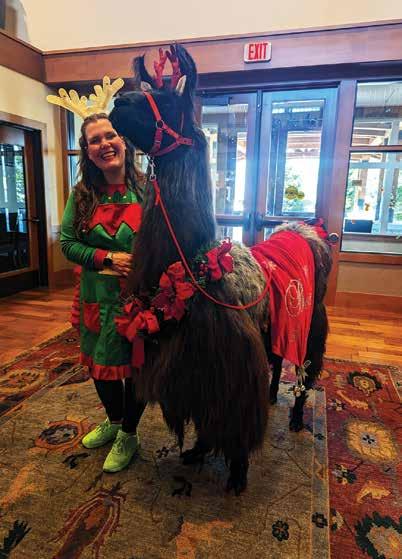
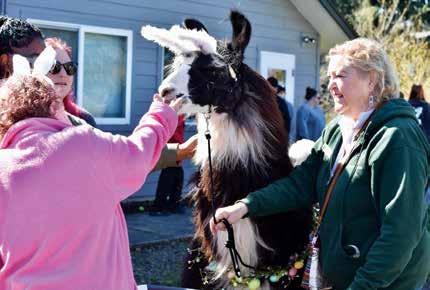
Autism Empowerment, Amazing Moms, and Mountain Peaks Therapy Llamas and Alpacas have been some of our biggest supporters over the years, just to name a few. They bring us donations to help make our events a little more fun, volunteer to help families have a successful outing, and always share our events with the communities and families they serve.
What types of events do you host now, and which ones have become your hallmark or most beloved?
We currently host four large community events each year: an Egg Hunt for all ages, a Dance for ages 16 and up, Trunkor-Treat for all ages, and Sensitive Santa for all ages. These are the most popular and most asked for events each year, along with our smaller community outings to Bi-Zi Farms or our group camping trips to places like Camp Prime Time.
Approximately how many people do you serve annually today, and how has attendance changed over the years?
We started with about 25-50 people attending our community events and 5-10 people attending community outings. We now have over 250 people attending some of the bigger events, like the Egg Hunt or Trunk-or-Treat, and around 65 people attending the smaller community outings, like Bi-Zi Farms, each year. We serve all ages and abilities; all are welcome.
Who are your events designed for, and how do you ensure your celebrations are inclusive and accessible to people with diverse disabilities and sensory needs?
Our events are designed for anyone who wants a place to feel like they belong. We try to have things like crafts or games at multiple skill levels, so everyone can participate in a meaningful way, and we always welcome parents and caregivers to participate and support their loved ones.
We also ask families to share anything that will help us make an event or activity successful for their loved ones, and we do our best to make accommodations when possible.
This might be knowing a child has noise sensitivities and making sure Santa greets them with a quiet voice, placing eggs at multiple levels at the egg hunt so someone with a mobility aid like a wheelchair or walker can reach them, or opening an event early so a new guest can come get acclimated and have the time they need to feel comfortable to participate.
Is there a favorite story or moment from a Special Celebrations event that still stays with you—something that captures why this work matters?
It’s hard to pick out just one moment or memory. I love seeing parents filled with joy when their child laughs or has fun playing with friends at an event. I love seeing the sparkle in the eyes of our adult celebrators who come to our dance and get to have their hair and make-up done and friends to dance with.
However, I think one of my biggest joys is when a family shares that they avoided community spaces like pumpkin patches out of fear of being judged or stared at, but going as a group helped them make it, and they had so much fun together. That makes all the hard work worth it, seeing others find success in the community and breaking the barriers of isolation.
Special Celebrations has always been powered by “parent power” and volunteers. What does your volunteer model look like today?
We currently have about five core parent volunteers who help with events and activities year-round, plus many more who jump in when they can, including group members and community partners.
Our volunteer model is to help when you can, but we know the families attending are often unable to help with event setup or run a game, as they are there supporting a loved one or client to have a successful and fun outing. To us, that is the most important thing: to come and participate in the way that works for your family.
You’ve partnered with so many local organizations over the years. What have these partnerships meant to you and to the families you serve?
These partnerships mean the world to us. We could not have done any of this without the community that believed in us. They helped a little group of moms—creating events in their craft room and around their kitchen tables—grow into something the community now relies on and looks forward to each year.
Continued on next page
But it’s not just the fun stuff these partnerships have helped us with. A lot of families use social media as a way to connect, learn, and find support. We rely on the professionals to help us answer those questions and walk alongside families and individuals navigating complex systems and supports.
What are the biggest challenges you face today in running Special Celebrations and how can our community help?
Demand is our biggest barrier right now. Being a volunteer parent-led group means we do all of this in our spare time, with donations from our group members, and community partners providing the space for events.
Our events are funded by donations from group members and community partners. We would love to develop more partnerships in the community for small group community outings. Places to reserve a room for a pizza social, game nights, touring local businesses, and things like that could help our families get out more and build confidence in community settings.
Underneath your umbrella, you also now lead the Amazing Moms support group. For readers unfamiliar, what is Amazing Moms, and what makes the group special?
Amazing Moms is a faith-based support group for moms of children or adults with a disability or special health care needs. Led by Amazing Mom, Roberta Bernhardt, for many years, it started as a life group for moms attending church together and grew into a leading support group for moms in our local community.
As the moms attending found the support of gathering with other moms on a similar journey, praying together, and getting their own cup filled so valuable, other moms started hearing about it, and it’s grown to over 200 moms on the email distribution list throughout the years.
After serving our community for over 20 years, Roberta asked if I would be interested in leading the group to keep it going for the next generation of moms to find connection and support. After much prayer and discussion about what this would look like for our family, I enthusiastically accepted the offer, as this group has been a lifeline to my family and me over the years.
How has leading Amazing Moms influenced the way you approach community, celebration, and family support?
Amazing Moms has shown me what unconditional love and support look like. They are there when we are celebrating, or when we are walking through a challenging season or situation.
They never judge; they know what works for one family might not work for another. They know what the road looks like, and sometimes the only thing that can help is someone simply saying I am here to walk this road with you. You are not alone.
I also know this group might not be for everyone, and that is ok. We collect resources and want to help moms find support that fits their needs, no judgment or questions asked.
Your husband, Jeremy, has previously led a support group for Dads. Do you see a future where an ‘Amazing Dads’ group or something similar becomes part of your overall mission?
Yes, we do see a future for an Amazing Dads group! Dads need support just as much as moms do; it just might look different, like meeting to do a service project rather than a traditional support group setting. Keep an eye out for more information this summer!
And as many of our kiddos are growing into adulthood, we also see the possibility of an Amazing Kids group. This idea was presented to us by one of our Amazing Kiddos last summer, who recognized the value of this group for us moms and wants that for themselves!!!
You’re exploring the path toward forming Special Celebrations into its own nonprofit. What would becoming a 501(c)(3) organization open the door for?
Becoming a 501(c)(3) would open the door to endless possibilities. We would have the ability to apply for grants and fundraise for our group. This would help take some of the financial burden off our group members to provide supplies, pay for community outings, and all the costs of running events.
What are your hopes and goals for Special Celebrations and the families you serve in the next 3–5 years?
Our 3-year goal is to raise the funds to cover the cost of our 501(c)(3) application. Our 5-year goal is to secure steady/ ongoing donations or grants to cover the costs of our 501(c)(3), including insurance, storage for supplies, event and community outing costs, and annual fees.
Our dream is to have a space for Special Celebrations to host events and employ our loved ones with disabilities and special health care needs; a physical place to come celebrate, build community, and connect.
We have full confidence that you can achieve this! Thank you for your time, Theresa!
Reaching ten years is both a celebration and a beginning. As Special Celebrations looks toward the future—dreaming of deeper supports, expanded opportunities, and even a permanent home for gathering and employment—the heart of the mission remains unchanged.
Special Celebrations is a passionate community group rooted in dignity, connection, love, and joy. For the families who have grown up alongside this community, and for those who have yet to find it, Special Celebrations continues to offer something profoundly simple and deeply needed: a place where everyone belongs.
Continued on page 18
Photos courtesy of Special Celebrations
Photos courtesy of Special Celebrations
Learn More & Get Involved with Special Celebrations and Amazing Moms
Whether you’re looking to attend an event, volunteer, partner, or simply connect with others who understand the journey, there’s a place for you.
Special Celebrations Facebook Page: www.facebook.com/specialcelebrations
Special Celebrations Facebook Group: www.facebook.com/groups/1626605450936931
Amazing Moms website: www.amazing-moms.org
Email: specialcelebrationsvanwa@gmail.com
Email: amazingmomsvanwa@gmail.com
Phone/Text: 360-433-1235
Follow along on social media to learn about upcoming events and activities.
Because everyone deserves the chance to be celebrated. celebrated.
Karen “Party Hearty” Krejcha is the co-founder and Executive Director of Autism Empowerment, where she has spent nearly 15 years advancing autism acceptance, community connection, and inclusive storytelling. She serves as Editor of Spectrum Life Magazine, hosts the Autism Empowerment Podcast, and is the founder of Spectrum of Voices LLC.
Diagnosed on the autism spectrum in her 40s—following the diagnoses of her two children—Karen’s work is deeply informed by lived experience, compassion, and faith-driven purpose. Married to her husband and co-founder, John Krejcha, for over 33 years, she is devoted to her family and to building a kinder, more inclusive world rooted in dignity, acceptance, and empowerment. https://linktr.ee/karenkrejcha
Photos courtesy of Special Celebrations
Foundations of a Neuroaffirming Workplace How Neuroinclusive Design Helps Everyone Thrive
By Lyric Rivera aka Neurodivergent Rebel
Current research estimates that 15% to 20% of the global population is neurodivergent. That means, whether or not it is openly discussed, neurodivergent people are likely present in your workplace—especially if your team has 20 or more members.
Neurodivergent describes people whose brains process, learn, or engage with the world differently from what’s considered ‘typical’ for the time, space, and culture they are engaging in.
The term neurodivergent includes diagnosed conditions like Autism and Attention-Deficit/Hyperactivity Disorder (ADHD), as well as broader, natural variations in brain function that may not meet criteria for clinical diagnoses. Neurodivergent is not a medical term but a sociological concept and identity for those whose brains function differently from the average.
The 15-20% range includes people with various diagnoses, differences, and neurotypes (brain types). It is important to note that this calculation accounts for both those with
diagnosed conditions and those who identify as neurodivergent without a medical diagnosis.
Some people may not know they are neurodivergent.
It is possible that there are neurodivergent people within your organization who may not know they are neurodivergent, or even what neurodivergence and neurodiversity are.
So, what IS neurodiversity?
Neurodiversity is the idea that there are natural variations in human brains and nervous systems that affect how each of us experiences the world around us, and that these brain and neurological-based differences are natural forms of human diversity that should be supported so that each of us can become the best version of ourself (even if our bests look different from other people’s bests).
I didn’t know I was Autistic until I was almost 30.
I also didn’t know what neurodiversity and neurodivergence were until I was diagnosed as Autistic a few months before my 30th birthday and read about neurodiversity soon after. At that point, I’d already been in the workforce for over 15 years.
Once I knew the truth about my brain, and applied the lens of neurodiversity to myself, my past experiences, and the people and world around me, I could clearly see that one of the biggest things that determined if I failed or thrived in various workplaces (and classrooms when I was younger) was whether my needs had been supported or treated as if they were a problem.
Looking back now, I can plainly see that many of the spaces I struggled with most over the years, starting in childhood, were not neuroinclusive.
Neuroinclusion is neurological and brain-based inclusion. It is inclusion for everyone with a brain, not just neurodivergent people.
Treating neurodivergent people like problems to be solved is not neuroinclusive or neuroaffirming
Neuroaffirming means actively accepting and valuing the natural variations in how people’s brains work, rather than viewing people’s differences as deficits to be fixed. It involves creating environments, relationships, and practices that
Continued on next page
Photo courtesy: Lyric Rivera
support and celebrate people’s diverse ways of thinking, learning, and experiencing the world.
When neurodivergent people are treated as problems, rather than people with needs to be supported, it can make it nearly impossible for us to succeed or get our needs met in different settings, including workplaces.
For years, most workplaces have been structured around a narrow view of how people think and work, prioritizing a neuronormative standard. This approach has limited organizations’ ability to realize the full potential and creativity of their people.
As discussed in my best-selling business ethics book, Workplace NeuroDiversity Rising, true neuroinclusion requires more than simply adding accommodations to a flawed system; it requires reimagining workplaces so they become neuroaffirming by design (instead of as an afterthought).
Core Principles: The Foundation of a Neuroaffirming Workplace
A neuroaffirming workplace moves beyond merely tolerating neurodivergent people’s differences to actively celebrating and supporting cognitive diversity. It relies on several core principles that shift the paradigm from “fixing the employee” to “transforming the environment.”
First, organizations should view variation as a source of intrinsic value.
Neurodivergence is not a deficit; it is a naturally occurring form of human diversity with associated strengths and weaknesses.
An autistic employee’s deep focus, an ADHD employee’s creative thinking, or a dyslexic employee’s spatial and narrative reasoning can be cognitive assets if employers set these team members up for success.
A neuroaffirming culture names and values these strengths while making space for struggles and weaknesses.
We all have different strengths and weaknesses, regardless of our neurological makeup.
Neurodivergent people often have both uncommon strengths and weaknesses.
For example, I struggle greatly with proofreading (something many people are good at). Why do I need to be good at something that I could easily ask a peer who excels in this area to help me with, allowing me to focus my time and energy on things I’m actually skilled at that are less common?
Second, neuroaffirming workplaces operate on a strengthsbased approach with a presumption of competence.
Focus on employees’ strengths and create teams with complementary skills, rather than punishing weaknesses.
Too often, neurodivergent employees are underestimated because of atypical communication styles or spiky, uneven skill profiles.
The neuroaffirming model starts with the belief that every employee is capable and brings unique brilliance to their role, and that it is the employer’s job to support each team member so they can be the best version of themselves, whatever success means to them.
Third, neuroaffirming workplaces view psychological safety as a non-negotiable.
Creating a culture of honesty, trust, and vulnerability where employees can bring their “whole selves” to work without fear is critical.
Neurodivergent people too often spend a lifetime masking our authentic selves to avoid abuse, bullying, or being undervalued and underestimated in our relationships and the spaces we enter due to all the common misconceptions our society holds about people with brain differences. In the workplace, this can be an exhausting, demoralizing experience that burns us out.
A truly safe environment is one where an employee can disclose their neurotype (if they wish), request the working conditions they need to excel, and communicate in their authentic style without fear of reprisal or being deemed “unprofessional.”
Fourth, neuroaffirming workplaces are co-created and flexible.
Universal Design that considers neurodivergence is essential for creating truly inclusive spaces. This means
Continued on page 22
Photo courtesy: Lyric Rivera
creating policies and environments that are accessible to everyone from the start. For example, offering written instructions and flexible work options for all, rather than requiring individual accommodations that are gatekept and can lead to stigma.
It is also important to be open to changing policies and procedures if employees come to you and let you know something is not working for them or could be done more effectively.
This is another reason psychological safety is key: all employees, regardless of neurotype, need this kind of safety to feel safe opening up about their needs and what is and isn’t working for them.
If employees feel psychologically and emotionally safe to speak up without fear of judgment, it unlocks the true potential of a neuroinclusive workplace.
When everyone in a space can confidently and effortlessly make or request simple adjustments to their environment (such as quiet spaces, flexible schedules, or clearer instructions), it becomes easier for people of all brain types to mold the space around them to suit their needs.
This flexibility doesn’t just help neurodivergent people; it helps everyone co-create a work environment that is more adaptable, understanding, and effective for all who access it.
There is no one-size-fits-all blueprint.
Achieving true neuroinclusion means moving from rigid Human Resources policies toward more flexible workplace frameworks. This involves including neurodivergent professionals in the design of processes such as recruitment and project management, and providing options for how, when, and where team members do their best work—as people’s productivity needs can differ significantly.
Finally, we must honor neurodivergent intersectionality. We cannot be neuroaffirming if we do not acknowledge that neurodivergence often overlaps with other marginalized identities. True inclusion must consider these overlapping experiences.
DEIA is Vital: The “Why” Behind Equity
This leads us directly to the critical role of authentic Diversity, Equity, Inclusion, and Accessibility (DEIA).
Skeptics sometimes dismiss focused efforts to include neurodivergent people as “reverse discrimination” or giving neurodivergent people “unfair advantages.” This view is not only incorrect but reveals a serious misunderstanding of equity.
Equity is not about giving everyone the same tools. Equity gives each person the tools they need to achieve the same results. For example, giving a left-handed person a pair of left-handed scissors and a right-handed person a pair of right-handed scissors.
Many of our workplaces are already designed in ways that better suit neurotypical (or neuroaverage) brains by default, because these systems were often designed without accounting for neurodivergent needs.
Therefore, providing neurodivergent employees with headphones, written agendas, or flexible schedules is not an advantage—it is equity, granting the same opportunity to contribute as our non-neurodivergent peers already have.
When we fail to provide these equitable supports, we are not maintaining a “level playing field”; we are actively excluding brilliant minds that simply cannot navigate arbitrary barriers that have nothing to do with job performance.
Neuroinclusion levels the playing field, ensuring that hiring and promotion are based on true ability and results, not on conformity to unspoken social and cognitive norms. It is, in essence, the practice of fair competition.
The Mutual Benefits: A Rising Tide Lifts All Boats
This transformation is not just ethical; it is also strategic, with mutual benefits for both employers and employees of all brain types.
For Employers:
• Innovation Unleashed: Cognitive diversity is the strongest predictor of a team’s ability to solve complex, novel problems. Differently wired brains approach challenges from unique angles, leading to breakthrough ideas.
• Access to Untapped Talent: In a tight labor market, organizations that authentically welcome neurodivergent talent gain access to a vast, skilled, and often incredibly loyal pool of candidates.
• When we are allowed to work in environments suited to our needs, our productivity and work quality naturally improve, as this allows us to leverage our unique skill sets (such as deep focus, precision, and innovative thinking) and directly benefit organizational outcomes.
• Workplace adjustments that support neurodivergent employees (such as clear communication and flexible
Continued on next page
Photo courtesy: Lyric Rivera
arrangements) improve culture for all team members by streamlining and clarifying communication, reducing burnout, and facilitating respect.
For Neurodivergent Employees:
• Relief from the daily burden of masking. Energy once spent on pretending can be used for productivity, creativity, and well-being.
• Career Growth and Stability: When judged on our work, neurodivergent employees can advance by merit, gaining roles where our unique strengths are recognized as assets.
• Improved Mental and Physical Health: Stress from fitting into poor environments can lead to anxiety and burnout. An affirming workplace helps prevent these issues.
For Neurotypical team members:
• Universal design creates access for all. Many changes made for neurodivergent employees, such as offering quiet work areas, providing clear written instructions, or allowing flexible hours, ultimately benefit all employees by reducing stress and increasing freedom and choice.
• Building psychological safety for all. When the culture genuinely encourages people to ask for what they need without shame, every employee feels safer to speak up, share ideas, or request support, leading to a more honest and innovative team.
• Less frustration due to clearer communication and processes. Simplifying communication, defining expectations explicitly, and streamlining chaotic systems remove guesswork and ambiguity, making work easier and more efficient for everyone, regardless of their neurotype.
The Long-Overdue Imperative: Why Change Cannot Wait
The need for this shift is urgent and overdue across every industry. Several converging forces make this the moment for action.
• Generational change is here. Younger generations are far more likely to identify as neurodivergent and to prioritize authentic, inclusive workplaces. They will not tolerate the rigid, conformity-based cultures of the past. To attract and retain future talent, organizations must evolve.
• Inaction is a legal and reputational risk. As understanding of neurodiversity grows, discrimination lawsuits based on neurological differences are on the rise. More importantly,
in the court of public opinion and employee review sites, companies known for inflexible, burnout cultures are falling out of favor.
• Justice and human potential. We have had decades of evidence that our current models exclude many neurodivergent minds. To continue down that path, knowing what we now know, is an active choice to keep making the same mistakes of the past.
Understanding the case for change is vital, but the essential next step is action.
How do you remove bias from your hiring process? How do you train managers in flexibility and psychological safety? How do you redesign workspaces for sensory accessibility? How do you create structured but adaptable communication for all?
These are the practical, detailed challenges that my book Workplace NeuroDiversity Rising was written to address. The book moves from philosophy to implementation, offering clear, actionable steps that organizations of all sizes can take to make their spaces more inclusive for people of all brain types.
The book emphasizes moving beyond simple awareness training to create concrete, systemic changes across the entire employee life cycle—from hiring to onboarding to daily management. It is structured for sequential reading or as a reference guide for specific organizational challenges and can help you start making positive changes right away.
How to Get the Book
• Paperback Copies: major retailers (such as Barnes & Noble or Bookshop.org)
• Digital Copies: eBook formats (ePub, PDF) are available for direct purchase from the author’s FourthWall store at https://neurodivergent-rebel-shop.fourthwall.com/
• Library Requests: You can request that your local library purchase a copy of Workplace Neurodiversity Rising by Lyric Rivera
Lyric Rivera (they/them) is an Autistic self-advocate from Texas who runs the neurodiversity lifestyle blog Neurodivergent Rebel. They are also the founder of NeuroDivergent Consulting. Lyric is known as the pioneer of the #AskingAutistics hashtag, where simple questions prompt open-ended responses that Autistic people can easily chime in with, and invites participants to engage each other in conversations related to the topic. This hashtag connects NeuroDiverse people who would not otherwise have a reason to engage with each other and fosters a collective understanding of the Autistic experience. www.NeurodivergentRebel.com
Photo courtesy of Nic Novicki
Nic Novicki: Actor, Comedian, Disability Advocate Inside the Easterseals Disability Film Challenge
By Karen Krejcha
Nic Novicki’s career has unfolded through many meaningful moments—on screen, on stage, and behind the scenes—that together tell a story rooted in creativity, humor, perseverance, connection, and the power of a positive attitude.
A neurodivergent little person, actor, comedian, writer, producer, and the founder and director of the Easterseals Disability Film Challenge, Nic has spent years not only building his own career, but also creating opportunities for disabled and neurodivergent creatives to tell authentic stories and find real pathways into the entertainment industry.
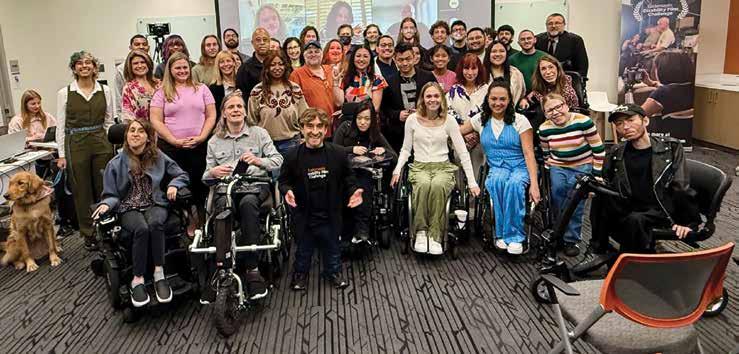
In recent months, Autism Empowerment had the opportunity to connect with Nic in two different ways. In December 2025, he joined Autism Empowerment’s Neurodivergent Creators Collective (AE-NCC) for a live video interview and workshop, where he spoke about how creators with disabilities can get involved in the 2026 Disability Film Challenge.
He also took part in a written conversation with Spectrum Life Magazine that explored his personal and professional journey in more depth.
Hello Nic! Please introduce yourself to our readers.
I am a little person, actor, comedian, writer, and producer, and I am the founder and director of the Easterseals Disability Film Challenge. Beyond my professional career, I am a very proud father of two daughters, and a husband who loves spending time with my family and friends. I also consider many people in the disability community to be almost like additional family to me.
How did disability affect your life as a child and growing up?
I have pseudoachondroplasia, which is a type of dwarfism. There are over 300 different types of dwarfism, and the interesting thing about my type of dwarfism is that my family had no idea.
I was a little person until I was almost five years old. Then I developed some symptoms related to my dwarfism and quickly began to experience pain and difficulty walking. My parents took me to see Dr. Steven Kopits, who was a world-famous surgeon who specialized in treating people with dwarfism.
Over the years, I have had over 80 hours of surgery, and after each of my sets of surgery, I had to wear a body cast for four months and learn how to walk again.
Believe it or not, this was an amazing experience as it taught me how to grow up, and it also introduced me to some
lifelong friends who are little people. Beyond the surgery and meeting little people in the hospital, I also regularly attended a national Little People of America convention.
This was an opportunity for me to go to a different city every year, where a group of little people would be attending. This was always one of the highlights of the year for me to meet so many new little people and friends that I looked forward to seeing. It was also an opportunity where I was able to play sports and compete against other little people.
How has disability impacted the transition into your career as a comedian and actor?
I started giving speeches when I was eight years old to raise money for Little People of America. When I started my speeches, I would always make a joke about how no one could see me behind the podium. At that moment, I realized that by opening up with a joke about me being a little person, I was able to get everybody’s attention throughout the rest of my speech. So it was almost like I started doing stand-up comedy when I was a little kid.
After going to college for business, I started doing stand-up comedy in my first week of school. Although I graduated with honors, double-majoring in marketing and entrepreneurship, I decided to pursue acting and stand-up comedy as a career.
Early in my career, I realized that as a little person, I was being put in a box, with only getting to audition for roles that were specific to my height. I started to produce and create my own content so that I was able to play the romantic lead and a gangster in roles that I always wanted to play.
By producing my own work, I was able to showcase myself in the best way, and that led to opportunities, like working on HBO’s The Sopranos. From there, those same producers brought me in to work on another HBO show, Boardwalk Empire, with Martin Scorsese.
You’ve shared that having Attention Deficit Disorder (ADD) has shaped how you work and create. How has being neurodivergent influenced your approach to content creation and producing your own work?
I think probably some of it comes from having ADD and not being able to sit still or focus on just one thing. In a lot of ways, that’s actually been a major advantage for me, because I’m always working on multiple things at the same time.
Continued on page 26
I believe ADD has helped me. I don’t think it would be possible for me to do the amount of different things I’ve done in my life if I didn’t have it. I’m able to focus on many things at once—or unfocus and move on to something new— and that’s allowed me to keep creating and producing my own work.
Having ADD is just something I’ve always known about myself. It’s who I am, just like being a little person. It’s the only way I know how to be. I’ve never really seen it as an issue, even if it could be perceived that way by others. I’ve never looked at it as the reason I didn’t get something.
That said, there are times when I have to work longer and things take me more time. But that’s really true for the disability community in general—we adapt, we find our way, and we keep moving forward.
What first drew you to comedy, acting, and storytelling as your creative path?
I think I was always good at being outgoing and talking in front of groups of people. Even before I turned eight, and I started to give speeches, I would always joke and be the funny kid in the classroom. I learned how to do voices, and I also learned how to use comedy as a way to break the ice for kids.
Oftentimes, when kids would say things to me about my height, it was because either they didn’t know what to say or, in some cases, they were going through their own challenges. I found that when I was able to use comedy to lighten the room, it would allow me and everyone else to just have fun and do our own thing.
As a kid, I loved playing sports, and that was something that I really wanted to continue to pursue until I got to junior high, and then everybody grew too tall. My seventh-grade English teacher told me that I was funny and good with accents and that I should try out for the school play, which I did. I fell in love with theater and started to do community theater and school plays.
You have a very extensive and impressive list of acting credits. What were some of your favorite roles?
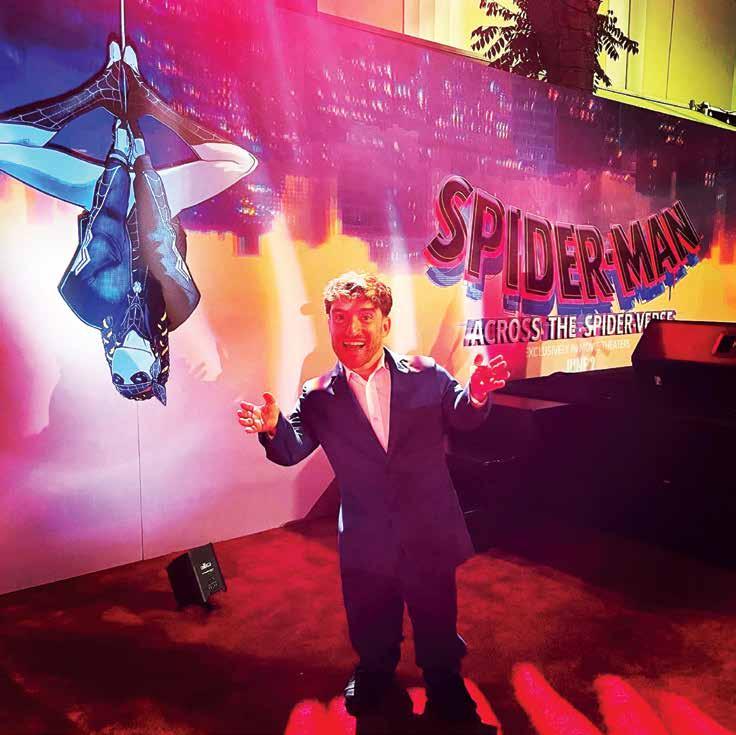
I have been very lucky in my career, having been in 50 TV shows and movies, including Boardwalk Empire, The Sopranos, The Good Doctor, Spider-Man: Across the Spider-Verse, and I’ve toured the world as a comedian and actor.
I’ve had so many incredible experiences as an artist. One experience that was extremely exciting for me was being cast in an international touring play of Henrik Ibsen’s A Doll’s House. This was an independent avant-garde theater production put on by Mabou Mines, a world-famous theater troupe, and all the male characters were played by little people, as the play was about belittling women.
We kept to the classic text aside from that casting decision and it was an incredible learning experience for me to be able to act in international theaters around the world and also to be able to act alongside so many incredible little people actors and to learn from Lee Breuer, who was a
legendary theater director who had been directing award winning theater in New York City since the 60s.
I learned a lot about how to act, and as I started touring as a young man, it also helped me gain a better view of the world and a broader understanding of different cultures.
Getting cast on The Sopranos was how I got my SAG card, which was quite an exciting role and opportunity. It was also my dad’s favorite TV show, so that was extra cool. Being on that show allowed me the opportunity to audition and land a role on Boardwalk Empire, where I got to work with Martin Scorsese, a director I have been watching and looking up to my whole life!
For those new to the Easterseals Disability Film Challenge, please share what it’s all about and what makes it unique in the entertainment world.
The Easterseals Disability Film Challenge is an annual five-day filmmaking competition in which participants write, shoot, and edit a one- to five-minute film featuring someone with a disability in front of or behind the camera.
Each year, there is a different genre for the film, and we offer an incredible prize package which includes grants, computers, software, screenings at the Academy Awards, qualifying festivals, and mentor meetings.
Beyond the annual film challenge, we offer year-round workshops, and we create opportunities for our participants. The films don’t have to be about disability. It’s just about including someone with a disability in front of or behind the camera. The most exciting thing about the challenge is that it is leading to jobs for people with disabilities in front of and behind the camera!
When and how did the idea for the Disability Film Challenge first take root?
I had already been producing my own content, which was leading to jobs. Thirteen years ago, I looked around and said to myself, “Why aren’t more people with disabilities creating their own content?” It led to opportunities for me.
Continued on next page
So, I created the Disability Film Challenge, which I thought would be a one-off competition, and then it grew year after year, and in 2017, I partnered with Easterseals Southern California, one of the nation’s largest disability services organizations, and it exploded. Today, we’ve had over 850 films that have been created from around the world.
What can people who are new to the Film Challenge expect?
We have announced our dates for the 2026 Easterseals Disability Film Challenge, which will be happening from March 24th to March 29th.
To get involved, the first step is to go to https://disabilityfilmchallenge.com and register before March 23rd. Our website walks through the steps to register, and our Frequently Asked Questions page provides many helpful answers to questions people have asked over the years.
Then, all registered participants will receive the full assignment at the start of the challenge on Tuesday, March 24th, which includes the genre, theme, and the props and elements that must be included in the film, so we know these films were completed over the course of five days.
In terms of what you should expect, I think it is just an incredible opportunity for you to tell your own story and showcase your disability however you want it to be showcased.
Even though it’s the same genre and assignment that all participants receive, we get so many different interpretations of what that genre means, and that is exciting. Some people reference their disabilities a lot and others barely do.
Another thing I’m very happy about that frequently happens is that the film challenge is an opportunity to bring community members together. I always tell people that they should reach out to their family and friends and do posts on social media and let them know they registered, they’re making a film, and the importance of disability and inclusion. Also, let them know about specific things that you need help with, e.g., an editor, a camera person, and a location.
What kind of workshops does the Easterseals Disability Film Challenge offer to help people get ready for the Challenge itself?
Beyond the annual challenge, we do year-round workshops, including workshops on teaching, directing, cinematography, writing, producing, how to film on a green screen, how to pitch, and how to work on professionalism. We’ve also done workshops on the best way to market your projects as well as film festival strategy.
Over the years, we’ve run some workshops completely remotely, some multi-day in-person workshops, and some hybrid workshops that were in person and online.
Who judges the submitted films?
We are very proud to have an incredible group of judges, both with and without disabilities, who are professional actors, writers, directors, journalists, film critics, casting directors,
and network executives. To see the full list, go to the challenge tab of our website and click on “Mentors & Judges.”
How many people or teams compete on average each year?
Although we now to date have over 850 films that have been created through the film challenge, each year we receive a different number of films. Last year, we had 123 films created from around the world, and each film had a different number of people who worked on the project.
Some films have really small casting crews. We’ve had people who filmed, edited, and starred in the films all by themselves on a solo project, and we’ve also had certain projects that have had dozens of casting crew members in their film.
We read that there are awards and grant opportunities. Tell us a little about these and how past Challenge winners have used the grants they have received.
Each award for the Challenge, including Best Film, Best Director, Best Actor, Best Writer, Best Editor, and Best Awareness Campaign, comes with numerous prizes, such as computers, cash grants, and festival screenings. www. spectrumlife.org
Continued on page 28
Photo courtesy of Nic Novicki
We have had other opportunities where our film challenge participants have been able to apply for grants that we have offered. We have also seen projects take their short films and expand them into feature films, TV shows, and episodic series, some of which are currently in production, some are in the festival circuit, and some are being released in the near future.
This will be your 13th year. Please tell us about some of the changes that you have seen from the beginning until now.
The Disability Film Challenge has evolved a lot over the years. The first year was very small. We did a first editing workshop that Dell Technologies helped us produce. We had
only a couple of films that first year, and we only gave people 55 hours to make their film, rather than five days.
Over time, we continue to evolve and make changes based on the feedback we receive from participants. Each year, we send a survey to all film challenge participants asking which genres they are most excited about.
We conducted numerous surveys that showed five days was the best amount of time for all participants, as it gave them
Continued on next page
Nic Novicki: Actor, Comedian,
Photo courtesy of Nic Novicki
more time to write, direct, and submit their films, while also being a reasonable amount of time for people to dedicate to volunteering on their projects.
Looking back, what moments from the Disability Film Challenge or your career have most moved you personally?
As an artist, it has been humbling to have a dream of being an actor and a comedian, and be able to work in that field professionally for years, including very large venues, such as arenas where I get to open for Nate Bargatze, as well as on film and TV where I’ve gotten the chance to work with people that I have always looked up to, including Martin Scorsese and Peter Farrelly.
However, what I am most proud of is all the success stories that have taken place through the Easterseals Disability Film Challenge. There have been so many success stories at this point that it is hard to share them all, but one exciting story includes Peter Farrelly reaching out to us to see if we had any recommendations for a little person actress for a major role in one of his TV shows.
We sent him ten links to films starring little people actresses, and he auditioned all of them and ultimately hired Sofiya Cheyenne, a little person actress who went on to appear in a recurring role on the TV show Loudermilk
Link to story: https://disabilityfilmchallenge.com/success-stories/sofiya-cheyenne-2/
Another recent success story is that Nik Sanchez, an actor who participated in the film challenge, ended up booking a role in the Amazon/MGM Studios movie The Accountant 2
They reached out to us, saying they were working on an untitled project and were looking for actors on the autism spectrum. We sent this to numerous film challenge participants who auditioned, and Nik ended up booking a role opposite Ben Affleck.
You’ve worn many hats—actor, comedian, writer, producer, mentor. How have those experiences shaped your vision for inclusion and representation in entertainment?
I have had a lot of people over the years who have been incredible advocates for me, including helping me land auditions and work on both stage and screen. However, the ability to create my own work has been such a liberating experience for me, and it has allowed me as a little person to showcase myself the way I want to be seen. That experience, in a way, has motivated me to pass that torch on to other people with disabilities through the film challenge.
Representation is such an important part of this work. How do you think the Challenge has helped change the way people see disability and neurodivergence in film and media?
I think the Challenge has been a catapult for so many people to be able to tell their own stories, but also to showcase their disabilities in a way that has not been seen, such as love interests, and in some cases, even villains.
Beyond the Challenge being a vehicle for people to make stories, awareness campaigns, where each participant has to get as many views, likes, and shares for their films, has been an incredible way for our film challenge participants to put their work out there and to get discovered.
That exposure has led to millions of views of authentic disability representation.
I think that exposure from the films and also from the film challenge participants getting to network and meet highlevel writers, directors, producers, and executives has also helped create non-traditional roles for disabled actors and incredible storylines in film and TV projects.
Continued on page 30
Nic Novicki: Actor, Comedian,
Photos courtesy of Nic Novicki
What are your thoughts on the current state of disability representation in Hollywood and independent film? Where do you see progress, and where is there still work to be done?
I think we are experiencing a revolution in independent film. Some of that is because there are a lack of projects being made at a studio and a network level, but also because audiences want to see something new and something fresh. I think that is an incredible opportunity for disabled creative storytellers to showcase their lived experiences through narrative projects.
In terms of progress, I have been in the business for 25 years, and it was previously much harder to get opportunities for three-dimensional disabled characters. Now I feel like networks, studio production companies, producers, and writers are really going out of their way to show an authentic reflection of life that includes people with disabilities.
In terms of what can still be done, the Centers for Disease Control and Prevention (CDC) put out a study that one in four Americans self-identifies as having a disability. Those numbers translate around the world, but in film and TV, they do not reflect on-screen representation, and the numbers are much lower behind the camera.
What advice would you give to people with disabilities or neurodivergent creatives who dream of entering the entertainment industry but aren’t sure where to start?
My biggest piece of advice is if you want to be an actor, start acting.
Get into acting classes and find friends to read scripts with. If you want to be a comedian, you need to get on stage, and you need to start right away, and you also need to set deadlines for when you will get on stage, when you’re going to write jokes, and when you’ll refine your jokes, the same with you as a writer.
I believe that there is so much talent in the disability community. If you’re interested in getting involved, the first step is always the hardest. Then, from there, it’s working on your craft and not putting too much pressure on yourself, as it takes much longer than you think to sustain a career in the entertainment industry.
However, I truly believe that it is possible, and that now is a beautiful time to be in the entertainment industry as somebody with a disability.
Where can Spectrum Life readers go to learn more about the Disability Film Challenge and to follow your personal work?
Nic Novicki’s website: www.nicnovicki.com
Disability Film Challenge website: www.disabilityfilmchallenge.com
Continued on next page
Photos courtesy of Nic Novicki
Nic Novicki: Actor, Comedian, Disability Advocate, continued from page 30
If you’d like to watch a replay of Gwyn LaRee’s December 2025 interview with Nic Novicki for Autism Empowerment’s Neurodivergent Creators Collective, you can do so here: https://www.youtube.com/watch?v=FgsTAE0zU_Q
Thank you so much for your time, Nic!
Through both his personal career and his leadership of the Easterseals Disability Film Challenge, Nic Novicki continues to model what it looks like to create opportunity rather than wait for permission.
His work reminds us that representation is not just about visibility, but about access, mentorship, and trust. As disabled and neurodivergent creatives continue to claim space in storytelling and filmmaking, Nic’s message is clear: When people are supported to work with their strengths, powerful stories and meaningful change follow.
Karen “Lights, Camera, Action” Krejcha is the co-founder and Executive Director of Autism Empowerment, where she has spent nearly 15 years advancing autism acceptance, community connection, and inclusive storytelling. She serves as Editor of Spectrum Life Magazine, hosts the Autism Empowerment Podcast, and is the founder of Spectrum of Voices LLC.
Diagnosed on the autism spectrum in her 40s—following the diagnoses of her two children—Karen’s work is deeply informed by lived experience, compassion, and faith-driven purpose. Married to her husband and co-founder, John Krejcha, for over 33 years, she is devoted to her family and to building a kinder, more inclusive world rooted in dignity, acceptance, and empowerment. https://linktr.ee/karenkrejcha
The AE-NCC Creators Corner
Updates and opportunities from AE’s Neurodivergent Creators Collective
By Brian Tashima
Happy New Year, Spectrum Life readers! It’s Brian, program coordinator and instructor for Autism Empowerment’s Neurodivergent Creators Collective (AE-NCC), with our quarterly update on what the Collective has been up to and what we have in store for the coming months.
If you’re just hearing about the AE-NCC, it’s a free program designed to support and amplify the talents of creative autistic and neurodivergent teens and adults of all ability levels via workshops, mentorships, on-demand resources, and more.
While presently our main focus is on craft and collaboration, our long-term aim is to grow into a thriving collective that not only offers training and encouragement from a neurodivergent perspective, but also builds friendships, sparks creative projects, and opens doors to everything from local opportunities to bigger stages in publishing, film, and entertainment.
Recent workshops:
In October 2025, we had the honor and privilege of hosting a panel discussion via Zoom called “Story Building for Publication and Production,” featuring a trio of amazing guests: Karen Maseng, Trelanda Lowe, and Alexandra Halliburton. Karen is a writer-director and acting coach, Trelanda is a filmmaker and producer, and Alexandra is an illustrator and animator. They each do a lot more as well, but if we listed all their hats, we’d run out of room in the magazine!
The discussion was both entertaining and informative, with each panelist sharing their experiences as neurodivergent creators working to share their stories with the world. Topics that were covered include: challenges that neurodiversity brings to the creative and collaborative process and how to overcome them, how each panelist builds their stories, ways to “de-stress,” and much more.
Watch the replay here: https://www.youtube.com/watch?v=PeIg-nOO61E
Then in November, Autism Empowerment’s co-founders Karen and John Krejcha presented “Storytelling for Good: Turning Your Story Into Purpose,” a dynamic and supportive workshop that explored how storytelling can be used as a tool for leadership, advocacy, healing, and personal empowerment.
Karen and John introduced a framework for life called the L.I.G.H.T. Switch MethodTM that offers strategies on how neurodivergent creators can use their unique voices and lived experiences to make a positive difference in the world, both personally and professionally.
Watch the replay here: https://www.youtube.com/watch?v=XnP9tyEB5a0&t
And in December, actor, comedian, voice-over artist, and producer Nic Novicki was gracious enough to share his personal journey with our members as he spoke about how he founded the annual Easterseals Disability Film Challenge, what it is like being a little person with neurodivergency, and how important it is to use our personal experiences and stories to help change the world.
Nic also spoke about how his ADHD (Attention-Deficit/ Hyperactivity Disorder) has helped him produce his own content, presenting himself in roles for which many producers might not consider someone of his stature. Nic’s professional acting credits include: Spider-Man: Across the Spiderverse, Bad Thoughts, The Good Doctor, Marry Me and Loudermilk
Watch the replay here: https://www.youtube.com/watch?v=FgsTAE0zU_Q
Our “Chill and Chat” sessions on the first Saturday of each month are bringing our members together to collaborate, introduce themselves and explore new interests! We’ve yet to have a session that did not take the full hour allotted, and they are quickly becoming one of our favorite activities.
AE-NCC Member Updates
In an exciting update, a documentary film titled The Autograph King featuring one of our members, Shamim Dana, is scheduled to premiere in April 2026 to coincide with Autism Acceptance Month!
Regular readers of Spectrum Life Magazine may remember Shamim and The Autograph King (directed by Scott Zakarin) from an interview in the Summer 2025 issue. In that issue, Shamim discussed how he was able to thrive despite challenges from multiple developmental disabilities thanks to his passion for collecting autographs.
The love and support of his family also played a big role. Autism Empowerment and the AE-NCC are proud to be supporters of The Autograph King film, and we will be providing more updates as it gets closer to the premiere date!
What’s Coming Up?
During the first quarter of 2026, we’ve lined up a couple of amazing filmmaking professionals who will be sharing their experience and wisdom with us in our monthly workshops! Each workshop will be presented virtually via Zoom, so anyone can join us regardless of where they are.
Continued on next page
February 21st: Edward Martin III - Lighting & Cinematography Basics
With over 154 credits in film, writing, and production, Edward is a powerhouse of creativity as well as the founder of Hellbender Media. The Hellbender team teaches in-depth filmmaking workshops at comic and special interest conventions several times a year, and we are incredibly blessed to have a chance to learn from such a consummate professional.
Lighting for film is much more than just making sure the camera can see the actors. Learn how lighting can change the mood, draw the audience’s attention right where you want it, and so much more. When you add how to move and place the camera to support that wonderful lighting, you will be well on your way to producing a memorable experience.
March 21st: Martin Vavra - Editing a Short Film
Martin Vavra, owner and founder of Galaxy Sailor Productions, has traveled the world during his filmmaking career as an editor, producer, cinematographer, and director for both films and commercials. Martin knows that editing is much more than just pasting together separate camera shots. Knowing what to focus on to best tell the story means really understanding what that story is.
Martin will guide us through reviewing the story and highlighting what an editor needs to consider, how to make smooth transitions to build the story, and how important collaboration is between all the creatives on a specific project. Don’t miss your chance to learn from this accomplished professional who also teaches full filmmaking courses in Portland, Oregon, several times a year.
If you’re not already part of the AE-NCC, we’d love to have you!
There is no cost or requirement to become a member. All experience levels are welcome, and you can get involved in whichever way you choose, whether it’s volunteering as a mentor, attending a workshop or Chill and Chat session, or something in between.
Your presence, perspective, and participation will help the AE-NCC grow into what it is meant to be: a supportive collective that celebrates creativity, uplifts voices, and embraces new opportunities to thrive. Join us today!
Subscribe on YouTube: www.youtube.com/autismempowerment
Sign up for email: https://bit.ly/aenccemail
Follow on Facebook: www.facebook.com/groups/aencc
Contact us directly: brian@autismempowerment.org
Brian Tashima is a neurodivergent author, screenwriter, filmmaker, musician, entrepreneur and philanthropist. He is also the managing general partner of Second Player Score, an arts and entertainment company whose mission is to provide career opportunities within the entertainment industry to people from the autism and neurodivergent communities. His credits include the award-winning Joel Suzuki series—a young adult sci-fi/fantasy coming-of-age story about a teenage boy whose autism is the source of his magic, the manga-style comic book series Glorified and the short film Hold My Beer. He also serves on the Board of Directors for Autism Empowerment. https://linktr.ee/briantashima.
Upcoming Activities • www.AutismEmpowerment.org
Autism Empowerment Upcoming Activities
AE-NCC Monthly Chill and Chats
First Saturday of each month: 3:00 pm
Via Zoom with Brian Tashima https://us02web.zoom.us/j/86095978904
Lighting & Cinematography Basics
Saturday, February 21st: 2:00 - 3:00 pm Via Zoom with Edward Martin III
Editing A Short Film
Saturday, March 21st: 2:00 - 3:00 pm Via Zoom with Martin Vavra
Schedules subject to change. Please register online for free monthly workshops.
AE-NCC Resource Library
Free videos, past workshops, links, and downloadable content. bit.ly/aenccresourcelibrary
To learn more about becoming a free AE-NCC member and get details on upcoming events, visit: www.AutismEmpowerment.org/aencc
Or scan QR code below:
First SaturdAutism Empowerment www.AutismEmpowerment.org/donate
Ongoing
Enrichment:
• SpectrumLife.org website
• AutismEmpowerment.org website
• Autism Empowerment Podcast
• Autism Empowerment Education
• AE Neurodivergent Creators Collective
Service & Volunteerism:
• Autism Empowerment Cares
• Autism Serves: Helping Hands
• Autism Serves: Virtual Volunteerism
Support:
• AWEtism We Embrace (Autistic & Non-Autistic Adults, Parents and Allies)
What did IDEA make possible? Where do we go from here?
By Karen Krejcha
In November 2025, the Individuals with Disabilities Education Act (IDEA) marked its 50th anniversary—a milestone that invites both celebration and reflection. For millions of children with disabilities and their families, IDEA has meant something once unimaginable: the right to a free and appropriate public education. It opened schoolhouse doors that had long been closed, replacing exclusion and institutionalization with access and legal protection.
Yet anniversaries are not only about looking back. They are also moments to ask deeper questions: What has IDEA made possible? Who has benefited? And what must change to ensure the next 50 years reflect dignity, belonging, and empowerment?
Before IDEA: When Access Was Not a Given
Prior to IDEA’s passage in 1975, Congress found that approximately one million children with disabilities were excluded entirely from the public school system, while many others who were technically enrolled had little access to meaningful instruction, accommodations, or supports.
In too many places, children with disabilities were labeled “uneducable,” relegated to institutions, or kept at home with few services. Families had little recourse, and children’s potential was routinely underestimated or dismissed entirely.
The original law, then called the Education for All Handicapped Children Act, was a landmark civil rights victory. It established the right to education, procedural safeguards for families, and the concept of individualized supports through what we now know as Individualized Education Programs (IEPs). IDEA affirmed something fundamental: children with disabilities belong in public education
That belief mattered—and still does.
A Law That Changed Lives
For many families, IDEA has been life-changing. Children gained access to classrooms, therapies, accommodations, and services that helped them communicate, learn, and participate. Parents were given a voice in their child’s education and a framework to advocate when systems fell short.
At the heart of IDEA is the guarantee of a Free Appropriate Public Education (FAPE)—a commitment that every student has the right to an education designed to meet their individual needs, at no cost to their family. FAPE shifted education from a privilege to a right, affirming that children with disabilities deserve meaningful access to learning, support, and opportunity.
IDEA also helped shift cultural perceptions. Disability slowly began to be seen not as a personal failing, but as a difference that schools were obligated to support. Over time, concepts like inclusion, least restrictive environment (LRE), and transition planning entered the educational landscape.
For autistic and neurodivergent students in particular, IDEA created pathways that did not previously exist. Students who were once excluded found opportunities to learn, socialize, and grow alongside peers. Many went on to higher education, employment, and community leadership, outcomes that would have been far less accessible without IDEA’s protections.
Progress With Complications
At the same time, IDEA’s implementation has never been perfect. Access has not always meant equity, and inclusion has not always translated into a true sense of belonging.
Many students—especially autistic students, students with intellectual disabilities, students of color, and those with complex support needs—have encountered educational systems that prioritize compliance over connection. Some have experienced the overuse of restraint and seclusion, inappropriate placements, low expectations, or an emphasis on “fixing” behavior rather than supporting communication, autonomy, and well-being.
Families often describe IEP meetings as adversarial instead of collaborative, while educators—stretched thin by chronic underfunding and staffing shortages—are frequently asked to do more with less. As a result, the promise of IDEA has too often been limited by insufficient resources, inconsistent enforcement, and a lack of meaningful accountability.
And critically, the voices of people with disabilities—including those of autistic adults, other neurodivergent individuals, and students themselves—have not always been meaningfully included in conversations about how special education is designed and delivered.
While adults often speak for children in educational settings, students with disabilities bring valuable insight into what helps them feel supported, understood, and capable.
When these perspectives are overlooked, important opportunities are lost to create learning environments that truly reflect the needs, strengths, and lived experiences of the individuals IDEA was meant to serve.
Continued on next page
Although disability advocacy organizations—including Autism Empowerment—have long encouraged parents to nurture self-advocacy from an early age and to meaningfully include students in their IEP meetings beginning in Kindergarten, this practice still does not happen as often or as consistently as it should. Too many educational decisions continue to be made about students rather than with them.
When children are not invited into conversations about their own learning, they miss critical opportunities to understand their strengths, express their needs, and develop confidence in their voices. Supporting student participation early is not about placing adult responsibility on young shoulders—it is about honoring agency, building self-awareness, and laying the foundation for lifelong self-advocacy.
Listening to Lived Experience
As IDEA turns 50, one message is increasingly clear: the future of special education must be shaped by the people who have lived it.
People with disabilities—including autistic adults and other neurodivergent individuals—are speaking openly about their school experiences, sharing both the supports that helped them thrive and the practices that caused harm. Their insights challenge outdated assumptions and invite schools to move beyond deficit-based models toward approaches rooted in respect, agency, and strengths.
At Autism Empowerment, we believe deeply in the principle “Nothing About Us Without Us.” That belief applies as much to education as it does to advocacy, employment, healthcare, or community life. Policies may open doors, but lived experience shows us what happens once students walk through them.
Listening does not mean discarding IDEA’s framework. It means evolving it—so that educational supports are not just legally sufficient, but truly empowering.
From Compliance to Belonging
One of the greatest opportunities in IDEA’s next chapter is a shift in mindset: from compliance to belonging.
Compliance asks whether services are delivered according to the letter of the law. Belonging asks whether students feel safe, valued, and respected in their learning environments. It asks whether their identities—including disability, neurodivergence, culture, language, and gender—are affirmed rather than erased.
Belonging also means recognizing that inclusion is not simply physical placement. It is relational. It is about access to communication, meaningful participation, and authentic peer connection. It is about environments that adapt to students—not students forced to adapt at the expense of their well-being.
When schools move toward belonging, outcomes improve not only for students with disabilities, but for entire learning communities.
The Role of Families and Educators
IDEA’s success has always depended on partnership. Families bring deep knowledge of their children. Educators bring professional expertise and commitment. When these perspectives are respected and aligned, students benefit.
Yet true partnership requires trust—and trust requires systems that value collaboration over conflict. As IDEA moves forward, families and educators alike need better support: adequate funding, training in neurodiversity-affirming practices, and time to build relationships rather than manage paperwork alone.
Investing in educators is also essential. Burnout and staffing shortages threaten the quality of special education services nationwide. Supporting teachers, therapists, and paraprofessionals is not separate from supporting students— it is inseparable.
Intersectionality Matters
IDEA does not exist in a vacuum. Students bring intersecting identities into classrooms, and educational experiences are shaped by race, socioeconomic status, language access, and geography.
Students of color with disabilities are disproportionately disciplined, segregated, and under-supported. Families navigating poverty or systemic barriers often face additional challenges accessing services. Rural communities may struggle with shortages of specialists. These realities must be acknowledged if IDEA’s promise is to be fulfilled equitably.
Addressing these disparities requires intentional action, data transparency, and community engagement—along with a willingness to confront uncomfortable truths.
A Call to the Next 50 Years
As we honor IDEA’s 50th anniversary, gratitude and responsibility go hand in hand. The law opened doors that should never have been closed. It laid a foundation for rights, access, and advocacy that continues to shape lives.
But the work is not finished.
The next chapter of IDEA must center the voices of people with disabilities, including neurodivergent individuals and students themselves, embrace diversity across the spectrum, and prioritize dignity alongside access. It must move beyond minimum standards toward systems that truly enrich, inspire, and empower.
At Autism Empowerment and Spectrum Life Magazine, we believe that education should help every student discover their gifts—not just meet benchmarks. That belief calls us to keep listening, keep learning, and keep advocating together.
Fifty years from now, may future generations look back and say: We didn’t just protect a law—we transformed its promise into meaningful opportunities for all.
Four Reasons People Are “Faking” Autism
(and
why this is a TERRIBLE idea)
By Dr. Anson Service, aka Neurodivergent Doctor
Every few months, the internet rediscovers a familiar panic: What if people are faking autism for attention? News soundbites about this “out of control scam” are generated to get profitable clicks while autism ableists emerge to belittle and defend, somehow simultaneously.
Then come the actual autistic individuals wielding the sword of truth to set the record straight, only to have the whole topic quickly die out for a few months. But don’t worry, it will be back. It will ALWAYS be back.
If I may be upfront with you: in my experience, yes, it is possible for someone to fake autism. Humans can fake almost anything. People fake smiles, they fake job accomplishments on resumes, and they fake parts of their bodies.
Have you seen men’s soccer on TV? They fake injuries from being hit with the slightest breeze, and they fake it poorly. If you want a good laugh, search for videos about fake soccer injuries. Ironically, people even fake being authentic (“I’m just being real... get over it”).
But faking autism? That’s a wildly inconvenient, uncomfortable thing to pretend to have. A person would really have to be dedicated to the role, for... ever. So, let’s flip the script. Instead of interrogating autistic people about this, let’s ask a much more reasonable question: Why on earth would anyone ever want to fake autism? Especially in the United States?
We, as a country, are terrible at supporting autistic individuals. I mean, some organizations, like Autism
Empowerment, are bright, but lonely lights in an otherwise very dark world. And if someone did fake autism, what might that look like?
Let’s have some fun with this. Below are four “reasons” a person might want to fake autism. (Beware... heavy sarcasm ahead).
1. Autism Comes With Perks
Ah, yes, the hidden perks of Autism. If you are not autistic, you may not have known that it is kind of like having a built-in cheat code.
Yes, we autistics get ALL the instant, amazing accommodations. Whatever we ask for, such as lowered lighting, ear protection, etc, is all freely offered to us. And sympathy? We get endless sympathy. People are quick to understand we process things differently, so they leave us a lot of room to make mistakes and misunderstand cues.
In business, special grants, loans, counseling, and programs are available for us if we would like to start or expand our business, all without consideration that we may not be able to work 40 to 80 hours per week.
And if we need medical help, boy oh boy are we in luck! They have special websites for autistic people that make it easy to schedule appointments without endless nonsensical website issues, overcomplicated pages, and having to phone in and deal with circular phone trees that get you nowhere except disconnected.
And when we do see the doctor, they ask us how we present as autistic, and they will honor that. They take time and patience to find out what our medical concerns are. It is wonderful (cue the record scratch sound).
In reality, accommodations exist, and some people do provide sympathy or empathy, but from what I have seen and experienced, this is extremely rare. When others found out I was diagnosed with autism, I experienced being taken less seriously at work, being left out of conversations, being the last to hear about important matters, and more concerning issues.
And when it came to disagreements, rather than having a thoughtful conversation, people tended to just go silent, talking behind my back rather than asking me about my perspective. People have blamed my perspective on autism rather than me having a solid argument.
Continued on page 40
As far as business funding goes? Nope. There is virtually none for you. In helping autistic people start their own businesses, it has become clear that they have been less able to obtain business funding due to various potential factors, such as lower average yearly earnings, dropping out of school, and not being able to work as often due to sensory problems, burnout, or other conditions.
Want medical care? This is its own special type of hell, from confusing phone systems to insurance confusion, to doctors who only have a little bit of time and tend not to ask the right questions.
Most unfortunate is the fact that I have witnessed my clients being accused of faking because they do not present autism in a way that the medical professionals would accept. While there are some who are strong advocates of our neurodivergent friends, there are those who are not.
If you were faking autism for advantage... congratulations, you have chosen a strategy with social stigma, employment risk, medical gatekeeping, and zero guaranteed payoff. In fact, our country has little to no resources for autistic adults who are level 1 or 2. And receiving care with level 3 autism can be its own set of challenges.
2. You Can Expect Validation Instead of Pushback (more sarcasm)
People are very validating toward the neurodivergent nowadays. When you disclose an autism diagnosis, you can now expect a comforting, “Thank you for trusting me with that information,” type of response. They will then listen intently to you, understand your needs, and will honor those requests.
Okay, back to reality. While this situation above may happen to some degree, I do not expect it often. I have found that when many autistic people disclose their diagnosis, some common responses are, “But you don’t look autistic,” “Everyone does that,” “That’s just anxiety,” or “TikTok is making everyone autistic now.”
If you were faking autism, you’d be voluntarily signing up to constantly justify your experiences, and sometimes even your very existence. You would be continually worried about whether or not you should disclose your diagnosis, and then have to re-explain your neurology to strangers or friends.
Then you run the risk of overexplaining. You are also at risk of being accused of exaggerating, lying, not thinking clearly, or following trends.
Faking autism would require a true, long-term commitment to being doubted. If people who fake things often want praise, sympathy, or admiration, then this is not the diagnosis to fake.
3. You Will Enjoy Being Highly Consistent Over Time
If you want to fake autism, you will enjoy being able to just concentrate on that ONE faked disorder and not worry about faking anything else. This is not about challenges with change; this is about faking autism consistently over time.
And autism is enough. No need to fake ADHD, anxiety, depression, OCD, or any of the other hundreds of co-occurring disorders. Because you are faking it, you can just fake just the one disorder, and you don’t have to worry about the others.
For years, I have had the idea that people can fake things, such as being really nice, or truly caring for others, but I liken faking to stretching a rubber band. Eventually, you get tired of holding it and stretching it, and it snaps back to its normal place. This is why the “faker” narrative falls apart.
Autism isn’t selective about when it presents. It is always there, challenging in some form in most settings. It would be extremely taxing to try to fake at work, at home, with friends, or with family, all of the time.
A faker would have to maintain some sort of consistency over their lifetime, from birth to death, in its different forms and presentations throughout the lifespan. It would present at school, work, in community settings, with family, and when alone.
My autism presents MOST when I am alone (thanks to years of shame and masking). The faker would also have to present as autistic during moments of grief, stress, happiness, and essentially whenever it is not convenient to pretend.
Most fakers slip when the mask becomes inconvenient. Many autistic people, on the other hand, often desperately wish they could stop being autistic for a day off. That may be a controversial statement, but it is one I hear often.
4. You Can Just Stop Faking When It Becomes Hard
Here’s the real tell, and I am not going to be sarcastic during this point. If someone were faking autism, wouldn’t it make sense that when things got difficult, as they would with autism, they would likely stop pretending? They would fall out of character the moment it cost them socially, they became close to losing their job, made people uncomfortable, or required actual, more difficult accommodations.
But if you talk to nearly any autistic person, they will attest that they don’t get to stop being autistic.
They don’t get to simply opt out when the room is too loud, the rules change without warning, their brain locks up mid-sentence, and they can’t seem to say what they want, or when real burnout hits.
As an actual autistic, I can assure you that my autism persists when it is deeply inconvenient. I cannot pretend my way out of it long-term any more than someone could pretend to be autistic long-term.
So... let us ask the burning question: Can a person fake autism?
Sure. Somewhere. Probably. Statistically, with more than eight billion humans, I am sure someone out there can do it. But why would they? There really doesn’t appear to be a benefit.
The obsession people have with “fakers” has far less to do with fraud and far more to do with their own discomfort. Are they uncomfortable with the millions of various presentations of autism in which there is no “standard” presentation? After all, many do not match the stereotypes that people have about it.
Is it that more and more autistic people are speaking up and out for their own needs?
Maybe that is because there is a long history of people and administrations being dismissive of our actual experiences as autistic.
Is it that more autistic people are visibly showing their various disabilities more than ever? I understand that some people do not want to be inconvenienced by helping to accommodate our needs and would rather live in that mythical world in their head where the disabilities associated with autism are merely hypothetical.
The Gig is Up
If you are worried that someone is faking autism, ask yourself this: What would they gain?
Autistic people aren’t cashing in on the scam of the century. I, along with millions of other autistic people, am so busy navigating a world that was not built for our brains that we are often exhausted, misunderstood, and lonely. Still, we are often quiet about it as well.
Many of us don’t want this type of attention, and we certainly are not kicking back enjoying power, ease, and a life of luxury. And if someone truly wanted to fake something, I hear men’s soccer is holding open tryouts.
To read other columns by Dr. Service, visit: www.SpectrumLife.org/neurodivergentdoctor
Check out his YouTube channel at www.youtube.com/@NeurodivergentDoctor
Dr. Anson Service is a licensed mental health counselor, and part of a team that assesses individuals for autism, ADHD, and more at Adventure Psychological Services. Dr. Service has written for various magazines and authored several books and is happy to further educate others on autism and other areas of neurodiversity. He and his wife have raised three young men and are now raising their dog, Luna. www.NeurodivergentDoctor.com
Autism, Mental Health, and Whole-Person Wellness
Supporting Body, Mind, Heart, and Spirit Together
By Karen Krejcha
When we think about health and wellness, it’s common to picture checklists: appointments scheduled, boxes checked, goals met. But for many autistic and neurodivergent individuals and the families who love them, wellness is rarely linear, tidy, or easy to access.
For some, access to healthcare is limited by cost, geography, transportation barriers, insurance gaps, or long waitlists. For others, stigma at home, schools, workplaces, faith communities, or within extended family creates barriers that feel just as heavy as a locked door.
Additionally, for many in our community, wellness conversations don’t always reflect the realities of intersectional identities, where race, gender, sexuality, culture, immigration status, poverty, trauma, and disability overlap and influence lived experience.
At Autism Empowerment and Spectrum Life Magazine, we believe wellness is not about fixing who someone is. It’s about supporting who they are across all ages, stages, abilities, and life experiences.
This article isn’t meant as medical advice. It’s an offering of encouragement, perspective, and practical ideas grounded in acceptance, dignity, and hope.
Whether you’re parenting a young child newly diagnosed, supporting a teen going through puberty, navigating adulthood yourself, or caring for someone you love, our hope is that you find reassurance here. We see you. You are not alone.
Wellness Is Whole-Person—and Context Matters
For autistic and neurodivergent people, the concept of health and wellness is rarely confined to one area of life. Physical, mental, emotional, and spiritual well-being are deeply interconnected, and challenges in one area often ripple into others.
It is common for autistic people to experience co-occurring conditions across the lifespan. Some may be present from childhood, while others emerge later in adulthood or aging. As with autistic traits, these experiences are not linear and do not look the same from person to person.
Alongside learning and social differences, co-occurring experiences may include anxiety, depression, AttentionDeficit/Hyperactivity Disorder (ADHD), sensory processing differences, sleep challenges, gastrointestinal issues, autoimmune conditions, connective tissue disorders, epilepsy, chronic pain, eating differences such as Avoidant/Restrictive
Food Intake Disorder (ARFID), and higher rates of trauma exposure. None of these defines a person, but they do shape daily life and support needs.
Intersectionality matters deeply here. An autistic child of color, an autistic teen who is LGBTQ+, an autistic adult living in poverty, an autistic person who uses Augmentative and Alternative Communication (AAC), or an undocumented autistic parent may often face additional barriers to care, safety, and belonging.
Wellness support must honor these layered realities without comparison, judgment, or hierarchy. And sometimes, despite best efforts and without fault on the part of the parent or individual, professional help simply isn’t accessible.
This may be due to financial barriers, lack of insurance coverage, long waitlists, limited providers trained in autism or neurodivergence, or living in rural or underserved areas. For families supporting individuals with higher or more complex support needs, the barriers can be even greater when services require repeated evaluations, extensive documentation, or years-long waiting lists.
These gaps are not personal failures. They are systemic— and they underscore the ongoing need for stronger public investment, community-based services, and nonprofit resources to help fill those gaps.
When families rely on peer support, trusted relationships, faith or values-based communities, online education, or advocacy networks, that is not “settling.” It is resilience.
Continued on next page
Early Childhood: Building Safety, Trust, and Regulation
For autistic and neurodivergent children, regulation develops through connection—not compliance.
In plain terms, this means children learn to manage their emotions and bodies best when they feel understood rather than controlled.
Behaviors that are often labeled as “challenging” are frequently forms of a child’s communication—signals of overwhelm, unmet sensory needs, fatigue, or difficulty expressing internal experiences.
Connection-based support looks like adults staying calm, offering reassurance, adjusting the environment, and helping children recover rather than focusing on punishment or forced obedience. Over time, children build self-regulation skills because they have experienced co-regulation first.
This is especially important for children with high support needs, intellectual or developmental disabilities, and children who communicate using AAC. Communication differences do not reduce emotional depth or awareness; they increase the importance of patience, respect, and attuned support.
Supportive foundations may include:
• Gentle routines that provide structure without rigidity
• Sleep support that prioritizes rest over “normal” schedules
• Nutrition approaches that respect sensory needs and access realities
• Emotional labeling and validation (“Your feelings make sense.”)
Parents and caregivers often feel immense pressure during these years—to intervene early, do more, and get everything “right.” Chronic stress can take a toll on adult health and family dynamics, making regulation harder for everyone involved.
This isn’t about blame; it’s about recognizing that caregiver wellness matters too
Giving yourself permission to rest, ask for help, and let go of unrealistic expectations is not selfish; it’s protective. You don’t need to do everything to do something meaningful. Small, consistent acts of care matter.
From a spiritual or values-based perspective, early wellness can be rooted in belonging. This may look like celebrating a child’s special interests, honoring their communication style, speaking respectfully about disability, and ensuring children know—through words and actions—that they are loved, worthy, and accepted exactly as they are.
Middle Childhood & Adolescence: Identity, Mental Health, and Belonging
As children grow, so do their questions—about themselves, their bodies, and their place in the world.
Puberty can be especially challenging for autistic and neurodivergent youth. Rapid physical changes, heightened sensory sensitivities, emotional intensity, and increased social expectations often collide at once. Clear, concrete, and respectful education about bodies, boundaries, and consent is essential—and it often needs to begin earlier than families expect.
Sexual education for autistic youth is not about encouraging activity; it is about safety, self-knowledge, and dignity Families may find helpful resources through disability organizations, inclusive healthcare providers, and neurodivergent-informed educational materials that use visuals, plain language, and trauma-informed approaches.
These years can also bring increased awareness of differences from peers, as well as an increase in academic stress, masking, and vulnerability to anxiety and depression. Autistic teens, especially those with intersecting marginalized identities, face elevated risks of bullying, isolation, and internalized shame.
As children and teens spend more time online, digital spaces increasingly become part of their social world. For autistic and neurodivergent youth, online communities can offer connection, shared interests, and a sense of belonging, especially when in-person relationships feel challenging. At the same time, these spaces require thoughtful guidance and protection.
Children and teens with disabilities are statistically more vulnerable to exploitation, manipulation, and abuse, including online grooming. This is not about being naive or incapable; it is because differences in communication, social understanding, or trust can be exploited by others. Talking openly at developmentally appropriate levels about online safety, boundaries, consent, and who are trusted adults is an important part of wellness and protection.
These conversations do not need to be fear-based. When approached with honesty, clarity, and respect, they can empower young people to recognize unsafe situations, ask for help, and understand that their bodies, images, and boundaries deserve protection—both online and offline.
Continued on page 44
Wellness during this stage often means shifting from “doing for” to walking alongside.
Supportive approaches may include:
• Normalizing mental health conversations without fear or punishment
• Teaching body awareness, boundaries, and consent in accessible ways
• Supporting identity exploration (including gender, sexuality, culture, and faith) without rushing or judgment
• Encouraging rest, downtime, and recovery, especially after masking or large gatherings
• Helping teens name burnout and advocate for their needs
For families navigating stigma from relatives, communities, or elsewhere, setting boundaries is sometimes necessary. Boundaries don’t need to be confrontational to be effective.
They may include limiting harmful conversations, redirecting misinformation, choosing not to share personal details with unsafe people, or prioritizing time with those who demonstrate respect and care. Protecting a young person’s mental health is not disrespectful; it is an act of love.
Spiritually and emotionally, many teens are searching for meaning, justice, and purpose. They deserve space to ask hard questions and adults willing to listen without needing all the answers.
Adulthood (18+): Sustainability, Purpose, and Self-Defined Success
Adulthood is often portrayed as a finish line you cross at age 18. In reality, it’s another transition, often a difficult one.
Autistic adults may face ongoing challenges related to employment, healthcare access, housing, relationships, burnout, and aging. Many of us were never taught how to listen to our bodies because we spent years being told to push through discomfort.
Digital spaces continue to play a significant role in adult life as well. Many autistic adults find meaningful connections, advocacy, and creative outlets online. However, it’s also important to acknowledge how perseveration, obsessive thinking, or compulsive patterns—sometimes associated with autism, anxiety, or OCD—can make certain online spaces harder to disengage from.
Wellness in adulthood is less about “independence at all costs” and more about sustainability and interdependence.
Supportive ideas may include:
Whether related to social media, gaming, online communities, or repetitive content consumption, wellness may include learning to notice when engagement shifts from supportive to draining. Building awareness, setting gentle boundaries, and seeking accountability or support when needed can help protect mental health without shame.
Wellness is not about avoiding the online world altogether. It is about cultivating discernment—choosing spaces that nurture connection, dignity, and purpose, and stepping back from those that increase distress or risk.
• Redefining success based on quality of life, not productivity
• Learning energy management and pacing
• Addressing chronic health conditions with self-advocacy and support
• Building formal or informal community that reduces isolation
• Honoring grief for unmet expectations while still holding hope
From a spiritual lens, adulthood wellness may include connecting to purpose: contributing in ways that align with one’s gifts, values, and capacity rather than external pressure.
Middle Age & Senior Adulthood: Autism, Aging, and Changing Needs
As autistic adults age, wellness may intersect with menopause, chronic illness, mobility changes, and cognitive shifts. Emerging research suggests higher rates of conditions such as Parkinson’s disease, dementia, and other neurodegenerative disorders among autistic adults. These are all areas that deserve more attention, funding, and compassion.
Families may find themselves navigating aging services, assisted living, or long-term care systems that are not always equipped to support autistic people, AAC users, or individuals with intellectual and developmental disabilities. Advocacy remains important at every age.
Autistic seniors deserve environments that respect their autonomy, routines, sensory needs, communication styles, and personhood.
Aging does not erase identity. Wellness later in life is about dignity, comfort, meaningful connection, and being supported—not managed.
Across Every Stage: What Truly Supports Wellness
Across all ages, stages, and abilities, several themes consistently support whole-life wellness:
• Acceptance Before Intervention: Acceptance does not mean stagnation or ignoring needs. It means support starts from dignity, not deficit.
• Listening to Lived Experience: Autistic and neurodivergent voices, especially those from marginalized communities, offer essential insight into what helps and what harms.
• Community Over Isolation: Wellness grows in connection. Even one safe person who shows love and understanding can make a lifelong difference.
• Flexibility Over Perfection: What works today may not work tomorrow. That’s okay.
• Hope Without Pressure: Hope doesn’t require pretending things are easy. It simply reminds us that growth is still possible.
Continued on next page
When Professional Care Is Hard to Access
If mental health care feels out of reach right now, please know this: needing help is not a failure, and doing your best with what you have is still meaningful.
Peer support, trusted relationships, faith or values-based practices, creative expression, time in nature, and accessible educational resources can all be valid parts of a wellness journey—especially when formal systems are difficult to access.
If stigma from family, school, work, government agencies, providers, or community is part of the struggle, you are allowed to seek support elsewhere. Protecting your well-being, or the well-being of someone you love, is not selfish. It is necessary.
Alongside this article, we’ve included a sidebar with national organizations and resources that may offer additional information, connection, and support. Because our readers span many regions, these groups can serve as helpful starting points, while local and regional supports may also be available closer to home.
Gentle Words of Love to Youth, Adults, Parents, and Caregivers
If you take nothing else from this article, please take this:
You are not doing life wrong because it’s hard.
You are not failing because progress looks uneven.
You are not alone, even when it feels that way—at any age or stage of life.
Wellness is not a destination. It’s a relationship with ourselves, with others, and with the world around us. That relationship is allowed to change and evolve over time.
In Reflection
Wellness is not about becoming someone else. It is about being supported in becoming more fully yourself.
Across all ages, abilities, identities, and life stages, that truth remains. Each person’s path is unique, shaped by strengths, challenges, community, and circumstance—and no single measure defines a life well lived.
At Autism Empowerment and Spectrum Life Magazine, we believe deeply in meeting people where they are, honoring lived experience, and choosing compassion over comparison. We believe that every individual—regardless of ability, communication style, support needs, or season of life—has inherent worth and purpose.
For those who draw strength from faith, wellness can also be a reminder that none of us walks alone. Even in seasons of uncertainty, exhaustion, or unanswered questions, there is room for grace, perseverance, and hope. Sometimes that hope shows up quietly—in a moment of understanding, a supportive connection, or the courage to keep going one day at a time.
May we continue to listen more than we assume, love more than we fear, and hold space for one another with humility and care.
May we continue to choose compassion, extend grace to ourselves and one another, and trust that every step toward understanding and care matters. You matter.
Neurodivergent-Friendly Resources (For When You Want More Support)
Because Spectrum Life Magazine reaches individuals and families across the country, we have included national organizations below. Many communities also have local, state, or regional groups that provide additional support, advocacy, and connection closer to home.
The following organizations offer education, advocacy, peer support, and accessible resources for autistic, neurodivergent, and disabled individuals and their families. Most do not require a diagnosis and include free or low-cost options.
• Autism Empowerment & Spectrum Life Magazine
Autistic- and neurodivergent-led community programs, advocacy, wellness-centered resources, and storytelling grounded in acceptance, dignity, and lived experience. https://www.autismempowerment.org https://www.spectrumlife.org
• Autism Society of America
Nationwide advocacy, education, and support for autistic individuals and their families, including a national helpline and local affiliate network. https://autismsociety.org
• Autistic Self Advocacy Network (ASAN) Policy, education, and self-advocacy resources created by and for autistic people, including plain-language guides. https://autisticadvocacy.org
• Autistic Women & Nonbinary Network (AWN) Advocacy and resources for autistic women, girls, and nonbinary people, with attention to intersectionality, mental health, and inclusion. https://awnnetwork.org
• CommunicationFIRST
Advocacy and education supporting communication access, including the rights of nonspeaking and minimally speaking people who use AAC. https://communicationfirst.org
• Embrace Autism
Autistic-affirming education on autism, neurodivergence, and common co-occurring conditions, presented in accessible language. https://embrace-autism.com
• National Alliance on Mental Illness (NAMI) Free education programs, peer-led support groups, and mental health resources for individuals and families. https://www.nami.org
• SAMHSA
Mental health and substance-use resources, including low-cost, sliding-scale, and community-based care options. https://www.samhsa.gov
• The Arc
Support, education, and advocacy for individuals with intellectual and developmental disabilities and their families across the lifespan. https://thearc.org
• Thinking Person’s Guide to Autism
Evidence-informed articles written by autistic adults, parents, and professionals, emphasizing respect, nuance, and lived experience. https://thinkingautismguide.com
• 988 Suicide & Crisis Lifeline (U.S.)
Call or text 988 for free, confidential support during moments of emotional distress or crisis. https://988lifeline.org
(If you are outside the United States, similar crisis and support lines may be available through national health or advocacy organizations.)
Photo courtesy of Kaleidoscope Rx
By John Krejcha
Kaleidoscope Rx Clear Perspective is Good Medicine
In a world where neurodivergent people are too often told—directly or indirectly—that they are broken, too much, or not enough, simply existing can take a heavy toll. Many are pressured to mask who they are so others can feel more comfortable, rather than being supported to live as their authentic selves.
At the same time, growing fears around surveillance, registries, and the erosion of disability rights have left many autistic and neurodivergent individuals feeling vulnerable, anxious, and under attack. The cumulative impact on mental health is real and deeply personal for countless individuals and families.
According to the National Institutes of Health, between 54–94% of autistic individuals experience a mental health condition at some point in their lives, and more than half are prescribed medication as part of their care. When trauma, burnout, systemic barriers, and a lifetime of feeling misunderstood are layered together, the need for compassionate, affirming support becomes not just important, but essential.
That’s why we were grateful for the opportunity to connect with Kaleidoscope Rx, a neurodiversity-affirming psychiatric medication management clinic based in Vancouver, Washington. Founded and led by Psychiatric Mental Health Nurse Practitioner Rhonda Rowan, Kaleidoscope Rx offers care grounded in dignity, autonomy, and a deep respect for lived experience.
In this conversation, Rhonda shares the philosophy behind Kaleidoscope Rx, the communities they serve, and what it truly means to provide mental health care that sees the whole person—not just a diagnosis.
Rhonda, thank you for your time. Please introduce yourself to our readers.
My name is Rhonda Rowan. I’m a Psychiatric Mental Health Nurse Practitioner and the Founder and Medical Director of Kaleidoscope Rx, a behavioral health medication management clinic based in Vancouver, Washington.
I’ve spent most of my career working with autistic and Attention-Deficit/Hyperactivity Disorder (ADHD) individuals and their families. I’m also part of a neurodivergent family myself, so this work isn’t just professional for me—it’s deeply personal. These are my people and my community.
What I want people to know most is that we don’t reduce anyone to a diagnosis, a checklist, or a score on a screening tool. We slow things down. At Kaleidoscope Rx, we care about autonomy, dignity, and helping people build lives that actually work for them—not just lives that look acceptable to the outside world.
Why did you choose the name “Kaleidoscope Rx”?
We chose the name “Kaleidoscope” because it reflects how we see brains, identities, and lives—complex, colorful, and constantly shifting.
Not broken. Not needing to be fixed. Just needing understanding and the right supports.
A kaleidoscope doesn’t change the pieces inside; it changes how you see them. That’s how we think about mental health care and medication. The “Rx” reflects the medication component of what we do, but the heart of our work is about seeing the whole person, not just the prescription.
What is the philosophy behind Kaleidoscope Rx?
Our approach is grounded in autonomy, dignity, and neurodiversity-affirming care, but at its core, it’s pretty simple. Medication is one part of the picture—not the whole solution. We use it as a tool and talk openly about benefits, risks, and side effects so people can make informed decisions about their own bodies.
We believe the person is the expert on their lived experience. We bring clinical training to the table, but our patients bring knowledge about themselves, and both matter.
Continued on next page
Cultural humility is non-negotiable. Many of the people we serve are marginalized in multiple ways—by disability, race, gender identity, sexuality, or socioeconomic status. Unchecked bias and judgment can cause real harm. We work deliberately to create a space where people feel safe being themselves and feel believed.
Ultimately, we care more about function and quality of life than about appearing “normal.” Our goal is stability, safety, and sustainability—not masking or forcing someone to fit expectations that don’t work for them.
With that philosophy as the foundation, please tell us more about Kaleidoscope Rx. Who do you serve and what services do you provide?
Kaleidoscope Rx is a neurodiversity-affirming psychiatric medication management clinic serving children as young as four, teens, and adults.
Many of our youngest patients come to us when families are noticing early signs of ADHD, anxiety, sensory challenges, or behavioral concerns, and we work closely with caregivers to make sure care feels collaborative, thoughtful, and developmentally appropriate.
We serve Southwest Washington and the greater Portland metro area, as well as patients throughout Washington and Oregon who are able to come in person for their initial appointment and at least once annually after that. Once that first visit is complete, many follow-ups can be done either in person or via telemedicine, depending on the patient’s needs and regulatory guidelines.
We specialize in supporting autistic individuals, people with ADHD, and other neurodivergent patients who may also be navigating anxiety, depression, trauma-related conditions, sleep challenges, or executive functioning difficulties.
Our services include comprehensive psychiatric evaluations, with intake appointments scheduled for 90 minutes to allow people the time to fully share their story. Medication
management follow-up appointments are typically 30 to 60 minutes, depending on clinical complexity.
We collaborate with therapists, primary care providers, schools, and Individualized Education Program (IEP) teams through recommendations and communication, and we provide referrals to trusted community providers for therapy, diagnostics, or specialized support when appropriate. We also offer ongoing guidance around sleep, sensory needs, daily routines, and executive functioning as they intersect with medication decisions.
We are not a therapy practice; our focus is medication management. However, we work closely with therapists and other providers so care feels coordinated rather than fragmented. What began as a very small practice has grown into a team of psychiatric nurse practitioners and support staff committed to serving the neurodivergent community with respect, humility, and care.
Could you share more about the demographics you most often support and the lived experiences that shape your patients’ needs?
We see children starting around age four, teens, and adults of all ages. Many of our patients are autistic, ADHD, or both, often with co-occurring anxiety, depression, OCD, traumarelated conditions, or sleep challenges.
We also serve neurotypical children and adults who are seeking thoughtful psychiatric medication management for concerns such as depression, anxiety, bipolar disorder, insomnia, and related mood or sleep conditions.
A large portion of the people we work with identify as LGBTQIA+ or gender-diverse, and many are navigating complex systems such as schools, disability services, employment supports, or guardianship.
We serve individuals and families across Southwest Washington and the Portland metro area and collaborate whenever possible with local autism and disability resources.
What does the intake process look like?
Most people find us through word-of-mouth, community partners, or website referrals. A typical intake process begins with an initial contact from the patient, family member, or caregiver.
Our staff gathers information about the primary areas of concern, current supports, insurance, and goals to help determine whether we are a good fit and able to meet the person’s needs.
We provide secure electronic paperwork for medical history, medications, and consent. We recognize that forms can be overwhelming for many neurodivergent individuals, so we aim to keep them as clear and streamlined as possible.
Continued on page 50
Photo courtesy of Kaleidoscope Rx
All first appointments are conducted in person. We feel strongly that this leads to safer, higher-quality care by allowing us to build rapport, complete vital signs and medical assessments, accurately evaluate symptoms, and meet regulatory requirements.
After the initial visit, follow-up appointments may occur in person or via telemedicine, depending on clinical needs and regulations.
Our goal is that by the time someone arrives for their first appointment, they already have a sense of what to expect
and feel that they are entering a space that understands neurodivergent needs.
What should a client expect during their first appointment?
The first appointment is centered on listening. We focus on understanding the person’s story, strengths, challenges, sensory needs, sleep, daily routines, and past treatment experiences.
Medication changes may or may not happen at that visit. Sometimes the most appropriate choice is to gather more information or make no changes at all. Decisions are made collaboratively and thoughtfully, with consent and pacing that feels manageable.
What does placement look like after intake?
Each patient is matched with a primary prescriber they will see regularly. When additional supports are needed, we provide referrals to therapists, occupational therapists, or community programs.
With appropriate consent, we may coordinate with schools, IEP teams, or other systems to support continuity of care, though we do not provide case management or attend meetings. We see ourselves as one part of a broader support system
Do you provide diagnostic assessments?
We provide diagnostic evaluations for many psychiatric and behavioral health conditions, including ADHD, mood disorders, anxiety disorders, and related concerns as part of our medication visits.
We do not conduct formal autism evaluations. Comprehensive autism assessments typically involve several hours of testing, standardized diagnostic instruments, detailed developmental history, collateral interviews, and sometimes multidisciplinary input from psychology, speech-language pathology, or occupational therapy.
These evaluations are often required for educational accommodations, disability services, or legal documentation and are best completed by providers or teams who specialize specifically in diagnostic testing.
When a formal autism evaluation is needed, we refer patients to trusted community psychologists or multidisciplinary assessment teams. Our role is often to review existing evaluations, help fill in gaps when a thorough psychiatric assessment has never been completed, and integrate diagnostic information into a practical, respectful treatment and medication plan that fits the person’s neurotype and reallife circumstances.
What do you feel most differentiates Kaleidoscope Rx from more traditional psychiatric care models?
Our neurodiversity-affirming approach, longer appointments when possible, cultural humility, reduced shame around medication, and commitment to collaboration set us apart.
Continued on next page
Photos courtesy of Kaleidoscope Rx
We explain the reasoning behind our recommendations and invite questions. People are encouraged to say “no” or “not yet.” We want patients and families to leave appointments feeling empowered and understood—not blamed, rushed, or dismissed.
Despite thoughtful care models, what challenges do your clients face?
Many of our patients come to us after years of feeling misunderstood, overlooked, or unsupported. What we see most often includes difficulty finding providers who truly understand neurodivergence, long waitlists for diagnostic evaluations and specialty care, and stigma or misunderstanding in schools, workplaces, and healthcare settings.
Many autistic and ADHD individuals experience burnout from years of masking or trying to appear “fine,” often at significant emotional and physical cost. Insurance barriers can further limit access to neurodivergent-affirming care. While we provide referrals when possible, options are not always available.
For our team, parallel challenges show up in different ways— high demand, long waitlists, the emotional weight of hearing repeated stories of invalidation or trauma, and regulatory or insurance constraints that don’t always align with what we know would be most helpful.
We support one another as a team and remind ourselves that even small improvements in a person’s daily life are meaningful.
Could you share examples of growth, healing, or success?
Without sharing identifying details, we see many meaningful forms of growth and healing. Children who were once labeled “difficult” often begin to thrive when their sensory needs, anxiety, or communication differences are understood rather than punished. With the right medication support and accommodations, families may notice fewer meltdowns, improved emotional regulation, and moments of genuine confidence.
Teens often regain stability at home or school after thoughtful medication adjustments and collaborative guidance for caregivers. Sometimes the change is dramatic; more often, it shows up in quieter but important ways— being able to get out of bed on time, complete schoolwork with less distress, or participate more comfortably in daily routines.
Adults who spent years feeling “lazy” or “broken” frequently experience relief when ADHD or mood conditions are accurately identified and treated. They don’t suddenly become hyper-productive. Instead, they gain enough mental bandwidth to manage daily tasks, follow through on personal goals, and release long-standing shame.
What advice would you give to people seeking mental health care?
You deserve to feel safe, respected, and heard. It’s okay to ask questions, request accommodations, and look for a provider who listens. Mental health care should feel collaborative—not like something being done to you.
Most of all: it’s not too late, and you’re not too much.
How can people learn more about Kaleidoscope Rx?
People can learn more about Kaleidoscope Rx or inquire about becoming a patient by visiting:
Website: www.Kaleidoscope-Rx.com
Phone: (360) 334-9942
Our website includes information about our providers, services, and intake process. We also welcome outreach from community partners who are interested in collaboration or learning more about our approach.
Families often tell us that feeling heard and validated is just as impactful as the medication itself. These changes may look small from the outside, but for the people living them, they are truly life-changing.
Is there anything else you’d like readers to know?
You are not “too complicated” to deserve good care.
Many people we see were labeled “non-compliant,” “treatment resistant,” or “too complex” when what they really needed was understanding, flexibility, and providers willing to adjust the plan instead of blaming the person.
Doing this work well takes time, humility, and a willingness to listen. We’re deeply grateful to Spectrum Life Magazine for creating space for these conversations and for lifting up voices within the autism and disability community.
You are welcome, Rhonda. Thank you for affirming and supporting youth, adults, and families in our community.
John “Kaleidoscope” Krejcha is co-founder of Autism Empowerment and serves as Program Director. He serves on the Editorial Advisory Board of Spectrum Life Magazine and is co-host of the Autism Empowerment Podcast.
John is married to co-founder Karen Krejcha and is the father of two amazing children and their feisty cat, Zula. While John is the only one in the family who is not on the autism spectrum, he is dyslexic and identifies as a neurodivergent and loving ally.
The Neurodivergent Doctor’s Guide to Identifying Qualified Autism & ADHD Specialists
Dr. Anson Service
BREAKING NEWS! In recent years, there has been a noticeable increase in diagnoses of Autism Spectrum Disorder (ASD) and Attention Deficit Hyperactivity Disorder (ADHD). Okay, maybe that is not breaking news, especially if you have been paying attention to neurodivergent issues recently.
According to the Centers for Disease Control and Prevention, the prevalence of these diagnoses continues to rise significantly (CDC, 2023). GOOD NEWS: This rise has brought increased awareness about ASD and ADHD, prompting more individuals than ever to seek professional evaluations and support.
I began providing counseling, assessment, and other services to people diagnosed with autism and ADHD over 15 years ago. At the time, it seemed difficult to find clinicians who knew much of anything about autism, let alone someone who could test for it and properly diagnose it in adults. Now, things are very different. It is fairly easy to find dozens of clinicians in our area who advertise that they test for autism and ADHD.
Thankfully, not just mental health counselors and psychologists are providing assessments, but trained clinical social workers, psychiatric nurse practitioners, as well as
many other types of clinicians have jumped on board to serve the community with autism and ADHD testing.
I worked hard for years to train others on how to work with our autism and ADHD population. My philosophy is that the demand for support is so great that we need as many professionals as possible to provide counseling, assessment, and other services, including housing and employment assistance.
However, not everyone who is trained should be serving this population. It takes more than just knowledge and a few certificates on the wall to do a good job. I know of doctorallevel clinicians whom I would not refer a person to for testing.
Conversely, many clinicians with Master’s degrees are excellent with neurodivergent clients, yet their right to treat them is being challenged by doctoral-level clinicians.
I have noted a tidal wave of opposition by many psychologists and doctors in the mental health community regarding the credentials of some of those clinicians who provide these services in an attempt to stop them from providing assessments and diagnosing autism and ADHD.
I am shocked by the anger-laden resistance I see from those who should be asking, “How can I help?” rather than, “How can I stop them from helping?”
Many would call this “gatekeeping.” Unfortunately, the gatekeeping for providing testing and diagnosis has been all too successful, resulting in good clinicians terminating services out of real fear that they will be targeted by other clinicians and face some sort of sanction by the Department of Health.
Why should they be afraid? While Washington state law is clear that any licensed mental health clinician who has received training can test for, and diagnose autism and ADHD, some clinicians, in an attempt to keep other clinicians from being able to provide these services, have stooped to using the Department of Health as a weapon against them, going so far as to petition the state legislature to add various restrictions which would sharply lower the number of providers who can provide these services.
If licensed professionals who have been trained in assessment and diagnosis can do a great job, and they possess the talent for it, why do other clinicians want to add restrictions and stop them from doing what they love and are good at?
The argument from some of these clinicians is that they do not believe anyone without a doctorate degree is sufficiently trained and cannot receive an adequate background in this area to make them competent in recognizing autism in others. This is simply false.
Additionally, autism and ADHD testing can be a highly lucrative business. A single clinician can earn upward of $500,000 per year just testing for autism. If that clinician uses psychometricians (those who are trained to administer and score tests) working for them, there is no limit to the money that can be made.
I also get the vibe that some clinicians find that being able to say they test for autism and ADHD provides a certain sense of pride by being part of an elite, exclusive club of professionals. I remember as a graduate student being told, repeatedly, by my professors, that only doctorallevel clinicians can diagnose autism and ADHD, and they emphasized that our level of education is what sets us apart from the master’s degree level clinicians.
I always saw this as presumptuous and short-sighted, but what did I know? I was just a lowly doctoral student and thought I should keep my mouth shut on certain things unless I wanted to receive a poor grade. I later discovered that they were wrong... repeatedly.
Conversely, I have also noticed that some clinicians who previously did not focus on autism and ADHD, and also had difficulty finding or keeping clients, struggled financially. I have listened to several clinicians tell me that they began testing simply to make more money, yet they did so without adequate skills and knowledge, advertising themselves as “neurodivergent-affirming” or “autism-friendly”.
There is a great deal of chatter online within the groups for testing professionals with concerns about clinicians who market themselves as specialists in “neurodivergent” conditions without adequate training, qualifications, or experience.
Essentially, some have started to test and treat neurodivergent individuals, but do not seem to truly understand what they are doing. They may know how to administer some tests and know how to do some counseling, but I believe there is a special understanding one should possess to identify those who are high masking, or
Continued on page 54
understand which questions to ask, how to ask them, and when to ask them in a way that elicits accurate information.
Understanding the Surge in Neurodivergent Specialists
Several factors contribute to the sudden influx of selfproclaimed neurodivergence specialists. You may have noticed the increased interest in neurodiversity. This interest creates a high demand for specialized therapeutic support and accurate diagnostic services.
Unfortunately, this demand has outpaced the availability of well-trained and experienced professionals, resulting in some clinicians attempting to fill this gap without sufficient expertise or training in neurodevelopmental disorders.
Genuine specialization in autism and ADHD treatment requires extensive postgraduate training, professional development, supervised experience, and a deep understanding of the complex, varied manifestations of these neurodevelopmental conditions (Lord et al., 2020).
Unfortunately, many clinicians have minimal training in these specific areas and may rely heavily on outdated knowledge and practices, generalized therapeutic approaches, or superficial understanding.
How to Identify Potentially Unqualified Professionals
Clients seeking specialized care for autism or ADHD should do their best to be informed and discerning. Here are several signs that may indicate a professional lacks adequate qualifications in neurodivergent conditions; however, I invite you to create a list specific to you if you know of more:
1. Reliance on Generalized and Non-Specific Language:
I have found that some professionals who use overly broad or vague terminology, such as “holistic,” “integrative,” or “neuro-friendly,” without clearly defined therapeutic strategies or evidence-based practices, may not have adequate specialization. If they can’t explain what they do in a way that is easy to understand, you may want to consider a different provider.
2. Generic or Simplified Approaches:
Autism and ADHD are conditions that require highly individualized approaches. If a therapist promotes what feels like a one-size-fits-all methodology or presents simplistic explanations and solutions, you may wonder if there is a lack of comprehensive understanding (Silberman, 2015).
3. Insufficient Credentials and Training:
Specialized treatment for autism and ADHD typically involves substantial postgraduate training, certification from recognized institutions or programs, and ongoing professional education. Clinicians should be able to discuss their specific training, including recent workshops, seminars, or continuing education courses (Lord et al., 2020).
One of the problems with this, however, is that several of the programs available teach outdated, generalized, insufficient training. I worry that this creates a false confidence with outdated, even harmful practices.
4. The Good and Bad of Personal Experience:
While personal lived experience as a neurodivergent individual can enhance empathy and understanding, it does not equate to clinical expertise. Effective therapy and services require evidence-based knowledge, skills, and training, separate from personal identification with the condition (Happé & Frith, 2020).
I believe a clinician who is also neurodivergent may have an extremely valuable understanding of neurodivergence that neurotypical clinicians cannot have.
5. Dependence on Stereotypes:
Clinicians who rely heavily on stereotypes or outdated views, such as assuming autistic individuals universally share specific interests or behaviors, demonstrate insufficient depth of knowledge.
I have witnessed dozens of clinicians conceptualize a client based on stereotypes, such as: “You can answer questions, so you can’t be autistic”; “You are able to drive, so you can’t be diagnosed with autism”; or “You have good grades, and teens with good grades do not get diagnosed with ADHD.”
Continued on next page
6. Running You Through Like Cattle:
I am all about systems and efficiency, but there are right ways and wrong ways to offer services. There are clinicians who provide extremely brief assessments, which miss valuable pieces of information, yet charge full price.
Some providers hire helpers who are not licensed clinicians, with no prior experience, and may not know what to look for, what follow-up questions to ask, and cannot identify autism or ADHD any better than a stranger on the street, but do 100% of the assessment. Watch out for those clinicians who seem hands-off or do not spend the necessary hours to properly conceptualize your presentation.
How to Evaluate a Clinician’s Expertise
To ensure the professional you choose is genuinely knowledgeable and qualified, consider the following ideas:
1. Inquire about Specific Qualifications and Experience:
Ask detailed questions about their specialized training, postgraduate education, certifications, and years of experience specifically in treating autism and ADHD.
Legitimate specialists will readily provide this information. Not every doctoral-level clinician is qualified to test for autism and ADHD. The level of education does not assume proficiency. I know clinicians with master’s degrees whom I would trust to test before some with doctorate degrees.
2. Assess Their Understanding of Neurodiversity:
Qualified professionals recognize neurodiversity as a natural form of human variation rather than something inherently pathological requiring correction. Look for affirming language and attitudes consistent with current best practices (Den Houting, 2019).
3. Review Testimonials and Community Feedback:
Consider client testimonials, particularly from neurodivergent individuals or families who have worked directly with the clinician. Reviews highlighting genuine therapeutic outcomes and supportive, individualized care are indicative of specialized expertise.
4. Seek Community and Organizational Endorsements:
Local or national autism and ADHD advocacy groups or community organizations often recommend clinicians who have demonstrated reliable expertise and commitment to ongoing training and best practices.
Autism Empowerment and the resources found in Spectrum Life Magazine and the SpectrumLife.org website are invaluable in finding clinicians who are serious about their skills and background in working with neurodivergent people.
Conclusion
The rapid increase in autism and ADHD awareness is wonderful to see, promoting understanding, advocacy, and acceptance. However, it is crucial for individuals seeking therapeutic support and testing to be discerning about the qualifications of mental health professionals.
By critically evaluating credentials, therapeutic philosophies, and community feedback, individuals can better identify genuinely specialized professionals capable of providing informed, compassionate, and effective support.
References
1. CDC. (2023). Data and Statistics on Autism Spectrum Disorder. Centers for Disease Control and Prevention. Retrieved from https://www.cdc.gov/ncbddd/autism/data.html
2. Den Houting, J. (2019). Neurodiversity: An insider’s perspective. Autism, 23(2), 271-273. https://doi.org/10.1177/1362361318820762
3. Happé, F., & Frith, U. (2020). Annual Research Review: Looking back to look forward—changes in the concept of autism and implications for future research. Journal of Child Psychology and Psychiatry, 61(3), 218-232. https://doi.org/10.1111/jcpp.13176
5. Silberman, S. (2015). NeuroTribes: The Legacy of Autism and the Future of Neurodiversity. Penguin Random House.
To read other columns by Dr. Service, visit: www.SpectrumLife.org/neurodivergentdoctor
Check out his YouTube channel at www.youtube.com/@NeurodivergentDoctor
Dr. Anson Service is a licensed mental health counselor, and part of a team that assesses individuals for autism, ADHD, and more at Adventure Psychological Services. Dr. Service has written for various magazines and authored several books and is happy to further educate others on autism and other areas of neurodiversity. He and his wife have raised three young men and are now raising their dog, Luna. www.NeurodivergentDoctor.com