The Metropolitan




Provide GHIN Handicap Service to 140+ Member Clubs under the World Handicap System
Provide the USGA Course/Slope Rating service to our Member Clubs
Regional authority on the Rules of Golf and Amateur Status
Conduct twelve (12) Metropolitan Championships each season
Conduct USGA Qualifying for eight (8) USGA Championships each season
Conduct three (3) Championships in Illinois
Conduct The Amateur Series of Events for golfers of all ages and abilities


Executive Director
Curt Rohe - curt@metga.org
Director, Member Services
Caroline Buchan - caroline@metga.org
Foundation Executive Director
Walker Hill - walker@metga.org
Controller
Melisa Simpson - melisa@metga.org
2026 PJ BOATWRIGHT INTERNS
Cannon Wolk
Gabby Dethrow
Emma Wyeth
EXECUTIVE BOARD
Officers
Scott Engelbrecht - President/Treasurer
Mike Marquart - Secretary
At Large Members
John Bugh
Emily Dannegger
Stan Grossman
Rick Meyer, Jr.
John Moore
Mick Wellington
Advisory Committee
Skip Berkmeyer - Chair
Brad Carpenter
Jay Delsing
Shawn Jasper
Chris Kovach
David Pfeil
THE METROPOLITAN CONTRIBUTING WRITERS
Dan O’Neill
MVGCSAA
John Thorman
EDITOR - Caroline Buchan
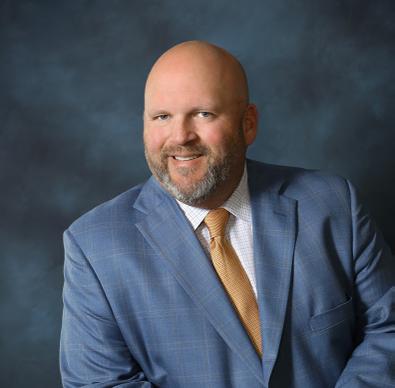
Curt Rohe - Executive Director
Hello golfers, members, and readers!
It is the end of May, and it feels a bit strange that we haven’t had an event or competition of any kind in two weeks—and furthermore, won’t have our next event until June 8. The schedule just happened to work out that way this year!
Earlier this month, we hosted the U.S. Open Local Qualifying on what might rank as one of the top three worst days I have ever spent on a golf course. We faced horrible, grueling conditions with rain, cold, and wind for well over half the day. To top it off, we had to return the next morning just to complete the playoff to determine our final two qualifiers and alternate spots.
But as they say, that’s golf. Whether you are playing it or administering it, it’s an outdoor sport—we endured and we got through it. A massive thank you to WingHaven Country Club for being such phenomenal hosts and dealing so gracefully with the unflattering weather. We cannot thank them enough.
We are thrilled to welcome our 2026 PJ Boatwright Intern class, who joined us over the past few weeks. We are excited to have them on board and ready to contribute to another great season. You can read more about each of them further down in this newsletter!
Coming up in June, we head to Lake Forest Country Club for the 21st Metropolitan Open Championship. We are incredibly excited to return and see all of the finished bunker work and extended yardages completed since last year’s championship.
The players are truly in for a brand-new test of golf. The lengthening of Holes 5, 6, 9, and 18 is going to make those four holes play considerably differently. It promises to be another thrilling Open!
The Amateur Series kicked off on May 11 on a picture-perfect day at Persimmon Woods Golf Club! A sold-out field of 124 golfers took to the course to officially kick off the season for Event #1. Next up, Event #2 is heading to Sullivan Municipal Golf Course in Sullivan, MO, for the first time ever. While Sullivan is a bit off the beaten path, it’s a straight shot down I-44, and their team is incredibly excited to host our players this season.
Finally, I would like to extend a special thank you to Westborough Country Club for serving as a pilot club to test the new Rules AI feature coming to the GHIN app. Westborough members currently have exclusive access to this new functionality, allowing golfers to ask Rules questions directly within an AI platform and receive immediate answers on the course.
The USGA has been working diligently to build this proprietary platform— which is entirely independent of general AI models like ChatGPT or Gemini— to ensure precise, golf-specific accuracy. They will continue rolling it out to more golfers throughout the season.
Thank you for taking the time to read this latest issue of The Metropolitan Keep swinging, and keep it in the short grass!
Keep it in the fairway!
5
5
- The number of documented aces that have been scored on par-5 holes five times in golf history, usually accomplished by cutting corners on severe doglegs or getting the benefit of firm bounces on extreme terrain. At least that’s how 16-yearold Jack Bartlett turned the trick. Bartlett is credited with the last documented “condor” on November 3, 2007, when he accomplished the feat on the 511-yard, par-5 17th hole at Royal Wentworth Falls Country Club in New South Wales, Australia. The longest hole-in-one in PGA Tour history came in 2001, when Andrew Magee dunked one from 332 yards out at TPC Scottsdale.
infamous delayed putt. Snead’s playoff with Lew Worsham went to the 18th hole with the score tied and both players facing short par putts. Snead was just about to putt his 30-incher when Worsham stopped him, saying the honor belonged to him. After the distances were checked, it was determined Snead, in fact, was away. The angry “Slammin’ Sammy,” who felt Worsham had employed a bit of gamesmanship, missed the putt layup. Worsham did not miss his 29-incher and clinched the win.
18
71
- The score Arnold Palmer shot in the fourth round of the Bob Hope Chrysler Classic in 2001. At the time, Palmer was 71 years, five months, and seven days old. And with that card, he remains the last player to shoot his age in a PGA Tour event. The course at PGA Tour West in La Quinta, Calif., also happened to be one Palmer designed. What’s more, it is rare these days that a player in his 60s, 70s might shoot his age at a PGA Tour event, given they largely graduate to compete on the Champions Tour.
- This is, of course, the standard number of holes on a conventional golf course. The question is - at least for those who struggle through them - why. Well, it seems that in 1764, the Old Course at St. Andrews Golf Club originally opened for play with 22 holes. However, club members decided that the first four holes of the layout, as well as the last four holes, were too short. It’s hard to imagine the Ol’ Bogeyman would come to such an estimation, but the majority of the lads saw it that way. So, they combined all the holes, divided up the areas of lawn, and made 18 holes instead. You know what they say, “Whit’s fur ye’ll no go by ye.” This is where you just nod your head and say, “Aye.”
15
- The calendar date in June that is so rich in U.S. Open history. In that regard, it was a remarkably happy day for one player - in 1901. Willie Anderson and Alex Smith finished in a tie at Myopia Hunt Club on the day in Hamilton, Mass. Two days later, the two conducted a playoff, and a happy Anderson won by a stroke. He would embellish that first national championship by winning three in a row in 1903-1905, as Anderson is one of four men to win the U.S. Open four times. That said, June 15, 1947 proved to be a remarkably sad day for the great Sam Snead. Never able to capture the Open, Snead appeared to be on the brink at St. Louis Country Club - that is, before he was undone by the
126
126
- More specifically, we’re talking 126 strokes under par. To explain, at the height of his powers, from 1997 through 2008, Tiger Woods was a combined 126-under par in the major championships. For perspective, the second-best cumulative score among players with at least 40 rounds in majors belonged to Joe Ogilvie. His cumulative score was 63-over par. That’s right, Woods beat his closest consistent competitor by 189 shots over the decade.


After two beautiful days at Gateway National Golf Links, the 23rd East Side Amateur is complete. Players returned for the second round with the hopes of walking away with the first individual title of the 2026 Metropolitan season. A mix of clouds and sun greeted the players, making for a pleasant day on the course. Coming into the second round, Conner McCall led the open division, Brian Hall led the senior division, and Jim Dunn led the super senior division. All three were looking to stay on top, but they knew there was some tough competition close behind.
The first group to complete their championship was the super senior division. The super senior division was a new addition this year. Jim Dunn of Norwood Hills Country Club came into the round at fourover par. Dunn started his final round out strong, making four pars and a birdie in the first five holes. Things got shaky after that, but Dunn had set himself up well enough in the first round that he was able to maintain the lead. Dunn became the first East Side Amateur Super Senior Champion at ten-over (+10) par. Barry Yehling of Gateway National Golf Links had the second best round of the day in this division. Yehling used his knowledge of the course to minimize damage and improve upon his score from the first round. With a total of thirteen-over (+13) par, Yehling was the runner up. The round of the day for the super seniors came from the third place finisher, Mike O’Neill of the Metropolitan eClub who shot a second round one-over par featuring five birdies to end with a total of fifteen-over (+15) par.
Next up was the senior division. Brian Hall of Persimmon Woods Golf Club was looking strong after the front nine. He fired a bogey free two-under on the front, but things got strained on the back. Hall had to fight for it and hope that all of his competitors were having to do the same. Luckily for him, his competitors were also battling around the course. Hall shot a second round of three-over par. Coupled with his first round score of even par, Hall closed things out to take home the title at three-over (+3) par. Buddy Allen of Sugar Creek Golf Course was the defending champion of this division. He had an up and down day, starting and ending with a birdie. Allen ended the championship as runner-up at five-over (+5) par. Paul Neeman of Persimmon Woods Golf Club and Brandon Auld of the USGA/MetAmateur GC finished tied for third at six-over (+6) par.
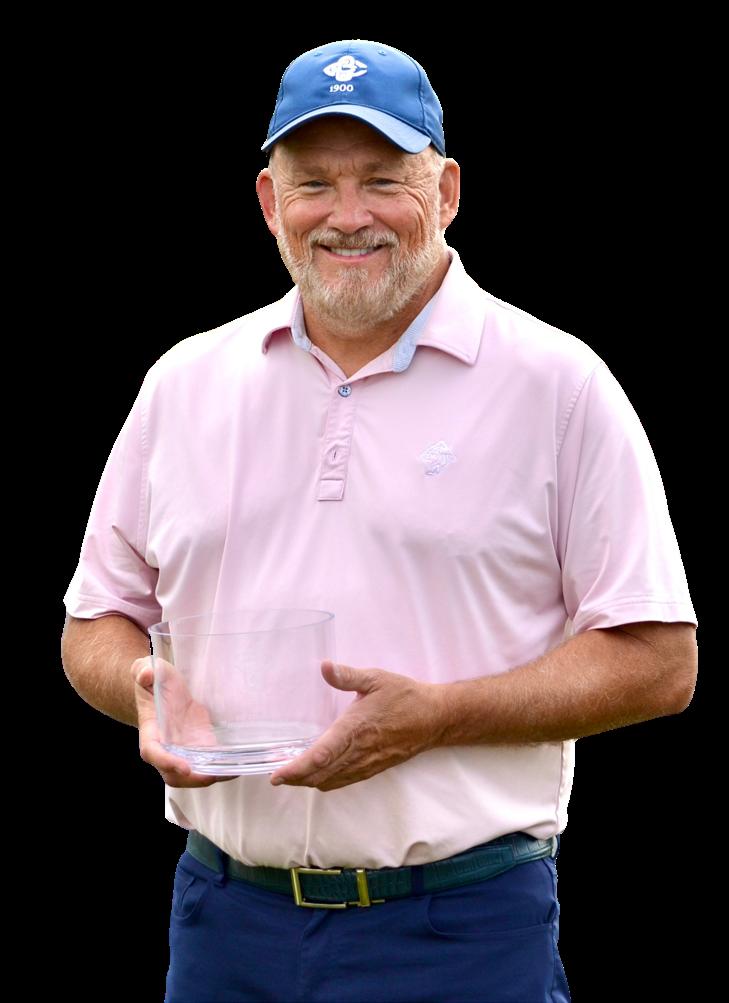
Finally, it came down to the open division. Coming into the final round, there was not much wiggle room at the top of the leaderboard. Conner McCall knew that he would have to bring his best if he wanted to hold off his competitors. McCall was smooth sailing through the 12th hole with no bogeys and four birdies. He did have two bogeys, but held steady to finish a second consecutive day two-under par. McCall defeated the competition with a total of four-under (-4) par to claim the East Side Amateur title. Thomas Wuennenberg of Tapawingo National Golf Club was hanging in with McCall through the front nine, carding a bogey free front with two birdies. Eventually Wuennenberg would drop back a little to finish the championship at even (E) par. Last year’s champion, Ryan Sullivan of Tapawingo National Golf Club stayed calm in Round 2 to finish in third at one-over (+1) par.
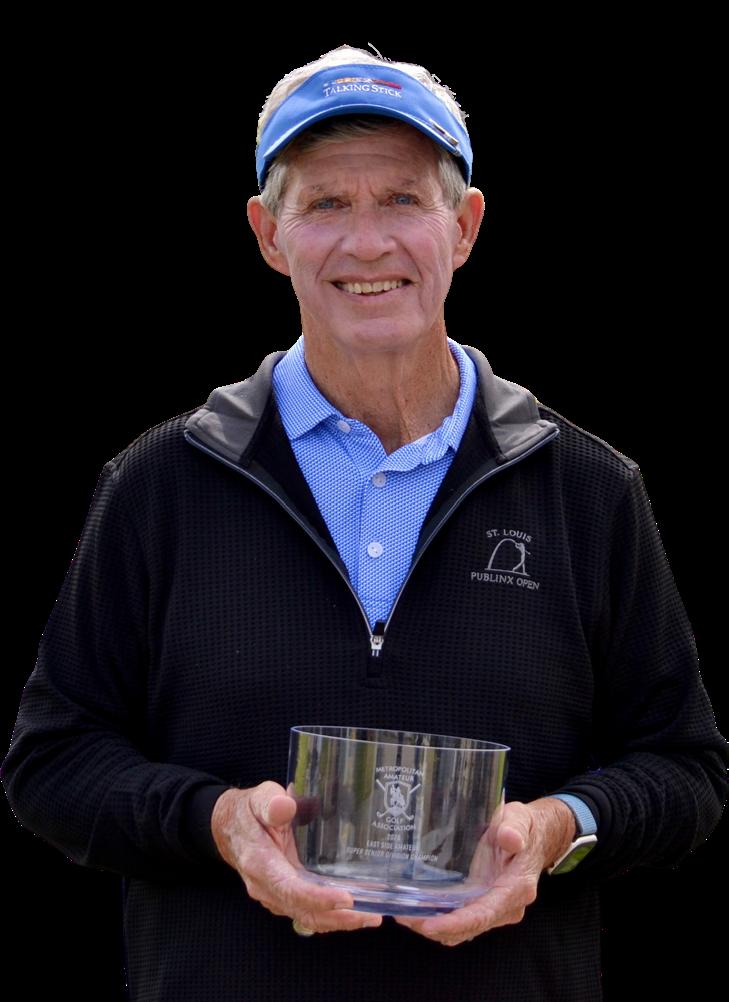
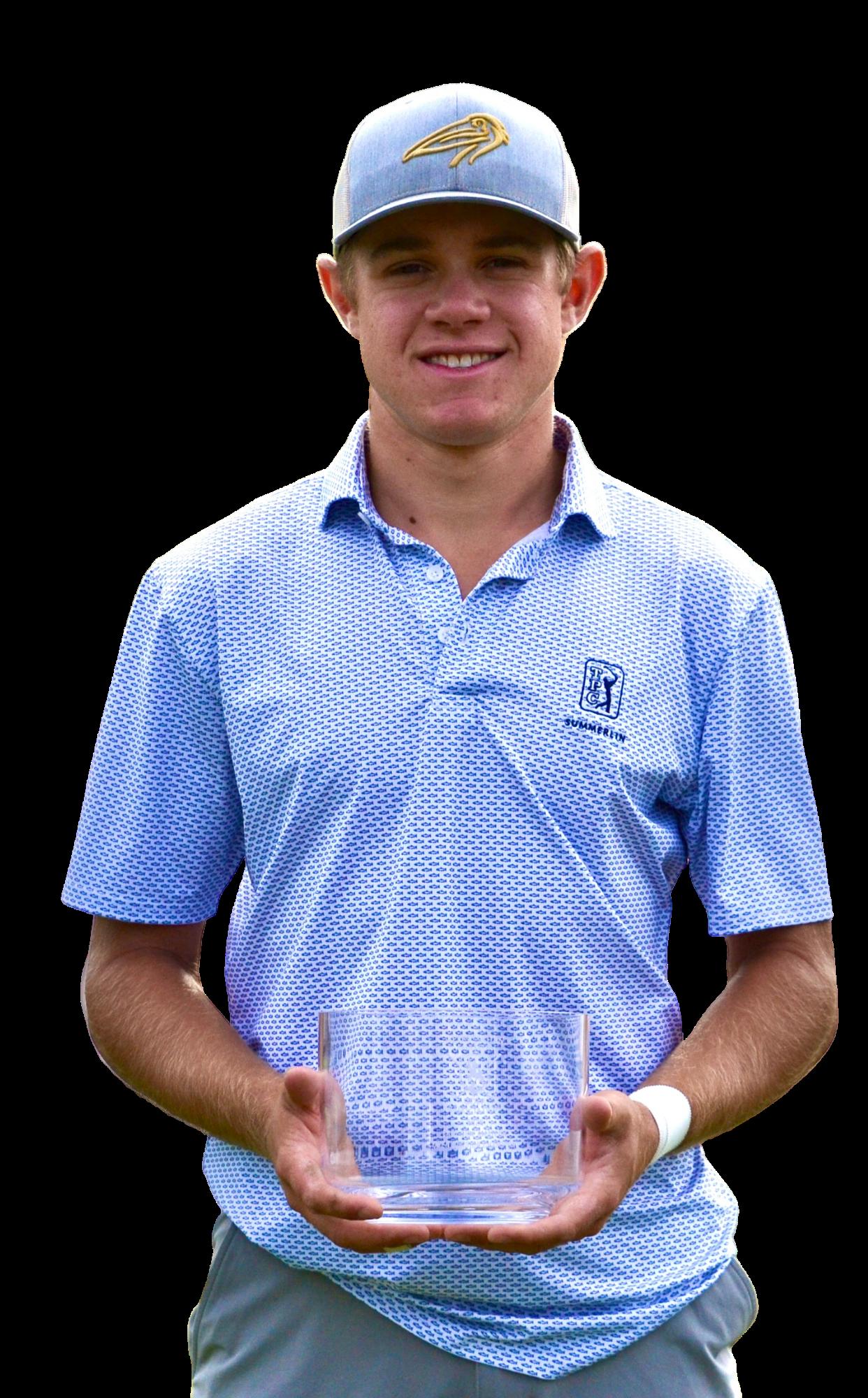
At the close of the season’s opening championship, Conner McCall, Brian Hall, and Jim Dunn walk away with the crystal.
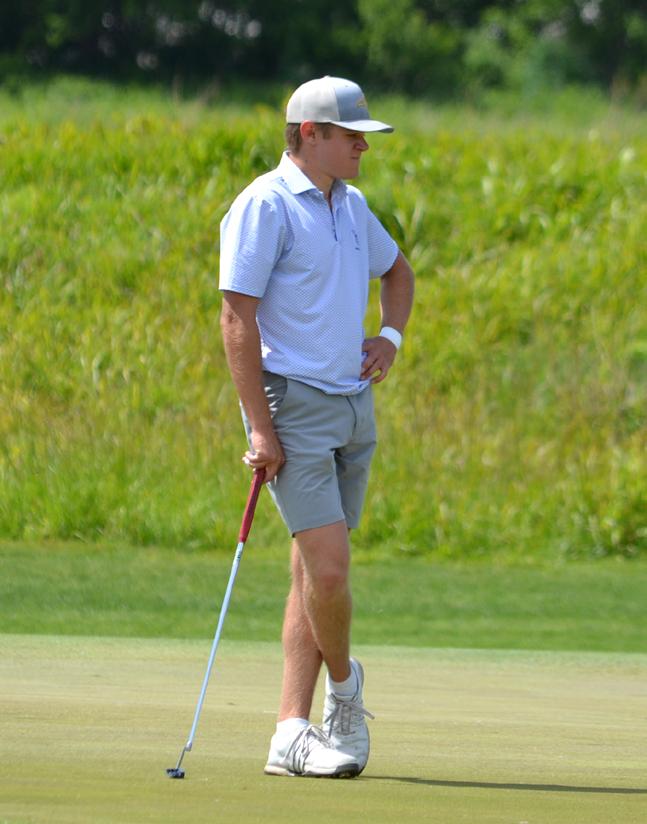
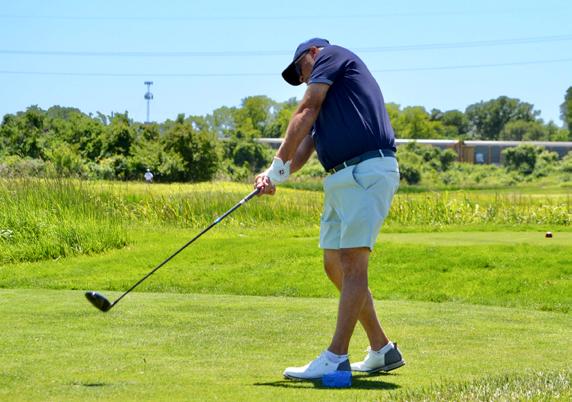
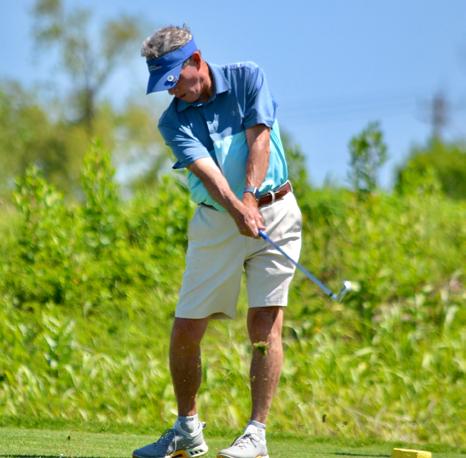
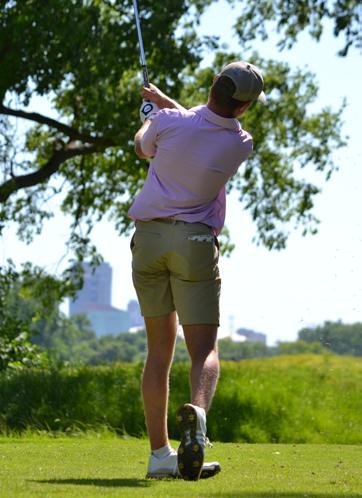

The Amateur Series has officially kicked off! The first event at Persimmon Woods Golf Club is in the books. We had a full field of golfers turn out for a beautiful day on the course.

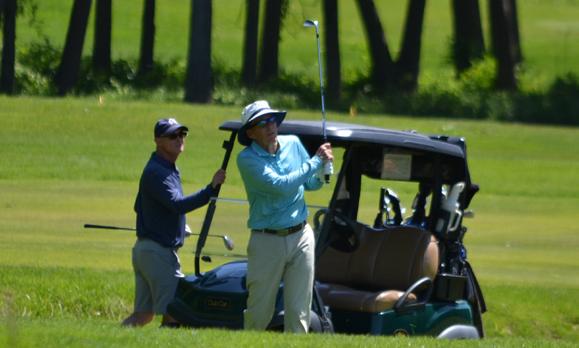
Event #1 Persimmon Woods GC
Results:
Open Division - Ian Hollander
Senior Open - Rob Reidelberger
Super Senior Open - Robert Sigmund

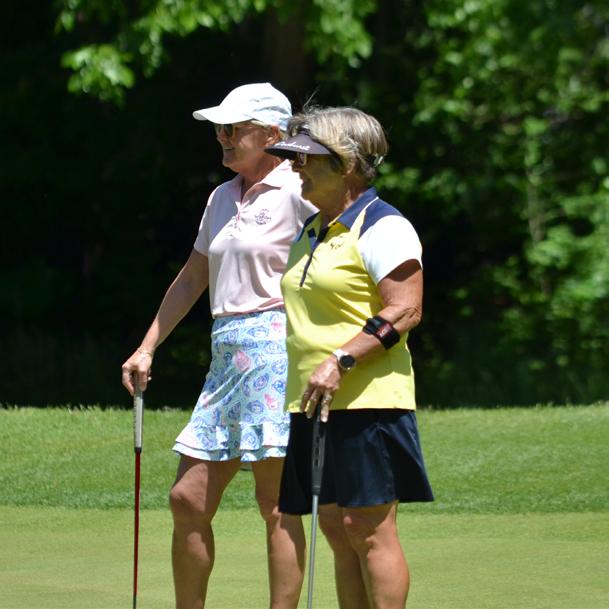

Net Division - David Parker Senior Net Division - Mike Shepard
Super Senior Net Divsion - Rick Dickerscheid
Women’s Net Division - Denise Faus











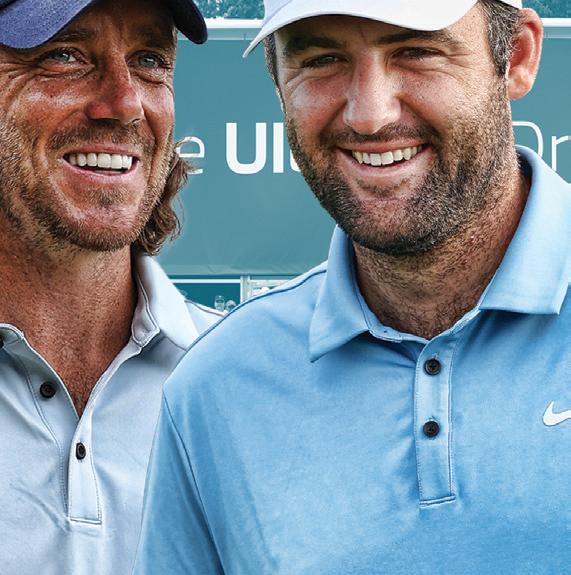






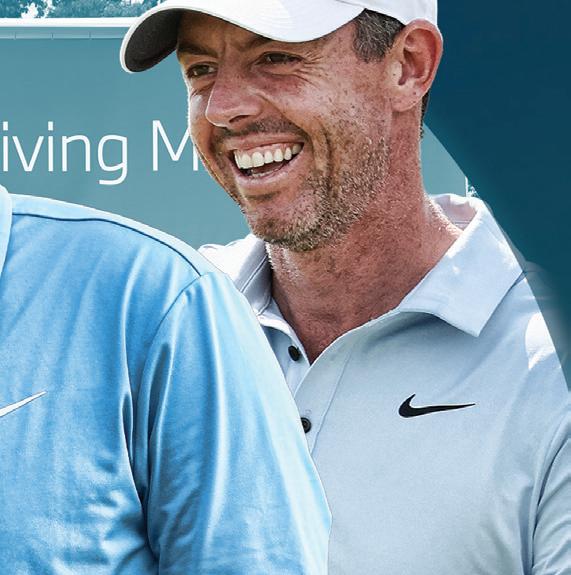





The Metropolitan Amateur Golf Association is pleased to announce the host site of the 37th Metropolitan Amateur Championship, Fox Run Golf Club. The club has previously hosted the championship in 1997 and 2005, and will host it for a third time in 2027. It is one of seven clubs to host the championship three times.
Fox Run Golf Club was developed in 1993 on 281 acres of farmland by David Ault, who started with a desire and resources to transform the land. The course was created with the help of renowned golf architect, Gary Kern. After Ault’s passing in October of 2022, longtime club member Jeff Budrovich took over ownership and began a full renovation of the course with the help of Art Schaupeter. With a new vision, Fox Run became the course it is today, for golfers of all abilities to enjoy.
Fox Run Golf Club has proven itself as a championship-worthy course. Over the years, it has hosted multiple major events including the 2001 U.S. Women’s Mid-Amateur Championship and LPGA Tour’s Michelob Light Classic in 2000 and 2001. Most recently it hosted the 2023 NCAA Division II Women’s Championships prior to its renovation. Always known for its length, the course stretches to over 7,350 yards and is one of the highest rated in the area with a course rating of 77.2.
As we look forward to visiting this host site, Metropolitan Executive Director, Curt Rohe, said, “We are excited to return to Fox Run Golf Club in 2027 to conduct the 37th Amateur Championship. Having hosted the region’s premier amateur twice prior in 1997 and 2005, with the recent renovations it is time to return to one of the top championship venues in our region and have the best amateurs contend for the Jim Tom Blair Trophy.”
22 years after Fox Run Golf Club last hosted the championship, both the Metropolitan Amateur Golf Association and the club are eager for its long-awaited return.
“We are absolutely thrilled to accept the invitation to host the 37th Metropolitan Amateur Championship at Fox Run Golf Club!” said Zack Potts, the head golf professional. “This will mark Fox Run’s third opportunity to host this prestigious Championship, placing us among a select group of premier clubs in the region to do so. Having last hosted in 2005 and following the recent completion of our golf course renovation, we are especially excited to welcome the region’s top amateur competitors in August of 2027. We are honored by the opportunity and look forward to working together to deliver an outstanding Championship.”
The 37th Metropolitan Amateur will take place Aug. 5-7, 2027. Registration will open on March 5, 2027 on the Metropolitan Amateur Golf Association website.
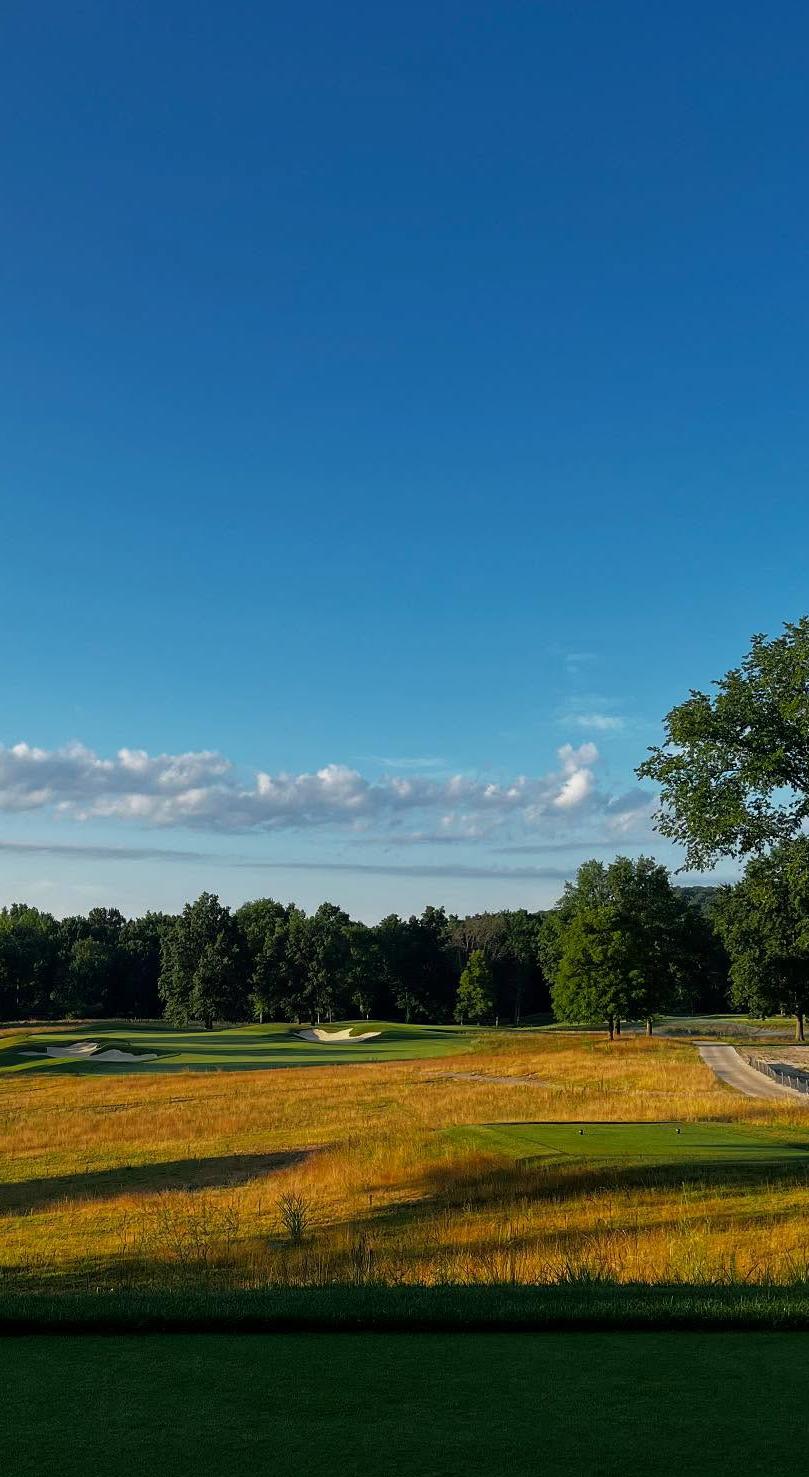

t was a cold and wet day for the U.S. Open Local Qualifying at WingHaven Country Club. 132 players signed up to compete for 7 spots into the Final Qualifying stage with the hopes of making it to Shinnecock Hills for the Championship. In the field were 88 amateurs, 44 professionals, 9 international golfers, an average age of 28, around 50 golfers from the Metropolitan region, and 66 universities and colleges represented by current athletes, alumni, and signed future athletes.
The field was divided into two waves with the morning wave beginning at 7:30am and the afternoon wave starting at 12:45pm. As this is for entry into a professional championship, all amateurs will be indicated with (a) and professionals will not be marked.
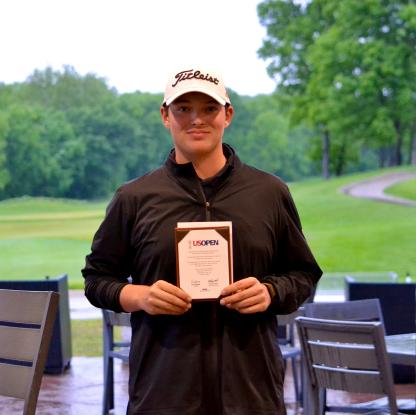
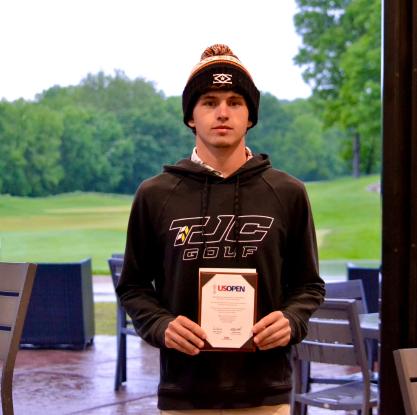
The rainy conditions started early and rarely let up. There was a short stint during the morning wave’s round that the clouds broke, but the moisture was back before their day concluded. Watching the scores throughout the day, players stayed in a tight race, continually moving up and down the leaderboard. Noah Sandlin (a) of Jacksonville, TX was the first leader in the clubhouse. Sandlin, a Tyler Junior College golfer, had a bogey on his opening hole, but then went bogey-free for the remainder of the day. Sandlin finished with a score of two-under (-2) par.
Not long after, Sam Carraher (a) of Crown Point, IN added his name alongside Sandlin. Carraher, who is committed to Purdue University, had a bogey-free front nine and was four-under through five holes. A tougher Carraher to finish the day at two-under (-2) par with a piece of the top. Jacob Sherlin of Hendersonville, TN was in one the last groups of the morning wave. His first eleven holes were bogey free

before things got tested, but each time he made a bogey he was able to respond with a birdie on the next hole. Sherlin became the first professional golfer in the field to match the lead in the clubhouse at two-under (-2) par.
At the end of the morning wave, five golfers sat at oneunder (-1) par. First to come in was George Kneiser of Franklin, WI followed by Carr Vernon of Poplar Bluff, MO in the next group. Will Postlethwaite of Englandand Norwood Hills Country Club professional - was the third to card one-under. Dylan Meyer of Evansville, IN and Brock Snyder (a) of Ames, IA played together and were the final two from the morning to come into the clubhouse with this score. It was an up and down day for this group, though Vernon and Kneiser each had one bogey free nine and Postlethwaite had an eagle on the 11th. These players would have to wait for the afternoon wave to play to determine their fate, but were staring down a potential playoff.
Then it was time for the afternoon wave, who had to battle the relentless weather conditions. The heaviness of the rain would come and go, but it just would not break. Jake Peacock of Milton, GA did not let that shake him. Peacock fired a bogey free five under par on the front nine. Despite two bogeys on the back, Peacock became the new clubhouse leader at four-under (-4) par and was sitting in a comfortable position to claim a qualifying spot as he looked at the leaderboard.
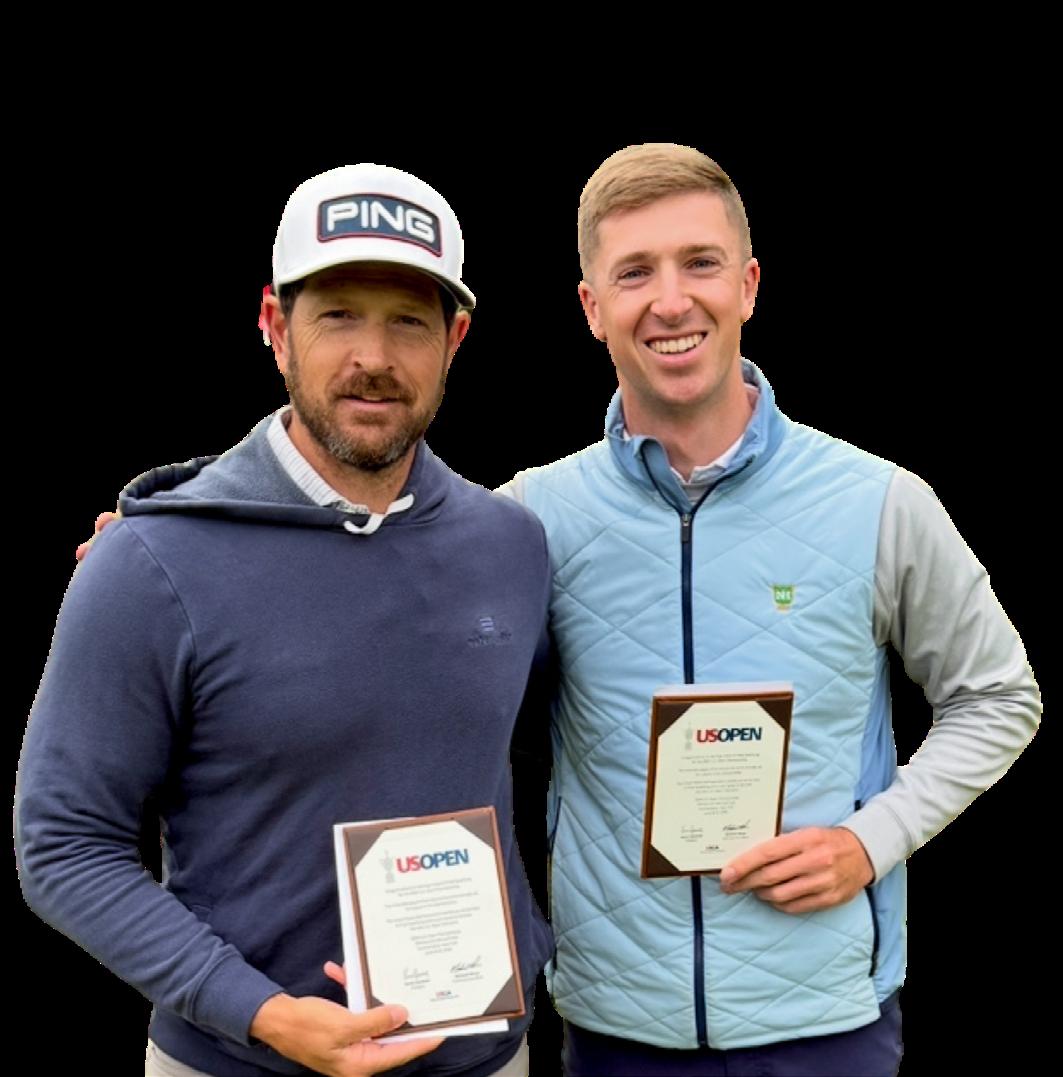
As the day drew on, scores continued to fall away from the lead, though there were another five players making the push for a chance to get in at the current cutline. First man off in the afternoon on Hole 10 was Ryan Johnson of Trophy Club, TX. Peacock became the sixth person to submit a score of one-under (-1) par. Jamie Dick of England and Chris Naegel of Wildwood, MO were the next two players to come in at one-under (-1). Late in the day with just a few groups left on the course, Wesley Hunter of Fairhope, AL snuck into the one-under tie. Then, in the final group of the day off of Hole 1, Brent Reintjes (a) of Wichita, KS became the final player to throw his name in the pot and bring the total count of
players tied at one-under to 10. Each of these five golfers had a bogey free nine holes during their round.
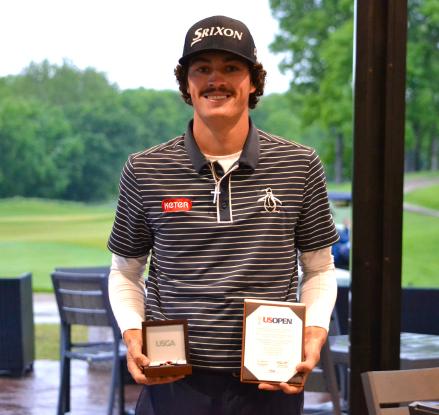
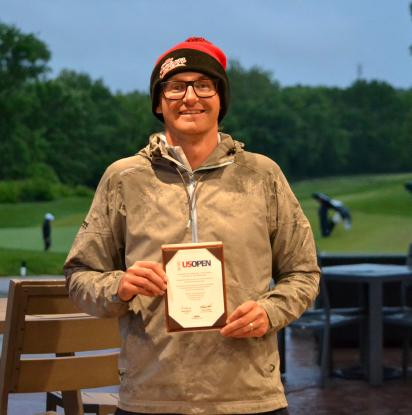
At the conclusion of play, Jake Peacock took the medalist honors as the top qualifier at four-under (-4) par. Noah Sandlin (a), Sam Carraher (a), and Jacob Sherlin were securely in as qualifiers at two-under (-2) par. With just three qualifying spots left, the 10 players tied at oneunder (-1) were forced into a sudden death playoff.
The players reported to the 18th hole teeing area for the playoff. They were split into two groups of five to play the hole. On this hole, Dylan Meyer made birdie to claim one of the qualifying spots. Ryan Johnson and George Kneiser both made bogey and were subsequently knocked out of the playoff. Players made their way to the 10th hole’s teeing area for the second playoff hole. Once there, it was determined that we were losing daylight too quickly to complete the hole, so play was suspended due
to darkness.
The remaining seven players reported back the next morning at 7:30am to finish the playoff. On the second playoff hole - first of the morning - Chris Naegel and Will Postlethwaite both made birdie to claim the remaining two qualifying spots. The remaining players continued on to determine the alternates. After two more playoff holes, Jamie Dick became the first alternate and Carr Vernon became the second alternate.
The seven qualifiers will move onto Final Qualifying at the location they chose from the 11 locations across the U.S. There, they will play in what has been coined “golf’s longest day” by playing 36 holes in one day in an attempt to break into the U.S. Open field. The USGA is looking for the strongest competitors, and it’s safe to say, we are sending a tough group of golfers their way.
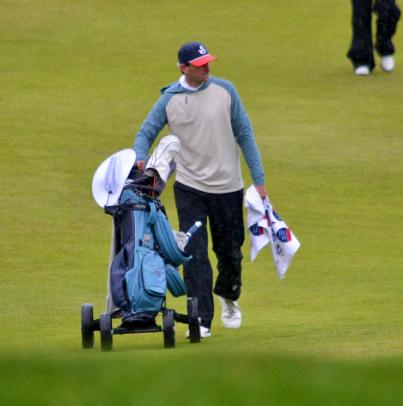
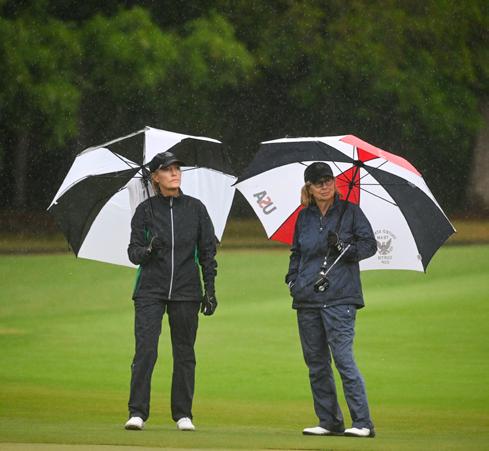
Women’s Amateur

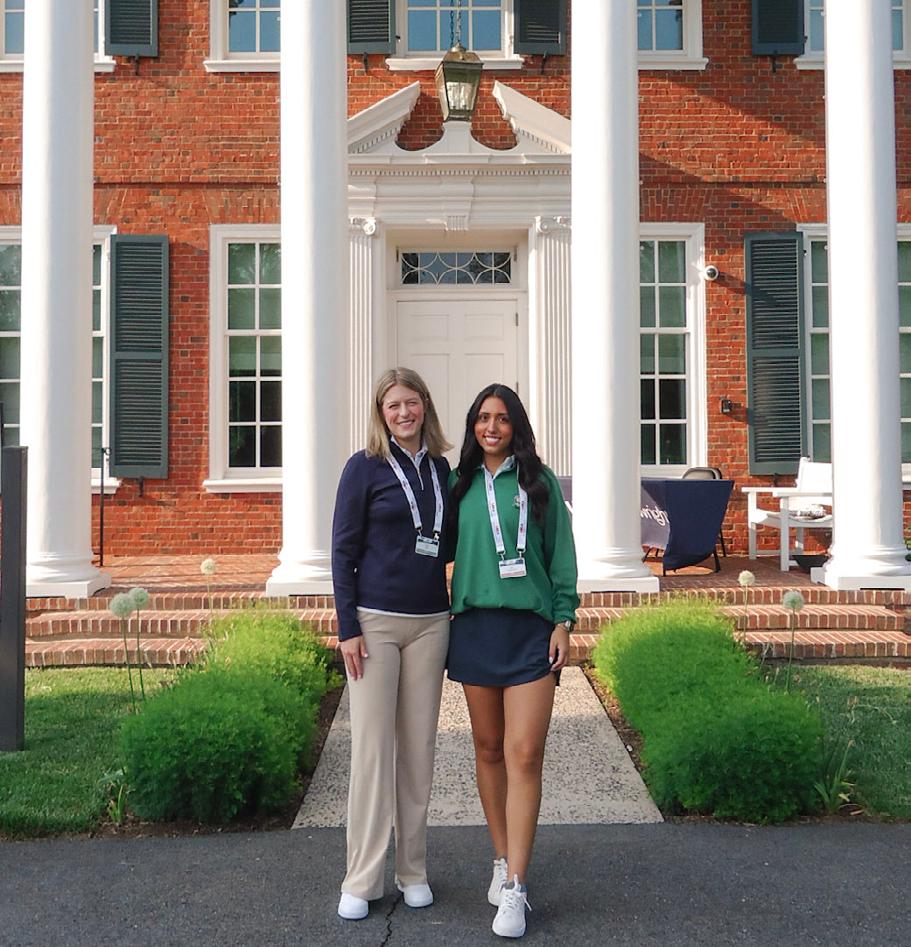
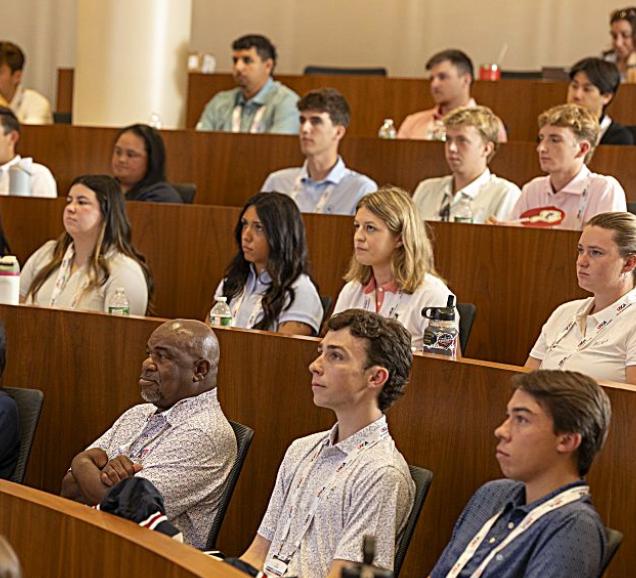
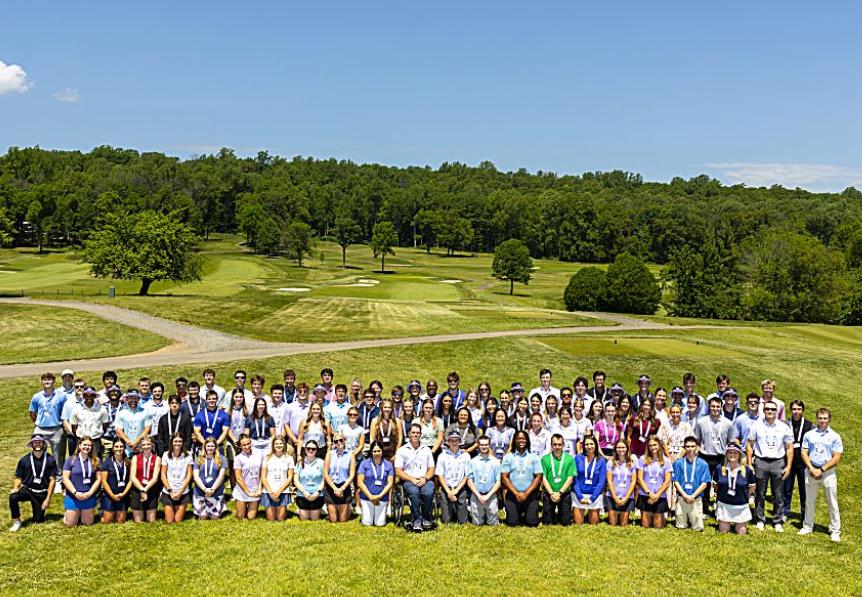
May 18-20, the USGA welcomed almost 100 P.J. Boatwright Jr. interns to the 35th annual Boatwright Summit. The summit is hosted at the USGA headquarters in New Jersey to give the interns a firsthand look at their operations. From undergraduate, graduate, collegiate athletes and even those new to golf, all the interns in attendance had the opportunity to learn more about golf administration. Two of our own interns, Gabby Dethrow and Emma Wyeth had the opportunity to attend.
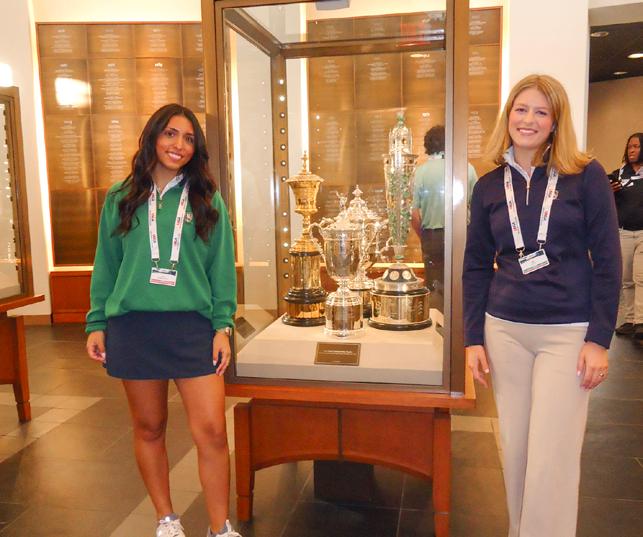
Our interns were welcomed to the Summit with a look at the USGA Golf Museum. One of the highlights, which had interns stopped around the glass case, was seeing Rory McIlroy’s wedge he won the Masters with and achieved a grand slam.
Then they attended dinner outside where several important speakers shared their advice to the interns. Daniel Magen, the Boatwright Internship Program Administrator, reminded interns, “Even after you leave here, think of us as a Resource.” We heard from Cindy Boatwright, P.J. Boatwright Jr.’s daughter, who described her dad as the “soul of the USGA” and spoke on how the P.J. Boatwright Internship came to be after his passing. Lastly, Tyler Riggins, one of the USGA’s Regional Affairs Directors, emphasized the importance to “lock those networks in.”
On the first full day, they started in the USGA’s auditorium to learn more about the history of Boatwright, and the background of some of Summit’s leaders for the week, including Magen, Riggins, and Kevin Purcell, the executive director for New Jersey Golf. Purcell inspired interns by reminding them they are “the boots on the ground” for the USGA. Afterwards the USGA’s Victoria Clawson and Jack Coffey taught interns all about championship administration which includes handling the USGA championships, customer service, the equipment, and the oversight of USGA Policies.
Next Magen split up the interns into breakout sessions where they visited the USGA broadcast studio, got a look into their merch and marketing, learned about USGA partnerships and taught the importance of handicaps. They then were able to take professional headshots and take pictures with the U.S. Open Trophy outside of its usual glass case. Lines were long as interns were eager to get their picture taken.
To cap off a day full of meeting interns from across the country, they had a friendly competition. First, they were tested to see who could set up the best first tee in under two minutes. Then they had the annual putting competition among the interns. While everyone was committed to winning the trophy to bring back to their association, Danielle Suh from the Southern California Golf Association won the competition, along with receiving a USGA giftcard. Finalists still received a USGA “golden ticket” for making it to the last round.
On the last day, they started earlier with a Boatwright alumni Panel where they heard from Will Luke, who is now the Operations Manager for New Jersey Golf, Jake Miller, who is now the Director of Regional Affairs and Thomas Pagel, who is now the USGA’s Chief Governance Officer. Miller gave advice, saying “It’s easy to just wait and do what you’re told, but push forward and be the person who doesn’t have to be told what to do. That will push you ahead and get you more opportunities faster.” Pagel told them to “Be a sponge. Ask questions. And seek out mentors.” It

was inspiring for our interns to see people successful in the golf business who started in the same place as them.
They were also inspired after hearing from several donors to the Boatwright Internship Program. Russ McLauchlan, Dr. John GP Boatwright Jr., and Dr. Michael Gallichio all spoke on the lasting impact golf has had on their lives as well as how to be a leader. McLauchlan told interns before you lead others, you need to know how to lead yourself. Boatwright, P.J. Boatwright’s cousin spoke on how “golf develops character and reveals character, but it also builds character.” Gallichio left a lasting impact on interns telling them, “I truly believe you learn more about people on the golf course than in any conference room.”
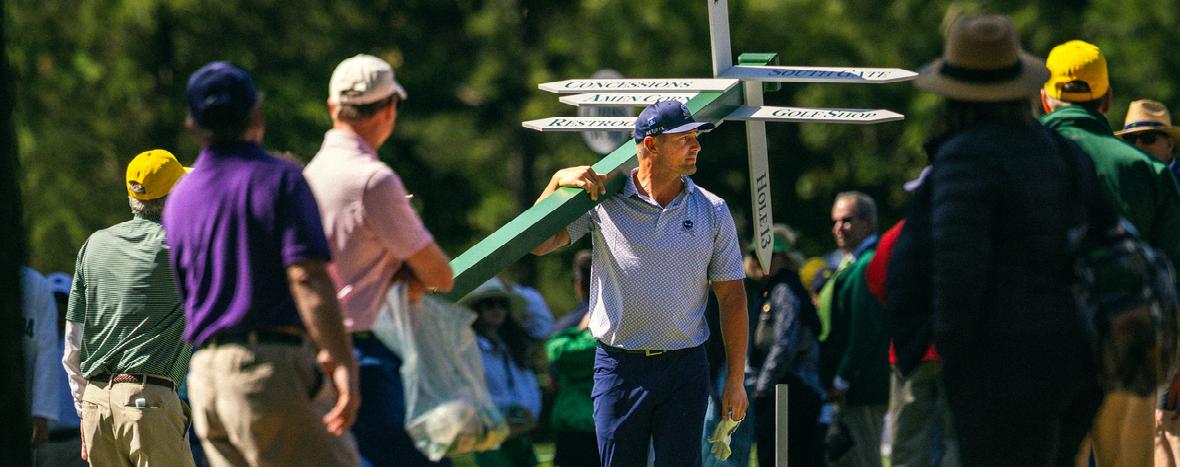
Shortly after, interns got an inside look about several updates coming to the GHIN app. They then heard from Scott Langley, the Senior Director of Player Experience. He cited specific things the USGA does for players to make them special while playing, such as customizing Bryson DeChambeau’s locker at the U.S. Open. They ended the speakers with Mary Kate Lynch and Torry Rees who spoke on the U.S. National Development Program, a program that aids in training, developing, and funding the nation’s best junior golf players.
Magen then split the interns up for another round of breakout groups, but this time they were on the golf course. Interns had the privilege of visiting Watchung Valley where they learned hands-on about golf photography, picking hole locations, specific rulings and how to call them, and even how to test the greens with special tools.
Dethrow and Wyeth had the best end to the Summit, hearing from the USGA CEO Mike Whan. He told them about his upbringing and what brought him to the USGA, as well as the lessons he learned along the way. He said the most important life skill is “Don’t fall prey to being the person everyone wants you to be” and also to “Be bold enough to do the things that make you uncomfortable.”
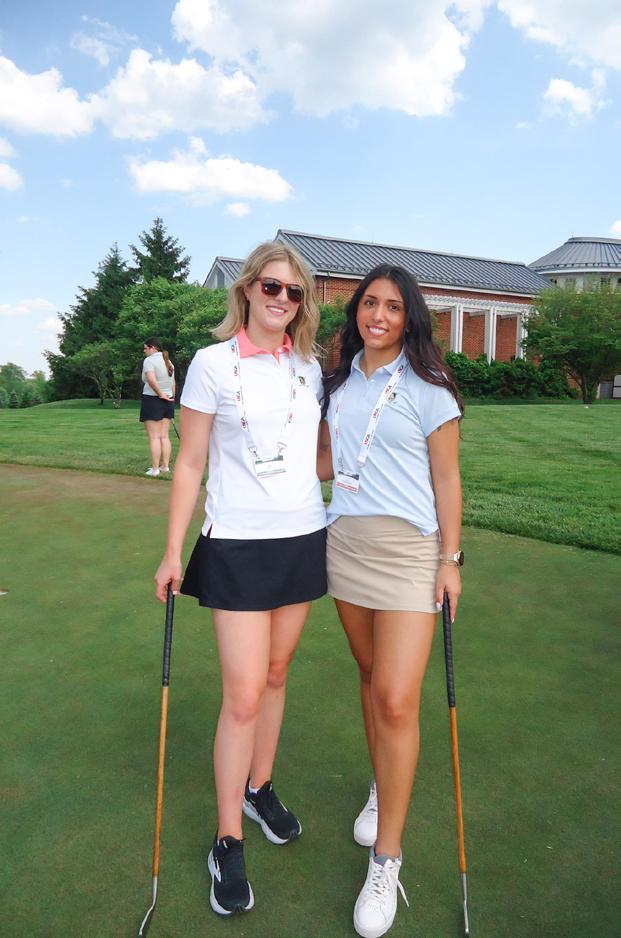
Our interns who attended the Summit, Dethrow and Wyeth, want to thank the USGA staff, staff from other AGAs, donors and fellow interns who made the Boatwright Summit a trip to remember!
The U.S. Open returns to Shinnecock Hills this month. The Ol’ Bogeyman covered two of the four previous U.S. Opens at Shinnecock, championships won by Corey Pavin (1995) and Retief Goosen (2004).
The course is one of the most difficult - at least wearing a U.S. Open setup - these eyes have seen. It is one of two venues the Bogeyman declined to play on Monday mornings after the Opens.
Yes, that’s right, there were opportunities to play Oakmont (2007) and Shinnecock (2004). Both, respectfully, were declined.
You see, be it cliff diving, hand-to-hand combat or 18 holes of golf, a man should know his limitations. And where golf is concerned, Bogey always has maintained a firm understanding of that ceiling, as well as a keen sense for his pain threshold. Both of those tests of golf exceed those parameters.
That said, a championship at Shinnecock is a test of the best, and a spectacle to savor. Its arrival also makes one wonder about one of its recent champions - Bryson DeChambeau.
DeChambeau has travelled a zig-zag path since winning the 2015 U.S. Amateur at Olympia Fields. As a golf scribe, I talked to him numerous times that week. He was wearing the flat, “newsboy cap” associated with Ben Hogan. He was born in Modesto, Calif., but he was playing college golf at SMU in Texas.
With his analytical perspective, he was focused on the physics of the game, using clubs all the same length, each with thick grips. He had an unconventional, windmill swing. He soaked balls in Epsom salt to check for imbalances or manufacturing flaws.
He was polite, well spoken, kind of kooky, kind of fun and certainly a splash of color on a canvas of earth tones.
Then came his Mark McGwire stage. He decided to blow up his body, put on 40 pounds and turn the par-5s of the world into par-3s. When he won the 2020 U.S. Open at Winged Foot, the bombs away approach appeared to be validated. He was the only competitor to finish under par at Winged Foot, six strokes better than anyone else. His driver-first strategy and rough-shredding muscle simply neutralized the USGA’s notorious penalties.
Length always has mattered in golf, but DeChambeau had
people thinking it was all that matters. Again, kind of extreme, but it certainly had people talking, and threw more content into the conversations.
Then came LIV and all that stuff about being part of golf history and Hogan got buried under $125 million Saudi Arabian dollars and 4 ½ years of contract. In a flash, the celebrated U.S. Open champ, the widely-known “Mad Scientist” of the professional golf scene, became something a little less profound - captain of the “Crushers.”
For the uninitiated, which is quite a few, that last title refers to DeChambeau’s LIV team.
DeChambeau resurfaced in 2024 at Pinehurst, taking advantage of Rory McIlroy’s stumble - three bogeys over the last four holes - to win his second U.S. Open. Yes, he was still LIVing on the largely-anonymous Saudi circuit, but he proved he was still among the elite.
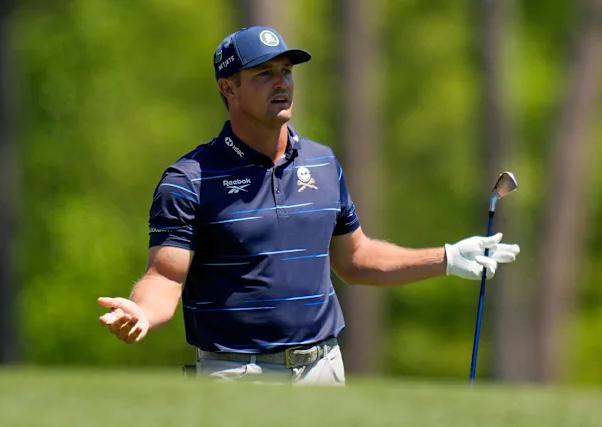
But as the 2026 U.S Open approaches, is he still? After years of issuing ridiculous contracts and hemorrhaging millions of dollars, the Saudi Public Investment Fund is capping the well and getting out of the golf business. To that end, another major champion, Brooks Koepka, recently played out his contract, made the proper compensations and returned to the PGA fold. Another defector, Patrick Reed, is in the process of playing his way back.
There are more LIV renegades, but in terms of significantly moving the needle, only two others should matter to the PGA Tour - 2012 U.S. Open and 2023 Masters champion Jon Rahm and DeChambeau. What happens with Rahm and his on-going LIV contract, remains to be seen. But DeChambeau, whose LIV commitment expires this year, is something different.
To start, DeChambeau has been critical of the penalties and restrictions the PGA Tour has imposed on it’s “welcome back” offer, terms Koepka accepted. DeChambeau also wants to be assured the current players are on board with him coming
back. Given his somewhat unconventional personality, not sure how you ever get that in a guarantee,
Moreover, he wants also wants concessions made for the “brand” or entertainment value he brings, underlined by the popularity of his YouTube channel. His shows claims to have almost 2.7 million subscribers.
DeChambeau has even suggested he might not return to the PGA Tour and, instead, make his bones by making online content full time, playing only in the majors. Well, considering his recent performances, seems fair to wonder if he hasn’t already gone that route.
For instance, DeChambeau missed cuts at both the PGA Championship and the Masters this spring. He also missed the cut at last year’s U.S. Open, so that’s three MCs in his last four major championship starts. Mind you, this is a two-time U.S. Open winner at the age of 32, which should be his prime, and a guy who 11 years ago talked about admiring Ben Hogan and affecting golf history … a guy who is suggesting he could feasibly prepare to win more majors by filing another episode of “Can I Break A Public Course Record In One Try.”
On “The Smylie Show,” former player and Golf Channel commentator Smylie Kaufman saw holes in that strategy. “When we think about Bryson DeChambeau and his future in this game,” Kaufman said, “it just seems like we would be robbed of a guy who feels like he’s got a lot to offer in this game, as far as chasing history.”
“And I think he’s got enough talent to be able to chase as much history as he wants to. It’s going to require him to compete against the best players in the world. You can’t just go and play YouTube golf and play against these guys in major championships thinking you can win, without playing enough professional golf events.”
One of the comments posted after DeChambeau’s recent YouTube episode had a different way of putting it: “You should do a video where you try and break par in a major.”
The Ol’ Bogeyman happens to like DeChambeau, quirky personality and all. Here’s hoping he finds his U.S. Open form at Shinnecock and finds his way back to the PGA Tour full time. We can always use a little more color in golf, not so sure YouTube needs it.

Gateway National Golf Links
As the Memorial Day holiday weekend approaches, the 2026 golf season in St. Louis has already been in full swing for more than a month. This spring’s weather has been somewhat unusual compared to recent years. Frost delays have been minimal, and without the typical mid-May storms, precipitation and humidity levels have remained lower than normal. Wind conditions have been more consistent, while temperatures have fluctuated between below-average and aboveaverage ranges. After spending most of the winter in the maintenance facility hoping for warmer weather, 90-degree days in March and April are not exactly what turf managers hope for either. Still, we adapt to whatever conditions Mother Nature brings in order to provide the best possible golfing experience. With summer heat and humidity quickly approaching, it is the perfect time to discuss moisture management — specifically on bentgrass putting greens.
If you play golf in the St. Louis area during the summer, you have likely seen maintenance team members dragging hoses across greens throughout the day. Sometimes they are watering, and sometimes they are simply monitoring conditions. Moisture management on bentgrass greens is one of the most important tasks performed daily on a golf course. High-quality putting surfaces are created through careful management of every input, especially water.
Too dry? Problems. Too wet? Even more problems.
Maintaining healthy turf becomes a delicate balancing act between supplying enough moisture to help the grass survive stressful summer conditions while still delivering firm, fast, high-quality greens. Every golf course — and even every individual green — has its own microclimate. For example, one green may remain exposed to sunlight and wind all
day, while another is heavily shaded by trees. Naturally, those greens require different amounts of water, and treating them the same rarely leads to long-term success. From roughly May 15 through September 15, moisture management becomes one of the most critical responsibilities for a maintenance team.
is a USGA sand-based green or a push-up style green.
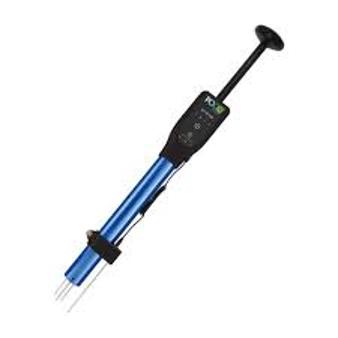
Over the last decade, moisture meter technology has advanced significantly and greatly improved how superintendents manage turf conditions. Most courses now use moisture meters to analyze volumetric water content at various root depths. With the quality of courses throughout the St. Louis area, superintendents and their teams have become highly skilled at monitoring and managing putting green moisture levels. At Gateway National, we use a POGO moisture meter each morning to collect readings at a 2.5-inch depth. The meter maps every reading into a visual profile for each green, helping us determine exactly how much water is needed throughout the day. Our target is typically around 18% volumetric water content, based on years of historical data specific to our greens. We know wilt stress may begin appearing when readings drop below 10%, so identifying that threshold is critical in determining how much moisture is necessary to carry the turf through the day until the nightly irrigation cycle begins.
At the end of each day, we review moisture maps again to determine how many minutes of overnight irrigation are needed to return greens close to the target range without overwatering. Excess irrigation can lead to disease pressure, wet wilt, thinning turf, and algae development. Spending a few extra hours each week monitoring moisture levels with hoses and meters can significantly reduce those risks. Every course targets different moisture levels depending on factors such as temperature, wind, humidity, and soil profile composition, whether that
Slopes and elevated areas on greens often do not retain moisture as evenly as lower sections. Achieving ideal moisture levels in those dry spots without oversaturating low areas is where hand watering becomes especially important. Team members handling hoses become experts at applying precise amounts of water to maintain consistency across the surface. In a perfect world, all necessary watering would be completed in the morning before golfers arrive. However, anyone familiar with Gateway National knows how persistent the wind can be during the summer months. On especially long, hot days, even ideal morning moisture levels may not sustain turf health through the afternoon. When soil and air temperatures rise, we occasionally need to revisit historical hot spots and lightly water stressed areas to protect the turf.
I can assure you that maintenance teams do not enjoy hand watering greens during peak play any more than golfers enjoy seeing us there. However, it is one of the necessary challenges involved in maintaining the exceptional course conditions golfers expect throughout the summer.
We look forward to seeing you on the course this season.

A breakout story at the PGA Championship came at 7:18 am on the first day when Garrick Higgo was late to the first tee...
One of the first rules a golfer has to abide by in a championship round is to arrive promptly for their tee time. It’s the first true test of the golfer before their round even starts.
Higgo managed to fail this test when he was not present at the first tee by 7:18am. Higgo was on the practice putting green rather than at the starting area. For the PGA Championship, the starting area was defined by the ropes, gallery stakes, green bike fencing and/or blue stakes, blue dots, or blue lines - in applying Rule 5.3a.
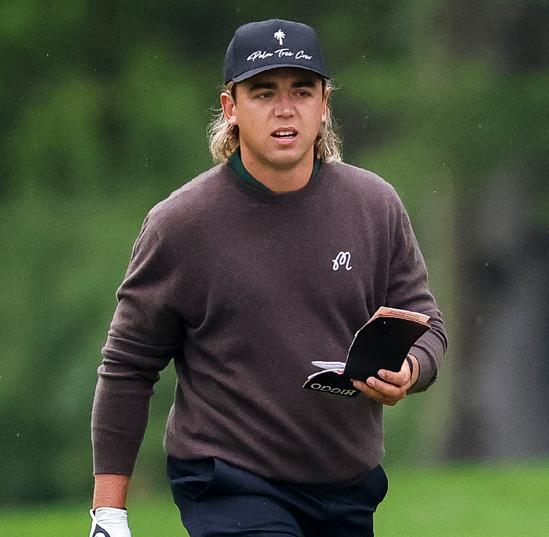
So what does it mean to be on time to the tee and determines if a player is late? For a player to be on time to their starting time, they must present at the starting area, ready to play at the time set by the Committee. This means a player should arrive before and no later than the time set - and yes that means not even a half second past.
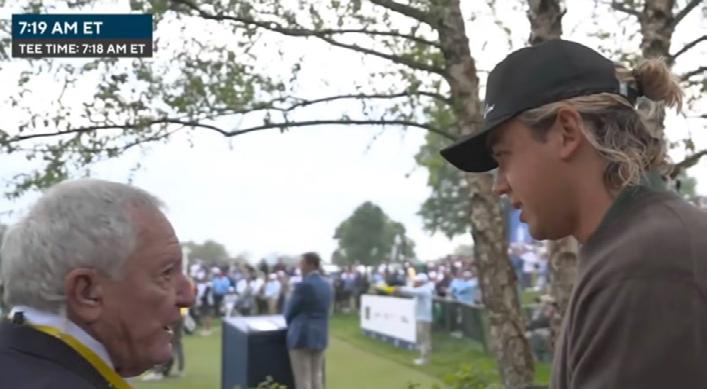
7:18 am means 7:18:00 am and not 7:18:01 am. Ready to play means the players is prepared with a ball, tee (if using a tee), and club in hand, while being ready to make a stroke at the ball at the designated time.
In Higgo’s case, his caddie and equipment were at the tee, but he was not.
In the starting time rules, the caddie being present does not matter; it’s the player that matters because he or she is the one that has to make the stroke. When a player is late to the tee, they have 5 minutes to show up before being disquailified. The penalty for being late? The general penalty (2 stroke penalty) - it doesn’t matter if the player is 1 second later or 5 minutes late. BUT if the player is 5 minutes and 1 second late.... they are disqualified.
Luckily for Higgo he was only a little late to the tee after hearing his name called, so he avoided the disqualification. However, he was assessed a two stroke penalty. He took it in stride, but those two strokes ended up being costly when he missed the cut by one stroke.
Lots of things can happen before a round starts: being late, ball won’t stay on the tee. Sometimes we get nervous; it’s only natural. So what happens in those moments? We’ve seen the steep reprecussions of being late, but don’t fear, there may be a little more breathing room once you’ve arrived.
Dear John: Sometimes when I’m getting ready to tee off and waggling, I’ll accidentally bump my ball off the tee. Inevitably, someone teases, “That’s one!” Why is that? It really ticks me off.
--Aggravated
Dear Aggraveted: Beats me. When starting a hole or returning to the teeing area under a Rule (e.g., stroke and distance), the ball is not in play until the player makes a stroke at it (Rule 6.2b(5)). A stroke is the forward movement of the club with the intention of striking and moving the ball (definition of STROKE). You can play your ball (or another ball) on the ground or re-tee it anywhere in the teeing area without penalty (Rule 6.2b(5)). However, please resist offering that person a one-finger salute. That’s bad etiquette. Could you ever imagine a professional golfer doing something like that?
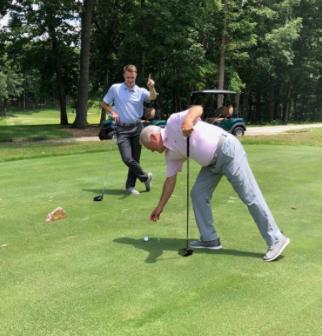
Dear John: Okay, it happened again. I was waggling before my tee shot on the 8th hole and accidentally bumped my ball oft the tee. Of course, my buddy couldn’t resist razzing, “That’s one!” I reminded him the ball wasn’t in play yet and he said, “Sorry.” A little flustered, I went to hit my tee shot and whiffed the ball. Extremely embarrassed, I regrouped, waggled, and inadvertently bumped my ball off the tee again. This time he gibed, “That’s two!” Is it really two?
--ReallyPO’d
Dear ReallyPO’d: Take a deep breath and repeat to yourself: “It’s a gentleman’s game. It’s a gentleman’s game.” Your buddy is wrong, as the teeing area Rules have changed. You only lie one.
Let’s break this down. Yes, whiffing the ball counts as a stroke, because you intended to hit the ball (definition of STROKE). Yes, the ball is in play (Rule 6.2b(5)). But, subsequently bumping your ball off the tee is not making a stroke. Further, anytime your ball lies in the teeing area, before or after a stroke, that ball (or a substituted ball) may be lifted or moved and played from anywhere in the teeing area from a tee or on the ground without penalty (Rule 6.2b(6)). So, ther’s only one stroke. Remember, deep breaths.
Anytime your ball lies in the teeing area really does mean anytime. This would include a tee shot ricocheting off a tree back into the teeing area, maybe even embedding. Again, the player may lift or move and play that ball (or a substituted ball) from anywhere in the teeing area from a tee or on the ground without penalty.



The USGA announced the launch of the pilot phase for Rules AI, its innovative, first-of-its-kind technology designed to make the Rules of Golf more accessible and understandable for golfers everywhere.
The development of Rules AI was supported by the USGA’s long-standing professional services provider, Deloitte. Deloitte played a critical role in the process, helping the USGA to develop, navigate and build the backend behind the technology solution.
By leveraging over 130 years of expertise and proprietary data, the USGA is making the Rules of Golf easier to access, offering players an accurate, streamlined way to find answers as they navigate the course via the GHIN app, presented by Sentry Insurance.

Rules AI is built upon a foundation of unparalleled data, trained on more than 25,000 specific rules queries addressed by USGA staff and experts. Recognizing accuracy is paramount in the Rules of Golf, the USGA has designed a rigorous, “confidence-first” architecture. Unlike generic AI models, this tool is powered exclusively by up-to-date, verified USGA content, ensuring that golfers receive answers rooted in the official Rules of Golf and informed by the practical judgement and nuance needed to apply them.
“Our goal has always been to ensure the Rules are accessible and that golfers can find the information they need to play the game fairly, enjoyably and with confidence,” said USGA CEO Mike Whan. “By combining our expansive historical data with modern AI technology, we are providing a bridge between tradition and innovation. Rules AI is designed to continue making the Rules of Golf easier to navigate and meet golfers where they are—on the course and on their mobile devices.”

Currently being launched in a phased approach, Rules AI has already begun rolling out to select golf clubs via the GHIN mobile app. This pilot strategy allows the USGA to gather real-world insights and refine the user experience before expanding the release to all golfers. It also represents a significant milestone in the USGA’s broader strategy to drive innovation across the Rules of Golf ecosystem.
As part of the phased rollout, members of Allied Golf Associations across the country will continue gaining access to Rules AI in the GHIN app throughout the coming months, with a spring 2027 target to reach all GHIN users. As part of a larger roadmap, the USGA aims to expand Rules AI access to other third-party golf apps in the future.
“Rules AI reflects the power of our trusted relationship: USGA brings governing authority and rules expertise, while Deloitte brings the breadth and depth to translate an AI vision into a production-grade experience,” said Chad Deweese, Principal, Sports, Deloitte Consulting LLP. “From the proof-ofconcept through the build-out of the scaled AI architecture, we’ve worked together to make expert-level rules knowledge more accessible—so golfers can play with greater confidence and integrity.”



We are just one month into the Metropolitan Golf Season. As players hit the course to compete, they have started earning Player of the Year points. Each year, we award the Player of the Year to the top golfer for the Men, Women, Senior Men, Super Senior
*For Full Standings Click the Underlined Heading*

Conner
Keenan Flemming
Thomas
Ryan Sullivan
Sam Ottwell
Andrew Rottschalk
Max Bruening
David Schilp, Jr.
Parker Bruening
Ryan Suhre
and



Mizuho Americas Open
Jeeno Thitikul
Kroger Queen City Championship
Lottie Woad
ShopRite LPGA
Celine Boutier

Truist Championship
Kristoffer Reitan
ONEflight Myrtle Beach Classic
Brandt Snedeker
PGA Championship
Aaron Rai
CJ Cup Byron Nelson
Wyndham Clark
Charles Schwab Challenge
Russell Henley

Turkish Airlines Open
Mikael Lindberg
Estrella Damm Catalunya Championship
Yurav Premlall
Soudal Open
Richard Sterne
Austrian Alpine Open
Kota Kaneko

MBC Ladies Classic
Smilla Tarning Soenderby
Amundi German Masters
Leonie Harm
Lalla Meryem Cup
Anna Huang
Jabra Ladies Open
Helen Briem

Colonial Life Charity Classic
Cole Sherwood
Visit Knoxville Open
UNC
Doc Redman
Health Championship
Alvaro Ortiz

Challenge de España
Ryan Van Velzen
Danish Golf Challenge
Tapio Pulkkanen
Challenge de Catalunya
Pablo Ereno
Italian Challenge Open
Chris Wood

Reliance Matrix Championship
Cholcheva Wongras
Copper Rock Championship
Fiona Xu

Diners Club Peru Open
Cole Anderson
KIA Open de Ecuador
Joey Savoie

FBC ZIM Open
Altin van der Merwe
SunBet Challenge
Justin Walters

Insperity Invitational
Boo Weekley
Trophy Hassan II
Scott Hend

G4D Open: Mens
Lee Simon Seungmin
G4D Open: Womens
Jennifer Sräga

Virginia
Lucas Herbert




Things are back on the move at Normandie Golf Course! We are making progress both on the course and in preparing for the programs that will utilize and benefit from this facility. Look out on our social media and website for updates as we start making strides to get golfers - especially juniors - back on the course. The future is starting right now!
**Course Opening Date will be publicly announced once it is determined.








“The
appeal of this project to me was to be involved in an effort that could serve as a catalyst to change needed in our country today, beginning with parts of St. Louis County. Restoring Normandie for a community in need will have a long-lasting positive impact on the lives of youth in St. Louis.”
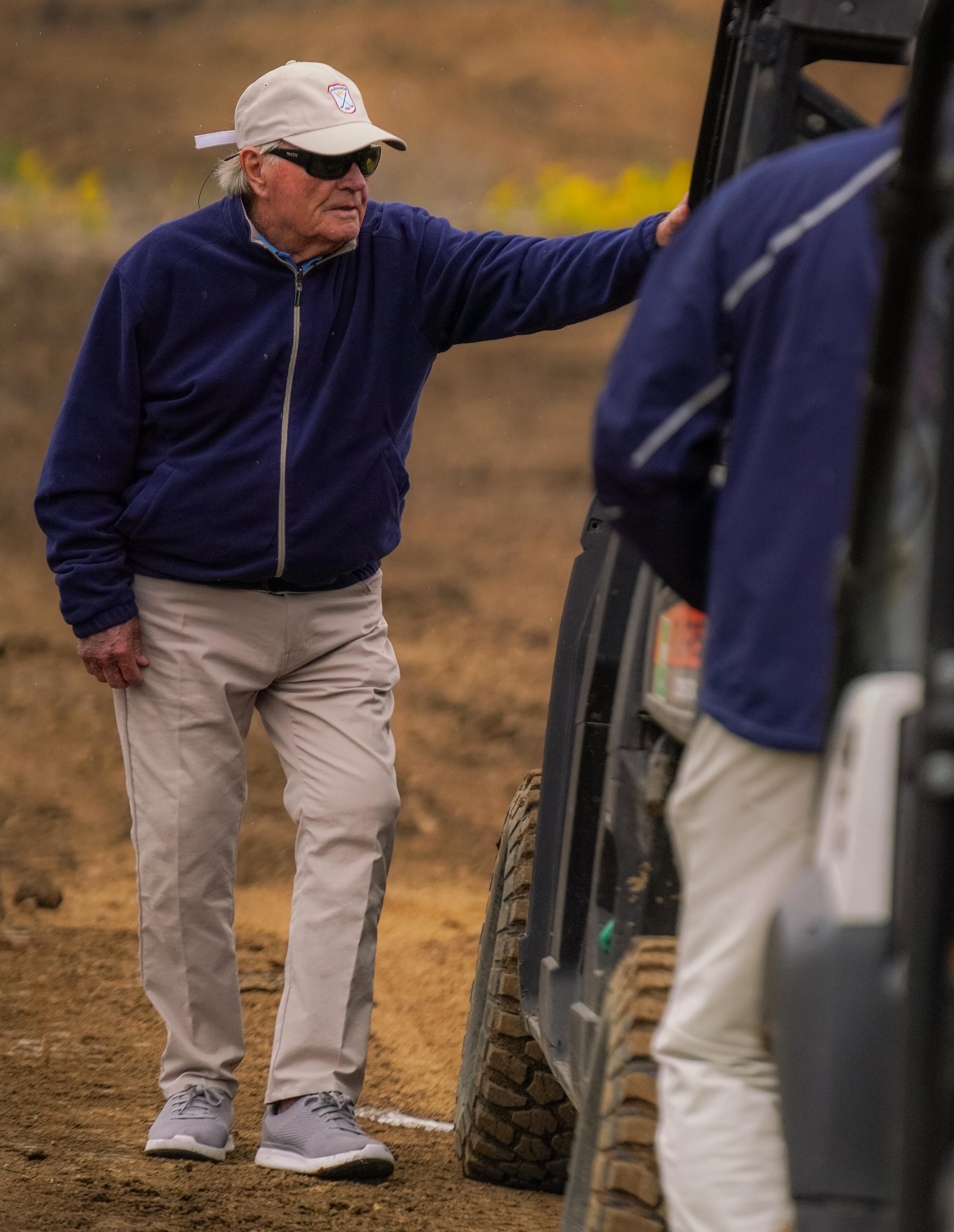
-Jack Nicklaus on his involvement in Normandie Reimagined