
13 Boatwright Interns
Meet the Interns Joining Our Team This Summer!
14 Golf With Us Bank of America & Youth on Course Initiative
10 Georgia on the Mind
How our golfers played at Augusta National.
13 Boatwright Interns
Meet the Interns Joining Our Team This Summer!
14 Golf With Us Bank of America & Youth on Course Initiative
10 Georgia on the Mind
How our golfers played at Augusta National.
Provide GHIN Handicap Service to 140+ Member Clubs under the World Handicap System
Provide the USGA Course/Slope Rating service to our Member Clubs
Regional authority on the Rules of Golf and Amateur Status
Conduct twelve (12) Metropolitan Championships each season
Conduct USGA Qualifying for eight (8) USGA Championships each season
Conduct three (3) Championships in Illinois
Conduct The Amateur Series of Events for golfers of all ages and abilities



USGA
Executive Director
Curt Rohe - curt@metga.org
Director, Member Services
Caroline Buchan - caroline@metga.org
Foundation Executive Director
Walker Hill - walker@metga.org
Controller
Melisa Simpson - melisa@metga.org
2026 PJ BOATWRIGHT INTERNS
Cannon Wolk
Gabby Dethrow
Emma Wyeth
EXECUTIVE BOARD
Officers
Scott Engelbrecht - President/Treasurer
Mike Marquart - Secretary
At Large Members
John Bugh
Stan Grossman
Rick Meyer, Jr
John Moore
Mick Wellington
Advisory Committee
Skip Berkmeyer - Chair
Brad Carpenter
Jay Delsing
Shawn Jasper
Chris Kovach
David Pfeil
THE METROPOLITAN CONTRIBUTING WRITERS
Dan O’Neill
MVGCSAA
John Thorman
EDITOR
Caroline Buchan
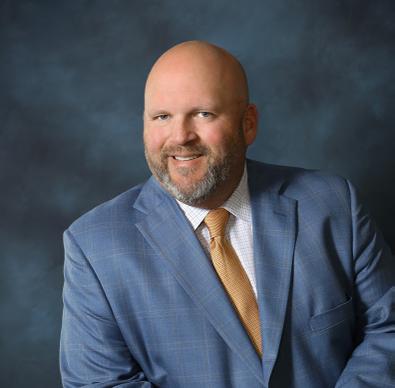
Curt Rohe - Executive Director
The championship season is officially in full swing. Following a busy April, we’ve already successfully conducted two USGA qualifiers, our first Metropolitan Championship—the East Side Amateur —and Amateur Series #1.
Interestingly, we’ve now entered a rare four-week gap in our competitive schedule. It is unusual for us to go this long in-season without a championship or qualifier, but it’s a testament to the unique way the calendar shapes up once all the logistical pieces fall into place.
Our summer interns are beginning to settle into their roles. While one is already fully engaged in daily operations, two others will head to New Jersey on May 18 for the P.J. Boatwright Summit. There, they will join fellow interns from across the country to gain a deeper understanding of the USGA’s mission. We remain incredibly grateful for the Boatwright program; it is a vital resource for the AGA community, and we are proud to provide these opportunities to three talented college students again this summer.
You may notice that we have moved the Old Warson Cup to July 11-12. This change was made to accommodate MSD work currently taking place on the lower holes at Old Warson CC, which has necessitated the closure of four holes over the past several months. We are currently finalizing the field for the 2026 Cup and look forward to making an official announcement in the near future.
Thank you for staying connected with The Metropolitan and for your continued support as a valued member of the Metropolitan Amateur Golf Association!
Keep it in the fairway!
- The number of years it has been since a men’s major championships has been conducted at historic Aronimink Golf Club in the suburbs of Philadelphia, a drought that ends this month when the PGA Championship arrives. Founded in 1896, Aronimink made its last major splash in 1962, when Gary Player beat our own Bob Goalby by a nose, or a stroke, to win the third of his nine majors. Oddly enough, the British Open was played the previous week in Troon, Scotland, where Player missed the 36-hole cut. The was one five times in the 1960s where the two majors played on different continents were staged in back-to-back weeks. Goalby, the Belleville (Ill.) native who would go on to win the 1968 Masters, had a 25-foot birdie putt on the 72nd hole at Aronimink to force a playoff, but his attempt slid past the hole. Player was paid the whopping sum of $13,000 for first place, while the total purse for the tournament was $69,400. That is, slightly more than what Si Woo Kim ($65,250.00) banked for finishing 47th at last month’s Masters.
- The number of high-profile automobile accidents involving Tiger Woods. The latest entry came on March 27, when Woods was arrested for suspicion of DUI and refusing a test following a rollover crash. Reportedly, the 15-time major champion has since checked into a rehab facility in Zurich. If you’re keeping score at home, Woods’ road troubles started in November, 2009, when Florida police responded to an emergency call near his Orlando neighborhood, where he had crashed his car into a fire hydrant and tree. Eight years later, in May, 2017, Florida police allegedly found Tiger Woods asleep at the wheel of his SUV, stopped at a traffic light with the engine running. In 2021, he rolled his SUV in California and suffered multiple serious injuries. And it seems reasonable to think there may be other incidents where authorities let him skate. But the most amazing stat - and most fortunate - is none of the incidents resulted in serious injuries to anyone else.
- After the recent success of the Artemis mission, NASA has plans to return to the moon and land human beings on the surface in 2028. If they do, they might want the astronauts to have ball
retrievers in their equipment. That’s because there are two golf balls on the moon. On February 6, 1971, NASA astronaut Alan Shepard attached a 6-iron head to a sample collector and hit two balls on the lunar surface. Presumably, he was away. Keep in mind, Shepard claimed the balls went “miles and miles,” so finding them could be an issue. What’s more, Shepard has never revealed the brand of the balls he put in play, brands like “Spalding” and “Daisy” have been often cited. Chances are they were standard, white, two-piece balls. The good news is, if they do find a ball up there, it’s unlikely to belong to someone else. Just sayin.’
- The number of unique golfers who have won the Masters Tournament. That number did not change this year, as Rory McIlroy captured the championship for the second consecutive year. Of those 56 champions, 35 are still alive and 18 have won the tournament multiple times. But McIlroy became only the fourth to repeat the championship consecutively. That group includes Jack Nicklaus in 1965-66, Nick Faldo in 1989-90 and Woods in 2001-02. Jack Nicklaus holds the record with a collection of six green jackets, followed by Tiger Woods with five. Next April, McIlroy will have a rare opportunity to do something no one has done - win the championship three years in a row.
80
- Where Jordan Spieth stood in the Official World Golf Rankings as 2026 began. As of this writing, thanks in part to a T12 at the Masters, Spieth had moved up to 51st - still quite a fall for the three-time major championship winner. Spieth is still only 32, but he hasn’t won since capturing the 2022 RBC Heritage and he has won just twice since the start of 2018. Spieth has been dealing with wrist problems over the past two seasons, while struggling to find his form. He has just four top-10s over the past two seasons, which covered some 30 events. Who would have thunk it, when he was winning 14 times worldwide from 2013 to 2017?.

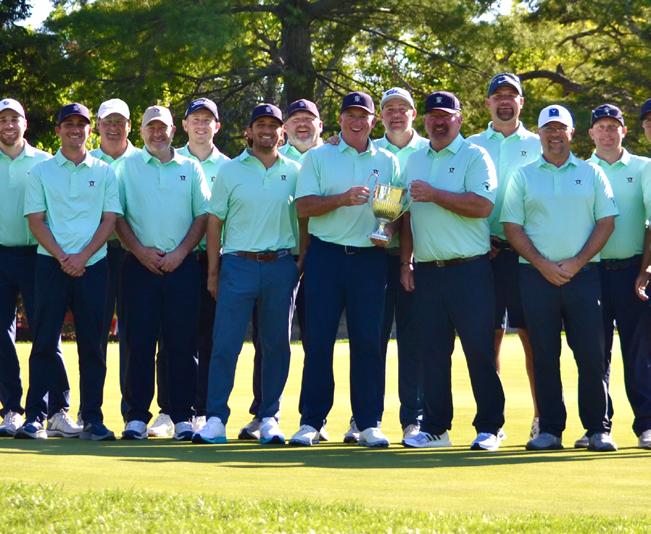
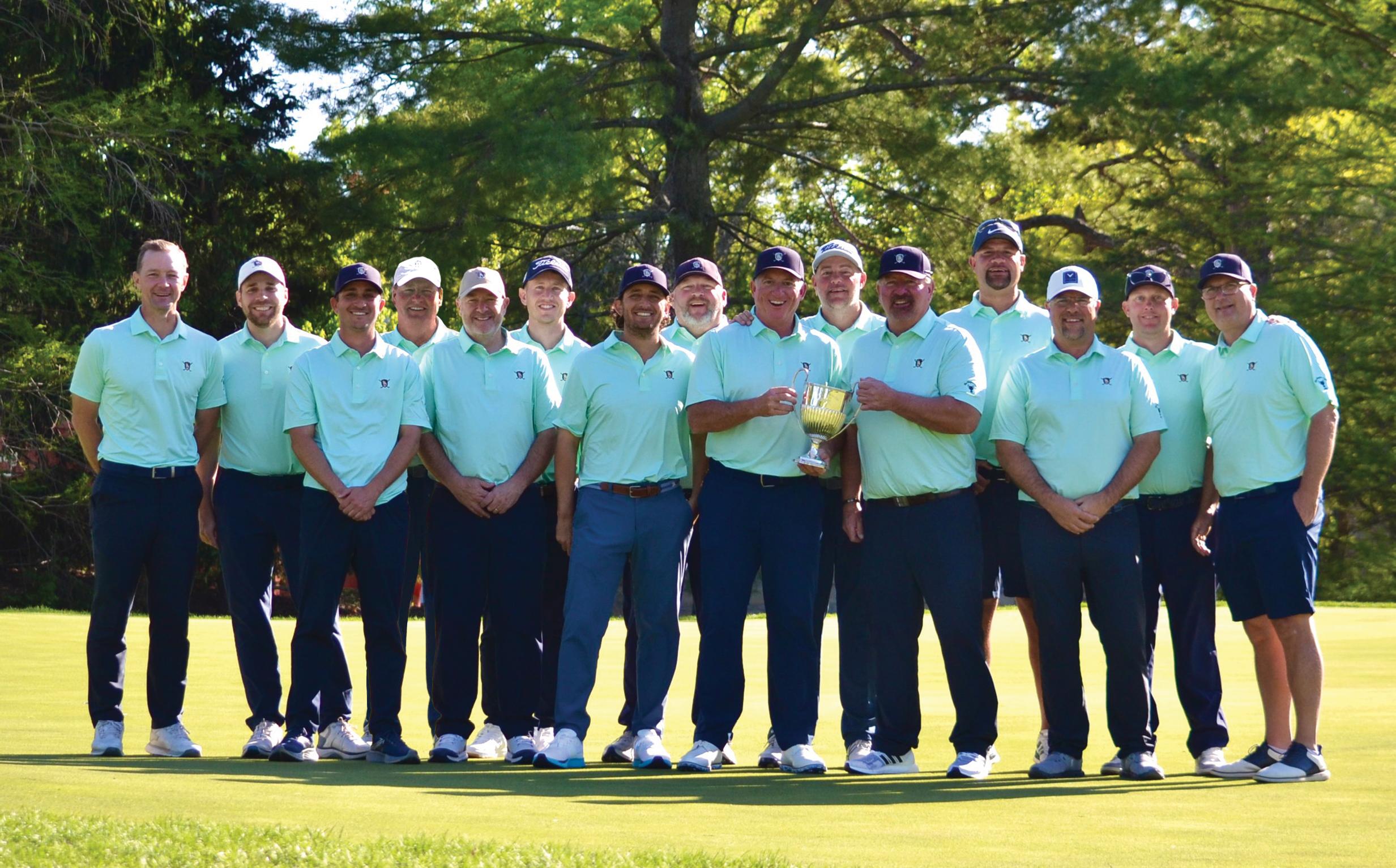
The Metropolitan championship season officially kicked off with the Shogren Cup: a competitive battle between the best Metropolitan amateurs and Gateway PGA professionals. What started as cold and windy, turned into a beautiful day at Bellerive Country Club for the two sides to face off. Each team is comprised of 14 players with 4 players in the senior division. Day one began with four-ball matches and concluded with foursome matches. Day 2 consisted of the singles matches. All players played each round.
In the four-ball competition, all sides started on Hole 1 and kept their matches close for the majority of the morning. Through nine holes, Team Gateway led 3 matches, Team Metropolitan led 3 matches, and one match was tied. Both sides fought hard in the final stretch of their matches. The strongest match of this round for Team Metropolitan was Tony Gumper and Ryan Eckelkamp, who came out in dominating fashion to win 5 & 3 over Ryan McClintock and Gideon Smith. At the end of the four-ball round, Team Metropolitan had 5.5 points and Team Gateway had 1.5 points.
After a quick lunch and turn around, the sides were back on the course for the foursomes round. This proved to be a fruitful afternoon for Team Metropolitan. Playing alternate shot, the sides decided to send the teams off of both holes 1 and 10. Neeman and Moore for Team Metropolitan took on Tucker and Hausmann for Team Gateway beginning on Hole 1. Coming out hot, Neeman and Moore were 4 Up through 5, and got to 6 Up through 11 before closing out the match 4 & 3. On the other side of the course, Lovett and Berkmeyer were proving their grit in a 5 & 4 win over Whitfield and Fogt. Migdal teamed up with Niezing for this round to show their strength. The pair dominated their round in a 7 & 5 victory over Auping and Moomey. The final match of the day saw Pranger and Weaver take on Szyhowski and Schulte. Team Metropolitan once again proved their power in a 6 & 4 win. Team Metropolitan earned 6 points and Team Gateway earned 1 point in the foursomes. At the end of the day, the point totals were Team Metropolitan with 11.5 points and Team Gateway with 2.5 points.
The final matches of the 5th Robert A. Shogren Cup were another strong showing from the Metropolitan amateurs. Coming into the final round, Team Metropolitan’s held 11.5 points, leaving them in need of only 2.5 points to retain or 3 points to win. Team Gateway on the other hand would need 12 points to steal the trophy away from the amateurs. As the 3 time defending champions, Team Metropolitan was looking to make history.
In the second match of the day, Ryan Eckelkamp of Team Metropolitan faced Blake Sharamitaro of Team Gateway. The pair went back and forth until Eckelkamp went 2 up on the back nine. The match went to hole 17 where Eckelkamp would win Team Metropolitan’s first point of the day 2 & 1. Four matches behind, Sam Migdal was taking on JD Auping. Migdal got off to a hot start and never looked back. Through nine holes Migdal was 5 Up and a birdie on Hole 10 got him to 6. Captain Migdal clenched Team Metropolitan’s second point in his 6 & 5 win. Three groups back from Migdal was the Metropolitan’s Peter Weaver facing the Gateway’s Matt Ginder. Weaver dominated his match, making the turn 6 Up. He nailed a putt from across the green on Hole 10 to get to 7 Up. Then on Hole 12 - playing as par 3 this week - Weaver stuck his tee shot into 2 feet of the hole to win the match 8 & 6 and secure Team Metropolitan’s third and Cup winning point. This round by Weaver is the largest match win margin in Shogren Cup history.
In the final round, Team Metropolitan gained 10.5 points while Team Gateway gained 3.5 points. By the end of the Metropolitan madness, the amateurs would walk away with 22 total points. This is the most points earned by a team in the Shogren Cup, and the largest winning margin yet. Team Metropolitan lifts the Shogren Cup for the fourth consecutive year.
Four-Ball
Choate + White
Sullivan + Strickland
Migdal + Migdal
Berkmeyer + Moore
Carpenter + Niezing
Gumper + Eckelkamp
Foursomes
Lovett + Strickland

Choate + Sullivan
White + Kovach
Berkmeyer + Moore


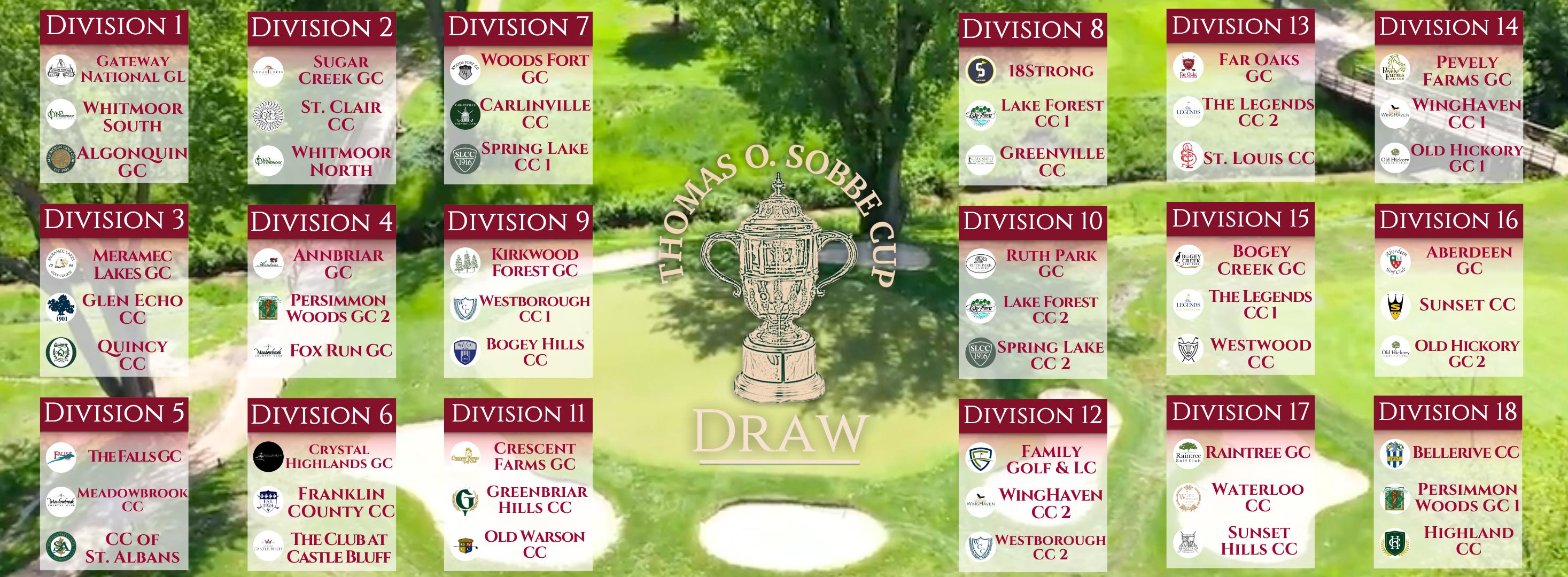
The annual battle of the Metropolitan Member Clubs is here. Each year, area clubs build a team of its members to go head-to-head against another club in the Thomas O. Sobbe Cup. Teams are comprised of seven amateurs and one professional who is the representative leader from the club. When teams meet to play their matches, they must play 1 professional match, 2 singles scratch matches, 1 singles handicap match, 1 four-ball handicap match, and 1 senior four-ball handicap match. These match divisions allow an array of players from each club the opportunity to participate on their club’s team and showcases the different levels within.
54 teams have signed up to try their fate in this club match-up with 7 clubs pulling together 2 teams. There are 17 Public course teams and 37 Private course teams. The first round of this Cup is a round-robin group stage. Teams are drawn into one of 18 Groups along with two more clubs. After playing each of the other teams, the club with the most points will earn the top seed position in their group and move on to the knockout stage. Teams will then earn knockout stage rankings based on the points they accumulated during the group stage. With 18 teams and 16 spots in the knockouts, the two lowest ranked group teams will be eliminated from the Round of 16.
On Wednesday March 25, we gathered to have the group division draw. All drawings were done by a random generator and cross-checked to ensure that no team was drawn into a group with a club they have played in the group stage in the past two years. The public clubs were drawn first and the private clubs second. The first round of draws placed clubs as the first team into each of the divisions. Once each division had one club, the second round of draws were placed into each division in a reverse order from group 17 to 1. Then the final round drew the final club into each division from group 1 to 17. The results of the draw are as follows:
The defending Champions Quincy Country Club are back in action, as are runner-ups Spring Lake Country Club. Quincy has been drawn into the same group as the 2024 champions Glen Echo Country Club, which is sure to make it a group to watch. Ten of the participating clubs have won in years gone by, while the remaining forty-four are looking to play their club’s name onto the Sobbe Cup Trophy for the first time. This year marks the 33rd playing of the Sobbe Cup.

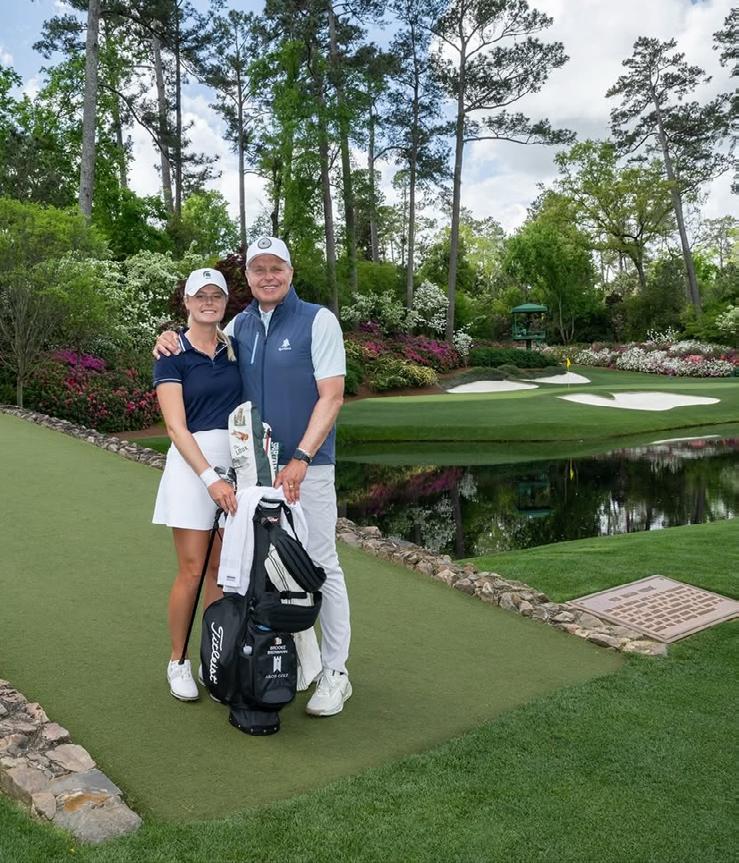
The Metropolitan Amateur Golf Association had an exciting week in early April. Two local golfers made their way to Augusta, Georgia to compete with the hopes of making a splash on hallowed ground.
First was Brooke Biermann competing in the Augusta National Women’s Amateur. To get into this championship, golfers must receive an invite from Augusta National - much like the men need for the Masters. Receiving an invite to play in the Augusta National Women’s Amateur means that you have made a mark in the women’s amateur golf world as one of the top competitors.
Brooke is from Wildwood, Missouri and put her name in the spotlight at last year’s U.S. Women’s Amateur when she finished as runner-up. She is in the process of going through Q-school to become a professional golfer. While she still holds her amateur status, Brooke received the coveted invitation from Augusta National.
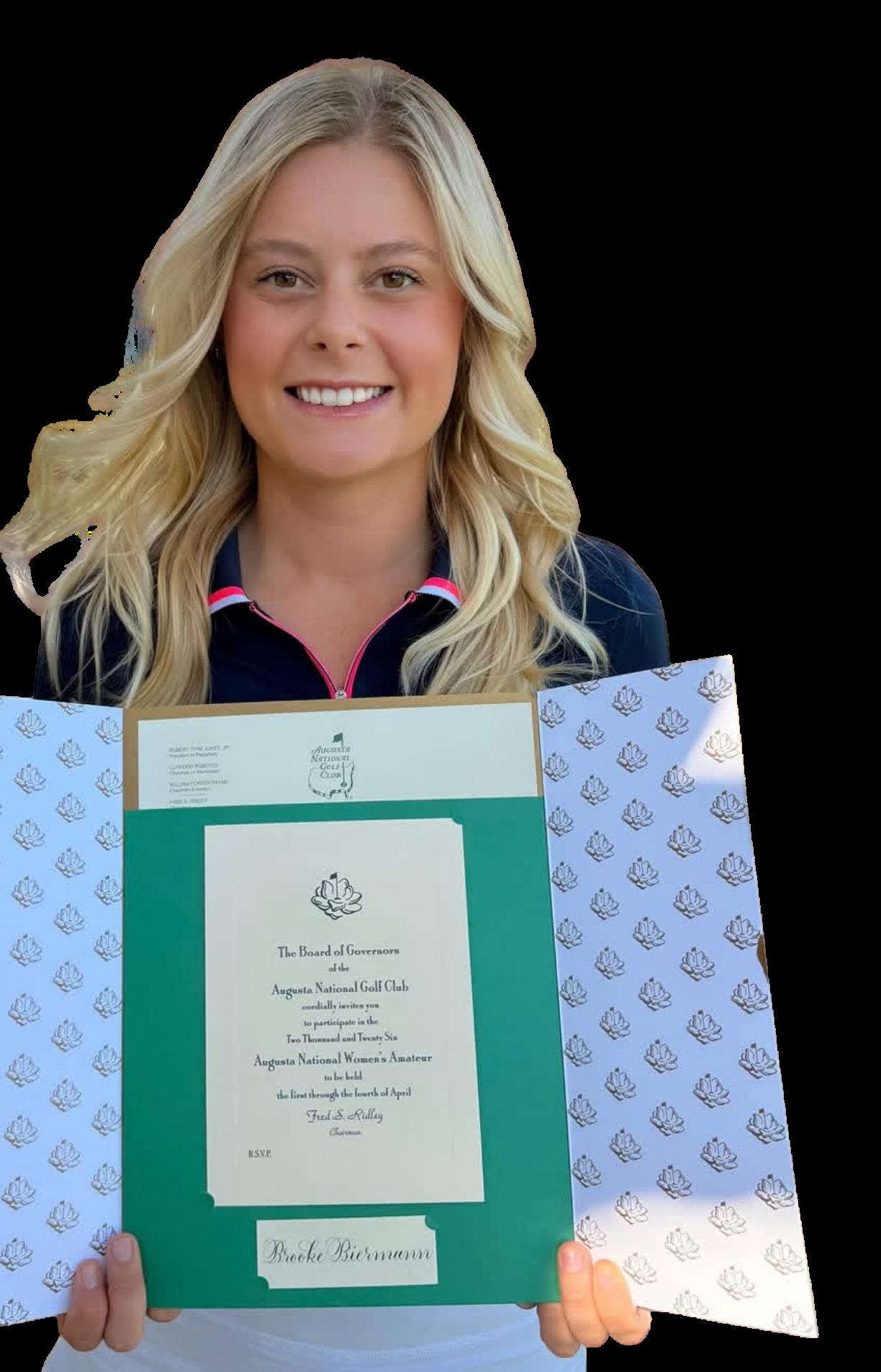
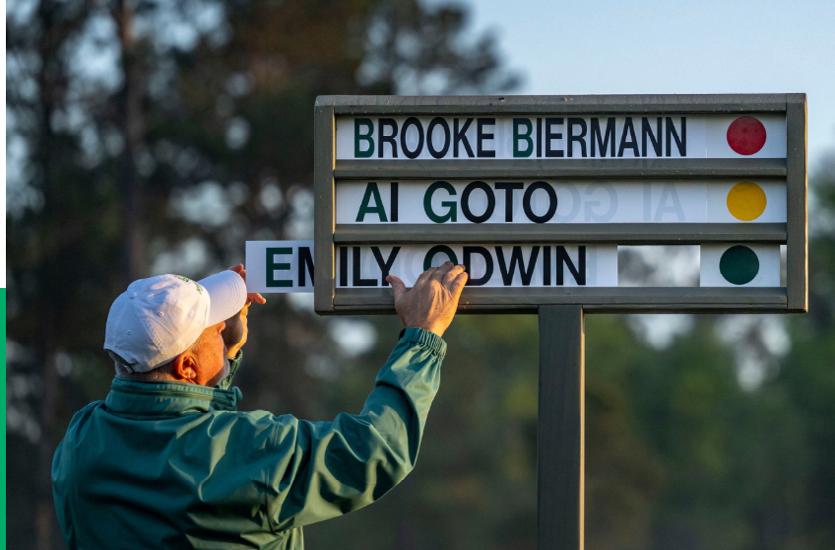
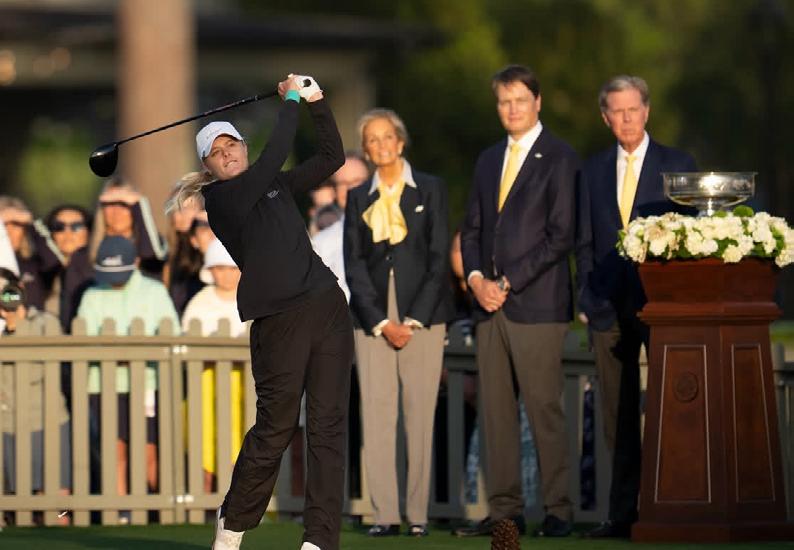
After arriving in Augusta, Georgia, the competitors compete at Champions Retreat for Rounds 1 and 2. The players that survive the cut then compete in the final round at Augusta National Golf Club. Brooke had the honor of playing the first tee shot of the championship and got off to a great start with a Round 1 score of two-under par. During that round, she had birdies on Holes 9, 10, 12, and 13. Following this great day, she returned for the second round playing in the last group of the day.
Round 2 proved tougher and the pressure was on to make the cut. Brooke battled throughout the day, trying not to let it slip away. She had three birdies, but paired with five bogeys, she was sitting right on the line. Going into her last hole, Brooke was one back of the cut. She got to the green and had a look at birdie to make it into the final round. Brooke stepped up, hit the ball, and watched as it tracked towards the hole. The putt just narrowly slid by the hole, leaving Brooke to finish the day two-over par and the championship at even par. The cut was made at one-under par.
Even though Brooke missed the cut, there was still a silver lining: playing Augusta National. All of the golfers - regardless of them making the cut - get to play a round at Augusta National Golf Club It’s an experience those women will never forget. Brooke played on Friday with her family in tow. When Brooke was a junior golfer, it to the Drive, Chip, & Putt final at Augusta National. From that Biermanns dreamed of one day returning, and for Brooke, she playing the course. The Augusta National Women’s Amateur not dream possible, but made it a reality. Brooke walked away from smile on her face and a deepened love for the game.

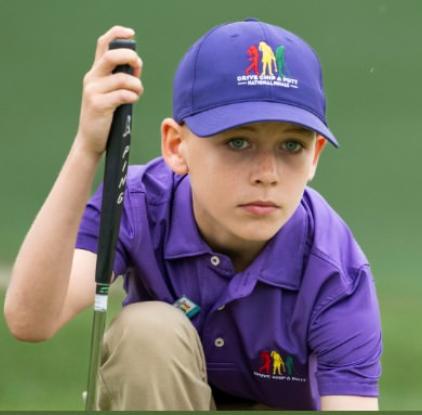
The Sunday following the Augusta National Women’s Amateur, the kids stepped onto the course at Augusta National for the Drive, Chip, and Putt Final. St. Louis’ own, Andrew Brown qualified for the final last year after completing and surviving the local, sub-regional, and regional qualifiers. He competed in the Boys’ 7-9 age division.
Andrew’s journey started at Whitmoor Country Club where he earned 75pts to finish in 3rd and move on to the next stage. He then went to the sub-regional at Sunset Hills Country Club. After putting in work, Andrew improved on his score to earn 102 points, which placed him in 2nd and allowed him to move on to the final stage of qualifying. Andrew made the journey up to Whistling Straits for the regional qualifier. He once again showed improvement by increasing his earned points to 121 points. This was enough to finish on top of the leaderboard and claim his ticket to Augusta National. At the regional, he finished T2 in the Drive discipline, 2nd in the Chip discipline, and 1st in the Chip discipline.
Andrew and his family made their way down to Augusta National for him to compete. The nerves and adrenaline were pumping through all of the kids as they walked out onto the Augusta National grass. When Andrew’s time came to hit his two drives, he gave it everything he had. Both drives landed outside of the grid, but the day wasn’t over. The next discipline was the chip. Andrew knew that he had to be careful of the rollout on Augusta greens. He took a breath and hit both of his chips. They ended up shorter than he had hoped and then the group was moving on.
The kids made their way over to the iconic 18th green of Augusta National. They had two different putts to hit. The first was a 30 foot putt, the second was a 15 foot downhill putt. On the first putt, Andrew rolled the ball to 3’3”. He walked over to the second starting area of the second putt and got ready to make his final shot at Augusta. Andrew placed his second putt to 1’11” and his weekend was complete. His combined putt totals had him finish 3rd in the putt discipline.
Andrew finished the competition in 8th place out of 10, which is nothing to ashamed about. Making it to the final of the Drive, Chip, & Putt is a hard feat. Once there, you are competing with the best of the best and are considered one of the best in the country. Following the eventful weekend, all of the Drive, Chip, & Putt competitors and their family are given tickets to attend a practice round at the Masters - which is a pretty cool prize. It would be hard not to walk away with a smile after getting to hit a few shots at Augusta and see some of the worlds best golfers play next day.
Brooke and Andrew have made the Metropolitan proud and represented us well at an iconic venue. Golf is growing and so is the talent coming out of the Metropolitan region. Big things are in store for these two and we can’t wait to keep following along as they do.
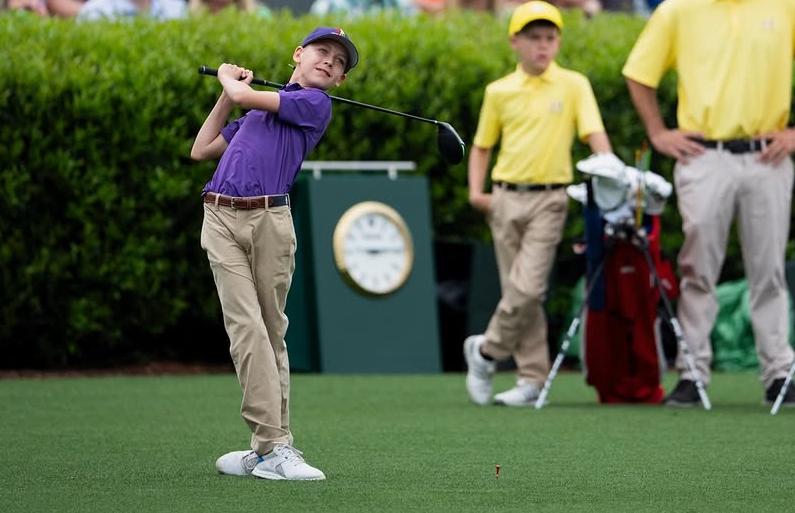
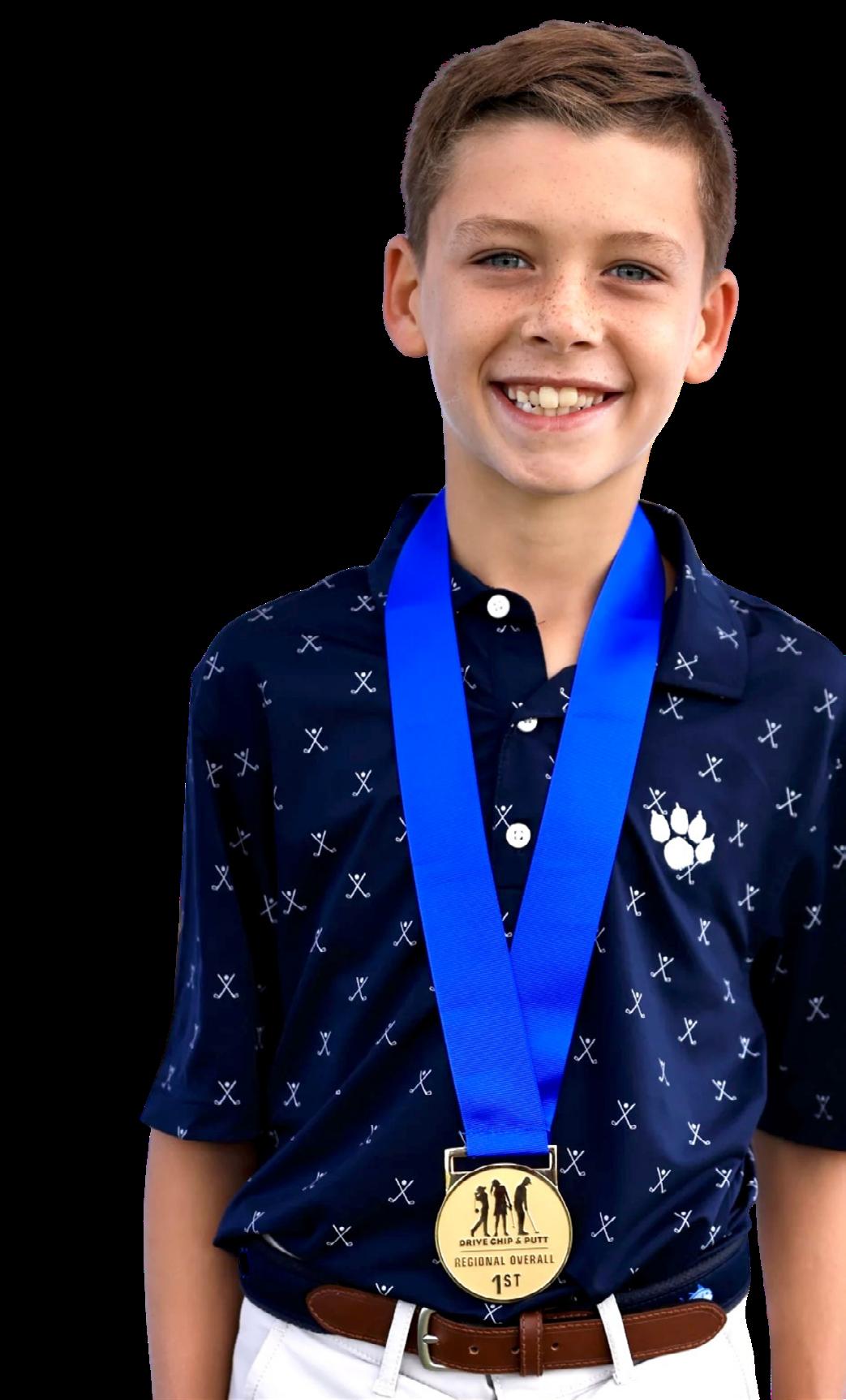


The Metropolitan Golf Association is excited to welcome three P.J. Boatwright Interns to our staff this summer. Each year, we are able to provide three individuals with the opportunity to intern in the golf administration sector through the USGA’s Boatwright program. During their time, these interns will gain hands-on experience as they join the Metropolitan Staff and become part of the team. We are pleased to announce Cannon Wolk, Gabby Dethrow, and Emma Wyeth as our Boatwright Interns this year. We are ready to welcome them into the team and get to know them more.
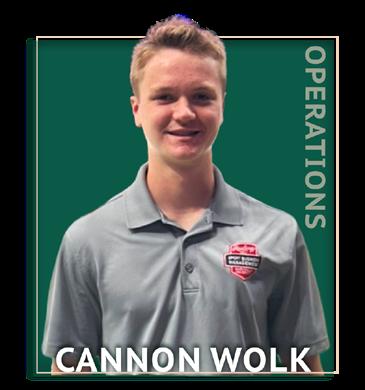
Cannon will be entering his senior year in Sports Business Management at Maryville University and will be joining us for six months as an Operations Intern. Growing up in Ste. Genevieve, Missouri, he played baseball, football, and golf. Cannon’s interest in this position and golf stems from enjoying spending time outside and playing golf with his friends. In his second year of the sports business program, he has had some great opportunities and experiences which he looks forward to continuing to gain more as time goes on. He is also a big St. Louis Cardinals fan, and enjoys watching them every time they play. Cannon will be joining the team for 6 months as an Operations Intern. When discussing the position, Cannon said, “I’m excited to join the team as a Boatwright Intern because of the great experiences I will be a part of. I look forward to being a part of the team that helps run these events and I’m very thankful for the opportunity.”

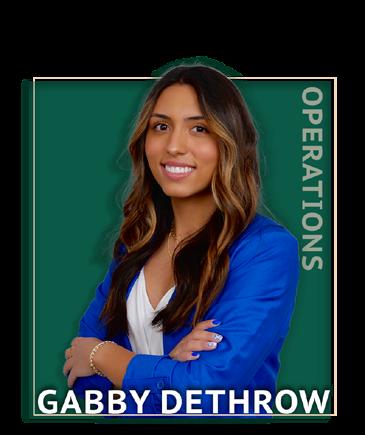
Gabby
Gabby is back again! A Southern Illinoisan from Sparta,she is currently studying Recreation, Sport, & Tourism - Sport Management concentration with a minor in business as a senior at University of Illinois, Urbana-Champaign. She has played golf on and off her whole life, but started competing in high school. Her favorite thing about golf is that it is constantly challenging physically and mentally and there is no such thing as an easy day out on the course. When she is not studying or working, Gabby enjoys hanging with her dogs, trying new restaurants, and staying active. You may recognize Gabby when you are out on the course as she is reprising her role as a Boatwright Operations Intern from last year. Over the last school year, she also interned at Atkins Golf Club (University of Illinois home course) as a banquet and events intern. Gabby will be with us for three more months this summer as an Operations Intern and had this to say about the opportunity, “I am looking forward to gaining more knowledge from the Metropolitan GA Team while creating lasting memories!”
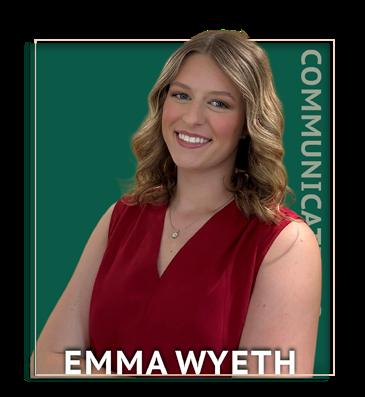
Emma is an area local, who is between her sophomore and junior years at University of Missouri (Mizzou) majoring in Journalism and minoring in both Entrepreneurship and Innovations Management and Psychology. She is a member of Phi Mu fraternity and works for KOMU 8 news station in Columbia. An alum of Visitation Academy, Emma loves golf and grew up dancing and participating in theater. She started playing golf when she was about nine. She went with my dad and brother to the driving range one day and asked if I could have a shot! Golf has been in her life ever since. From playing the sport to working at Lake Forest Country Club as a caddie, bag room employee and pro shop attendant, it has brought her so many opportunities and allowed her to meet the best people. “This internship is genuinely a dream come true for me and I cannot wait to serve MAGA as a USGA Boatwright Intern!” said Emma about her summer internship. Emma will be with us for three months as the Communications Intern.
The P.J. Boatwright Internship Program was established in 1991 by the USGA with the goal to give experience to individuals who are interested in pursuing a career in golf administration. Interns will help local golf associations to conduct tournaments, junior golf programs, membership services, and other general activities to promote the best interest of golf. For more information on the P.J.
“At Bank of America, we see ‘Golf with Us’ as a vital investment in the future of our young people in St. Louis. It’s about breaking down barriers and making golf truly accessible and affordable for the next generation. Through Golf with Us, we’re also nurturing the important life skills that will shape who these kids become on and off the course.”
– Marilyn Bush, President, Bank of America St. Louis

In 2025, Bank of America partnered with Youth on Course to bring $5 rounds of golf to over 100,000 youth (ages 6-18) across the nation. Young golfers, many of whom picked up the sport for the first time, showed up in droves to play more than 130,000 rounds of golf. Right here in St. louis, more than 1,100 participated. This year, Bank of America once again invites youth between ages 6-18 to “Golf with Us.”
Registration is open until June 15 for more than 150,000 children to receive a free, one-year membership with Youth on Course through Bank of America’s “Golf with Us” initiative. With this membership, kids can enjoy rounds of golf for $5 or less at more than 2,300 courses across the country, including 13 courses in the St. Louis Metro Area! Members also receive a registered handicap index in the United States Golf Association’s Golf Handicap Information Network system, complimentary access to GolfPass, and continued development and learning opportunities through the PGA of America REACH Foundation.
Golf is a powerful sport. It fosters connections, teaches us to overcome adversity, and drives us to be better on the course and off it. Through “Golf with Us,” Bank of America is bringing golf to the next generation. Whether you’re a beginner looking to play your first round or a rising star looking to level up your game this summer, grab your clubs and grab a friend, tee time starts now!


The U.S. Women’s Open Qualifier kicks off the USGA qualifiers held in the St. Louis region in 2026. Tuesday’s rounds came in the wake of a long afternoon of severe weather in the area on Monday. Despite the woes those storms presented - including a power outage at the club - the course was prepared and play went on as scheduled. The field for the qualifier was filled at the maximum of 78 players. In the field were twentysix international golfers, an average age of 21, fifty-seven amateurs, twenty-one professionals, only nine golfers from the Metropolitan region, and thirty-six universities represented by current athletes, alumni, and signed future athletes.
Players were competing for two qualifying spots into the U.S. Women’s Open field and two alternate spots. The course played to a par 72. As this is for entry into a professional championship, all amateurs will be indicated with (a) and professionals will not be marked.
For the first round, the early morning saw overcast skies and cooler temperatures. The conditions stayed pleasant through Round 1. Addie Dobson (a) of Jacksonville, IL and Mizzou Tiger set a high bar for the field at the conclusion of the first round. Starting on Hole 10, Dobson’s round included eight birdies with a bogey free second nine. Her round led her to post the low round of the day of 66 or six-under (-6) par and take the solo lead heading into Round 2.
The next two lowest scores of the morning came from Reagan Zibilski (a) of Springfield, MO and Samantha Olson (a) of Phoenix, AZ. Zibilski, an Arkansas Razorback, started her first round on Hole 10. In her first nine holes, Zibilski was bogey free with three birdies. She finished out the second nine even to go into Round 2 at three-under (-3) par. Olson, a University of Tulsa athlete, also started her round on Hole 10. Similarly, Olson had a bogey free first nine, but with just two birdies. Olson closed out the round at three-under (-3) par.
Tied for fourth five strokes back of the lead at the end of the first round were four golfers: Grace Leber (a) of Wilmette, IL, Lisa Herman (a) of Jenks, OK, Zoe Cusack (a) of Potomac, MD, and Mary Liu of Seminole, FL and the People’s Republic of China. Leber’s round was highlighted by a birdie on the 18th and final hole of her round to get under par. Herman, an Ole Miss Rebel, had an interesting first round. She started the round with five bogeys, then flipped the round around with a bogey free back nine with six birdies. Cusack is a US National Development Program participant and is signed to play for the Virginia Cavaliers next fall. She had a slow start to the day with one bogey in the first half, but was able to card a bogey free back with two birdies. Liu began on the 10th hole and had two birdies during a bogey free first nine.
Golfers had a short break after their first round to grab a bite to eat and rest before hitting the course again for Round 2. The second round was sure to reveal both physical and mental fortitude. The cloudy skies began to rain down around the 2:30pm mark of the day and refused to stop until the rounds were almost over. There were moments when you thought it might stop, but then it picked up again. Players had to battle not only each other, but the increasingly wet conditions.
Reagan Zibilski (a) of Springfield, MO came in from the second round with a good look at potentially claiming a qualifying spot. The Razorback had a fight to the finish, but did card five birdies to finish the round one-under par to bring her final score to four-under (-4) par. At the time she finished, Zibilski was the leader in the clubhouse. The next player to enter with a chance was Narin An of the Republic of Korea. An had a first round score of one-over par. With work to do, she put her head down and fired a second round bogey free five-under par. This placed An in the clubhouse tied with Zibilski at four-under (-4) par.
Not many groups left on the course, there were two hopefuls looking to close out strong. Zoe Cusack (a) of Potomac, MD started her second round on Hole 10. The future University of Virginia golfer took the momentum from the end of her first round into the second. Cusack fired a second round bogey free four-under par to claim the top spot on the leaderboard at five-under (-5) par. Addie Dobson (a) of Jacksonville, IL was playing in the final group of the day and started Round 2 on Hole 1. After starting the second round on top, it was a fight to the finish for Dobson. The Mizzou Tiger entered the final hole tied for the lead. After leaving her birdie putt short, Dobson felt the pressure as she sunk the putt for par to finish the round one-over par and end the day at five-under (-5) par, while her teammates watched on.
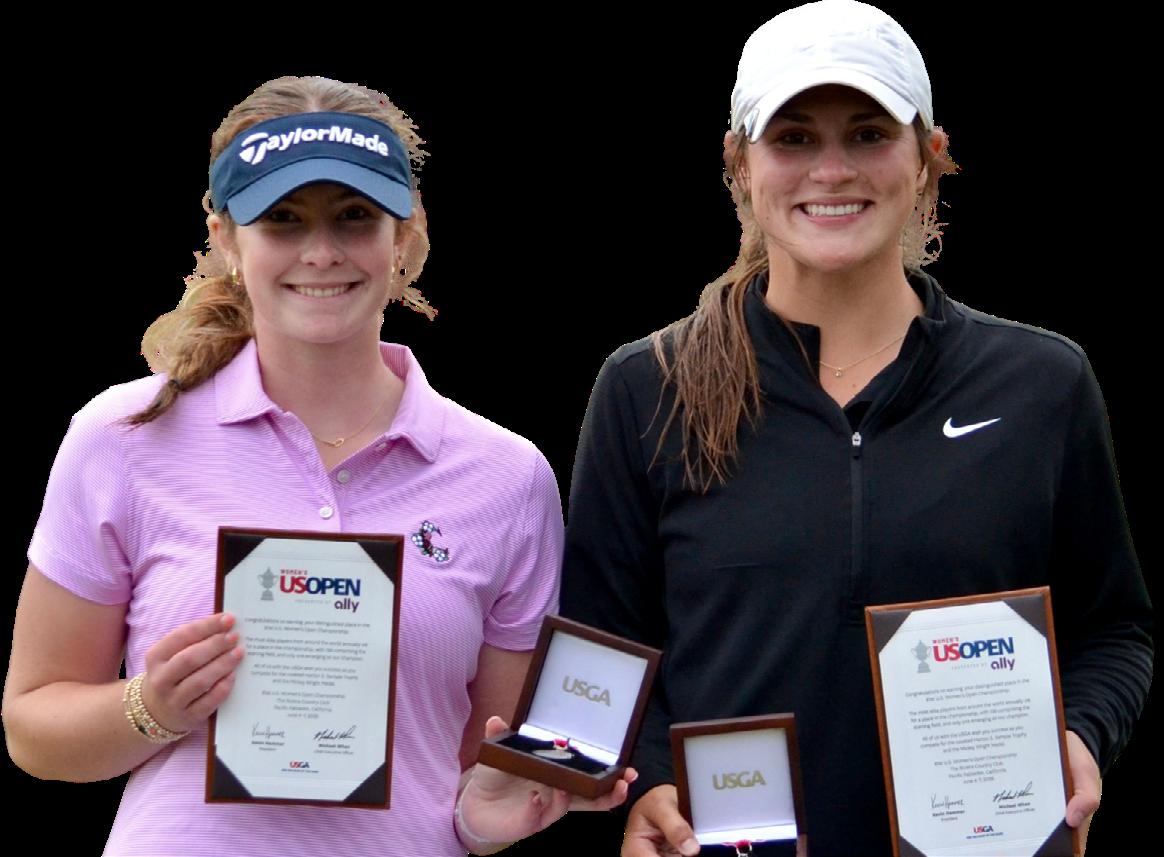
At the conclusion of the day, amateurs Zoe Cusack and Addie Dobson claimed the two qualifying spots as co-medalists and co-low amateurs at five-under (-5) par. The two will play in the U.S. Women’s Open Championship at Riviera Country Club in Pacific Palisades, CA on June 4-7. Should someone withdraw from the championship field, two alternates from our qualifier will be placed on the alternates list. Following a two hole playoff, the first alternate is Narin An and the second alternate is Reagan Zibilski.

Aswe closed the books on another Masters last month, Rory McIlroy’s second consecutive win briefly steered headlines away from the news about LIV.
Apparently, the Saudi Public Investment Fund has decided to pull the plug on its challenge to the PGA Tour and pull out of the golf business. Reportedly, as of April 2026, the PIF had invested some $5 billion into the LIV experiment and dropped between $1 and $2 billion, including about $590 million in 2024 alone.
went against the grain with guaranteed contracts, 54-hole events, shotgun starts, team formats, no cuts, etc.
But in the end, it didn’t lure enough PGA stars onto the campus. In the end, it never secured a viable TV situation, at least not one that gave it credibility and advanced its brand. And in the end, it just wasn’t golf, not the game to which people can relate, not the real deal.
Significant professional golf tournaments - ones we take seriously - are not conducted over three days and 54 holes. Sorry, they’re just not.
Shotgun starts are the way to go if you’re conducting a fundraiser with a full golf course of participants. But - save for weather considerations or special circumstances - it’s not the way you tee it up as professional golf tournaments. Sorry, it’s just not.
Competing as a member of a team is something you do in high school and college golf. Supporters of the team, or the school, might get into it. But sorry, it doesn’t connect with most professional golf fans.
And c’mon, do you know anyone who can name the playing members of the LIV’s “Legion XIII” squad (Rahm’s team), or 4Aces GC (Dustin Johnson’s team)? Does your kid have their playing cards or a poster on the bedroom wall at home?
steeped in tradition, in partnership with golf’s other administrative bodies - the USGA, Royal & Ancient and PGA - and in step with the accepted manner in which championships are conducted. LIV does it their way and never the twain shall meet.
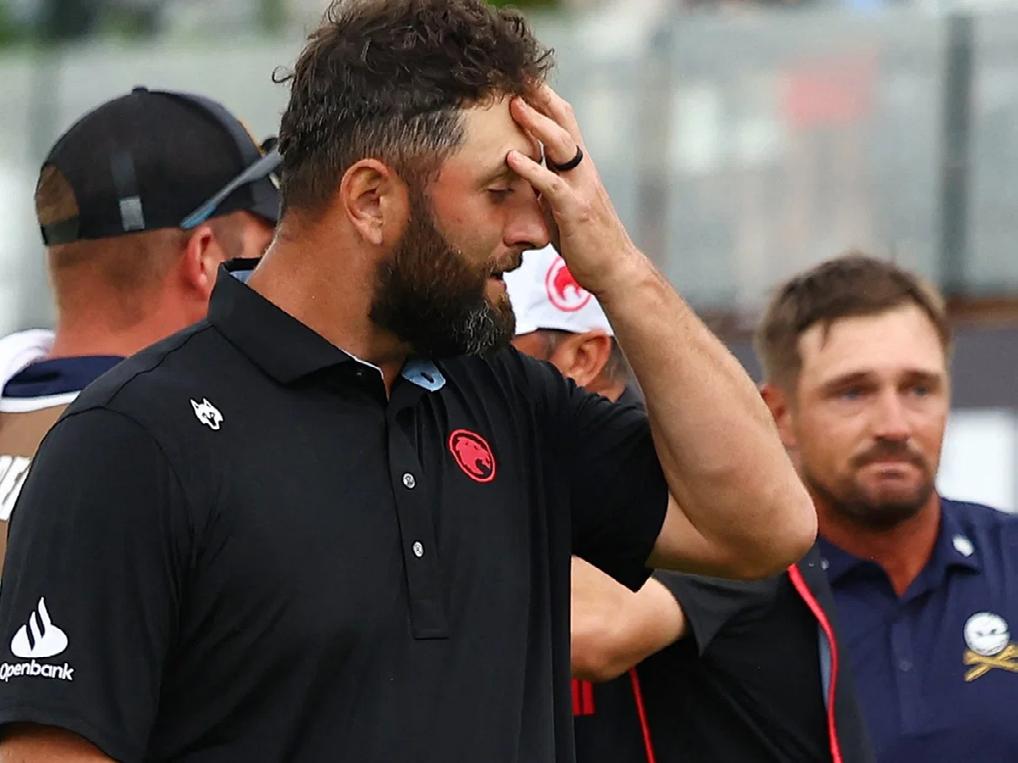
Brooks Koepka played out the remainder of his LIV contract and has crossed back over. Patrick Reed is in the process of trying to play his way back. But frankly, after that, in terms of moving needles, only a couple of the remaining LIV players - Rahm and DeChambeau - show up on public awareness radar.
Sure, if you’re playing in Australia, Cameron Smith will enjoy a high profile. Maybe among the Brits, Tyrell Hatton draws attention. And if you’re feeling nostalgic, Dustin Johnson is a familiar name. But there are numerous other names and personalities on the PGA Tour to provide alternative interest.
The bottom line is, in its purest form, the sport has no guarantees, When you guarantee players huge money simply for showing up, regardless of how they perform, you can’t guarantee the integrity of the competition. Yes, professionals get endorsement deals. Yes, they get other forms of guaranteed sponsorships.
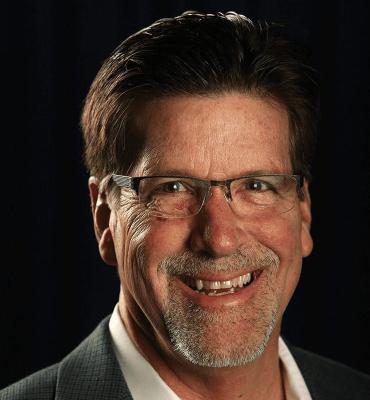
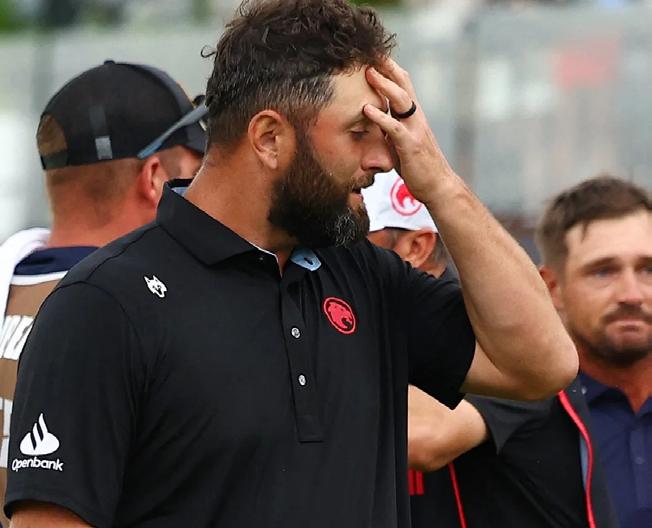
All along, the prevailing thought has been that oil reserves afford the Saudis an unlimited supply of the Benjamins. They poured $300 million into Jon Rahm, $200 million into Phil Mickelson and $195 million into Bryson DeChambeau without batting an eye. The tap would never run dry, many concluded. Conjecture suggested it could re-shape professional golf by simply overwhelming it financially.
But it turns out even deep pockets have a reckoning. Reportedly, the Saudis have come to the conclusion that there might be a more beneficial way to spend those kinds of funds. Presumably, they have reached a realization that, no matter how much you make it rain, the LIV model just isn’t going to work.
Even all that dough can’t reinvent the wheel - certainly not without a prominent television package.
LIV tried. It caused lots of waves by poaching some PGA Tour headliners with preposterous money. It
Golf is golf and the LIV product is not. Tradition is not just part of the game, it’s integral to the game, a DNA that can’t be dismissed or compromised. LIV Golf has none of it, no standing in golf history, no scrapbook moments to remember, no iconic champions to celebrate.
You can’t invent heritage, can’t assume it. And most fans can’t embrace the game without it.
The LIV poached a few “name” players, to be sure. But the majority of the establishment stayed in place - on the PGA Tour. Their number far outstretches the LIV roster.
There have been discussions about a merger, but there exists a basic problem: PGA Tour and those talented enough to compete there remain
But in championship golf, you’re only as good as your last performance. You have to earn it week-in and week-out. You can finish tied for 46th one week - as McIlroy did at The Players Championshipand win the Masters and its $4.5 million payday your next time out.
The PGA Tour has many richlycompensated players, and thanks to the LIV those financials are even greater. They will be remembered for winning major championships and numerous PGA Tour sanctioned events. They realize their success the old-fashioned way - they earn it, week-in and week-out.
LIV hasn’t earned its place in golf, it’s tried to buy it.

Nick White Bellerive Country Club
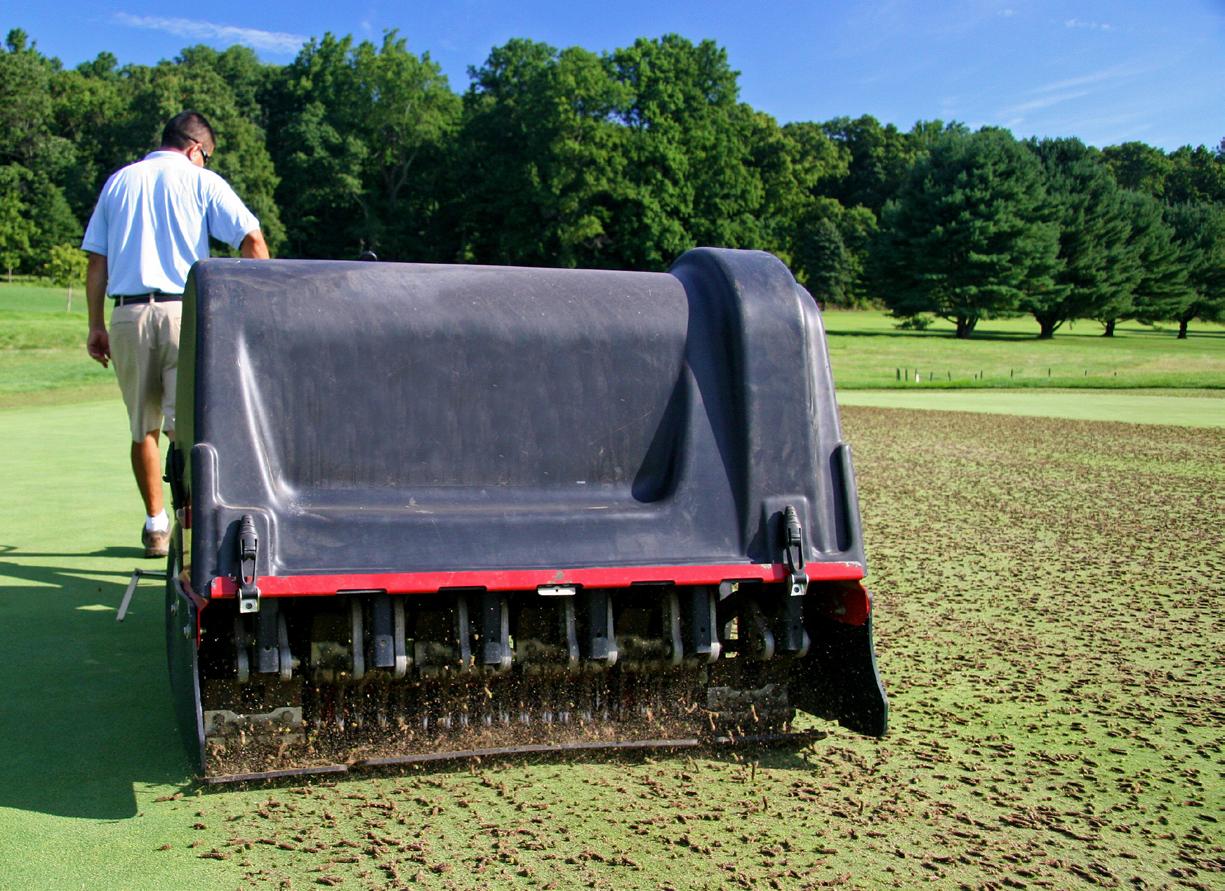
Right around this time of the year, all superintendents get the same question (or complaints) with spring aeration... but they were just getting good!?! Are you sure you want to mess them up?? For us who’ve been through it before, we know what’s at stake. The summers in St. Louis can be brutal, and rarely in the springtime is there ever a risk in aerifying... the risk lies solely in choosing not to aerify.
Putting
– Why do we REALLY do it?
Whether your course chooses to go in March, April, or May, there’s a specific reason as to why they’ve chosen that timing. Perhaps it could be due to timing with the golf calendar, strategizing the right time for labor allocation, or it could even be due to the cultivar of bentgrass you have and when it recovers the quickest, or even when contracted services are available. Regardless of when it happens, Superintendents always have a strategy of why, and what they are trying to accomplish. As a quick reminder, here are some of the main benefits that aeration provides:
-Increased water infiltration into the rootzone -Decreased compaction and improved rooting (more oxygen!)
-Reduction in total organic matter and decreased thatch
Every superintendent has a slightly different strategy when it comes to achieving the above, and that’s because our golf courses are all different. The age of greens, quality of drainage, grass type, and construction material vary greatly across the St. Louis metropolitan, and each golf course will have a slightly different plan to accomplish their goals for the year. Different tine setups, such as solid vs. hollow, size of the tines, spacing of the tines, total sand applied, or
even frequency of aeration will prioritize which goal your agronomy team is trying to target. I am confident that your superintendent has a specific plan... and would love an opportunity to share if you ask them!
Click the image below for a USGA article diving into great aeration detail for those who are interested.

Don’t forget... the short-term pain of forgoing aeration is never worth the long-term risk of skipping it. Pass along this article to a buddy and give your super a break for a while after punching... this time of the year when our golf game is rusty, we could all use a few extra gimmes outside the leather!
During the Cadillac Championship Final Round at Trump National Doral Miami, Cameron Young called a penalty on himself. Young was just on the second hole when he addressed his ball in the fairway to make a stroke. He had already lifted, cleaned, and replaced his ball per the Model Local Rule that was in affect. Now ready to hit, he stepped up to address the ball. In doing so, he noticed the ball move ever so slightly. Young immediately took a step back, removed his club from behind the ball, and called for Rules Official.
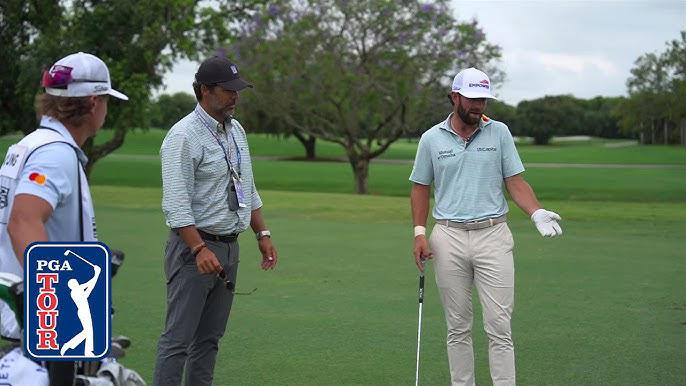

When the official approached, they assessed the situation. Young told the official of his recount and said that he was unsure of if his actions caused the ball to move. Based on the recount and nature of the move through the timing, the official determined that Young’s actions did cause the ball to move. Young was assessed a one-stroke penalty.
Despite this setback early in his day, Young managed to stay on top and win the championship. This incident wasn’t just a lesson on being careful on how you place your club behind the ball, but on integrity. The movement of the ball was so small that the tv cameras had trouble picking it up from their angles. Young wanted to do the right thing and be honest about the actions.
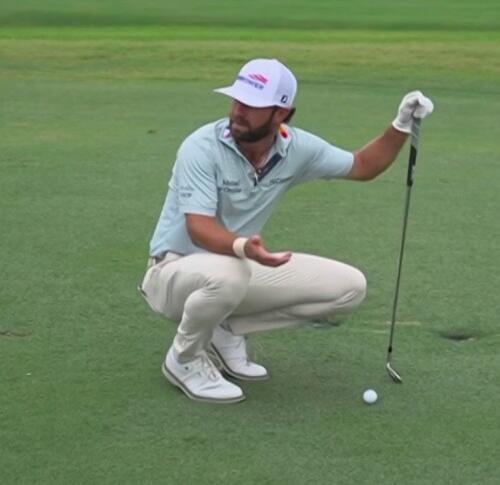
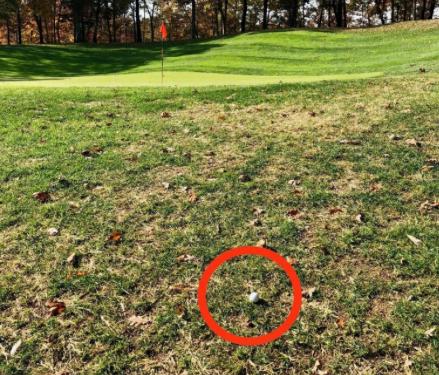
Young was in the fairway so, it was pretty cut and dry as to the ball moving and the likely culprit. But what happens when you are in thicker rough? What is the protocol on pressing your club down behind the ball? Are you allowed to press down behind the ball?
Dear John: I was playing a match this past week and had an interesting Rules issue. My ball came to rest on an upslope near the green in the rough. The ball was sitting precariously in a “fluffy” lie on top of a patch of grass. As I approached the ball, being careful not to ground the club, the ball started to move so I pulled the club away. The ball moved about an inch, but didn’t touch the club. I notified my opponents that the ball had moved, but no one was certain of the correct ruling. We agreed that I should put the ball back in its original position. I then chipped it to about a foot and won the hole. I would love to know if we handled this right.
--DaintyLie
Dear DaintyLie: This happens every so often. There are two points to make. First, in match play, if players are uncertain about a Rules situation, they may agree among themselves about how to proceed. The agreement stands even if it later turns out to be incorrect (Rule 20.1b(I)). You won the hole fair and square.
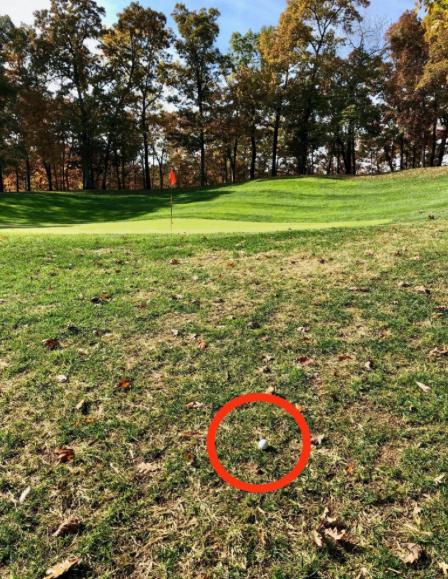
Everyone involved in the match was present and able to protect their interests. If an opponent objected, they could have made a request for a ruling before anyone started play of the next hole (i.e., said they disagreed with your procedure and wanted to get a ruling). The match would have continued and the outcome for that specific hole resolved later (e.g., call with Head Pro). [Note: Under the same above circumstances in stroke play, a player uncertain as to procedure would be well-advised to complete the hole with two balls, one played as it lies and the other replaced, and get a ruling as to which ball would count toward their score; procedure in Rules 20.1c(3) and (4)].
Second, as for the actual ruling, the ball was in the general area and not on the putting green (makes a difference regarding accidental movement of the ball). The standard as to whether the player caused the ball to move is knowledge or virtual certainty (at least 95 percent sure), no longer more likely than not (>50 percent sure). If the player moved the ball, it must be replaced (by placing it) with a one-stroke penalty (Rule 9.4; estimate the spot if necessary). If the player didn’t move the ball, nor did an opponent, nor did an outside influence, then the ball is treated as moved by natural forces (e.g., wind, water, gravity) and the ball is played as it lies in the new position. If the player didn’t cause the ball to move but replaced it anyway; they would lose the hole in match play (or incur a two-stroke penalty in stroke play) for playing from wrong place (Rule 14.7a).

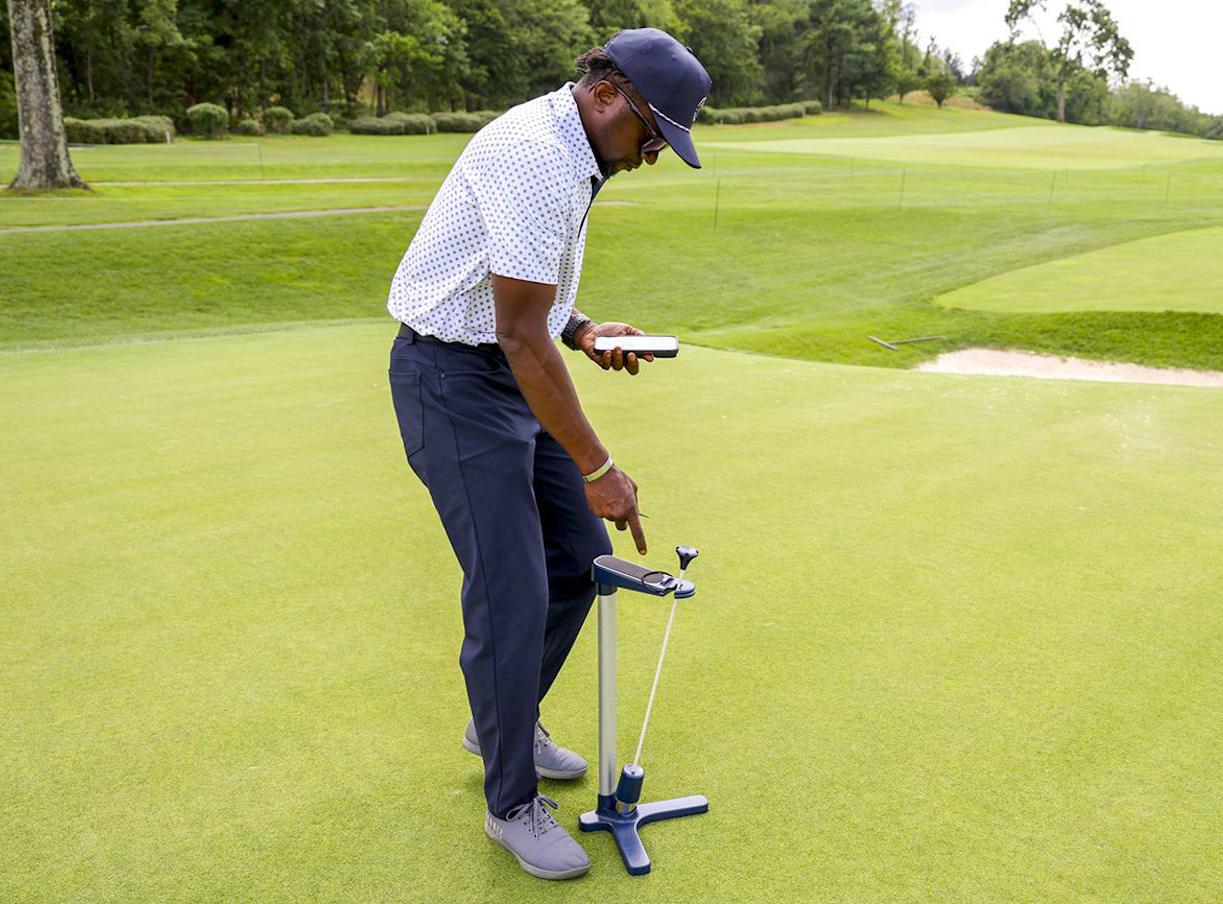
LIBERTY CORNER, N.J. (Feb. 23, 2026) – The United States Golf Association announced today the 2026 Greenkeeper Apprenticeship Program (GAP) class, marking the fourth year of the program. The 35 apprentices across both the Pinehurst and Myrtle Beach locations receive a combination of on-thejob training and classroom instruction, allowing the students to take their knowledge from the classroom directly to the course.
As part of USGA’s mission to advance the game, GAP was created to promote career growth and long-term success within the golf and turf industry. Through this program, students develop their skills at top-tier facilities such as Pinehurst Resort and Country Club, Tobacco Road Golf Club, The Dunes Golf and Beach Club, Bulls Bay Golf Club, and Southern Pines Golf Club.
Apprentices attend class at Sandhills Community College in Pinehurst, N.C., or Horry-Georgetown Technical College in Conway, S.C., where USGA agronomists, university scientists, industry professionals and golf course superintendents lead attendees through content anchored in the on-course experience gained during the program. The apprenticeship program has built strong momentum in its first three years. Across both sites, 68 participants have graduated, 27 have earned promotions (40 percent), and 64 remain employed in the industry (94 percent).
“GAP has been one of the more rewarding programs I’ve been lucky enough to experience in my time at the USGA,” said Matt Pringle, managing director of the USGA Green Section. “Addressing a critical need in the golf course maintenance industry, GAP is providing real opportunities for growth that previously didn’t exist, and we’ve seen some amazing success stories in just three years. Our program leads Carson Nesbella and Alan Owen have done a wonderful job of curating engaging lessons for the apprentices, which are being implemented on course and are having a real impact on career progression.”
Participants are employed full-time at a partner golf course facility in the Sandhills of North Carolina and the Grand Strand of South Carolina to build skillsets in turf management. Each apprentice receives support from leadership on site, a mentor and a field supervisor from the USGA to further their learning and provide a network of trusted associates to call on in the future. A variety of topics are covered throughout the year-long program, including water science, pest management, fertility and mathematics of turfgrass maintenance.
For GAP photos, click here.
The 2026 GAP class consists of students from 14 states, 17 are aged 25 or under, and eight of the individuals are college graduates, including two with master’s degrees and one with a medical degree.
Among the 2026 class of GAP apprentices are:
• Rick Shannon, a 53-year-old from North Carolina, an active military member with a bachelor’s degree in criminal justice and a master’s degree in business administration.
• Haley Fox, a Colorado native with degrees in biology and exercise science, the daughter of a PGA professional
and a golf course superintendent of more than 30 years.
• Nicholas Chace, who was born in Russia and moved from Massachusetts to join the program.
Full list of the 2026 GAP participants:
Myrtle Beach Cohort
Aidan Yeakey - Georgia
Andy Szczepkowski - Georgia
Clay Lentz - South Carolina
Devin Thompkins - South Carolina
Donald Graham - South Carolina
Haley Fox - Colorado
Israel Chavez - South Carolina
Jason Wright - South Carolina
Jeremy Headrick - North Carolina
Keenan Pritt - Virginia
Koby Cox - California
Lylee Dziekan - South Carolina
Nathan Fluellen Jr. - South Carolina
Nicholas Chace - Massachusetts
Timothy Andrew Jacobs - South Carolina
William Davis - New York
Pinehurst Cohort
Benajamin Locklear - North Carolina
Bill Reda - Illinois
Brandon Shumate - New Jersey
Brian Finley - North Carolina
Dylan Mason - Tennessee
Ethan Ellis - North Carolina
Gabe Calloway - Tennessee
George Page - North Carolina
Grayson Evatt - Virginia
Joshua Kiehle - North Carolina
Landon Ring - North Carolina
Liam Dollard - New York
Mikey Remaley - North Carolina
Morgan Moree - North Carolina
Nicholas Hillard - Pennsylvania
Rick Shannon - North Carolina
Sean Douglas - Kentucky
Thomas Welch - South Carolina
Nicholas Solomon - Michigan
Zachery Waite - Florida
Since its pilot year in 2022, the success of those in the GAP program has already begun to address a critical need in the golf course industry at large – recruiting and retaining skilled labor on the maintenance staff. By creating these opportunities for apprentices, GAP is training the next generation of those who take care of golf courses, which also furthers the USGA Green Section’s mission of creating better turf for better golf at a lower cost to facilities. To learn more about GAP, click here.
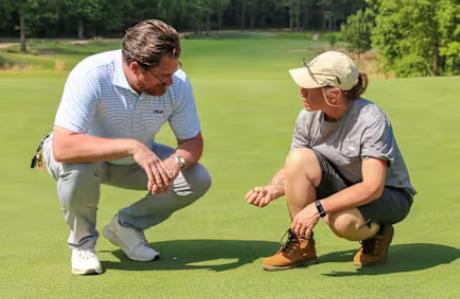
In addition to GAP, the USGA has invested more than $75 million and supported multiple career development programs since 1991, including the P.J. Boatwright, Jr. Internship, Pathways Discover, Pathways Launch, and annual USGA internships. To learn more, visit the USGA’s Careers webpage.
About the USGA Green Section
Since the founding of the Green Section in 1920, the USGA has led the effort to enhance golf course sustainability. Through research and services to courses that enable improved playing conditions, these efforts are aimed at reducing the consumption of critical resources such as water, chemicals, labor and energy. This mission is achieved through five primary programs – research, course consulting services, technology tools, championship agronomy and professional education and outreach. The USGA’s annual investment of $10 million in science, research, agronomy and course consulting efforts is estimated to provide more than $1.9 billion in savings to U.S. golf courses each year. These savings are realized through more efficient water, fuel, labor and nutrient management practices all while supporting improved playing conditions, for the good of the game.


HSBC Women’s World Championship
Hannah Green
Blue Bay LPGA
Mi Hyang Lee
Fortinet Founders Cup
Hyo Joo Kim
Ford Championship
Hyo Joo Kim
Aramco Championship
Lauren Coughlin
JM Eagle LA Championship
Hannah Green
The Chevron Championship
Nelly Korda



Ford Women’s NSW Open
Agathe Laisne
Australian Women’s Classic
Kelsey Bennett
Women’s Australian Open
Hannah Green
Australian WPGA Championship
Hannah Green
Joburg Ladies Open
Agathe Laisne
Investec SA Women’s Open
Esme Hamilton

Cognizant Classic
Nico Echavarria
Arnold Palmer Invitational
Akshay Bhatia
Puerto Rico Open
Ricky Castillo
The Players Championship
Cameron Young
Valspar Championship
Matt Fitzpatrick
Texas Childrens Houston Open
Gary Woodland
Valero Texas Open
JJ Spaun
The Master
Rory McIlroy
RBC Heritage
Matt Fitzpatrick
Zurich Classic of New Orleans
Matt Fitzpatrick & Alex Fitzpatrick

VISA Argentina Open
Alistair Docherty
Astara Chile Classic
Doc Redman
Club Car Championship
Davis Lamb
LECOM Suncoast Classic
Jeremy Gandon
Tulum Championship
Dylan Menante


Investec South African Open
Casey Jarvis
Joburg Open
Dan Bradbury
Hainan Classic
Jordan Gumberg
Hero Indian Open
Alex Fitzpatrick
Volvo China Open
Bernd Wiesberger


DP World PGTI Open
MJ Daffue
Mediclinic Invitational
Samuel Simpson

ECP Brazil Open
Mason Greene
Abierto del Centro Zurich
Patrick Flavin

Barbados Legends
Greg Owen

James Hardie Invitational
Zach Johnson
Cologuard Classic
Steven Alker
Hoag Classic
Stewart Cink
Senior PGA Championship
Stewart Cink
Mitsubishi Electric Classic
Retief Goosen

Atlantic Beach Classic
Isabella Fierro
IOA Golf Classic
Jeongeun Lee
Orlando Health Championship
Maddie McCrary-Civello
IOA Championship
Amari Avery

Hong Kong
Jon Rahm
Singapore
Bryson DeChambeau
South Africa
Bryson DeChambeau
Mexico City
Jon Rahm




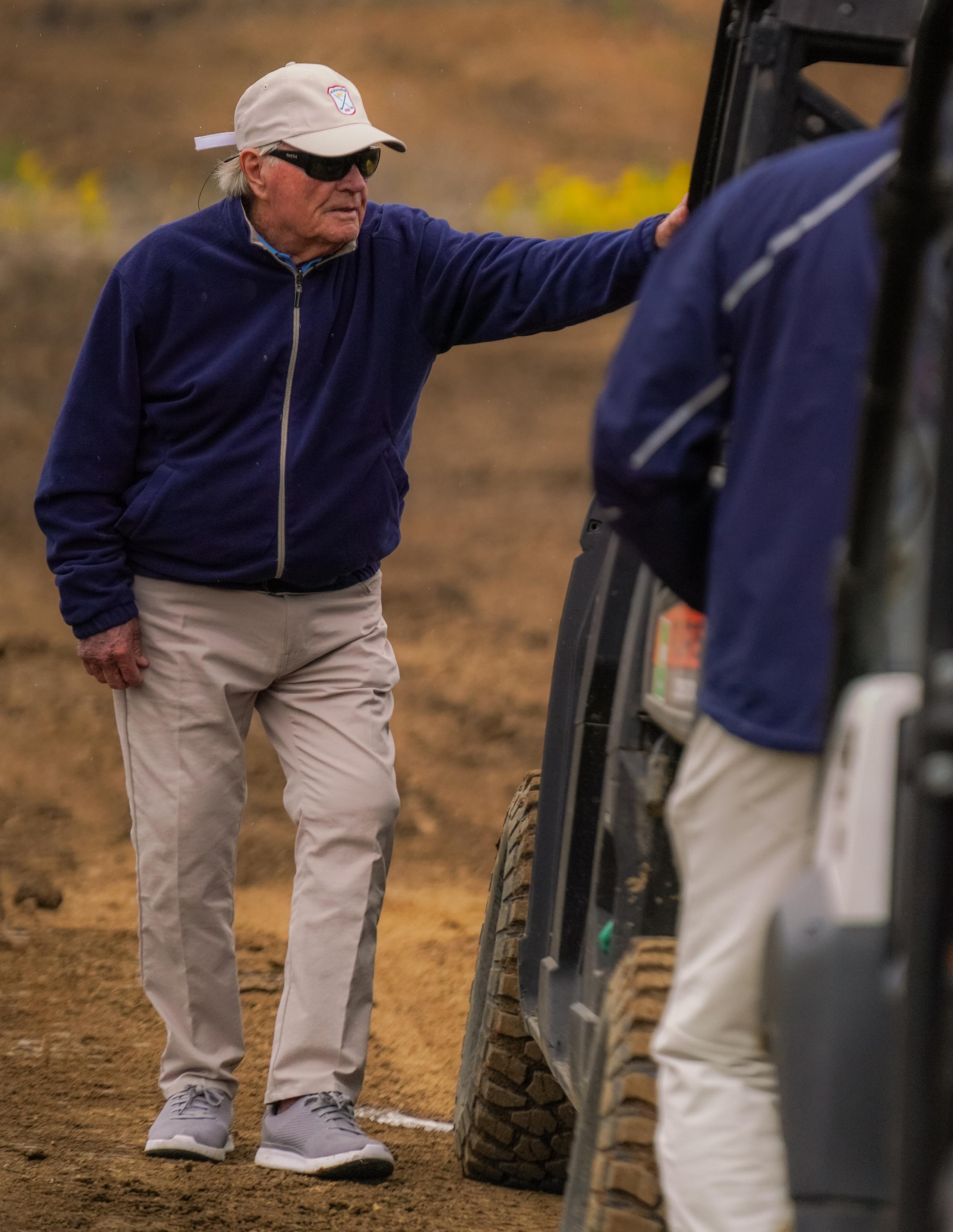
**Course Opening Date will be publicly announced once it is determined.








“The appeal of this project to me was to be involved in an effort that could serve as a catalyst to change needed in our country today, beginning with parts of St. Louis County. Restoring Normandie for a community in need