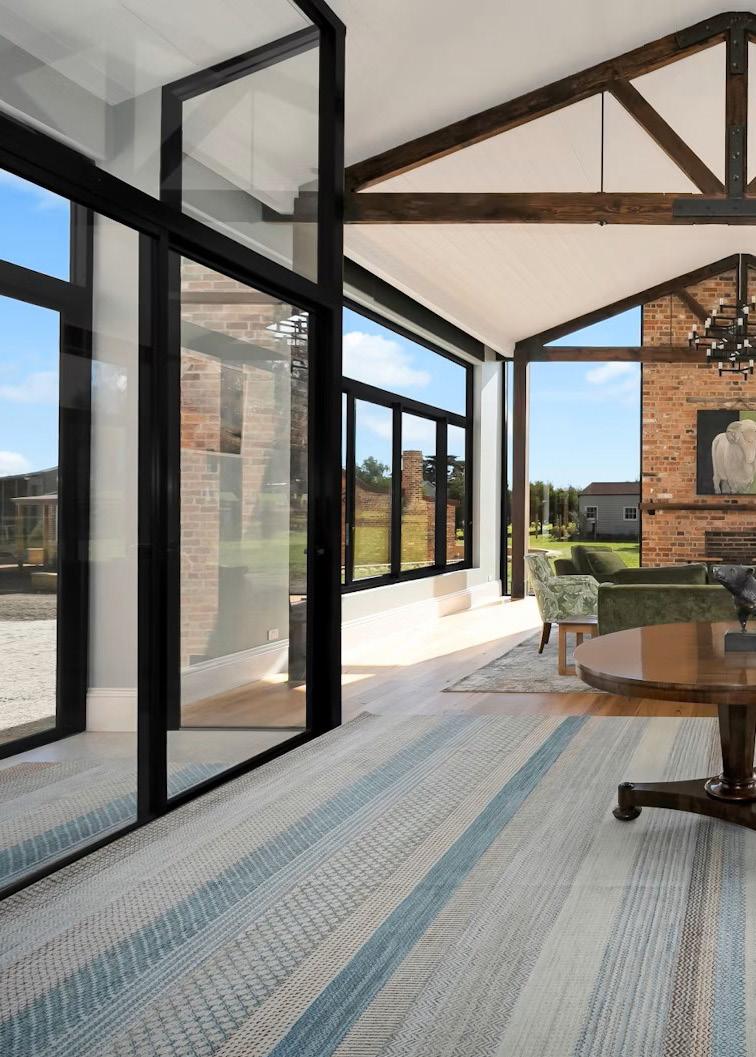
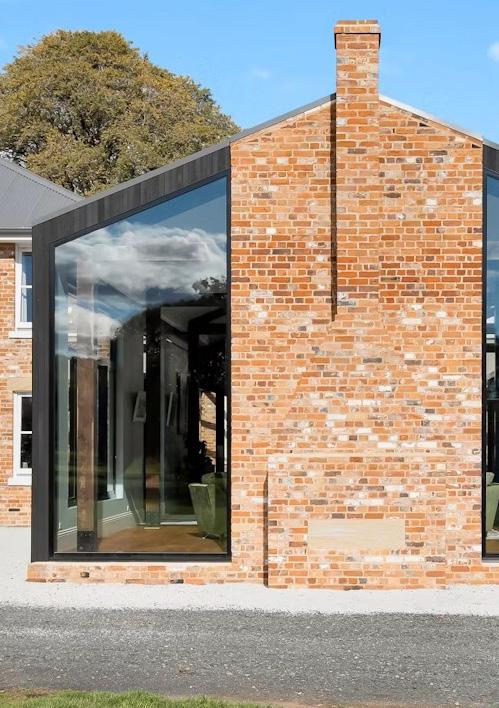
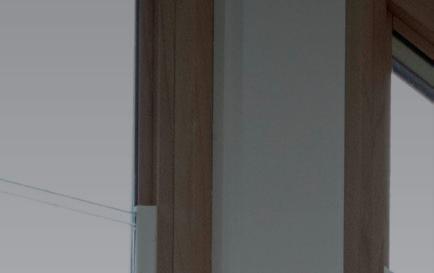
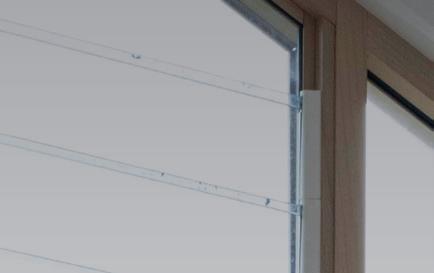
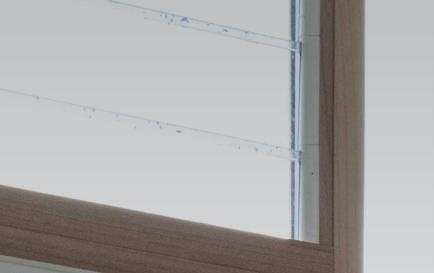
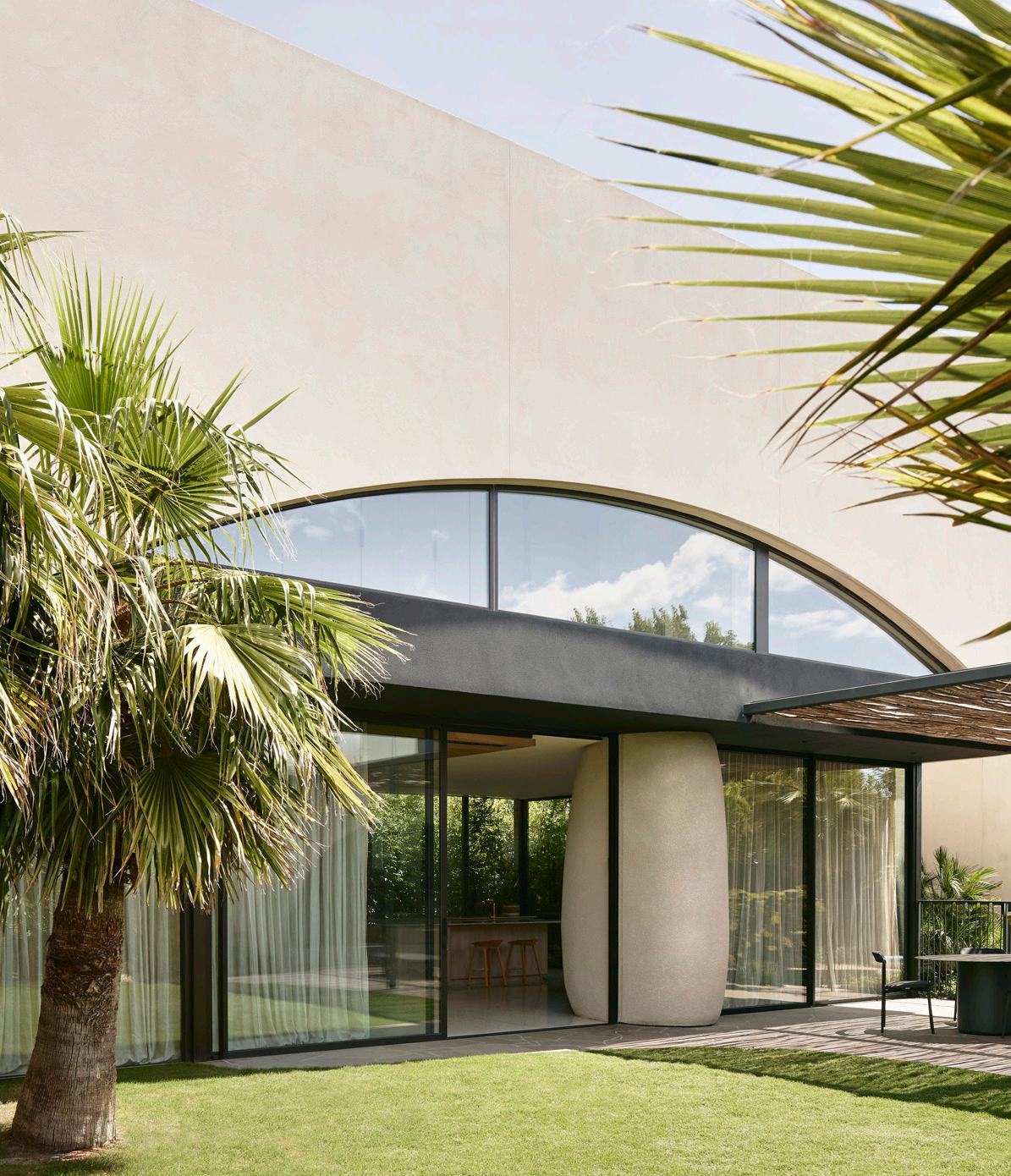
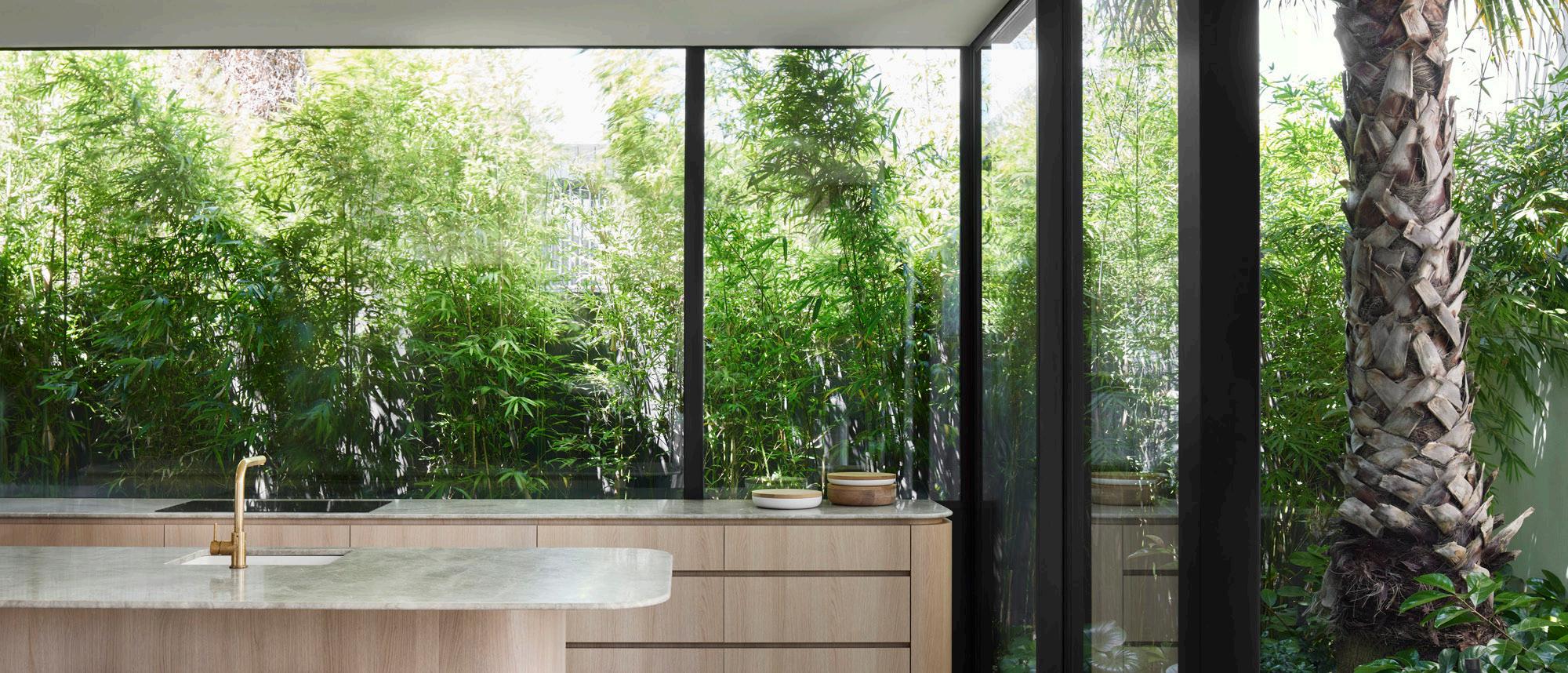
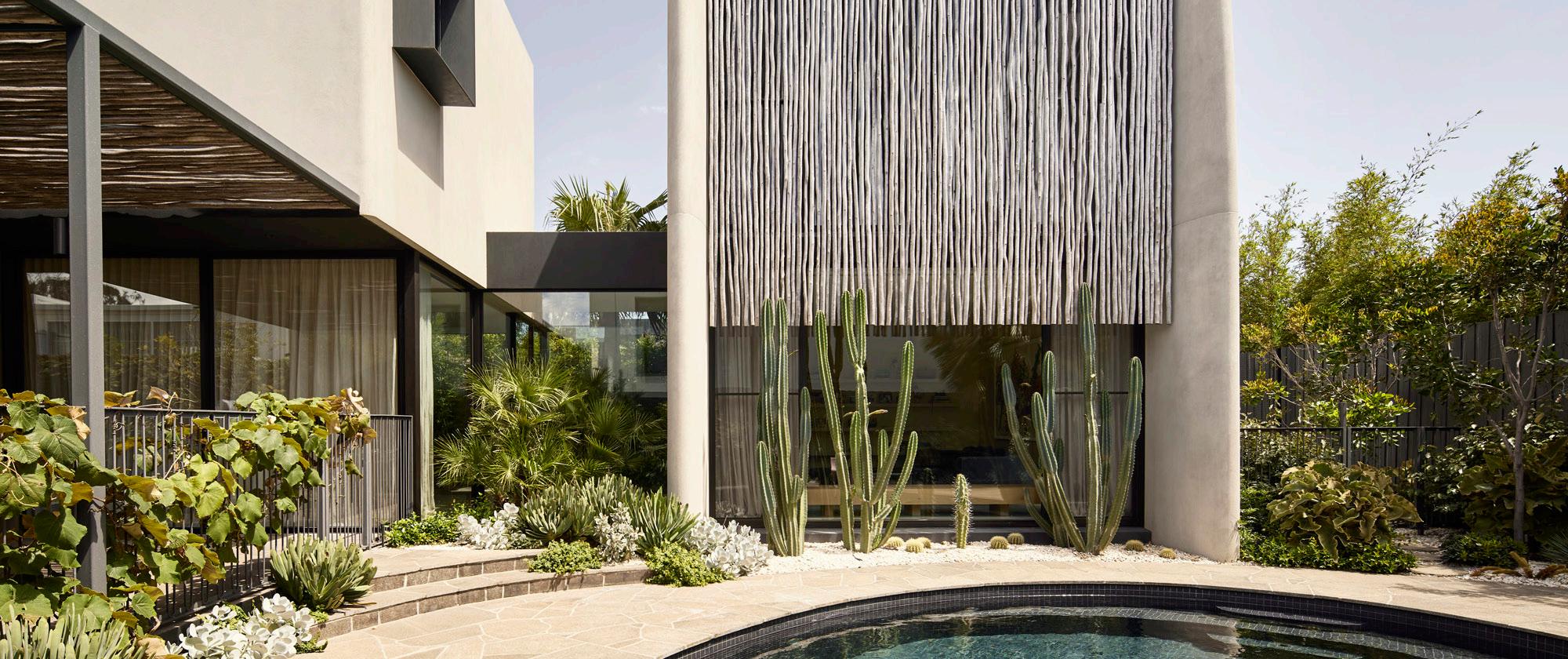
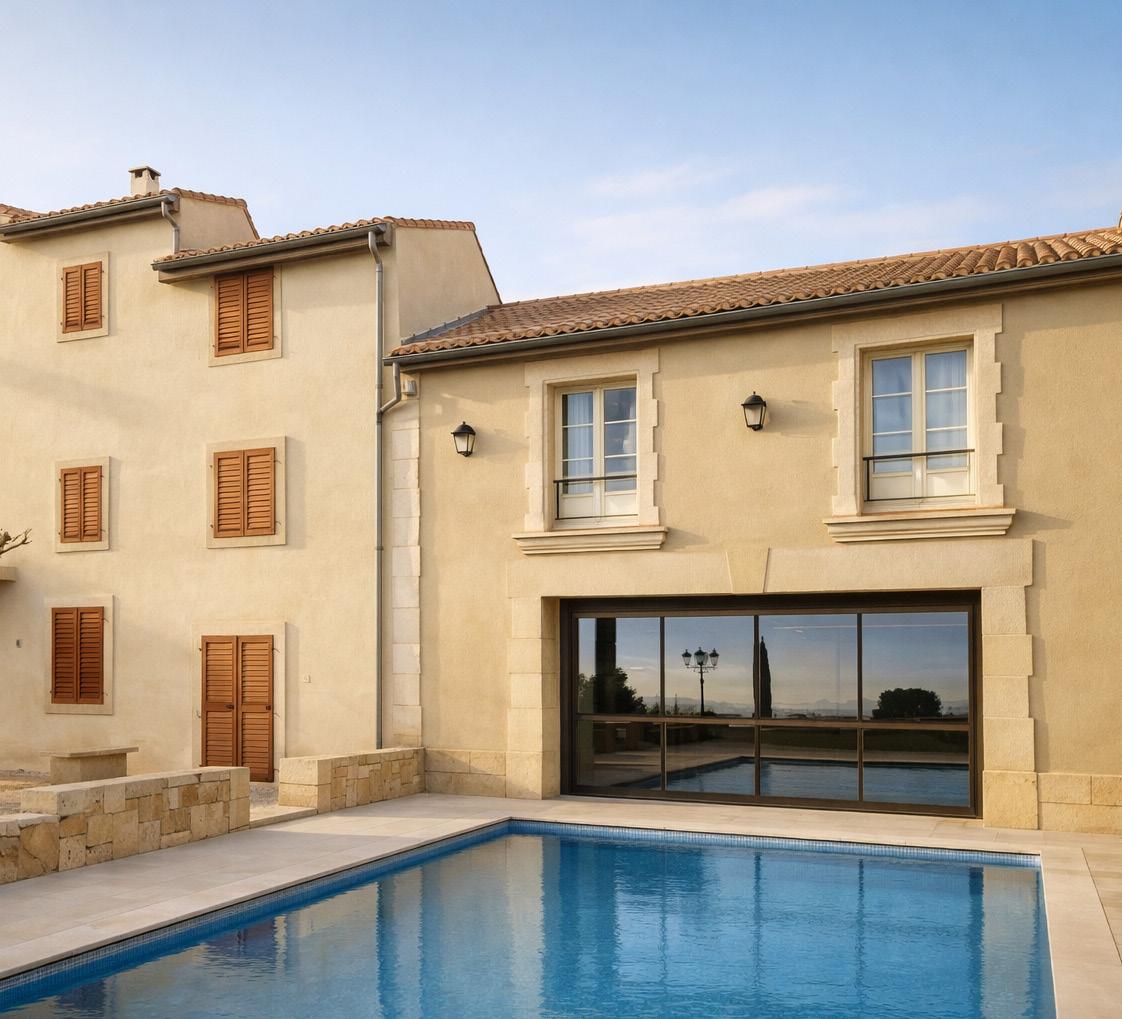
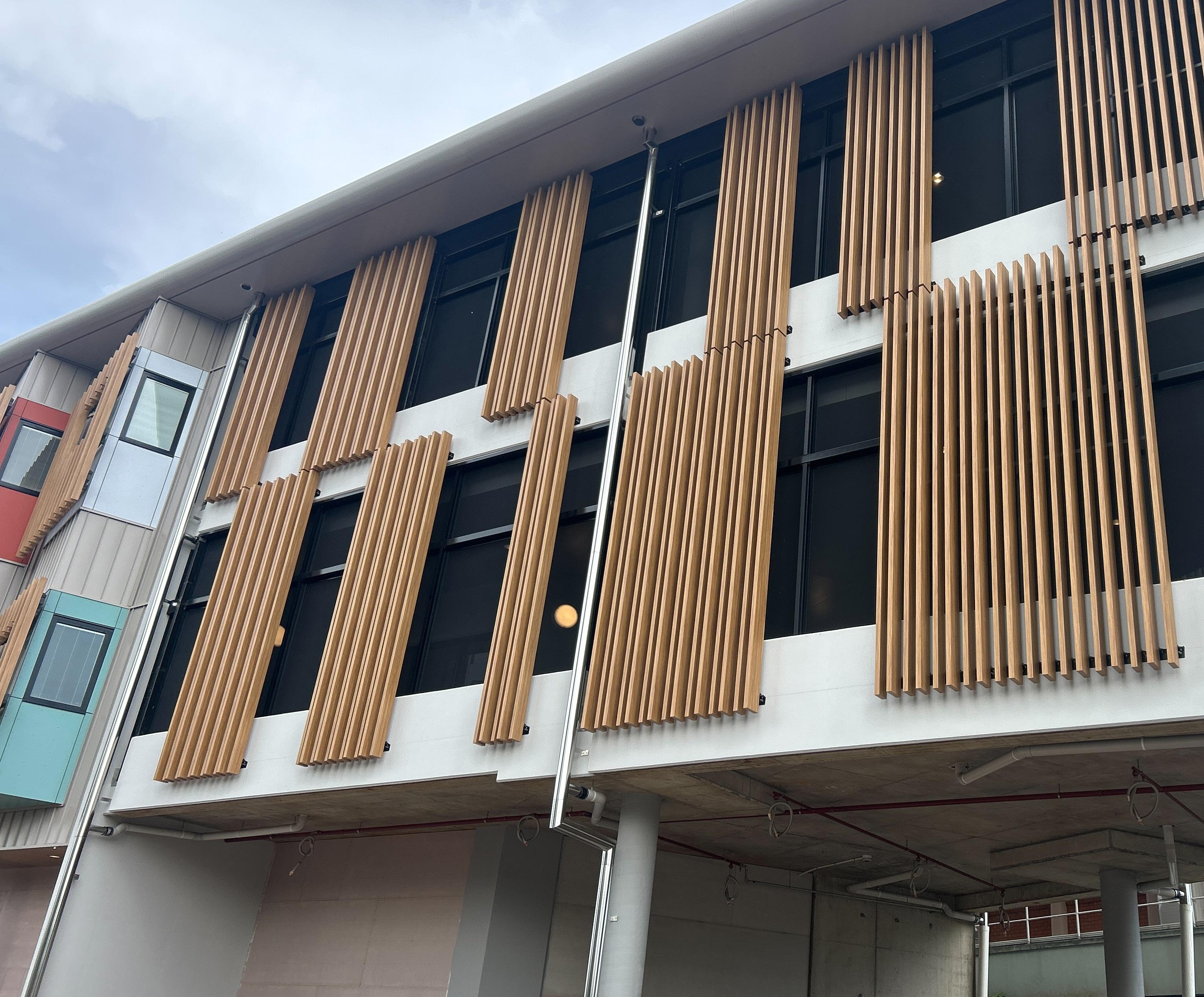
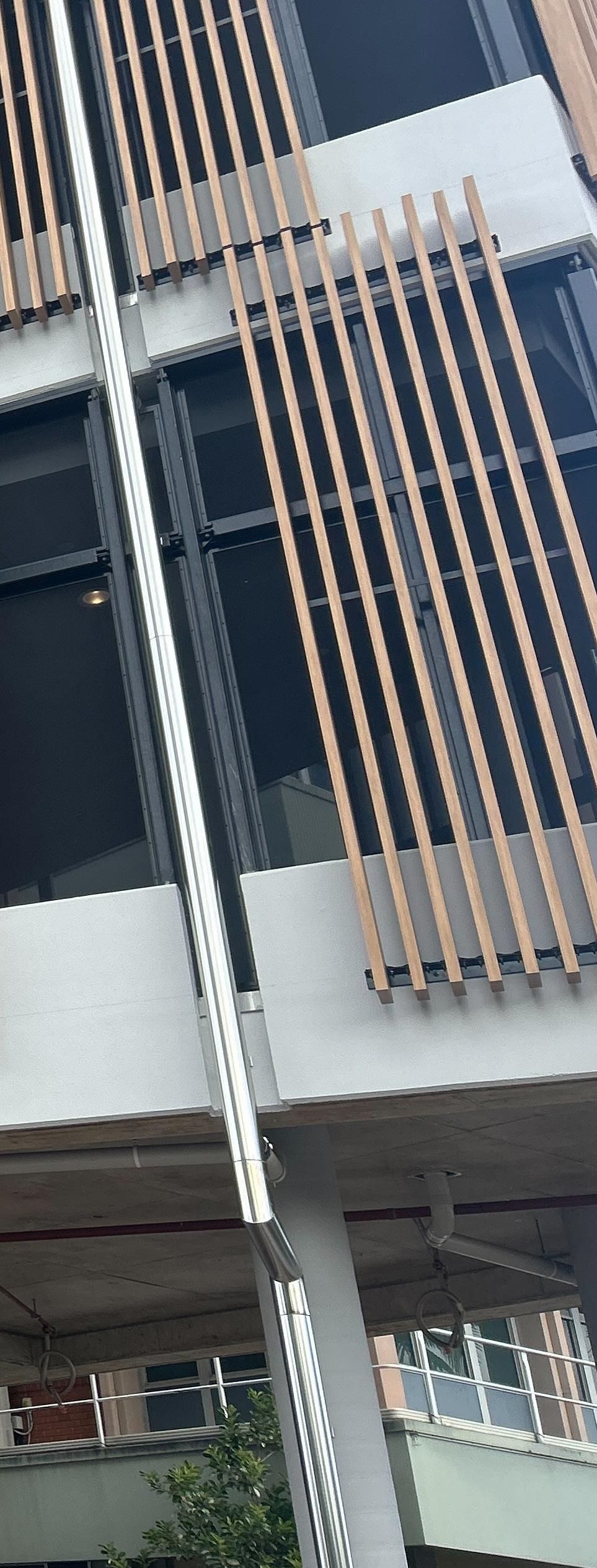
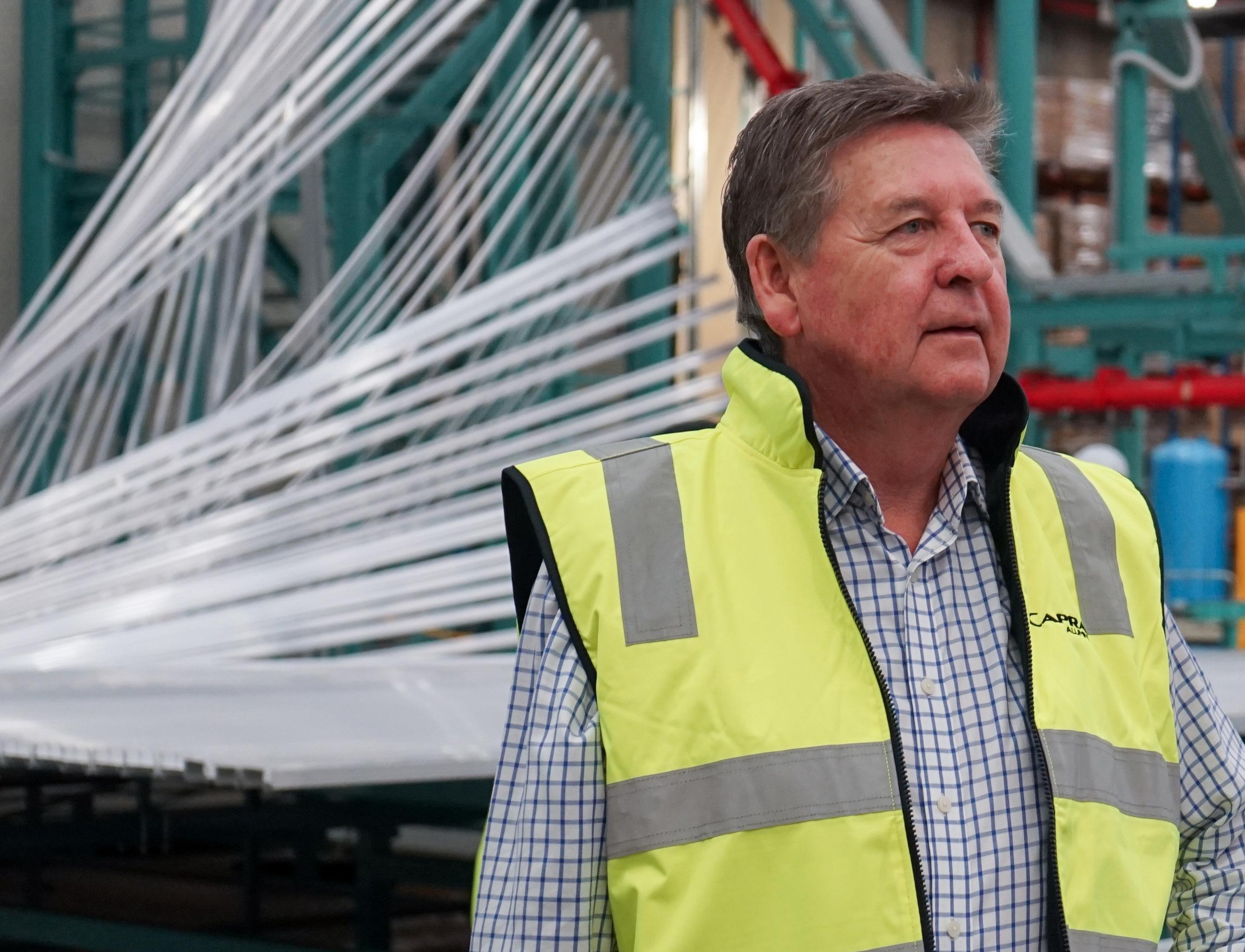
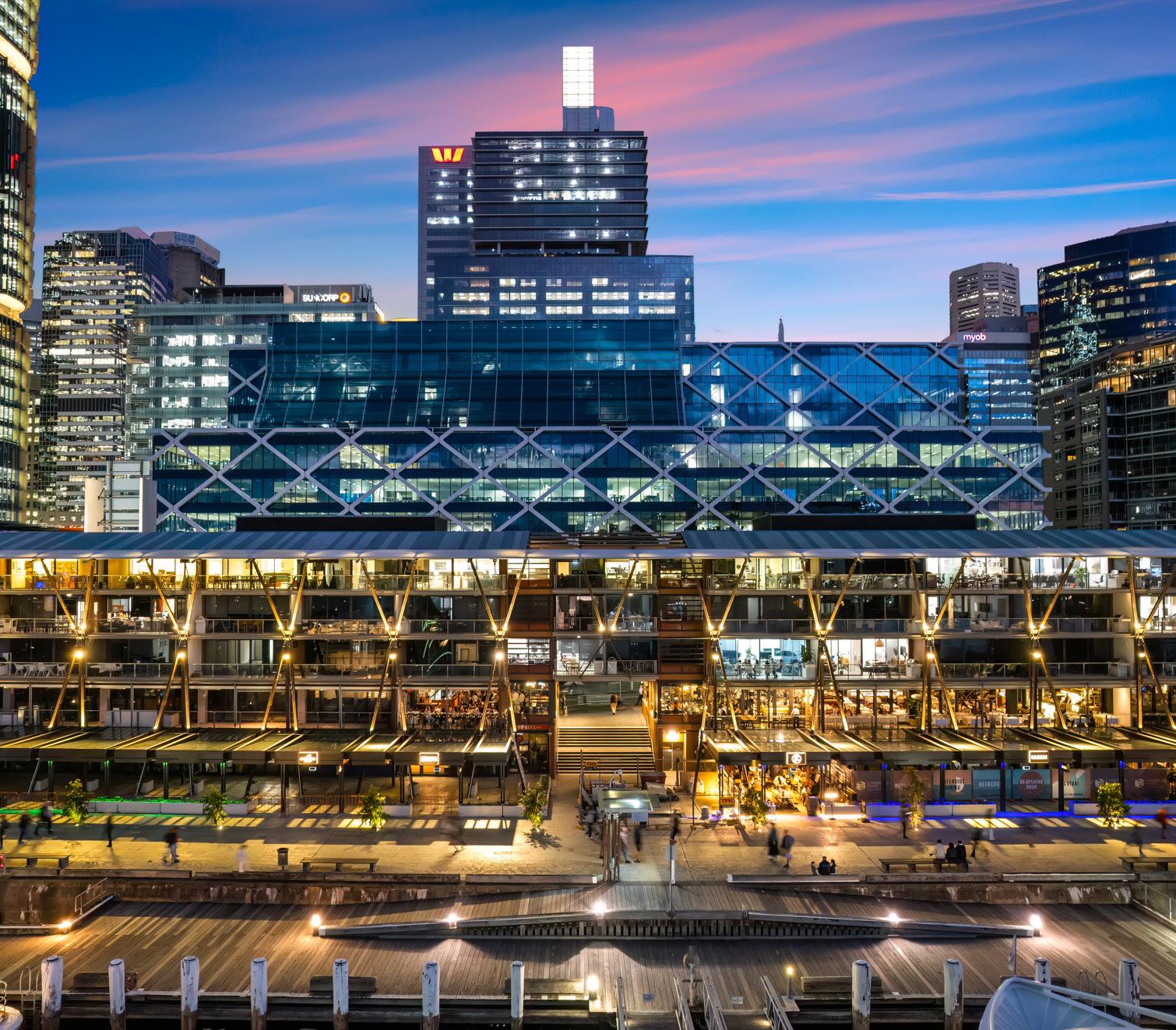
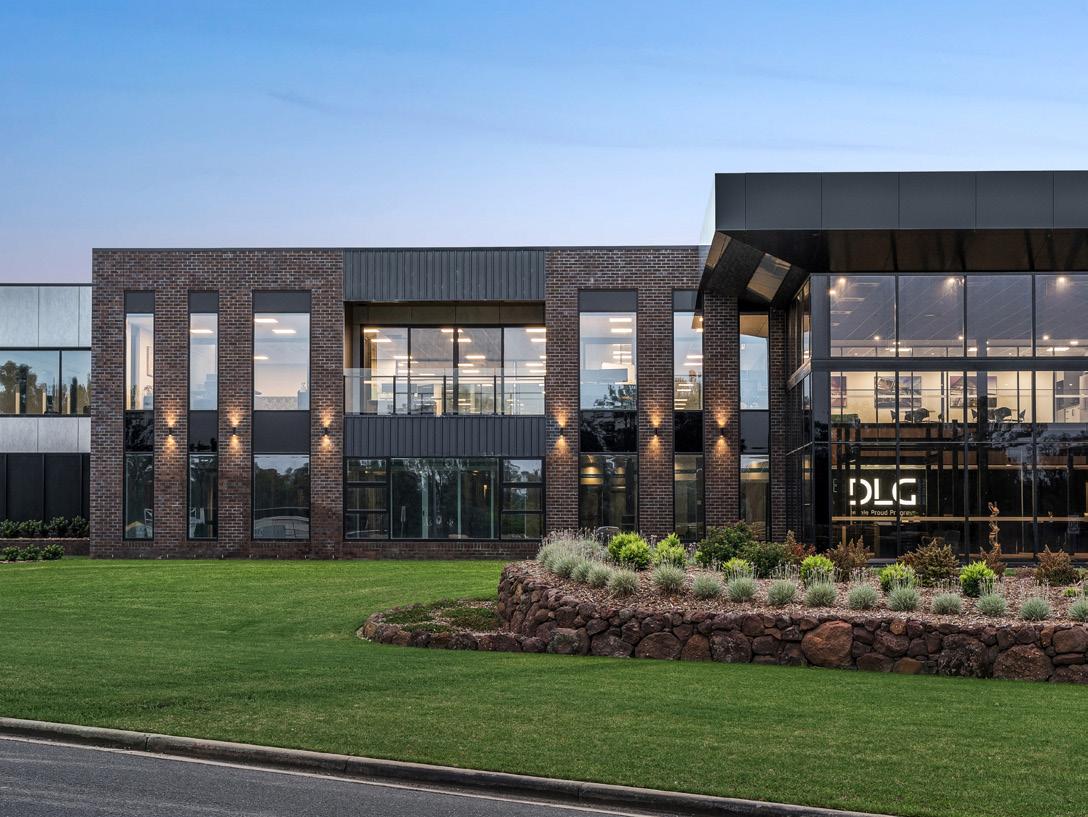
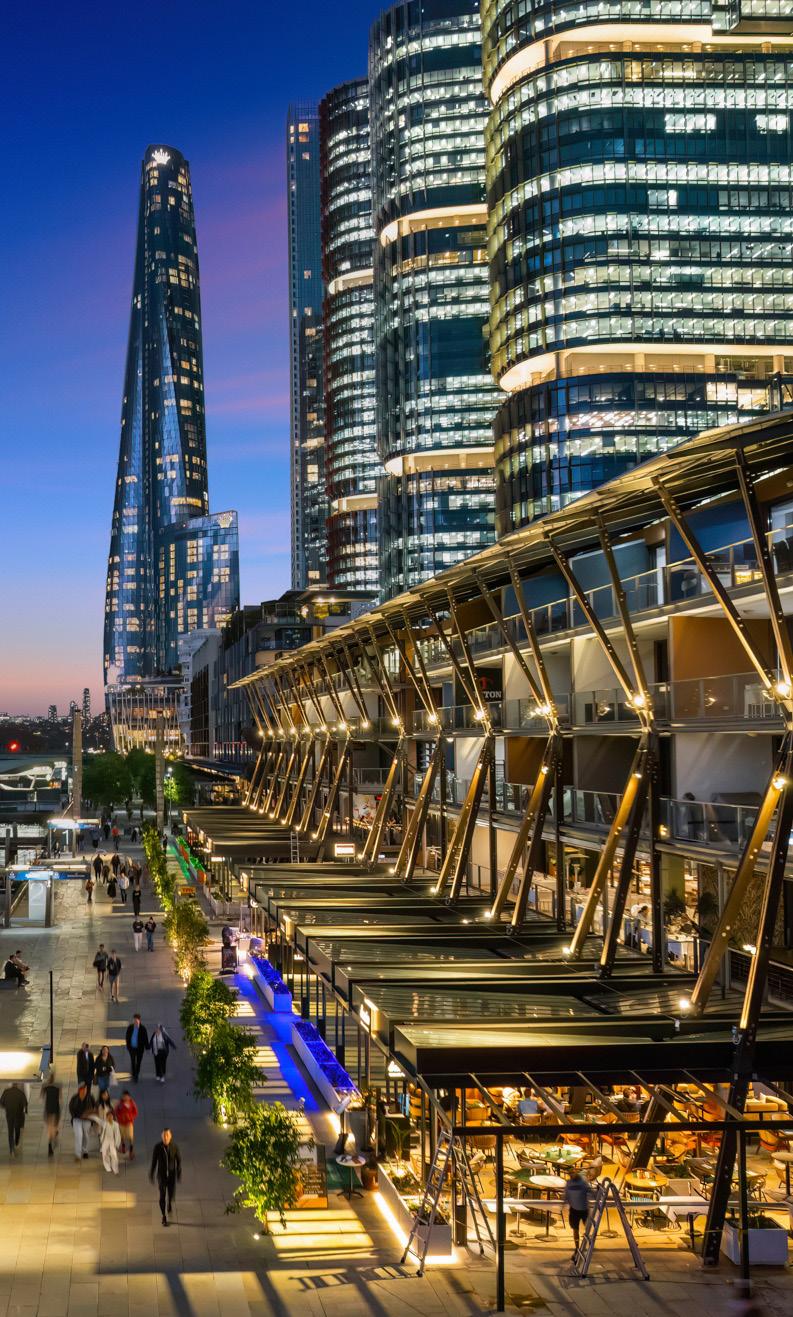
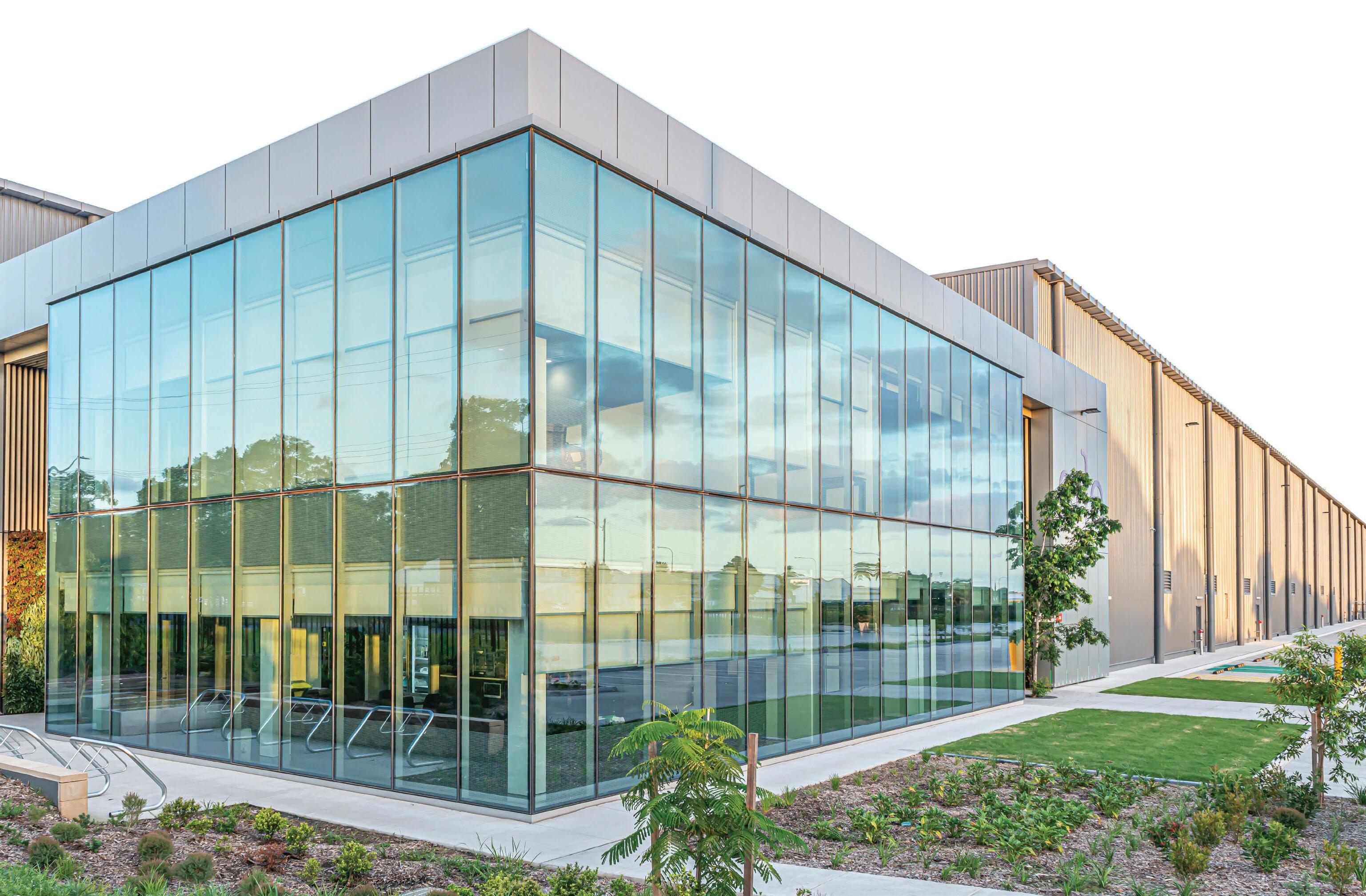
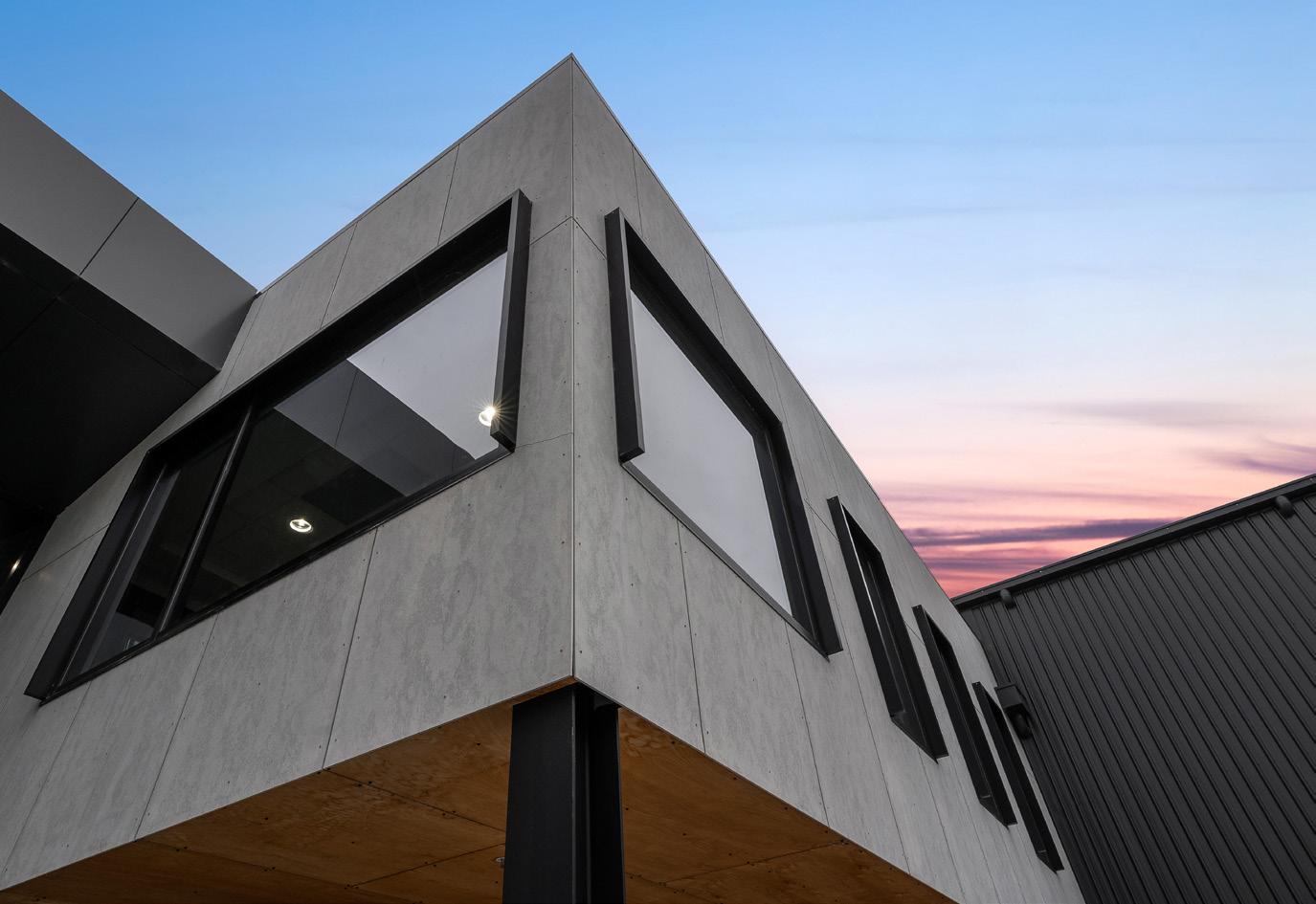
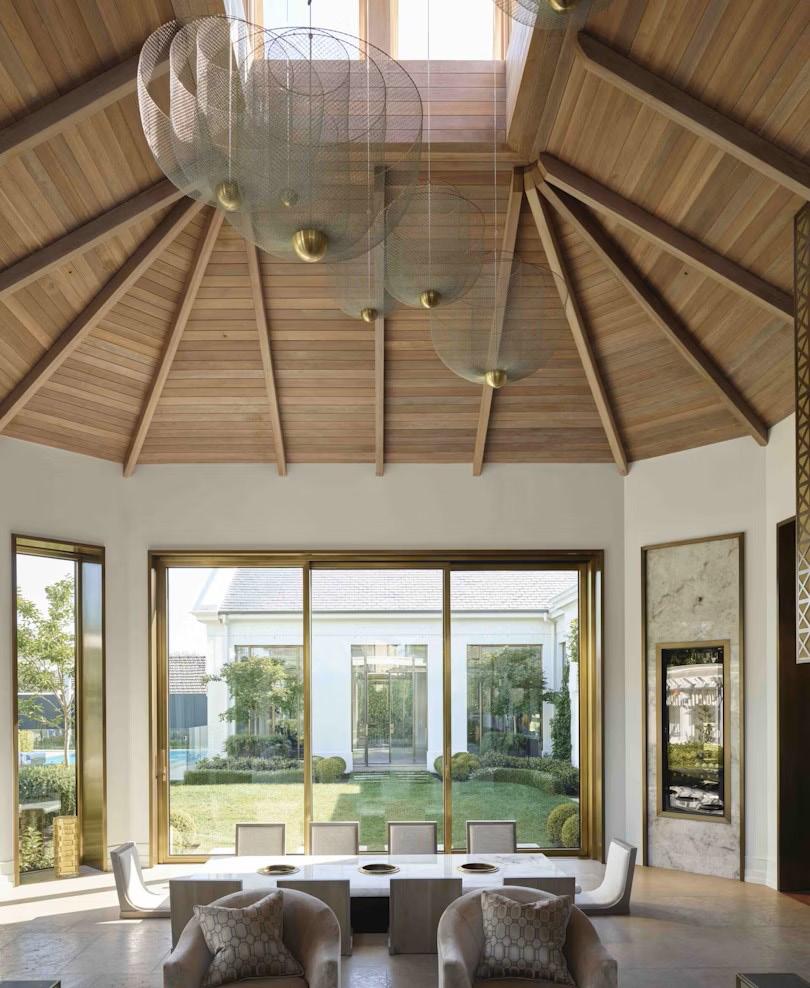
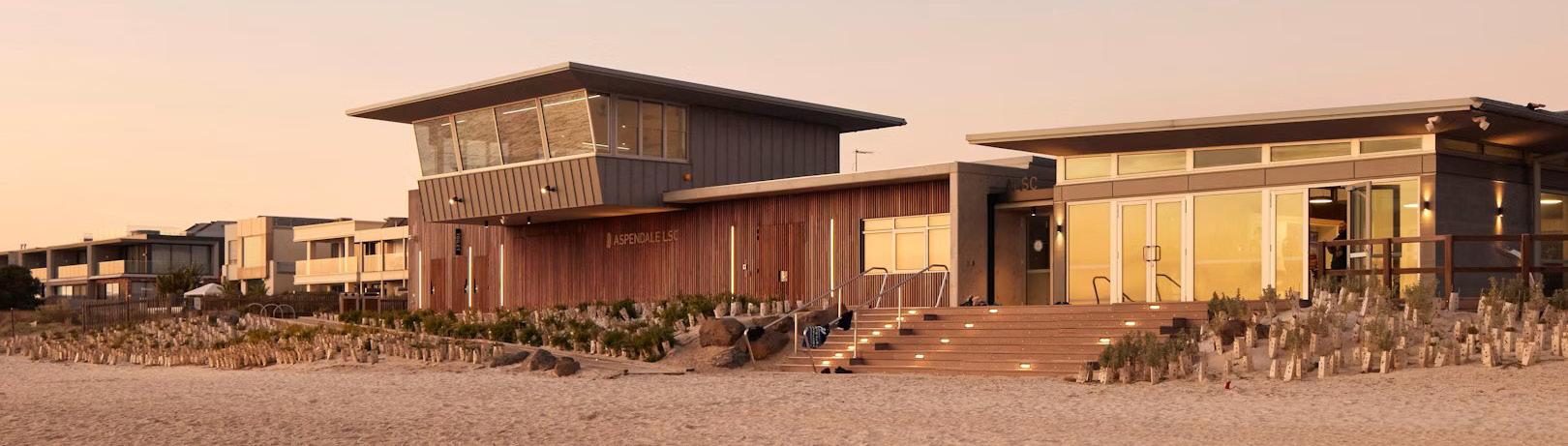
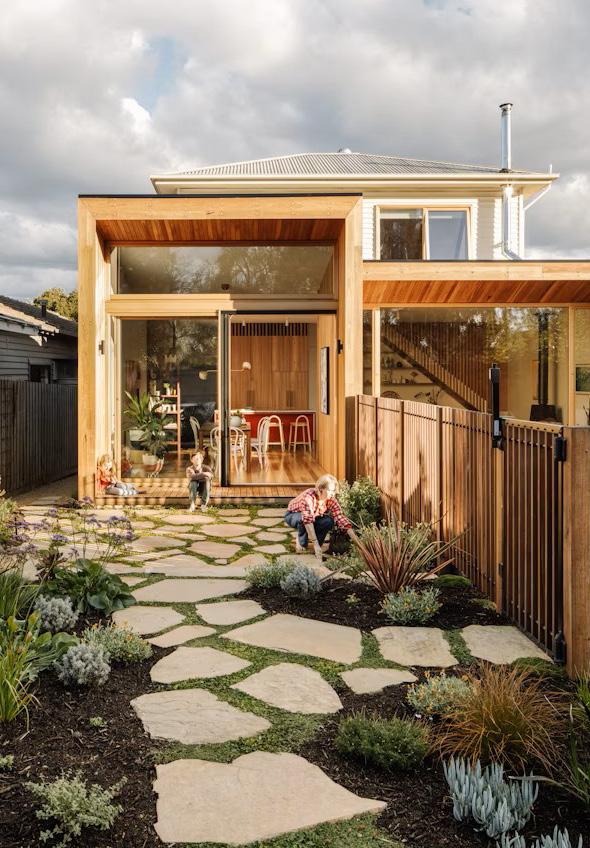
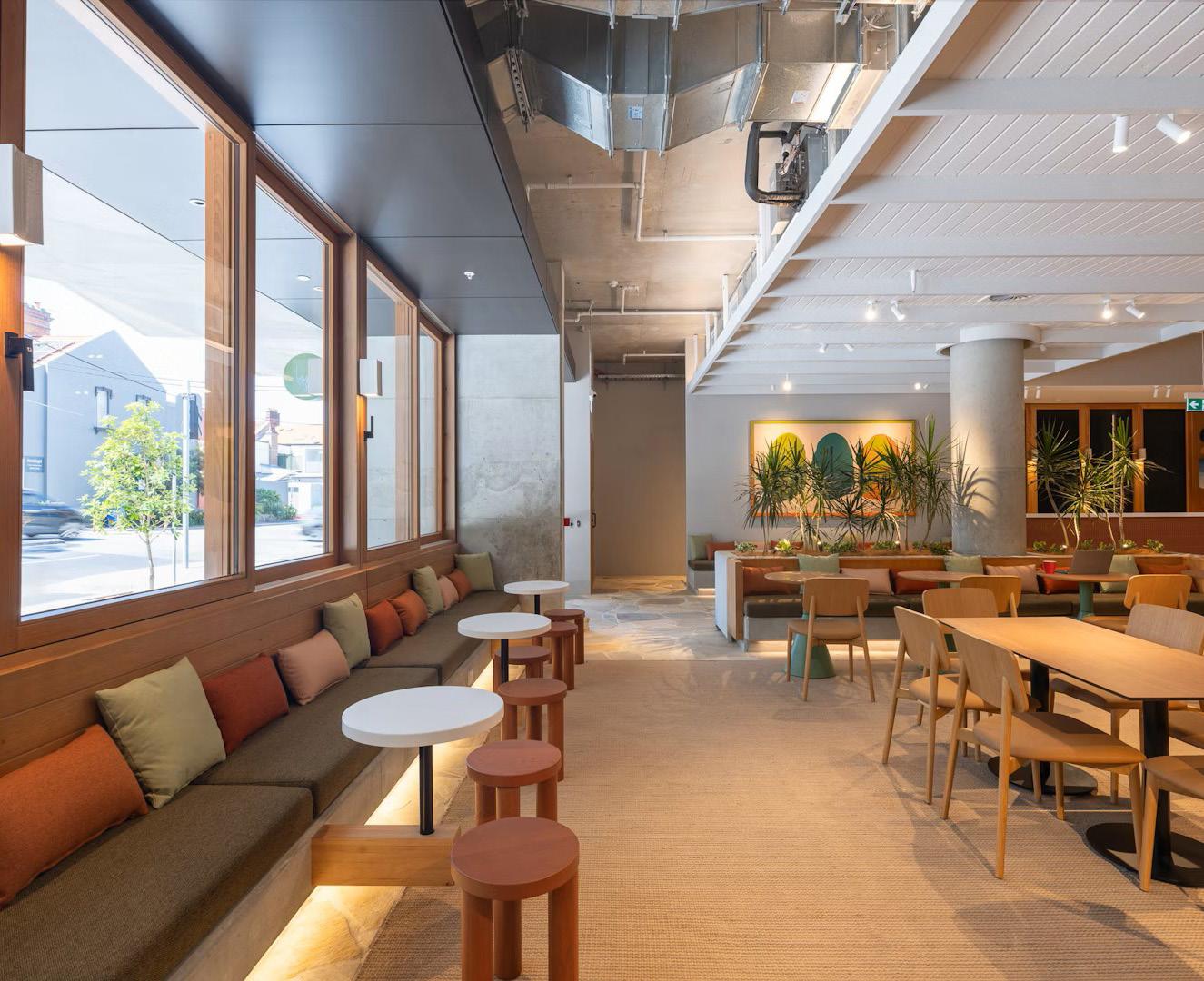
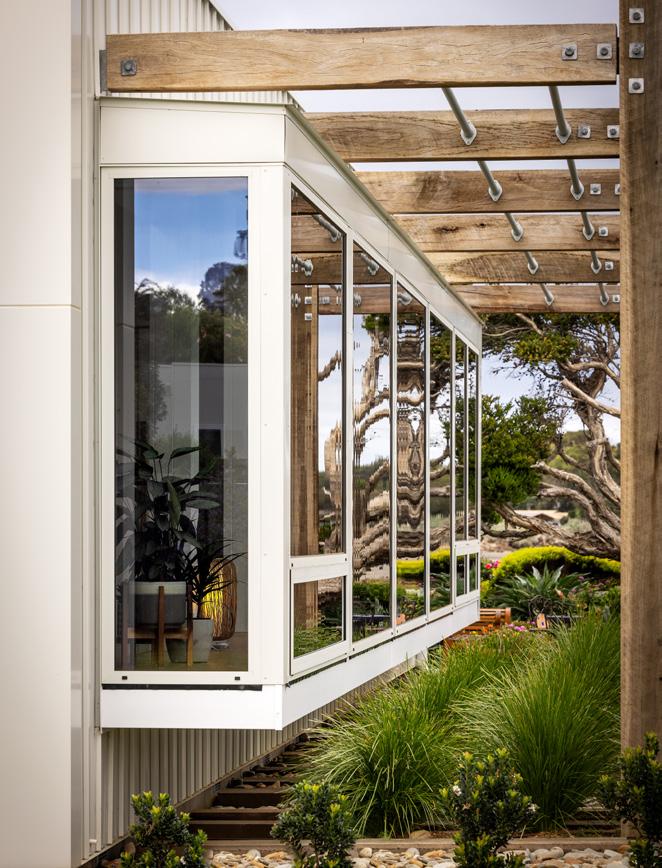
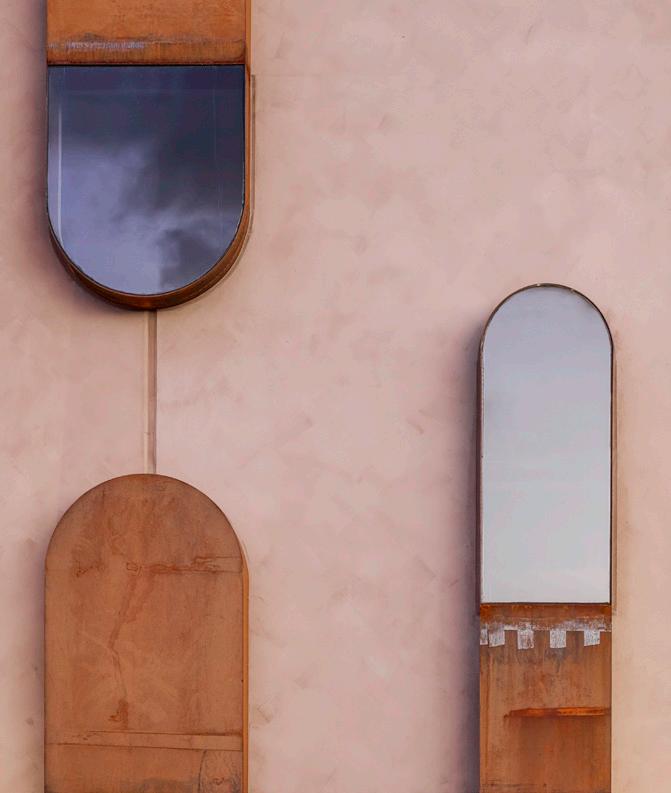
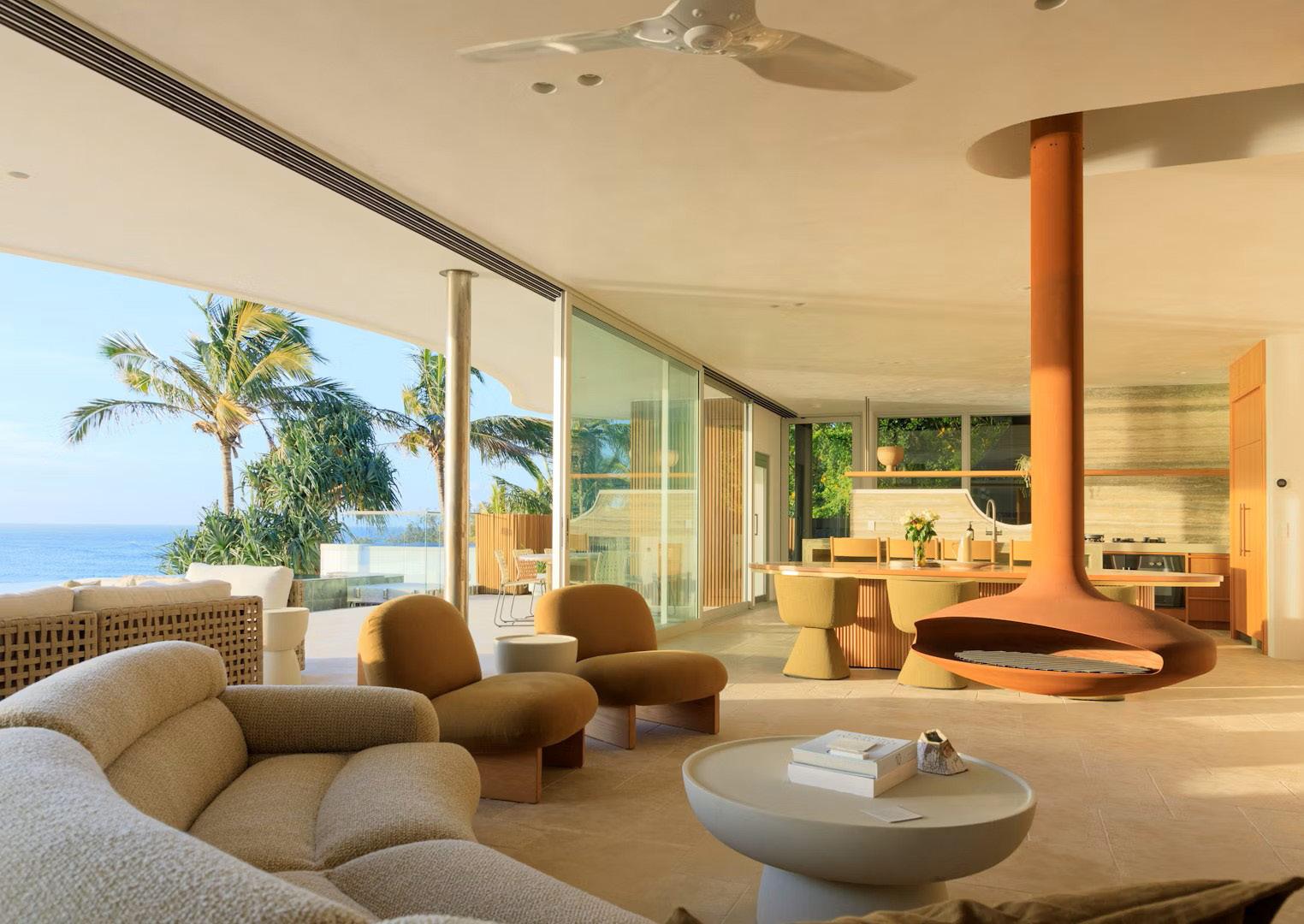
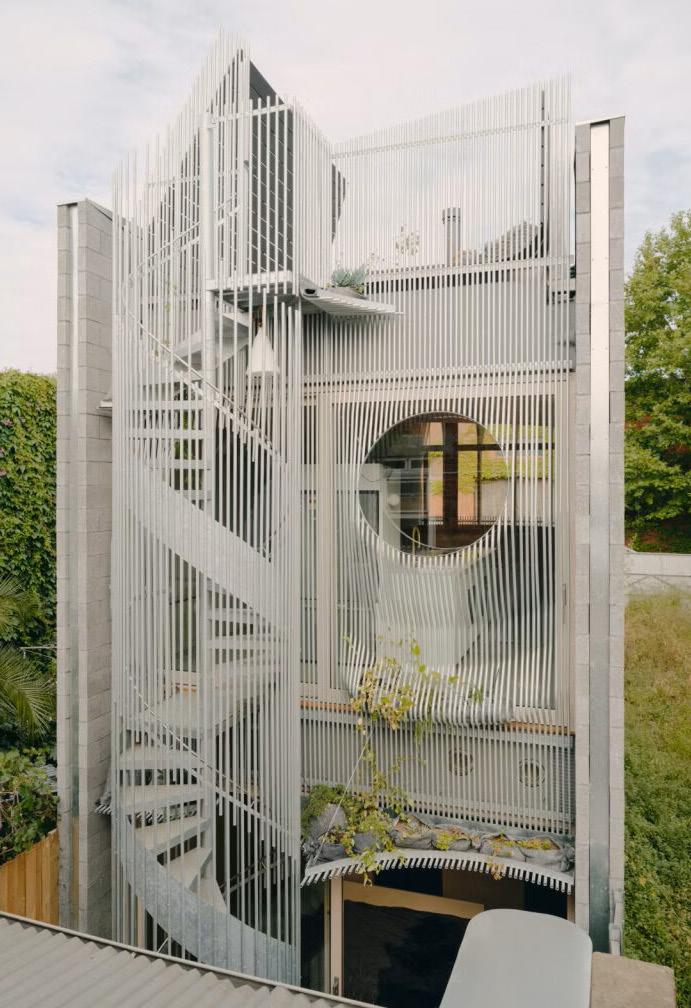
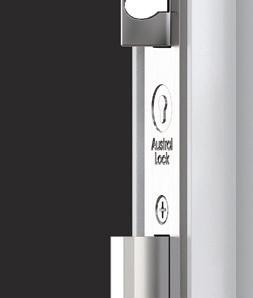
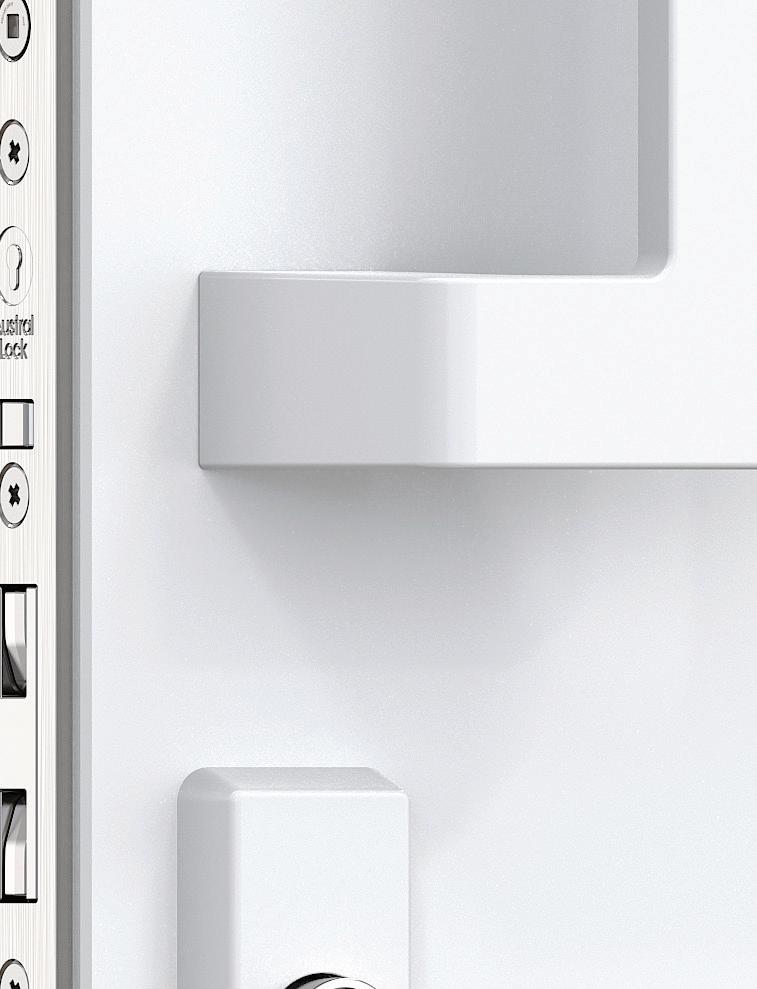
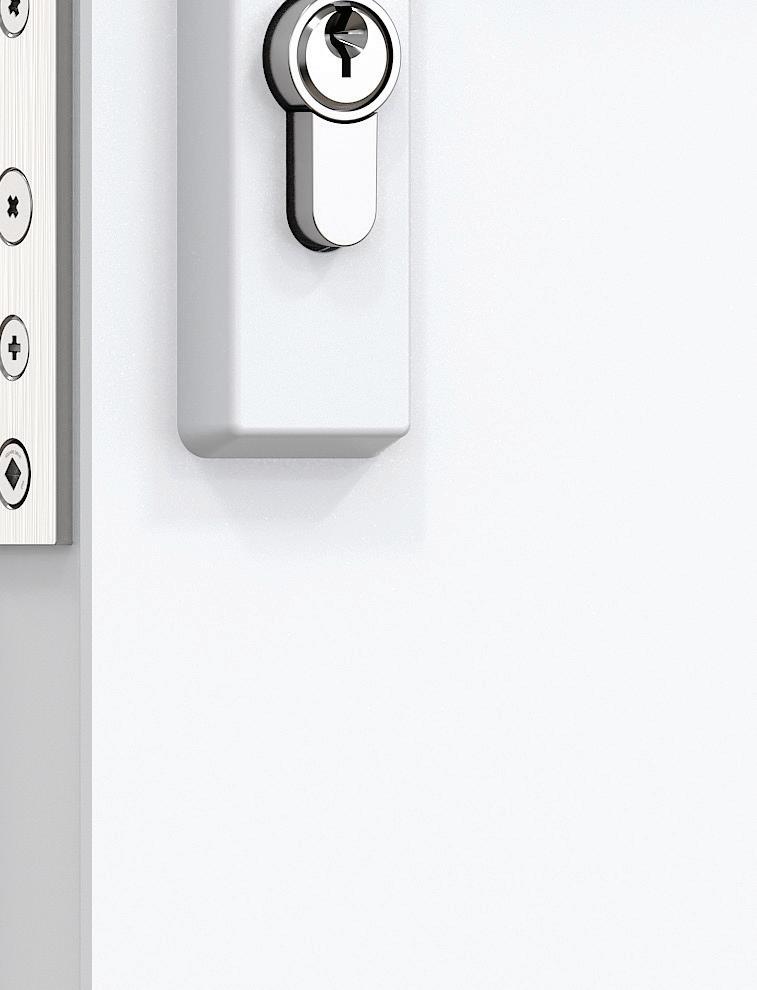
AGWA 2025 Design Awards Tasmanian State Winner for Residential Project Over $80,000
Cityline Windows & Doors
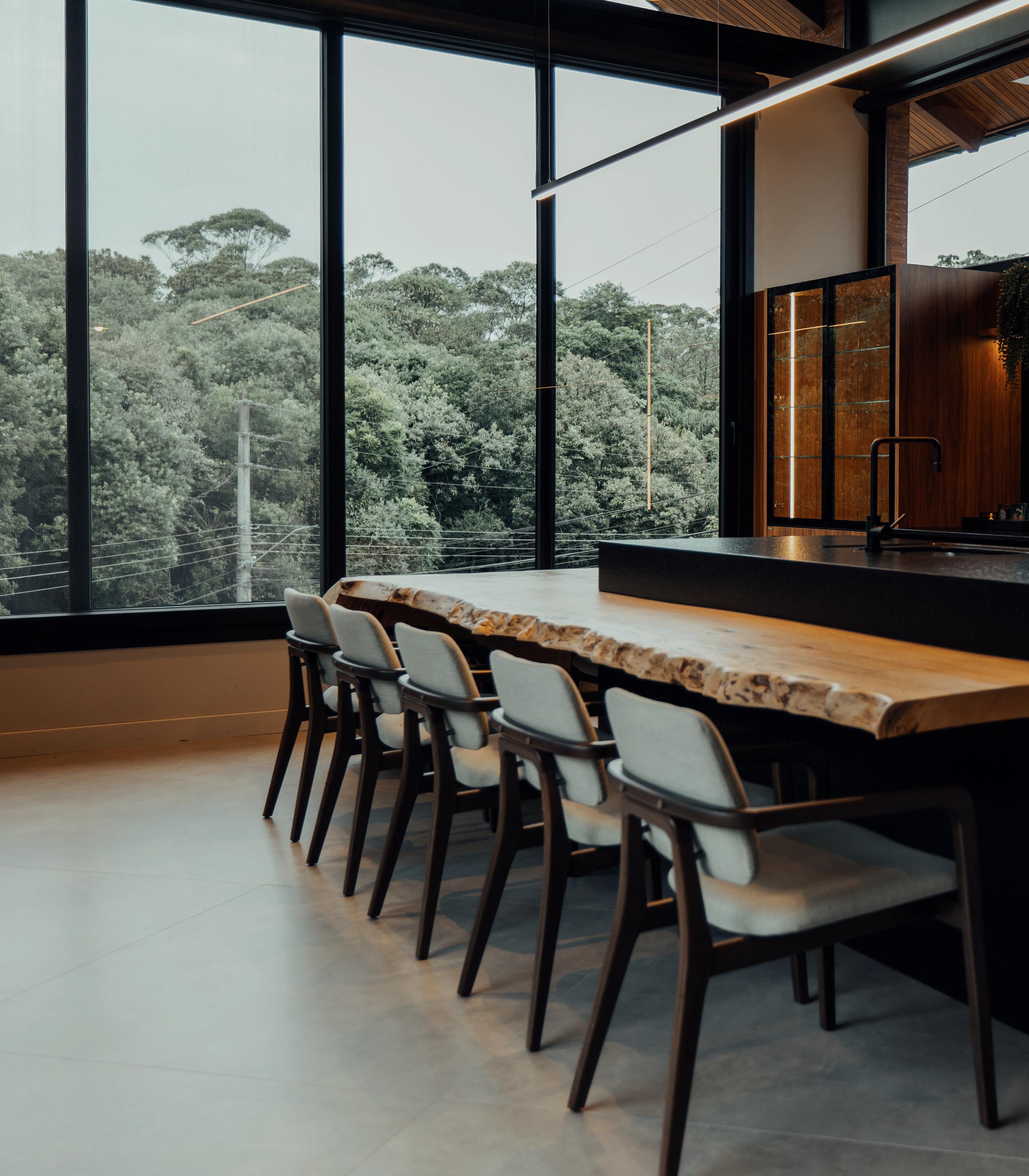
The Brambletye Homestead is an historic farm property located in Tasmania, integrating traditional rural aesthetics with modern functionality, meeting the expectations for a sustainable and visually appealing farmstead. The standout aspects of the structure include its traditional windows and doors, designed to complement the rustic aesthetic of the homestead. The use of glass and glazing enhances natural light within the interiors, while maintaining energy efficiency and insulation. The use of high-quality materials, innovative glazing techniques, and thoughtful integration with the surrounding landscape, make the homestead a perfect place to call home and a well-deserved winner.
CONTRIBUTORS
Executive
As AGWA Executive Director and CEO, Clinton has more than 20 years’ experience across building products, research and development and member services’ industries and with diverse roles such as supply chain management, sales, marketing, export market development, strategic management and planning, research and development, and industry advocacy. He is known for his passionate collaborative style when working with stakeholders and partners.
With over 20 years’ industry experience, Russell Harris, AGWA Head of Technical, has a thorough understanding of fenestration, including compliance, product design, development, and testing. Since joining AGWA in 2016 and with his background in R&D, Russell has been a noteworthy leader in the technical space, and an active contributor to the ongoing development of the Regulatory framework affecting the window industry.
Lara McCollin is a glazing and communications professional with over 30 years of experience in the design and documentation, consultation and training in the use of glazing products, from concept to testing and installation. Lara has worked on many major commercial high-rise projects globally, as well as residential and restoration projects of a more personal scale, to achieve a lighter sustainable footprint. Lara is also a judge of the AGWA Design and Industry Awards.
Copywriter, Trade Advertising Agency
Angela is a marketing and advertising Copywriter with Sydney’s Trade Advertising Agency, crafting words and ideas for all kinds of building-related brands. Growing up by her builder Father’s side and becoming a renovation aficionado — writing for AGWA is close to Angela’s heart and hands.
Ingrid Pagura is the AGWA Industry Development Coordinator initially looking after the training needs of members. Ingrid’s role progressed to include coeditor of BuiltView, managing safety resources, the Design and Apprentice Awards and other marketing-related activities. Prior to AGWA, Ingrid worked for a legal publishing company seeing her work on their building and environment suite of products and with the CSIRO and ABCB on other BCA projects and also as a part time teacher at TAFE.
Glen graduated from the Bachelor of Economics from the Australian National University in 2024.
He joined HIA in 2025, and his responsibilities involve contributing to HIA’s suite of publications and articles.
Industry Development Coordinator, AGWA
Ingrid Pagura
Economist, HIA
Glen Qi
Head of Technical, AGWA
Russell Harris
Angela Farrell
Direction and CEO, AGWA
Clinton Skeoch
Owner and Vision Influencer, ABC of Design
Larissa McCollin
BuiltView Magazine is a quarterly publication of the Australian Glass & Window Association.
EDITORS
Melissa Baker
Ingrid Pagura
SUB EDITOR
Helen Dawes
DESIGN
Webqem Pty Ltd
Sehar Maniar, AGWA
EDITORIAL & ADVERTISING ENQUIRIES
Helen Dawes
+61 2 9498 2768 marketing@agwa.com.au
PUBLISHED BY
AWA-AGGA LIMITED
ABN 57 629 335 208
Suite 1.01B, Level 1, Building 1, 20 Bridge Street, Pymble NSW 2073 +61 2 9498 2768 admin@agwa.com.au www.agwa.com.au
COVER IMAGE & CONTENTS PAGE IMAGES
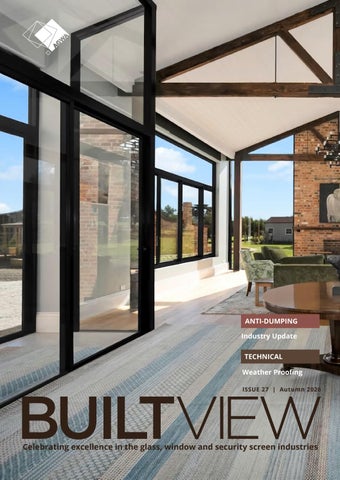
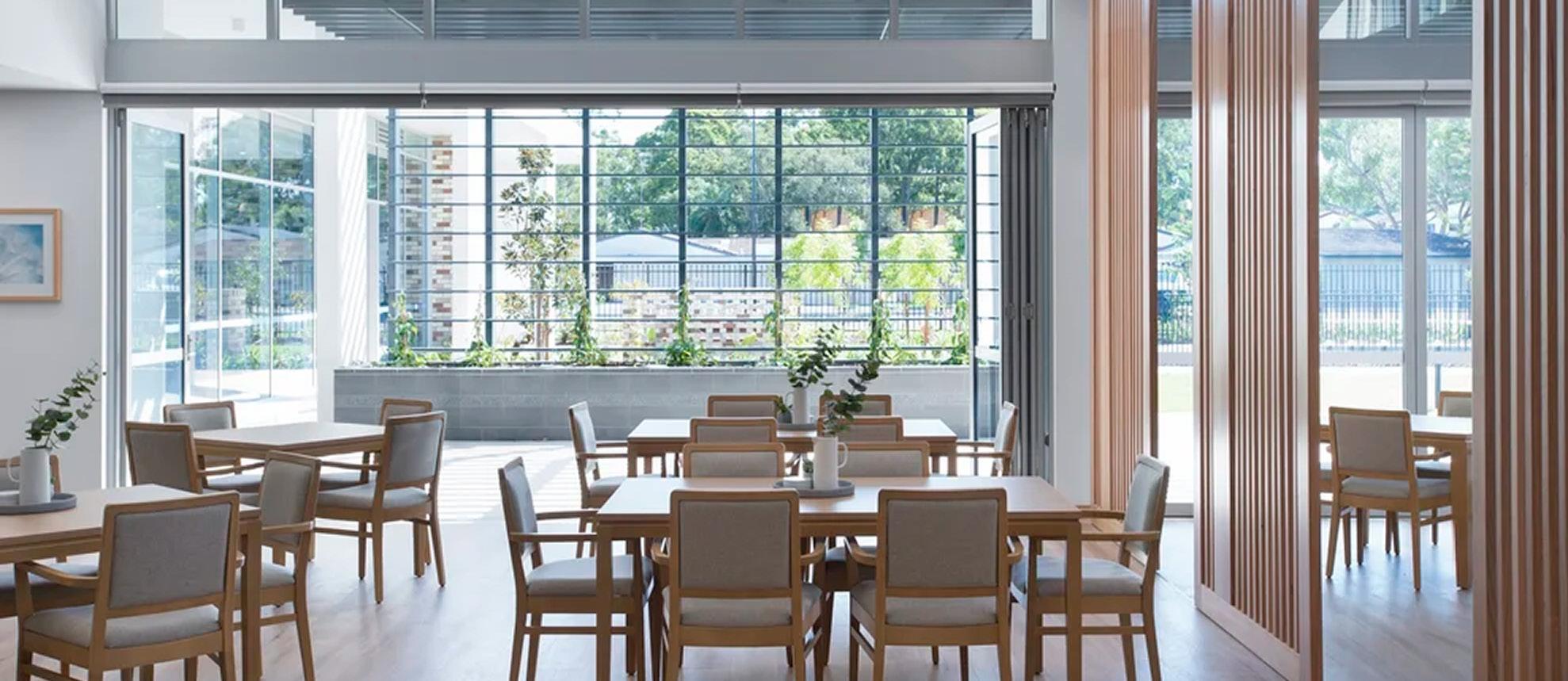
AGWA 2025 Tasmanian State Design Award Winner Residential Category Over $80,000 Cityline Windows & Doors Brambletye Homestead, Conara, Tasmania
Architect: Design Intent
Builder: Hadyn Brewer Construction Photographer: Prime Perspectives
CONTRIBUTORS
Clinton Skeoch, Glen Qi, Ingrid Pagura, Russell Harris, Angela Farrell, Lara McNicoll, Rebekah Brown, Stephanie Jones, Kellie Moore, Brendon Orth, Jelena Ninkovic, Elizabeth Dimabuyu, Edith Paarhammer, Michael Kruger, Mari Lehtinen, Joshua Ianni, Sandro Ianni, Adam Davies, Vivienne Munter, Helen Dawes, Melissa Baker, Sehar Maniar and Tyler Gonzales.
PRINTED BY
SOUTHERN IMPACT
southernimpact.com.au
Our printer conforms to the ISO-14001 environmental management standard and the ISO-9001 quality management standard.
DISTRIBUTED BY
D & D MAILING SERVICES
www.ddmail.com.au BuiltView Magazine is proudly packaged in Biowrap, 100% degradable plastic wrapping.
As we enter an important phase for our industry, AGWA continues to progress a broad agenda designed to strengthen fairness, compliance and long-term industry sustainability.
In this edition, you’ll find my detailed commentary on the AntiDumping Investigation now underway. This matter is significant and has rightly drawn strong member interest. Ensuring a level playing field remains central to AGWA’s purpose, and we will continue to represent the industry with clarity and evidence as the process unfolds.
But anti-dumping is only one part of a much wider program of work. We continue to work on Licensing defence and reforms, engagement on the myriad of NCC reviews, accreditation activities, compliance investigations, training, as well as our full agenda of national events which continue at pace. Engagement from members, regulators and industry partners is at record levels, reflecting both the scale of change and the importance of our collective efforts.
To stay fully informed, I strongly encourage all members to attend the upcoming State Forums. These sessions will provide comprehensive updates on:
• The Anti-Dumping case
• Licensing and regulatory changes
• NCC amendments
• Accreditation and compliance trends
• Training, events and new support initiatives
Your participation ensures that you receive accurate information directly from the source, and that we hear directly from you. This proactive communication helps strengthen AGWA’s advocacy on behalf of the entire sector.
Thank you for your continued support. I look forward to seeing many of you at the forums and continuing these important conversations together. Clinton
Executive Director and CEO
Using the AGWA Safety Calendar
Ingrid Pagura Industry Development Coordinator, AGWA
AGWA’s Safety Calendar addresses your safety requirements for the calendar year. By using the calendar as the basis of your annual safety plan you will ensure your workers have knowledge, but you will also create an environment where safety is an everyday thing not just a tick and flick once a year thing.
What do you need to do?
1. Hang up the AGWA Safety Calendar around your workplace. Put copies in the workshop, in the tearoom, in the loading dock. Each month of the Calendar is devoted to a specific topic. That is the topic you should be focussing on that month in all your team meetings. Let the calendar be a daily reminder that safety is daily responsibility.
2. You’ll receive 2 emails from us each month. The first one AGWA’s Safety Topic of the Month is sent to you during the first fortnight of the month. This includes information on what you should focus on for that month. For example, March’s topic of the month is Musculoskeletal Injuries. In the Topic of the Month email, AGWA gave you tips on reviewing your manual handling procedures, including how to prepare for a lift, undertaking the lift and different types of equipment that can be used.
Print these off as well and hang them in the workshop or tearoom. You can use this to highlight common everyday practices that may be causing injury to workers during meetings and training. It keeps safety at the front of workers’ minds.
3. The second email is AGWA Safety Topic of the Month Toolbox Talk which is sent to you in the last fortnight of the month. This will focus on a specific element of the monthly focus. For example, in March, AGWA provided you with 3 short toolbox talks aimed at increasing knowledge about manual handling. This included discussion points, questions, videos and other resources. We’ve done all the hard work for you; all you need to do is work through it!
Let AGWA help you achieve your safety requirements. Use these tools rather than creating your own, though you may need to customise them to your workplace. It’s never been easier to comply with your legal responsibilities.
Always remind workers that safety is everyone’s business, and that they are responsible for their own safety as well as looking out for their mate’s.
For more information on any safety matter, including additional copies of the calendar, please contact training@agwa.com.au.
The Look Australia Loves. The Performance uPVC Delivers.
Kömmerling’s advanced colour technology brings timber and aluminium aesthetics to uPVC windows and doors – delivering long-term colour stability, thermal efficiency and zero ongoing maintenance.
Kömmerling’s new Melbourne Lamination Centre now produces the complete Australian colour range locally, supporting faster delivery, greater specification flexibility and finishes engineered specifically for regional climates. With UV-stable, weather-resilient lamination, Kömmerling uPVC systems deliver the design versatility of timber and aluminium with the energy efficiency, durability and zero-maintenance benefits of advanced uPVC- optimised for Australian performance and backed by local support.
The Rent that Keeps on Giving
Glen Qi Economist, HIA
Housing plays a dual role in Australia’s inflation story. It is both a direct contributor to measured inflation (CPI) through rents, new dwelling costs, repairs and maintenance, utilities, and property taxes, and an indirect constraint on economic growth and productivity. As housing costs rise, they do more than show up in the CPI, they reshape labour markets, squeeze household budgets, and limit the economy’s capacity to grow without generating inflation.
High housing costs reduce real disposable income, leaving households with less capacity to spend elsewhere. Another important effect is on labour mobility. Workers face growing financial barriers to relocating closer to employment opportunities, particularly in high productivity cities and regions. Over time, this reduces the efficiency of the labour market, making it harder for firms to expand without bidding up wages.
For businesses, elevated housing costs translate into upward pressure on wages as workers seek to maintain their living standards. This is especially true in tight labour markets where workers have the bargaining power. Those pressures are often then passed through into higher prices, especially in labour intensive service sectors such as hospitality, healthcare and education. The result is inflation that becomes broader, more persistent, and harder to unwind.
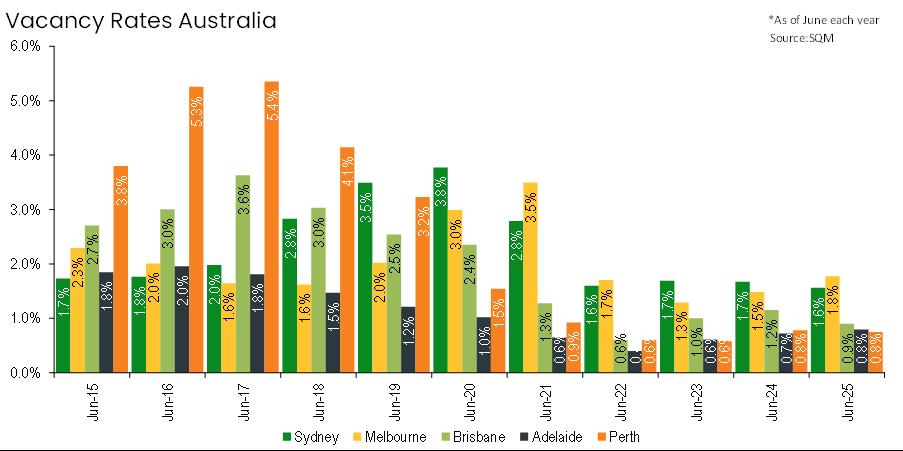
This helps explain why, despite easing price pressures across many goods categories, housing inflation has remained stubbornly high. Population growth accelerated sharply and has remained elevated, while the supply of new housing has failed to keep pace. Rental vacancy rates have fallen to historically low levels across much of the country, leaving tenants with little bargaining power. Even as
interest rates have risen, rental growth has remained elevated, reflecting this skewing of power towards landlords and continuing to add to headline inflation quarter after quarter.
Housing inflation also differs from other price pressures in one crucial respect: it is slow to reverse. Fuel prices and many consumer goods respond quickly to global conditions and can fall as fast as they rise. Rents, by contrast, reset gradually and tend to move in one direction. Once higher rents are locked in through lease renewals, they persist, embedding inflation into the system long after other pressures have faded.
In this context, higher interest rates do not necessarily deliver quick relief. While tighter monetary policy suppresses demand, it can also delay new housing supply by increasing financing costs and discouraging development. Projects are postponed or cancelled, worsening the imbalance between a growing population and an already tight rental market. This can place further upward pressure on rents, even as other parts of the economy slow.
This does not mean interest rates are irrelevant to housing. Rather, they tend to influence the timing and amplitude of housing cycles, not their underlying drivers. Housing construction responds with long and predictable lags: projects already underway must be completed before changes in the cash rate materially affect supply. Historically, that lag has been around a year or more.
The housing sector has also shown greater sensitivity to tightening cycles than easing cycles. Rate hikes tend to slow construction activity quickly, while rate cuts take longer to translate into increased supply. The size of the response also depends on the scale and duration of the policy move: more aggressive and sustained cycles produce faster and larger effects.
The broader implication is clear. When housing supply fails to keep pace with demand, inflation becomes harder to control, not just because rents rise, but because housing constraints ripple through the labour market and the wider economy. Addressing inflation sustainably therefore requires more than monetary restraint. It requires tackling the structural housing shortage that is limiting productivity, constraining labour mobility, and keeping inflation elevated long after other pressures have eased.
Anti-Dumping
Clinton Skeoch Executive Director and CEO, AGWA
all participants in the supply chain should ensure and clearly understand who bears responsibility for any provisional or final duties, how price adjustments will be handled, and how obligations will be allocated if securities are imposed.
As CEO of the Australian Glass & Window Association (AGWA), I have been asked many times why the Association has chosen to initiate, directly with Ventora and the support of many companies across the Australian industry, an Anti-Dumping investigation into fully and partially assembled windows originating from China. It’s a fair and important question, and one that deserves a clear, open explanation.
Our membership is broad and diverse, spanning manufacturers, importers, distributors, suppliers and installers, all united by a shared interest in building a profitable and sustainable industry. For decades, Australia has benefitted enormously from global supply chains and innovation. It is now routine for a locally fabricated window to incorporate extrusions from Australia, an IGU with one pane of glass from China and a second from Thailand, hardware from Europe, and sealants from Korea. This interconnected supply chain has, overall, strengthened our industry, created productive competition, accountability and supported growth. This is why I want to emphasise that the issue at hand is not about any particular place, people, or product. It is fundamentally about fairness, compliance with trade principles, and ensuring that every AGWA member competes on a level playing field.
Over recent months, many members, from both here and overseas, have contacted me to discuss the investigation, and one theme that I think needs to be clarified is the confusion around what ‘dumping’ actually means. Dumping is a technical term in international trade law. It is not about low prices per se, cheaper labour, or scale production. Dumping occurs when products are exported at a price lower than their ‘normal value’, usually the price at which they are sold domestically in the exporting country. In some cases, normal values can be assessed through detailed cost-based methodologies that account for factors such as preferential loans, grants, tax concessions, equity infusions, or government-subsidised or provided inputs.
Dumping can arise for many reasons, such as oversupply, government support programs, or strategic below-cost pricing aimed at gaining market share. While these behaviours may be acceptable in some jurisdictions, Australia’s anti-dumping framework requires an examination when such pricing causes, or threatens to cause, ‘material injury’ to an Australian industry.
Material injury is another defined concept. It refers to measurable impacts, such as lost tenders, declining profitability, market share erosion, reduced prices and/or an inability to raise prices, poor capital returns or employment outcomes that can be directly linked to dumped and/or subsidised imports. The AntiDumping Commission (the Commission) examines these issues impartially and rigorously, ensuring that Australian businesses, whether manufacturers or responsible importers, operate in a market that reflects genuine competitive conditions. In other words, dumping is about pricing behaviour, not cost structure and the impact this has on the Australian industry. A product may be inexpensive and still be fairly traded. Conversely, a higher cost product may be dumped if the export price is set artificially low.
The current investigation, ADC 691, focuses solely on partially and fully assembled windows from China. It does not apply to every imported window, nor to every Chinese-origin product. The scope is technical and specific. AGWA encouraged all members to review it carefully to understand whether their products may be affected. At the time of writing, the Commission has completed extensive reviews and checks of the data supplied in our application. The Commission received well over 100 responses from importing companies and selected a number of companies, collectively
making up 38% of the imports into Australia, to undertake deep dive accounting reviews of their business in mainland China to ascertain the basis of their assessment.
This is standard international practice, designed to manage workload while ensuring representative assessments of the situation. Throughout the investigation, the Commission follows a methodology consistent with World Trade Organisation Rules, comparing normal values and export prices, analysing verified evidence of subsidies, and examining indicators such as profitability, pricing, and market share to determine whether material injury exists. With over 411 submissions and detailed questionnaire responses from many members around the country and overseas, the Commission’s work is significant, and given this, the Commission has extended its due date for a statement of essential facts until 23 September 2026. This ensures that they have enough time to review all the important information in front of them.
...from this point onward, the Anti-Dumping Commissioner may issue a Preliminary Affirmative Determination (PAD) and impose provisional duties...
With the investigation having now passed Day 60, it is important to highlight that from this point onward, the Anti-Dumping Commissioner may issue a Preliminary Affirmative Determination (PAD) and impose provisional duties if there are early indications of dumping or subsidisation, evidence of material injury, and a risk that delaying provisional measures could worsen that injury.
A PAD is not a final decision; it is an interim safeguard based on early evidence. Robust, verifiable and timely information allows more accurate assessments and appropriate actions by the Commission. If a PAD is issued, the Australian Border Force may begin collecting securities or duties depending on the timing of export and customs clearance.
For exporting members or those looking to import windows from China, one practical message stands out. During this investigation period with the legitimate potential for a PAD to be put in place, all participants in the supply chain should ensure and clearly understand who bears responsibility for any provisional or final duties, how price adjustments will be handled, and how obligations will be allocated if securities are imposed. This is not a prediction of outcomes, but prudent risk management in a live trade investigation environment. Clear contractual arrangements protect all parties involved. Naturally, members should continue to monitor the Anti-Dumping Commission’s Dumping Commodity Registers and ABF notices to stay informed.
Ultimately, AGWA’s position is guided by principle, not preference. Our support for the investigation reflects our commitment to fair competition, integrity in the regulatory process, and confidence in the system that underpins Australian trade. Ensuring a level playing field benefits every AGWA member, whether they manufacture locally, supply products from overseas, or import finished goods. Our goal is not to favour one part of our membership over another, but to uphold a market environment where transparency, compliance and fair pricing allow all participants to compete on equal terms. AGWA will continue to engage constructively throughout the process and advocate, above all else, for fairness, transparency and a sustainable, competitive future for our industry.
Canopy House
Canopy House, designed by Leeton Pointon Architects, is a sculptural Melbourne home inspired by surrounding treetops. Its sweeping, curved form appears to float above a solid base, creating a sense of lightness. Expansive glazing blurs the line between indoors and outdoors, filling the home with natural light and offering uninterrupted views of the landscape.
Product and performance
The home features the Thermeco EC115TB Slimline sliding system, manufactured and installed by Element Windows. This minimal aluminium frame window system maximises glass area while providing:
• Sleek aesthetics − slim frames ensure clean lines and a seamless visual connection.
• Heavy-duty capability − supports panels up to 750 kg, heights of 3500 mm, and widths up to 2200 mm.
• Energy efficiency − thermally broken frames and highperformance glazing enhance comfort and sustainability.
• Flexible operation − sliding, stacking, bi-parting, and corner options for design adaptability.
• Durability − low-maintenance aluminium suited to Australian conditions.
Installation highlights
Due to the size and weight of the panels, installation required cranes and precise handling, with attention to alignment, structural support, and integration with the home’s curved forms. The premium Slimline system ensured smooth operation and long-term performance, even with large-format glazing.
Impact
The Thermeco Slimline system allowed Canopy House to achieve its architectural vision: a light, airy, and visually seamless home that harmonises with its environment. Large, elegant panels combine aesthetics with sustainability and practicality, showing how careful product selection and expert installation elevate high-end residential design.
This project demonstrates the power of combining innovative architecture with premium window systems, resulting in a home that is both visually striking and functional.
NCC 2025: Weatherproofing and Energy Efficiency Reforms Explained
Russell Harris Head of Technical, AGWA
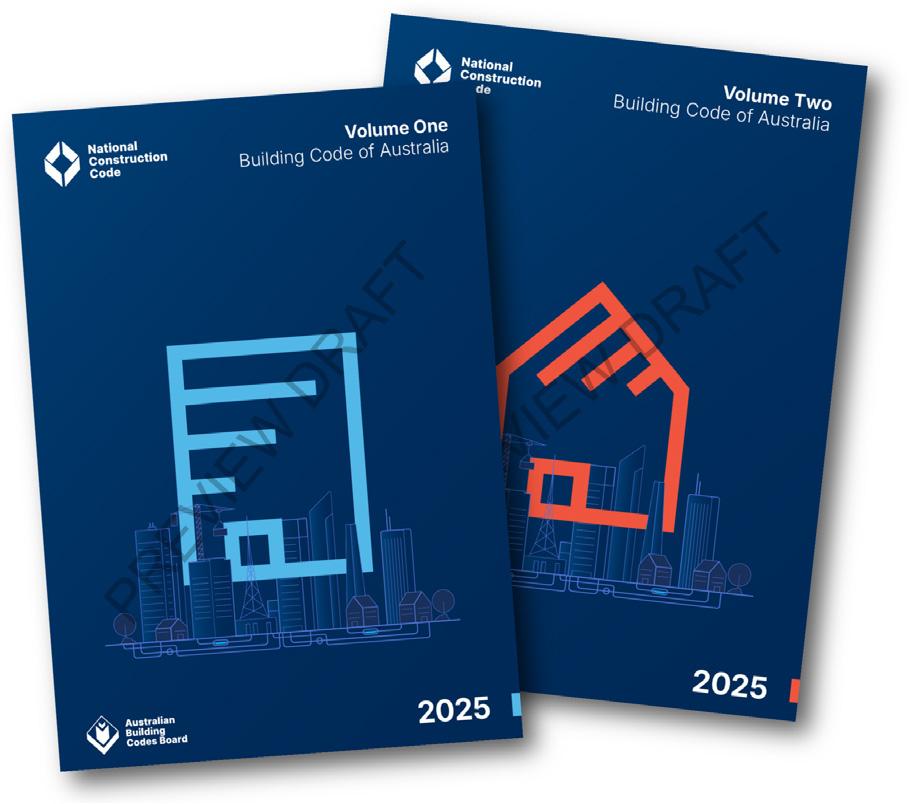
The National Construction Code 2025 (NCC 2025), published on 1 February 2025, introduces targeted updates aimed at improving building performance, durability, and sustainability. Subject to state and territory adoption and transitional arrangements, these changes will take effect on 1 May 2026. While the scope of amendments is smaller than the extensive reforms seen in NCC 2022, the updates address critical industry priorities, particularly in weatherproofing and energy efficiency.
Weatherproofing requirements
Waterproofing failures remain one of the most common and costly building defects, leading to structural deterioration, expensive remediation, and health risks for occupants. NCC 2025 responds with a comprehensive overhaul of water management provisions for Class 2–9 buildings in Volume 1, reinforcing the importance of protecting the building envelope against both surface and subsurface water ingress.
A major structural change is the consolidation of Part F1 (Surface Water Management, Rising Damp, and External Waterproofing) and Part F3 (Roof and Wall Cladding) into a single, unified Part F1. This streamlining eliminates duplication and improves usability, enabling practitioners to locate and apply requirements more efficiently. Performance provisions previously split between clauses F1P1 and F3P1 are now organised as clauses F1P1 and F1P2, providing clearer guidance on managing water penetration and dampness in external walls and roofs.
One of the most significant prescriptive updates is the mandatory 70 mm step-down between internal and external floor levels for waterproofed balconies — a measure designed to address persistent water ingress issues in high-risk areas. Additional refinements include clearer detailing for falls, substrate tolerances, and drainage systems, ensuring robust design and construction practices.
Key changes: balconies and external areas
• Minimum 70 mm step-down between internal and external floor levels for waterproofed balconies.
• Improved detailing for falls, substrate tolerances, and drainage.
• Integration of surface and sub-surface water management into a unified Part F1 for easier navigation.
Commercial Energy Efficiency
NCC 2025 advances Australia’s Trajectory for Low Energy Buildings by introducing targeted energy efficiency reforms limited to commercial buildings (Classes 3–9), while residential buildings
(Classes 1 and 2) remain unchanged. These changes aim to reduce greenhouse gas emissions, lower operational costs, and support the transition to a net-zero future.
The most notable enhancements relate to tighter Deemed to Satisfy (DTS) provisions for building envelope performance. Glazing requirements generally adopt more stringent U values across most climate zones; however, a reduction in stringency is evident for overnight use building types—such as hospitals and hotels—in some climates, particularly cooler zones. In contrast, requirements for solar admittance are universally more stringent, with substantially lower values mandated across all climate zones. In addition, vertical shading devices are now formally recognised within the DTS framework.
Key changes: commercial buildings (Classes 3 and 5–9)
• Increased stringency in Section J provisions to reduce emissions and energy costs.
• Enhanced thermal performance for glazing, and external shading devices.
Industry Impact
While NCC 2025 introduces fewer changes than its predecessor, the updates are highly targeted and address long-standing industry challenges. The strengthened weatherproofing provisions are intended to significantly reduce water-related defects, improving building durability and occupant health. Meanwhile, the energy efficiency reforms position the sector to meet future sustainability targets and deliver cost-effective, high-performance buildings.
Lara McCollin Owner and Vision Influencer, ABC of Design
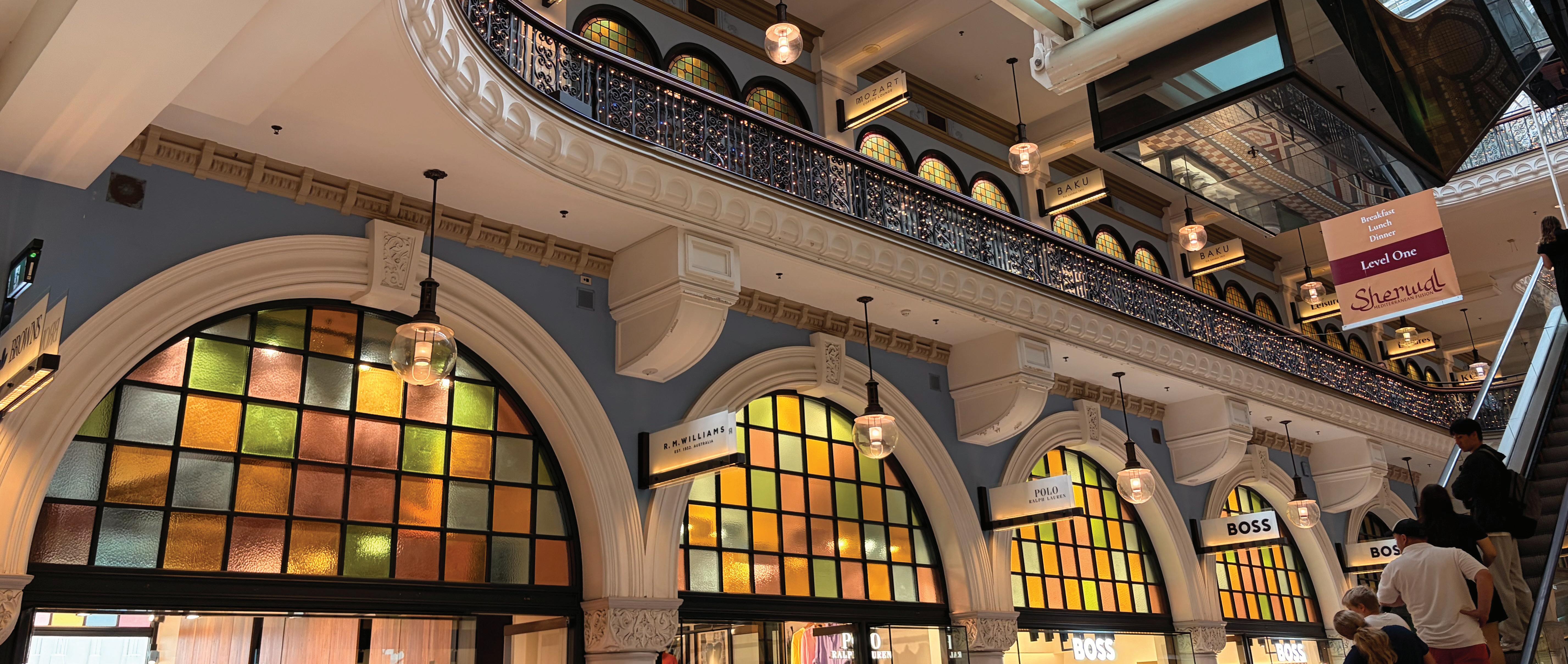
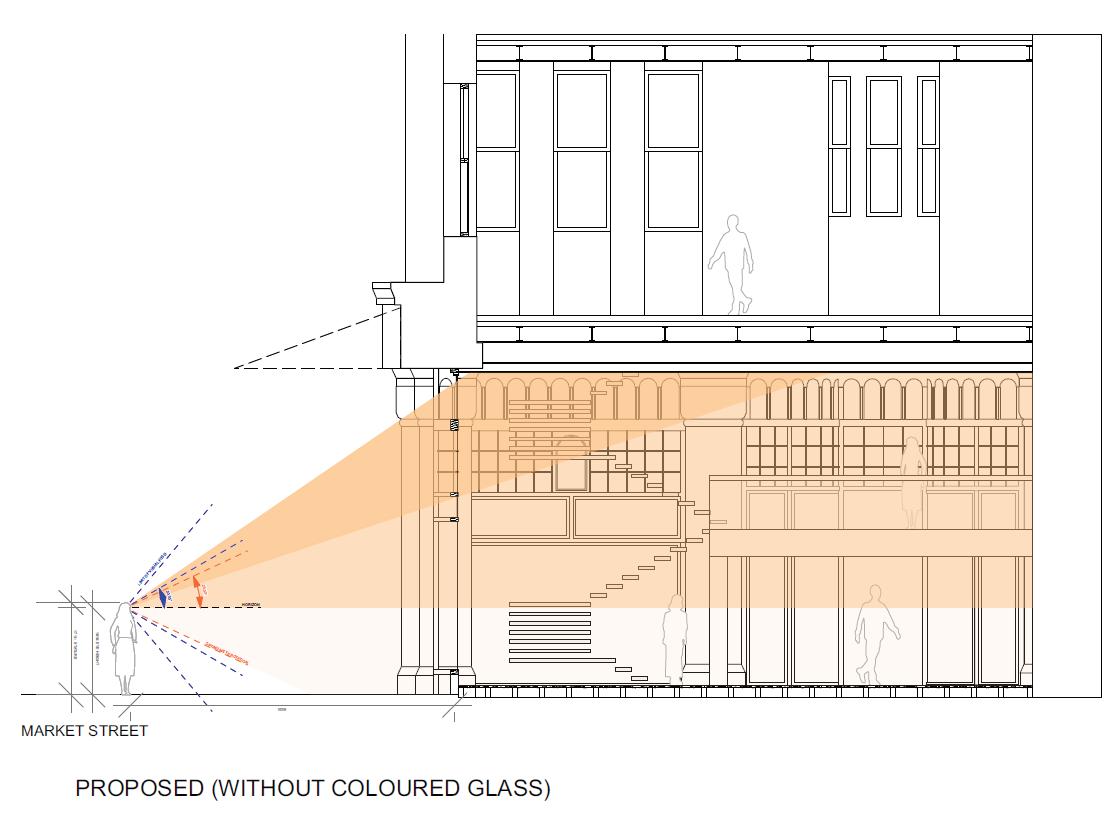
In late December 2025, the City of Sydney Council received a submission by Vicinity Centres to alter the Queen Victoria Building (QVB). The alteration meant changing certain glazing from coloured to clear. This raised eyebrows. The reason was to make the double-height shop ceiling space more visible from the outside. At least 3 prospective tenants had provided feedback that the stained glass impeded the ability for bystanders to see the full height of the shop's interior — an economic downside.
The proposal was withdrawn on 22 January 2026, just weeks before the public submission due date, in response to strong public sentiment against the proposed alteration.
The situation that developed over a proposed design change for the QVB’s glazing provides an opportunity to explore the importance and value of glazing aesthetics. Let’s open perspective using the QVB as an example. I suggest that you consider any building you have a connection to or feel passionately about, while reading this article.
Each aspect of a building contributes to its overall presence and glazing is a major aesthetic aspect of a building’s facade. With so many options available today, the choice is vast, but it hasn’t always been.
It is difficult to know precisely what QVB designer, George McRae, intended with the stained-glass windows, one of the building’s
defining features today. Constructed during the economic uncertainty of the 1890s, the QVB was designed to support multiple businesses, replacing the Sydney Marketplace with a grand emporium of public significance. It is probable that the stained-glass trades benefited from this ambition.
Does the original glazing intent still matter 135 years on? Is the aesthetic history of a place important, and how much value do we place on that visual identity today?
‘Windows — the less they are seen, the more successful they are’ has become a familiar mantra in modern glazing design. Historically, limitations in glass size encouraged intricate designs, often in stained glass, to provide light penetration. While contemporary architecture favours minimalism and transparency, windows define both the external character of a building and the internal experience of space.
If the eyes are the windows to the soul, windows are the eyes of a building, allowing you to see through to the heart of a structure. Their size, colour, and form communicate intent and personality They can be bold or understated, timeless or trend driven, inviting people in or giving off a sense of grandeur, either way, windows complement first impressions. Design plays a critical role in how people connect emotionally with a building.
The rationale behind the submission to change some stained glass with clear glazing to improve internal visibility was economic.
Director Lonergan brand
to install clear glass is not obtained. In good faith, and due to Sydney exited the negotiation this for lost
According to Peter Lonergen, Director of Cracknell and Lonergan Architects, ‘a global flagship lifestyle brand insisted upon a termination payment of $300,000 in the instance that permission to install clear glass is not obtained. In good faith, and due to recent feedback from the City of Sydney about the coloured glass, Vicinity Centres has proactively exited the negotiation with this brand for a cost of over $1,115,000 in lost rent. This lost rent is the calculation of the difference between the rent commencement of the previous tenant to new tenant.’
As with any facelift, what reflects more value, adhering to authentic aesthetics versus perceived extra value from within? The economic benefit needs to be carefully weighed.
the previous tenant to new tenant.’ with any more to perceived from economic benefit needs to be carefully weighed. example, the of revenue was anecdotal. in flowed through providing added
In the QVB example, the amount of lost revenue projected was anecdotal. The change in glass estimated to cost $121,000, would have inevitably flowed through to rents, providing an added barrier to potential tenants.
The developers behind the design miscalculated. The building owners wanted it, the architects supported the change, but the public made its decision — a resounding NO.
Putting to one side the conflict with the original heritage design,
The The owners supported its to the conflict original
we can look at what the proposal suggested — a partial window change.
the proposal suggested change.
how
Consider how this would change the internal experience of the building. How different would it look at night highlighting the impact of the glass? Was consideration given to how much economic value would be lost by alienating tenants and patrons who value the building for its original heritage? Could alternative approaches have achieved the same objective?
the building. How different would it look at night highlighting the consideration much by the building alternative approaches have achieved the same objective? buildings no colour distinguish heritage
Historic buildings generate strong public attachment and the QVB is no exception. Its glazing colour and pattern distinguish it from other heritage structures. For many visitors, the experience of the building itself outweighs the specific retail offerings within. How many other buildings have this kind of appeal? How close does this bring us to further change, say removing decorative glazing in the QVB altogether?
offerings within. How many other buildings have this kind of to removing QVB altogether?
narrowly in the saved to deeply is
reshaping — the eyes of a building’s soul.
The QVB narrowly avoided demolition in the 1960s. It was saved due to strong public opposition and recognition of its heritage value. That moment demonstrated how deeply people care about this place. As industry professionals, it is worth reflecting on the role we play in shaping — or reshaping — the eyes of a building’s soul.
Designing for Comfort and Sustainability: How the NCC Shapes Energy Efficiency
Russell Harris Head of Technical, AGWA
Energy efficiency is a cornerstone of sustainable building design, and the National Construction Code (NCC) plays a pivotal role in shaping how buildings in Australia meet energy performance standards. This article explores the fundamentals of energy efficiency and how the NCC addresses these requirements across its volumes.
What is energy efficiency?
Technically, energy efficiency refers to the ratio of useful output to energy input in systems. In buildings, it broadly means reducing energy consumption while maintaining comfort. Energy is primarily used for heating and cooling, lighting, hot water, and operating electronic devices. The NCC provisions aim to ensure buildings are designed and constructed to operate with minimal energy use, tailored to their purpose and location.
Why it matters
Buildings contribute around 20% of Australia’s energy-related greenhouse gas emissions. By enhancing energy efficiency, the NCC helps reduce these emissions, lowers operational costs, and improves indoor comfort. As climate change awareness grows, the building sector’s role in reducing emissions becomes increasingly important.
Key Concepts in the NCC
The NCC introduces several important concepts:
• Conditioned v non-conditioned spaces: A conditioned space can be heated or cooled to maintain comfort, while a nonconditioned space lacks such services. This classification affects how heat is transferred between spaces, influencing energy use.
• Building envelope: This includes walls, roof, ceilings, floors, and glazing that separate conditioned from non-conditioned spaces. Materials and insulation used in the envelope help limit unwanted heat flow, reducing the need for mechanical heating and cooling.
• Thermal mass: Materials with high thermal mass absorb and store heat, releasing it slowly as temperatures drop. This property can be harnessed to maintain comfortable indoor temperatures with minimal energy use.
• Ventilation: The natural movement of air through designed openings helps cool buildings without artificial means, especially in warmer climates.
Climate zones and design
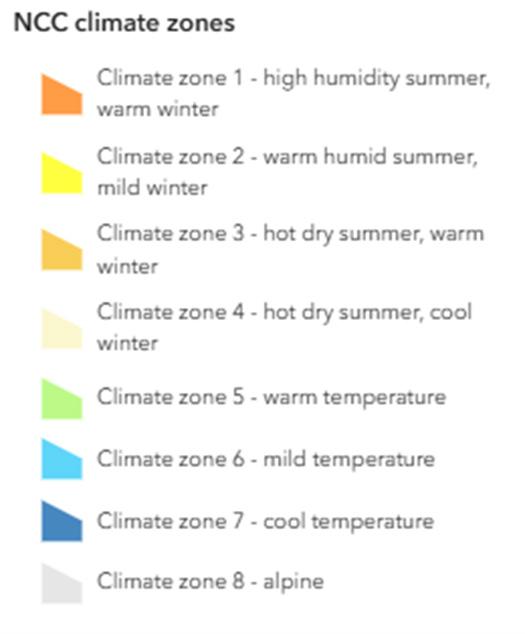
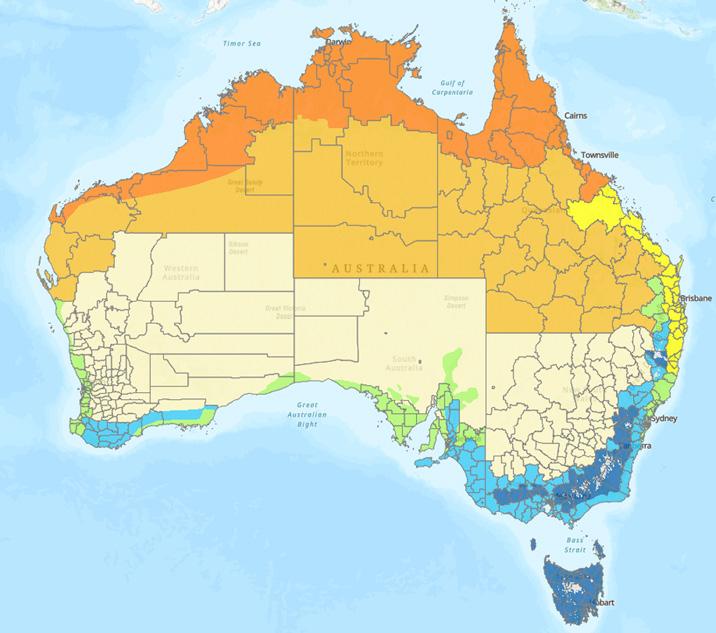
The NCC defines 8 climate zones, each with specific characteristics as shown in the chart opposite.
Measuring performance
Heating and cooling loads are calculated using approved software, considering factors like design, climate zone, orientation, and materials. These loads determine a building’s energy efficiency rating, with schemes like NatHERS assigning star ratings based on performance.
Glazing and insulation
Glazing performance is measured using:
• SHGC (Solar Heat Gain Coefficient): Indicates how much solar energy passes through glazing. A high SHGC allows more heat in; a low SHGC blocks it.
The ideal values depend on climate and orientation. For instance, low SHGC and U-Value are preferred in northern locations to block heat, while higher SHGC may be beneficial in southern areas to allow winter sun.
Achieving energy efficiency
Energy efficiency involves:
• Optimal orientation: Positioning windows to catch winter sun and/or avoid summer sun.
• Appropriate materials: Lightweight versus high thermal mass materials can substantially influence energy efficiency and thermal comfort.
• Insulation: Effective wall and ceiling insulation throughout the building envelope to reduce heat loss/gain.
• Shading: Eaves and other external shading devices substantially reduce unwanted solar heat gain
• Ventilation: Large openable windows help regulate indoor air temperature naturally and are particularly important in temperate and warmer climate to offset excess solar heat gain.
• Building sealing: A well-sealed building retains warmth in winter and stays cool in summer, reducing energy use.
Final thoughts
The NCC’s energy efficiency provisions aim to reduce energy use and greenhouse gas emissions. By focusing on building envelope performance and efficient services, the NCC promotes sustainable building practices tailored to Australia’s diverse climates and building types.
Whether you’re a builder, designer, or homeowner, understanding these principles is key to creating buildings that are comfortable, cost-effective, and environmentally responsible.
the
▪ Local control across manufacturing, quality and support
▪ Faster response and improved lead-time certainty
▪ A full suite of Ventus louvre solutions – standard to high-performance
▪ Continued investment in tooling, quality assurance and technical capability
▪ Industry-recognised design and performance
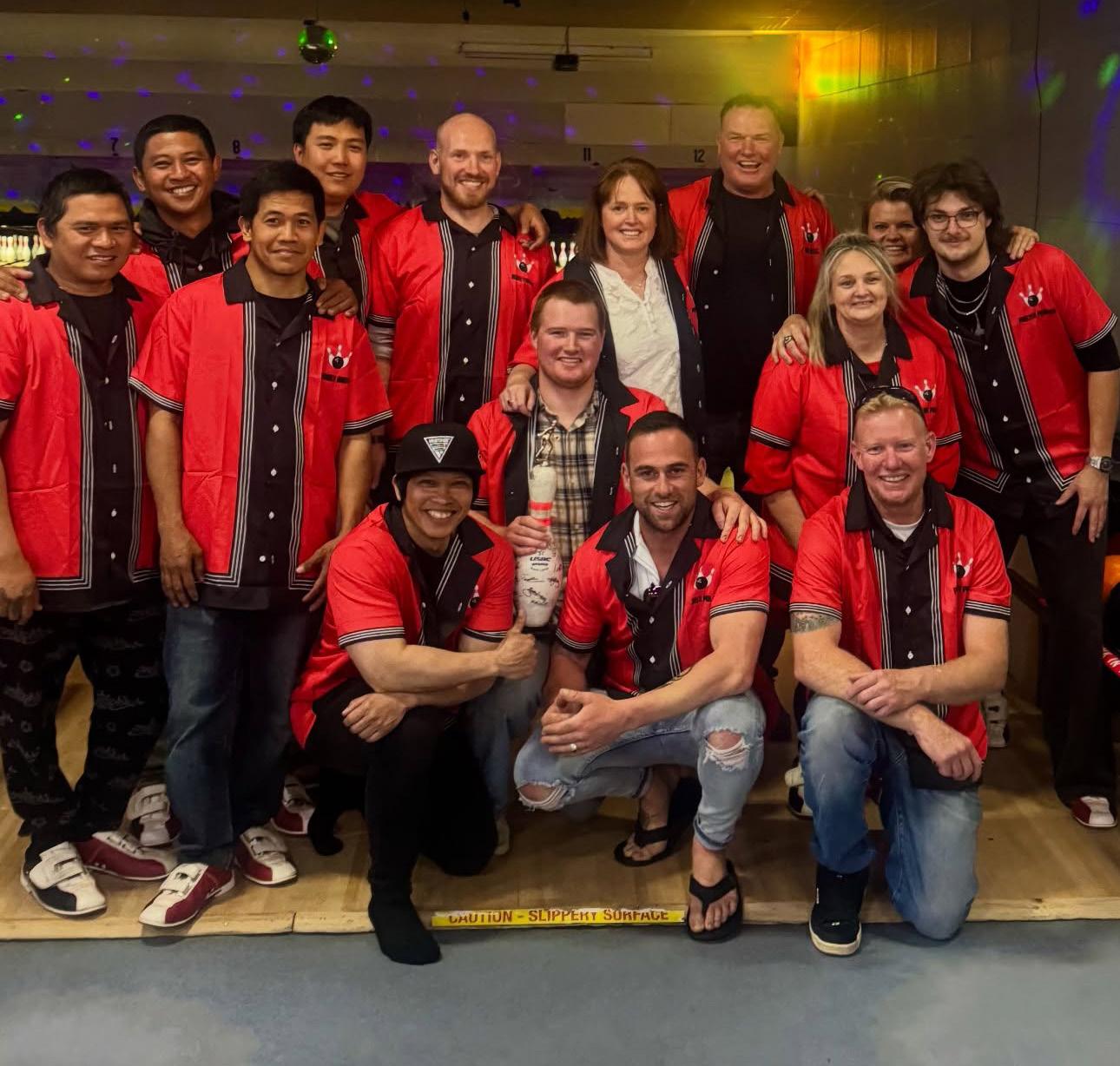
Investing in People: How PAG Windows Built Capability Through the AGWA Fabricator Program
For PAG Windows, growth has never been about doing more work but doing better work — a philosophy that underpins both its market position and its commitment to staff development.
Based in Warrnambool and servicing high-end coastal Victorian communities such as Port Fairy; PAG Windows is a family-owned glazing business led by Alex Robinson and his wife, Tory. Six years ago, the couple purchased the business from a retiring owner, stepping into an entirely new industry after careers in agriculture and finance. What they brought with them, however, was a longterm mindset.
‘In farming, you don’t think in quarters, you think in 5–7-year plans’, Alex says. ‘That mindset carries straight across to people. If you want more out of your team in future, you must invest in them today.’
In the early days, PAG Windows said yes to almost everything. Over time, Alex and Tory took a step back and asked a fundamental question: what are we actually good at? Their answer reshaped the business. Today, PAG focuses exclusively on high-end residential glazing. Around 70% of its metal orders are thermally broken systems, with marine-grade stainless steel hardware and double glazing now the norm. It is not uncommon for builders and homeowners to place window suite orders valued at $150,000.
But chasing that level of work comes with responsibility. ‘When you move into that space, staff capability has to rise with it’, Alex explains. This led PAG Windows to actively engage with AGWA training, and particularly with the AGWA Fabricator Program (previously the Fenestration Diploma Program).
‘The AGWA Fabricator Program is a great litmus test’, he says. ‘It shows who’s willing to invest time in themselves.’
The results speak for themselves. More than half of PAG’s staff have now completed their AGWA Fabricator Program certification, with two more currently undertaking the course. Staff typically complete the 9 online modules, the Fenestration Essentials course and 2-hour exam over several months, even though they have up to 2 years to do so!
Each completion is celebrated. ‘We have a cake for every person who finishes’, Alex laughs. ‘It matters. We want people to feel proud of what they’ve achieved’.
The structured training creates a level playing field where knowledge, not job title, is what counts. ‘Now we’ve got junior staff wanting better marks than their managers’, Alex says. ‘That competitive energy is healthy’. He is quick to challenge the idea that factory or floor staff are somehow limited in their potential. ‘With the right training, you can turn so-called “grunters” into genuinely talented young people. That gives the business depth … and it gives individuals a real career path.’
Certificates are displayed proudly on the walls of PAG, reinforcing that learning is valued and visible.
A real career path in action
Alex points to Connor, a young team member who joined PAG after leaving a pub job. Starting with flyscreens, Connor moved through fabrication and onto CNC operations. Today, he manages equipment worth more than $300,000 and runs that area of the business.
Connor completed the AGWA Fabricator Program in record time; achieving an exam result higher than both Alex and the production manager! ‘That was humbling’, Alex says, ‘but also incredibly rewarding. He gained a broader understanding of the window industry and a real sense of accountability. As a business owner, that’s exactly what you want to see.’
Professionalism, pride and the future
The PAG values of professionalism, respect, teamwork and accountability apply not only internally, but also to customers, builders and suppliers. ‘If those values don’t matter to you, then this probably isn’t the right fit, whether you’re an employee or a customer’, Alex says.
Through training and genuine investment in people, PAG Windows has built a business that competes on quality rather than price, and a workforce that understands the role they play in delivering it.
As Alex puts it simply, ‘If you can’t be big, be smart. And being smart starts with training your people’.
If you’d like to find out more about the AGWA Fabricator Program, please contact training@agwa.com.au.
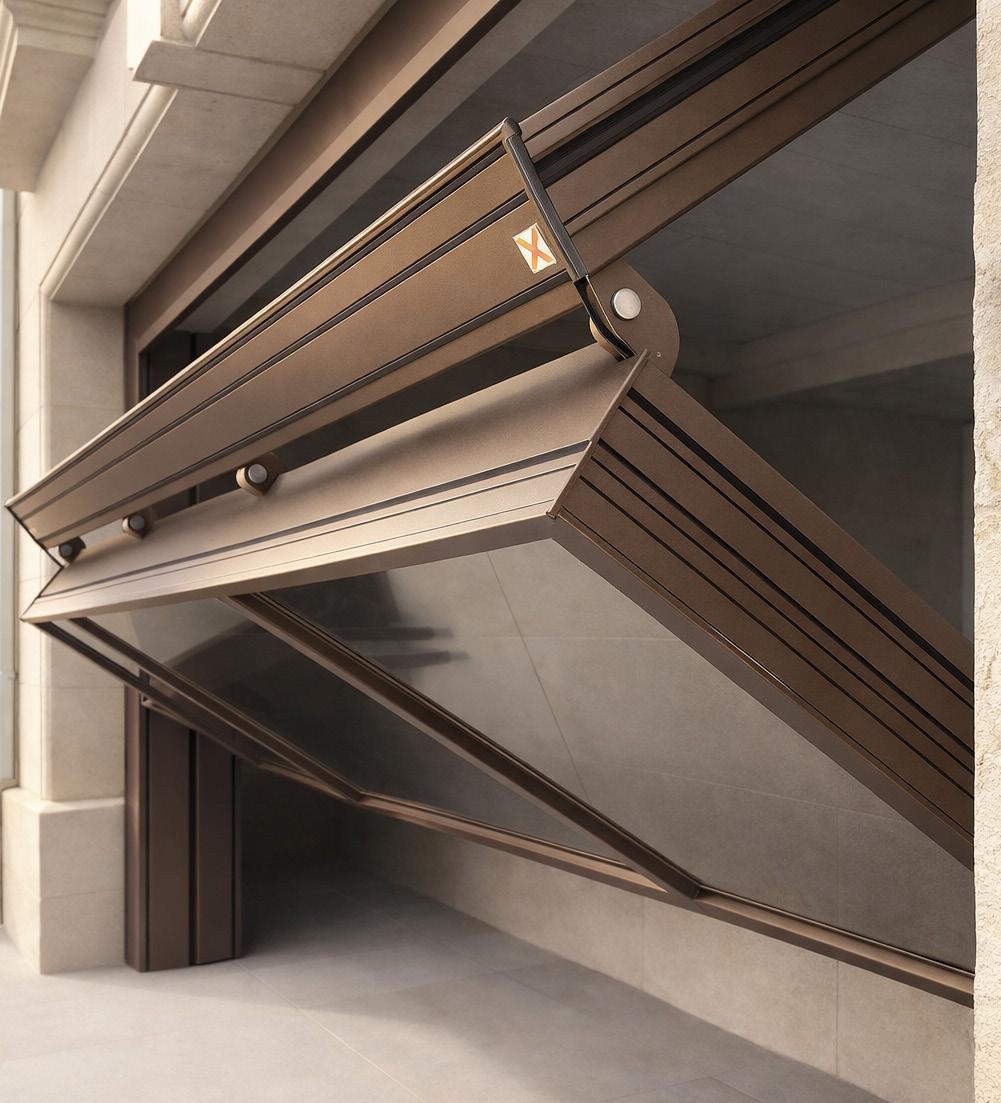
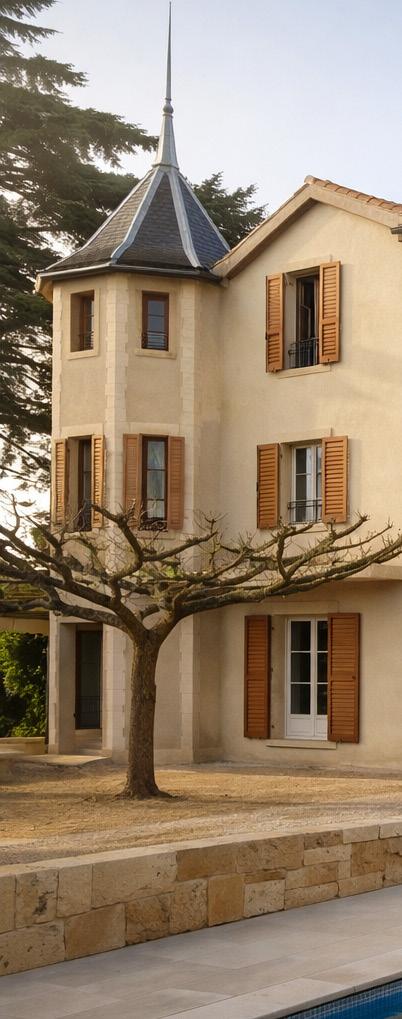
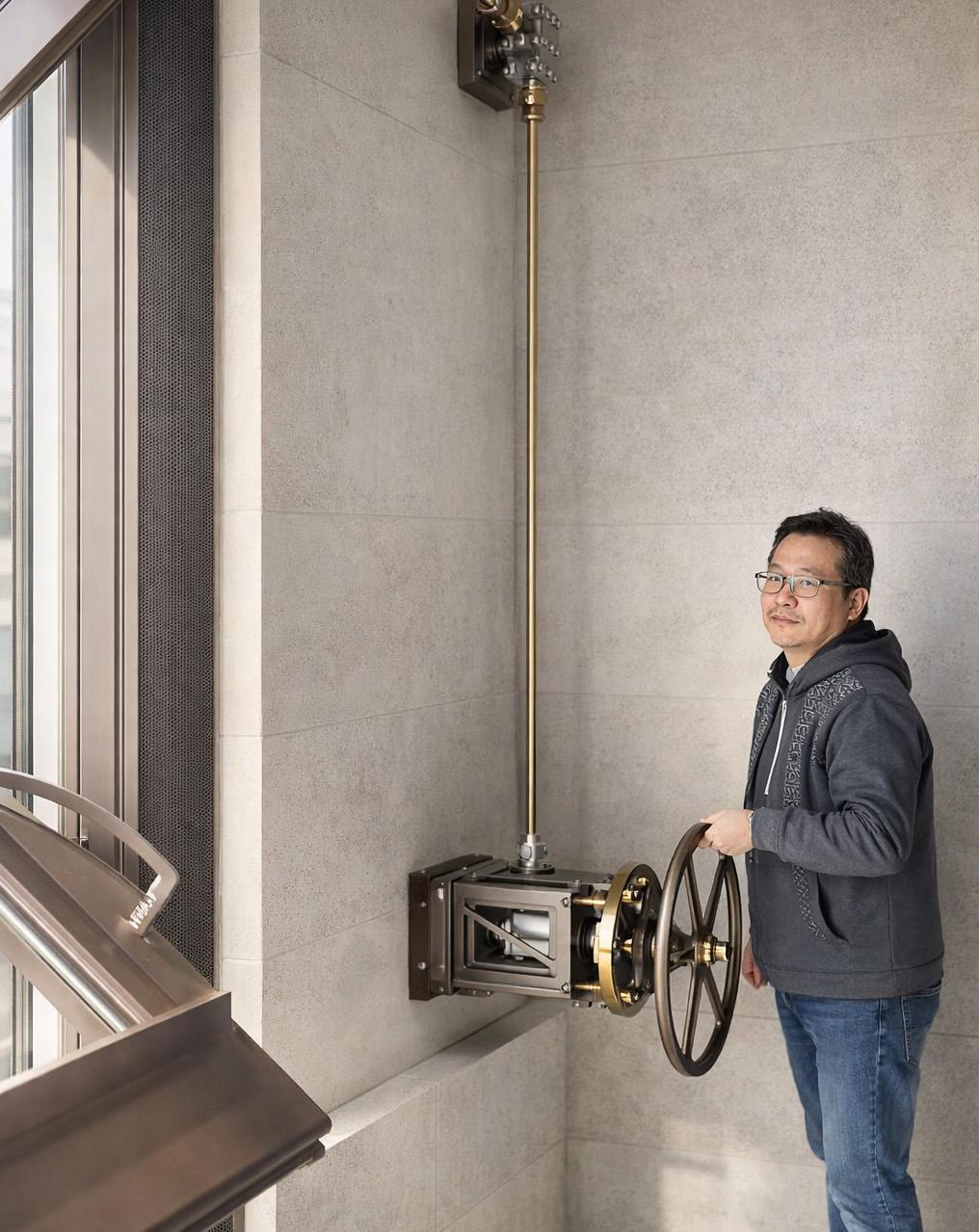
Smartech’s recent French residential project in Vendres, South of France, illustrates how mechanical engineering can align with architectural vision while meeting sustainability objectives.
Working with Atelier Phenom, the project required a bespoke thermal break folding door system with double glazing that preserved visual flow between interior and exterior spaces. Key priorities included refined aesthetics, enhanced thermal efficiency, and minimal dependence on electrical systems — particularly important in this heritage setting.
Smartech collaborated with the architectural team to develop a fully mechanical glazed folding door solution. By eliminating motors and electrical components, the system promotes energy autonomy, reduces maintenance demands, and integrates seamlessly into the building fabric.
Fully mechanical operation
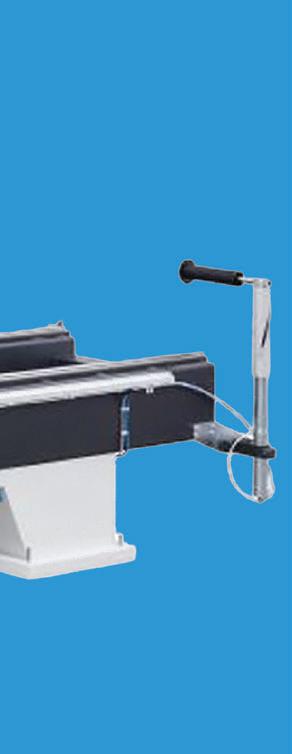
The system employs a hand-operated planetary gear assembly to facilitate the movement of large, glazed panels. Rotating the hand wheel engages the gearing, significantly reducing physical effort while ensuring smooth, controlled operation without manual lifting.
The planetary gears were purpose-designed for this installation, finished in brass to respect the heritage aesthetic and celebrate mechanical craftsmanship as an architectural feature. A counterweight balance works in tandem with the gear system to offset panel mass and ensure stability, eliminating the need for motors, electrical infrastructure, and automated controls.
Case for mechanical solutions
As the industry prioritises low-energy, low-maintenance performance, this project demonstrates that innovation need not always mean automation. Mechanical systems can reduce operational energy consumption and servicing requirements without sacrificing performance.
Whether for heritage restorations, modern builds, or projects requiring power-independent operation, mechanically driven systems offer a credible alternative to motorised hardware.
For further information about any Smartech products or services, please see www.smartechdoorsystems.com.au, contact our Sales Department at (03) 9747 9233, or send an email to sales@smartechdoorsystems.com.au.
From Timber to uPVC
Modernising Multi-Storey Windows for Comfort and Efficiency
Project overview
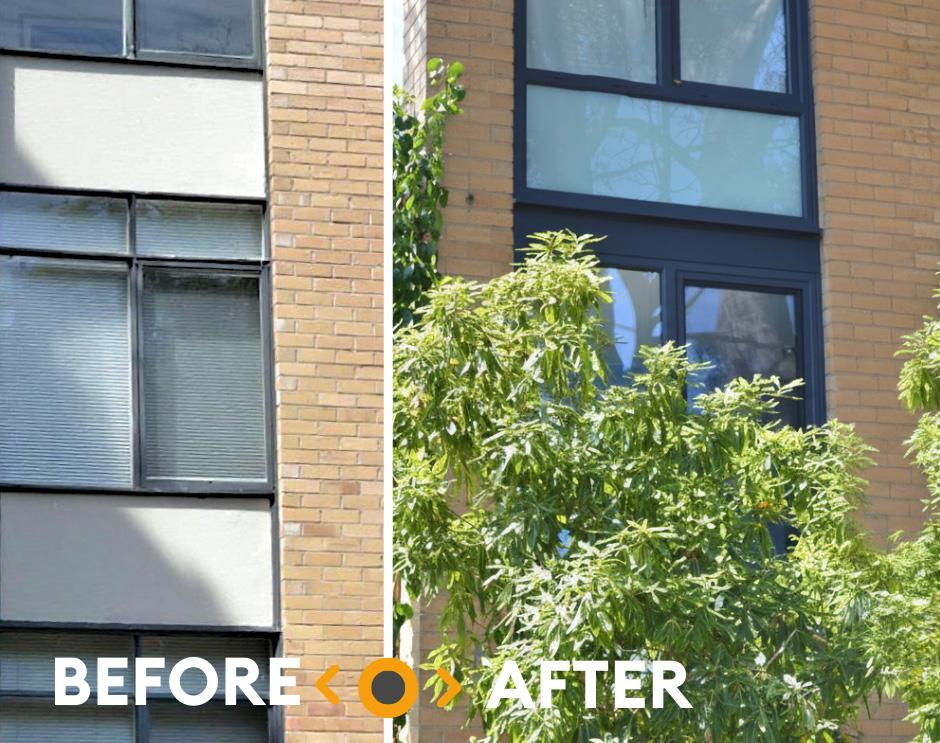
This project highlights the transformation of a multi-storey apartment building in Hawthorn, Melbourne, by the installation of Kömmerling’s advanced C70 Gold uPVC window and door system. Fabricated and installed by APS Double Glazing, the upgrades offered a compelling example of how climate-specific window systems can significantly enhance the performance and comfort of older residential buildings.
Initially built in the 1970s, the apartment complex was struggling with outdated timber-framed, single-glazed windows. Over the years, these windows had suffered from timber rot, termite infestations, air leaks, and were ineffective at blocking external noise. Given the building’s location near a busy road, these issues were magnified, necessitating a comprehensive solution.
Drivers for replacement
The upgrade was driven by 3 clear issues: poor thermal performance, constant outside noise, and the ongoing maintenance problems that come with ageing timber windows.
Air leaks meant that warm air escaped in winter and cool air was lost in summer, while heat from outside easily made its way in. This made living uncomfortable year-round and pushed up energy bills, leaving residents frustrated.
The goal was to find a solution addressing all these challenges, while also improving the building’s overall appearance and meeting Australian Standards, NCC requirements, and body corporate expectations.
Installation complexity and structural interface
One of the project’s notable challenges was the presence of cement sheet infill panels built into the lower sections of the original window frames across each level. These outdated elements offered no real thermal or acoustic performance and limited natural light, reducing the overall effectiveness of the façade.
Corner window sections added further complexity, as they were originally connected across 3 levels. Coordinating replacements required agreement from multiple apartment owners, careful scheduling within body corporate hours, and precise timing to maintain construction integrity. The large, multi-level spans and integration with existing structures made planning and installation particularly challenging.
System selection and climate performance
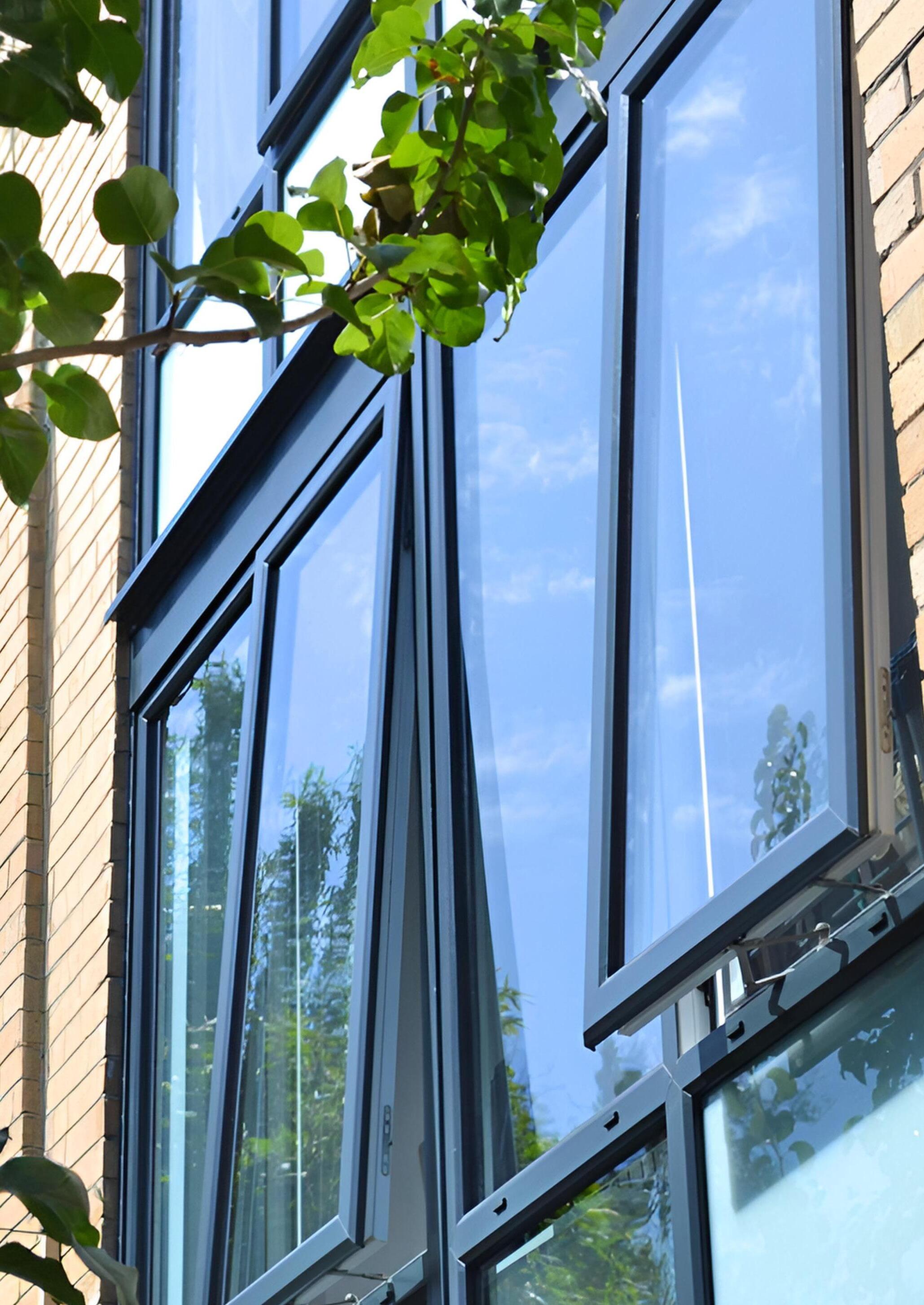
APS Double Glazing addressed the project’s complexities by selecting the Kömmerling C70 Gold system. The system was ideal for replacing the old panels with larger, fully framed glazed units, capable of spanning across 3 levels. This choice was also driven by its suitability for the Australian climate, ensuring long-term durability and maintaining aesthetic appeal.
Made from Kömmerling’s Hot Tropical Mix compound, these uPVC profiles are engineered to withstand high UV exposure and environmental stress, ensuring long-term durability and maintaining aesthetic appeal.
Rigorous testing confirmed that the system met Australian Standards for structural integrity, weather resistance, and security; critical factors for multi-residential buildings where shared vertical units and body corporate oversight demand reliable, highperforming solutions.
Functional and security enhancements
The upgrade introduced a combination of awning and tilt & turn window configurations, allowing residents to enjoy controlled ventilation without compromising security or weather protection. The project also included high-performance argon gas-filled and Low-E coated double-glazed units supplied by Australian Glass Group throughout, significantly improving acoustic insulation and thermal efficiency, particularly for apartments directly facing the main road.
The main entry door on the lower ground apartment was also updated with a reinforced Kömmerling uPVC door system featuring a multi-locking mechanism, enhancing security and aligning with modern residential safety standards.
Visual integration and staged delivery
Given the project’s phased delivery, maintaining a consistent façade was paramount. External frame colours were carefully chosen to complement the existing windows of apartments remaining in the original condition, ensuring that the upgraded sections blended harmoniously with the overall look of the building. This attention to detail allowed future upgrades to proceed without disrupting the visual continuity of the complex.
Outcome
The completed upgrade has profoundly enhanced occupant comfort, significantly reduced external noise, and equipped the building with long-lasting, durable solutions tailored to meet the demands of its urban environment.
Project Location: Hawthorn, Victoria
System Supplier: Kömmerling Australia
Fabricator and Installer: APS Double Glazing
Window and Door System: Kömmerling C70 Gold uPVC System
Aged Care and Health Sector Embrace New Era of Design Innovation
Architects and designers across Australia are embracing a new era of innovation as the Aged Care Act 2025 (Cth) (the Act) reshapes the built environment across the aged care sector, ushering in the next generation of aged care design principles. The Act commenced on 1 November 2025 and will see a transformative shift in how aged care facilities are designed, built and secured.
Capral National Manager Commercial Systems and Specification, Brendon Orth, said that Amplimesh was responding with solutions tailored for the next generation of aged care design focusing on intergeneration and biophilic design, vertical living and creating home-like environments.
‘The Act is a turning point for how we think about safety in the built environment’, Orth said. ‘We’re working closely with architects and developers to ensure our screen products integrate seamlessly into multi-storey aged care facilities, supporting both compliance and comfort, while promoting natural light, airflow, and connection to nature that are so vital in biophilic and intergenerational design. It’s about creating environments where residents feel safe, respected, and truly at home.’
Facilities must support independent living, privacy, and freedom of movement, while ensuring accountability for environmental safety and accessibility.
Orth explains, ‘The National Aged Care Design Principles and Guidelines (2024) are becoming standard practice for new builds, including access to outdoor areas and courtyards, which require certified screening. Apart from new designs bringing nature into facilities, they also need to cater for the increasing number of Australians with dementia’. The Act challenges the industry to rethink what care environments should feel like.
Showcasing a vision of lively, integrated seniors’ living, The Churches of Christ Lady Small Haven Retirement Village at Benowa, Gold Coast, Queensland includes multi-storey buildings for independent living apartments and assisted living units, in addition to single-storey cottages, and an impressive suite of community facilities.
The project, in which the first of 5 Stages is complete, is a prime example of a Green Star rated, well thought out, fit-for-purpose
aged care facility, featuring recreation and multipurpose entertaining rooms, landscaped gardens and outdoor barbecue areas.
Interior design strategies create a dementiafriendly environment, and the independent living apartments open to the outdoors with generous windows offering outlook, light and natural ventilation. Integrating seamlessly with the design intent. Amplimesh SupaScreen window security systems made of Meshtec high tensile 316 Marine Grade Stainless Steel woven into a fine mesh, provide security and safety for residents, while allowing for airflow and ventilation.
‘We are seeing a surge in demand from architects who want to integrate safety features without sacrificing design intent. Screens are increasingly specified in multi-storey aged care builds, especially where fall prevention and airflow must coexist’, Orth said. ‘The Churches of Christ Lady Small Haven Retirement Village is a great example of our compliant solutions that are unobtrusive, sustainable and engineered for the realities of aged care.’
With a focus on dignity, autonomy and safety, Amplimesh will play a pivotal role in shaping the future of aged care and healthcare facilities. We’re seeing a rise in intergenerational integration, blending aged care with childcare, student housing and community hubs. At the same time, increasing urban density is driving facilities upwards, making secure balcony and window systems more important than ever.
Recent projects, such as the $83 million Cairns Mental Health Facility, where Amplimesh Supascreen was used to enclose balconies, highlight the convergence of safety and architectural innovation. The facility includes sensory gardens, safe outdoor spaces, and bay windows in each room, as well as therapy and activity areas, an occupational therapy kitchen, and larger rooms to provide greater privacy. There is also a secure environment for residents to enjoy the natural environment with enclosed verandas on the second floor, preventing falls and injuries.
‘Amplimesh screens were specified for the Cairns project as a certified, compliant solution for fall prevention in multi-storey facilities, tested for fire attenuation, balustrade infill, and cyclone debris impact’, said Orth. ‘It’s important that architects and builders stay informed as Regulations change every year. While the 2025 Aged Care Act means more screens will be fitted to multi-level facilities for fall prevention, in the residential sector we will also see an increased demand for certified screens with the same design principles (safety, autonomy, dignity, connection to outdoors) that apply to aged care facilities, under the Support at Home Program.’
Orth concluded, ‘Our mission is to support environments where older Australians can thrive. That means delivering products that meet rigorous safety standards while enhancing the aesthetic and functional goals of modern aged care design’.
For further information, please see www.amplimesh.com.au.
Beyond the Test: Applying AS 2047 Extrapolation Limits
Russell Harris Head of Technical, AGWA
AS 2047, the Australian Standard for windows and external glazed doors, is referenced by the National Construction Code and is a cornerstone of building compliance in Australia. It establishes rigorous requirements to ensure that windows and doors perform safely and reliably under wind pressures and environmental conditions. Among its most critical provisions are the rules governing size and pressure extrapolation, which allow manufacturers and designers limited flexibility to adapt tested configurations without compromising structural integrity. Understanding how these rules work — and why they matter — is essential for anyone involved in fenestration design, testing, or installation.
WHAT IS SIZE AND PRESSURE EXTRAPOLATION?
When a window or door system is tested under AS 2047, the results apply to the specific configuration tested. However, real-world projects often demand variations in size to suit architectural requirements. Retesting every possible size variation would be impractical and costly, so AS 2047 permits controlled extrapolation, but only within strict limits.
Dimensional limits
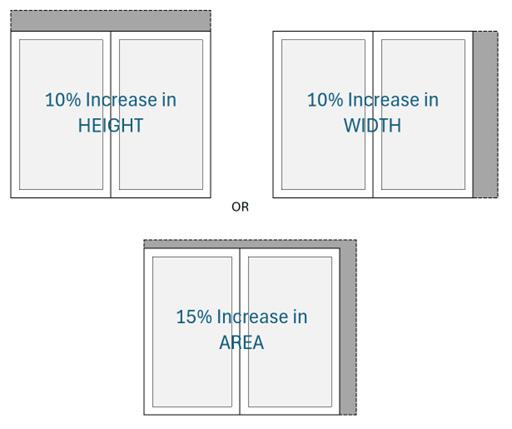
The extrapolated product must not exceed 10% in either the horizontal or vertical direction, or 15% of the total area of the tested specimen. These limits are designed to prevent disproportionate increases in stress that could lead to failure.
The 10% and 15% rules don’t just apply to the overall frame, they also apply to individual elements such as sashes, panels, and subframes. This is because:
• Sashes carry glass weight and resist wind pressure.
• Panels and rails transfer loads to mullions and transoms.
• Hardware and joints experience higher shear and bending forces.
Applying the rules
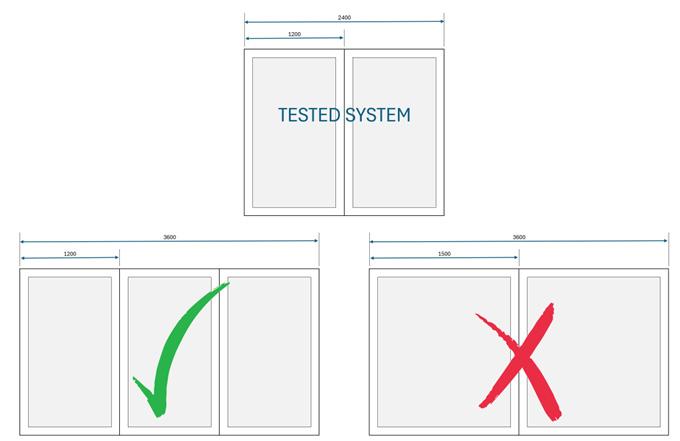
In the example below, the original tested configuration is 2 panels, each 1200 mm wide, making the total width 2400 mm. This is the baseline for compliance — any extrapolation must respect the 10% width/height and 15% area limits.
The lower left configuration adds a third panel, but each panel remains at 1200 mm width. Total width becomes 3600 mm, but individual panel dimensions have not changed. Why is this allowed?
AS 2047 rules apply to individual elements (sashes/panels), not just the overall frame. Since each sash is still within its tested size, and assuming that both dividing mullions are consistent with that tested, the structural performance of system remains proven.
Engineering verification
When a window or door system is extrapolated beyond its tested dimensions under AS 2047, the change is not just a matter of size, it directly affects structural performance under wind loads. To ensure safety and compliance, engineering verification is mandatory for any extrapolation outside the original tested configuration.
What does engineering verification require?
1. Design Record Creation
A formal design record must document:
• The original tested configuration.
• The proposed extrapolated dimensions.
• Wind load design pressures based on AS/NZS 1170.2 for the installation location.
2. Structural Analysis
Engineering checks must confirm that all critical components can withstand increased loads:
• Mullions and transoms: Verify bending strength and deflection limits under higher wind pressures.
• Fixings and joints: Ensure connections resist shear and tensile forces without failure.
• Glass panels: Confirm glass thickness and edge clearance prevent excessive deflection or breakage.
3. Failure mode assessment
The verification process must consider potential failure scenarios:
• Glass dislodgement: Excessive deflection can cause seals to fail or glass to pop out.
• Mullion deflection or buckling: Increased stress may cause permanent deformation or collapse.
• Connection failure: Joints and hardware under higher loads can shear or pull out, compromising safety.
WHY
THESE
RULES MATTER
The extrapolation rules in AS 2047 are not arbitrary; they are grounded in engineering principles and real-world experience. When a window or door is enlarged, even slightly, the loads imposed by wind pressure increase exponentially. A 10% increase in width or height can significantly amplify bending moments and deflections, pushing components beyond their tested capacity.
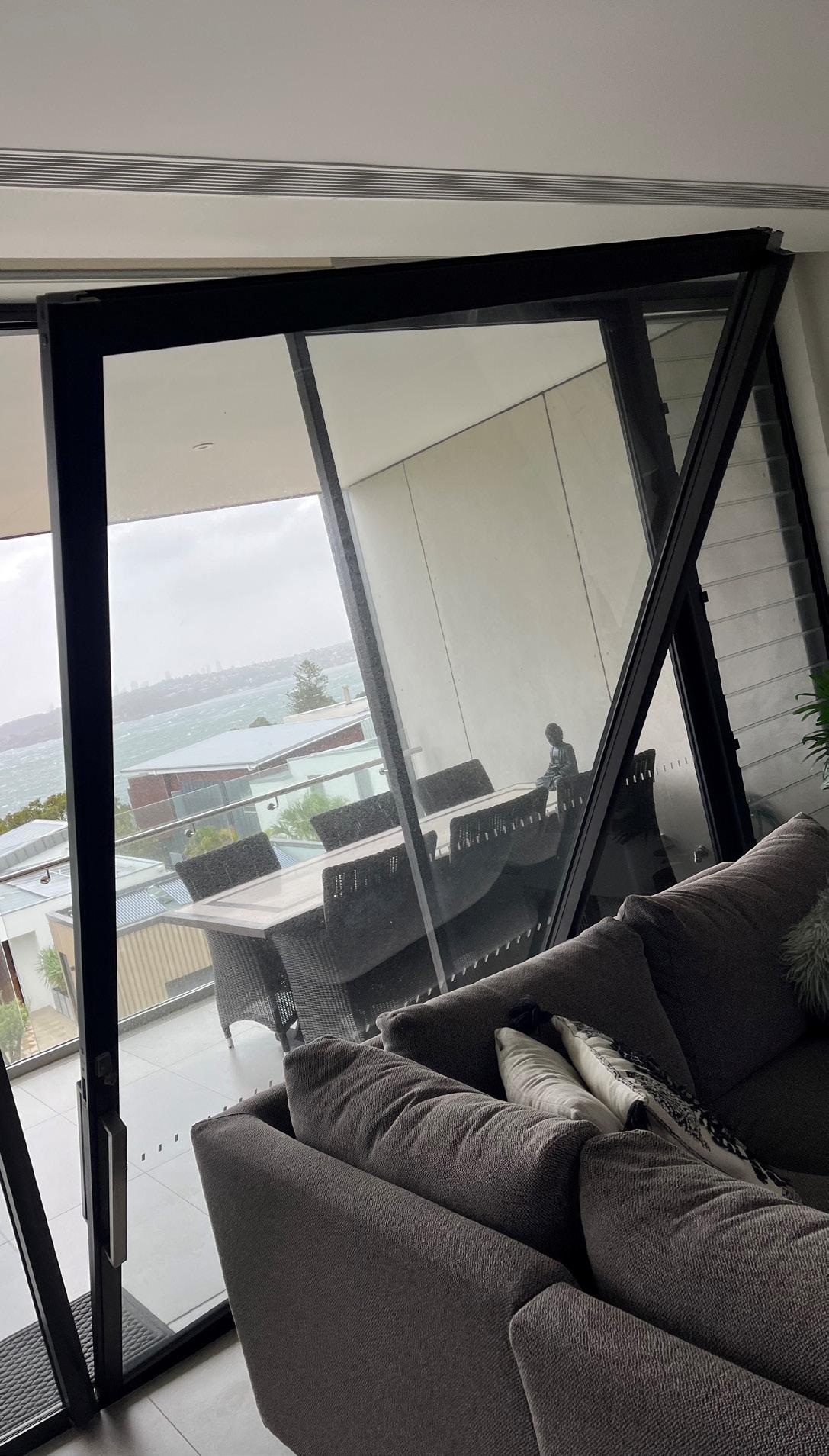
Failure to respect these limits can have catastrophic consequences. There have been documented cases where oversized units were supplied without proper engineering checks, resulting in glass breakage, frame distortion, and even complete system failure during extreme weather events. Such failures not only pose safety risks but also expose manufacturers and builders to legal liability and reputational damage.
Understanding Price Pressure in Today’s Aluminium Market
Australian manufacturers are feeling the shift. After several years of relative stability, the global aluminium market has entered a new and more volatile phase, defined not by collapsing demand or booming domestic production, but by tightening supply, and global trade disruptions that are pushing costs higher across the board.
It is a challenging moment for the sector, and Capral CEO Tony Dragicevich says it is more important than ever to clearly explain why pricing pressure is building and what it means for businesses that rely on aluminium every day. As Tony puts it, ‘aluminium isn’t expensive because suppliers are inflating prices, it’s expensive because the world that makes aluminium has fundamentally changed’.
Worldwide availability of primary aluminium has decreased significantly. London Metal Exchange (LME), the global benchmark for pricing, inventories have fallen from more than 3 million tonnes just a few years ago, to around 700,000 tonnes by mid-2025, one of the lowest levels recorded in more than a decade. This shift signals a move away from the surplus conditions towards a prolonged global deficit.
Why aluminium prices are rising
The primary contributor to rising aluminium costs for Australian manufacturers is the LME. Tony explains, ‘when we refer to aluminium prices being “up”, it usually means that the LME price per tonne has risen. The LME reflects the balance of global supply
and demand, so even if local conditions in Australia are stable, global events can still cause price shifts here. For Australian manufacturers, the LME price is a key component of the raw material cost for any aluminium product’.
Throughout 2025 the LME aluminium price had held between US$2500 and US$2900 per tonne, supported by low inventories, geopolitical uncertainty and constrained global supply. In its most recent outlook, HARBOR Aluminium Intelligence noted that prices are now approaching US$3000-US$3300 per tonne, with the potential to reach that zone as early as this quarter. If current supply and demand conditions persist, HARBOR anticipates an average of around US$3225 per tonne in 2026.
These increases matter in Australia because the aluminium market is globally connected; when major economies pay more, metal is redirected to the regions willing to pay the highest premiums. This reduces availability for Australian buyers, even when domestic demand is steady. Higher smelter energy costs, reduced Chinese exports, and the diversion of Russian material have only intensified the supply squeeze. As Tony notes, ‘we’re no longer operating in a market where billet is abundant and easily sourced, every tonne now has to fight its way through competing global pressures’.
Energy costs and policy are reshaping smelting economics
Energy remains the single largest input cost in aluminium production, and volatility in global energy markets is reshaping
smelting operations worldwide. In Europe, the energy crisis has led to major smelter curtailments, removing significant capacity from the market. In China, output has been limited not only by low hydropower availability but also by national capacity caps, stricter environmental rules and requirements to shift older coal-based smelters to cleaner regions, all of which have slowed primary production growth. These policies support China’s long-term decarbonisation goals but constrain its ability to lift supply quickly. In Australia, rising electricity costs continue to place pressure on local smelters, with increasing uncertainty around the long-term operational viability of the Tomago smelter in New South Wales. Together, these factors mean less primary aluminium entering the global system and reduced billet availability for downstream manufacturers.
Geopolitics has redrawn the supply map
Geopolitical tensions have further altered aluminium supply chains. Sanctions imposed by Western nations and voluntary buyer decisions have disrupted traditional trade flows. The United States and United Kingdom banned new Russian aluminium deliveries to LME warehouses in 2024, while many European buyers continue to avoid Russian metal altogether. In contrast, China has absorbed a substantial share of Russia’s redirected supply, with imports rising by 48% year-on-year in early 2025, further tightening availability.
What this means for Australian manufacturers
The combined effect of these global pressures is substantial
with higher input costs placing strain on margins and increasing the complexity of quotations, especially with long-term project planning. Capral continues to invest in local capacity, operational efficiency and diversified international sourcing to maintain supply reliability. At the same time, Tony stresses that these conditions reflect a structurally altered global market rather than a temporary disruption. Tony is clear about Capral’s role in this environment, saying, ‘our job is to stay reliable, be upfront with our customers, and keep them informed as these global pressures play out. The manufacturing sector here is resilient, and aluminium is a critical part of that. If we stay focused, keep investing, and work closely with our customers, we’ll get through this period and come out stronger’.
Looking ahead
Most major analysts now expect aluminium prices to remain elevated through 2026, with the market moving closer to a structural deficit as early as next year. Supply constraints, weak global inventories and ongoing geopolitical disruptions are likely to continue shaping pricing throughout 2026, even if demand growth remains uneven across regions. While forecasts differ in their detail, the direction is consistent: supply will stay tight, premiums will likely rise, and volatility will continue to influence purchasing patterns and project planning. In this environment, strong and transparent partnerships between manufacturers and suppliers will be essential.
Considering an Entry in the 2026 AGWA Design and Industry Awards? Read this first!
Lara McCollin Owner and Vision Influencer, ABC of Design
After years of being a judge on the AGWA Design Awards, I have found that every year the calibre and quantity of submissions is improving, making the competition bigger and more exciting to be a part of. I would like to give you some important tips to help you get that winning entry.
What we love to see is glazing made into an impeccable feature that complements the builds design for a unique and outstanding finish. Or a component or window system that revolutionises the market. But the behind the scenes are just as important, whether it is making the design work in the factory, getting to site or an installation project that has the team putting their best feet forward — it’s the story behind the build that can be what gives your entry an edge.
When you think back to what you have completed in the last couple of years, are there any projects that make you proud? Was there an aspect of a project that you will talk about in the years to come that show what you are capable of? That’s the one to consider.
There are 3 areas to get those points across to us in your submission. In General Information, we want to know WHY the project is nominated, WHY it’s good for industry and WHY your instinct or passion is putting it in front of us.
Was it a first? Was the product helicoptered in? Does it incorporate an innovative product or procedure that you think the industry can learn from? You don’t have to tell us ALL your secrets, but it’s good to know what is possible!
The next section to elaborate on is the Technical Details . This is the HOW. HOW did you achieve the project? Tell us the good bits, tell us the challenges — maybe they are one and the same! HOW does this change your workflows/capabilities in the future? And of course, we are verifying that you have evidence of compliance.
The final aspect Sustainability is about the WHAT. WHAT you achieved and WHAT you did to make it happen! If you can brag about the fact that WHAT you do in-house to beat sustainability requirements, but that on this project you hit it past the cricket outfield, then we want to know about it.
There are some specialist categories, also. For showrooms, tell us what you aimed to achieve with your design, and did it suit, or did it outperform? Give us a good example to make your entry stand out. If you do have AGWA signage up in your showroom, MAKE SURE it is in the photos you submit as we look for it. Mentioning that your showroom contains 100 out of 105 products shows how comprehensive your showroom is and helps understand the features. Either way, make sure we can gauge the effectiveness of the inclusions.
Innovations are a brilliant way to make a business stand out. Greater efficiencies are a game changer. So, tell us if your innovation is new to the Australian market. If not, why does your product outdo others that are? How much of the market will it affect? Or is this a new trend to stimulate the industry? If it has a sustainable life cycle, or extra efficiencies in the environmental performance, make sure we are aware of how that performance compares to what is available now.
These Awards acknowledge excellence and inspiration within our industry. If you have produced something that the industry would be proud of, or that you think could inspire your peers, then we are looking forward to seeing what it is. Everybody is!
Remember, impact beats length. With so many entries, as much as we’d like to, we can’t spend hours on each one. Make it easy for us by telling us why you deserve this — succinctly. We’ve given you guidelines for
maximum words. Keep your sentences short, to the point and loaded with relevant information. Don’t repeat yourself. Every great aspect you tell us, wins you points. Remember, it’s about being impactful not lengthy!
Photos are SO important. We need to know what we are looking at with images, so don’t assume that we do. Make it easier and in the image name, tell us why it deserves a win, eg, incredible sealing job on a complex corner, unloading glazing from the boat, installing an Australian first! If you have a video, consider how much real impact it offers.
Get rid of the clutter around the photo. We’d rather be looking at the beautiful shower screen than the pair of thongs in the corner or the incredible window rather than the dog on the couch.
Give us imagery to inspire and that makes us want to visit!
Good luck with your entries. The judges and I look forward to seeing them!
Entries close on Thursday 30 April at 11.59pm. Don’t delay. Get
YOUR PARTNER FOR SUCCESS
•
•
•
To find out more contact
Glaston ULTRA TPS® Thin, Fast and Future‑Proof
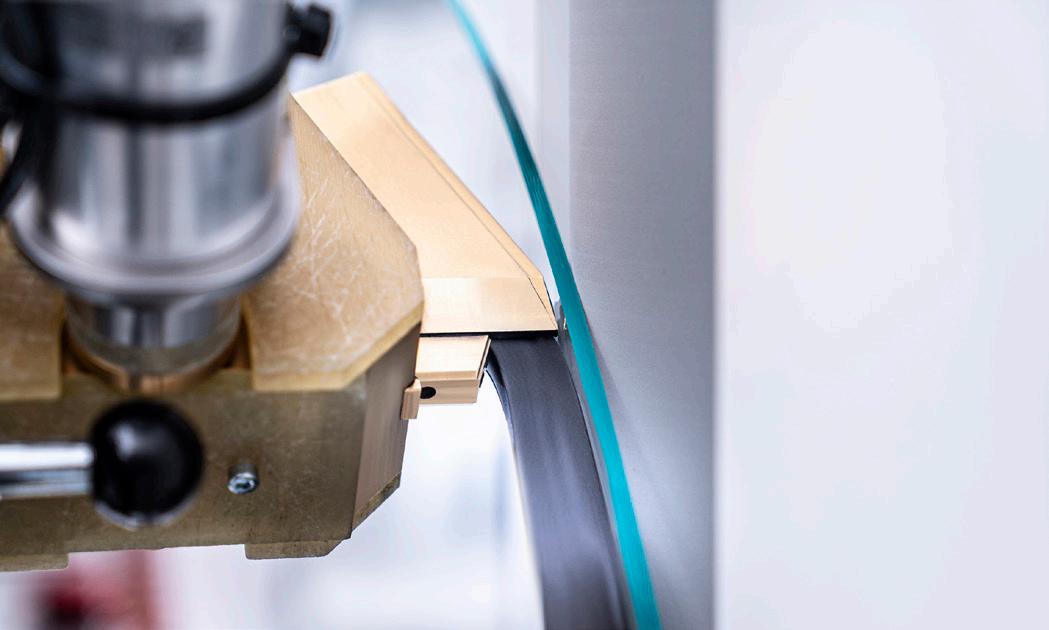
In an industry racing to cut emissions without compromising design, Glaston’s ULTRA TPS ® reads like a blueprint for what insulating glass should become. At its core is a patented process sequence, enabling triple IG units with an ultra - thin centre pane down to 0.5 mm, shrinking weight while unlocking performance once reserved for bulkier constructions.
That thin centre glass is fully encapsulated within the secondary sealing layer, a detail that protects the pane and safeguards long- term durability.
This is not innovation for innovation’s sake; it’s a pragmatic answer to the renovation wave. ULTRA TPS ® triple units are significantly lighter than traditional triples and can replace existing double glazing with a slimmer package, an elegant fit for today’s efficient, slim frames.
The result is easier installation, better U-values that remain relevant for decades and higher visible light transmission thanks to thinner glass with lower embodied carbon.
A highly automated line minimises human intervention and operates in high - speed mode, simultaneously assembling and gas-filling two units. It natively handles a wide variety of shapes, even thin quadruple units, on a single line, collapsing complexity into repeatable quality.
The TPS® story is equally about sustainability in practice. With a thermoplastic spacer applied directly to the glass, there are
no offcuts, no waste, no packaging detours; dual - drum pumps keep production uninterrupted. A compact applicator footprint eliminates spacer inventory sprawl and saves floor space, quietly transformative for factory economics.
For building owners, the benefits are simple: lighter units, reduced frame support, lower U - values and higher ROI. For producers, the upside is speed, consistency and fewer stoppages, plus the marketability of ‘green’ IG that reduces condensation, energy costs and carbon emissions.
ULTRA TPS ® doesn’t just make thinner glass possible; it makes better glass inevitable. In a market where every kilowatt- hour and millimetre matters, this is the step change the sector has been waiting for: lighter to lift, faster to produce, stronger in performance and smarter for the planet.
For more information, please see www.glaston.net.
Jotika Celebrates 10 Years in Australia
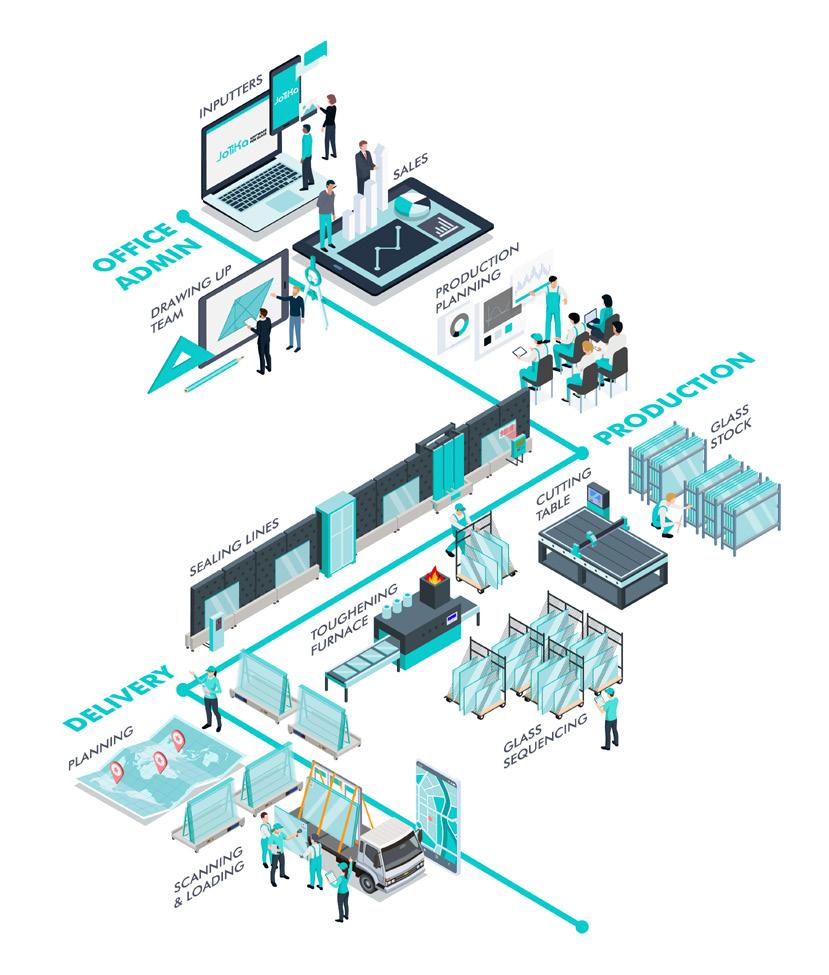
Elegant IG is proud to be Jotika’s Australian partner for Gtrak software, reflecting the same dedication to the glass industry, with professional integrity and flexible customer service.
Over 120 glass companies worldwide use Jotika’s Gtrak, from small businesses to large, multi-site operations. Jotika has been collaborating with customers in Australia for 10 years, receiving consistently excellent feedback on the product, its delivery and support.
At its heart, Jotika focuses on customer success. This is more than just an attitude; it’s at the heart of how they sell and deliver projects. Starting by properly understanding everything a customer needs to do with a software system, Jotika can configure Gtrak so that customers don’t have to change the way they work.
Gtrak is a flexible, reliable glass management software backed by outstanding support from Jotika and Elegant IG. Businesses implementing Gtrak unlock rapid growth, make substantial savings on materials and energy, and deliver better customer service, more efficiently.
Gtrak offers complete functionality from order through to delivery, helping to manage your glass business. You only pay for what you need and can add more capabilities as you grow:
• Order and production management sit at its core, with optional stock control, barcode tracking and load assist for flawless dispatch and delivery.
• Many customers save big on energy and material costs with the highly acclaimed furnace optimisation and glass optimisation.
• Fully integrated design tools make it quick and intuitive to create regular and irregular shapes, cutouts, and other features.
For more information, please visit Jotika.com or call Elegant IG on (02) 9473 6500.
Delivered fast. Made to last. Precision-made aluminium doors, delivered
in 2 weeks
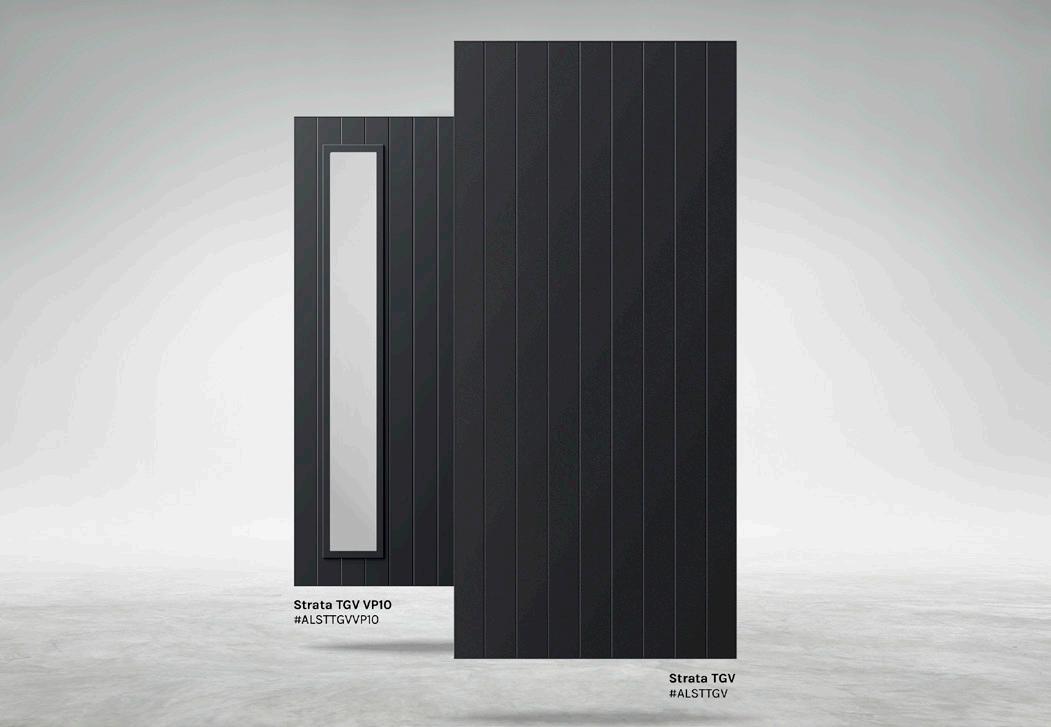
In a market where build schedules move fast and first impressions matter more than ever, Parkwood Doors is raising the standard for aluminium entry doors with Door Express.
DELIVERED FAST. MADE TO LAST. is not just a line, it is the promise behind a new range of precision-made aluminium doors delivered within 2 weeks to metro areas. This range is designed to keep projects moving without sacrificing design, performance or durability.
Designed with architectural form and materiality in mind, Door Express offers statement ready profiles and clean, contemporary detailing that complement today’s most sought-after exterior palettes. Choose from a refined selection of colours, including Monument Black and Pearl White, to deliver timeless appeal across modern residential and architectural builds.
With custom heights up to 2700 mm and standard widths including 820, 870, 920, 1020 and 1200 mm, Door Express makes it easier for fabricators and glazing professionals to deliver premium outcomes faster.
Ordering is streamlined through the Parkwood Online Portal, allowing you to configure your door with ease.
Free drilling for standard locks helps reduce workshop time and simplify installation.
When speed is critical and quality is non-negotiable, Door Express provides the confidence to specify aluminium doors that are built for modern projects inside and out.
For more information, please contact sales@parkwooddoors.com.au
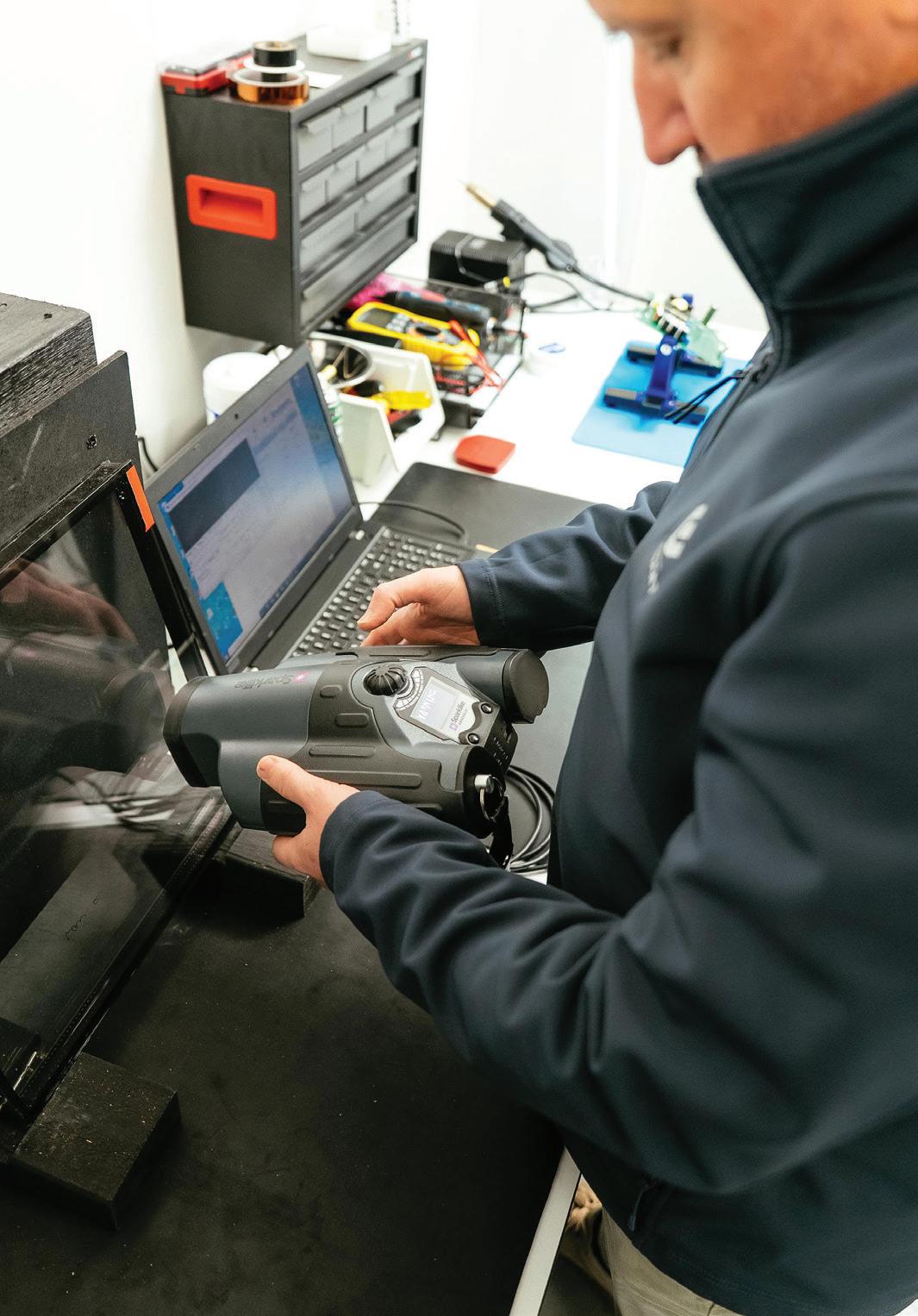
Two years into Sparklike calibration, and the results speak for themselves. We’ve successfully calibrated over 52 handheld units, welcoming equipment from Southeast Asia, Australia, and New Zealand.
If you would like further information on all Sparklike products please visit our website www.elegantig.com.au or contact one of the Elegant team on 02 94736500
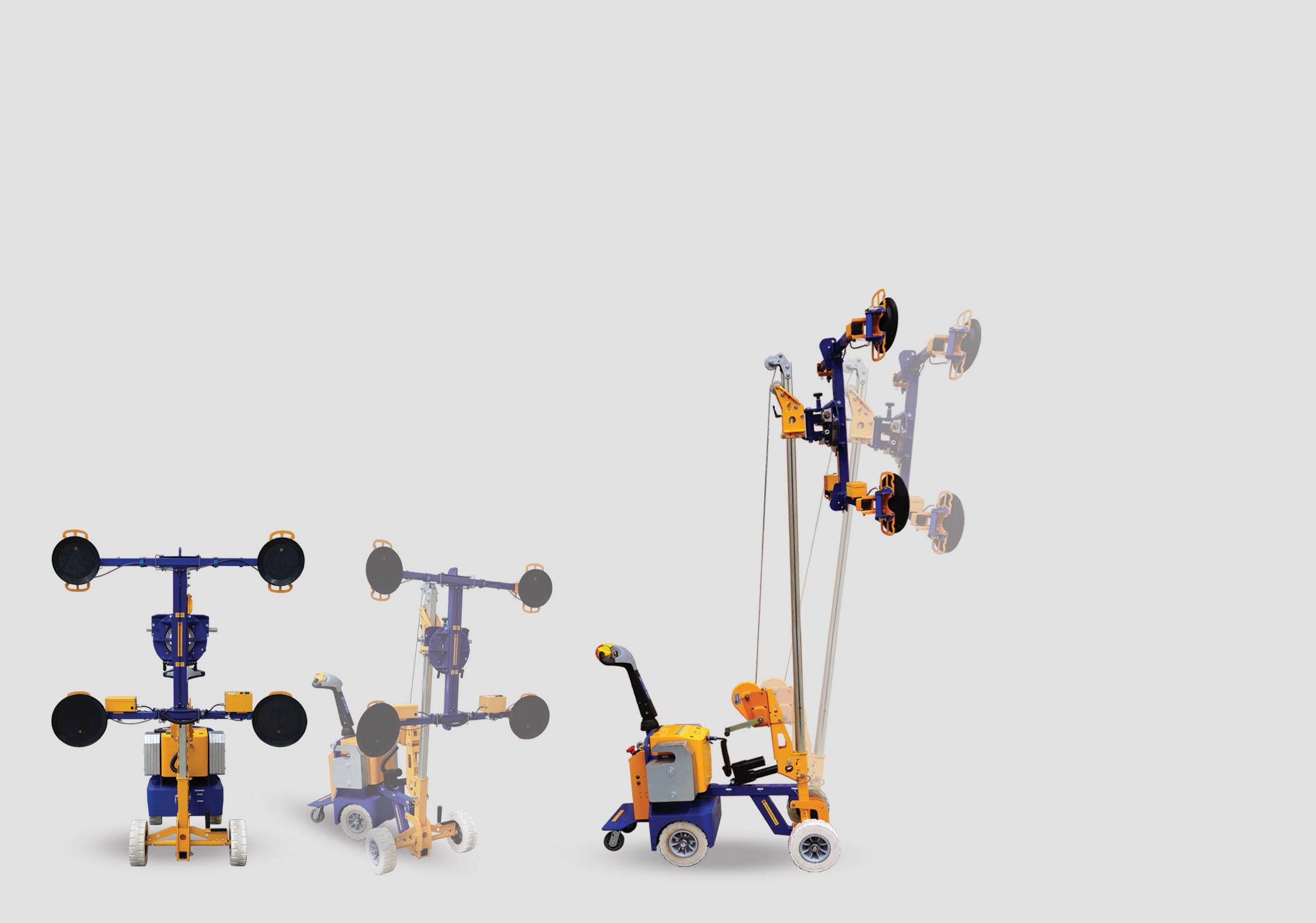
LIFTING CAPACITY UP TO 350KG
• Ideal for glazing in confined areas
• Includes Mast Extension for greater Height Reach
• Vacuum head can be Tilted, Rotated and Side-shifted
• Side-Pivot Panels through doorways
• Moves panels over uneven ground on site
• Self-propelled, Battery-operated rear tug
• Separate Vacuum system with Alarms for added Safety
• 2 x 300mm & 2 x 250mm adjustable and flexible Vacuum Cups
• Fully counterweighted machine
• 1 – 2 person operation
Mat Thorne, Production Manager at Paarhammer is awarded ‘Australian Manufacturing Worker of the Year’
At the Australian Manufacturing Awards held in November last year, Mat Thorne won the ‘Manufacturing Worker of the Year’ Award.
Mat started with Paarhammer Windows and Doors for work experience while still at high school and followed through by commencing his apprenticeship when he turned 16. His dedication, leadership and technical skill saw him rise quickly through the ranks, becoming production manager just a few years later.
Over the past decade, Mat has led production operations, trained apprentices, and played a key role in R&D, helping to expand Paarhammer’s range of energy-efficient and bushfire safe windows and doors.
In 2025, Mat completed a 12-month course to become a registered TAFE Teacher and Workplace Trainer and Assessor, furthering his ability to mentor the next generation of skilled tradespeople.
His strong sense of community is equally evident through his volunteer work with the local CFA, where he continues to serve and lead.
Edith Paarhammer says ‘we are very proud of Mat and his achievements! We are thrilled that he received this well-deserved award’.
TPS®. The Original from the Inventor.
Change your glass game with the latest advancements in TPS® technology.
Process ultra-thin 0.5 mm center glass for triple or quadruple TPS® IG units. And get 20% greater insulation with the same IG unit thickness and weight.
Peter Laing: Celebrating his Career and Retirement
After an impressive career spanning more than 4 decades, we celebrate the retirement of Peter Laing — a respected colleague, mentor, and friend to many in our industry, and whose impact on the glass industry has been both significant and enduring.
Peter’s journey in glass began back in the mid 1980s at Clarkson’s Port Adelaide, where his talent for building relationships and developing deep technical knowledge became clear early on. In 1988, Peter joined LG Abbotts and just a few years later, he played an important part in one of the SA glass industry’s major transitions — the 1991 merger that brought together Abbotts, Clarksons, and T&K Glass under the new banner of Pilkington Distribution. Peter became known as an exceptionally knowledgeable and well-respected Architectural Representative. His commitment to raising industry standards also extended to education, as Peter served as a TAFE lecturer, sharing his experience and helping new generations understand the complexities of glass and glazing.
In 2006 Peter was awarded the South Australian Glass Person of the Year Award. Peter’s contribution to industry was further recognised with him being named the 2017 National Glass Person of the Year. Peter was an active member and contributor to the AGGA Glass Technical Committee over many years. This continued under AGWA with Peter being an active participant of the AGWA glass technical committee.
As Peter moves into retirement, we celebrate his career and passion for our industry. We thank him for the many contributions that have shaped our industry and enriched the people around him.
Congratulations, Peter. Enjoy the well earned days ahead.
AGWA Welcomes the following New Members
Austral Exteriors, Douglas Park, NSW
Byron Glass & Aluminium, Mullumbimby, NSW
Eco Vision Group, Clayton South, VIC
Formalux, Neerabup, WA
H2 Custom Joinery, Rydalmere, NSW
IG Blinds, Molendinar, QLD Landson Glass, Qingdao, China
ProCon (Shandong) System Windows & Doors, Weifang City, China
Superform Glass, Old Guildford, NSW
Torres Straight Glass, Thursday Island, QLD
IG Blinds appointed the exclusive distributor of Pellini ScreenLine®
In February 2026, IG Blinds was appointed the exclusive distributor of Pellini ScreenLine® integral blind systems across Australia and New Zealand. Manufactured by Pellini SpA in Italy, one of the world’s largest suppliers of integrated blind systems, ScreenLine ® features venetian, pleated and roller blinds sealed within double and triple-glazed insulating glass units (IGUs). The system delivers maintenance-free shading, enhanced solar control and long-term durability, making it a preferred solution for high-performance commercial, healthcare, education, and premium residential projects.
‘Pellini ScreenLine ® represents the global benchmark in integral blind technology’, said Phil French, Managing Director of IG Blinds. ‘We’re proud to bring this premium, performance-driven system to Australia and New Zealand, backed by local supply and technical support.’
Fully sealed within the glass cavity, ScreenLine ® eliminates dust, moisture, handling damage, and ongoing maintenance, while supporting clean architectural aesthetics, glare reduction, thermal performance, and occupant comfort. The system is compatible with low-E and high-performance glazing and supports increasingly stringent energy-efficiency requirements.
‘ScreenLine ® allows shading to become part of the glazing system, reducing visual clutter, while improving durability, performance and design outcomes’, French added.
New Appointments at Glassworks
Glassworks is pleased to welcome 2 experienced industry professionals to the team.
Joining the business over the past 12 months, Christie Tountas and Peter Broughton bring extensive experience across the glass supply chain. Their roles support the expansion of sales capability and the ongoing management of warehouse and distribution operations following the closure of Oceania.
Christie Tountas — Merchandising Account Manager
Christie Tountas brings more than 20 years of glass industry experience and has spent her career working closely with customers across a wide mix of roles, including customer service, export, estimating, account management, and branch management.
She understands the full customer experience — from first enquiry through to delivery — and has built long standing industry relationships.
Christie’s background makes her a great fit to help grow Glassworks’ merchandising arm, strengthen customer relationships, and support the sales team as the business continues expanding its merchandising and distribution capability.
Peter Broughton — Warehouse & Distribution Manager
Peter Broughton joins Glassworks with more than 30 years of hands on experience in glass warehousing and distribution with
Key benefits include:
• Sealed-for-life, maintenance-free operation.
• Improved solar, thermal, and visual comfort.
• Clean, minimalist design — no external blinds or curtains.
• Child-safe, hygienic, and durable.
• Manual, motorised and smart-automation control options.
• Compatibility with aluminium, uPVC, timber, and curtain-wall systems.
ScreenLine ® is suitable for windows, doors, sliding systems, façades, and curtain walls, supporting both architectural performance and design intent.
Through this partnership, IG Blinds will provide local distribution, specification support and project assistance to architects, façade consultants, glass processors, and developers across the region.
Pilkington, Viridian CSR, and Oceania Glass. He’s worked across everything from despatch and national logistics management to transport compliance, with deep knowledge of float liner operations and heavy haul transport.
Peter’s expertise will help support Glassworks’ growing distribution network, including deliveries of bulk glass across the Eastern Seaboard and into South Australia.
Building capability for the future
Glassworks has long-standing global relationships with major suppliers of float, coated, laminated and mirror products. This has helped it navigate the transition from locally manufactured glass to imported product to ensure surety of supply to their customers both new and existing.
Christie’s and Peter’s appointments build further on this and, in addition to the existing crane truck fleet, their knowledge and experience will help support the introduction of floatliner deliveries to Glassworks’ customers in the near future.
VIRTUS LOCKING
For hinged and sliding doors
Designed to work seamlessly with Verta and Forge door furniture, Virtus locks offer versatile backsets for timber and aluminium panels.
Hinged: 2 and 4 point locking, 13 and 22mm deadbolt throw, optional sliding snib and magnetic multipoint rod kits. 30, 35, 40 and 60mm backsets.
Sliding: Double hook bolts and anti slam technology for safer operation. 28.5 and 40mm backsets.
Both are tested in accordance to Australian Standards and are compatible with Austral Lock’s Euro profile cylinders with single, double and thumbturn configurations to suit any application.
SideWynder™ Available
Giving heavy panels the light touch
Ideal for panels of up to 400kg
Face adjustable making installation and on-site servicing easy.