Love on Mount Pleasant
Garry Shead toasts Maurice O’Shea
Curated by Gavin Wilson
First published by Australian Galleries and Garry Shead 2010
Australian Galleries Publishing PO BOX 1183 Collingwood Victoria 3066 T + 61 3 8415 1524
publications@australiangalleries.com.au www.australiangalleries.com.au
This book is copyright. Apart from any fair dealing for the purpose of private study, research, criticism or review, as permitted under the Copyright Act, no part may be reproduced by any other process without written permission.
Design: Suzy Ditterich
Production Manager: Stephanie Hall
Printing: Adams Print
Photography: Brian Fimmell
National Library of Australia Cataloguing-in-Publication entry Wilson, Gavin, 1952Love on Mount Pleasant: Garry Shead toasts Maurice O’Shea Gavin Wilson, essay. gavinwilson.com.au
ISBN: 978-0-6481162-8-8 (pbk.) (2nd edition)
Subjects: Shead, Garry, 1942---Exhibitions. O’Shea, Maurice, 1897-1956--Influence. Wine and wine making--New South Wales--Mount Pleasant, Art, Modern--Australia--20th century--Exhibitions.
Other Authors/Contributors: Shead, Garry, 1942Australian Galleries Pty. Ltd. 759.994
All works reproduced in the catalogue are by © Garry Shead and are reproduced with his permission.
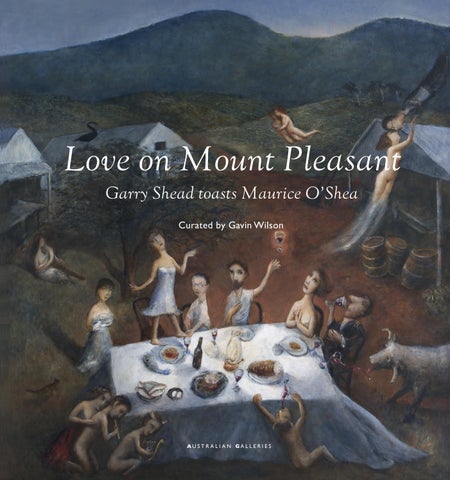
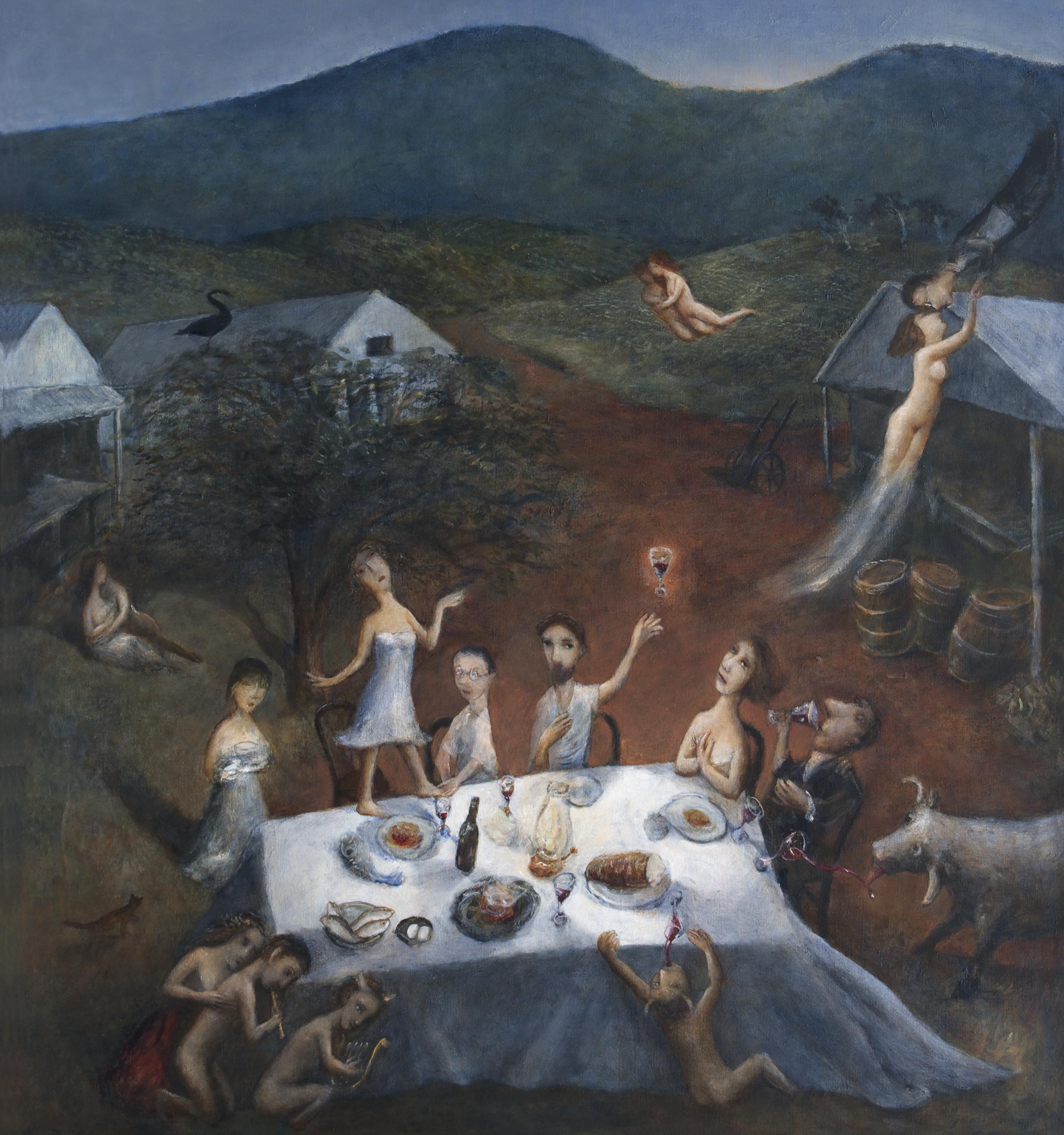
Front cover: cat no 7 Retinue of Dionysus (detail) 2010 oil on linen 152 x 122 cm
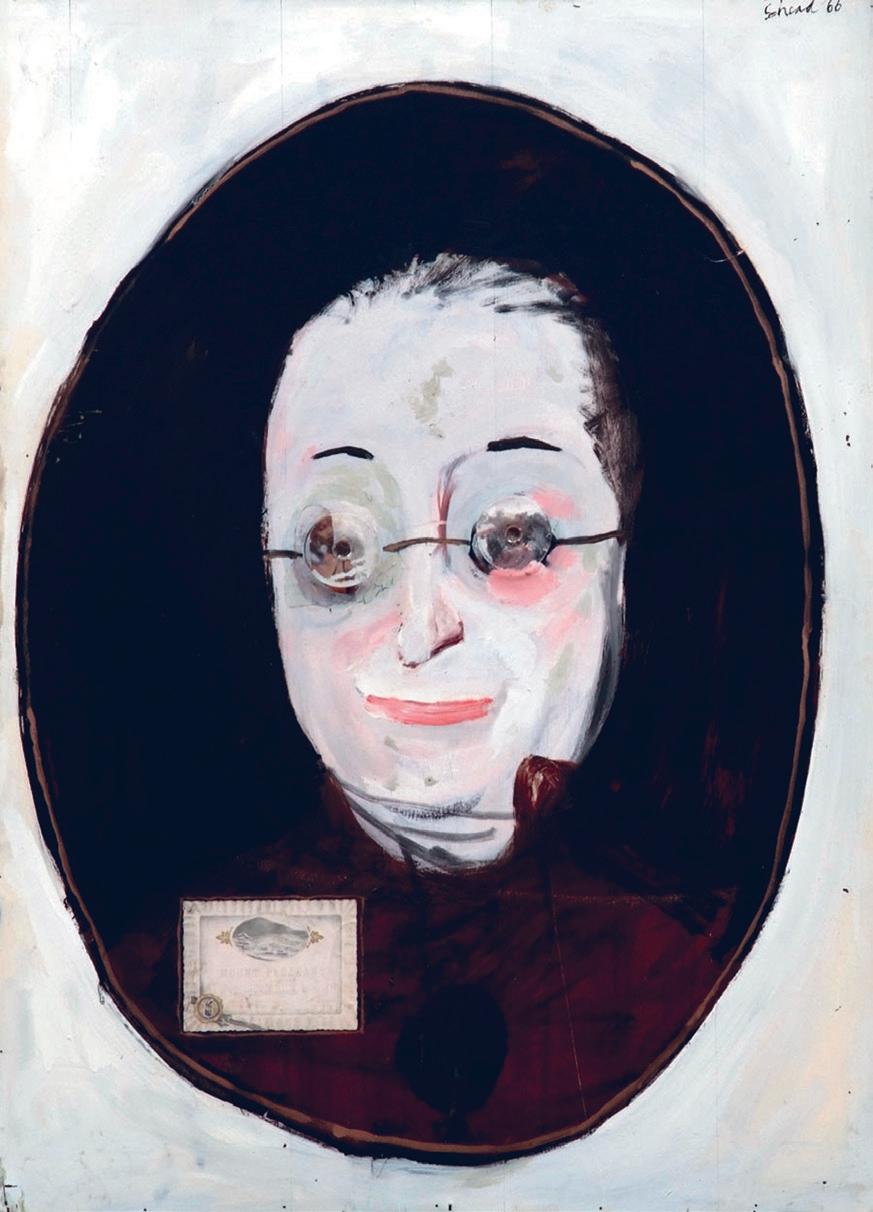
Back cover: cat no 29 Maurice Bemused 1966 oil, enamel, wineglass bases and Mount Pleasant label on board 93 x 67 cm
Love on Mount Pleasant
A USTRALIAN G ALLERIES
Garry Shead toasts Maurice O’Shea
We are delighted to collaborate with Garry Shead and are proud to support the arts as the official wine partner to the Art Gallery of New South Wales.
The Love on Mount Pleasant art series is a timeless piece, detailing the history of Australia’s greatest ever winemaker, Maurice O’Shea.
This book brings to life all his art, highlighting the love Garry had for his uncle and the special place that occasion had in the O’Shea family
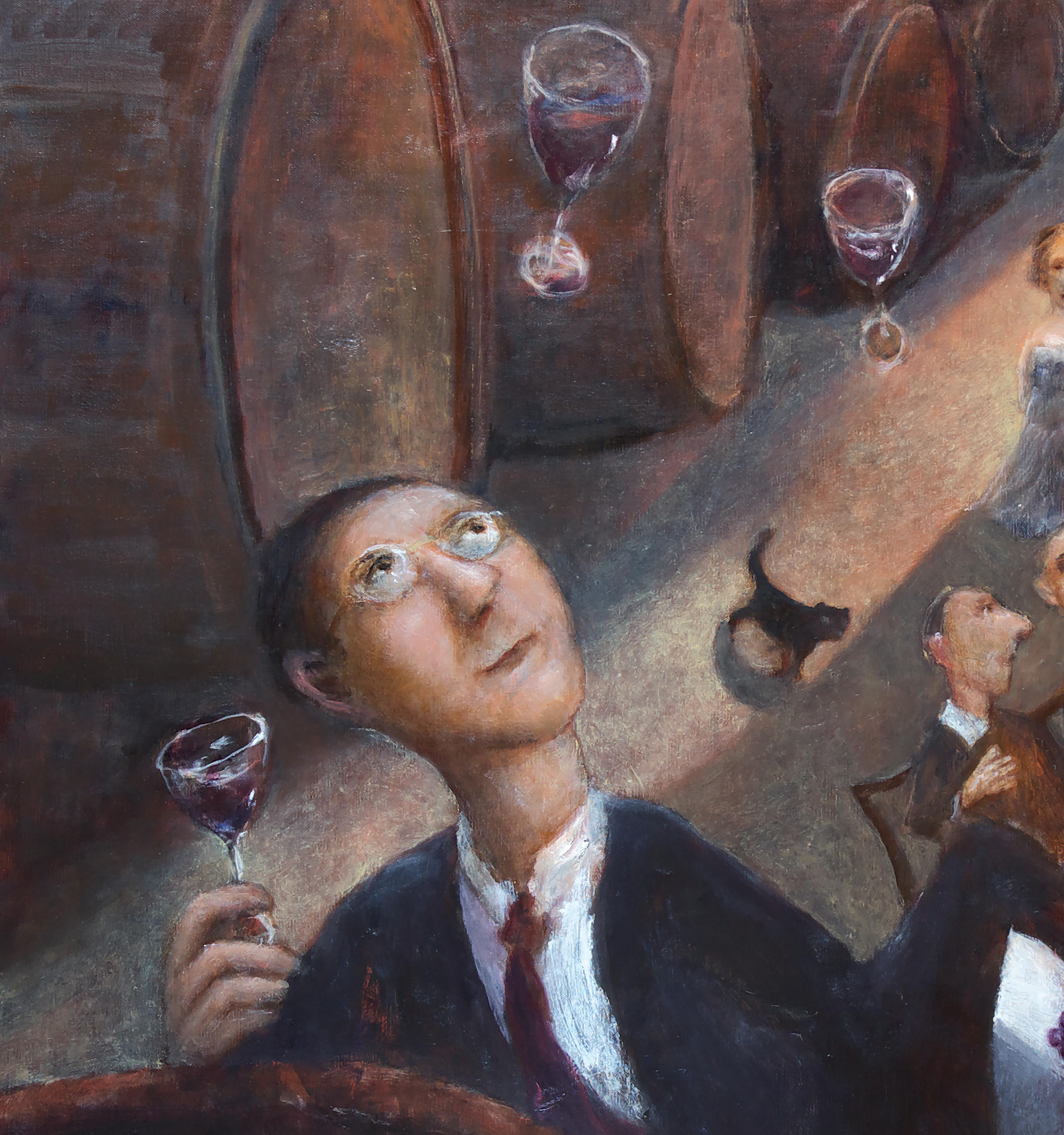
Marriage Feast at Pokolbin (detail) 2010 oil on linen 92 x 122 cm
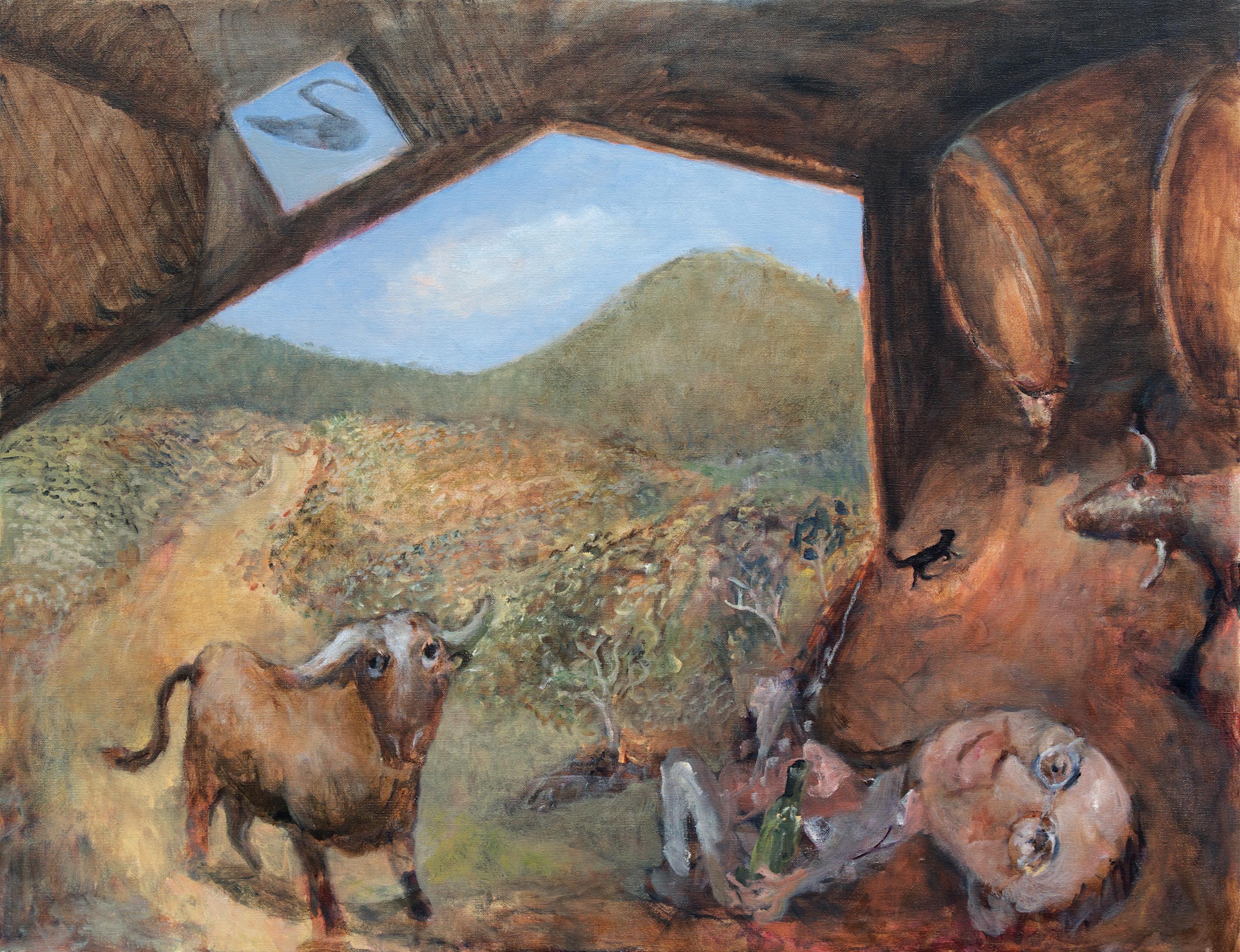
1 The Profundity of Wine 2010 oil on linen 71 x 91 cm
Love on Mount Pleasant
The gods were always going to exact a heavy toll on the man who made miraculous wines along the gentle slopes of Mount Pleasant in the Hunter Valley. That man was Maurice O’Shea, (1897-1956), the great vintner who was the uncle of celebrated artist Garry Shead (b.1942). The extraordinary story of O’Shea’s love of the land, love of his vines, and his passionate love for the beautiful young Marcia, his wife and muse, is the subject and theme of Garry Shead’s body of work, Love on Mount Pleasant.
An intriguing aspect of the Love on Mount Pleasant exhibition was its maturation. In 1966, a decade after O’Shea’s death, Shead mounted an exhibition at Watters Gallery in Sydney to honour the memory of his uncle after a visit to Pokolbin in the Hunter Valley with architect Philip Cox. Both were deeply disturbed by what they saw: not long before a demolition team had been at work. Maurice O’Shea’s corrugated iron winery at Mount Pleasant in Pokolbin, that had been the hub of a momentous outpouring of creative genius, was gone.
It was a time when much of the country’s idiosyncratic heritage was treated with scant regard. Considered an unsafe workplace and an eyesore, the old winery didn’t stand a chance. The respected wine authority, Len Evans, pleaded in vain with the McWilliams family, who had been O’Shea’s sponsor since 1932, to spare this singular piece of Australian wine-making history. Now the only records we have are in anecdotes from the few people who remembered the place, and the photographs taken by Max Dupain of the 1951 vintage.
Garry Shead is one who has vivid memories of Mount Pleasant. His mother, Nora Florence O’Shea, married Gordon Shead in 1937. She was Maurice’s youngest sister.
As a child Shead recalls the drive from Sydney’s North Shore to Mount Pleasant during the Easter holidays. The vintage was in, and it was a time to celebrate while the wines matured and slumbered in their darkened casks.
Apart from being the renowned vigneron, Maurice was a superb cook - a true gastronome, matching wines, perhaps a 1953 Mount Pleasant Florence Riesling (named in honour of Garry’s mother, Nora Florence) or the magical 1937 Mountain ‘A’ Dry Red, with scintillating dishes such as Jewfish poached in white wine, coq au vin or yabbies Provençal, or his rogue dish, bandicoot in red wine. Close at hand were fresh vegetables from the garden - eggs were never far away and milk was supplied by the cows roaming the paddocks. Maurice’s culinary marvels were fired, baked and steamed in a tiny galley kitchen on a kerosene stove tenderly evoked in Shead’s In the Kitchen (2009). Of course, O’Shea had reinforcements in the form of escapees from the city – the renowned chef, Henri Renault and his wife Jeanne were never far from the action, with further support from the great food and wine entrepreneur, J.K. (Johnny) Walker and the then director of the Art Gallery of New South Wales, Hal Missingham. This was the culmination of all Maurice’s efforts - bringing together the best of wine and food to enjoy in the company of family and friends.
The final act in a day of feasting at Mount Pleasant was a walk up the Old Hill through the gnarled old vines planted by Charles King in 1880. Looking back across the valley, a panorama unfolds linking the bush, the vines, the valley and the sky in an intense landscape experience. The scene was the subject of Garry Shead’s first oil painting, View of Mount Pleasant (1953), where the 11-year-old artist has rendered a convincing scene reminiscent of the colonial picturesque.
From this vantage point, Hal Missingham observed how Maurice O’Shea’s corrugated iron shed was indeed an integral part of the Australian landscape, and, on closer inspection, imbued with a character unique in its day. The winery encompassed a workplace with its old oak stave presses and concrete vats, cellar, studio and library, living quarters and kitchen galley. There was no electricity - all the work was powered by hand. The corrugated iron structure rose up from a dirt floor, and to keep it cool in summer, the exterior was whitewashed, intensifying the dynamic interplay of light
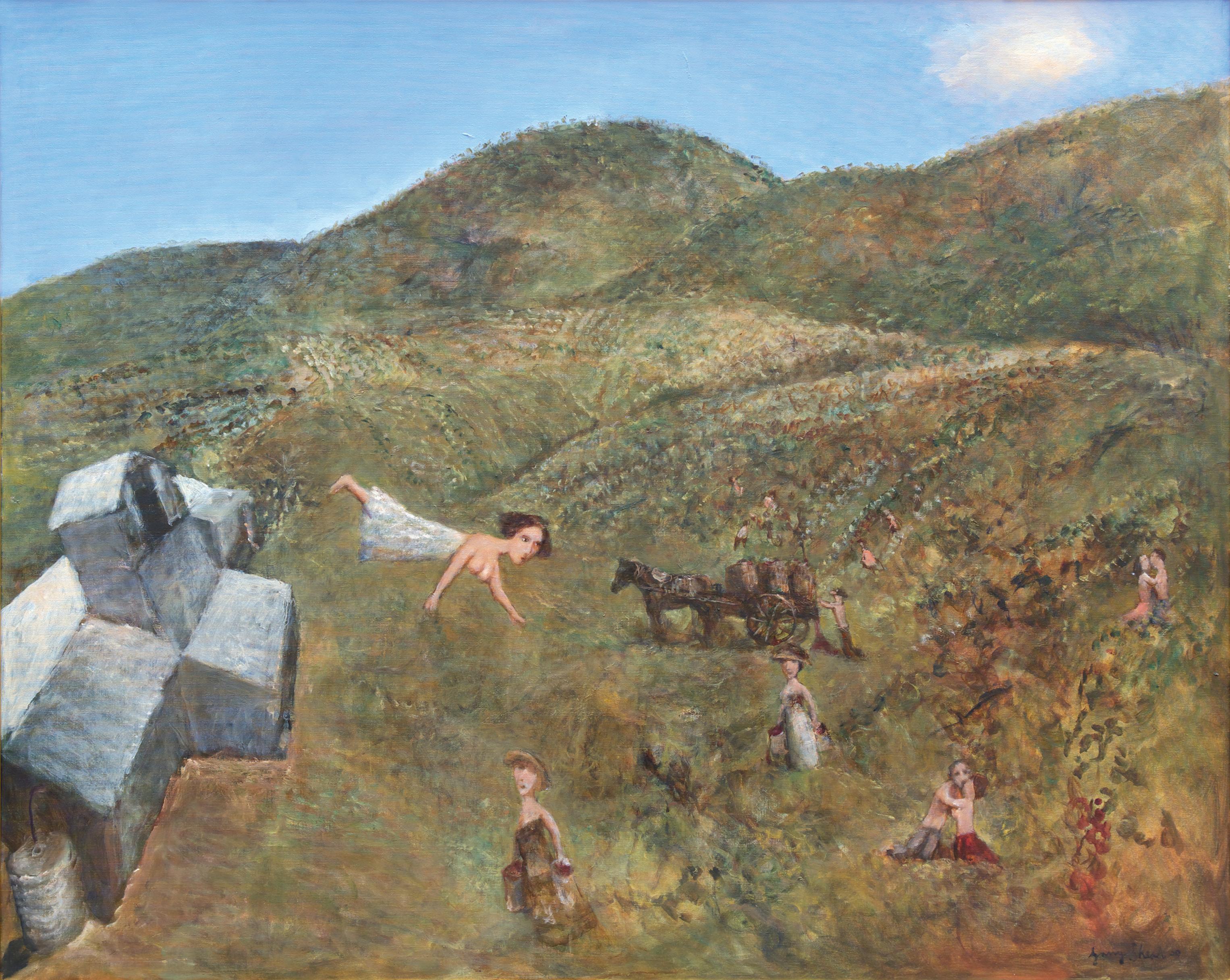
2 Vintage Mount Pleasant 2009 oil on linen 127 x 158 cm
and shade. Seen in all quarters were O’Shea’s beloved cats. On chilly evenings, he was sometimes seen strolling among the vines with one of the favoured felines draped around his shoulders.
The romance and mystery of the old winery is instilled in paintings such as Sacramental Wine (2009), where a carefree Bacchus has entered the fray intent on wooing the muse of the winemaker, who, lost in concentration, plunges an arm into the juice of the pressed grapes to assess the critical rate of fermentation in the pesky Antipodean heat. There were times he would call for a block of ice to steady the process. Workers look to the winemaker in apprehension unaware of the deity in their midst. The black swan in the skylight represents Aphrodite, a goddess well aware of Bacchus’ reputation; a symbol Maurice devised for the Mount Pleasant label.
In this magical realm at Mount Pleasant in the 1950s, Uncle Maurice supported his nephew’s nascent interest in art. He encouraged Garry, giving him books to fire the imagination. A particular favourite was The Story of Roland by James Baldwin set in the time of Charlemagne along with The Little Prince by Antoine de Saint-Exupéry and Captain Marryat’s Midshipman Easy . Guiding Garry through these texts and registering the child’s curiosity he, in effect, gave his nephew ‘permission’ to pursue an artistic career. At the time of O’Shea’s death in 1956, Garry Shead, the teenager, was coming to grips with having to wear thick, heavy spectacles to combat myopia, just as his uncle had done to eventually triumph and gain recognition as Australia’s greatest winemaker.
In 1966, with all this in mind, Shead began experimenting with ways of depicting the complex character and nature of O’Shea. In early works such as Maurice Bemused (1966), and Maurice with Bandicoot (1966), Shead’s witty use of wine-glass bases to represent his thick, rimless spectacles reveals something of the artist’s imaginative process and humorous inclination sparked by the legacy of Uncle Maurice.
Maurice George O’Shea, eldest son of an Irish-born wine and spirit merchant, John Augustus O’Shea, and French-born mother, Leontine Beaucher, was born on the 13 June 1897 at 1 Miller Street, North Sydney. Five of six children survived. In May, 1907,
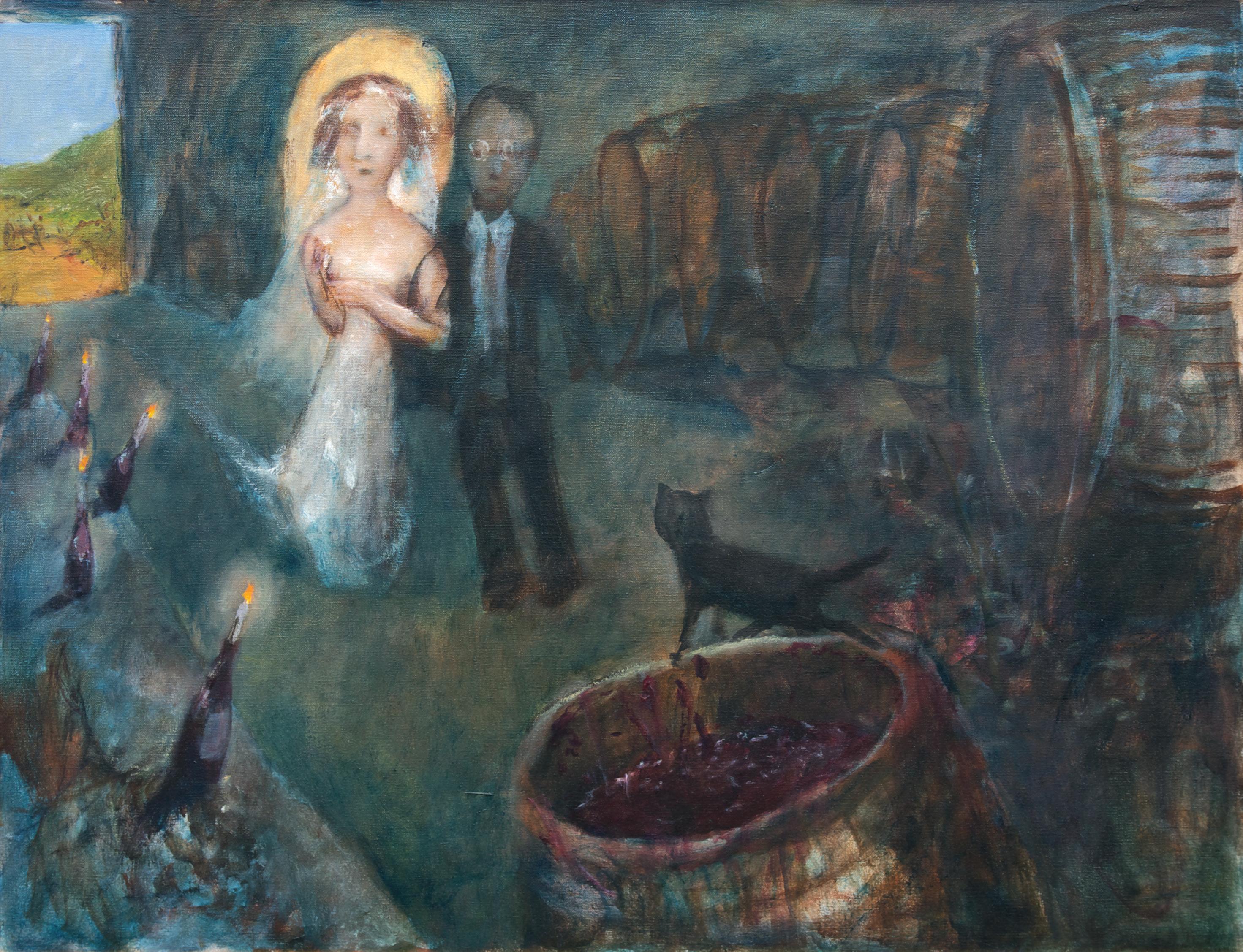
3 Marriage 2009 oil on linen 71 x 91 cm
Nora was born. She would be Garry’s mother and Maurice’s favourite sibling. Nora was 5 years-old when her father, aged 42, died from cirrhosis of the liver. It was said that Maurice inherited his father’s brain and his mother’s heart. Whatever the case, Leontine had to make a decision on the future of her 16-year-old son. The wine business was in his blood. The New South Wales Wine and Spirit Company was the family business. But first, his education would need attending to.
In 1913, Maurice was sent to France to finish his schooling at the Lycée Montpellier. Being bright and charming, he excelled. Having finished school, he was eligible for French military service but was rejected as a consequence of his extreme shortsightedness. For the next two years, he studied at the École Nationale d’Agriculture at Grignon, near Paris. He went on to complete a degree in viticultural science at Montpellier University with qualifications in botany, history and chemistry. It was here he immersed himself in the mystery of fermentation and the creation of wine that begins life with yeasts turning sugar into alcohol. He applied himself to the winemaker’s art, honing his ability to detect subtle fragrances and emerging characteristics that would intensify over time. Briefly, he lectured on analytical wine chemistry, and importantly, travelled the wine regions of France ‘…tasting the best and worst so that great wine and poor wine and the pathways to both became intrinsic to him.’ ii
These encounters would be the cornerstone of his future success. At the time, very few talented figures in the arts in Australia had the opportunity to experience first-hand the thrill of recognition that exposure to a first-rate work of art provided. Artists relied on poor reproductions while an aspiring winemaker would have to rely on the safe and gentle passage of vintages from Burgundy and Bordeaux.
By 1921, O’Shea was back in Australia well equipped to take the reins of the family business. He went straight up to the land about to be purchased in Pokolbin, and so began his love affair with this beguiling portion of vine country. Maurice understood the character of the land and the quality of the soils. From his experience in France, he knew the best shiraz grew on sloping land. He would have noted the tilt of the hill was perfect for capturing light throughout the day. On the crest was the rim of
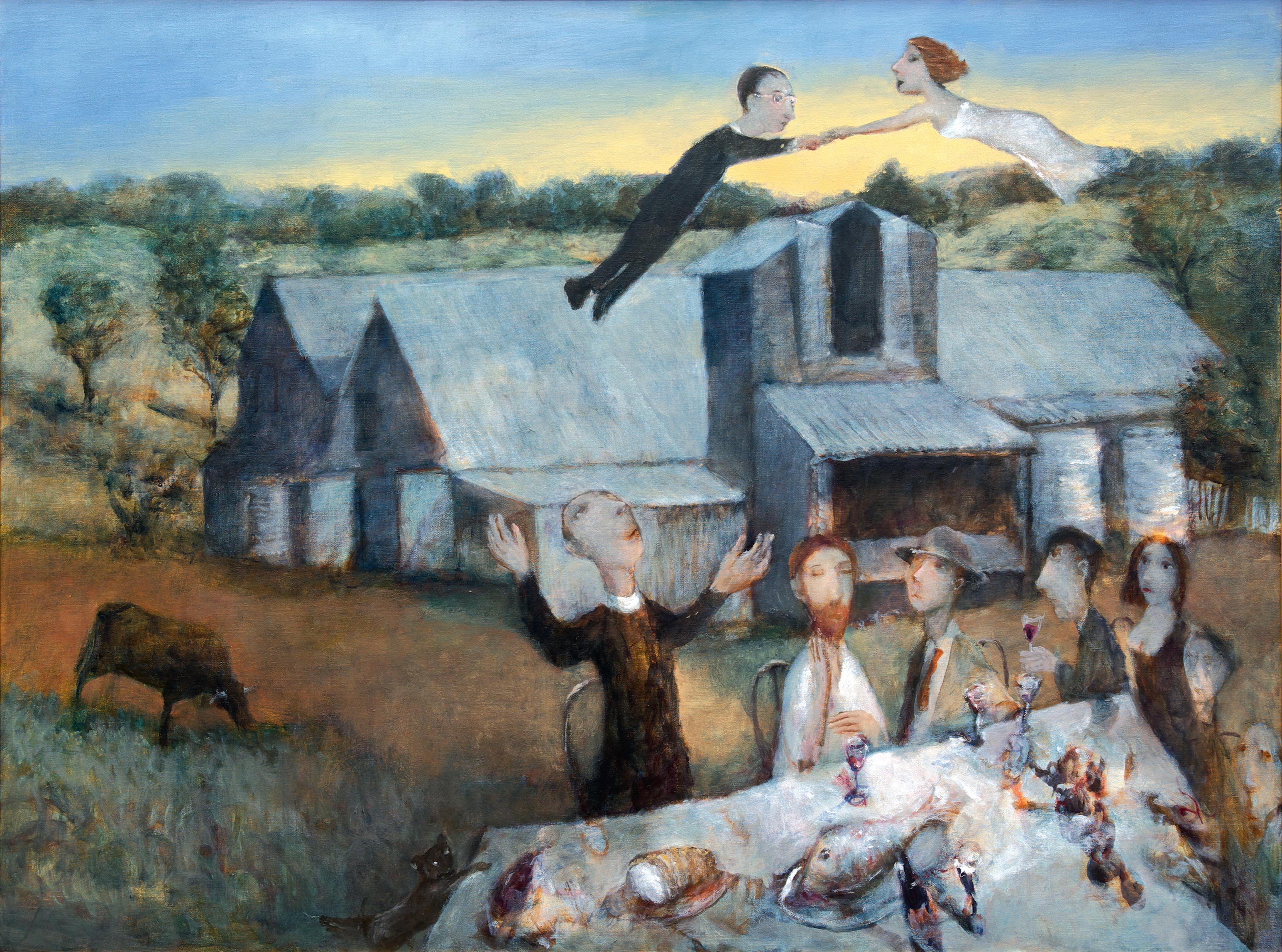
4 Outside the Church 2009 oil on linen 92 x 122 cm
an ancient volcano and below were spread rich red soils that would hold moisture, while the gravely granite content would provide good drainage. Much of the region’s landscape character along with the age-old routine around vintage time at Pokolbin is evident in the charged atmosphere of Shead’s spacious panorama Vintage Mount Pleasant (2009).
Dressed in khakis, boots and battered hat, the short, well-built figure of O’Shea went about planting his preferred vine varieties: semillon, traminer, picpoul, aucerot, white and black shiraz, riesling and pinot noir. It’s been pointed out by the esteemed vigneron, Dr Max Lake, that Maurice possessed the sensibility of an artist.iii It was with these small parcels of vines he would experiment, blending and highlighting their characteristics like a painter glazing a canvas, adjusting depth and mood, giving shape and substance to a vision. Looking at Reverie (2010), one gets the sense of the winemaker’s total immersion in the place. With the grapes ripening on the welltended vines, the vintner weighs his prospects for a memorable year.
A visit to suburban Roseville, in September 1921 at the invitation of his sister Adelina, would alter the course of Maurice’s life. It was here, at an intimate piano recital he first saw the beautiful 16-year-old Marcia Singer Fuller playing Chopin. He was instantly smitten - he had found the muse and love of his life, but all this new-found love and emotion would play havoc with his plans. If Marcia declared an interest in his intentions, marriage would have to wait until she was at least eighteen. How would a young, cultured woman adapt to life in a corrugated iron shed in the back blocks of Cessnock? For all its bucolic charm, life at Mount Pleasant was relatively primitive. And there was the vexed question of religion: Maurice was a practising Catholic and Marcia a Methodist. How was this drama going to play out? The one constant was this man’s love for a woman matched by his love of a vineyard.
In the ensuing months and years, the two lovers exchanged letters. Many are held in the archives of the Newcastle Region Library. In one exchange, Maurice made clear the extraordinary depth of his love:
‘…I want you more completely than any other lover ever held his loved one, heaven, I want also to possess even the secrets of your imagination.’
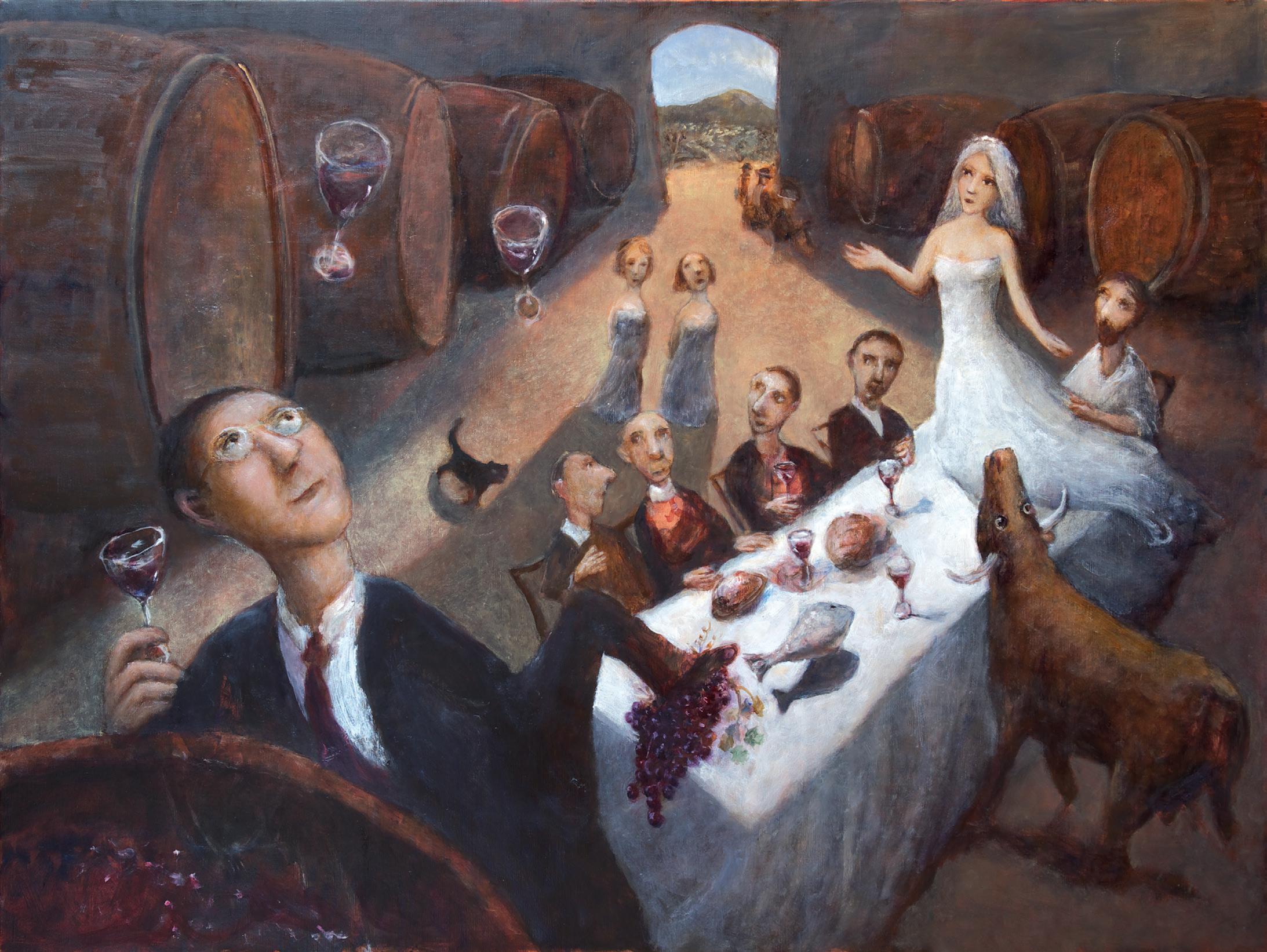
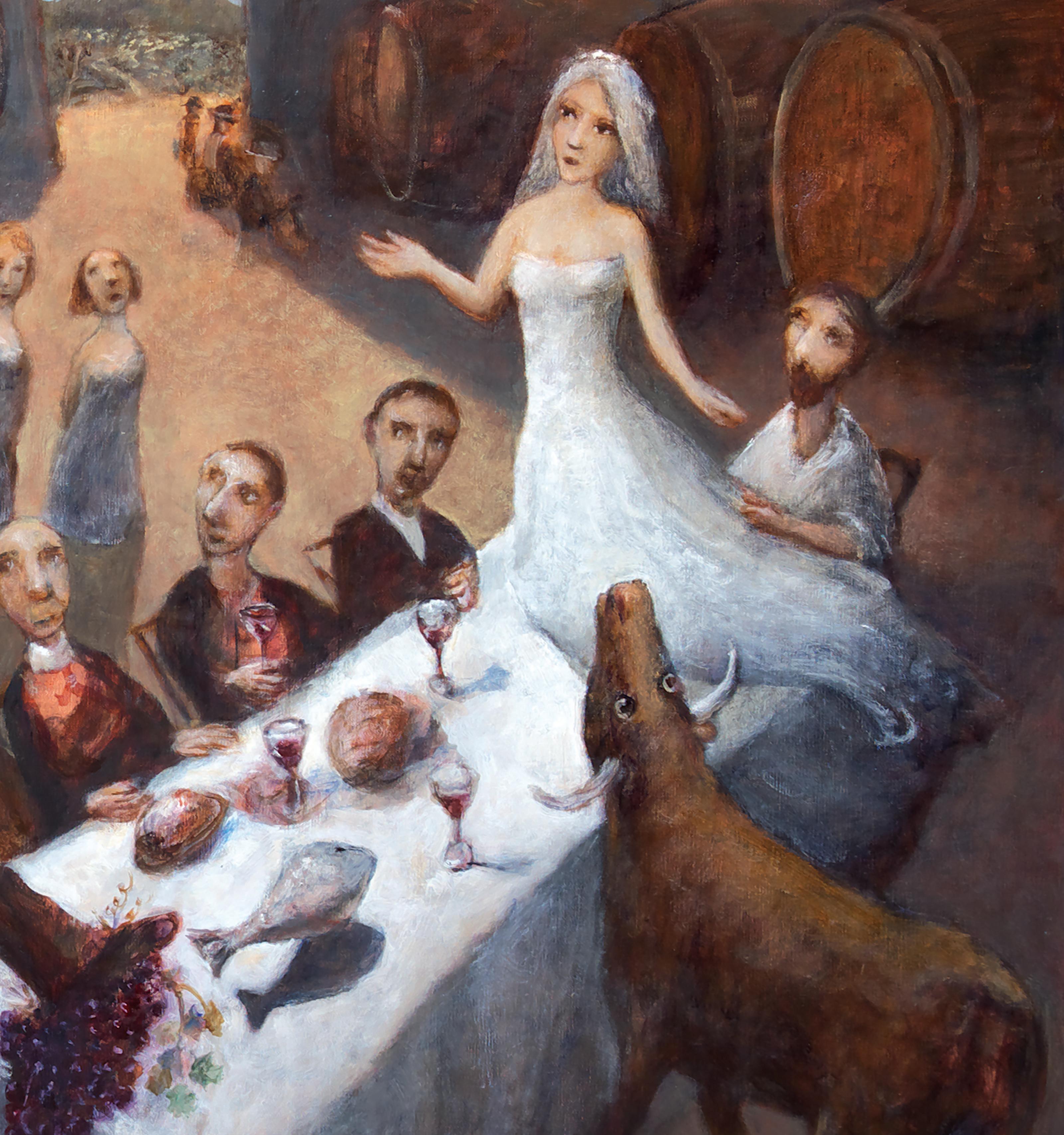
5 Marriage Feast at Pokolbin 2010 oil on linen 92 x 122 cm
Maurice and Marcia married on the 2nd December 1925 at Saint Peters Anglican Church, Newcastle.iv On Good Friday, 1926, a missive arrived from Father Quinn, the parish priest at Cessnock. He had written to Maurice condemning the marriage. Quinn had unsuccessfully attempted to convince Marcia to convert to Catholicism. Maurice was outraged at the priest’s visit to his young wife at their Cessnock home while he was at work in the vineyard. Despite Quinn’s threats of ex-communication and being denounced as a heretic from the pulpit, Maurice remained defiant.
In Outside the Church (2009), Shead has depicted a marriage feast, where the lovers are seen rising above the spectacle happy to be momentarily free of the sectarian fanaticism that would mar so many lives.v In Marriage Feast at Pokolbin (2010), a dilemma is apparent. Preoccupied with his first love, the vintner seems incapable of paying full attention to his beautiful bride - unlike the bull, who is besotted by the vision and may be a deity in disguise.
Maurice was a deeply-spiritual man who was hurt by the priest’s denunciation. He felt cast out, shunned, isolated. Only in the intense creative process of making fine wine did Maurice O’Shea find relief from the pain gnawing at his being. Mount Pleasant would be his hell and his salvation. The love of the soil, the love of the vines and his love for Marcia was instilled in each vintage he gently put to sleep to slowly grow and mature.
In the painting Retinue of Dionysus (2010), the spirit of the Greek god of wine has taken hold of a group of revellers, who are deep in the throes of celebrating a fine vintage. Maenads and satyrs, along with a parched bull, dance and cavort on the fringe of the party. In homage to Chagall lovers take their leave, while the figure of the vintner locks minds with his muse in a rare moment of unity.
The year 1937 would prove to be momentous at Mount Pleasant. After various attempts to settle as a family with their young daughter Simone in the NewcastleHunter region, they decided to separate – divorce was not an option. Marcia and Simone would leave to live in Sydney. With a heavy heart, Maurice attended to what would become his greatest vintage.
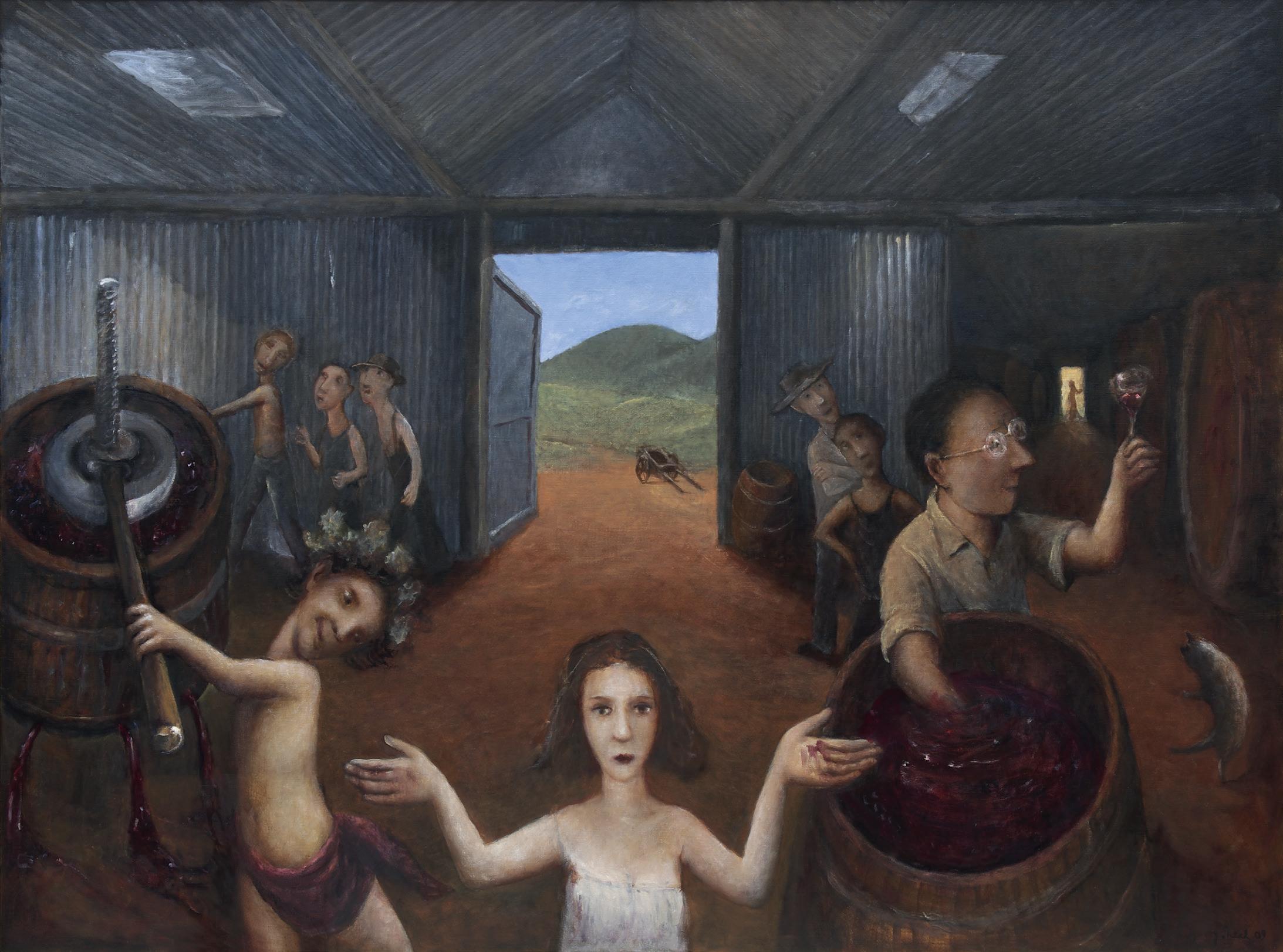
6 Sacramental Wine 2010 oil on linen 143 x 189 cm
Aspects of the drama are captured in Mount Pleasantania (2010). The work evokes ecstatic triumph and tragic loss – the fate destiny held for O’Shea. The figure of the winemaker presides over an act of transubstantiation. The wine gods have delivered him the ultimate vintage. ‘That wine’, O’Shea was reputed to have said, ‘is my heart and soul in a bottle – it is the best wine I will ever make.’ However, O’Shea’s moment of triumph was to be short-lived. The gods would exact a heavy toll for this confluence of good fortune. The figure of his lover/muse is about to be overwhelmed by a rampant satyr and borne away, leaving the winemaker alone to ponder his fate.
In the 1980s, wine authority James Halliday would drink from a bottle of the 1937 Mount Pleasant Mountain ‘A’ dry red and write, ‘Those who have tasted the 1937 Mountain ‘A’ will need no persuasion that O’Shea was capable of making the perfect wine … a wine that will live with me for the rest of my days…’ vi
In viewing this suite of paintings by Garry Shead, one must be open to unexpected encounters. Like his Uncle Maurice before him, Shead is prepared to experiment with his medium. He will often apply a series of glazes to create surfaces that display subtle spatial complexities. Onto these charged surfaces, Shead weaves a lyric, numinous vision of love, loss and renewal. From the evidence on display, Love on Mount Pleasant is one of Garry Shead’s most significant body of works, where the artist, through an intensely personal experience, has illuminated a little-known narrative that lies at the heart of our nation’s cultural life.
Gavin Wilson September 2010
Campbell Mattinson’s Wine Hunter, 2006, is an evocative account of the life and work of Maurice O’Shea. By piecing together his own picaresque observations with articles, anecdotes and letters, Mattinson has given shape and substance to a legendary figure.
ii Mattinson, C. Wine Hunter, 2006 Hachette Australia p.37
iii Lake, Max. Hunter Wine, 1966. Jacaranda Press. p.45
iv McAra, Peter. The Vintner’s Letters, 2007. Mira Books, Australia. p.371
v In an attempt to heal the rift that had developed between Maurice and his church, Marcia found a sympathetic Catholic priest who re-married them in the sacristy of Saint Patrick’s, Church Hill, on 9 September, 1926.
vi Ibid., Mattinson, C. p.170
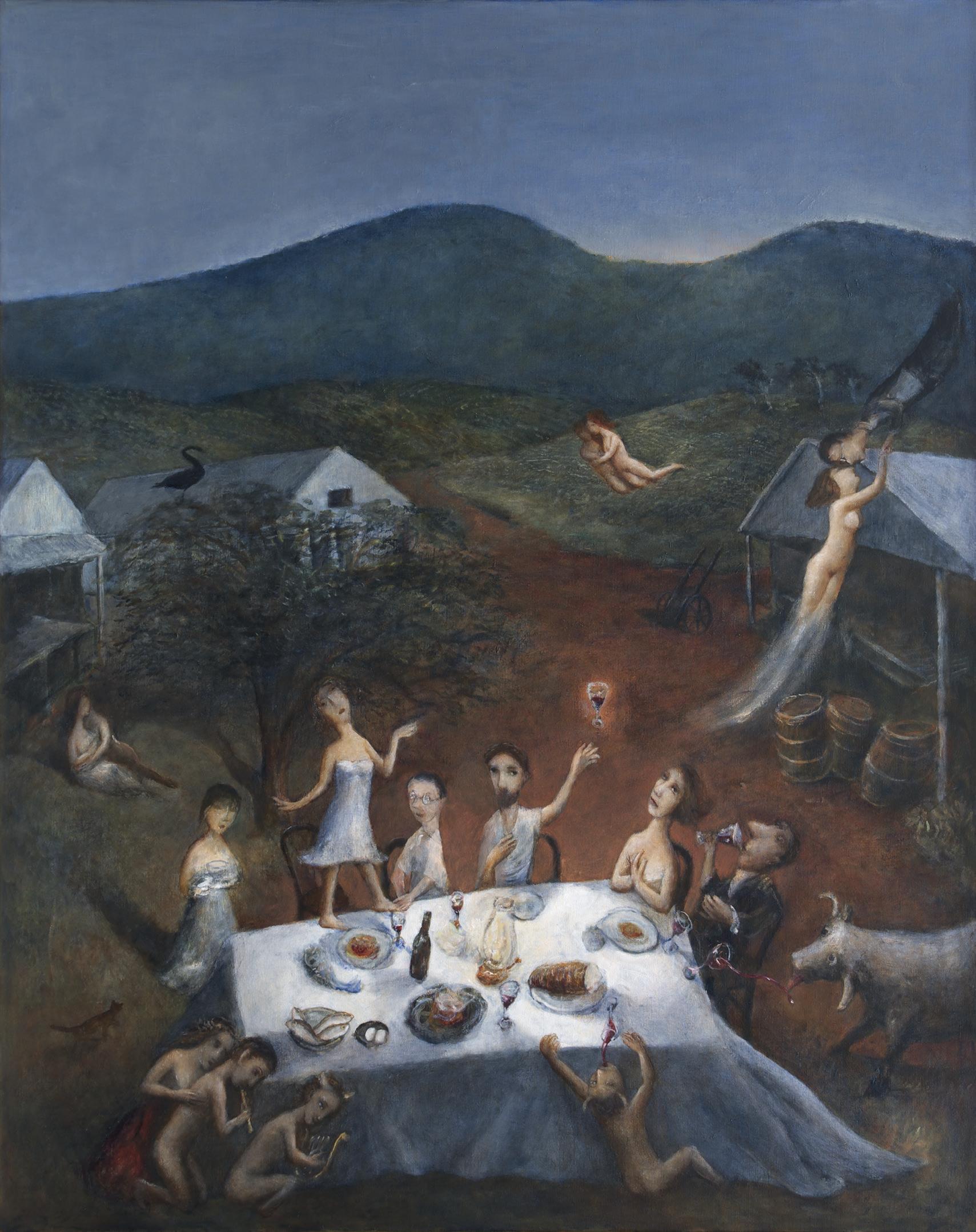
7 Retinue of Dionysus 2010 oil on linen 152 x 122 cm
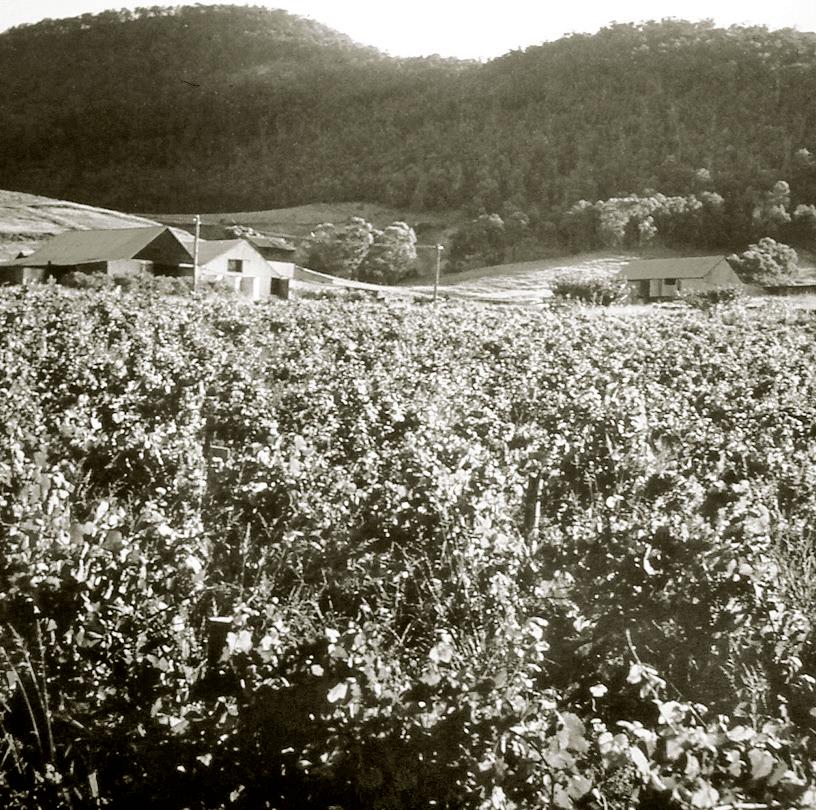
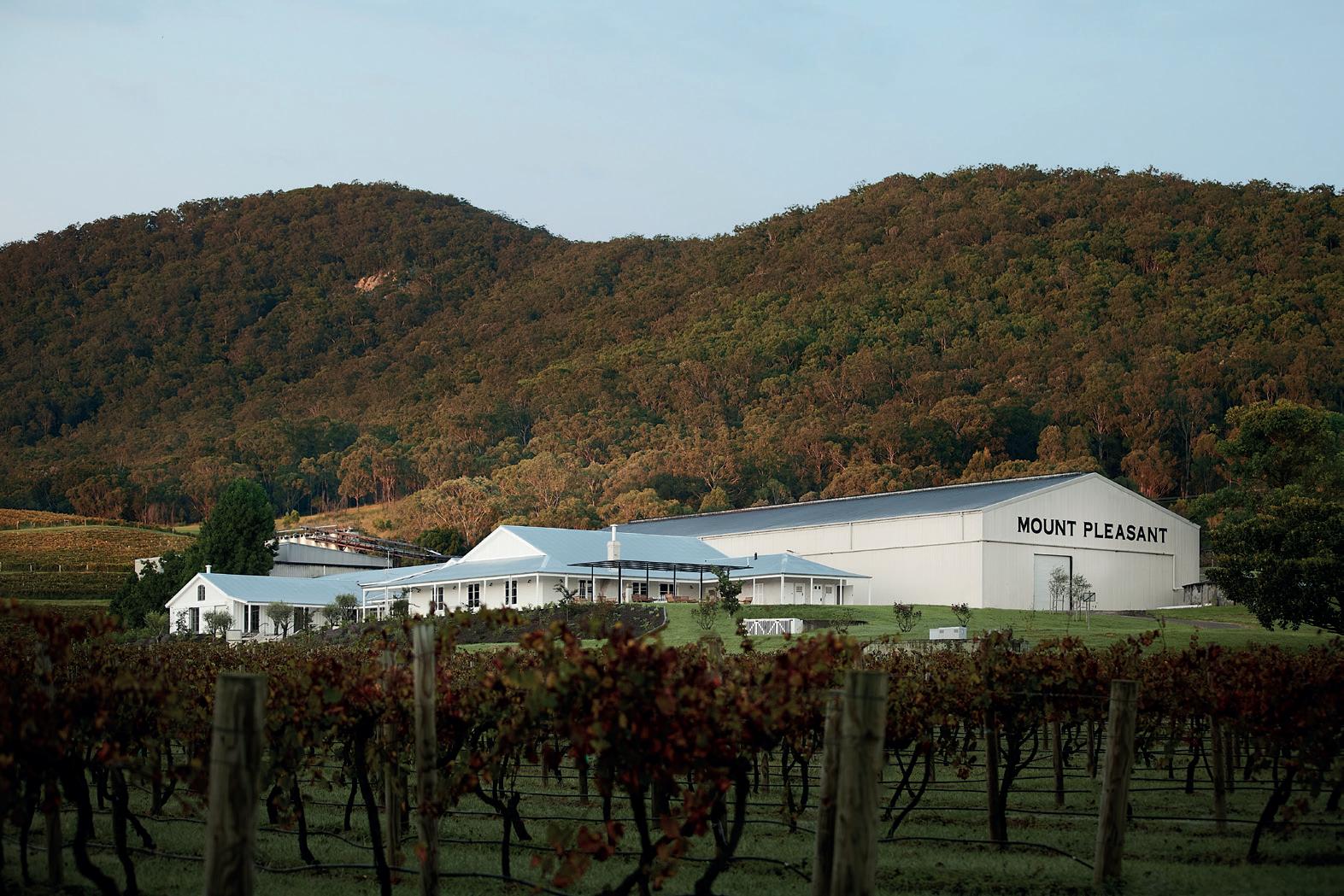
Mount Pleasant vineyard, Pokolbin
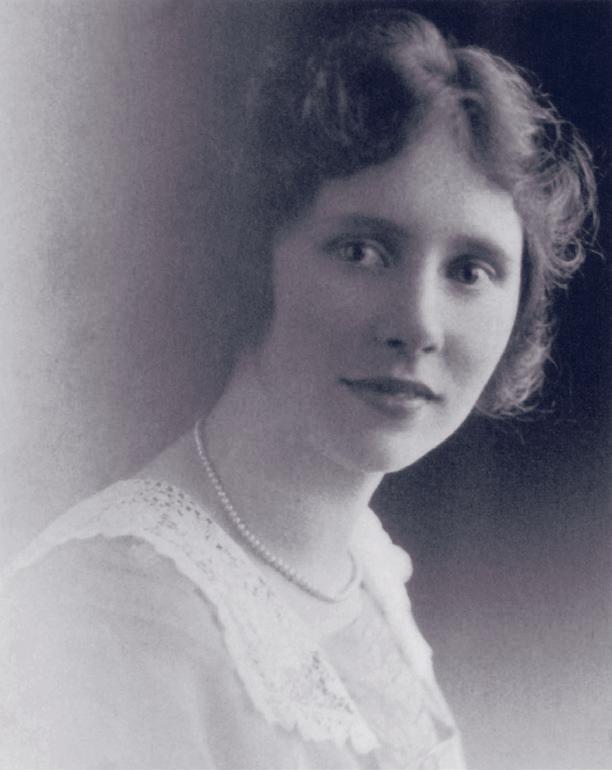
Marcia Singer Fuller
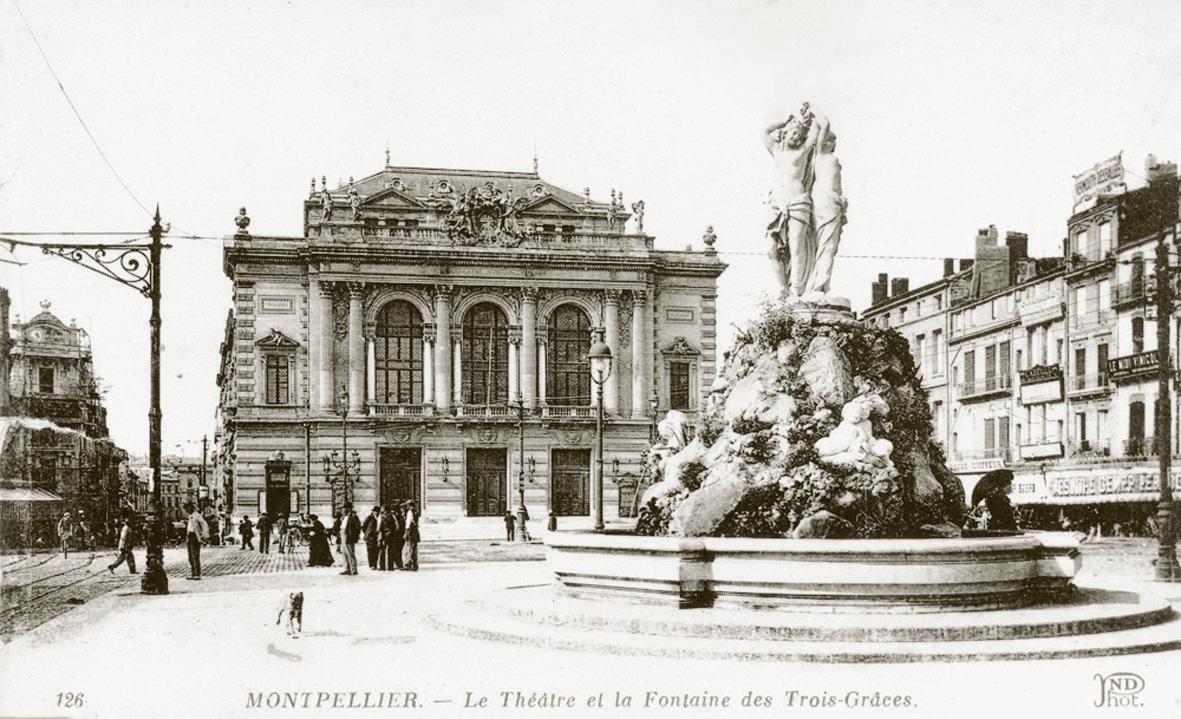
Montpellier c. 1915
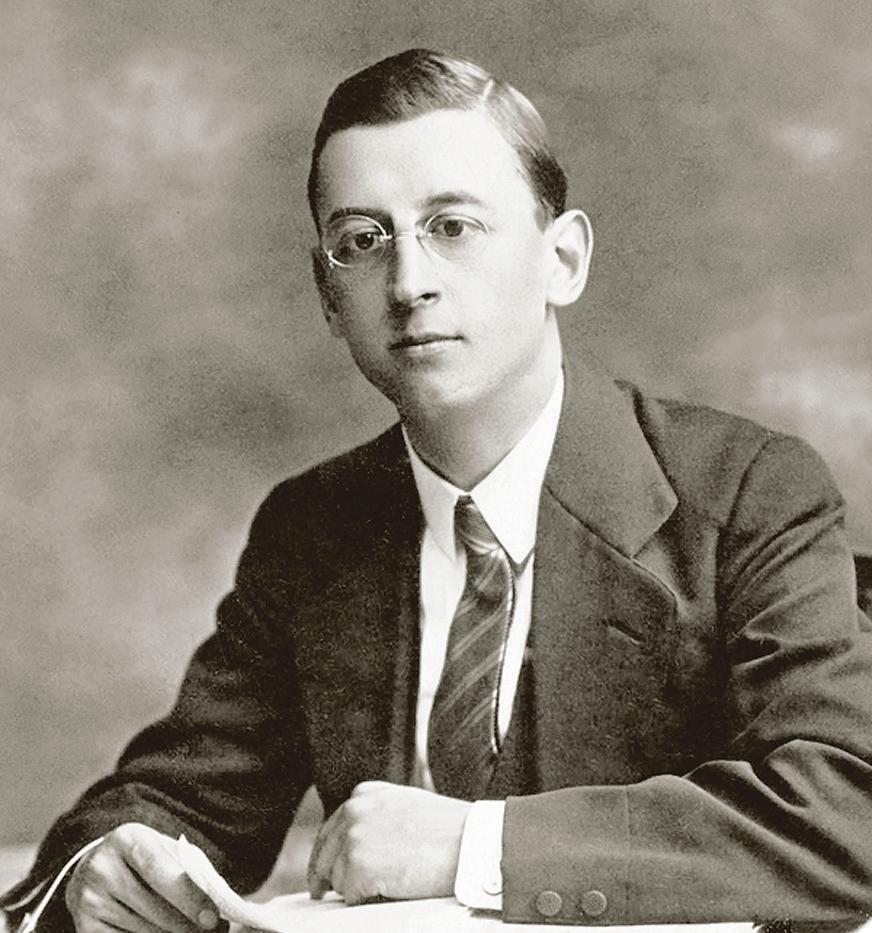
Maurice O’Shea, c. 1915
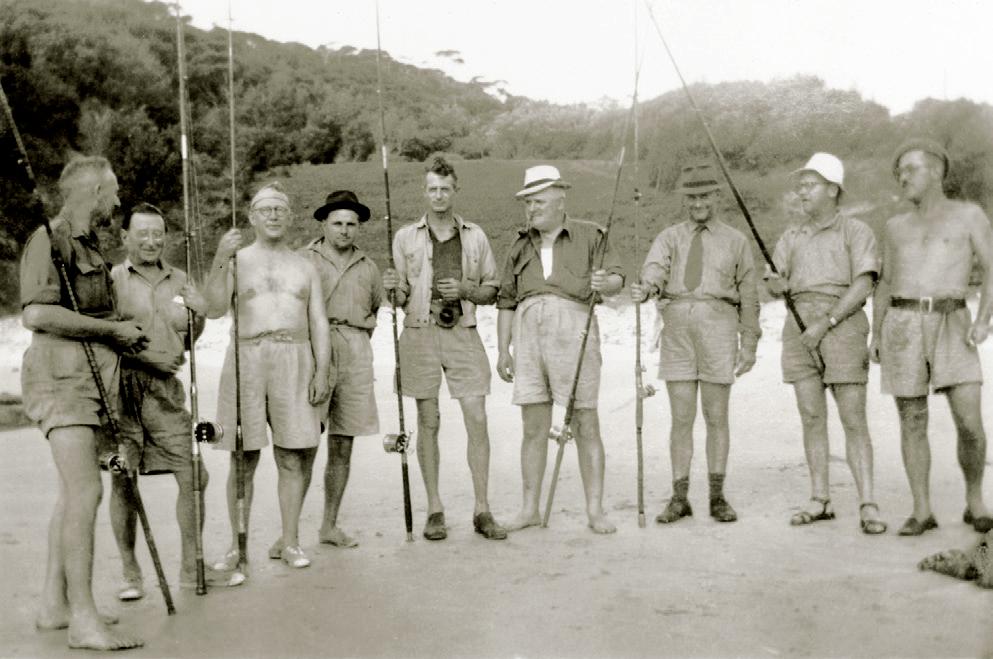
Fishing excursion: Maurice (second from left), Gordon Shead (middle)
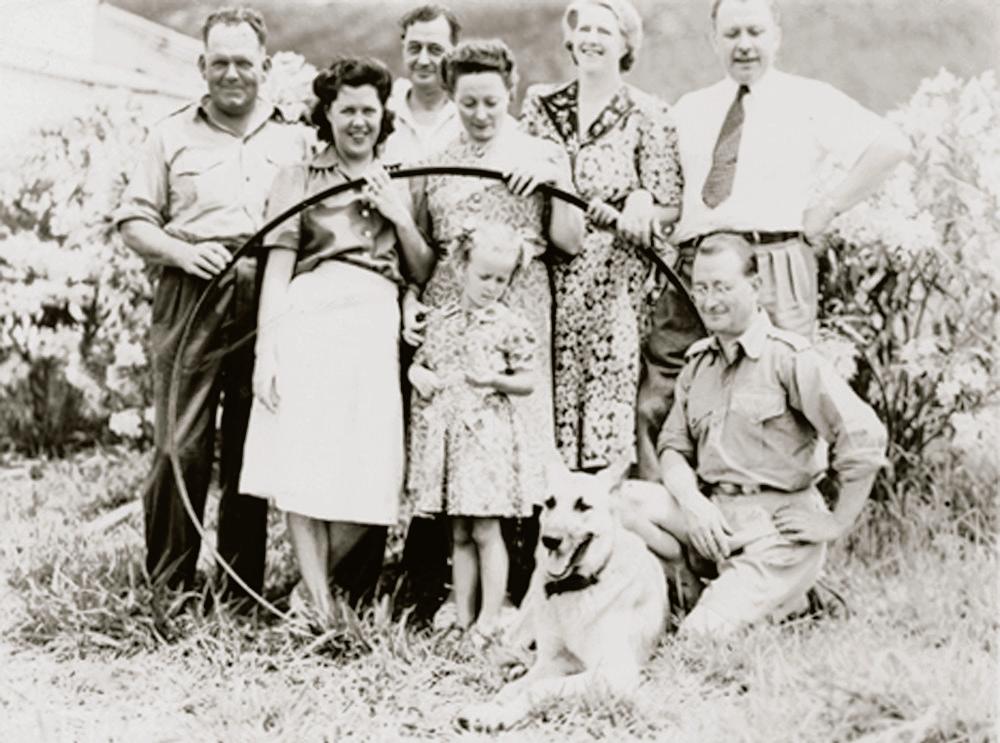
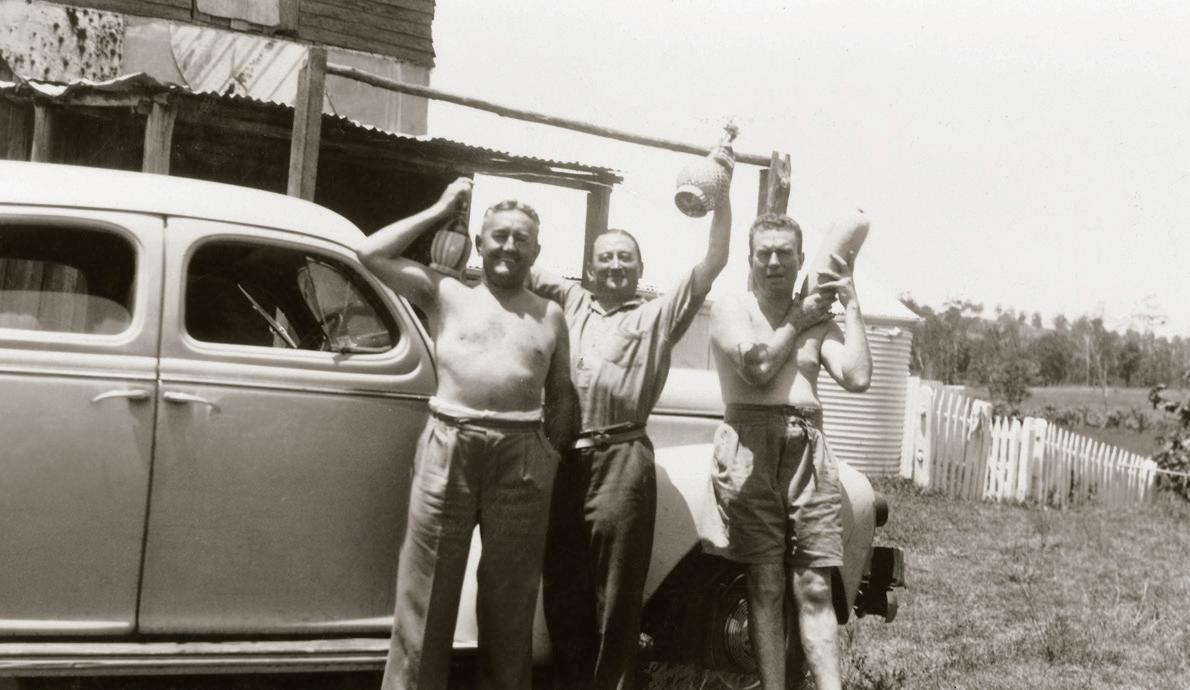
Friends at Mount Pleasant: c. 1940’s Jack O’Shea (rear, third from left), Henri Renault (right rear), Maurice O’Shea
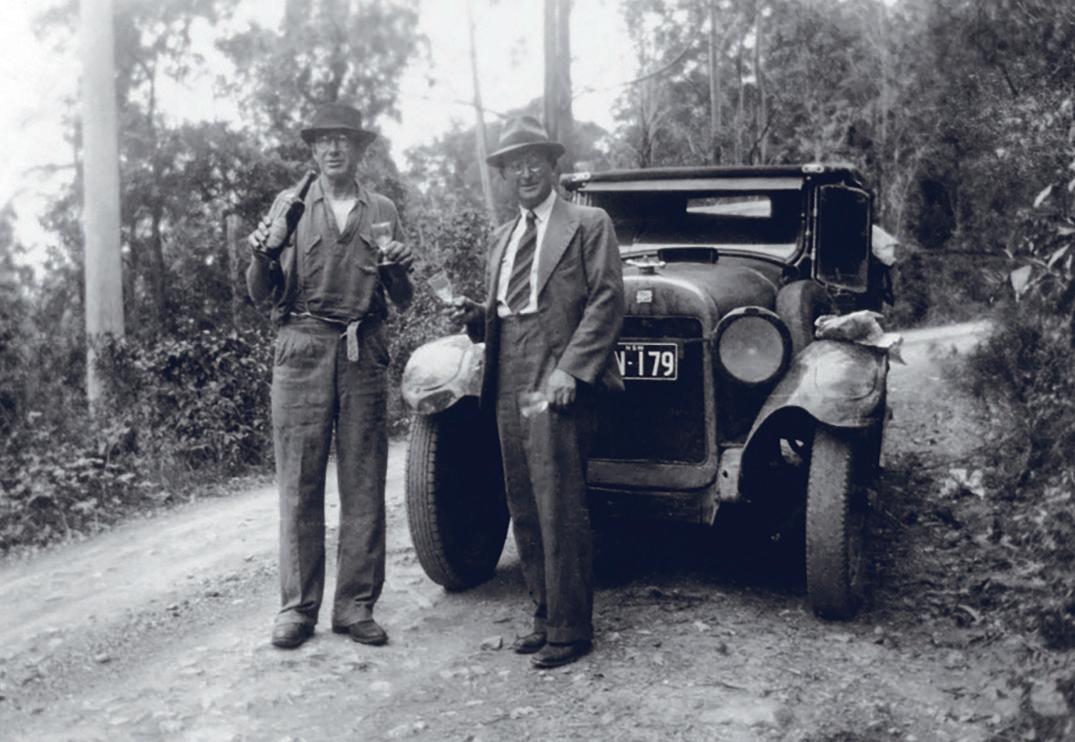
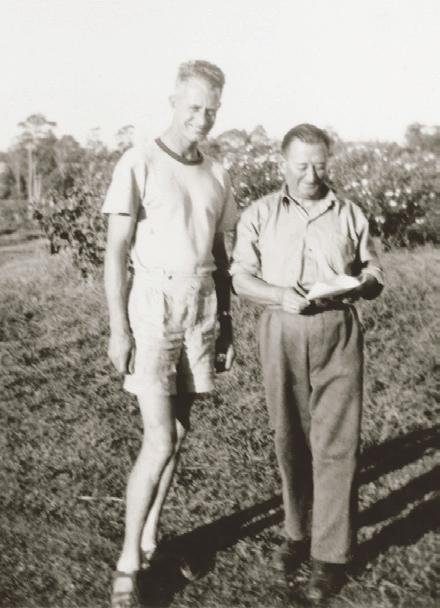
Maurice and friend
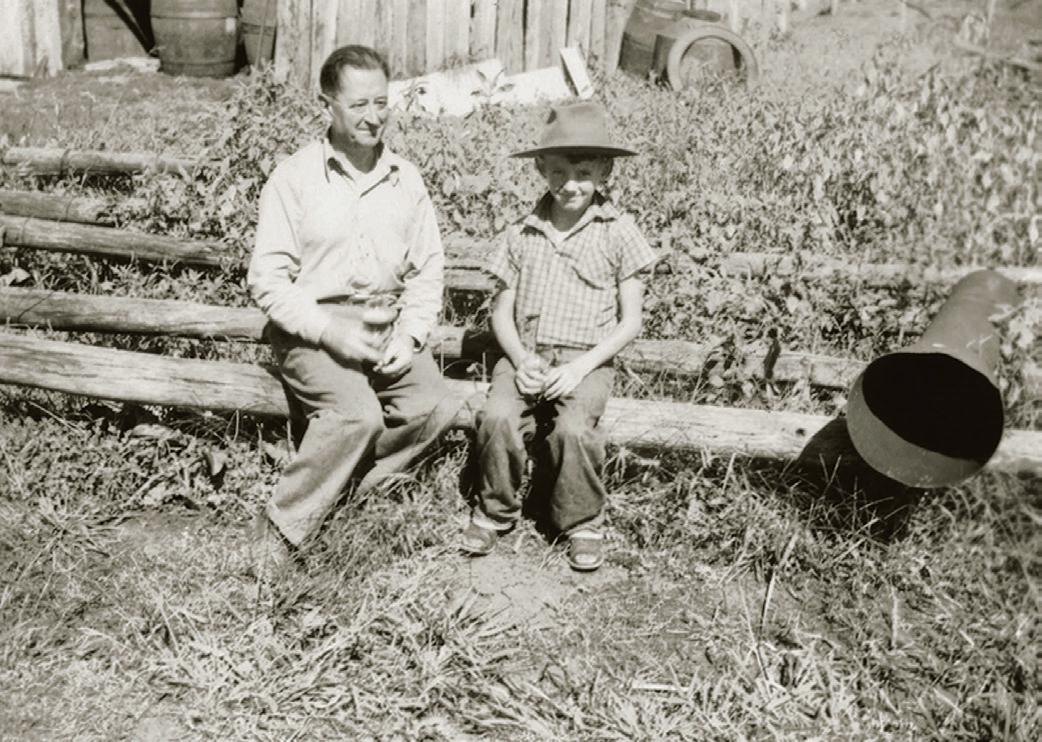
Maurice and Garry, c. 1950
Mount Pleasant c. 1940’s: Henri Renault, Maurice, Johnny Walker
Dave Caskey and Maurice, 1930’s
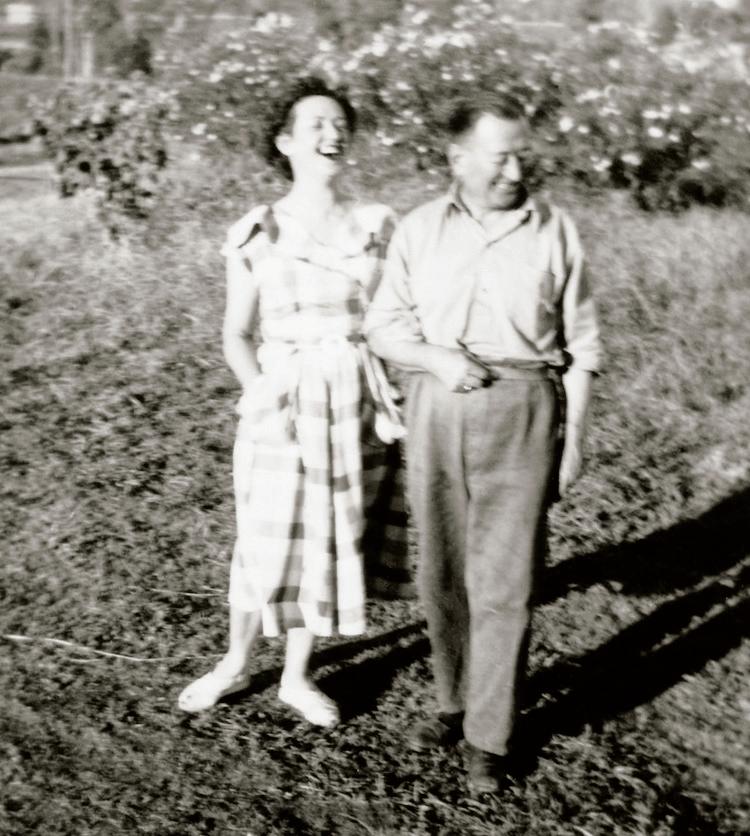
Nora Shead (nee O’Shea) and Maurice, Mount Pleasant c.1950
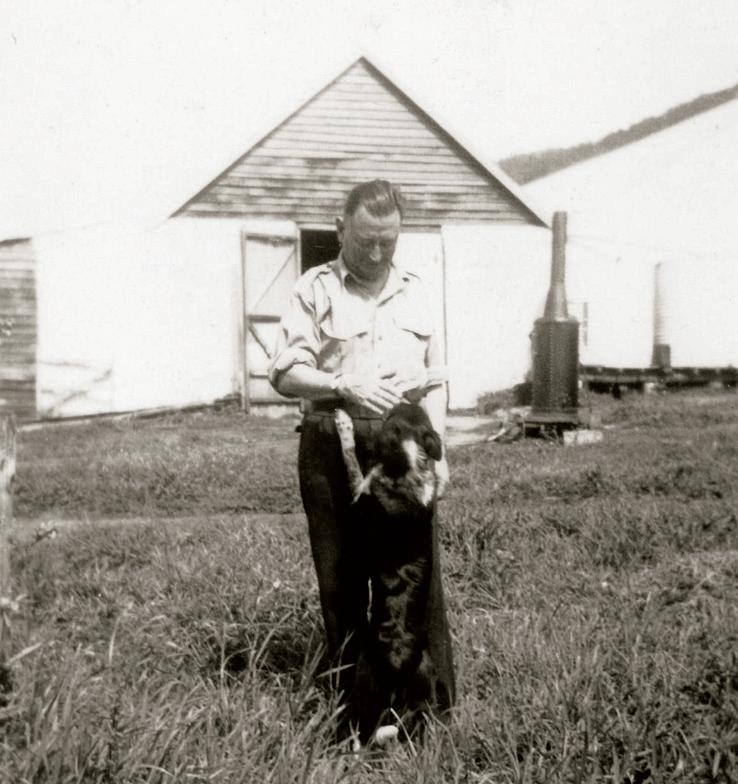
Gordon Shead and Maurice, Mount Pleasant c.1950
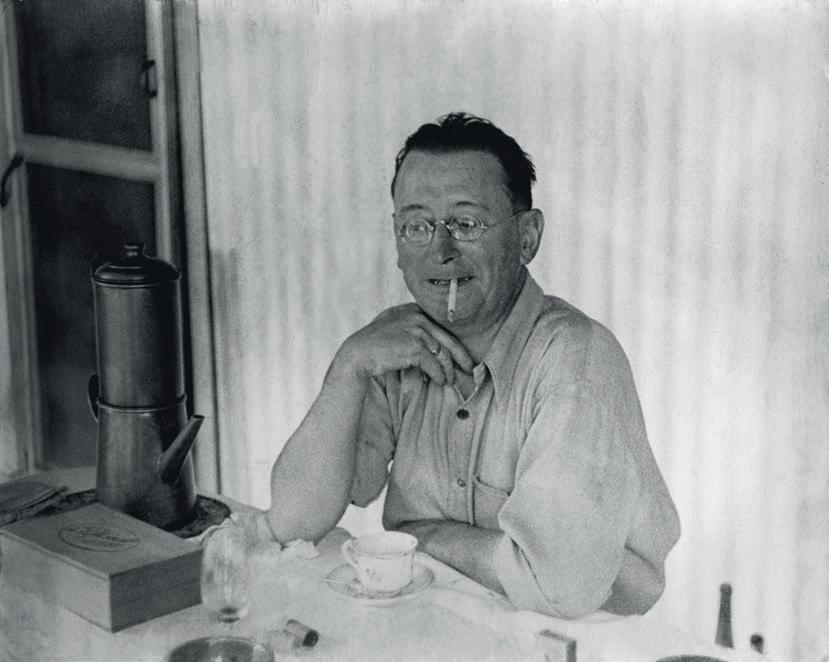
Maurice O’Shea, c.1950. Photograph by Hal Missingham
8 Love on Mount Pleasant 2010 oil on linen 122 x 152 cm
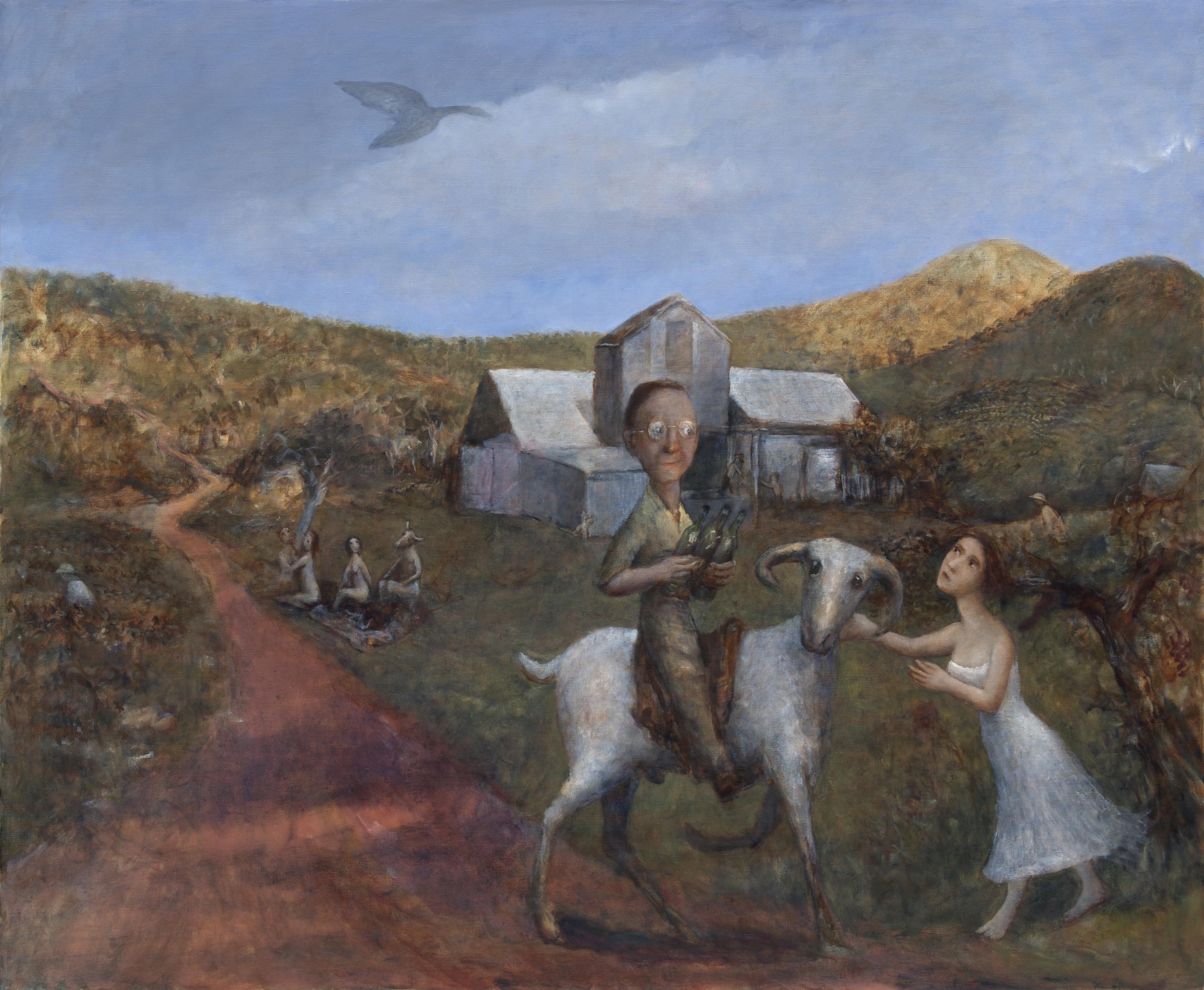
9 Mount Pleasantania 2010 oil on linen 152 x 122 cm
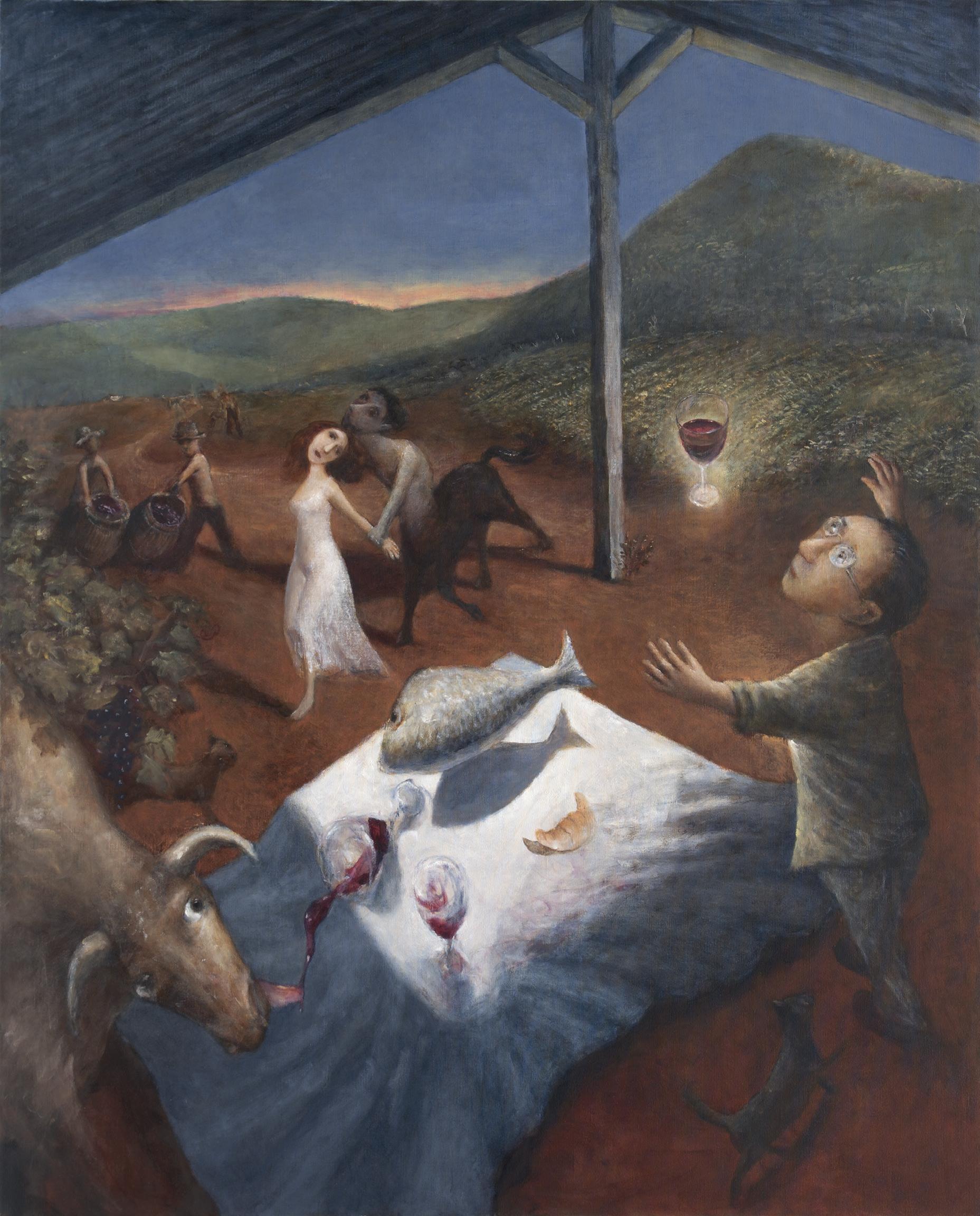
10 The History of Wine 2010 oil on linen 92 x 71 cm
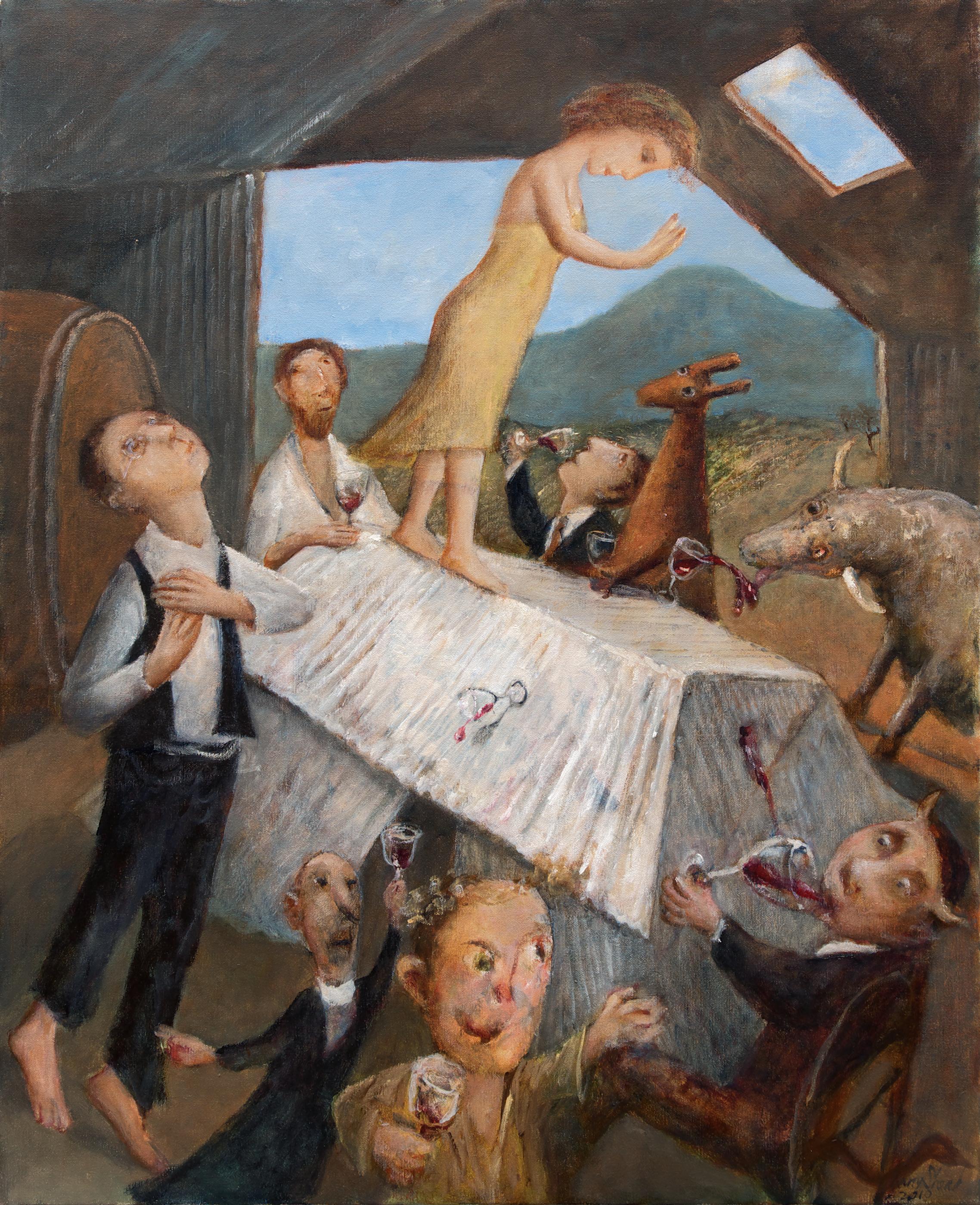
11 Maurice and Bacchus 2010 oil on linen 62 x 72 cm
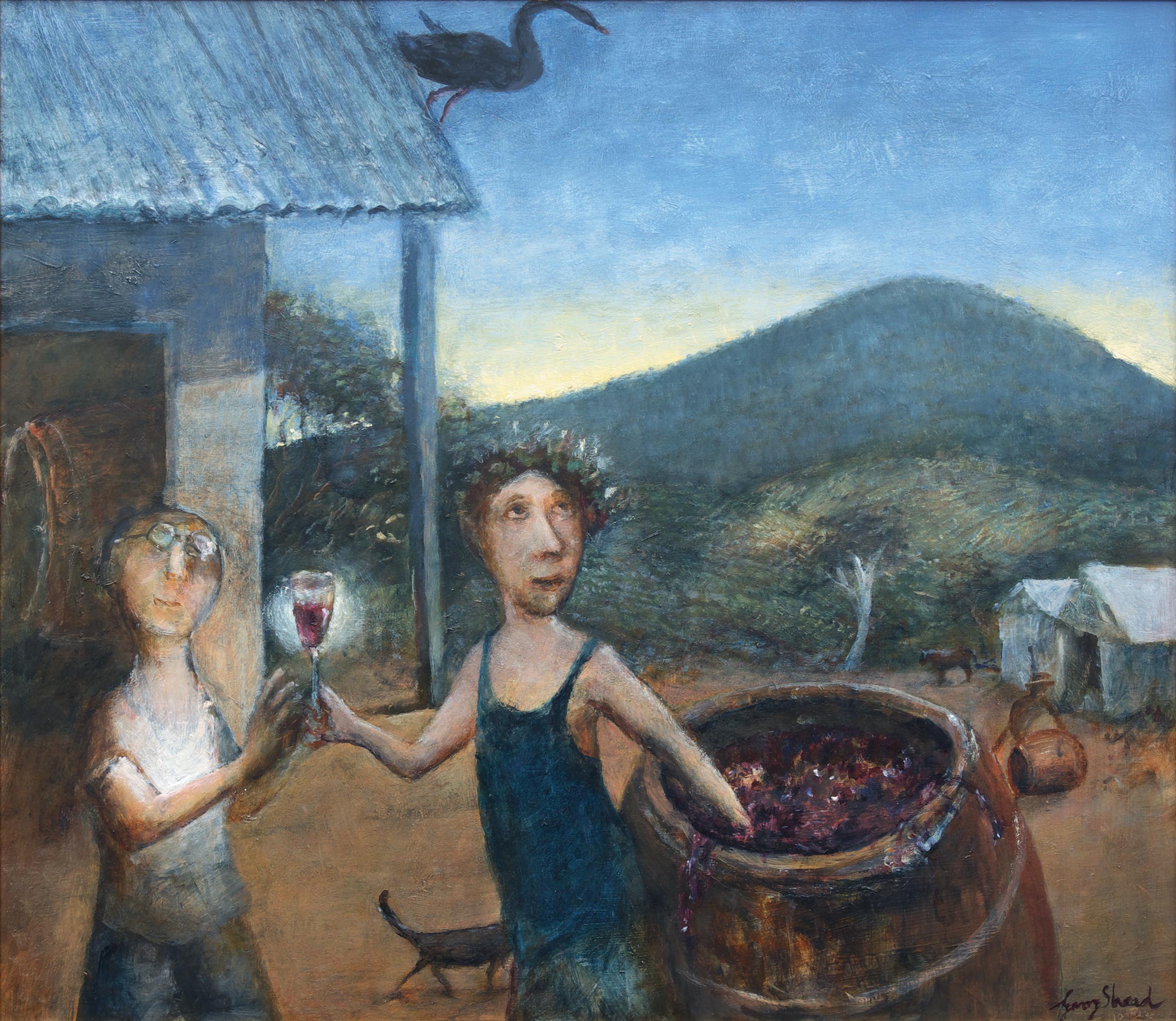
12 The Connoisseurs 2009 oil on linen 48 x 62 cm
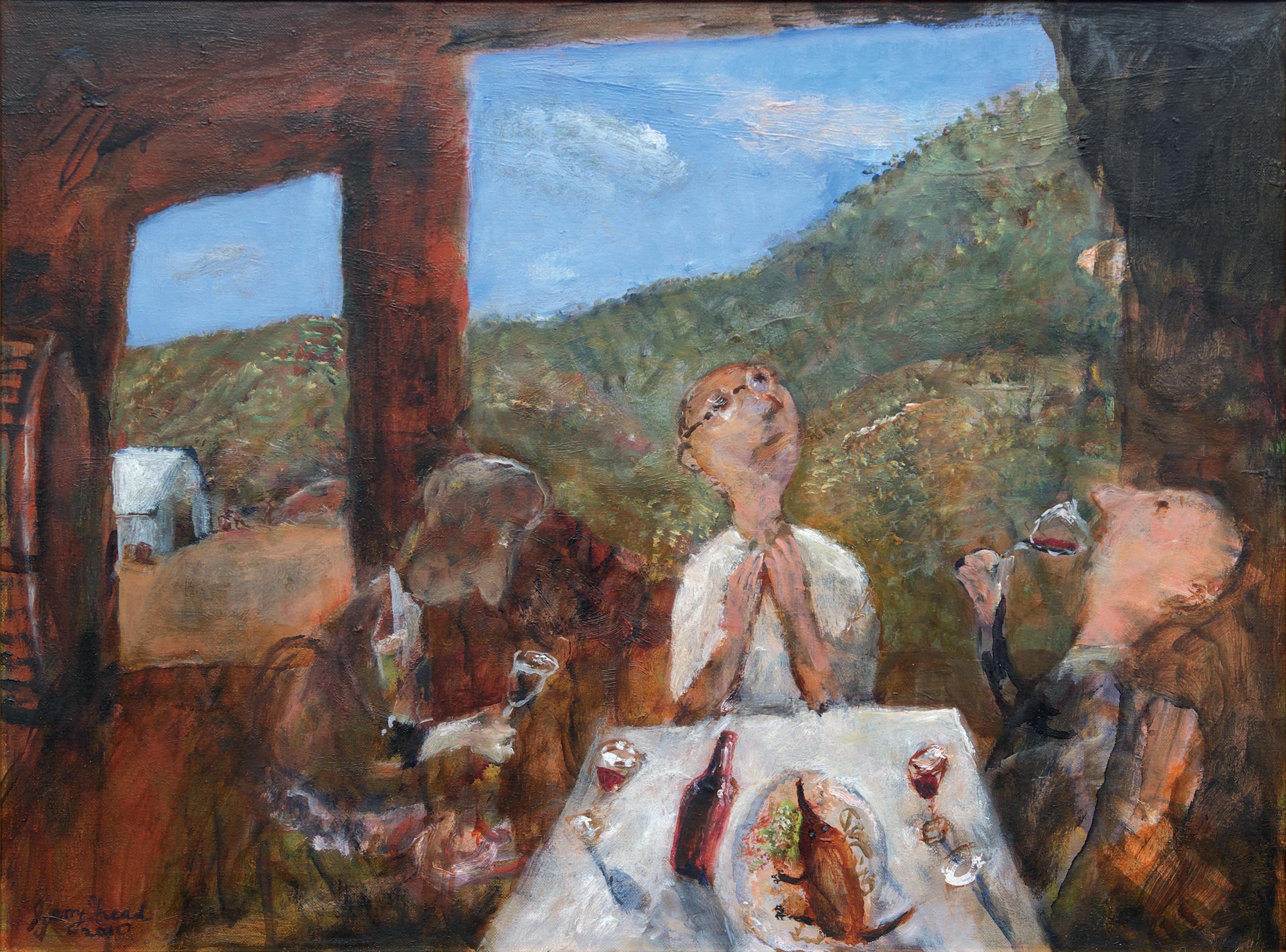
13 In the Kitchen 2009 oil on linen 71 x 91 cm
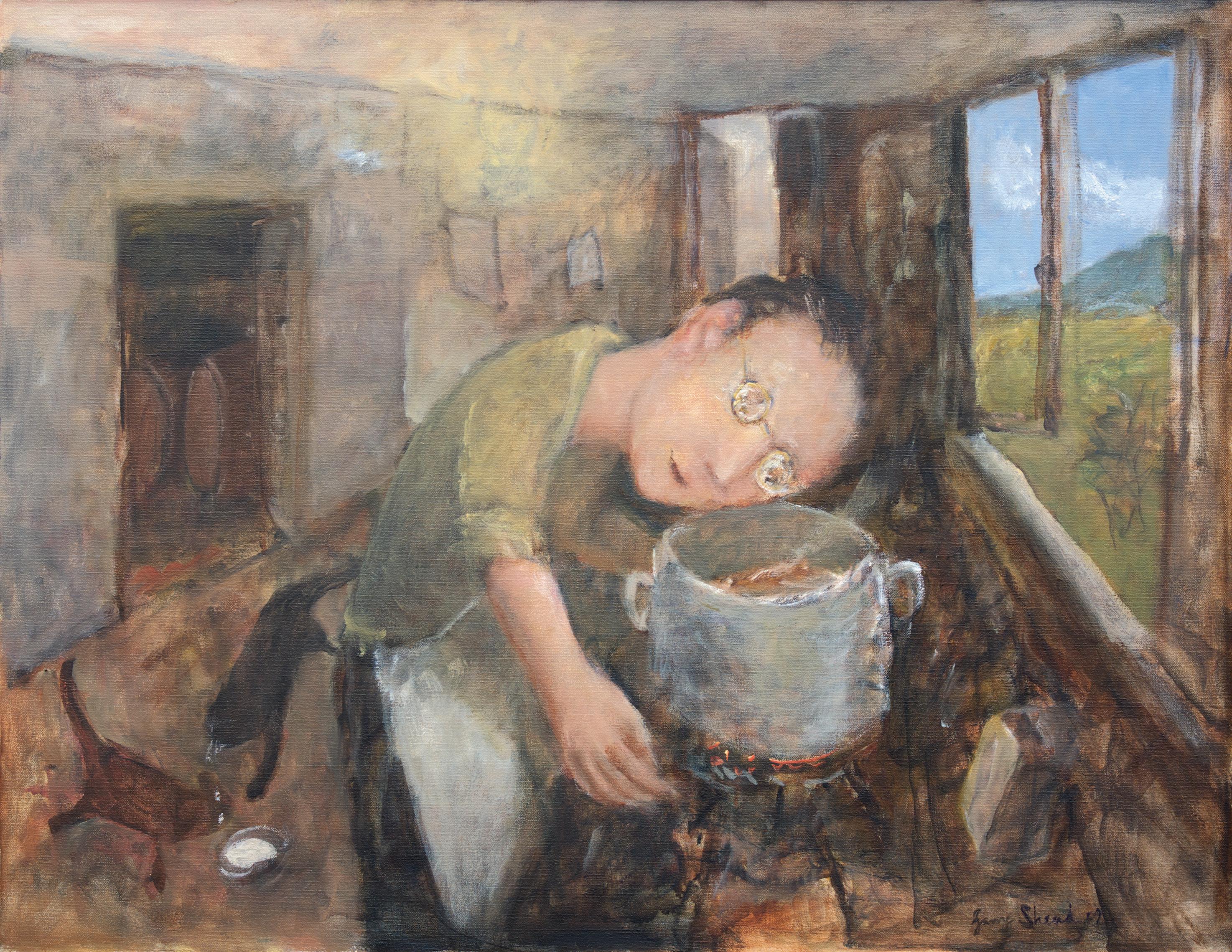
14 Workers Drinking Wine 2009 oil on linen 46 x 60 cm
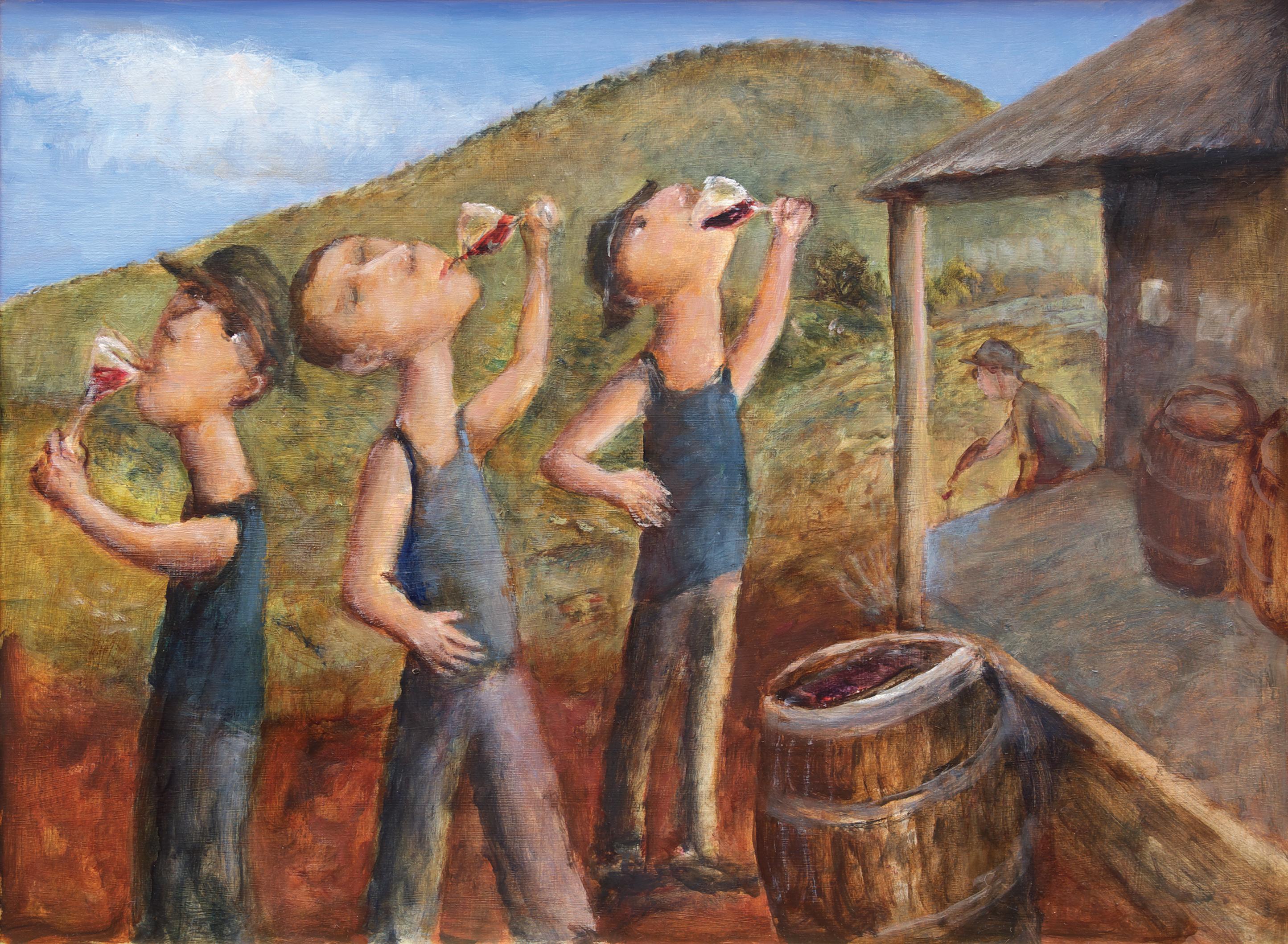
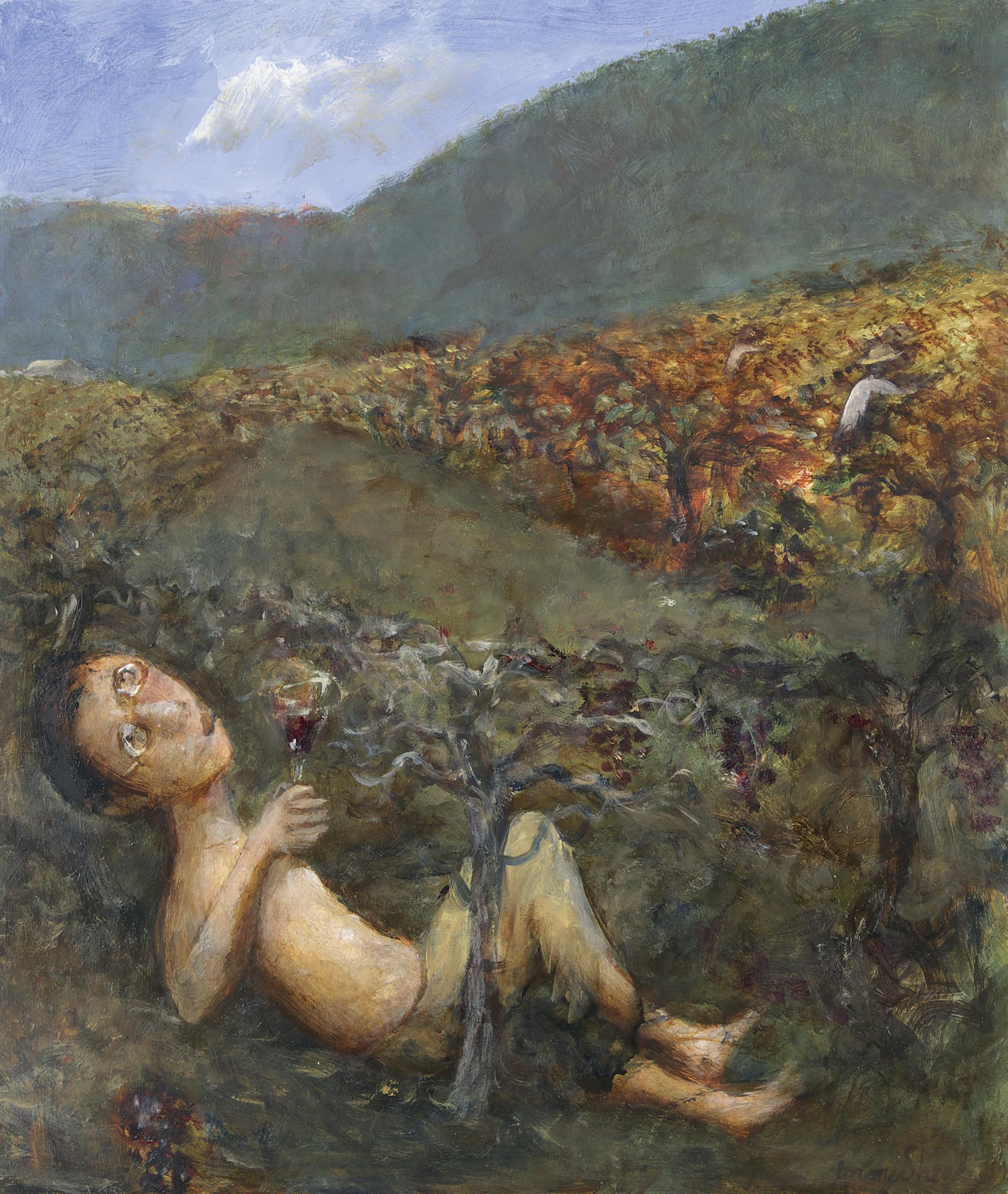
15 Reverie 2009 oil on board 42 x 35 cm
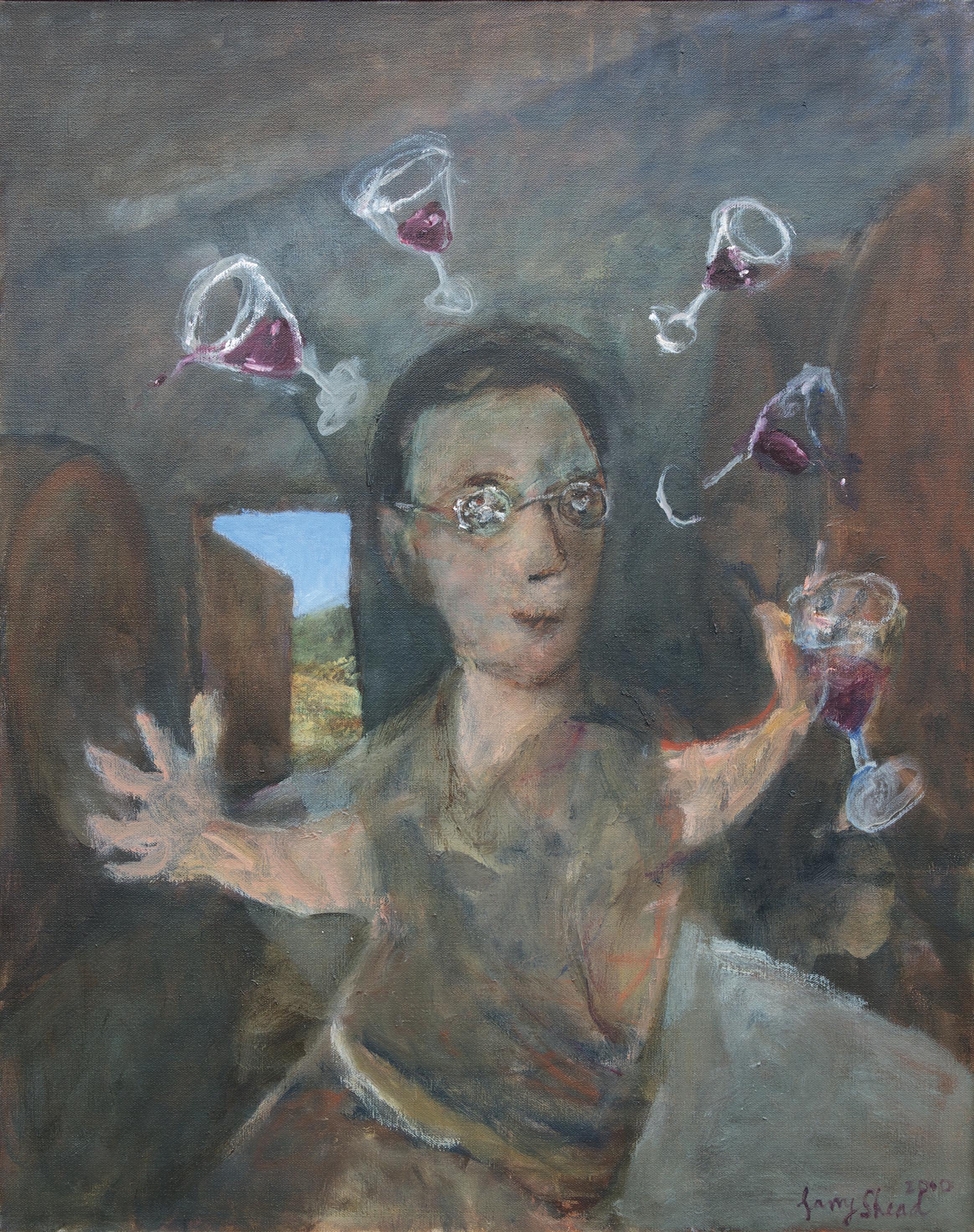
16 O’Shea with Glasses 2009 oil on linen 80 x 64 cm
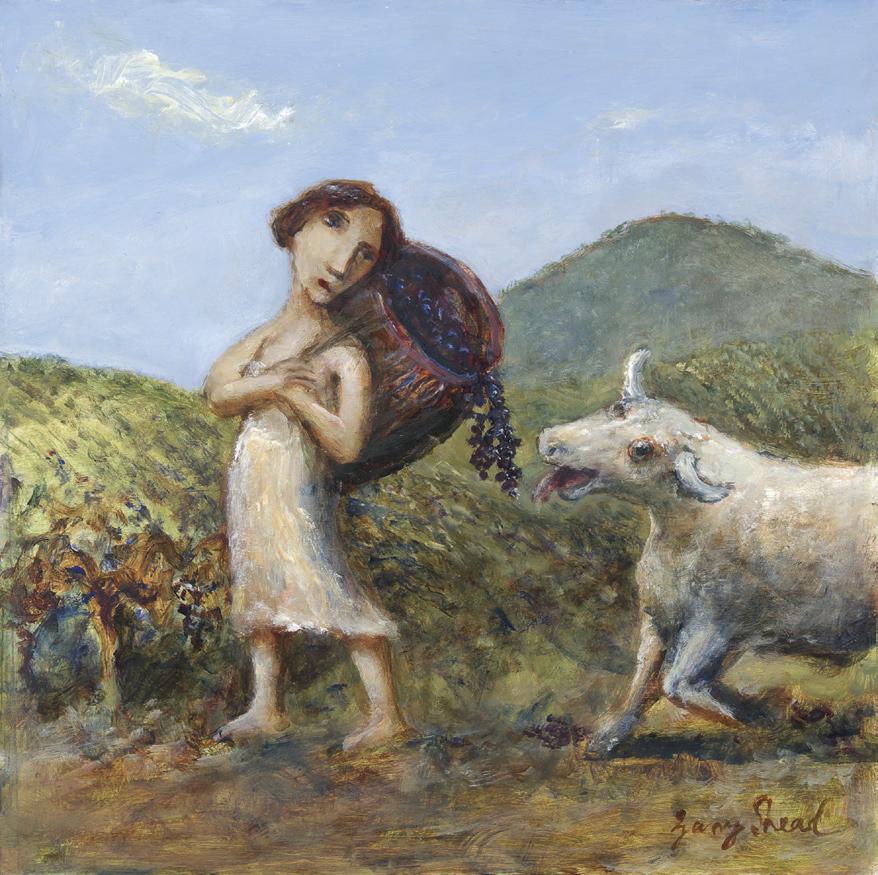
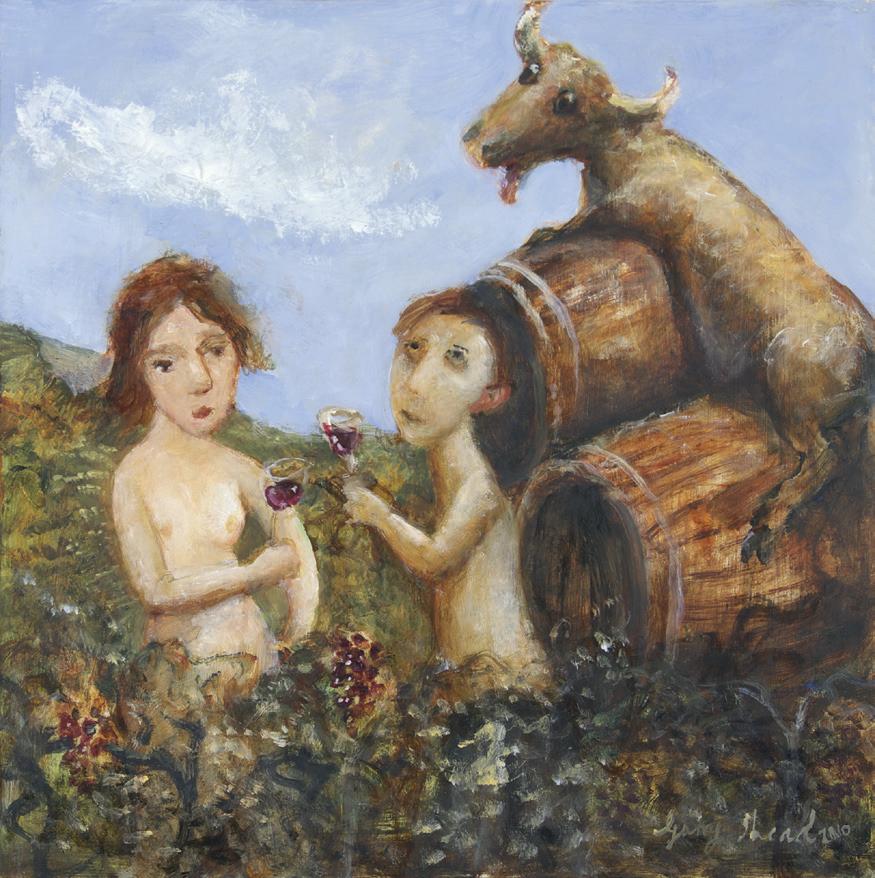
18 The Pickers 2009 oil on board 32 x 32 cm
17 The Spill 2009 oil on board 32 x 32 cm
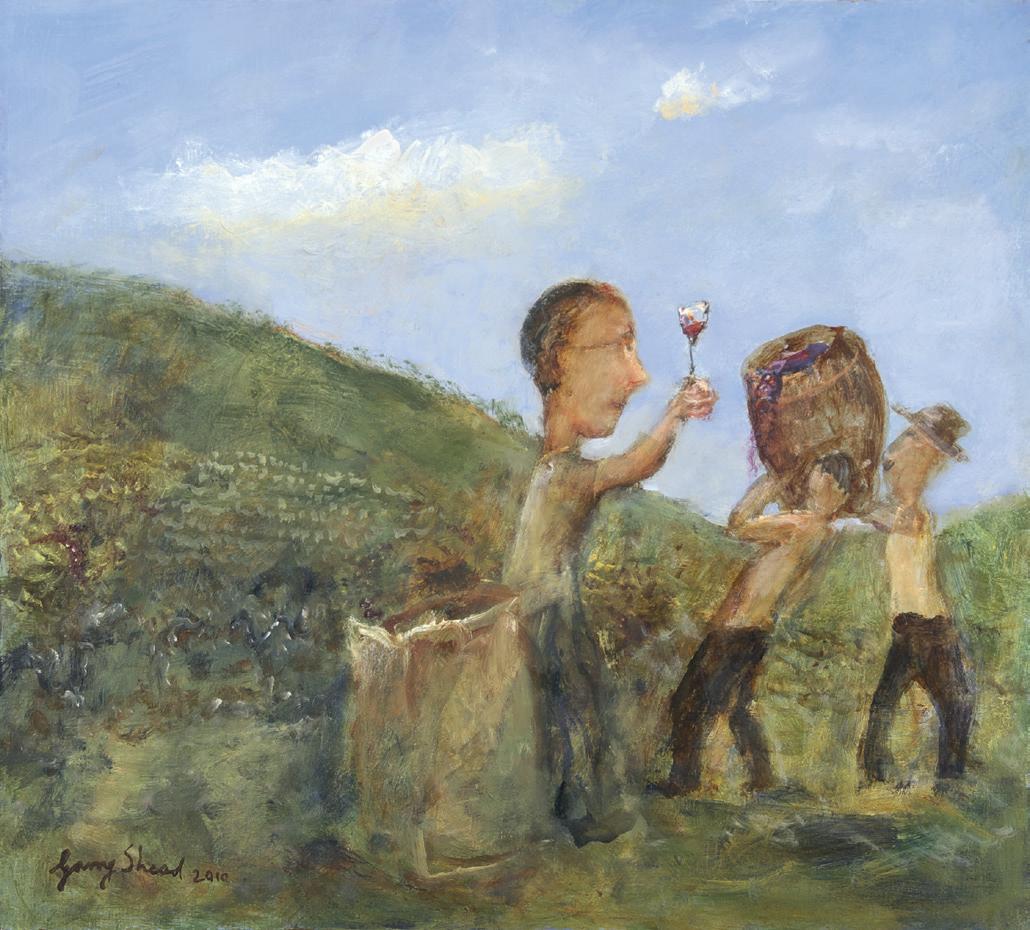
19 Vigneron and Workers 2009 oil on board 35 x 39 cm
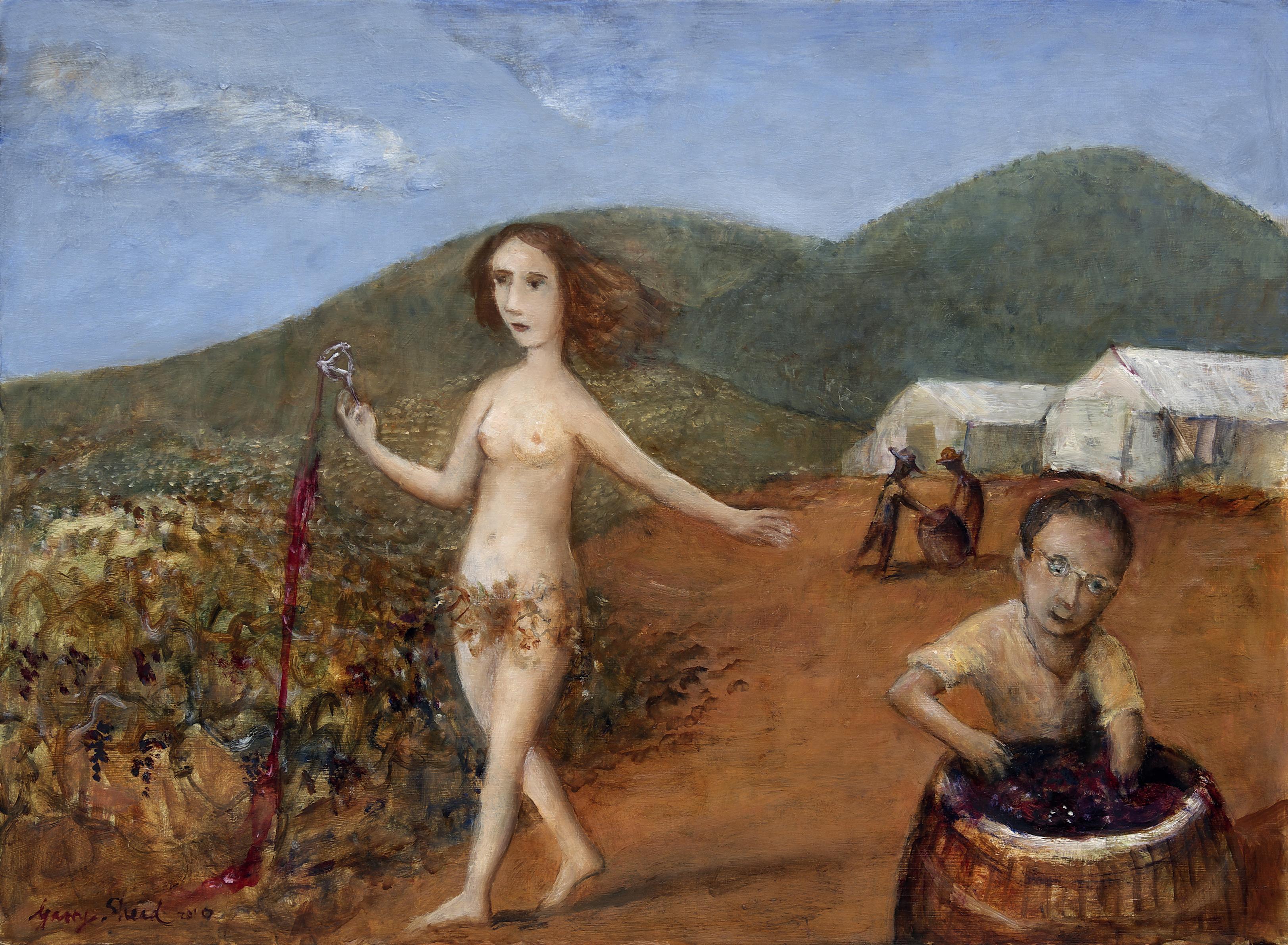
20 Athena at Pokolbin 2010 oil on board 48 x 64 cm
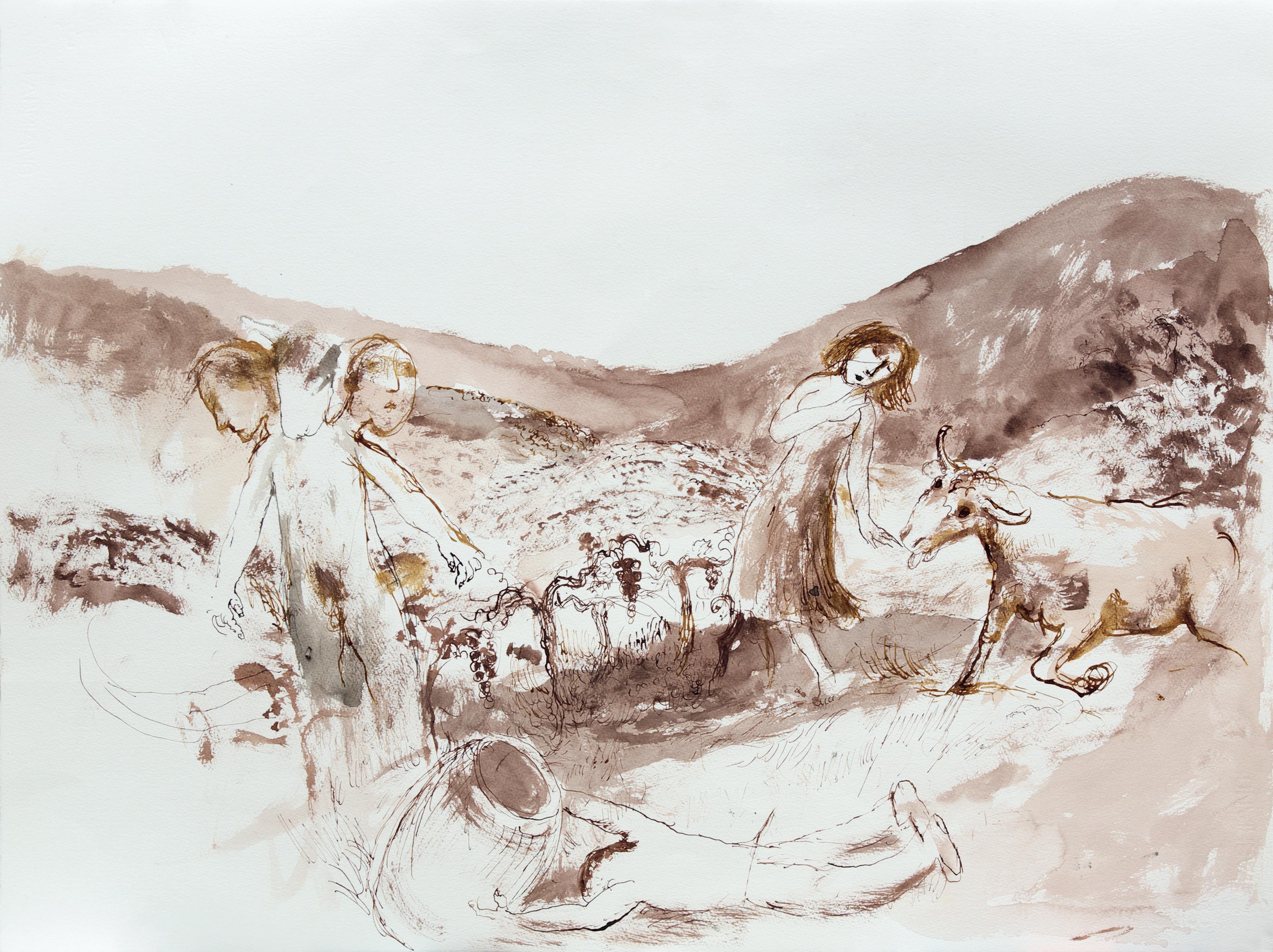
21 The Vineyard 2009 ink and wash on paper 56 x 76 cm
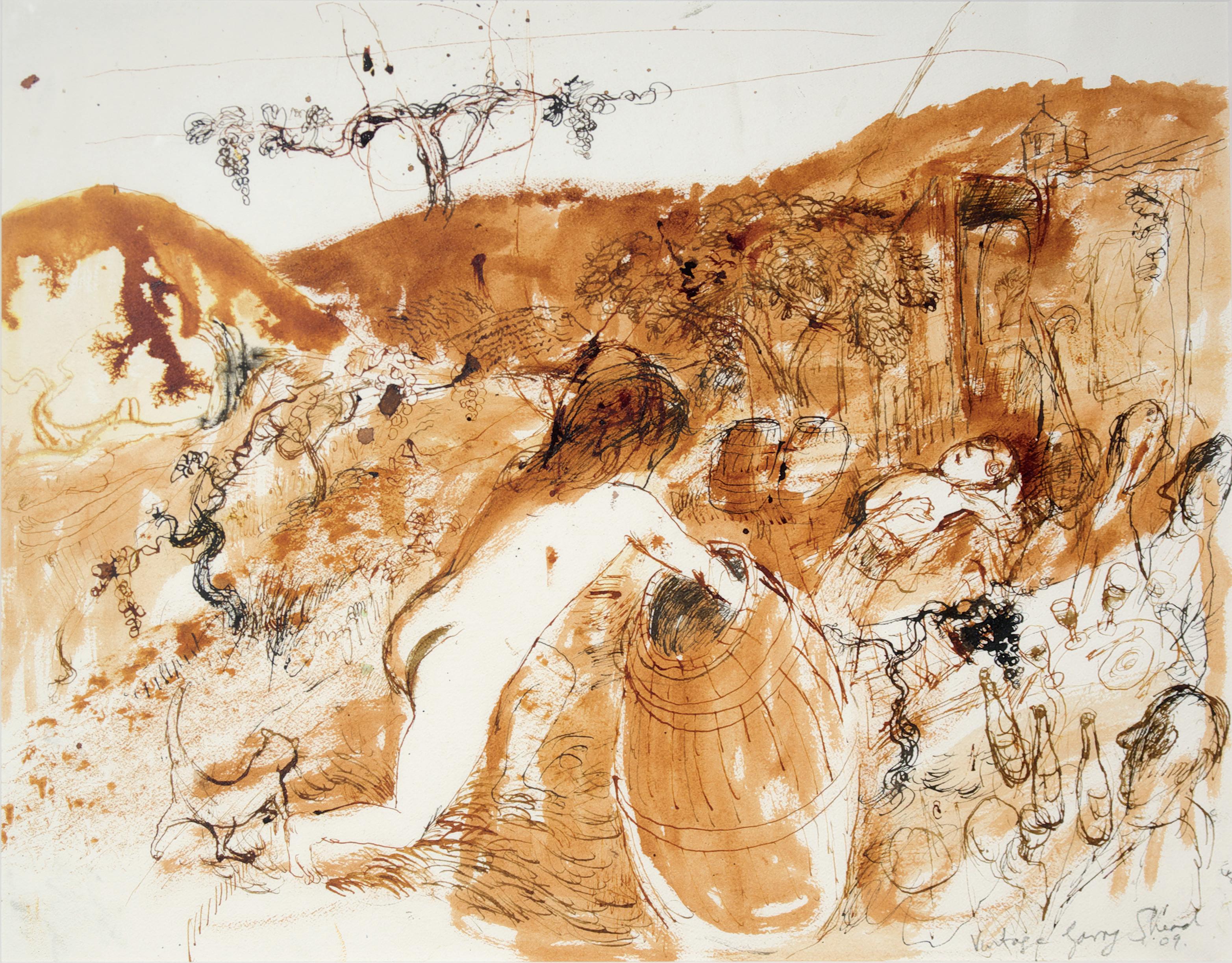
22 Mount Pleasant Summer 2009 ink and wash on paper 50 x 64 cm
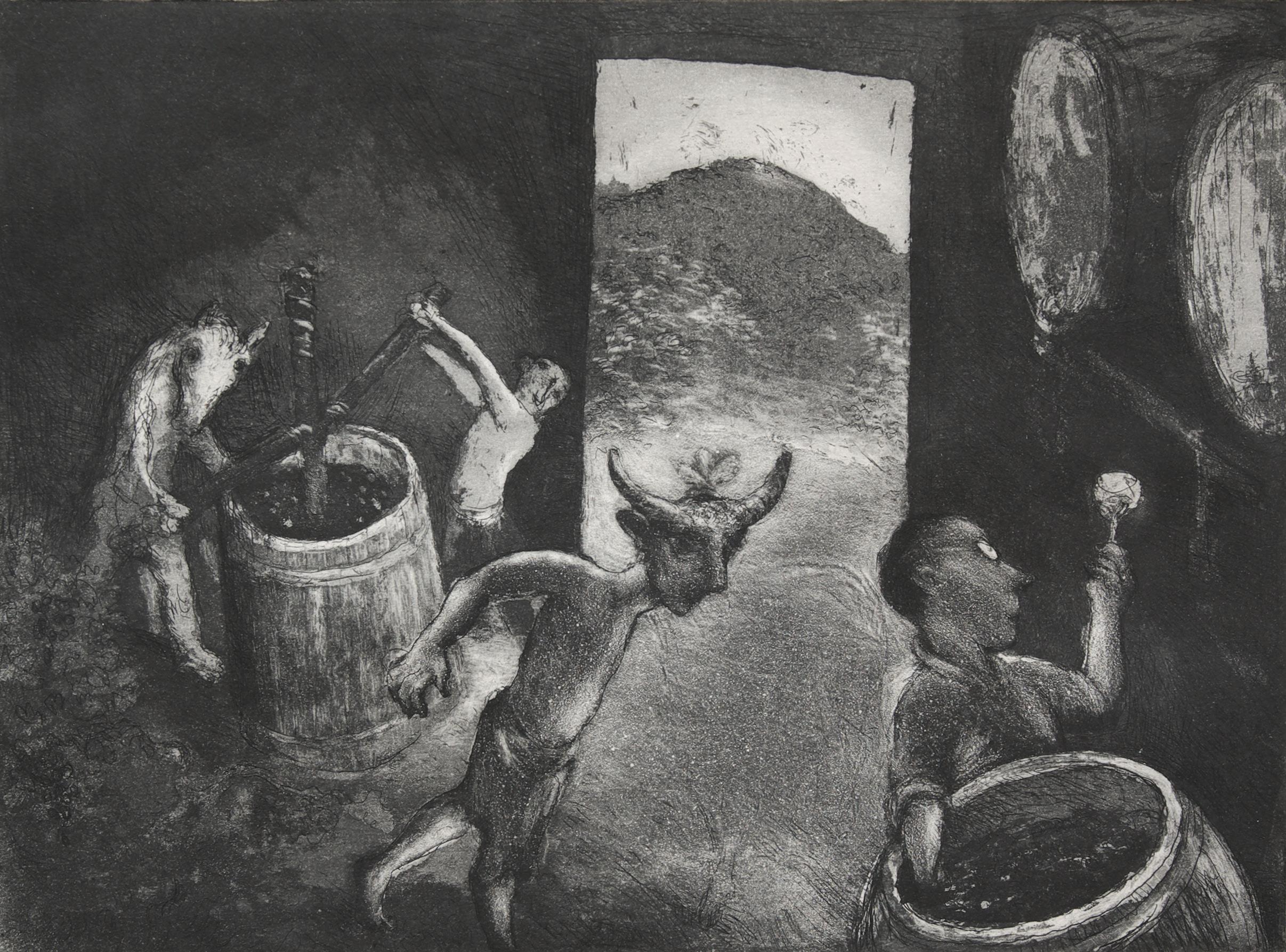
23 Dionysus at Pokolbin 2010 etching with aquatint on Hahnemühle paper edition 50 24 x 32 cm
Basil Hall Editions
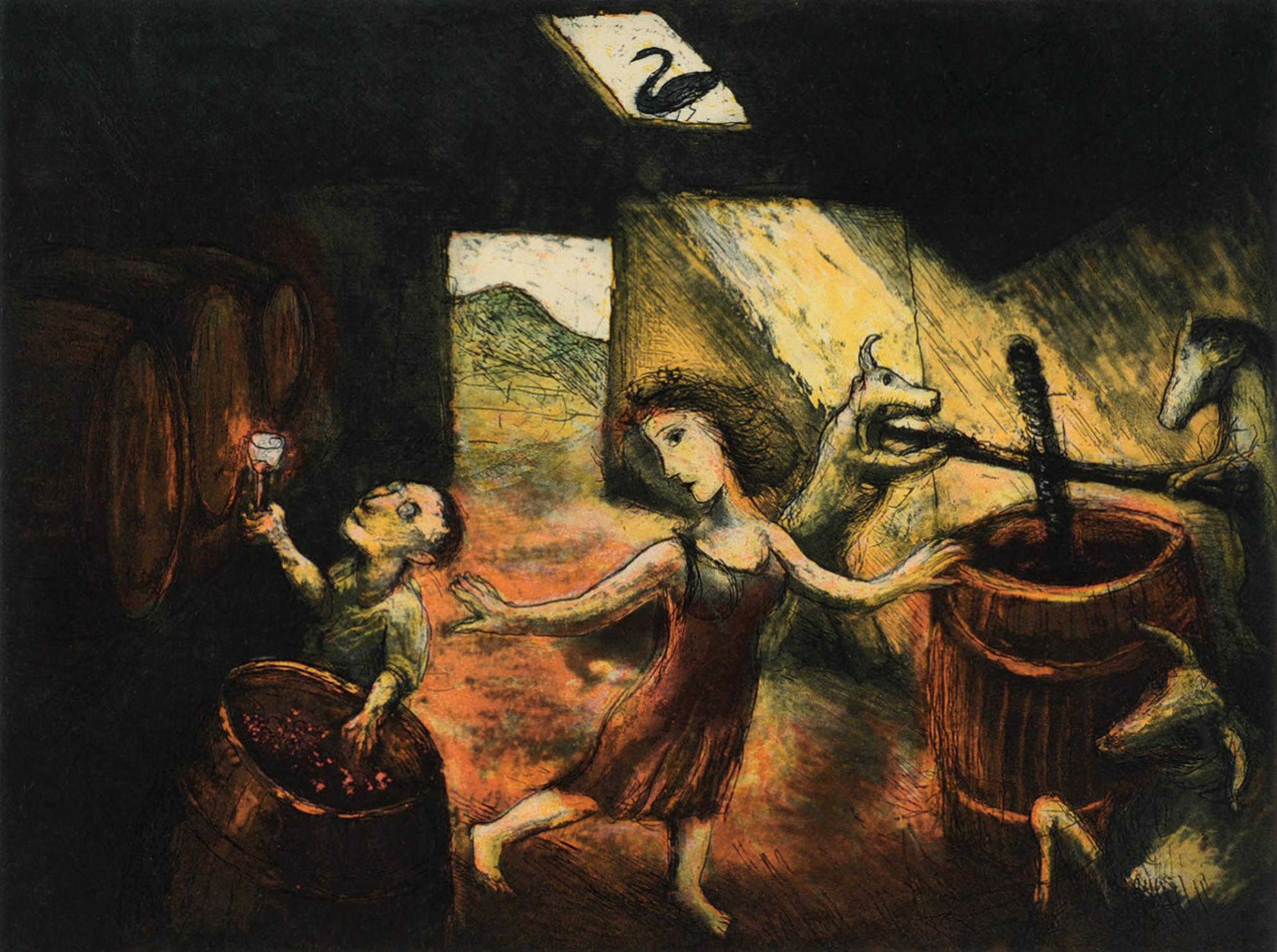
24 The First Vintage 2010 multiplate colour etching with aquatint on Hahnemühle paper edition IV 24.5 x 33 cm
Basil Hall Editions
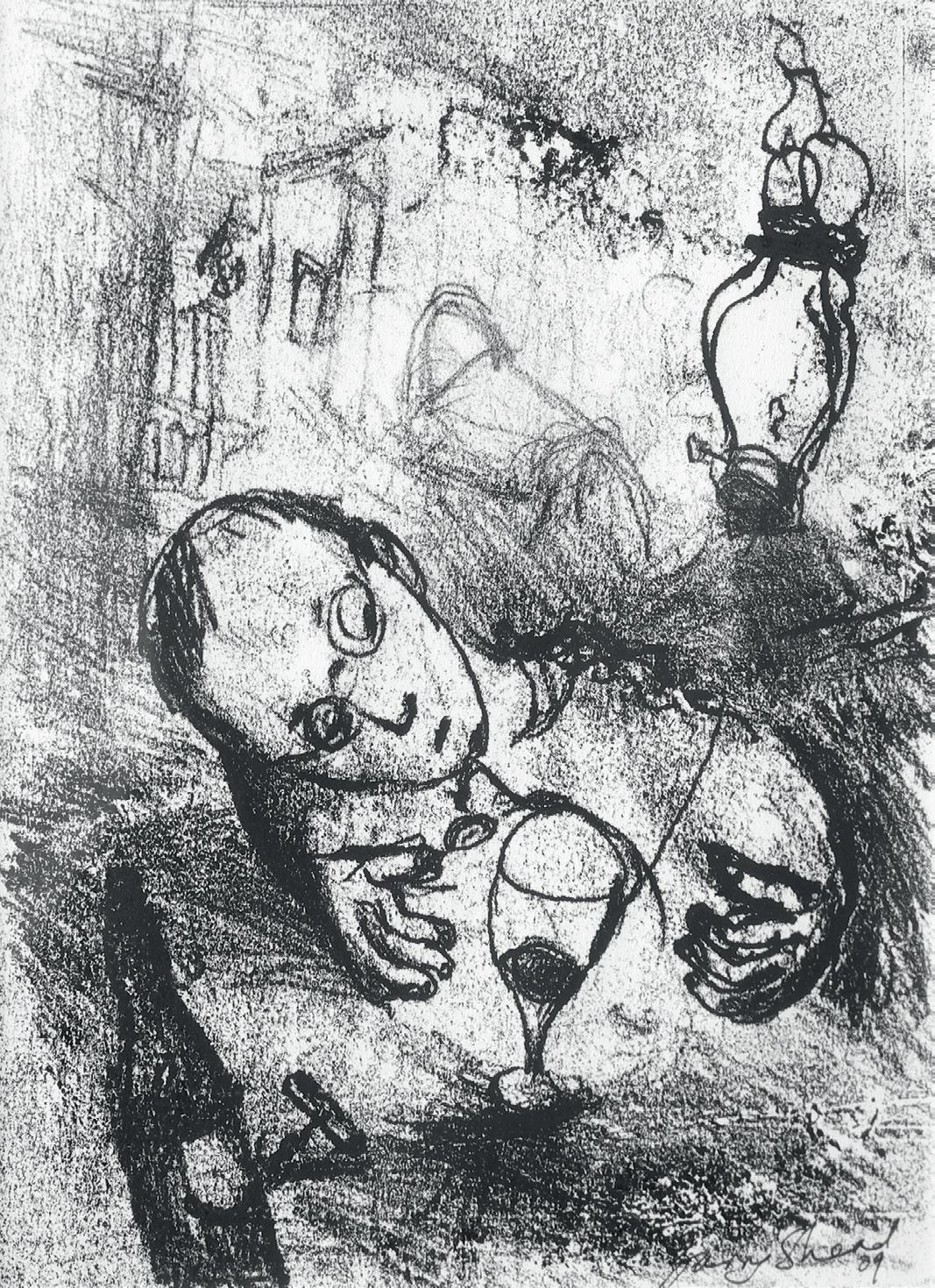
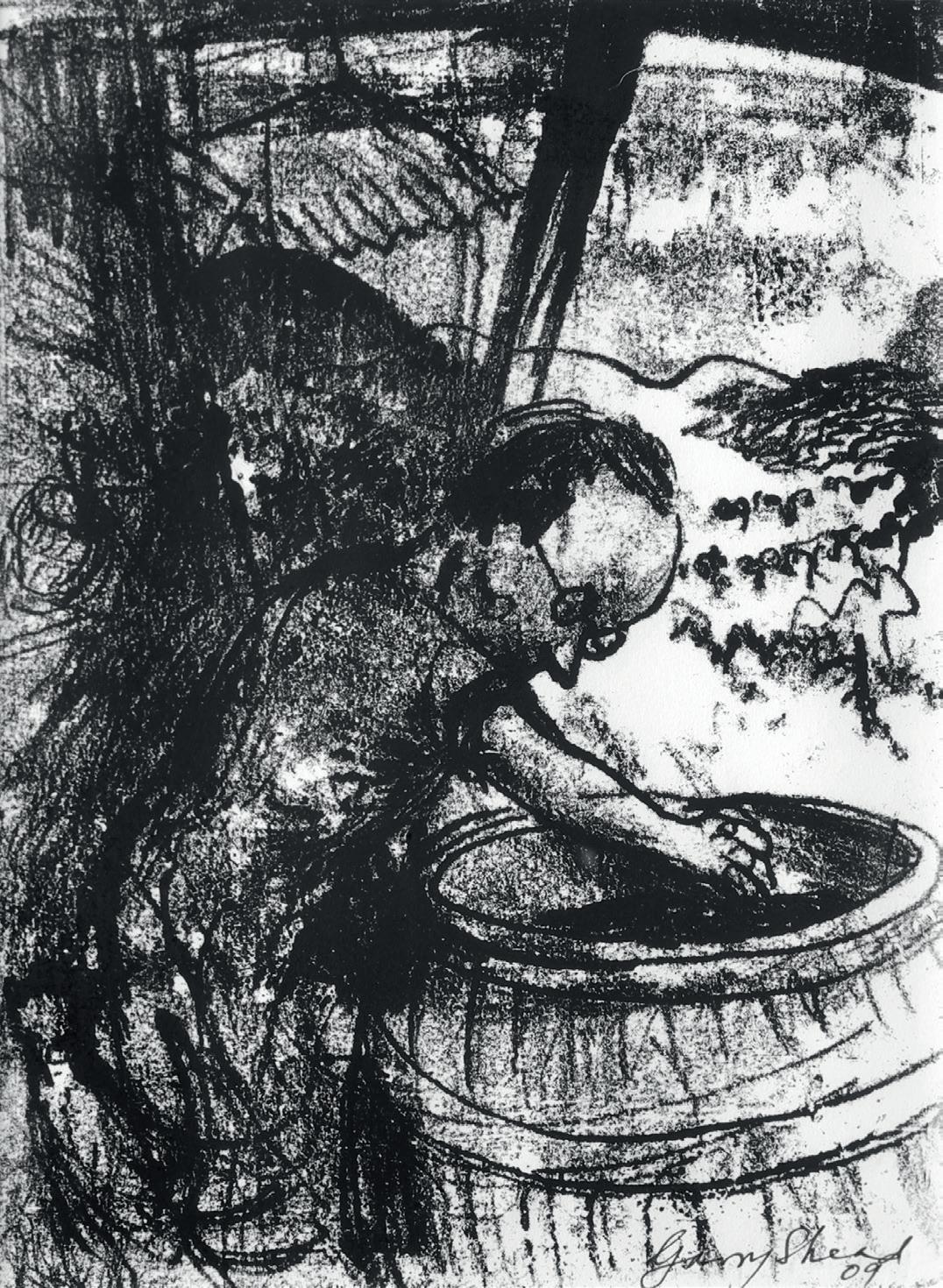
25 Alchemist 2009 monotype 25 x 18 cm
26 Winemaker 2009 monotype 25 x 18 cm
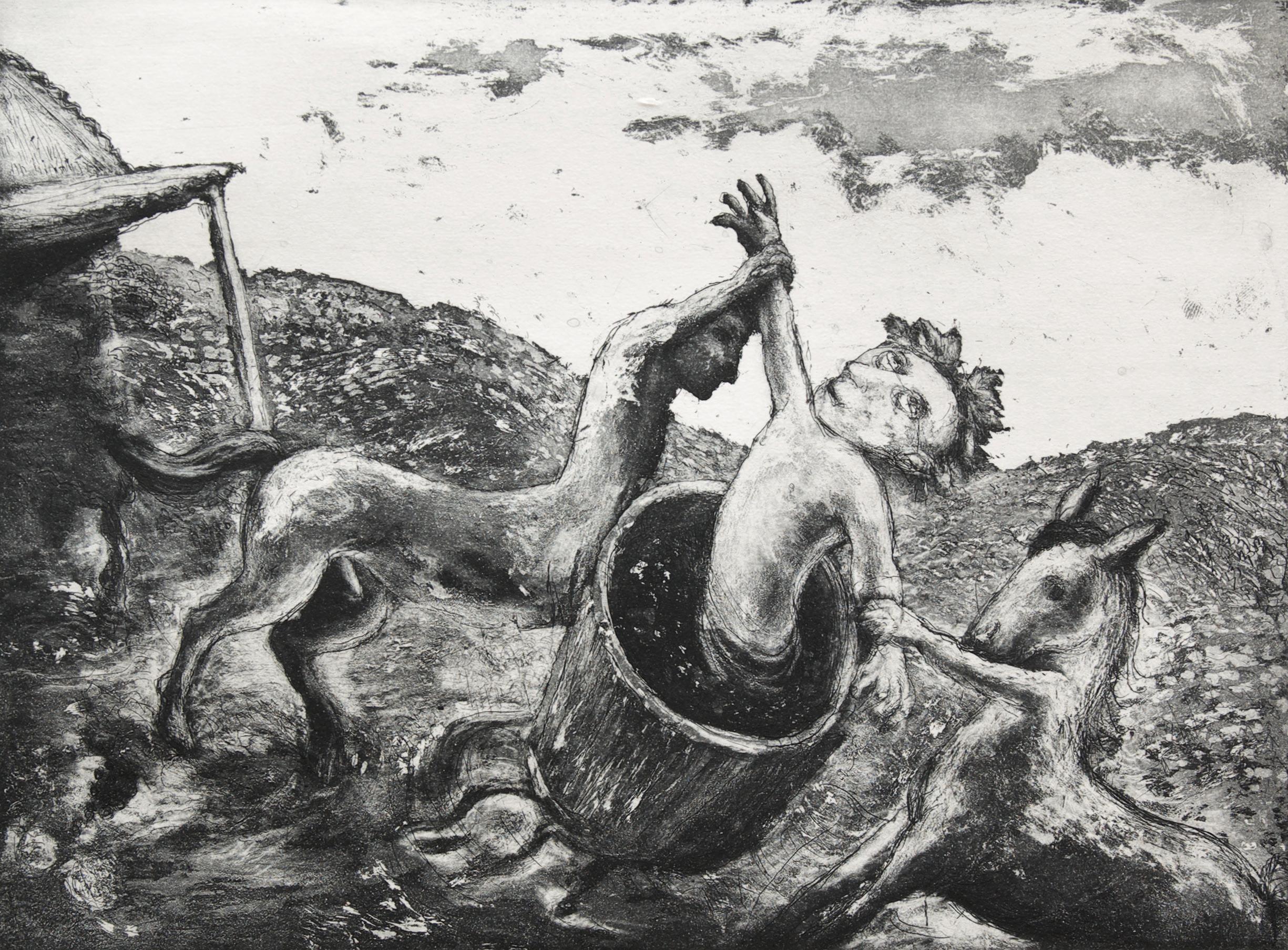
27 The Press 2010
etching with aquatint on Hahnemühle paper edition 50 24 x 32 cm
Basil Hall Editions
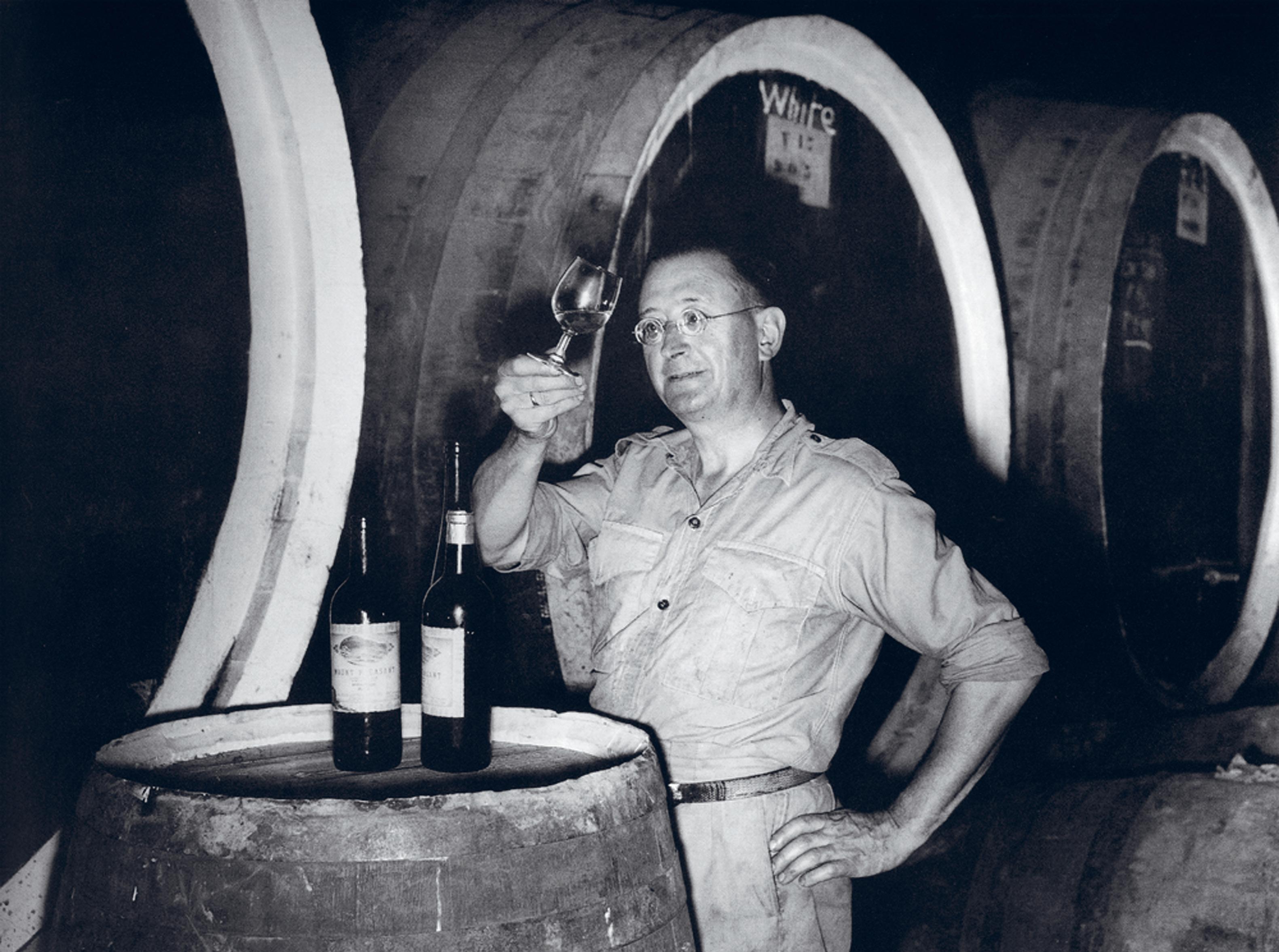
Portrait of Maurice O’Shea, 1951. Photograph by Max Dupain. Copyright courtesy of Jill White
A Poem for Maurice O’Shea
For Garry Shead
It is wine-harvest, summer, the year’s heart.
At night the vines bend on their wires, old sheds Of whitewashed galvanised iron bake in the moon, And Maurice’s cats sidle in the wind.
“Gypsum takes away harshness ...clarify With albumen ...” Love failed and has become A vineyard, carbon dioxide in dark vats Which prickles when you thrust your arm in wine.
But through the vineyards a ghost woman walks, Whose failure honed his art, sharpened that nose, That long thin delicate nose which peers and sniffs Into a long-necked glass, then passes on.
The moonlit water-tank gobbles, rumbling briefly. A possum thumps upon the roof but Maurice In hock-pale light is sitting at a desk
Writing in vine-scrawl of the wine he loves,
Myopic eyes given a quizzical look
By thick-lensed, rimless, gold-framed spectacles, And always ready for a laugh, whisking Up culinary marvels on a kerosene stove,
And once a bandicoot cooked in red wine
Greeted by ignorant cries of “Bravo Maurice!
A champion dish!” as bits of bandicoot Dissolved with herbs and leeks inside his guests.
“I do not like machines. We use the hand-press ...”
Men grunt and push a handle slowly turning Upon a metal thread, and the great press
Squeezes the grapes till Maurice calls, “Enough!”
Feeling his chest (which cancer eats
Like secret phylloxera through his body)
The texture, substance, weight of grapes, that moment
The first juice breaks and floods - and it’s just right.
But wine is more than art, or the fine mind
Sniffing at mathematical purities, Or testing acidity levels in a lab; Wine is a man inside darkened cask,
Hunched in that primal gloom, scouring out filth, The terror as he crawls in through the bung-hole, Or when they haul him by his helpless arms
Back through that hole, reborn into the world.
Wine is an ancient Catholic God, whose sun Beats on Pokolbin earth, demanding faith, And also works, the hand, weary from turning The soil and dropping grapes in metal buckets.
And wine is also wisdom, which announces As Maurice does, we should drink common wine As well, for too much fine wine spoils the palate. And he is quiet and shy behind his fame.
In khaki shirt and shorts, with battered hat Maurice at vintage time stumps through his vineyard, Dust on his forehead, sweat beneath his arms, Retires inside the whitewashed galvanized shack.
And sits and smokes, drinking a cup of coffee Poured from an elegant metal percolator, A taste rare then, but student days in France And his French mother gave him a Gallic flair.
He smokes. Ah yes! But don’t smoke near the cellars! He’ll cut your arm off if you smoke near there! Those purple bubbles, maroon foam must breathe only From polished concrete vats, cool stone, good oak.
Now Maurice sits tonight alone and humble In summer’s heart and gets up from his desk, And pours some red, savouring it like a baby. Night and wine, his face wavering on the glass.
Geoffrey Lehmann 1966
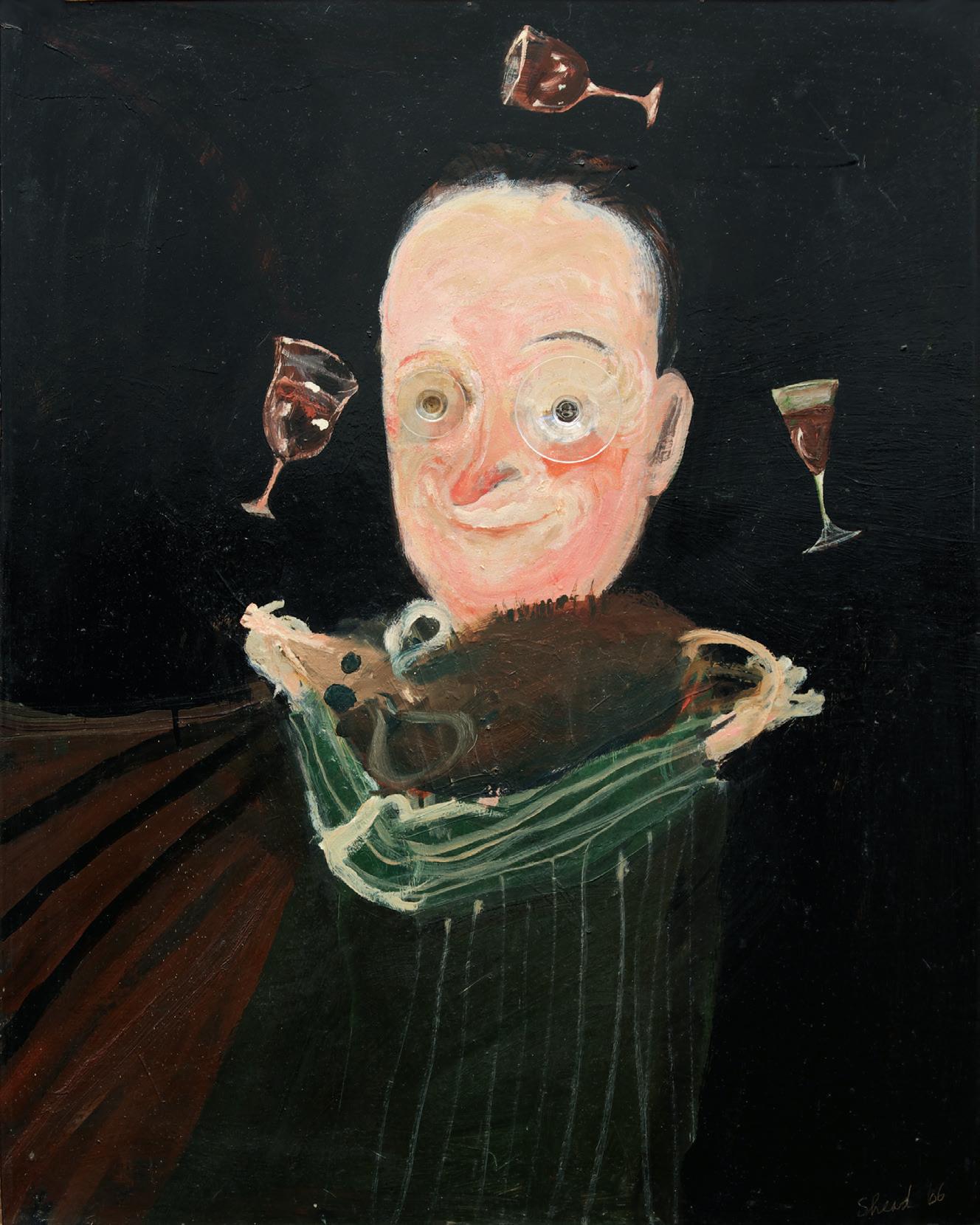
28 Maurice with Bandicoot 1966 oil, enamel and wineglass bases on board 76 x 61 cm
Acknowledgements
The spirit of my uncle Maurice O’Shea has stayed with me since my very first oil painting in the 1950’s, and continued with a series of paintings at Watters Gallery in 1966. In 2009-10, Gavin Wilson rekindled that flame by curating a series of exhibitions inspired by the Mount Pleasant winery, Love on Mount Pleasant.
Gallery Directors Alan Sisley, Joe Eisenberg, Stuart Purves, Philip Bacon, Paul Greenaway and Denis Savill have all made huge contributions by exhibiting the Love on Mount Pleasant works over the last decade.
I thank wine journalist Campbell Mattinson whose book Wine Hunter has been such a delight and inspiration. Author Peter McAra, of The Vintner’s Letters who gives a whole new interpretation of Maurice O’Shea’s life.
Simone Bryce, the daughter of vigneron Maurice and pianist Marcia, who held the secret love letters and personal history that have made the O’Shea story come to life.
I thank Tom and Marie Murphy for how they’d kept Maurice’s memory alive. Max Lake and his family, John and Gabrielle Walker, and the McWilliams family.
The poet Geoffrey Lehmann, whose three poems written more than fifty years ago have aged as well as one of the great Mount Pleasant wines.
Thank you to my wife Roseanne for your endless support and devotion.
To conclude, I sincerely thank Anthony and Roy Medich and the management at the Mount Pleasant Winery for their revitalizing vision for the winery and for upholding the legacy of my uncle Maurice O’Shea.
List of Works
Gavin Wilson is a leading independent curator, award winning landscape architect and author. His wide ranging exhibitions and publications, focusing on the interconnected themes of landscape and culture in the Australian experience, have been met with both public and critical acclaim.
Following his landmark exhibition The Artists of Hill End at the Art Gallery of NSW in 1995, he has conceived, curated and delivered a number of significant exhibitions for public galleries in metropolitan and regional Australia. They include Escape Artists: modernists in the tropics 1998; Rivers + Rocks: Arthur Boyd and Brett Whiteley 2001; Cuisine & Country: a gastronomic adventure in Australian art 2008; Love on Mount Pleasant: Garry Shead toasts Maurice O’Shea, 2010.
Several major exhibitions have been presented at the S.H. Ervin Gallery, Sydney. They include: Encounters with Country: landscapes of Ray Crooke 2005; Surface Tension: the art of Euan Macleod 2010; Elemental Reckoning: the art of Tim Storrier 2011; Country & Western: landscape re-imagined 2015; River on the Brink: inside the Murray/Darling Basin 2019; Tree of Life: a testament to endurance, 2022; and In Suburbia: recent detours 2025.
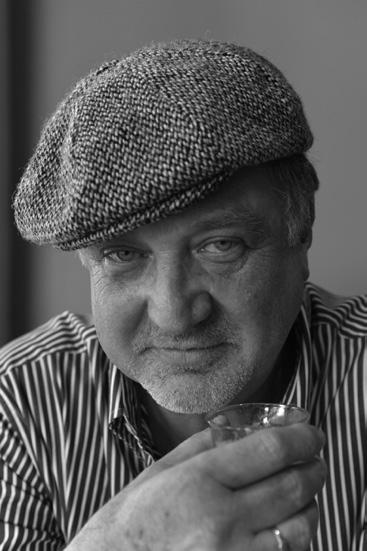
Photograph by Greg Weight