


JANUARY 25 - 27 · AUSTIN SEMINARY · IN-PERSON & ONLINE ONLINE







Windows is published two times each year by Austin Presbyterian Theological Seminary. To read prior issues, go here: AustinSeminary.edu/windows
Austin Seminary Windows
Austin Presbyterian Theological Seminary 100 E. 27th St.
Austin, TX 78705-5711
phone: 512-404-4808
e-mail: marcom@austinseminary.edu
www.austinseminary.edu
Message from the President
Faith Along Interstate 35: Borderlands Connections, Migrant Stories, and the Work of Faith in Action
Hands, Feet, and Heart: Building Homes as an Act of Faith
Joyful Resistance: Building Community and Hope with Austin’s Immigrant Neighbors
MidWinter Lectures 2026
Alumni Spotlight: A Love Letter to Austin
Faculty Spotlight: The Ministry of the Reverend Ted V. Foote, Jr.
HESED 2026
Donor Spotlight: Lives of Service Shaped by Faith
Program Spotlight: Bridge to Ministry
The Ware
Abedrock principle of Reformed theology is that true knowledge of God is impossible without Spirit-inspired faith engaging the human mind as the site of reason. Given the many claims Reformers could have made about novel religious ideas, this principle adds nothing new to a long scholastic tradition, which held that knowledge of God is attained when our faith seeks deeper understanding, echoing Anselm of Canterbury’s often-quoted phrase “fides quaerens intellectum.”
While this principle has informed the church’s work for centuries, the question remains whether the deepening of our religious understanding, the rational work of constructing, interpreting, and explaining our beliefs, is sufficient to demonstrate our knowledge of God. More pointedly, how can we make our beliefs evident in a society that has reduced reason from a tool for understanding truth and justice to a mere instrument of fabrication (both techno-scientific and discursive) and of power? This question is highly relevant for educational institutions like ours, whose primary role is to encourage theological understanding, biblical knowledge, and sound ministerial practices.
As the articles in this volume of Windows clearly show, the answer lies in moving from reasoning about our beliefs as the hallmark of faith to acting in ways that give public witness to our trust in God, who continues to intervene in history in redemptive ways. The new principle confirming our knowledge of God in Christ may be a faith that seeks purpose—fides quaerens propositum As Dr. Cuéllar’s main article notes, a faith that seeks purpose links us to “the material realities of the world we inhabit” and therefore concerns itself with the bodies, locations, and experiences that surround us. It is certainly faith informed by reason, but ultimately it is shown in action through embodied practices of grace and compassion.
When we care deeply for everything that constitutes our living environment, from people to nature, we not only find meaning and purpose as existential necessities but also enter into a stronger relationship with the God we seek to know. That relationship finds expression in the projects that distinguish the ministry of our students, alumni, faculty, and Seminary supporters. This ministry, modeled on Jesus’ call to neighborly love, welcomes the stranger, provides shelter for those seeking a safe place, educates for the transformation of mind and soul, and cares for creation. You will find here stories that attest to this important work. These are the marks of a learning institution that forges faith with purpose in action. This is the spiritual imprint of Austin Seminary.
Faithfully yours,

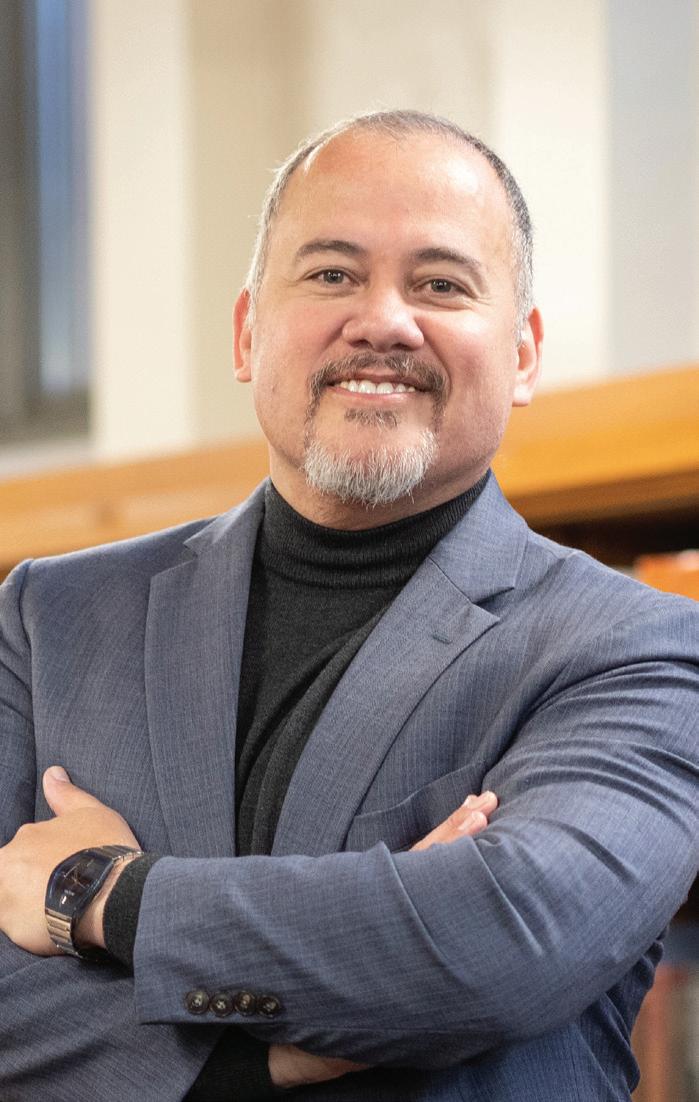
José R. Irizarry President
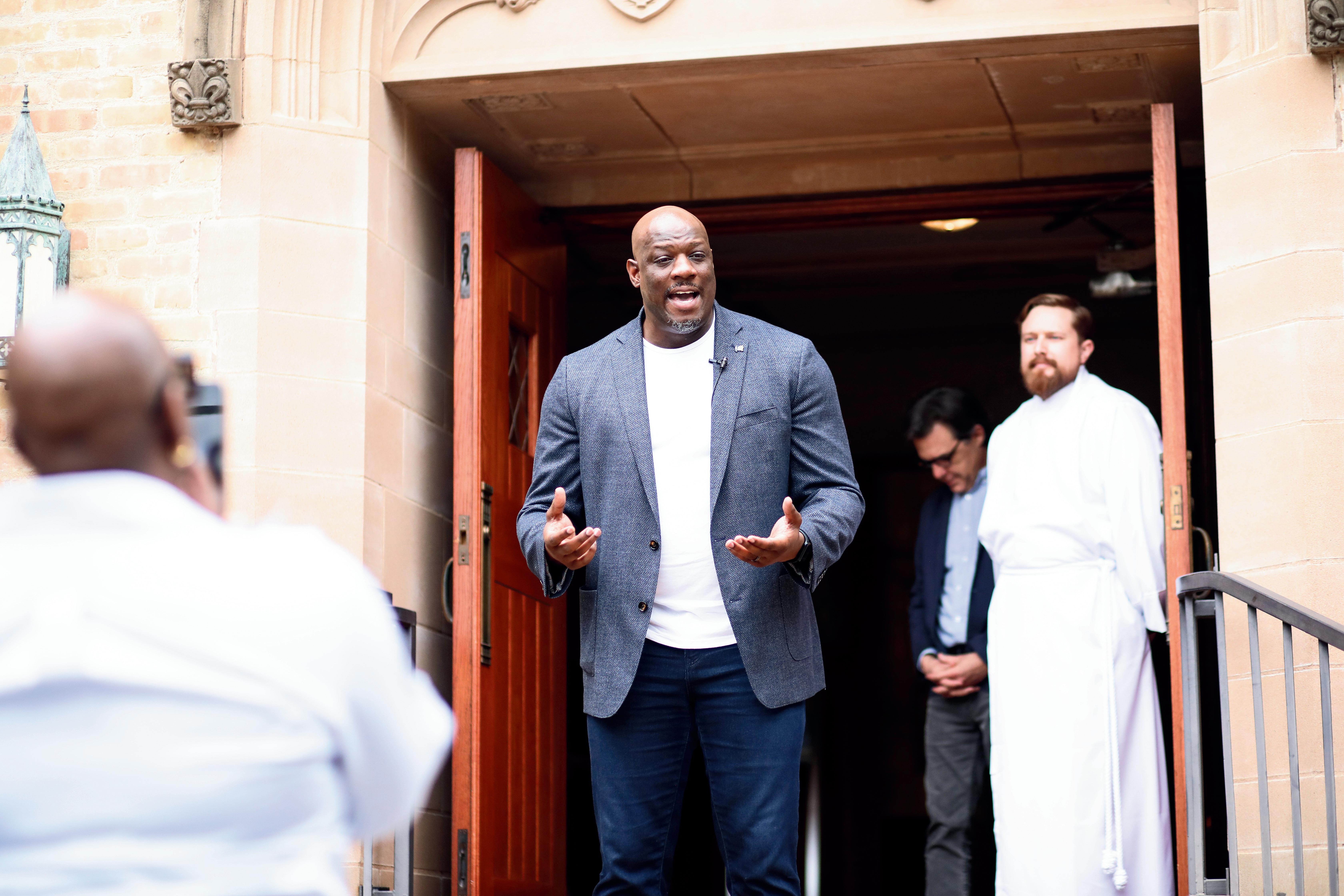

Austin Seminary's Public Theology concentrations prepare MDiv and DMin students to foster cross-cultural understanding, build bridges across social divides, and lead with purpose for a better world.

Scan the QR Code to learn about our MDiv and DMin Public Theology concentrations

by Rev. Dr. Gregory L. Cuéllar
My office at Austin Seminary sits in Travis County. To arrive here each day, I take Interstate Highway 35, a major transportation artery with an entrance about a mile from campus. These seemingly mundane coordinates do more than locate my ministry of teaching— they connect me to place. They root my work in a particular landscape and connect my vocation to the lives that move through it.
At Austin Seminary, making connections is central to my faith-work. It begins with an embodied awareness of place. Before knowing what to teach, I must first understand where I teach. The place of my ministry is more than where I stand as a person of faith; it is the point where faith takes form as work in the world.
To practice faith-work while remaining disconnected from the place one inhabits produces an abstract faith—a faith separated from the bodies, lands, and lives that surround us. Scripture reminds us that faith cannot remain detached from the material realities of the world we inhabit. As the Epistle of James teaches:
If a brother or sister is naked and lacks daily food and one of you says to them, “Go in peace; keep warm and eat your fill,” and yet you do not supply their bodily
needs, what is the good of that? So faith by itself, if it has no works, is dead.
Learning to connect with the people of the places that hold us is life-giving faith-work. In these encounters we discover that God is not found in some distant heavenly realm, but in the people and lands that stand before us.
Pathways like Interstate Highway 35 move our bodies through the landscape so that we can meet the lives that inhabit it. Driving this highway south brings me to the U.S.–Mexico border, where I encounter migrants whose journeys cross a dividing line between peoples and lands. They are individuals who have left their birthplaces in search of a place where life might flourish again.
From these encounters emerged the Arte de Lágrimas: Refugee Artwork Project (www.artedelagrimas.org/). The project grew from relationships with migrants, asylum seekers, and others whose journeys eventually brought them into contact with the place I inhabit. Their presence in this region has become a defining point of connection for my faith-work at Austin Seminary. As part of this place—the borderlands—my faith calls me to remain connected with them.
By exhibiting their artwork, we share these relationships with others, transforming galleries, churches, and classrooms into borderland spaces of encounter. Their migratory stories of faith not only connect us to their lives; they also teach us how
The Reverend Dr. Gregory L. Cuéllar is Professor in the Ruth A. Campbell Chair of Biblical Studies at Austin Seminary. An international Latino biblical scholar, his work traverses disciplinary and institutional borderlands, engaging decolonial theory, migration studies, and museum studies. He is the author of Resacralizing the Other at the US-Mexico Border: A Borderland Hermeneutic (Routledge, 2020) and Empire, the British Museum, and the Making of the Biblical Scholar in the Nineteenth Century: Archival Criticism (Palgrave, 2019). His latest research extends into postcolonial trauma studies, further cementing his role as a leading voice in critical biblical scholarship. A three-time grant fellow of the Hispanic Theological Initiative, Dr. Cuéllar has been a visiting scholar at the Centre on Migration, Policy, and Society (COMPAS) and the Centre for Criminology at the University of Oxford. He has presented his research at premier academic conferences across Mexico, Spain, and the United States. As co-founder of Arte de Lágrimas: Refugee Artwork Project, he amplifies the voices of displaced communities through artistic expression, advocating for the transformative power of visual narratives in social justice work.
to connect more deeply with place, people, and God.
Among the places their stories connect us with are the detention spaces in Texas. These facilities are often intentionally built in remote areas, far from public view, so that most people remain disconnected from them.
Their migratory stories attune our gaze to places rendered unseen in the borderlands—spaces designed to sever people from community, belonging, and dignity. By encountering their personhood, we are also led to see how state power has wounded them.
Through the faith-work of Arte de Lágrimas, Interstate Highway 35 not only connects us to the U.S.–Mexico border; it also leads to the largest U.S. facility for detaining migrant children. Taking this highway south, the artwork of asylum-seeking children brings me to the immigration detention center in Dilley, Texas. There, families seeking refuge are confined while they wait for their immigration cases to be heard.
Faith-work must not turn away from such places. The Gospel repeatedly directs our attention toward the poor, the stranger, and the imprisoned. To connect with the vulnerable people of the borderlands is therefore intrinsic to the Christian faith. Through these encounters we begin to see more clearly how systems of oppressive power operate.
For this reason, my attention has recently been drawn north along this same highway. Following Interstate Highway 35 north takes me toward Minnesota and the northern borderlands of the United States. Yet the connections formed by this roadway are not only geographic. They reveal how systems of immigration enforcement link distant places together.
In Minnesota, immigration raids recently led to the detention of several children, including a five-year-old boy who was taken into custody with his father and transported more than a thousand miles away to a detention facility in Dilley, Texas. Witnesses and school officials reported that the child—a preschool student—was taken by federal agents outside his home during an enforcement operation targeting his father, who had an active asylum claim.
Highways reveal how the geography of the United States is stitched together not only by movement and opportunity, but also by the circulation of state violence.
One of the drawings featured in the Arte de Lágrimas collection is titled From Home to Detention. It was created in 2016 by Zuli, a six-year-old girl from Honduras, using marker on a 9-by12 sheet of paper at the San Antonio Bus Station. When she asked what she should draw, a volunteer suggested she draw
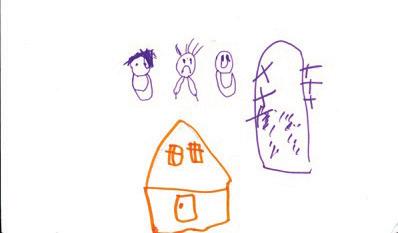
her journey. Zuli began with her home, rendered in orange. From there she traced her path northward, ending with the immigration detention center in Dilley, Texas, drawn in purple. Alongside the building she sketched her family traveling with her. The purple X’s and dots scattered across the page represent the many people confined together inside the detention center.
My former student, the Reverend Hierald Osorto (MDiv’18), was present when Zuli created this drawing while volunteering with the project.
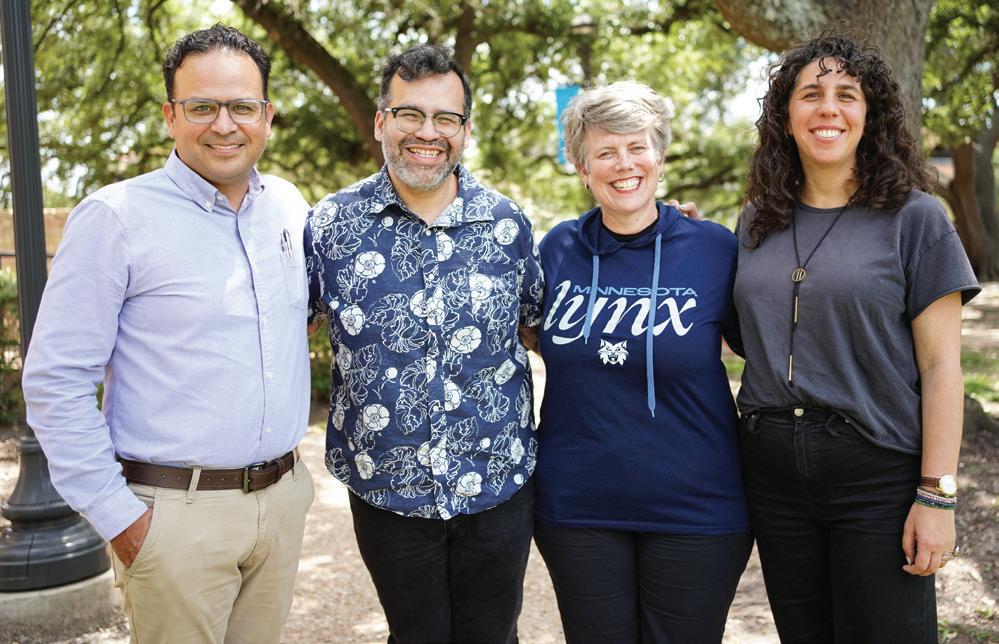
Years later, I joined Hierald in Minneapolis for an exhibit connected with a gathering titled “Welcoming Our Neighbor: A Prophetic Vision for the World.”
Today he serves as a pastor in that city, where his congregation continues this same faith-work by creating spaces of sanctuary and care for immigrant neighbors living under the threat of detention and deportation.
In this way, the same national infrastructure that connects my office in Austin to the borderlands also connects communities across the country through systems of detention and deportation. The road that carries my body south toward Mexico also links distant places through the realities of immigration enforcement and the suffering it produces.
In this way, the connections formed along Interstate Highway 35 do not end at the border. They travel through the lives of students who carry their faith into the world. Faith in action is the work of making and sustaining connections—connections that honor the dignity of those whose journeys bring them into our midst.
Along these pathways of connection, faith learns to recognize God in the people whose paths we cross—people who share the same horizon, the same landscape, and who stand right here with us.
by Carolyn Albert Donovan DMin Student
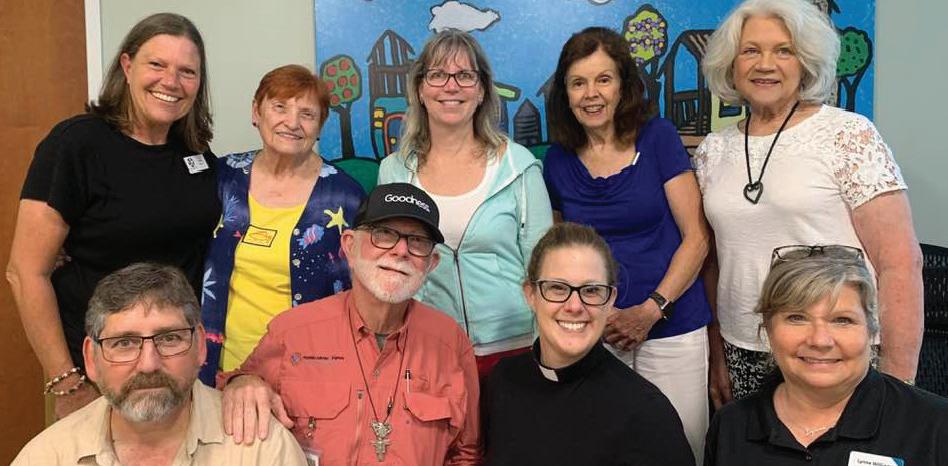
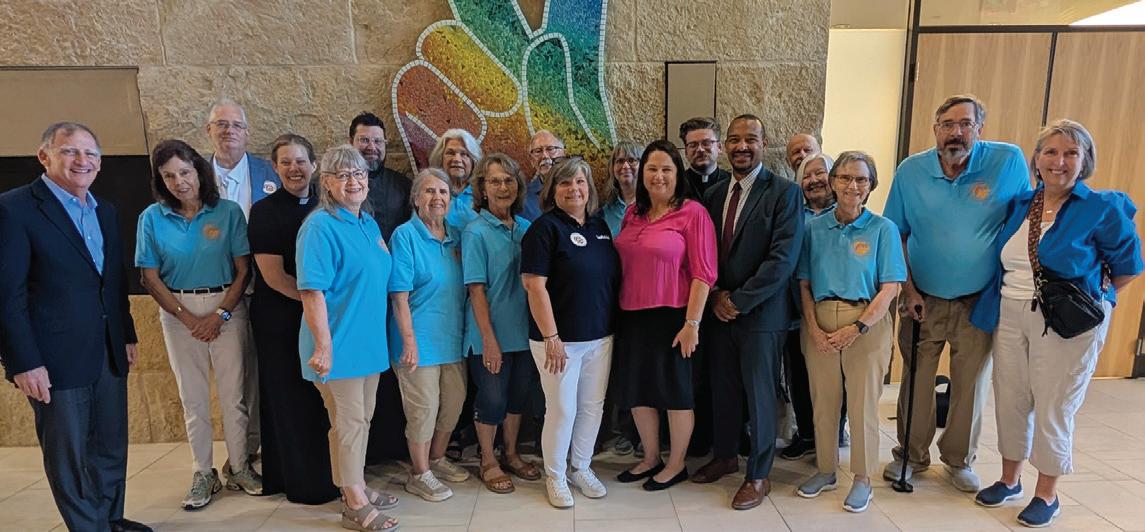
When I think of the phrase “faith in action,” I am reminded that the Greek word we translate as “faith” can also be translated as “trust.” For me, the kind of trust that we call faith is most manifest in community. And, some of the most powerful examples of faith in action in my current community, Peace Lutheran Church in North Austin, have indeed, felt like an Indiana-Jones-style leap of faith…or like a trust fall off the side of a skyscraper.
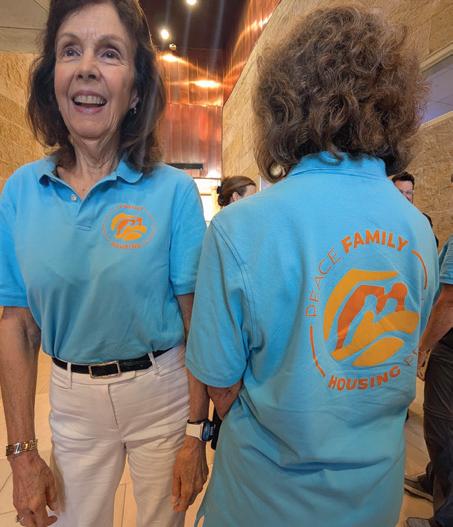
Over the past 5 years, our congregation has been learning and working and building relationships towards the goal of building 4 units of new, trauma-informed, family-focused transitional housing on our church campus. No small feat for a scrappy little congregation that has under 100 folks gathered for worship most Sundays.
We found our call to this project through the slow, quiet work of listening. Listening to God through scripture, within our community, and in the wider world outside our walls. Listening, we’ve learned, is vulnerable work. Trust is vulnerable work. Faith, it turns out, is vulnerable work. And it is transformative.
Through listening, we found clarity in the call to help do our small part to address housing insecurity in our city. As Peace member Mary Beth Foster put it, “We are acting out… literally…tangibly…what God said about taking care of your neighbor. Who is your neighbor? We’re seeing the need for housing…and we’re answering it with the resources we have. We have land. We can pull together money. We are neighboring…as we were called to do.”
We have found partners throughout the journey - construction support through HomeAid Austin, program support through the Foundation for the Homeless, and funding support from local congregations, organizations, and individuals too numerous to name. Part of the faith of this project is trusting that we don’t have to do it all. In fact, we aren’t supposed to. Part of our faith is the humility of knowing we can’t do it alone. Through this process we’ve been learning to trust the Spirit’s guidance and the power of community to be the hands and feet and heart of God at work in the world.

by Laura Stoner MDiv Student
As part of my volunteer role at Life in the City UMC, I coordinate our community partnership engagement throughout the year. For every community partner we select, we share 10% of our collection for the period and volunteer our time as well. Earlier this year, we partnered with the Austin Sanctuary Network (ASN), a coalition of faith communities, immigrants, and other community members, as well as civil society organizations in and around Austin, Texas, that support immigrants fleeing violence or in danger of deportation.
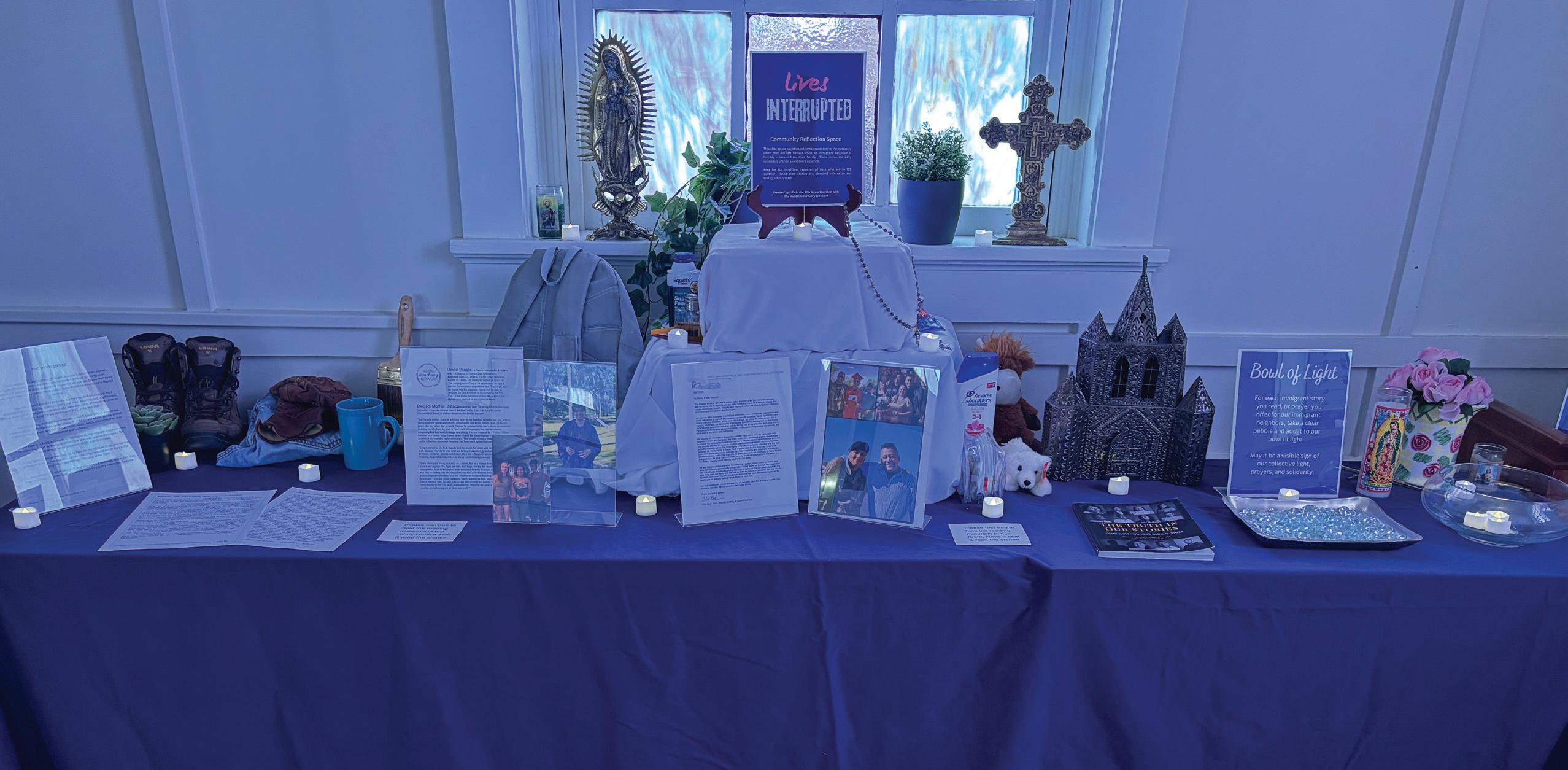
Inspired by the community altars ASN created to raise awareness of individuals unjustly taken by ICE, we collaborated to create an altar and a community reflection space at my parish, called Lives Interrupted. For six weeks, the altar space held artifacts representing the everyday items left behind when an immigrant neighbor is forcibly removed from their family. These items serve as daily reminders of their loved one’s absence.
For me, this work represents faith in action because I have lived on the border and served in an immigrant shelter, and I can tell you that the individuals I met all felt like family to me. The vast majority of immigrant families here start from nothing and are hard-working families. They need care and support, and I have never felt more connected to the body of Christ than when working as part of a team of providers at the border, helping these individuals navigate to safety. Looking into their eyes and hearing their stories were sacred moments, and I am grateful to God for leading me into this work.
So many of these migrating families have endured a level of hardship that most here in the U.S. cannot fathom. What level of violence or inhumanity would provoke you to leave every comfort behind, along with your network of family and friends, to take a perilous, life-threatening journey to the United States? Most U.S. citizens are equally unaware that our government’s actions have exacerbated or created the very conditions that caused these individuals to migrate in the first place. Asylum is a fundamental human right protected by international law, yet our U.S. government, along with officials in Texas, has overtly and inhumanely violated it and created physical and administrative barriers that violate human dignity.
The Scriptures are not unclear about our duty to care for “the alien among you,” the stranger, and the vulnerable. It is in our human nature to fear the stranger, so it is not surprising that the Scriptures spell it out so many times.
At the end of the six weeks, we held a Community Vigil with over 80 attendees, featuring food, vendors, an art auction, live poetry, testimony, and music. All funds raised went directly to assisting families affected by ICE. It was the best event we have ever held in our sanctuary, helping us process our collective sadness, solidarity, hope, and joy all at once, and the bands had everyone on their feet dancing. It was the most meaningful and joyful resistance I have had the pleasure of participating in. To learn more about planning such an event at your church with Austin Sanctuary Network, please contact hello@austinsanctuarynetwork.org.
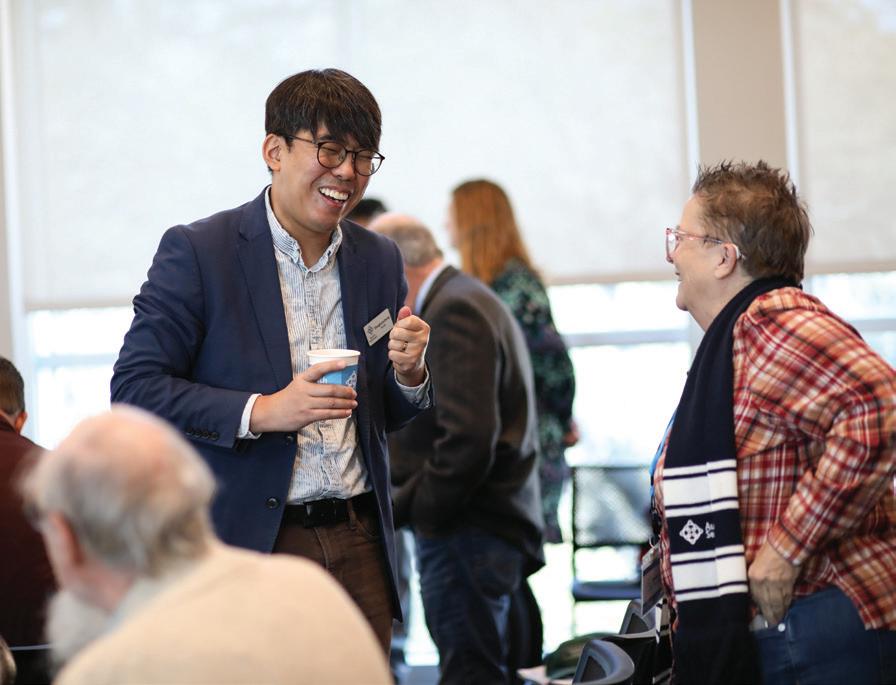
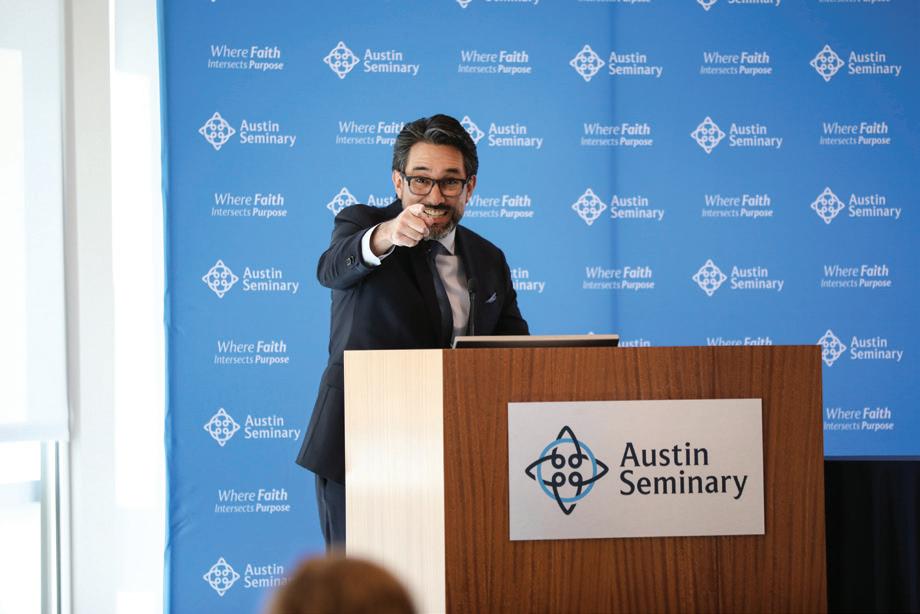
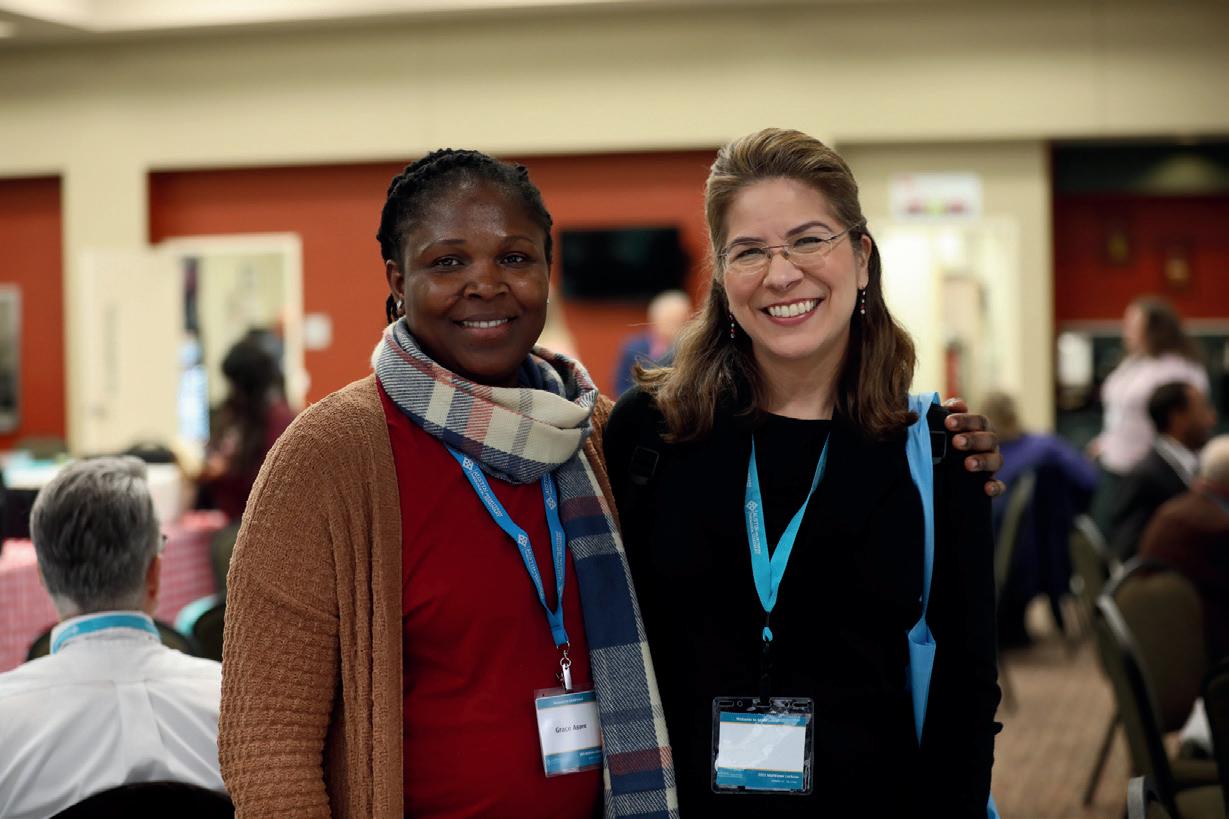
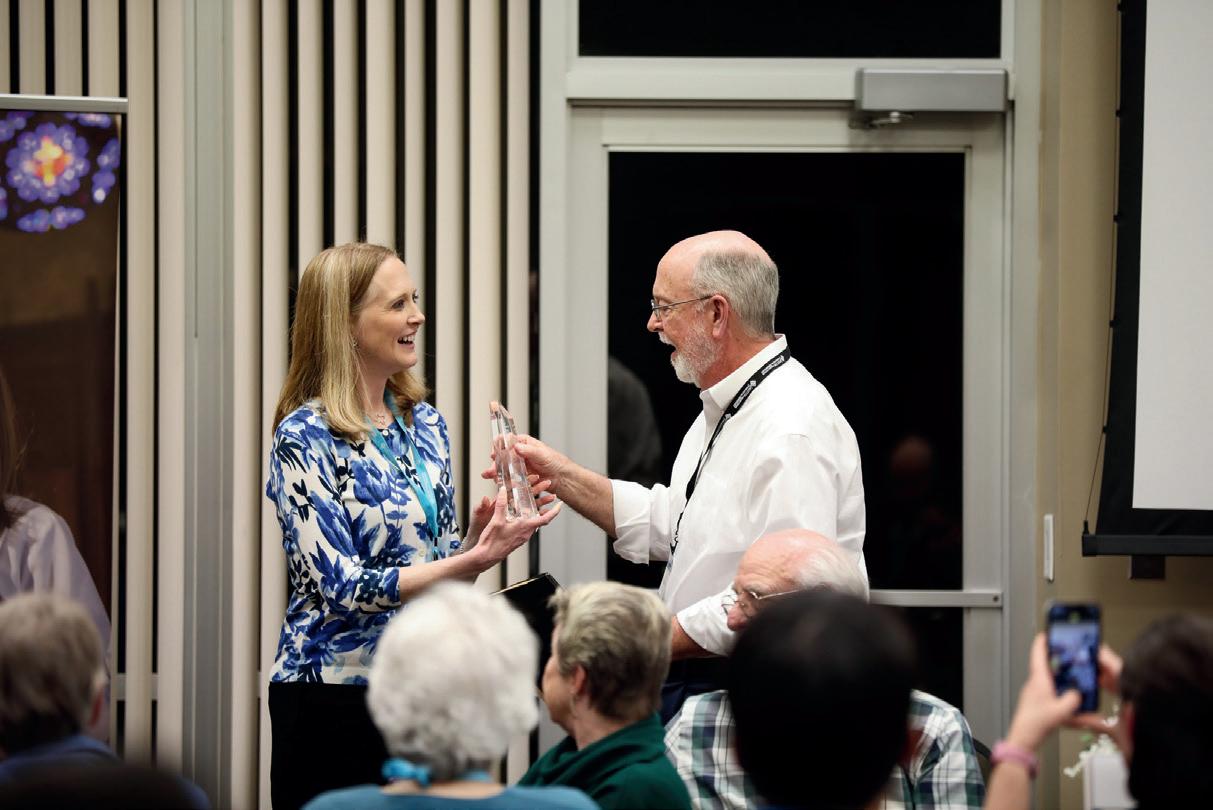
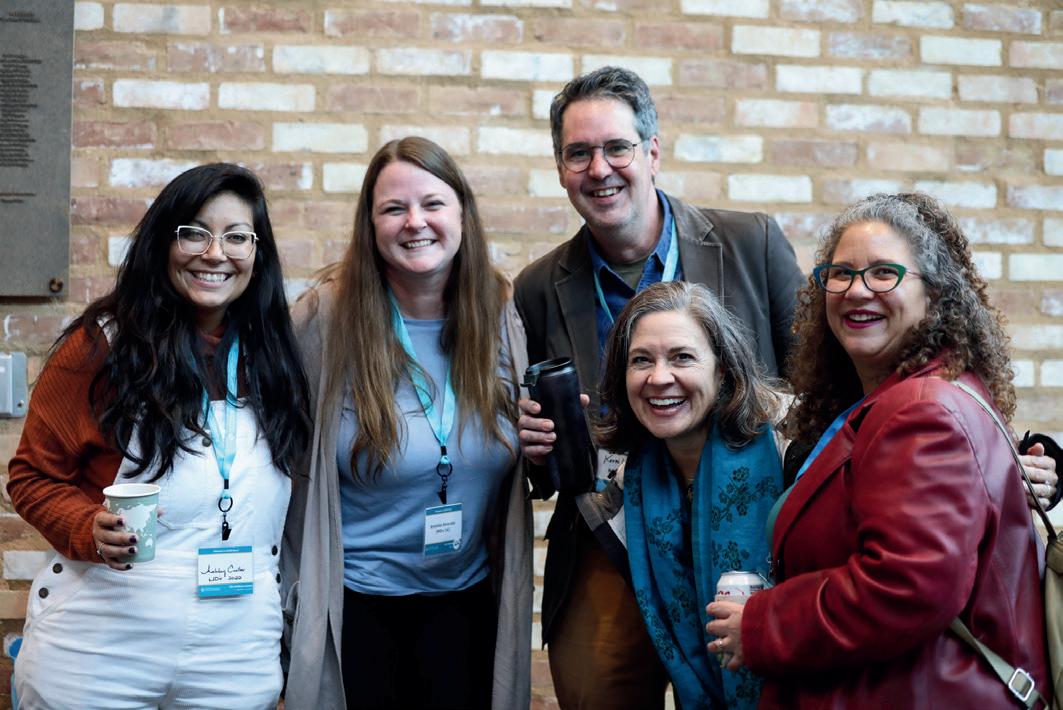
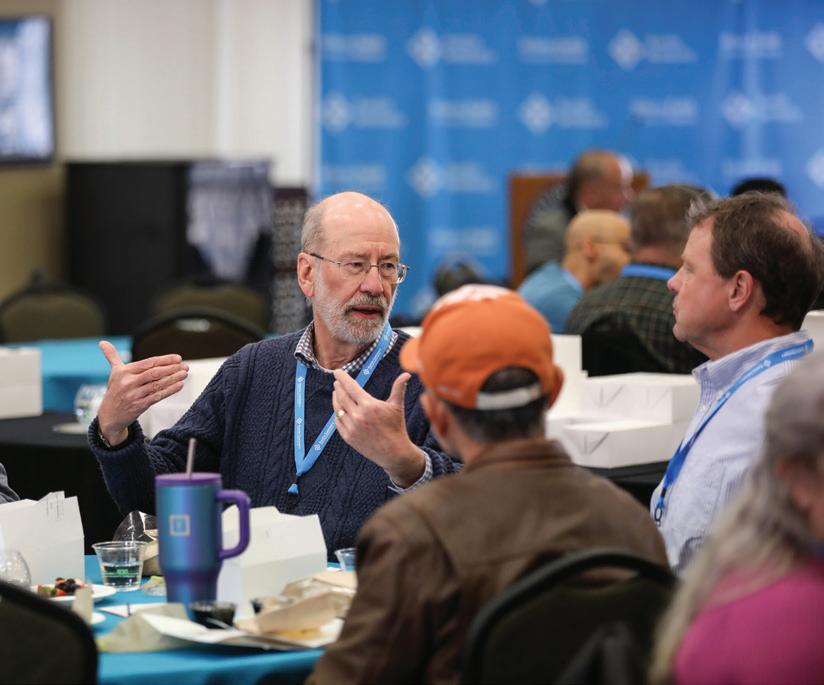
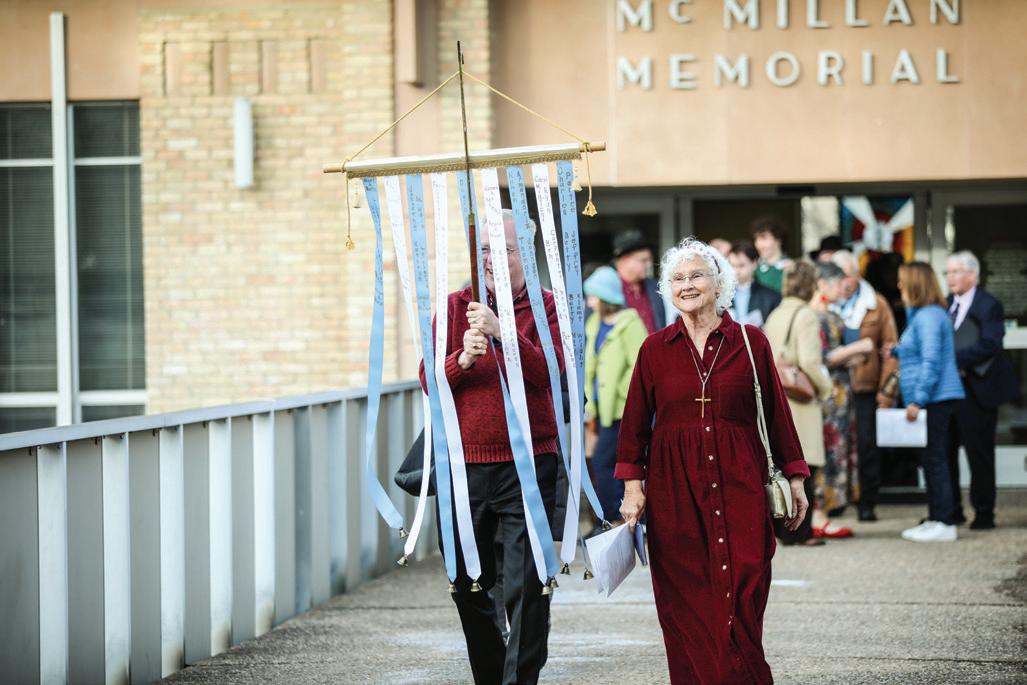
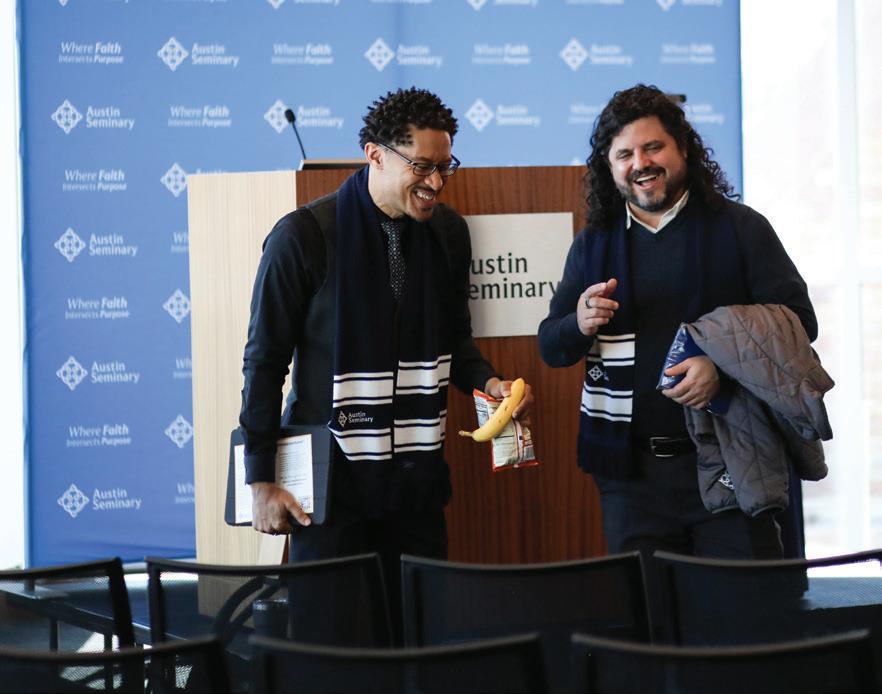
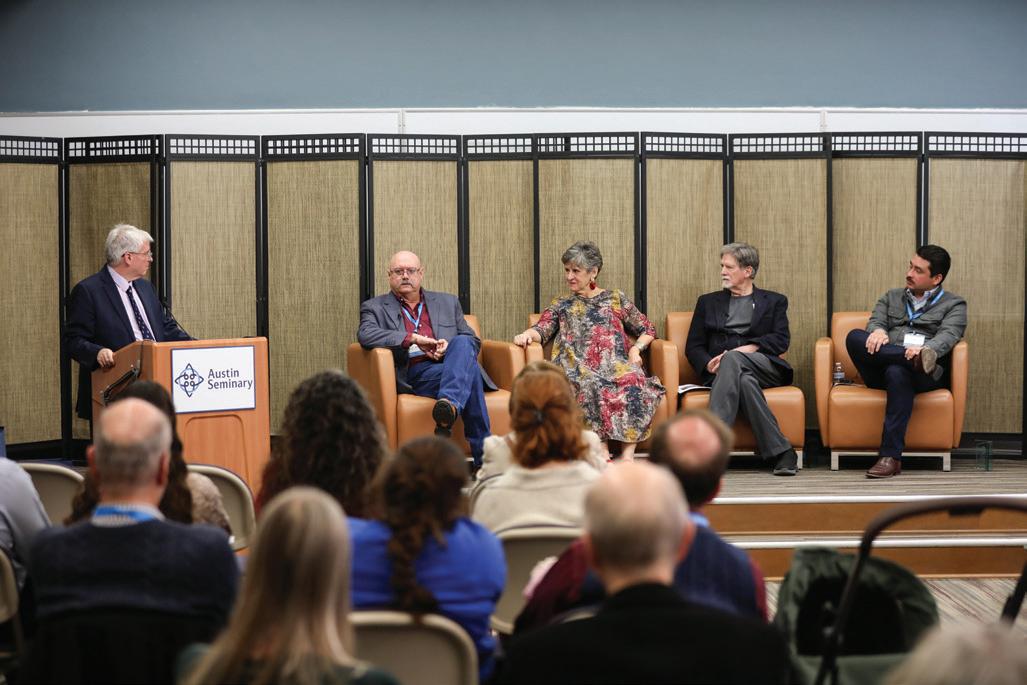
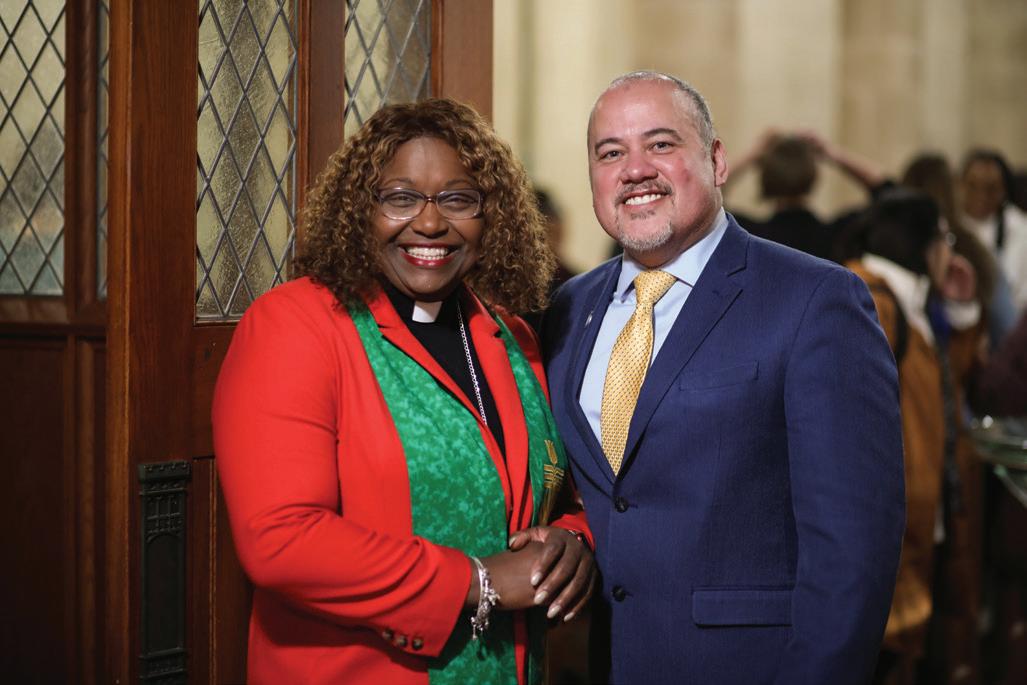
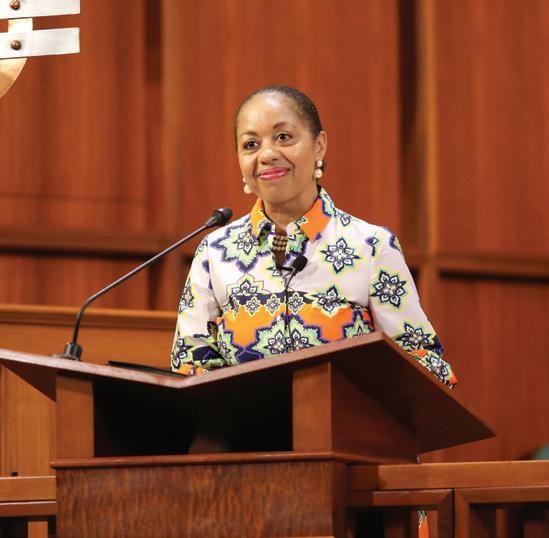
Austin Seminary’s MidWinter Lectures, held January 26–28, 2026, marked another chapter in a tradition stretching back to 1945. The Reverend CeCe Armstrong set the tone on opening night with a reminder of Jesus’ call to mutual care within the beloved community. Currie Lecturer Dr. Catherine Keller invited a fresh reading of Genesis as perpetual becoming, while Westervelt Lecturer Dr. Chris Tirres recast spirituality as something lived and active. Jones Lecturer Dr. David Gushee wrestled with Job’s moral complexity. The MidWinter event would be incomplete without the alumni celebration, during which distinguished alumni are presented with special awards voted on by their peers. Additionally, a remembrance service is held to honor alumni who have passed away in the previous year.
To revisit or listen to the lectures for the first time, visit www.austinseminarydigital.org/midwinter-lectures.
We get so caught up and spellbound by the miracle of a dead man coming to life, but we forget to hear the command of Christ for us to take the grave clothes off. So many folks get turned away from the church because we don’t help them take the grave clothes off. — Rev. CeCe Armstrong
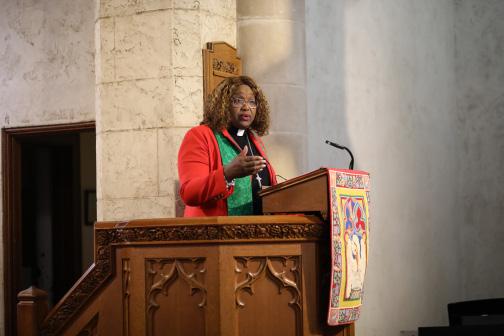
There are gonna be some situations in your life that will be a stinking mess. But the way your faith should be set up is that you ought to know that eventually you will see the glory of God. — Rev. CeCe Armstrong
We need to think of spirituality as a verb, not only as a noun. We need to think of spirituality as a verb. — Dr. Chris Tirres

God cannot control because that is not who God is. In the process theocosmos, the creation is ongoing. It is a creativity, a creative process shared with every becoming creature… That uncontrolling nature can be called creative, and it can be called love, which calls and doesn’t control, which lures…to co-creativity, moment by moment. — Dr. Catherine Keller
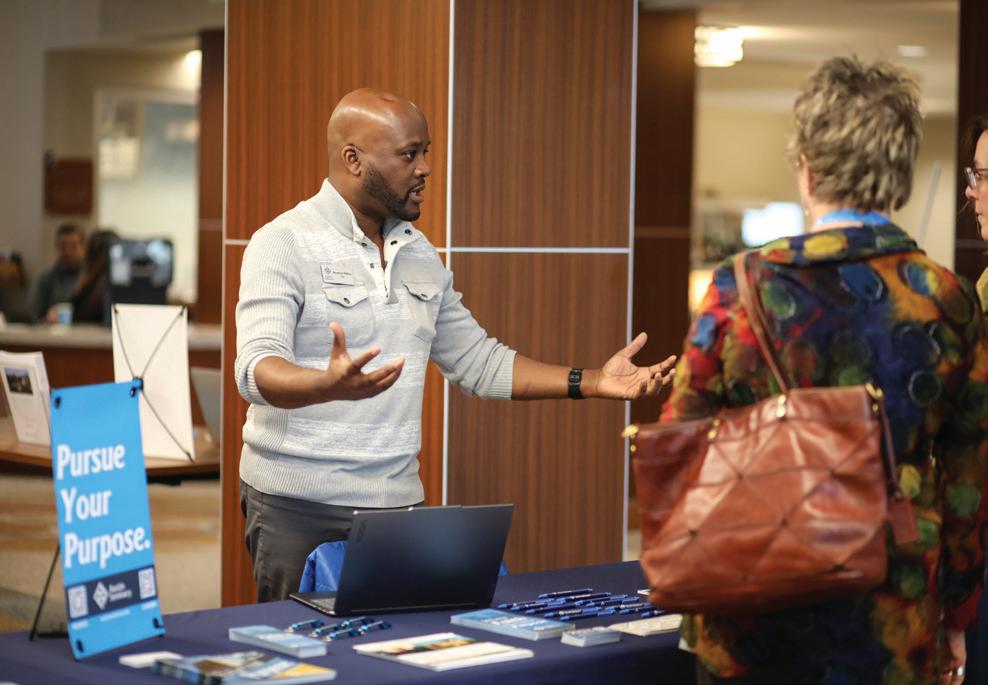
What if those seven days of creation symbolize a process that has never stopped — a process including its points of rest, of Sabbath? The word Genesis, after all, does mean literally ‘becoming,’ not ‘making.’ What if the creation is a becoming, still happening, even now? — Dr. Catherine Keller
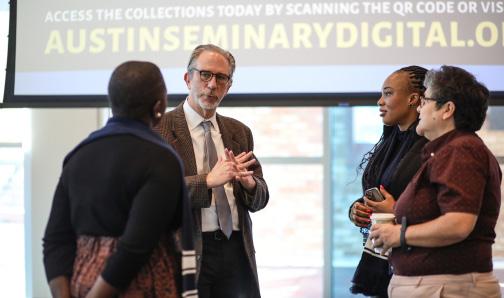
Job shows that in times of horrifying suffering and injustice, protest is precisely how the believer’s dialogue with God remains… If anybody ever taught you that it is wrong to utter a word of protest against God, I think the Book of Job itself stands as a contradiction. — Dr. David Gushee
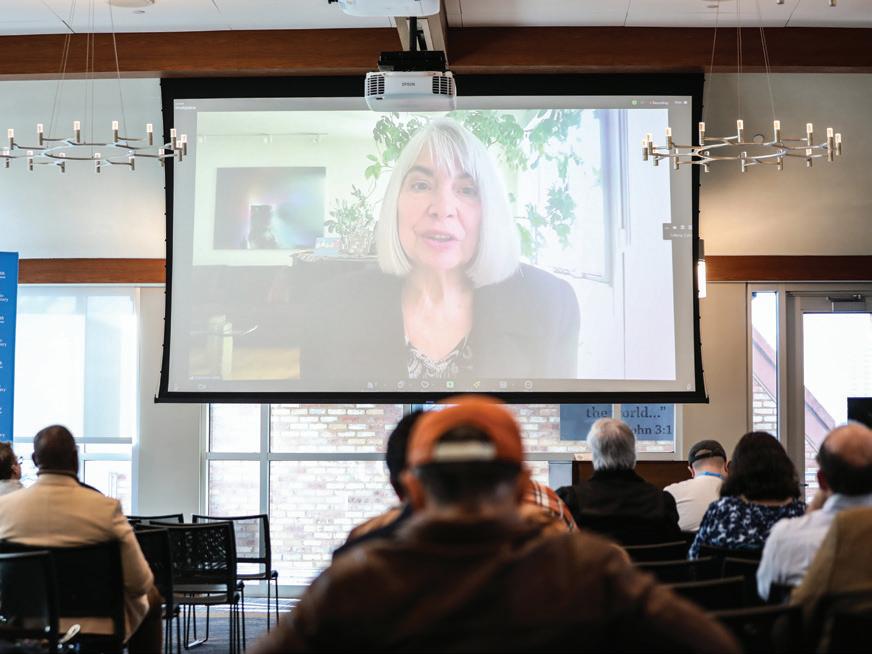
Liberating spiritualities arise when we reconstruct experience, but they place added emphasis on utilizing a critical consciousness to redress systems of oppression and promote human and planetary flourishing.
— Dr. Chris Tirres
Defenders of religious orthodoxy often seek to crush the dissent to tradition that is offered by those whose life experiences ultimately lead them to challenge the claims of the tradition. As with Job’s friends, when dissenters articulate their doubts, the answer is usually: ‘We are the bearers of the tradition. Under no circumstances will we allow your experiences to prevail over our tradition.’ — Dr. David Gushee
Long before we do anything explicitly religious at all, we have to do something about the fire that burns within us. Whether we identify as religious or not, we all have fire — even if we’re atheist or agnostic. What we do with that fire, how we channel it, is our spirituality. What shapes our actions is our spirituality.
— Dr. Chris Tirres
There is more to morality than obeying rules, more to piety than following the proper rituals… Those who live at the very top of the social pyramid can blamelessly obey all the rules, meet all the expectations, avoid all the obvious sins, and still have some things to learn and some ways to grow. — Dr. David Gushee
by Gary Mathews
Austin Seminary’s location in the heart of a major urban center provides students with frequent opportunities to gain ministry experience alongside their studies. Approximately 20% of alumni remain in the Austin area after graduation to put their faith into action in the city they love. Here are the stories of three such alumni.
Education is a foundation of Austin, which consistently ranks among the top U.S. markets for college graduates. Gigi Edwards Bryant (CIM’ 23) is in her second 6-year term on the Austin Community College board of trustees. She talks about her passion for educational access and success, especially for underserved youth.
Austin also offers abundant opportunities for entrepreneurism. Christian Antwi (MDiv’25) discusses his role as Coordinator of the Love Letter Fund. A project of Covenant Presbyterian Church, the fund invests in entrepreneurs seeking to create positive social change in the Austin area.
ACL, both the TV show and the outdoor music festival, has been the heartbeat of Austin for decades. Candice Combs (MDiv’16) explains how New Life Lutheran (ELCA) in Dripping Springs finds sanctuary in the outdoors and how a different ACL helps her stay attuned to the pulse of the city.
I am an elected official at Austin Community College District in my second six-year term. As trustees, we’re responsible for the governance of the college, fiduciary responsibilities, and overall academic responsibilities related to policy, allowing professors, administrators, and staff to center on students. We focus on student achievements, enrollment, retention, and graduation, including workforce certificates and degrees.
I am engaged in organizations focused on volunteering and community service. The Write To Me Foundation focuses on providing rites-of-passage experiences for youth in the foster care system and those who have aged out. Our signature event, PromRack, provides everything they need to attend their respective proms at their schools throughout Central Texas.

PromRack is free thanks to the generosity of the Central Texas Community. Each student and volunteer must sign up online. This allows us to have enough volunteers to take care of each student.
My great-grandmother gave me my first trust in Christ and gave me things in my countenance that I believe helped me survive the foster care system. I’ve always wanted to share those values and that indelible love God gives his people. I always wanted to pursue a degree in ministry. I was so excited to see that Austin Seminary offered an intense study program through its Certificate in Ministry. I pursued this certificate to expand my knowledge in Biblical teaching so I could use the information in real time to teach the high school students at my church.
The experience, the professors, the environment, and the interest in my learning are all I could have hoped for through the Seminary. I believe you have to believe in what you’re doing, and it really has to be a part of who you are.
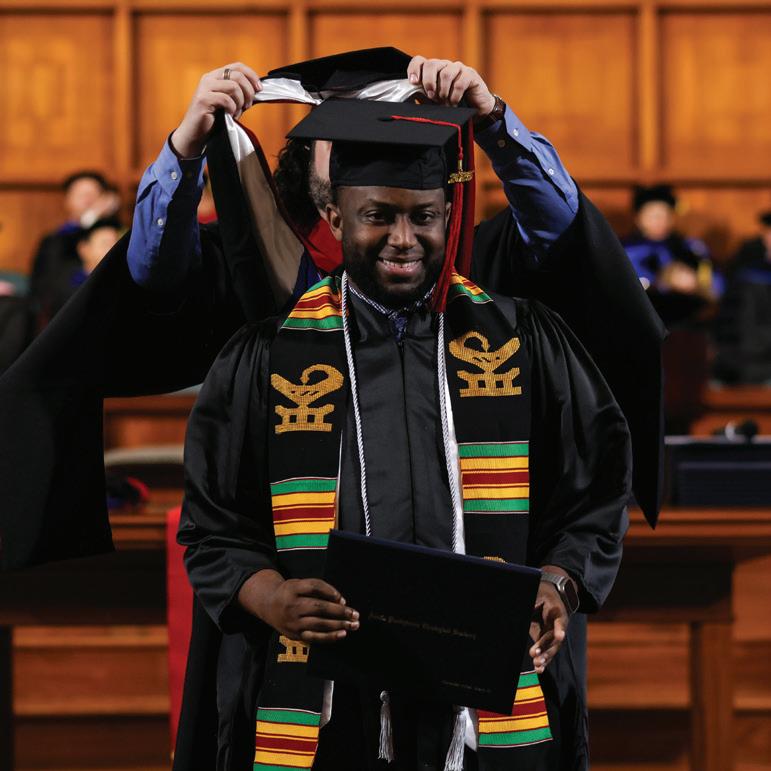
I’m the Coordinator of Covenant Presbyterian’s Love Letter Fund. Right before the pandemic, an idea was formulated on how to involve your congregation in being the hands and feet of ministry instead of just asking people to give money to fix a problem.
The Love Letter Fund was created as a way to write a love letter to the city of Austin. We encourage Covenant members who have an entrepreneurial idea or an initiative they’ve been sitting on and believe would be a great way to provide ministry or help marginalized individuals in Austin. We try to remove the funding barrier for them.
Proposals are guided by our four leading principles:
• How is it spiritual formation?
• Is there an impact on Austin?
• How is it connected with Covenant, and how can Covenant connect with it?
• Is it sustainable?
We connect different people’s professions with their mission and find a pathway to being hands and feet. This also energizes the life of our congregation, where people see where their tithing goes and that we’re actually doing something worthwhile, not only at Covenant but out in the world. And our church wants to be a bigger piece of that. They want to be bodies that are actually going into East Austin or into more Latinx communities and being part of the mission of Christ instead of just being people who can write a check and say, here you go. The congregation wants to be out in the spaces where Christ is.
New Life Lutheran is a wild church, which means that we worship primarily in and with nature. We’ve slowly become accustomed to the enjoyment of being with all God’s creatures. It makes the community very resilient, and they quickly discern for themselves what the most important part of being Christian actually is.
When we started, everyone brought their own camp chair; it was very egalitarian. There is no, “you don’t have a pew, or that is my pew.” We now set out chairs for people who can’t always bring a chair. You see the wind, and you see hawks, and you see deer, and you’ll see a flock of birds and butterflies coming out of their cocoon, and like 100 at a time. I don’t always perceive it because I’m leading the worship service. But the community really has become integrated with the neighborhood of creation.
We don’t often think about creation as being our neighbor, but when you think about communities that worship with the marginalized or that are meeting within the marginalized community, we have an aspect of that, in that creation is our neighbor and creation is grossly marginalized and over-harvested.
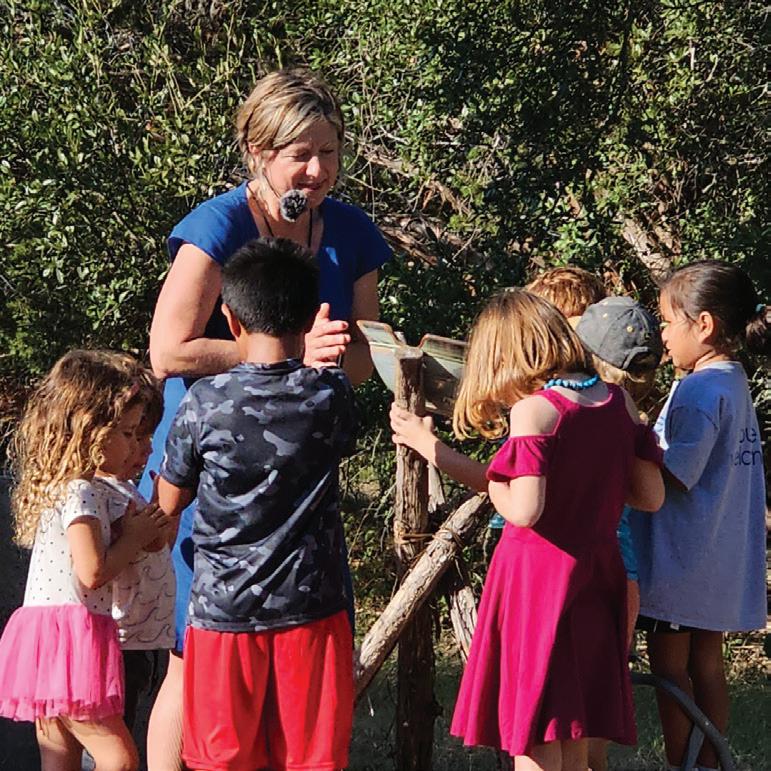
And so, we have come to deeply appreciate and see God’s gifting in creation. I think that has to do with putting our faith in action, too, in that we are with our neighbor all the time.
For my personal faith in action, I participate with the Austin City Lutherans (ACL), a volunteer collective at the Bread for All Food Pantry. We serve 150 to 200 families every week. I love that when I show up there, I just put on my baseball cap and I’m just Candice. It’s not my congregants who are there, but I just get to go be a part of the service. And that does amazing things for me.
by Jeff Sanchez
What does it mean to live out your faith?
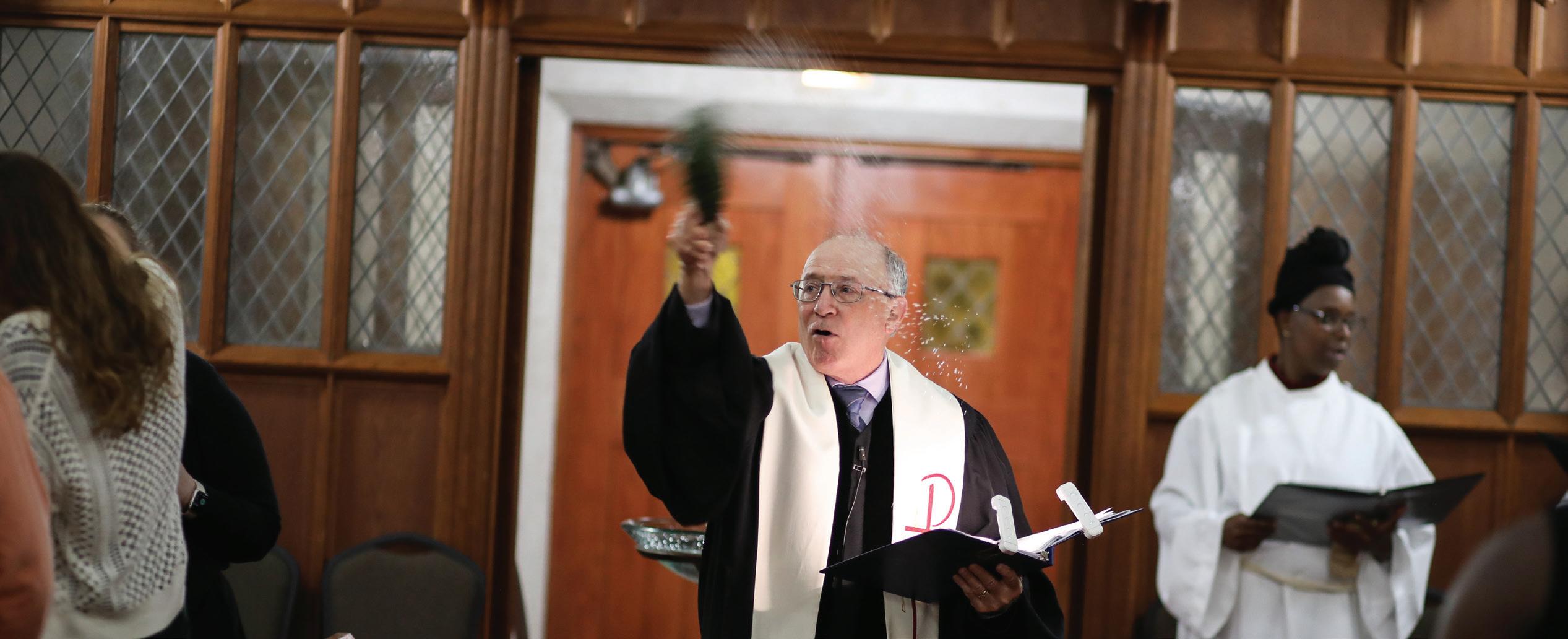
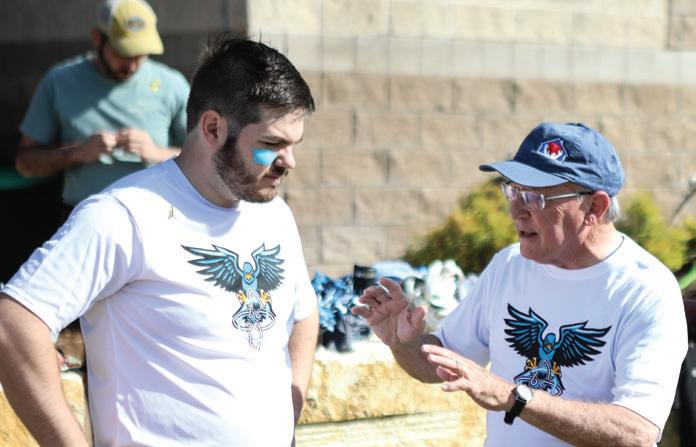
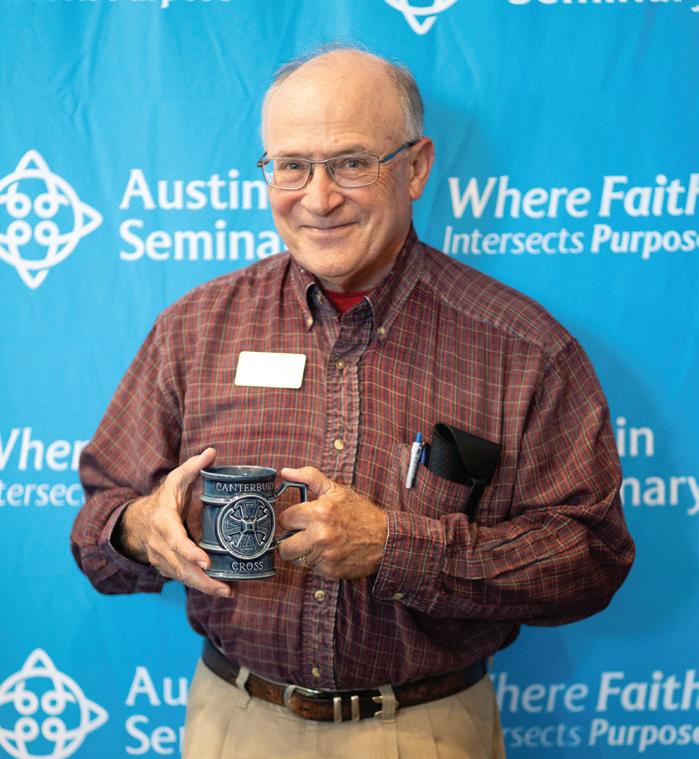
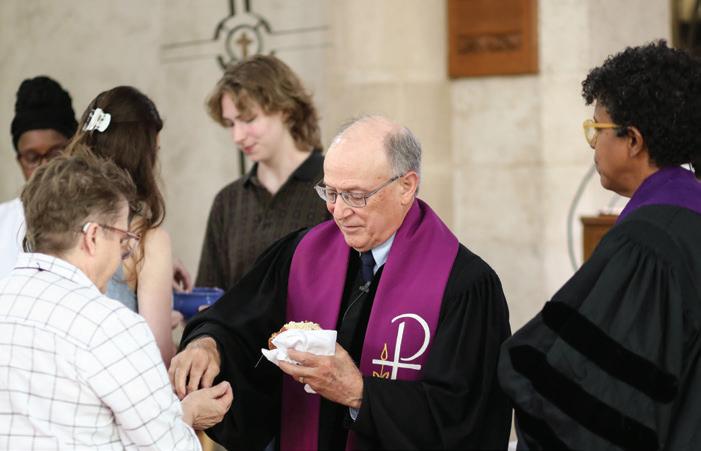
It’s a question the Reverend Ted V. Foote, Jr. (MDiv’79) has been answering throughout his forty-five years in pastoral ministry, not with words but with action. Through pastorates in San Antonio, Henderson, Tulsa, and Bryan and now as Professor in the Louis H. and Katherine S. Zbinden Distinguished Chair of Pastoral Ministry and Leadership at Austin Seminary, Foote has built a ministry on a conviction that faith in action is, at its core, about sacred relationships.
“Faith in action,” Foote says, “is the people of God serving as the spirit of Jesus Christ touches them and leads them to serve others. And it’s not just serving other Christians. It’s everybody.”
It’s a conviction that has followed him everywhere: faith always leads you outward, toward others.
Foote grew up in Gatesville, Texas, where his father was a lawyer and taught adult Sunday school for thirty years. His mother was a nurse who worked the night shift, was active with the Presbyterian Women, and led Bible studies. Faith was woven into the fabric
of Foote’s family life growing up, which gave him the foundation he needed as he left home to attend Baylor University.
At Baylor, Foote studied history, but as he admits, “I didn’t think past the end of my nose,” so when his senior year arrived, he had to decide: become a lawyer like his father, become a history teacher, or go to seminary. After careful consideration, “leadership in the church,” he thought, “was something that would be a path that would be positive.”
After earning his undergraduate degree in history, Foote enrolled at Austin Seminary, which proved formative in ways that went beyond the curriculum. Professors like John Jansen in New Testament and Eugene March in Hebrew Bible gave him the theological grounding and biblical knowledge needed to pass his ordination exams. Mentors like Professor Bob Shelton were crucial to his seminary journey as Foote discerned and accepted his call to ordained ministry.
Foote’s first call was to the San Pedro Presbyterian Church in San Antonio, Texas, as an associate pastor. It was here that his definition of “faith in action” began to evolve. Upon arriving
at the church, Foote was impressed by the mission outreach the church was running for the local low-income housing complex. It was a generous outpouring of charitable giving of clothing, but a nagging feeling emerged: “I remember thinking when I got there, not that I wanted to change a whole bunch, but I thought, I think
there’s more to mission here than taking our gently used clothing to the subsidized housing complex.”
Soon after, he was introduced to an initiative led by Catholic nuns, in partnership with Texas Interfaith, to organize churches. This network of churches would serve together for the betterment of neighborhoods and schools, and the whole greater part of northern and eastern San Antonio. “This was it. We didn’t have to stop doing one thing or another. We could add to it.”
It was not about replacing charity with something new. It was about broadening the scope of care. It was about entering into partnerships rooted in respect, listening, and shared work.
For Foote, “faith in action” had evolved into a relational activity. He began to see that faith expressed itself most fully in sacred relationships, which became central to his understanding of ministry.
“Sacred translates to respect,” Foote says. “If we have respect for each other, that changes everything.”
In Bryan, Texas, that conviction took tangible form through public education. The congregation he served had long supported a local elementary school. Under his leadership, those relationships deepened and expanded to include two more elementary schools and a middle school. The church’s actions took various forms, including hosting breakfasts for teachers, providing emergency funds and necessities to families in crisis, and staying attentive to the district’s evolving needs.
“Every parent has a short window with their children,” Foote says. “And in our democracy, public education is one of the ways we lift everybody together.”
Supporting schools was not a political stance for him; it was an expression of love of neighbor. It was faith in action rooted in a sacred relationship with his community.
That same posture led him into interfaith spaces. In Bryan, he helped organize
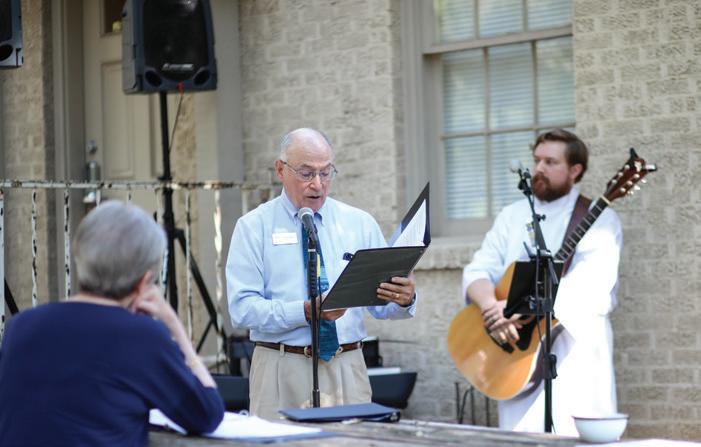
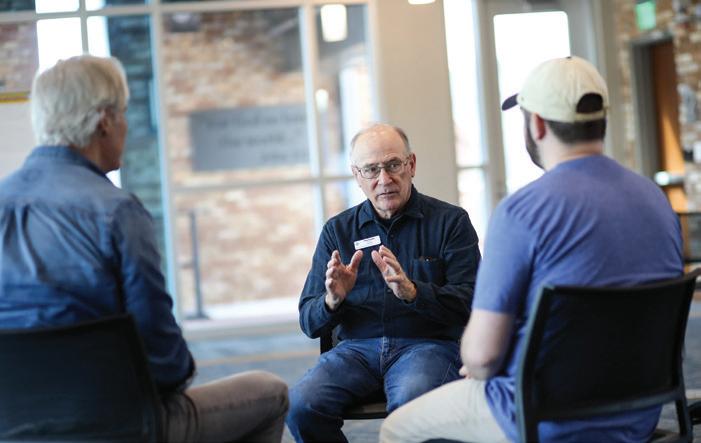
a service marking the September 11 anniversary, which included community members from different faith traditions. The planning required patience and creativity, even to the point of rearranging the physical space to ensure all traditions were respected. The pushback was palpable. The service drew hundreds, but only about sixty were Presbyterians. But that, Foote believes, was precisely the point. “When we share space like that with people different than us, everybody learns.”
After forty-five years, Foote retired from congregational ministry but accepted a call to teach a younger generation
of ministers at Austin Seminary. It is a full-circle return to where his seminary journey began. When asked what he would say to a student considering seminary, Foote says, “Listen with your soul! If you sense that God’s call to you includes a learning journey into discipleship with others, similar and different, consider Austin Seminary, which provides a community of challenge, caring, and respectful support.”
In courses exploring borderlands and cultural engagement, Foote encourages students to approach ministry with humility. In a place as diverse and complex as Texas, leaders need to understand the stories around them, including cultural histories, economic realities, and generational shifts.
“Start with your ears,” Foote tells his students. “Then your heart. Then your mind. Then you can talk.” Leadership demands sacred relationships across geographic, political, and social borders. “I want students to understand that ministry is collegial with other clergy and with non-clergy. No matter our differences, we are all gifted in order to serve with and learn from one another in Christ’s Spirit.”
When asked what sustains longevity in ministry, Foote points to the sacred relationships he’d formed: “We need to value the people of God and learn from them. Our congregations are full of wise people and luminaries of the faith, and I believe I learned more from them than I gave. Remember, we’re all called to be lifelong learners and sharers in service, and we are in this together.”
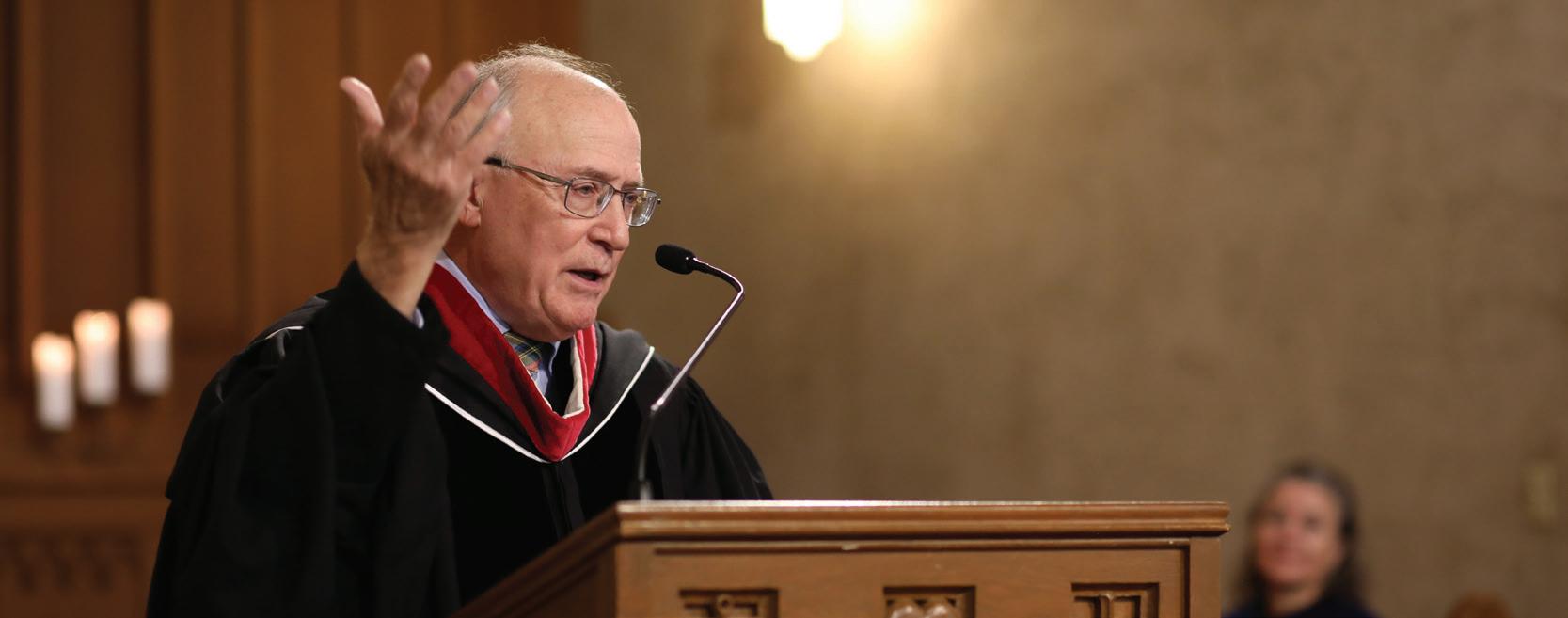
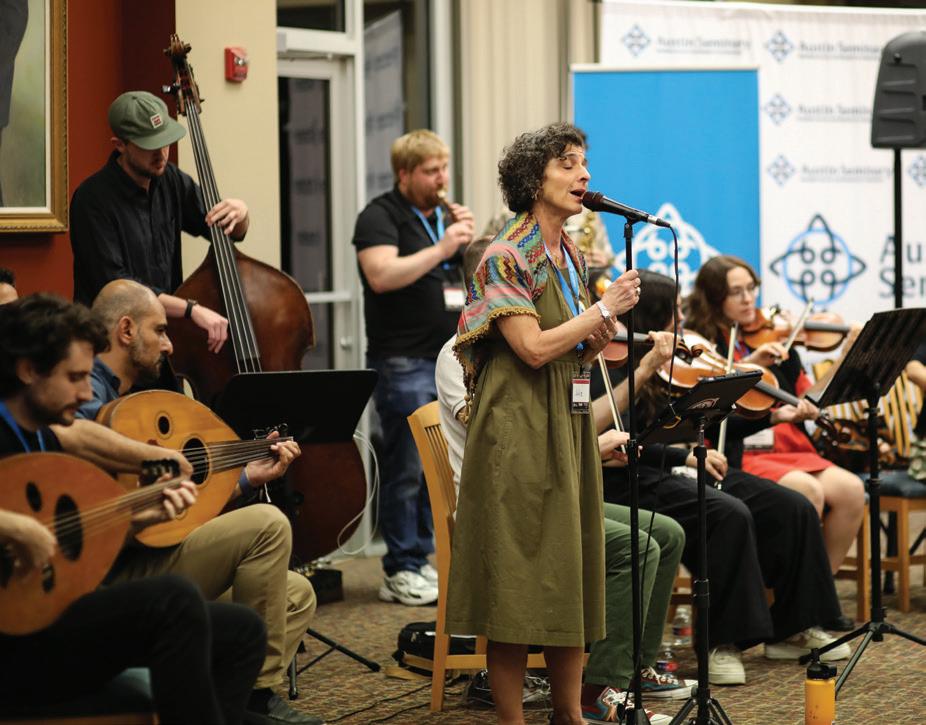

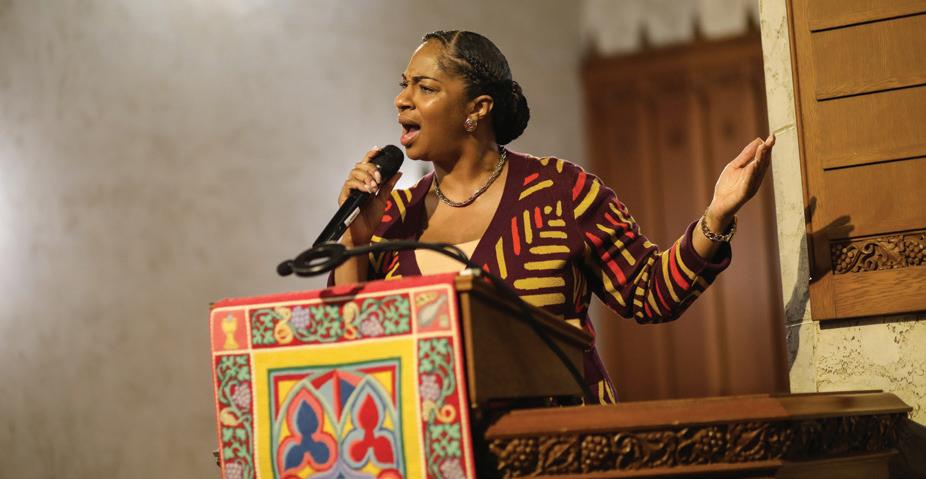
Austin Seminary’s 2026 HESED Lecture Series, held February 27–28, 2026, centered on the theme “Through the Desert, We are One: Reclaiming Human Dignity and Sacred Truth,” drawing on Hagar’s biblical journey as a lens for exploring systemic injustice and migration today. The first guest lecturer, Dr. Daniel Bannoura, a Palestinian theologian and postdoc at Notre Dame, addressed Christian complicity in the Gaza conflict. The second guest lecturer, Dr. Karma Chávez of The University of Texas at Austin, spoke on queer and trans migrant activism and coalition-building. The Reverend Dr. Dominique Robinson preached at the opening worship and led workshops on justice-centered preaching. Other workshops included a presentation by the Texas Civil Rights Project on immigration policy. Also featured during the conference was a performance by the Viva Palestina Orchestra. HESED is organized and sponsored by the LatinX and Yélé (formerly African and African Diaspora) student groups, and funded in part by the K.C. Ptomey, Jr. Memorial Fund.
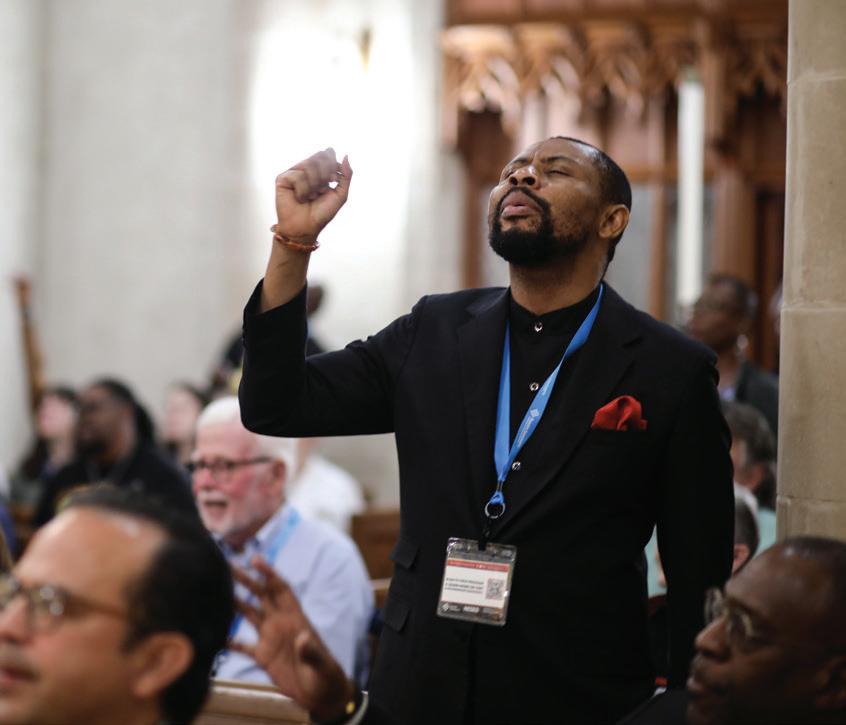
Use your privilege well. Whatever power you have, whatever voice you have, whatever education you have, use it for good. Speak up for the marginalized.
– Dr. Daniel Bannoura
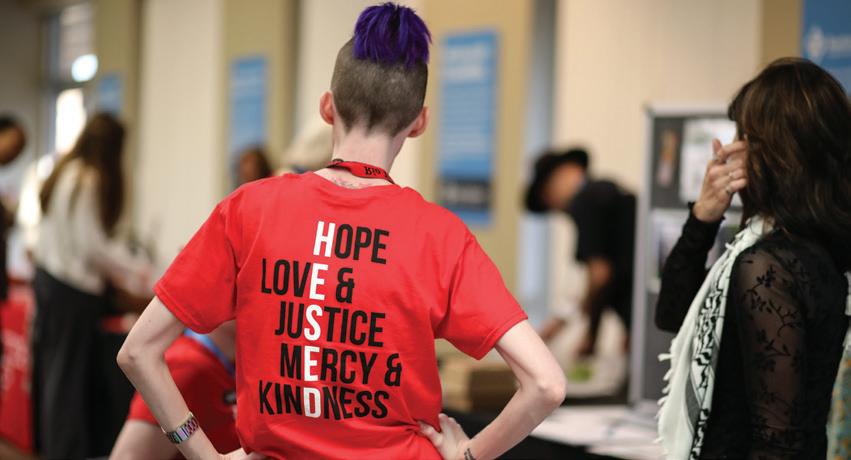
That’s the good news this evening: we know that God is good and will show up. But just in case we are not confident in the fact that God knows, we also know that God sees. God’s eyes are on us. And God hears. God doesn’t need an audible proclamation. God can hear the prayers of our tears. And that’s good news today.
– Rev. Dr. Dominique Robinson
[The HESED lecture series] was a courageous experiment in reorienting theological formation. It did not merely add diversity to existing structures. It reframed the conversation. It insisted that marginalized voices were not supplementary to theology. They were revelatory…It refused to imagine ministry without justice within the broader landscape of theological education.
– Professor Gregory L. Cuéllar

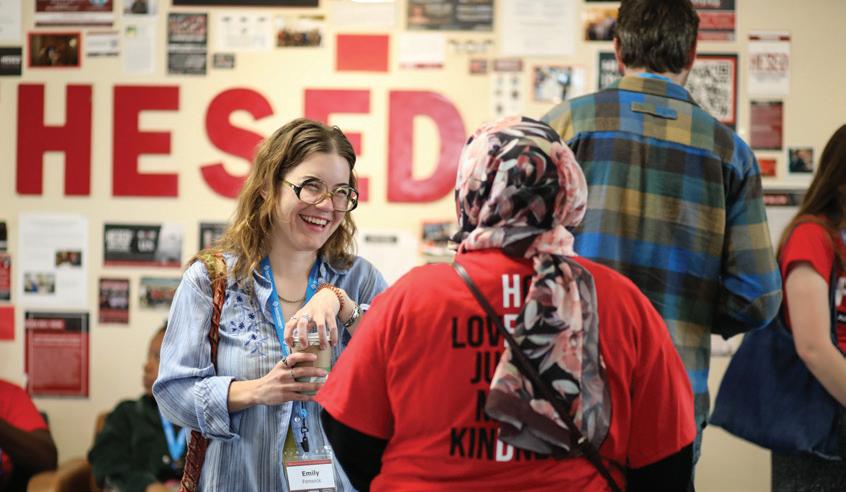
HESED enters its 12th year. This milestone testifies to the tenacity, brilliance, and spiritual courage of students of color who have shaped this seminary’s moral imagination… HESED stands today as a sign of what theological education can be in the 21st century. Not insulated, but engaged. Not nostalgic, but prophetic. Not confined to theory, but alive in practice.
– Professor Gregory L. Cuéllar
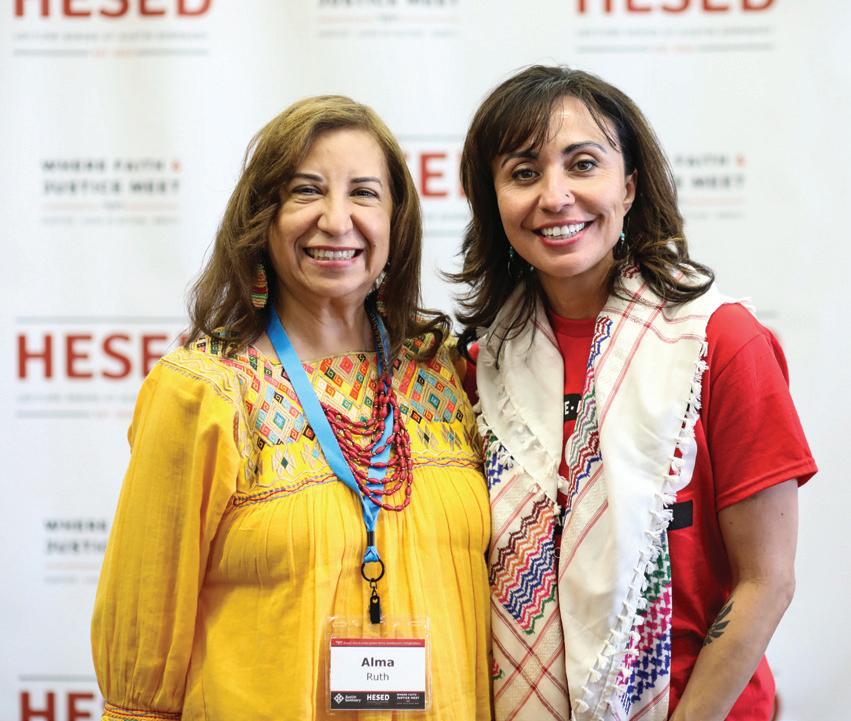
I can attest to the fact that I have personally learned a lot about how I want to be in the world from my queer and trans migrant kin, and I hope you have and will too.
–Dr. Karma Chávez
We have to know that we have to place it all in God’s hands and hear God’s instruction to solve the problems of society.
– Rev. Dr. Dominique Robinson
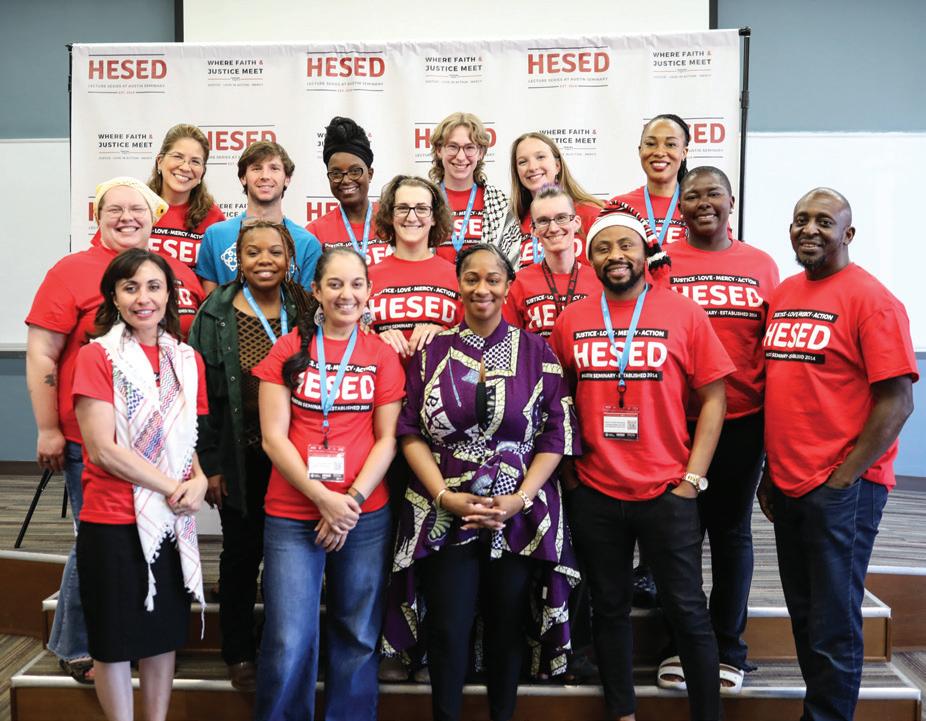
No one who has any other means to survive would leave. Whether that is always true is beside the point. It is undeniable that poverty, violence, food insecurity, and other politically created conditions compel many without other options.
– Dr. Karma Chávez
We strongly urge Western Christians to come alongside us... we also remind ourselves and fellow Christians that God is the God of the downtrodden and the oppressed, and that Jesus rebuked the powerful and lifted up the marginalized. This is at the heart of God’s conception of justice.
– Dr. Daniel Bannoura
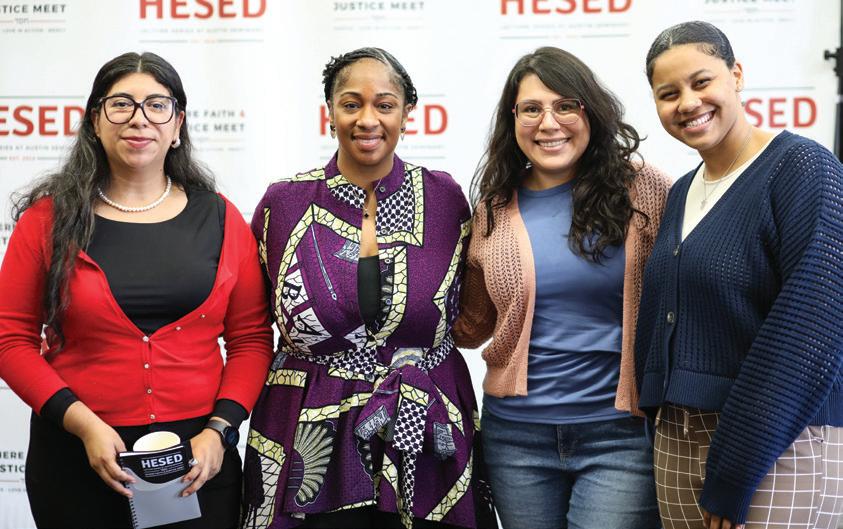
We are committed to reclaiming the Bible as our own text — a text written in our own land, and a text that reveals God’s goodness and love for the world and for the least of these.
– Dr. Daniel Bannoura
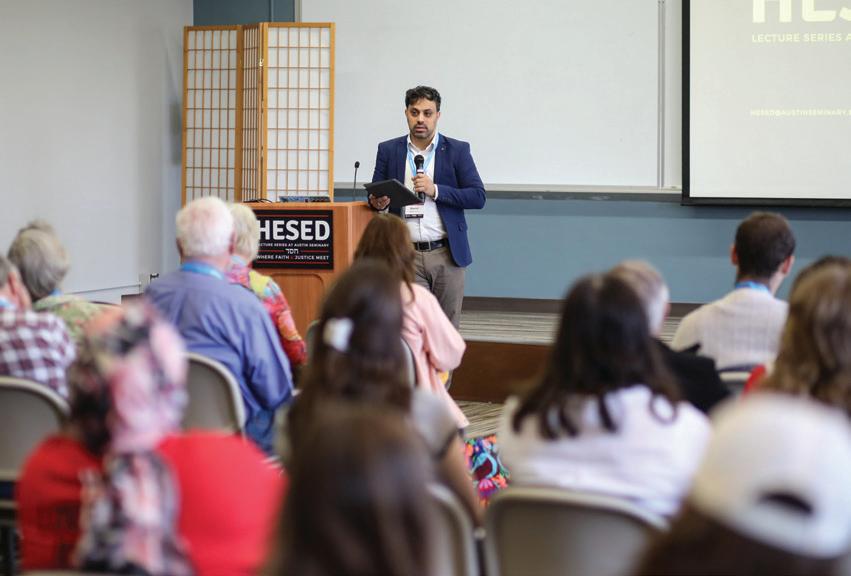
Being in relation, the interdependence and the shared political pursuit of the right to international migration offers all people important insight about the nature of belonging that we may all choose to inhabit regardless of the severity of our situation.
– Dr. Karma Chávez
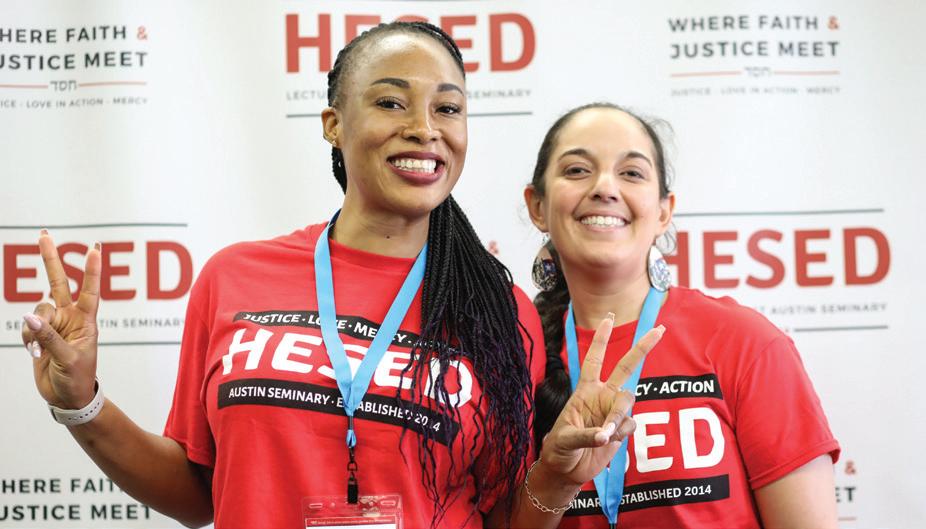
No matter where you find yourself on the spectrum of life, God can find you… And that is good news to me.
– Rev. Dr. Dominique Robinson
The credibility of the Western Church and the Academy is on the line here. The church and the academy and all of us cannot remain silent. All of us have to be prophetic. We have to speak truth to power, and we have to make it clear that we are on the side of the oppressed.
– Dr. Daniel Bannoura
How often do those of us with privilege risk everything we have to protect someone we do not know?
– Dr. Karma Chávez
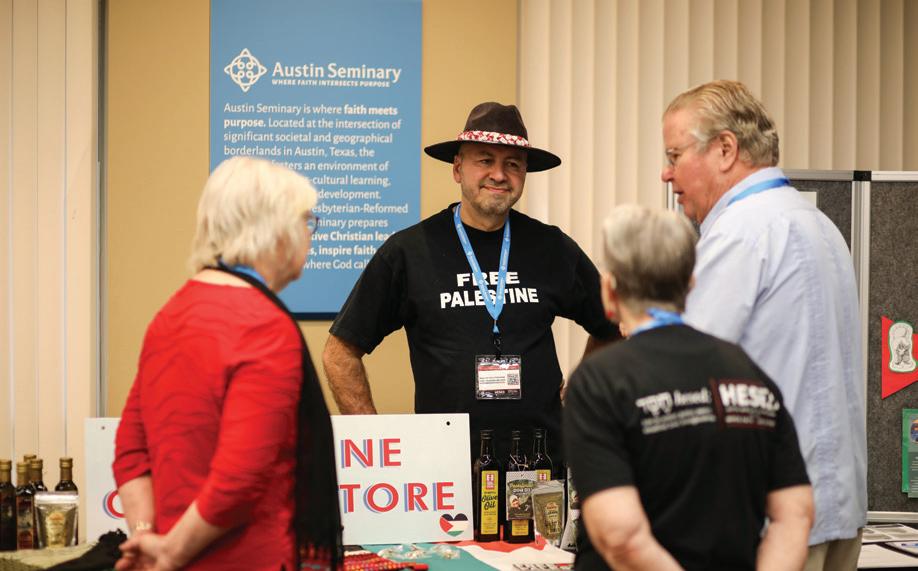
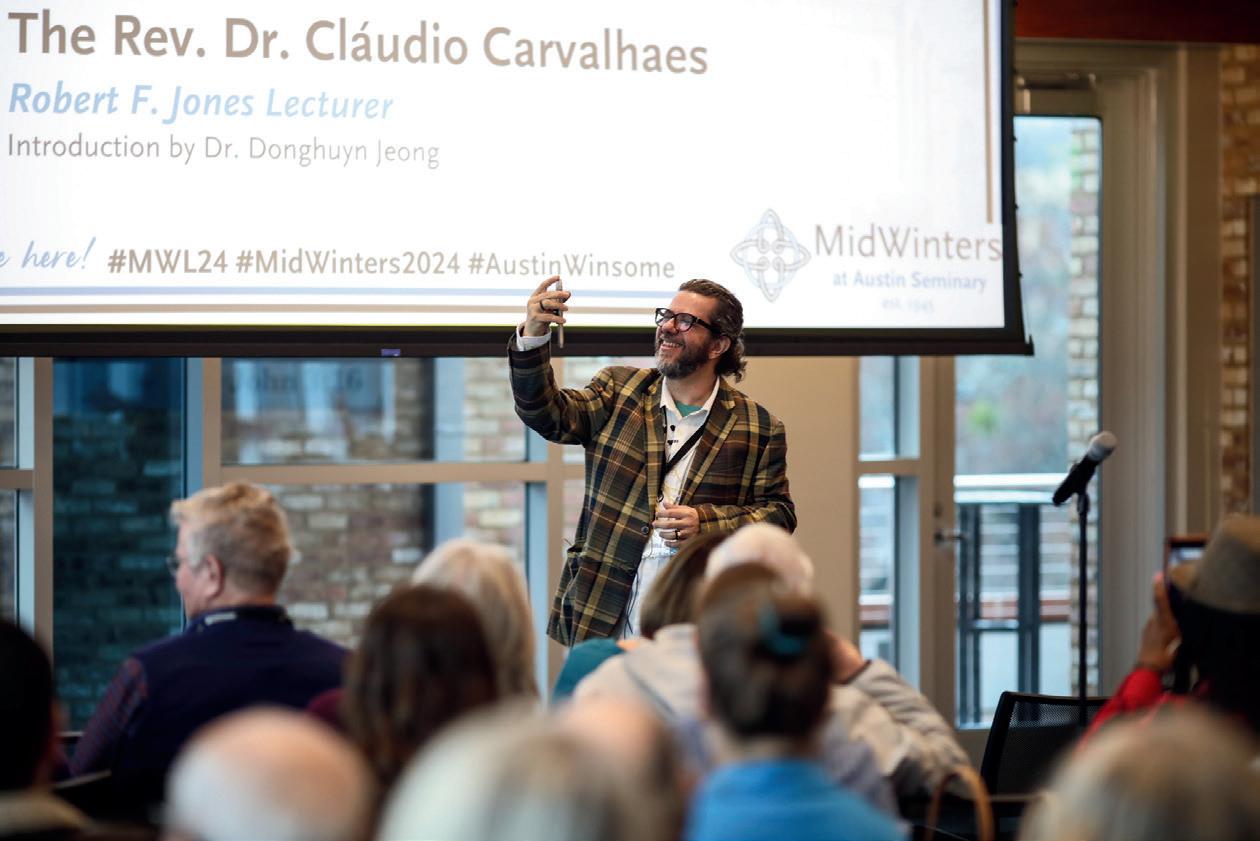

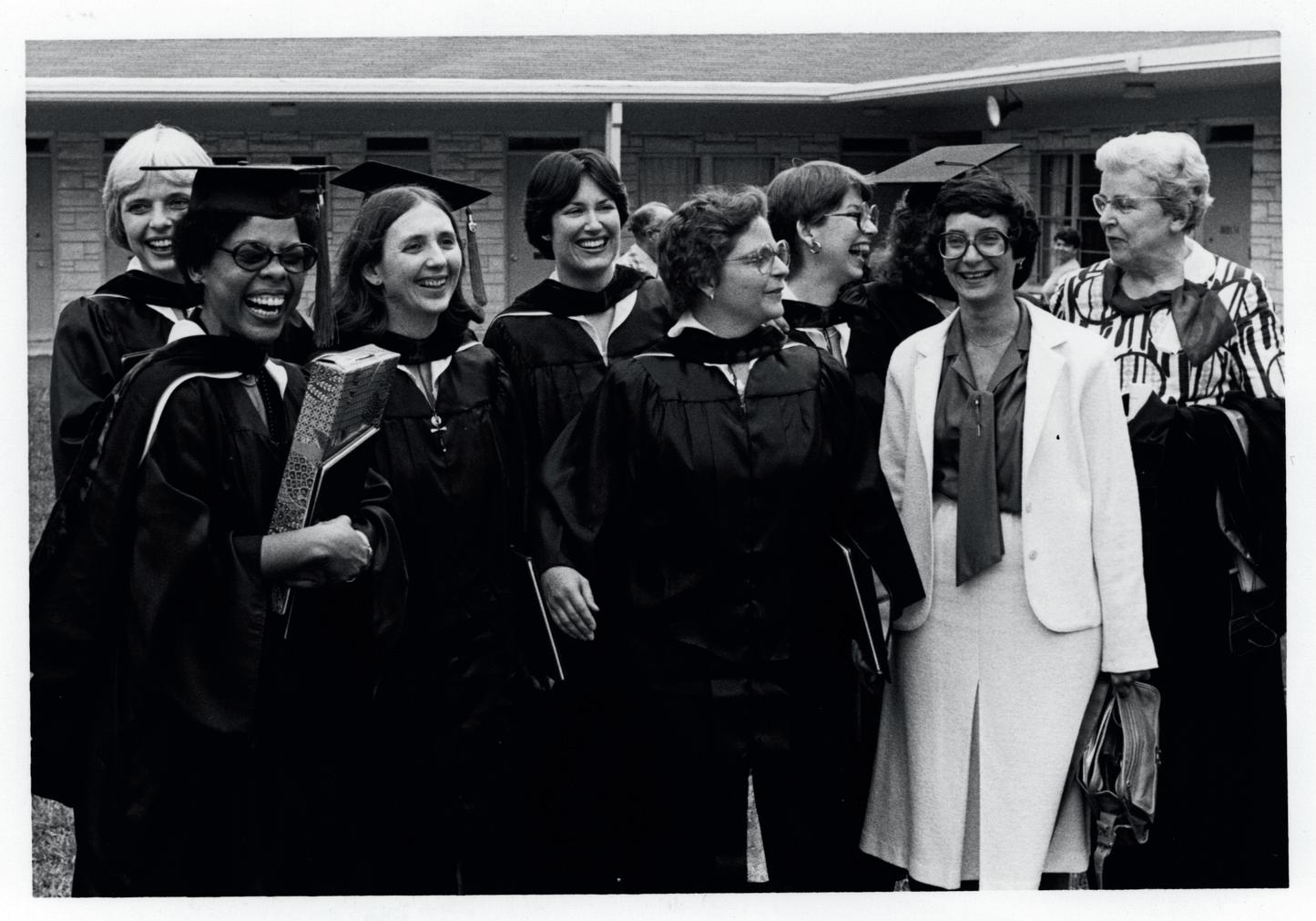
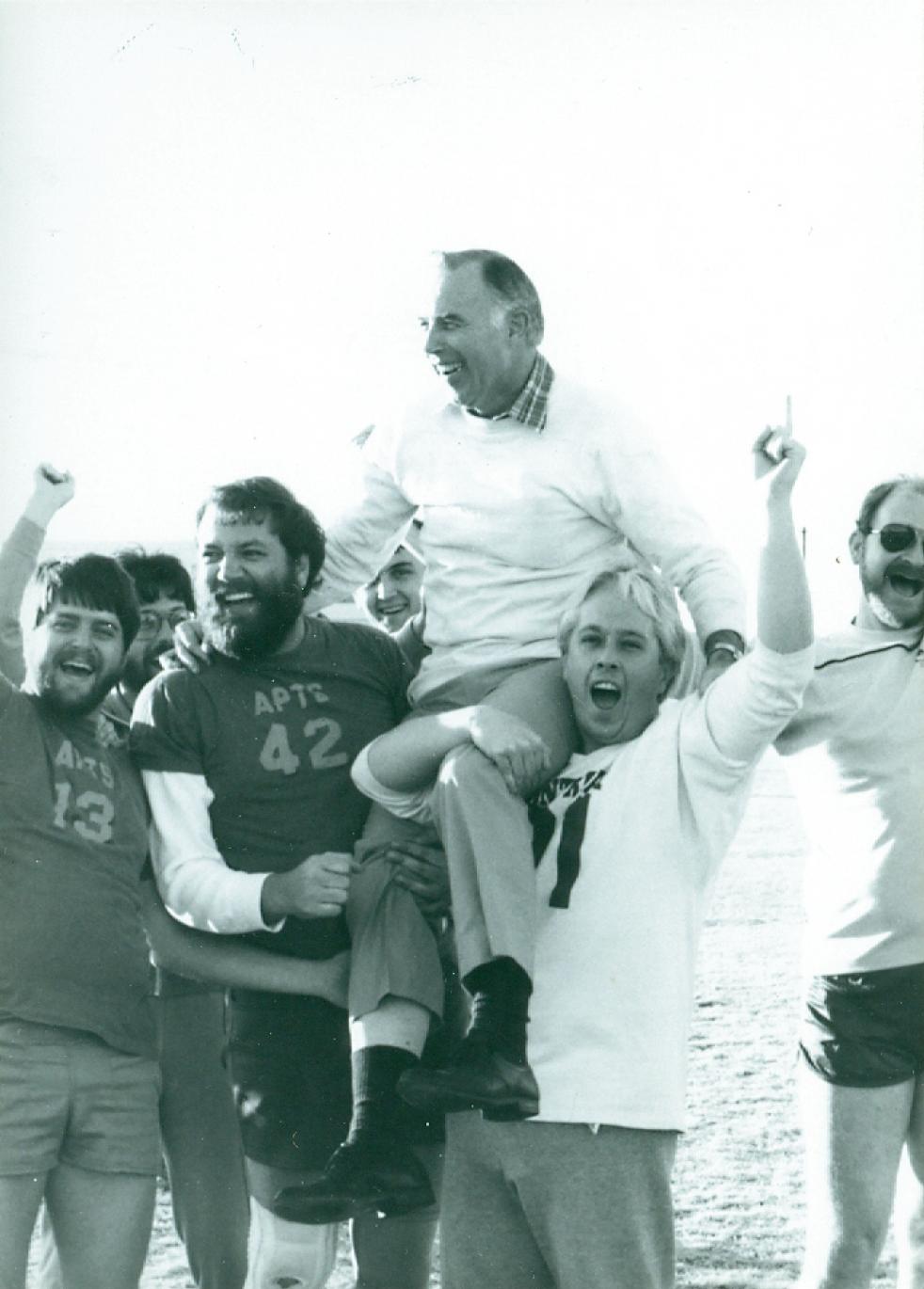
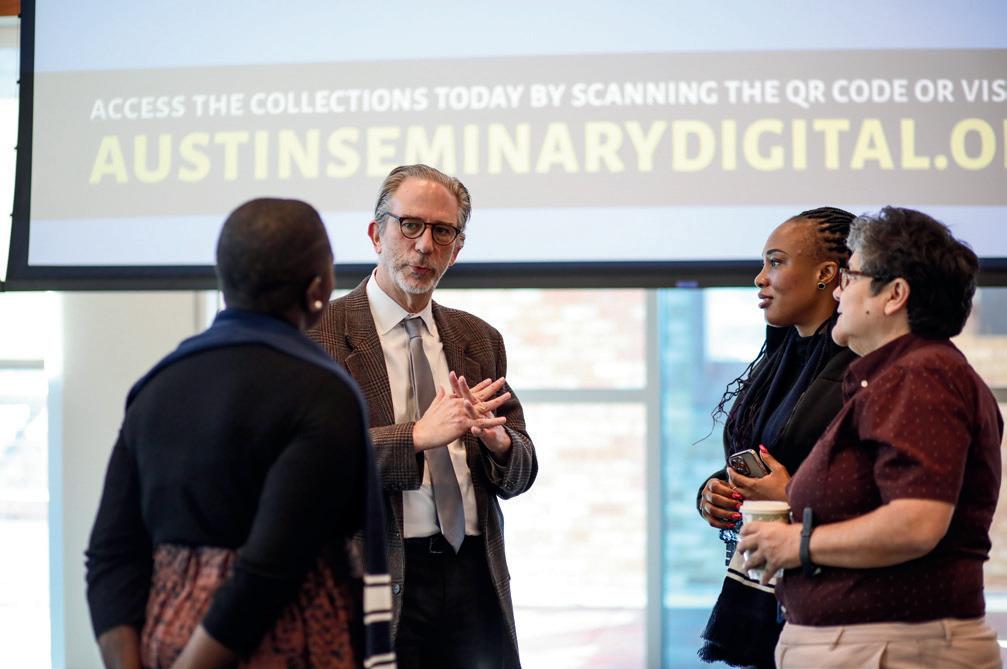
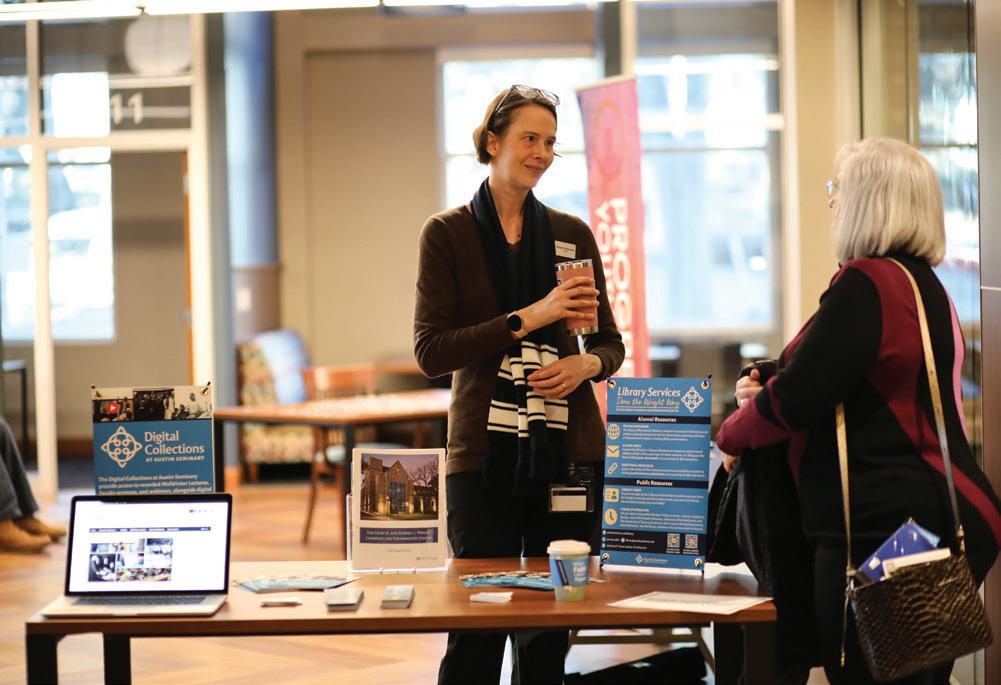
The Digital Collections at Austin Seminary provide access to recorded MidWinter Lectures, faculty sermons, and webinars, alongside digital exhibits and selected digitized materials from the Archives at Austin Seminary.

by Judy Matetzschk-Campbell, PhD
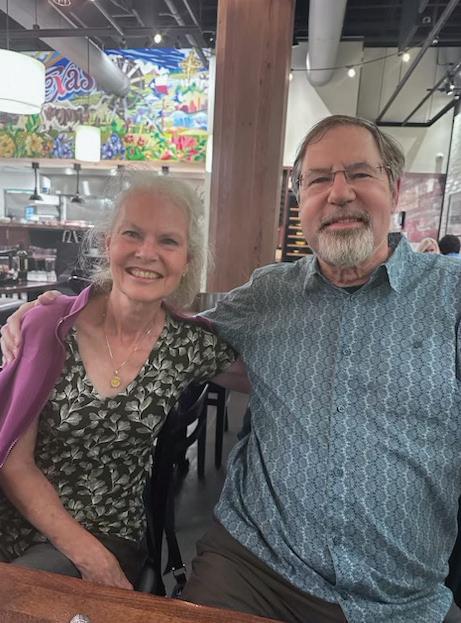
“My mother believed in education long before she had the chance to claim it for herself.” When Ed Hess says this, he’s not simply remembering her—he’s tracing the roots of a life shaped by faith, learning, and action.
Wherever the military sent their family, Ed’s mother, June Kuzara Hess, made sure her children were anchored in church. She sang in the choir, nurtured curiosity, and carried a quiet but determined conviction that education mattered. Though she didn’t complete her own college degree until her seventies, she never stopped learning—or teaching by example. Her commitments to women’s rights, nonviolence, and social justice left a lasting imprint: faith, she showed, is something you live out in the world. Today, that legacy continues through multiple members of Ed’s family who have served as pastors and theological educators.
Janet’s story carries a similar thread. She grew up in what she calls a “theologically literate family,” shaped in large part by her grandfather, Dr. Denton Ray Lindley—a pastor, scholar, and university leader in Texas and Mexico. In her family, theology and daily life were never separate. Faith was something to be studied, questioned, and lived, always with an eye toward the well-being of others. Social justice wasn’t an abstract idea; it was a natural
expression of deep theological understanding.
When Janet and Ed married, they built a life rooted in service, generosity, and a deep appreciation for theological education. Supporting the church and investing in future leaders wasn’t a decision they had to deliberate—it was a natural extension of who they were. It is of great personal interest to them both.
Their long-standing support of Austin Seminary reflects that conviction. For Ed, it begins with admiration: “I like the way pastors think,” he says. “They model how to communicate with openness, how to listen, how to engage thoughtfully. We need more of that in our world.” Janet agrees, and together they speak of ministry as both art and calling. “Well-educated pastors are artists. They are storytellers,” Ed adds. “They help us make sense of faith and life. And society needs great storytellers who tell the Good News.”
They also see seminaries filling a critical gap. “Higher education doesn’t always make enough space for ethical and philosophical reflection,” Ed notes. “Seminaries do. They help form people who can think deeply and act faithfully.”
Their connection to Austin Seminary has grown through relationships—first with graduates they came to know in Houston, and now through deeper engagement in Austin. Again and again, they have seen the impact of thoughtful, well-formed leaders who can preach, teach, and serve with clarity and compassion.
For Janet and Ed, supporting theological education is about more than sustaining an institution. It’s about investing in people who can tell the Good News, deeply rooted in theologically sound principles, not only with words, but through lives of service.
Ed and Janet Hess have seen it firsthand. When faith is deeply rooted in rigorous theological formation, it moves into the world. It preaches, teaches, listens, advocates, and serves. It tells the Good News not just with words, but through lives of action. Austin Seminary is devoted to developing leaders who make an impact where God calls them. Leaders who, as Ed and Janet said, are “artists and storytellers” equipped to help people make sense of faith and life in an increasingly complex world. Through their generosity, Ed and Janet are supporting the next generation of leaders. Won’t you join them? www.austinseminary.edu/support
by Rev. Dr. Sarah D. Allen
Since our beginning in 1902, Austin Seminary has stewarded its many gifts and resources to equip those whom God has called to serve congregations and other ministry contexts with faithfulness, creativity, intelligence, and love. Newly trained seminarians preparing for ordained ministry leave this campus well-equipped for the expected joys and challenges of this vocation. They have practiced presiding at the sacraments, preached in congregations as well as in the classroom and chapel, offered pastoral care at bedsides and lunch tables, dug deeply into the rich treasures of Scripture and Christian tradition, and advocated for those whom society too often ignores or discards.
And yet, those who have served any length of time in pastoral ministry know that alongside the expected joys and challenges come experiences no one could have fully prepared us for in a classroom or even in Supervised Practice of Ministry, no matter how excellent that formation may be. Moving from seminary learning into faithful ministry is akin to walking across a bridge, or to borrow an ecological phrase, “entering an ecotone.” An ecotone is a liminal space between two distinct ecological communities, “characterized by the presence of species and features from both bordering communities, as well as unique organisms that may not be found in either.”1
The transition between seminary and ministry feels like this liminal space as well. You move between two meaningful worlds, the world of formation and the world of practice. You may travel back and forth, bringing your formation into your practice and your newly gained practice back into your formation, again and again. Like an ecotone, unique insights occur in the liminal space, informing both one’s previous education as well as one’s current ministry.
Austin Seminary’s newly formed Bridge to Ministry cohorts seek to accompany ministers as they explore this ecotone between seminary education and faithful ministry by offering collegial support, continued formation, and the guidance of a trusted companion who has walked this path before. Bridge to Ministry cohorts exist for clergy in their first three years of ministry post-seminary.
Research affirms what many ministers already know. Studies such as the Pandemic Pastoring Report by Eileen Campbell-Reed, the Association of Theological Schools’ report on recent seminary graduates, and Austin Seminary staff and faculty interviews with recent alumni all reveal that the first three years of ordained ministry are invigorating as well as deeply challenging. Often, those first few years are isolating for a minister who moves to a new community and does not yet have the robust resources of support around them, like they had while in seminary. They are looked to as leaders of both congregation and community, while also being a beginner in this role. The daily work of ordained ministry often requires skills and insights not easily learned in a seminary classroom. Because of the complexity of ministry, ministers need the community of ‘similar others’; those who understand the unique role that ministers hold in their congregations and the demands and joys of their calling. These capacities are cultivated through practice, prayerful reflection with trusted others, and more practice. Campbell-Reed, drawing on the work of Craig Dykstra, names this capacity “pastoral imagination.” In an interview with The Lewis Center for Church Leadership, she explains, “Pastoral imagination is a way of being a minister or pastor that sees into the fullness of a situation and knows what to do and takes a risk and does it. Then, it takes responsibility for what was done and learns from
1 Jack Lasky, “Ecotone,” EBSCO Research Starters, Environmental Sciences, published 2022, accessed February 23, 2026, https://www.ebsco.com/research-starters/environmental-sciences/ecotone.
those mistakes.”
2 Cultivating a pastoral imagination is at the heart of the newly formed Bridge to Ministry cohorts.
A Lilly Endowment grant currently funds this work, allowing Austin Seminary to create three-year cohorts of six to eight ministers in their first three years of ministry post-seminary for no cost. We will build four three-year cohorts of new ministers each year, serving in different denominations, both alumni of Austin Seminary and of other seminaries. Each cohort will be facilitated by a minister with at least seven years of experience who demonstrates healthy and sustainable pastoral practices.
T he cohorts will begin in early Fall 2026 with a retreat at Mo-Ranch and will then meet virtually once a month for collegial support, prayer, and topical formation. An in-person retreat will take place each Fall, bringing returning and new cohorts together. Rev. Dr. Sarah D. Allen serves as the program director and has partnered with Rev. Dr. Britta Dukes (MDiv ’05, DMin ’22) to create guidebooks for the cohorts’ use as well as provide retreat leadership.
In their virtual gatherings, the cohorts will explore common themes and topics central to the first three years of ministry and draw on the lived experiences and questions unique to the cohort, so that the cohort experience will provide structured, particular formation. Ministers can expect to grow in skill, insight, and support through their participation in a Bridge to Ministry cohort. Every cohort gathering will also include a time of relationship-building, allowing ministers to grow in collegial friendships with ministers facing similar transitions. We trust that these cohorts will strengthen the spiritual lives and pastoral leadership of new ministers and thus, positively impact the congregations and communities they serve. Clergy cohort member applications are open through July 15, 2026. You may find additional information about Bridge to Ministry and applications by visiting www.bridgetoministry.org.
We hope you will prayerfully consider applying or that you will share this exciting opportunity for growth and continued support with a new minister in your area.
2 Campbell-Reed, Eileen R., and Jessica L. Anschutz. “Cultivating and Nurturing Pastoral Imagination.” Leading Ideas, Lewis Center for Church Leadership, August 3, 2021. Accessed February 17, 2026. www.churchleadership.com/leading-ideas/cultivating-and-nurturing-pastoral-imagination/
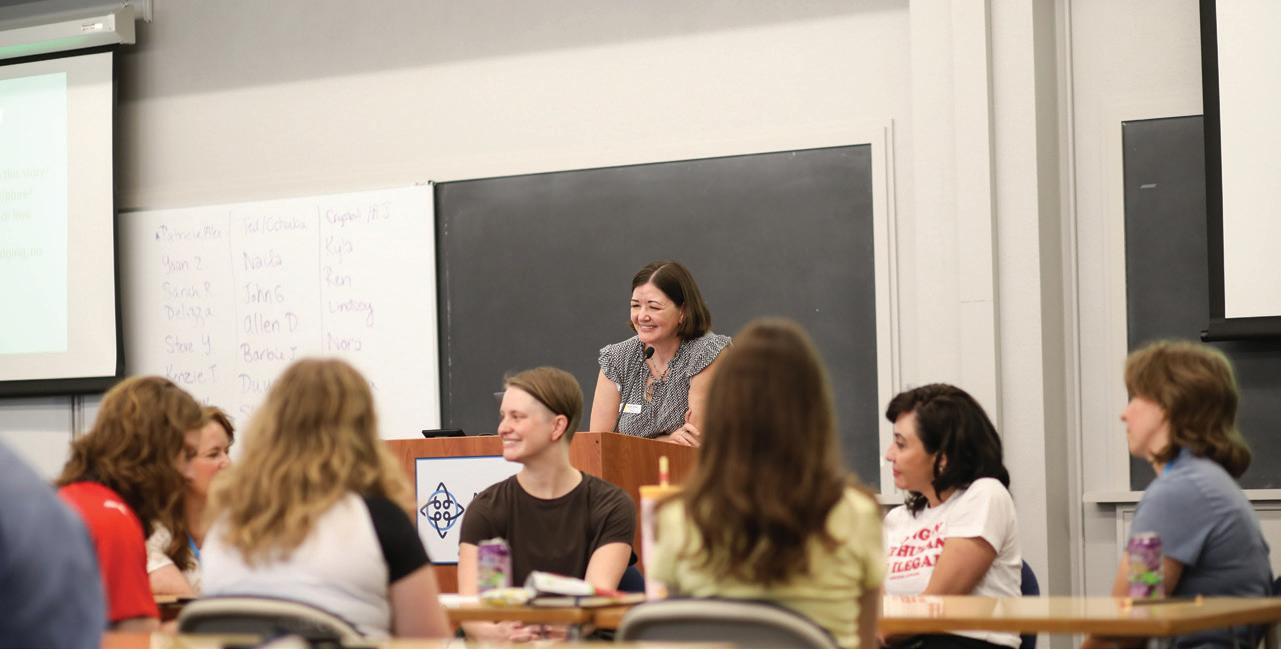
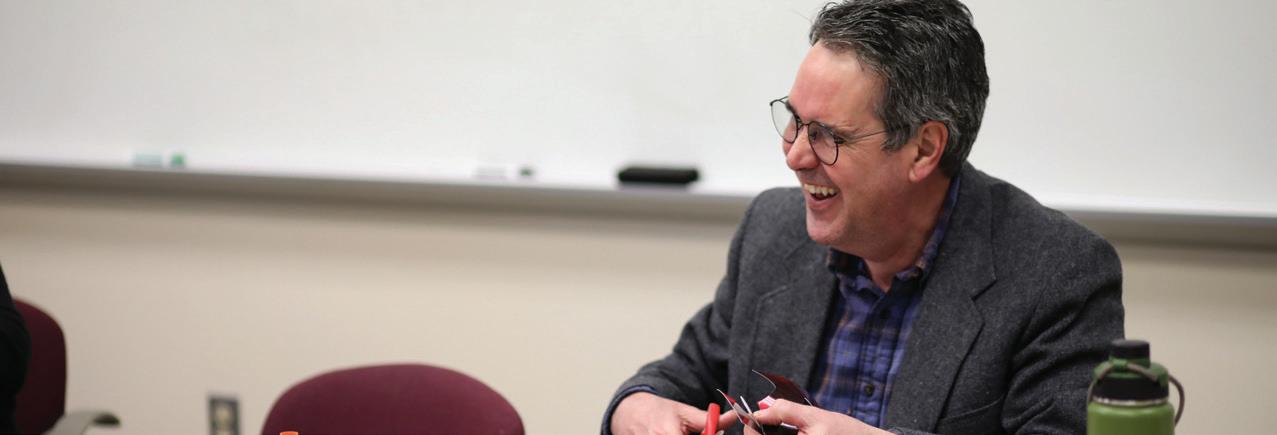

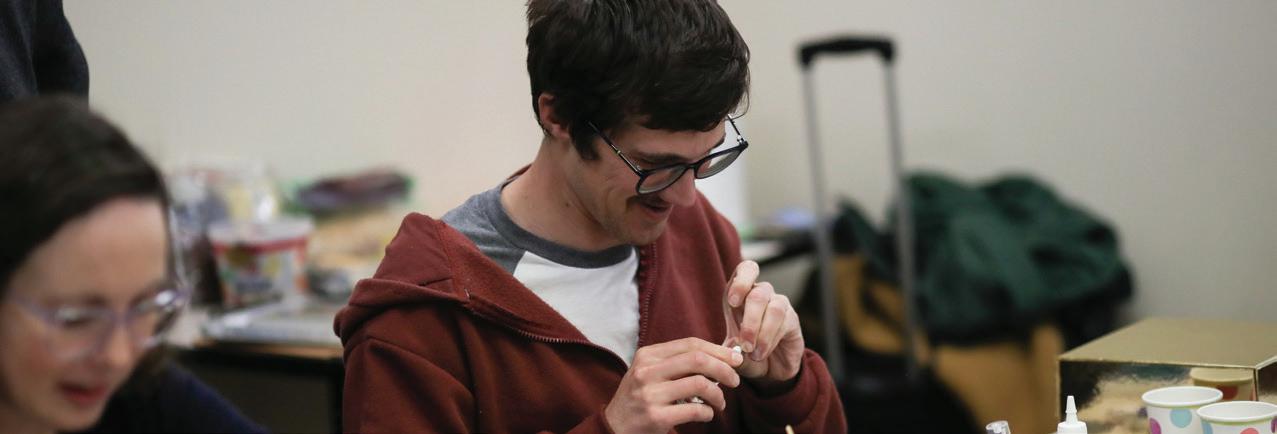

The Reverend Dr. Sarah Allen is associate dean of Ministerial Formation and Advanced Studies at Austin Seminary. She serves as the grant director for the Borders and Bridges Initiative and the program director for Bridge to Ministry. An experienced minister in the Presbyterian Church (U.S.A.), Allen has scholarly and pastoral interests in intergenerational faith formation and clergy wellness. She serves on the advisory board for Progressive Youth Ministry, and is a member of the Association of Partners in Christian Education, the Association of Theological Field Educators, and the Association of Clinical Pastoral Education.
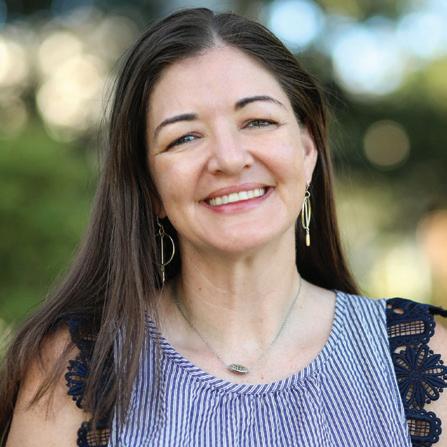


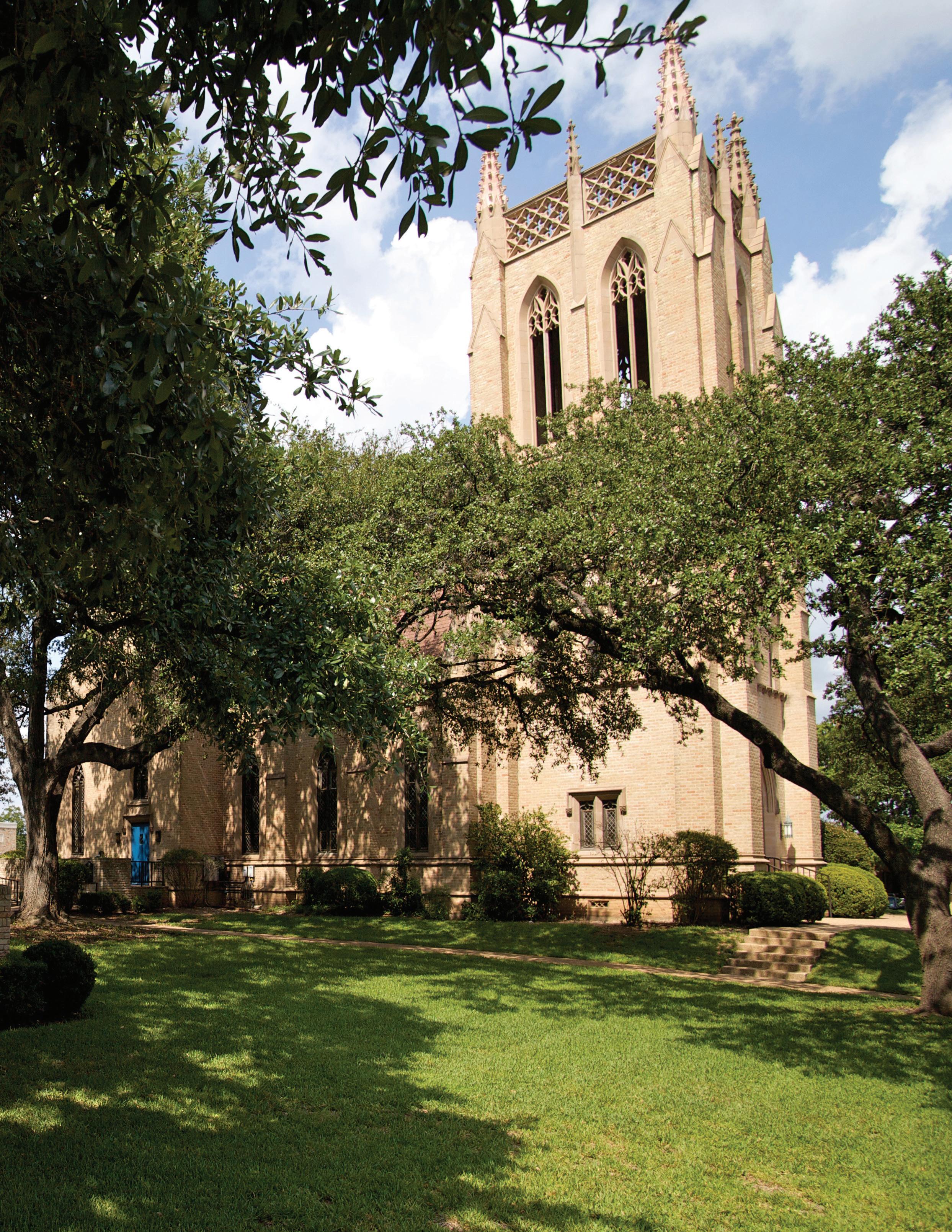
Karen and Dr. Elgin Ware were longtime friends of Austin Seminary whose faith was inseparable from their lives and their generosity. For more than a decade, Dr. Ware served as medical director of a clinic for people experiencing homelessness at First Presbyterian’s Stewpot in downtown Dallas, a commitment he sustained alongside a distinguished 50-year career in urology at Baylor University Medical Center, where he served as president of the Dallas County Medical Society and as a trustee of the Texas Medical Association. Karen and Elgin were, by every account, intensely spiritual. Their generosity was an expression of that faith. Together, they researched and donated the Ware Bell that hangs in the belfry of Shelton Chapel, and through an estate gift, established the Ware Endowed Lectureship to explore the relationship between science and religion.
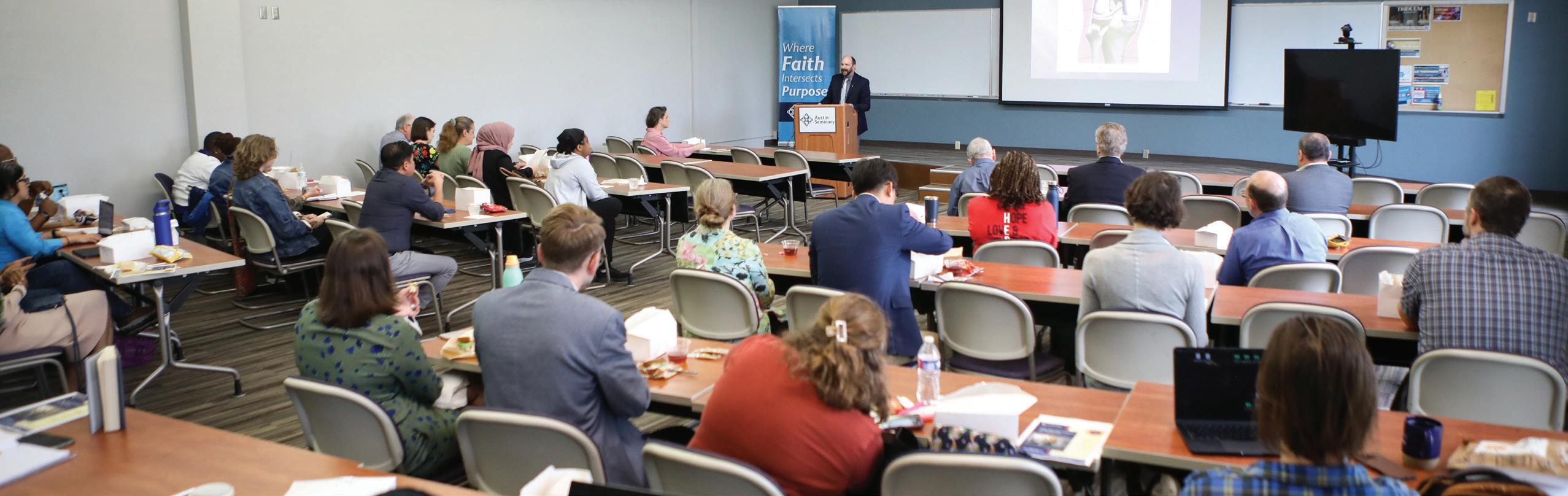
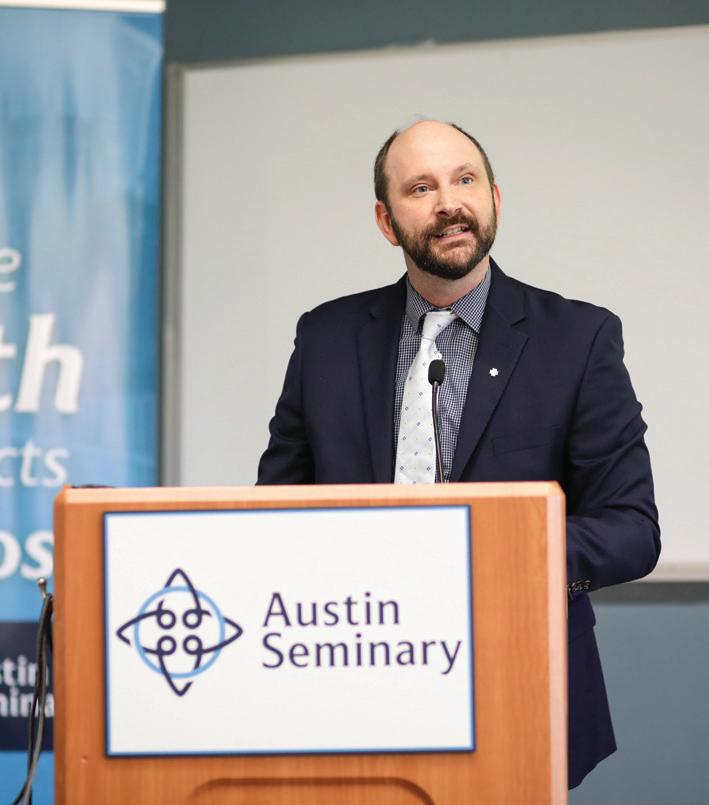
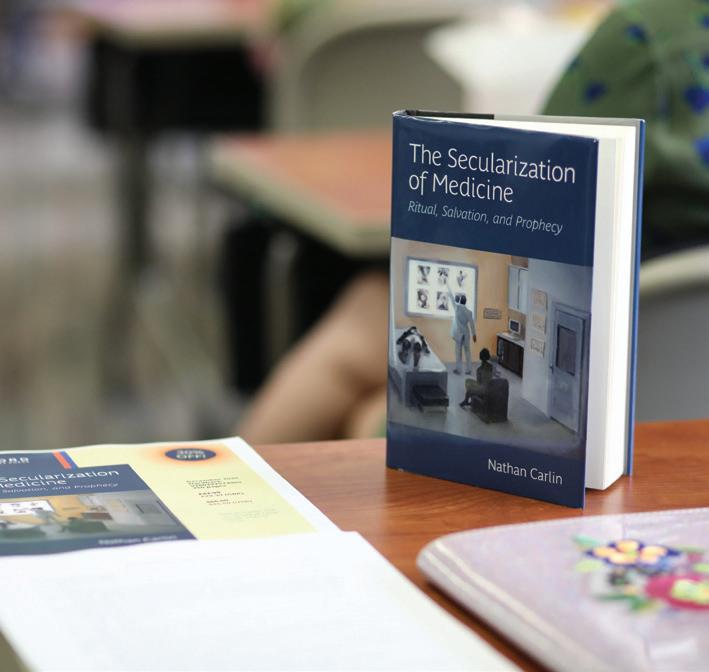
On April 22, 2026, Austin Seminary brought that vision to life with the first Ware Lectureship in Science and Religion. The Reverend Dr. Nathan Carlin, director of the McGovern Center for Humanities and Ethics at The University of Texas Health Science Center at Houston, was invited to deliver the inaugural lecture. A Presbyterian minister and medical humanities scholar with interests in psychoanalysis and religion, Carlin applies pastoral theology to bioethics, most recently in his book The
Secularization of Medicine: Ritual, Salvation, and Prophecy, published by Oxford University Press.
As the inaugural Ware Lecturer, Carlin spoke to nearly 80 attendees — online and in person — and addressed the ways Western society has transposed religious material onto modern medicine. He tied the ritual of reciting the Hippocratic Oath at white coat ceremonies to the post-Enlightenment need to ground medical ethics in secular reasoning. For example, the first known use of the Hippocratic Oath was at the University of Wittenberg in 1508, the same year Martin Luther arrived as professor of theology. “Just as the Bible became the basis for religious authority for Protestants,” Carlin said, “the Hippocratic Oath became the symbolic basis for moral authority for doctors.” As a result of this transposition, Western society assigns such high expectations to medicine that when it fails, we do not know how to live with each other’s suffering.
Carlin concluded his lecture by emphasizing the vital role of religious communities in medicine. “If secularization has, to some extent, disenchanted the world due to the progress we have made, it is the role of religious communities to reenchant the world to find new ways to bind us together in love.”
It was precisely the conversation Karen and Elgin Ware envisioned when they established the lectureship. Austin Seminary is deeply grateful to the Ware family for making it possible. You can view Dr. Carlin’s Ware Lecture at www.austinseminarydigital.org.
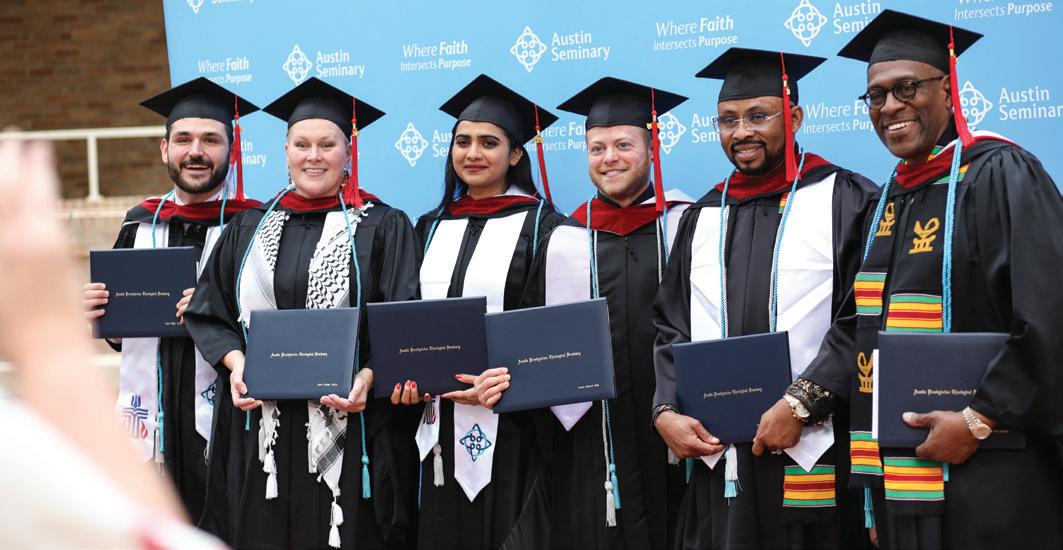
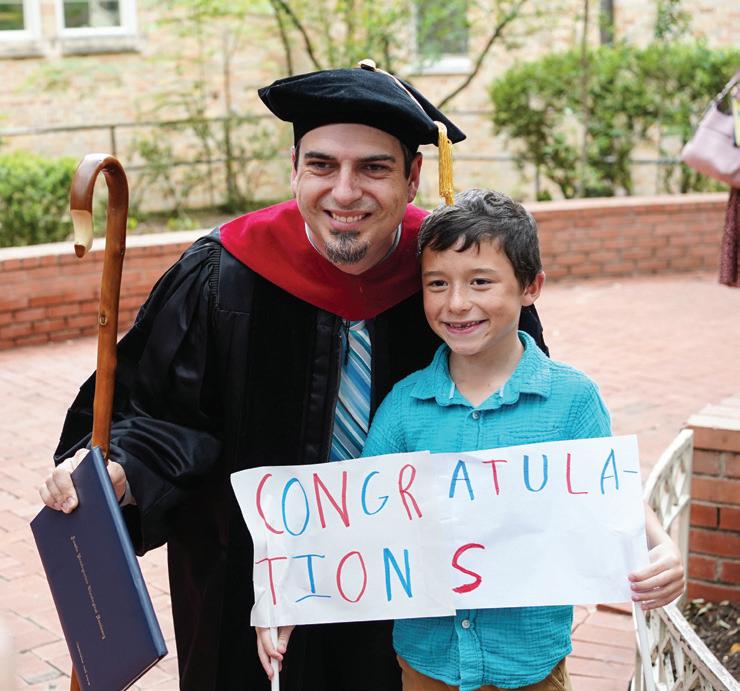
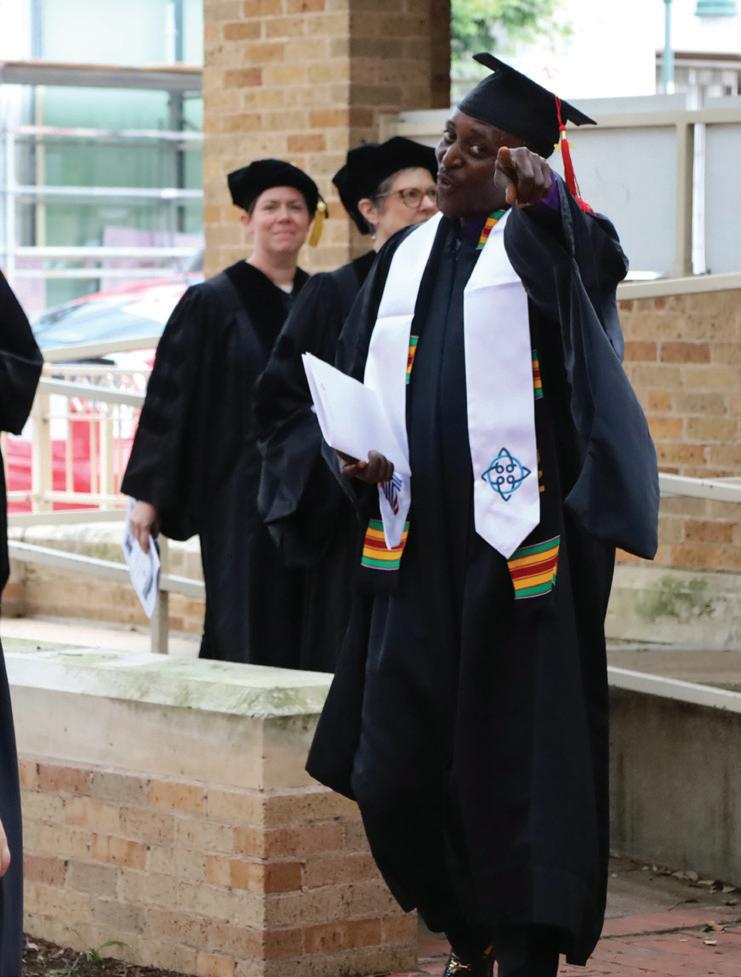
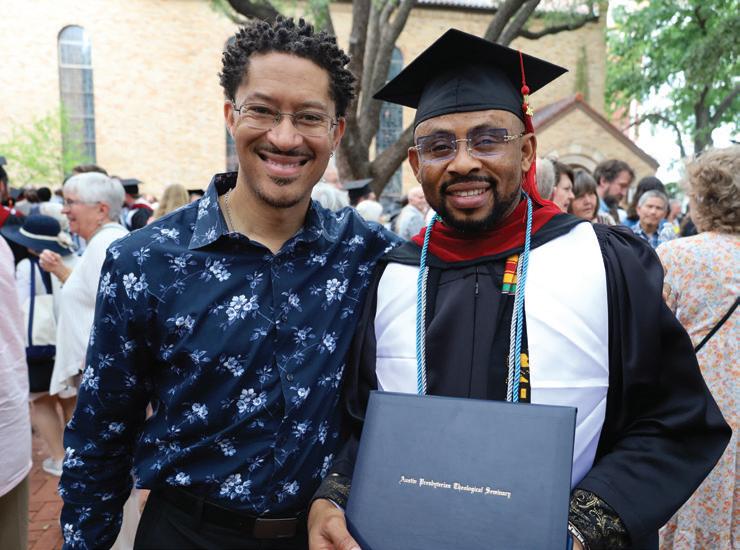
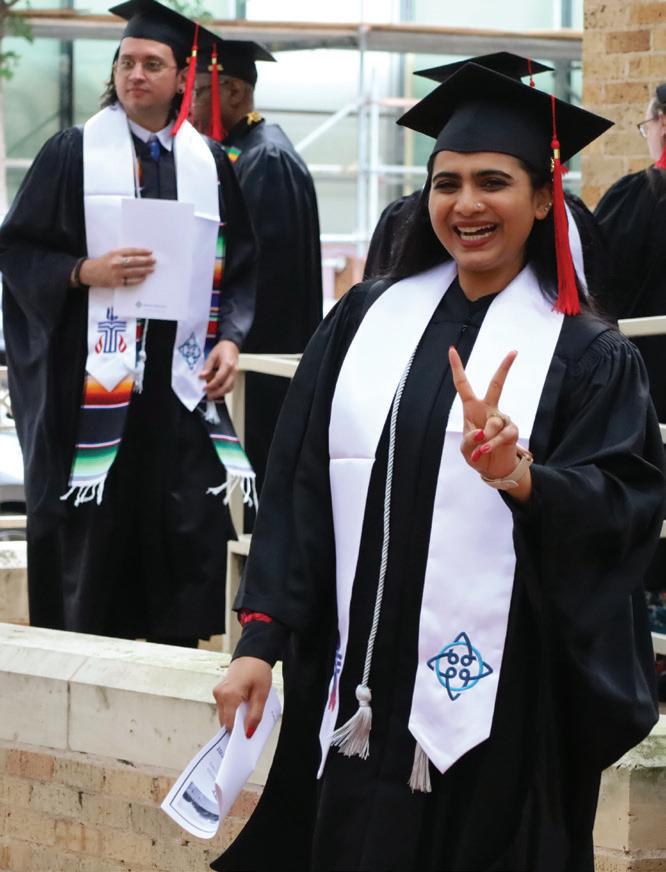
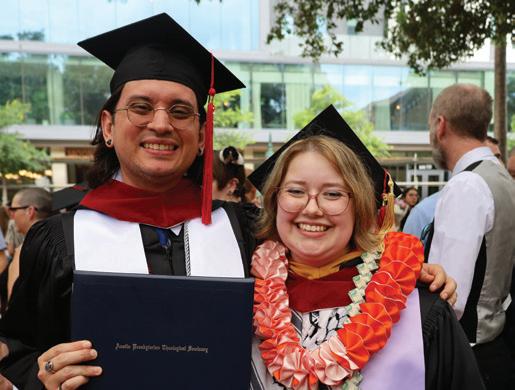
MASTER OF ARTS IN RELIGION
John Fritz Ballenas Guarte
MASTER OF ARTS IN YOUTH MINISTRY
Lauren Marie Copeland Disney
Wil Samuel Decker
Sandra Robin Harris
Brian Michael Heverly
Anna James Hernandez
Isabella P. Lopez
Ben Michael Schaefer
Austin Shortes
Rachel Elizabeth White
Kellie Delana Brewer
Ian Alexander Clarke
John Philip Curran
Elizabeth Anne Donihoo
Lucas Samuel Hall
Colton Wade Hedrick
Awrish Javed
DOCTOR OF MINISTRY
Britt Luise Aerhart
Jocelyn. C. Cadwallader
Ann Dale Cherry
Andrew Edward Cooke
Jenny Elizabeth Davant
Karen Ware Jackson
Charles David Johnson-Kelly
Monica JoAnn Hall
Craig Lee Hunter
Jennifer Piland Kindsvatter
Christopher José Reyes
Julie Brenton Rowe
Ashley Rogillio Sanders
MASTER OF DIVINITY
A. J. Juraska
Frieda Analiese Mottonen
Ryan Patrick Obray
Ochuba Okam Ochuba
Christian Alexander Peña
Gary Martin Renfro
Katherine Lindsay Roberts

CERTIFICATE IN MINISTRY
Melinda Alexander
Donald Anderson
Tina Carter
Mary Diehl
Debra (Debbie) Fulton
Mark Hellberg
Kris Jones
Wendy Keach
Carrie Lauber
Briana (Bri) Mayfield
Melody Oliphant
Eric Prichard
Mary Lee Schultz

Abbie Ryon
Tytana Scott
Taína Julia Specie
Janet Brehm Taylor
Kennedy Isis Thedford
Madison Leigh Turner
Manasseh Yusuf

President
José R. Irizarry
Board of Trustees
Denice Nance Pierce (MATS’11), Chair
Wick Alexander
Lee Ardell
Thomas Christian Currie
James A. DeMent (MDiv’17)
Jill Duffield (DMin’13)
Britta Martin Dukes (MDiv’05)
Peg Falls-Corbitt (CIM’20)
G. Archer Frierson
Jasiel Hernandez (MDiv’18)
Cyril Hollingsworth (CIM’16)
Ora Houston
David H. Jensen
Shawn Kang
John A. Kenney (CIM’20)
Steve LeBlanc
Steve Miller (MDiv’15)
Lisa Juica Perkins (MDiv’11)
Stephen J. Rhoades
Sharon Risher (MDiv’07)
Pamela Rivera
Conrad Rocha
Kenneth Snodgrass (MATS’16)
Laureen Suba (MDiv’14)
Michael Waschevski (DMin’03)
Sallie Sampsell Watson (MDiv’87)
Elizabeth C. Williams
John Williams (MDiv’87)
Rachel Wright
Shirley Zsohar
Trustees Emeriti
Cassandra Carr
Lyndon Olson Jr.
B.W. Payne
Max Sherman
Editor Jeff Sanchez
Design
The Brand Movement
Contributors
Ryan Arnold
Gary Mathews
Usama Malik
Mikala McFerren
Alison Riemersma
David Schmersal
Kristy Sorensen
If you are considering ways to include your charitable giving in your current and future financial plans, there are several options.
A gift to Austin Seminary today provides for our Christian leaders who are preparing for service and leadership.
• A gift of appreciated stock you have owned for more than a year offers multiple tax advantages and allows you to conserve your cash.
• If you are 70½ or older, you can make a tax-free gift (called a QCD) from your IRA.
• You can advise a grant from your donor advised fund.
A future gift in your estate plan will benefit tomorrow’s seminarians. Name Austin Seminary as a beneficiary of your IRA or other retirement plan.
• Include a bequest in your will or living trust.
• Make Austin Seminary a beneficiary of a life insurance policy or retirement plan.
To learn more about these ideas or to discuss additional planned giving strategies, contact Ryan Arnold, Vice President for Institutional Advancement, by phone at 512-404-4807 or by email at rarnold@austinseminary.edu, or visit austinseminary.giftplan.info.
For the glory of God and to proclaim the gospel of Jesus Christ, Austin Presbyterian
Theological Seminary is a seminary in the Presbyterian-Reformed tradition whose mission is to educate and equip people for ordained Christian ministry and other forms of Christian service and leadership; to employ its resources for the nurture of the church; to practice and promote critical theological thought and research; to engage a range of voices and perspectives within and beyond the life of the Seminary; and to be a winsome and exemplary community of God’s people.
- Austin Seminary mission statement