
SIXTH GRADE ACADEMIC PROGRAM
Welcome to Sixth Grade at Austin Prep
We are delighted to partner with you as your child begins this important chapter of their Middle School journey. Sixth grade marks a meaningful transition, one rooted in growth, curiosity, and the development of both academic confidence and personal character. At Austin Prep, this year is intentionally designed to help students take part in their school community. Guided by our Augustinian values of veritas, unitas, and caritas, students are invited to explore ideas deeply, build strong relationships, reflect thoughtfully, and engage joyfully in learning.
This book offers a window into the Sixth Grade Academic Program and the experiences that shape our students each day. Within these pages, you will find an overview of our integrated curriculum across Humanities, STEM, the Arts, World Languages, and the Center for Integrated Learning. You will see how faith formation, project-based learning, student voice, and interdisciplinary connections come together to create an engaging, supportive, and developmentally responsive experience.
We are proud of the vibrant Middle School community your child is joining and grateful for the trust you place in us. We look forward to walking alongside your family this year as we support, challenge, and celebrate each student.
Warm regards,


Michael McLaughlin Head of Middle School
Austin Preparatory School
SIXTH GRADE ACADEMIC PROGRAM
Saint Augustine teaches that all learning begins within: with curiosity, wonder, and the questions we carry in our hearts.
Sixth-grade students are invited into this interior journey: to know themselves, to ask deep questions, and to seek truth with both humility and courage. The ‘restless heart’ that Augustine describes becomes a metaphor for intellectual curiosity and moral seeking. Students learn that the search for understanding about God, themselves, their world, and the place God is calling for them to inhabit within it is itself a sacred journey.
The sixth grade at Austin Prep represents a pivotal moment in the life of a student: the very beginning of their Austin Journey. Middle School is a time of transition - from childhood toward adolescence, from surface-level learning to intellectual engagement. This first year of Middle School is carefully designed to nurture the habits of the mind and of the heart in a way that is uniquely Augustinian, rooted in the pillars of Veritas (Truth), Unitas (Community), and Caritas (Love).
Through an intentional balance of challenge, support, and exploration, sixth graders engage in hands-on, project-based, and collaborative experiences that nurture curiosity, reflection, and self-expression. The curriculum invites students to explore knowledge as a living, interconnected web, to engage with the world and with one another thoughtfully, and to reflect on their own identity, purpose, and responsibility within the community.
An Augustinian Journey of Faith, Formation, and Fun Learning Through Mind, Heart, and Spirit
The sixth grade at Austin Prep is more than a collection of courses; it is an immersive, integrated, and formative experience. Rather than simply preparing students for who they might become, experiences focus intentionally on who they are now: their interests, perspectives, and emerging capacities. The curriculum is designed to foster students’ development of:
The mind to inquire deeply - Students engage in hands-on projects, collaborative problem-solving, and intellectual risk-taking.
The heart to care authentically - Students build relationships, practice empathy, and engage with diverse perspectives.
The spirit to act with integrity - Students reflect on their values, responsibilities, and role in the community.
Students are invited to wrestle with the enduring questions of early adolescence:
Who am I?
How do I relate to others?
What am I called to do?
How can I use what I know to make a difference?

Faith and Character at the Core
Our Augustinian identity threads through all aspects of Austin Prep. Faith, reflection, and moral reasoning are not confined to Theology classes; they are woven across the academic program, creating a coherent educational experience.
The Augustinian principle, “If you aspire to great things, begin with the little ones,” guides the design of the Middle School experience. Students are encouraged to see that even small acts of curiosity, kindness, or reflection have an enduring impact, and that the habits, attitudes, and decisions cultivated in everyday experiences lay the foundation for future scholarship, leadership, and service. Through incremental challenges—whether collaborating on a project, participating in a lab, performing a piece of music, or reflecting on a scripture passage—students practice responsibility, perseverance, and integrity, learning that moral and intellectual growth happens step by step.
Students engage with questions, considering how their knowledge and talents can intersect with meaningful action. Opportunities for reflection, prayer, and discussion invite students to articulate their own values and beliefs while learning to appreciate and respect the perspectives of others. Service and community participation, both within the school and through outreach programs, allow students to put faith into practice, fostering a lived understanding of compassion, responsibility, and leadership in action.
Through this intentional integration, sixth-grade students develop spiritual literacy and moral discernment, learning to approach challenges with thoughtfulness, courage, and a commitment to the common good. By the end of the year, they begin to see themselves capable of approaching life’s great questions within the Augustinian paradox of humility and aspiration.
Faith, character, and scholarship are not separate pillars of learning but framed together, with faith and reason forming the foundation upon which students can continue to build throughout their Middle School journey and beyond.
An Integrated, Interdisciplinary Approach
Grade six emphasizes interconnected learning, highlighting the natural intersections between disciplines. Humanities, STEM, Arts, and Languages are not taught in isolation; instead, each subject reinforces and enriches the others. Students experience learning as a dynamic conversation between ideas, exploring how mathematical patterns inform scientific investigation, how historical context deepens literary interpretation, and how cultural understanding enhances empathy and communication.
Projects and experiential learning are central to this approach. Students engage in activities that are hands-on, collaborative, and reflective, ensuring that learning is both meaningful and applicable to the real world. Whether designing experiments to test scientific hypotheses, interpreting primary sources, performing in a choral ensemble, or coding a simple program, students learn by doing. This approach cultivates curiosity, resilience, and creativity, supporting the development of veritas in every learner.
The curriculum is holistic and deeply Augustinian because it emphasizes interpersonal skills and community engagement. Group work, peer review, collaborative projects, and service-based experiences encourage students to value diverse perspectives and work inclusively, embodying unitas and caritas. Students learn that their voice and contributions matter, that leadership can be exercised with humility and respect, and that empathy and understanding are essential components of scholarship and citizenship.
A Developmentally Responsive Experience
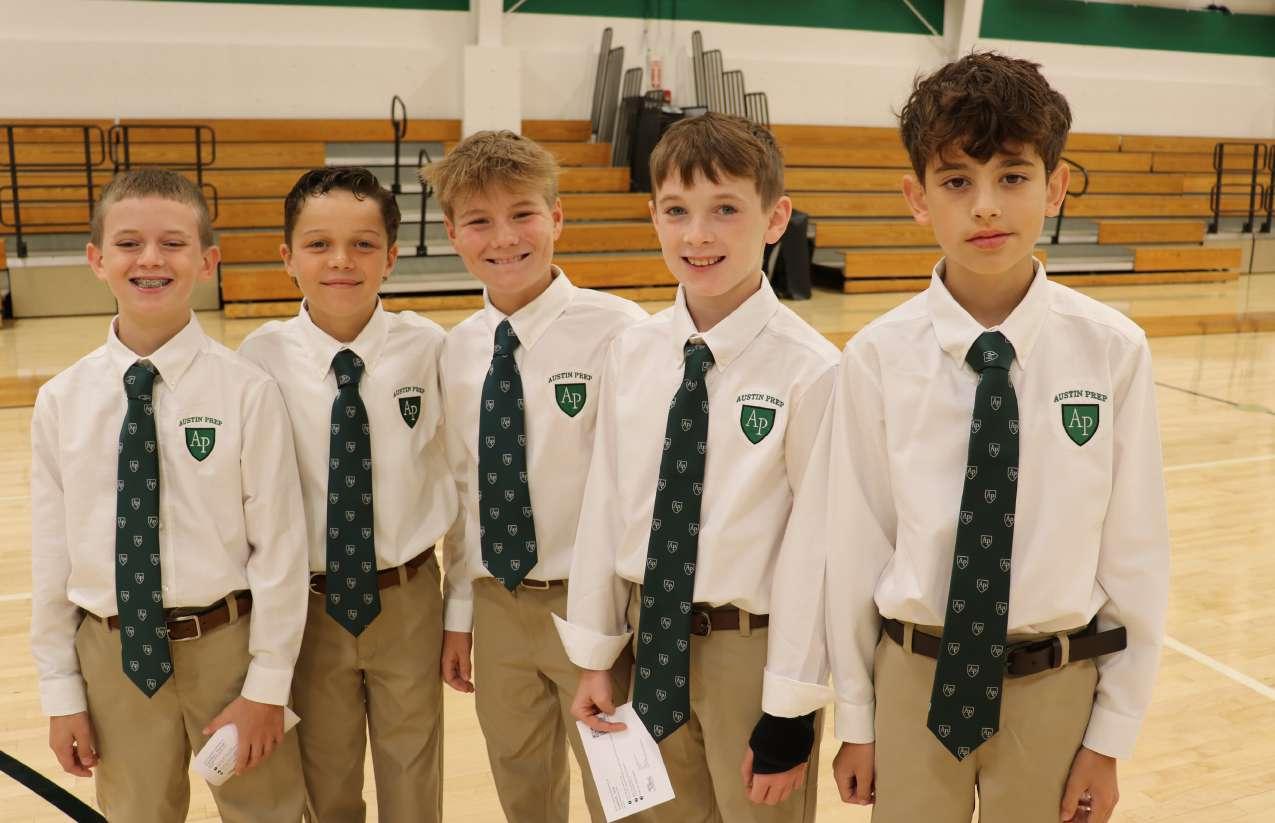
Sixth grade at Austin Prep is designed to be interactive, relevant, and participatory. Students are not passive recipients of knowledge; they are creators, interpreters, and collaborators. Across disciplines, learning experiences are project-based, experiential, and reflective. These activities cultivate both intellectual agility and social awareness, providing authentic opportunities to apply knowledge in meaningful contexts. Students learn to iterate, evaluate, and refine ideas, skills essential to scholarship and life.
Recognizing the unique developmental needs of early adolescents, the program balances challenge with support, offering differentiation to meet students where they are while pushing them to grow.
Consistency and routine provide a foundation for growth, helping students navigate the transition into Middle School. Teachers guide students in developing discrete skills and strategies for studying, learning, and inquiry, from note-taking and time management to reflection and goal-setting. Students are encouraged to take ownership of their learning, make choices, and monitor their own progress. This approach fosters resiliency and grit, reinforcing the belief that they are capable of doing hard things. Learning is not demanding for its own sake, but vigorous: full of life, meaning, movement, and connection, inviting students to engage deeply and see the relevance across disciplines.
By focusing on how students learn, not just what students learn, the program ensures that students are not simply completing assignments or memorizing information; they are developing habits of the mind and the heart. Students learn to ask questions, seek evidence, and communicate meaningfully. Through reflection, they also cultivate self-awareness, empathy, and humility to engage with classmates, teachers, and the wider world respectfully and thoughtfully.
By the end of sixth grade, students emerge confident, curious, compassionate, and connected. They become scholars, artists, scientists, and leaders-in-training; they are thinkers and doers; they are young people beginning to understand that learning is both an intellectual and moral endeavor, one that prepares them to contribute meaningfully to their communities, to ask enduring questions, and to live lives of wisdom, love, and service.
Empowering Student Choice and Voice
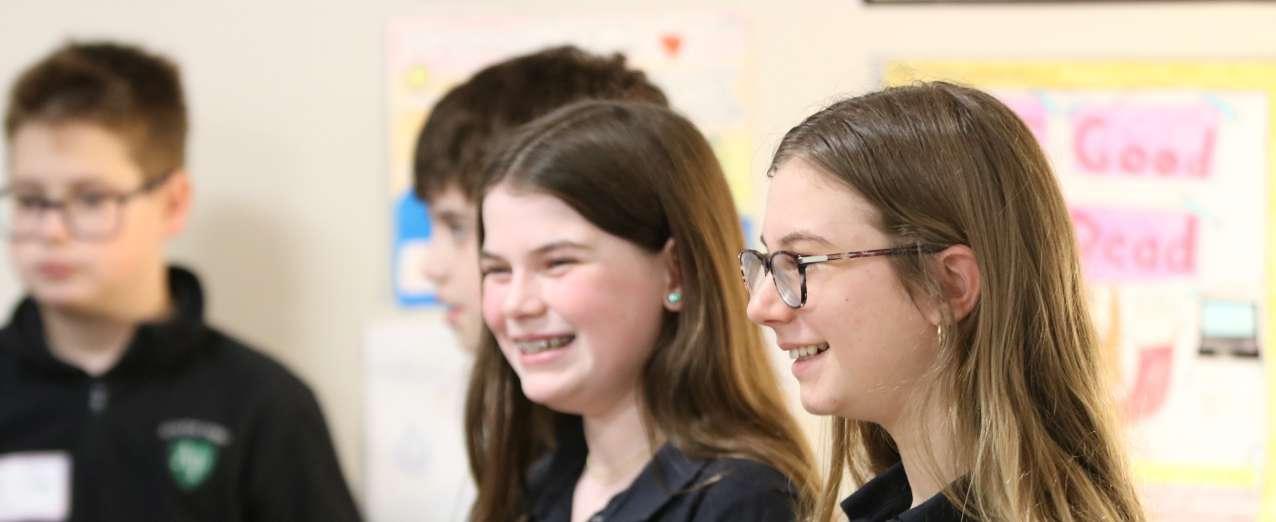
At Austin Prep, we believe that students learn best when they are active participants in their own education; when they have opportunities to make meaningful choices, express their perspectives, and shape their learning experiences. As the first year of Middle School, the sixth-grade year marks an intentional shift toward greater student agency, preparing young adolescents to become self-directed, confident learners who understand not only what they are learning but how and why they learn.
A Developmental Milestone
Early adolescence is a time of identity formation, when students begin asking essential questions of identity and purpose. By honoring student voice and providing authentic choices throughout the curriculum, we create space for students to explore these questions in academically rigorous and personally meaningful ways. This approach aligns with the Augustinian commitment to interiority — the practice of self-knowledge and reflection in listening to the Inner Teacher — empowering students to understand their strengths, interests, and learning styles while developing the courage to advocate for themselves.
Building Habits of Agency
The sixth grade emphasis on choice and voice is not about lowering standards or eliminating challenge; it is about helping students develop the habits, skills, and mindset needed to take ownership of rigorous learning. Through regular opportunities to make meaningful choices, students learn:
• Discernment - How to evaluate options and make mission-centered decisions.
• Responsibility - That with choice comes accountability—they must follow through, reflect, and learn from outcomes.
• Self-awareness - How to recognize their strengths, interests, and areas for growth, and to use this knowledge to guide their learning.
• Confidence - That their ideas, questions, and perspectives matter and are valued in the academic community.
Interiority: An Augustinian Practice
Empowering student voice is deeply rooted in Augustinian spirituality, which teaches that true learning begins by listening to the Inner Teacher. By inviting students to listen, reflect, and express themselves authentically, we honor the restless, seeking nature of the human heart. We teach students that their voice, whether in a classroom discussion or a creative project is a gift to be cultivated, shared, and used in the service of truth, community, and the common good.
Therefore, student choice and voice are not occasional additions to the curriculum; rather, they are woven into the fabric of learning across all disciplines. Student voice is welcomed in establishing classroom norms and expectations, fostering a sense of ownership and shared responsibility for the learning environment. Teachers design flexible project formats that allow students to demonstrate understanding in ways that align with their strengths and encourages growth: whether through writing, visual presentation, performance, or multimedia creation.
In sixth grade, students come to realize that they are not called to be passive recipients of information but rather are invited as active co-creators of their education, capable of making choices that reflect who they are and who they aspire to become. This foundation of agency and self-advocacy prepares them not only for academic success but for lives as members of the Augustinian cavalry - lives of purpose, leadership, and meaningful contribution.

Advisory: A Steady Point of Connection
Advisory at Austin Prep functions like a family. In small, mixed-grade groups of about ten students and a faculty member, sixth-grade students are guided through the academic and personal transitions that define the first year of Middle School. More than a scheduled block on the timetable, Advisory is a relationship-centered program designed to help students feel grounded and connected as they grow.
Each sixth grader is paired with an Advisor who serves as a trusted adult advocate throughout Middle School. Advisors check in regularly, notice patterns, celebrate progress, and help students navigate challenges before they become obstacles, providing a steady anchor during a year of growing independence and rising academic demands.
The Austin Prep Advisory Program has been recognized by AMLE (Association for Middle Level Education) as an exemplary approach to this essential component of middle level education.
What Happens in Advisory
Advisory meets four times each week and blends structure with flexibility to meet students’ real needs. Across the year, Advisory time is used to:
• Build community through conversation and shared experiences
• Support executive functioning skills such as organization, time management, and goal-setting
• Reinforce academic responsibility through reflection and feedback
• Engage in age-appropriate social-emotional learning focused on empathy and communication
• Provide space for reflection, check-ins, and guided problem-solving
Advisory is also where schoolwide themes become personal, helping students connect shared ideas to their own experiences.
Advisory Within a Network of Support
Advisory is part of a coordinated system of care designed to support the whole child.
• Advisors – Maintain close communication with students and families and often serve as the first point of contact.
• Health and Wellness Office – Provides support for students’ social, emotional, and physical well-being.
• Austin Mentors Program – Connects students with trained older peers who model leadership, empathy, and responsible decision-making.
Students are surrounded by adults and peers who know them, support them, and help them build the skills they need to thrive.
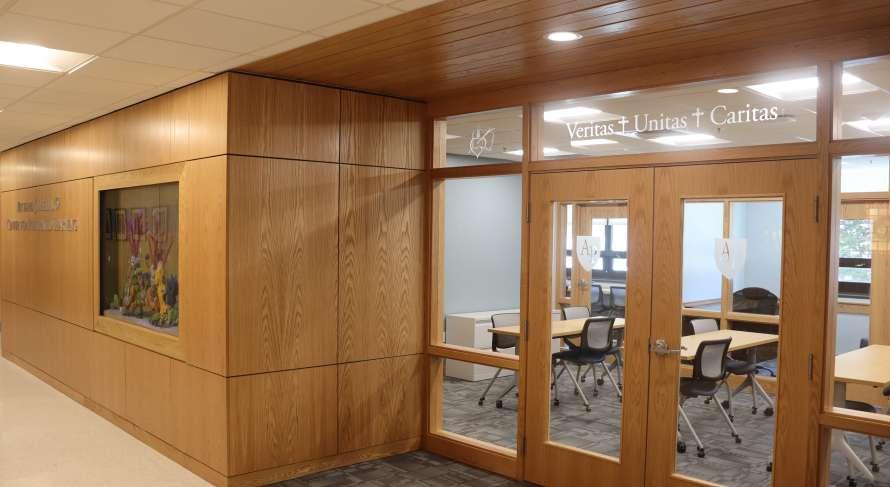
The Richard J. Meelia ’67 Center for Integrated Learning
The Richard J. Meelia ’67 Center for Integrated Learning supports every student and stands at the heart of Austin Prep’s commitment to honoring the unique gifts, needs, and potential of every individual. Grounded in the Augustinian understanding that each person is created with inherent dignity and purpose, the Center supports Austin Prep students by fostering students’ potential.
Philosophy and Approach
At Austin Prep, differentiation is not an exception to the learning experience; it is integral to it because we believe that every student learns differently and should have experiences that are tailored to them. The Center embodies the belief that excellent teaching meets students where they are, recognizing that the path to mastery looks different for each learner. Through collaboration with classroom teachers, the Center provides targeted interventions and strategic accommodations that allow every student to access vigorous, meaningful learning.
This work is deeply Augustinian. It honors interiority, encouraging students to understand their own learning profiles and advocate for their needs; it embodies caritas, ensuring that no student is left behind or held back; and it supports veritas, affirming that the pursuit of truth and knowledge is available to all, regardless of learning differences.
Ultimately, the Center reinforces a core Augustinian truth: learning is not a one-size-fits-all endeavor, but a deeply personal journey toward truth, wisdom, and self-knowledge. In sixth grade, students begin to understand that persistence matters more than perfection and that every learner has something valuable to contribute.
Led by our St. Ambrose Fellows, faculty specially trained in working with students on a variety of organizational and study strategies, the Center is integral to the Austin Prep Journey, providing personalized support that empowers students to take greater ownership of their education and develop skills, confidence, and self-awareness that empower them to experience success.
How the Center Supports Sixth Grade Students
The sixth-grade year serves as a critical entry point for identifying and responding to students’ learning strengths and challenges. As students transition into Middle School, the Center works closely with students and families in a variety of ways:
Academic Skills Support and Intervention
• Skill-building workshops in areas such as organization, technological access, and study strategies.
• Tutorials for parents and caregivers on best practices in Executive Functioning skills like organization, time management, and task initiation.
Accommodations
• Individualized accommodation plans for students with documented learning differences, or other needs.
• Testing accommodations such as extended time and reduced-distraction settings.
• Assistive technology training and support for tools that enhance learning access.
Advisory
• Self-advocacy training to help students set goals, understand their learning profiles, and communicate their needs.
• Exercises, lessons, and resources to teach and practice discrete skills.
• Progress monitoring through ongoing communication with classroom teachers.
• Growth mindset that reframes challenges as opportunities and celebrates effort and persistence.
• Reflection practices that cultivate self-awareness about learning strategies, strengths, and areas for growth.
Additional Opportunities with the Center for Integrated Learning
The Center for Integrated Learning offers a range of specialized support services designed to meet the diverse learning needs of Austin Prep students. These Extended Services provide targeted, individualized instruction that goes beyond the accommodations and differentiation available within the standard curriculum, ensuring that students with learning differences or executive functioning challenges receive the intensive, expert support they need to thrive.
Led by our St. Ambrose Fellows, these services are available to students who would benefit from more structured, systematic intervention in specific areas. Families work closely with the Center to determine which services are appropriate based on student need, learning profile, and goals.
Available Extended Services
Dyslexia Support
For students with dyslexia or significant reading and writing challenges, the Center offers specialized tutorials grounded in evidence-based, multisensory methods. These sessions focus on:
• Phonemic awareness, decoding, and fluency.
• Spelling patterns and morphology.
• Reading comprehension strategies.
• Written expression and organization.
Students work one-on-one or in small groups with trained specialists who use structured literacy approaches tailored to each student’s needs. This intensive support helps students build foundational skills while maintaining engagement with grade-level content in their core classes.
Alternate English and History Courses
For students who might benefit from a smaller learning environment, the Center offers alternate sections of Math, English, and History. These alternate courses are led by faculty who have undergone specialized training and are participating in an ongoing teaching consultation partnership. These classes will emphasize educational best practices such as multimodal presentation of information and instructions, repetition, and other UDL-inspired instructional practices, and will enable more individualized support due to the capped class count.
These courses maintain the same academic vigor and essential questions but are designed specifically to support diverse learning profiles. Students benefit from:
• Smaller class sizes that allow for additional targeted instruction and individualized attention.
• Explicit teaching of reading comprehension, note-taking, and organizational strategies.
• Collaborative learning structures that build confidence and peer support.
• Consistent communication between Center staff and families.
Students in alternate courses participate fully in school-wide projects, discussions, and co-curricular opportunities, ensuring they share experiences with their peer classmates while receiving the support they need to succeed.
Executive Functioning Support in Small Groups
Many students are still developing the executive functioning skills essential for academic success: organization, time management, planning, prioritization, and task completion. The first year of Middle School is a significant transition, and these sessions can assist students in making that transition and strengthening their skills. The Center offers small-group sessions that provide explicit instruction and consistent practice in:
• Using planners, organizing materials, and managing assignments.
• Breaking larger tasks into manageable steps.
• Planning ahead for tests, projects, and deadlines.
• Developing routines and systems for homework completion.
• Self-monitoring progress and adjusting strategies as needed.
These sessions are highly practical and student-centered, focusing on building independence and transferring skills to real academic contexts. Students learn not only what to do but how and when to apply these strategies effectively.
1:1 Academic and Executive Functioning Coaching
For students who benefit from individualized, responsive support, the Center offers one-on-one coaching with St. Ambrose Fellows and learning specialists. These meetings, which vary in frequency, are tailored to each student’s unique needs, goals, and learning profile, and may include:
• Personalized study strategies for specific subjects.
• Organization systems customized to the student’s workflow and preferences.
• Time management and planning support for balancing academics, activities, and rest.
• Test preparation and review strategies.
• Self-advocacy skills and communication with teachers.
• Reflection on learning challenges and problem-solving approaches.
Coaching sessions provide a safe, supportive space for students to build metacognitive awareness, understanding how they learn best, what strategies work for them, and how to navigate challenges with resilience and confidence. Over time, students develop greater independence, self-efficacy, and ownership of their learning.
How to Access Extended Services
Extended Services through the Center are available for an additional fee and are arranged in consultation with the Director of the Center for Integrated Learning. Families interested in learning more about these supports should reach out to discuss:
• Their child’s learning profile and opportunities for growth.
• Recommendations from previous schools or educational specialists.
• Goals for sixth grade and beyond.
Whether a student accesses Extended Services or receives support through standard Center accommodations and differentiation, the goal is the same: to ensure that every learner can engage meaningfully, develop confidence and competence, and experience the joy of learning in a community that sees and values their unique gifts.
Middle School Student Profile & Outcomes
• Unitas - Passionate, Global Citizen: Students are encouraged to understand and appreciate diverse perspectives, cultures, and traditions. Through interdisciplinary projects, case studies, and community engagement, they learn to act with integrity and curiosity in an interconnected world. Collaborative experiences, discussions, and initiatives allow students to see themselves as members of multiple communities—class, school, local, and global—developing the skills, confidence, and responsibility to contribute positively.
• Veritas - Curious, Collaborative Scholar: Students engage in responsible academic inquiry that emphasizes both process and product. They investigate questions, gather and analyze evidence, and construct reasoned arguments across subjects. Students develop habits of scholars in learning how to learn, becoming more organized and self-actuated. Classes are intended to spark intellectual curiosity, critical thinking, and lifelong learning. The curriculum encourages exploration beyond the classroom, promoting the integration of knowledge, reflection, and ethical reasoning.
• Caritas - Compassionate, Empathic Servant: Students learn the importance of empathy, respect, and service. Students understand how to lead with integrity, communicate with kindness, and contribute meaningfully to the well-being of others. The curriculum emphasizes that leadership is mission-driven and grounded in purposeful service.
• Interiority - Reflective, Self-Aware Thinker: Students practice the Augustinian discipline of looking within, cultivating self-knowledge, understanding their unique strengths and challenges, and developing the capacity for sustained reflection. Through regular opportunities for goal-setting, self-assessment, and thoughtful consideration of their experiences, students learn to make choices aligned with their values, advocate for their needs, and grow in moral discernment. The curriculum emphasizes that understanding oneself is the foundation for understanding others and the world, and that reflection is essential to meaningful learning and personal growth.
Humanities: Faith, Story, and Civilization
“Who are we called to be, and how do our stories shape the world?”
The sixth-grade Humanities program invites students to become seekers of: truth, story, and understanding. Across Theology, English, and History, students explore the human experience through sacred texts, literature, and ancient civilizations, discovering how faith, imagination, and culture are intertwined.
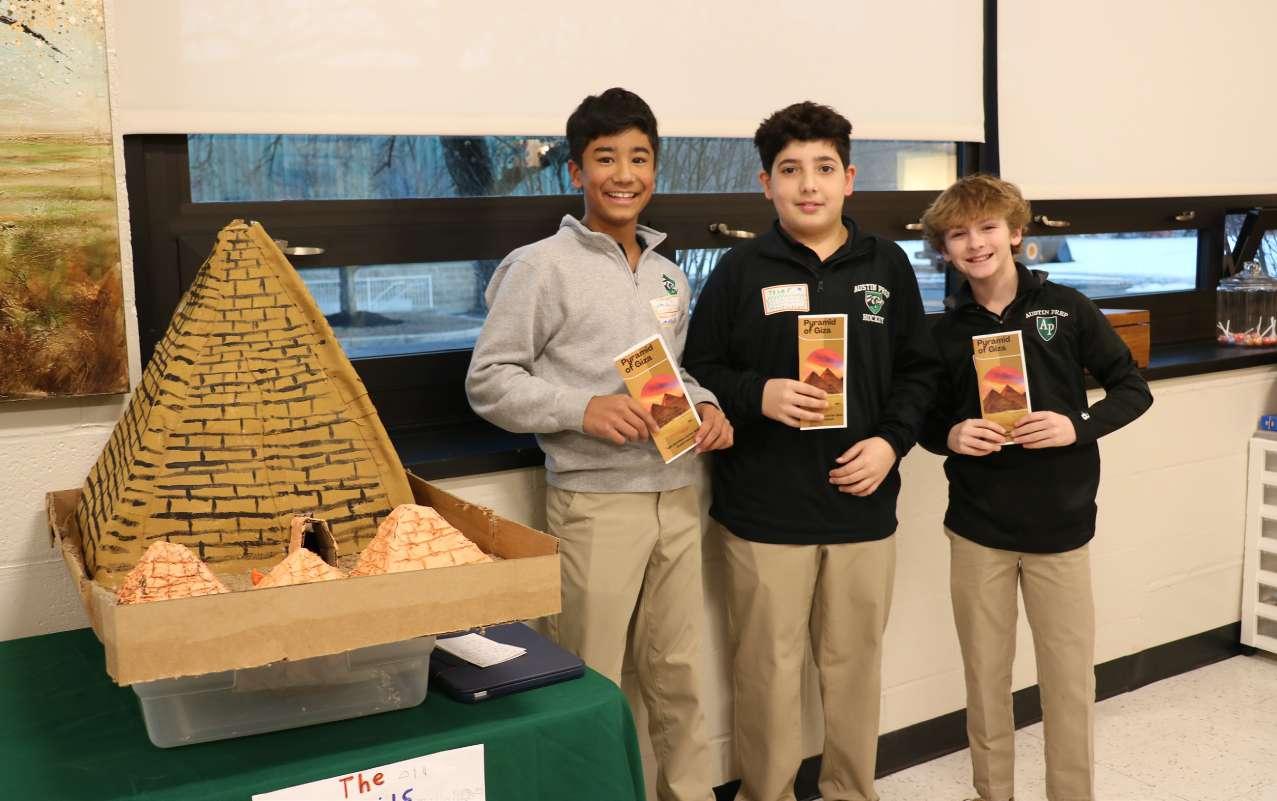
Learning is hands-on, real, and connected: students don’t just study stories; they write, dramatize, and curate them. Through creative writing, role play, simulation, and design projects, sixth graders experience how ideas move across time and place, and how people express identity through art, faith, and narrative. Interdisciplinary projects such as the Ancient Diaries, the Egyptian Museum, and the Heroes Exhibition encourage students to see recurring themes and skills across the landscape of learning.
Together, these courses lay the foundation for reading the world critically and faithfully, and students are ready to write their own chapter of the human story through their thoughts and actions.
Theology: Introduction to Sacred Scriptures
In this course, students embark on a journey through the greatest story ever written: the story of God’s love for humanity, revealed in Scripture and lived through the Church. Beginning with our ancestors in faith – Adam and Eve, Abraham, Isaac, Joseph, and Moses – students encounter the foundational narratives that shape our faith. They explore how these stories point forward to the New Covenant established by Jesus, discovering the threads of love, hope, and redemption that run through salvation history.
Students consider how faith, character, and moral choice intersect, reflecting on how the lessons of Scripture speak to their own lives. They are encouraged to reflect on their own faith journey, considering how Scripture speaks to their interior life. In doing so, students wrestle with enduring questions: What does it mean to have faith? How do I discern God’s call in my life? Through prayer, journaling, and quiet reflection, students practice interiority, the Augustinian discipline of looking within, as they explore these questions.
Learning is active and interdisciplinary. Students bring Scripture to life through role play, presentations, and dramatizations. These multi-modal learning experiences ensure that students can access and express understanding through diverse pathways.
Throughout the liturgical year, students engage with the rich traditions of the Catholic Church: constructing and interpreting nativity scenes, exploring the mysteries of the rosary, participating in Chapel visits, and studying sacred art and music. Prayer, reflection, and discussion foster individual spiritual growth, while service projects through Campus Ministry help students connect theological lessons to their daily actions, cultivating responsibility, empathy, and a sense of community.
By the end of the course, students will have experienced Scripture not as a set of distant stories but as a living narrative, full of meaning, wonder, and guidance. They will see themselves as part of this ongoing story, empowered to live with faith, compassion, and a deep awareness of God’s presence in the world.
Assessment emphasizes students’ ability to demonstrate understanding of key concepts, alongside meaningful reflection on learning and faith development. The course emphasizes projects, activities, and experiential learning that allow students to demonstrate their comprehension in meaningful ways. Students are evaluated on their participation, insight, and growth in understanding, cultivating both knowledge and spiritual formation in alignment with the Augustinian ideals of truth, unity, and love.
English: Caritas and Character
This course invites students into the transformative power of stories—to see themselves, understand others, and explore the human heart. Grounded in the Augustinian call to caritas, students learn how literature reflects the complexity of human choices and relationships, offering both mirrors to see themselves and windows to see the world.
Curated shared texts challenge imagination, spark curiosity, and inspire empathy. Students engage in sustained reading of self-selected, teacher-directed novels that are scaffolded to grow students’ literary mindset. Through close reading, discussion, and writing, they investigate character motivation, conflict, and the consequences of human decisions, reflecting on how literature connects to their own lives and communities. Indeed, reading becomes a path for self-understanding; students reflect on what characters’ choices illuminate about their own values and questions.
Writing in the course is purposeful, reflective, and skill-driven. Grammar, vocabulary, and organization are embedded in meaningful contexts, scaffolding these essential skills while fostering confidence in communication and a growing sense of independence.
Students are encouraged to push themselves to take on academic risks to deepen their skills and demonstrate their versatility as thinkers.
Beyond reading and writing, this course emphasizes learning how to learn. Students reflect on their own growth, track progress in comprehension and expression, and develop strategies for thinking critically about texts. They discover how sustained reading, thoughtful discussion, and disciplined writing are pathways to insight and growth. By the end of the year, students see themselves as reflective, capable, and compassionate thinkers who understand that stories are not only a source of joy but also a means to understand the world and engage with it meaningfully.
Assessment in sixth-grade English centers on an evolving mastery of essential skills and reflection on their growth as readers and writers. Throughout the year, students produce a variety of work, from annotated texts and structured essays to creative writing pieces. Each demonstrates students growing fluency with key concepts and skills, literary terms, grammatical proficiency, and vocabulary. Students engage in hands-on projects that bring literature and writing to life in creative and collaborative ways. Through regular reflection and self-assessment, students evaluate their own progress, celebrate their achievements, and set goals for continued growth. By emphasizing process, reflection, and intentional learning, students take ownership of their development while building the skills and habits that will serve them across disciplines and throughout life.
History: Becoming Historians
History invites students into St. Augustine’s ‘restless search’: seeking patterns, understanding causes, and connecting past to present. Students step into the role of historians, exploring how civilizations form, flourish, and leave their mark on the world. History is approached not as a series of dates and names, but as the story of human ingenuity, choices, and culture. Students ask not only what happened but why it matters—echoing Augustine’s conviction that history is a search for meaning.
The journey begins close to home, with a focus on geography and the landscapes that shape human experience. Students learn to read maps, understand spatial relationships, and explore the environments of their own community, grounding them in the skills and perspectives of historians everywhere. From there, they travel through time and across continents, applying these tools to study ancient civilizations including Mesopotamia, Egypt, Greece, and Rome.
As students develop into Historians, they build their Historian’s Toolkit. Lessons explicitly teach students essential social studies skills and provide students with plenty of opportunities to practice and refine them.
Learning is experiential, interactive, and project-based, connecting students to real-world historical practices and careers. They become cartographers, mapping ancient lands; museum curators and docents, designing exhibits in an Egyptian museum; and archaeologists, solving historical mysteries in Rome and Greece. Through these immersive experiences, students see the relevance of history, developing skills in research, analysis, interpretation, and storytelling.
Interdisciplinary connections with Theology and English deepen understanding of the tapestry of human belief, narrative, and culture. For example, students compose Ancient Diaries, blending historical research with imaginative storytelling to explore the lives, motivations, and decisions of people in the past. They examine how societies adapt, innovate, and express enduring questions about purpose, justice, and community.
By the end of the course, students are not merely observers of history; they are engaged participants in a living story, capable of thinking critically, empathizing across cultures and time, and recognizing the connections between past and present.
Assessment in sixth-grade History focuses on the application of historical skills rather than memorization of facts and dates. Choice in project formats allows students to demonstrate historical thinking in ways that honor their strengths while building new skills. Students demonstrate their learning through projects, simulations, cooperative activities, and presentations, showing that they can analyze sources, take organized notes, and interpret maps. By assessing students on what they can do with historical knowledge, rather than what they simply know, this approach cultivates curiosity, problem-solving, and the ability to connect past events to the present in meaningful ways.
Humanities Capstone: The Egyptian Museum
The Egyptian Museum serves as the culminating experience for Sixth Grade Humanities, bringing together the skills, knowledge, and creativity students develop over the course of the year.
Acting as curators, docents, and historians, students design and organize exhibits that showcase Ancient Egyptian artifacts, cultural practices, and historical narratives. They engage in research, artifact analysis, and interpretive storytelling, translating historical information into experiences that are accessible, engaging, and meaningful for their peers and the community.
This capstone emphasizes interdisciplinary thinking, connecting History, Theology, literature, and the arts, while fostering collaboration, presentation skills, and reflective insight.
In this immersive project, students see firsthand how careful inquiry, creativity, and thoughtful interpretation bring the human story to life, leaving them with a tangible sense of accomplishment and a deeper appreciation for the civilizations that shaped our world.
The Egyptian Museum is open to the public, inviting families and community members to explore the exhibits, ask questions, and engage directly with the student curators. This showcase not only celebrates students’ hard work but also reinforces authentic learning—giving them the opportunity to share their understanding with a real audience, build confidence in public speaking, and experience the joy of teaching others.
STEM: Inquiry, Discovery, and Design
“How does the world work—and how can we make sense of it?”
Questions lie at the heart of STEM, where students begin to think like scientists, mathematicians, engineers, and innovators. Rather than learning concepts in isolation, students explore how evidence and patterns provide a framework for understanding the world, guiding decision-making and informing problem-solving in everyday life.
Learning in STEM must be hands-on, experiential, and inquiry-driven. At Austin Prep, sixth graders participate in experiments, collect and analyze data, build models, and test ideas, making abstract concepts concrete and tangible. They collaborate in teams, reflect on their findings, and iterate their solutions. Through this approach, students learn that discovery often comes from trial and error.
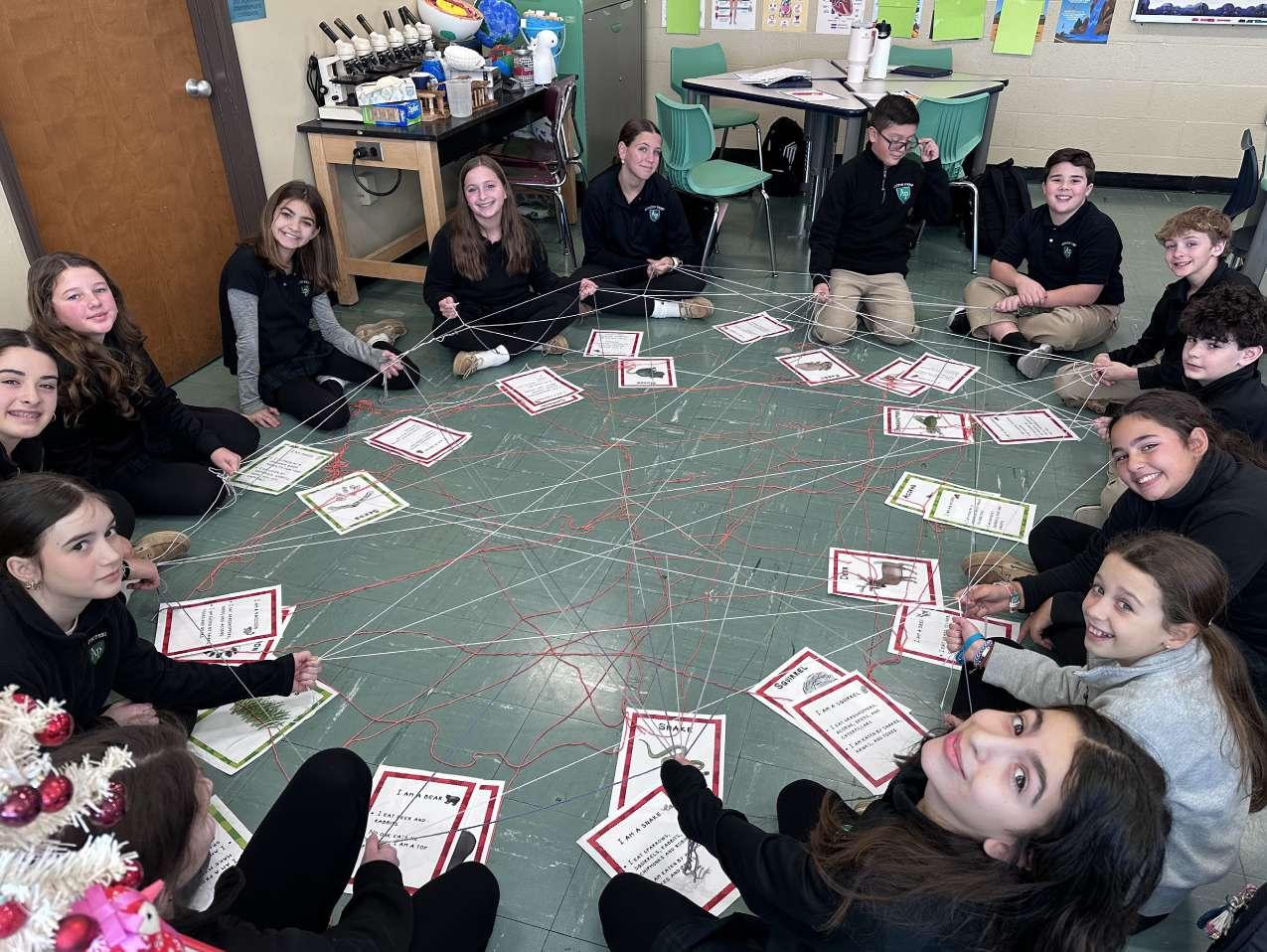
With an emphasis on curiosity, problem-solving, and creativity as much as content knowledge, students are encouraged to ask meaningful questions, analyze information critically, and communicate findings with clarity and precision. Whether the dynamics of ecosystems or the logic of numeric patterns, they develop confidence in reasoning and the ability to interpret the world.
Through this approach, students come to understand that STEM is not about finding answers, but rather asking questions. By beginning with real-world applications as the foundation of classroom learning, sixth-grade STEM is relevant and immediately applicable, helping to reinforce the idea that students are not just in the process of preparing to participate, but, rather, have the capacity to do so now.
Science: Earth and Space
This course sparks students’ natural curiosity about the universe and the planet we call home, inviting them to think like scientists, explorers, and innovators. Using the CER model (Claim–Evidence–Reasoning), students learn how to make evidence-based arguments, connect observations to concepts, and communicate their discoveries with clarity and confidence.
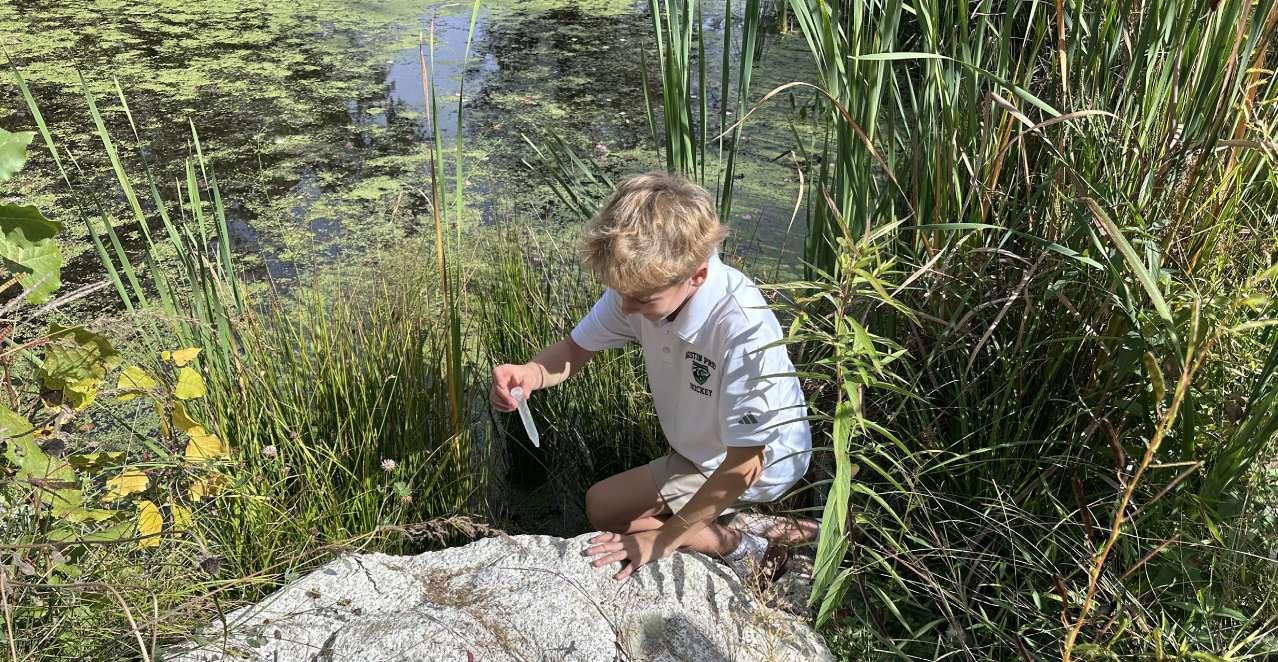
Students embark on a journey that spans Earth and beyond. They explore the layers of the Earth, the formation of rocks, and the movement of tectonic plates, investigating how these systems shape our world. Water - its cycles, quality, and conservation - is examined in our campus conservation land, where students collect samples, test conditions, and contribute to authentic scientific work. Careers in science are highlighted throughout, showing students how the skills they are developing connect to real-world roles.
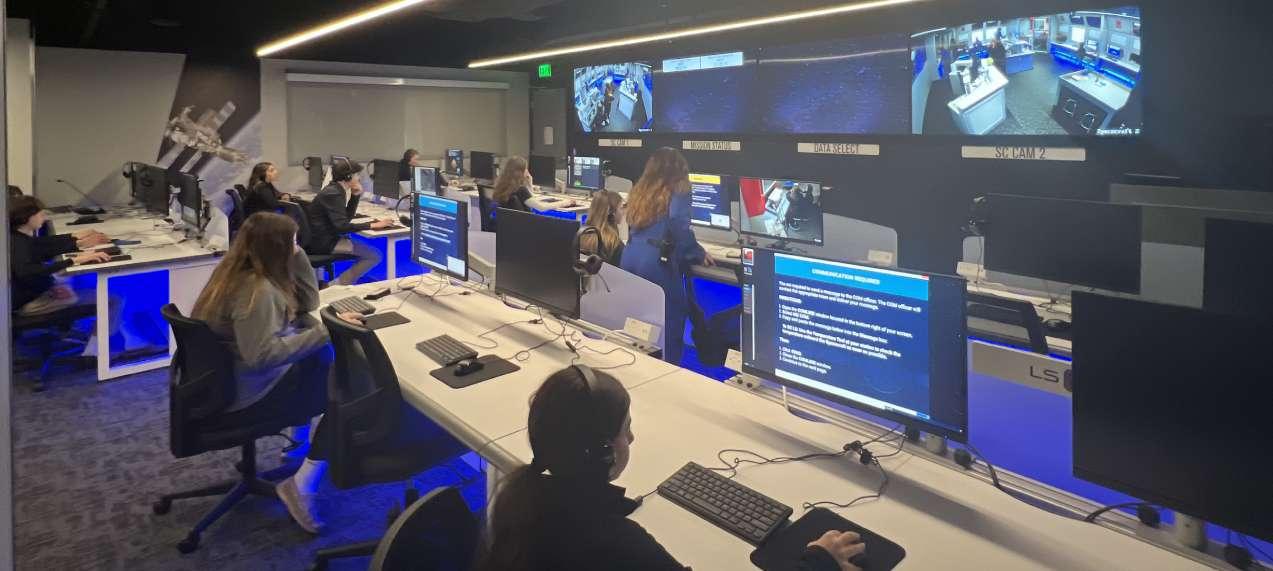
Looking to the skies above, students venture into space science, preparing for a spring “mission” in which they will take the lead in a planetarium simulation. They navigate the solar system, operate controls, analyze data, and problem-solve as a team, bringing classroom learning to life in an immersive, interactive experience.
Learning in Earth and Space is active, hands-on, and inquiry-driven. Labs, field investigations, simulations, and problem-solving challenges allow students to test ideas and see the immediate impact of their reasoning. Reflection and discussion help students connect observations to larger questions: How can scientific thinking help us understand and care for our world? How do Earth’s systems interact? How do human choices shape the planet?
Assessment focuses on the skills of scientific investigation rather than rote memorization. While occasional quizzes check content knowledge, the major emphasis is on hands-on projects, experiments, and fieldwork. Students are evaluated on their ability to ask questions, collect and analyze data, design experiments, and communicate their findings. By the end of the year, students are not just knowledgeable about Earth and space; they are confident, curious, and capable young scientists ready to explore, observe, and act in the world around them.
Mathematics Pathways
Our mathematics courses are designed to provide both appropriate challenges and meaningful support. Sixth-grade students are placed in one of two tracks based on prior mastery and readiness, ensuring that each learner is both supported and challenged according to their strengths and potential.
Both pathways focus on developing critical thinking, problem-solving, and reasoning skills, while encouraging persistence and confidence in mathematical thinking. The goal is not merely to complete procedures or memorize formulas, but to understand the underlying concepts, apply them in real-world contexts, and build a strong foundation for continued success in Middle School mathematics.
All new sixth-grade students are placed into the Foundations of Mathematics course as a default. In order to pursue the Advanced Foundations course, students must opt-in for an additional evaluation during the course registration process. Students are evaluated for placement based on a strong fifth-grade math record, teacher recommendations, superior test scores, and the Austin Prep Placement Exam.
Foundations of Mathematics
This course builds mathematical fluency and critical thinking as students transition into the Middle School math program at Austin Prep. Core topics include ratios and rates, operations with decimals, fractions, and integers, with an introduction to negative numbers, expressions, and equations.
Students apply their skills to real-world problems, from analyzing data and designing statistical projects to exploring geometry in tangible contexts. These connections make math meaningful, helping students see how patterns, relationships, and reasoning shape the world around them.
Assessment includes quizzes and tests, not only to mark growing mastery, but also to teach students how to plan and prepare. Emphasis is placed on perseverance, communication, reasoning, and organization, equipping students with the tools to succeed in higher-level math and in everyday problem-solving. Through exploration, discussion, and collaborative inquiry, students learn that mathematics is a powerful lens for understanding, interpreting, and acting in the world.
Advanced Foundations of Mathematics
This accelerated course invites students to extend their mathematical thinking into the world of pre-algebra, building on a strong foundation of number properties, fractions, proportions, and one-step equations. Students deepen their understanding of signed numbers, unit rates, percents, variables, and linear relationships, developing the skills needed to think abstractly and reason with precision.
Mathematical concepts are brought to life through real-world applications. Students explore geometry, probability, and data analysis by solving practical problems, interpreting information from multiple sources, and representing challenges algebraically. Hands-on projects, collaborative problem-solving, and inquiry-based lessons encourage students to analyze, communicate, and defend their thinking, helping them see mathematics as both a powerful tool and a creative process.
Assessment includes quizzes and tests, designed not only to track mastery but also to teach students how to prepare, plan, and approach challenges strategically. The course emphasizes perseverance, logical reasoning, and clear communication and encourages strong study habits both at home and in the classroom, ensuring that students are equipped with the skills, confidence, and mindset to succeed in higher-level mathematics and in real-world problem-solving situations.
Arts, Languages, and Culture: Expression, Connection, and Creation
“How do we express who we are and connect with others through culture and creativity?”
The Arts, Languages, and Culture program invites sixth-grade students to explore the ways human expression bridges differences - across time, place, and tradition - to reveal the deepest aspects of our shared humanity. Rooted in an Augustinian perspective, students are encouraged to see creativity as both a discipline and a form of dialogue: a way to understand themselves, engage with others, and participate in the larger story of human culture.
Through music, visual and performing arts, World Languages, and design, students develop creative confidence, cultural literacy, and collaborative skills. Learning is active, expressive, and reflective: students sing together in choirs, perform, design and operate technical elements of productions, and explore the roots and rhythms of Latin and Mandarin. Each activity is an opportunity to practice focus, perseverance, and thoughtful risk-taking, while reflecting on how art and language shape understanding, communication, and community.
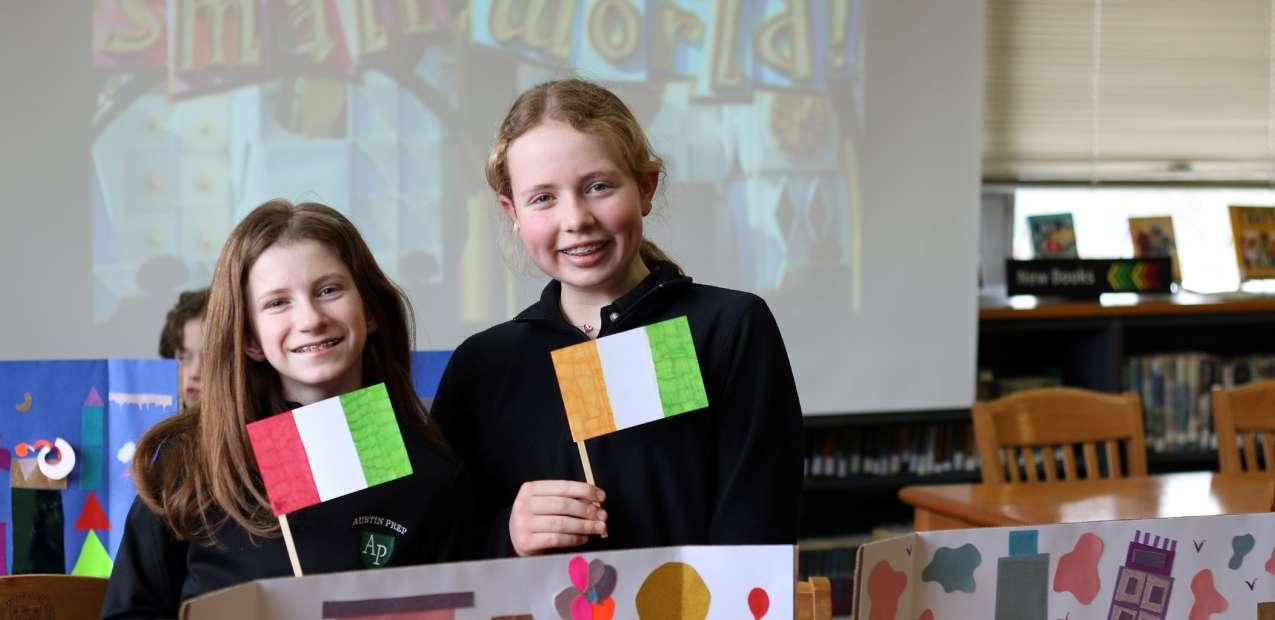
Students engage with cultures both ancient and modern, discovering how traditions inform contemporary creativity and how their own voice can contribute to a living cultural conversation. Whether decoding the roots of Latin vocabulary, practicing Mandarin tones, sketching in the studio, or pirouetting across a stage, sixth graders learn that creative expression is inseparable from curiosity, reflection, and service to the community. In doing so, they cultivate the Augustinian virtues of unity, truth, and love, understanding that art, language, and culture are not just subjects to study but ways to connect and participate meaningfully in the world.
World Language: Foundations of Latin I: Rome
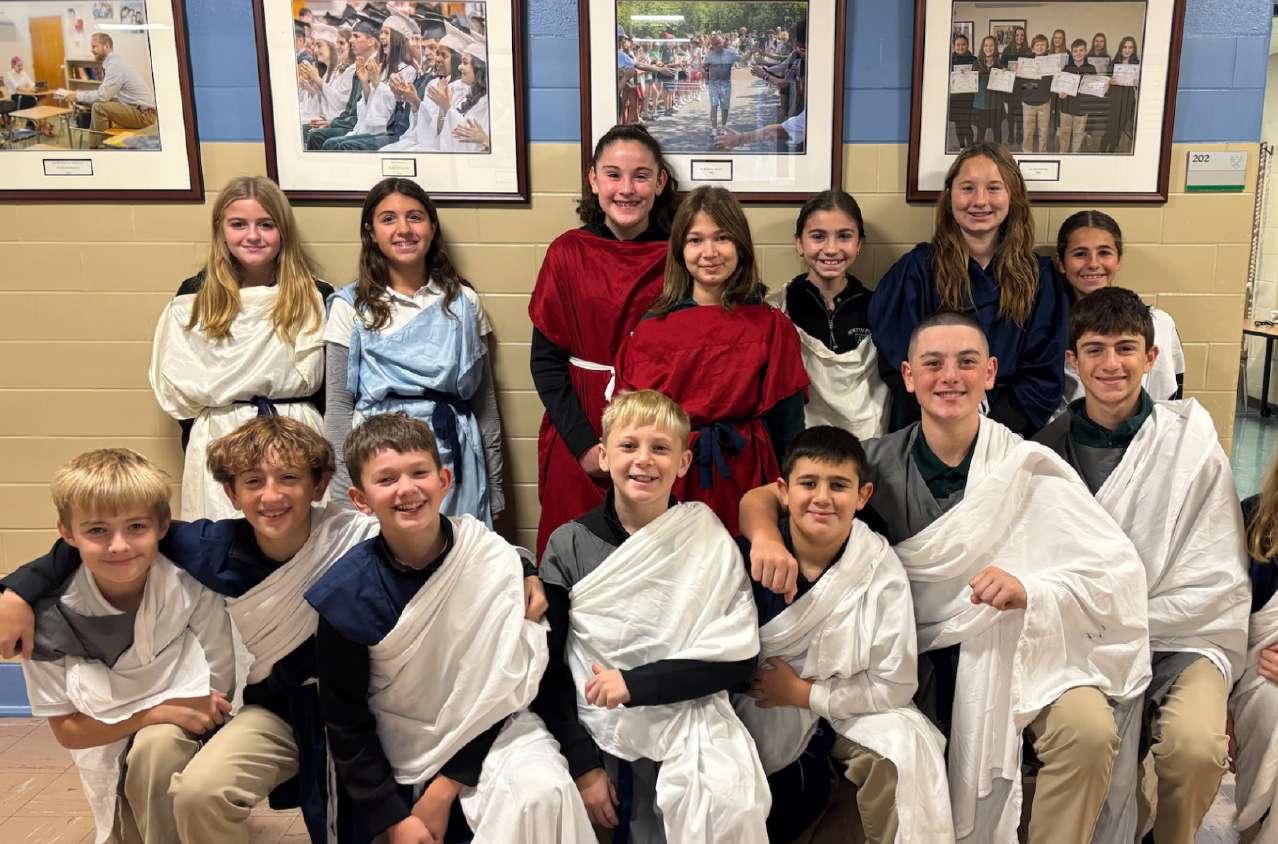
This introductory course invites students to step into the streets and homes of ancient Pompeii, exploring the Latin language alongside the daily life, stories, and culture of the Roman world. Students begin with the family and household, learning how Romans lived, worked, and celebrated, then expand outward to understand broader aspects of Roman society, mythology, and civic life. Through this lens, they make meaningful connections with History, English, and the Arts, seeing how language, culture, and storytelling intertwine.
Latin is taught as both a reading-based and living language, brought to life through storytelling, spoken Latin, role-play, and creative projects. Students engage in activities such as myth retellings, dialogues between Roman family members, and explorations of daily Roman life, discovering how grammar and vocabulary function in authentic contexts. This approach helps students see Latin not only as the root of many modern languages but also as a window into history, literature, and the values of Western civilization.
Assessment is designed to teach students how to study, prepare, and reflect on their learning. While formal, skill-based assessments contribute to evaluating comprehension, the primary focus is on active engagement, projects, and consistent practice, encouraging students to develop strong habits and confidence in using language. By the end of the course, students are able to read, speak, and think in Latin with purpose, while gaining a rich understanding of the lives, culture, and stories of the ancient Romans.
World Language: Foundations of Mandarin I
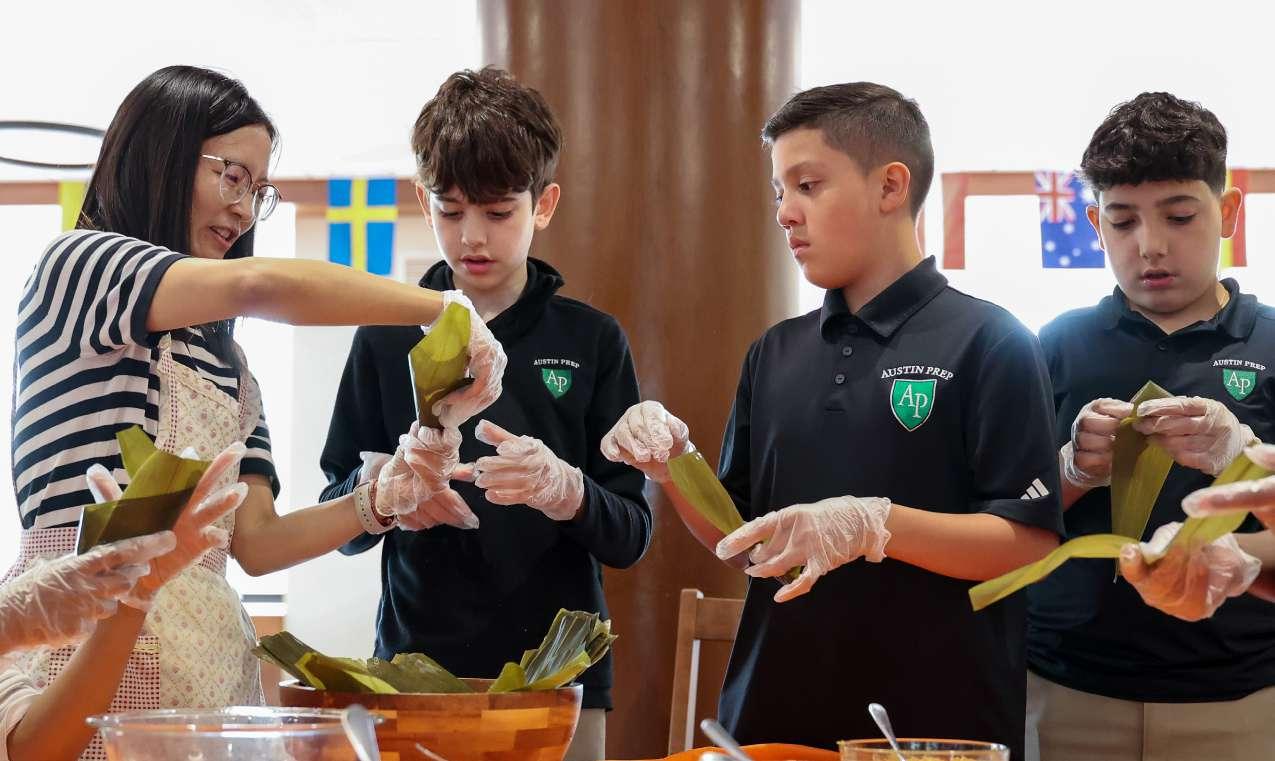
This course introduces students to modern Mandarin Chinese while immersing them in the rich culture of the Chinese-speaking world. The primary focus is on listening and speaking, with early proficiency in reading and writing Chinese characters developed through meaningful, interactive exercises to replicate authentic, real-world experiences.
Students learn the pinyin phonetic system, foundational grammar, and essential vocabulary through games, conversations, songs, movement, and technology-based practice, making language learning dynamic and engaging. Cultural exploration is at the heart of the course: students experience family traditions, festivals, cuisine, art, and music, comparing and connecting Chinese and Western perspectives. Through these activities, students see language as a living, expressive tool for understanding people, ideas, and communities across the globe.
Assessment is designed to help students learn how to study, prepare, and practice, rather than simply memorize. While assessments gauge growing skill and vocabulary acquisition, the main focus is on active participation, cultural projects, and consistent skill-building, fostering confidence in communication and cultural literacy. By the end of the course, students can engage in simple conversations, understand key cultural practices, and appreciate the diversity of global perspectives, developing both language skills and a deeper sense of global mindedness and curiosity.
Arts, Performance, and Innovation
Cougar Chorale
Semester 1 – Required for All Sixth Grade Students
Guided by the wisdom of Saint Augustine, “when you sing, you pray twice,” this course invites students to experience the power of music as both personal expression and communal celebration. Singing together, students learn that music builds connection, fosters collaboration, and strengthens the bonds of community.
Sixth Grade Choir is a foundational music course rooted in the Catholic tradition that fosters unity, confidence, and musicianship within the sixth-grade cohort. The course introduces students to healthy vocal technique through the framework of “vocal athletes,” emphasizing proper breath support, posture, alignment, and vocal care. Through regular vocal conditioning, students develop stamina and control to support strong, expressive singing. Alongside technical development, students build foundational musical knowledge, including rhythm, notation, and an introduction to musical vocabulary and form. These skills support musical literacy and enable students to engage more deeply and confidently with a wide range of repertoire.
The course presents music as both an expressive art and an academic discipline. Students explore repertoire that supports the school’s liturgical and communal life and regularly participate in events such as school Masses, the Christmas Tree Lighting, and Lessons and Carols. Additional performance opportunities allow students to share their talents within the wider school community and, when appropriate, beyond campus.
Sixth Grade Choir intentionally supports students’ transition into Middle School by extending the orientation process through discrete lessons focused on organization, study habits, and wellness, reinforcing skills that contribute to both academic and personal success. Building on this work, the course reinforces interdisciplinary learning through collaborative STREAM projects that encourage creative problem-solving and highlight how musical concepts intersect with other academic disciplines.
Through ensemble singing and shared performance experiences, students develop confidence, collaboration, and a sense of belonging. Students who demonstrate strong interest, commitment, and readiness may be invited to continue their musical studies in more advanced ensembles during the spring term.
All sixth-grade students are enrolled in this course during the fall term, ensuring a shared musical and communal experience at the start of students’ Austin Prep Journey. Students pair this course with another course in the second semester.

Dance: Movement, Production, and Performance
Semester 2 Elective
This energetic course invites students to explore dance as both a performing art and a form of storytelling, combining creativity, athleticism, and collaboration. Students learn fundamentals in ballet, jazz, tap, and contemporary dance, while applying these skills to original choreography for the Spring Performance, a key highlight of the course.
Students experience dance as a multi-faceted creative process, taking on roles as dancers, choreographers, and producers, gaining insight into both the artistic and technical aspects of performance. Movement is used not only to entertain, but to communicate ideas, tell stories, and connect with audiences, helping students understand how creativity and expression intersect.
Experiences with local dance artists and visits to live performances provide inspiration and context, demonstrating how movement can engage communities and convey meaning. The course emphasizes teamwork, confidence, and self-expression, encouraging all students to find their voice through movement, embrace challenge, and take pride in their contribution to a collaborative, high-energy artistic project.
One of the classic stories that we tell through dance at Austin Prep is the Christmas ballet of Tchaikovsky’s “The Nutcracker.” Sixth grade students are invited to participate in the production in the fall semester and rehearse for their role as part of the Middle School Dance Club. This work continues in the spring semester to prepare students for even greater participation in this storied Austin Prep tradition in seventh grade and beyond.
FUN-damentals of Drama
Semester 2 Elective
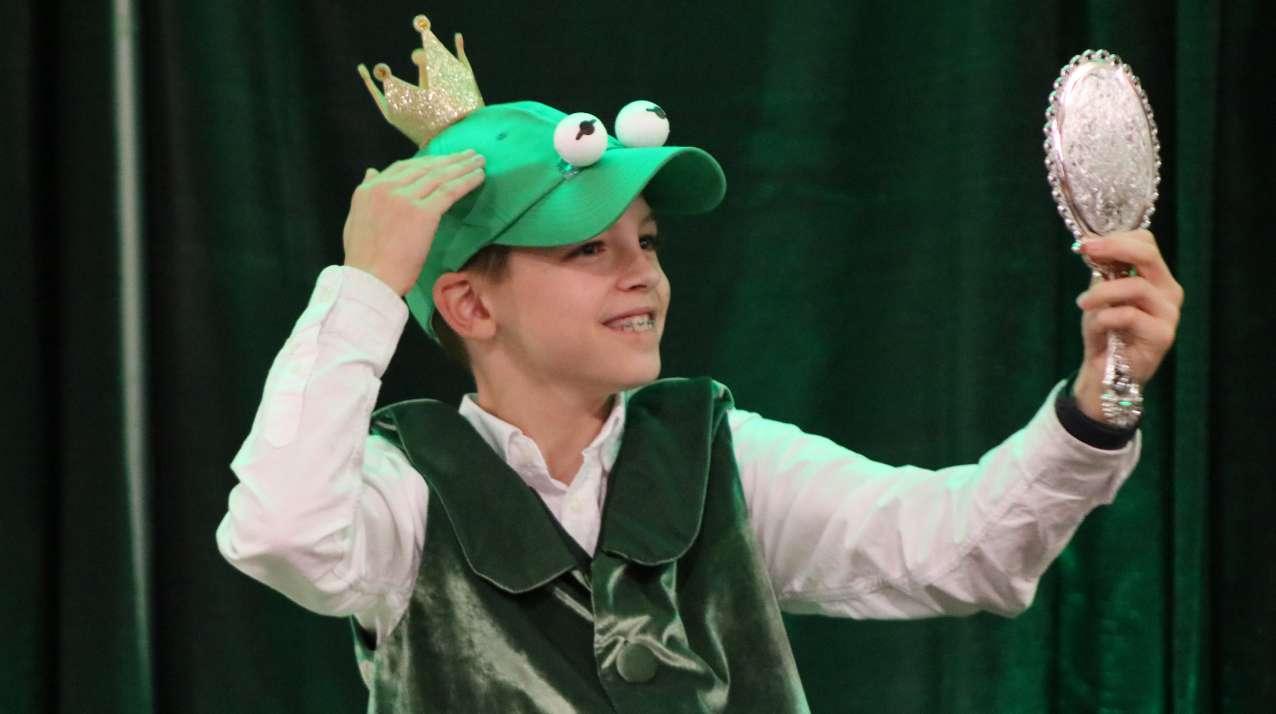
This introductory theatre course invites students to explore the art of performance and the power of storytelling in a supportive, collaborative environment. Students build confidence, creativity, and teamwork as they practice movement, vocal control, improvisation, and characterization, performing monologues, scenes, and short plays.
The course also immerses students in the backstage world of theatre, where they design props, costumes, and sets, learning how every element contributes to a successful production. Creativity, experimentation, and play are central: students are encouraged to take risks, explore ideas, and develop their own voice as performers and creators.
The semester culminates in an in-school production of an adapted play, where students apply their skills onstage and behind the scenes, collaborating to bring a story to life. Through this experience, they gain practical skills, artistic confidence, and an appreciation for the teamwork and discipline required in theatre, discovering firsthand the joy of shared storytelling and the impact of creative expression.
Middle School Studio Art
Semester 2 Elective
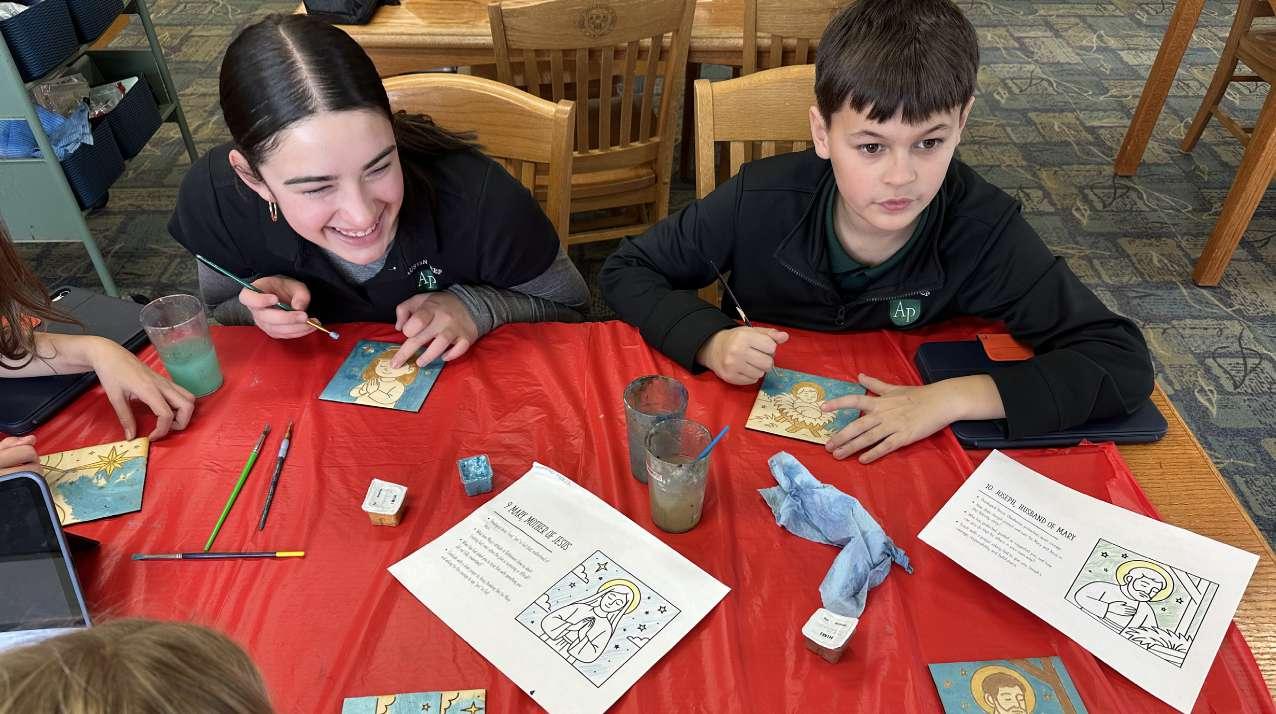
This foundational studio course invites students to explore what art is, how it communicates ideas, and how creativity connects us with others. Through hands-on projects in drawing, painting, and mixed media, students learn the Elements of Art and Principles of Design while discovering and developing their own creative voice.
Each student maintains a sketchbook journal to reflect, experiment, and practice, building both visual literacy and the ability to present ideas thoughtfully. Projects, often of a cross-curricular nature, emphasize imagination, craftsmanship, and risk-taking, encouraging students to explore new techniques, materials, and approaches while learning to analyze and discuss their own work and that of their peers.
Beyond periodic mini-exhibitions in class and the opportunity to have work displayed in different forums on campus, the semester culminates in an opportunity for students to showcase a curated selection of their projects, sharing their creative journey with the school community. Through this experience, students not only refine technical skills but also develop confidence, critical thinking, and the ability to communicate ideas visually, discovering the transformative power of art as both personal expression and a bridge to others.
LEGO Maker Missions
Semester 2 Elective
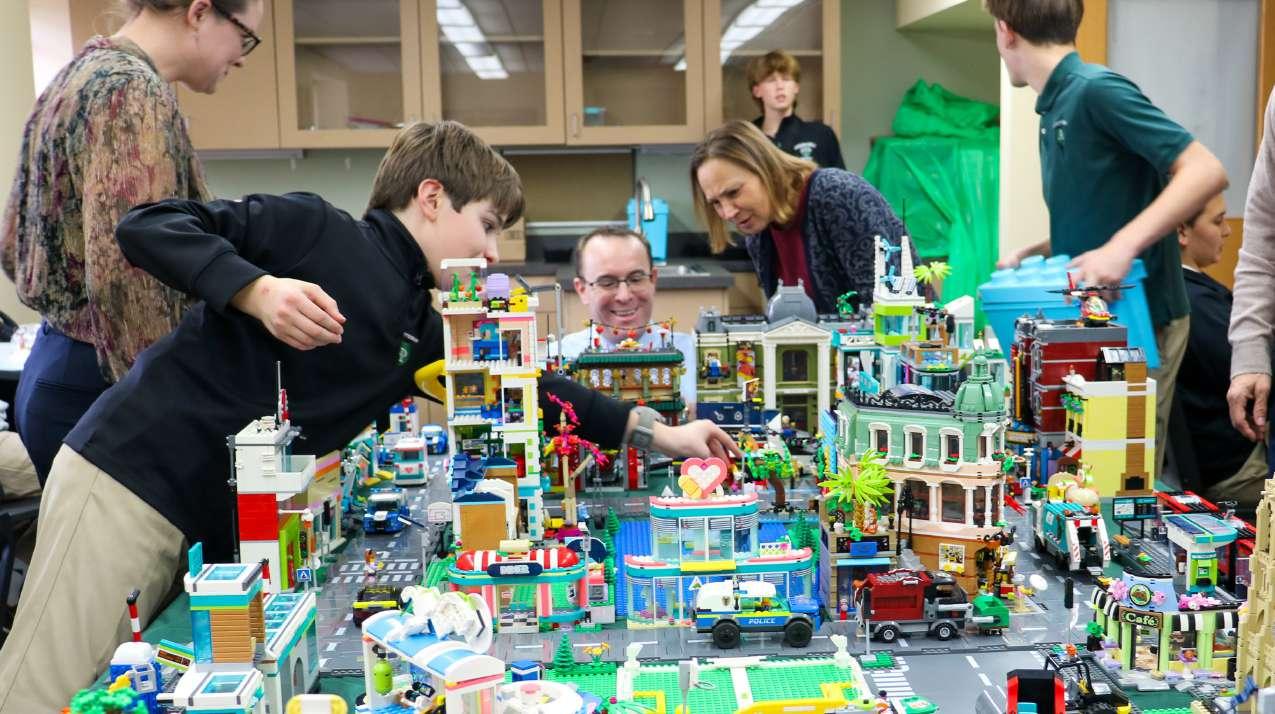
In this dynamic, hands-on course, students become inventors, makers, and problem-solvers, blending creativity, critical thinking, and technical skill. The curriculum includes LEGO engineering and digital design.
Students tackle projects that bring ideas to life through constructing models from LEGO kits and designing digital artifacts. Each activity emphasizes design thinking, iteration, and collaboration, helping students understand how technology and creativity intersect.
Over the course, students gain confidence as innovators, creative thinkers, and collaborators, prepared to approach complex problems with curiosity, ingenuity, and a hands-on mindset. Assessment focuses on skill development and reflective practice, encouraging students to plan, experiment, create, and present their ideas thoughtfully.
The Technical Arts course culminates in an Innovation Showcase/Maker Expo, a celebration of creativity, problem-solving, and technical skill. Students display their best projects, demonstrating how they have applied design thinking and collaboration throughout the semester. At the Expo, students present their work to peers, families, and faculty, explaining their creative decisions, problem-solving processes, and lessons learned.
This culminating experience emphasizes reflection, communication, and real-world application, allowing students to see how technology, creativity, and innovation intersect. The Expo celebrates both individual achievement and team collaboration, reinforcing the interpersonal skills, persistence, and ingenuity that students carry forward into Middle School and beyond.
Middle School
6th
Grade Athletics
Middle School Athletics is an incredibly unique and diverse program. Austin Prep provides opportunities and pathways for all students to participate at the level of competition appropriate to their ability, all of which complement our unwritten curriculum. With at least one no-cut sport each season, students have the opportunity to be physically active and part of a team throughout their Middle School years.
For student-athletes looking to compete at an age-appropriate level, experience the social benefits of being on a team, or simply try a new sport, Austin Prep offers a variety of Middle School–specific athletic programs.
Fall Sports
• Cheerleading
• Cross Country (Boys, Girls)
• Field Hockey
• Football
• Golf (Co-ed)
• Soccer (Boys, Girls)
• Volleyball (Girls)
Winter Sports
• Basketball (Boys, Girls)
• Dance Team
• Ice Hockey (Boys, Girls)
• Indoor Track & Field (Boys, Girls)
• Ski Team (Boys, Girls)
• Swimming (Boys, Girls)
Spring Sports
• Baseball
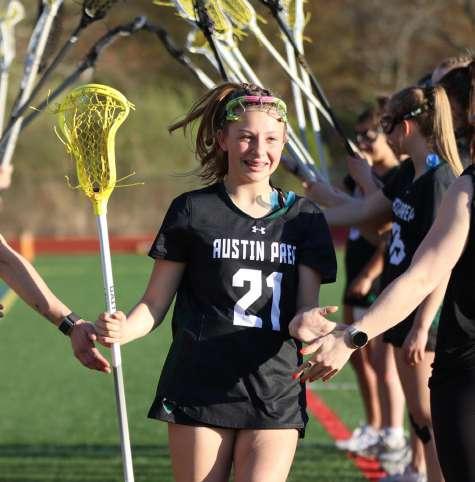
• Lacrosse (Boys, Girls)
• Outdoor Track & Field (Boys, Girls)
• Softball
• Tennis (Boys, Girls)
For student-athletes looking to compete at the highest level, Austin Prep is one of very few schools whose Middle School students are eligible to take part in Upper School athletics. With many Upper School athletic programs offering freshman, sub-varsity, and varsity levels, Middle School students are sure to find the opportunity to try out for a level that aligns with their competitive spirit and athletic ability.


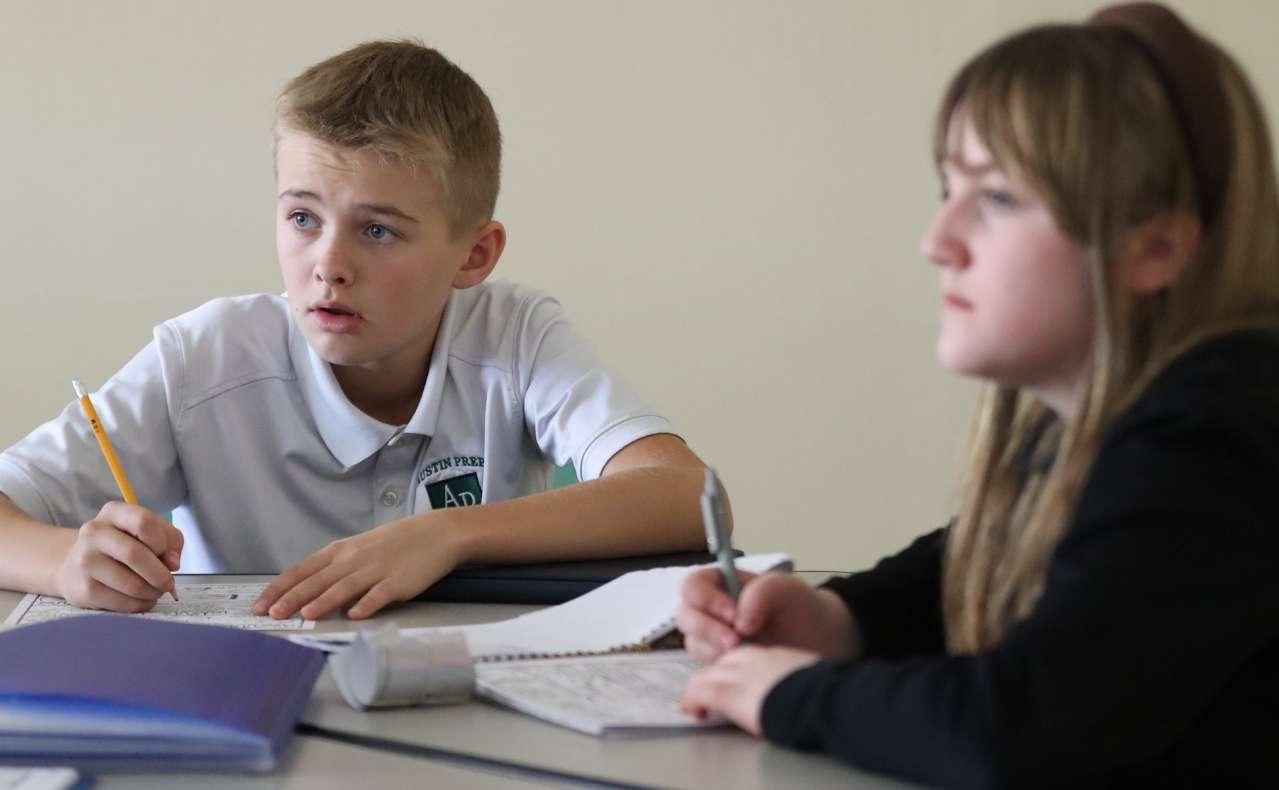
The Sixth Grade Academic Program inspires curiosity, builds character, and strengthens community, inviting students to engage deeply, grow confidently, and begin their journey.