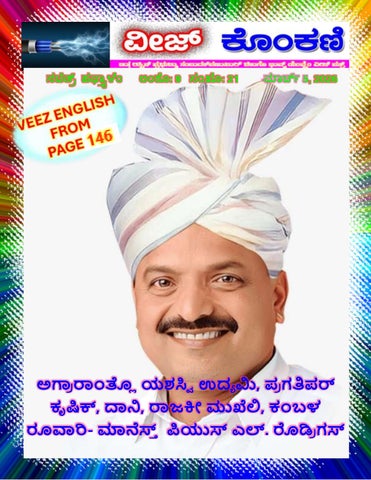
ವೀಜ್ ಕೊಂಕಣಿ 444, ವೀಜ್ ಕನ್ನಡ & Veez English Weeklies
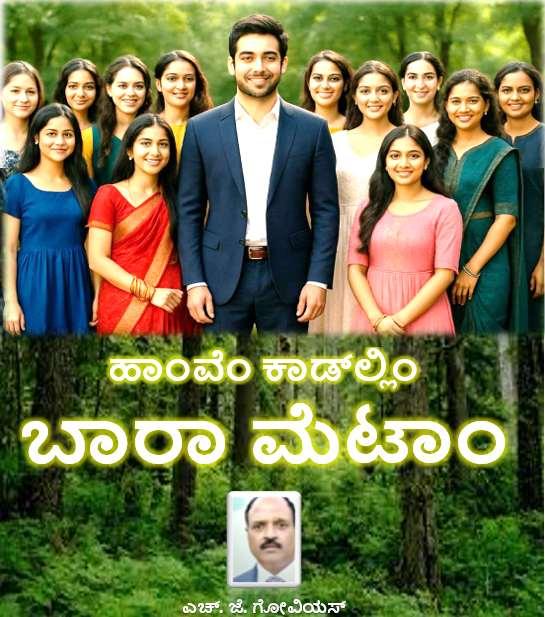
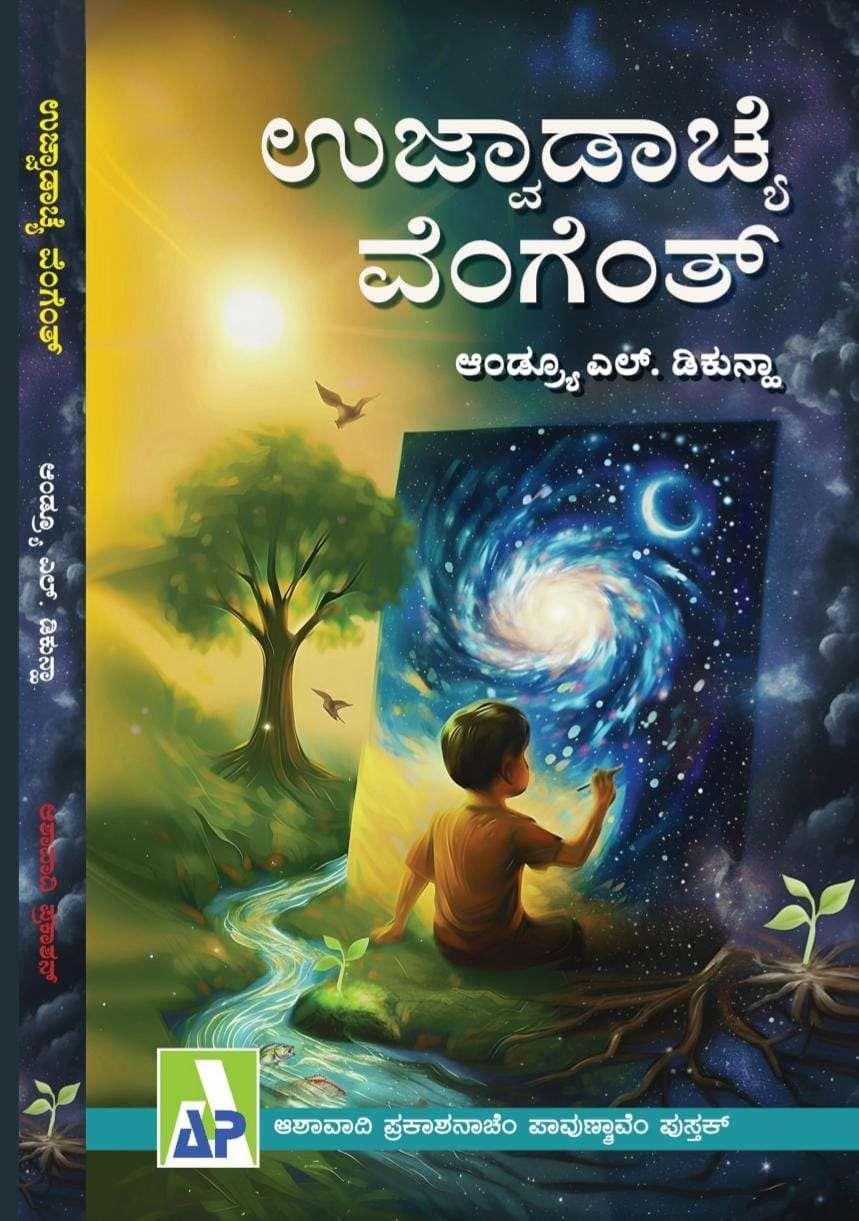
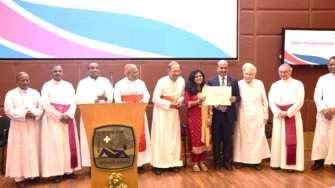
*It's about the people who were born on this soil, who made us proud through their achievements whether by being in India or abroad.Tributeto47people.Book is dedicated to the “Thakanathlo Zuzari” Bab Eric Ozario and
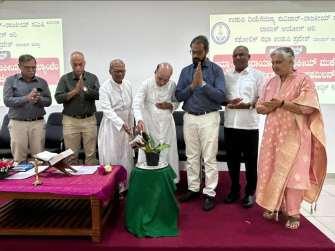
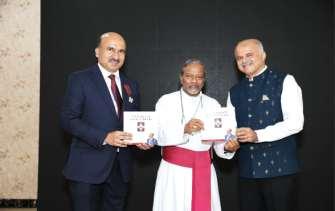
Book will be inaugurated by Bai Joyce Ozario in the presence of Louie Pinto, Roy Castelino, Ina Mascarenhas and Jochim Stany
MGNREGA.
MGNREGA
"’MGNREGA
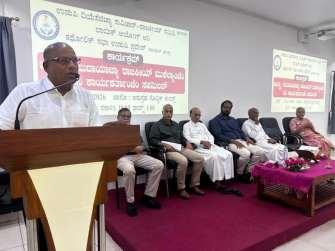
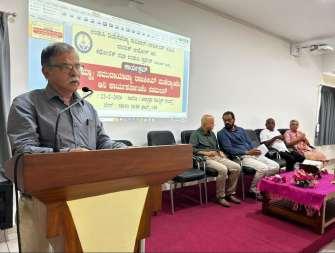
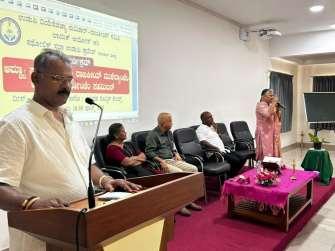
National Seminar on 'Konkani Stories'
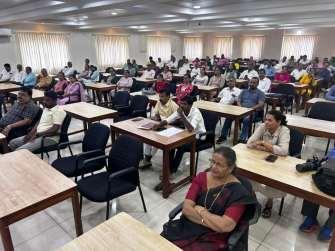
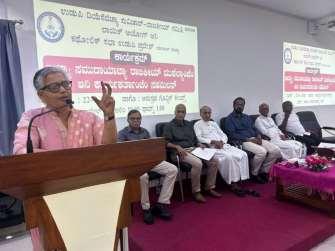
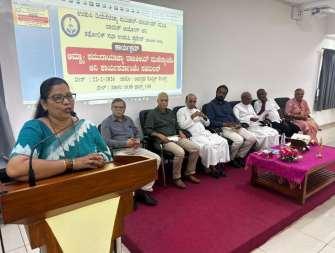
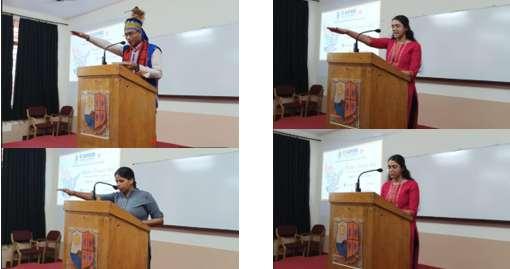
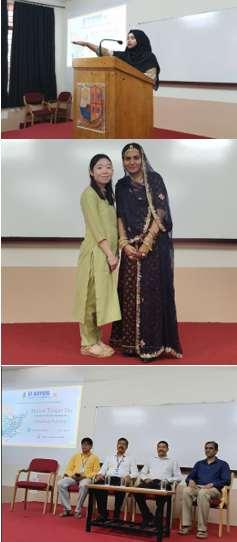
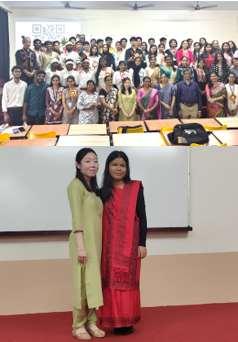
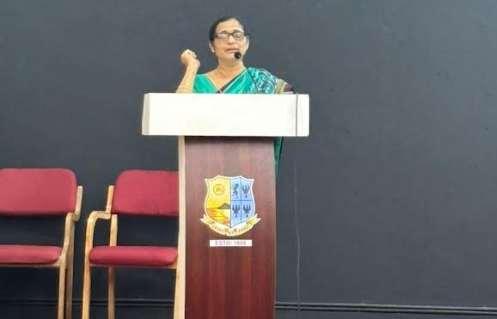
Ashawadi Prakashan incollaborationwith Fr. Agnel’s College, Pilar organised a National Level Seminar on Konkani Short Stories. Dr. Chandralekha D’Souza chairedthepaperpresentationsession. Vincy Quadros, Shailendra Mehta and Valley Quadros presentedpapersonKonkanishortstoriesintheRomi, NagariandKannadascriptsrespectively.Administrator Fr. Antony D’Silva, Fr. Frederick Rodrigues, Reshma Kaur Bamra, Valley Quadros and Rajashree Sail werepresenton thedais.Theprogrammewascomperedby Usha K Zaraunkar,andthevoteofthanks wasproposedby Queeva Fernandes. READ
National Seminar on 'Konkani Tiatr', Sod-Pormoll Journal
The Dalgado Konkani Akademi (DKA), in collaboration with St. Xavier's College, Mapusa, organised a National Seminar on “Konkani Tiatr” in Goa. DKA’s first literary journal in Romi script, Sod-Pormoll, was released by Valley Quadros. Paper presentations on three selected tiatrs written by Thomazine Cardoza were thehighlight of theseminar. The session on“Goa.. Going.. Gone..?” and "AmiSoglle Ek" was chaired by Dr. Cosma Fernandes, while Valley Quadros chaired the presentation on “Mhomvall Vik.” Five transliterated books were also released, and Thomazine Cardoza was felicitated by Fr. Antony Salema for his contribution to Konkani tiatr and society.
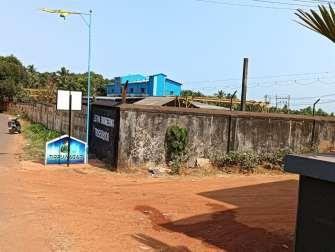
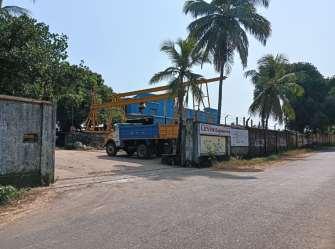
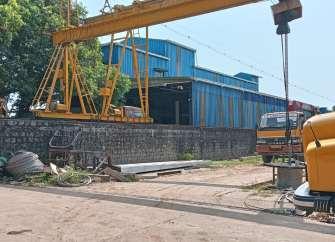
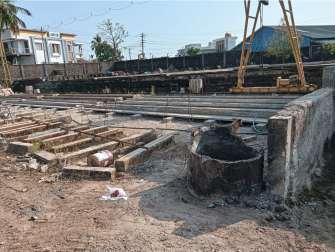
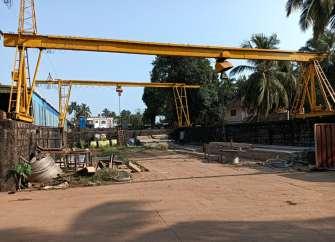
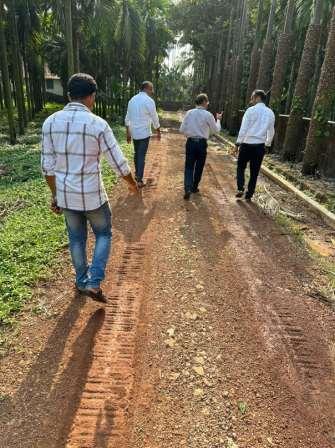
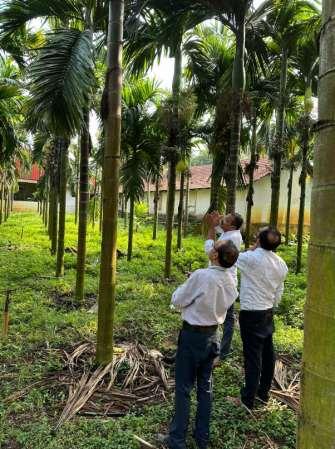
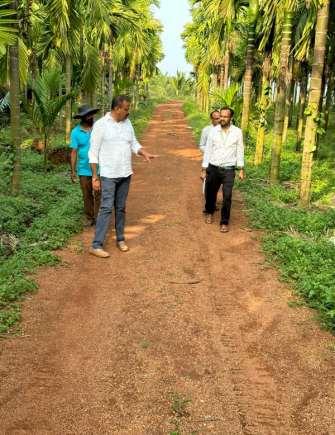
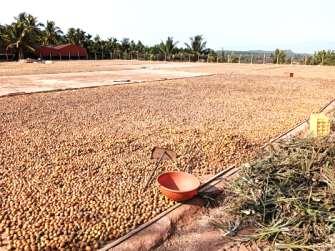
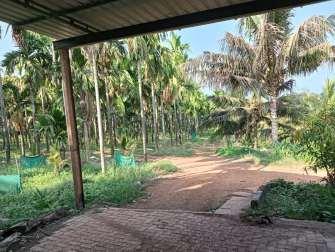
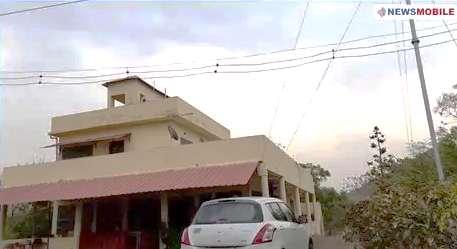
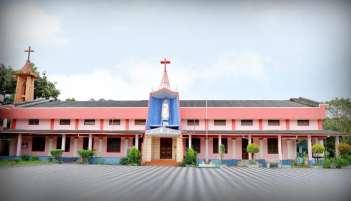
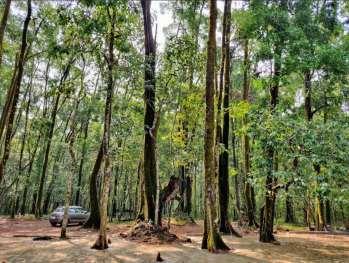
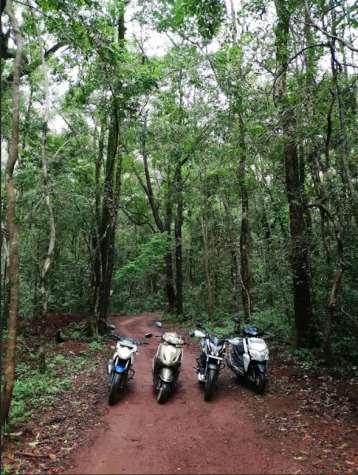
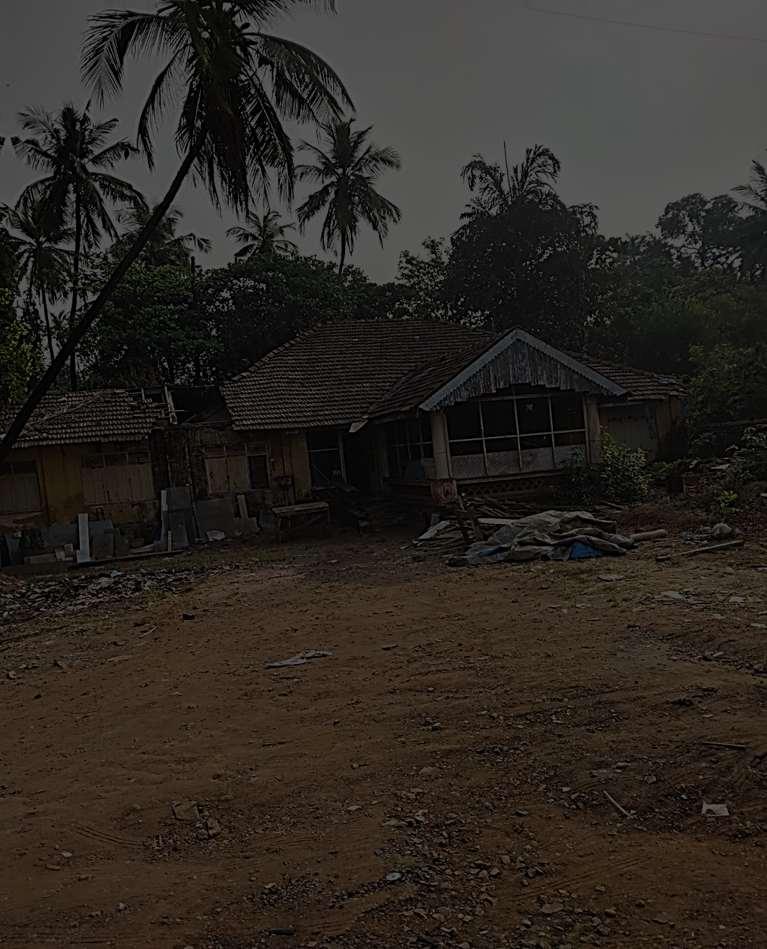
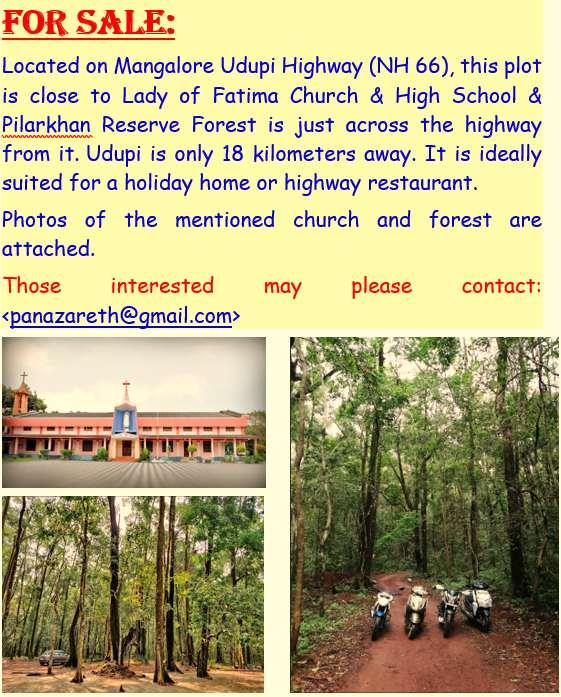
Located onMangaloreUdupiHighway(NH66),thisplot is close to Lady of Fatima Church & High School & Pilarkhan Reserve Forest is just across the highway from it. Udupi is only 18 kilometers away. It is ideally suitedfora holidayhomeorhighwayrestaurant.
Photos of the mentioned church and forest are attached.
Those interested may please contact: <panazareth@gmail.com>
25 Years 'Unfulfilled Mission' in Konkani
AsAshawadi Prakashan completes twenty-five years of its presence in Kuwait, my own association with Konkani literature reaches back to 1984. Time, however, has been as much about questioning as it has been about learning, leaving mewith thequiet realization that thislong journey remains, in many ways, unfinished. The editorial published in Ashawadi25 (the Poinnari decennial special issue) invites a deeper reflection on what we have gradually relinquished in our pursuit of the “new.” It isa discerning, rational, andreflective piece by Valley Quadros. Click here→ READ
Though society professes the equal status and dignity of menand women, reality haslong stood instark contradiction to thisideal.
Breaking the mould by Shailendra Mehta
Across history, women have been constrained and imposed upon by religion, social customs, family structures, and unspoken norms. In this powerful feminist poem, noted poet Bab Shailendra Mehta gives voice to these silenced truths, confronting the deep-rooted inequalities that persist beneath theveneer of equality.
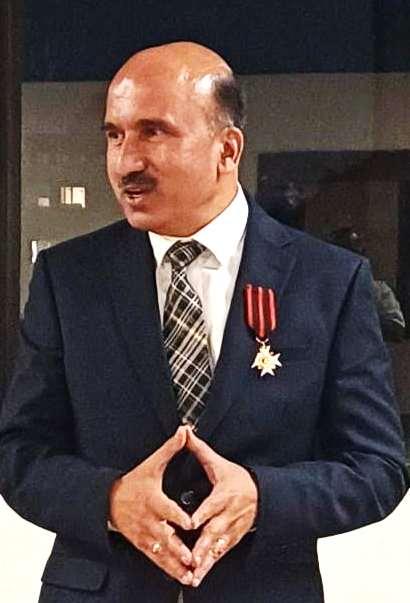
The exTraordinary journey of Chevalier nigel fernandes & aTC
By Dr Ronald Anil Fernandes
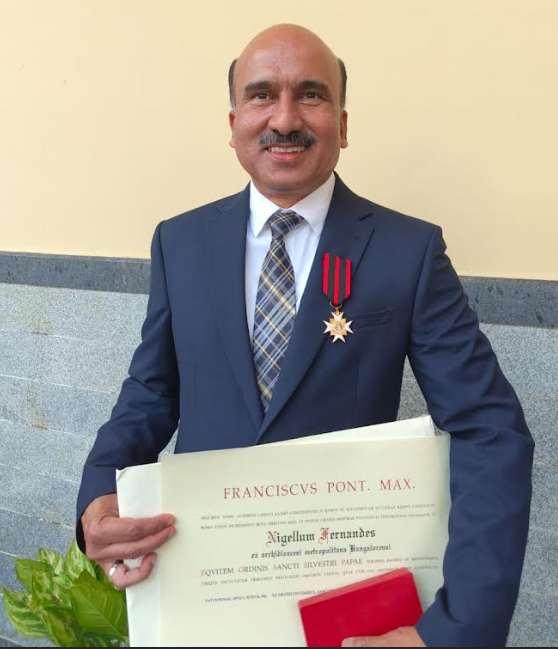
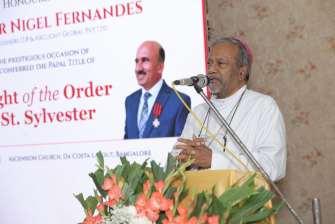
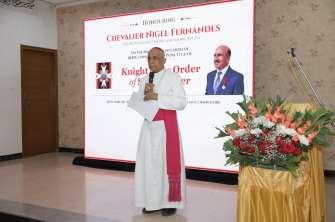
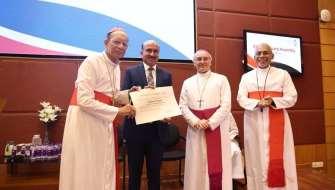
In the hallowed halls of the 37th PlenaryAssembly oftheConference of Catholic Bishops of India in Bangalore on February 3, 2026, a profound chapter unfolded for Nigel Fernandes, the visionary CEO of ATC Publishers LLP and Arclight Global Pvt Ltd. As Archbishop Leopoldo Girelli, the Apostolic Nuncio to India, bestowed upon him the esteemed Order of St.
Sylvester, a rare papal knighthood reserved for laypersons of exceptional merit, tears glistened in the eyes of this humble servant of faith.
For Nigel, whose life had been a quiet symphony of devotion, this was no mere accolade; it was a luminous affirmation of 32 years spent weaving the threads of
With son biblicalwisdom, liturgicalgrace, and spiritual enlightenment across Asia, touching souls even far beyond the shores of India. Surrounded by luminaries such as Cardinal Filipe Neri Ferrao, Cardinal Oswald Gracias, Archbishop Peter Machado, and renowned Biblical Scholar Rev Dr Lucien Legrand among others,
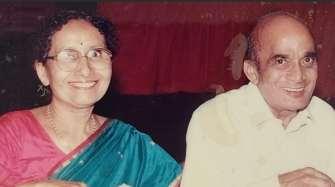
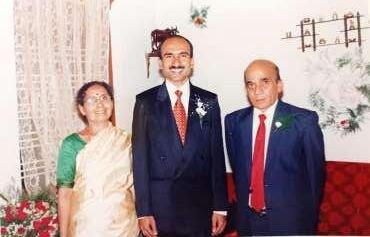
Withparents
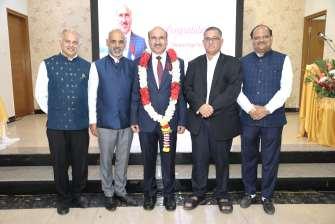
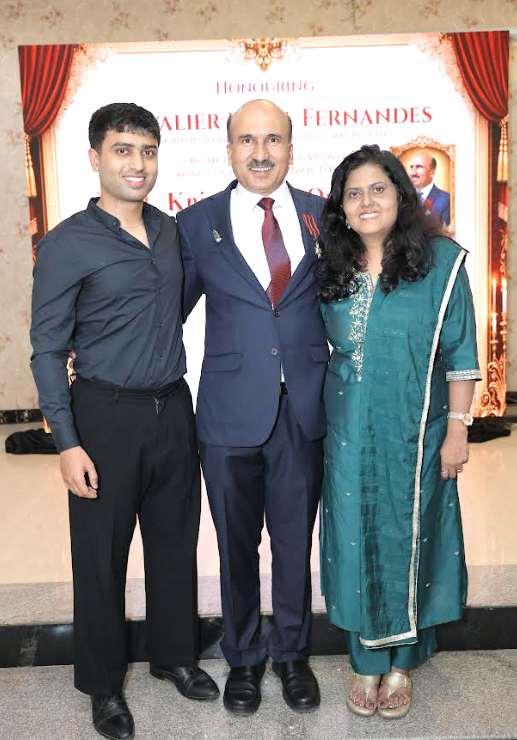
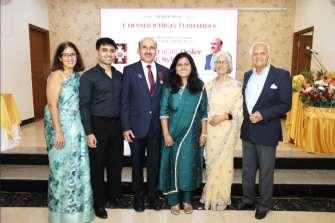
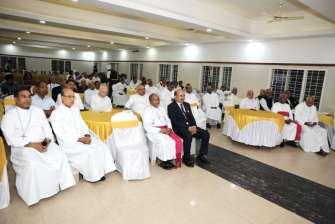
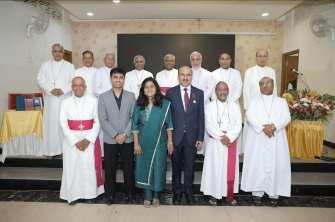
Chevalier Nigel Fernandes with organisers of the honouring programme (from left) Ronald
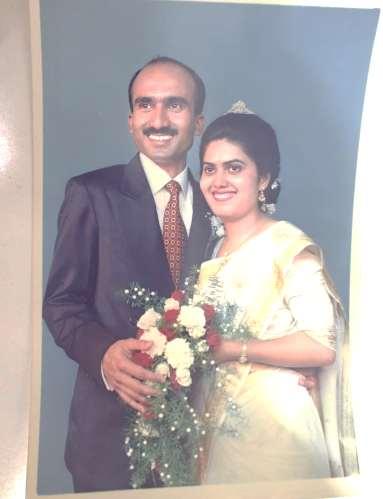
Withwife
Anil Fernandes, PeterAnil Rego,Maxim Ivan
and Jaijo Joseph
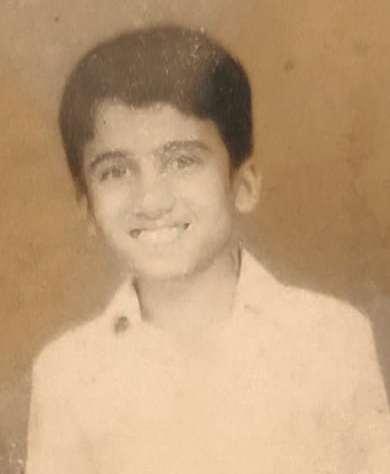
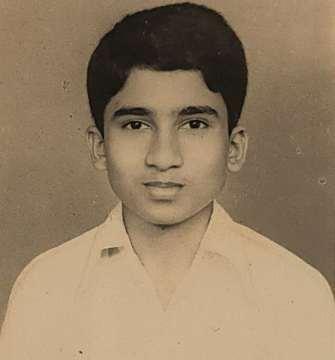
Boyhood
Asa youngster Nigel stood as a testament to unwavering commitment. Cardinal Gracias, instrumental inpetitioning
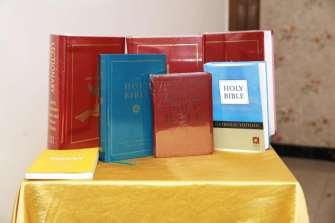
the Vatican for this honour, lauded Nigel’s masterful orchestration of landmark projects: the New Living Translation (Catholic Edition) and the English Standard Version (Catholic Edition) Bibles, alongside his pivotal contributions to the Lectionary, liturgical rite books, and officialCCBI publications.
These endeavours were not born of ambition, but of a profound dedication honed through decades behind manuscripts and author interactions, where every page turned was a prayer, every word printed a bridge to divine
D'Costa
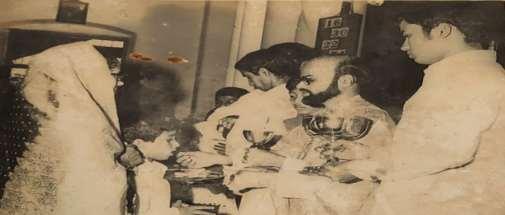
understanding. In that poignant moment, as the insignia rested upon him, Nigel felt the weight of surreal grace, which was a culmination of personal journeys that began in his childhood as an altarboy, violin andclarinetinhand, playing for Pope John Paul II’s visit to Mangalore in 1986, and Mother Teresa’sin1980.
Accepting with deep humility, he took it as a summons to greater service, inspiring all who witnessed it to reflect on their own paths of quiet perseverance. For Nigel, this knighthood illuminated not just a man’s commitment to Catholic publishing, but the transformative power of a life devoted to illuminating faithforothers.
Roots of Faith and Formation
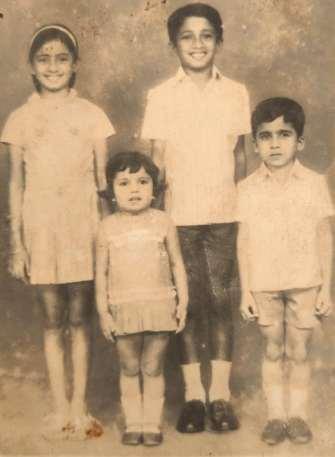
Born on April 11, 1967, to Joseph Fernandes of Kirem (Kinnigoli) and Ida Rodrigues of Kankanady (Mangalore), Nigel grew up as the
third of four children. His siblings Denzil, Sybil (youngest CA from Mangalore) and Irol have made a nameand impactin their respective fields.
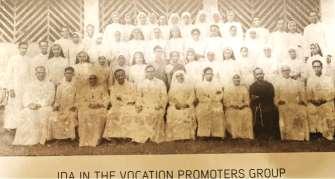
WhileJoseph Fernandes worked for about 28 years in Kuwait (now deceased), Nigel’s mother Ida Fernandes, who lives in Bendur, Mangalore, continues to be Nigel’s inspiration till date. During her youth, shewasvery activeinchurch activities besides being a lay vocation promoter in Mangalore diocese.
Quite interestingly, Nigel’s association with priests and nuns started at an early age - initially as an altar boy and later in choir and schoolband,basicallybecauseofhis mother.
In fact, Nigel started playing violin andclarinet atanearlyage andwas part of the band and choir when Pope John Paul II visited Bajpe (Mangalore) on February 6, 1986, during his apostolic pilgrimage to India and part of the school band when Mother Theresa visited Mangalore for the Centenary
celebrations of Fr Muller Hospital in 1990. Hehasalsobeenadevotee of
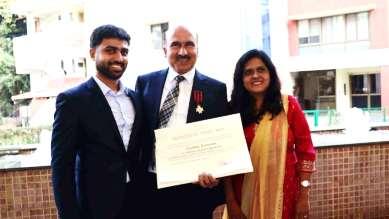
Nigel Fernandes with spouse Brendra FernandesandsonKevinJoshua. St Antonysince hisearly childhood.
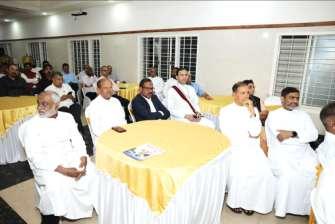
Priests honouring ChevalierNigel Fernandes. Academic Path and Early Career Nigel studied fromClass 1through
BCom at the renowned St Aloysius College inMangalore, graduating in
Jaijo Joseph proposed a vote of thanks at the honouring ceremony.
Gulbarga Bishop Rev Dr Robert Miranda offering a prayerbefore meals.
Renowned Biblical scholar Rev Dr Lucien Legrand honouring Nigel Fernandes. Rev Legrand was in both committees of Bible revision
1987 before pursuing his
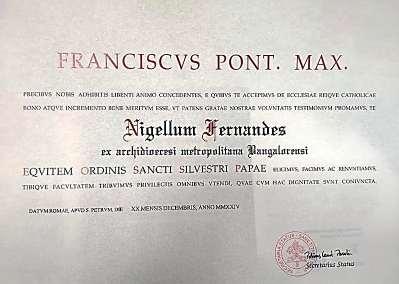
FrGabrielChristyreadingtheEnglishverionof Papalcertificate postgraduate studies at T A Pai Management Institute (TAPMI). After short stints as a Management Consultant in Hyderabad and later as amanager at ITC Classic Finance Ltd. for 3 years, Nigel made a seemingly riskydecision, leavingthe corporate world for a family-run publishing house.
On April 1, 1994, he joined ATC, founded in 1946 by his brother-inlaw’sfather, thelateFredrick Pais. In fact, there were days when Nigel . had wondered if it was the right decision tojoin ATC, especially after quitting the plum post he enjoyed atITC. “Manyalsosaid thatI did a
foolish thing by quitting ITC,” Nigel added that he always had faith in the Almighty and the Lord did not let him down working silently and committedly, promoting books at the ATC store and at various events in Bangalore and outside, strengthening the
Nigel Fernandes with KE (Kanara Entrepreneurs)members.
Nigel spent about 10 years on
publishing, importing books inabig way andstarted exporting books to Singapore, Malaysia, Philippines and Gulf region, thereby literally living up to the company’s nameAsianTrading Corporation…! “There was a good demand for books by Fulton J Sheenand Mother Theresa, besides other theology, philosophy and liturgical books,” he recalls. Many Catholics, especially priests and sisters, vouch for the impact of these books on their vocation or perseverance init.
Turning Point: Letter from Pope Benedict XVI
Though Nigel had published hundreds of religious books, hehad NigelFernandescutsthecake witharchbishops to celebrate the honour. longadmired IgnatiusPress,theSan
Nigel Fernandes replying to the felicitation. Francisco-based publishing house founded by Jesuit priest Fr Joseph Fessio, a student of Fr Joseph Ratzinger (later Pope Benedict XVI).
Despite repeated attempts, ATC received no response until a
ArchbishopMostRevPeter Machadorelelasing the souvenir in honour of Chevalier Nigel Fernandes,edited by Ronald Anil Fernandes.
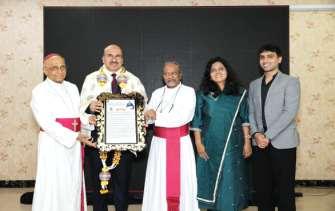
Archbishop Rev Dr Peter Machado and Archbishop Emeritus Dr Bernard Moras presenting a citation to honour the Papal KnighthoodoftheOrder of StSylvester, as Mrs Brenda Ferandes and the couple's son Kevin looks on
providential meeting in2009 with a French priest who connected Nigel
Navajyothi Editor Ivan D'Costa welcoming the gathering
Bishops and priestamong the audience to Colombo Archbishop Albert Malcolm Ranjith. Incidentally, he wasthe former Secretary toPope
Archbishop Most Rev Dr Peter
BrilliantPrinters CEO Peter Anil Rego reading Chief Minister Sidaaramaiah'a message congratulating Nigel Fernandes. personal letter from Pope Benedict Benedict XVI. What followed was astonishing: Nigel received a XVI in 2010 addressed to the Director of IgnatiusPress granting
Machado addressing the gathering.
Archbishop Emeritus Most Rev Dr Bernard Moras addressing the gathering.
Chevalier Nigel Fernandes, Spouse Brenda Fernandesand son Kevin Joshua posing for a photograph with ArchbishopEmeritusMostRev Bernard Moras and Archbishop Most Rev Dr Peter Machado and Auxiliary Bishop Arokiaraj Satis Kumar and other bishops of Karnataka during the honouring ceremony of Nigel Fernandes in Ascension church
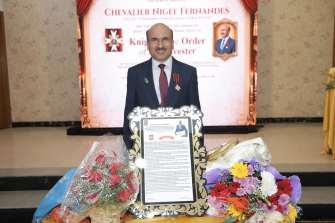
Chevalier Nigel Fernandes with the citation presented to himduring the honouring.
ATCrights to publish his works in
Copy of Papal certificate
Birth of NLT BibleProject
Asia, including “The Spirit of the Liturgy,” one of themost influential works on Catholicliturgy, written by Pope himself. (Nigel has displayed thePope’s letter inhisoffice).
ATC’s another breakthrough came withNigel’sbolddecision in2012to initiate the Catholic edition of the NewLiving Translation Bible. TheNLTproject involved ateamof 12 Catholic Bible scholars headed by globally renowned Scripture Scholar RevDr. Lucien Legrand, Rev Dr Assisi Saldanha and took over three years of meticulous work. The translation received its Imprimatur on April 29, 2015, from Cardinal Oswald Gracias, then Archbishop of Bombay onbehalf of theCCBI. Nigel recalls the vision behind the project: “The goal of any Bible
translationistoconveythemeaning of theancientHebrew, Aramaicand Greek textsasaccuratelyaspossible to contemporary readers inmodern language.”Thepurpose wastohave a text that would communicate as clearly and powerfully to today’s Catholicreaders astheoriginal texts did to readers and listeners in the ancient biblical world. Soon afterwards, the NLT became widely acclaimed for personal reading and group study.
Nigel acknowledges the significant support and encouragement provided by Most Rev Dr Bernard Moras, then Archbishop of Bangalore, in this achievement as well ashis other successes. He also recollects the support of late Archbishop Ignatius Pinto and the present Archbishop of Bangalore, Most Rev Dr Peter Machado in enabling ATC reach where it is today.
From NLTto ESV and Lectionary
Riding on thesuccessof theNLT, at the behest of CCBI, Nigel initiated the Catholic edition of the English Standard Version, a more formal,
word-for-word translation. This project, completed with a team of eight scholars, led to another monumental undertaking: the complete revision of the Church’s Lectionary in India. (Part I - for Sundays and Solemnities; Part IIfor weekdays; and Part III - for Saints, common rituals and votive masses).
The Lectionary produced in three volumes—required years of collaboration with bishops, scholars and global publishers. Released in 2020, it was a remarkable contribution by the Church in India in the Liturgical field,” as Nigel proudly notes. With heartfelt gratitude he acknowledges the great encouragement and support extended by Rev Dr Stephen Alathara, Deputy Secretary General of theCCBI.
YOUCAT & DOCAT
This opened the door for Nigel to publish YOUCAT and DOCAT, two landmark catechetical resources originally published inGerman. ATC translated and distributed them across Asia in multiple languages including Hindi, Kannada,
Malayalam, Telugu, Marathi and Konkani.
The YOUCAT (Youth Catechism), which is designed and written in a languagesuitableforyoungpeople, deals with the entire Catholic faith asitwaspresented intheCatechism of the Catholic church. The work is structured in a question-andanswer format, with pictures and commentary to understand in a better and simple way. DOCAT (Do the catechism of social teaching) isthe nextversion of YOU CAT made for youth and young adults tounderstand Catholic social teaching. It focuses on topics like justice,humanrights, thepoor,work and workers, environment, peace andsociety.
While YOUCAT deals with what the church teaches (faith), the DOCAT deals with how to live the church’s teachings insociety (action
Global Recognition
ATC’s reputation soared when Cambridge University Press and the Augustine Bible (US) published Bibles prepared to ATC a rare acknowledgment by international publishers for anIndianentity.
In 2024, the Catholic Bishops’ ConferencesofIndiaandofEngland
&Walesjointly adopted theESV-CE for liturgical use—an unprecedented achievement. Today the NLT and ESV Bibles are the translations that are widely used duringEcumenicalprogrammes and celebrations.
Quite interestingly, a 2022 book, “BibleTranslationandtheMakingof the ESV Catholic Edition” by Dr. Mark Giszczak of the Augustine Institute, is based entirely on ATC’s work, underscoring the global importance of Nigel’s efforts.
Future Mission: Africa, Digital Expansion
Nigel now plans to support African churches through liturgical publications and is exploring the creation of a comprehensive Catholic Study Bible with deep notes andreferences. He is also planning to enhance the Catholic Connect App, another of his initiatives of which he is a CoFounder —its job portal, spiritual resources and matrimonial services—to better serve the community.
Beyond
Publishing
Despite his demanding 10-hour workdays, Nigel has served the Church through parish and archdiocesan councils, the Catholic Council of Karnataka, the Catholic Council of India and several CCBI commissions. He was also part of the National Council for Synodality, the Jubilee 2025 committees and completed three terms on the Marketing Advisory Board of the Bible Society of India. His wife, Brenda Fernandes, manages ATC’s retail stores, while their sons BrianJohn (28) andKevin Joshua (25) are building successful professional careers inGoogle and
Dentsurespectively.
A Scholar’s Tribute UK biblical and liturgical scholar Peter Purdue, who has worked closelywithNigelforthelastcouple of years, summed up hisimpression succinctly:“Heisfairlystrictonwhat should be done.”
Perhaps that discipline—and an unwavering sense of mission defines Nigel’s remarkable 32-year journey at ATC, culminating in one of theChurch’s highest honours. And at 58, he may well be the youngest recipient of the Order of St.Sylvester inIndia’srecenthistory.
9 Incidents: Quite interesting to read:
WhytheNewLiving Translation and why aCatholicedition of theBible?
Formanydecades, CatholicsinIndia quietly relied on popular Bibles that were Protestant translations of the Bible - sometimes without even realising it. What appeared on the shelves as a standard “Holy Bible” often contained subtle omissions, Protestant-aligned biases in translation or footnotes and
theological emphases inconsistent with the Catholic tradition. Incidentally notmanyknow thatthe popular Good News Bible (GNBToday’s English Version) has not been reviewed or approved by Catholic Scholars.
For example, the Arc of the Covenant isawell-known factinthe scriptures… but theGNB mentioned thesameas“Covenantbox”, “Fullof grace” wassoftened inLuke 1:28
GNB: “The Lord is with you and has greatly blessed you.”
Whereas Catholic tradition gives it as: “Hail, full of grace.” Deuterocanonical books were placedinaseparatesection andnot in the Catholic order as prescribed by the Catechism of the Catholic church. Also, Footnotes did not emphasize Catholic theological usage. Footnotes and study aids - More than the translation itself, study notes in some GNB editions reflected mainstream Protestant scholarship with less emphasis on Mariantypology Andlesssacramentalinterpretation.
These are only a few examples and listis long, saysNigel.
Some in GNB VsNLTCE include:
John 4:24 - While GNB (Good News Bible) says: “God is Spirit and only bythepower ofHisspiritcanpeople worship Him as he really is.” The revised version in NLTCE (New Living Translation - Catholic Edition): “For God is Spirit, so those who worship him must worship in spirit and truth.”
Phil 2:6
GNB: “He always had the nature of God, but He did not think that by forceHeshouldtrytobecomeequal with God.”
NLTCE:“ThoughhewasGod, Hedid not think of equality with God as something to clingto.”
Col 2:9
GNB: “For the full content of divine nature lives in Christ, in His humanity.”
NLTCE: “For in Christ lives all the fullnessof God inhumanbody.” *************************************
Divine Providence of meeting Peter Purdue
Some meetings feelaccidental,until you look back and see the unmistakable hand of providence behind them. Though Nigel had agreed to CCBI to take up the project on Lectionary, he was worried about theexpertise needed for this project for the successful completion of the project. One fine dayhisfriend, PeterAnilRegocalled him (Nigel) to inform that he met a scholar well versed in Liturgy and Scripture and suggested that Nigel meet theperson.
Reluctantly, Nigel decided to meet the person ina hotel, where he was staying, and guess what? Nigel had hit ajackpot. That person wasnone other than Peter Purdue, who was involved in the firstLectionary work afterthe2nd VaticanCouncilin1965. With the help from him and other scholars, the three parts of the Lectionary (Part I - for Sundays and Solemnities; Part II - for weekdays; and Part III - for Saints, common rituals and votive masses) were completed successfully.
To put it in Nigel’s words: “Meeting PeterPurdue wasnotacoincidence, but divine providence.”
The Lectionary was followed by “Book of Gospels” and a series of other Liturgical books (which are presently used in the churches across India).
ATC turns 80: A legacy of faith, mission
Very few publishing houses survive eight decades and even fewer remain faithful to their original purpose. ATC (Asian Trading Corporation), founded in 1946 in Bombay, accomplished both. ATC Publishers has been a leader in publishing, exporting, importing and distribution of Bibles and Catholic literature inIndiaandAsia.
The operations expanded to Bangalore in 1968, with the first outlet onBrigade Road, becoming a key Catholic resource centre for seminaries, monasteries, religious institutions, churchesandlaity.
ATChassofarpublished over 3,000 titles covering topics such as scripture, theology, philosophy, spirituality, homiletics, counselling and psychology. In fact, ATC has a good rapport with all the major Catholic publishers worldwide and has a wide collection of books imported from them.
ATC published four major Bible translations: Revised Standard Version - Catholic Edition (RSV-CE); RSV Second Catholic Edition; New Living Translation - Catholic Edition (NLT-CE), and English Standard Version - Catholic Edition (ESV-CE).
ATC has published works by prominent Catholic leaders like Pope Francis, St Mother Theresa, Fulton Sheen, Henri Nouwen and the autobiographical interviews of His Eminence Oswald Cardinal Gracias, offeringinsightsinto hislife andlegacy.
This apart, ATC has made a great impact in the Catholic church in India and Asia through the publication of YOUCAT series.
ATC is also the publisher of the Conference of Catholic Bishops of India (CCBI) for all liturgical books, encyclicals and books published from theVatican.
ATC has also been instrumental in translating the Vatican Council 35 volume notebooks titled “Reflections on Vatican II for the 2025 HolyYear – andthe 8volumes on Prayer” which were originally published in Italianby theDicastery for Evangelisation to English, which is now available for all Englishspeaking countries.
Meanwhile, the value education series and textbooks for the CBSE, ICSE and State Board syllabus backed by the CCBI are done under thebannerofArclightGlobalPrivate Limited.
Connecting Catholics through App
Catholic Connect is adream project co-founded by Nigel Fernandes backed by CCBI, which is an initiative to network Catholics
across India. The app serves as a comprehensive platform providing access to spiritual resources like daily readings and reflections, saint of the day, necessary prayers and liturgical calendar etc. It is the only source giving news of the Catholic world – International, National and localin oneplace.
Themainaimof CatholicConnect is to connect all Catholic educational institutions, gather support for churches in rural areas, who lack support and to be a platform for Catholics, especially when unjustly people are persecuted and project the challenges faced to a wider audience to mobilise support and wider reach.
Giving details about the App, Nigel said that so far, there have been about 70,000 downloads of theapp and there are about 7,000 to 8,000 daily app users with daily visitors of approximately 40,000 tothewebsite Catholicconnect.in which was launched 8 months back. “Catholic
Connect was the first app to break the news about the attacks on priests and nuns in Jabalpur and Odisha, whichsubsequently ledtoa walkout by the Opposition in Parliament and the positive outcome of their release.”
TheDicastery forCommunication in the Vatican gave Catholic Connect an opportunity to present the working to their plenary assembly and this generated a lot of interest andenquiries worldwide.
The Spp also has about 4,000 profiles initsmatrimonial section.
Shaping young minds through Value Education
OneofthenewinitiativesofArclight ispublishing ValueEducationbooks supported by CCBI.So far,atotal of 900 schools have been covered. There are 4 volumes for different agegroups.
1. Ourbeautiful world -1st to 4th std
2. Weareafamily- 5th to8th std
3. Values & life skills - 9th and 10th std
4. Successful living - 11th and 12th std.
If abook canplantone good value
in a child’s heart, it has already served God. And through these books, thousands of young minds continue to beshaped eachyear.
A Fire that Firmed ourFaith…
Whenamajor firebroke outon15th - 16th of November 2012 due to short circuit at the Eucharistic Congress building on Convent Street in Colaba in Bombay, which housed the office of the Catholic weekly ‘TheExaminer’,everything in the magazine officewasreduced to ashes. The inferno was so intense that even metallic objects were warped. But when the smoke cleared, something astonishing remained: A copy of the Gospel of Johnuntouched, unburnt and immaculate-excepttherimandthe rib of the book darkened by soot. The coloured cover picture too remained inexplicably unsullied depicting the image of a majestic Jesus, with John resting his head close tothe heartof Jesus.
Itwasnothing butamiracle andthe most interesting aspect of the incident is that the book was published by ATC…! (The copy has been kept in a glass cover in the office in Bombay with candles lit daily). Nigel repeats the words of the Editor of Examiner which have struck achord with hisown life that this was a quiet but strong assurancethatourLordistherewith useveninthetoughest ofour trials.
PapalKnighthood of aPublisher Awards are common, but honours are rare. But a papal knighthoodone of the highest recognitions in theCatholic churchforlay Catholics -isaleague of itsown. Itisanorder of Knighthood directly conferred by the Holy Father and is awarded to lay men and women who have distinguished themselves in service to the Church particularly in professional life and apostolic work.
The Order is named after Pope Sylvester I,whowasPopeduring the time of Emperor Constantine in the
4th century a turning point in Christian history when the Church moved from persecution to public witness.
The insignia of the Order of St Sylvester
The Badge (Cross) is a white enameled Maltese cross (eightpointed cross). At the centre is a medallion bearing the image of Pope Sylvester I. Around the image is the inscription: “S. Silvester P.M.” (Sanctus Silvester Pontifex Maximus). Between the arms of the cross are gold rays, symbolising divine light. The cross is edged in gold. The ribbon is distinctive and elegant with vertical stripes of Red andBlack.Theaward alsoincludesa Certificate signed by the Vatican Secretary of StateandaLapelPinof theOrder.
with personal prayer, followed by Bible reading andagroup prayer.
Besides the morning prayers, Nigel said that throughout the day he keeps talking to God whenever he finds time. “Every moment I talk to God and He is with me,” Nigel said and added thatbut for God and his deep trust in providence, he would havegiven up thework long ago.
A typical day of Nigel Despitethetitlesandachievements, Nigel’sdailyliferemainssurprisingly simple. His day begins before dawn
After the initial struggle and especially after he printed the Holy Bible, things changed for better. “Thereisarolethatthelaitycanplay inthe church, and recallsfondly the great love, support and encouragement he has received from Church hierarchy has been a keyfactorinachievinghisdreams. It took along timefor theIsraelitesto reachthePromised Land,”hesmiles and reminisces the challenging times hehashadto go through. To a query on any message to youth, he said that he cannot give any message to youth, but perseverance and commitment will be rewarded by God. “Trust in Him andHe willlead you.”
Bishops rehab Tyndale, praise Nigel
WilliamTyndale (1494-1536) wasan English scholar, priest and the first person to translate the Bible into English directly from the original Hebrew and Greek texts. His work becamethefoundationfornearlyall later EnglishBible translations.
However, Tyndale was betrayed by fellow clergy and accused of heresy undertheConstitutions ofOxfordof 1408, which forbade the translation of any part of scripture into English by any man on his own authority, under pain of punishment as a heretic.
After enduring horrendous conditions in prison for 16 months, Tyndalewasformallycondemned as a heretic and degraded from priesthood by scraping his hands with a piece of glass and stripping him of his chasuble and stole. He was then strangled and burned at thestake on October 6, 1536.
In an article in “The Stream,” authored by Jules Gomes, a theologian and former Anglican priest, he wrote: “Tyndale would greatly rejoice to know that the
Bibletranslation forwhichhedied is now virtually mainstream in anglophone Catholic circles, thanks to the visionary Indian Catholic publisher Nigel Fernandes and his publishing house ATC.”
“Fernandes’ efforts have resulted in the Catholic bishops of India, England and Wales publishing the lectionary usingtheCatholicedition of the English Standard Version, an evangelical Bible translation which, the translators acknowledge, owes its origin to the “fountainhead of that stream” - William Tyndale,” he observed. Ends/
Dr Ronald Anil Fernandes (Veez congratulates Chevalier Nigel Fernandes on hissuper achievement. –Ed.)
EGYPT’S DEEP IMPACT ON ME.
death ®eneration & yet remain brim-full, tranquil &serene. Nowhere else does athree hundred kilometre stretch of river host so much of history & well-preserved monuments, spanning five millennia, as between Luxor & Aswan.
ByPascal Alan Nazareth, former Ambassador of India to Egypt
In my 35-year diplomatic career (1959 -1994), I have served in countries as diverse as Japan, Myanmar, USA, Peru, Ghana, UK, Egypt & Mexico. All of them have impacted on me in some measure but noneasdeeply asEgypt. No where else have I seen a civilization so ancient, built on such a grand scale, in the face of such great odds, &yetsowell preserved. Nowhereelsedoesariversobravely challenge the burning desert & ceaselessly give its precious waters to sustainthe endless cycleof birth,
No where else has history to be counted in centuries rather than in decades & years. Layer upon layer of it, each distinct yet part of an organic whole, like the rings in the trunk of agiant redwood tree, each showing additional girth acquired but notravages suffered.
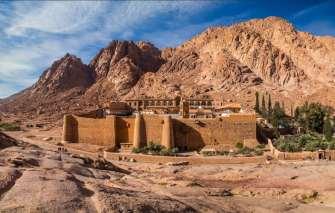
St. Catherine Monastery in Sinai Desert Interwoven with strands of
Sumerian, Pharaonic, Indian, Chinese, Greco Roman, Christian, Islamic & modern Egypt is a magnificent tapestry of civilizations &cultures.
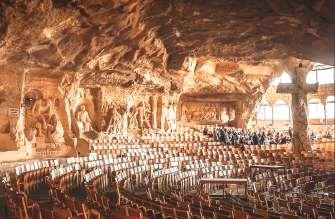
The crypt church at Dronka in southern Egypt, built over the cave inwhichtheHolyFamily lived inthe initial part of their stayinEgypt.
It is also the land where its sages have thought as deeply about how tobetter lifeonearthasafterdeath, where history was first illustrated, where the first peace treaty was signed (in 1272 BC!), where Jacob’s sons produced the 12 Jewish tribes, where Prophet Moses was born, where the Holy Family sought refuge, where the Mongol onslaught stopped, where great ideas of Arab & African unity conceived & from where emerged an outstanding leader of the Non Aligned Movement emerged.
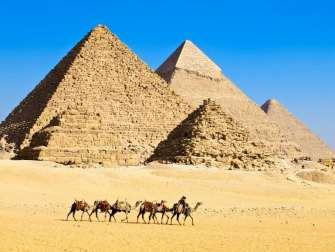
Egypt is also the Pyramids, Abu
ThePyramids
Simbel, Karnak, Luxor, thebeauty of Queens Nefertiti & Cleopatra, St. Catherine Monastery, Al Azhar University, the music of Abdel Wahab, the poetry of Ahmed Shawky &Naguib Mafouz novels. That Egypt & India have had close ties for many centuries was clearly established at a three-day Egypt India seminar, held at Cairo Opera House, 10-12 September 1991, when I was Ambassador of India to Egypt.
The Egyptian delegation was led by Minister of Culture Farouk Hosny & included Mostafa Abbadi, Prof. EmeritusofAlexandriaUniversity for Greek &Roman Studies, MsMervat Seif-el-Din, Director of Egypt’s Greco-Roman Museum&three
others.
The Indian delegation was led by Smt Najma Heptulla, Deputy Chairman, Rajya Sabha (Upper House of India’s Parliament) & included former Foreign Secretary T.N.Kaul,Rev.PaulosMarGregorios (scholar on Indian/Greek Monastic history), M.C. Joshi, DG Archaeological Survey of India & three others.
The seminar’s inaugural address was delivered by Egypt’s Foreign Minister Amre Moussa. He averred: “Akey factofEgypt – Indiarelations is that they are much deeper & more diverse than generally known. Iam therefore very pleased that the listed issues are wide spectrum & encompass the arts, culture, agriculture, politics, economics & literatures of these two ancient civilizations of the Nile & the Ganges.”
This seminar received extensive coverage in the Egyptian print media. Egyptian Gazette published five half-page articles about it written by its renowned columnist ManalAbdul Aziz.
India’s Marg Publications published anelegant, ‘coffeetable’book titled
‘India and Egypt: Influences and Interactions’, with texts of the various presentations made at this seminar.
As follow upto thisseminar, Embassy of India organized an exhibition of the artistic works of renowned painter M. F. Husain, his son Tyab &daughter RabiainCairo & Sitar concerts by the renowned Ustad Amjad Ali Khan at Cairo & Alexandria.
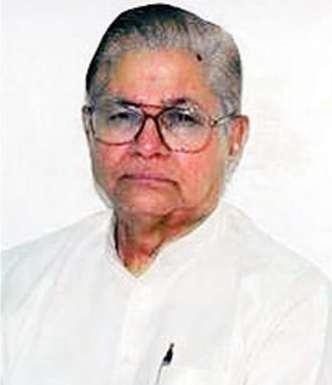
India’s EX Foreign Minister M.S, Solanki
India’sForeign Minister M.S,Solanki visited Cairo in mid-January 1992. F.J.Khergamvala wrote about this visit inTheHindu(19January1992)
as follows: “Seldom has an Indian External Affairs Minister’s visit been packed with so much content & planned so meticulously. Mr. Solanki took back with him an Egyptian commitment on cooperation in security matters. This was clearly the result of both sidesseeing eyetoeyeonterrorism and fanaticism. India’s Maulana Azad Indian Cultural Centre was opened & there were no half measures. The Ambassador prodded, New Delhi agreed & Vice Chancellor of Rabindra Bharati University obliged by himself bringing 29 Rabindranath Tagore’s paintings. The cultural centre is in the hub of Cairo not in some millionaire’s suburb. Its director is an elegant woman Arabic scholar from Hyderabad, not some politician’s nephew turned bureaucrat.”
On January 29, 1992, India finally recognized Israel &I wasinstructed to go to Tel Aviv to locate suitable premises forthesoon tobeopened Embassy of India’s chancery & Ambassador’s residence. This provided me the long-awaited opportunity to visit the sacred Christian sites of Bethlehem, Nazareth, Gethsemani, ‘Via Dolorosa’ & Jerusalem, accompanied by my wife & also meet the renowned Indian Maestro
Me & Isobel with Music Director
Zubin Mehta&hiswife Nancy Zubin Mehta, who then conducted the Israel Philharmonic Orchestra. He invited us to its presentation of Andre Hajdu’s ‘Rhapsody on Jewish Themes’ & Haim Zukerwar’s ‘Concerto forViolin&Strings’ which we were honoured & delighted to attend.
During our fivedays stayinIsrael
(April 15-20) Iwasgreatly impacted by Jerusalem’s sacredness to the three Abrahamic religions of Judaism, Christianity &Islam. Their most sacred sites are all close to each other in this sacred city. The thought struck me that if Israel would forsake its racist Zionist ideology & adopt the noble tenets of Judaism, Jerusalem could become theworld’s prime venuefor religious pilgrimage & interreligious harmony instead of the blood stained ‘Holy Land’ it presently is.
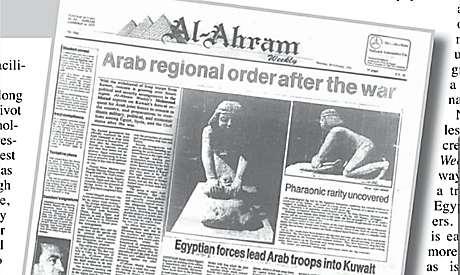
On the eve of my departure from Egypt on August 7, 1992, I wrote a farewell message to it, titled “Egypt in Indian Eyes’ Many Egyptian newspapers carried its abridged version. Al Ahram’s English Weekly kindly carried its entire text in its 612 August1992 issue.
I hadthegreat joy of returning to
Egypt again 22 years later (in September 2014) for the release of the Arabic edition of my ‘Gandhi’s Outstanding Leadership’ book, jointly by H. E. Amre Mousa & Minister of Culture Gabar Asfur. Speaking on this occasion the former averred “Gandhi was not only an Indian but an international leader whose ideas and leadership have echoed throughout the world. In my remarks I spoke about Gandhi’s views on the partition of Palestine as contained in his wellknown quote: “Mysympathiesare allwiththeJews.Butmysympathy forthemdoesnotblindmetothe requirementstoJustice.Itiswrong toimposetheJewsontheArabs. WhatisgoingoninPalestinetoday cannotbe justifiedby anymoral code of conduct. The mandates havenosanctionbutthatofthelast war.Thenoblercoursewouldbeto insistonajusttreatmentofJews wherevertheywereborn&bred”. This was applauded by all the Egyptiansintheaudiencebutnotby alltheAmbassadors init!
As I am now almost age 90, the likelihood ofmyvisitingEgypt again is nil. However, my memories of it
willalwaysbefresh&fragrant&my admiration for it & it’s warm & friendlypeople high&strong. Iwish them all much happiness, good health, & continued peace & prosperity.
It is 33 years since I left Egypt on completion of my tenure there as Ambassador of India. Yet memories
of its many ancient monuments, temples, churches & museums, my three-year stimulating &productive
Pascal Alan Nazareth, former Ambassador of India to Egypt
THE GUJARAT CARNAGE 2002: NEVER FORGOTTEN!
-*Fr. Cedric Prakash SJ
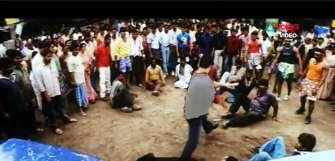
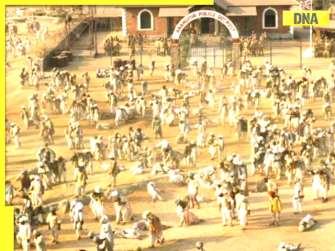
Ittook placein2002! Atragedy that will NEVER be FORGOTTEN! The Gujarat Carnage 2002 is easily one of the bloodiest chapters in post-
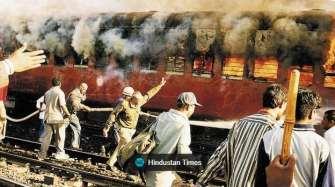
independent India. The burning of the S-6 compartment of the SabarmatiExpress(fromFaizabadto Ahmedabad) some distance away from the Godhra railway station in Gujarat, on 27 February
(unfortunately, resulting in the deaths of 59 innocent people) was (and is) strongly condemned ... Several people were convicted of thisact,though thereisstillaraging debate about what caused the fire. There is enough evidence to prove that itwas anaccident. The sad fact is that any death – particularly, the tragic ones – is bound to leave a greatvoidinthelivesandthehearts of the loved ones whom they have leftbehind.
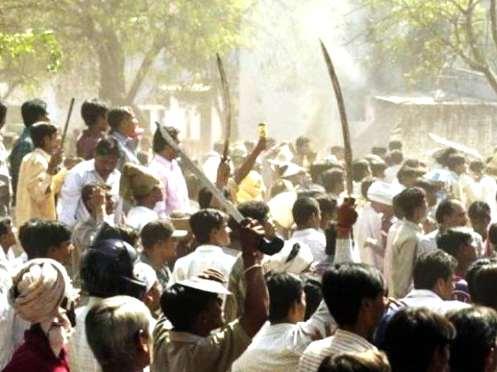
What followed this unfortunate tragedy, was however, a bloody carnage beyond comprehension, totally unjustifiable and unacceptable. Apparently (and this from eyewitness accounts), the ChiefMinister oftheStateNarendra Modi, convened ameeting of some high-level BJP and Government functionariesverylateeveningof27 February. There are different versions of what transpired at this meeting (the minutes, the written official record of the meeting was nevermadepublic) -buttheactions thatresultedwereblatantlyobvious: Muslims all over Gujarat were brutalized, raped, dispossessed of their lands and houses and even murdered. The intensity of violence for days was certainly a crime against humanity. Thousands were affected all over Gujarat! Numbers, pale into insignificance, when one recollects the brutality of what took place. For weeks and then months, rampaging mobs indulged in some ofthemostdespicable acts.Besides, the law-and-order mechanism had not merely abdicated its responsibility but were also seen activelysiding withtheperpetrators, involved inthecarnage!
On 21 November 2002, the Concerned Citizens’ Tribunal consisting of several eminent citizens and headed by Justice V. Krishna Iyer (a former Judge of the Supreme Court of India), made public a report entitled ‘Crime
Against Humanity’; the report contained incontrovertible facts and details of the Gujarat Carnage. Itwas written sincemore than2000 oral and written testimonies, both individuals and collective, from victim-survivors and from independent HumanRightsGroups, Women’s Groups, NGOs, academics, concerned citizens and others. The Tribunal, in its findings and recommendations, indicted the Government of Gujarat and held them responsible fortheunfettered violence, murder, arson and looting thattook placeinGujarat.
The findings of the Concerned Citizens’ Tribunal also corroborate with the findings of several other groups. Theseinclude:
• whattook place inGujarat was notmerely communal violence or riots; it was a genocide, a
carnage, an ethnic cleansing, designed to marginalize and even wipe out an entire community.
• It was well-planned and wellexecuted. It was not a “spontaneous reaction” as some tried to pathetically justify it. The preparations must have taken several months. Sometime earlier, a widely circulated Gujarati daily listed several hotels run by the Chiliya community which had non-Islamic names. During the carnage, most of their hotels were razed to the ground. A meticulous census wasconducted ontheMuslims and Christians of Gujarat in 1999. The data helped marauding mobs know exactly whom to attack and were.
• it was meant to break the backbone of the Muslim community’s economy; it mostly succeeded.
• the middle-class (including several well-to-do and educated women) was involved in the violence; there
were very few people who were willing to come out and take a stand to prevent what was happening.
• in some areas, Adivasis and Dalits were used very effectively in the arson and looting of Muslim homes and establishments.
• it was undoubtedly a Statesponsored genocide. The Concerned Citizens’ Tribunal indicted in addition to the Chief Minister and politicians, several high-ranking bureaucrats and police officials. The Sangh Parivar was given a free hand to do what they wanted. The police were apparently given clear instructions not to take any action. There is also evidence to show that some were encouraged to join in the violence - which they did, with ruthless finesse. State Ministers and leaders of ‘the Parivar’ were seen leading the mobs. (a couple of them even were in the Police Control room at the time of the violence). (The sting operation
done by ‘Tehelka’ which was made public in October 2007 provides ample evidence to substantiate these facts).
In December 2003, the then Chief Justiceof IndiaV.N.Kharepresiding over a Divisional Bench of the Supreme Court criticized the Government of Gujarat saying, “I havenofaithleftintheprosecution andtheGujaratGovernment.Iam notsaying Article356. You must protect people and punish the guilty.Whatelseisrajdharma?You quit if youcannot prosecute the guilty.”And ina landmark ruling on 8 February 2012, the Acting Chief Justice of Gujarat Bhaskar Bhattacharya, emphatically stated, “Gujaratgovernment’s inadequate responseandinaction(tocontain the riots) resulted in an anarchic situationwhichcontinuedunabated fordayson…thestatecannotshirk fromitsresponsibilities”.
Inthecontextofthemanycasesand the fact that several fingers were pointing to the connivance of the Modi Government, the Supreme Court of India appointed a Special
Investigation Team(SIT)tolook into certain cases, very specially a complaint made by the late Zakia Jafri (who died on 1 February 2025 at the age of 86) with regard to the murder of her husband, the former Member of Parliament Ehsan Jafri and several others. It is common knowledge that the role played by the SIT was highly questionable. TheSITreport wasfulloflapses and inaccuracies. It never looked conscientiously at the complicity and the culpability of power and of vested interests,
In June 2022, a three-judge Bench led by Justice A.M. Khanwilkar upheld the closure report filed by the Supreme Court-appointed Special Investigation Team (SIT) in Ms. Jafri's complaint in February 2012. TheSIThadfoundnomaterial evidence against Mr. Modi and the other higher-ups in the State. The Gujarat High Court too, in October 2017, had refused to entertain Ms. Jafri.“Nofaultcanbefoundwiththe approachoftheSITinsubmitting finalreportdatedFebruary8,2012, which is backed by firm logic, expositing analytical mind and
dealingwithallaspectsobjectively for discarding the allegations regardinglargercriminalconspiracy (atthehighestlevel)forcausingand precipitating massviolenceacross the State against the minority community during the relevant period," stated Justice Khanwilkar, who authored the 452-page judgment for the Bench. Whilst the judgement needs to be respected, few who have witnessed Carnage and who know the facts, are taking itatfacevalue
On 17 January 2023, the BBC, the independent British news channel aired the first of a two-part documentary it had produced titled ‘India: TheModi Question’ ( the second part was aired, a week later, on 24 January).The first part of the documentary alleges that Narendra Modi, who was then the Chief minister of Gujarat, ordered the police to turn ablind eye to the Gujarat Carnage of 2002 that went on for weeks and months; the second part details how Muslims havebeensystematicallytargeted in India ever since Modi came to power. Itshowshowperpetrators of heinous attacks on the Muslims do
so with impunity, knowing fullywell thattheyhavealltheimmunityfrom those who govern thenation.
At the very start the of the Documentary, the BBC screens two strong and telling statements on behalf of the “Morethan30people inIndiadeclinedtotakepartinthis seriesbecauseoffearsabouttheir safety”and“TheIndianGovernment declined to comment on the allegationsmadeinthisfilm”.One can conclude several things from thesestatements; theseinclude that many people know the truth, they would like to do so but they are frightened to do so: yes, fear is palpable in several sections of Indian society today. Secondly, the BBC wanted the Government’s comments on the film so presumably Indian authorities were given a chance to watch the film earlier andrebut it if necessary. The Government declined to do so which could easily imply that the BBC film had incontrovertible footage and evidence, the factuality of which cannot be challenged by anyone. Besides, among those interviewed in the film were also
those who sided with the Government – which provides the entire film with a high degree of objectivity and lackof bias!
The BBC documentary has a scoop: thefirstepisode revealsapreviously unpublished report: a classified and confidential document of the UK Government produced by its Home Office on the Gujarat Carnage. In ordinary parlance such documents are referred to as ‘top secret’ and are not easily accessible. The statements in the internal brief are indicting!
The document states among other things, that the 2002 violence “wasplanned,possiblyin advance”byVishwaHindu Parishad, a Hindu nationalist organisation adding that, “theattackonthetrain atGodhraon27Februaryprovided thepretext.Ifithadnotoccurred, another one would have been found.” Further, the report cites evidence for stating the violence was pre-planned, “Police contacts confirmed that rioters used computerisedliststotargetMuslim homes and businesses. The accuracy and detail of the lists, includingbusinesseswithminority
Muslimshareholding,suggestthat they were prepared in advance.”
The most defining statements say, “theVHPanditsalliesactedwiththe support ofthestateGovernment. They could not haveinflicted so muchdamagewithouttheclimate of impunity created by the state Government. Chief Minister Narendra Modi is directly responsible. His actionshavenot just been guided by a cynical assessmentofpoliticaladvantage. AsanarchitectoftheBJP’sHindu nationalist agenda which it has pursuedsinceitcametopowerin 1995,heisabelieverintheVHP’s ideologicalmotivation.”Inshort, the confidential report indicts the State Government of Gujarat with and unequivocal statement, “Chief MinisterNarendraModiisdirectly responsible.” Part of the documentary is the role played by Haren Pandya (a former Home Minister of Gujarat) and how he exposes the Modi regime for their complicity. Pandyawasassassinated on26 March 2003!
The film also highlights that the report quoting unnamed sources says that Modi met senior police
officers and “ordered themnotto intervene” in the attacks on Muslims. Footage in the film clearly shows how the police stood by as Muslims were targeted: victims of arson andloot, rape andmurder. “A conservative estimate based on information from reliable human rightscontactsputsthenumberof deaths in2000 …Thekilling was accompanied in many areas by widespread andsystemic rape of Muslim women, sometimes by police….policecontactsacceptthat implicitstateGovernmentpressure inhibited their response.” Further the document says that “the violencewaspoliticallymotivated” and the aim “wastopurgeMuslims fromHinduareas”.Itconcluded that “theriotswereimpossiblewithout theclimateofimpunitycreatedby thestategovernment… ”
On expected lines, the Government of India has banned the documentary saying that it is just ‘propaganda’ without countering the documented evidence and the incontrovertible facts which are contained inthe documentary Twenty-four years after those
terrible bloody days, thereisamong some, a feeling of fatigue. Some of the perpetrators feel justified and vindicated: “Itoldyouso”attitude. It was just sensationalism. Even someof thevictims feelitshouldbe a closed chapter; don’t we have to moveon?Theyaskindespair! Some of the human rights defenders are silent – they seemto havegiven up. Besides some media who earlier took strong unequivocal stands, seem tohavegiven up – sheerfear! Gujarat is now planning for the Commonwealth Games to be held in Ahmedabad in 2030! They certainly do notwantanymemories ofthepasttostartpopping up!And not the Gujarat Carnage 2002! Houses of the poor (mainly Muslim and Dalits) are being demolished with bulldozers. There is plenty of hype and propaganda to show how welcoming this State can be. The fact remains that there are several today like Teesta Setalvad, R. B. Sreekumar, RupaModi, Sanjiv Bhatt
who despite all odds, continue relentlessly in pursuit of office and truth! The road ahead is not going to be easy! One must deal with muscle, money, and manipulation among other things! The Gujarat Carnage 2002, however, will never be forgotten! It will remain etched in the minds and hearts of much forever! There is hope that one day wewillovercomeSatyamevaJayate! Truth will triumph!
Whenwetalk aboutecumenism, we talk about dialogue between Catholic Church andother churches including theprotestant church.The Churches are divided into Eastern churches and Western churches. Eastern churches are ancient churches and include Orthodox, Armenian, Coptic, Assyrian, and Syriac. The Coptic church cameinto existence in the 5th C. CE (after the Chalcedonian council of 451 C. CE). The Western churches include the Anglican church, Lutheran church and Methodist Church which came intoexistenceduringReformation in the16th C.Theyrevolted against the evil practices of theRoman Catholic church. The Orthodox churches are primarily found in Kerala (India) where Christianity reached first. The followers of the Armenian church are found in Chennai, Calcutta and
other old towns. It is said that they had existed in Goa prior to the arrival ofthe Portuguese. Therefore, Portuguese are not the ones who brought Christianity to Goa. The Armenians were rich trading communities and built big church buildings. There are streets known asArmenianStreets inthese towns. Under the philosophy of Ecumenism, various Church leaders sit together and try to find out things that unite them. E.g. The Orthodox Church and the Roman Catholic churchsigned theRavenna document in2007. Further dialogue took place and is reflected in the documents published in 2016 and 2023. Those issues which have difference of opinion are identified as amicable solution through dialogue. Over the last 70 years lot of efforts have been made to reach an understanding between the differing groups. Iamtold byelderpriests thatbefore the 1960’s the Catholics were advised to avoid contacts with the Protestants and the lands occupied
by them like the Mission Compounds. They were treated like Untouchables andviceversa. Hence no Catholic would passthrough the
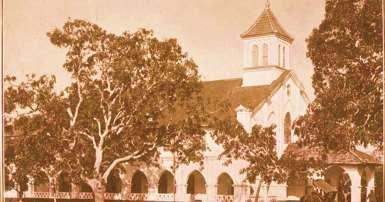
Basel Mission compound in Balmatta. The road connecting Falnir and Collectors Gate was avoided. Thisis natural. One cannot trespass the territory of the enemy! Even the well-established Basel
Mission Press was not used much andtomeettherequirements ofthe Catholic ChurchtheKodialbail Press was started by the Jesuits. The Protestants focused more on
Kannada and Tulu language. The Jesuits worked for Konkani. Reverend Kittel and Rev. Mogling became experts in Kannada and Tulu language and literature. Rev. Mogling started thefirstnewspaper in Kannada language- Mangaluru Varthe which can be seen in the Basel Mission Theological Institute Museum, Balmatta. Rev Kittel wrote theKannadaDictionary. Mostofthe Jesuits worked among the Konkani speaking people who wanted European education although Fr. KortiandFr.Gaviragiworked among the Tulu speaking people too. Fr. Maffei studied Konkani and wrote its grammar. The Basel Mission was a protestant organization and Konkani being the language of Catholics, they avoided it. Konkani language lost their contribution whileKannada andTulugainedalot. This strict separation between the Catholics and Protestants was prescribed by Mortalium Animos (1928) of Pope Pius XI and Mystici Corporis(1943) ofPopePiusXII.The second Vatican Council published the Unitatis Redintegratio (1964). This helped in breaking the deadlock between theCatholicsand
Protestantchurchesandopened the doors for dialogue. There after the Catholics and the Lutherans (Basel Mission) in our area started to use each other’s infrastructure. They became friendly. The Catholics started visiting their theological colleges and learning centres and the Protestants started using Catholic institutions. In Mangalore, however, this rapprochement had started evenbefore 1964. But despite all the talk of ecumenism, what should not be forgotten is the reason for the Protestant movement. It contains lotof lessonsforboth Catholics and Protestants. The Protestants too should guard against the mistakes pointed out by Martin Luther especially greed and avarice. Pope LeoXwasrulingwhenMartinLuther lived. Now we are in the times of Pope Leo XIV, and it is advisable to read the95 statements.
Martin Luther and his 95 Statements
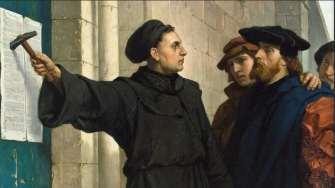
Martin Luther (1483-1546) was a Catholic Priest. He revolted against the Catholic Church and its evil practices especially the practice of granting Indulgences for money.
The Indulgences given by the Pope were supposed to be like the washing machine (used by some political parties) to clean the sins andthesouls.MartinLutherwasnot happy about it.
Hesawtherichcommitting sinsand buying indulgences by giving huge sums of donations whichwere used to build big Church buildings and palaces. In 1517 he published his famous95ThesesorStatements. He passedthepamphlet containing the 95 Theses on the main door of the All-SaintsChurchatWittenberg. The Pope was angry. He asked Luther to renounce his writings and when he refused, hewas excommunicated in 1521. Martin Luther left the Church and got married. People followed his ideas all over the Europe and thus the Protestant movement against the Roman Catholic church started. It appears that things change in the Roman Catholic Church when the Catholic Priests standupagainsttheevils. Before listing 95 Theses, he writes an introduction as follows: Outof loveforthetruthandfromdesireto elucidate it, the Reverend Father MartinLuther,MasterofArtsand
Sacred Theology, and ordinary lecturer therein at Wittenberg, intendstodefendthefollowing statements and to dispute on theminthatplace.Therefore , he asks that those who cannot be presentanddisputewithhimorally shalldosointheirabsencebyletter. InthenameofourLordJesusChrist, Amen.
Martin Luther puts these 95 statements in the public domain (perhaps You Tube, Facebook or Instagramifitwastoday)andinvites the interested to come and discuss with him on the given day or send their arguments in writing to him. He does not do it secretly. He is ready for discussion and debate. This isthe first lesson. He stands by hisconvictions.
Out of 95 Theses or statements, the first 41 deal with his views on sin, penalty forsinandremissionforsin.
Statement no. 27 reads as follows: Theypreachonlyhumandoctrines whosaythatassoonasthemoney clinksintothemoneychest,thesoul fliesoutofpurgatory . Please note the words ‘human doctrines. Statement no. 28 is as follows: Itis certainthatwhenmoneyclinksin
themoneychest,greedandavarice can be increased; but when the churchintercedes,theresultisinthe handsofGod alone. Thus, Martin Luther points out the dangers of greed and avarice in the Church when money clinks and warns that mercy is in the hands of God alone and not in Indulgences. In statement 5 he clearly says that the Popeneitherdesiresnorcanremit anypenaltiesexceptthoseimposed byhisownauthorityorthatofthe canons.InStatement 20 hesaysthe below: Therefore,thepope,when he uses the words ``plenary remissionofallpenalties,''doesnot actuallymean``allpenalties,''but onlythoseimposedbyhimself. Thisisveryimportant. MartinLuther asserts that Pope can forgive violationofhisordersonly(Canons) because he is the creator of them. This way he warns the clergy not to use the assumed power to make money. This challenge to the authority of the Pope which was a direct attack on the source of money was not at all acceptable to the concerned which resulted in his expulsion from the Church. Statement 32 reads as follows:
Thosewhobelievethattheycanbe certain of their salvation because theyhaveindulgenceletterswillbe eternally damned, together with theirteachers.Statement 36 saysas follows: Any truly repentant Christian has a right to full remissionofpenaltyandguilt,even withoutindulgenceletters . Martin Lutherwasveryboldandhadstrong convictions. Who would like such a forthright person?
Statement no 42 to 51 lay down what needs to be taught to the Christians. E.g.Statement no49says as follows: Christians are to be taughtthatpapalindulgencesare usefulonlyiftheydonotputtheir trustinthem,butvery harmfulif they lose their fear of God becauseofthem.For Luther fear of God precedes papal indulgences bought formoney.
Statement No 54 which is very interesting is as follows: Injury is donetotheWordofGodwhen,in thesamesermon,anequalorlarger amount of time is devoted to indulgences than to the Word. Luther emphasizes the importance oftheWordofGod.Onegood thing I have noticed among the
Protestants I have come across is their love fortheword of God. They spend lot of time reading the bible and give time for praying and singing. They communicate with God with minimal intervention from the Priest in their day-to-day life. The direct rapport of the believer andGodiswhatwasemphasizedby Luther. Statement 62 says as follows: The true treasure of the churchisthemostholygospelof thegloryandgraceofGod. Who canfindfault with suchastatement of Luther?Statement no. 65 and 66 elaborates this statement. (65) Therefore, the treasures of the gospel are nets with which one formerly fishedformenofwealth. (66) Thetreasures ofindulgences arenetswithwhichonenowfishfor the wealth of men. In these two statements he explains what has changed and what needs to be opposed. The two terms ‘men of wealth’ and ‘wealth of men’ clearly explainswhatthegoaloftheChurch in those days was: to amass riches. Whatisthechurchdoing today? Let us ask ourselves the way Luther asked inthe 16th C.
From Statement 52 to 81hepoints
out how incorrect interpretations are made to amass wealth. From statement no 82 to 89 he raises some arguments and questions which are open for debate. In statement no 90 he says as follows: To repress these very sharp arguments of thelaity byforce alone,andnottoresolvethemby giving reasons, istoexpose the churchandthepopetotheridicule of their enemies and to make Christiansunhappy.
Martin Luther’s words like “To repress the laity by force and not resolve them by giving reasons clearly shows what was happening in the 16th C. Nothing haschanged. The voices of the laity were suppressed instead of resolving them by giving reasons. Even in these days of Parish Councils and so-called democratic governance, the voices of laity are suppressed. The laity express this sentiment in private andnot infrontof thePriest or his close associates. Amchem Konn Aikata is the common grievance. Some Parishioners dare to publish it using social media as wehave seenrecently. TheCatholic Church aswellasthe
Protestant Churches over a period acquired lot of property, much of it was donated by the rich landlords. When the real estate hydra started spreading its heads the Church property became the target of the vested interests and many churches sold off/ disposed of their prime lands in a non-transparent manner all over India and got into controversies. The believers of the respective church and diocese started protesting and going to Courts. Allegations of money laundering became common. Martin Luther’s prophetic words (whenmoneyclinksinthemoney chest, greed and avarice canbe increased) were proved right after 500 years.
You ask any believer and you will hear stories of how donations are sought, used and misused by those inpower. Recently inone Parish, the Parish priest announced that the average weekly collection is Rs. 25000 and because in that week it was only Rs. 23000 people should make good the difference of Rs 2000. Mite is right. It is high time we, both Catholics and Protestants read Martin Luther once again to
avoid pit falls. This will make our ecumenism real. ****
-Dr. Charles Lobo
Bangladesh elects a new government
(Philip Mudartha)
Bangladesh got a new government headed by BNP in the recently concluded elections overseen by the interim government of Mohammed Yunus. The BNP government has inherited an economy with diverse challenges. The crises of persistent inflationary pressure, sluggish private investment, and unemployment need to be dealt with simultaneously, with careful policy planning.
But first, a recap of the events leading to theformation of thenew government.
View from Dhaka:
Bangladesh broke free from the autocratic rule of Sheikh Hasina after 15 long years of oppression.
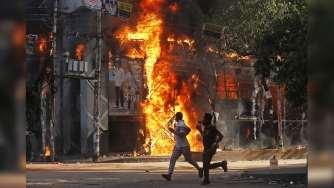
Many Bangladeshis have had expressed that they attained independence for the second time. No doubt, it was a critical juncture for the nation. After four days of chaos, evidenced by vandalism, arson, and attacks on minority communities, an interim government headed by Nobel
laureate Prof Mohammed Yunus wassworn-in.
Then, the police forces went on strike in protest attacks by enraged citizens.Thenationurgentlyneeded to restore law and order, which theinterim government prioritized butfailedtoenforce, judging by the mob violence against the religious minorities, especially theHindus. Thesecondpriority wastoholdfree, fairandcredible elections and hand over the power to an elected government. The elections were held but after banning the Awami League on the pretext that its rule was fascist and dictatorial. That judgment should have been left to the electorate. To that extent, the elections were not fair.
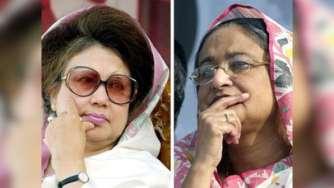
History of Battle of Begums:
There should not be a repeat of autocratic behaviour by another elected government, where crime, oppression, and inequality persist, onlywithdifferent players switching
sides. Bangladesh has faced similar situations before, where autocrats or governments were forced to resign. Thepopular uprising of1990 dethroned Dictator Hussain Muhammad Ershad. The unrepresentative but elected government of Khaleda Zia of BNP was forced to resign within 12 days in1996. Thepersonal feudbetween Khaleda ZiaandSheik Hasinaledto the political crisis of 2006-2008, the end of democracy and military intervention on 11th January 2007. Khaleda Ziahadtwo five-year terms
in office (1991 to 1996 and 2001 to 2006). Sheik Hasina had four fiveyear terms in office (1996 to 2001 and 2009 to 2024). The nonpolitical governments formed before restoration of democracy in 1991 and during the 2006-2008 political crisis failed to meet the people's aspirations. Unfortunately, each successive political government has surpassed its
predecessor's excessesinautocratic behaviours, corruption, and oppression.
Bangladeshis do not have good experiencewithanypolitical parties. The governments of Sheikh Hasina reached unprecedented levels of corruption andoppression. TheBNP governments of Khaleda Zia were marred bysimilar issues. History teaches us that those who gain power often repeat the mistakes of their predecessors. People want to avoid this scenario in the future. The people deserve not to have these experiences repeated. The martyrs of this movement and the entire nation deserve to hold on to this newly achieved liberation, and those in power owe nothing less to the nation. How can the new interim government deliver on these hopes? Will the nation seize this moment to build a better Bangladesh under theleadership of Prof Yunus?
Fall of Hasina and the caretaker government:
Bangladesh stands at a crossroads with thefallof Sheikh Hasina. While challenges remain, there isaunique
opportunity toreform andprogress toward a better democracy. The interim government must focus on creating an environment conducive to democracy, peaceful power transitions, equal employment opportunities, and a free press and judiciary.
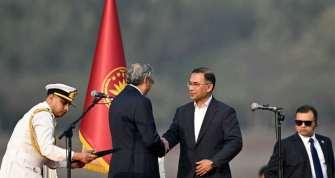
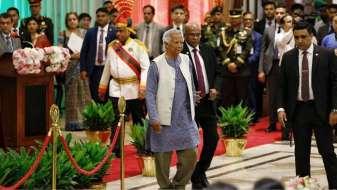
Most of all, theinterim government should not only be inclusive but perceived to be so. The swearing-in ceremony conveyed a negative impression. The Bangladesh Awami League representatives were not there.
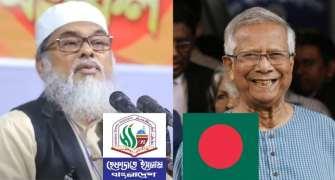
Seven of seventeen advisors lean towards Khaleda Zia’s BNP, Jamate-Islami radical Islamist party and Hefazat-e-Islam, conservative Islamist party who want to implement Sharia Law. Theceremony beganwithrecitation fromQuran.Theprayers ofreligious minorities, Hindu, Buddhist and Christian did not find space. There was no semblance of the secular state founded by the Father of the Nation, Sheik Mujib.
More than a year and half after the toppling of the Awami League-led government, Dhaka remained
insecure. The air of uncertainty still hangs over the millions who live in thiscity.
View from New Delhi: For Indian government, the change of guard in Dhaka presents a geopolitical challenge. Besides, the safety of the lives and limbs of the religious minorities, especially Hindus is of paramount concern to India.
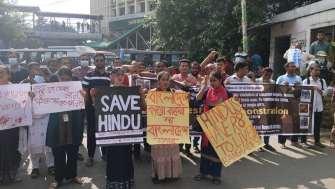
streets of Dhaka. They protested attacks on the homes, shops, and temples in various parts of the country following the fall of the AwamiLeague government.
TheBNPgovernment isexpected to reign in the unruly mobs consisting of young and radical Islamists. At least, that isthe hope of New Delhi.
Thousands of protesters, including students andmembers of theHindu community, descended on the
Withaviewtostrengthen thehands of the new Prime Minister Rahman, PM Modi congratulated him very warmly on his landslide victory. Despite Sheik Hasina lives in Delhi as a political refugee, a reset in Indo-Bangla relations is expected; both countries hold that better ties areinmutual beneficial.
(to be continued)
Konkani 'Golden Valentines' Mega Celebration -
February 14, 2026
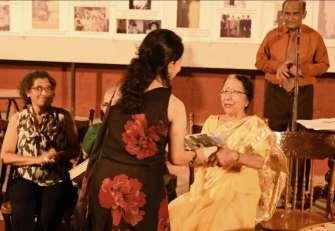
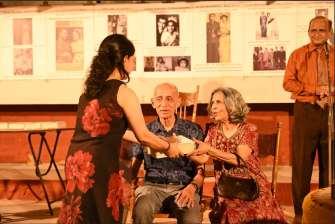
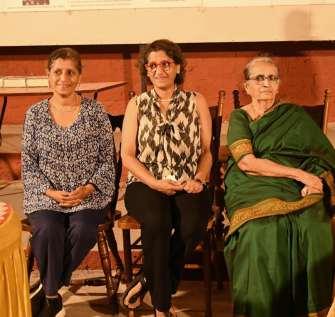
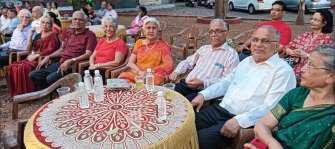
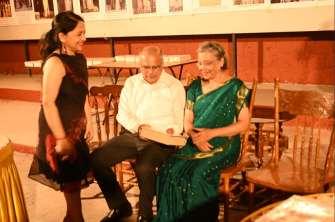
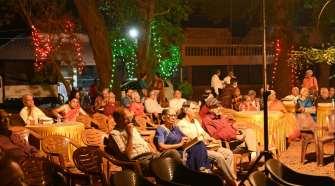
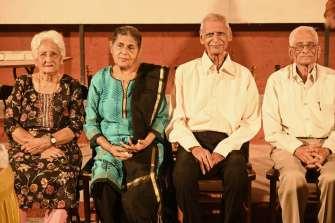
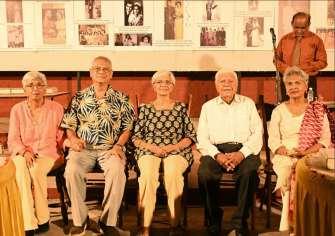
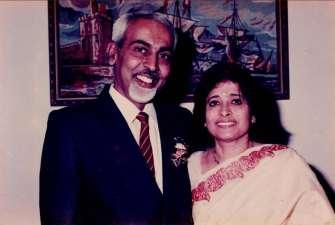
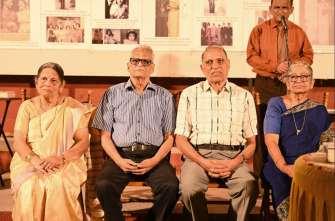
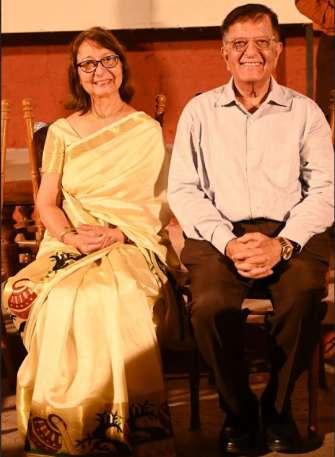
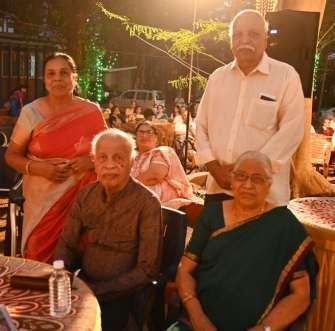
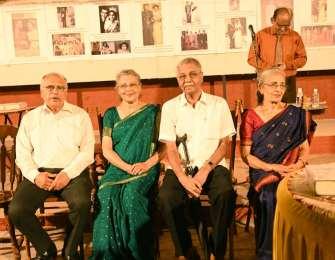
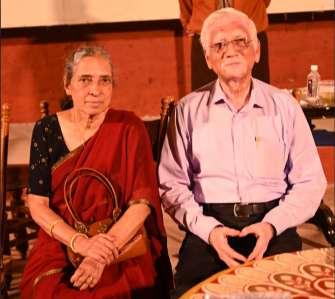
On Valentine's Day, Saturday February 14, 2026, evening,Kanara’s Author,GenealogistandHistorianof the worldwide Konkani Catholic Community the lone Dr Michael Lobo, realised his unique golden dream, on his ancestral premises adjourning the historic Bijai church/Schoolcompoundinthecity. ItwasindeedbathedintrueGold,for many couples who had completed fifty golden years of marriage and some of their children. Dr. Lobo focusedontheseniorcouplesinand around the city, only a limited numberofcouplesduetohealthand related reasons could be present. The generosity of the organiser, the lofty Golden people celebrated that glittering evening, the nostalgiaand sentiments recalled were amazing and stunned the community into tears of JOY! Those who did not make it despite the open invitation really felt the loss and sadness, but thefactthatsuchaneventwasthere in this 21 Century when family and marriage is faced with new hurdles
cheered the strongly religious people of Community. Those who married in 1950s and 60s were rejuvenated and recharged in their aspirations and happiness to be recognised just as they were on the last lap of life'sracethat gave them a true burst of sentiment to bring golden brightness to their sunset. Even those not physically present and knew about it felt special joy. It was anoccasionthe community will treasure for a long time and HURRAH to the one and only Dr. Michael Lobo, a single and human with a heart of pure GOLD and his supporters getaffectionate past.
To do justiceto the memory of that Red Letter Day, the only right and complete way is to glance at Dr. Lobo's own reminiscences of the occasion to be graciously found in his own musings to his "Worldwide Forum". Let us track back some of the more generally understandable standalonestatementsaddressed to the "FORUM" by its initiator and
leader, none other than Dr. Michael Lobo our great protagonist .......So looking in to his missives let us proceed unifying his two part presentation in a nut shell; Due to publication limitations and regulationthisreport willhavetobe just a shadow of the original please let this be a basic tribute to the efforts and generosity of dear Dr Michael Lobo and his team. Read carefully for here most of the adapted statements are quotes of ourProtagonist:
"Twenty years ago, when I was SecretaryoftheCatholicAssociation of SouthKanara(trullyaGoldenage for CASK), I organized a similar felicitation function for the golden couplesofthatera. ALatinmasswas celebrated at St Aloysius Chapel by FrSantoshKamath,S.J.,andthiswas followedbythefelicitationceremony at the adjoining hall. I introduced and said afew words about eachof thecouples – anditwouldnotbean exaggeration to say that the audience was captivated, as I could recall each wedding date, details of the ancestry of all the golden couples as well as their personal
attainments. Justice Michael Saldanha, who was the President of the Catholic Association of South Kanara -CASK, and who is on this forum, will doubtless recall the occasion. Sadly, the knocks I have received in recent years – especially the smashing up of the cherished tombstones of my ancestors at Milagres Church in 2022 and the death of my brother Patrick – my solitary companion – the following year, have left me just a shadow of my former self. My mind can functionatonlyasmallfractionofits formerability.
The“golden couples” in 2026, Ihad identified from my genealogical database,aswellaspreparingforthe event itself. Even so, this Valentine’s
Day function was overall a reasonable success. Two members of thisforum, CaptainHughVasand AllenPereira,andtheirspouses,were among the couples felicitated - and they have spoken glowingly about the occasion, for which I am duly grateful. This forum is intended mainly as a platform for academic debate. Theentireeventwasheldin my own premises – with my
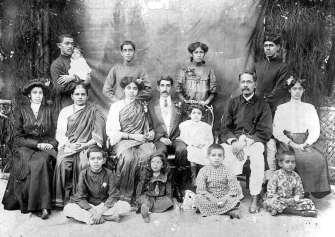
exhibition of vintage wedding photographs as a backdrop. The programme commenced at 5 p.m. withaprayerserviceconductedbyFr Norman Mathias, Assistant Parish Priest of my home parish of Bijay. This was followed by a selection of Latin liturgical prayers suchastheKyrie Eleison,performed bythechurchchoirinthetraditional Gregorian chant, the Pater Noster, Laudate Dominum, etc. that were commonuntilthe1960s. Notethe
photographs carefully.
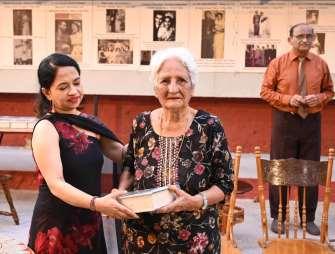
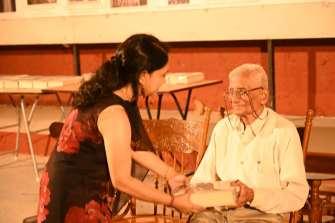
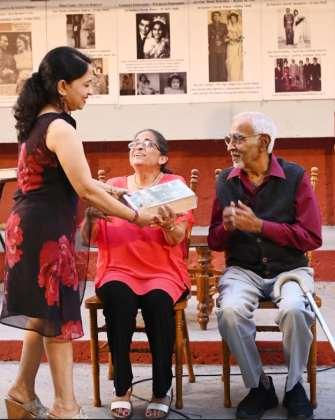
I then proceeded to introduce and say a few words about each couple in chronological order of their weddingdate. Sadly,theseniormost couple – William Henry Rego and Merlyn Philomena nee Pinto – who were married in the Christmas seasonof 1961-62 – were unable to bepresent duetohealthissues. But I was fortunate to have their daughter Yvette on stage – and, on my behalf, she presented the coupleswith acopy of abook thatI had brought out as part of a trilogy on the occasion of the bicentennial celebrations of the release of our ancestors from the Seringapatam captivity – in the year 2000. This
book was to have been nominated for the National Sahitya Academy Award. Itmay havemade myname asanauthorofrepute– butmyclose friend Bennett Pinto of Bijey, a member of the Academy, was suddenlysnatchedawayintheprime of life and the nomination fell through.
Tothecurrent article,itwillbe more convenientformetosayafewwords about the couples to start with in alphabetical order of their family surnames. Imayadd thatseveralof the 50 couples invited were unable toattend–and,tokeepthiswrite-up within reasonable bounds, only thosewhoattendedarefeatured.
ALBUQUERQUE: One of the aristocratic families of Mangalore
ever since Alex Albuquerque (18411912) founded Mangalore’s first Catholic-owned tile factory in 1868. On 17 May 1970, Moira and Dorothy – the two eldest daughters of Cyril and Octavia Albuquerque –hadadoublewedding, theformerto BenedictAlvaandthe lattertoHugh Vas. MoiraandBenspenttheirlives in the United States and celebrated their golden wedding in 2020. Ben died two years later. Dorothy and Hughsailedaroundtheworldduring Hugh’s career as a Captain in the Merchant Navy. They are now retired andsettled inMangalore.On 27 Dec1973, Aloysius (Loy) – eldest son of Cyril and Octavia Albuquerque – married Rosemary Mathias from a prominent Mangalorean family of Bangalore. They have since been
based inMangalore, where theyrun “Summer Sands”, one of the oldest and best-known seaside resorts in the West coast. Siblings Aloysius, Dorothy and Moira were all felicitatedatthefunction,alongwith Loy’s spouse Rosemary and Dorothy’sspouseCapt. HughVas.
CASTELINO / D’SILVA: Among the distinguished members of this family still residing in the ancestral home is Pius Castelino – the first Catholic to be appointed mayor of Mangaloreafteritwaselevatedfrom a municipality to a city corporation. Pius Castelino and his wifeJessieneeRebelloweremarried at Milagres Church, Mangalore, on 28 Dec 1964. They have now completed 61 years of marriage. Pius’s youngest sister Carmelita was also present at the function. She and her husband Aloysius (Loy) D’Silva were married at Milagres Church on 1 May 1975. Afterspending many yearsin Qatar,theyhavenowreturnedtothe familyhomeatKulshekar.
D’Costa and Alice nee Baptist of Urwa. Members of this family have made a name in different cities of India. One of his nieces Vinolia –whose husband Anthony Lobo (Spanish Vice Consul in Chennai) hails from a long-established Mangalorean family of Madras – is the Honorary Director of theInstituto Hispaniato promote Spanish language and culture in India.
D’COSTA: RichardD’Costaisoneof 13 children of the late Francis
D’SOUZA: Thisisthemostcommon surname in the Mangalorean Catholic community. Gilbert is the senior partner among the “Souza brothers”, froma familyoriginally of Vittal near Puttur. The Souza brothers areamong the best-known entrepreneurs in the Mangalorean community today – and have left theirmark invarious industriesfrom cashew factories to travel agencies. Gilbert and Violet (nee Rodrigues)weremarriedatPutturon 9November1975. Christinehasthedistinctionofbeing a matriarch of a family of doctors. Her eldest daughter Dr Marcie(retiredDMO)ismarriedto
Dr Jerome Pinto, a dermatologist. TheirsonDrDeepak Pintoisanorthopaedicsurgeon;his wife Smitha is a paediatrician. Christine’s second daughter Winifred is married to AustinD’Souza(youngerbrotherof FrLeoD’Souza,formerrectorofSt AloysiusCollege.TheirsonsNischith and Nimeeth are both doctors –specialists in urology and ophthalmology. Nischithismarried toLynsel,agynaecologist;Nimeeth is married to May, also an ophthalmologist.
Christine’sthirddaughterNancy(a professor of political science at Besant College, Mangalore) is marriedtoBonifaceFernandes(an automobileengineer). Theyhave2 children–adaughterMichelleanda sonNeil. Michelleandherhusband PradeepPereiraarebothdoctorsat Fr Muller’s Hospital; she is a dermatologist and he is a cardiologist. Neilisanengineerin SanFrancisco.
PAIS:Captain VincentPaisisone of 13 children of the late Joseph Pais and Christine nee Miranda of
Urwa. His father hails from one of themajorPaisfamiliesofMangalore, one eminent member of which is Chevalier ClarencePais. The branch of the family from which Chevalier Clarence Pais descends settled in central Mangalore in the 19th century. but the branch from which Joseph Pais descends remained in their ancestral home –still maintained by Captain Vincent Pais. Vincent Pais was a Captain in the Merchant Navy. Following his retirement, he was President of the CatholicAssociationofSouthKanara (2020-2024). Jennifer Rosanna nee D’Souza hails from a community known as Cochin Anglo-Indians –alternatively known asLuso-Indians, because of their Portuguese ancestry. Vincent & Jennifer were married at Urwa Church on 30 Dec 1975. Though they were the youngest golden jubilarians felicitated, the programme also featuredafew couplesfrom the 4550 years of marriage age-group. I invited them to join at a somewhat latestageafterlearningthatmanyof theseniorcoupleswouldnotbeable toattend.
PEREIRA : AllenPereiraand Eveline nee D’Silva are one of the couples mentionedabovewhoarestillinthe category of 45-50 years of marriage. They were married at Milagres Church on 22 May 1977. Allen Pereira hails from the Pereira Kamath family of Bajpe, a family that has produced many persons of distinction – including MaxwellPereira,I.P.S.,whoretiredas Joint Commissioner of Police, New Delhi, and Allen’s paternal aunt Eva Vaz, who was a Minister in the Government of Karnataka in the 1970s. Allen himself has also had a distinguished career in the banking sector. HewaswithSyndicateBank for 33 years, rising to be General Manager at its head office in Manipal. From 2006 to2008 hewas Executive Director, Oriental Bank of Commerce, New Delhi. And from 2008 till his retirement in 2010, he attained the pinnacle of his profession as Chairman and Managing Director, Bank Maharashtra.
REBELLO: Stany Rebello and Jane nee Martis were one of the seniors most couples felicitated at the
Valentine’sDay function. Theywere married at Milagres Church on 25 October 1965 and have now completed 60 years of marriage. Coffee planters by profession, they have 5 children –Asha, Ajit, Pradeep, Veena and Vijay. Their eldest daughter Asha is married to JohnRobert‘Joe’Colaco, younger brother of the well-known philanthropist Ronald Colaco of Bangalore.Incidentally, diamond jubilariansStany&JaneRebelloand golden jubilarians Gilbert & Violet D’Souza (see above) occupy neighbouring houses in a lane adjoining Bunts Hostel, in central Mangalore.
SALDANHA: There were three noteworthy Saldanha families in 19th century Mangalore. Two of them are identified by their original Indians surnames – the Saldanha Shet family of Mangalore and the SaldanhaPrabhu familyoriginally of Omzoor. The third is not known to possess any Indian surname – and the family is referred to as the Gadialgar Saldanha's, because an ancestor was a clockmaker (‘Gadialgar’)byprofession.
Jerome Saldanha – who was felicitated at the Valentine’s Day functionalong withhiswifeMercy –hails from the Saldanha Prabhu family of Omzoor. Jerome is a grandson of Alexis Lewis Saldanha (1858-1920), who settled in Mangalore, where he was a magistrate. He was twice married –and had 9 children by each marriage. Jerome’s father Lawrence was the 7th son by the first marriage. Through his paternal grandmother Regina nee Pais, Jerome is connected to several noteworthy families, including that of Chevalier Clarence Pais and the family of the pioneer coffee planter Peter George Rodrigues. Jerome Saldanha spent much of his life in Sharjah,where hewasapartnerina major printing firm. But for the last twodecades,hehasbeenessentially based in Mangalore. Together with architect Christopher Noronha, he has been involved in the building and land development industry. At MilagresChurchon26January1978, Jerome married Mercy Menezes –from a family of Bijay. They have 3 children–2sonsJason&Melroyand adaughterJacquelineRose.
SEQUEIRA: Gregory and Felix Sequeira are brothers – two of ten children of Casimir Sequeira (originally of Kulshekar, Mangalore) and Dulcine Saldanha (originally of Fermai, Omzoor).
Gregory marriedJulianaTauro, who hailsfrom the parish of Fajir, on the southern banks of the Nethravathi river. They were married at Cordel Church on 26 October 1964. They livedinBombay, where Gregory was employedwith‘TataTea’andJuliana in the Department of Customs. Followingretirement,they settled in Urwa, Mangalore. They have3children– Shoba,Shaminand Vibha. Felix married Maxina D’Souza, whose family hails from Haleyangadi near Pakshikere. They were married at Manama, Bahrain, on28Nov1970. Theyhad3children – Vivek, Veena and Sangeeta. Now retired, theyarealso settledin Urwa and reside in a house adjacent to Gregory andJuliana.
Note, thispoint onwards theformat is altered by Dr. Lobo and we will continue accordingly: Beforecontinuingfurther, I would
like to take this opportunity to express my gratitude to all who helped me with the organization of the event – notably William Pais (a fellowauthor), who took me around inhiscartovariousmediaoutletsas well as to a printing press for the purpose of gift-wrapping the books to be presented. Sadly, I do not think any of the media reporters turned up for the occasion – but Williamhimselfundertookquiteabit of the responsibility for photographing the event. The photographic attachments to this write-upareallduetoWilliam. Long standingJournobuffofthecity,Ivan Saldanha Shet, who has covered many historic matters of the community and churchesin the last 25 years, will hopefully do a truncated article on this event if possible. Hecouldnotattenddueto variouscircumstances, however. I must thank my neighbour John Gregory Saldanha, an engineering contractor,whosubconsciouslygave metheideaforthisfunctionwhenhe organized a Christmas event in my premises (also reported on this forum). John is currently in Kuwait
on work, but his staff were of considerable assistance to me with thehiringandarrangementofchairs and tables, illumination of the trees, settingupof thesoundsystem, etc.
Yvette Rego – daughter of the seniormost couple William and MerlynRego,whosadlycouldnotbe present – kindly consented to present my books to the golden couples – and her presentations radiated apersonal charm. Shewas unable to stay late into the evening as she could not leave her parents alone for too long, but Sarita D’Souza stepped into her place for the later presentations. I must also thankSaritaandherhusbandCedric D’Souza for making helpful suggestions and assisting me in more concrete ways. Yvette’s cousins – twins Kamini and Anjali Gonsalves – accompanied their widowed mother Barbara, who had celebrated nearly 60 years of marriage at the time of her husband’s passing in 2021. I must thank them fortheir gracious words – Anjali has also expressed her appreciation in her communications.
VEEZ on-line Illustrated Weekly
Editor Dr. Austin Prabhu, graciously publishing from Chicago US week after week with amazing wide coverage of the community, now in three languages Konkani, Kannada and English reachesinterested folks all over the world through various recognized platforms and Daijiworld.web. It is fortunate that many people all over get a glimpse of this GOLDEN OCCASION. Let us
be grateful to GOD and Man for all good things.
-KeyInputs: Dr. Michael Lobo
World Wildlife Day
Article dedicated for World Wildlife Dayon 03/03/2026.
World Wildlife Day is celebrated annually on March 3rd to raise awareness of the world's wild animals & plants, fighting against species reduction and habitat loss. Established by the UN in 2013, it highlights the benefits of conservation and sustainable practices. The 2026 theme focuses on "Medicinal and Aromatic Plants:
Conserving Health, Heritage and Livelihoods".
World Wildlife Day is a celebration of the planet’s wild animals and plants. However, some of the species of the wild animals and plants declining year by year. After centuries of Efforts, 86% of Earth’s Importance of Wildlife Day Species arestill unknown. Will they live long enough to be discovered? On this day we are celebrate our Planet’s Biodiversity.
How are we connected with nature and wild animals?
Animals in nature know how to be well. They know justwhatto do and they know that they should fast if they are not feeling well. But we don’t. The reason we are so sick is because we are disconnected from nature.
Earth is home to many, many different species of plants and
animals, more thanwe can possibly count. Itisthisrichdiversity andthe delicate balance between all the different forms of life, that makes life possible onour planet. We
depend onallthe elements of the biosphere for all our basic needs: the air we breathe, the water we drink, the food we eat and the energy and materials we use to make thethings weneedto liveour lives. Every species is important. One of the aims of World Wildlife Day is to raise awareness of these facts.
What are the problems facing wildlife today?
Sadly, many human activities such asmining, farmingandconstruction are constantly putting wildlife in danger. We are cutting down too many trees, clearing too much ground andbuilding somany roads that we are destroying the natural habitats of millions of species and putting the world's biodiversity at risk. Nearly a quarter of all species are at risk of becoming extinct and their disappearance is putting us, humans, indanger aswell.
How are wildlife and forest impacted byfarming theanimals?
80% of global deforestation is because of Animal Agriculture. A large proportion of land is used to
grow animals raised for food. It takes approximately 12kg of grain to produce 1 litre of milk or 1 kg of beef. A vegan needs 0.5 acres of land for sustenance, a nonvegetarian thirty times this amount. Wecanreverse wildlife declineif we changeour habits to plantbased. What are the solutions? We need to live more sustainable lives and to learn to respect nature anddefenditsdiversity. Weneedto push our governments to conserve and protect the natural habitats of all the species that are in danger of becoming extinct. We all need to work together to protect our planet andourselves.
How to stay safe and alert
On this World Wildlife Day, let’s reflect on a startling fact: Livestock make up a whopping 62% of the world’s mammal biomass, while humans account for 34%. Shockingly, wild mammals make up justamere4%.It’sareminder ofthe profound impact our choices have on the balance of our planet’s biodiversity.
-Roshan Dsouza, Kinnigoli
On 21 February 2026, St Aloysius (Deemed to be University), Mangaluru, SchoolofLanguageand Cultural Studies organized a oneday program on International Mother Language Day. The theme of the program was “Mother Tongue is My Identity.” TheChiefGuest, Shri TaranathGatti, President of Karnataka Tulu Literary Academy, addressed the students sayingthatthemother tongueisthe identity of our culture. He
emphasized that manylanguagesin India are on the verge of extinction. To preserve our identity, he advised speaking at least one hour daily with family members in the mother tongue, which strengthens mutual relationships. The programme was presided over by Dr. Ronald Nazareth, Registrar of the University. In his address, he observed that while English is widely regarded as a global language, it is by no means theonlymedium ofcommunication. He emphasized that many nations have successfully preserved their linguistic identity and cultural heritage byprioritizing theirmother tongues. Citing the examples of Japan and France, he noted how strongly people in these countries value their native languages and
continue to pursue education through them. Referring to a Japanese student who had visited the University under a student exchange programme, he remarked thatlearning inone’sown language enables deeper understanding and greater progress. The inauguration began on a vibrant note with traditional instrumental music. The University proudly represents students from 37different mother tongues, andall 37 groups took a pledge to respect other languages while nurturing and enriching their own. The gathering reflected remarkable diversity, with students from South, North, and Northeast India, along withparticipants from JapanandSri
Lanka. The culturalprogramme that followed showcased traditional group dances and songs, celebrating the rich regional heritage of India. Mrs. Greeshma Damodaran delivered thewelcome address. The vote of thanks was proposed by Dr. Mahabubali A. Nadaf, and the programme was compered by Ms. Navya. Dr. Mahalinga Bhat, Dean, School of Languages and cultural studies along with faculty members Mrs. Flora Castilian, Mrs. Prashanthi andMrs. Ratnammawaspresent on the occasion. Approximately 150 participants contributed to the successful conduct of the event.
Reported by M A Nadaf
(Language) day,StAloysiusdeemed to be University Konkanni Sangha and Department hosted Konkanni traditional songs workshop in an association of CASK.
OnInternational Mother Tongue
On this occasion CASK Vice President Mrs Marjori Taxeira presided over the function and stressed on survival of Mother
Languages and appreciated youths participation and interest towards ancestral traditions. Mr Ullas Rasquinha alumni of SAC and the office bearer of CASK recalled his childhood memories bylearningthe tradition fromhisancestorsandhim proud that he handed these traditions to his daughters. SADU Konkanni sangha 100 members participated in thisworkshop. The team of Mand Sobhan, Ms Jasmine Lobo, Dr Ancilla Sequiera, Mr Delston Lobo, Ms Nicole Moras were the resource persons for this Workshop.
Mrs Flora Castelino HOD of Konkanni & President welcomed, compeered and rendered the vote of thanks. Konkanni sangha Presidents Ms Renita Aranha, Ms Sharal Noronha, Ms Adline Alvares were present tothisworkshop.
Report by: Flora Castelino HOD of Konkanni
The Sacrifice At Golgotha
-By: Molly Pinto
Dust to Dust, a reminder marked on your forehead with a Cross
The Cross of the Lord, carried on His wounded shoulders
By His stripes, wherefrom flowed the blood of Christ onto this earth
King of Peace, born to die by the hands of His own people
Two thousand years have passed, yet He continues to be crucified
Justice is silenced and Mercy eradicated from the books
While silent spectators line the road to salvation, with fear
Nothing has changed since the walk to Golgotha
Dust to Dust, a reminder to burn the old and start anew
To pave the path to heaven instead, in peace and love
How hard can that be, that the Prince of Peace had to be Crucified
That we may choose love instead of Hate, humility instead of pride
There's a silent whisper in the air this year, a wind of change draws near
Time of Reckoning no more can wait, this world as we knew it
Has taken all it could, blood soaked and polluted air and waters
Now sick and ready to puke back everything It's endured
WHYNOMEATONFRIDAYSINLENT.
Yesterday, while coming back from work in a taxi, a lady looked at me and said: "Good day ma, are you a Catholic Sister?"
I smiled and said, “Yes.” Shesaid, “Please don’t beoffended, I want to ask you something.”
Immediately, I thought she was going toaskwhyIbecame aSisterI hear that often. But instead, she asked: "What is the real meaning behind not eating meat on Fridays during Lent? And is it biblical?"
I told her gently; the Bible does not say, " Do not eat meat on Fridays." WhattheBible clearly tellsusisthis: Jesus died on Friday (see Matthew 27, Mark15, Luke 23,John19). BecauseChrist diedonaFriday, that day became sacred for Christians. Every Friday becomes a small memory of the Cross. During Lent, thatremembrance becomes deeper andmore intentional. I explained to her:
Eveninourworld today, whenthere is a big celebration, an animal is killed. Meatrepresents joy, feasting, and festivity. Moreover, this was an ancient practice in the church. The churchsaw“eatenmeat“asaluxury. So the Church, in her wisdom, asks us: On the day Christ gave up His body for you, can you give up something you enjoy? It is not about meat being sinful. It is about sacrifice.
Lent is not about food rules. It is about love expressed through sacrifice. When we deny ourselves
something good, we unite that small sacrifice with the great sacrifice of Christ. Friday, we remember His sacrifice. Sunday, we celebrate His victory. Thensheasked, “So where does the ‘no meat’ come from?” I explained that it is not from a direct Bible verse, but from the authority Christ gave His Church to guide believers in spiritual discipline (cf. Matthew 16:19). It is as if, on the day we remember Christ giving up His Body for us (every Friday during lent), the Church asks us to give up something enjoyable as a sign of:
*Mourning
*Penance
*Self-control
*Love expressed through sacrifice.
After I finished explaining, she smiled and said: “Sister, I am not a Catholic… but I think I will sacrifice something this month until Easter.” I asked her, “What will you sacrifice?” She said, "I love eating tilapia fish so much. I will sacrifice it."
And I smiled.
Happy weekend to you all.
Denmark’s badminton player Mia Blichfeldt reportedly chose to pay a fine of nearly ₹45 lakh rather than travel to Delhi, a decision that has sparked discussion far beyond the sports world. An international athlete at the height of her career skipping India’s capital was not about money or scheduling, but about concerns over air quality and personal health.
According to reports, Blichfeldt pointed to Delhi’s severe air pollution andrelated health risks as the main reason for her withdrawal. For a professional athlete, where
lungcapacity,stamina,andrecovery are crucial, exposure to polluted air is not a minor inconvenience but a serious threat to performance and well-being.
This incident goes beyond one player missing a tournament. It highlights how India’s global image is being shaped in real time. When elite athletes are willing to accept heavy financial penalties to avoid a city, it sends a warning signal that cannot be ignored.
Many Indian fans have expressed concern, noting that Delhi regularly hosts global summits, international tournaments, and major events, yet continues to struggle with conditions that make visitors anxiousabouttheirhealth.Pollution is no longer just a local problem; it now impacts tourism, international sports, and the country’s global perception.
The larger question is unavoidable: how serious must the situation become before firm actionistaken? Thismomentcallsnotforemotional reactions, but for accountability,
urgency, andlong-term solutions because when the world starts opting out, the cost is far greater than any fine.
#AirPollution
#GlobalPerception
#EnvironmentalCrisis.
#PublicHealth
#DelhiAir
International Mother Language Day Celebration
“Speak inyour mother tongueforat leastonehoureverydaytopreserve and strengthen your identity.”–TaranathGatti
Mangaluru, Karnataka – On 21 February 2026, StAloysius(Deemed tobeUniversity), Mangaluru, School of Language and Cultural Studies organized a one-day program on InternationalMotherLanguageDay. The theme of the program was “Mother Tongue isMyIdentity.”
TheChiefGuest, Shri TaranathGatti, President of Karnataka Tulu Literary Academy, addressed the students sayingthatthemother tongueisthe identity of our culture. He emphasized thatmanylanguages in Indiaare on theverge of extinction. To preserve our identity, he advised speaking atleastonehourdailywith family members in the mother tongue, which strengthens mutual relationships.
The programme was presided over byDr. RonaldNazareth, Registrar of the University. In his address, he observed thatwhileEnglishiswidely regarded as a global language, it is
by no means the only medium of communication. He emphasized thatmany nations have successfully preserved their linguistic identity and cultural heritage by prioritizing their mother tongues. Citing the examples of Japan and France, he noted how strongly people inthese countries value their native languages and continue to pursue education through them. Referring to a Japanese student who had visited the University under a student exchange programme, he remarked thatlearning inone’sown
language enables deeper understanding and greater progress.
The inauguration began on a vibrant note with traditional instrumental music. The University proudly represents students from 37different mother tongues, andall 37 groups took a pledge to respect other languages while nurturing and enriching their own. The gathering reflected remarkable diversity, with students from South, North, and Northeast India, along withparticipants from JapanandSri Lanka. The culturalprogramme that followed showcased traditional
group dances and songs, celebrating the rich regional heritage of India.
Mrs. Greeshma Damodaran delivered thewelcome address. The vote of thanks was proposed by Dr. Mahabubali A. Nadaf, and the programme was compered by Ms. Navya. Dr. Mahalinga Bhat, Dean, School of Languages and cultural studies along with faculty members Mrs. Flora Castilian, Mrs. Prashanthi andMrs. Ratnamma waspresent on the occasion. Approximately 150 participants contributed to the successfulconduct of theevent.
This tastes same as chicken and even better than chicken. Why can’t we try this as a replacement for chicken which is provided by nature and without hurting anyone.
Drain and rinse the cashew nuts. Pulse in a grinder, with a small quantity of water, to form a thick, smooth paste. Add salt to this and mix the paste well with thecooked jackfruit. Leaveaside for1hour to marinate. Inablender, take3tomatoes, 1onion, ginger andgarlicandblend well. Take 3 tbsp water inawok/kadhai . When itheats up, add thispaste to it, bring to a boil and then reduce the heat to low. Keep cooking, ensuring that it does not burn. Thiswill take about 20 – 25 minutes. Youwill know itisdone when the paste is thick, the bottom of the kadhaiis shiny and the paste is not sticking toit.
Blend the steamed tomato to a paste and add to the cooked tomato onion gravy. Add chilli, turmeric andgarammasalapowders at this stage. Add the jackfruittothegravy, mixandletitcook for5-10 minutes. Addmore wateras required, to bring the gravy to the required consistency. Add kasoori methiandtake itoff theheat.
Serve with Indianbreads – ideallynaanor kulcha . Source and inspiration: Dr Nanditha from Sharan with her permission. There are plenty of
Former IranianPresidentReportedly Dead as Israel Continues Strikes Following Killing of Supreme Leader Ayatollah Ali Khamenei.
Tehran —Aformer president ofIran has reportedly been killed amid
ongoing Israeli military strikes, according to emerging regional reports. The development comes shortly after the reported killing of Iran’sSupreme Leader, ****,in what officials describe as coordinated U.S.–Israeli operations.
Israeli authorities say the strikes are part of a broader campaign targeting Iran’s military infrastructure, including missile and naval capabilities. Iranian officials have not yet issued a full confirmation regarding the reported death of the former president.
Explosions have been reported in multiple locations across Iran, while neighboring Gulf states remain on heightened alertamidfearsofwider regional escalation.
The situation remains fluid, and furtherdetails areexpectedasmore information becomes available.